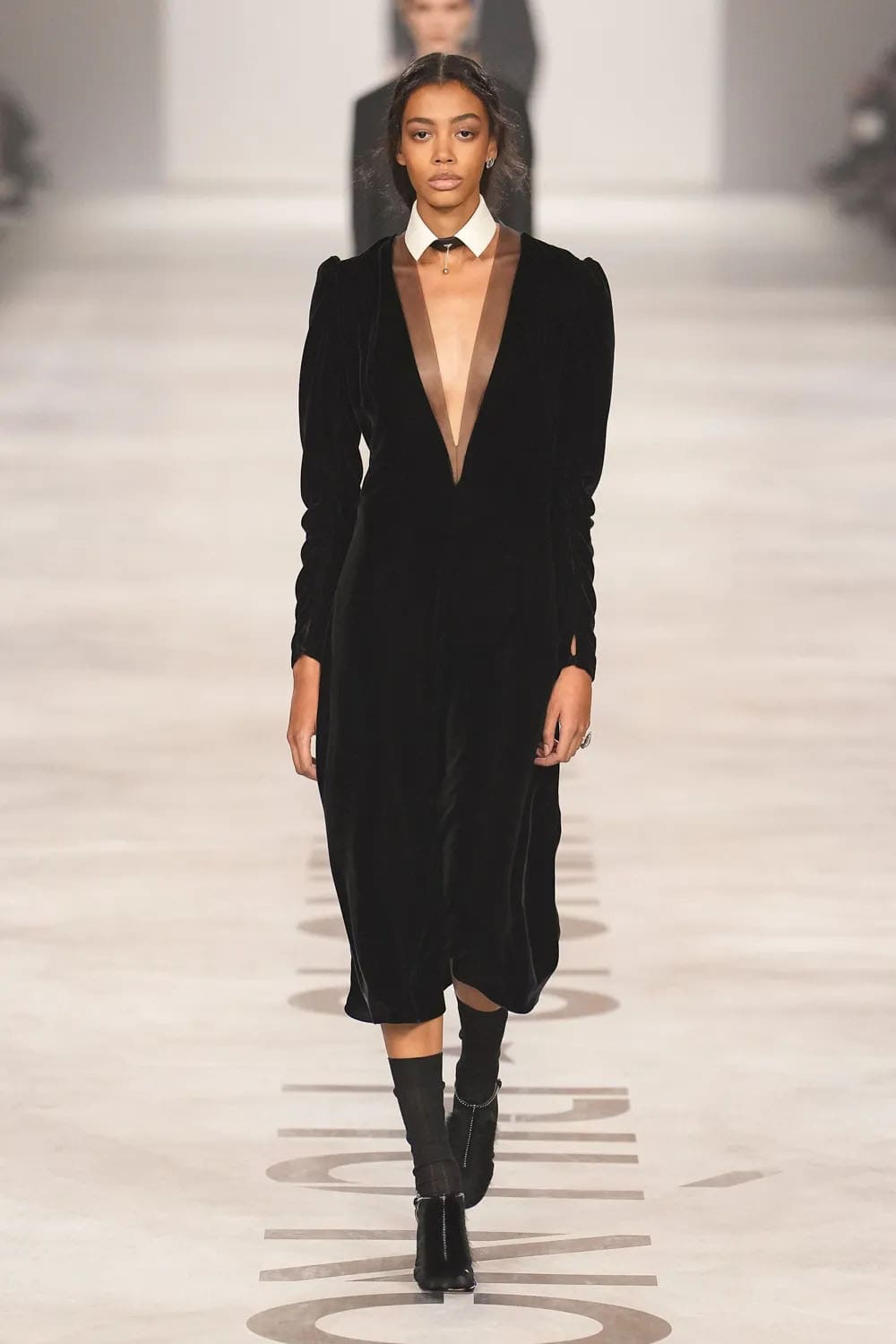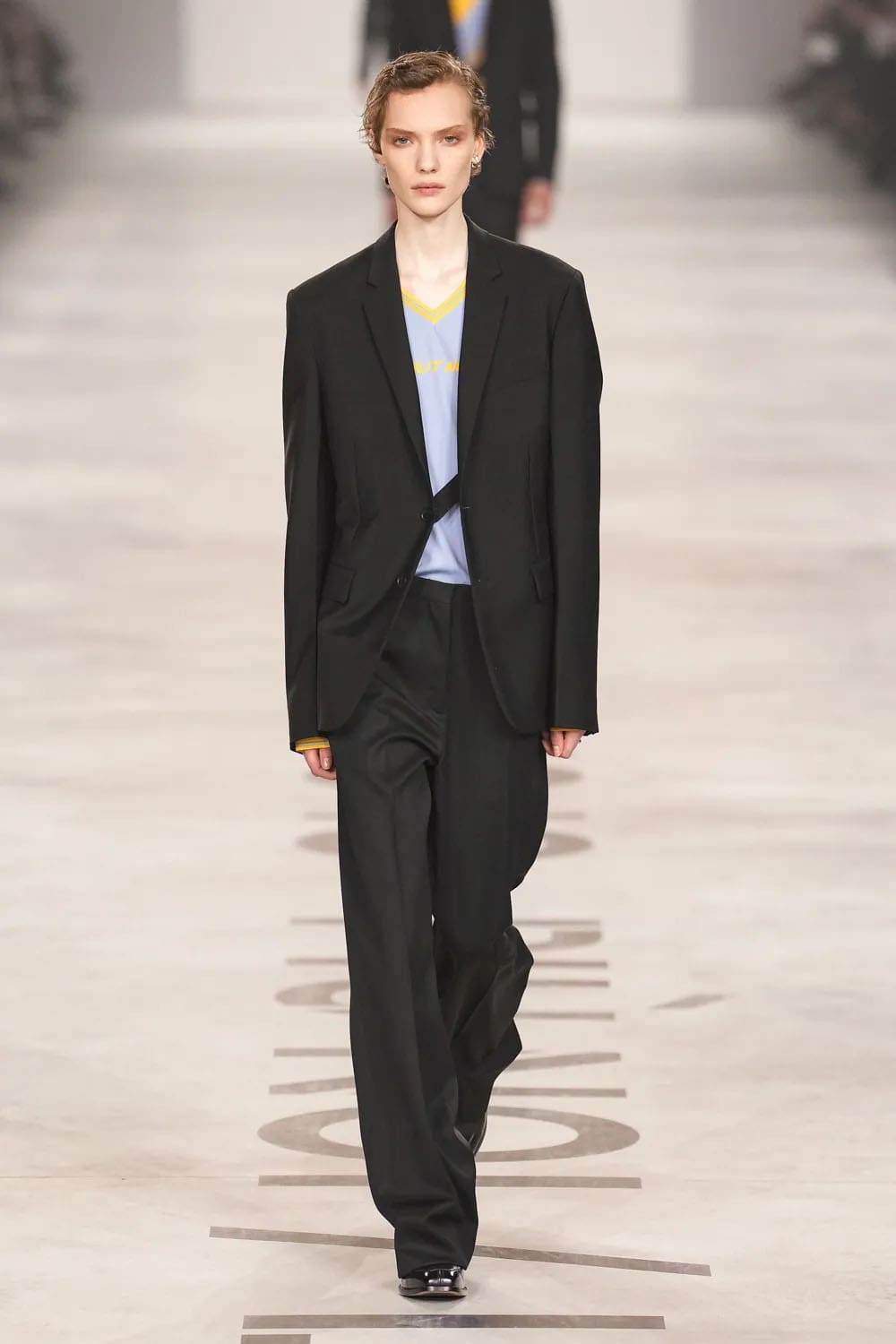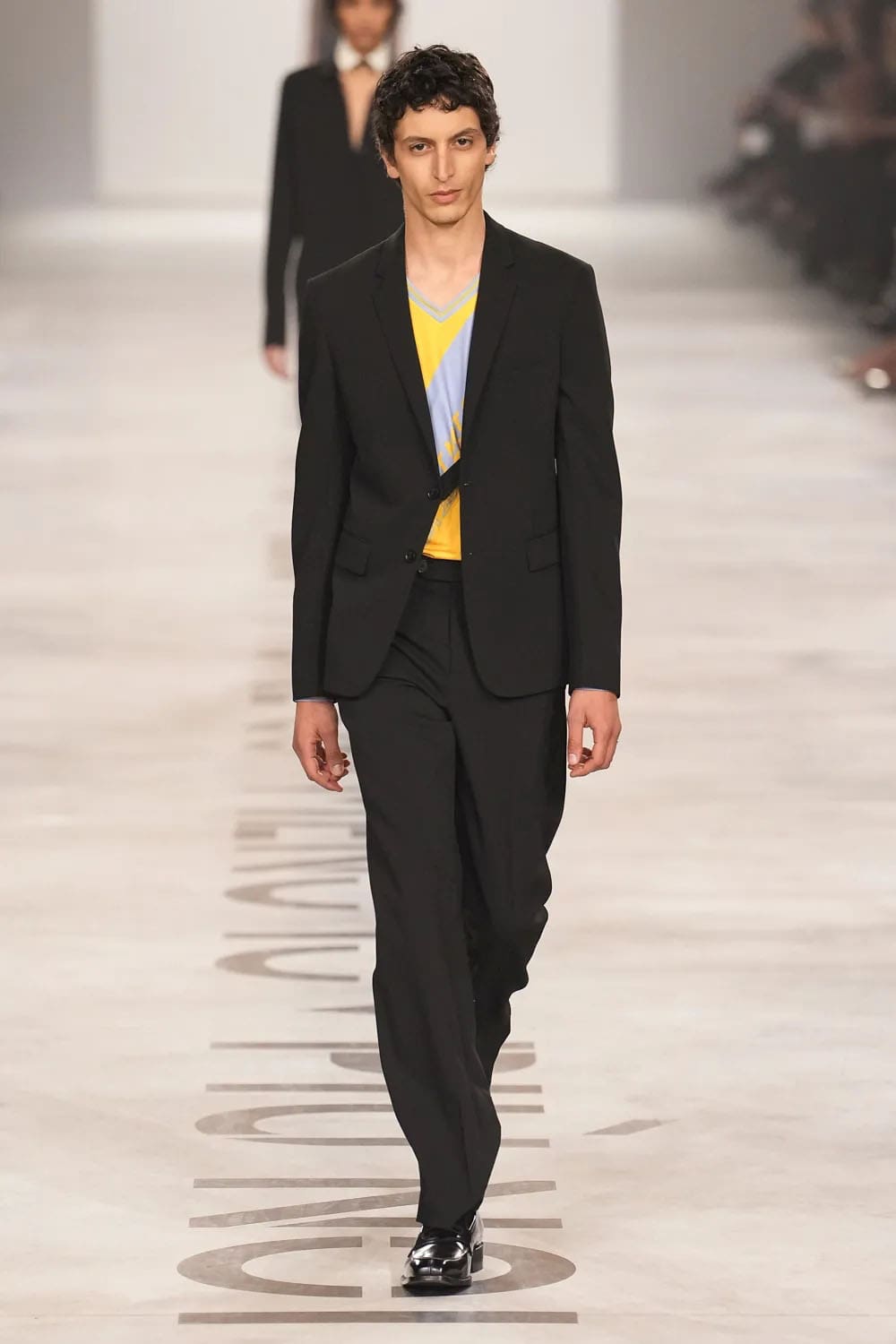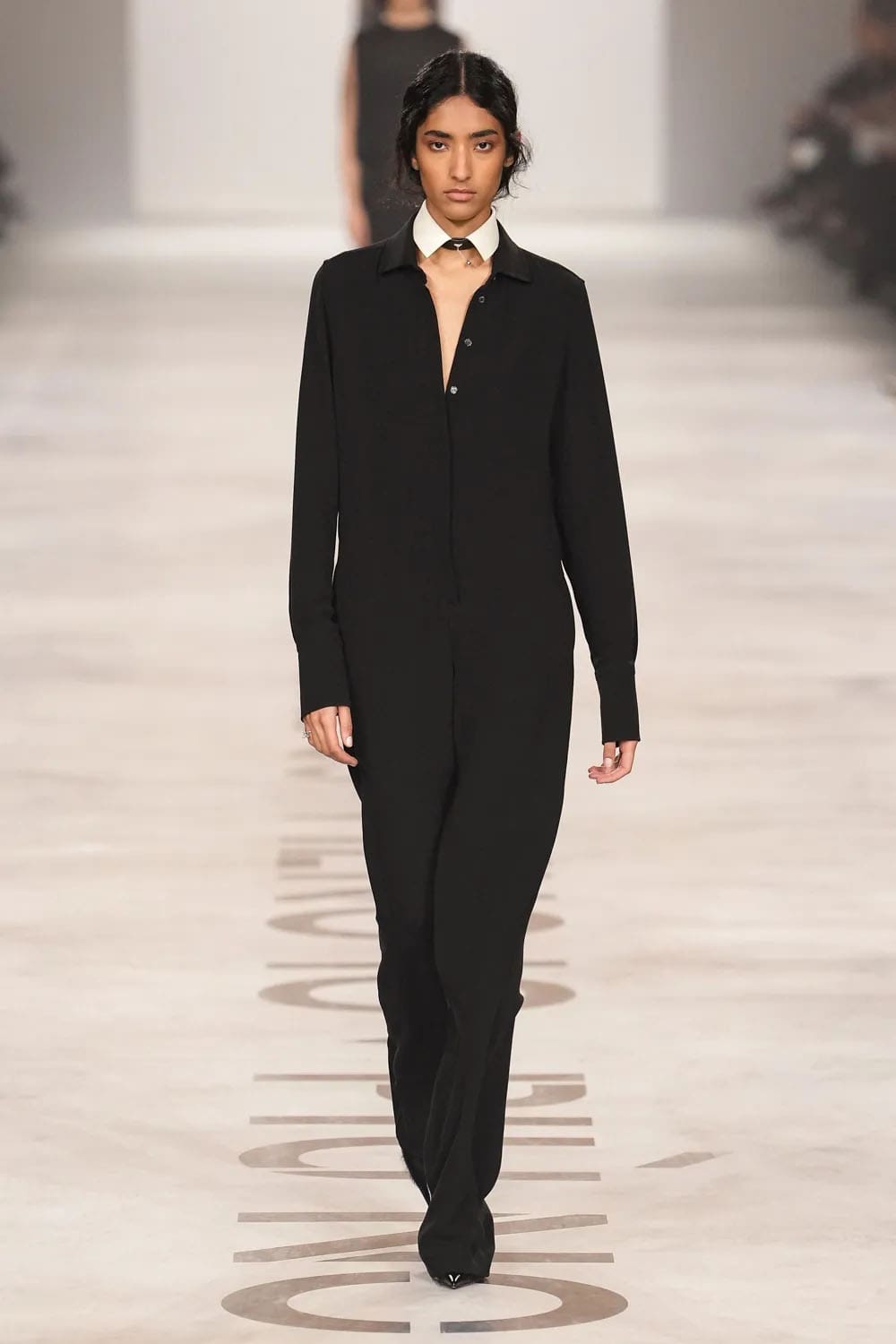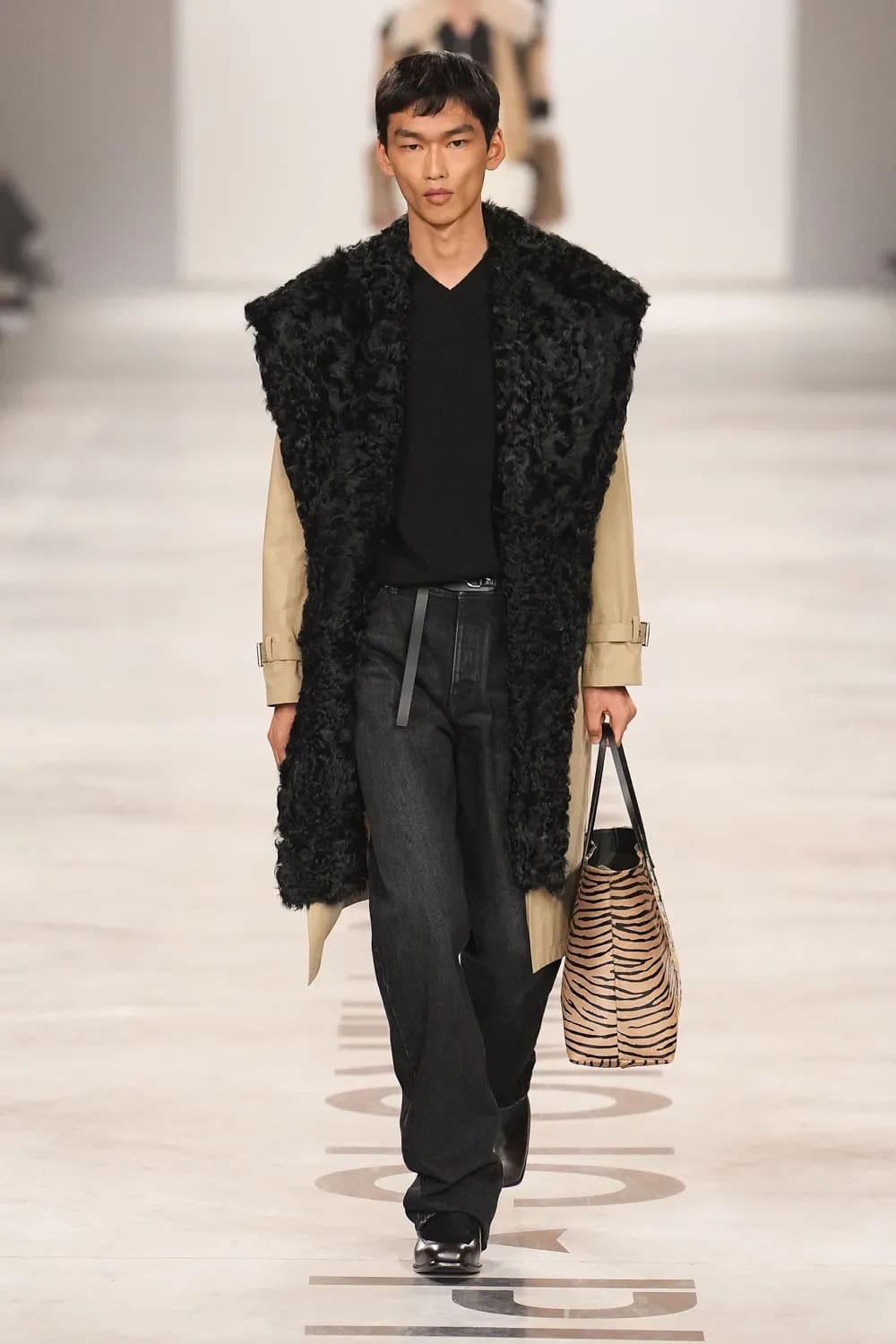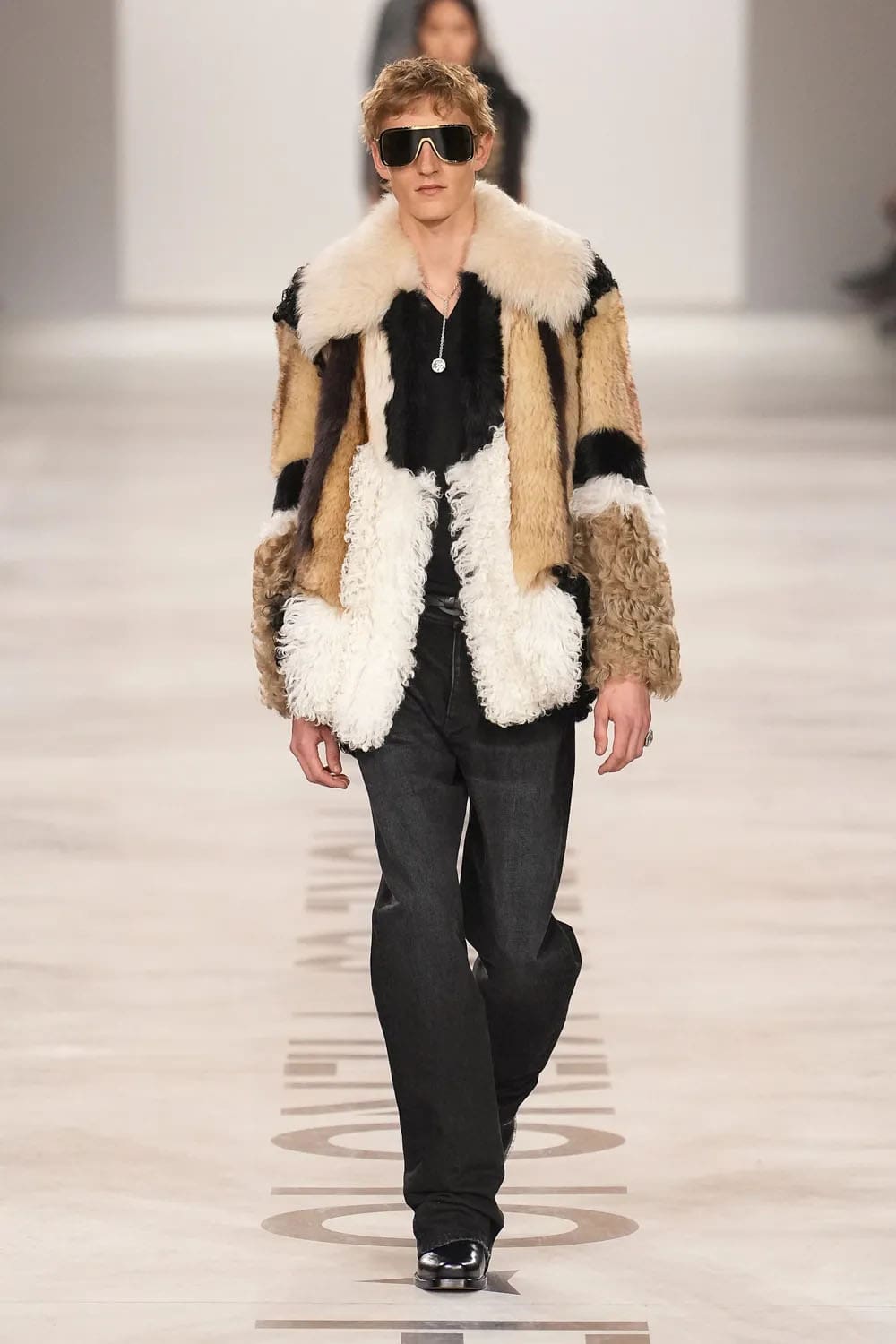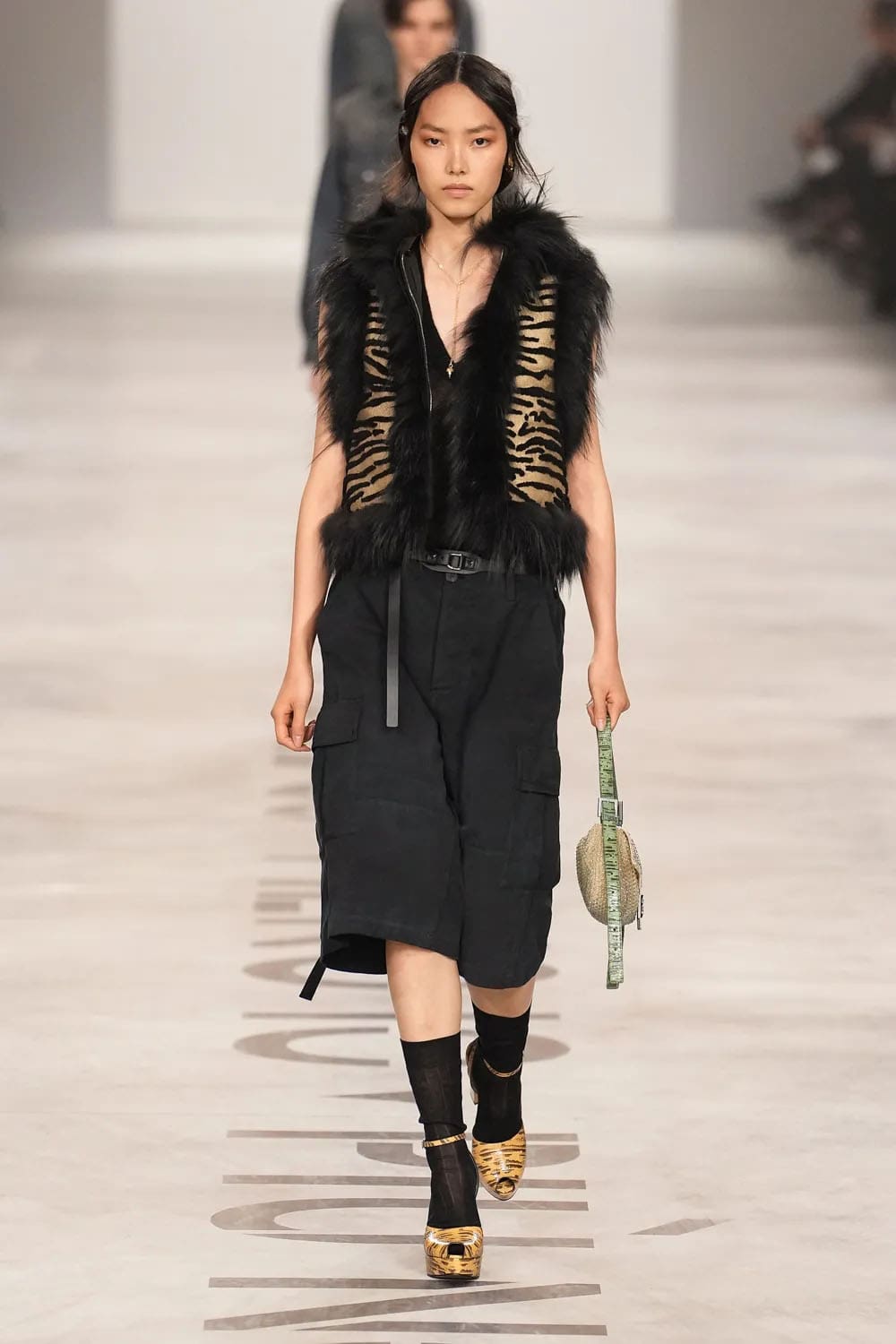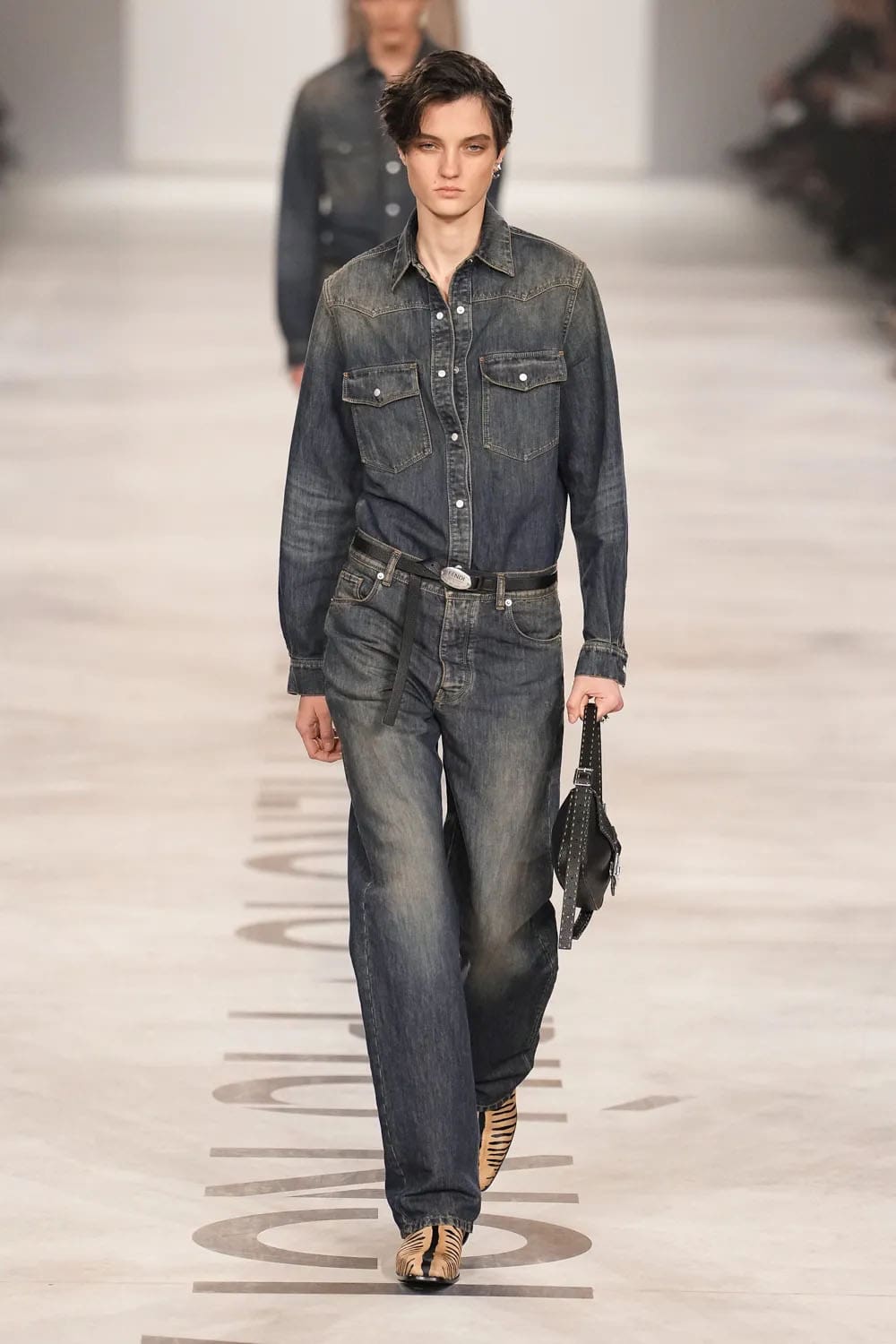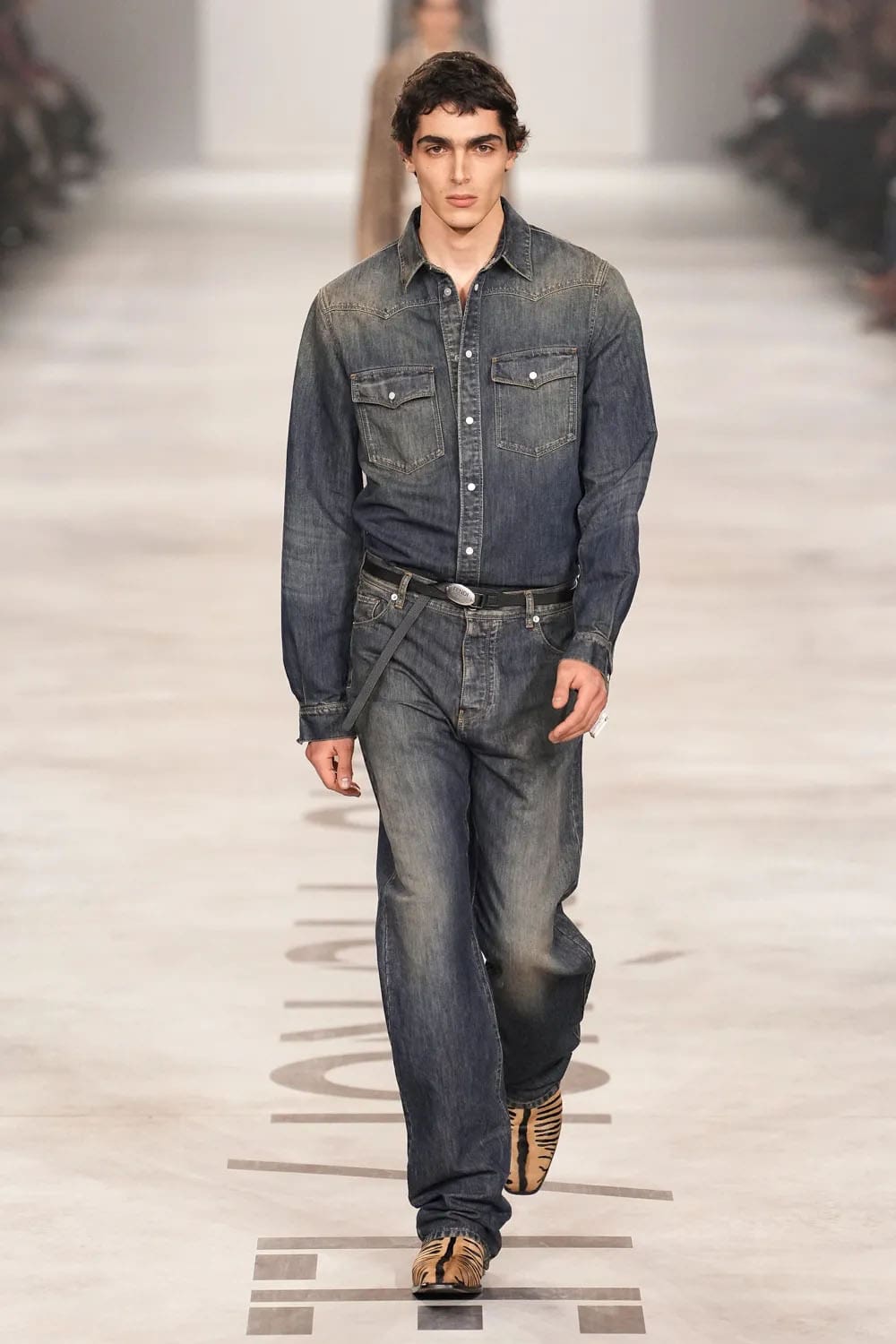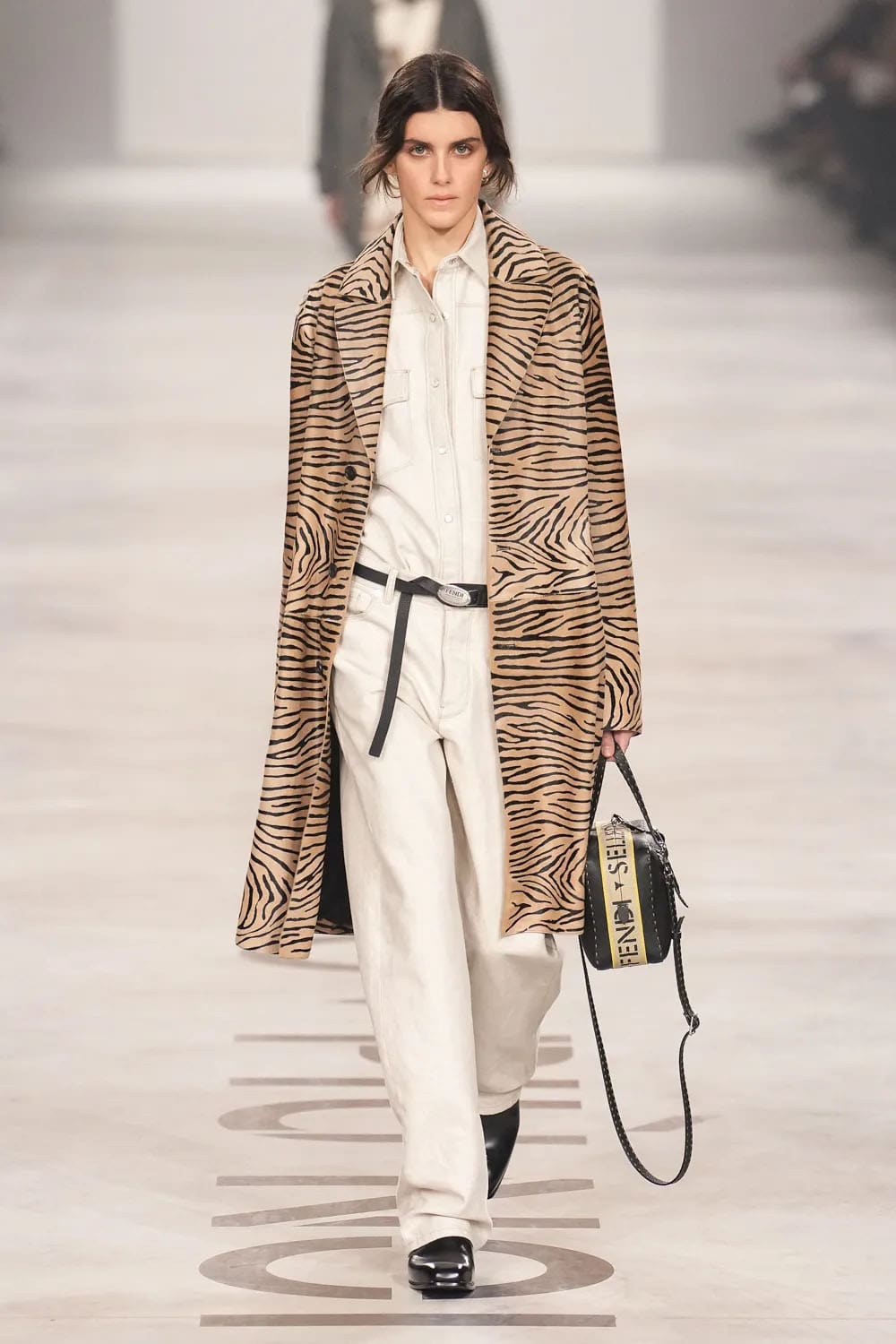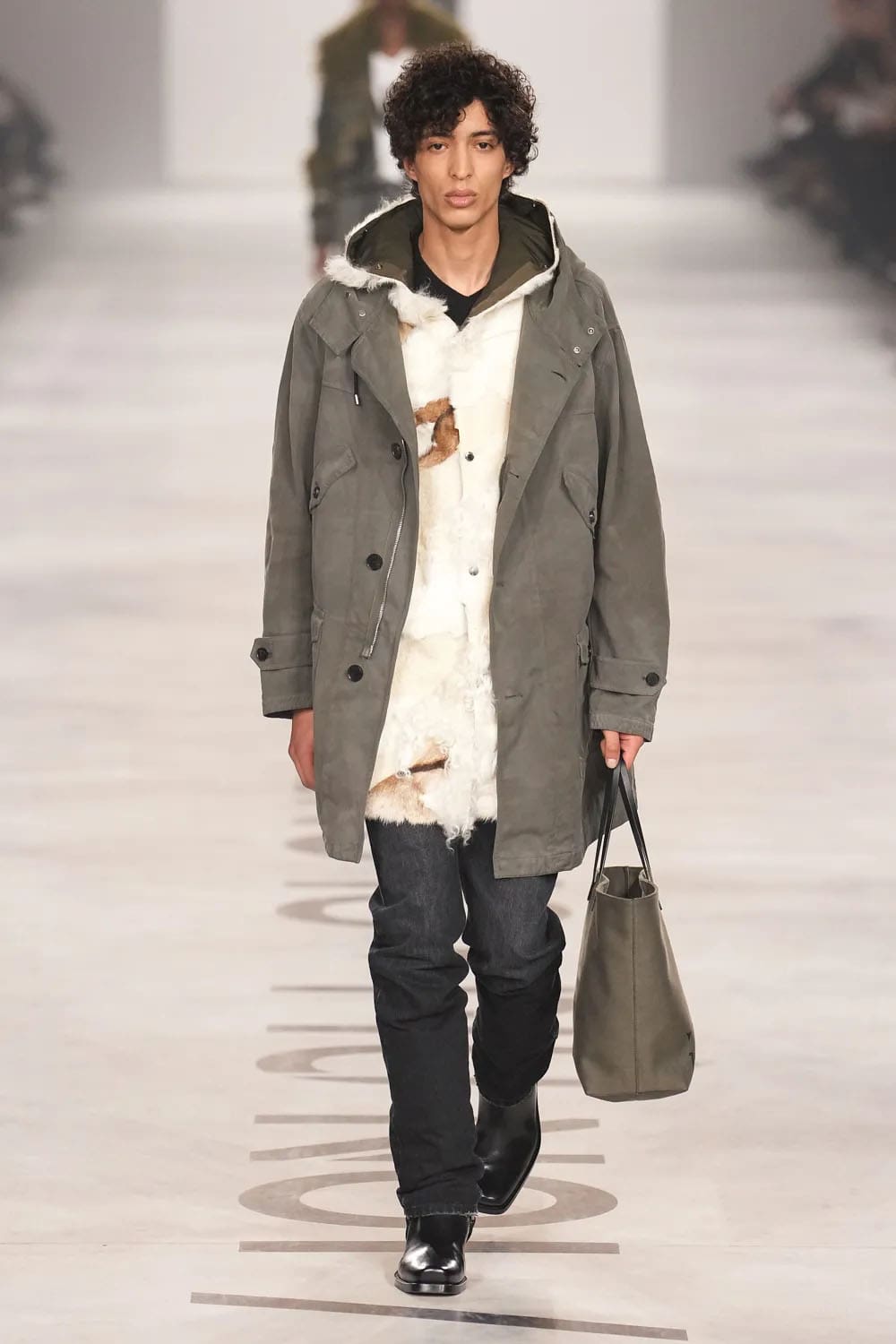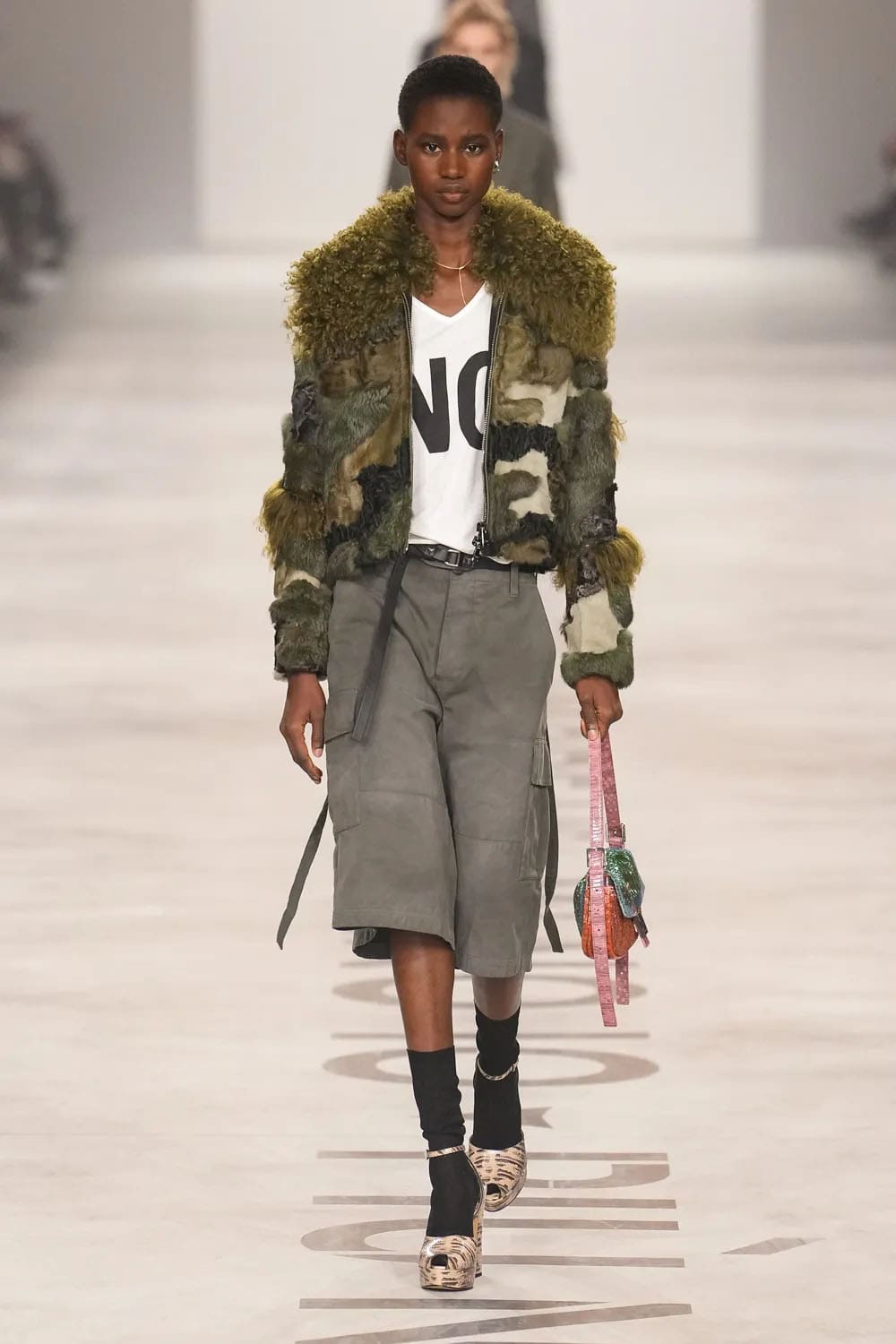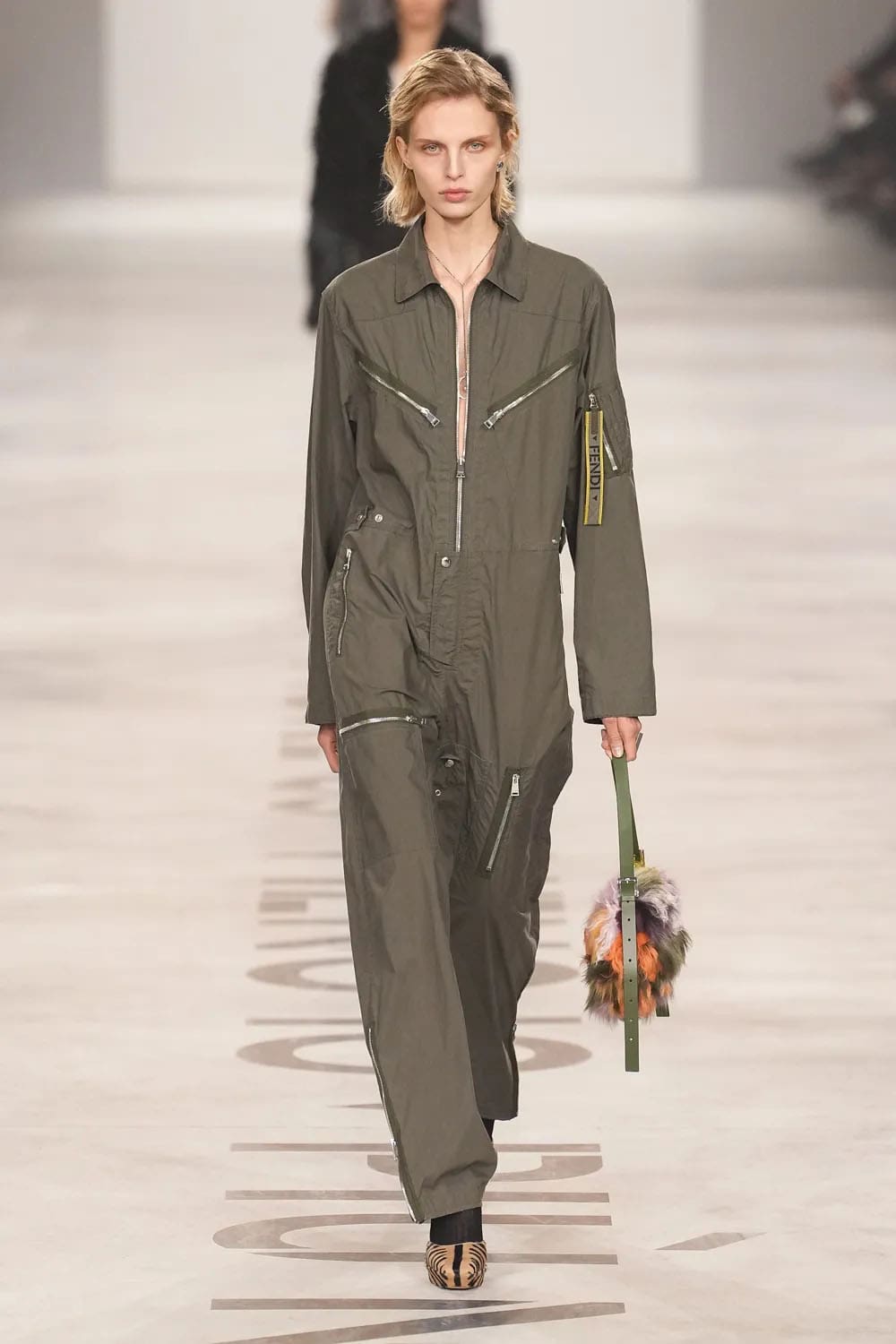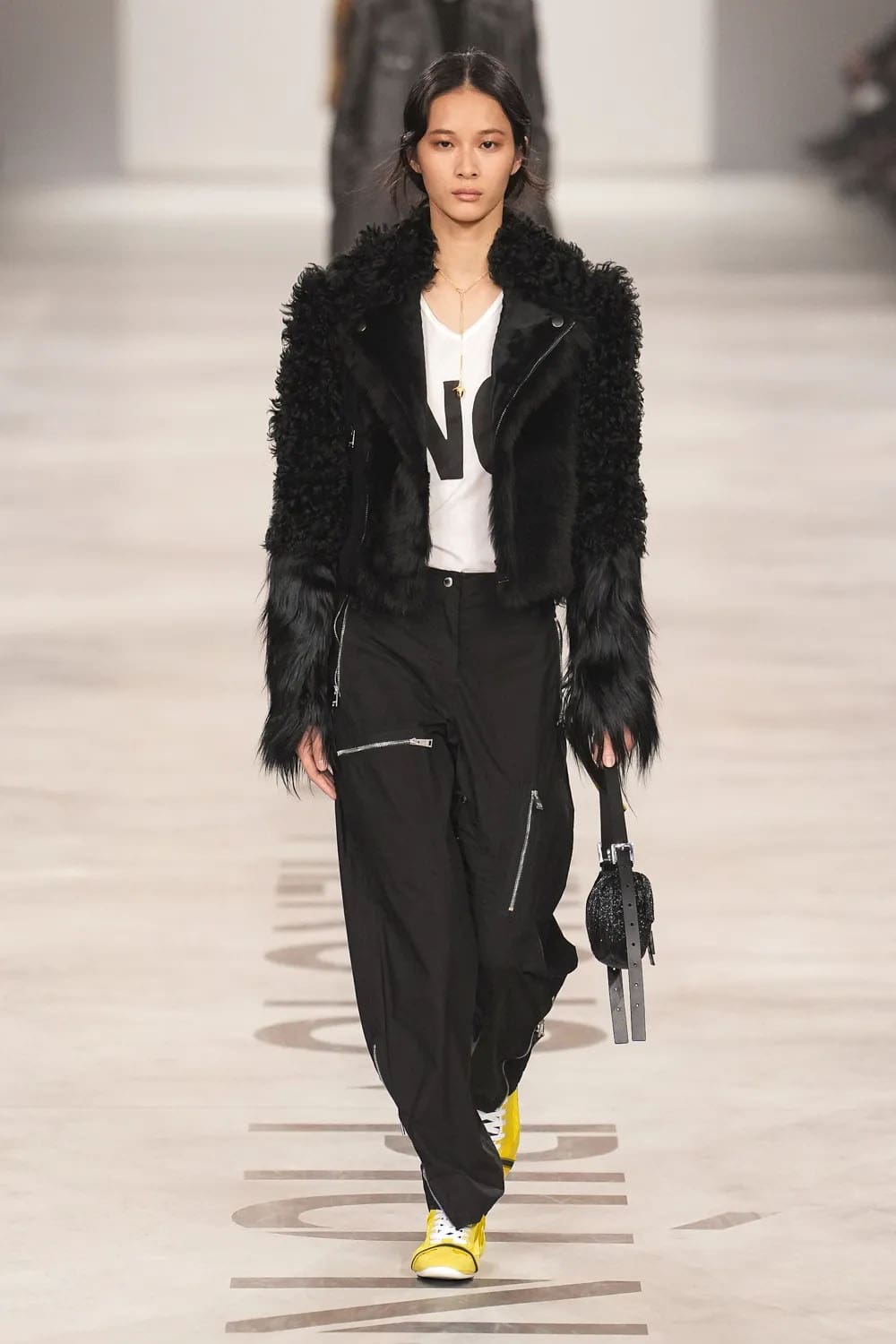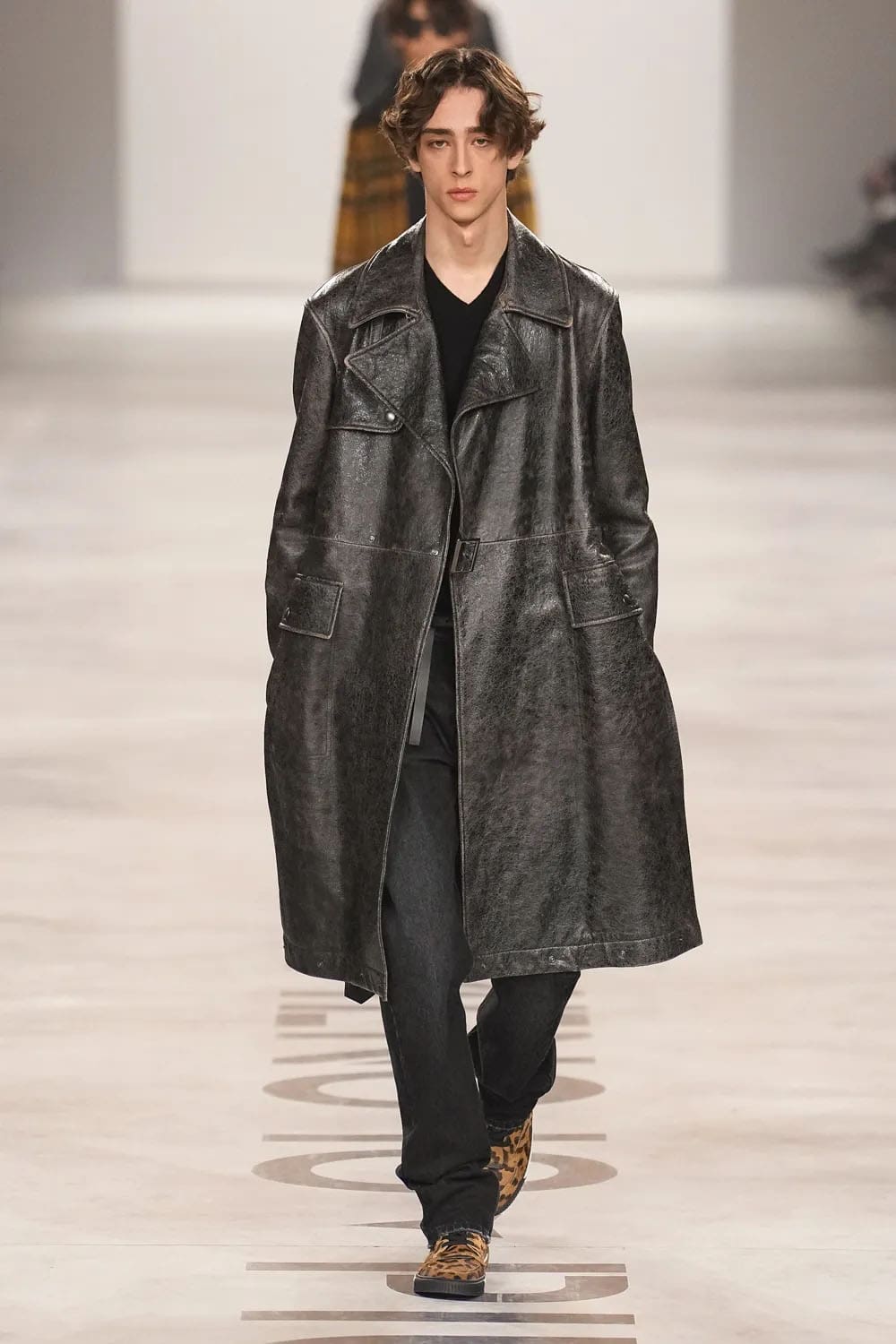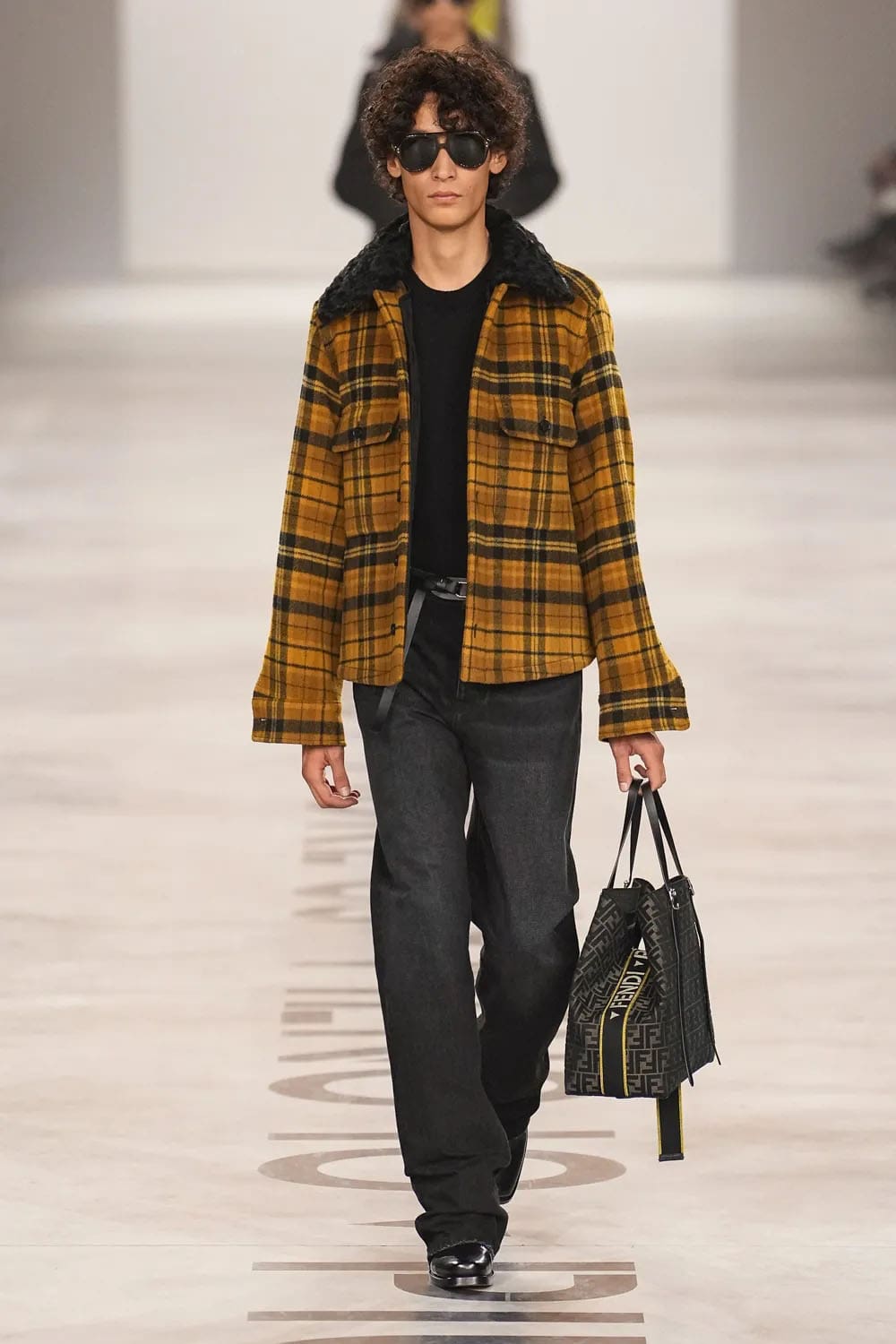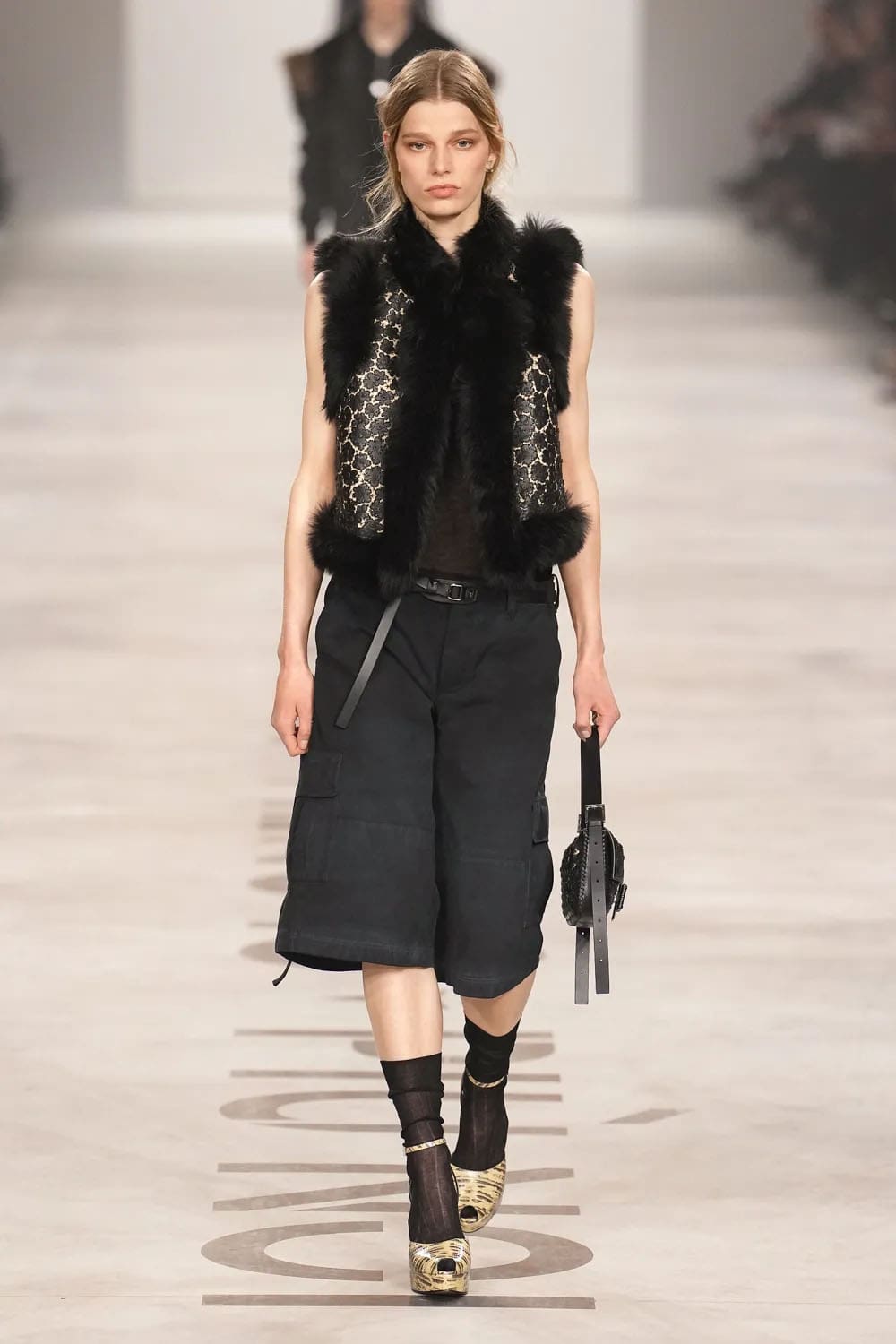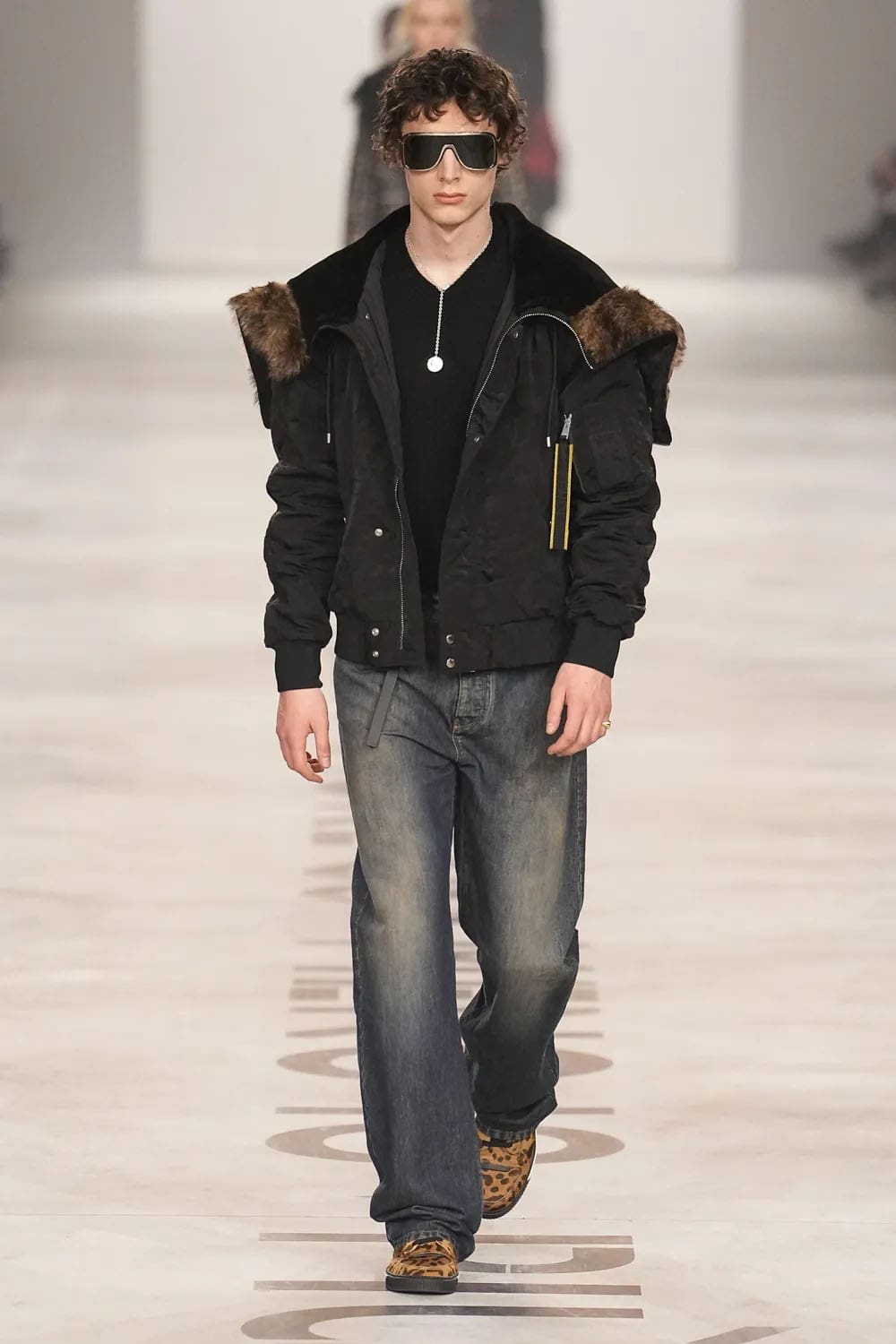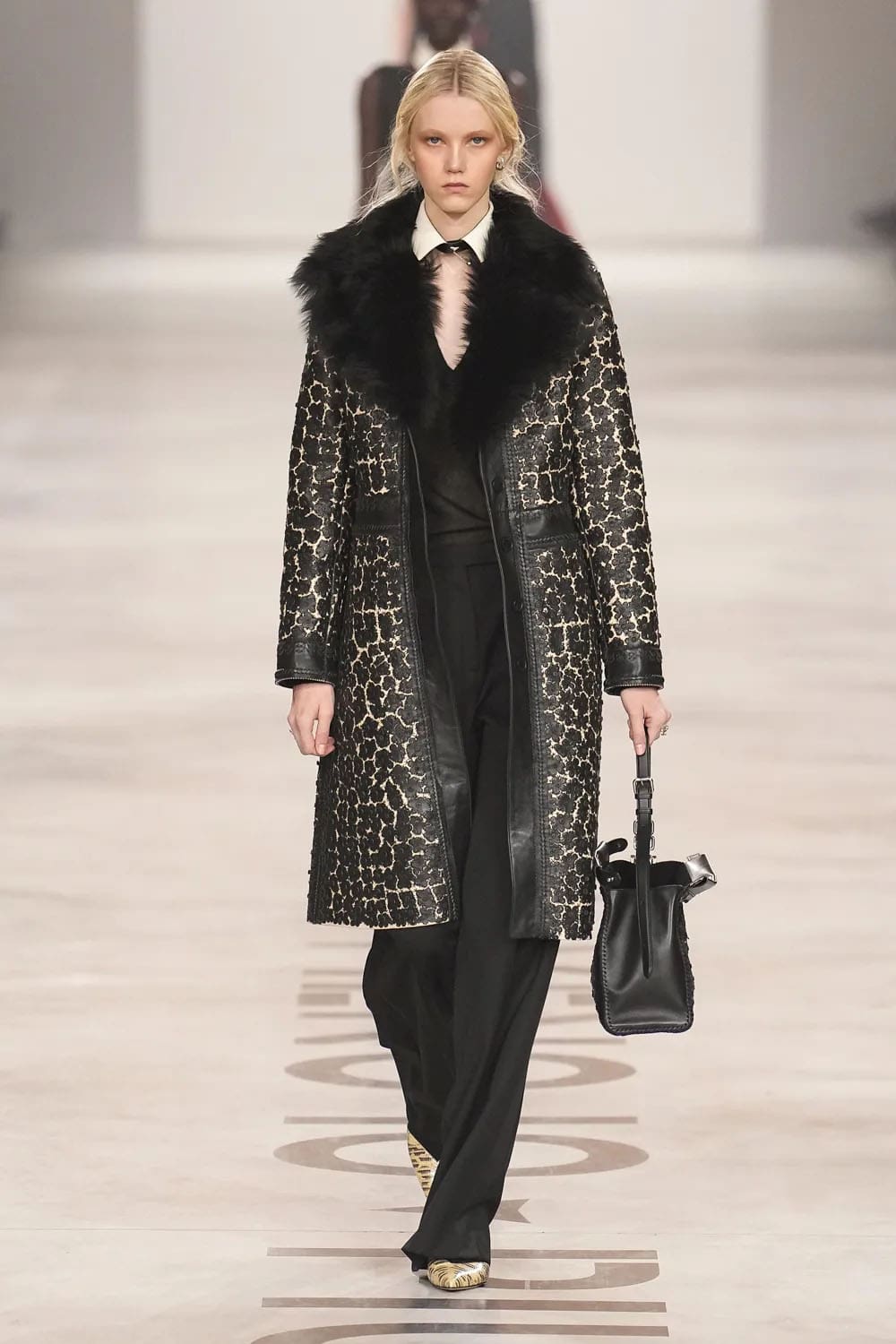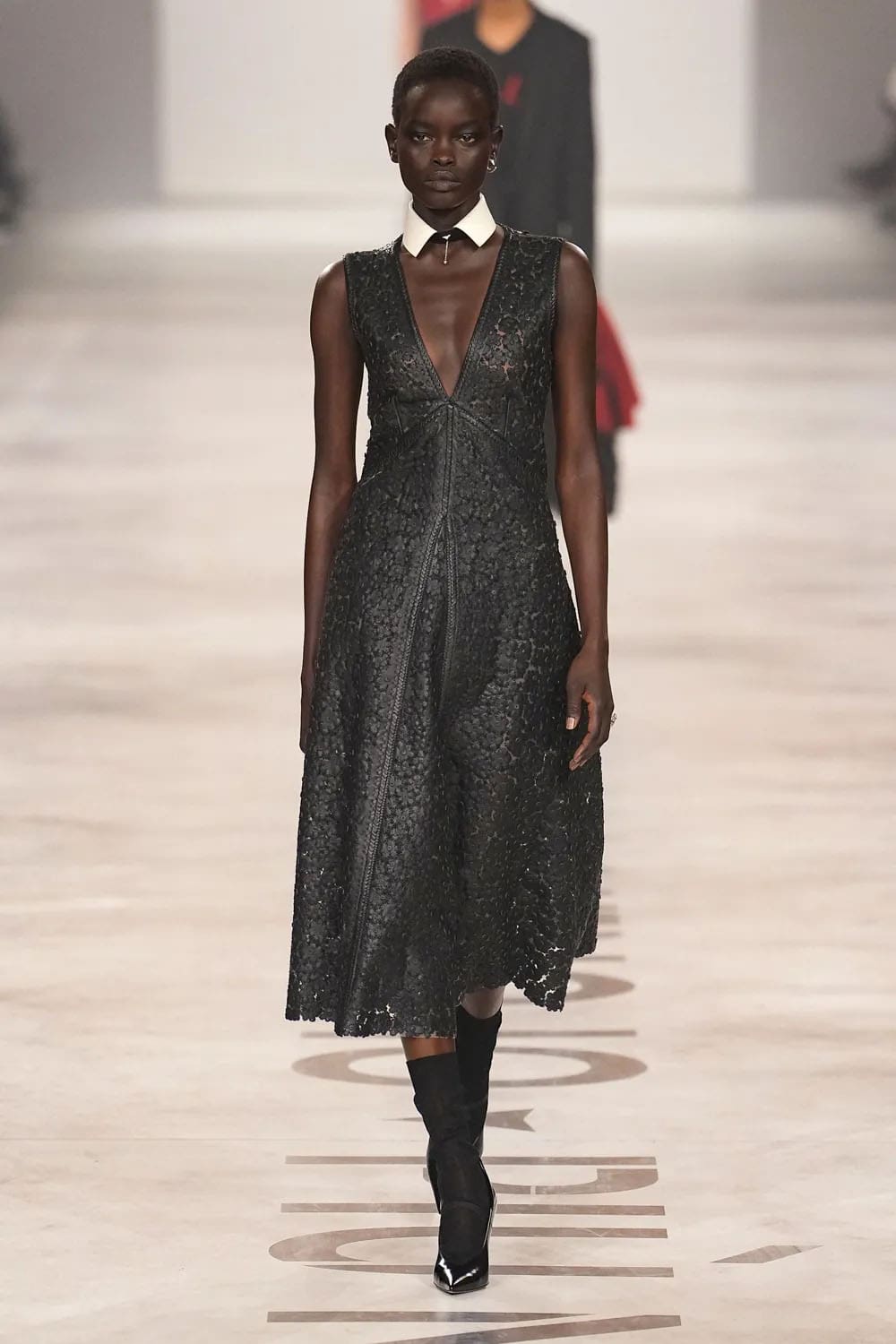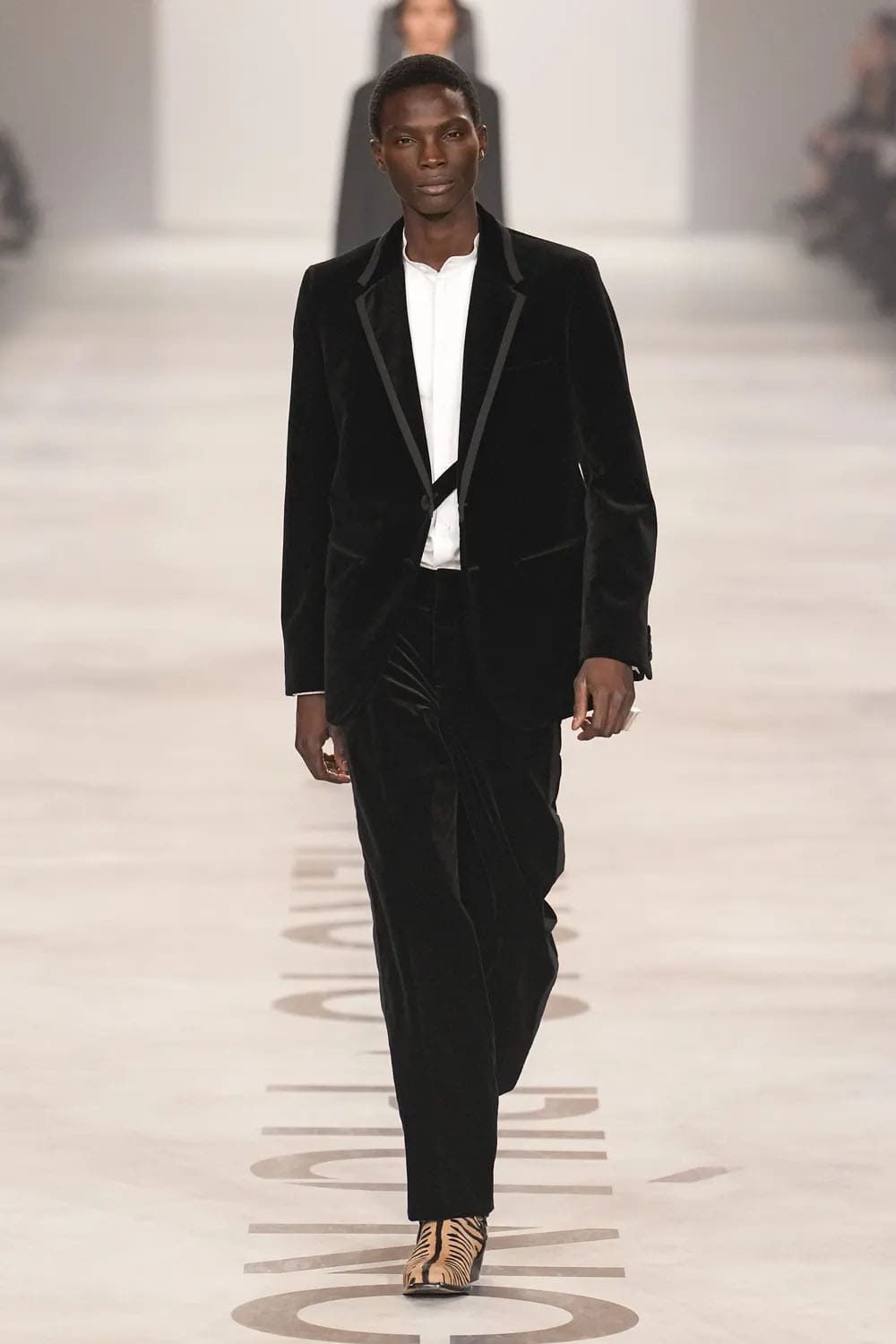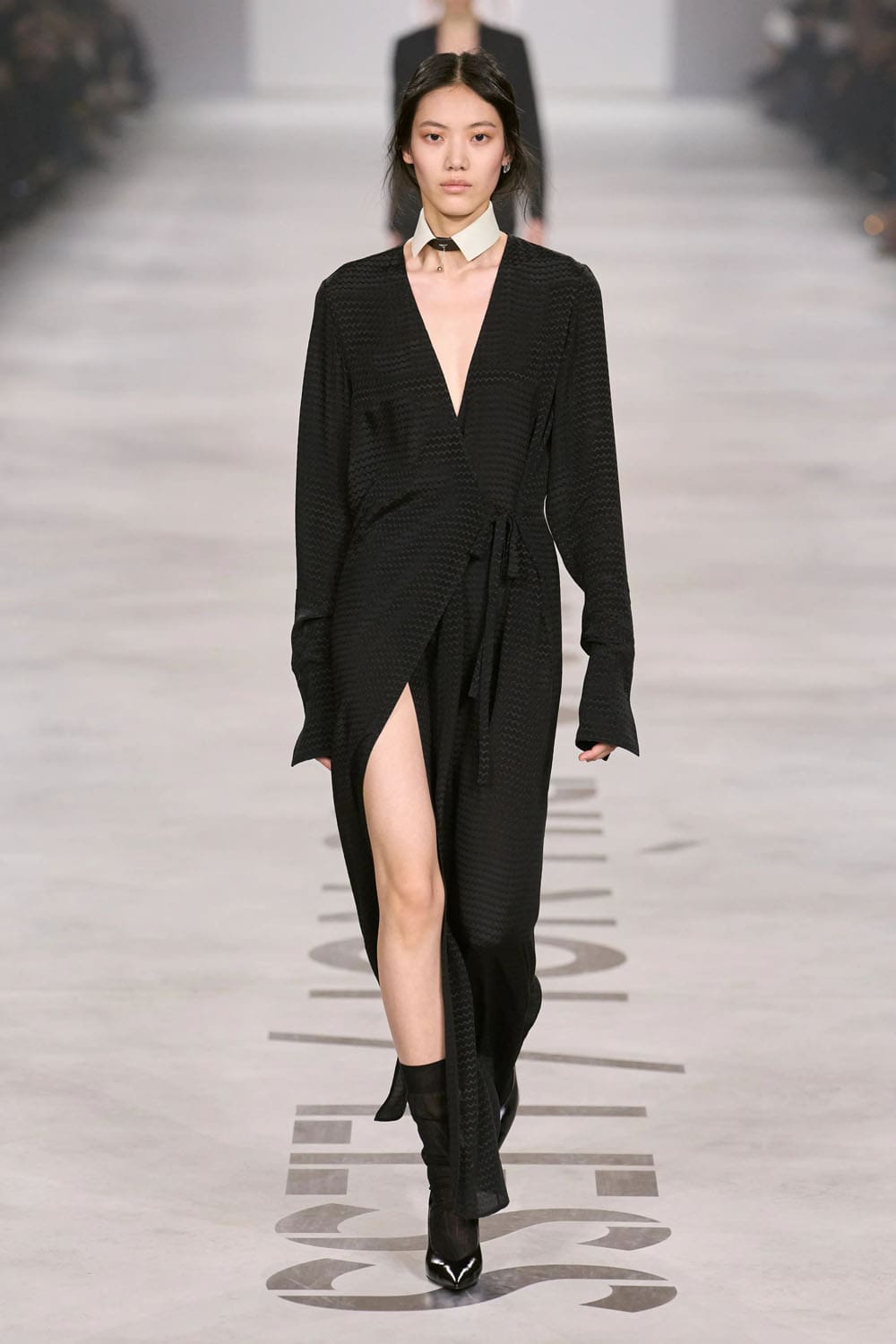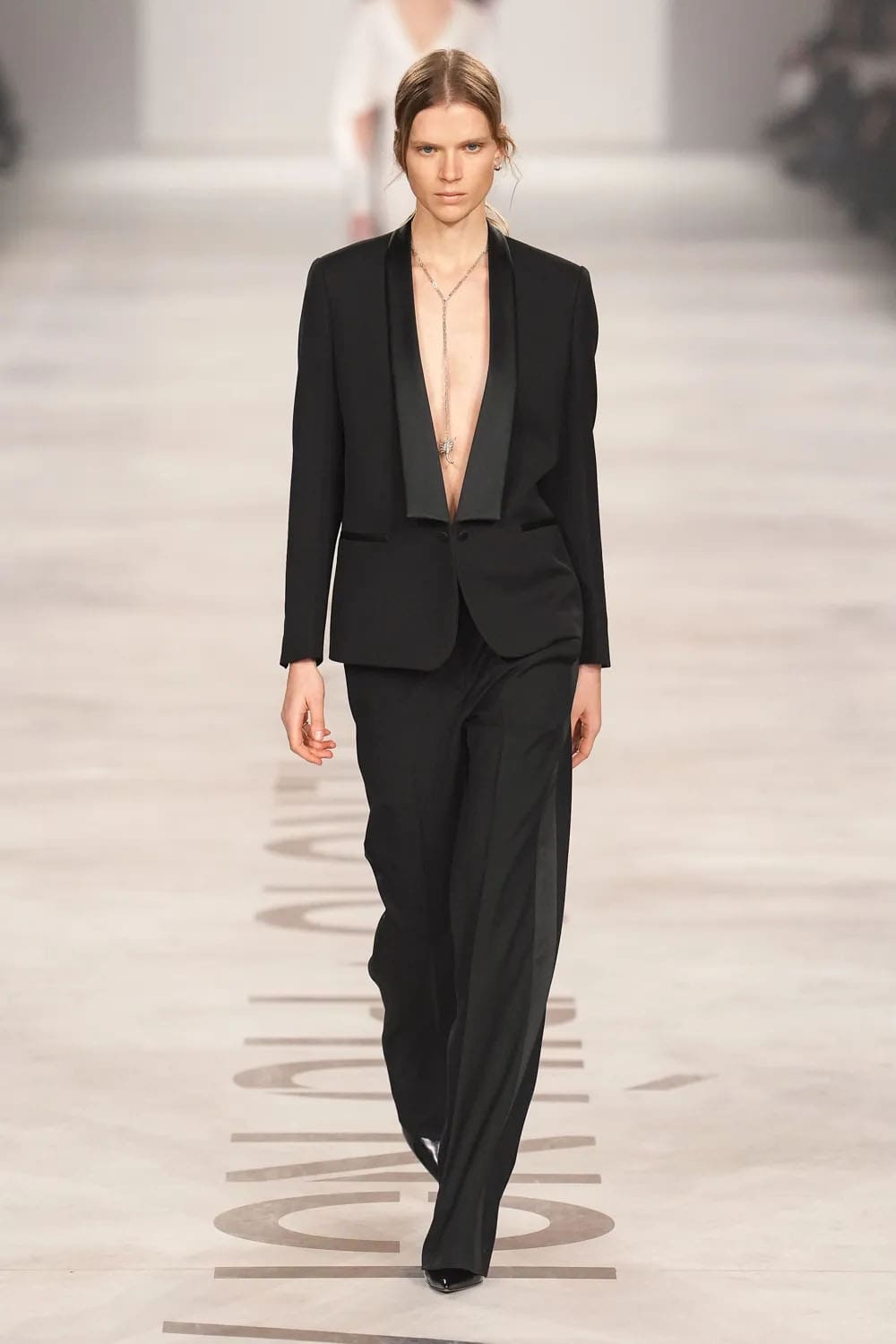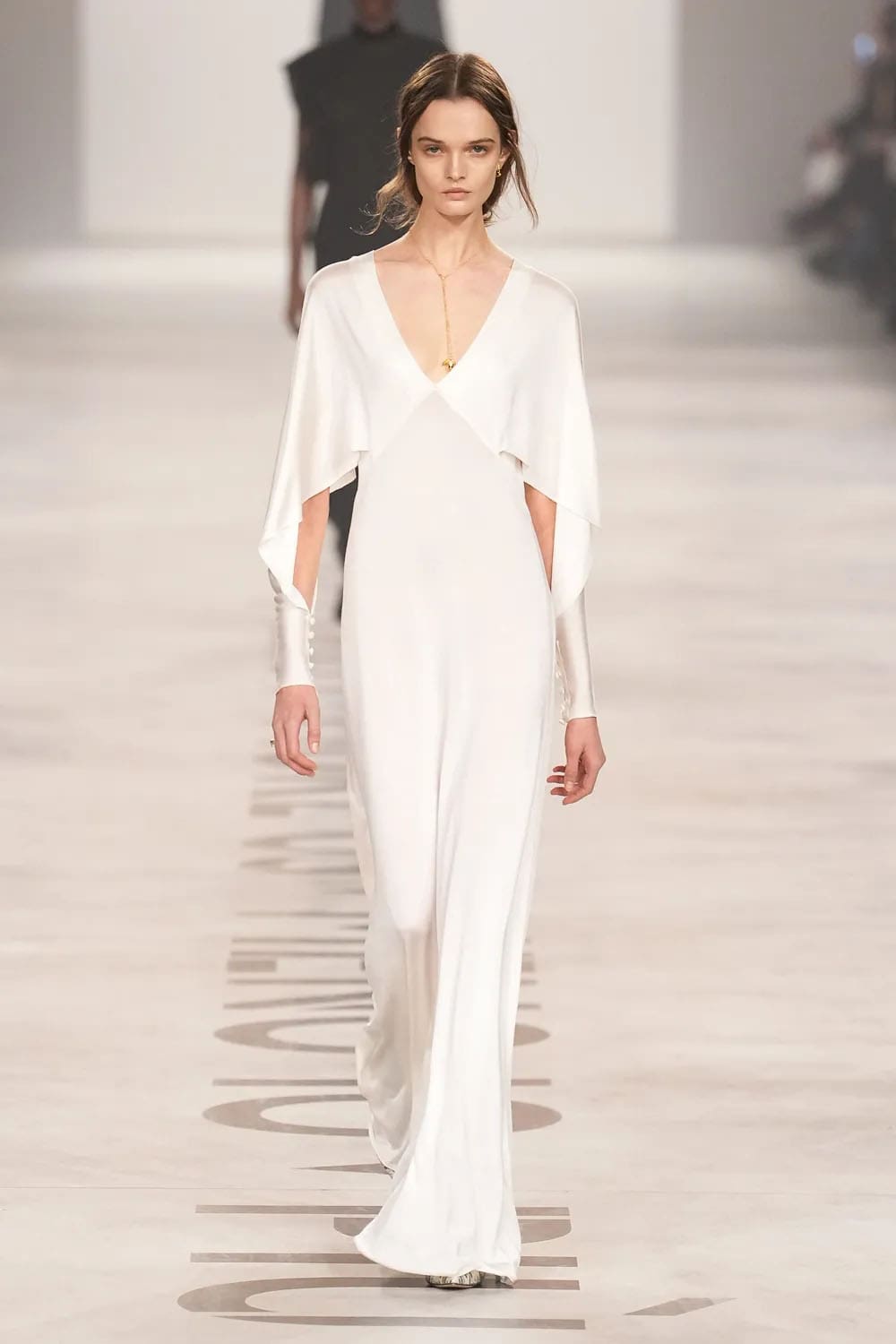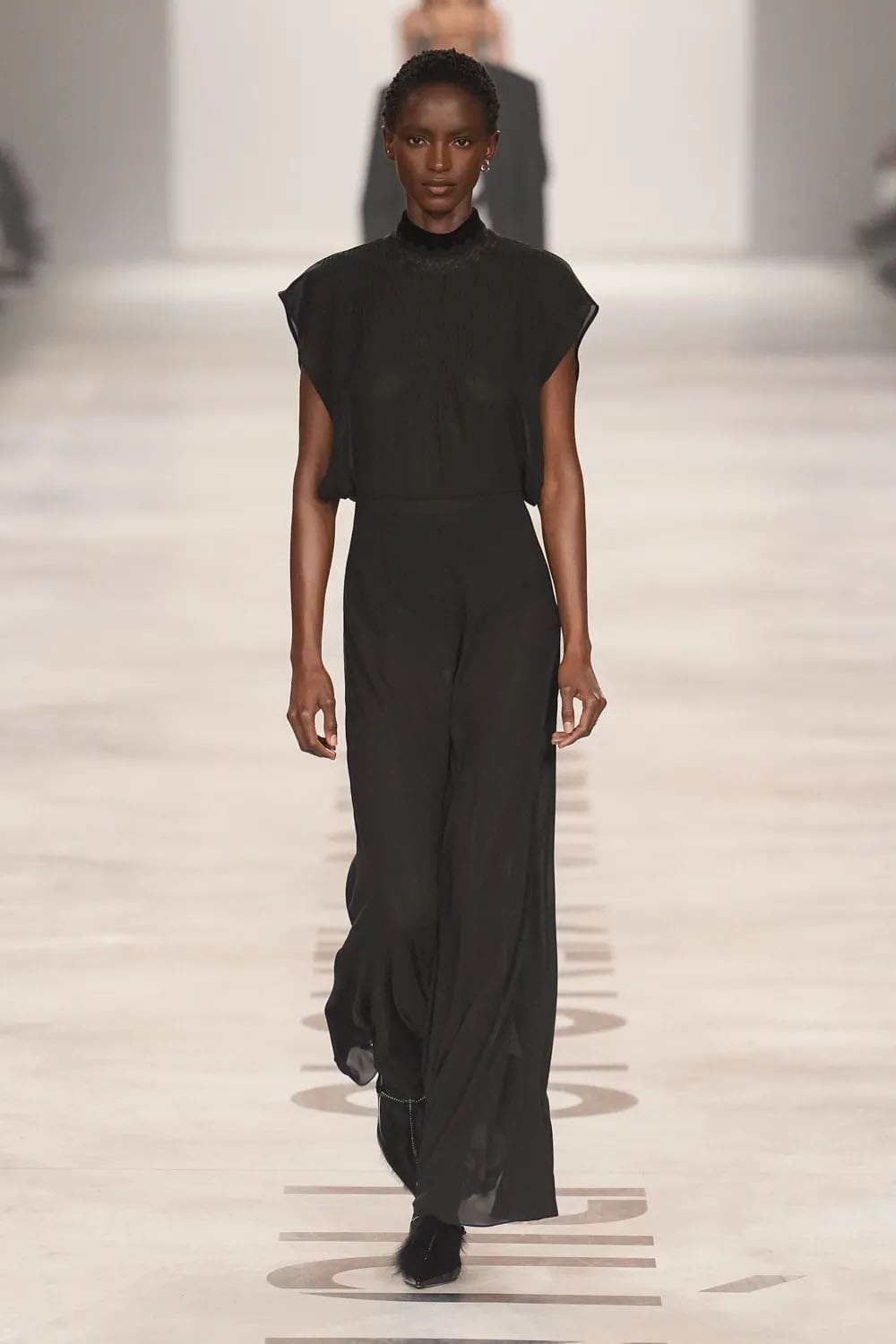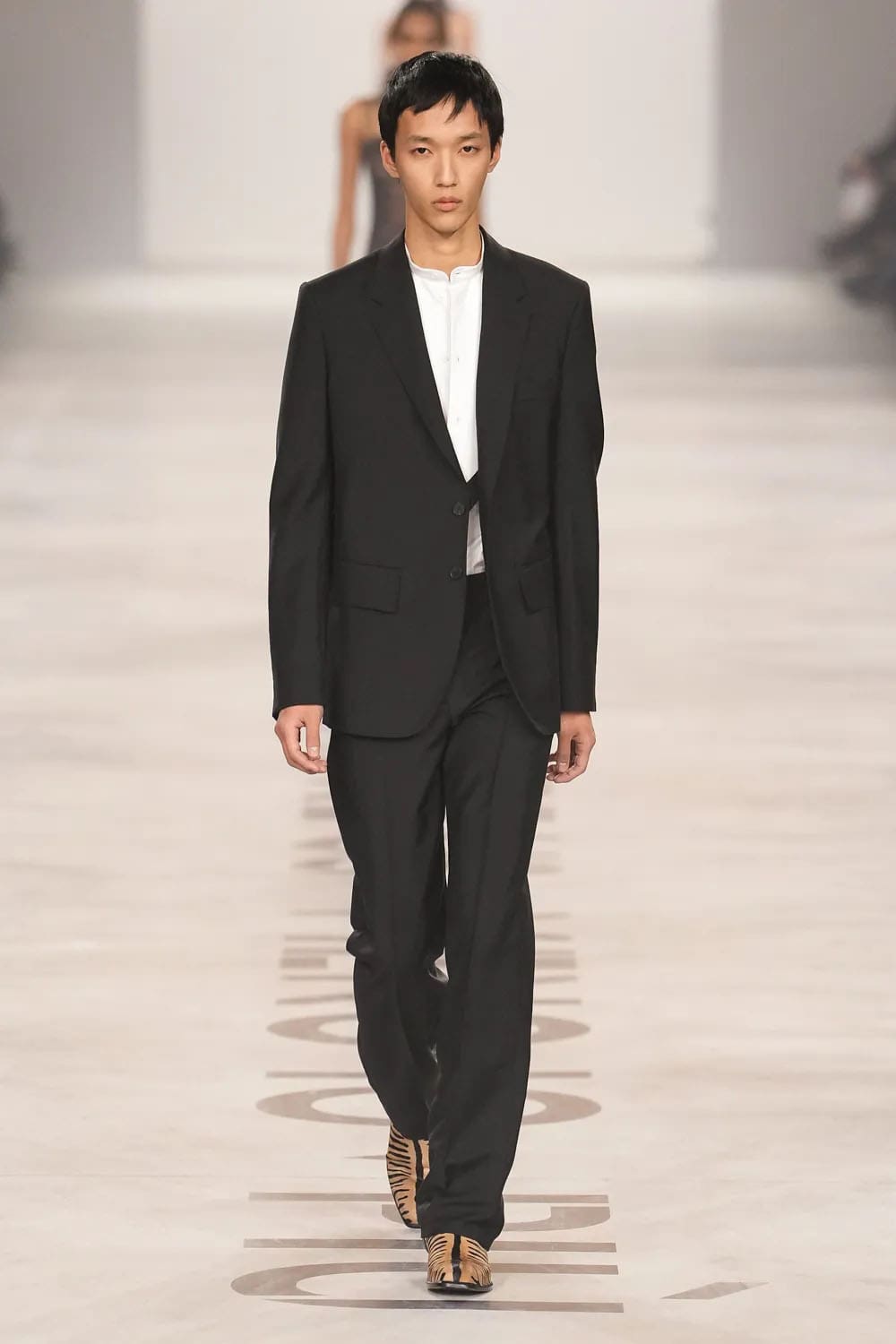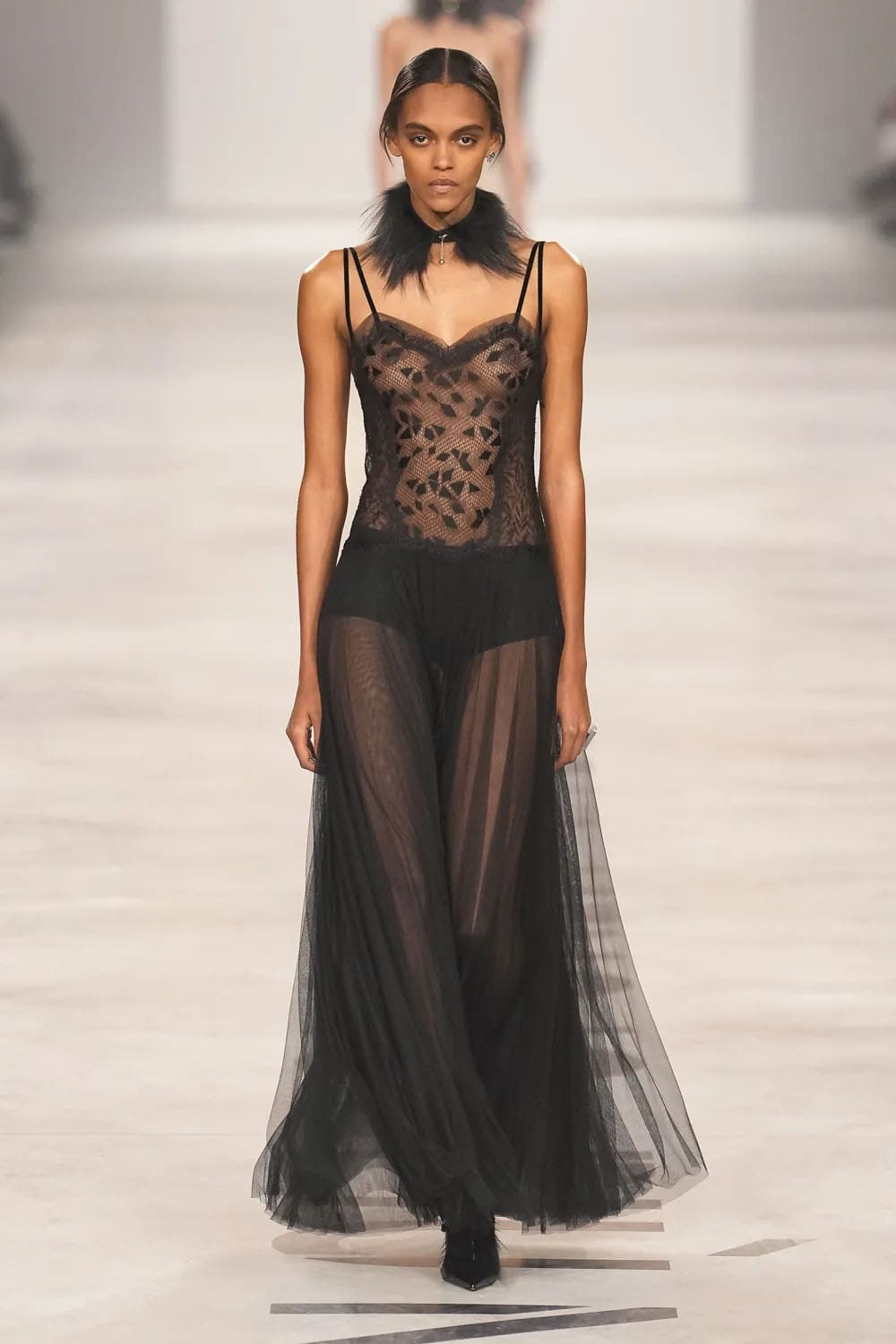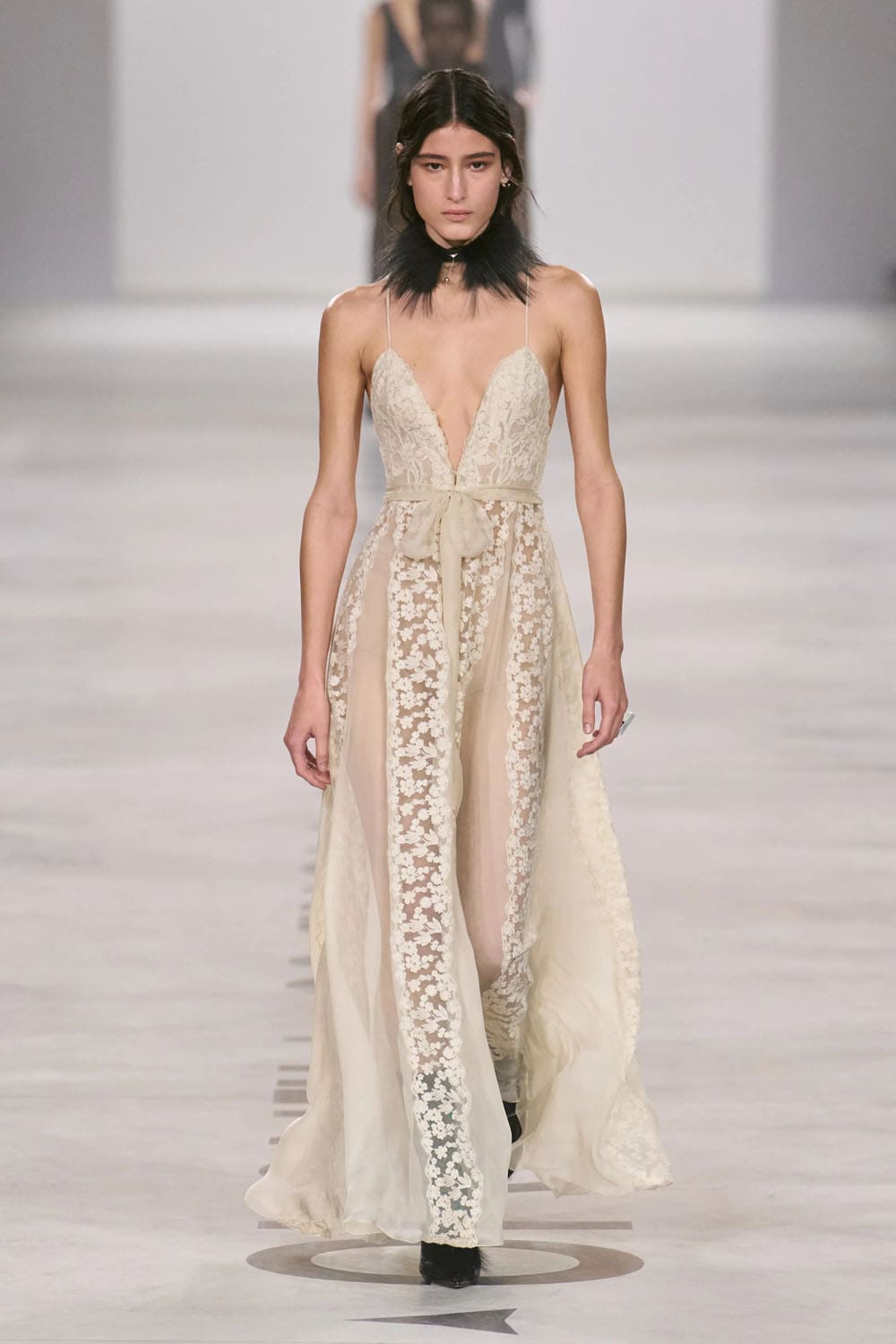
Fendi Fall Winter 2026-2027 “Maria Grazia Chiuri’s Roman Reset — MENO IO, PIÙ NOI (LESS I, MORE US)”. Story by Eleonora de Gray, Editor-in-Chief of RUNWAY MAGAZINE. Photo Courtesy: Fendi.
Maria Grazia Chiuri’s Roman Reset — MENO IO, PIÙ NOI (LESS I, MORE US)
A declaration of intention that whispers “collective,” yet dresses like a memorial service.
Maria Grazia Chiuri walked into Fendi today not with a revolution, but with a manifesto printed on the runway floor: “MENO IO, PIÙ NOI / LESS I, MORE US.” A noble sentiment—though judging by the clothes, the “US” may refer to the gathering of monochrome mourners at Largo Goldoni.
Chiuri’s debut feels like a strategic U-turn from her decade of Dior domesticity. Here, she trades the “feminine empowerment through slogans” formula for something grittier, colder, almost clerical. A dark Roman homecoming stripped of indulgence, humor, and—let’s address the obvious—color.
This is not the Fendi of sunlit camel cashmeres.
This is the Fendi of a midnight board meeting in a palazzo where no one has smiled since 1972.
THE DARK ROMAN HOMECOMING — LOOKS UNDER THE MICROSCOPE
The “Corporate Goth” Thesis
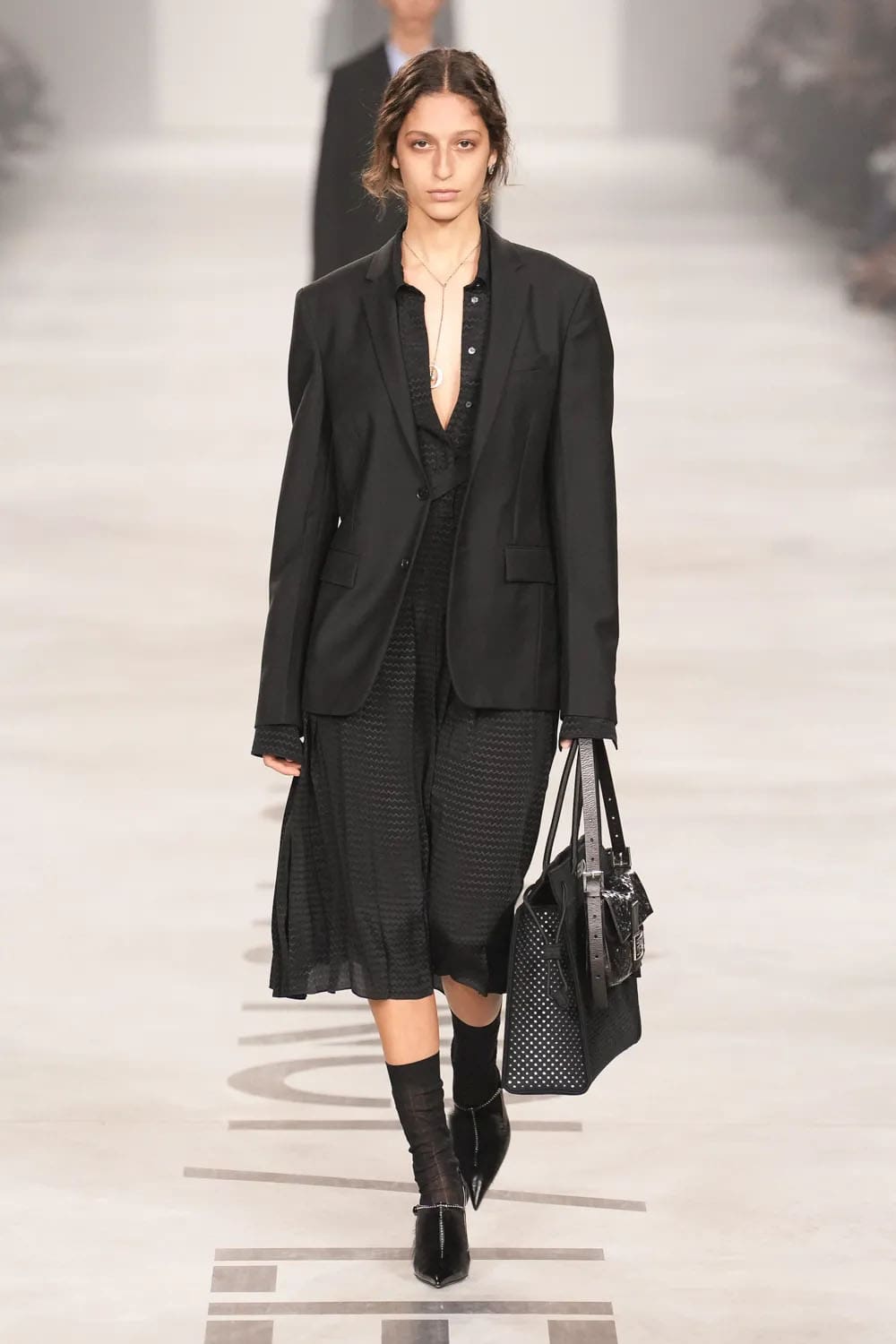
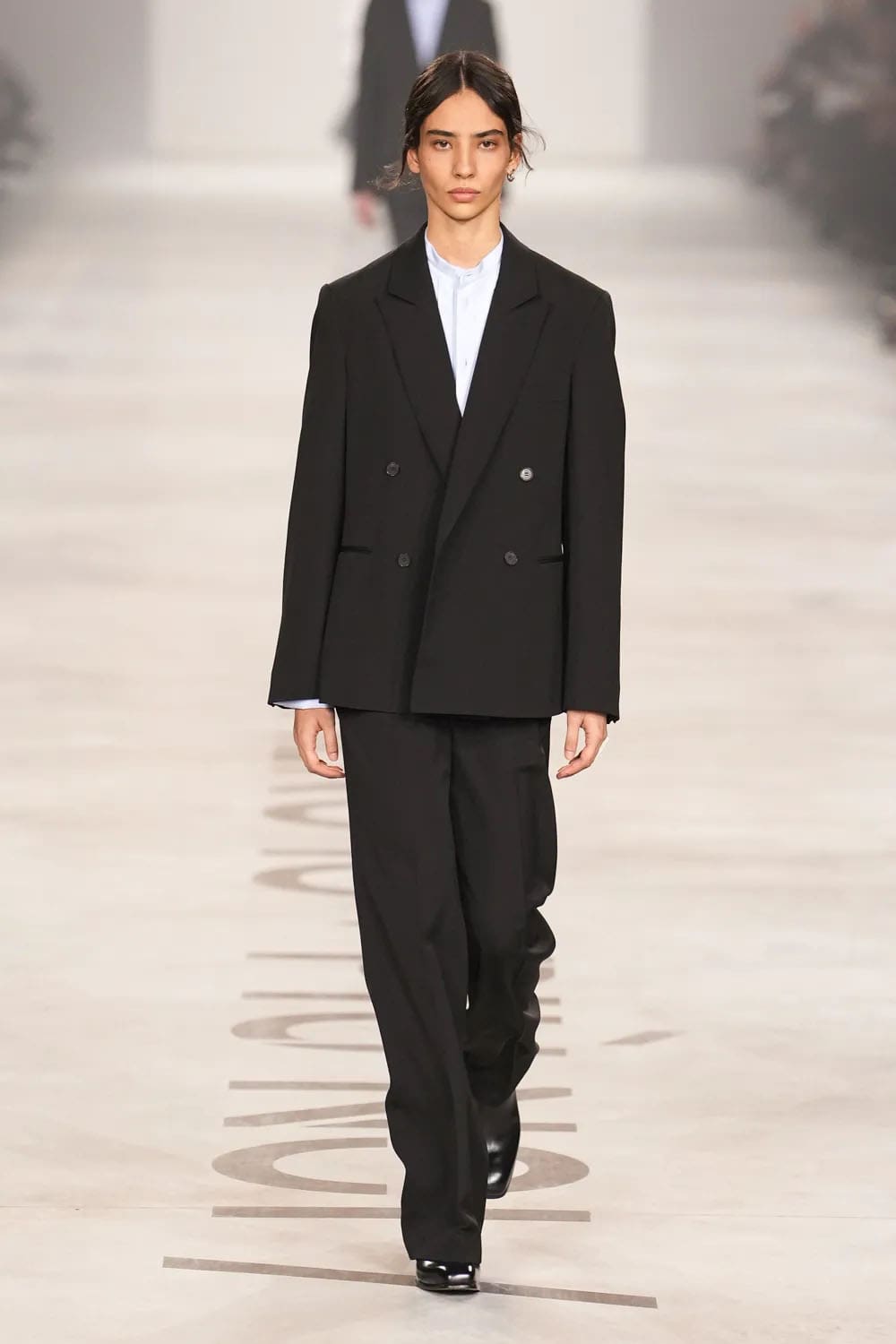
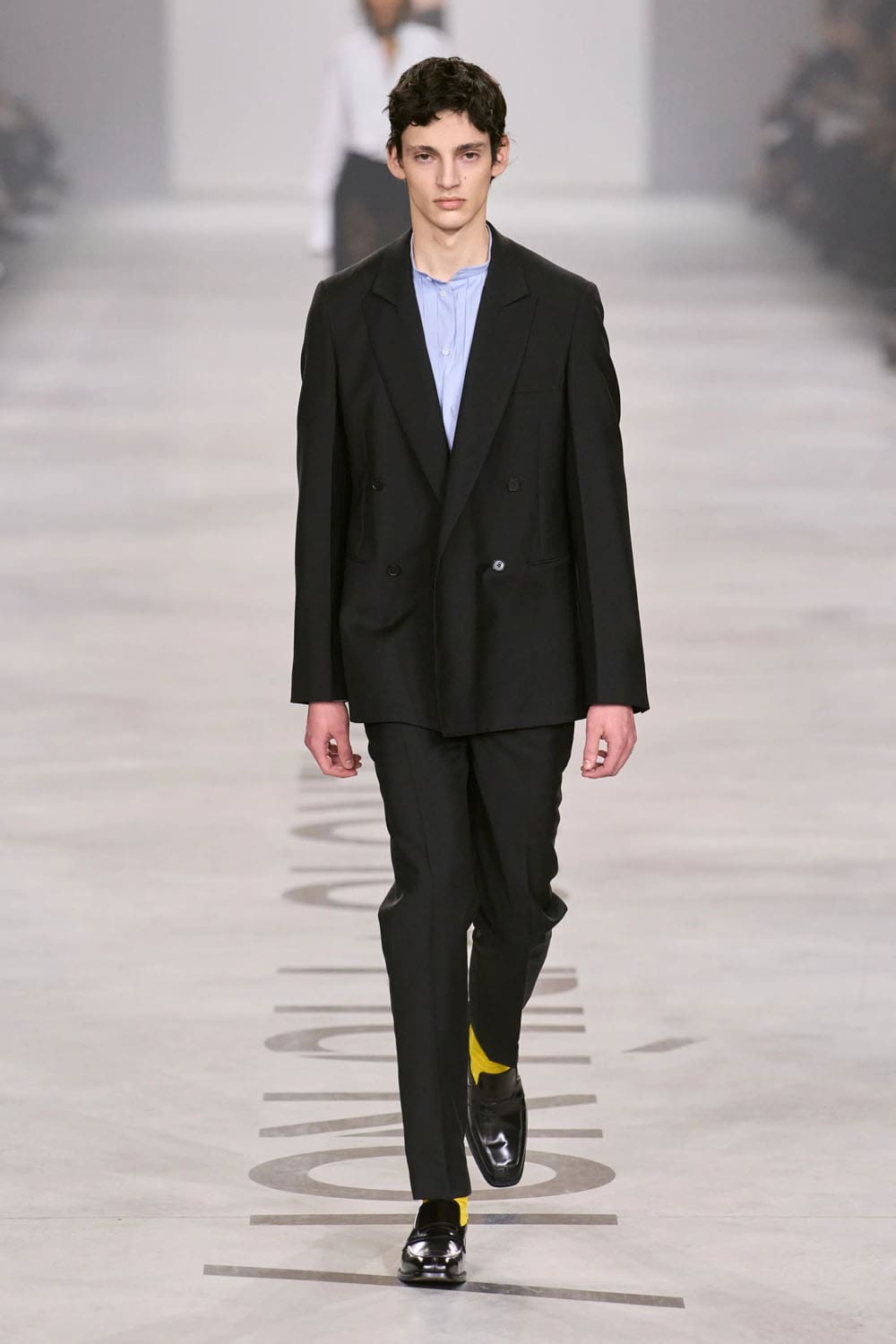
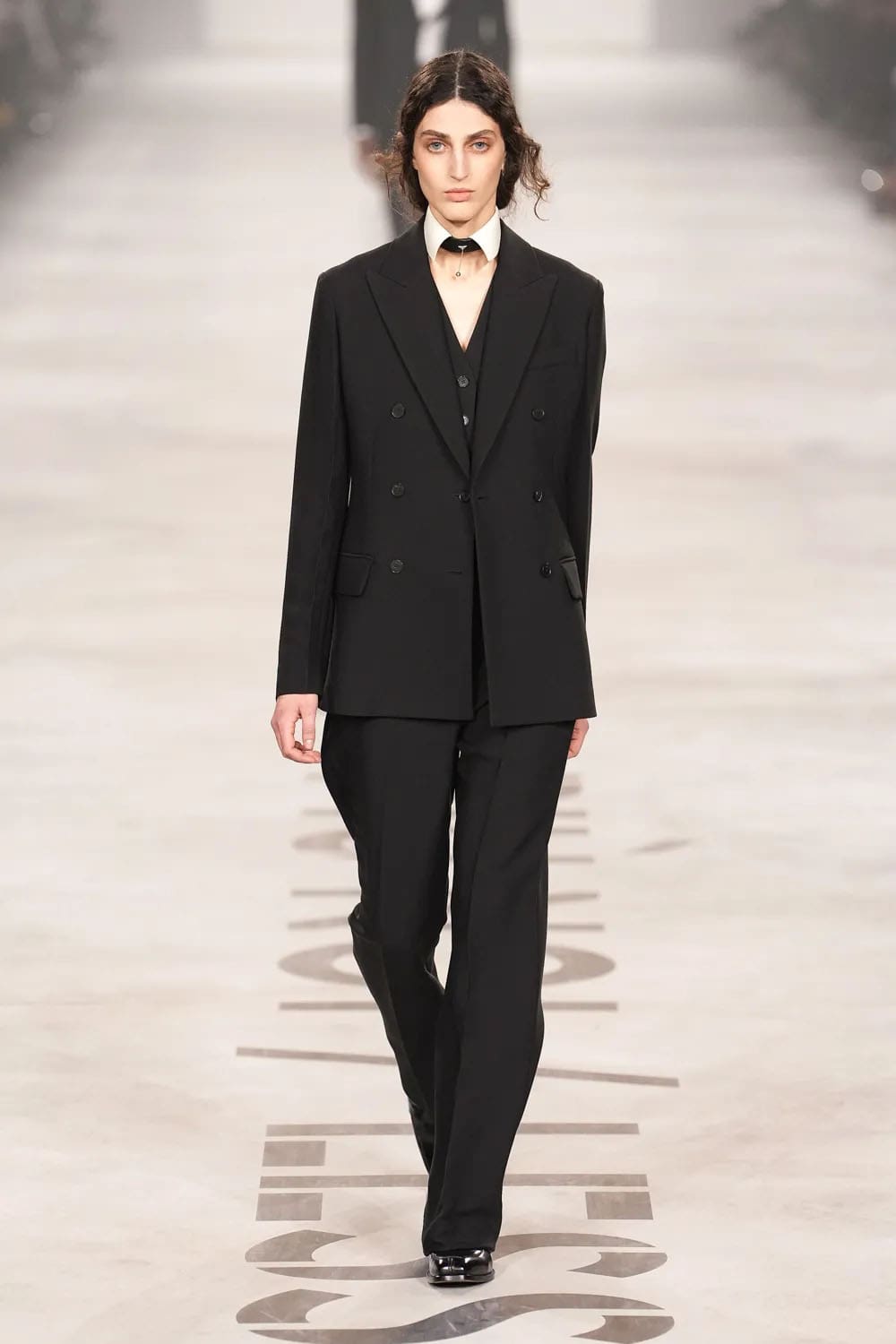
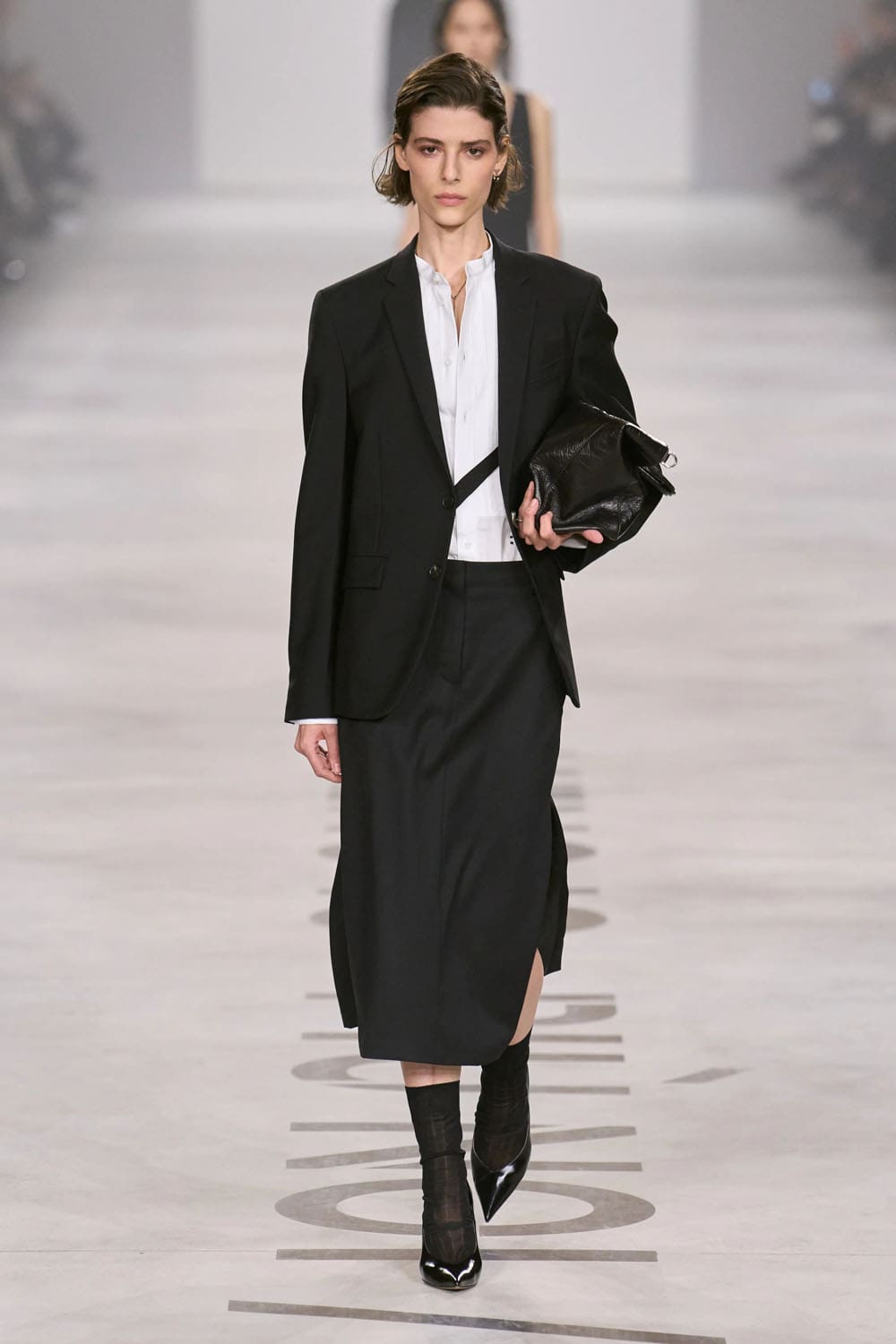
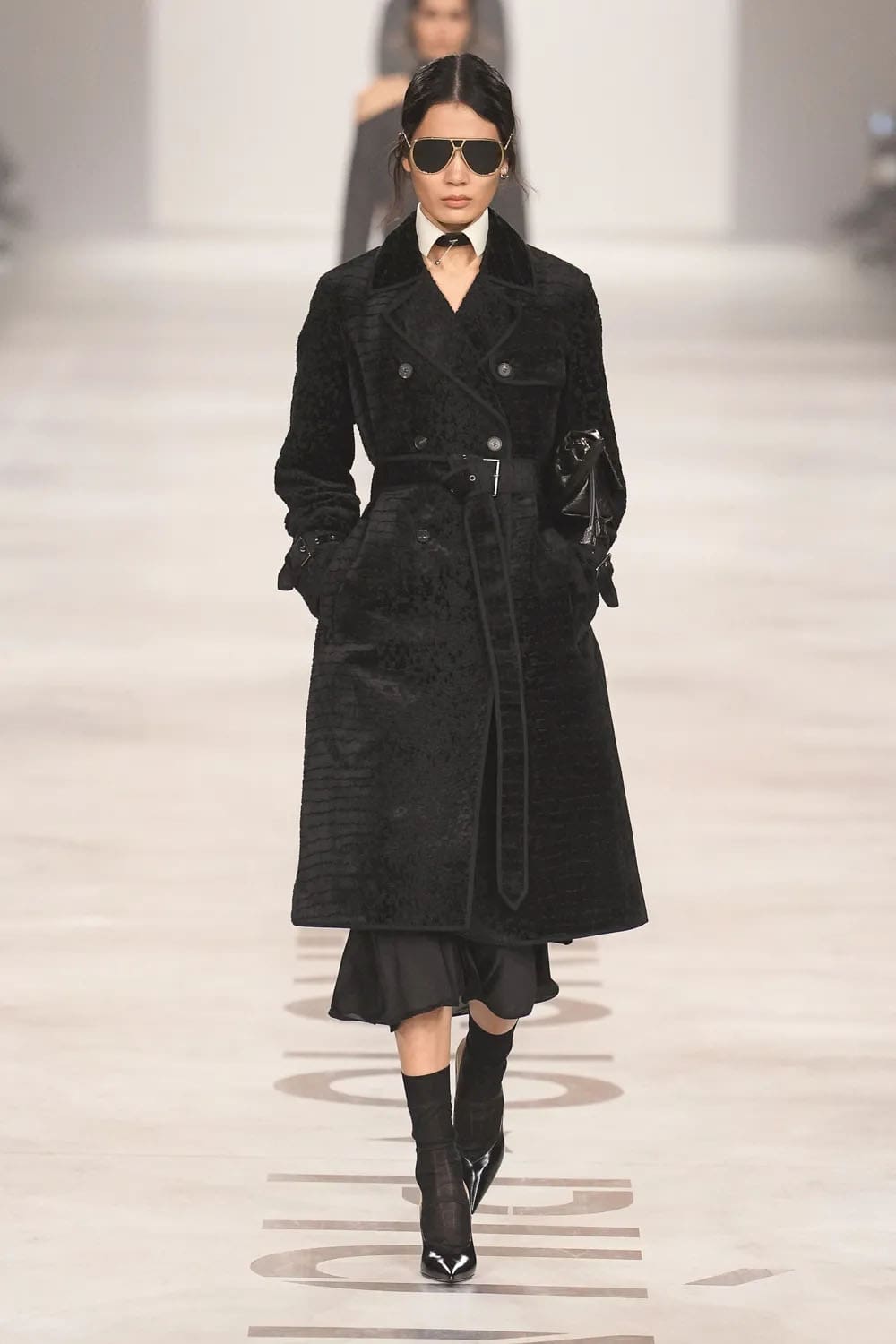
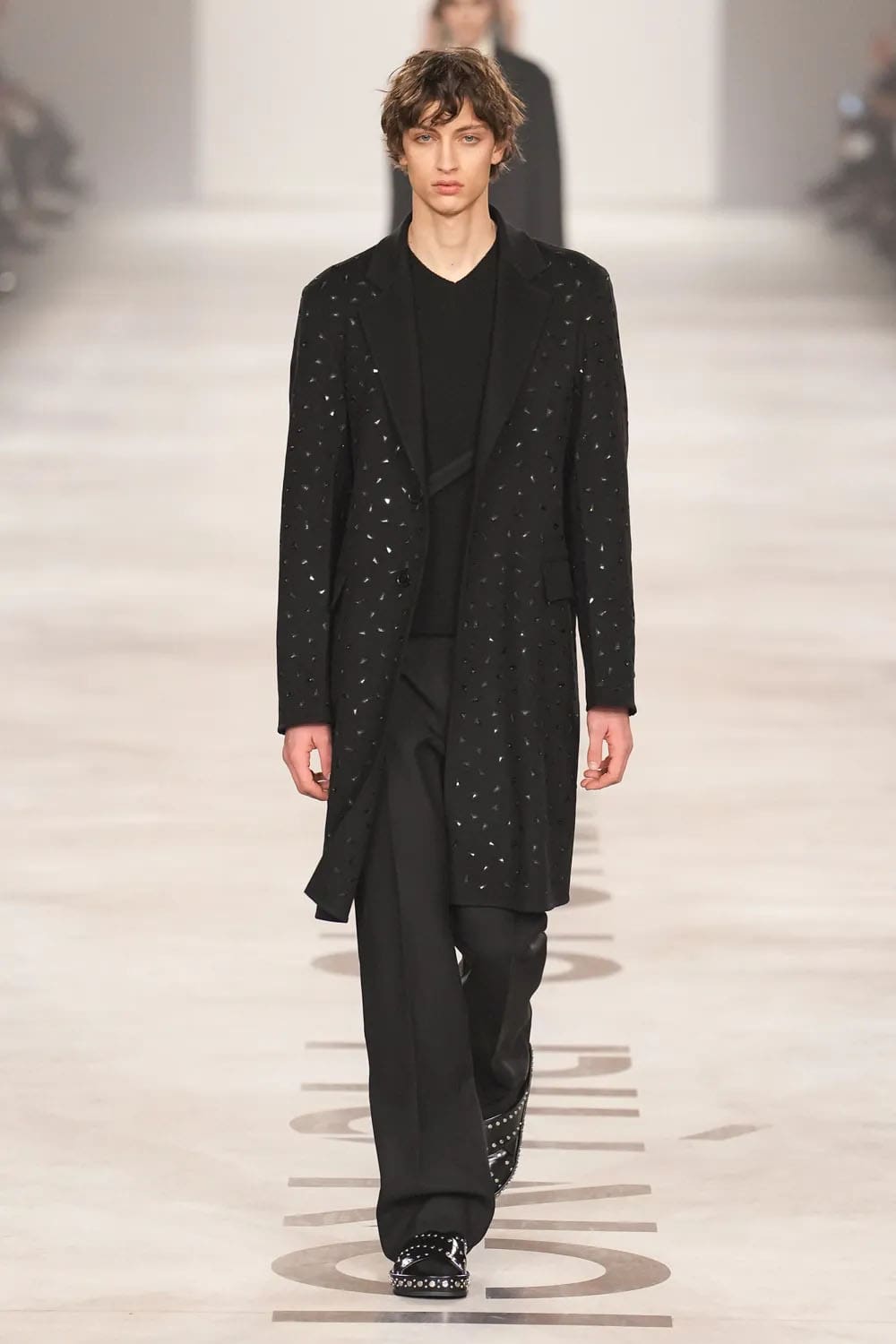
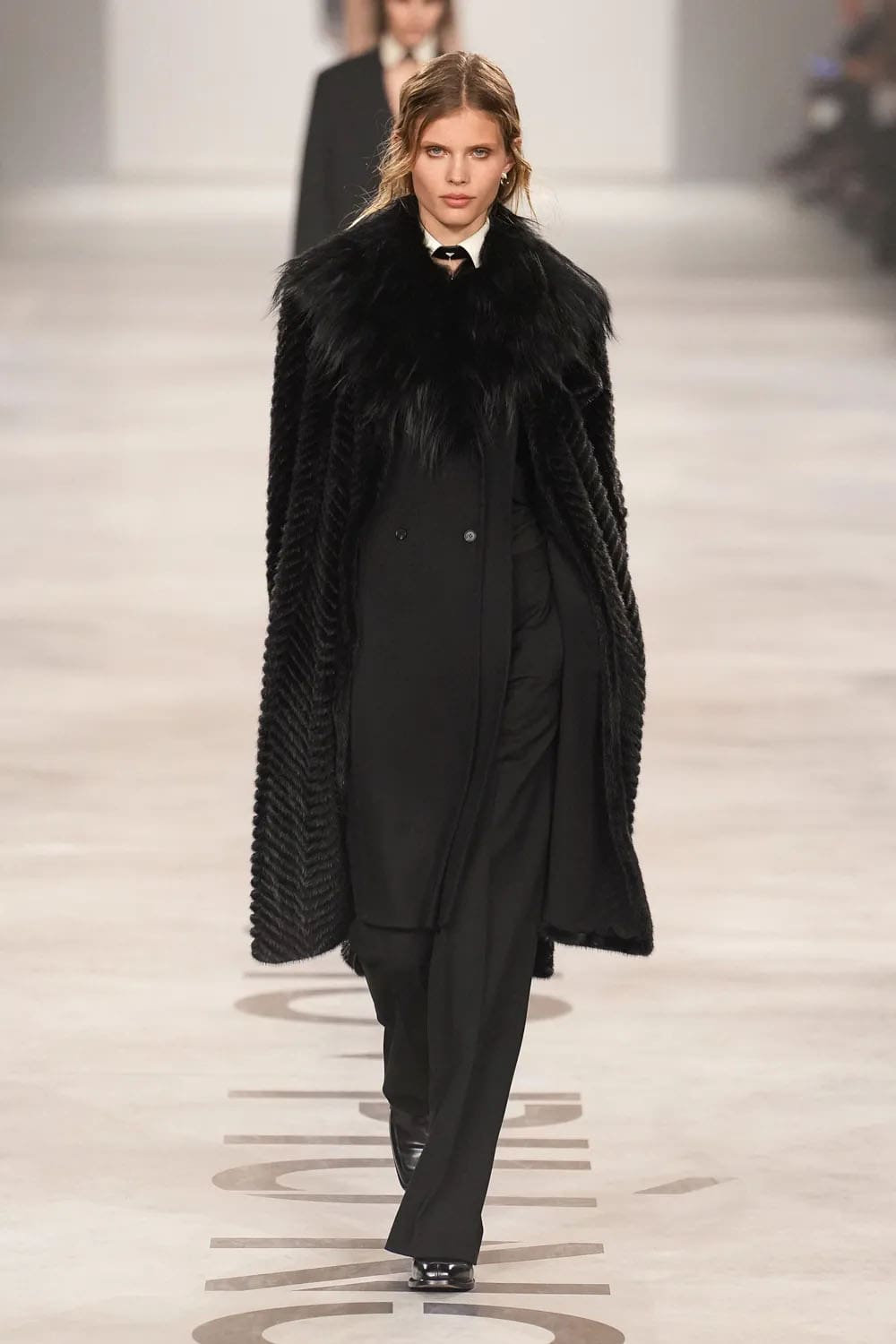
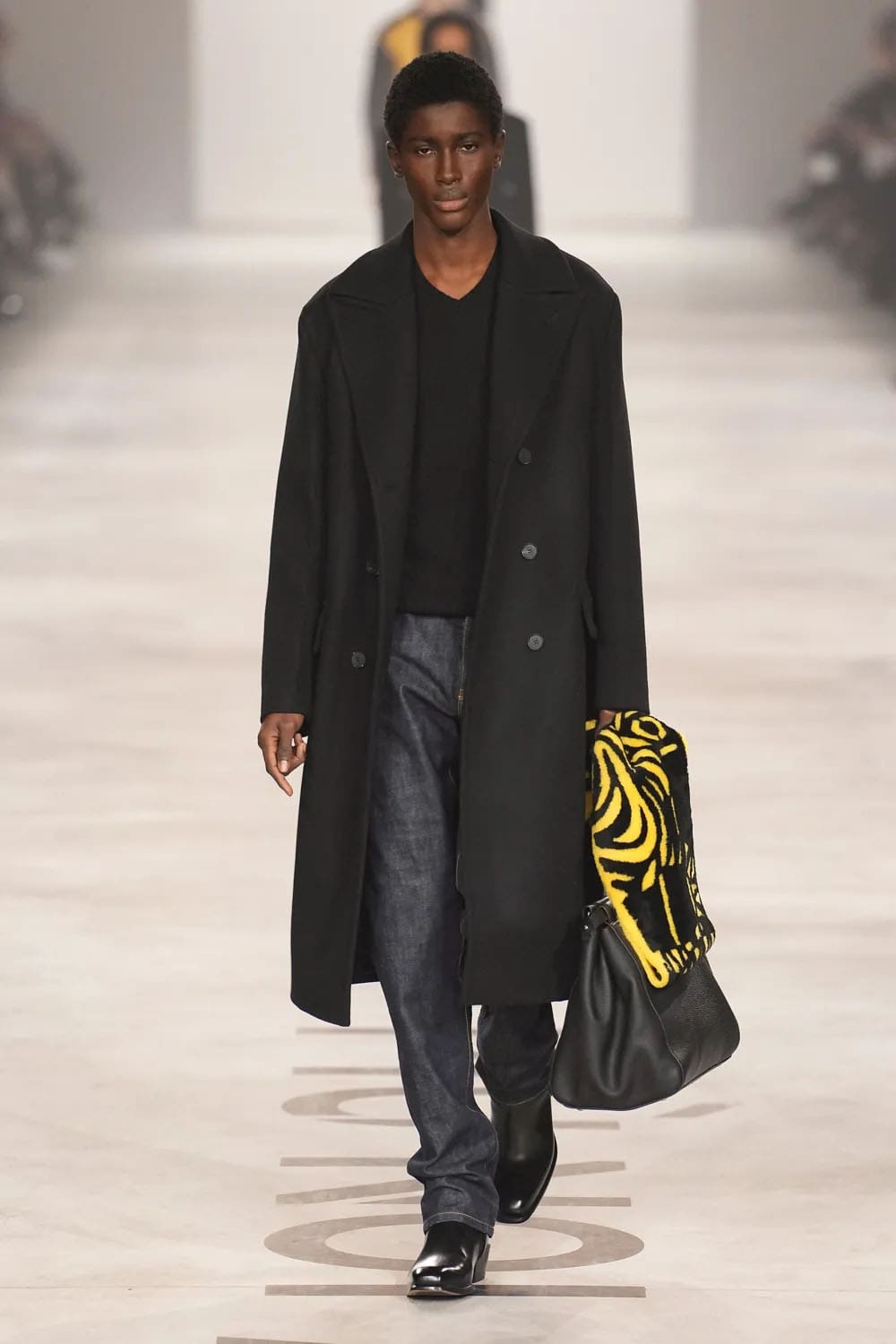
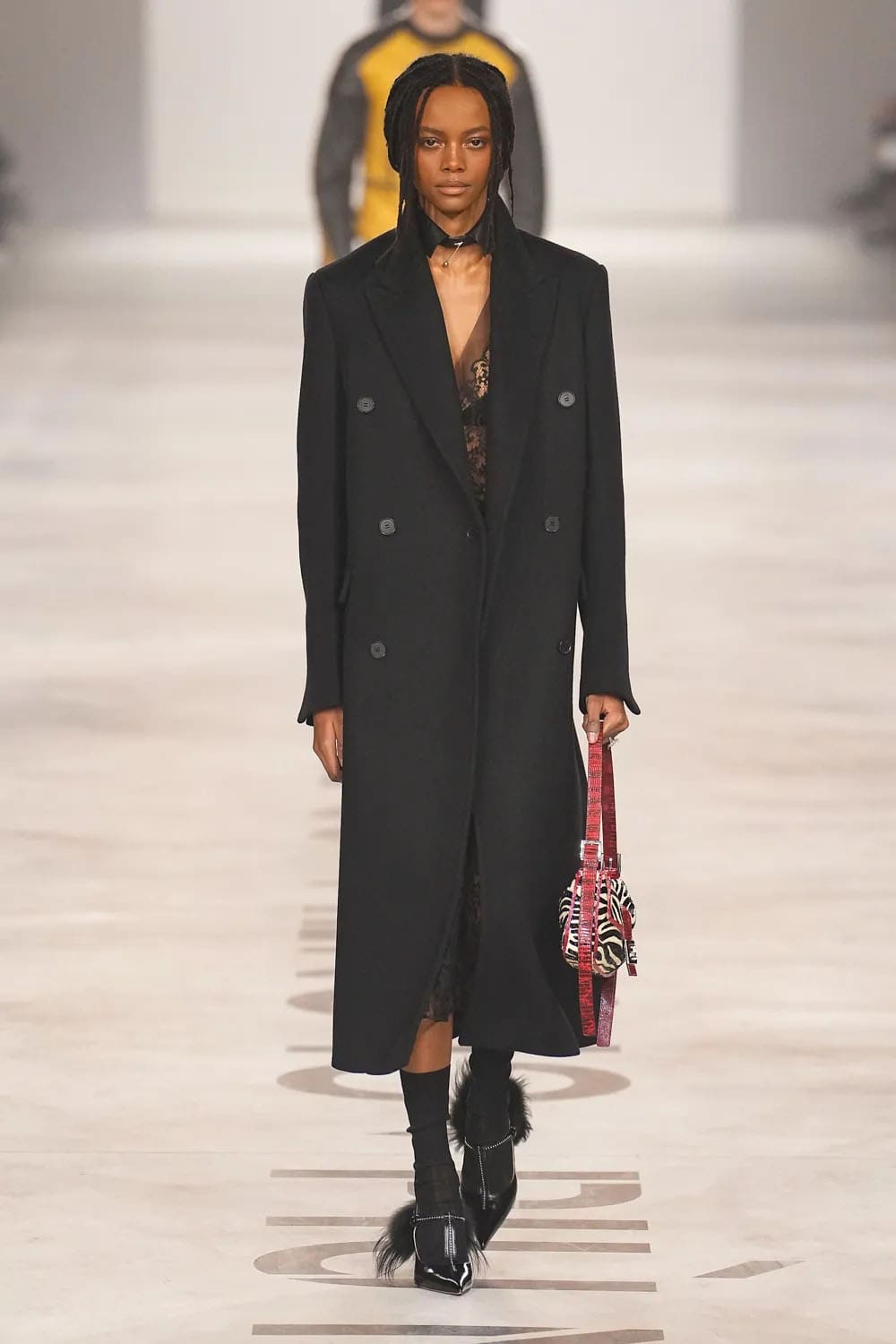
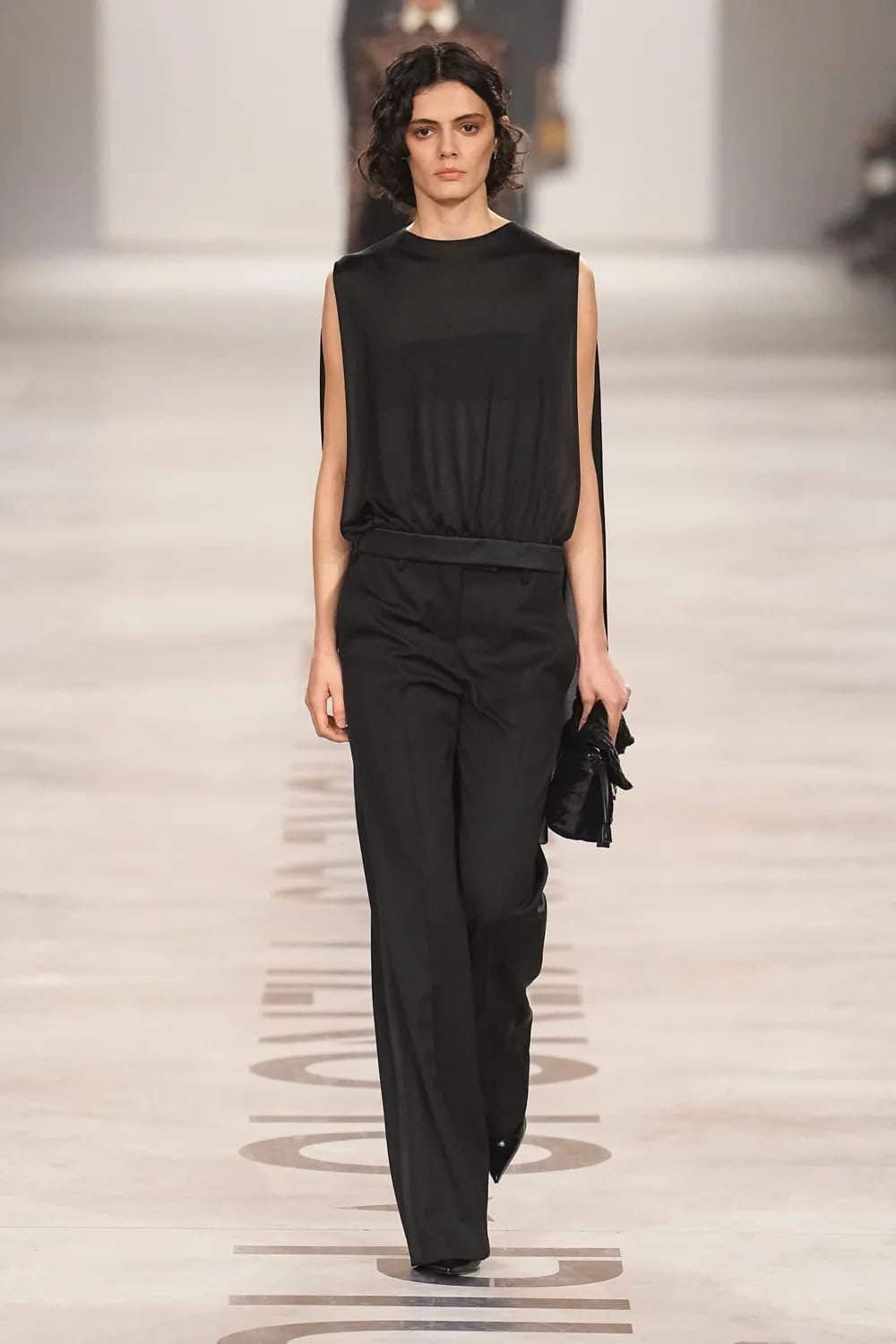
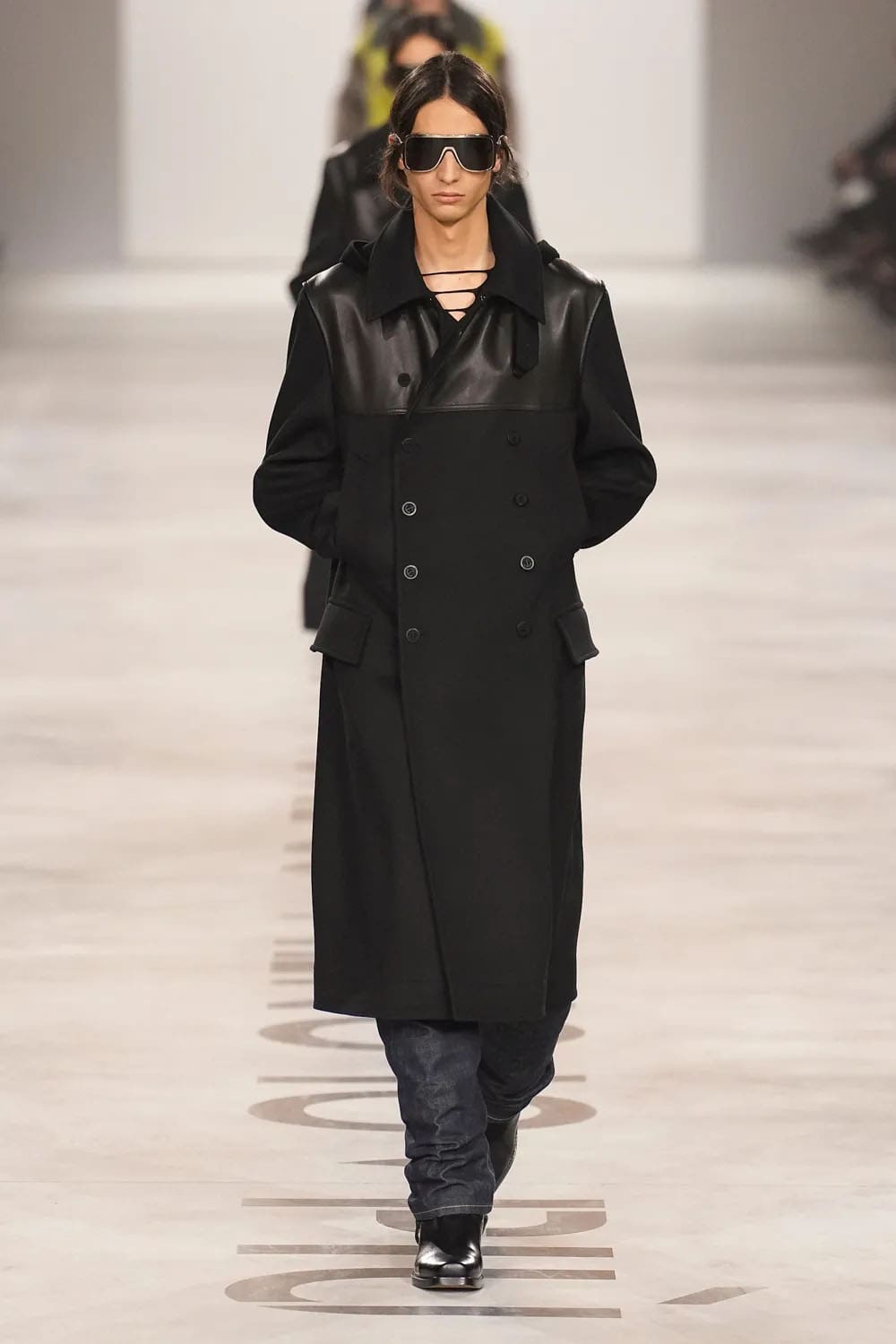
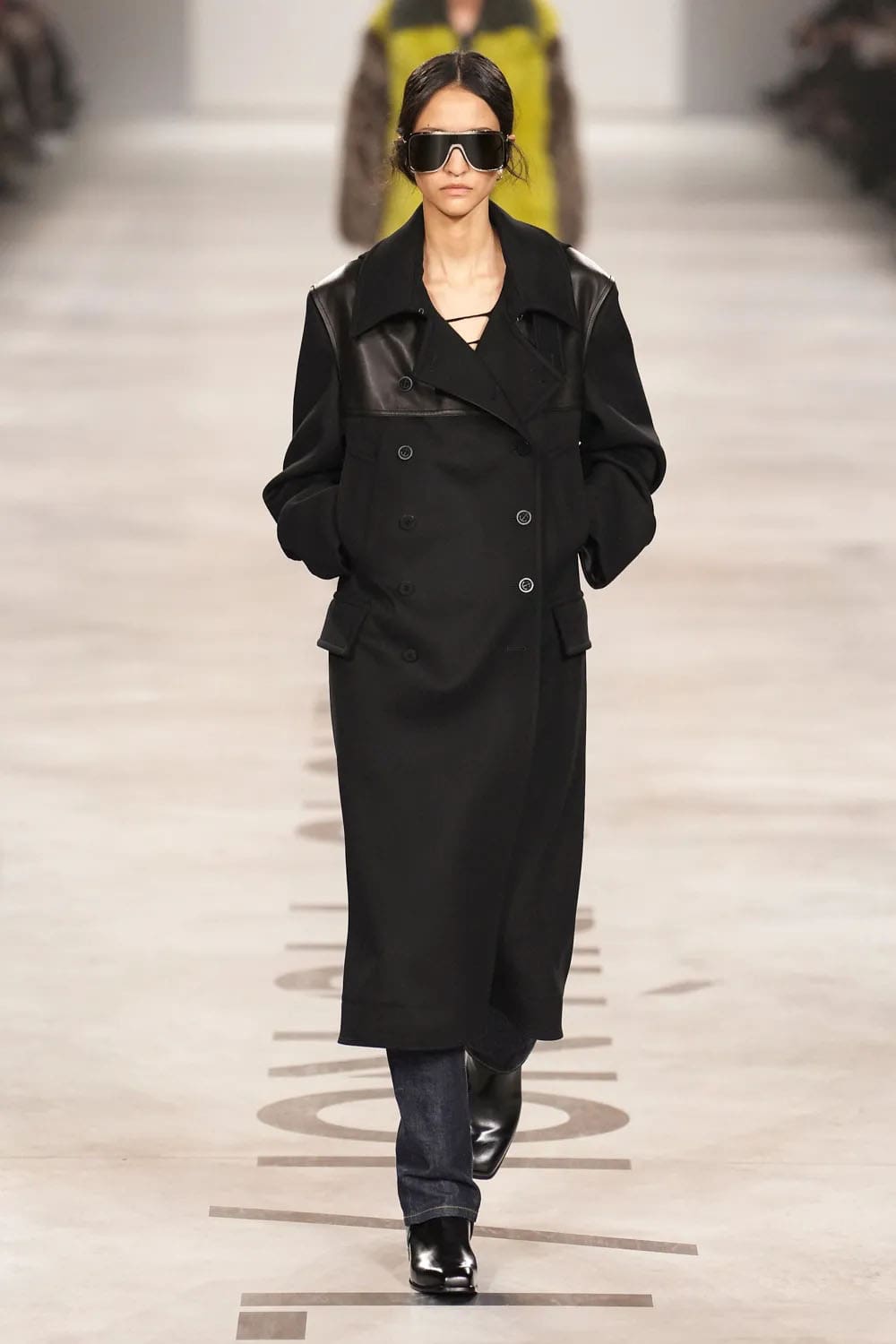
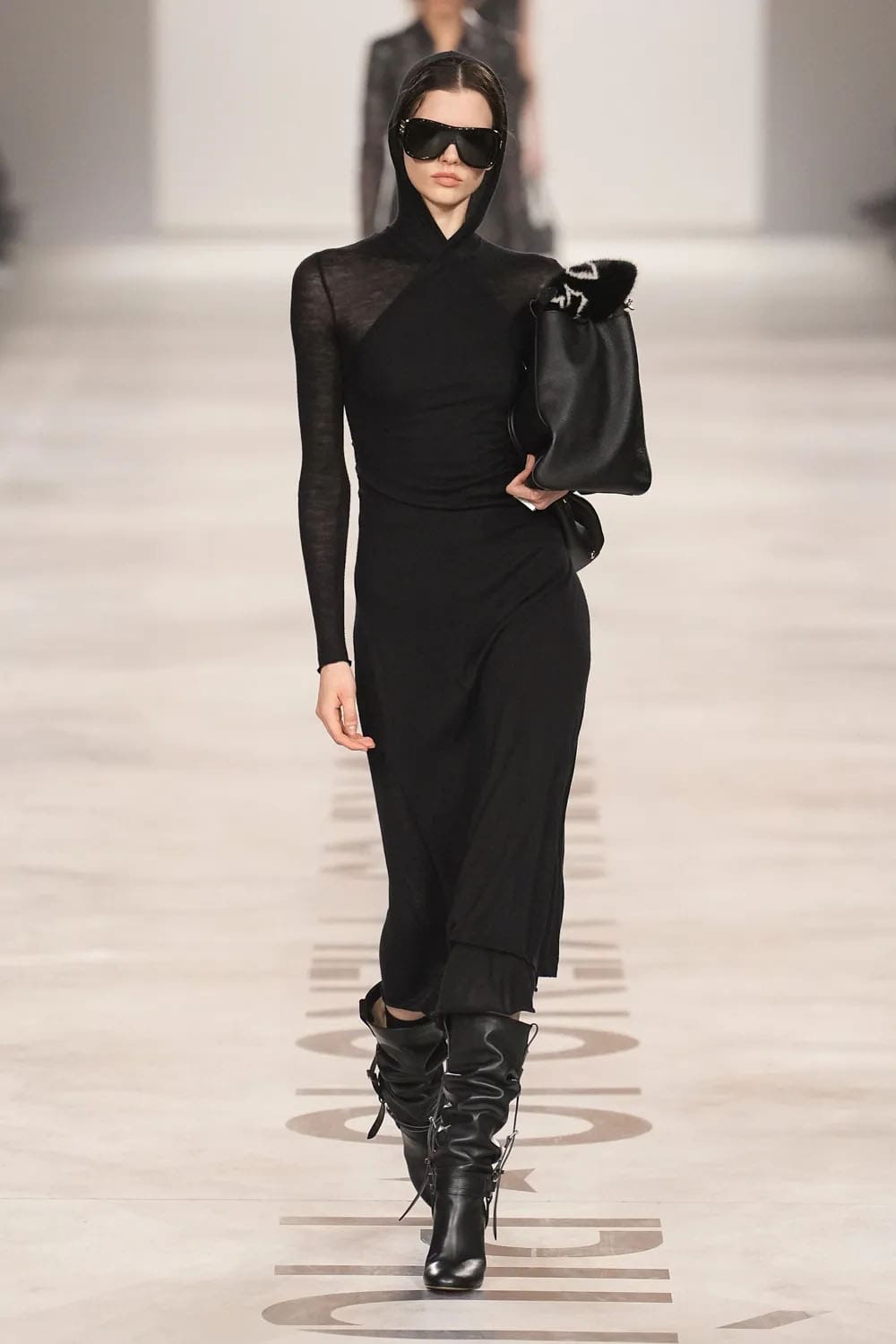
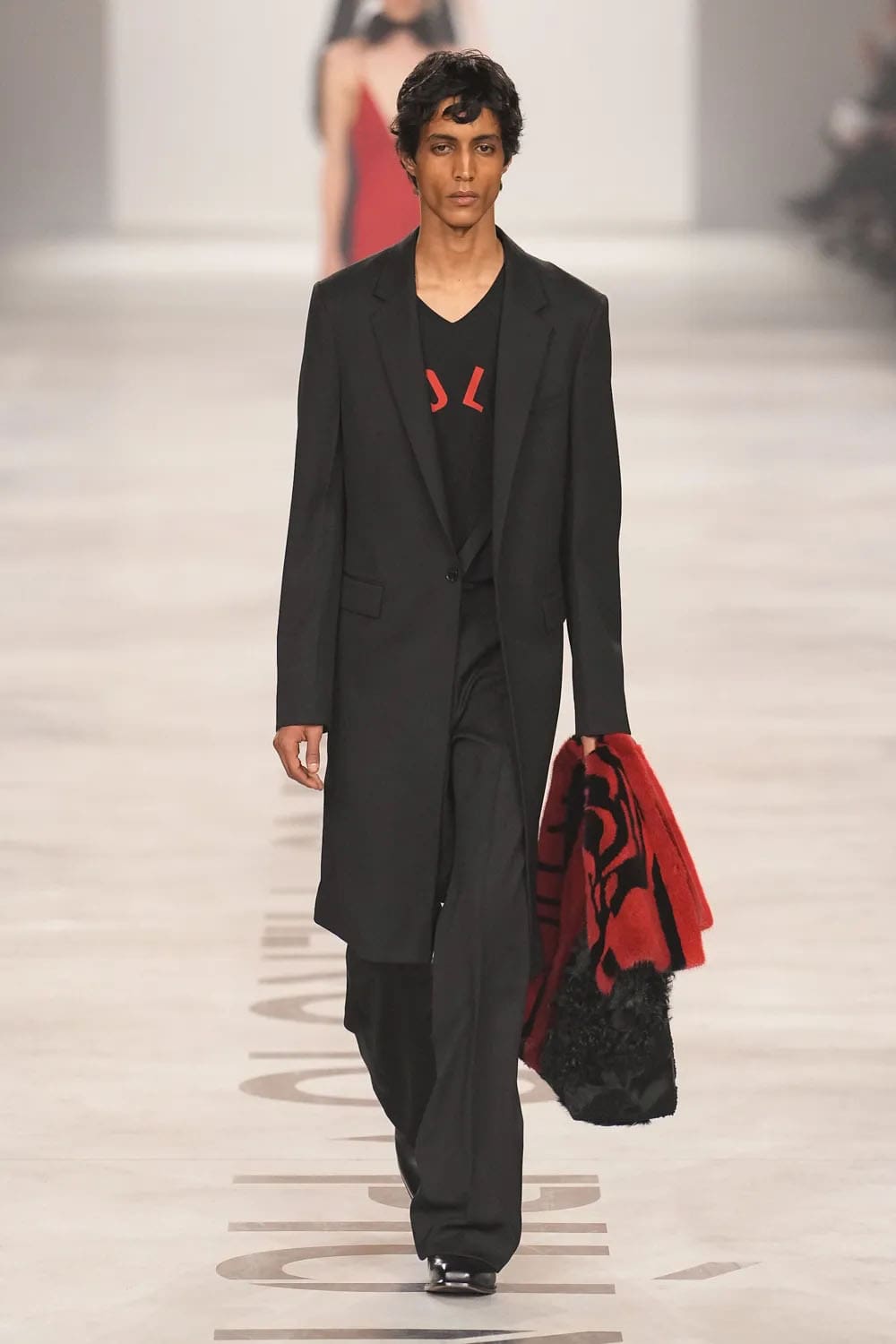
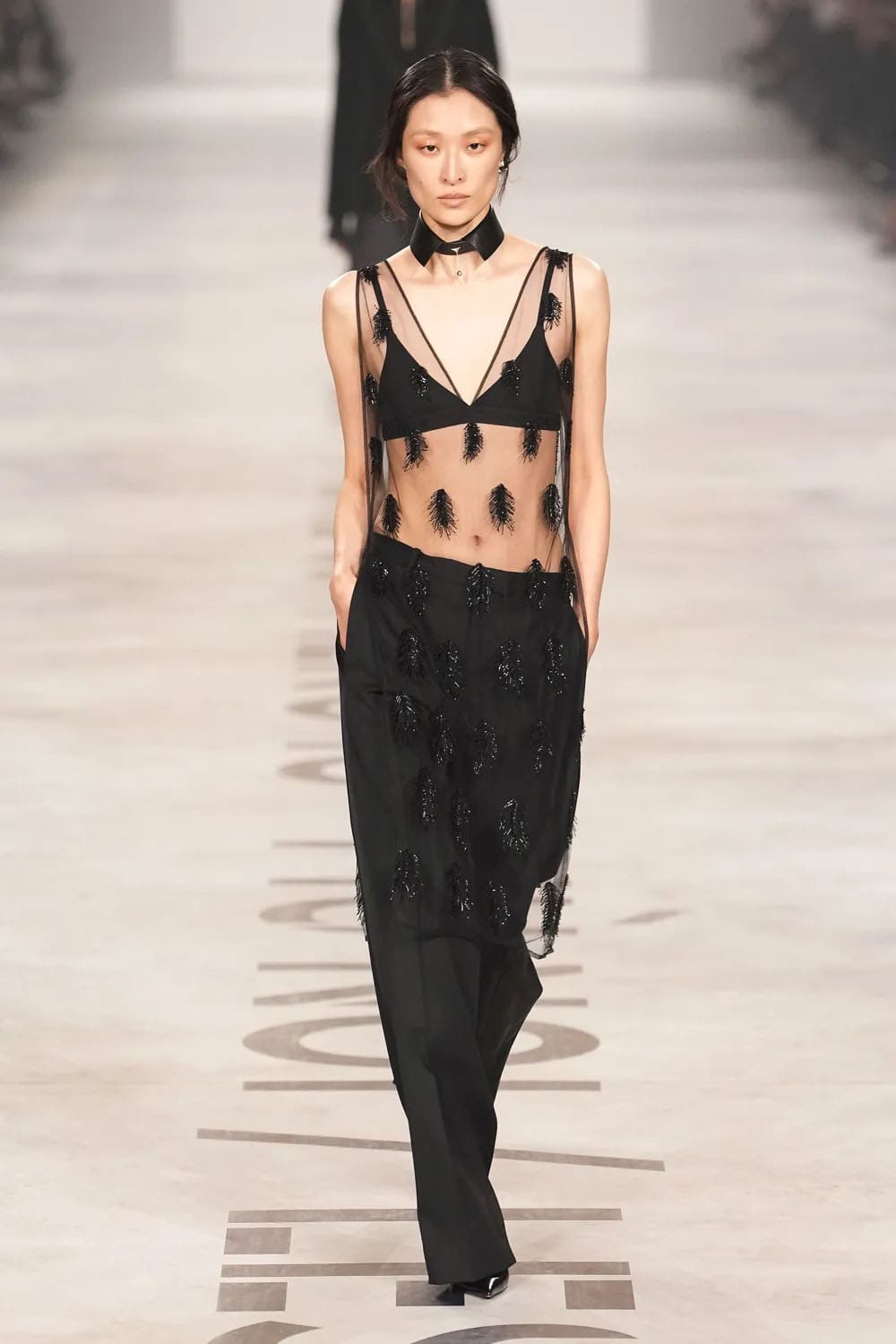
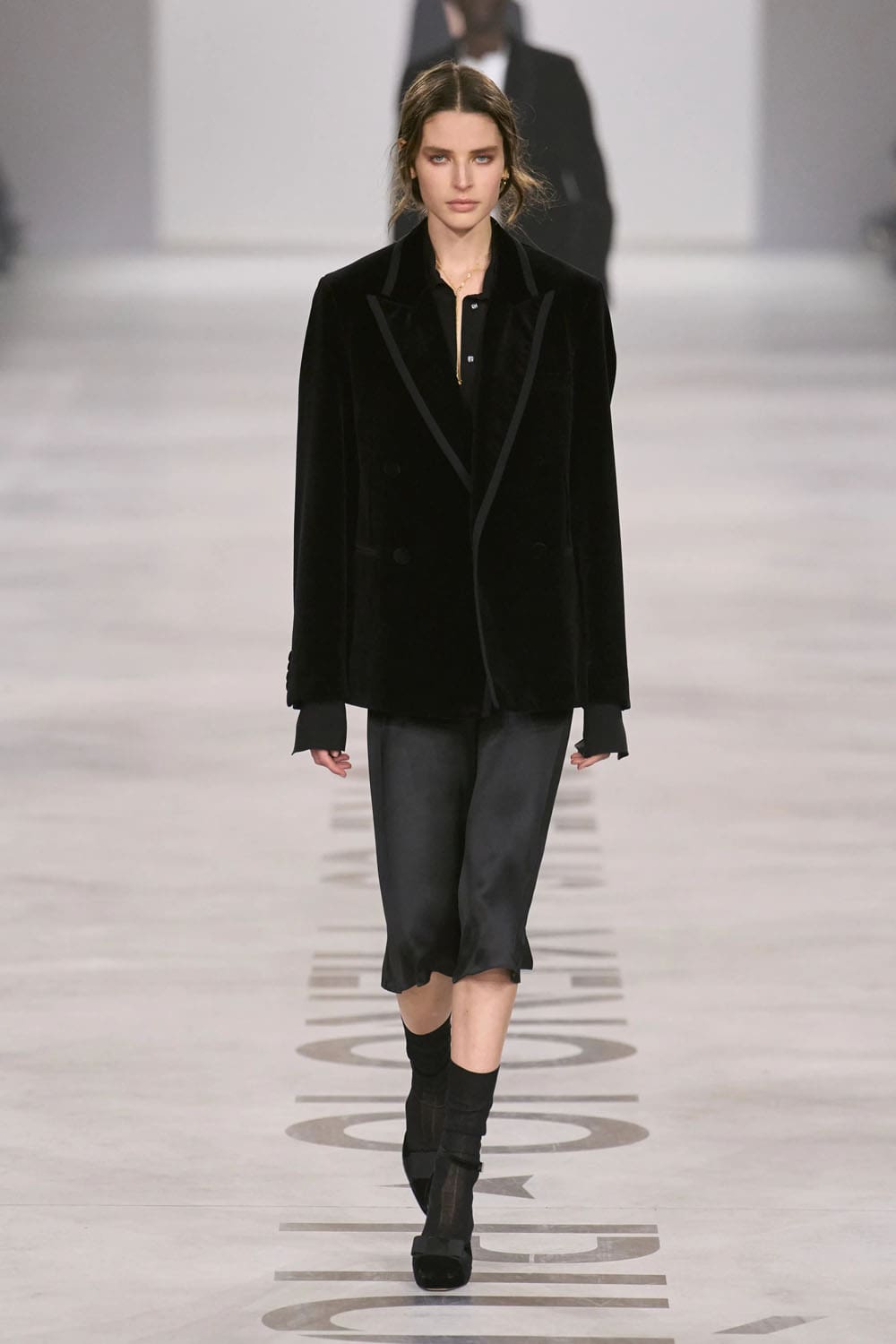
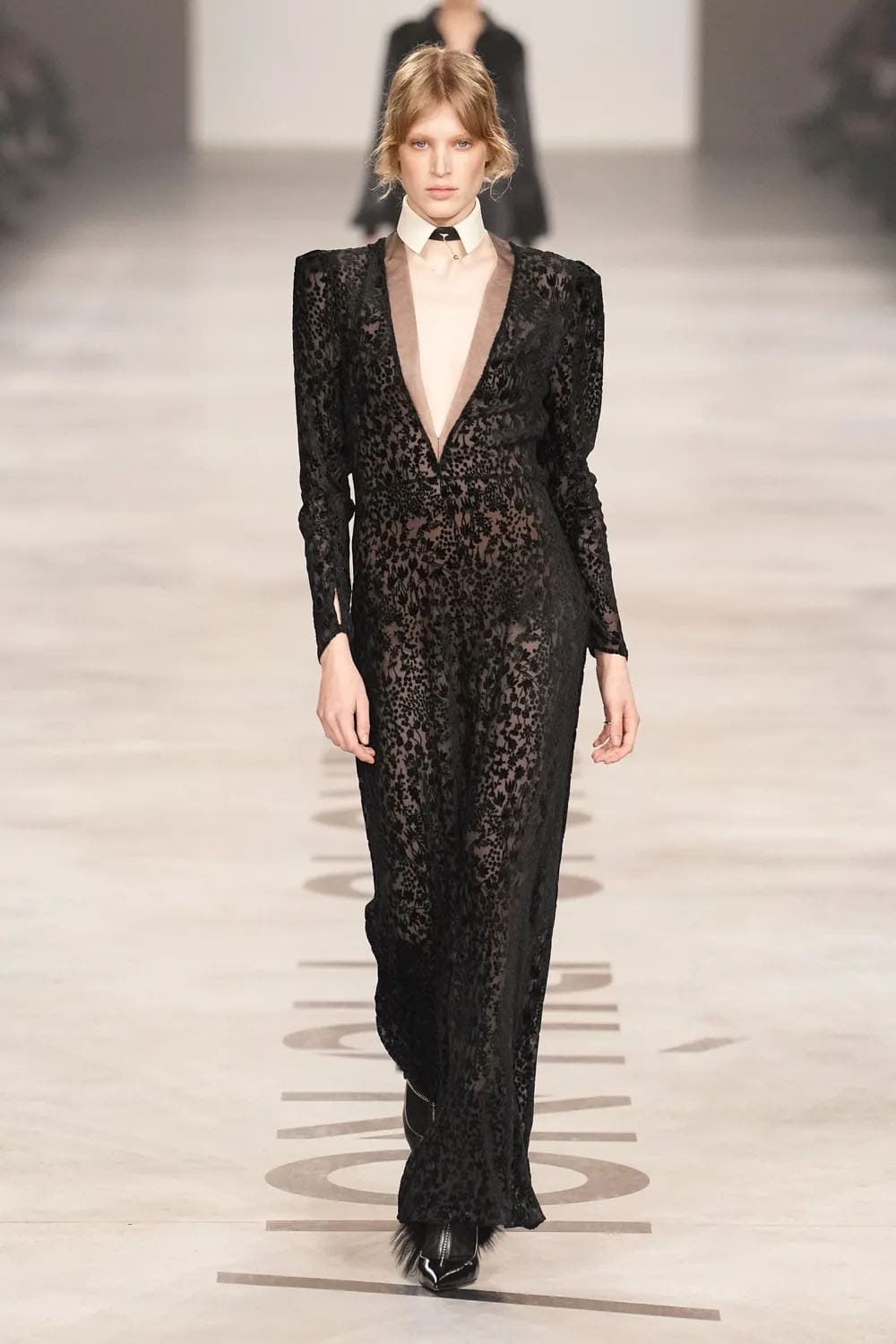
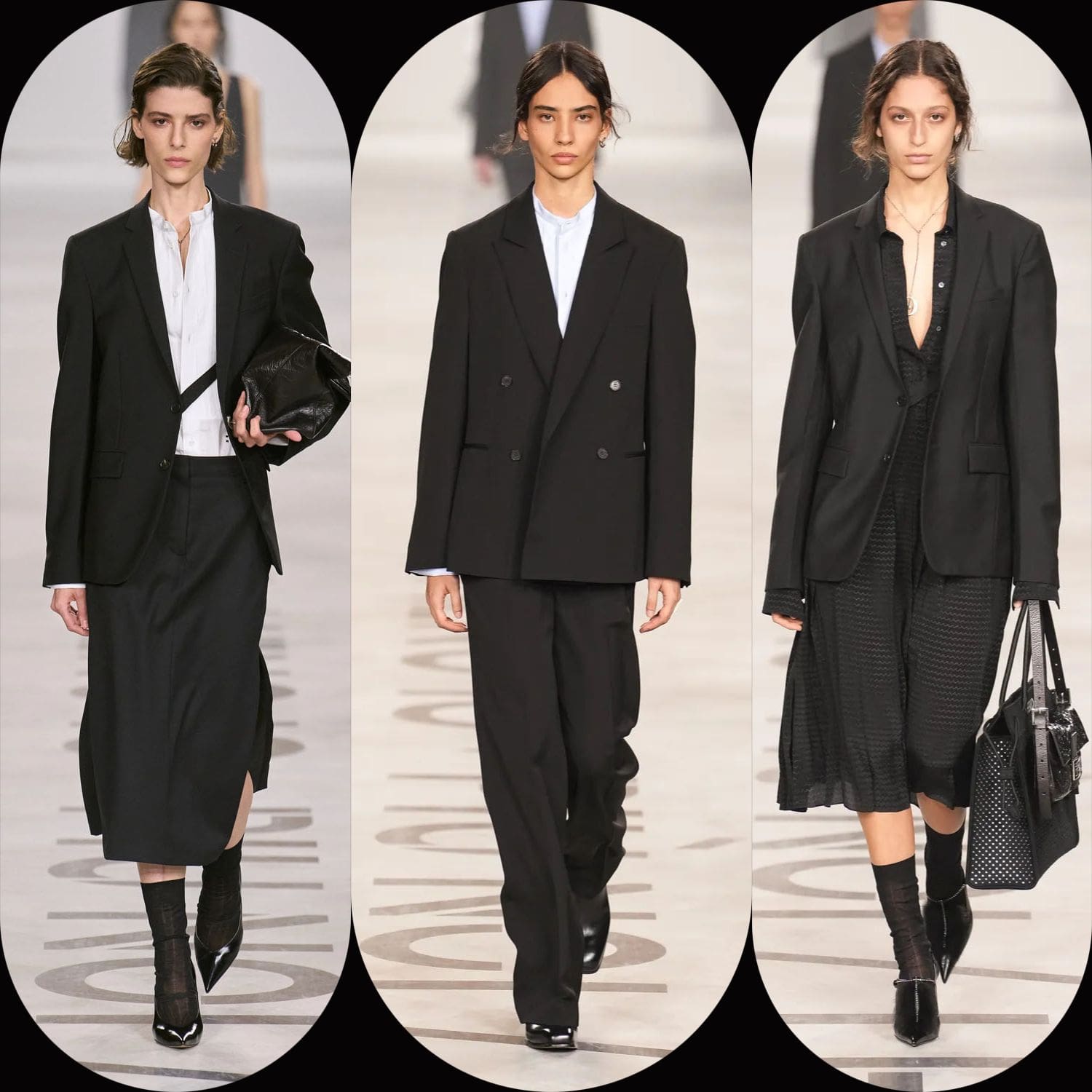
Chiuri plants her flag immediately: oversized black suiting, shoulders softened but still authoritative, worn over pleated skirts and sheer underpinnings.
The first look opens the show with that unmistakable message:
“I am in charge, but also possibly haunting my own office.”
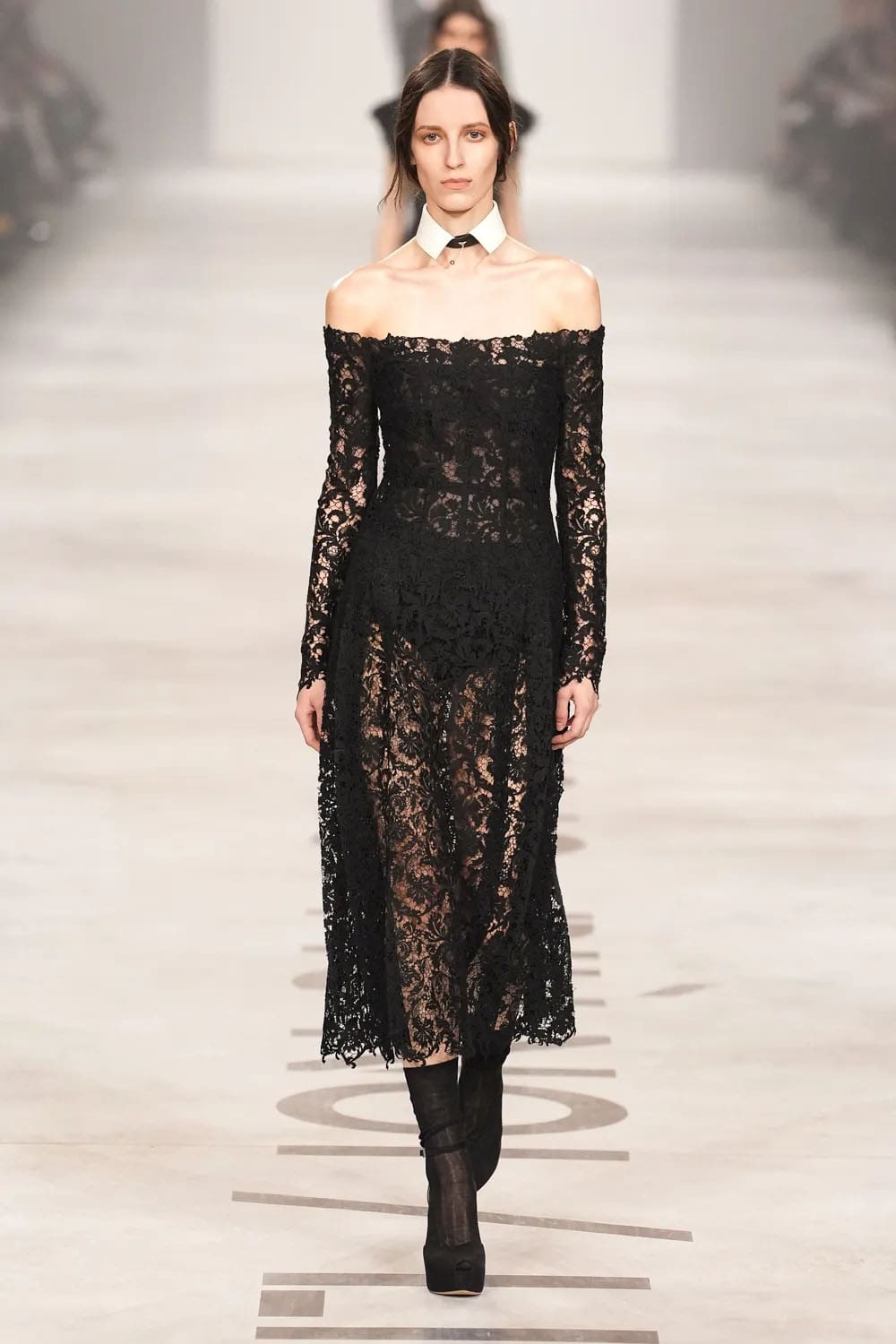
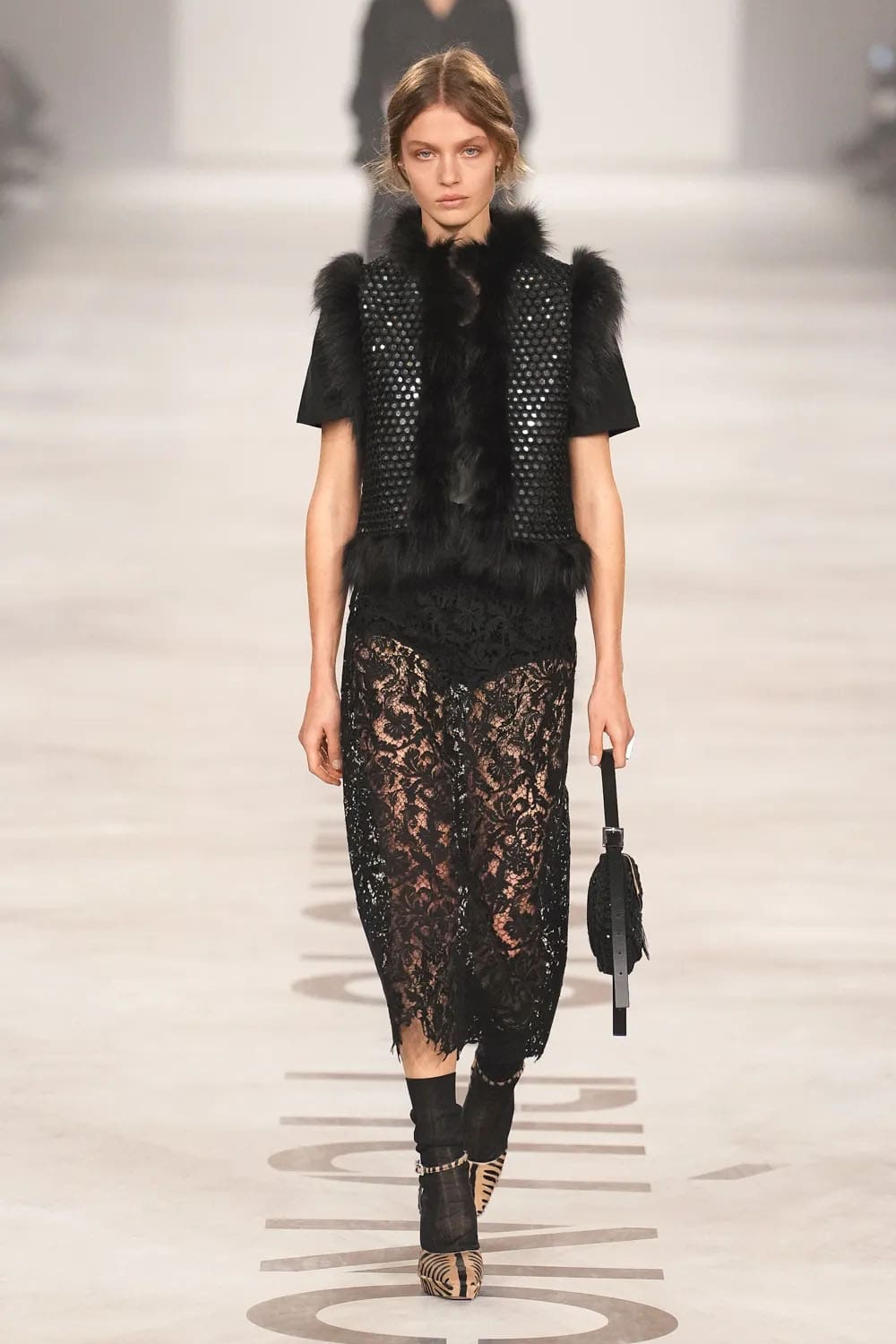
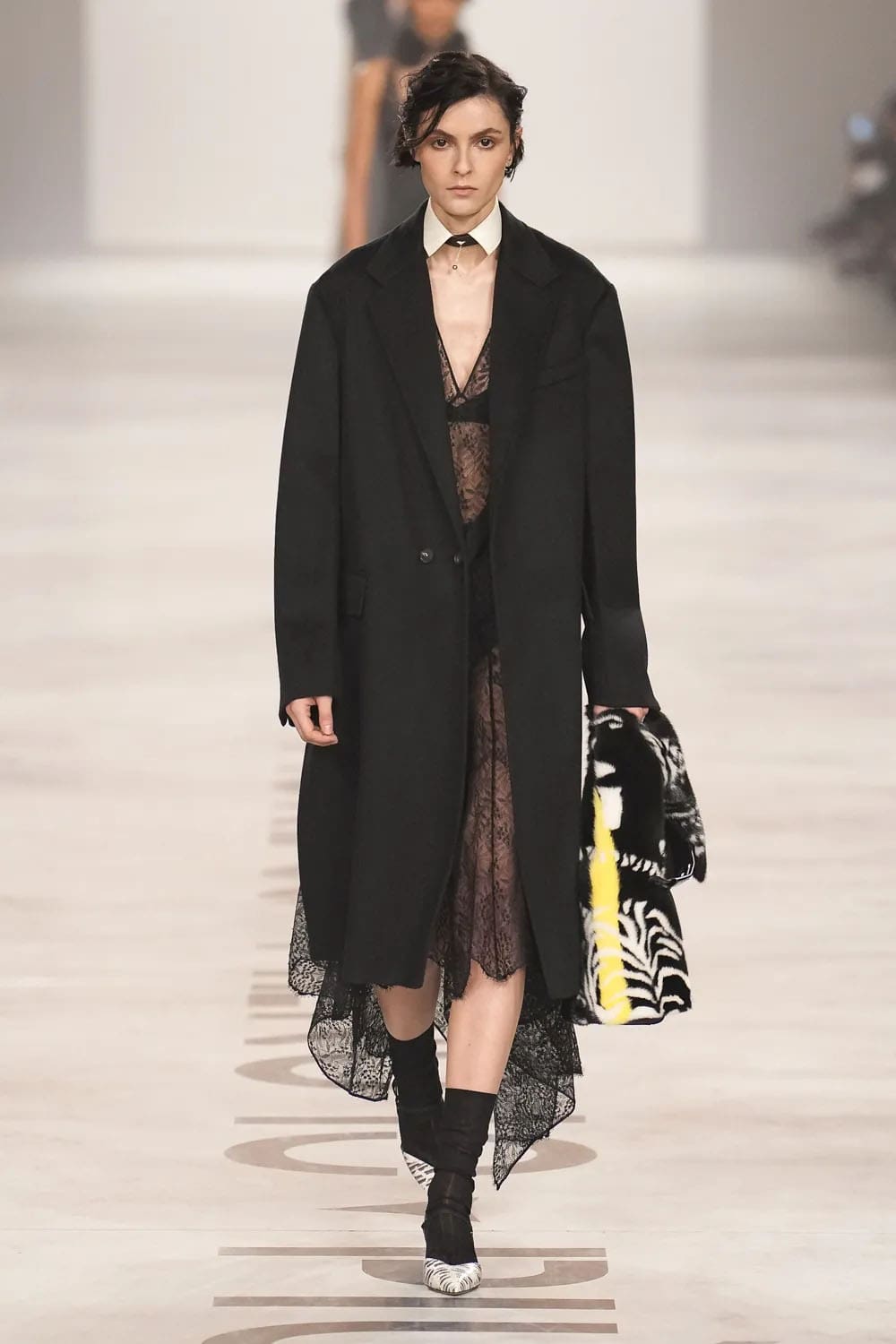
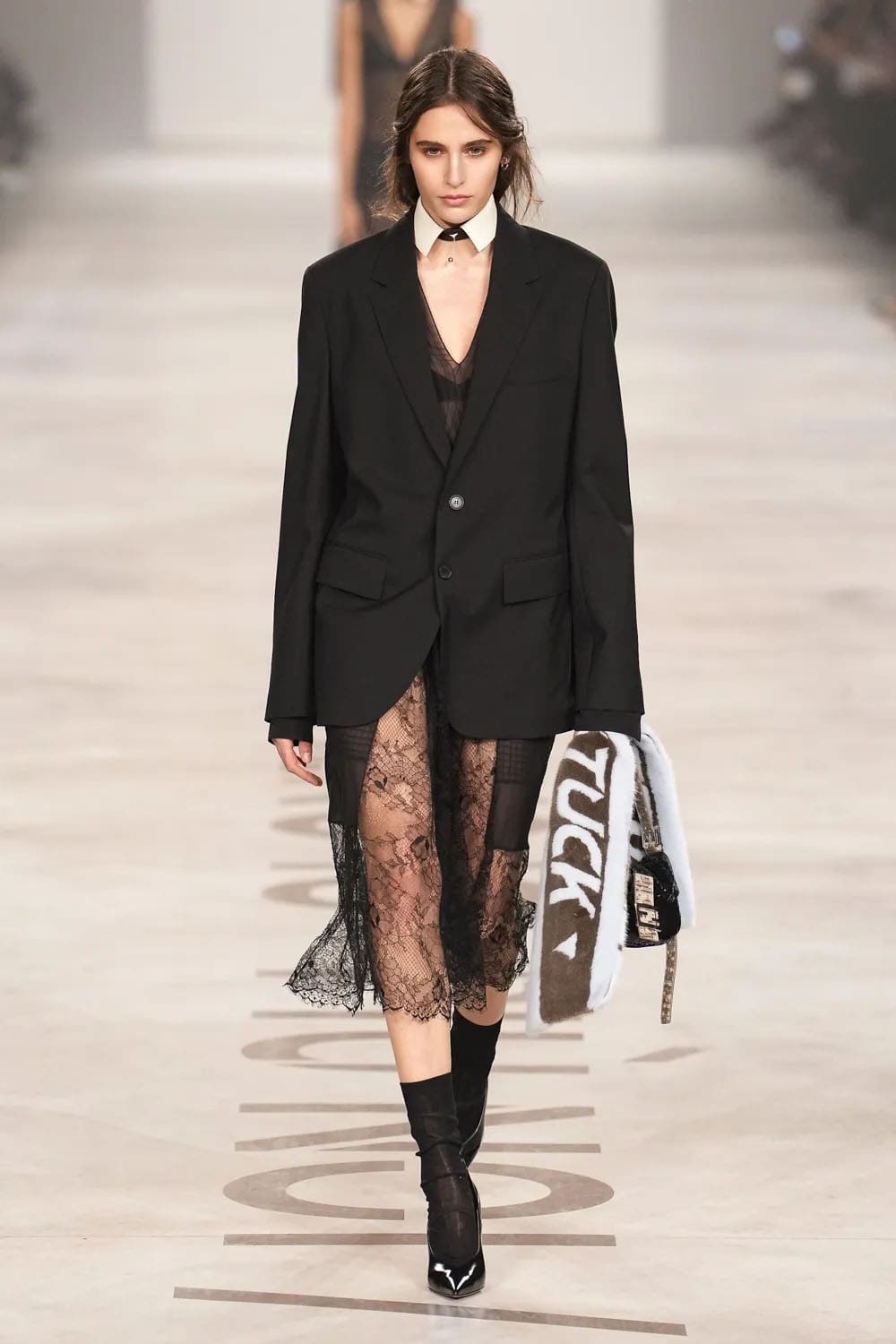
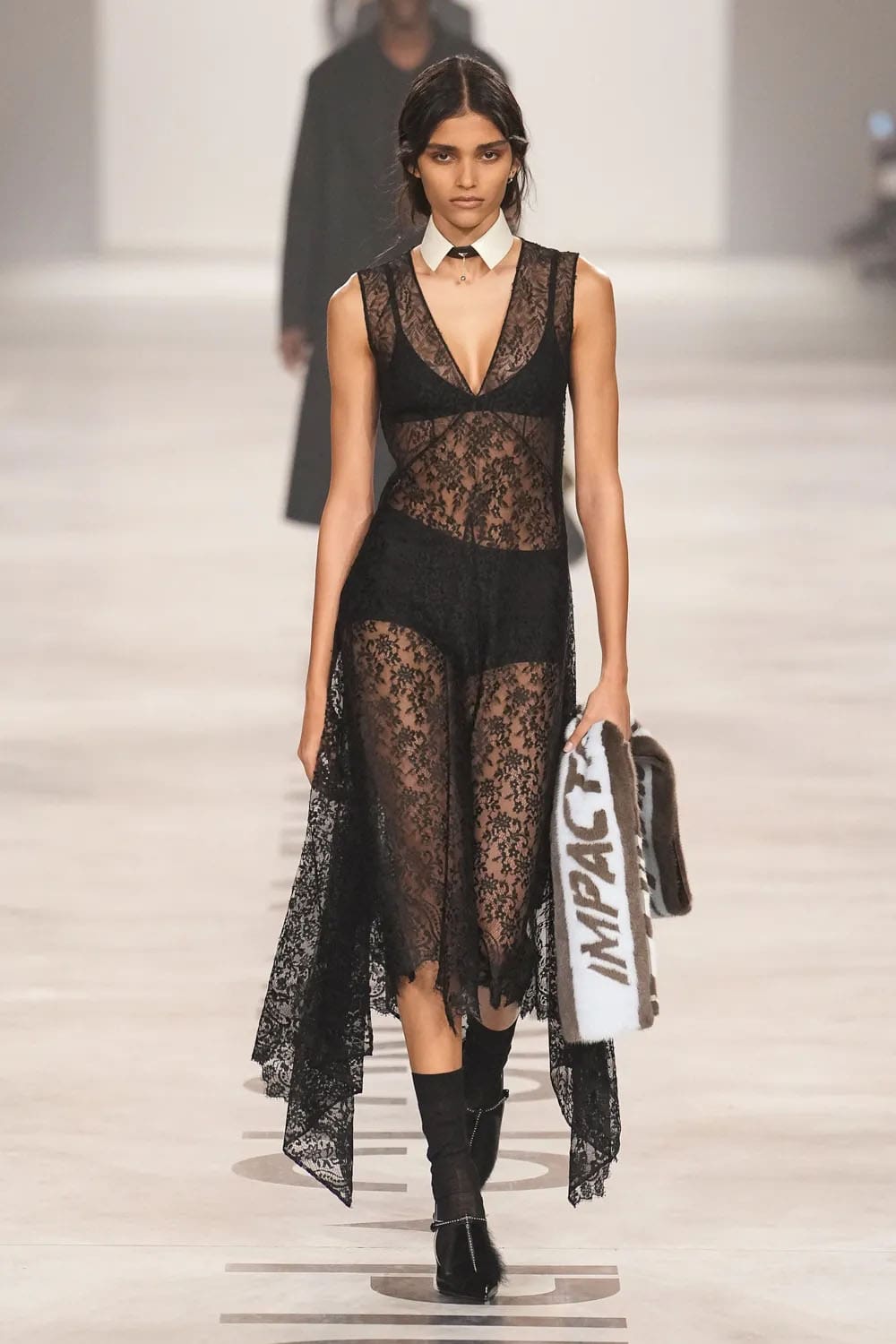
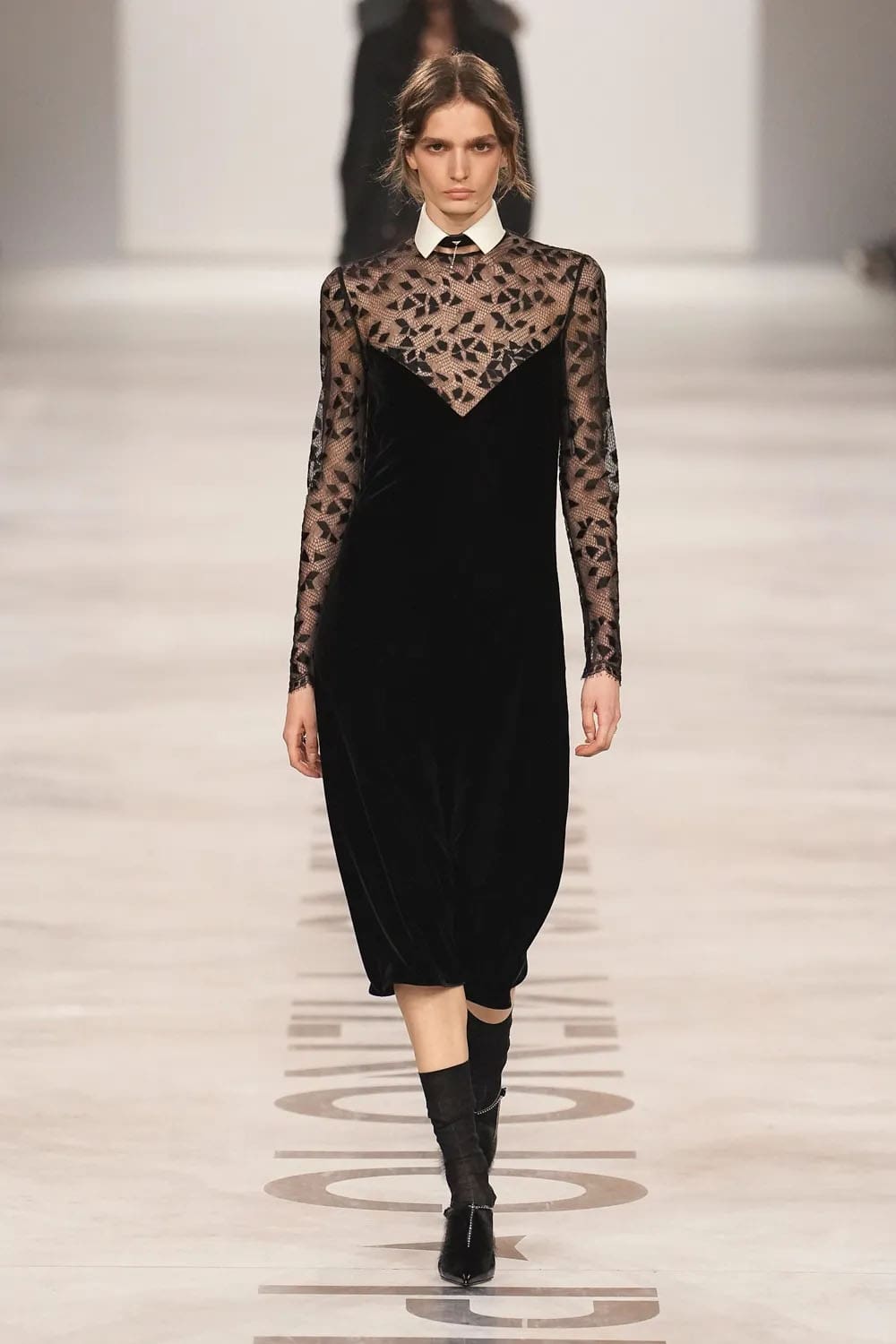
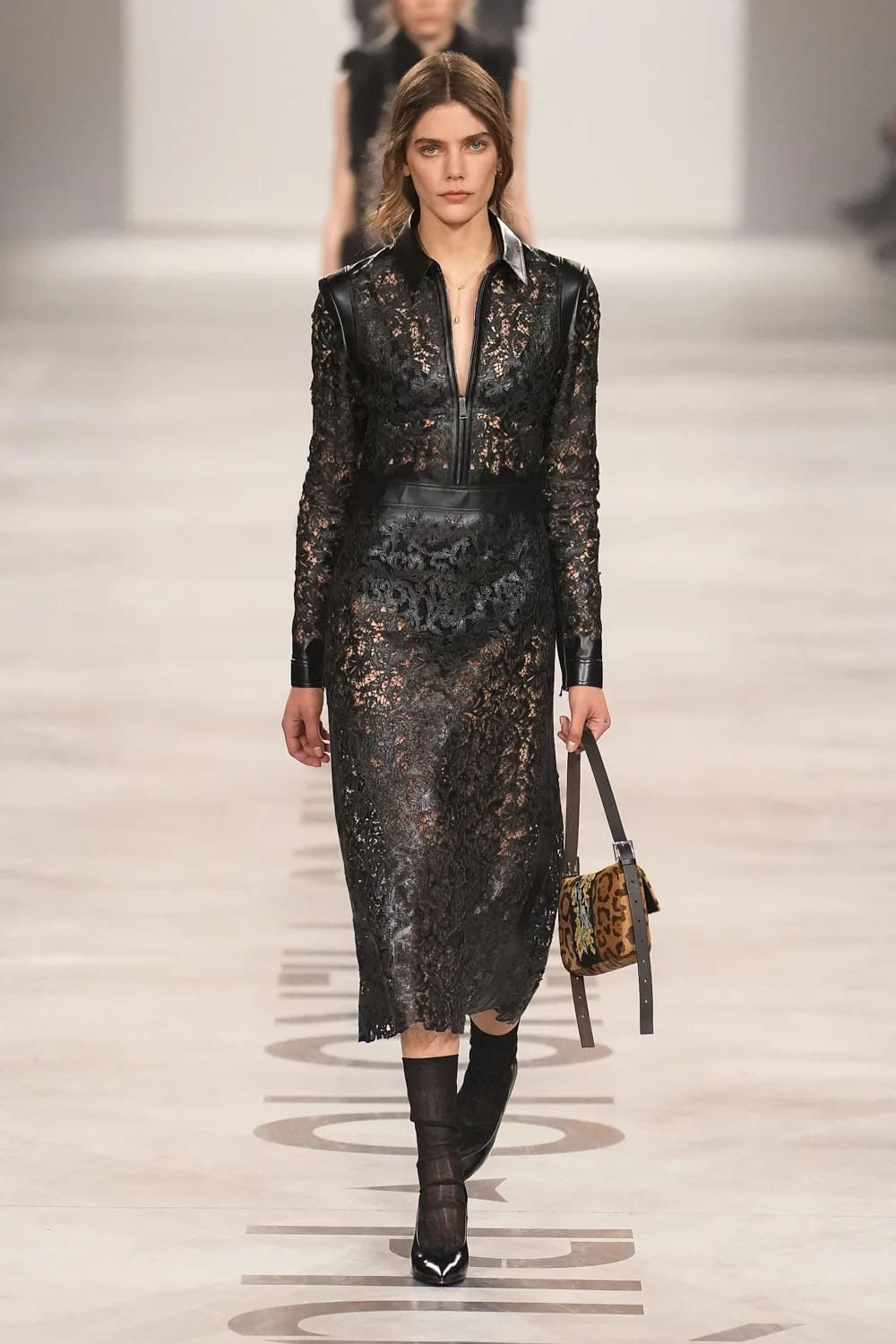
Similiar look doubles down — blazer, black lace, mid-length skirt, socks with heels — the uniform of a Roman executive who has transcended daylight. It is perfectly wearable, impeccably cut, and yet so sanitized it could pass for a luxury HR dress code.
Beautiful? Yes.
Transformative? Not quite.
Fendi? Still debatable.
The Lace & Collar Fetish
There are few key looks to discuss:
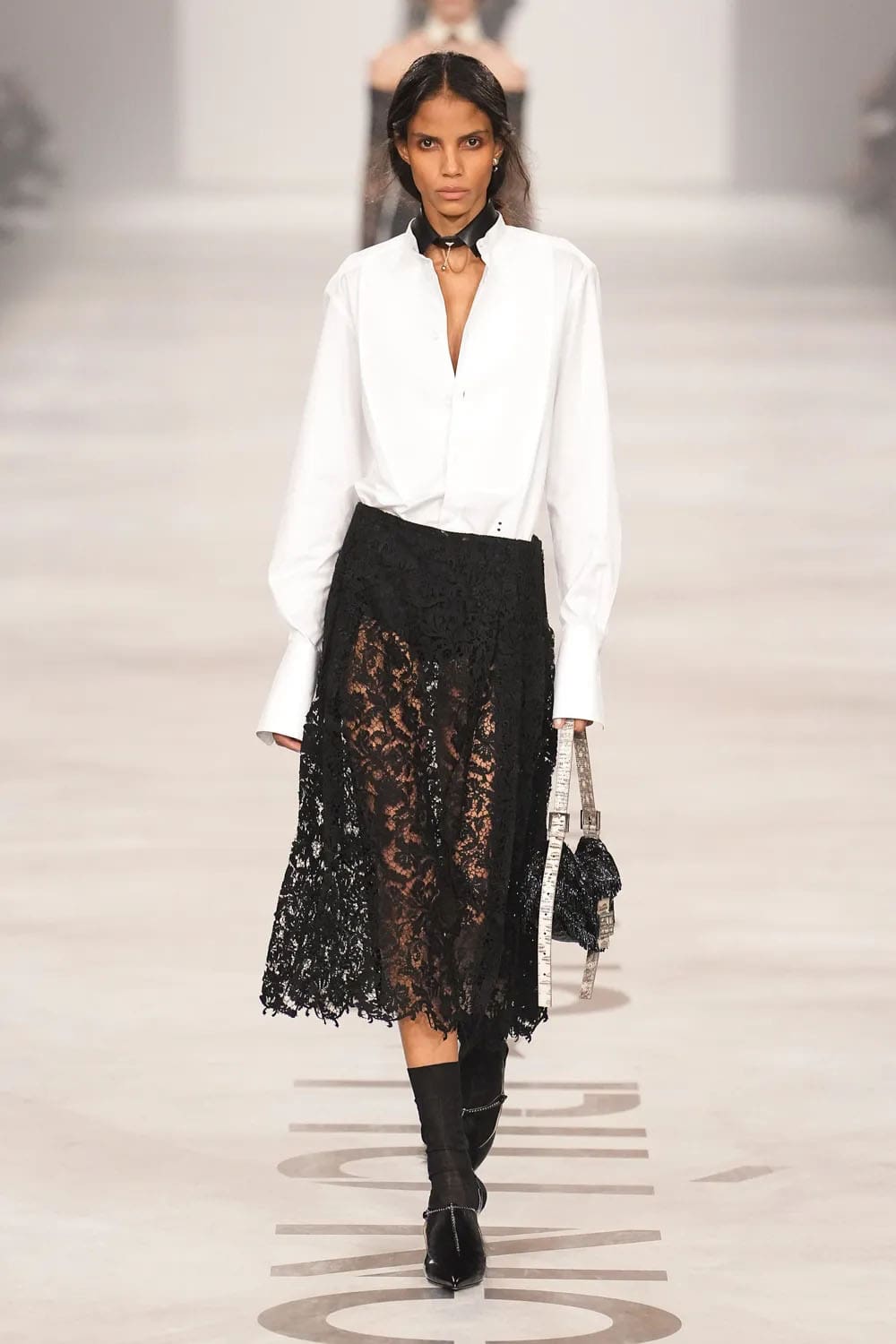
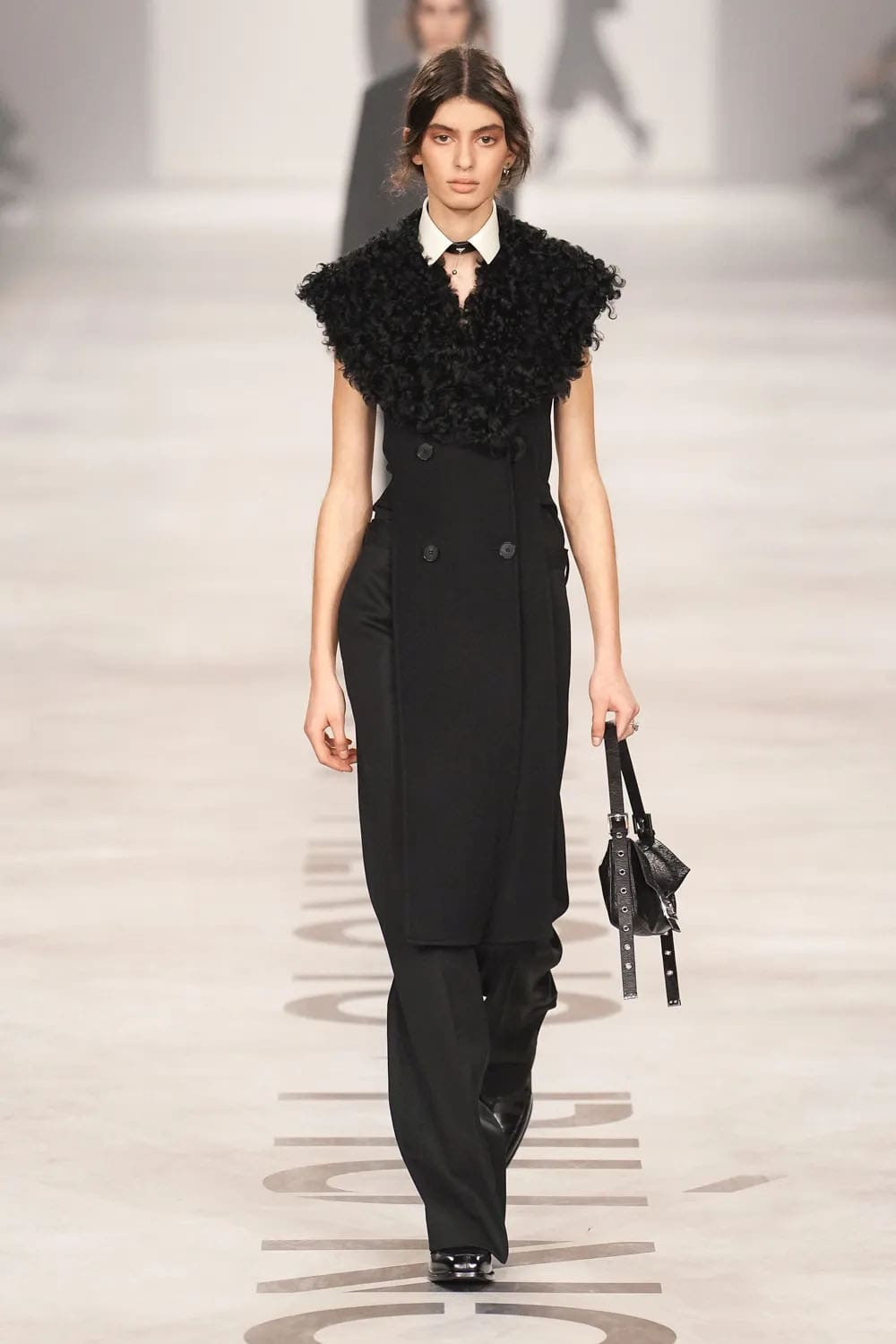
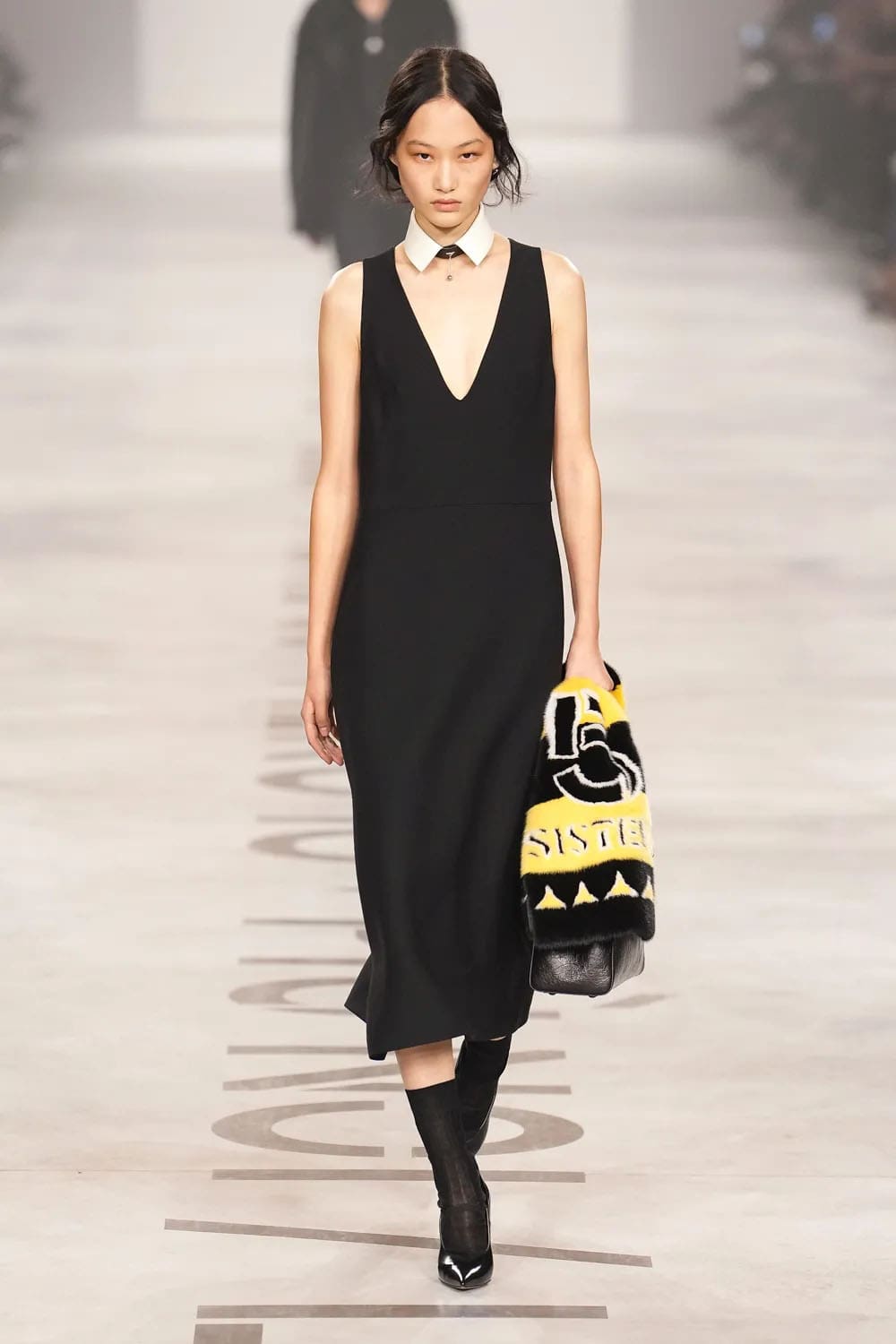
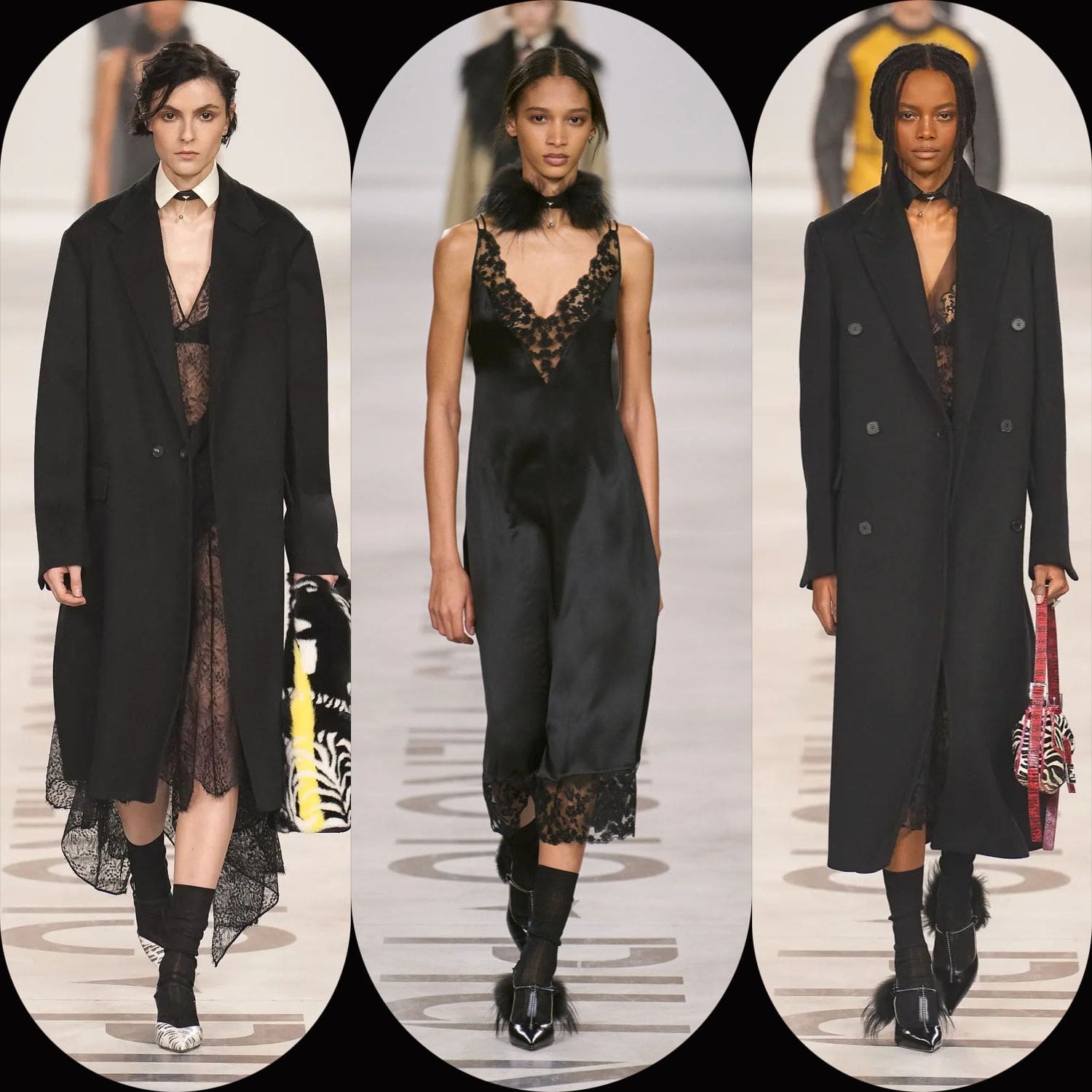
If Chiuri has a signature, it is the weaponized white collar.
Here it appears like a religious relic resurfacing in a modern crime scene.
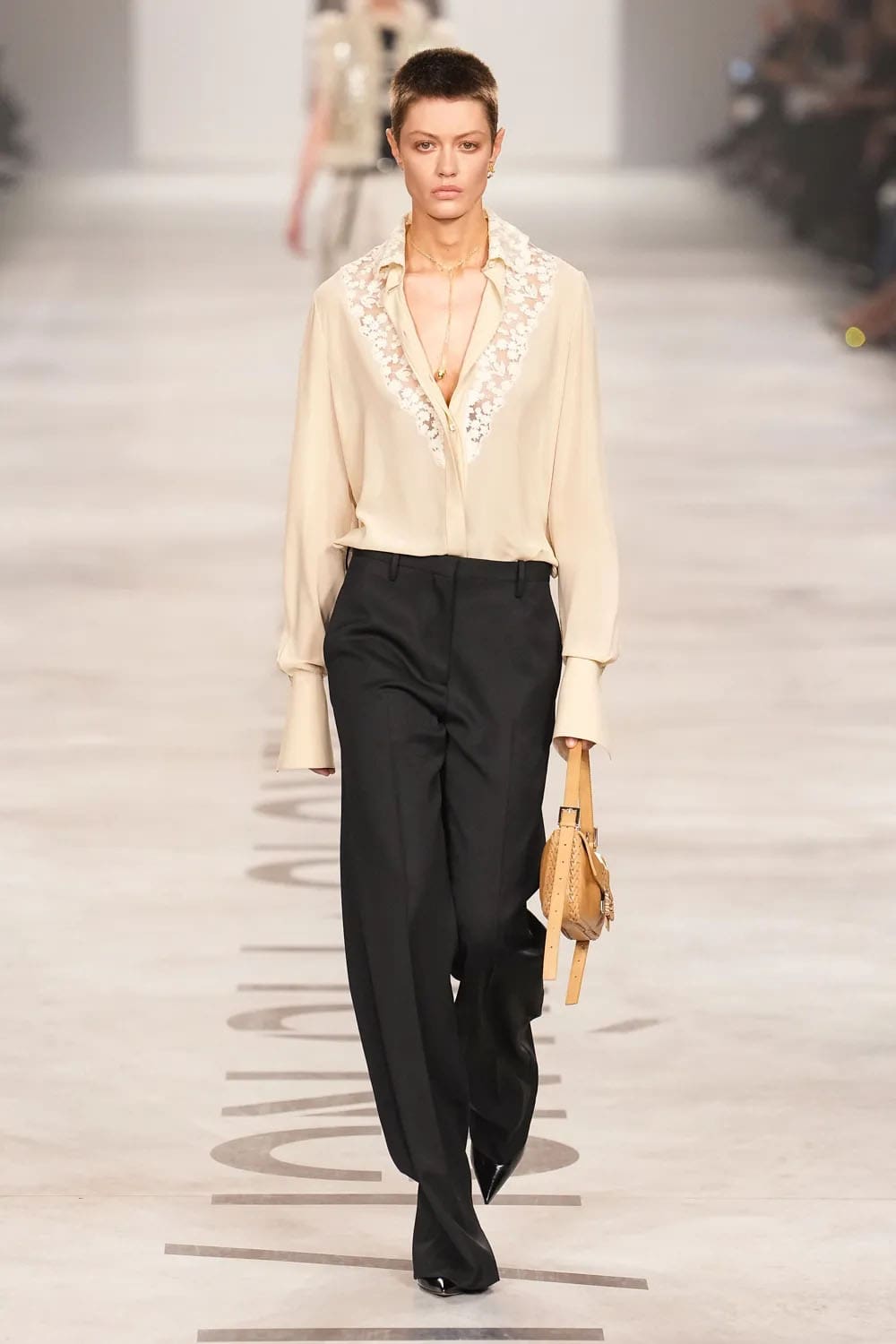
- A crisp men’s shirting collar, violently starched, sitting atop a black lace skirt. A nun who accidentally wandered into a shareholders’ cocktail hour.
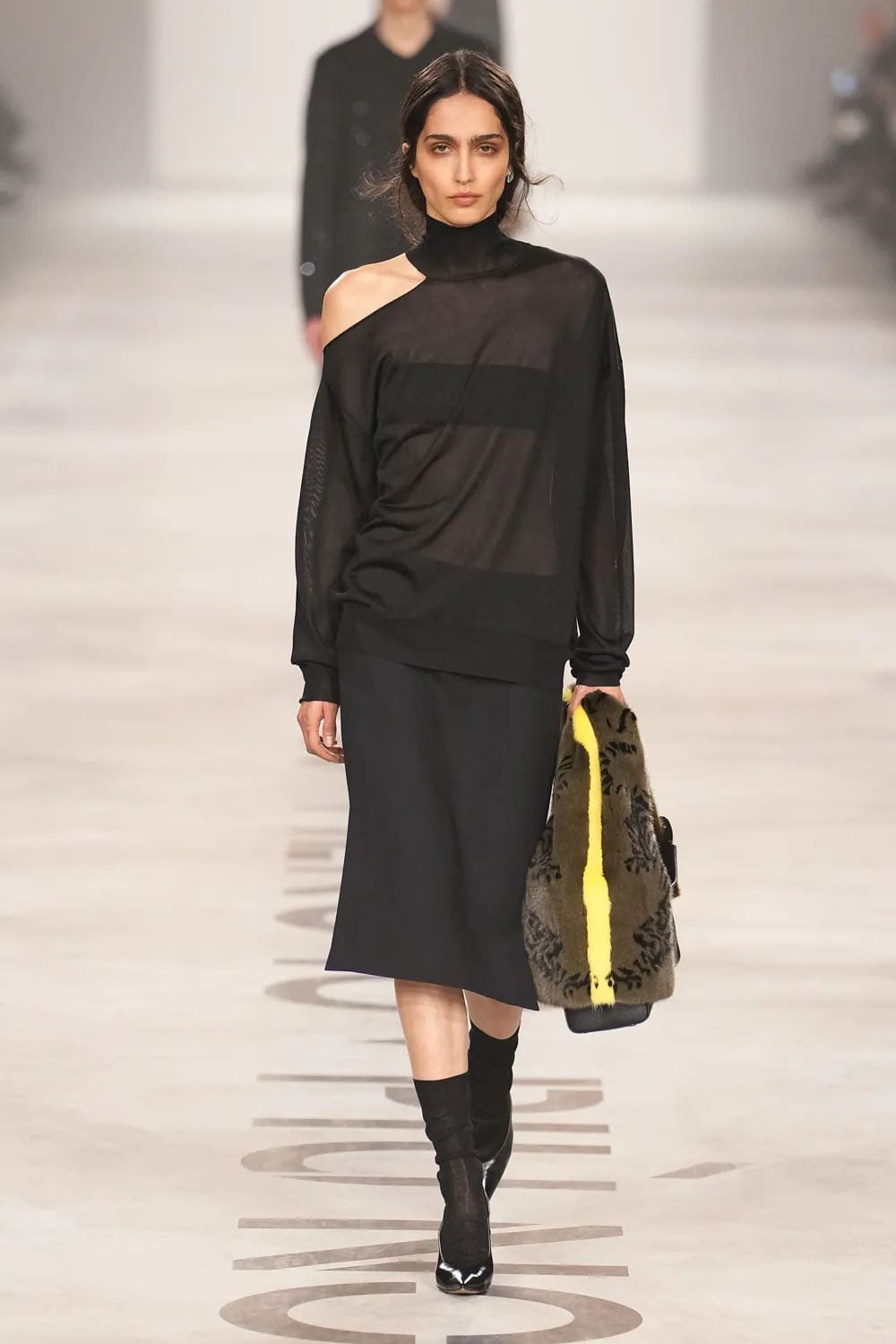
- Off-the-shoulder black lace with the same collar — sensuality contrasted with restriction, a silhouette whispering penitence.
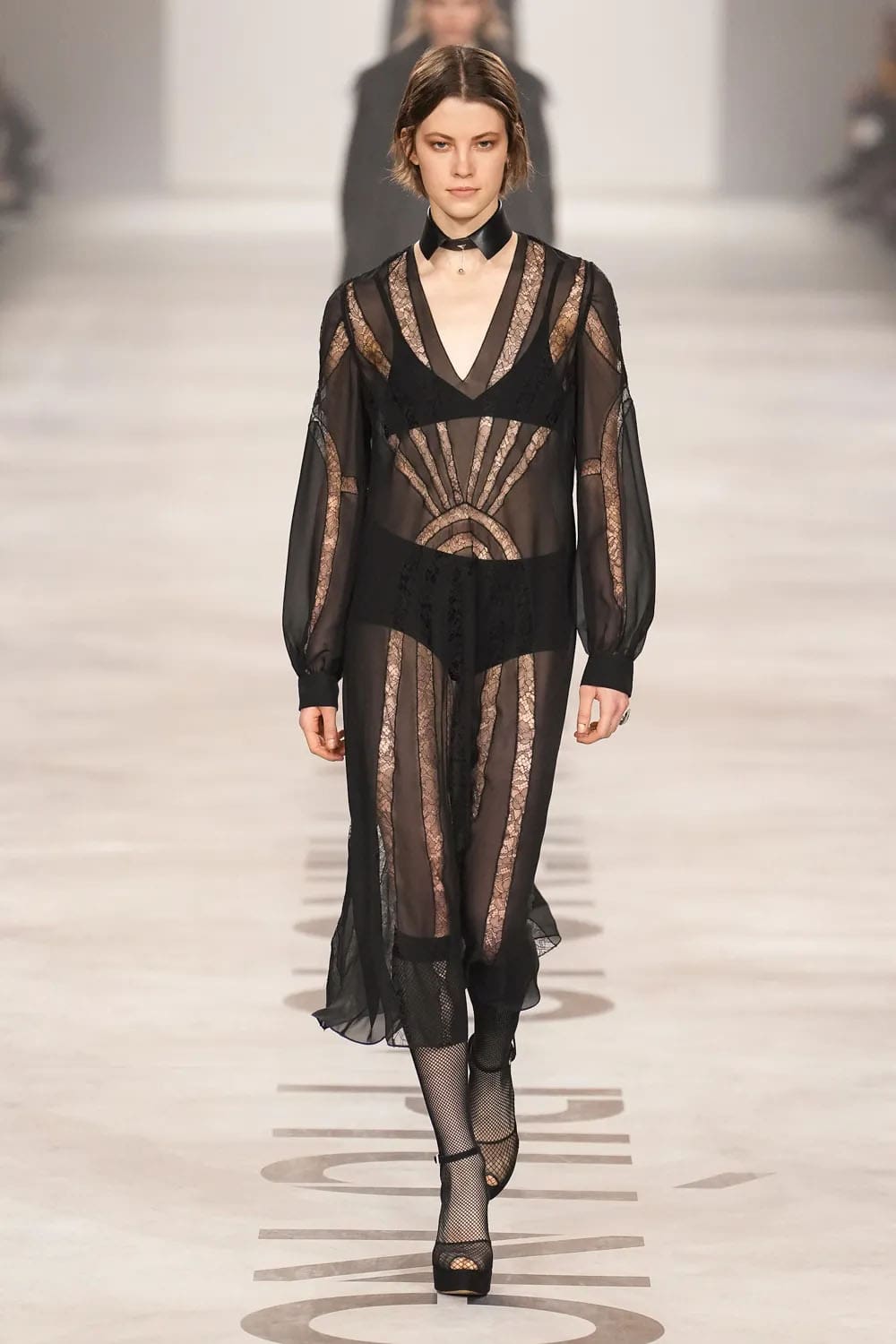
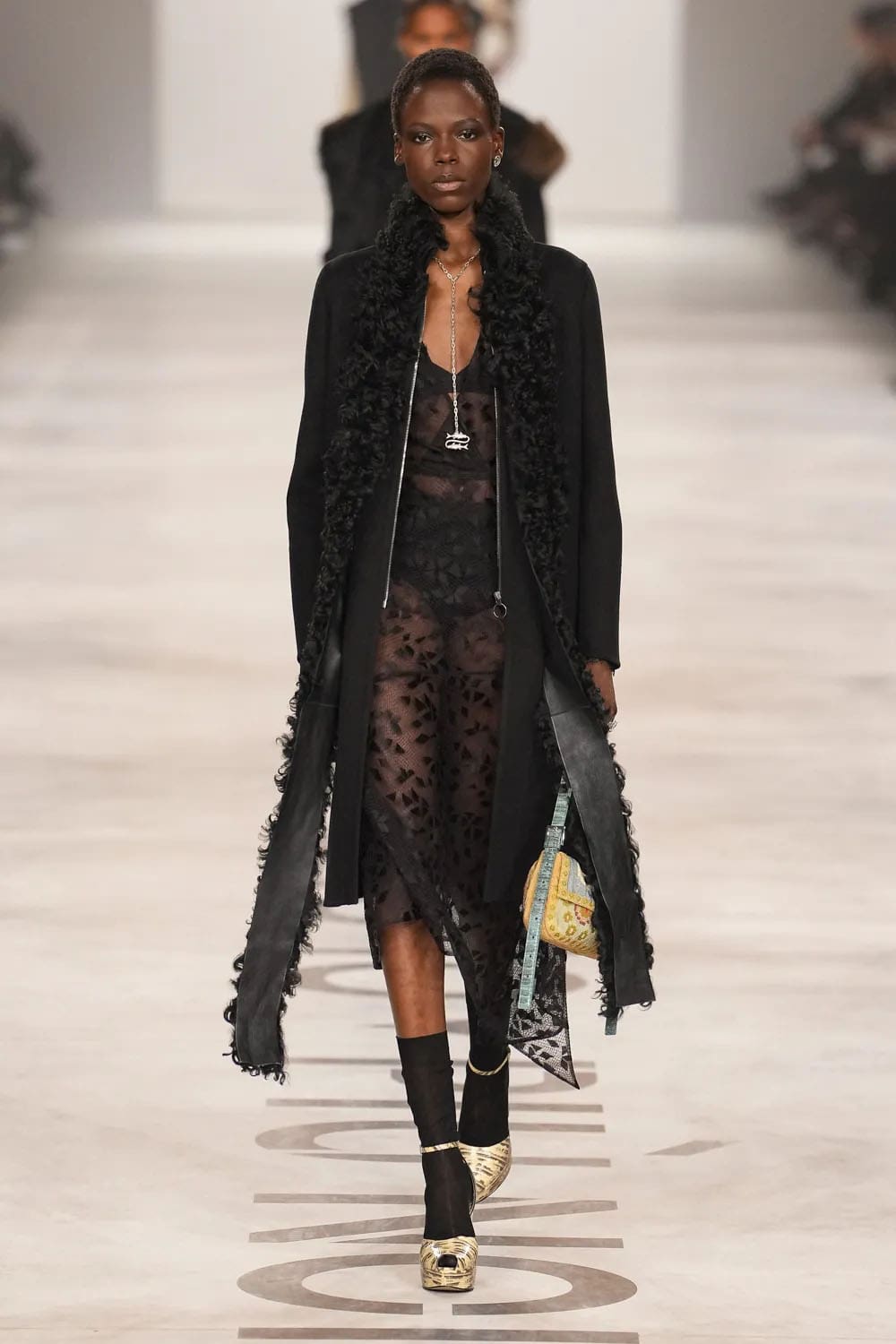
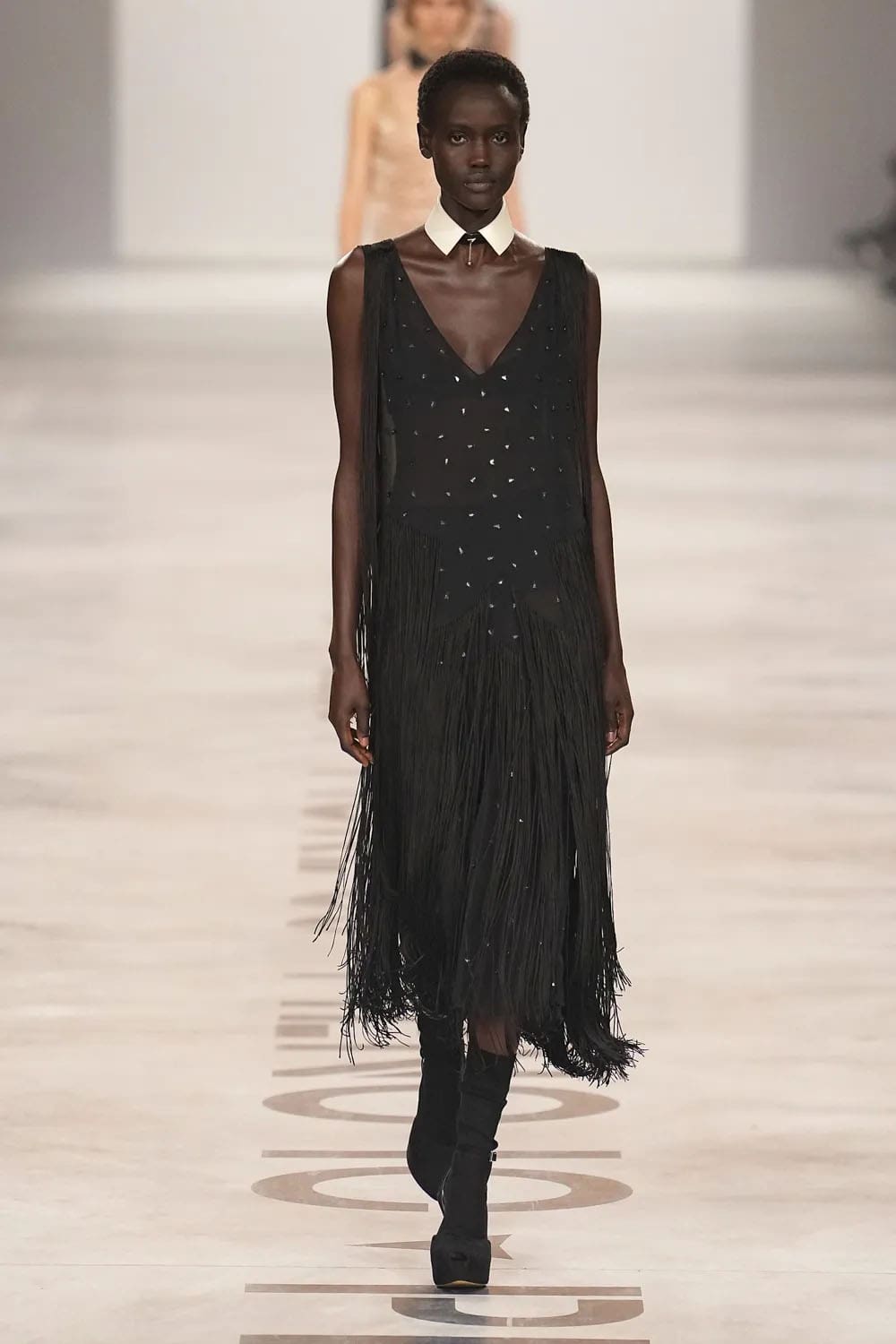
- Full black lace, austere neckline, the collar hovering like a halo sharpened into a blade.
The result is intellectual, yes. But also repetitive — the academic note so overstated it becomes flat.
Fur, Texture, Controlled Chaos, and The Slip-Dress Interlude
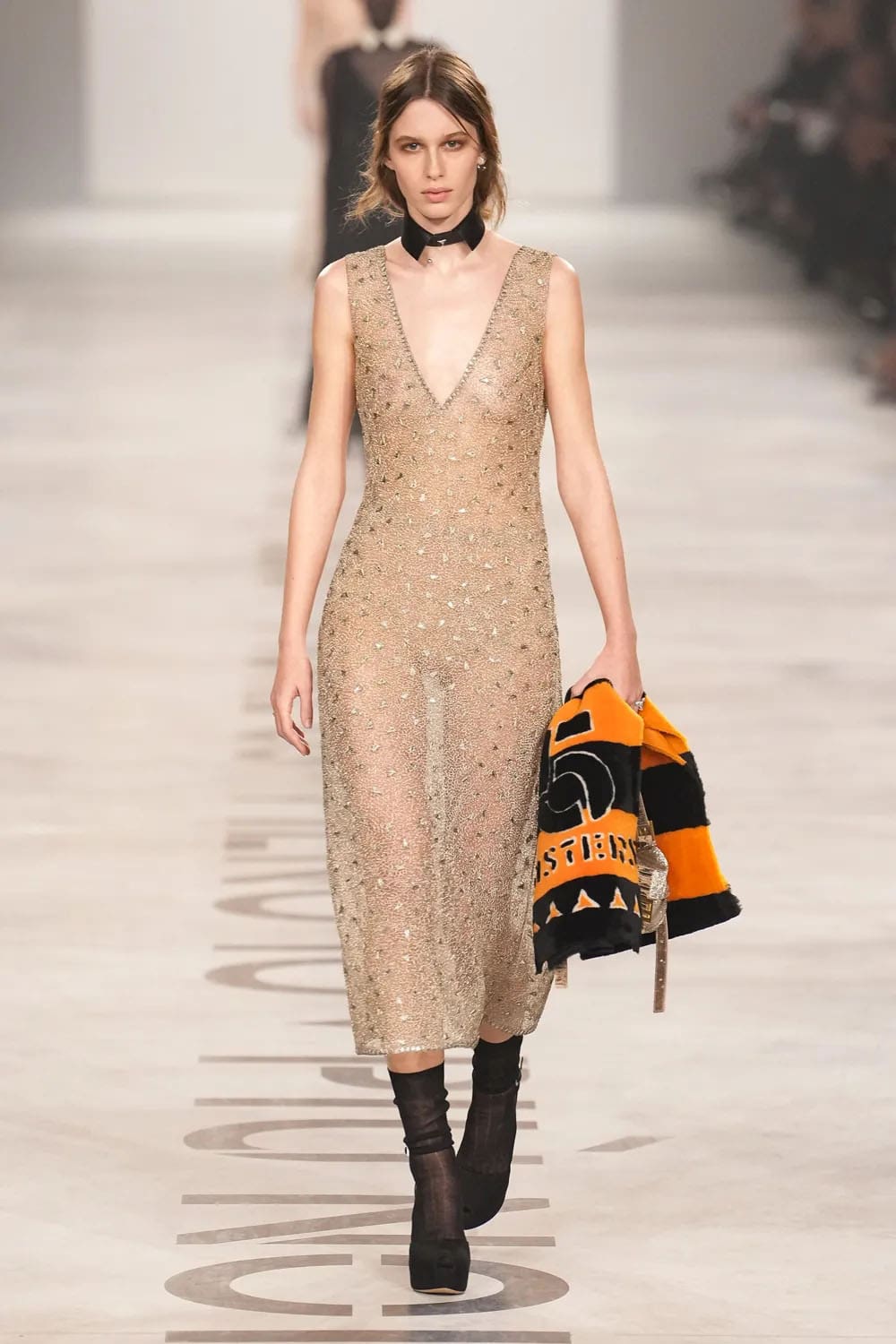
Chiuri may have muted the clothes, but the accessories scream.
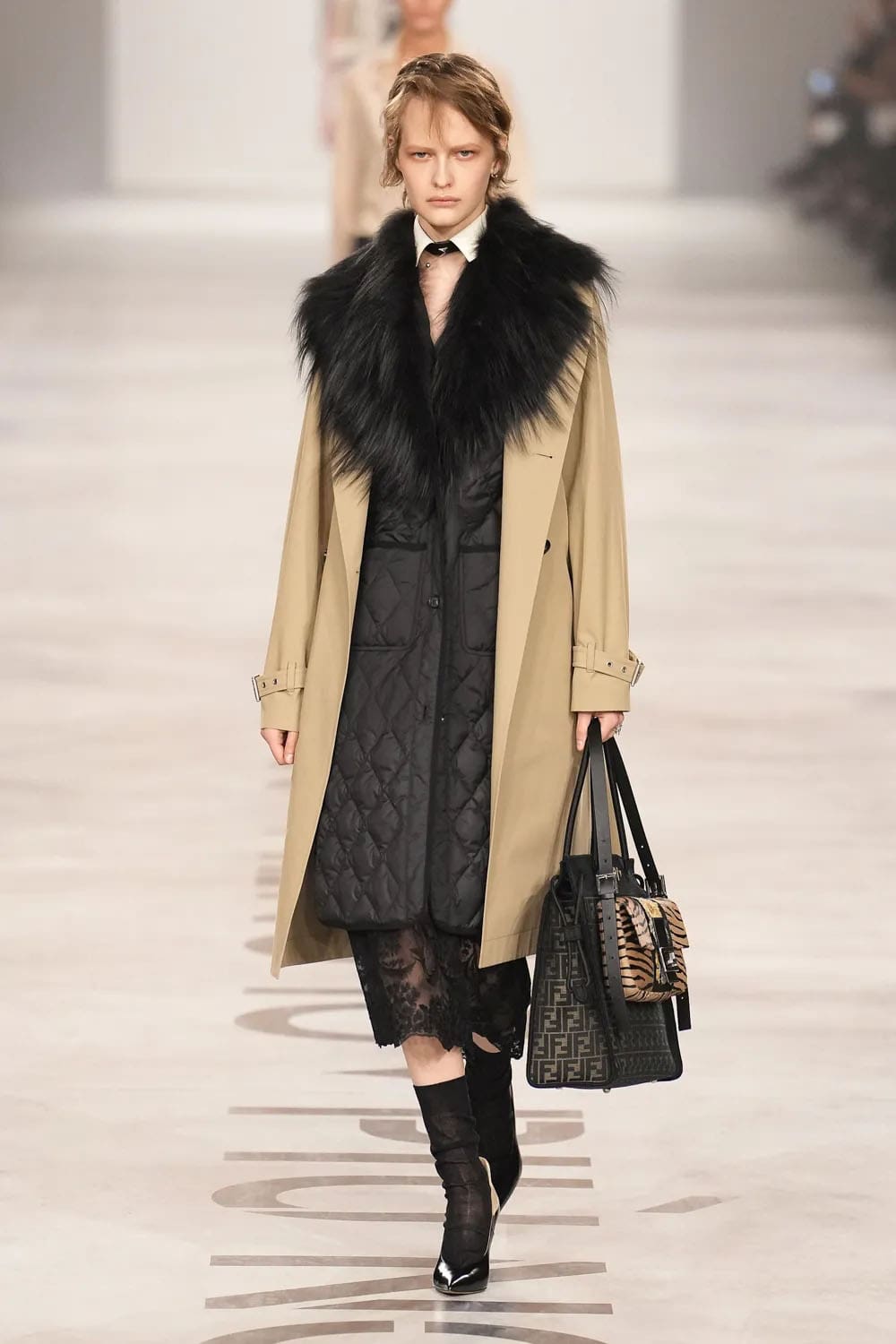
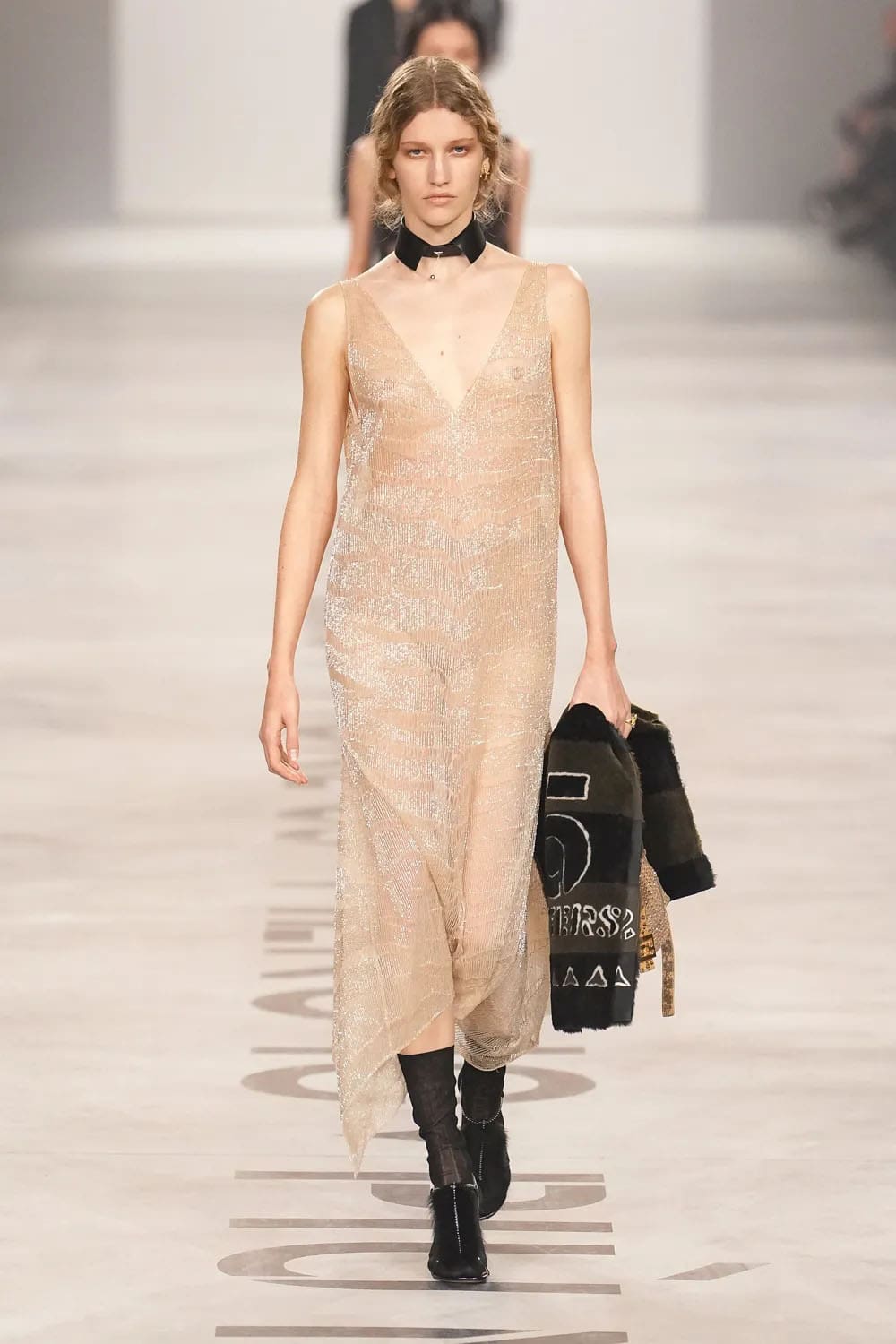
Another look marches out with a shaggy fur stole emblazoned with graphic text: “TUCK”, “IMPACT.”
Is it branding? Irony? Self-referential commentary on her own influence?
Possibly all three.
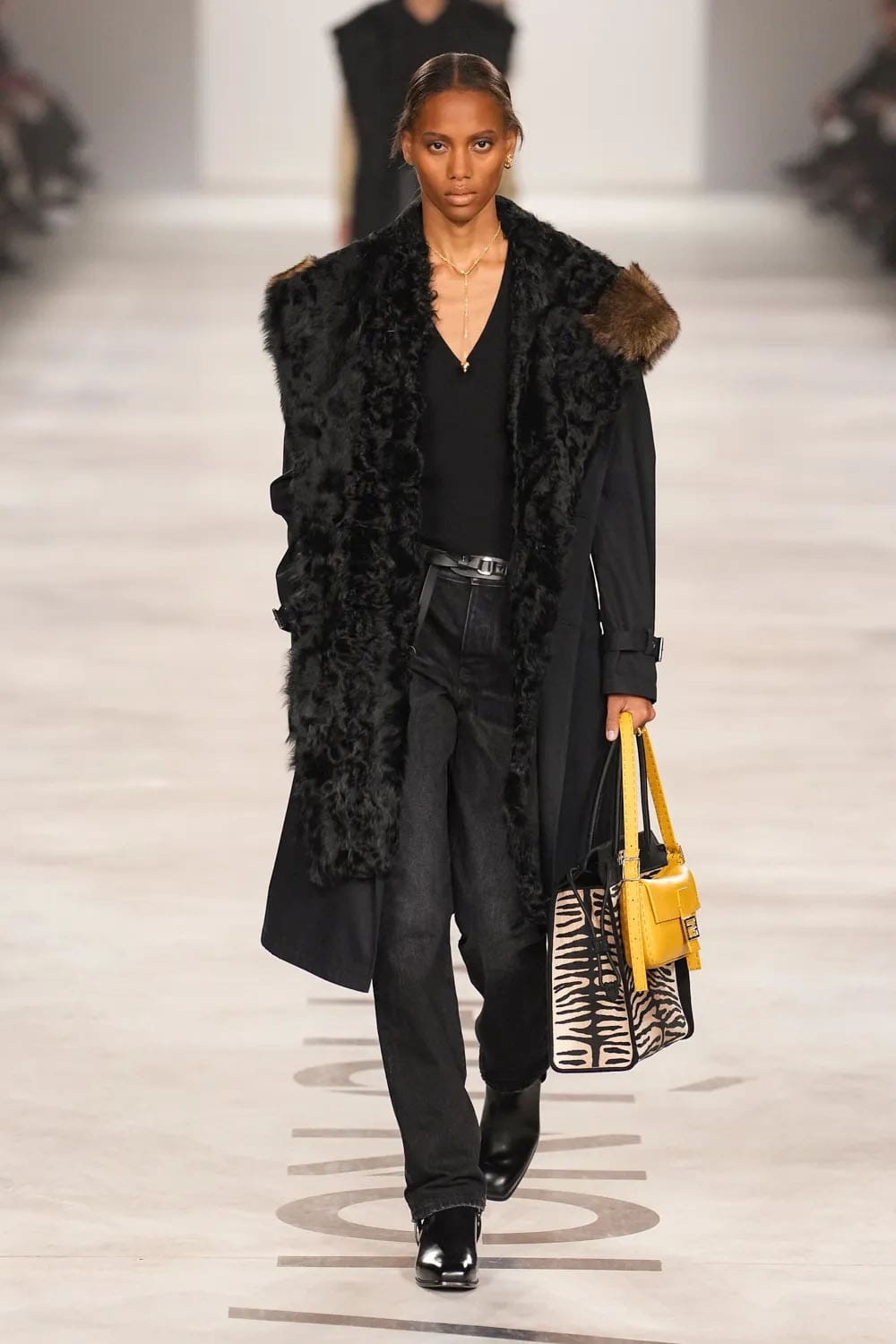
And another look brings out the furry, animal-print hybrids — half mascot, half protest sign — reminding us that Chiuri, the inventor of the It-Bag economy, did not come to Milan to play small.
The accessories here have more personality than the garments they accompany. They will sell. They may even define the season. But one wonders whether the tail is wagging the Roman dog.
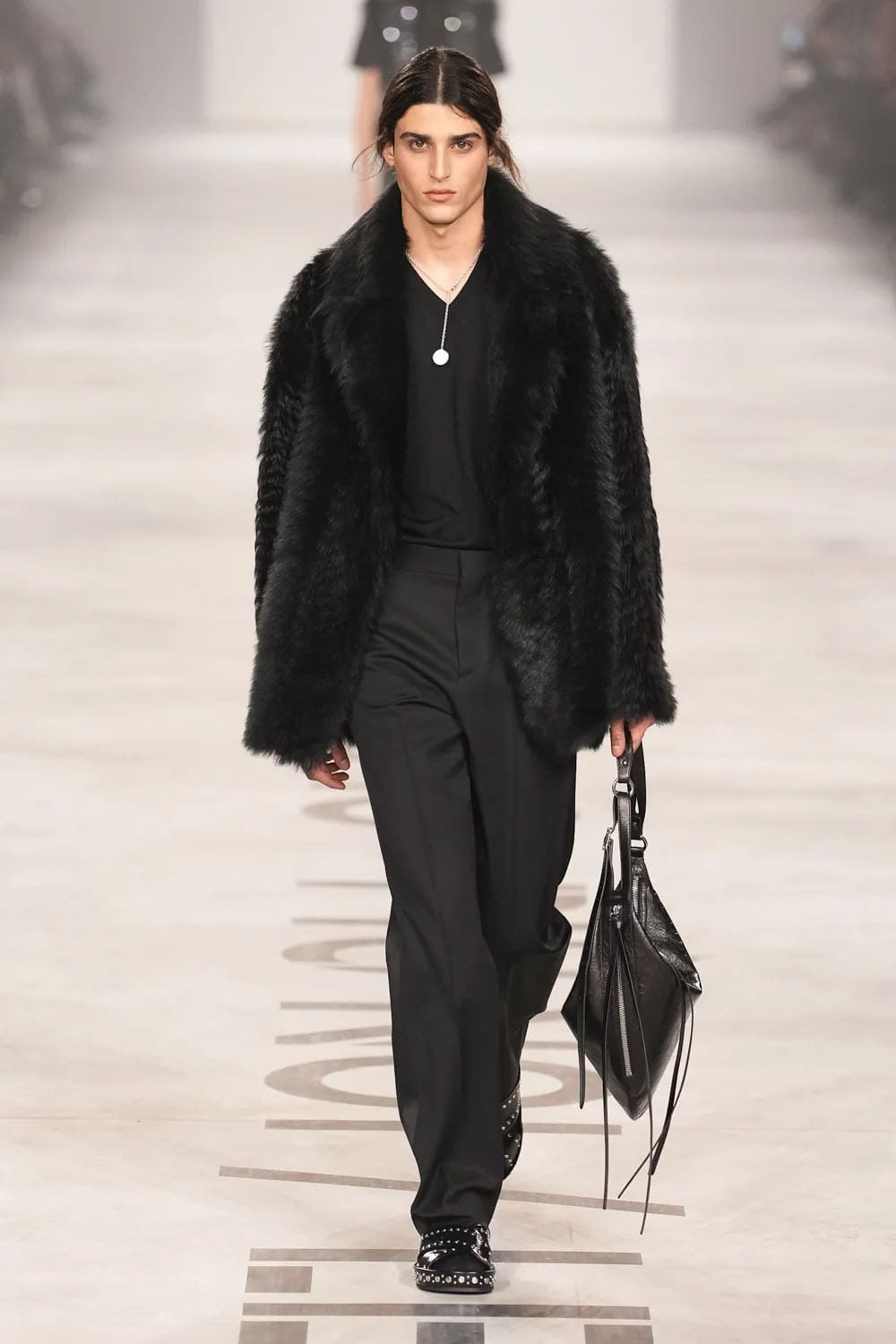
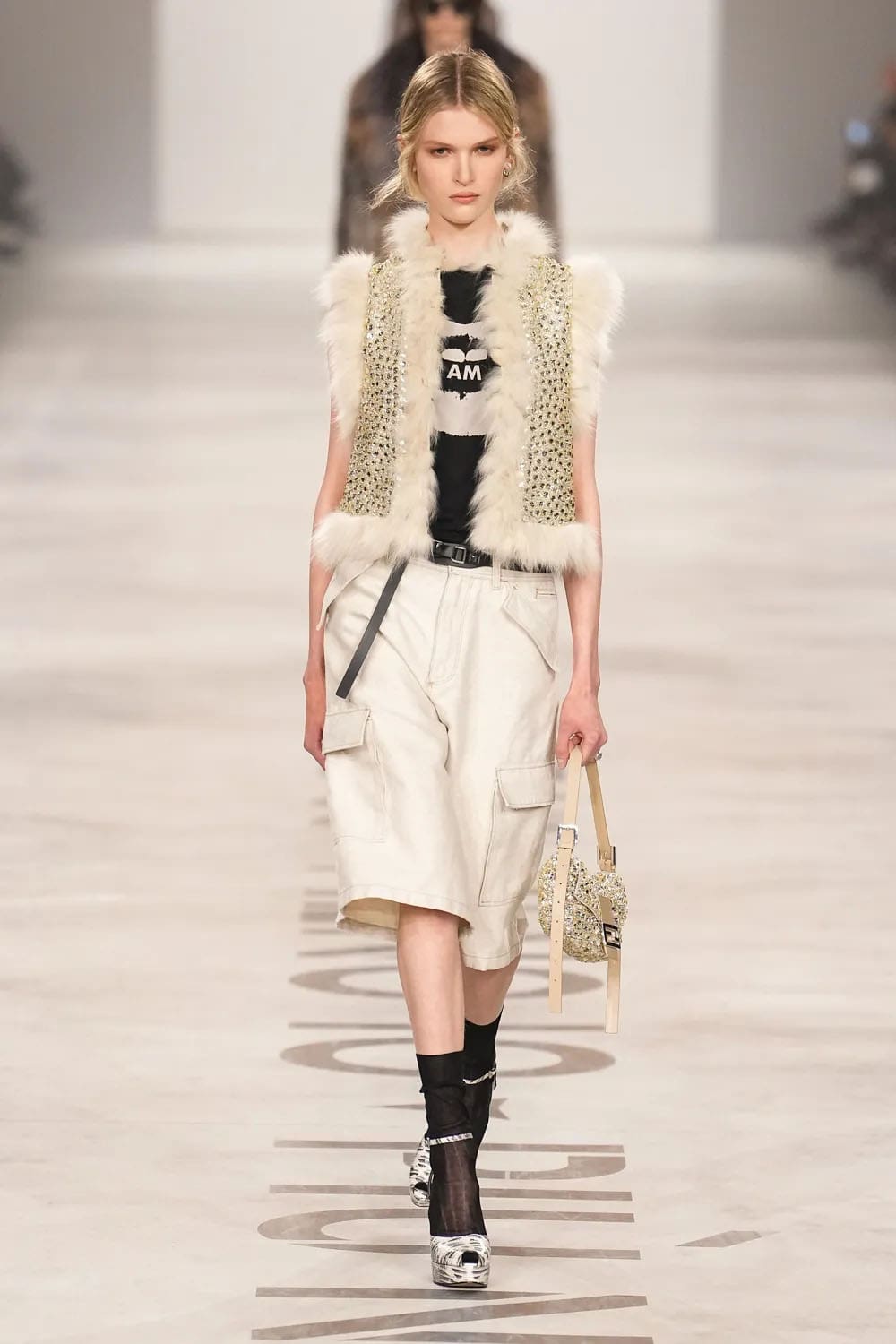
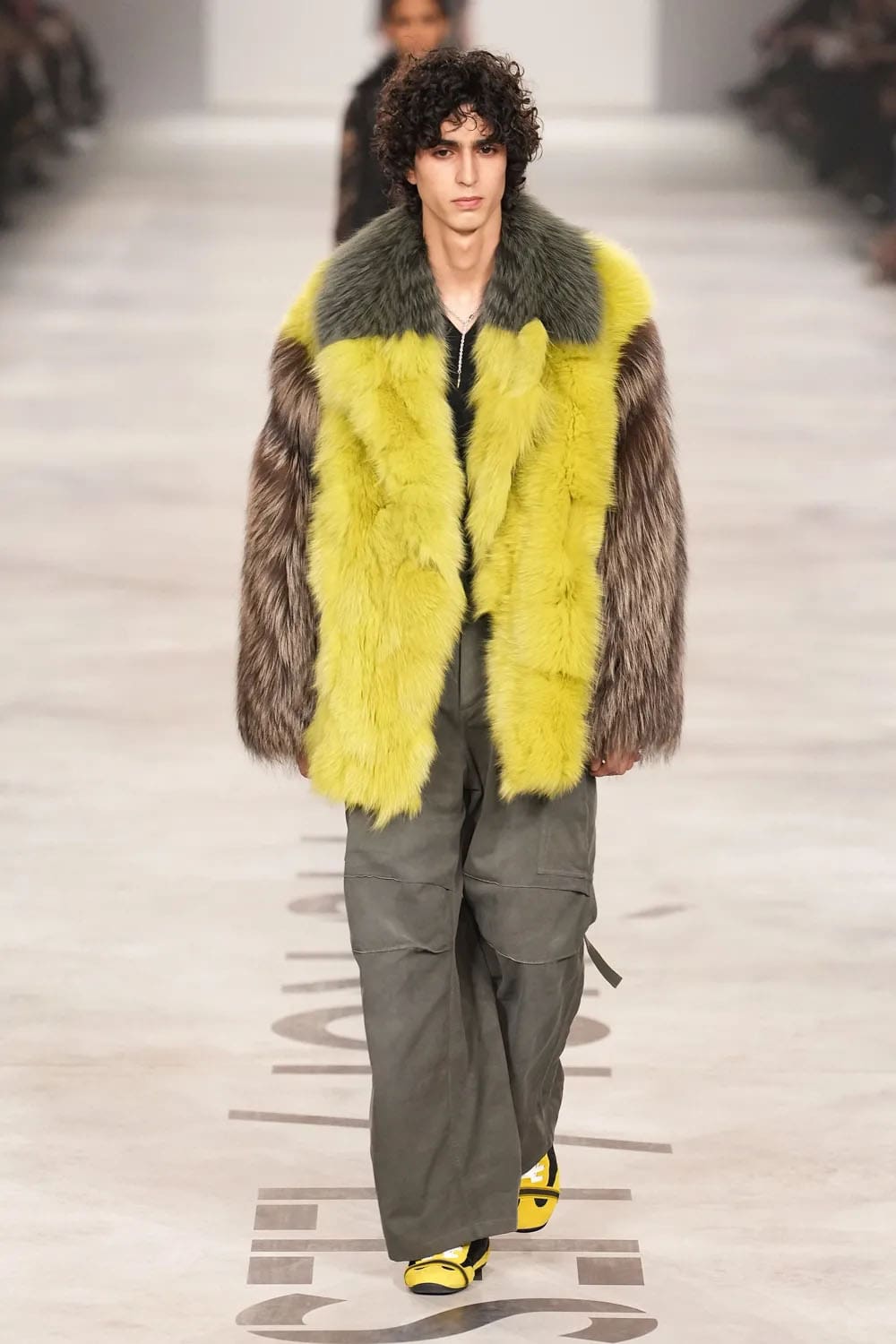
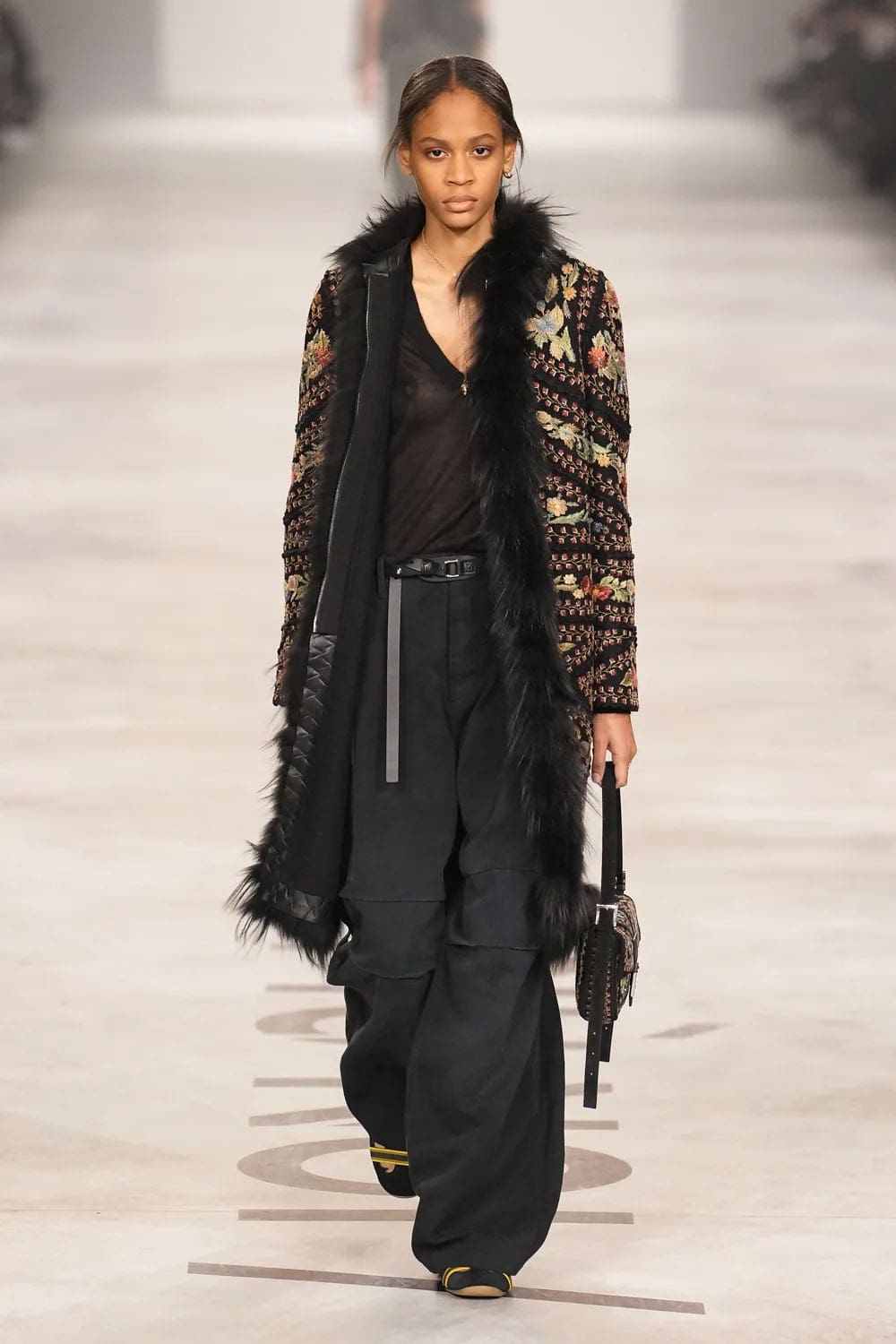
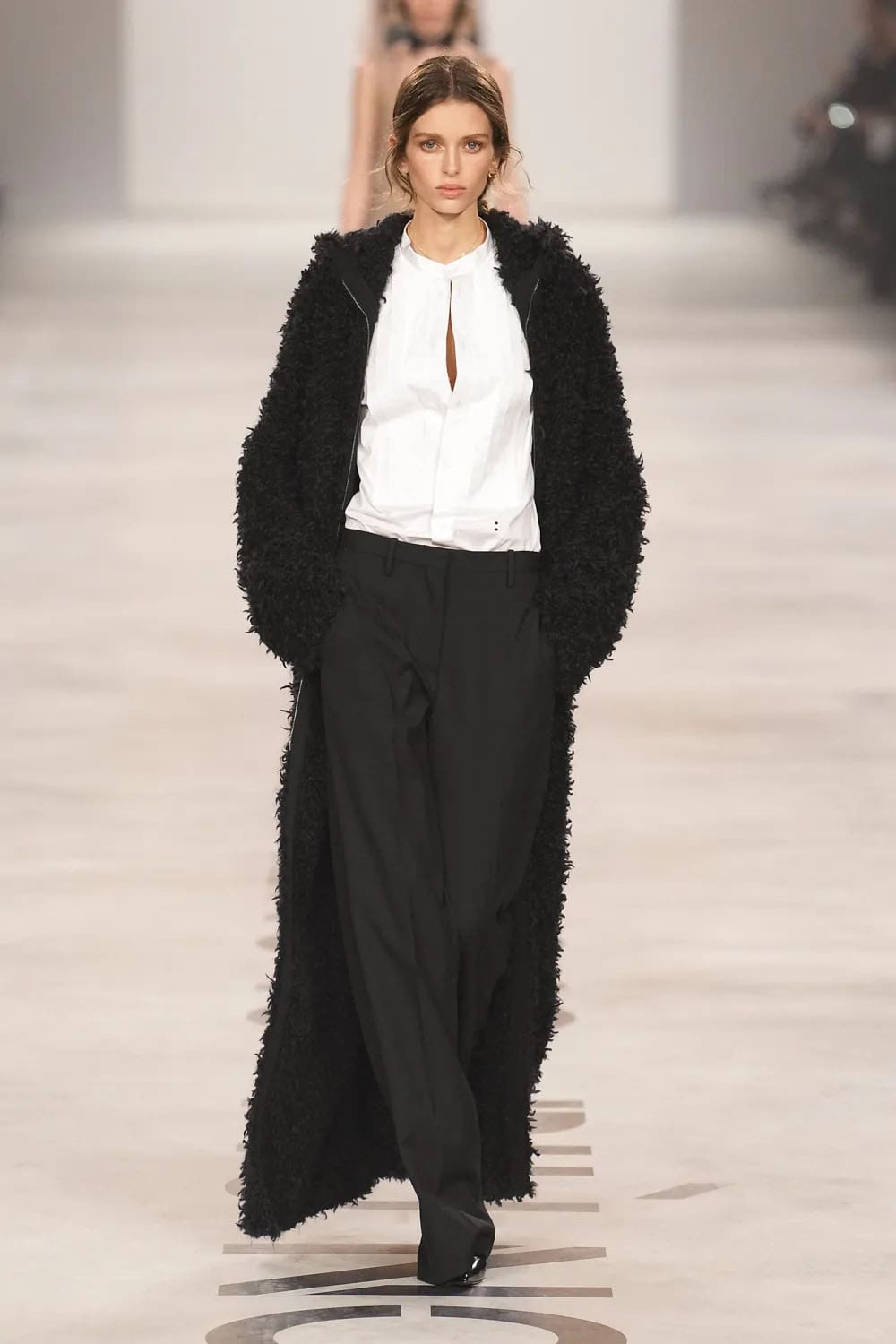
A proper Fendi debut must acknowledge the house’s furrier ancestry—and Chiuri does, but cautiously.
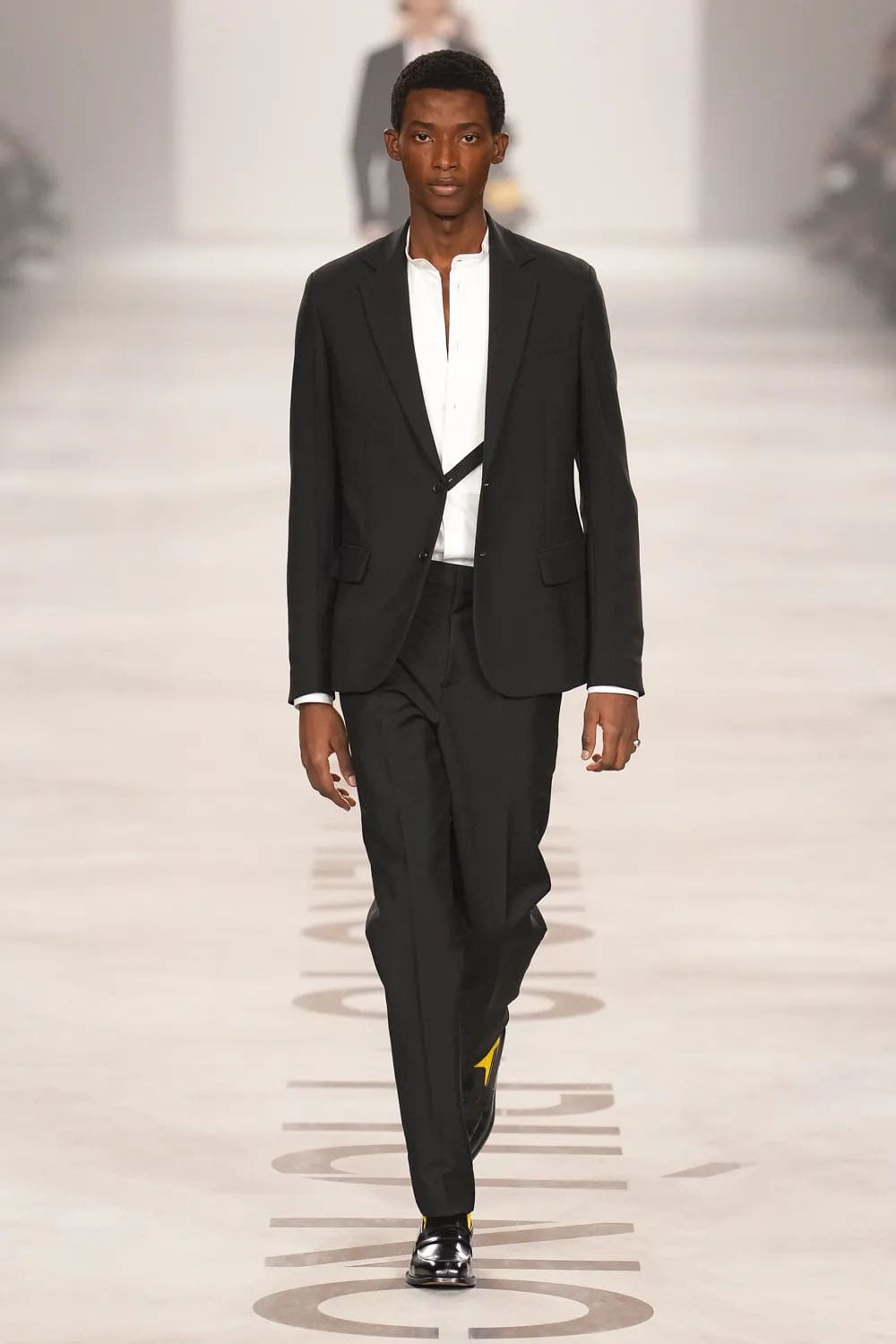
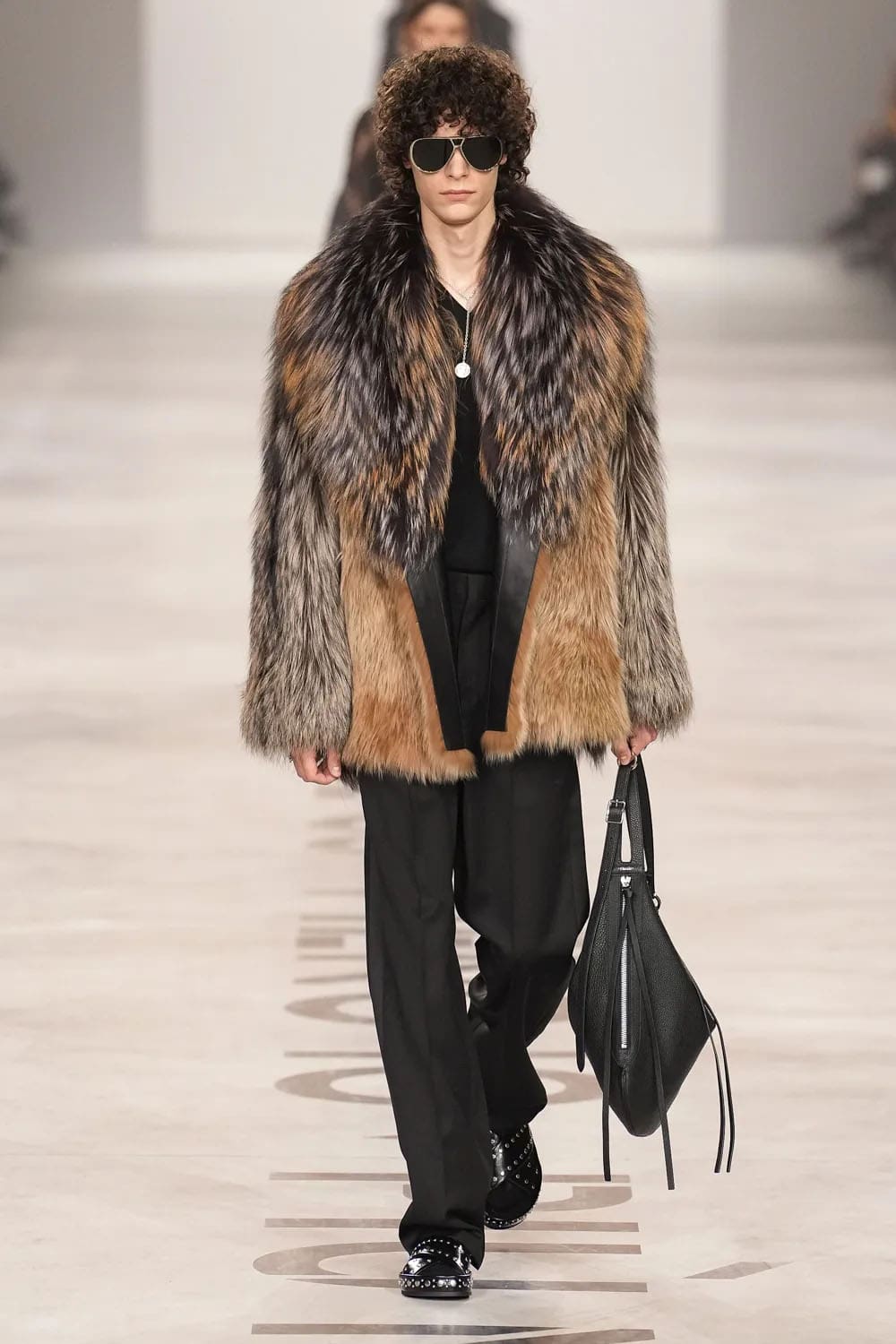
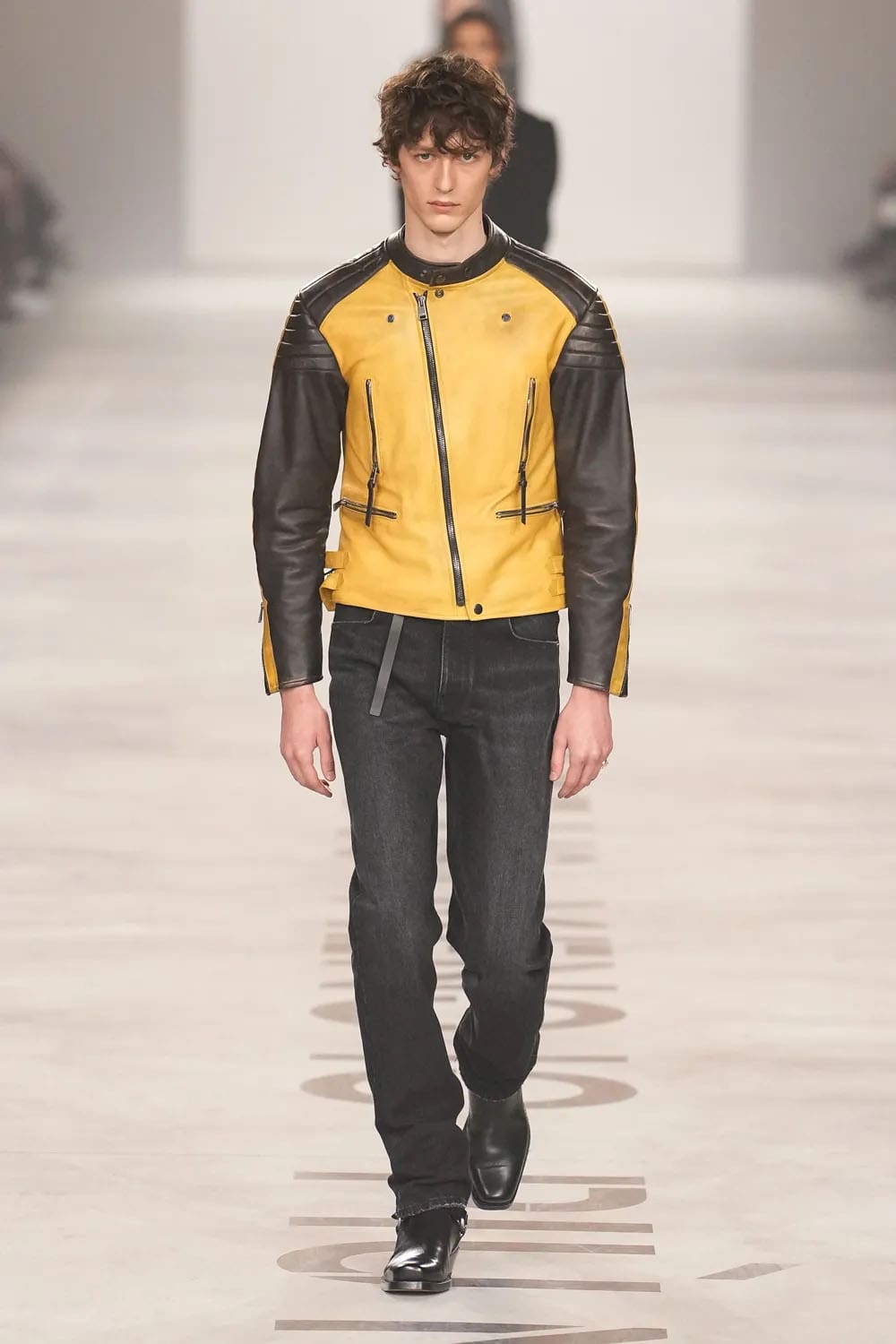
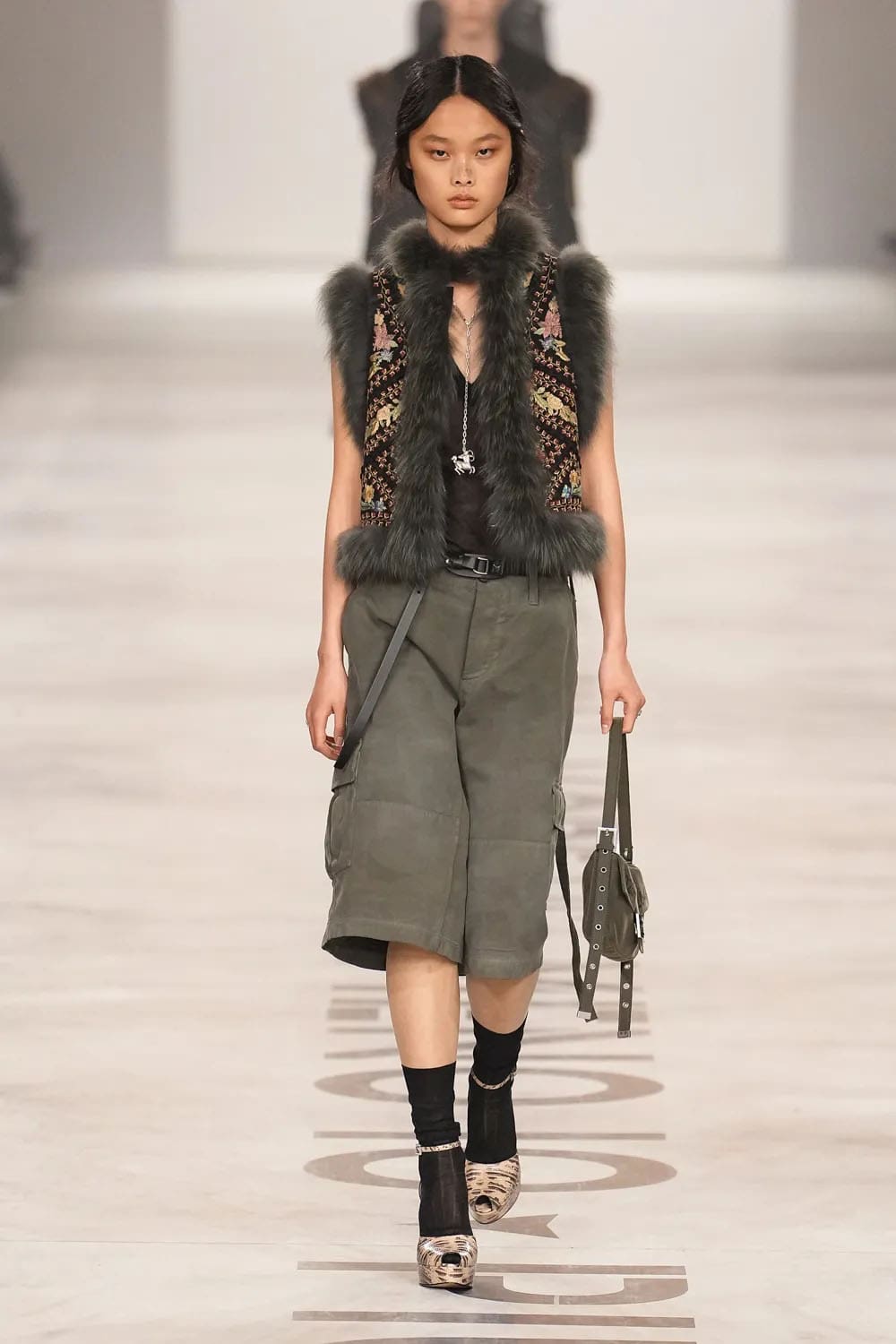
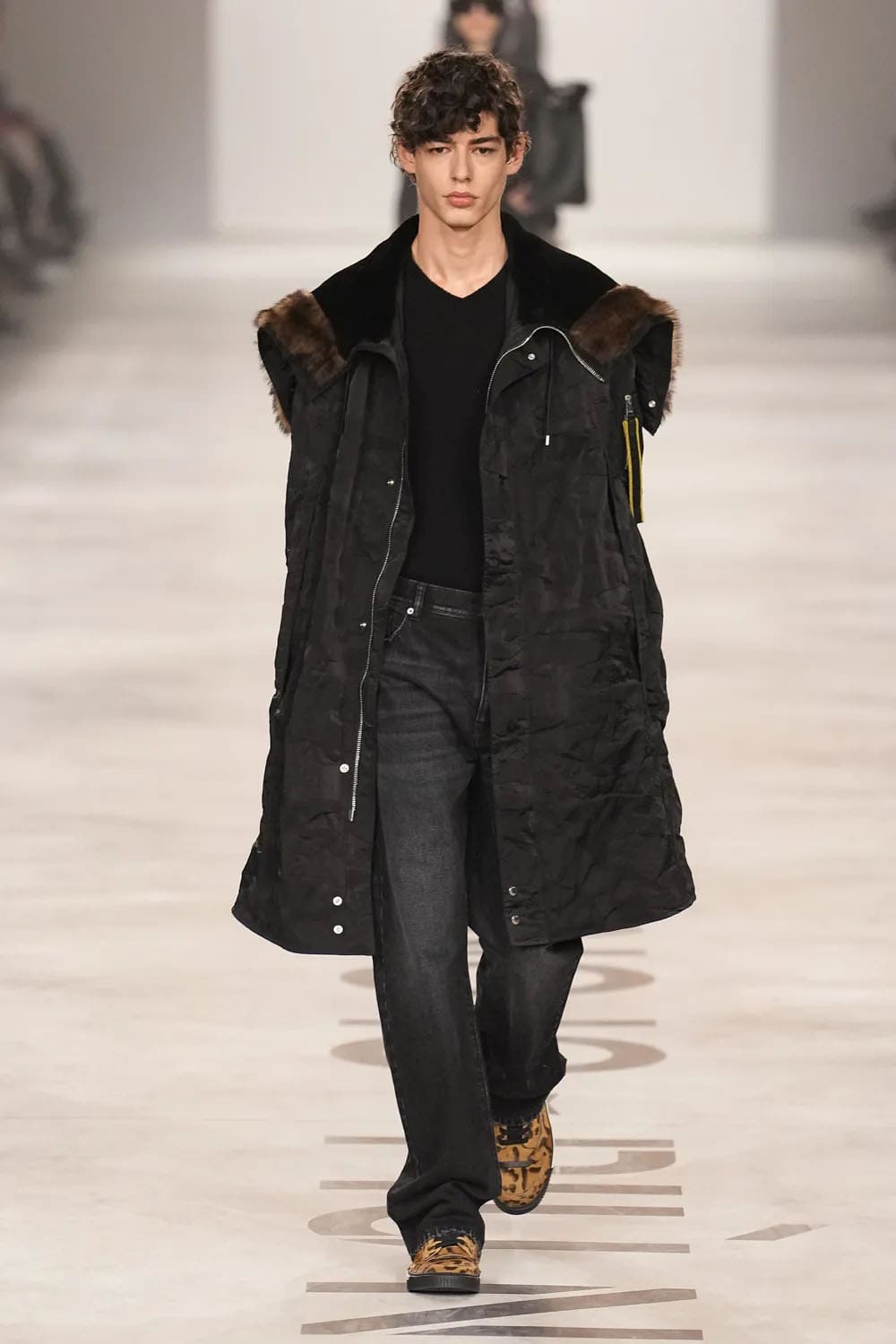
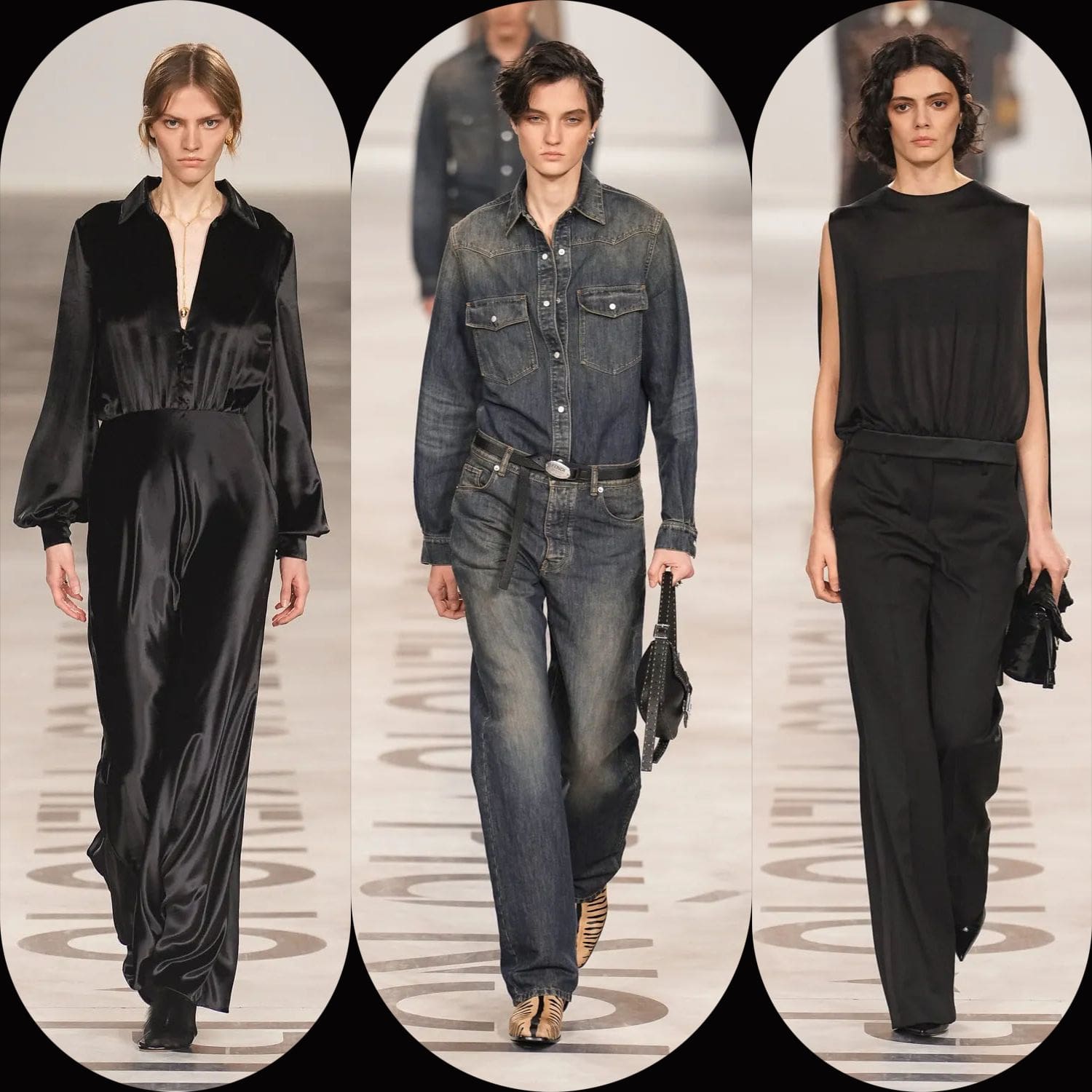
A luxe shearling jacket with utilitarian trousers, yellow-accent sneakers, and zippers. A quick reminder that Fendi can still do streetwear when required.
These moments of tactility are the most Fendi thing about the show. And yet, they feel like visitors in a collection that is otherwise disciplined to the point of restraint.
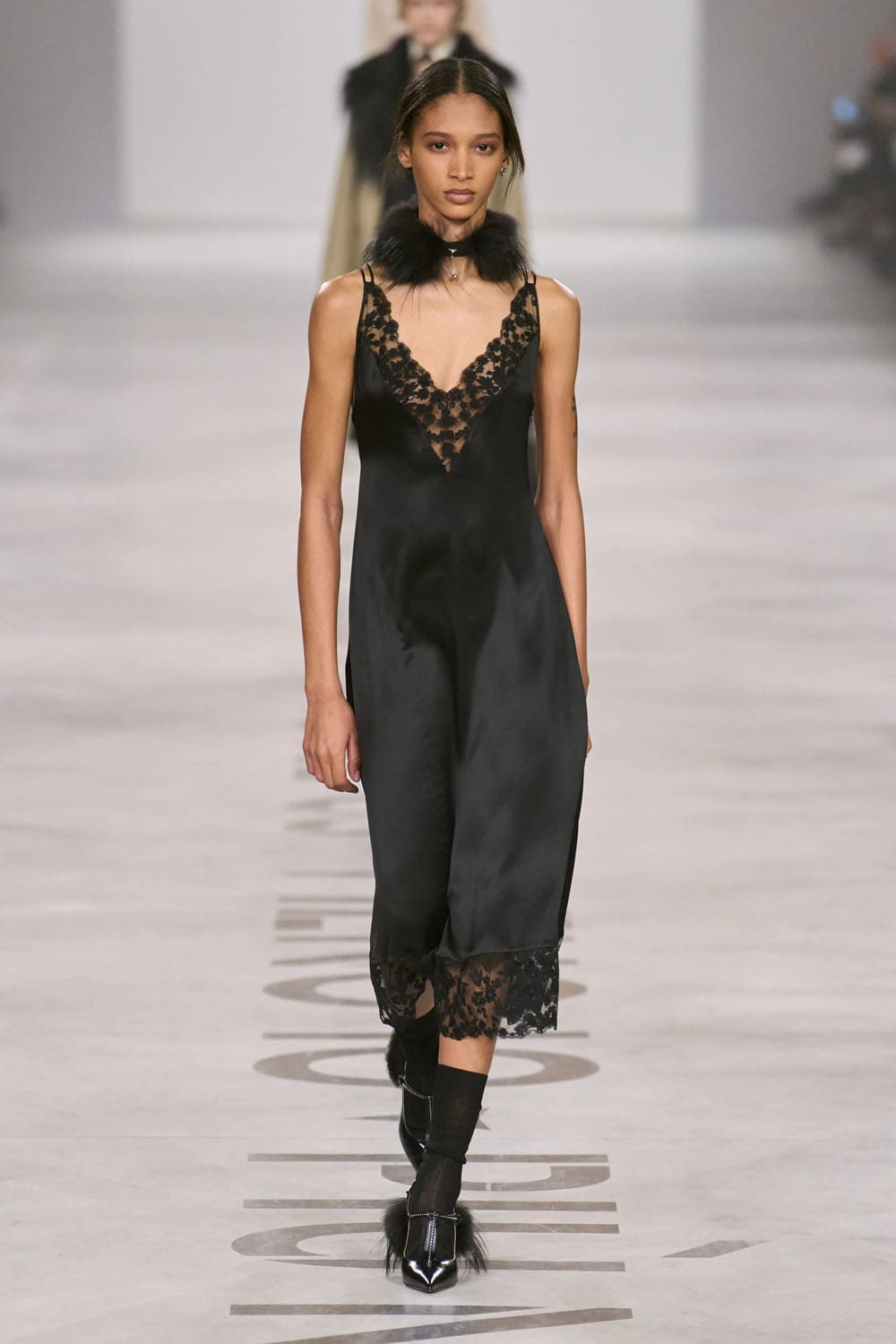
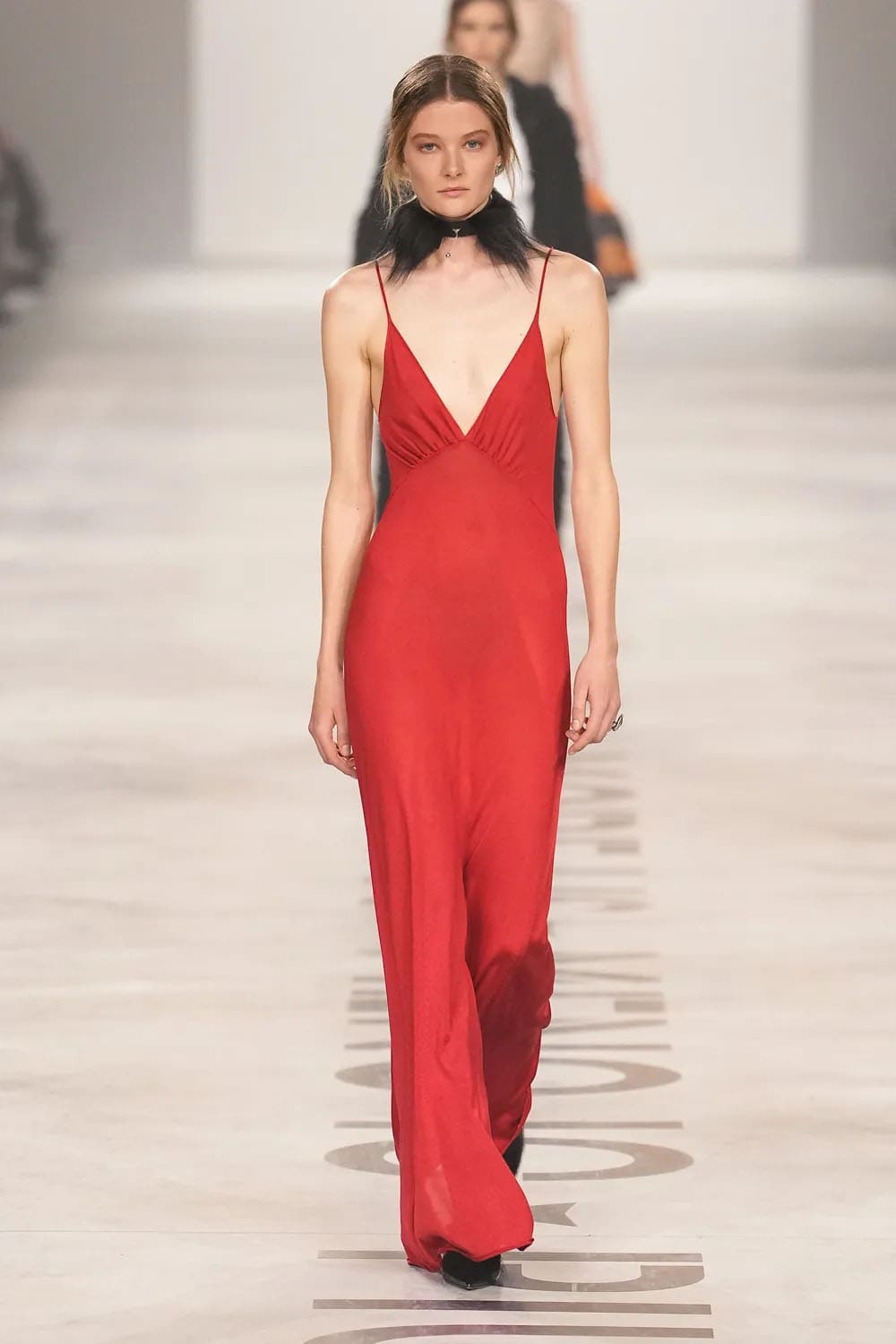
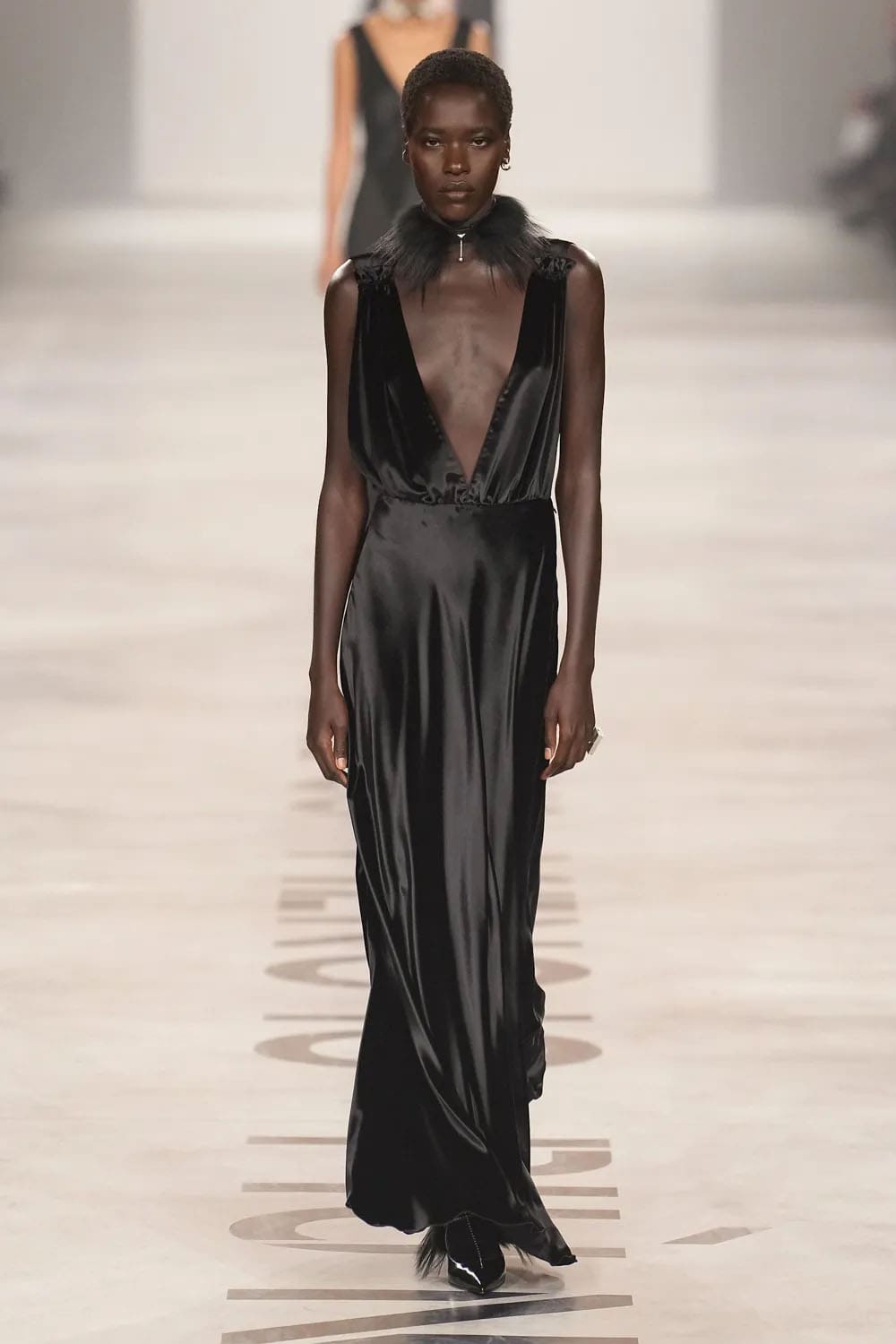
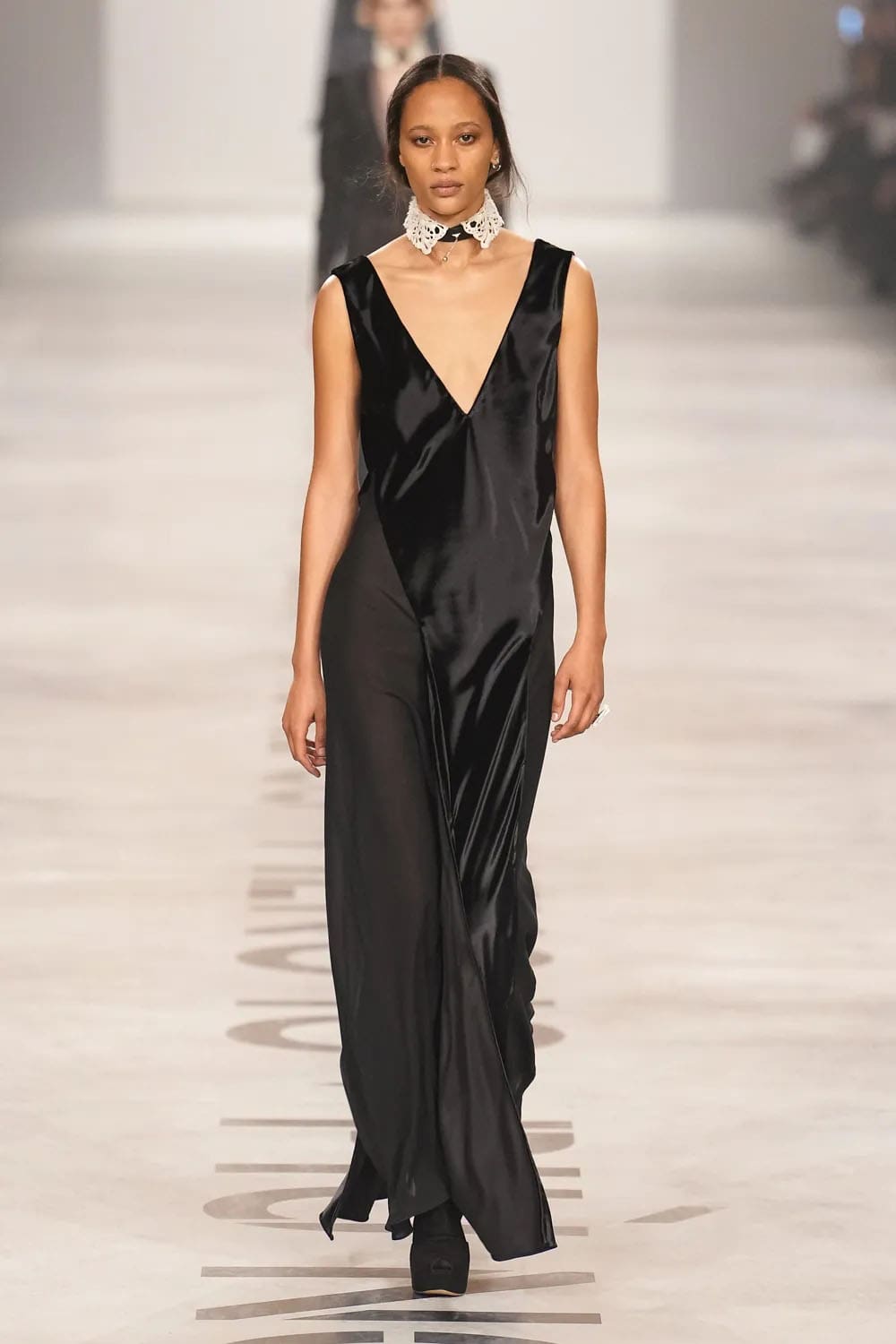
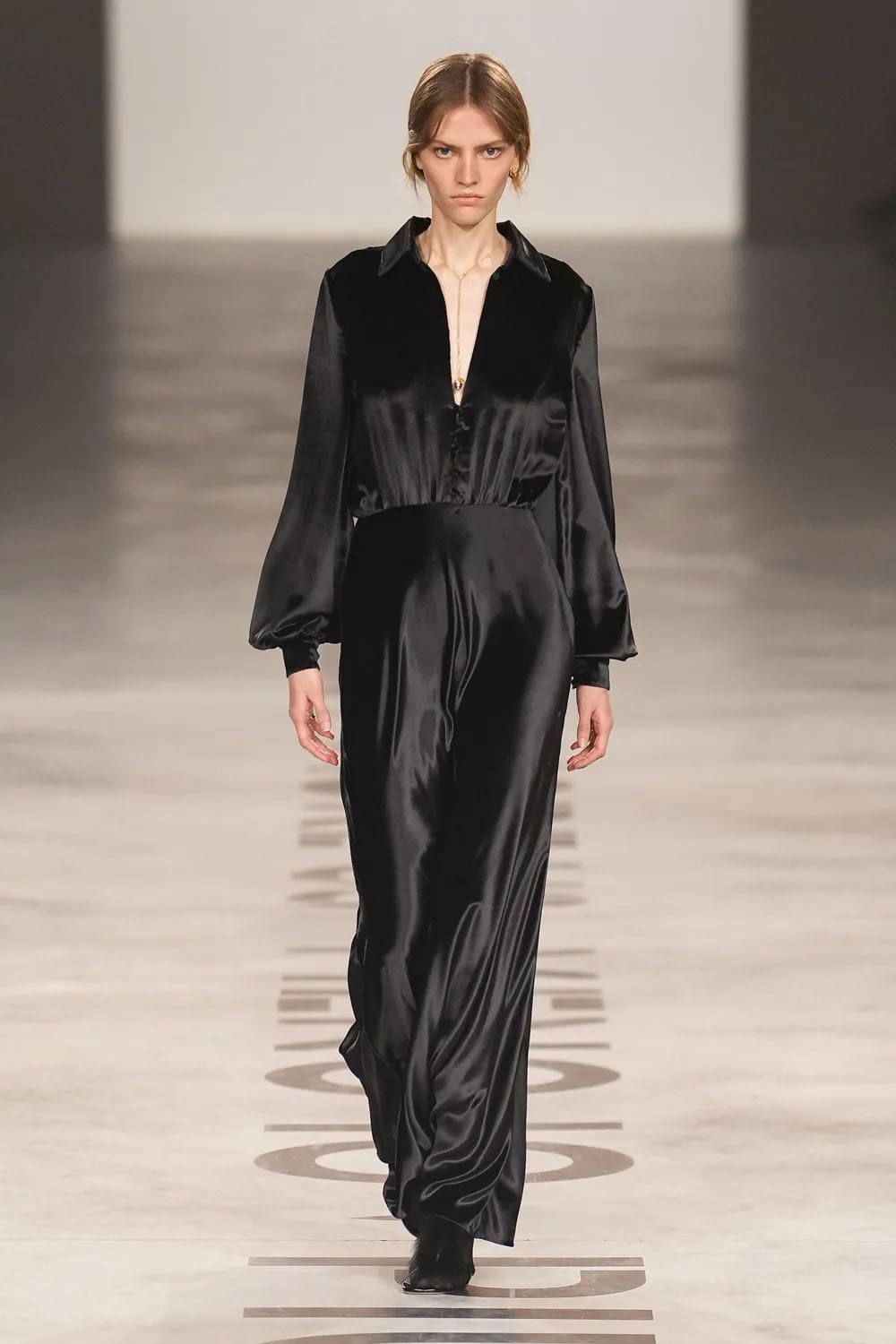
Chiuri’s familiar vocabulary reappears in the deep-V slip dresses.
- A liquid red column, feather collar at the throat, cinematic but slightly adrift from the show’s core Roman severity.
- A sheer ivory gown with floral panels—her predictable bridal punctuation. Pretty, yes. Expected, absolutely.
These dresses work, but they transport us back to Paris rather than Rome.
THE REAL QUESTION: WHERE IS FENDI IN ALL THIS?
The clothes are competent. The tailoring is strong. The materials are luxurious. The accessories will dominate retail.
But the essence?
The irreverent Roman eccentricity?
The playfulness?
The color?
Missing. Entirely.
Chiuri’s debut is not a reclaiming of Fendi’s identity but an imposition of her own — ironically contradicting the runway slogan. The message says “LESS I, MORE US,” but the execution says:
“LESS US, MORE MGC.”
This is Fendi through the lens of a designer still shadowed by Dior’s seriousness and feminism-by-committee ethos. The result reads as luxury minimalism with clerical undertones, lacking the architectural wit that defined the house under Silvia Venturini Fendi or the audacity that defined Karl Lagerfeld’s tenure.
A ROMAN FOYER WITHOUT THE ROMANS
Maria Grazia Chiuri has arrived at Fendi with a clear intention and a disciplined hand. But this first chapter feels more like a carefully controlled reset than a revival.
Refined, yes.
Marketable, certainly.
But true to Fendi? Not yet.
If this is the dawn of a new Roman Empire, it’s one built in grayscale — elegant, solemn, and strangely silent. For now, the most exciting thing about the collection remains the slogan printed on the floor. And slogans, as we all know, are the easiest part.
See All Looks Fendi Fall Winter 2026-2027