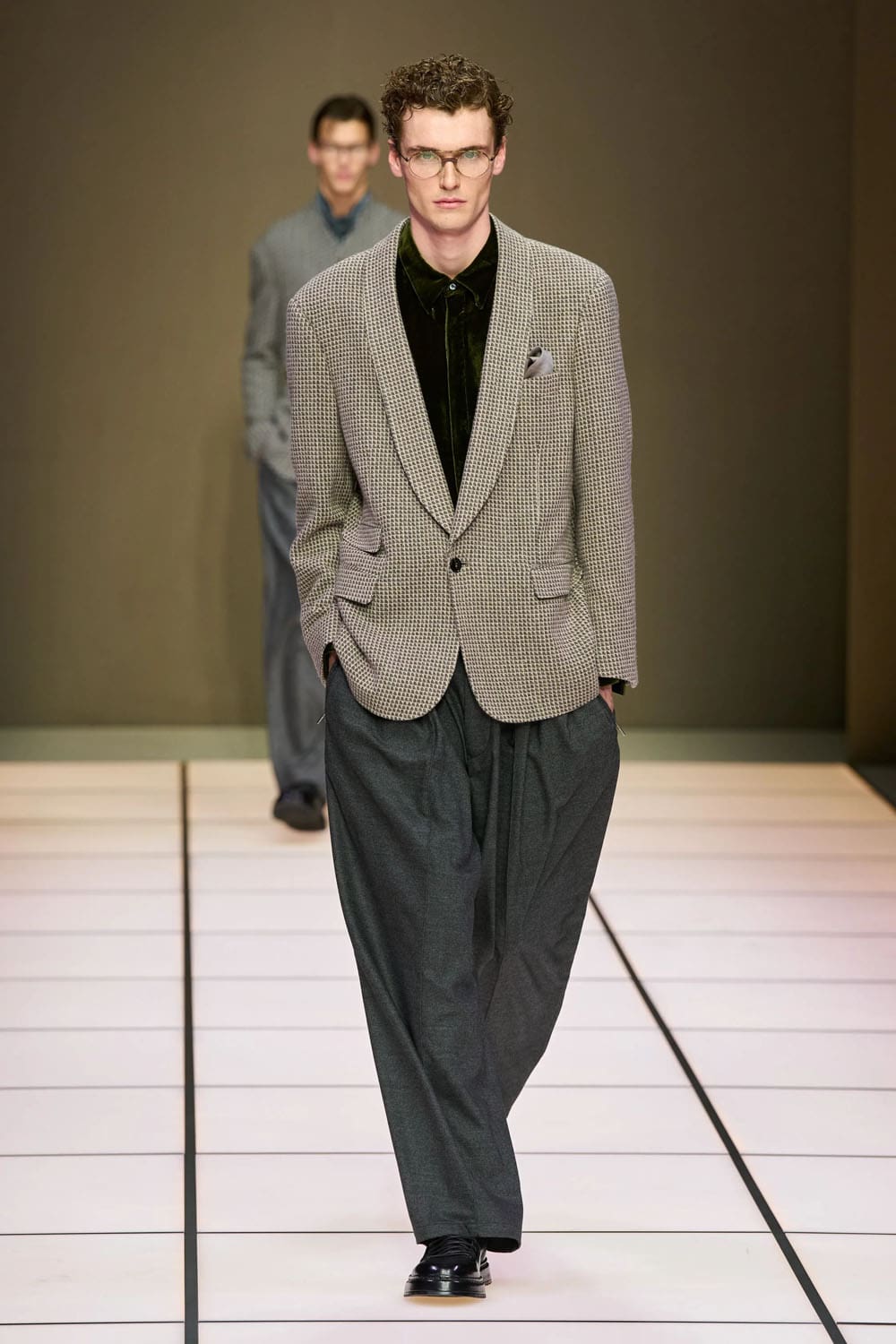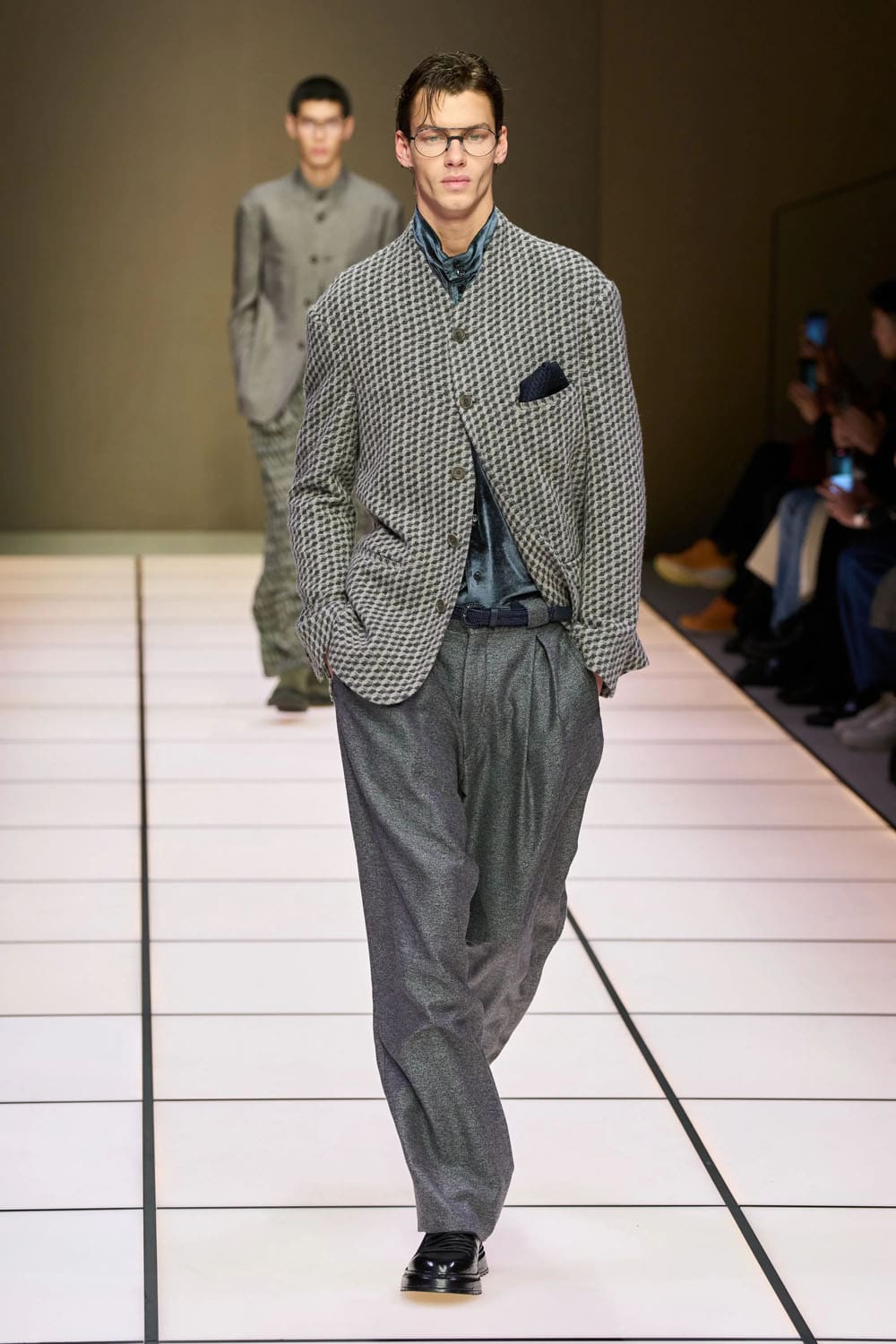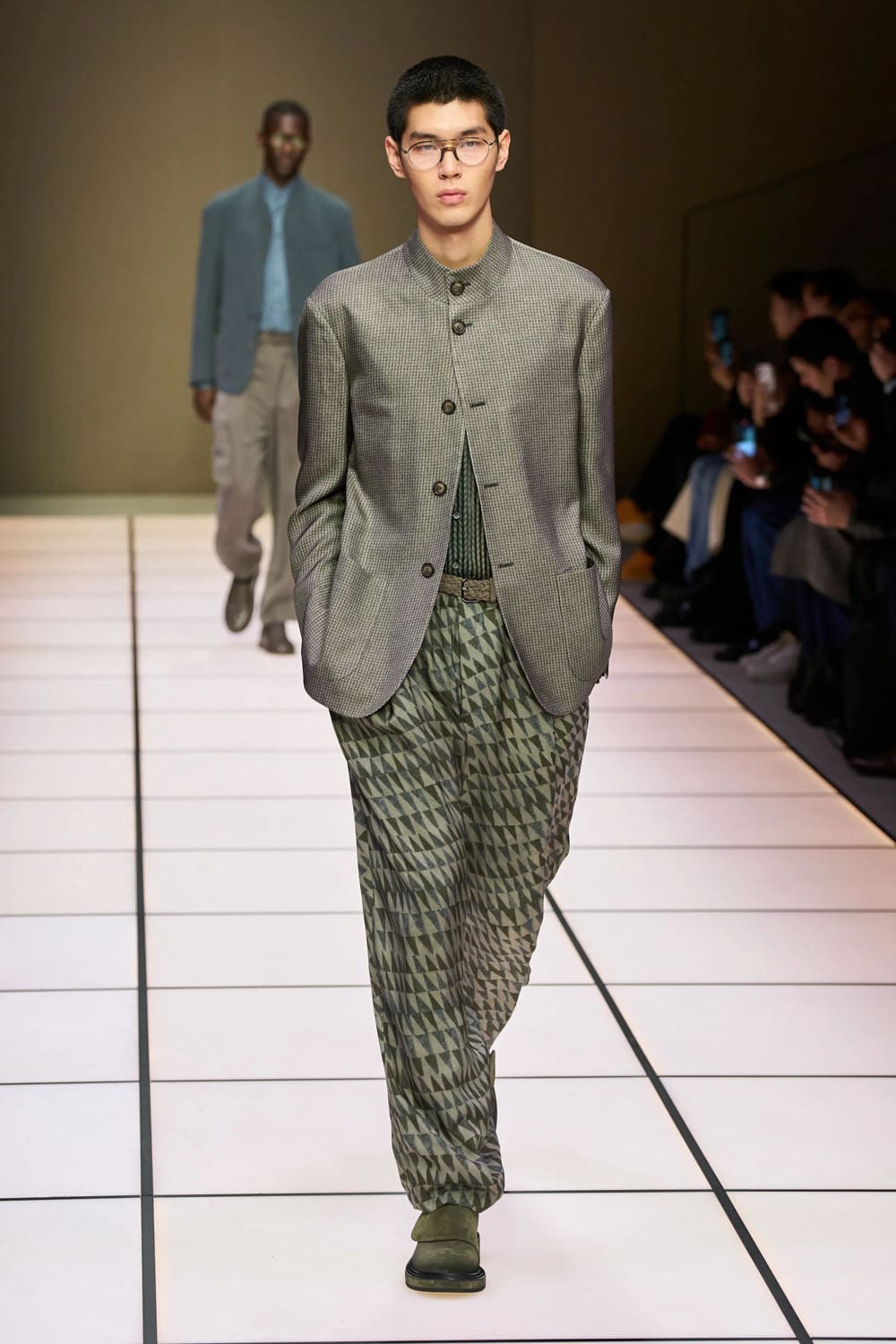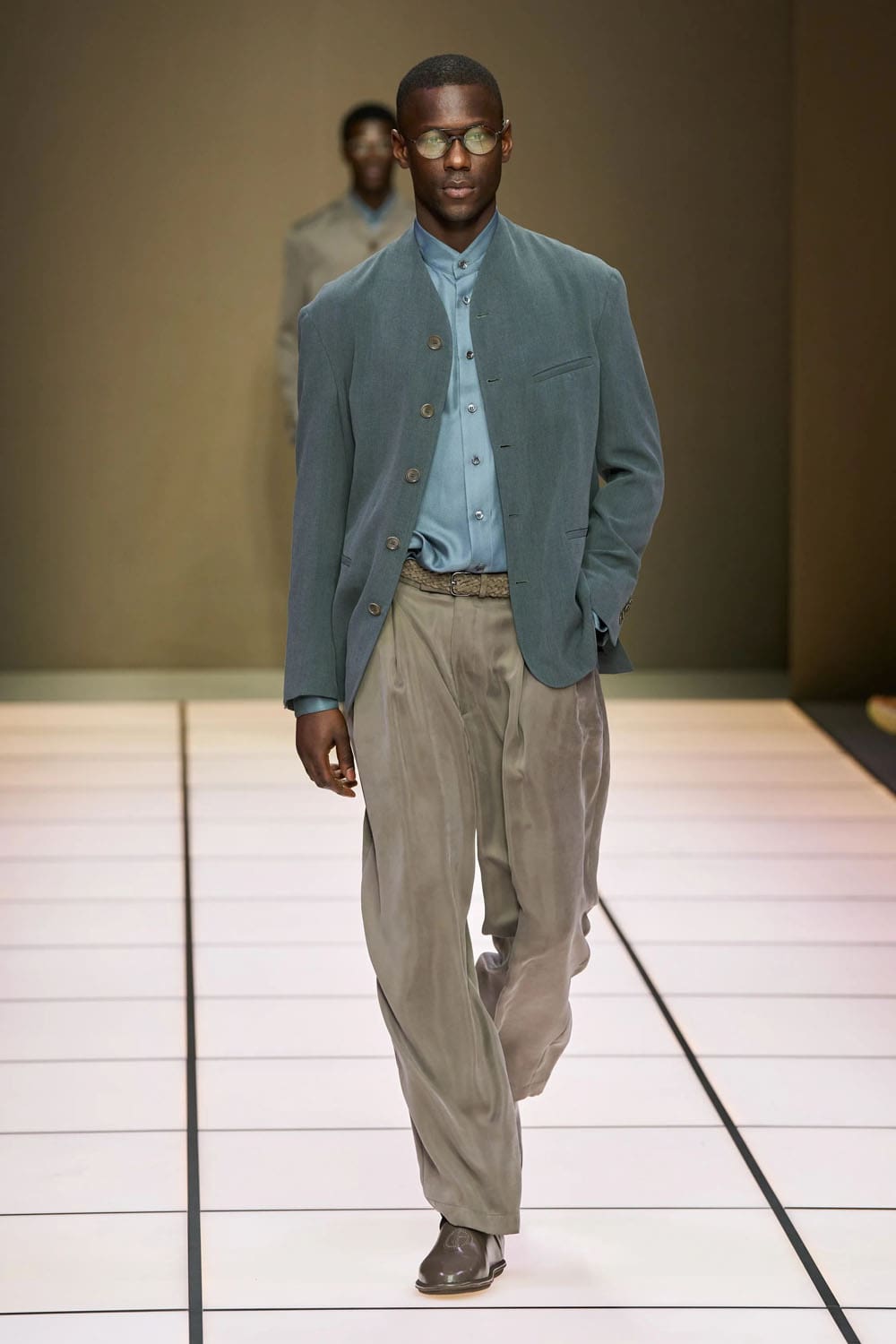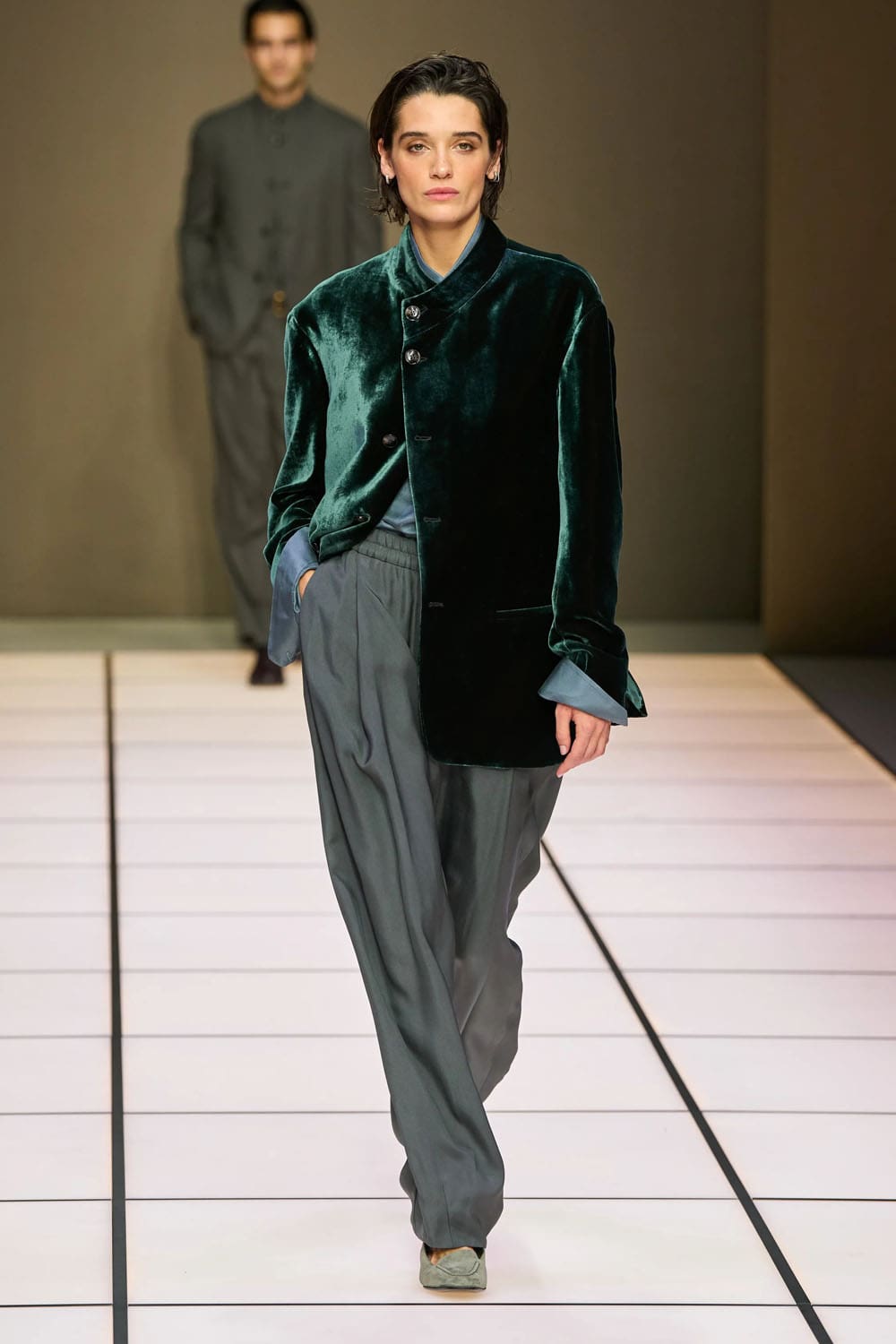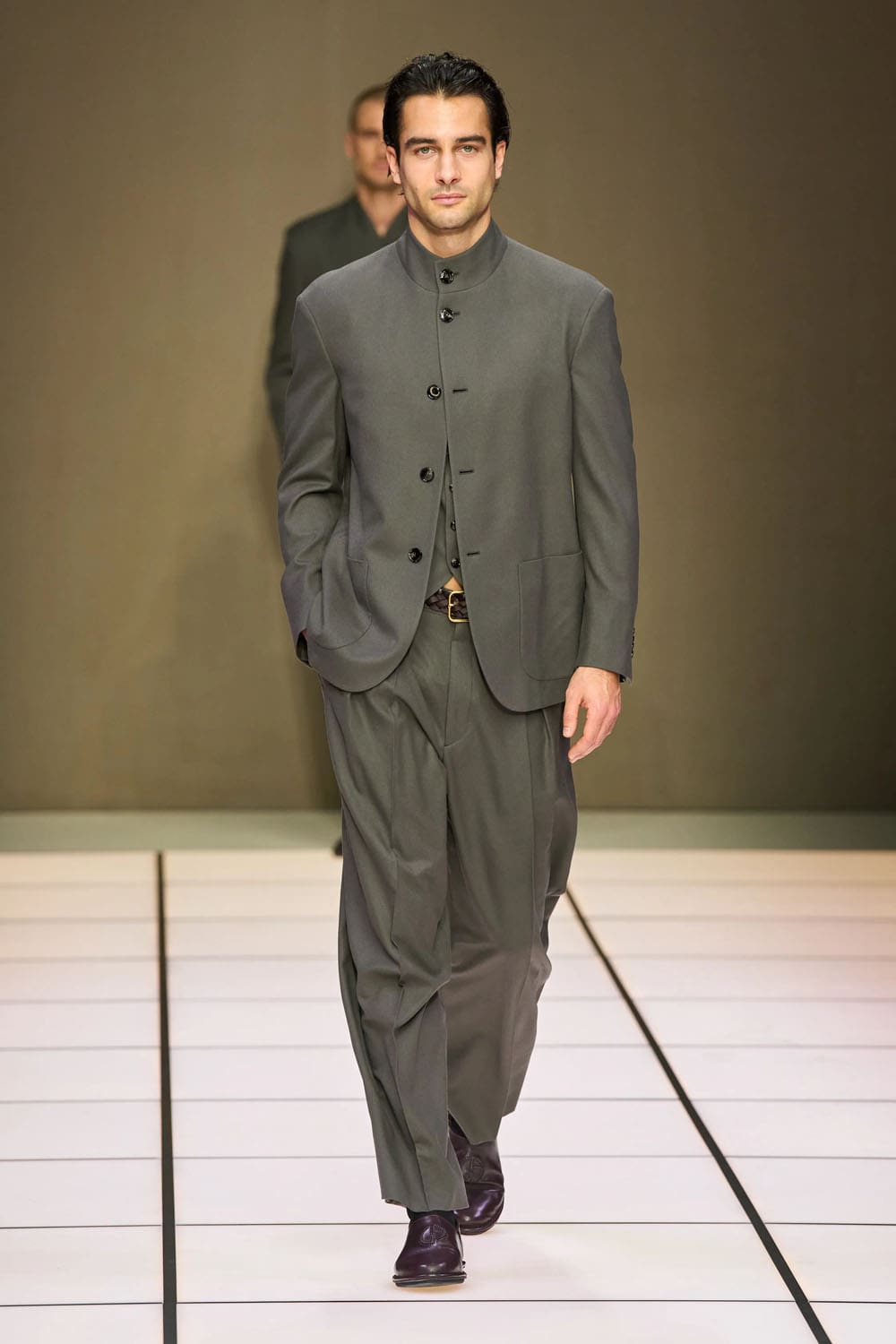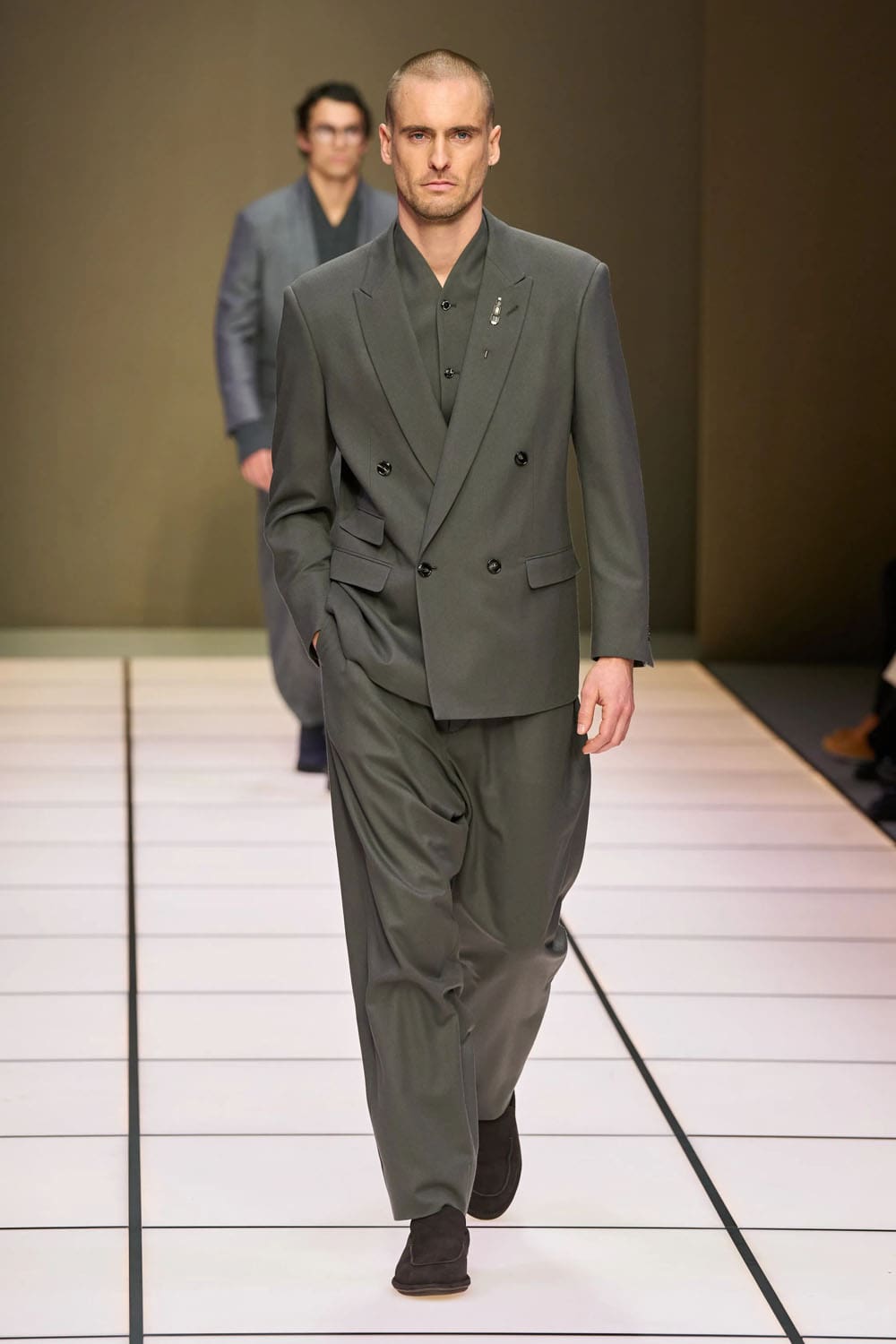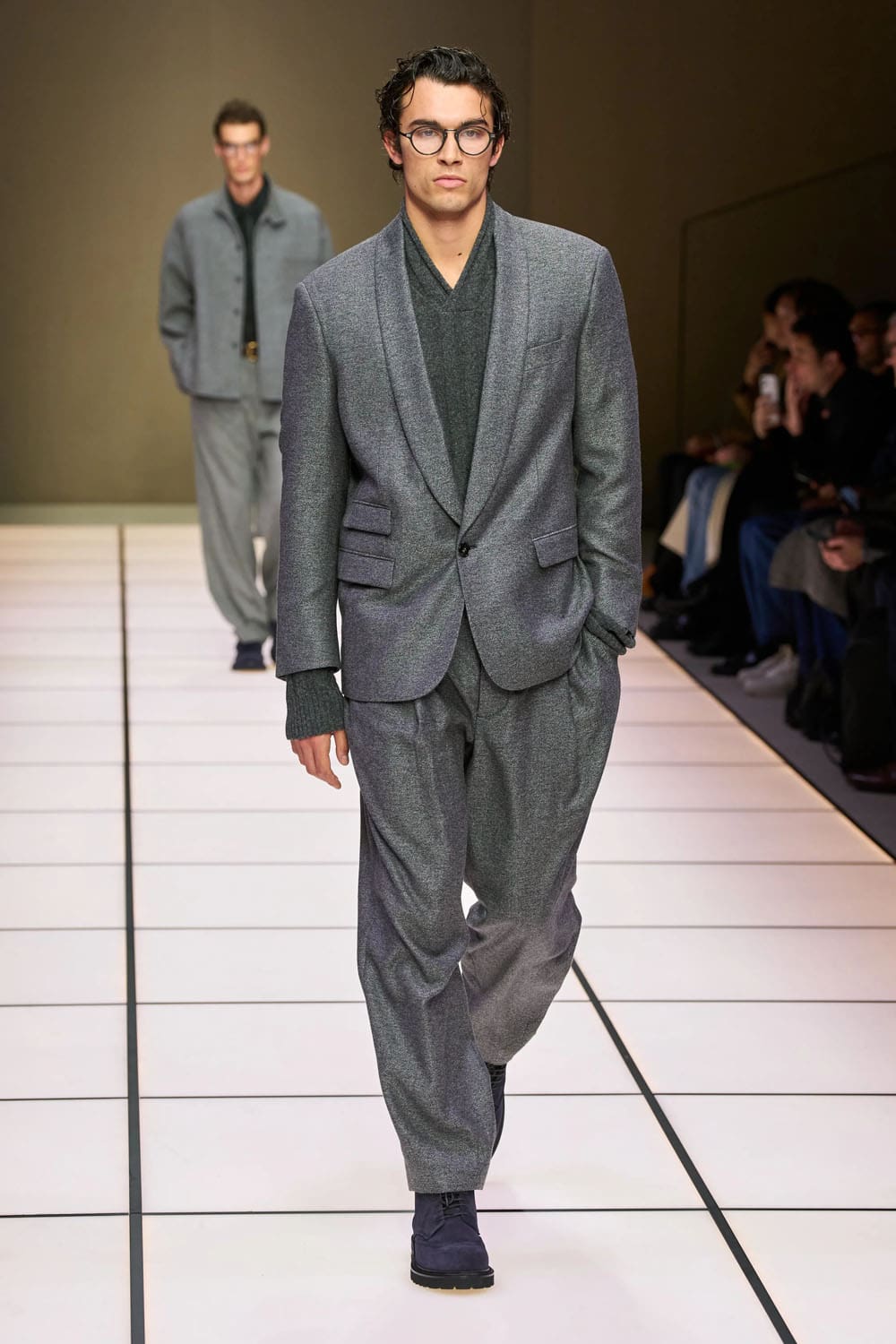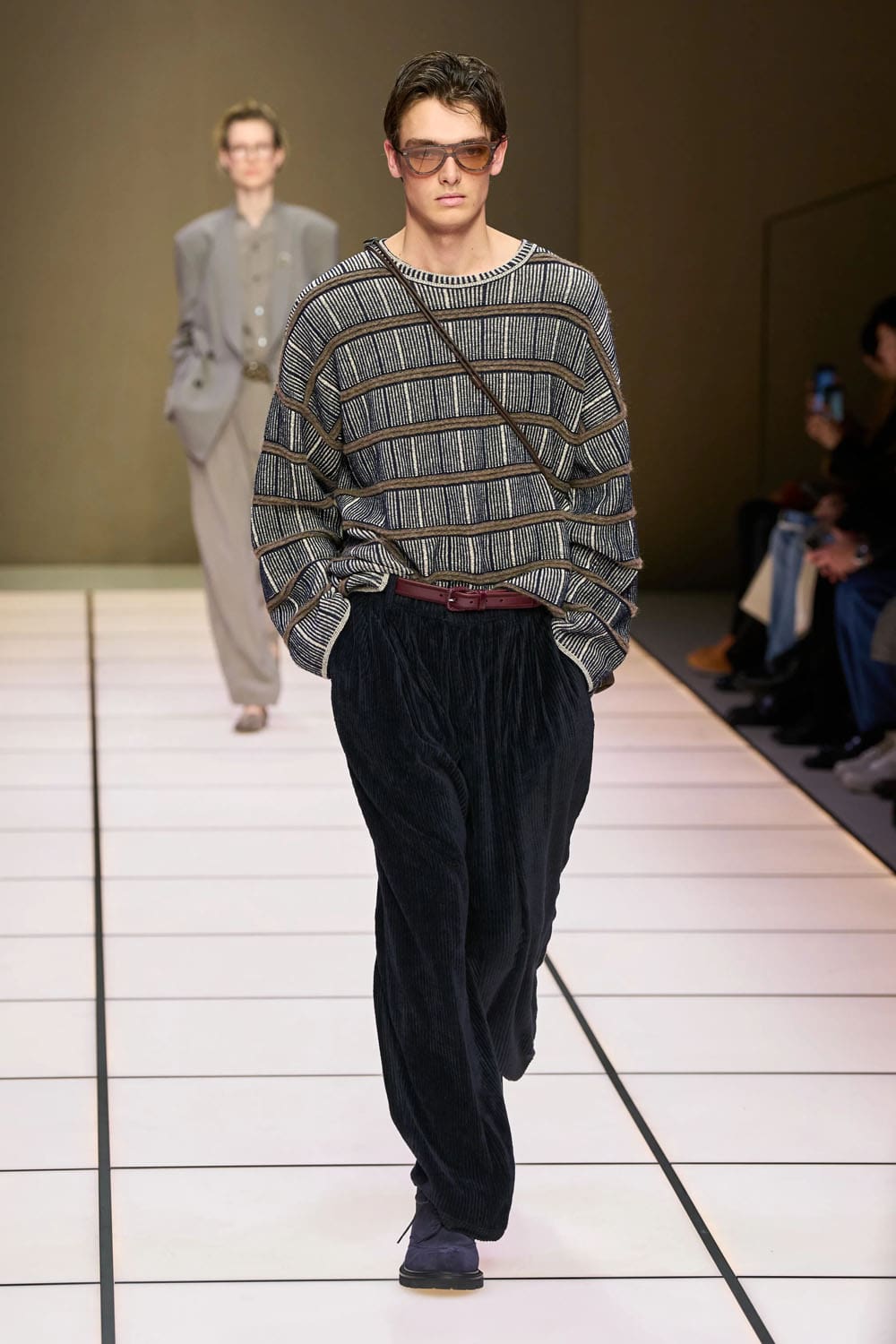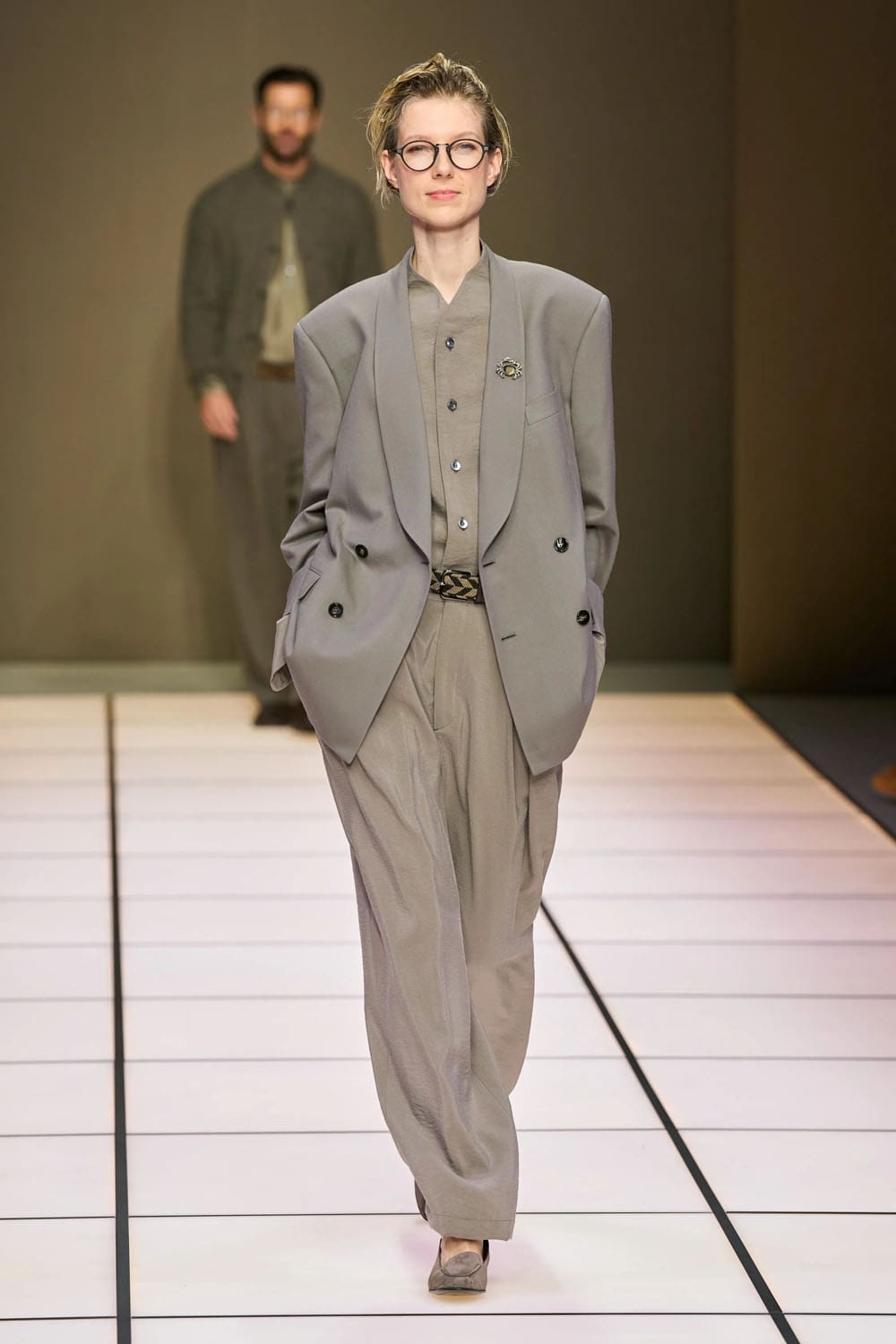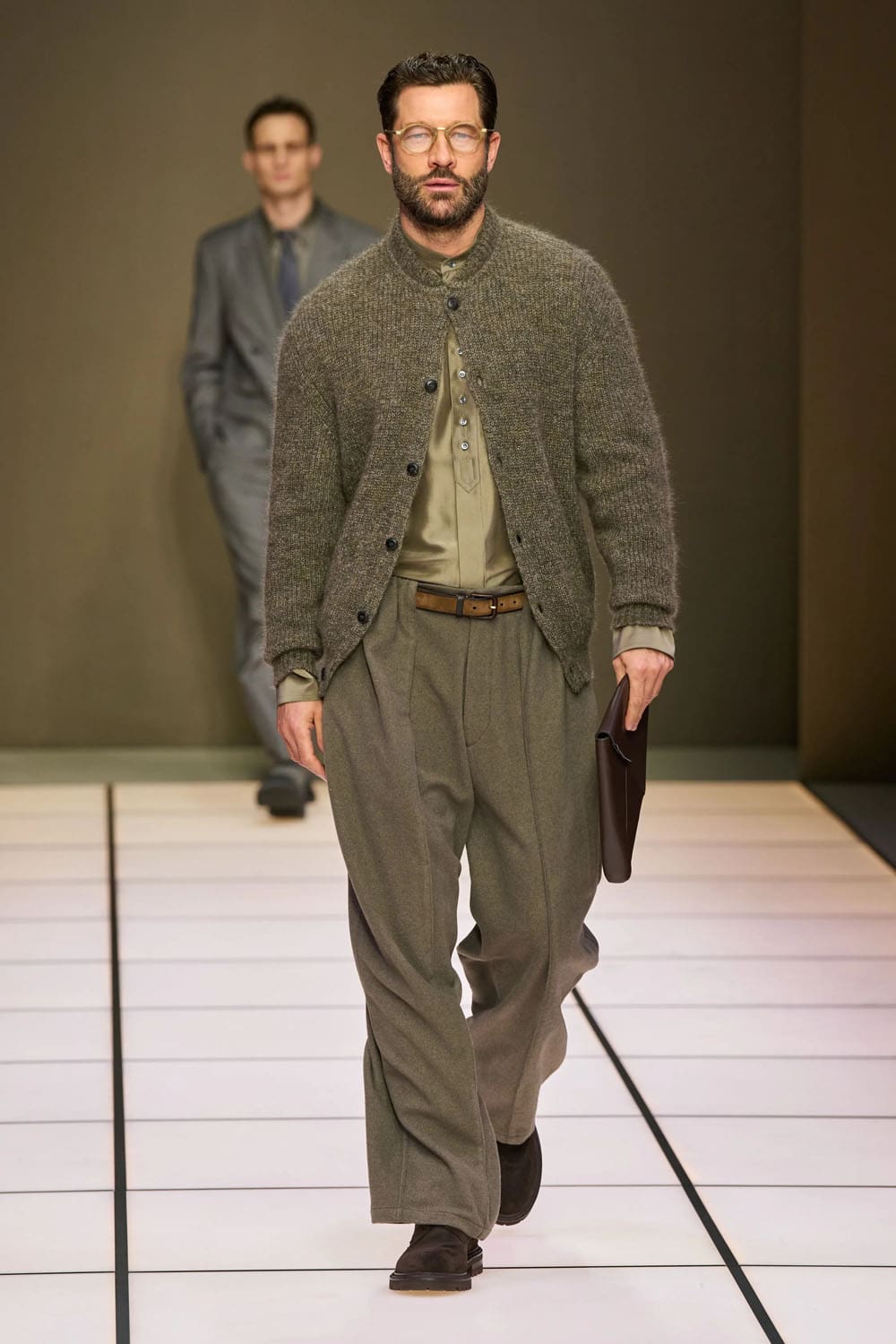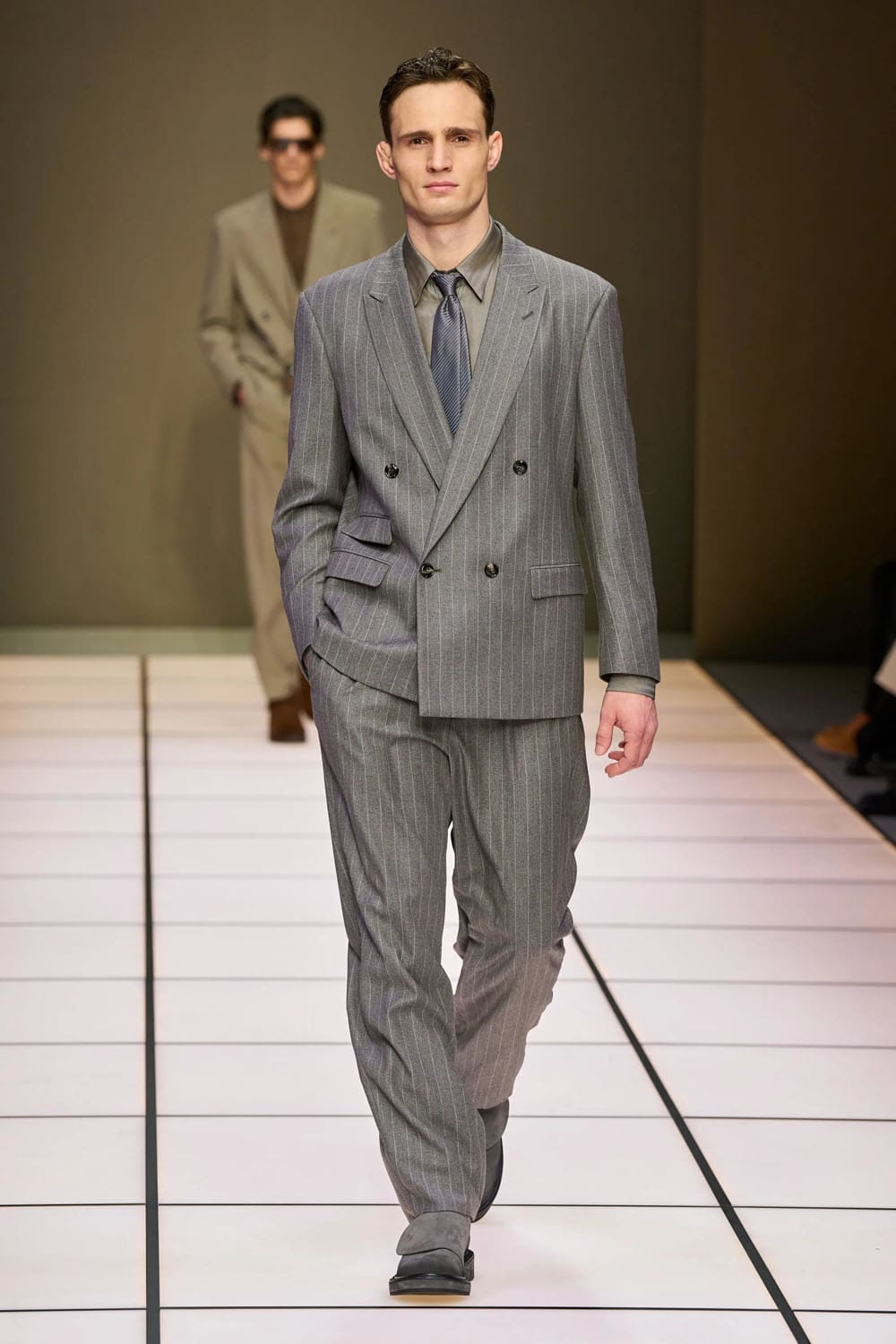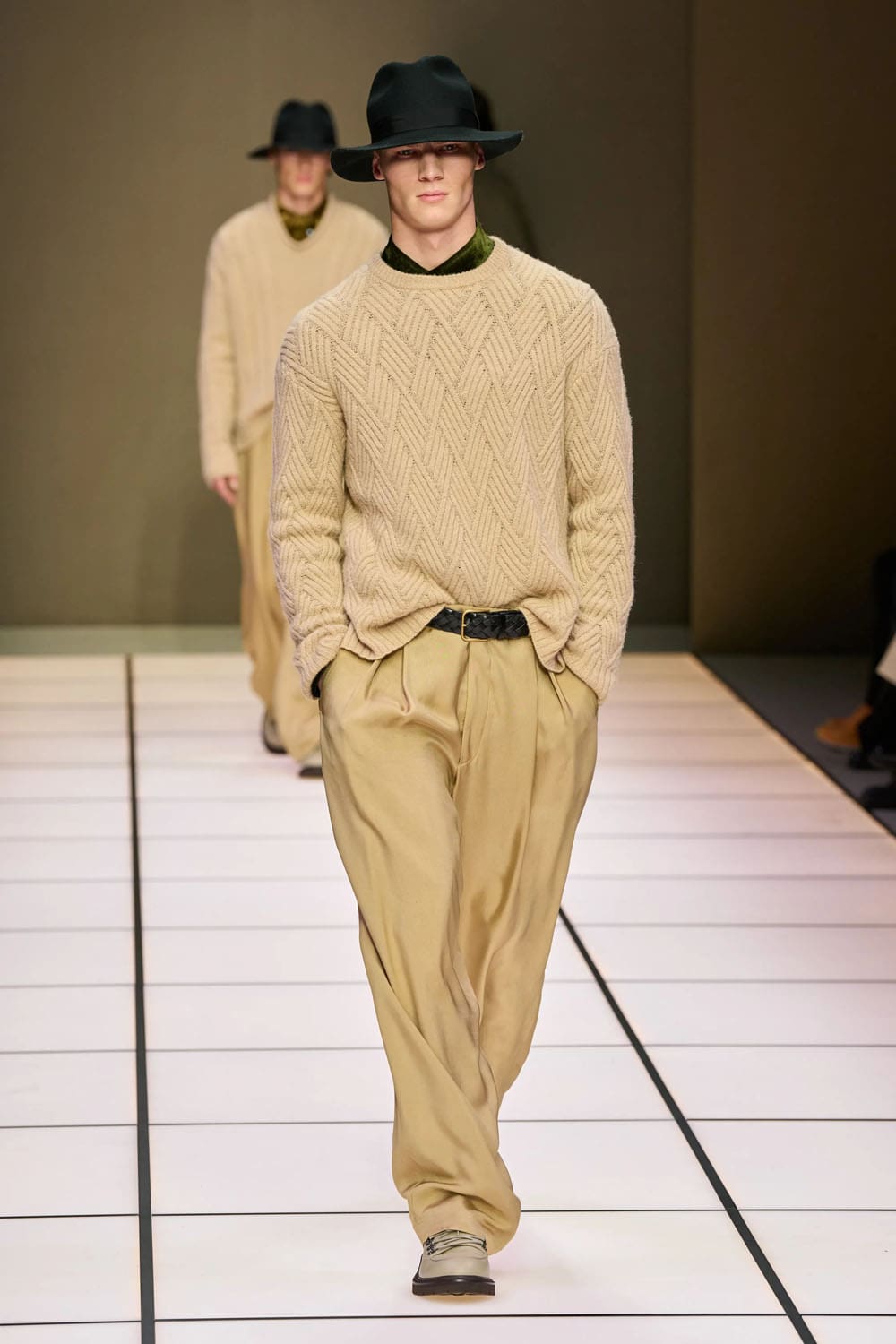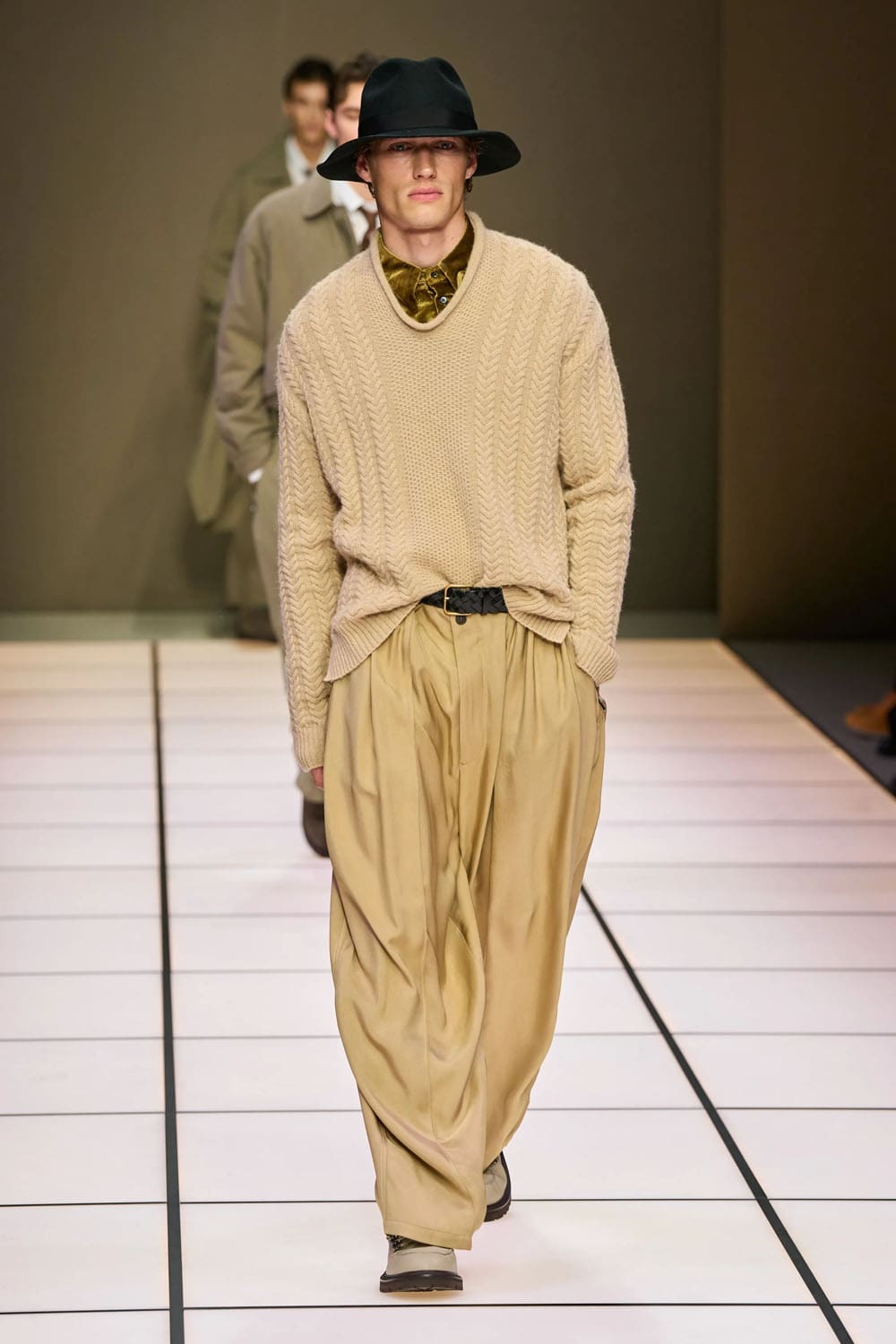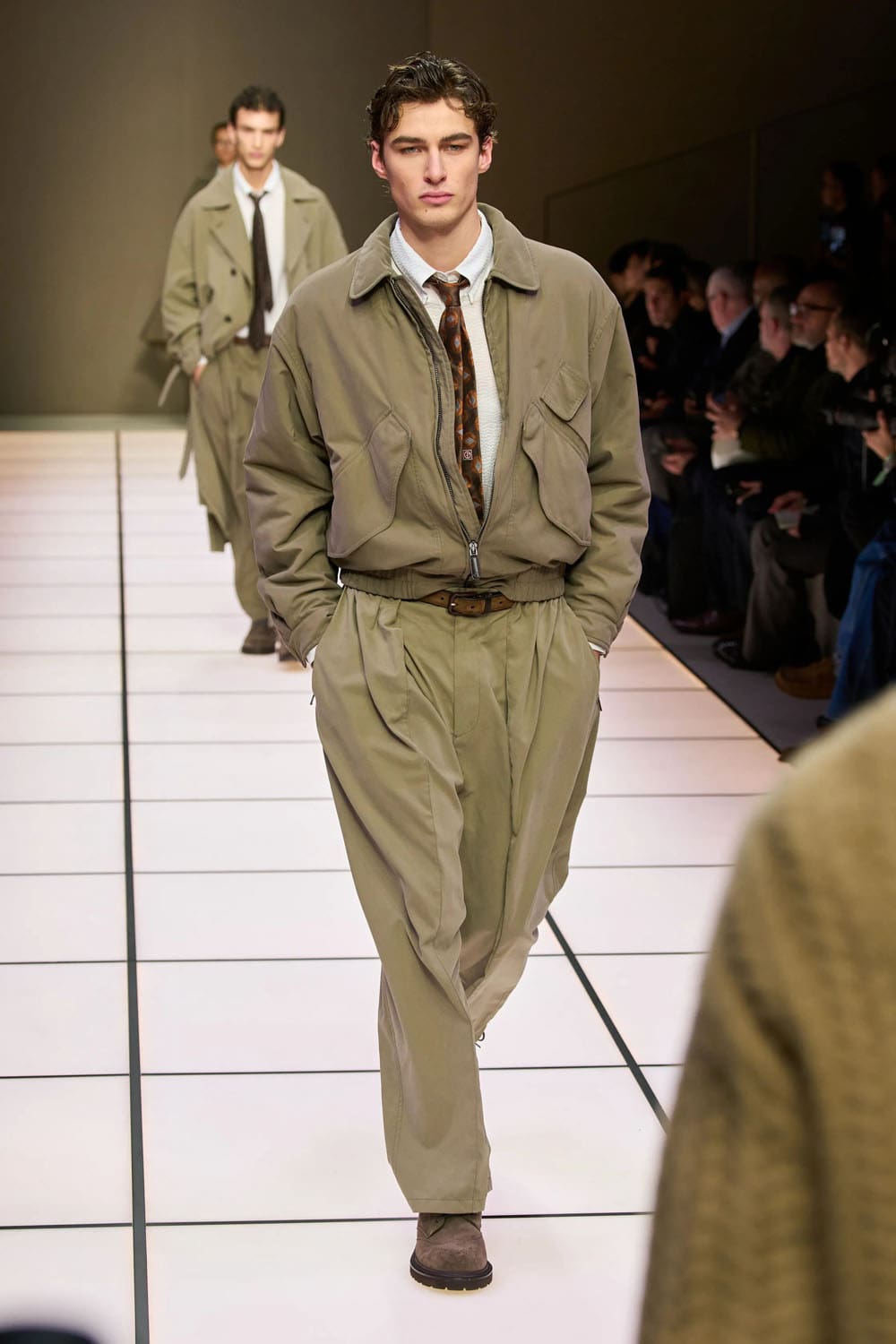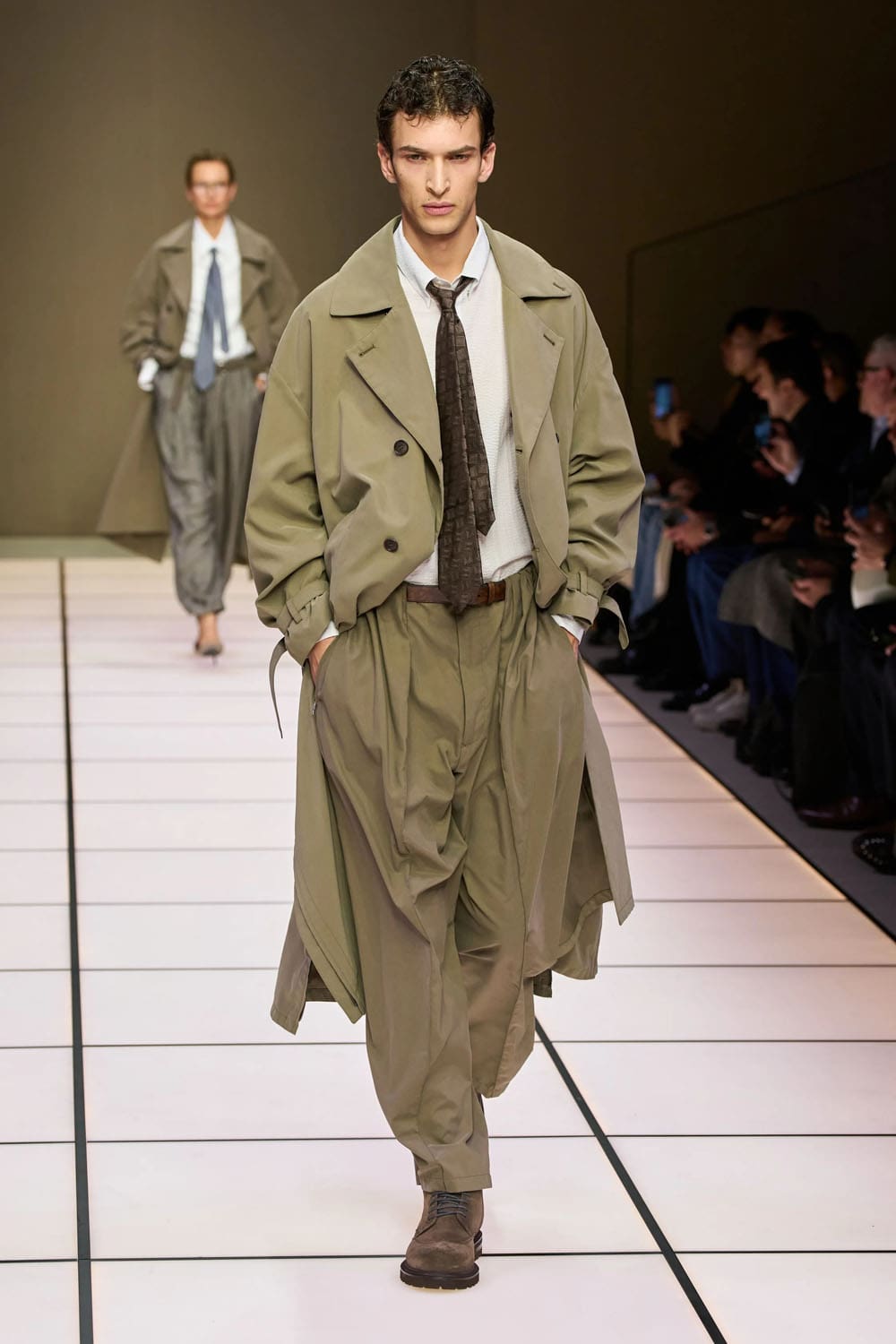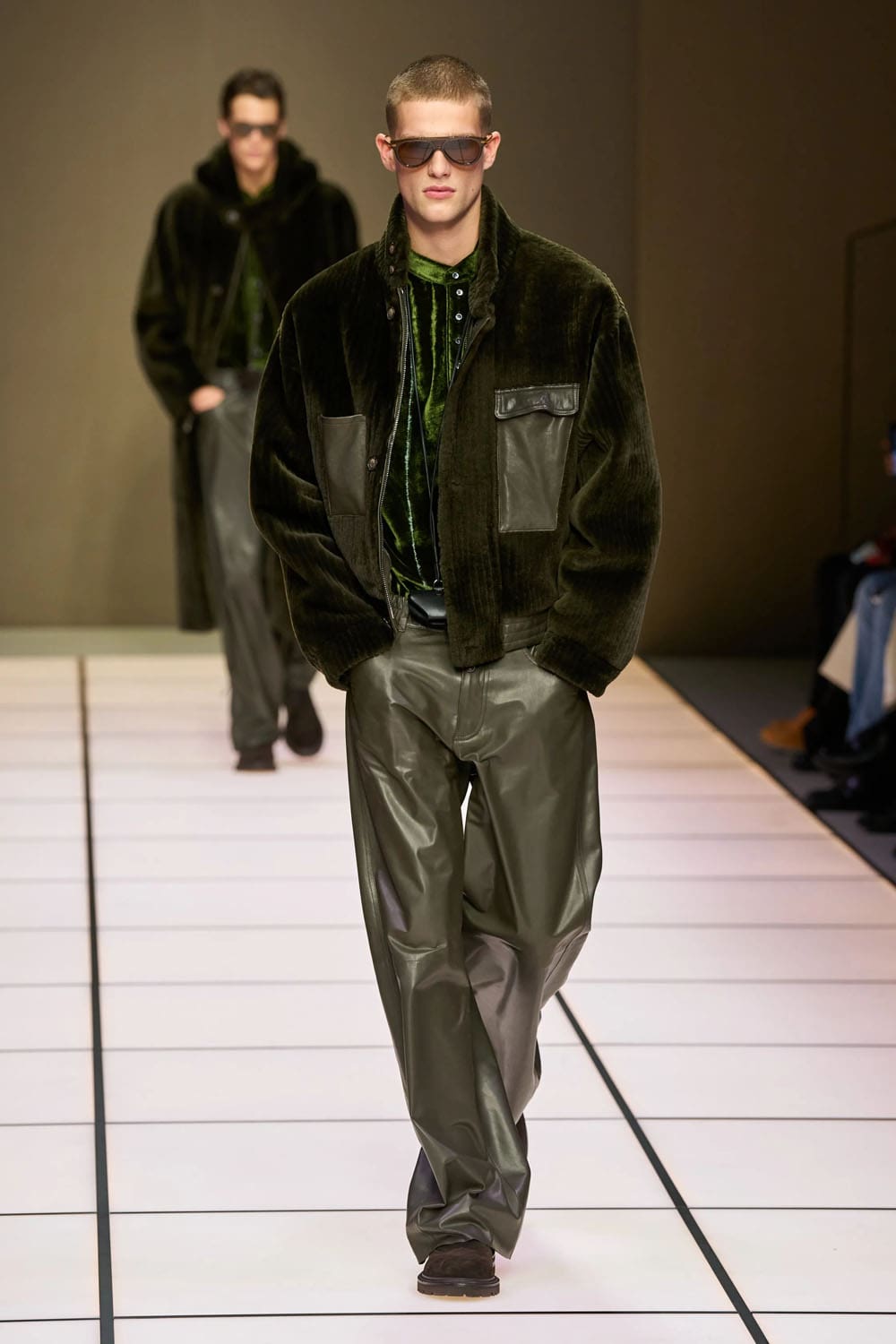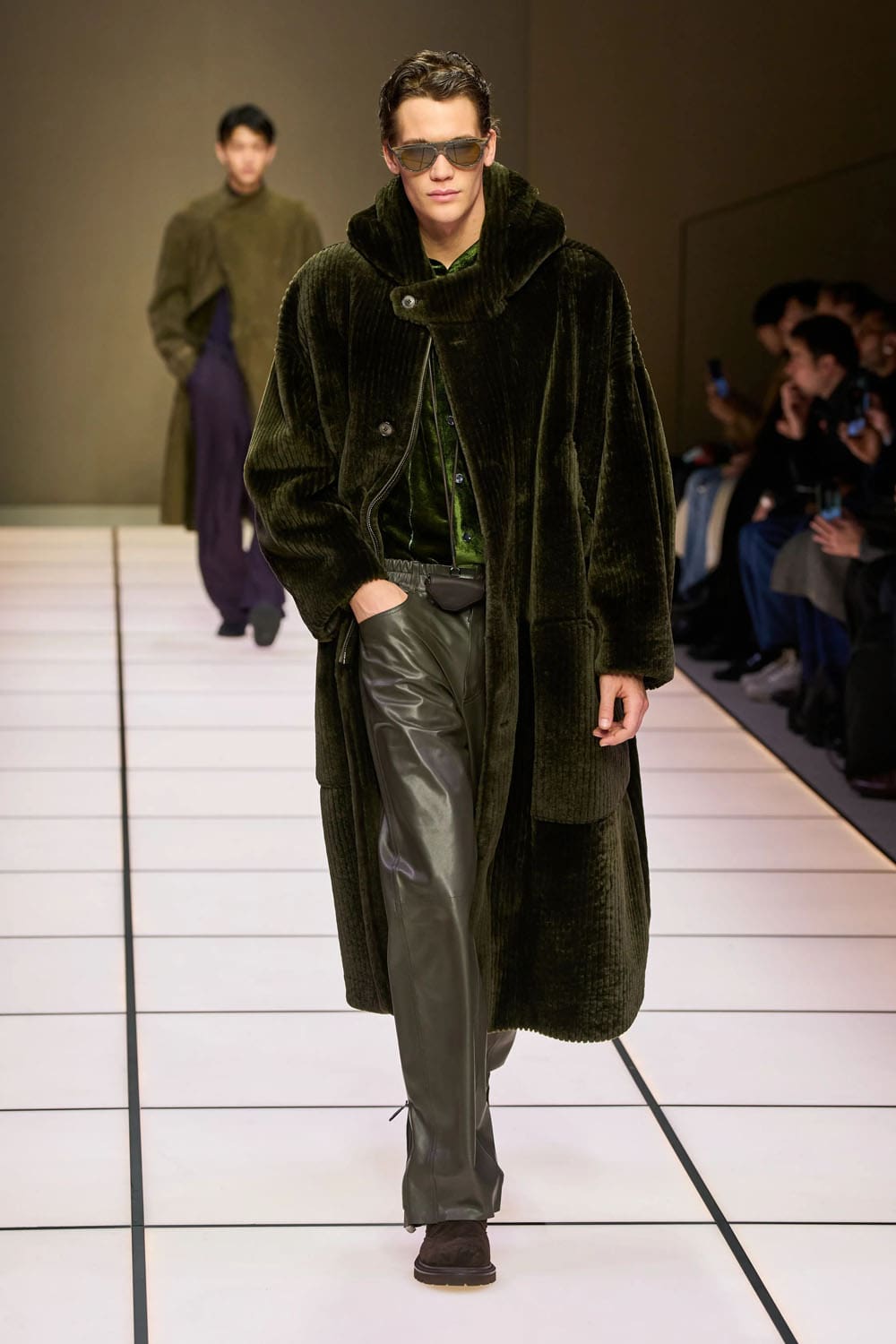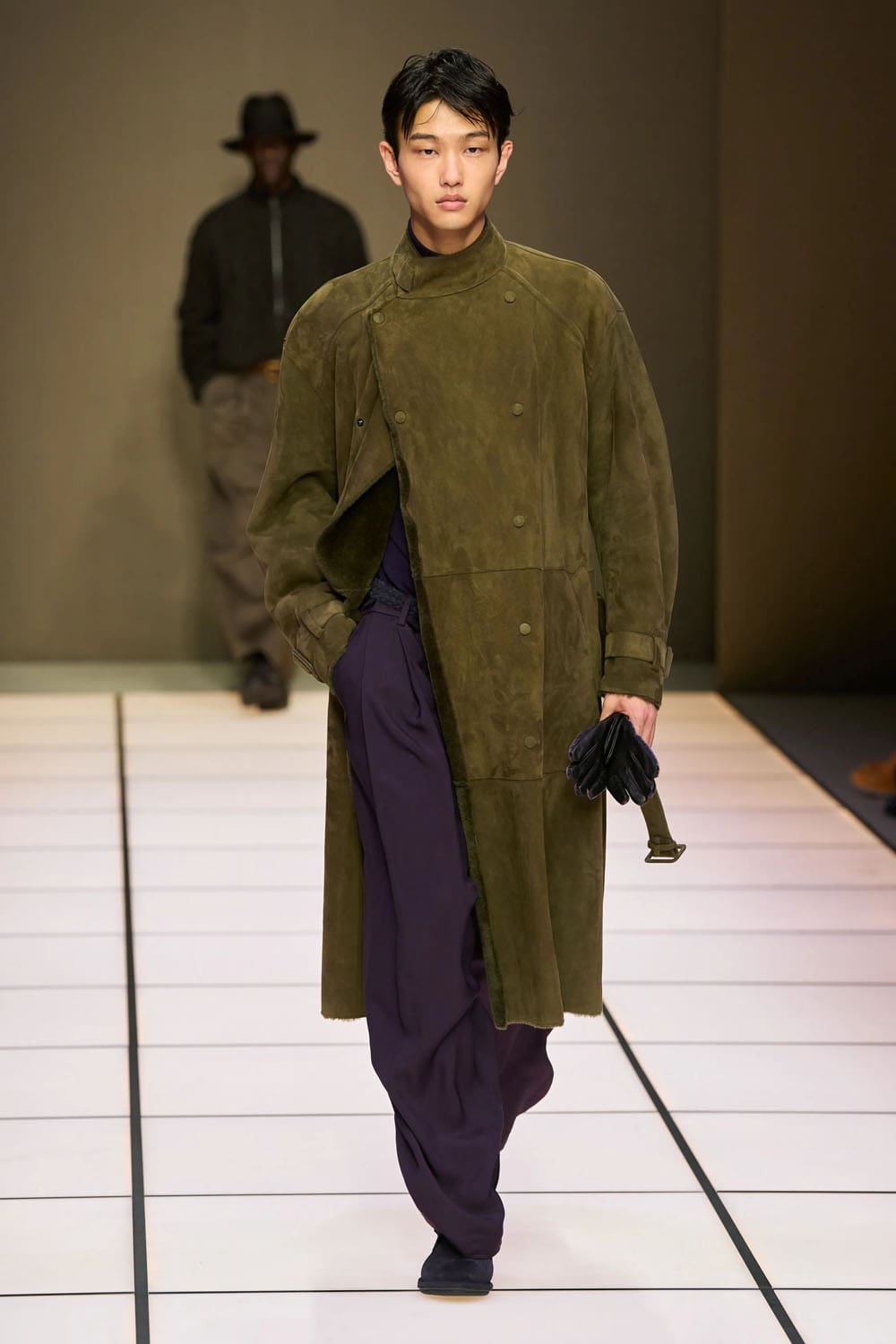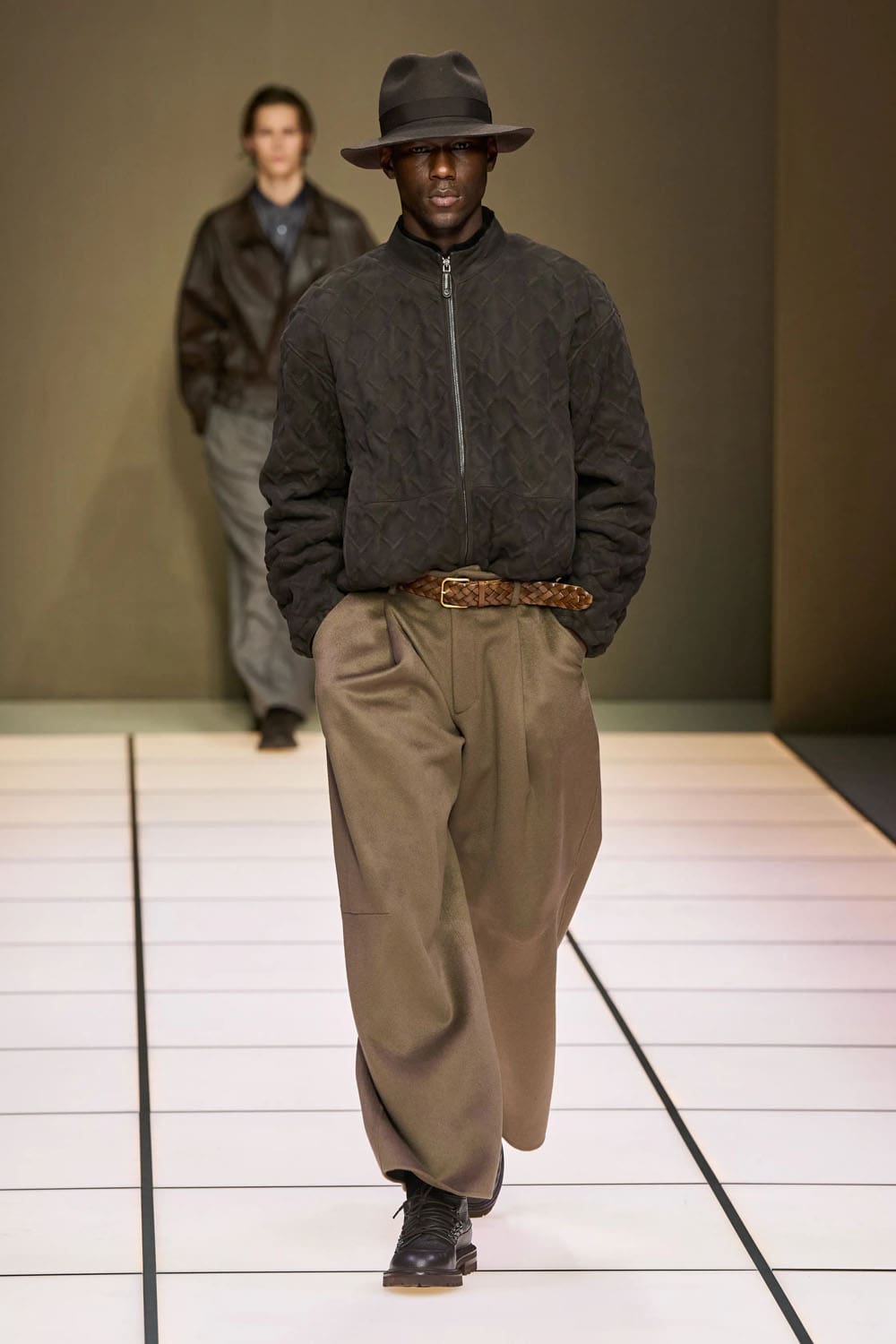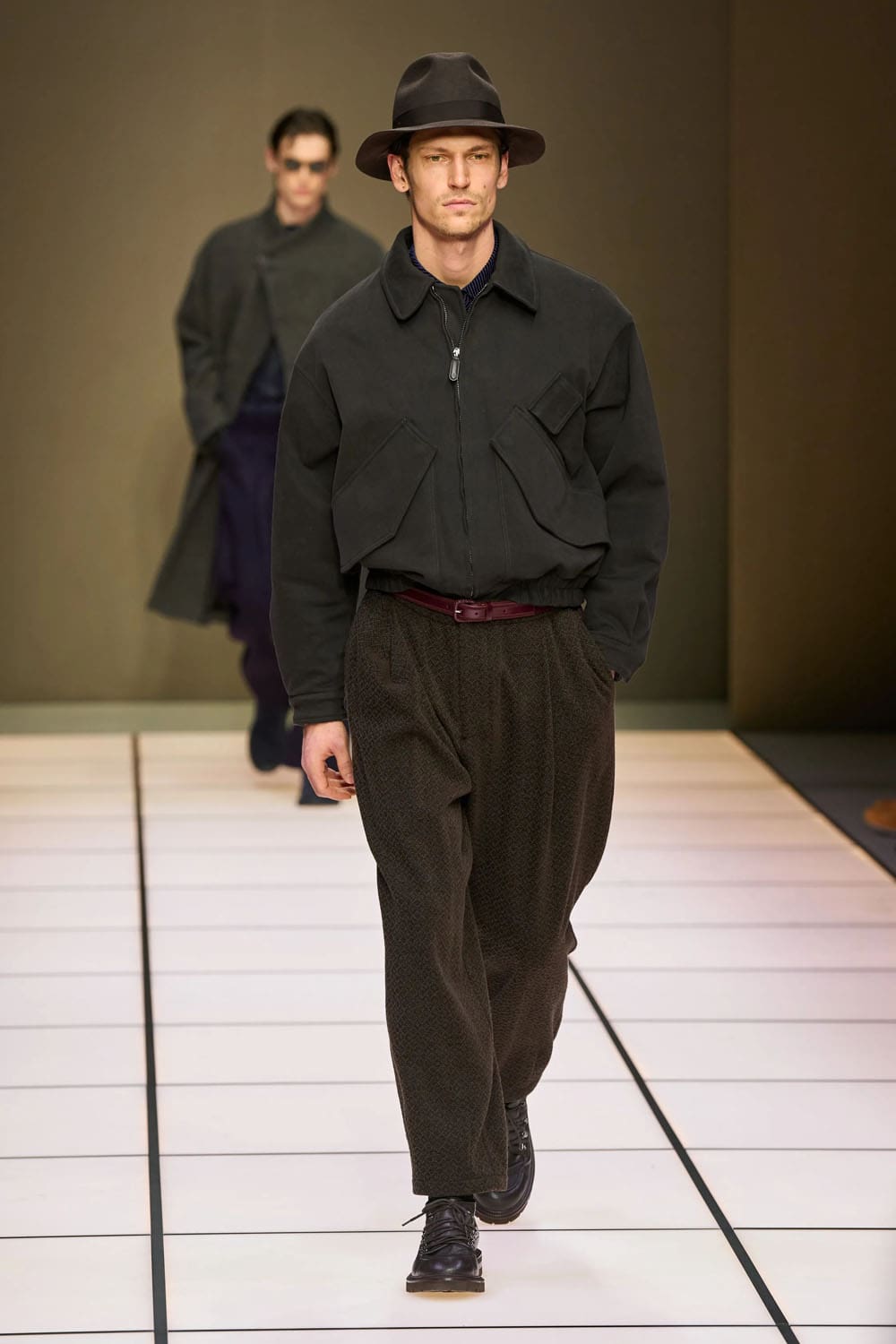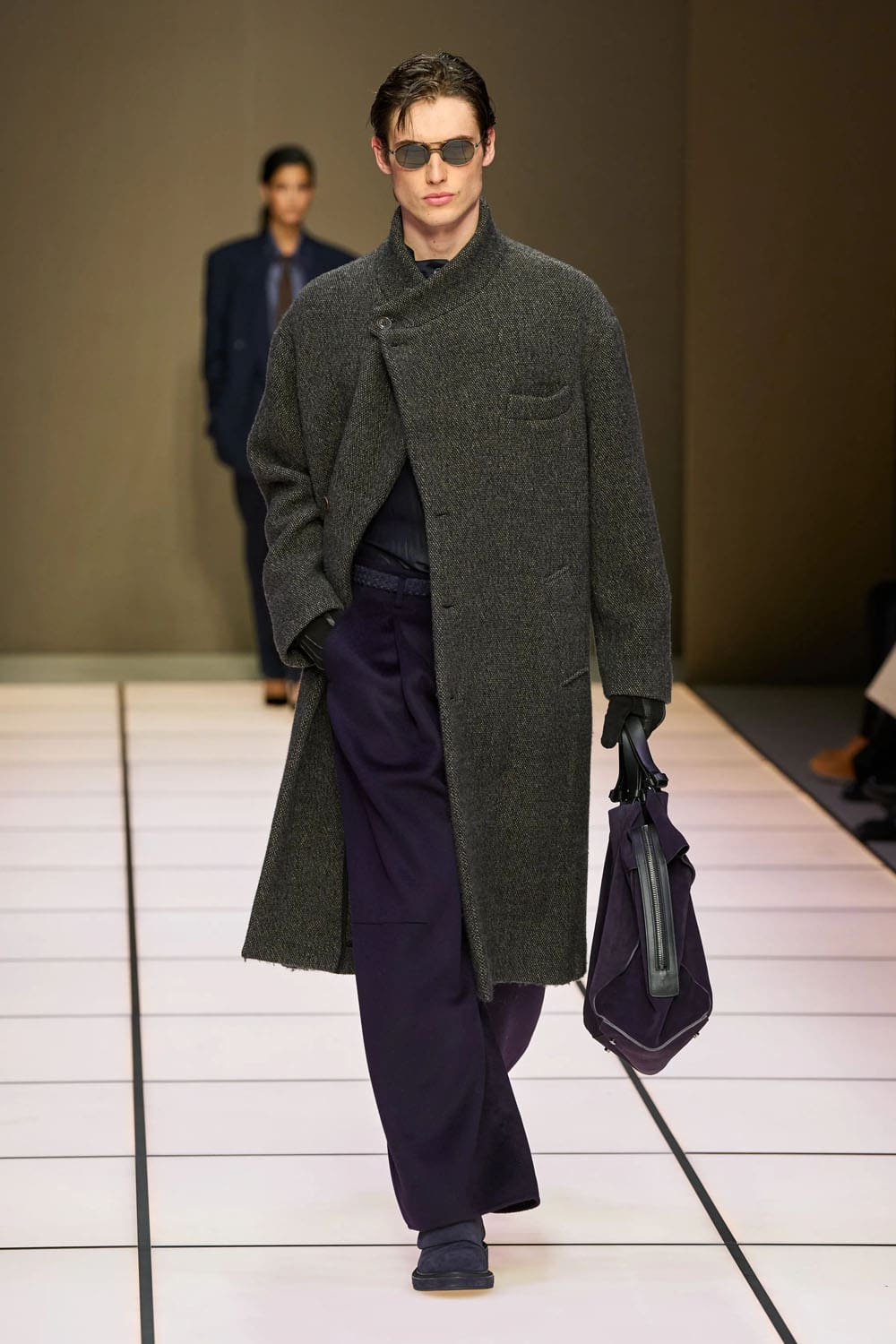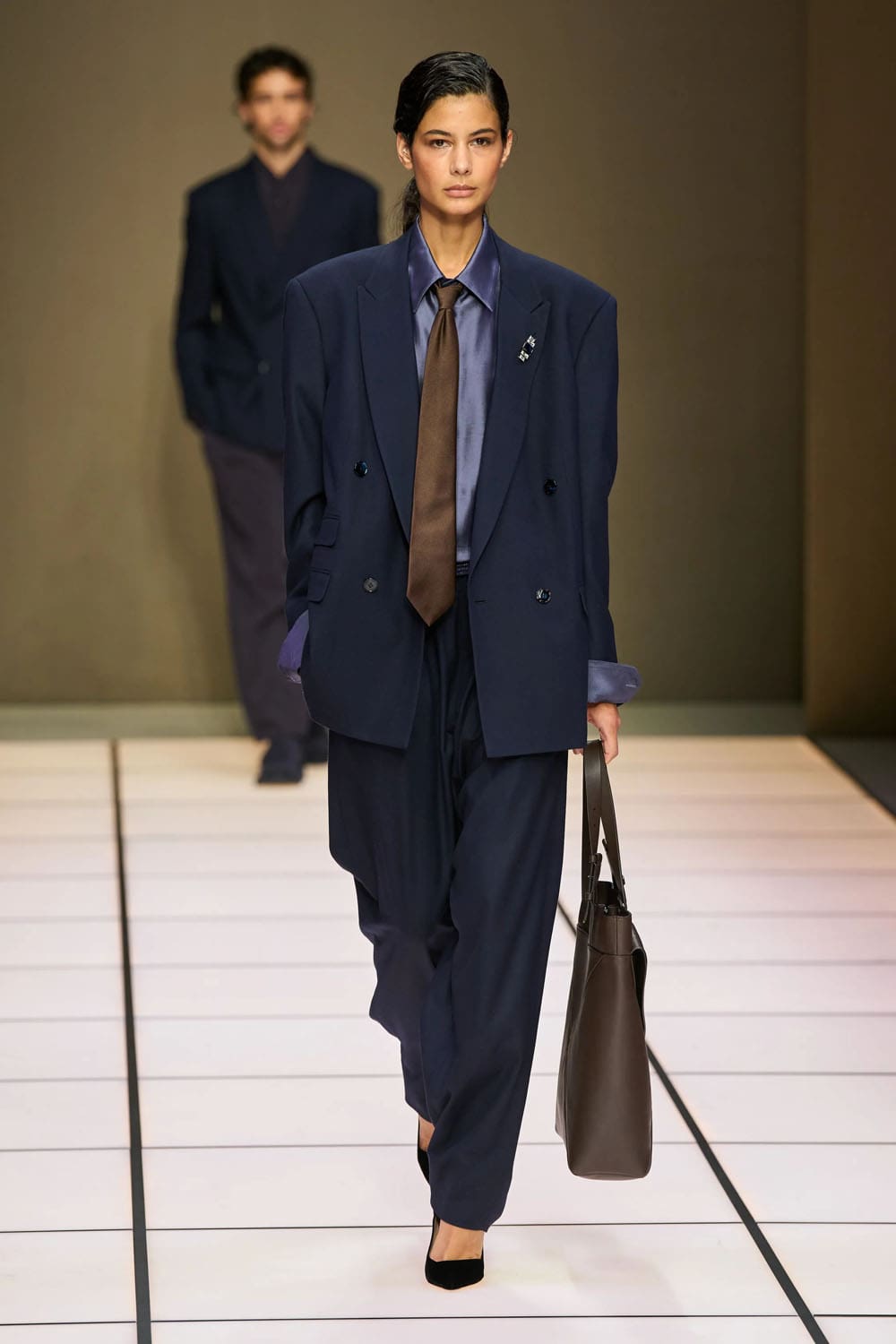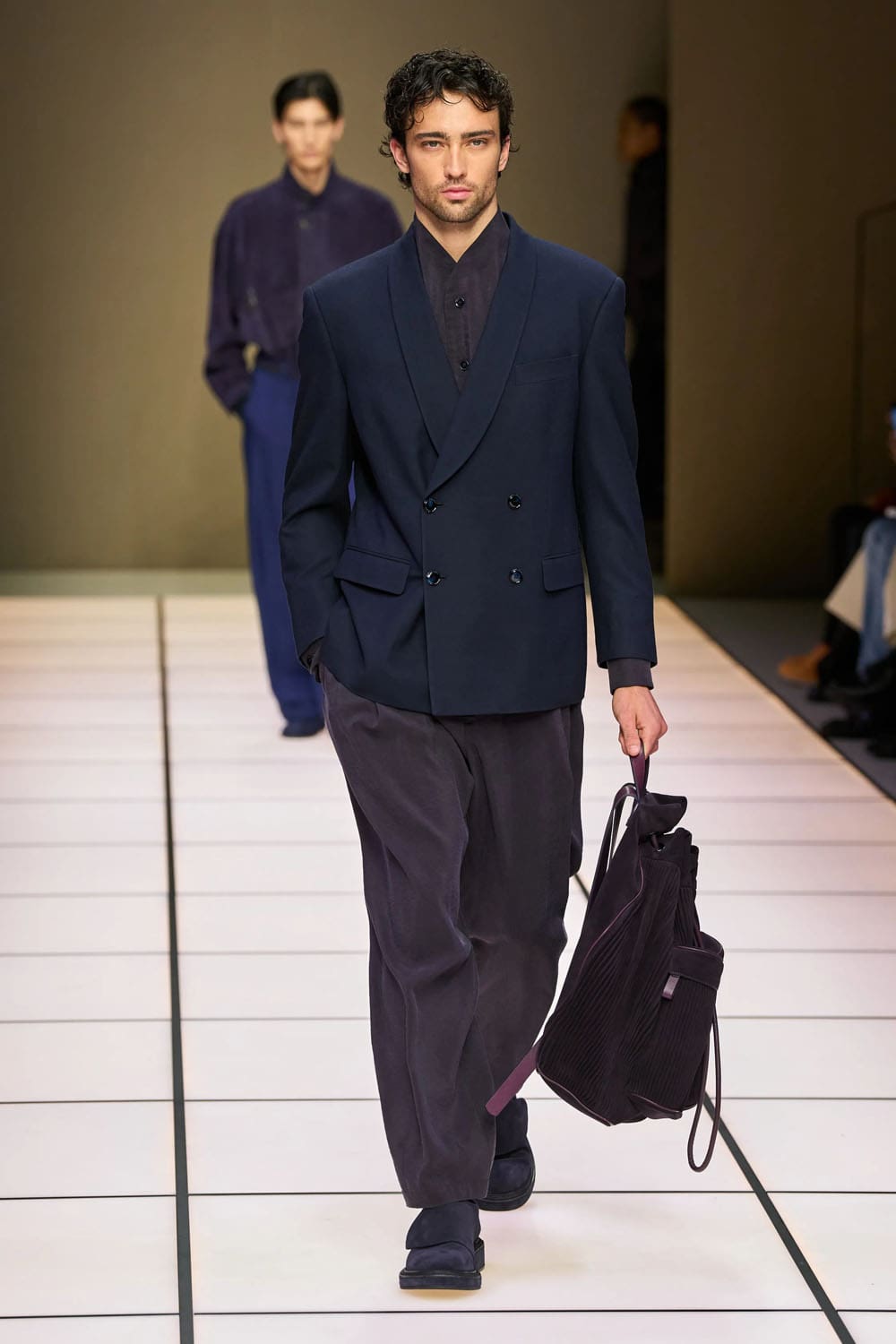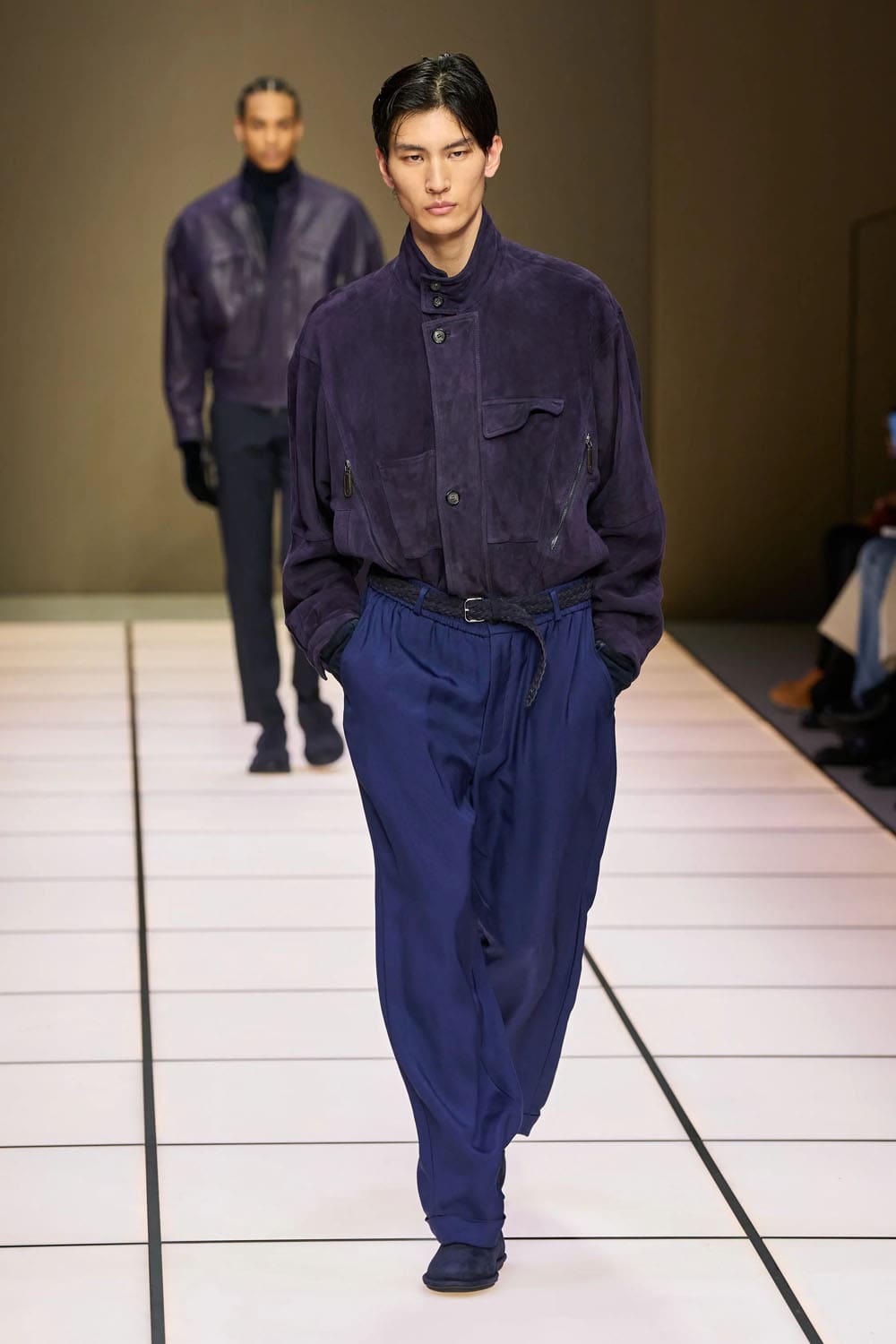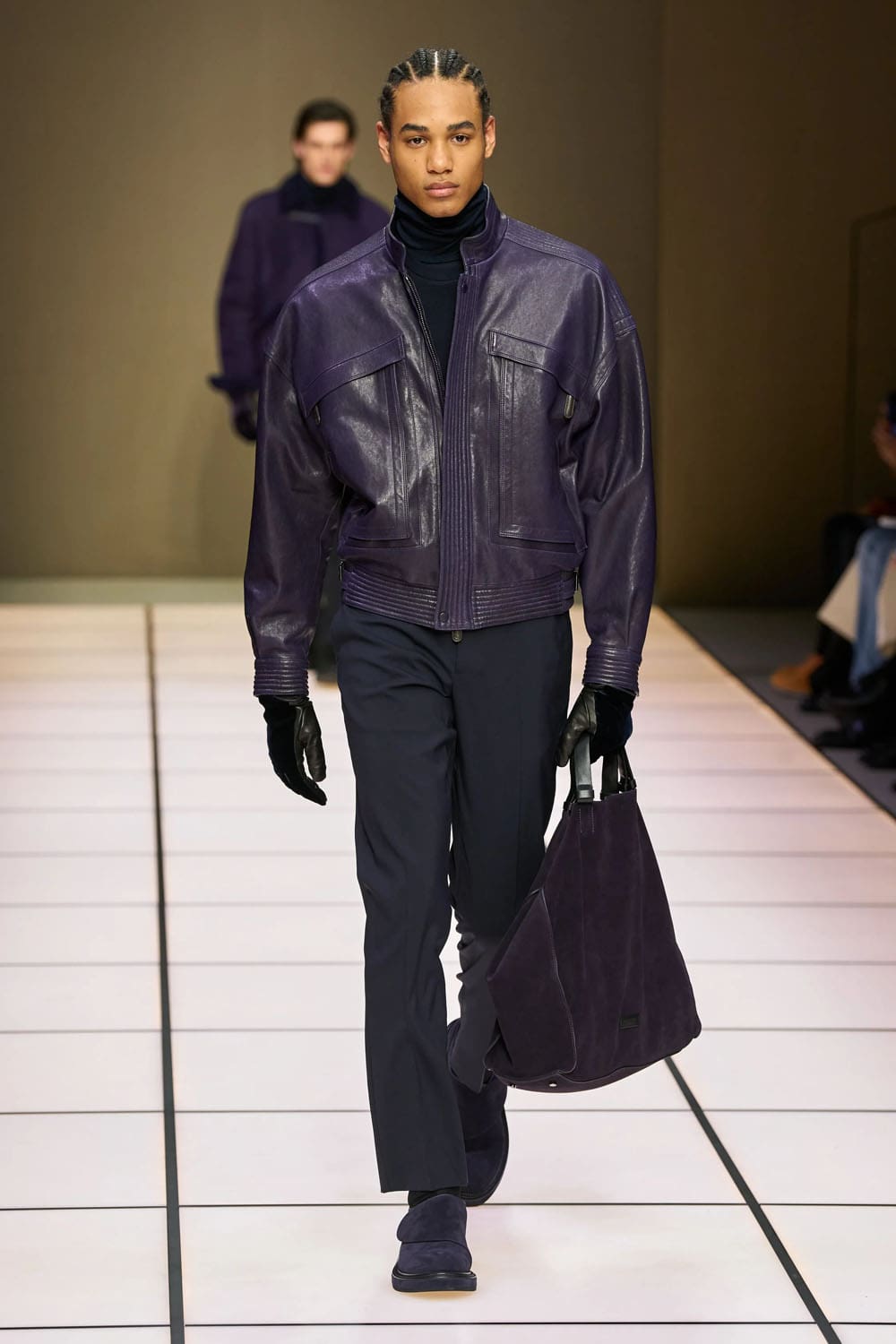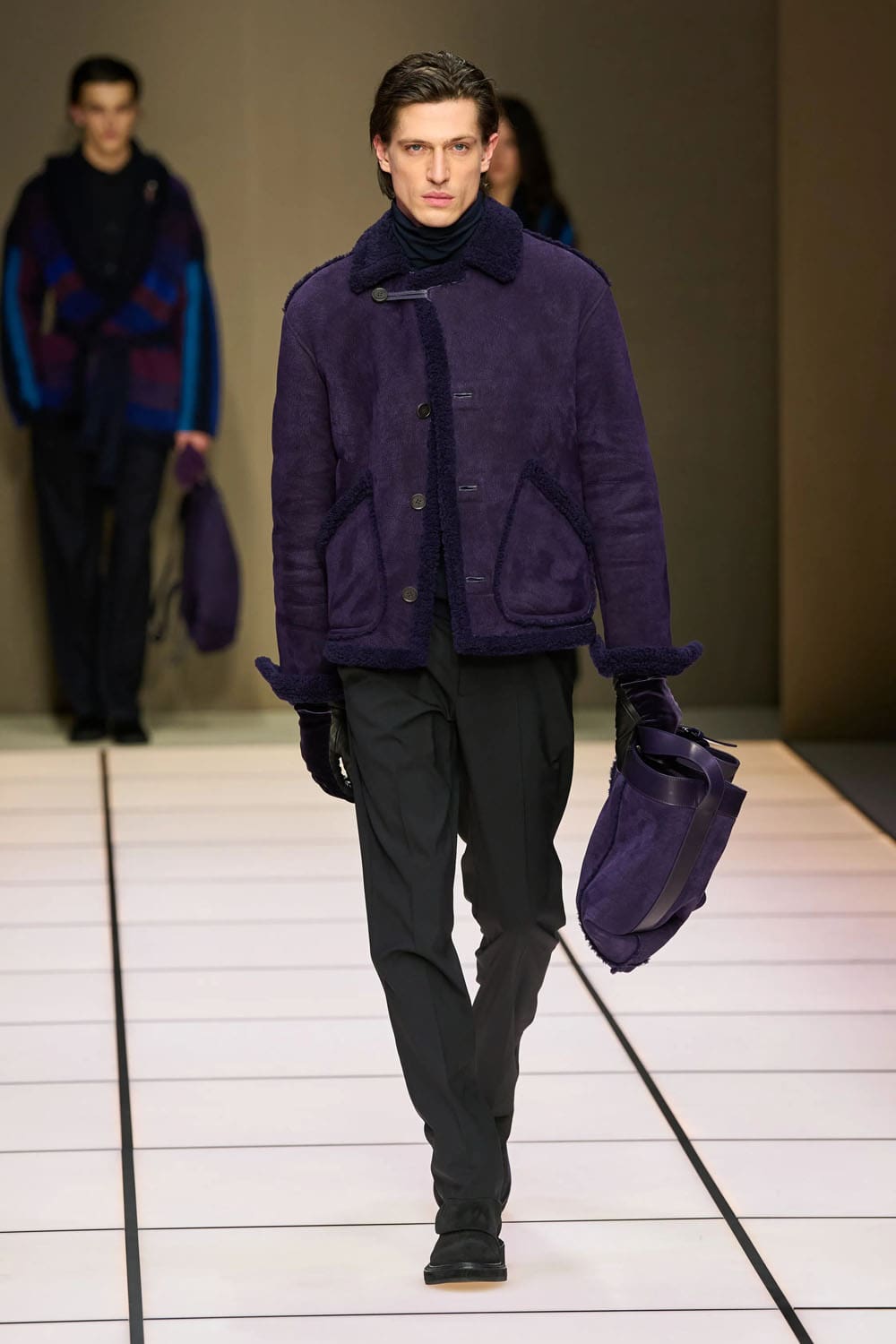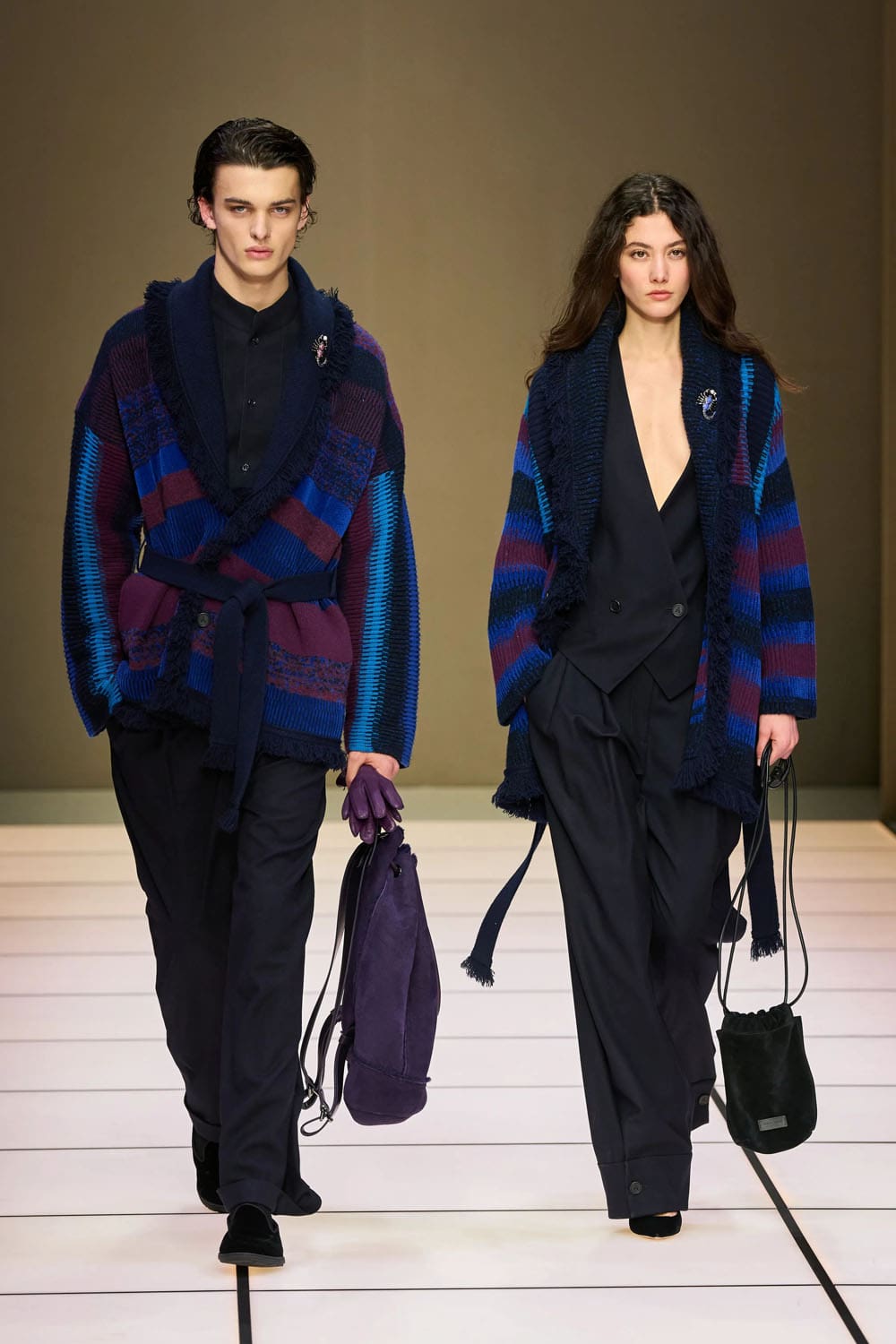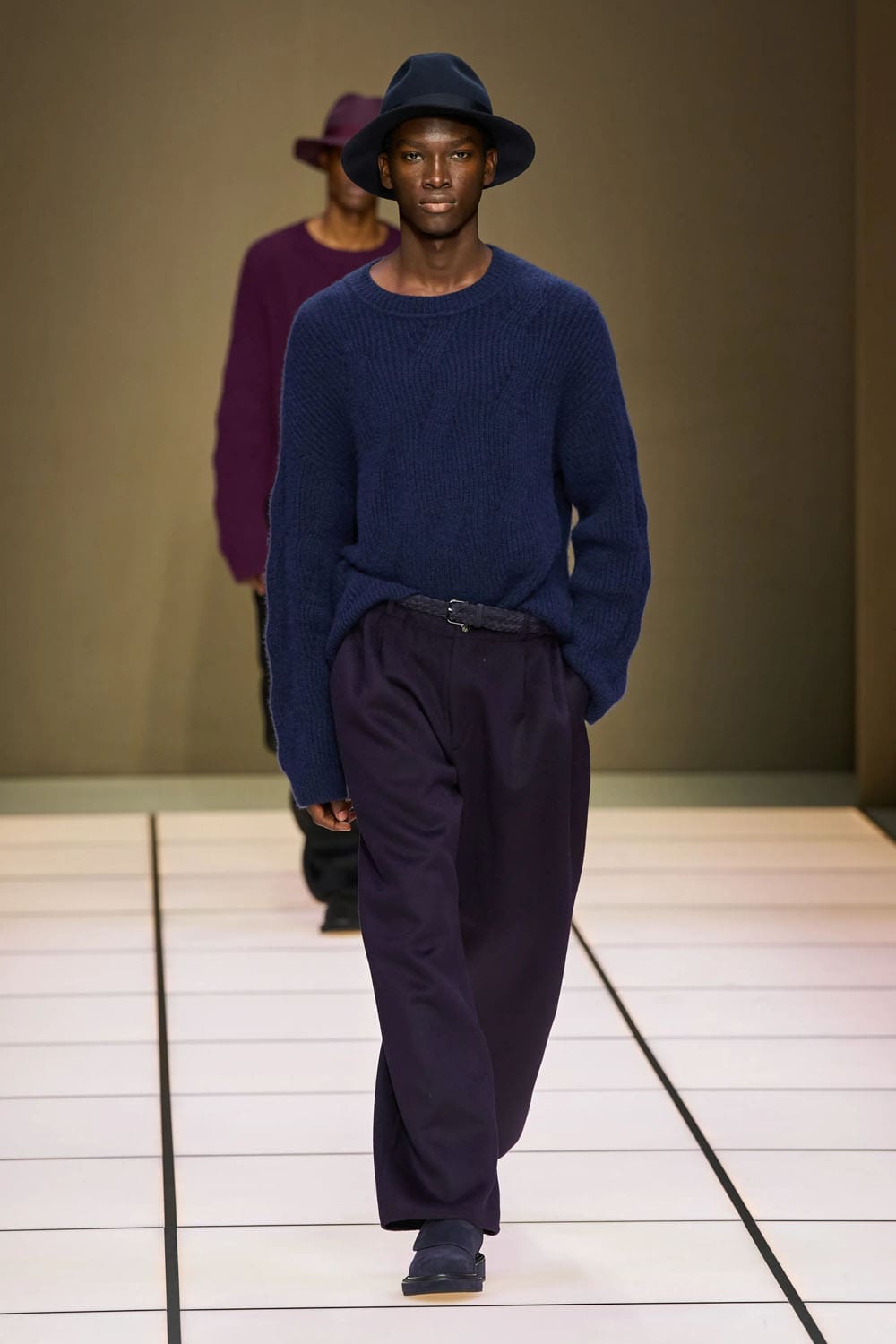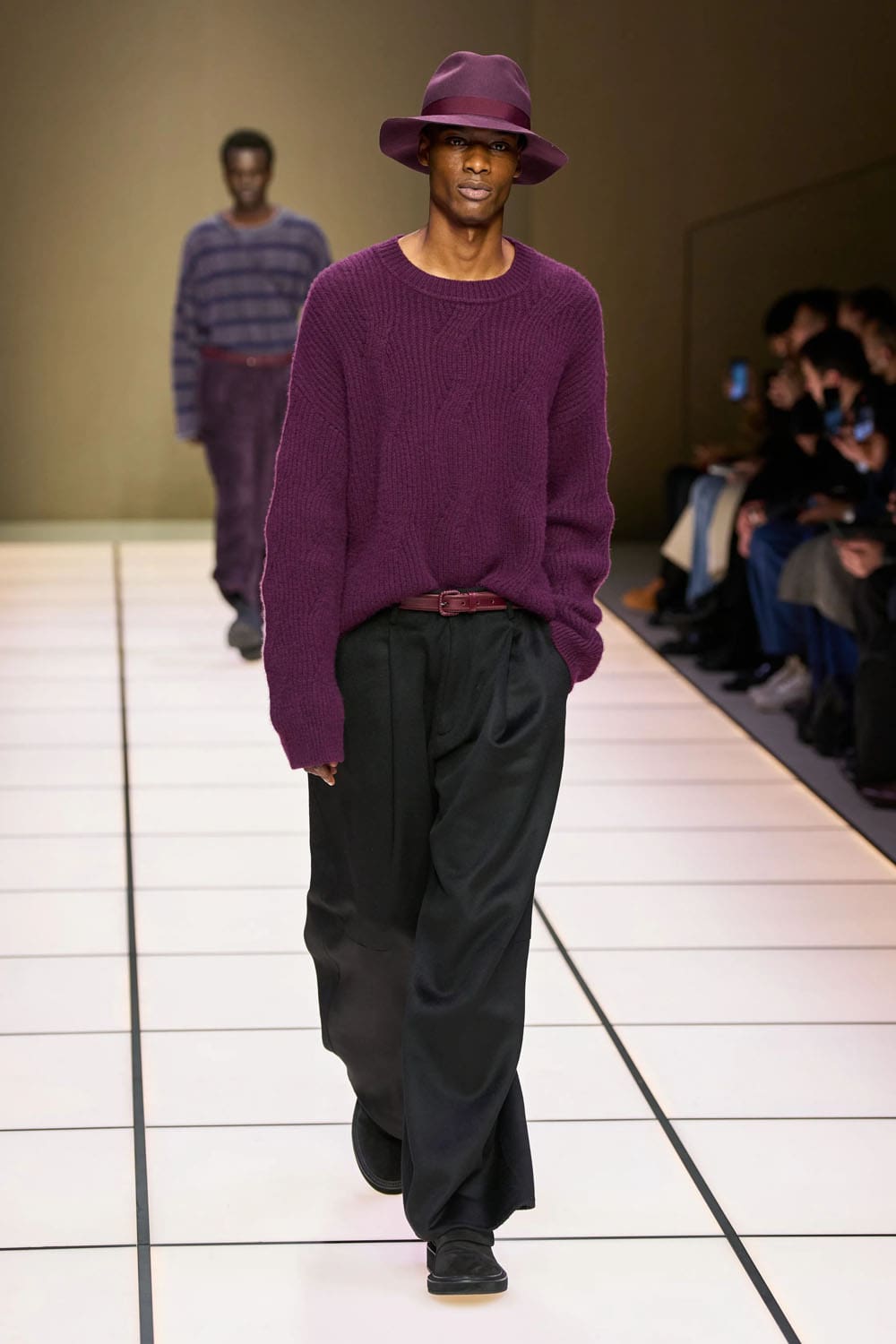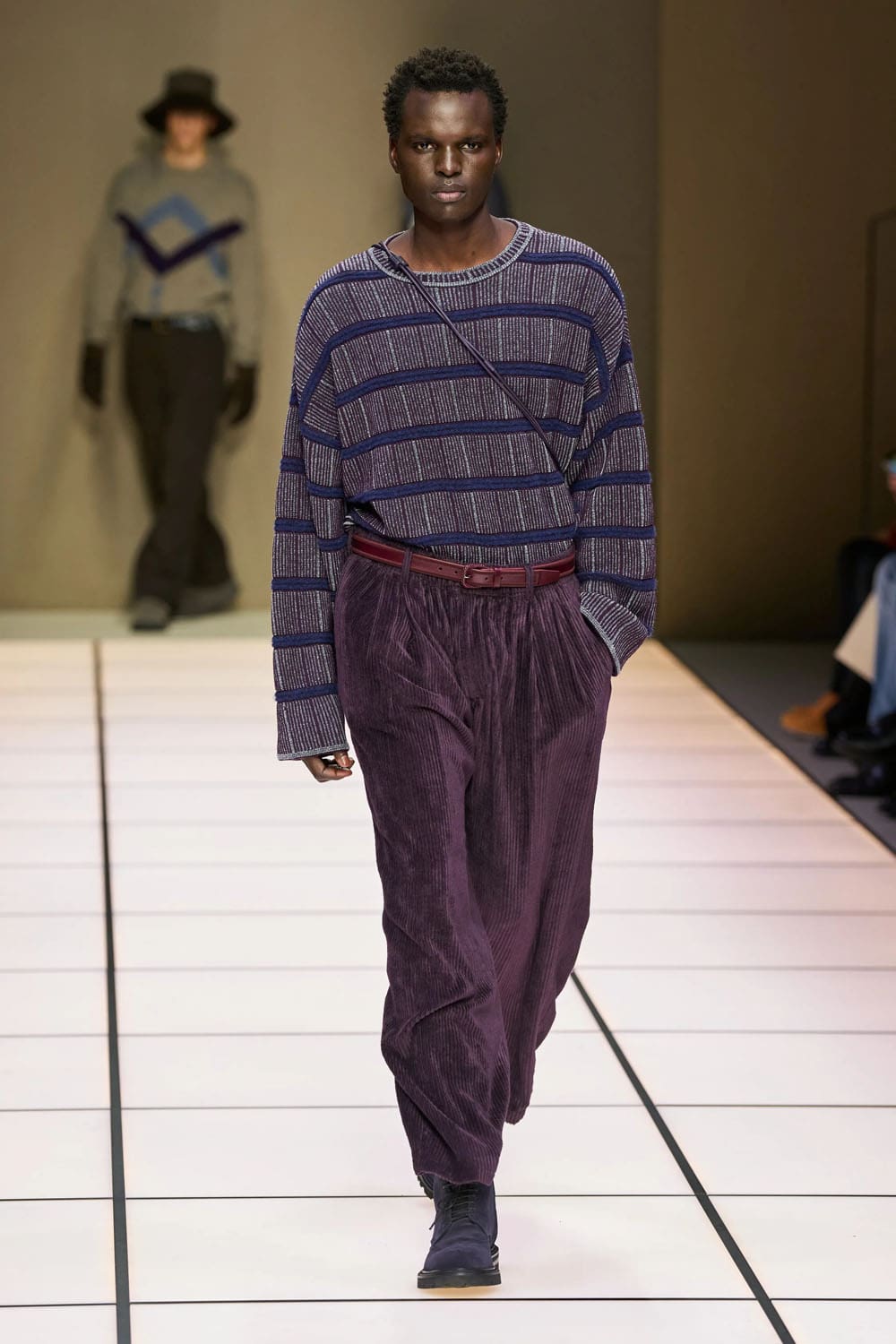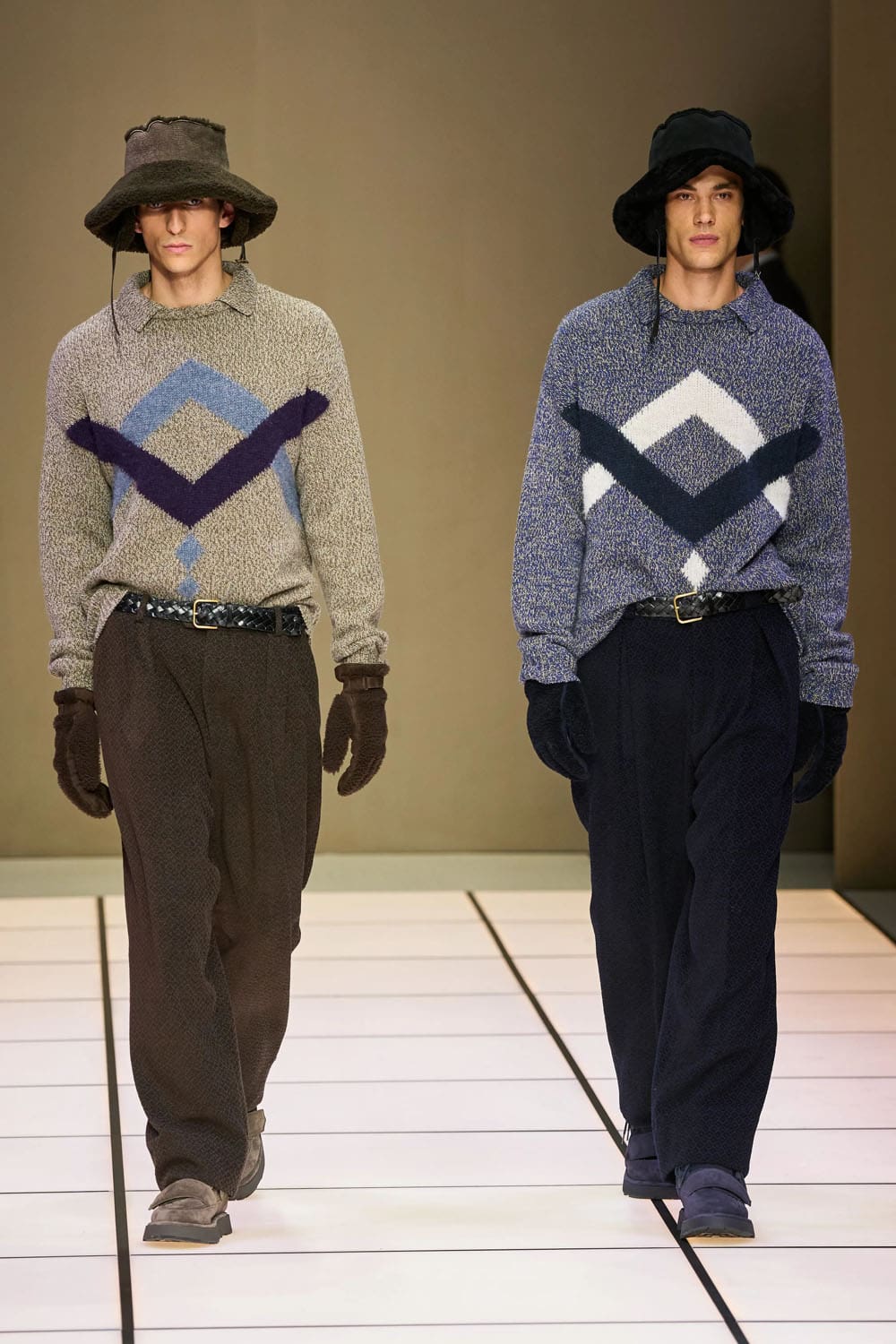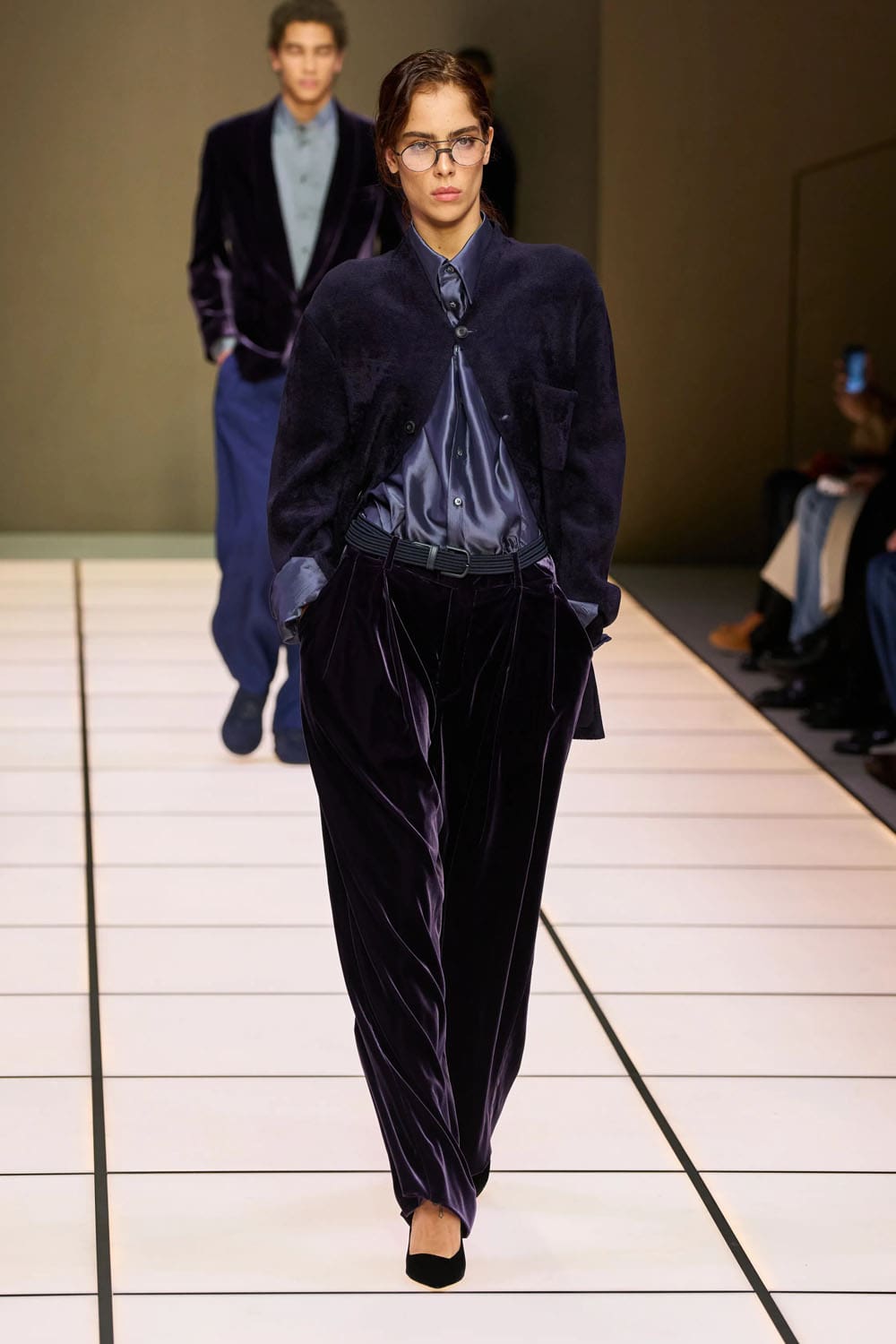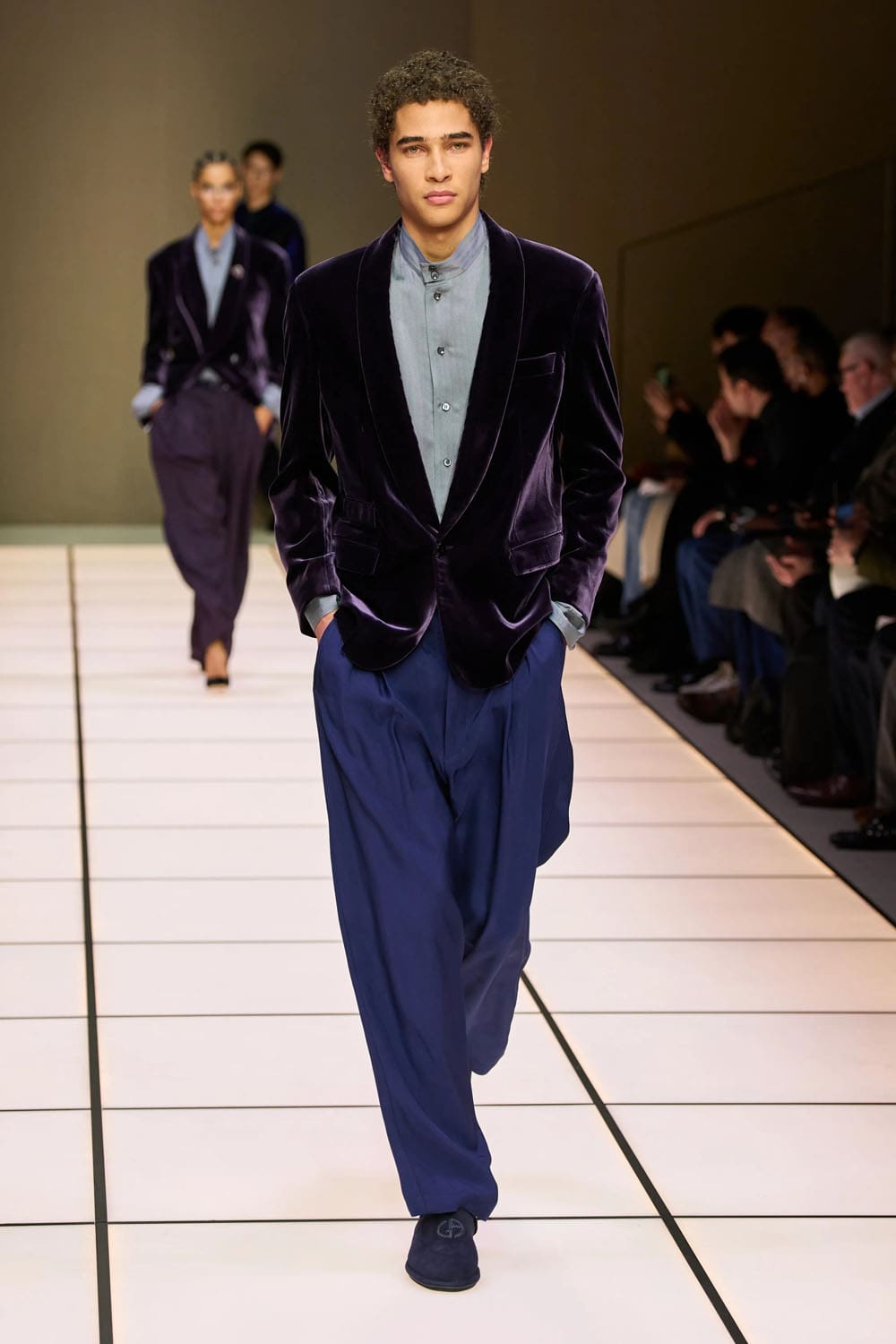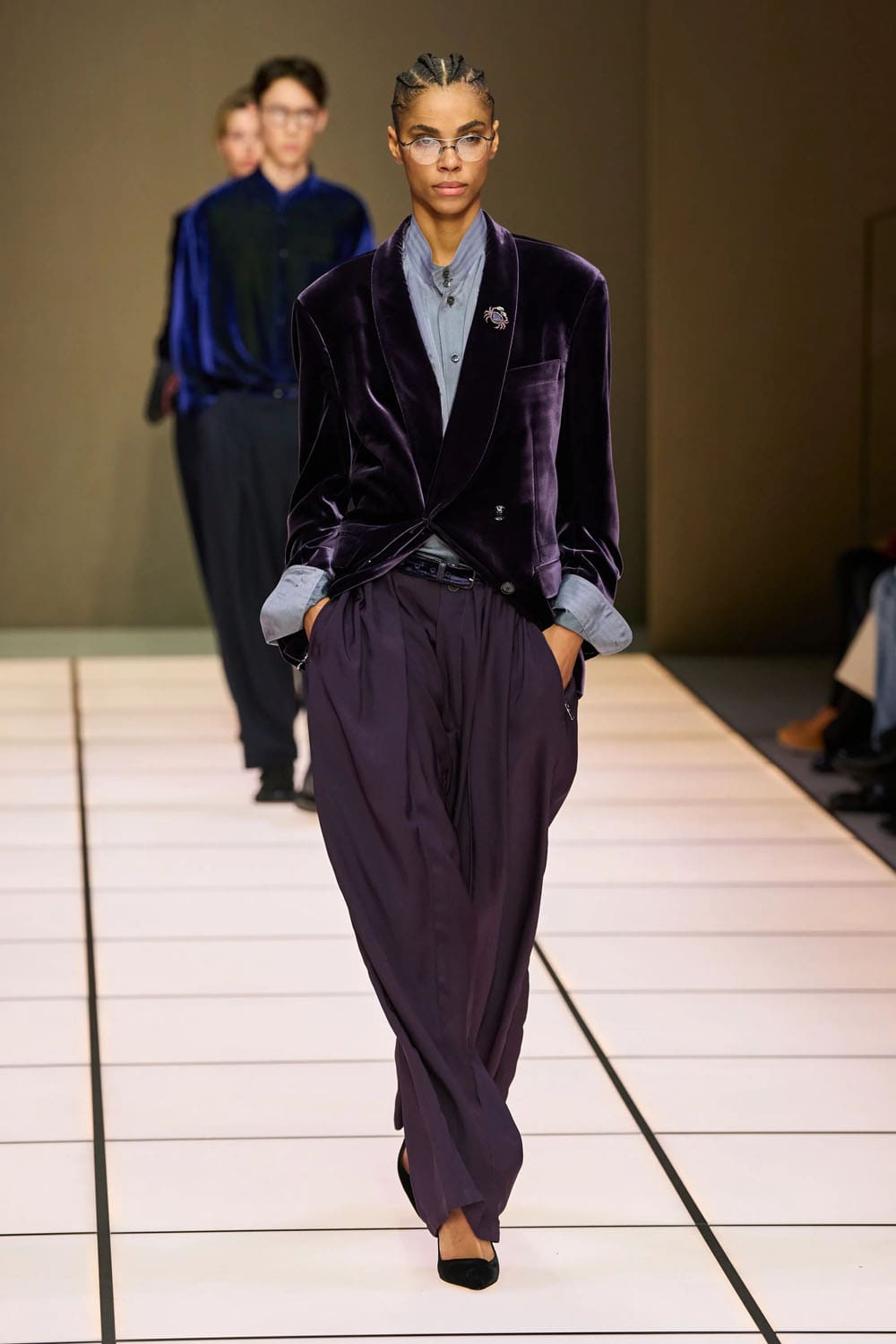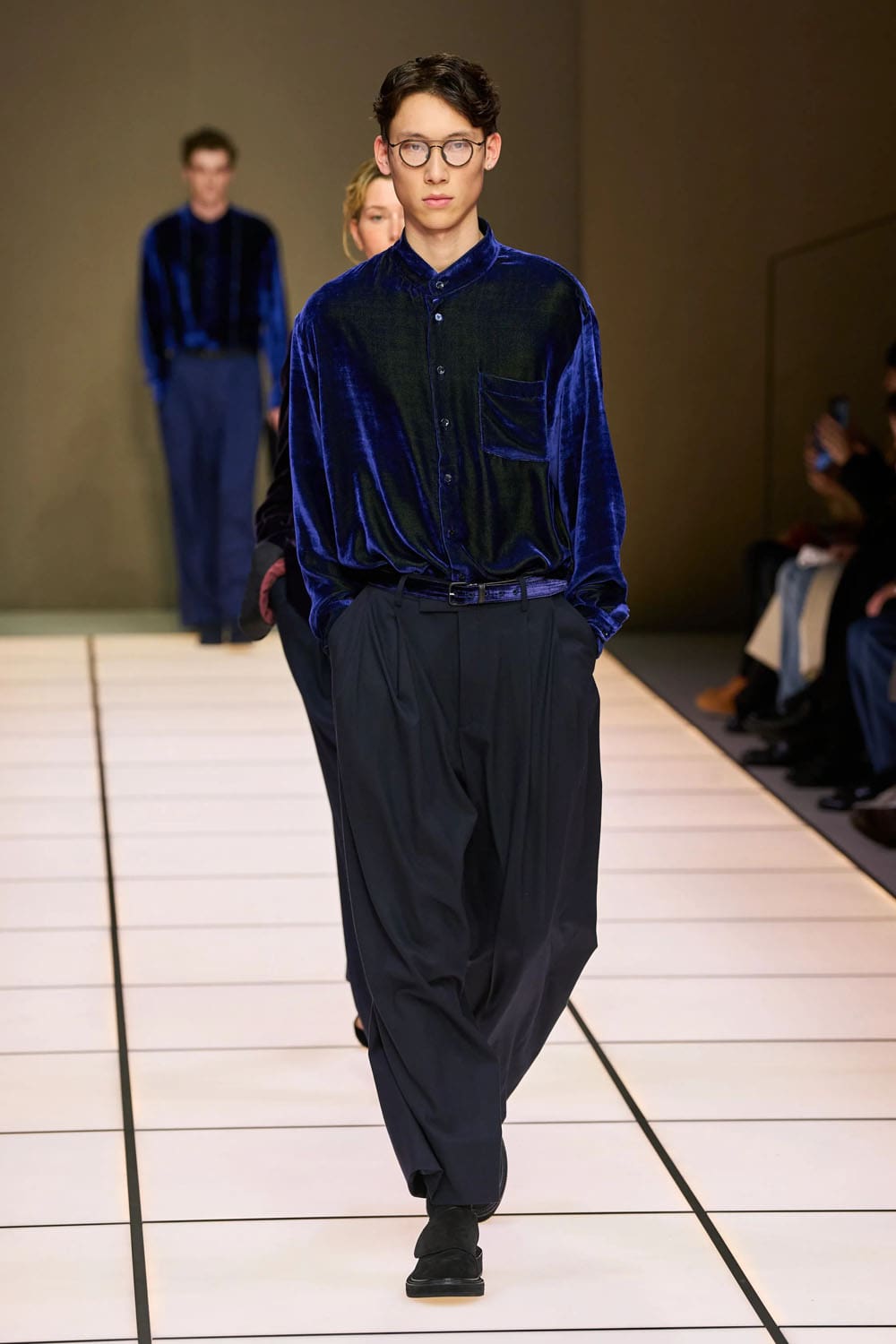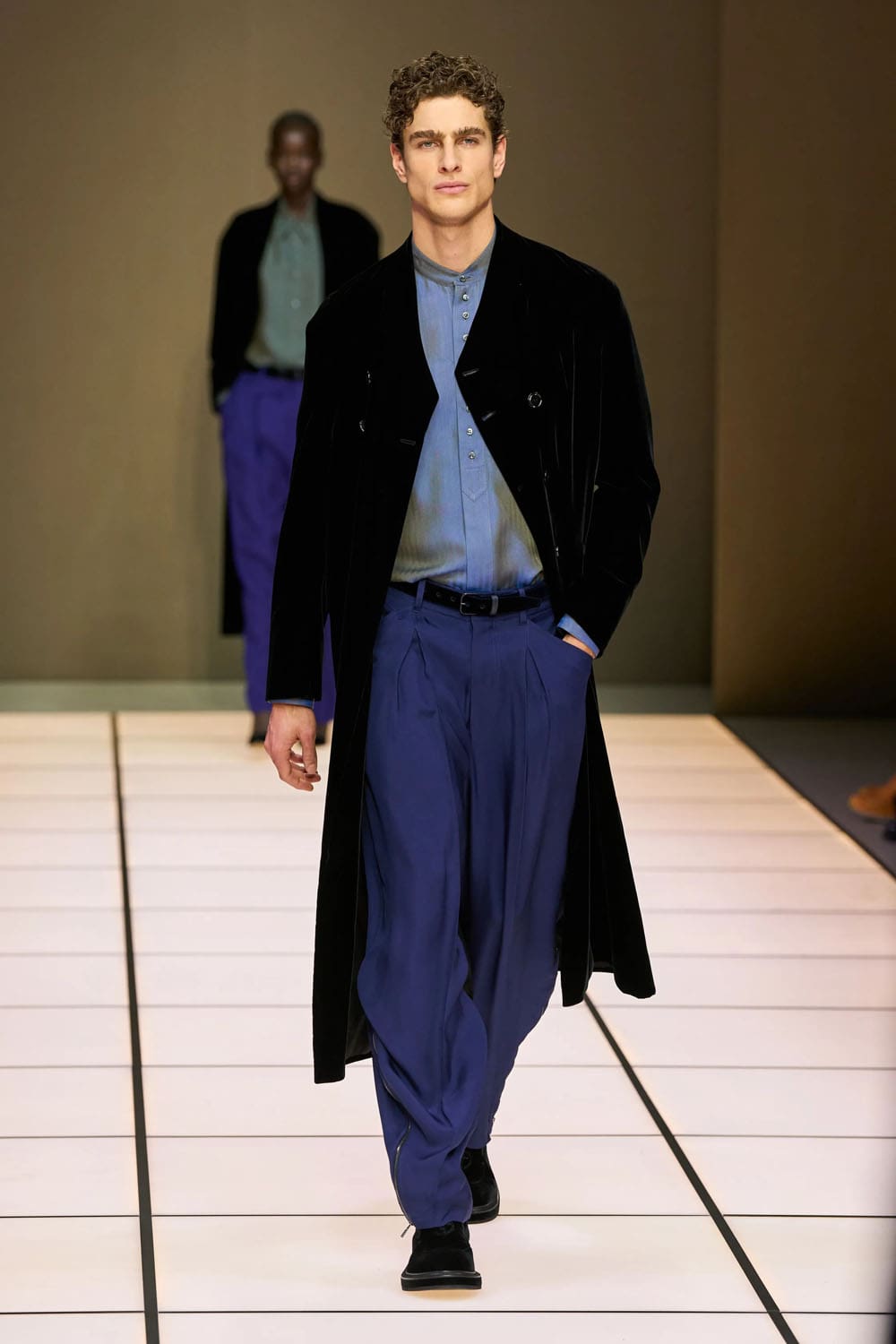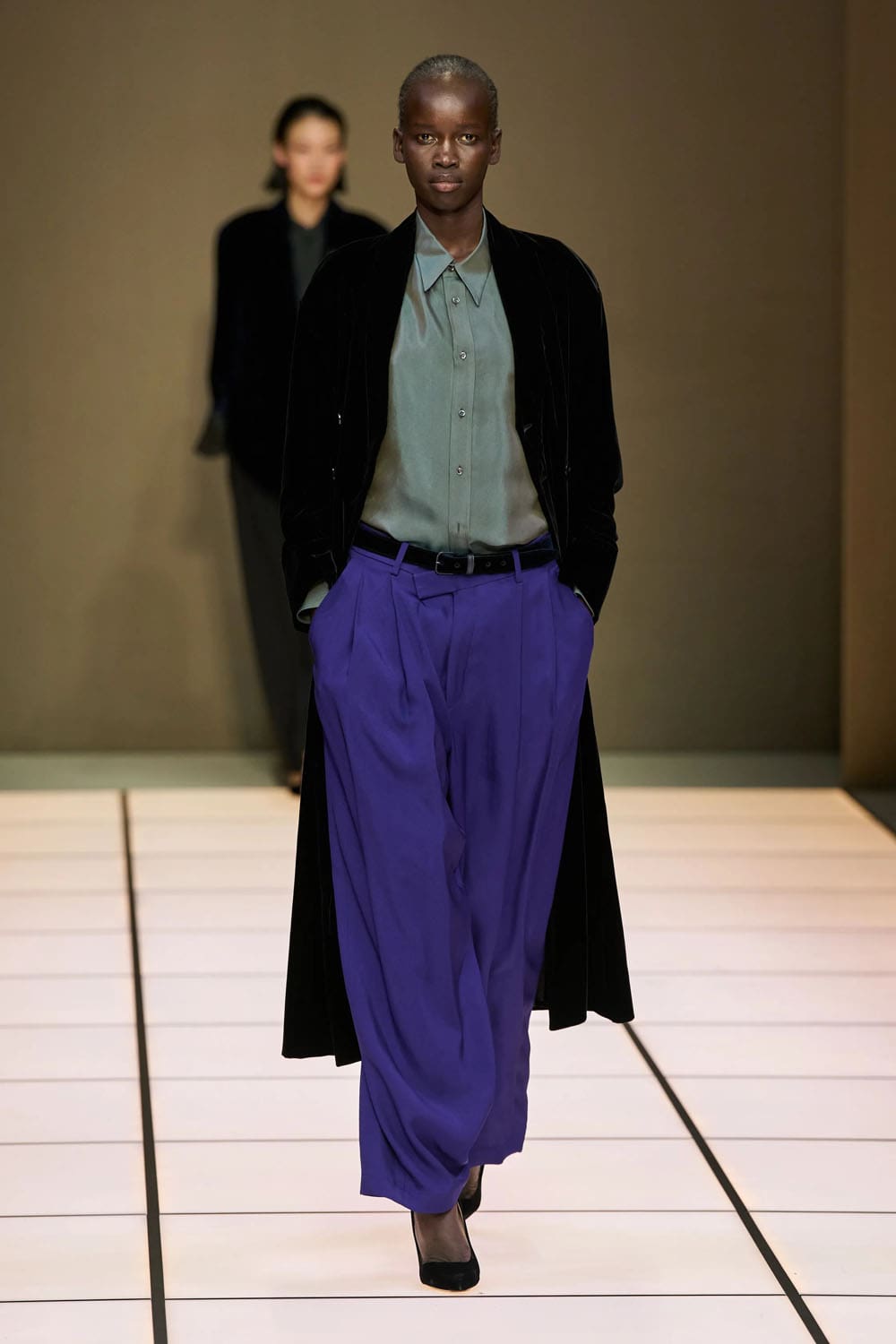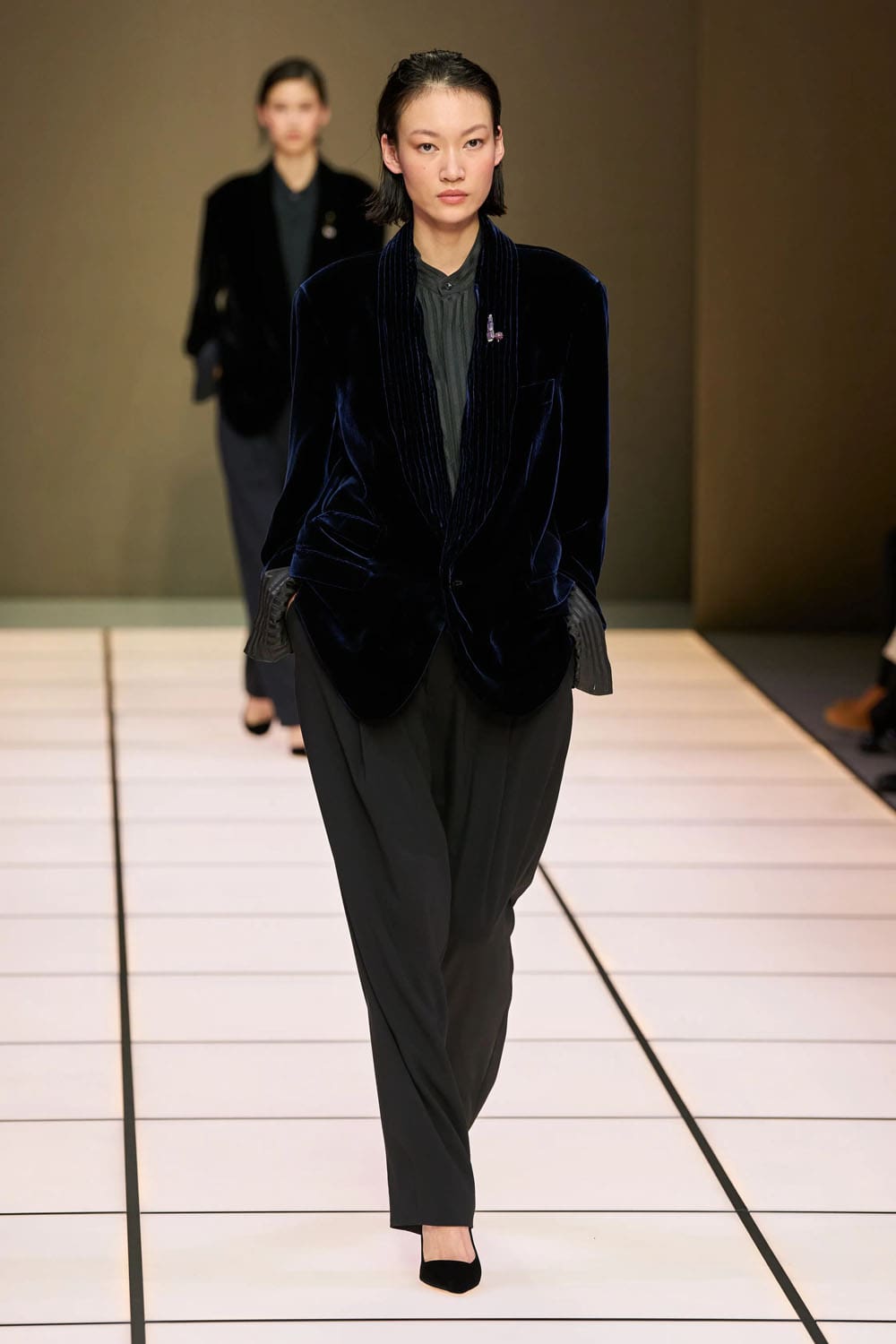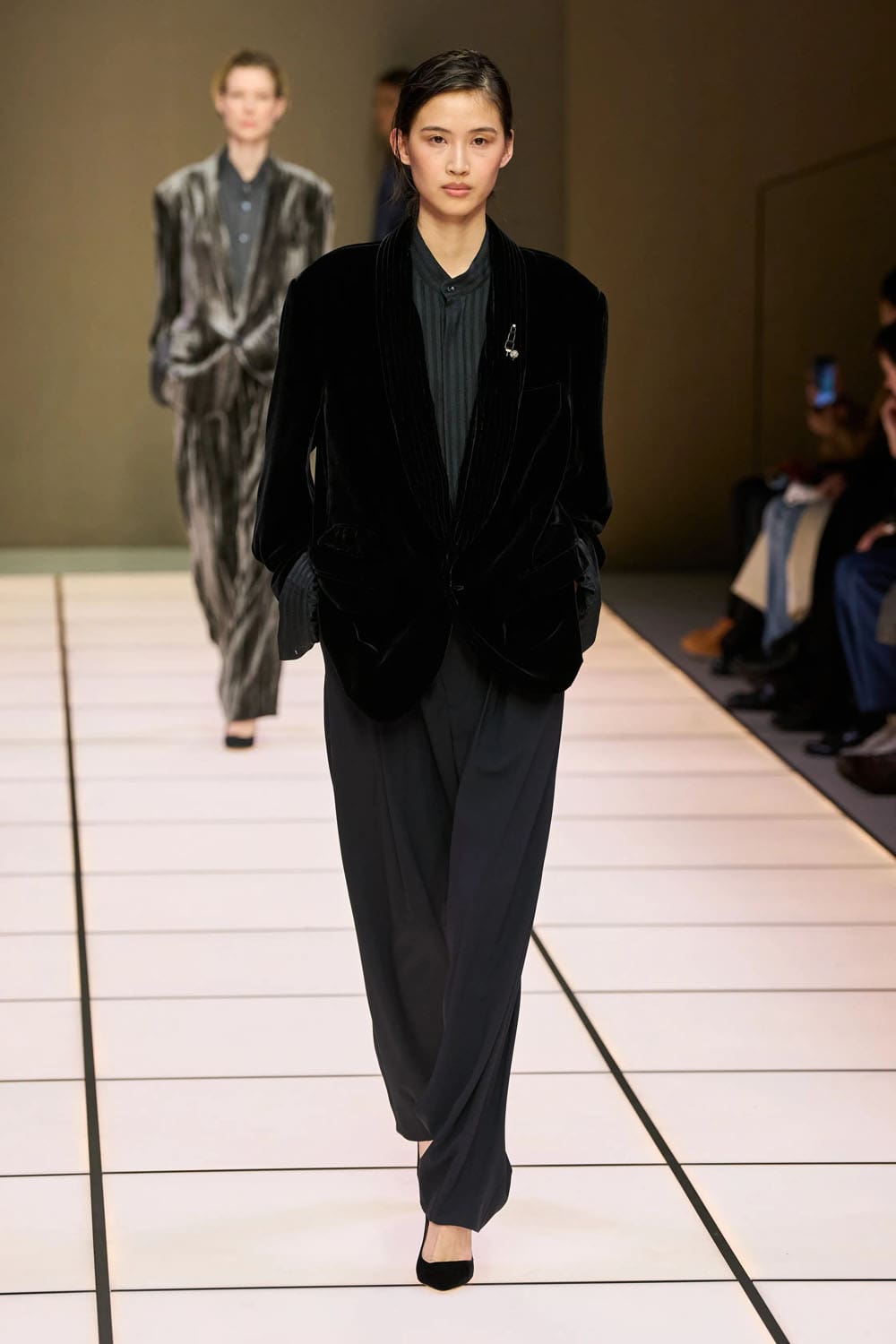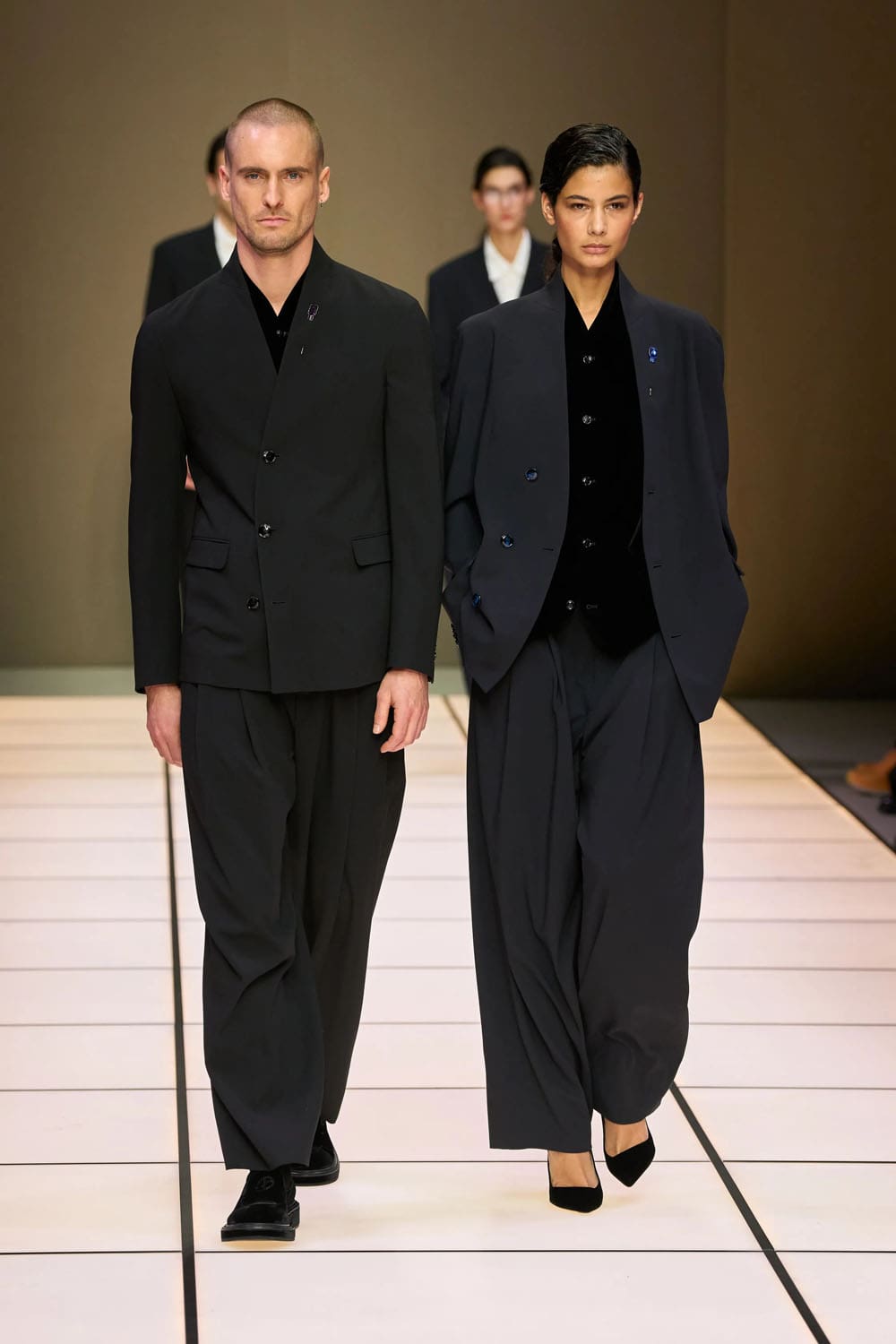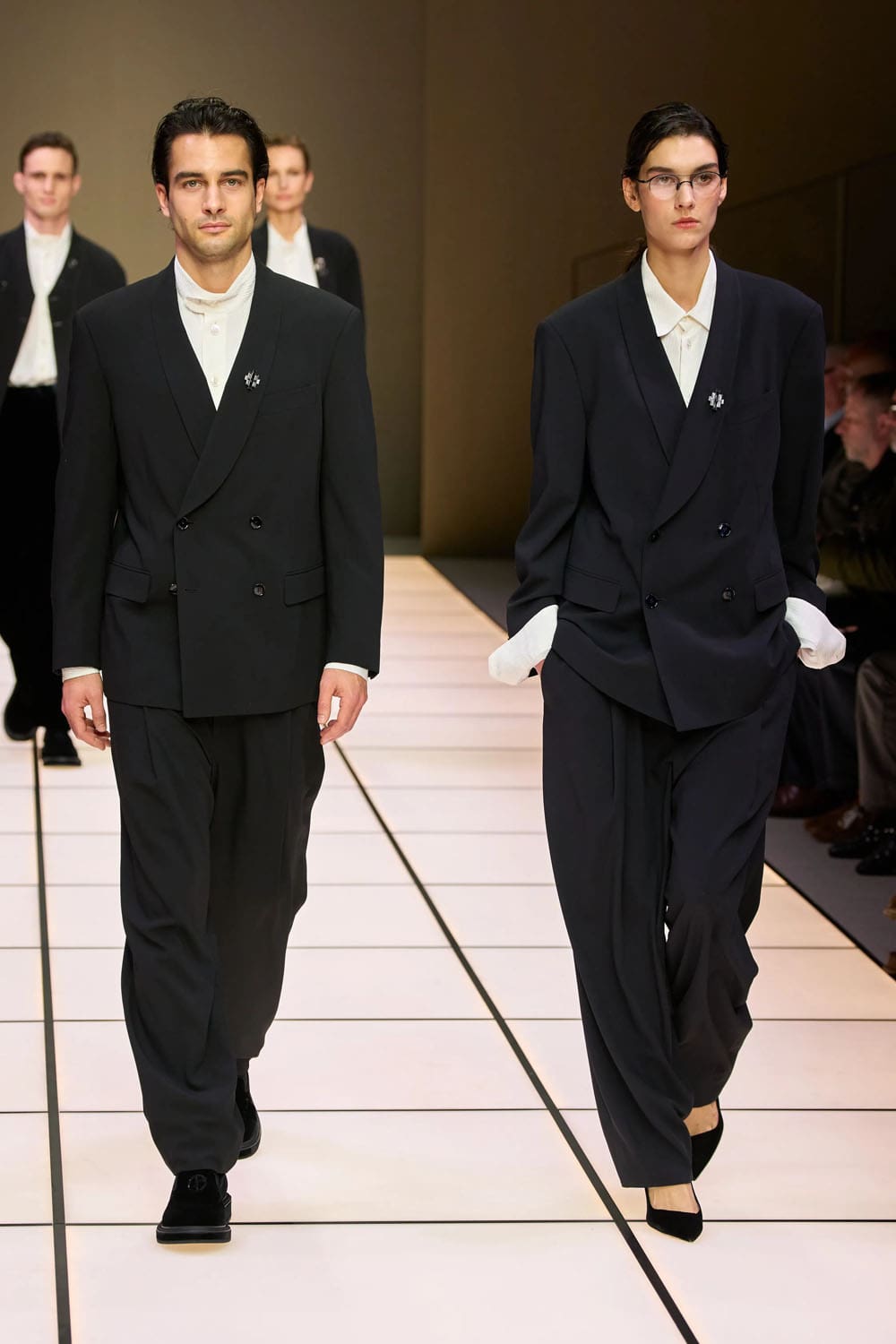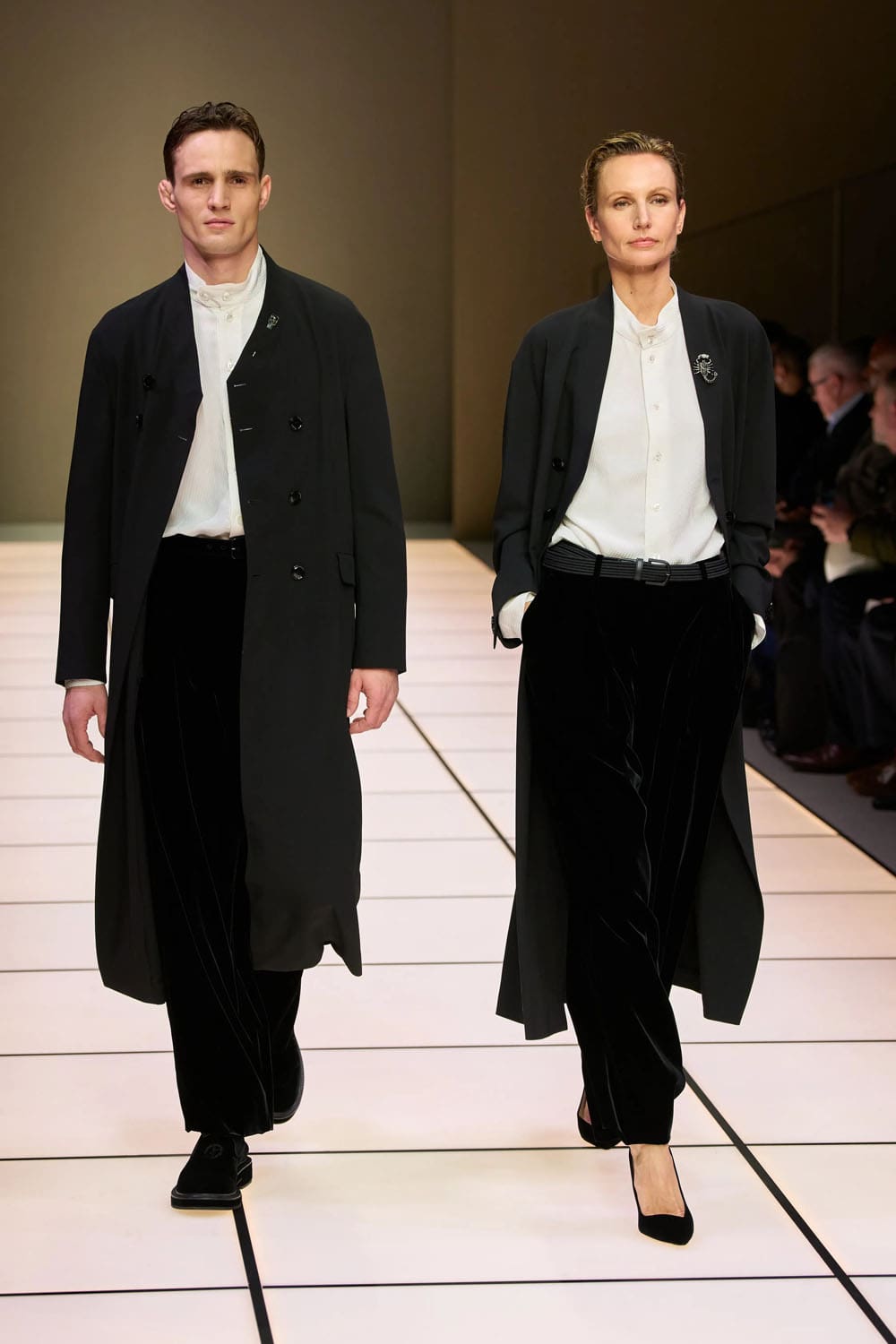
Giorgio Armani Fall Winter 2026-2027 Menswear “Leo Dell’Orco and the Discipline of Elegance”. Story by RUNWAY MAGAZINE. Photo Courtesy: Giorgio Armani.
A legacy does not erupt. It is not reinvented, rebranded, or remixed. It is cultivated — quietly, rigorously, by those who understand that true power in fashion is measured not in rupture, but in refinement.
The Giorgio Armani Fall-Winter 2026–2027 Menswear collection, Cangiante, was presented at Via Borgonuovo 21 in Milan — not a venue, but the epicenter of the Armani universe. A theatre built into Giorgio Armani’s own home, lined with decades of memory and discipline. And this time, for the first time, without Giorgio Armani himself.
Leo Dell’Orco — who met Armani in 1975 thanks to a wandering dog in the gardens of Piazzale Libia — took the helm. His journey from that chance meeting to becoming the head of men’s collections for both Emporio and Giorgio Armani is not a footnote. It is the architecture of this very collection. It was Dell’Orco who quietly engineered the evolution of Armani menswear for nearly five decades. Now, he becomes its face.
But he does not take center stage. The clothes do.
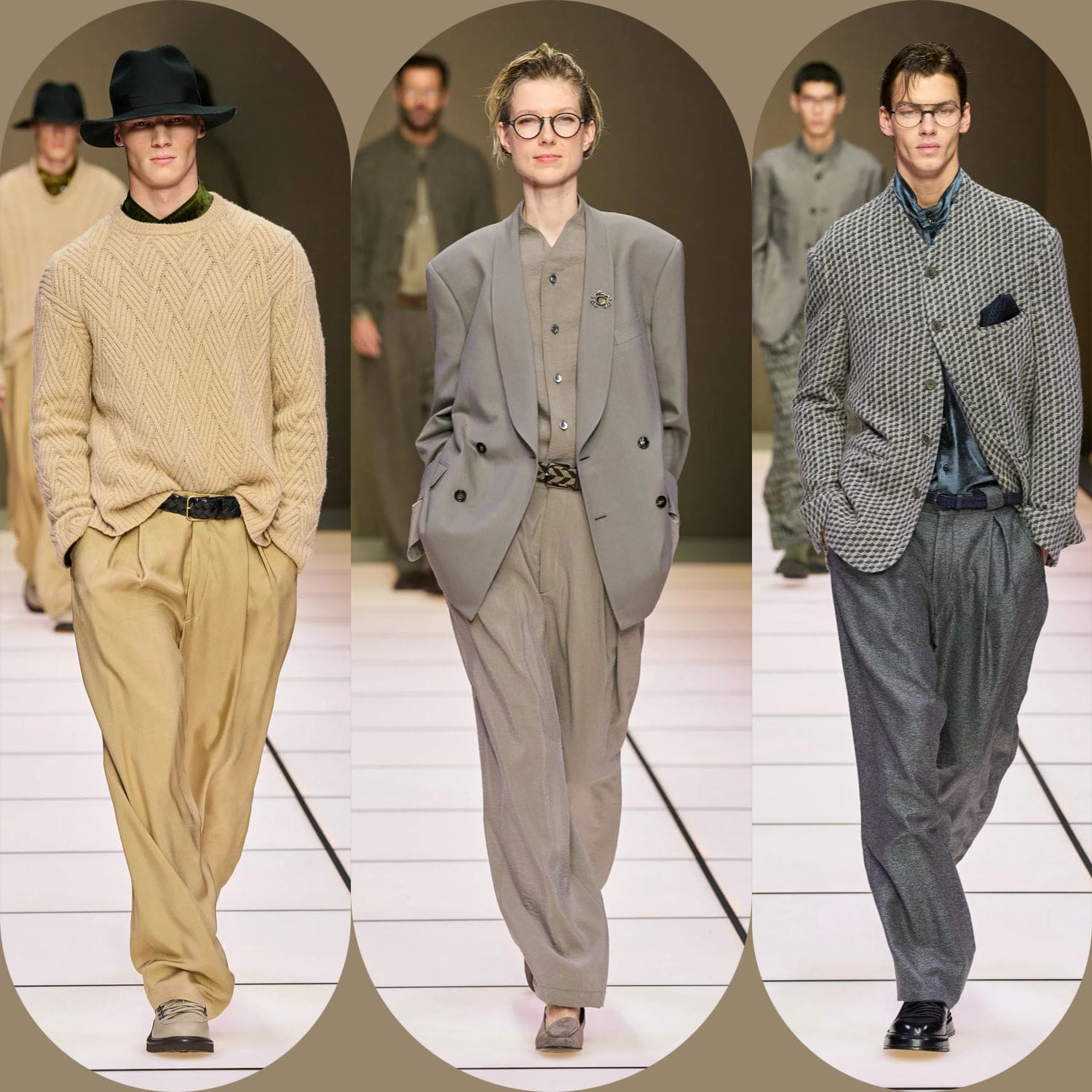
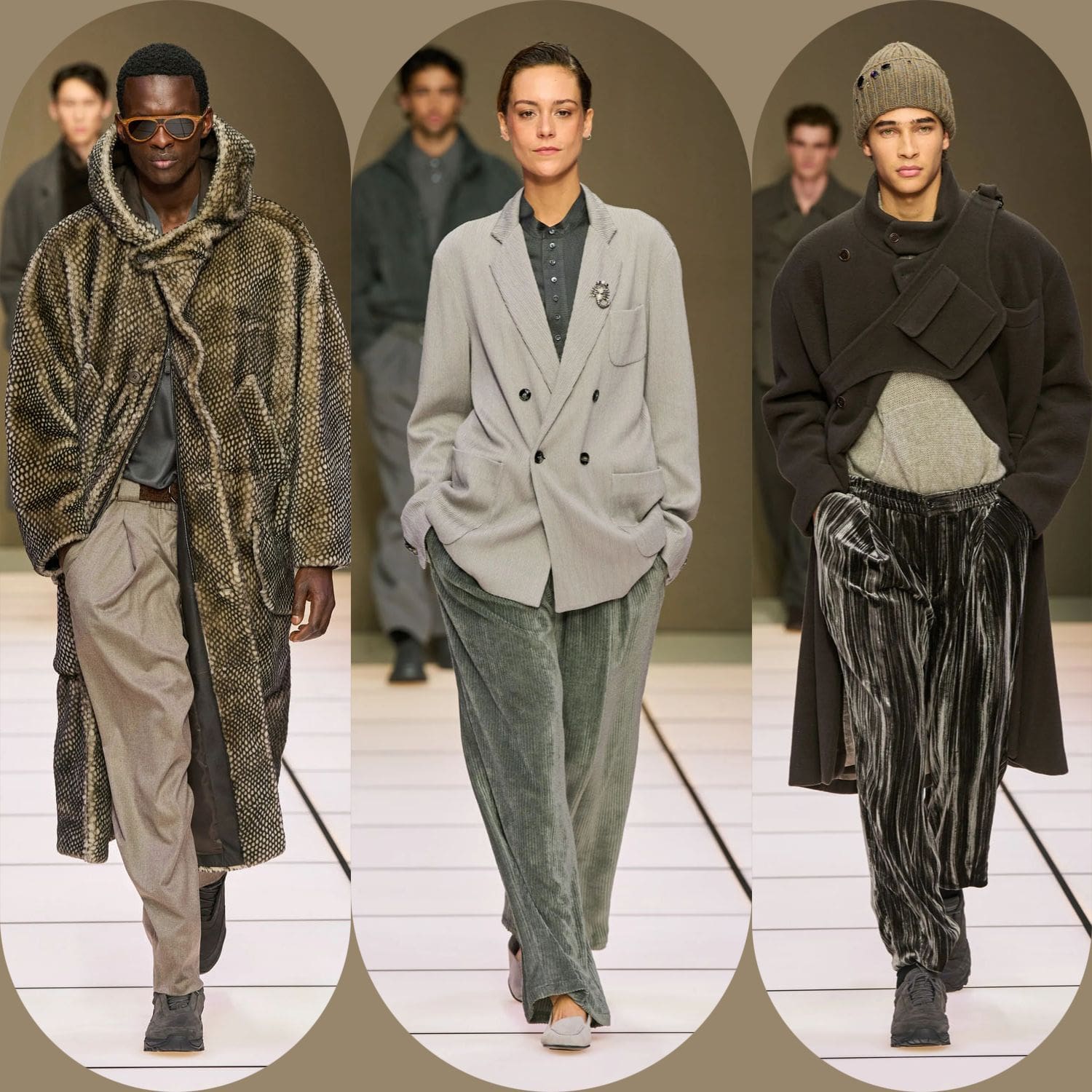
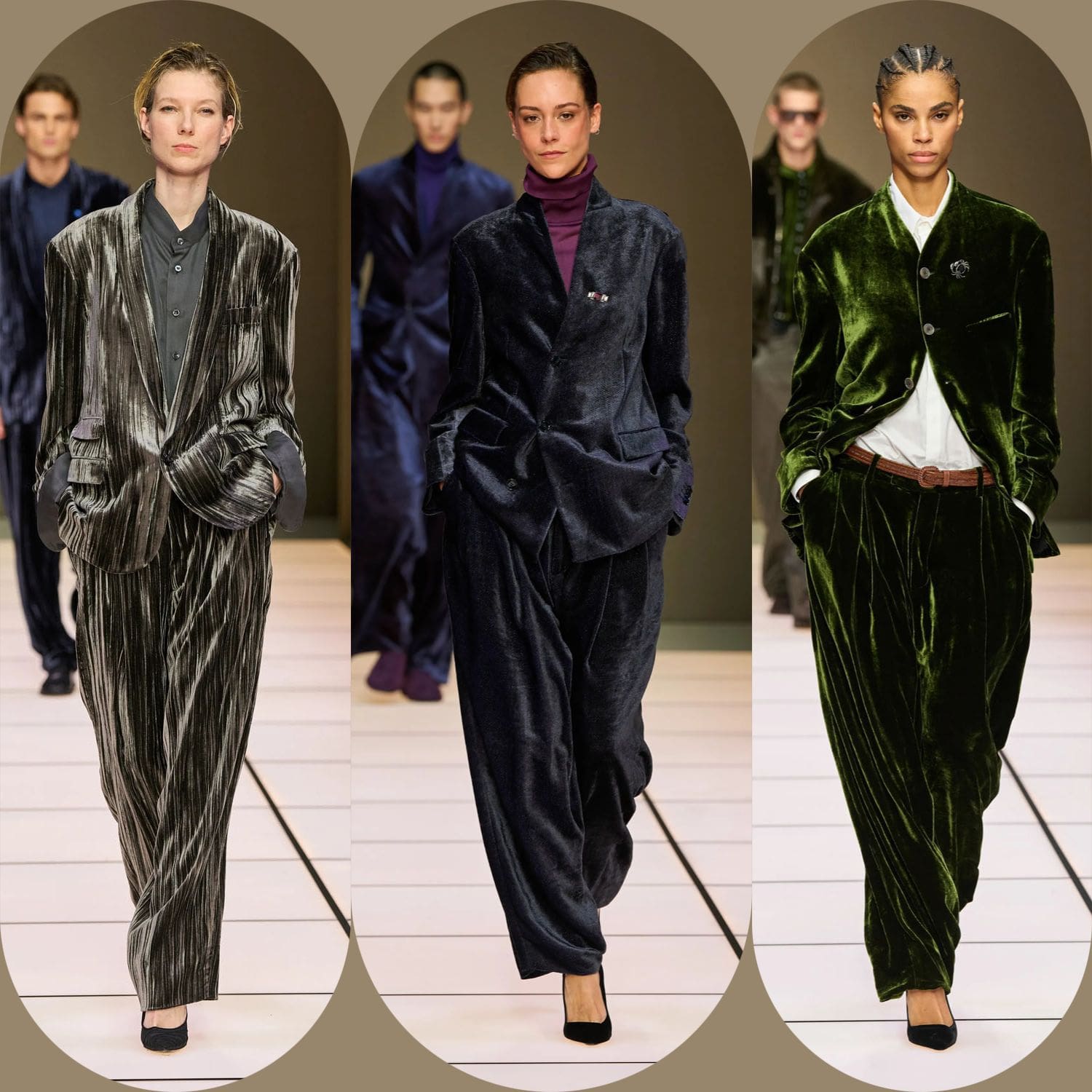
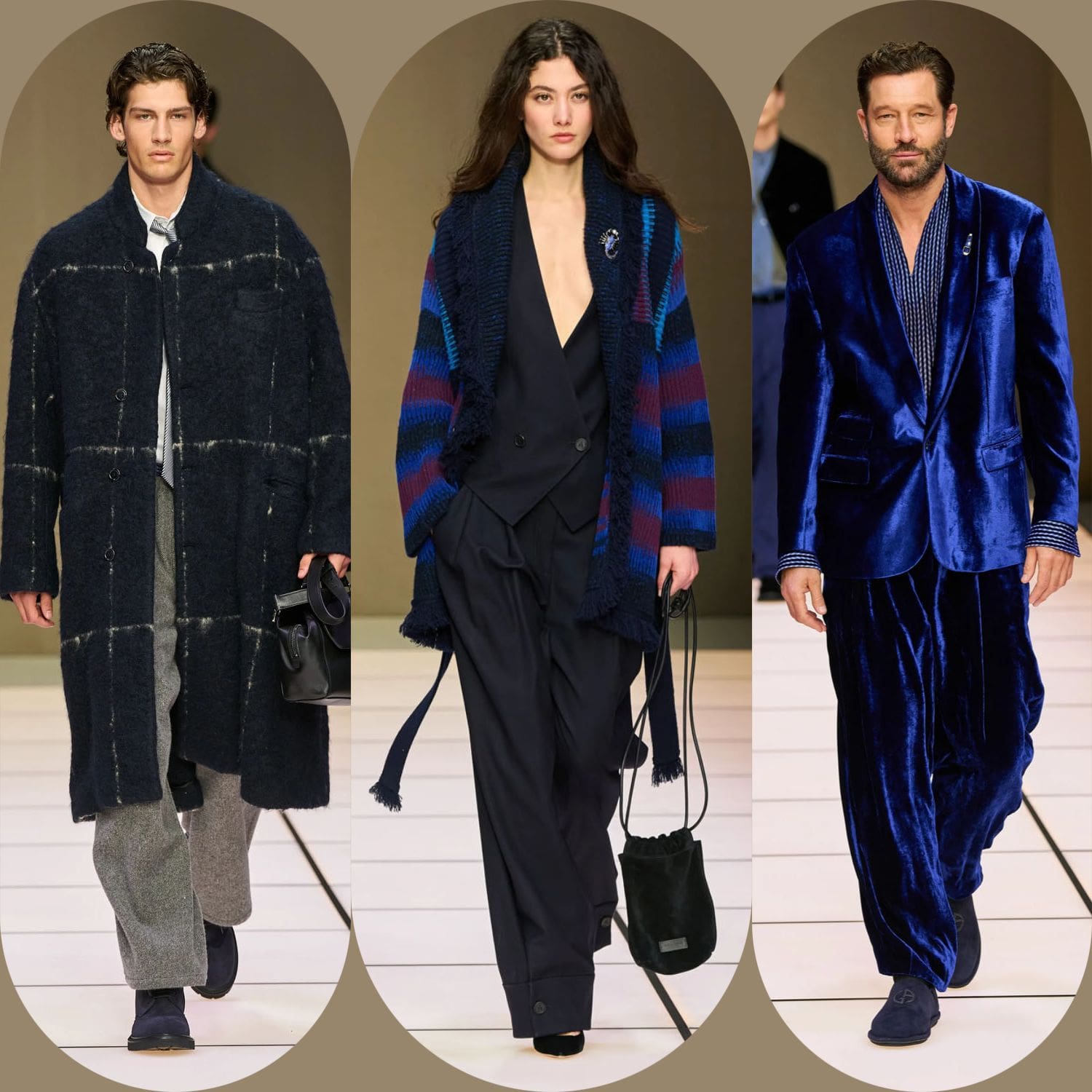
The Tailoring of Memory
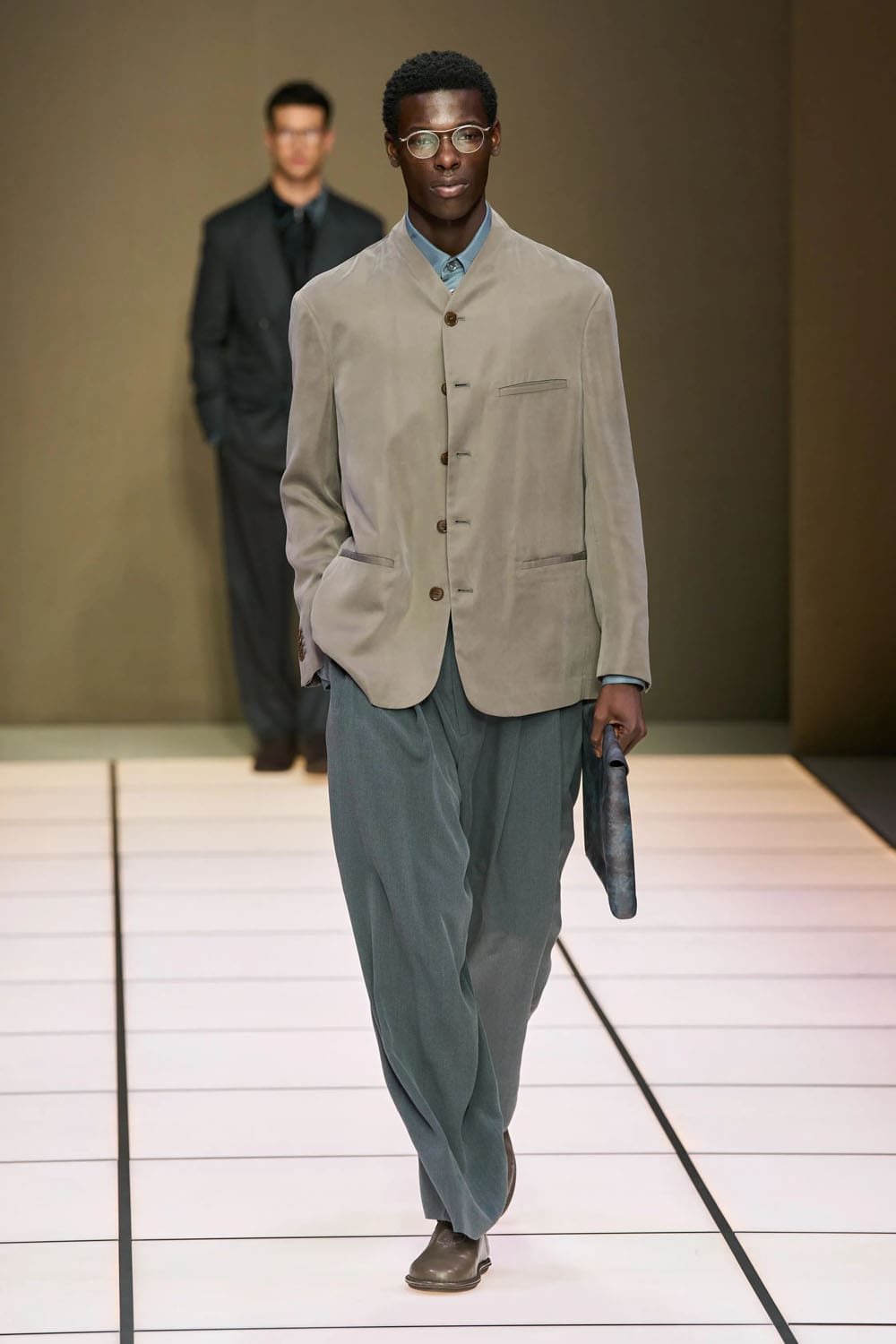
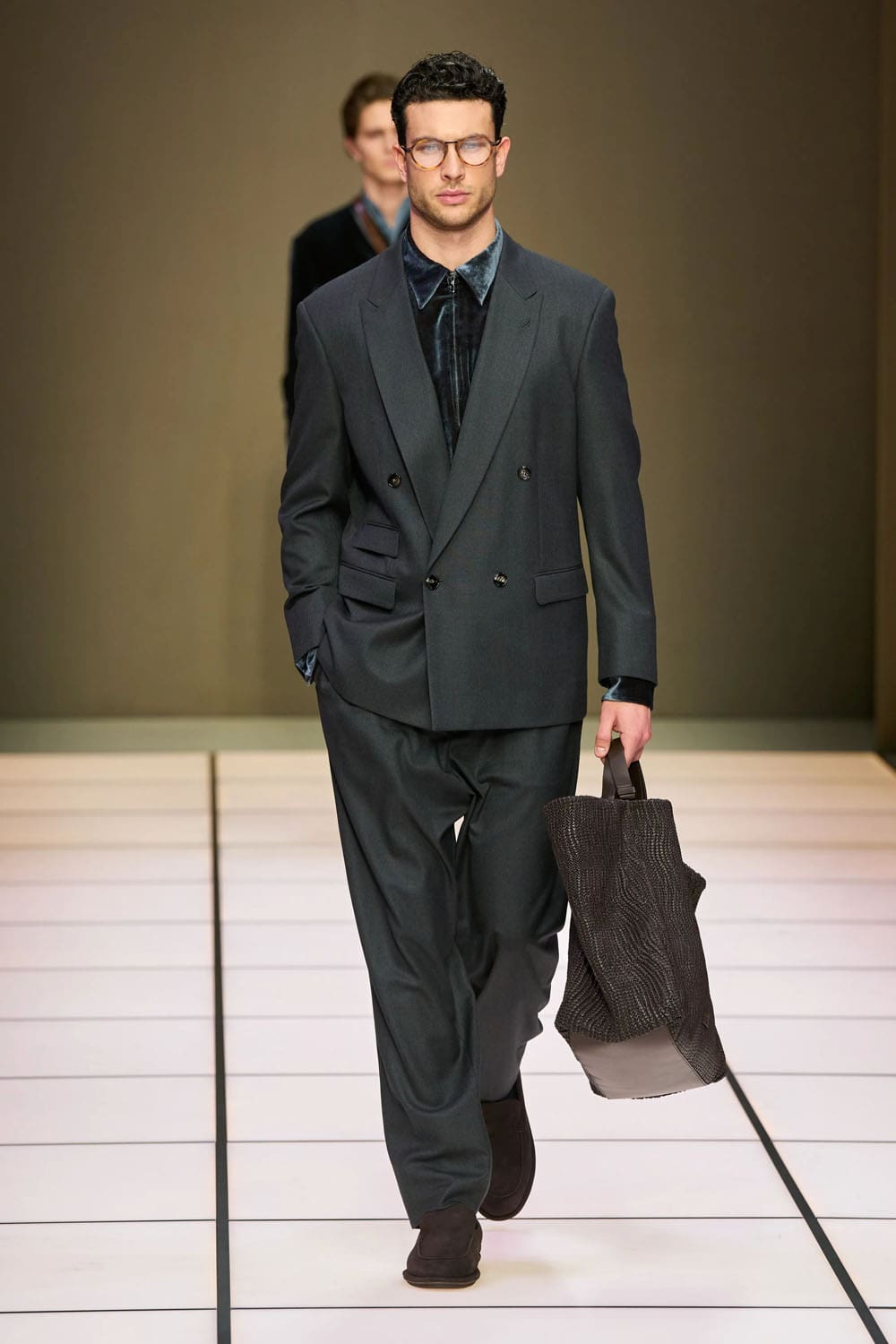
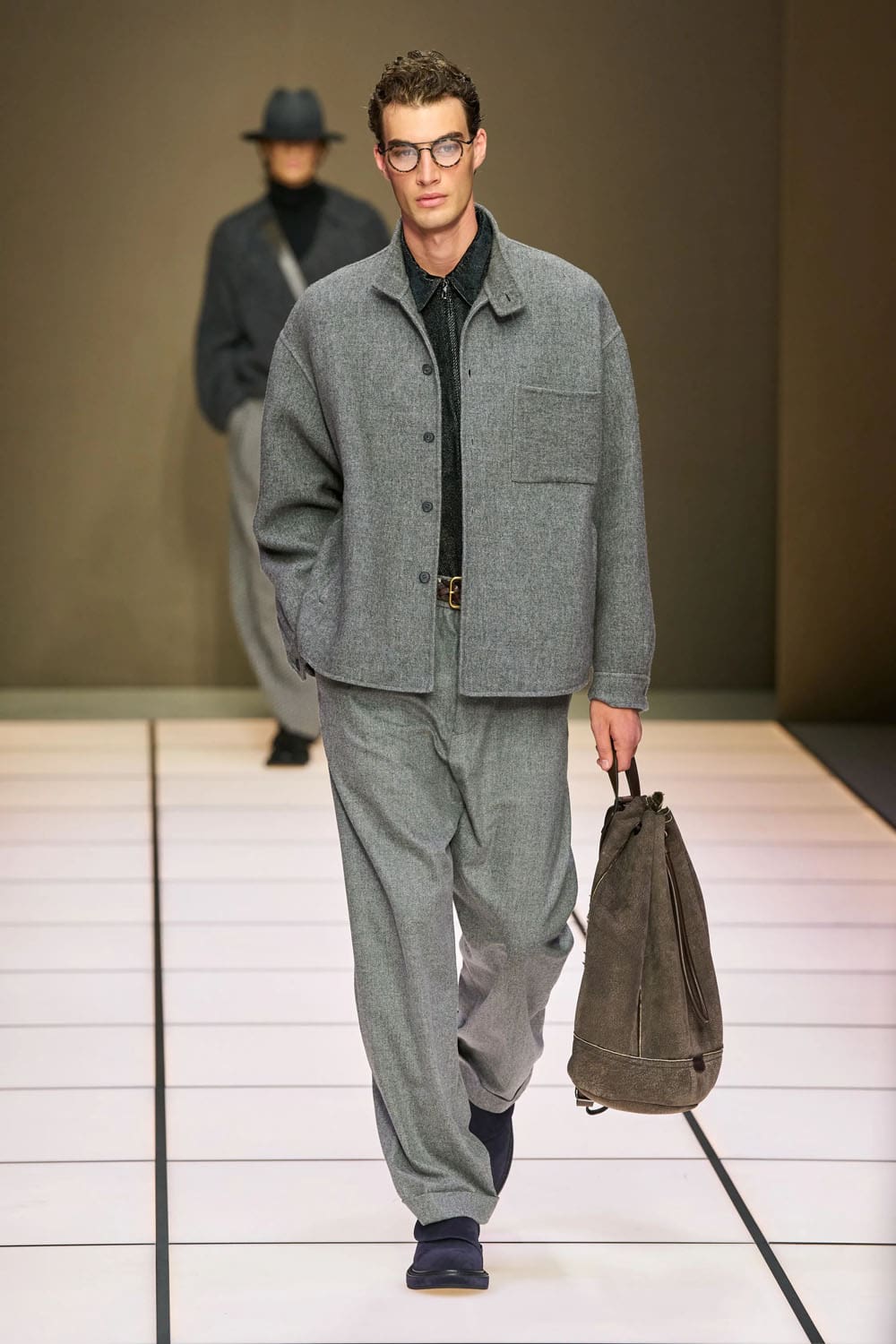
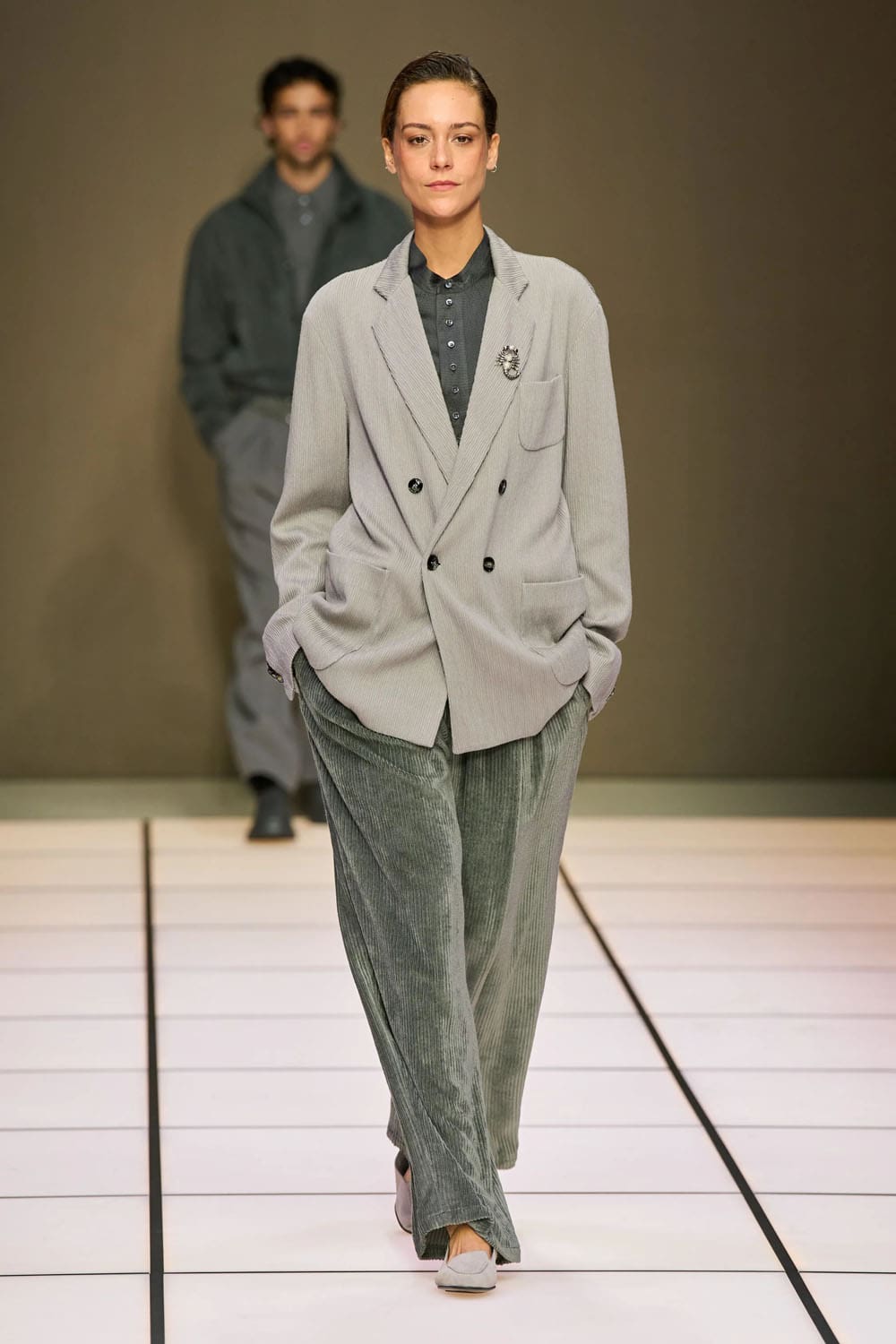
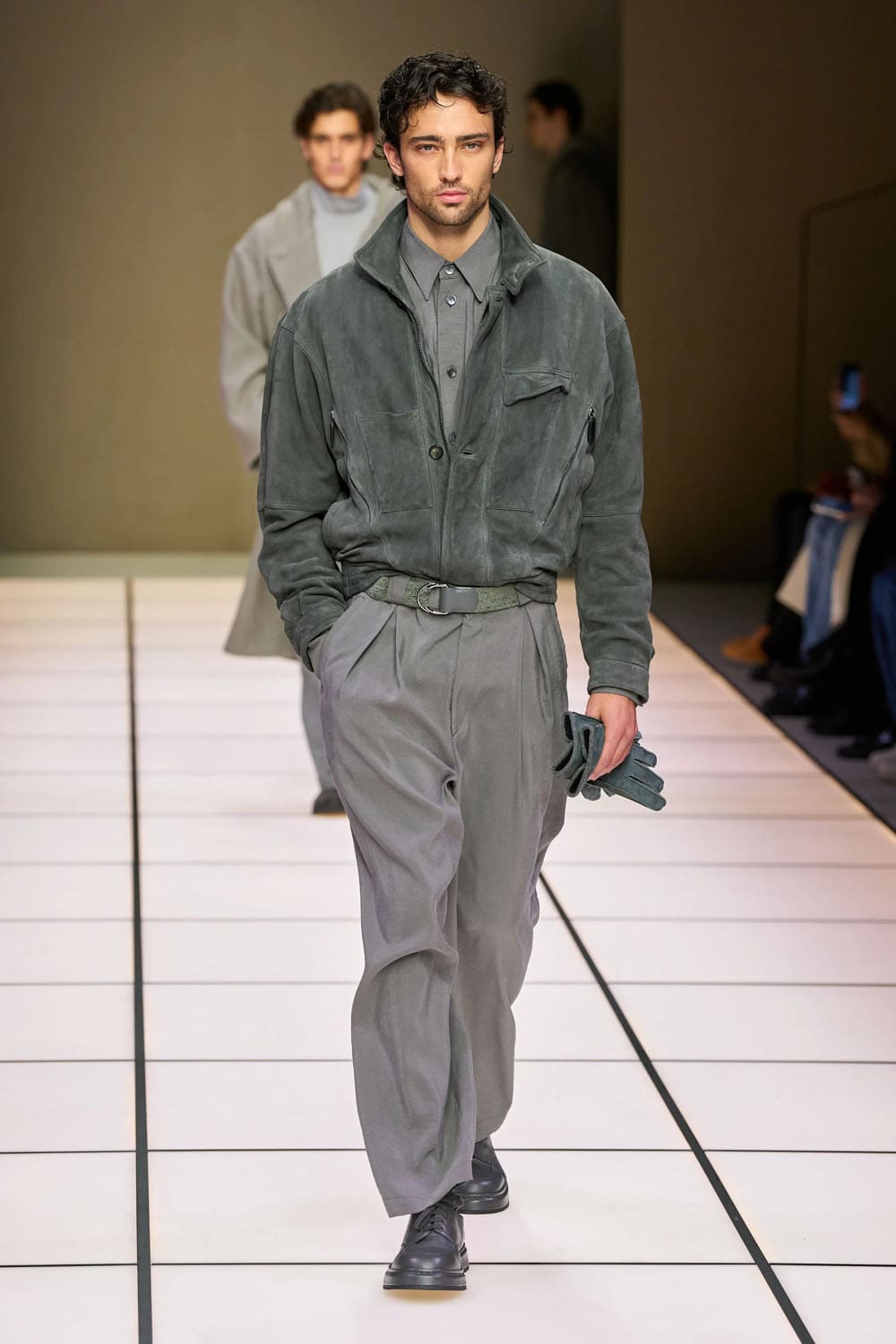
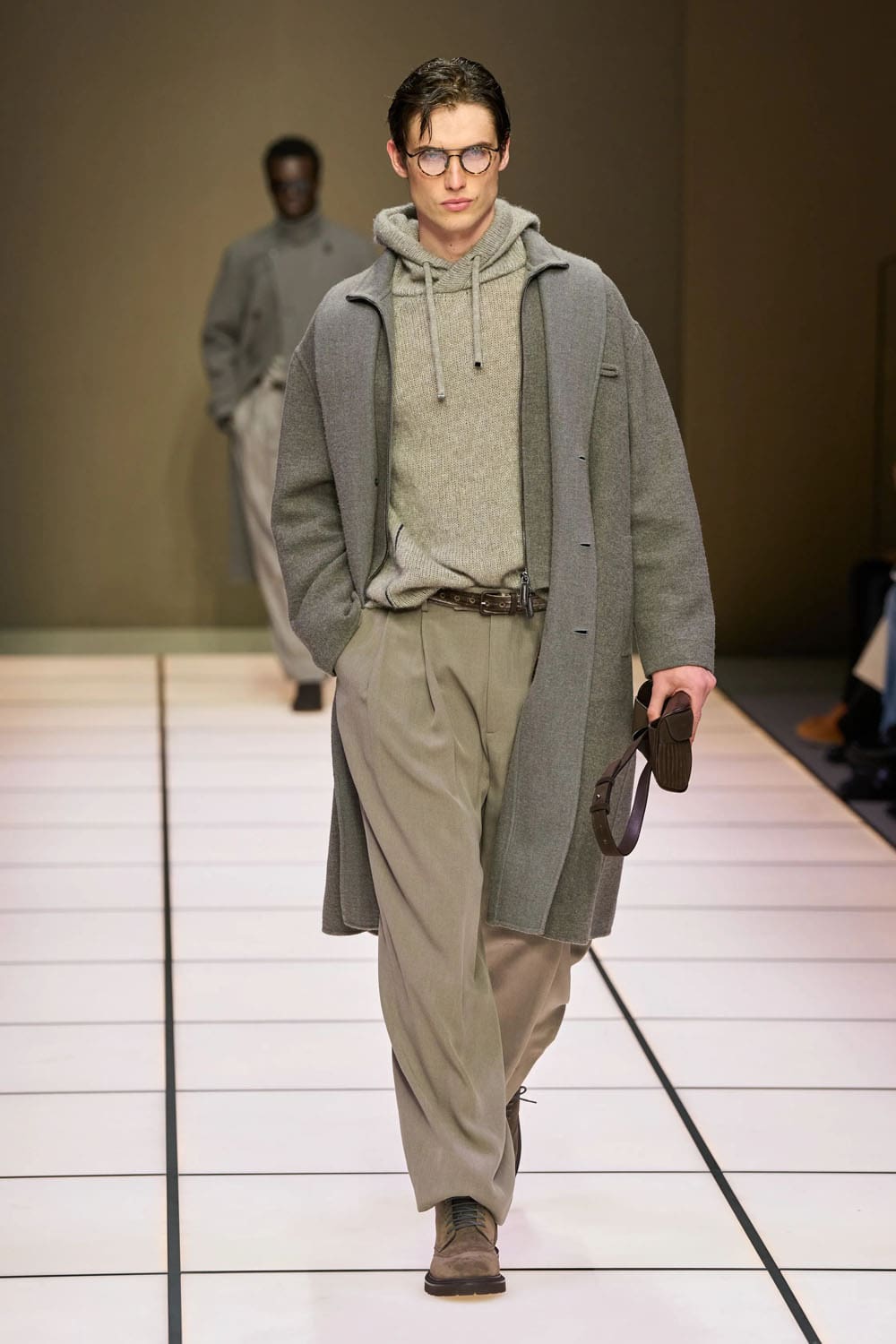
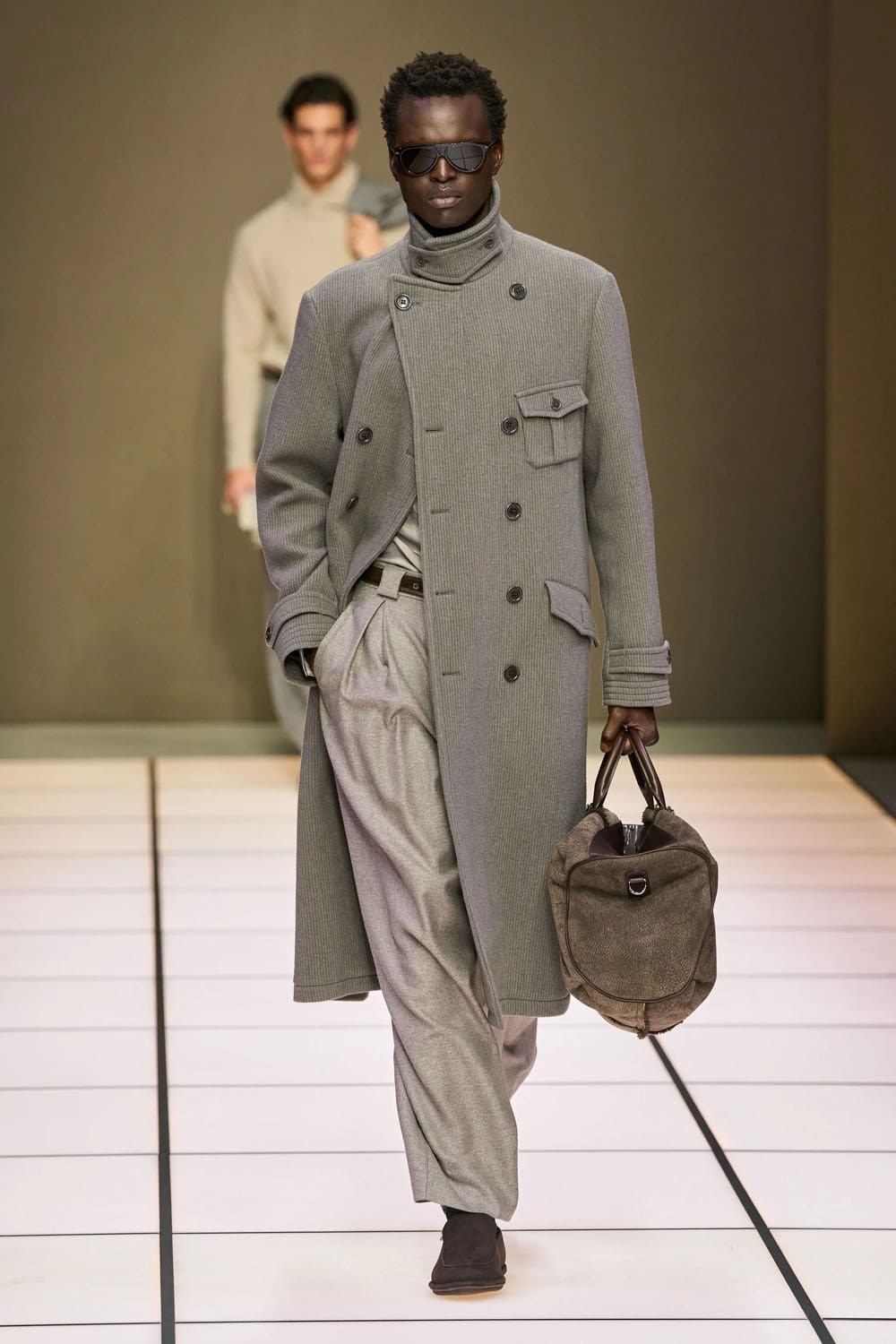
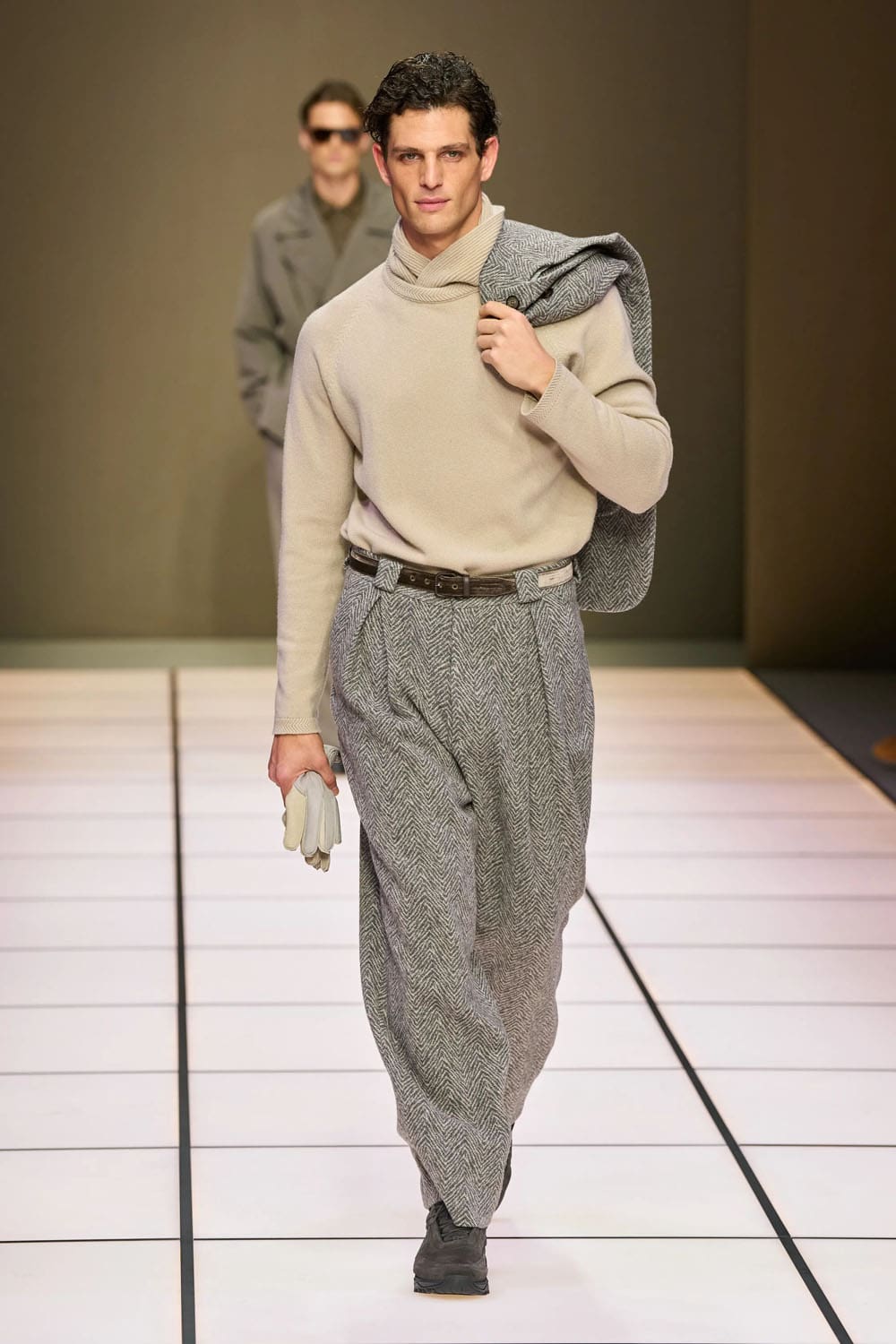
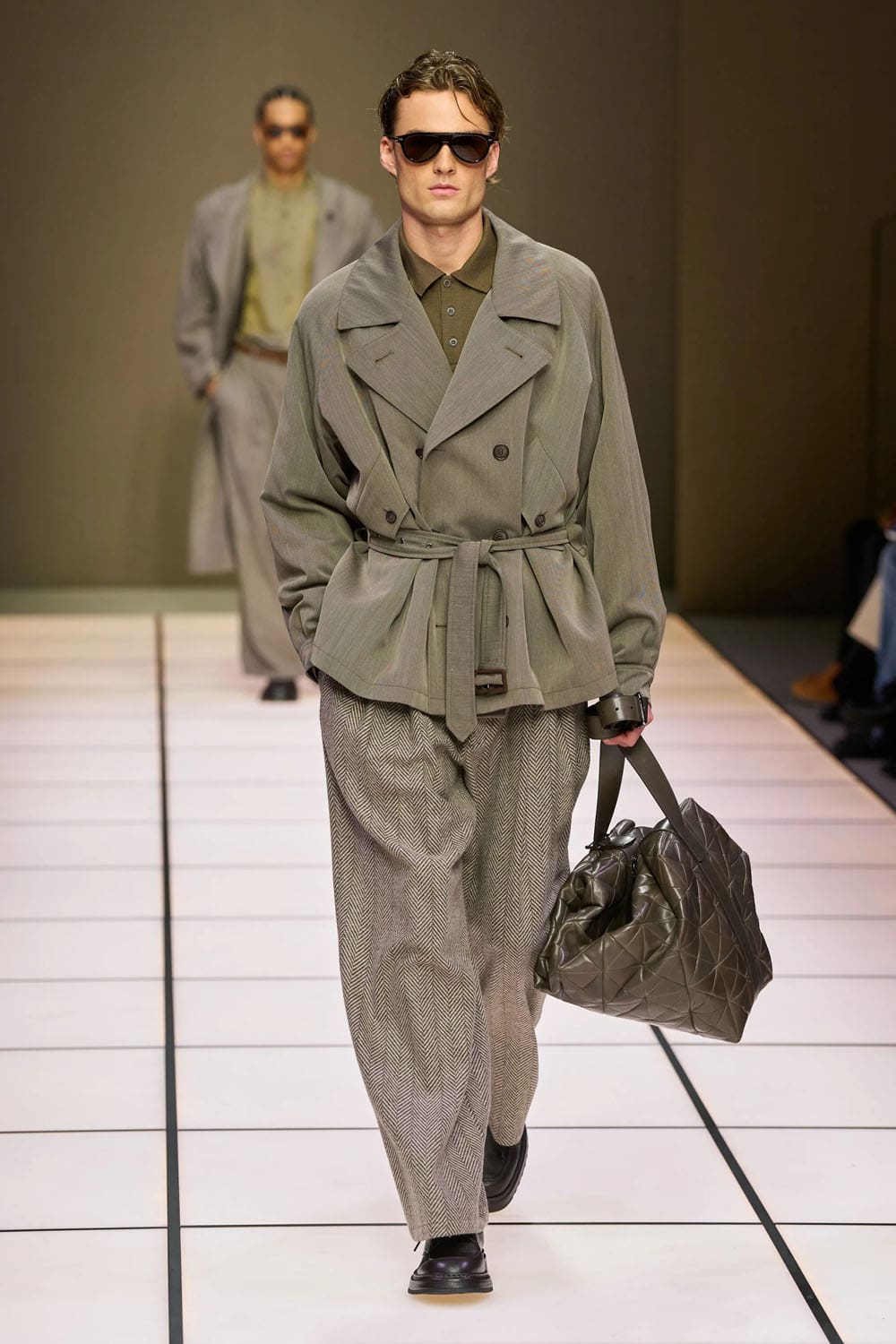
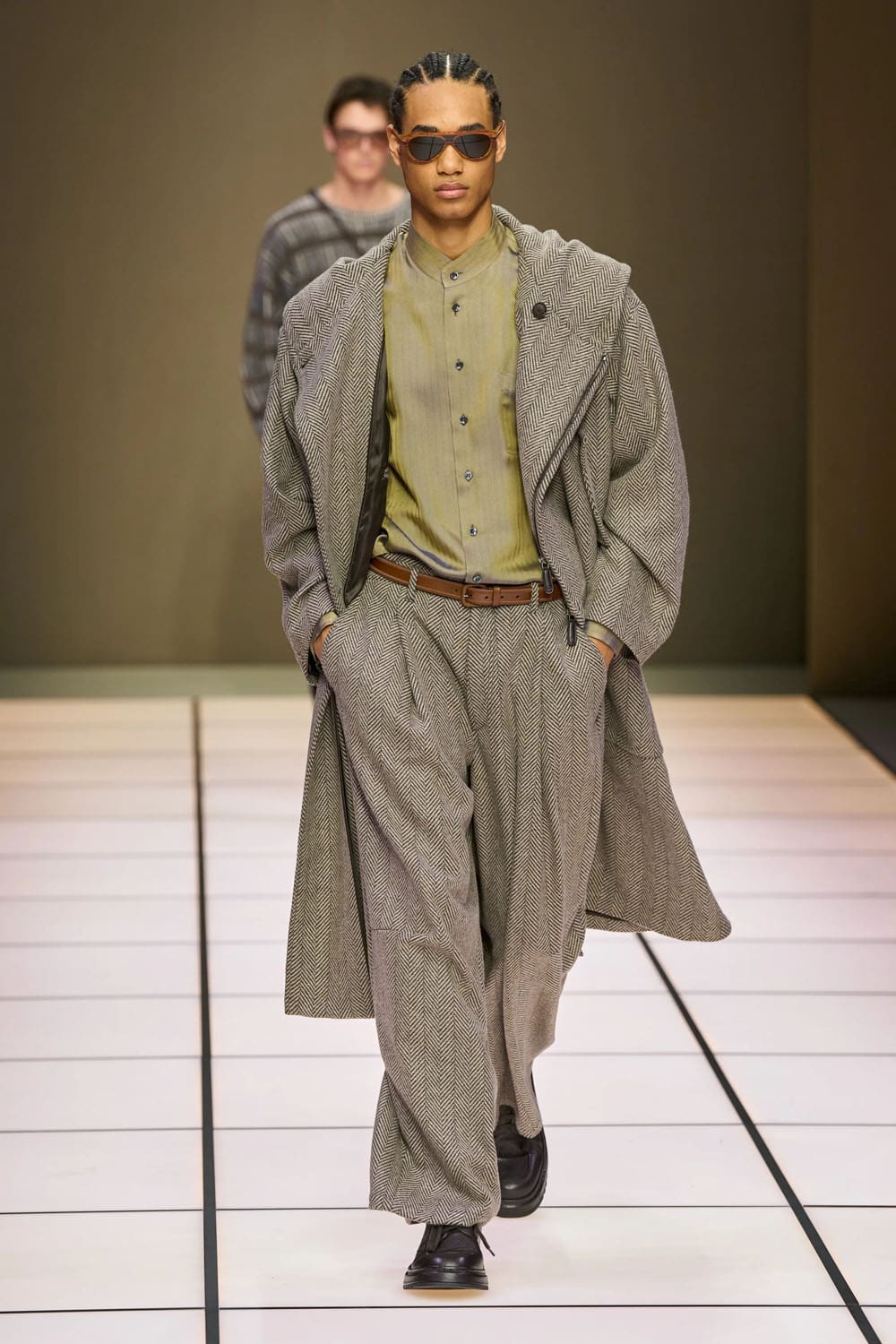
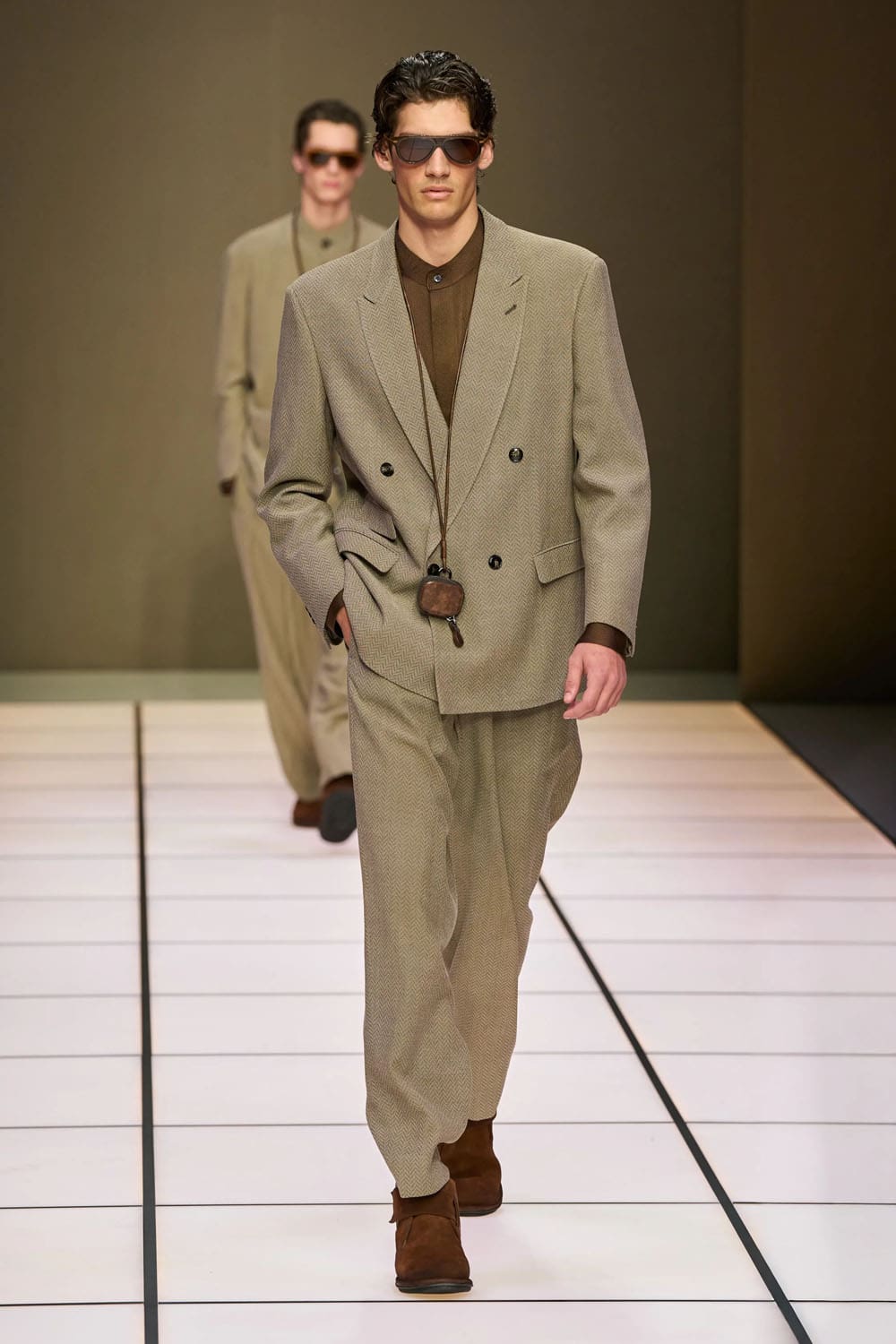
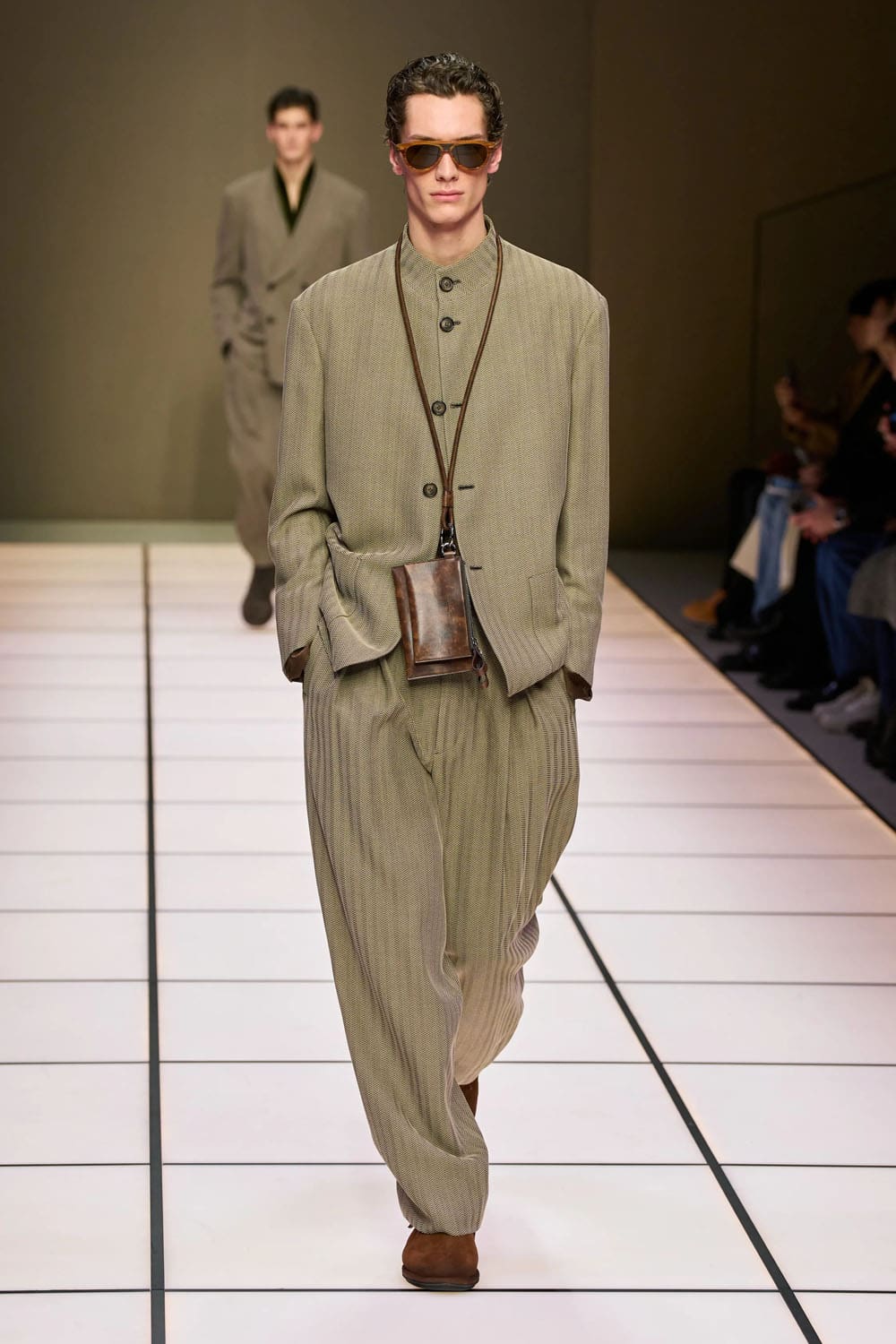
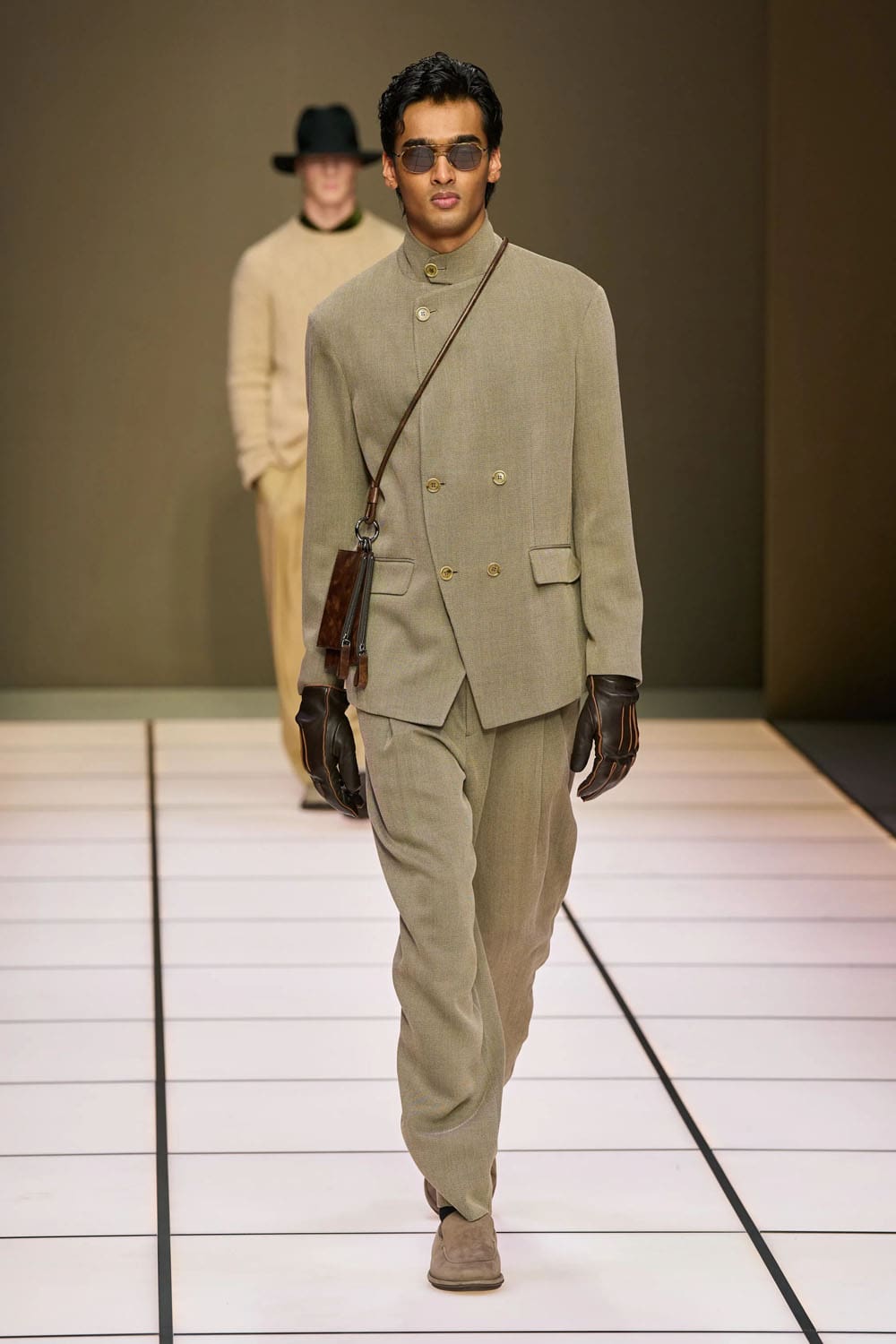
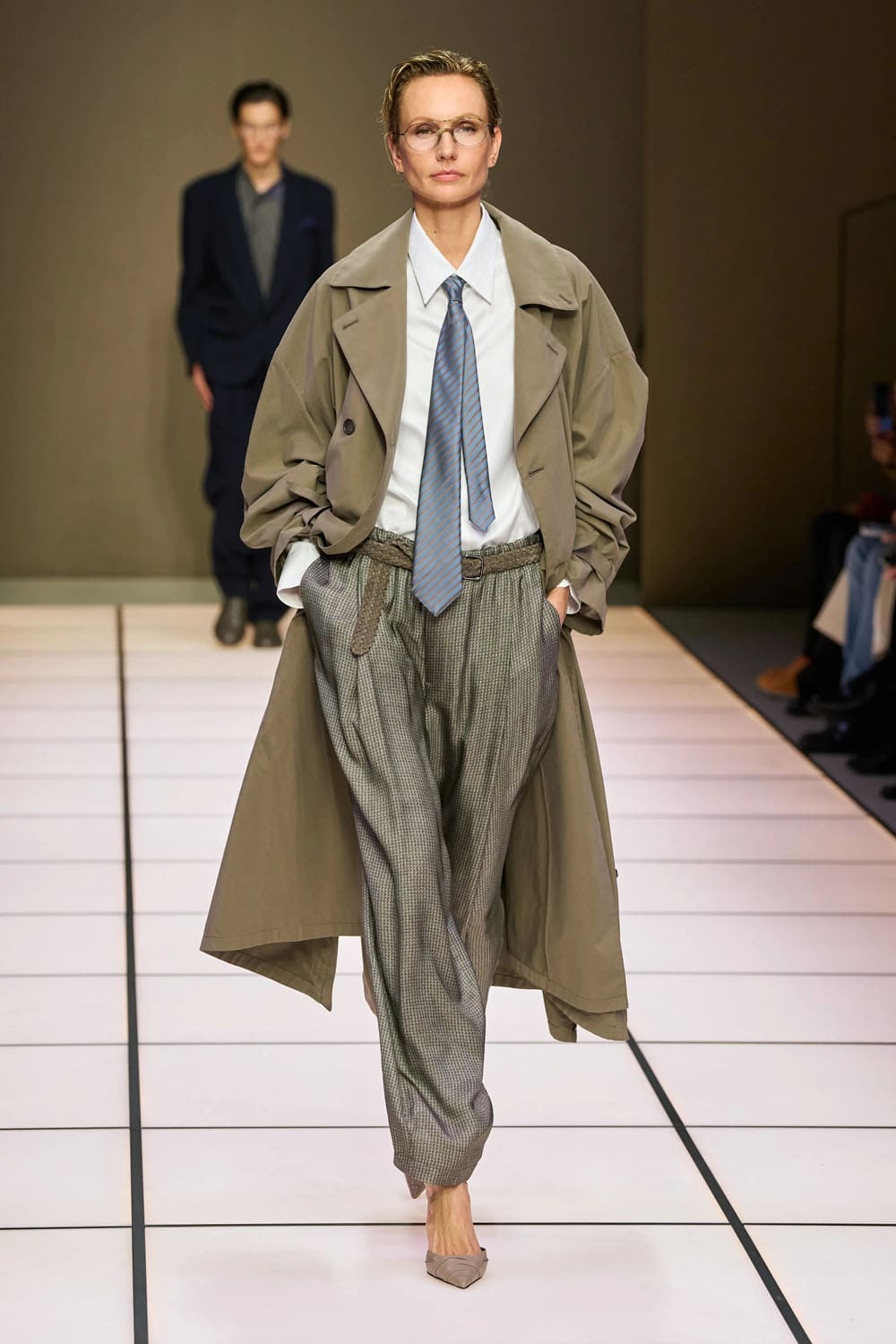
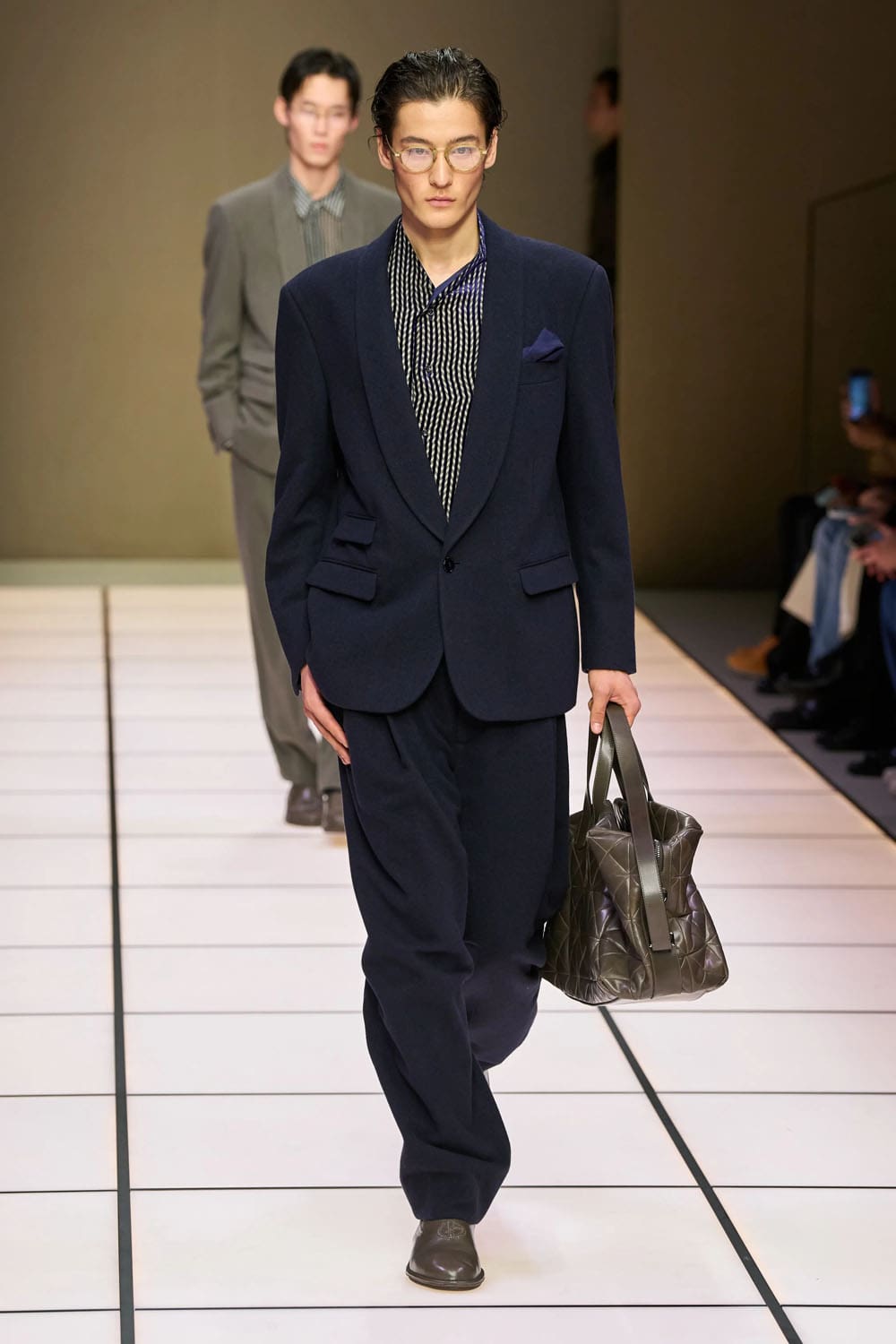
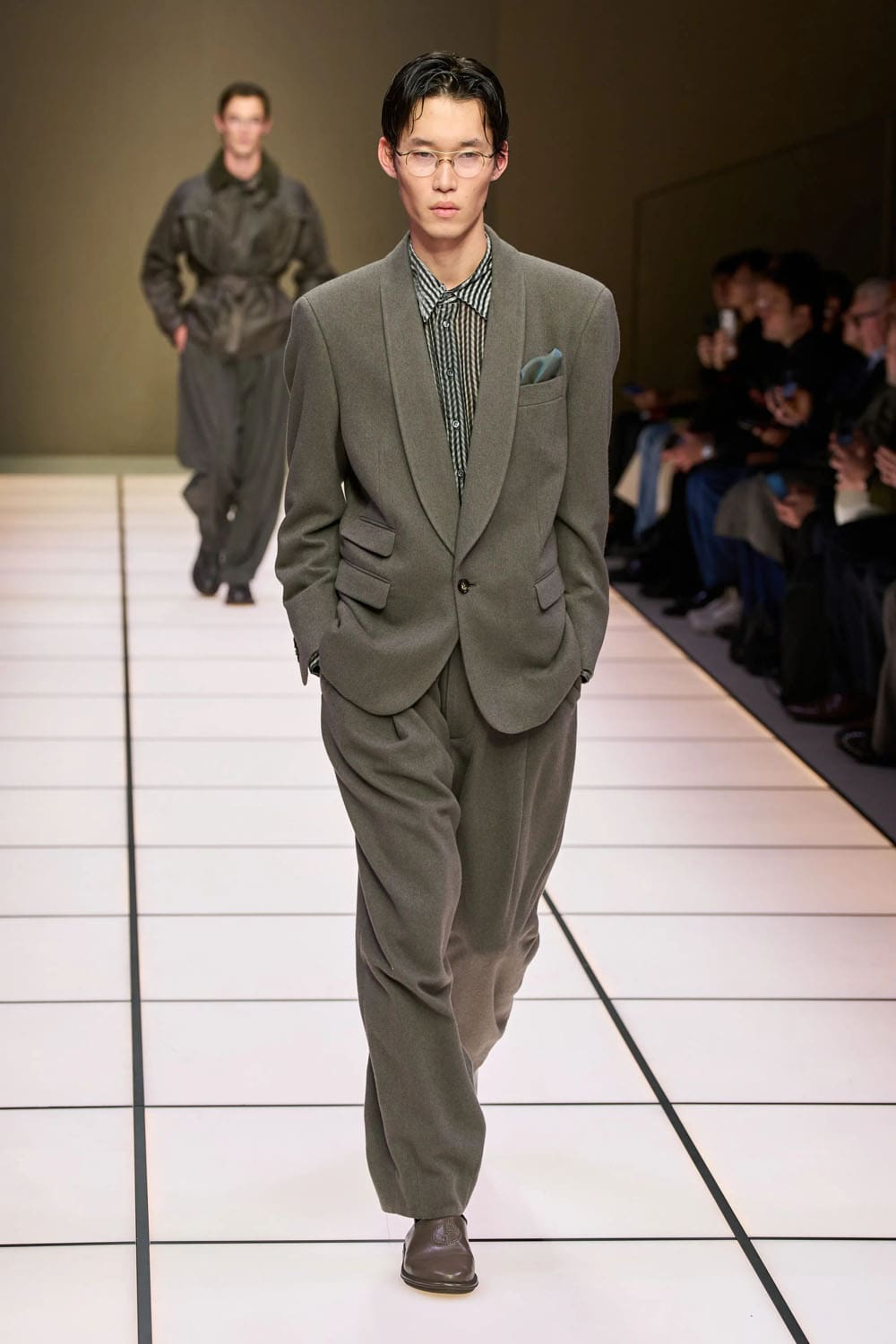
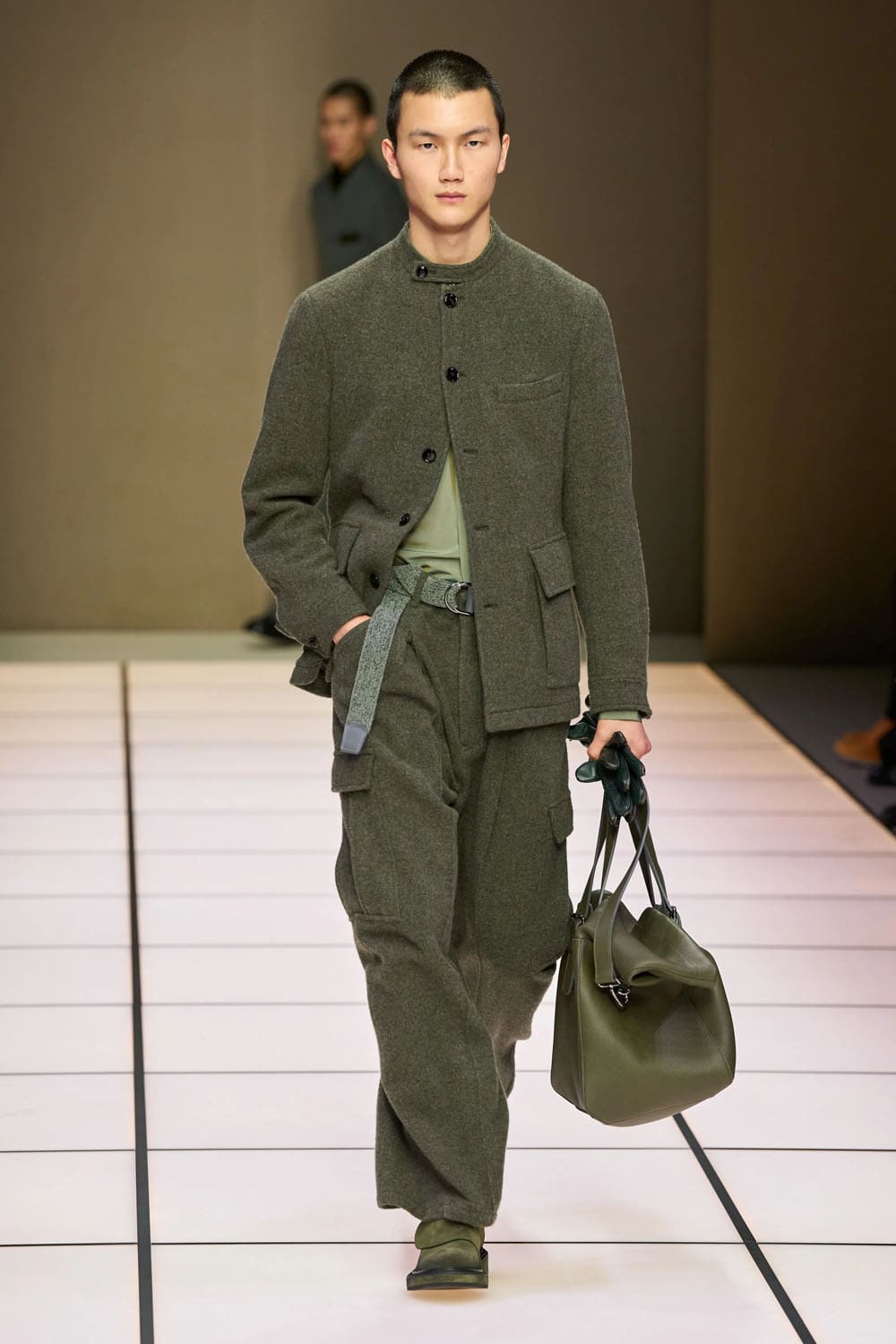
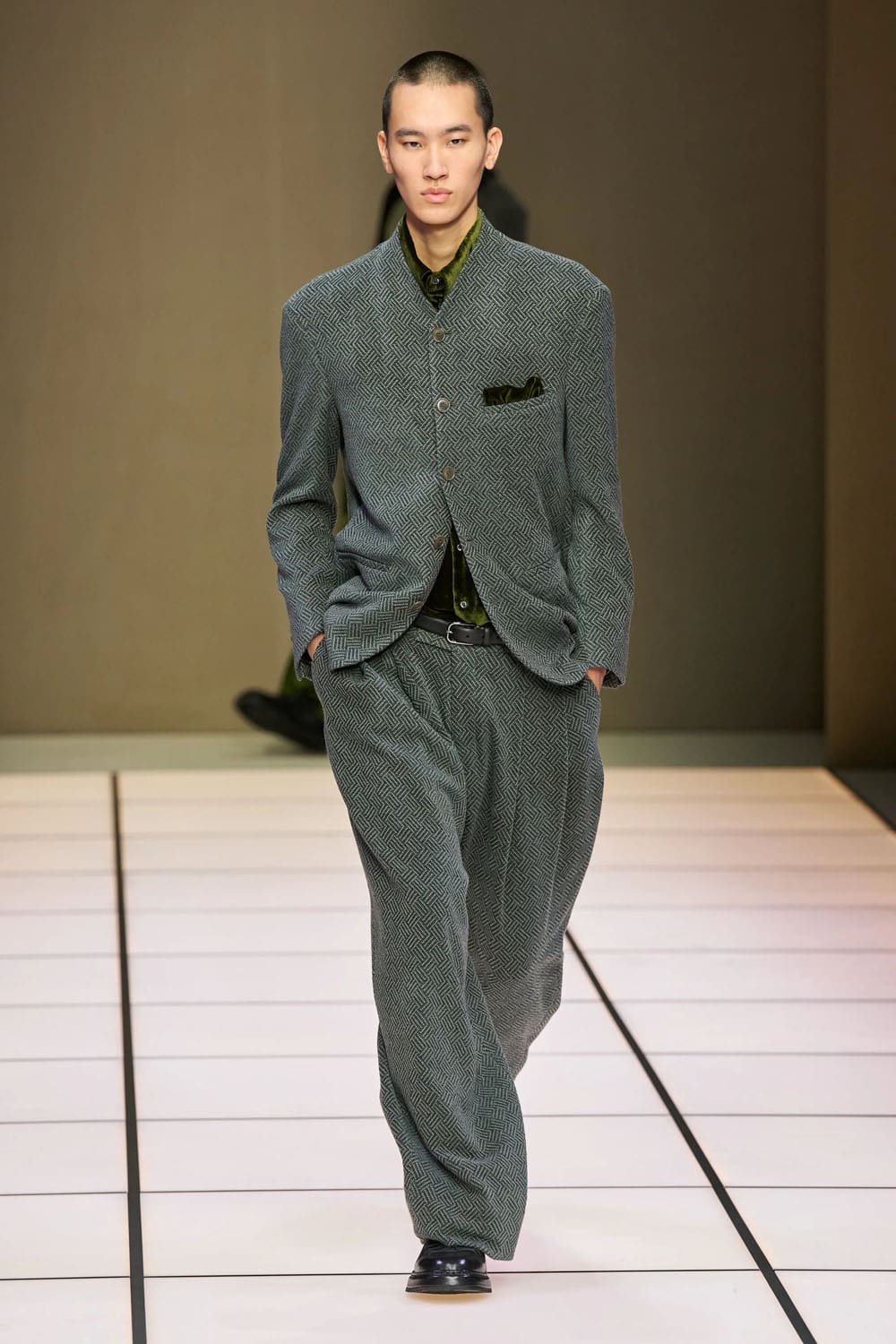
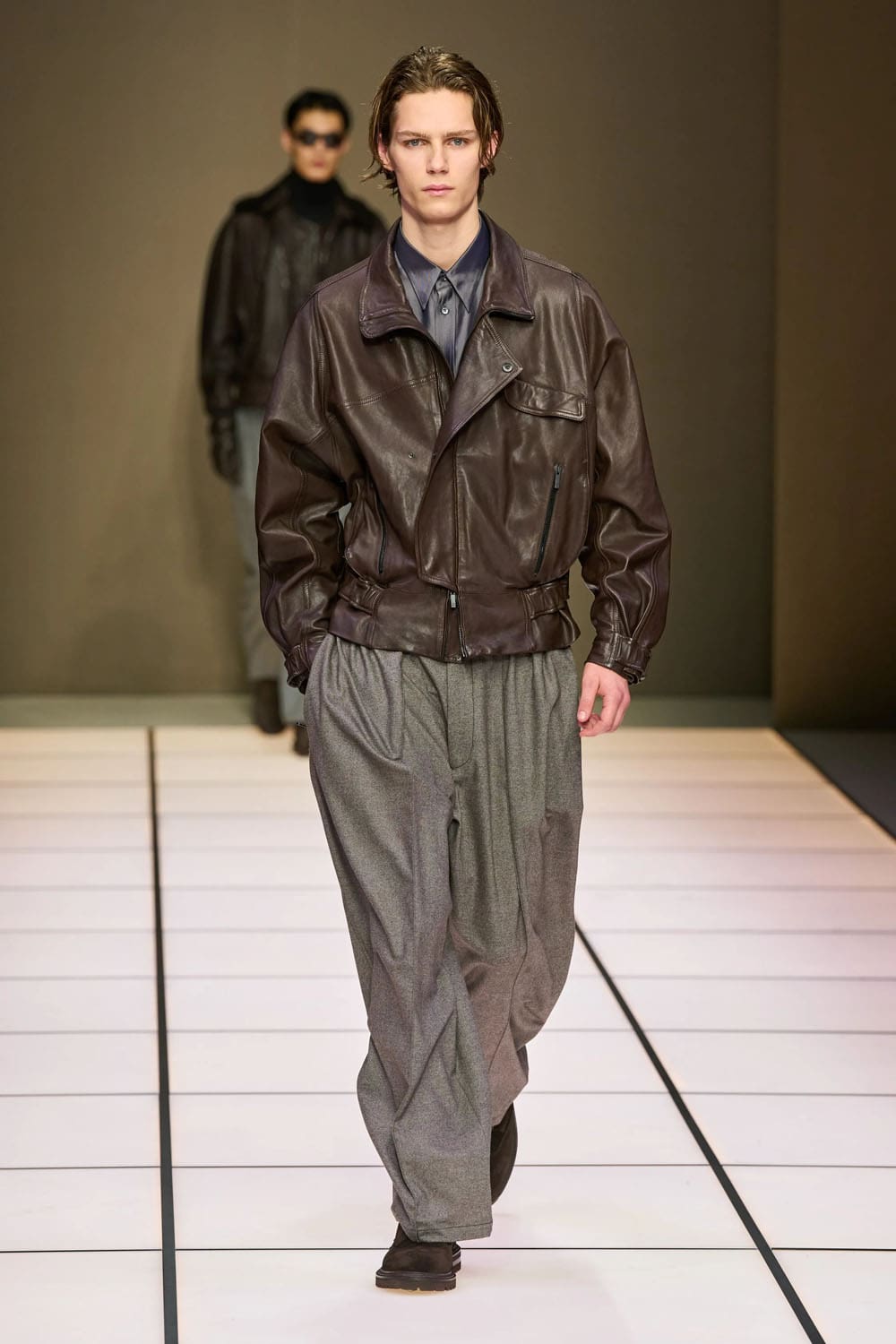
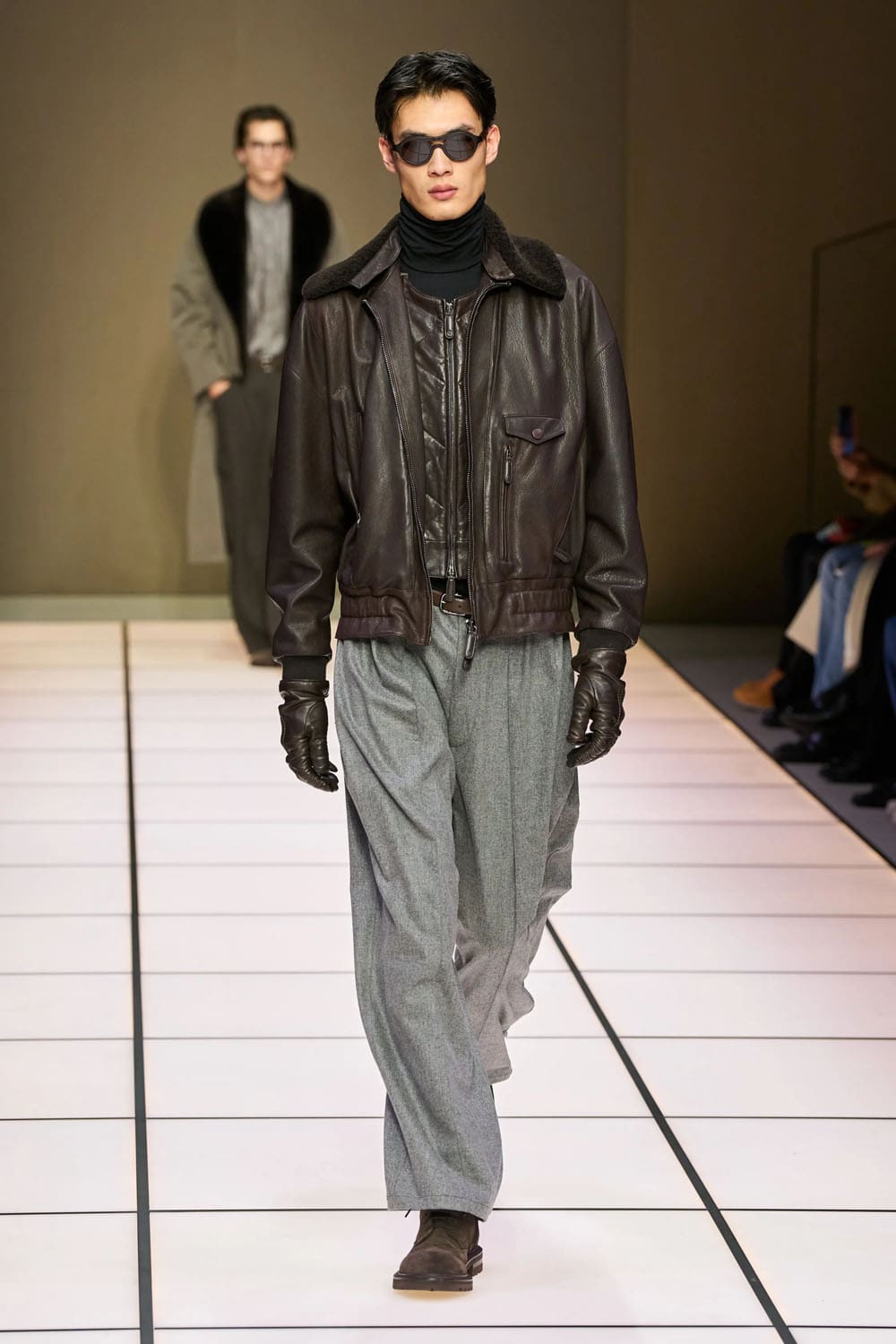
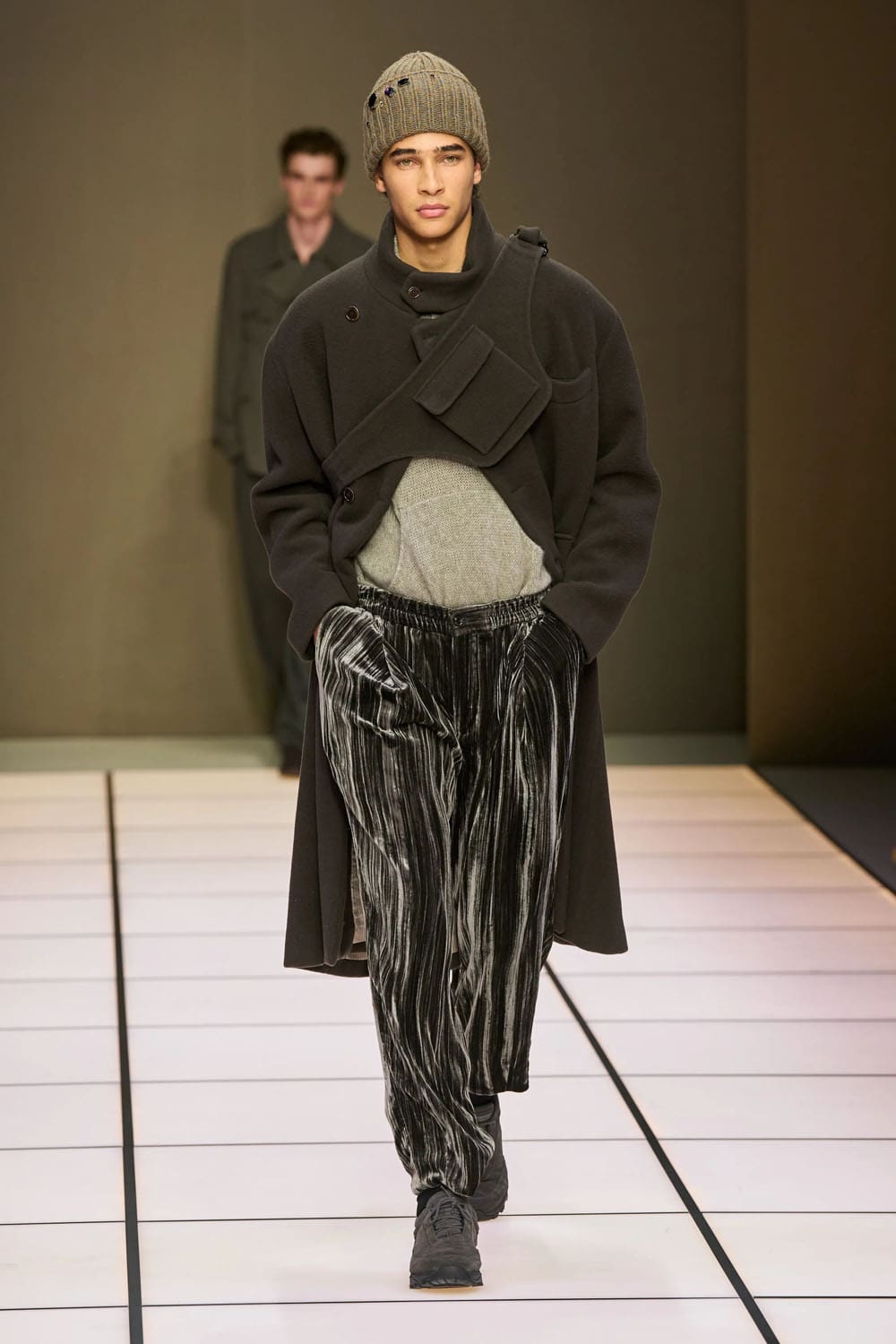
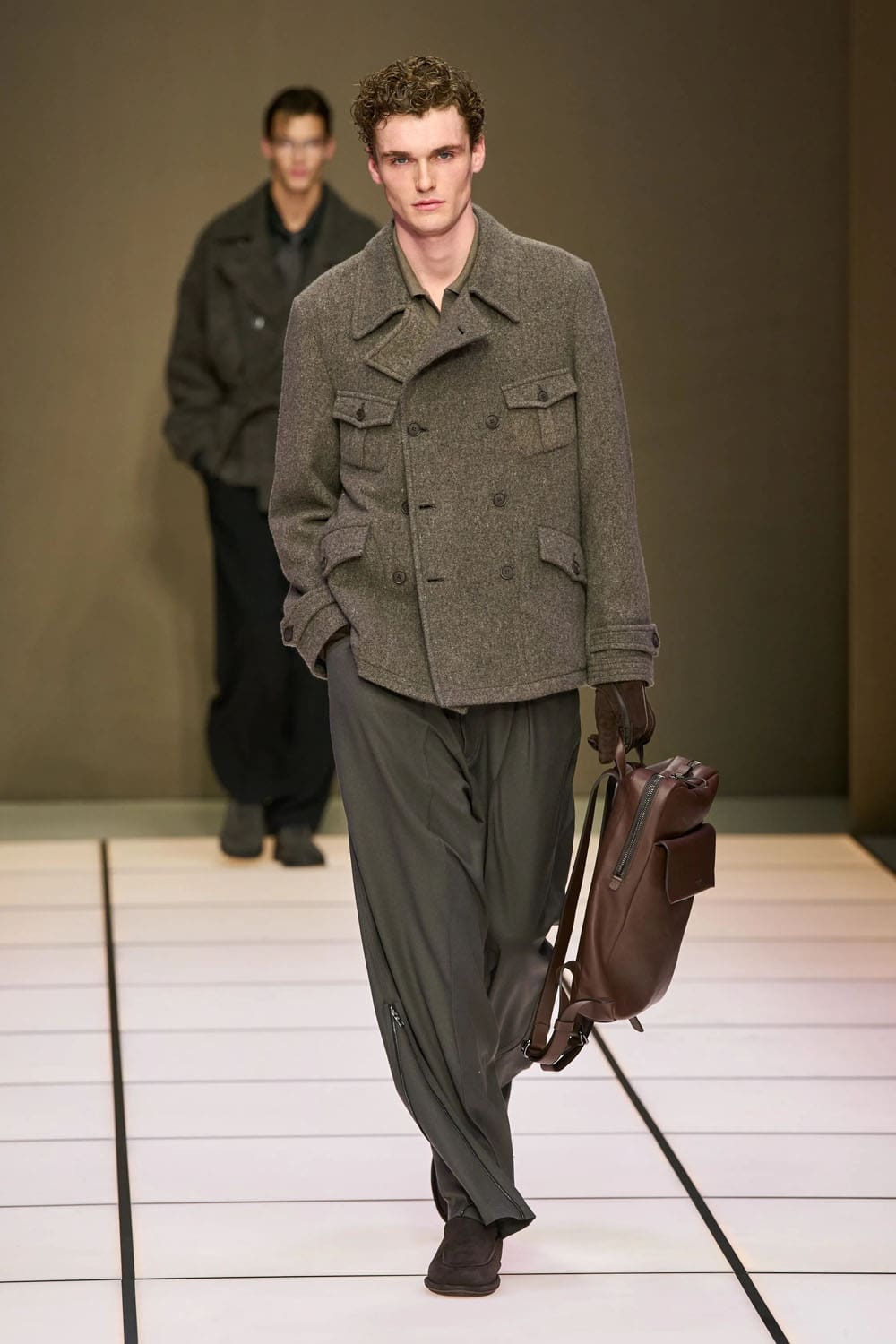
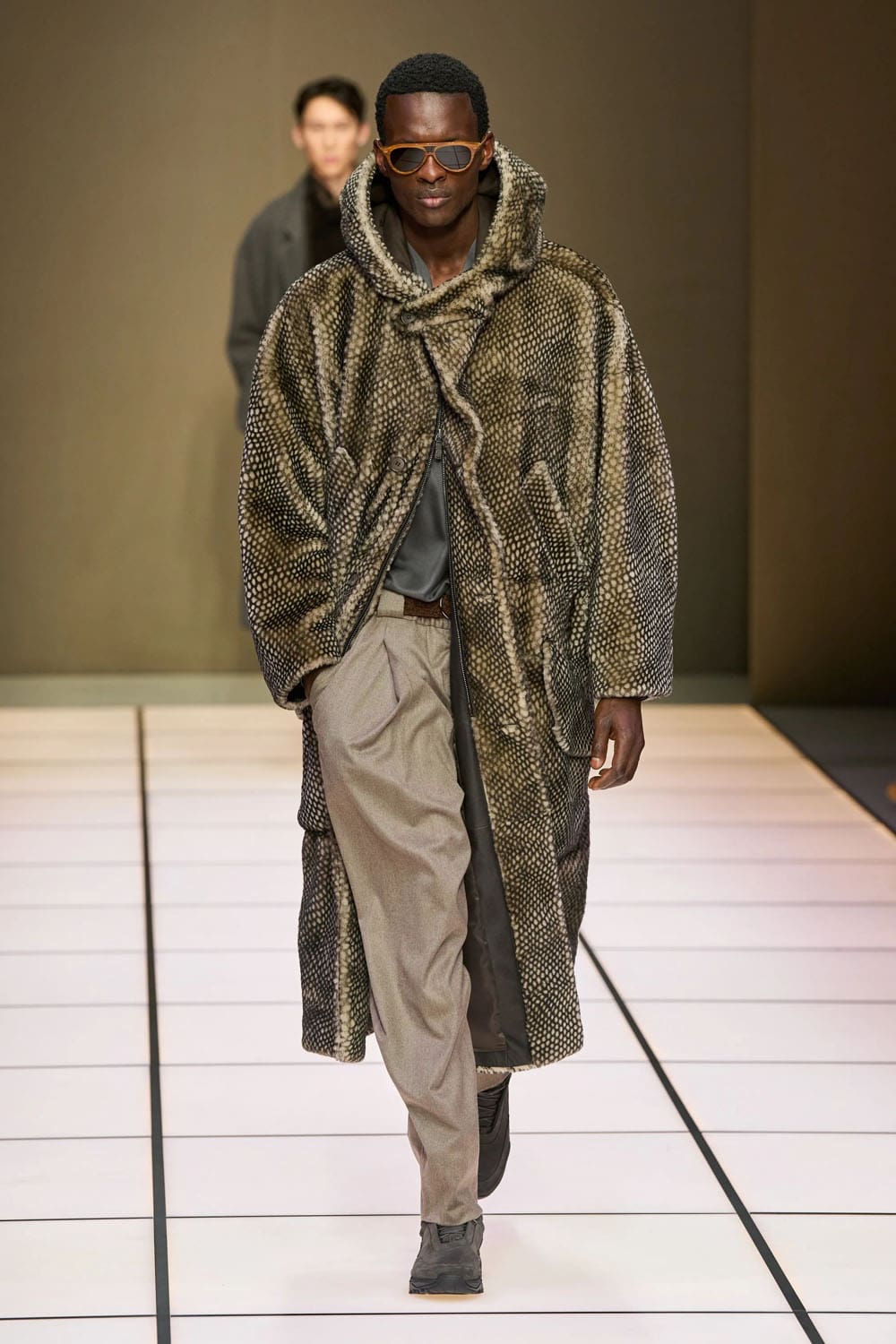
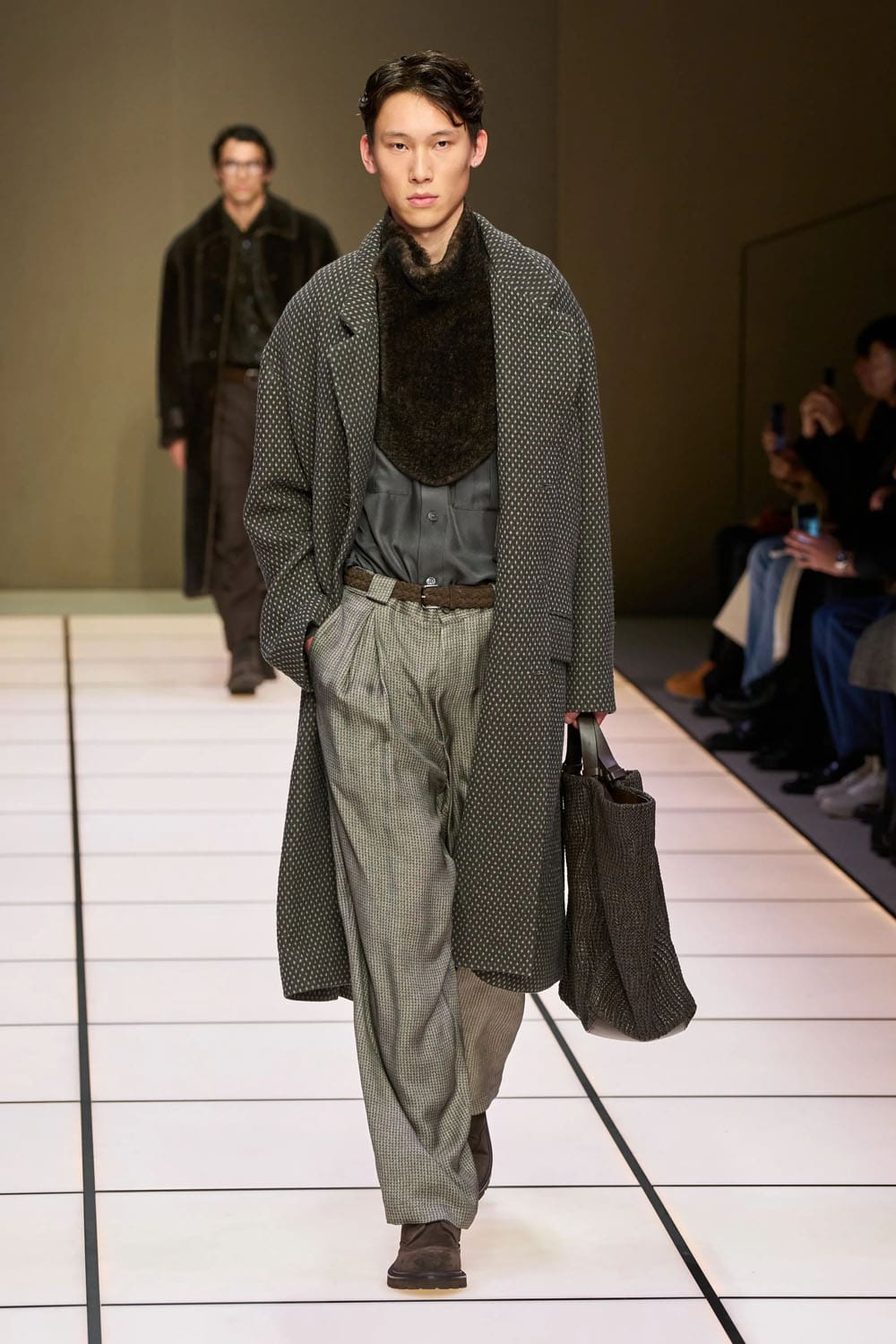
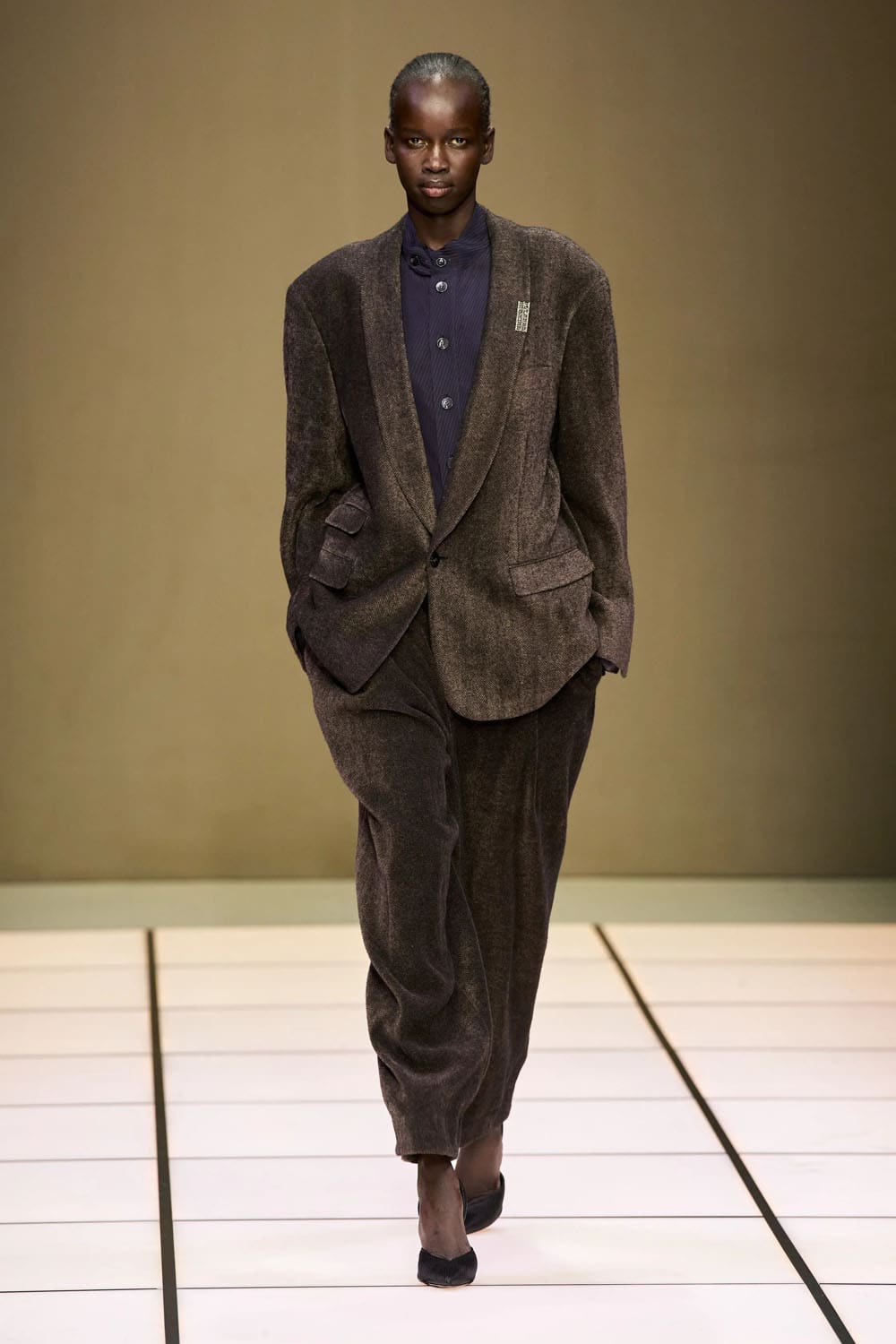
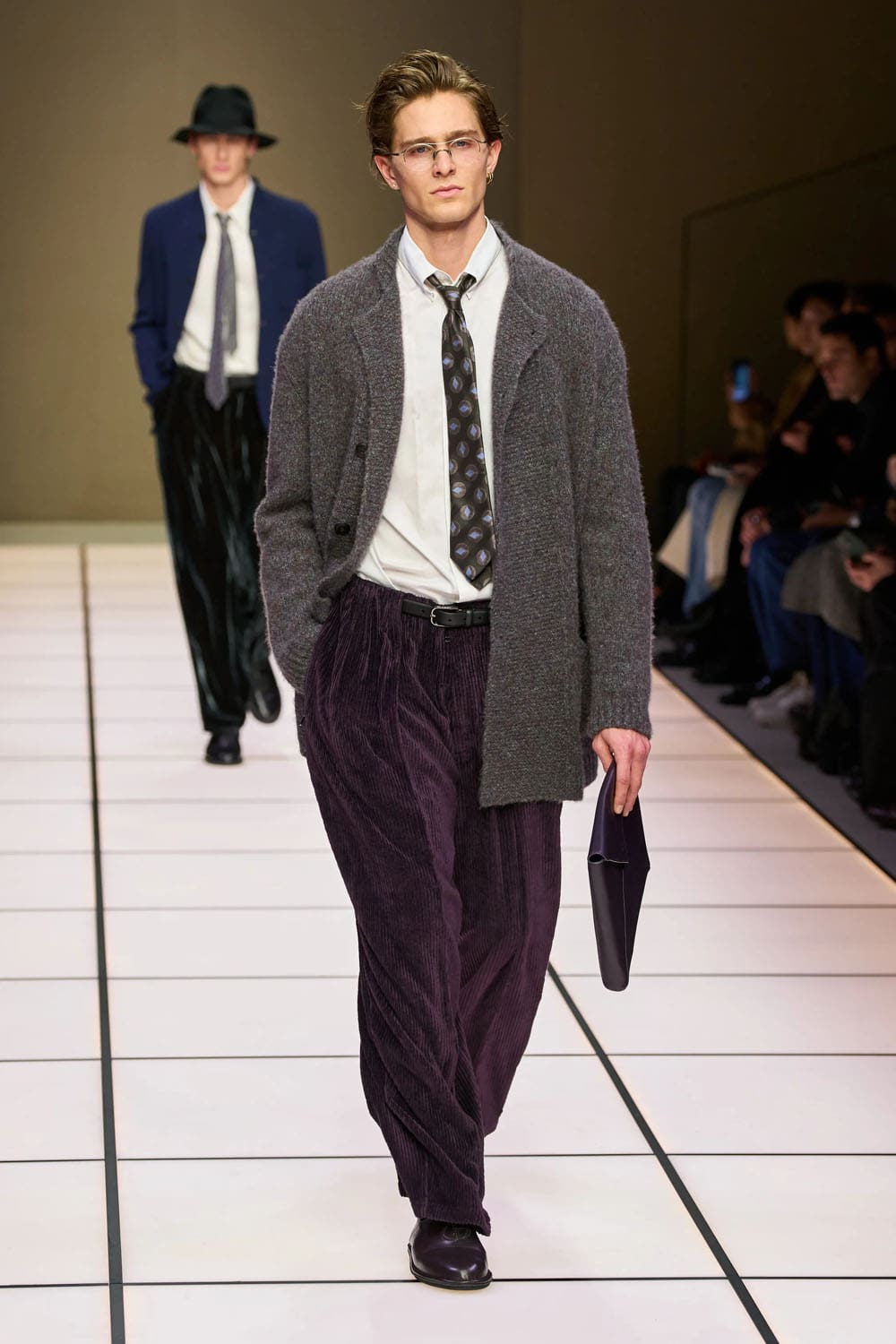
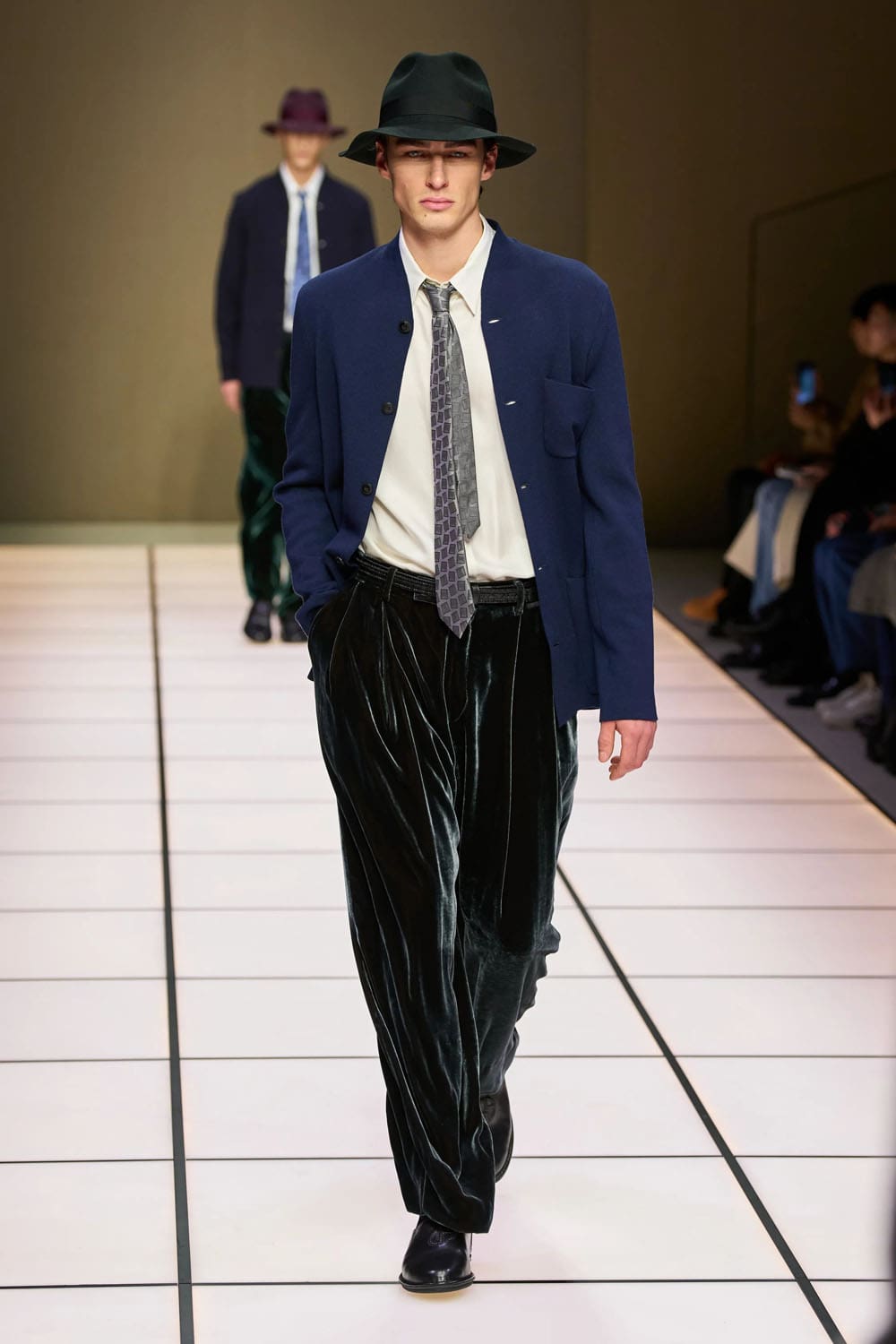
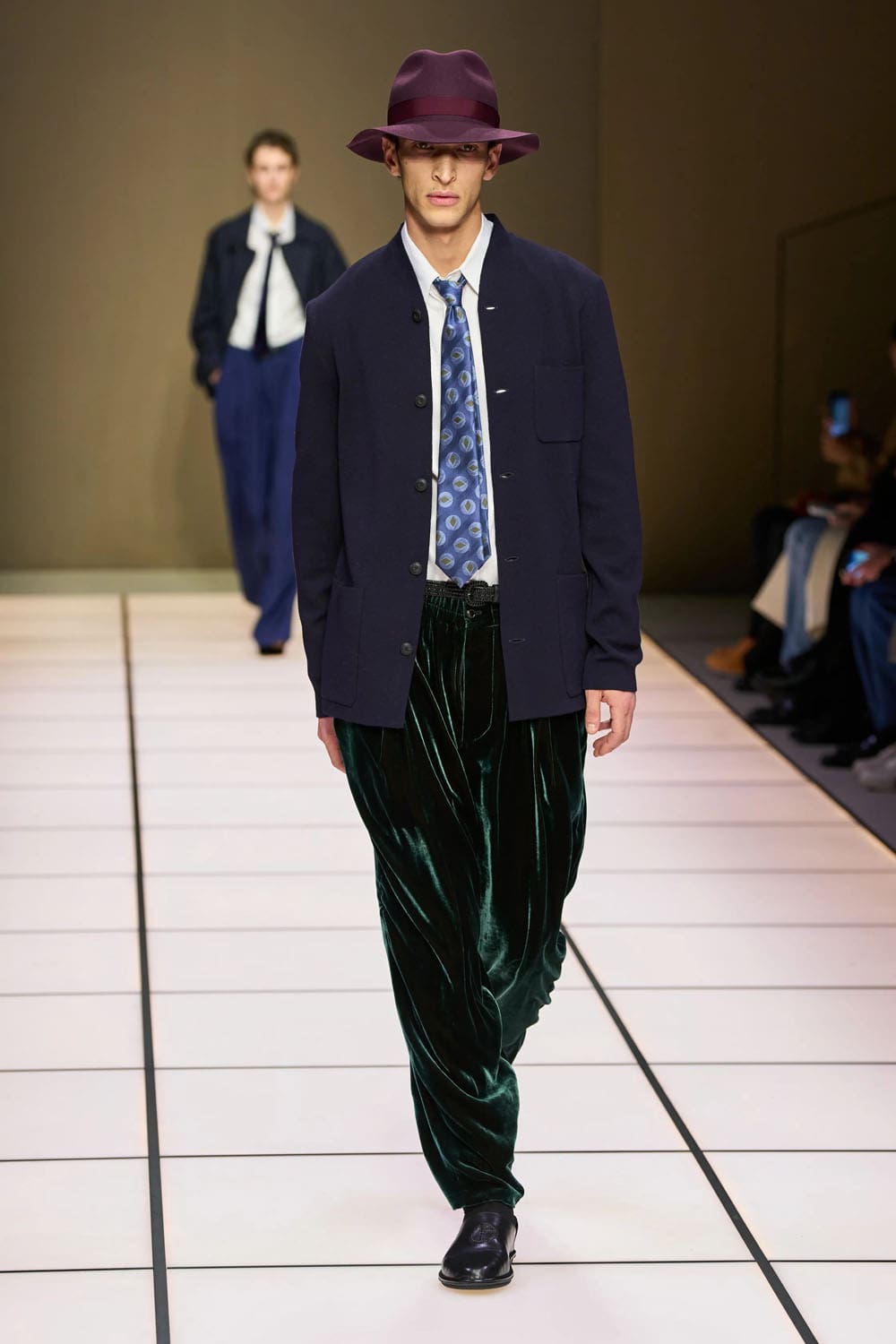
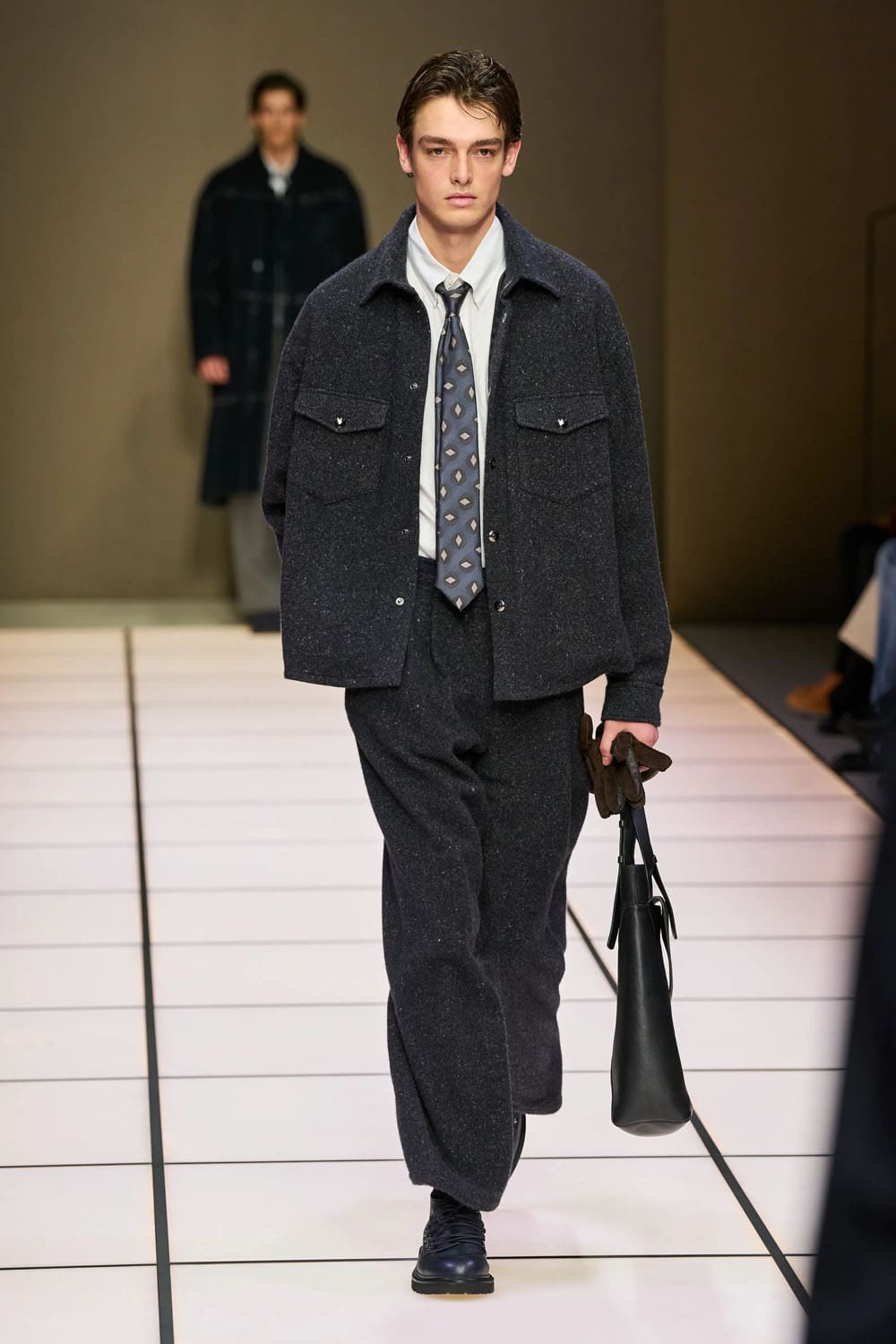
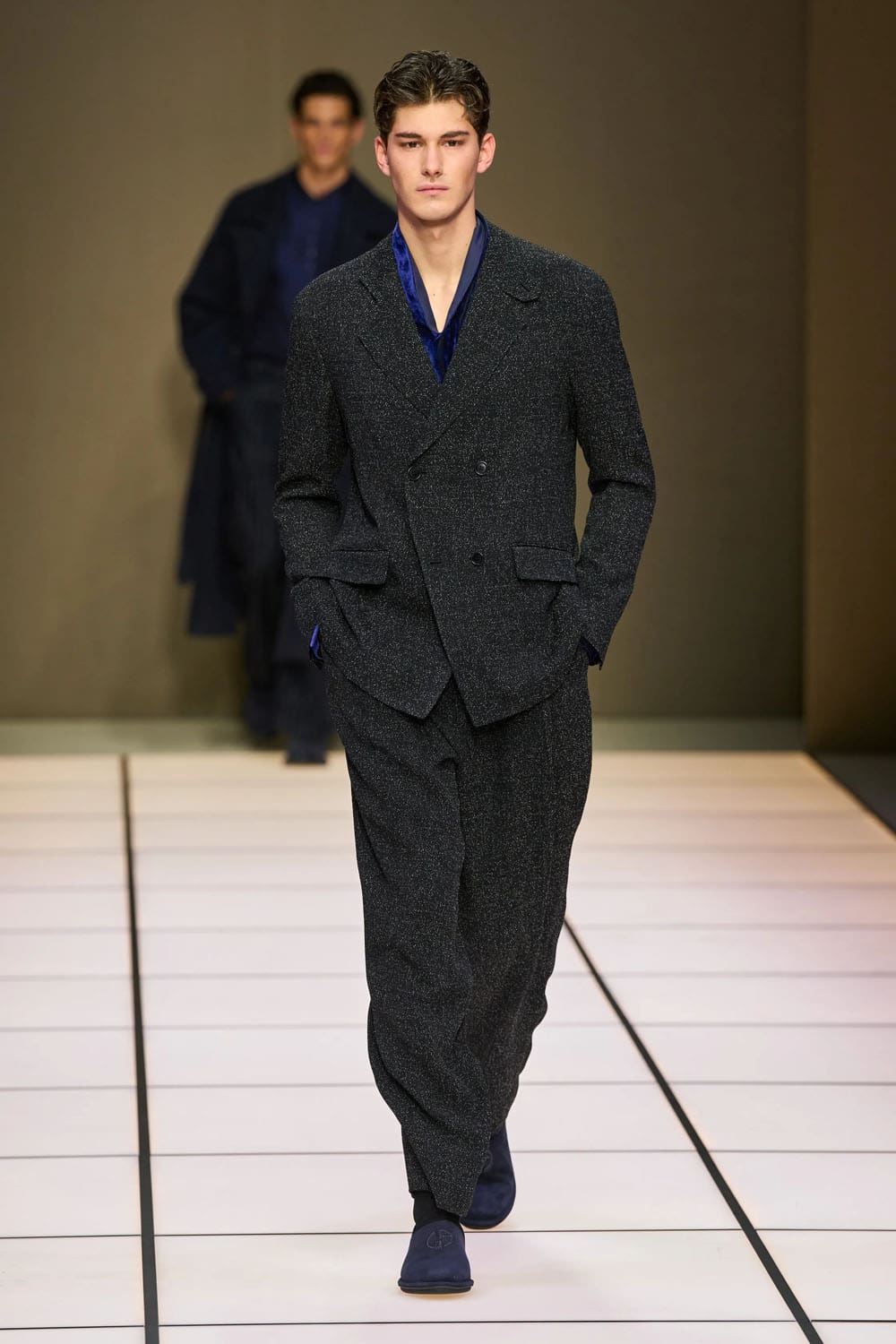
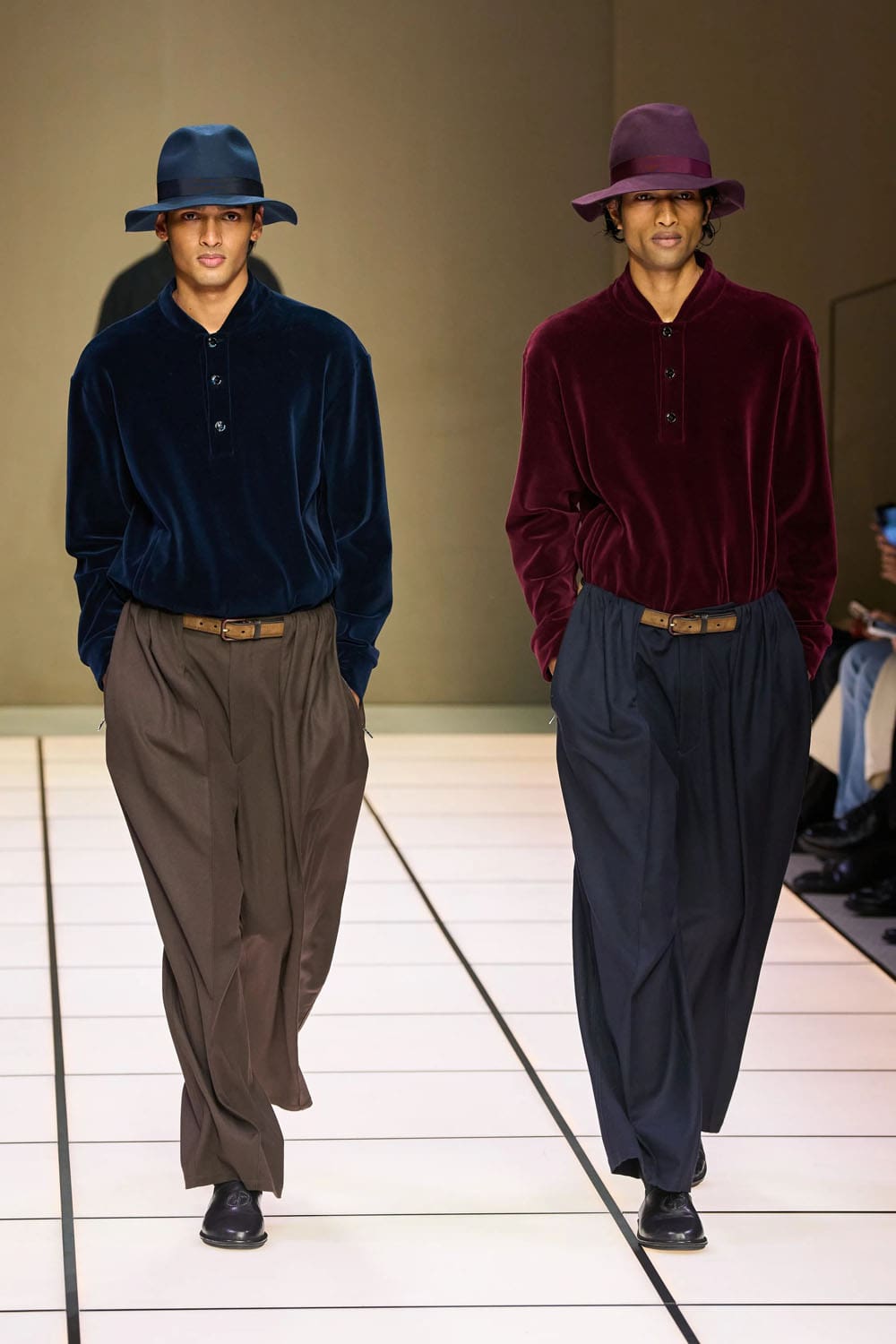
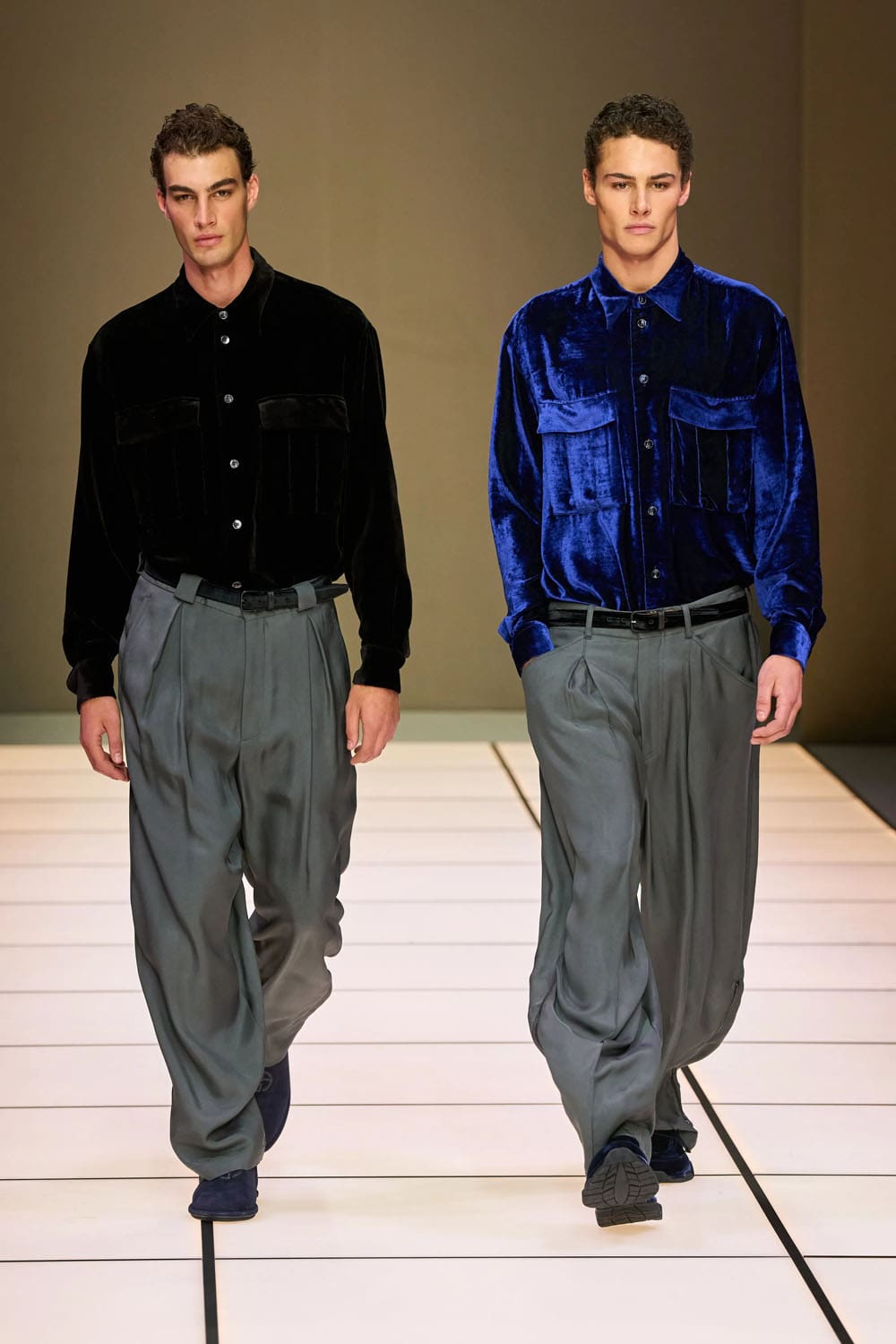
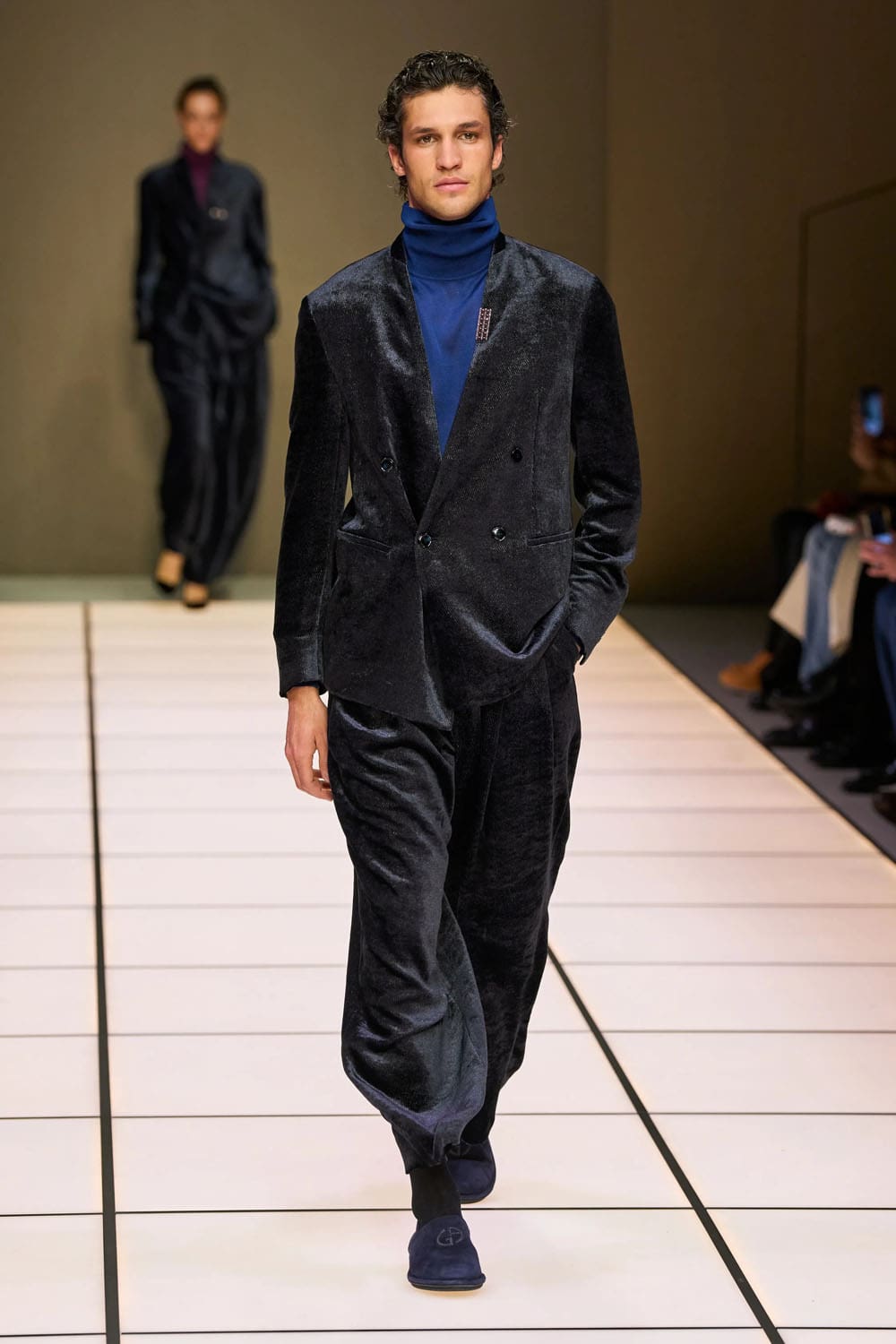
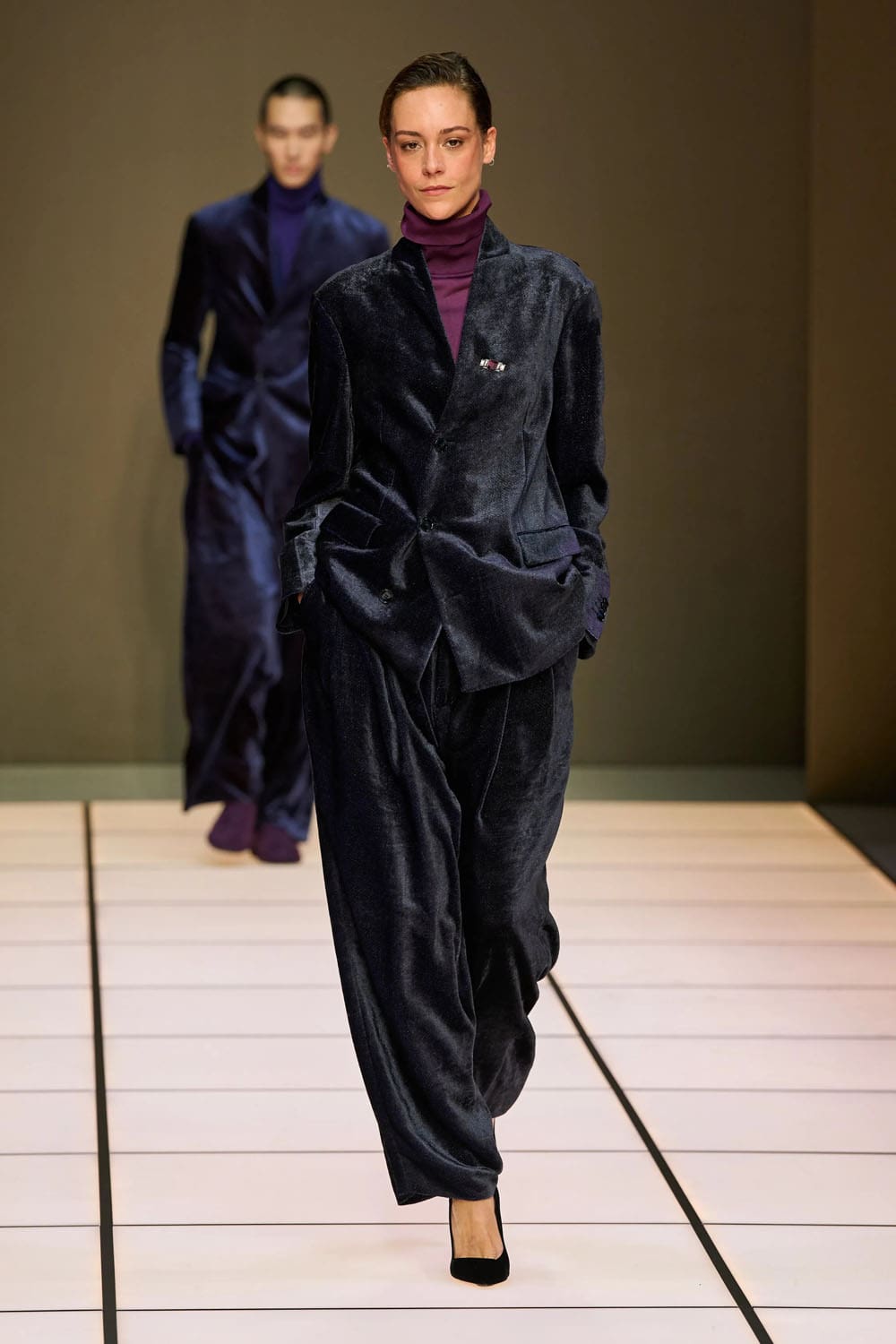
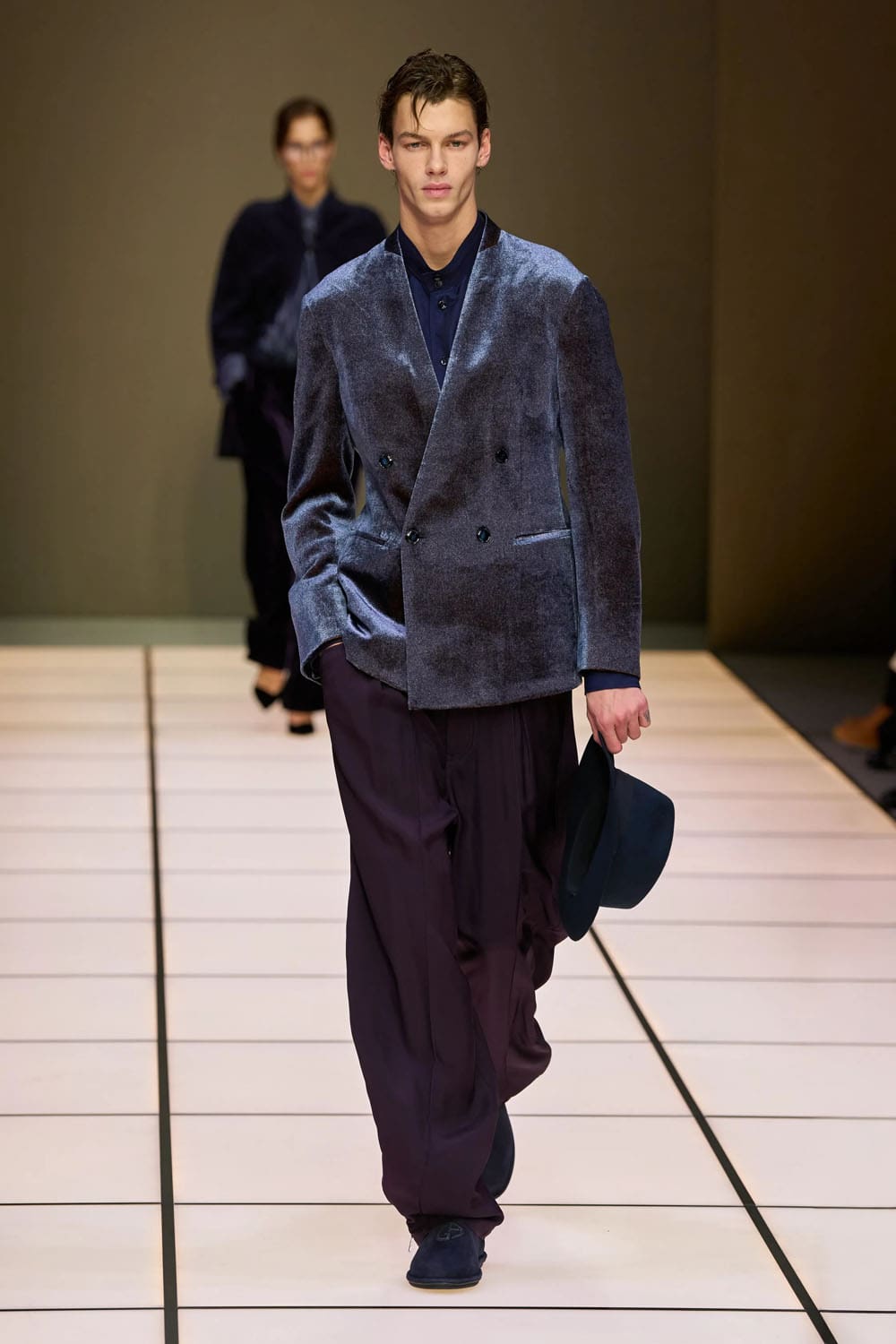
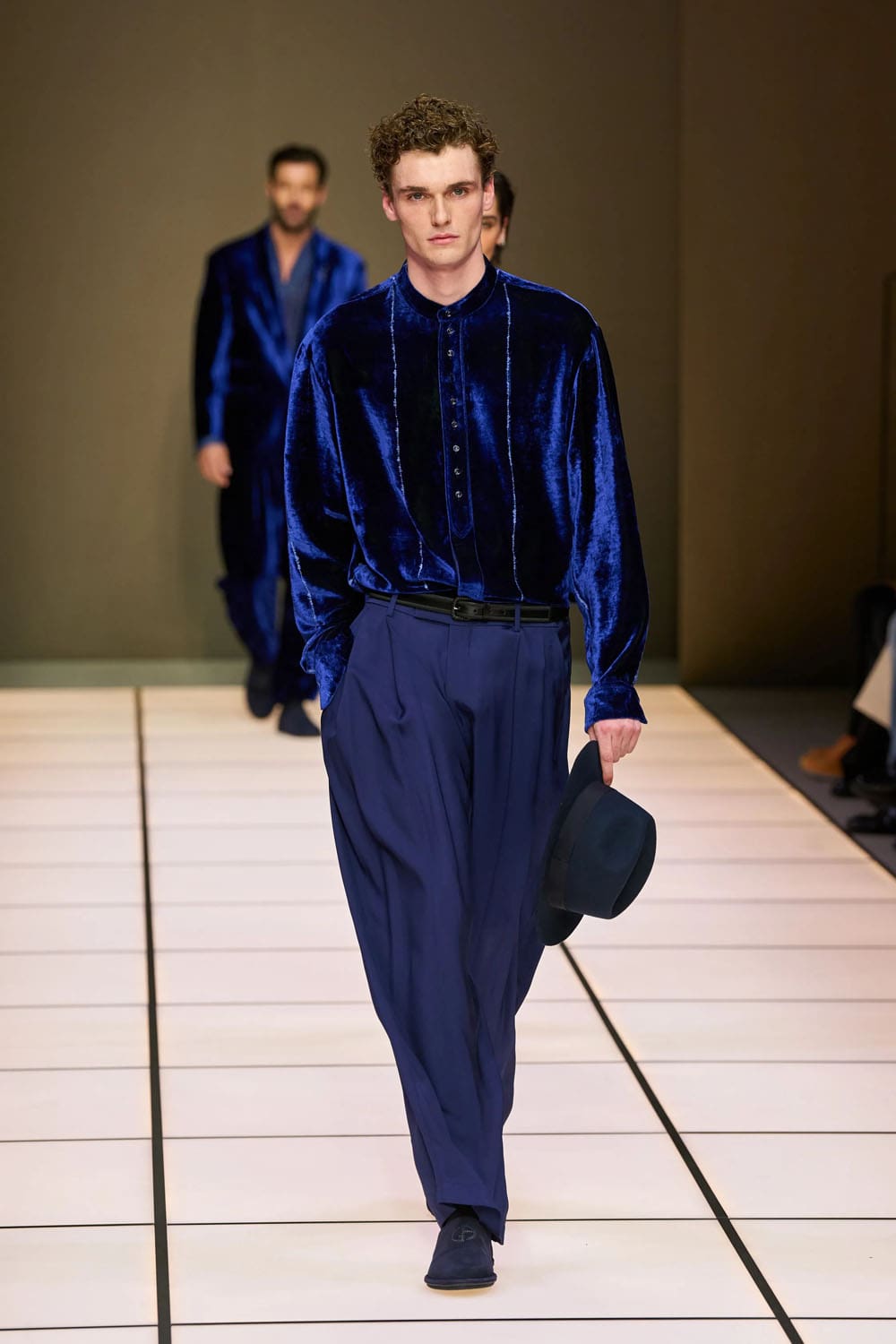
The show opened in greige and charcoal — a chromatic vocabulary Armani made his own, now reiterated by Dell’Orco with reverent precision. Jackets were ventless, cut slightly higher, and slipped from the shoulder with Armani’s trademark liquido precision. The trousers, gently pleated, hovered just above soft, elongated shoes.
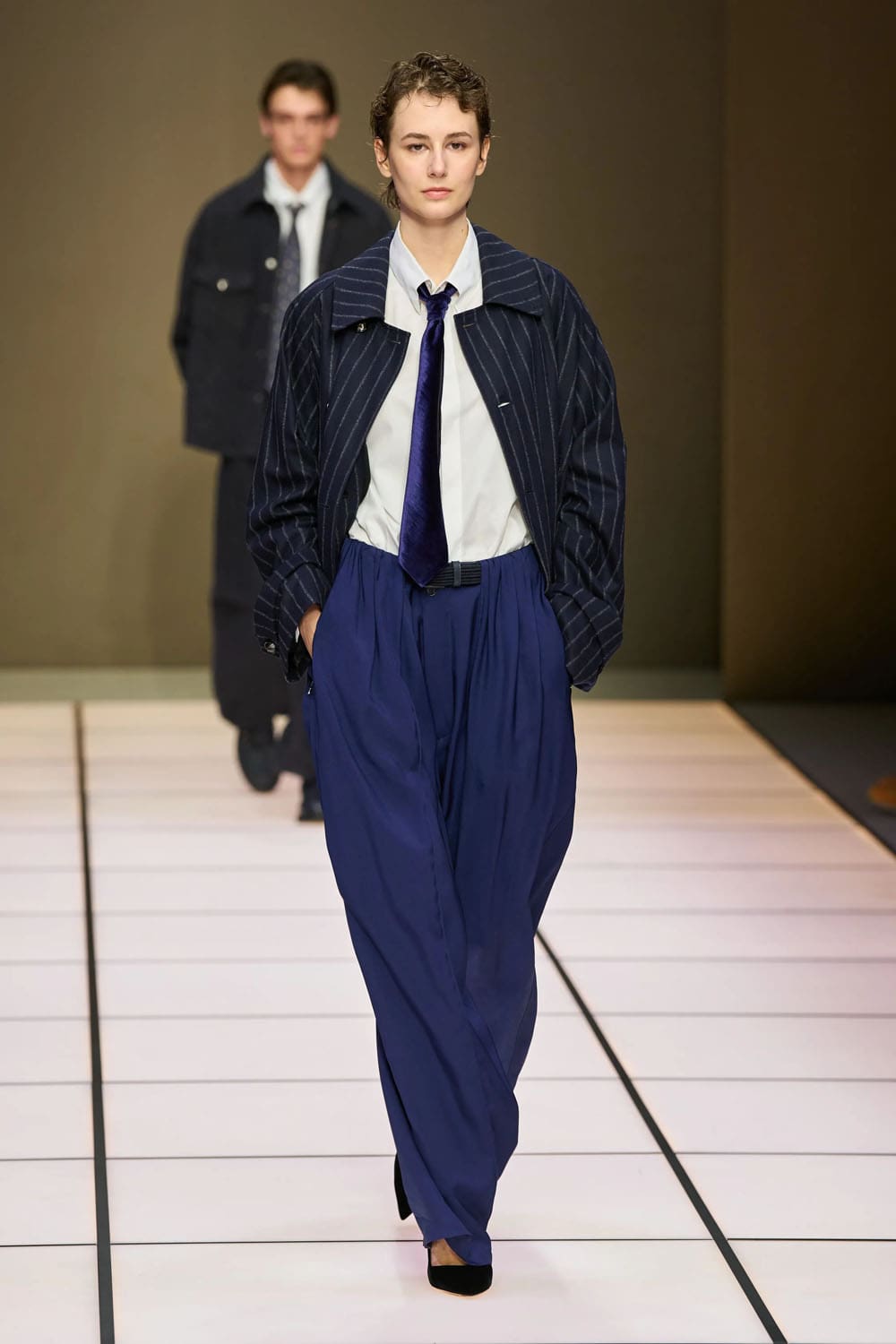
This was not tailoring as costume. This was tailoring as gesture: a soft challenge to Western rigidity, reasserted here in relaxed volumes, elongated proportions, and luxurious nonchalance.
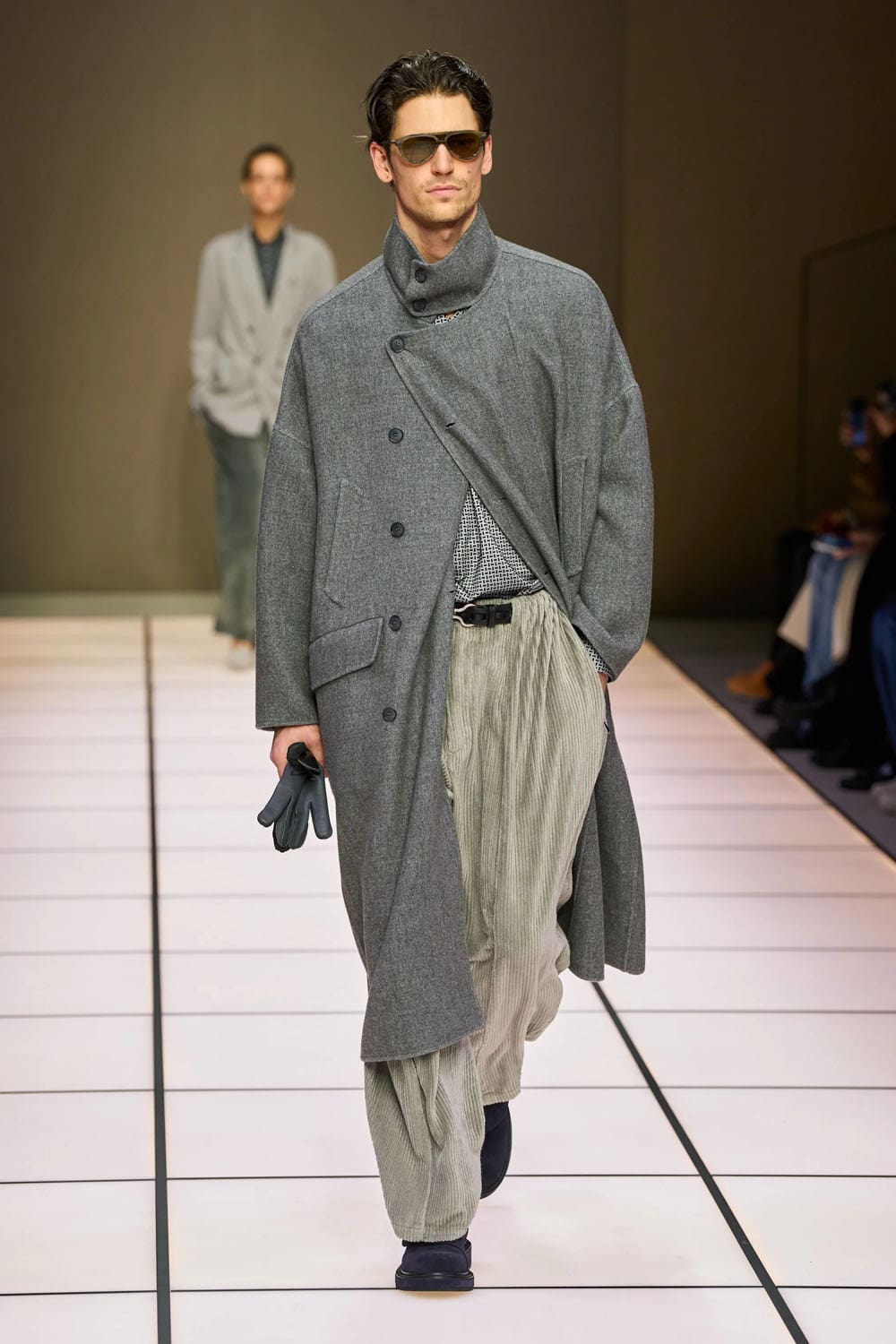
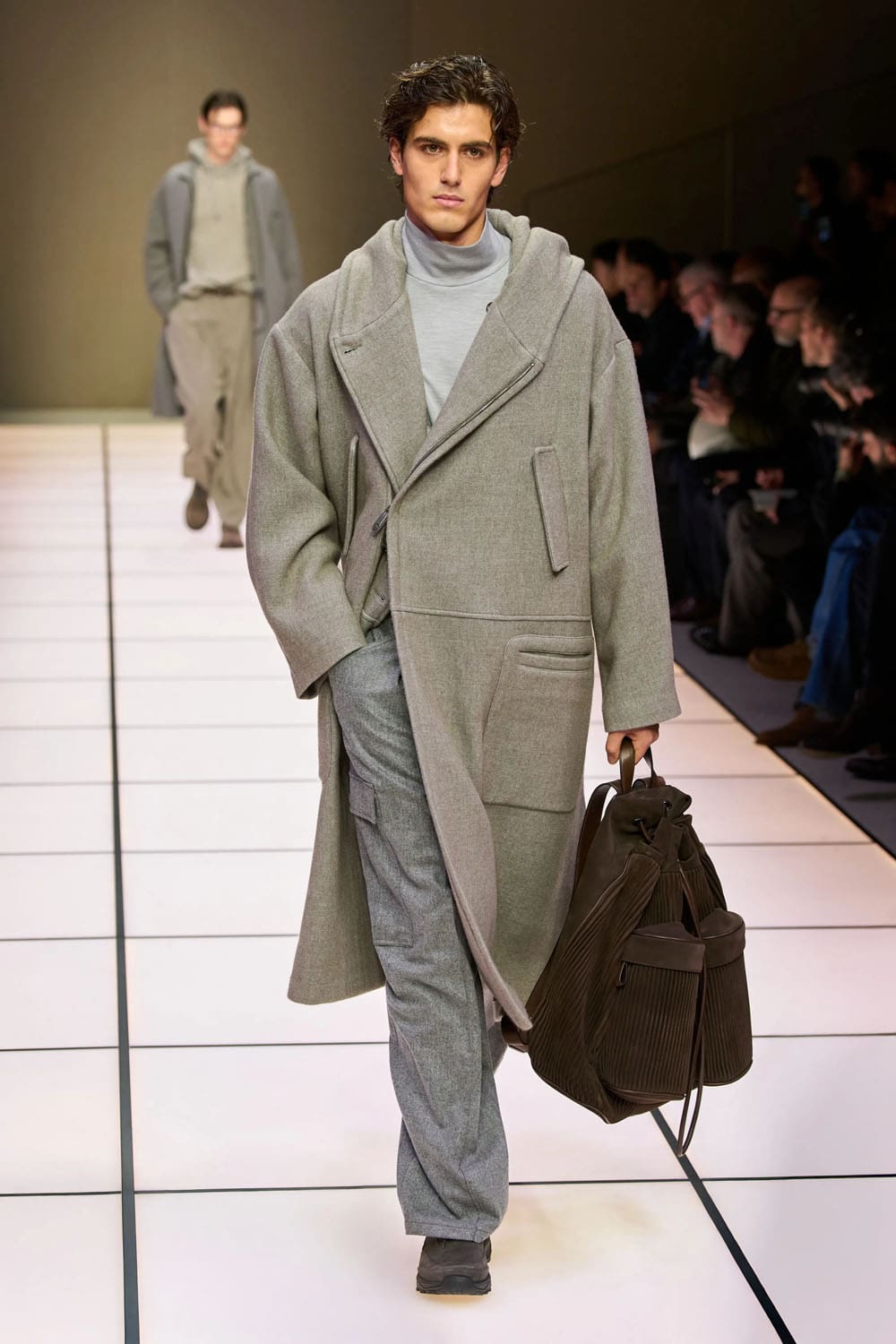
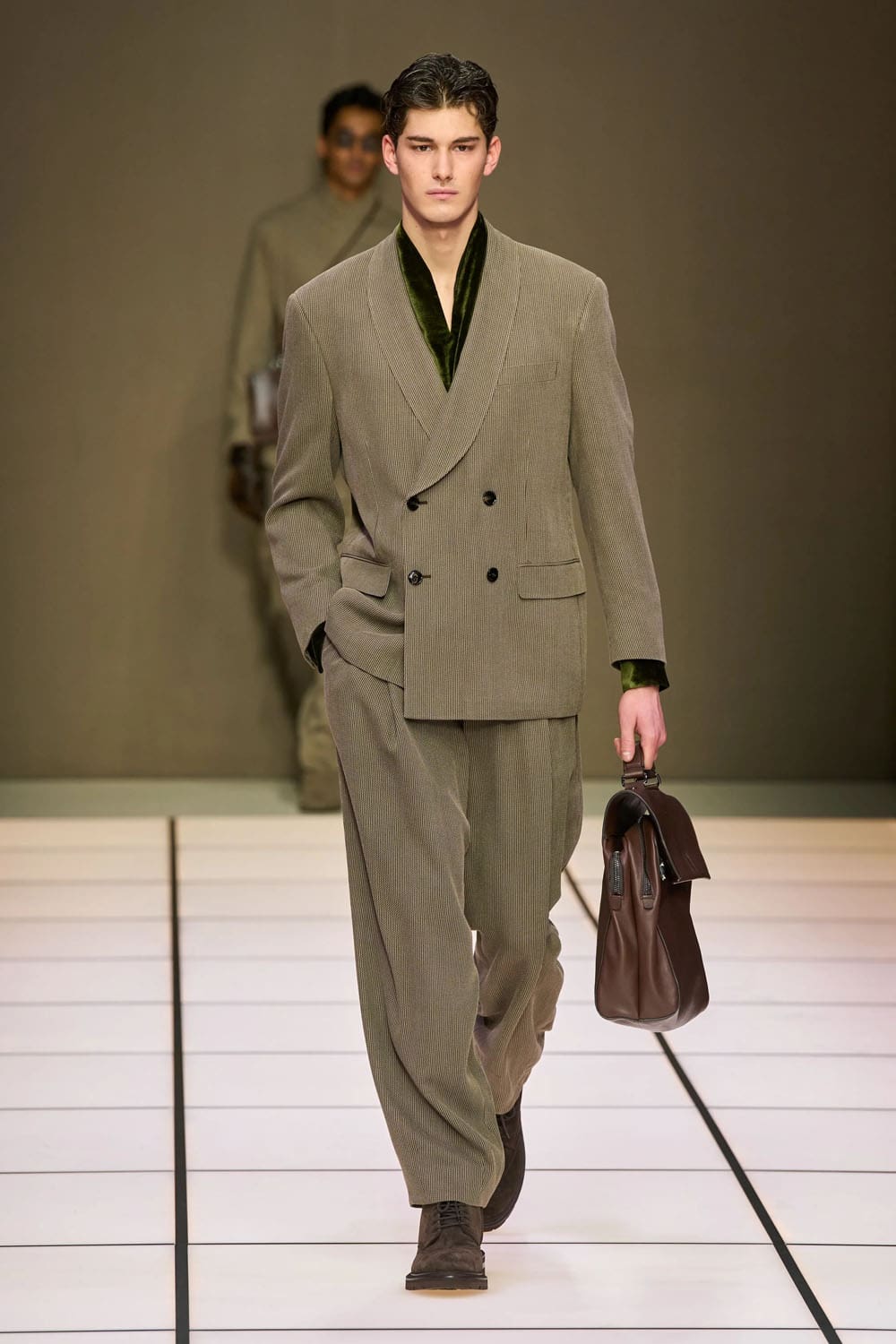
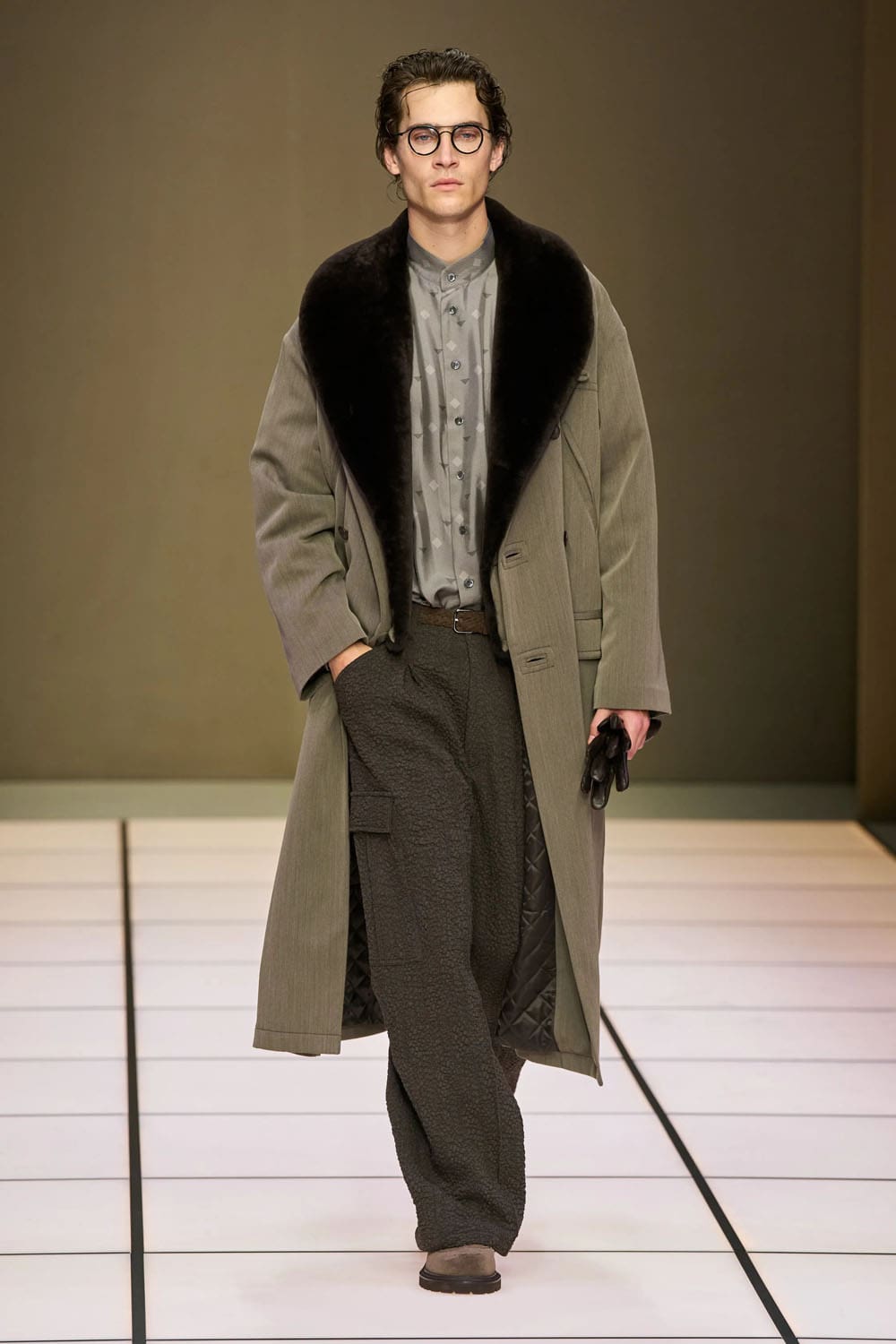
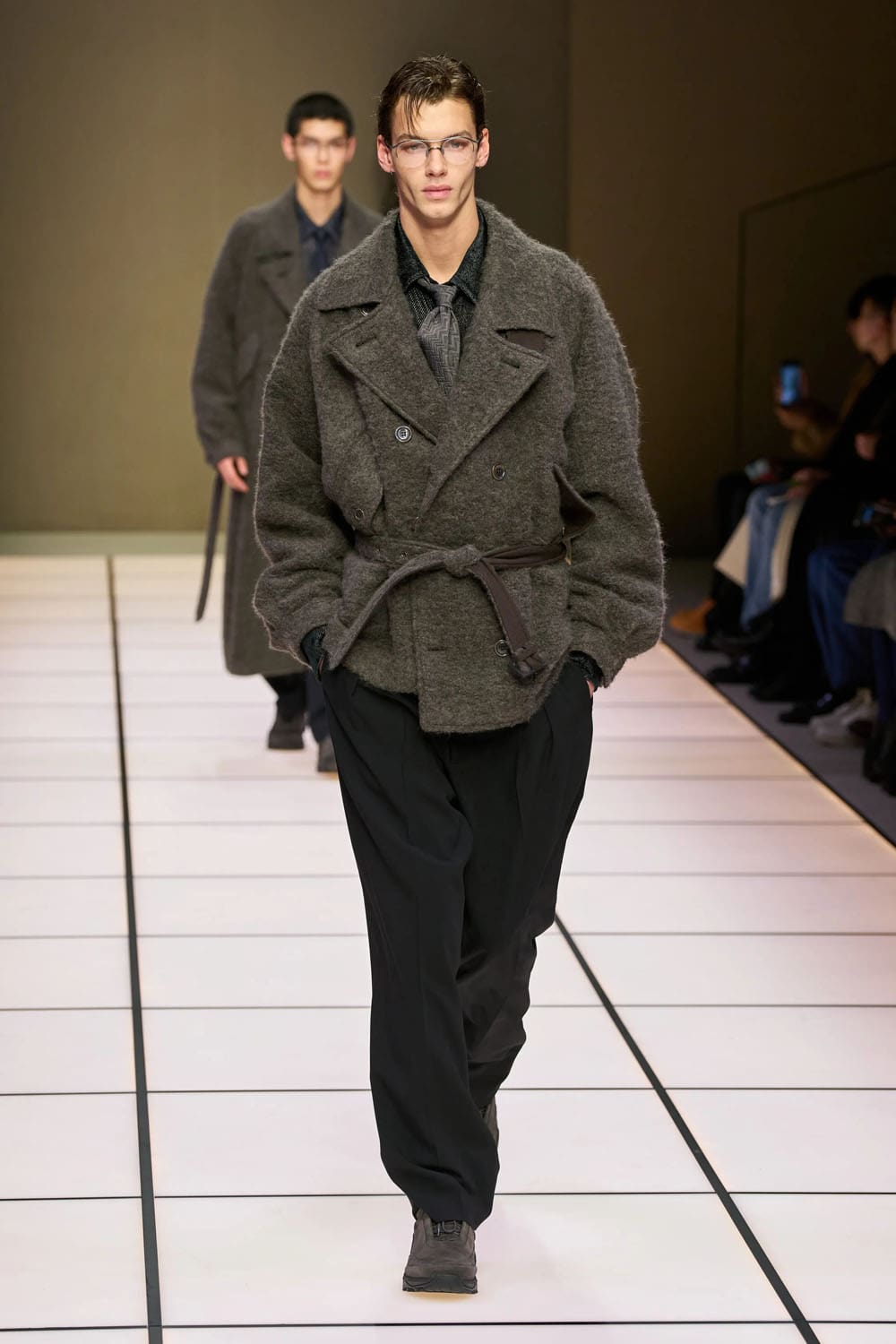
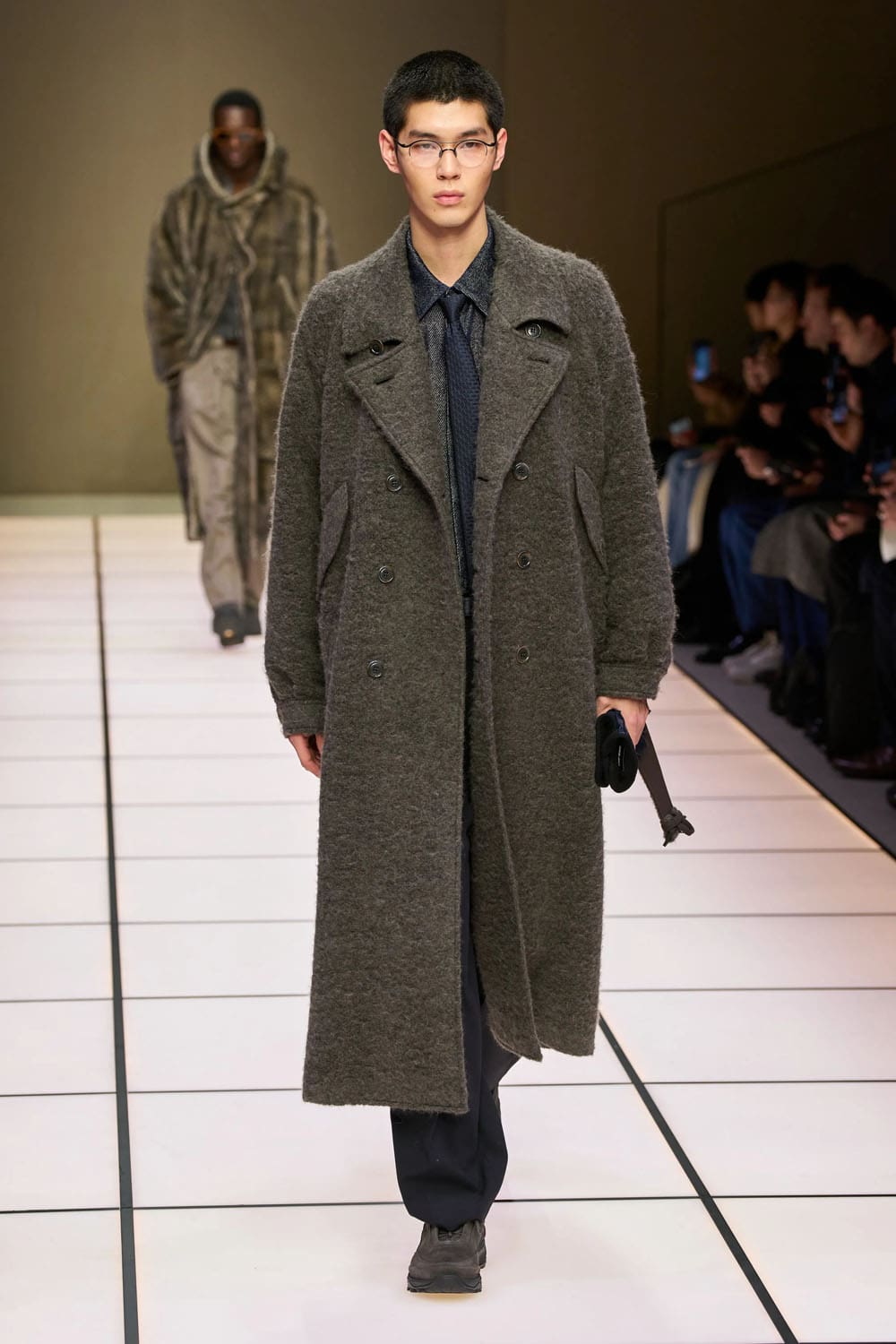
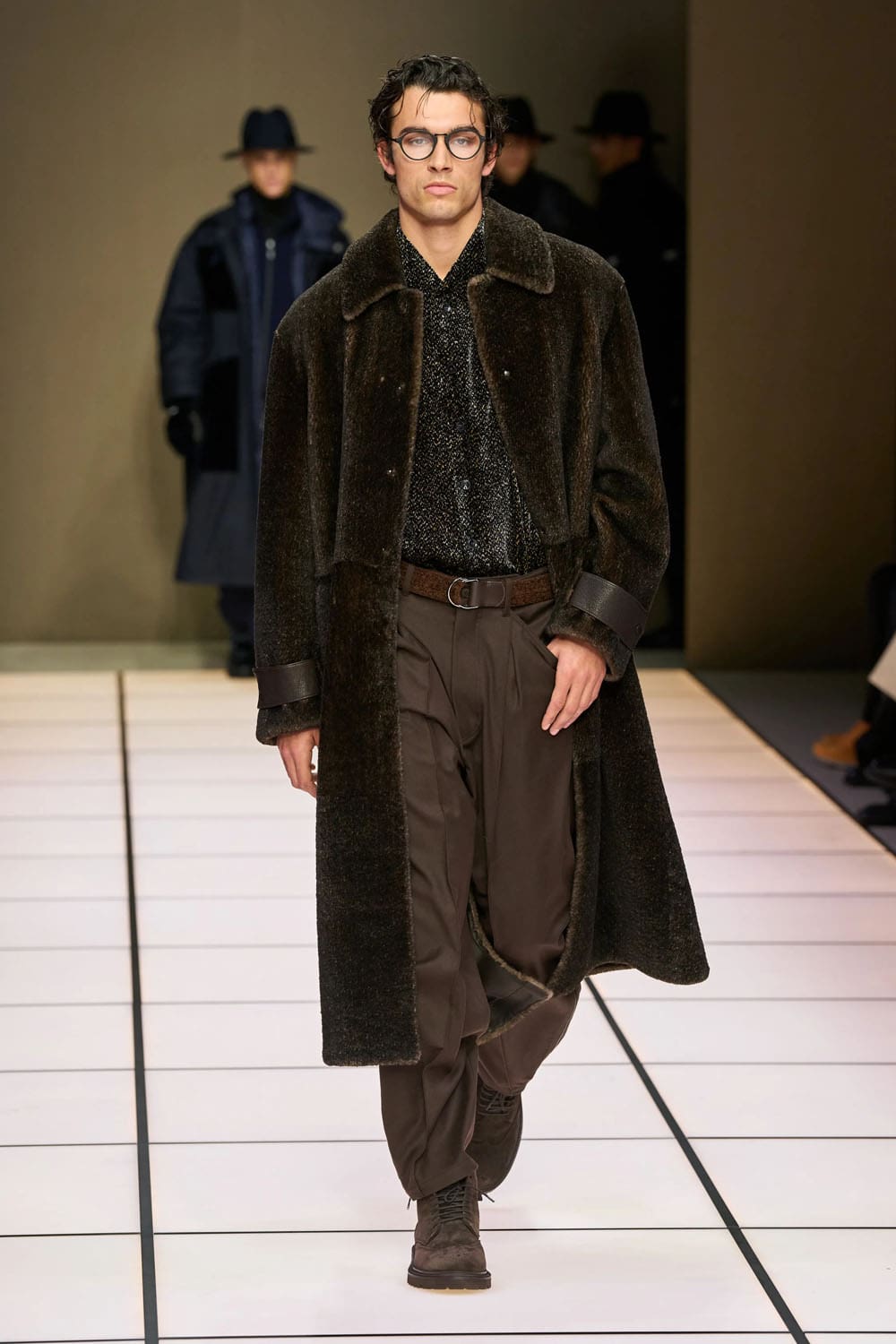
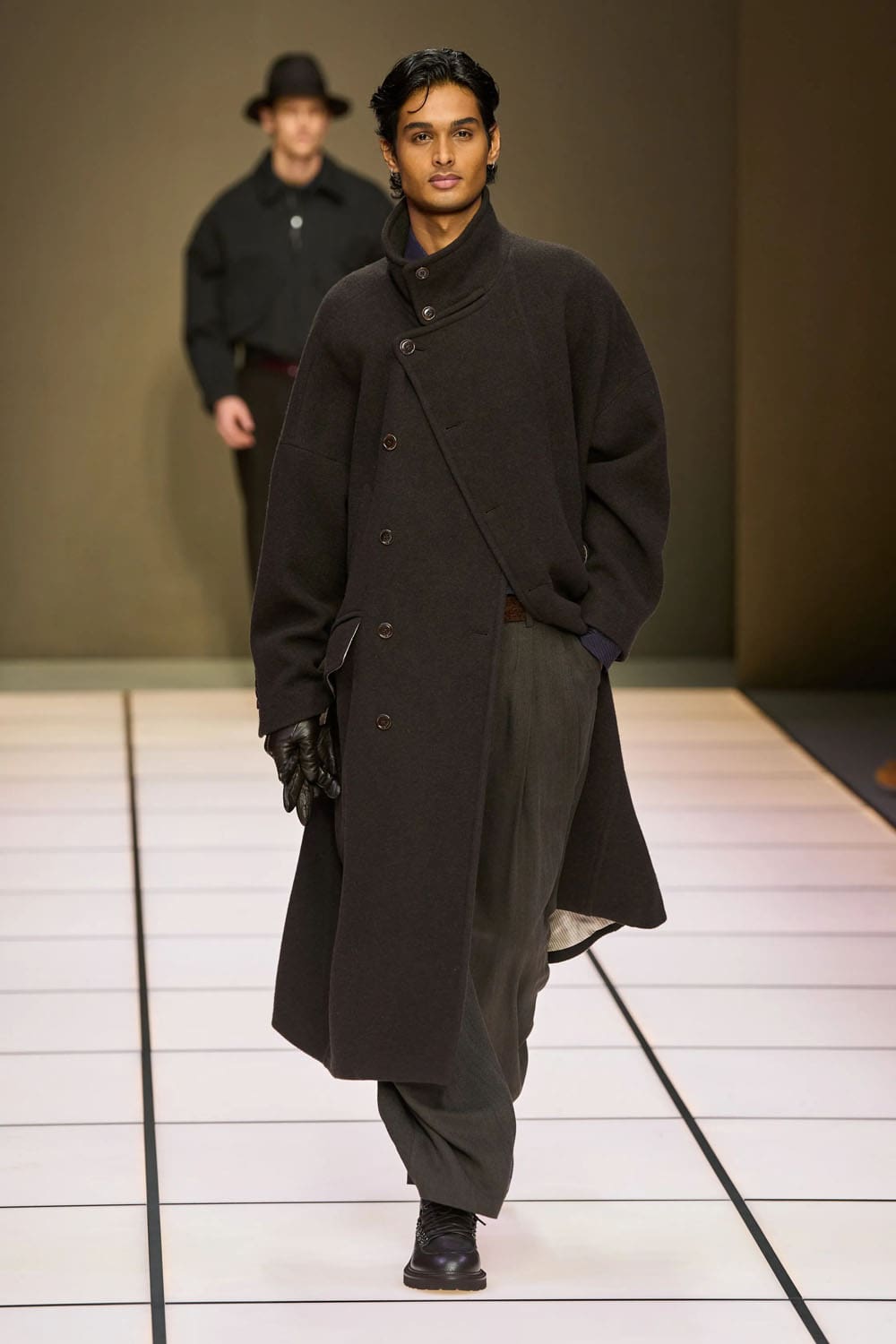
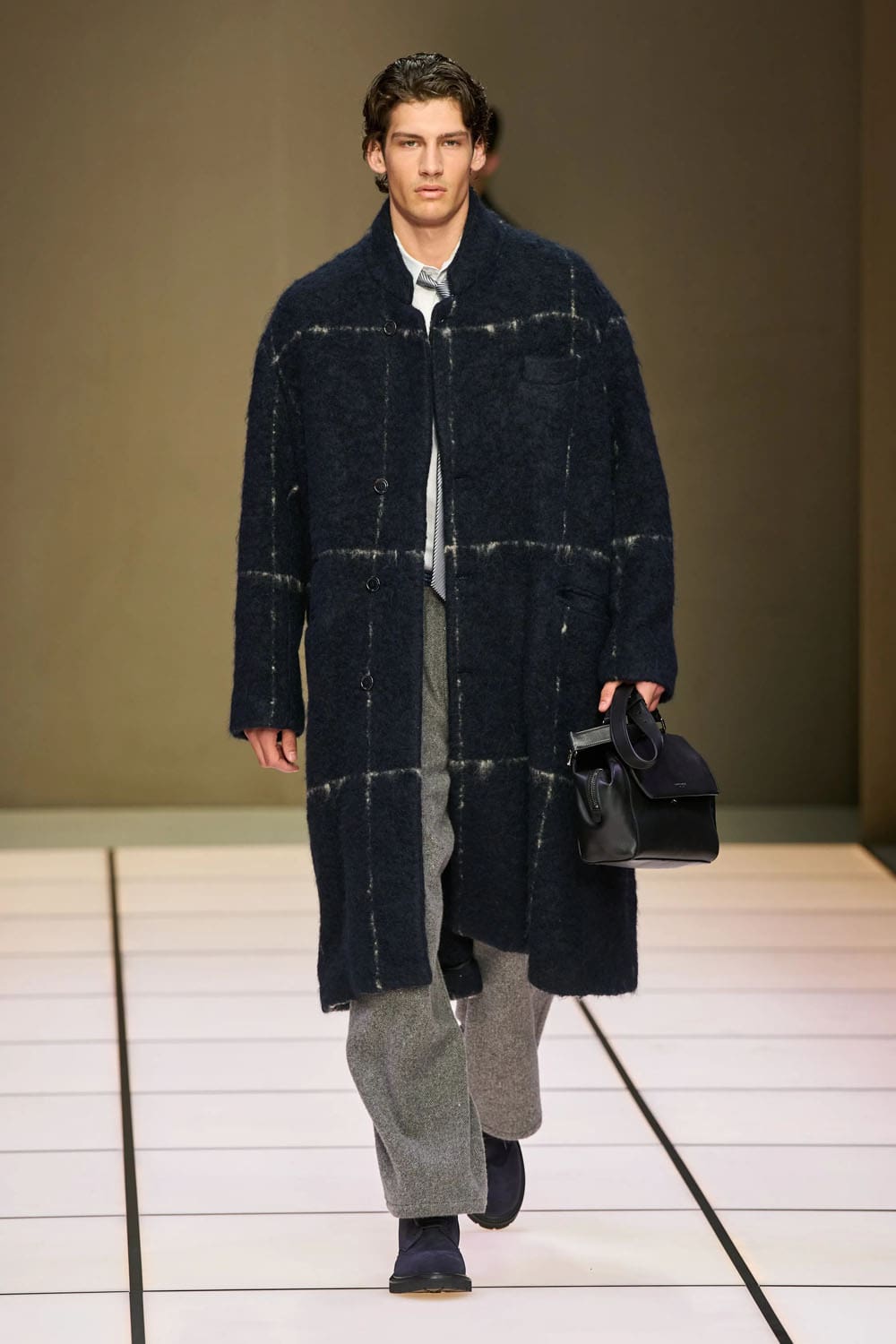
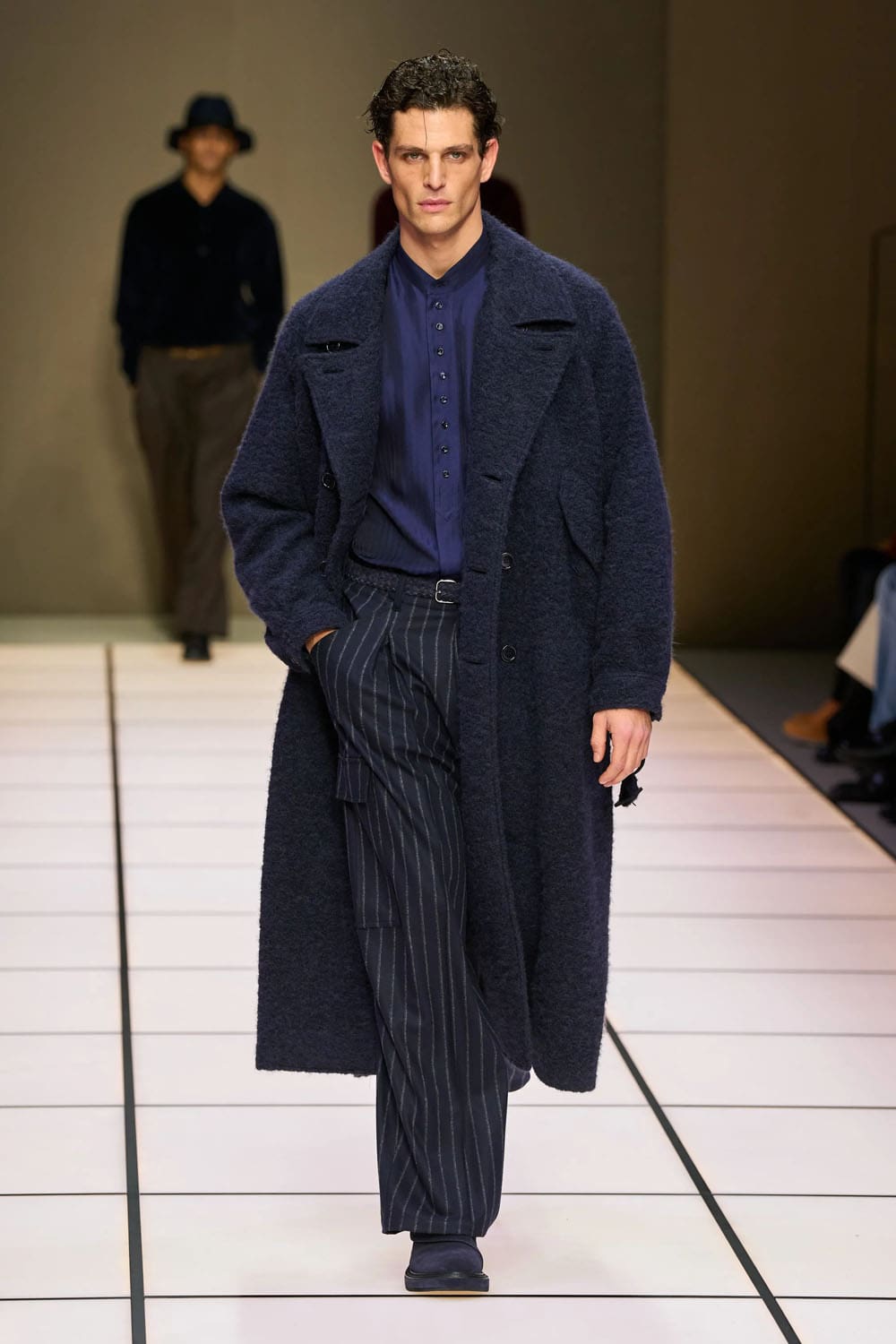
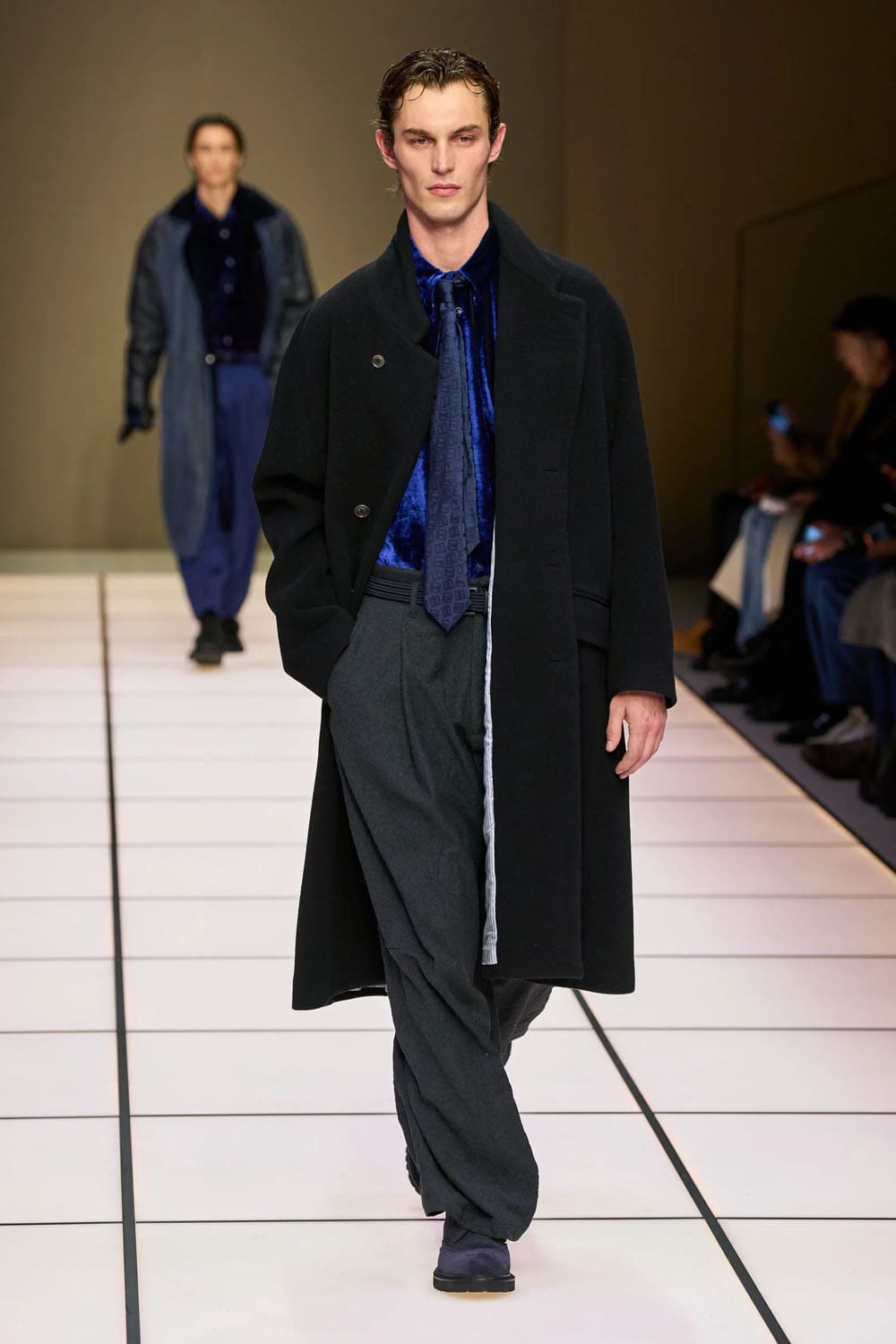
The cut? Subtle alterations. A raised button stance. A lapel line softened to a whisper. But the technical execution was severe. Every garment carried the discipline of Milanese sartoria, yet none of the severity. The jackets skimmed the body. The coats—double-breasted, enveloping, often with an asymmetrical hang—spoke in the idiom of the late 1980s but avoided nostalgia. Dell’Orco was not quoting the archive. He was reactivating it.
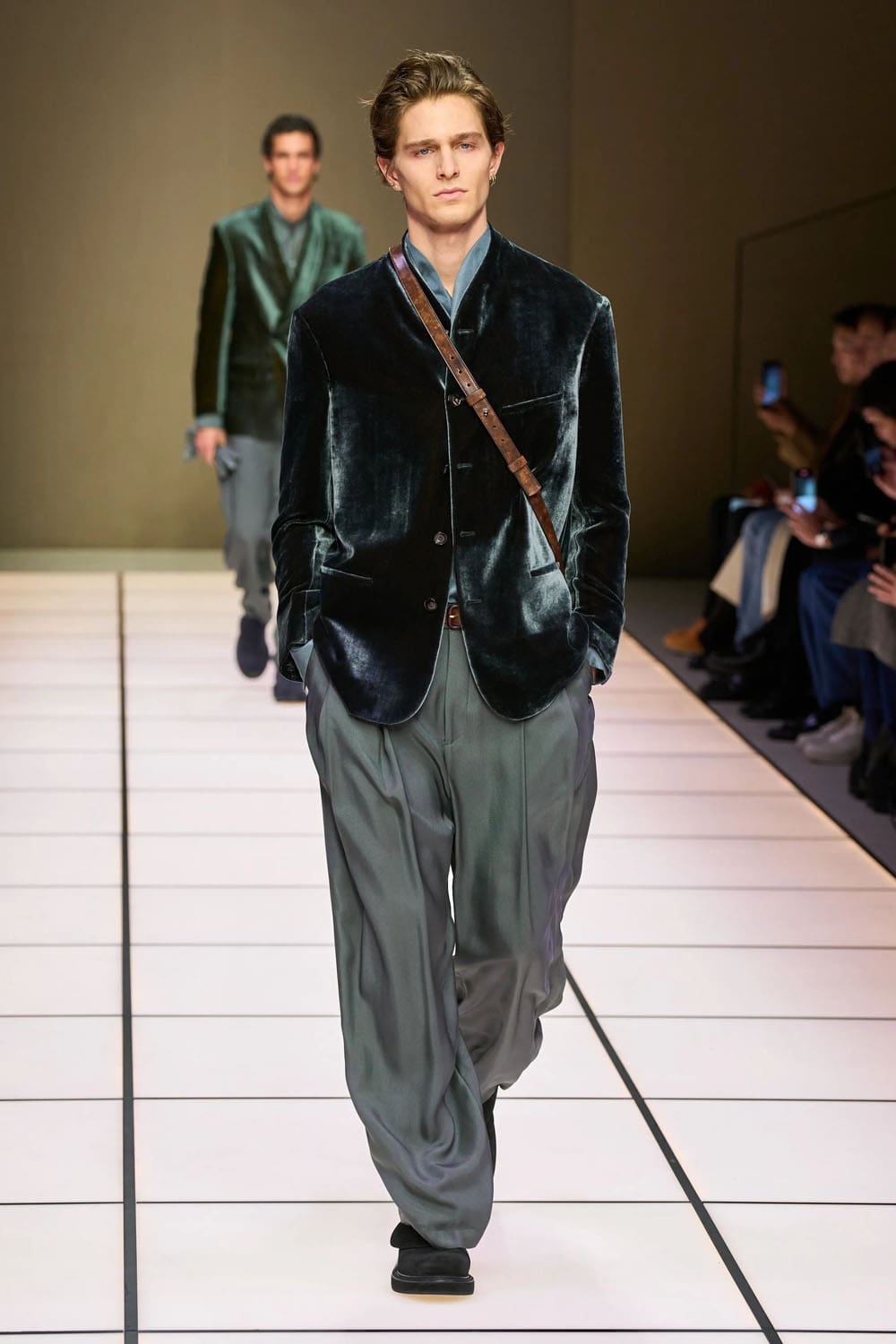
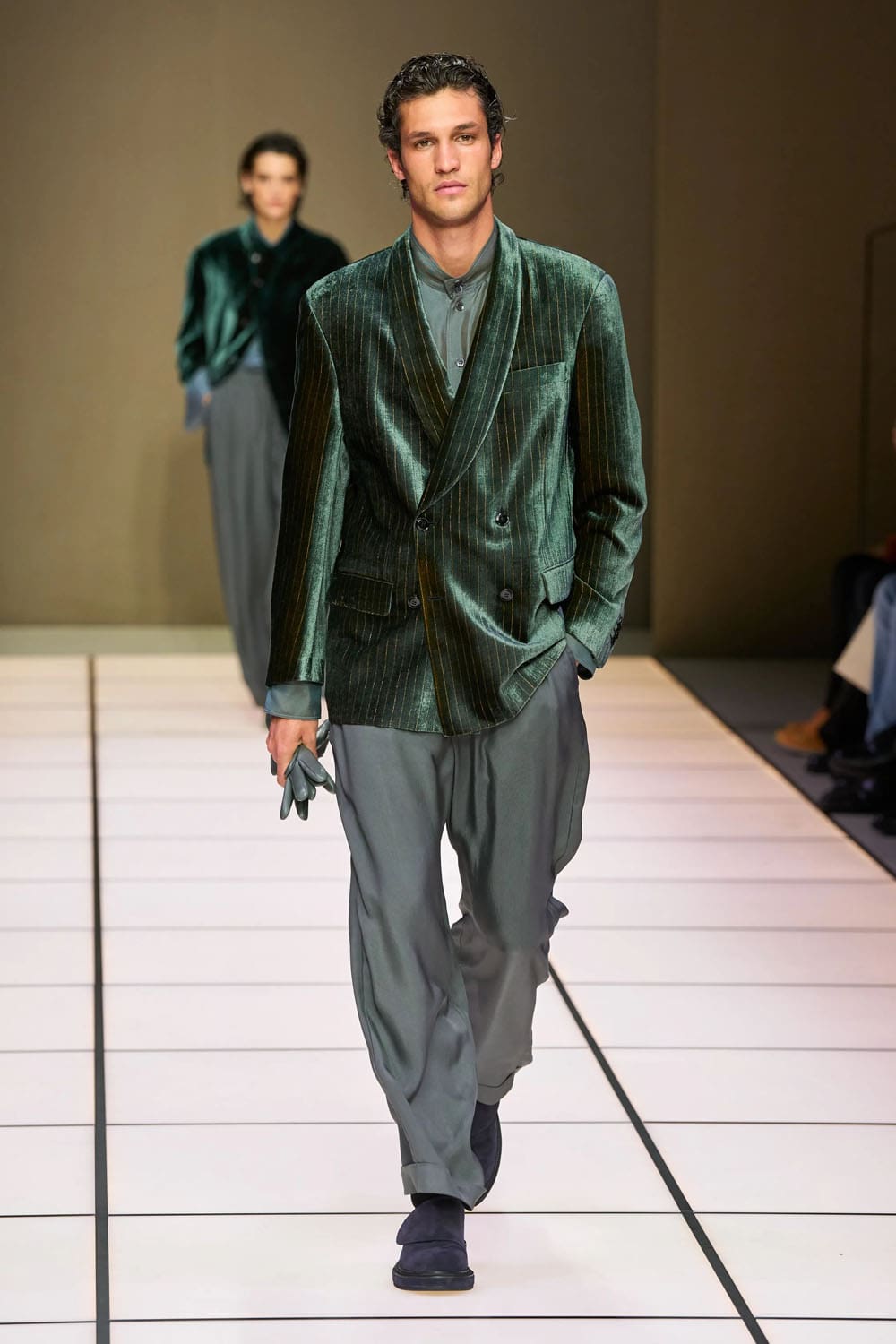
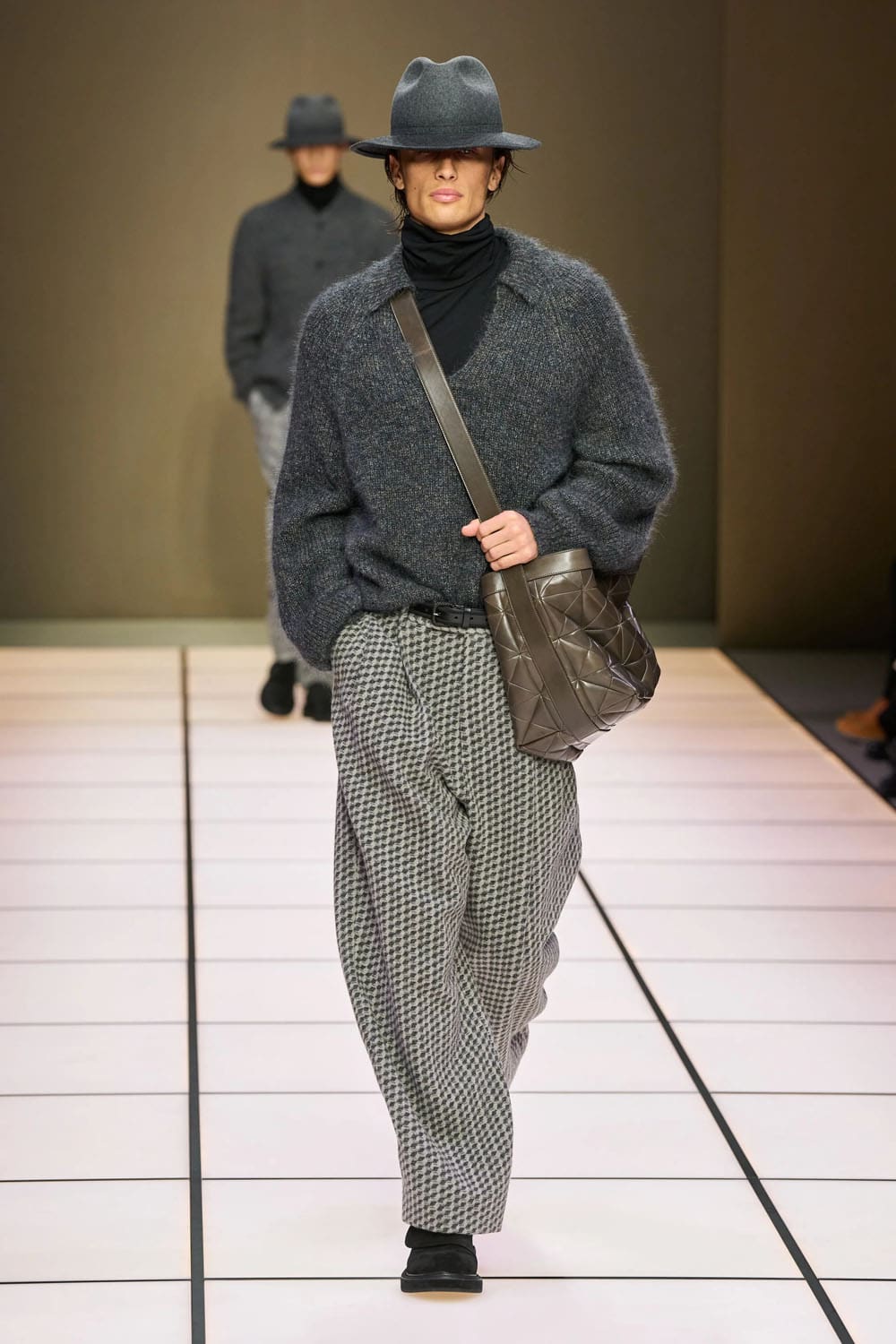
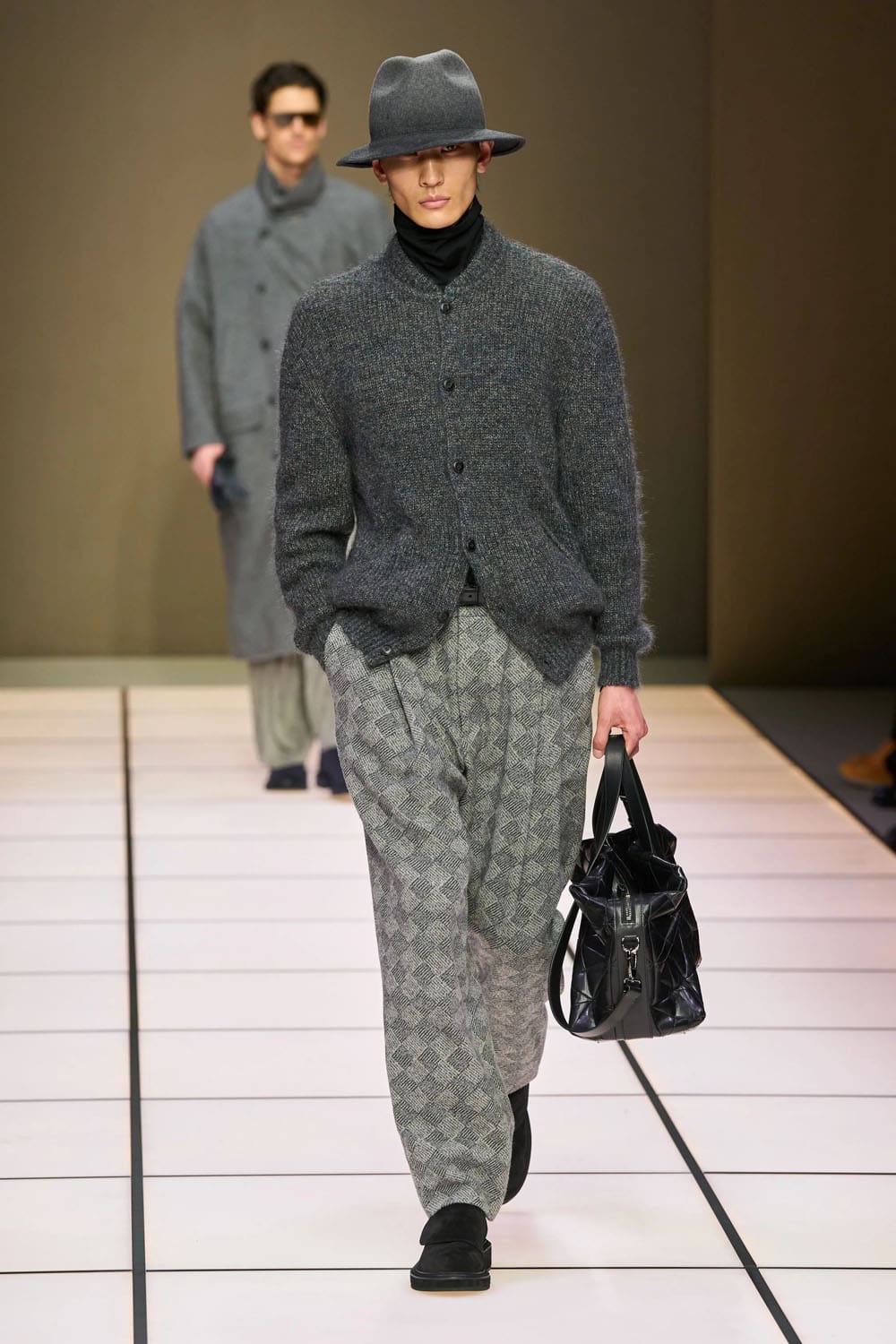
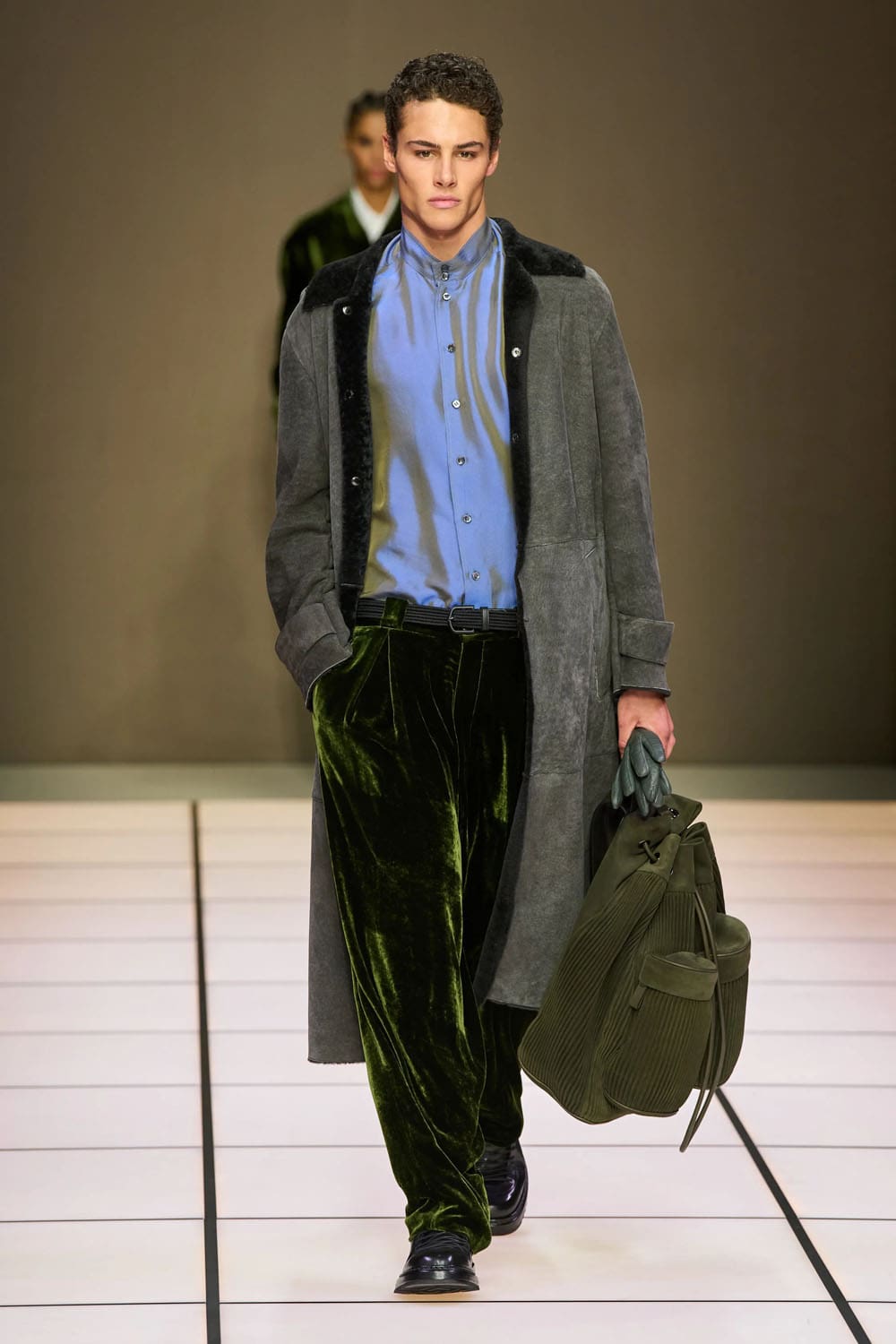
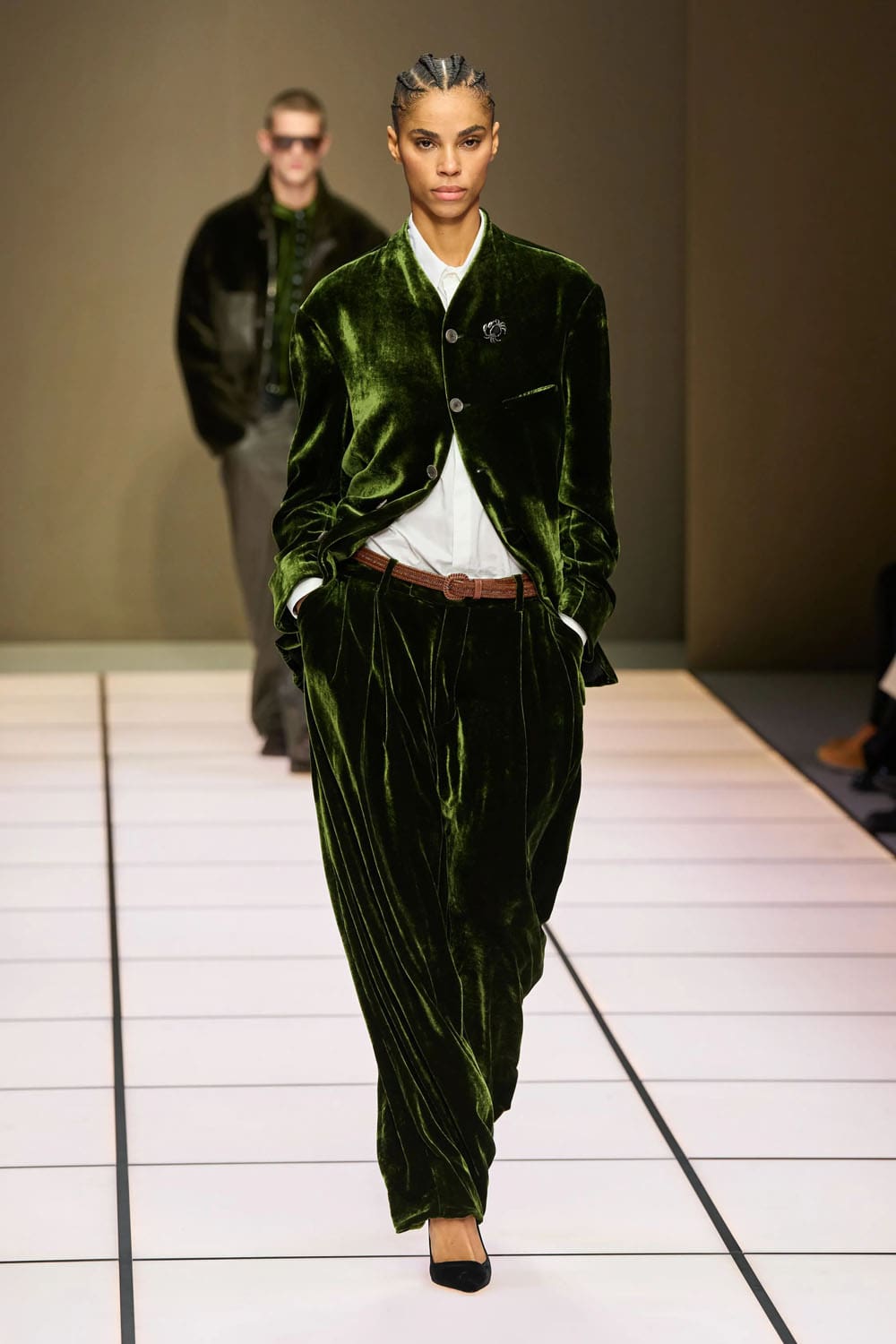
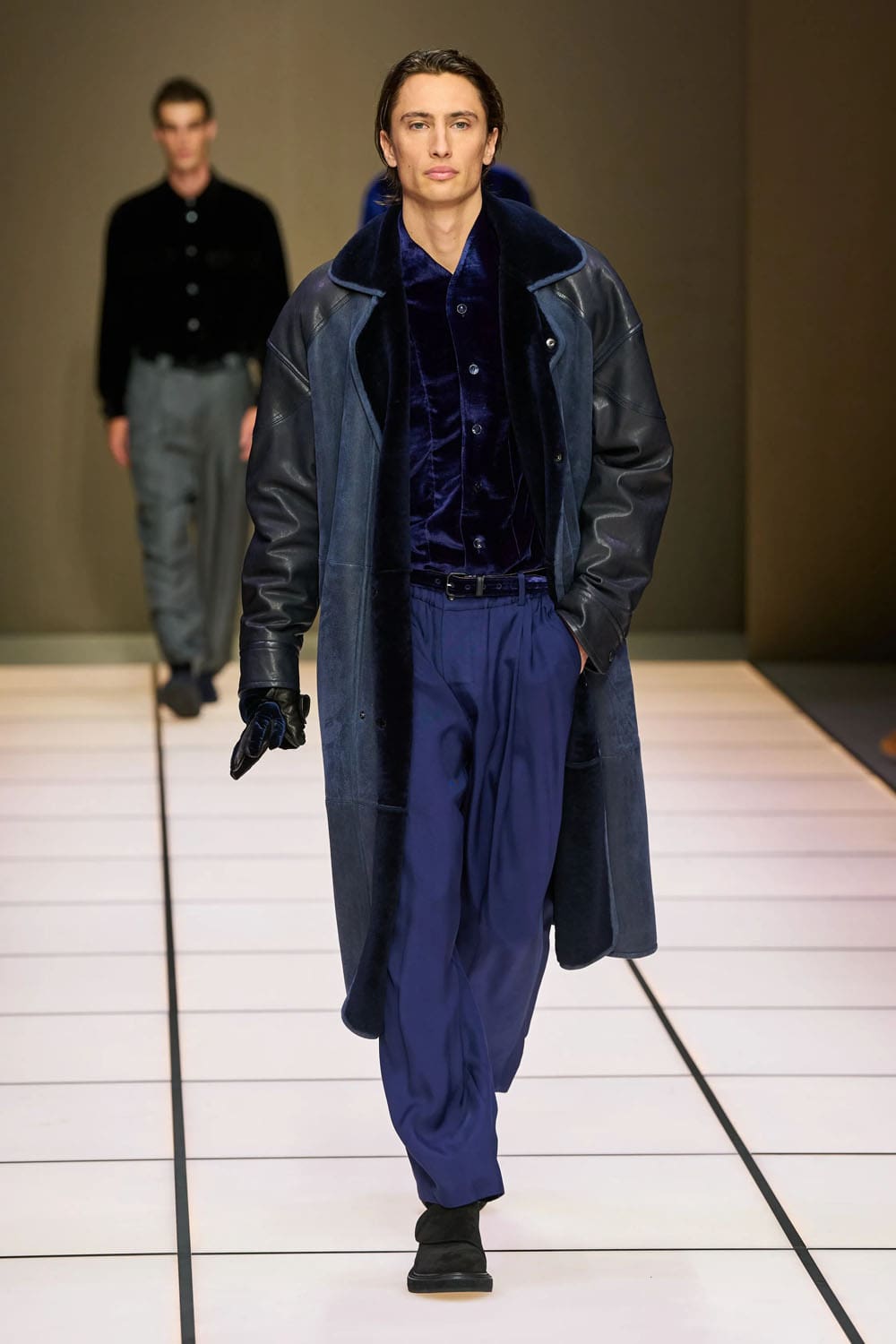
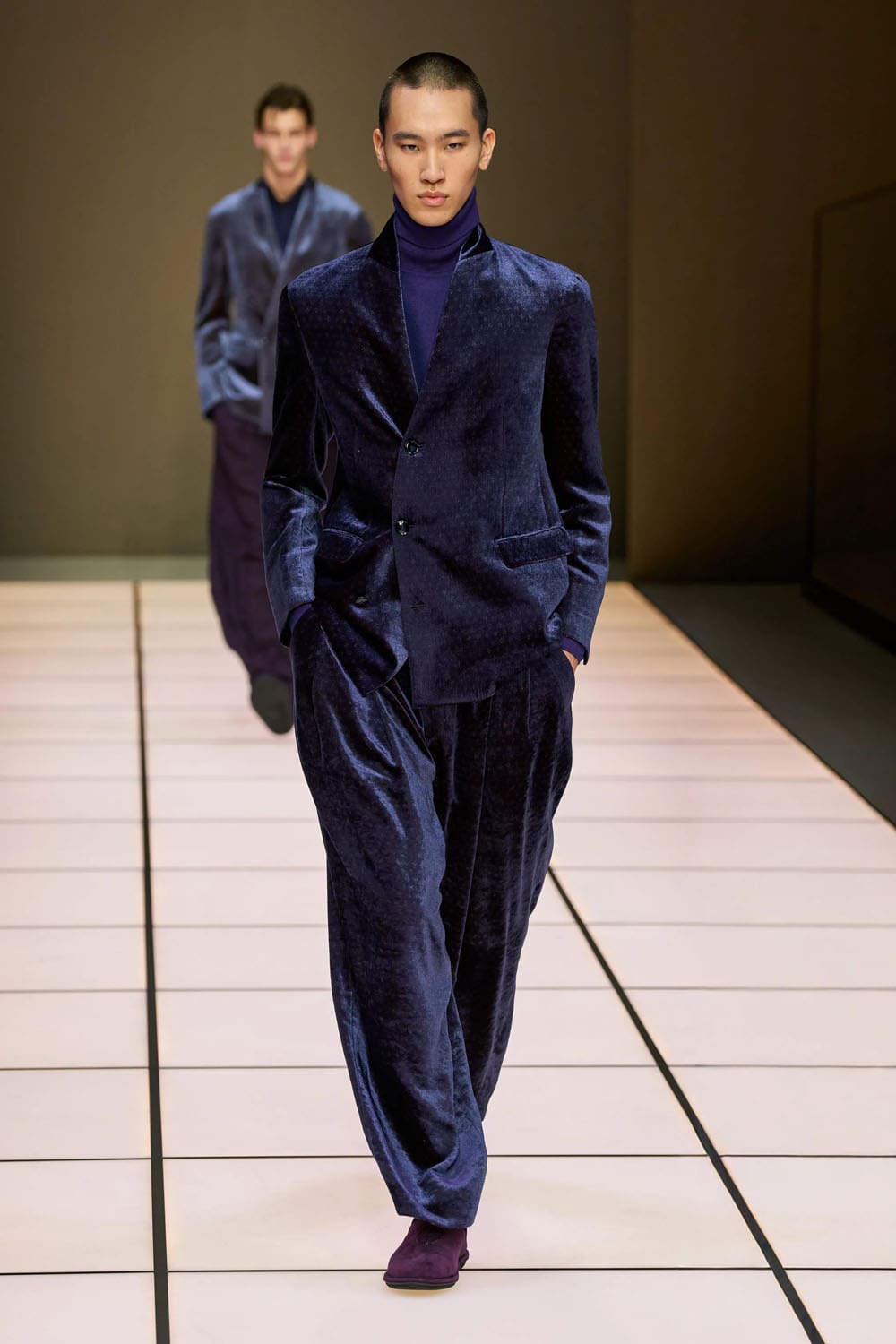
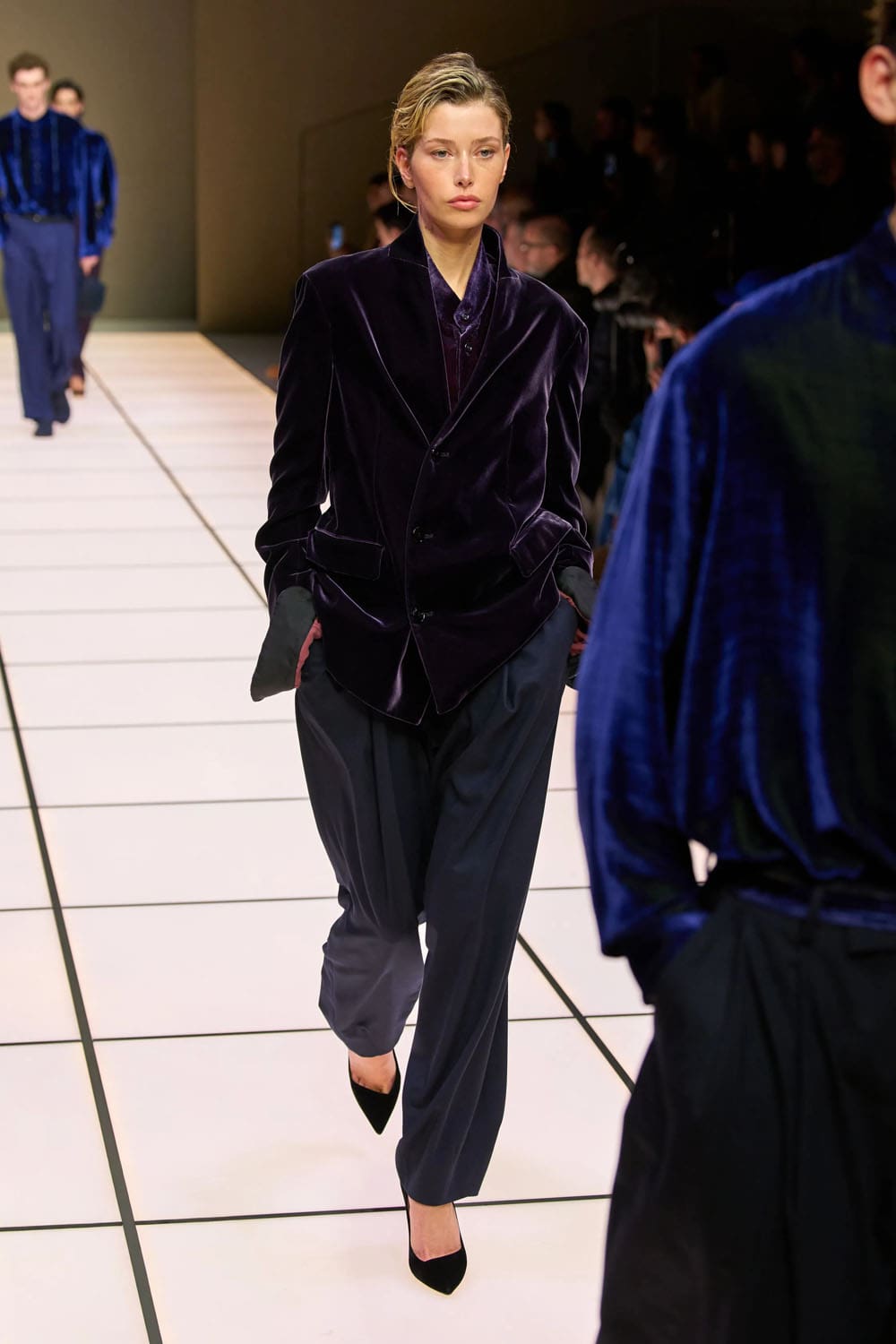
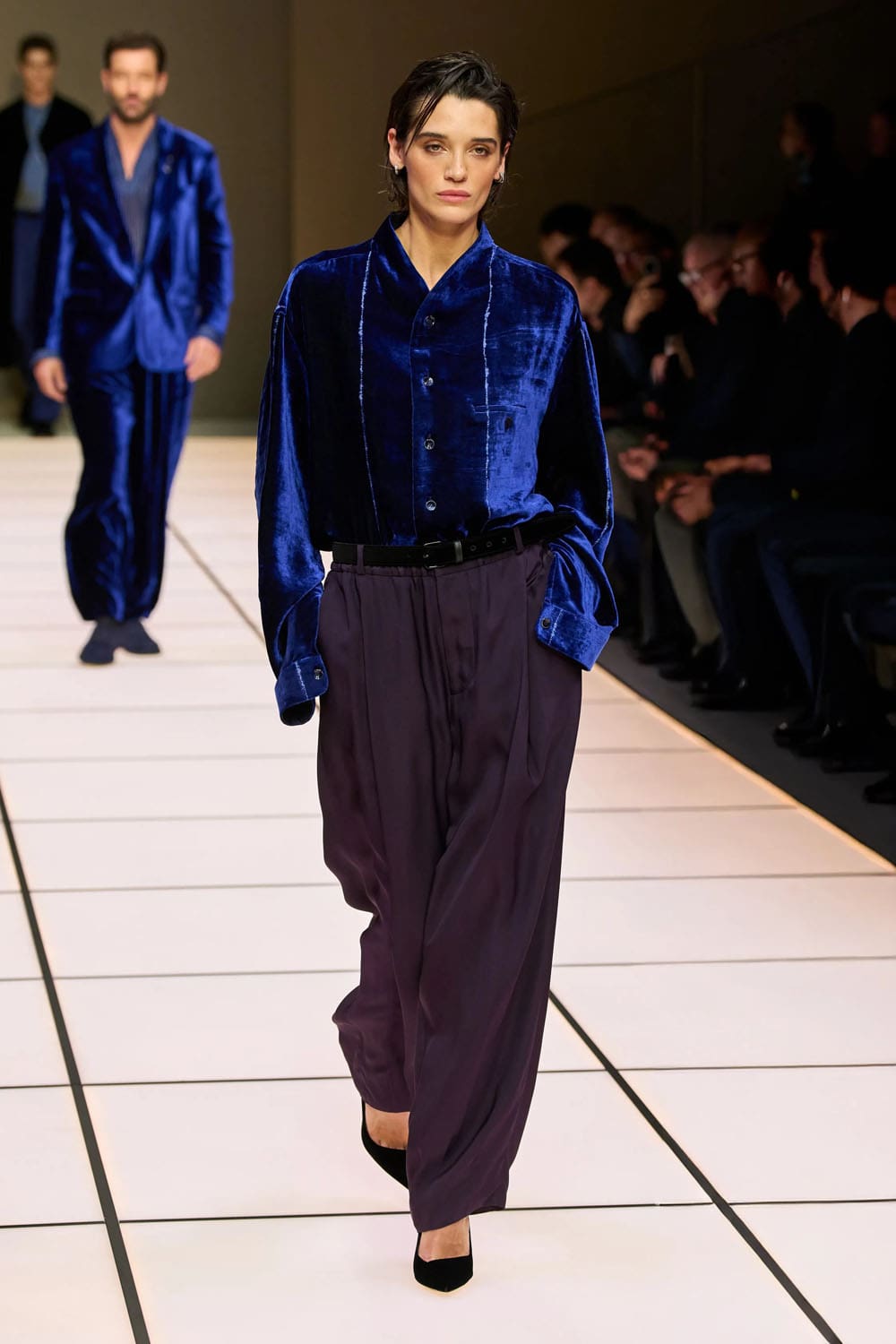
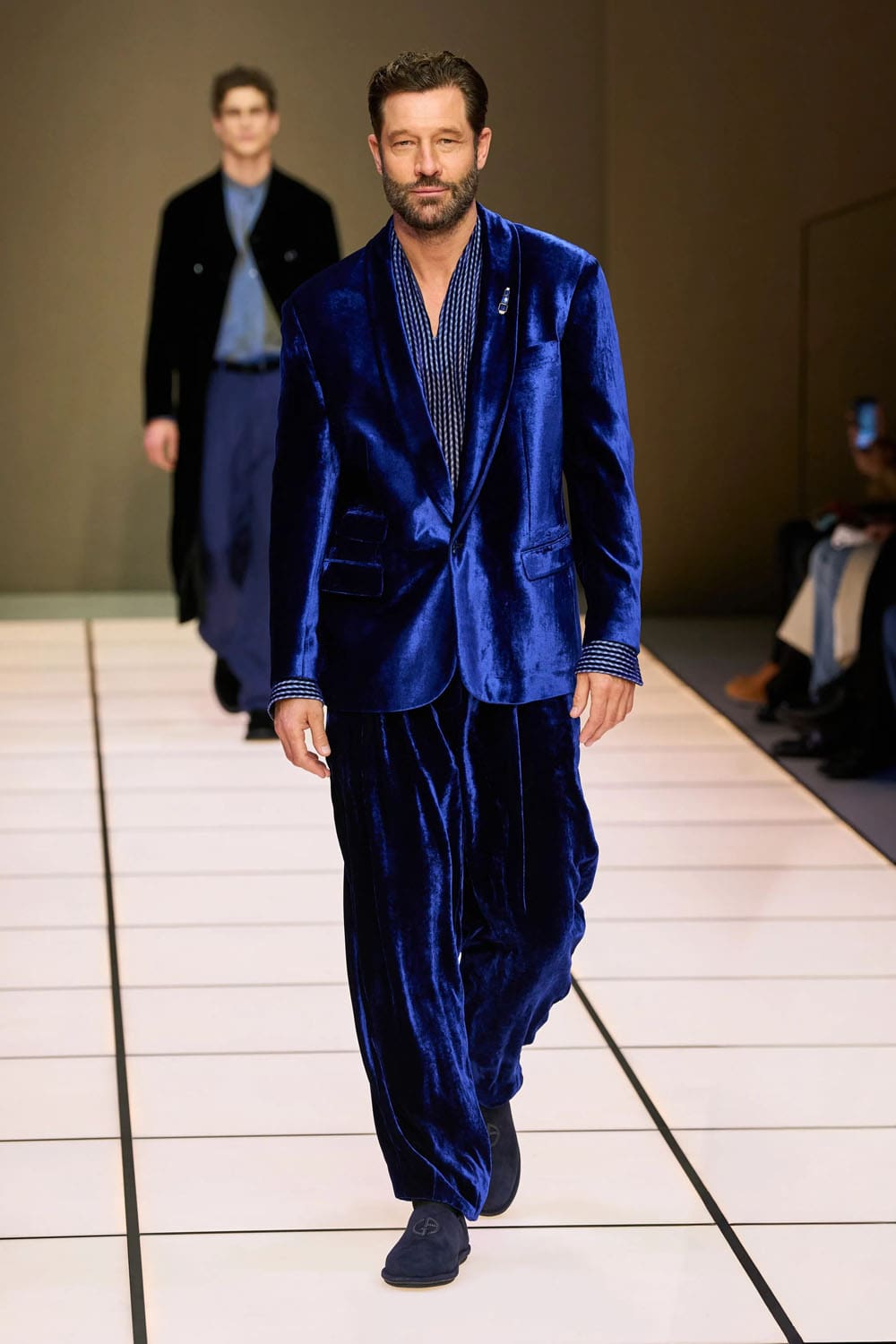
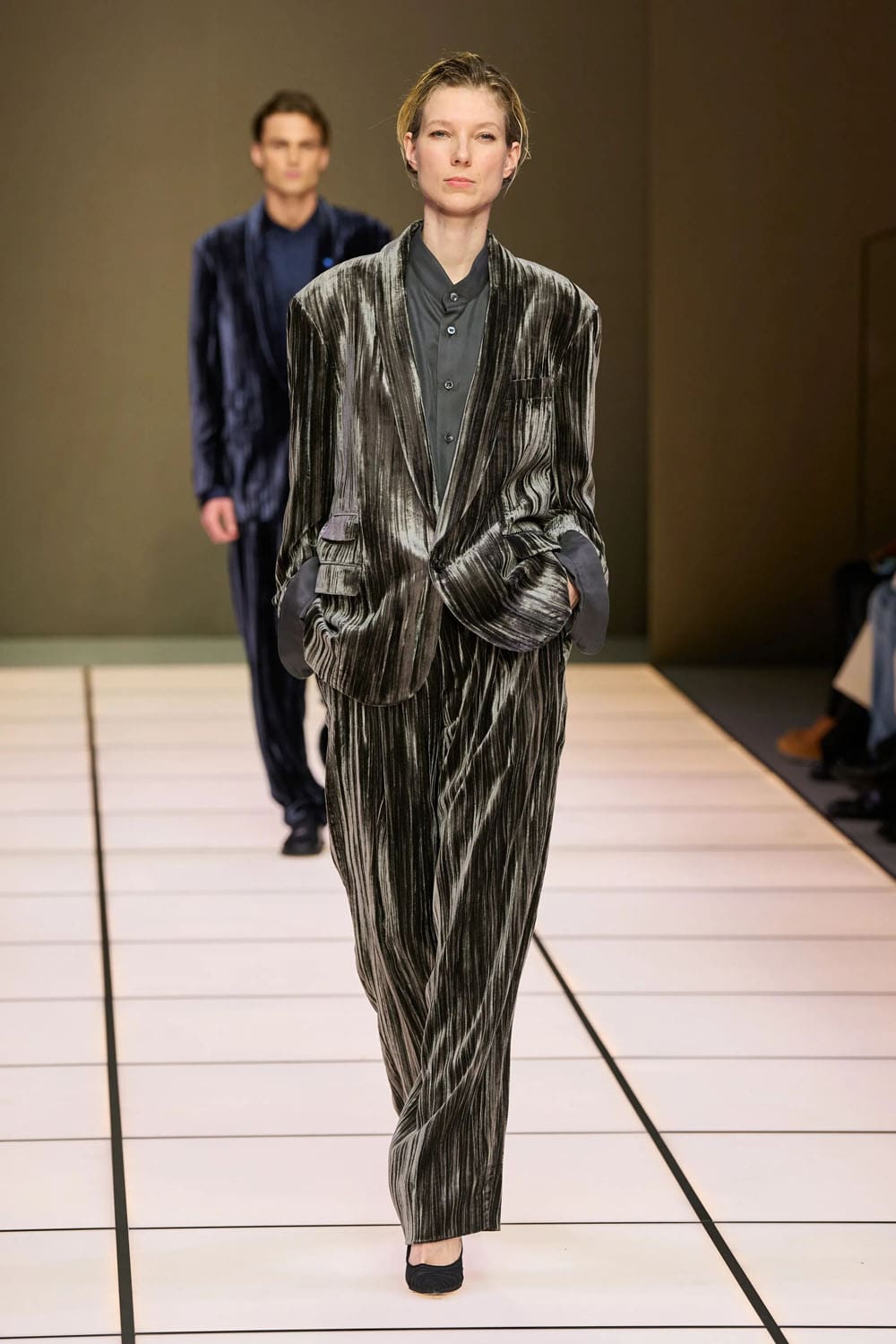
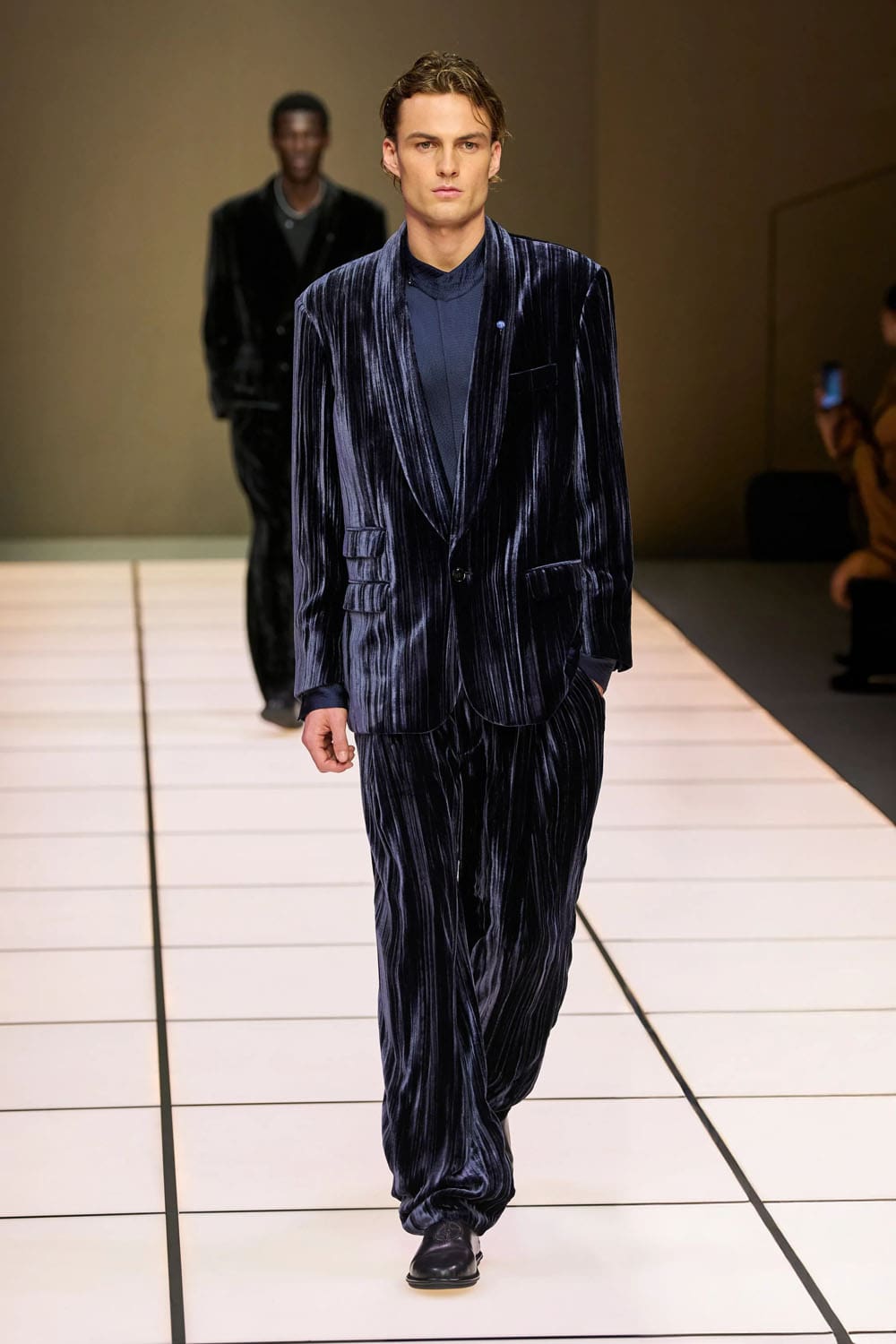
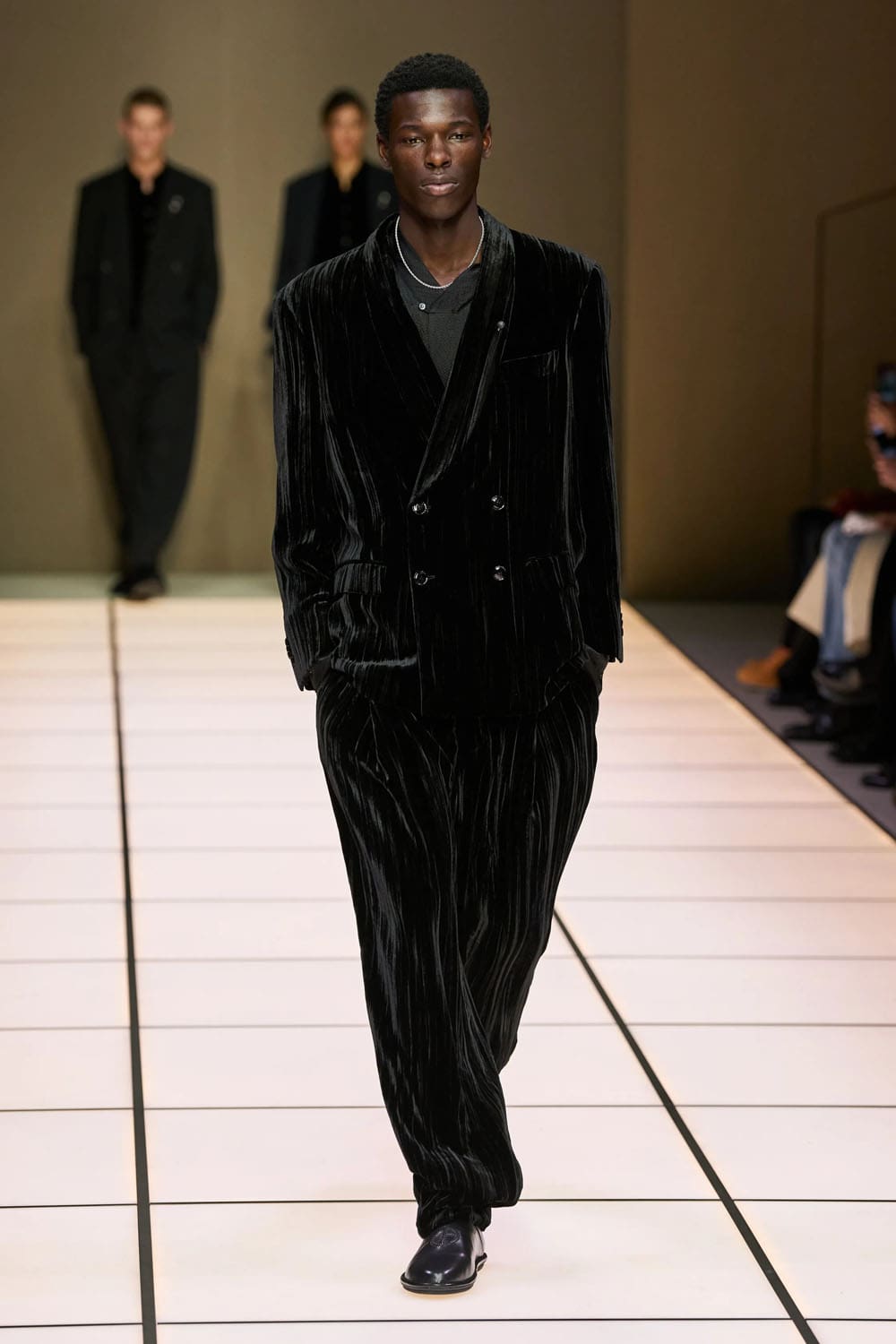
The fabrics — iridescent velvets, treated wools, brushed mohairs — shimmered with what the Renaissance called cangiante: color that changes with light. It’s not a metaphor. It’s a technique, and Dell’Orco mastered it.
Choreographed Stillness
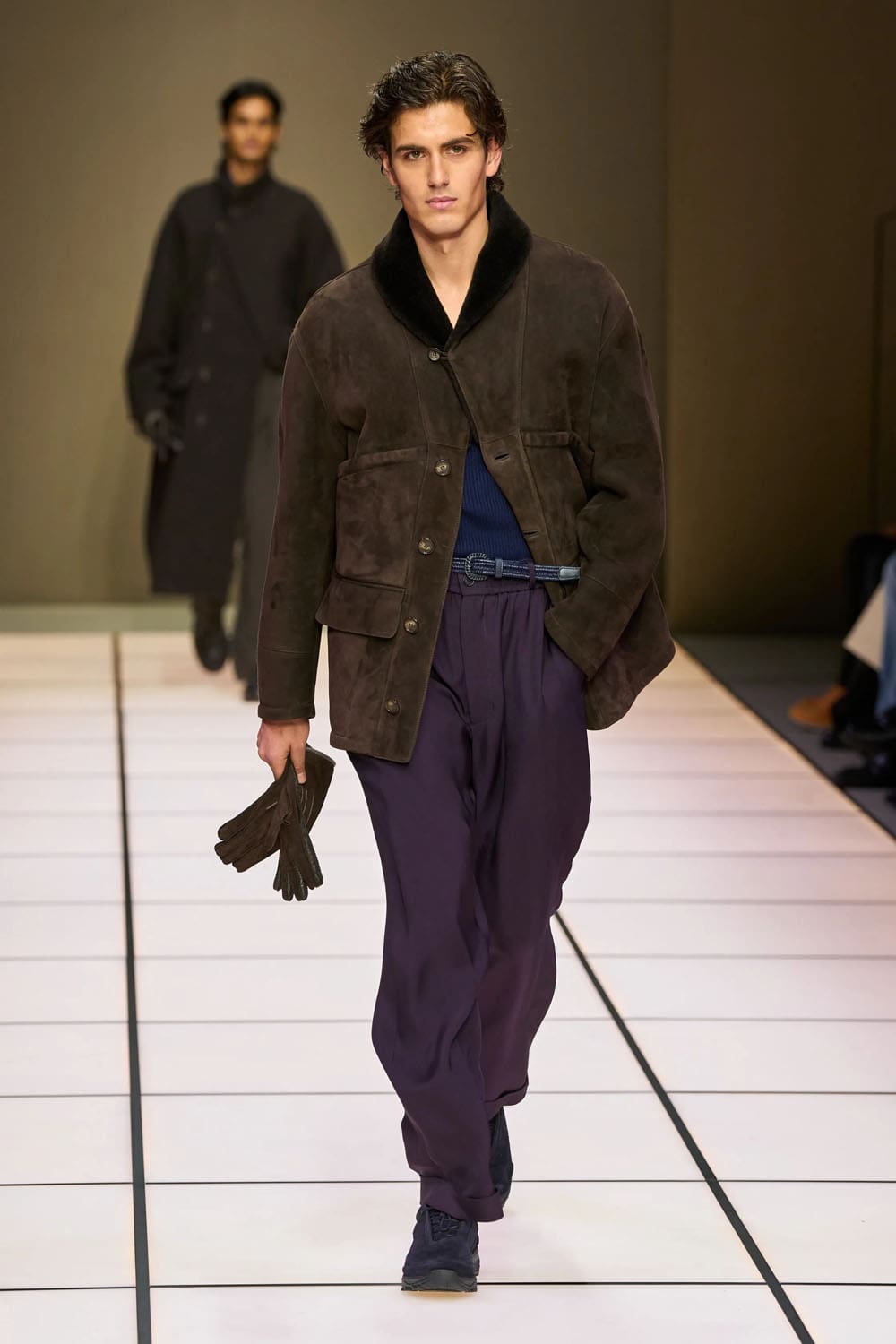
Accessories were not layered or flaunted. They were lived-in. A pair of unworn kidskin gloves tapped against a thigh. Spectacles removed with a brief, almost theatrical pause. Each action reinforced a character: the man who does not perform fashion, but inhabits it.
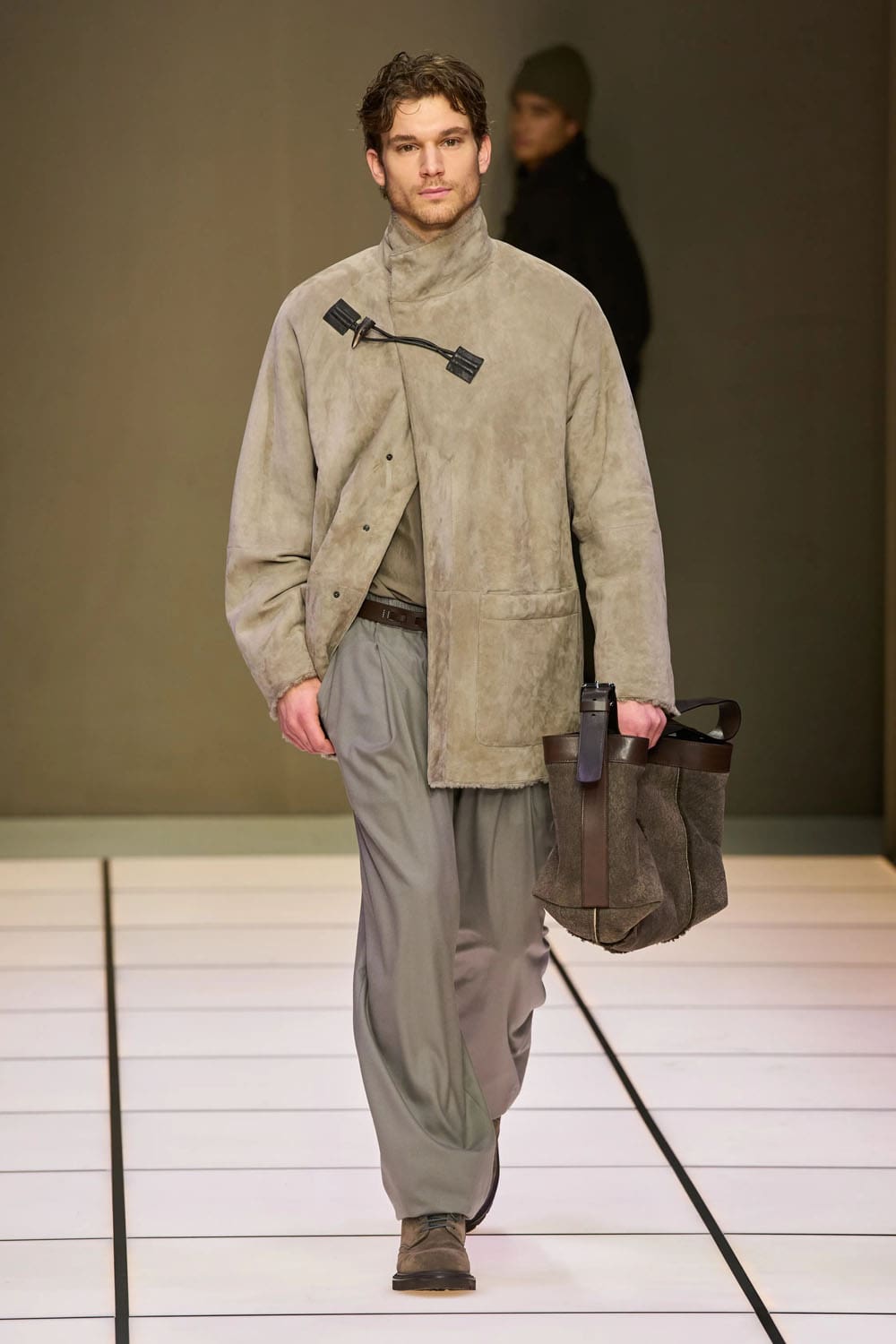
Even the diamond pattern, which ran across quilting, trousers, and satchels, was less motif than texture. There is no branding here. Just presence.
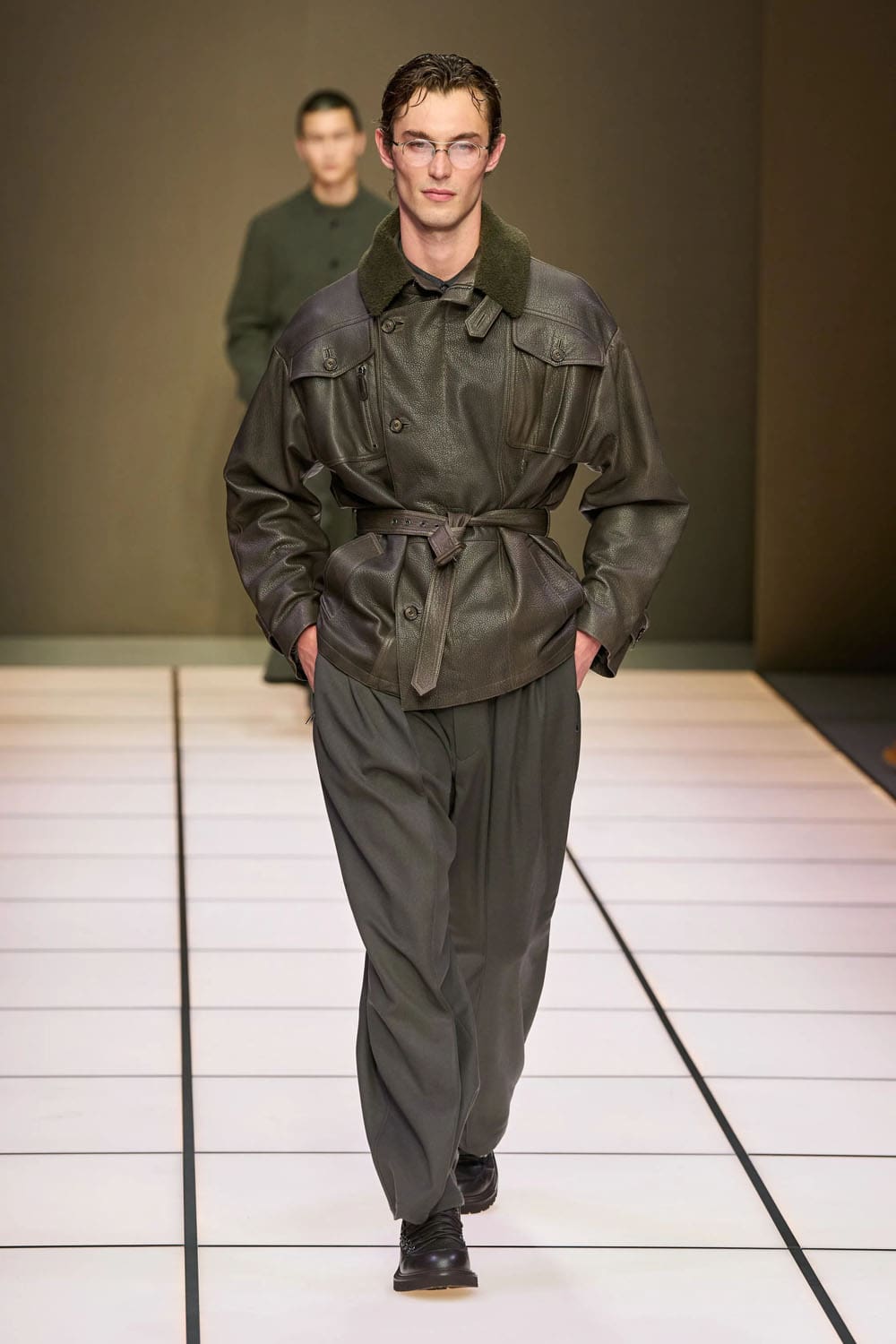
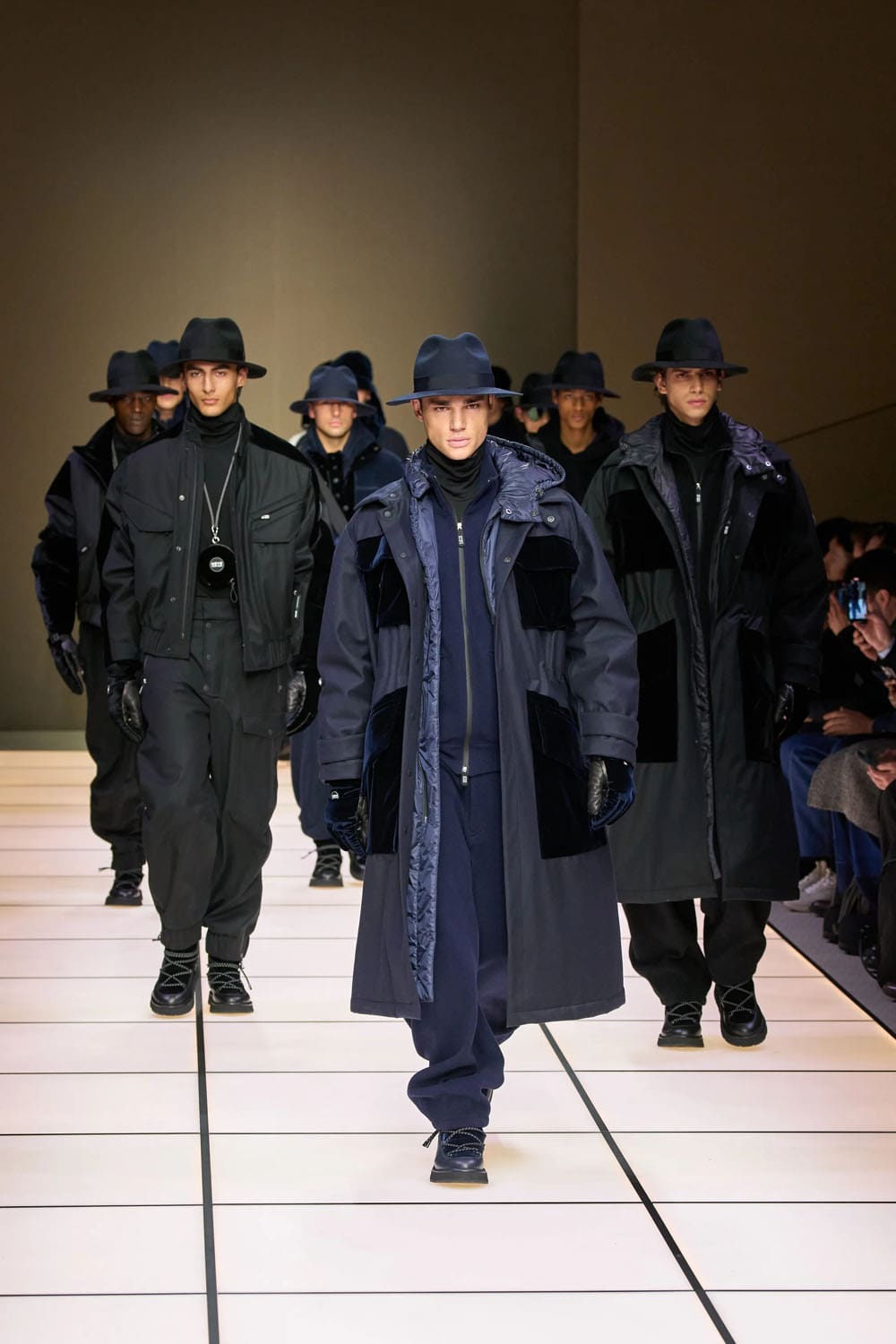
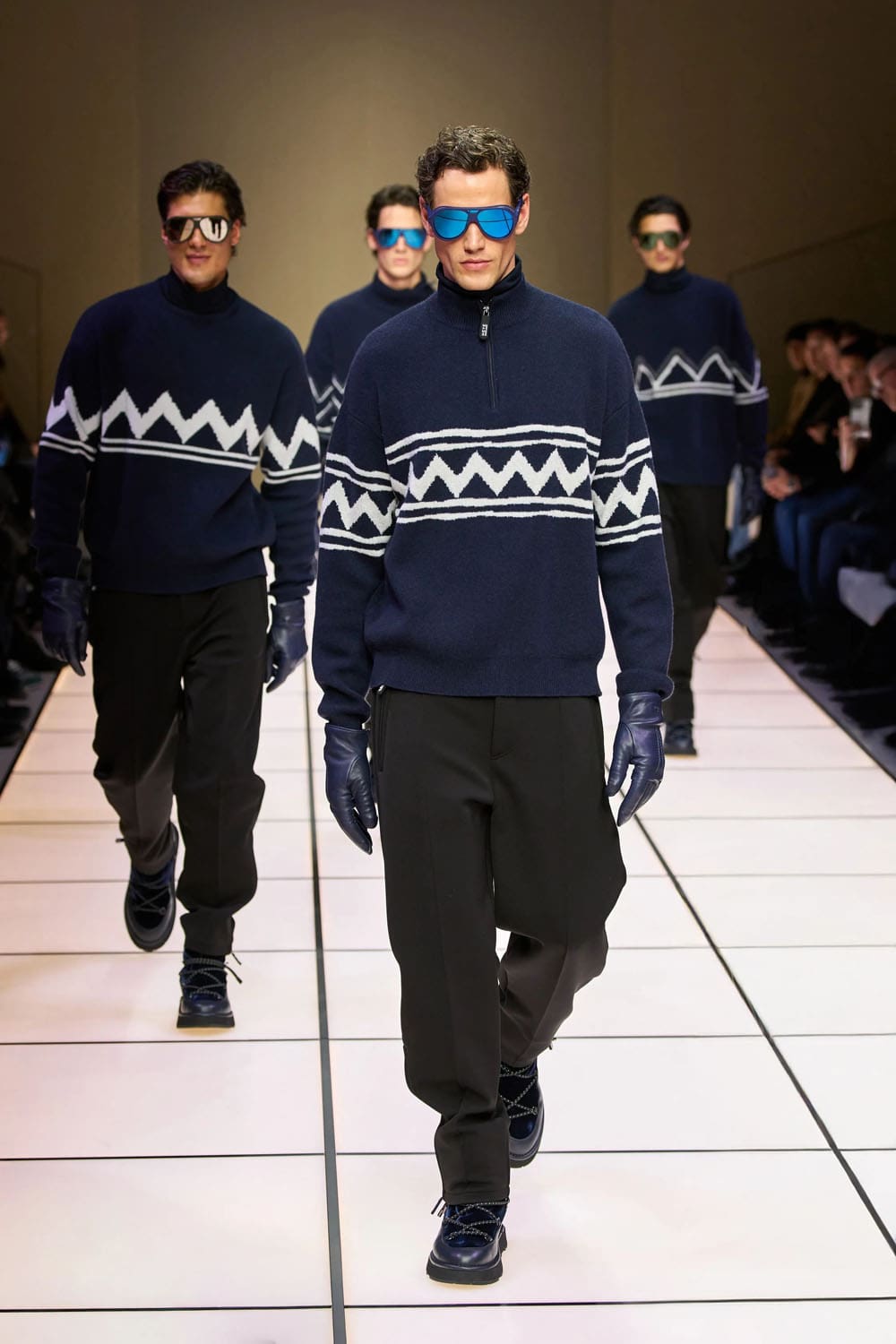
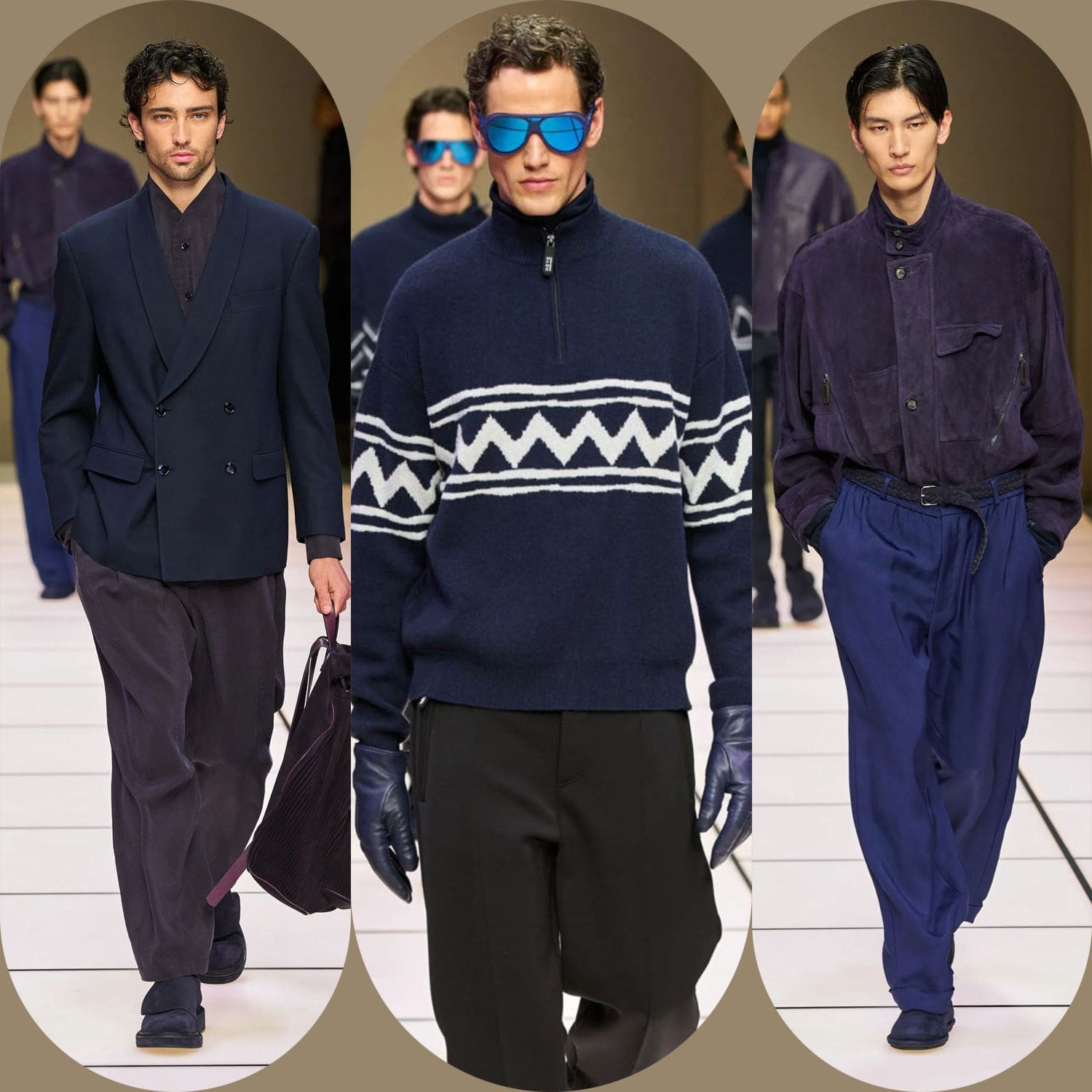
The show’s structure broke into phases — an intermission punctuated by alpine parkas, part of the Armani Neve line. Here Dell’Orco allowed himself a slight deviation: rich purples, shearlings fitted close to the body, and Alanui-striped belted cardigans that marked an unprecedented collaboration. But even this was held in check — no hysteria, no viral bait.
Two suits, cut in a semi-sheer crushed velvet, offered the most daring moment. Their surface shimmered like broken corduroy, fractured under the lights. Yet the tailoring held. No gimmick escaped discipline.
The Architecture of Restraint
If anything defines this collection, it is the refusal to chase the future. Dell’Orco understands that Armani is not a brand — it is an architecture. Its foundation is restraint, and its skyline is carved not in steel, but in silk-lined seams and invisible darts.
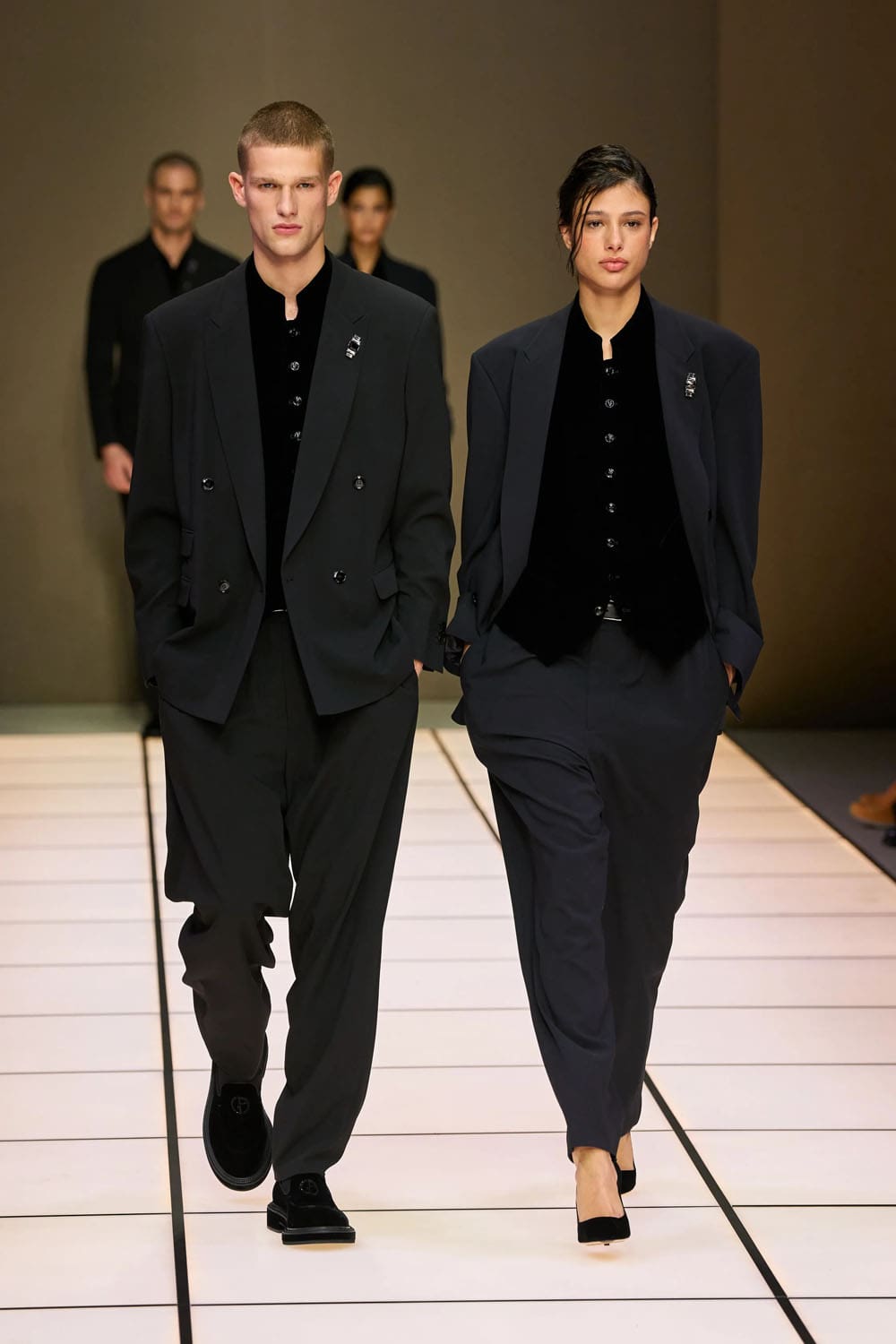
And yet, the show did nod forward. Certain menswear looks were mirrored by womenswear versions — a prelude to the co-ed Emporio Armani show. The closing eveningwear — four black and white coed pairings — brought the tempo back to near stillness. It was not grand. It was composed.
When Dell’Orco took his bow, flanked by Gianluca Dell’Orco — his nephew and now head of the style office — it was not a coronation. It was a continuation.
Elegance is a System
To understand what happened this season is to understand how Armani works: not through slogans, not through spectacle, but through system. Elegance, here, is a discipline.
Dell’Orco’s Cangiante was not designed to impress. It was designed to endure.
And in a fashion landscape obsessed with the new, that is the boldest move of all.
See All Looks Giorgio Armani Fall 2026