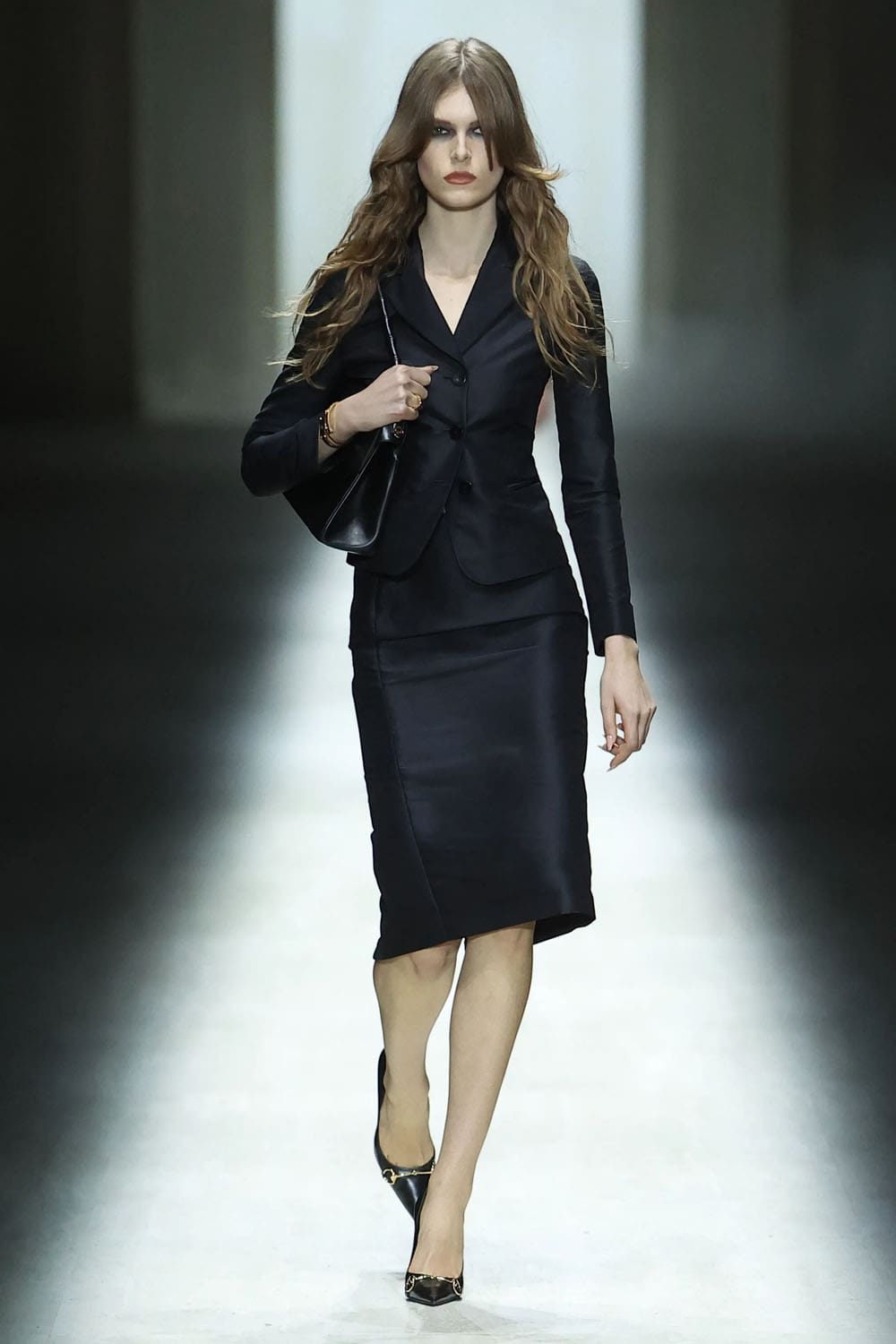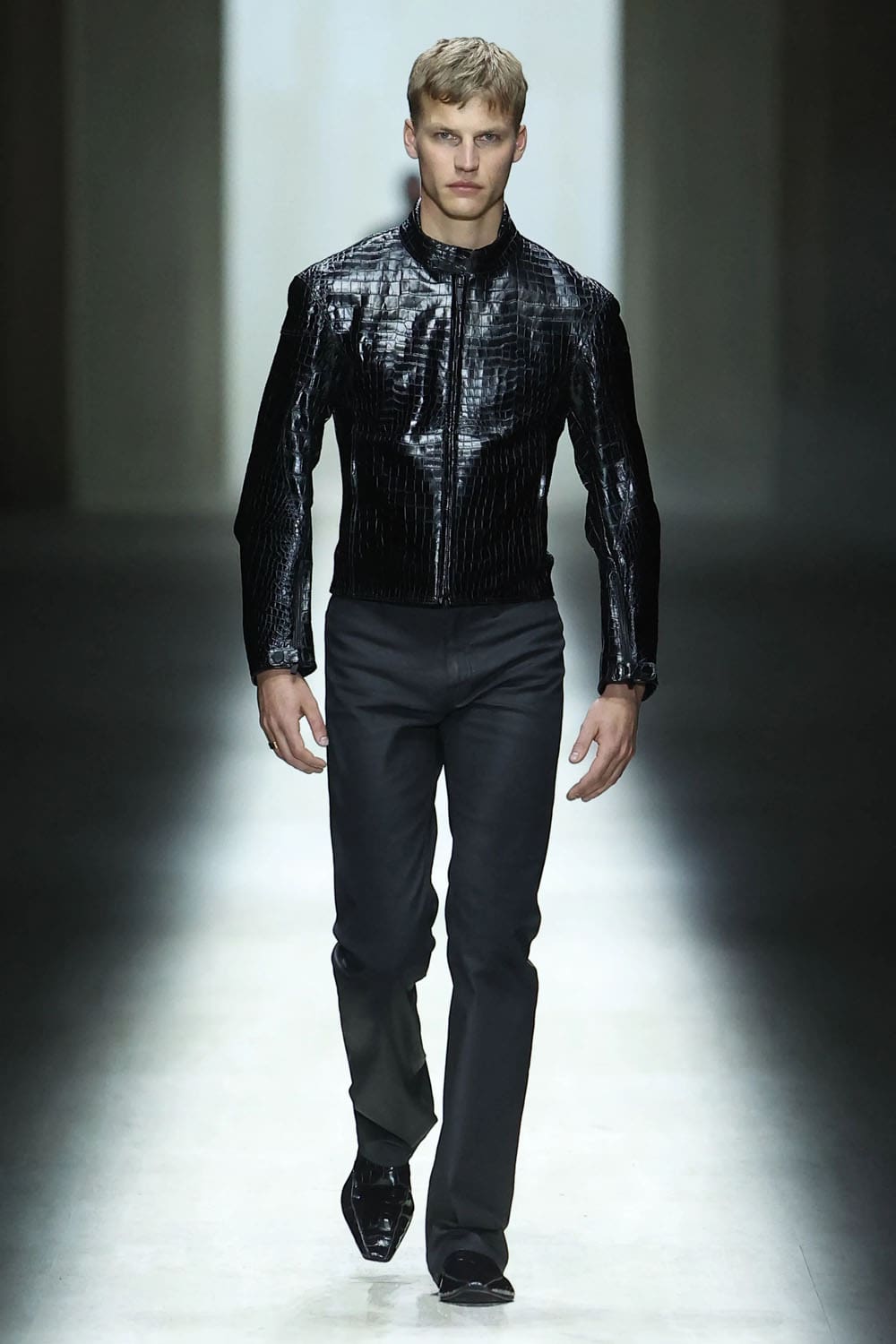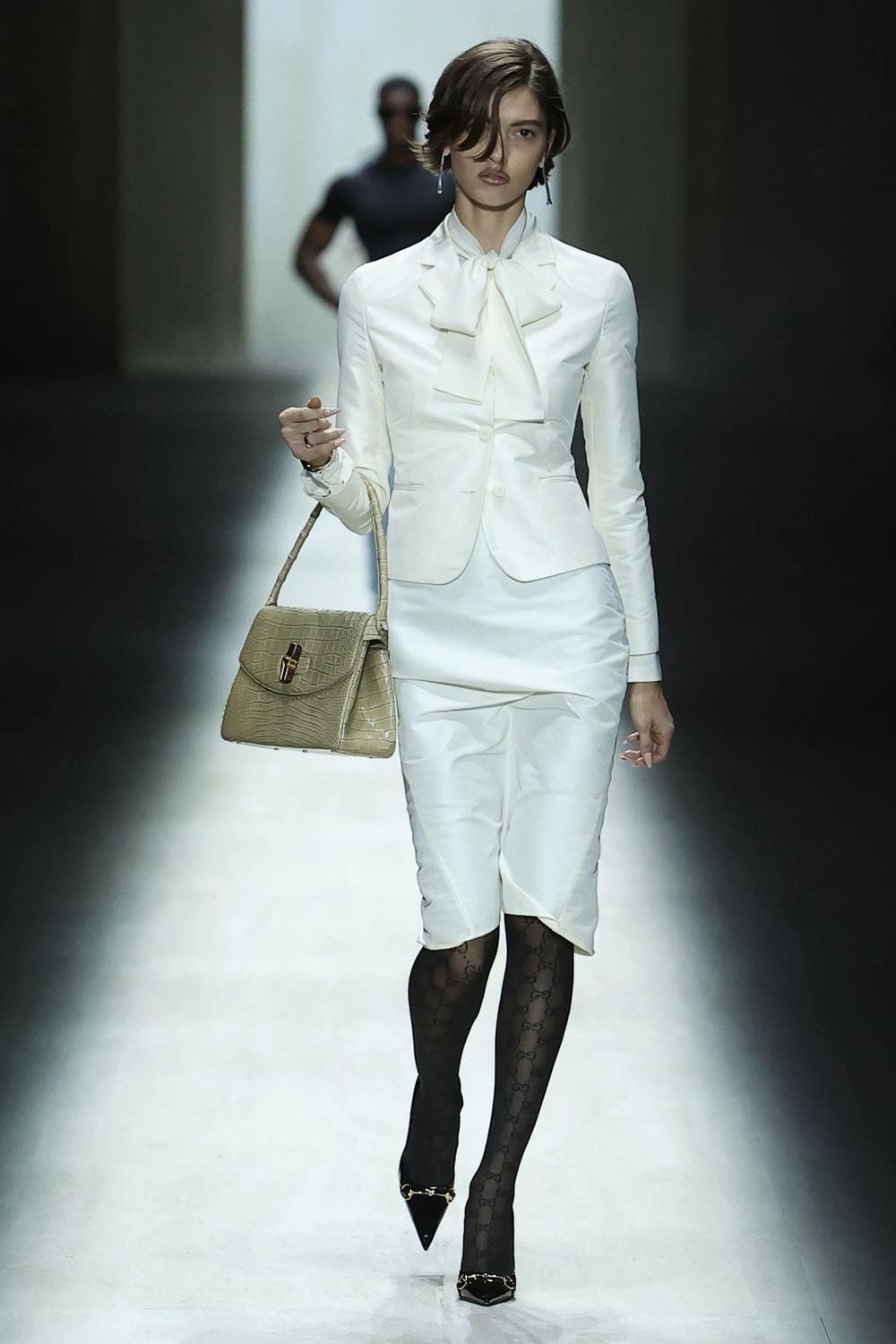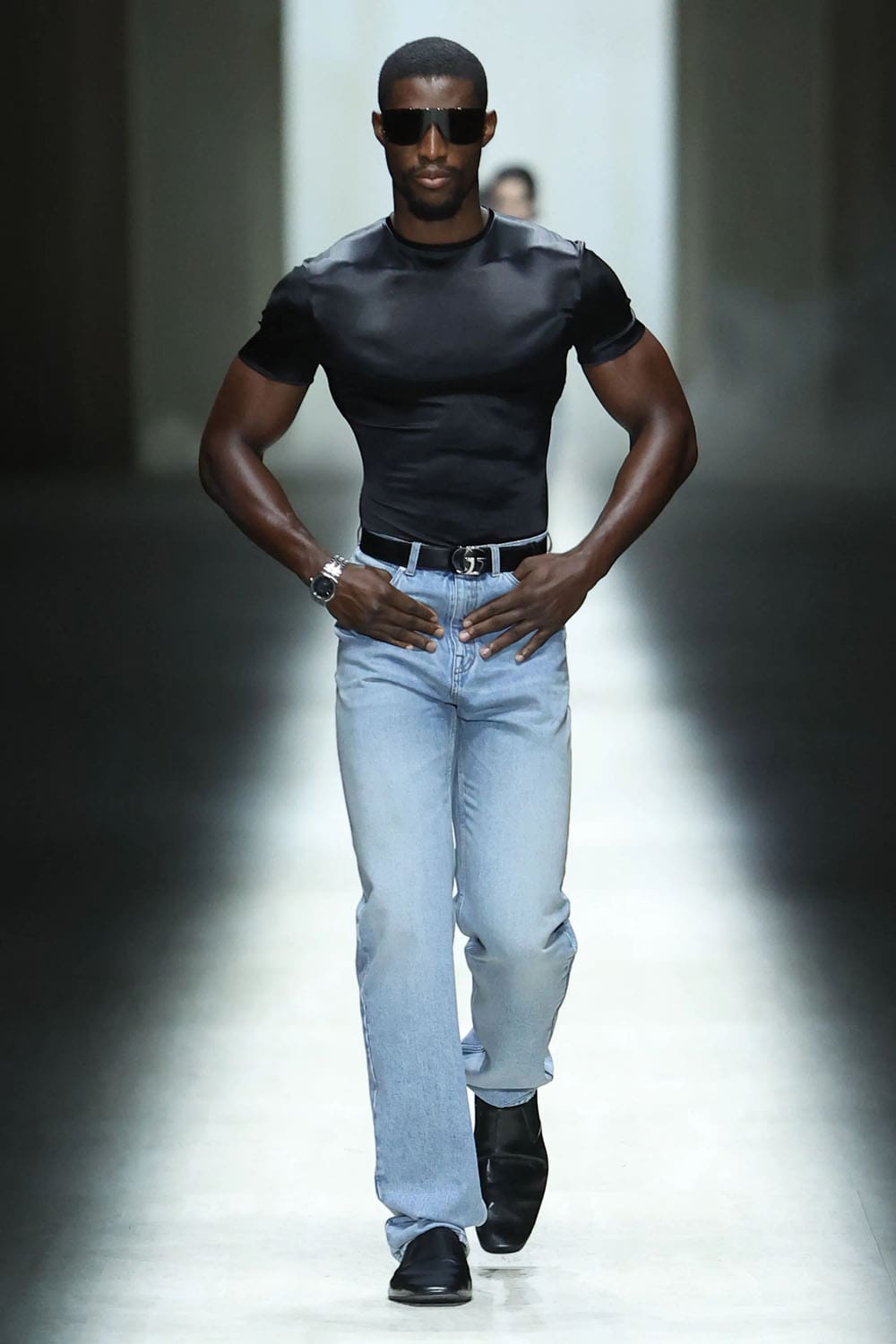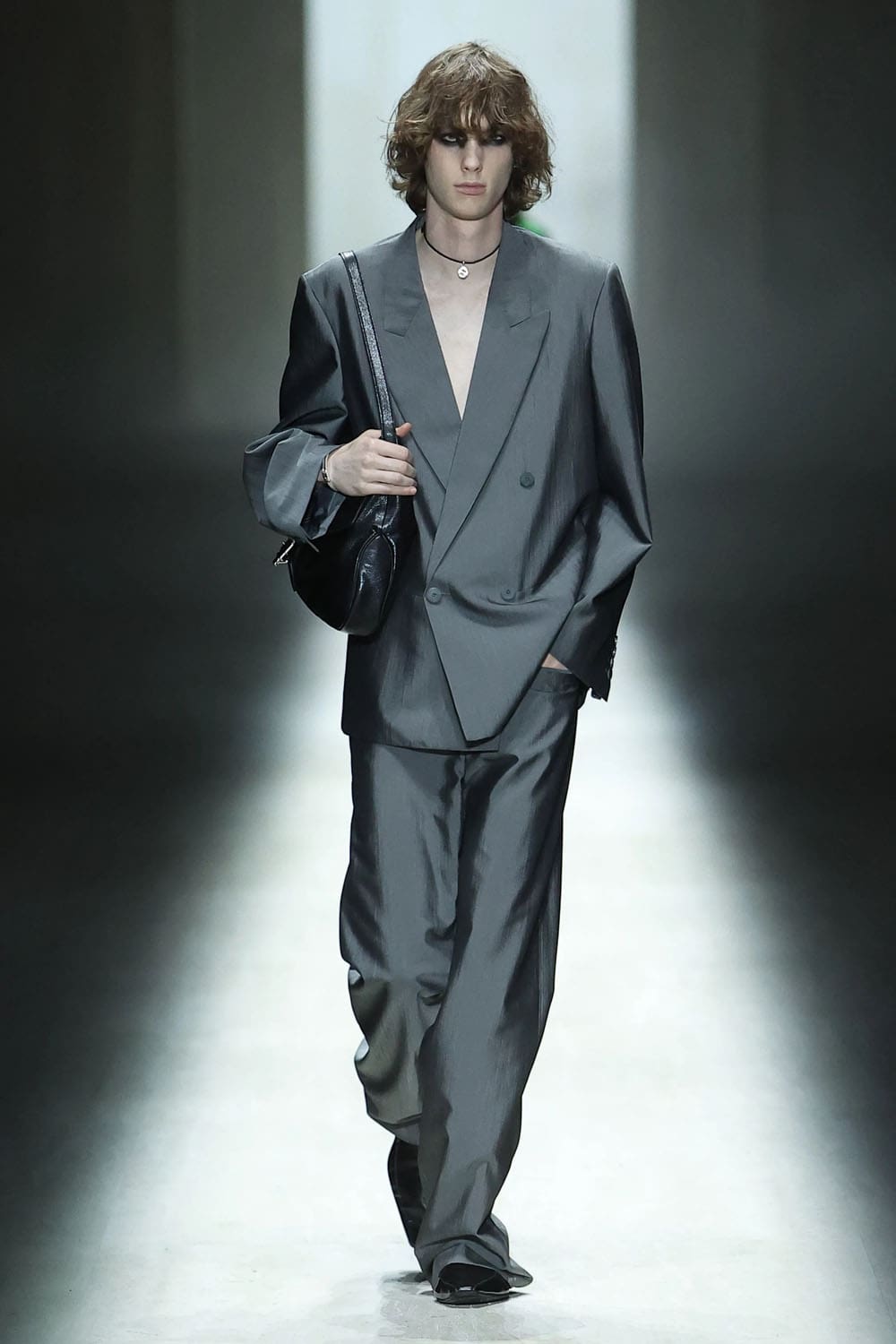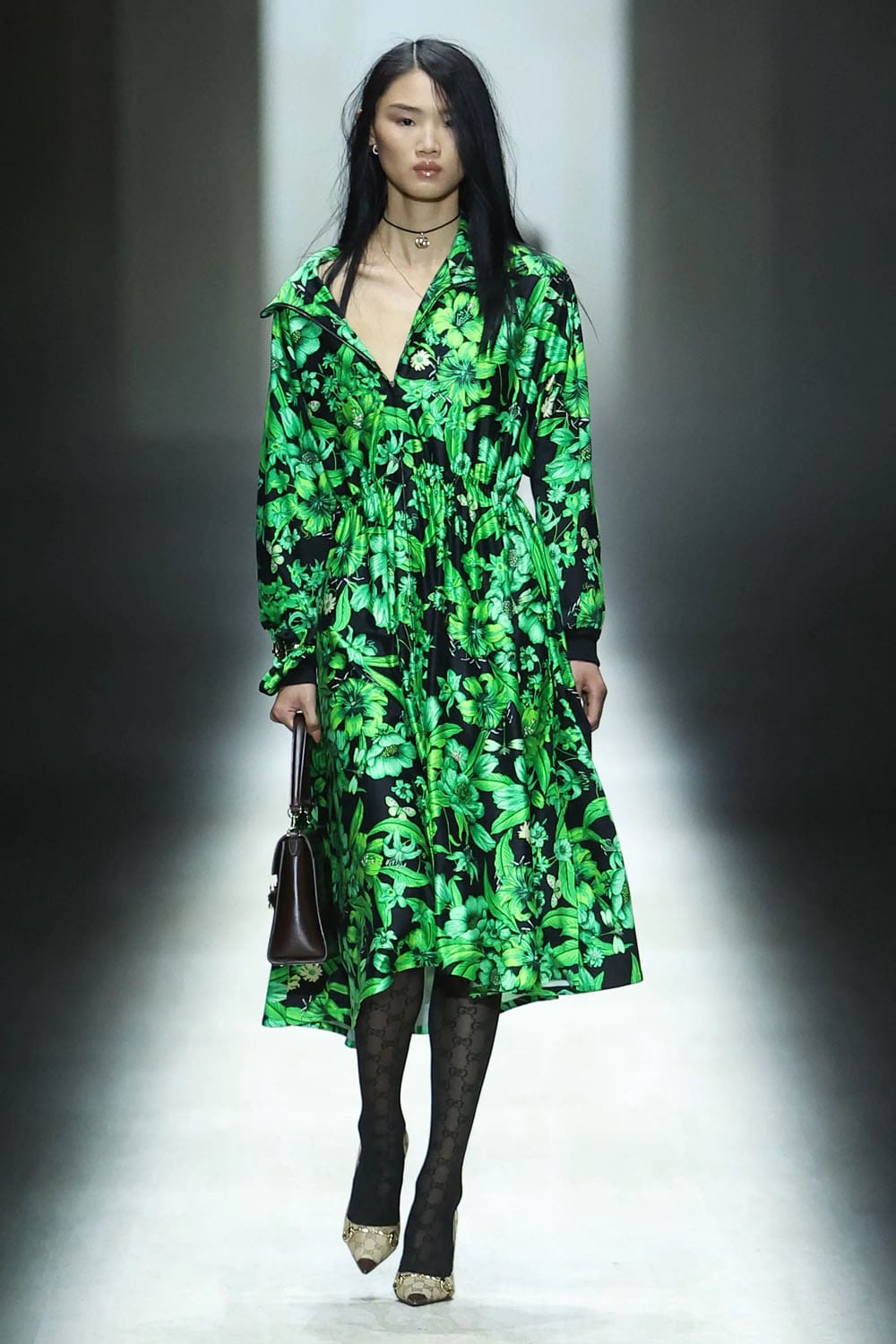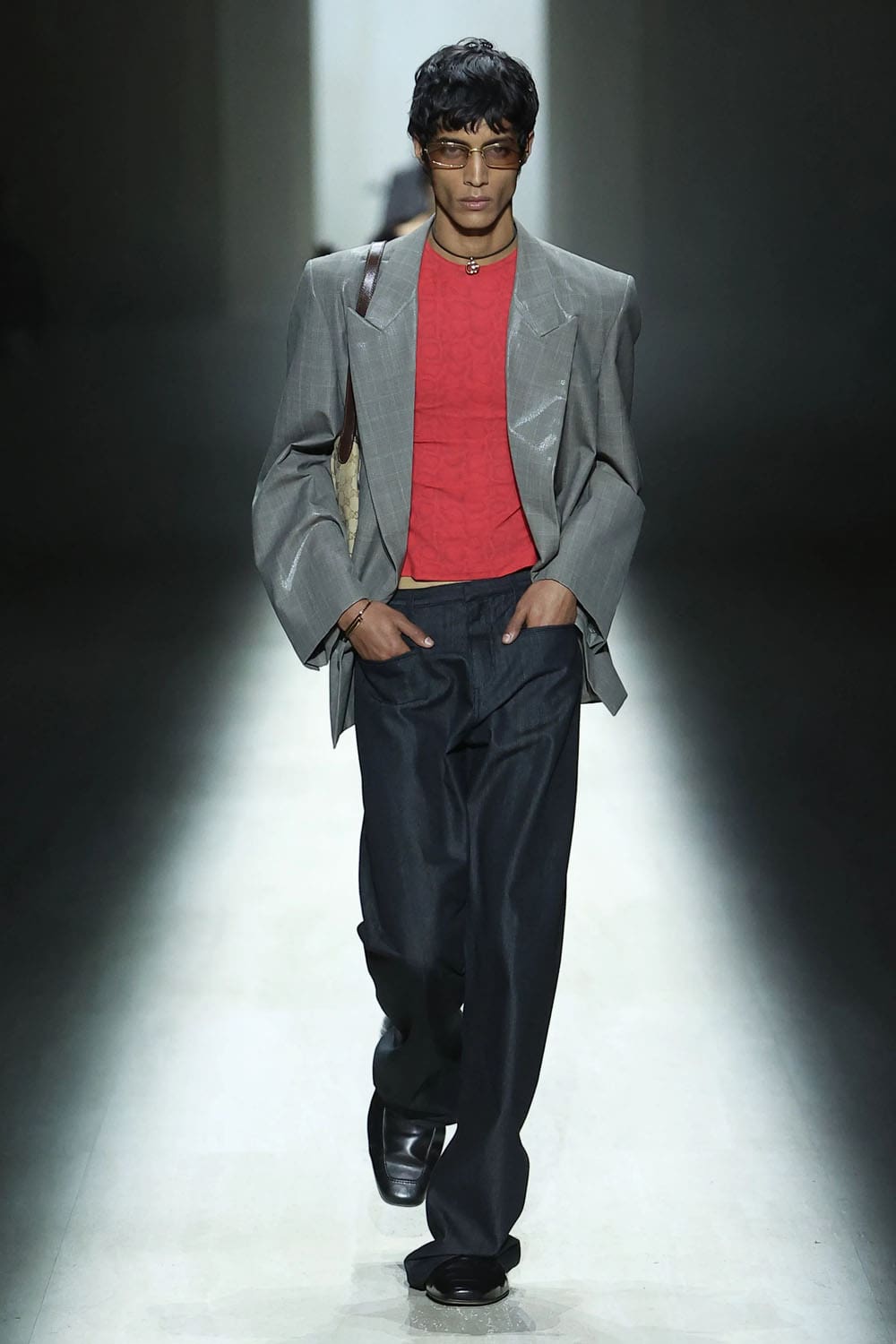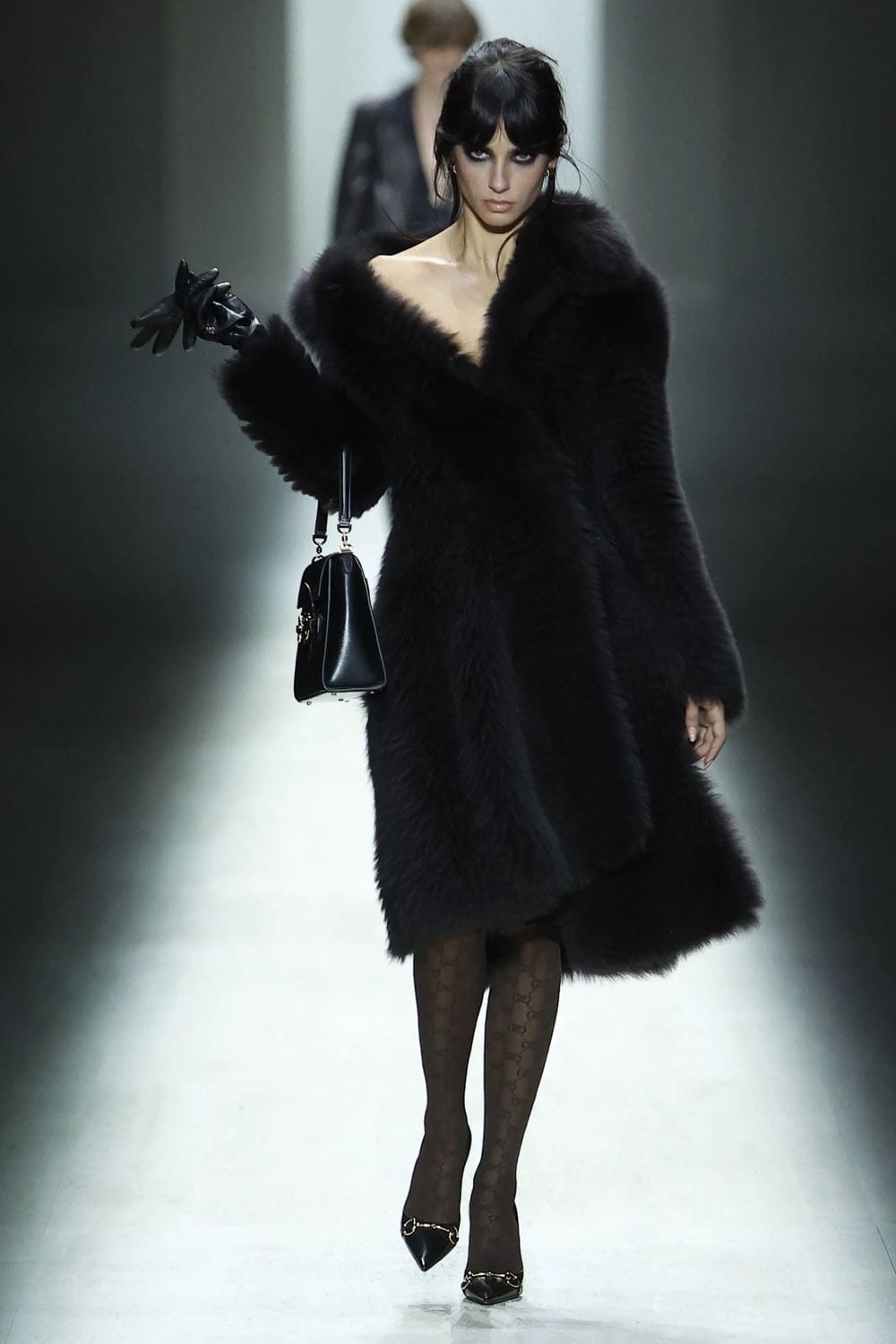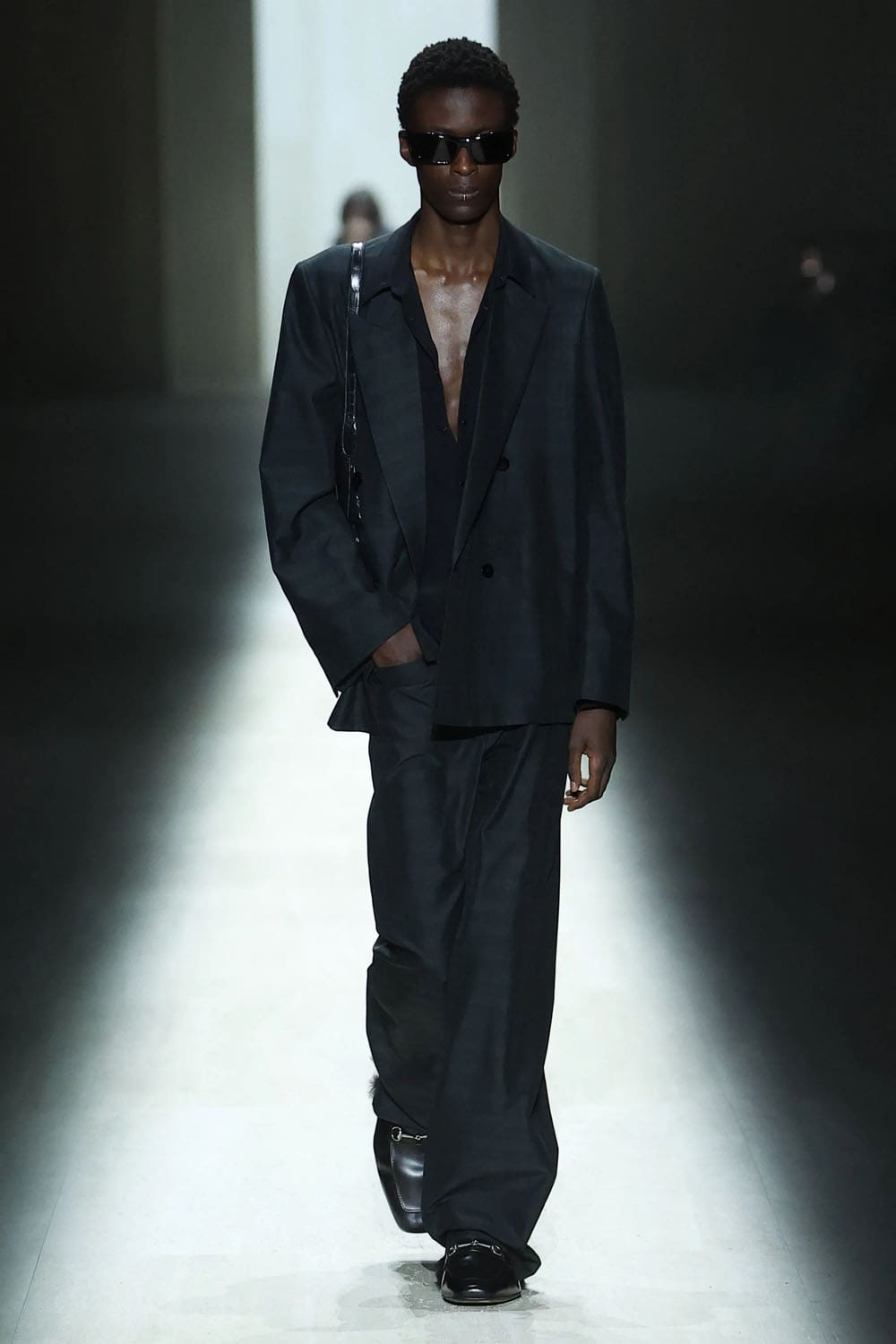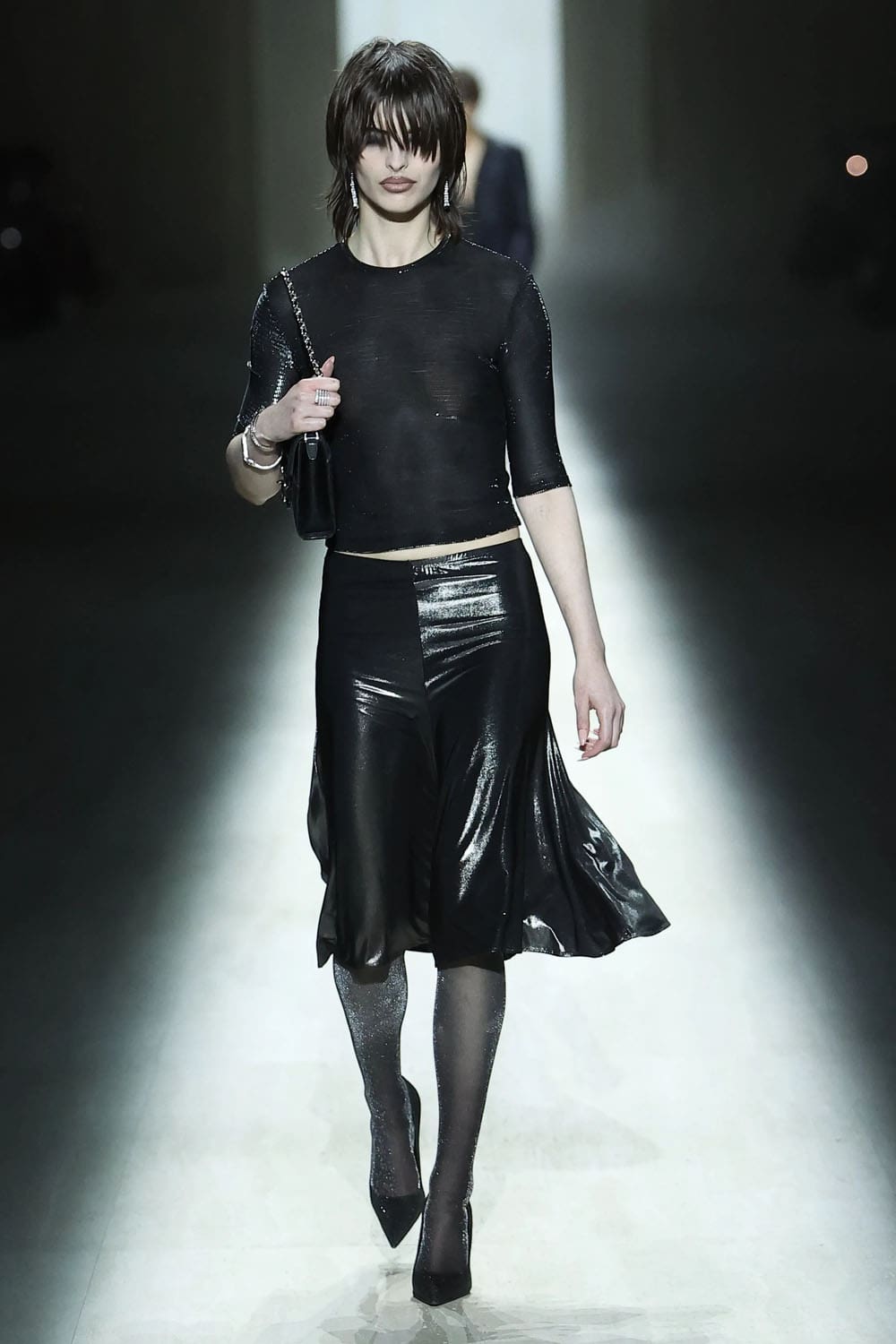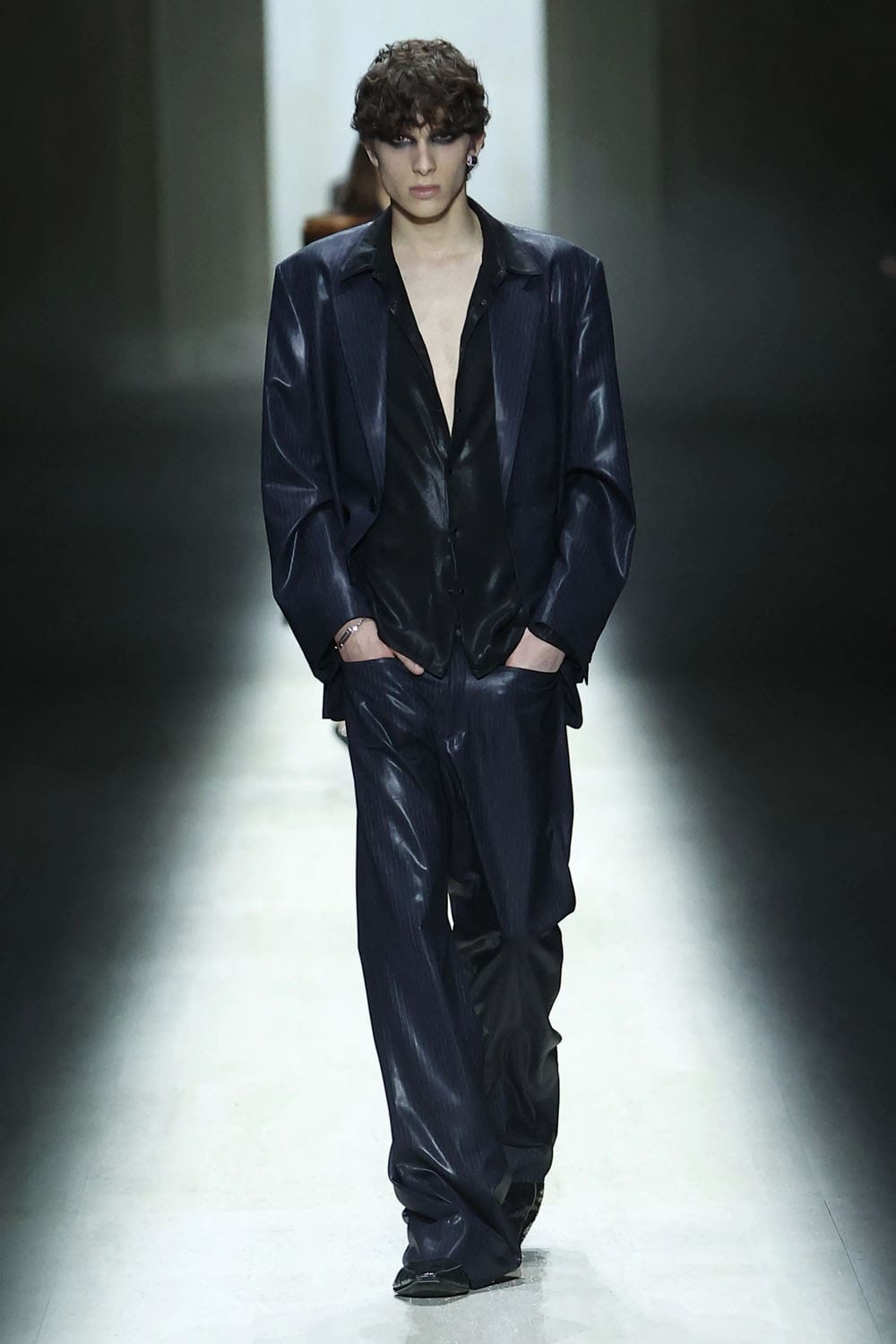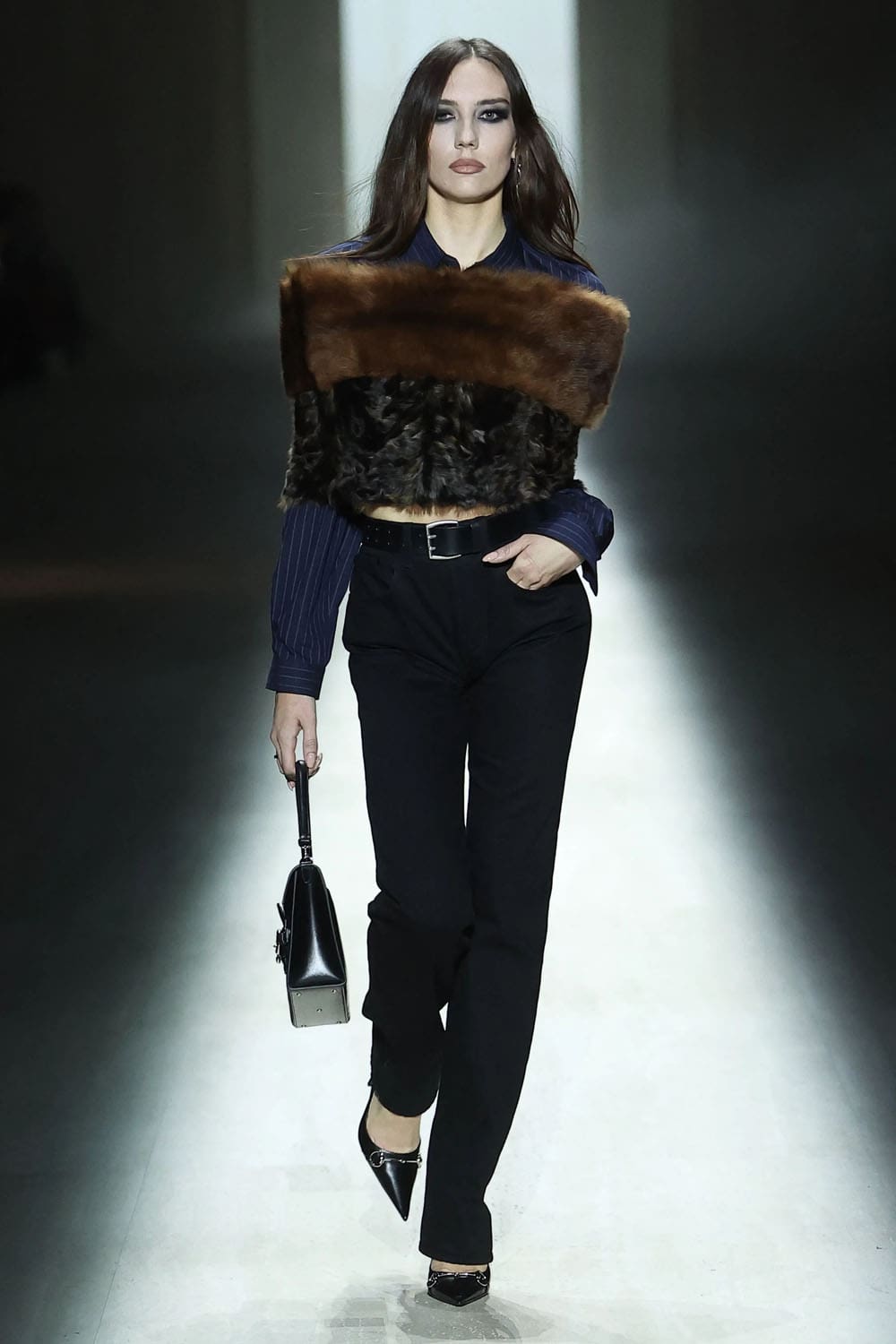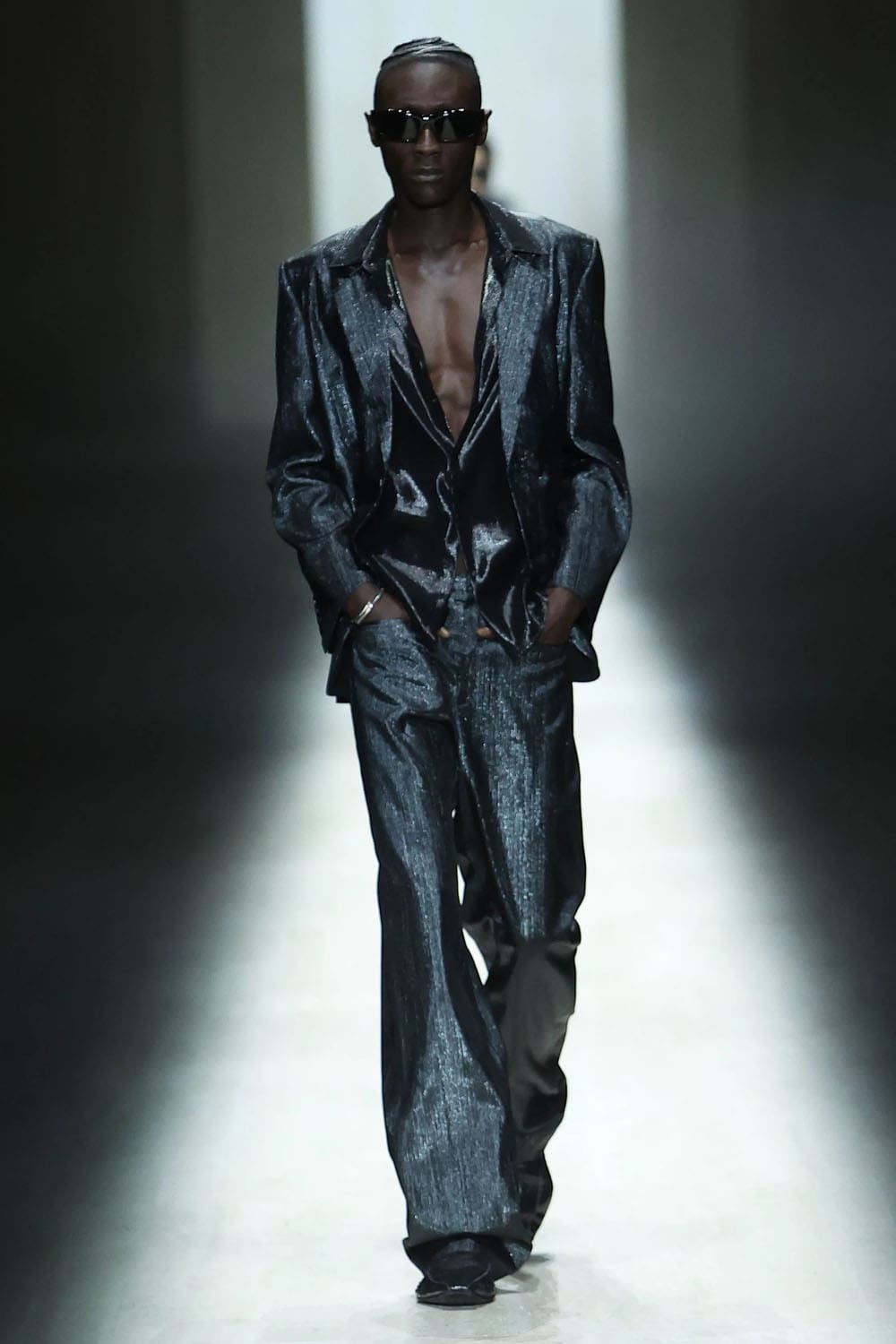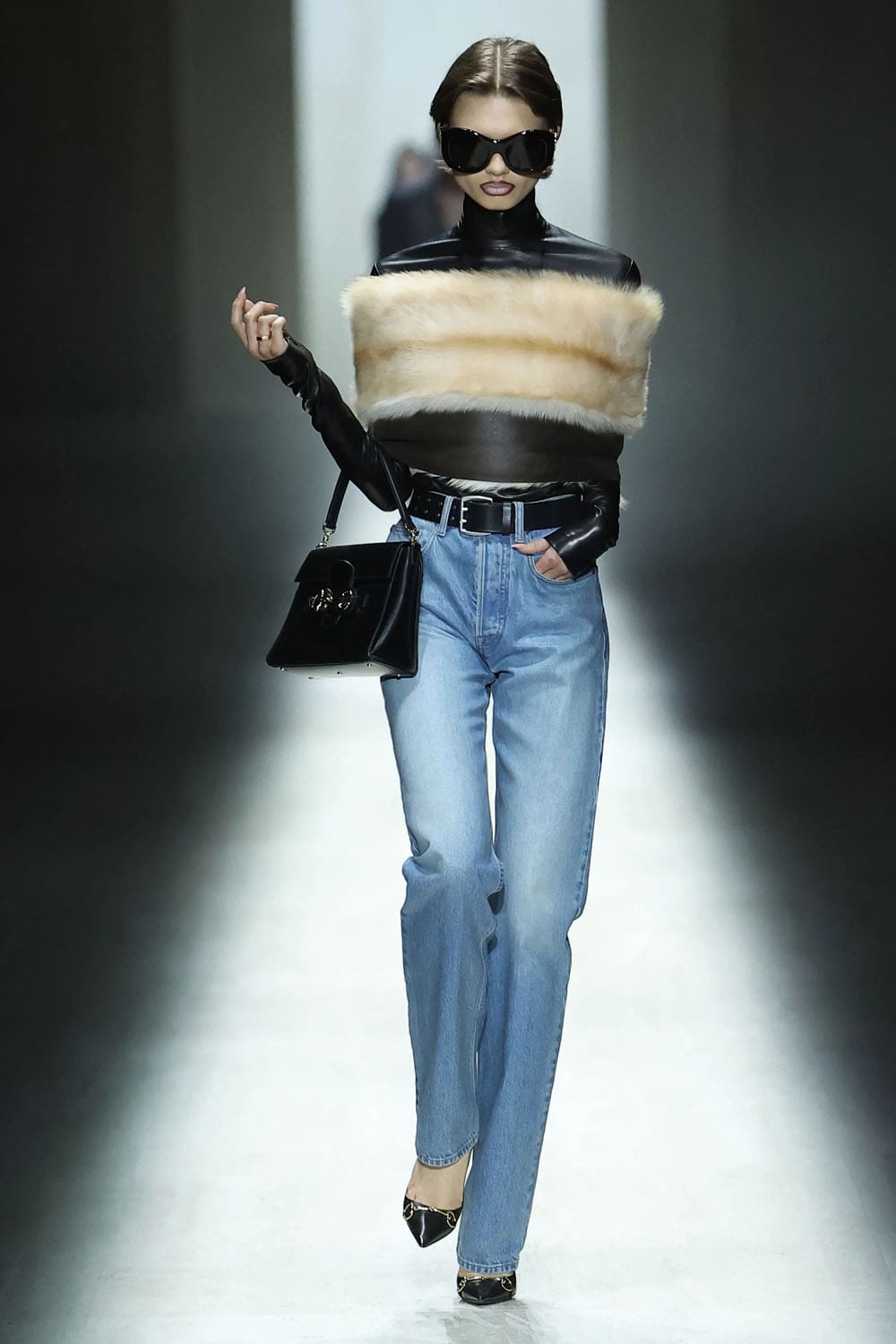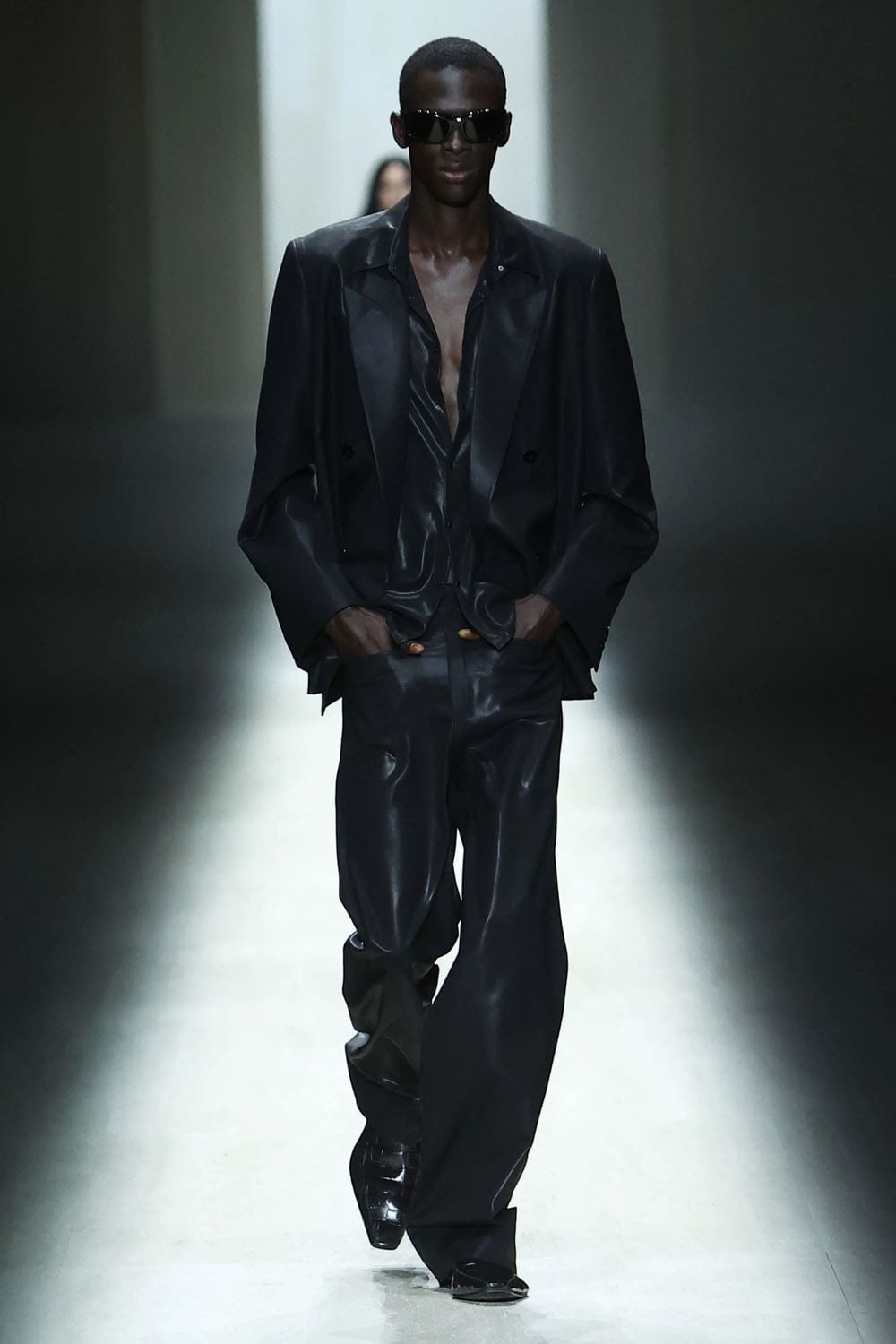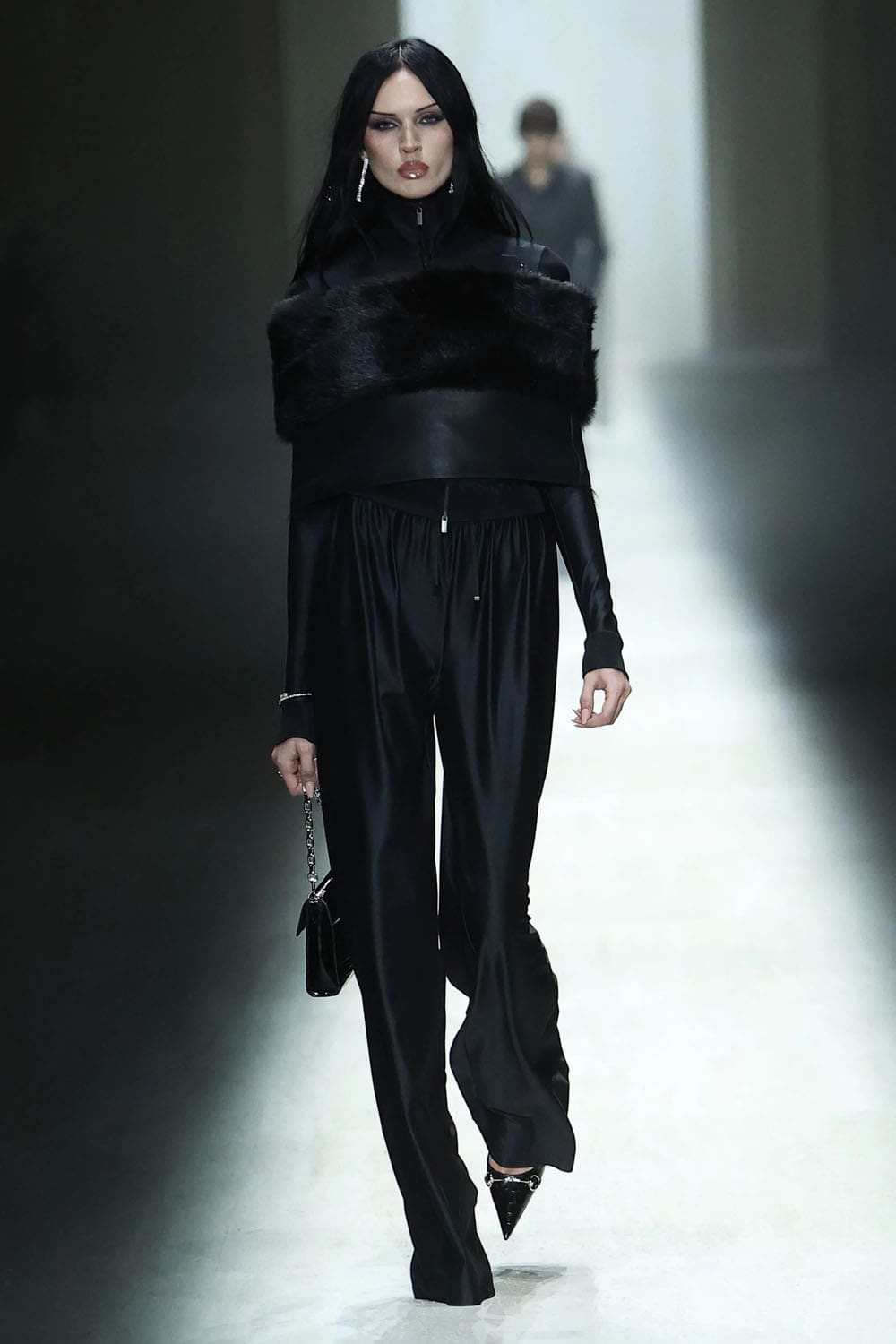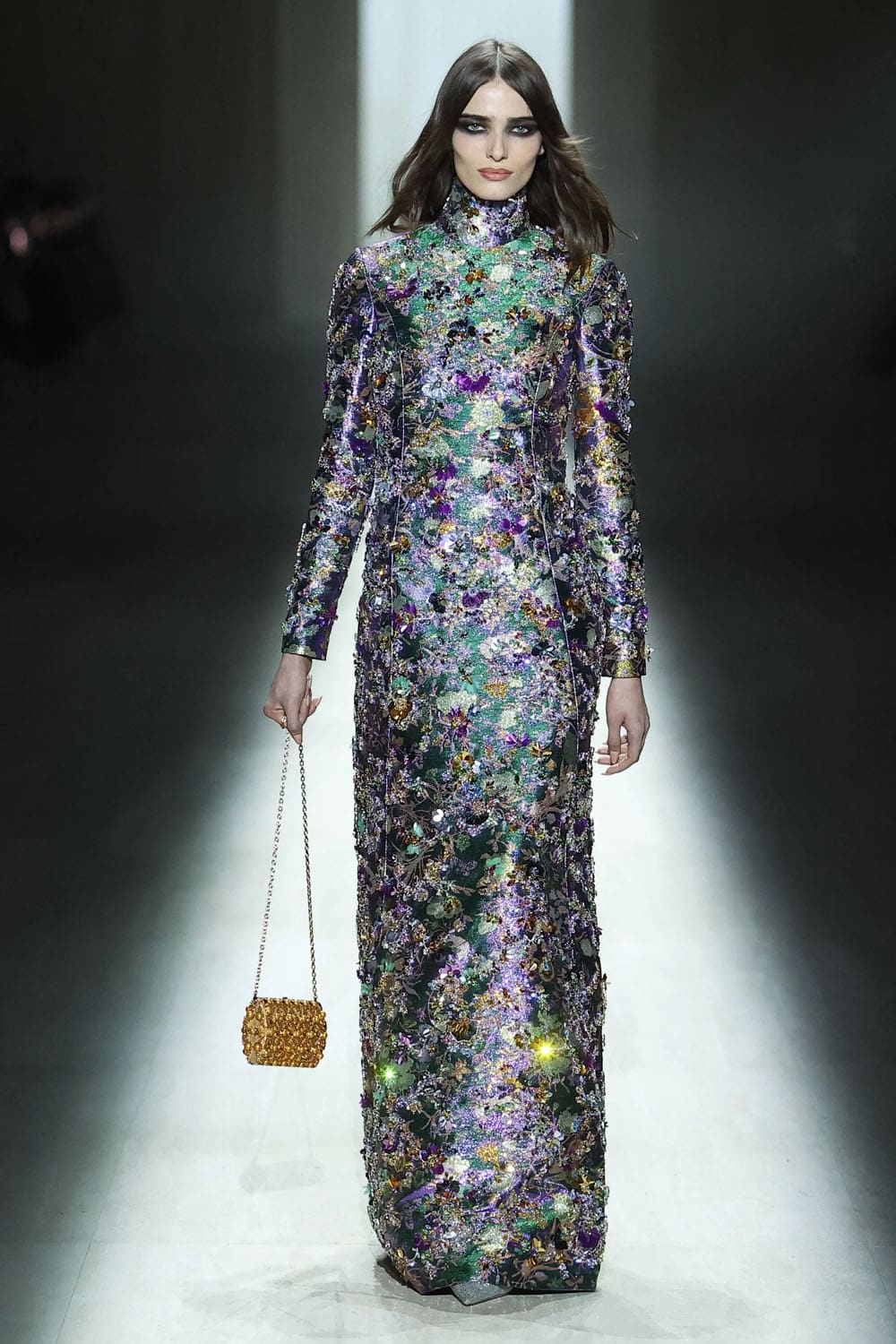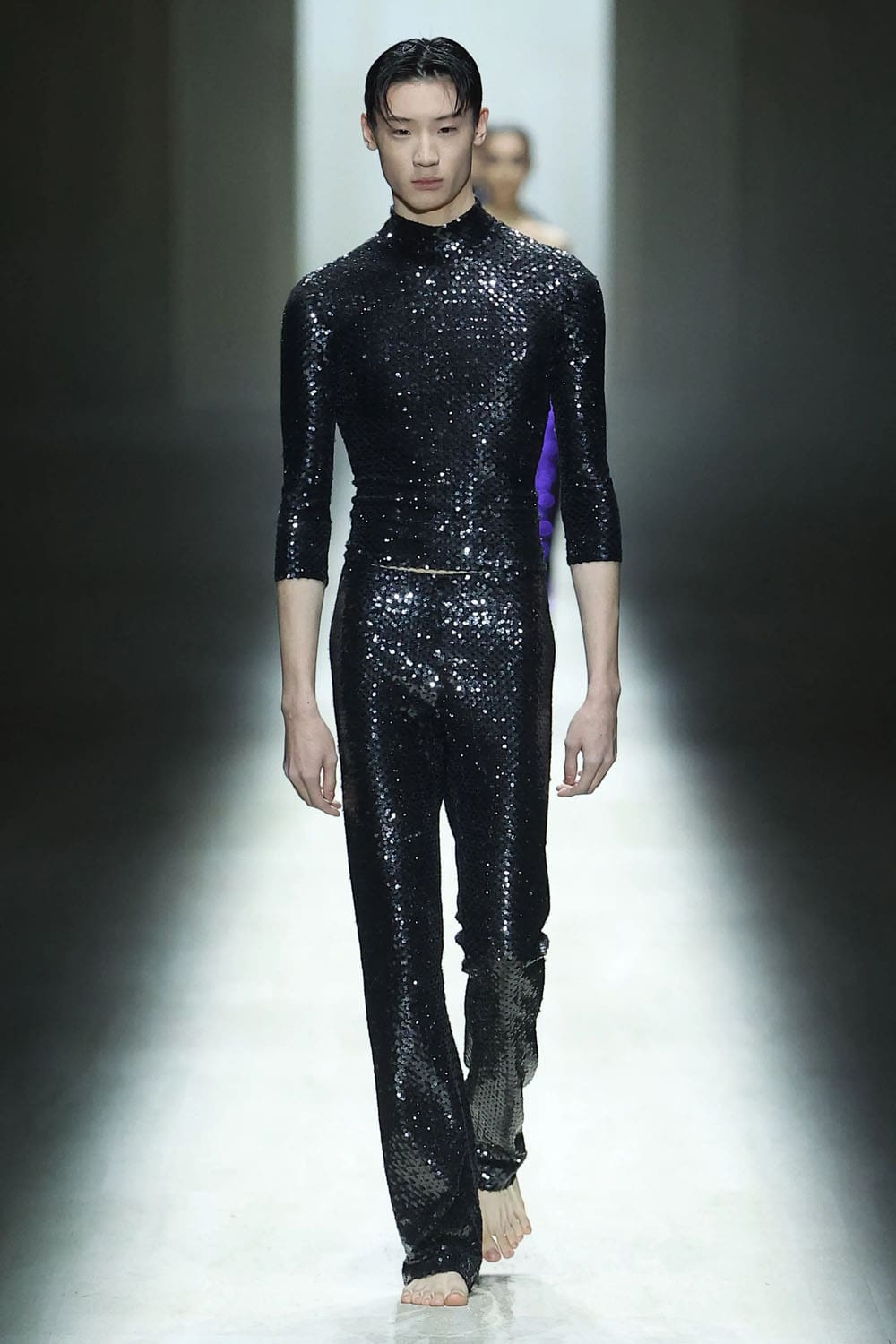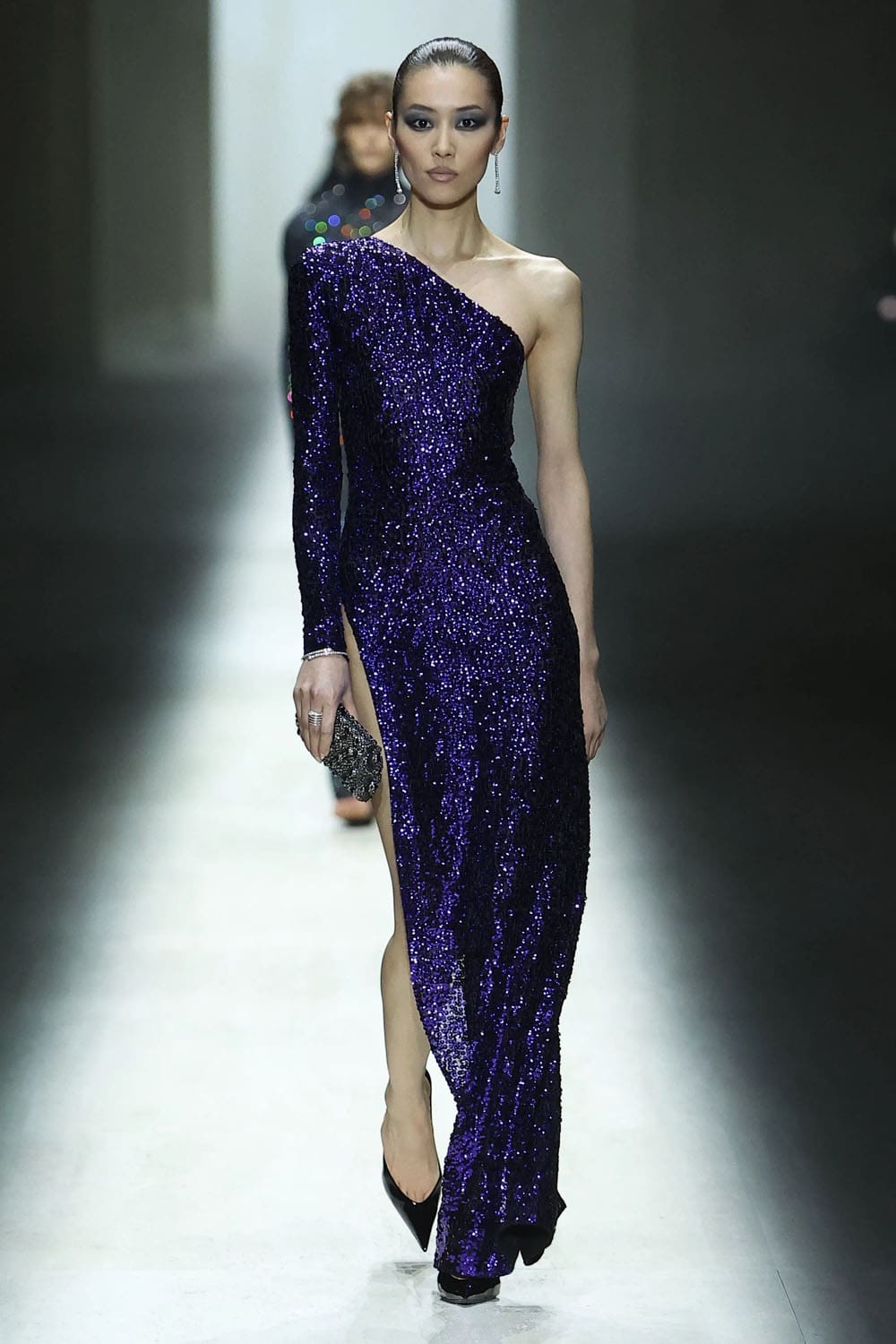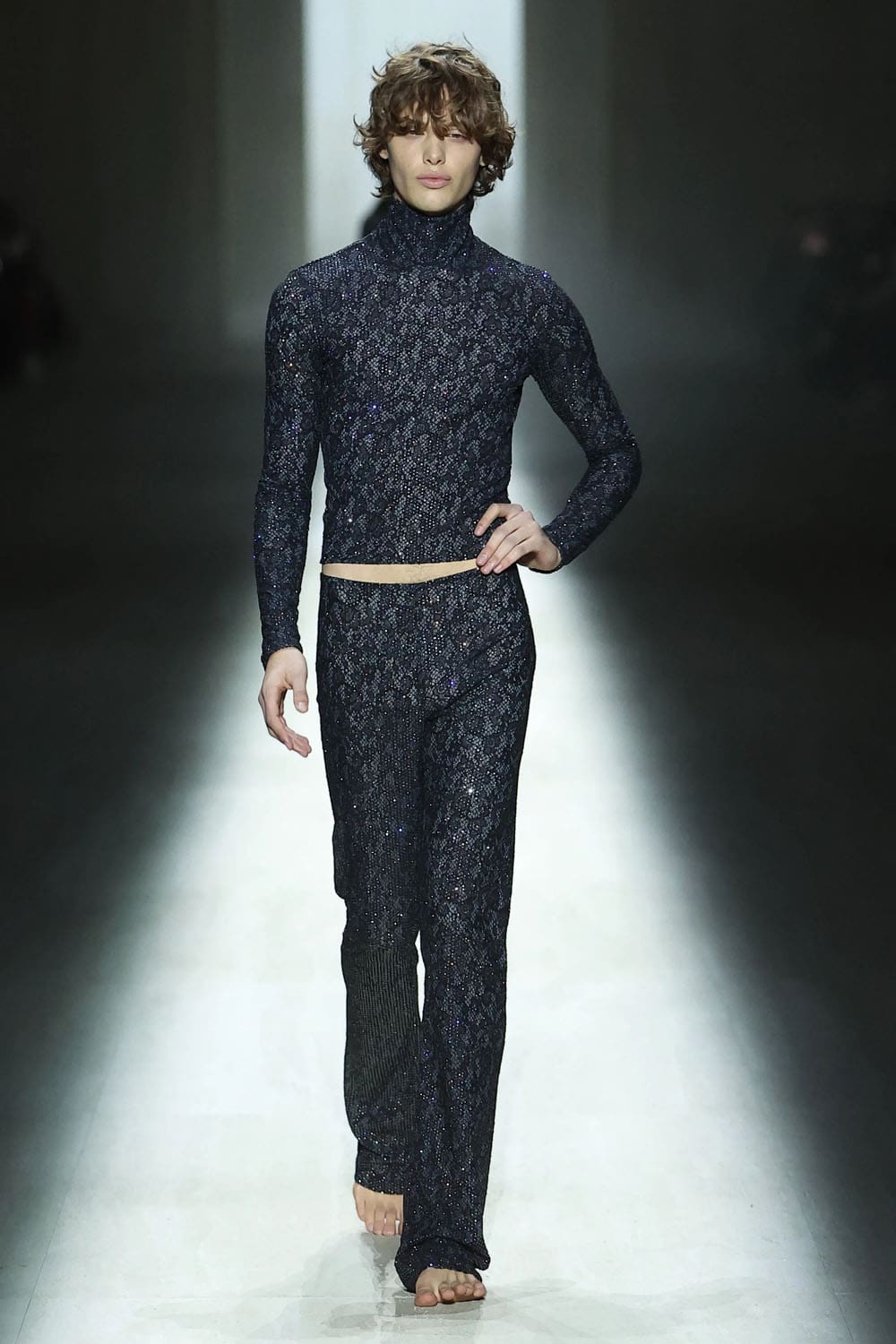
Gucci Fall 2026 Primavera by Demna “VENUS, MEET PIGALLE”. Story by Eleonora de Gray, Editor-in-Chief of RUNWAY MAGAZINE. Photos / Videos Courtesy: Gucci.
I. THE GRAND PROCLAMATION: GUCCI AS CIVILIZATION, DEMNA AS ITS ARCHAEOLOGIST
Demna opened his Gucci debut not with a collection, but with a declaration—an oration so grandiose it could have been carved into marble and unveiled in Piazza della Signoria. According to him, Gucci is not merely a brand but a sentient being: chaotic, brilliant, tragic, triumphant, fragile, indestructible. A psychological epic wearing horsebit loafers.
He positions himself as the archaeologist summoned to rediscover “gucciness”—as if Florence had been hiding Atlantis beneath its archives and only he possessed the metaphysical shovel.
The expectations were therefore monumental.
And then Primavera arrived—not as an archaeological revelation, but as the emotional debris of Pigalle’s nightlife, swept onto a runway and sold as Renaissance rebirth.
Gucci did not get an archaeologist.
Gucci got a dramatist with a megaphone.
II. BOTTICELLI, BEWARE: PRIMAVERA WAS NEVER SUPPOSED TO SMELL LIKE THIS
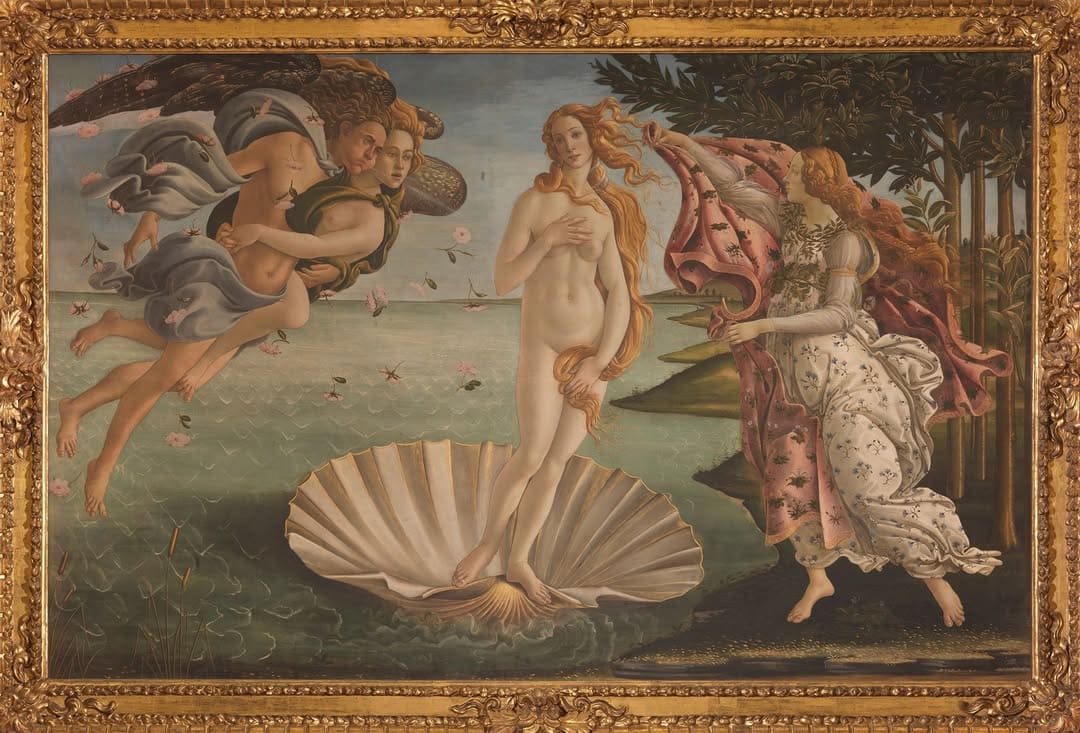
Demna speaks of being spiritually moved before Botticelli’s Birth of Venus.
One assumes he stood before the painting in reverence.
The collection suggests he stood before it while hungover.
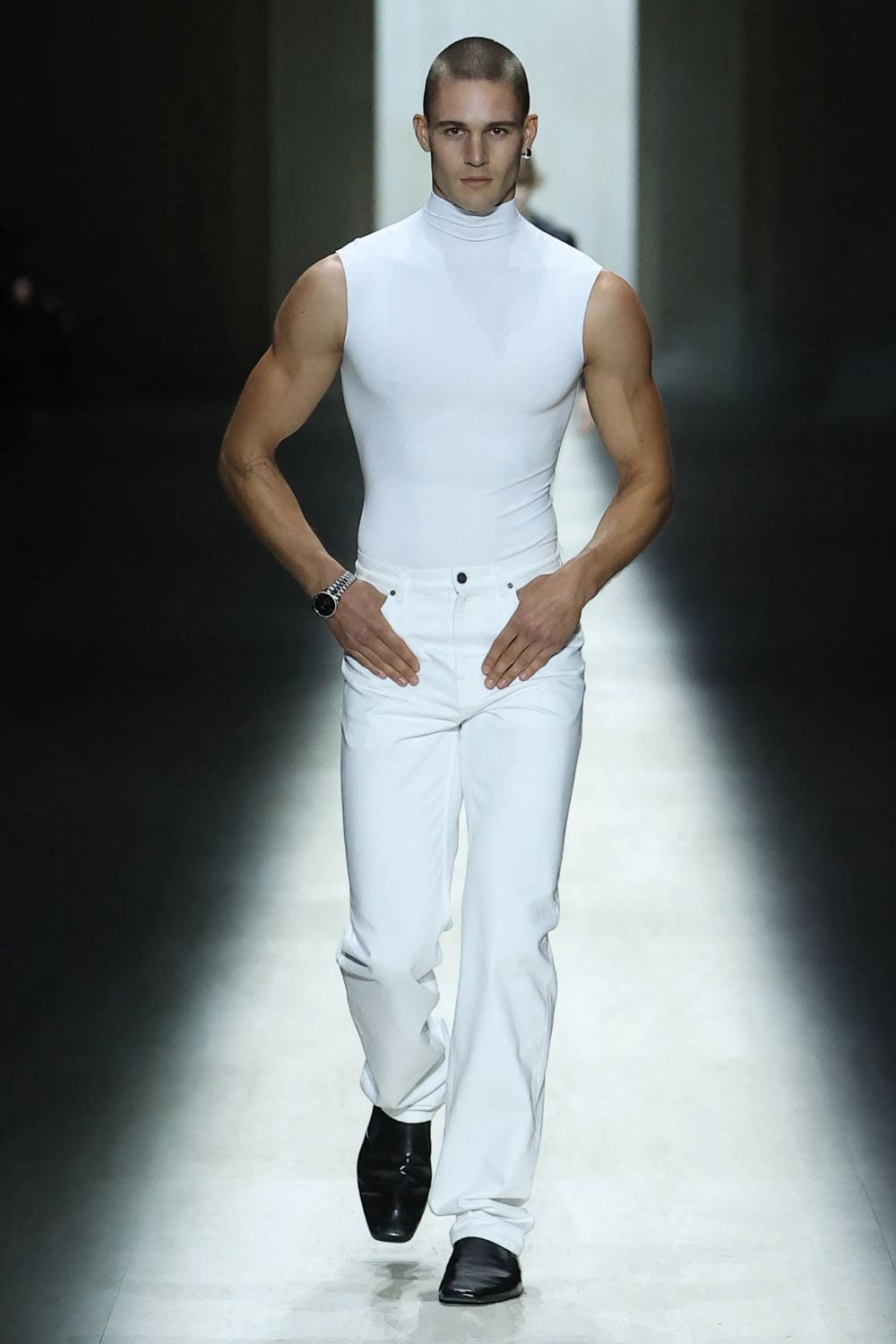
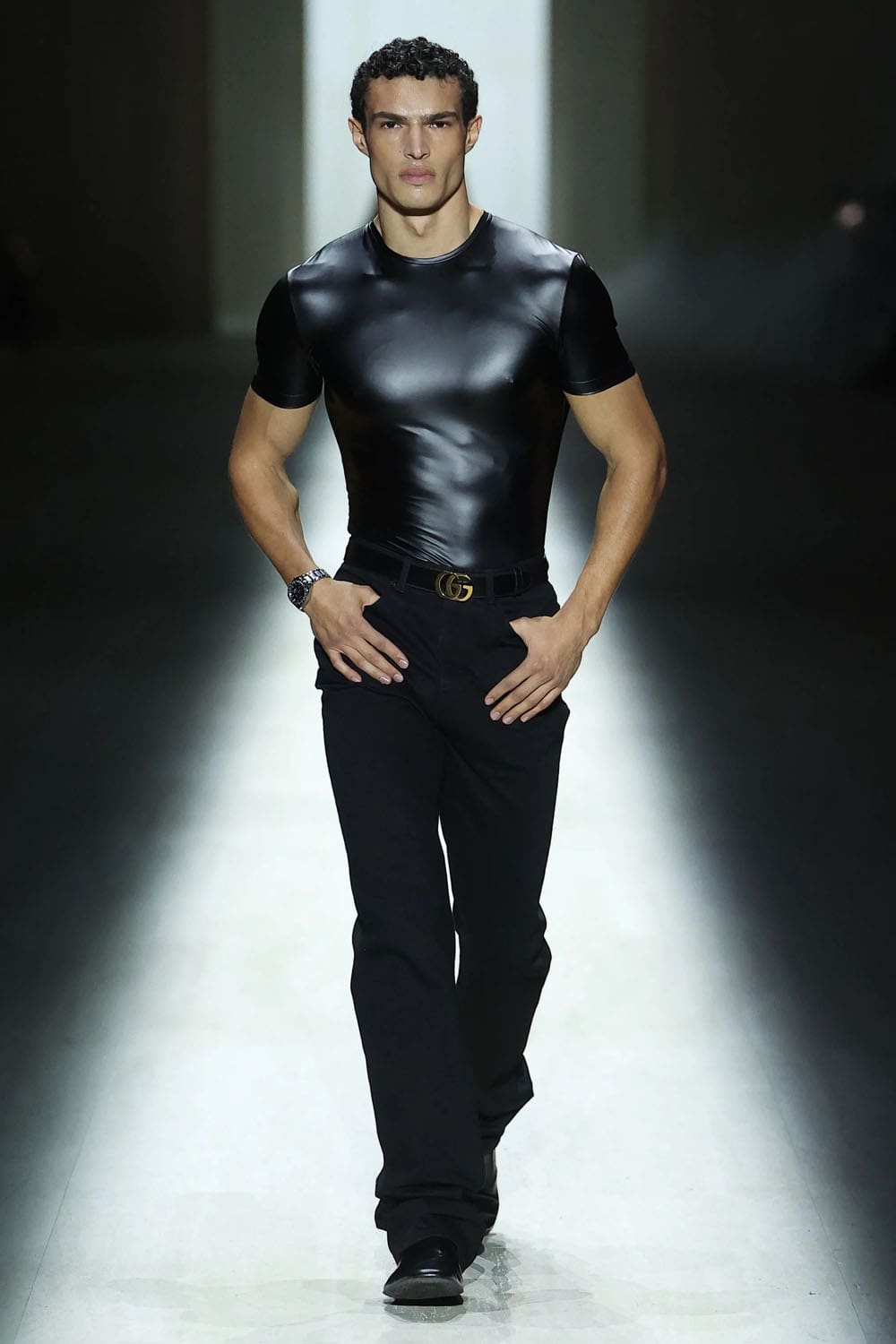
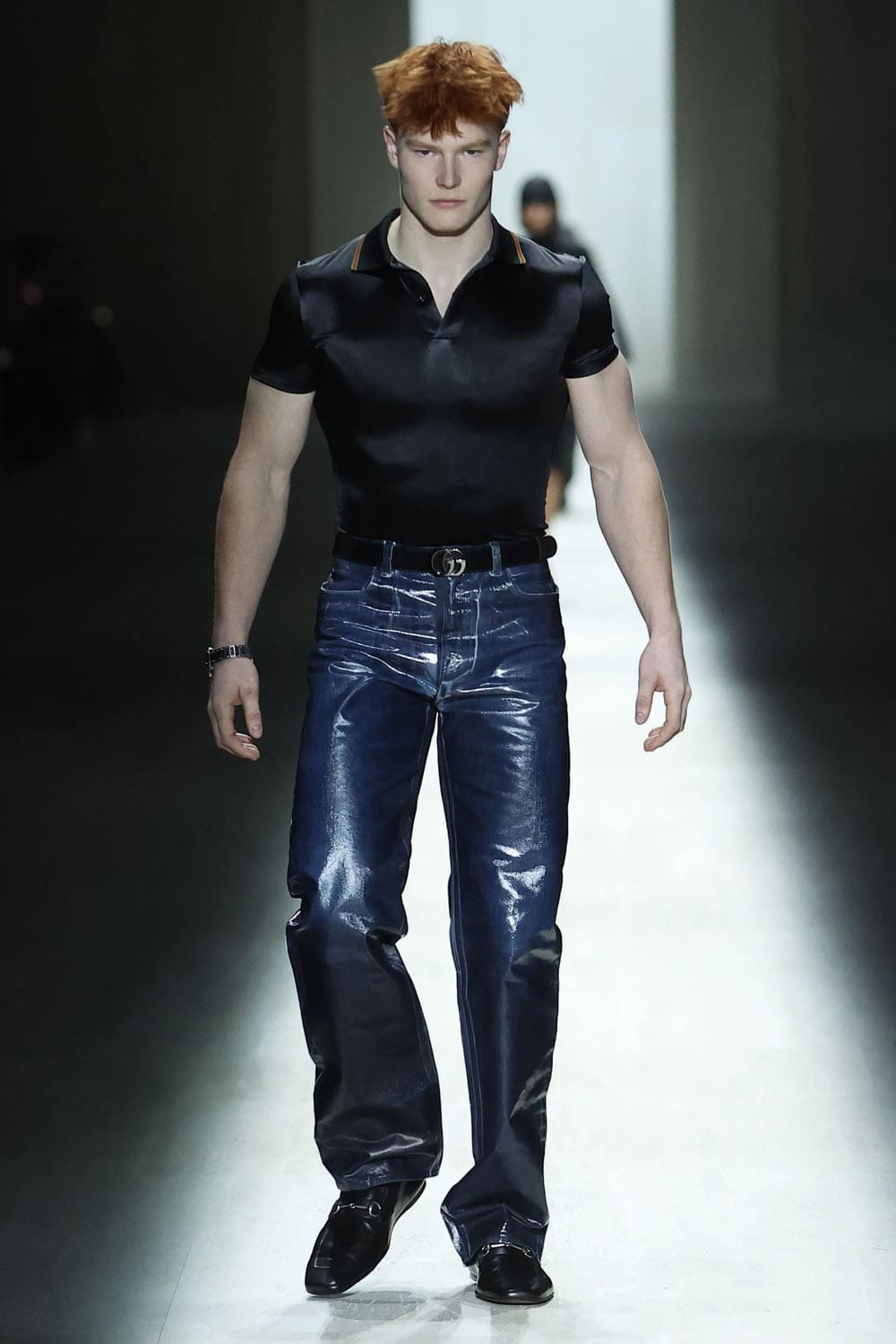
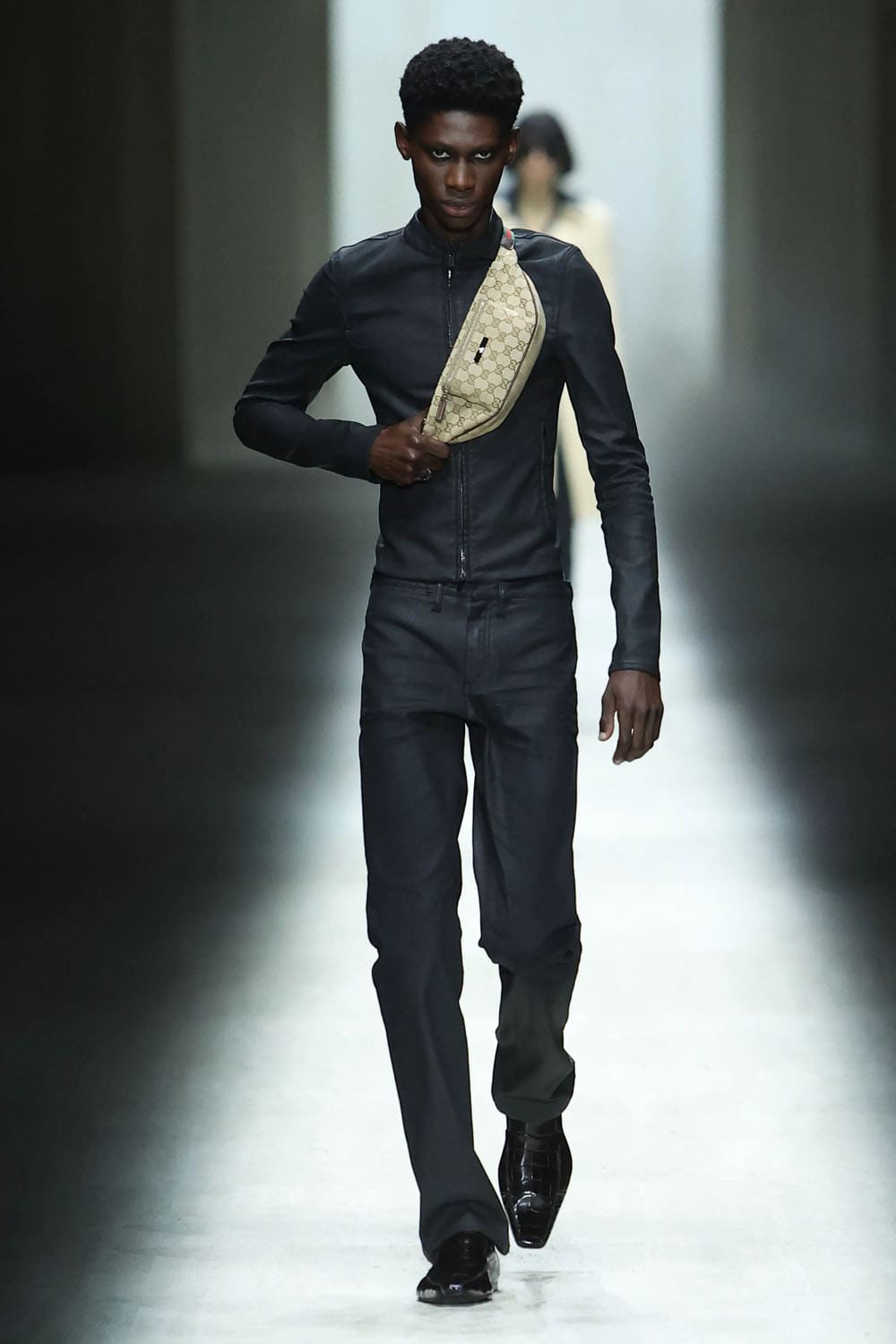
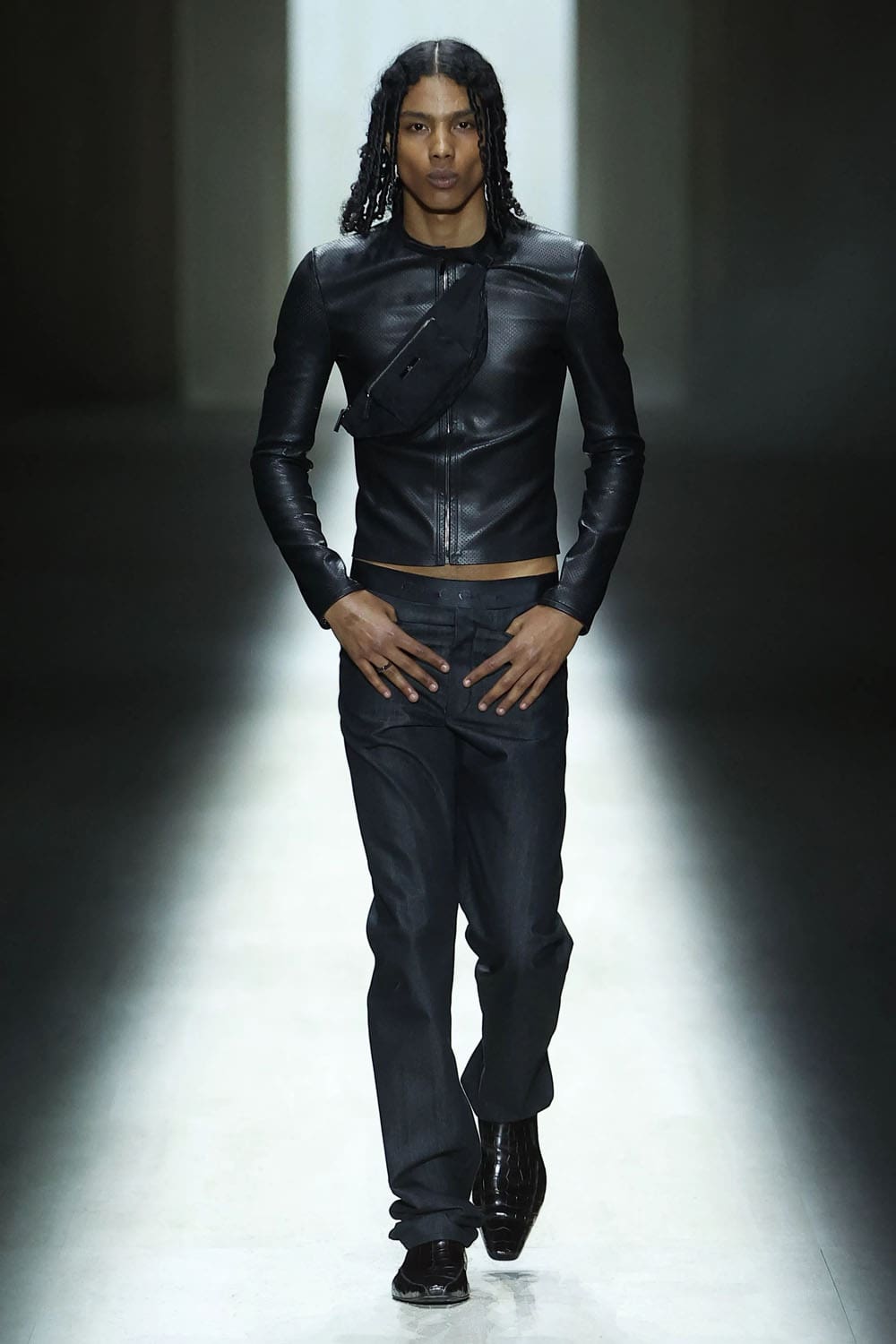
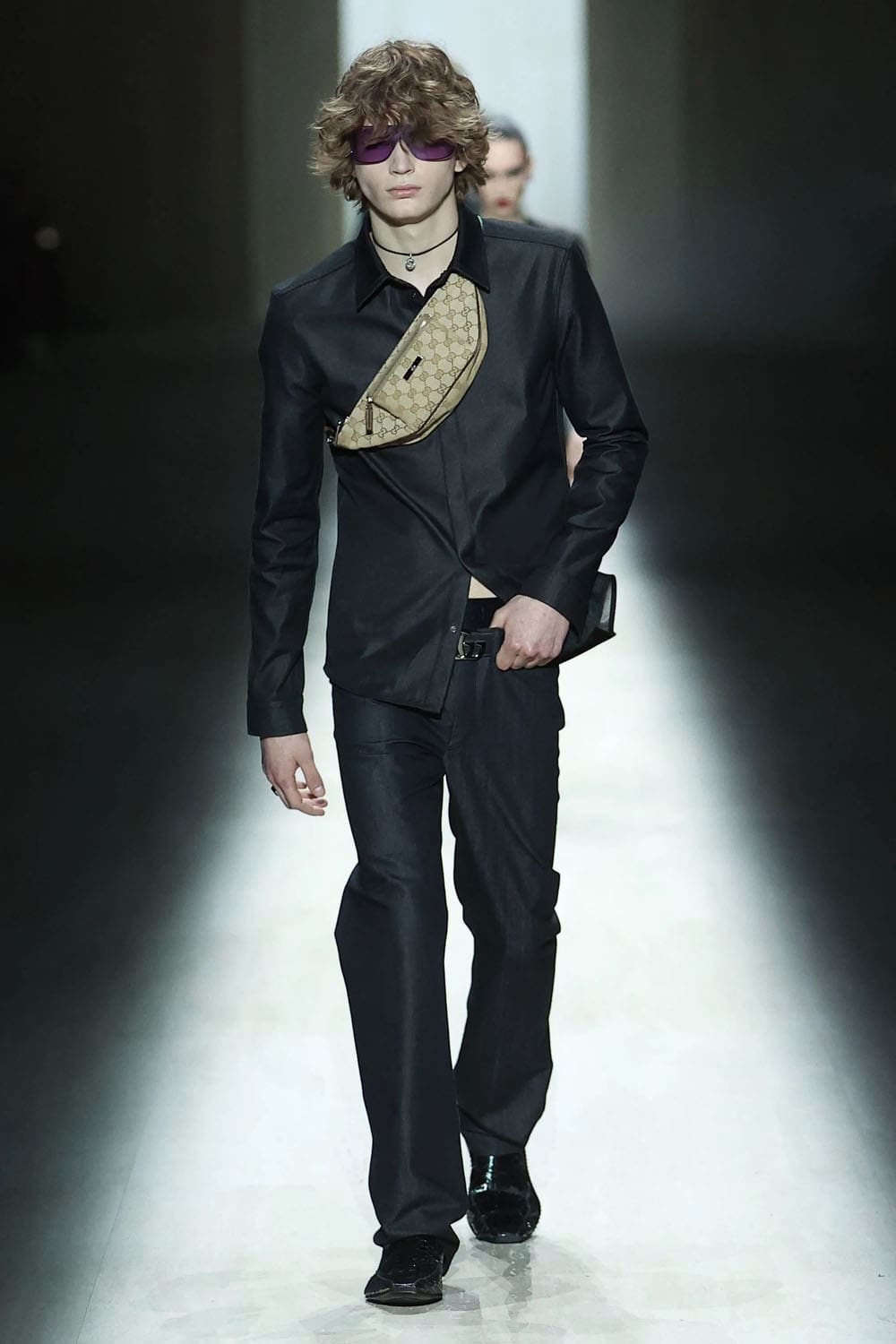
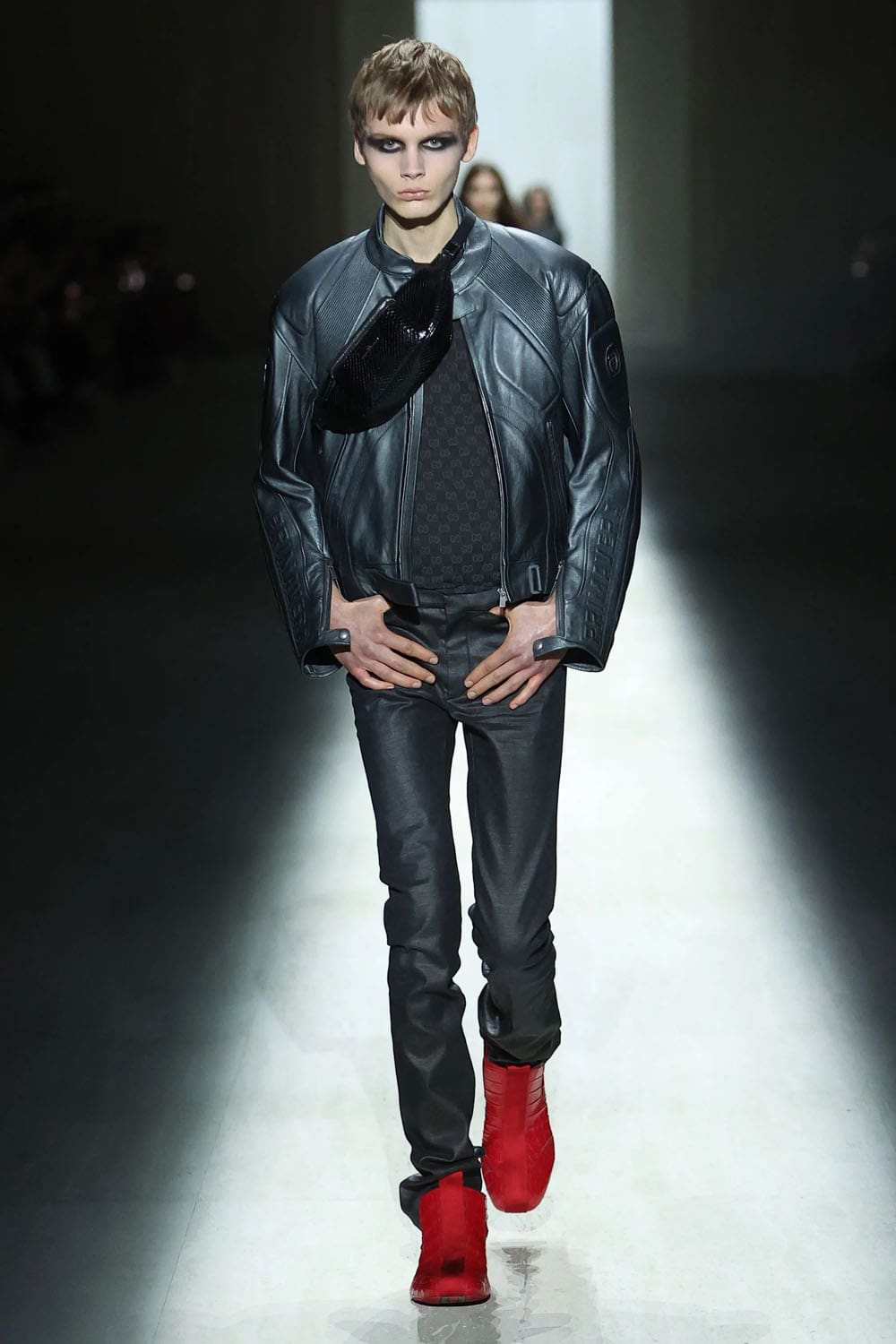
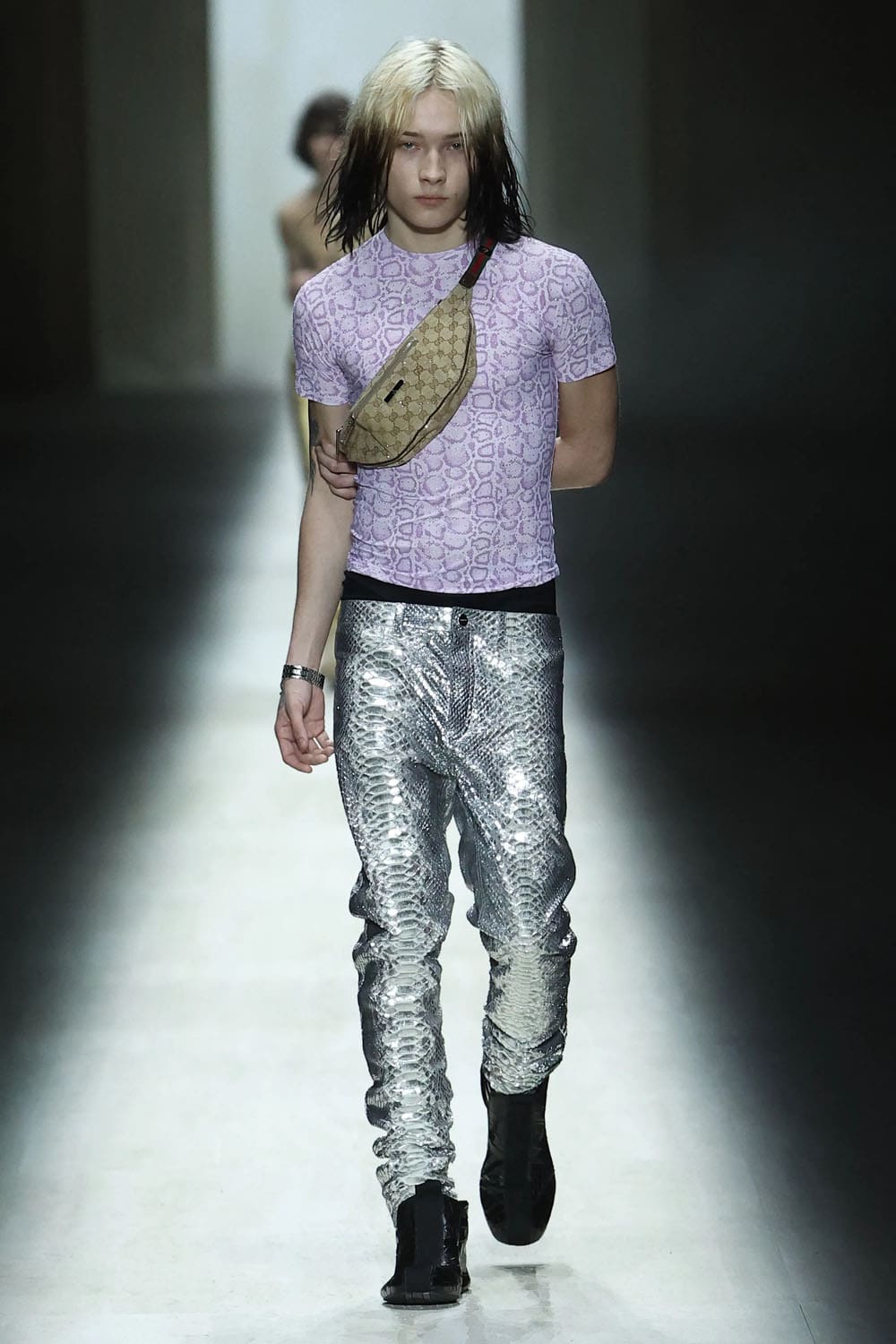
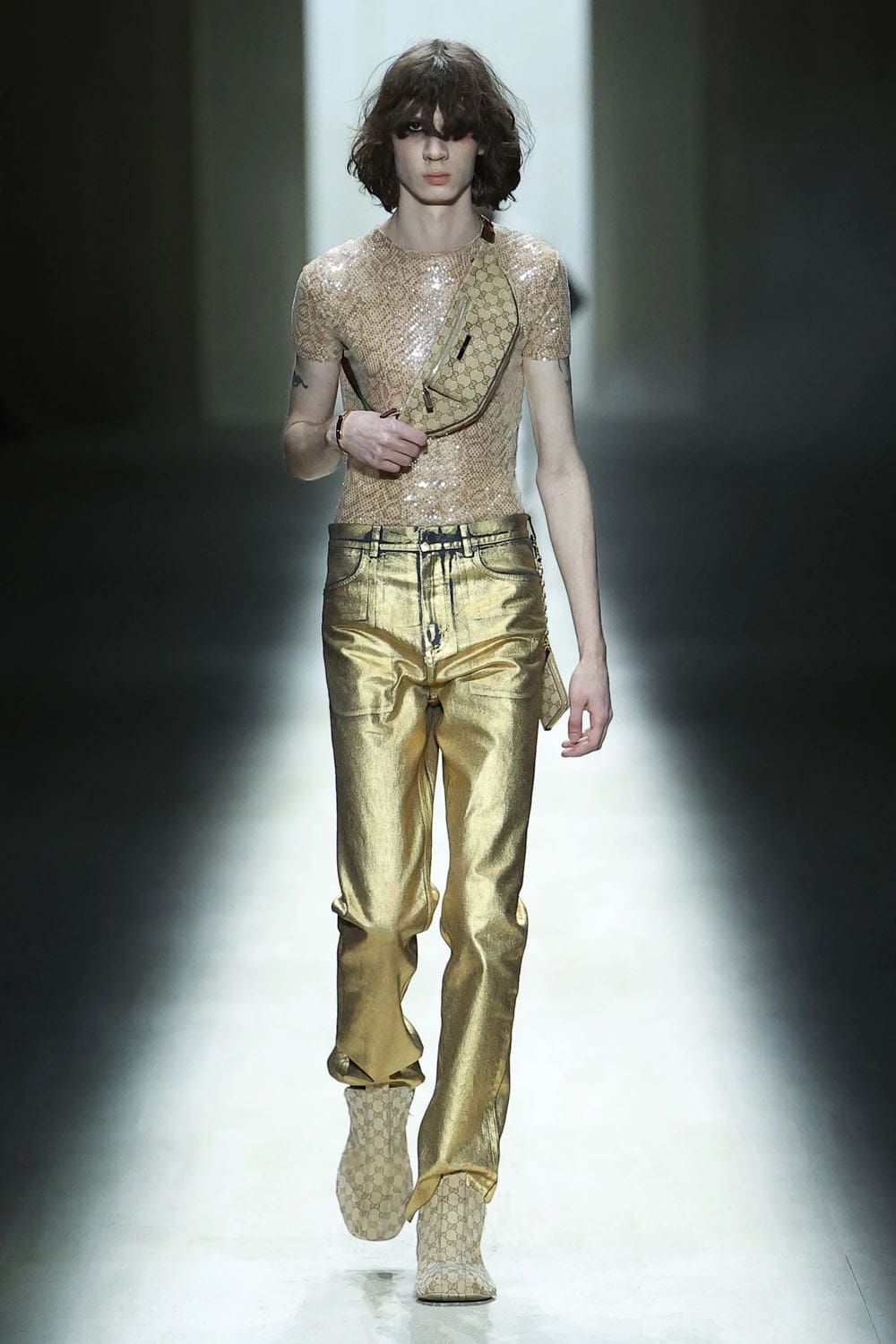
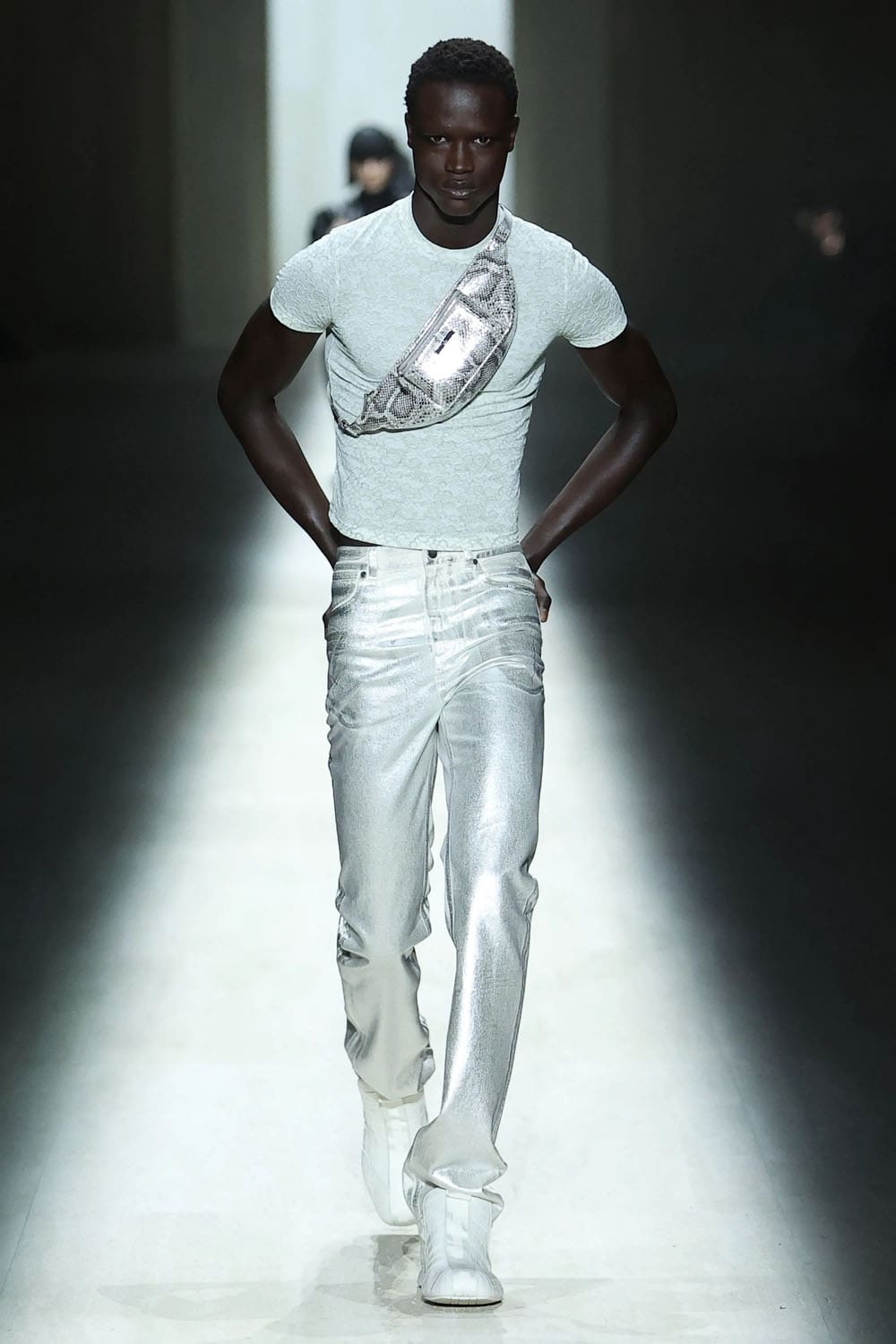
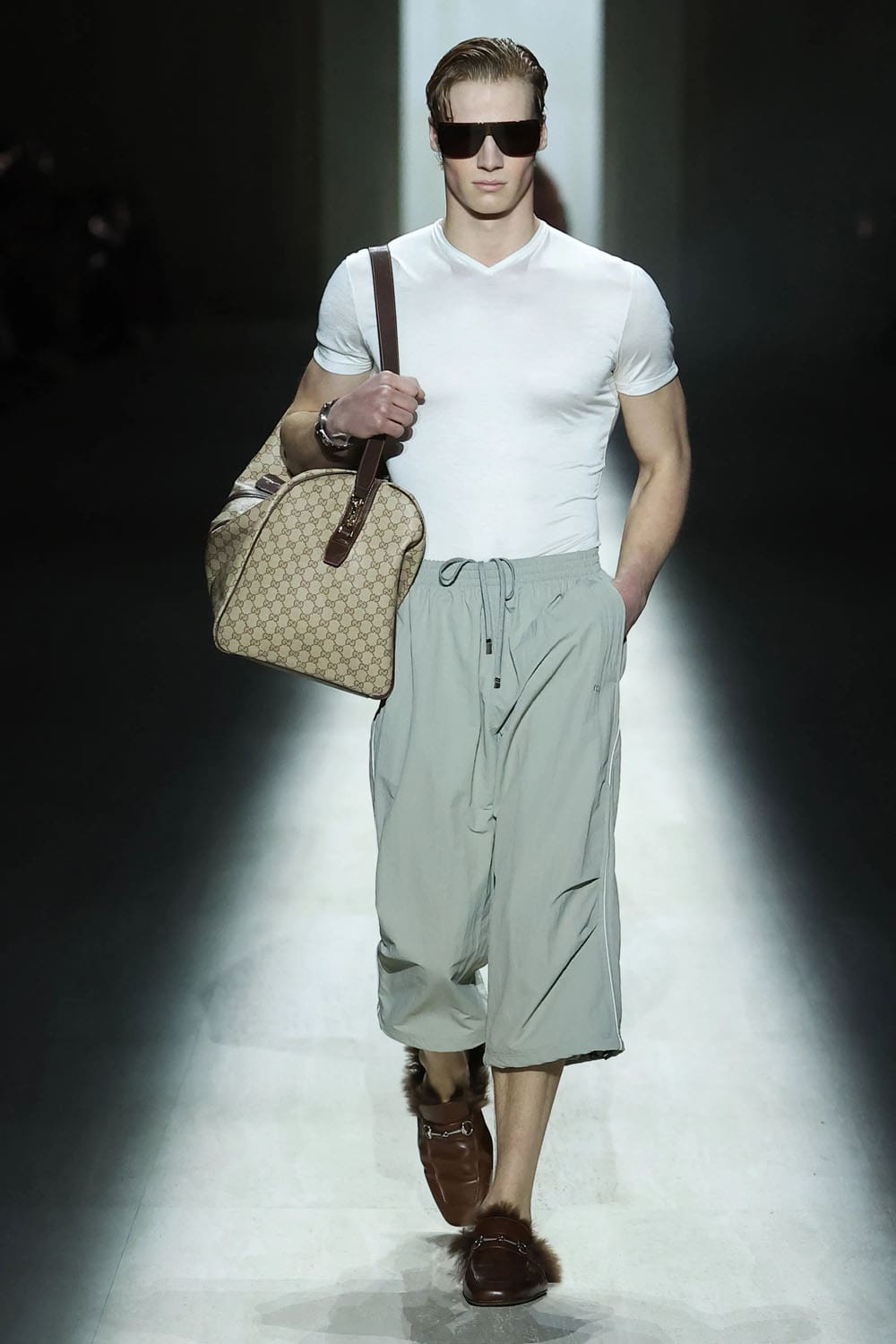
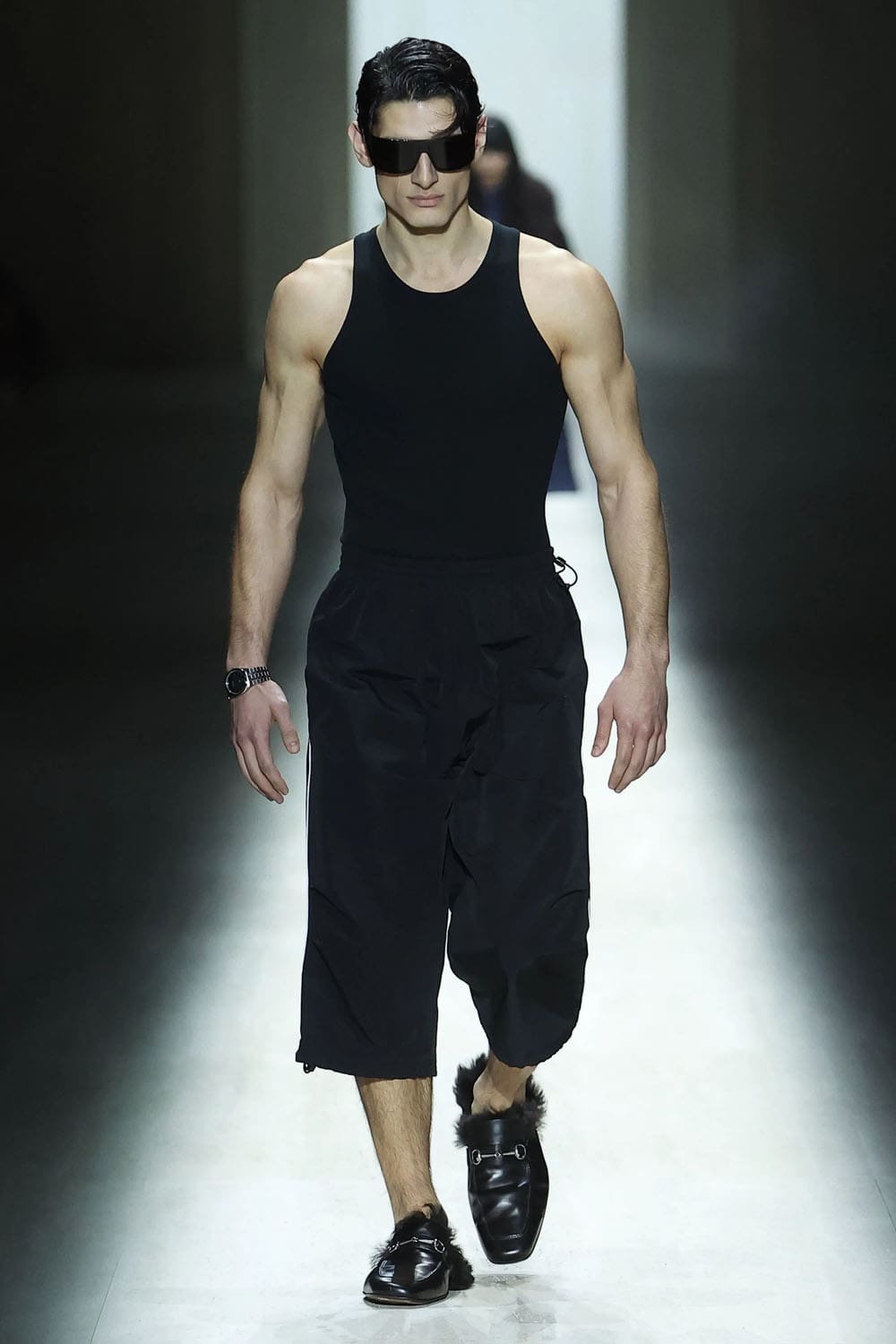
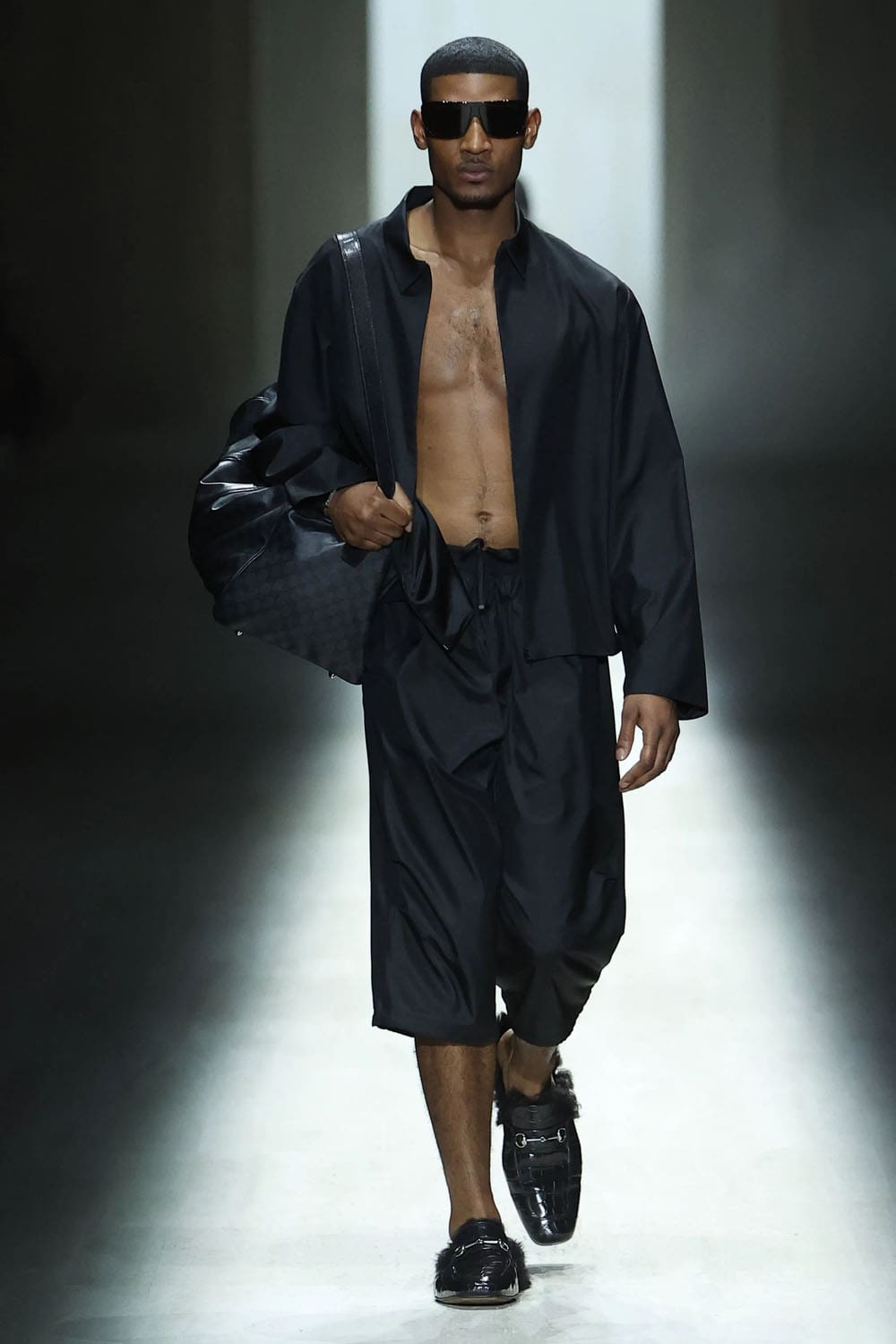
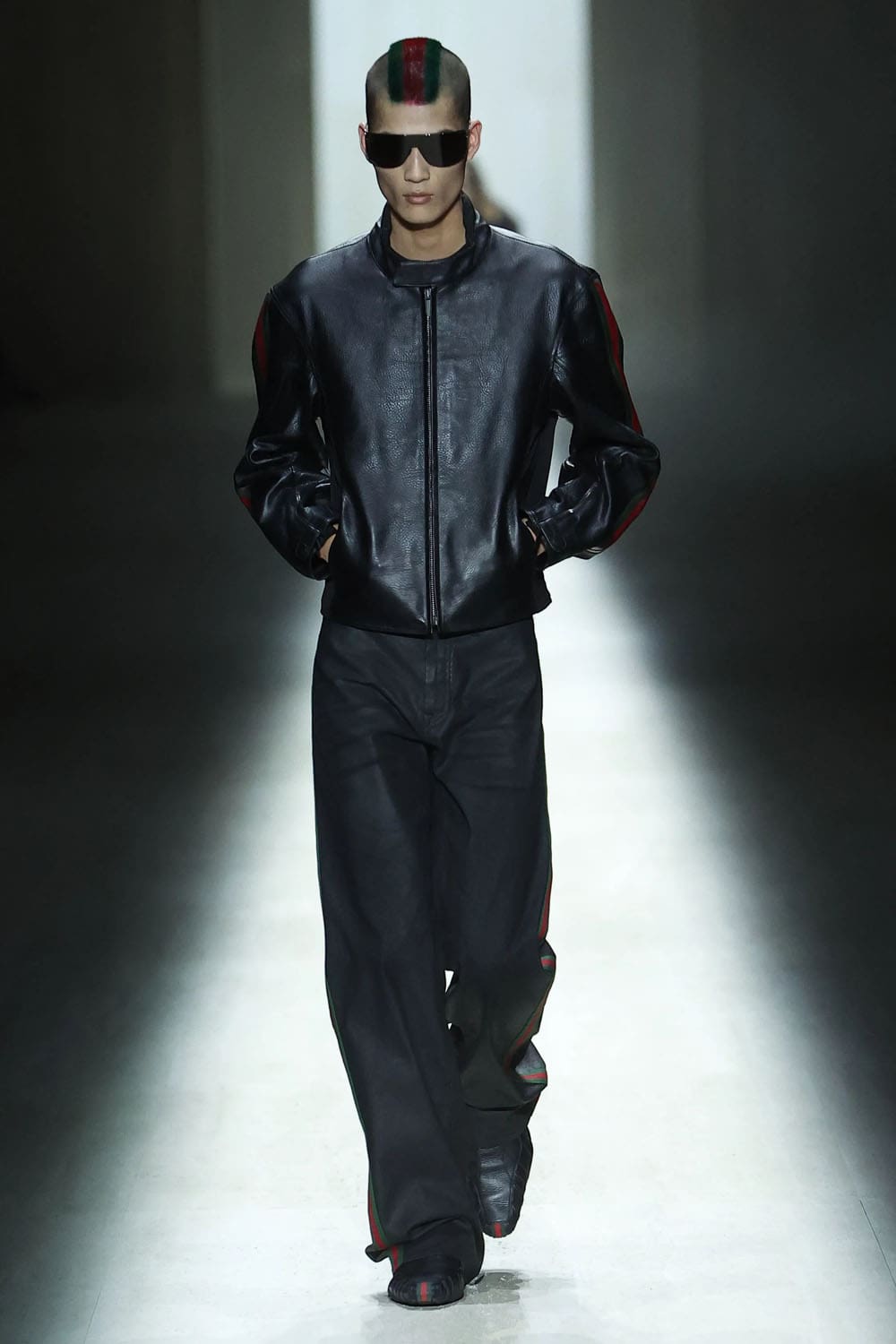
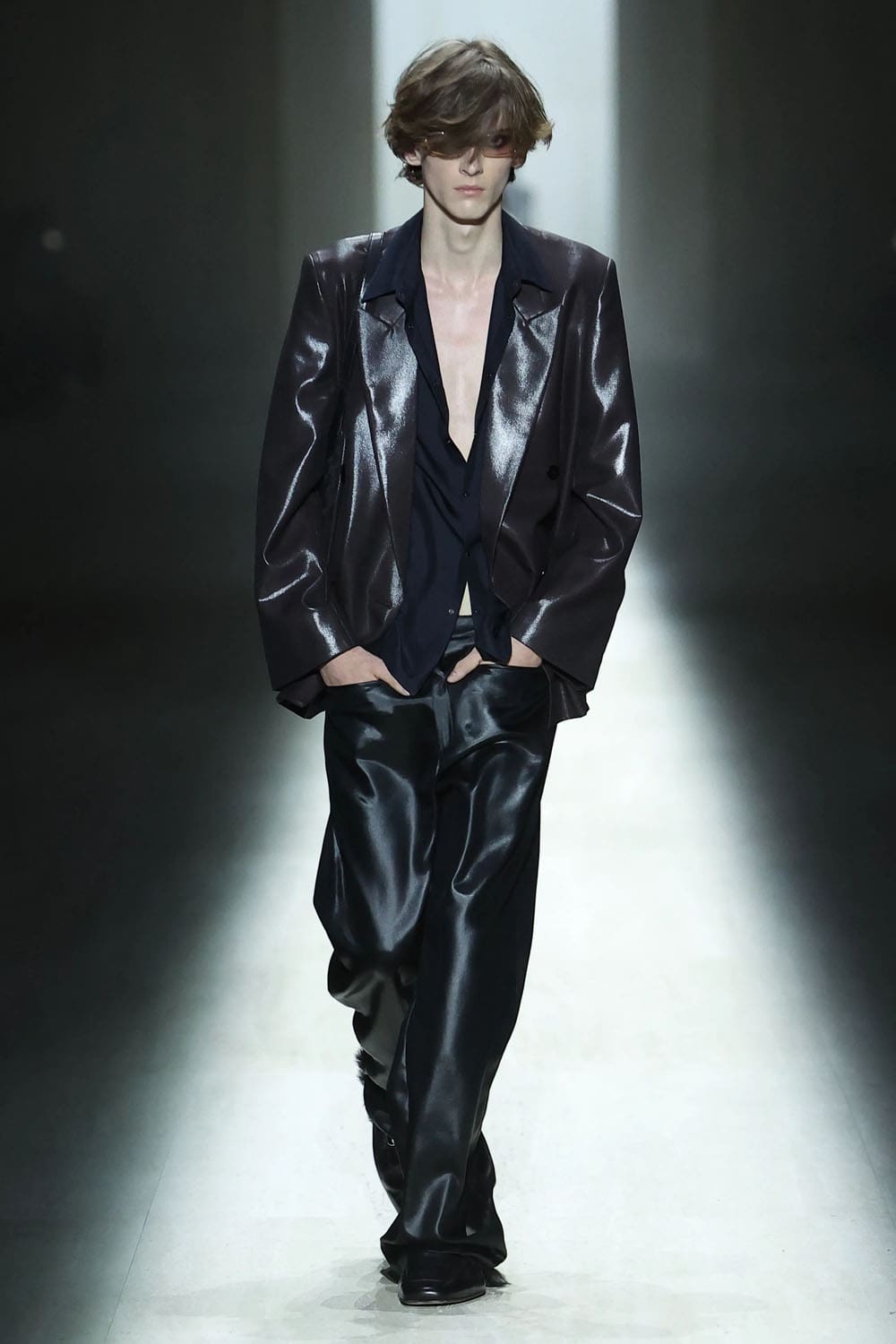
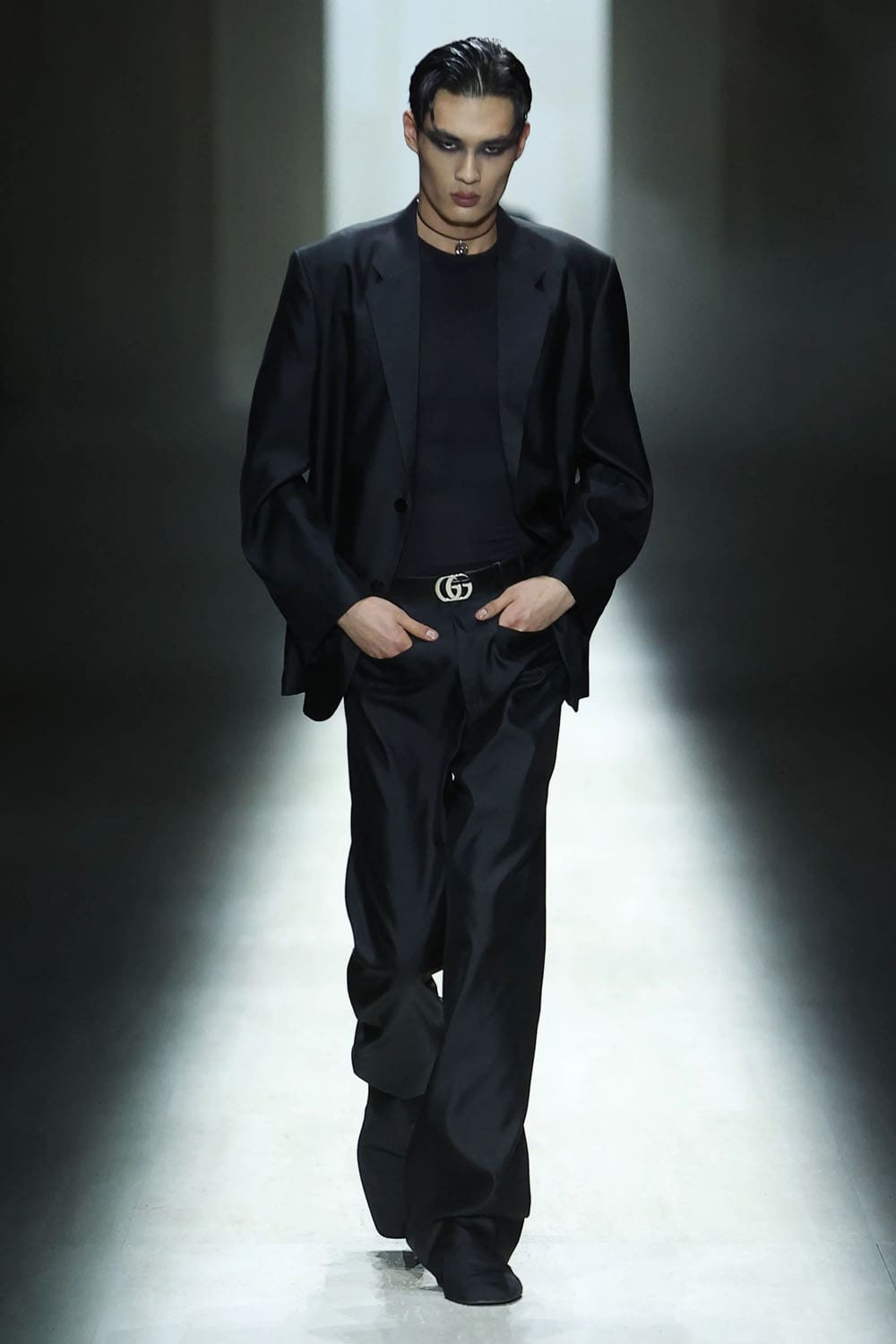
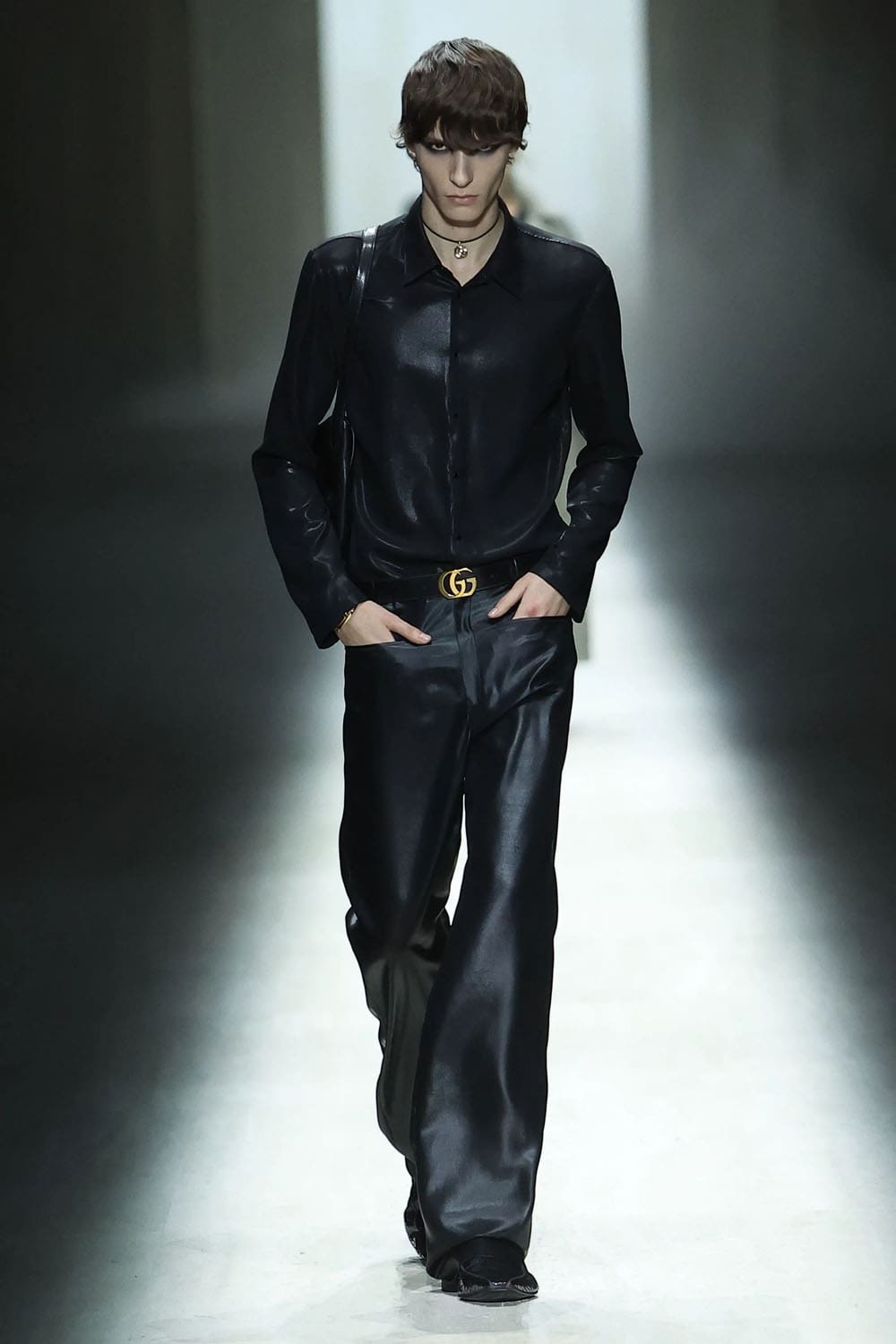
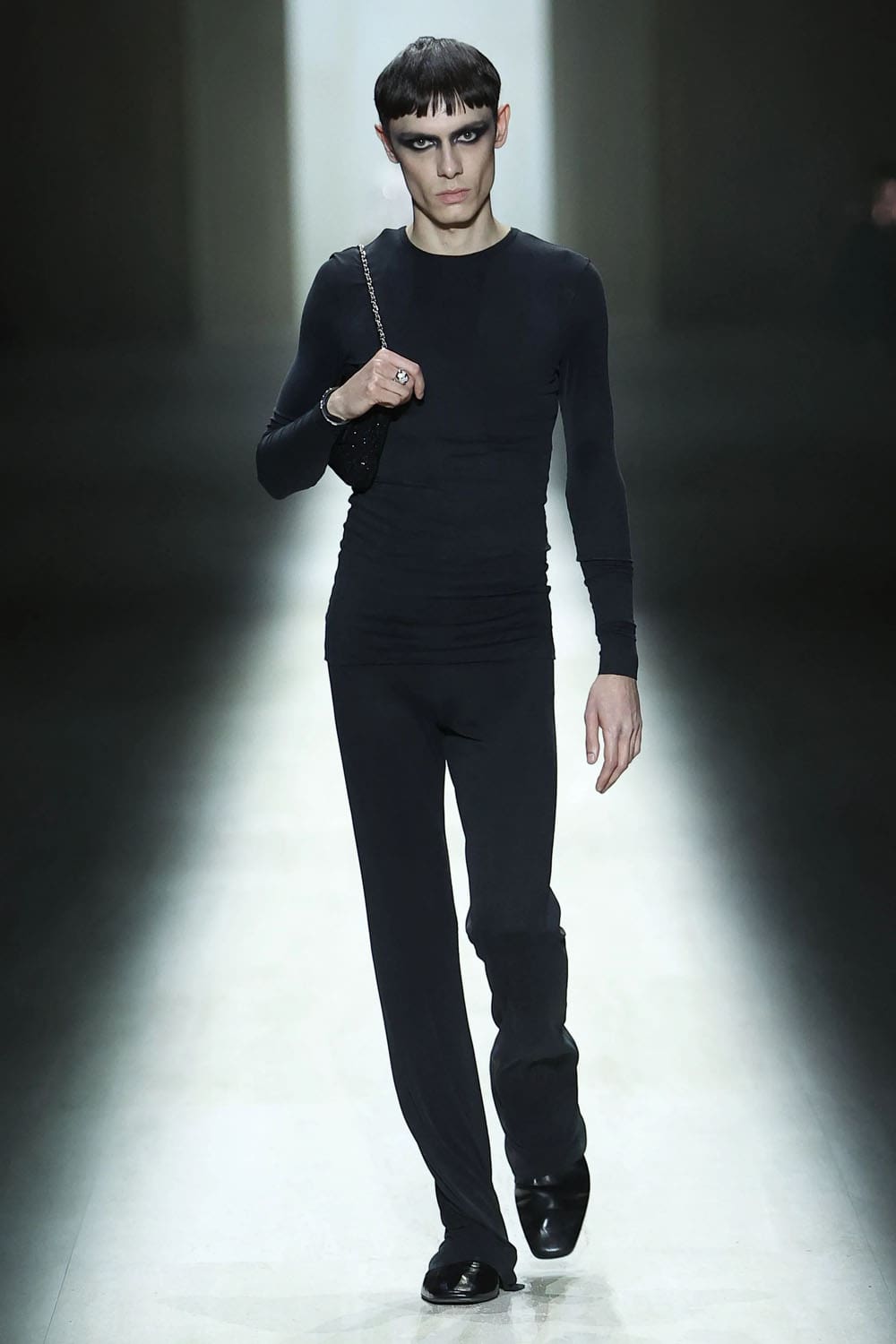
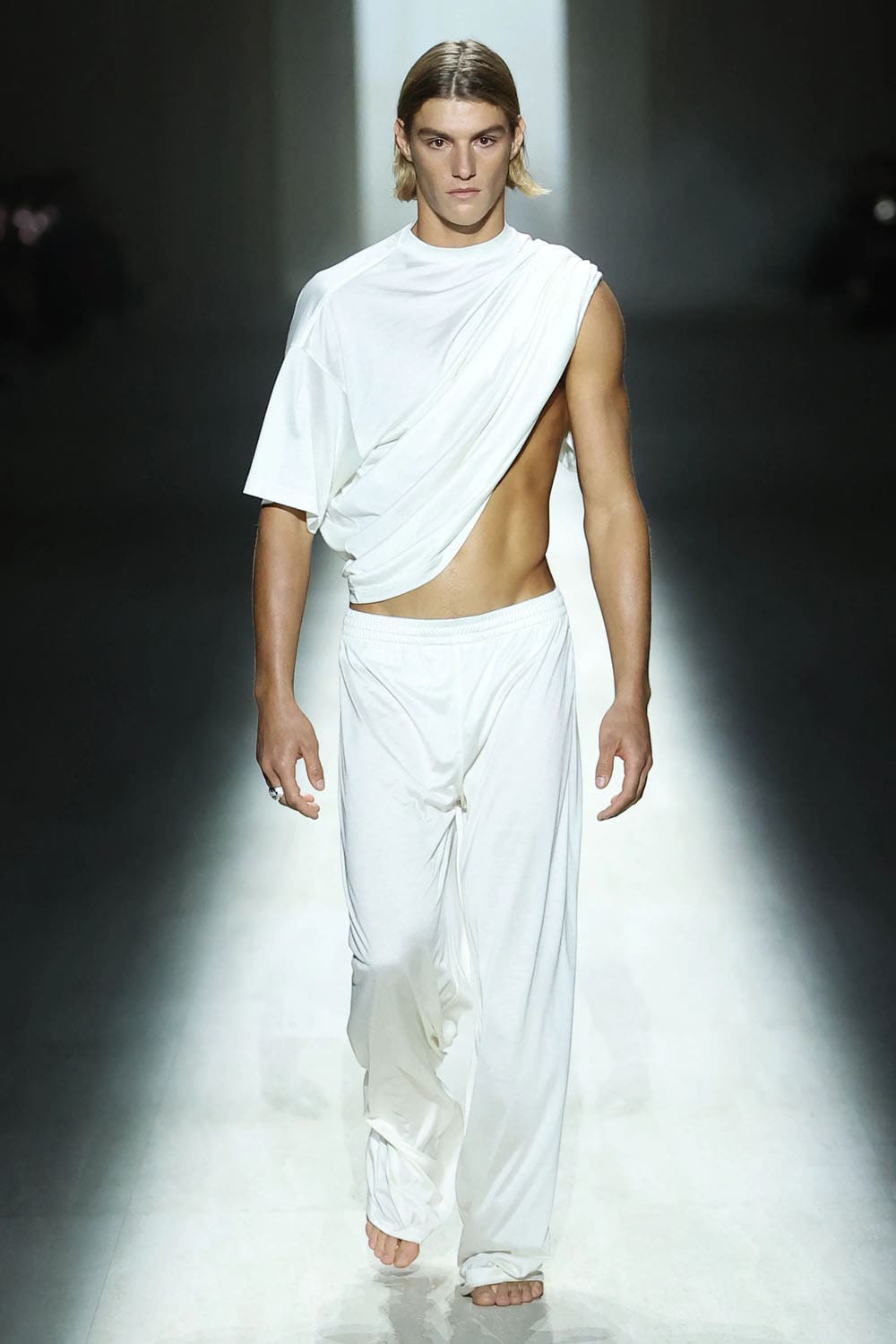
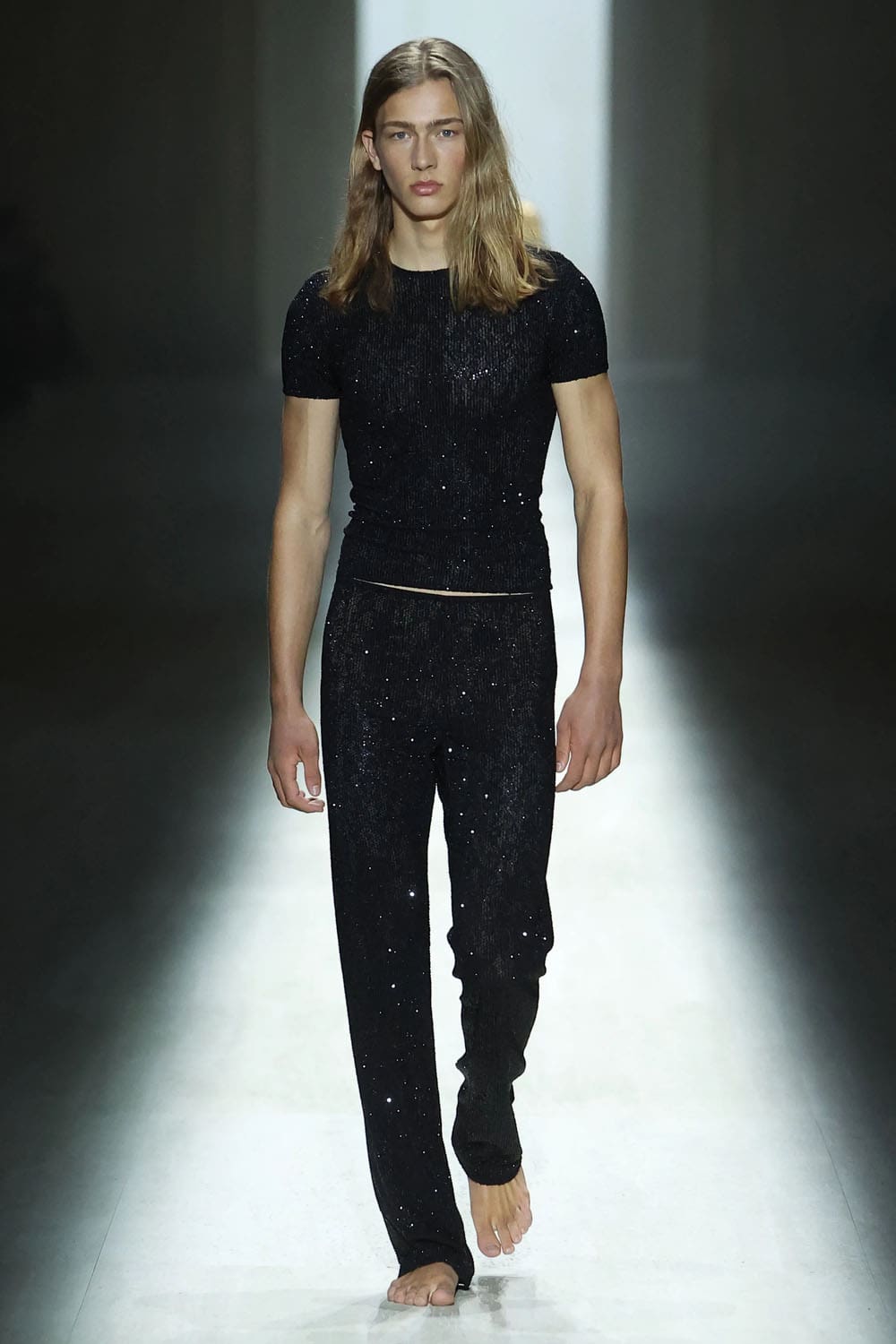
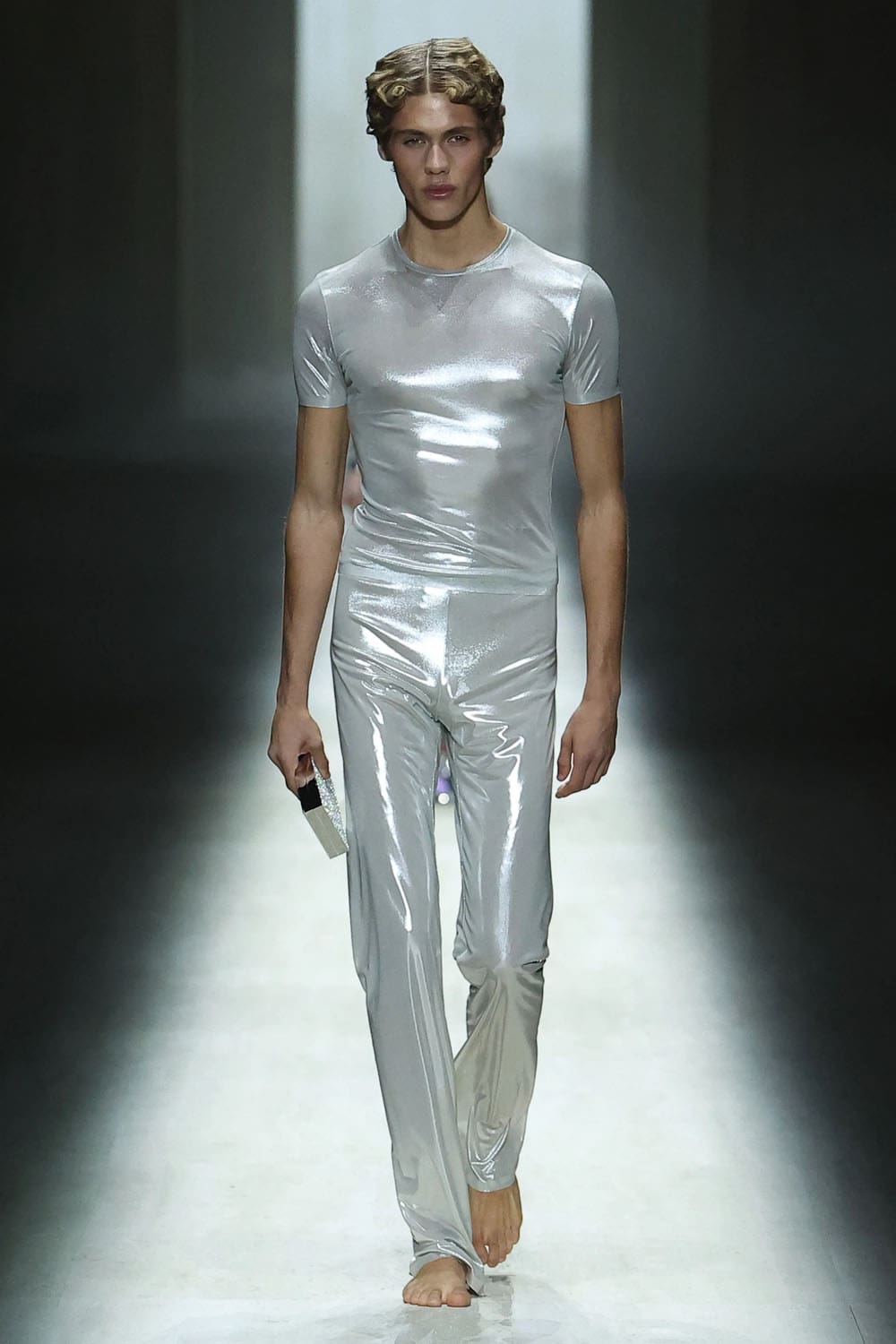
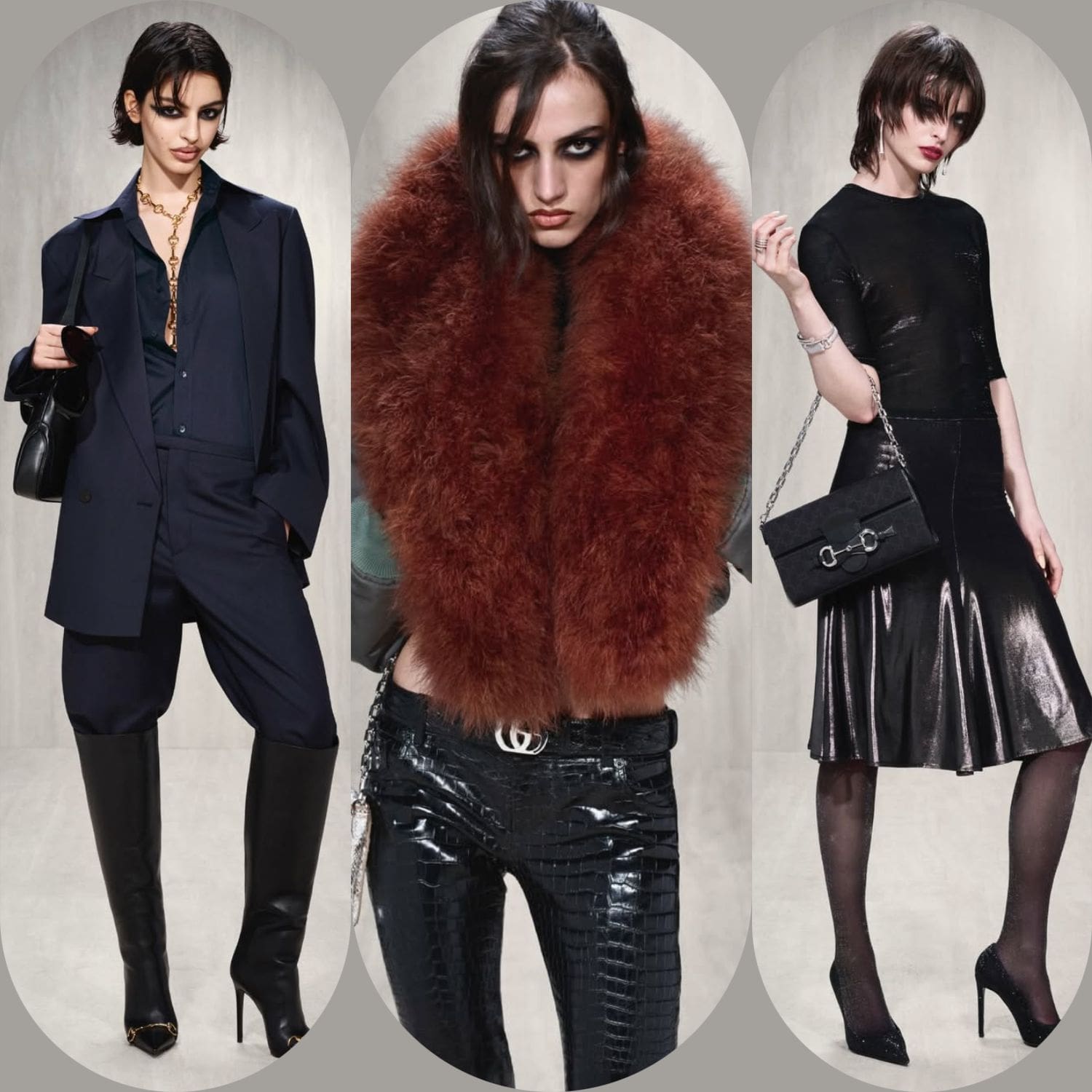
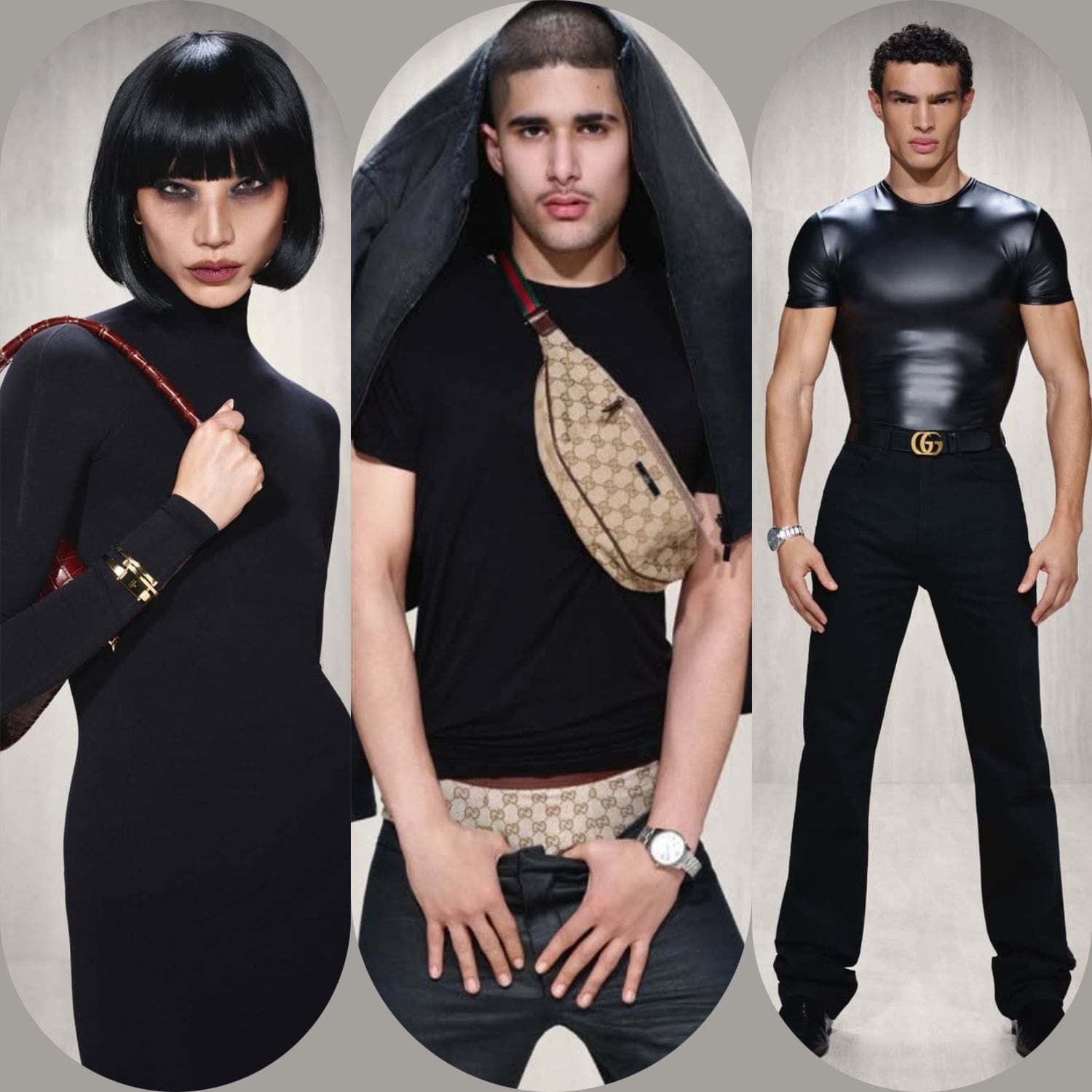
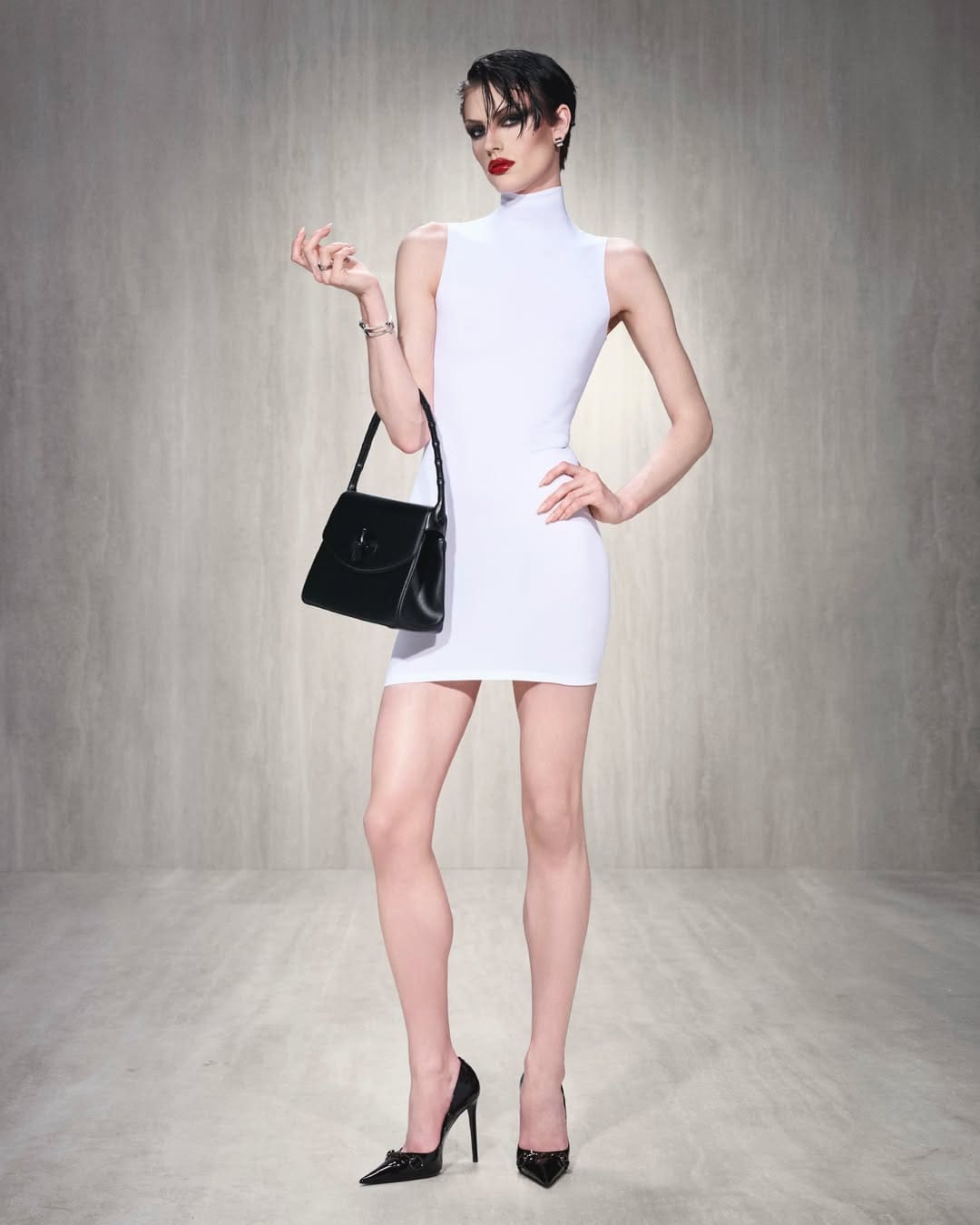
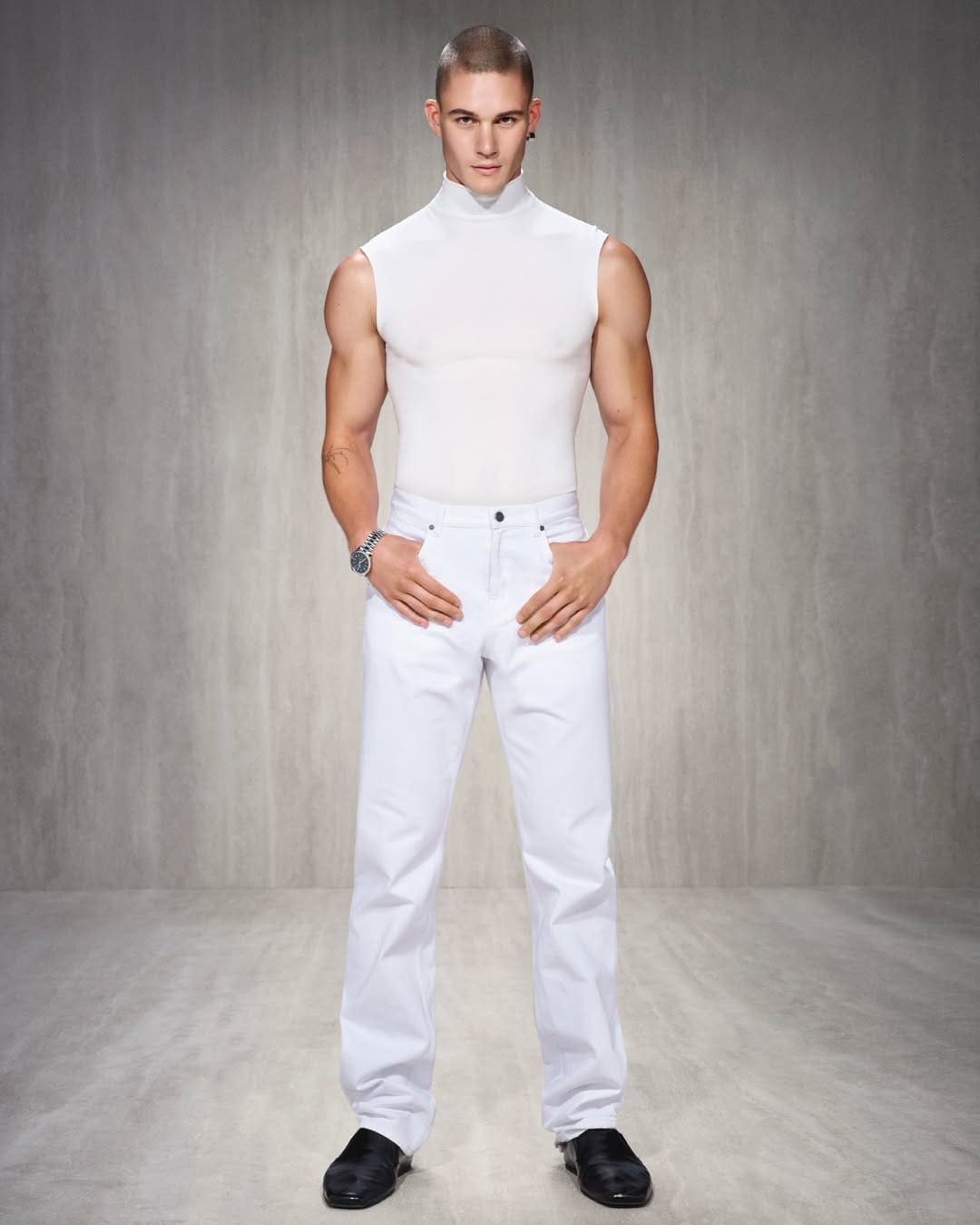
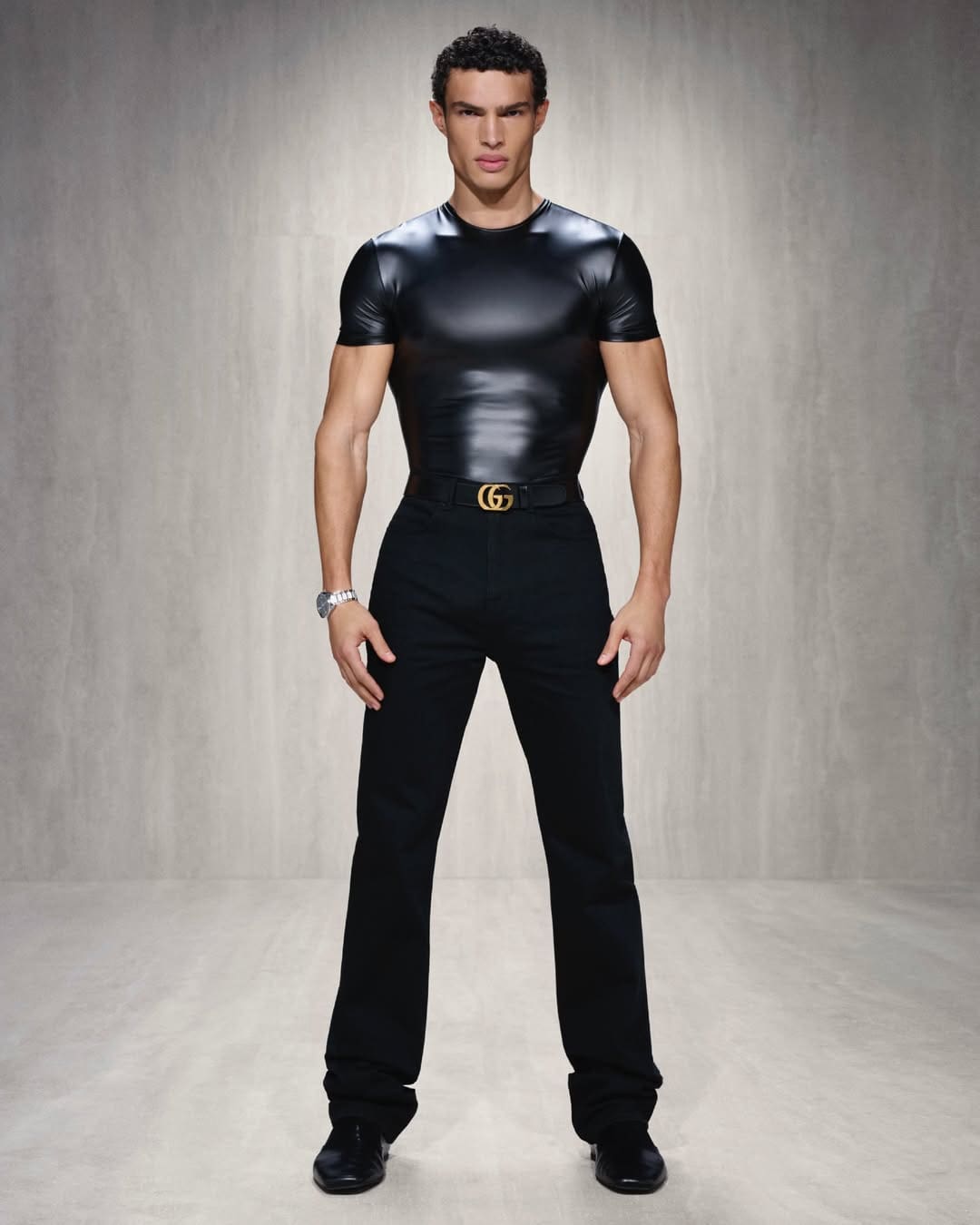
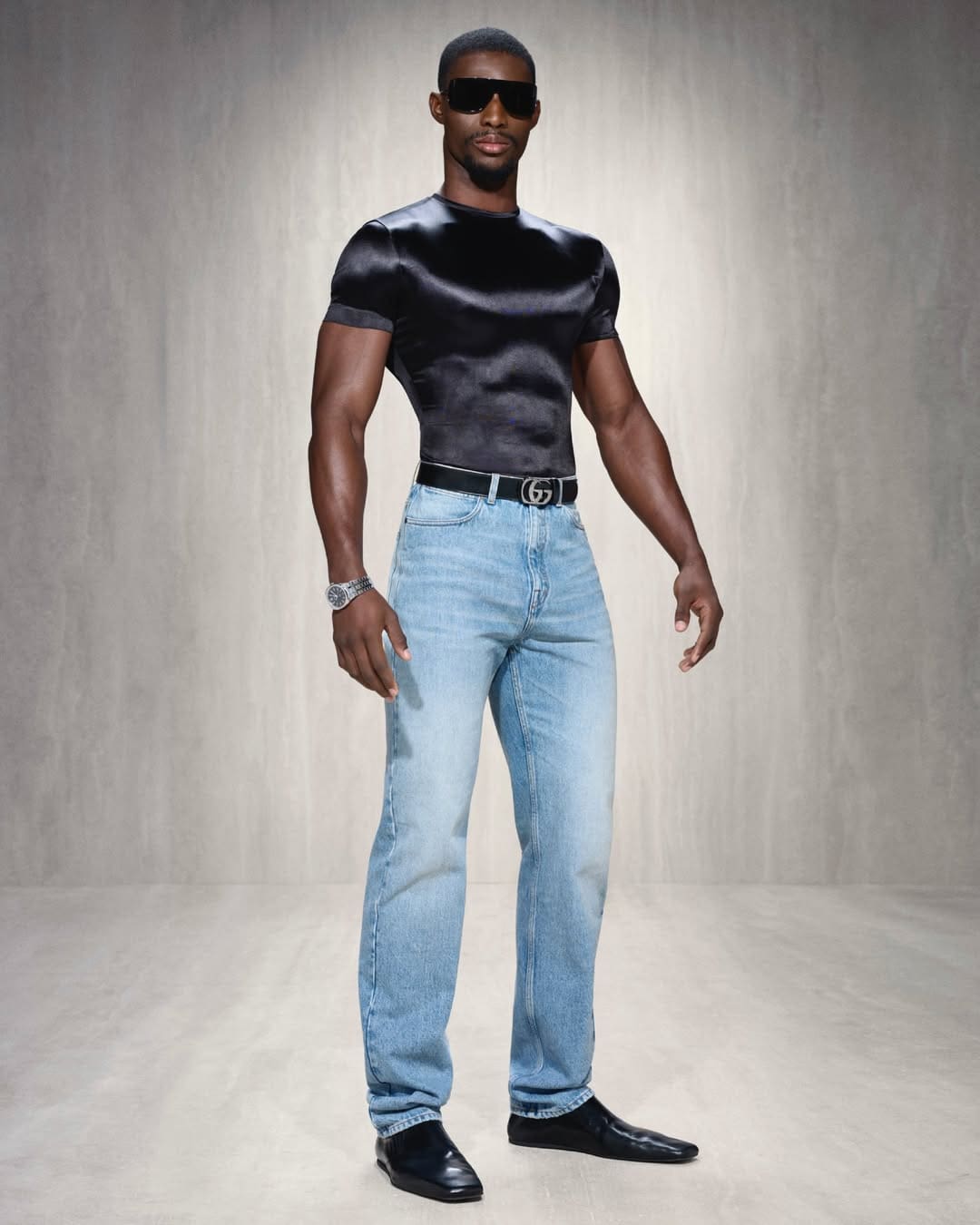
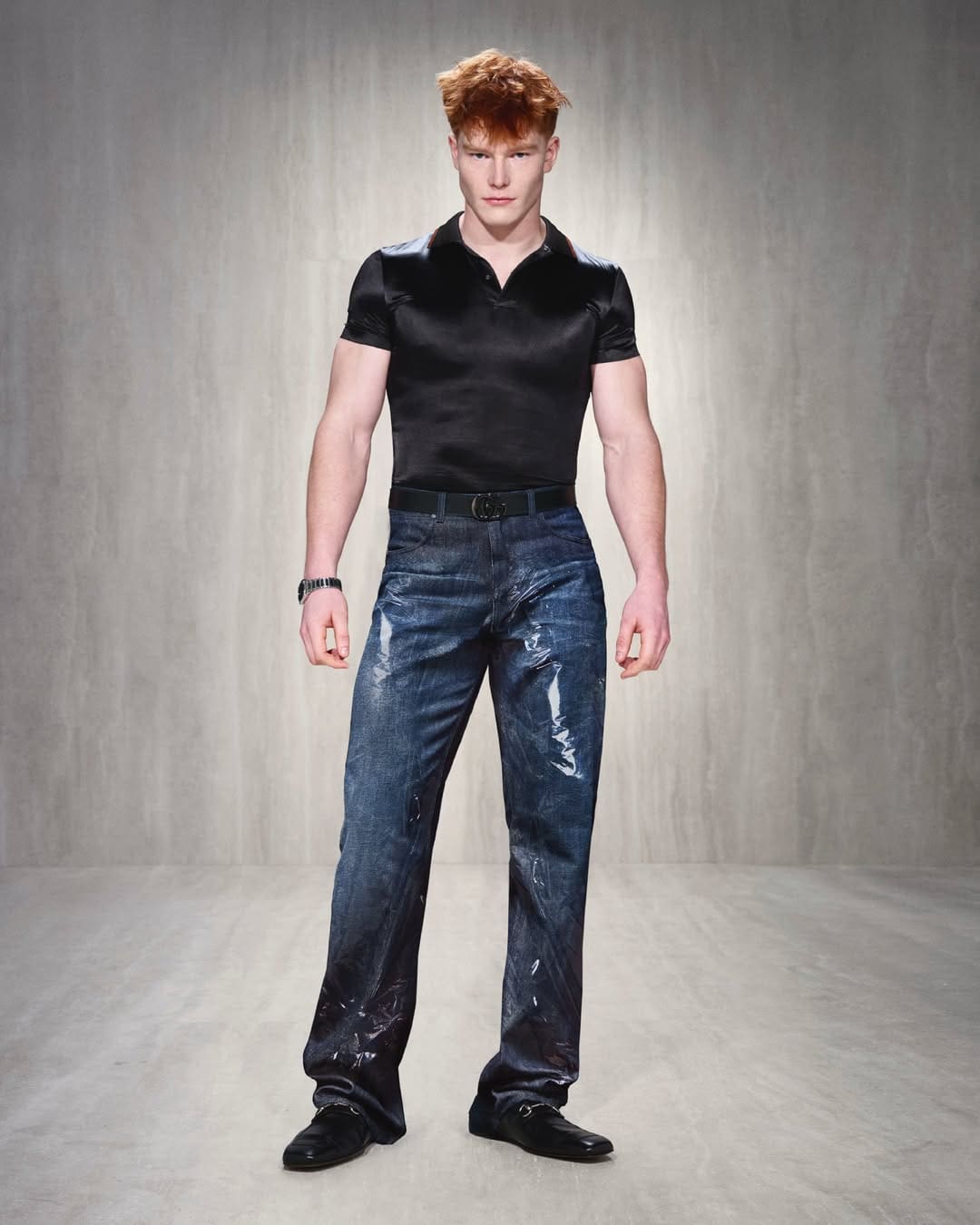
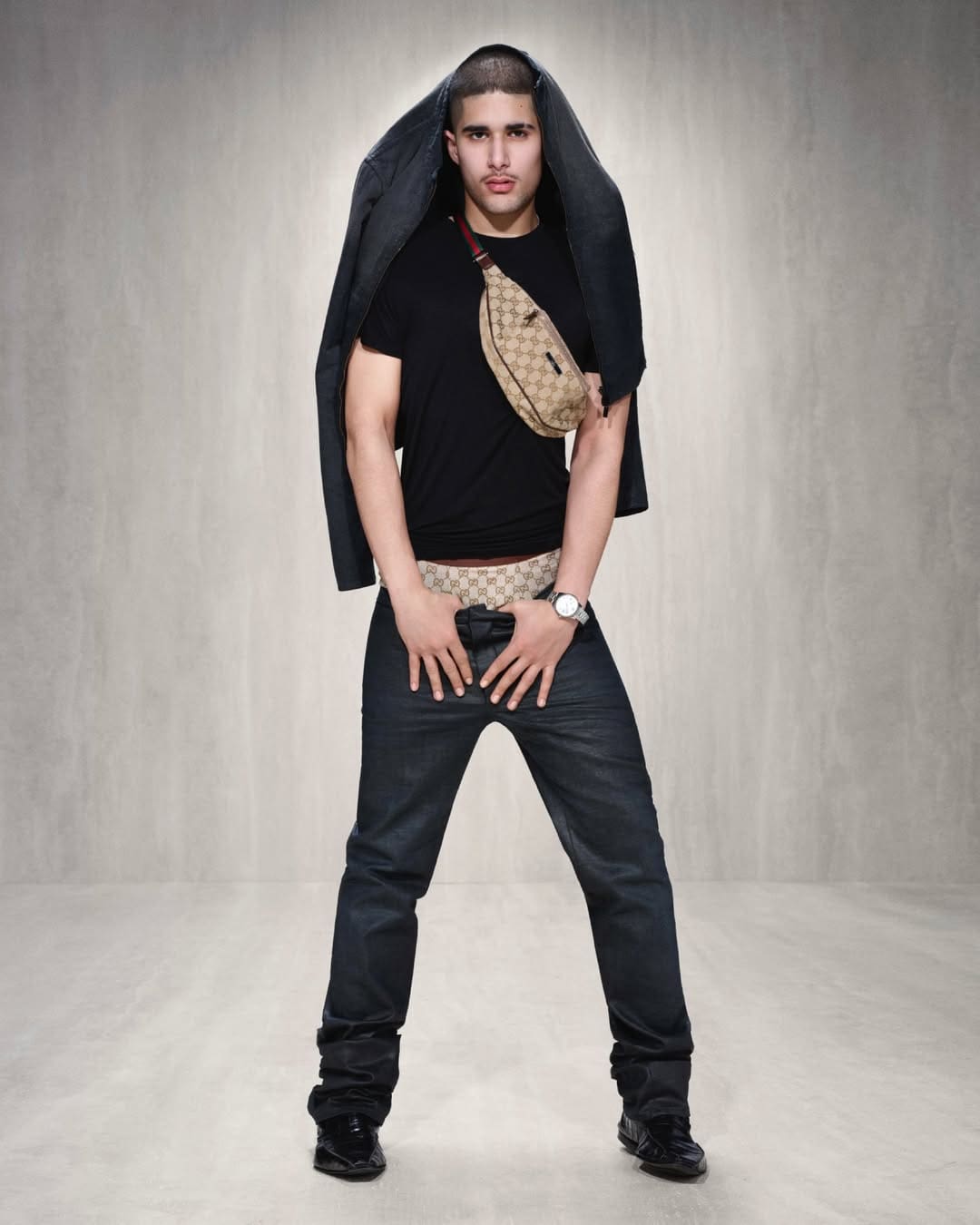
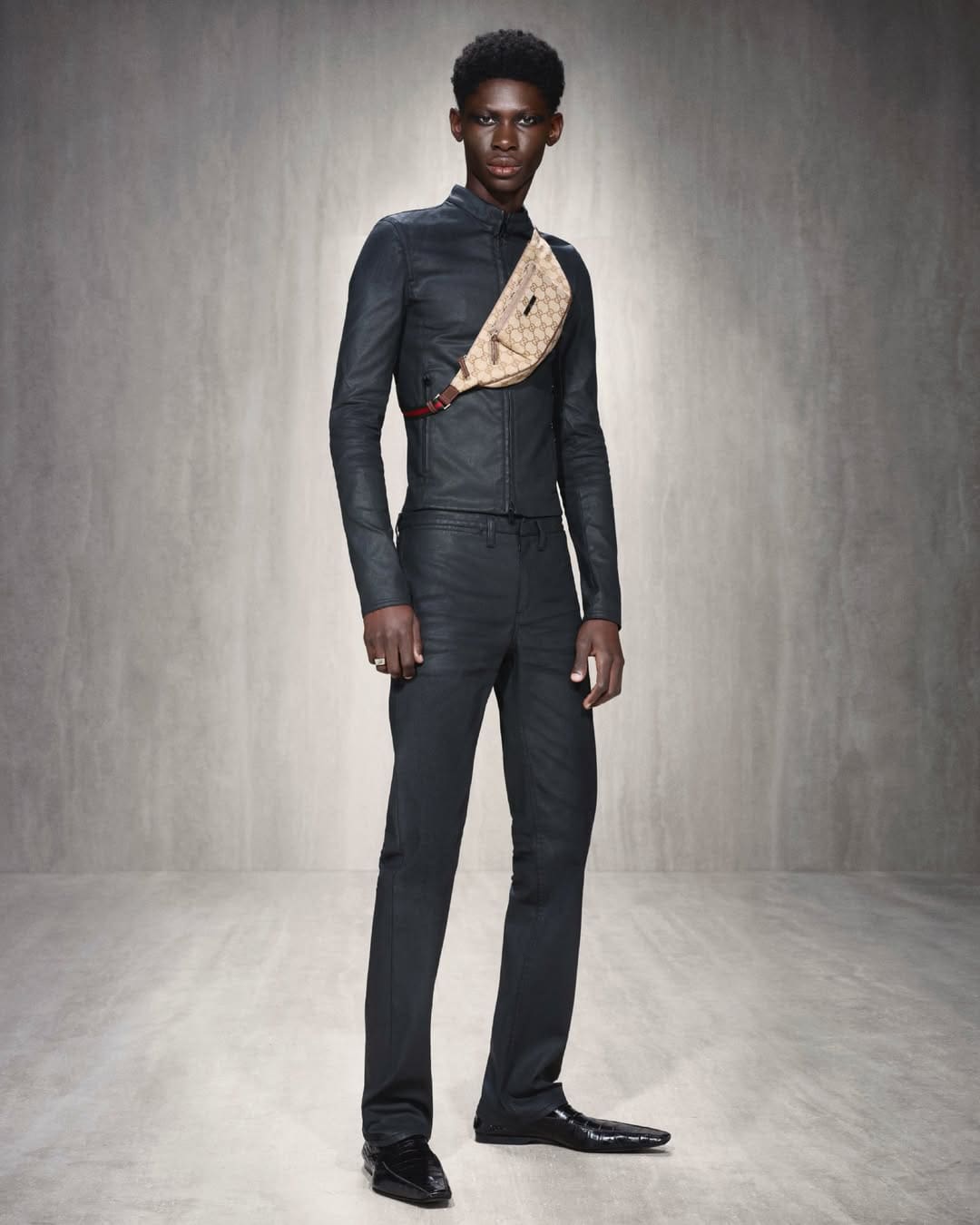
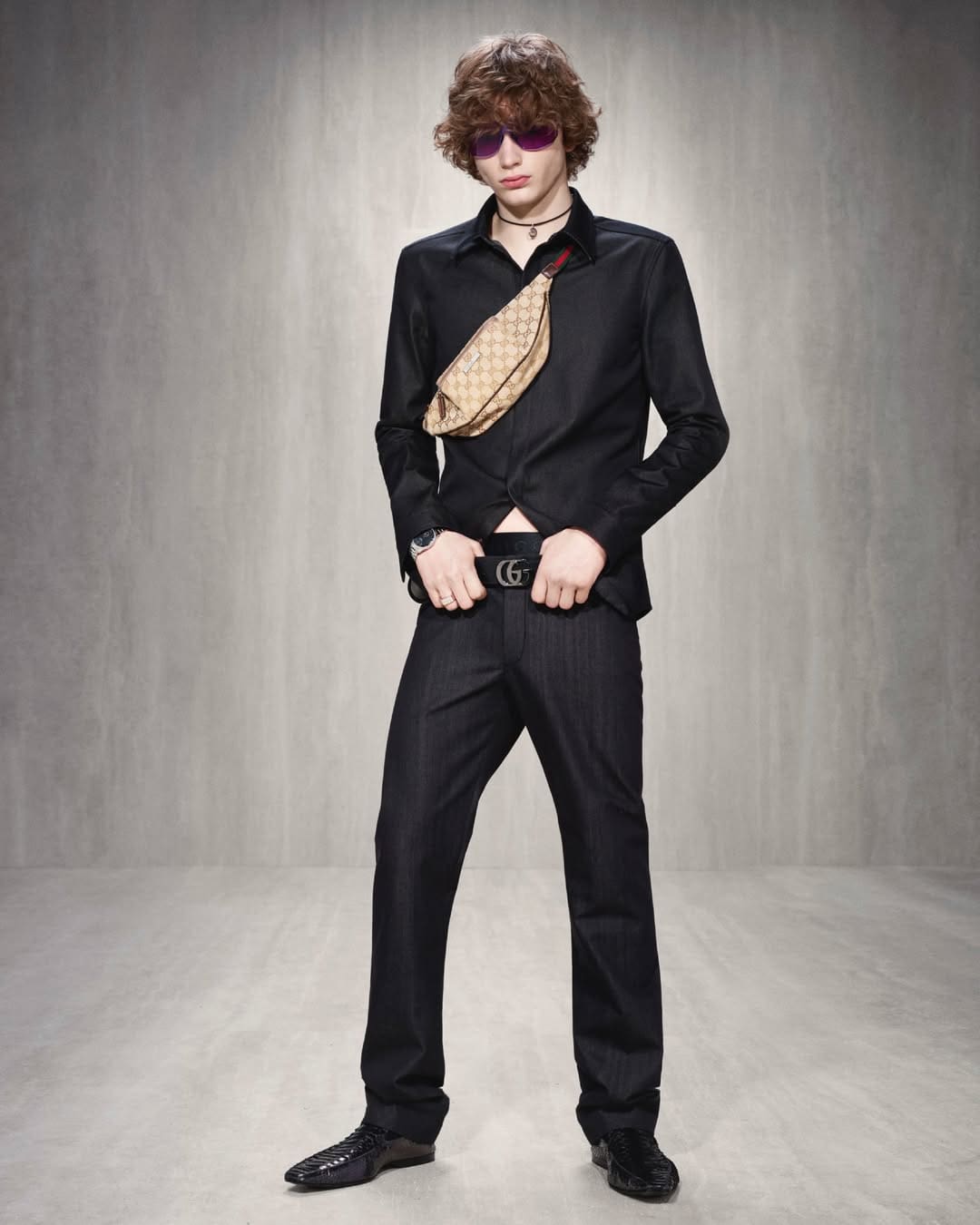
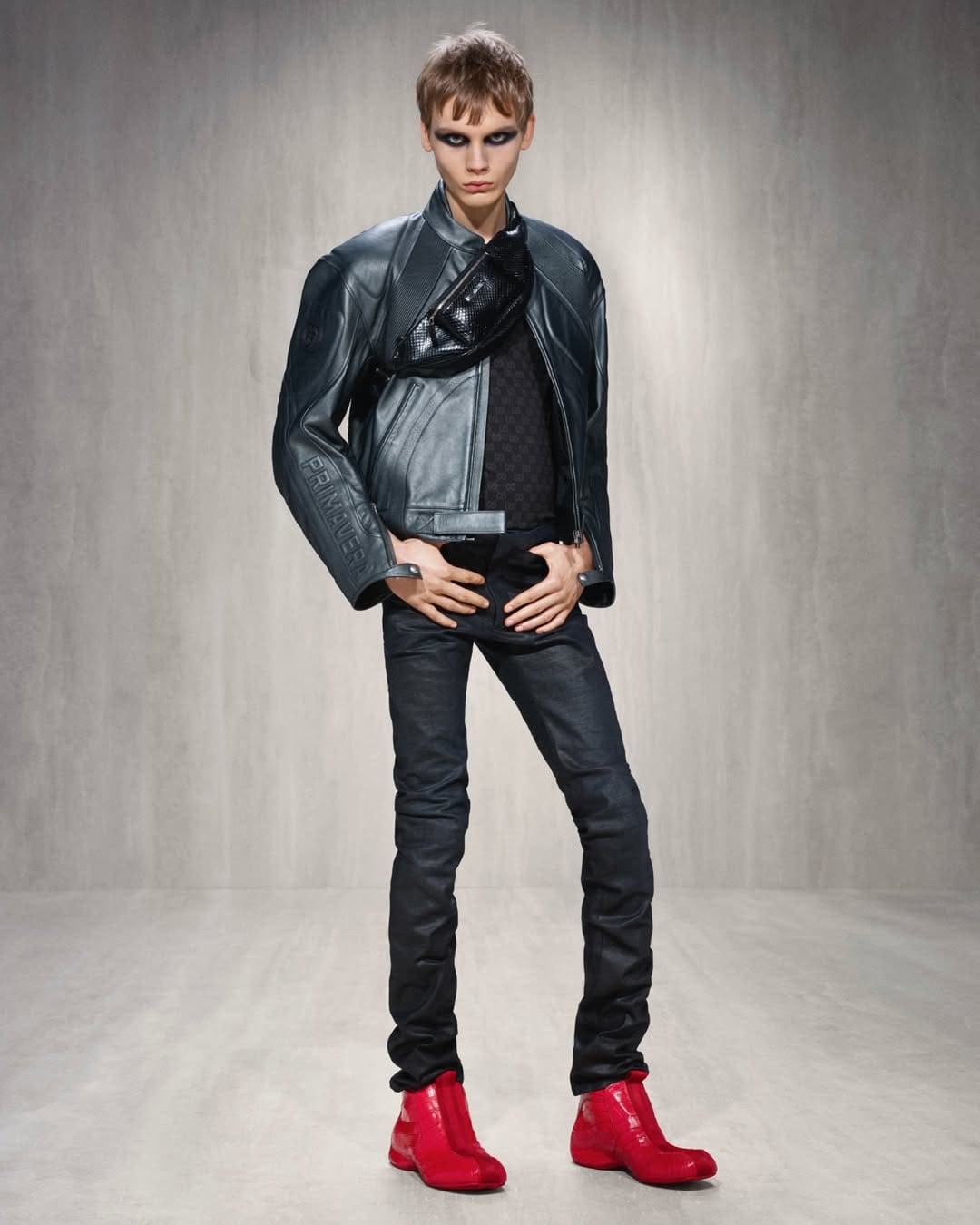
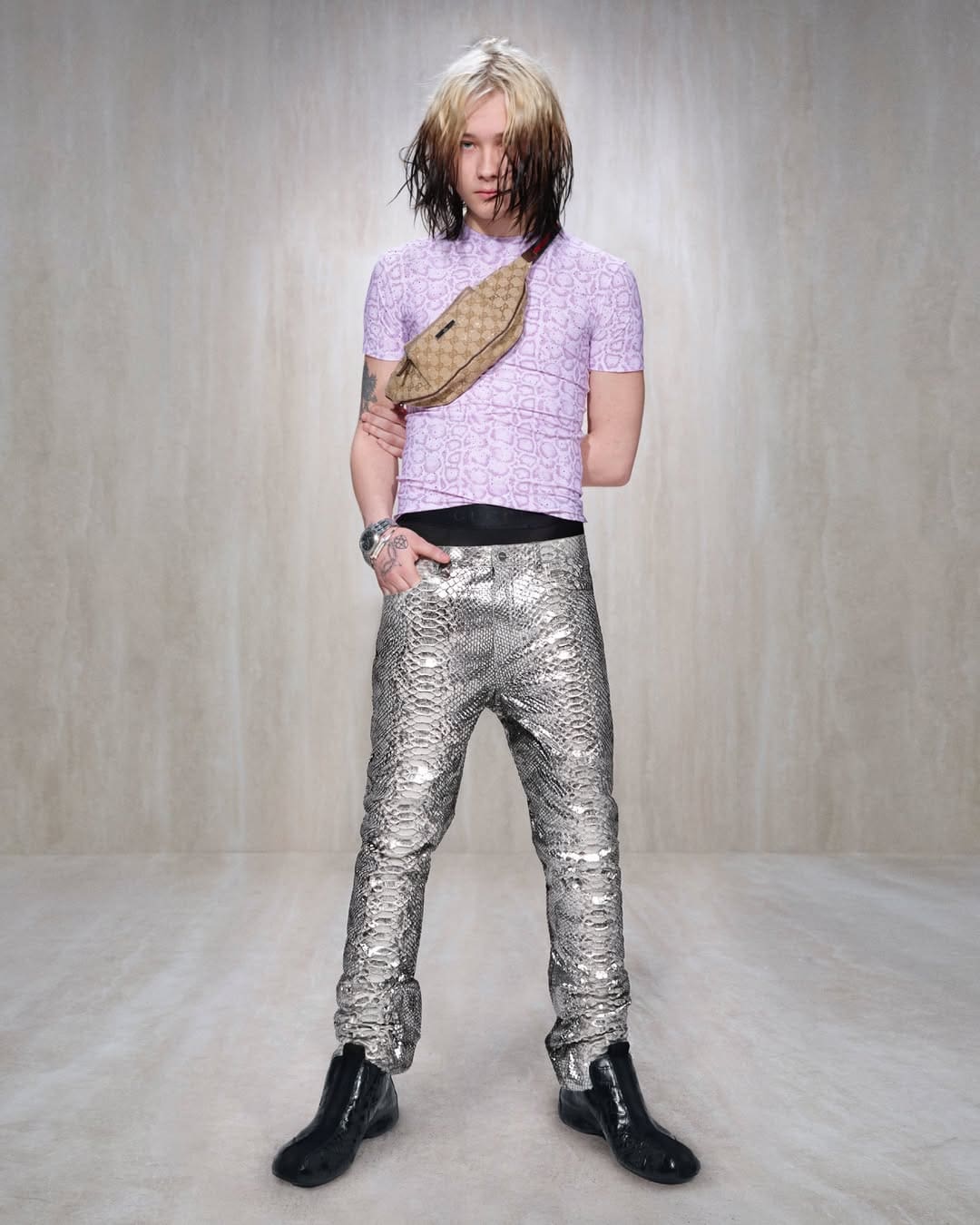
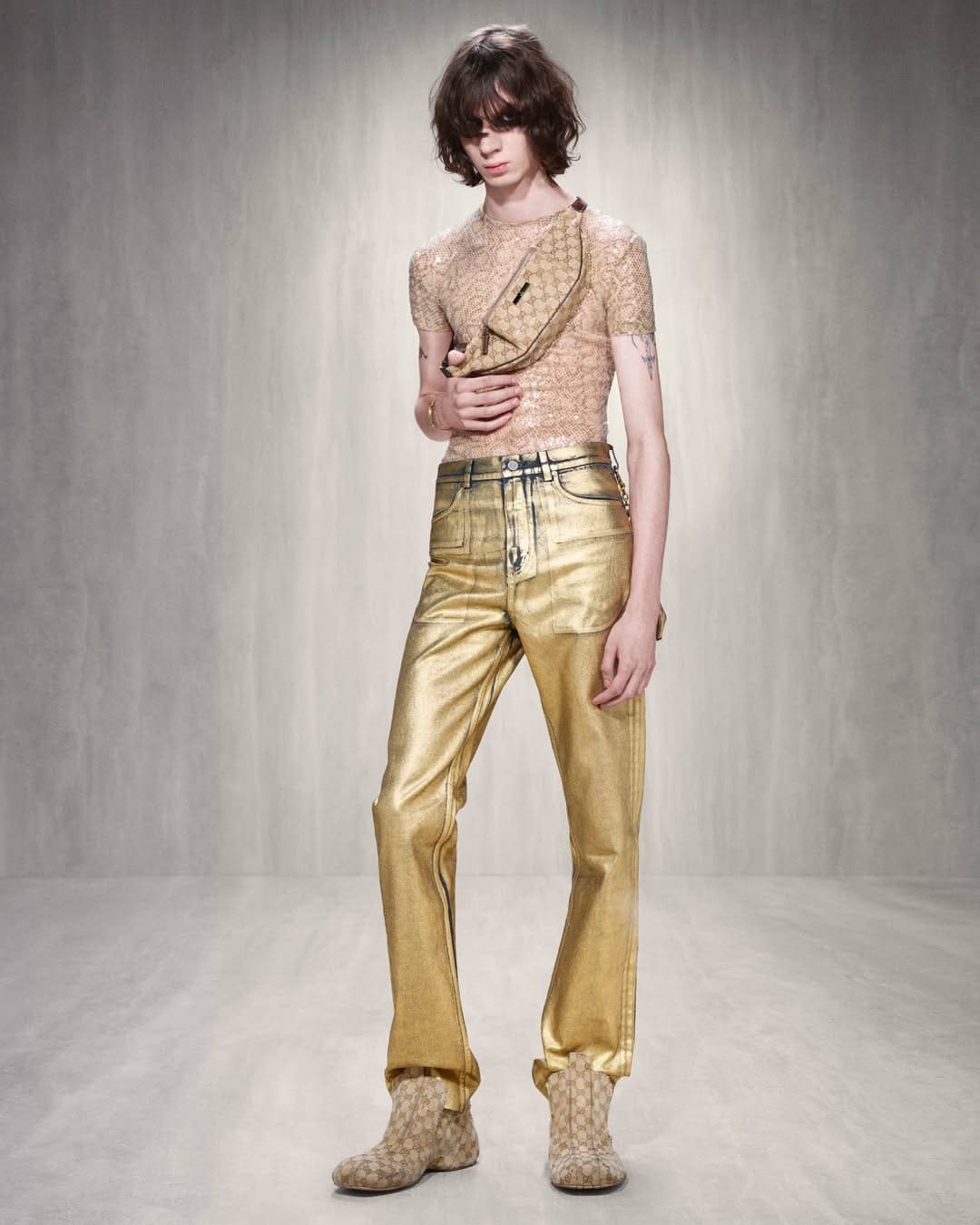
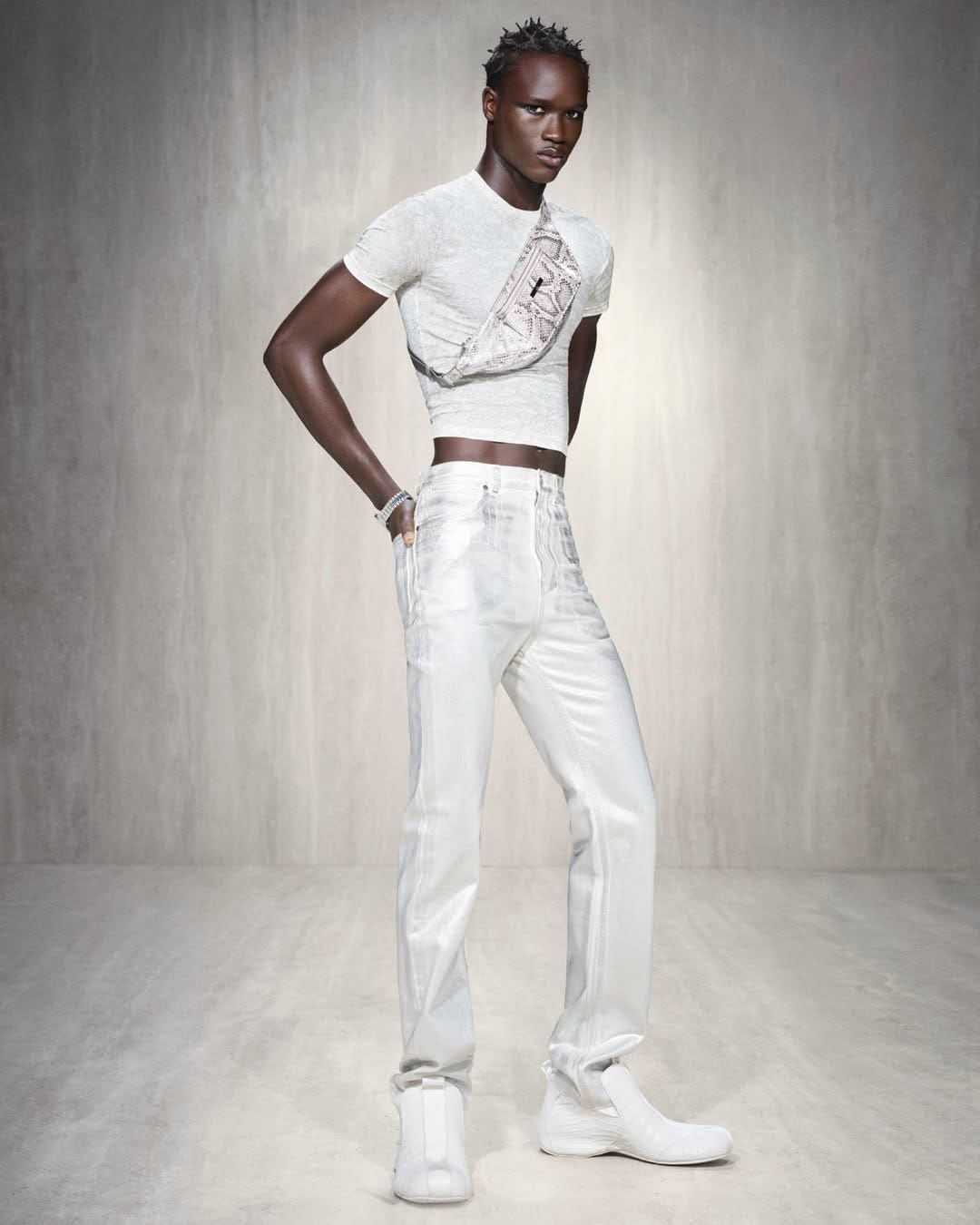
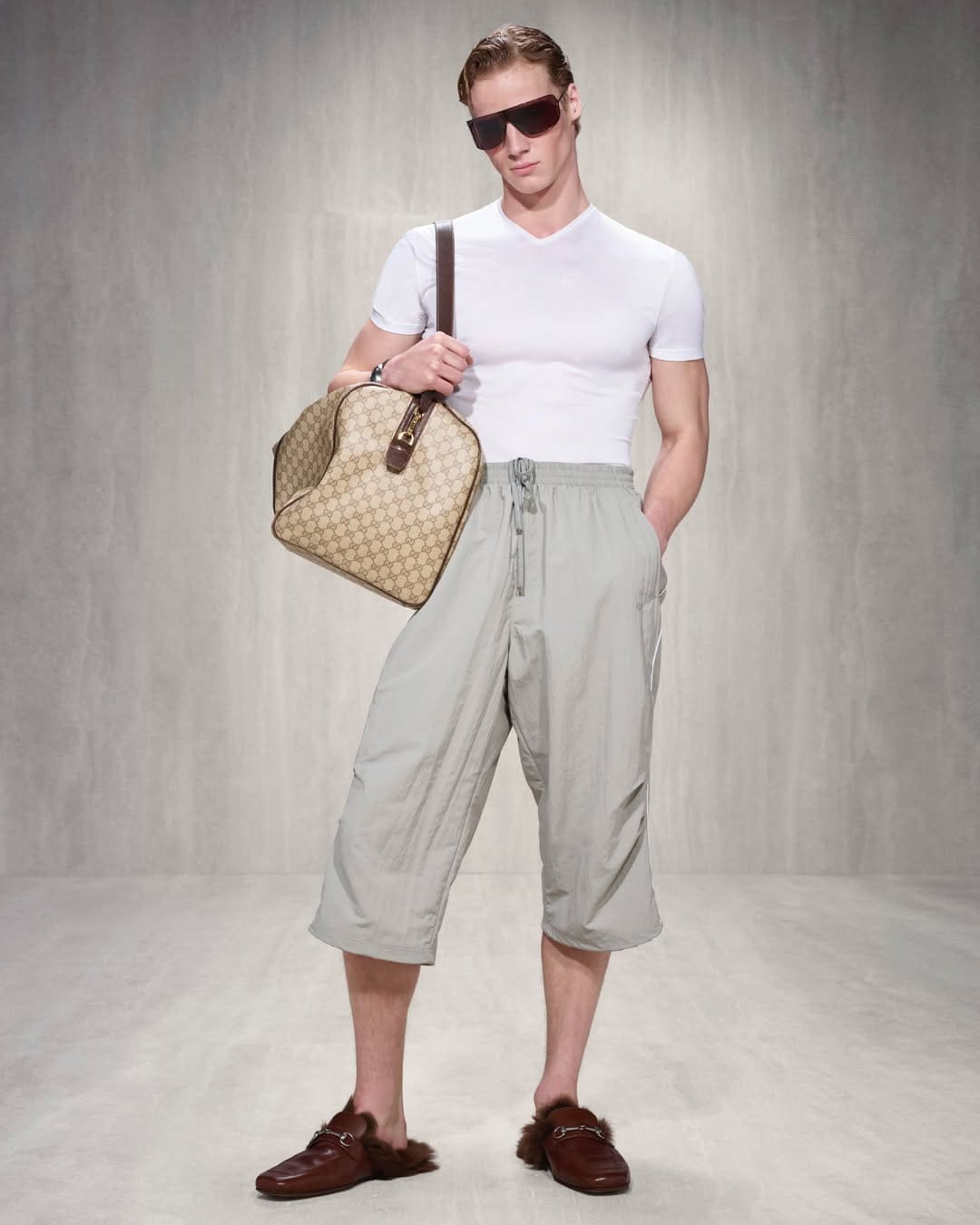
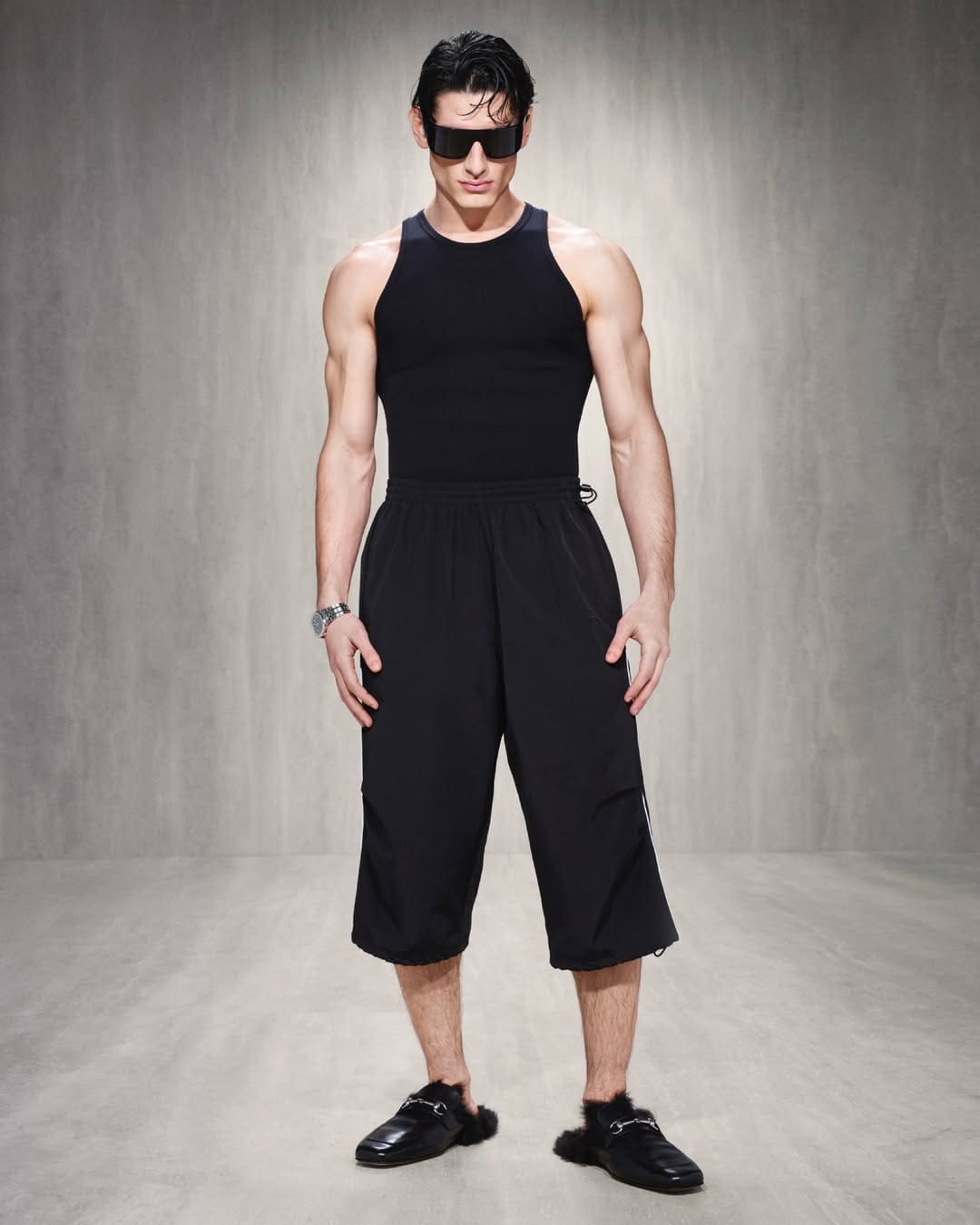
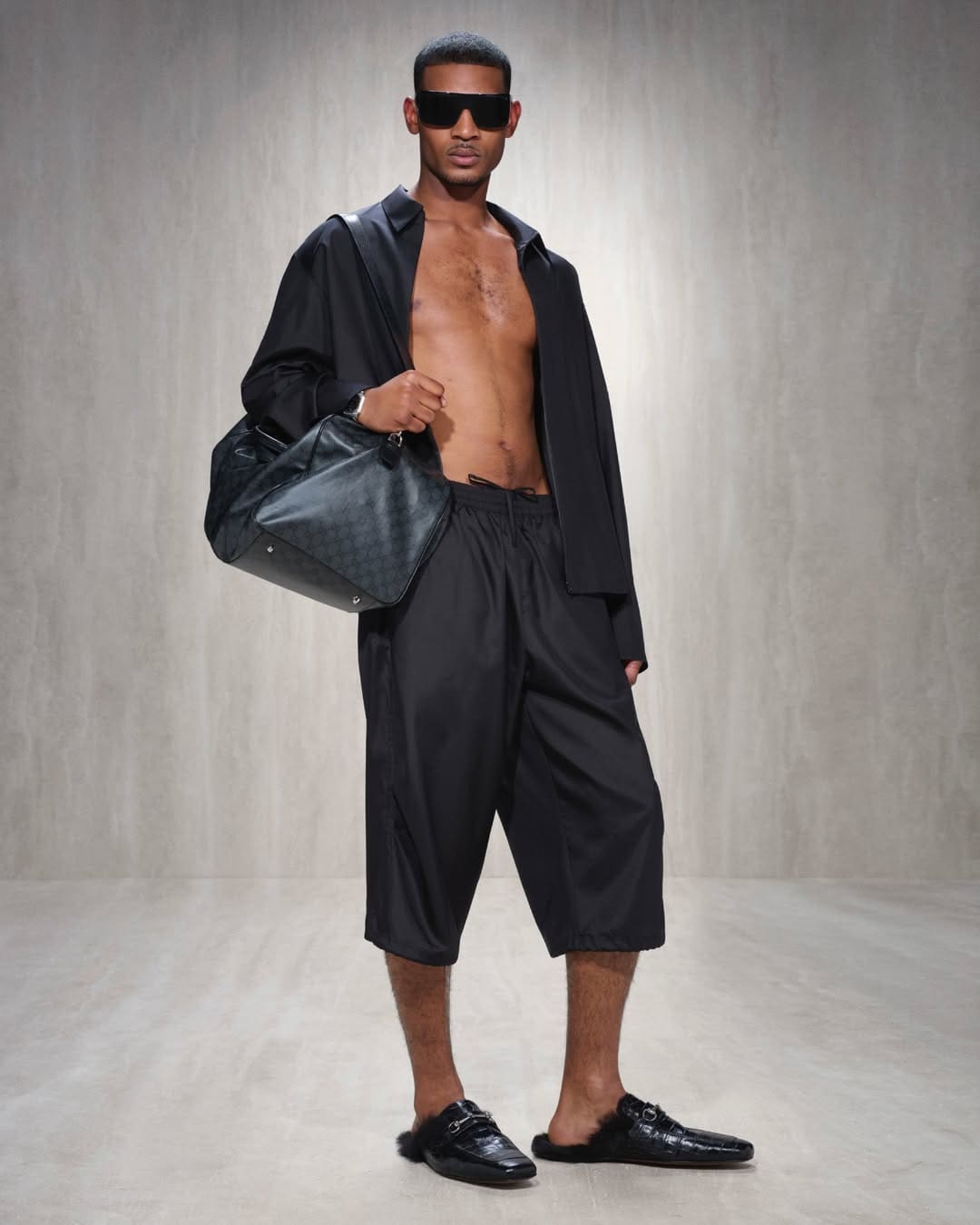
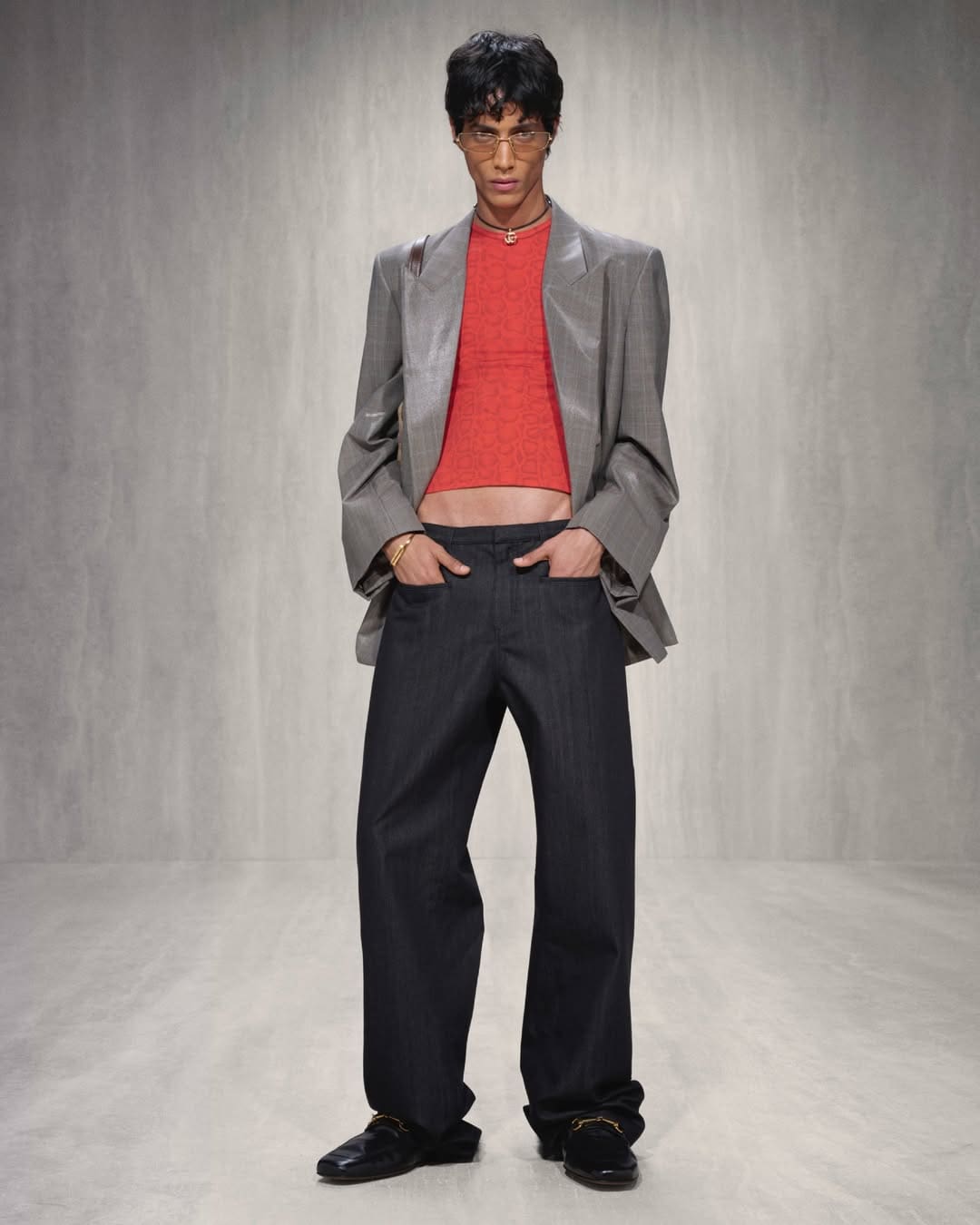
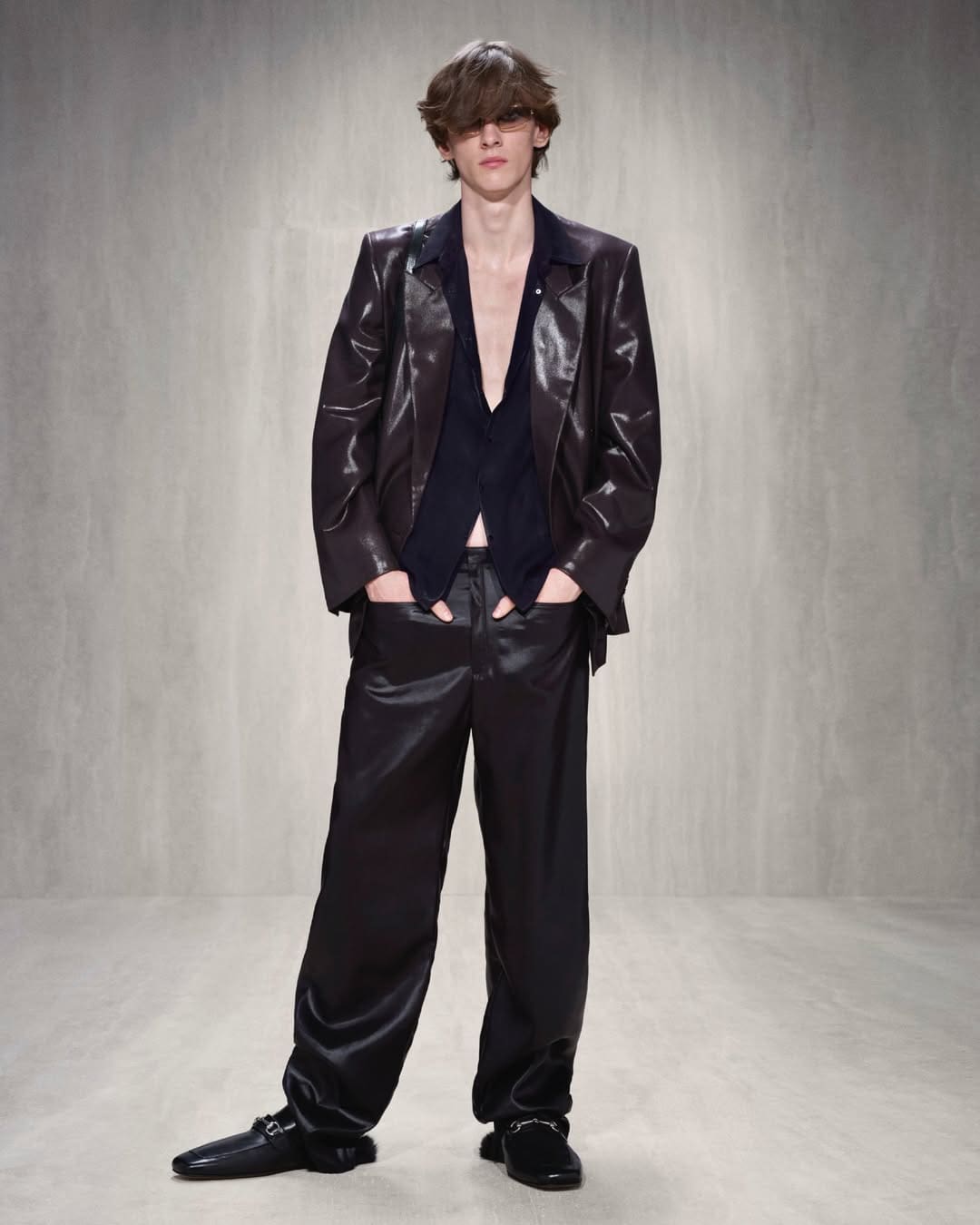
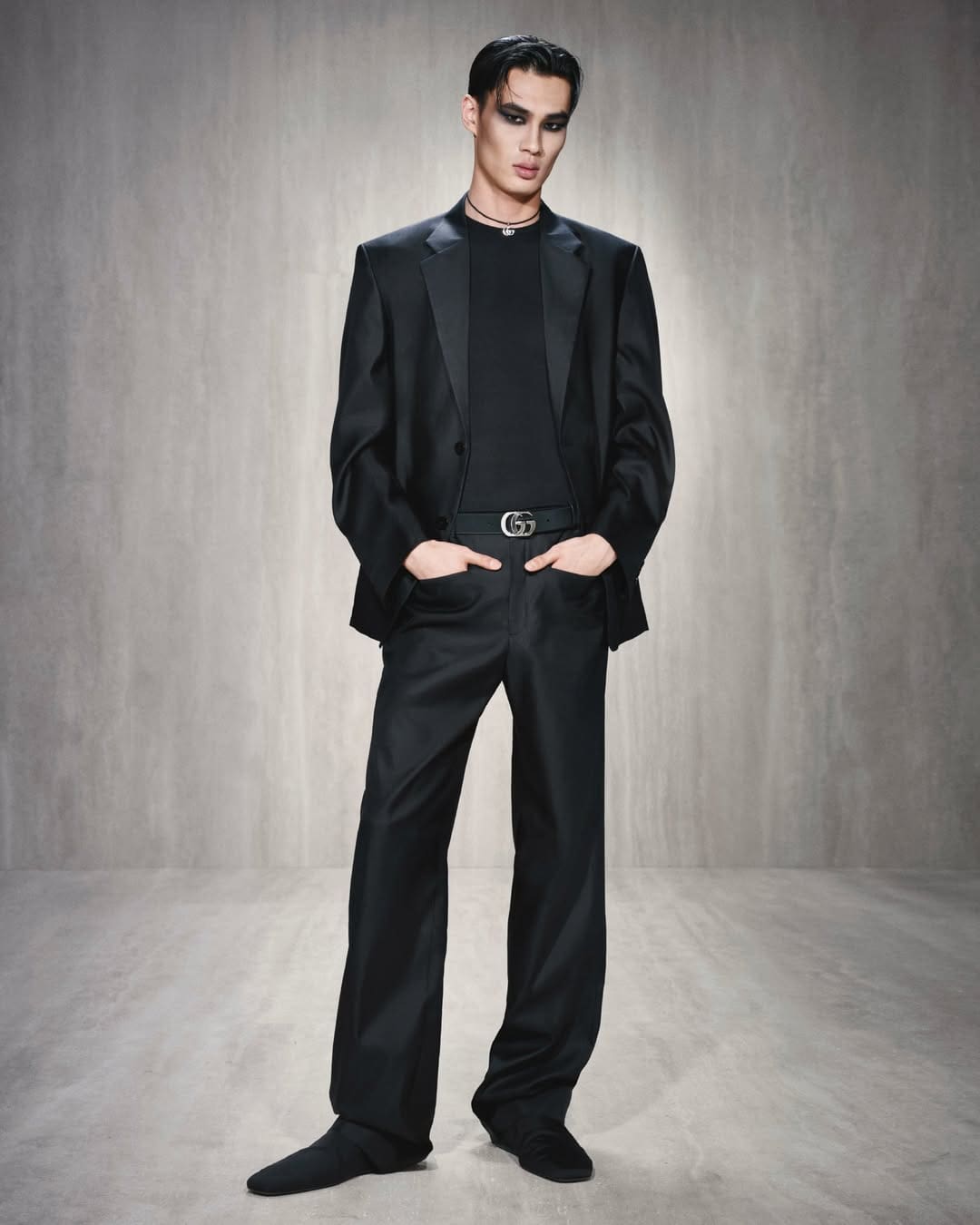
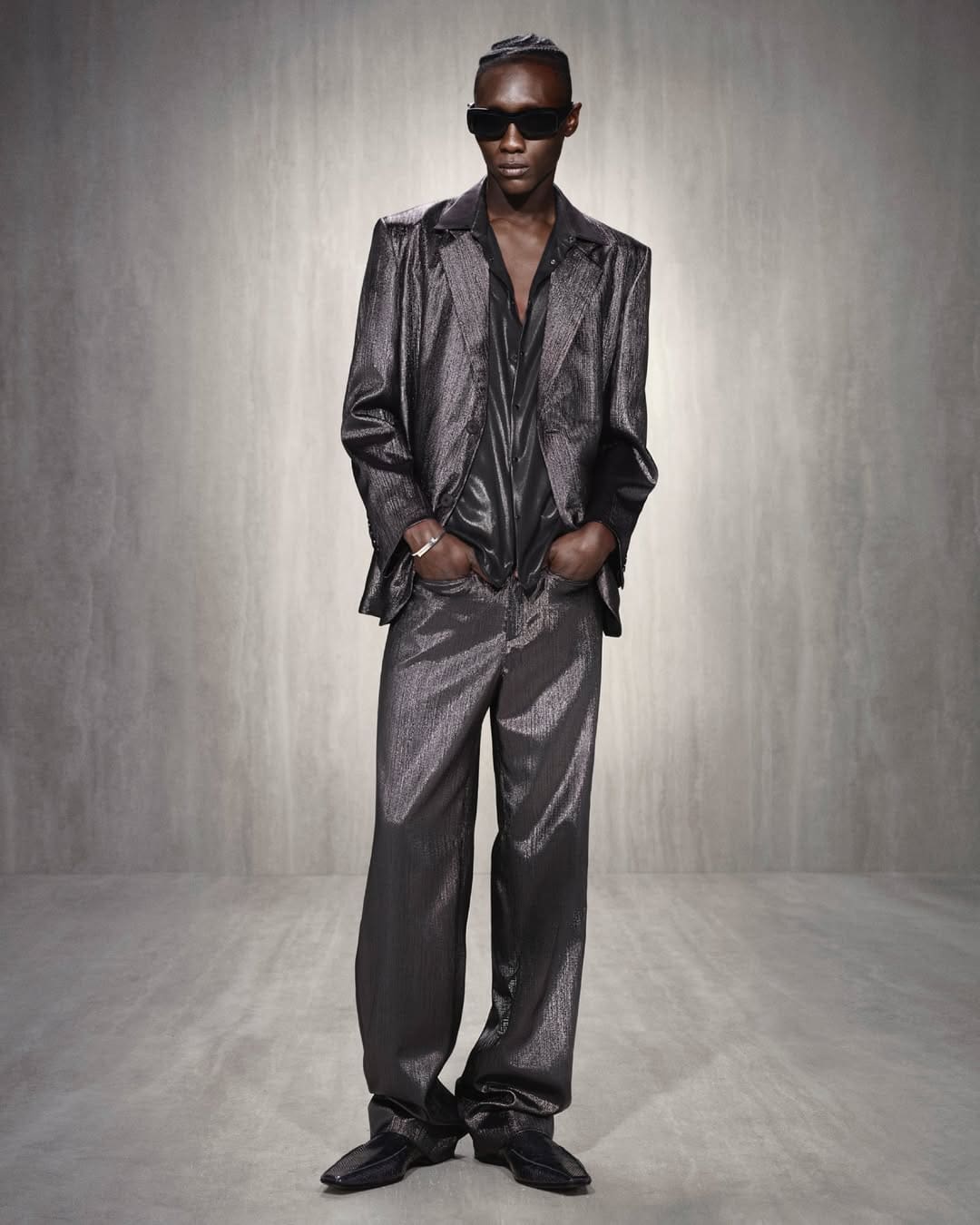
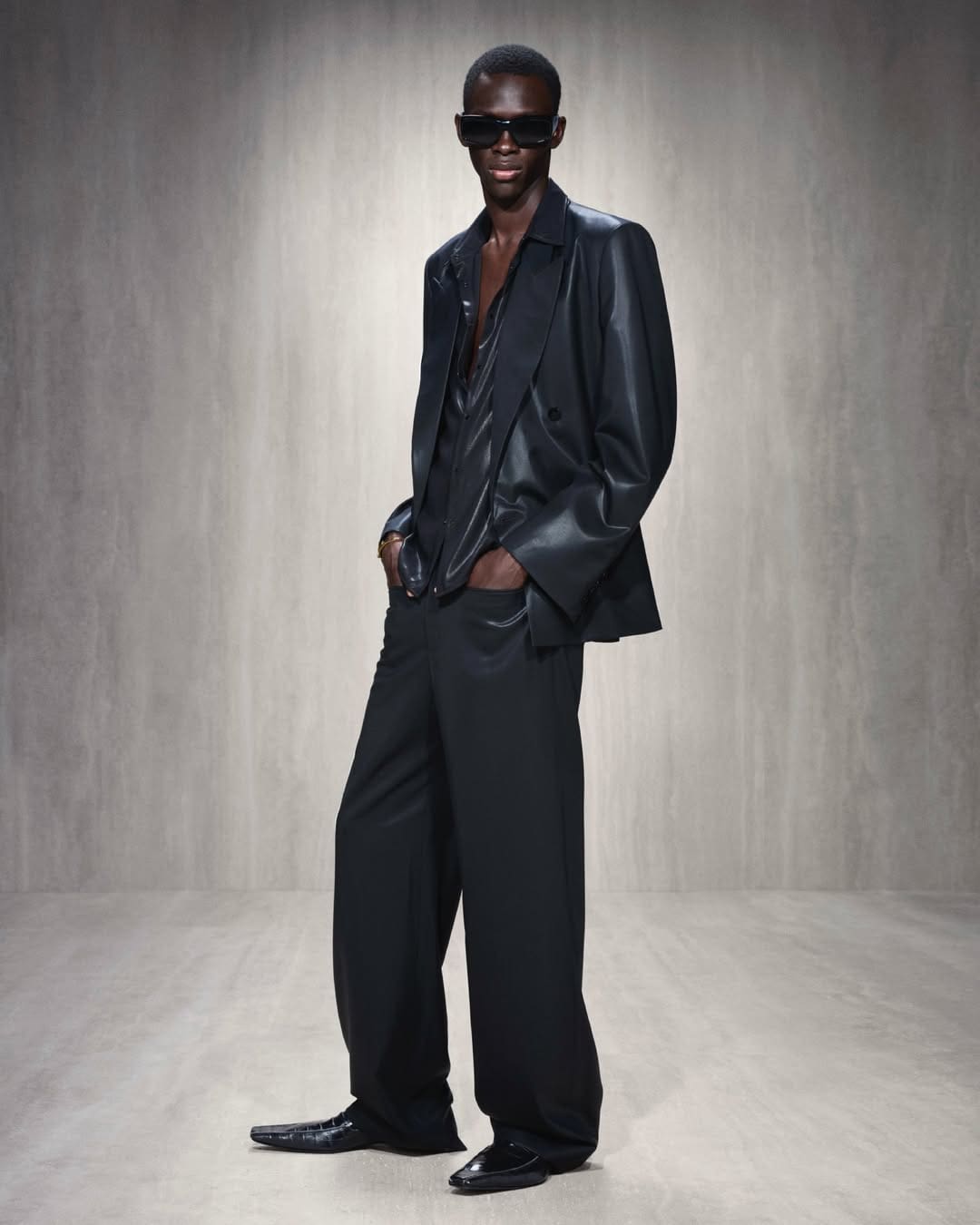
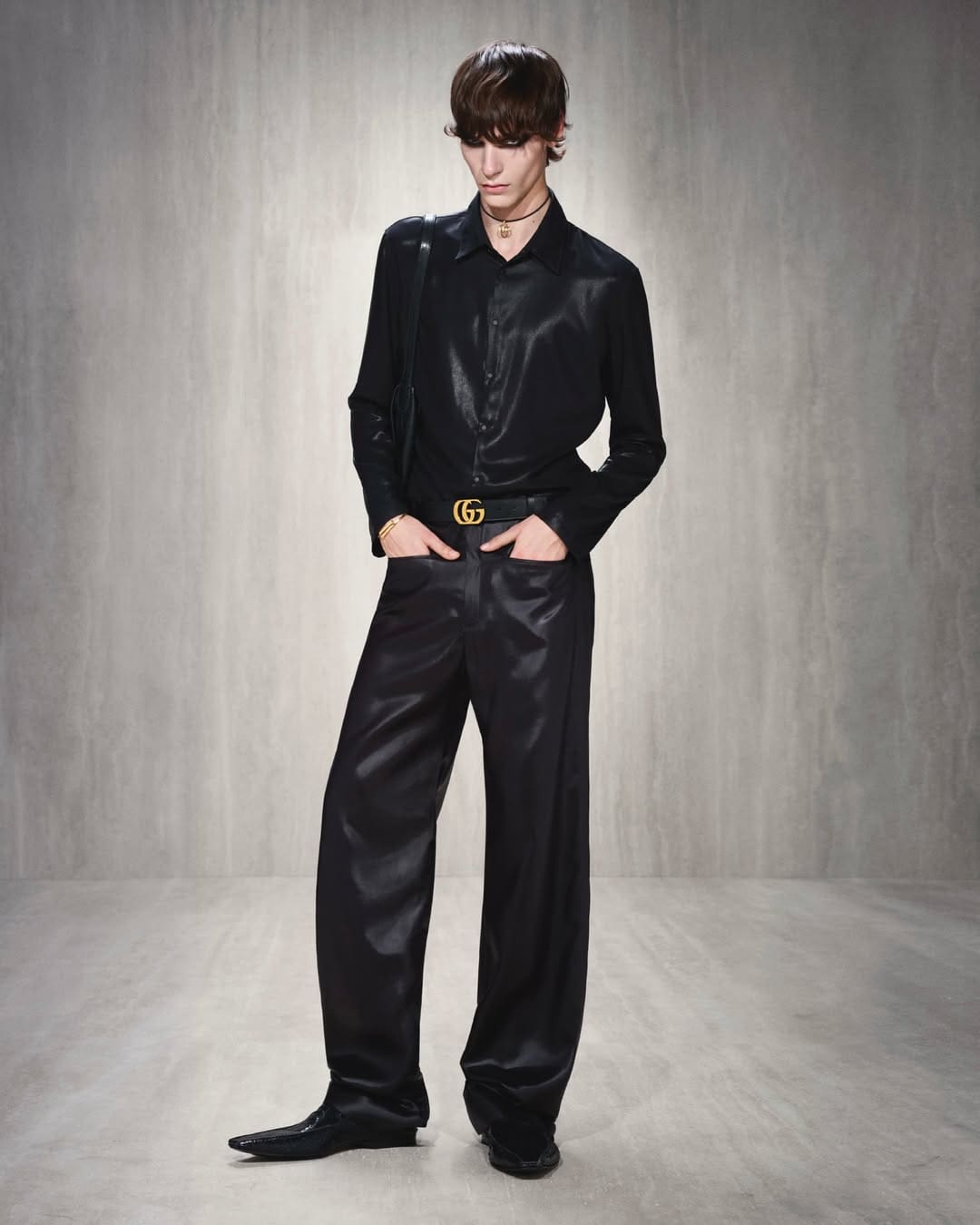
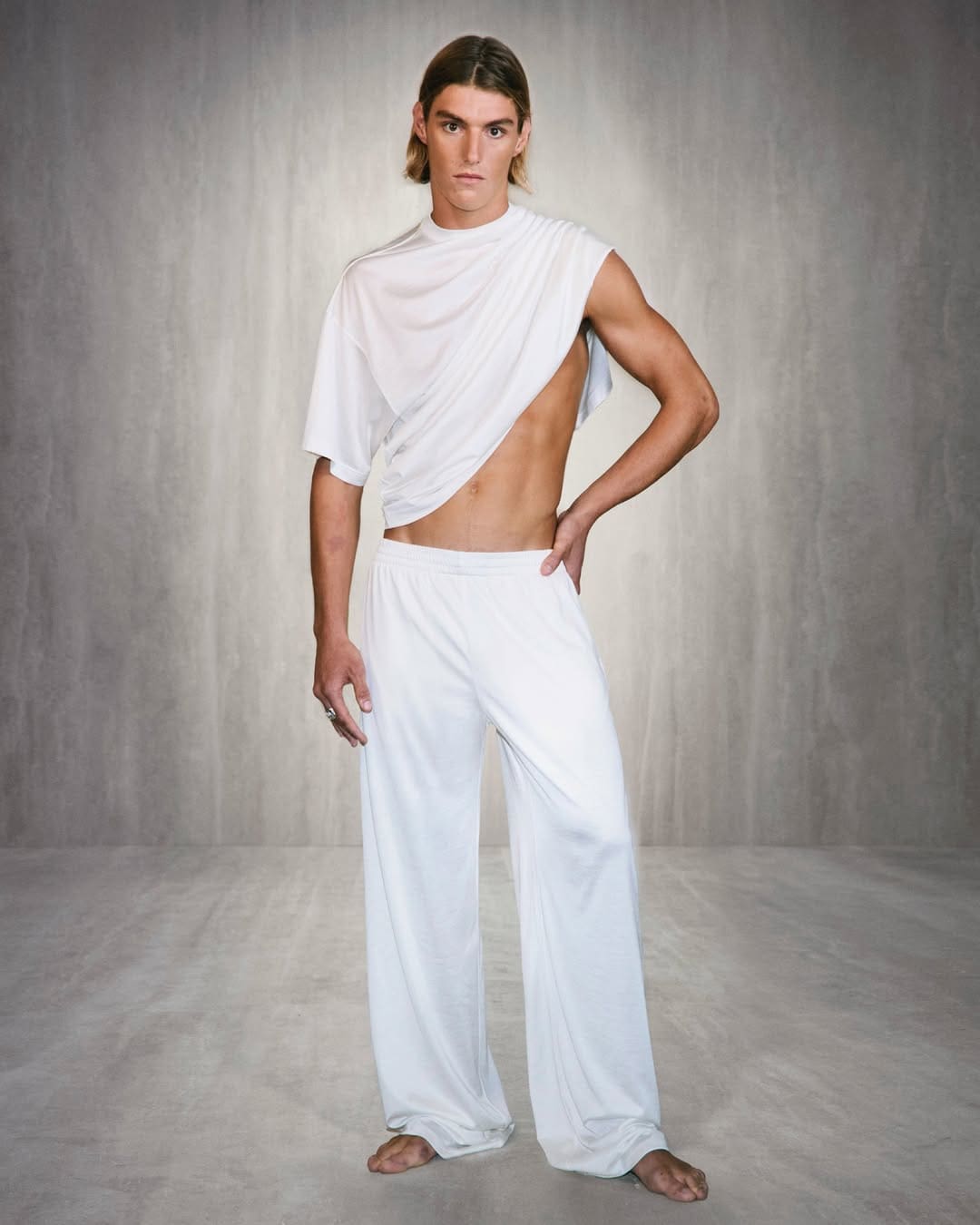
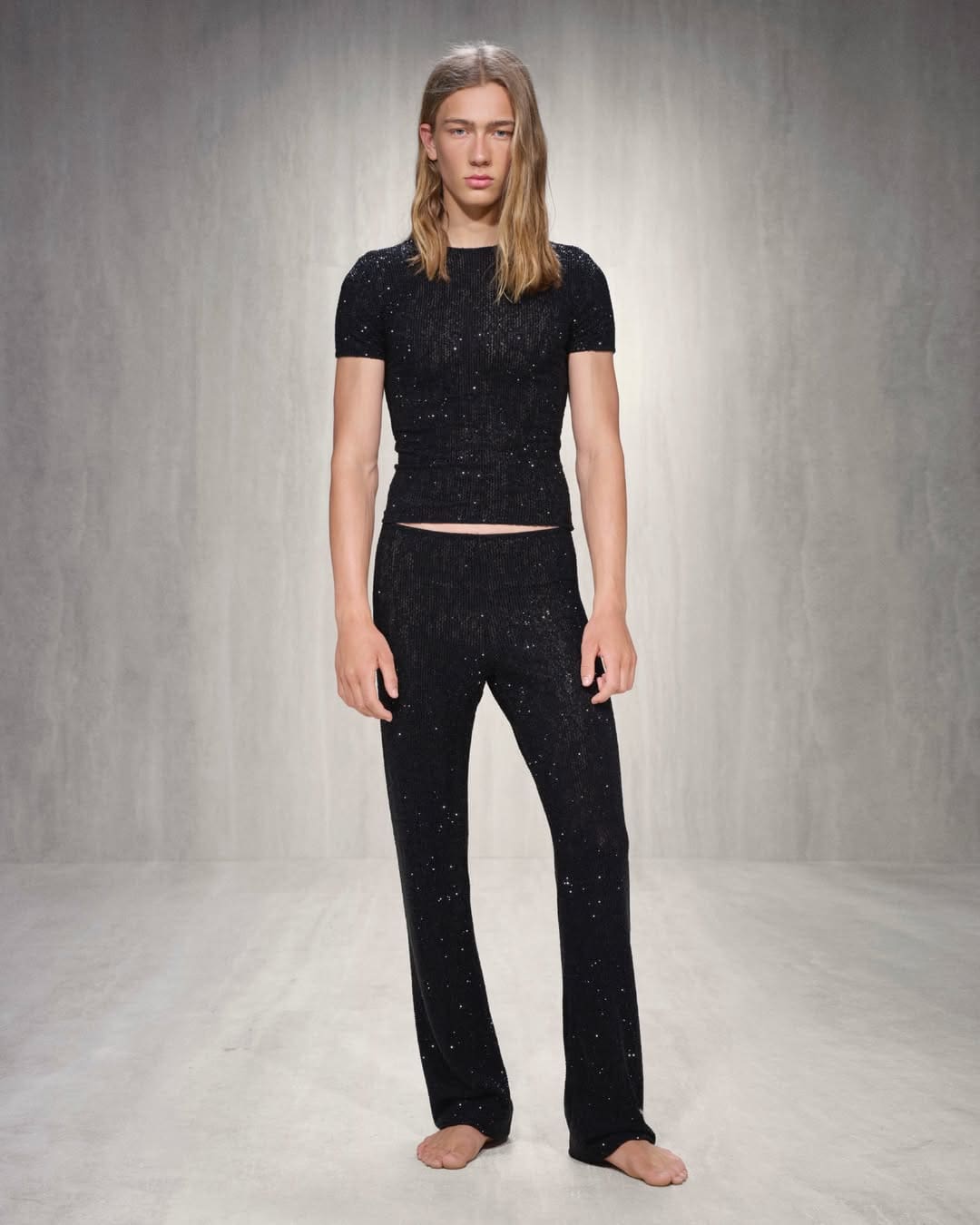
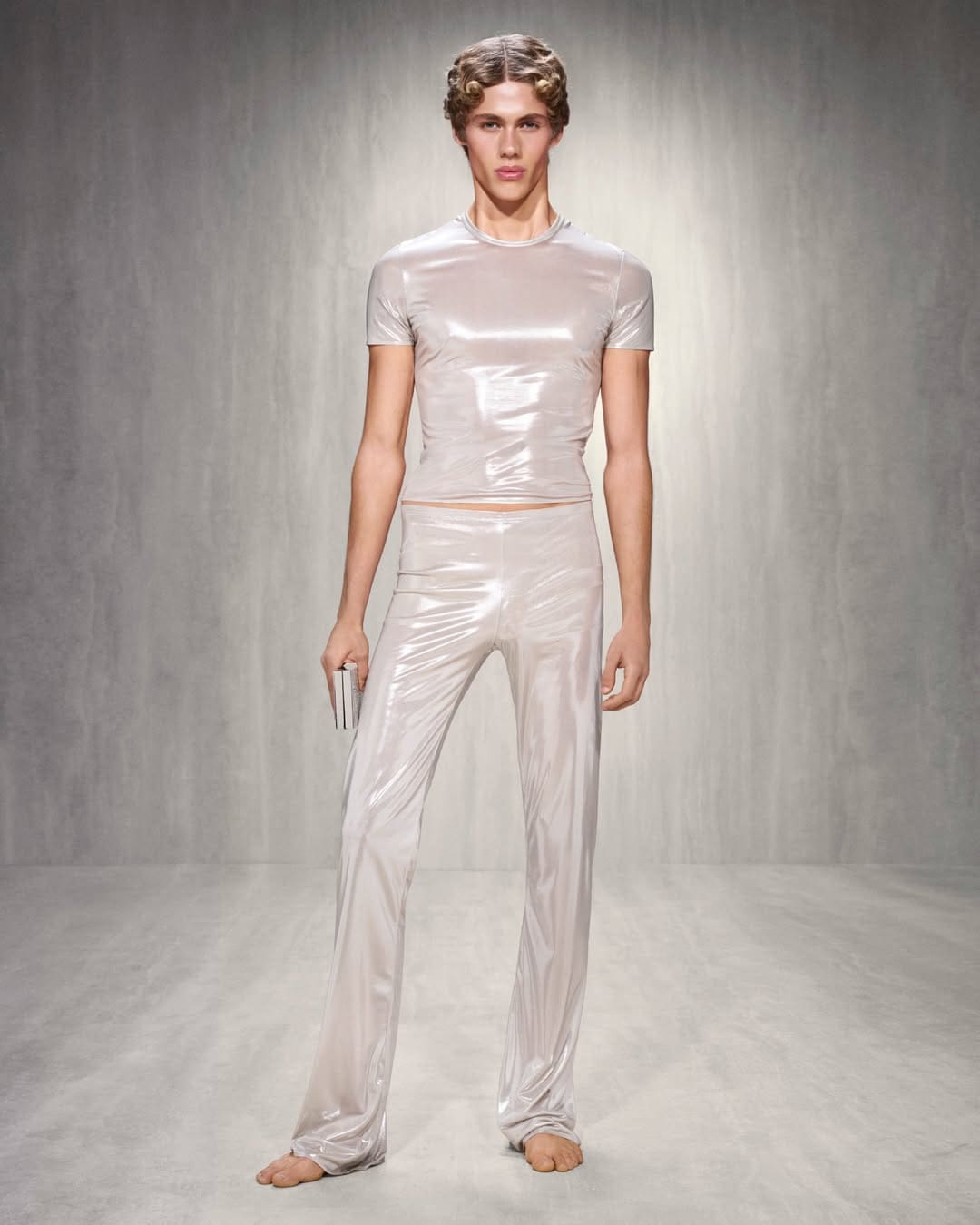
Where Botticelli offers ethereal rebirth, Demna counters with men in oil-slick satin muscle-tees and light denim—the aesthetic of a nightclub bouncer auditioning for a cologne commercial that will never be produced. Venus emerges from a shell; here she would take one look and exit stage left.
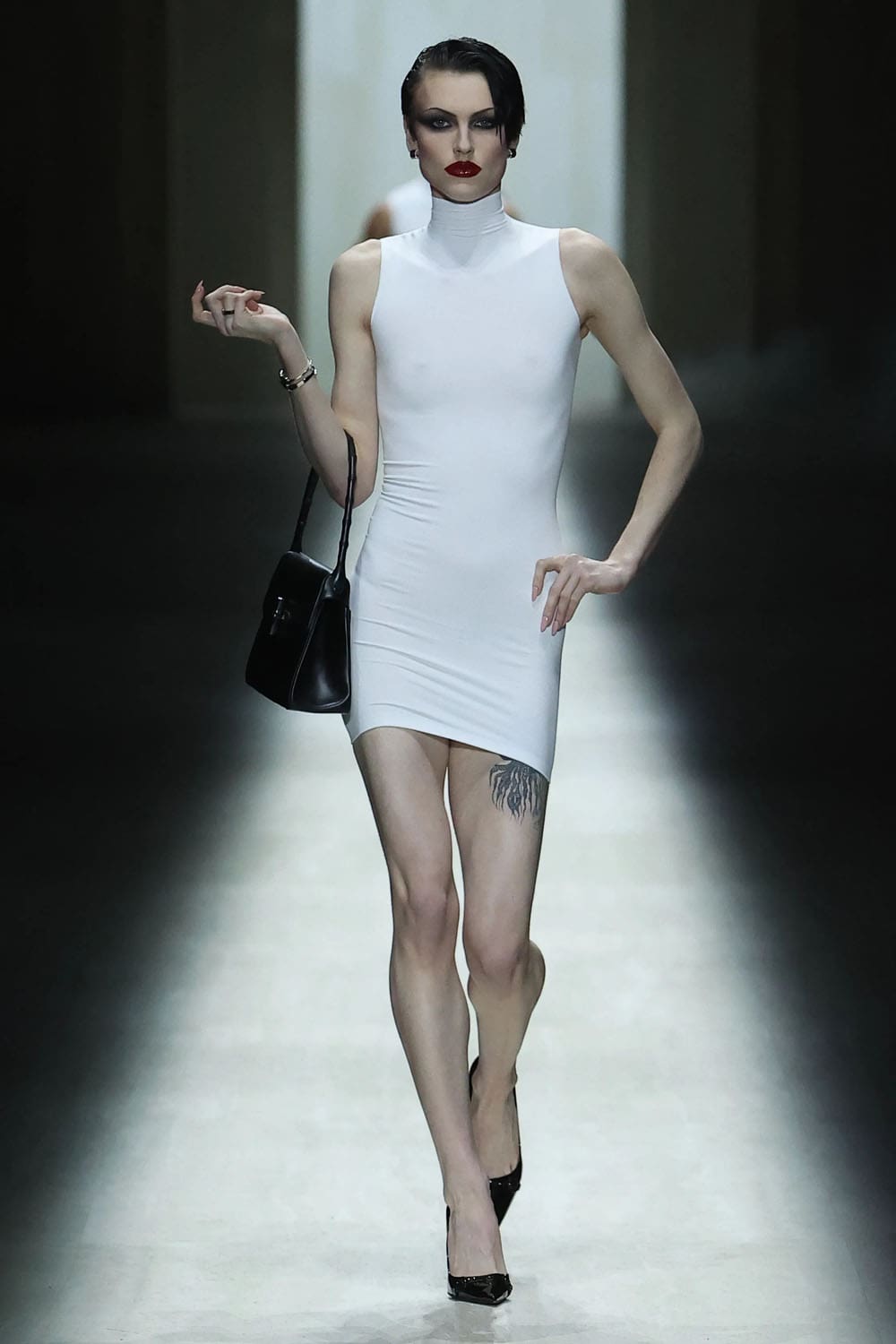
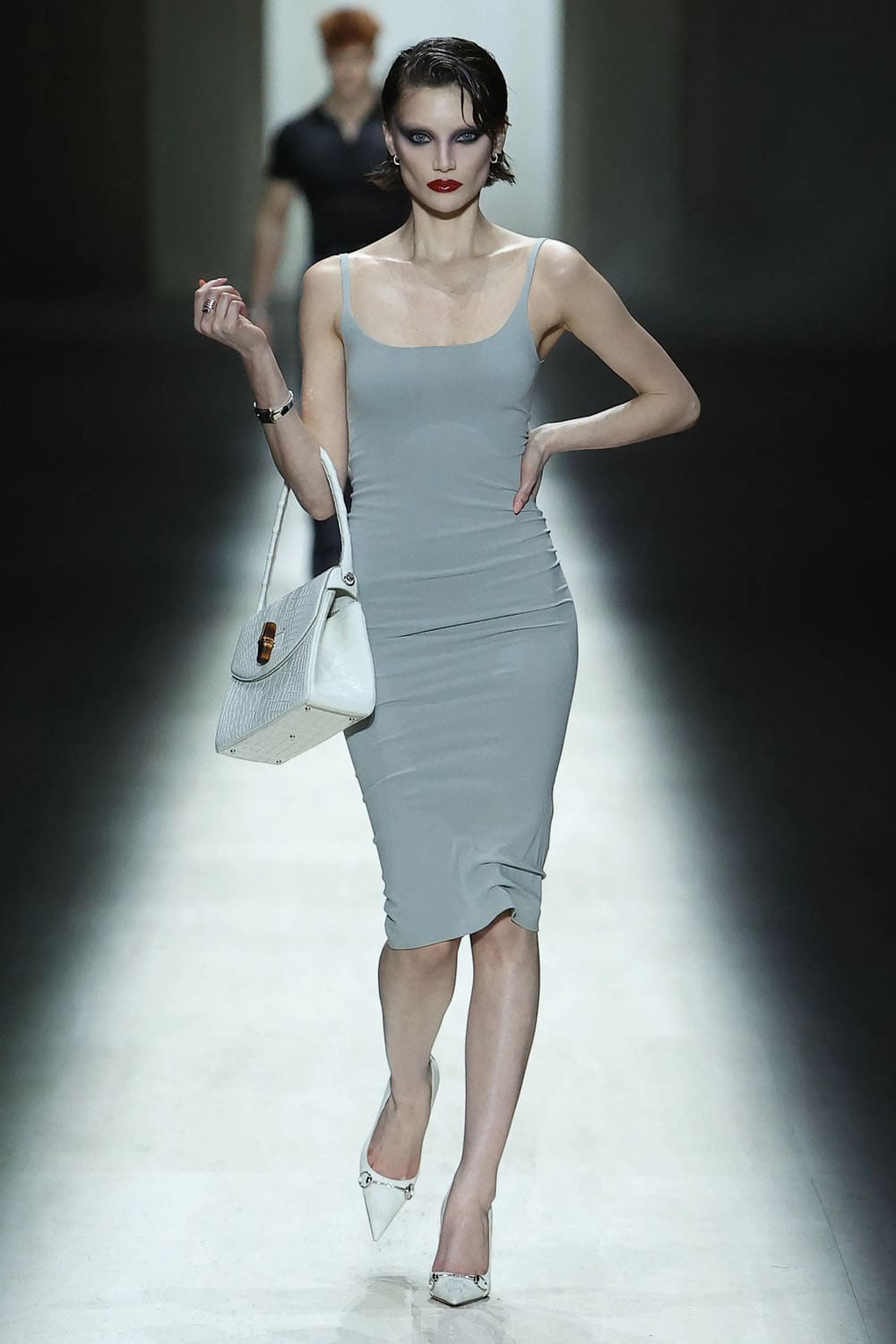
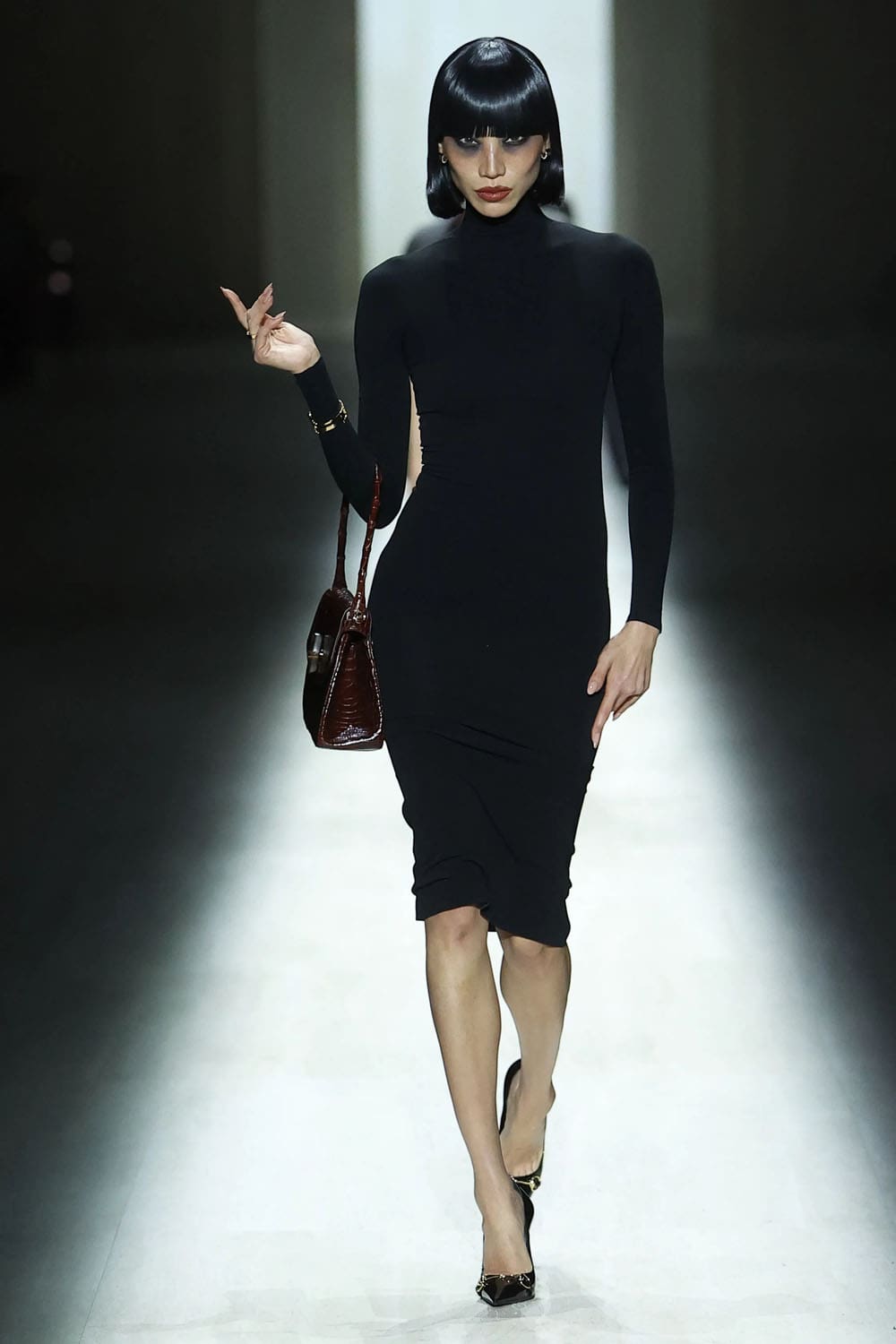
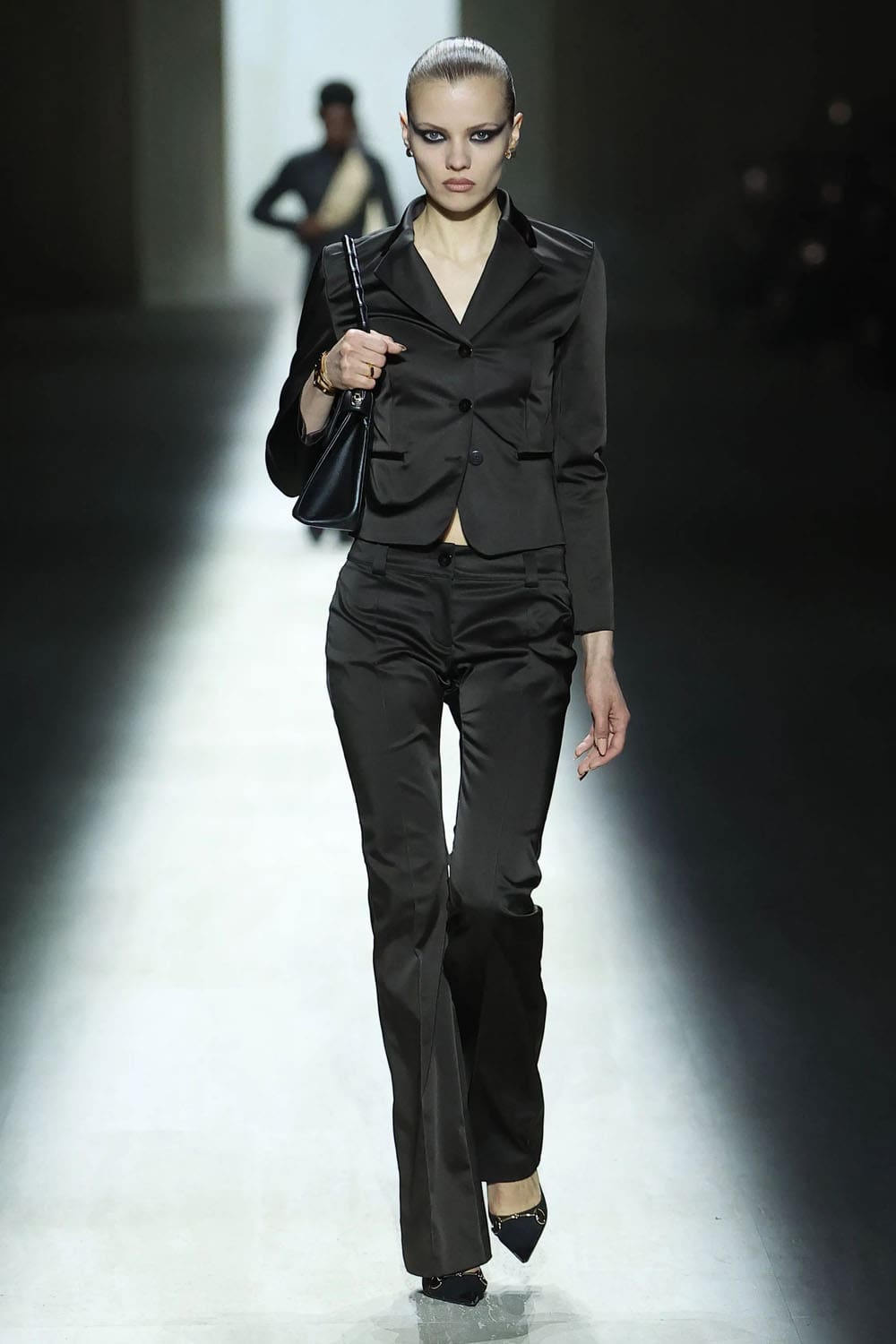
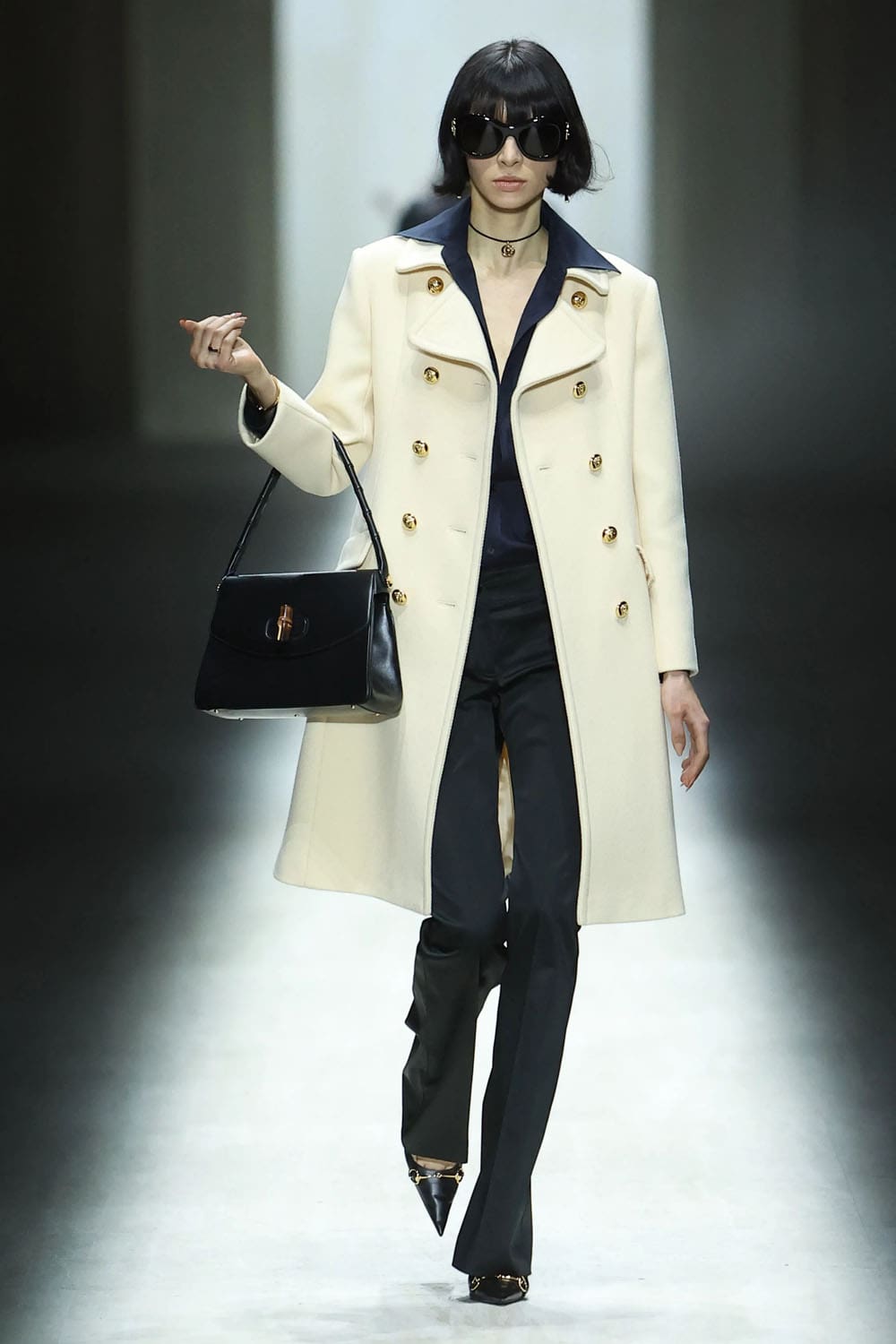
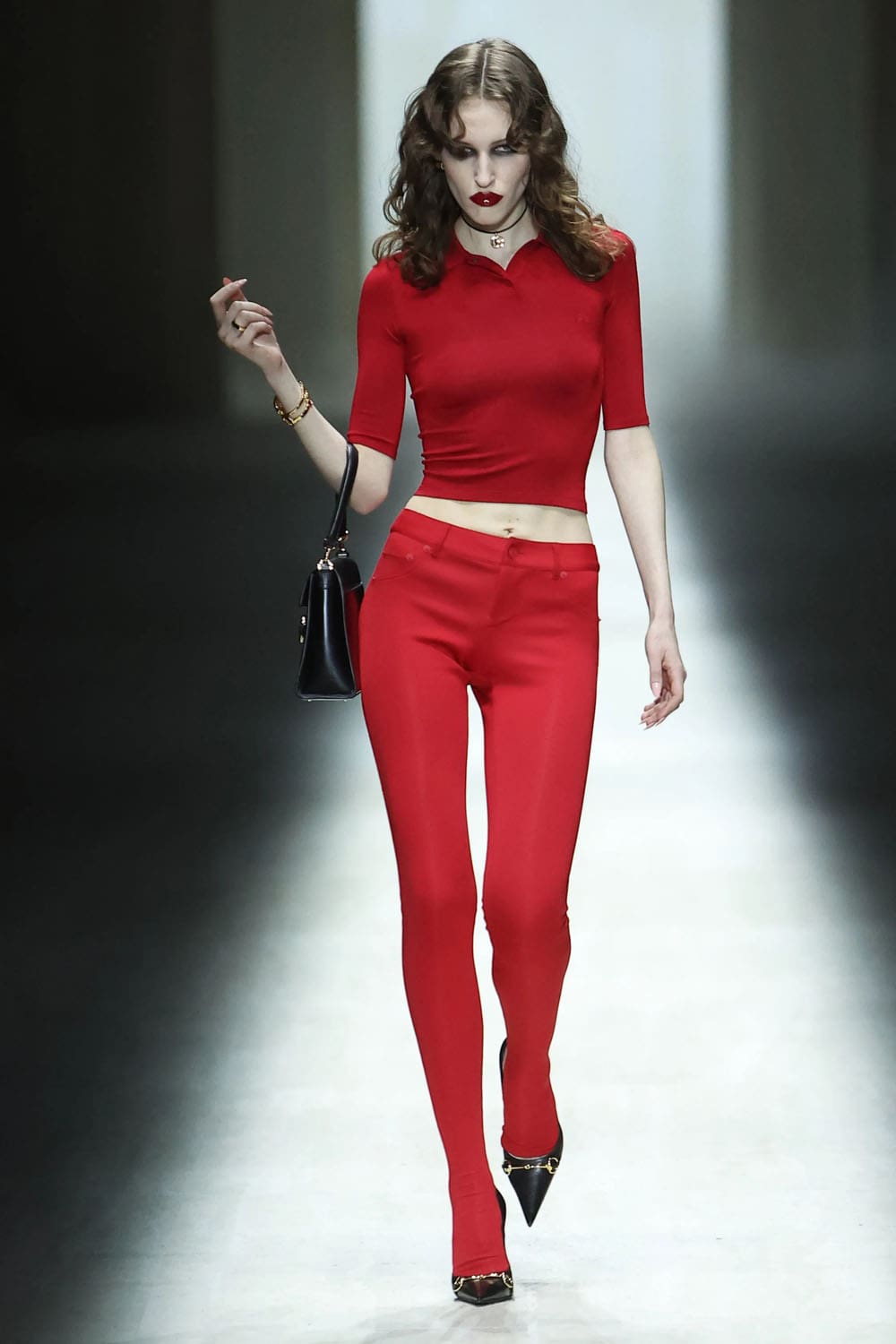
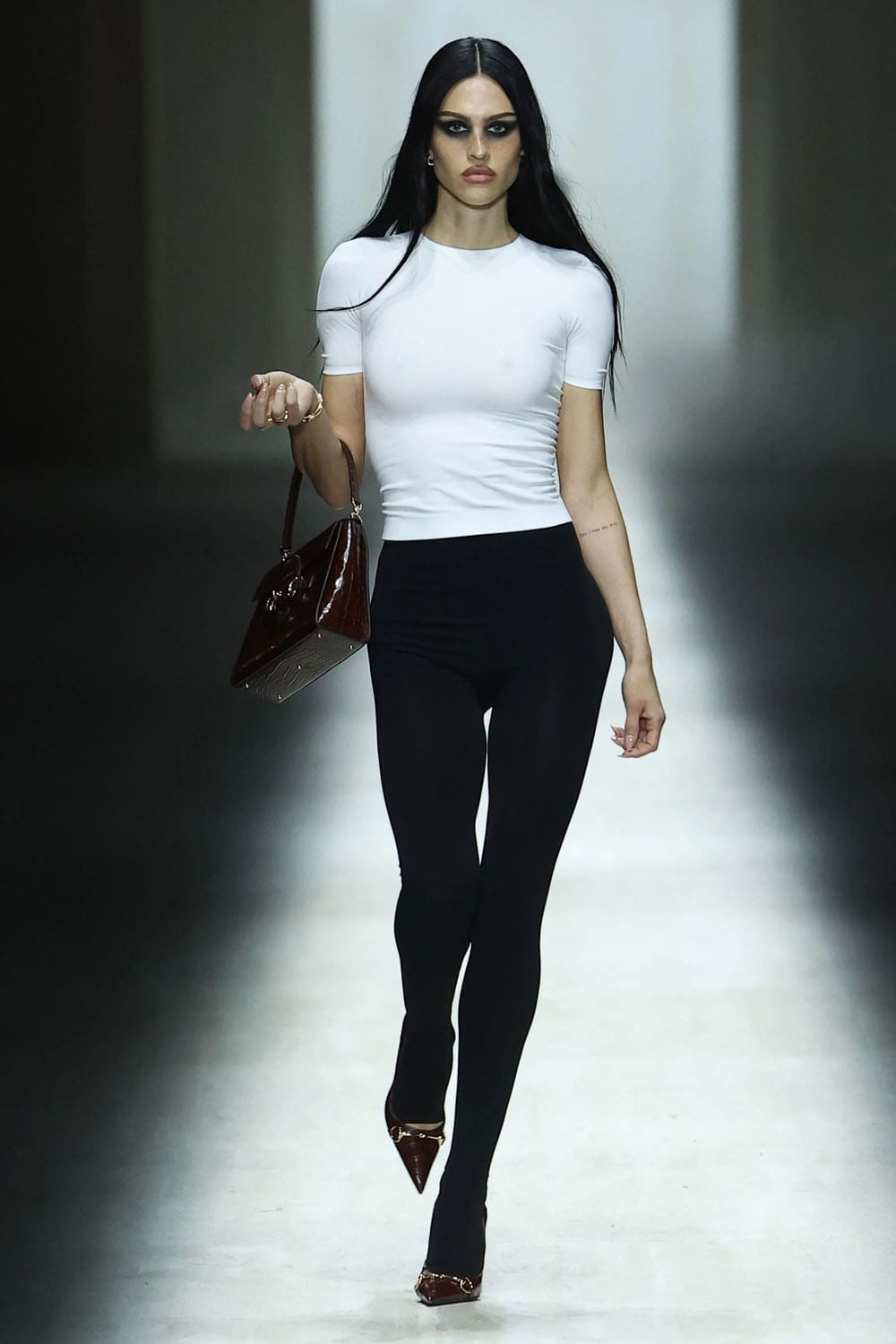
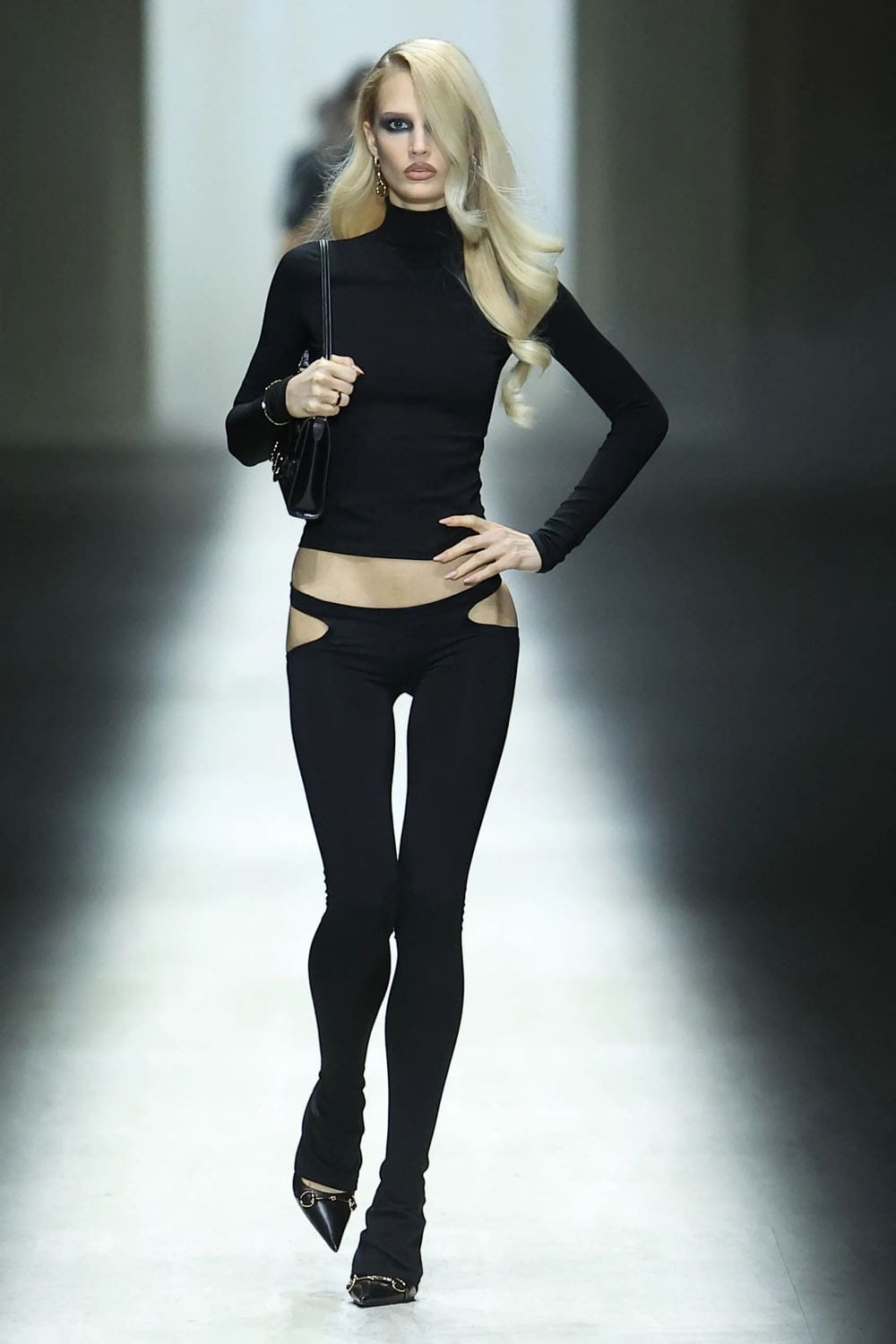
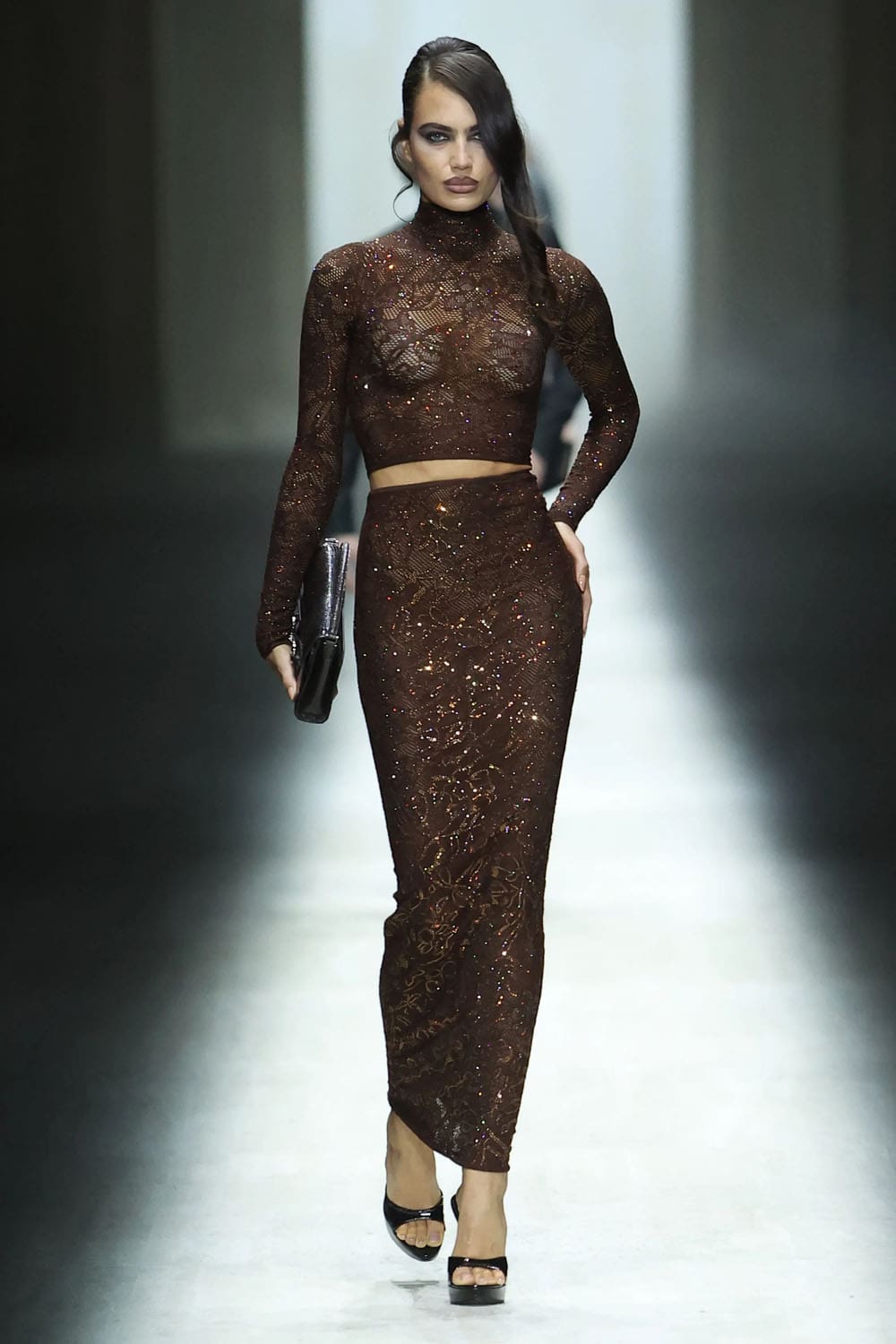
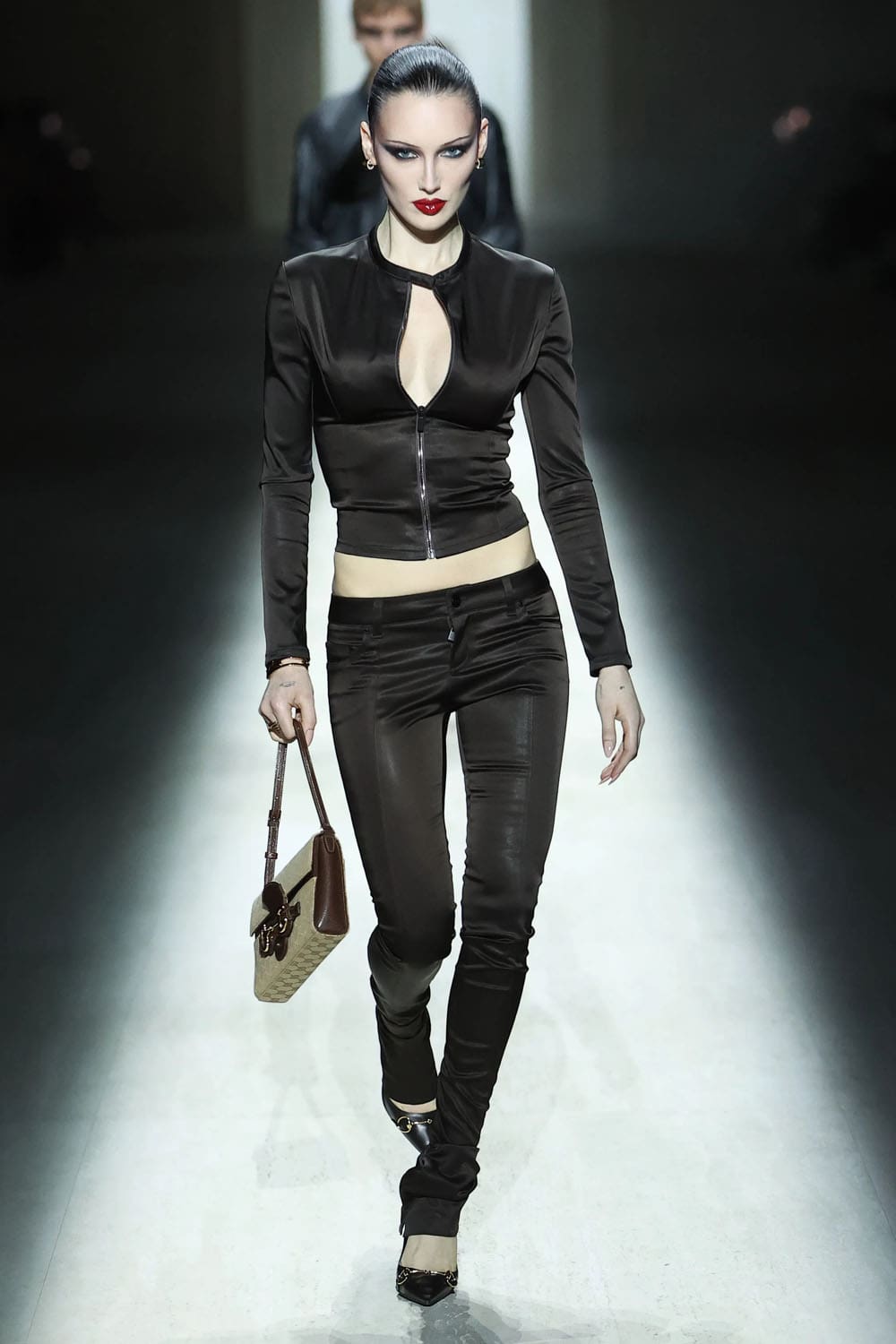
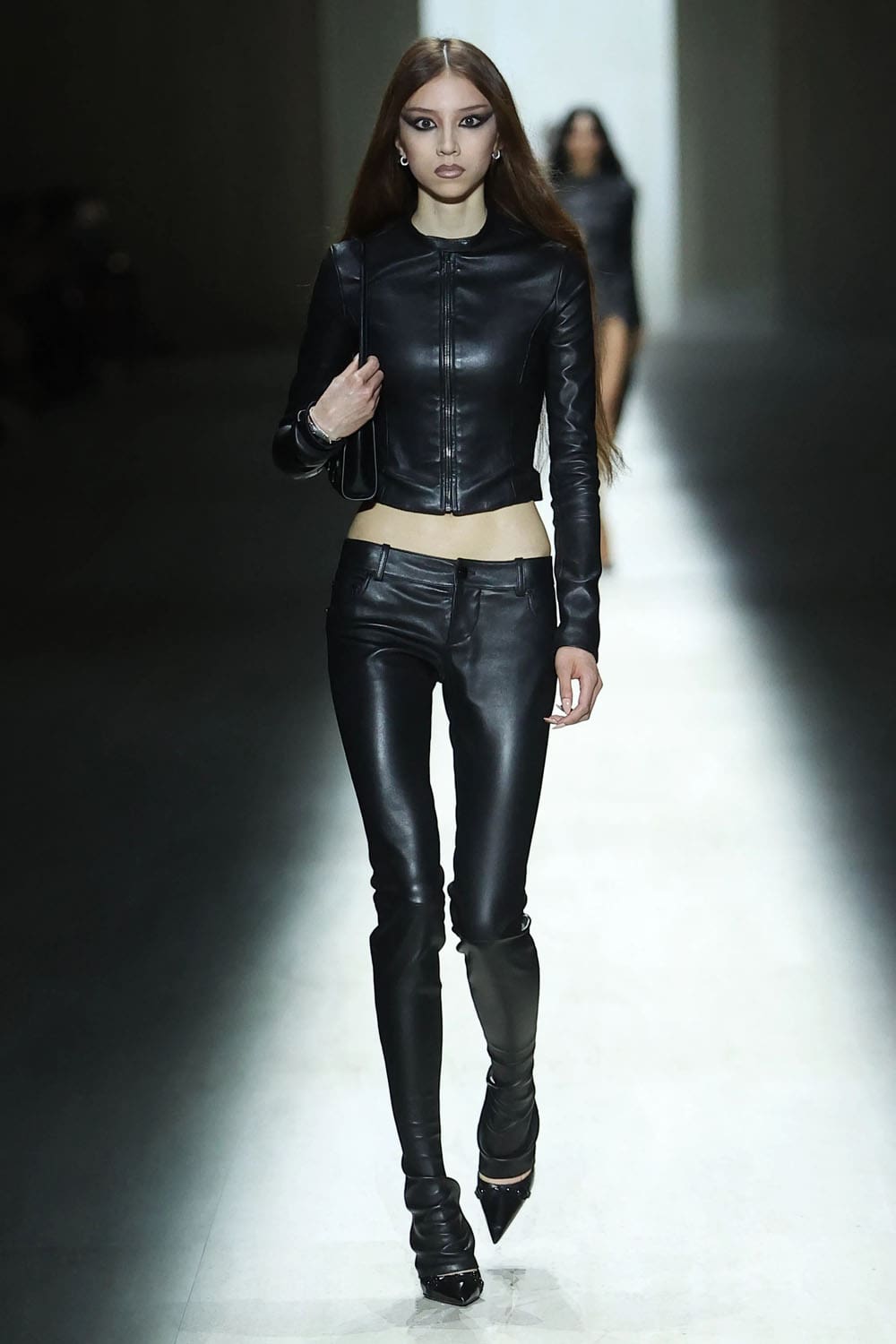
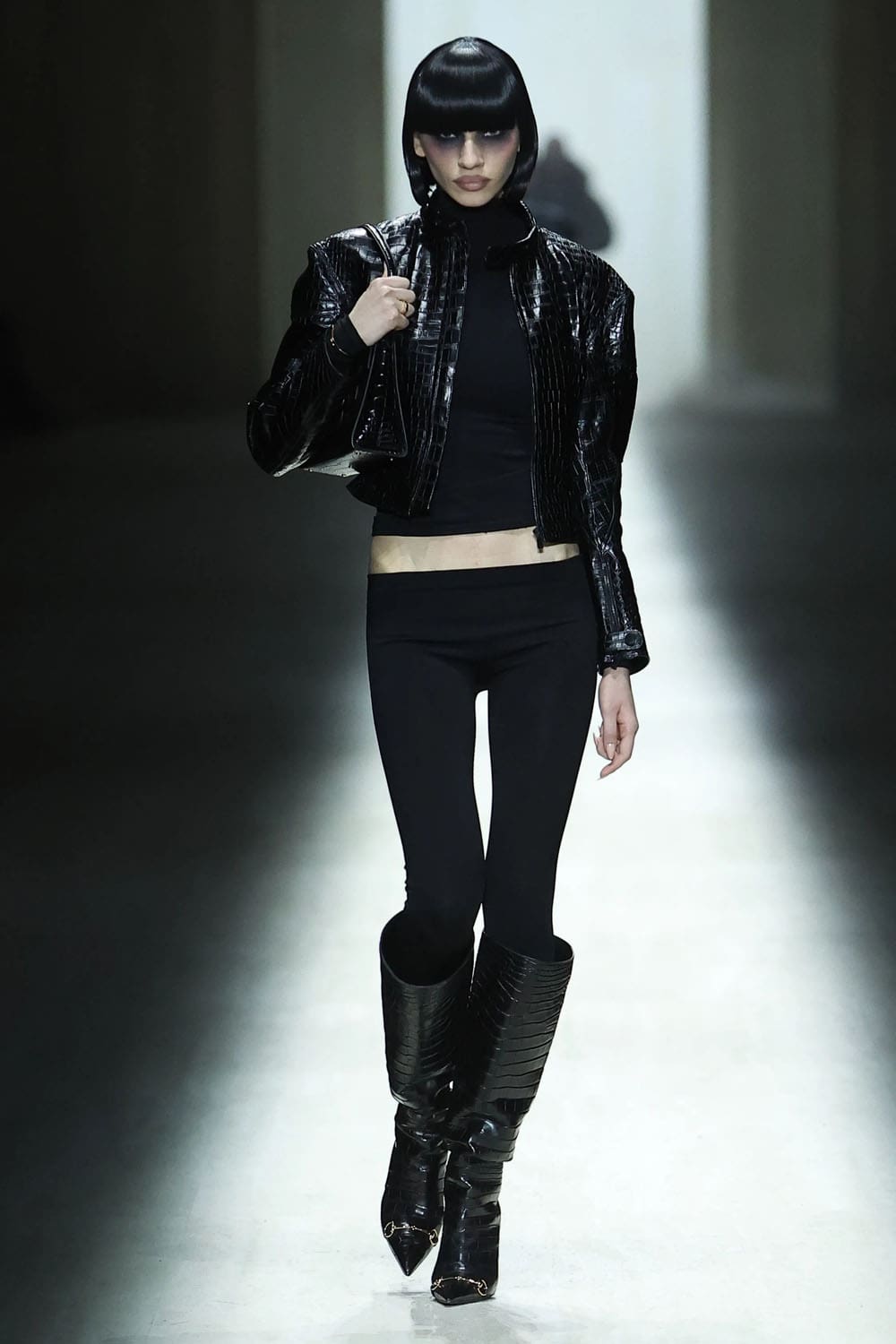
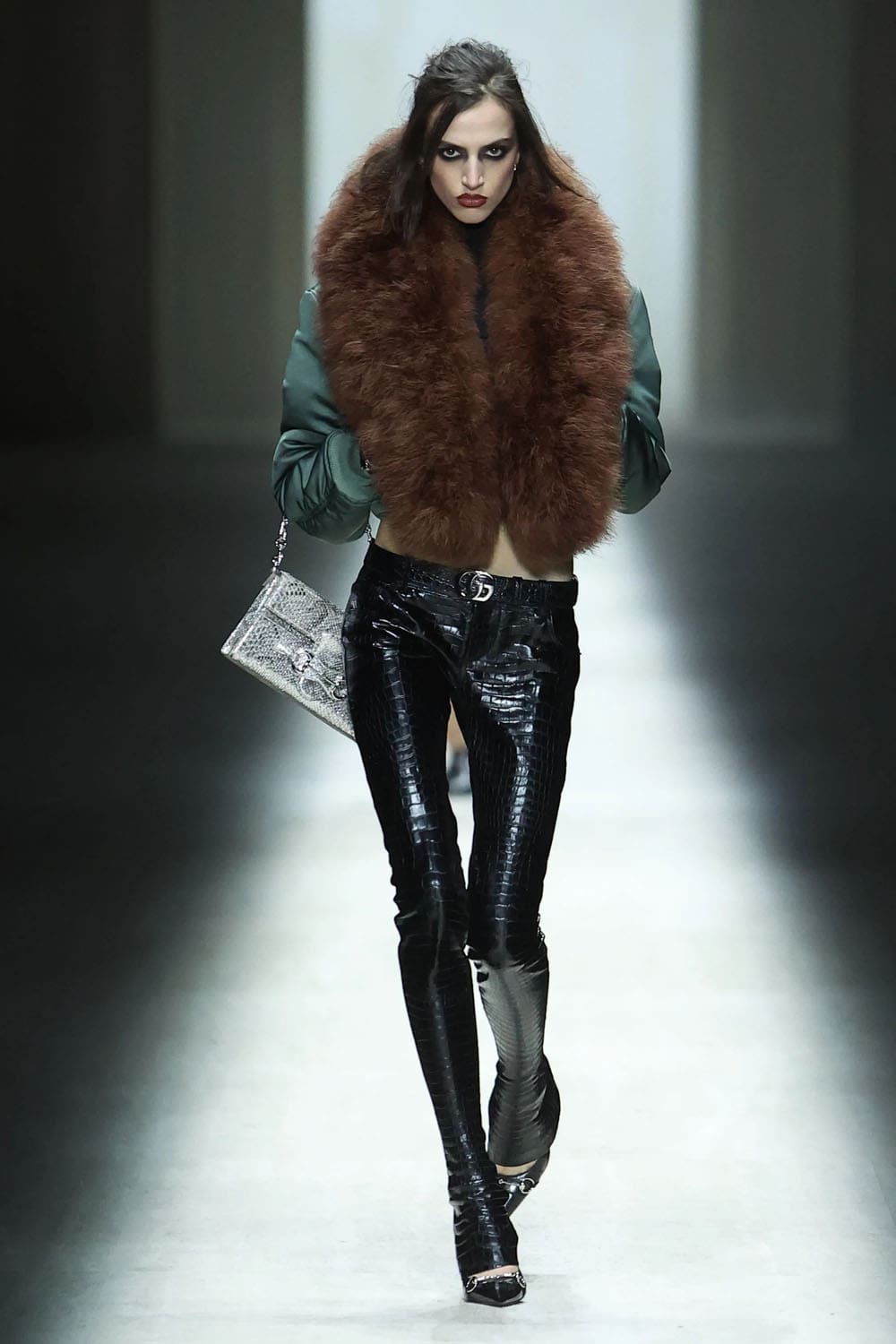
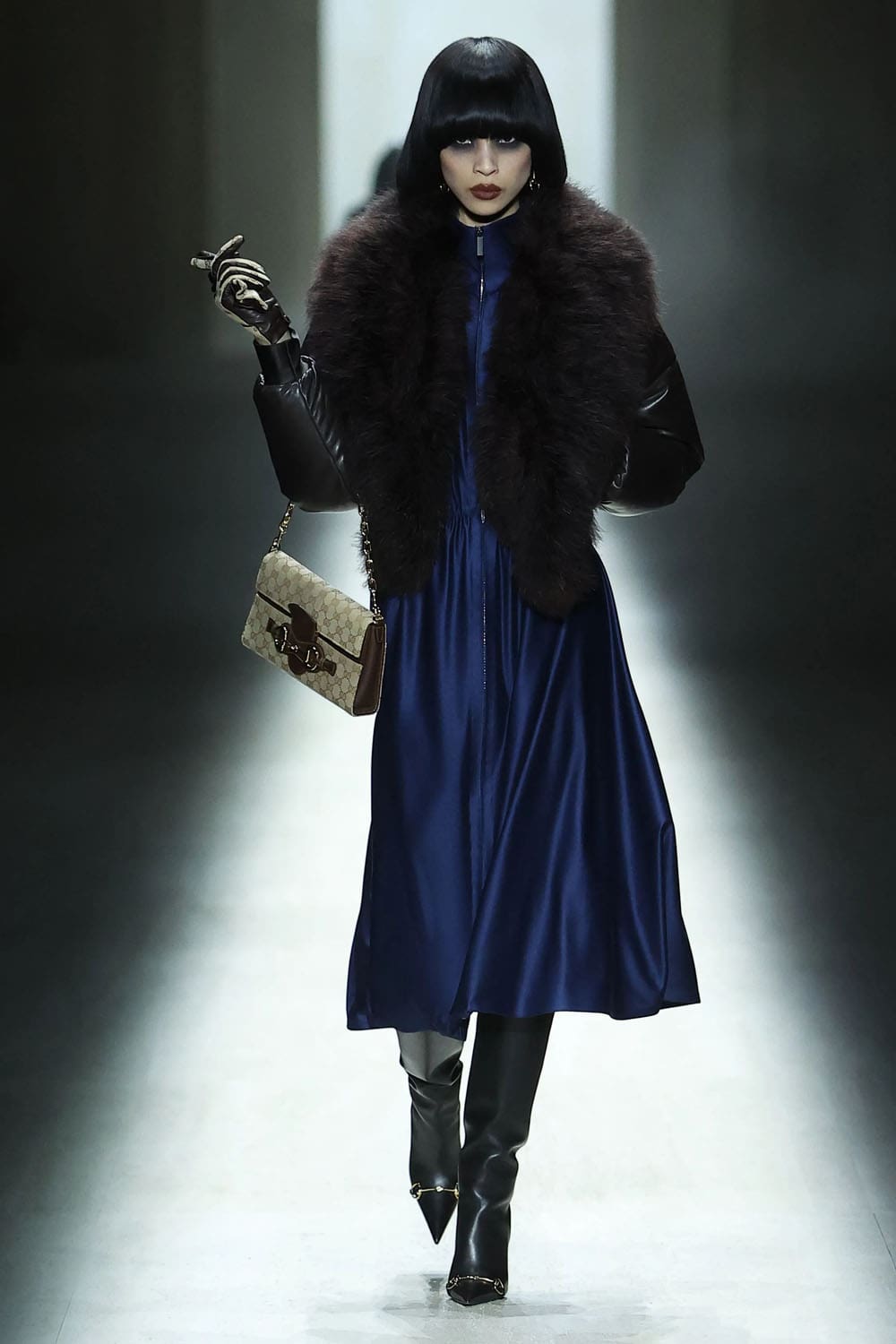
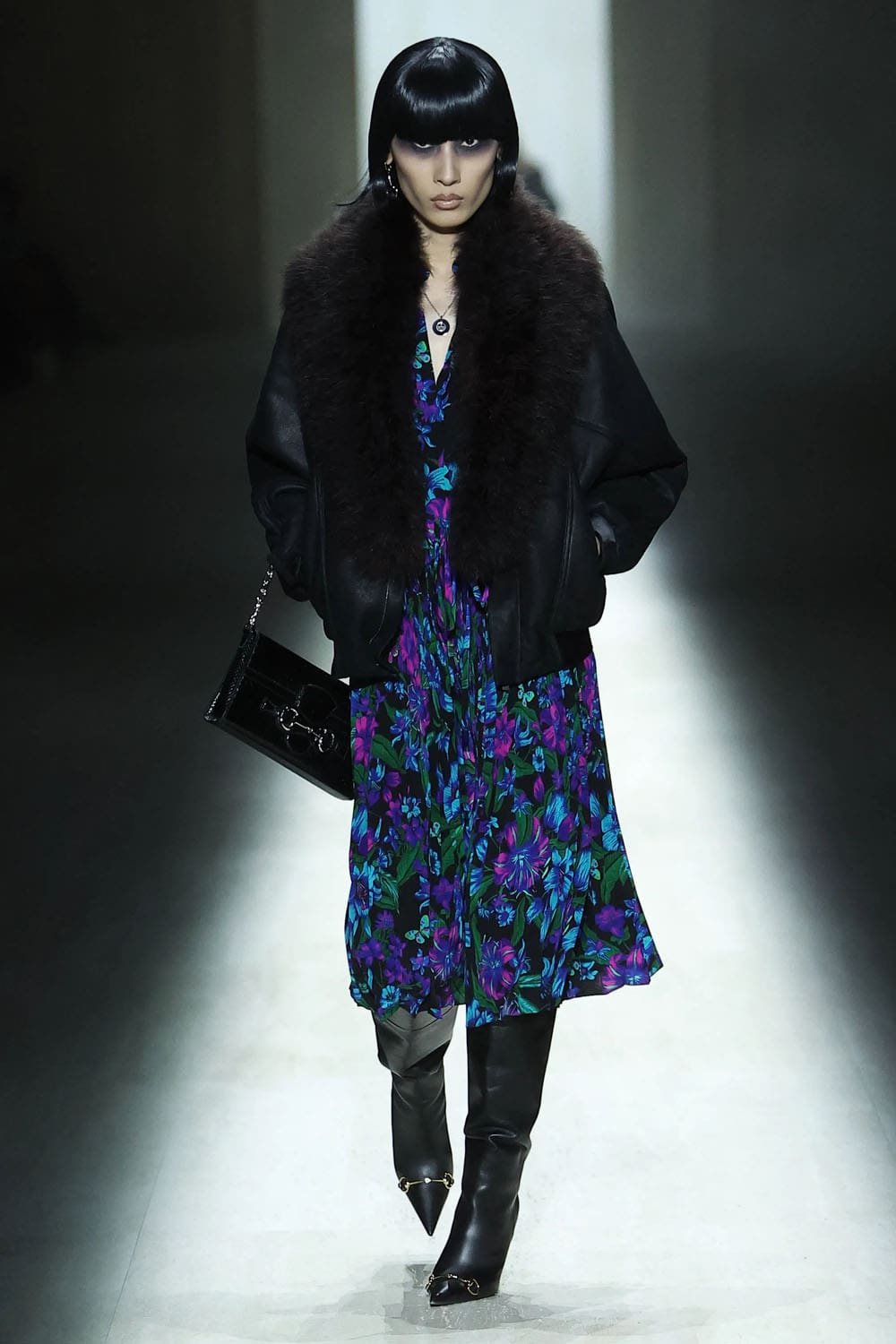
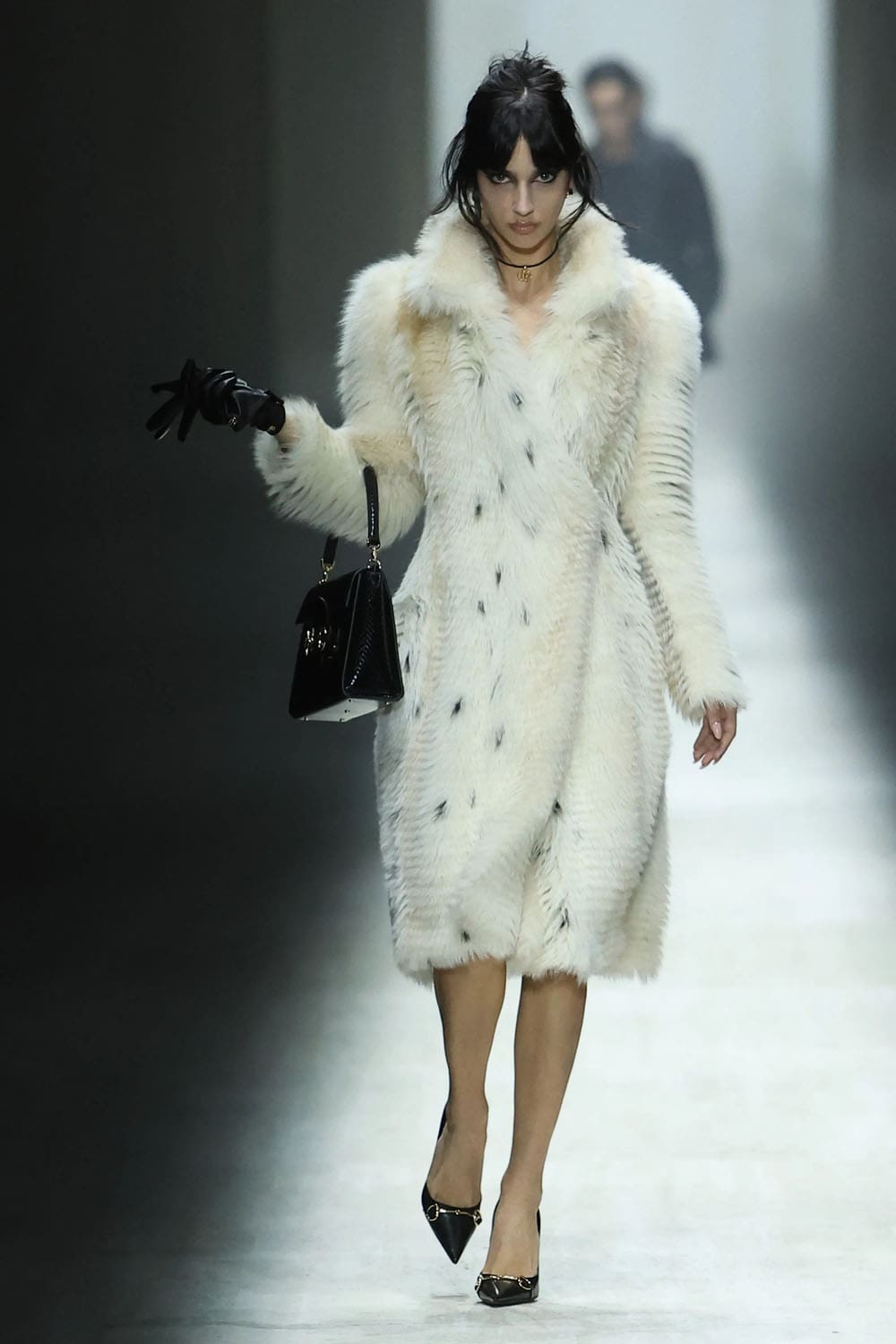
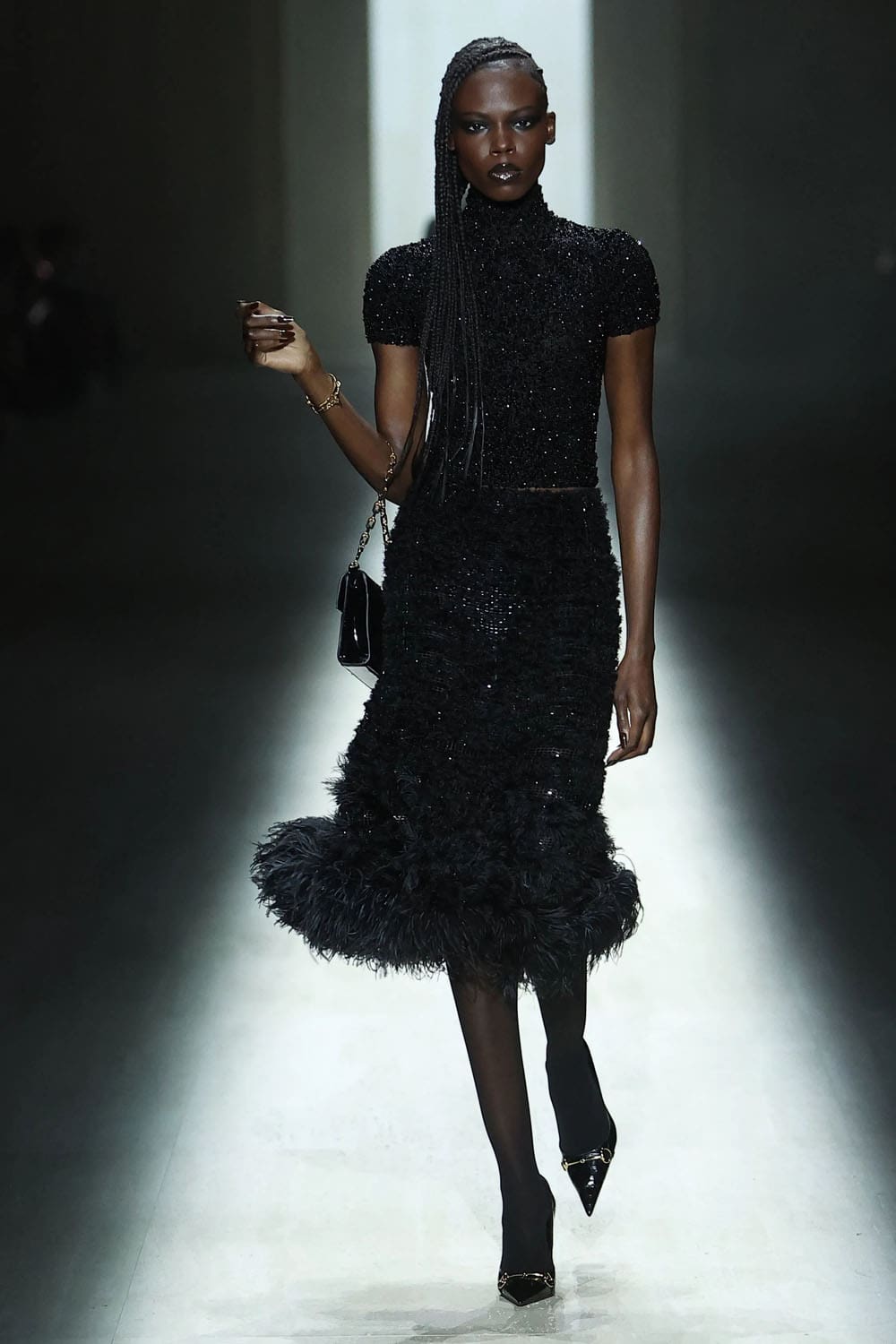
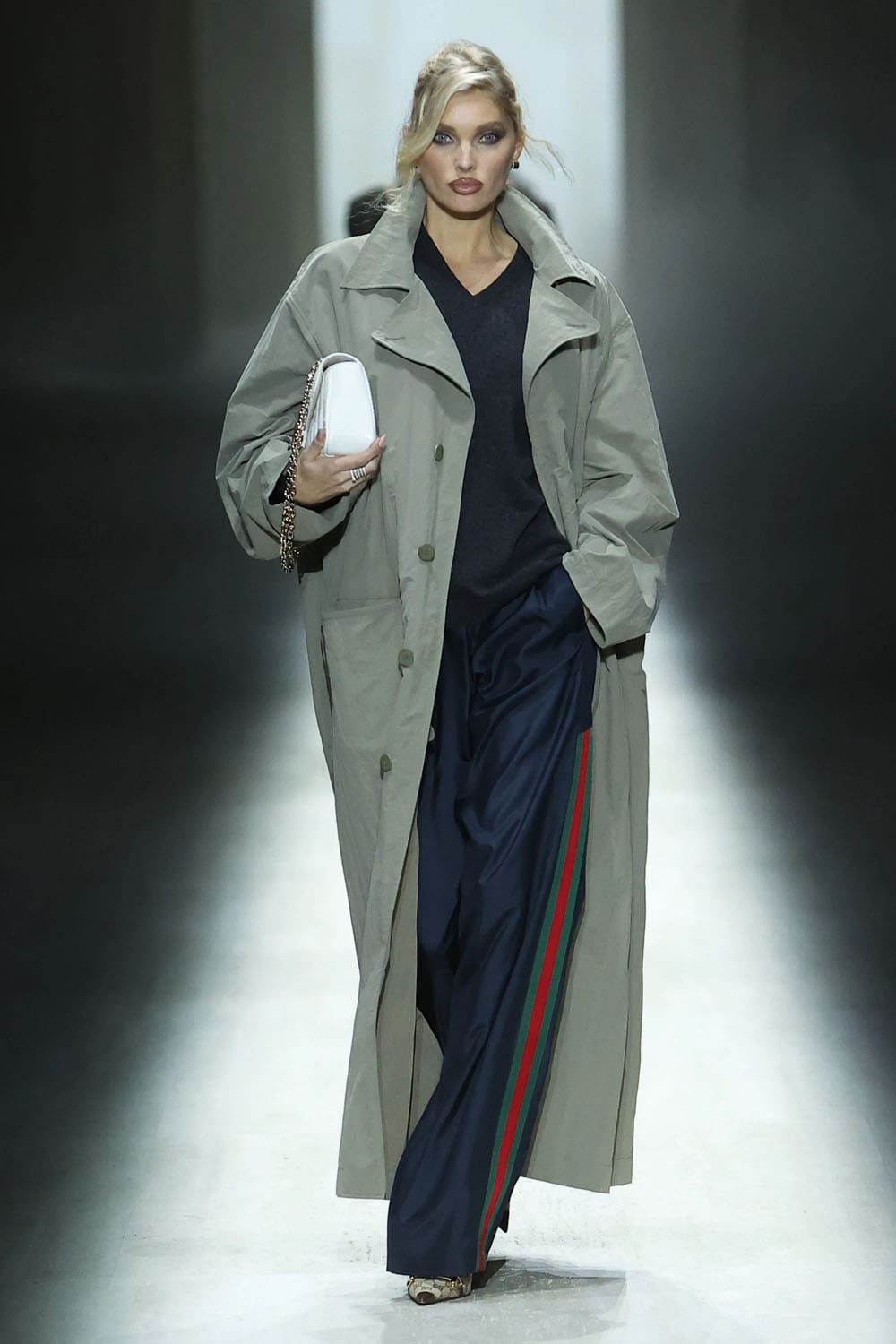
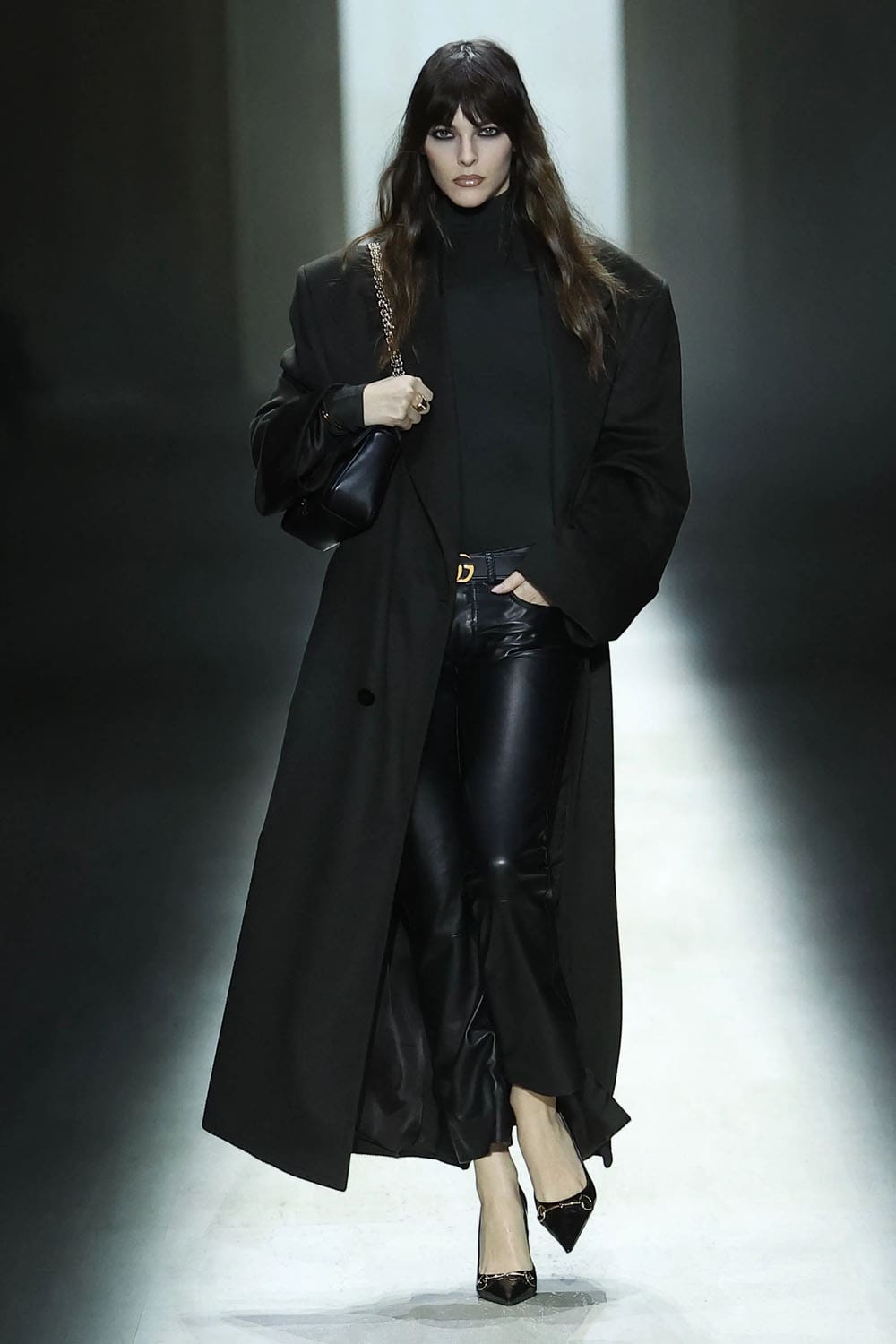
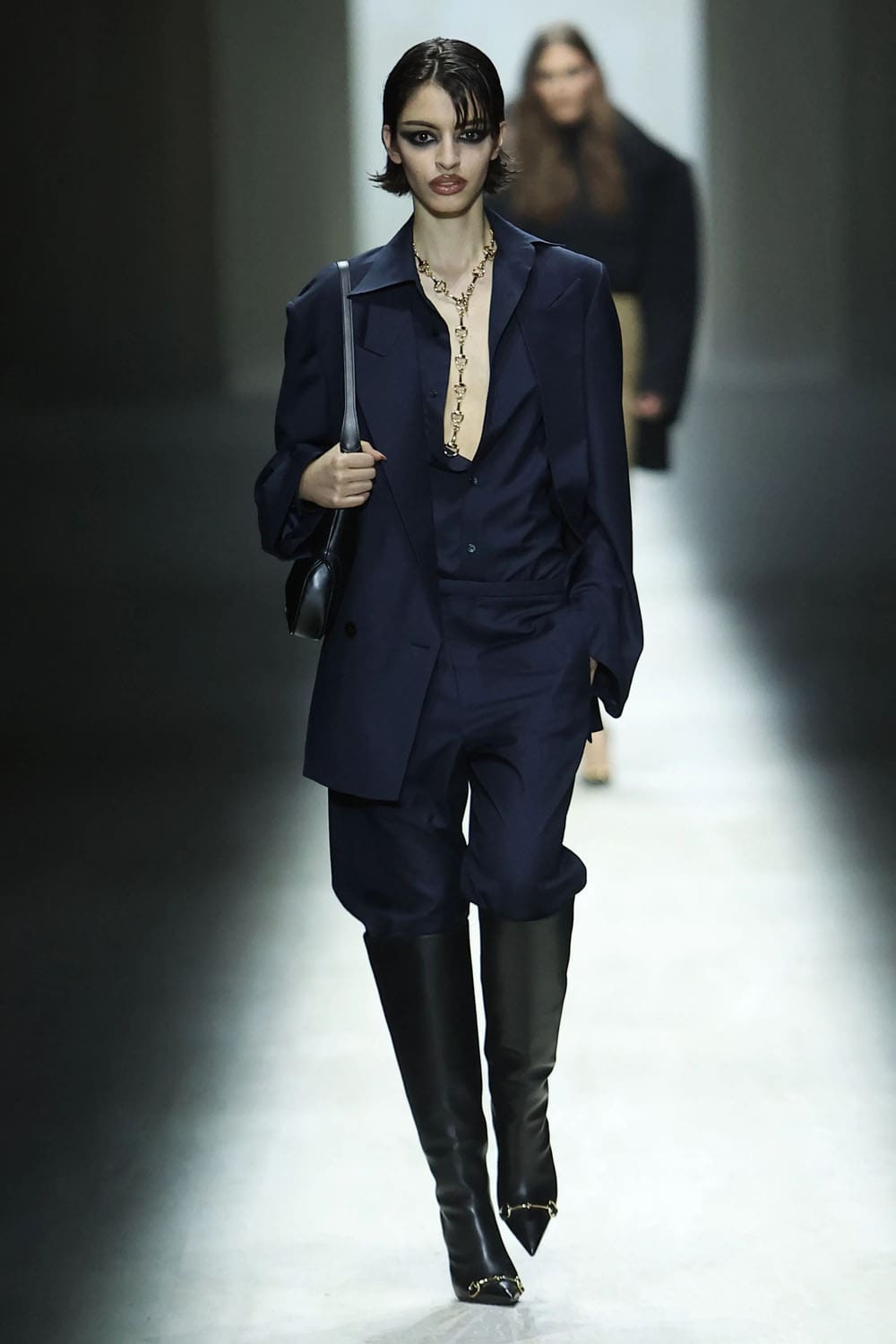
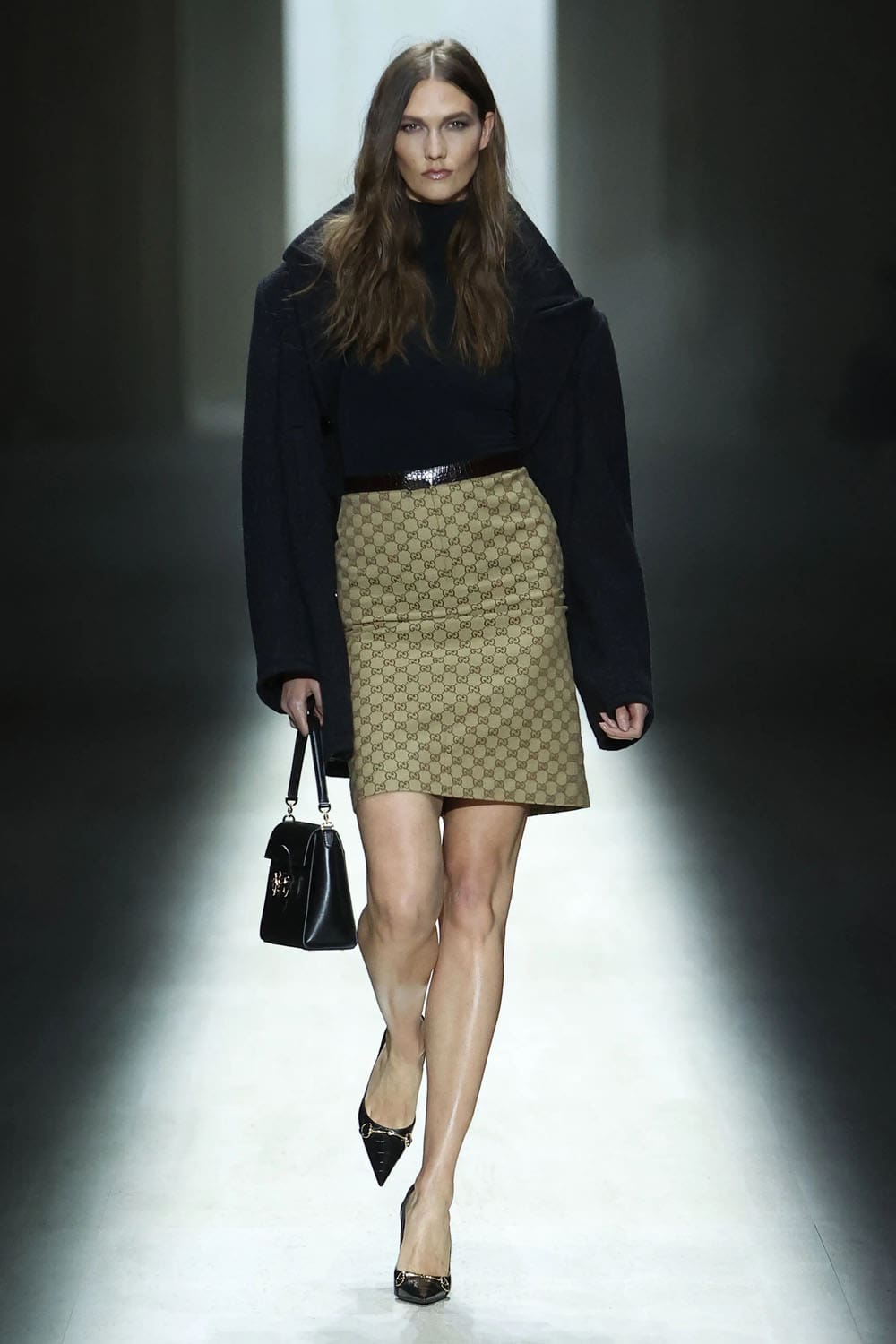
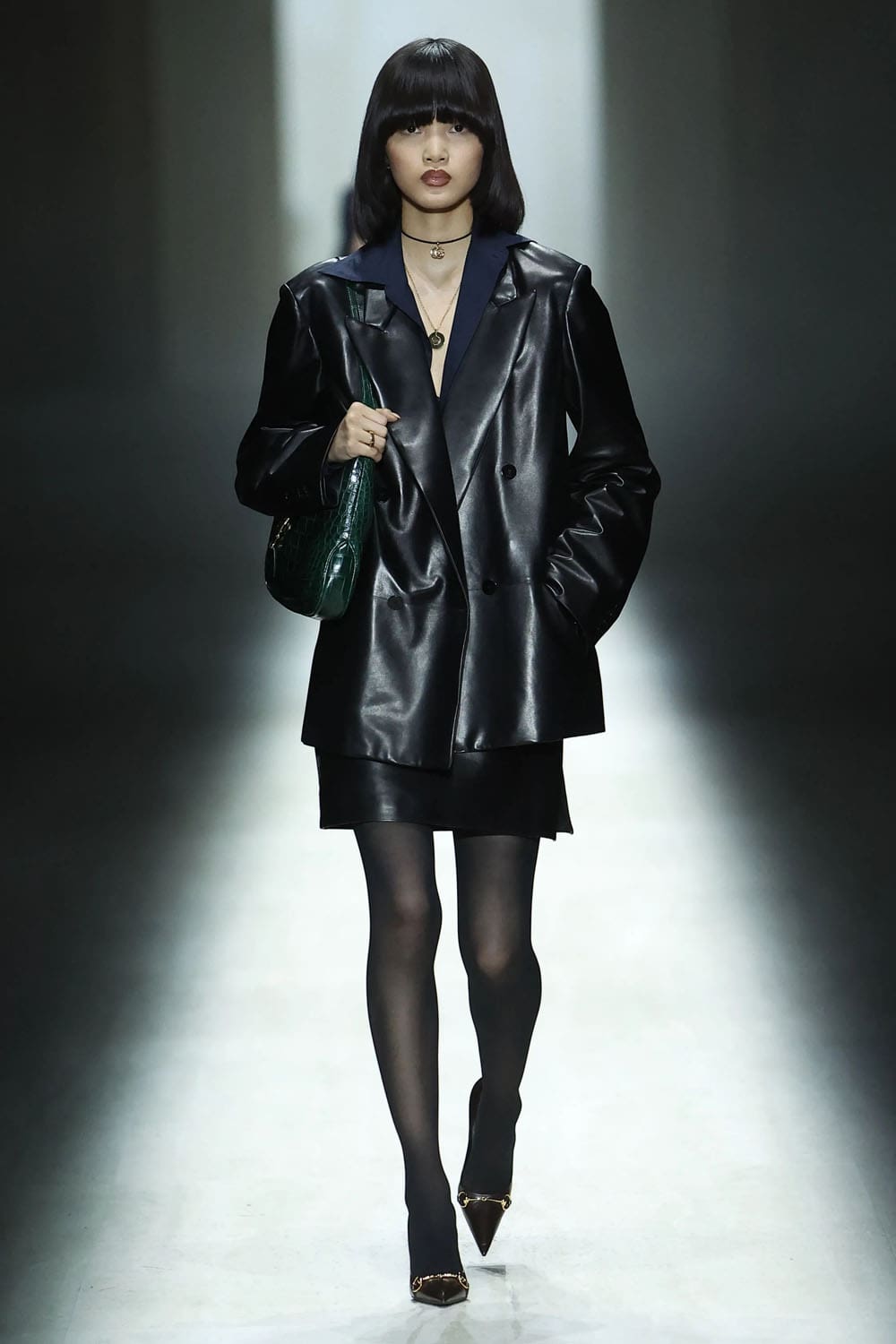
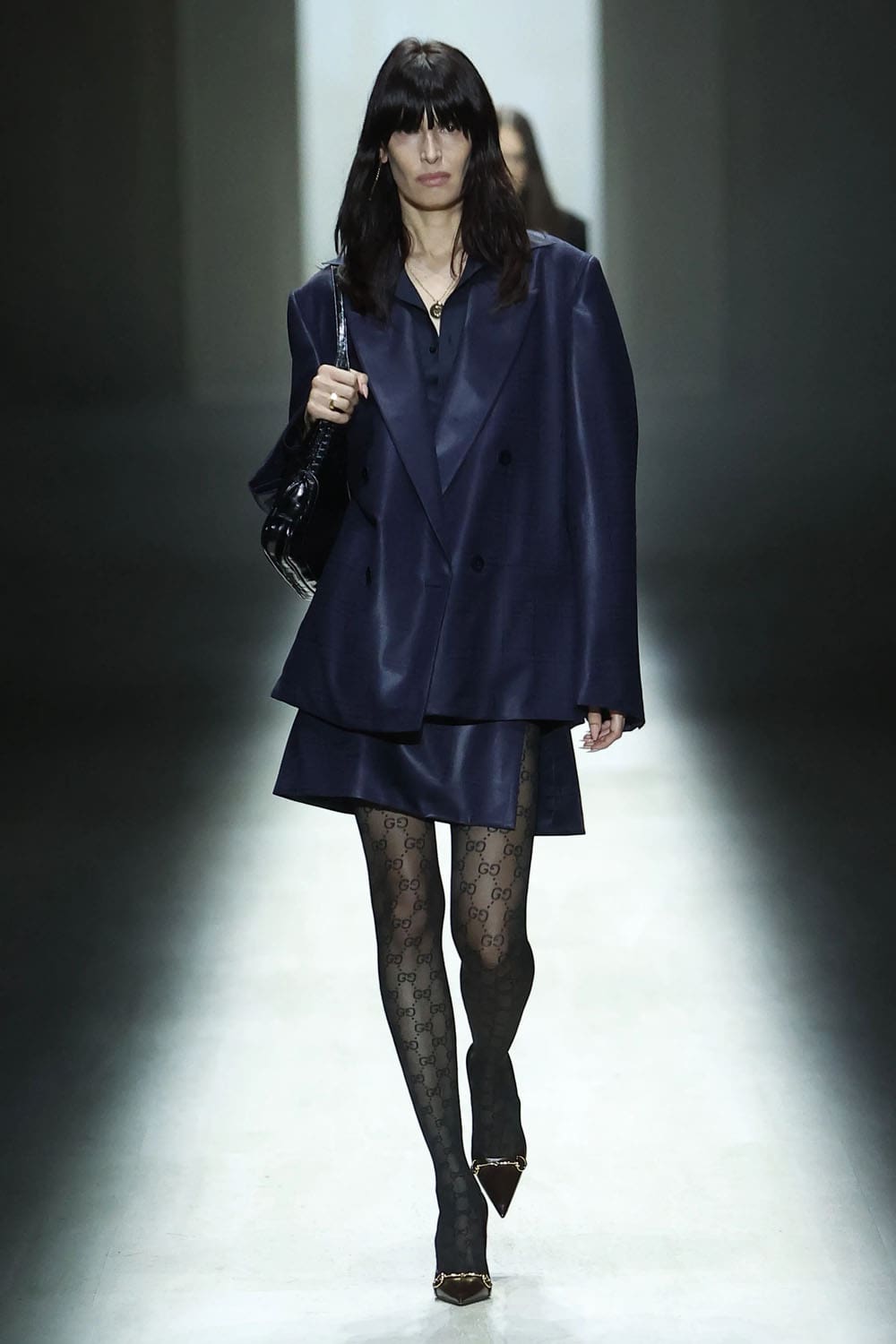
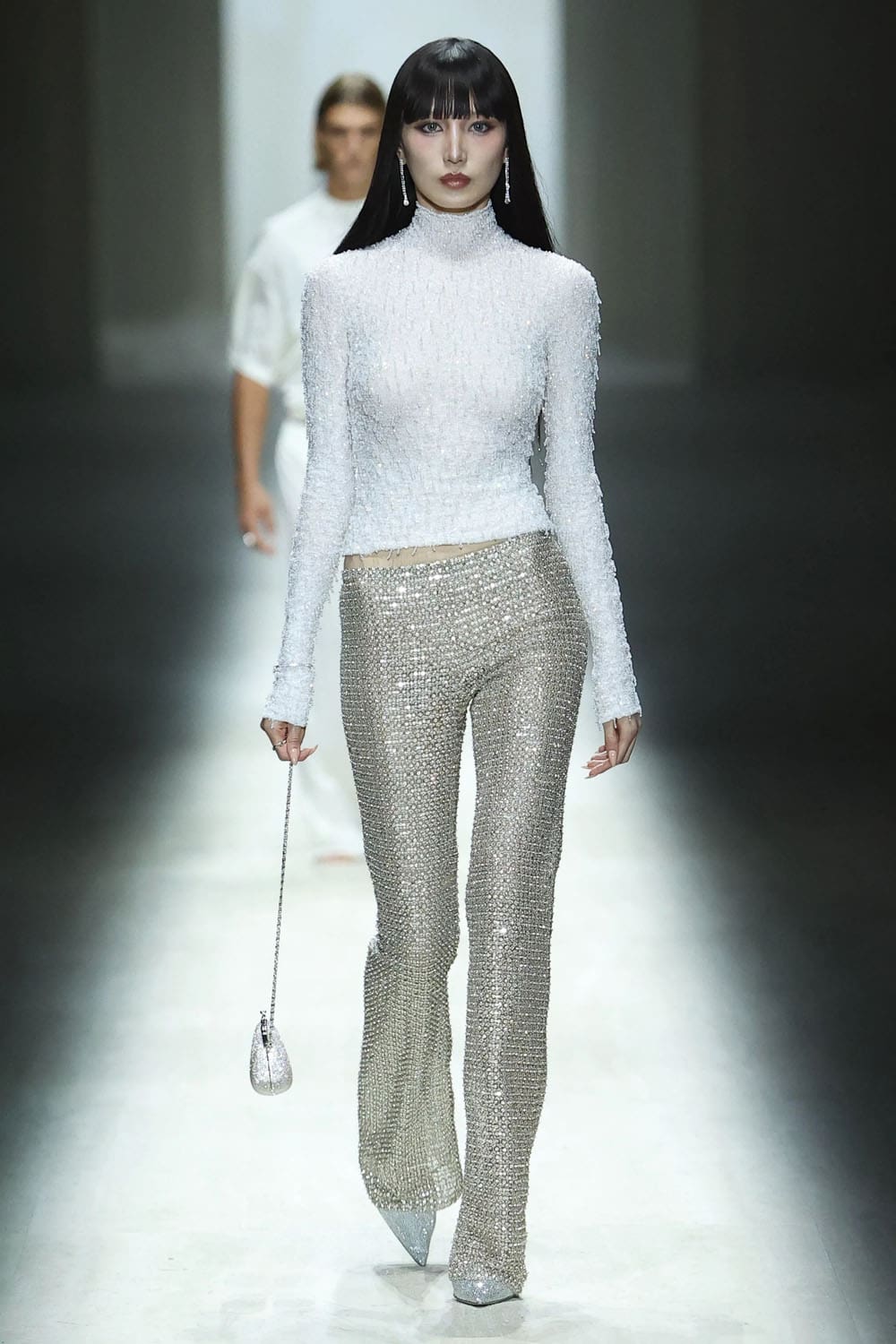
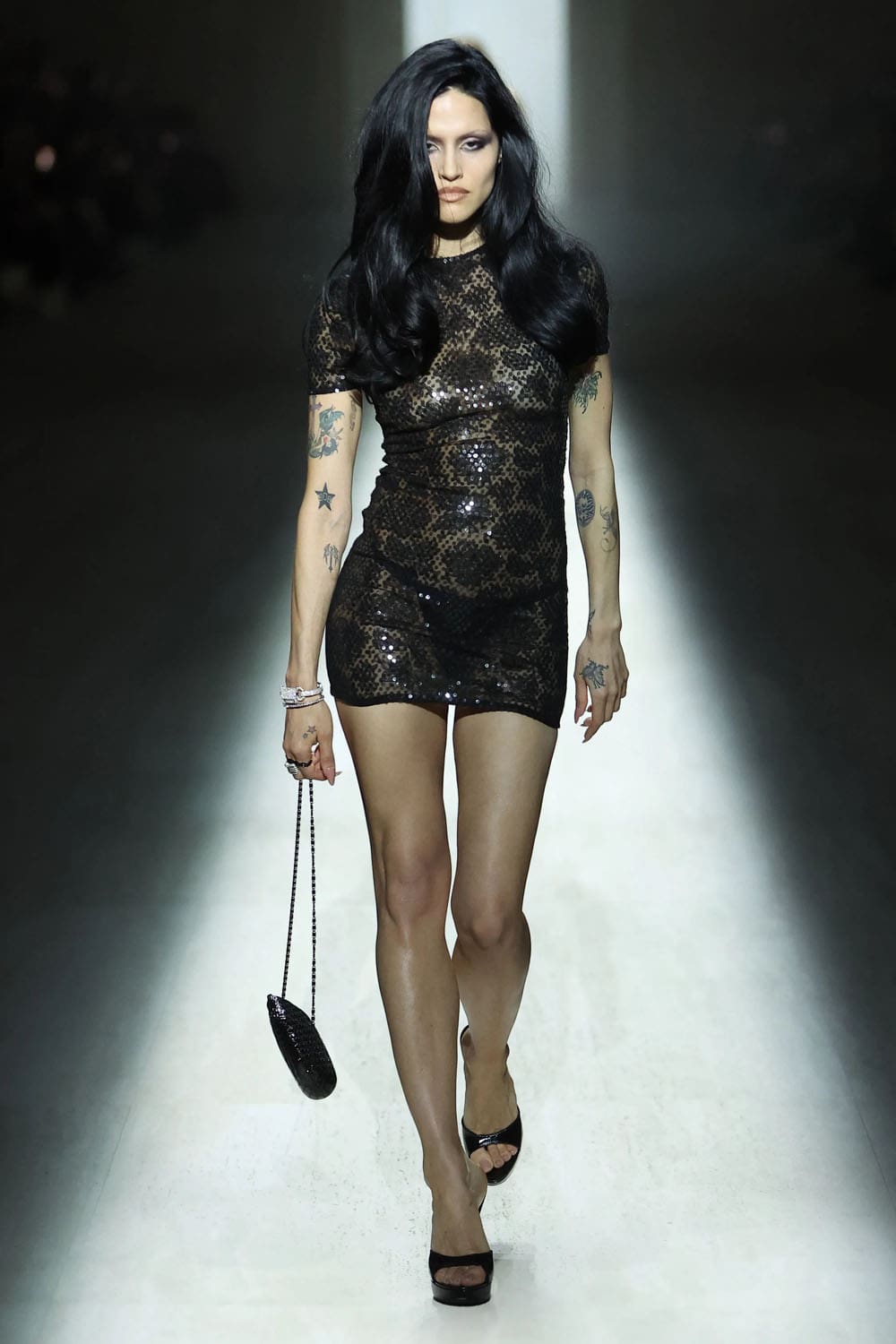
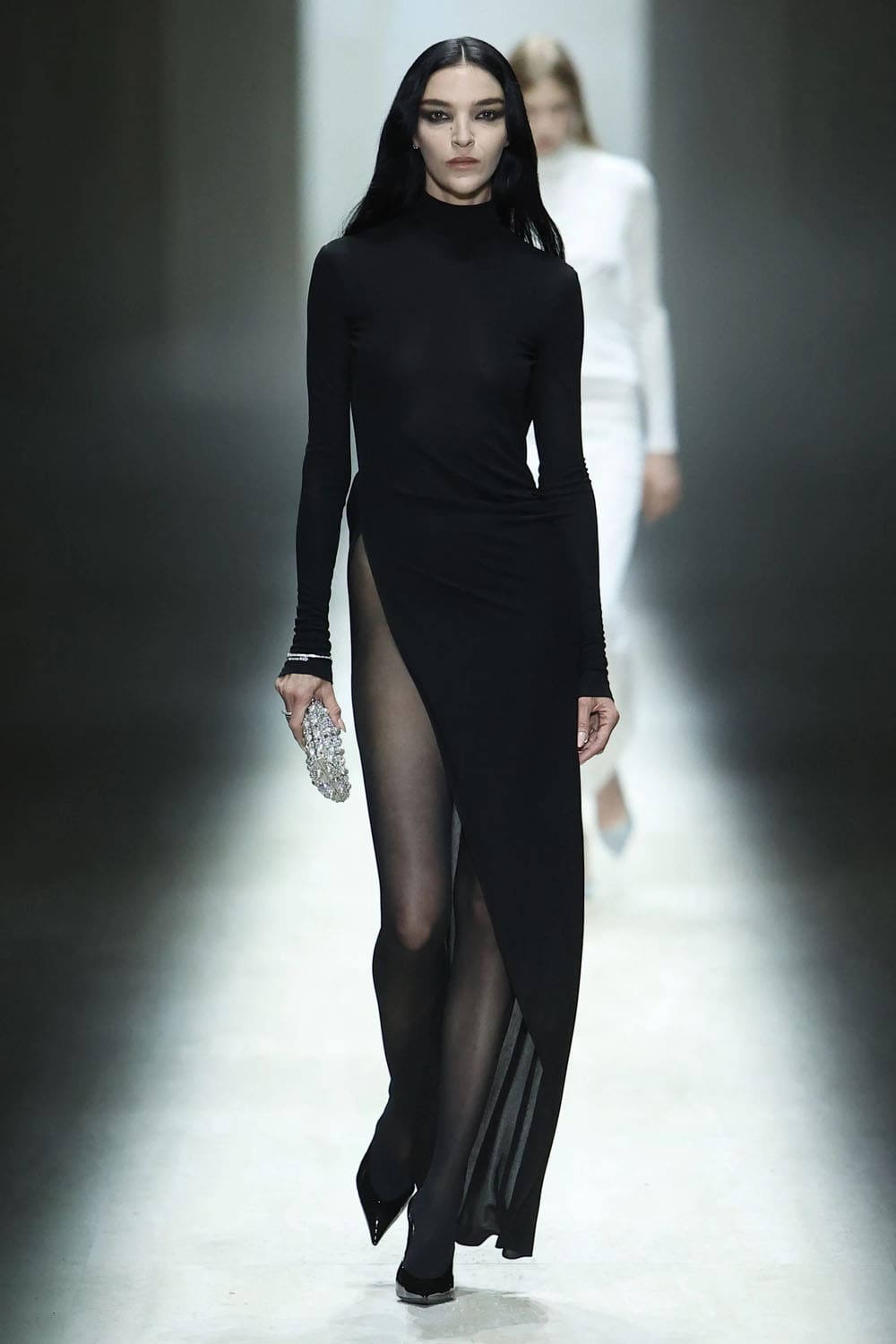
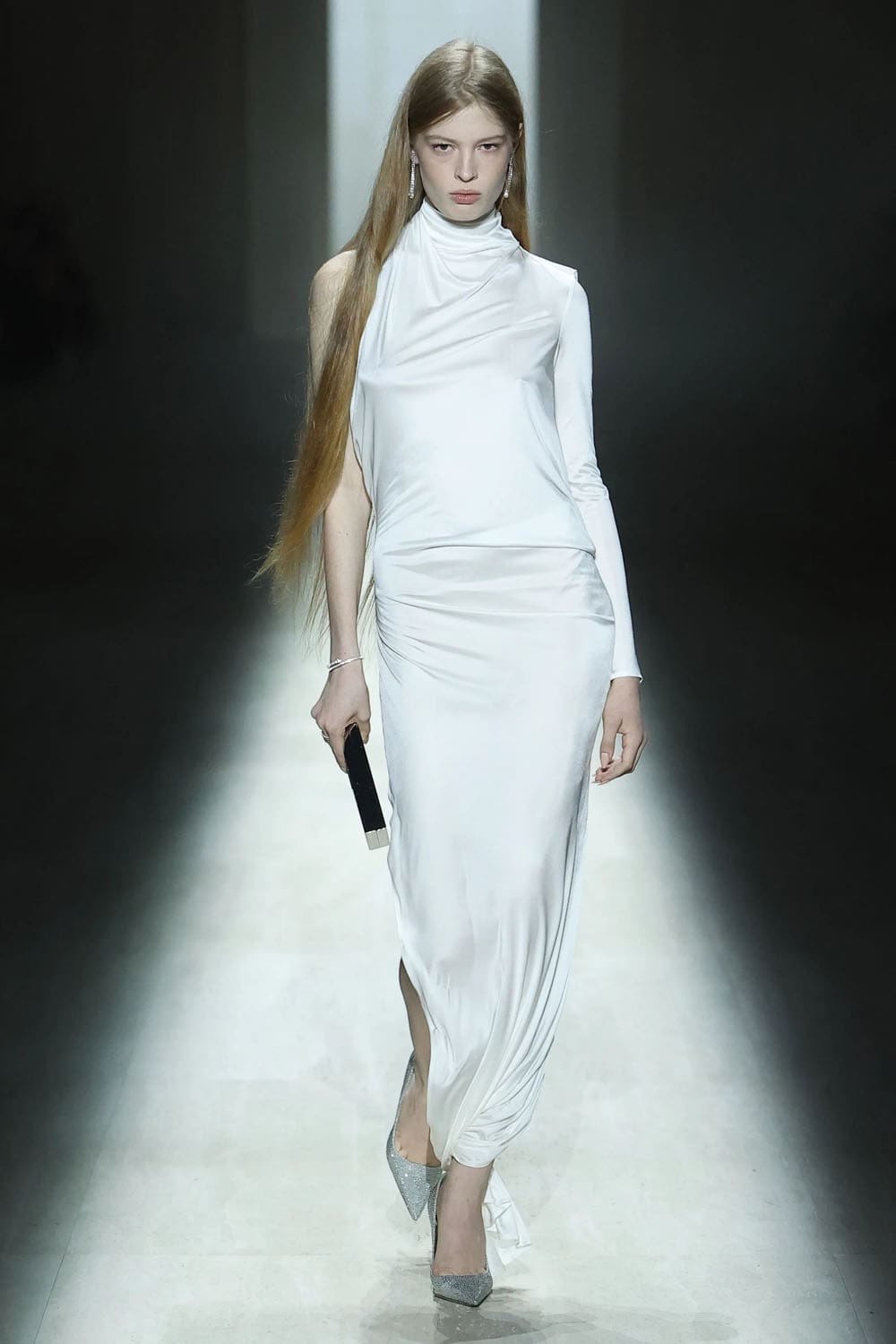
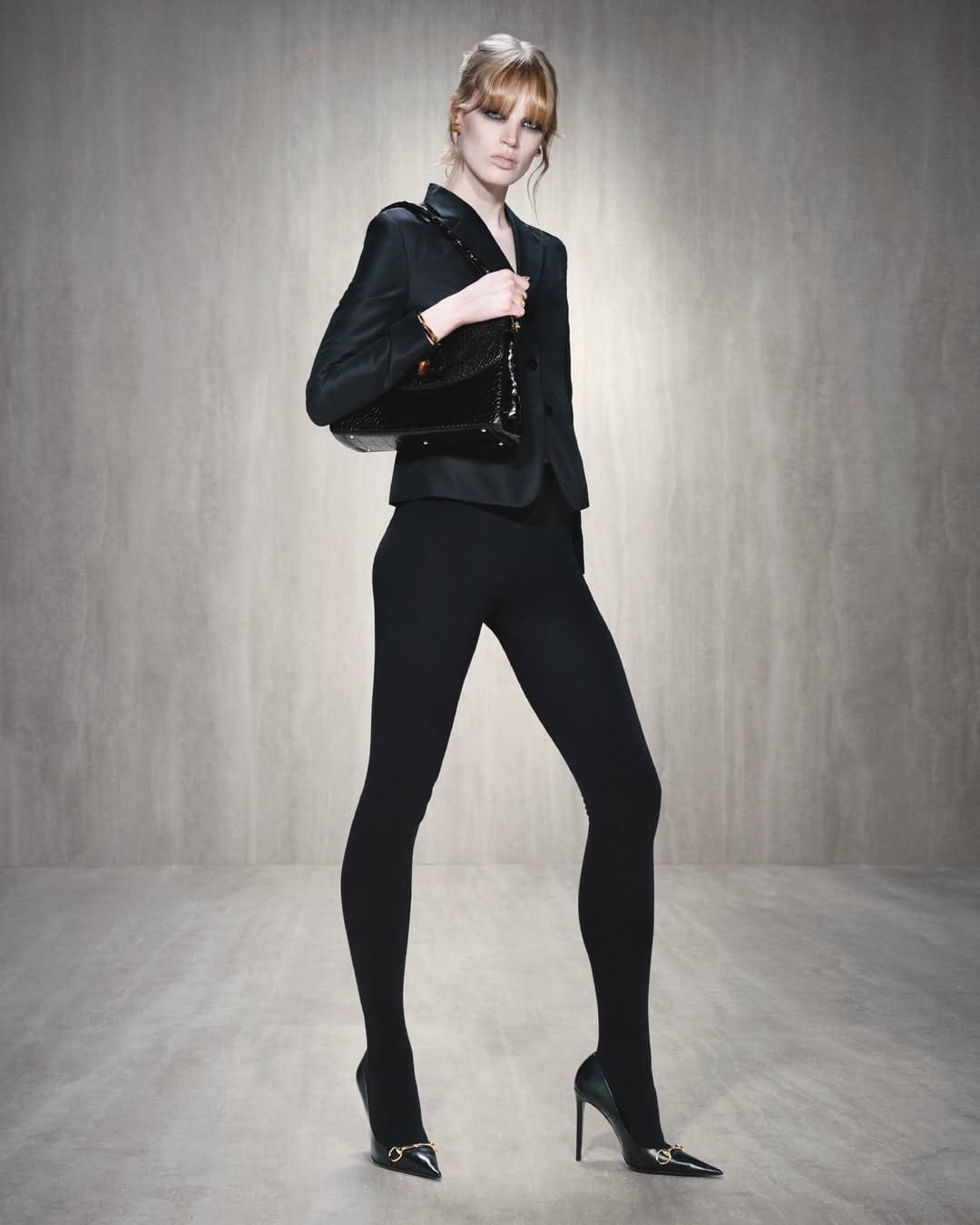
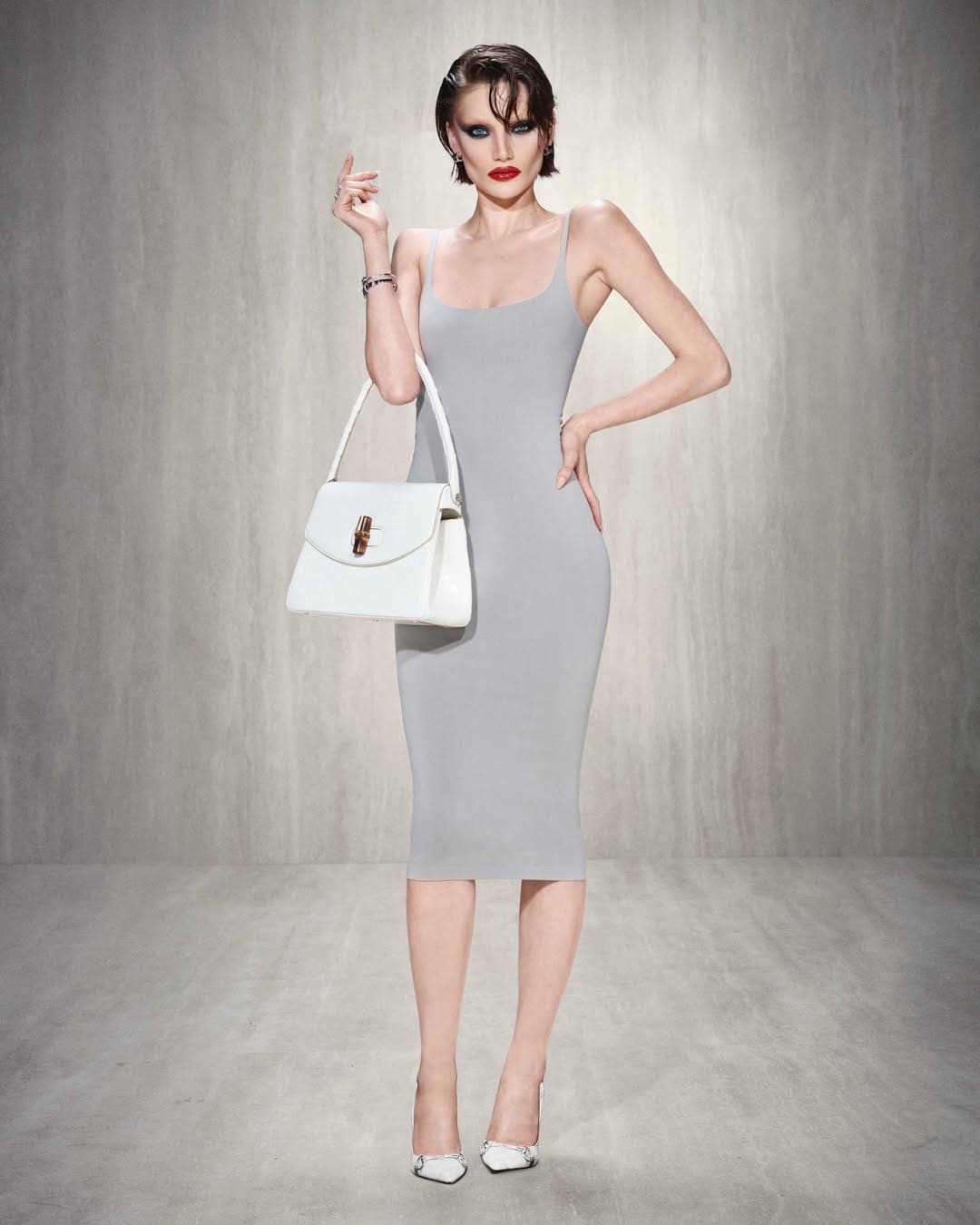
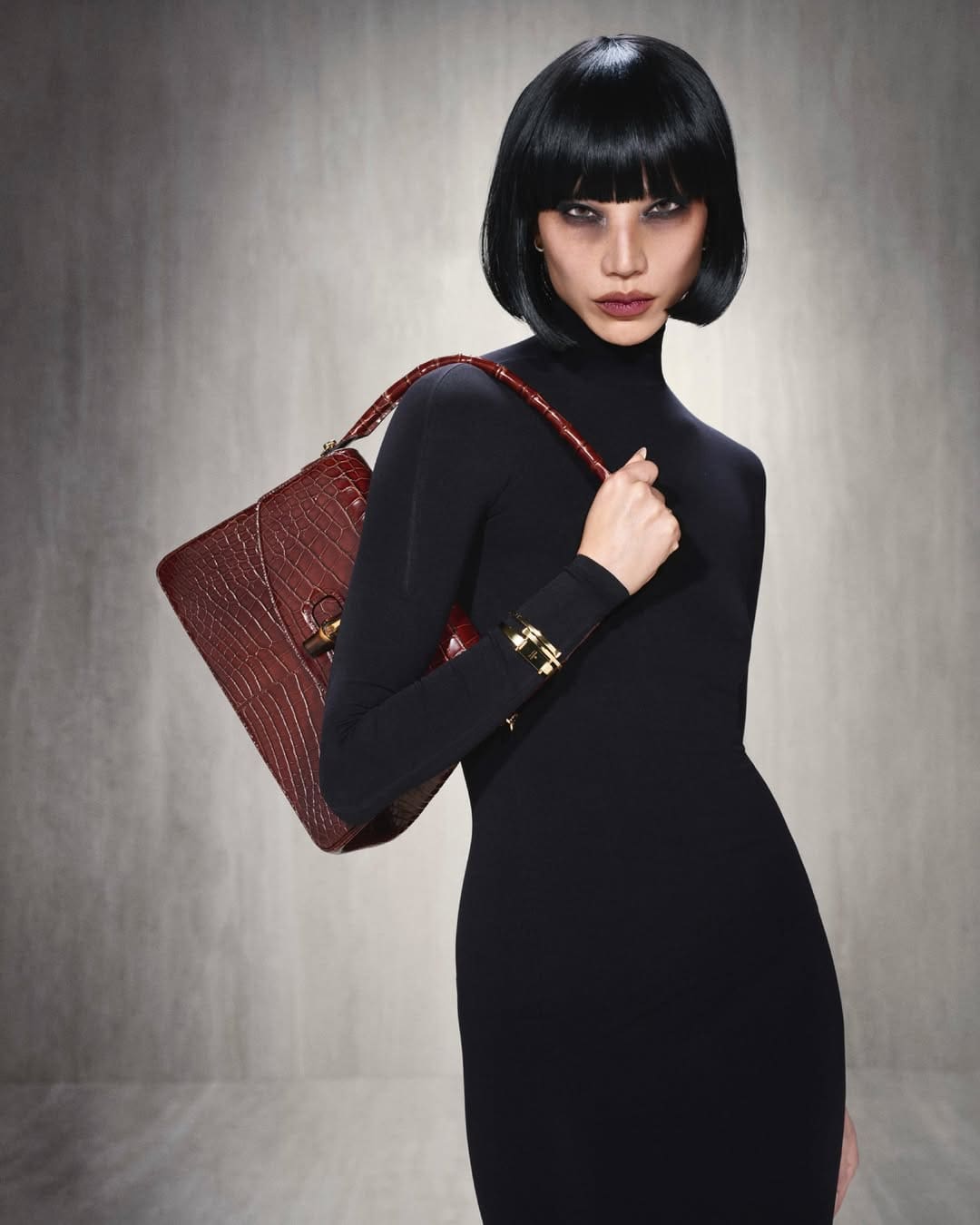
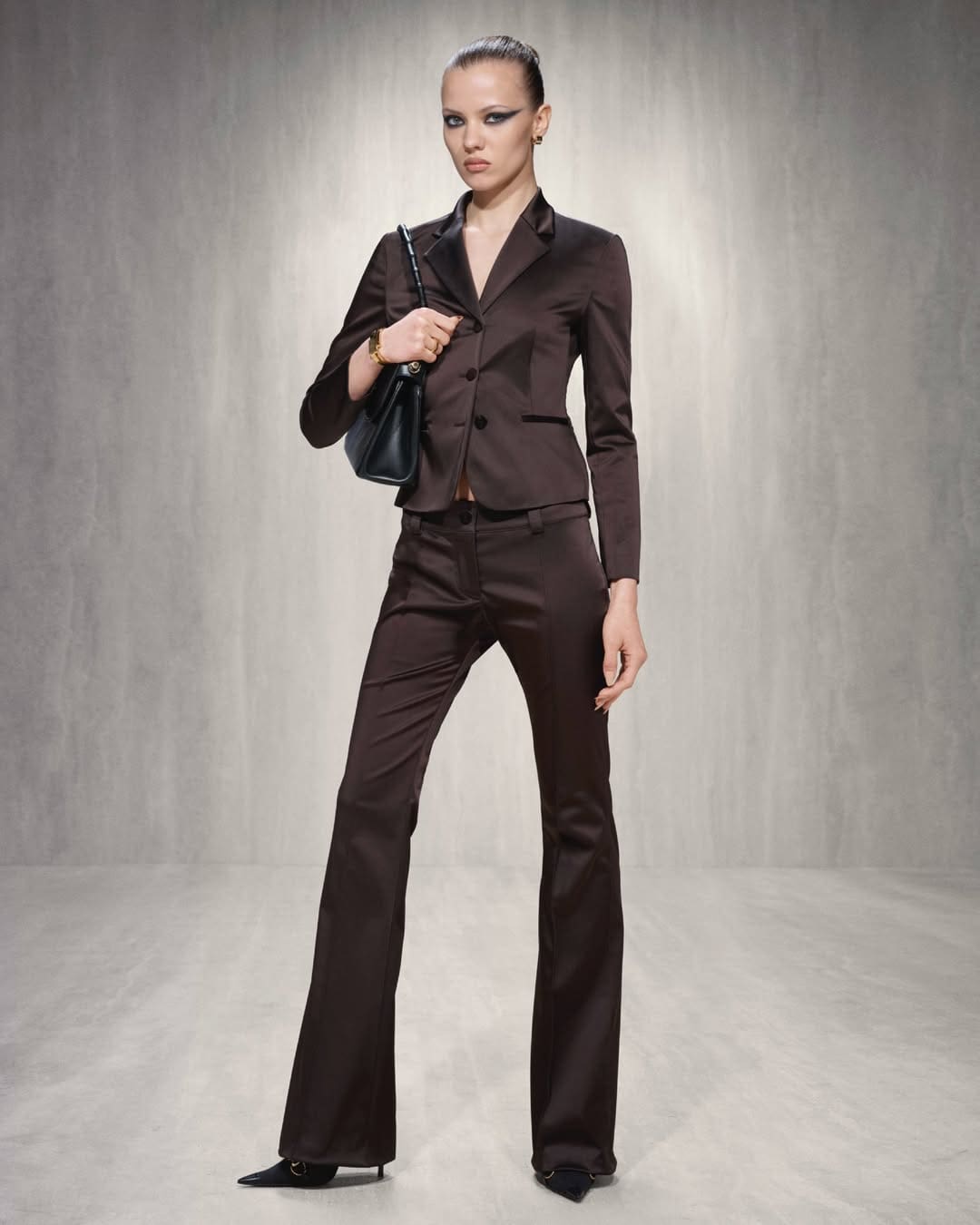
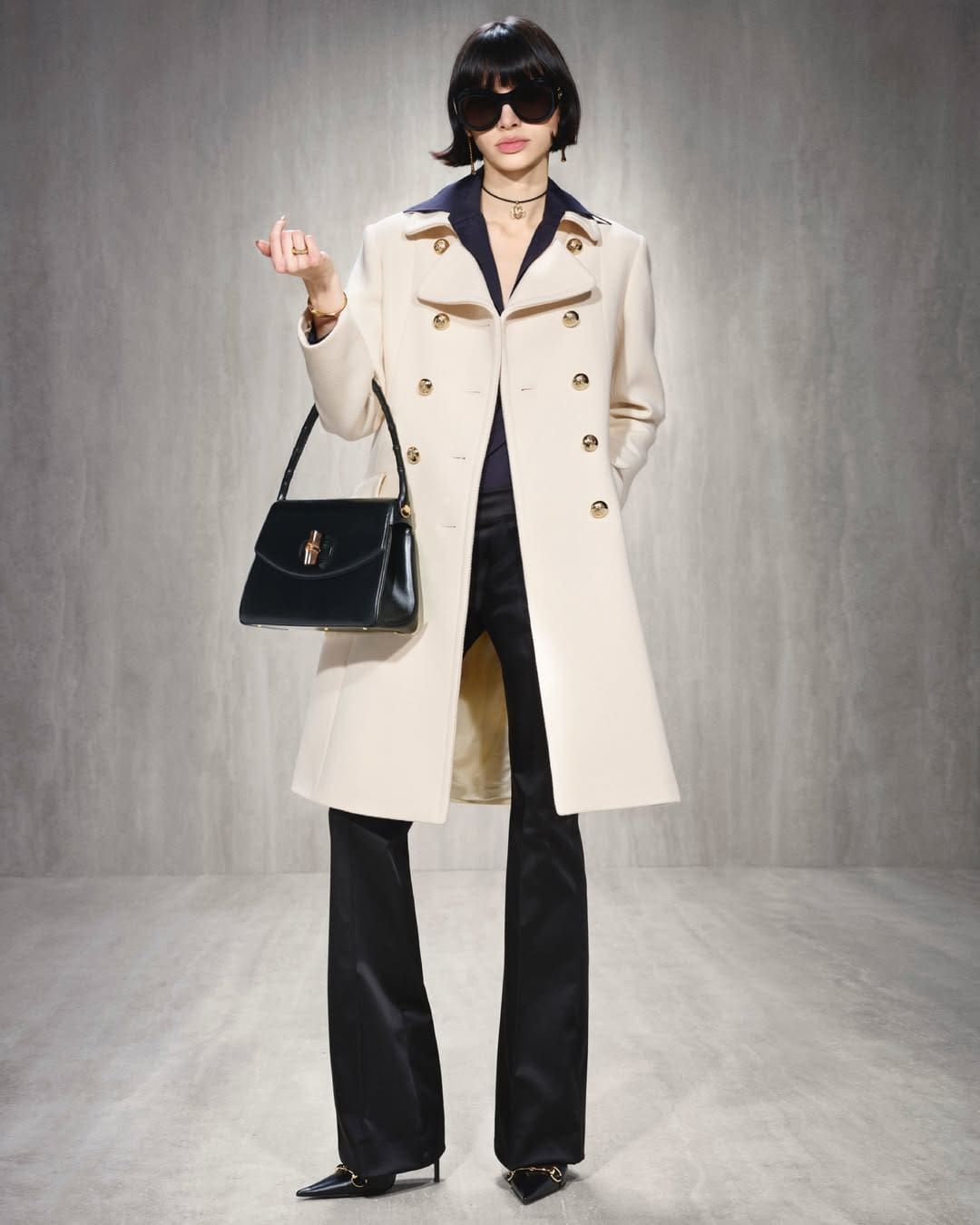
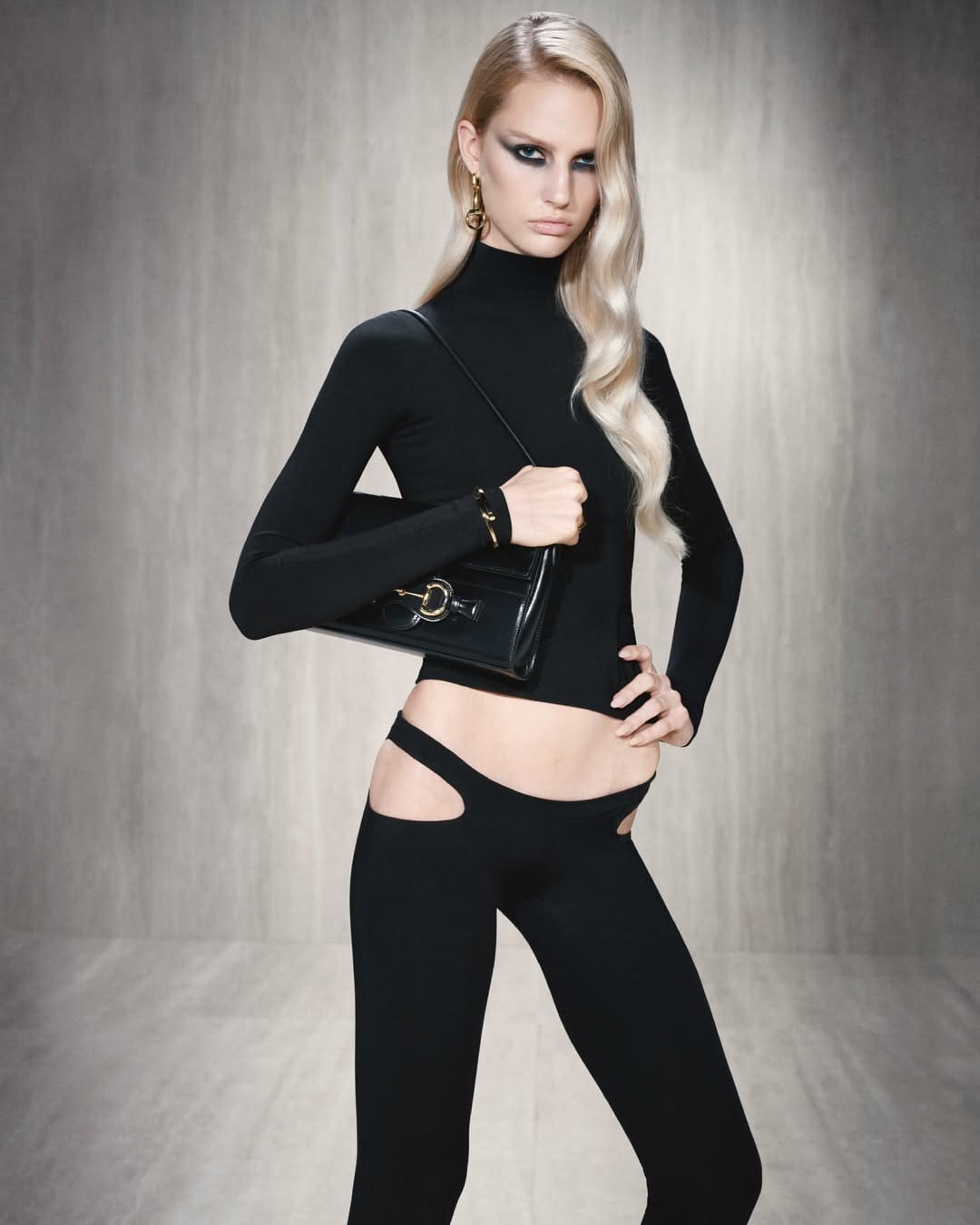
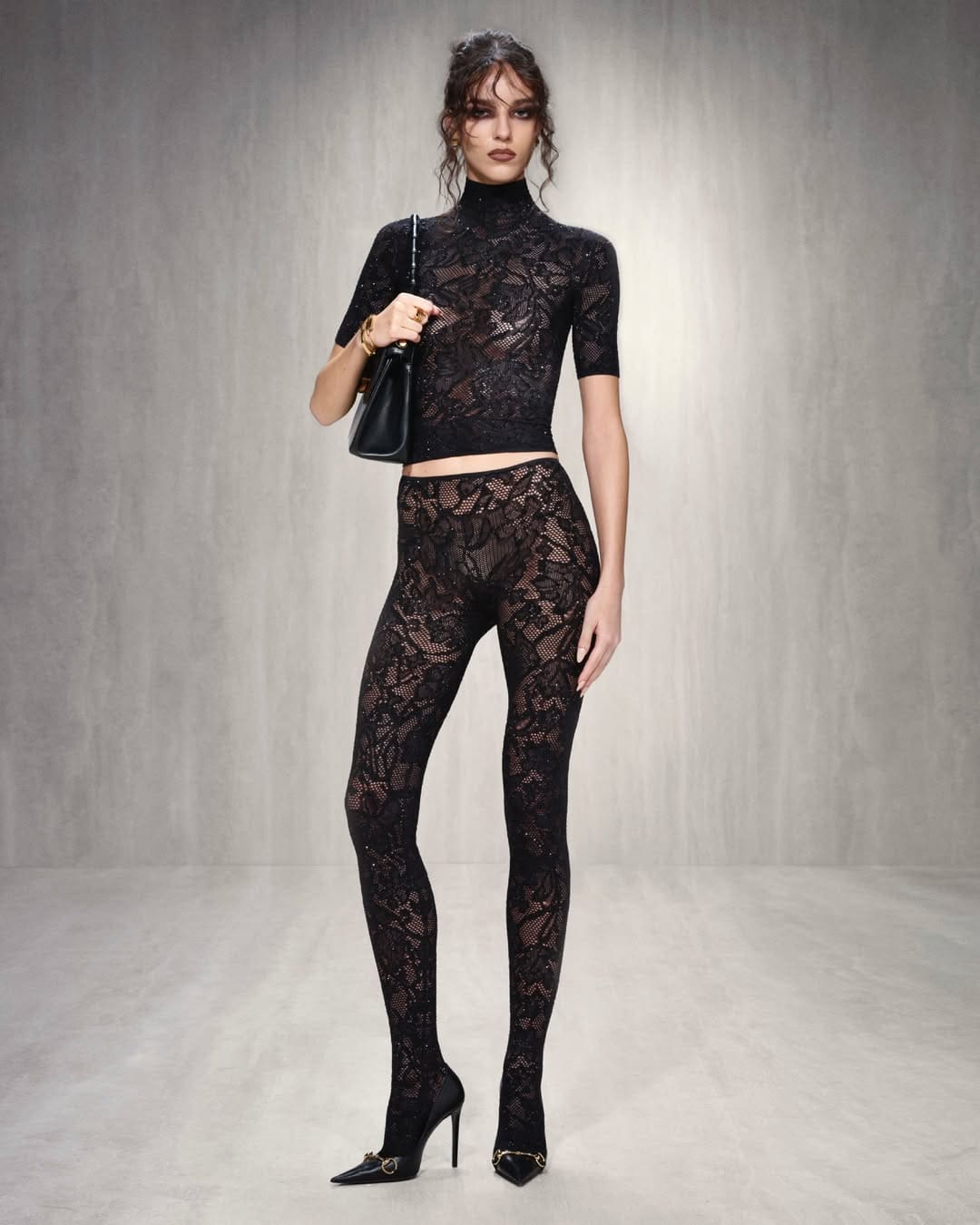
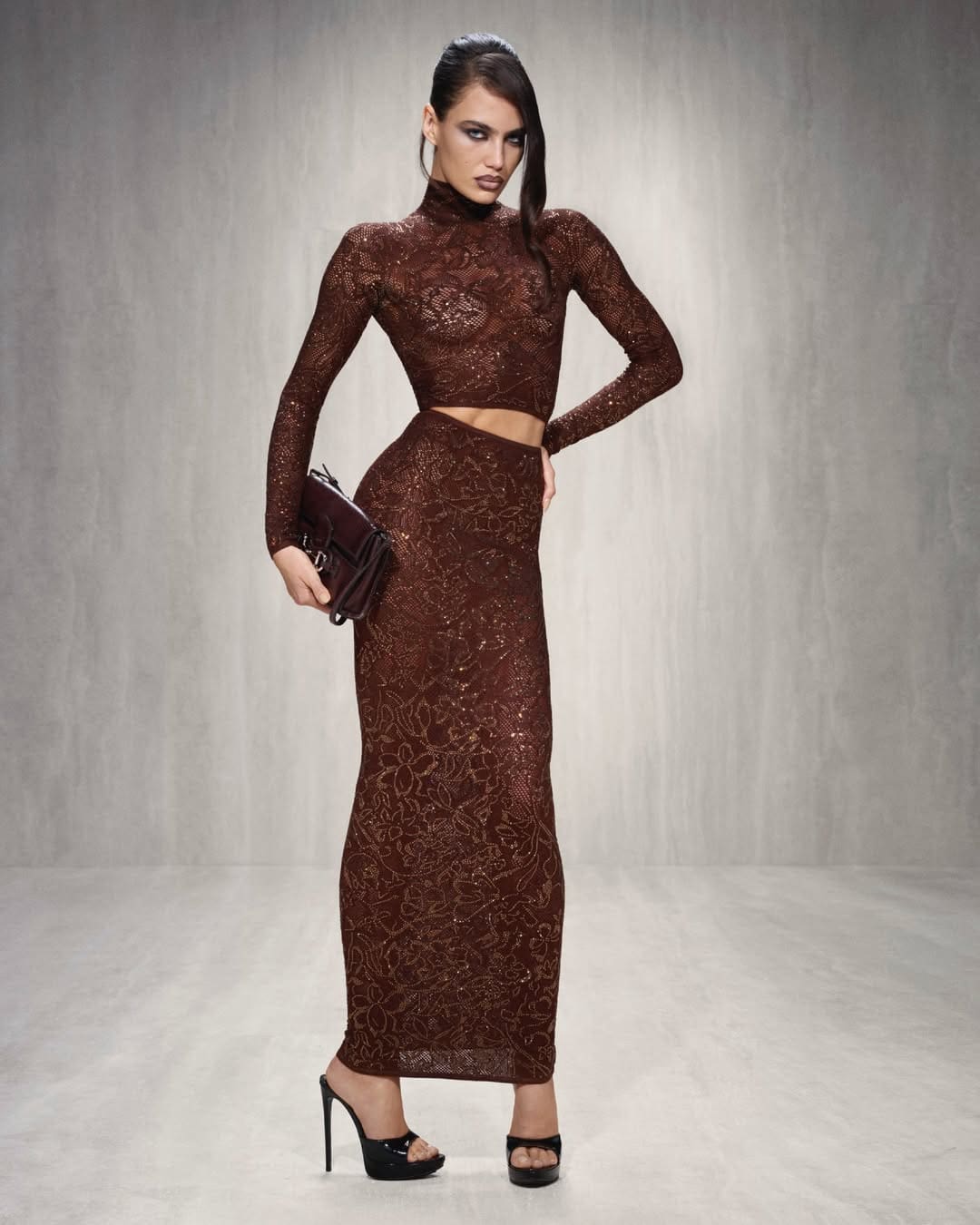
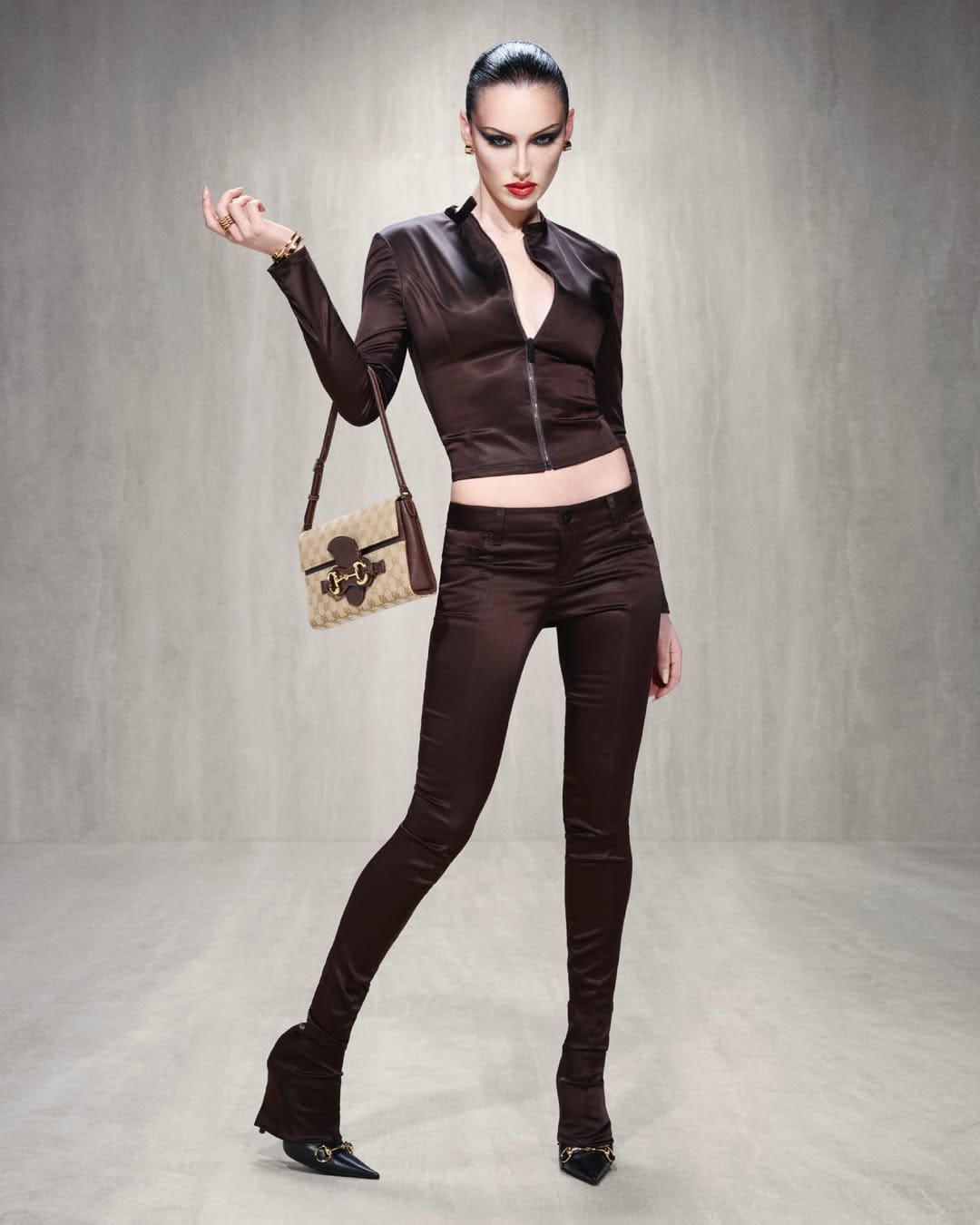
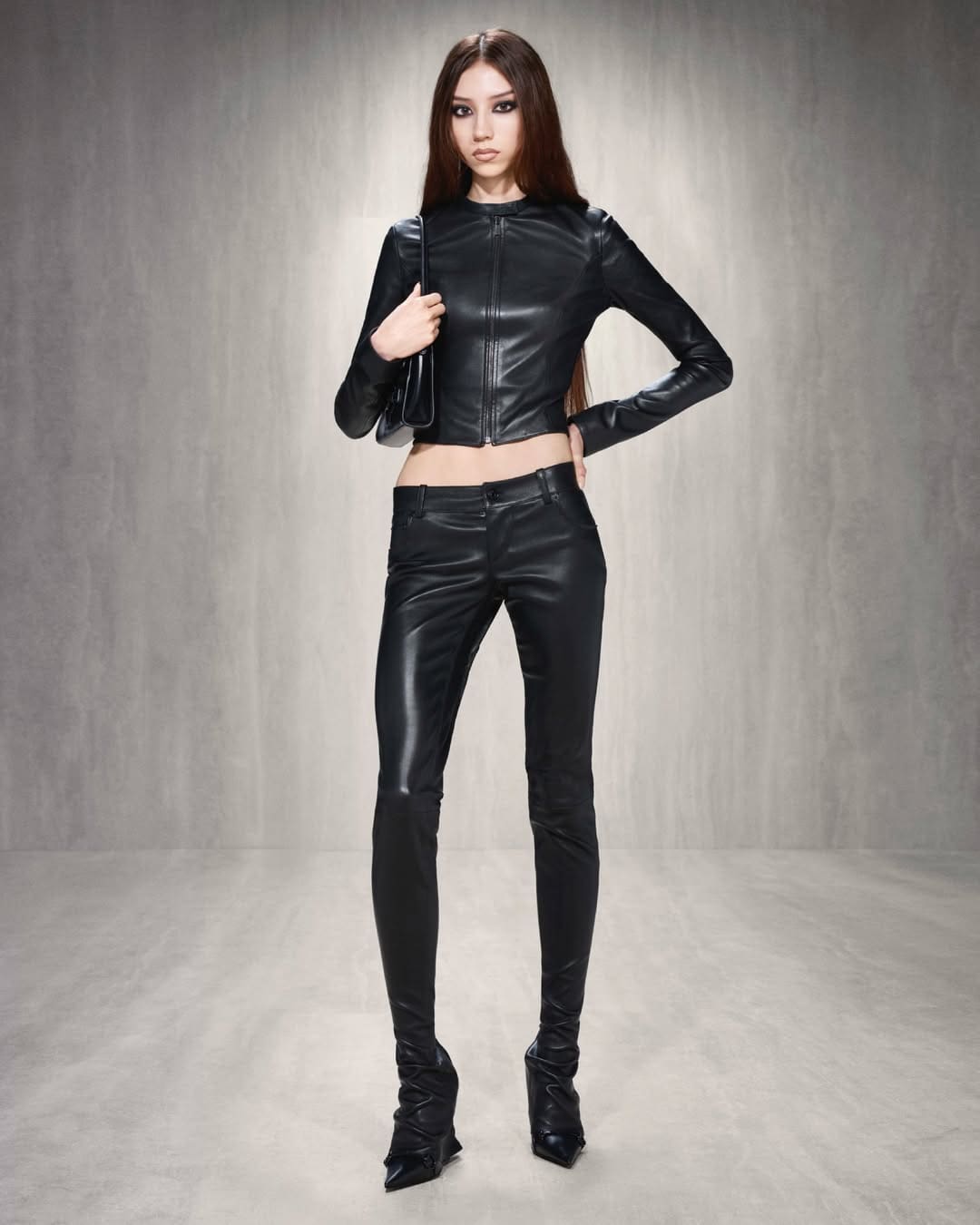
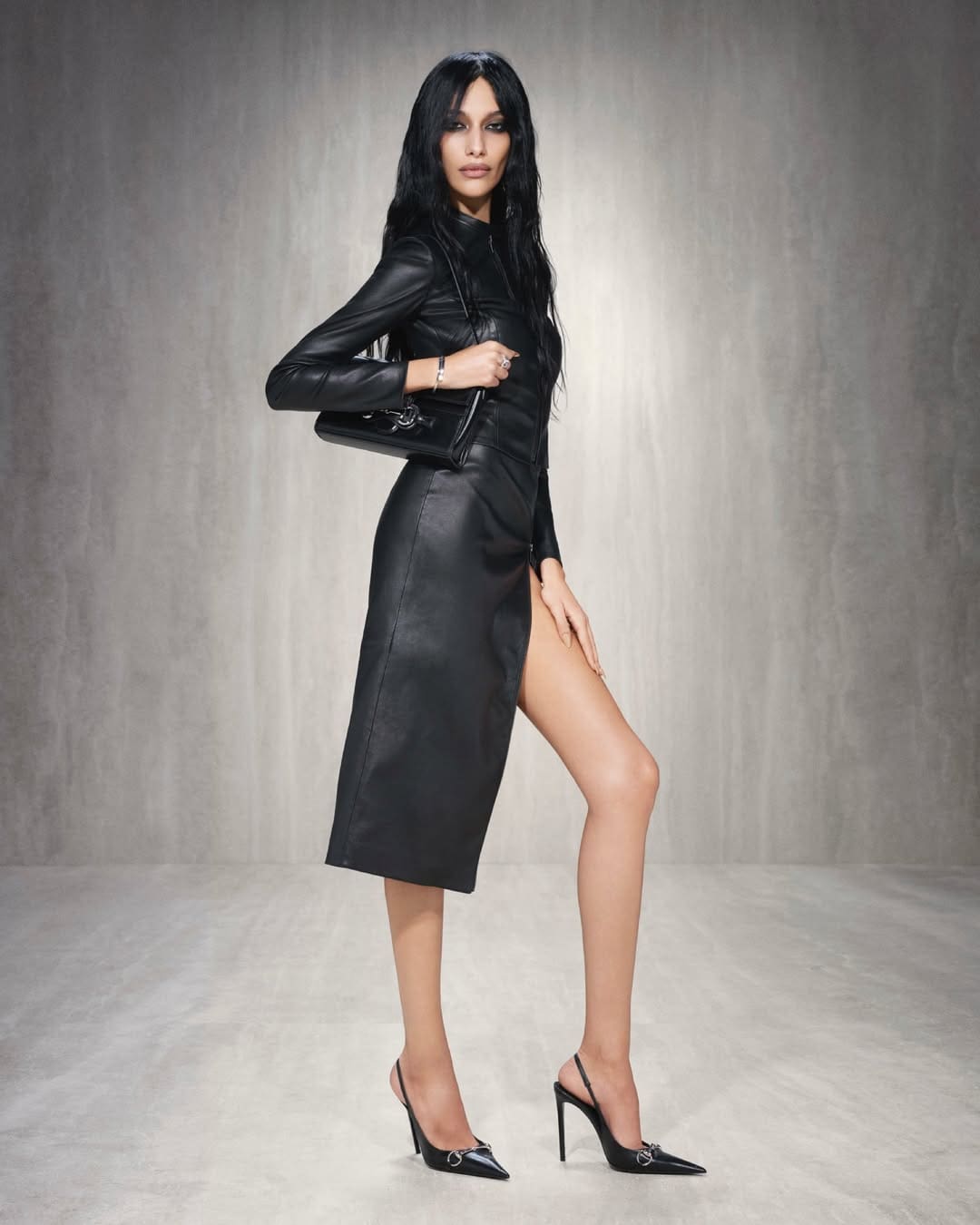
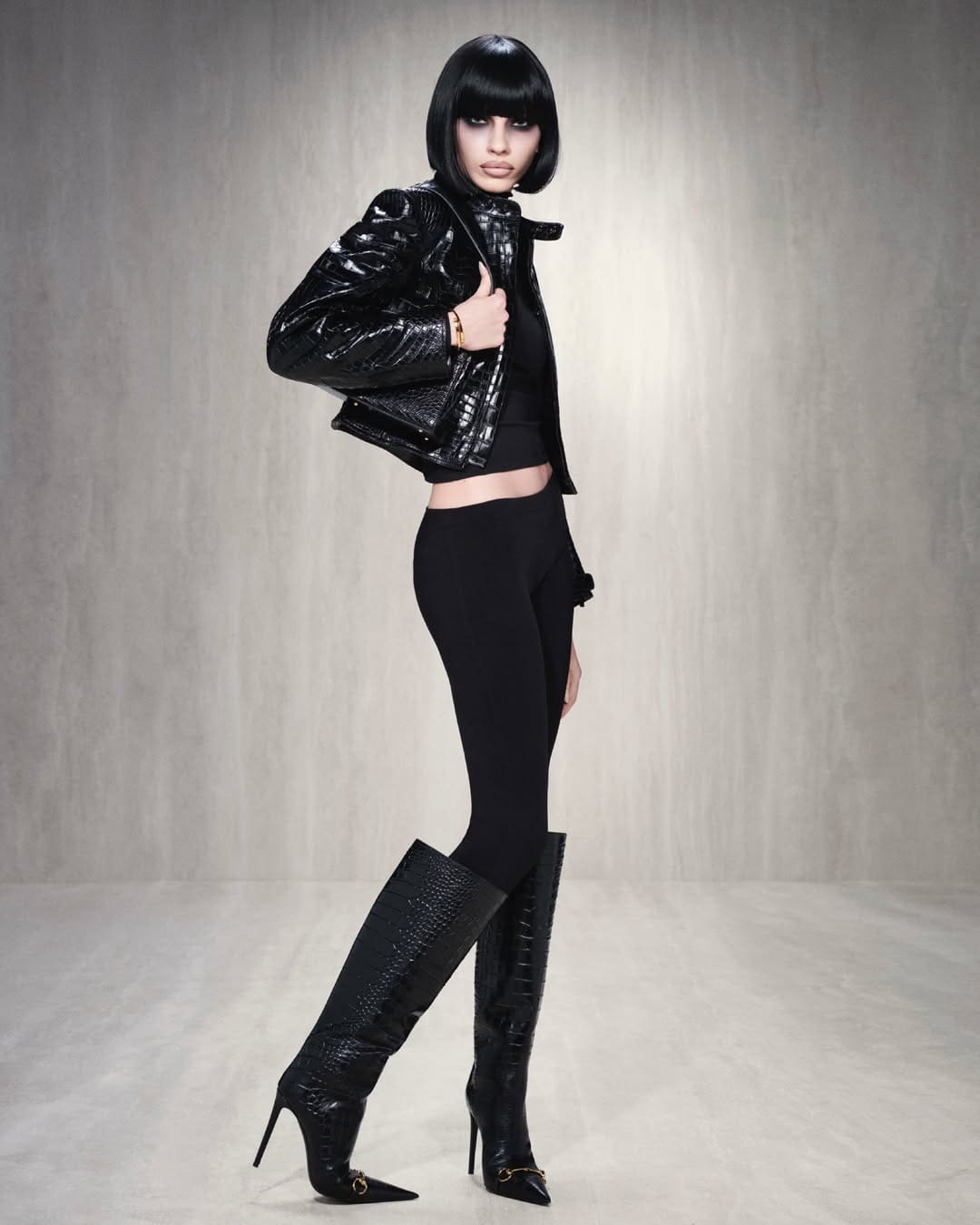
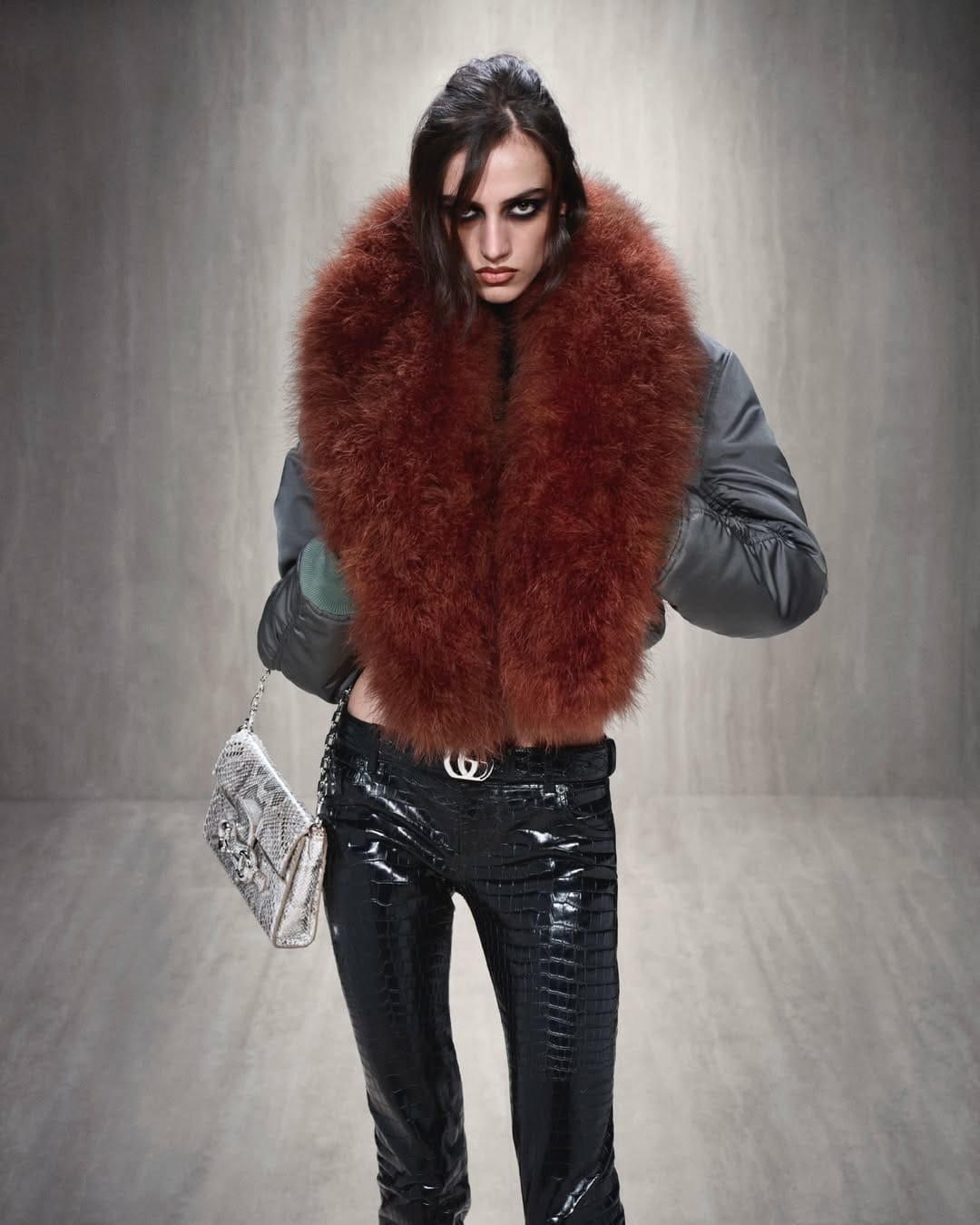
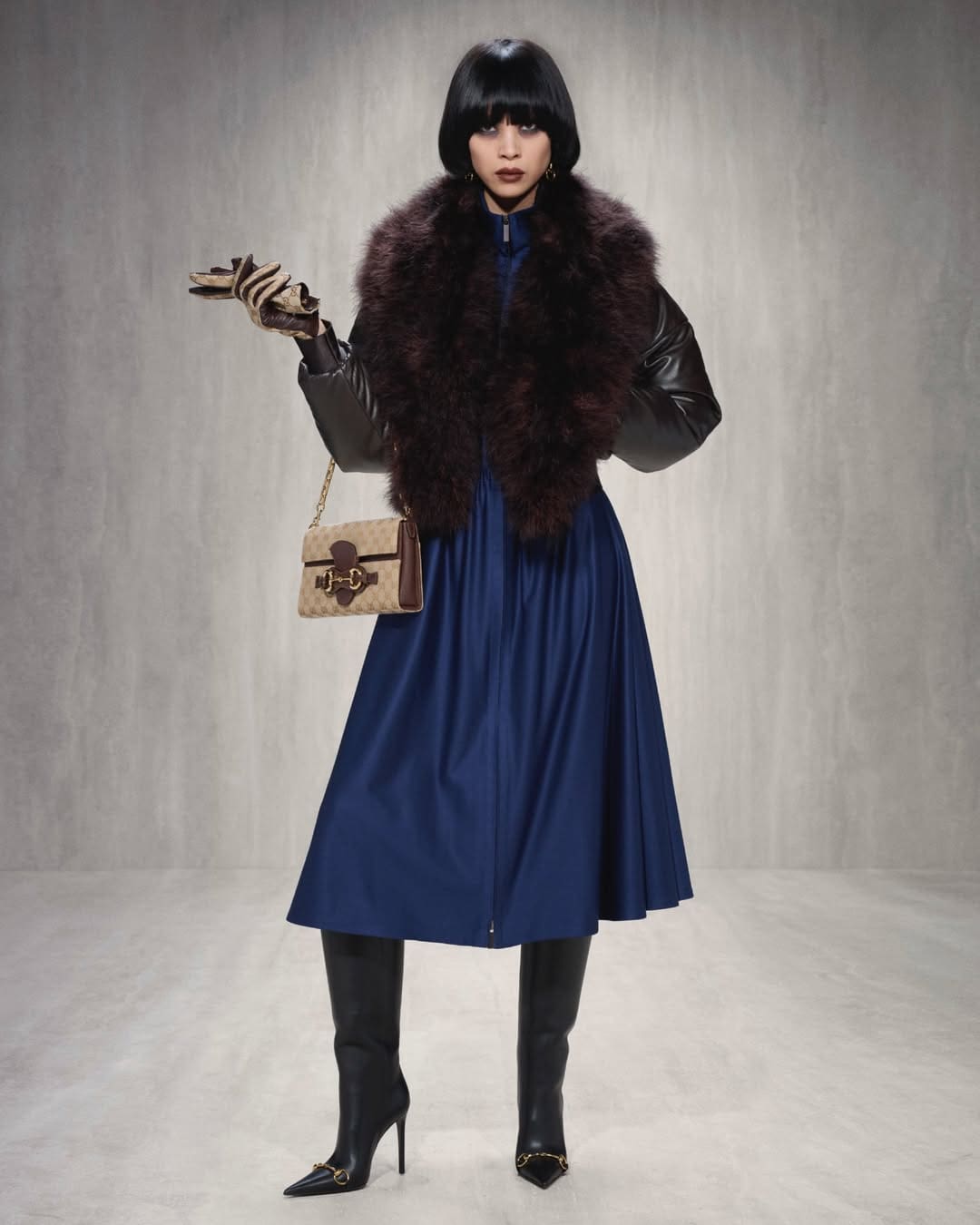
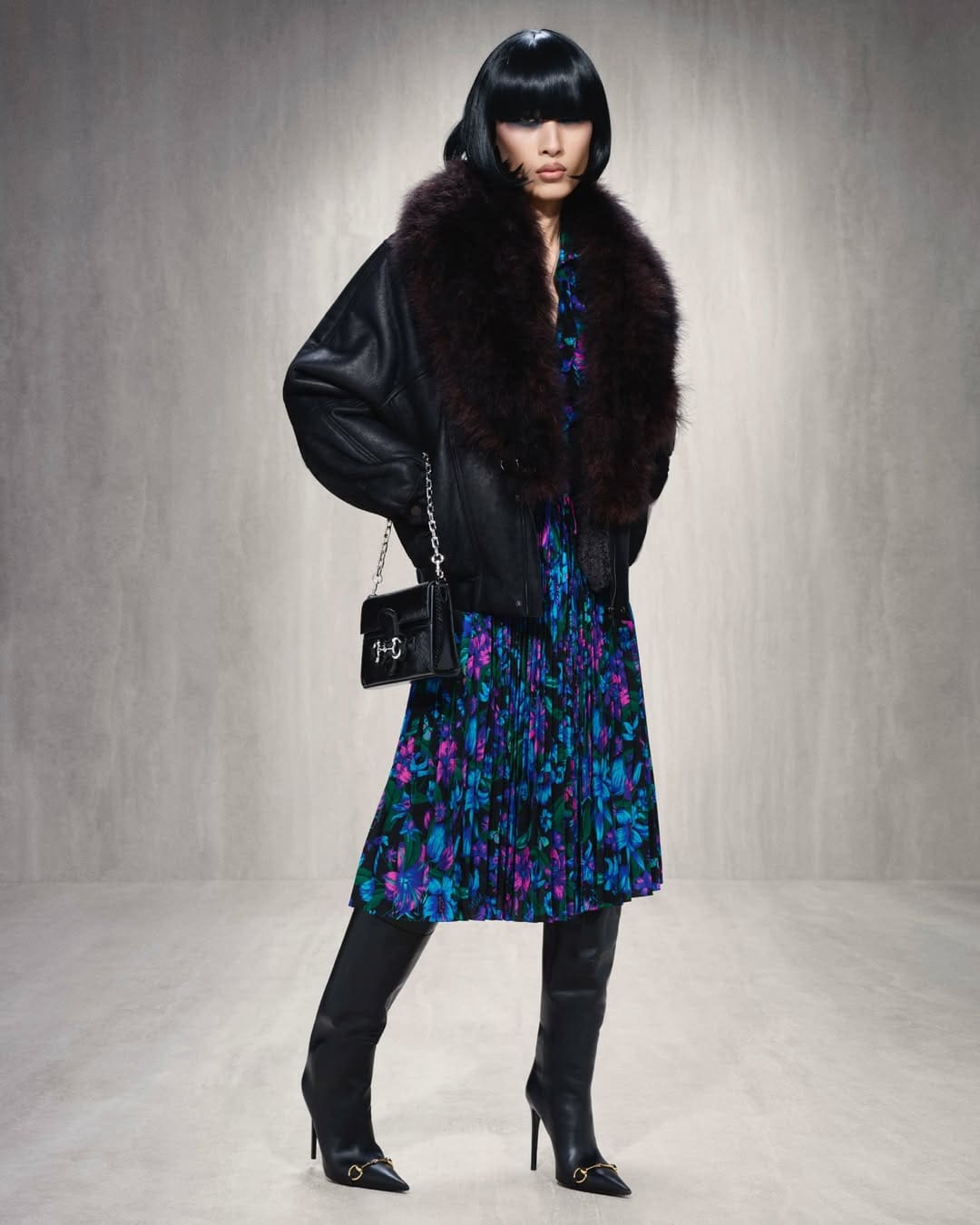
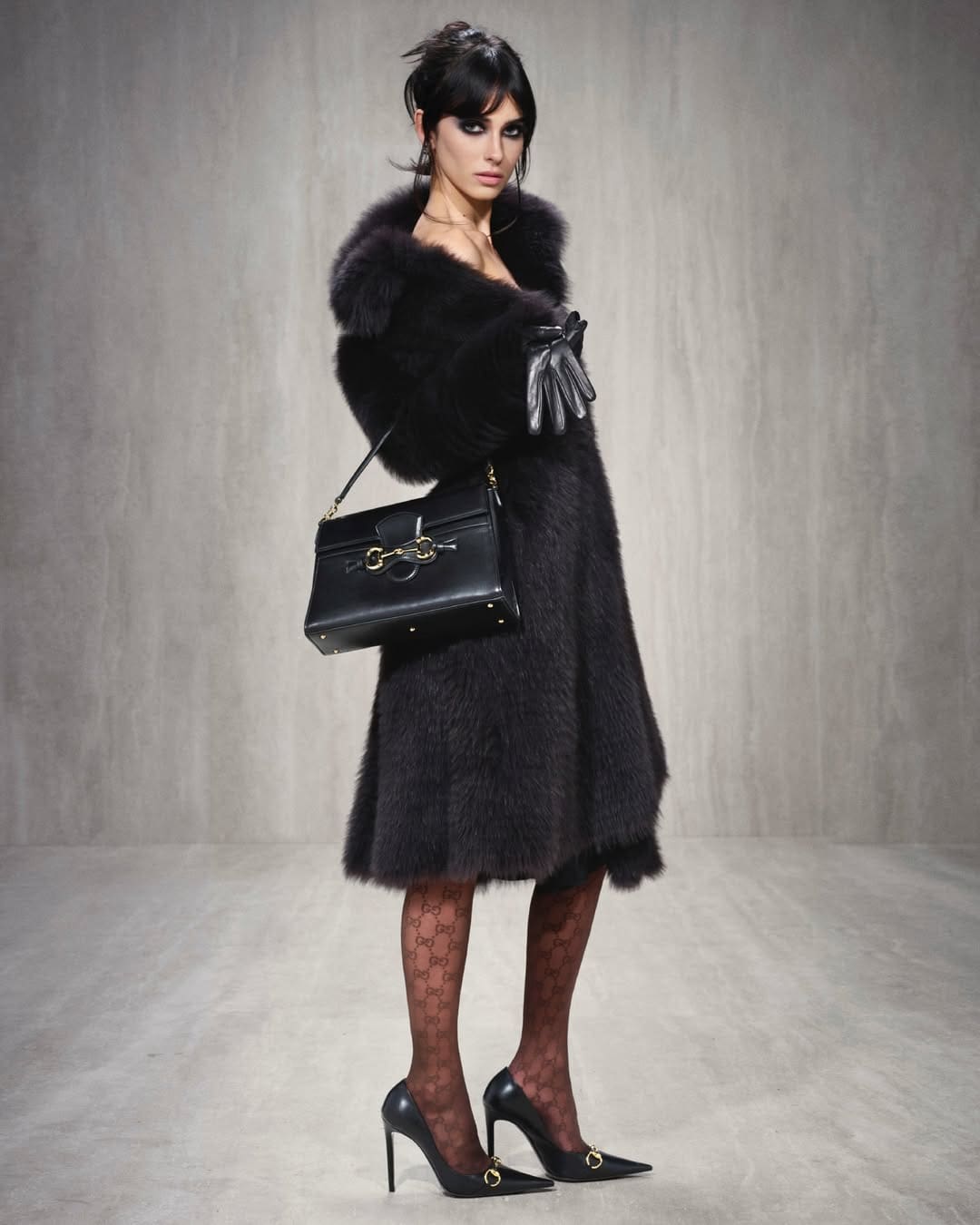
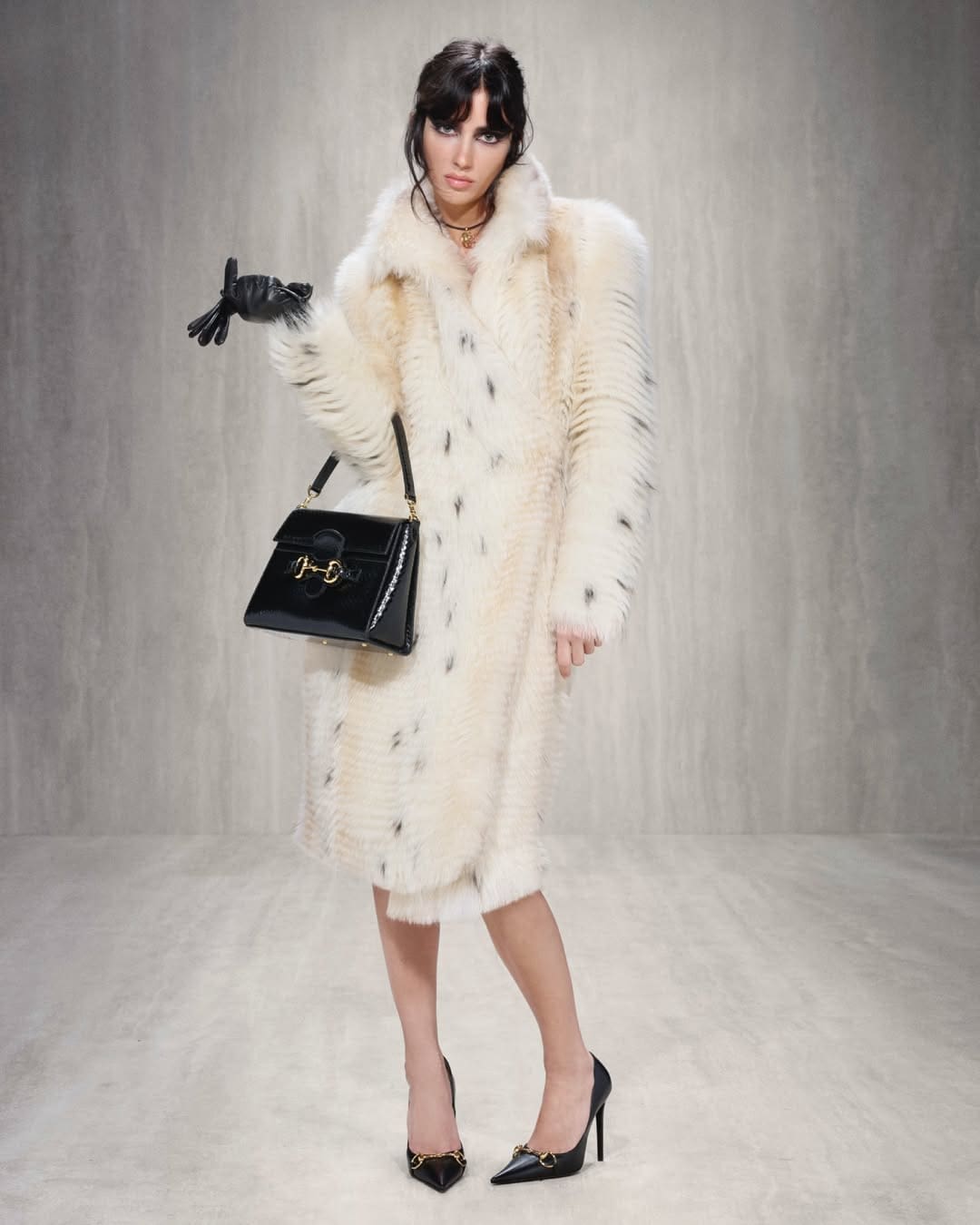
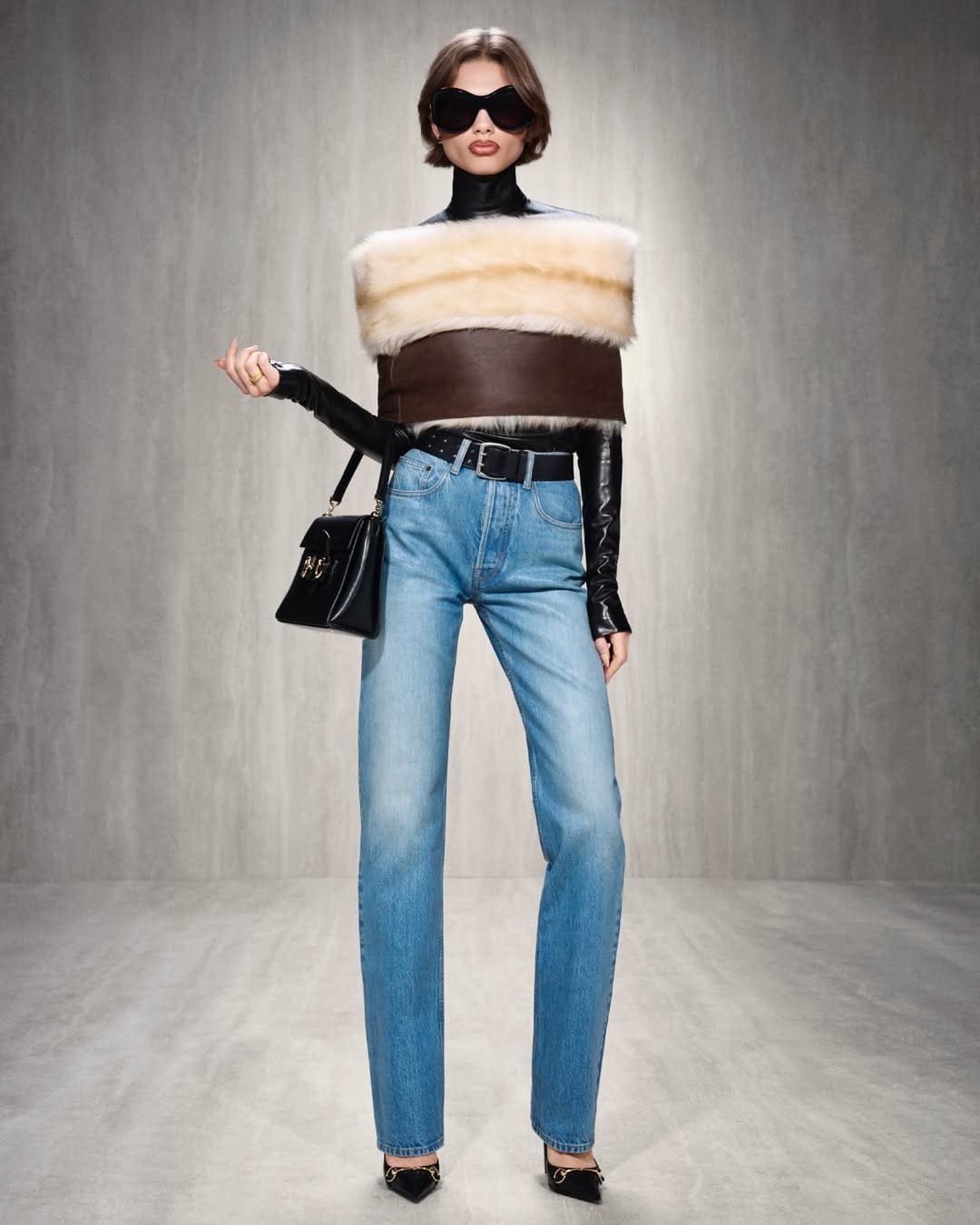
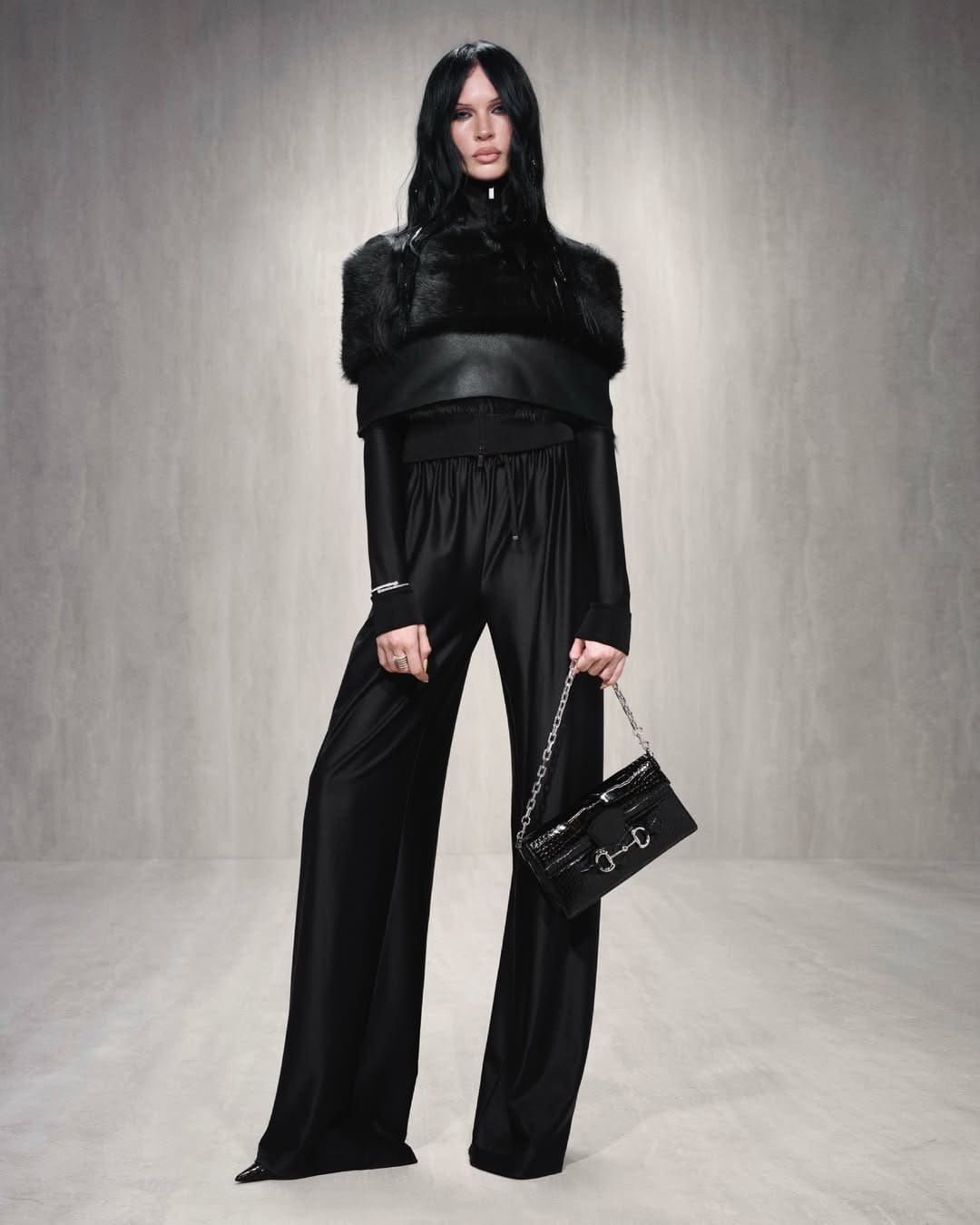
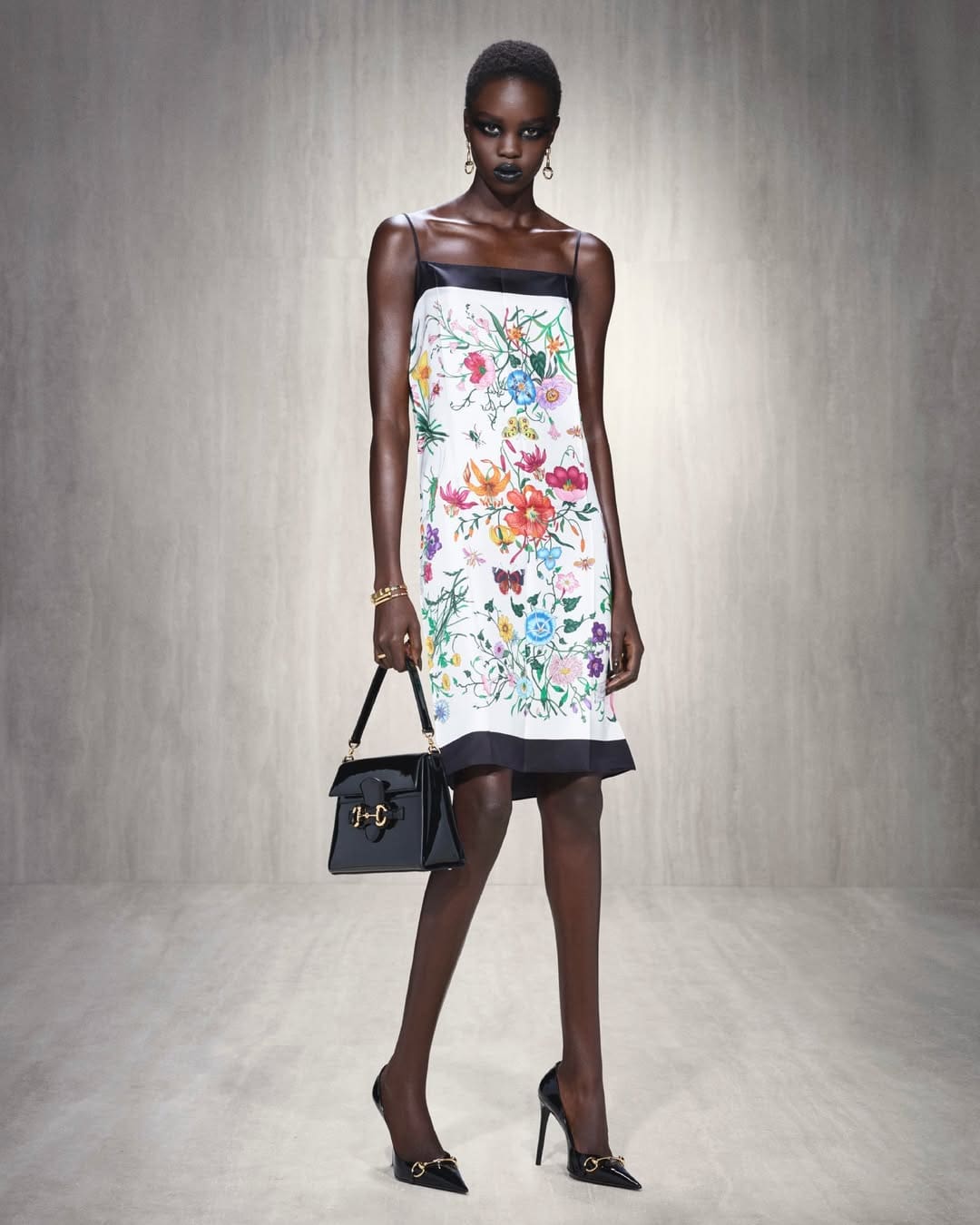
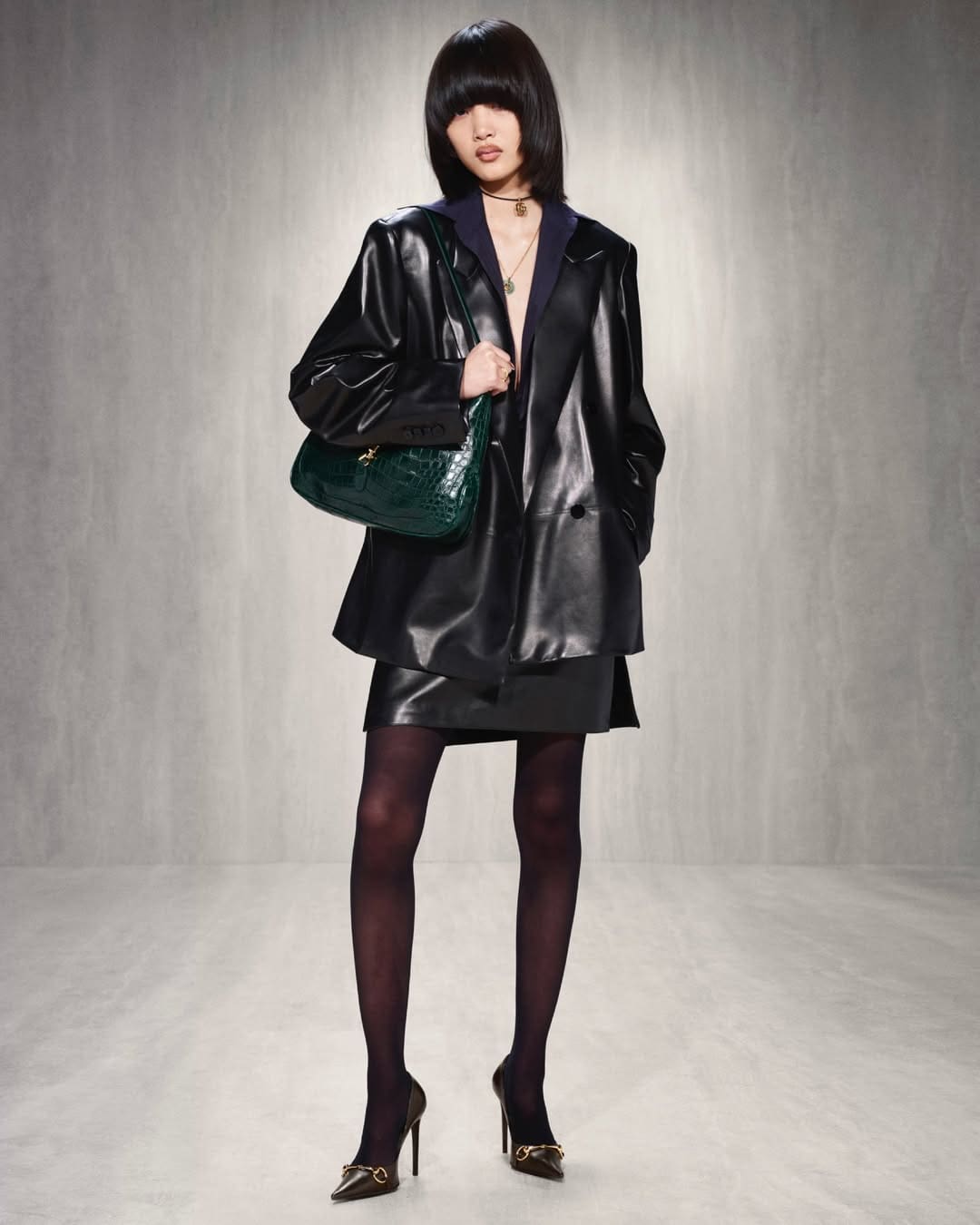
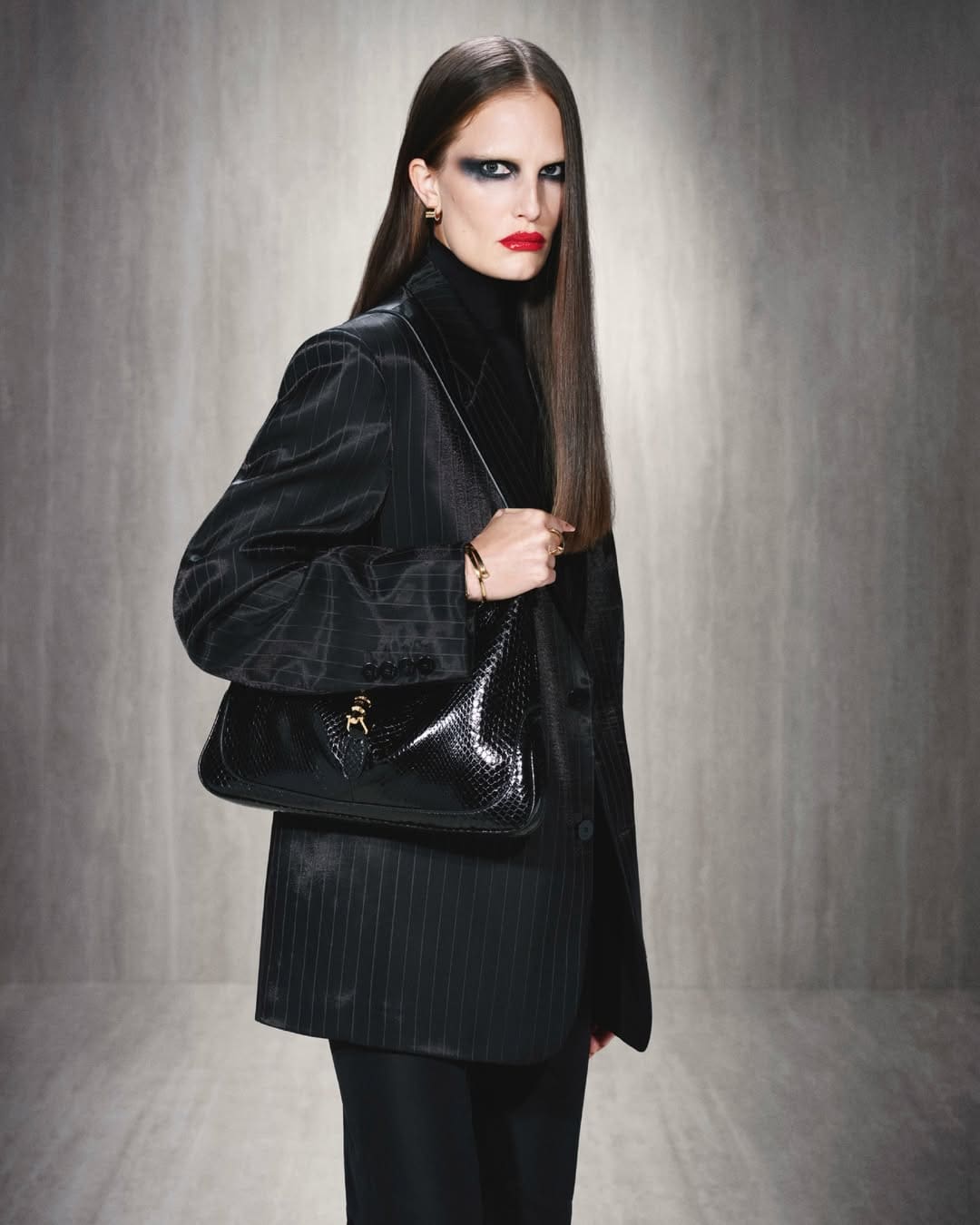
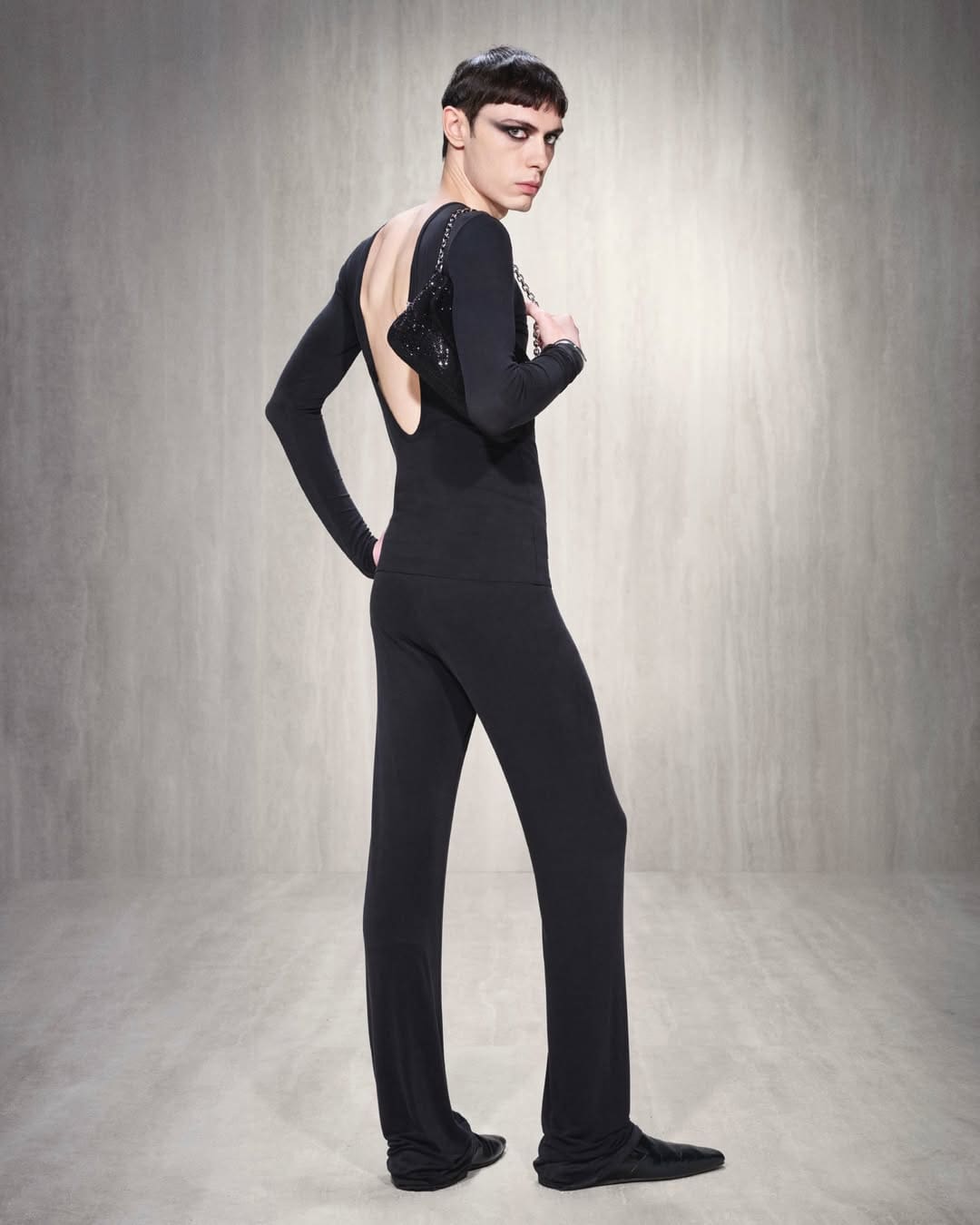
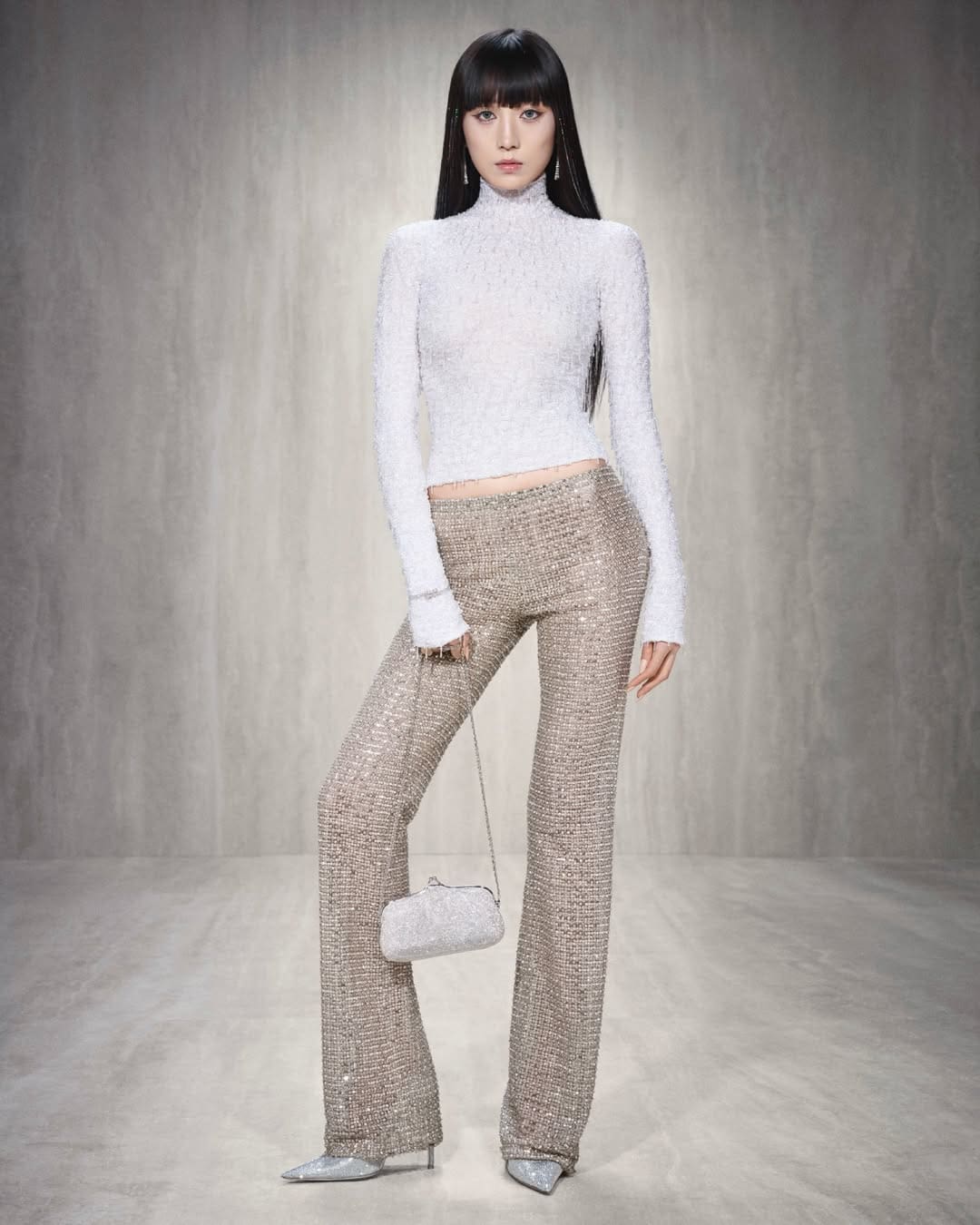
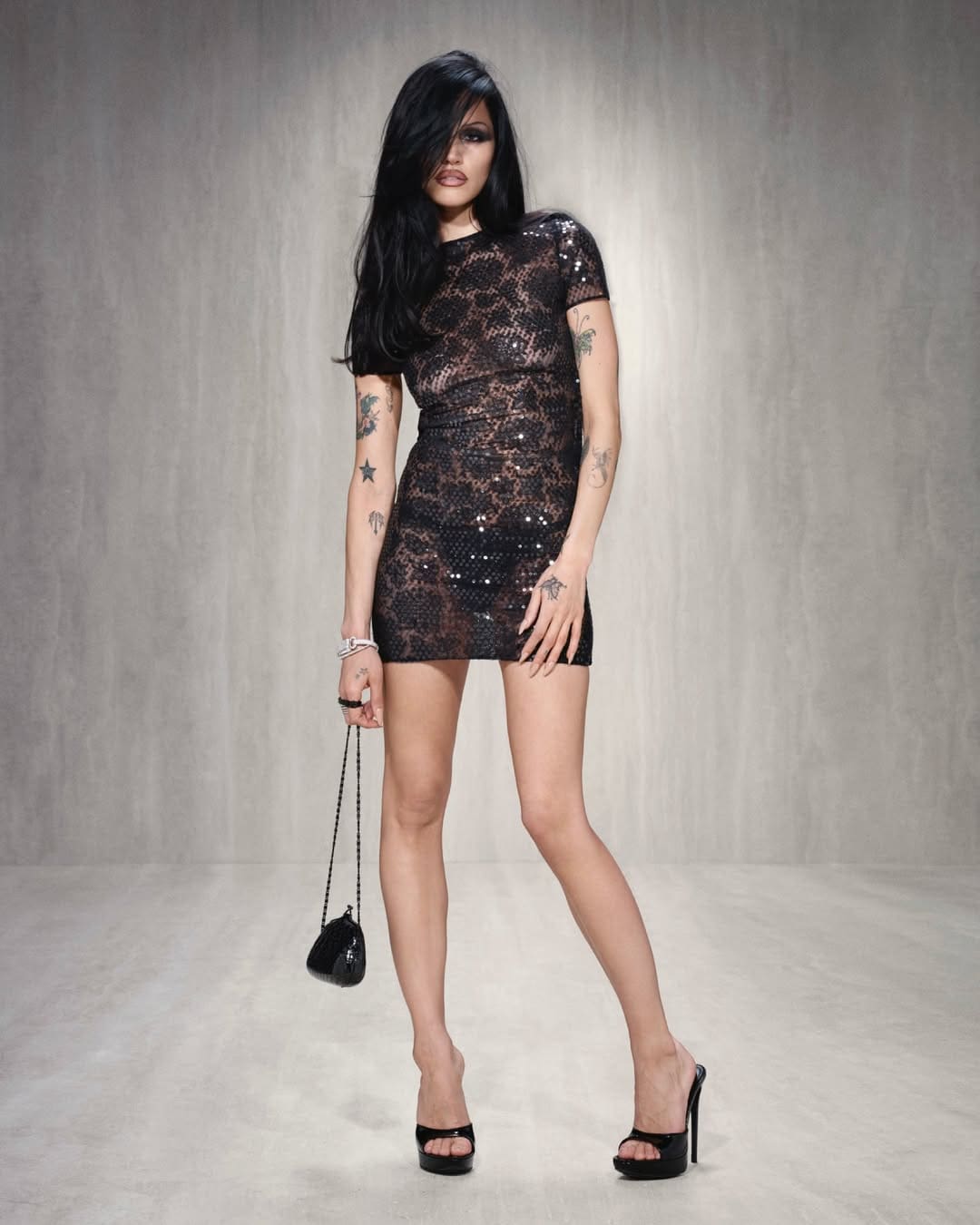
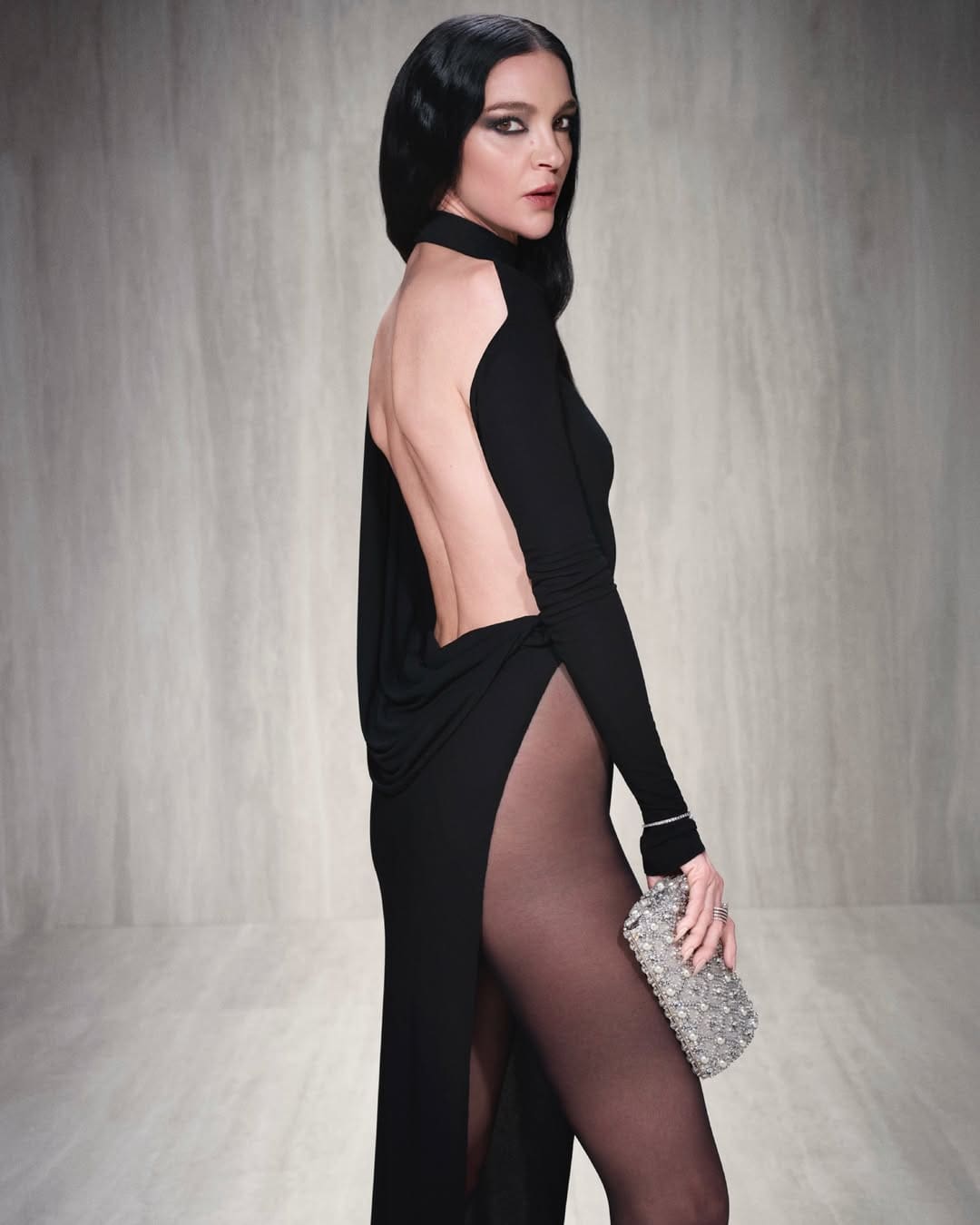
Women supposedly inspired by Renaissance purity arrive with graphite-smudged eyelids and dark, collapsed lips, recalling not the frescoes of the Uffizi but the back entrances of forgotten nightclubs at dawn. Even the sharp black bob and turtleneck silhouette—an echo of Hitchockian precision—cannot survive the makeup, which drags it from Florence straight into the shadowy corridors of 1980s decadence.
If this is Primavera, it is a springtime that smells strongly of regret.
III. THE ‘GUCCIFICATION’ OF THE 70s–90s: WHEN CINEMA ELEGANCE BECOMES SEX-SHOP REPLICA
Demna claims he studied Gucci’s archives; one wonders whether the archives he visited were located behind a neon-lit boutique selling “costumes” for themed bachelor parties.
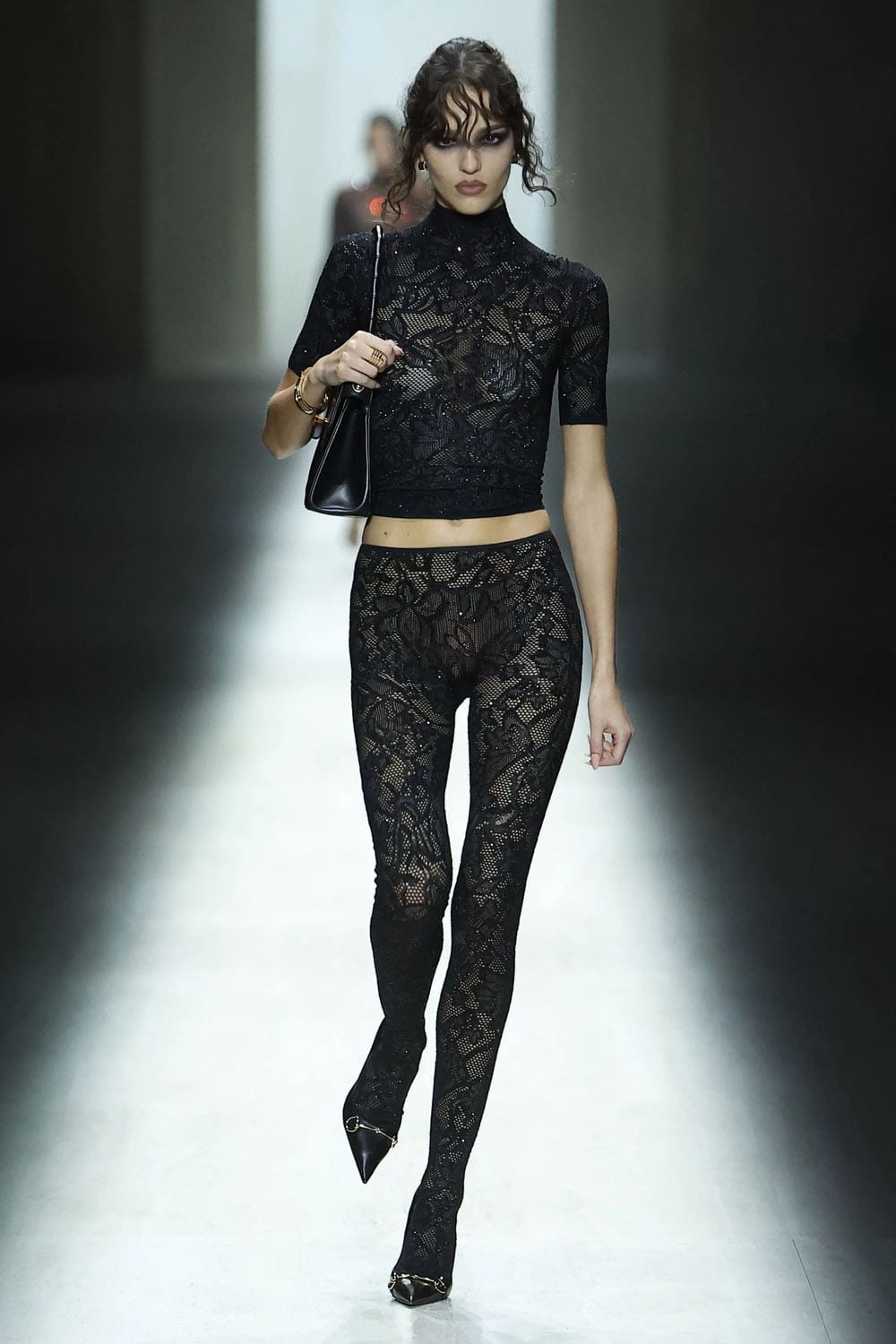
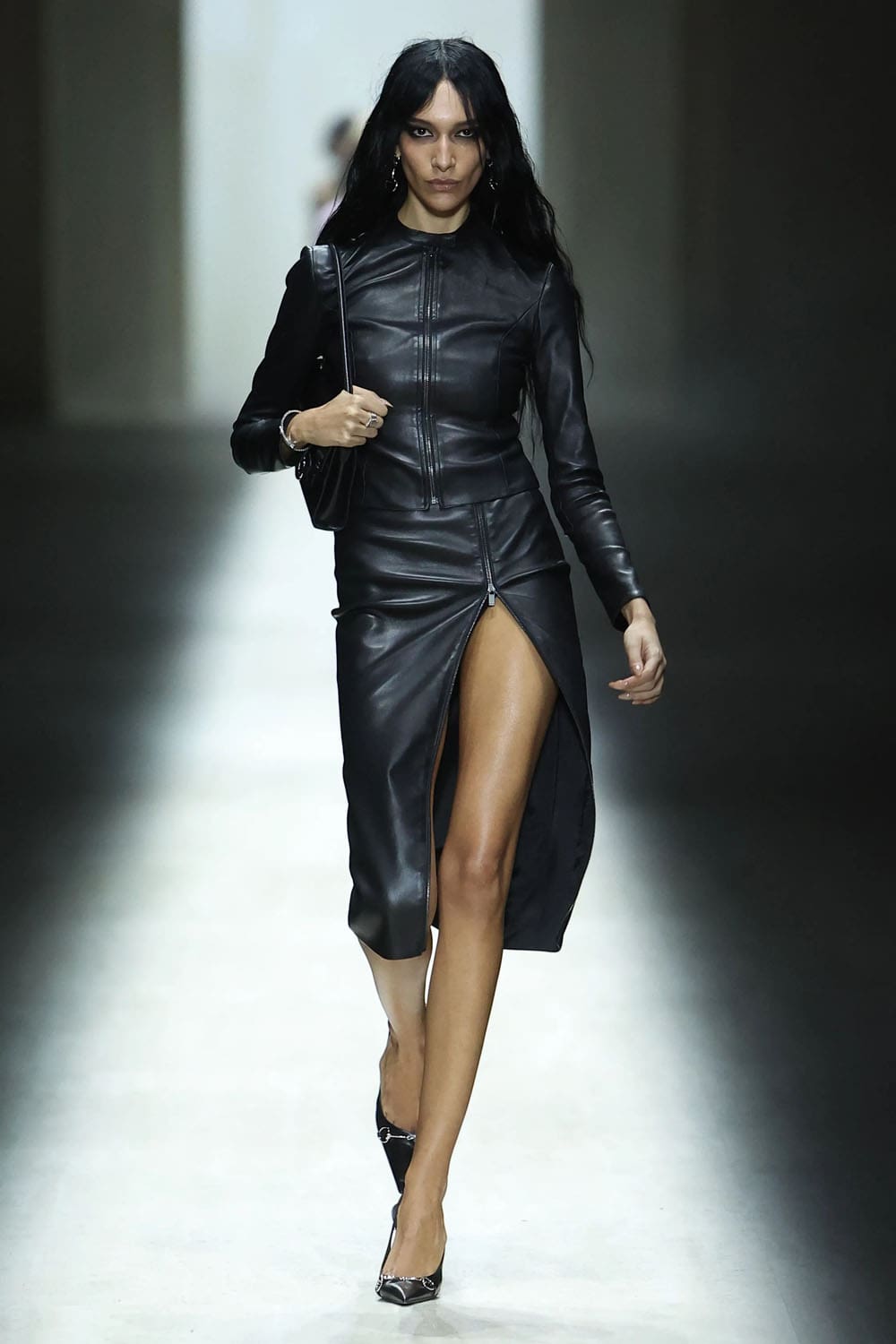
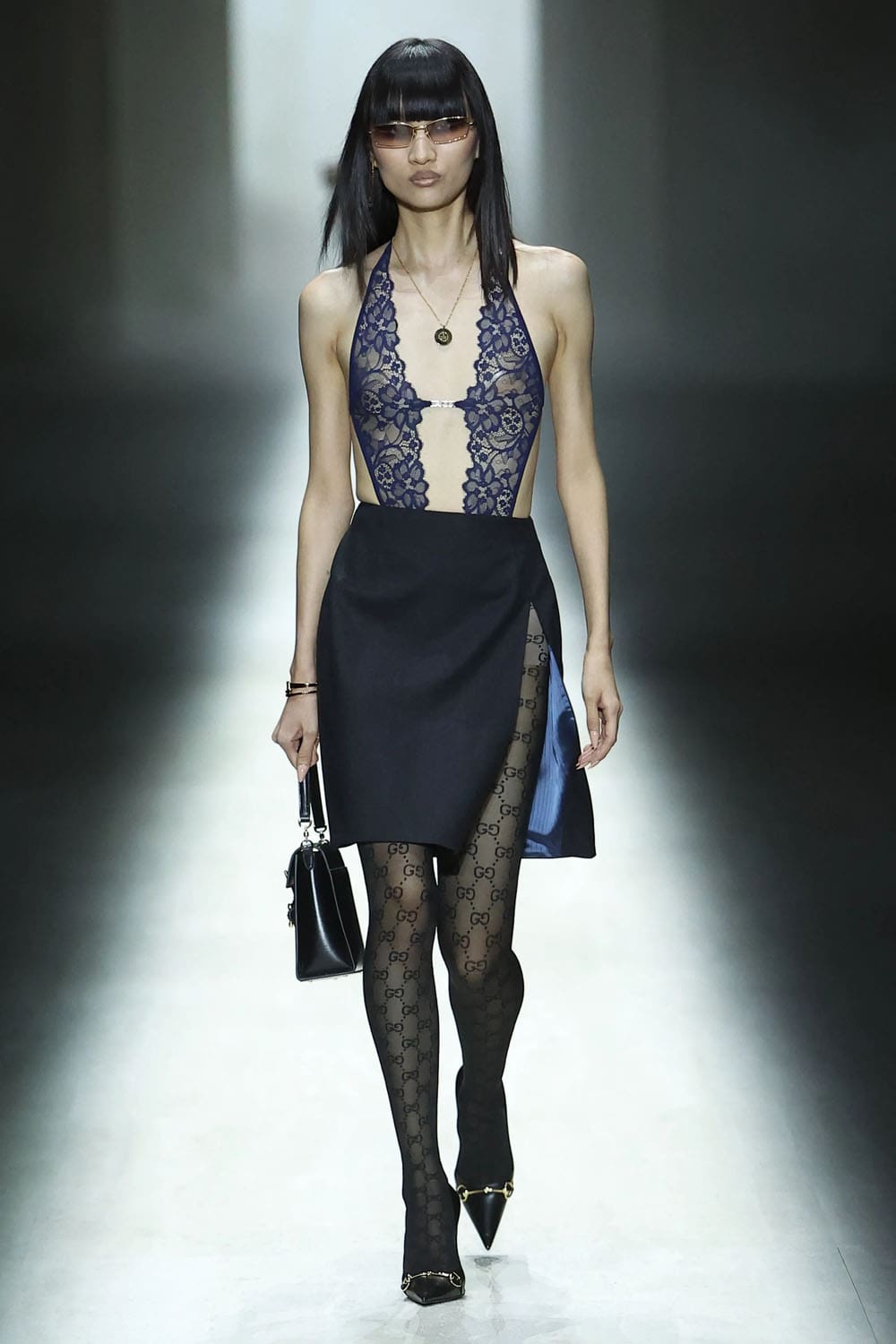
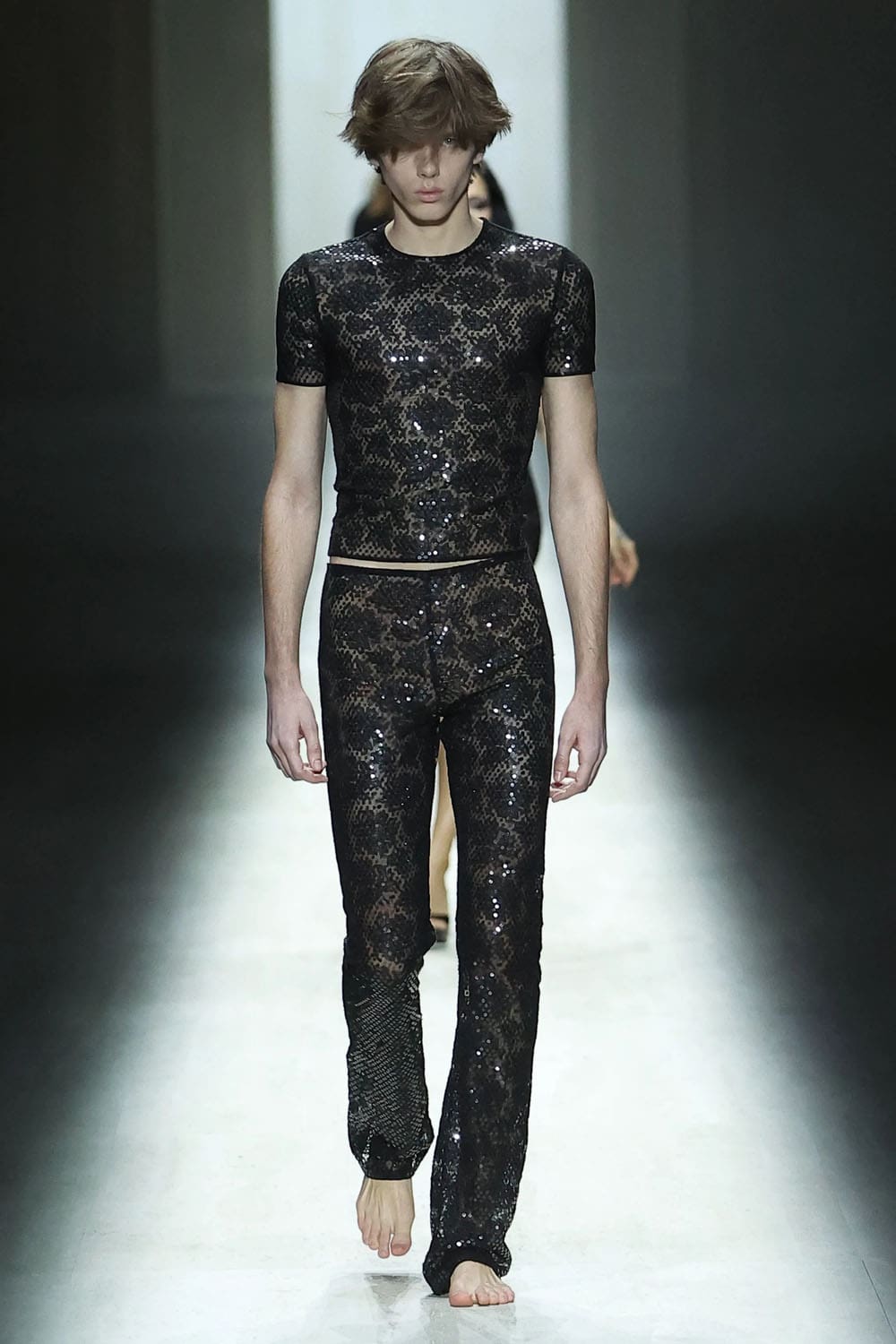
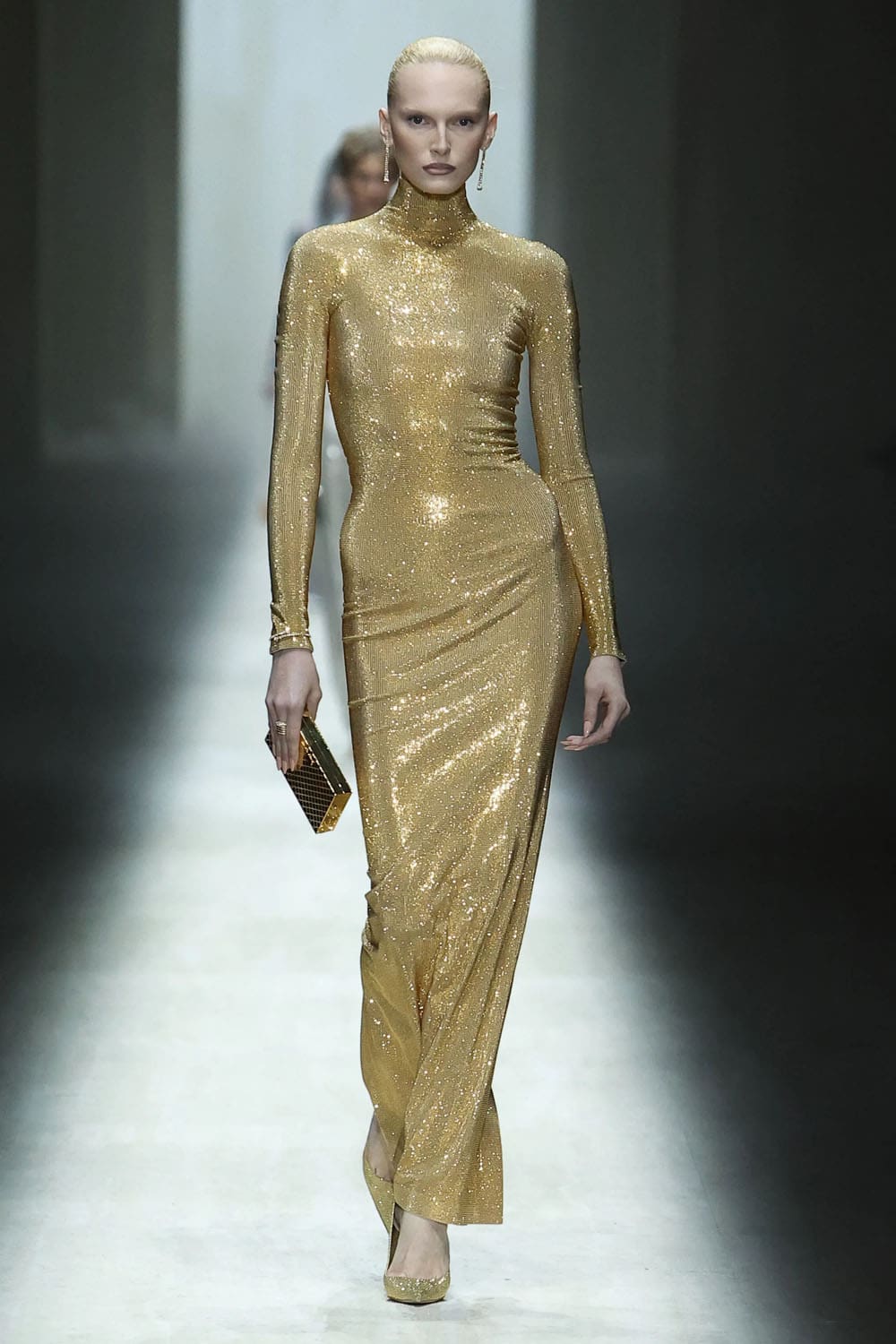
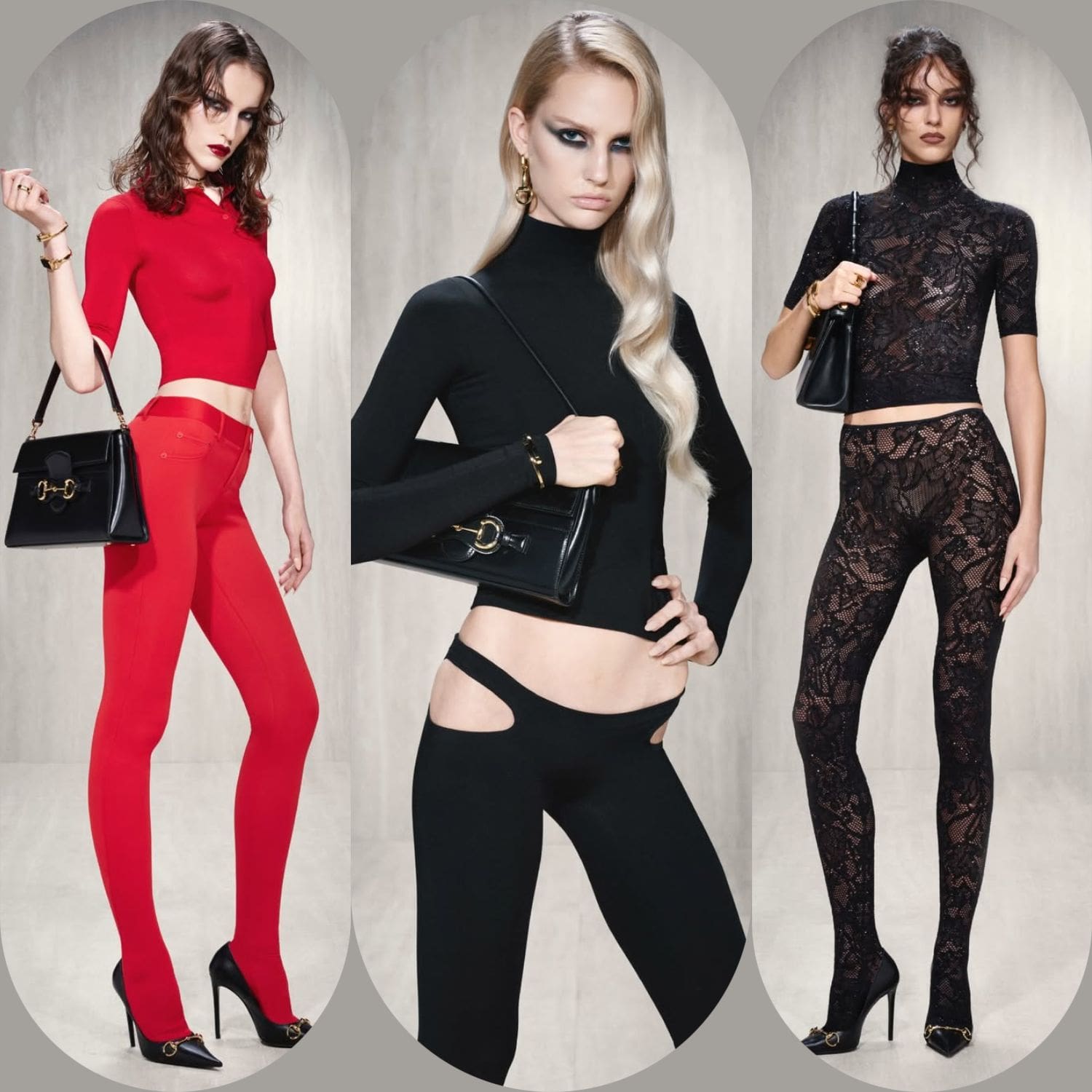
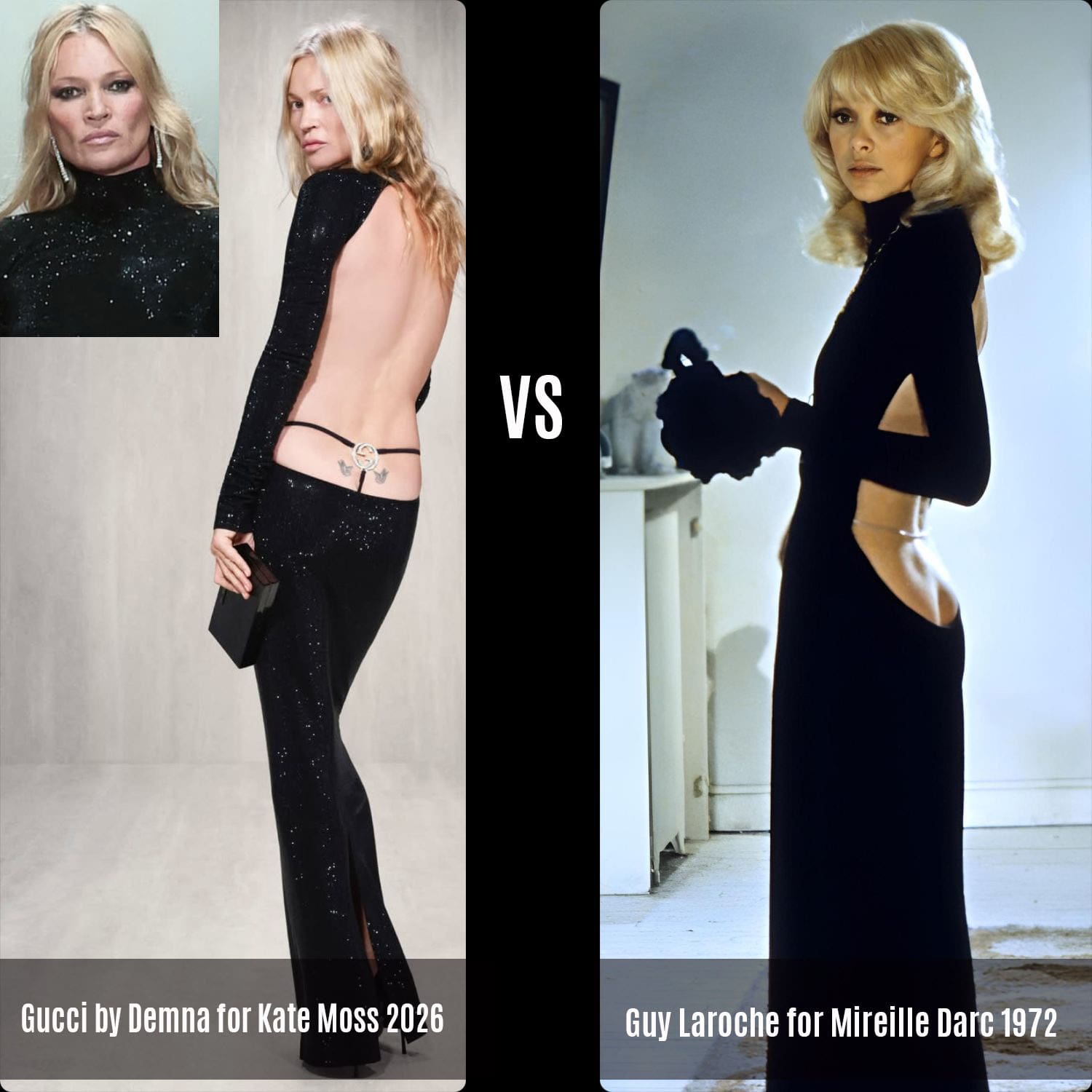
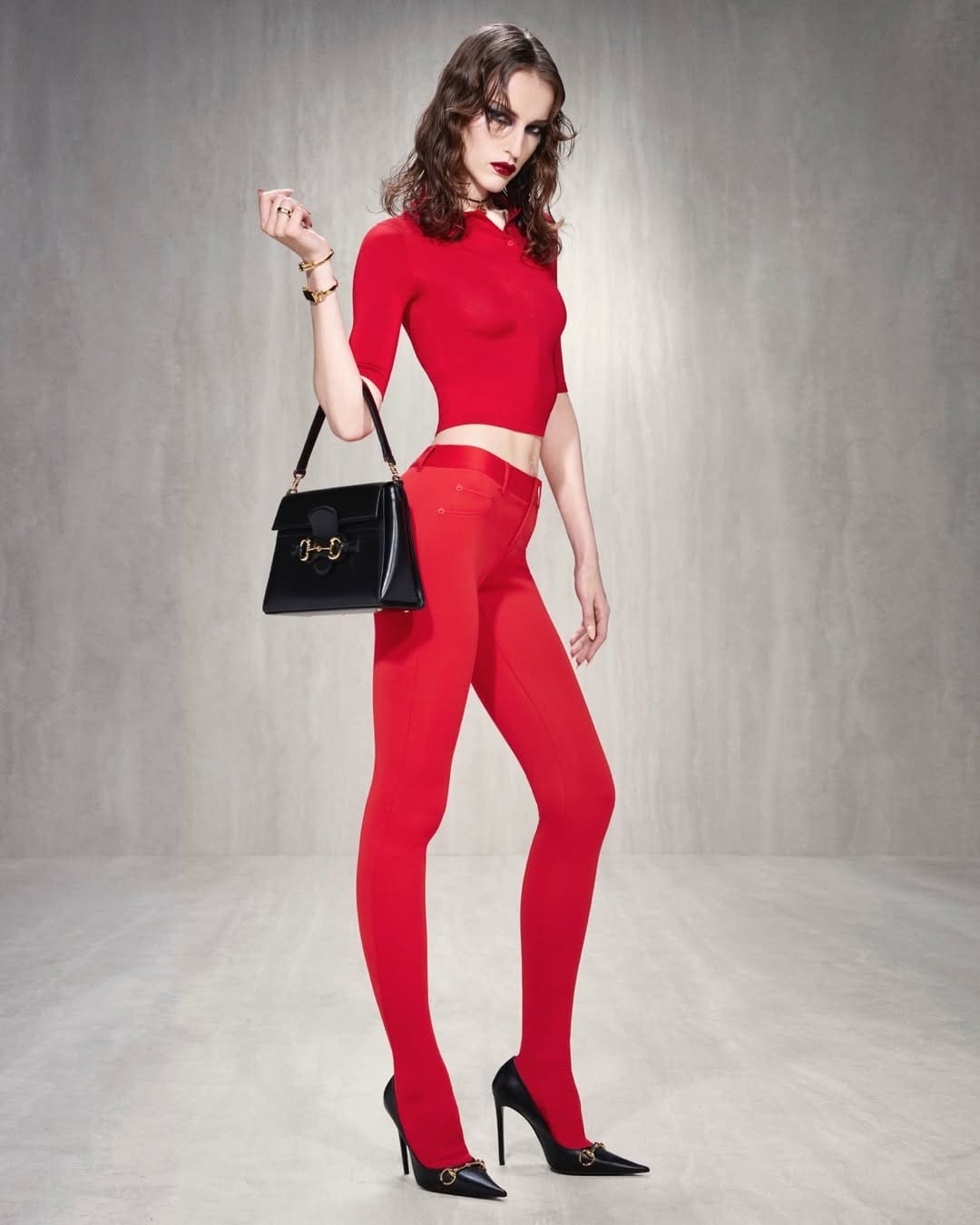
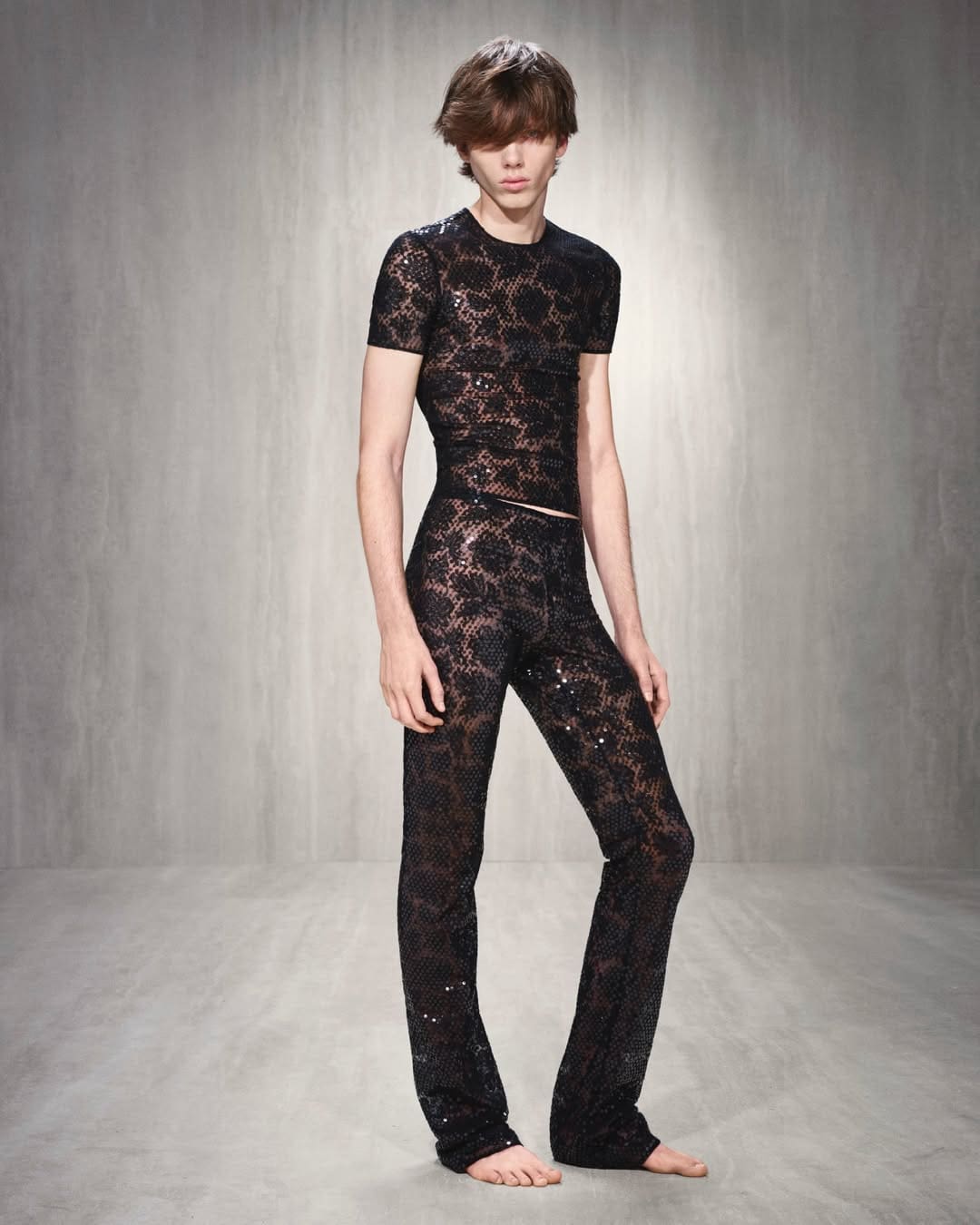
Because what was once iconic cinematic sensuality—the Mireille Darc gravity-defying backless line, the refined eroticism of 1970s and 1980s screen sirens—is resurrected here as tight lace bodystockings, synthetic red second-skin leggings, satin zip-ups with casino-lounge sheen, and hip-cut trousers that whisper early-2000s club bathroom lighting.
The women of 70s and 80s cinema moved with elegance.
These silhouettes move with the unmistakable cling of fabric that should not be worn near open flames.
Every reference collapses into imitation: homage without craftsmanship, nostalgia without discretion, sensuality without dignity. The intention is cinematic. The execution is sex-shop matinee.
IV. THE MAKE-UP: DIRTY REALISM MEETS DEPARTMENT-STORE TESTER BIN
Rarely has makeup functioned as such a spectacular act of self-sabotage.
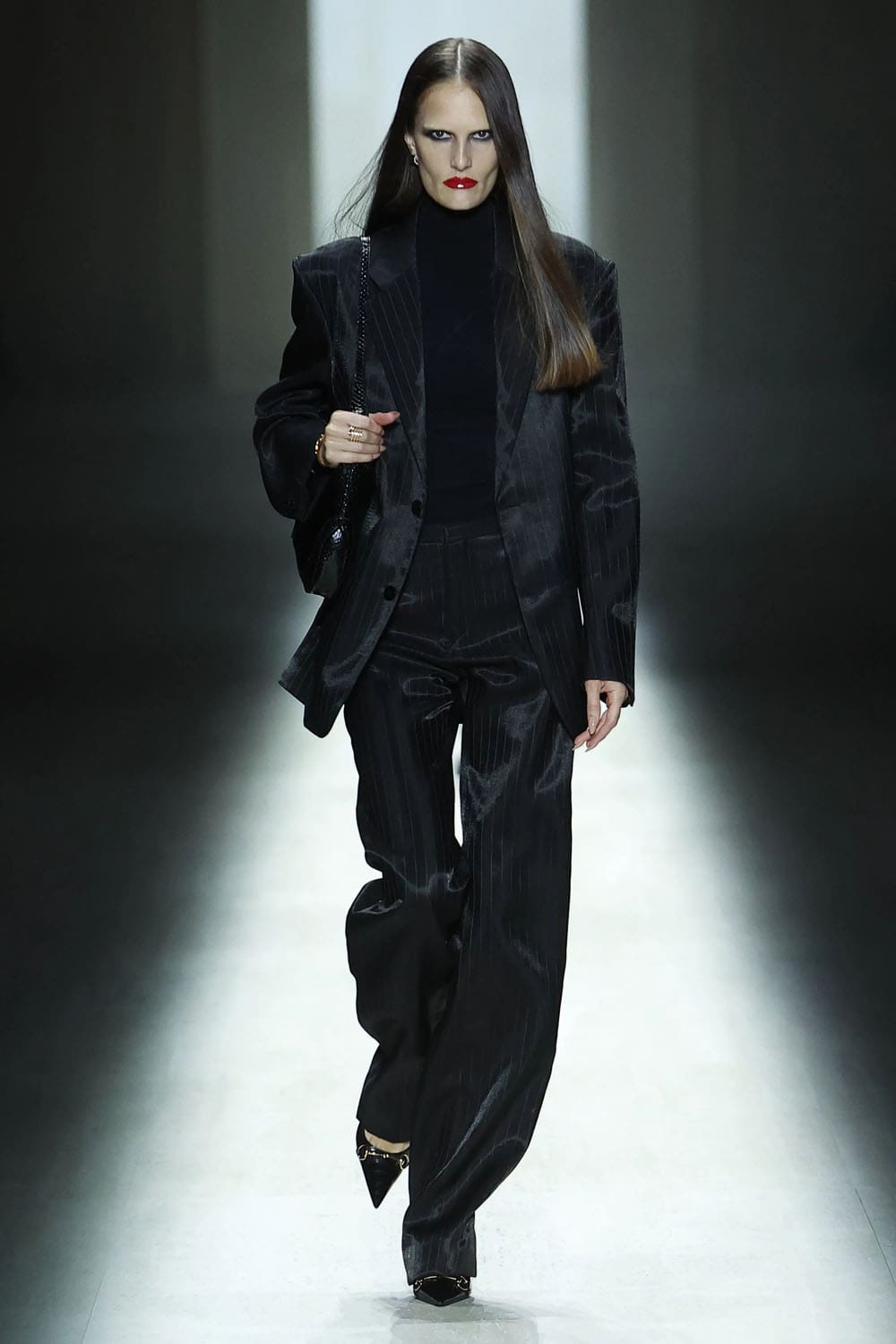
Instead of illuminating bone structure, it erases it. Instead of sculpting emotion, it flattens it. Instead of flirting with decadence, it commits to it with the enthusiasm of someone who believes eyeliner should be applied in darkness, during an earthquake.
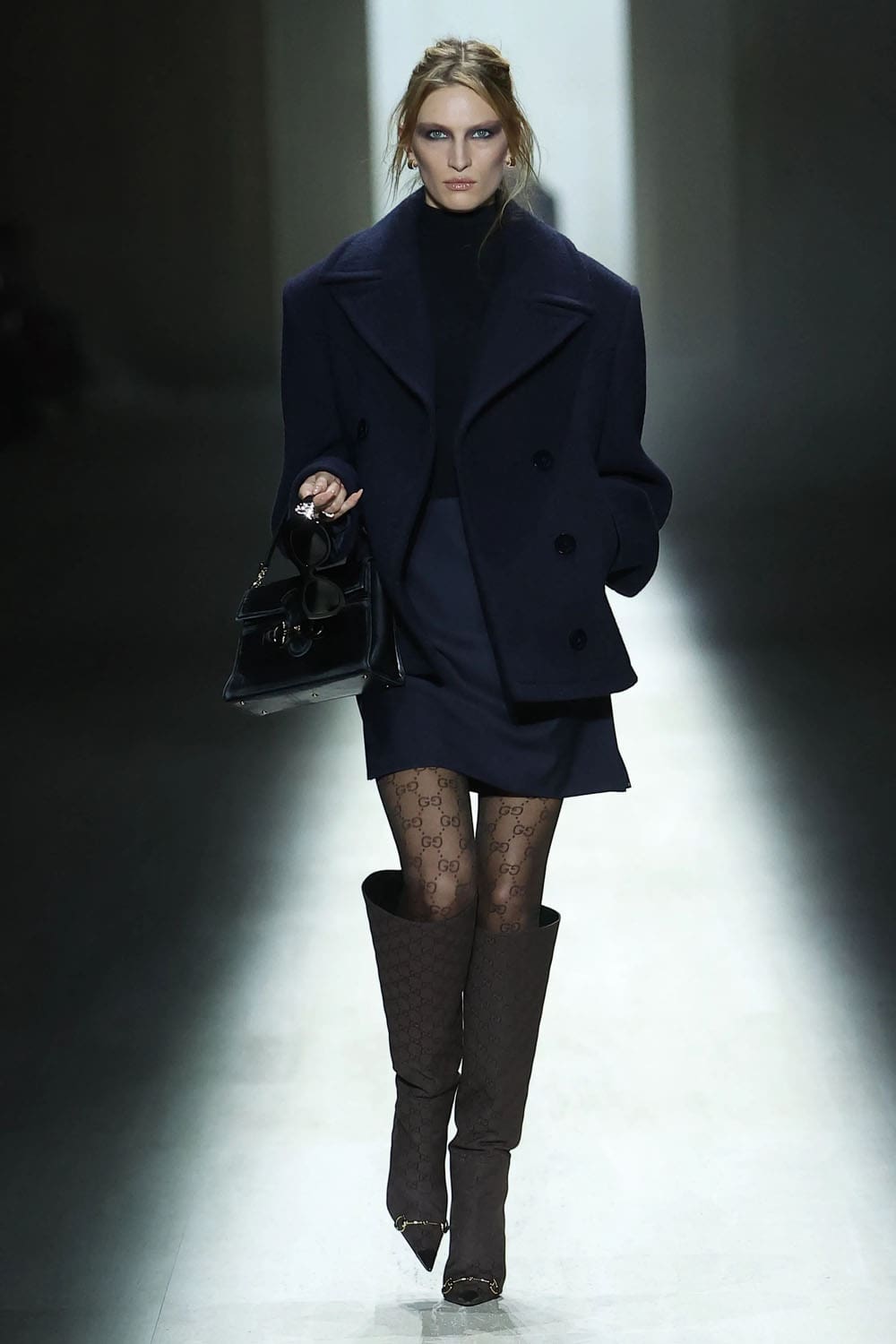
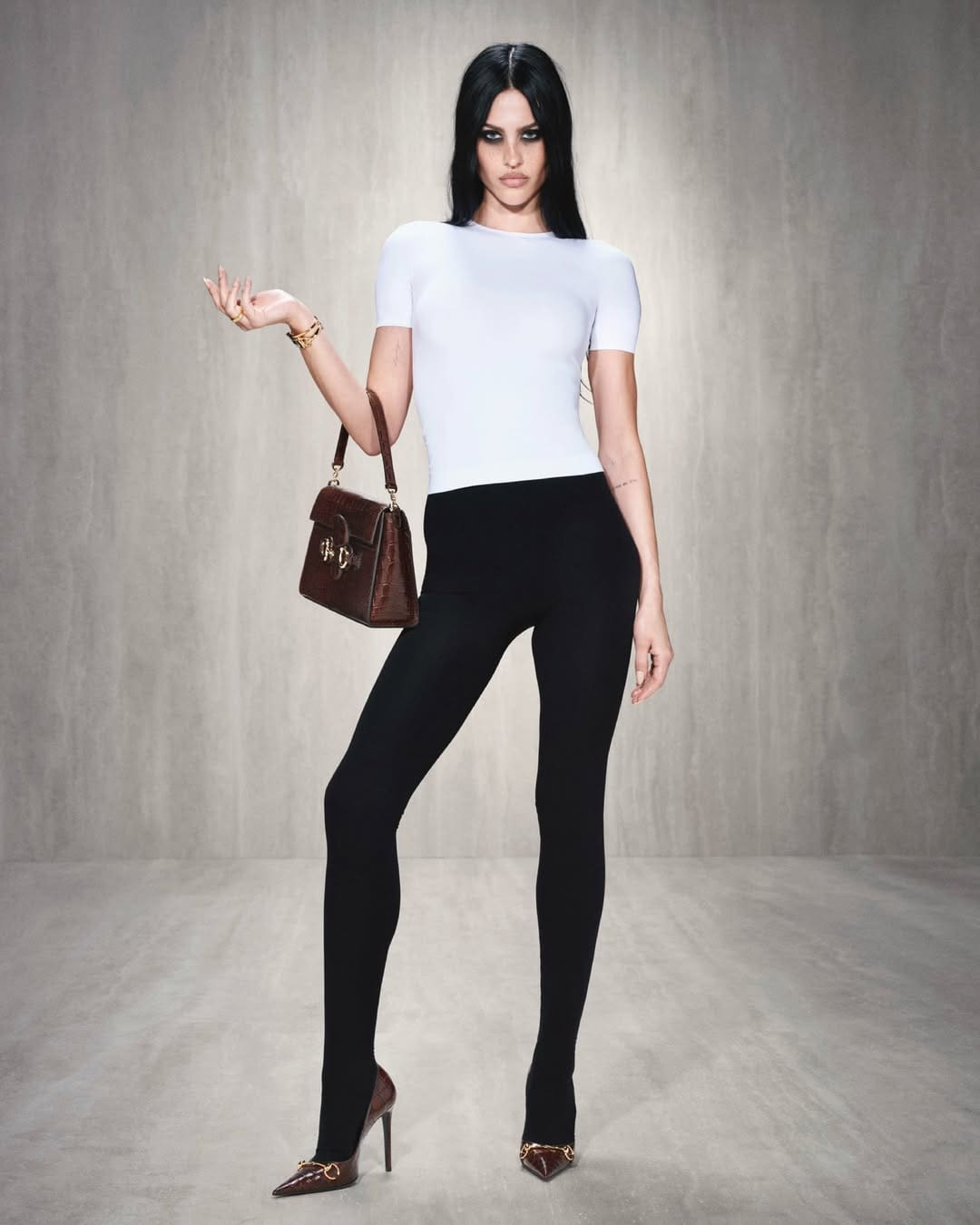
Eyes are ringed in charcoal so aggressively that every model appears exhausted by the very thought of being present. Lips alternate between bruised solemnity and lacquered severity.
It’s not beauty.
It’s a post-party autopsy.
V. THE KATE MOSS FINALE: A LESSON IN HOW NOT TO QUOTE CINEMA
There are fashion homages.
And then there are cultural misdemeanors.
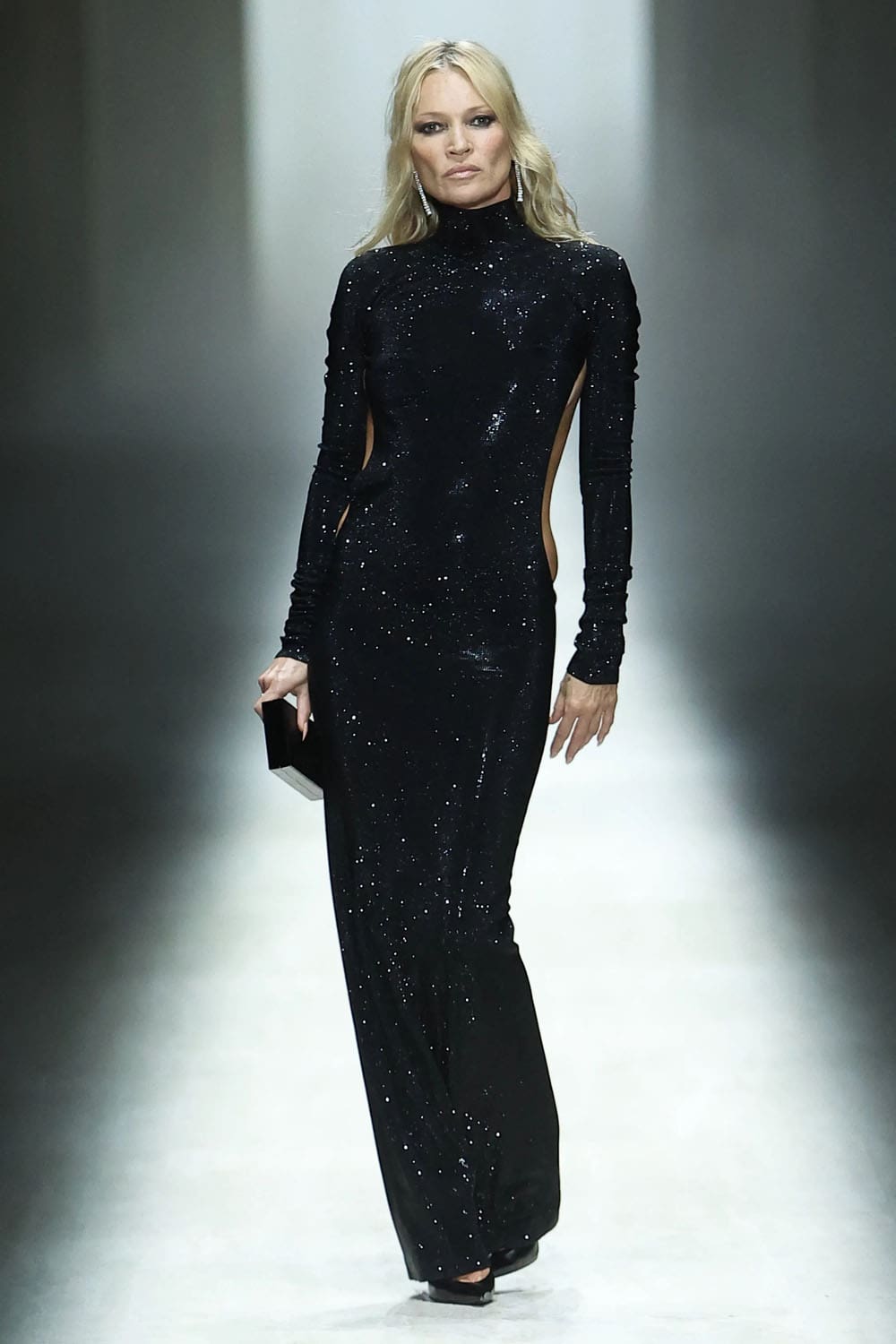
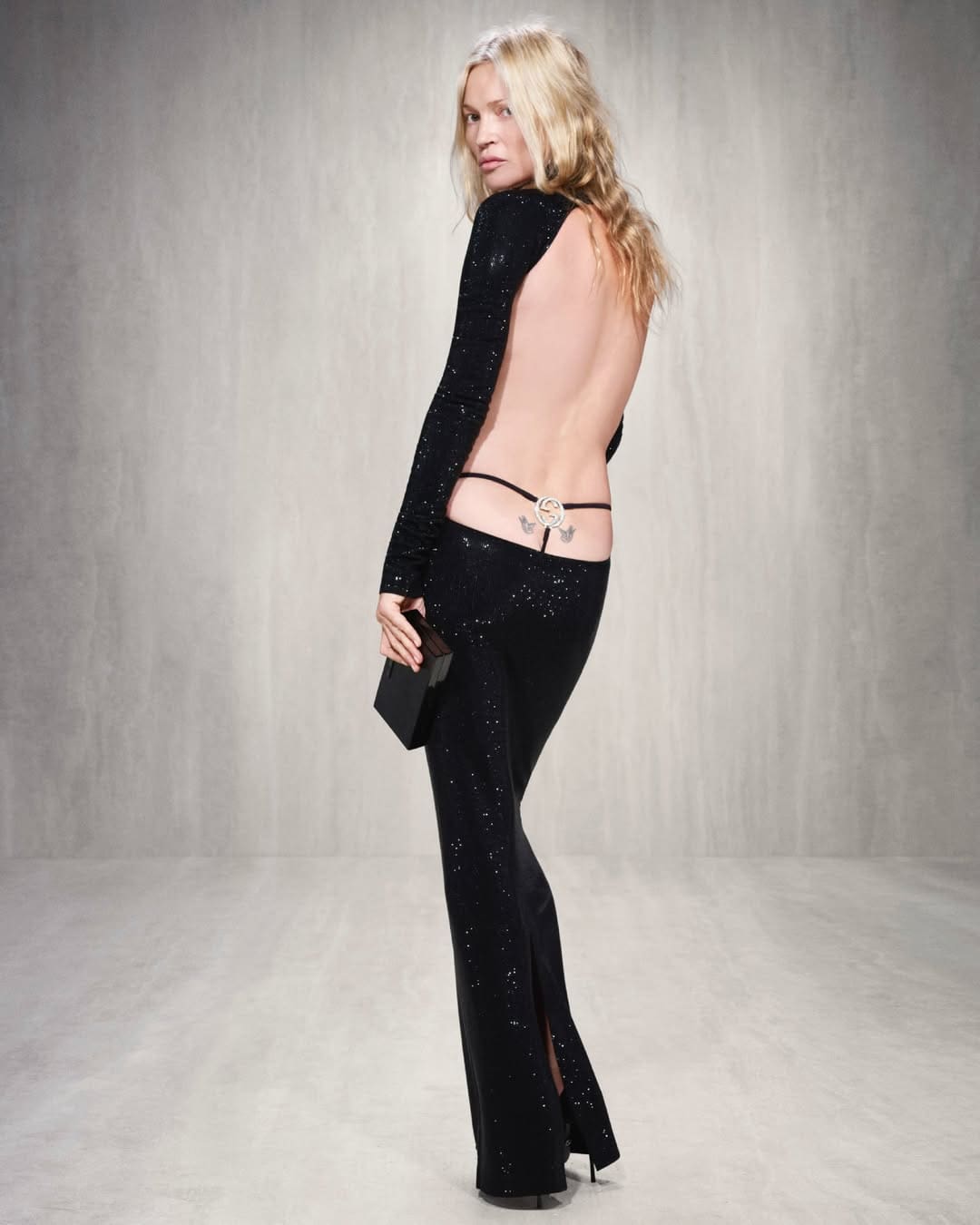
Demna’s attempt to recreate the legendary 1972 Guy Laroche moment—Mireille Darc’s backless black gown in Le Grand Blond avec une chaussure noire—belongs unmistakably to the latter category.
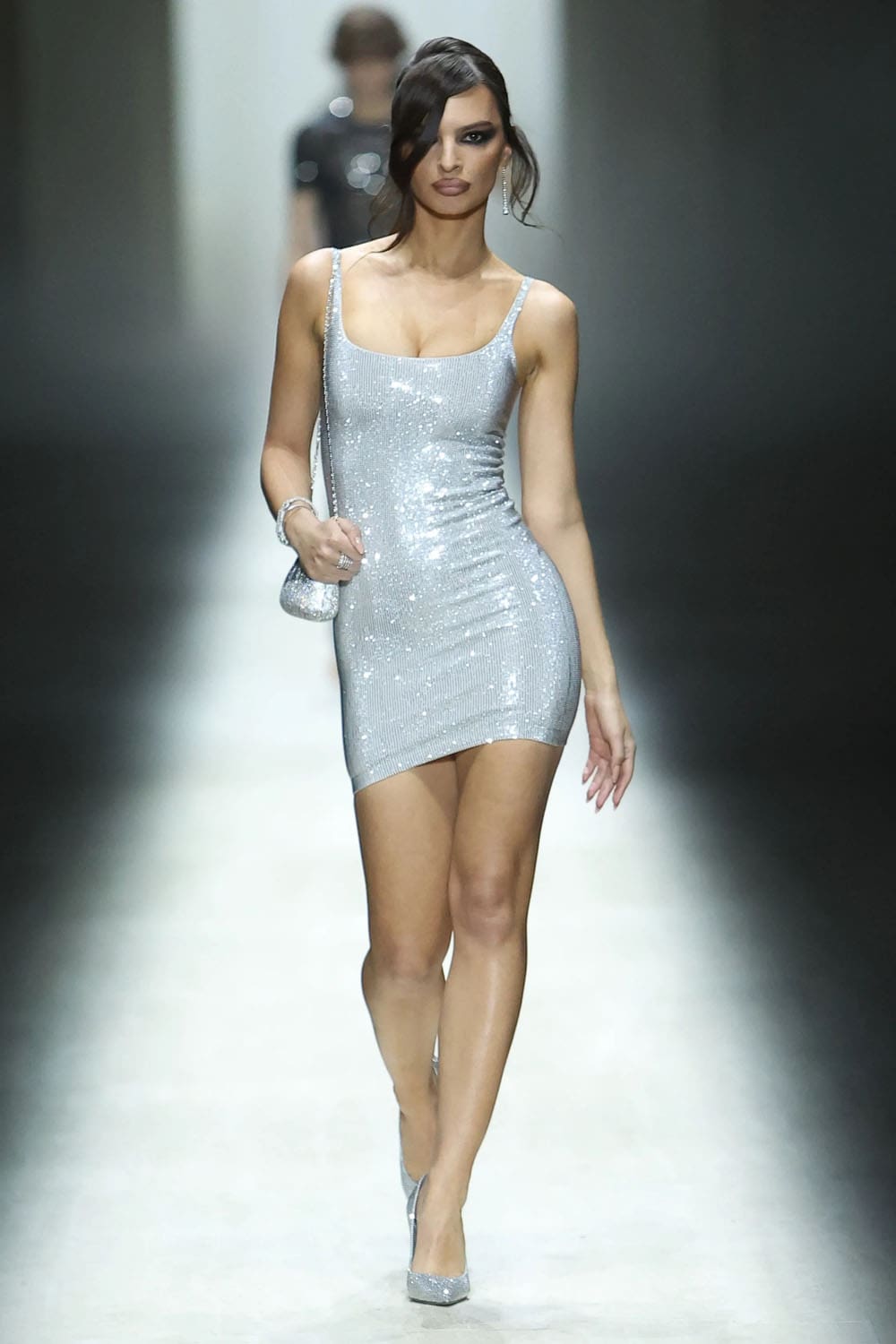
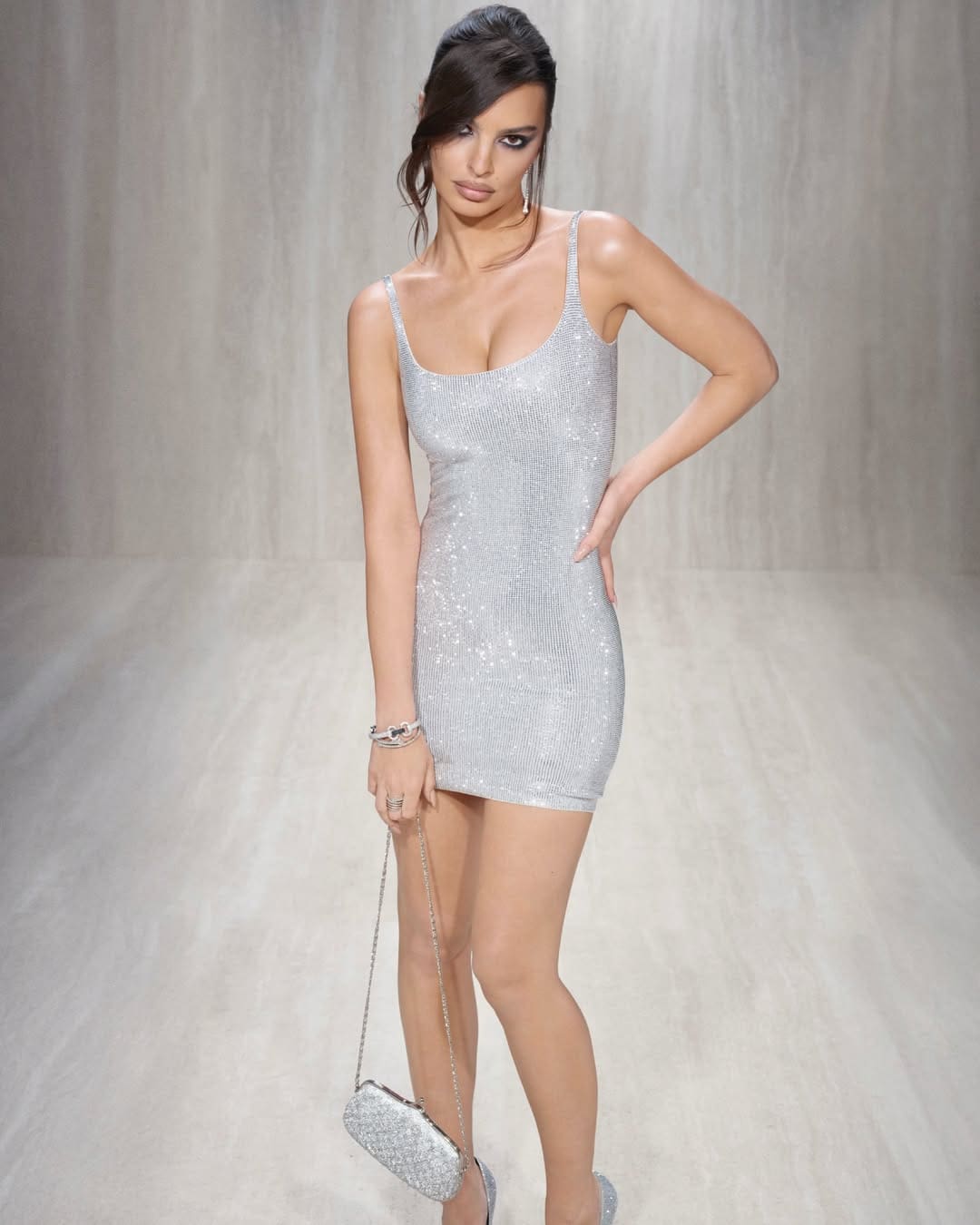
Where Darc floated like a whispered scandal, perfectly suspended between architecture and seduction, Demna sends out Kate Moss in a sparkling replica with an exposed G-string logo, the posture of a woman who has seen too many after-parties and none of the elegance that defined the original.
What was a masterpiece of subtlety becomes a costume.
A whisper becomes a shout.
Cinema becomes kitsch.
This was not a finale.
This was an obituary for refinement.
VI. PIGALLE ANTHROPOLOGY: THE COLLECTION AS ETHNOGRAPHIC COMEDY
Beyond Renaissance quotes and cinematic misfires lies the show’s true habitat: Pigalle at 4 a.m.
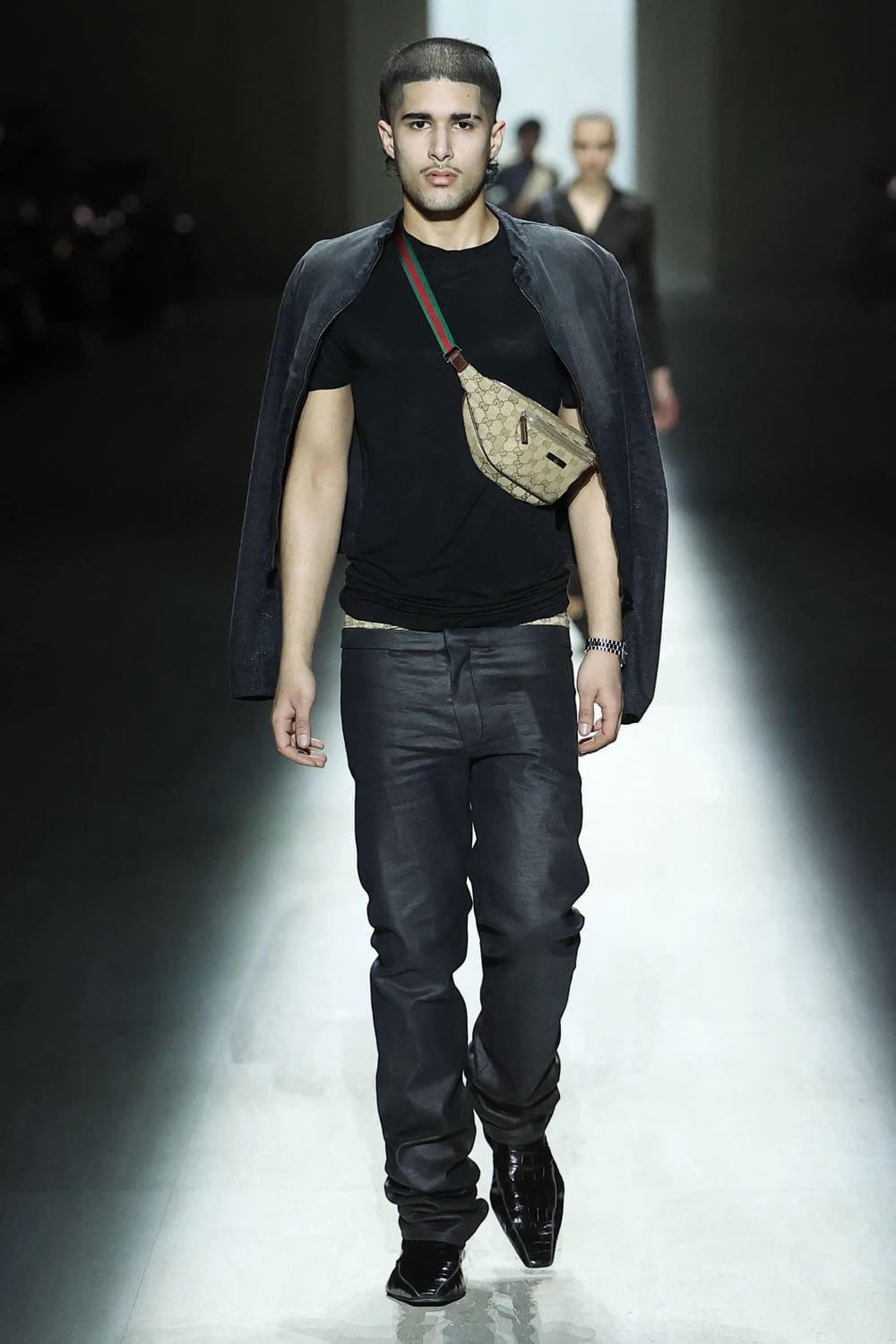
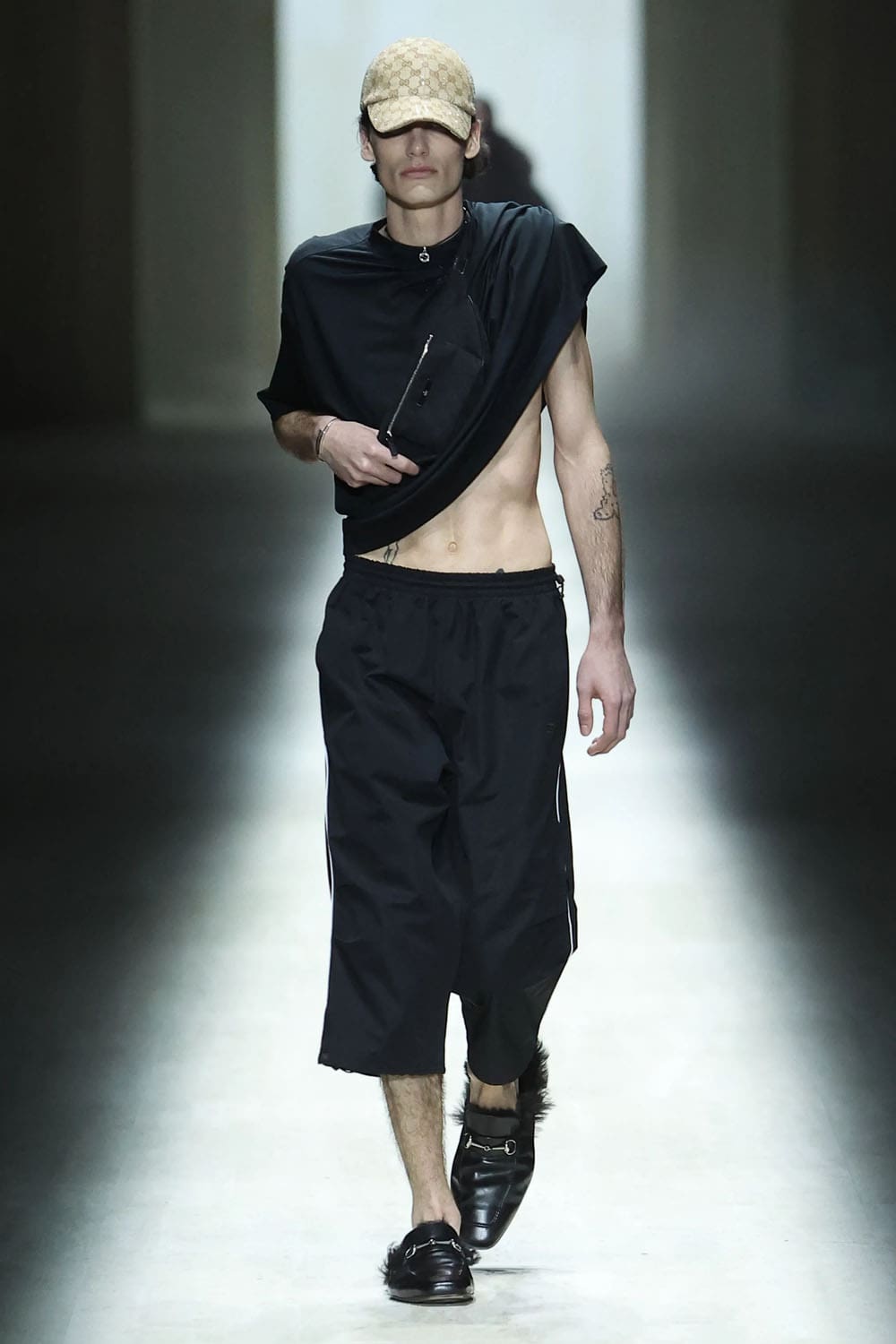
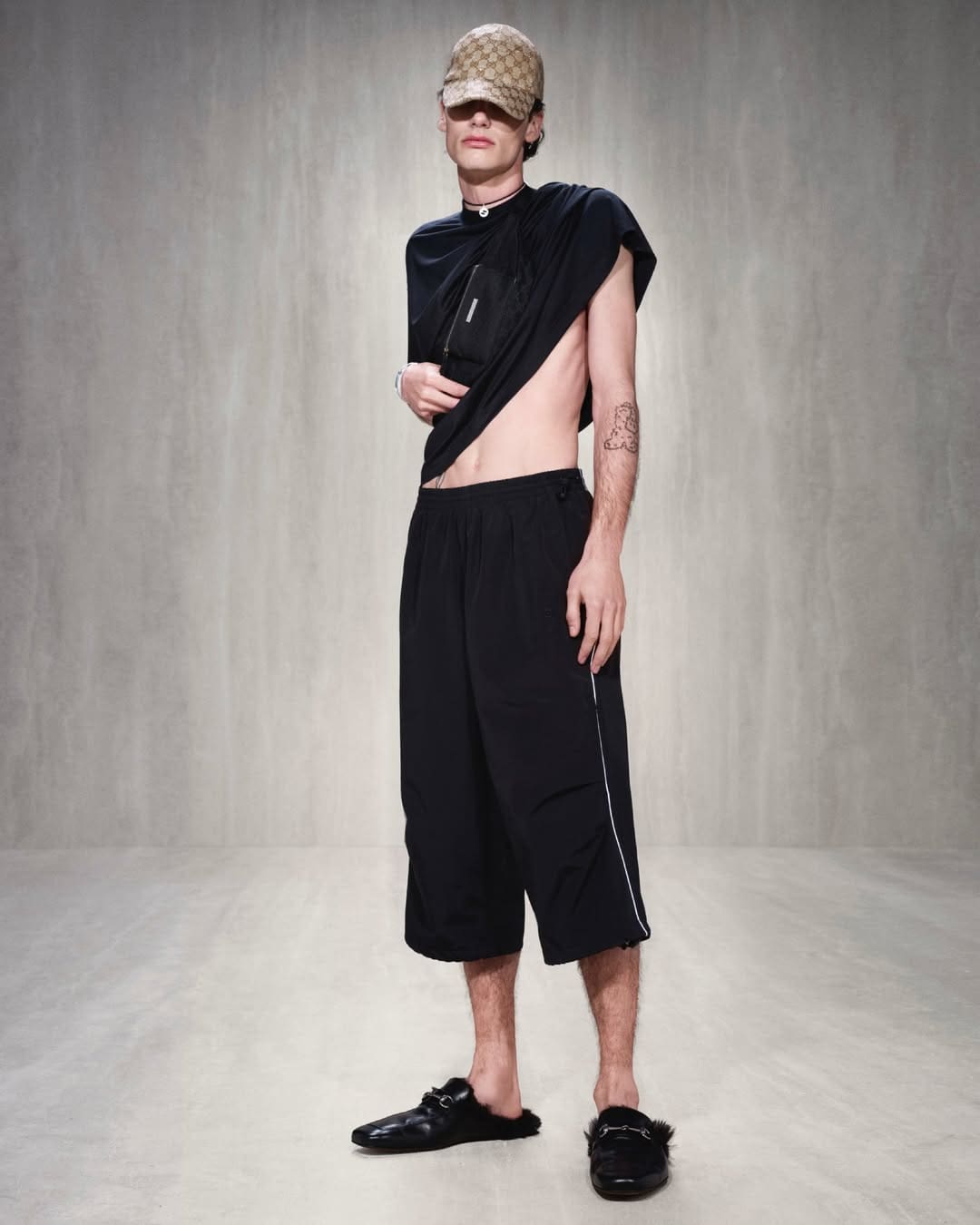
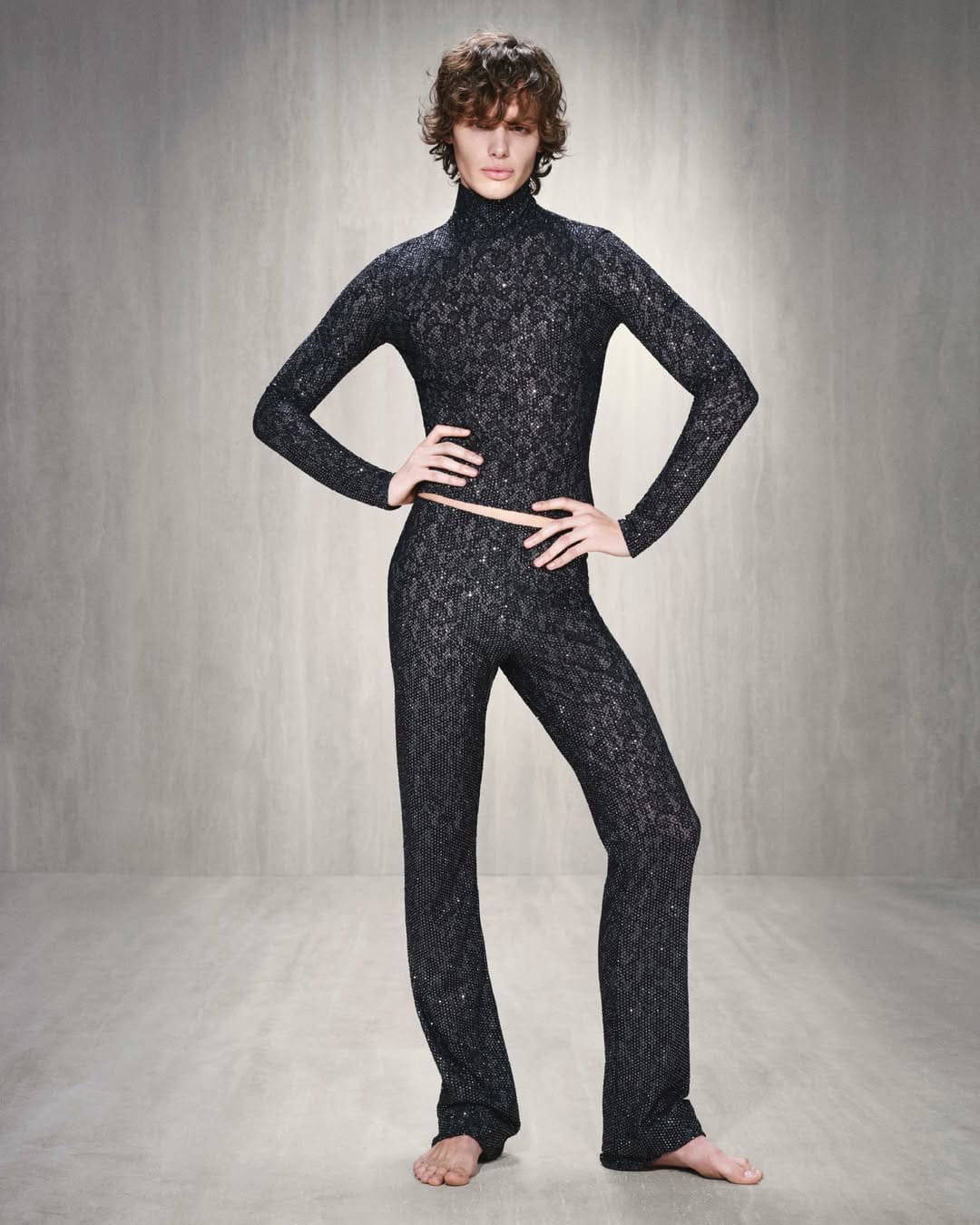
Here, a man poses with his jacket pulled over his head, underwear branding proudly displayed—a sociological specimen performing “street” with exaggerated commitment. Another arrives in cropped athletic shorts, twisted shirt, fur slippers, and a look of curated apathy. They feel less like models and more like an ethnographic study in nightlife personas.
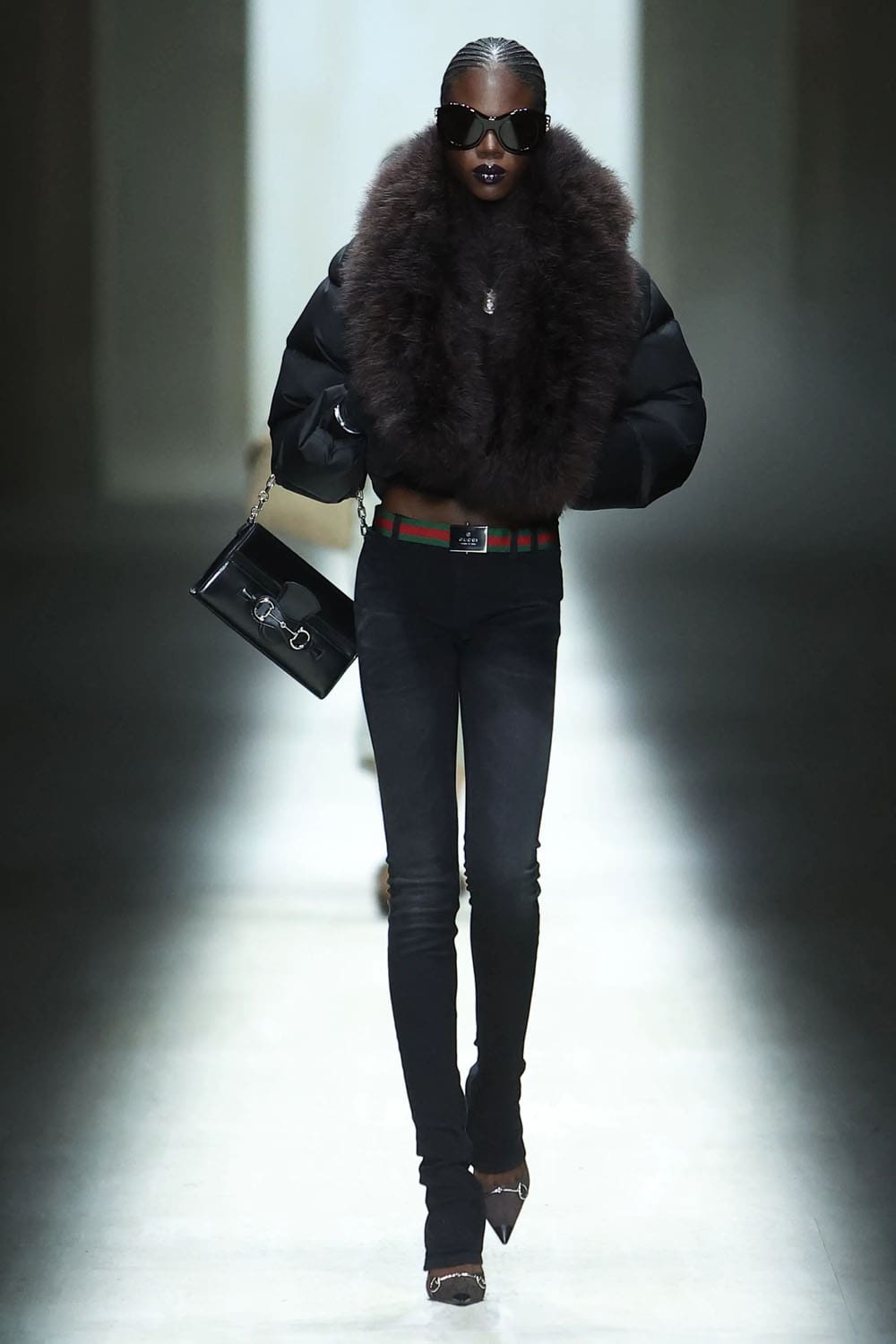
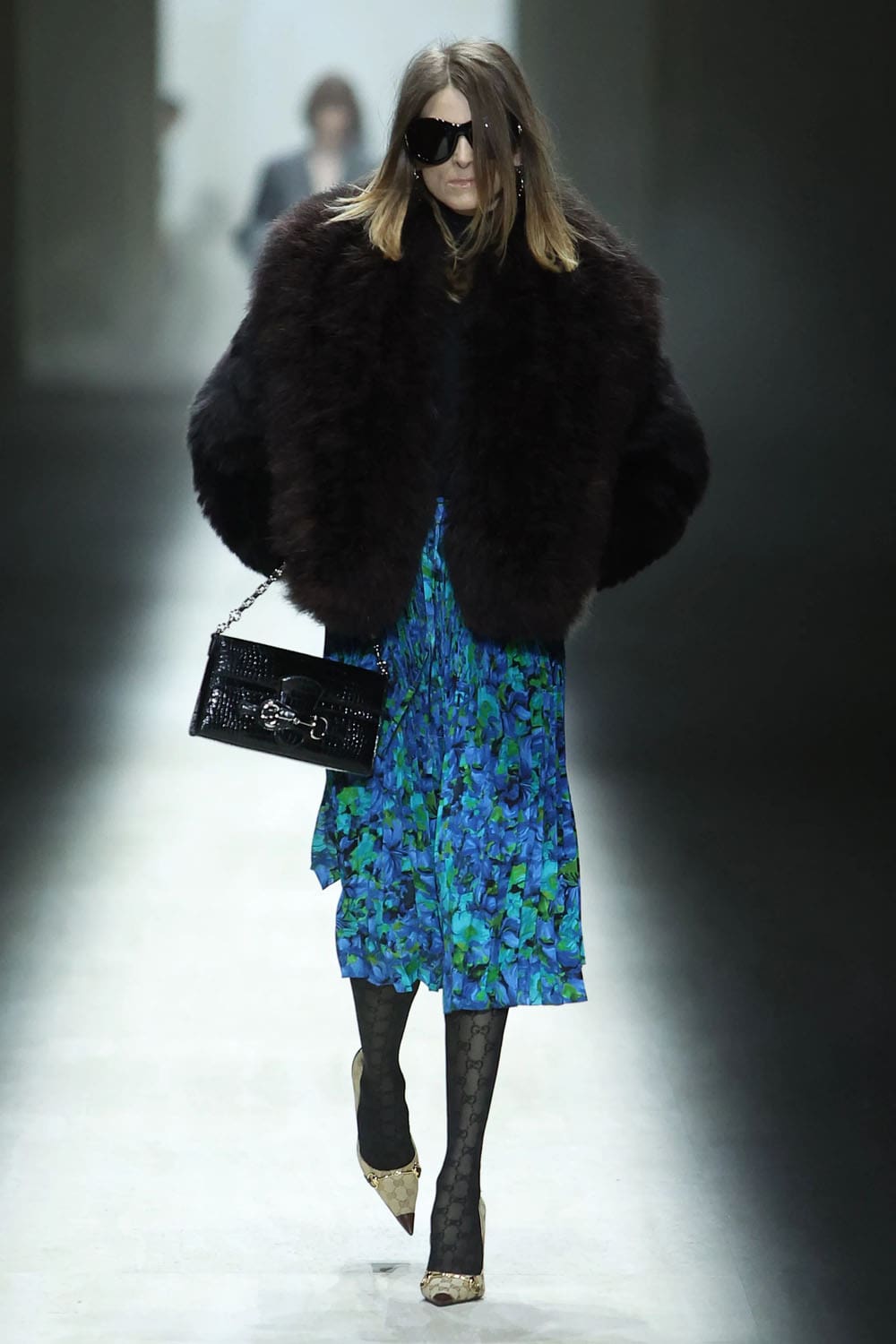
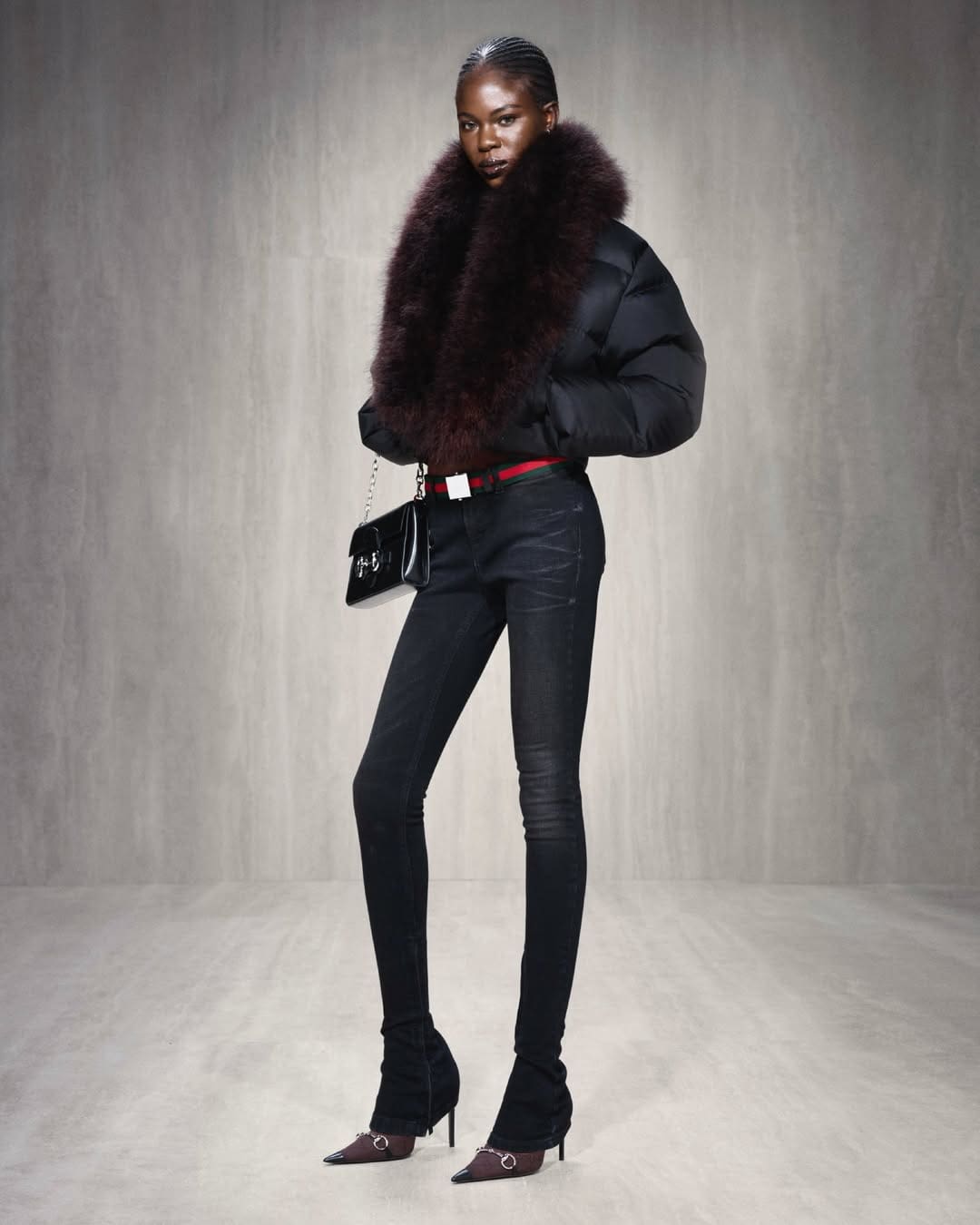
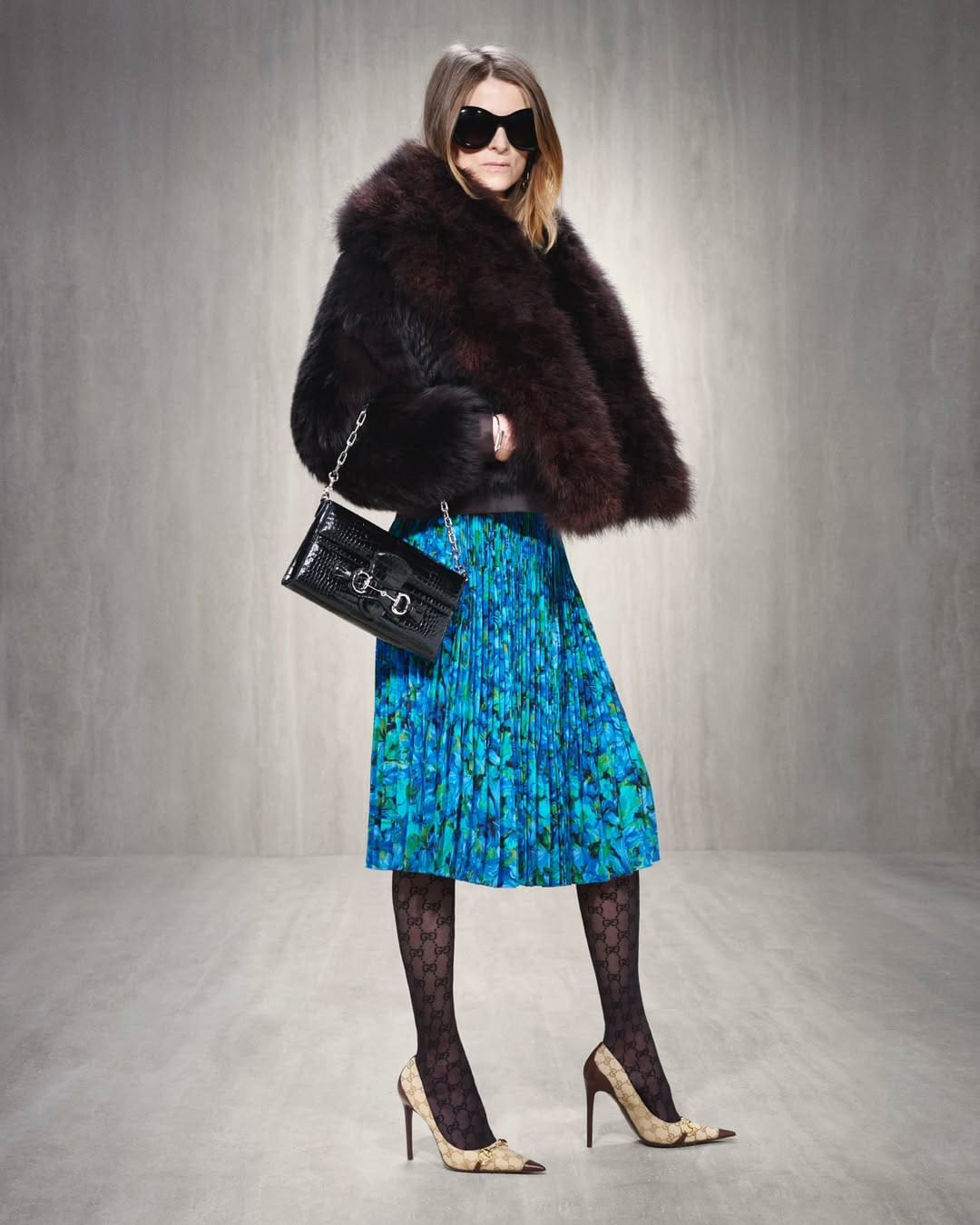
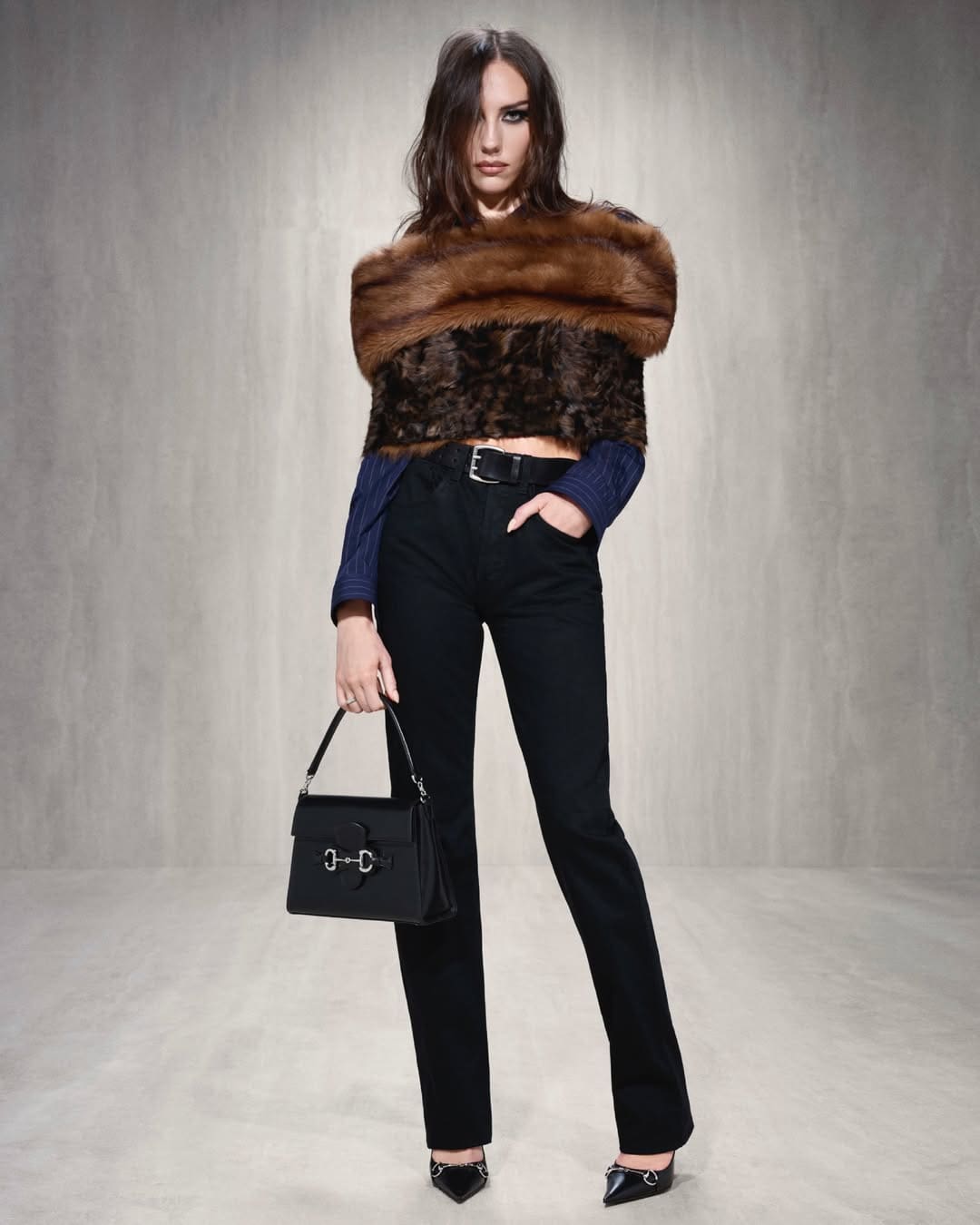
Fur-collared puffers, whether in deep burgundy or auburn, complete the taxonomy: silhouettes perfected for reality television confessionals, not Uffizi contemplation.
The collection presents itself as cultural anthropology.
It reads as parody.
VII. THE LOOKBOOKS: THREE BACKGROUNDS, ONE UNAVOIDABLE TRUTH
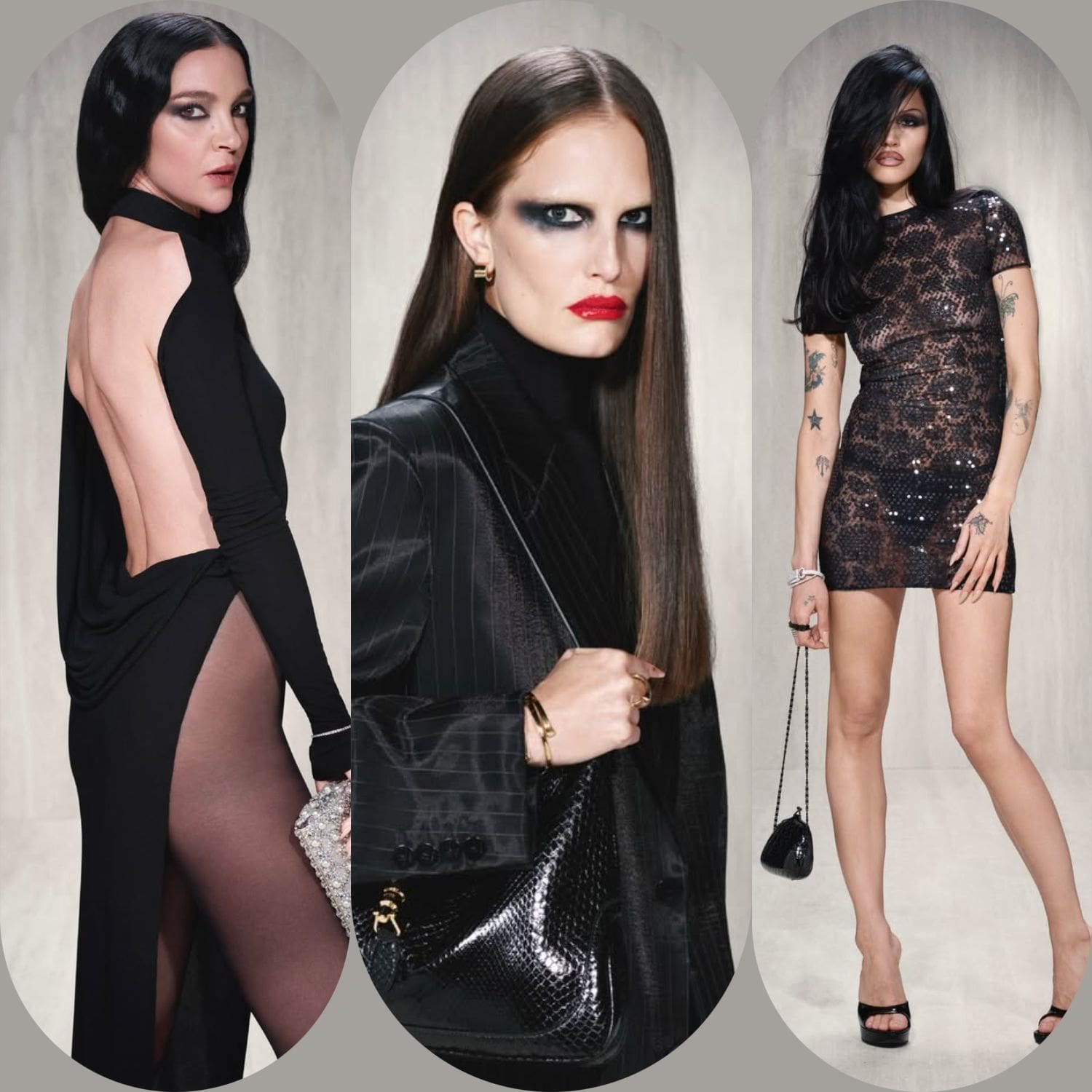
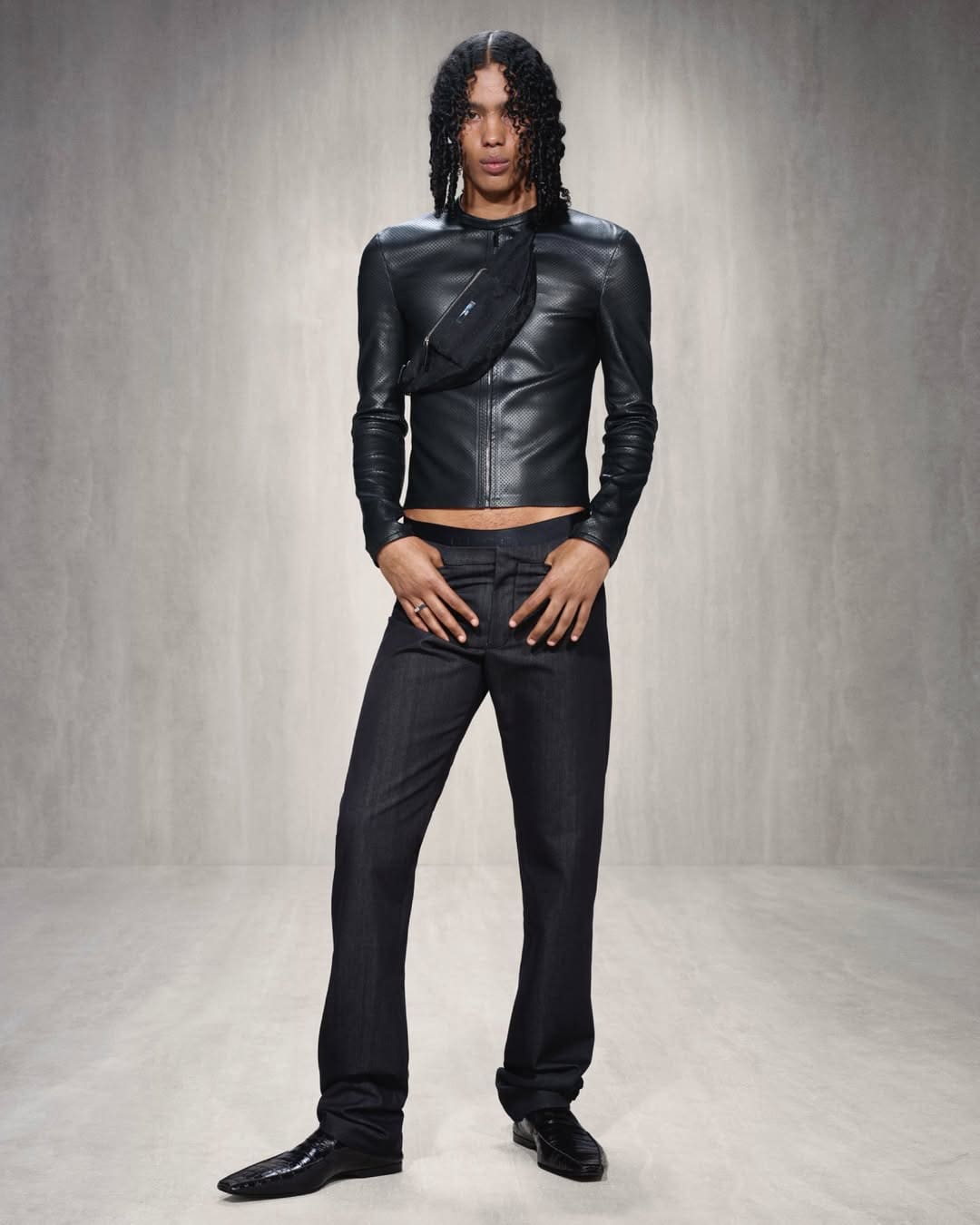
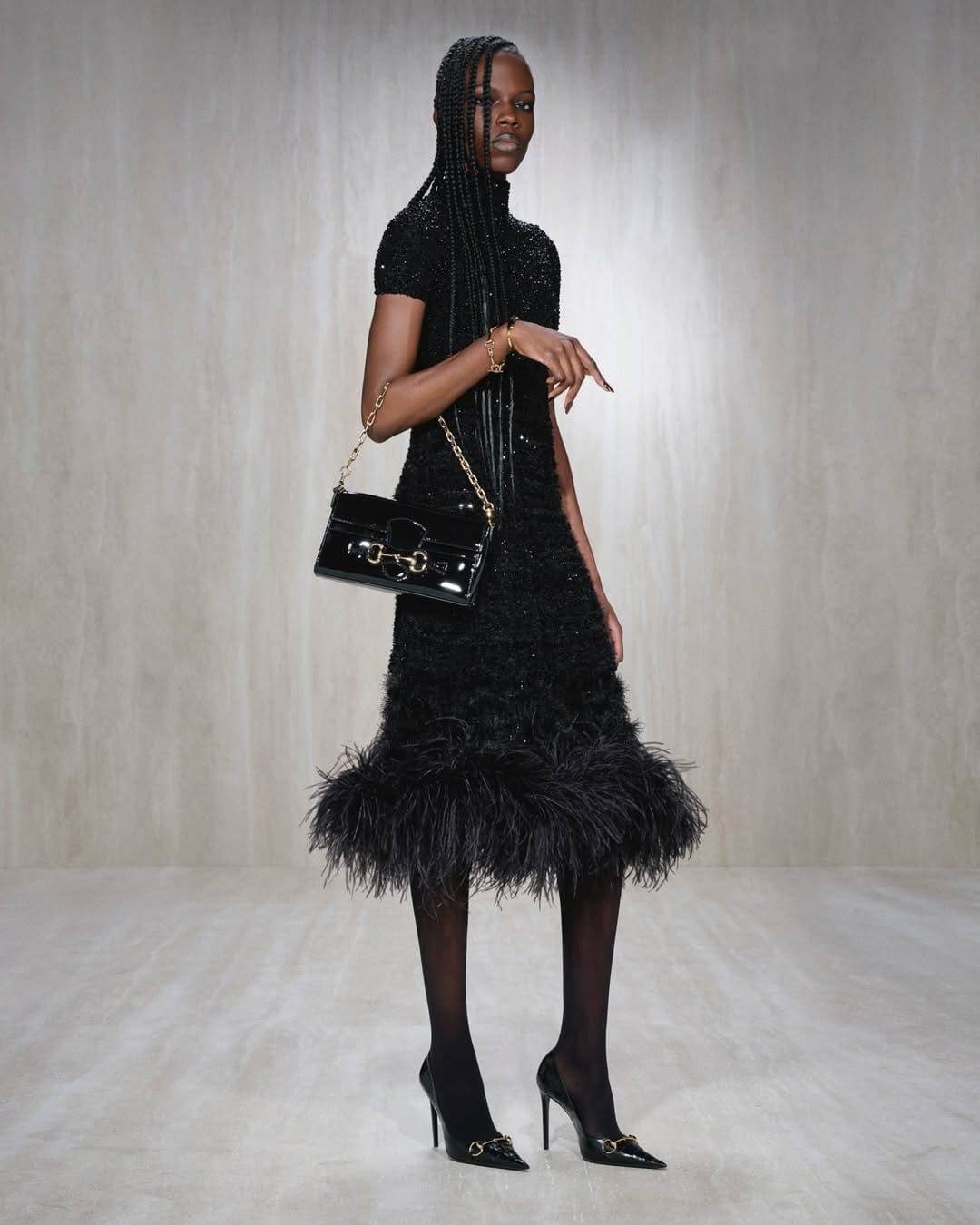
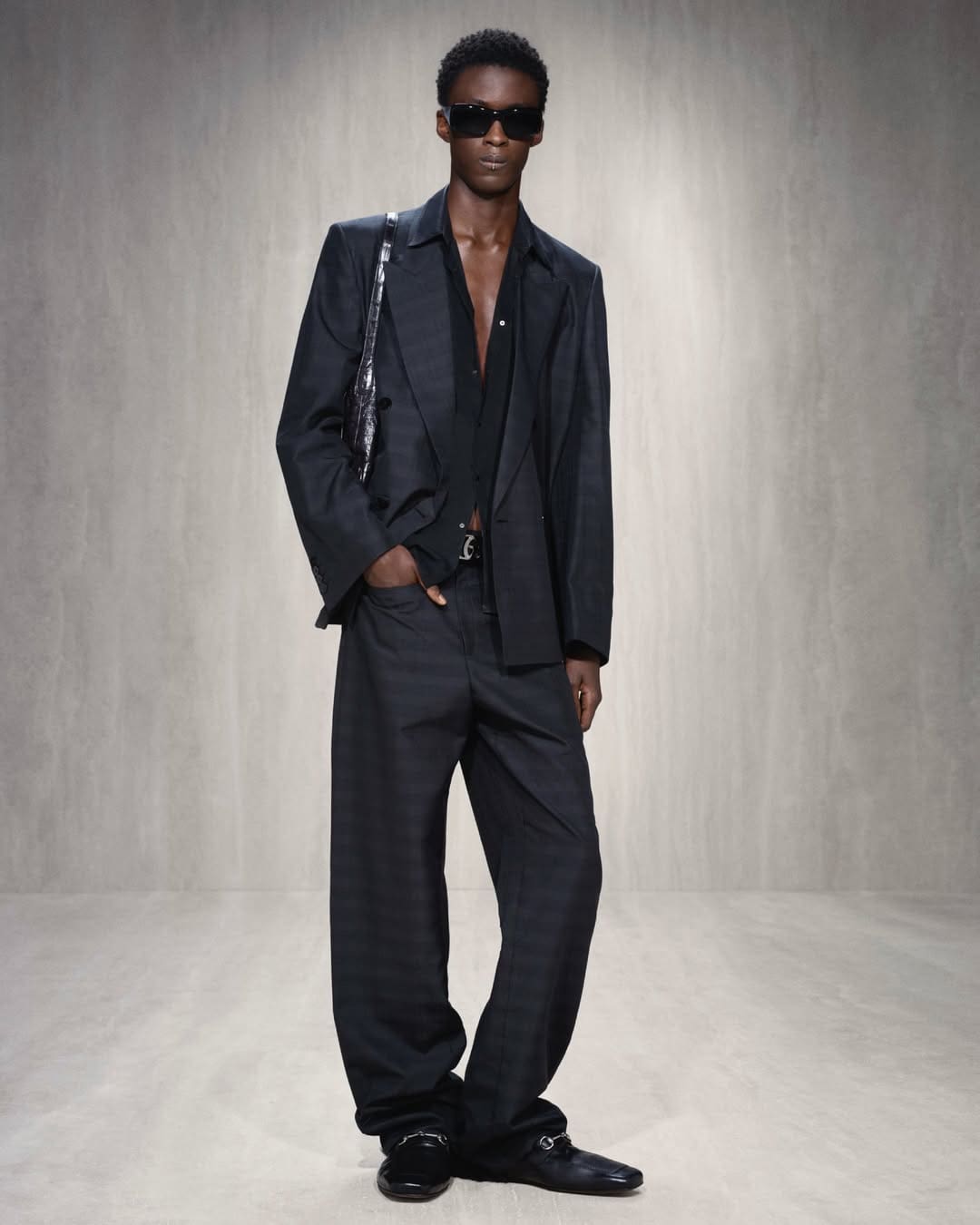
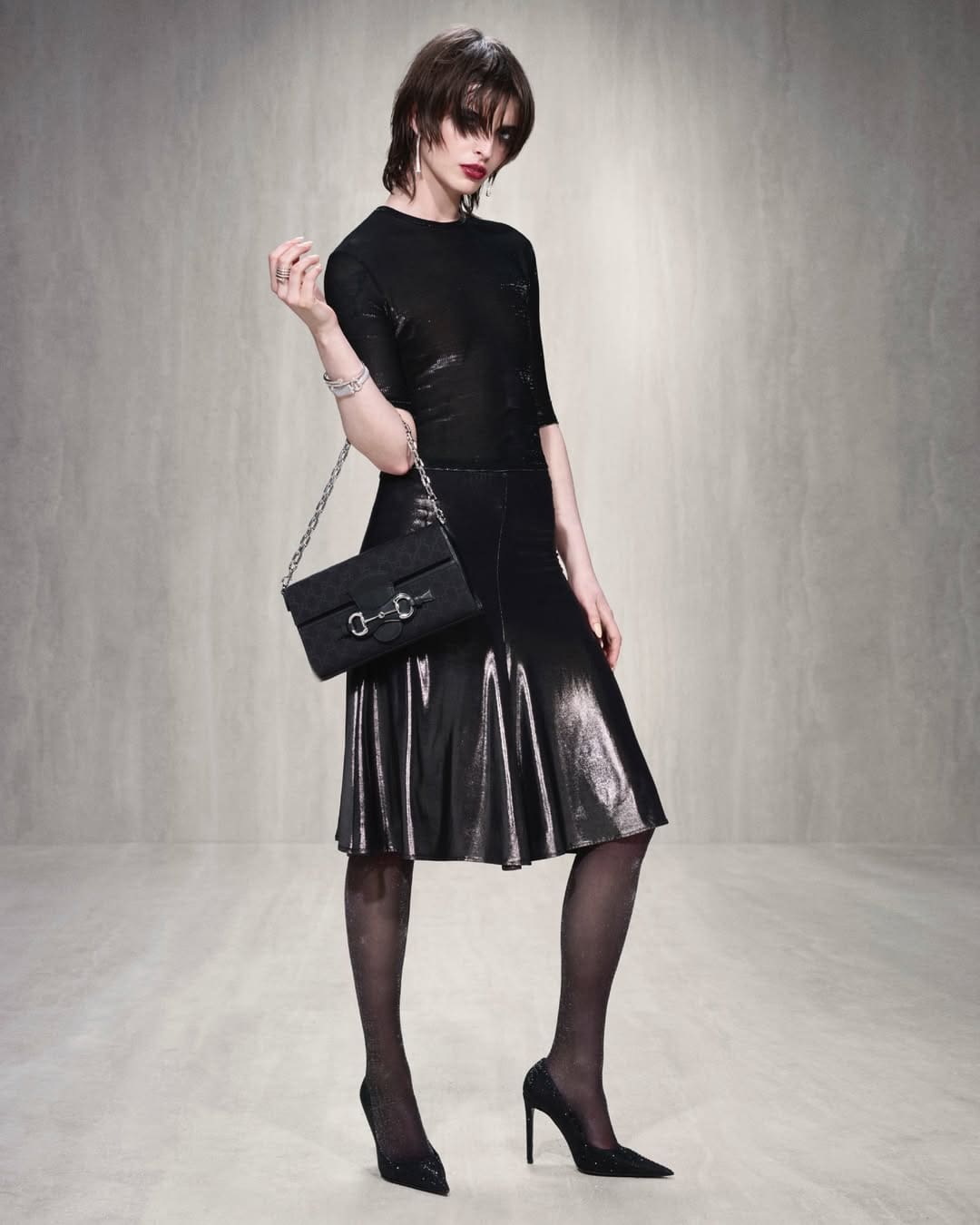
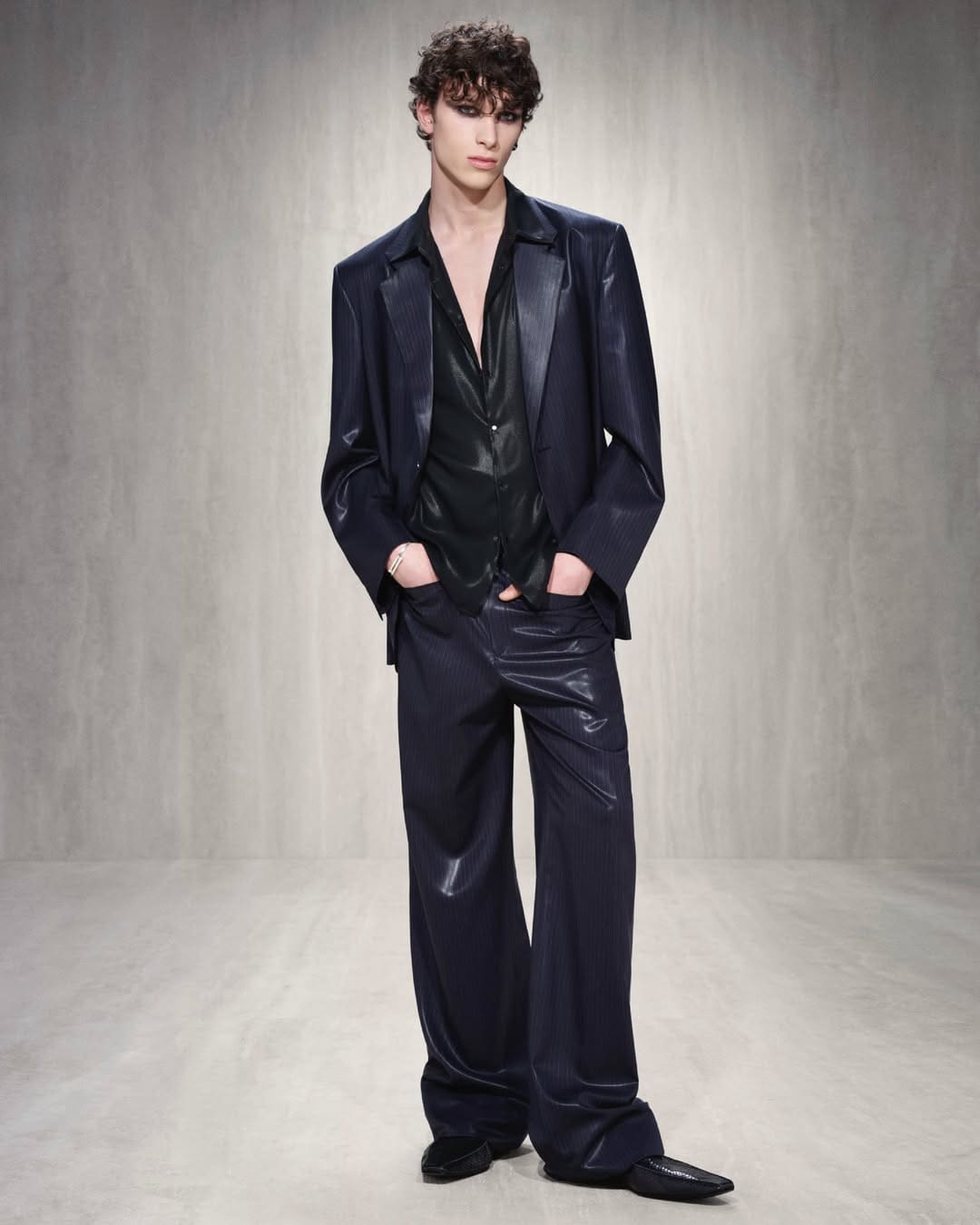
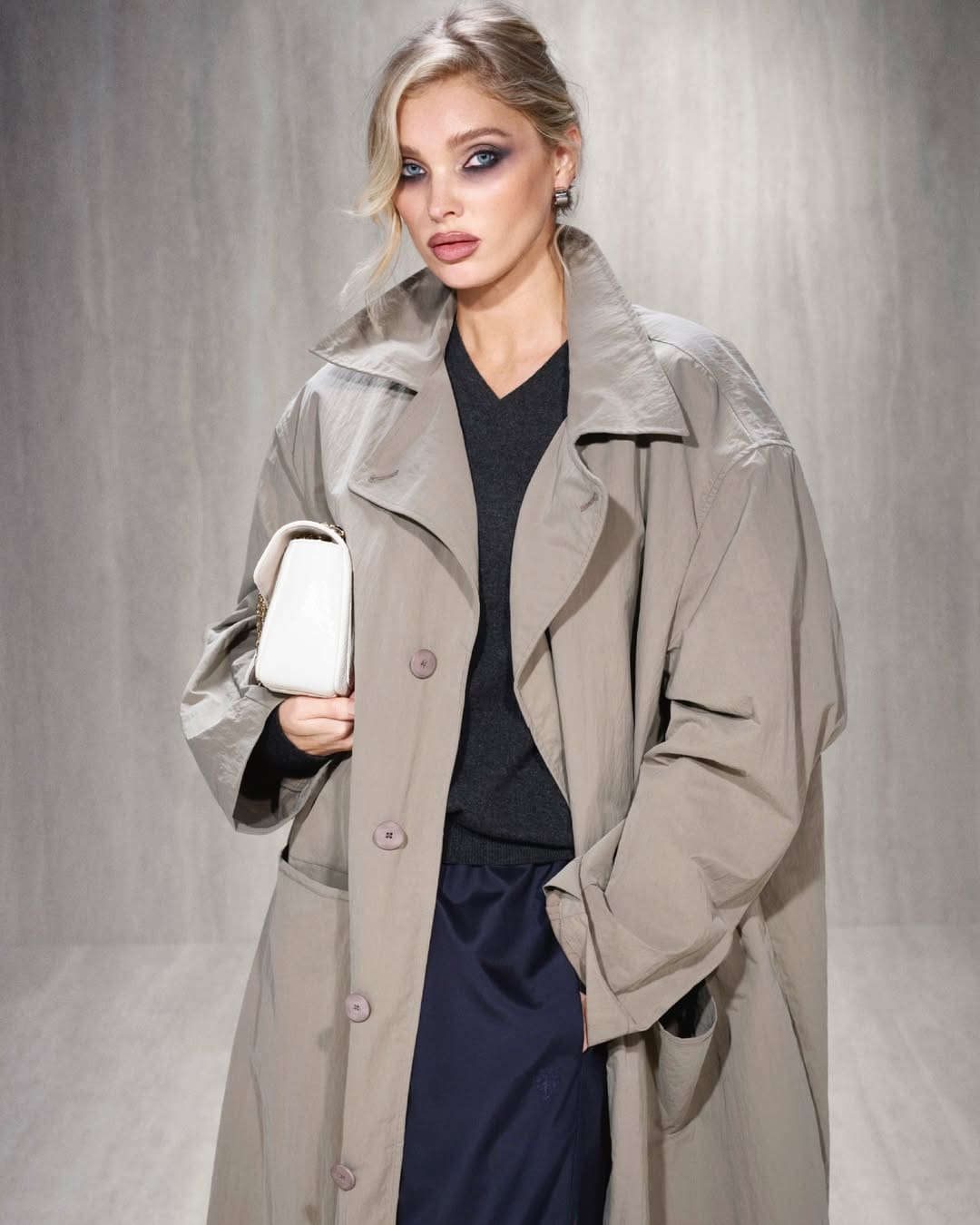
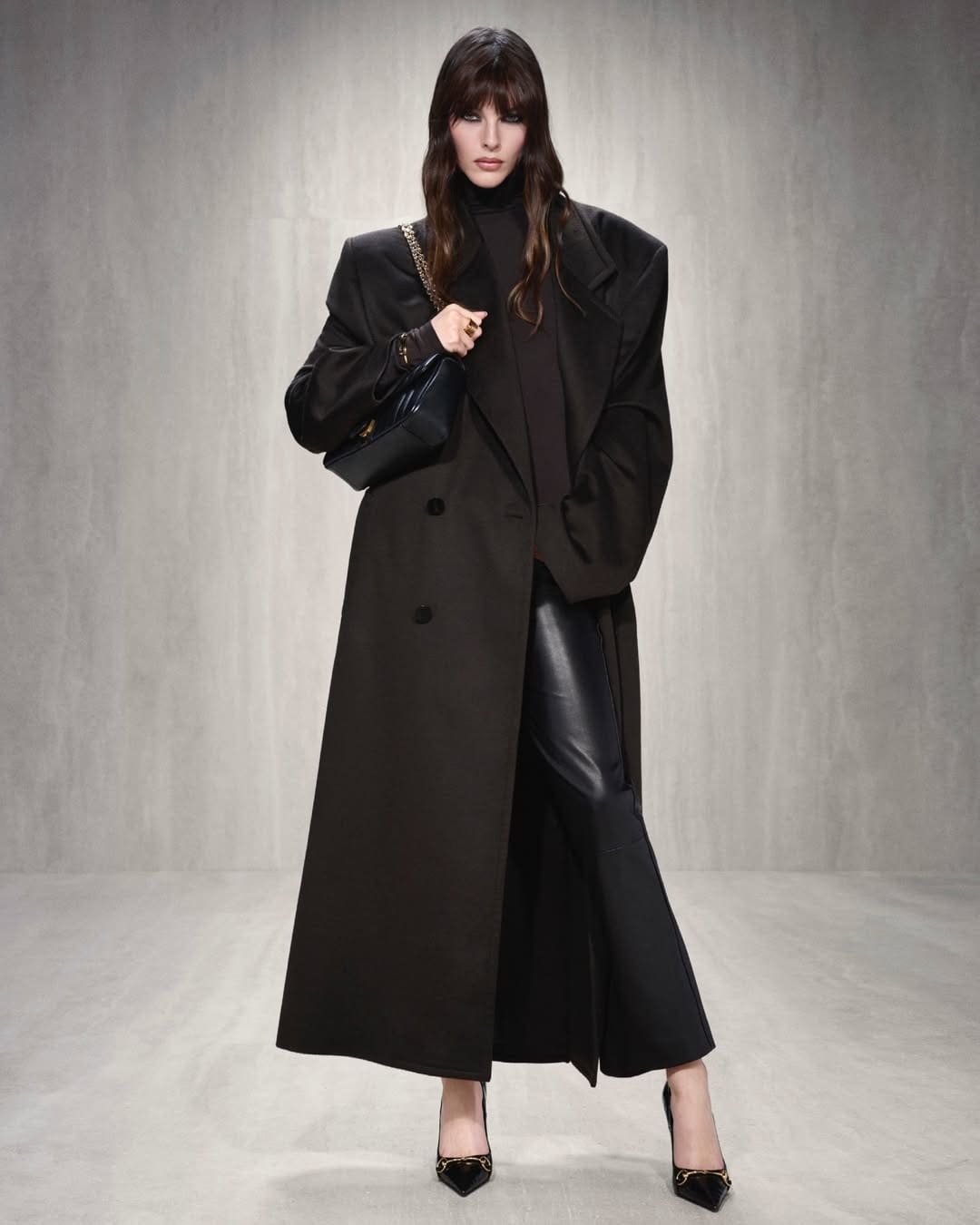
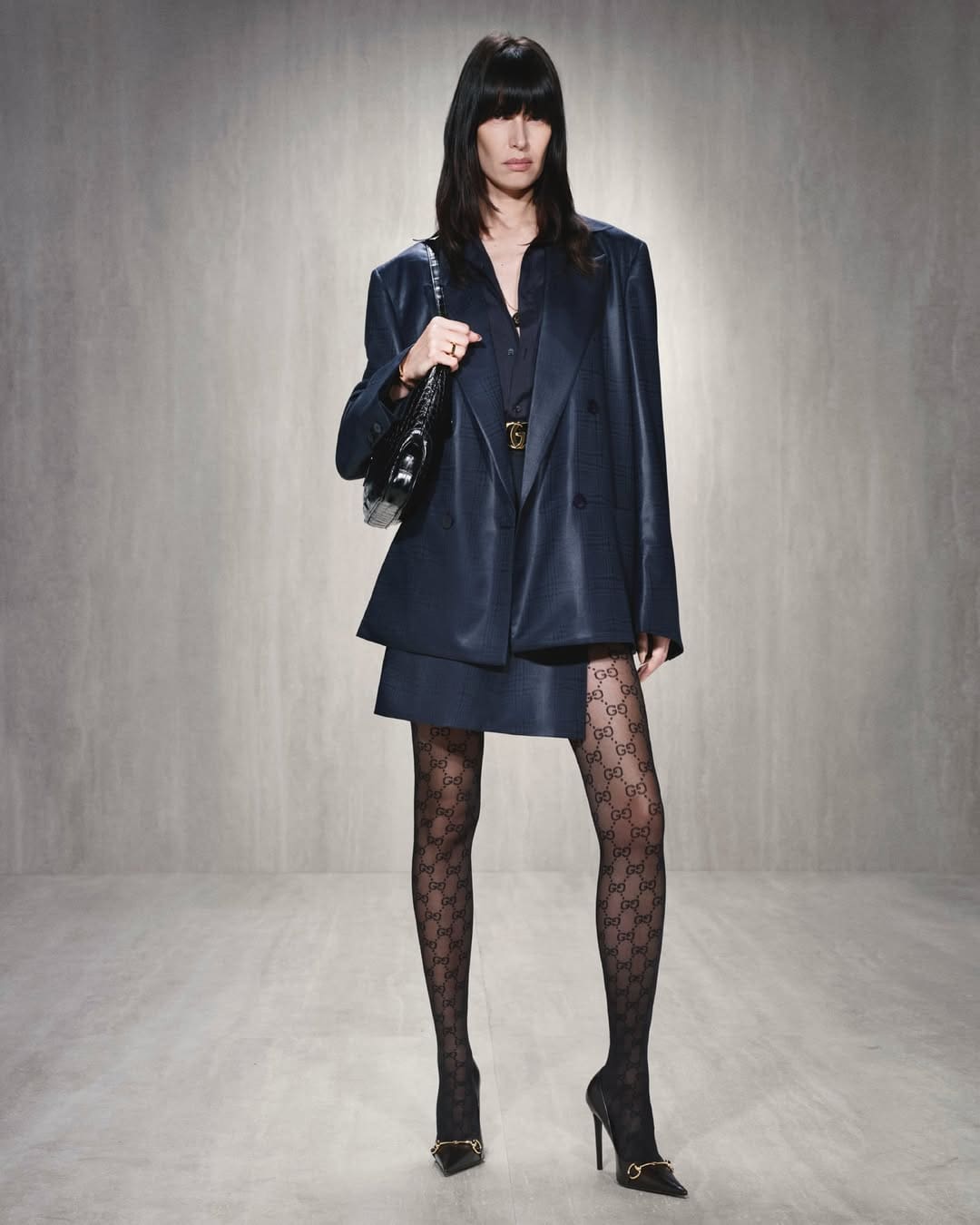
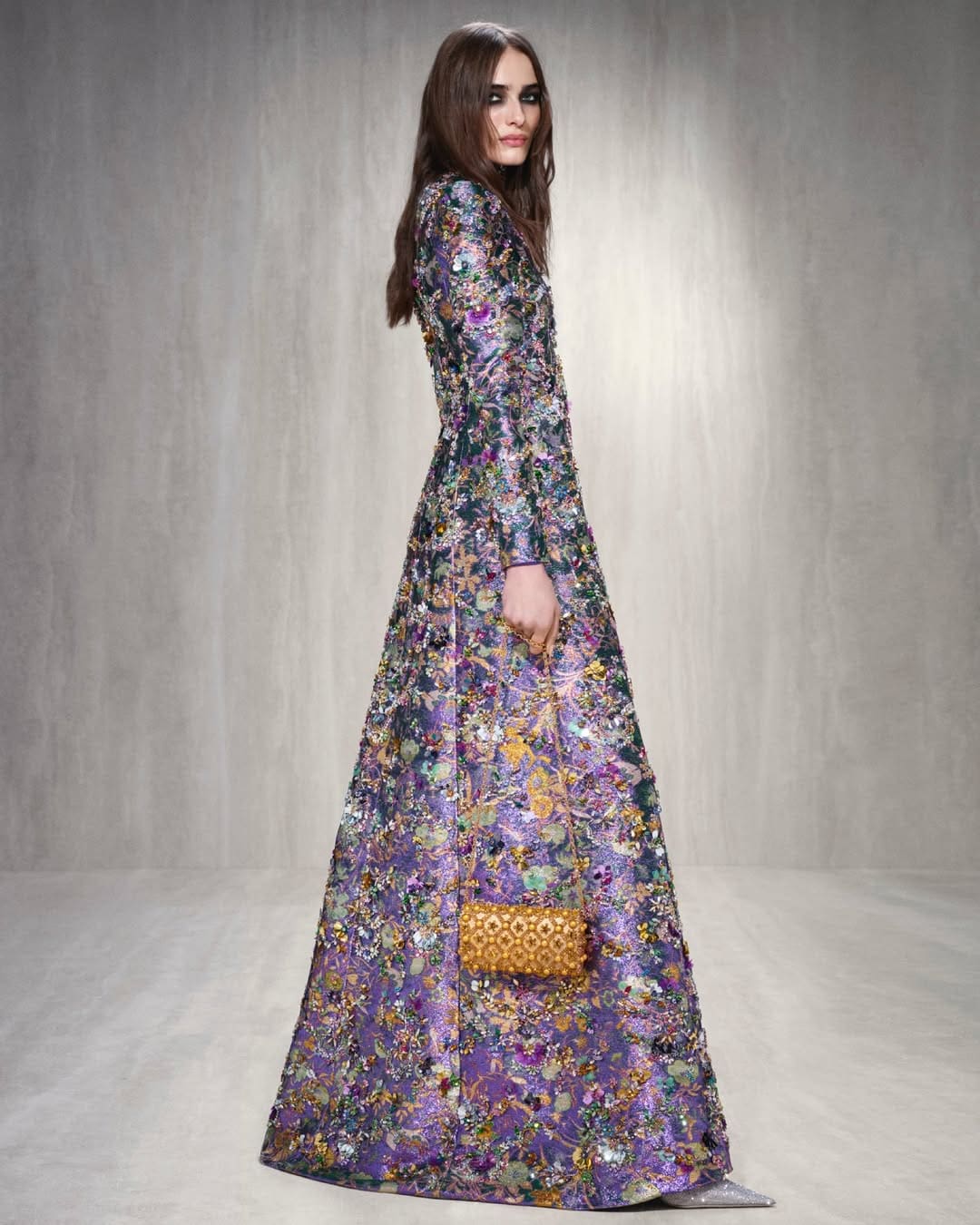
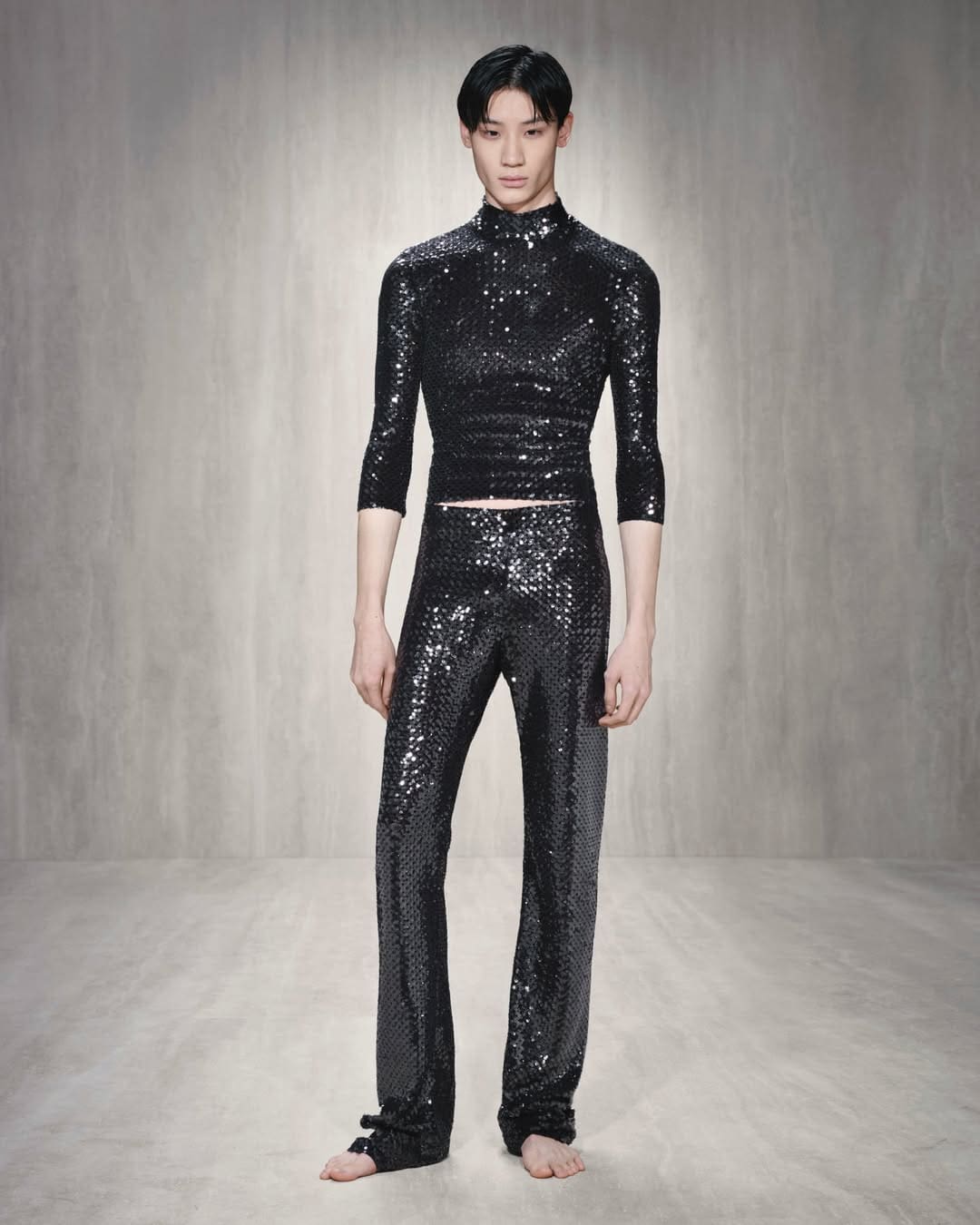
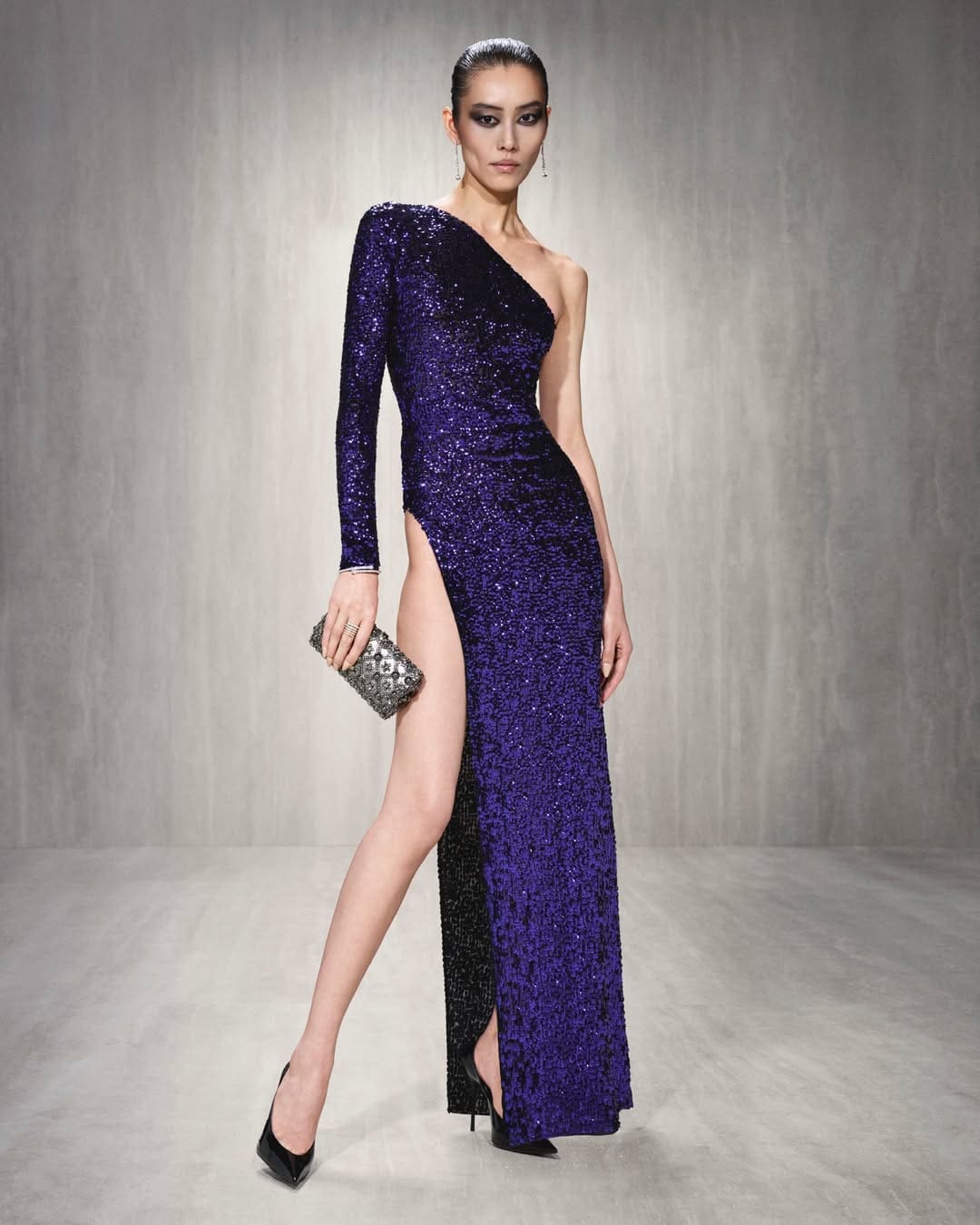
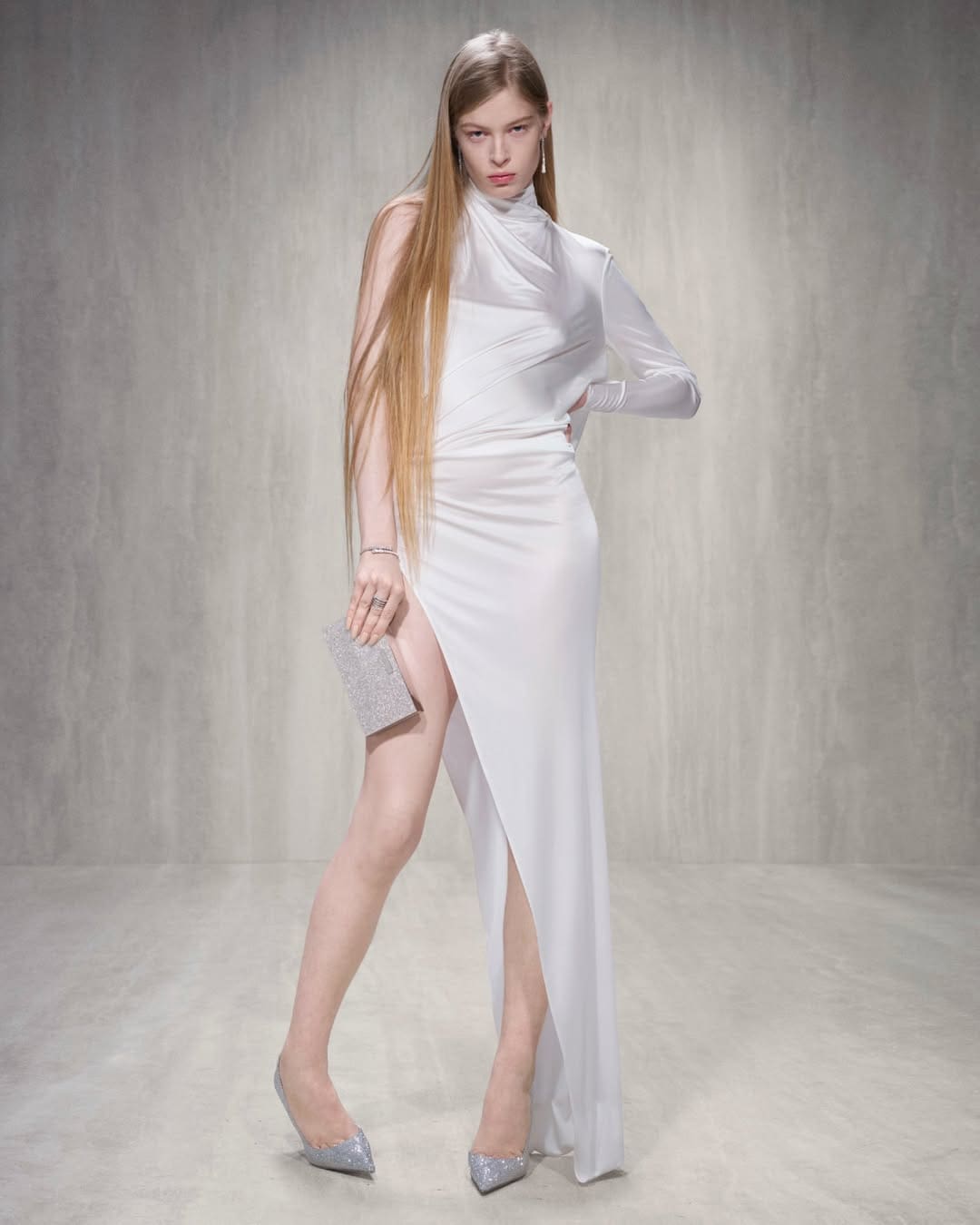
Demna released not one, but three lookbooks—black, white, and runway—as if the problem were merely tonal, photographic, or environmental.
A noble effort.
Completely futile.
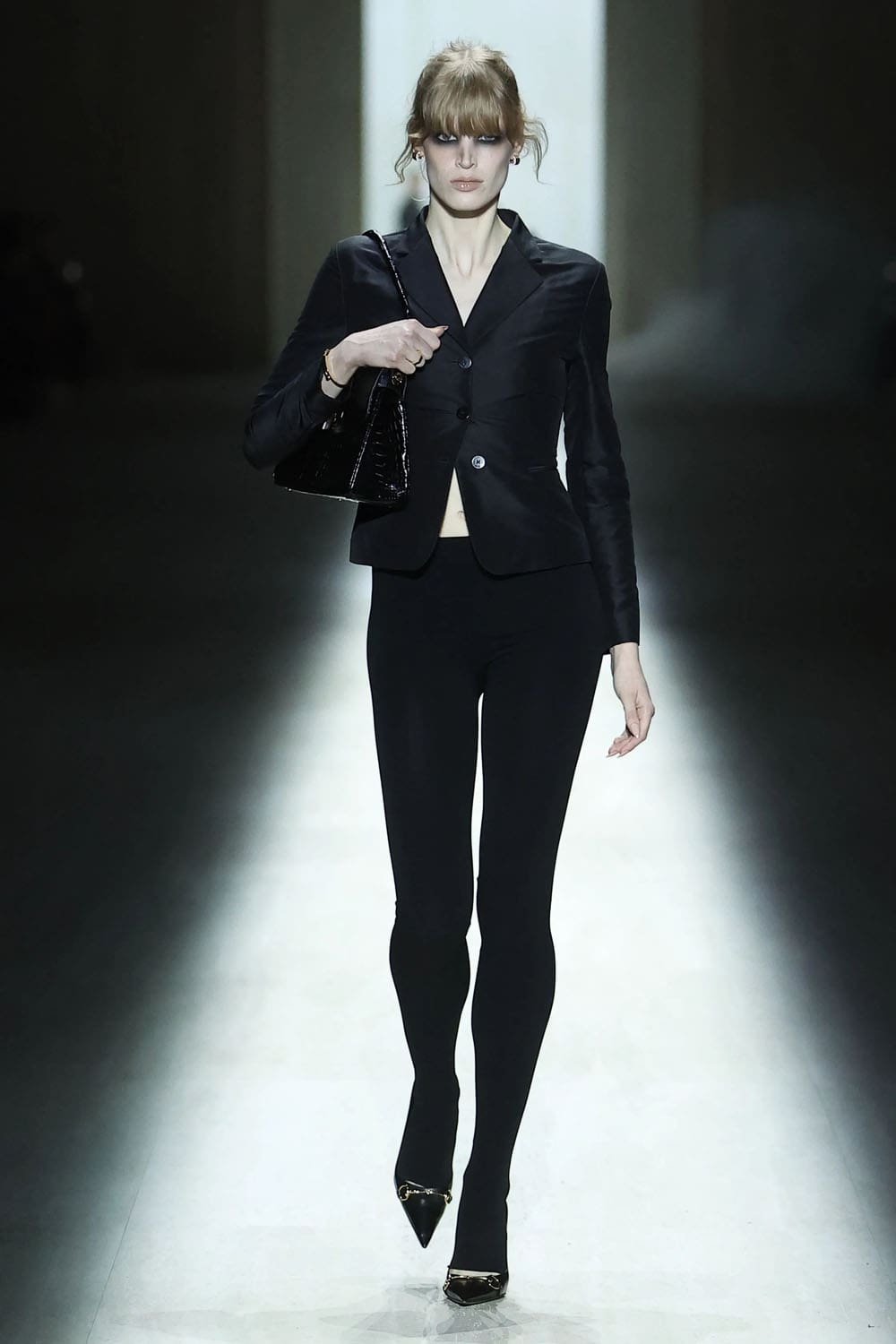
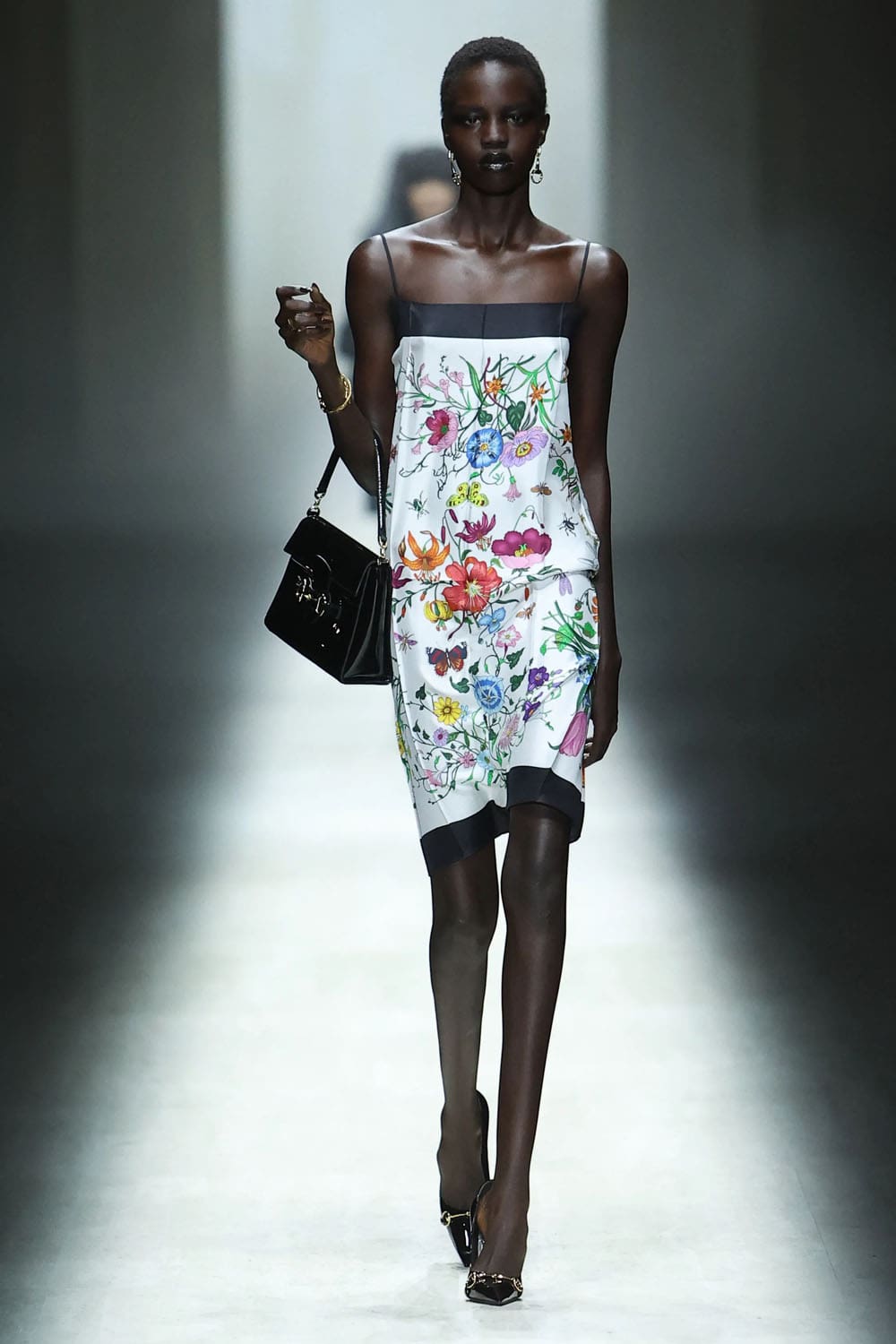
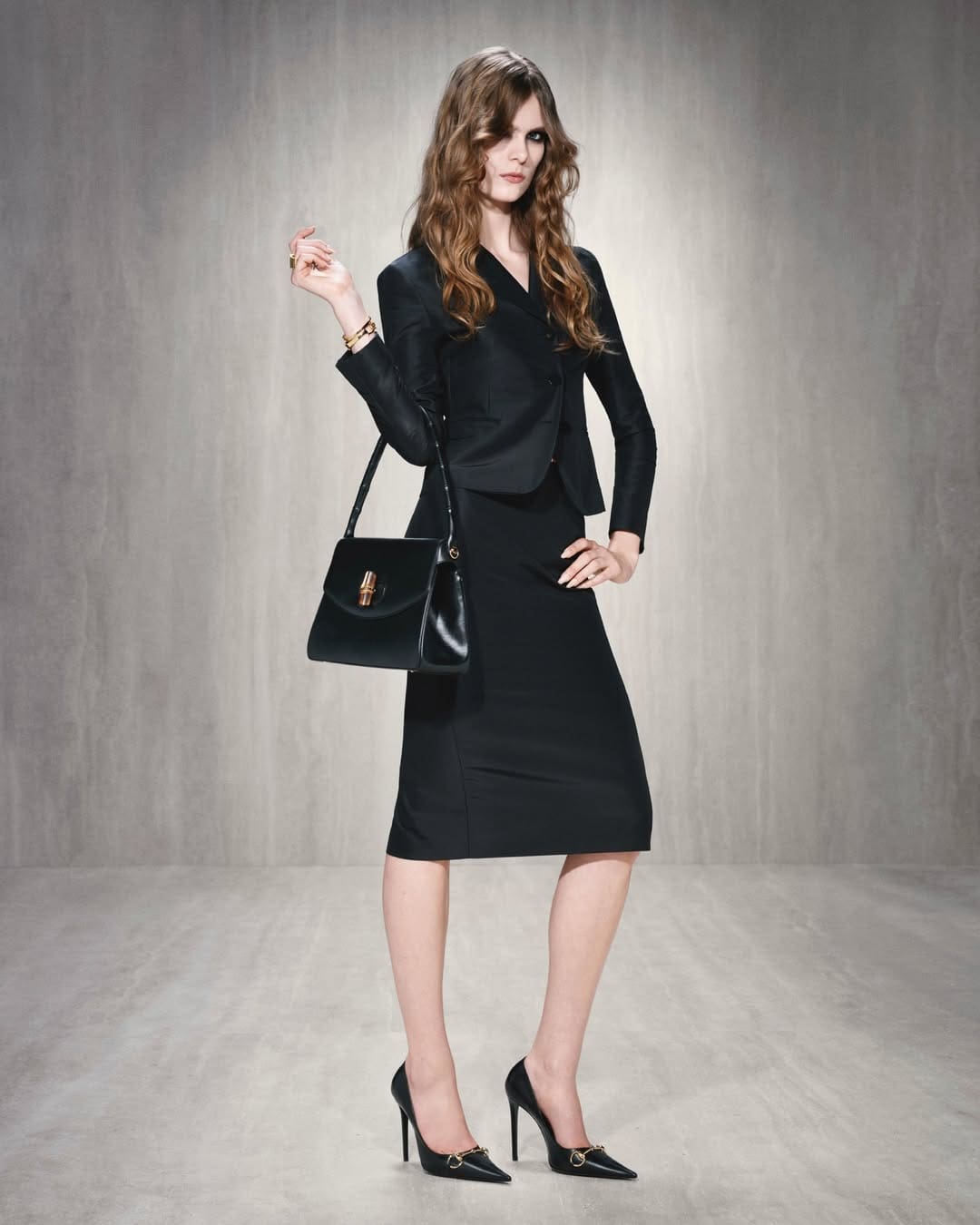
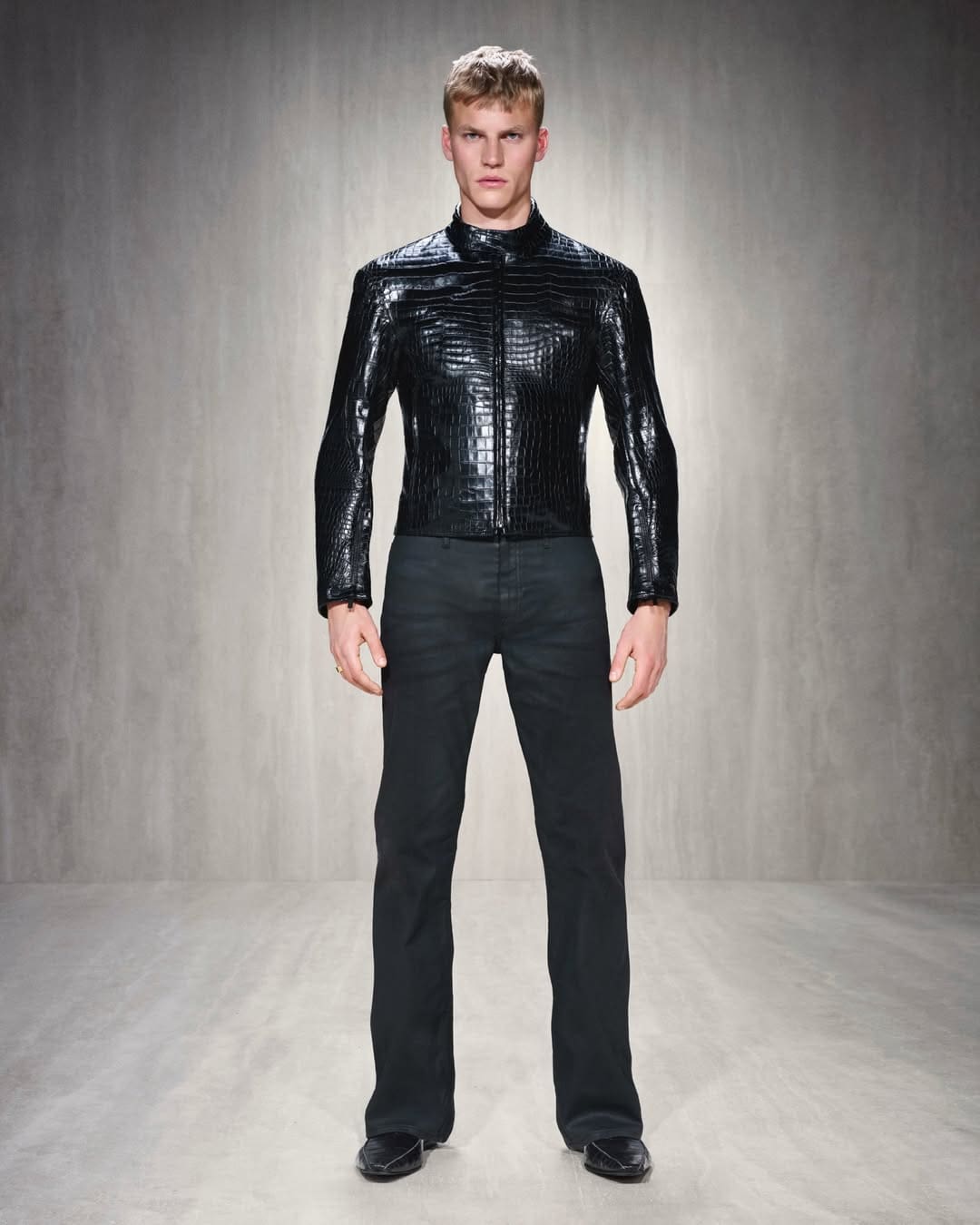
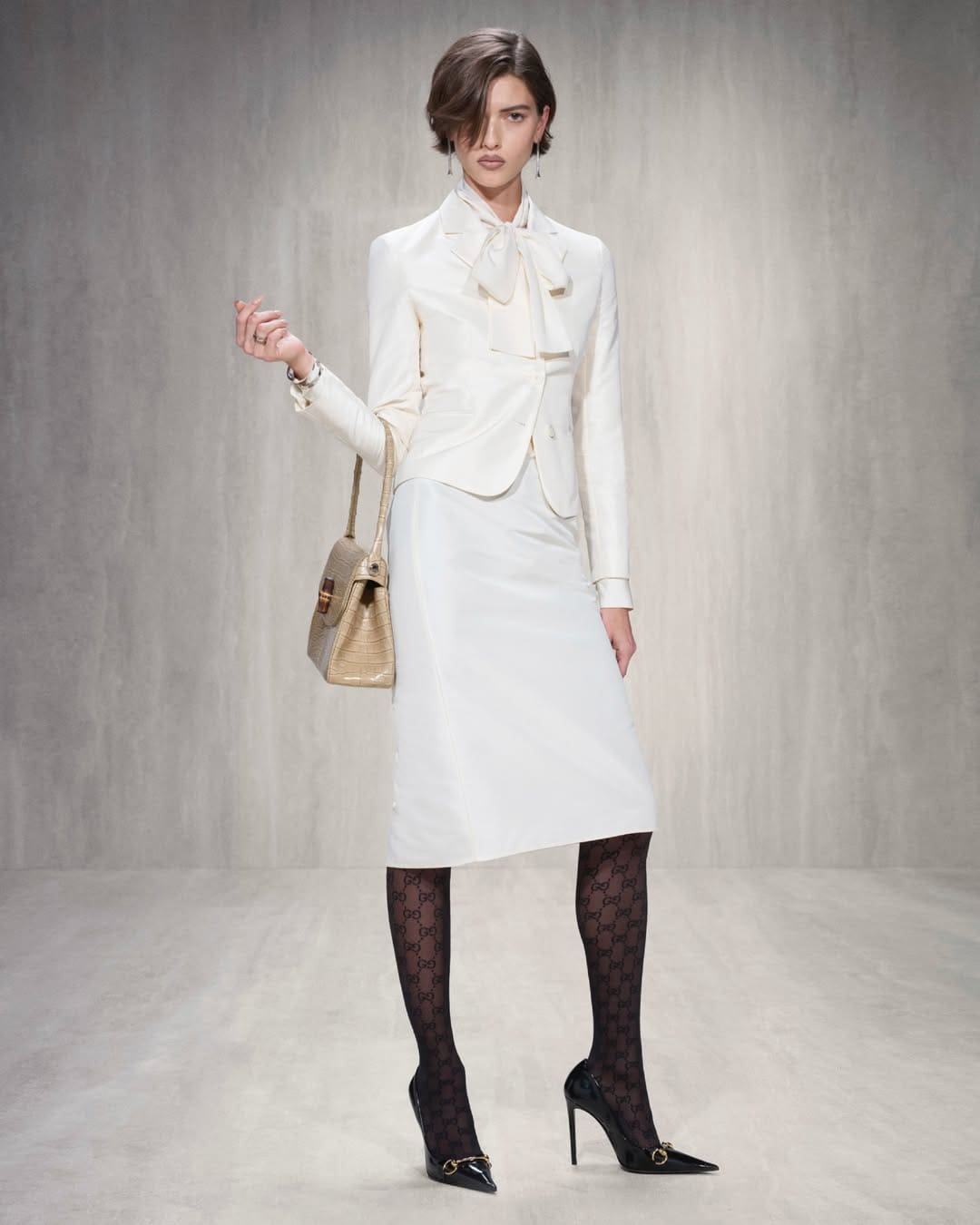
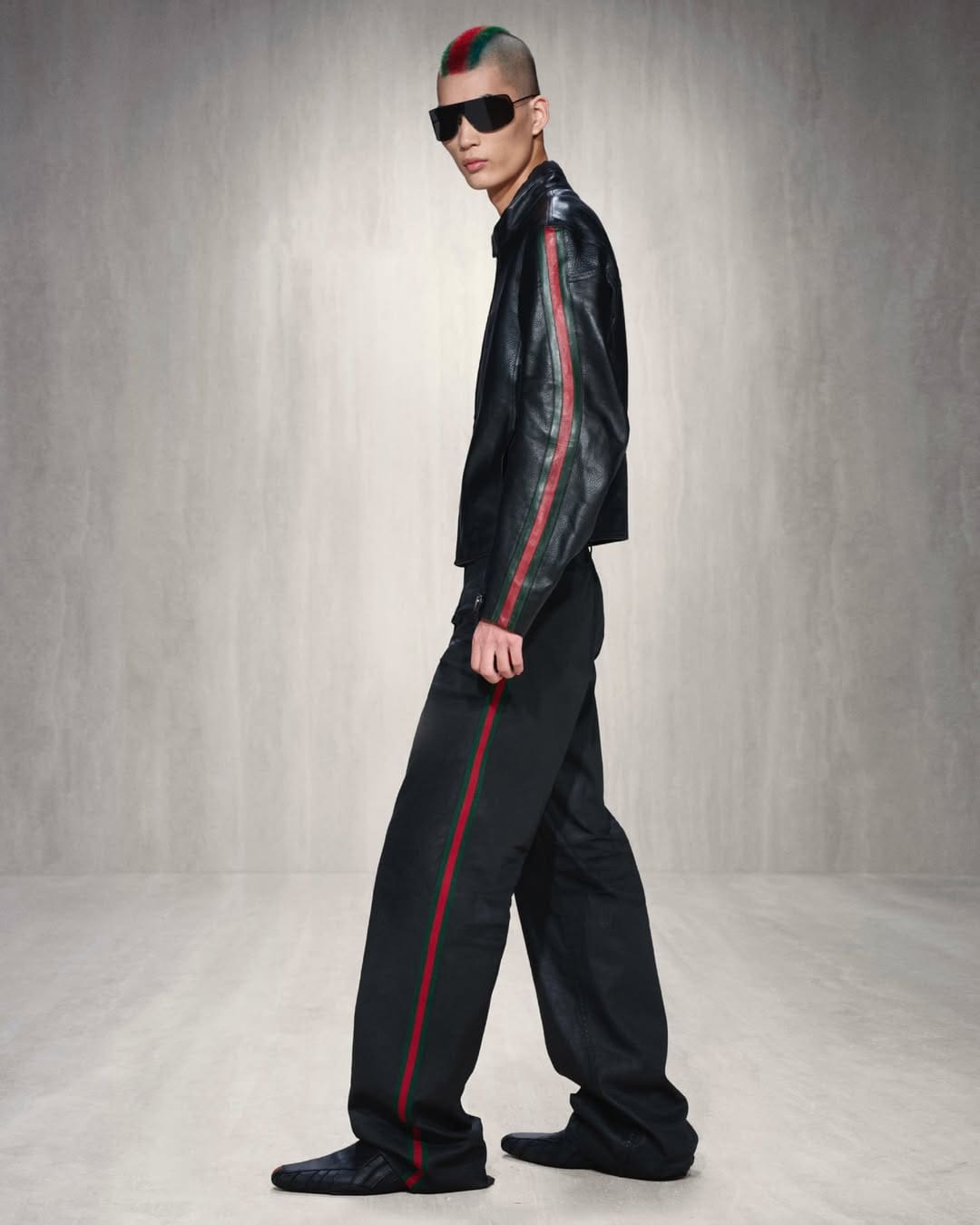
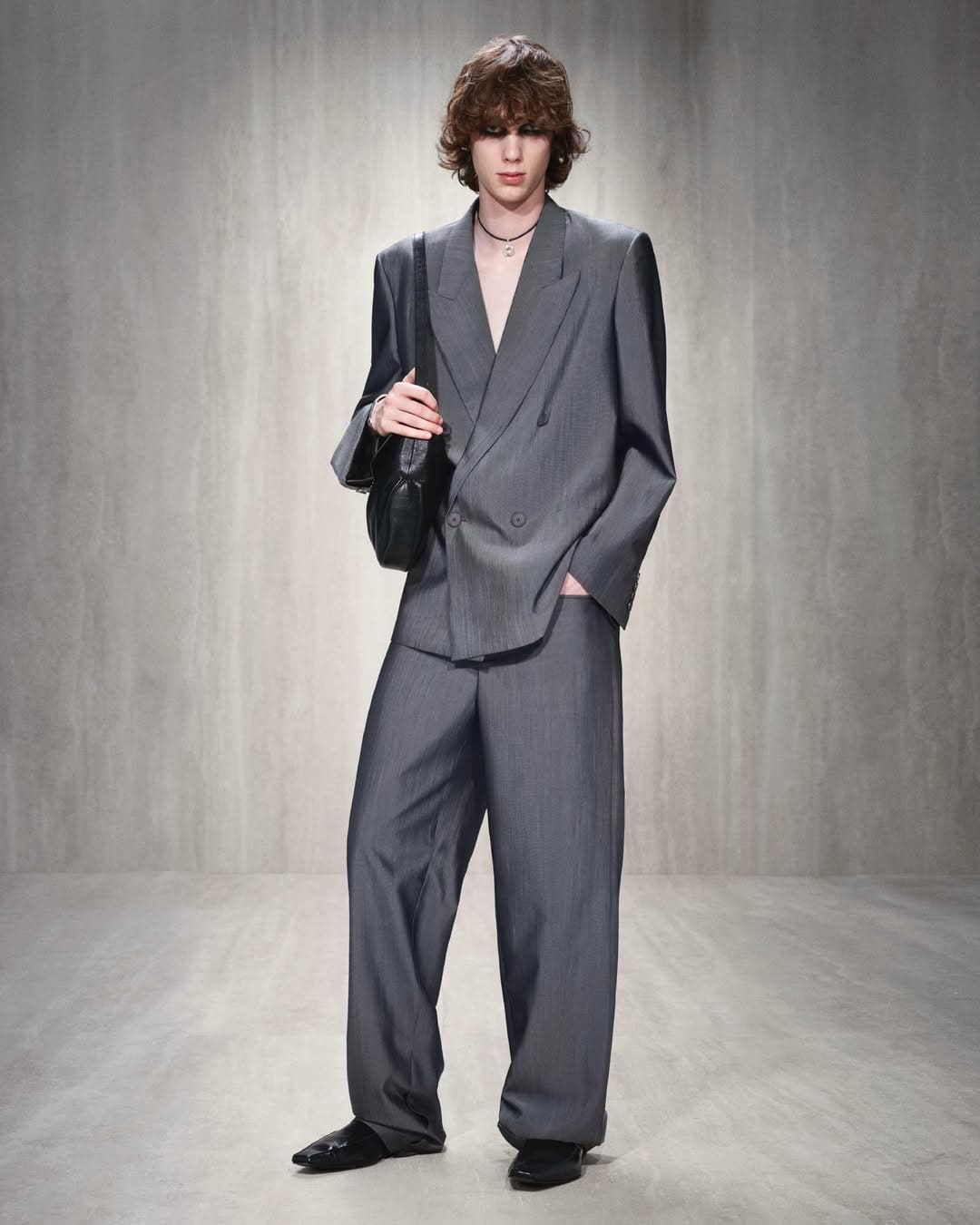
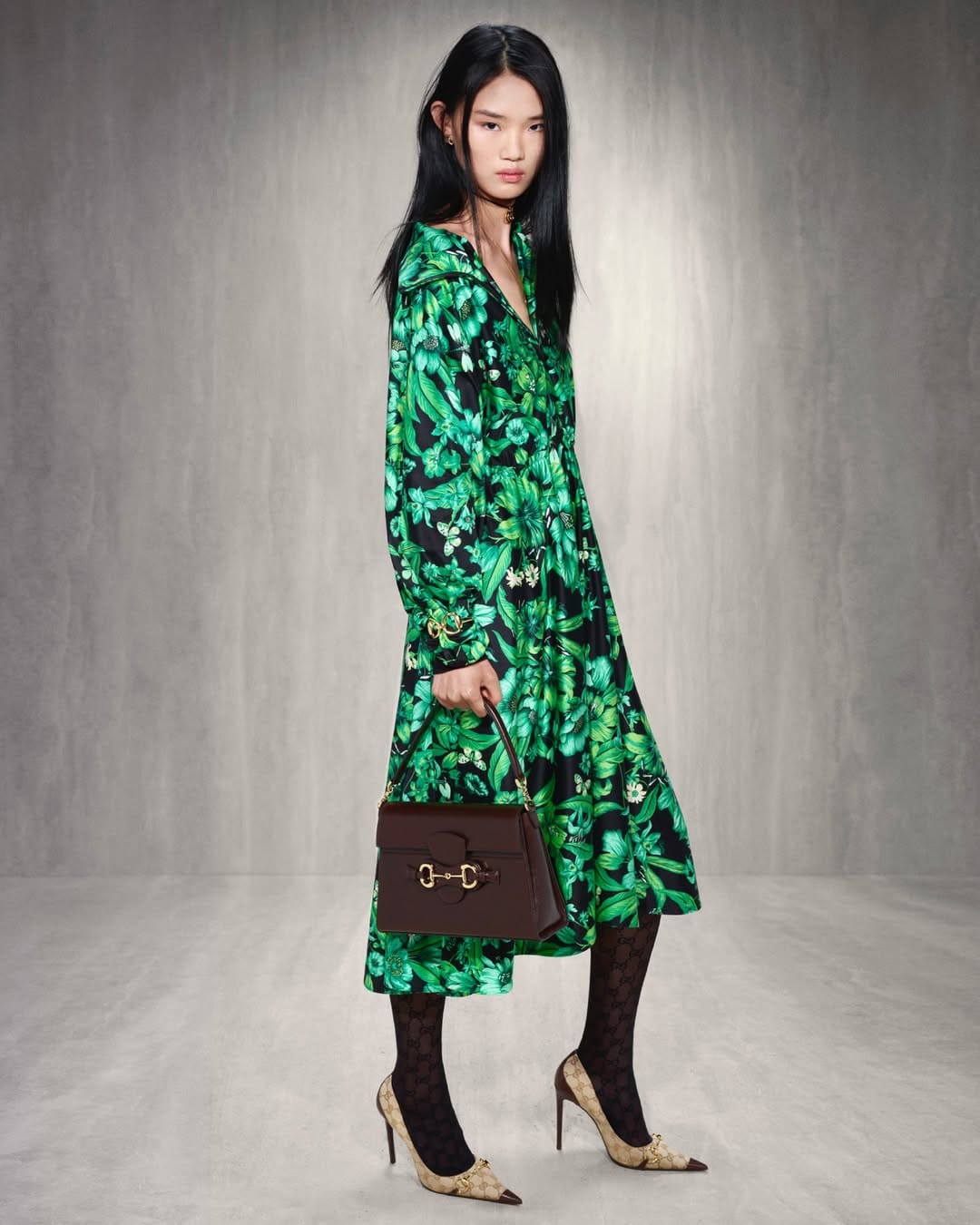
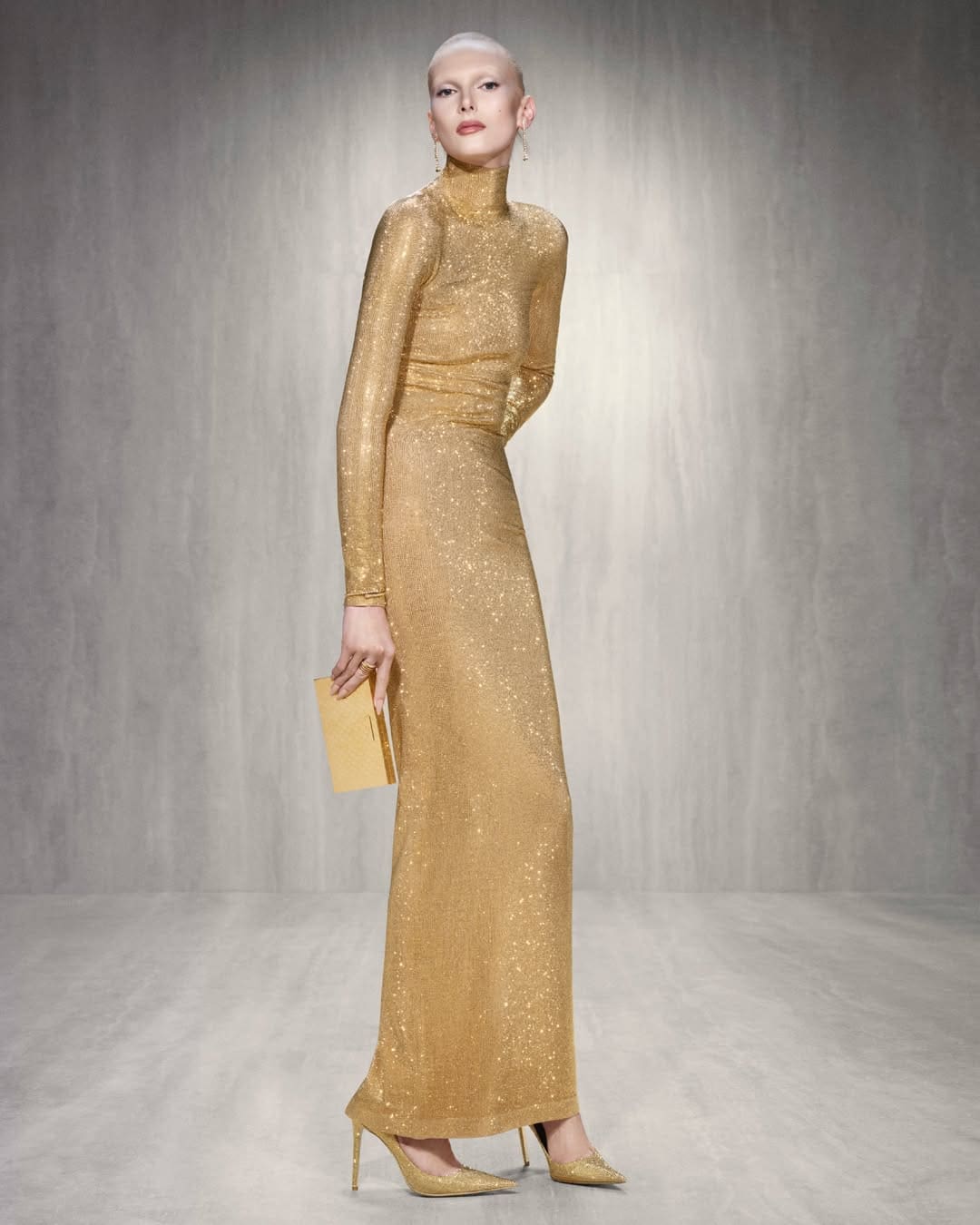
In every context, the clothes remain what they are: hyper-sexualized silhouettes coated in nightclub residue. Even the few shapes hinting at discipline—a leather pencil skirt, a pleated blue midi, a structured jacket—collapse under the weight of the styling. No lighting can neutralize the vulgarity embedded in the DNA of this collection.
Three scenographies.
One narrative: the fantasy of elegance drowned in cosmetic smog.
VIII. CONCLUSION: THE CARICATURE OF HIGH FASHION
Demna wanted Gucci to “become an adjective.”
This season, that adjective is unmistakably vulgar.
Not the intentional provocation of Mugler, nor the intellectual vulgarity of Gaultier.
This is accidental vulgarity—aspirational glamour that mistakes decadence for depth, noise for narrative, and pastiche for heritage.
Primavera promised rebirth.
Instead, it delivered a Renaissance staged in a nightclub basement, where Botticelli’s Venus would immediately ask for directions to the exit.
This is not a new chapter for Gucci.
It is a caricature of one.
See All Looks Gucci Fall 2026 Primavera by Demna (LookBook)
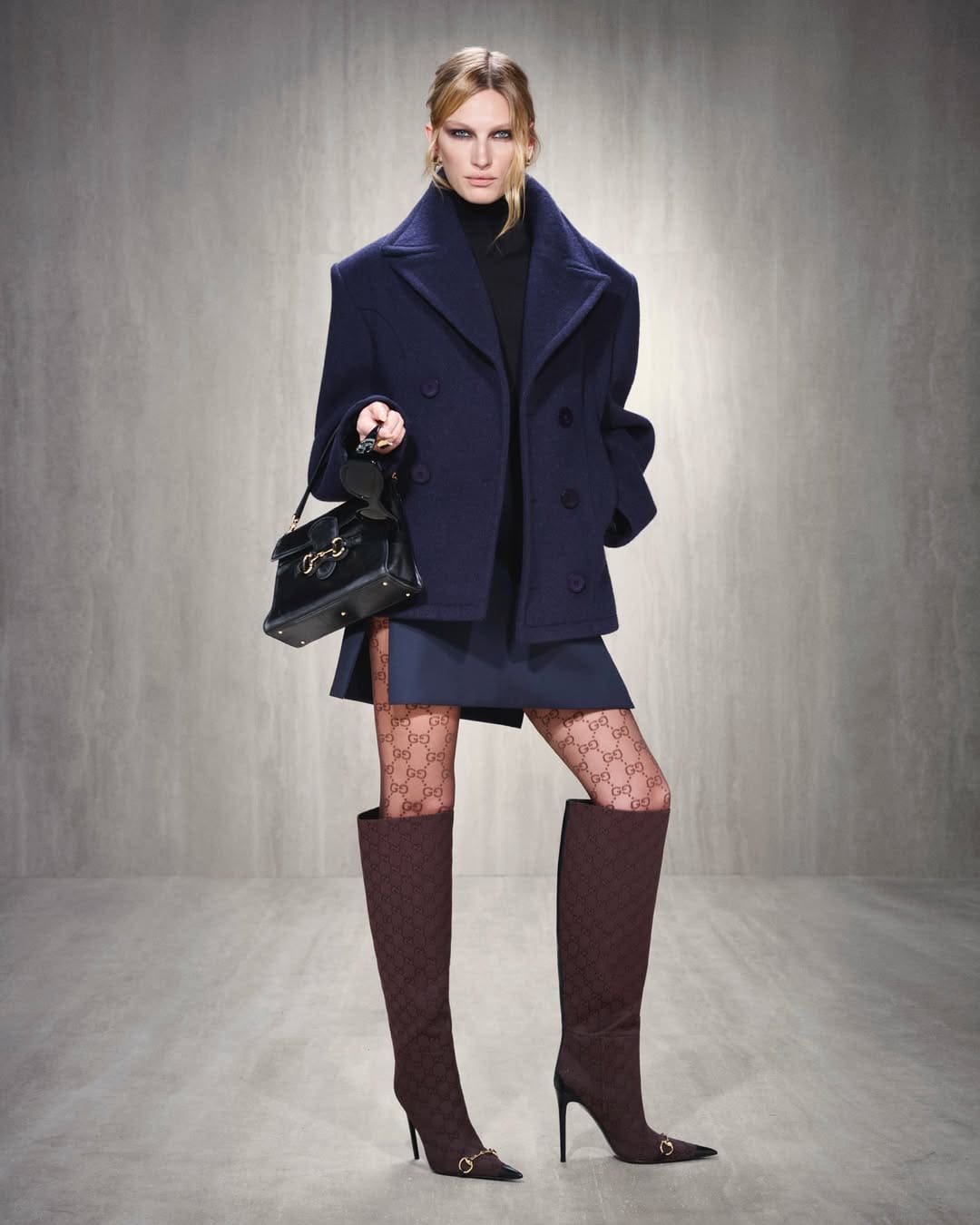
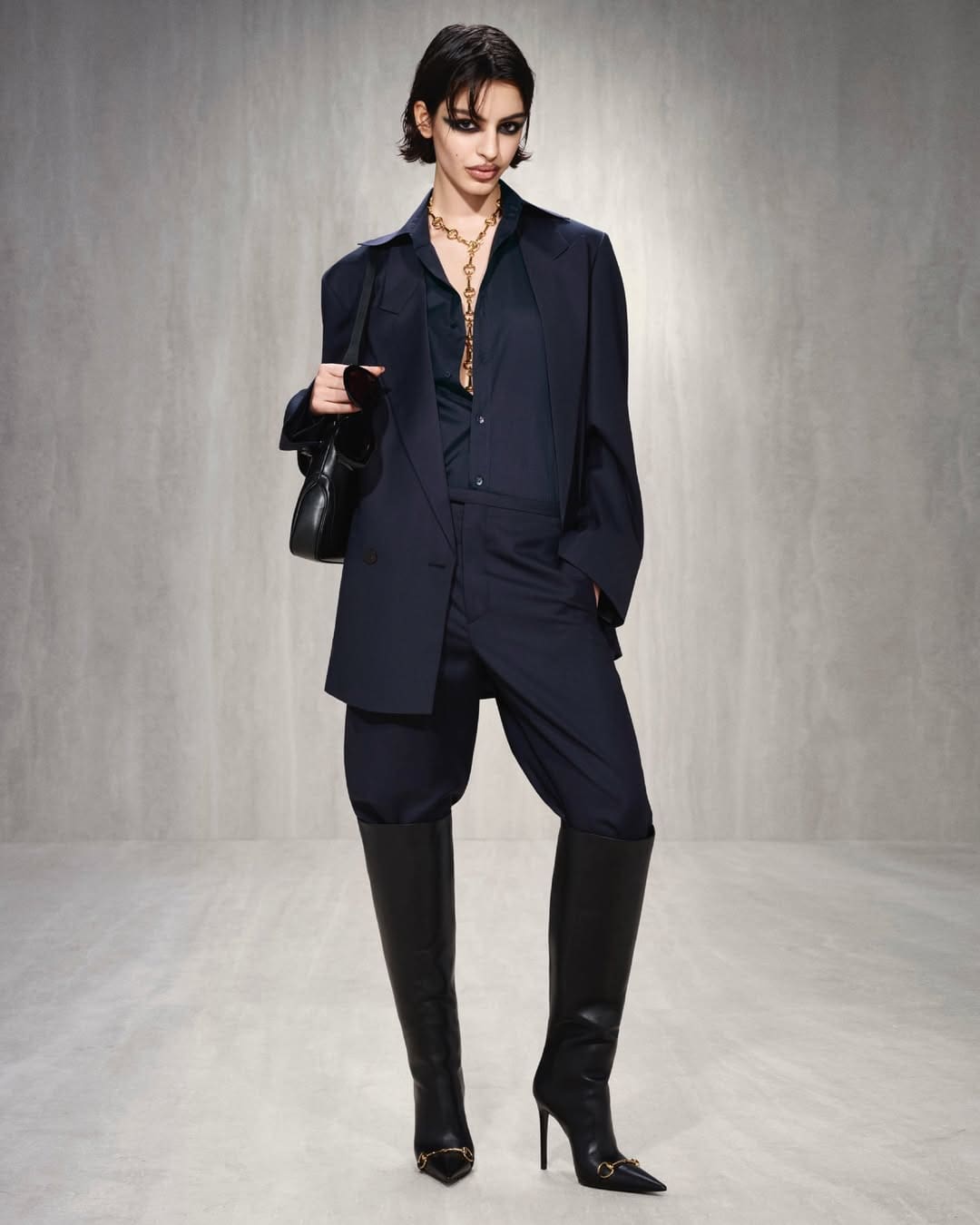
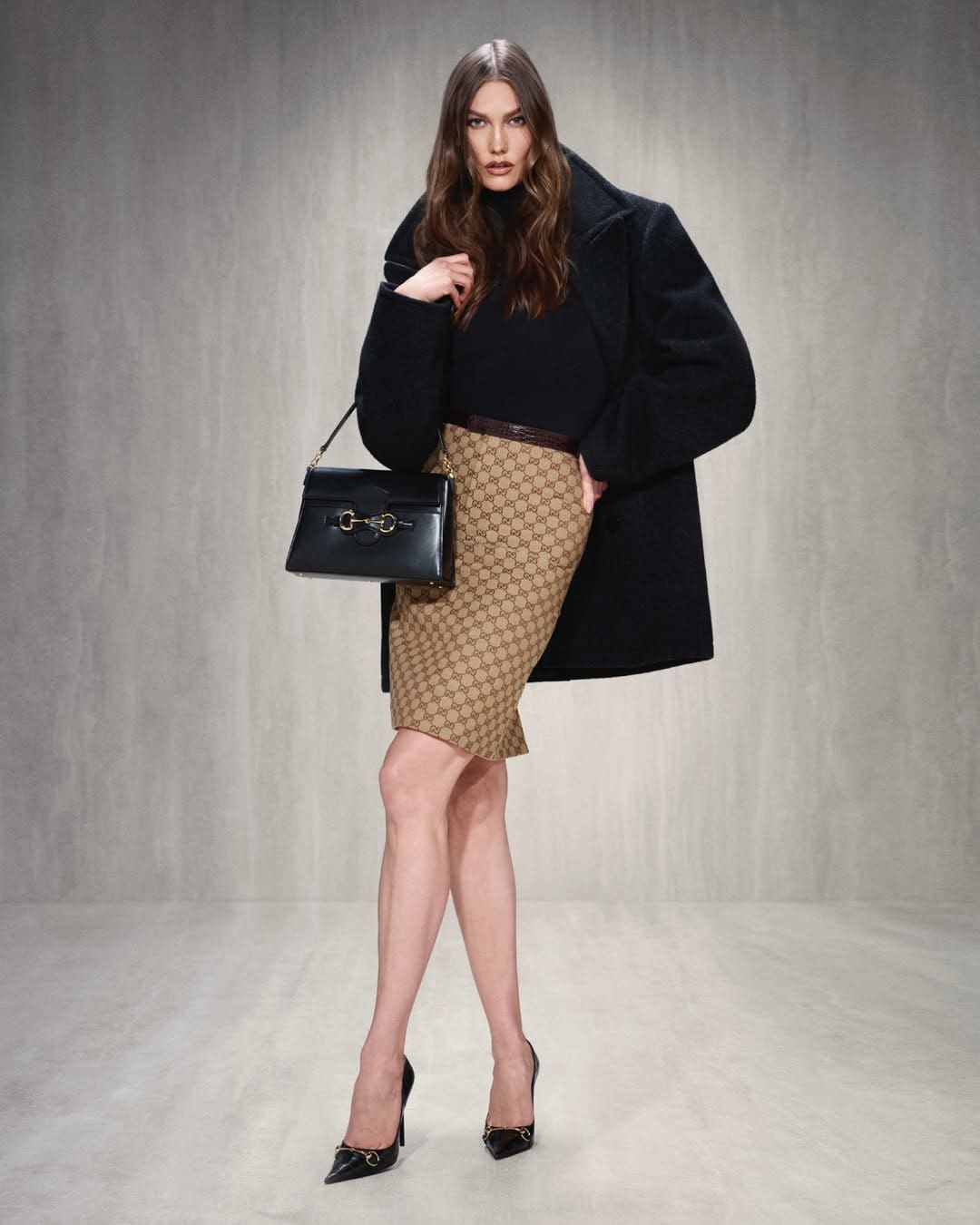
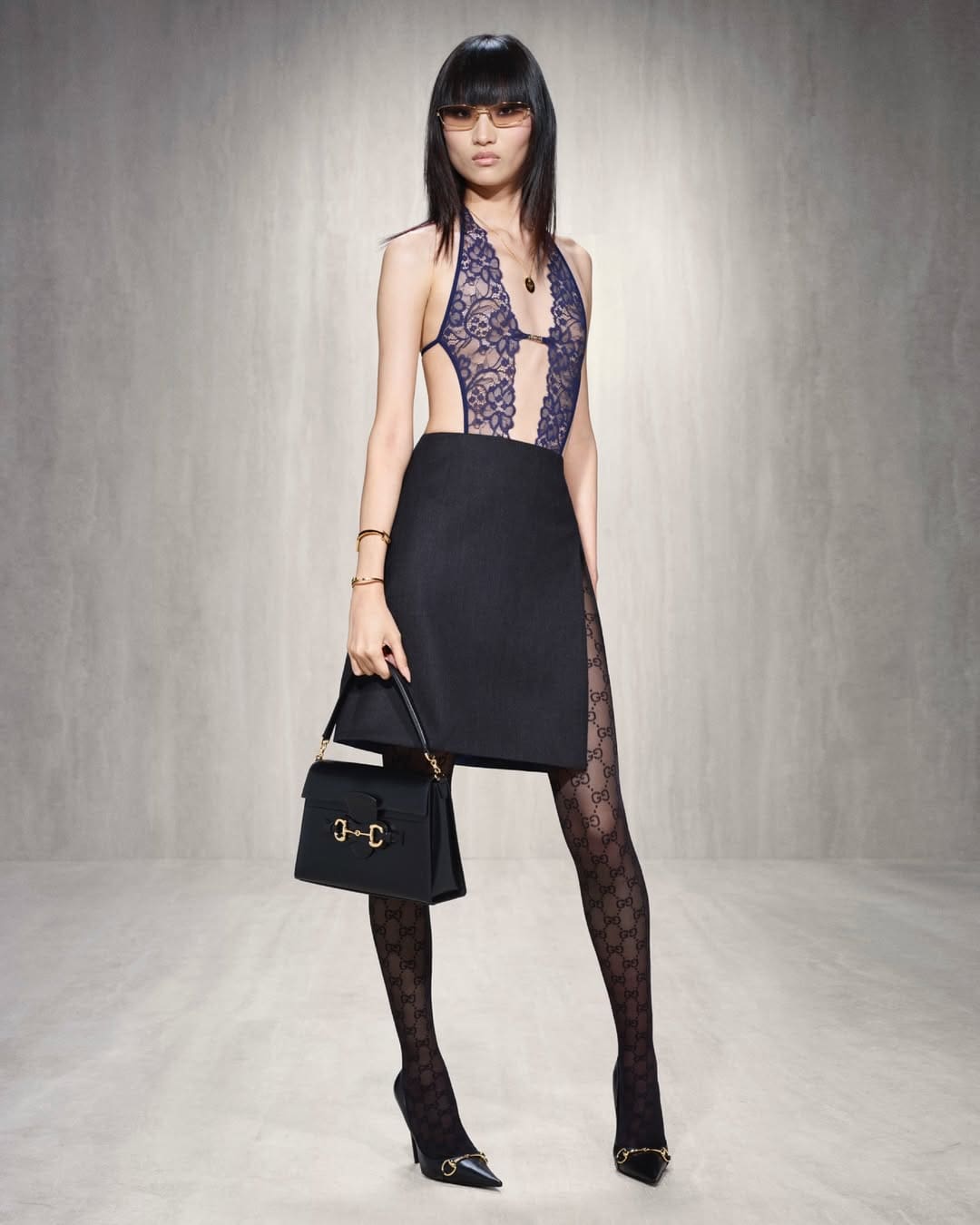
See All Looks Gucci Fall 2026 Primavera by Demna (Runway Show)