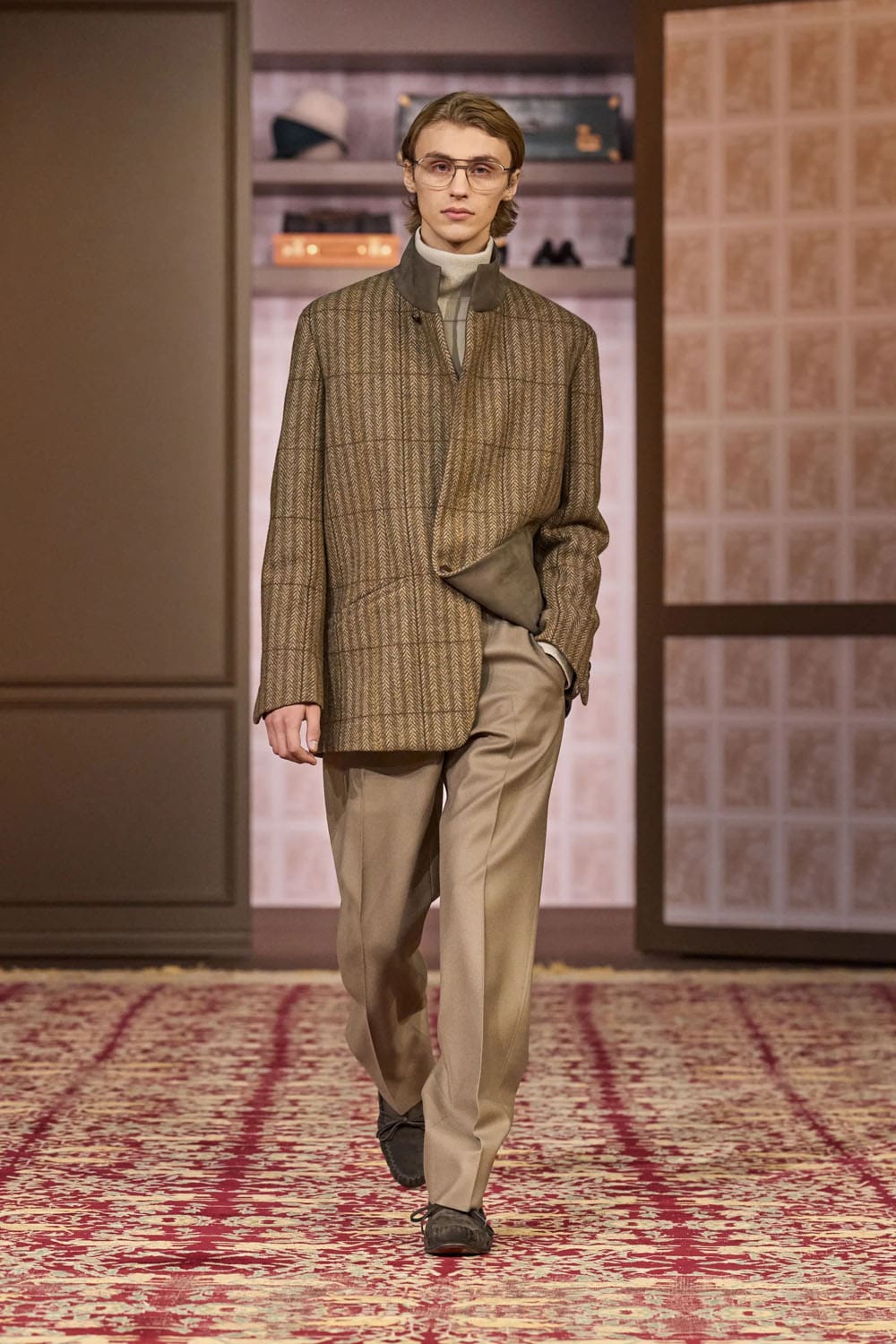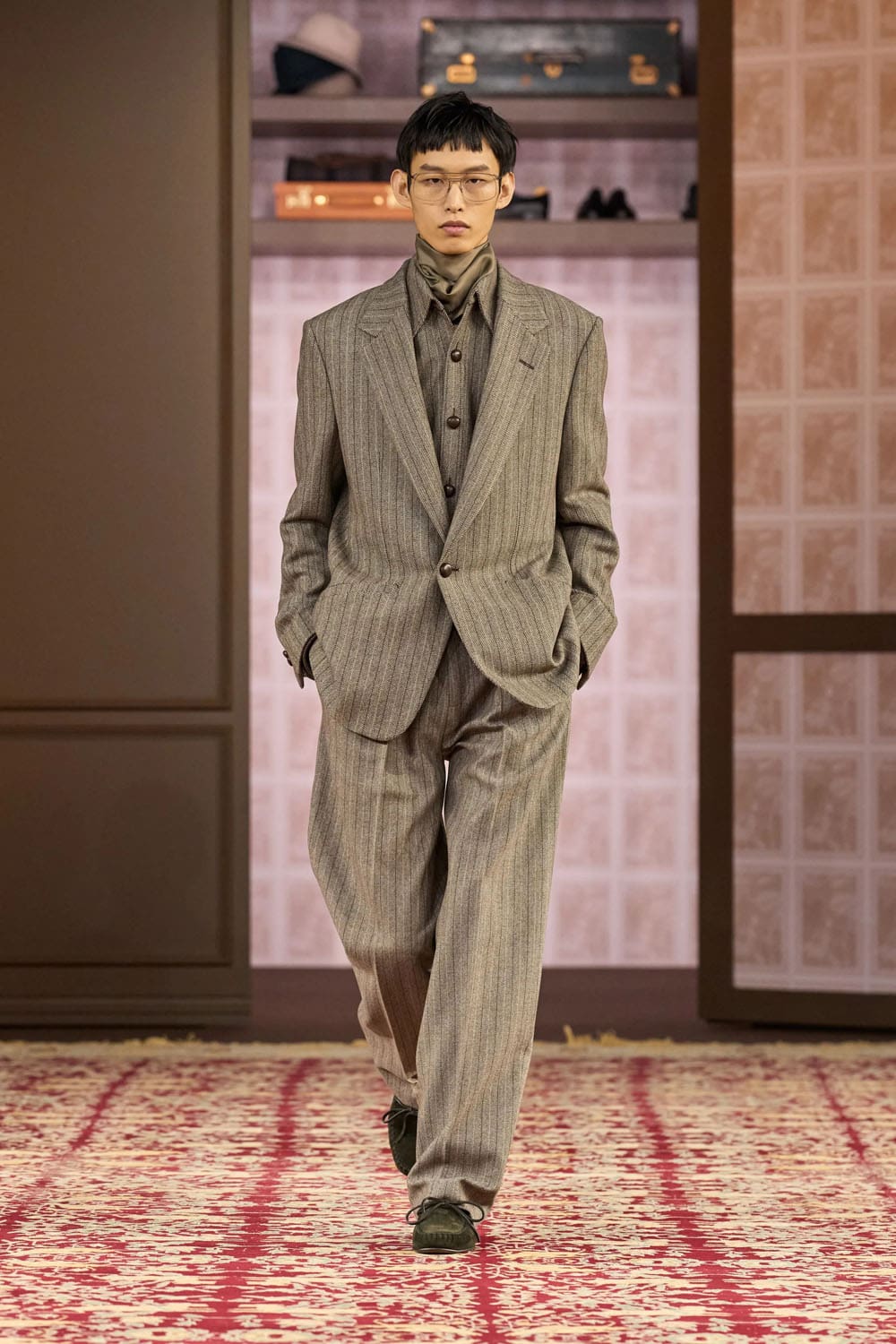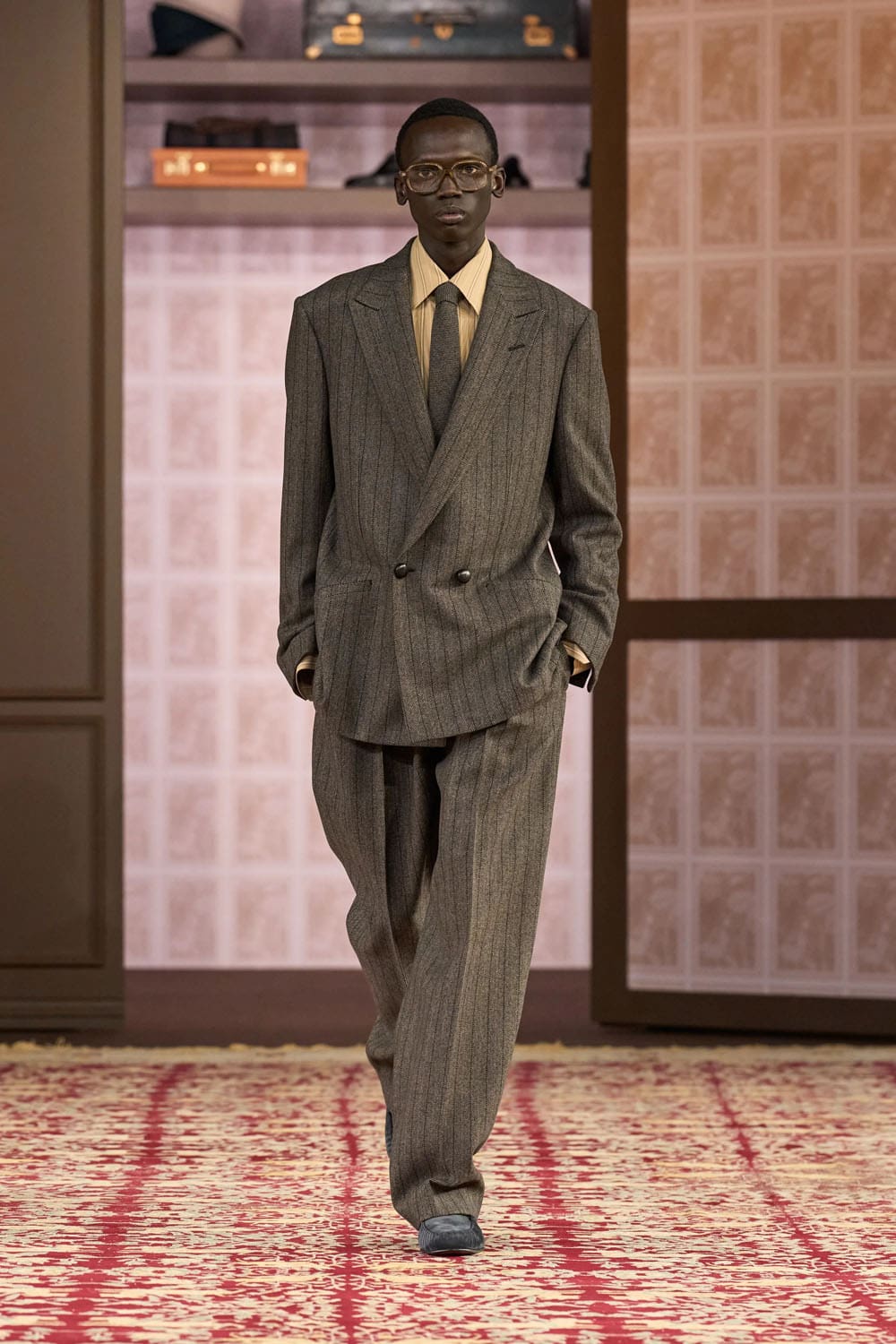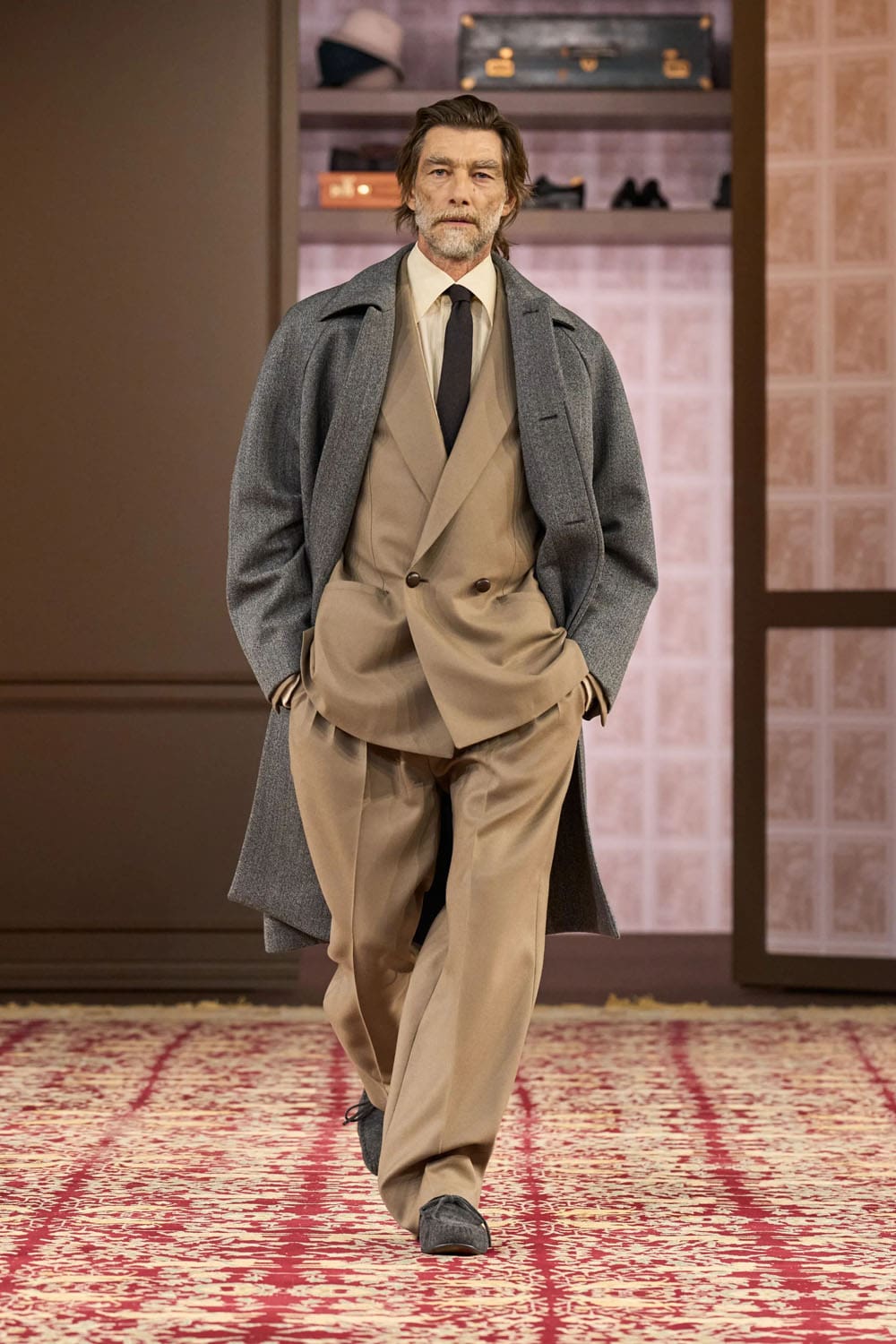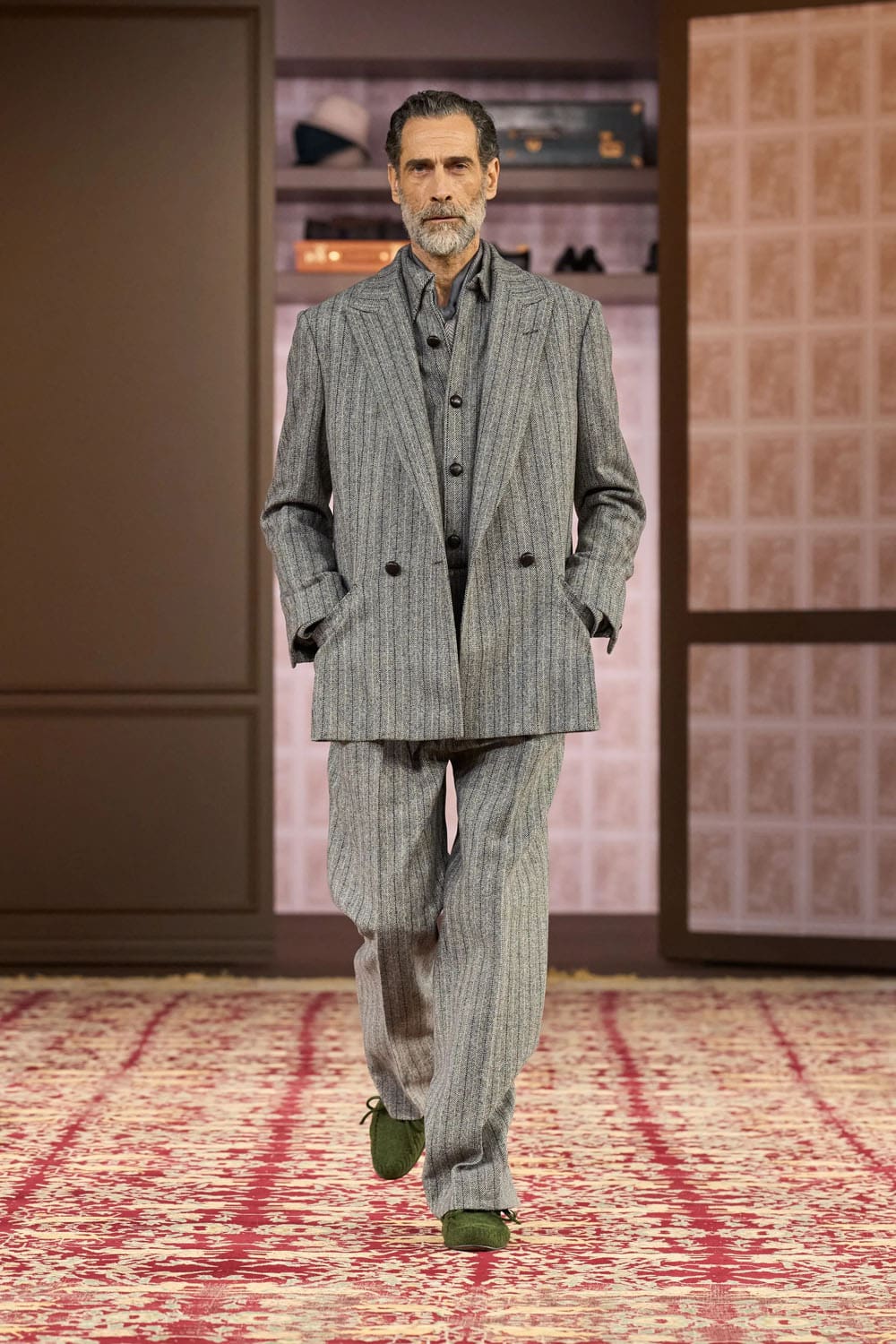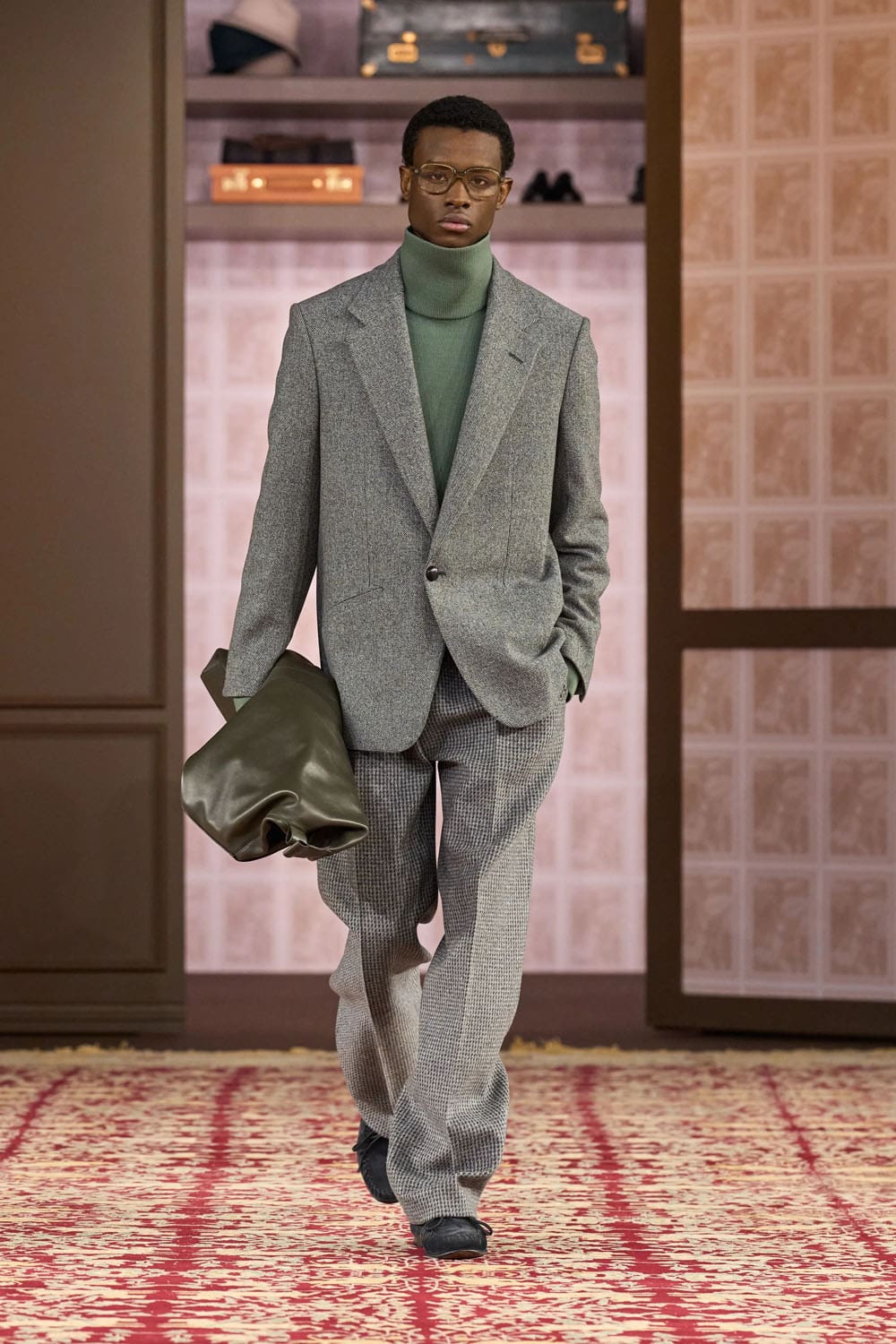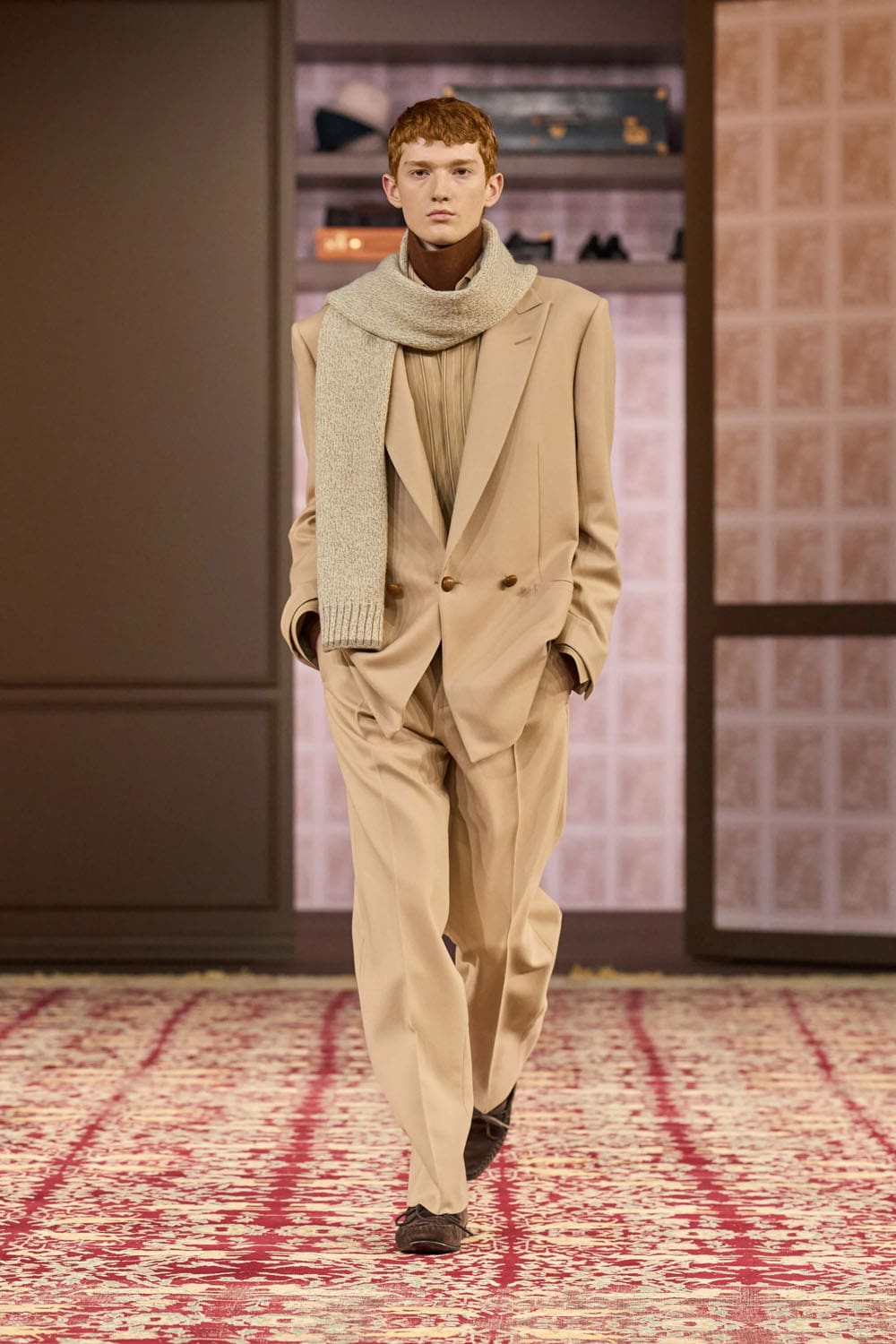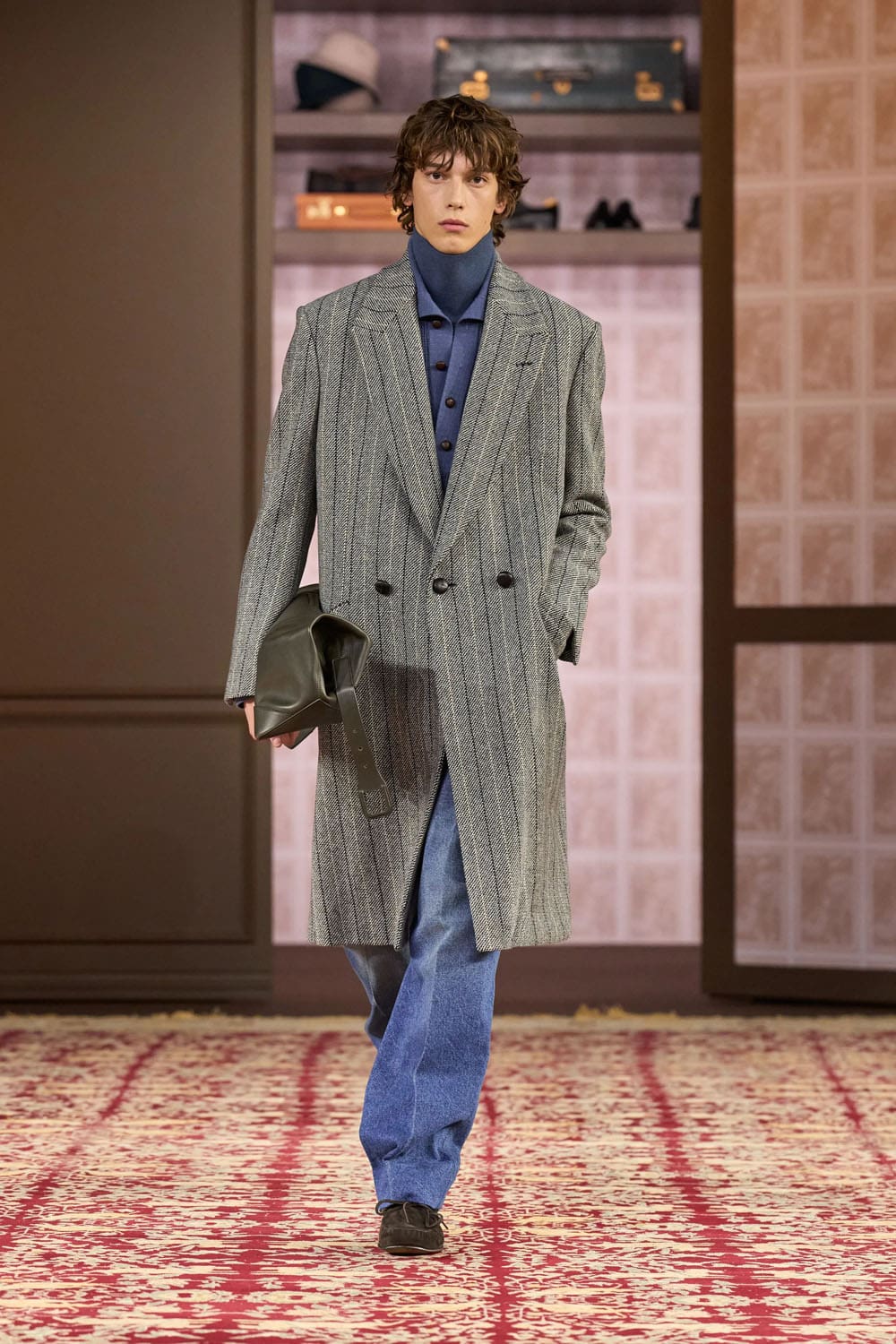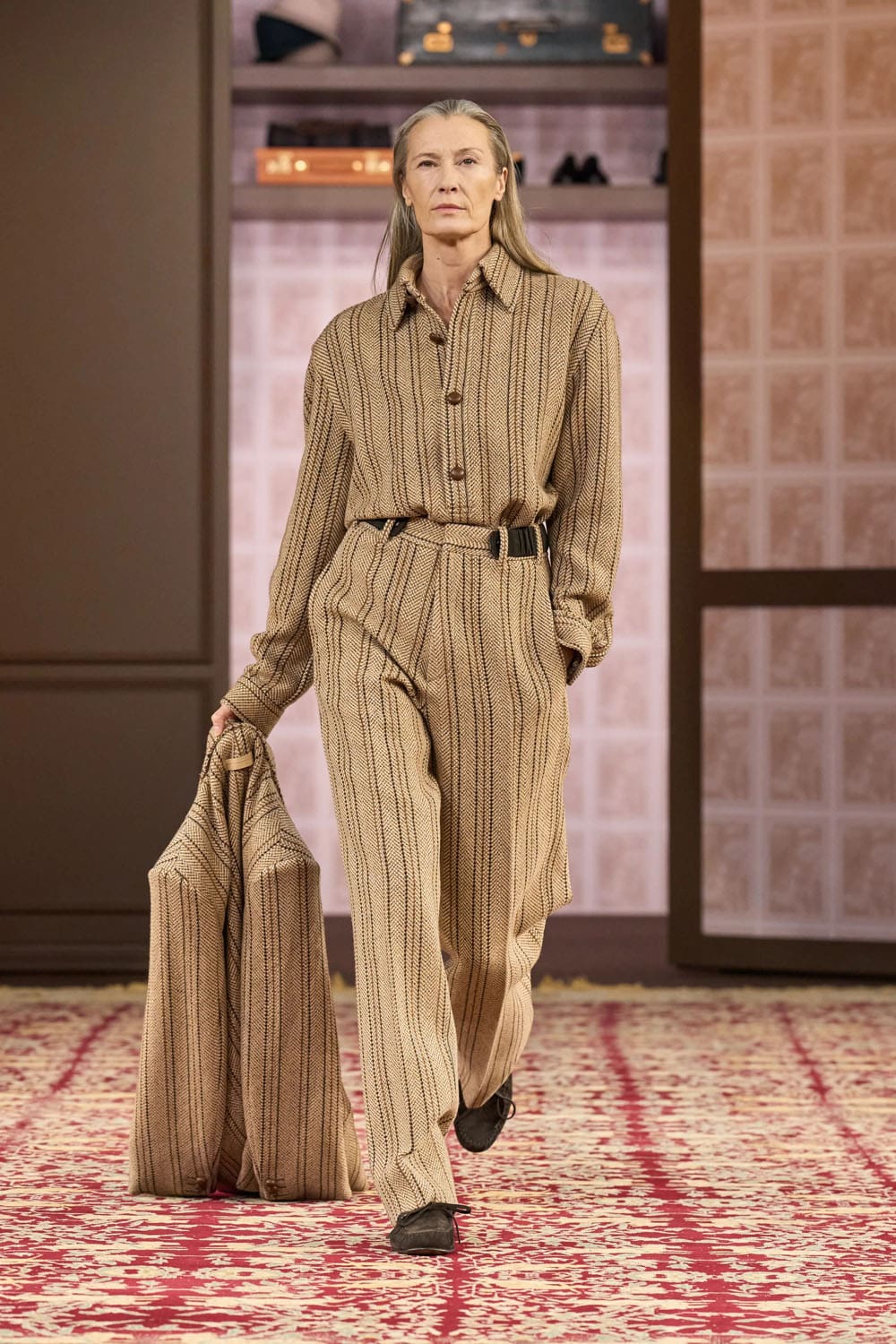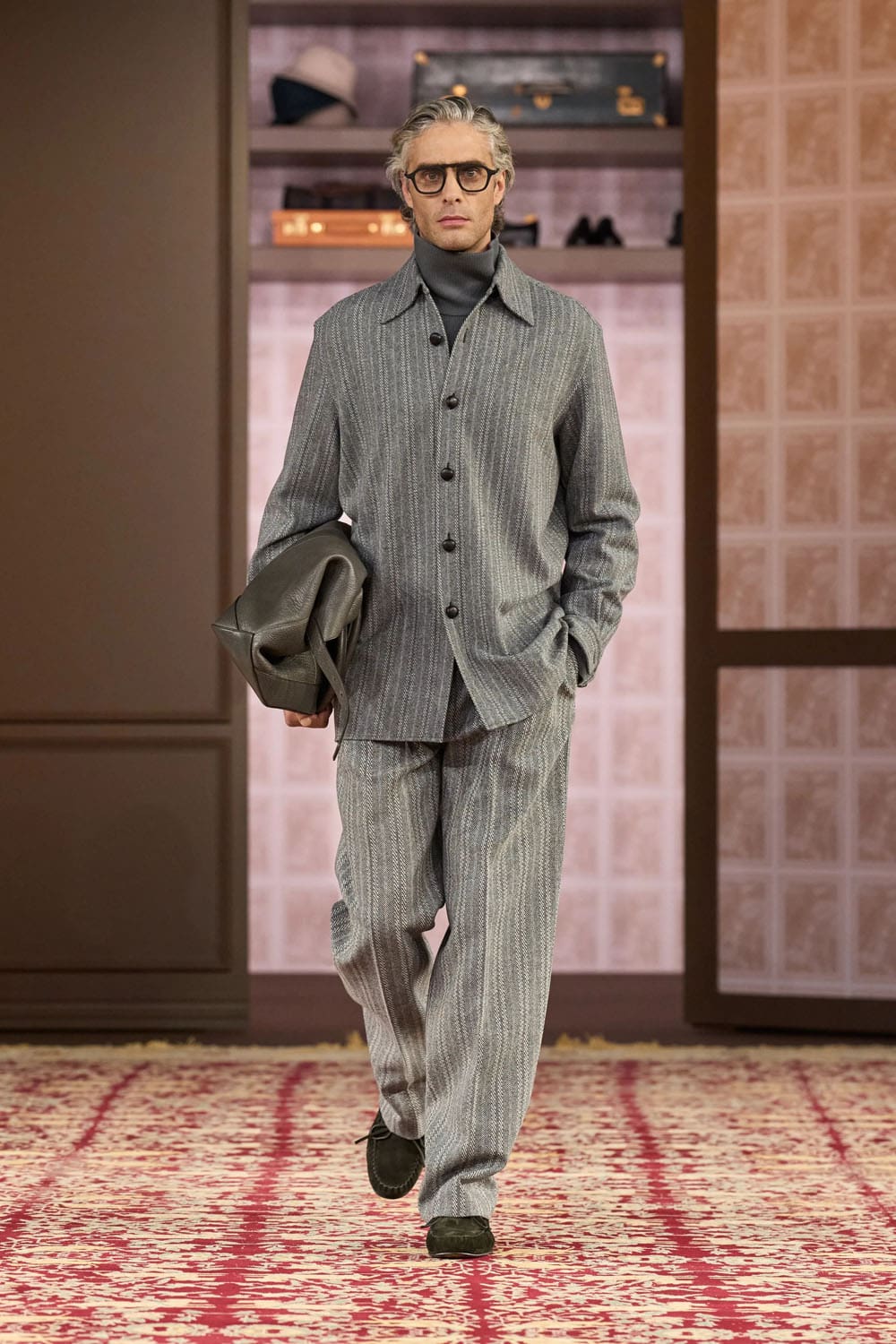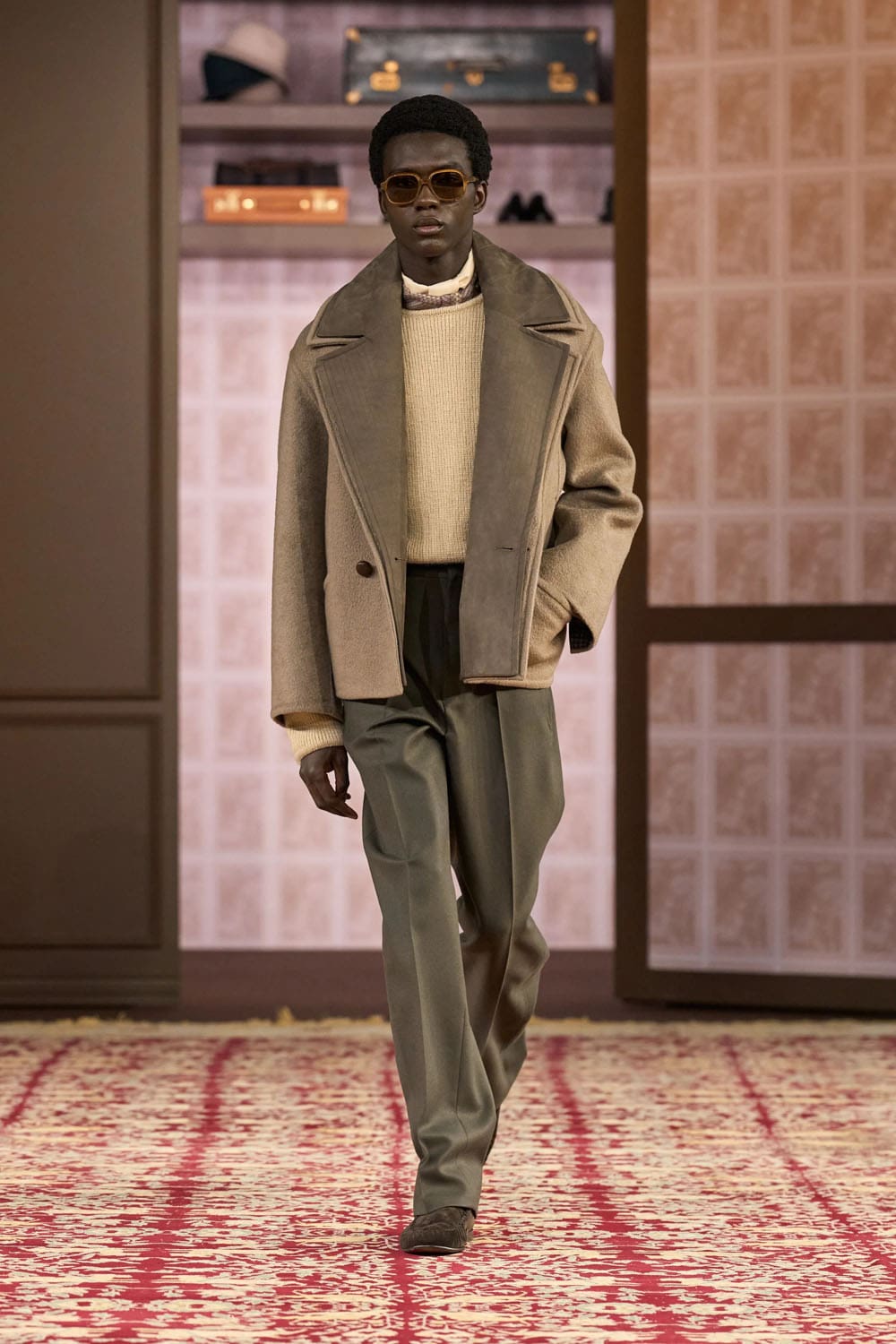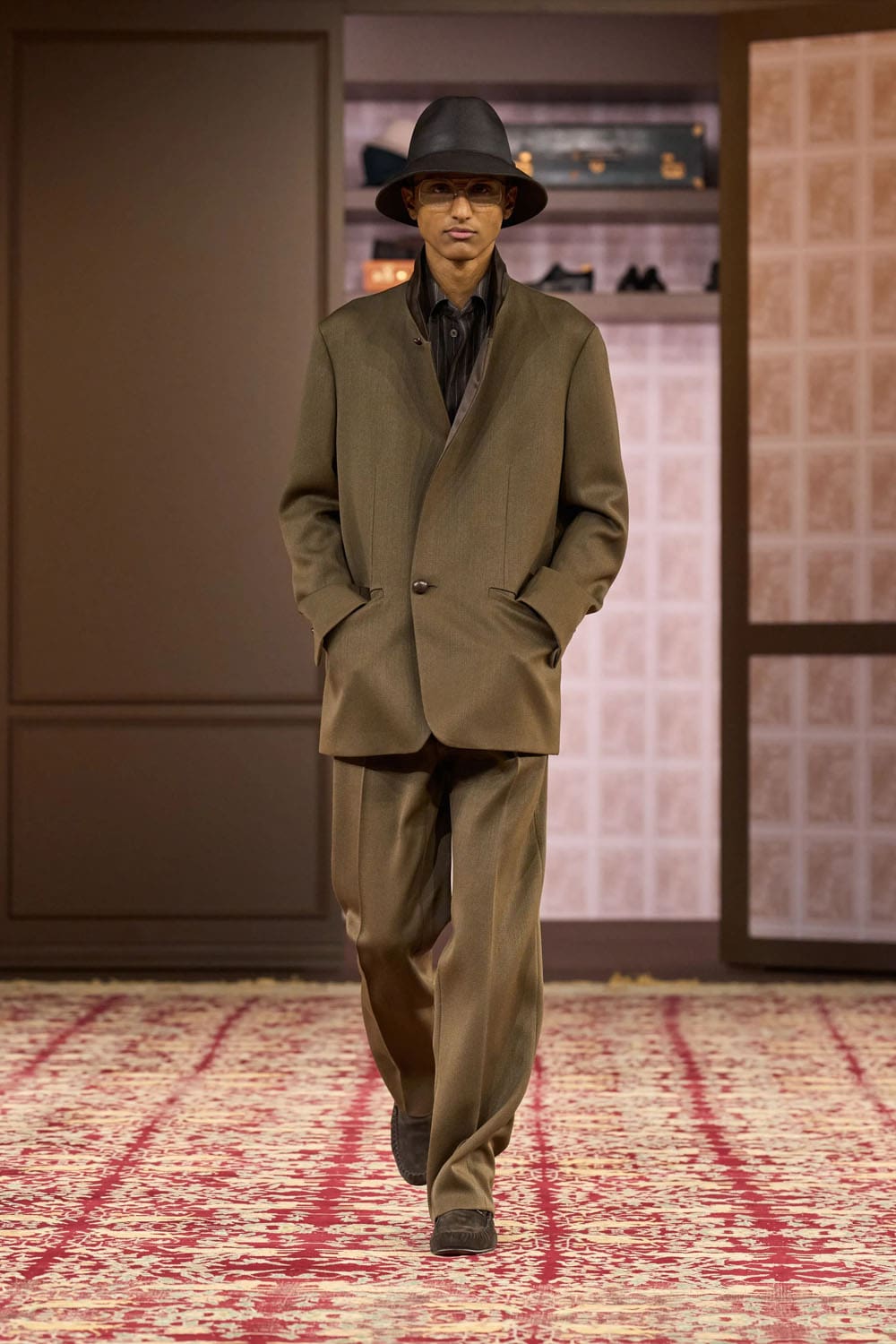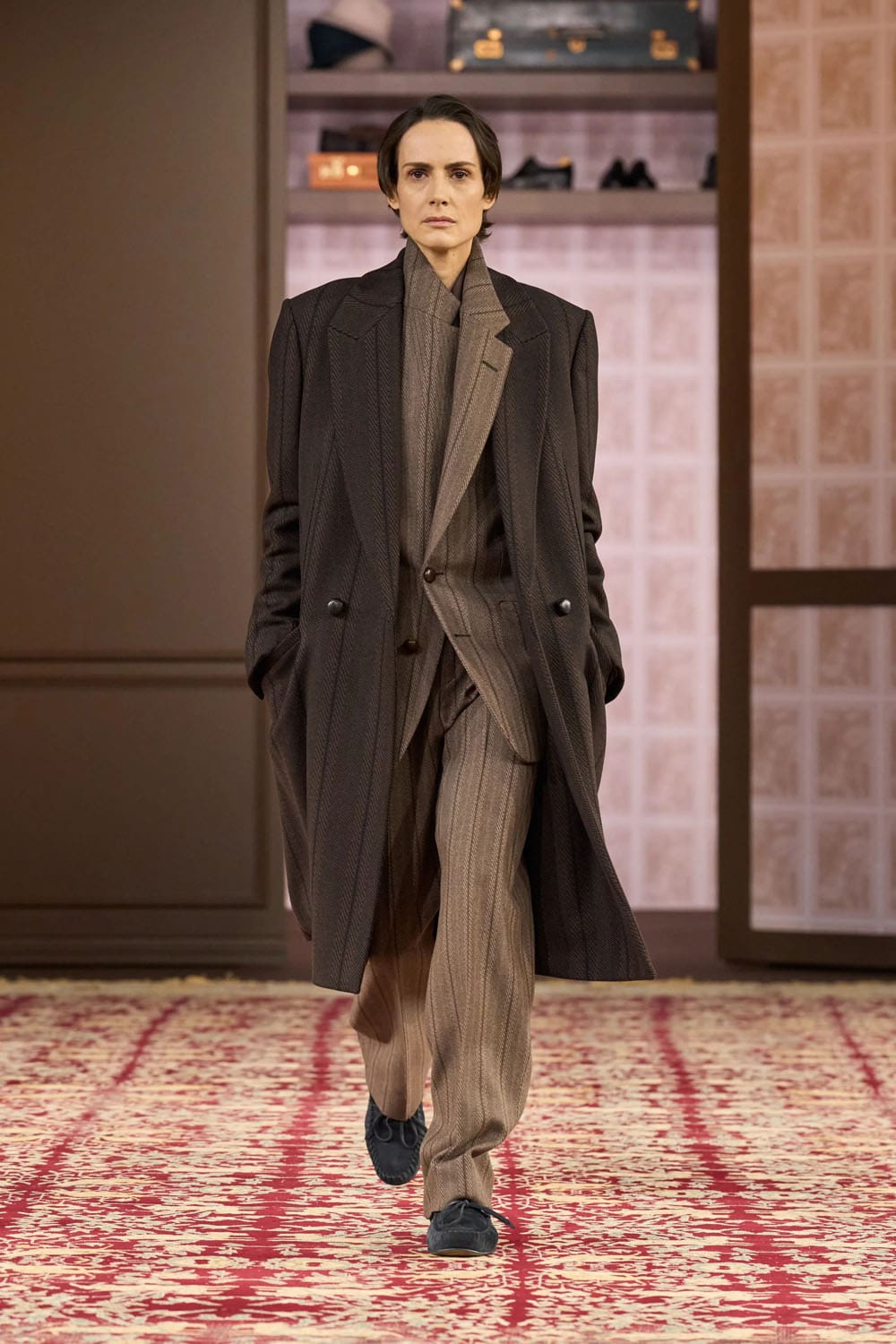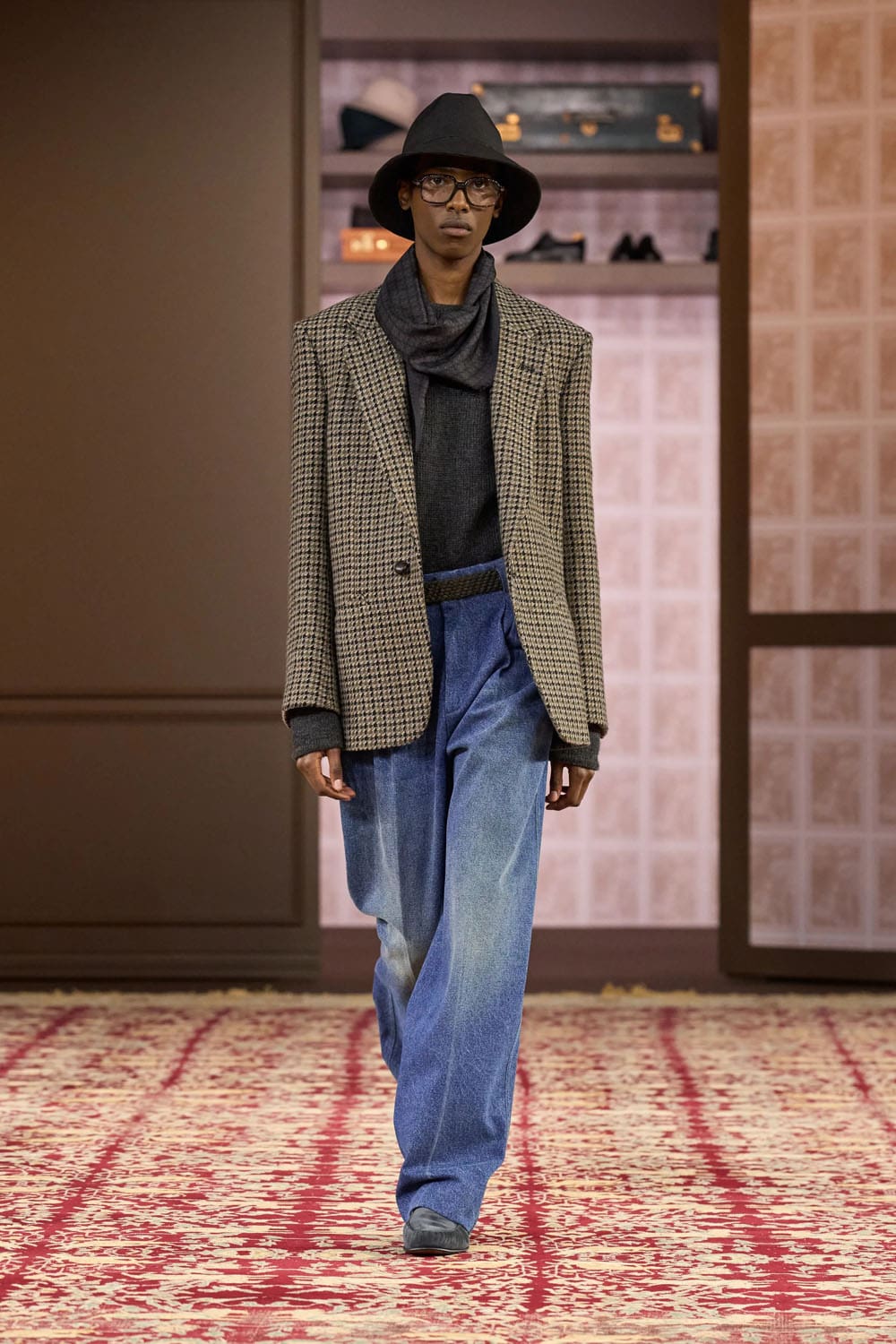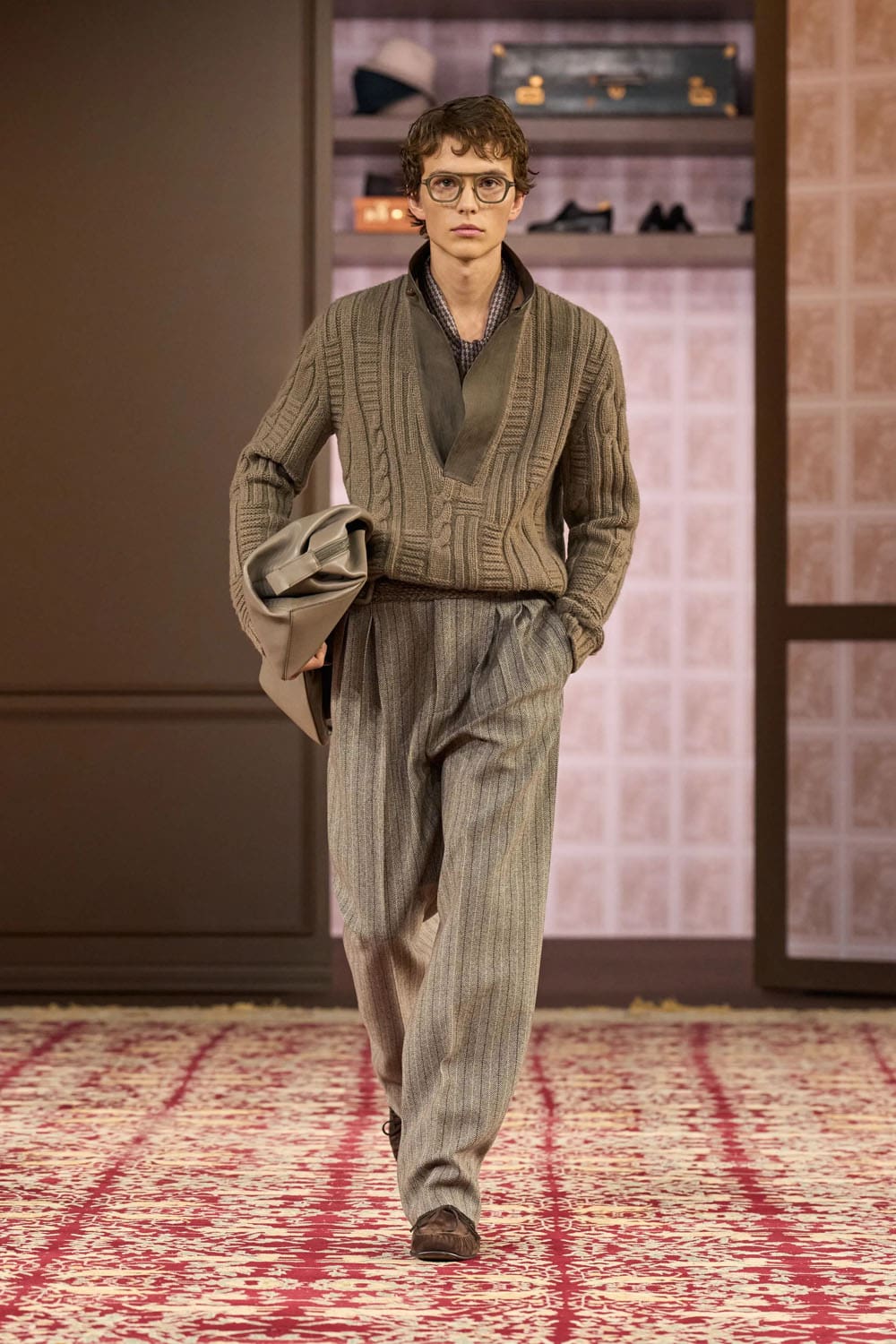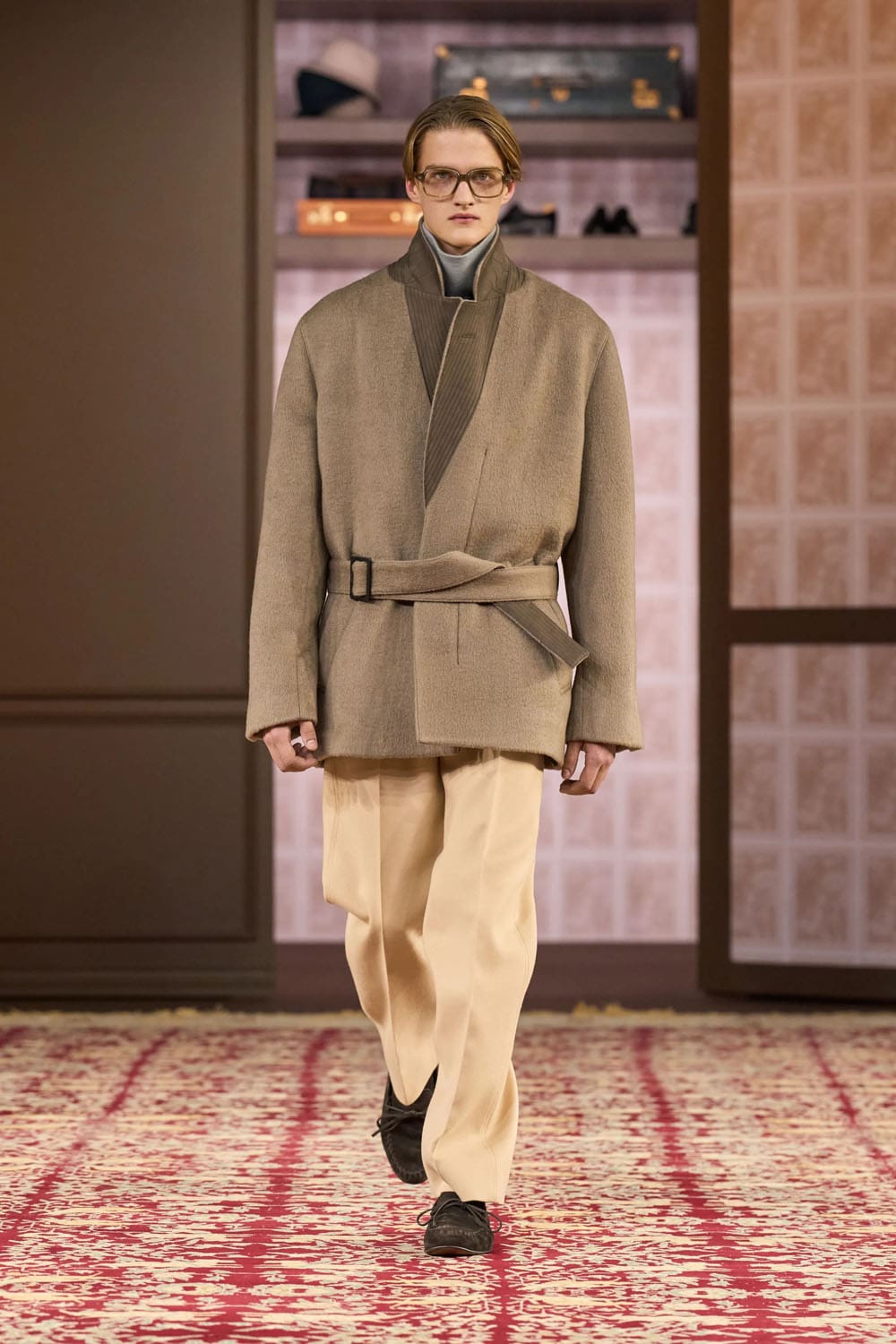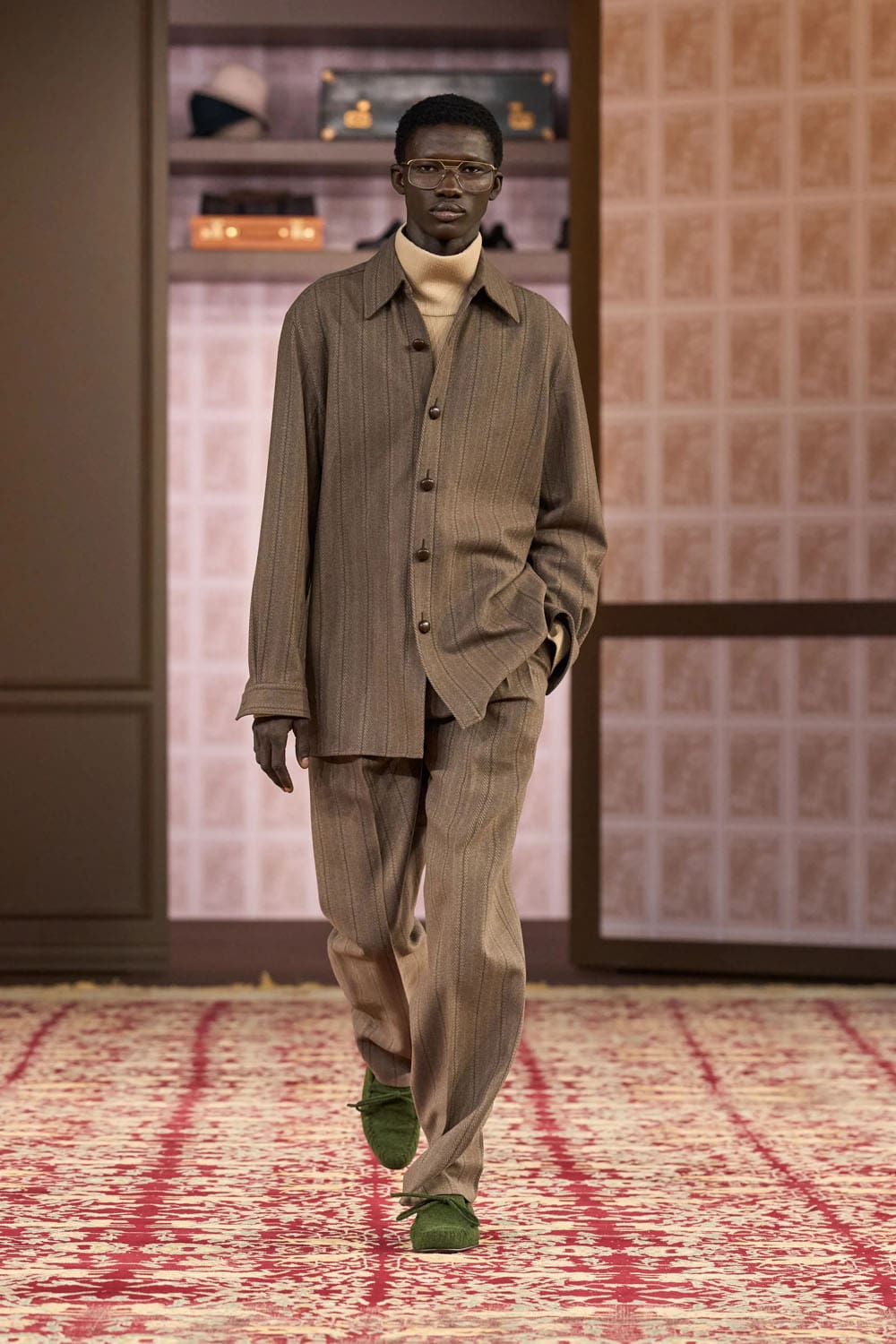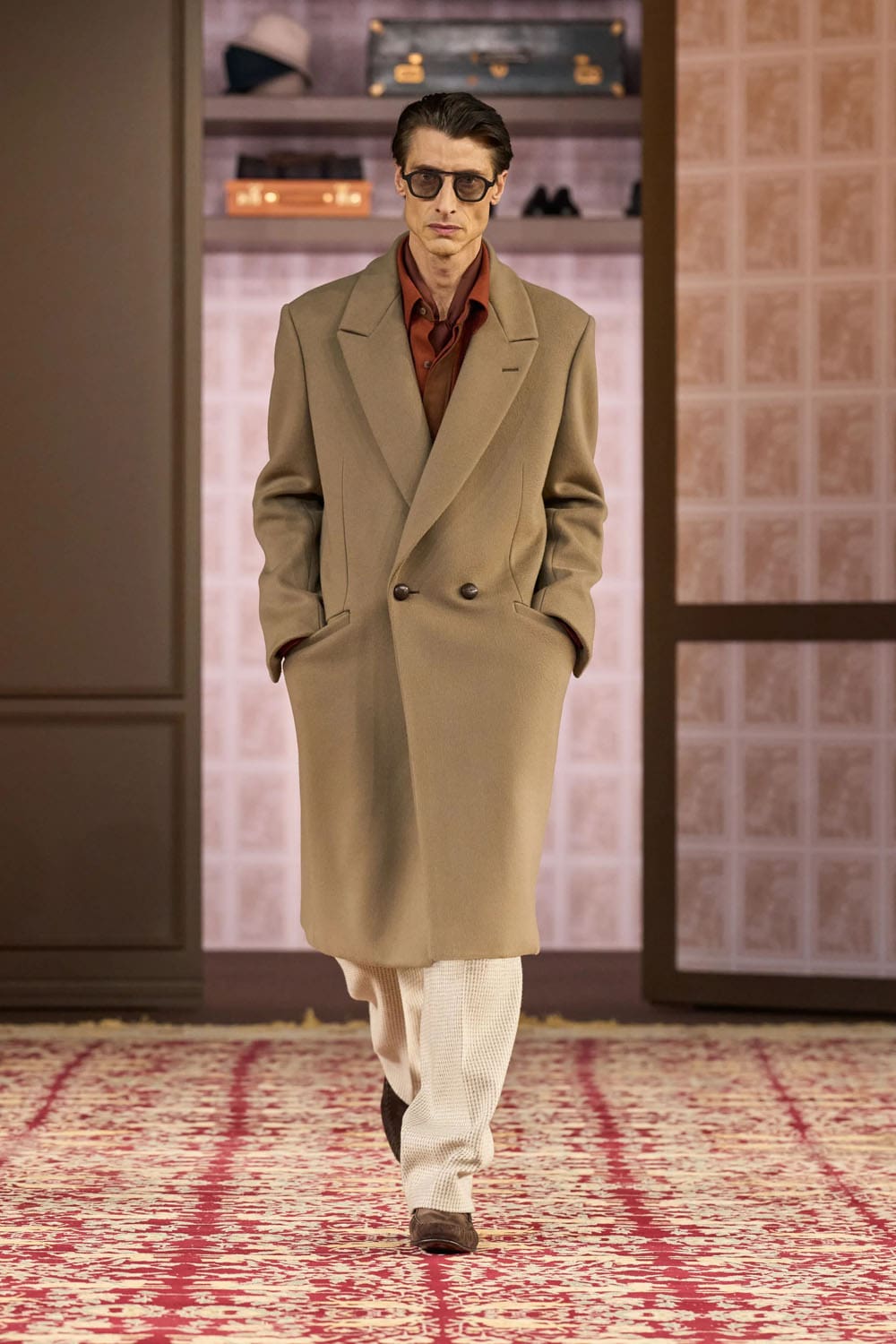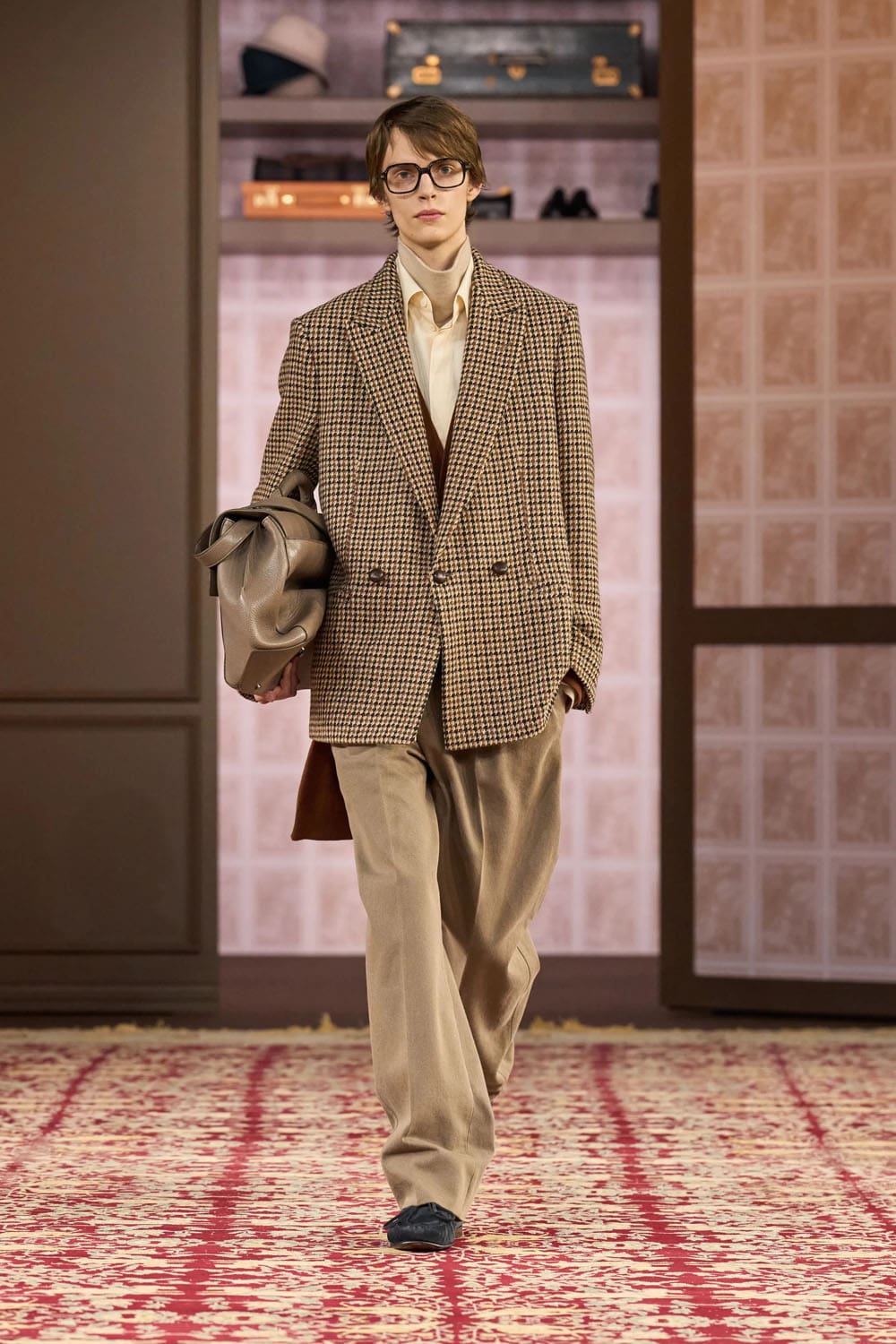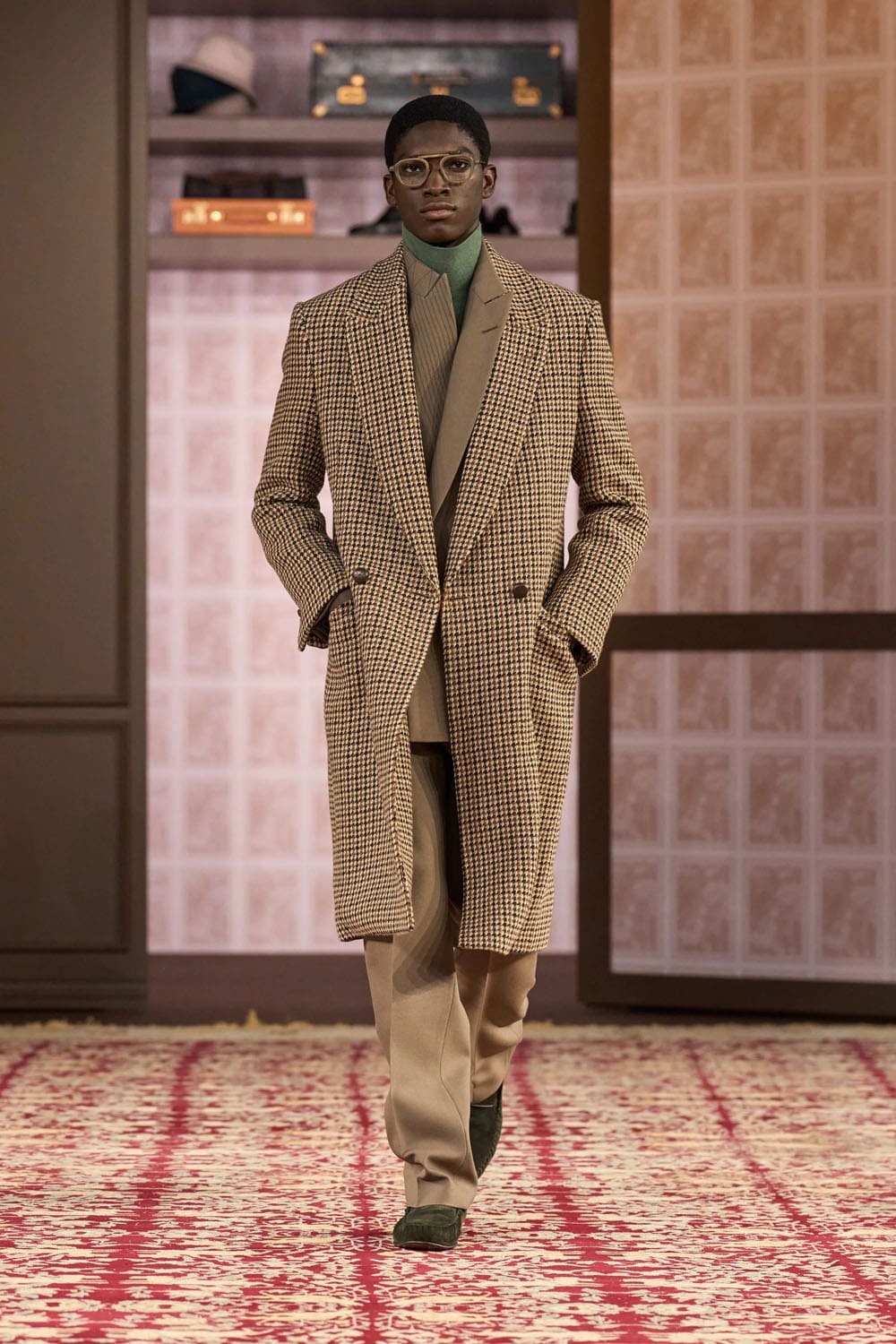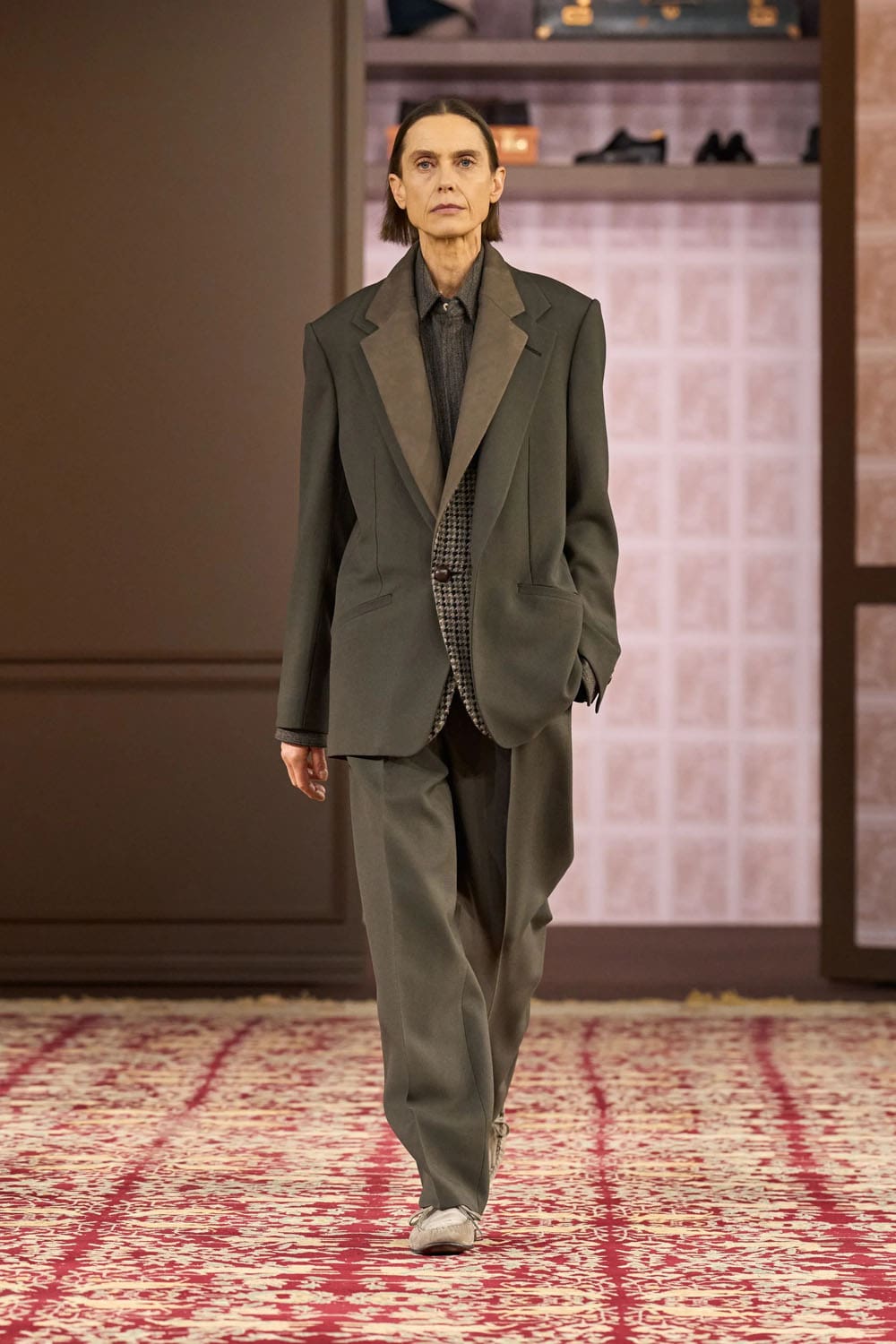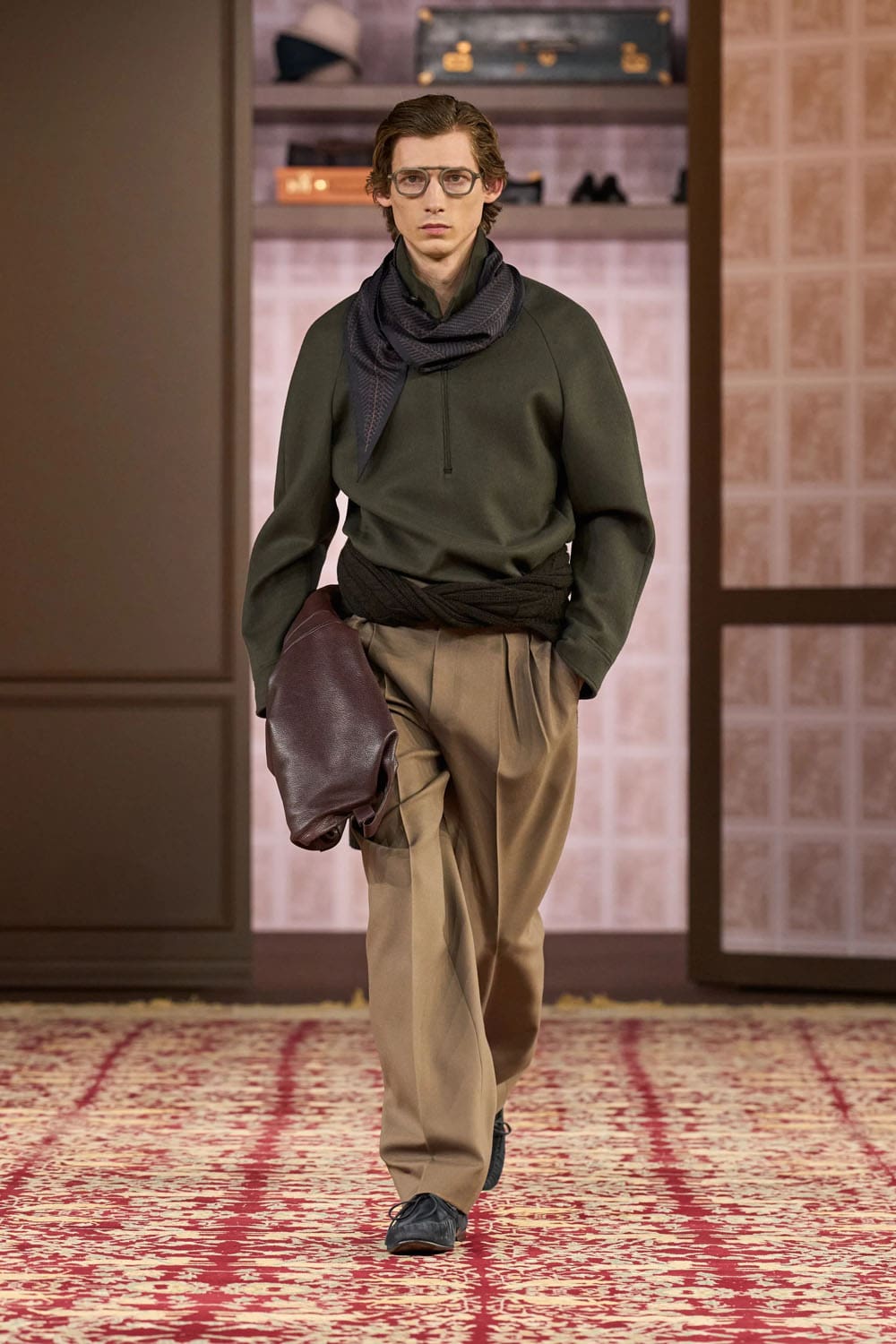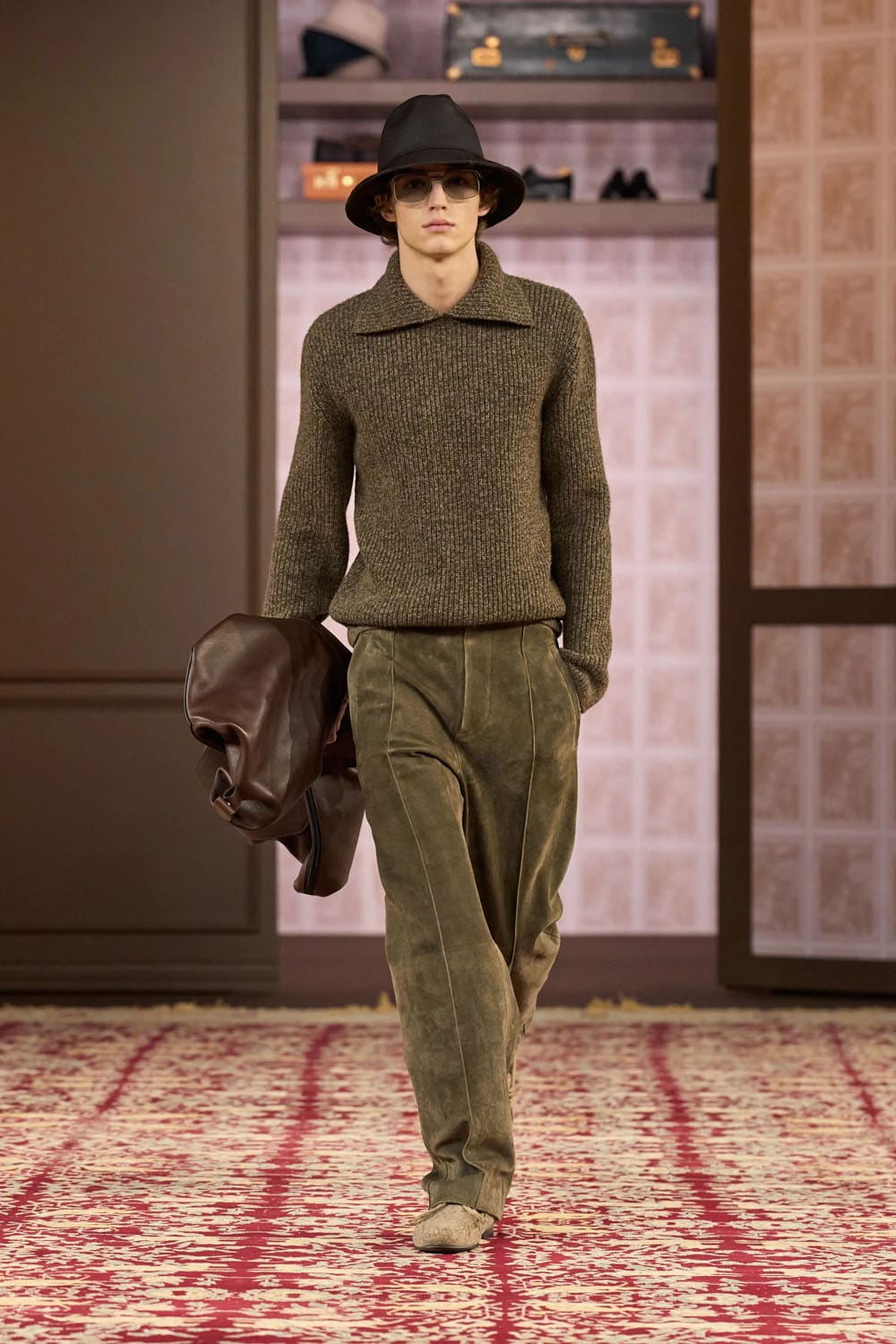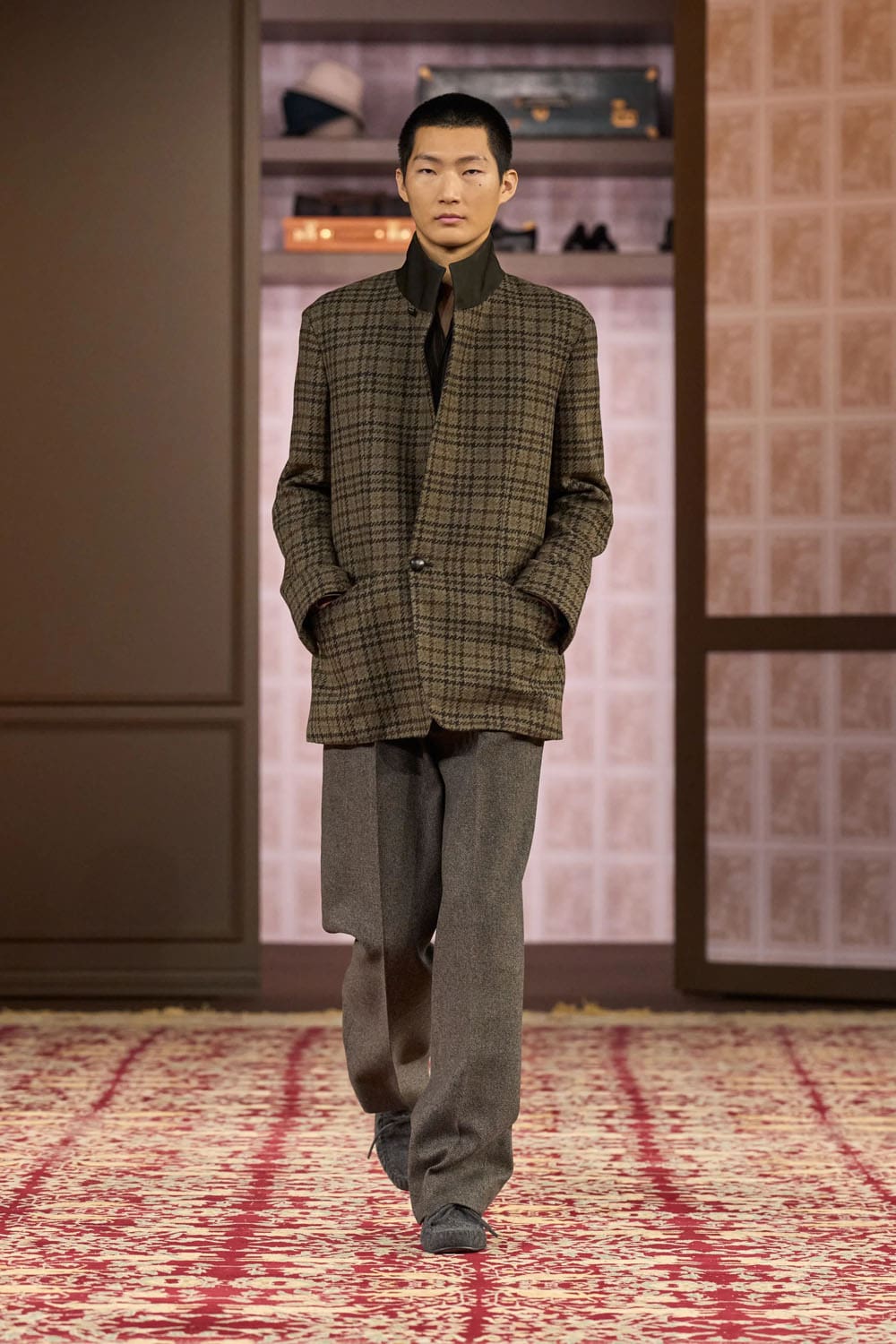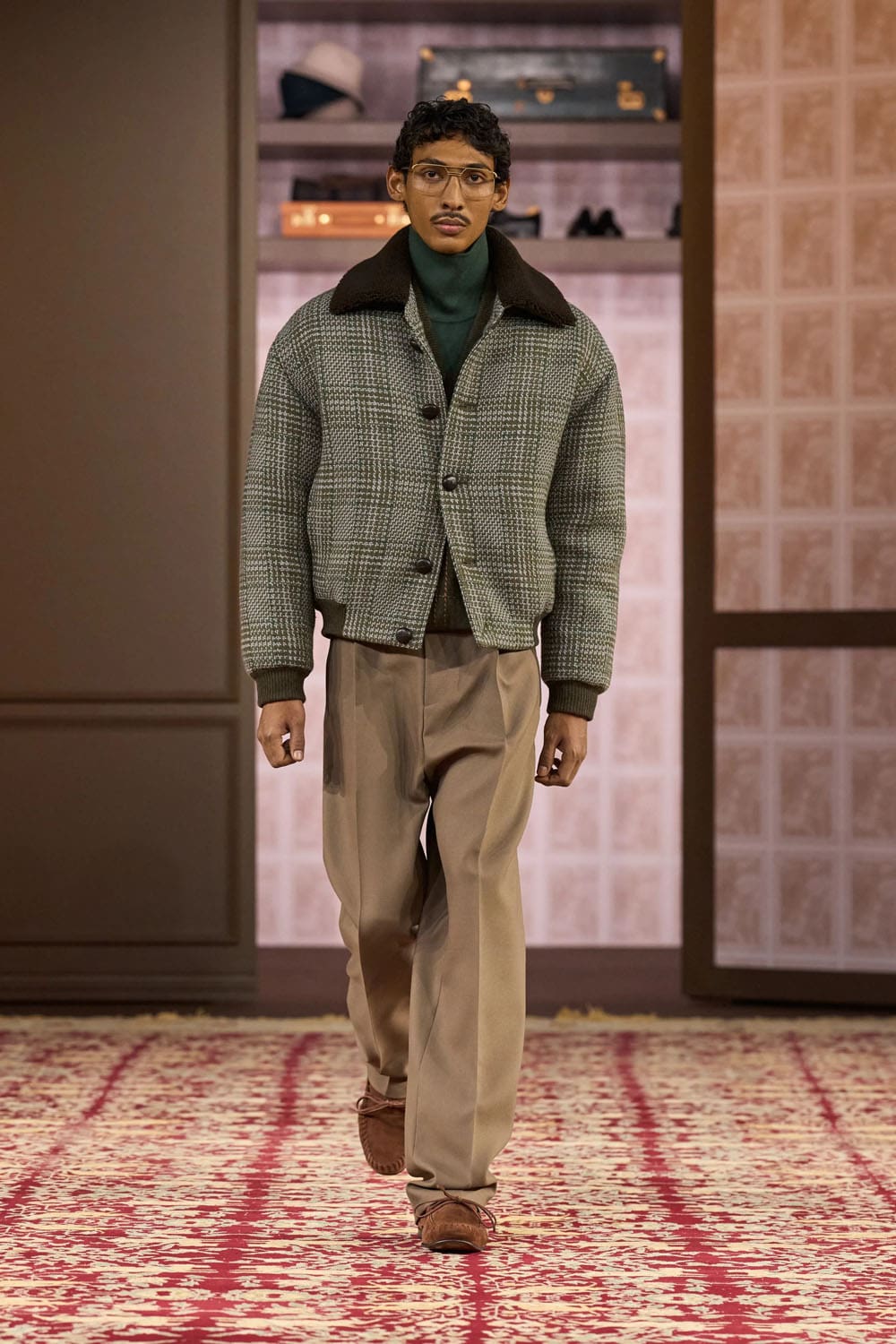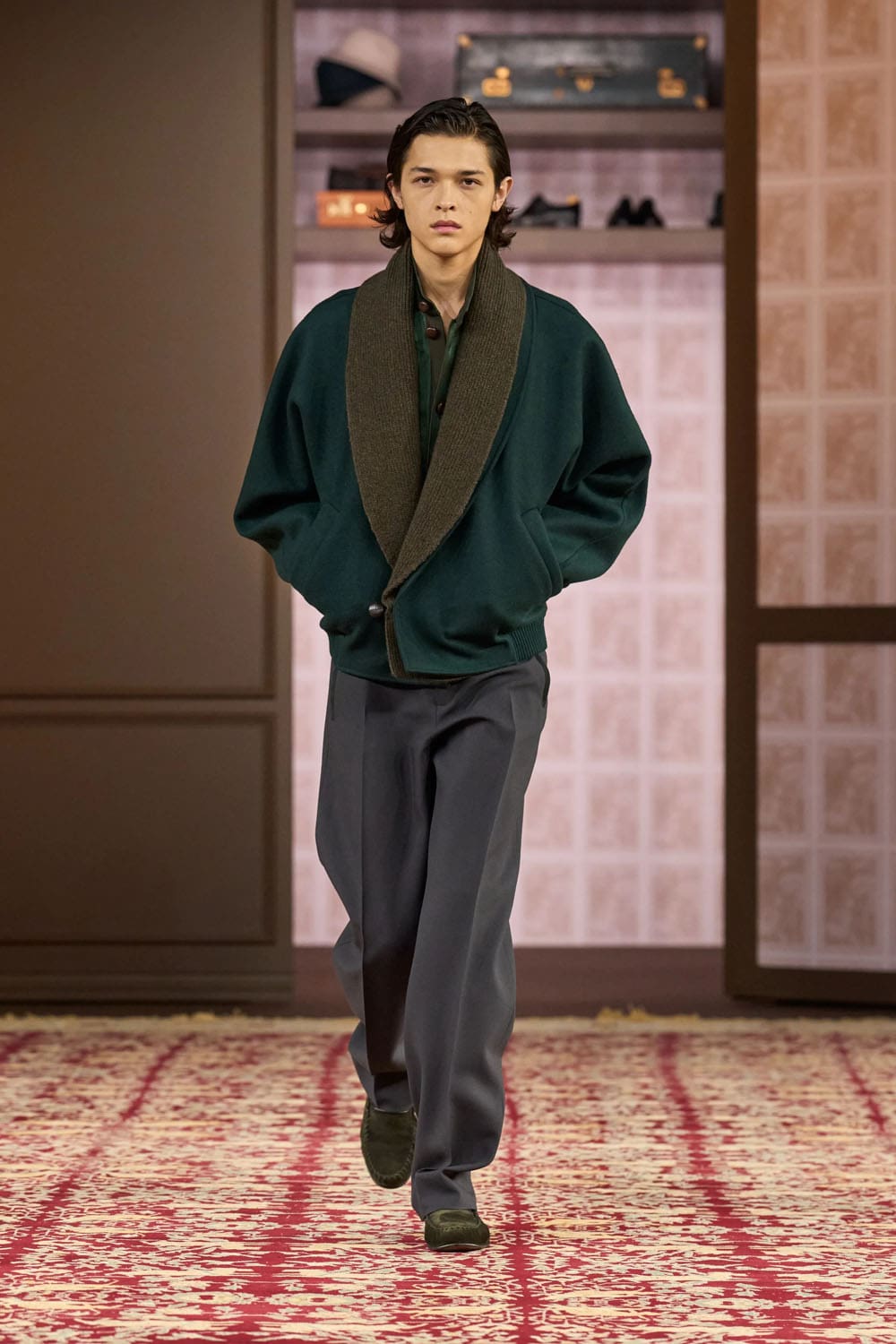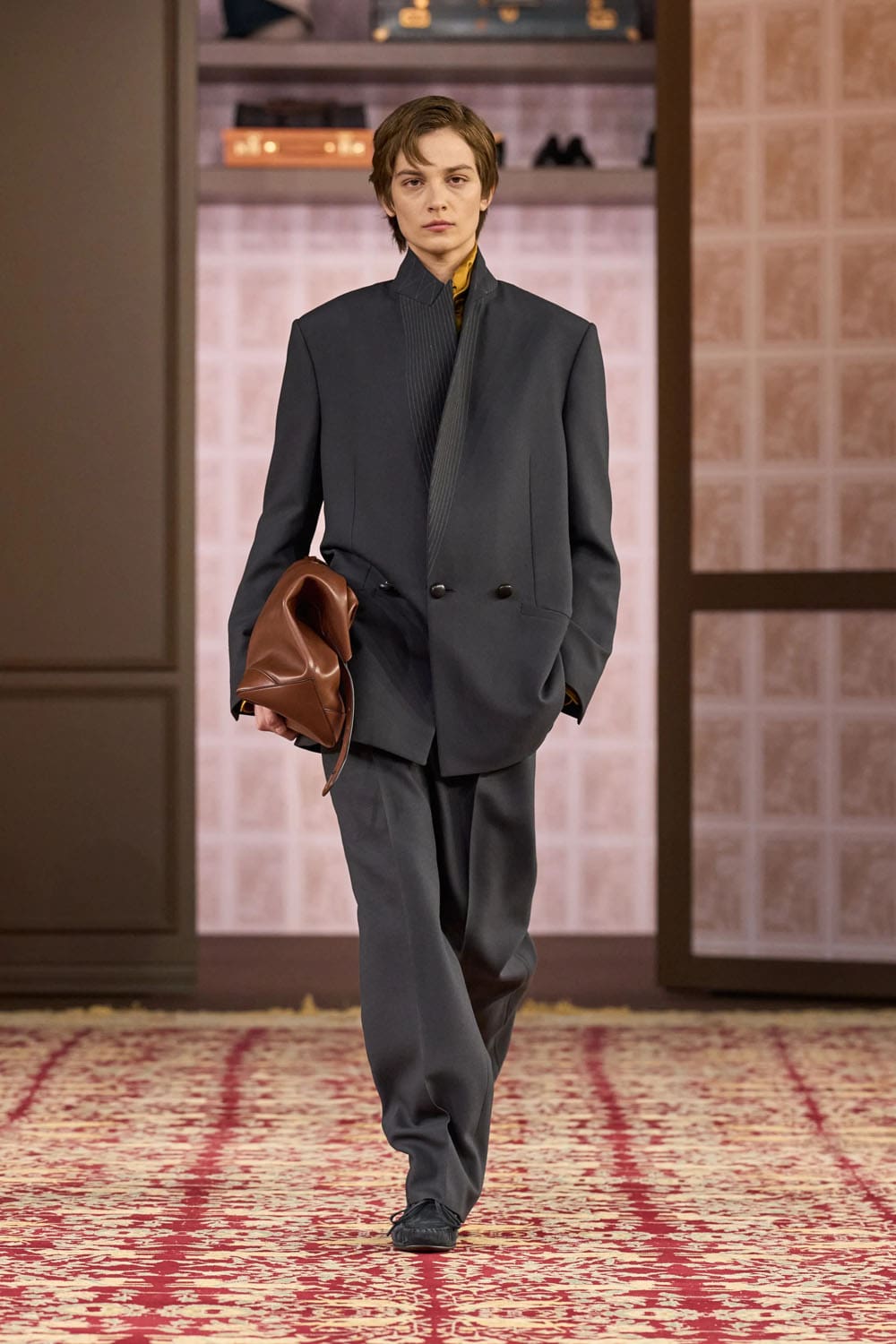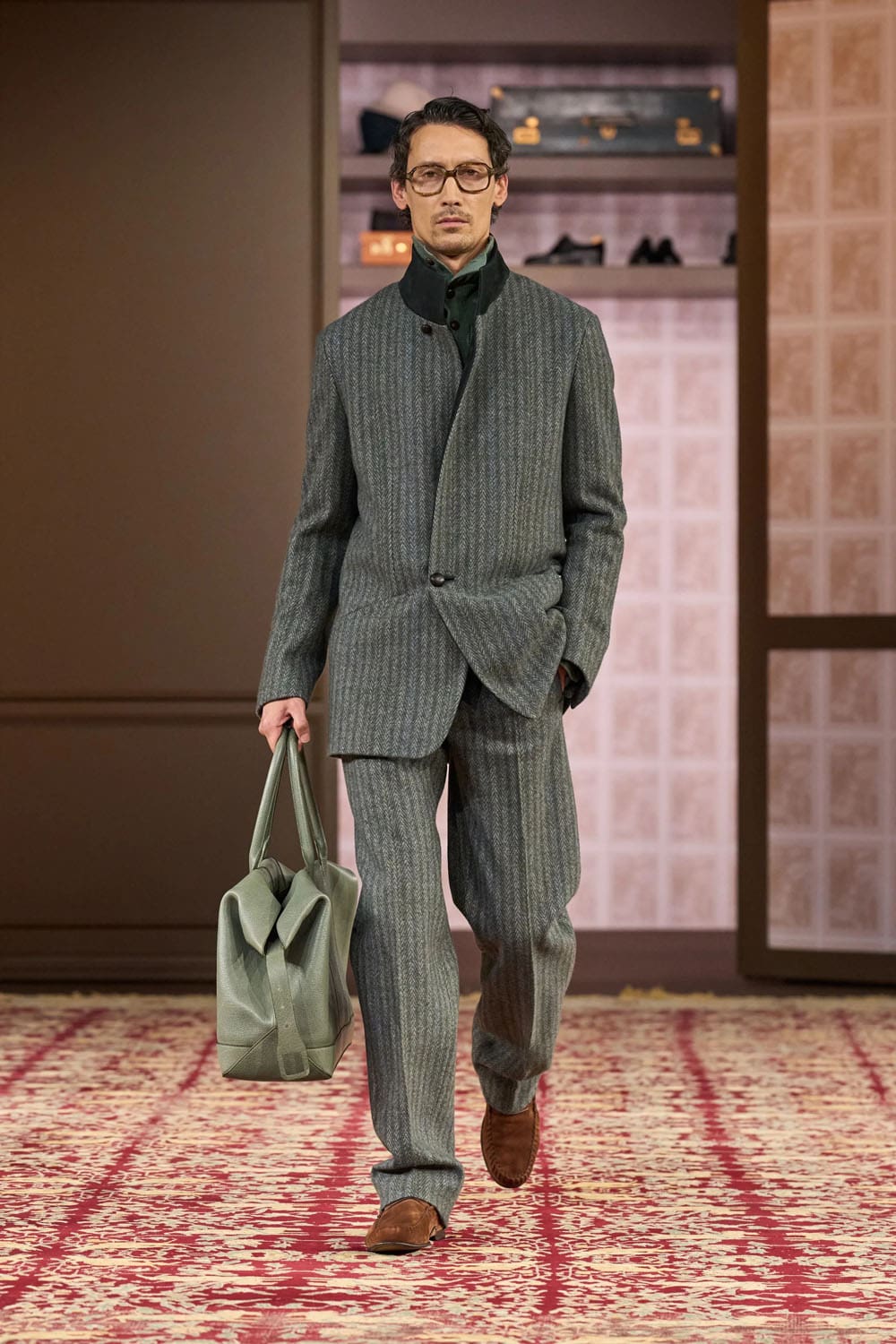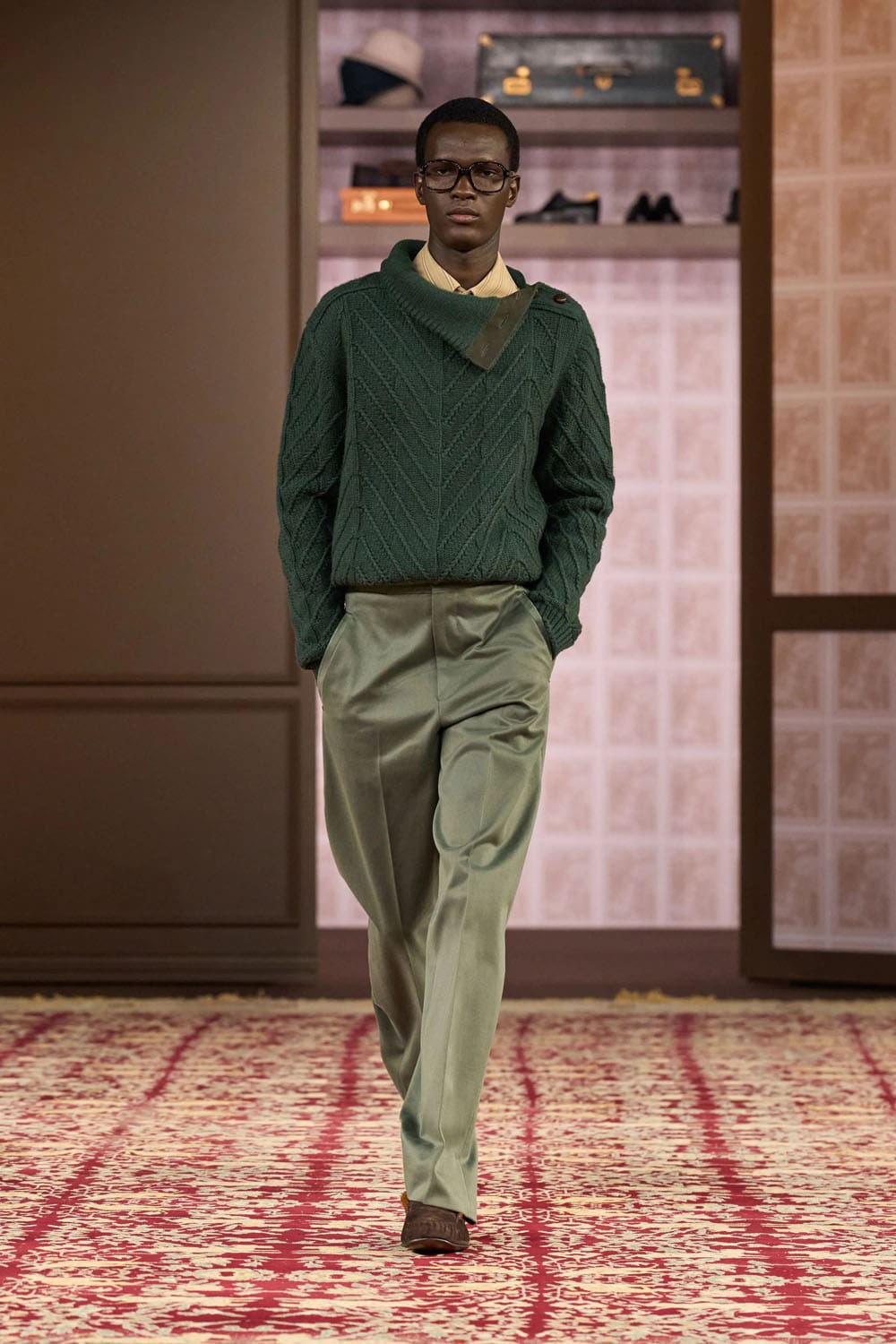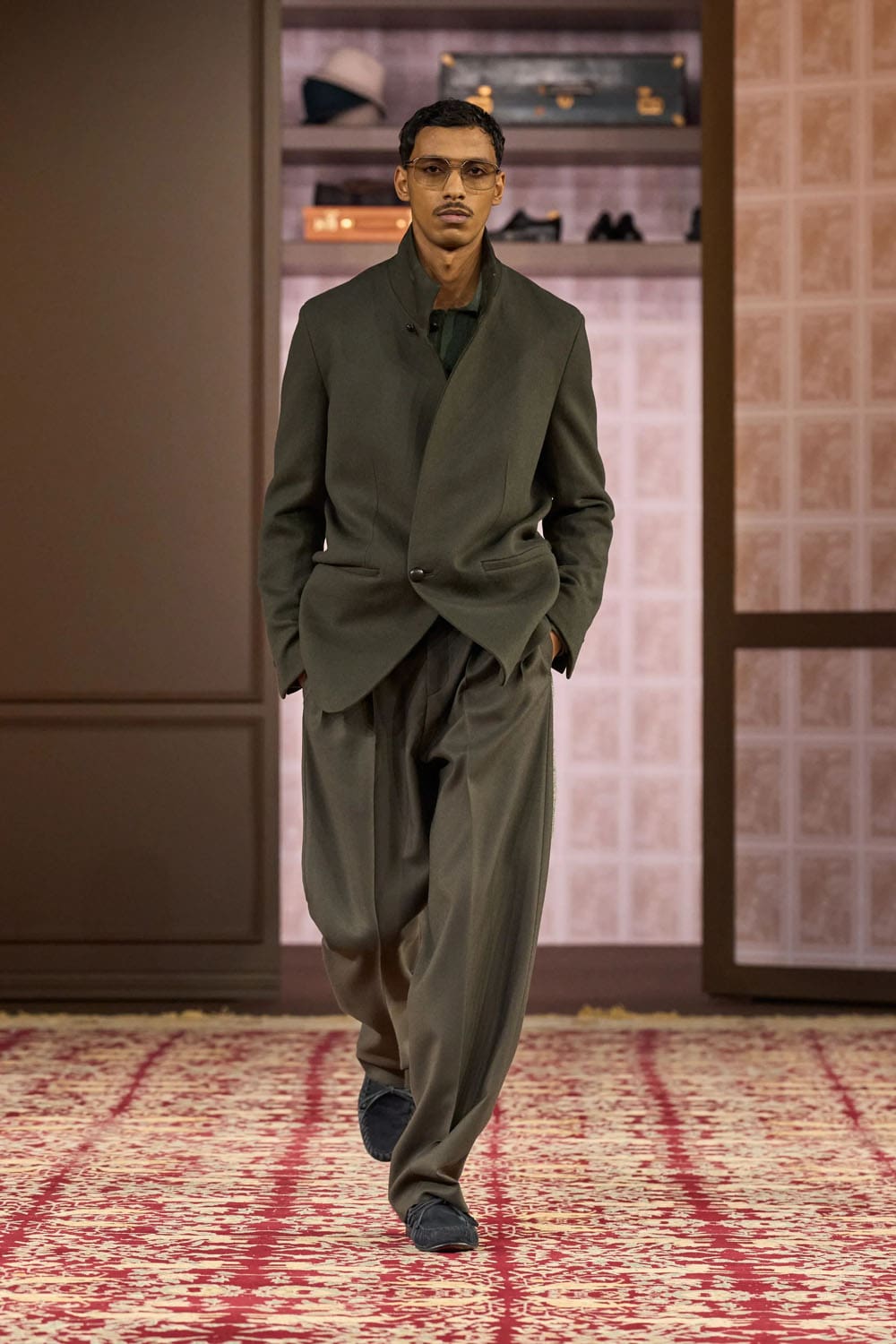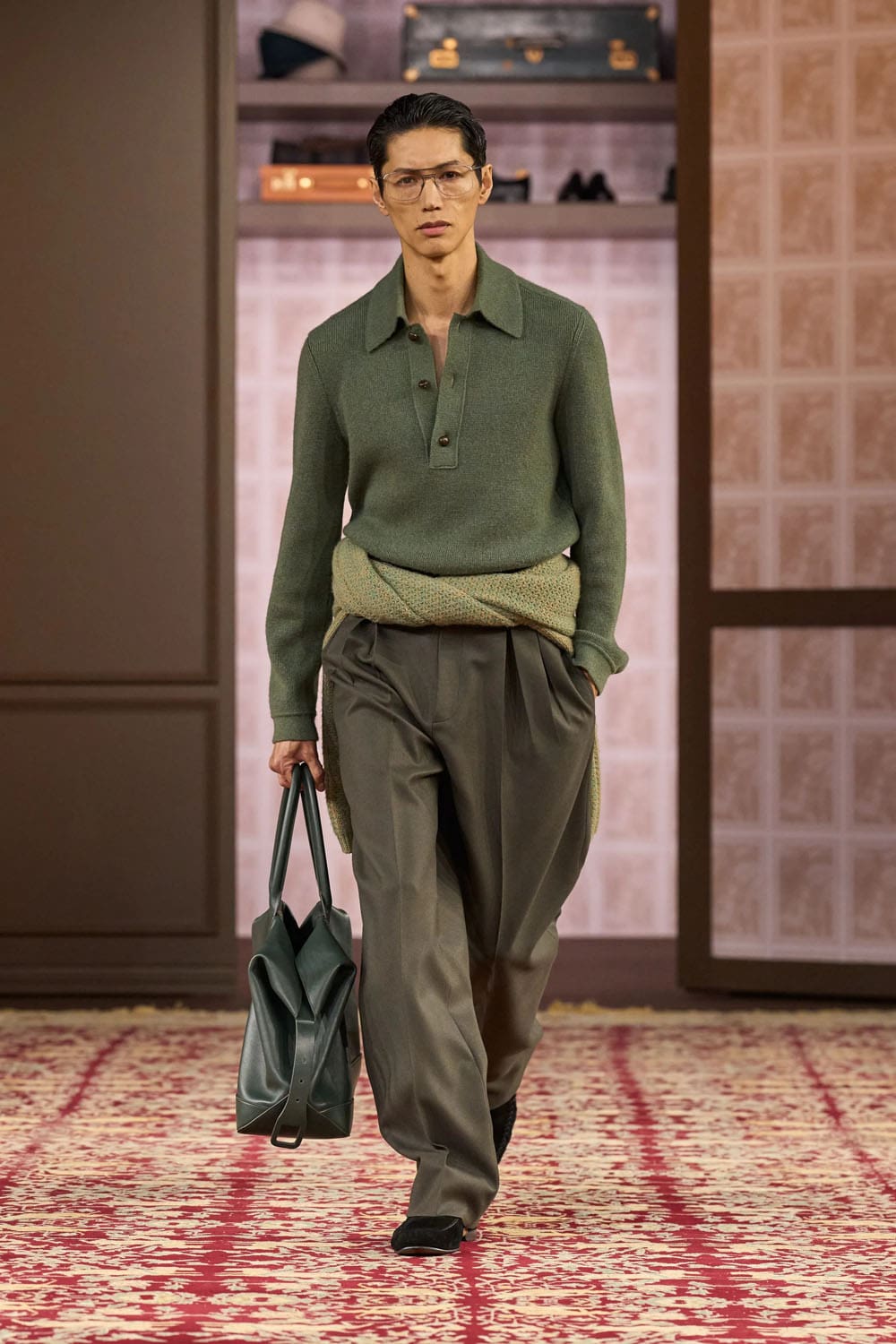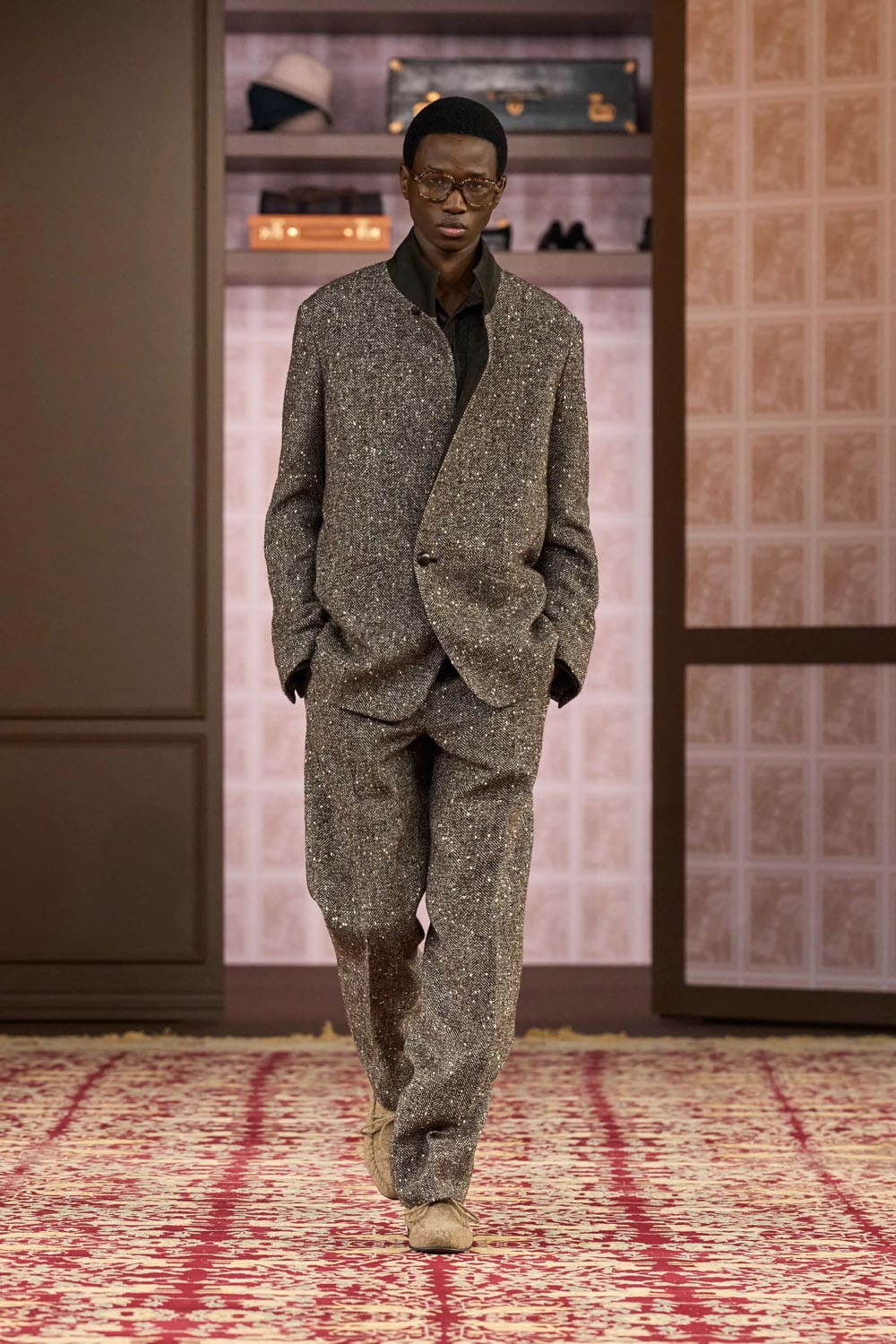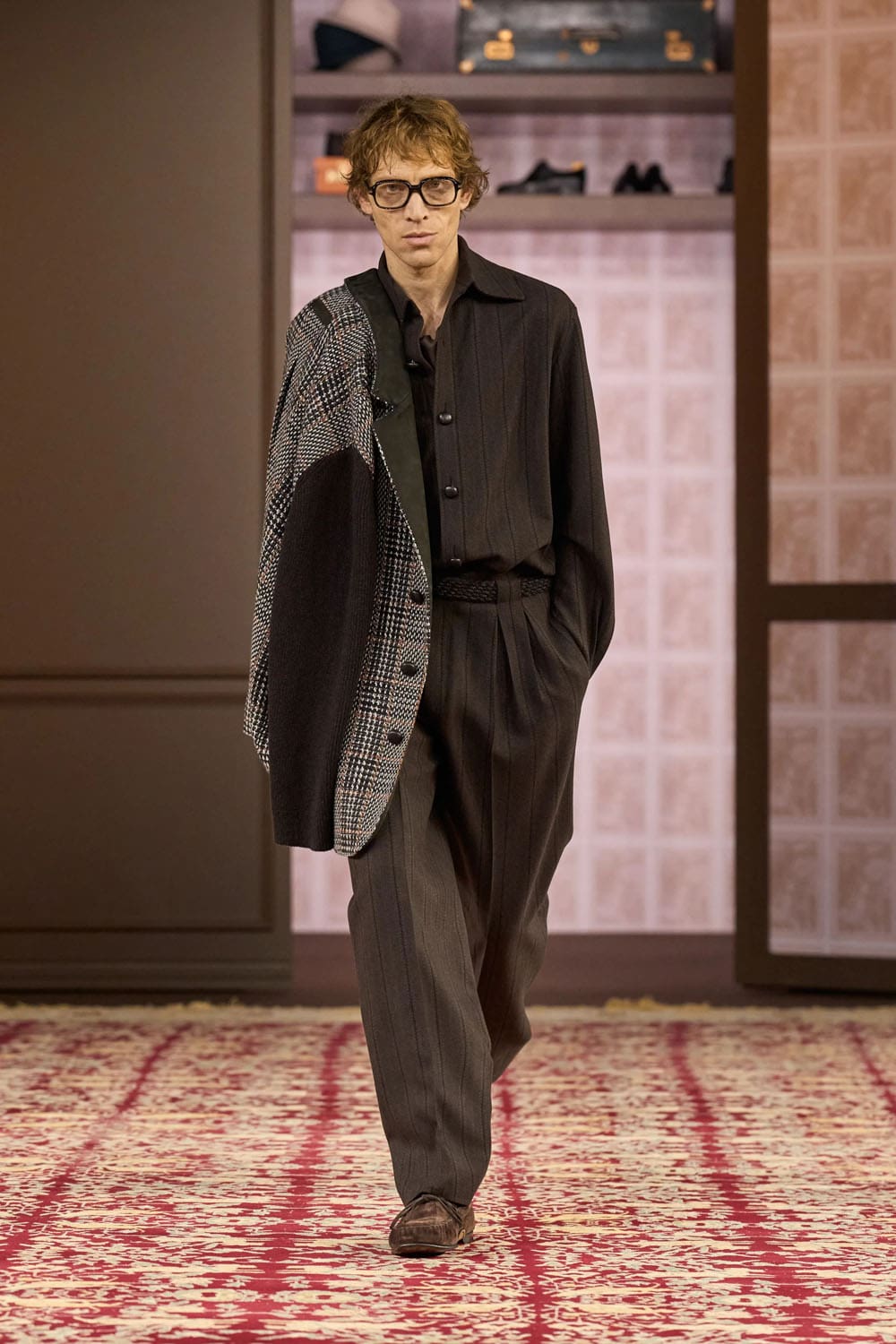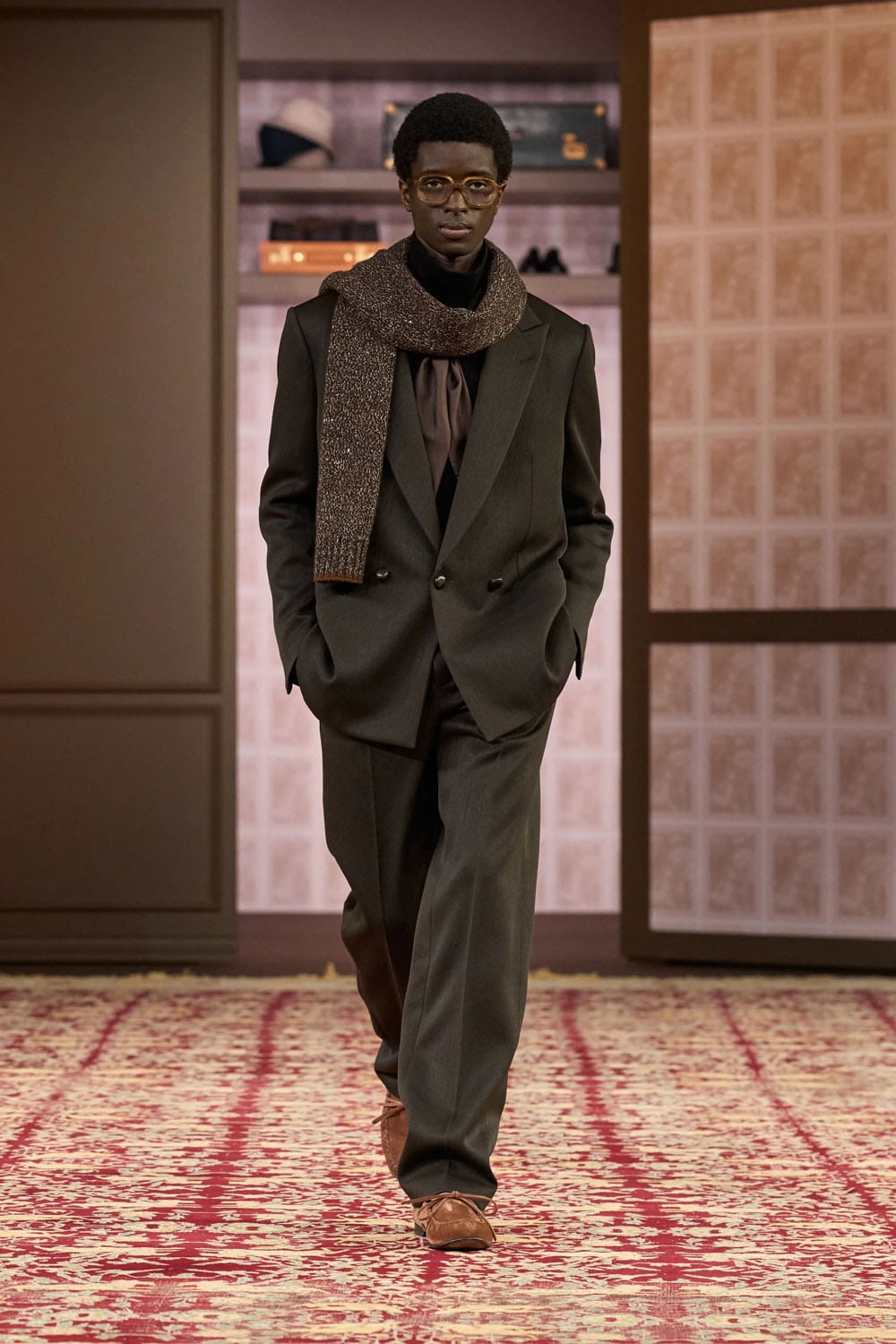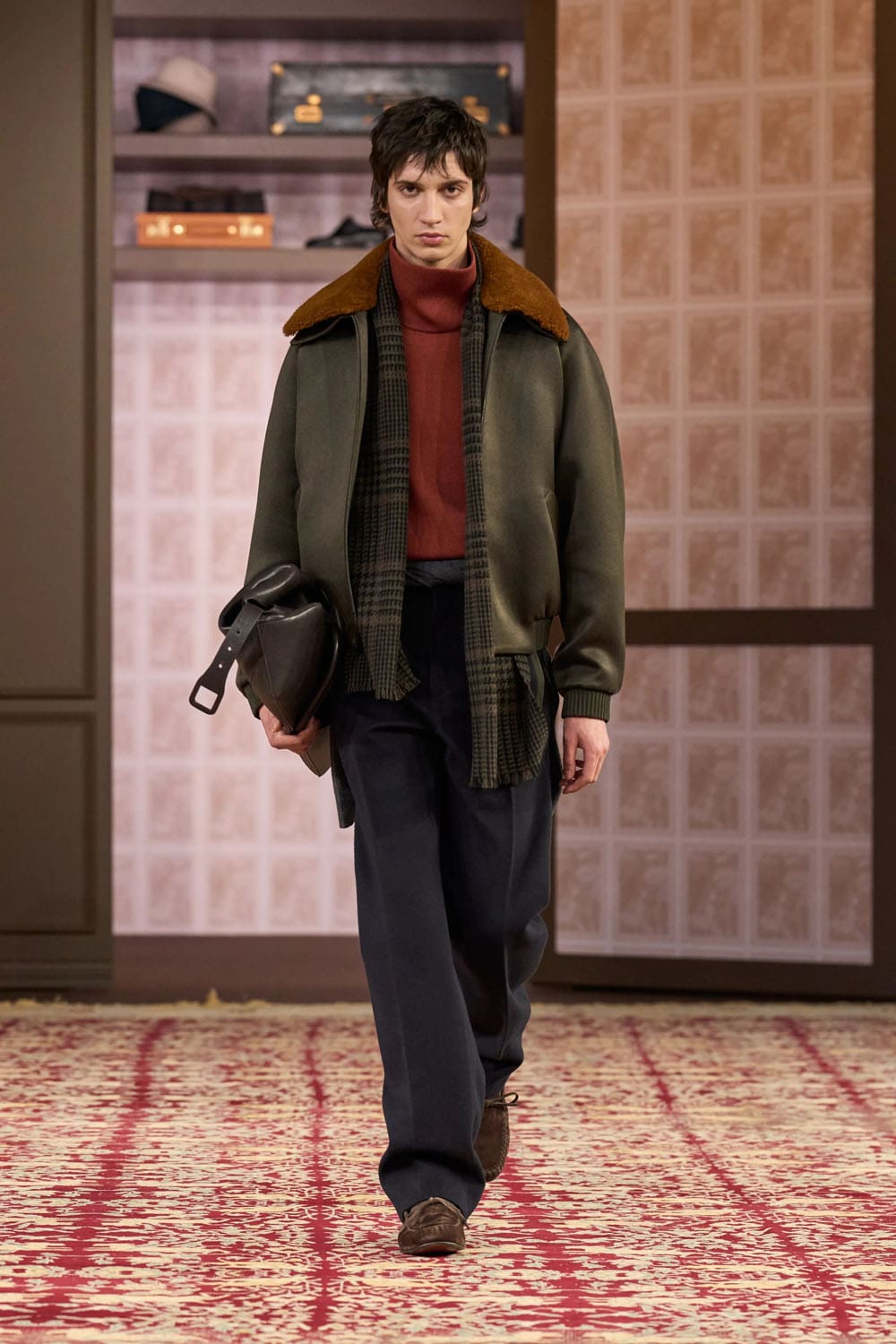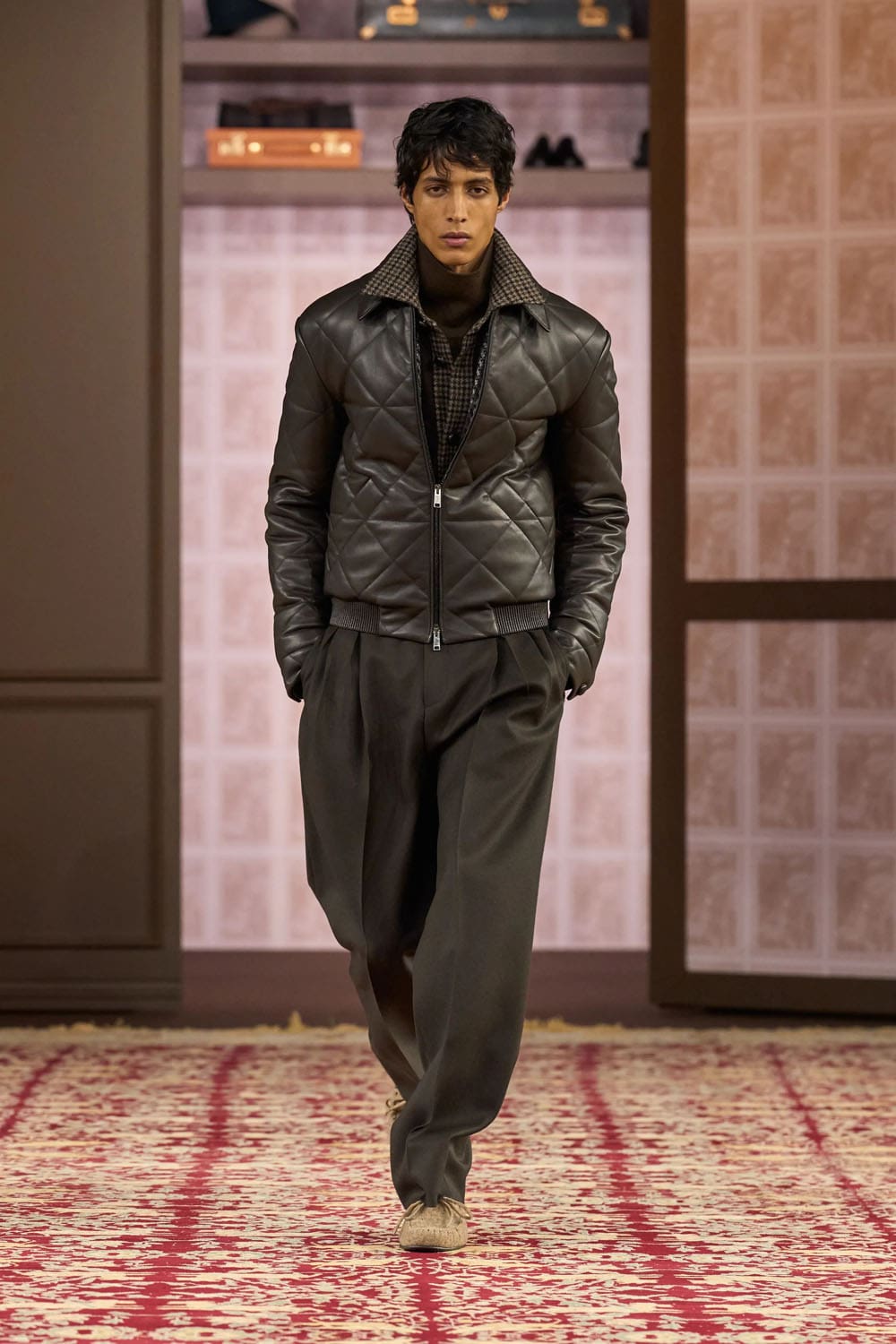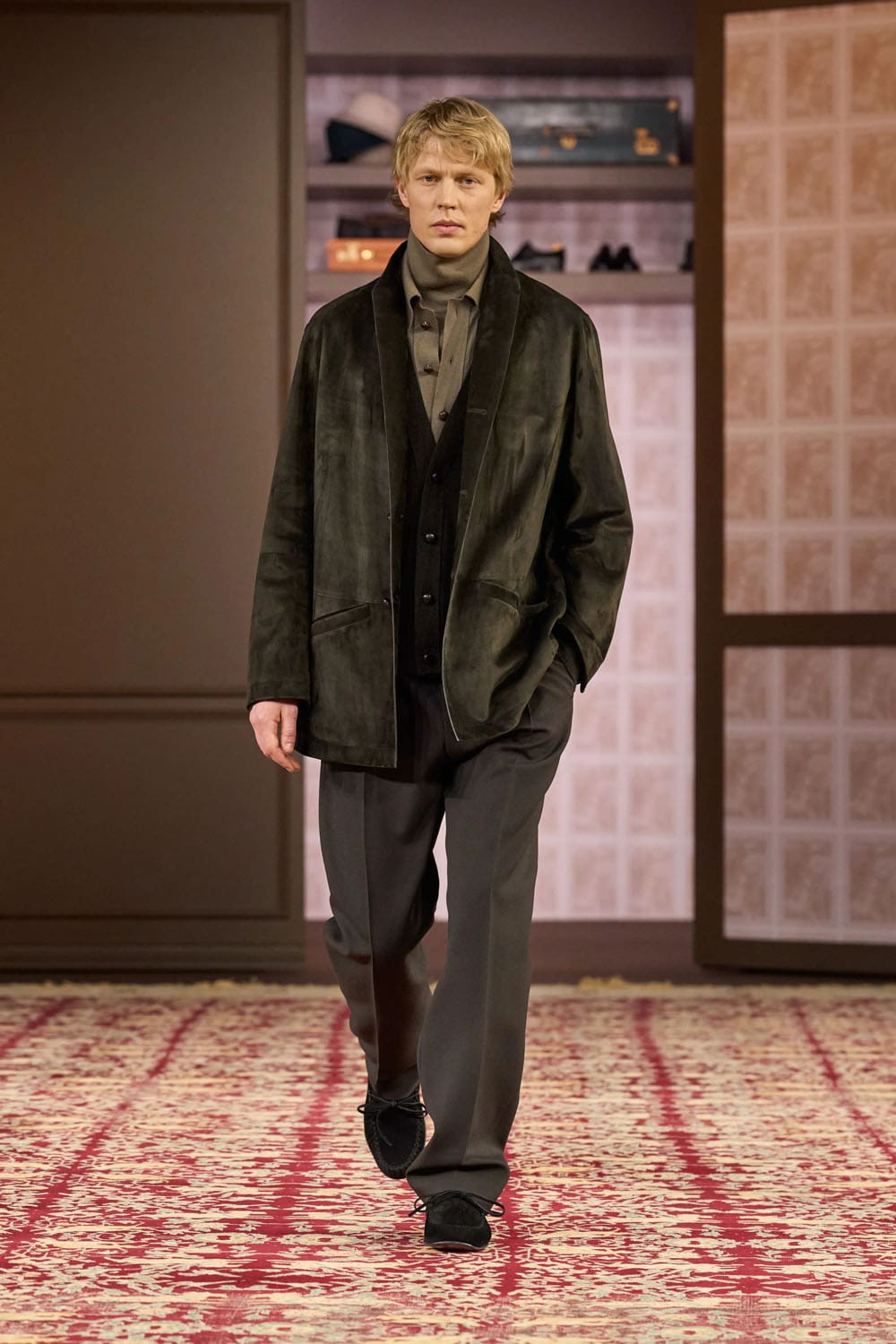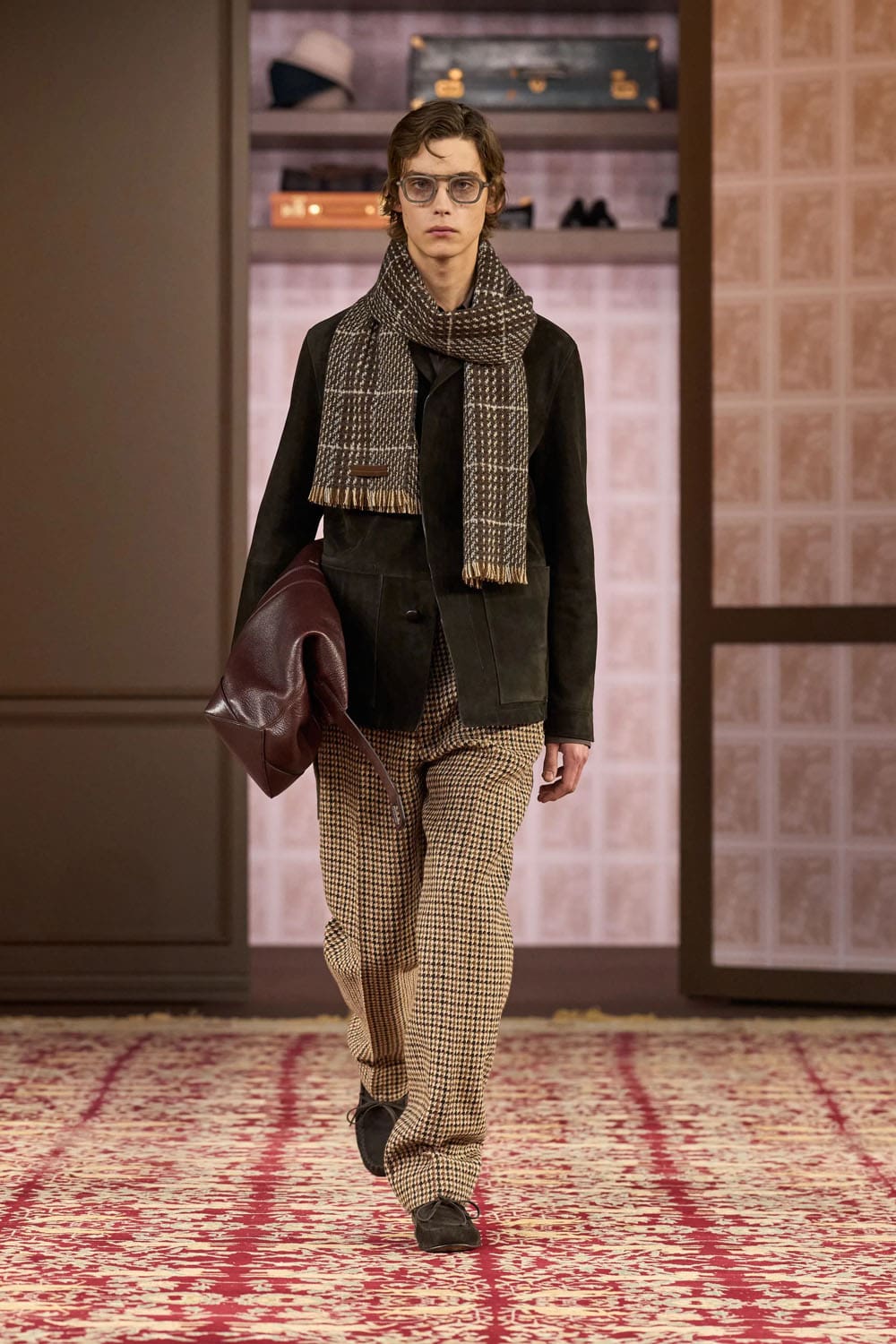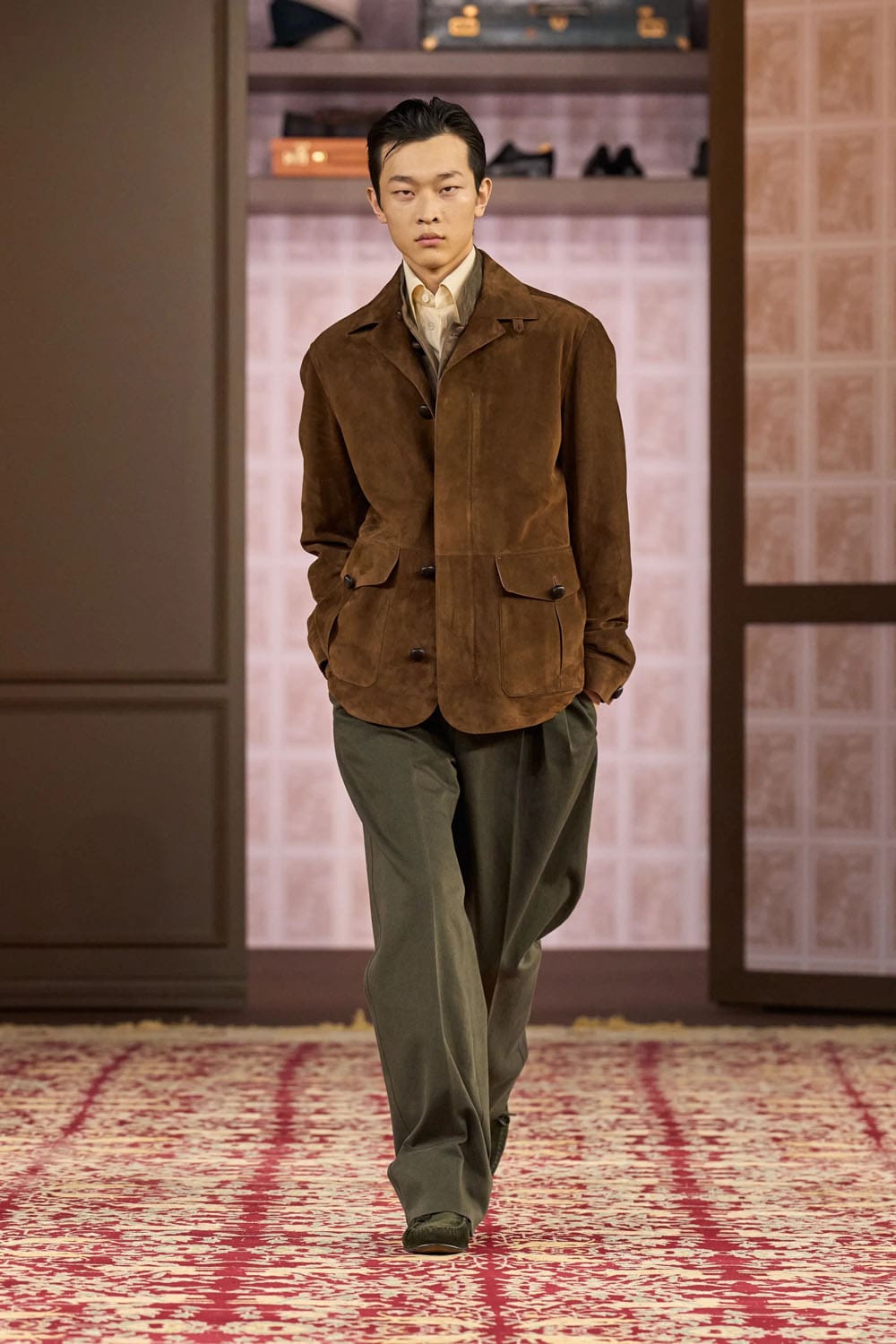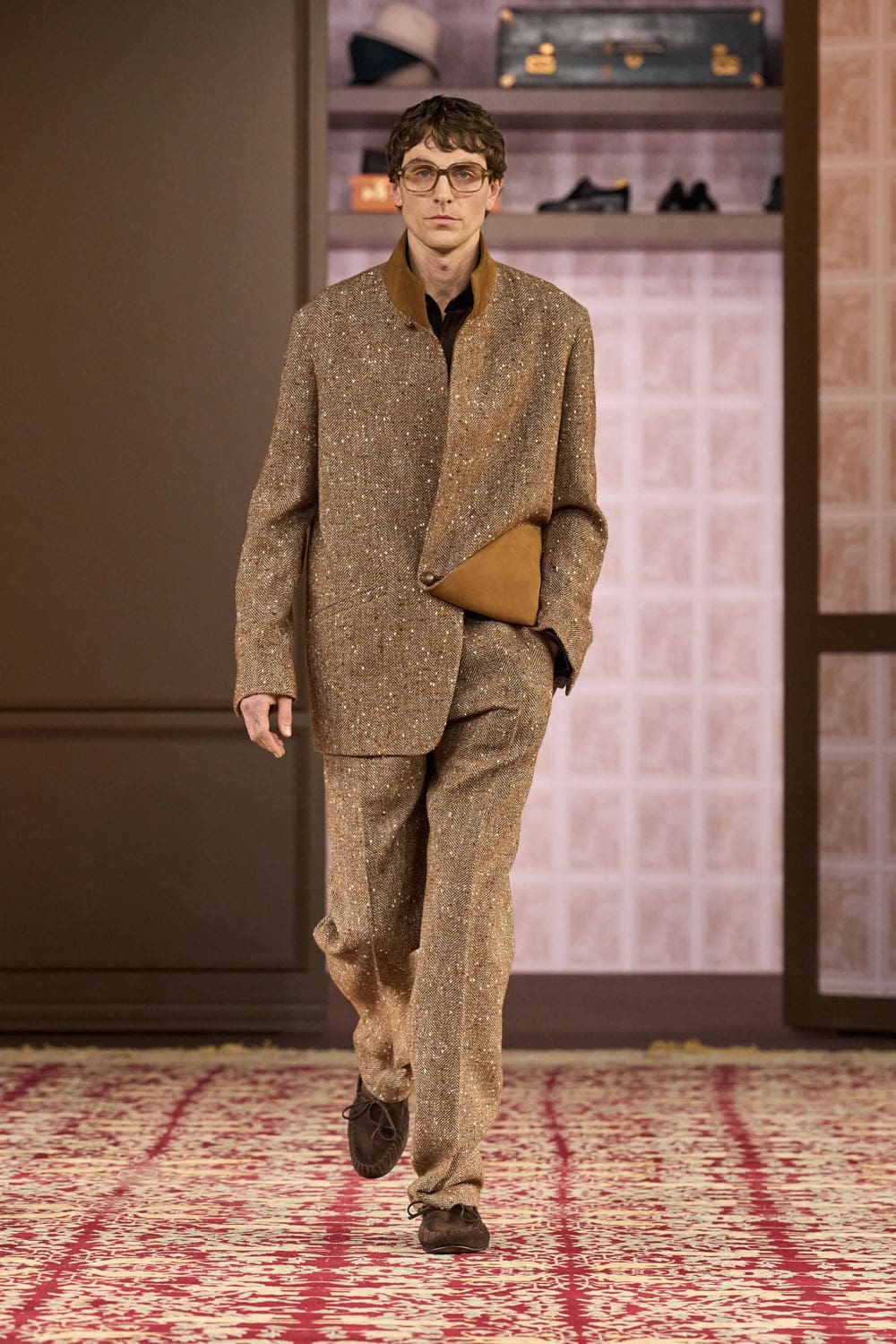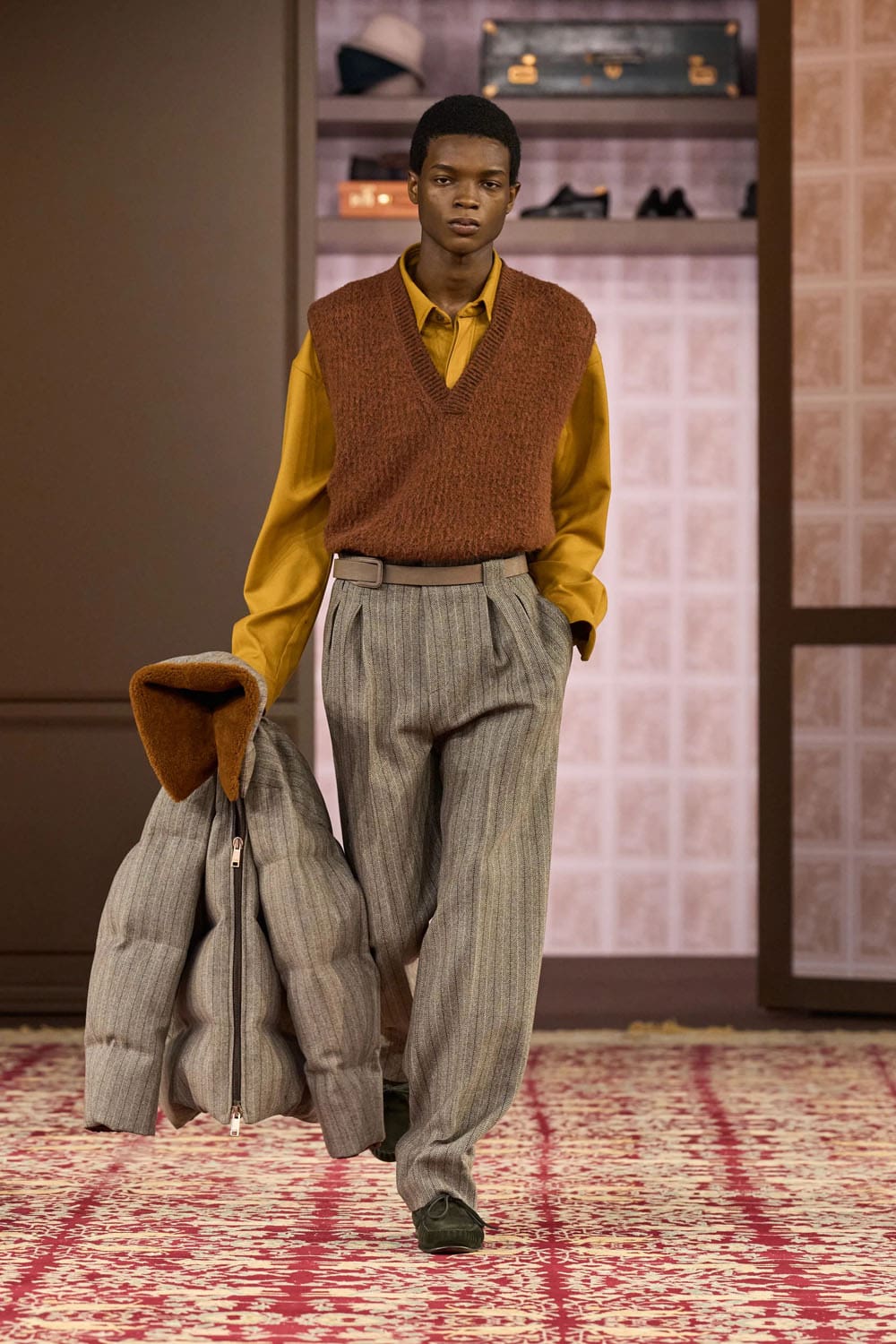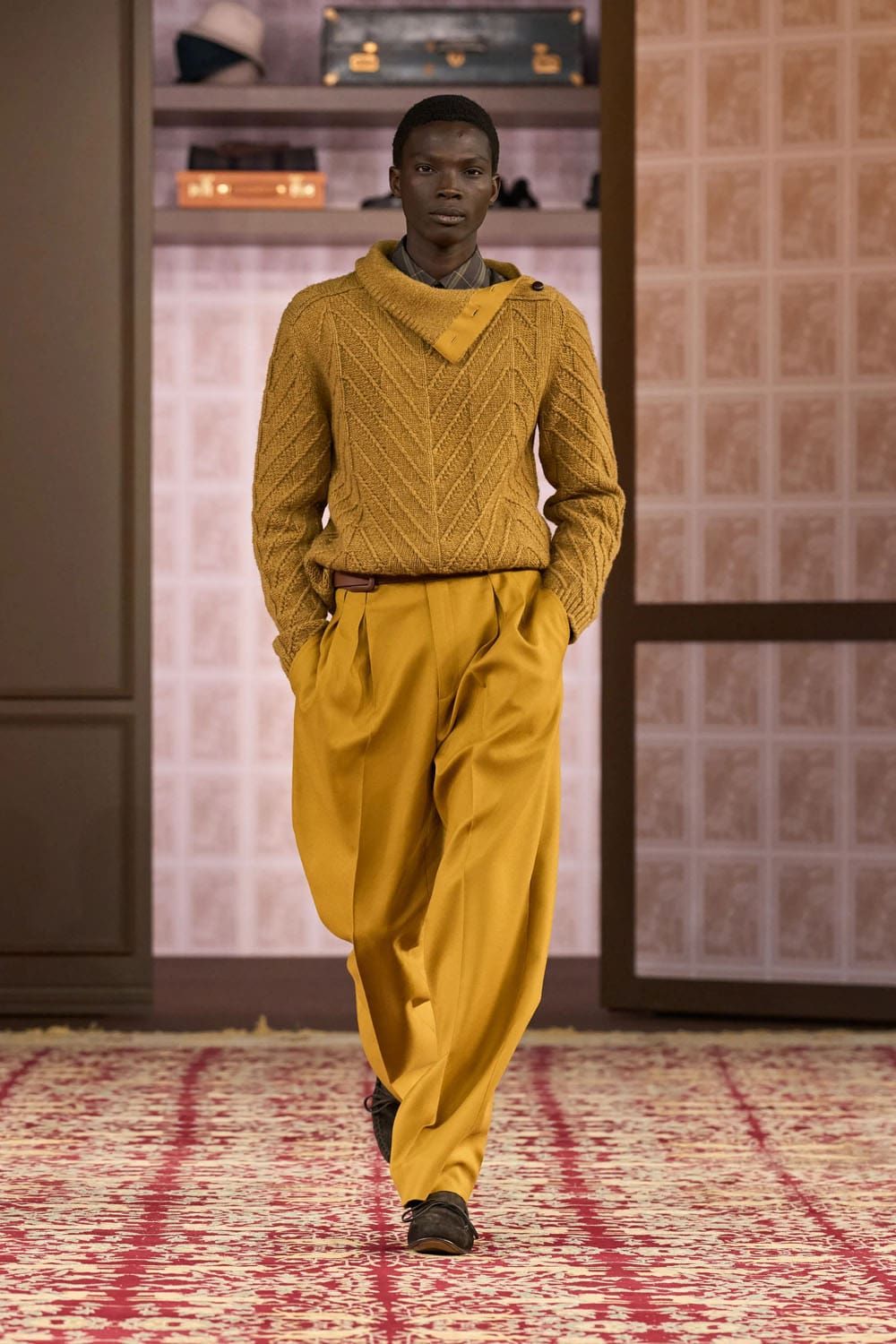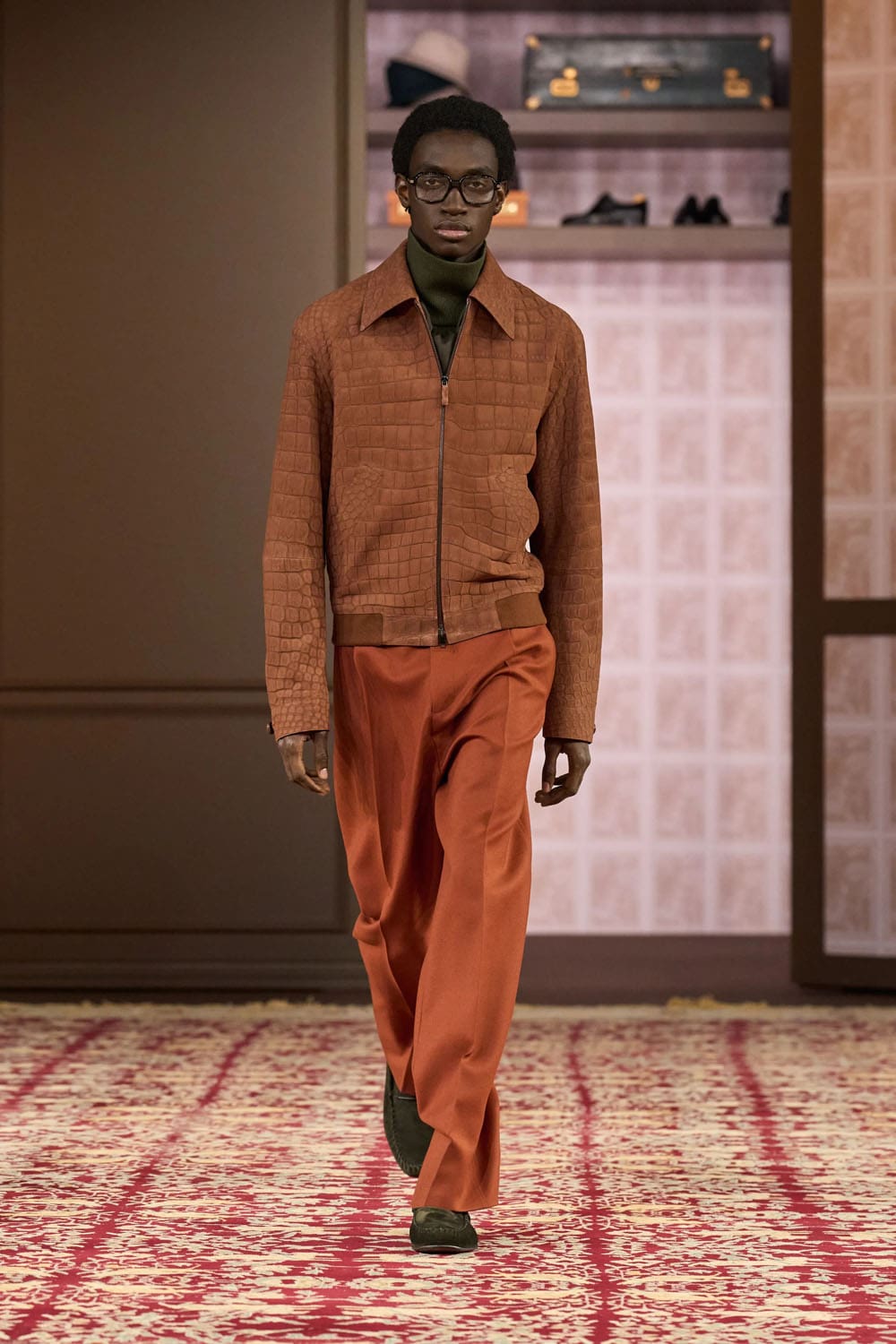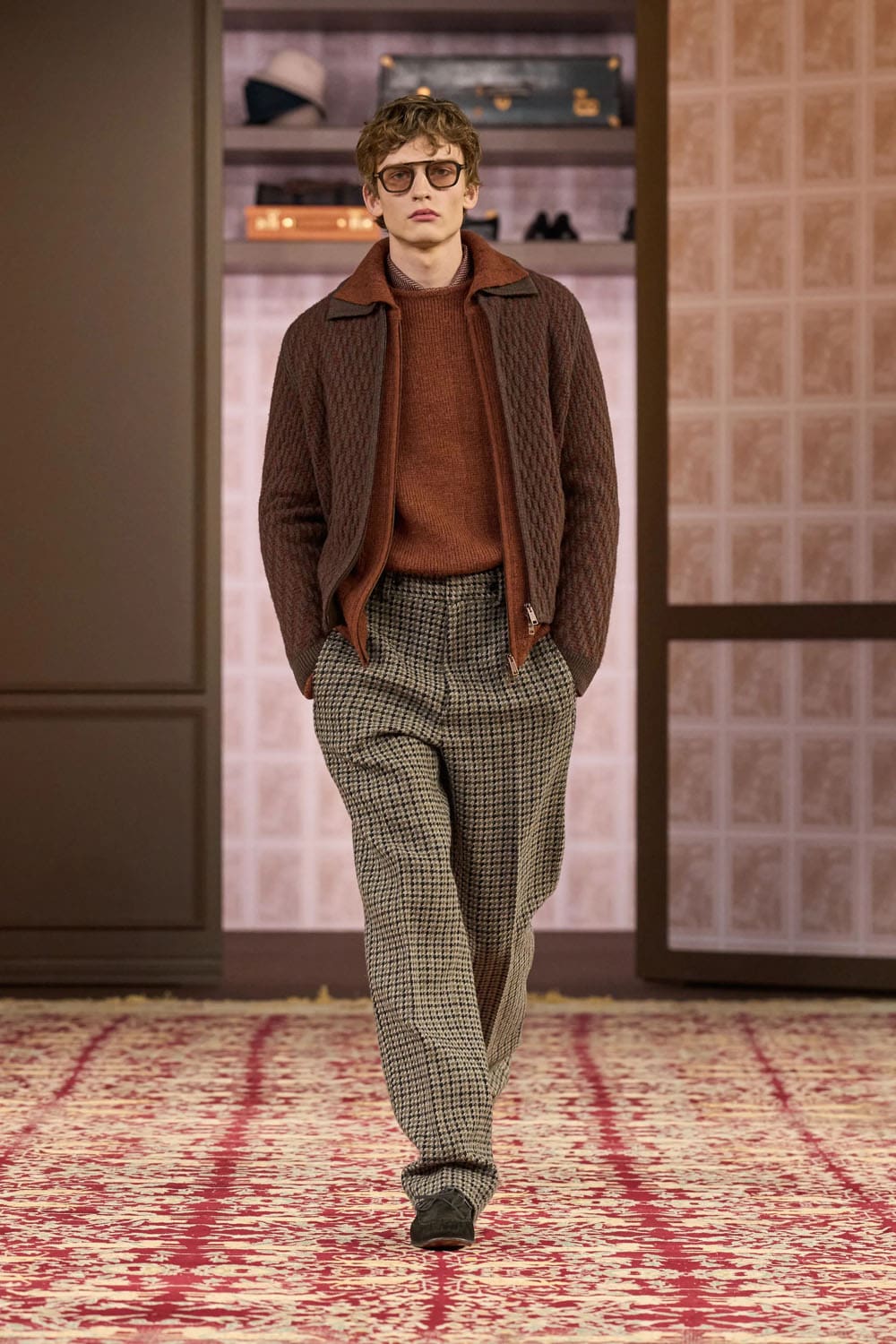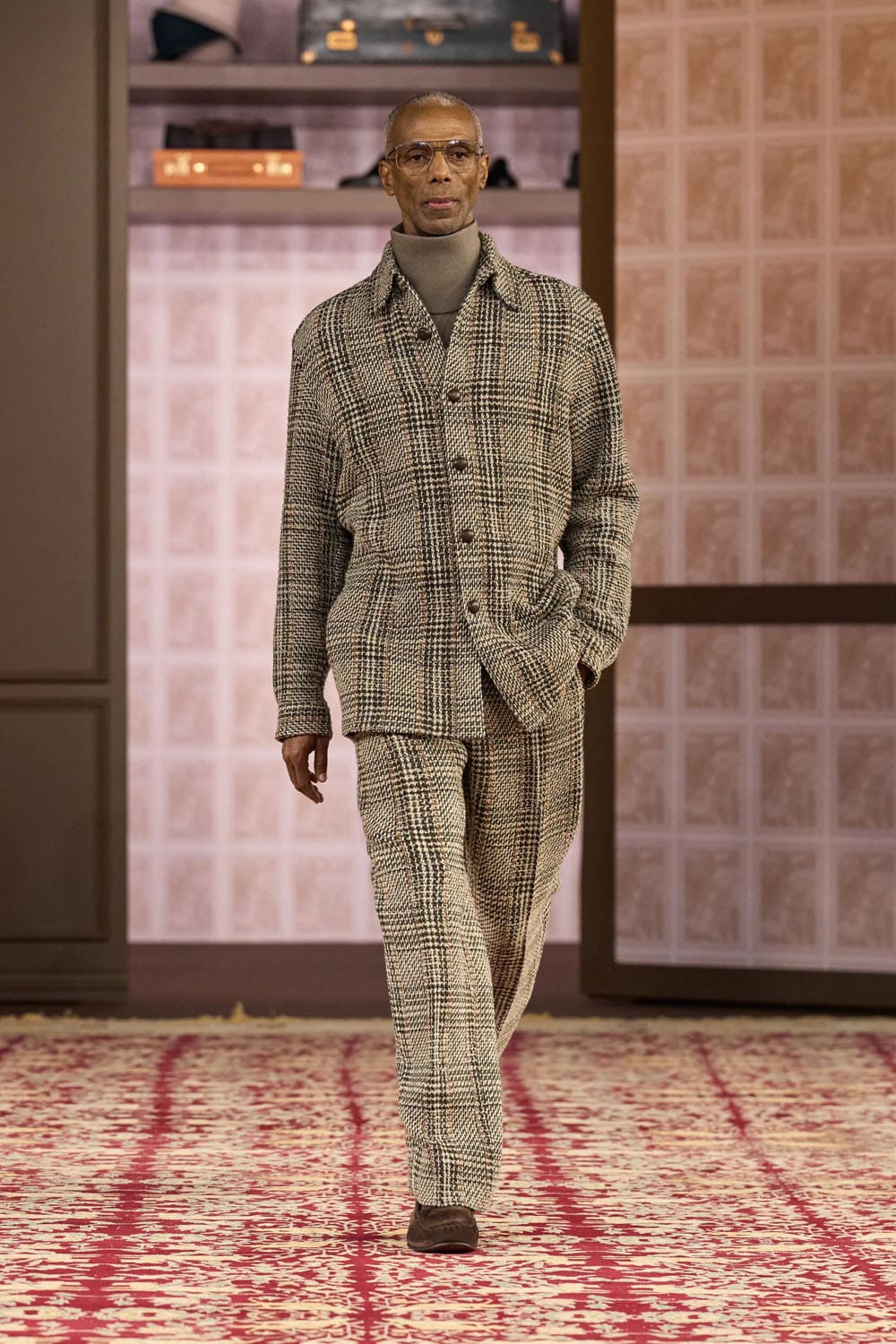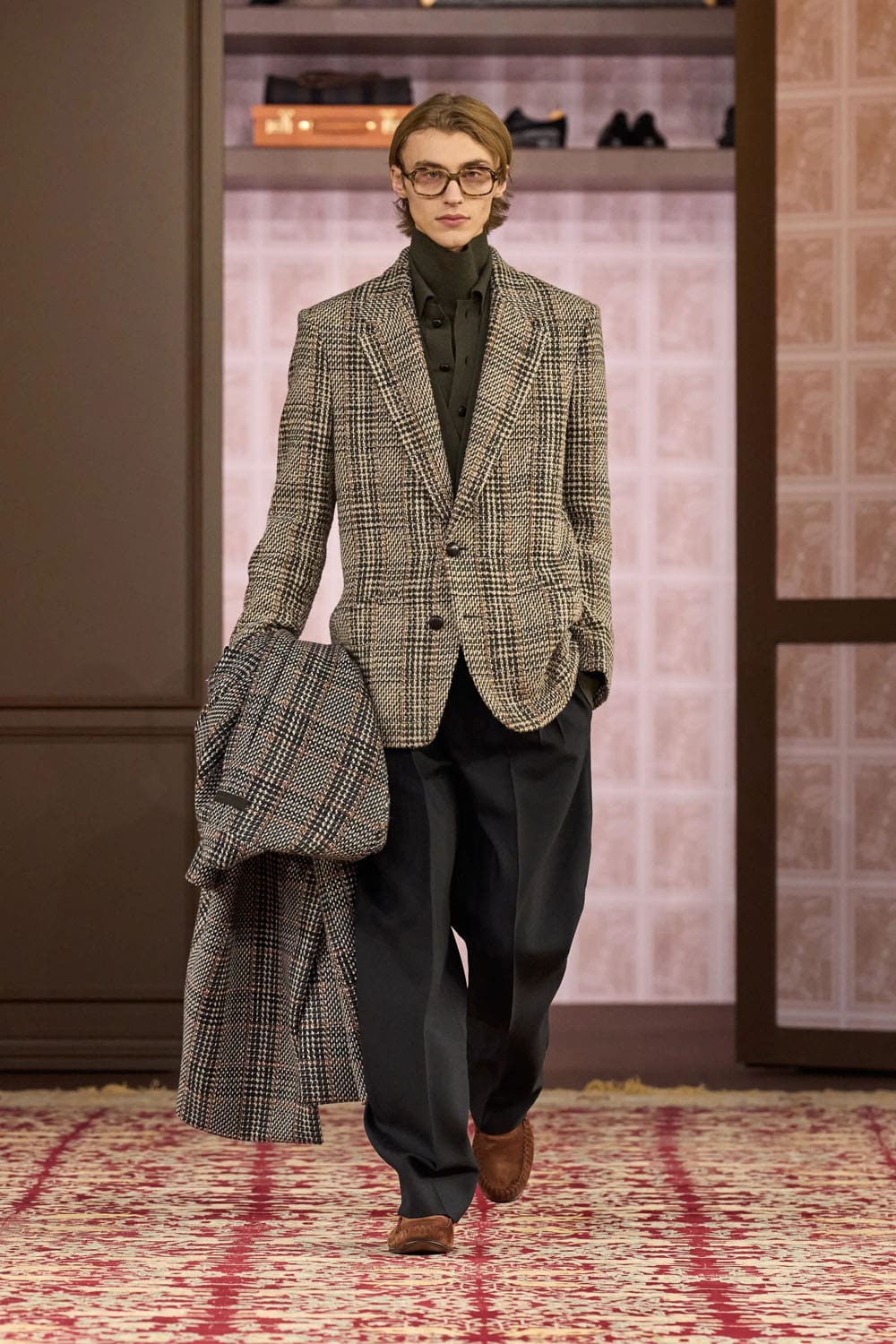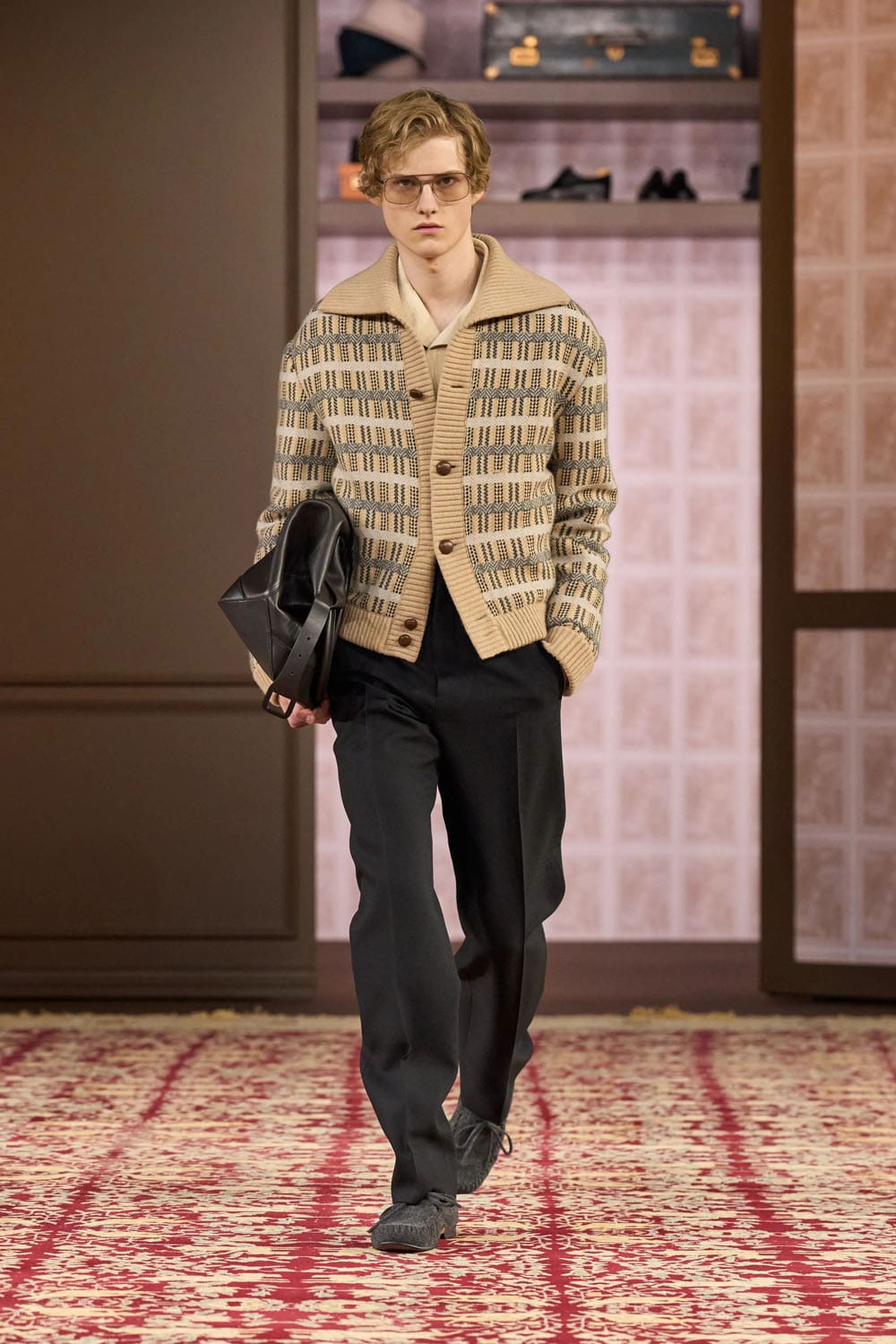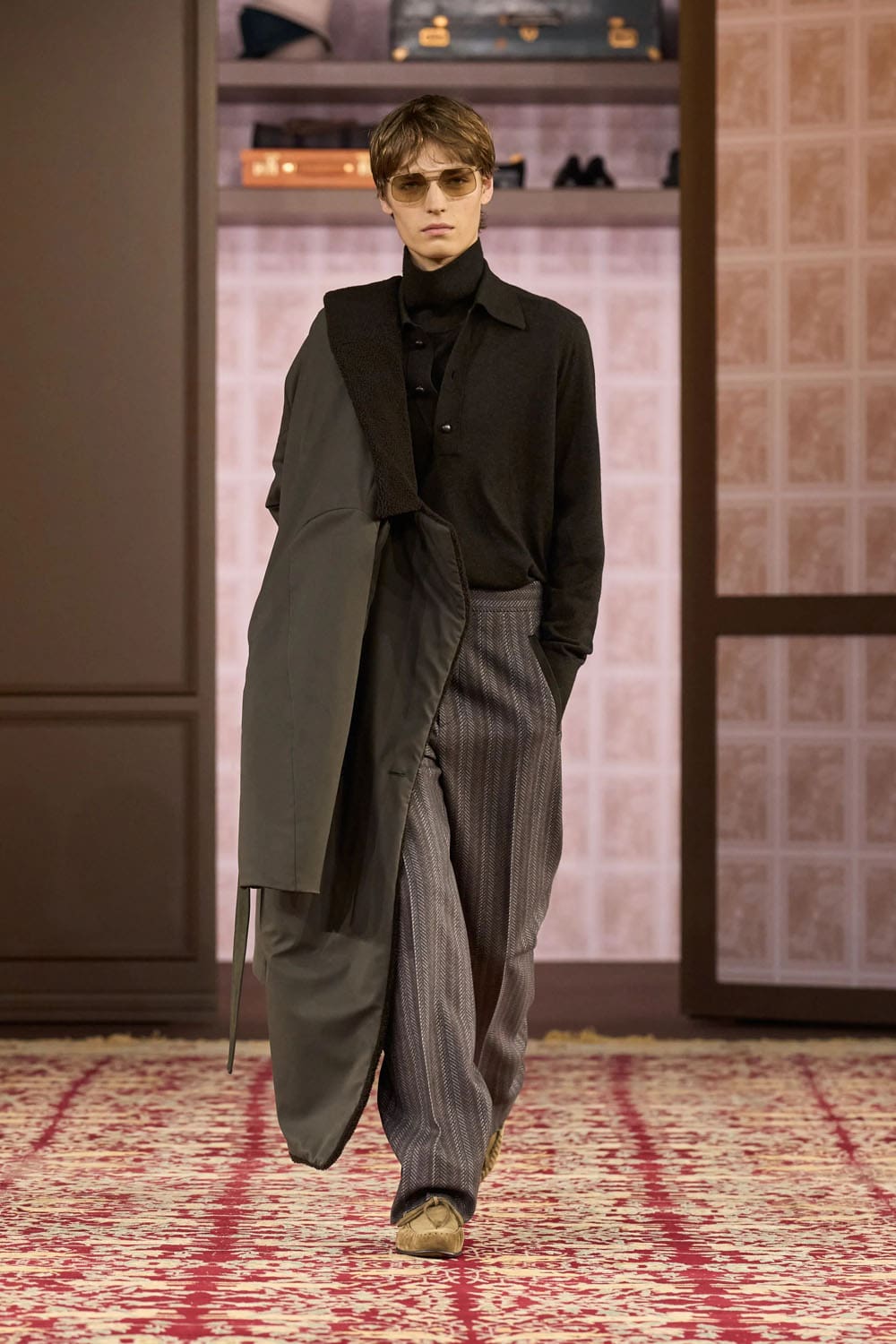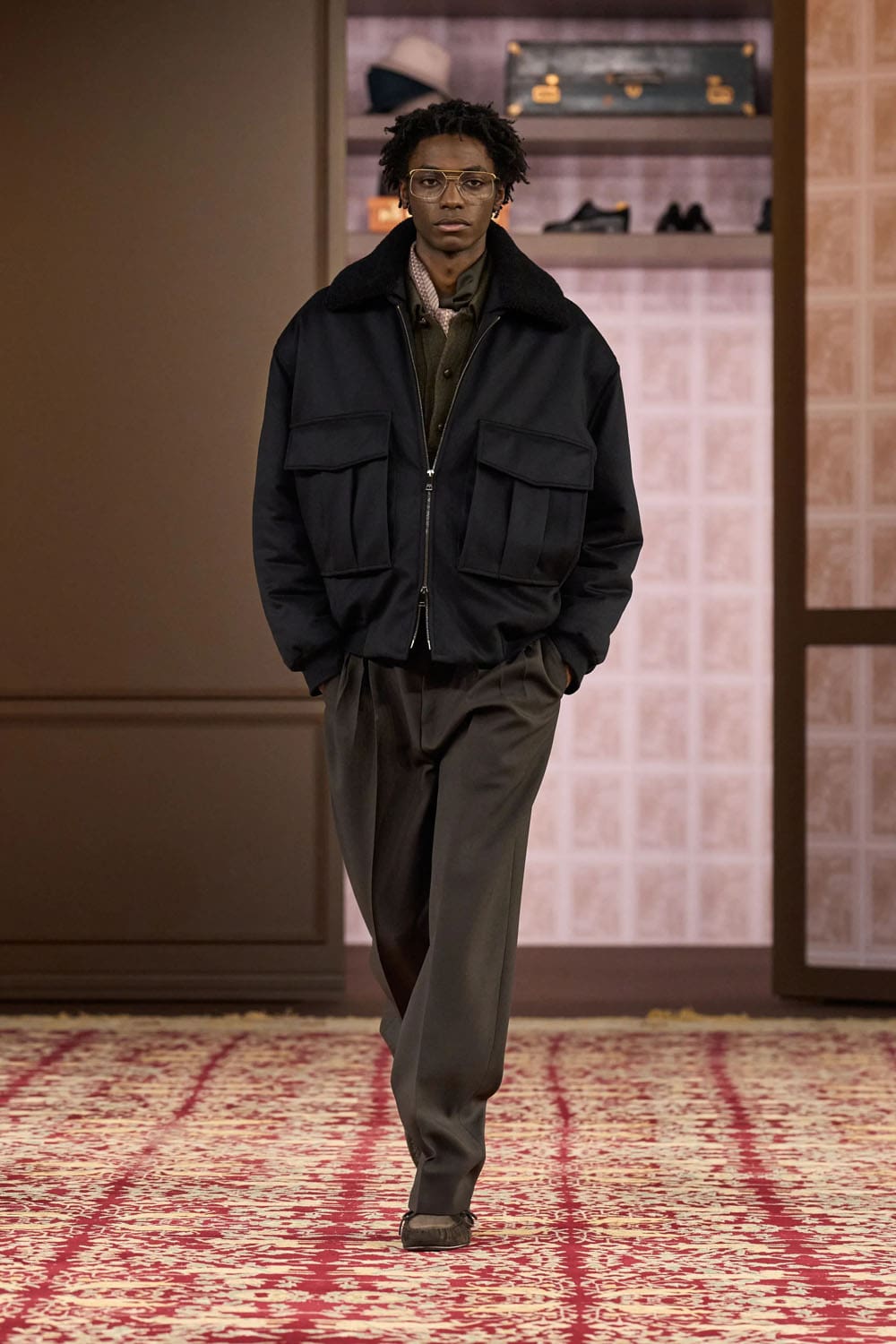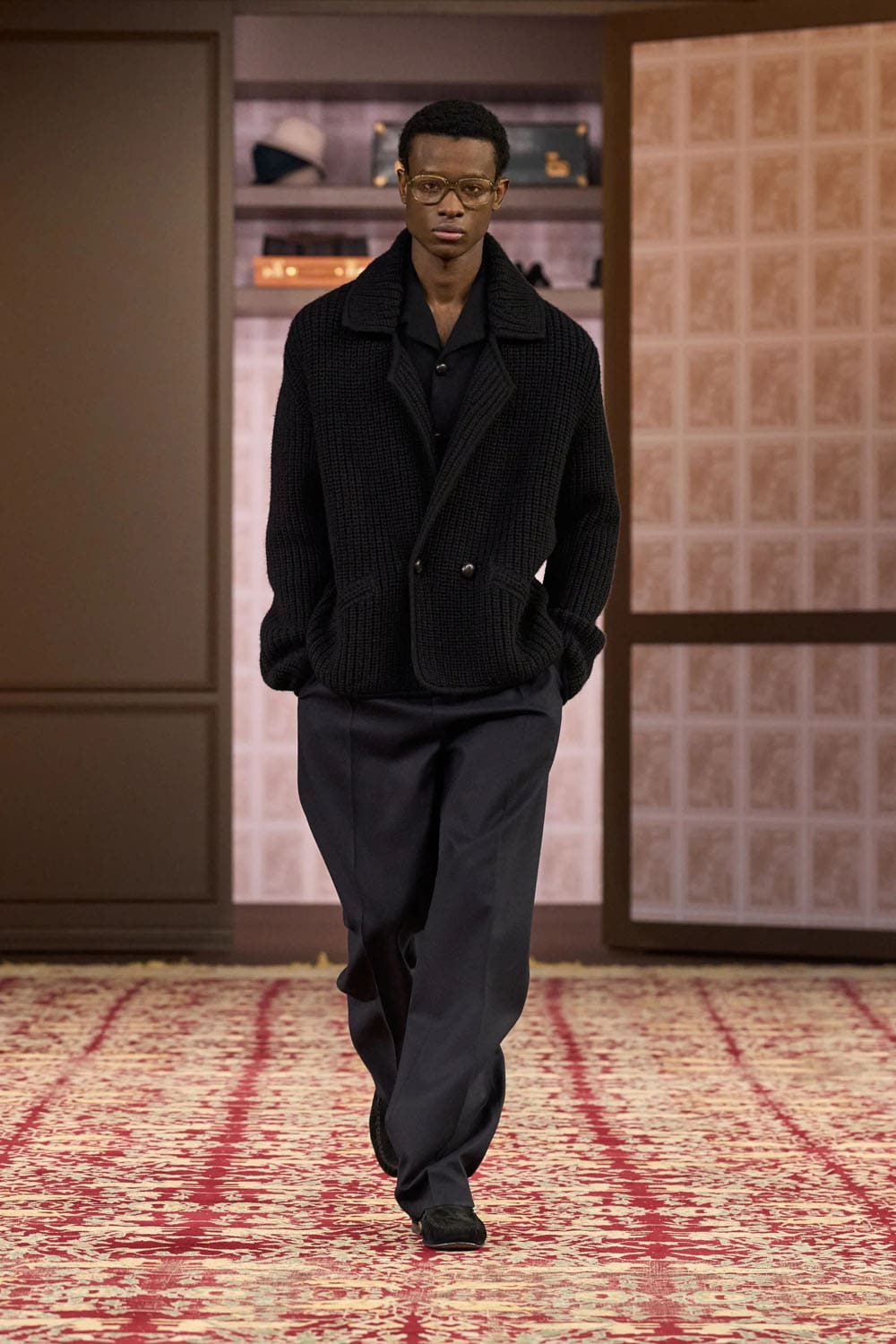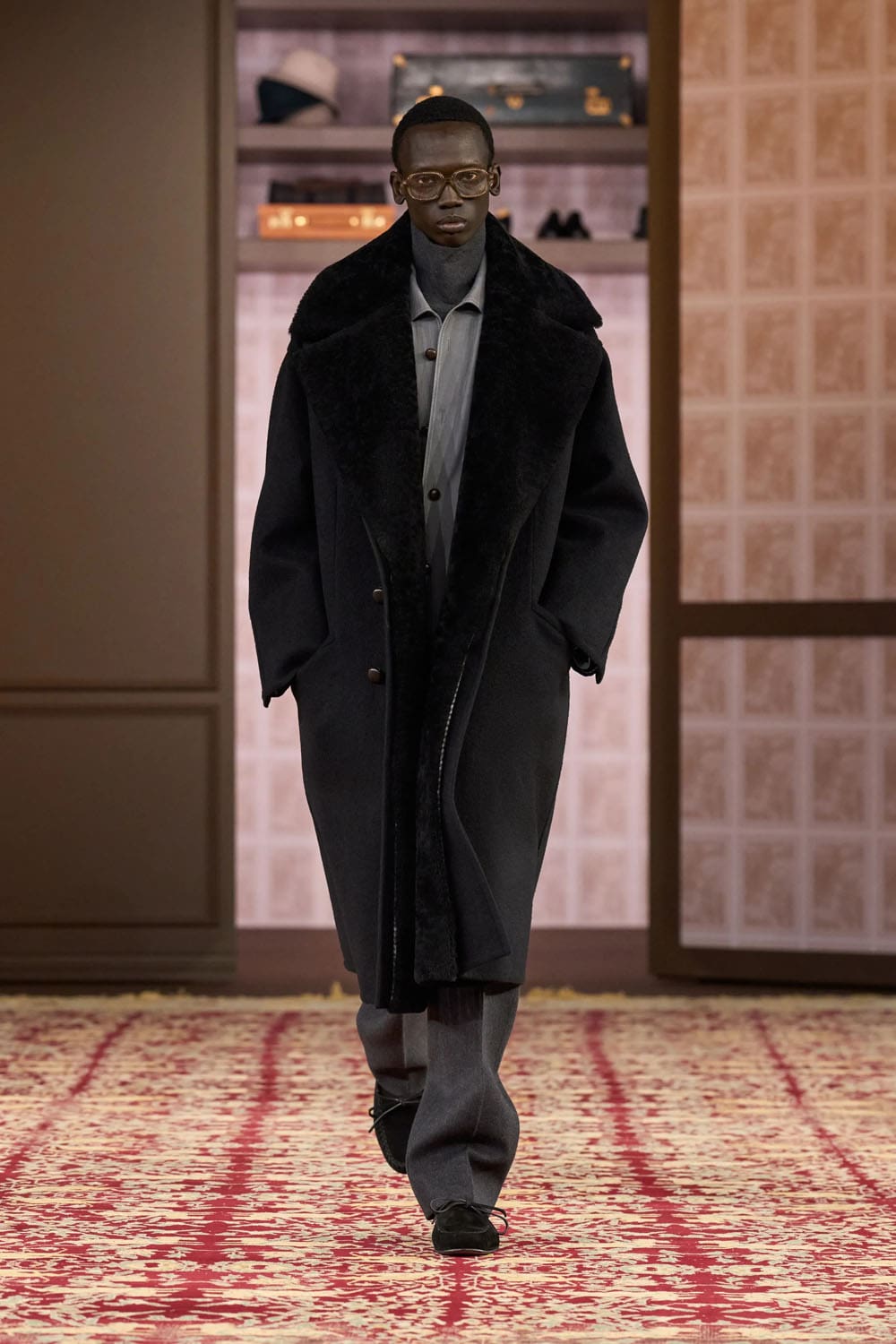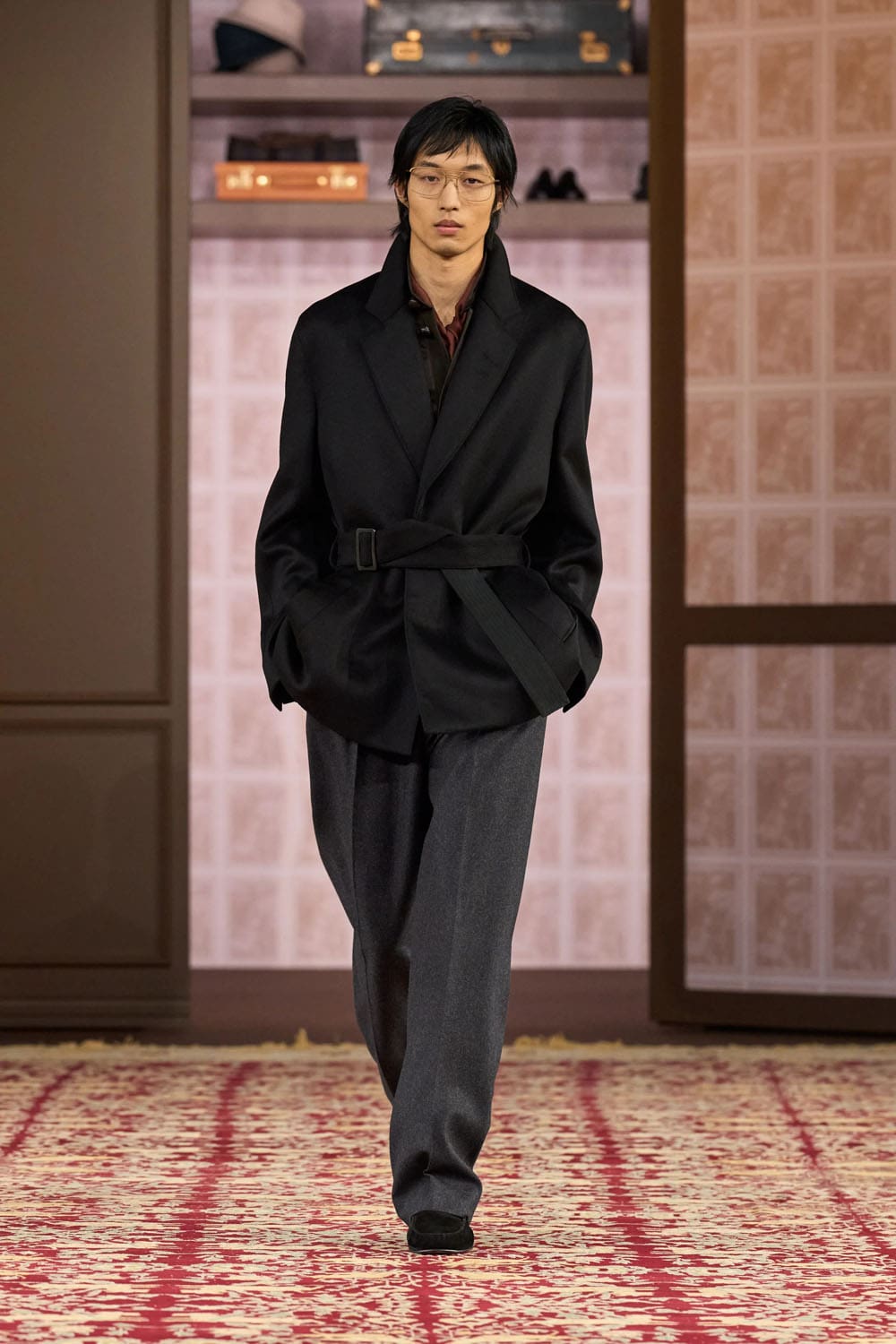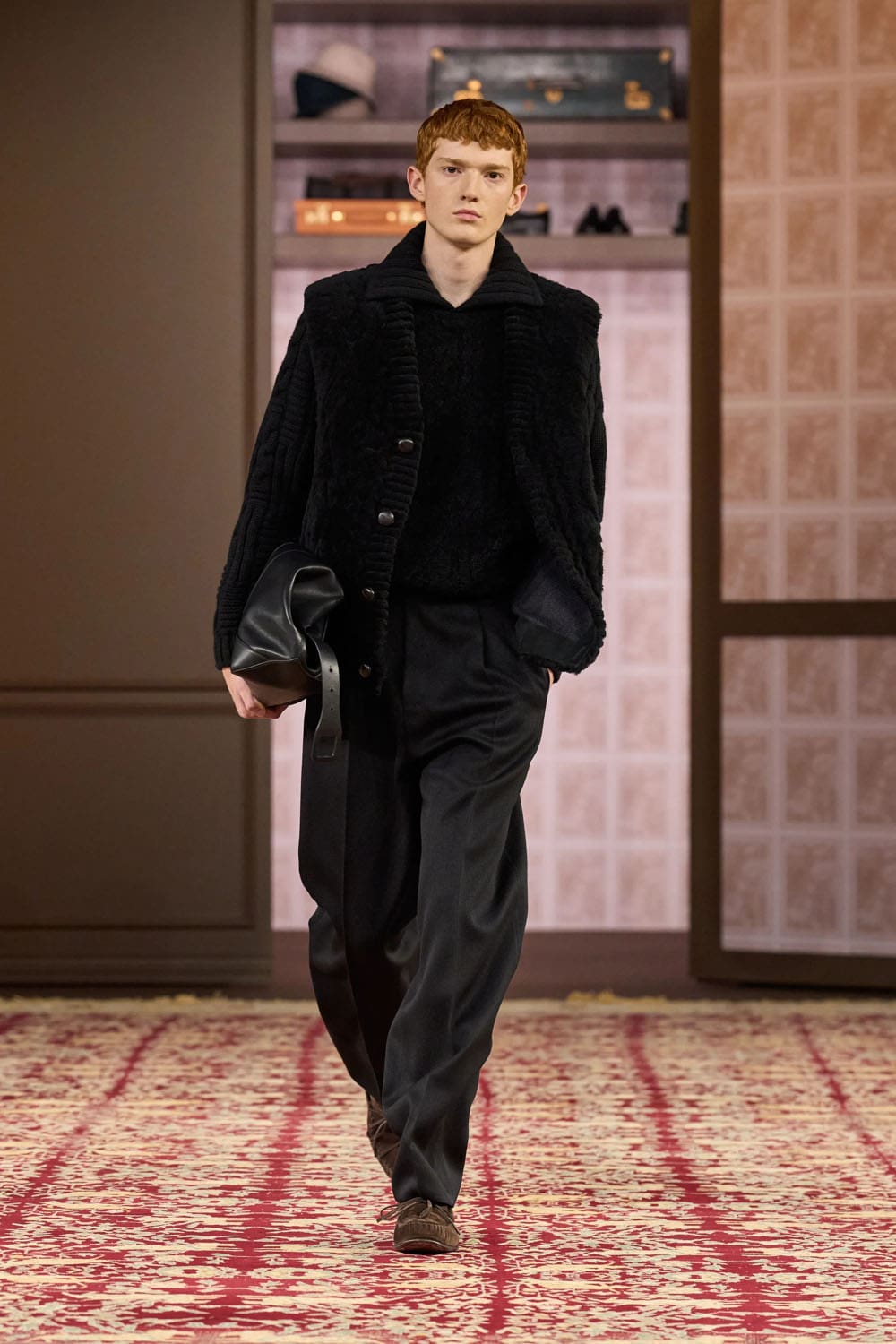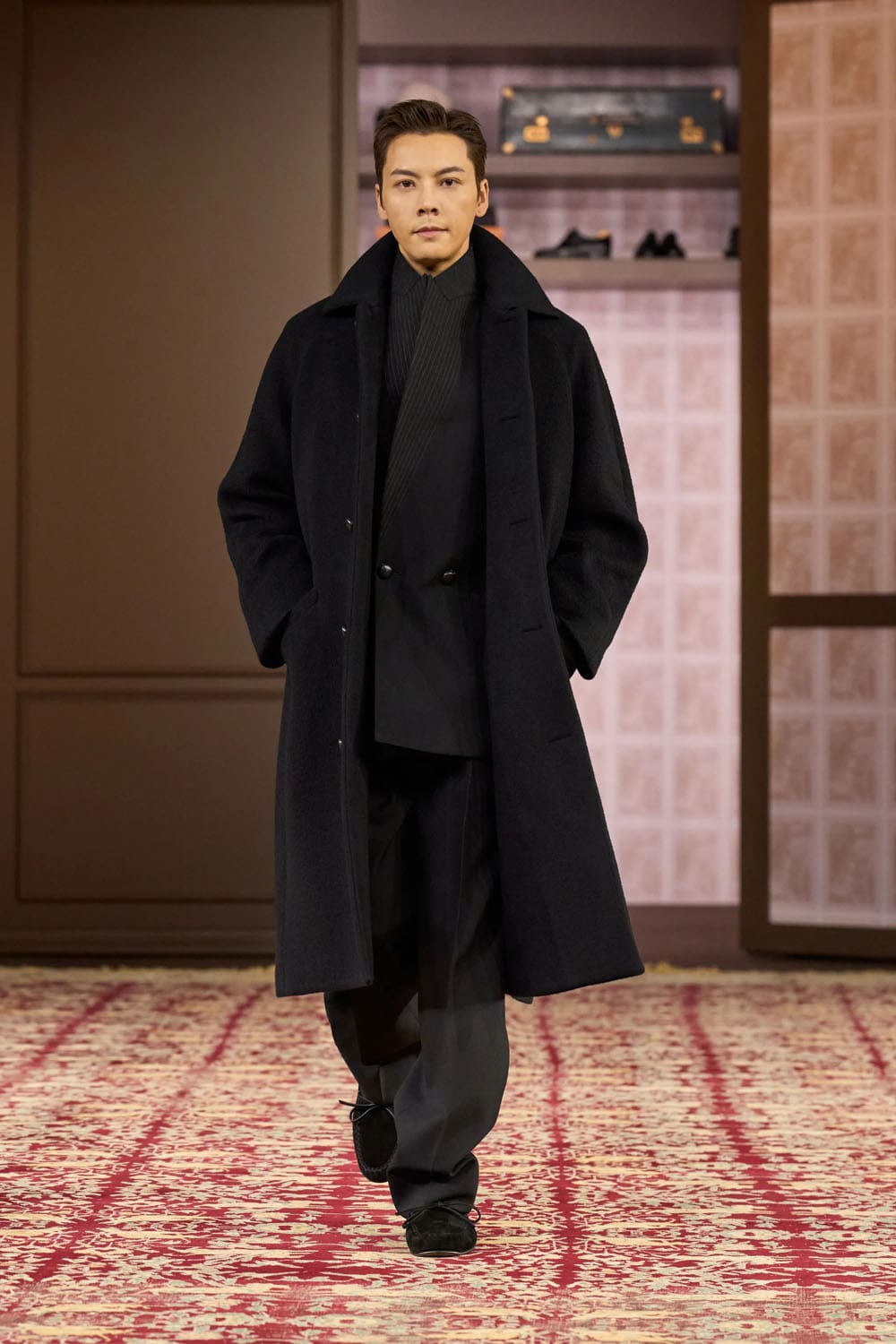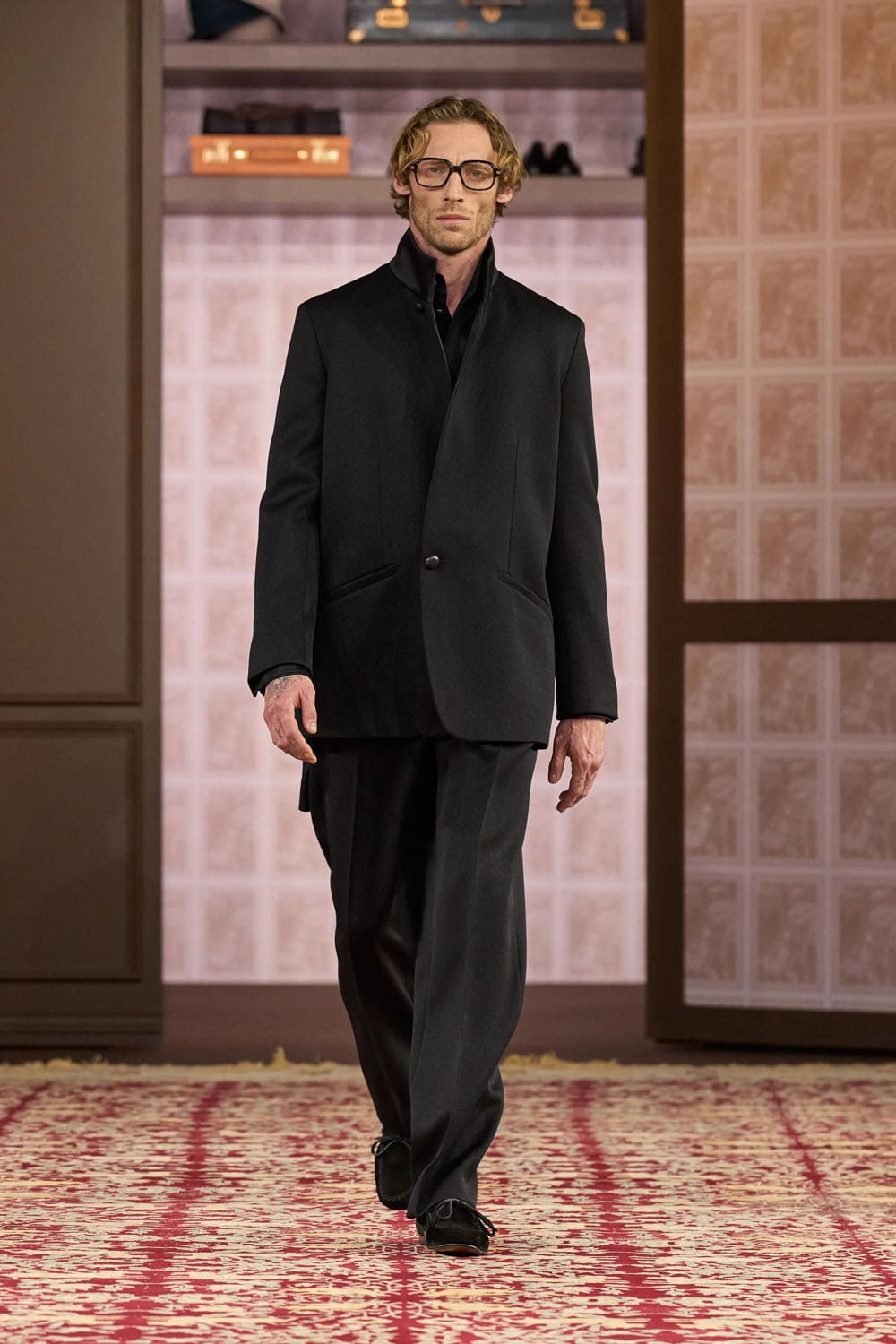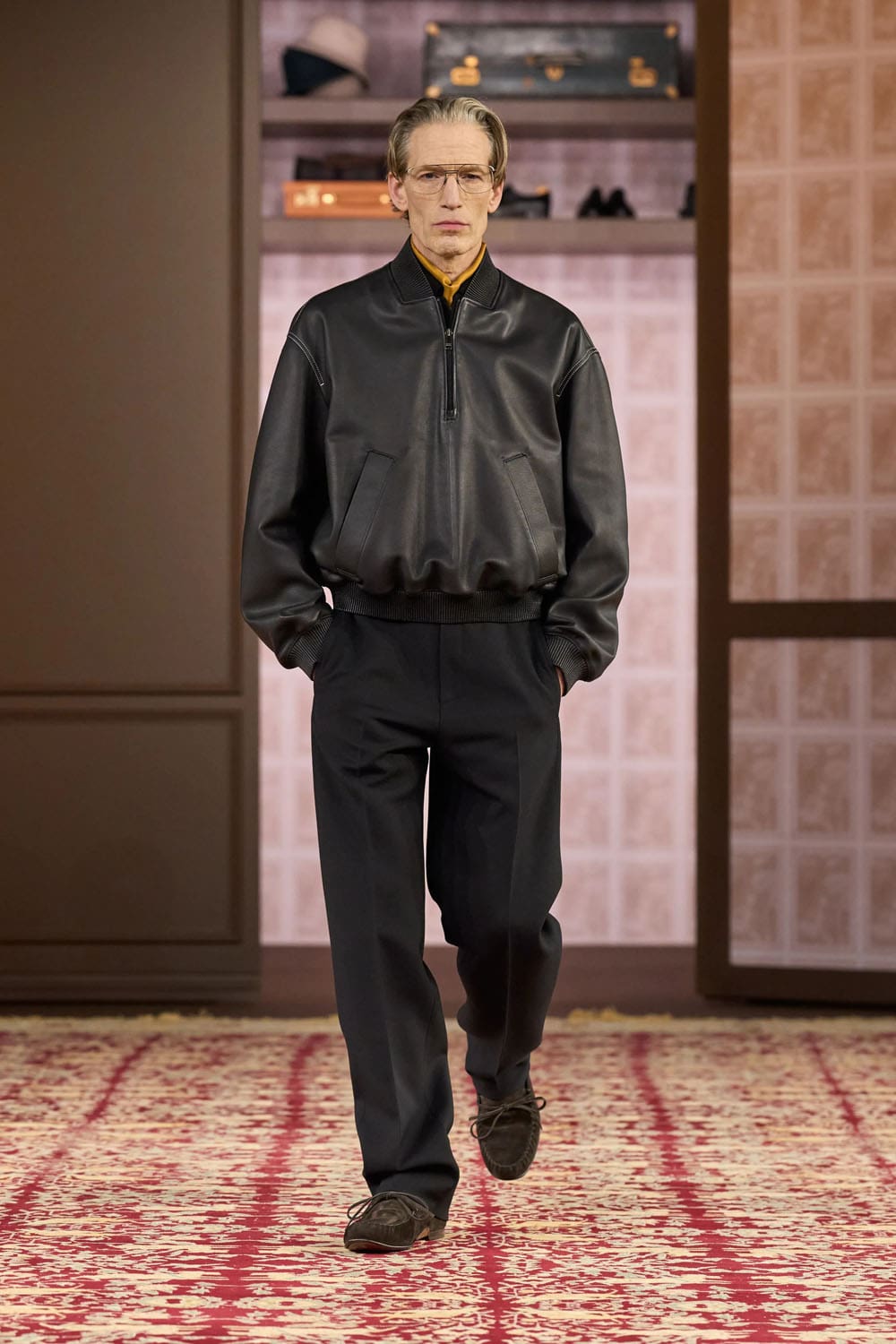
Zegna Fall Winter 2026 Milan Fashion Week “A FAMILY CLOSET”. Story by RUNWAY MAGAZINE. Photo Courtesy: Zegna / GettyImages.
The Closet Opens
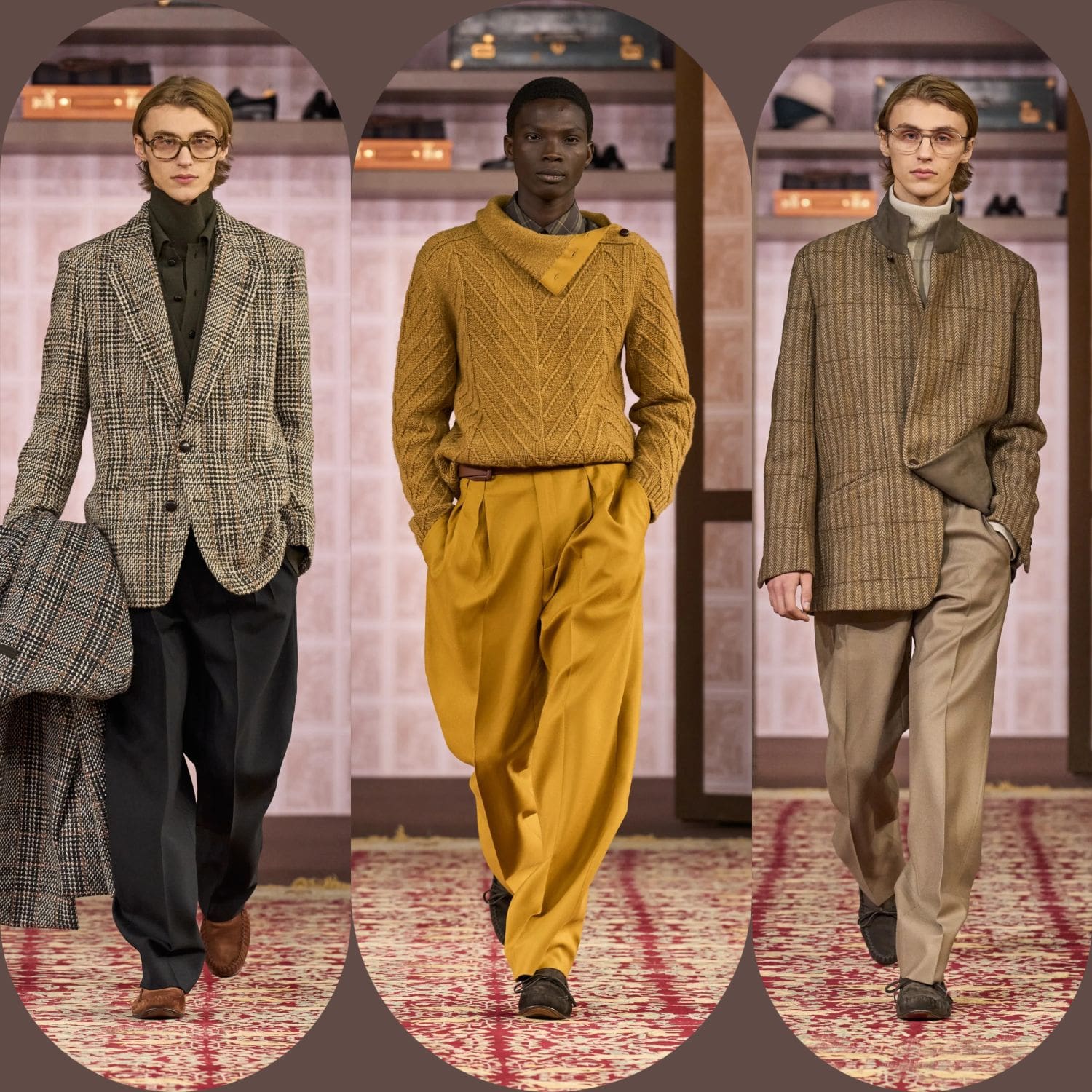
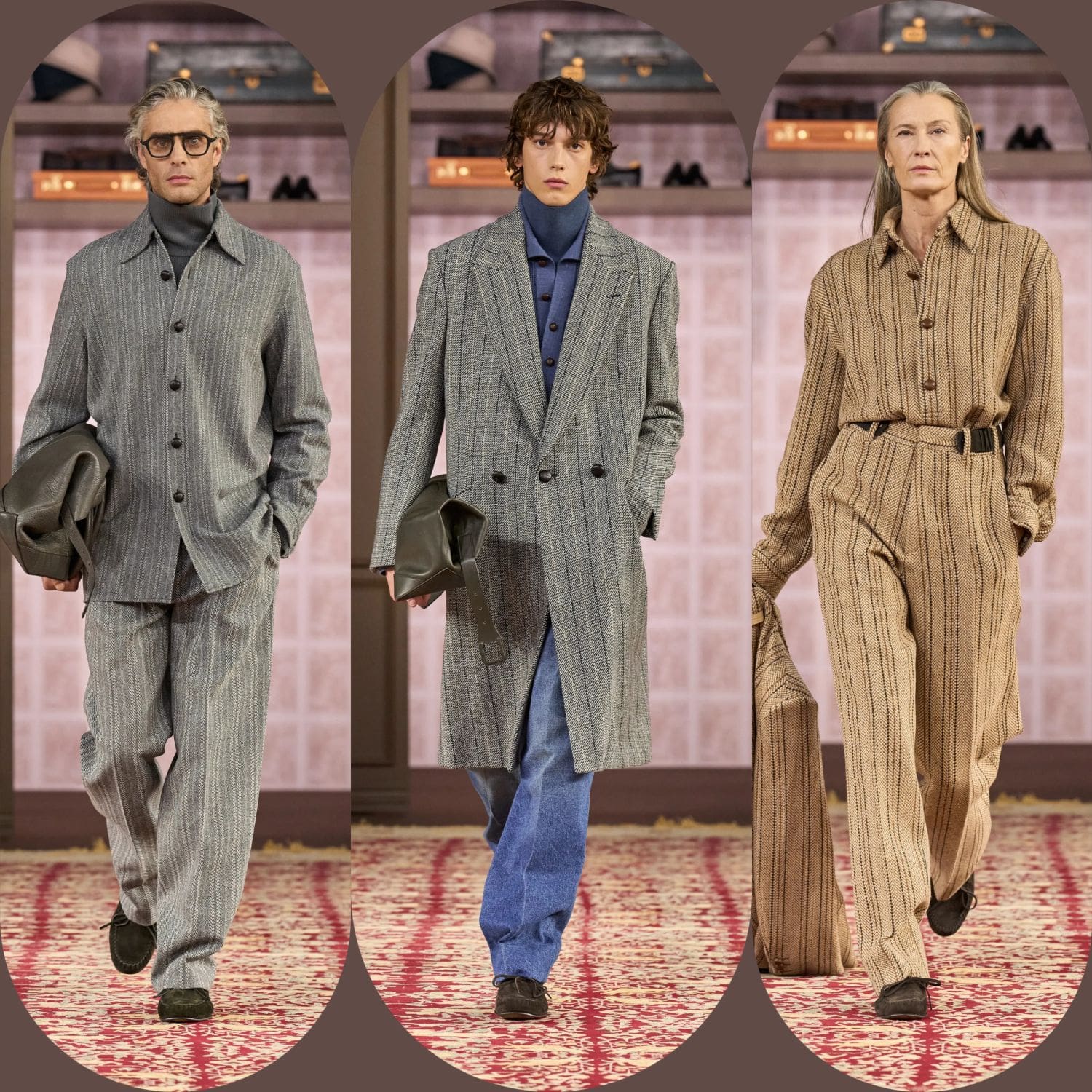
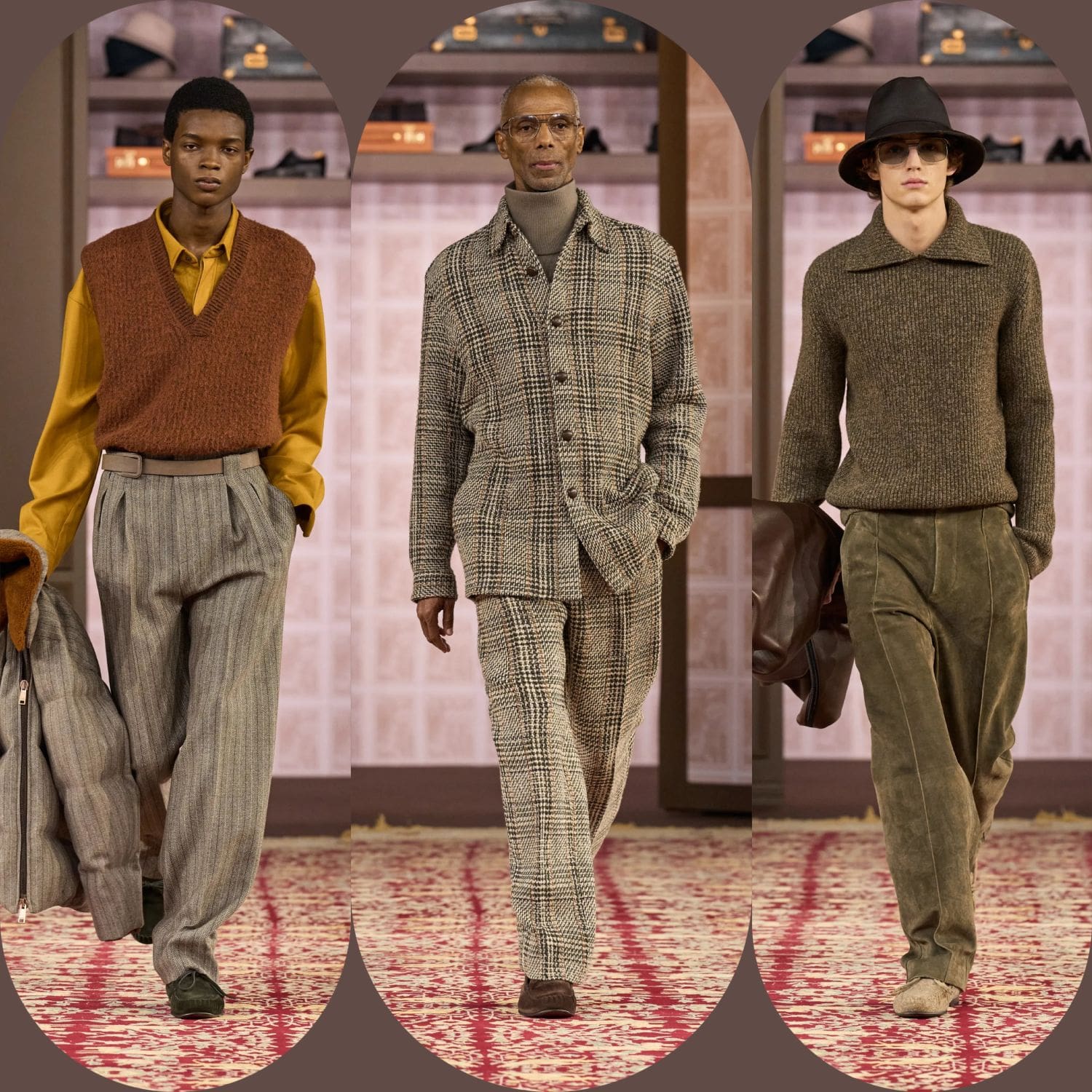
Not just a metaphor but a stage—ZEGNA’s Winter 2026 fashion show unfolded inside an enormous oval-shaped closet, echoing both intimacy and permanence. The theme, A Family Closet, was a poetic entry point to explore heritage not as an archive, but as a living entity. The show did not begin with a spectacle, but with a gesture: a door opened, and memory walked in.
Sartori’s Lineage and Legacy
This season marked ten years of Alessandro Sartori’s tenure as Artistic Director. But the story began long before that—with a teenage boy inheriting twenty suits from his late father, Giuseppe Sartori, a textile machinery designer in Biella. This act of inheritance, both symbolic and material, created the framework for Sartori’s vision: that garments—when made with intent and care—outlive time and connect generations.
In the physical showspace, this inheritance was echoed by the presence of founder Ermenegildo Zegna’s original desk, his homburg hats, and even the brand’s first tailored jacket from 1930, preserved like a relic and reframed like a proposal.
The Philosophy of a Wardrobe
Sartori articulated his central idea with the calm clarity of someone who understands that clothing is not about seasons, but about permanence. “The wardrobe becomes a repository,” he said. Like watches, like rare books—clothing, too, can carry legacy. But it must be worn to be remembered.
This was a menswear philosophy rooted in metaphysics: garments as totems. Threads of identity. Material memory that reshapes itself with each wearer and each generation.
A Shift in Tone, A Broader Reach
Winter 2026 marked a notable shift in Sartori’s stylistic language. Gone was the focus on ultra-refined semi-formalwear; in its place, an embrace of character-driven silhouettes and historical cues. 1970s cardigan coats in heavy checks. Deep russets and chocolate browns. Broken box pleats recalling the Tirolean loden coats of northern Italy.
Double-breasted suits, direct echoes of vintage ZEGNA garments, came equipped with Sartori’s signature ingenuity: three fastening positions for left, right, or symmetrical closure. Timelessness, re-engineered.
Material Innovations and Emotional Craftsmanship
Sartori’s technical mastery never overshadowed his emotional intent. Fabric innovations—cashmere shearling, printed herringbone—were subtle triumphs. But the soul of the collection lay in its depth of feeling. Each look suggested a character, a moment, a relationship with memory. It was a collection for collectors—not because it was rare, but because it was personal.
This wasn’t a wardrobe for one man—it was a portrait gallery in motion.
The ZEGNA Family Expands
In a moment of generational synergy, William Chan Wai-ting made his runway debut as ZEGNA’s new global ambassador. His presence, magnetic yet understated, felt less like a branding move and more like an embodiment of Sartori’s vision: worldly, dignified, and future-facing.
William joined a growing ZEGNA family—a constellation of artists, thinkers, and personalities—each one wearing the legacy in their own voice.
Fashion as Inheritance, Not Memorabilia
Ultimately, A Family Closet was not a nostalgic retrospective, nor a cold archival nod. It was fashion as inheritance. Not preserved but passed on. Not trapped in time but reimagined through use.
In a fashion cycle often dominated by noise, Sartori reminded us that memory can be louder than trend. The garments at ZEGNA this season spoke softly—but they will echo, long after the runway is cleared.
See All Looks Zegna Fall 2026