Boss
THE TRIUMPHS
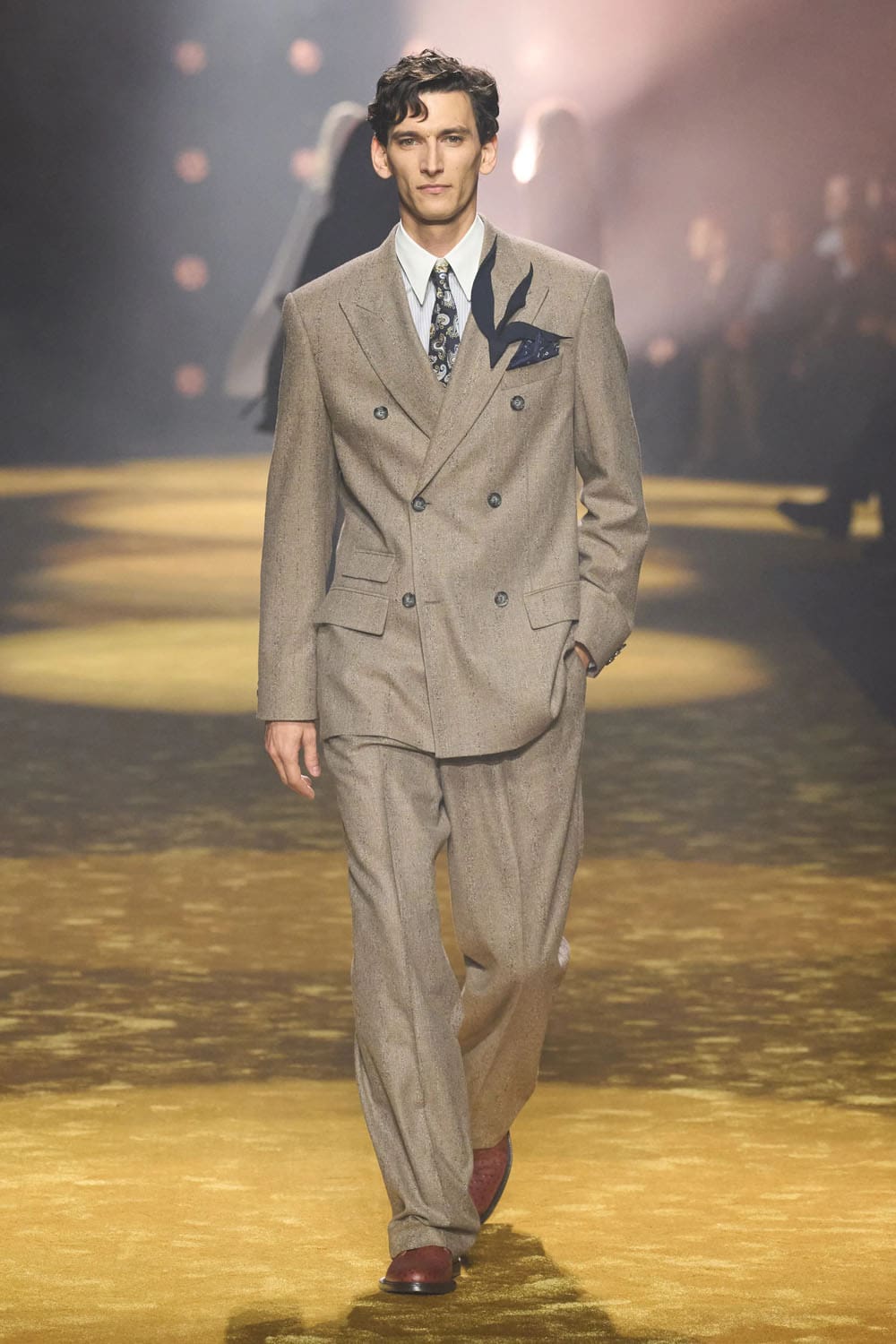
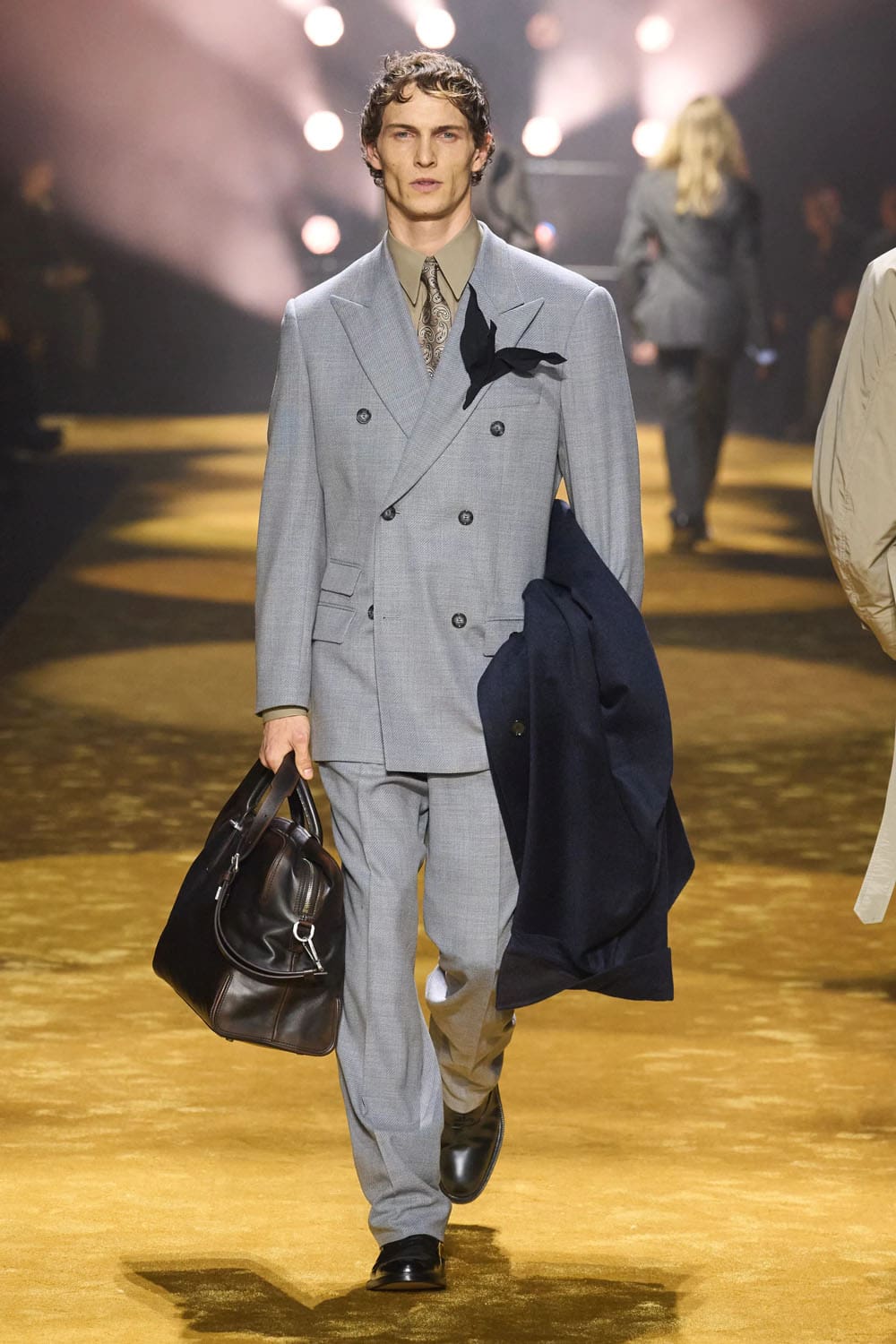
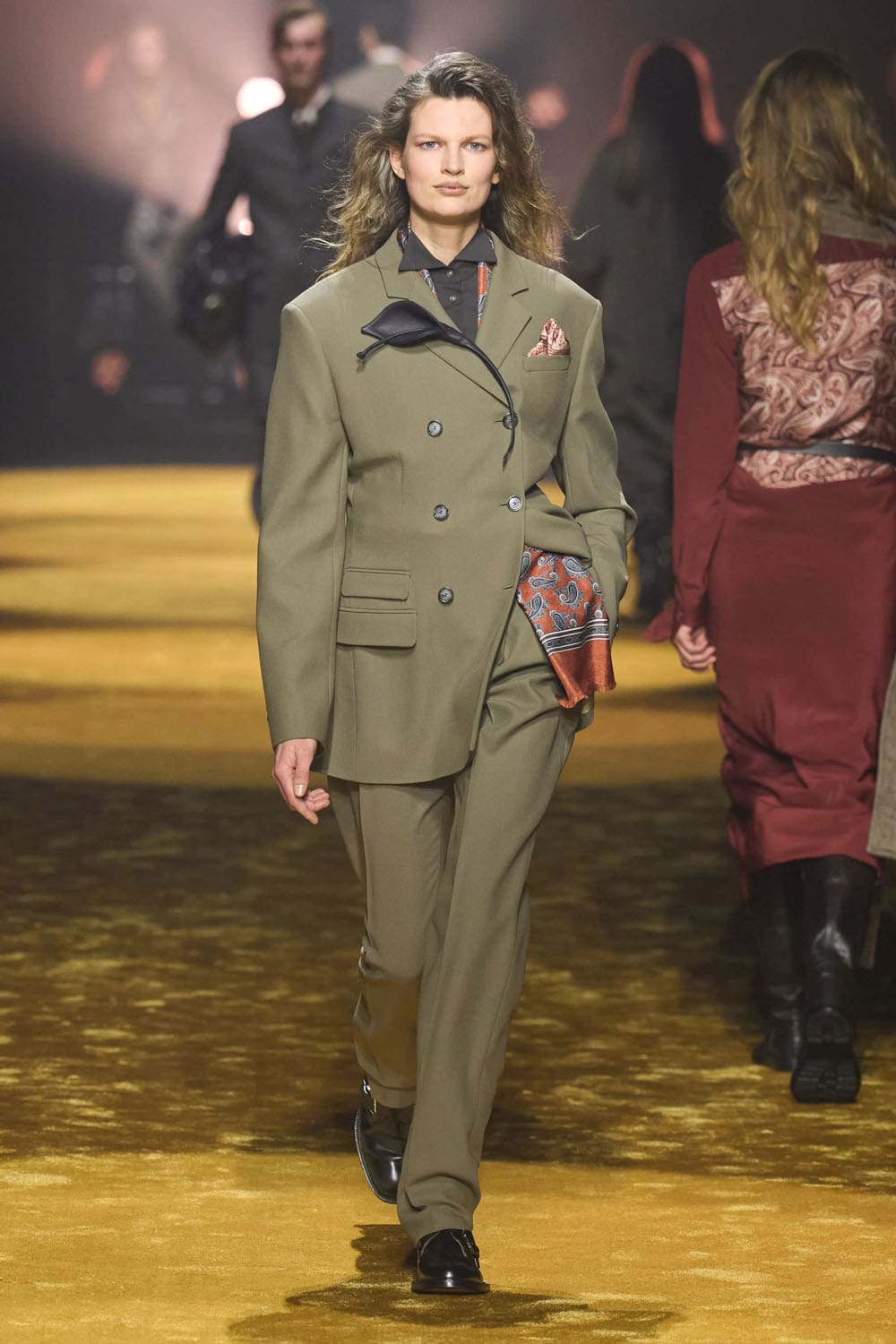
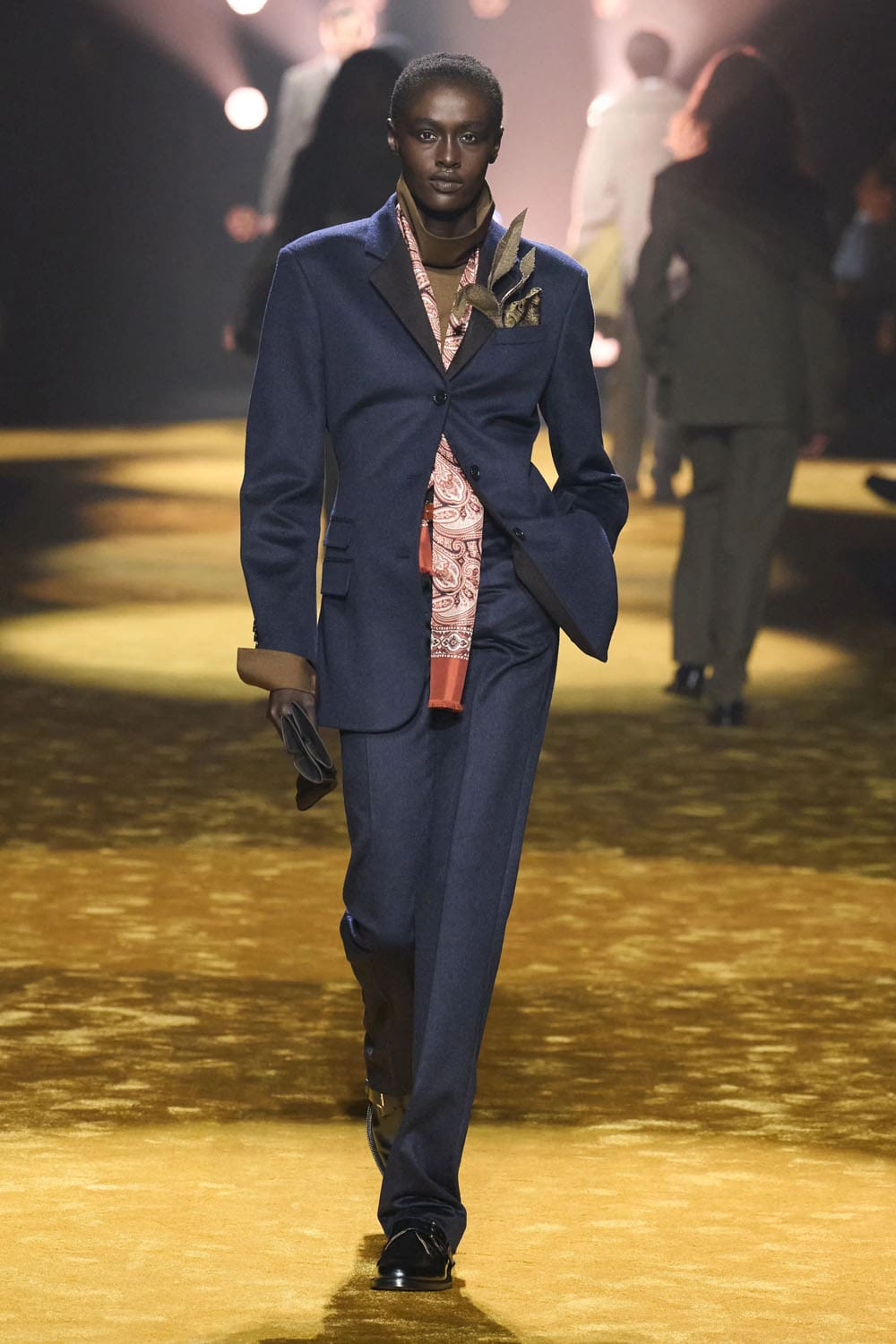
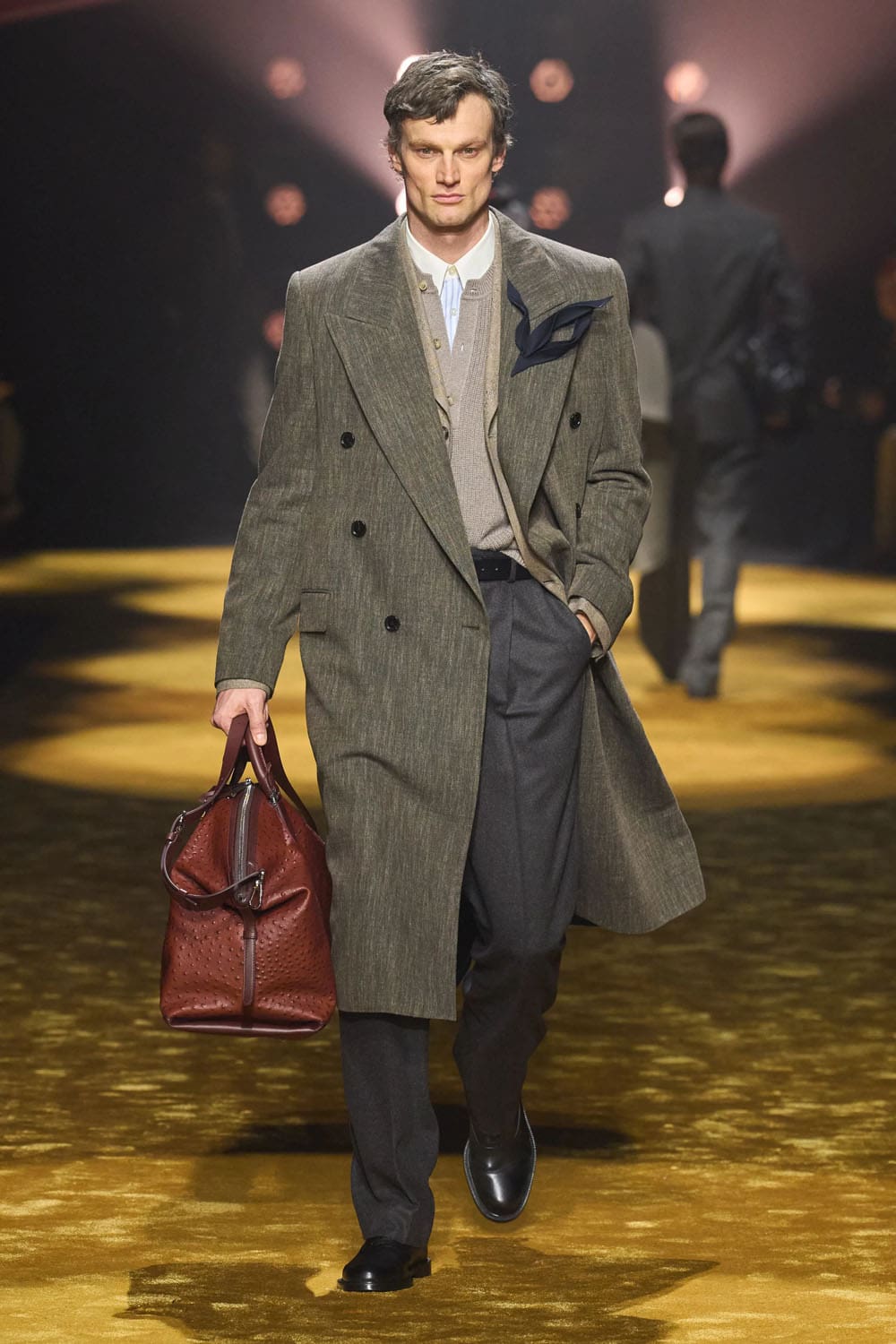
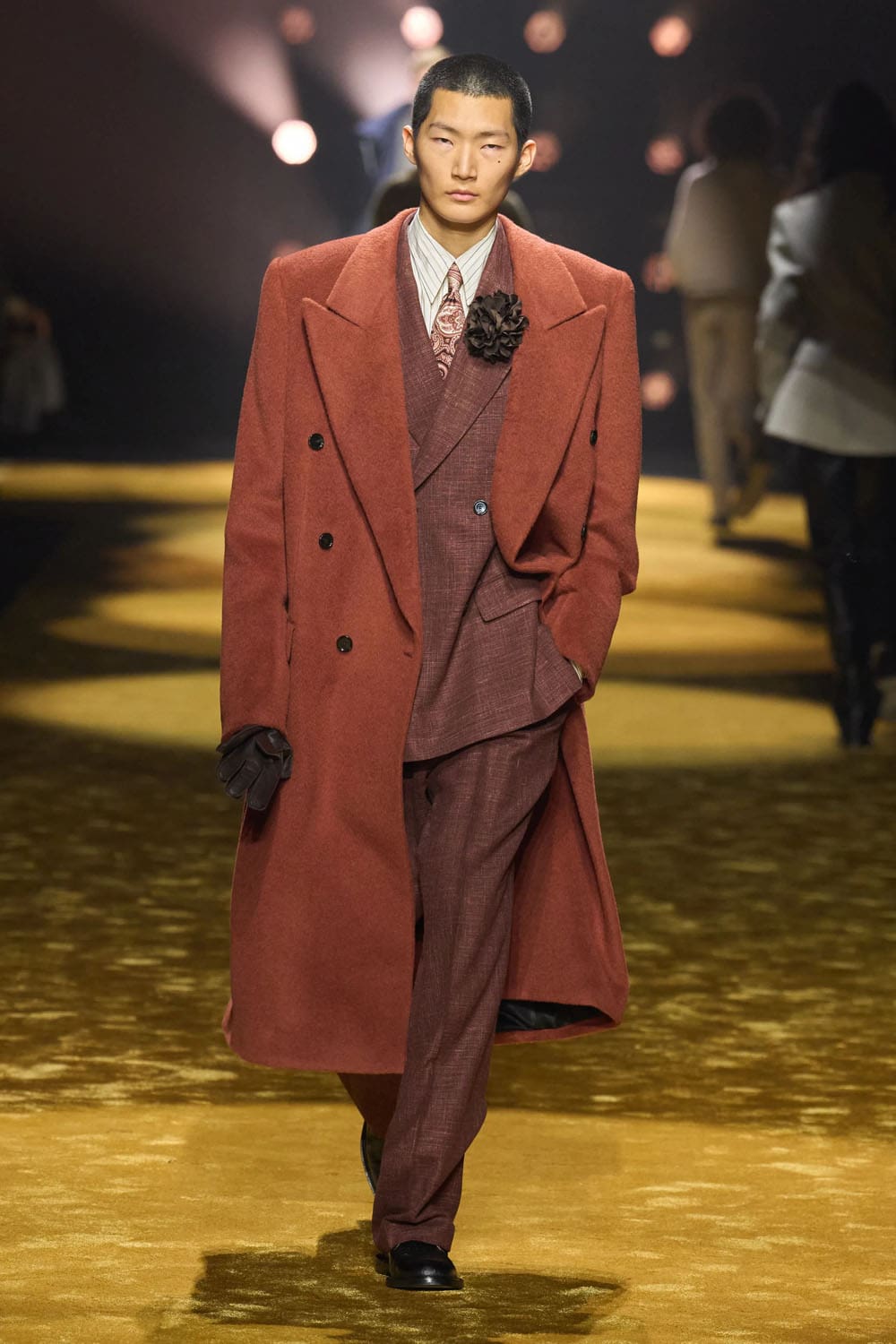
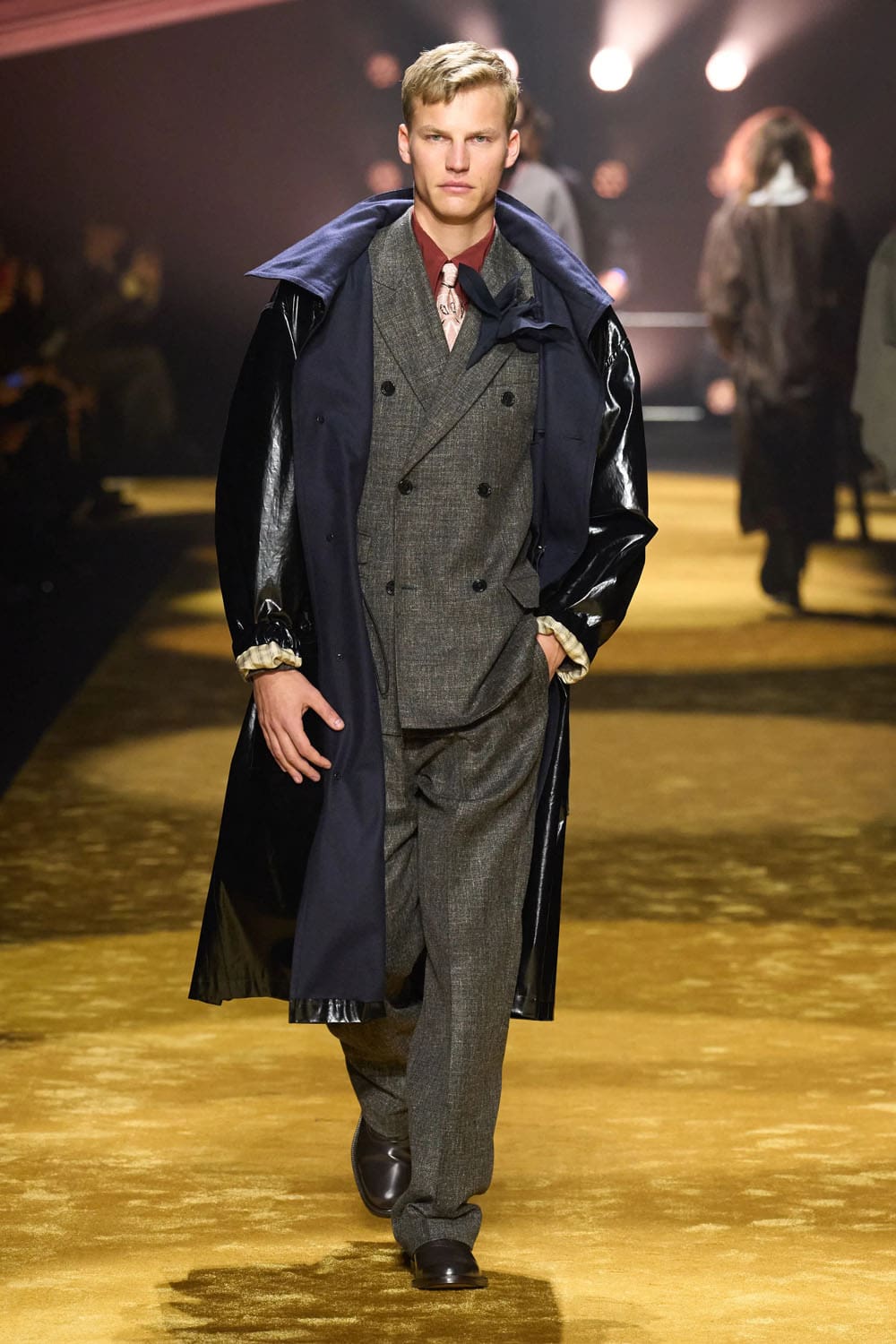
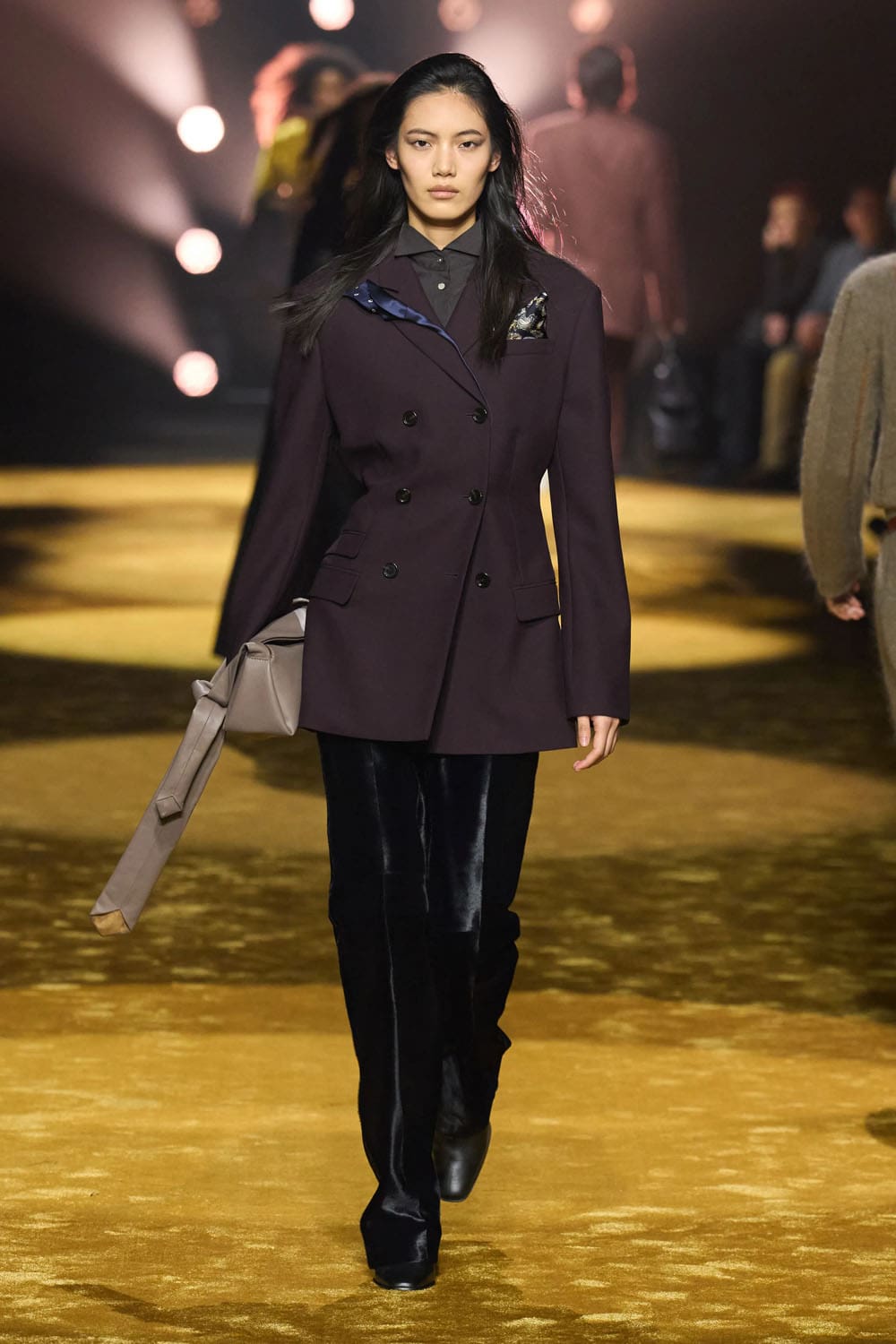
- Exceptional tailoring and construction, with precise double-breasted structures, controlled proportions, immaculate edges and carefully considered linings
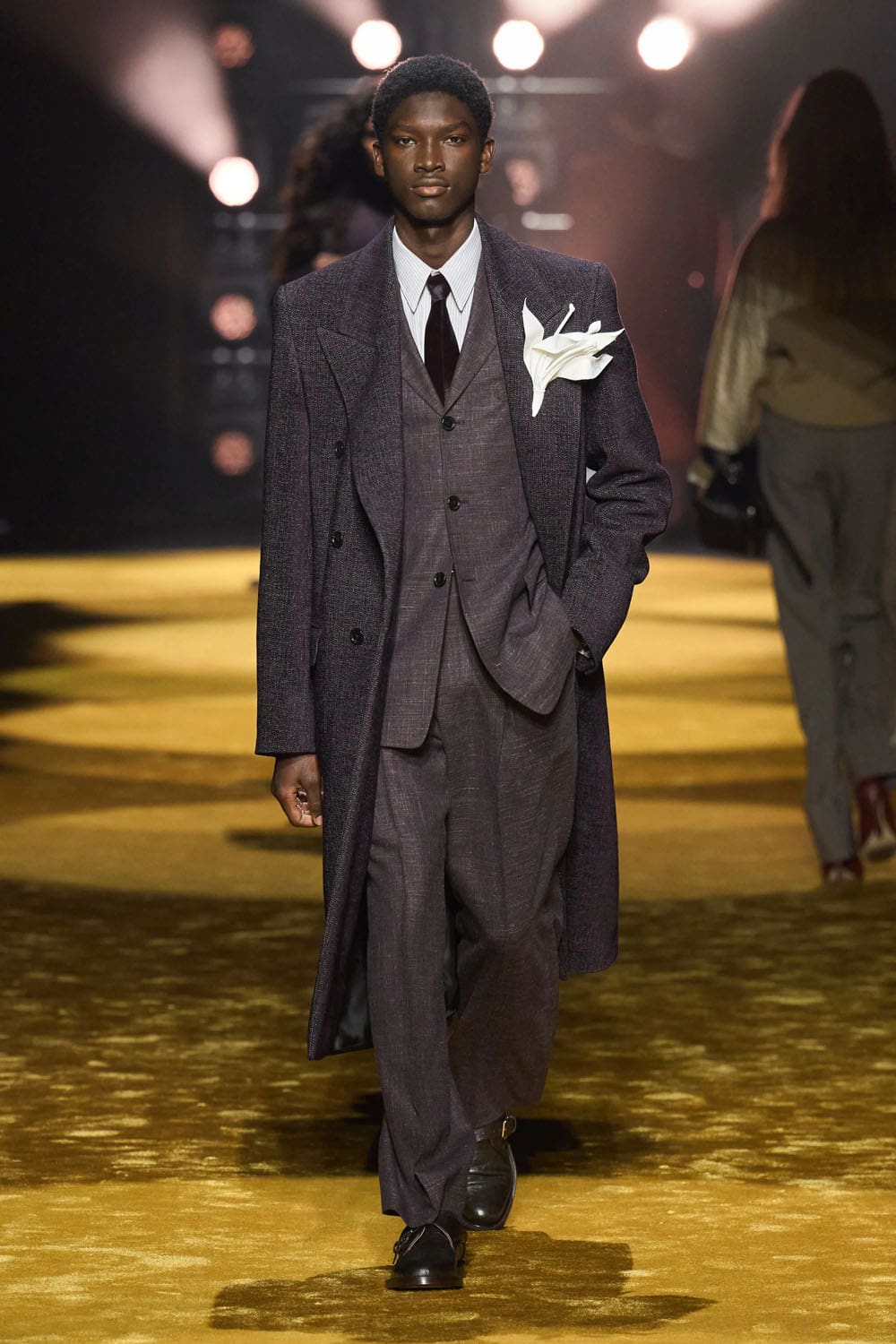
- Strong evolution of BOSS’s tailoring heritage, relaxing the traditional corporate uniform without abandoning the architectural discipline fundamental to the house
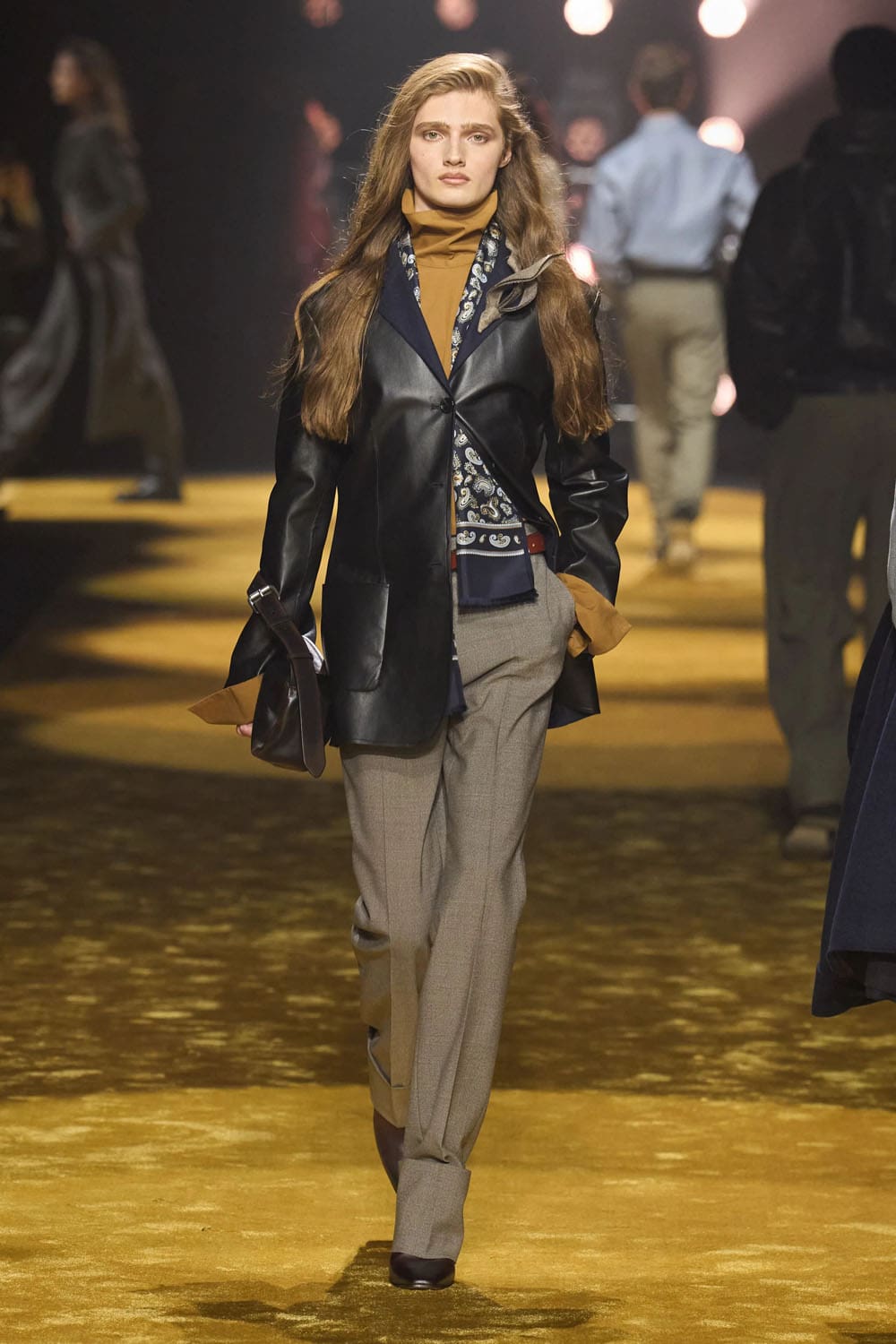
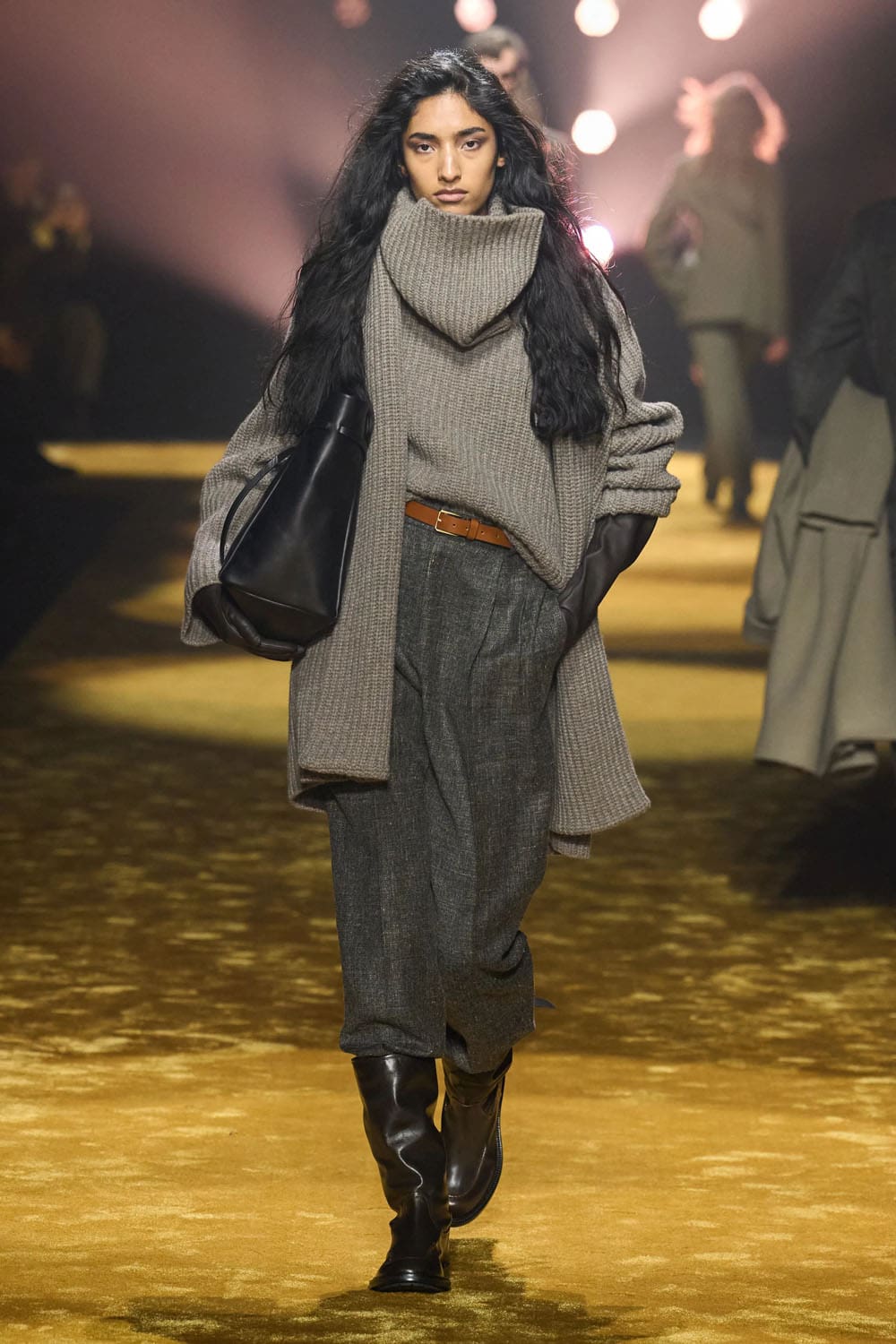
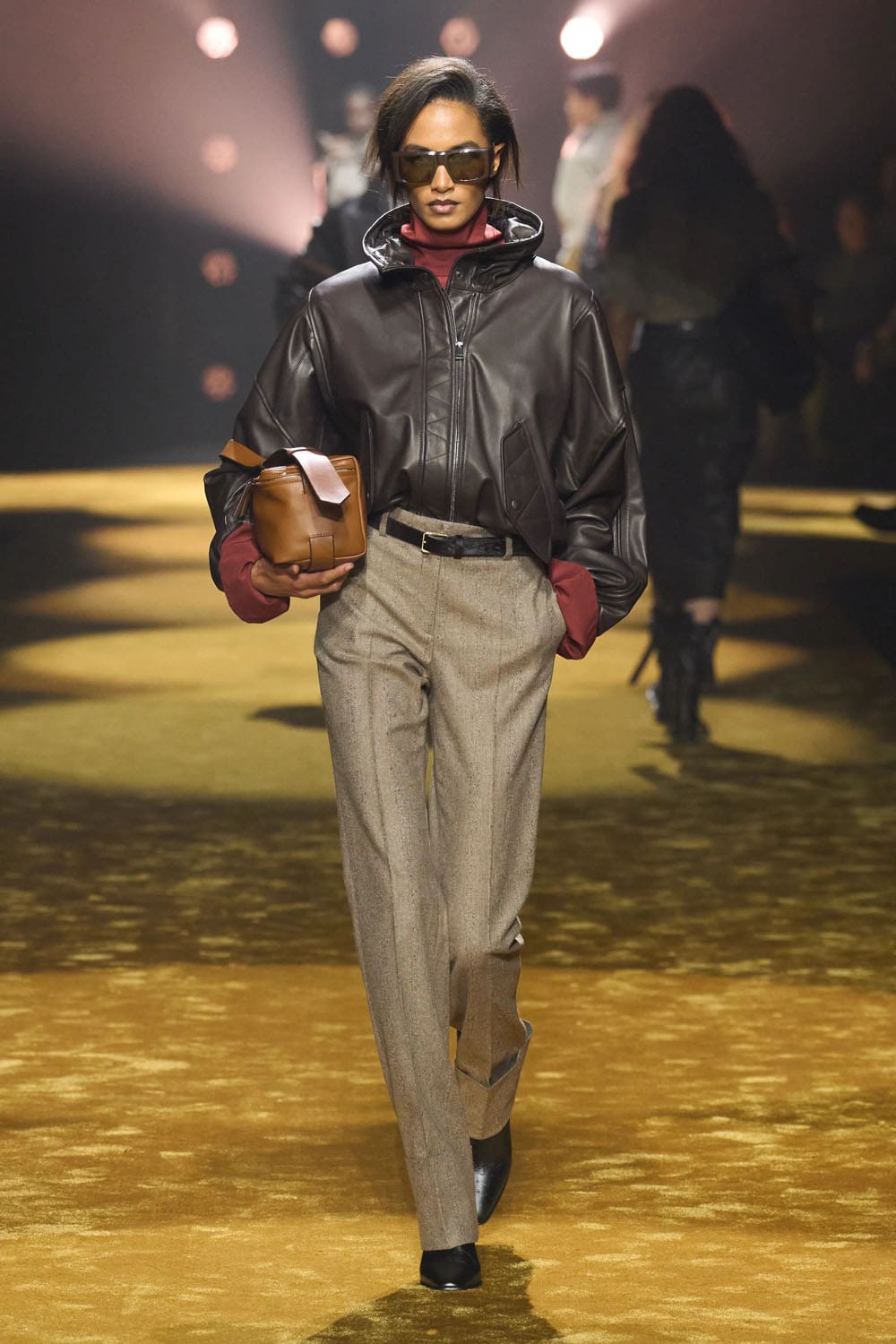
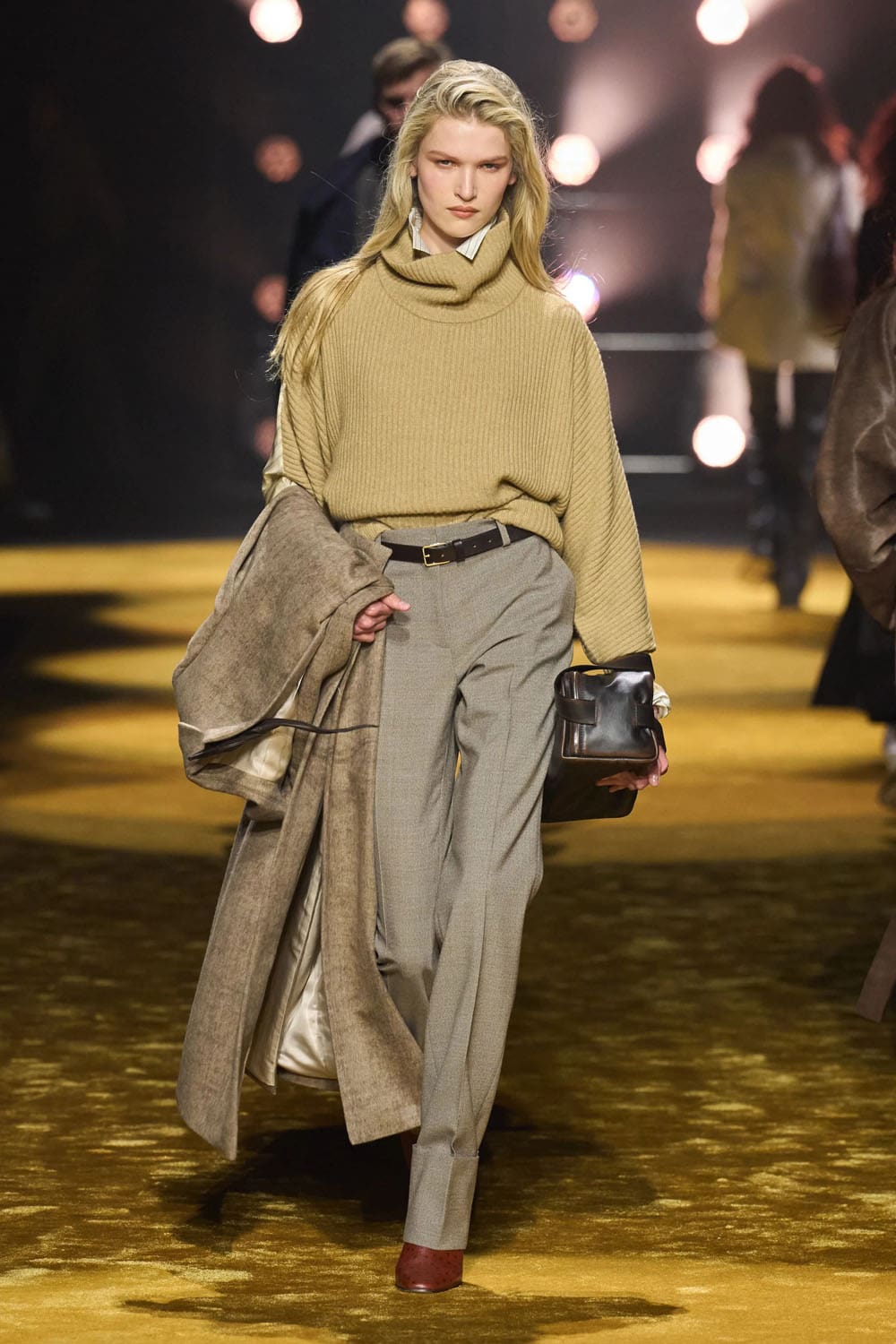
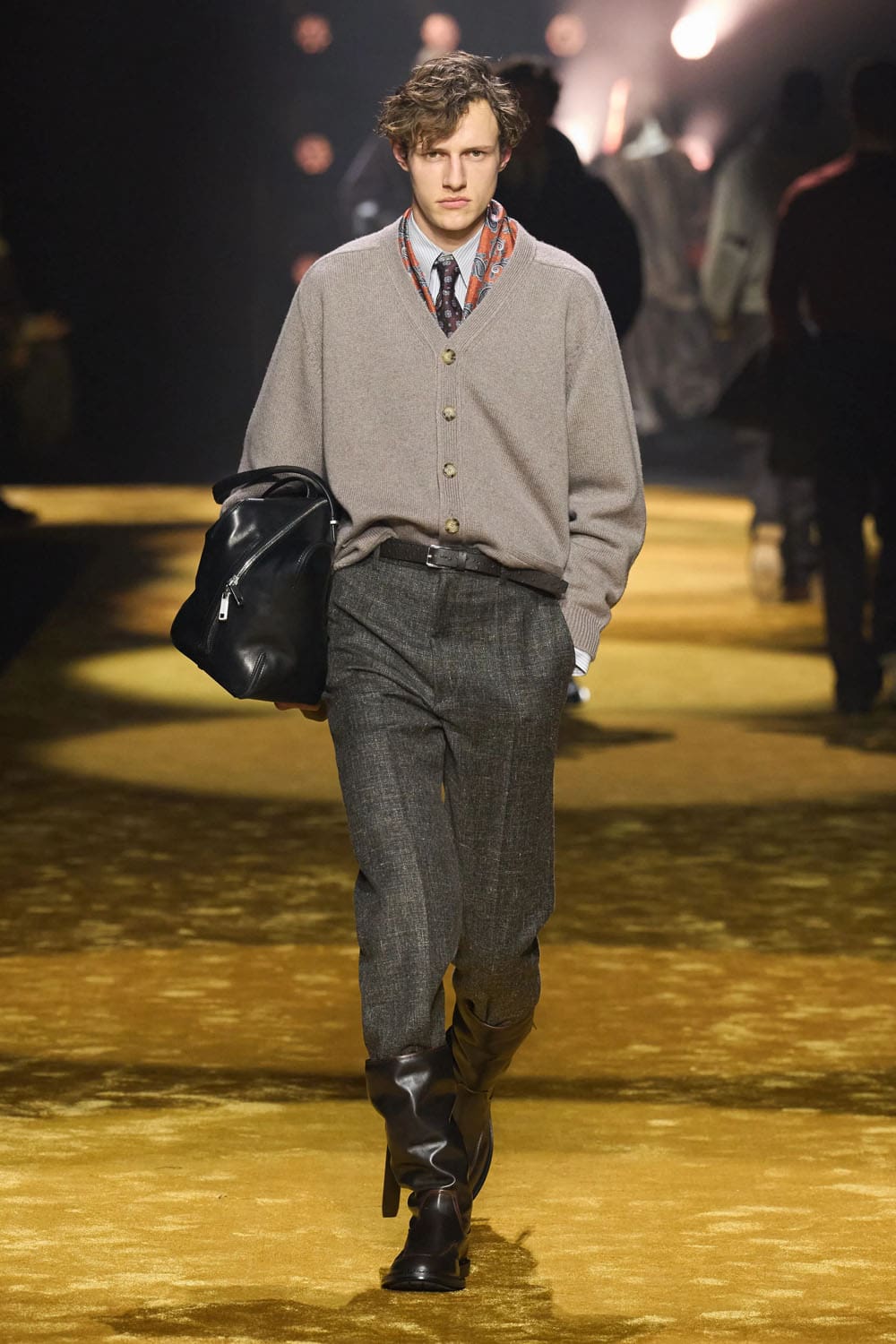
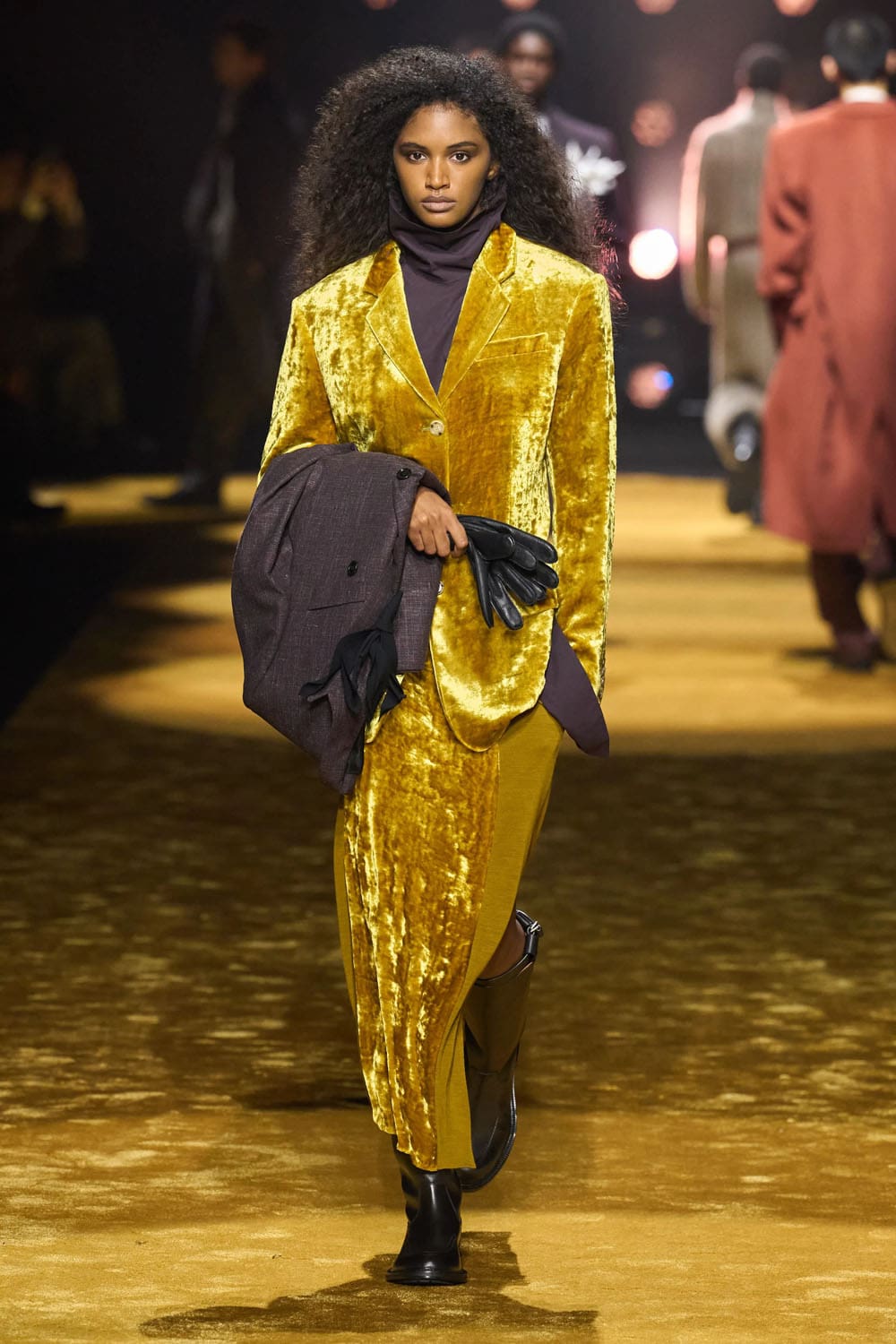
- Sophisticated material dialogue between wool, tweed, jacquard, leather, ribbed knitwear and fluid evening fabrics, creating depth without unnecessary decoration
- Excellent balance between authority and ease, producing a professional wardrobe that feels contemporary, wearable and commercially convincing
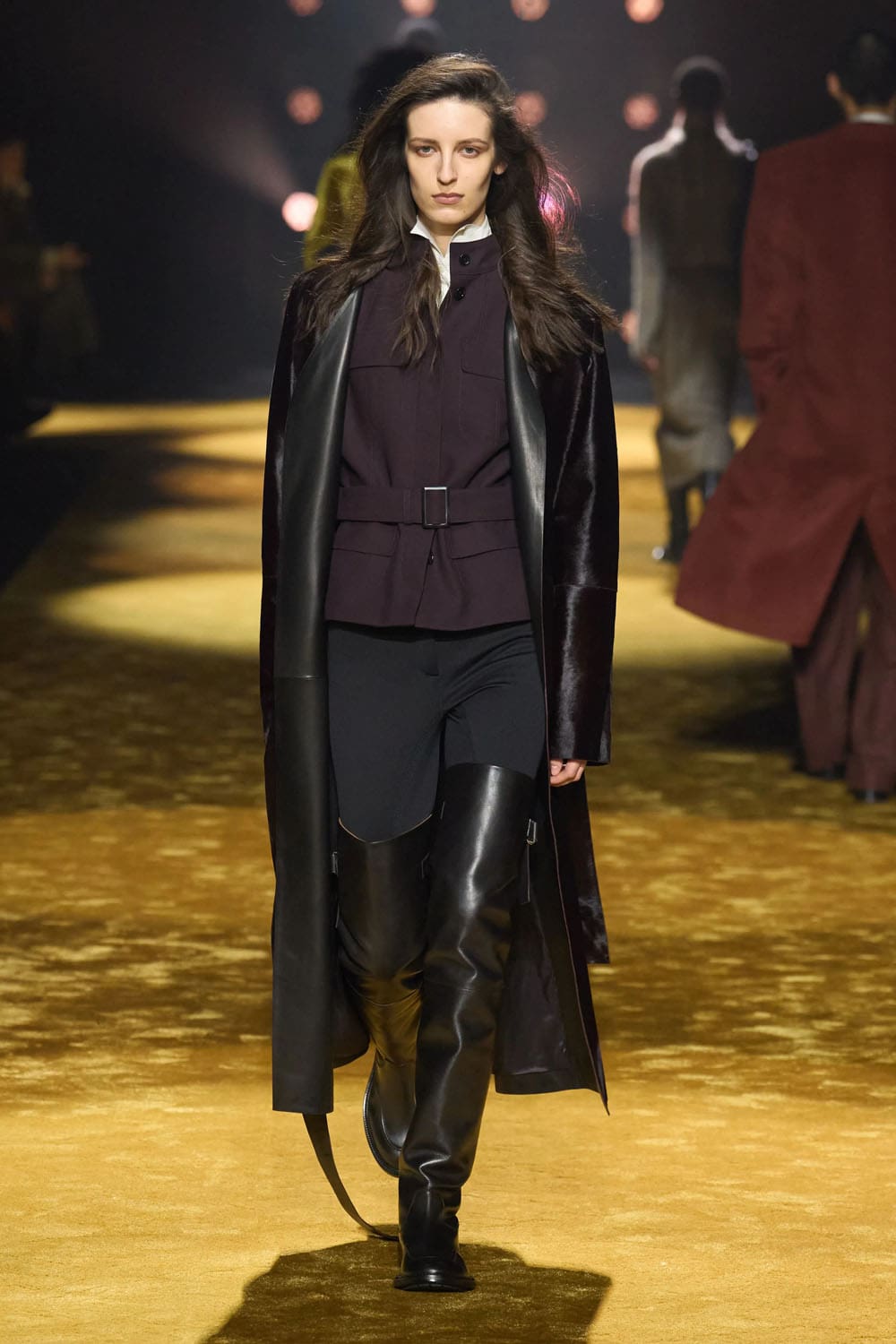
- Intelligent use of equestrian references and asymmetric styling to give familiar tailoring a distinctive character without pushing it into costume
RESERVATIONS
- The collection evolves BOSS’s established tailoring language extremely well but takes relatively limited creative risk beyond that familiar territory
- Its strongest achievement is refinement rather than reinvention, leaving room for Marco Falcioni to develop a more immediately distinctive personal signature within the house
- Several propositions depend more on sophisticated styling and proportion than on genuinely new garment archetypes
Boss Fall Winter 2026-2027 “Marco Falcioni and the New Architecture of Authority”. Story by Kate Granger, Editor of RUNWAY MAGAZINE. Photo Courtesy: Boss.
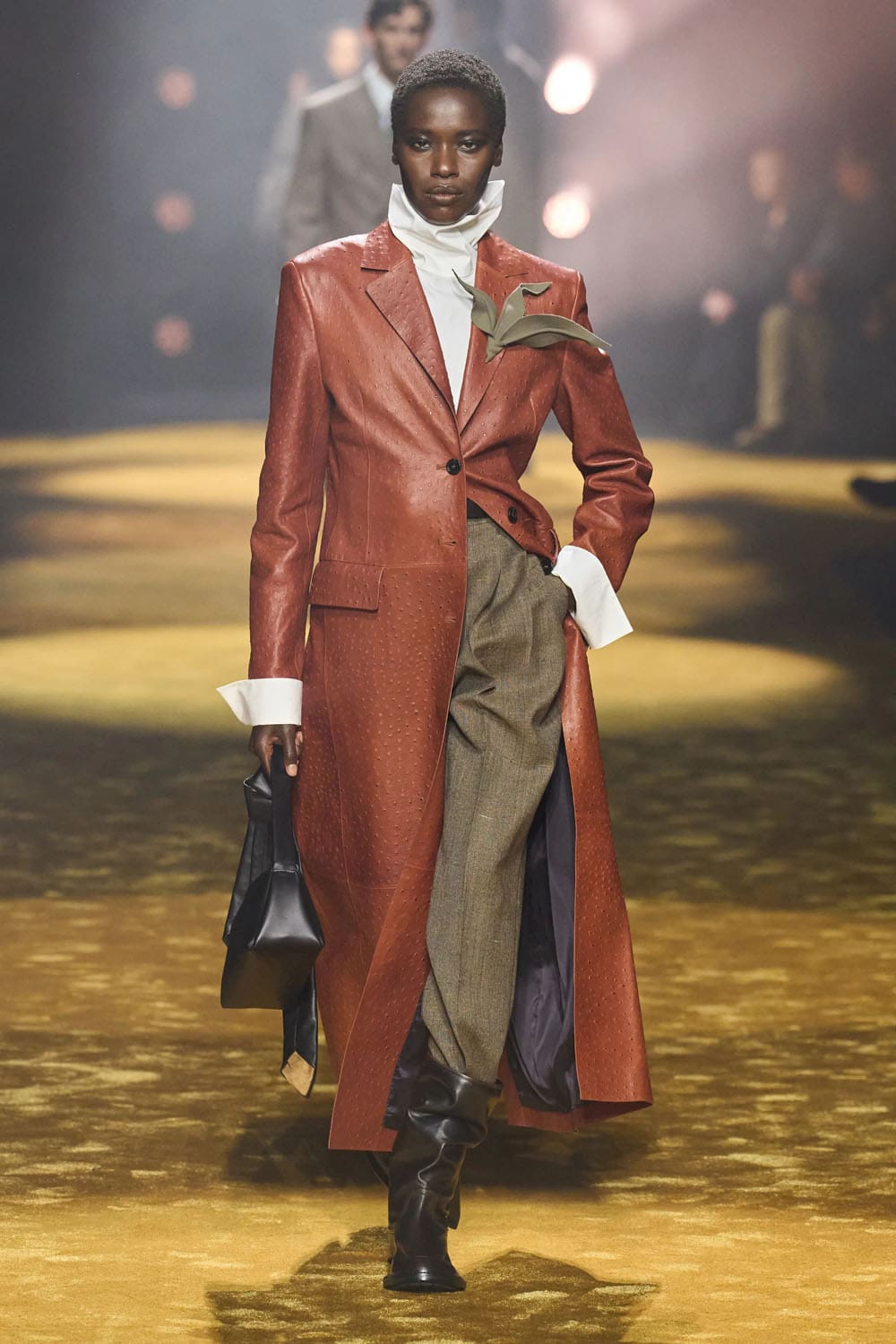
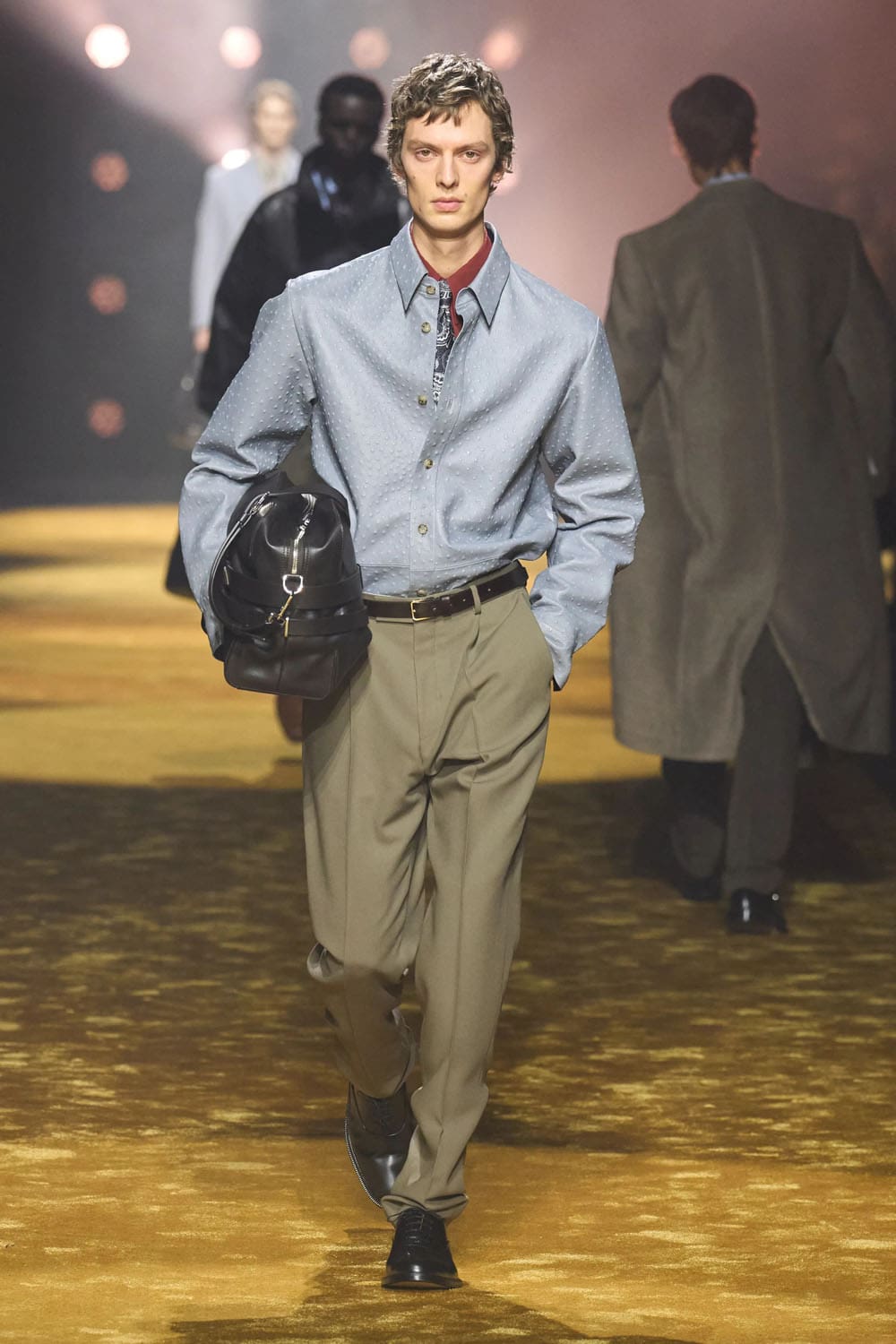
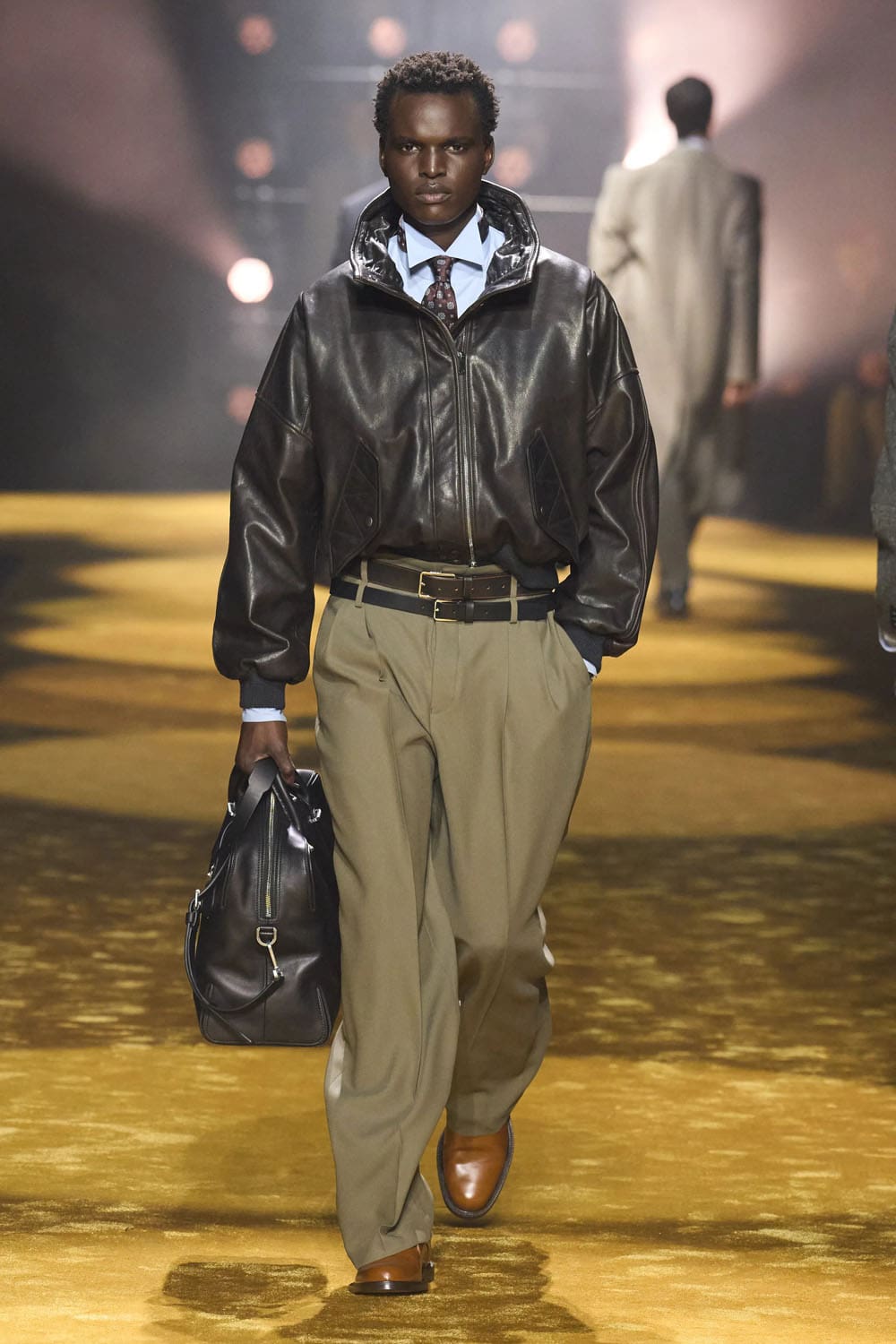
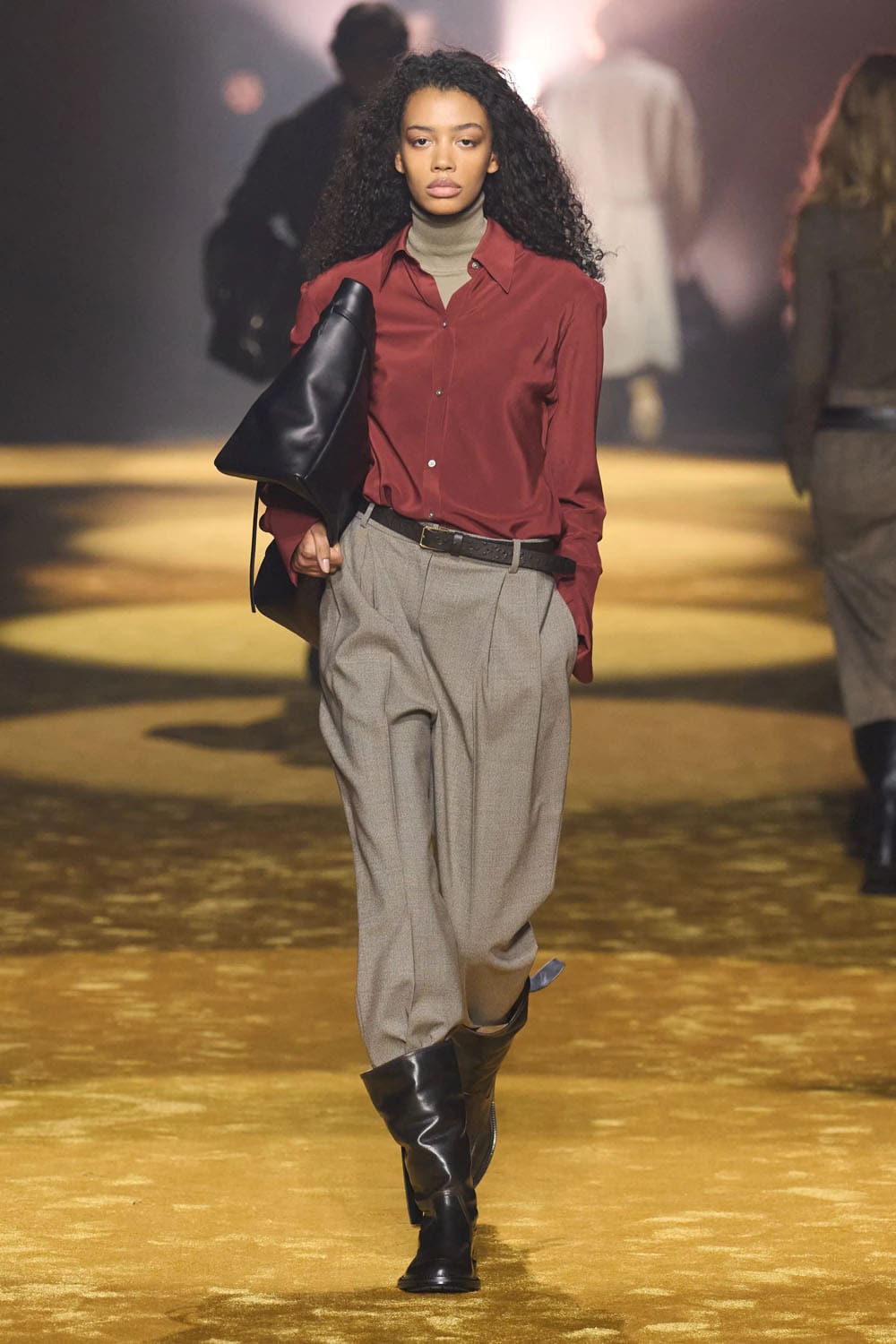
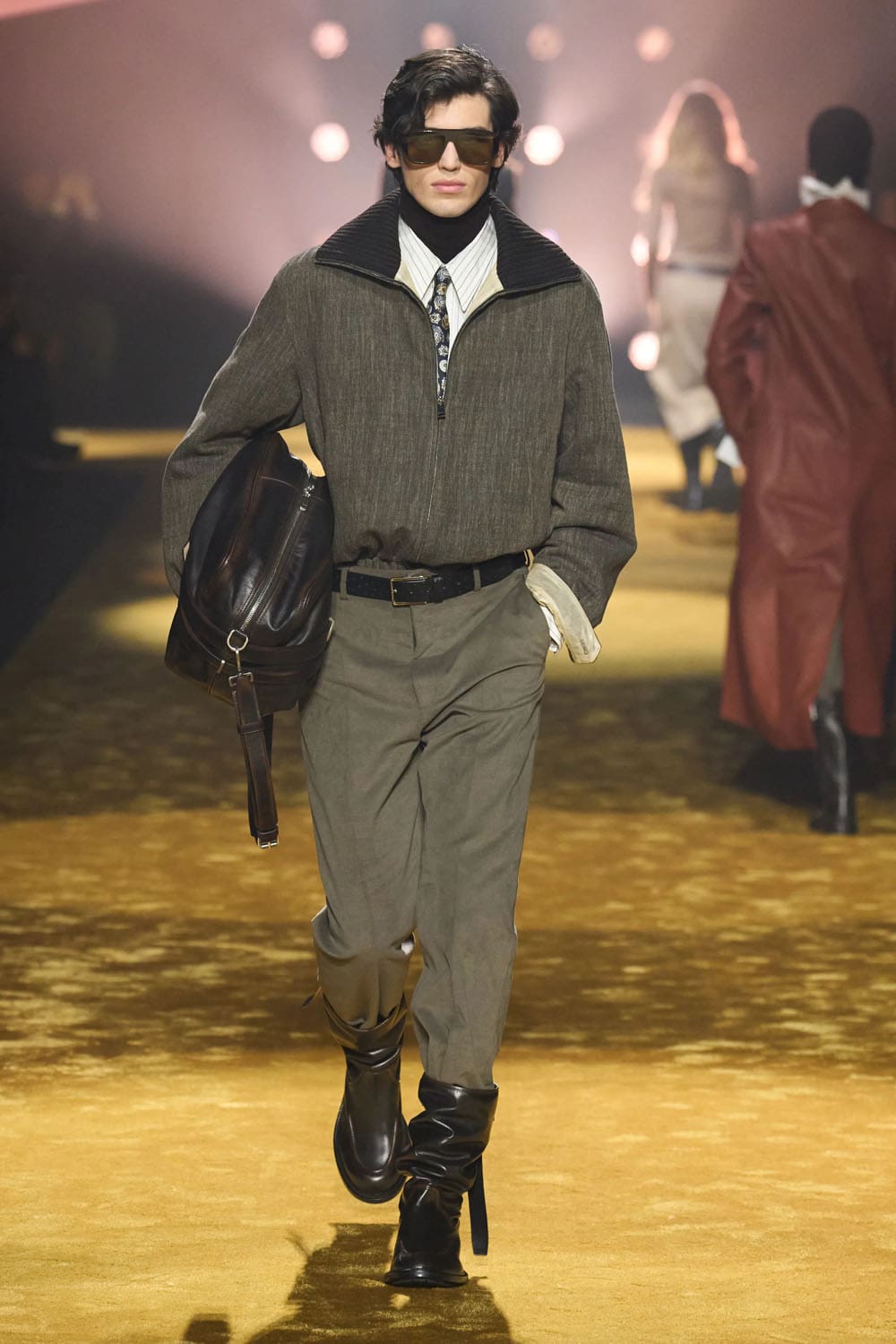
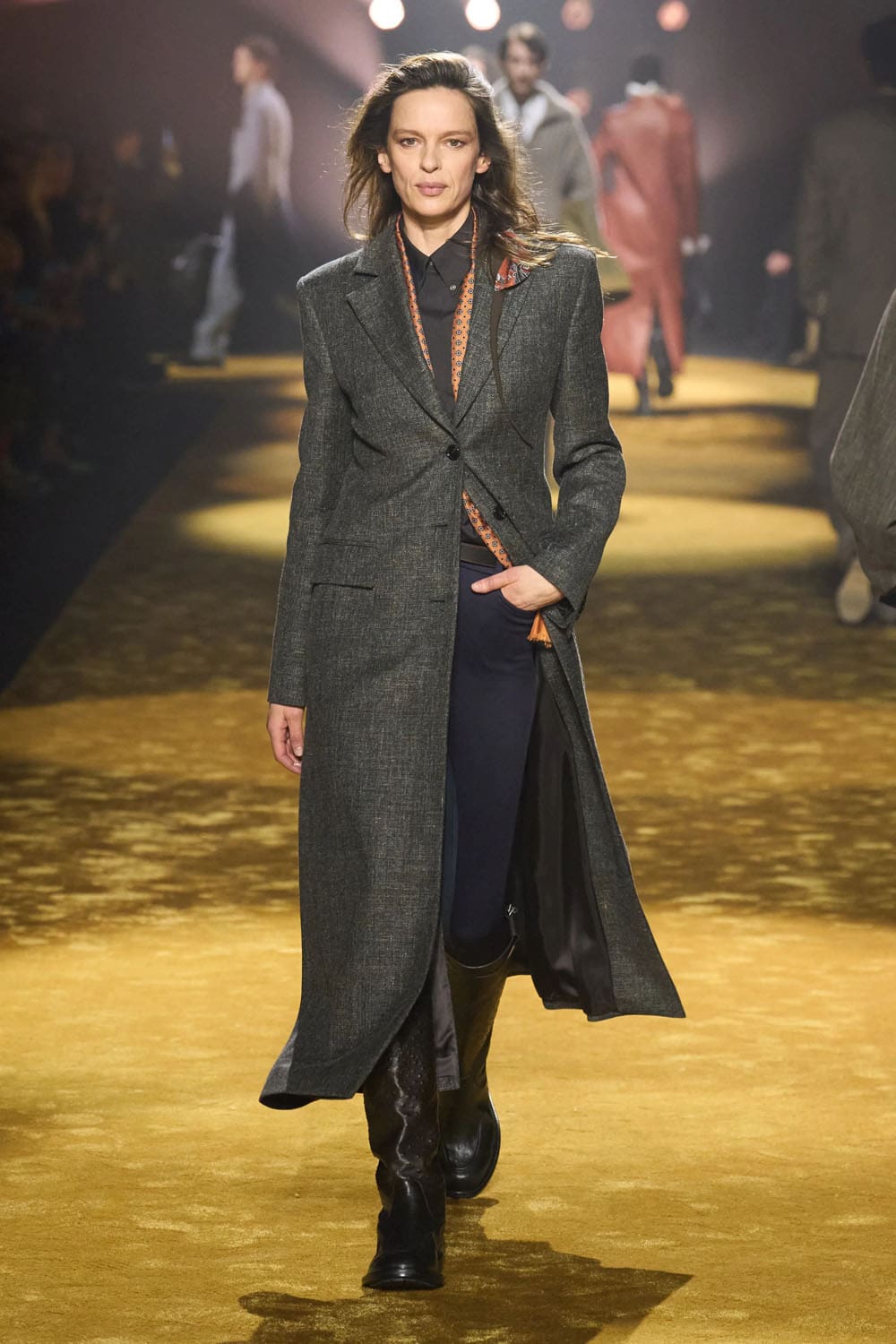
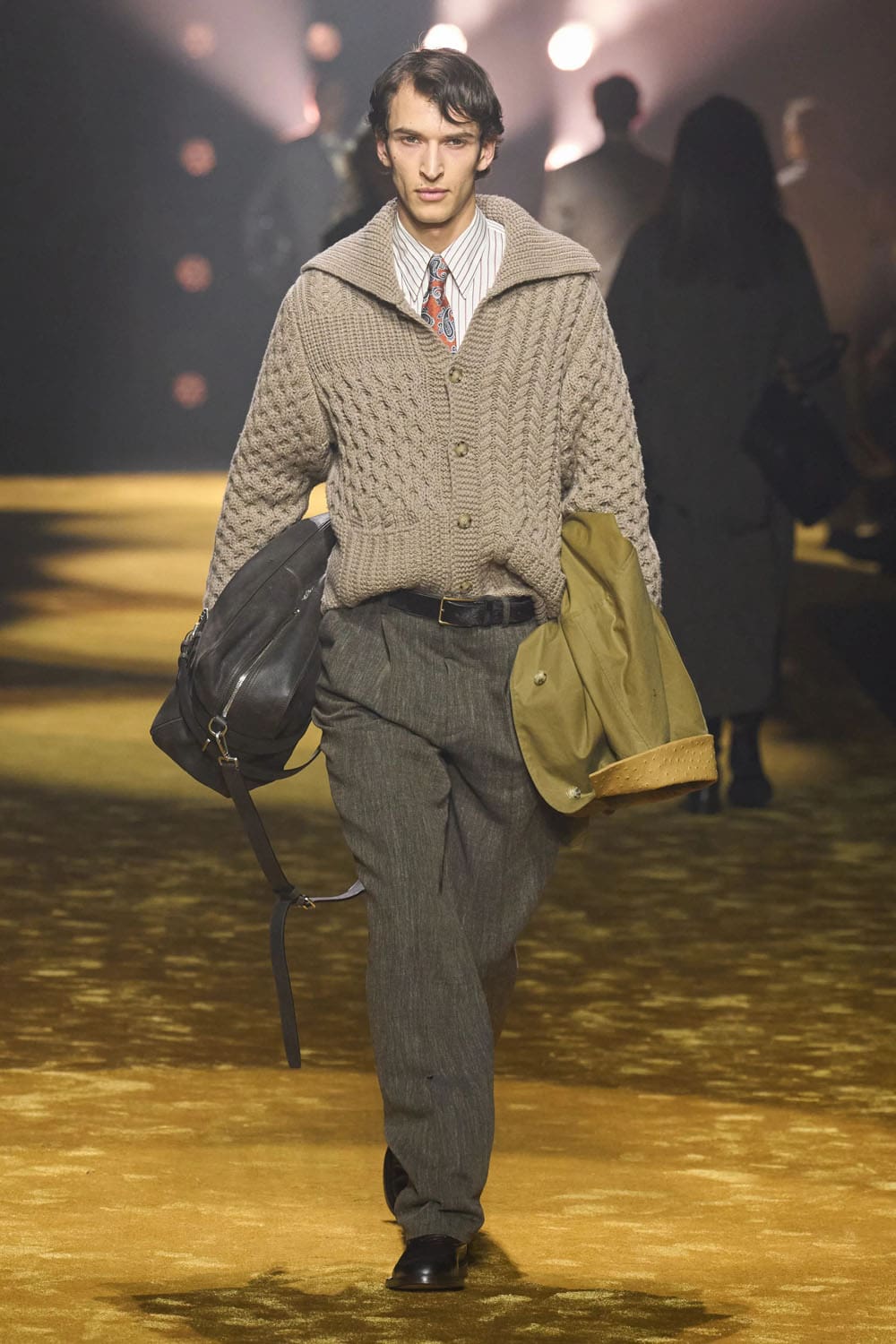
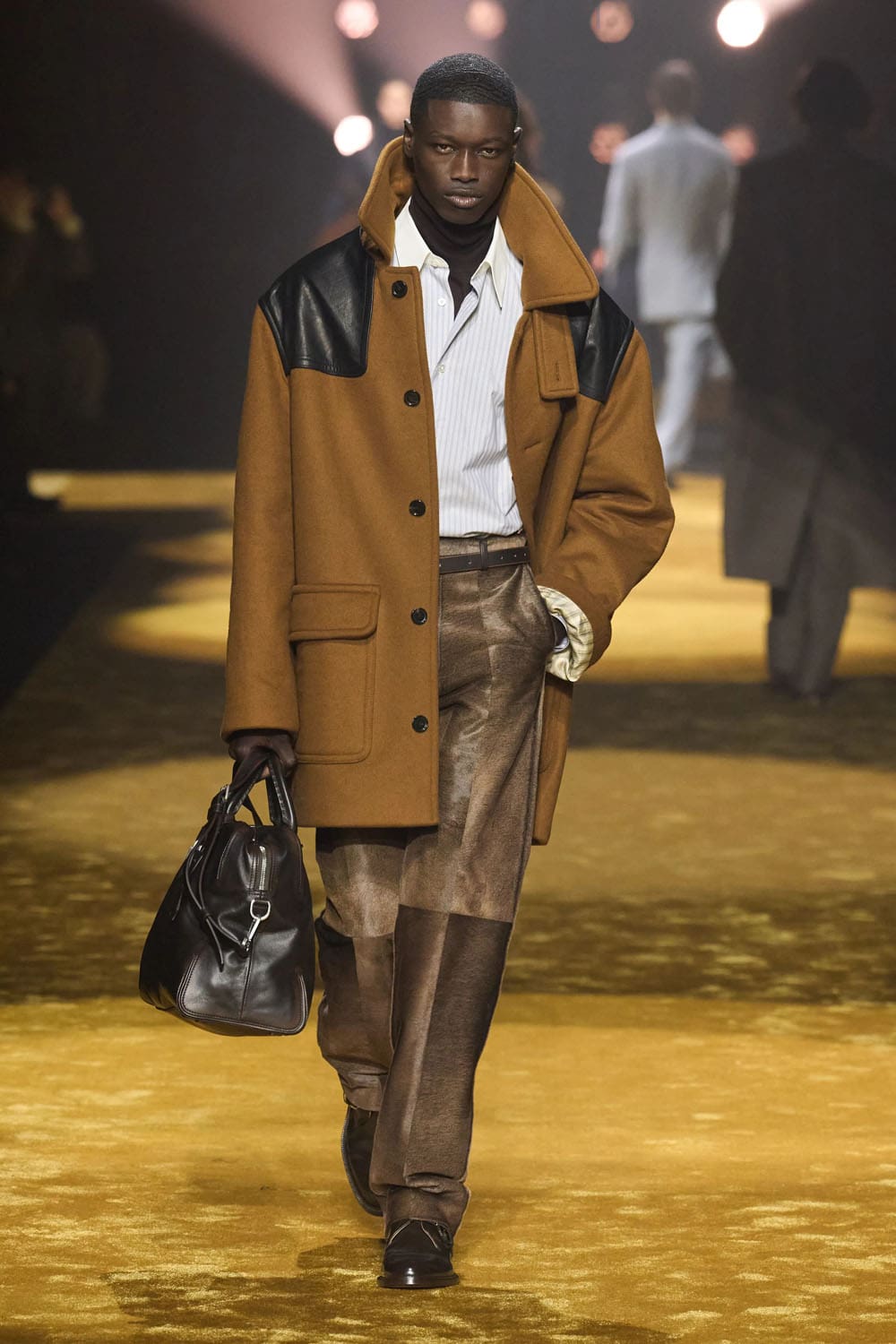
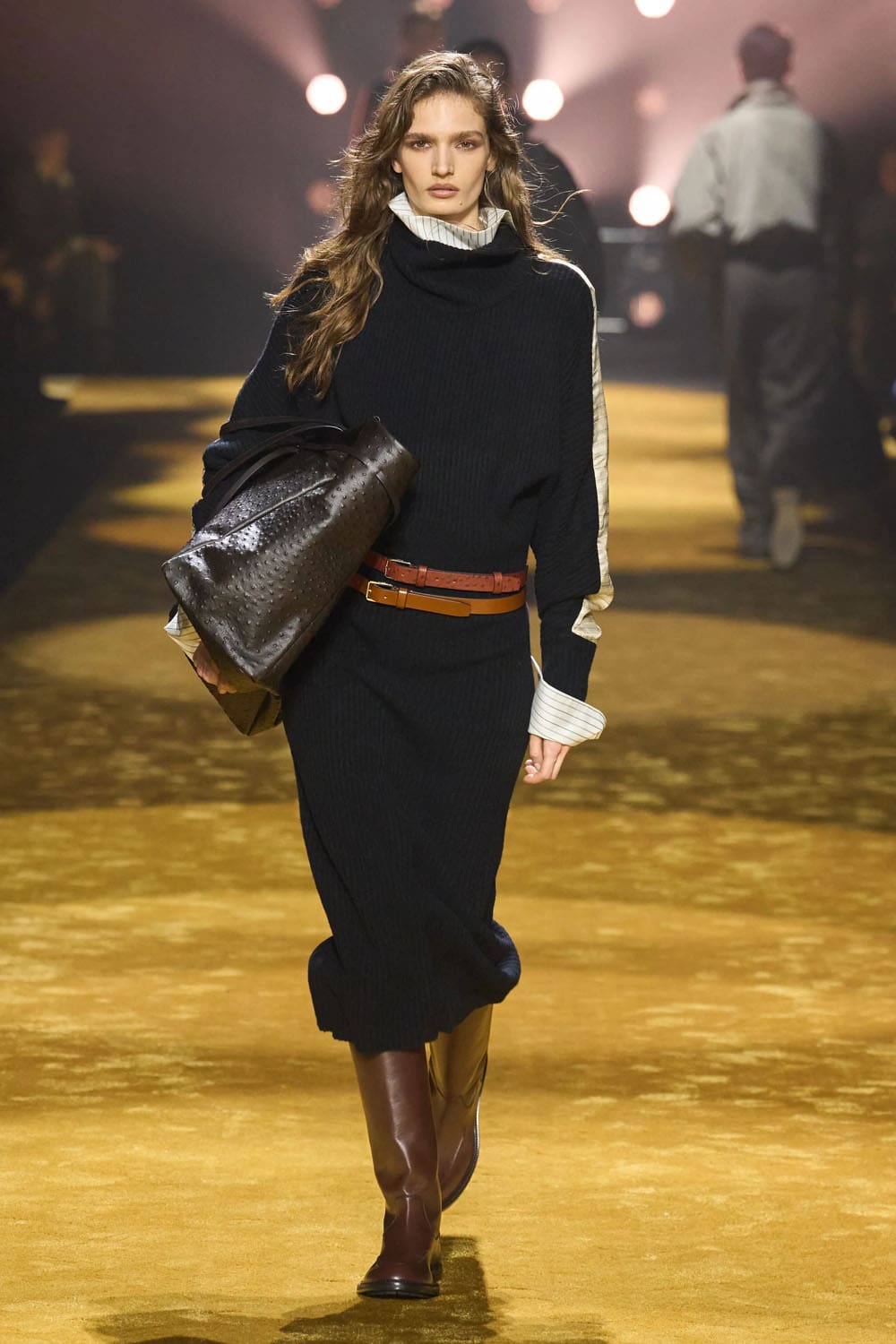
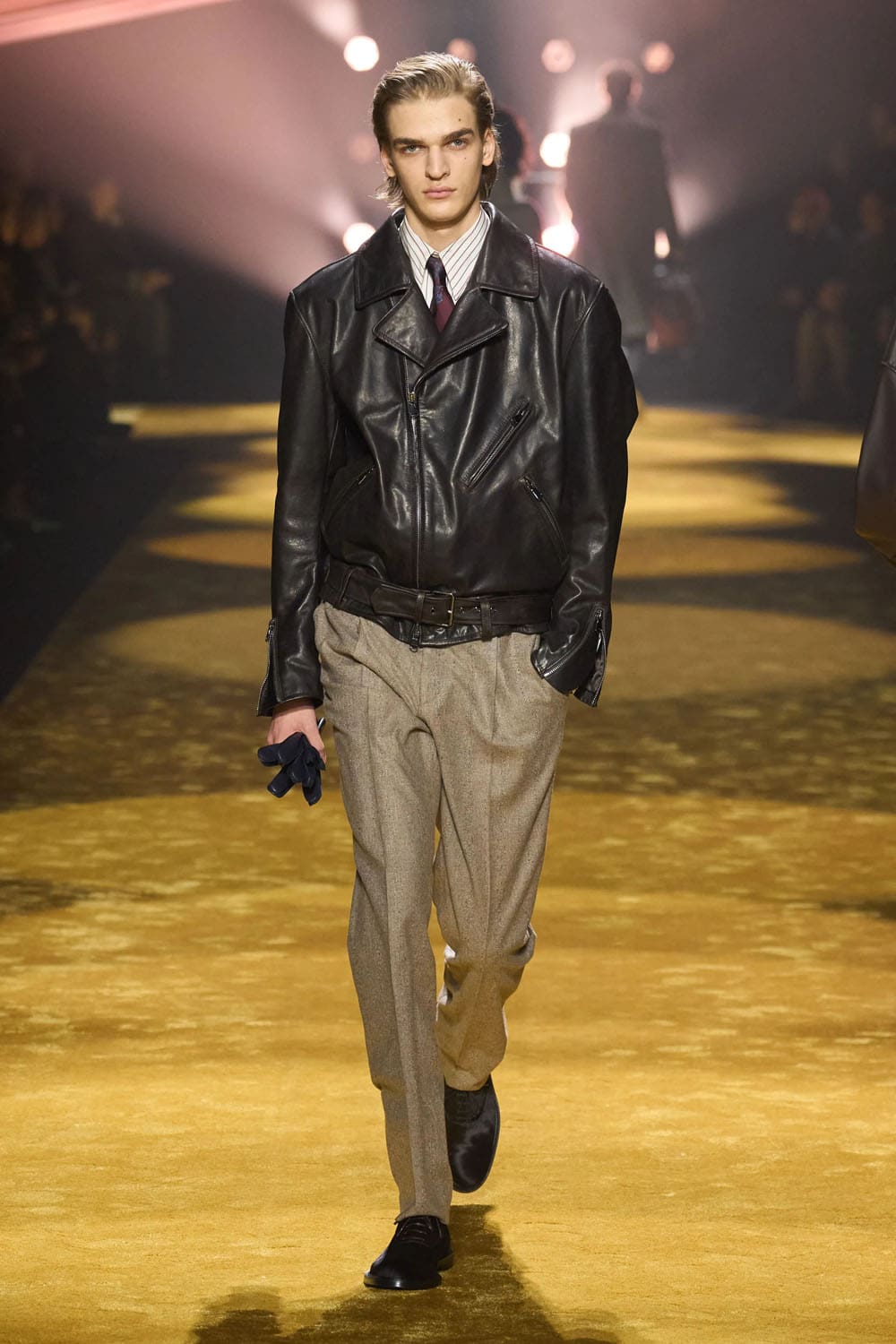
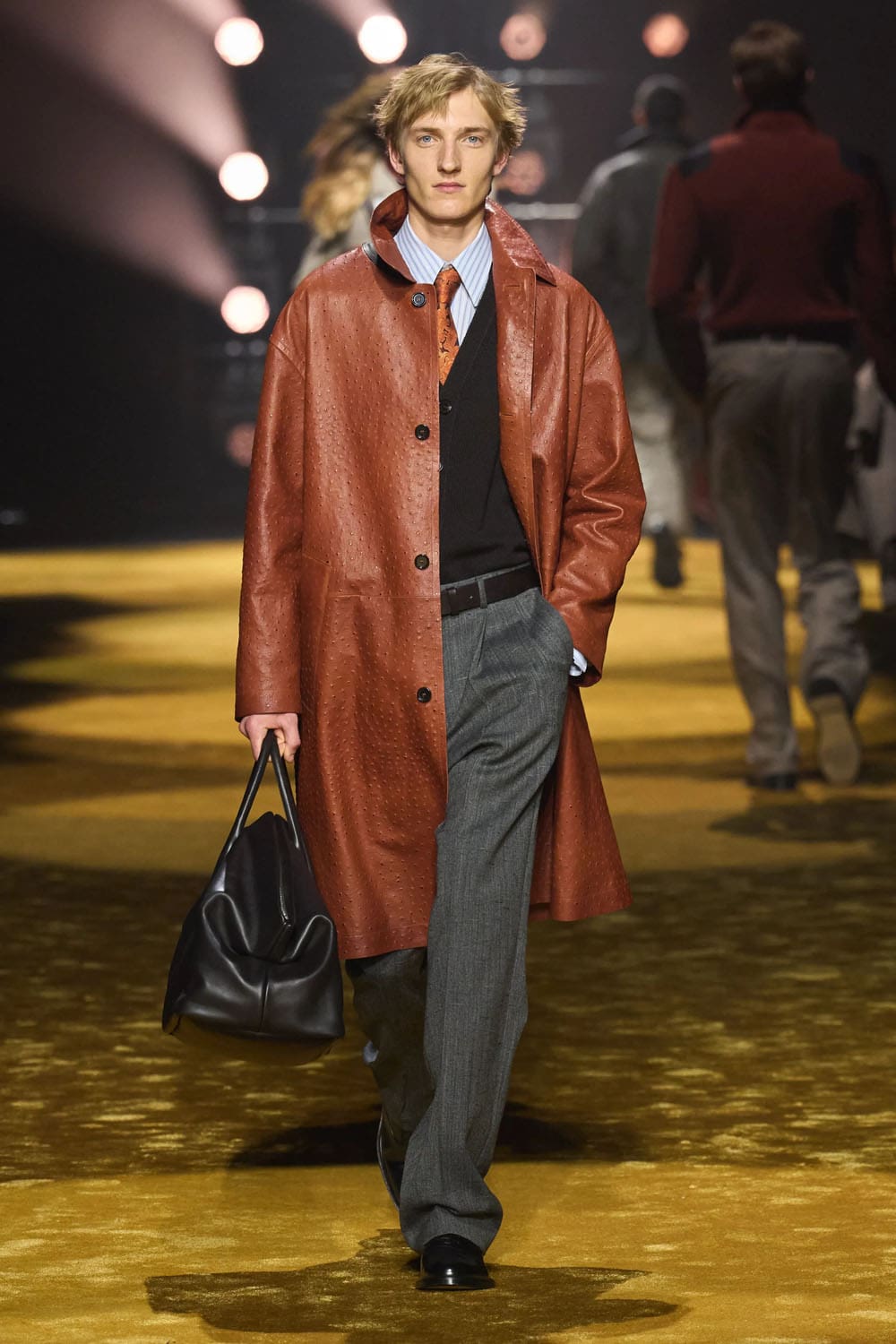
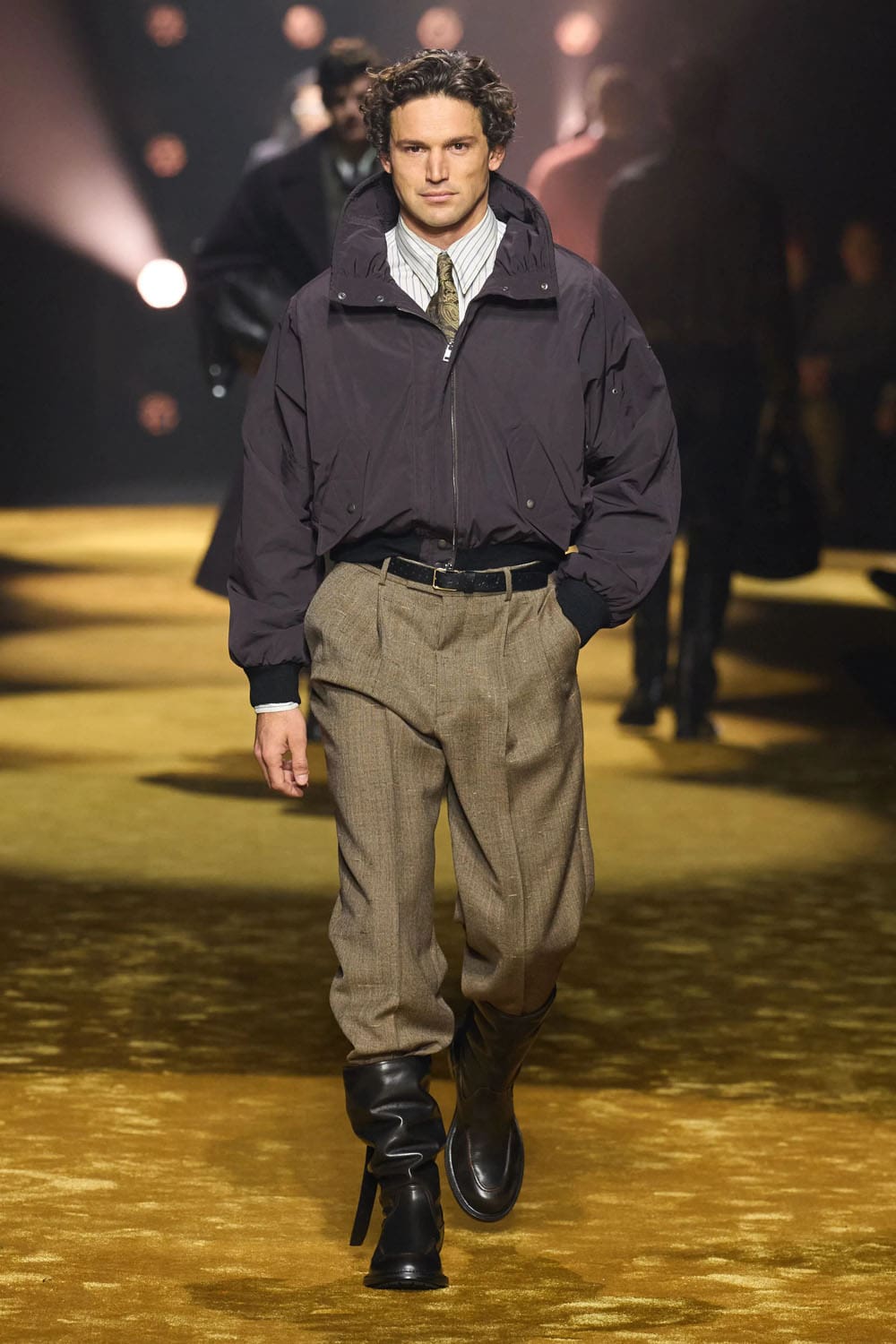
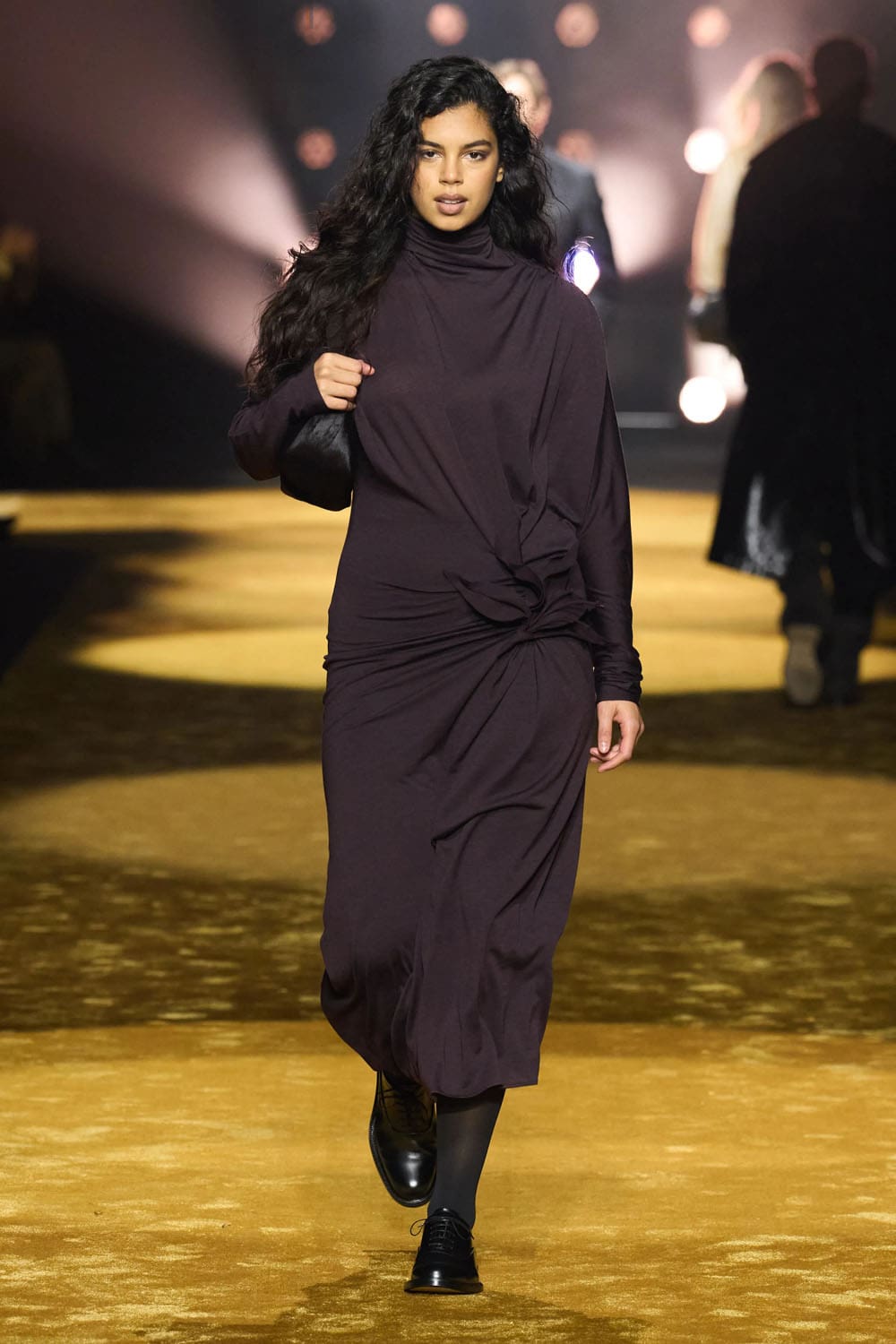
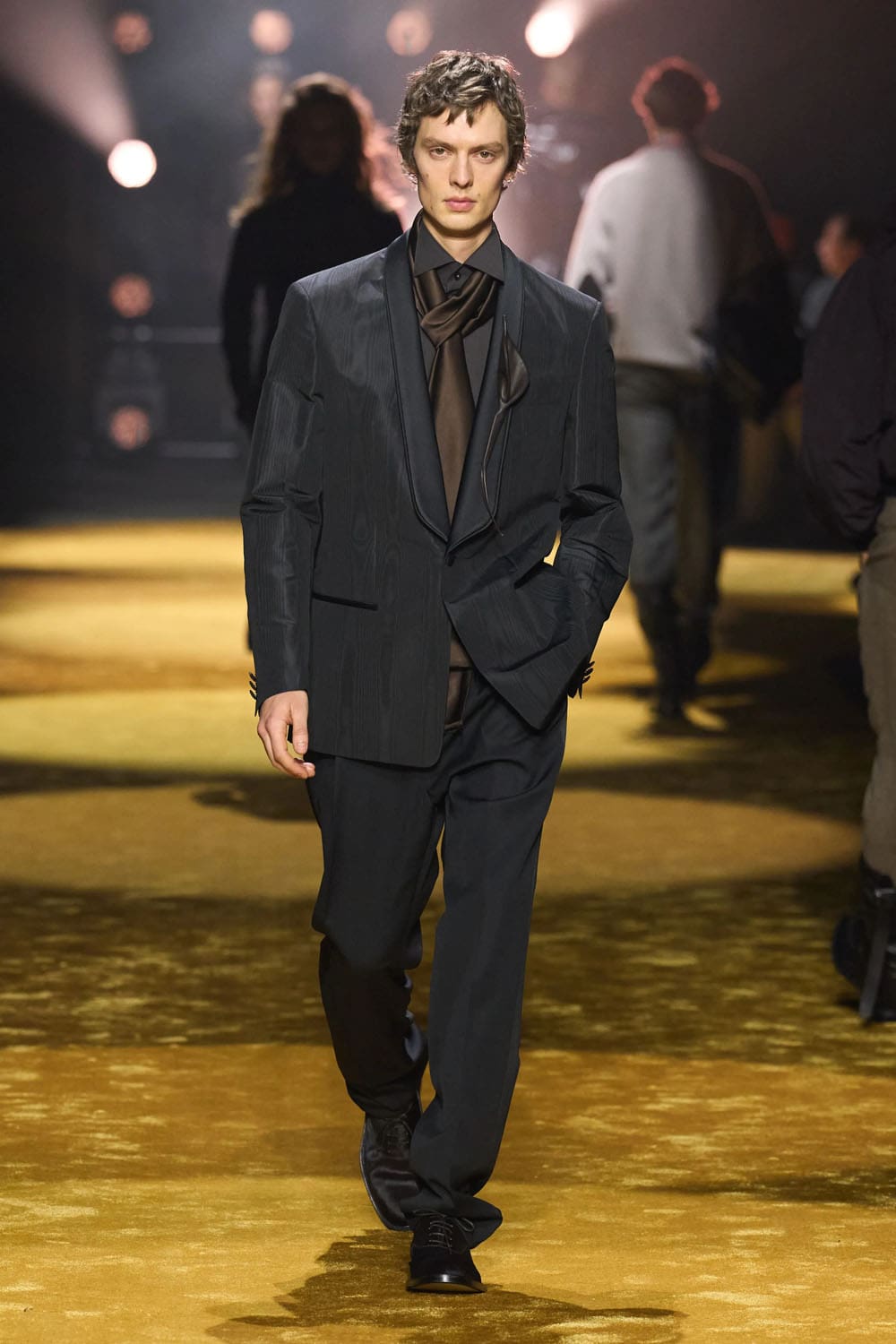
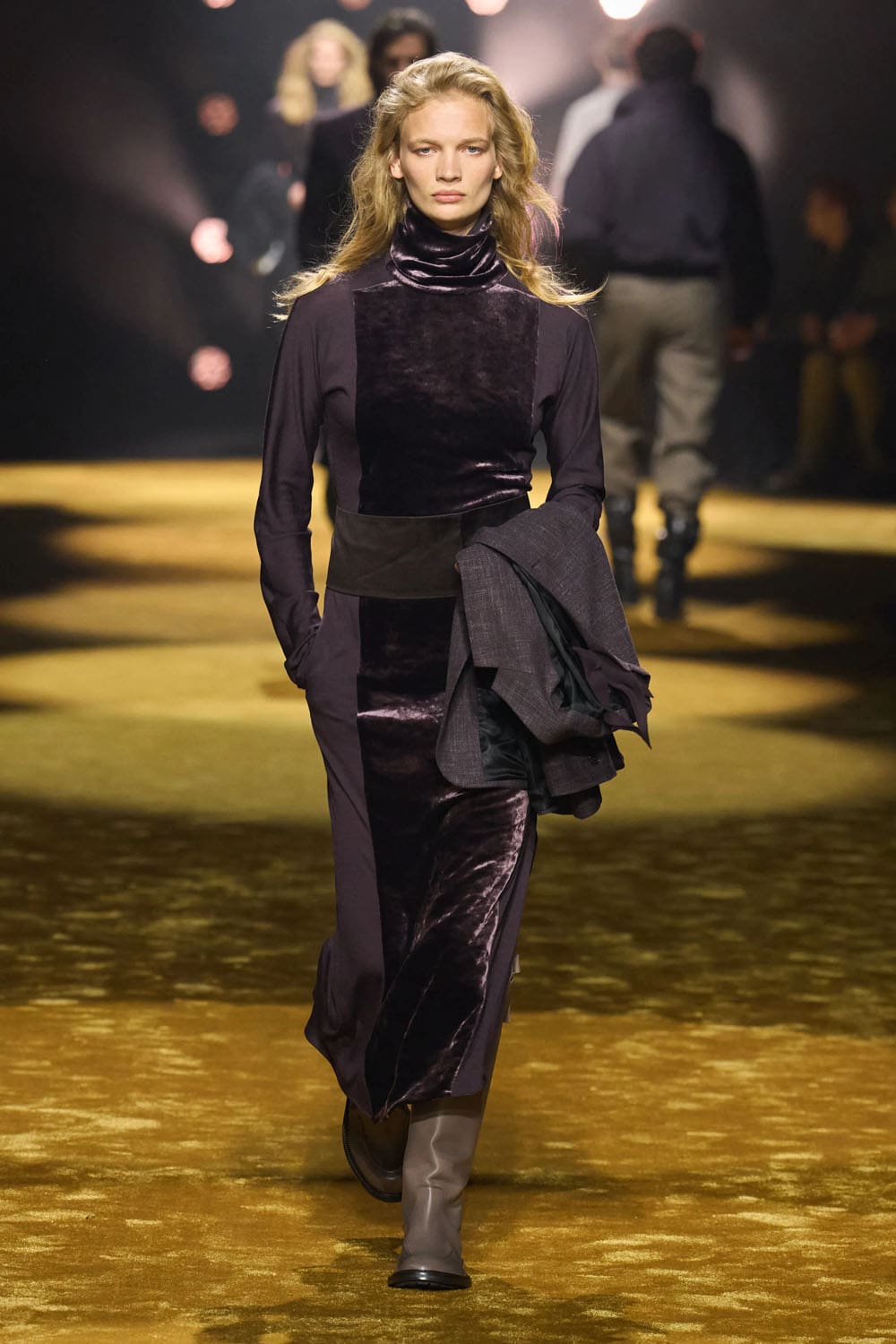
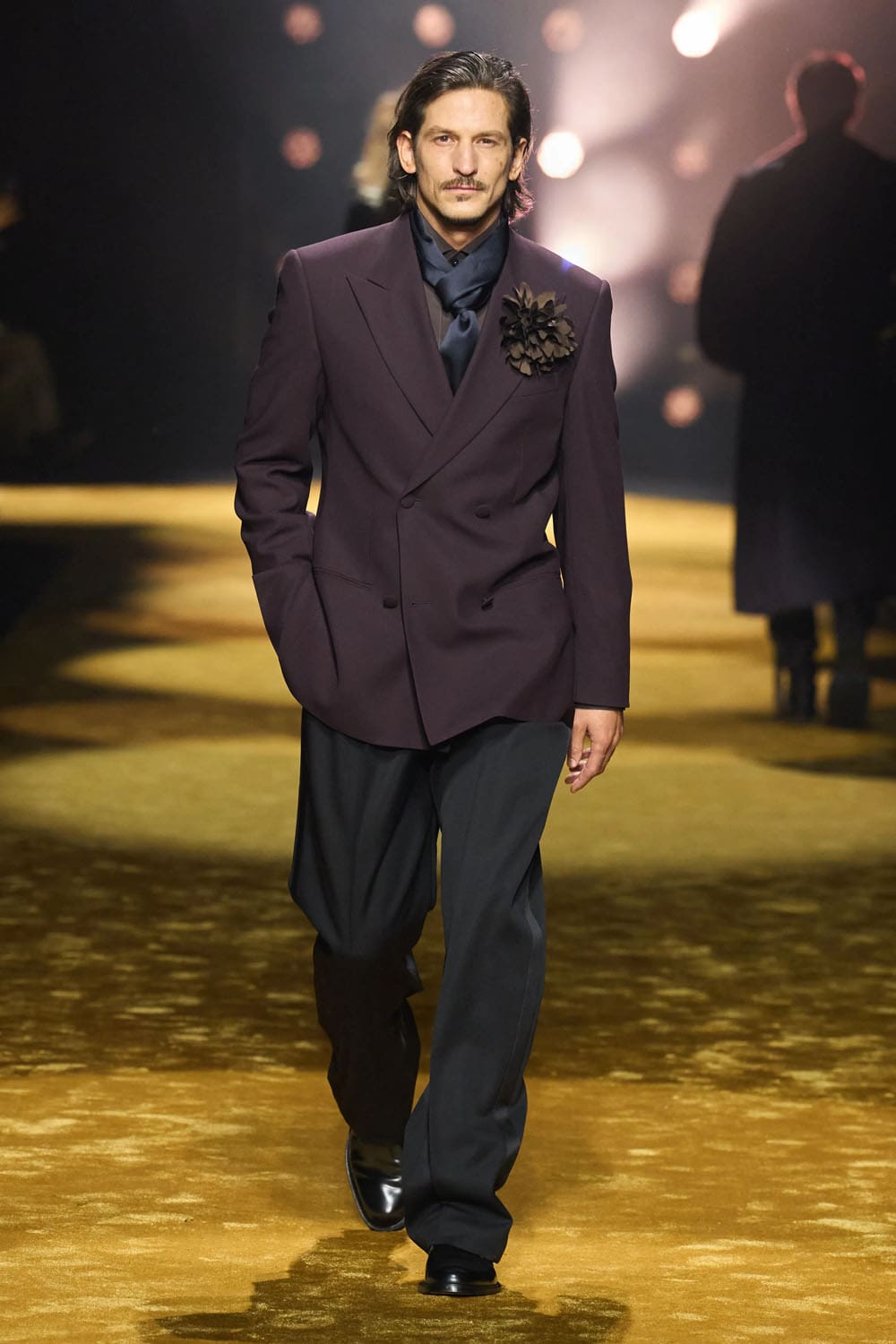
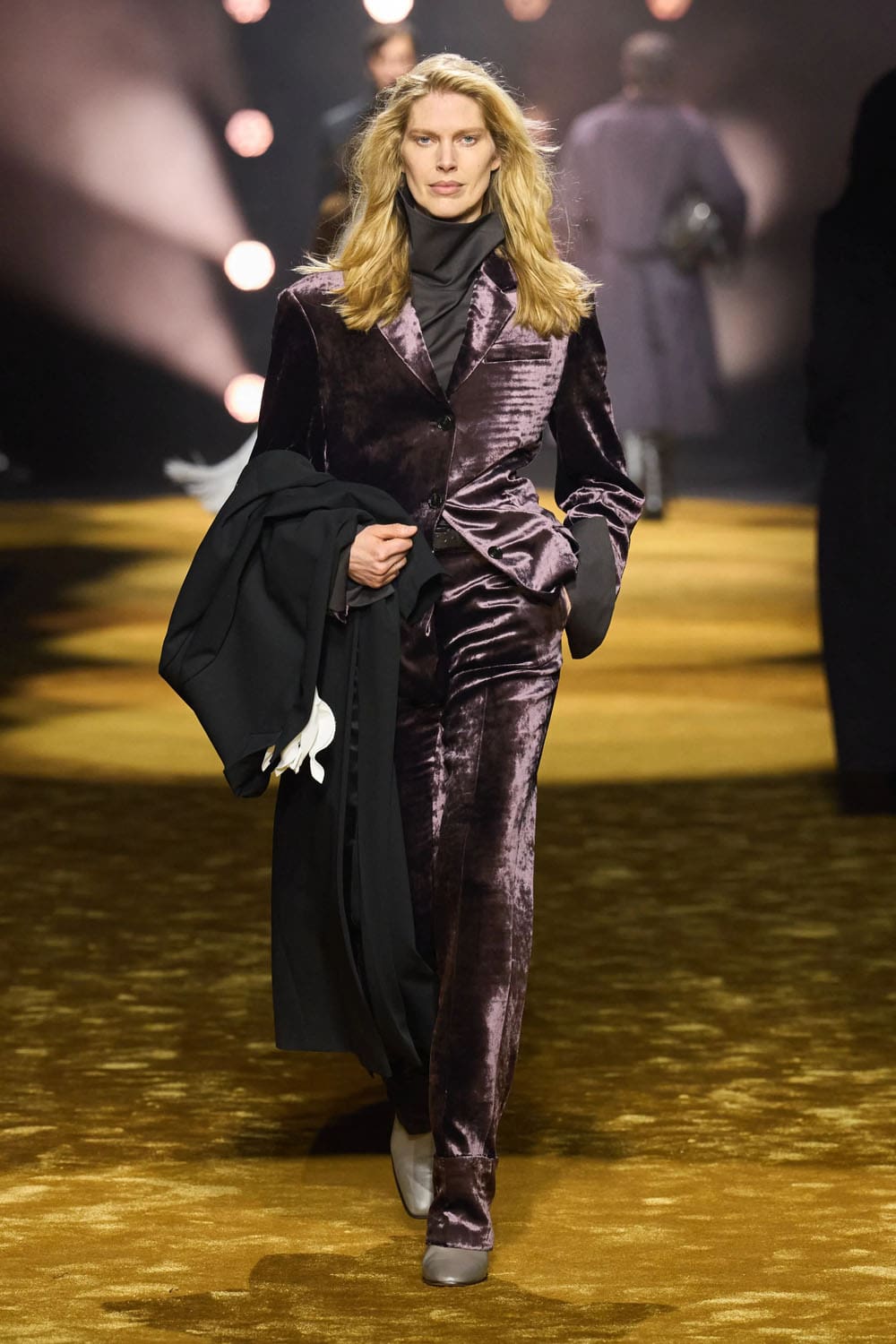
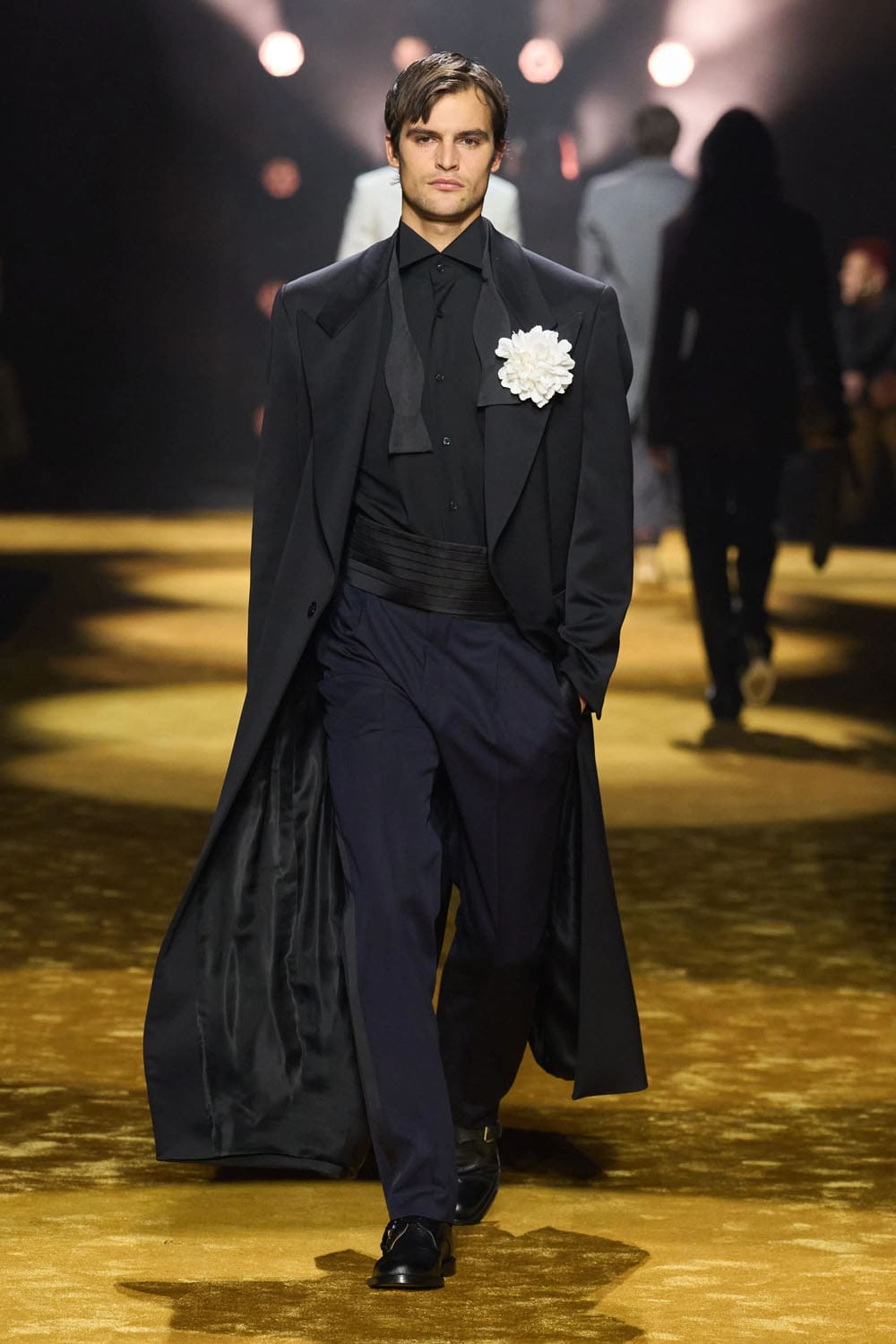
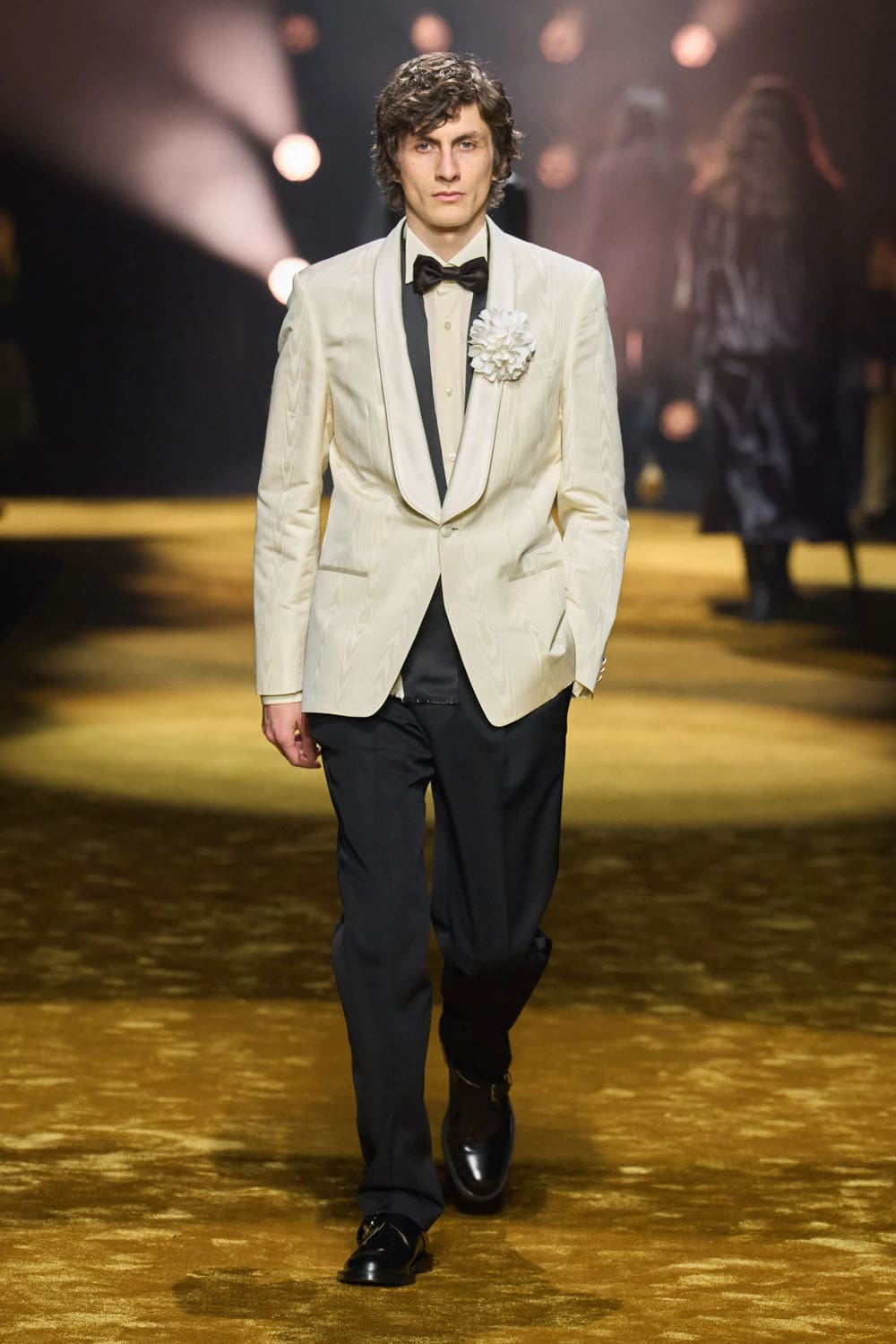
If Max Mara this season crowned the sovereign, BOSS appointed the strategist. Marco Falcioni delivers a Fall Winter 2026–2027 collection that takes tailoring — the house’s spiritual core — and recalibrates it for a generation uninterested in inheriting power; they prefer to construct their own.
The show’s thesis, Be Your Own BOSS, is not a slogan but a structural principle. Every seam speaks in declarative sentences. Every proportion is sharpened into argument. If heritage once dictated how a suit must behave, Falcioni replies by rewriting the grammar entirely.
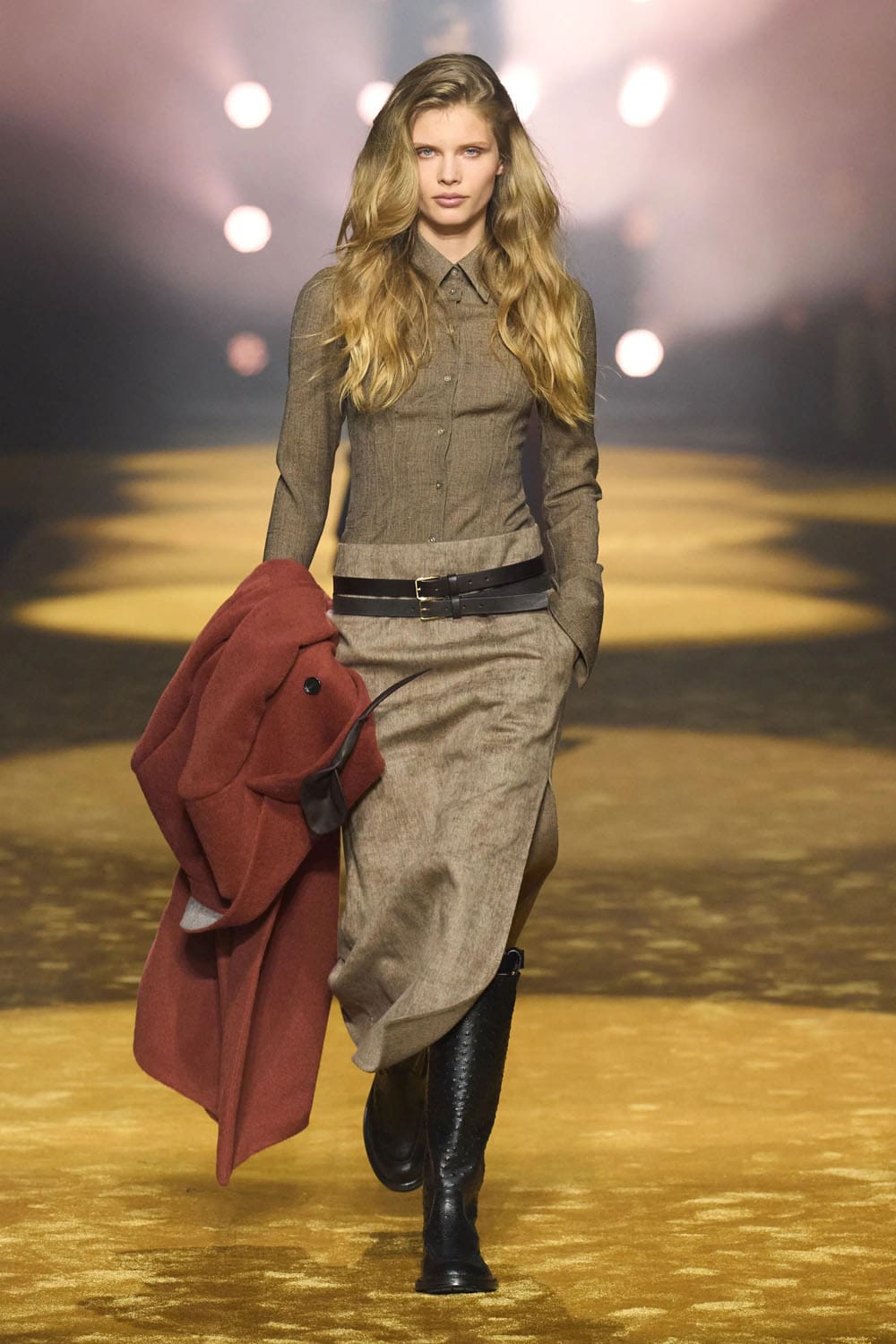
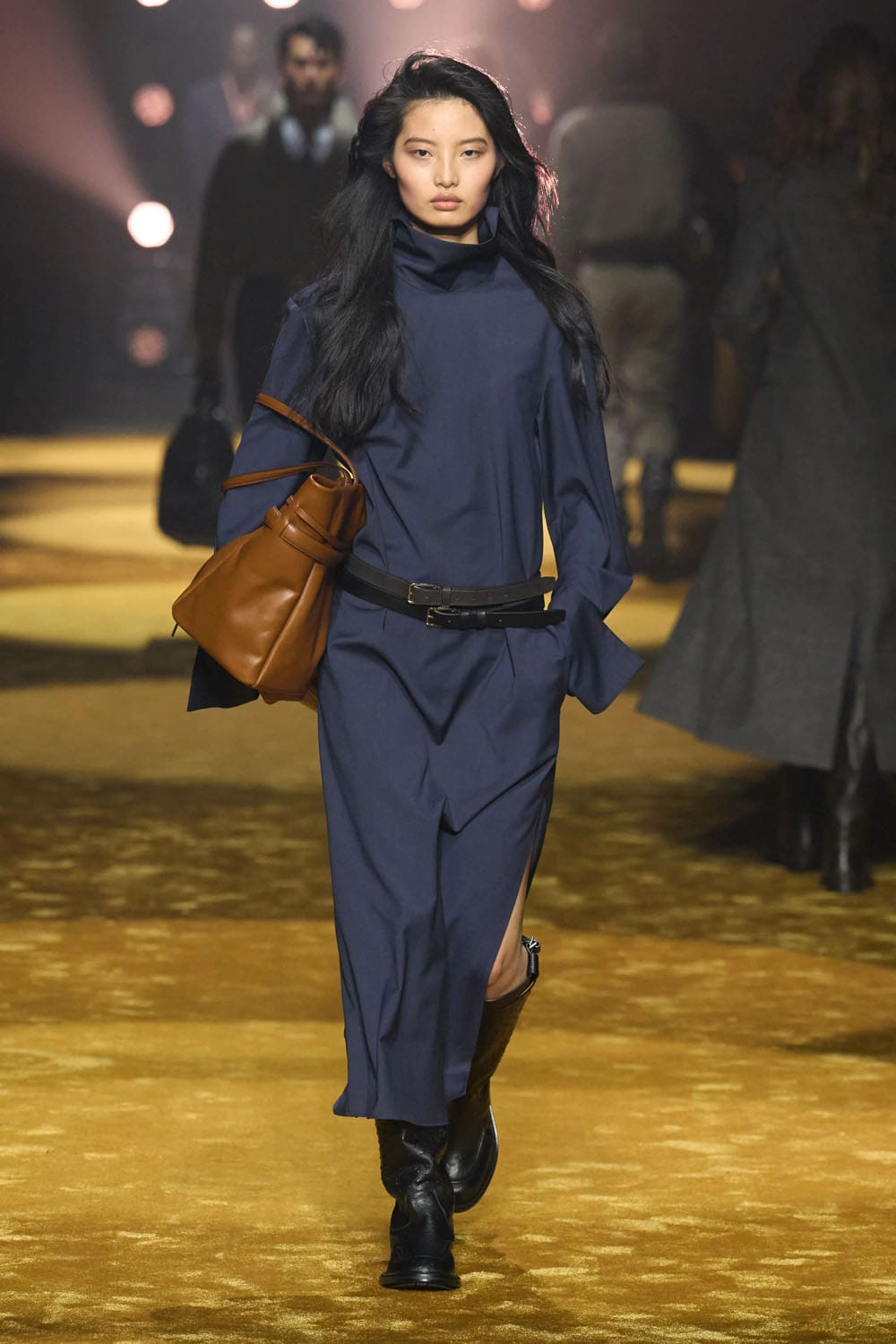
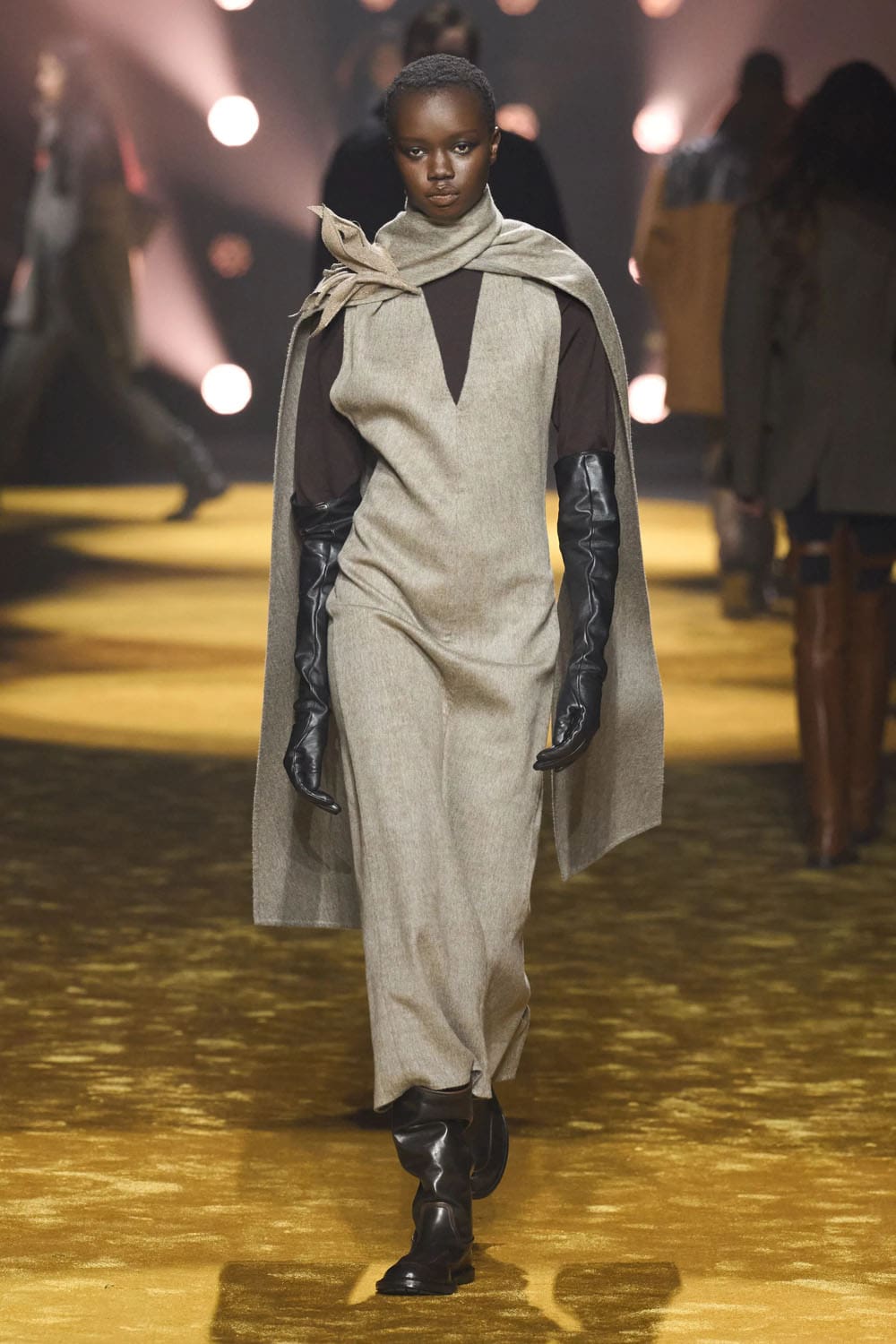
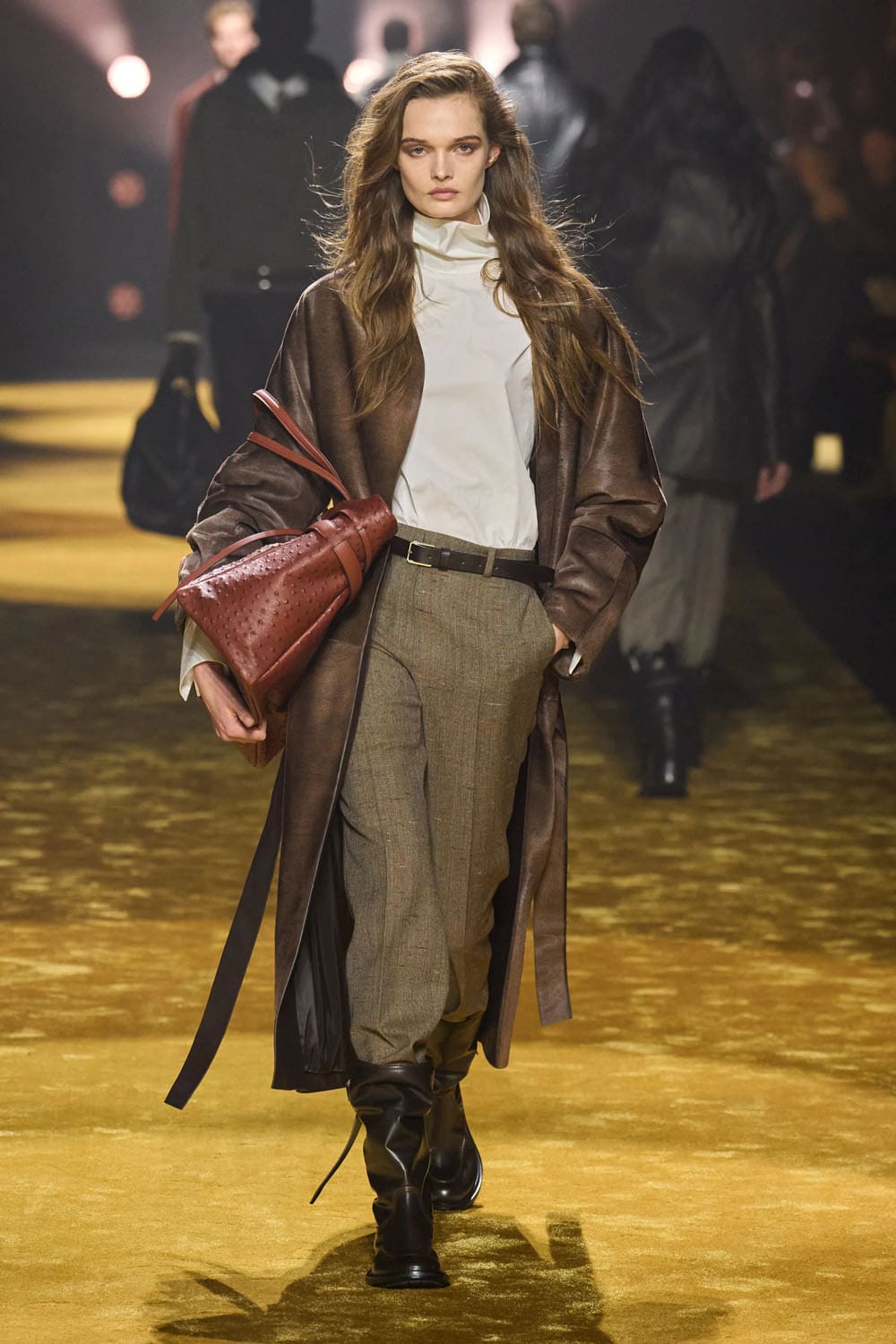
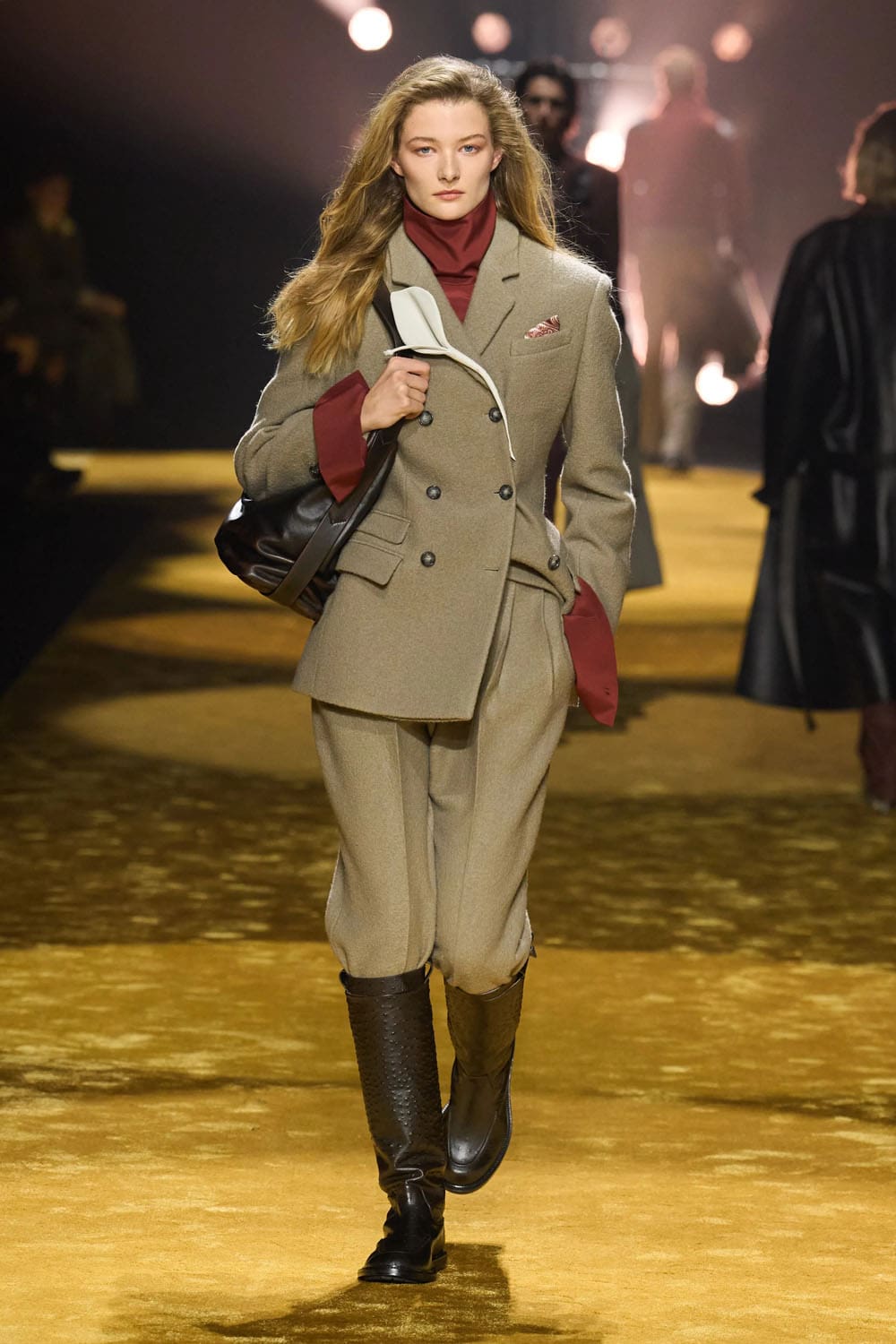
The runway opened with a quietly forceful gesture: a shirt-dress hybrid in muted wool, tailored with almost forensic precision. Carried effortlessly under the arm was a burnt-red coat, the kind of outerwear that signals intent rather than compliance. The dark riding boots grounded the silhouette, anchoring the collection’s equestrian undercurrent — less countryside nostalgia, more urban discipline.
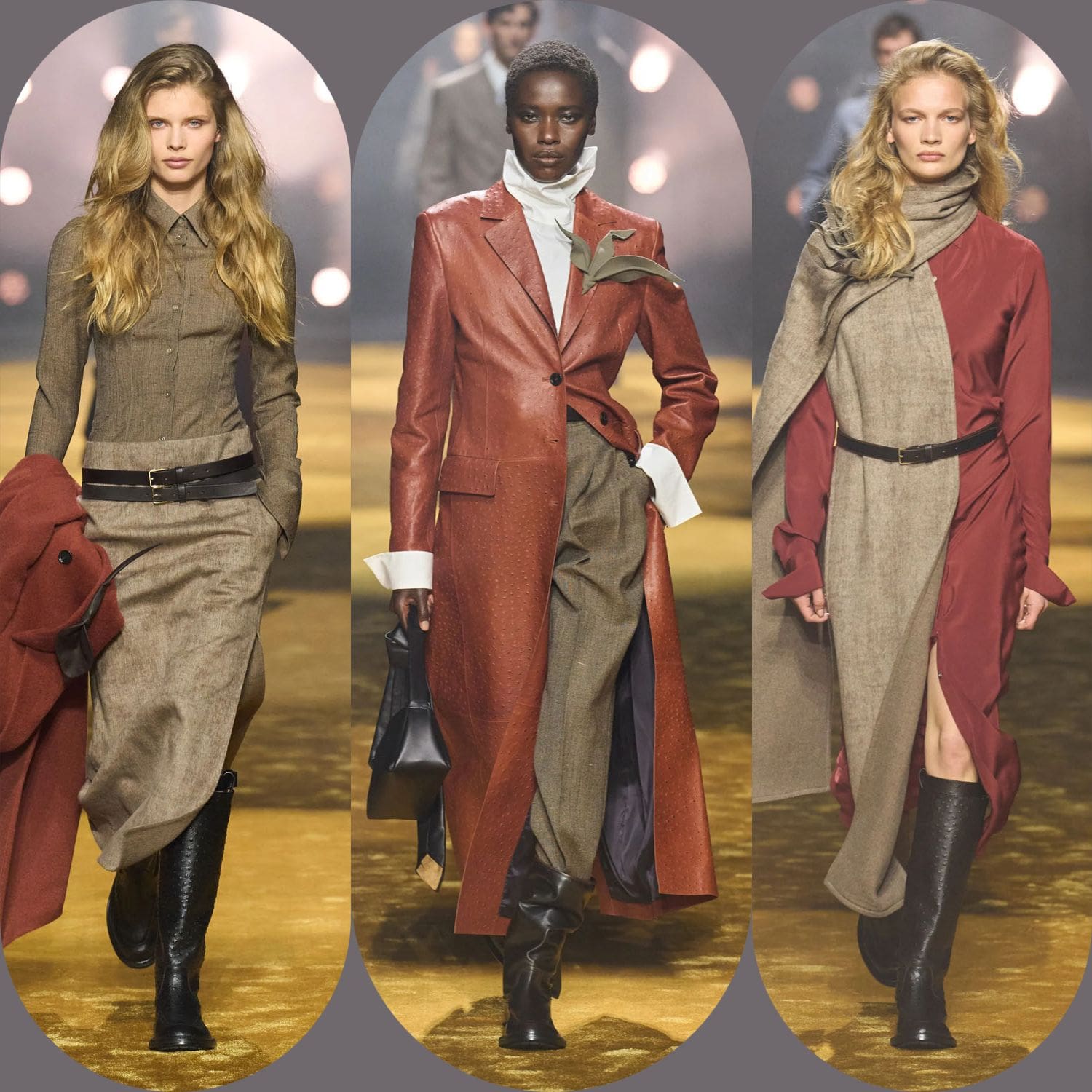
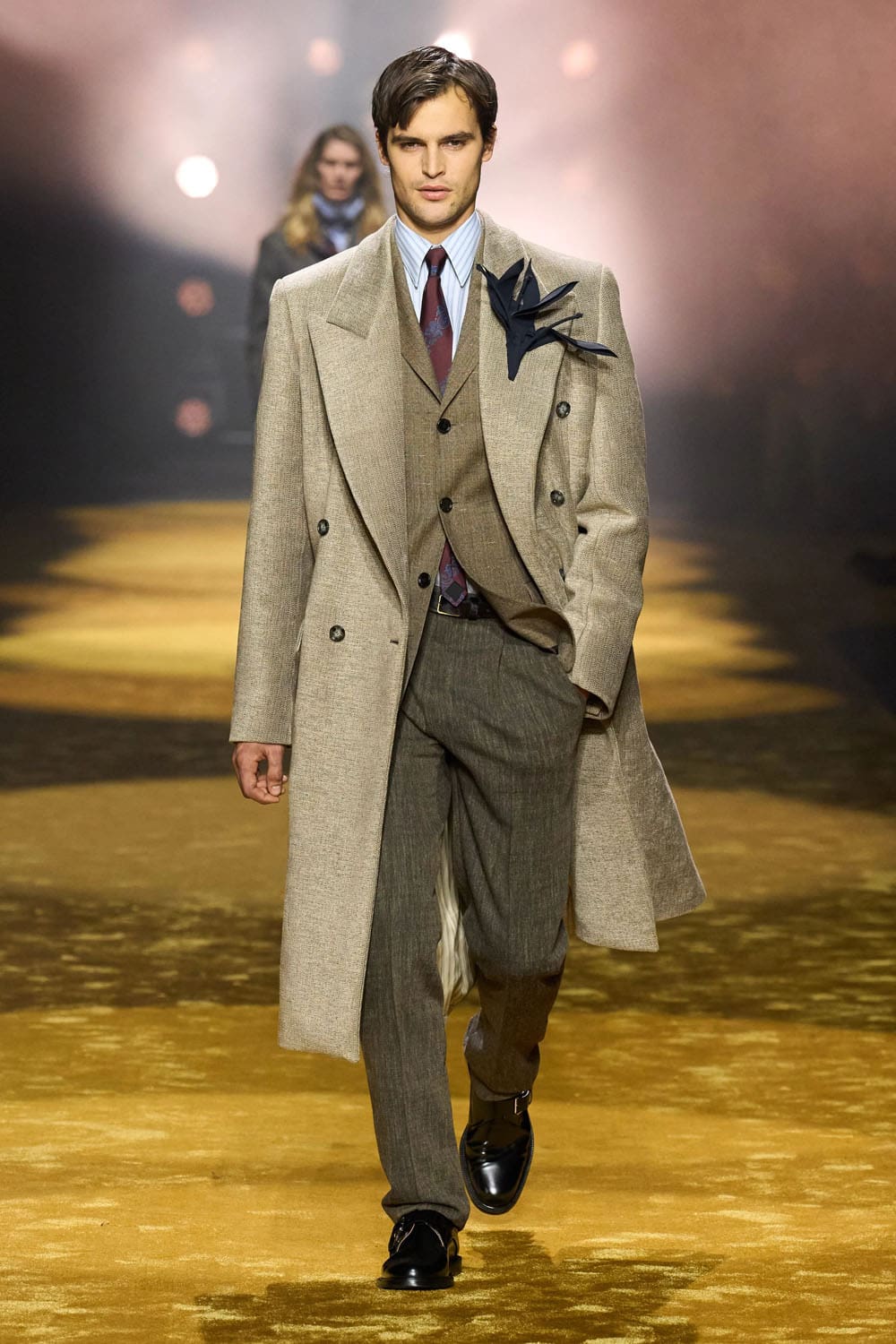
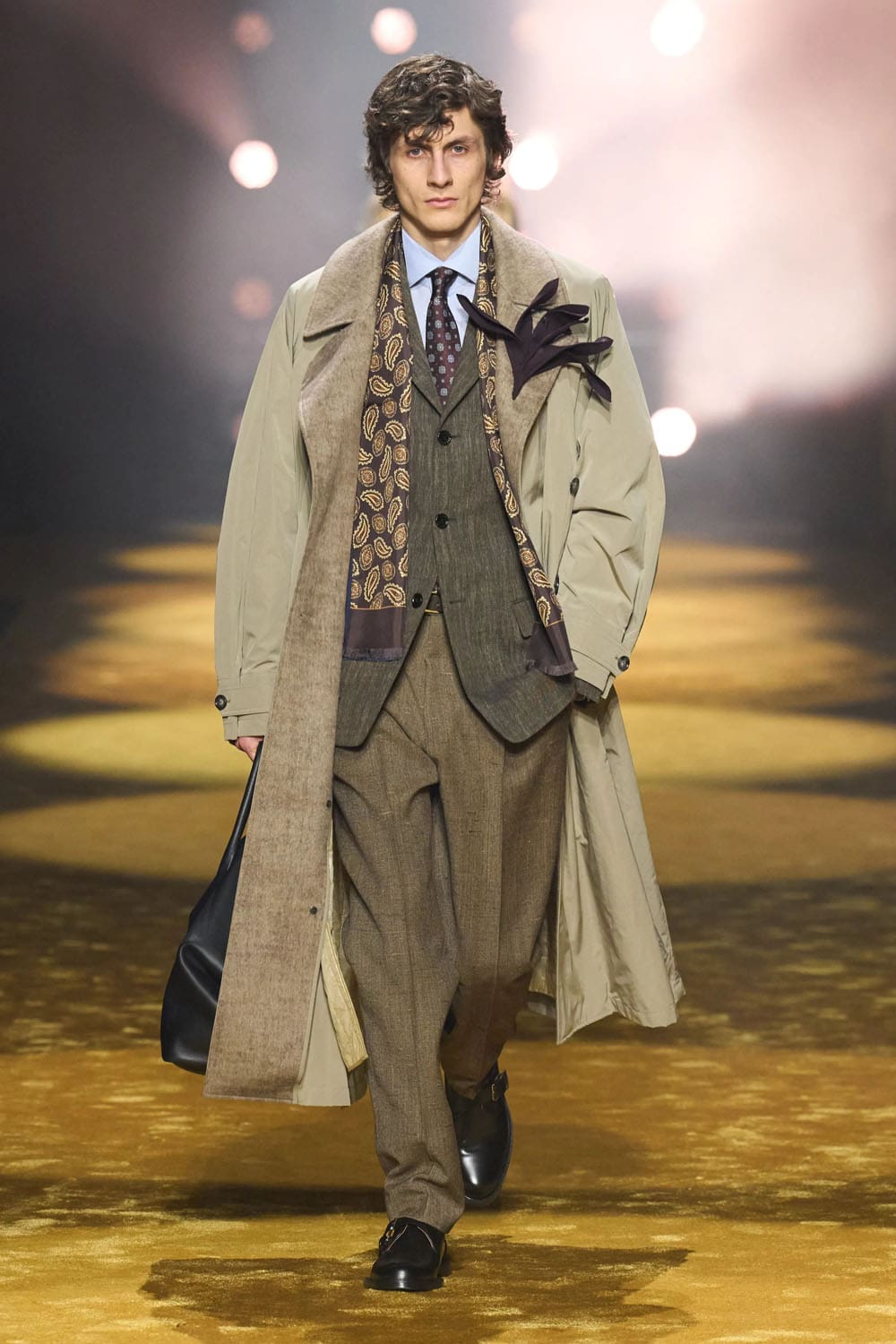
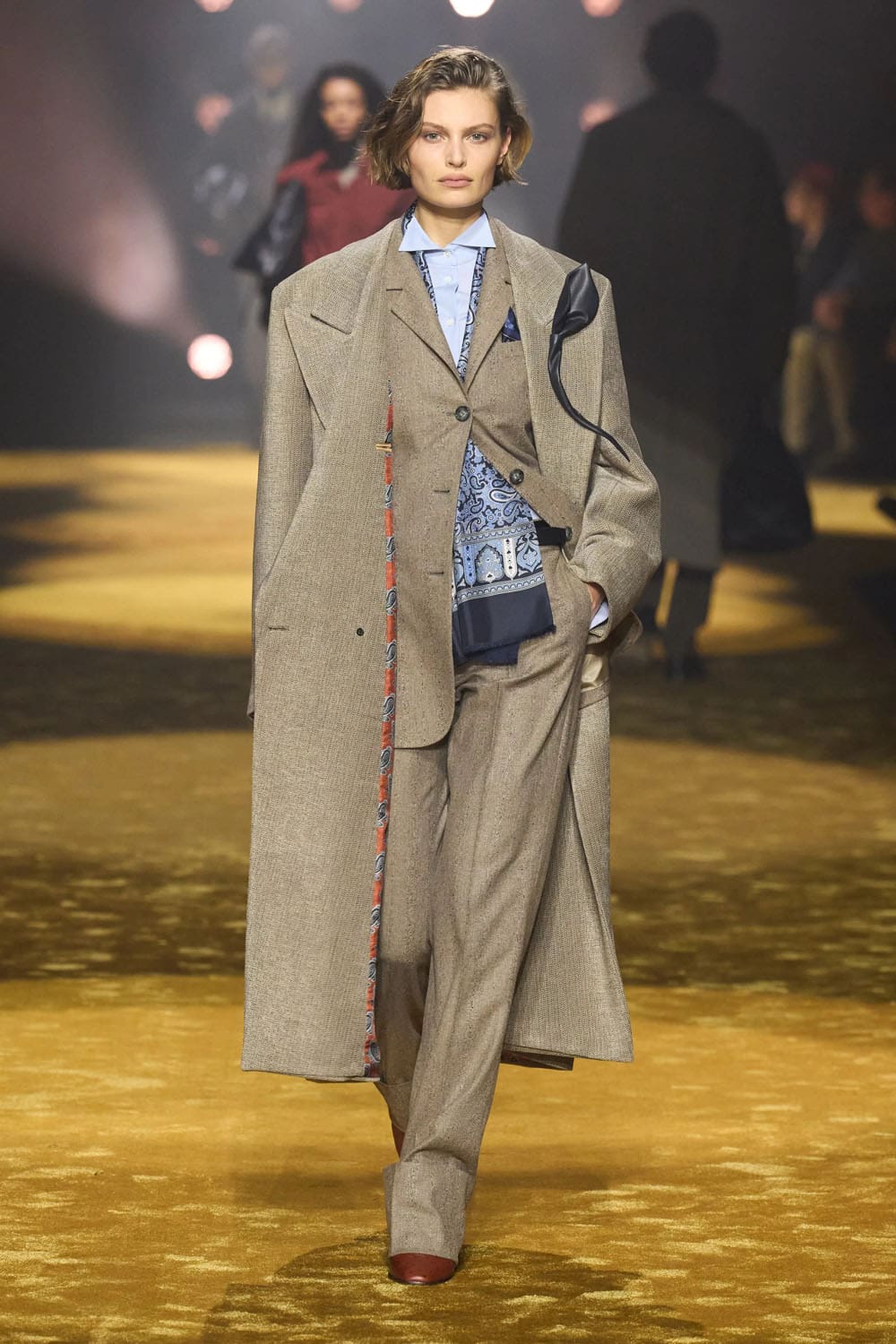
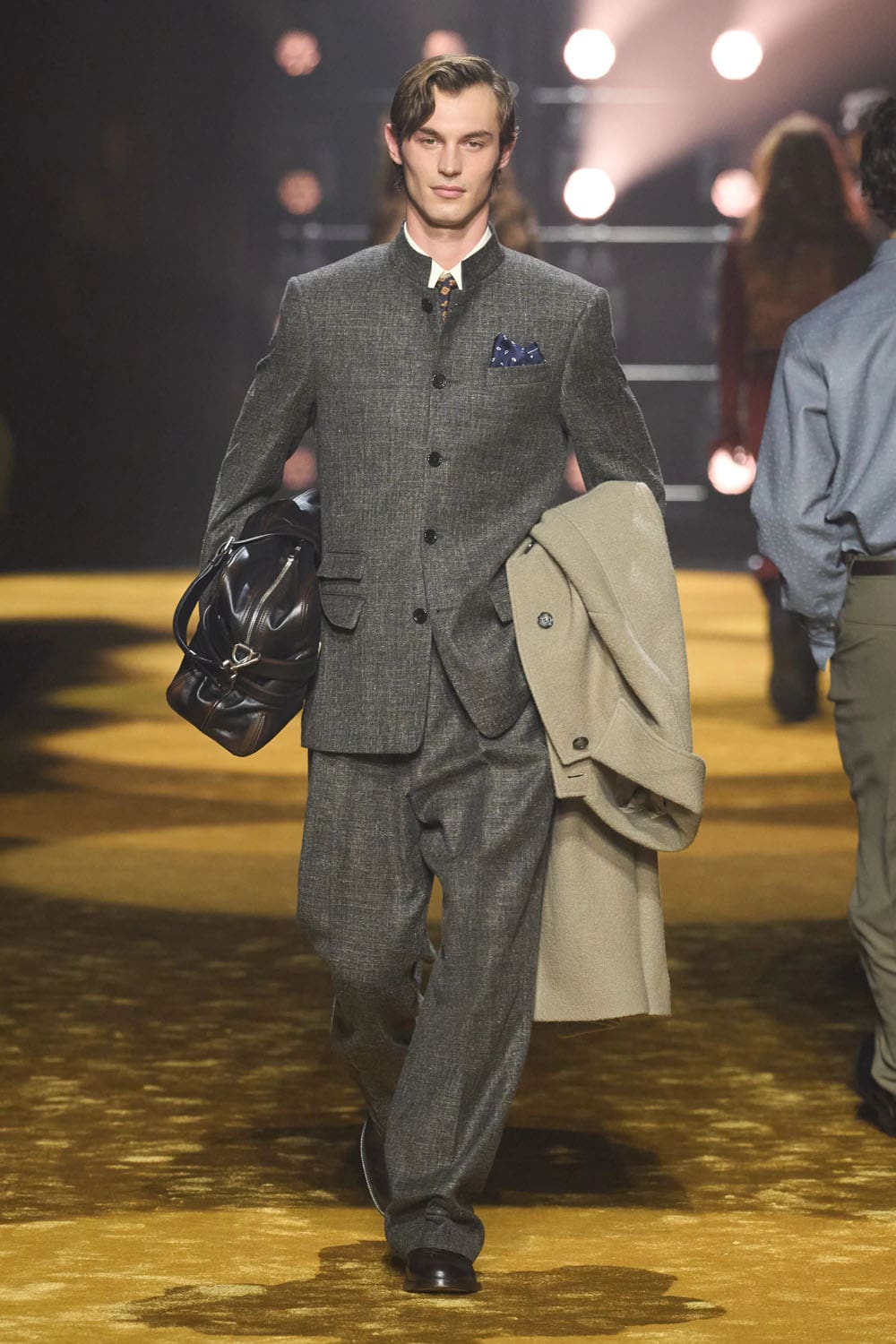
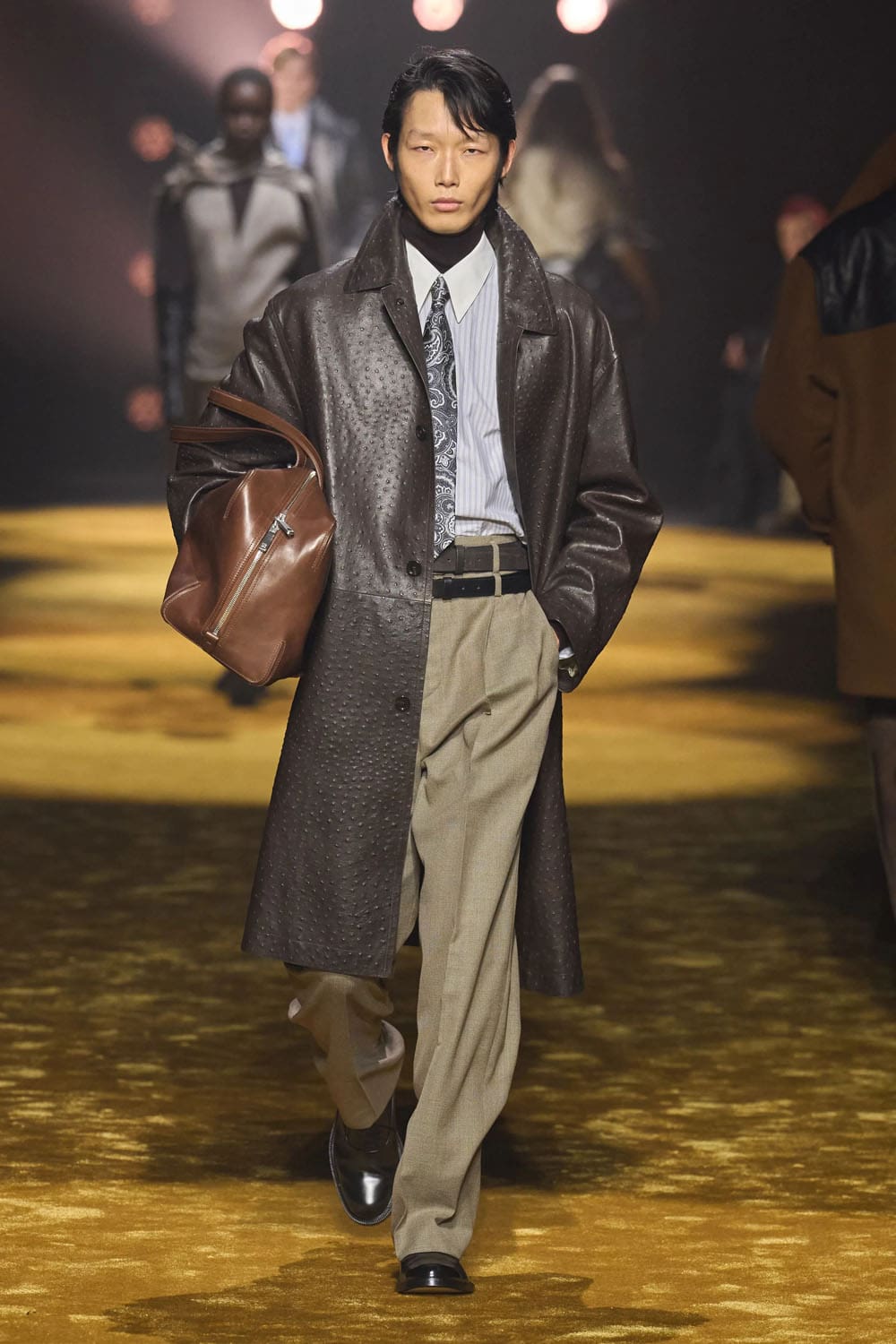
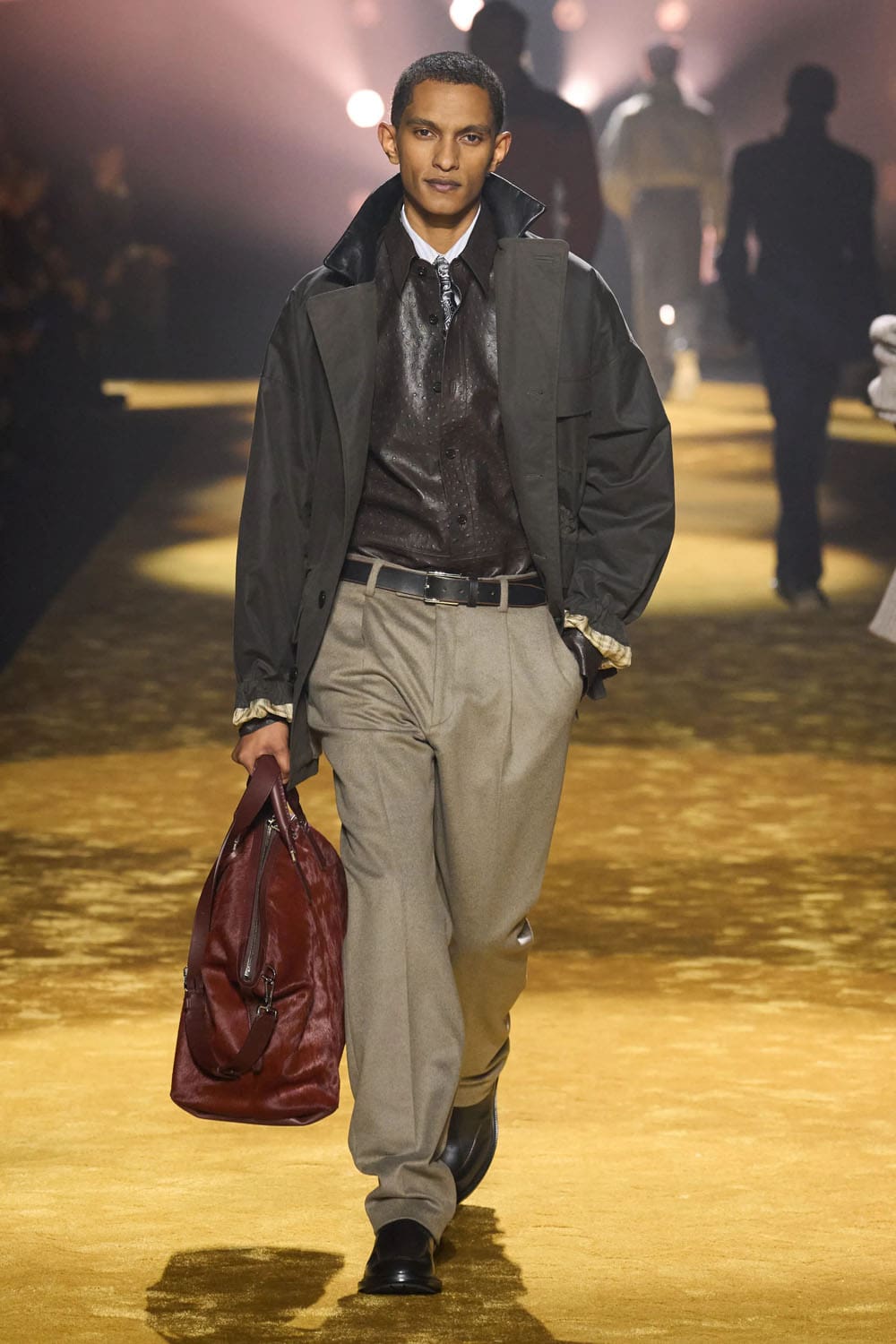
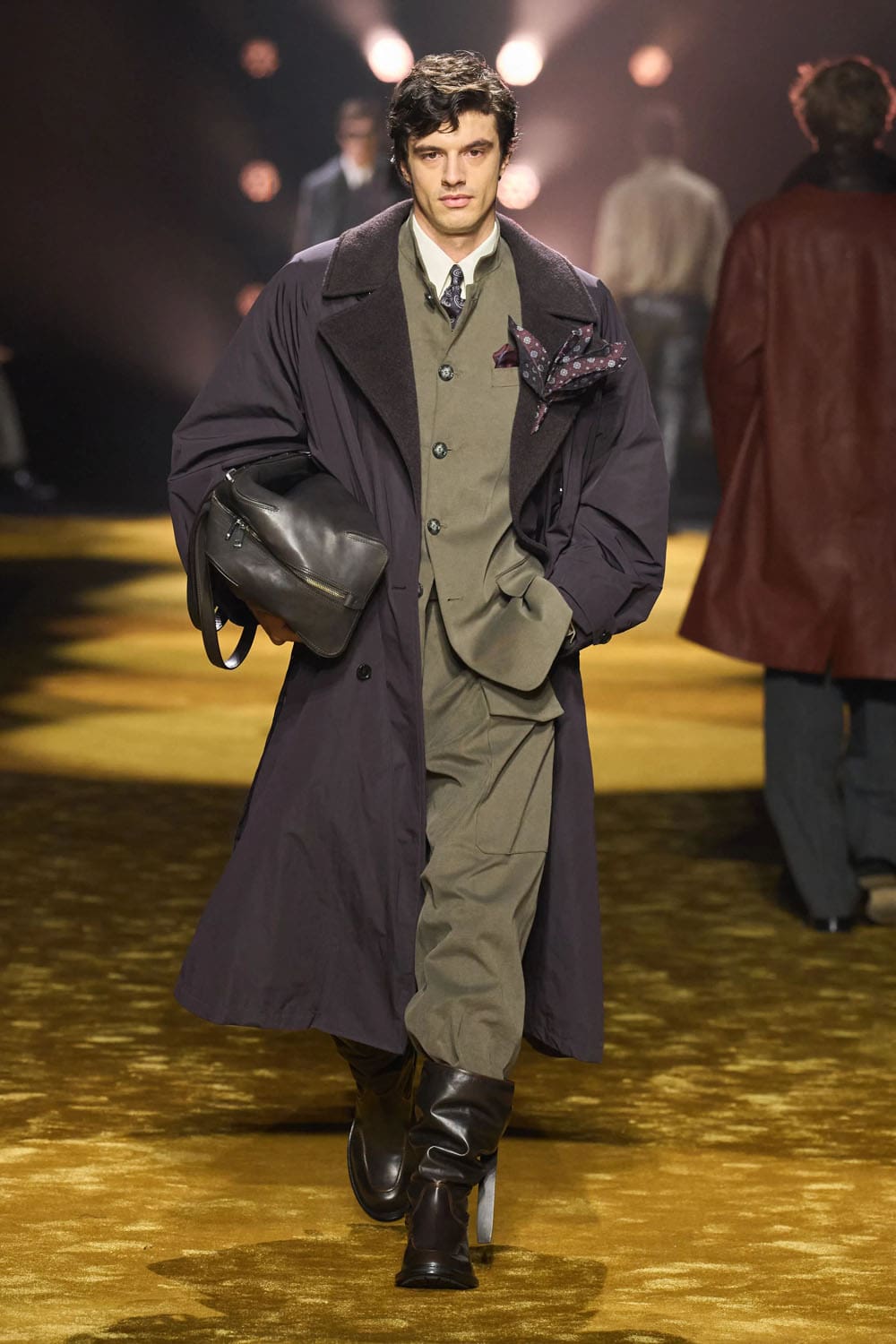
Power intensifies as the suiting emerges. A long, sweeping coat in oatmeal tweed draped over a three-piece ensemble, revealing flashes of intricate jacquard lining like fragments of an archive reinterpreted rather than preserved. The waistcoat, rendered in a refined blue paisley, injects a near-academic layer — the intellectual tailoring moment of the season. It is BOSS at its most articulate: that perfect tension between instruction and self-expression.
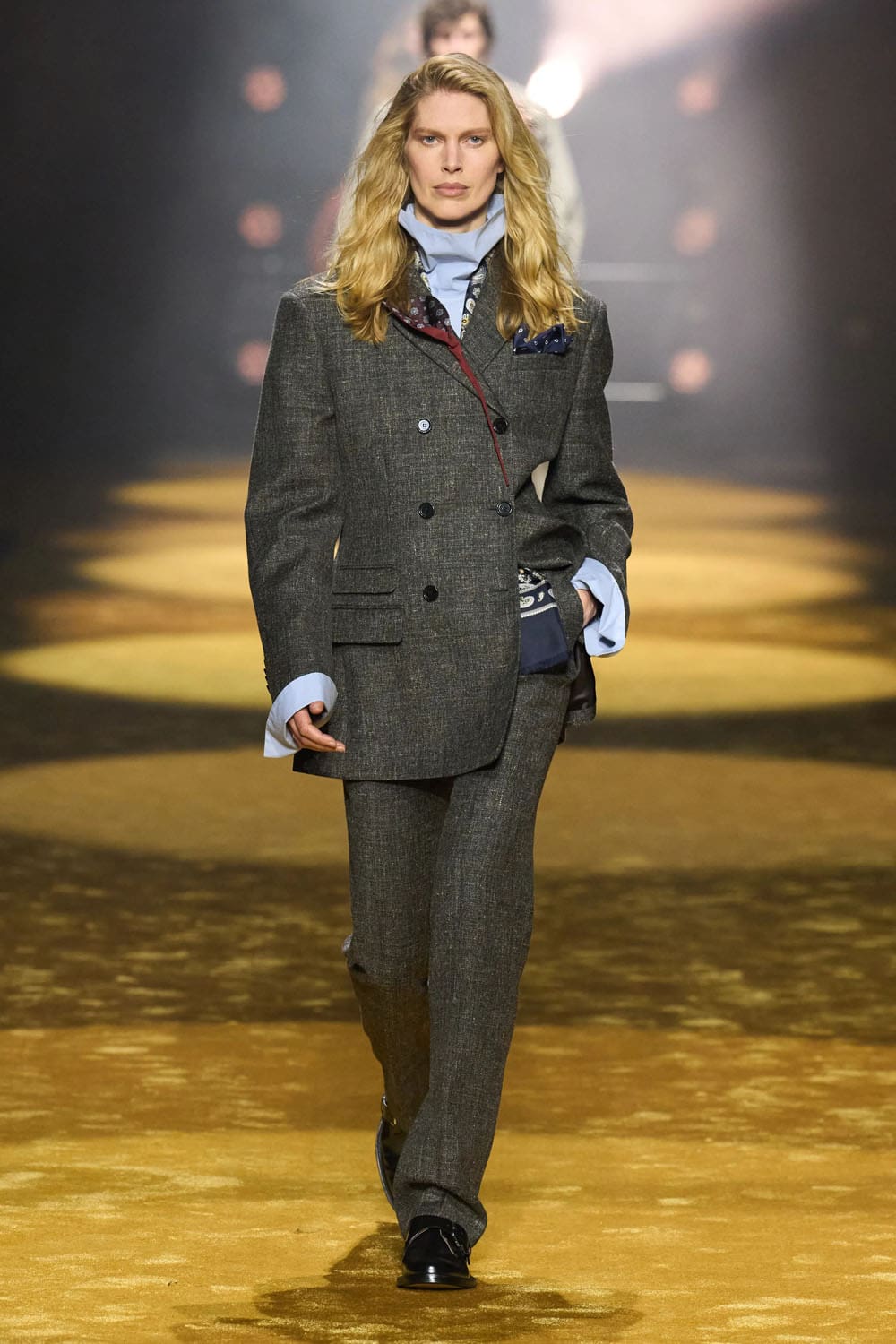
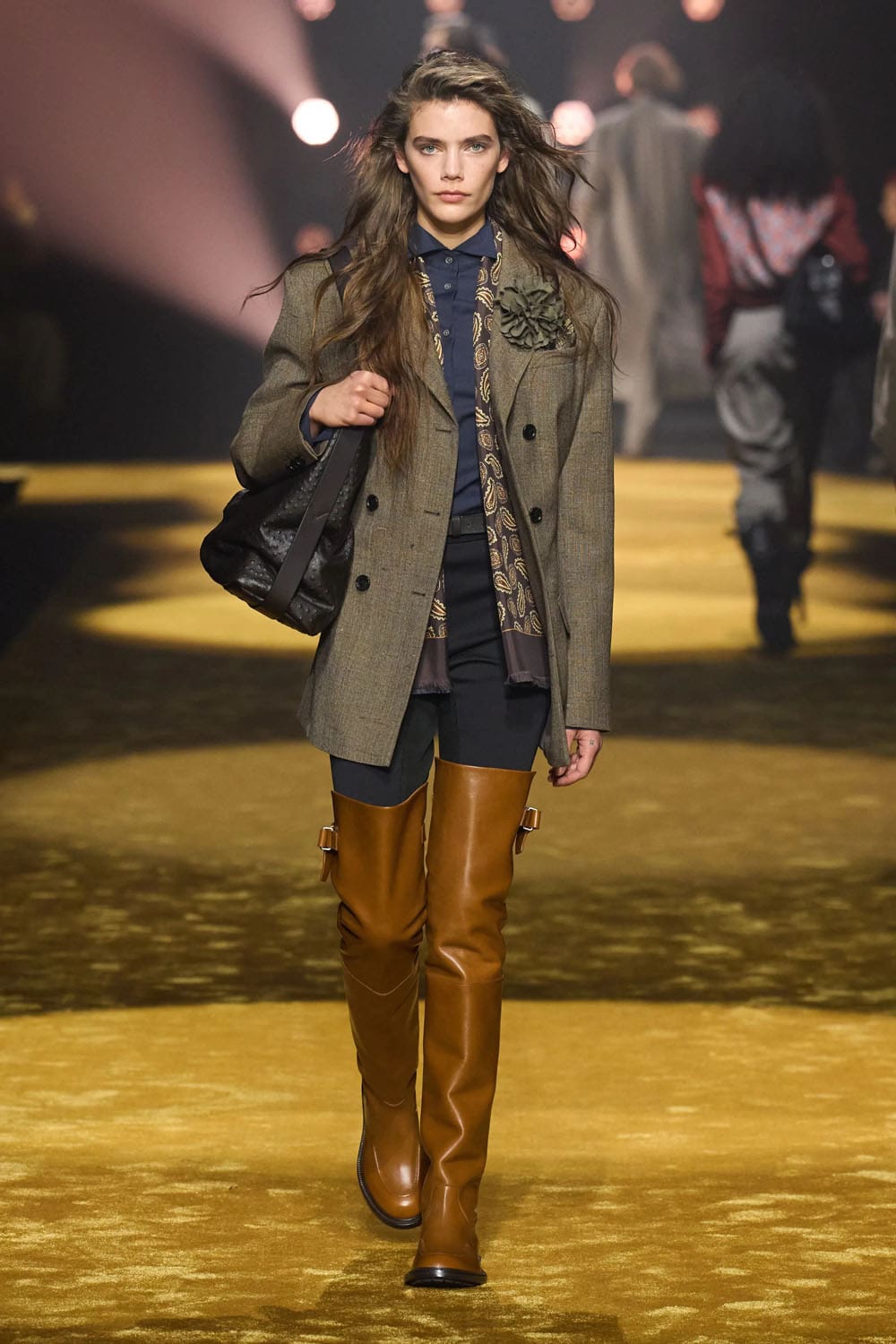
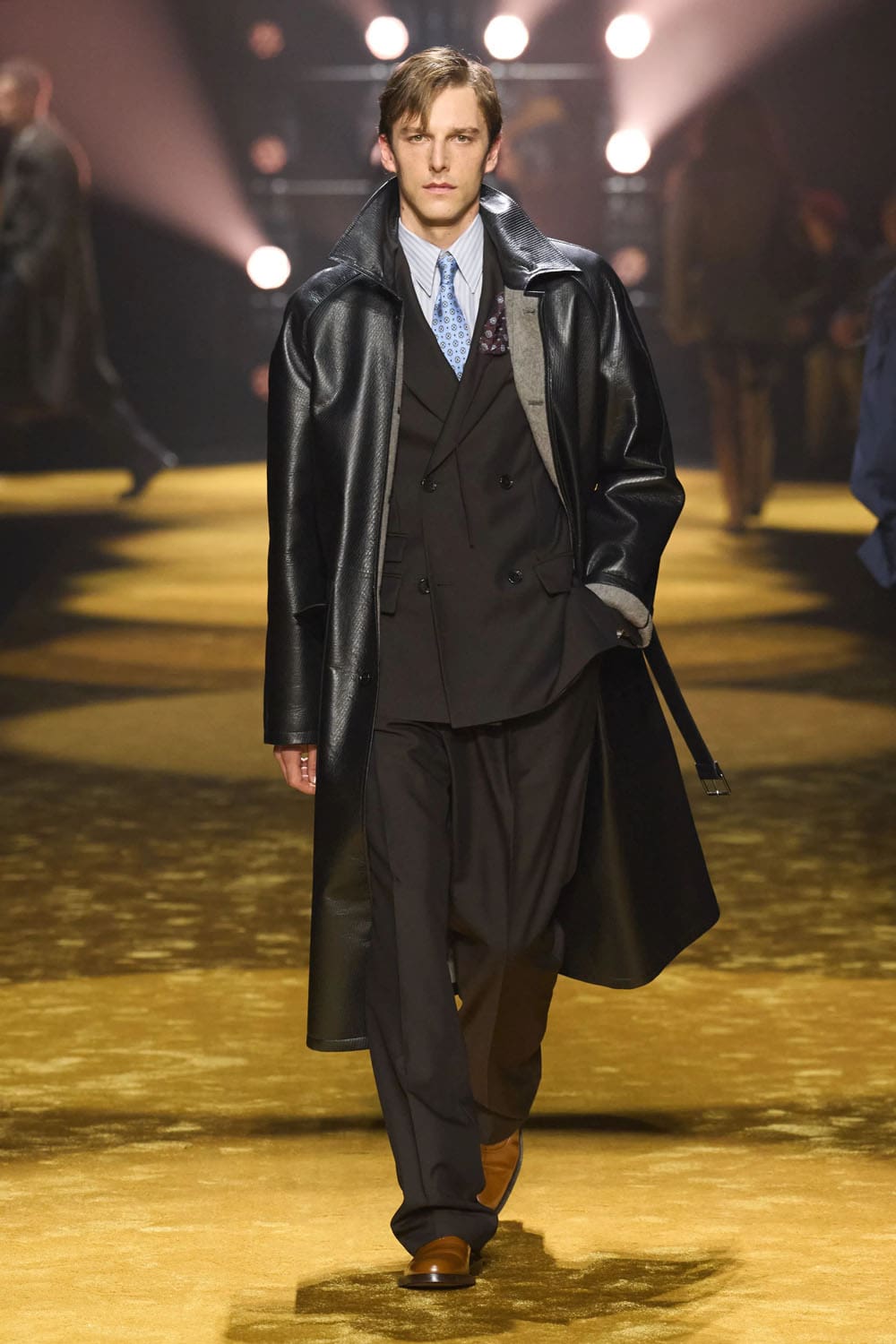
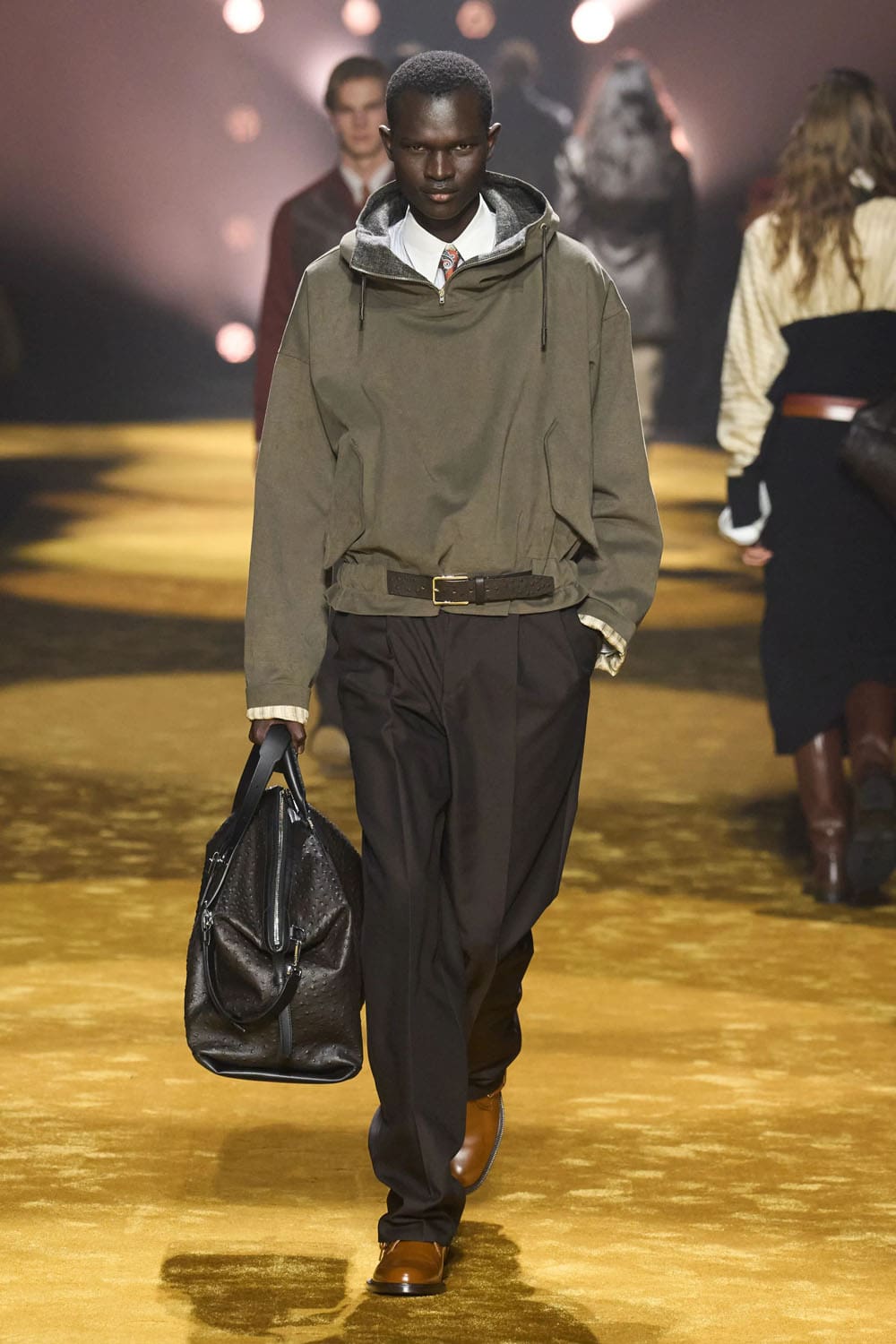
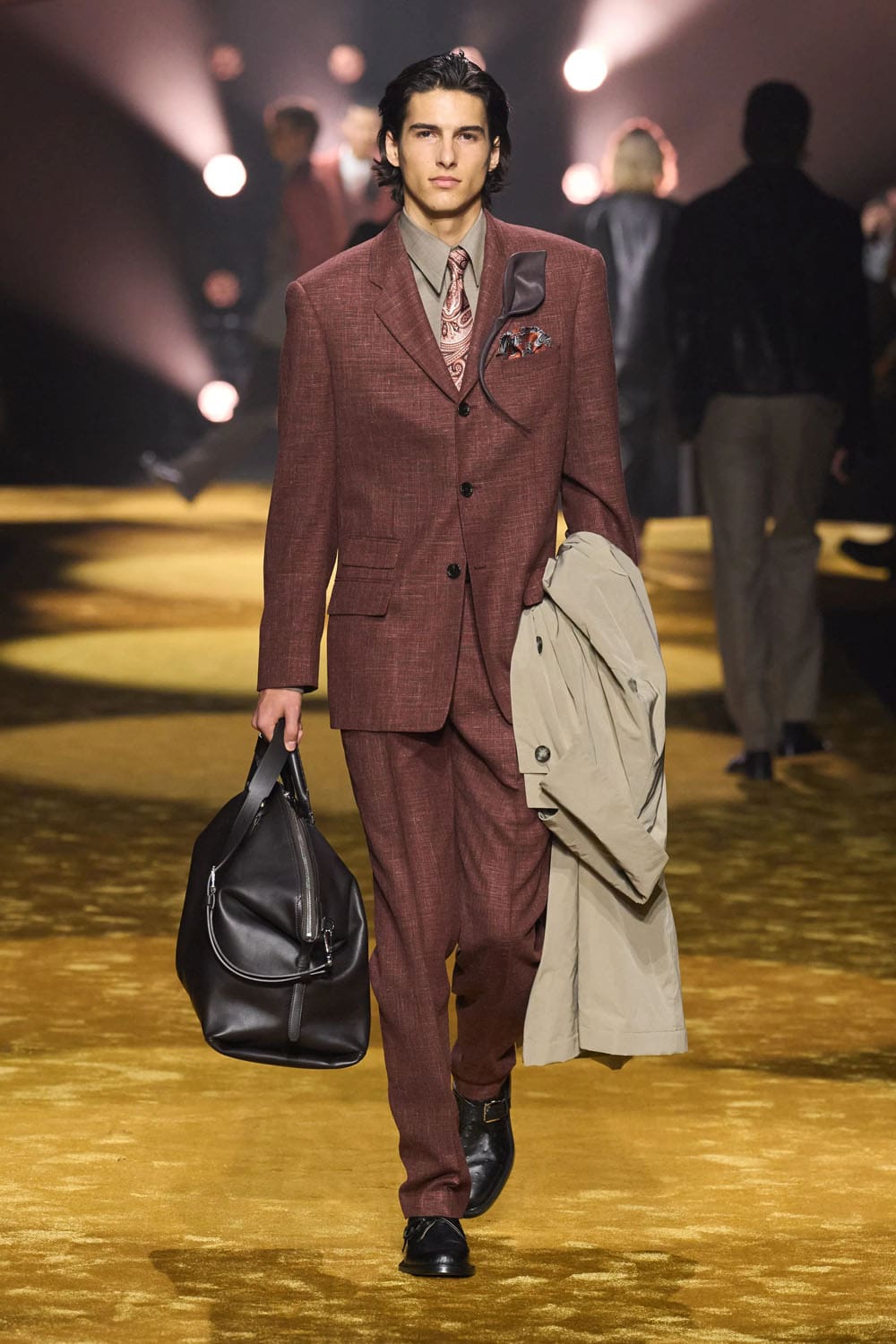
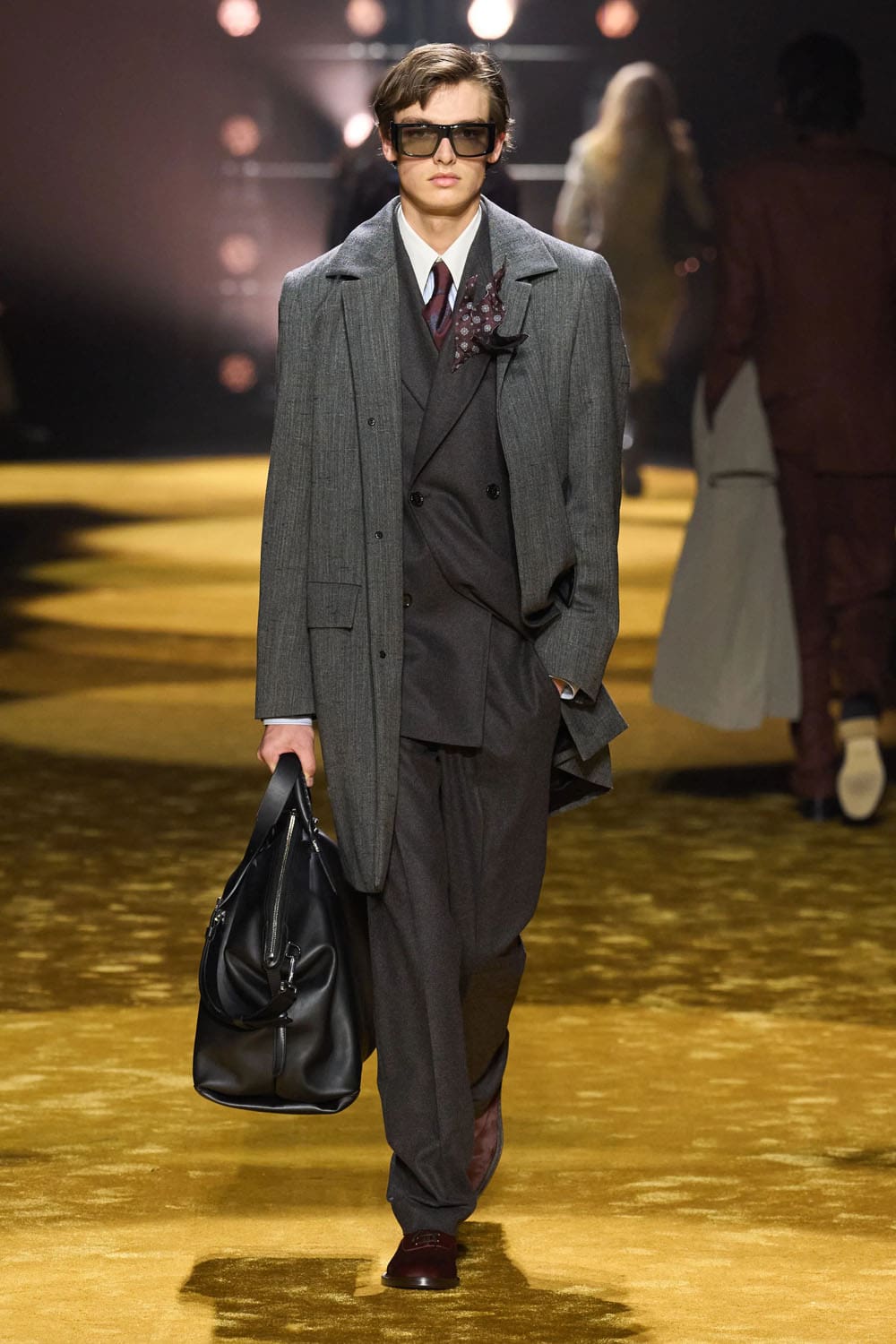
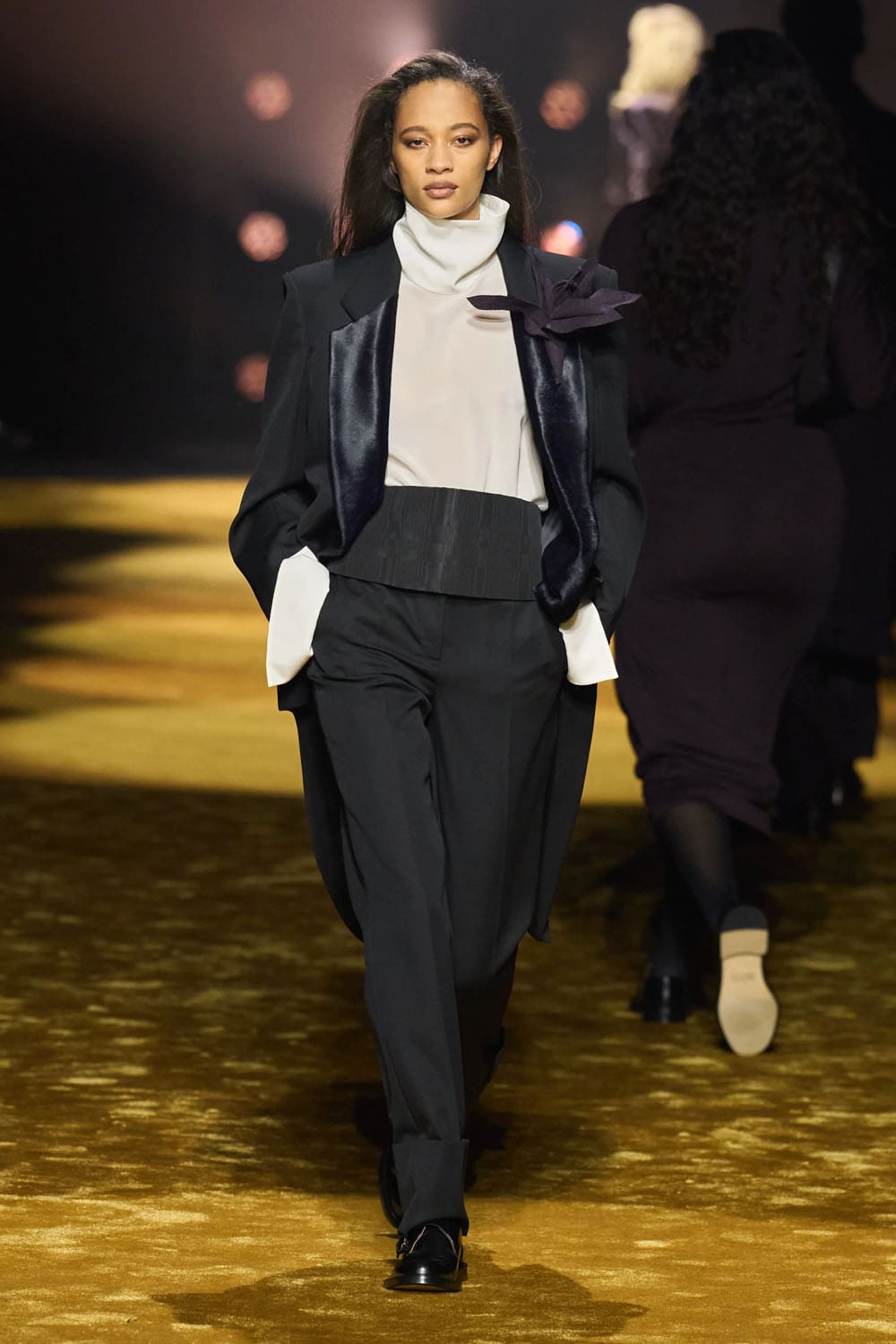
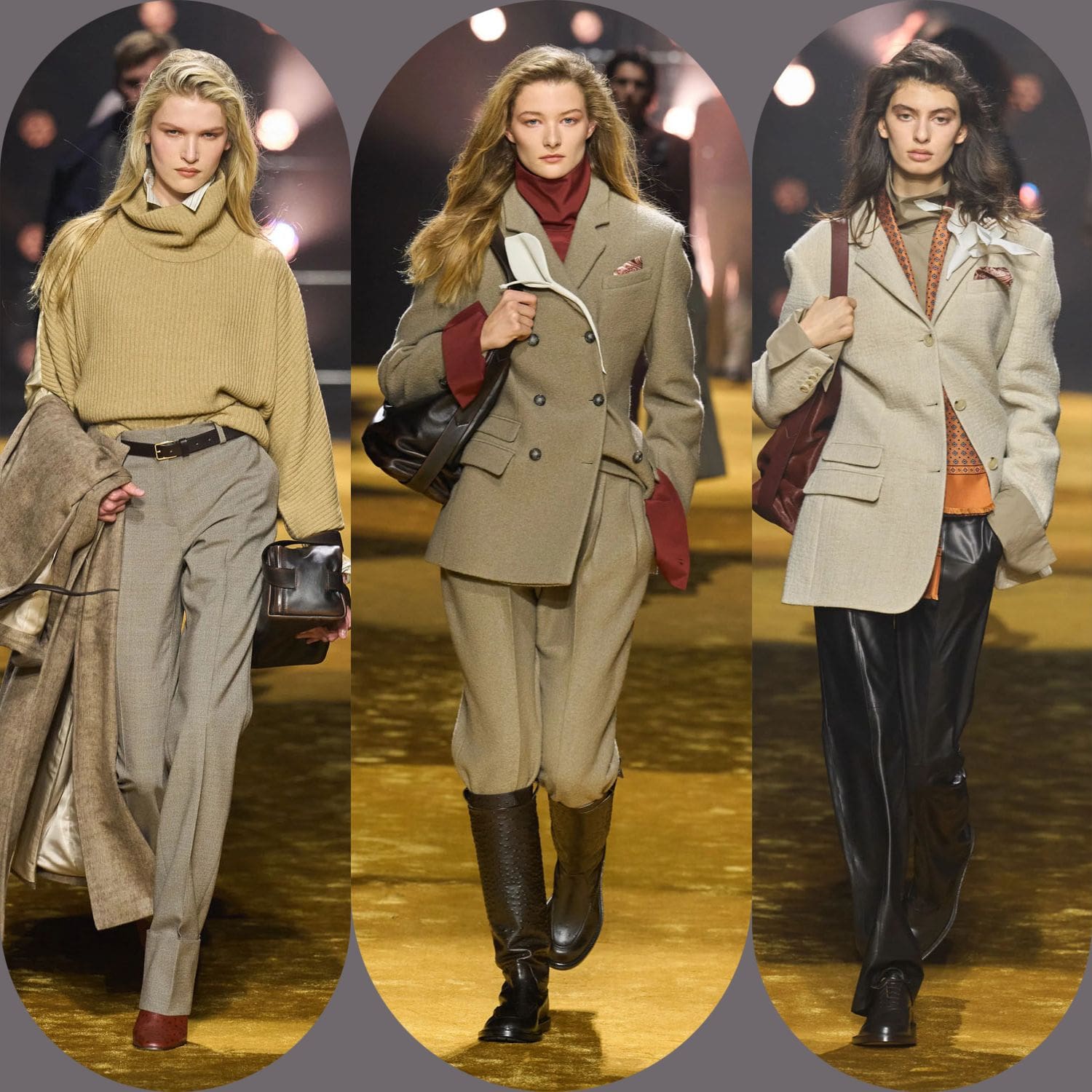
Falcioni leans heavily into double-breasted construction, but he does so with an architectural looseness. A khaki suit follows, clean-lined yet asymmetric in attitude. A silk pocket square — folded, not fluffed — reinforces the collection’s language of intentional imperfection. This is tailoring liberated from uniformity, yet still rigorously built.
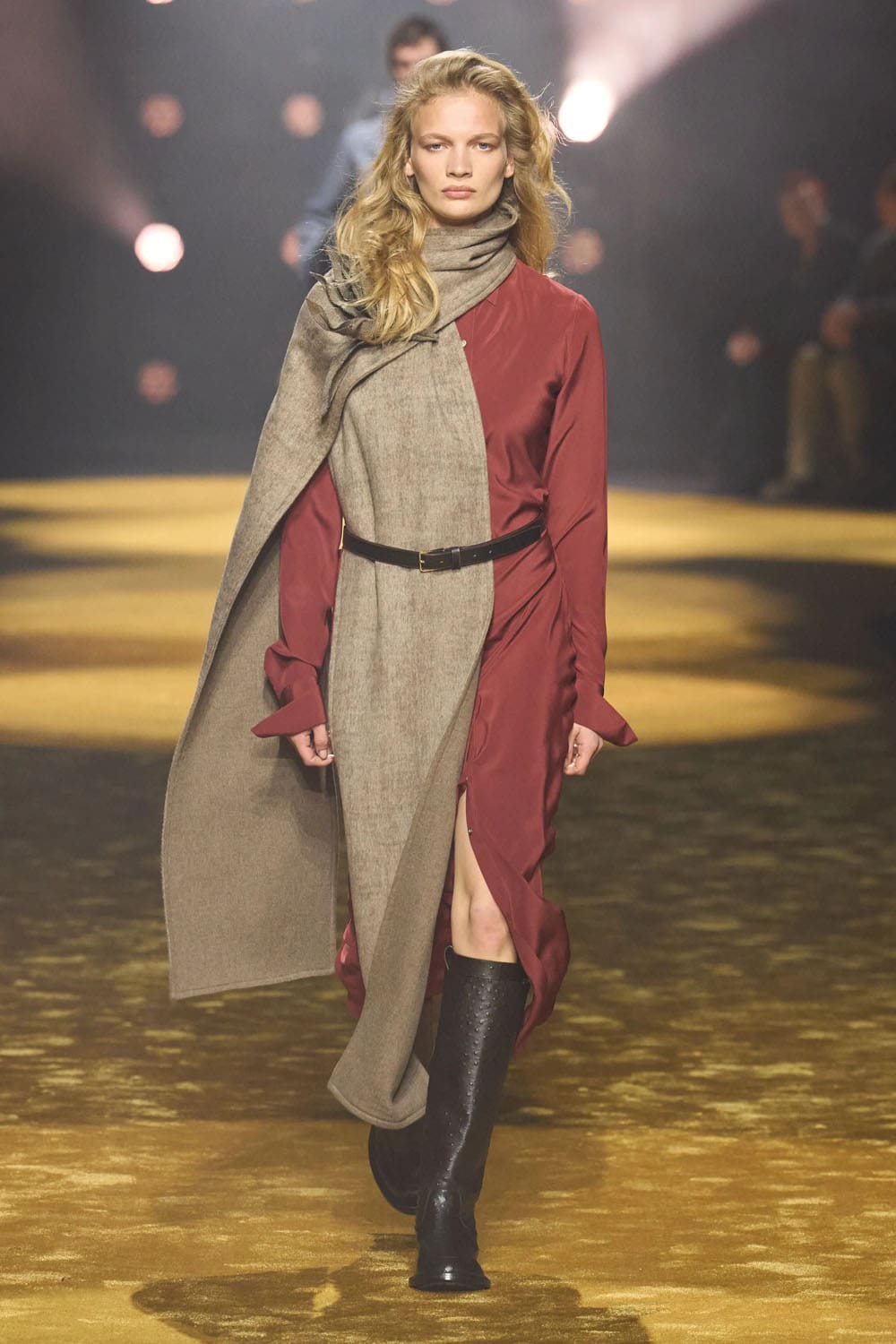
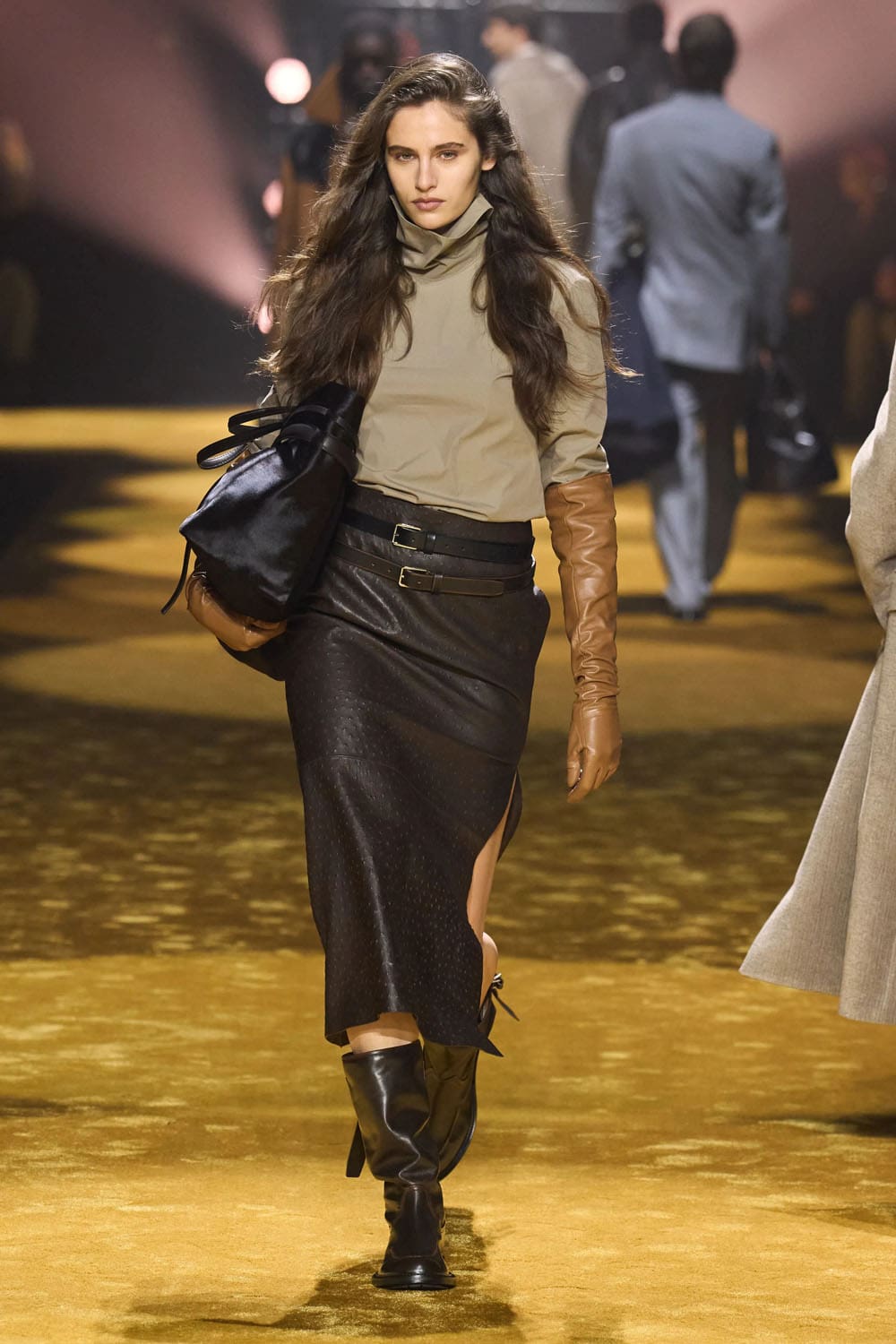
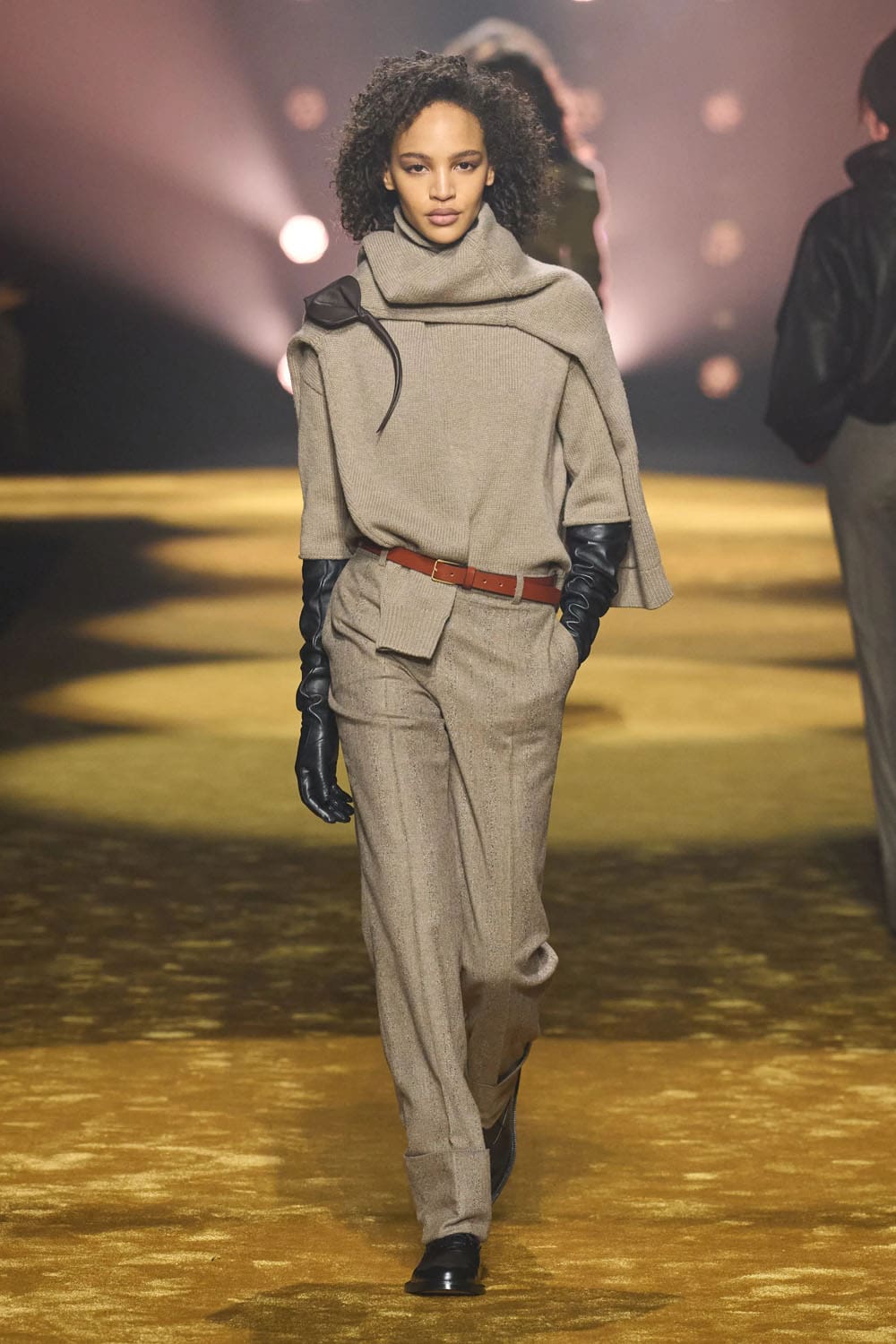
The collection then pivots into a compelling study of equestrian codes. A sleeveless jumpsuit in oat wool, worn over a dark knit and beneath black leather gloves, introduces a silhouette that extends the torso and narrows the stride. Draped over one shoulder is a matching wool scarf, styled not as an accessory but as soft armor. It is one of the show’s most decisive declarations: even gentleness can be engineered.
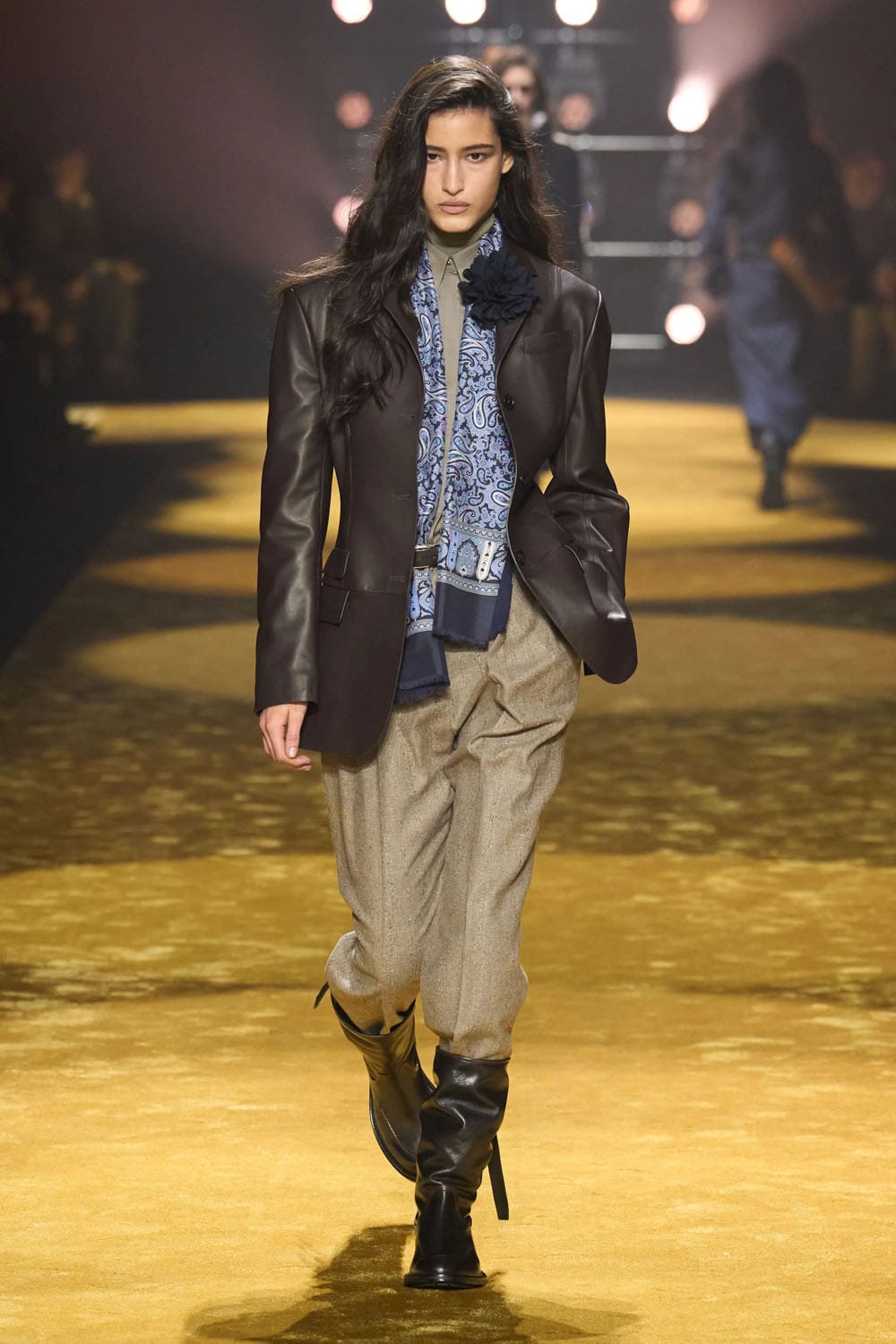
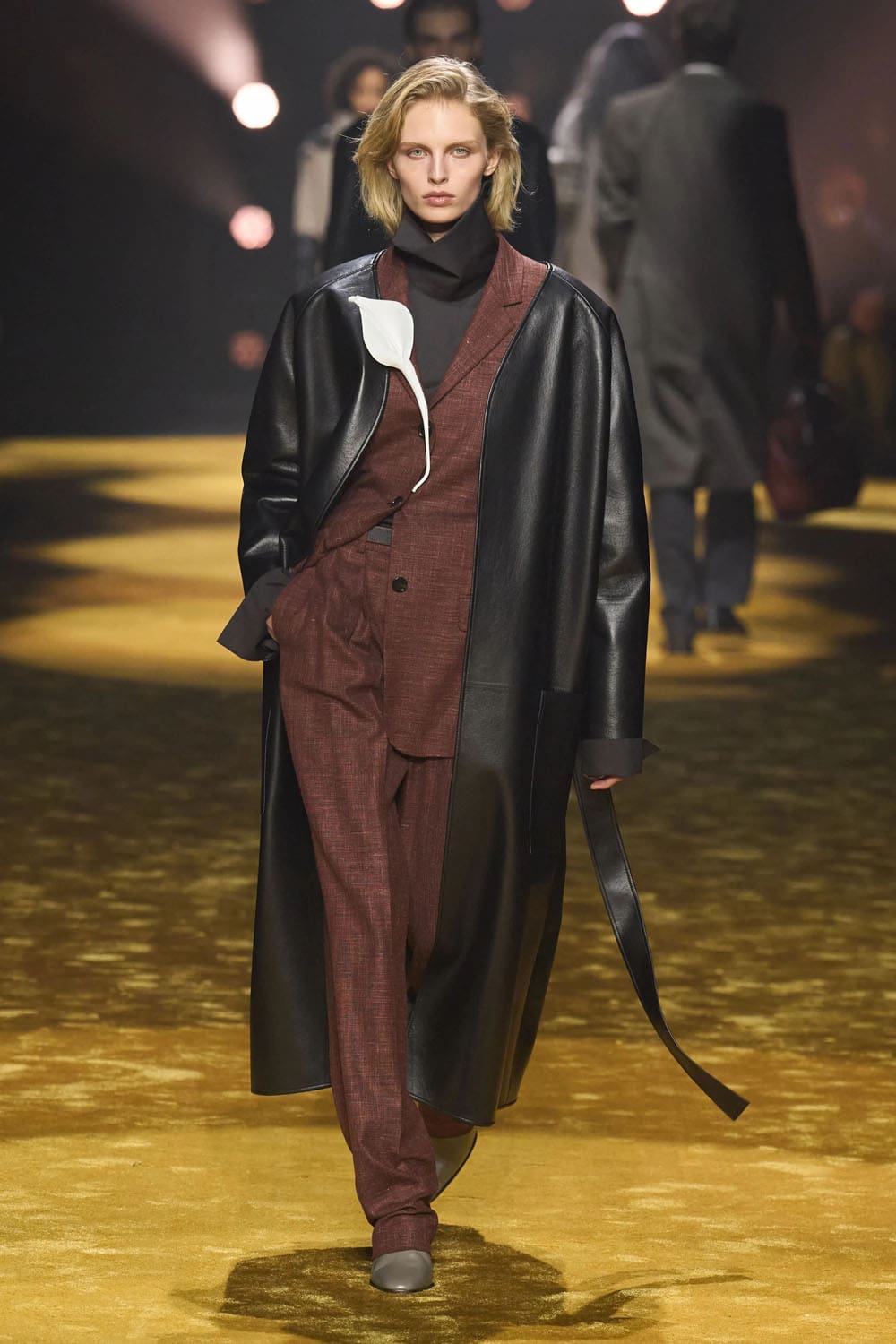
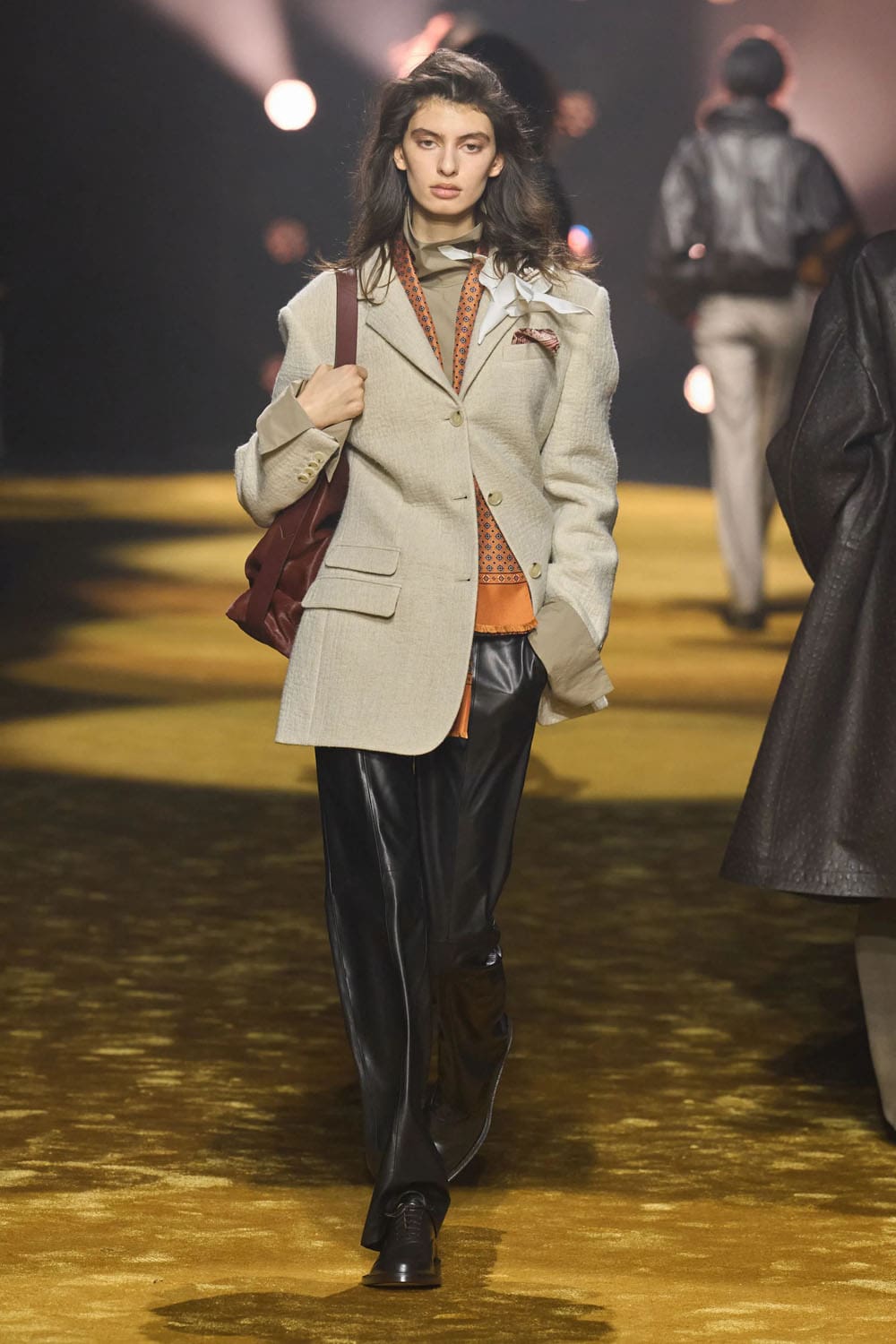
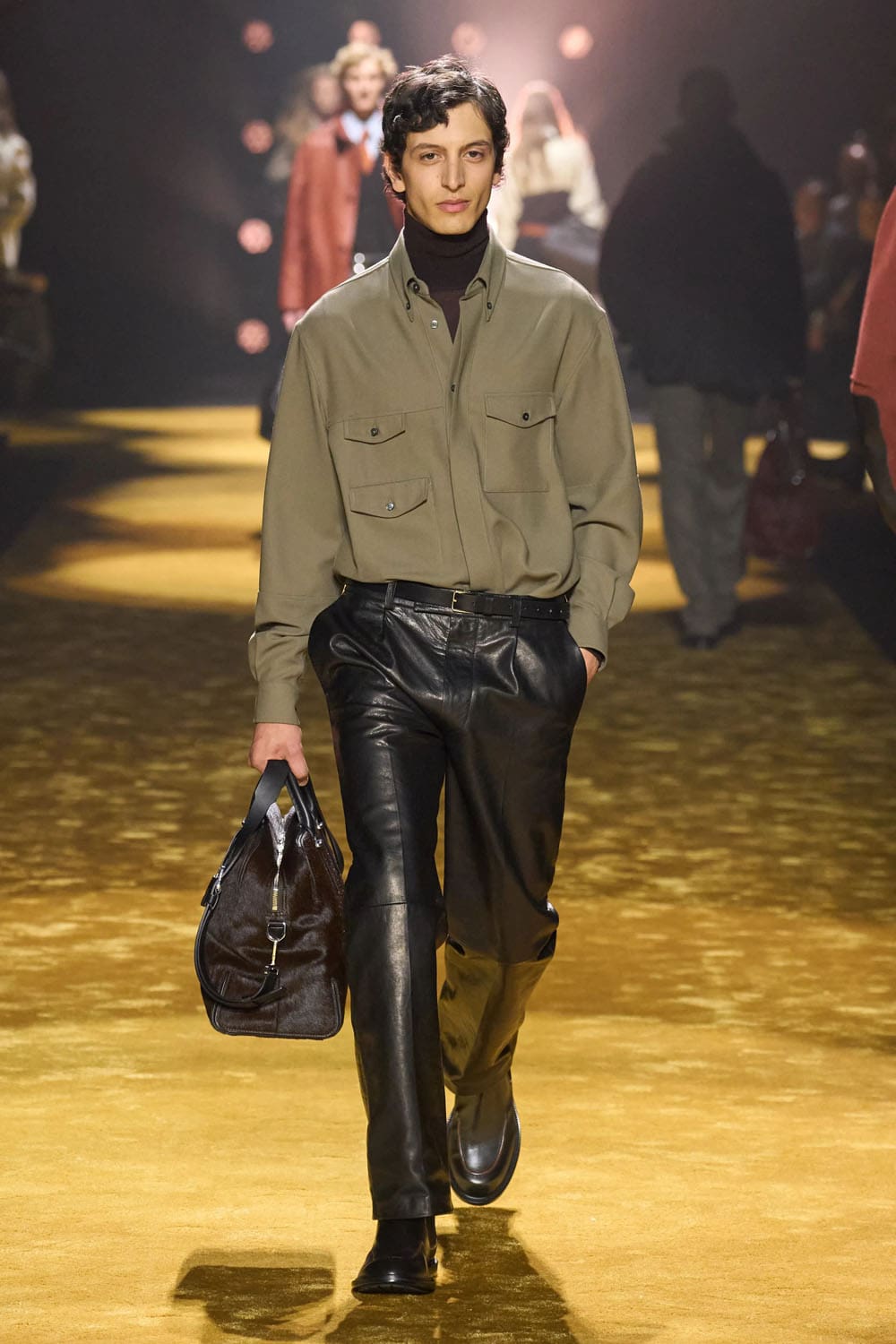
Falcioni’s dialogues between textures reach their peak with a cream blazer layered over a rust-patterned waistcoat and black leather trousers. The mixed materials refuse to blend; instead, they create a visual staccato — a reminder that power dressing in 2026 is neither monolithic nor monochrome. The large, structured shoulder bag amplifies the look’s ease: this is a woman who carries her world without apology.
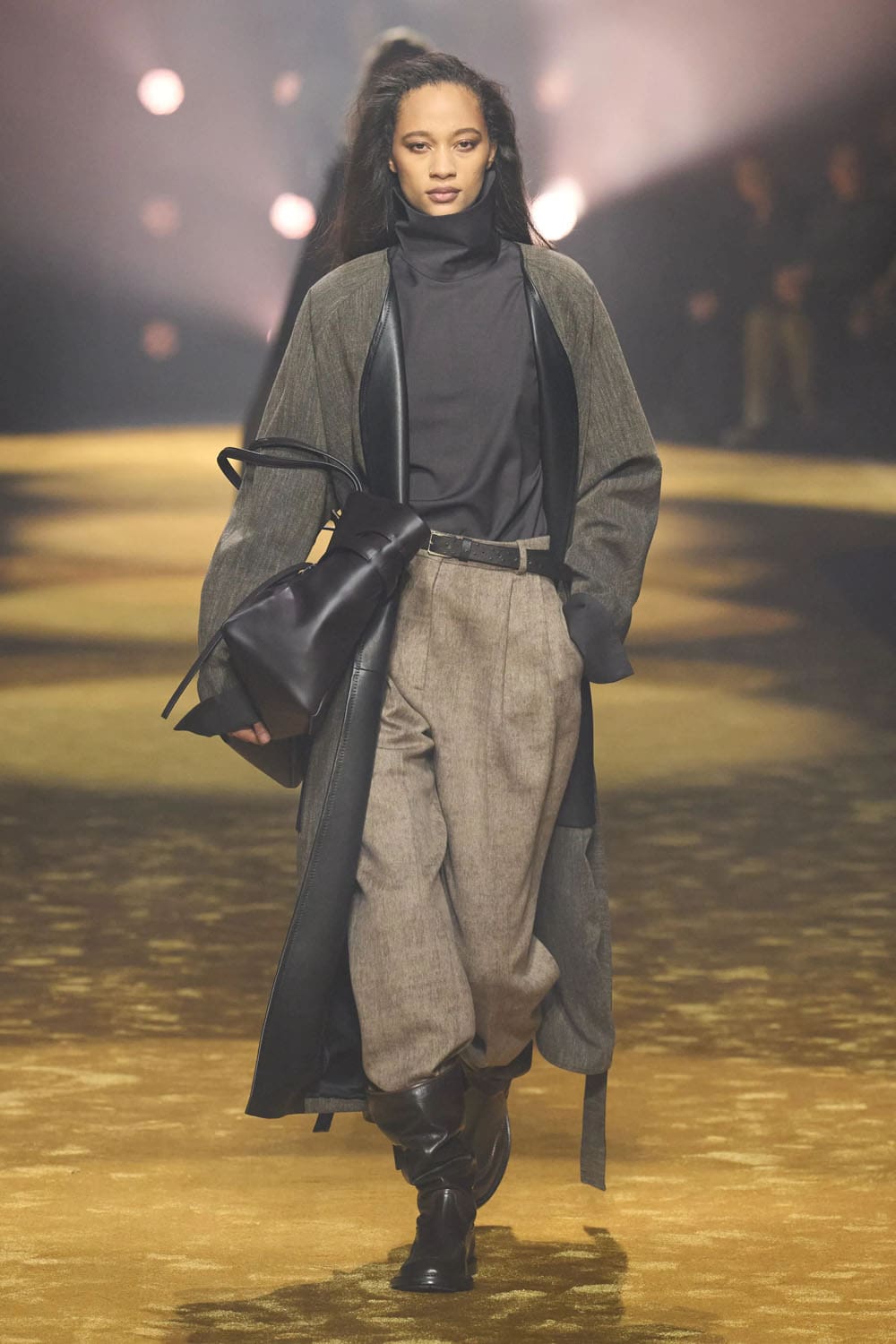
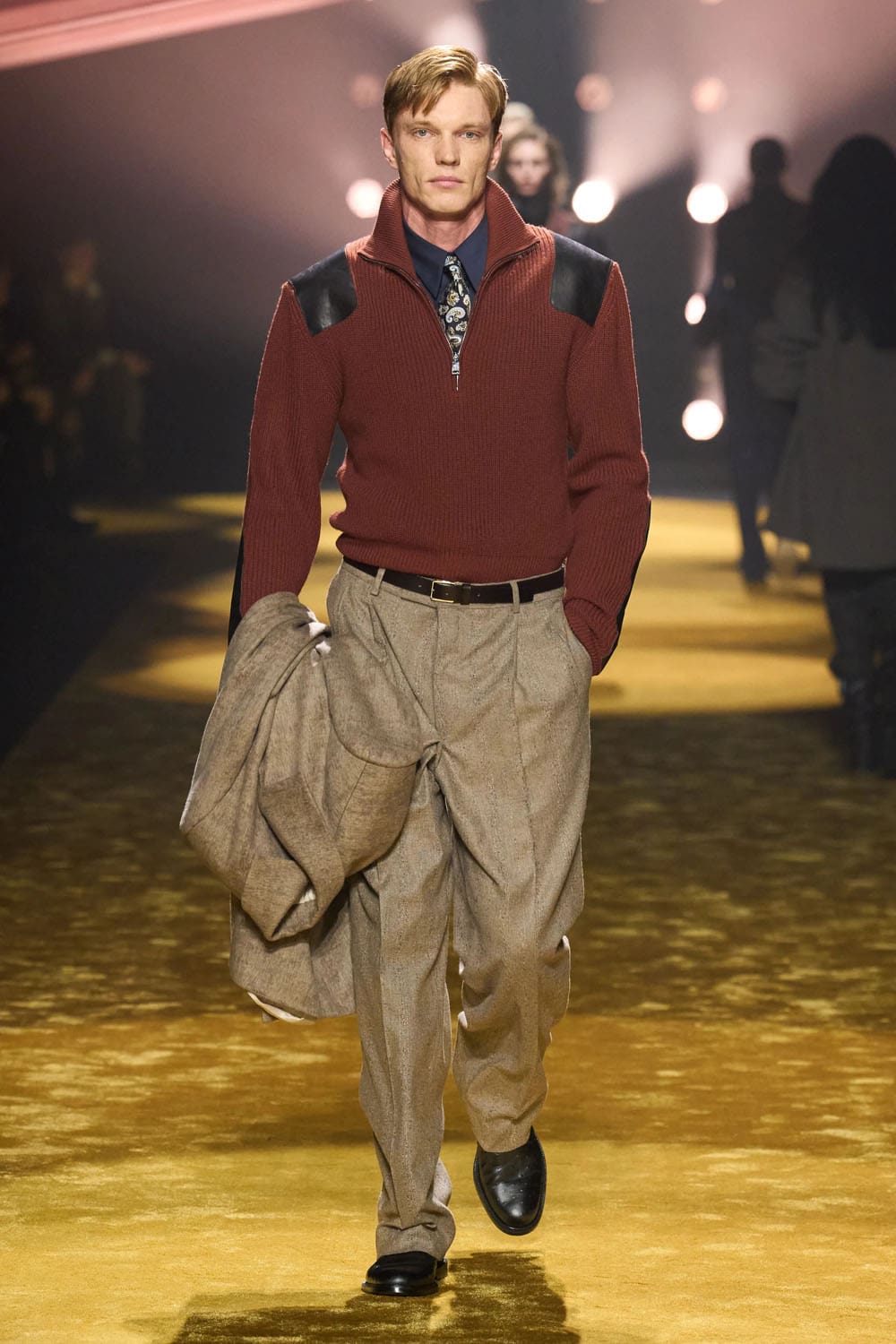
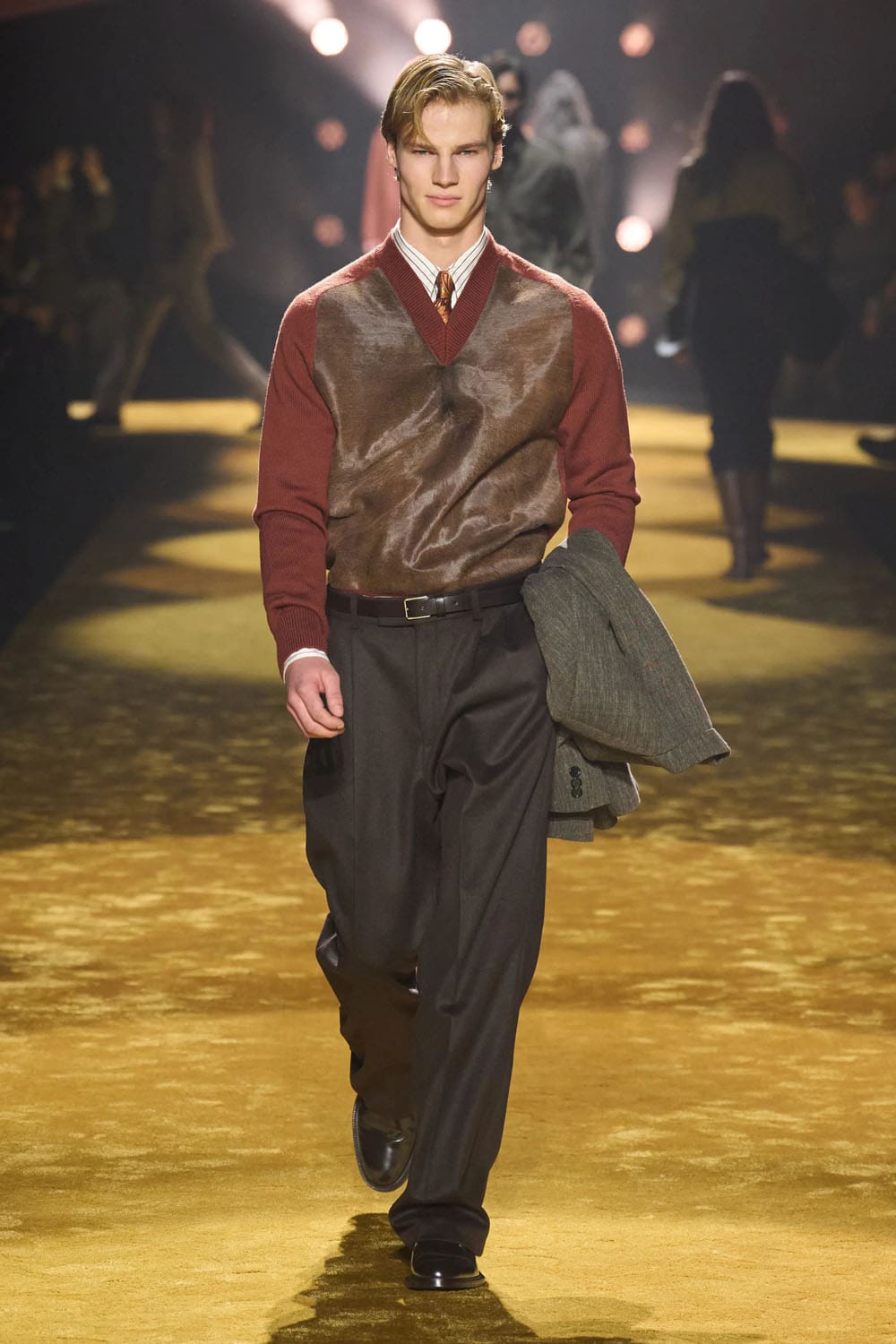
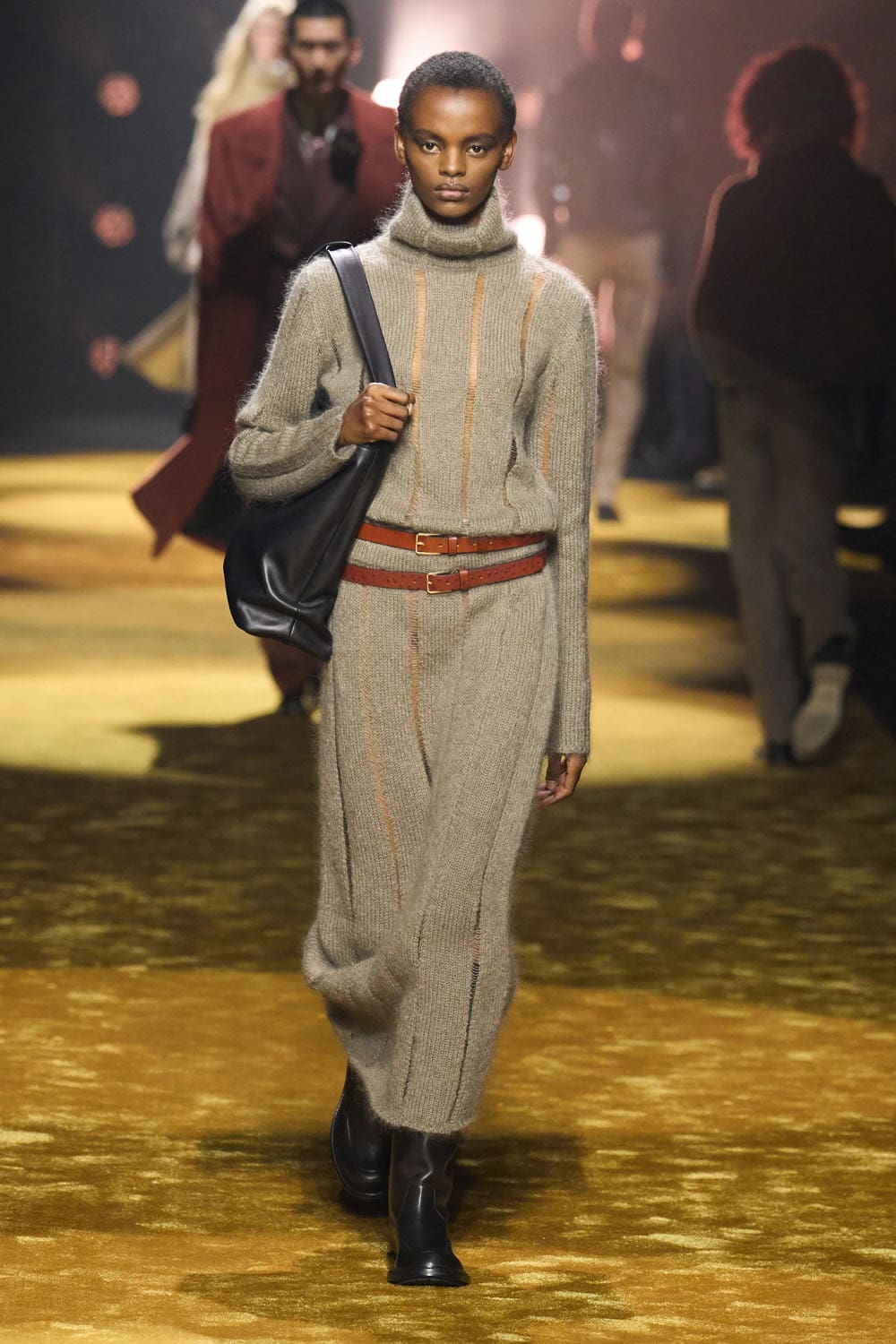
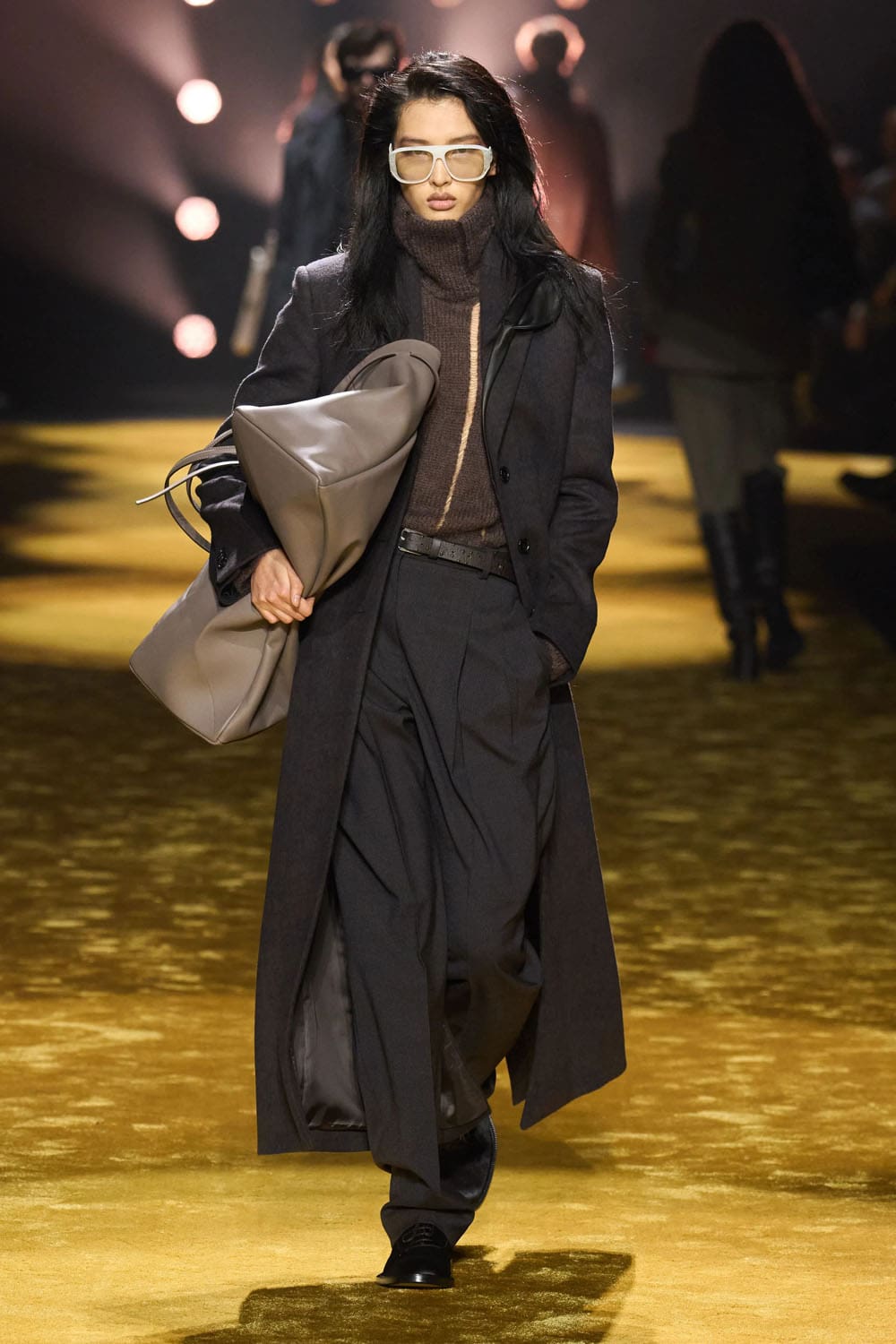
One of the collection’s most quietly persuasive moments arrives with a heavy ribbed sweater tucked into pale grey trousers. The sweater’s funnel neck softens the tailoring while the belted waist reasserts structure. Draped casually over the arm is a tweed coat, an echo of the opening look but recast with nonchalance — authority, apparently, can walk at its own pace.
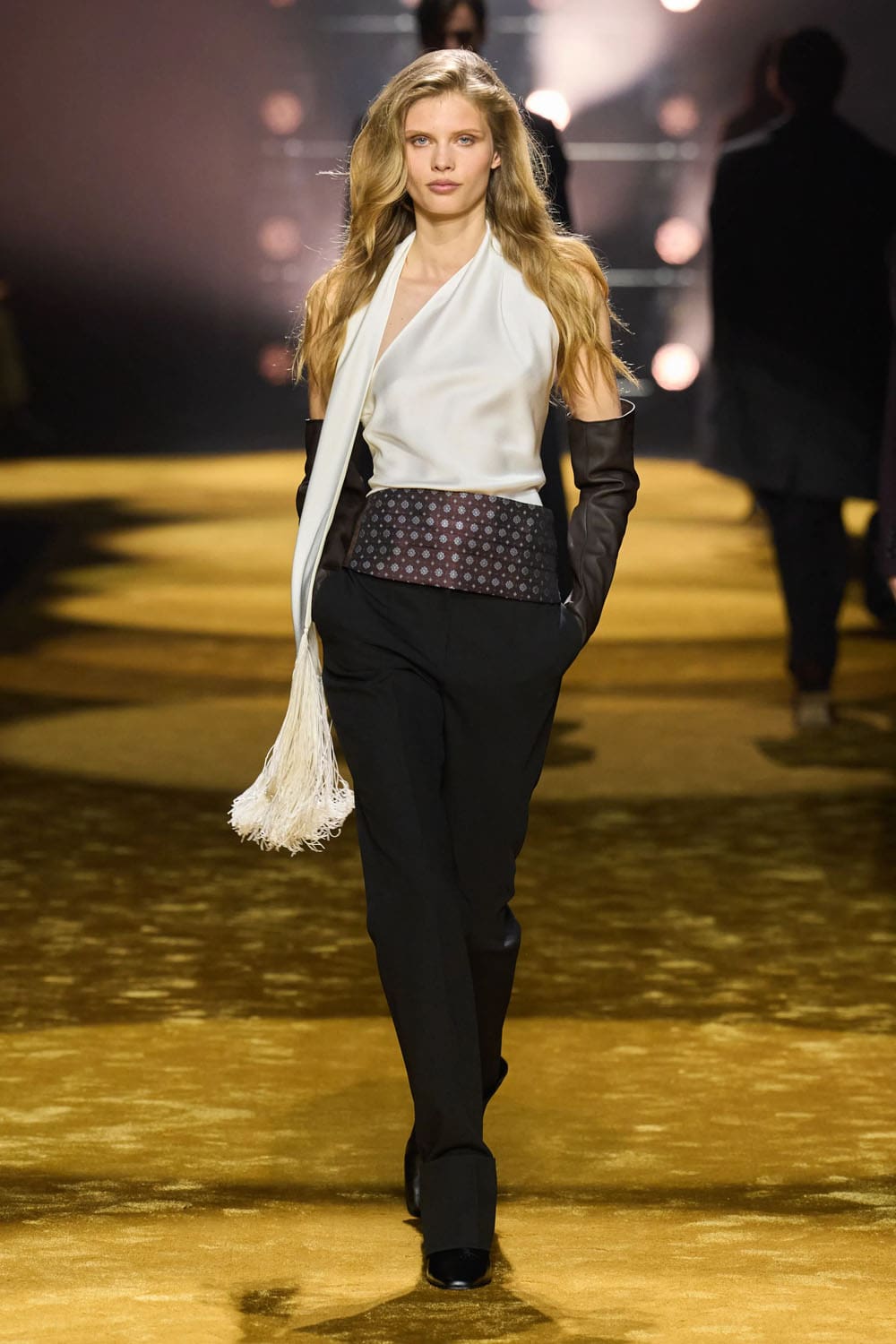
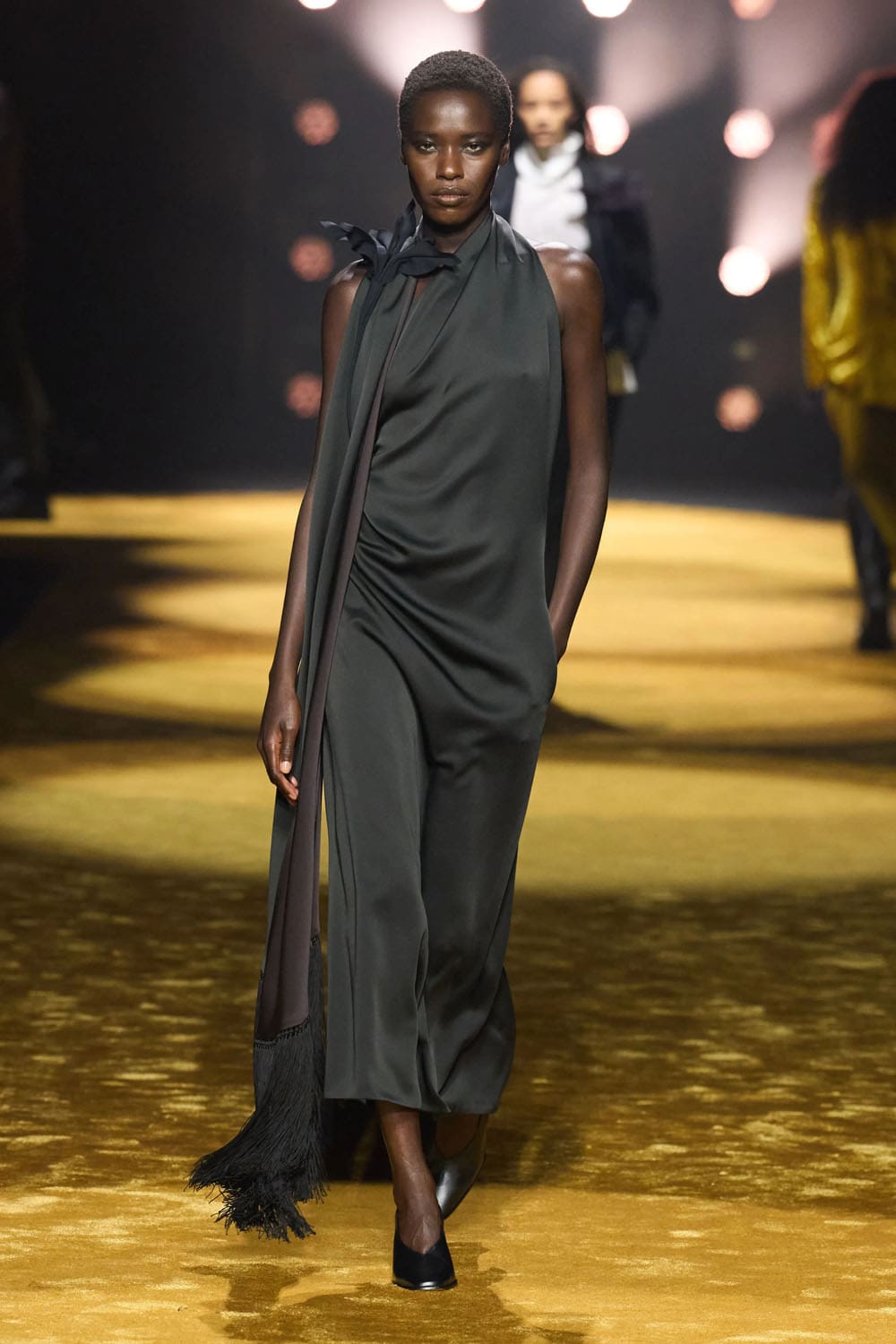
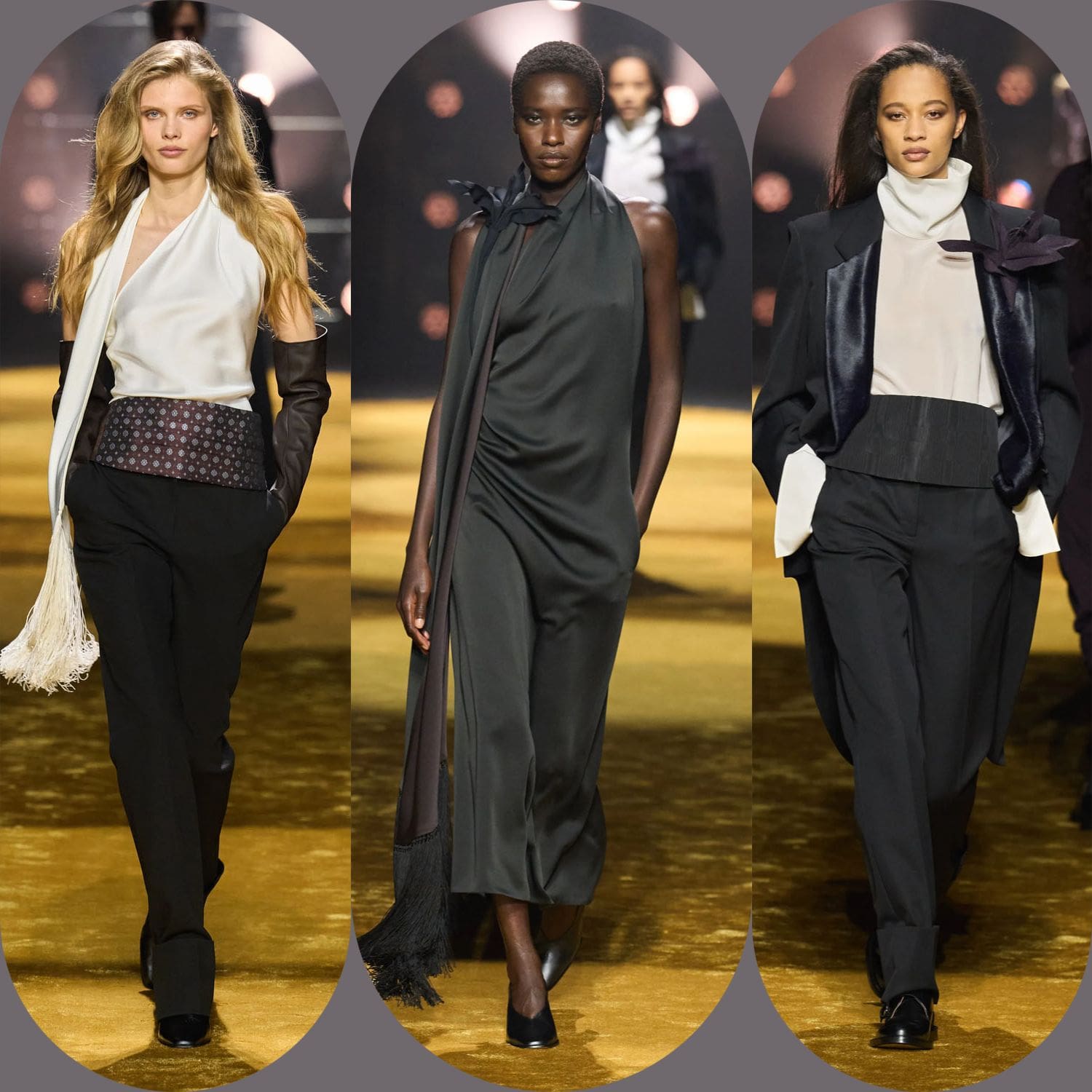
Then comes the evening iteration: a fluid, one-shouldered ivory top paired with structured black trousers. A long fringe scarf slips from the neckline, trailing with calculated effortlessness. The gloves, cut in dark chocolate leather, turn elegance into intent. This closing note of sensual tailoring confirms what the entire collection argues: BOSS is no longer content to dress the corporate hierarchy; it now dresses the people who rewrite it.
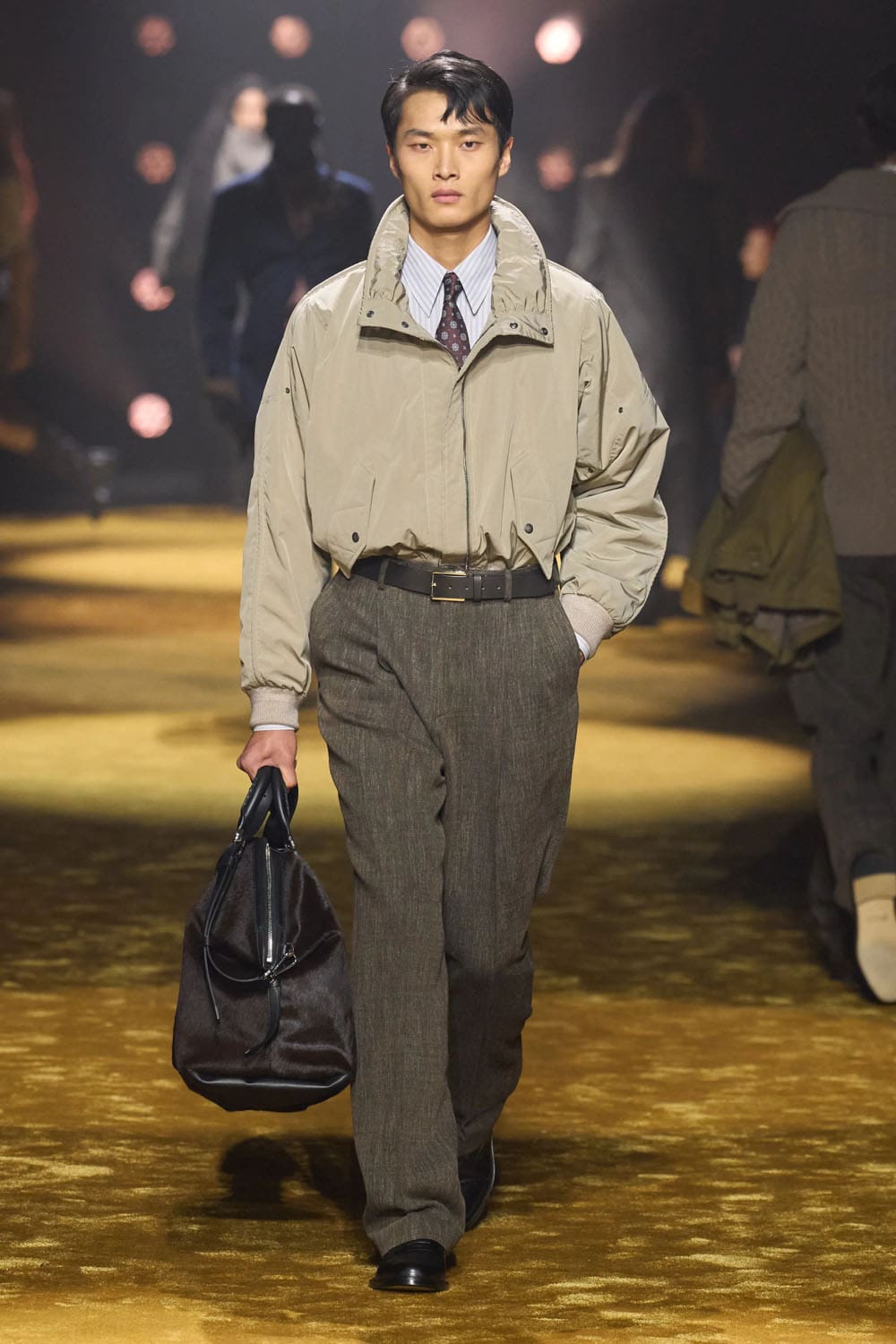
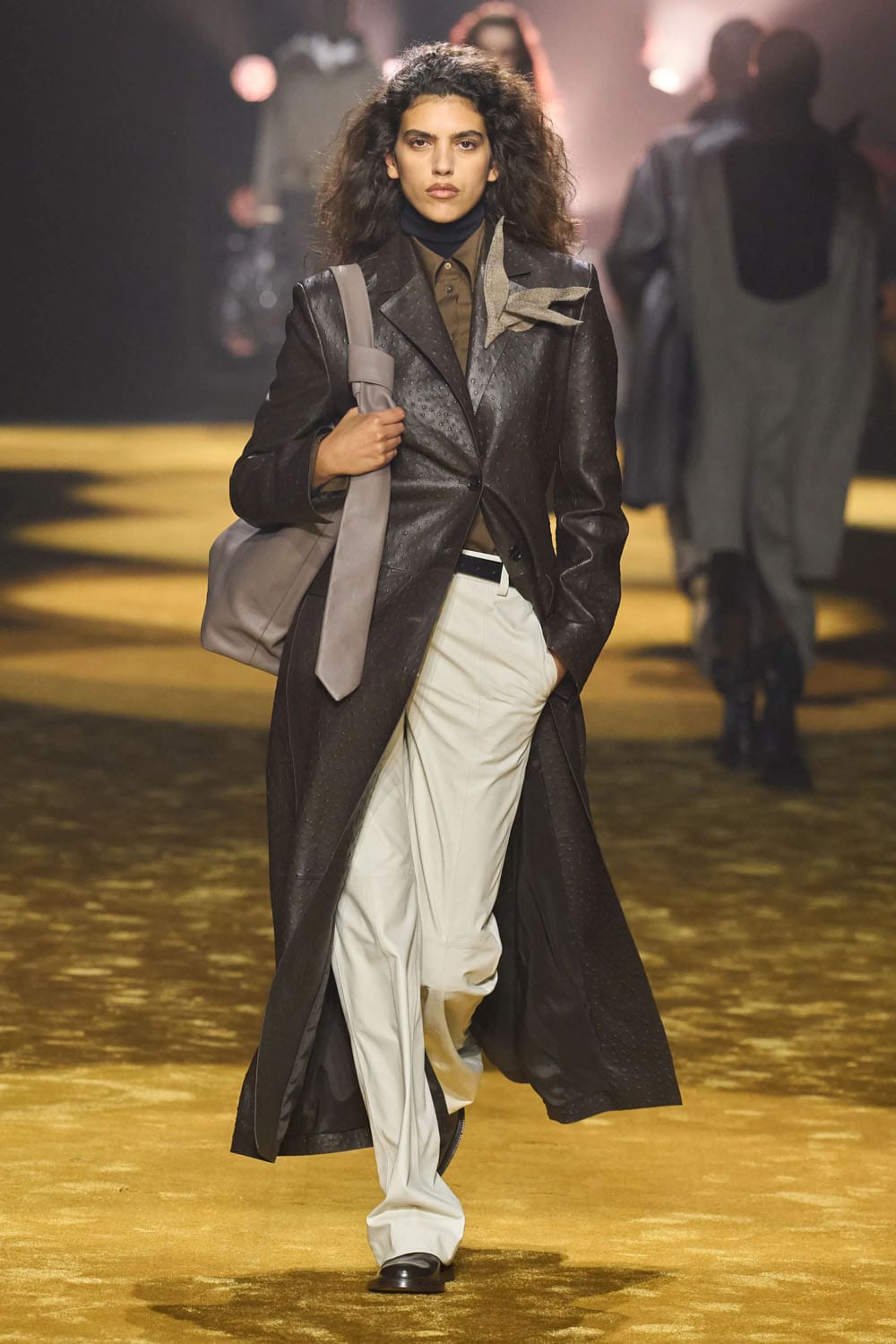
Through all of this, the construction is impeccable. Edges meet with quiet exactitude. Linings reveal their craft like signatures. Nothing is accidental; everything is evidence of a brand returning to mastery with a contemporary pulse.
Marco Falcioni doesn’t simply revisit heritage. He disassembles it, examines the pieces, and builds a new visual system for the modern professional — one who leads without asking for permission, one whose authority is structural rather than decorative.
BOSS Fall Winter 2026–2027 is a blueprint for self-made power. Tailoring, here, is not an outfit. It is an identity.
Key Takeaways
- Marco Falcioni’s Boss Fall Winter 2026-2027 collection emphasizes the theme ‘Be Your Own BOSS’ by reimagining traditional tailoring.
- The collection features meticulously crafted pieces that blend authority with individual expression, reflecting a modern aesthetic.
- Falcioni incorporates equestrian influences and dialogues between textures to convey a new standard of power dressing.
- Each look showcases intentional imperfection and architectural constructions, challenging conventional norms of suiting.
- Overall, Boss Fall 2026 serves as a blueprint for self-made power, transforming tailoring into a statement of identity.
See All Looks Boss Fall 2026