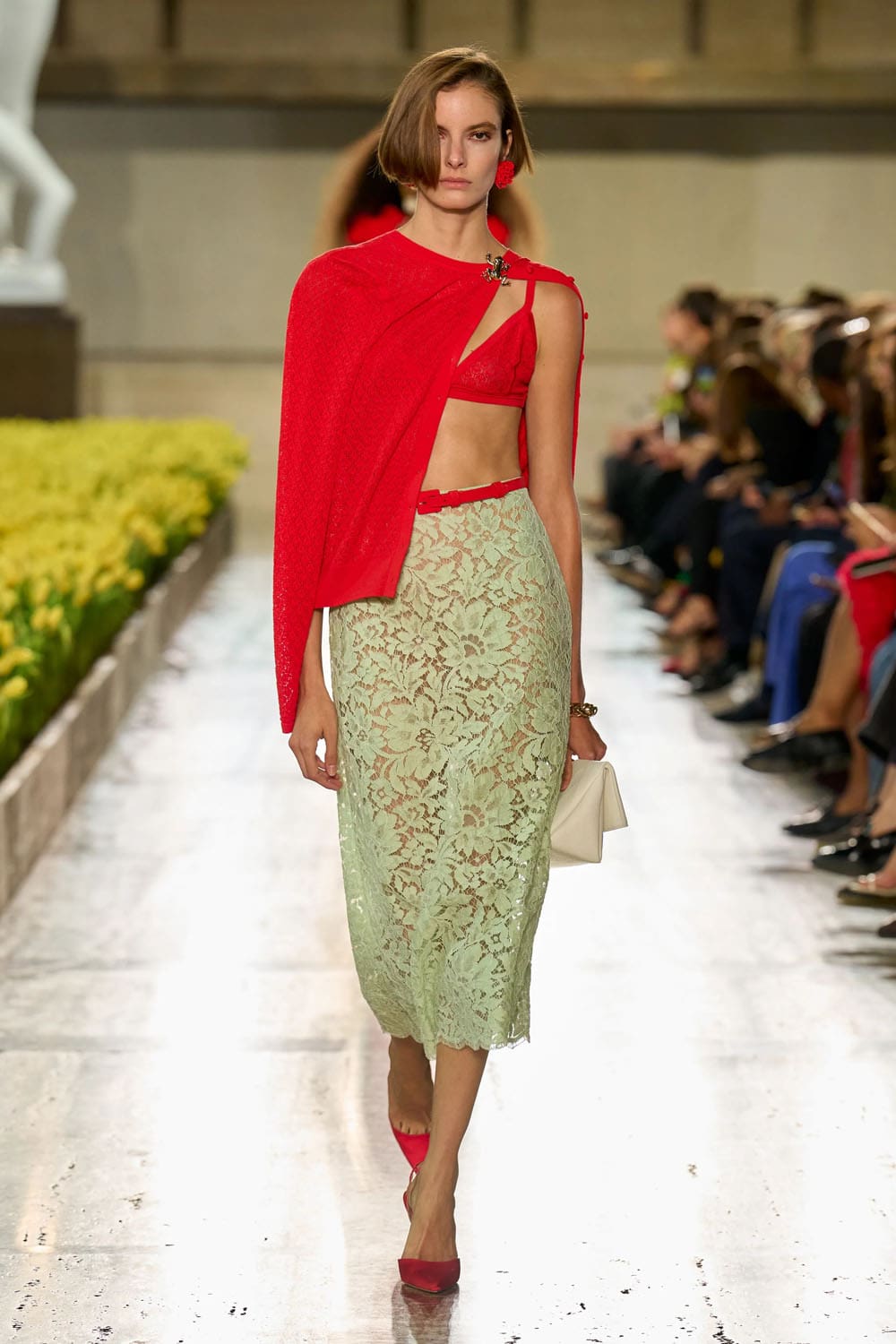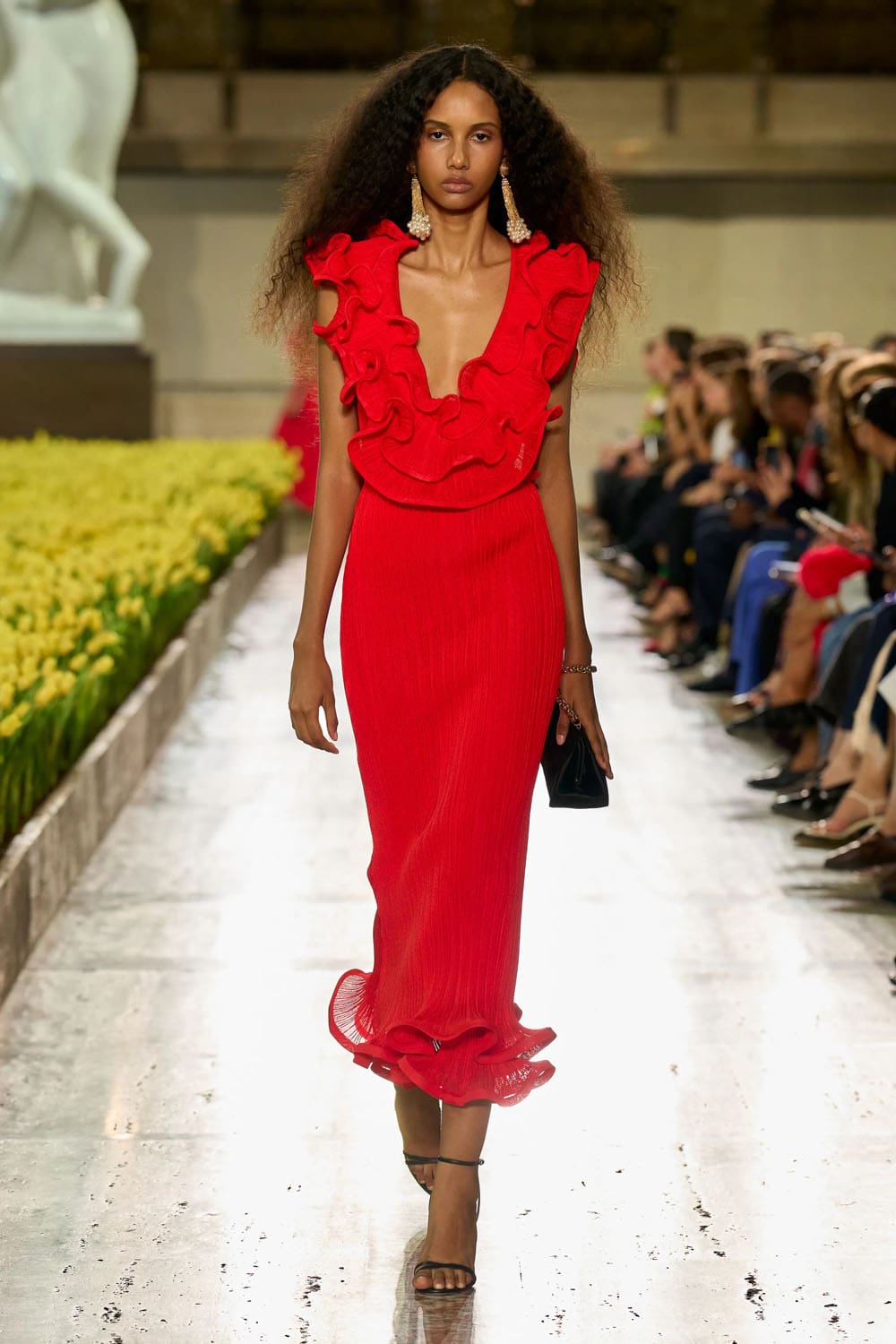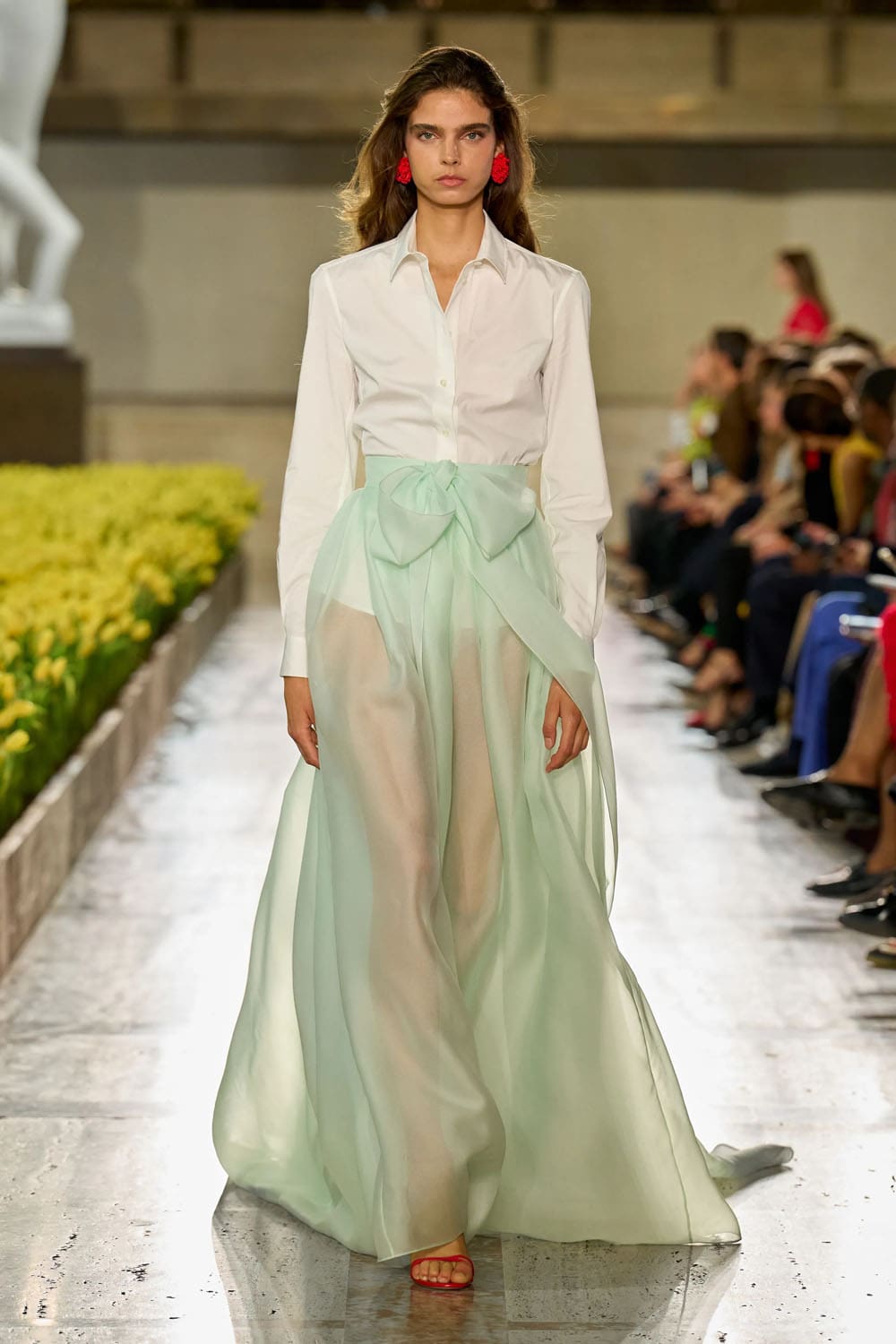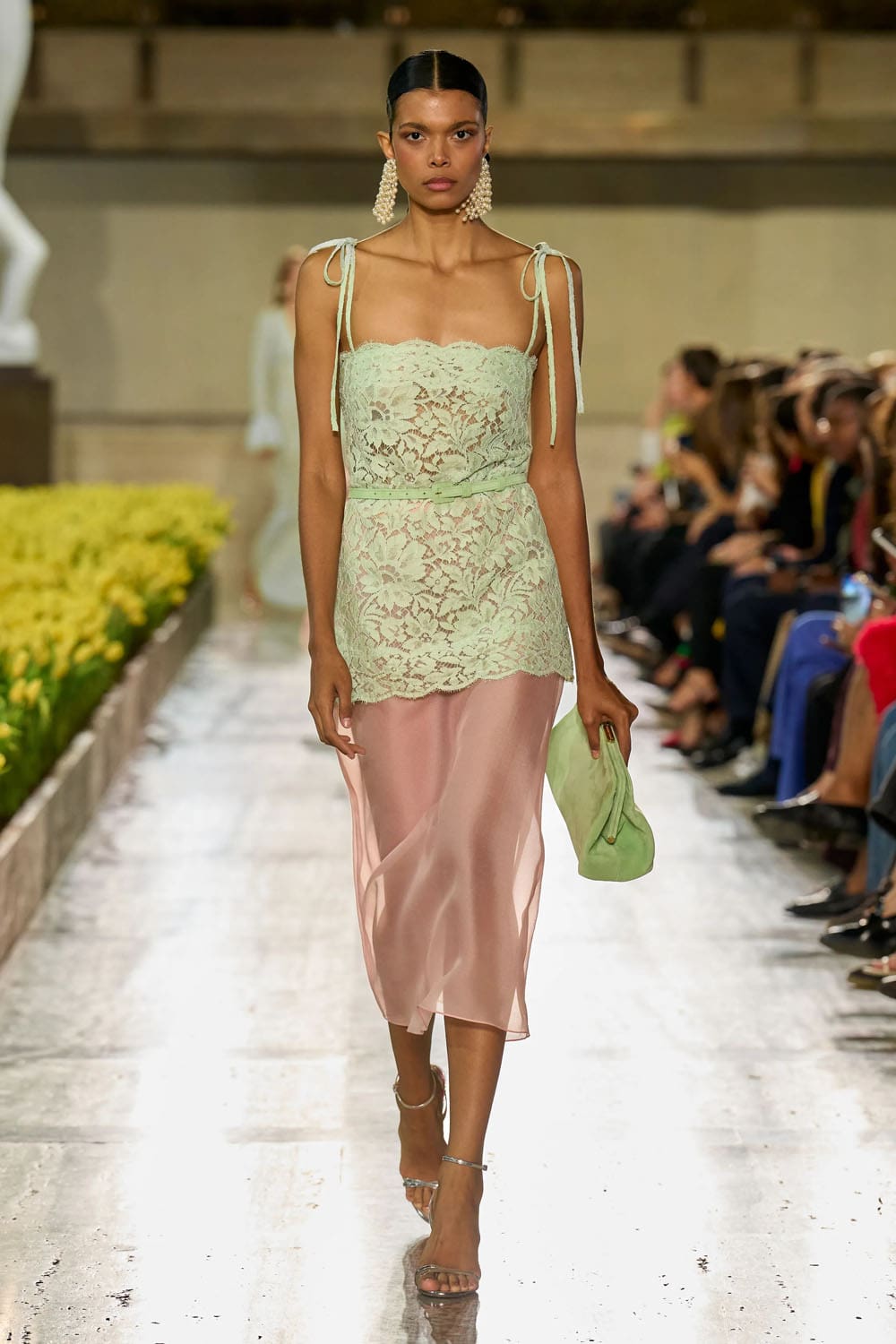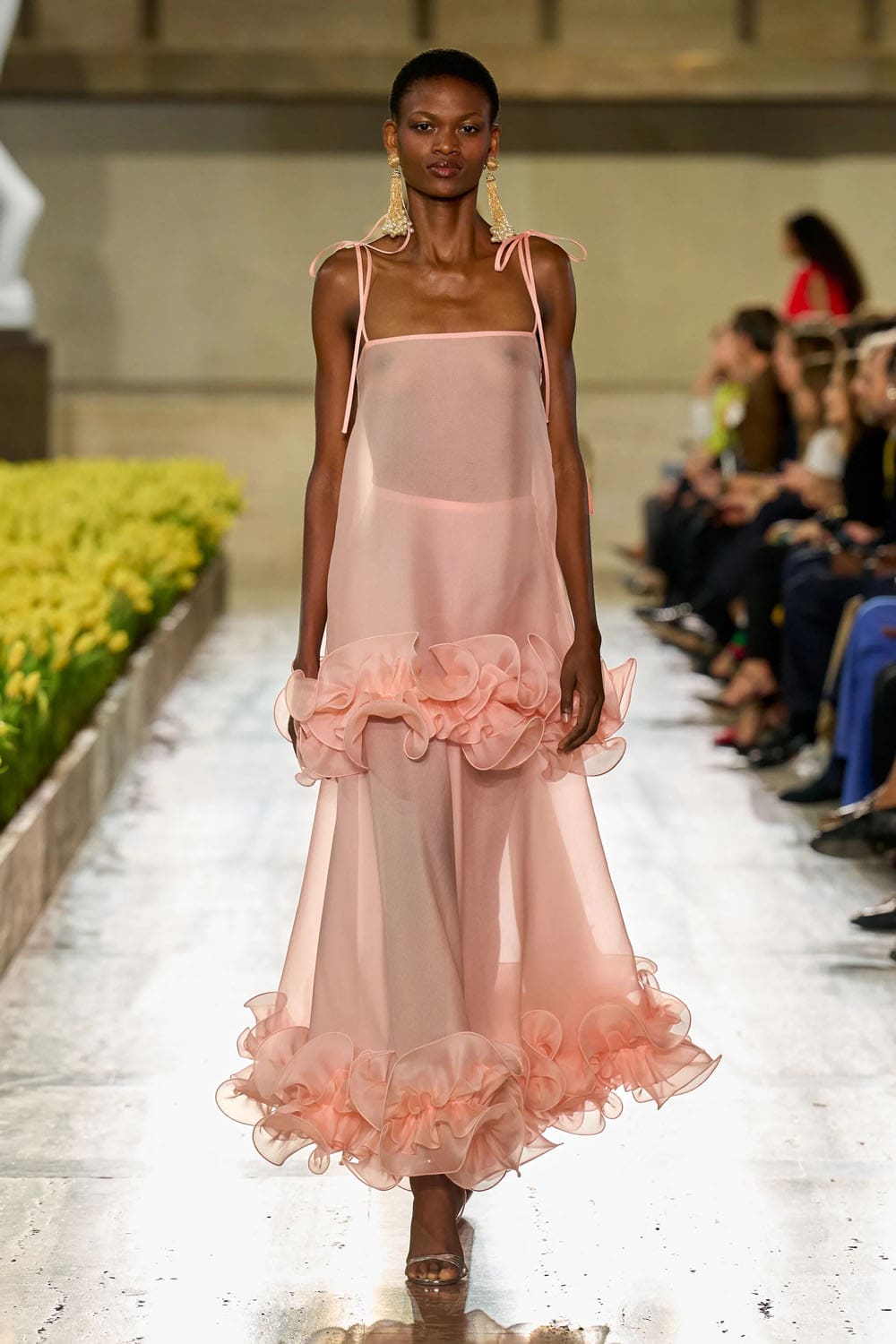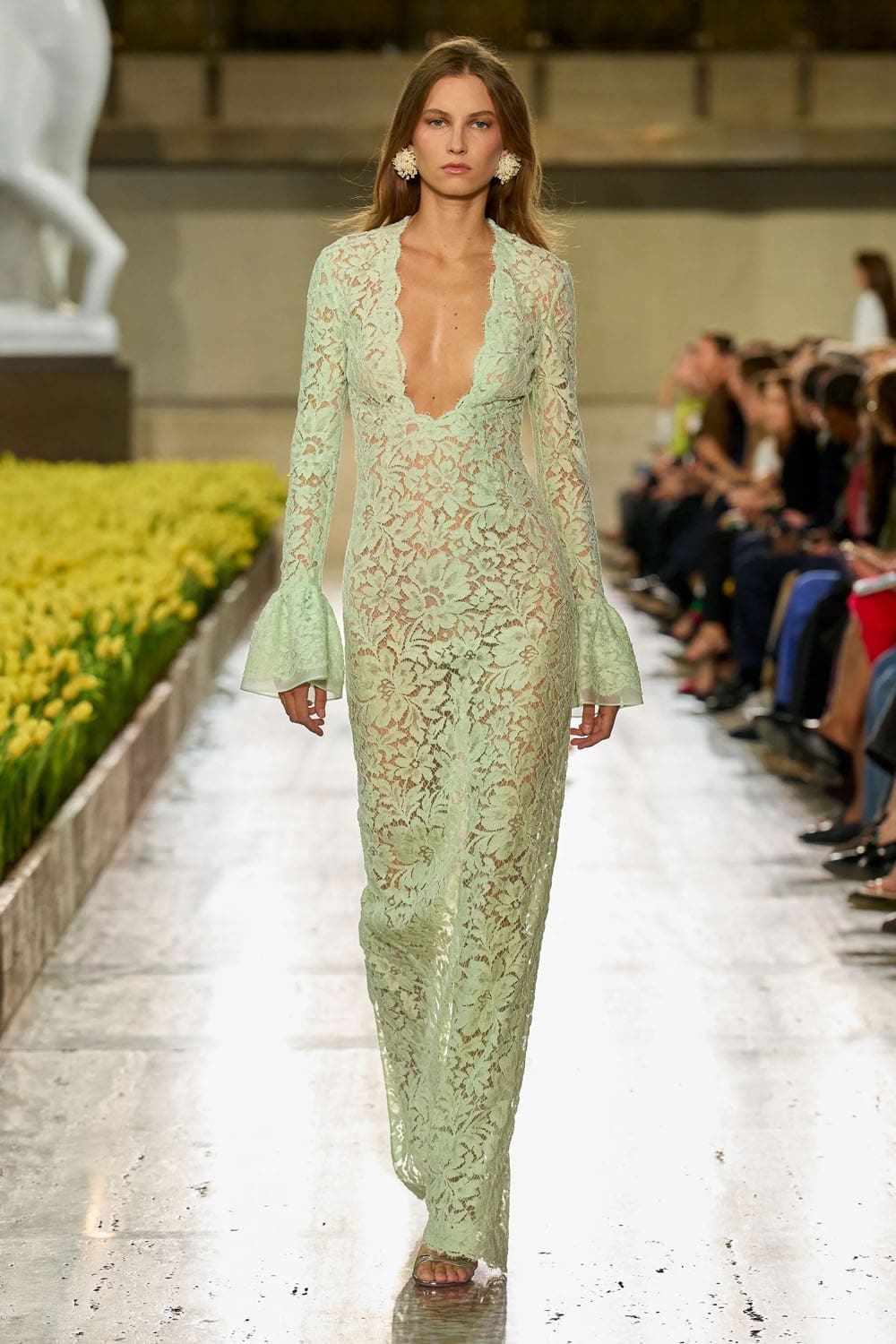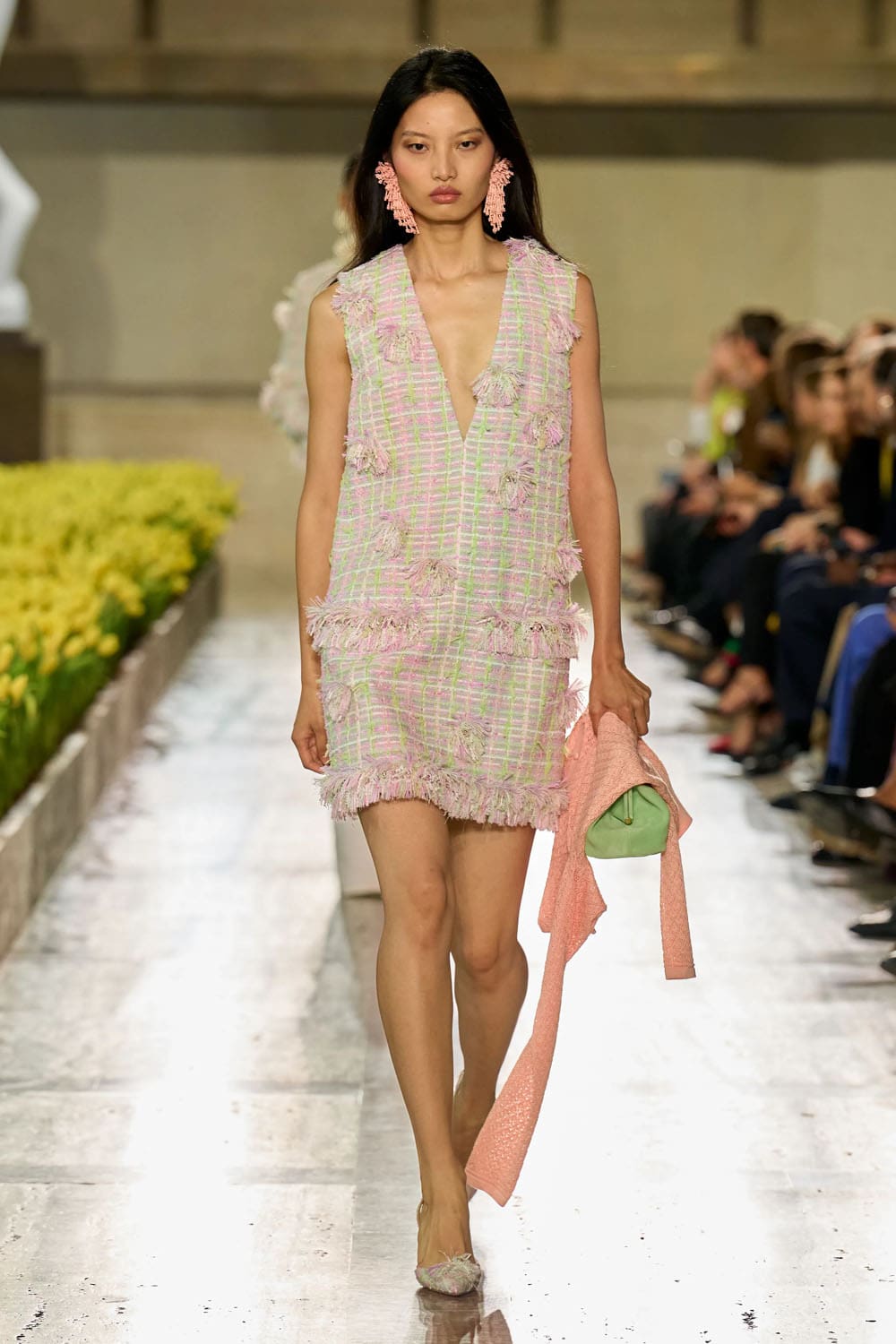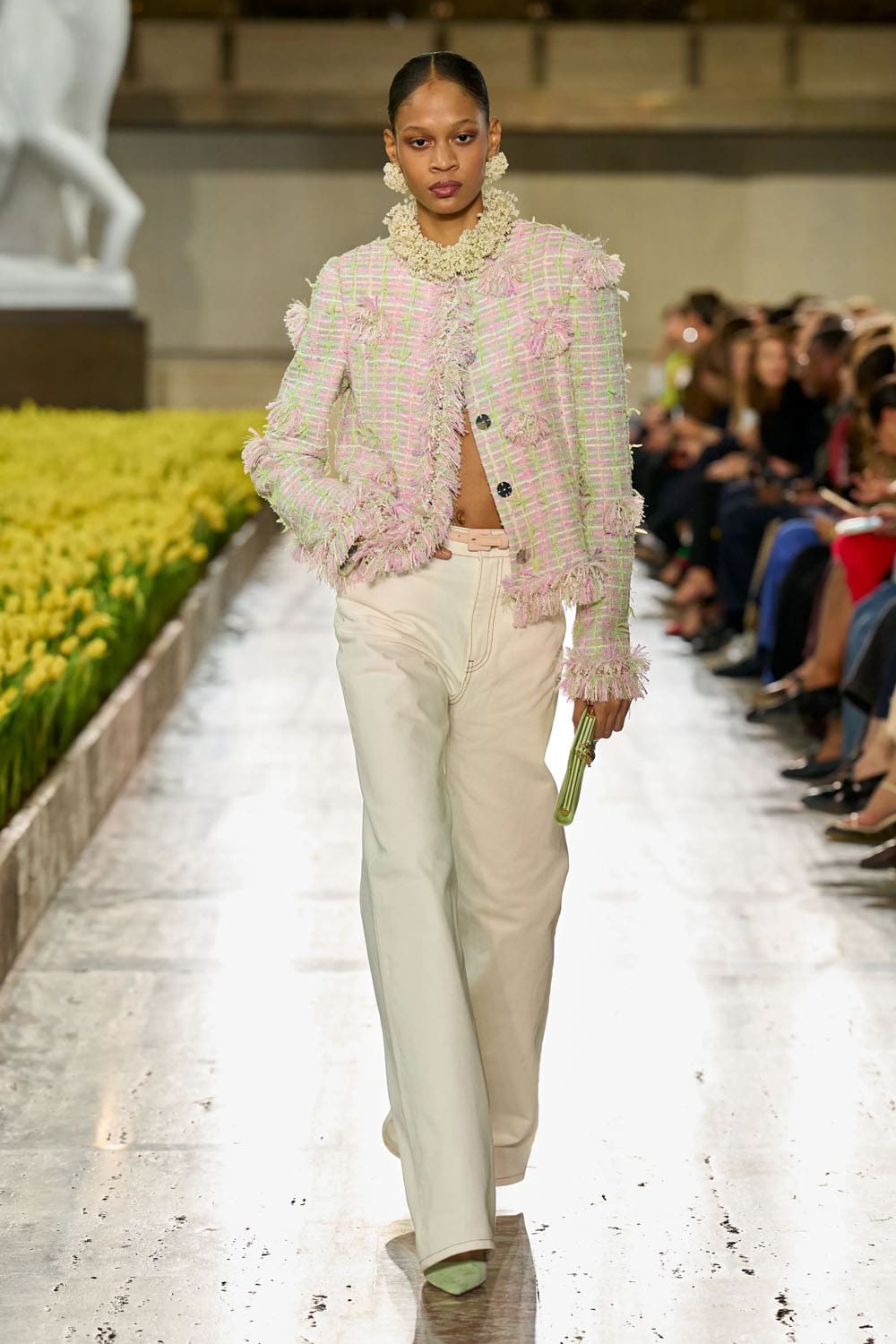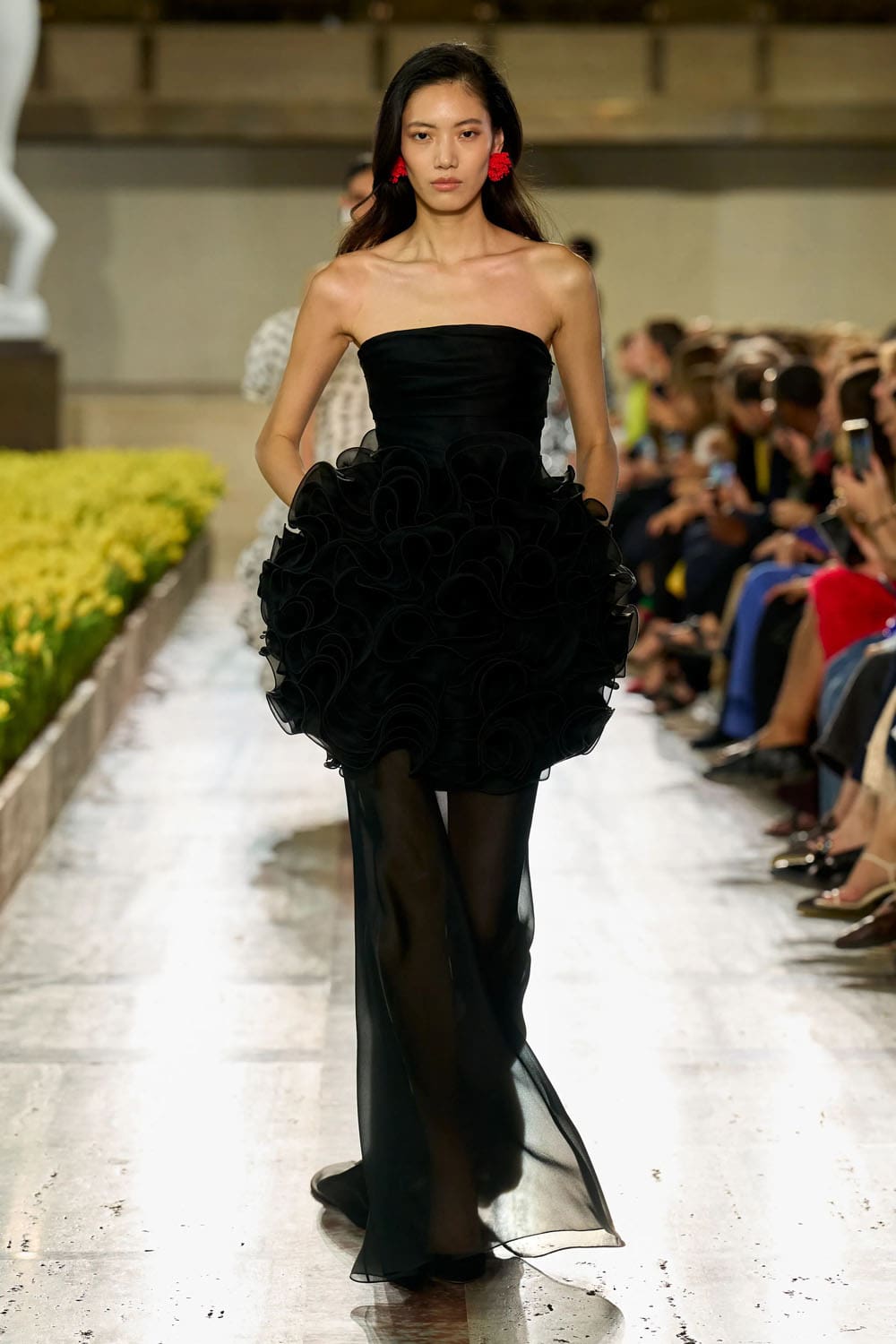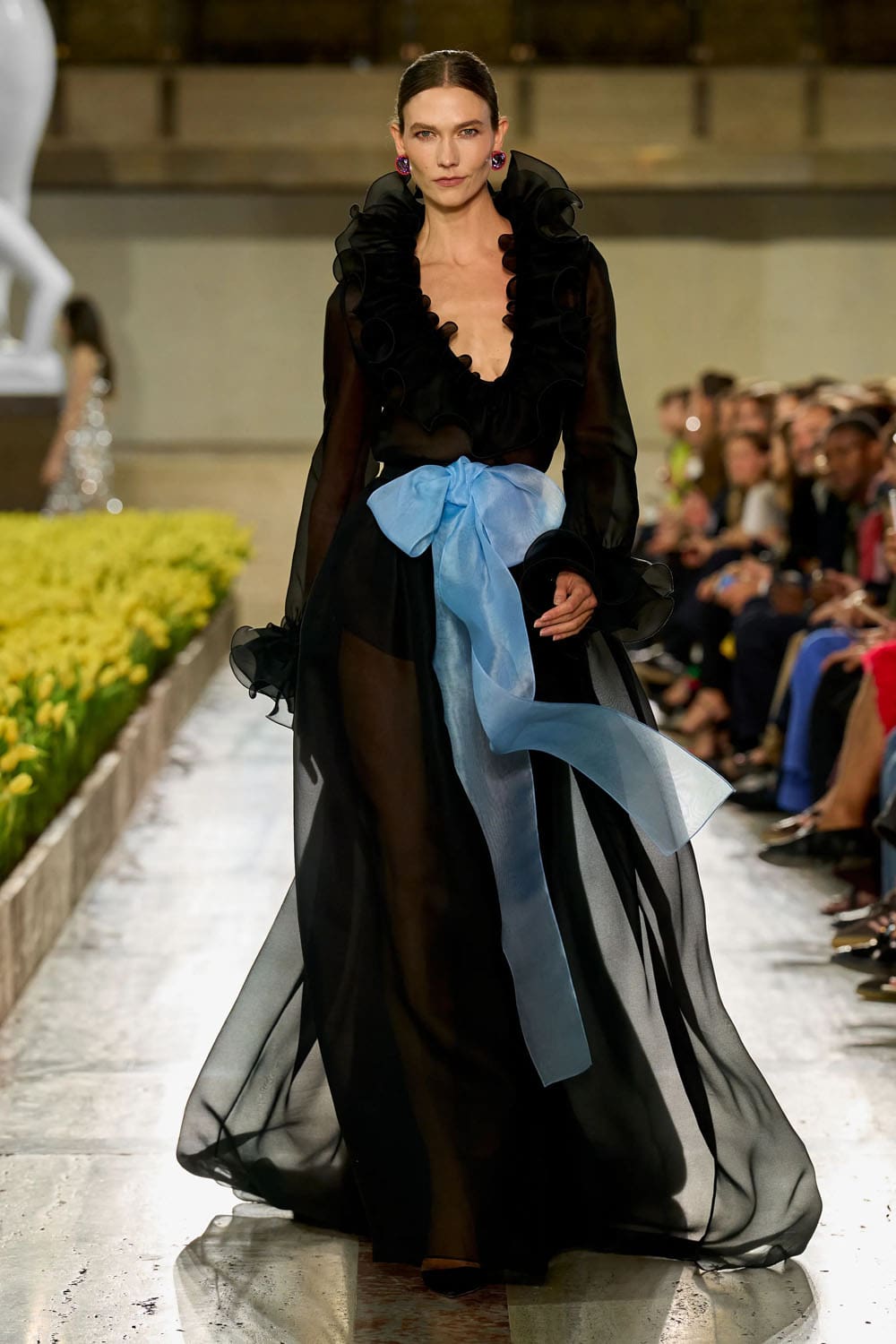
Carolina Herrera Spring 2027 “Carolina Herrera Turns Forty-Five.” Story by Kate Granger, Editor of RUNWAY MAGAZINE. Photo / Video Courtesy: Carolina Herrera / The Andy Warhol Foundation for the Visual Arts, Inc.
Diana Vreeland, operating with her trademark volcanic intuition, did not just suggest that Carolina Herrera launch a fashion line in 1981; she practically commanded it into existence. When the Venezuelan-born patrician unveiled her debut twenty-look collection at Manhattan’s Metropolitan Club, cynical critics wondered if a grand society figure could genuinely engineer a commercial empire. Andy Warhol was sitting in the front row, watching quietly. Warhol already understood the visual currency of Mrs. Herrera.
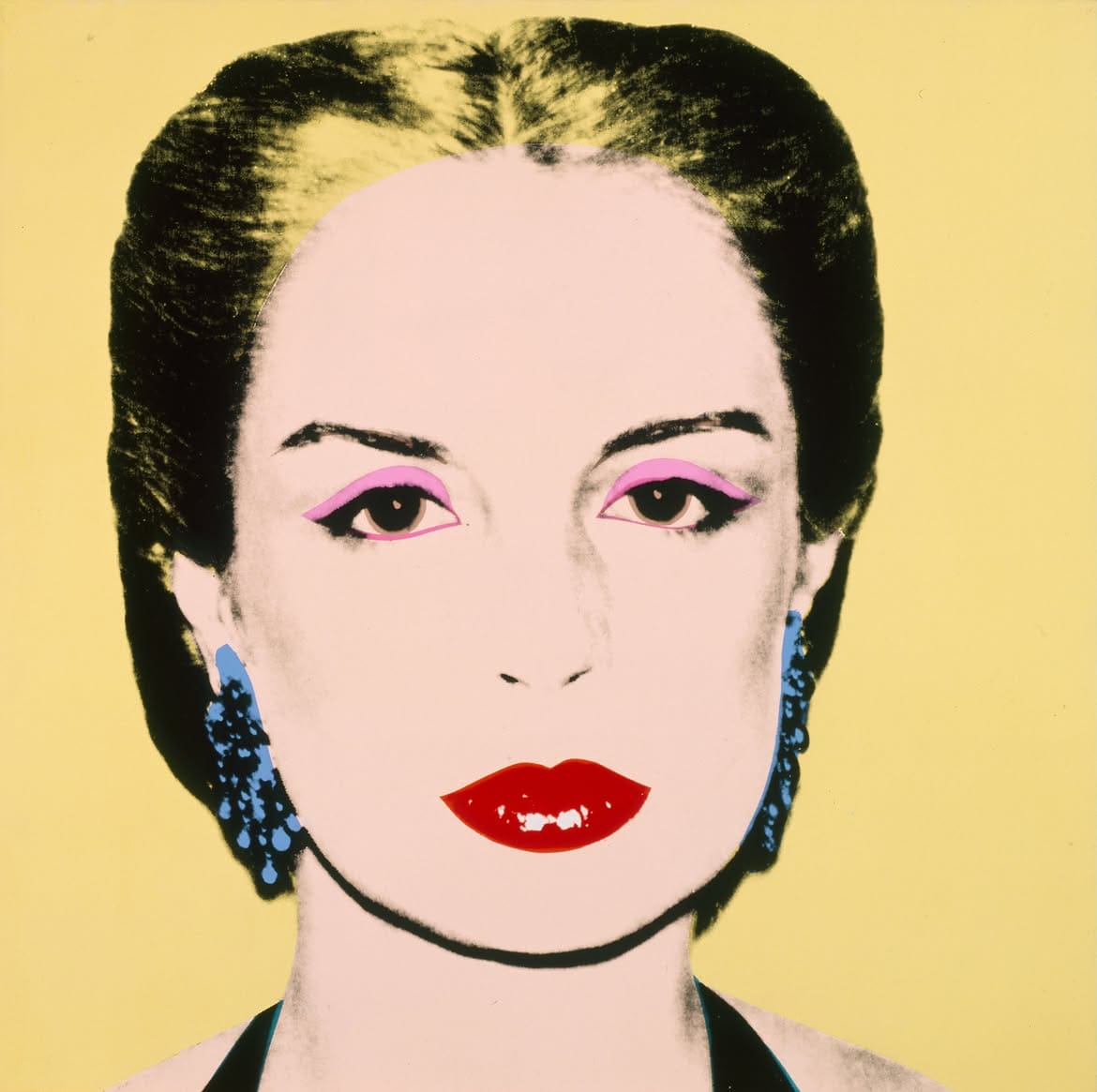
Their creative kinship had been sealed two years prior over dinner in 1979. Warhol, fixated on an exquisite Van Cleef & Arpels minaudière clutched in Carolina’s hands, made an audacious, downtown-meets-uptown proposition: trade the jeweled vanity case on the spot for her portrait. Mrs. Herrera, endowed with an innate wit and an aristocratic appetite for adventure, traded the gold box without hesitation.
The transaction led directly to The Factory. Over sixty Polaroid flashes caught Carolina’s sculptural poise—a chiseled jaw, the architectural Gibson roll, crimson lips, and cascading emerald earrings. From those frames emerged four immortal silkscreens. Mrs. Herrera famously described Andy as “the most introverted extrovert I have ever met.” Together with Bianca Jagger, they turned Studio 54 into an art laboratory where high society met counterculture without losing a drop of champagne.
High Drama at Lincoln Center
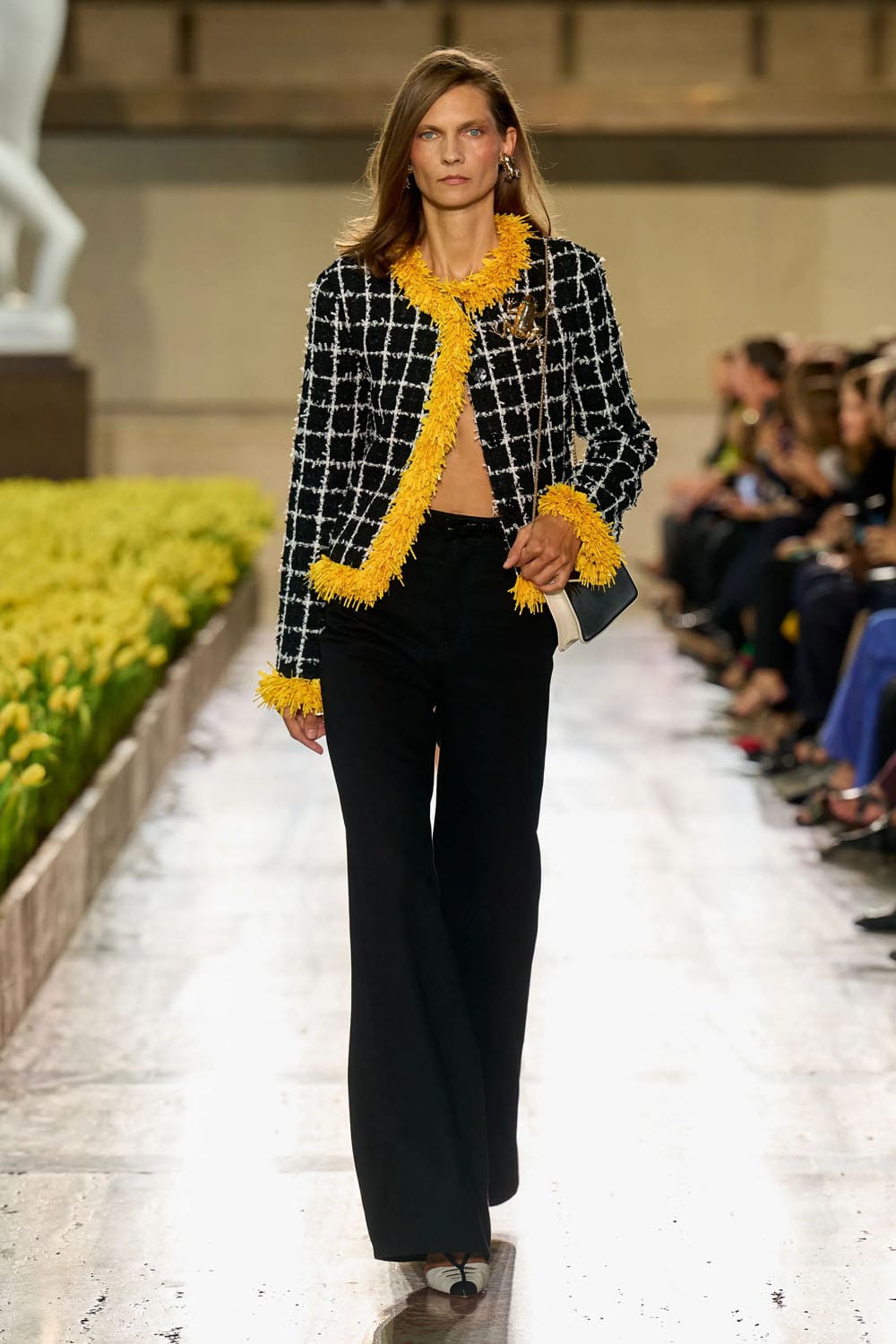
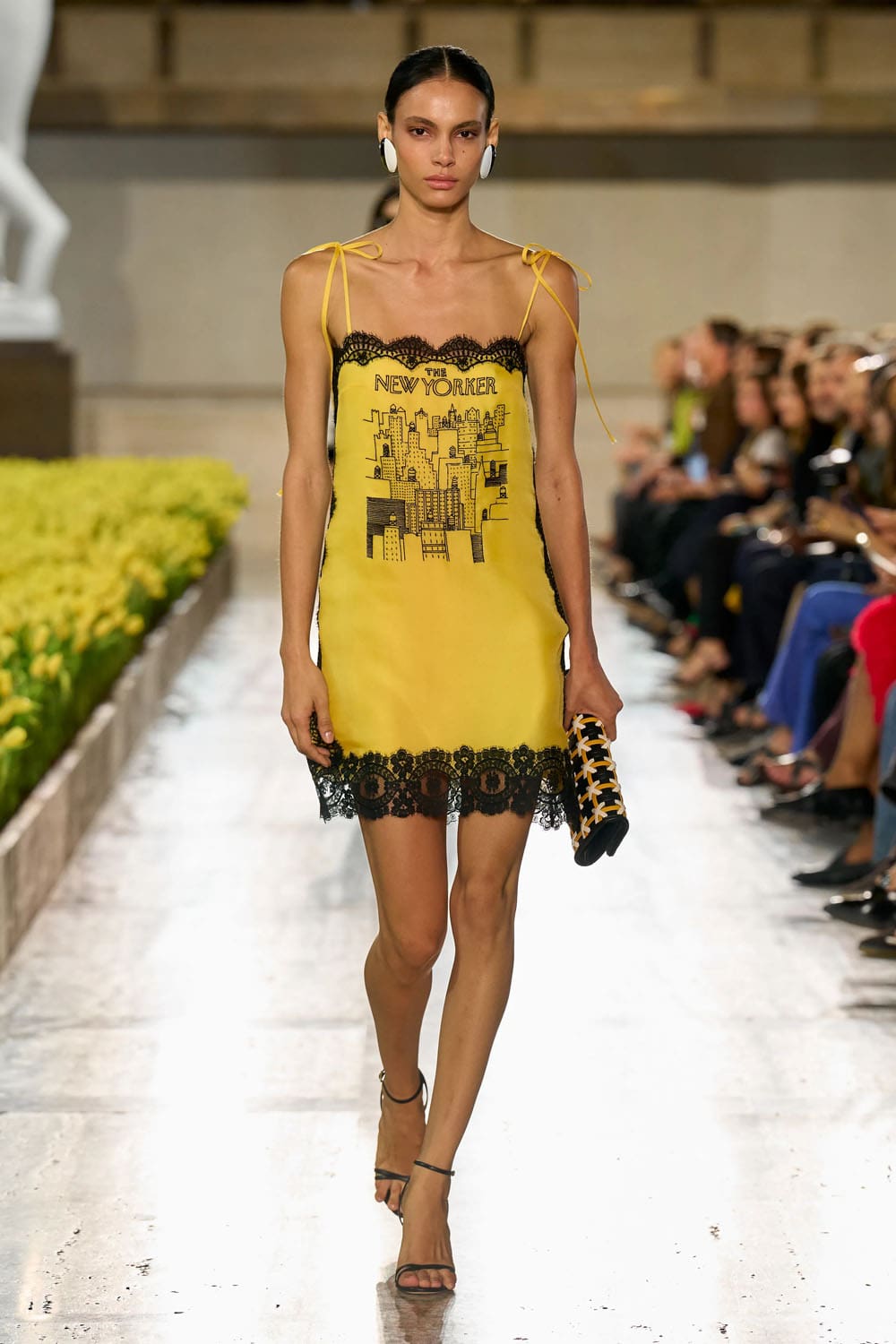
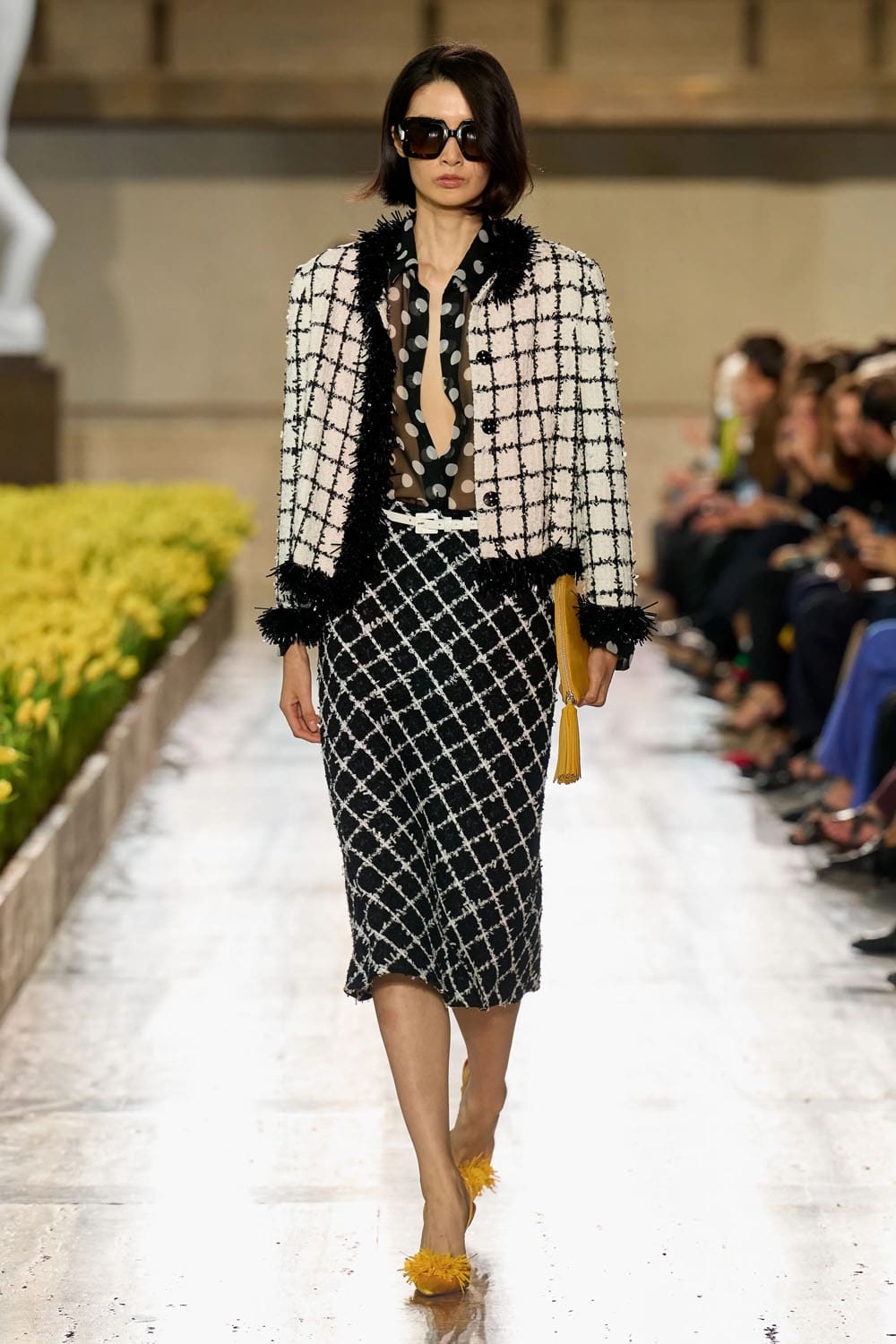
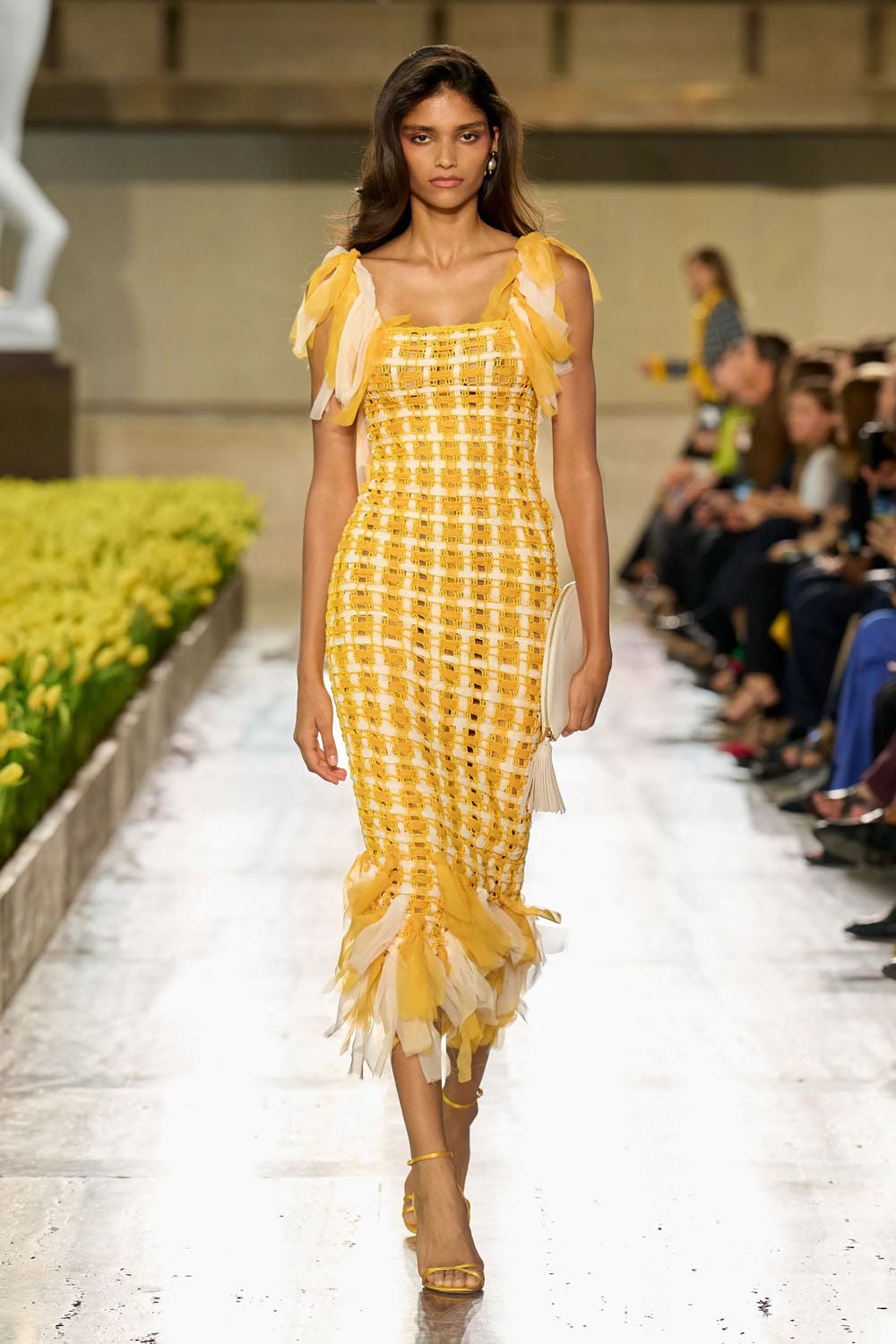
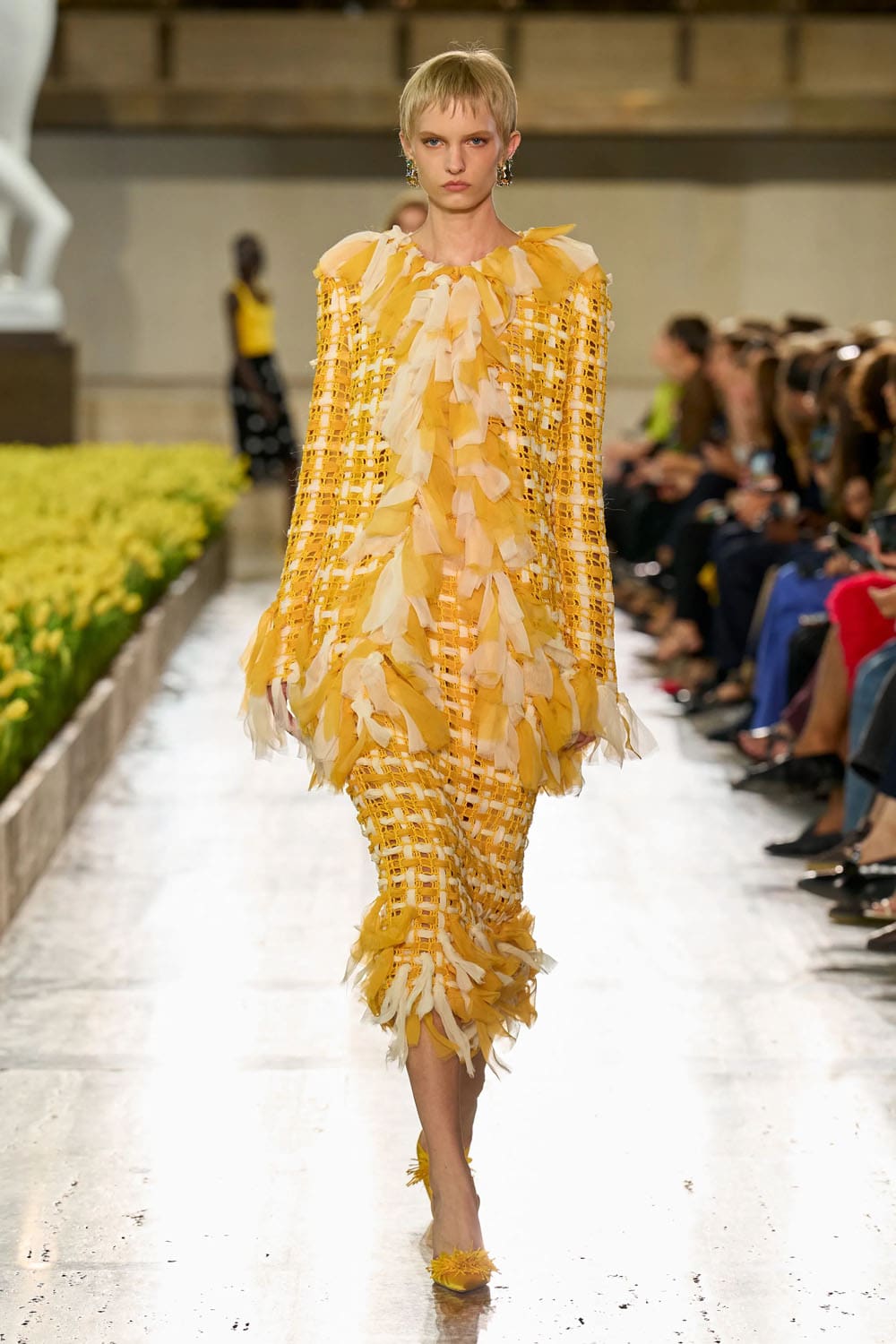
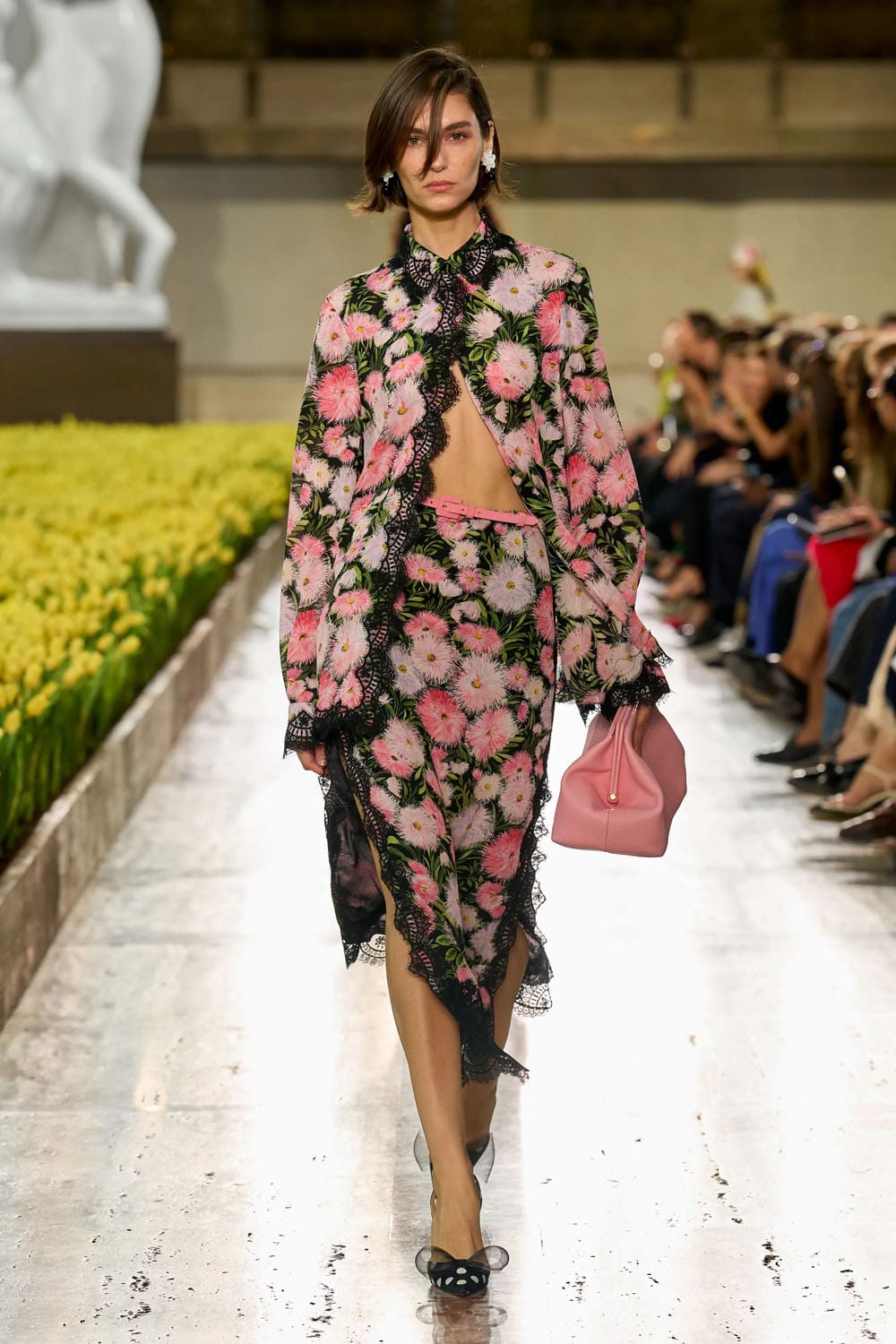
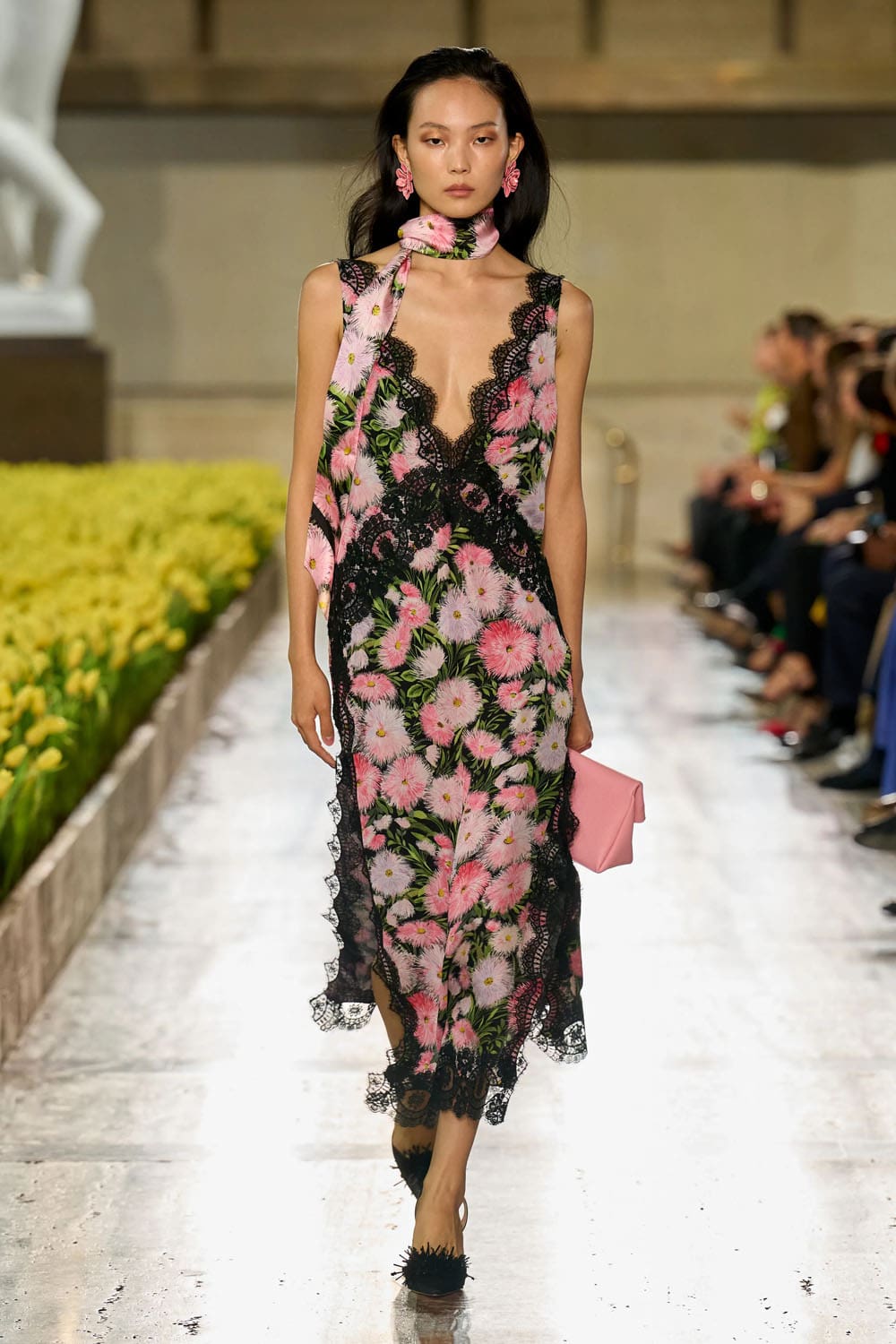
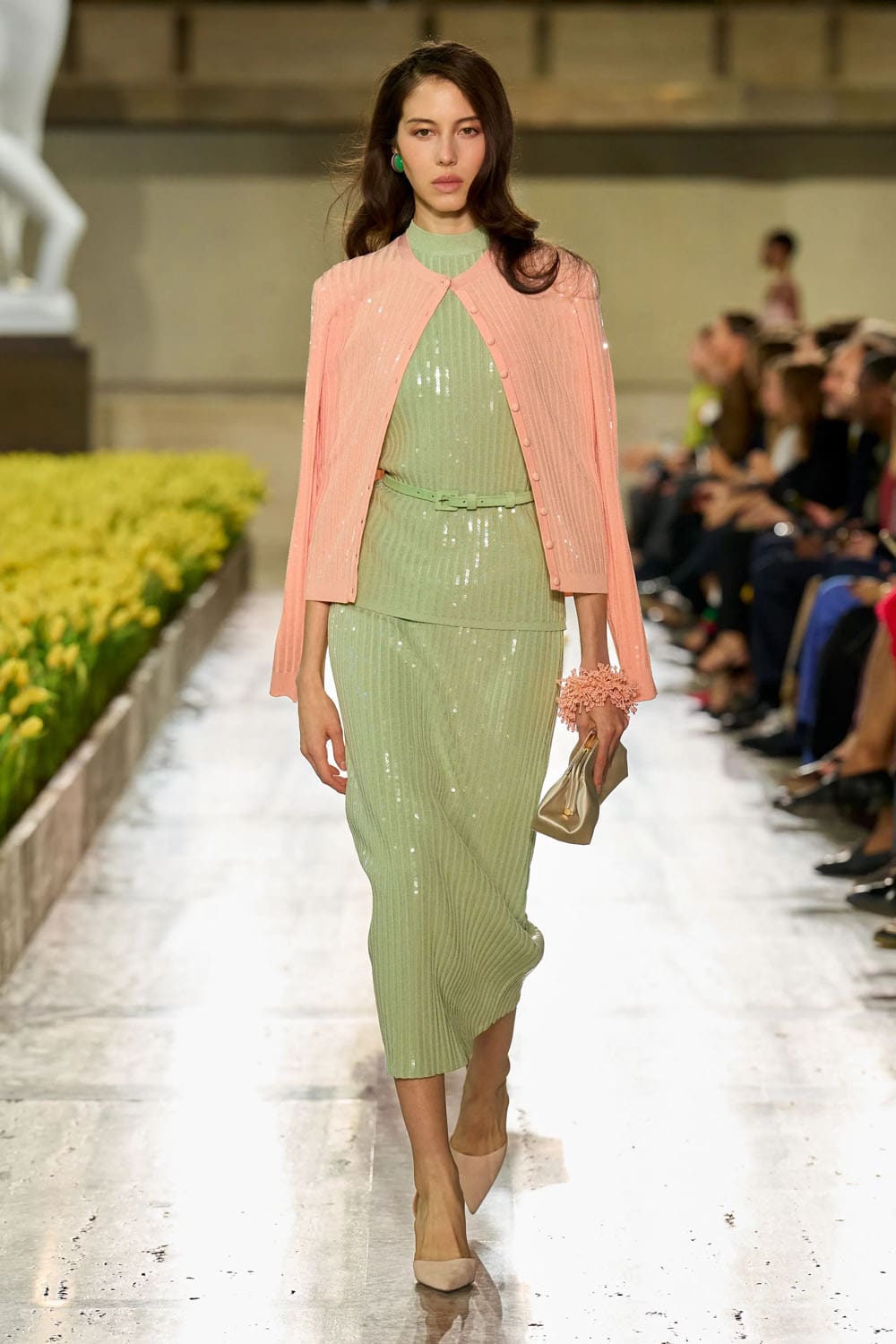
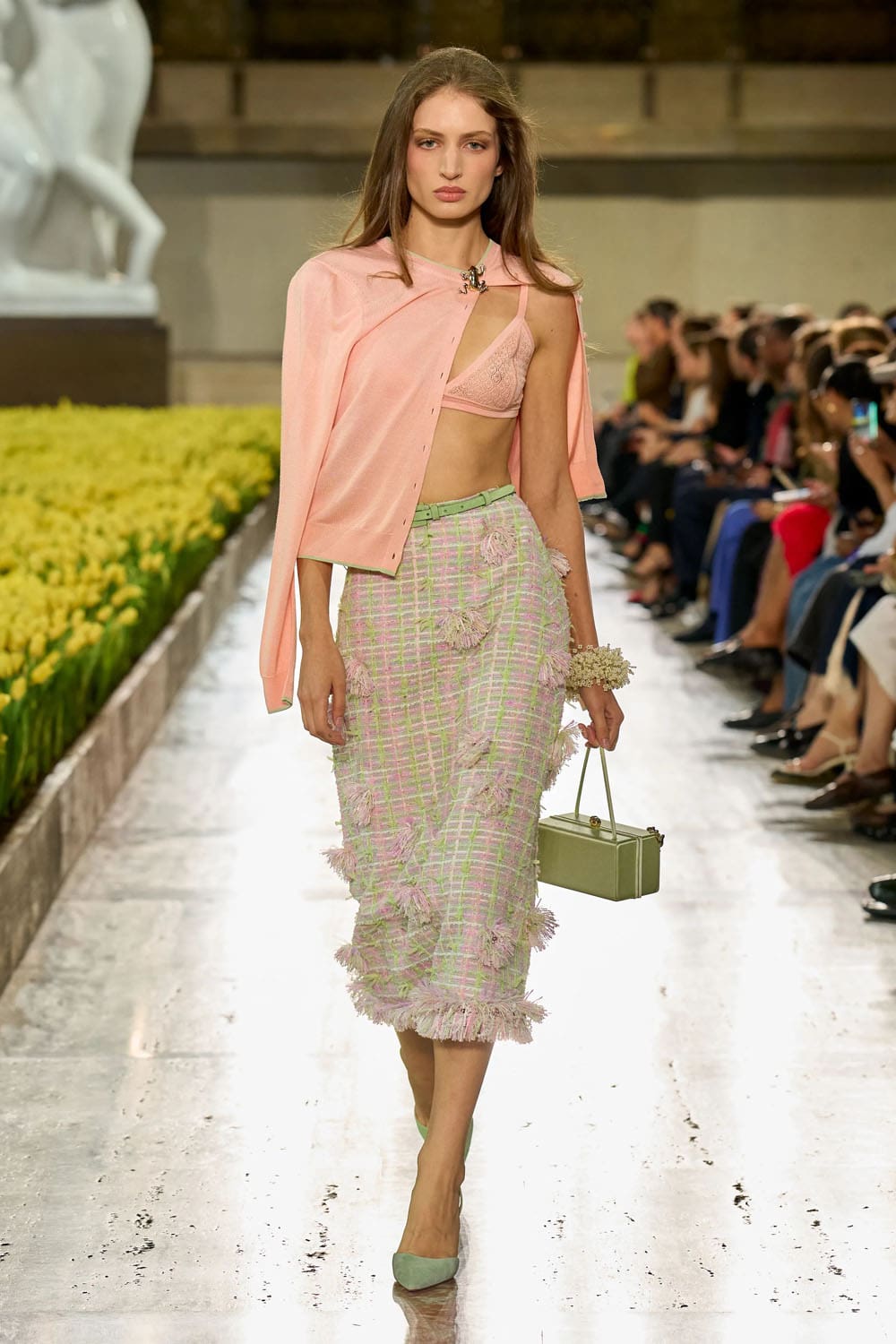
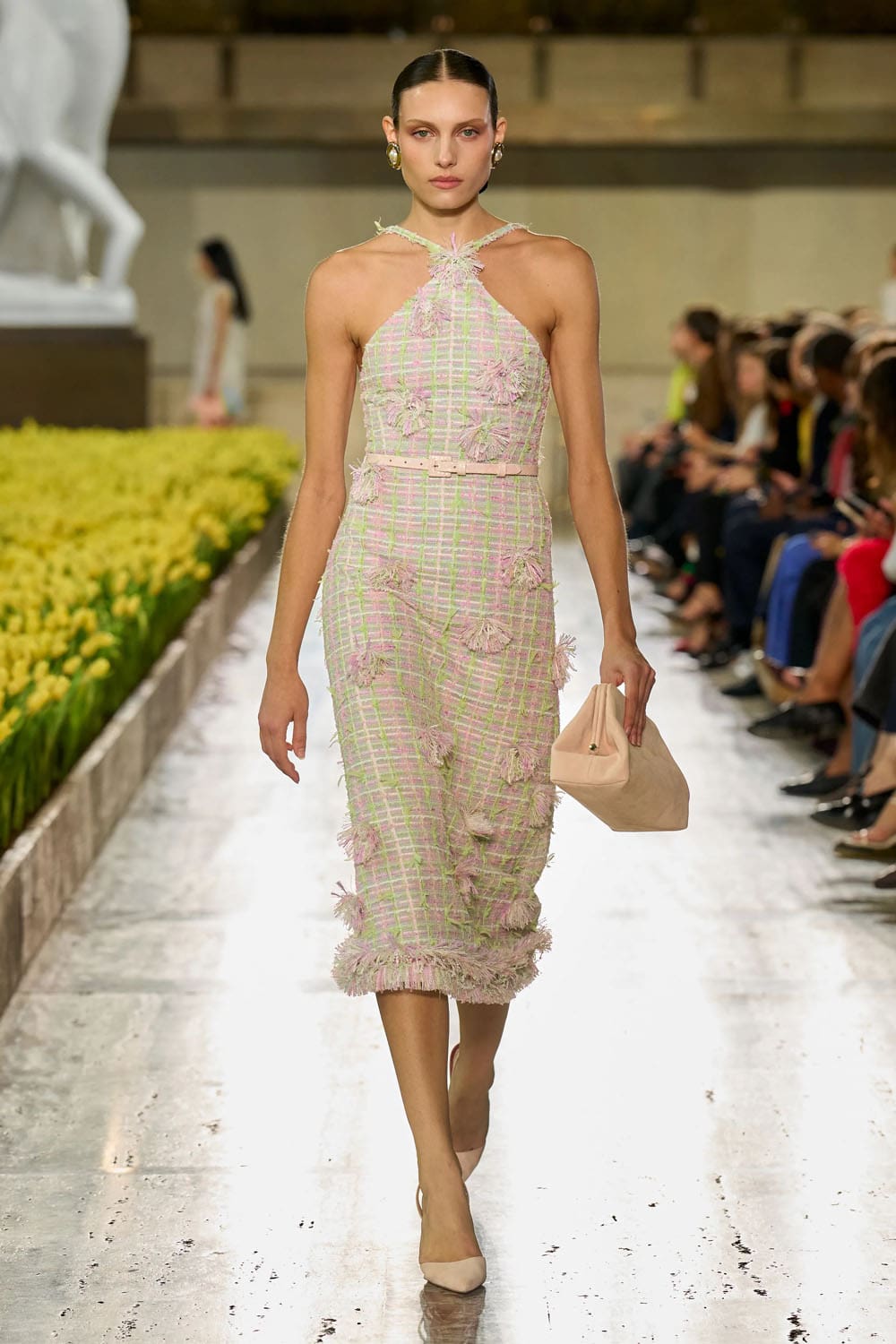
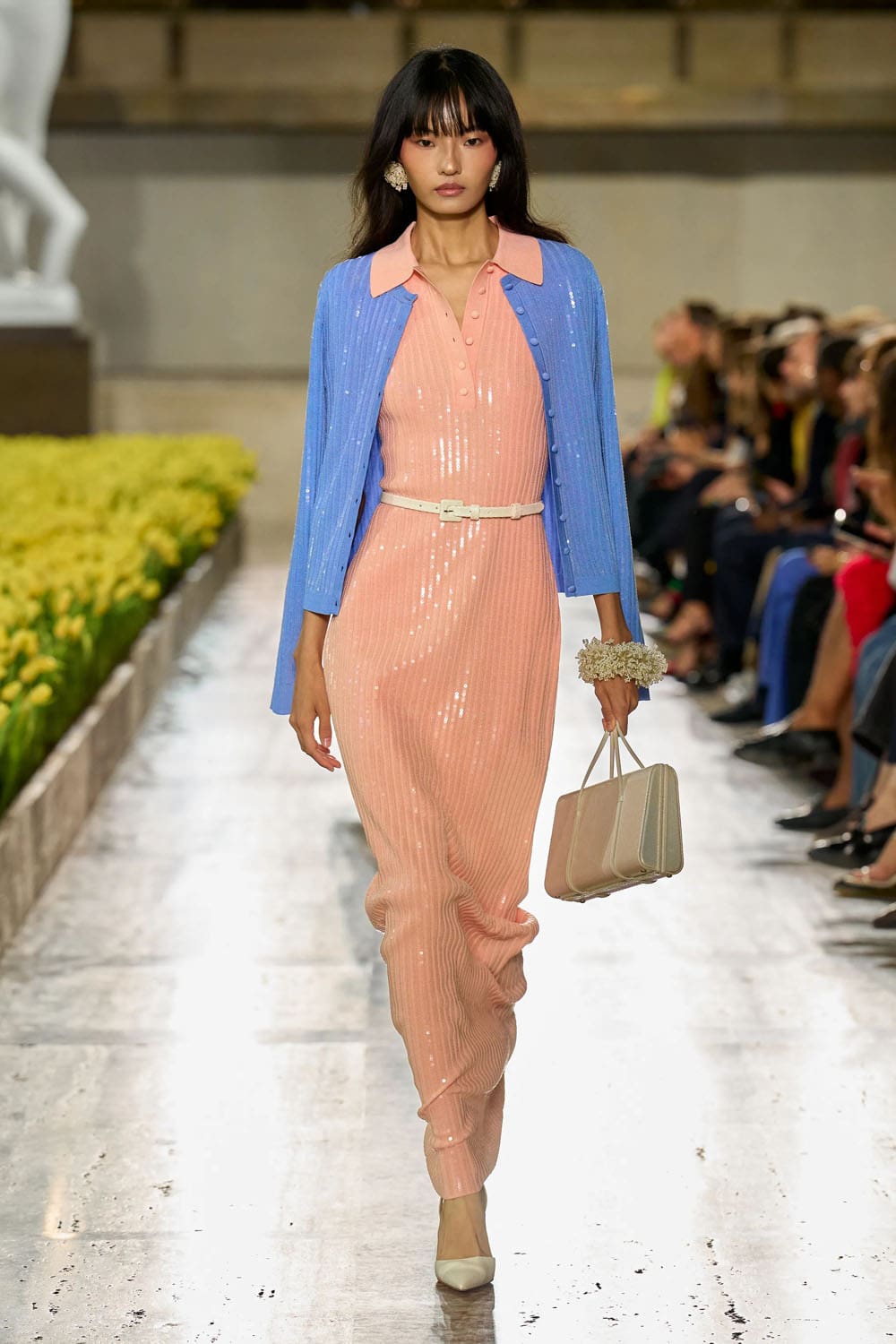
45 years later, at the David H. Koch Theater at Lincoln Center, creative director Wes Gordon proved that an anniversary needs neither nostalgia nor museum dust. Flanked by blooming borders of golden yellow tulips that echoed New York’s eternal optimism, Gordon orchestrated a Spring 2027 collection that conversed directly with the house’s founding mythologies.
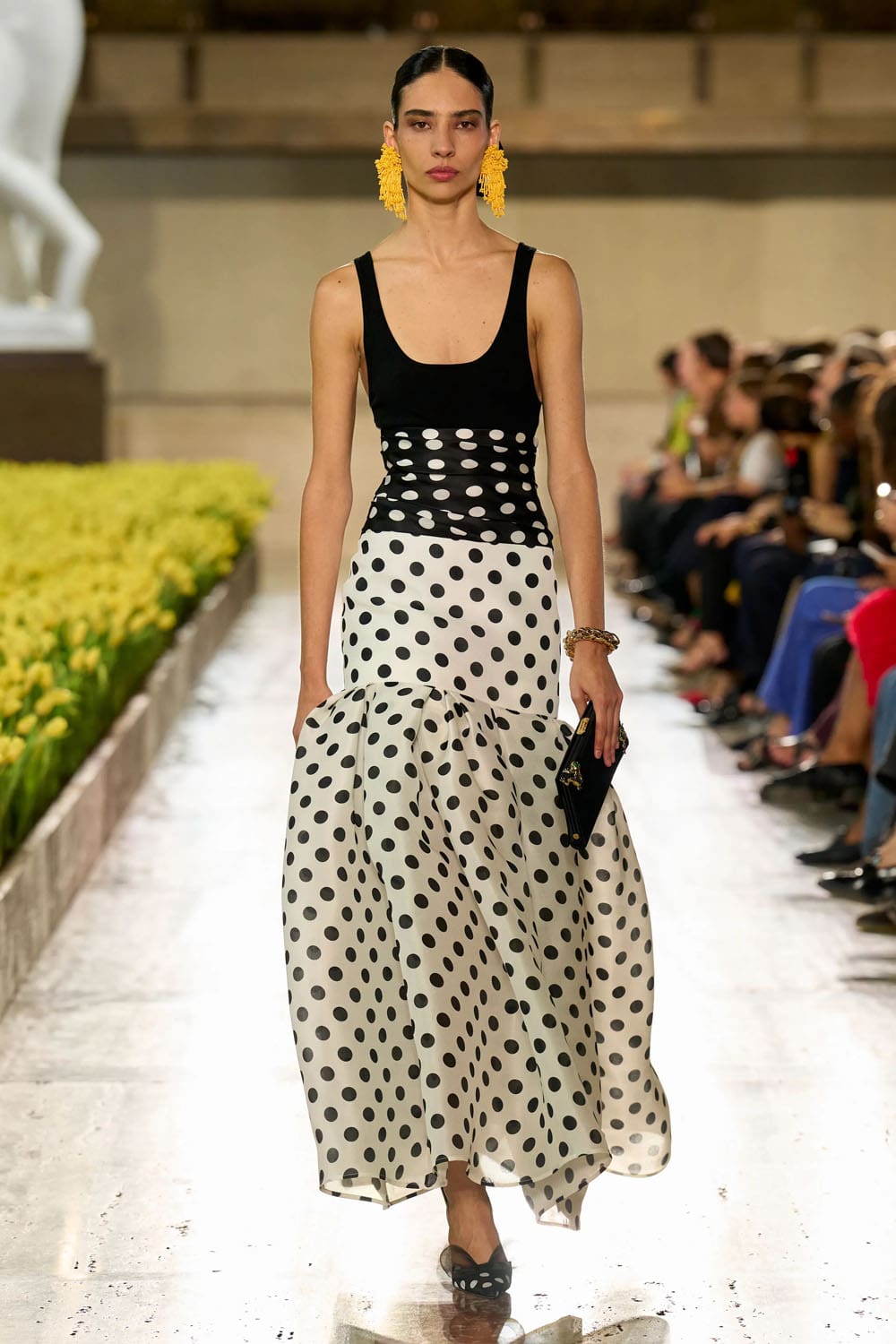
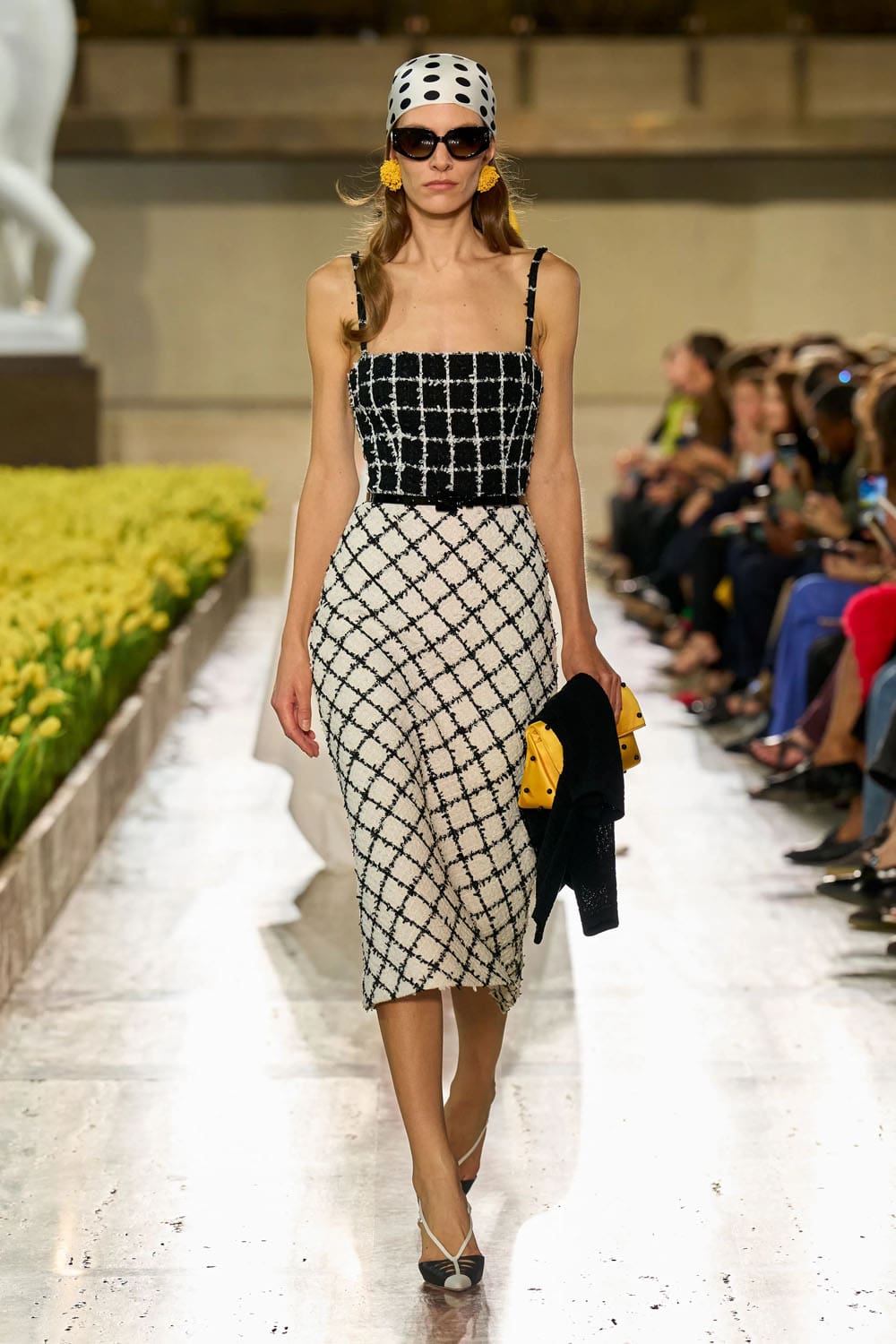
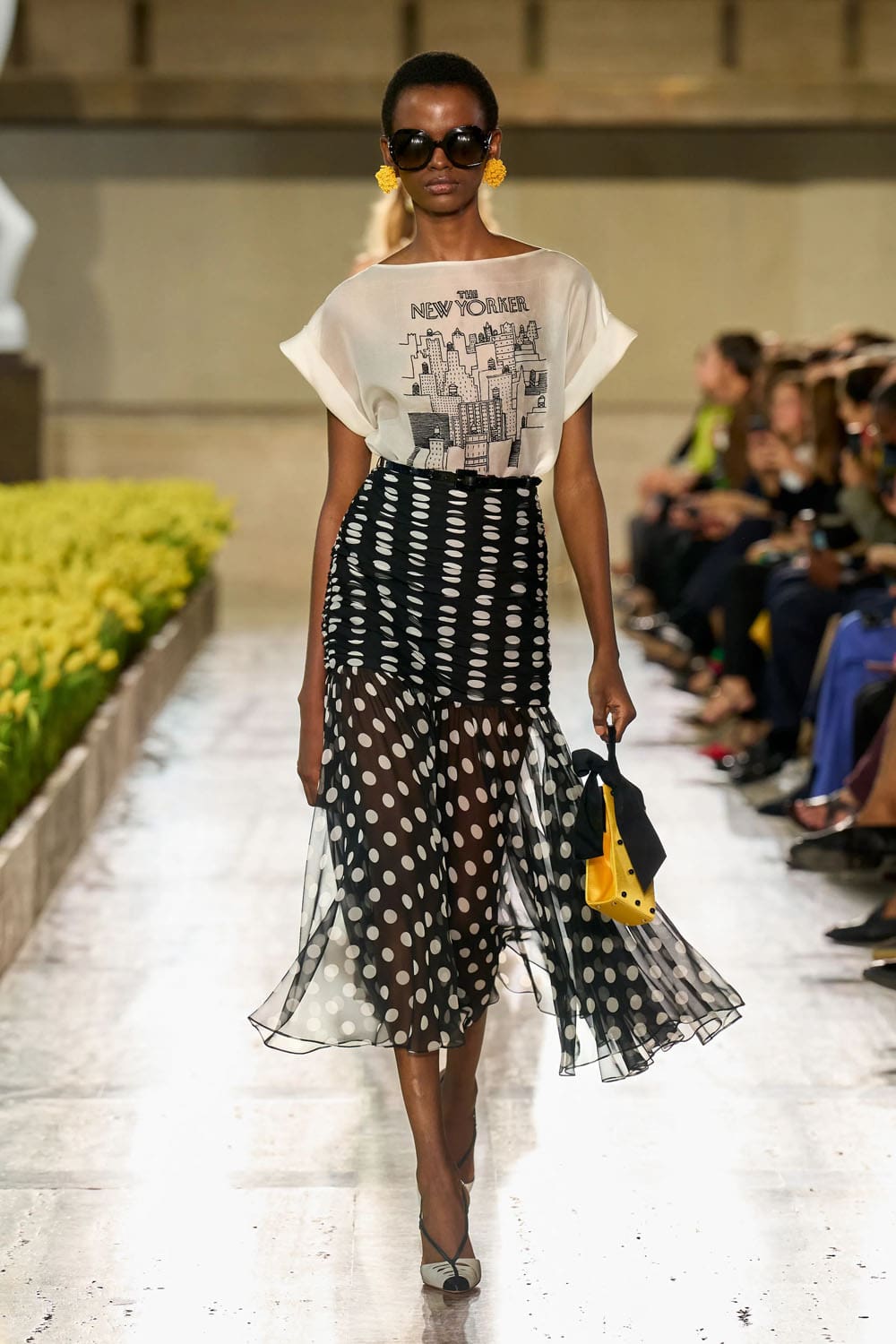
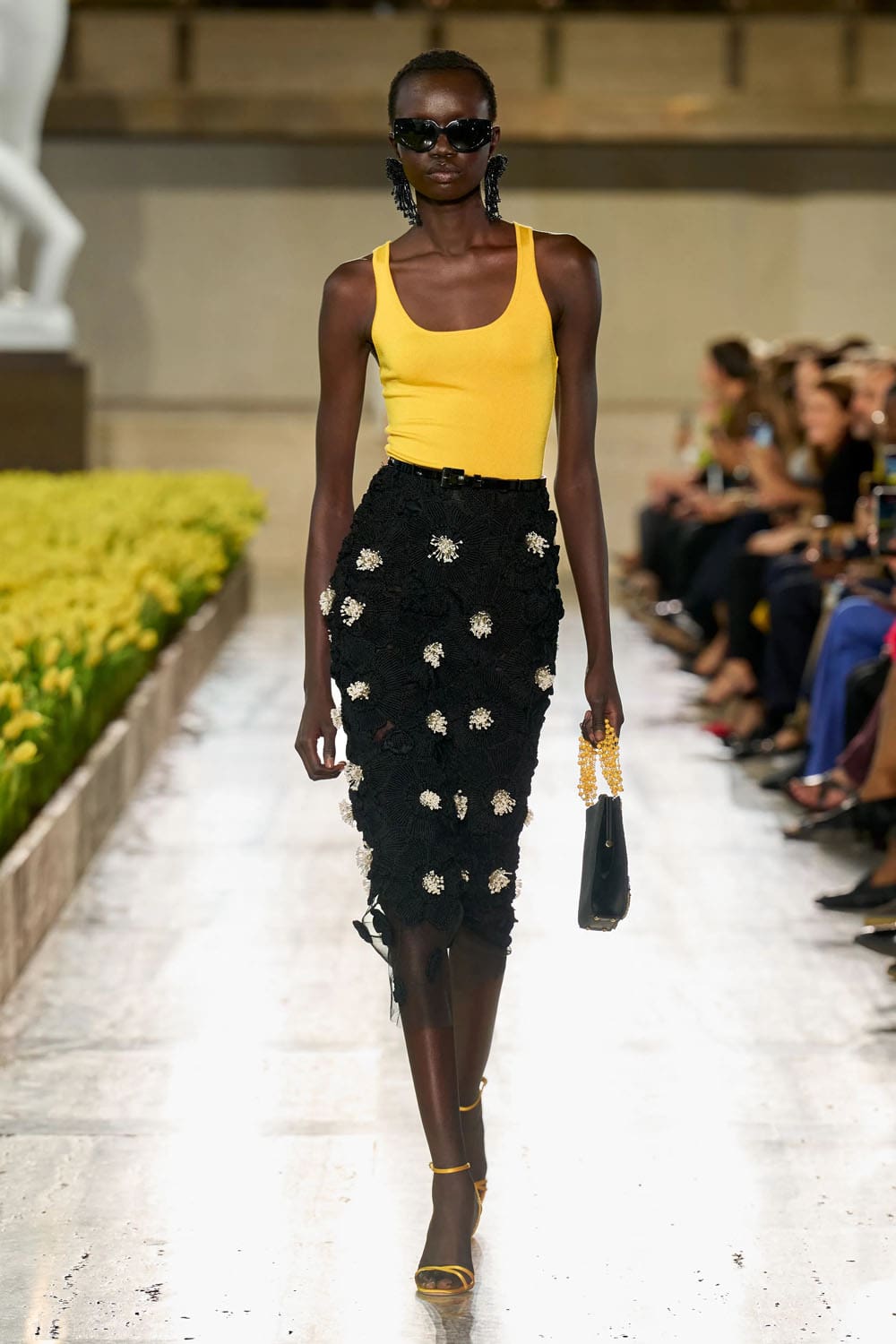
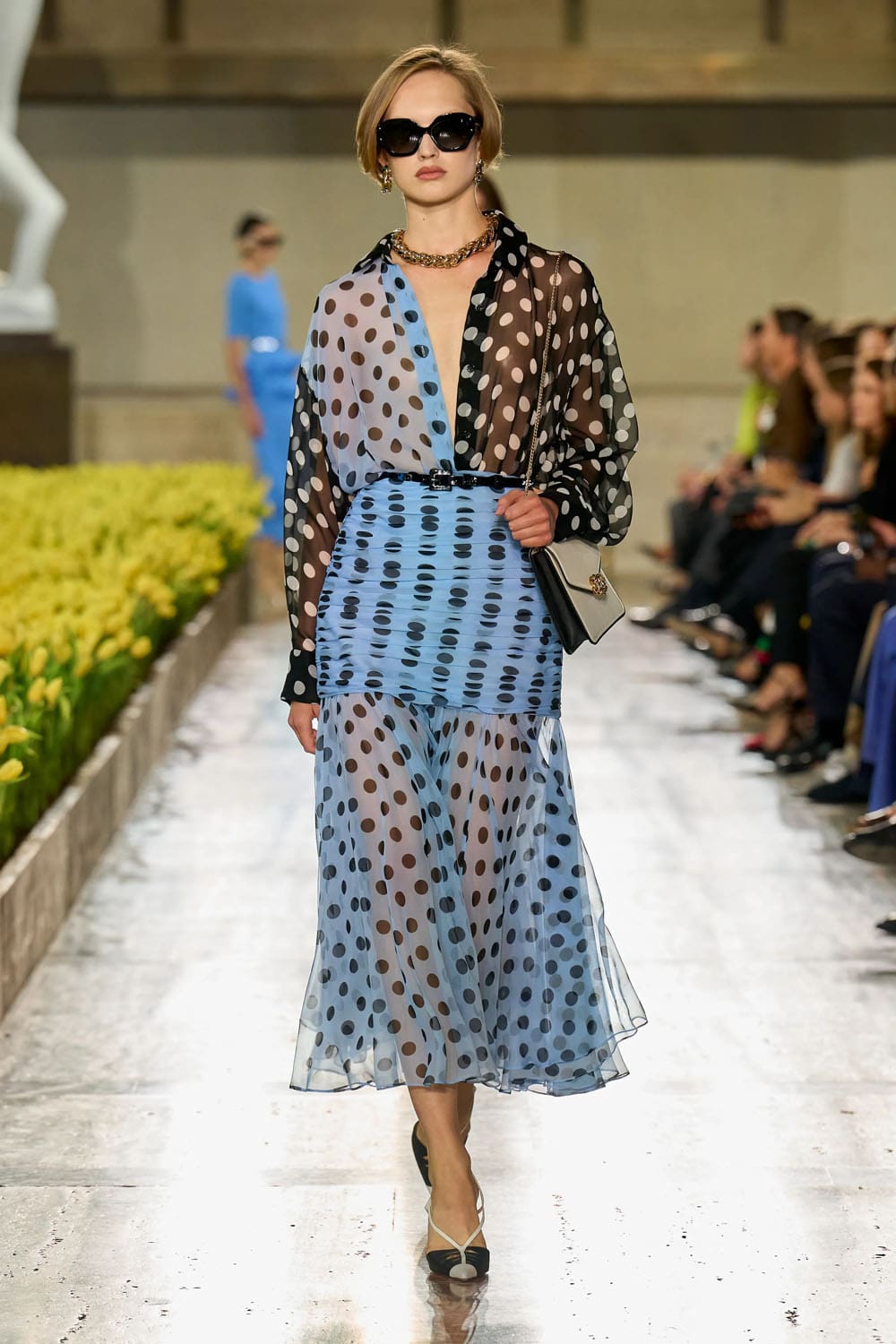
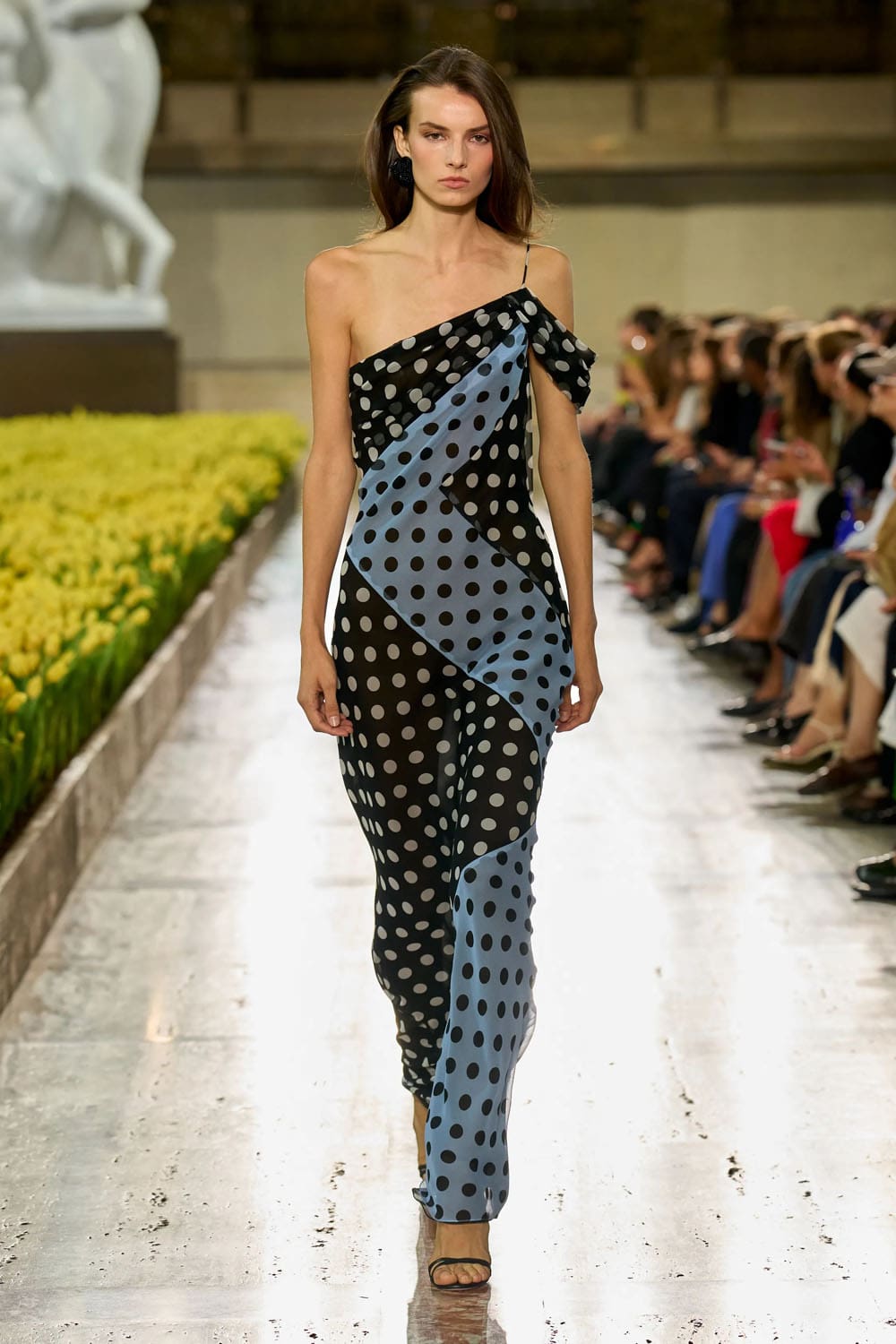
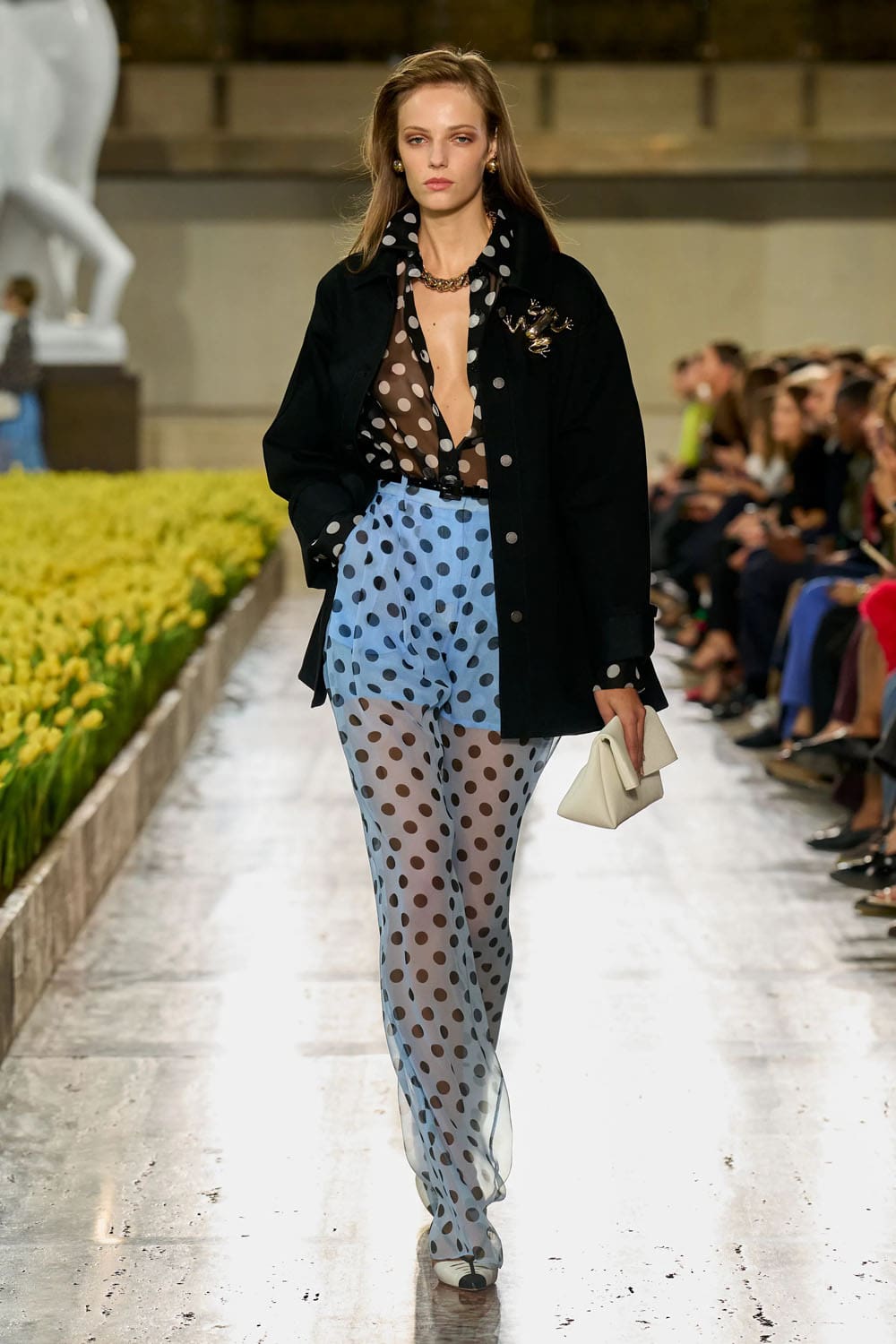
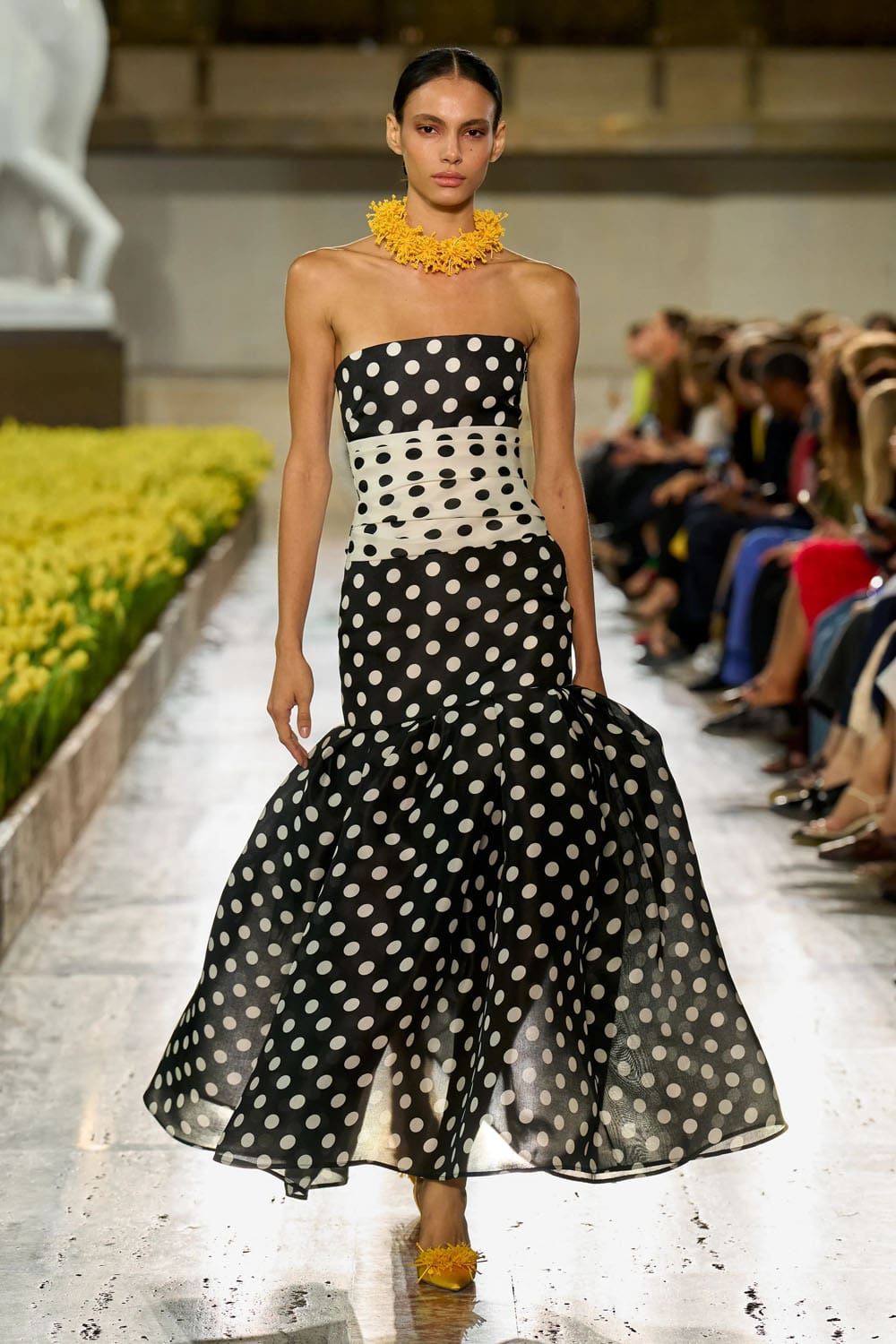
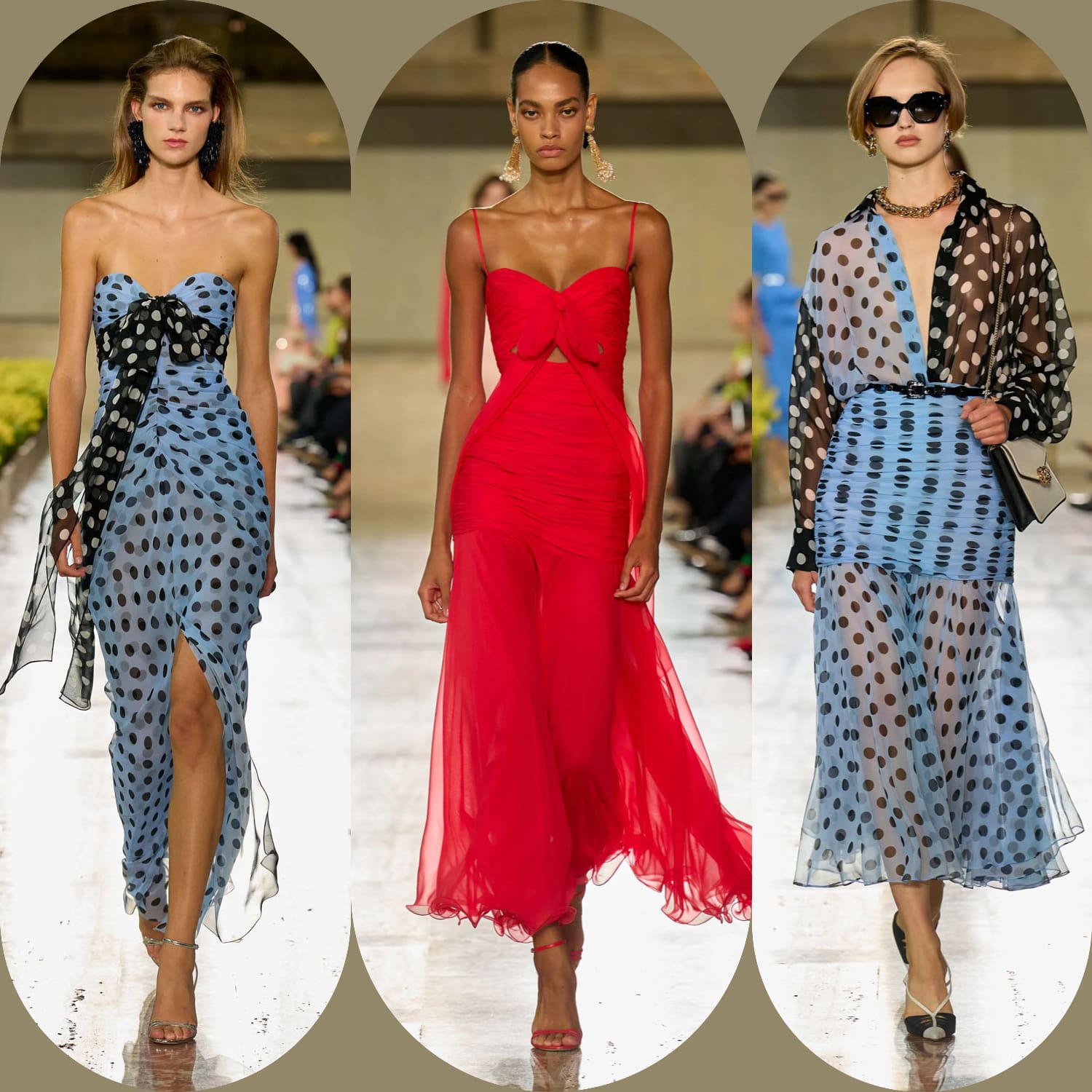
The runway opened not with retrospective deference, but with graphic swagger. Polka dots—the very heartbeat of Herrera’s visual language—arrived stripped of saccharine nostalgia. A sharp black scoop-neck tank descended into a high-waisted, tiered flamenco skirt in black-and-white polka dots, cinched tight at the midriff like an inverted corolla. Accented by tassel earrings in bright mimosa yellow and a sleek evening clutch, the silhouette set a crisp, rhythmic cadence.
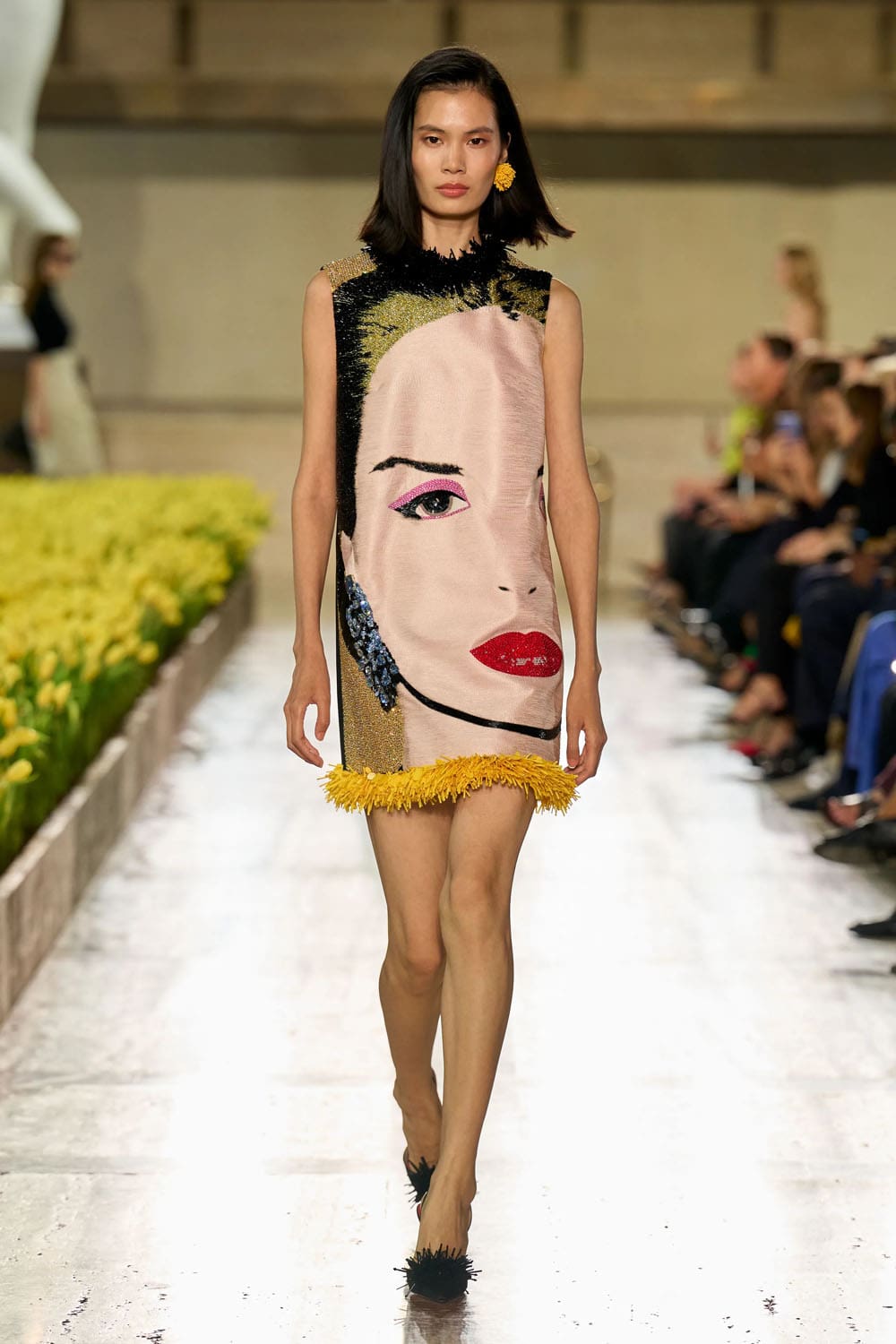
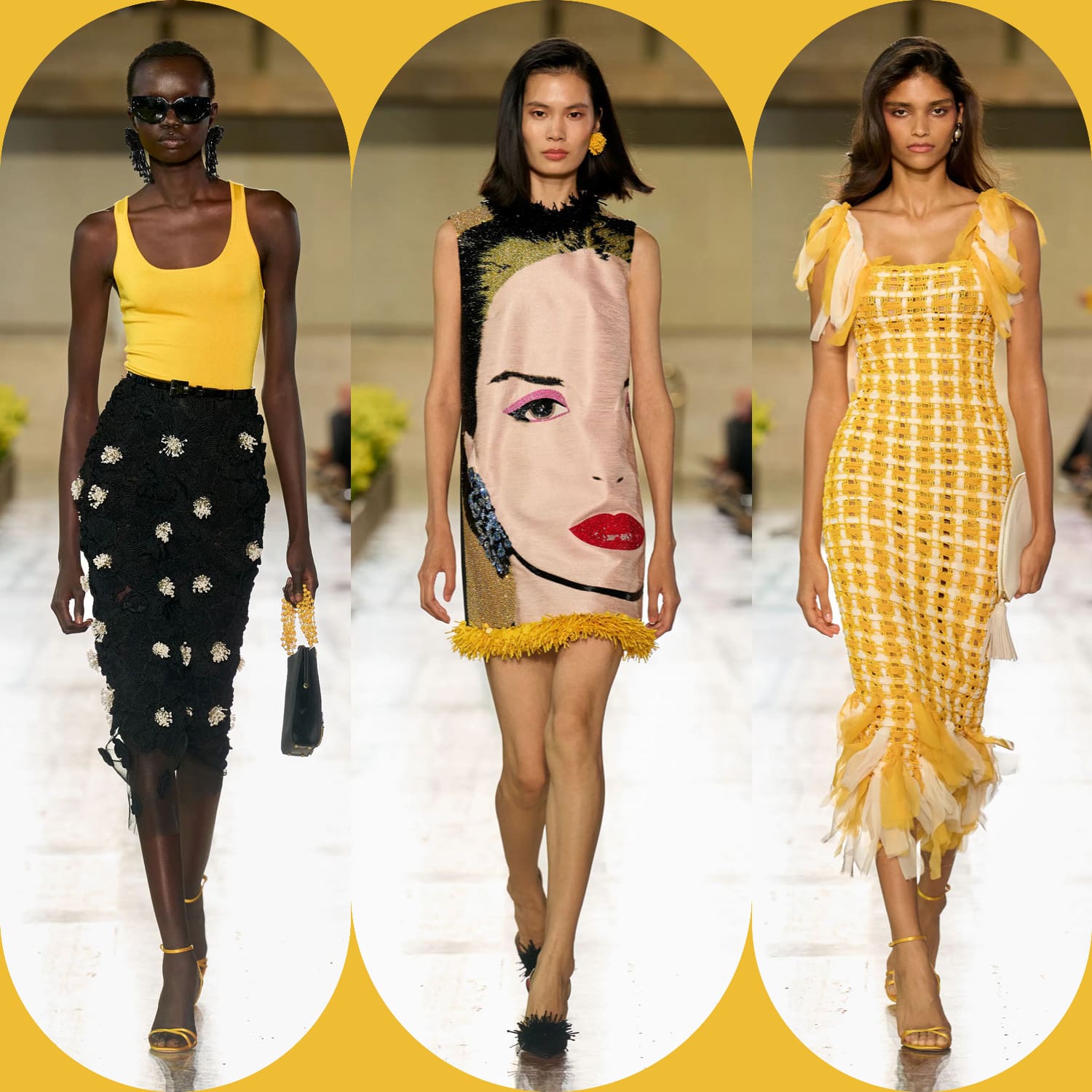
Gordon then played his absolute trump card: Pop Art incarnate. Gliding down the stone floor came a sequined shift mini-dress engineered as a walking canvas. Rendered in shimmering micro-beading, Warhol’s iconic 1979 portrait of Mrs. Herrera stared right into the lens—vivid pink eyelids, luscious lacquered scarlet lips, the signature sapphire-and-diamond drop, and a tactile hem trimmed in sunshine-yellow fringe. It was cheeky, brazen, and entirely sublime: the house wearing its own creator as an avant-garde manifesto.
The Uptown Uniform with Downtown Subversion
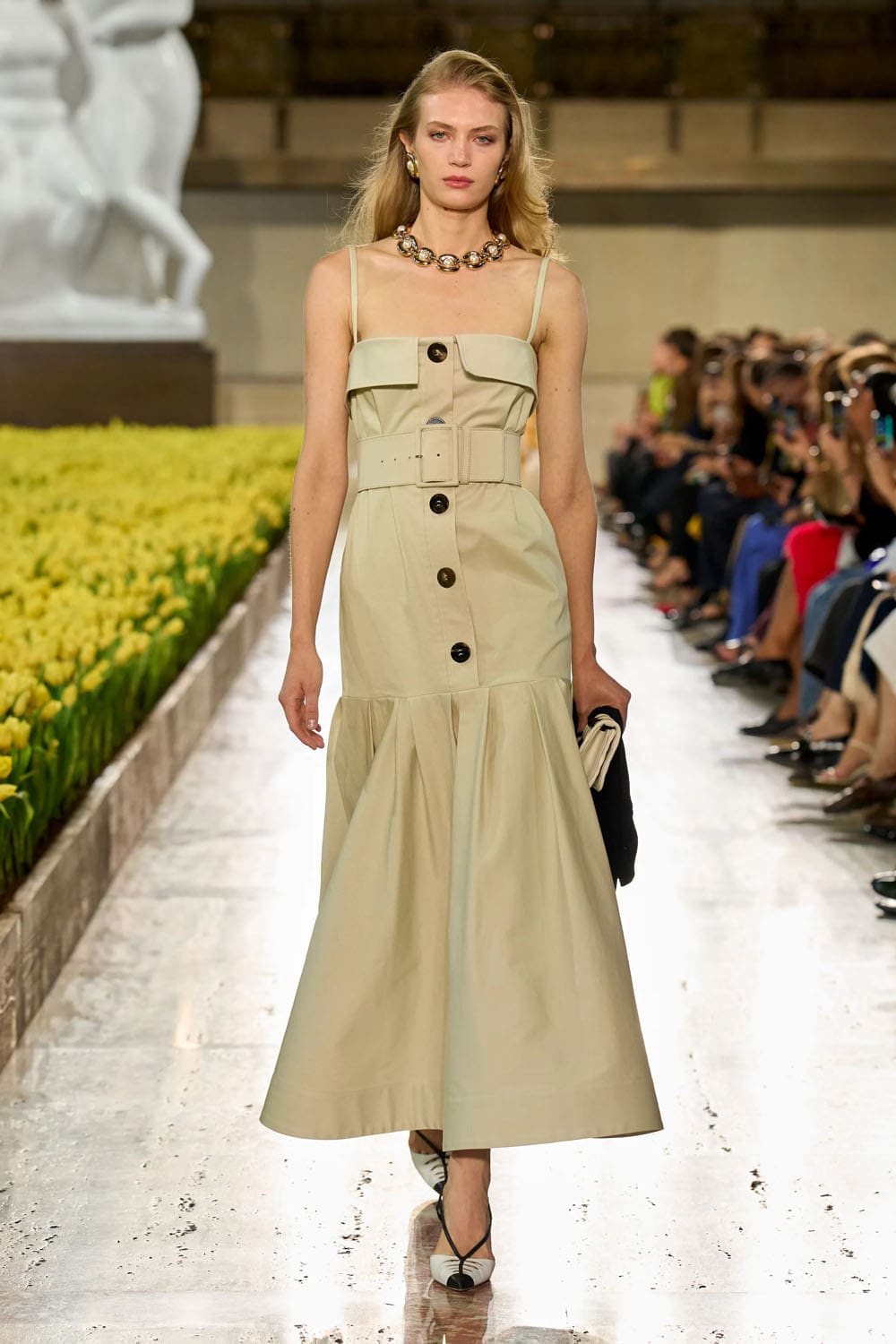
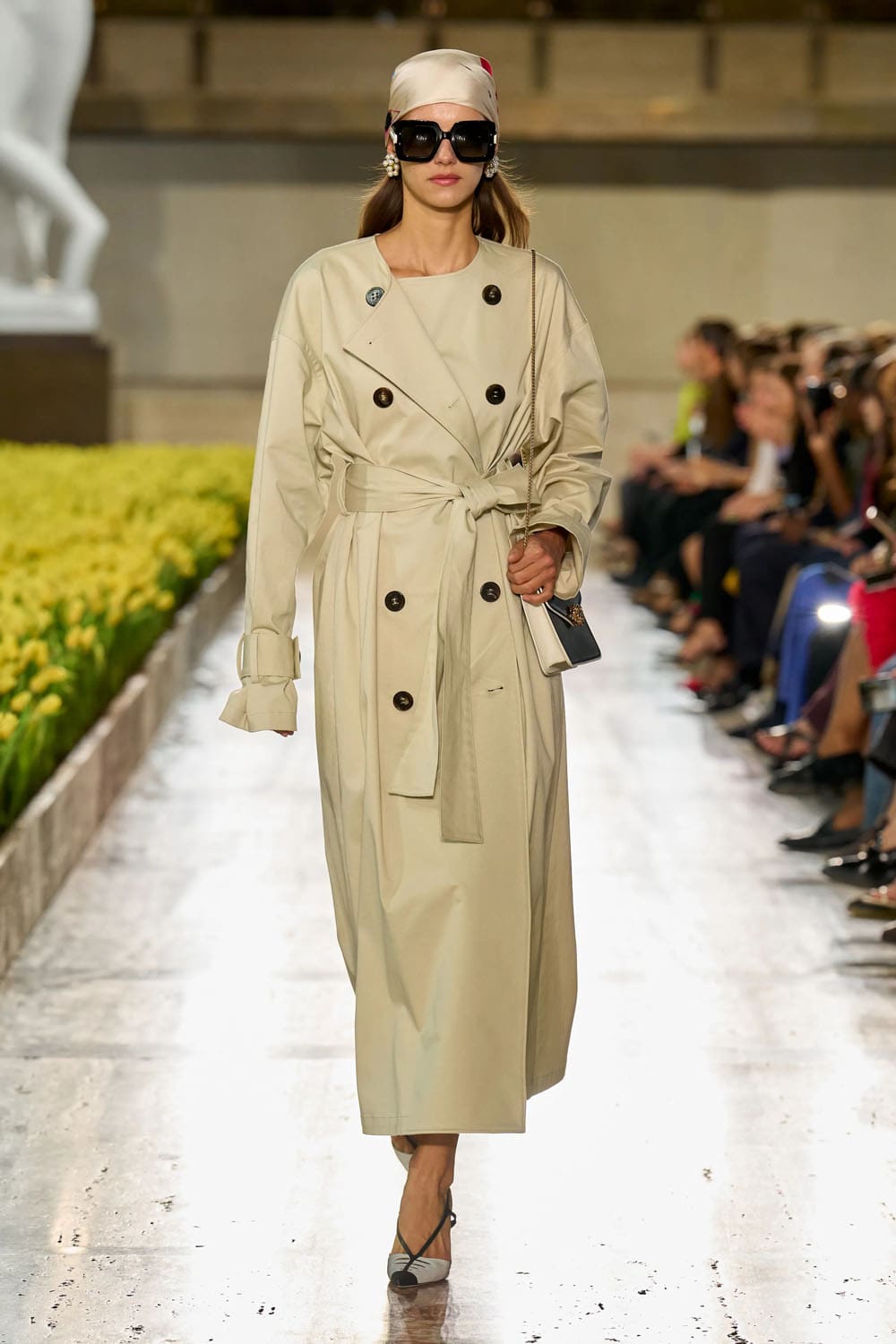
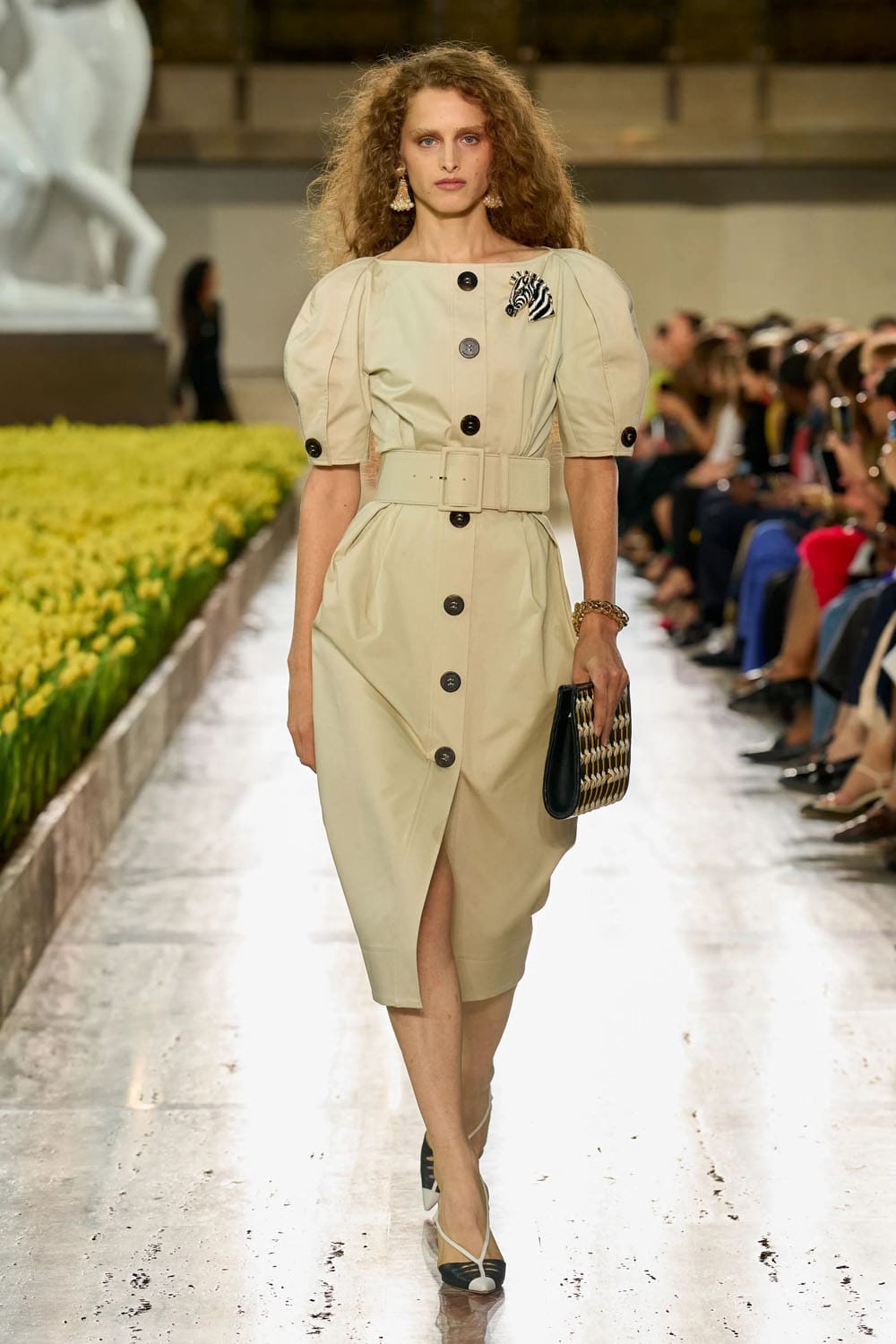
Herrera’s heritage has always balanced gala extravagance with the razor-sharp precision of daywear. Gordon subverted classic bourgeois codes with a safari trench dress in pale desert sand. Featuring voluminous balloon sleeves caught with horn buttons, a wide square-buckled belt, and a cheeky enameled zebra brooch pinned high on the left lapel, the piece nodded to classic Manhattan society uniform while maintaining a breezy, youthful nonchalance.
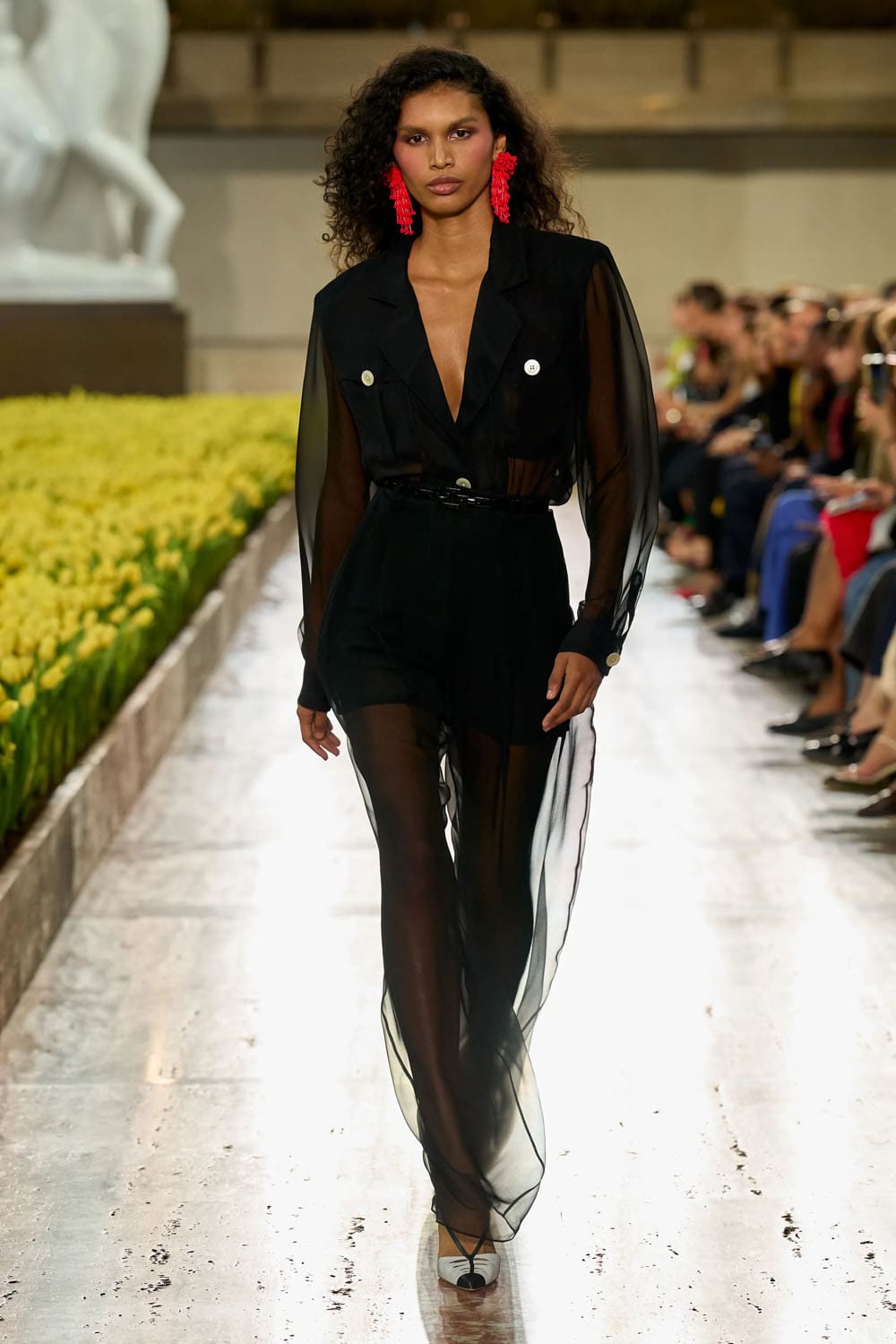
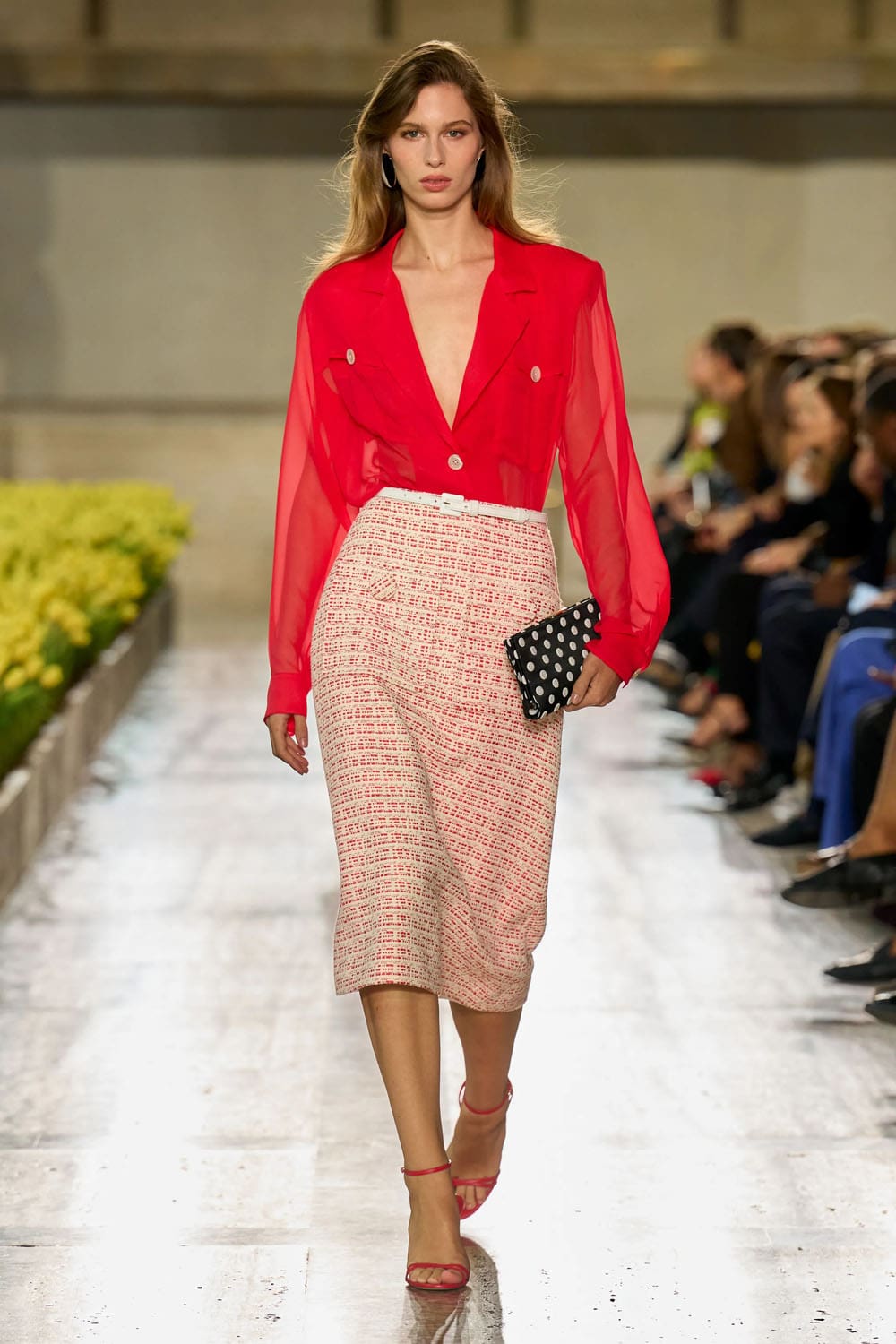
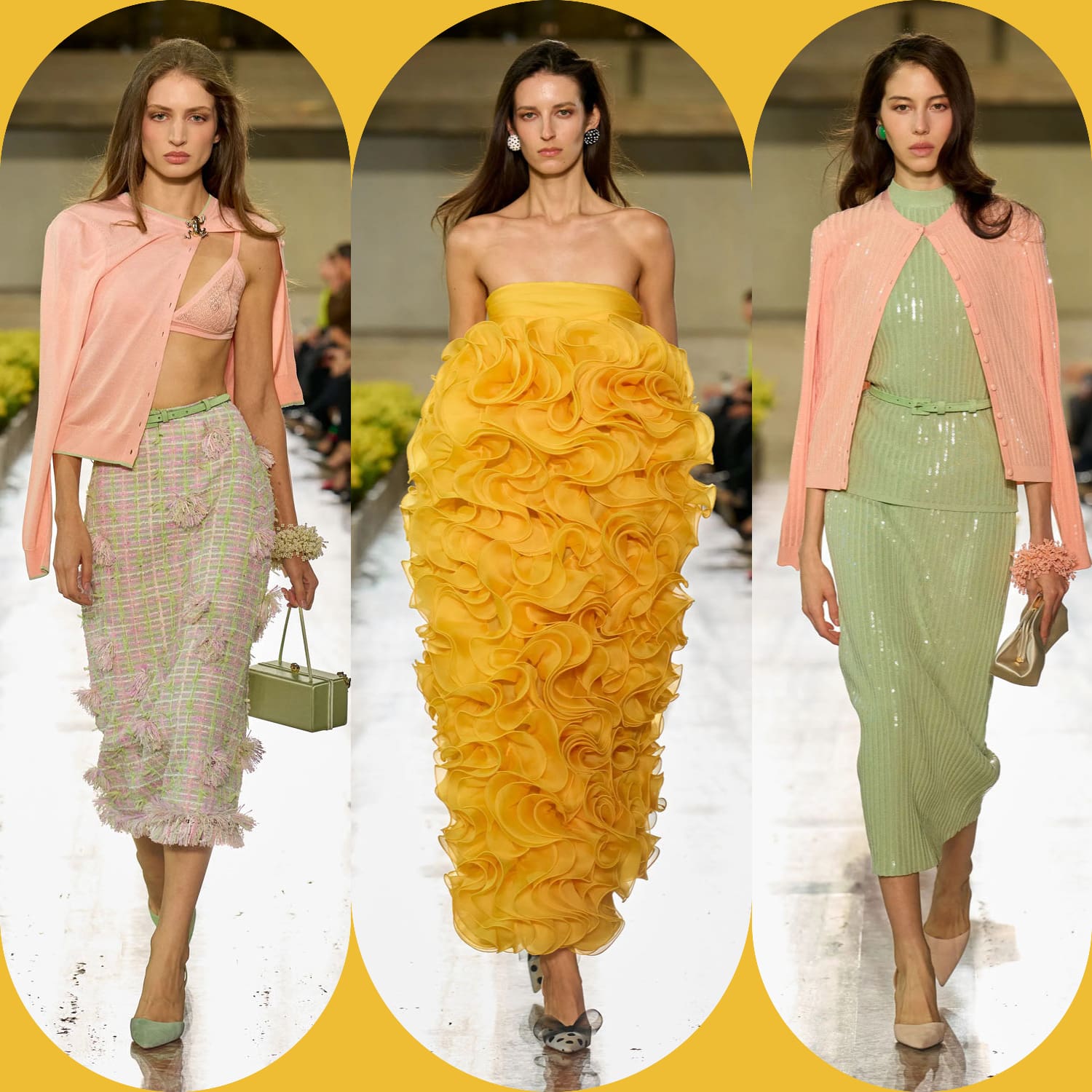
Color continued to detonate with calculated elegance. A searing vermilion chiffon blouse, sheer and breezy with an open notched lapel, met an ivory-and-coral tweed pencil skirt belted in narrow white patent leather. Paired with a contrast polka-dot clutch and minimalist ankle-strap sandals, it served as an object lesson in how modern uptown dressing maintains its poise while flashing pure hedonistic confidence.
Petals, Flounce, and the Kinetic Gala
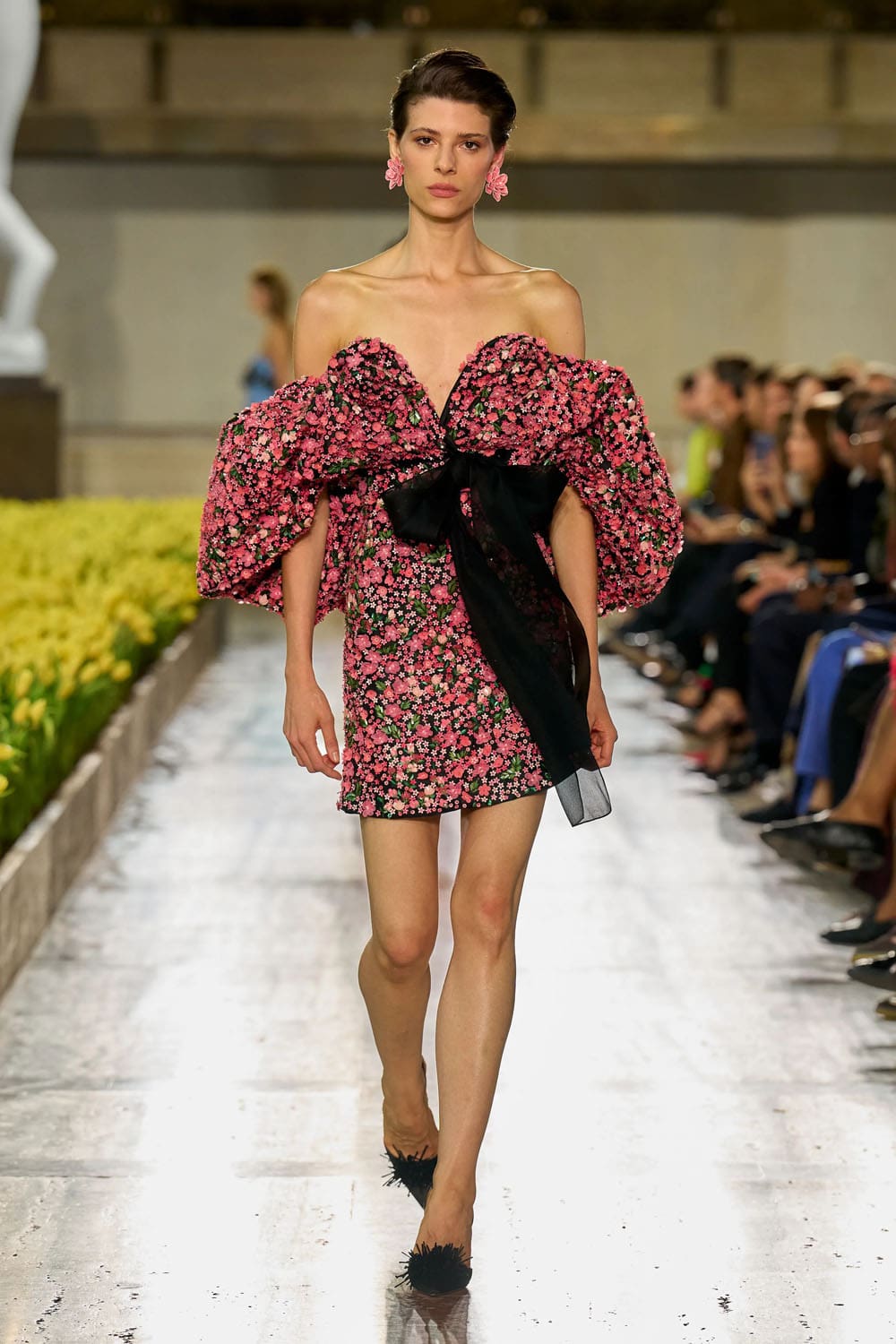
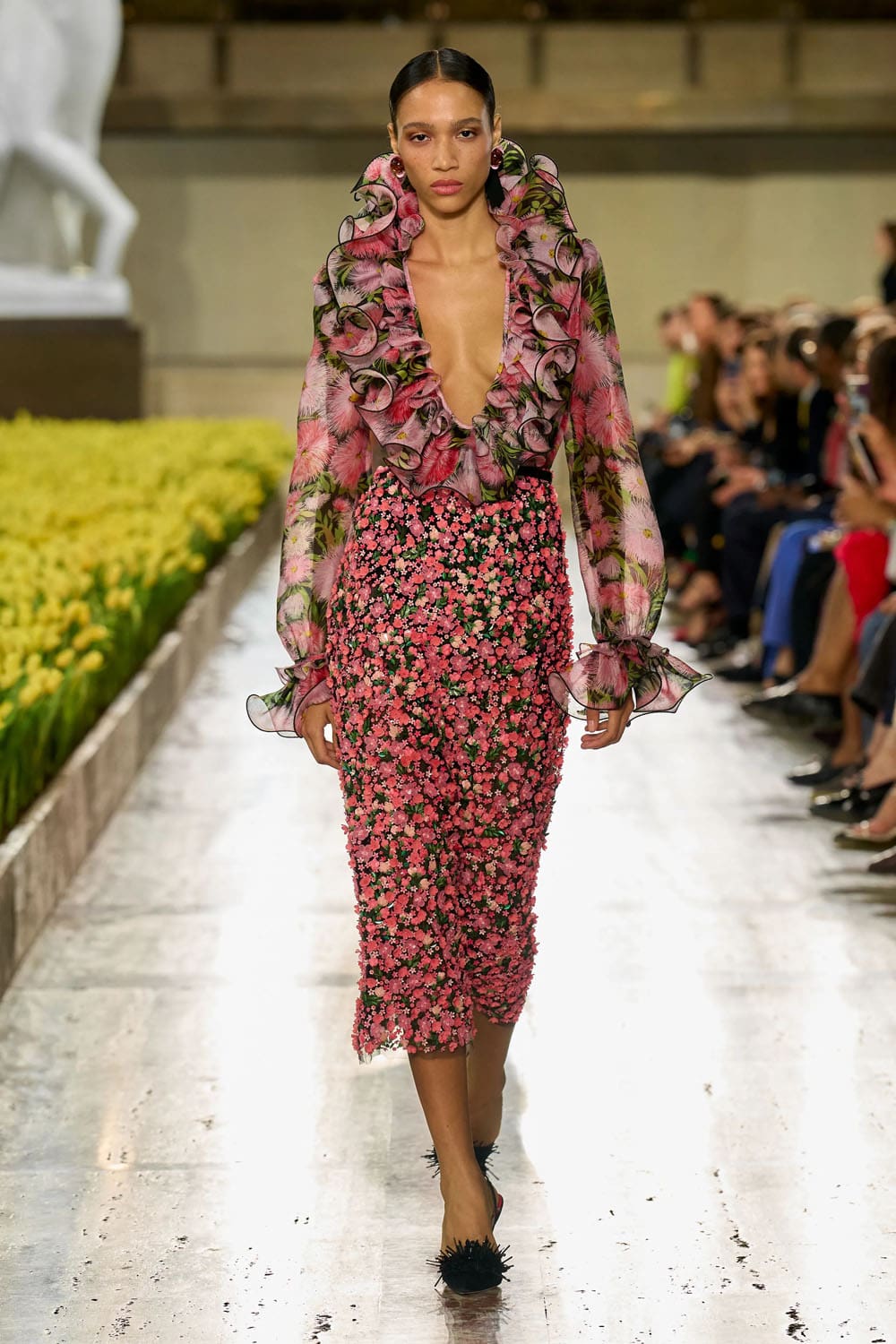
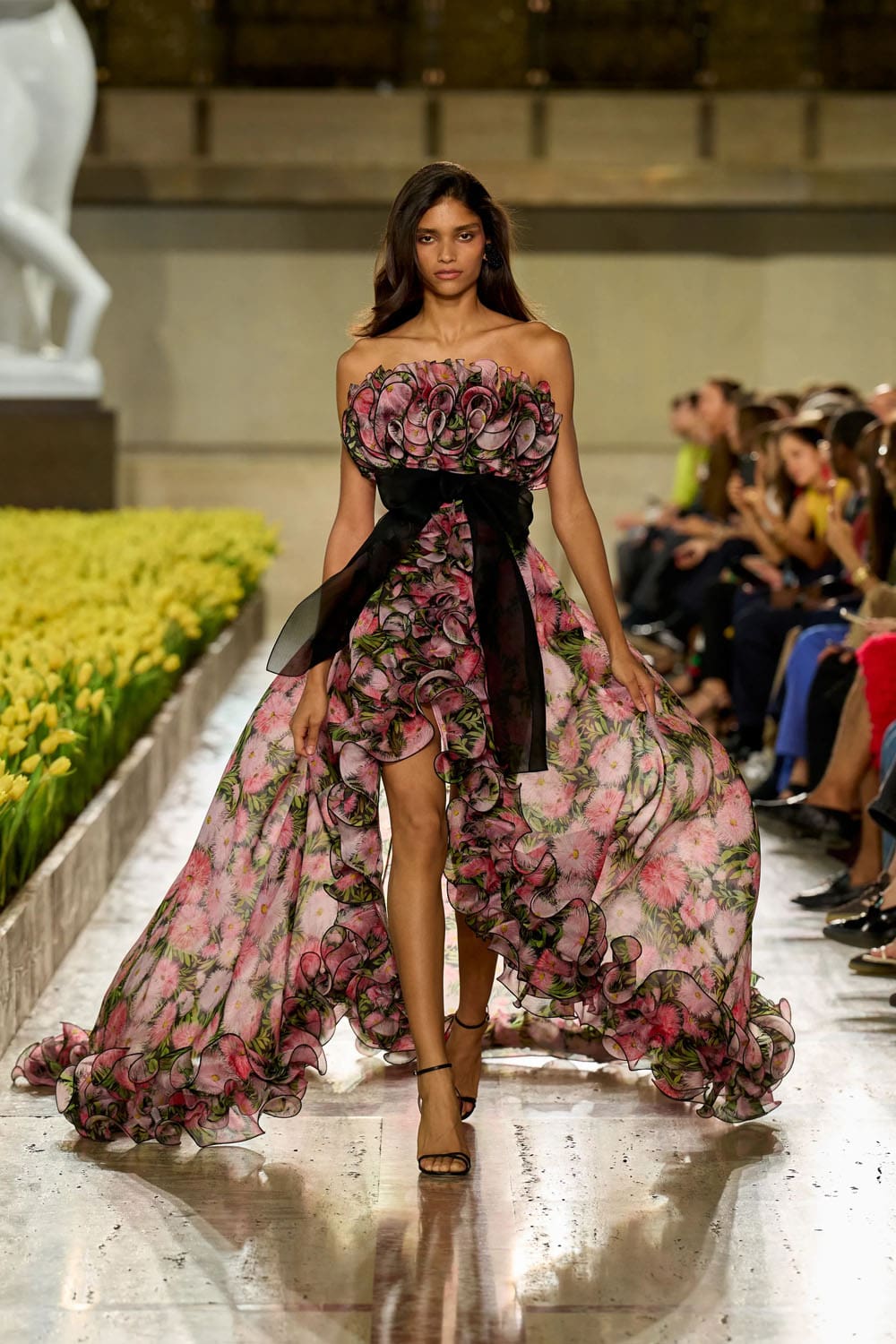
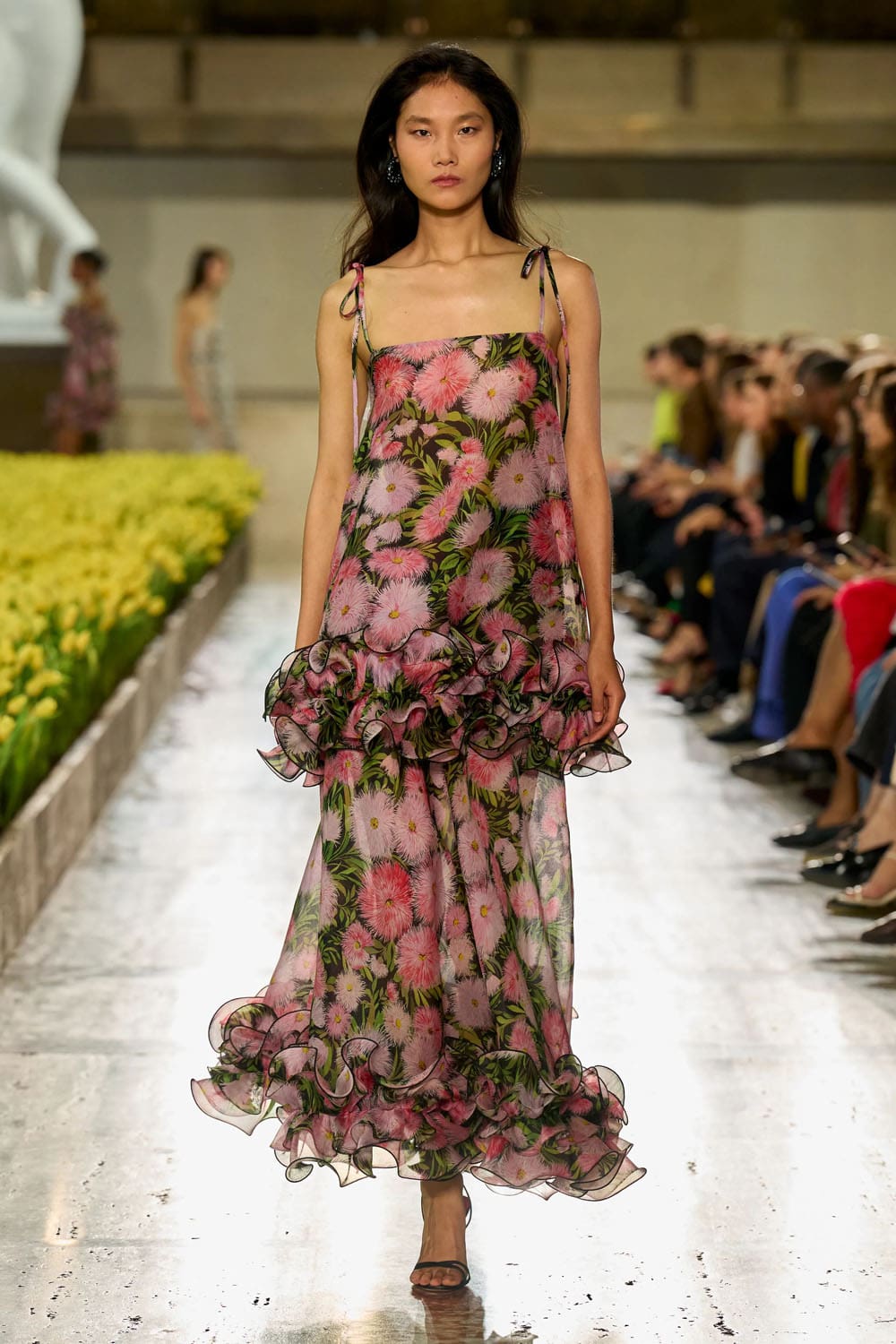
When Gordon turned his hand to eveningwear, the archive’s operatic scale took over the theater with aerodynamic lightness. A high-low strapless gown bloomed like a dark peony, constructed from billowing layers of petal-pink floral organza framed in fine black edging. Bound at the waist by a theatrical black chiffon sash, the hem swept back into a dramatic cascading train that floated effortlessly above the stone catwalk.
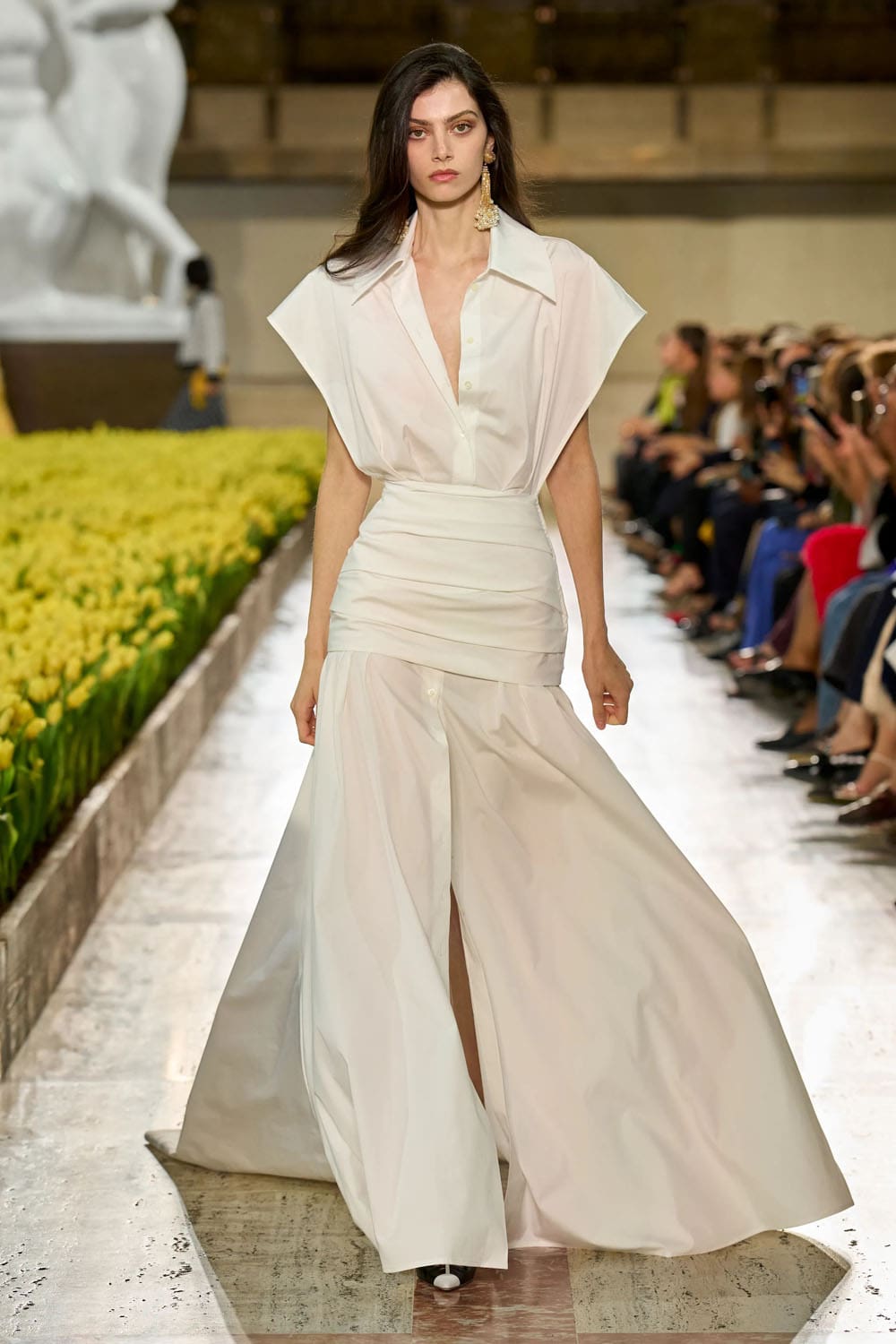
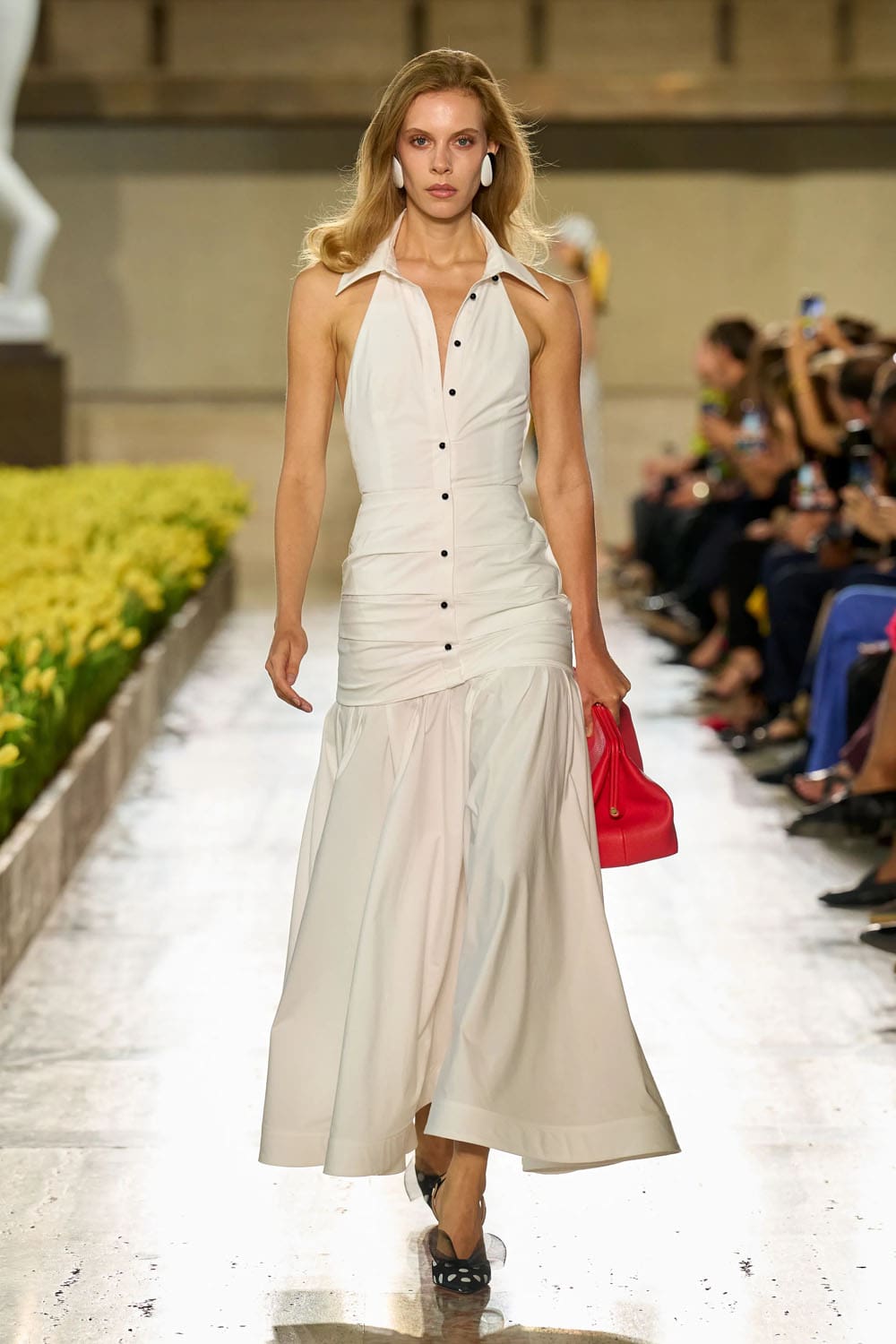
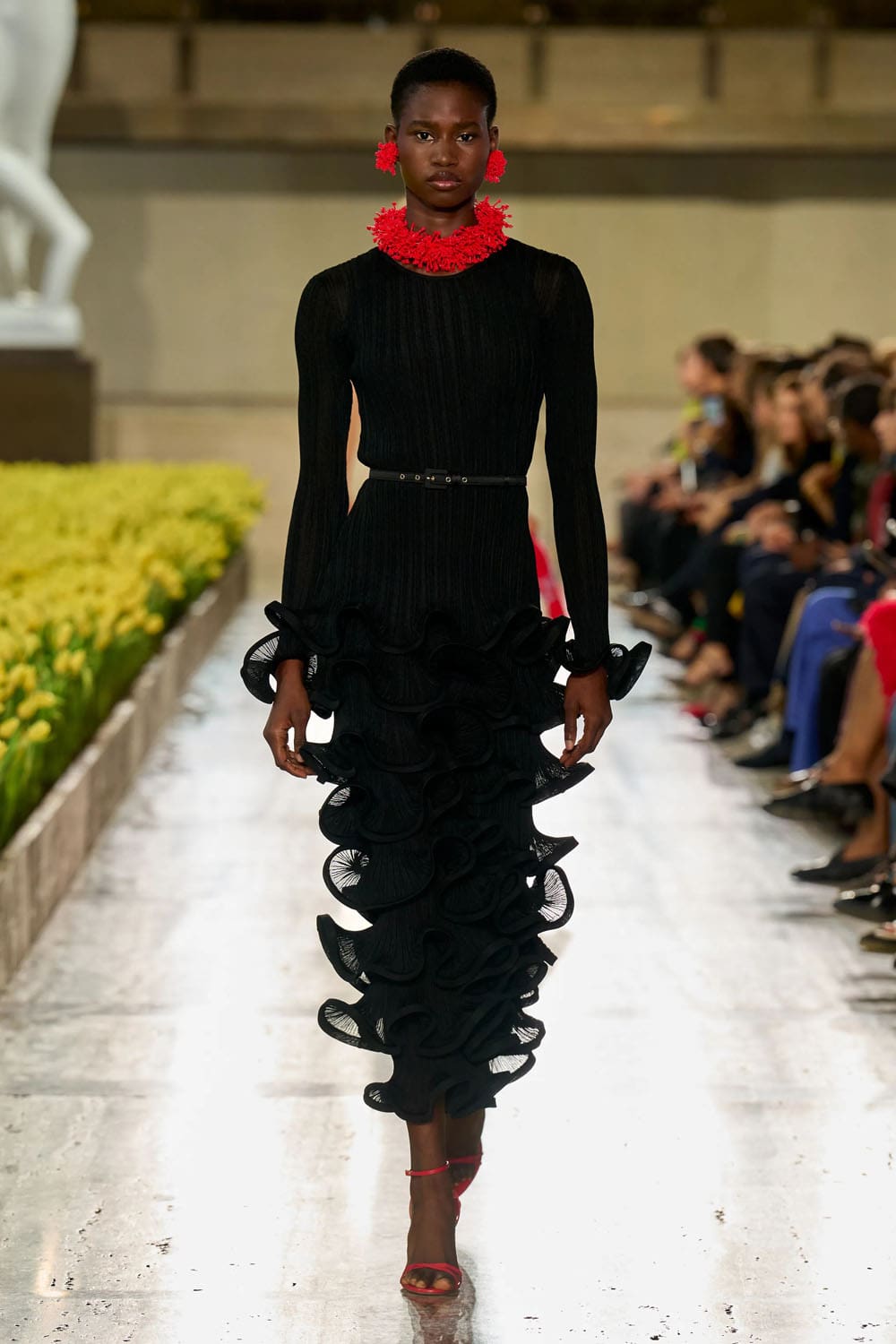
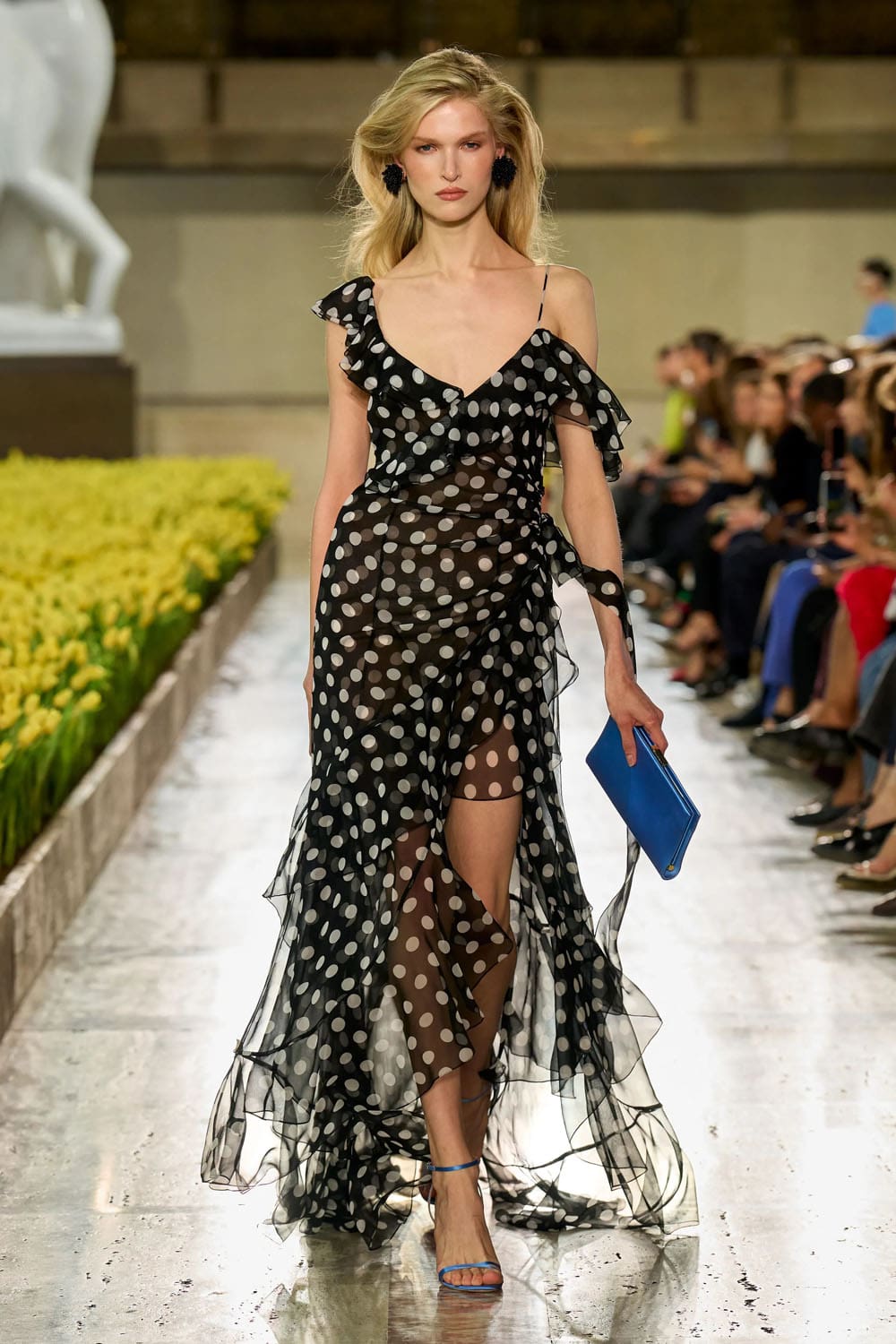
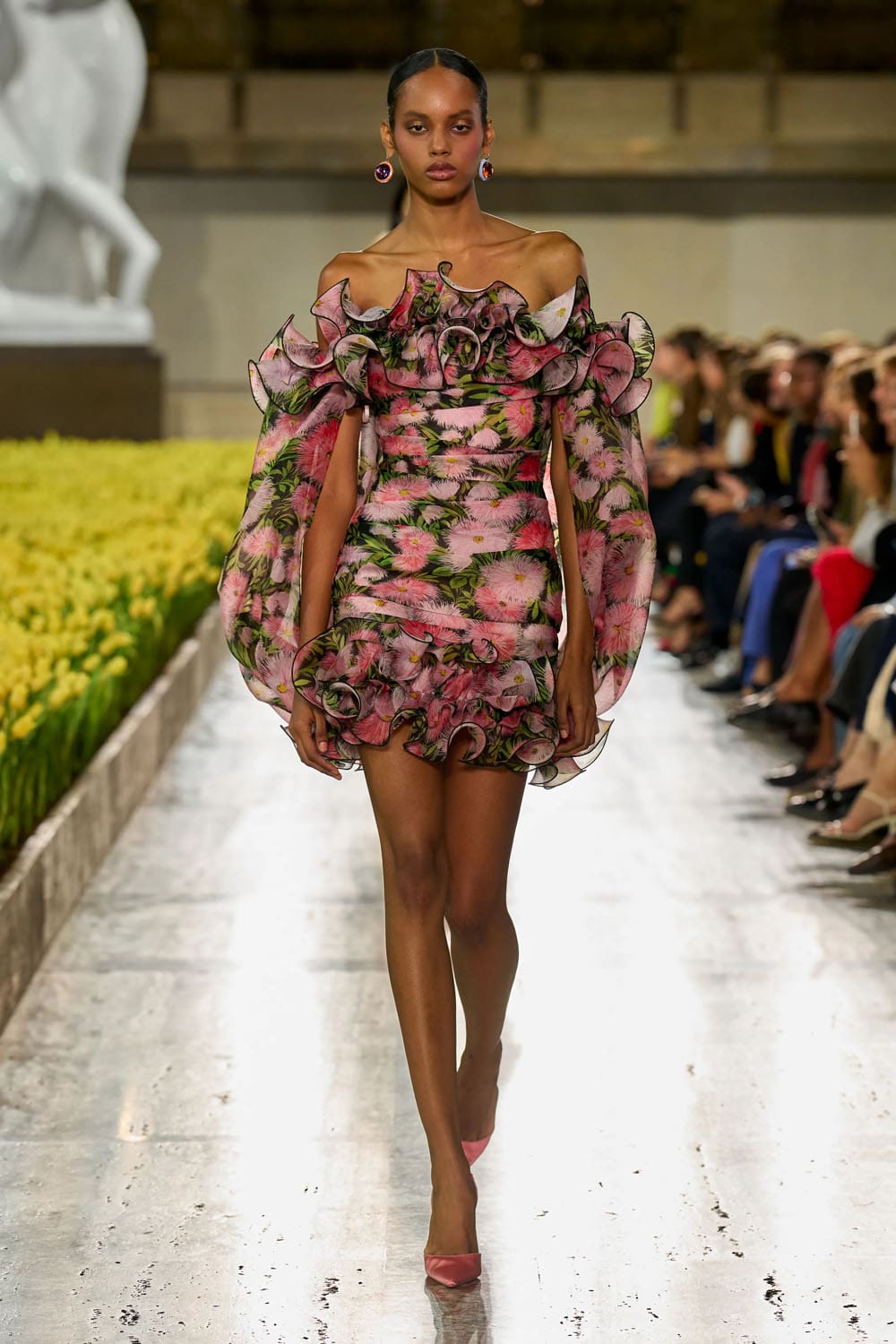
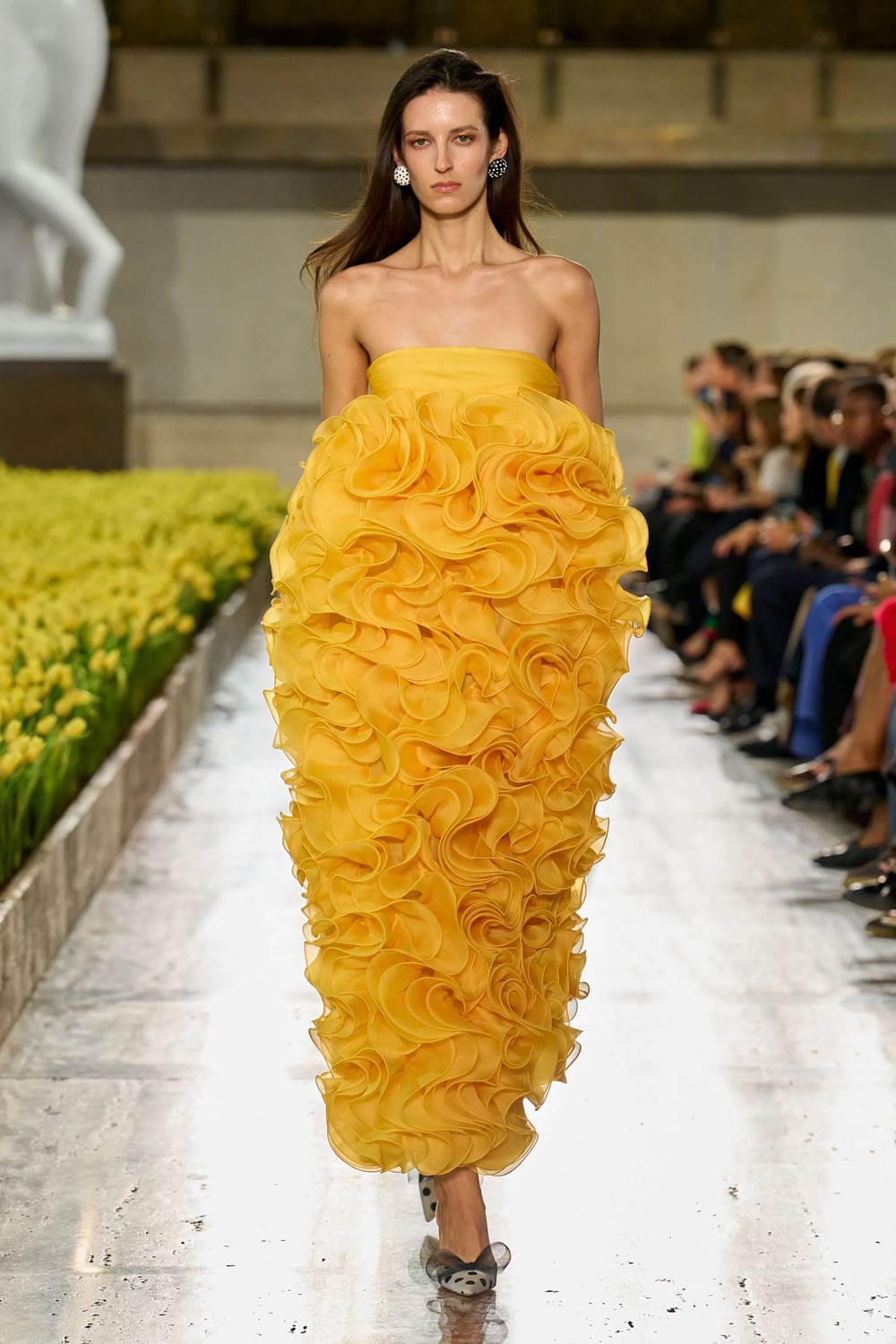
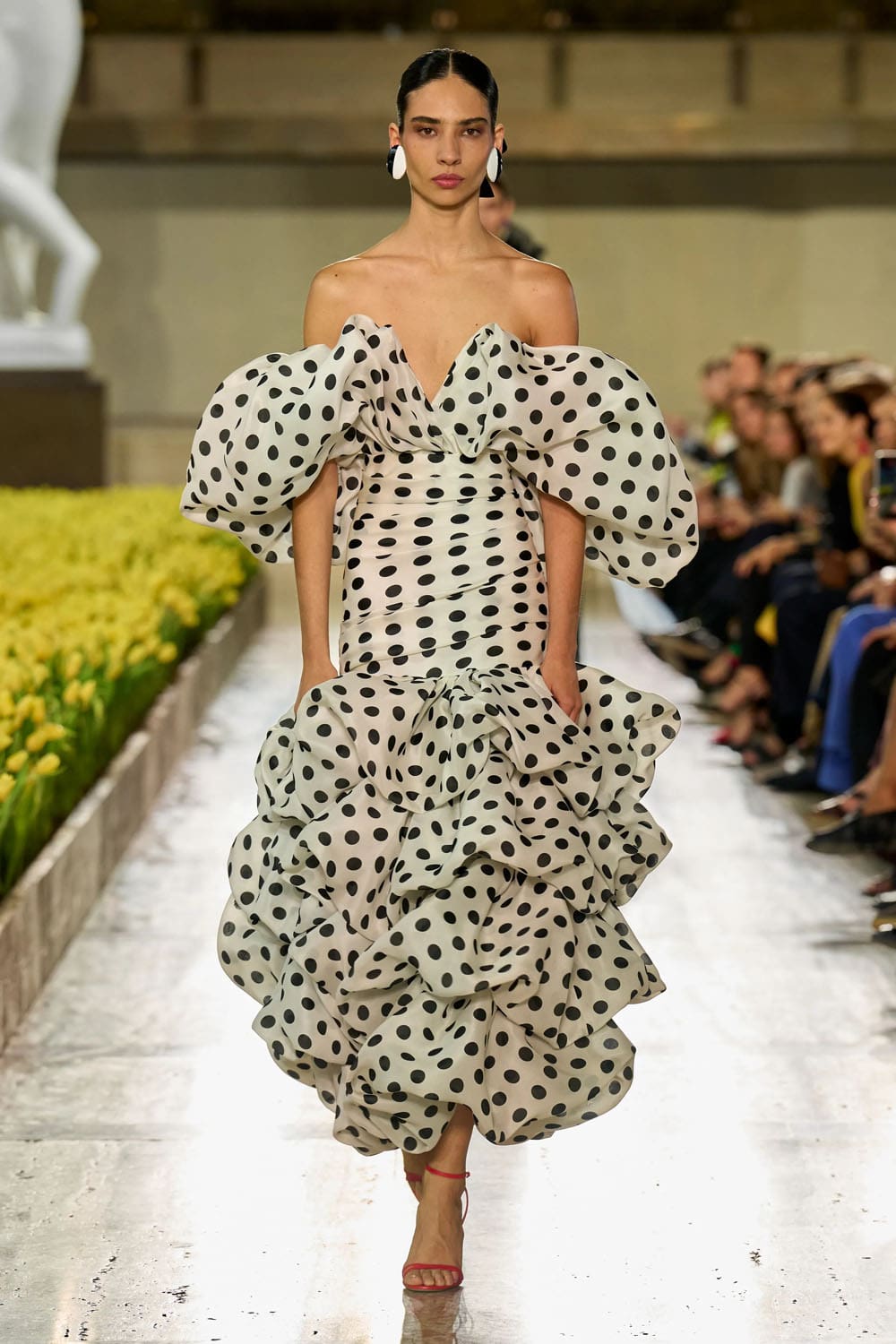
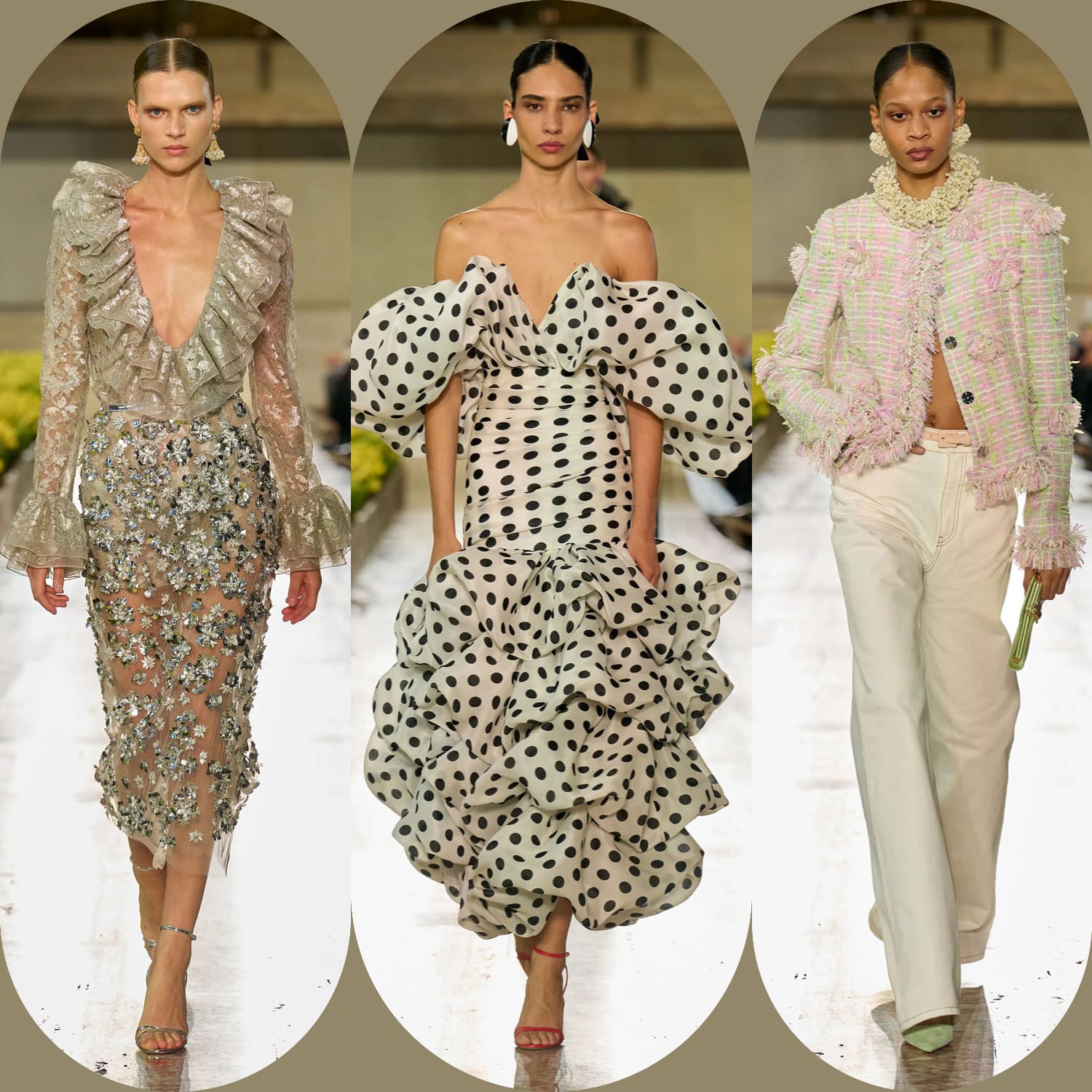
The dialogue with Herrera’s beginnings reached its zenith in an off-the-shoulder meringue gown in ivory polka dot. Massive puffed sleeves framed a plunging décolletage, leading downward into a sculpted, tiered bubble skirt constructed from voluminous ruffled flounces. Flirtatious, kinetic, and unapologetically festive, it captured the flamboyant joy Mrs. Herrera brought to the Metropolitan Club in 1981.
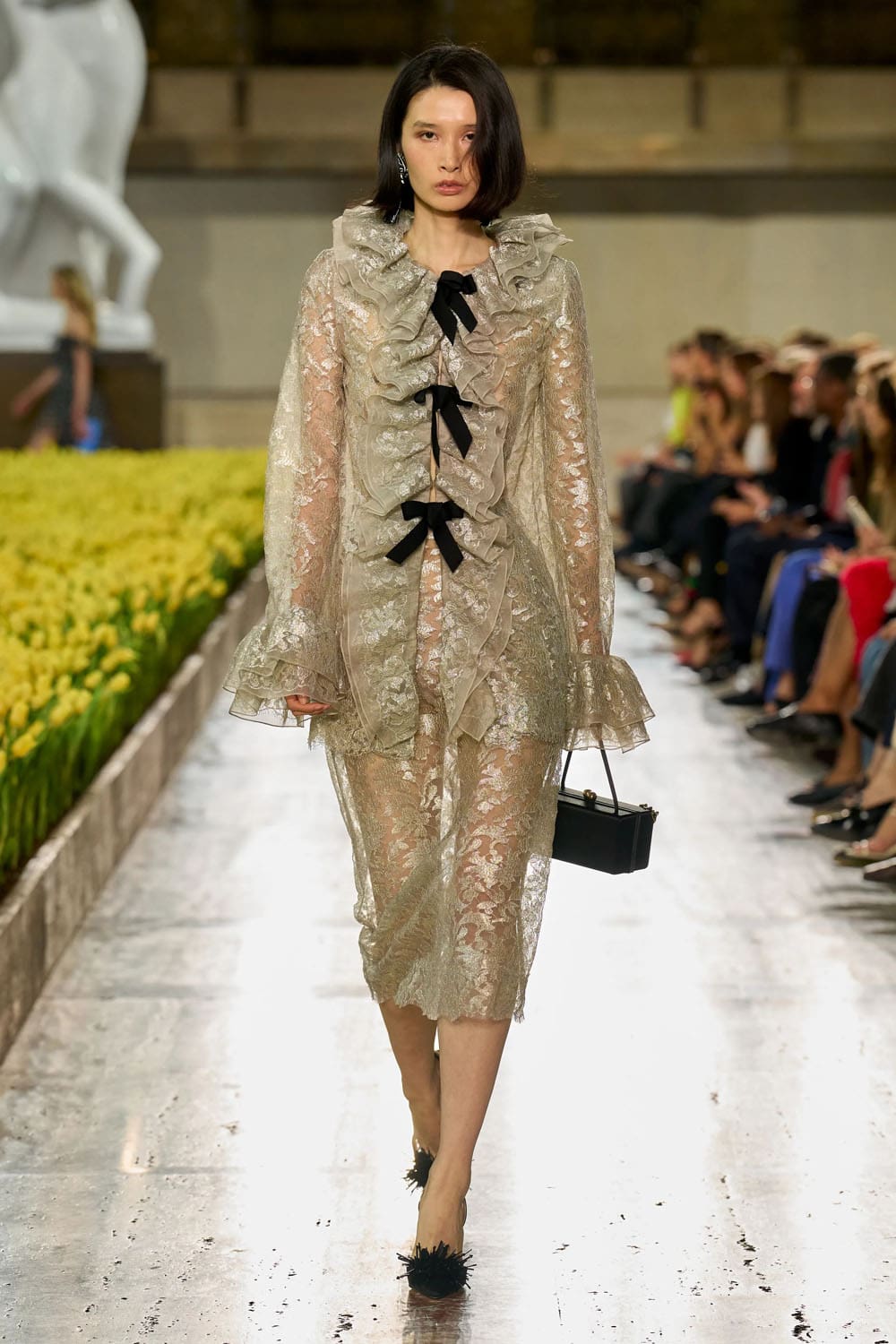
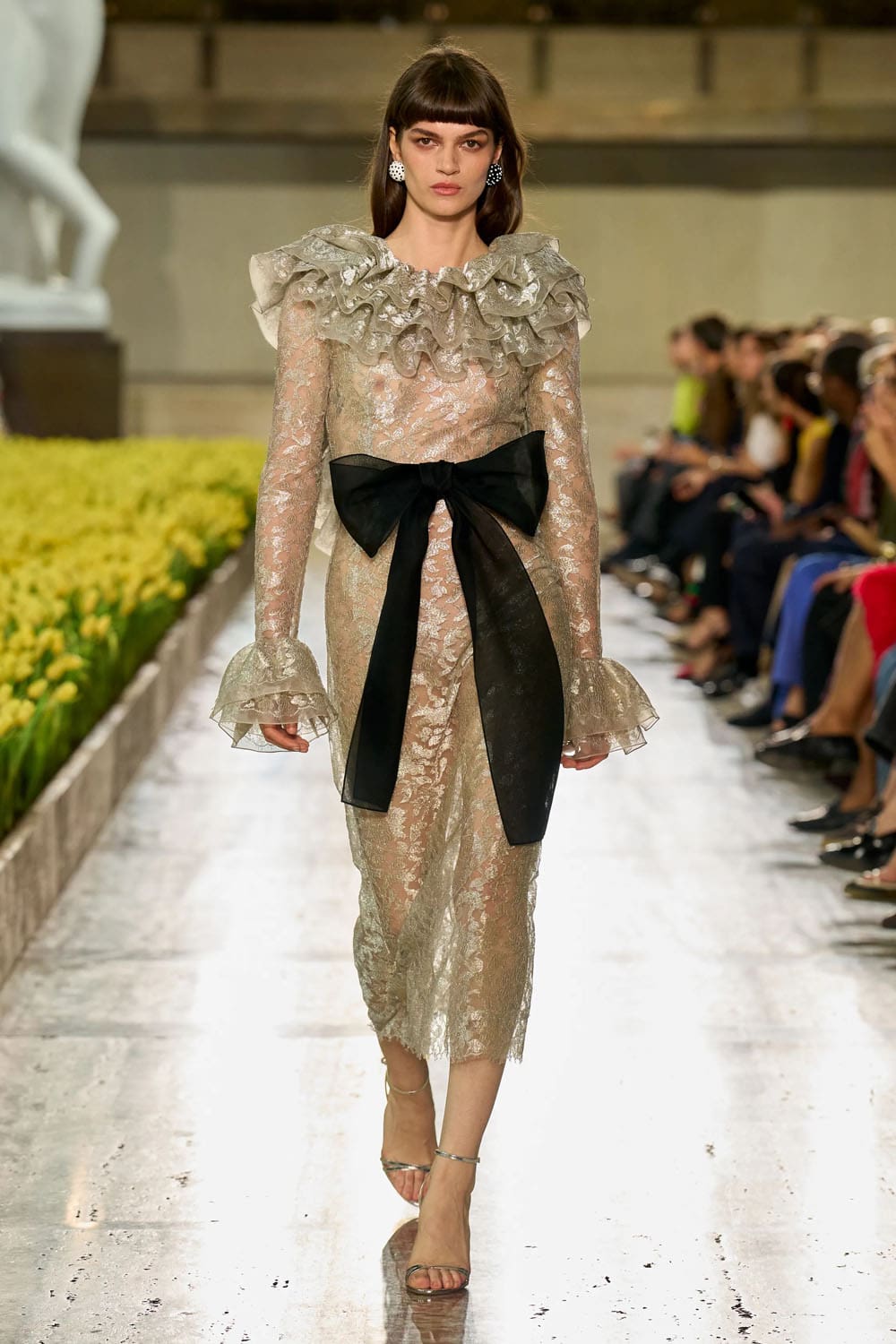
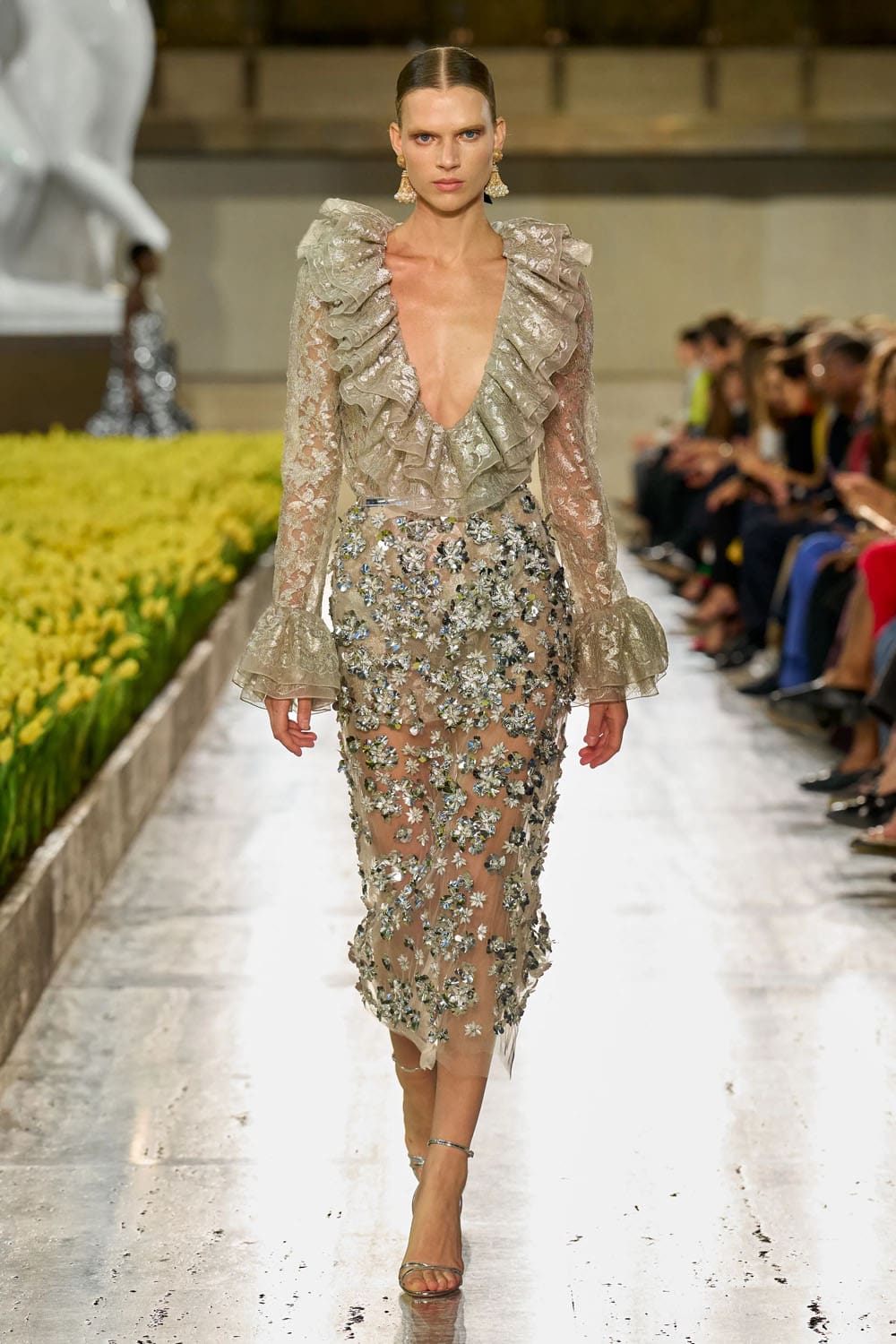
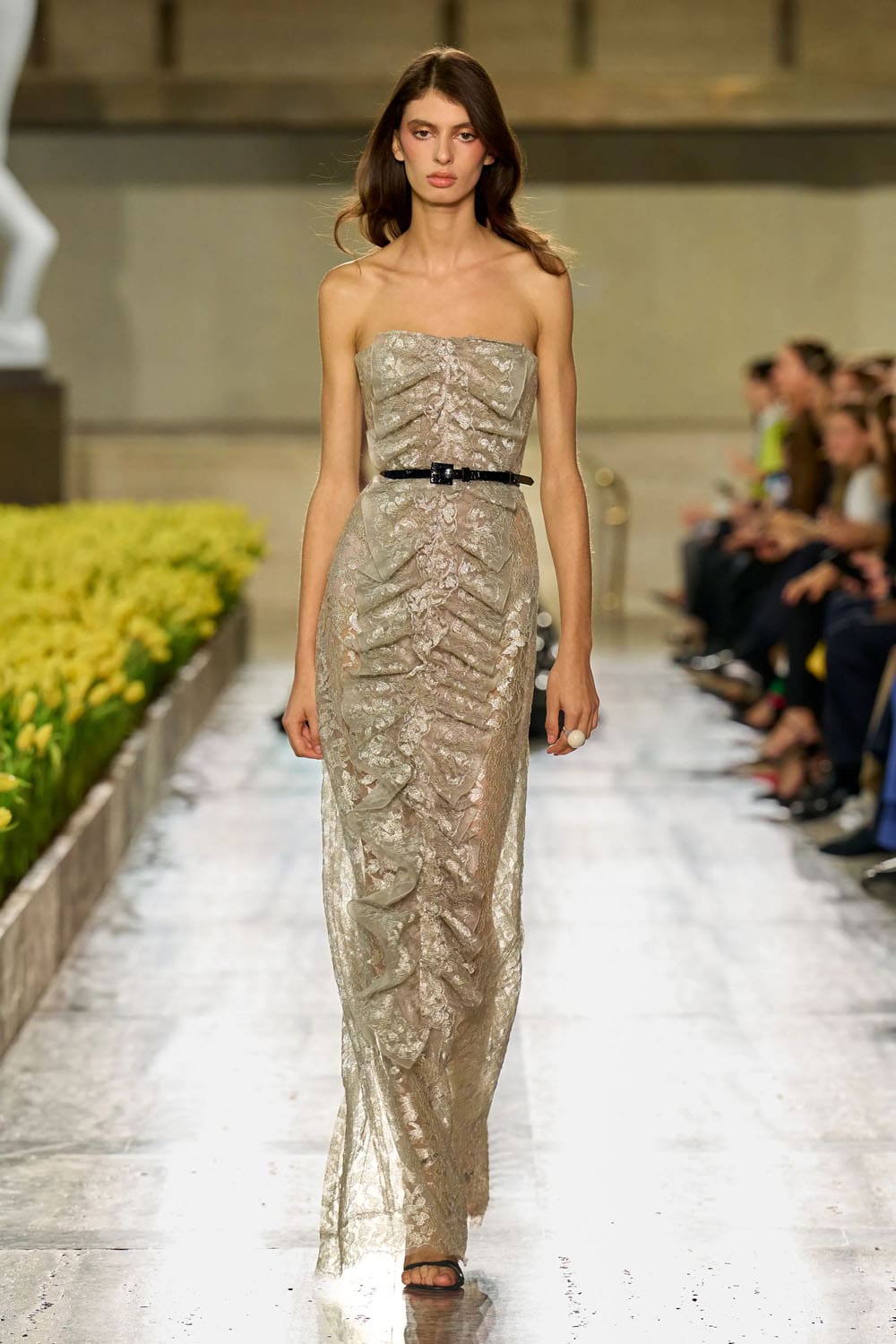
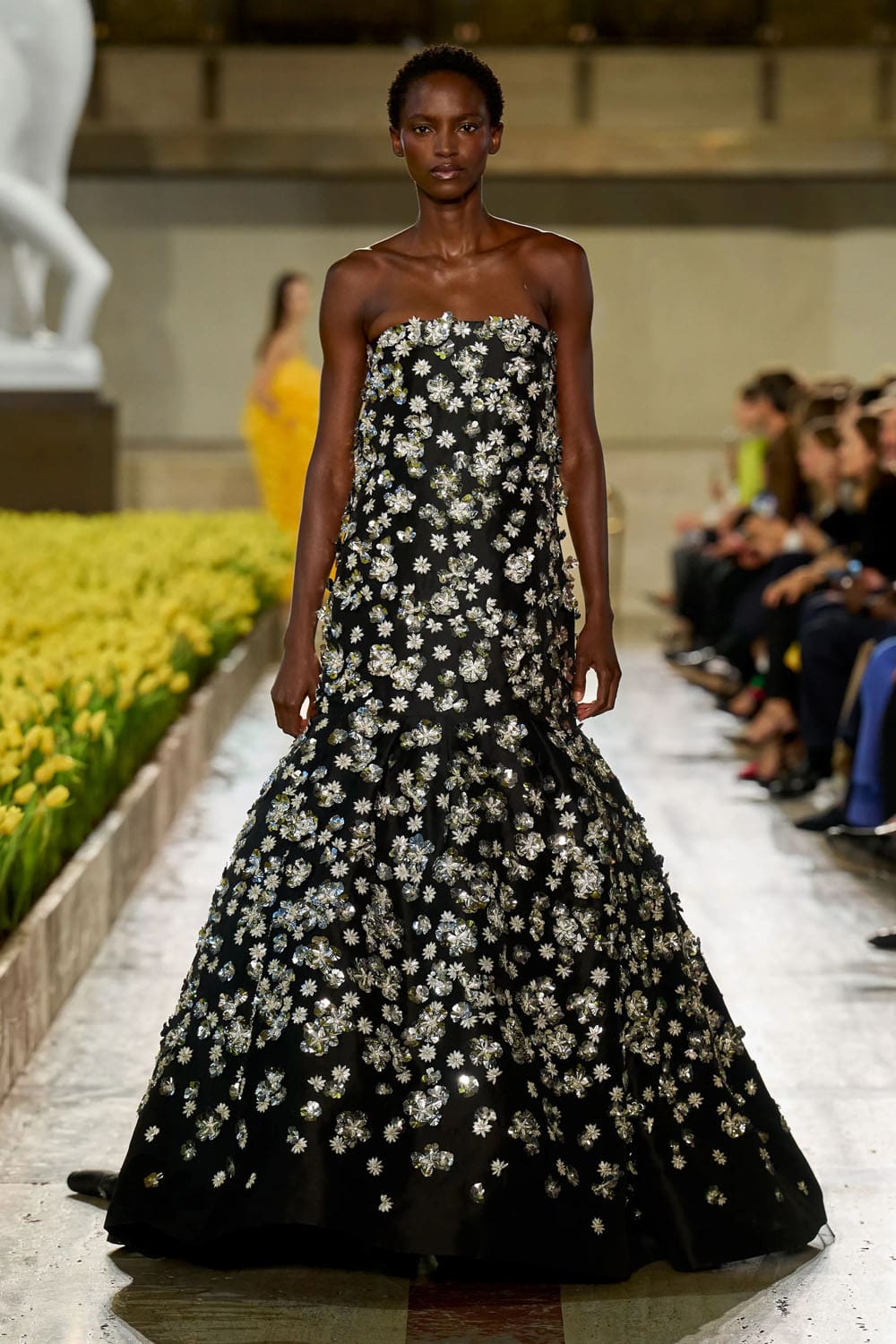
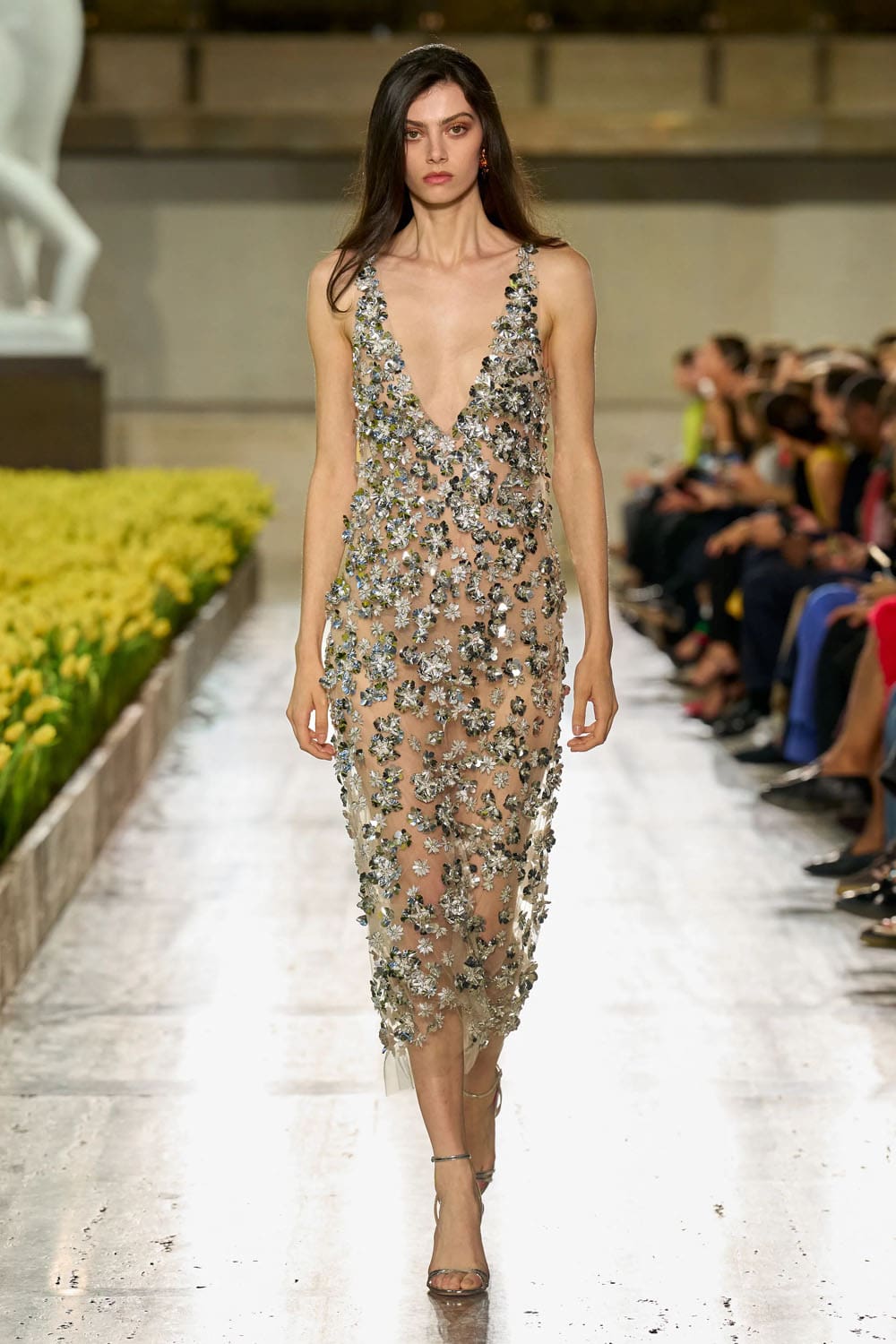
Closing the cycle of reinvention was a silvery, translucent lace column gown dripping in three-dimensional frosted metallic petals. With an exaggerated ruffled pierrot collar and fluted bell cuffs, the dress dissolved the boundary between seventeenth-century courtier drama and modern red-carpet luminosity.
45 years after trading a minaudière for immortal pop immortality, Carolina Herrera remains that rarest of luxury anomalies: an empire founded on absolute chic that has never lost its appetite for a marvelous, subversive dance.
See All Looks Carolina Herrera Spring 2027