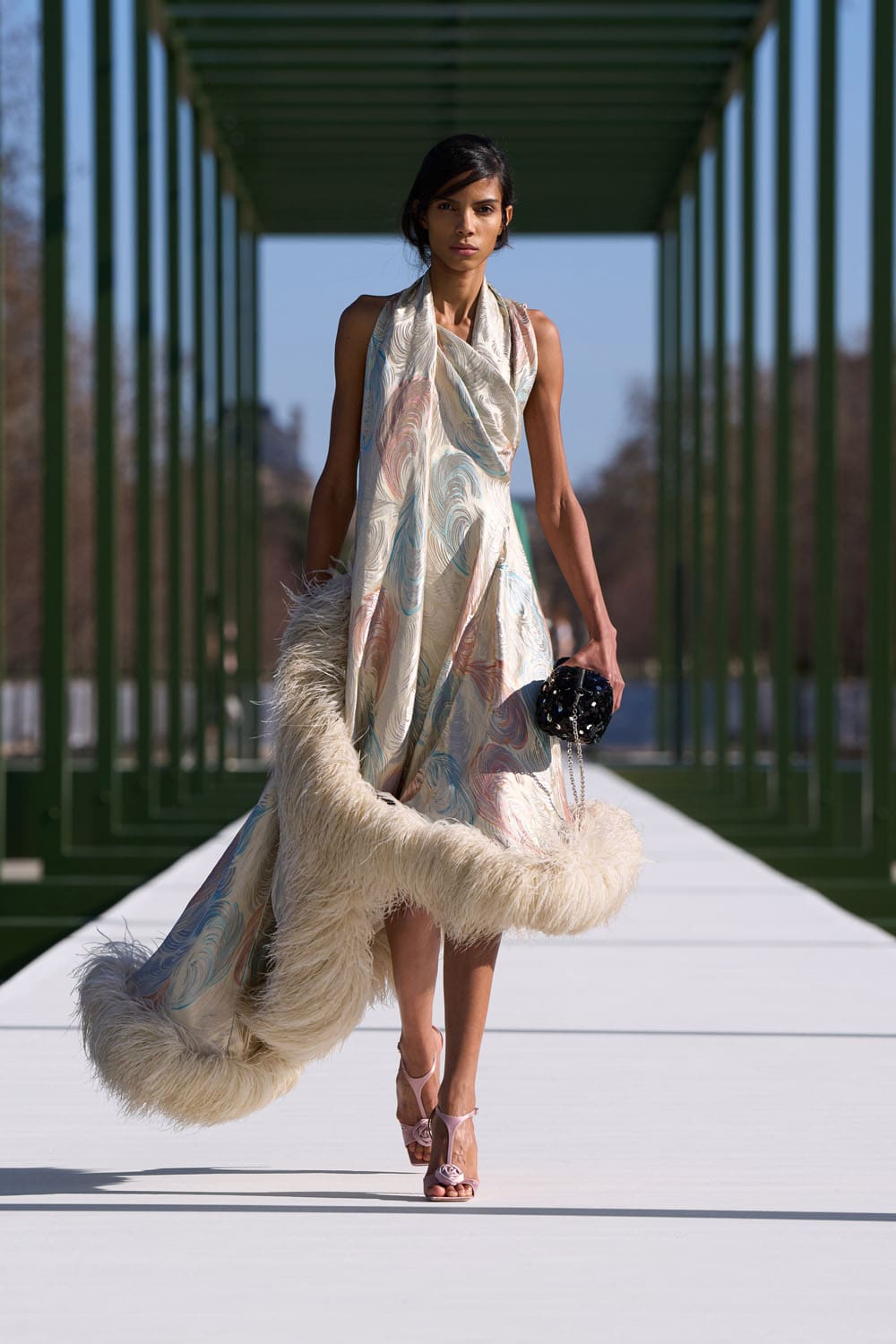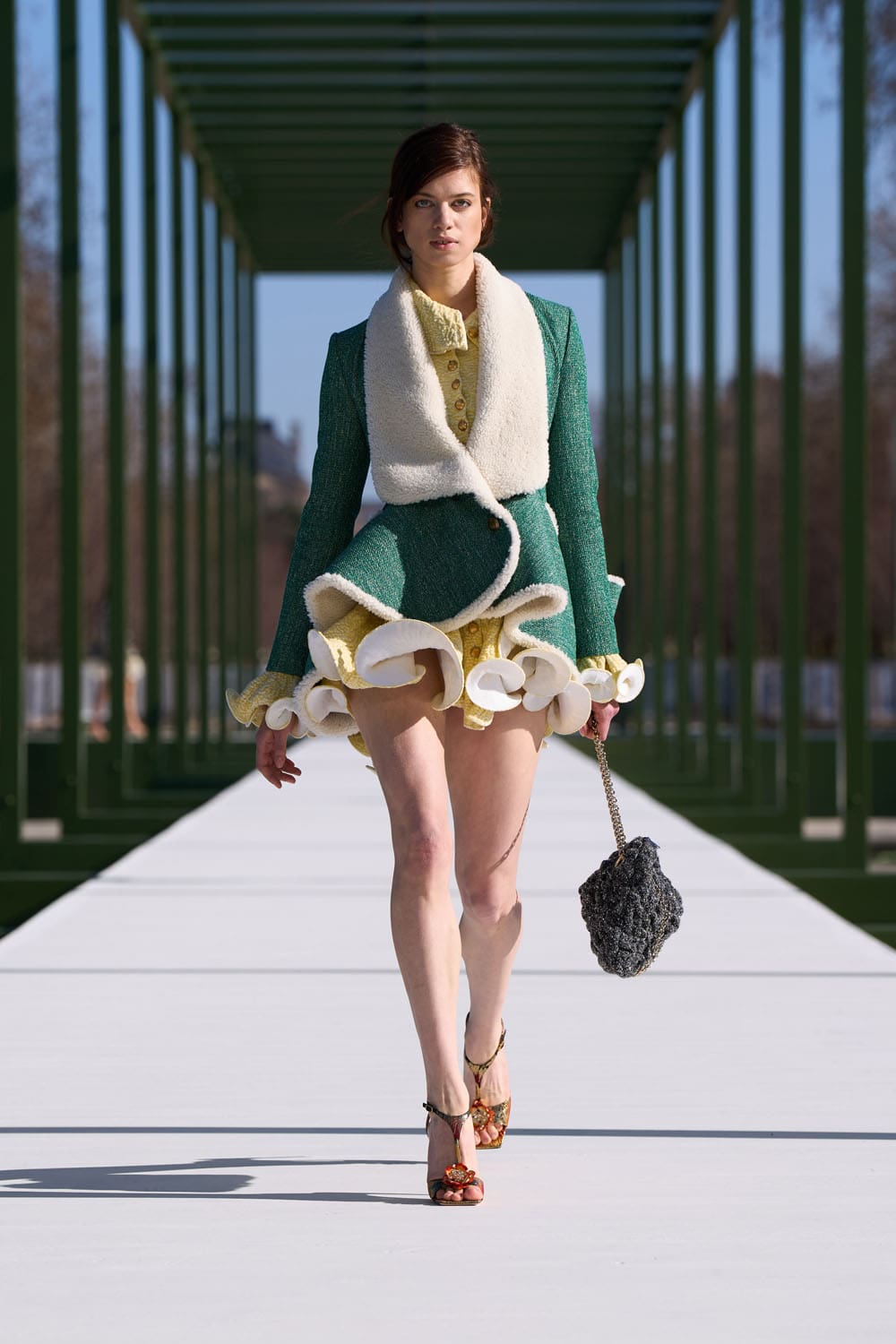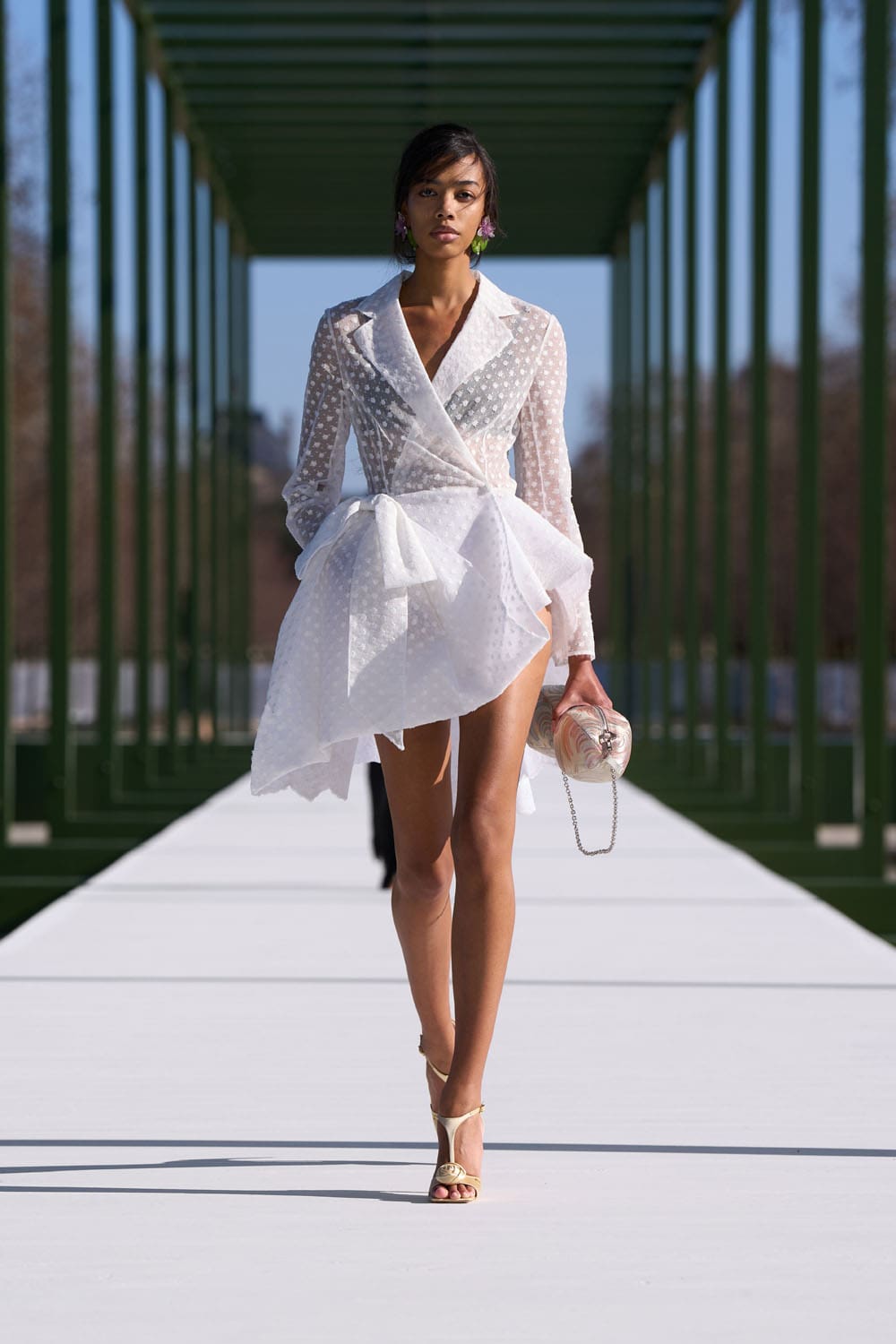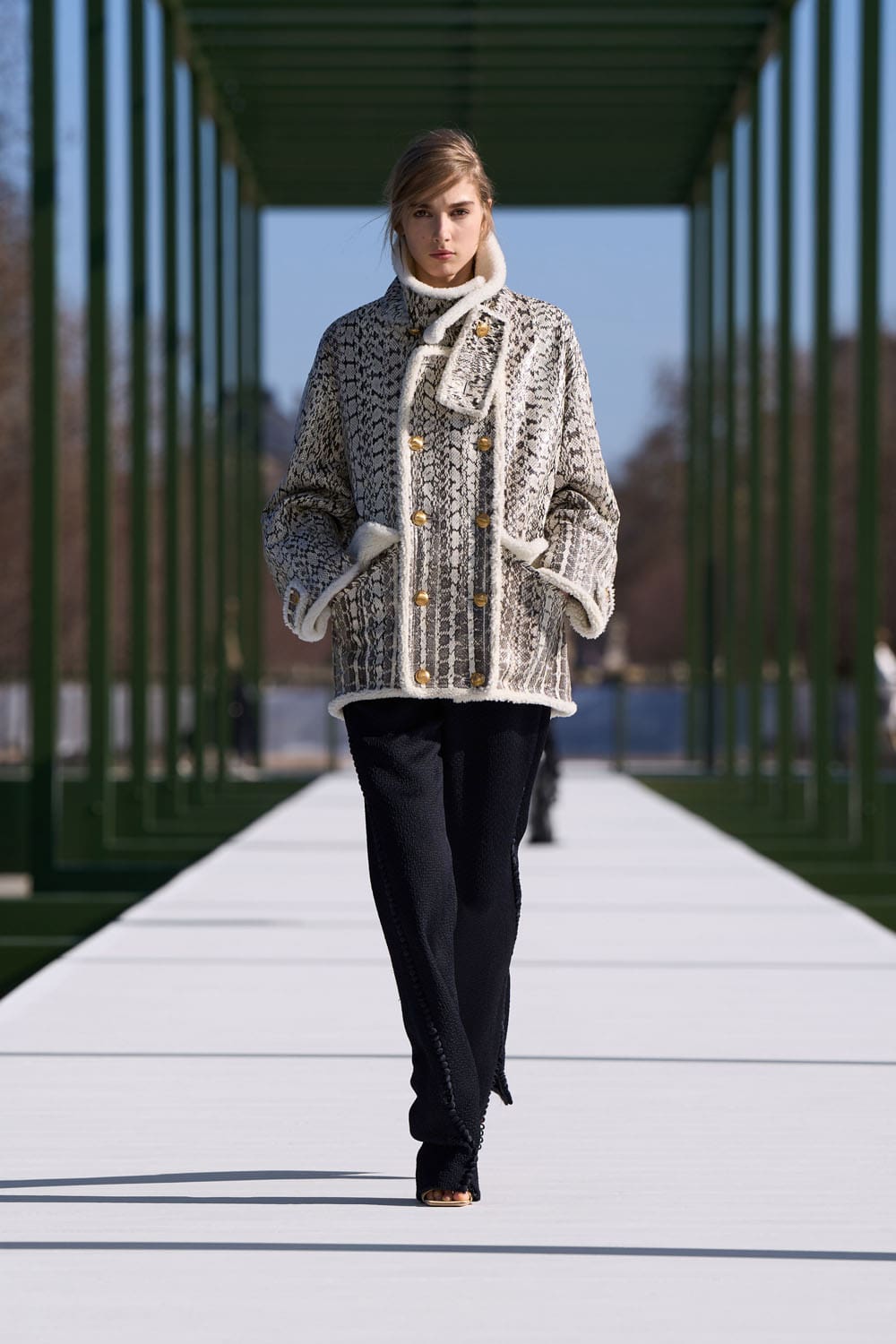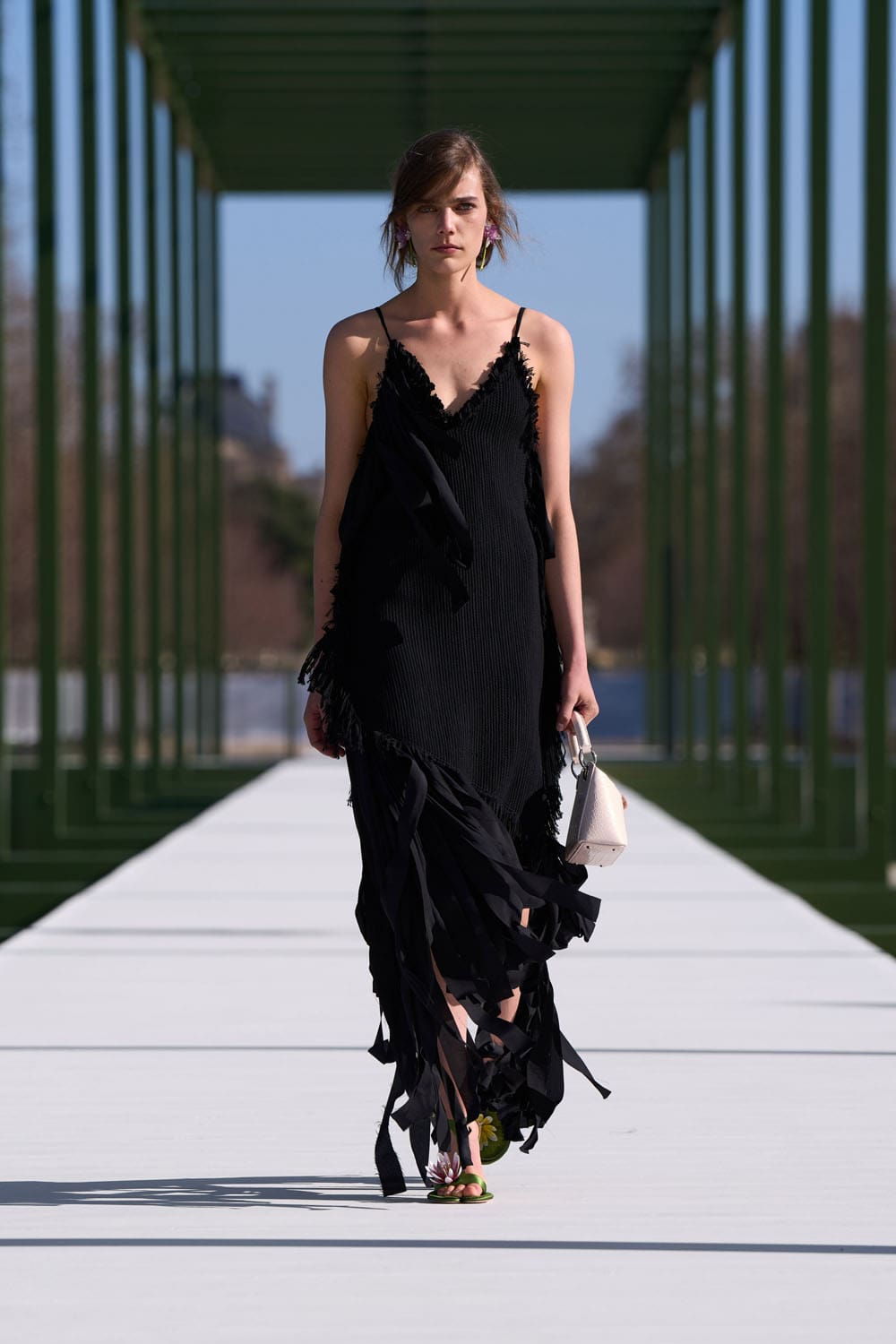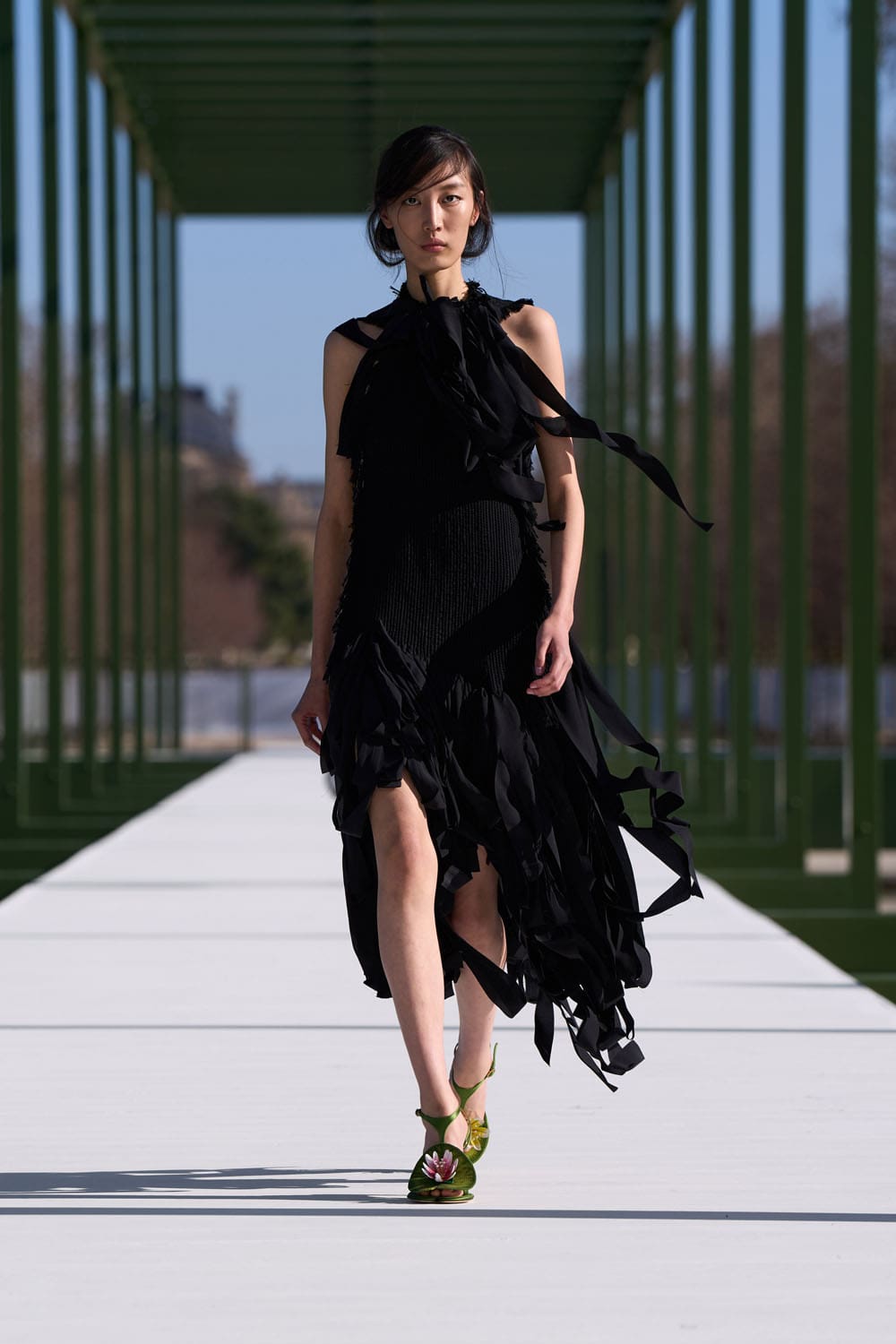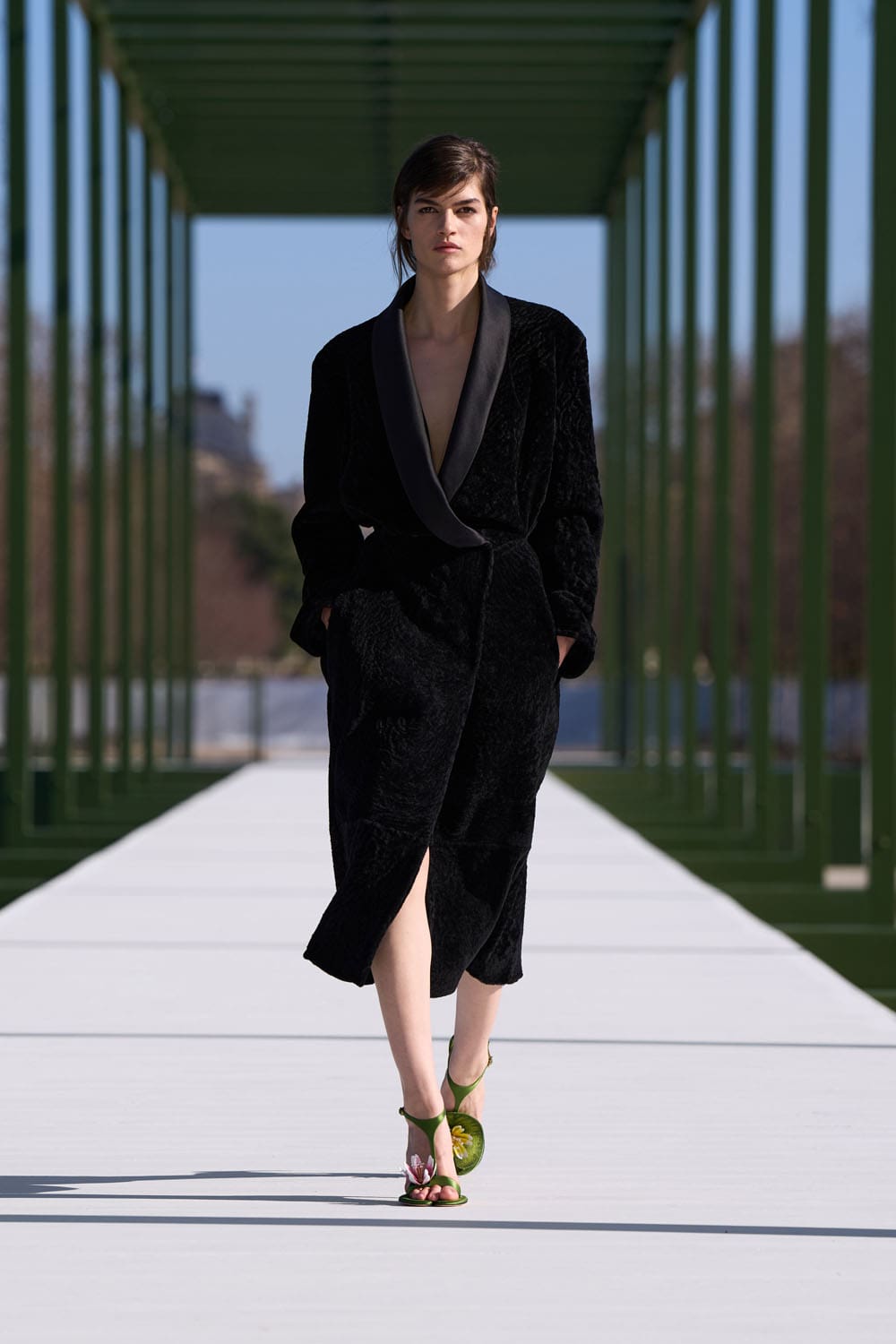
Dior Fall Winter 2026-2027 “Jonathan Anderson Reawakens the Garden”. Story by Kate Granger, Editor of Runway Magazine. Photo Courtesy: Dior.
This season, Dior returns to clarity. After a turbulent Haute Couture presentation, Jonathan Anderson delivers a ready-to-wear collection that feels unexpectedly precise — rooted in Dior’s garden mythology yet free from nostalgia’s weight. What emerges is a wardrobe shaped by botany, geometry, and the choreography of urban promenades.
The press-release frames the setting as a theatre of visibility: the Tuileries as stage, passerby as performer, clothing as signal. Anderson answers with silhouettes that move like petals in wind currents — soft at the edges, architectural at the core, always conscious of how they will be seen in motion.
This is Dior as public performance, not private fantasy.
The Walk as Ceremony
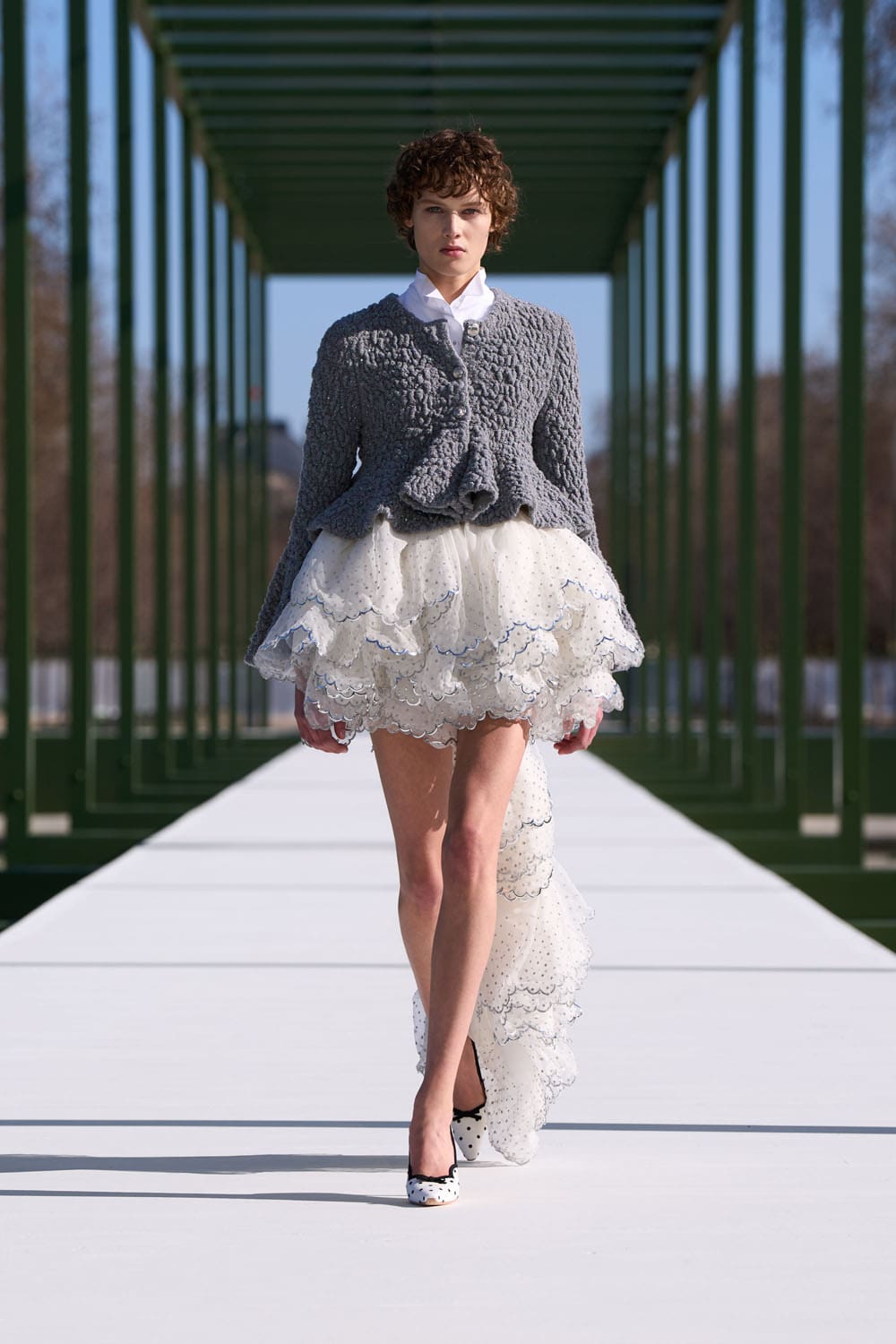
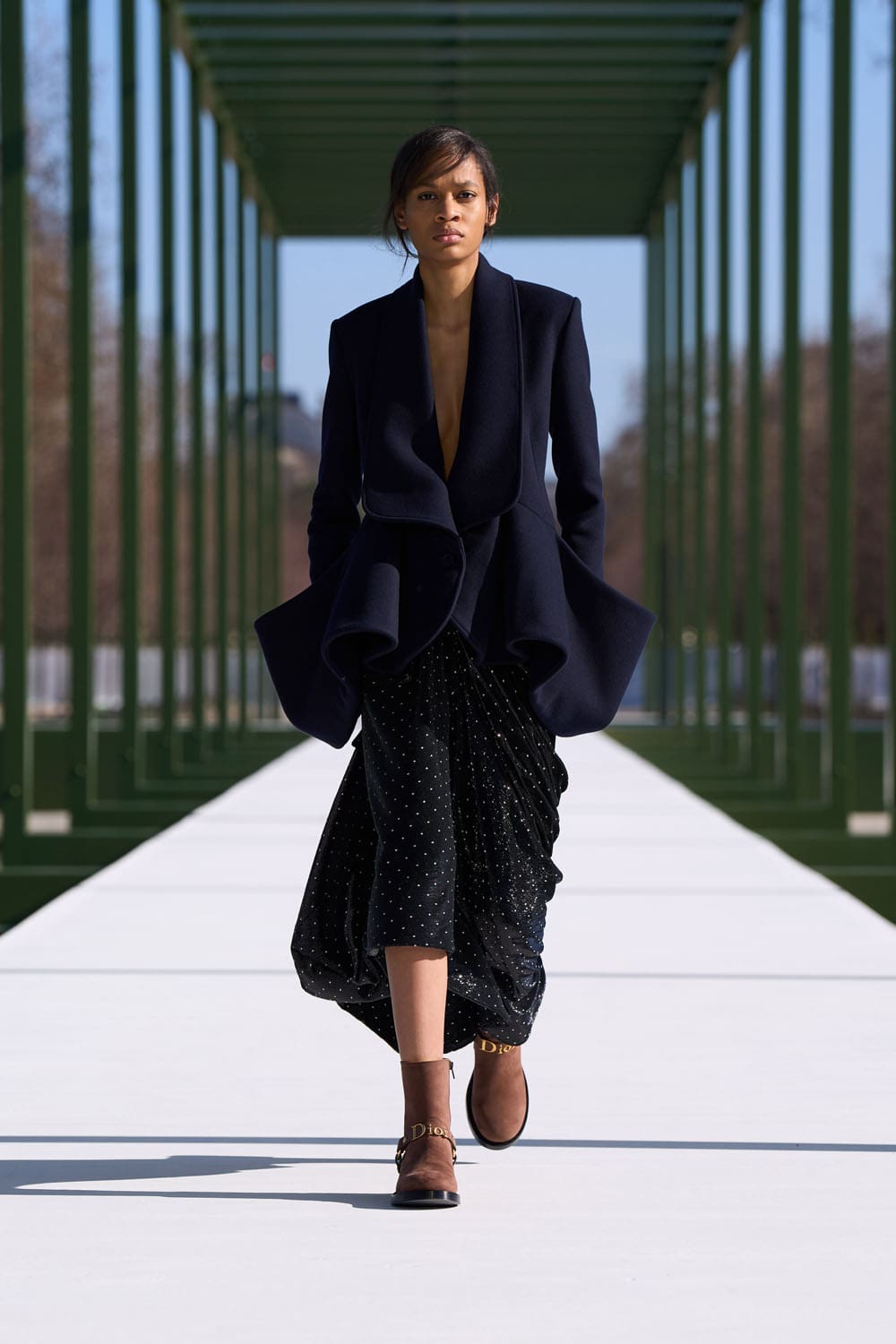
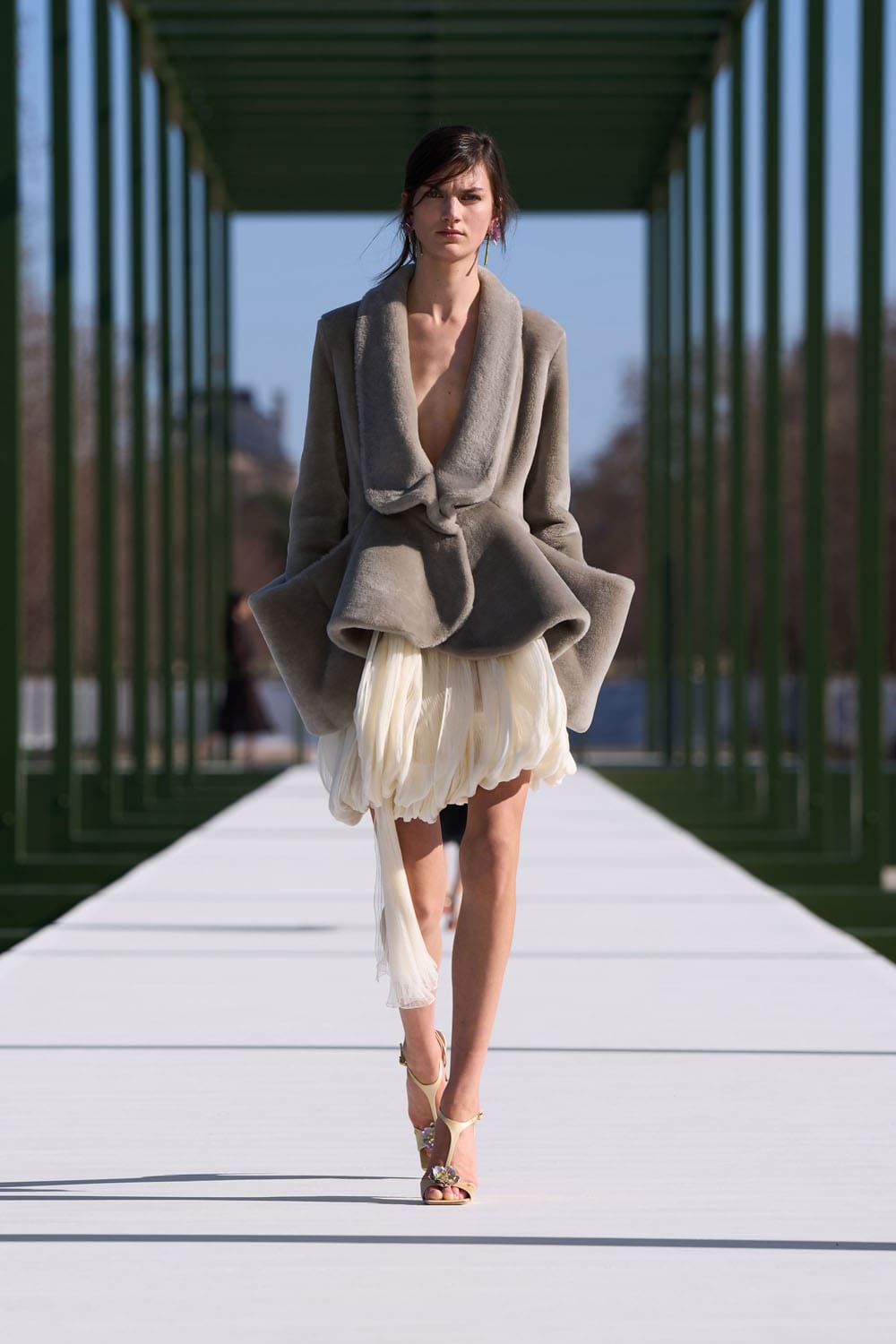
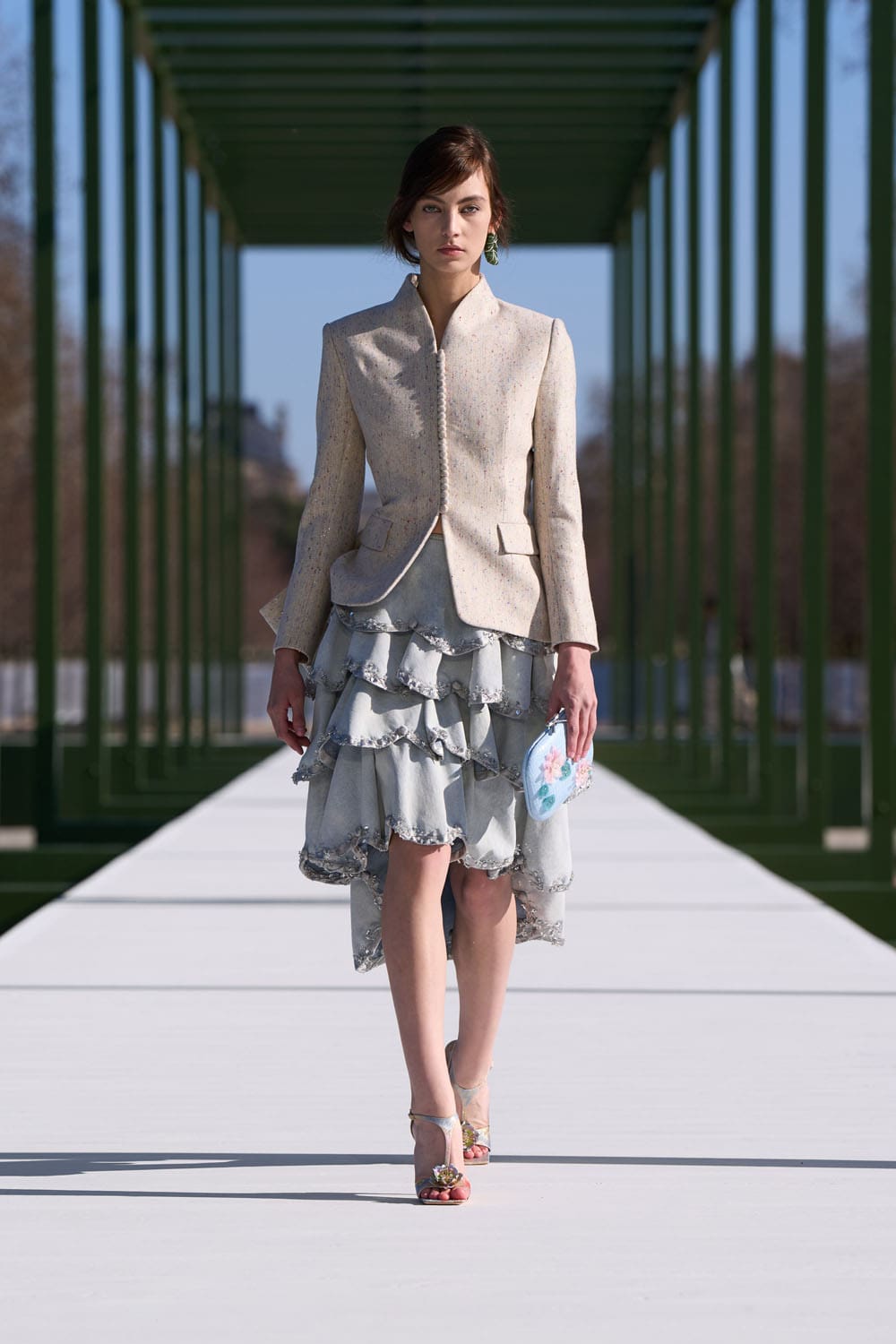
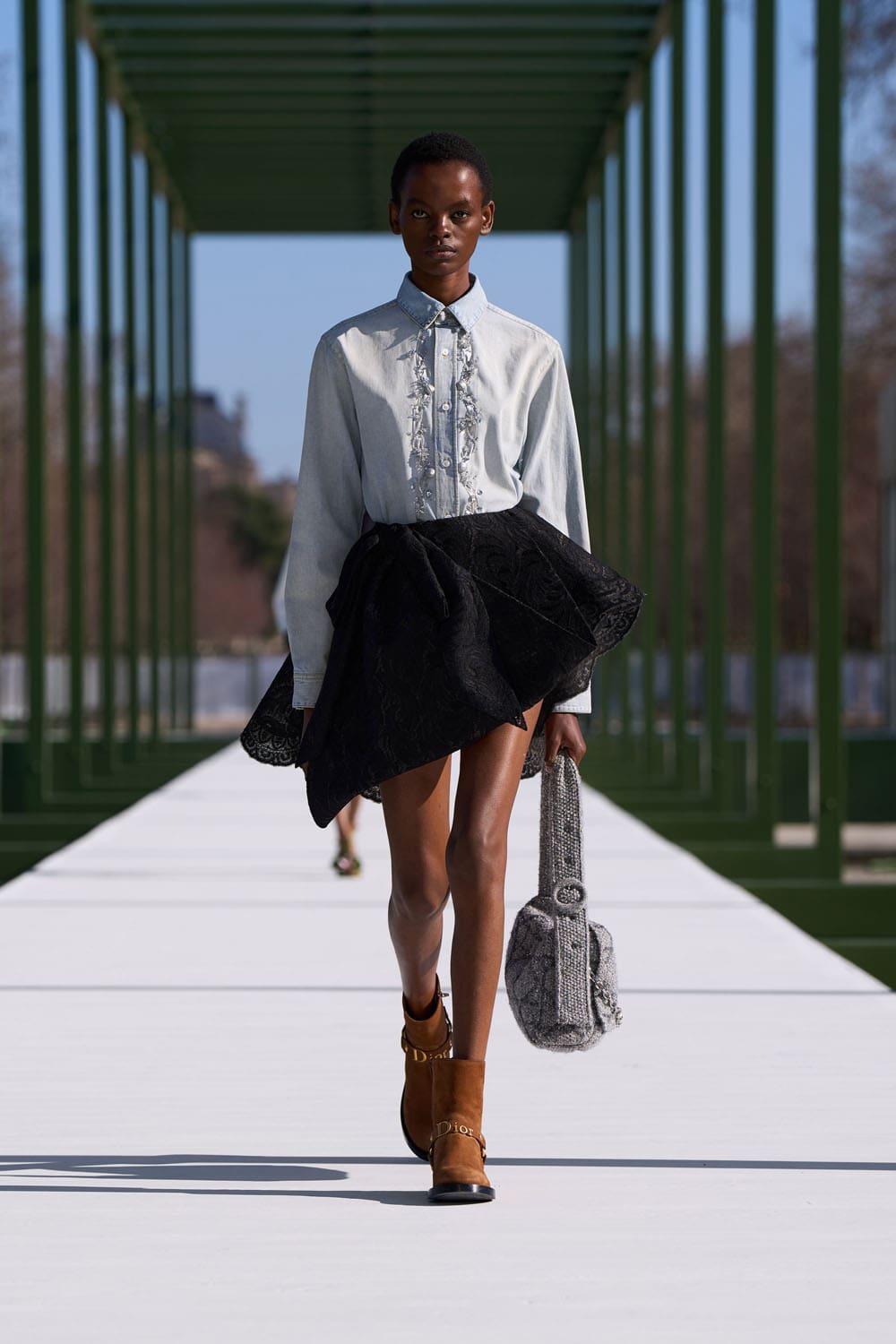
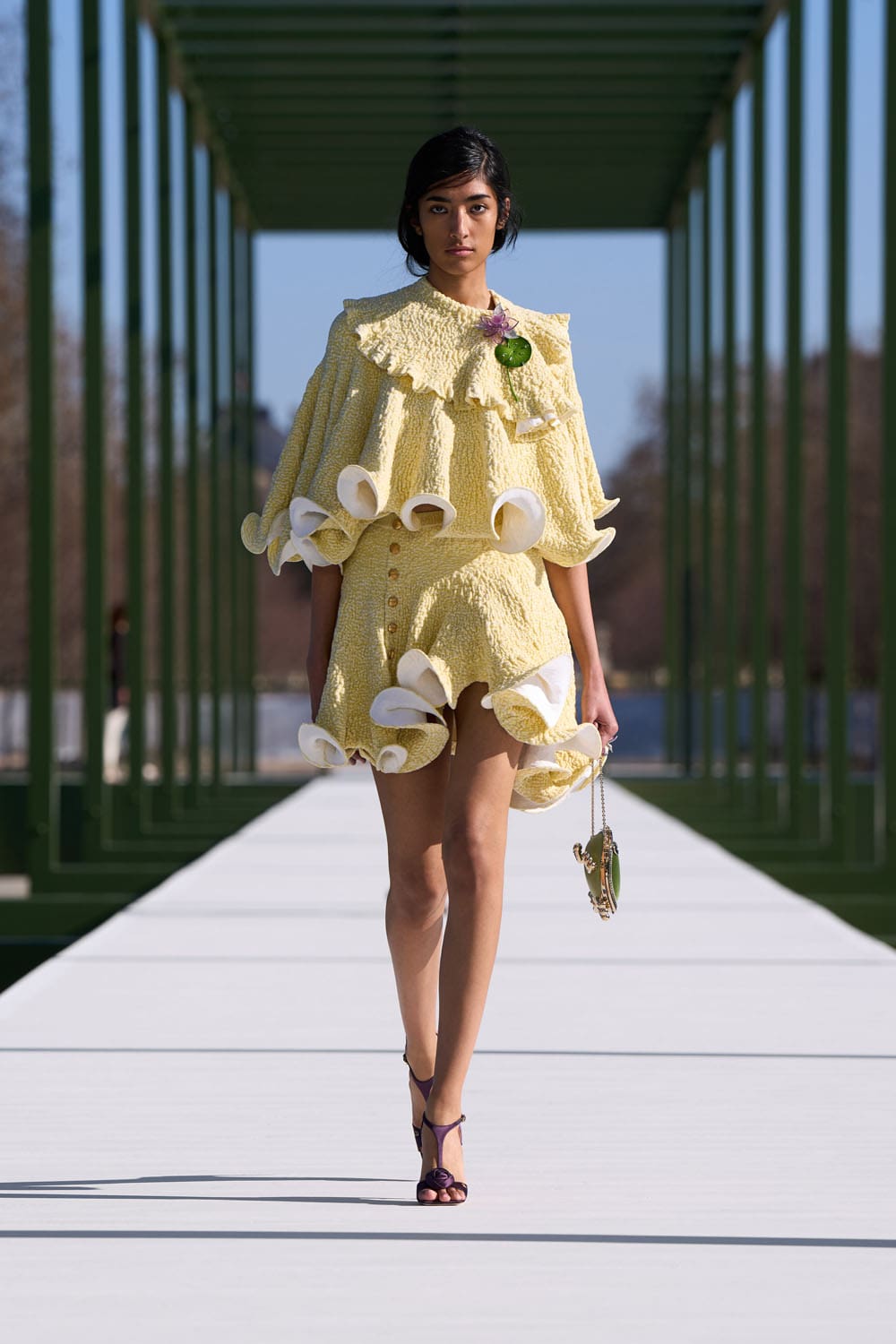
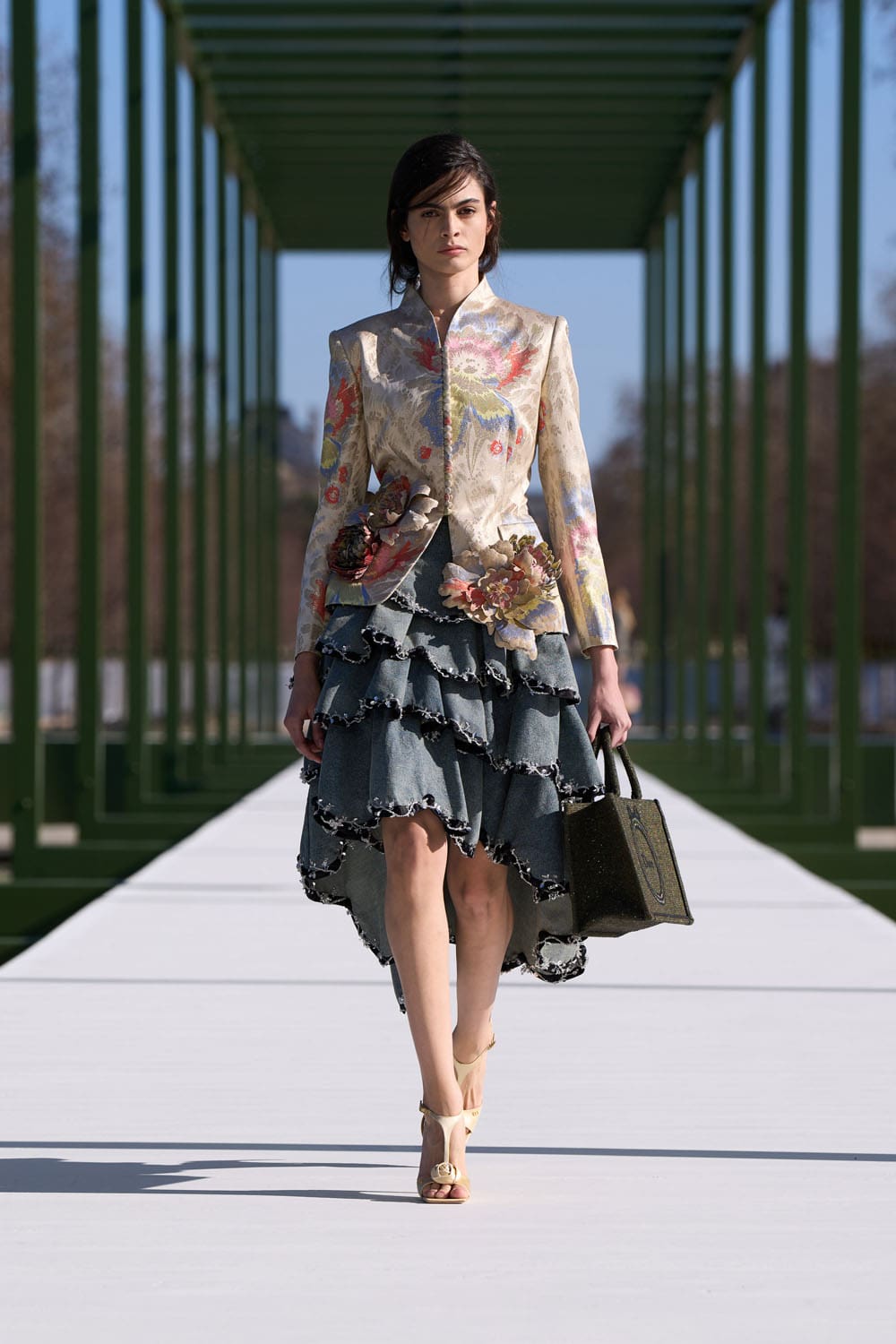
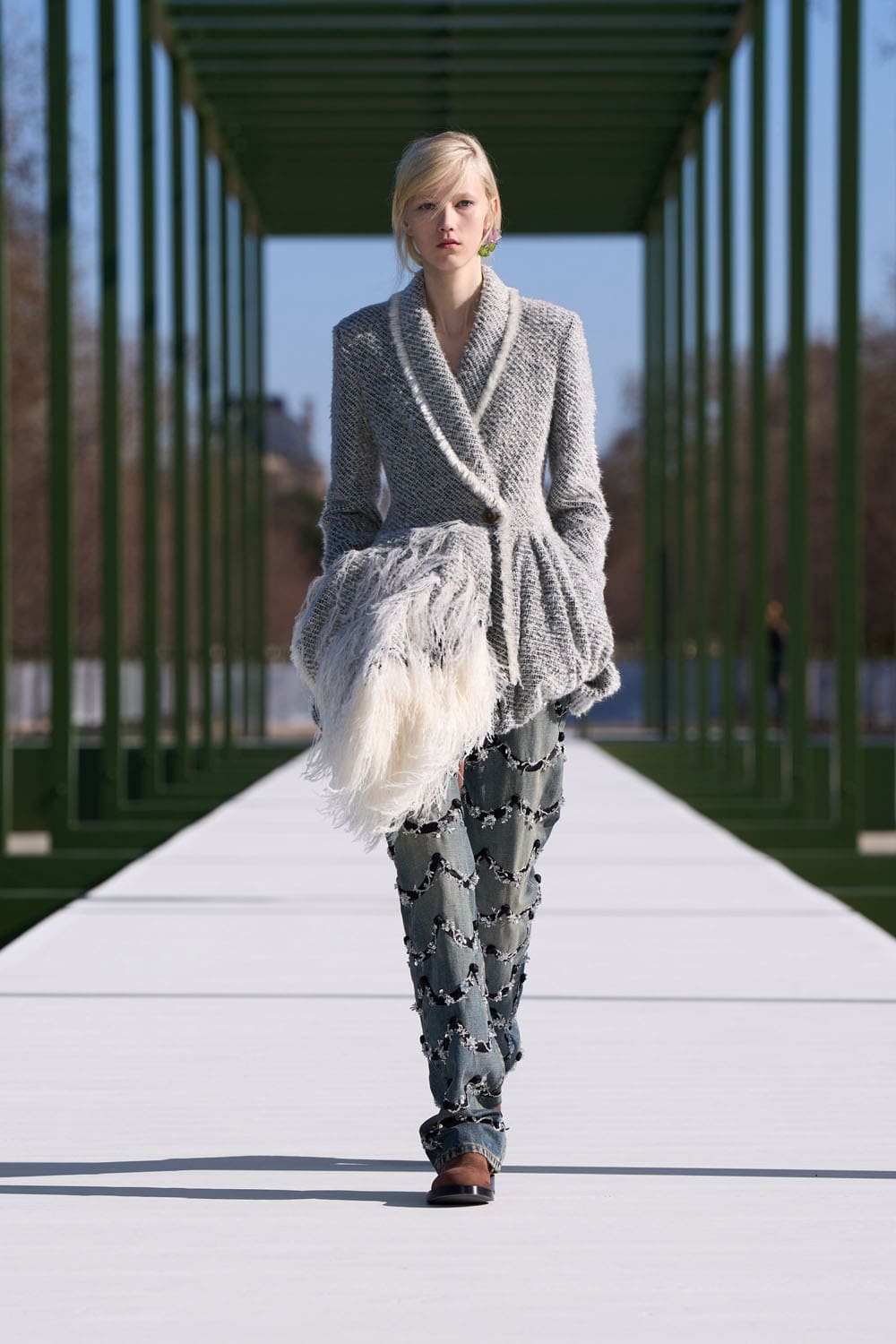
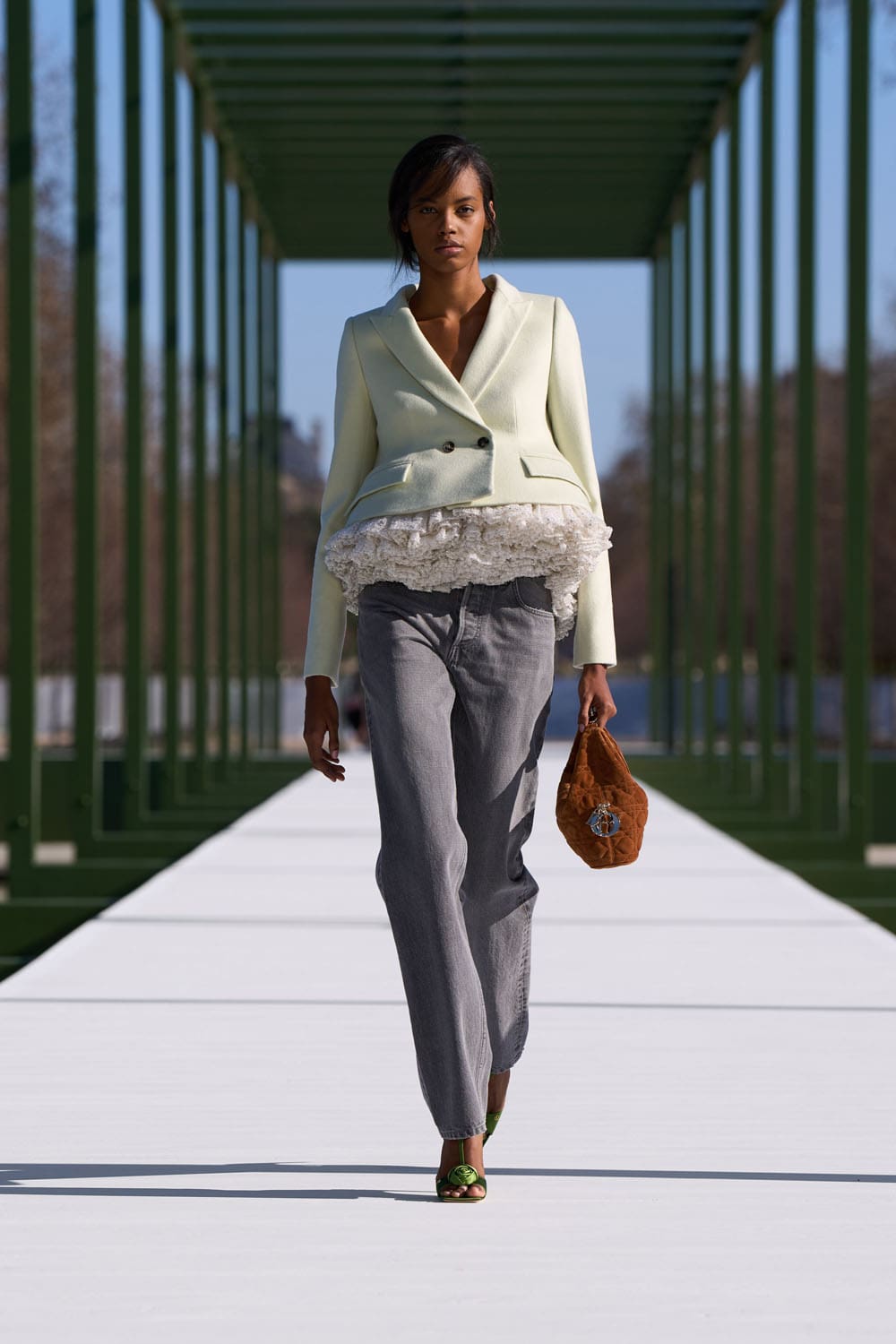
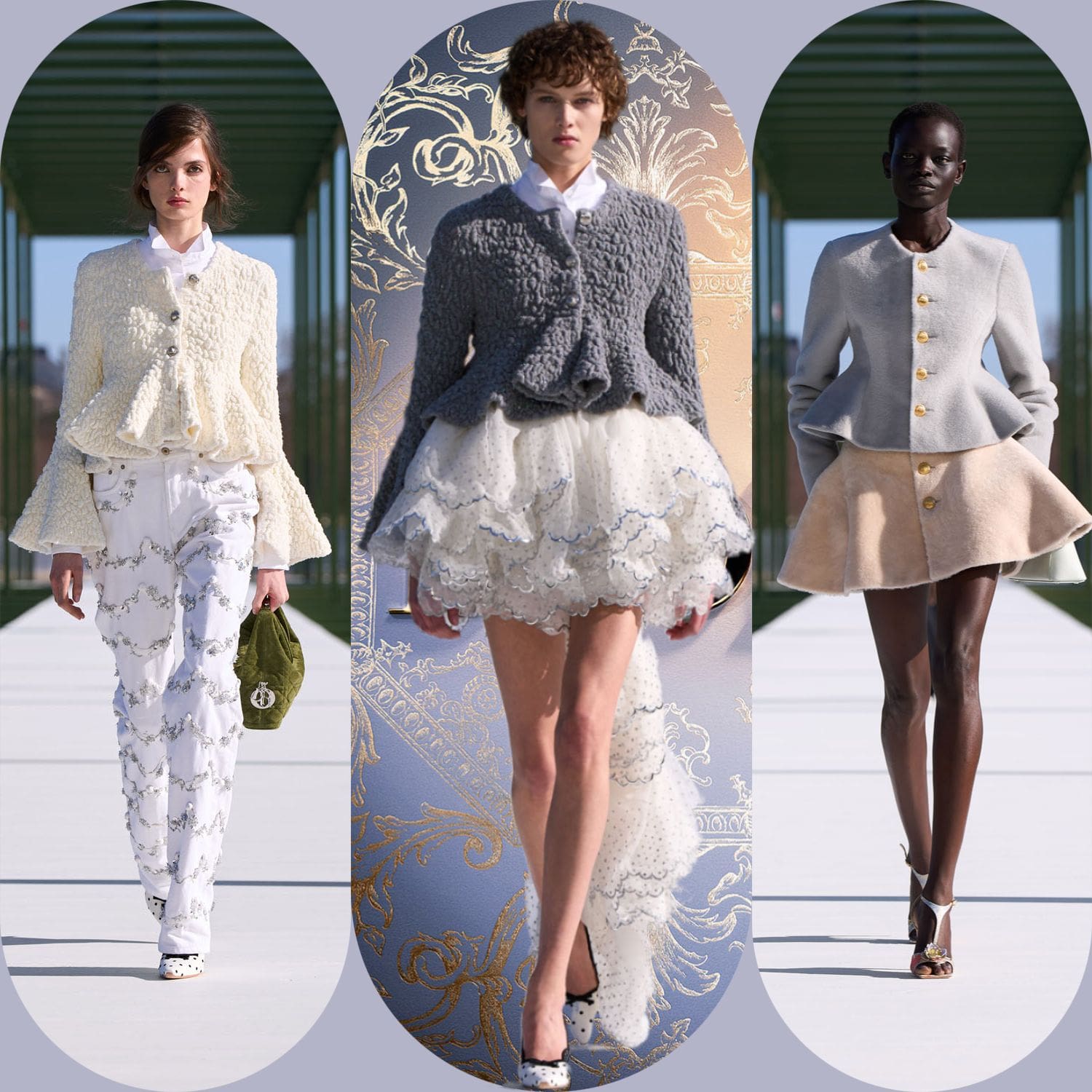
The collection opens with structured jackets paired with ruffled skirts that descend in fountains of tulle, evoking Radclyffe Hall’s imagery of spray and rainbowed mist. Anderson treats the walk through the park as a procession — a moment when ordinary steps acquire theatrical weight.
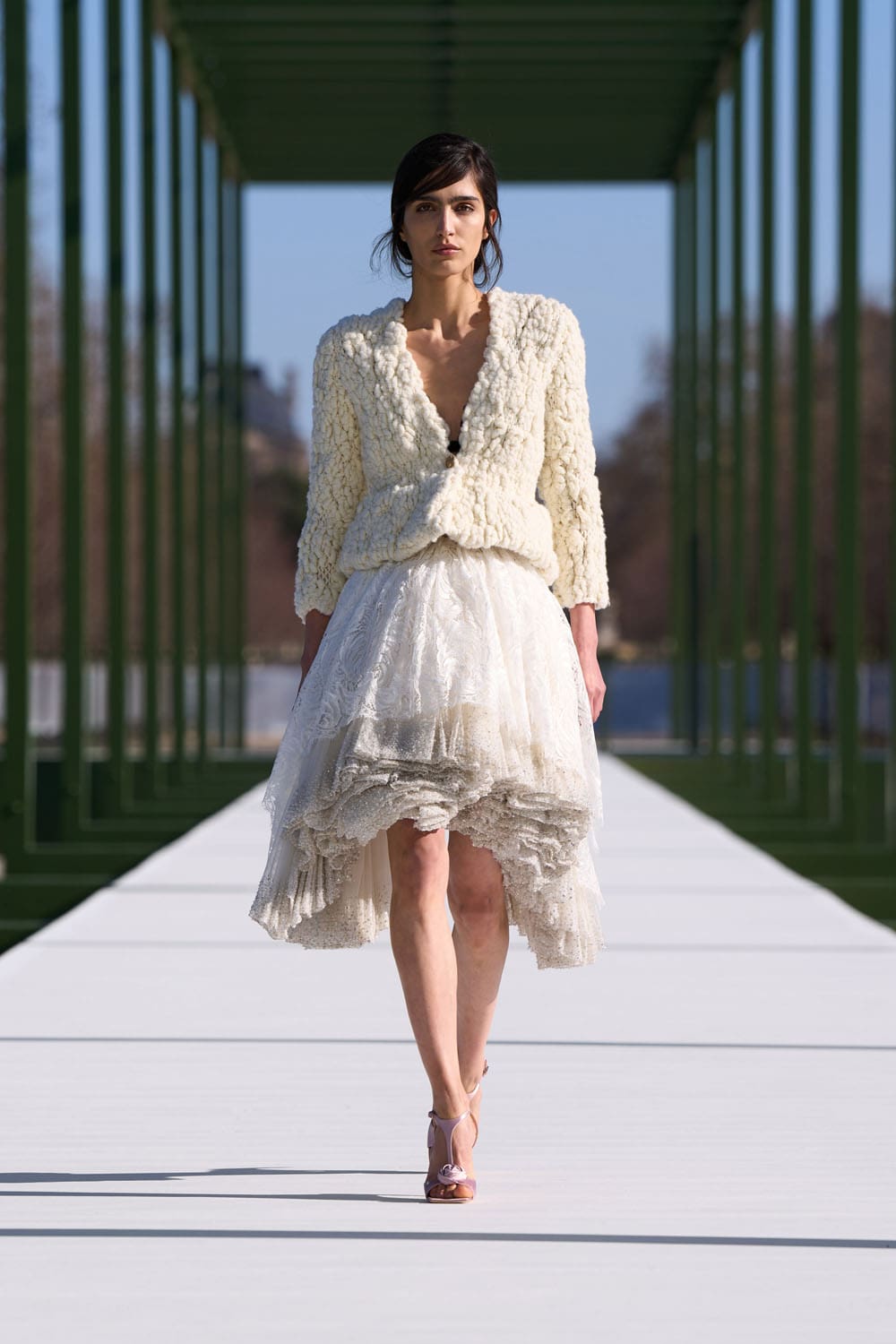
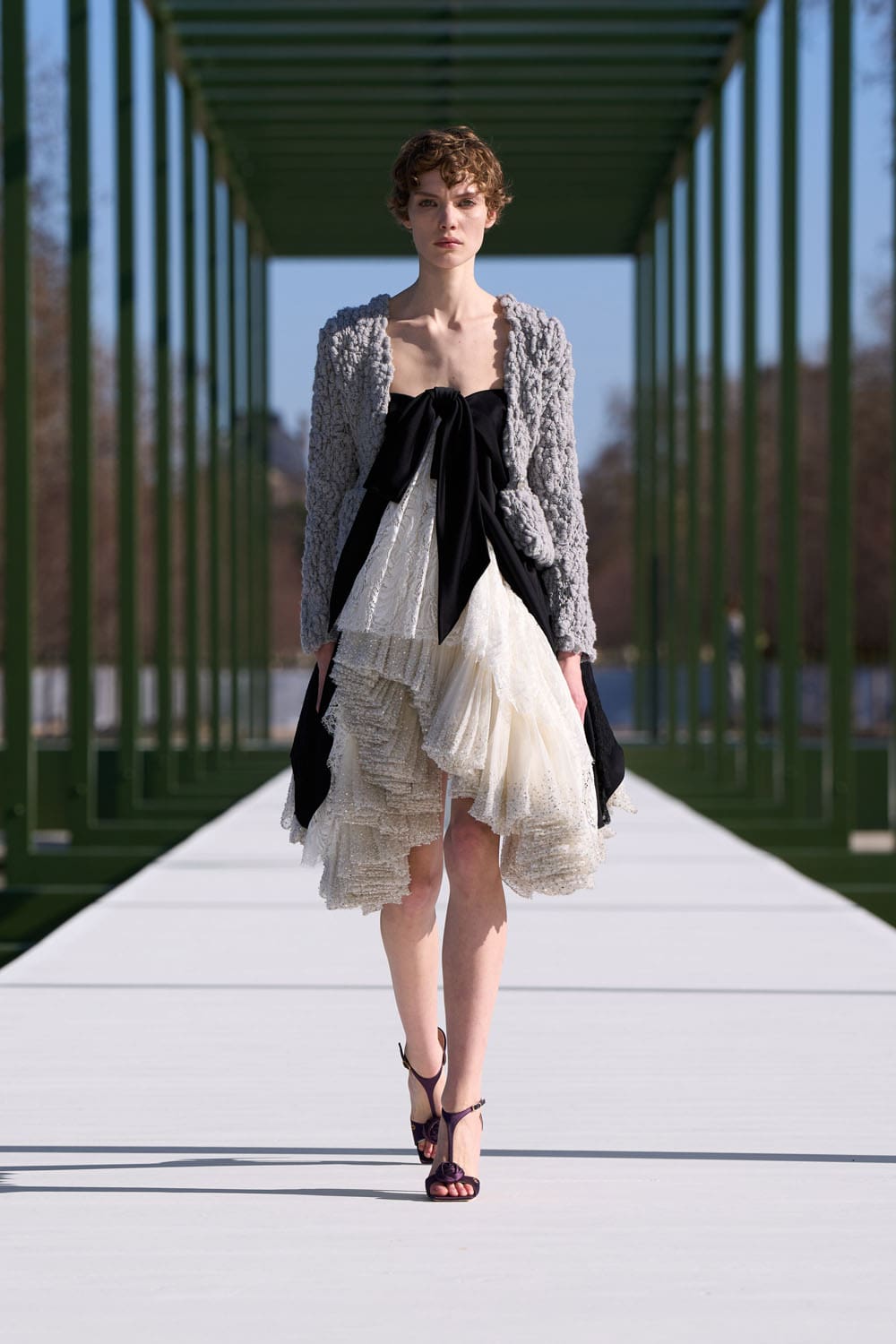
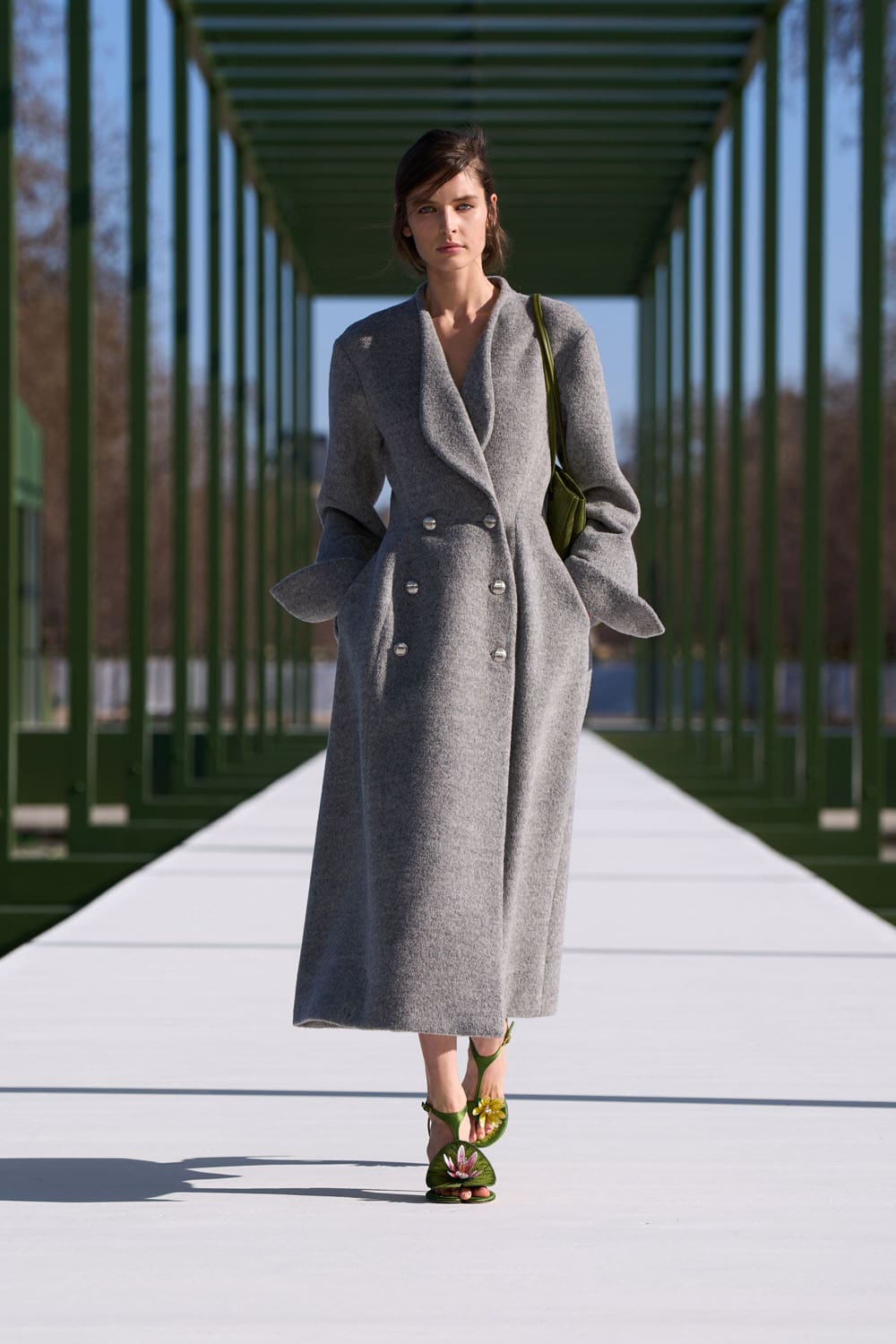
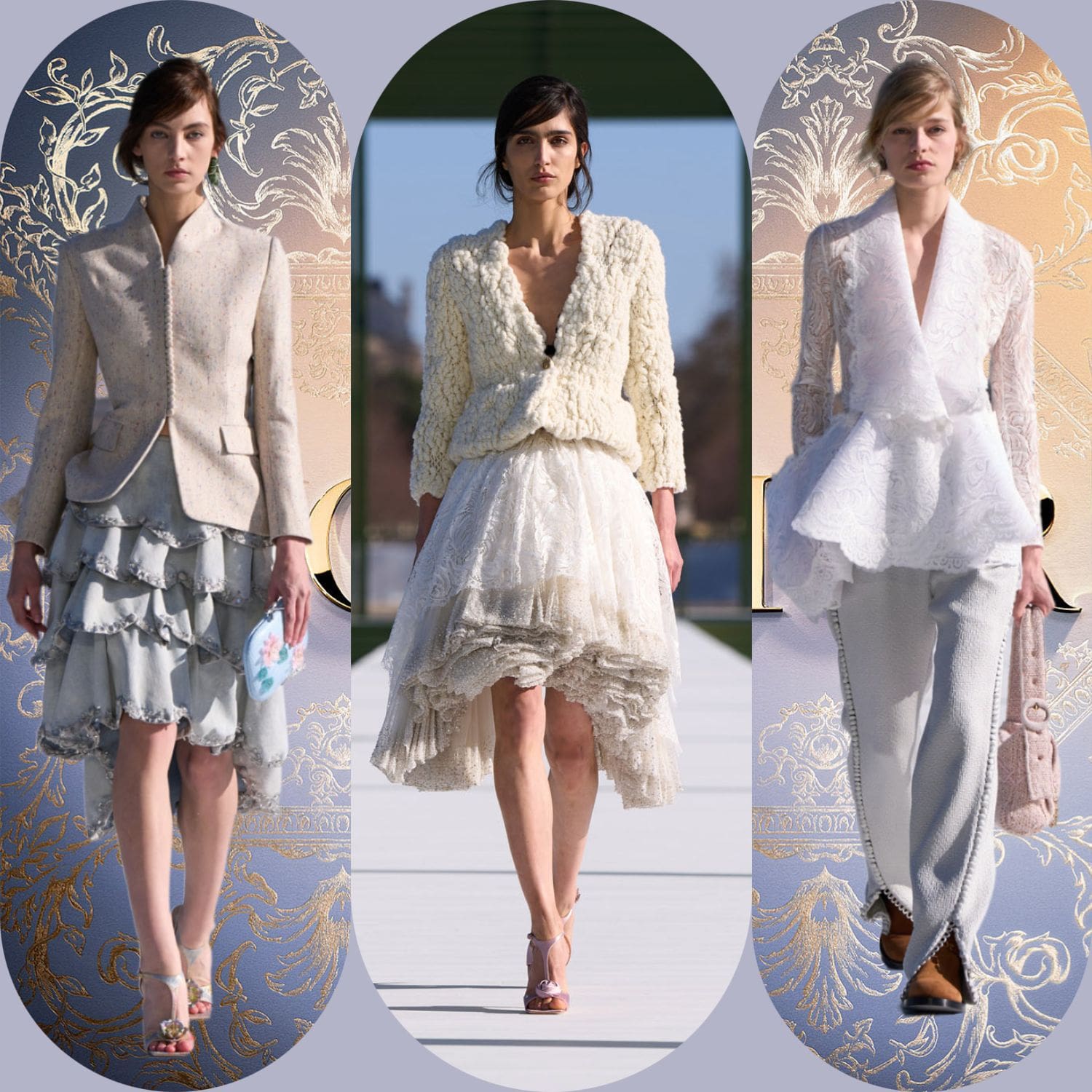
Grey and cream layers fall in uneven cascades, trimmed with micro-lace, giving the impression of flowers cresting just before bloom. The proportions are short in front, elongated behind, turning each model into a moving axis of asymmetry. Dior’s historical attachment to the promenade becomes literal.
Botanical Engineering
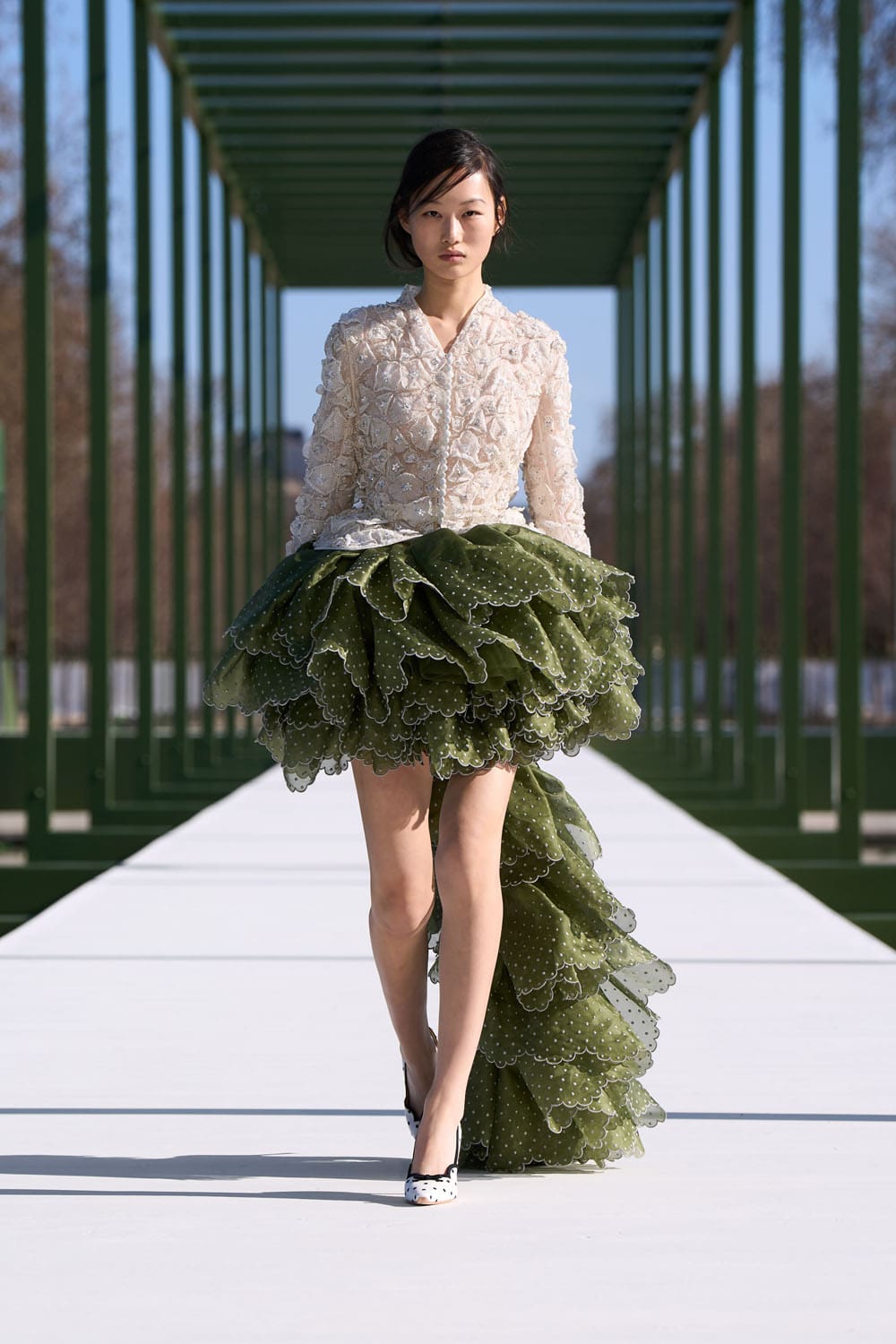
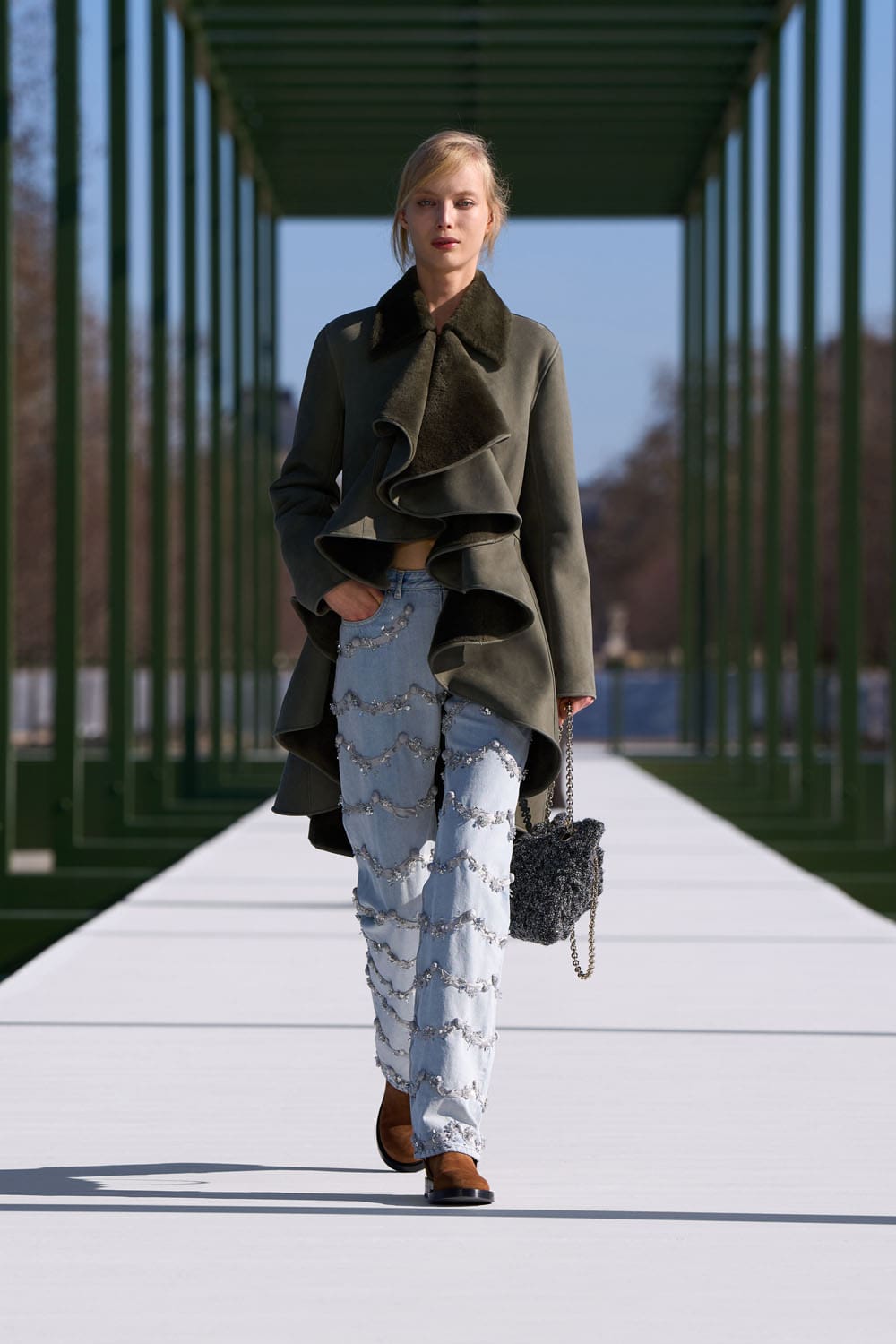
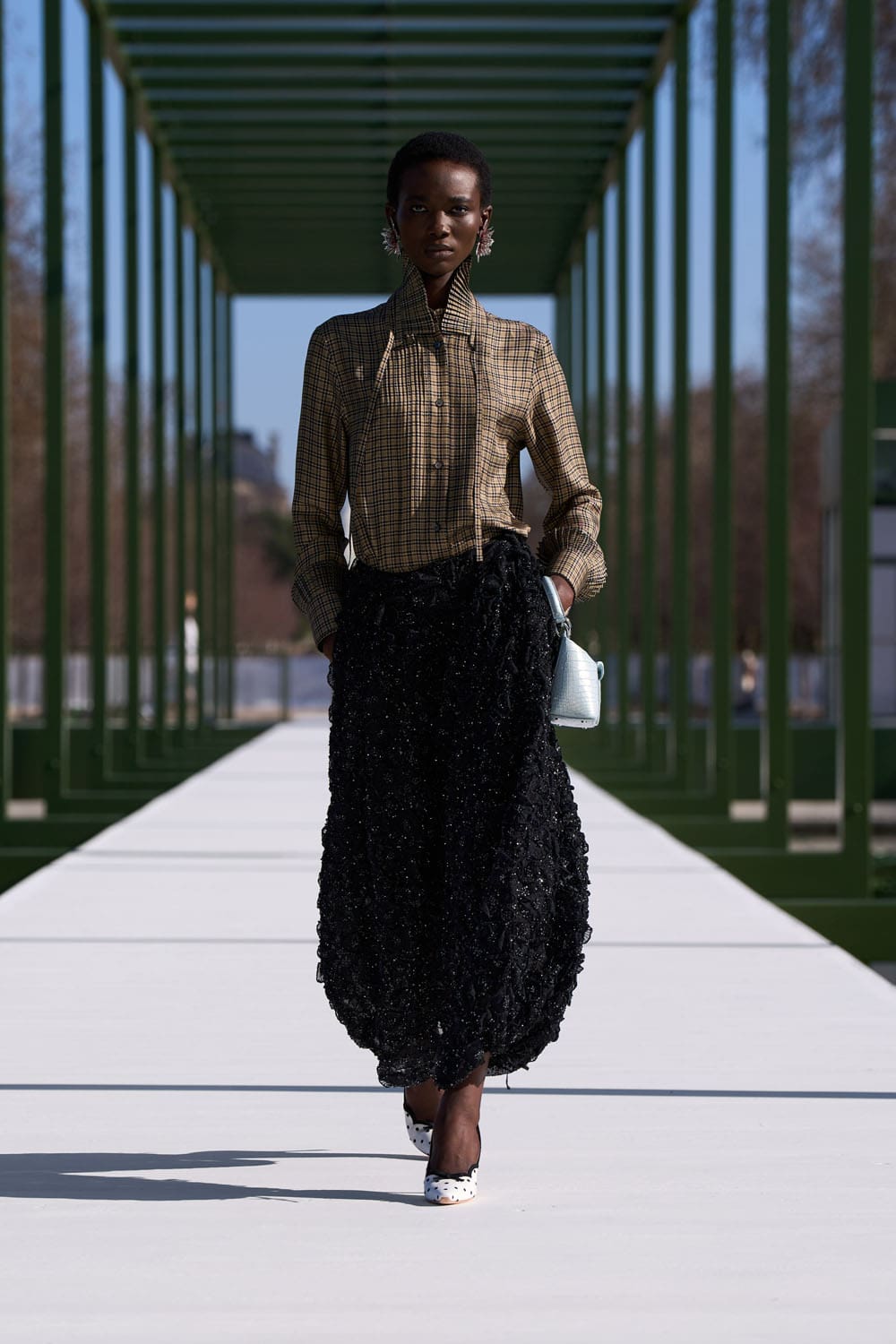
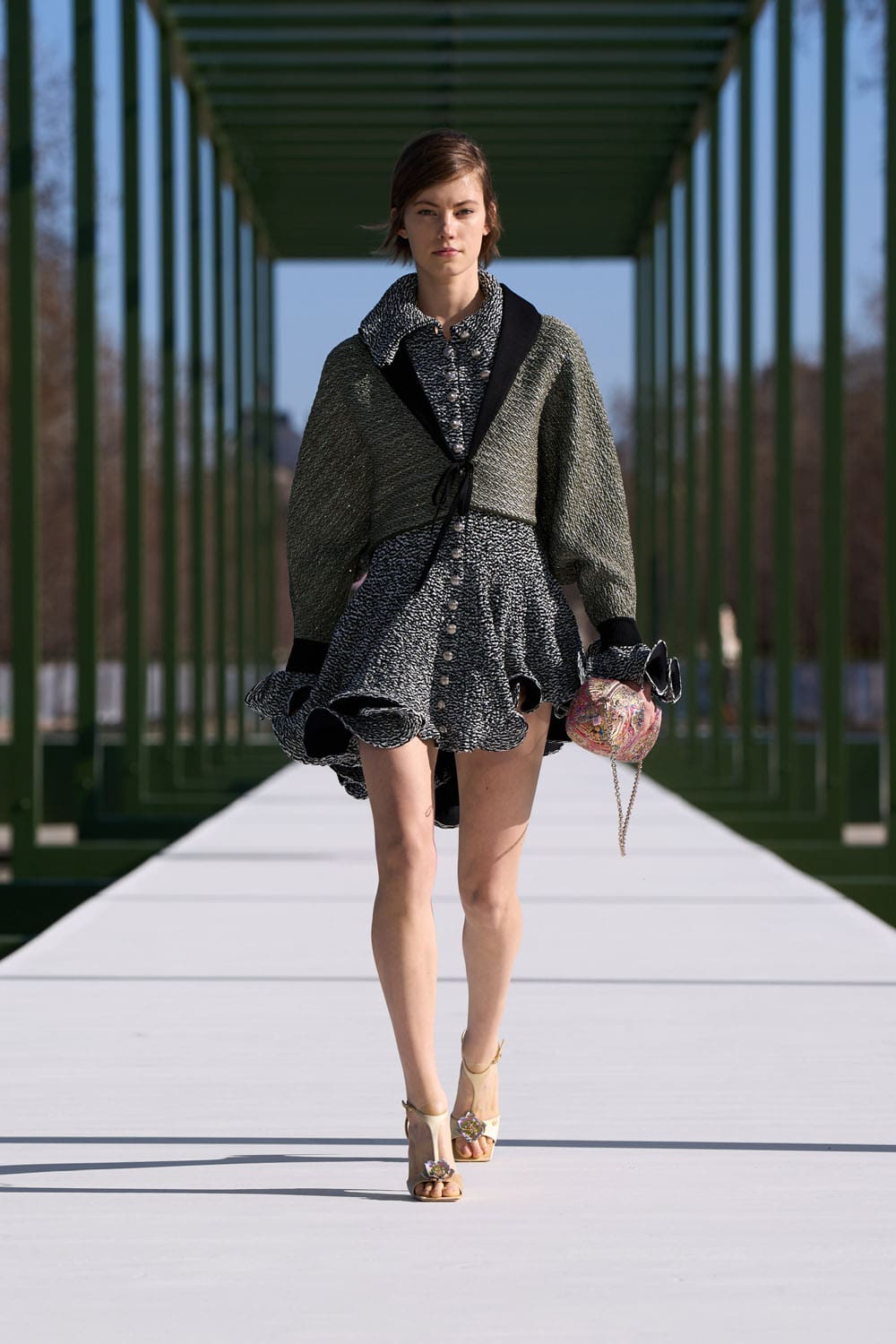
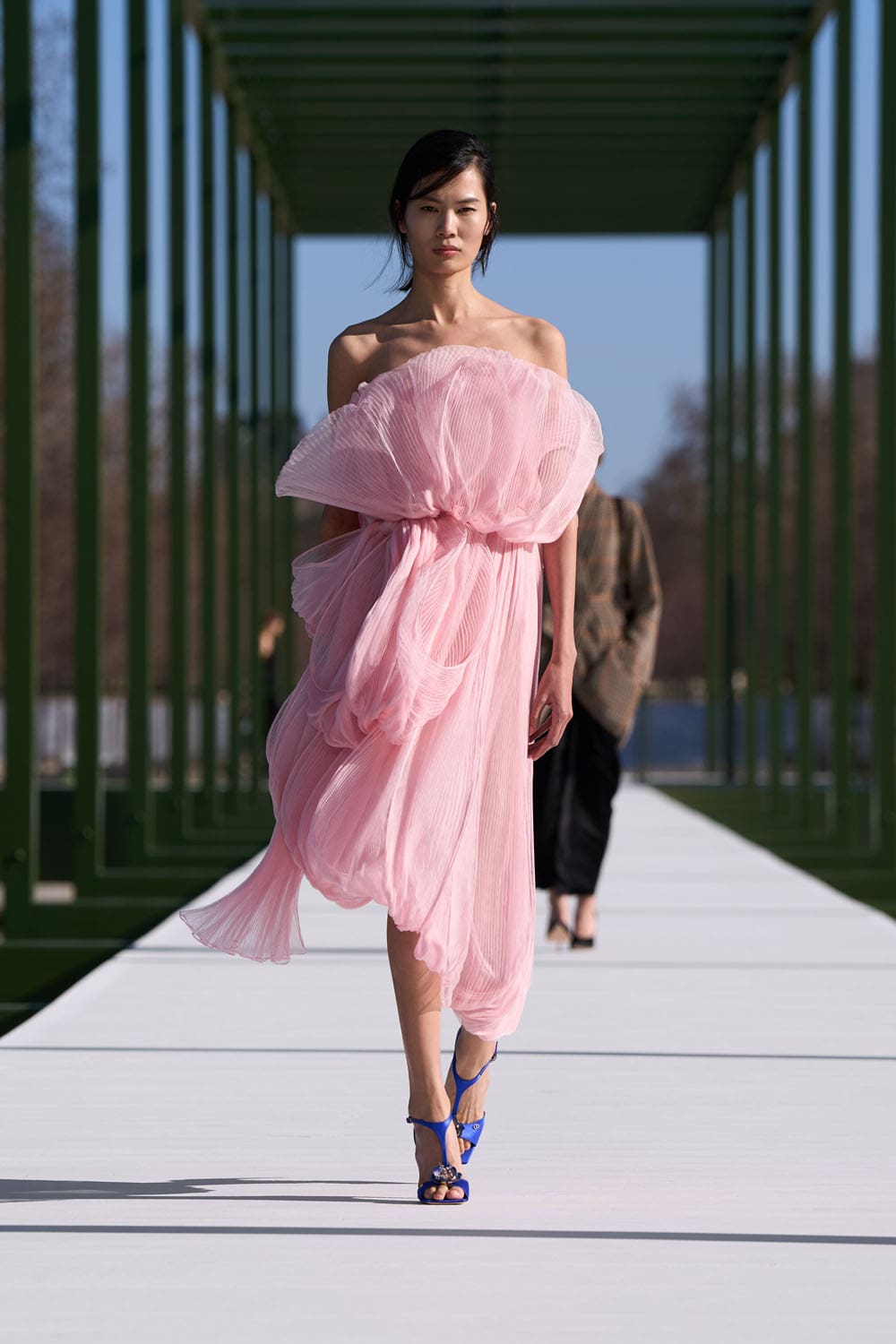
In the green polka-dot ruffle look, the garden becomes garment. Anderson reinterprets the floral vocabulary not through print, but through volume: leaves, buds, petals. The silhouette swells outward in controlled abundance, like a topiary deliberately sculpted to the brink of excess.
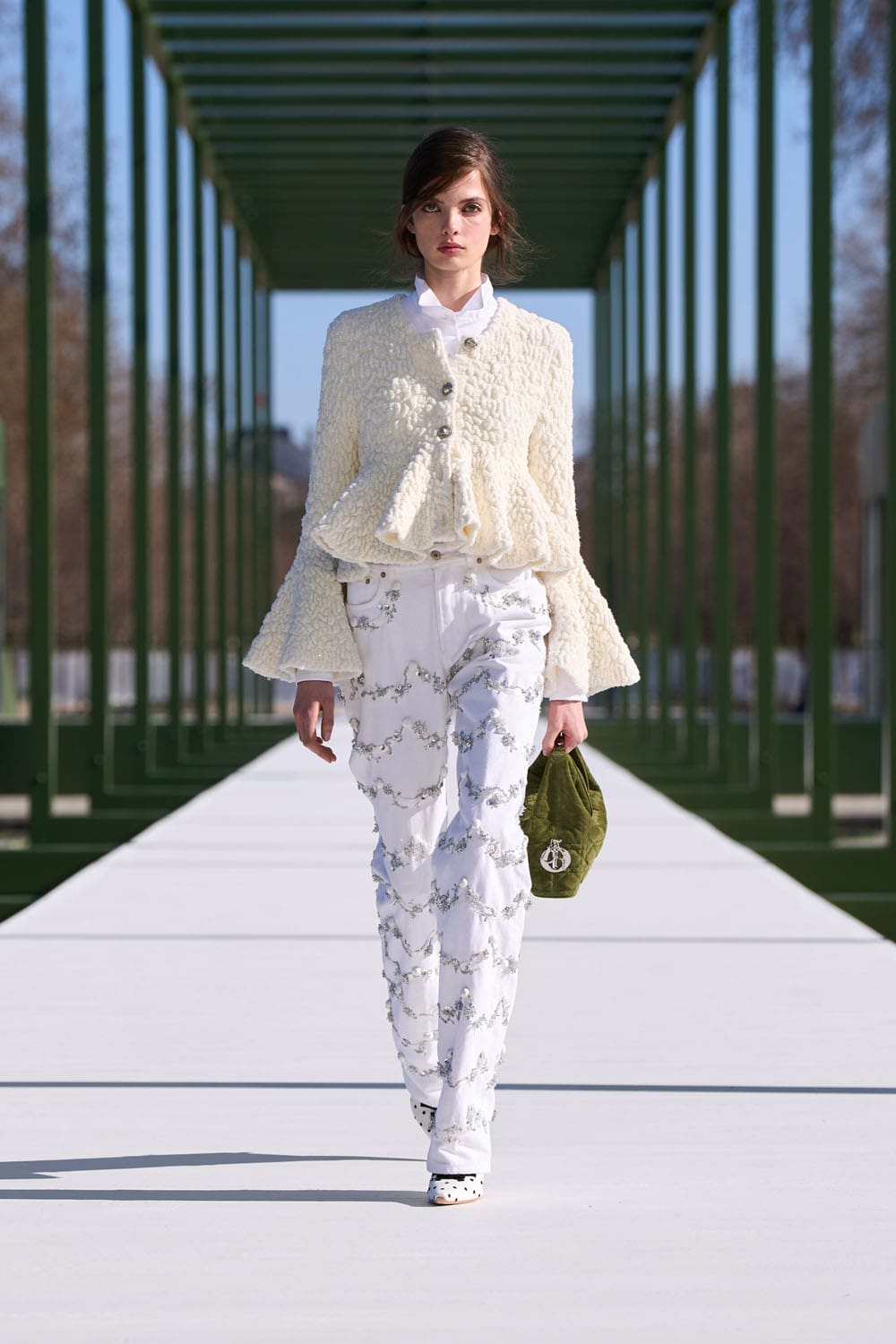
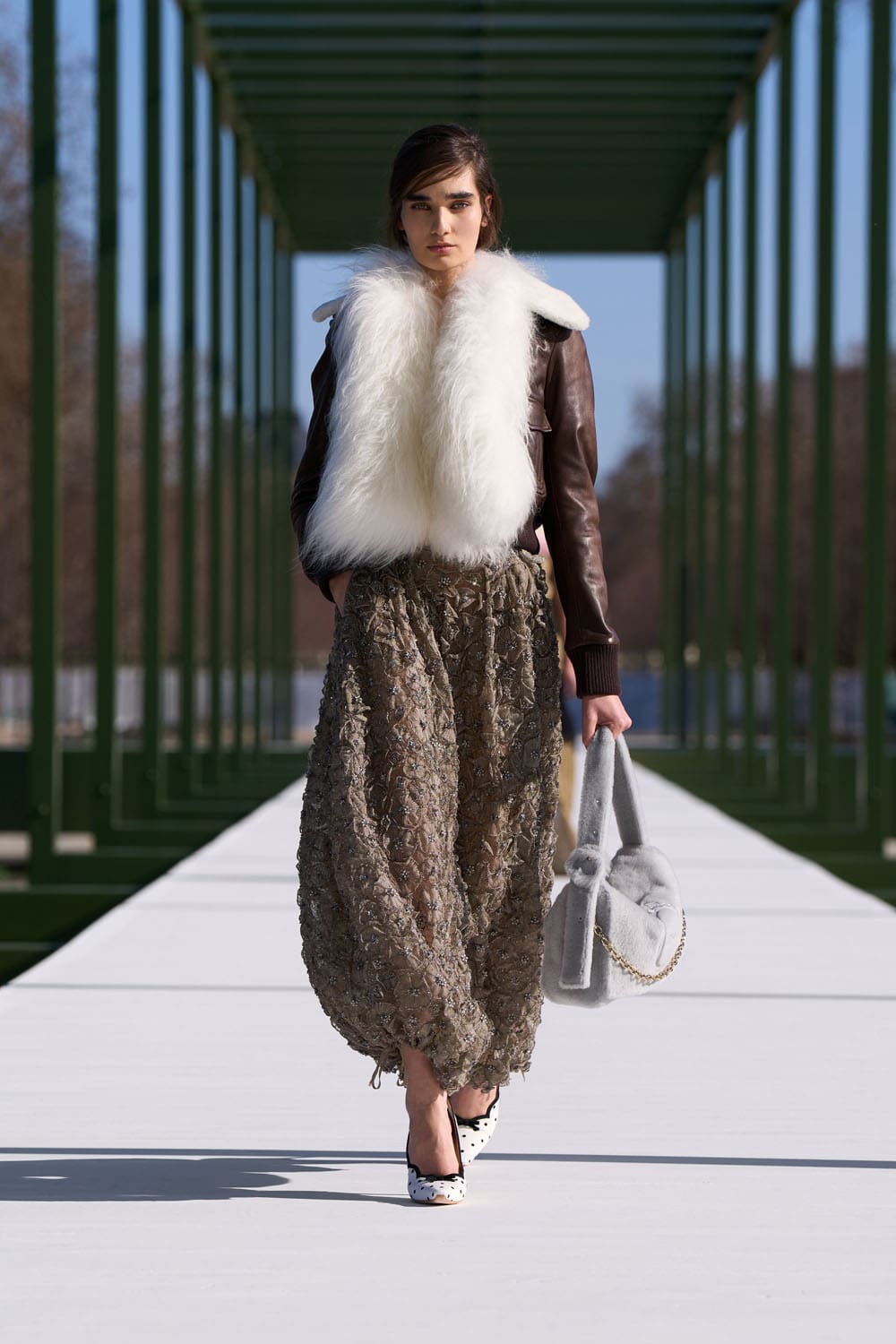
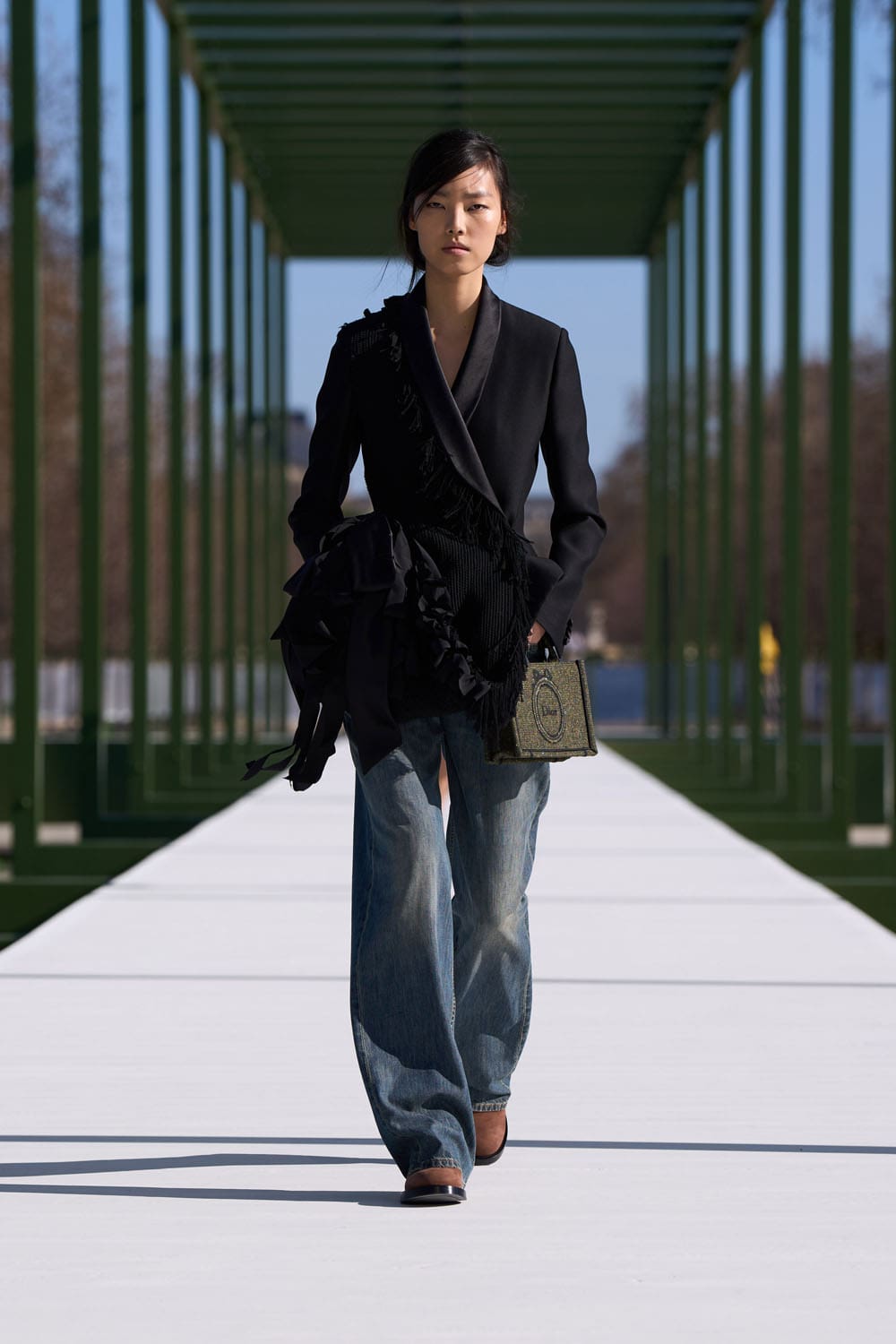
The embroidery on the jackets — ivory, crystalline, textured — suggests frost on morning foliage. It is winter flora, not spring bloom: delicate, structured, slightly brittle, perfectly in tune with the season.
The Craft of Artifice
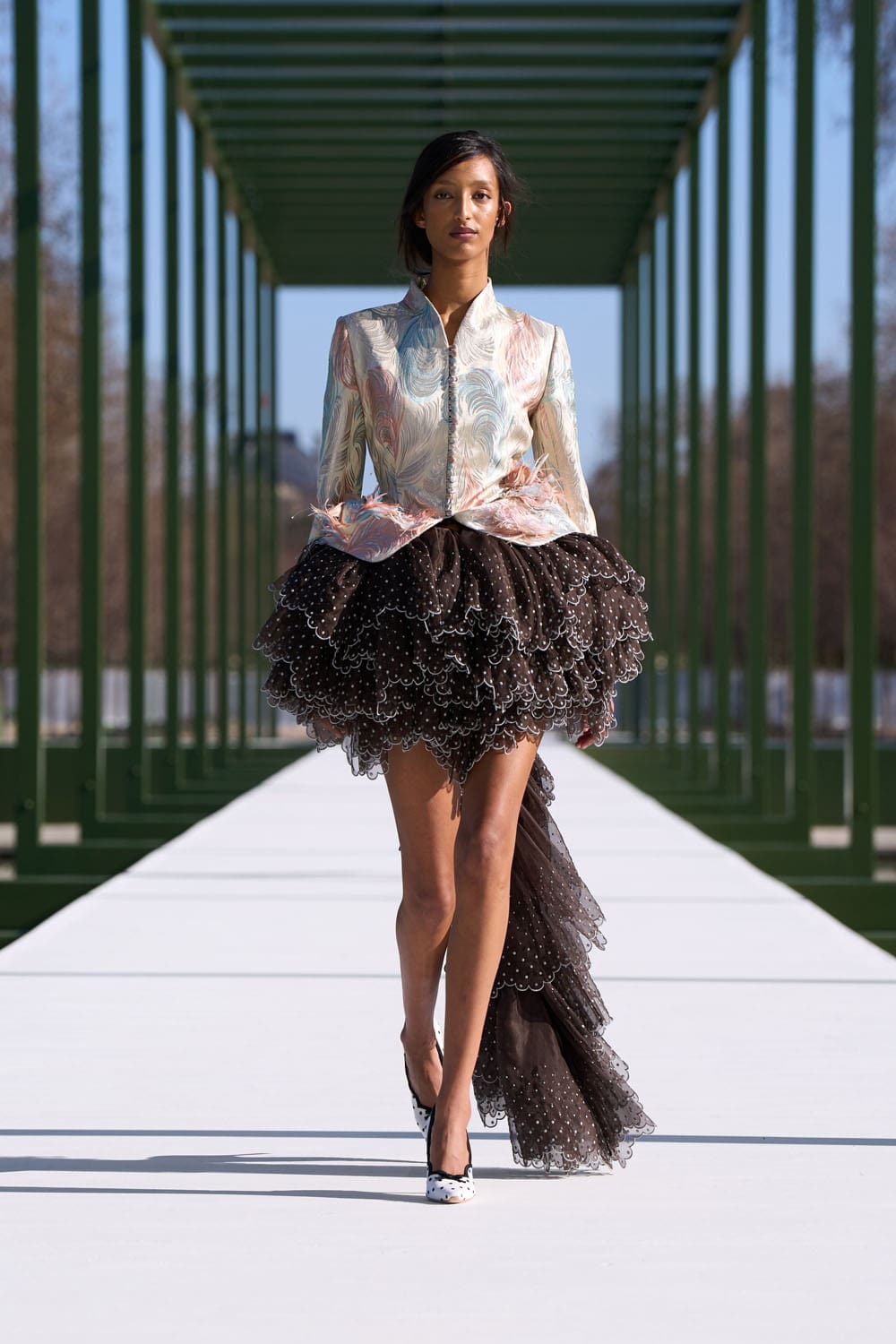
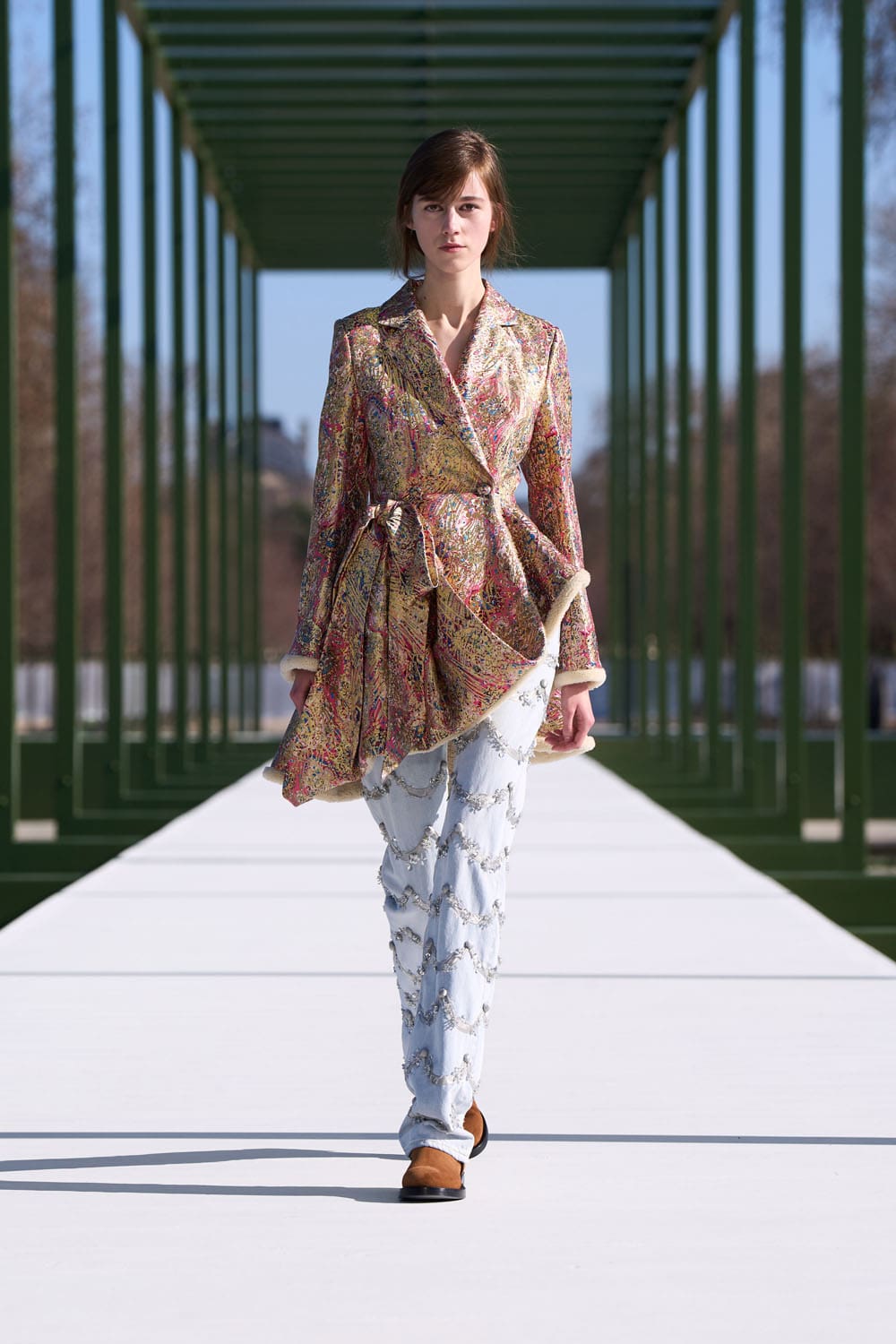
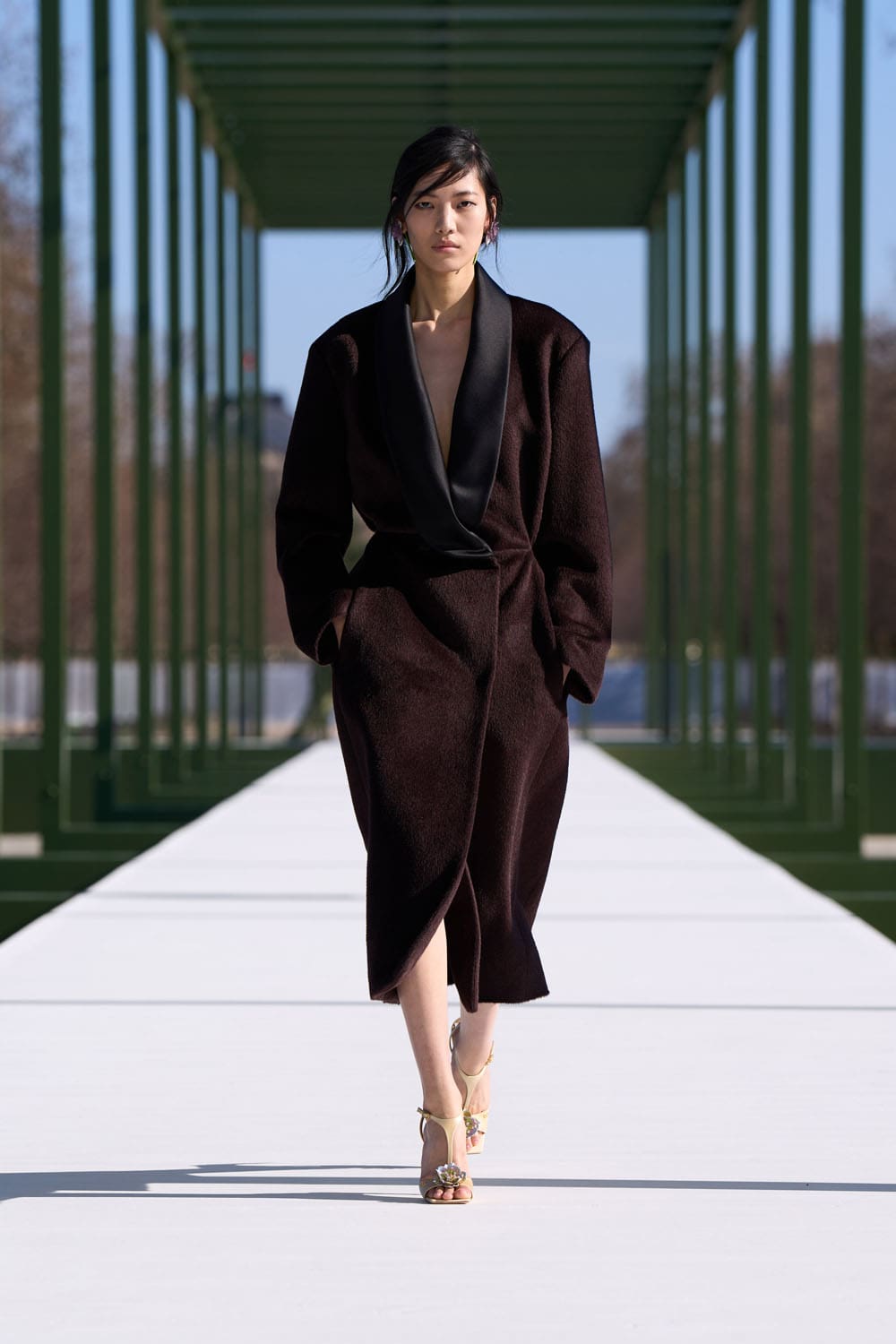
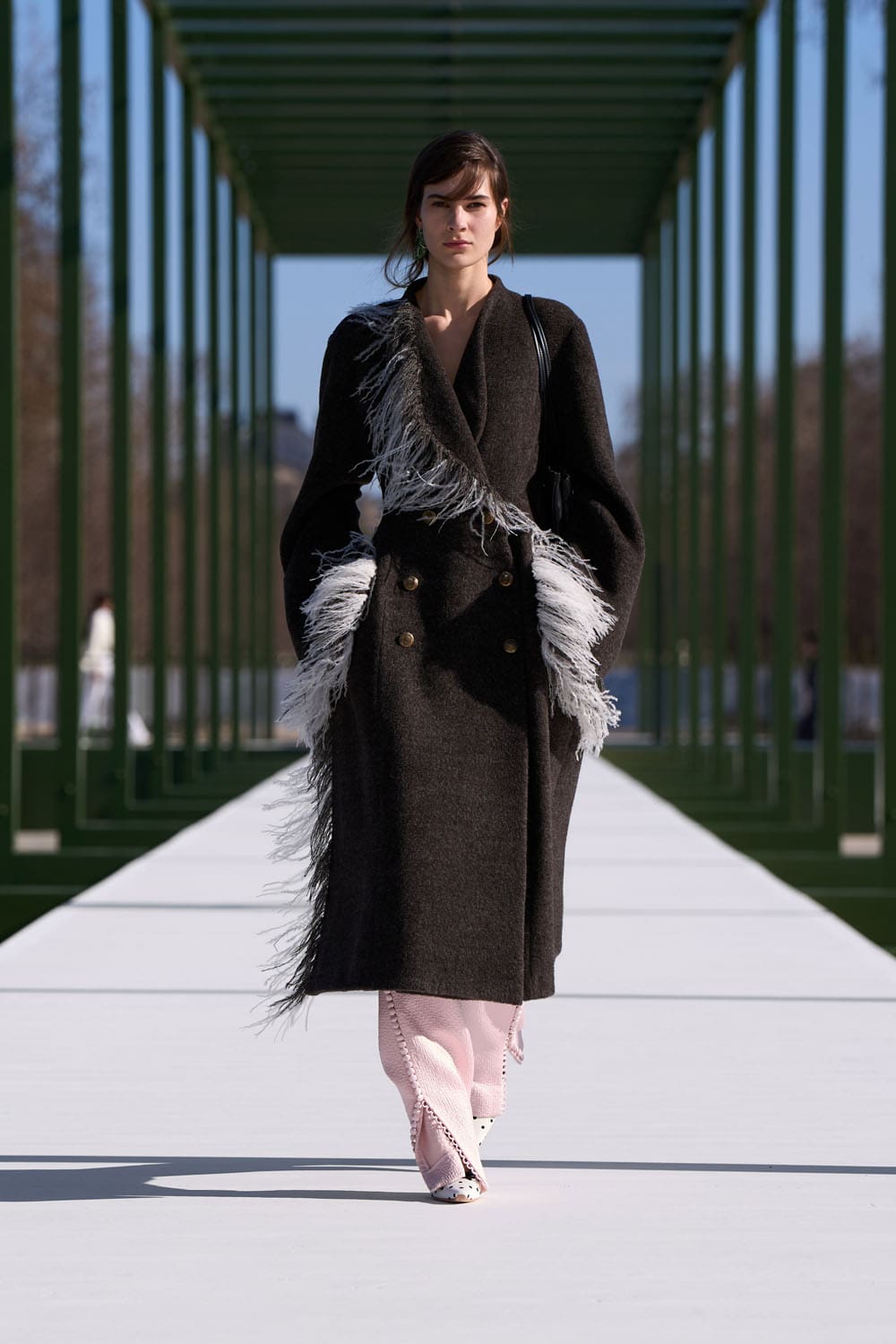
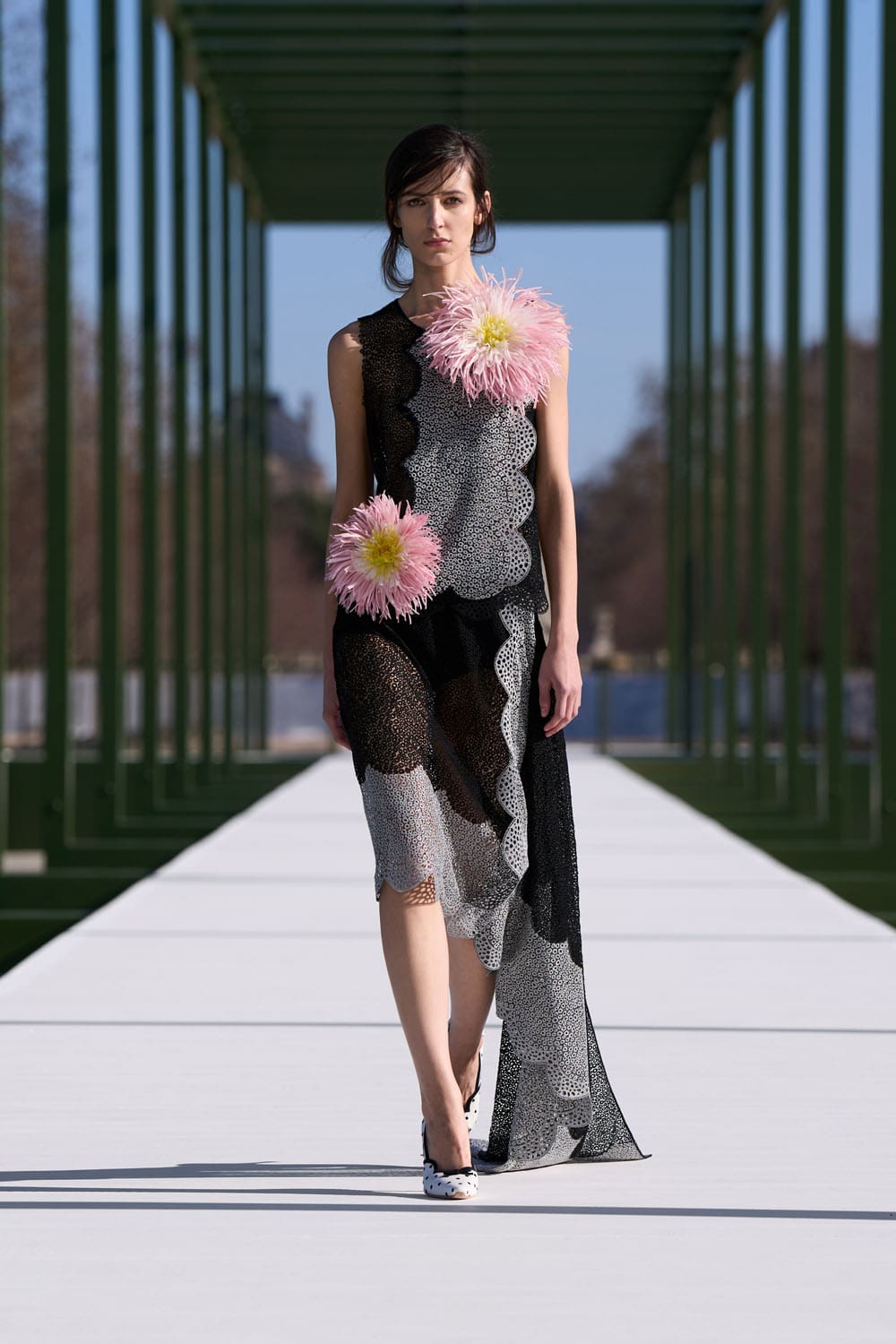
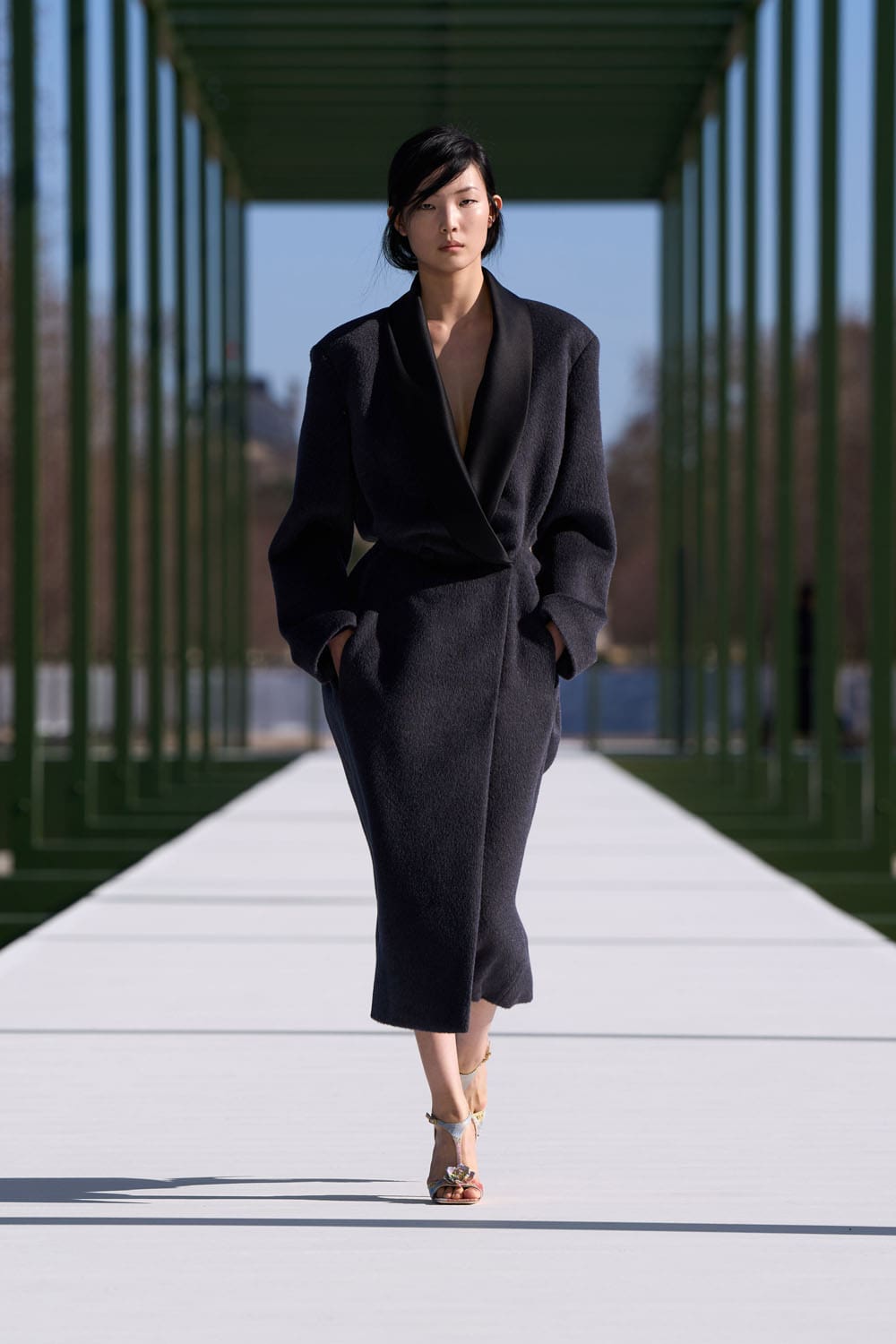
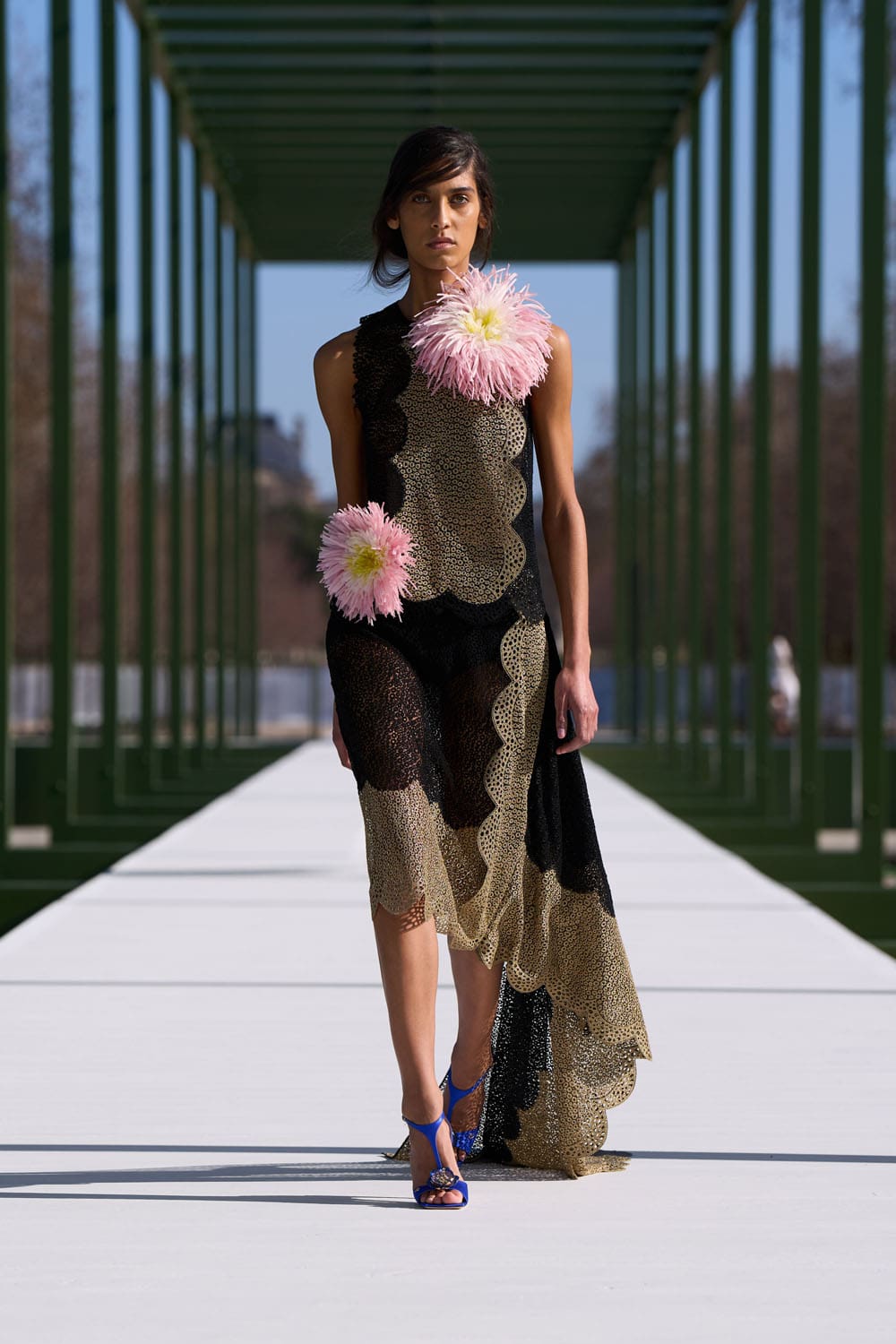
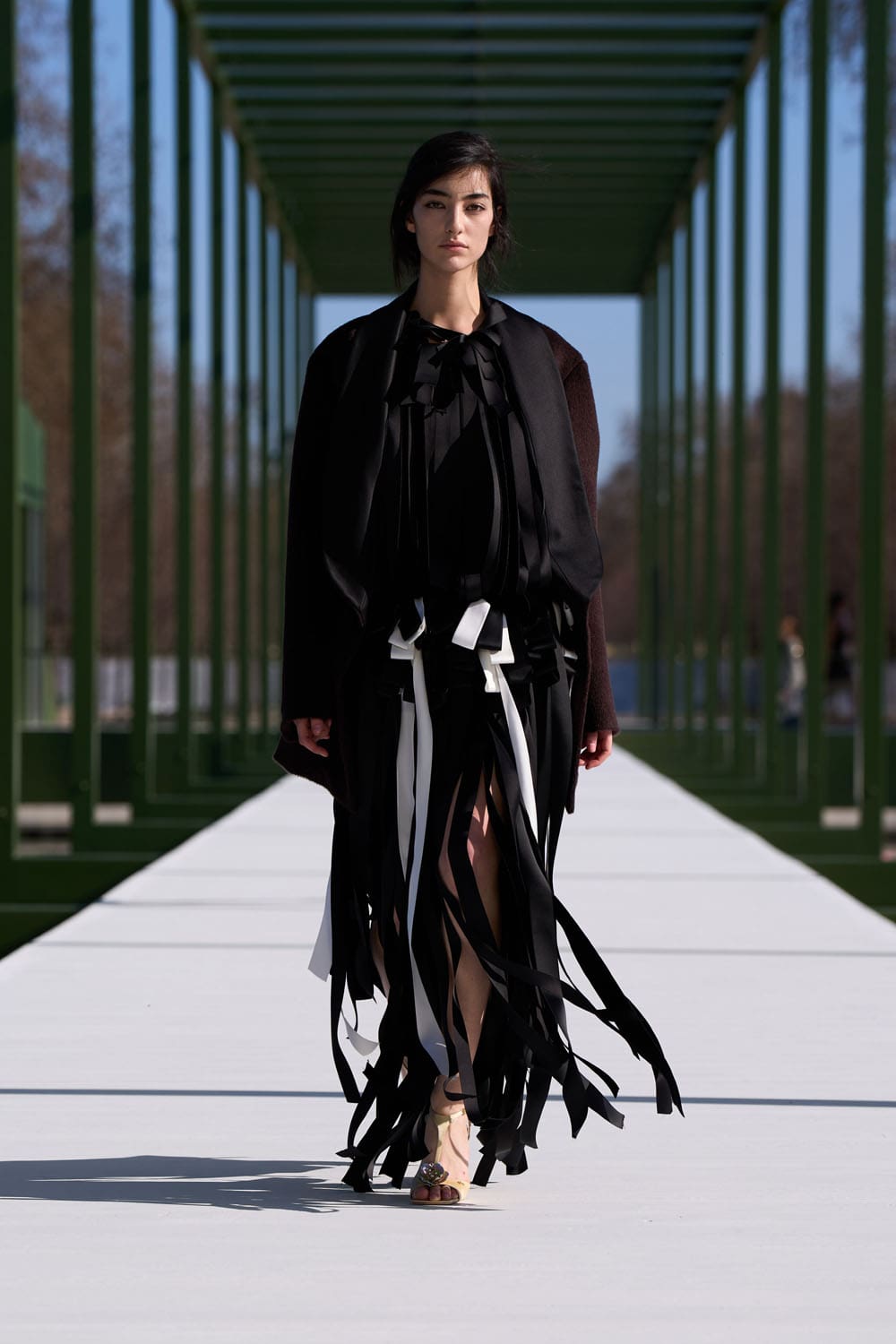
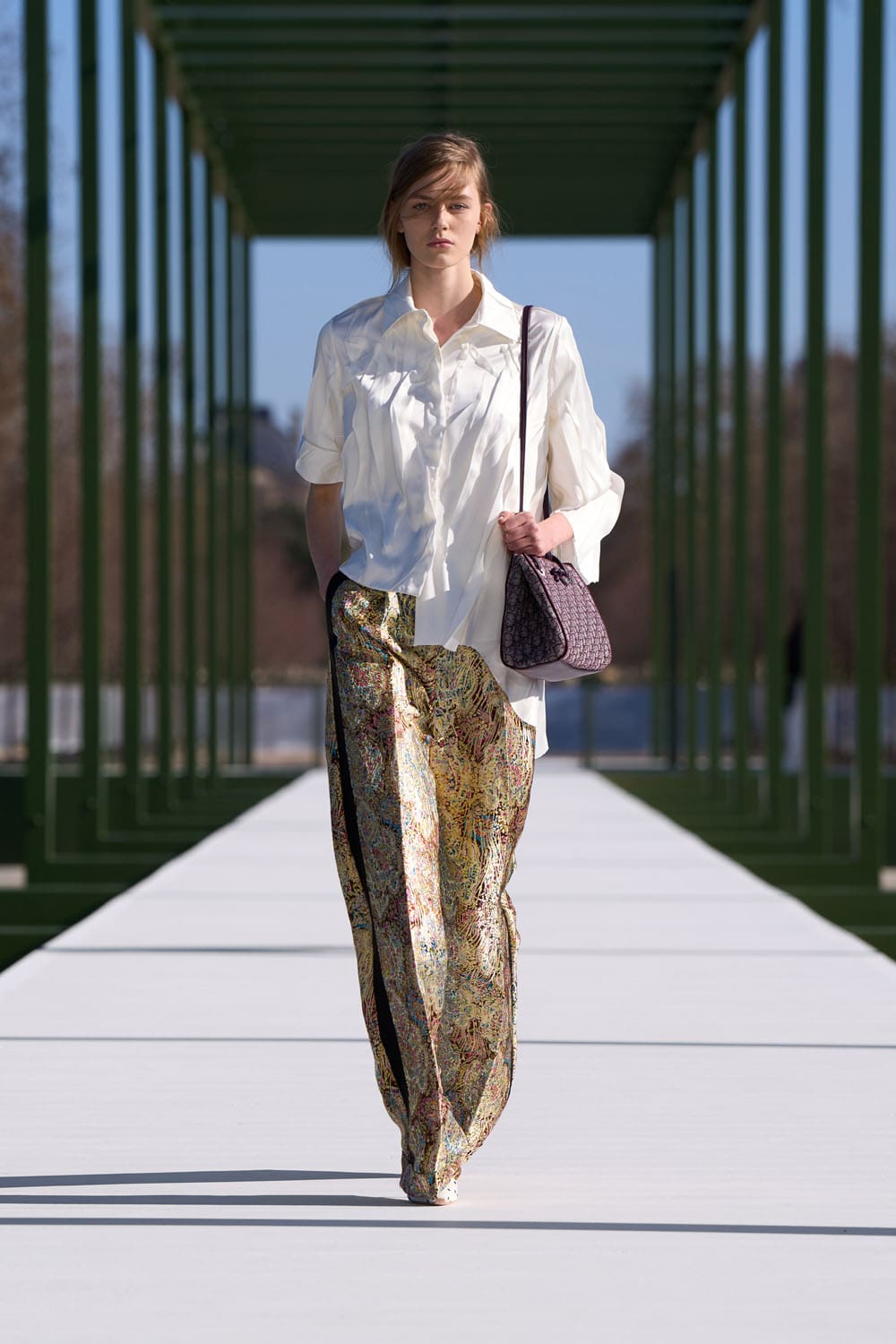
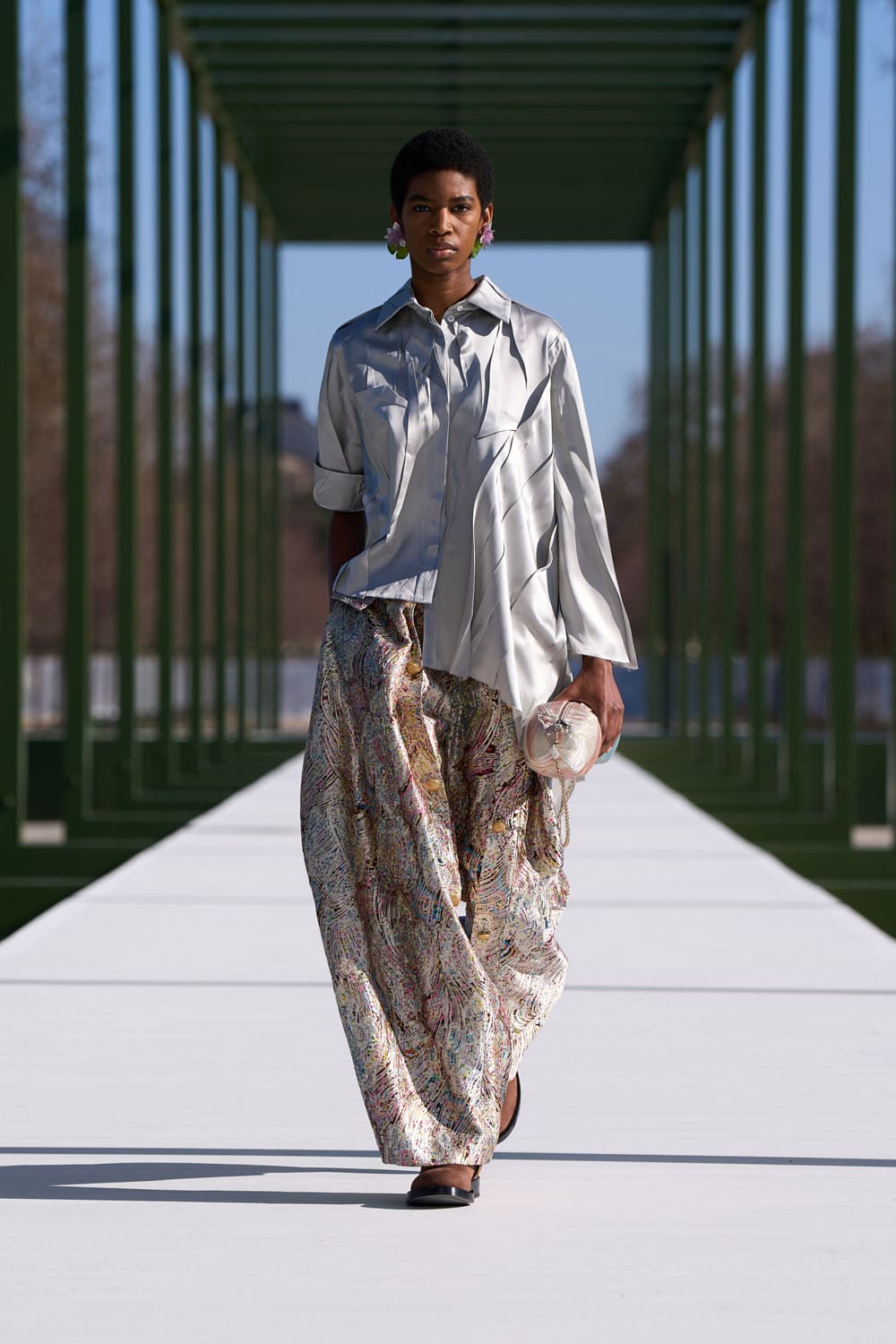
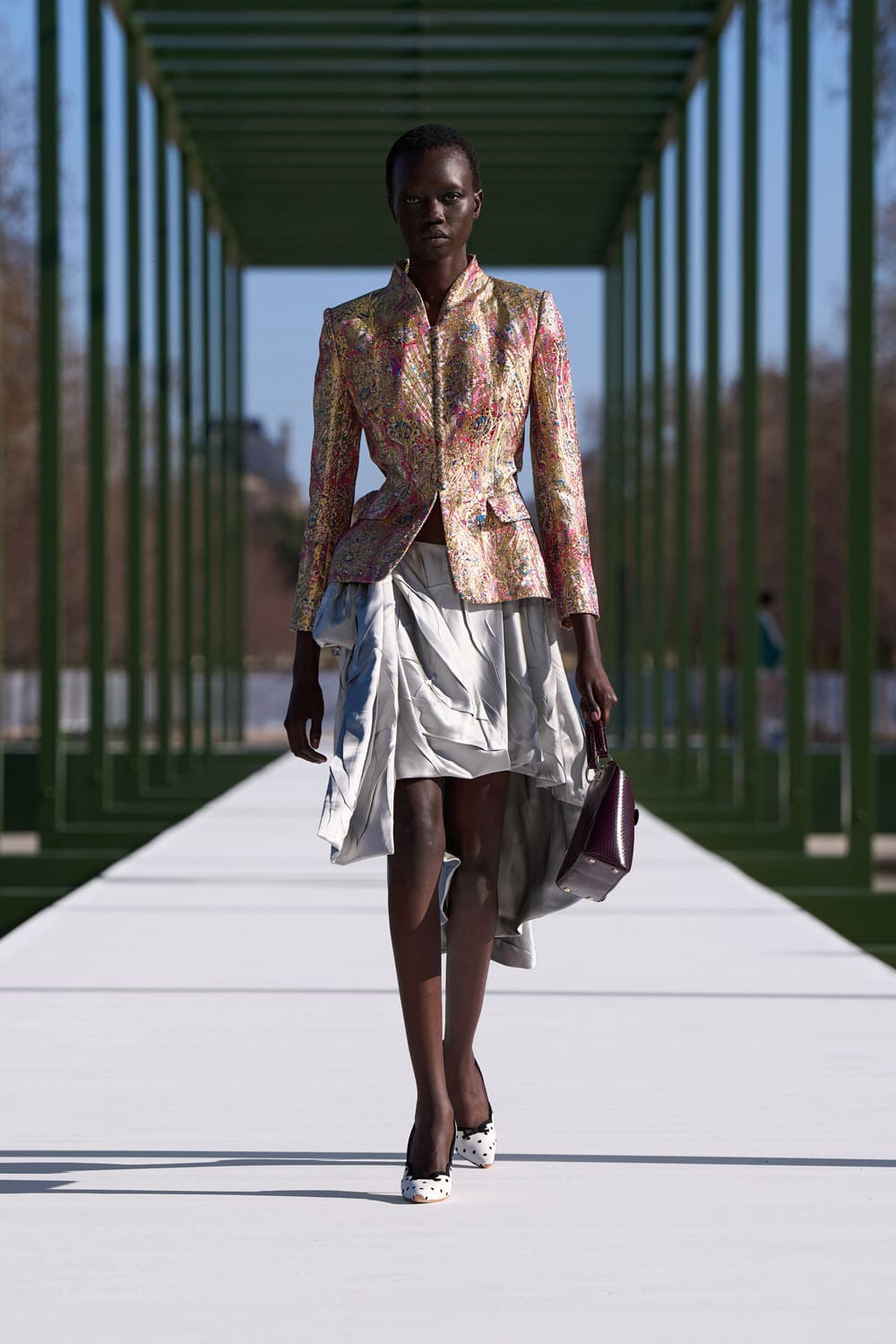
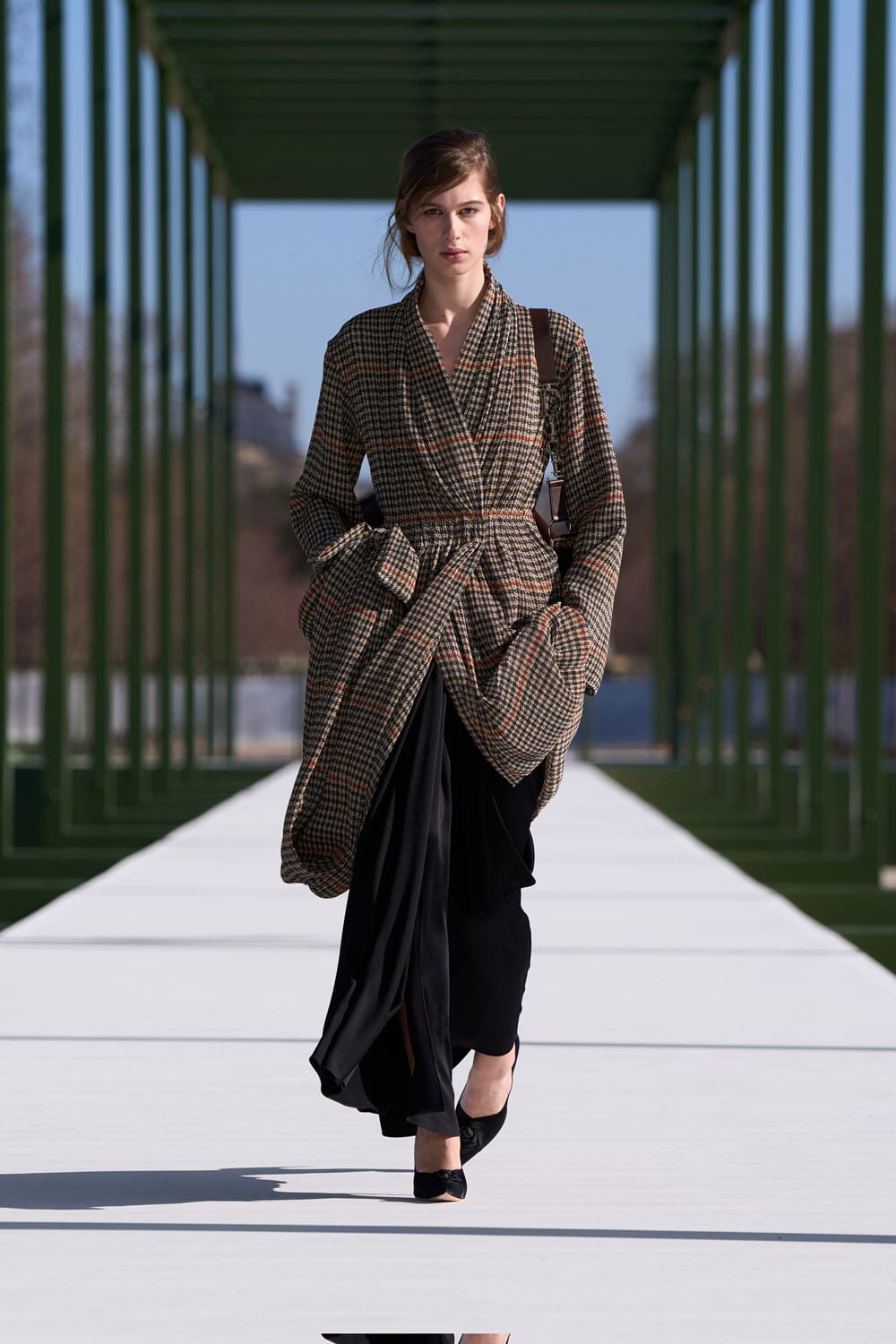
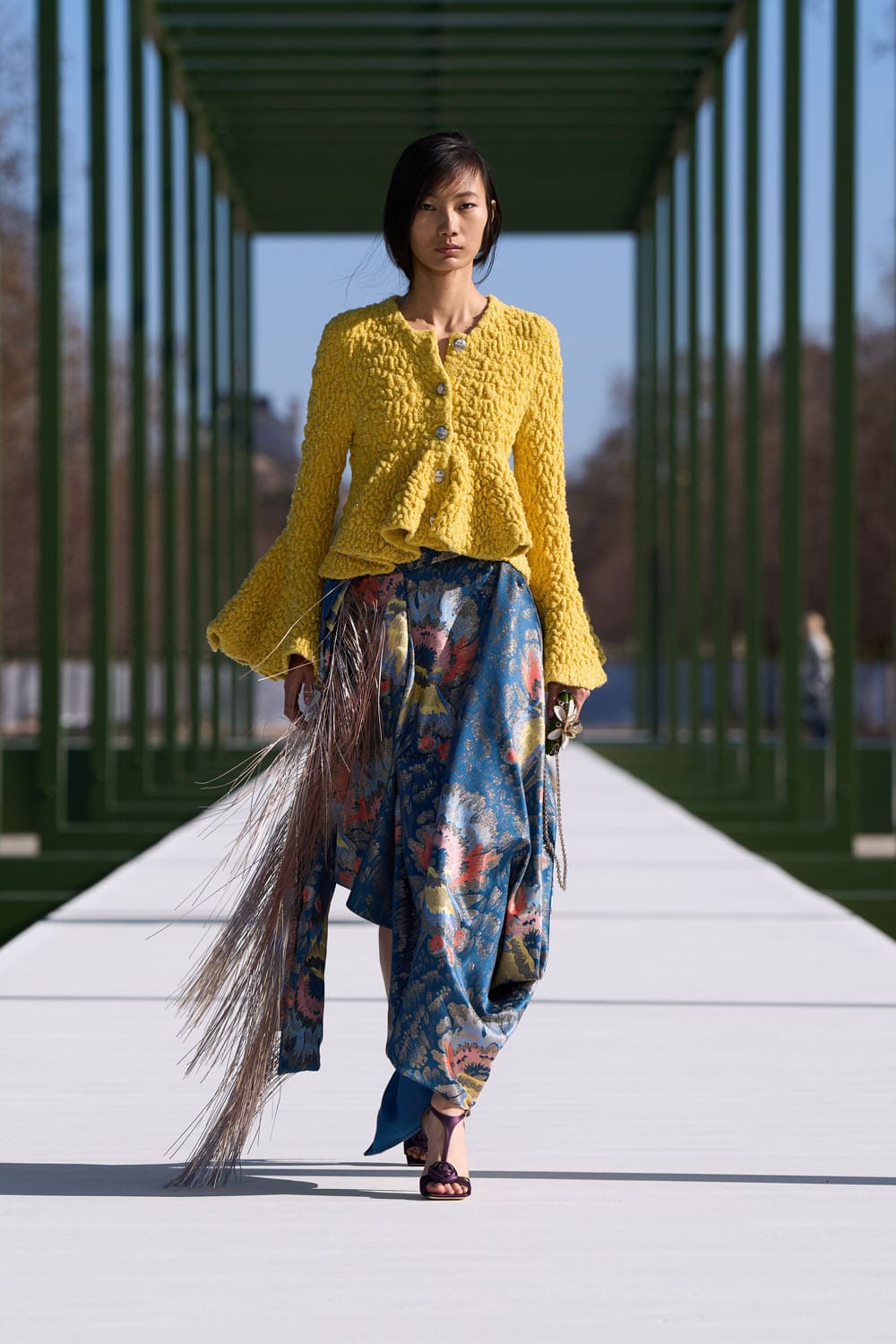
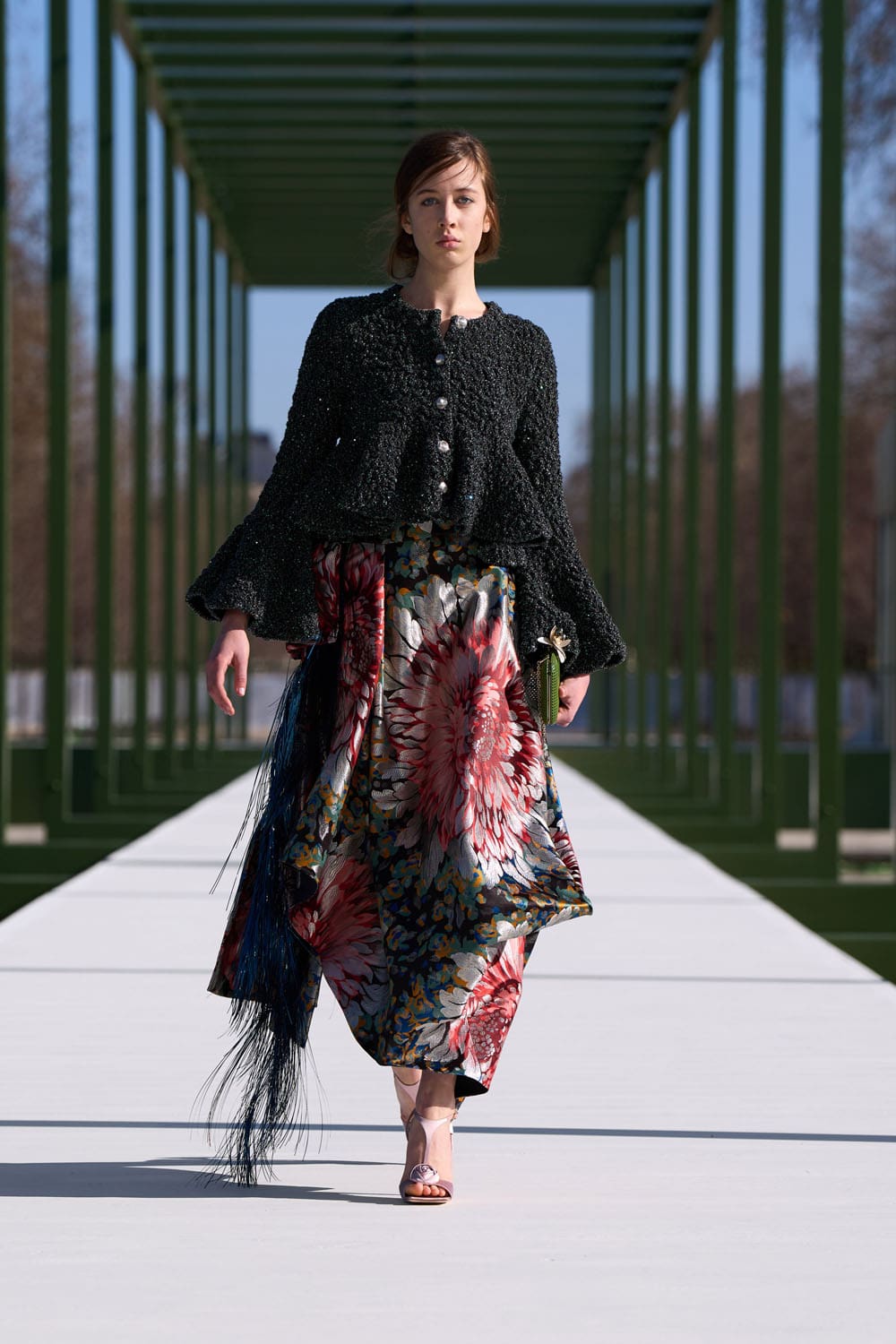
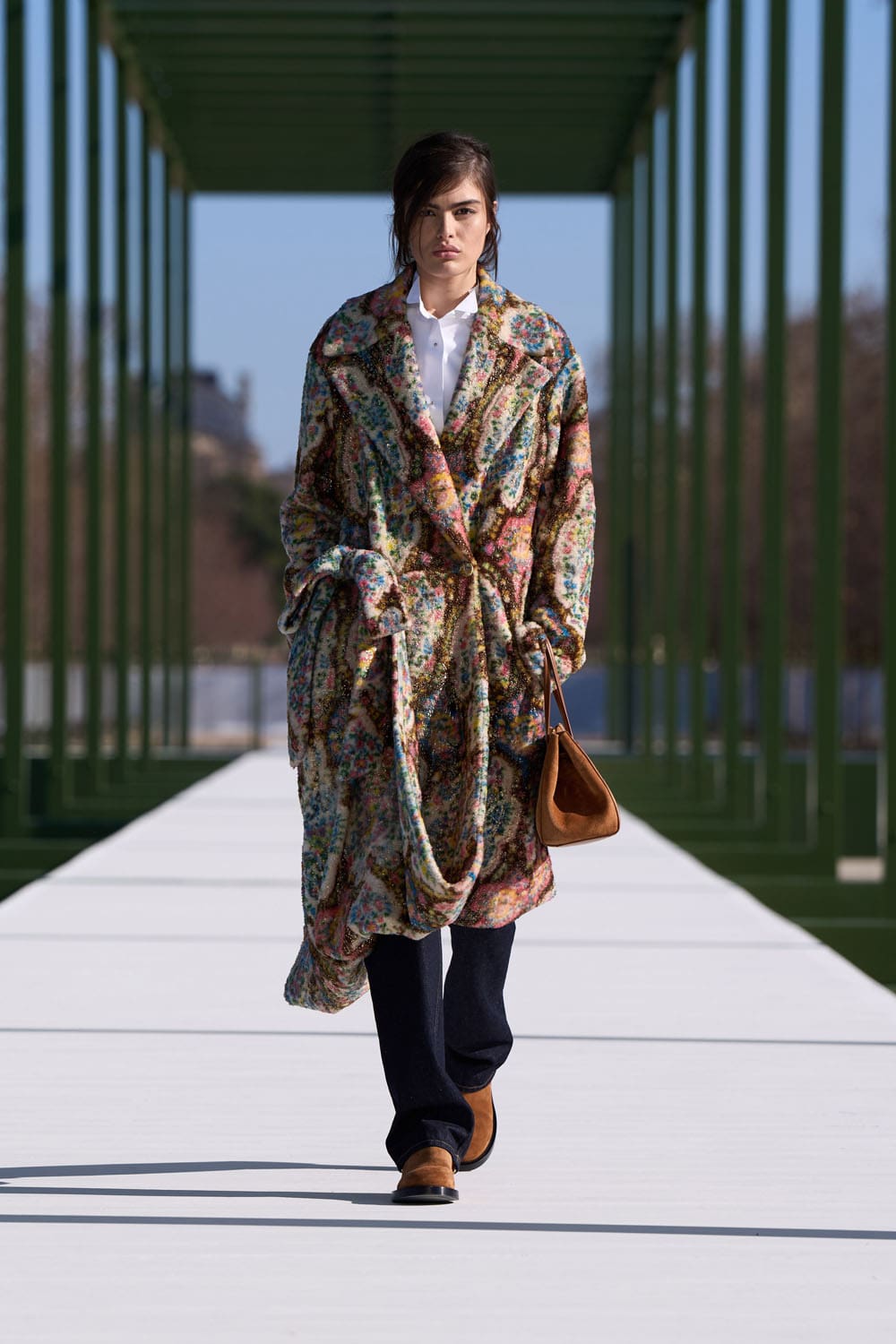
The press-release emphasizes artificiality — lilies on water, flowers blooming in the cold, the unreal touching the real. Anderson integrates this idea with brocade coats shimmering like gilded bark, and trousers embroidered with silver arcs reminiscent of garden trellises.
These pieces articulate a tension: nature observed, then translated into couture logic.
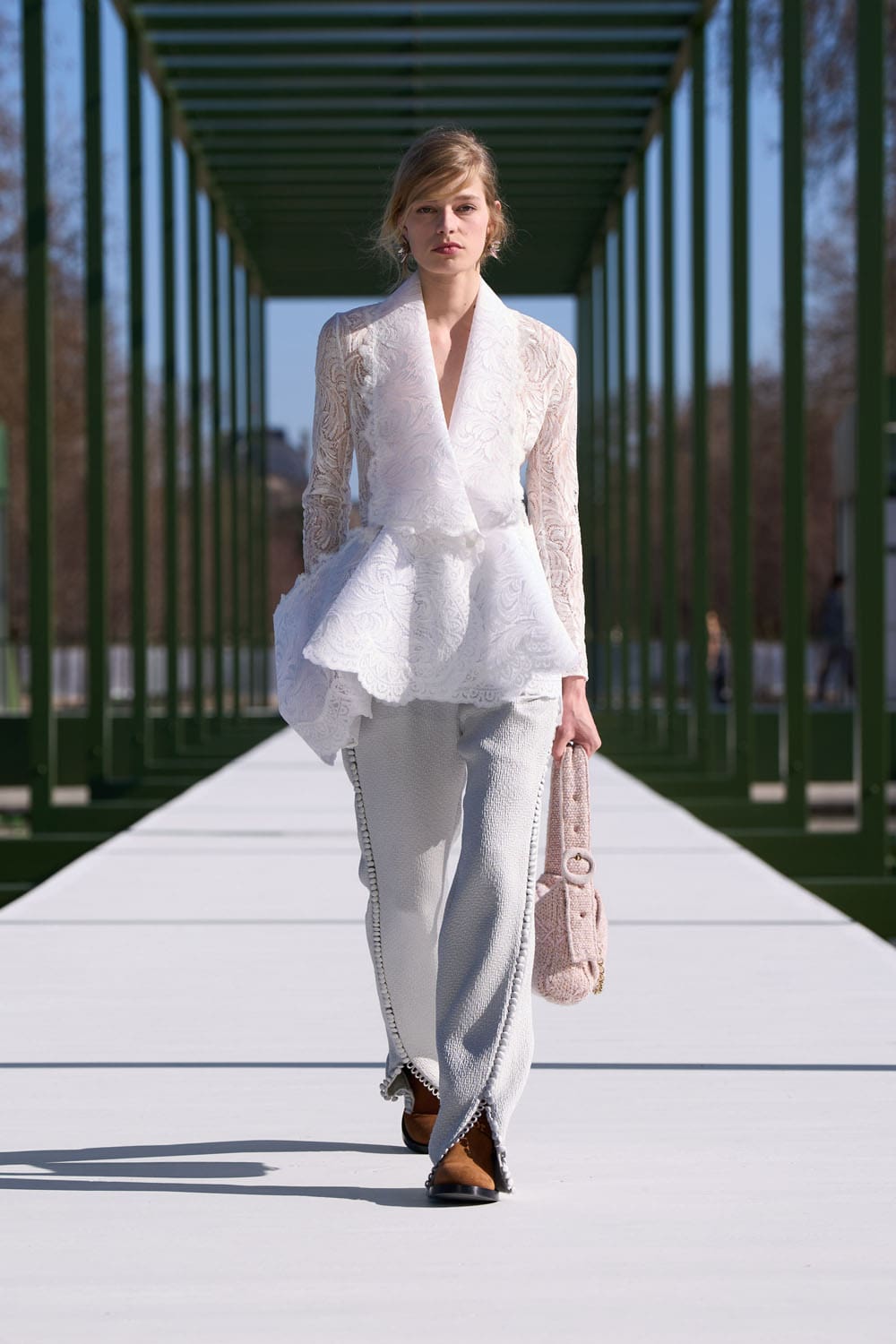
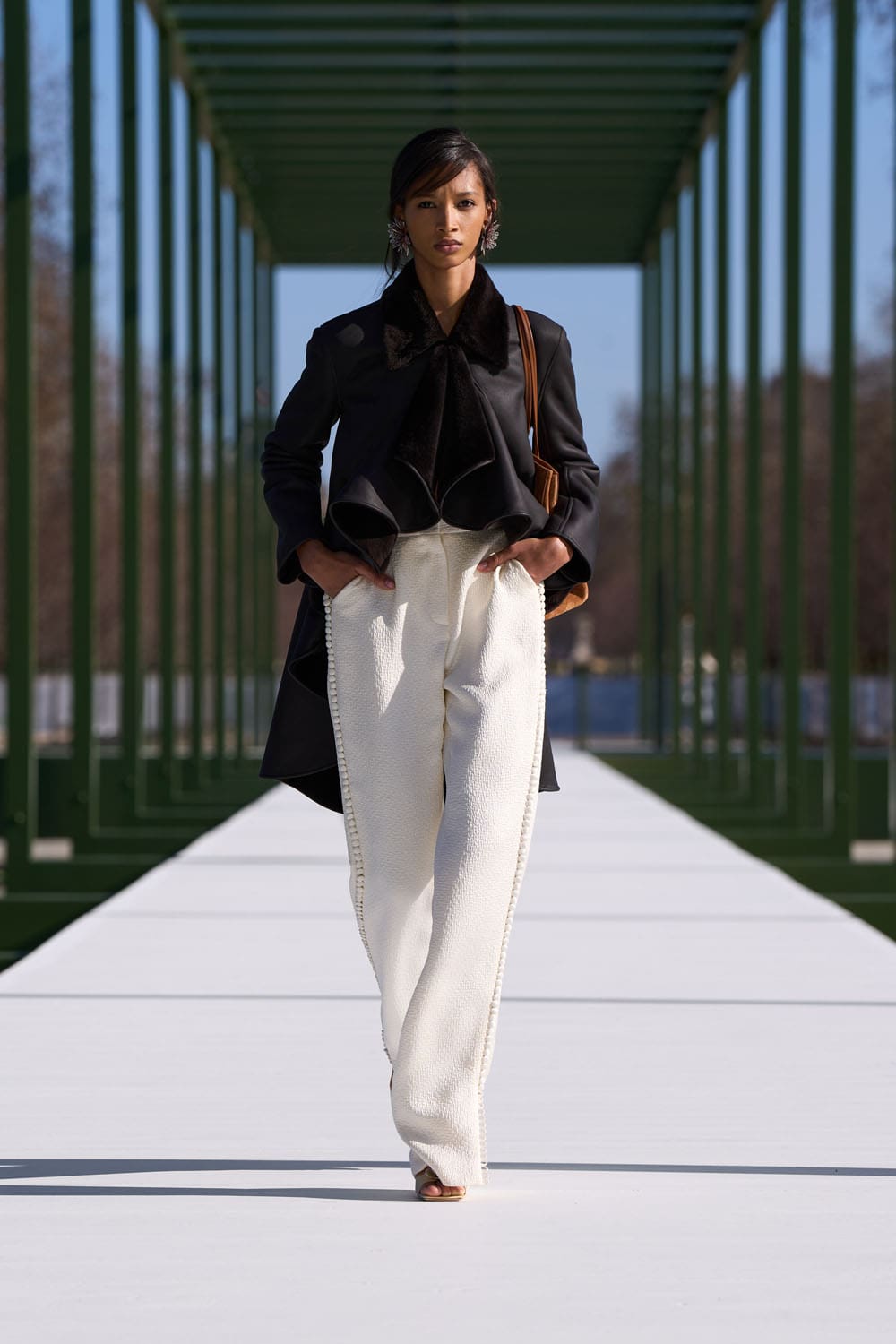
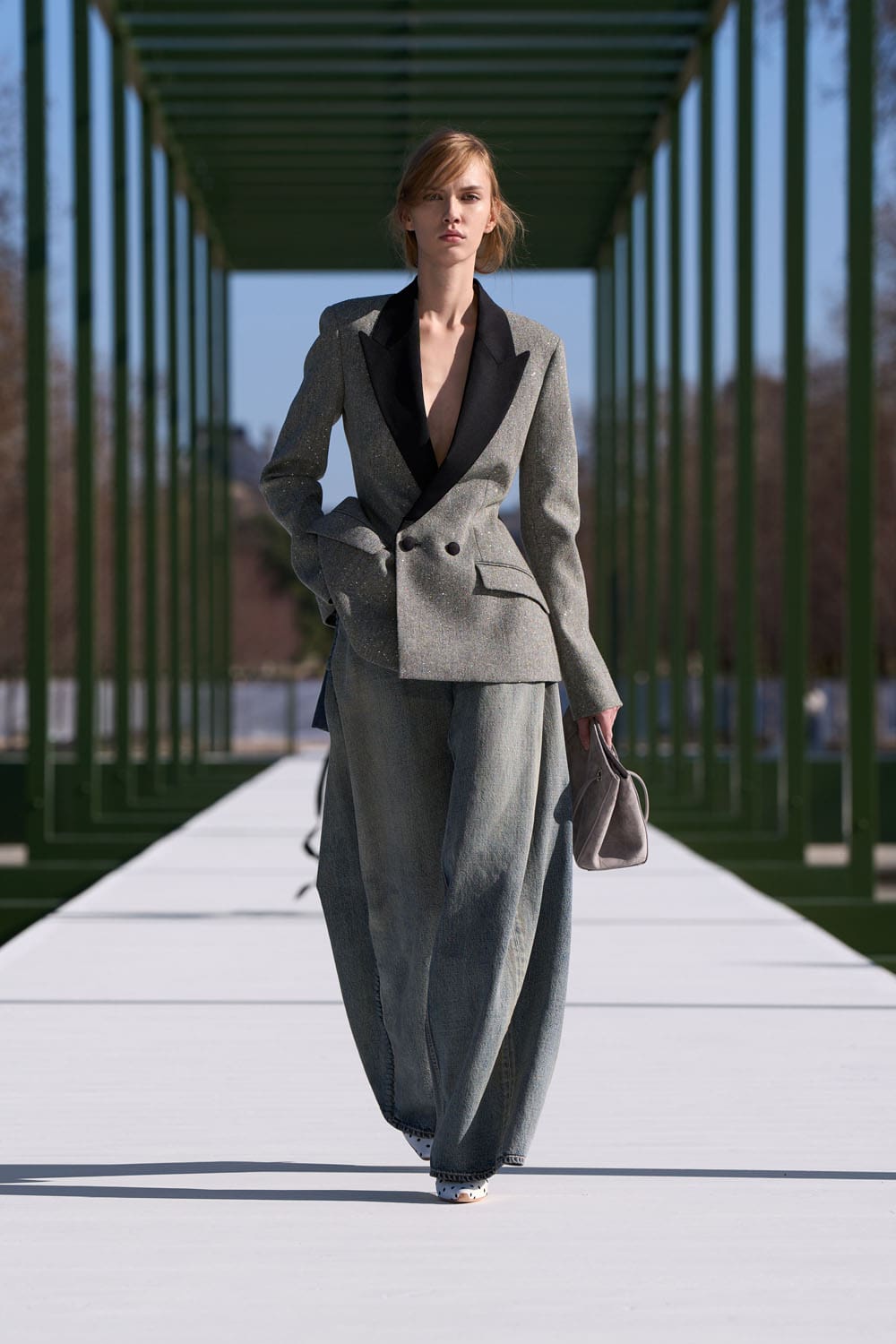
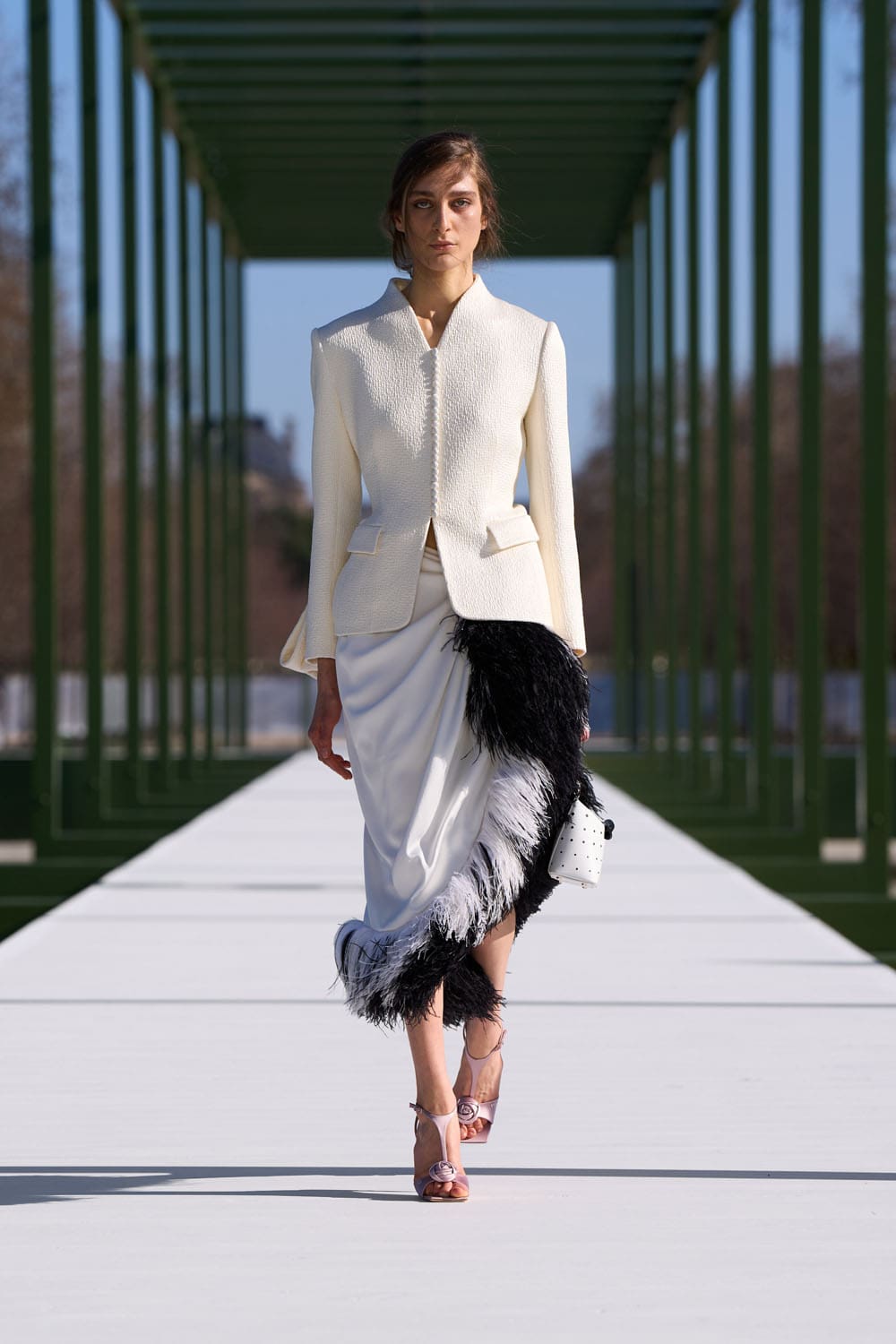
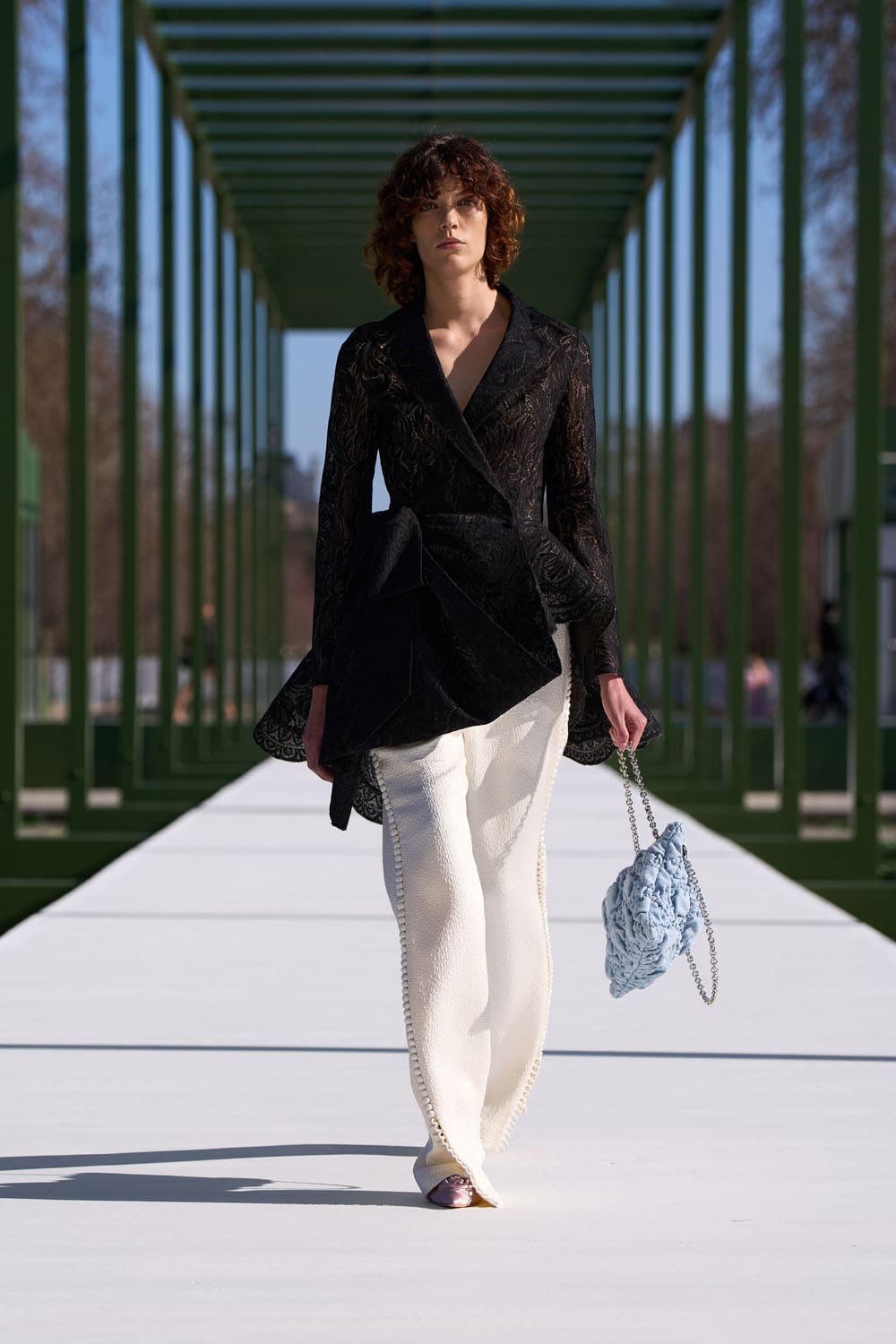
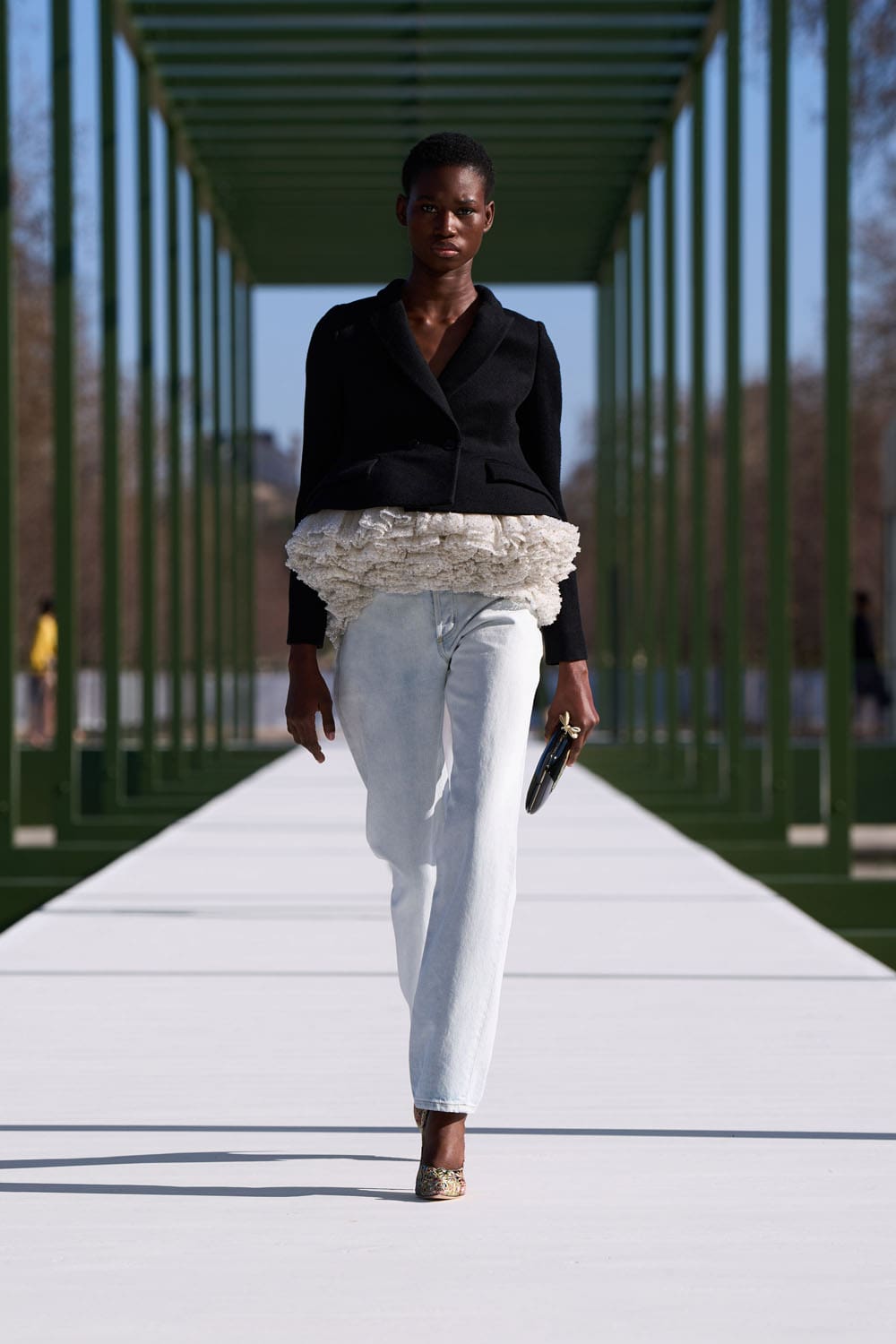
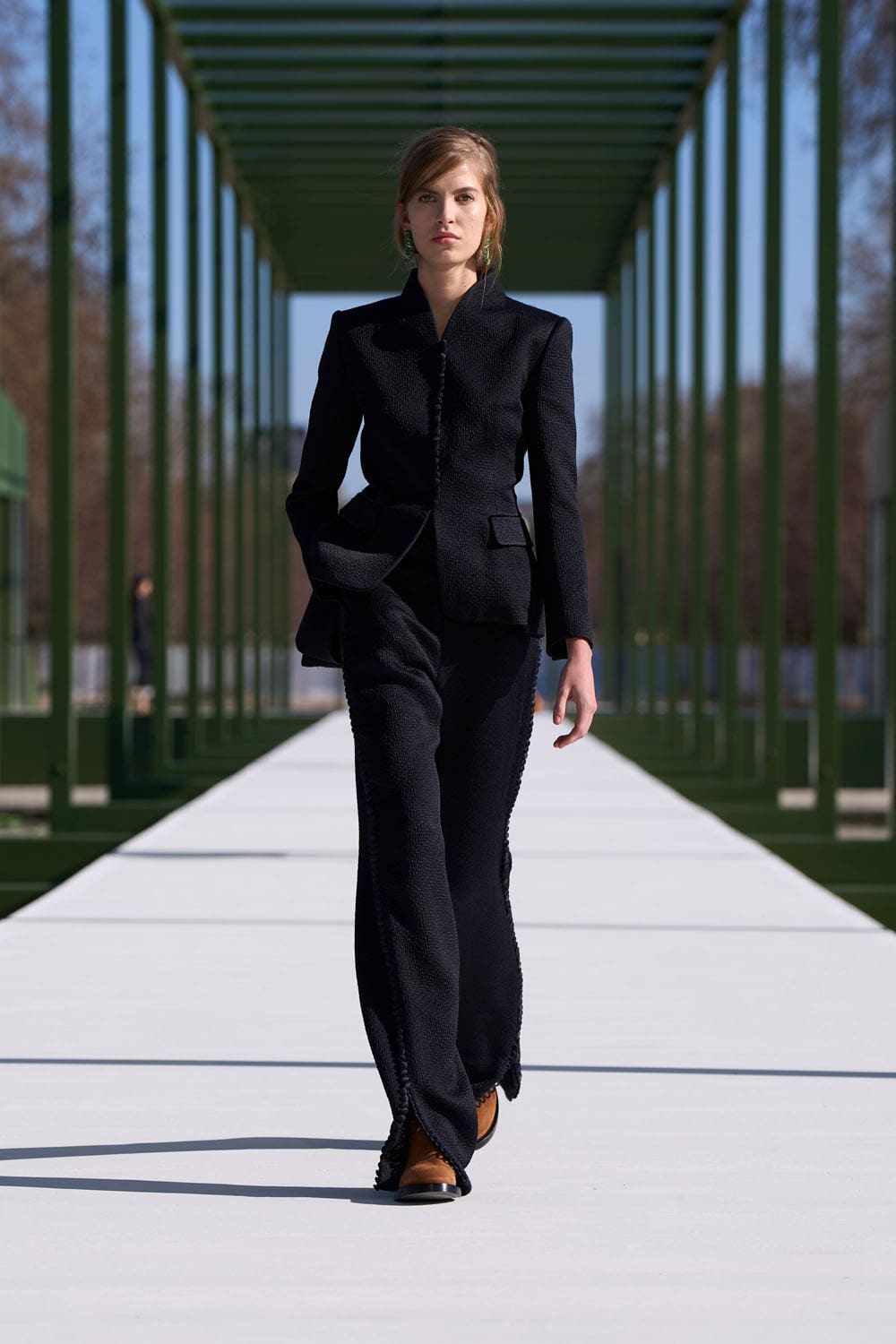
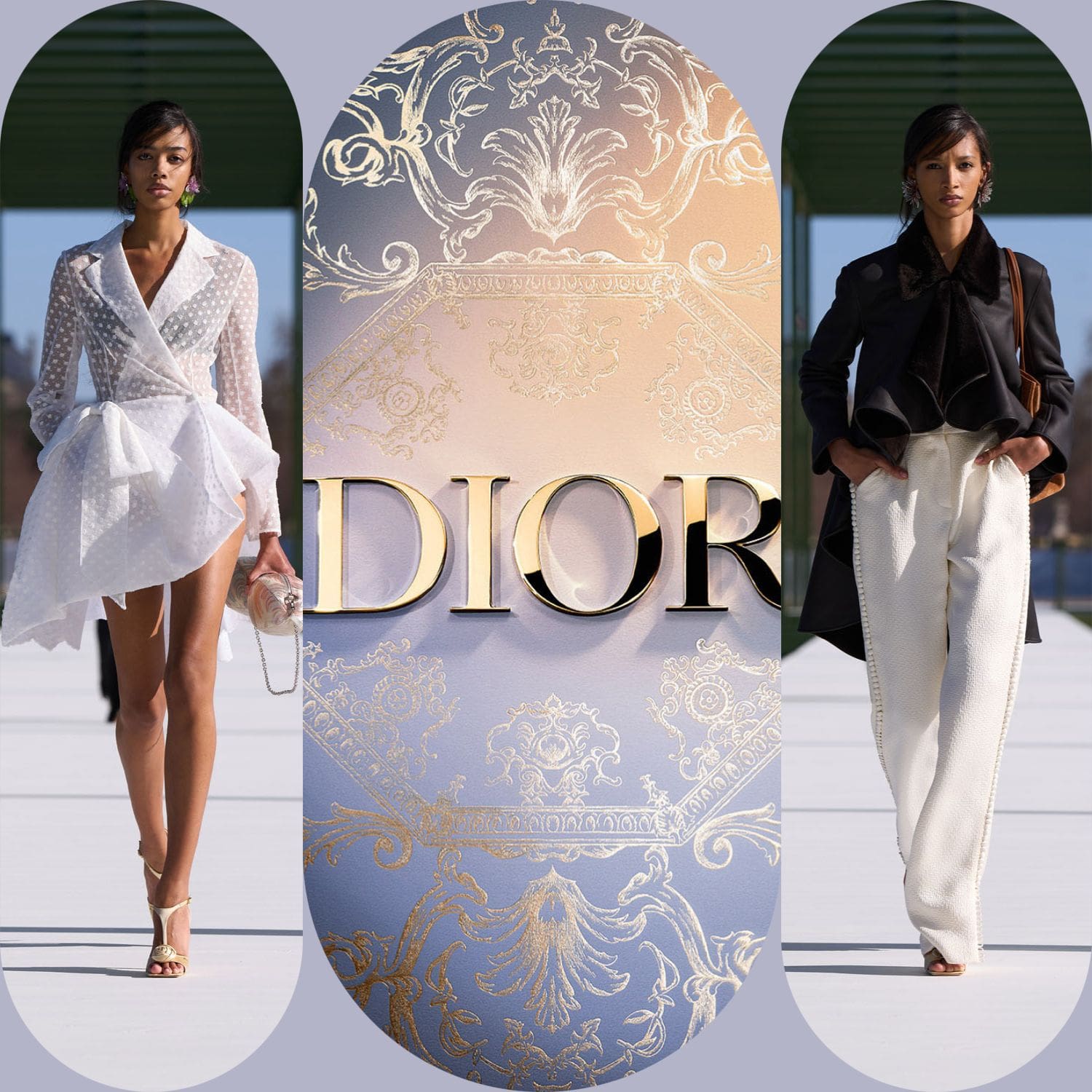
The silhouette with the ivory jacket and white trousers reads like a modern reinterpretation of Dior’s Bar suit — still cinched, still sculpted, but rendered in textures that mimic snow-covered hedges rather than strict tailoring. It is an homage softened by Anderson’s instinct for movement.
Dior’s New Peplum
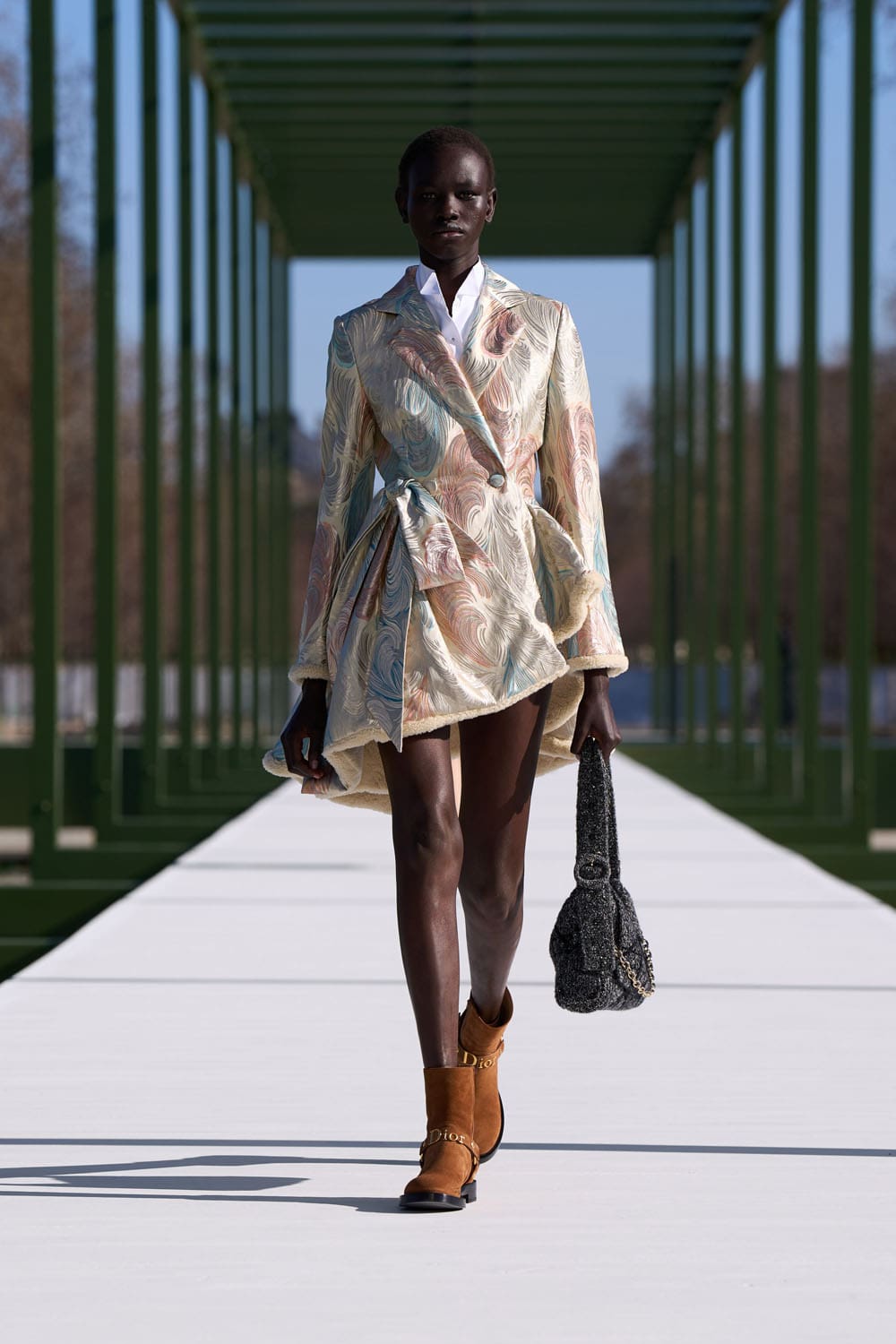
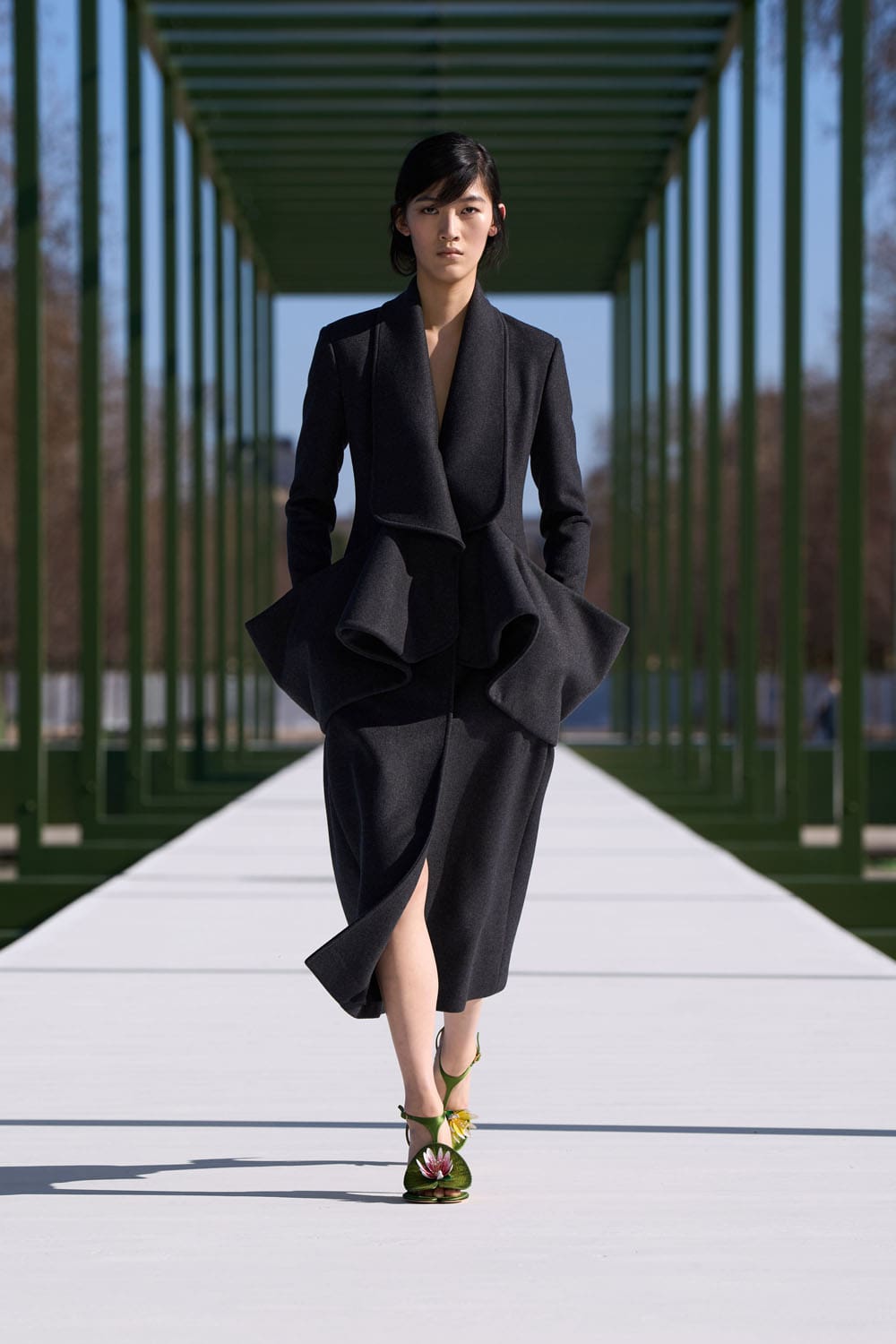
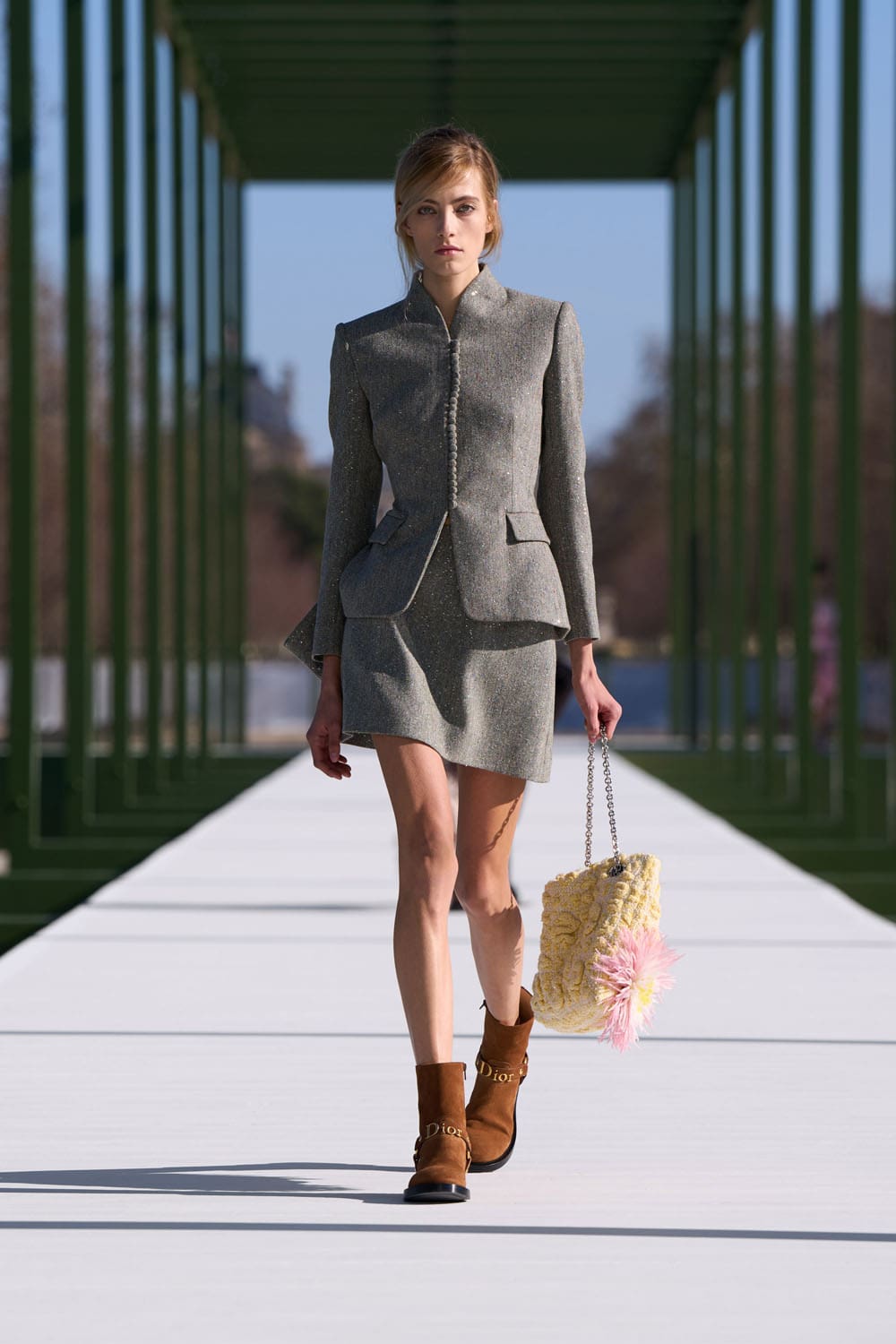
One of the collection’s strongest achievements is Anderson’s mastery of the peplum.
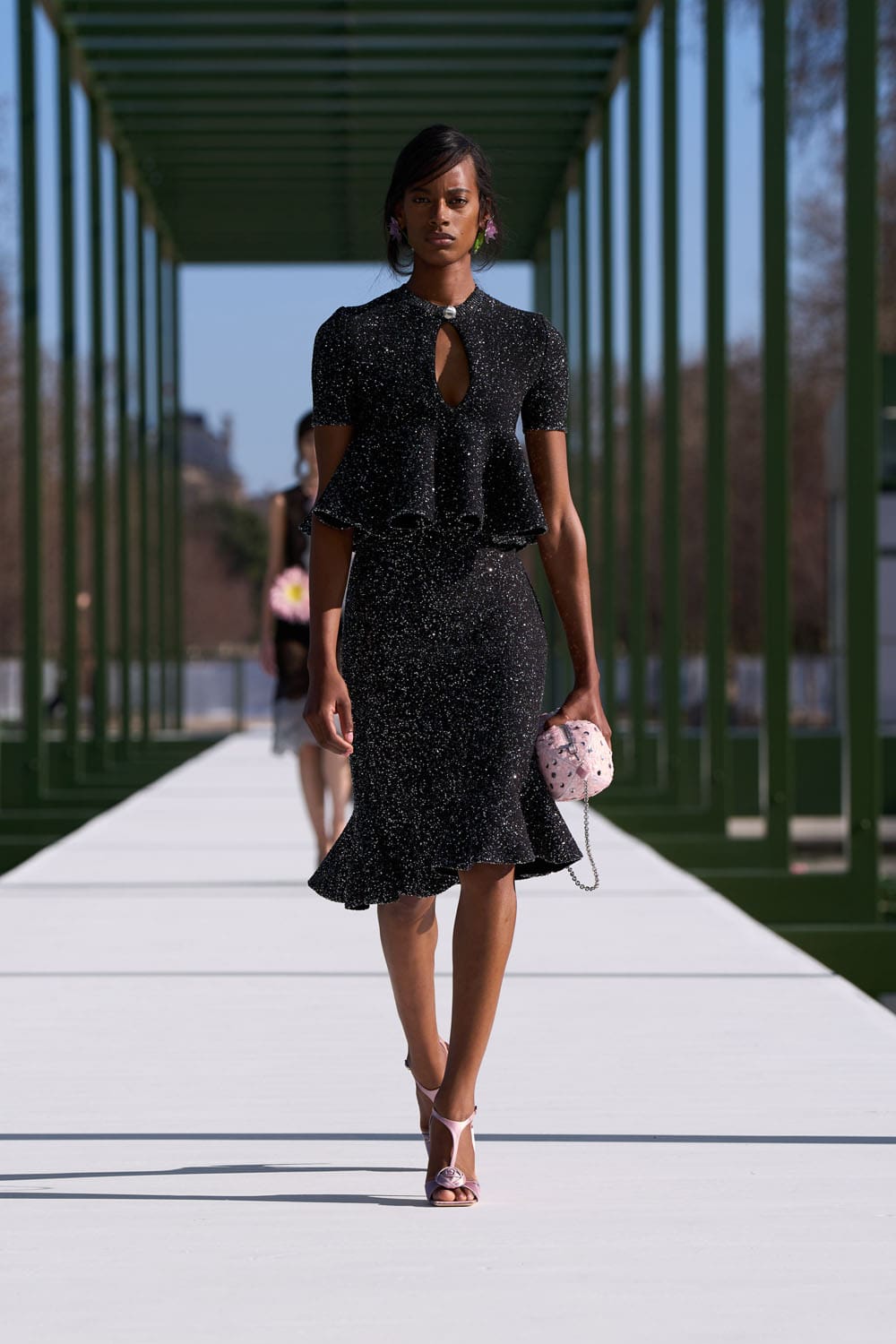
Unlike the rigid basques of the 1940s, his versions echo the geometry of orchids: fluid, curved, and subtly erotic.
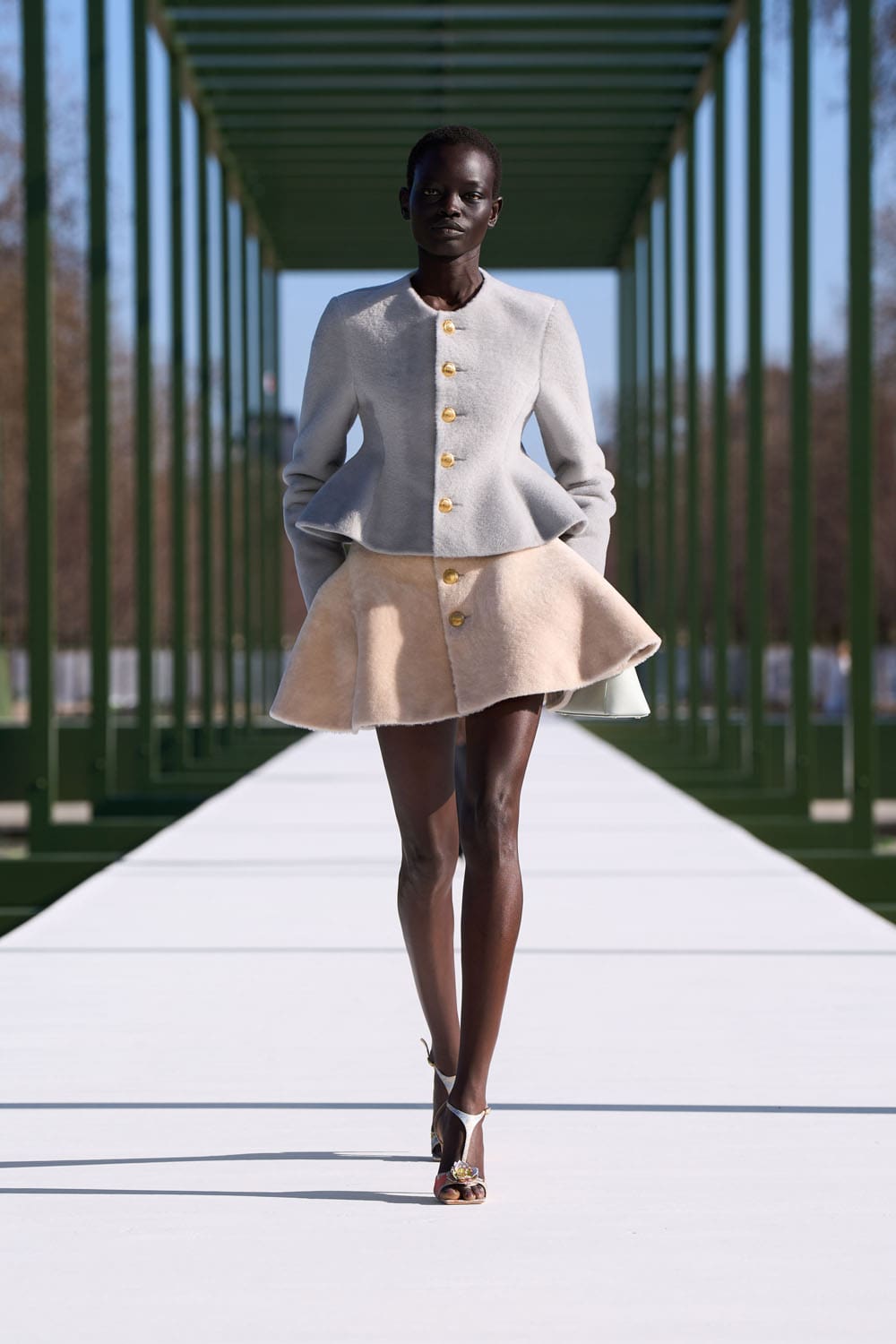
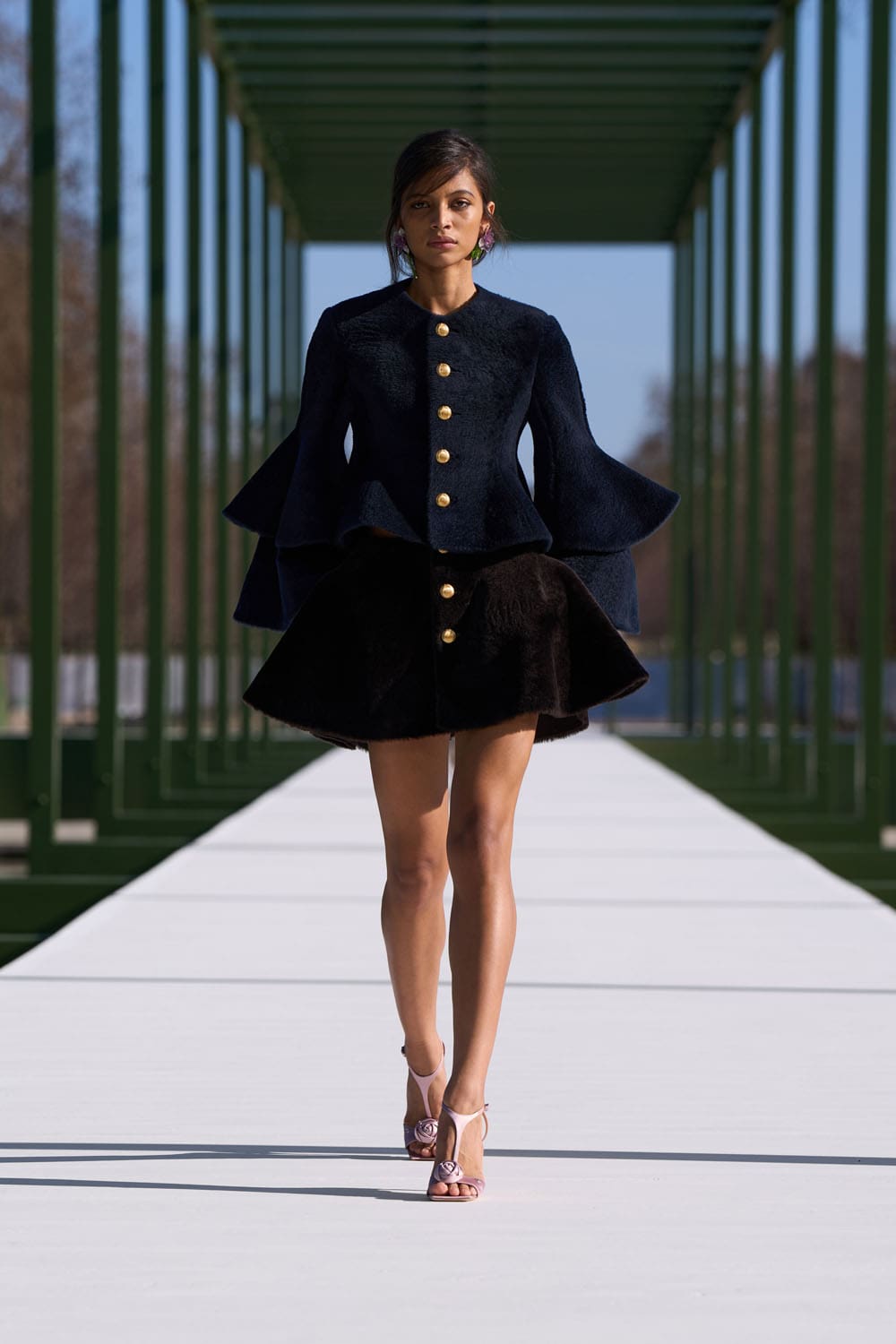
A grey-to-beige sculpted jacket paired with a bell-skirted mini creates a silhouette that is both armor and bloom. The double articulation — structure at the torso, softness at the hem — captures the duality of the Tuileries: strict French order meeting natural spontaneity.
White as Gesture
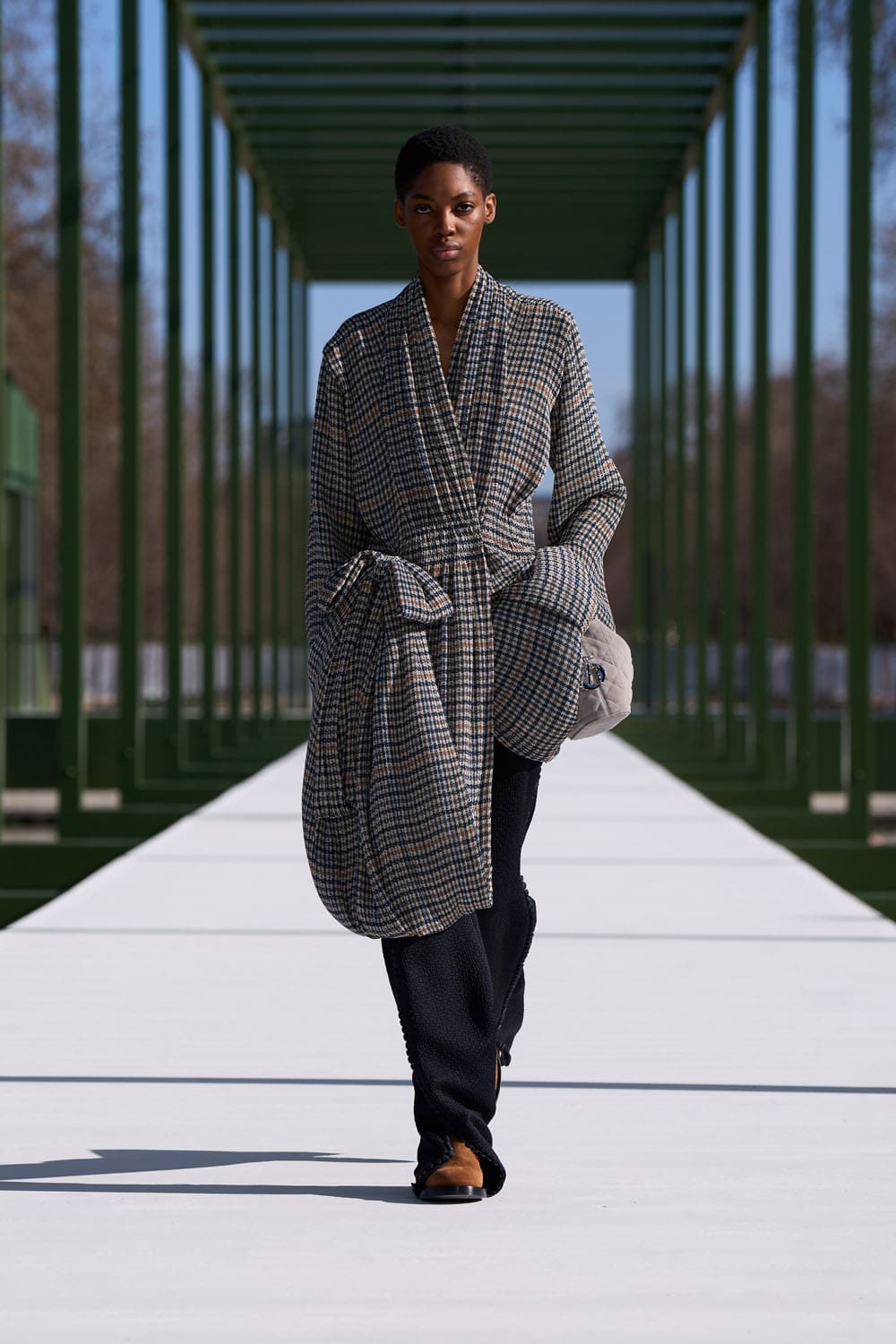
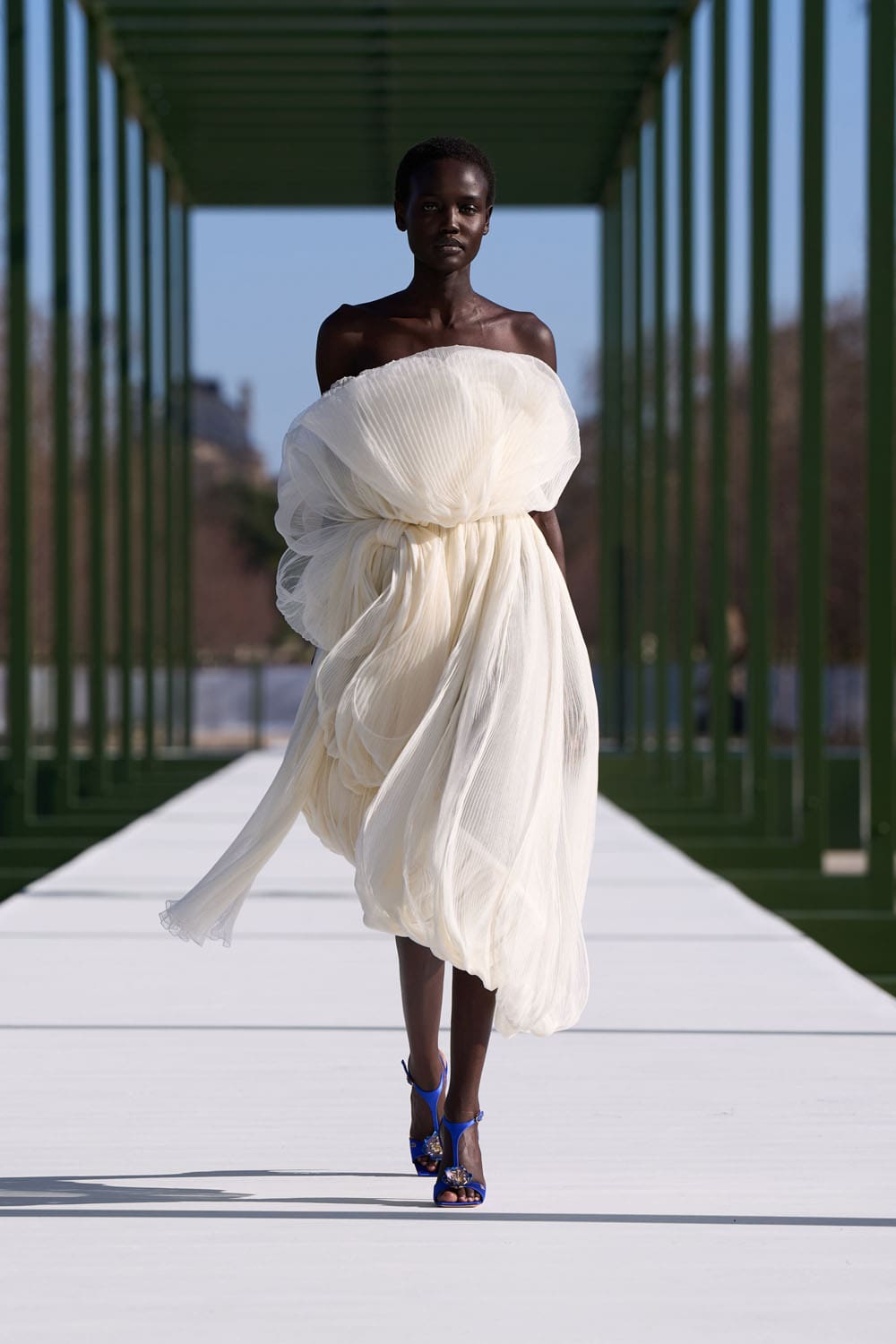
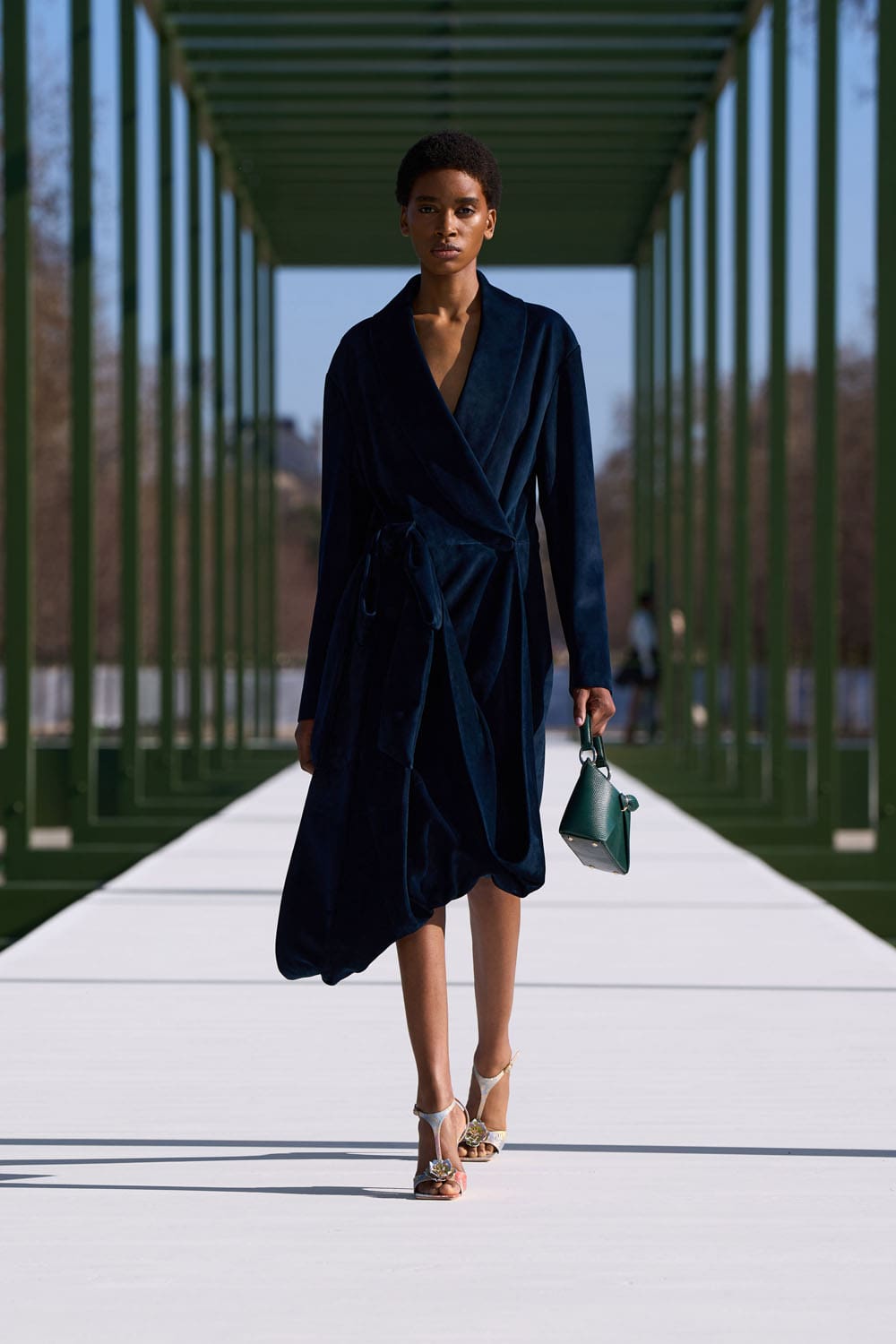
Several all-white looks advance the theme of visibility. Transparent dotted organza coats tied at the waist, lace blouses layered over textured trousers — these garments capture light like frost catching sun. They suggest purity without innocence, fragility without weakness.
In motion, they mimic the pale reflections on the Bassin Octogonal in winter — echoing the press-release’s insistence on artifice and reflection.
Ruffles in Monochrome
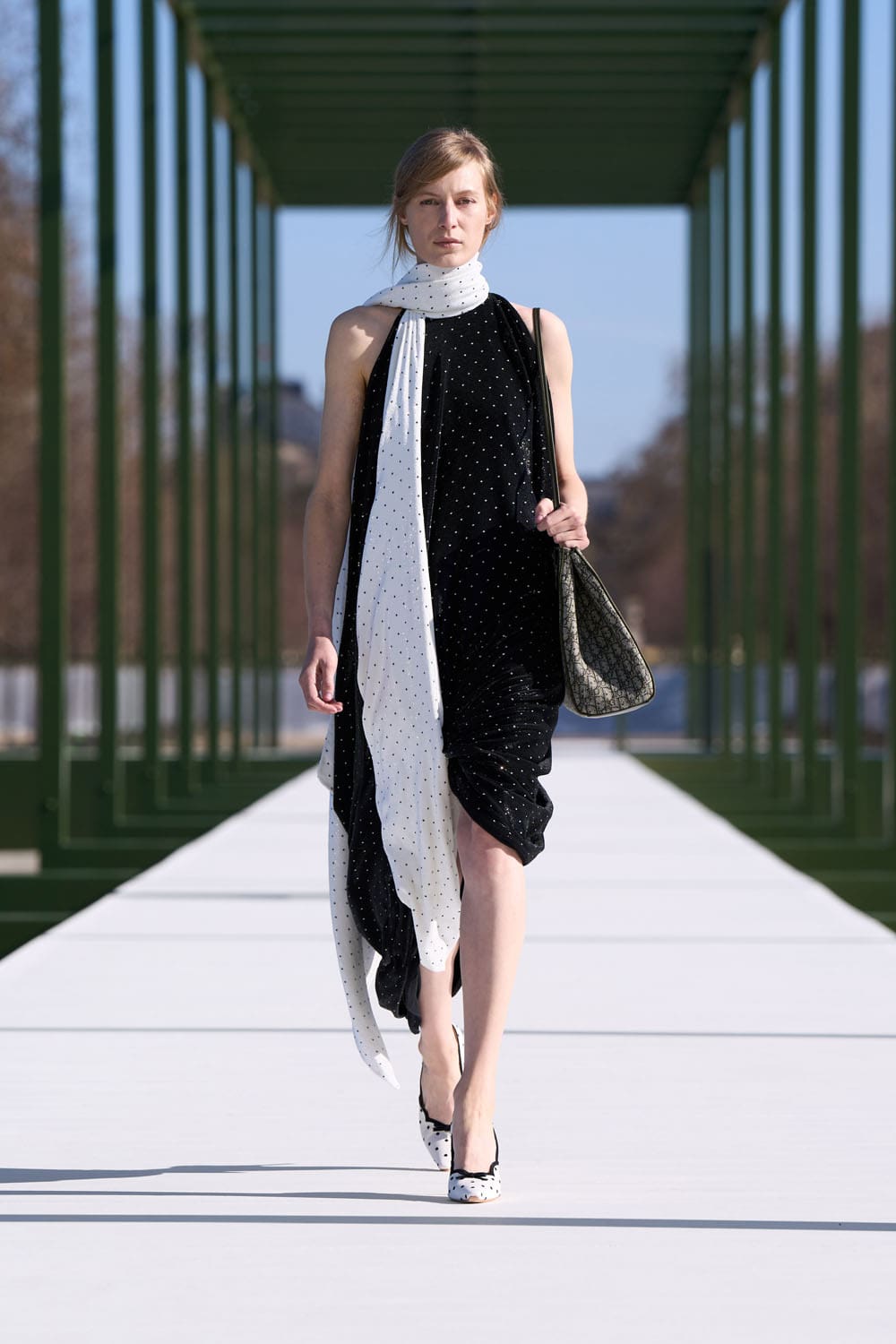
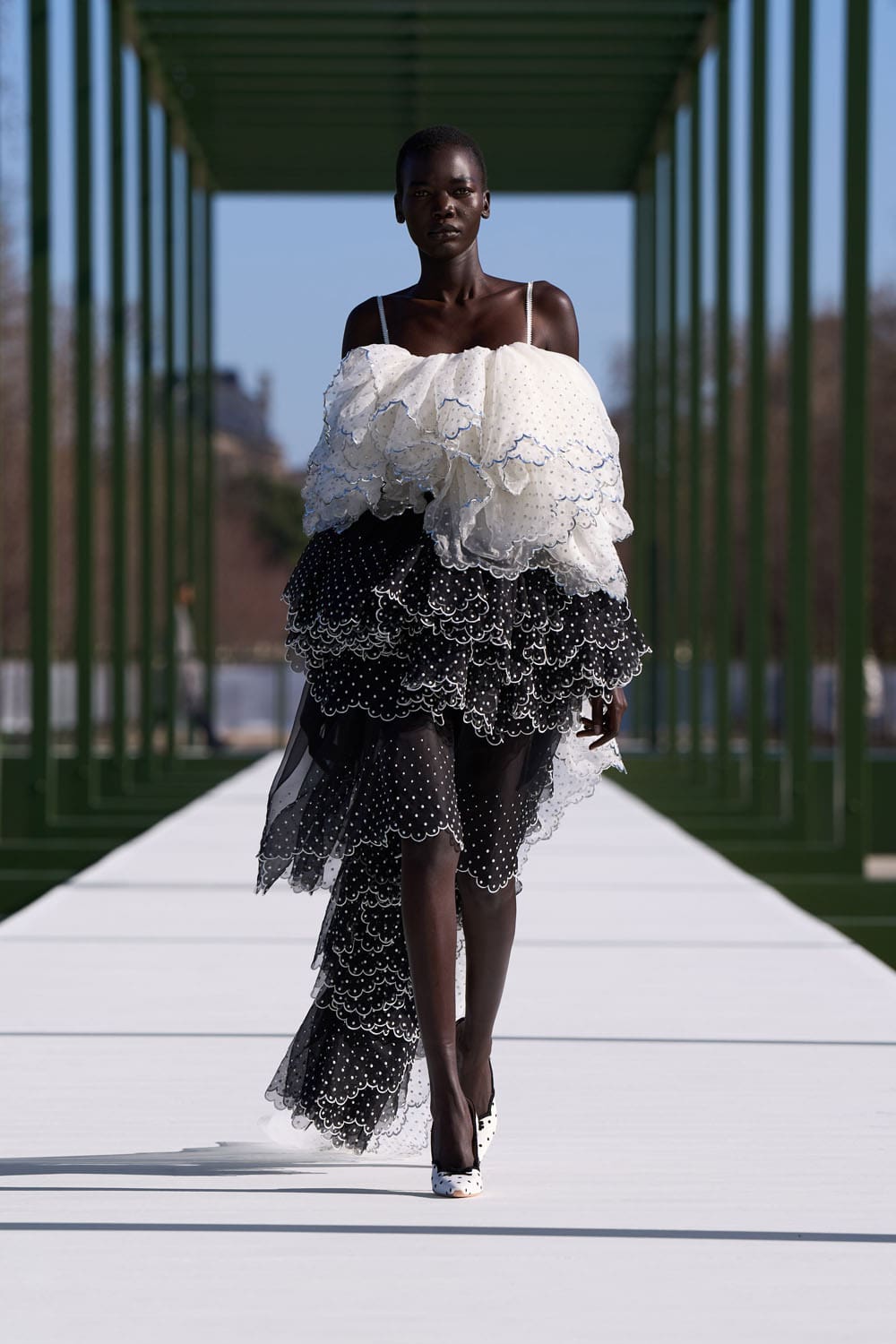
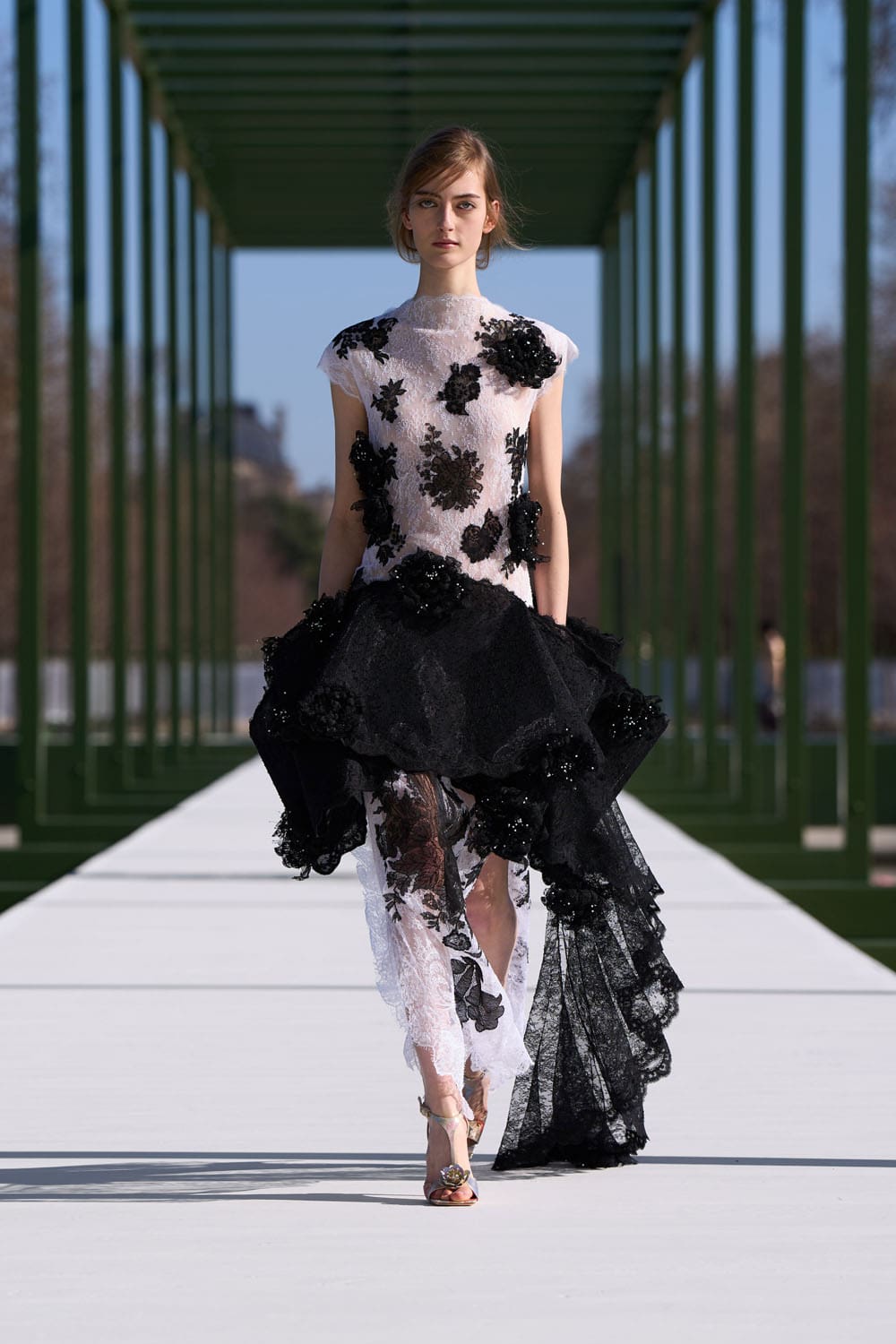
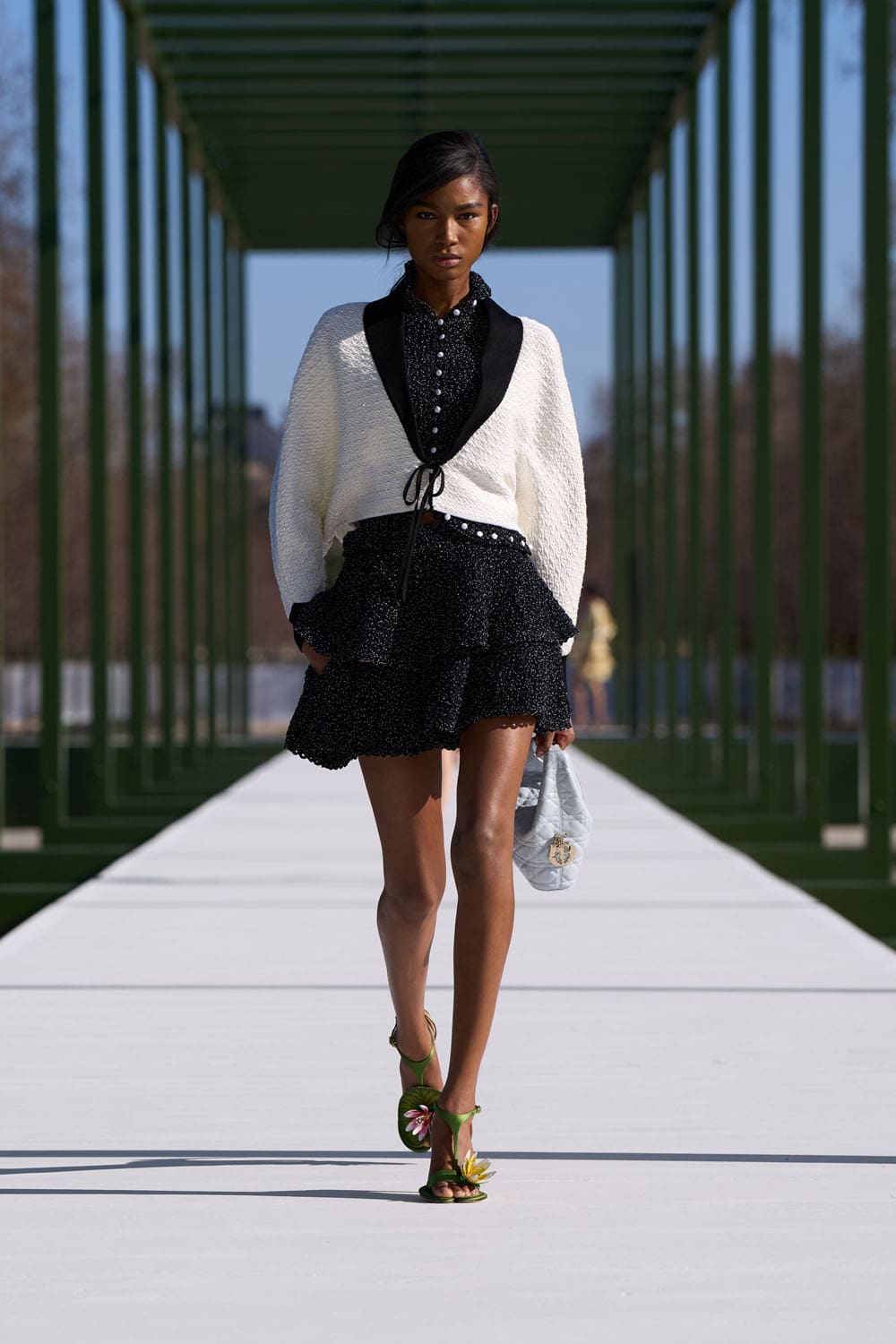
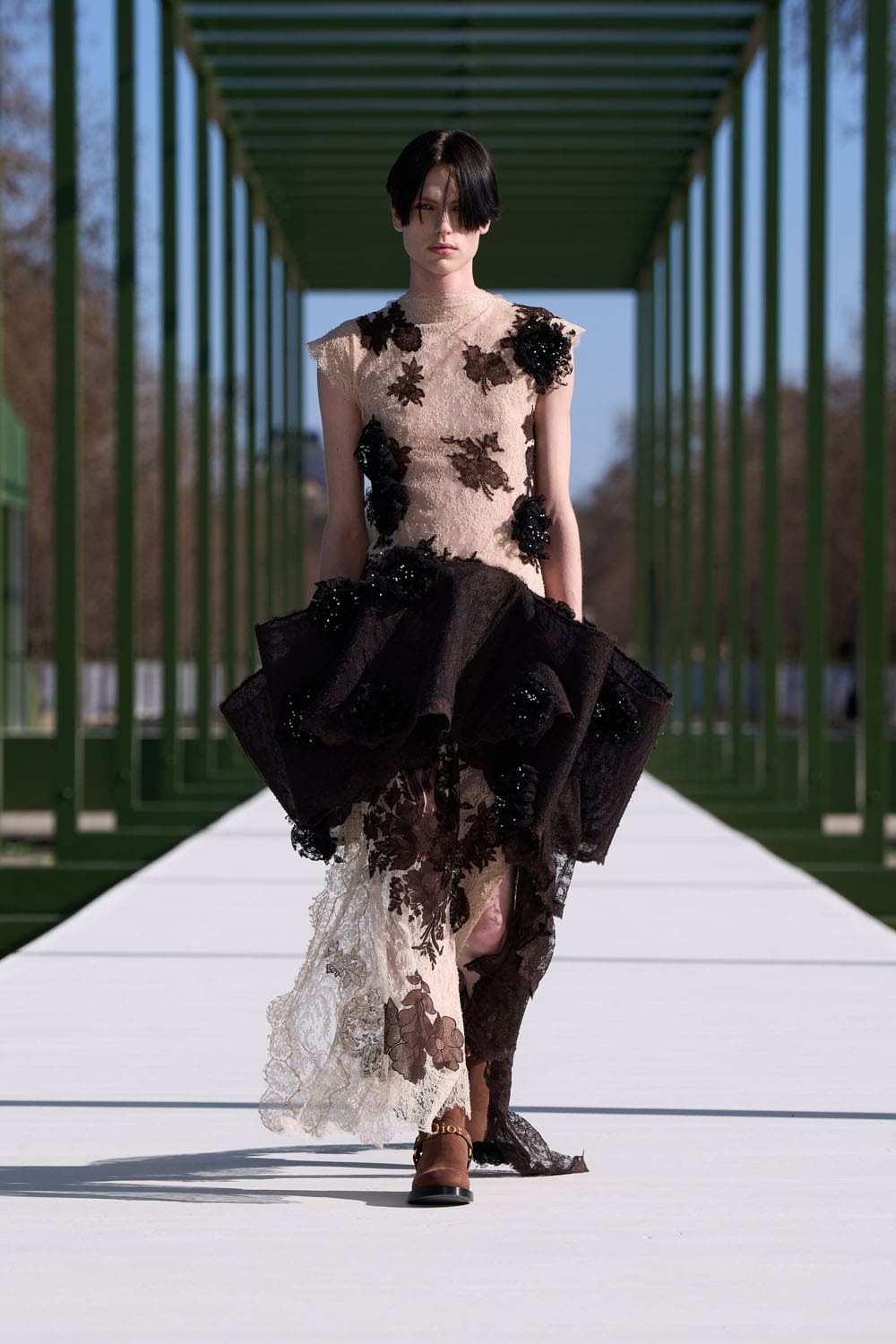
The black-and-white tiered gown is the collection’s climax.
It is a cloud, a water lily, a nocturnal flower.
Ruffles stack like geological layers: soft, embroidered, edged in whisper-blue scallops.
This is where Anderson succeeds where recent Dior seasons have struggled — he gives volume meaning. The dress is not decoration; it is a culmination of the collection’s meditation on visibility, layering, and botanical structure.
The Return of Elegance
Jonathan Anderson has achieved something deceptively difficult: a Dior ready-to-wear collection that is neither quotation nor rebellion. It is a fluent chapter in Dior’s long conversation with gardens, promenades, and performance.
Unlike the chaotic Haute Couture season, this collection has direction.
It has thesis.
It has beauty rooted in craft, not ornament.
Above all, it restores Dior’s relationship with movement — the sense that clothes are meant to be seen not on mannequins, but on women walking, crossing, passing, glancing, disappearing into Paris.
Flowers bloom in the cold. Dior breathes again.
See All Looks Dior Fall 2026