
Dior Pre-Fall 2026 Men “The Pastoral Delusion”. Story by Eleonora de Gray, Editor-in-Chief of RUNWAY MAGAZINE. Photo Courtesy: Dior.
The house of Dior, under the continued stewardship of Kim Jones, appears to have retreated into a gilded nursery, one where the archives of the grand Trianon have been pillaged to dress the eternal adolescent. This Pre-Fall 2026 collection does not merely prolong the previous season; it insists upon a certain decorative paralysis, where the weight of historical embroidery is asked to compensate for a profound lack of structural innovation. We find ourselves observing a wardrobe that oscillates violently between the hyper-tailored ghosts of the 18th century and the utilitarian boredom of a suburban playground, a juxtaposition that feels less like a conversation and more like a collision of unrelated errands.
The Pastoral Delusion
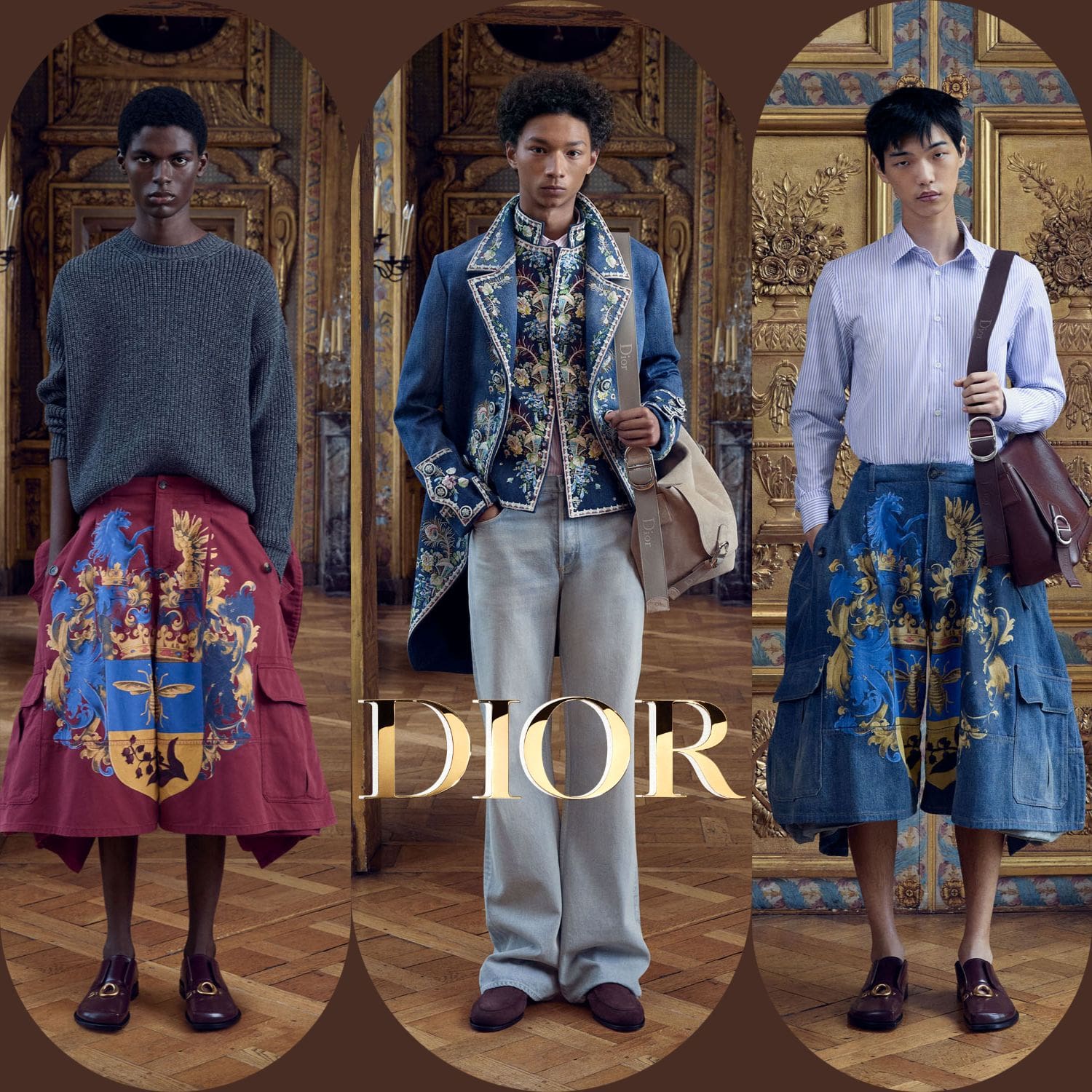
The opening salvos of the collection present a curious case of denim masquerading as court dress. A coat of heavy indigo, structured with the rigid formality of an officer’s frock, is consumed by an infestation of floral needlepoint so dense it threatens to swallow the wearer whole. It is a garment that demands a throne but is paired with light-wash, flared trousers that suggest a weekend in the Marais. This is the Dior paradox: the insistence that one can be both a revolutionary marquis and a casual tourist in the same breath. The silhouette is elongated to the point of exhaustion, a visual fatigue that is only heightened by the inclusion of oversized messenger bags that hang like anchors, grounding these flights of fancy in the mundane reality of logistical excess.
The Infantilization of Luxury
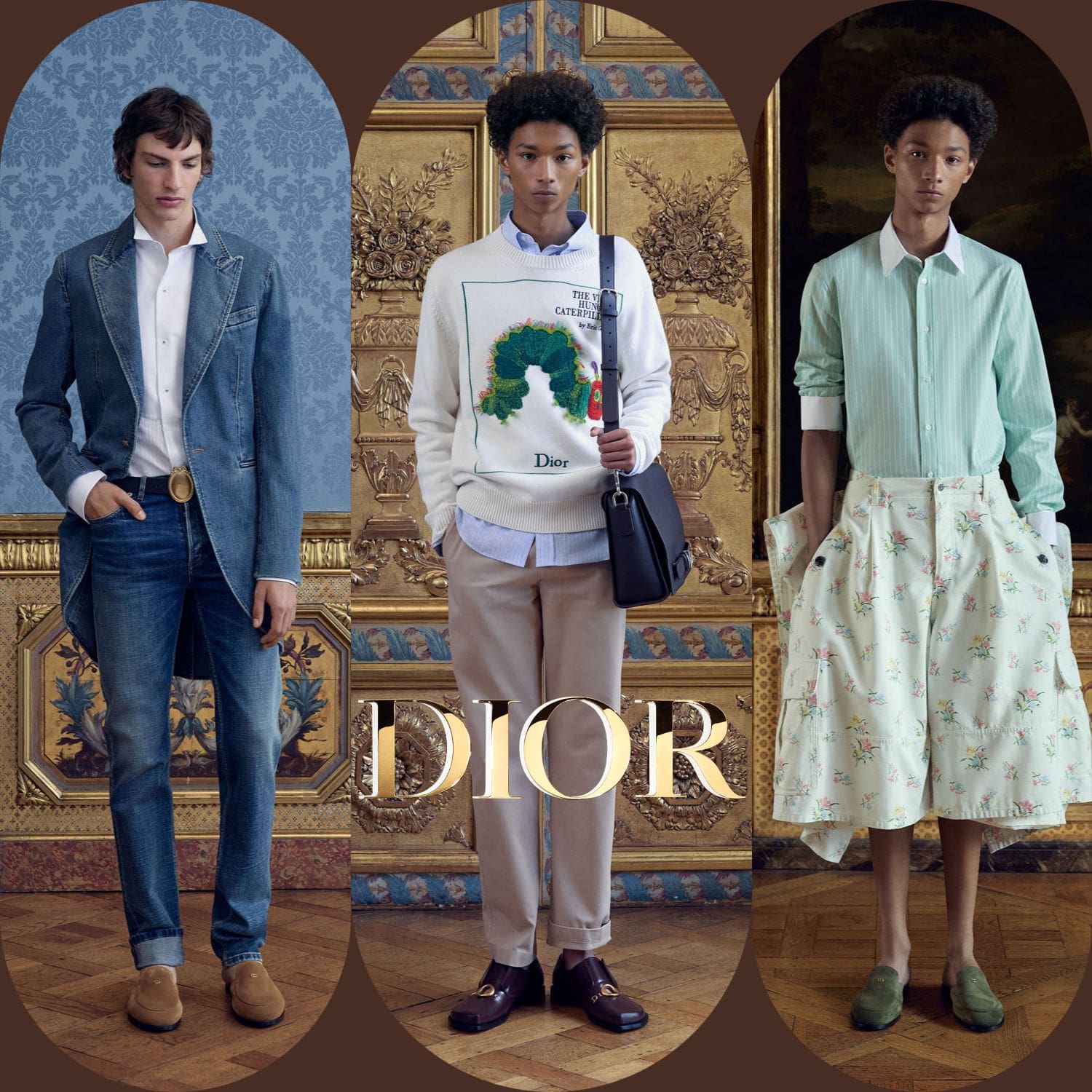
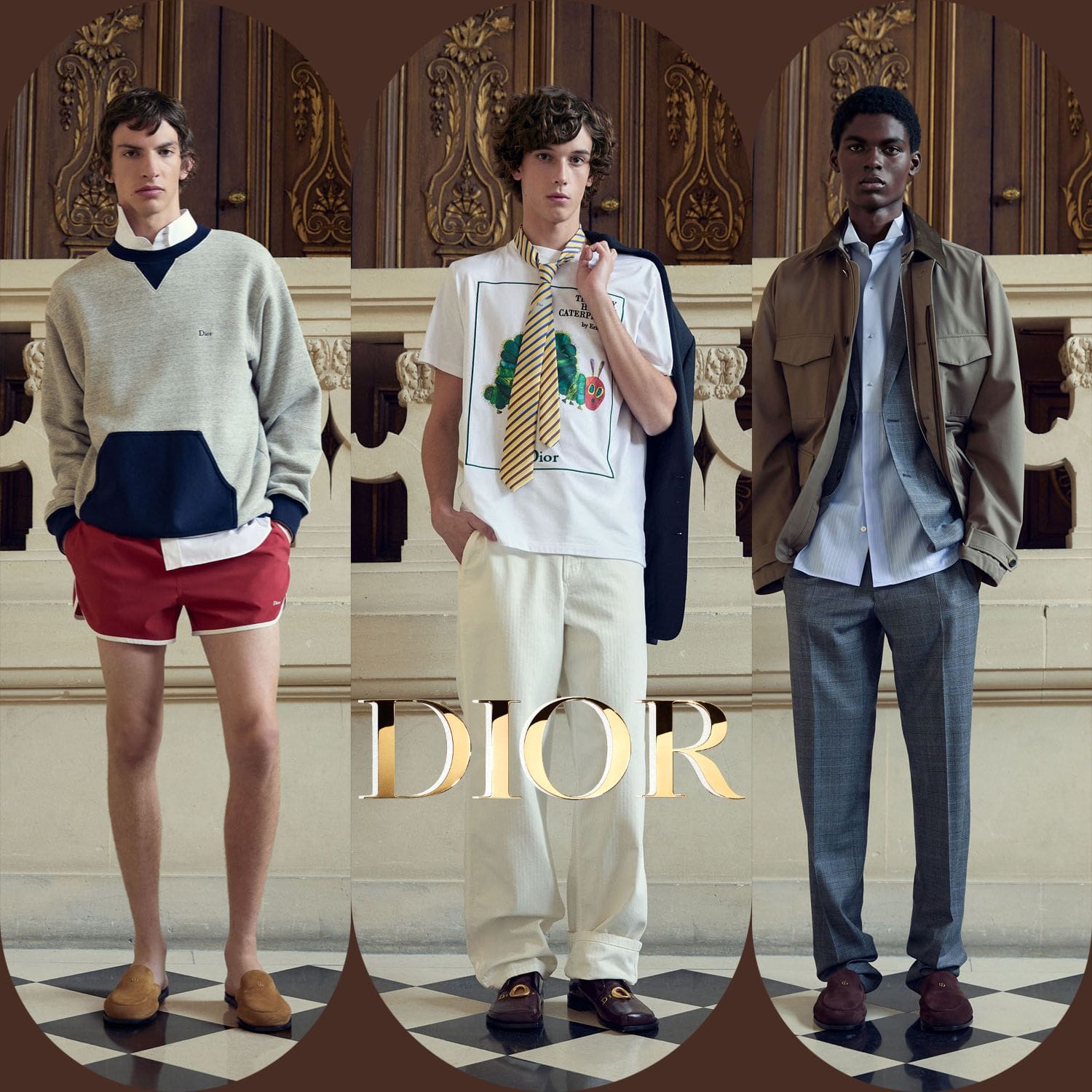
Perhaps the most jarring narrative shift occurs with the introduction of literalism so blunt it verges on the offensive. One cannot help but stare, with a mixture of bewilderment and begrudging fascination, at the arrival of The Very Hungry Caterpillar upon a pristine white knit. To see a cornerstone of children’s literature rendered in luxury wool is to witness the final surrender of the adult wardrobe to the whims of the playroom. It is a garment that seeks to charm but succeeds only in patronizing, especially when placed atop crisp, pinstriped shirting and beige chinos. Jones seems to be suggesting that the modern man is little more than a creature of consumption, perpetually hungry, perpetually swaddled, yet somehow expected to maintain the posture of a global executive.
The Heraldic Cargo and the Stagnation of Sport
When the collection attempts to pivot toward the functional, it does so with a heavy-handed irony that feels particularly sharpened. The emergence of the voluminous, knee-length cargo short—rendered in both a royal crimson and a utilitarian denim—is adorned with massive heraldic crests featuring the Napoleonic bee and rearing unicorns. It is a caricature of nobility, a visual joke played on the concept of the “active” man. These are garments for a hunt that never happens, for a court that has no palace. They are wide, flat, and uncompromisingly stiff, turning the lower half of the body into a billboard for a history that neither the designer nor the client seems particularly interested in honoring beyond the surface level.
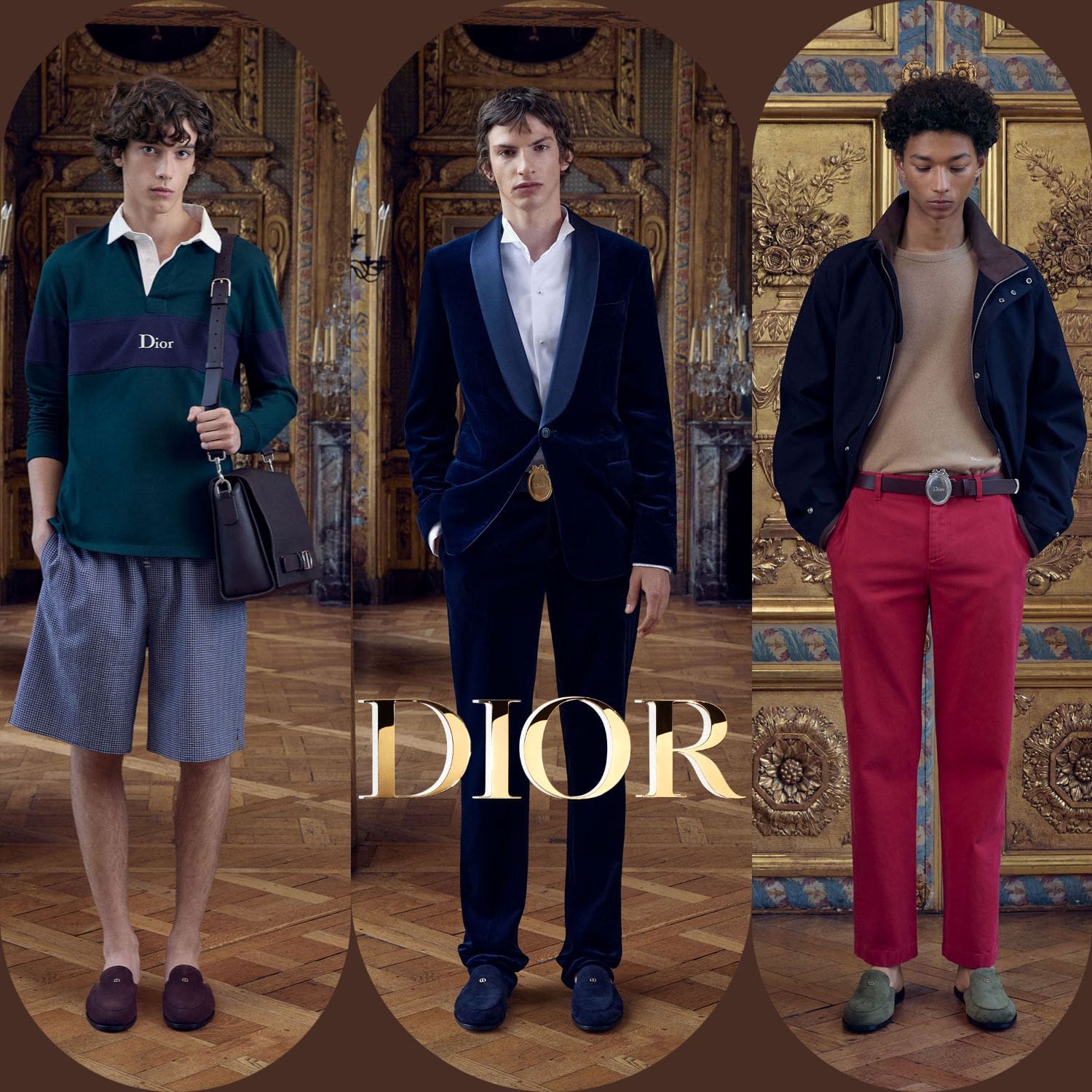
The final descent into “elevated” leisurewear offers no respite. A sky-blue cashmere tracksuit, trimmed with the stripes of a vintage gymnasium, represents the ultimate stagnation. It is the uniform of the bored elite—clothes designed for the labor of existing in high-ceilinged rooms while doing absolutely nothing. The drape is impeccable, the fiber is undoubtedly divine, yet the result is a funereal softness. As a prologue to the winter to come, this collection suggests that while the Dior man may be surrounded by the finest tapestries and the most intricate embroideries, he has nowhere left to go but back to bed.
