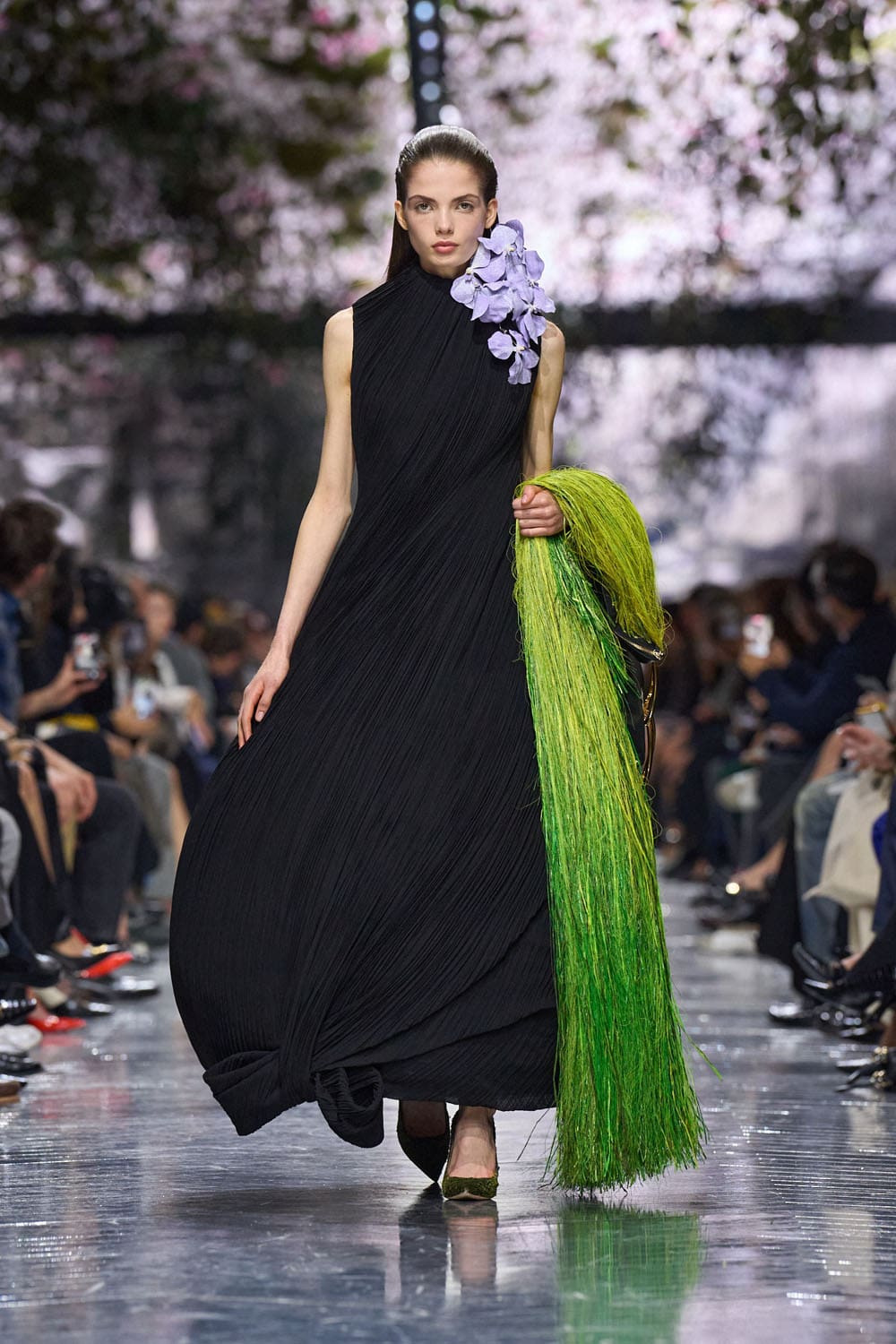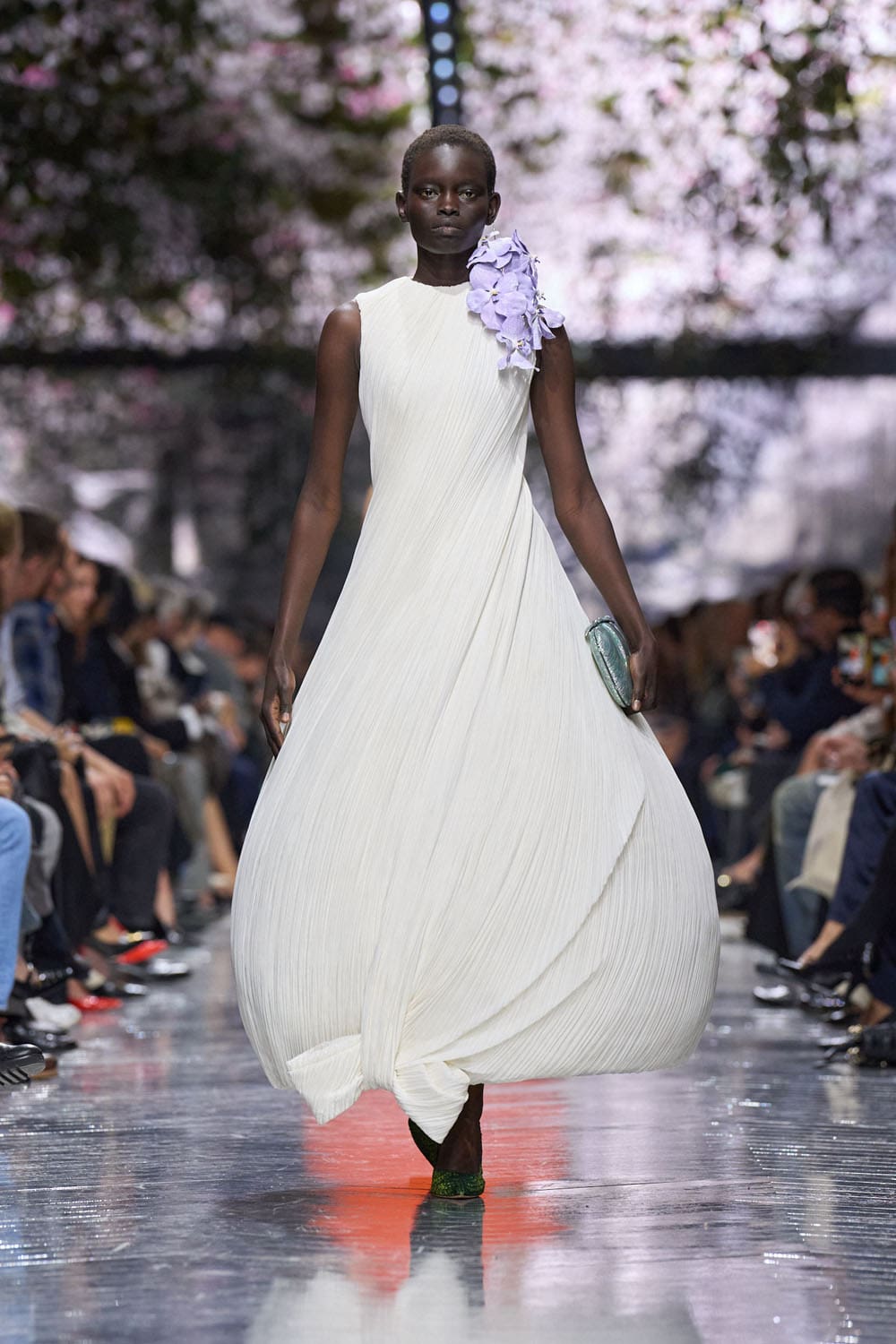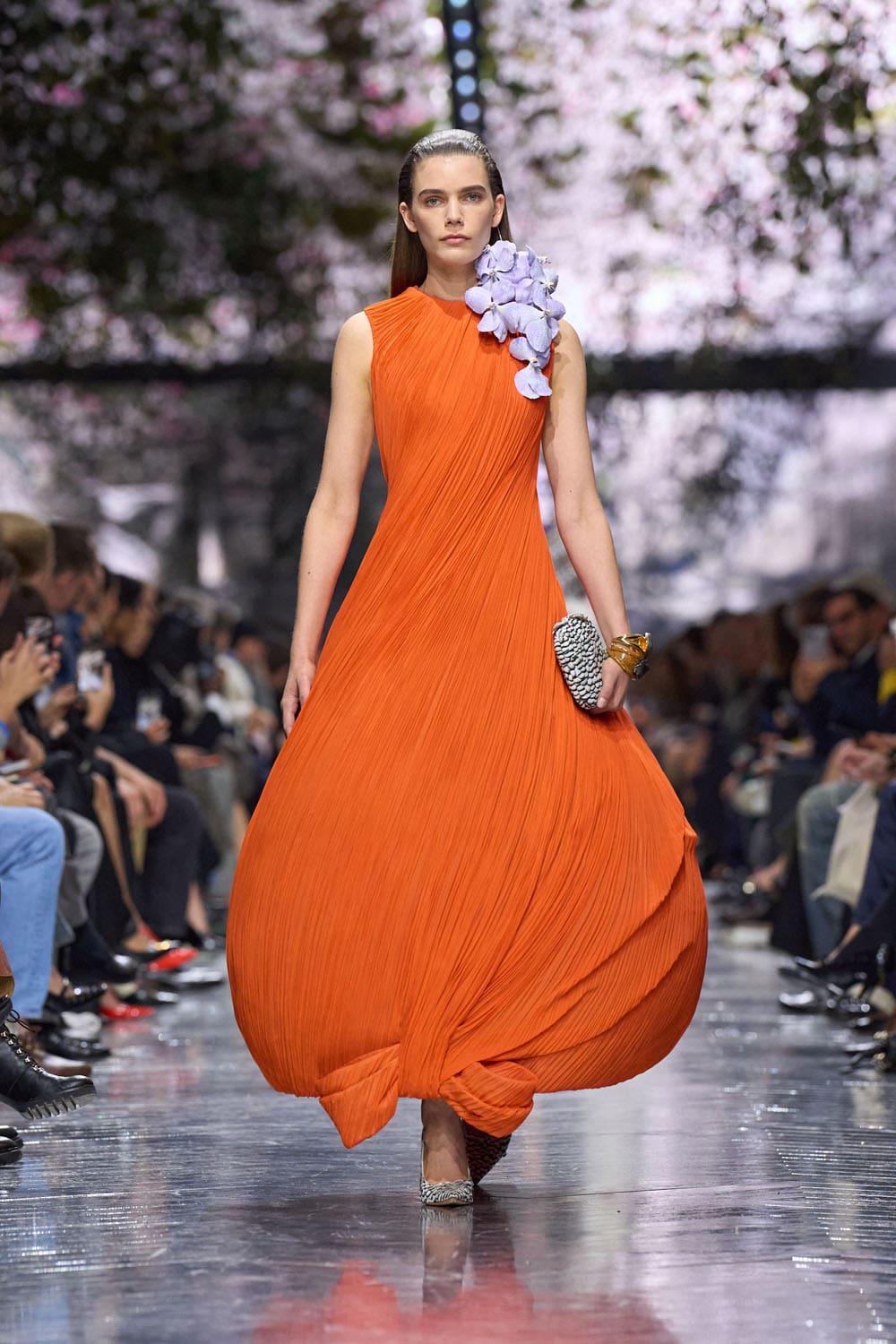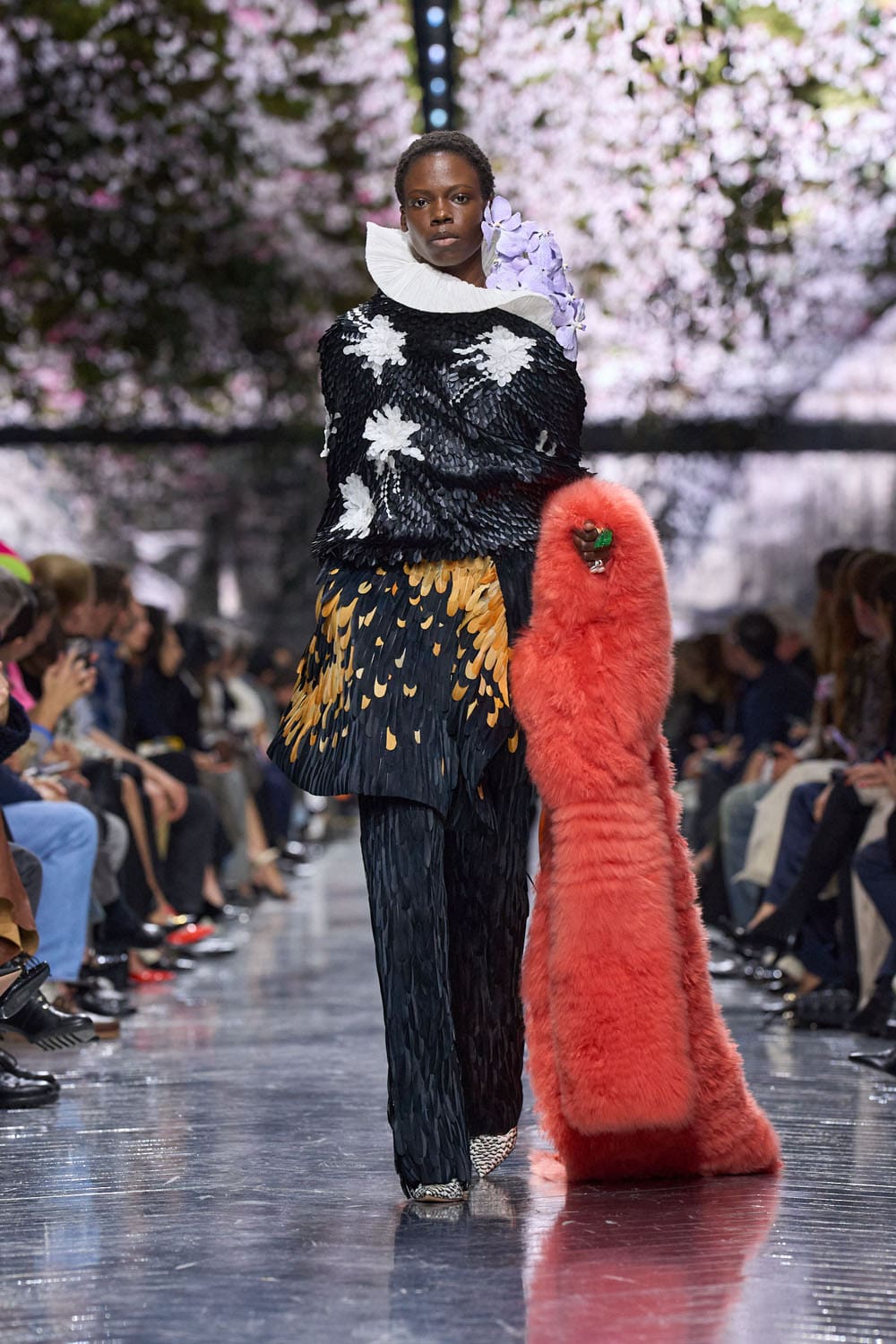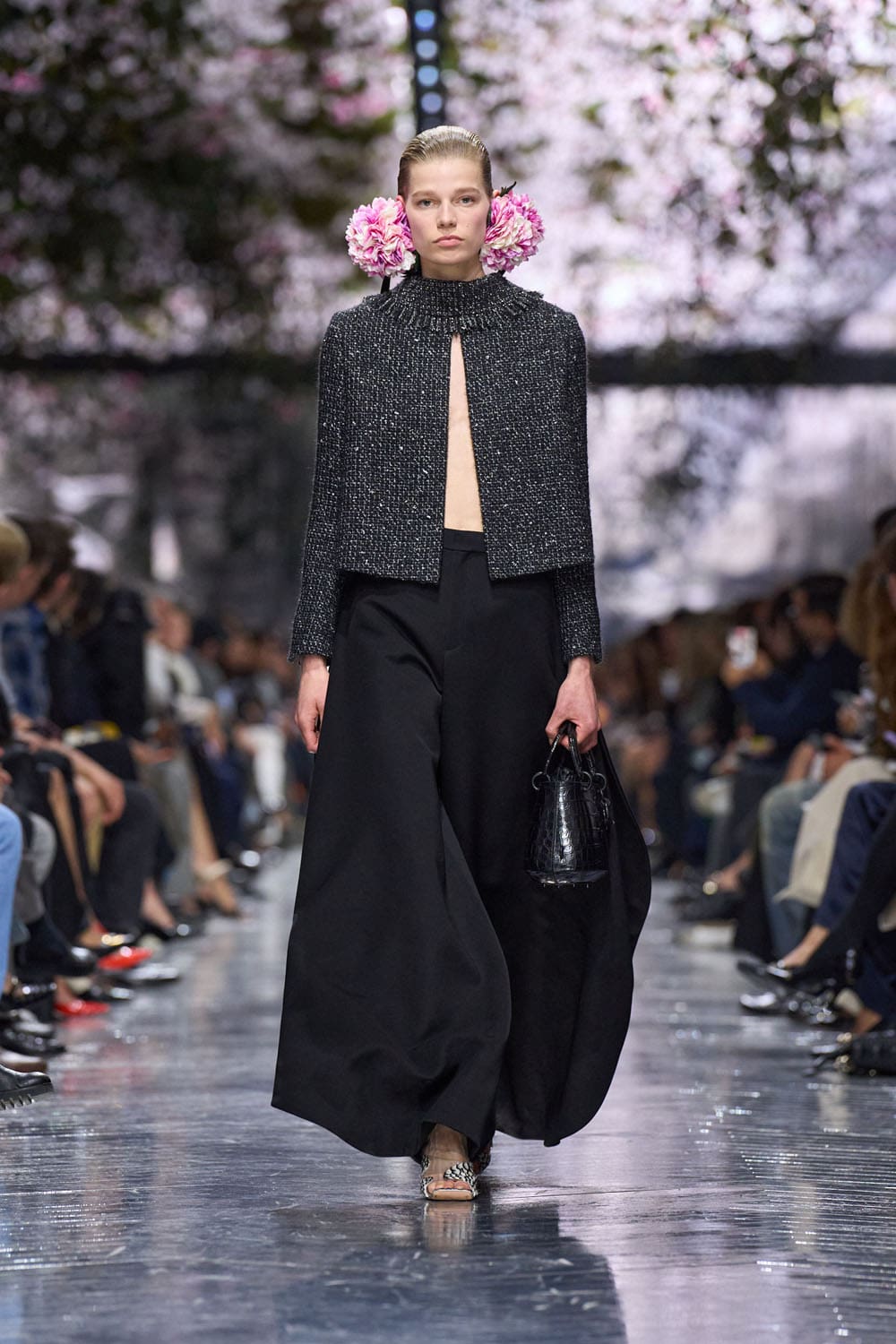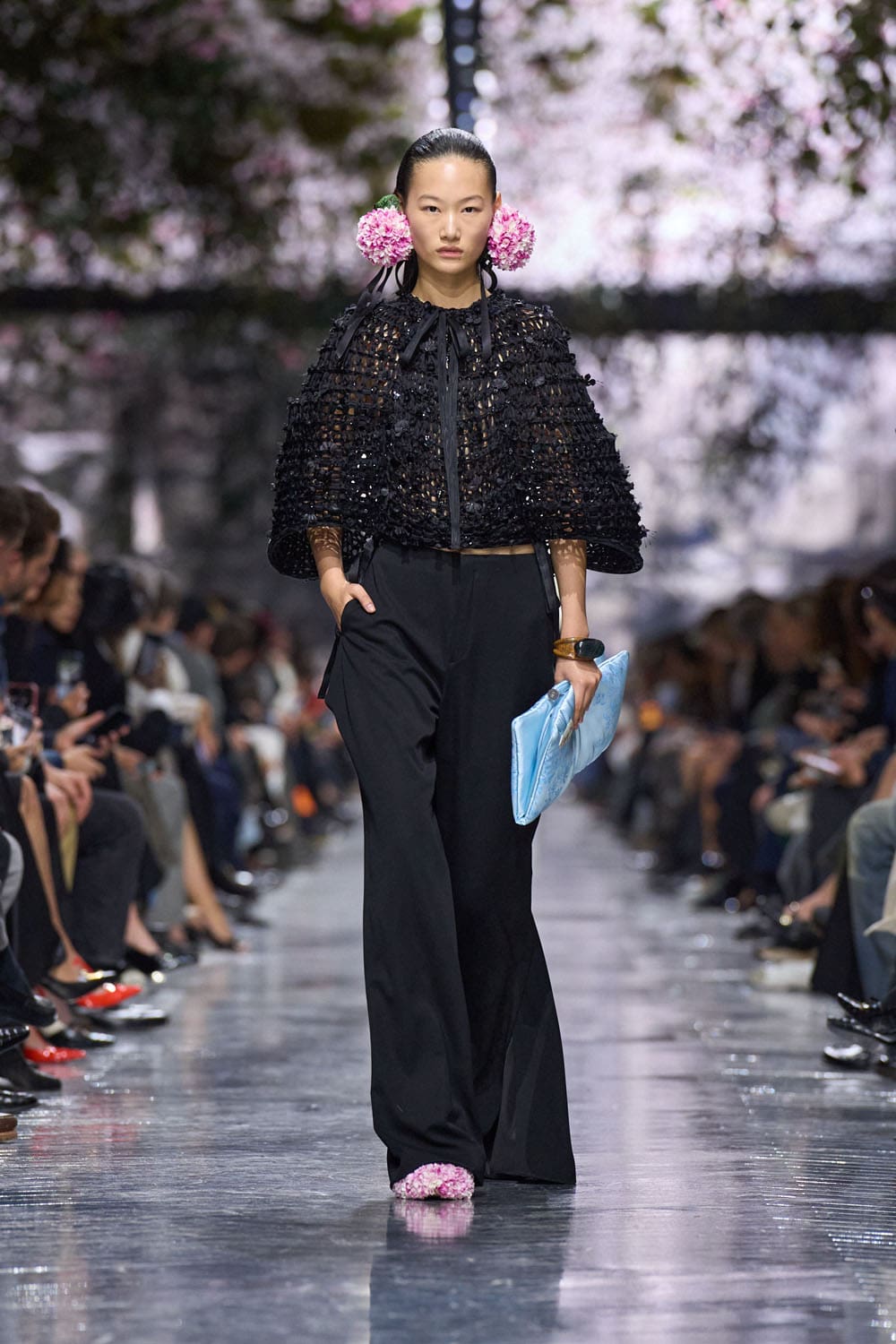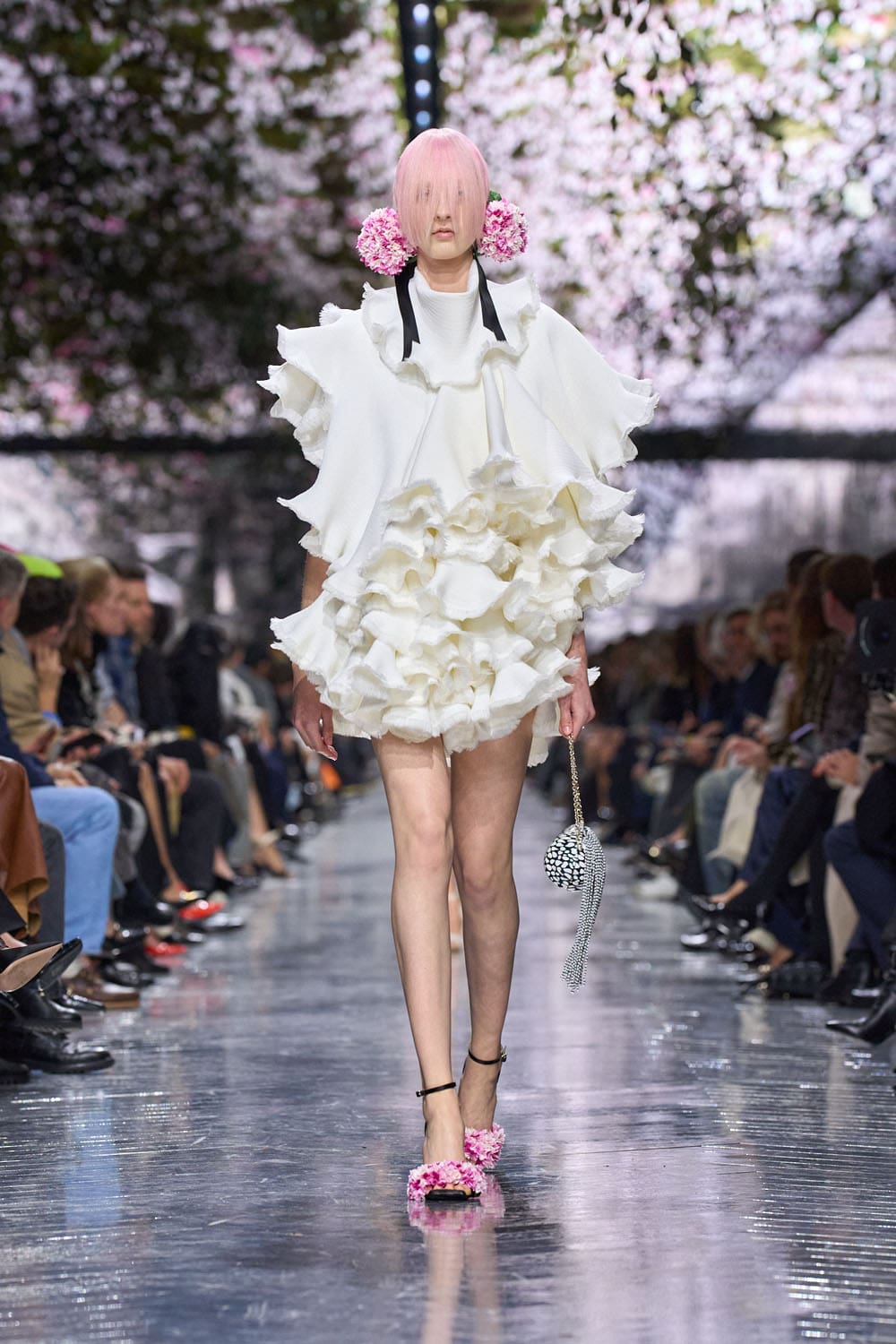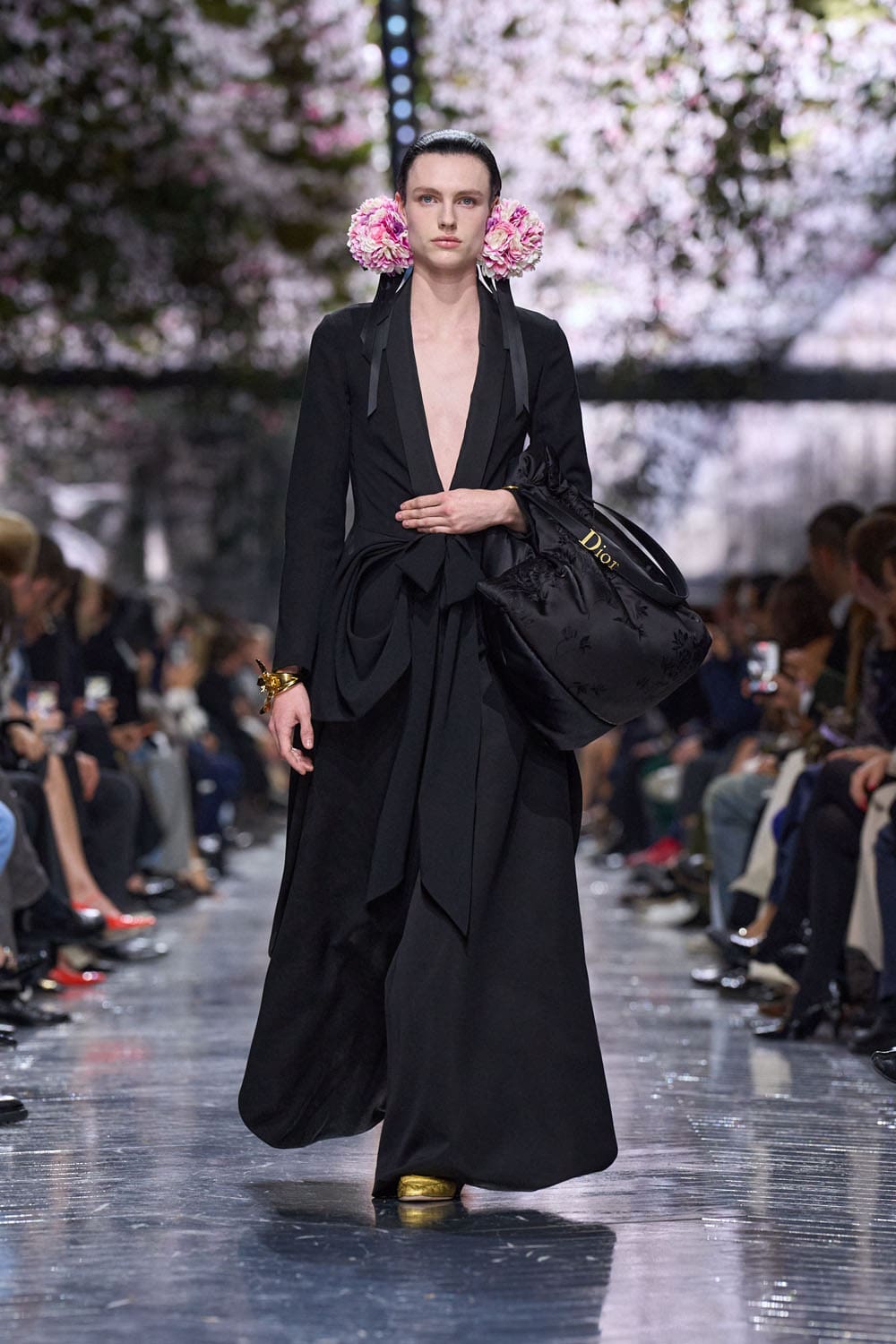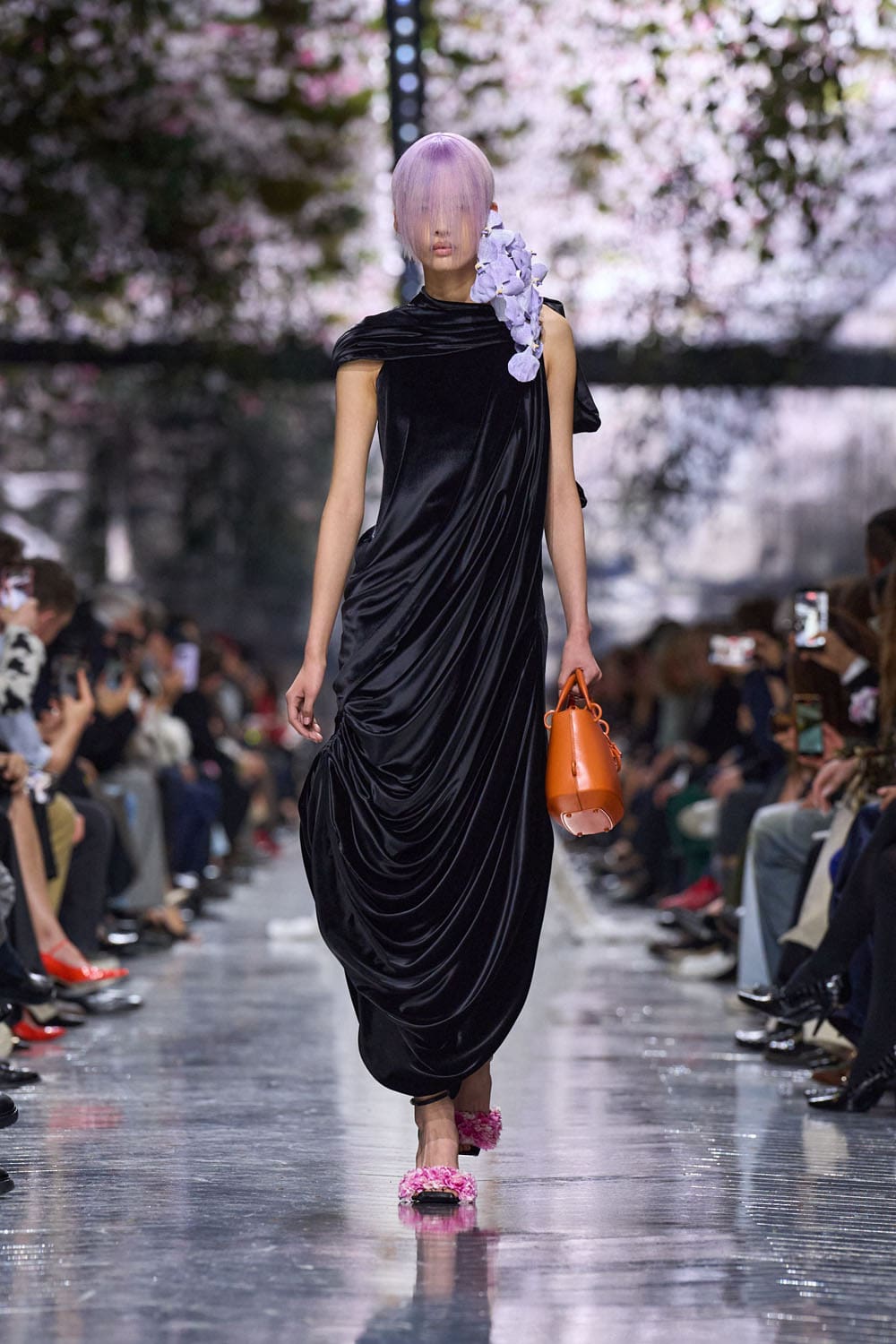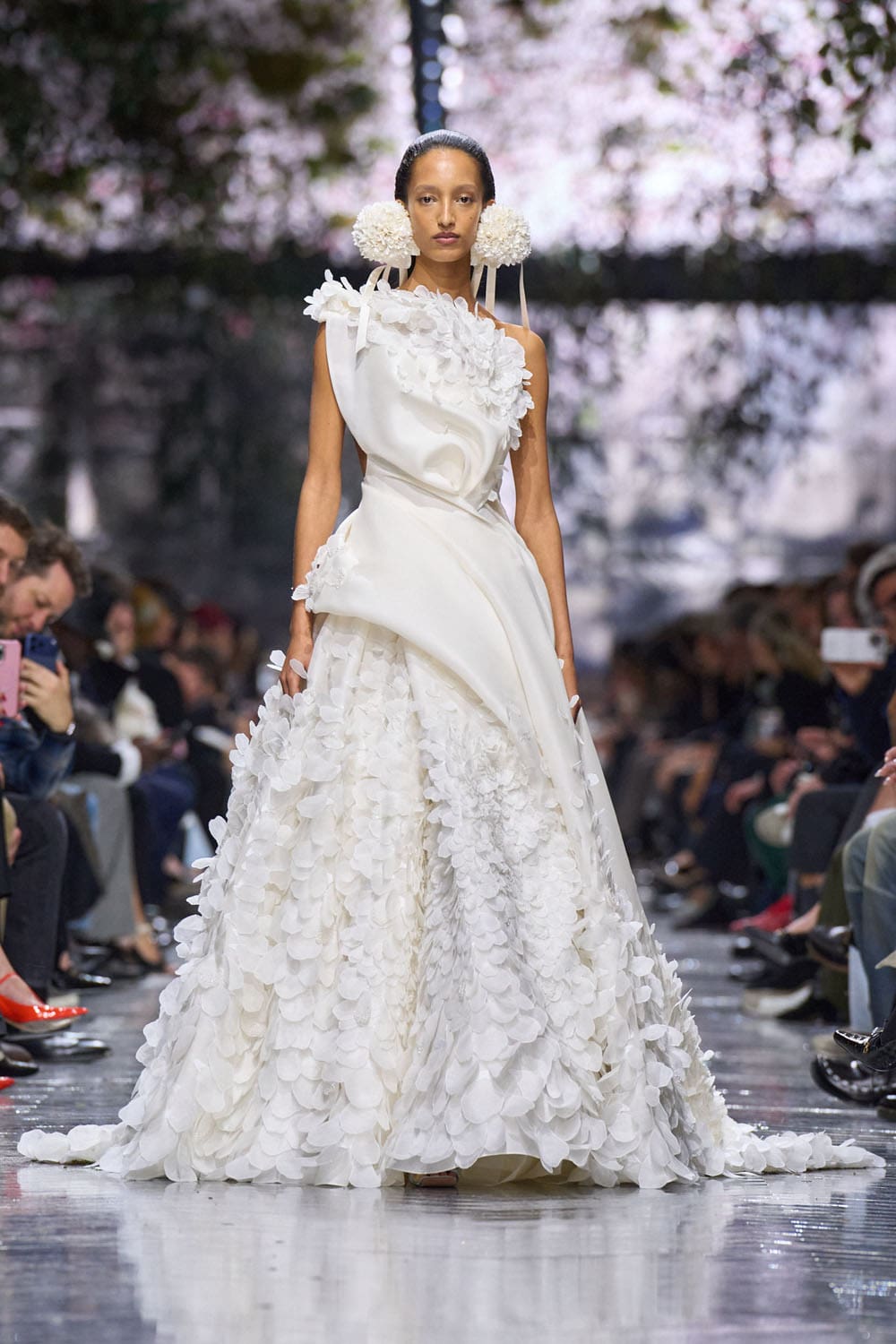
Dior Spring Summer 2026 Haute Couture “Breakfast at Dior, or Cyclamen with Cheese Sandwiches”. Review by Eleonora de Gray, Editor-in-Chief of RUNWAY MAGAZINE. Photo Courtesy: Dior / GettyImages.
At Dior this season, we were promised nature. We were promised poetry. We were promised cyclamen. What we got instead was a couture mushroom cloud of confusion—somewhere between botany class and a modern art thesis that went terribly off-track.
Jonathan Anderson’s debut for Dior Haute Couture was announced with the weight of legacy and the promise of reinterpretation. Dior’s own press release, equal parts philosophical dissertation and botanical sermon, called couture “a laboratory of ideas.” Well. Let’s just say the test tubes exploded.
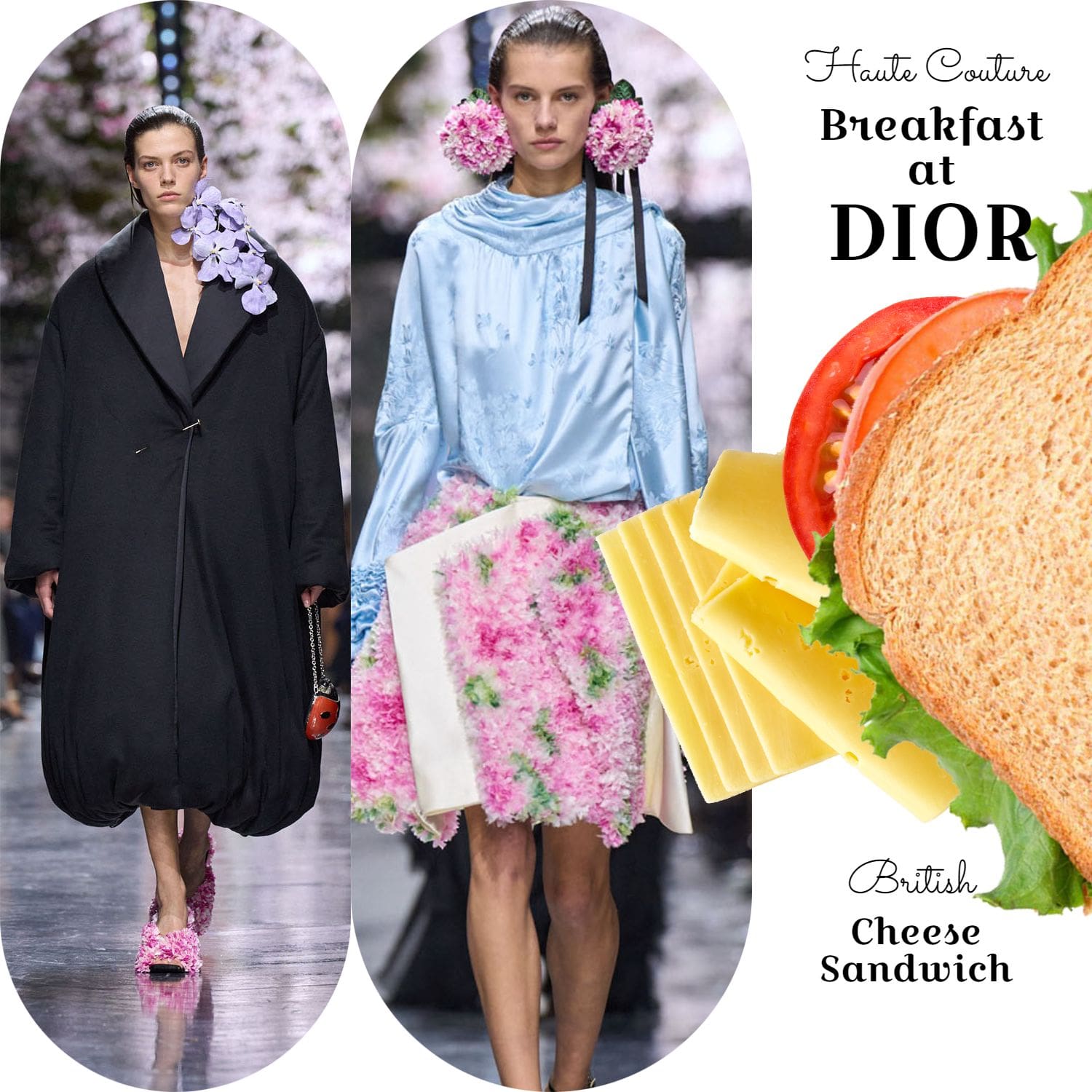
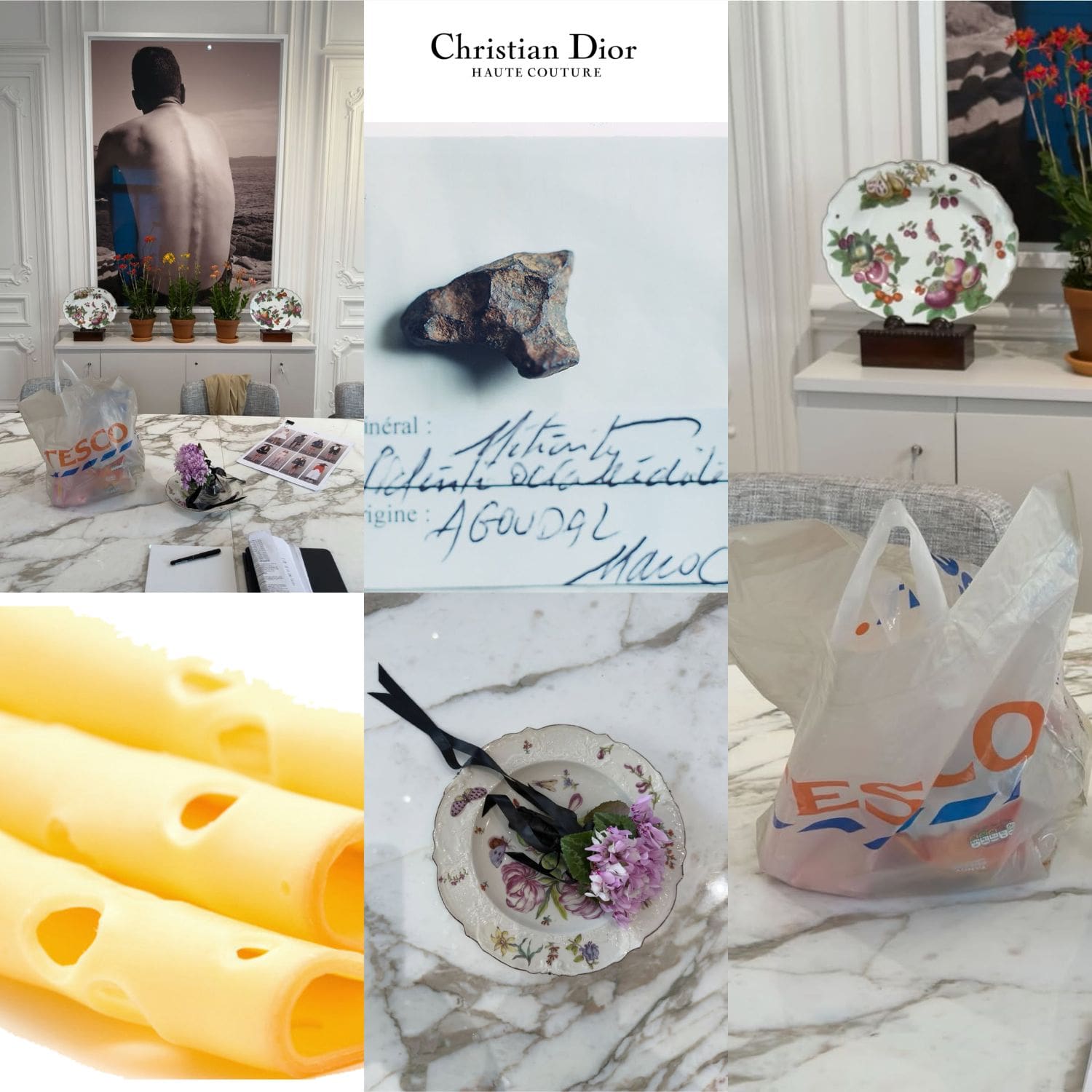
This was a collection where Galliano’s archives were dusted off—perhaps too late at night, under too little light, and with too many existential questions. Instead of reimagining Galliano’s grandeur or channeling Gianfranco Ferré’s architectural brilliance (God forbid we get elegance), Anderson offered us… sweaters. Bulky, contemporary, oversized sweaters. For couture.
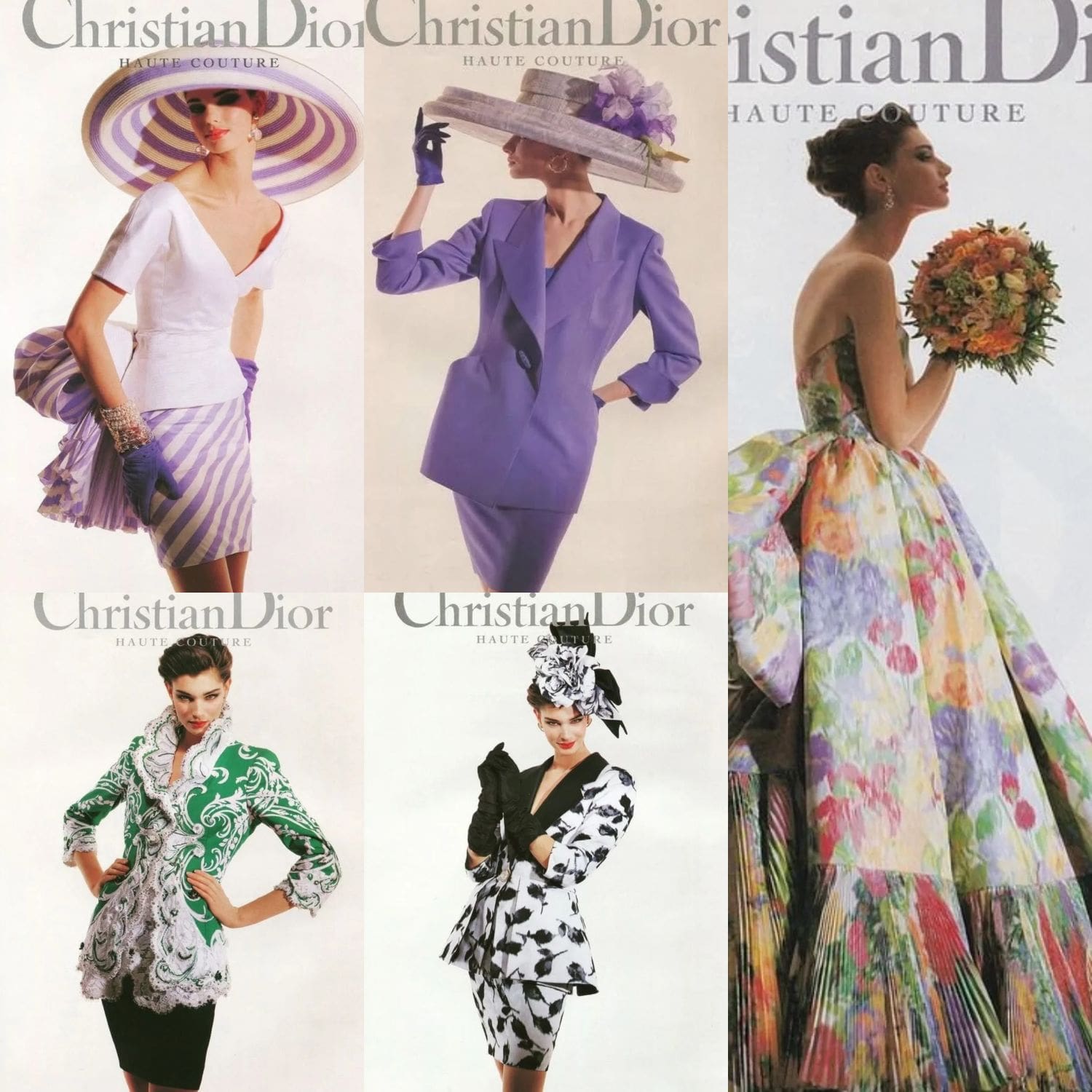
And not just sweaters. Let’s begin the descent.
There’s something tragically poetic about watching a house as historically precise as Dior spiral into a flowerbed of conceptual confusion.
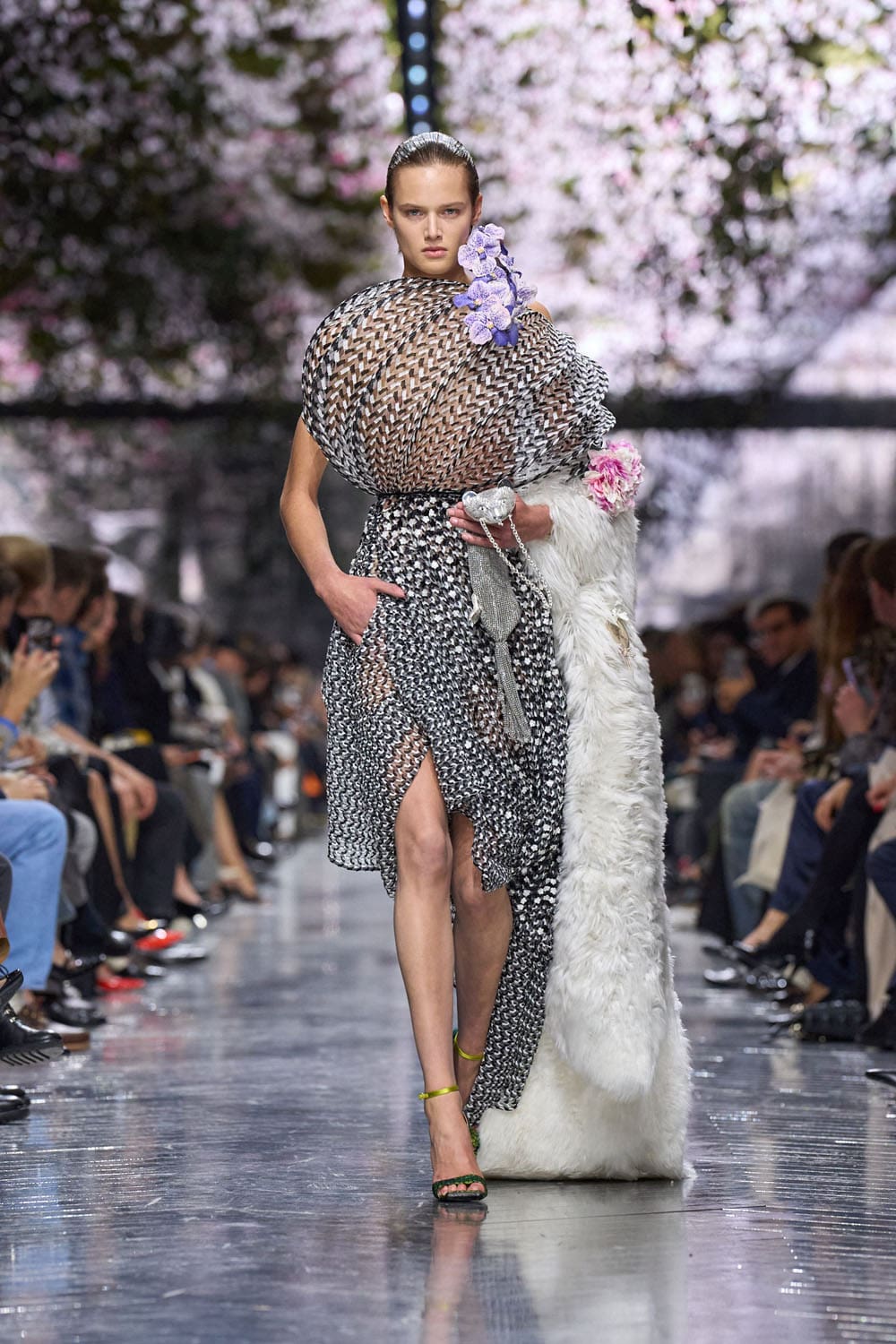
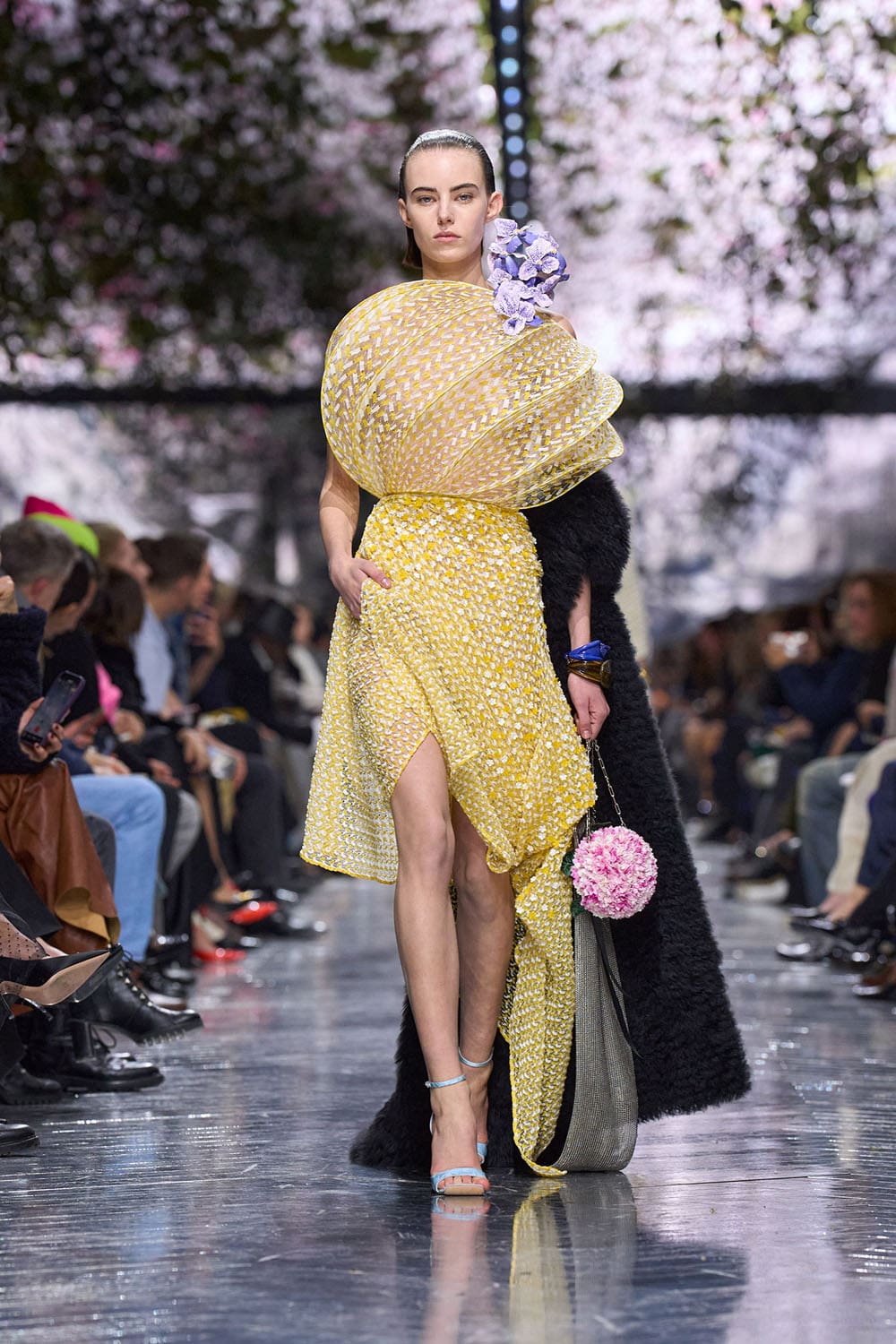
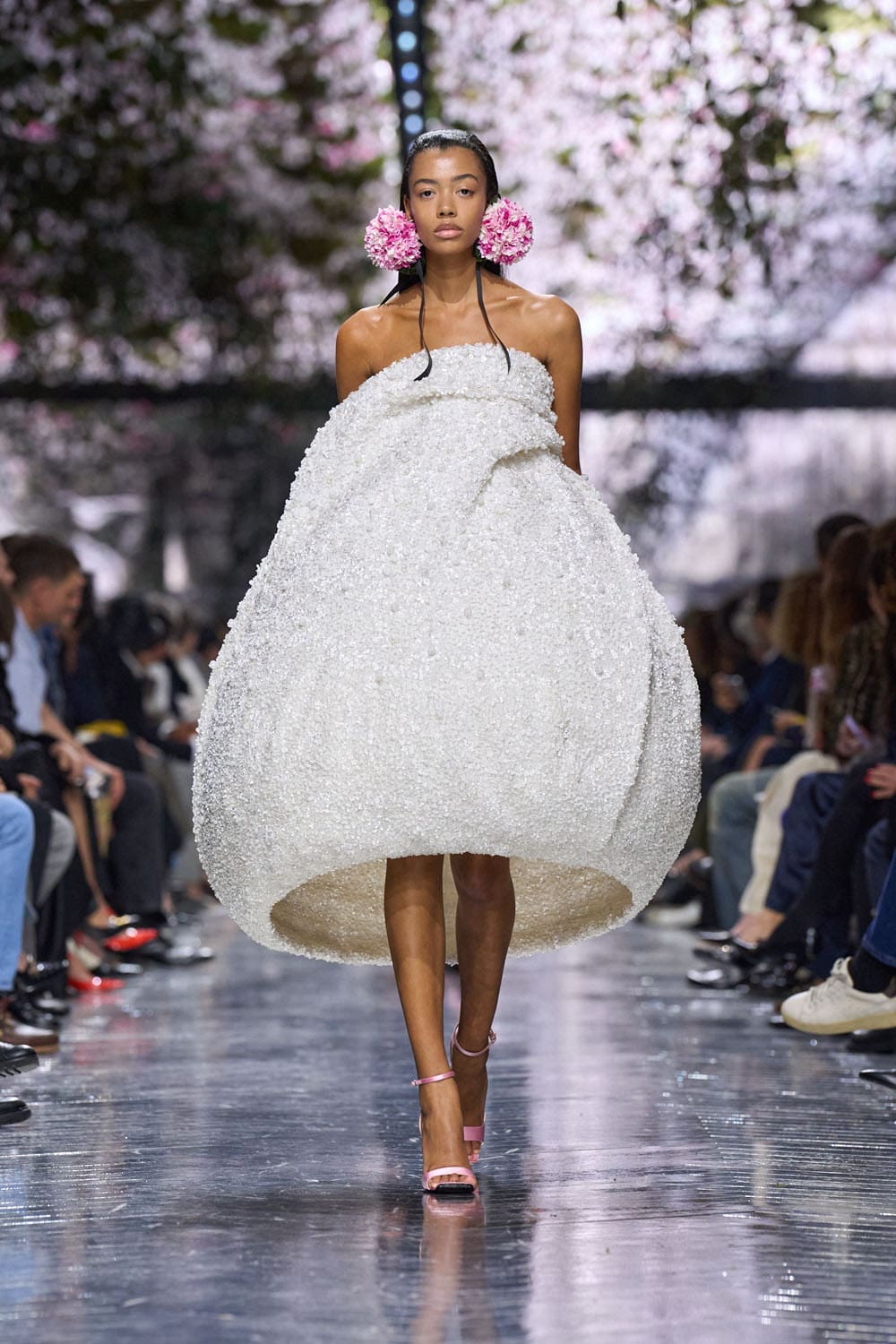
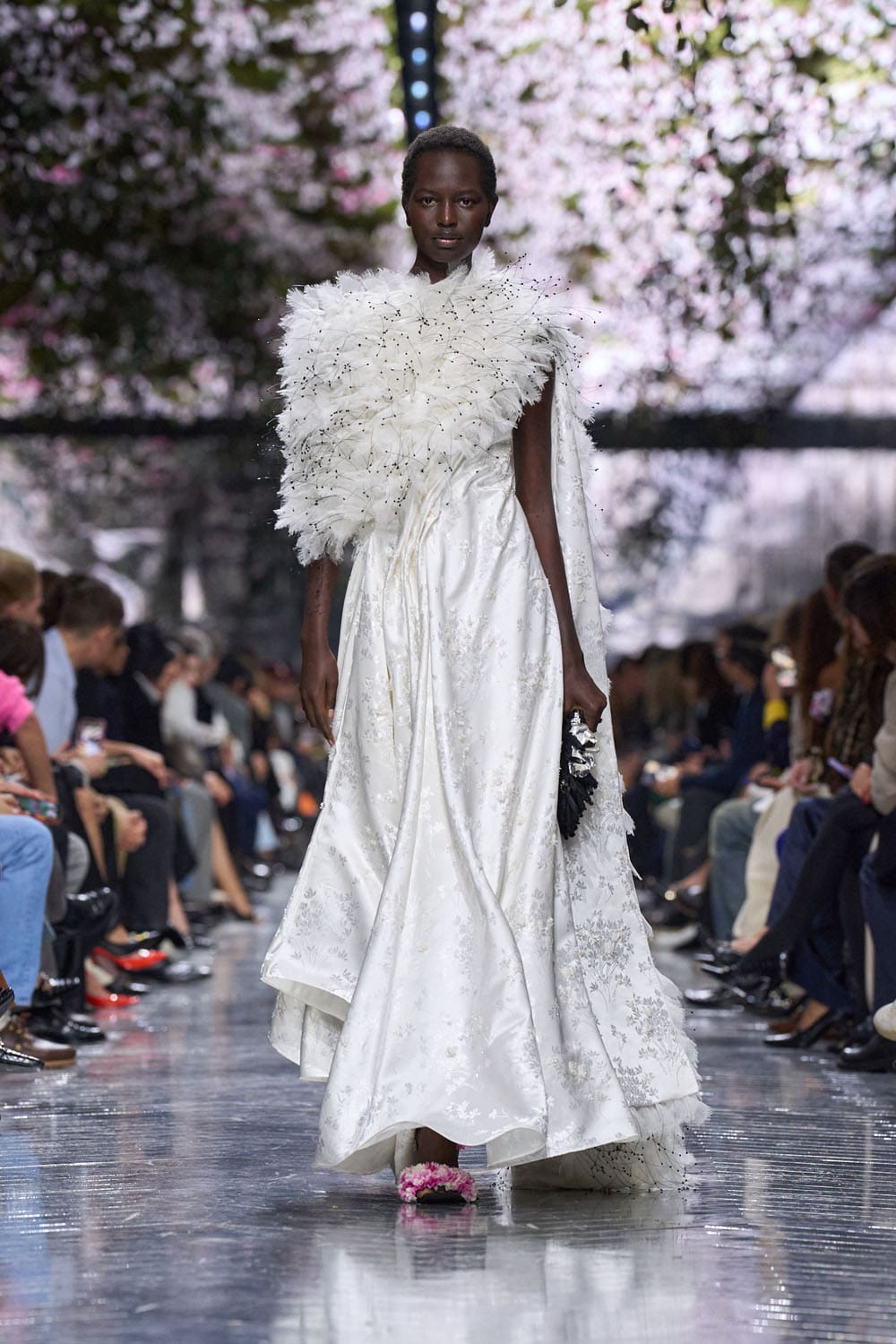
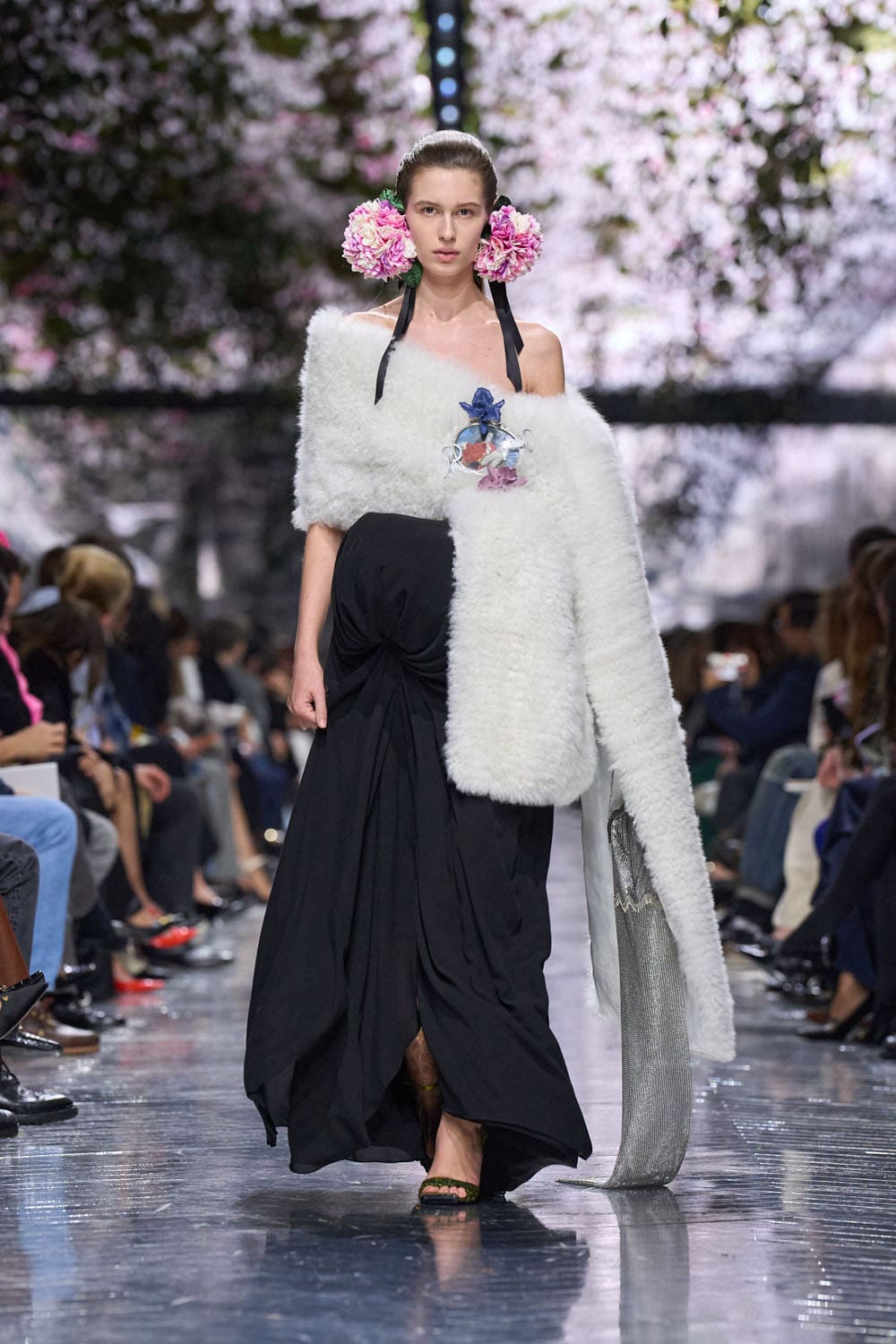
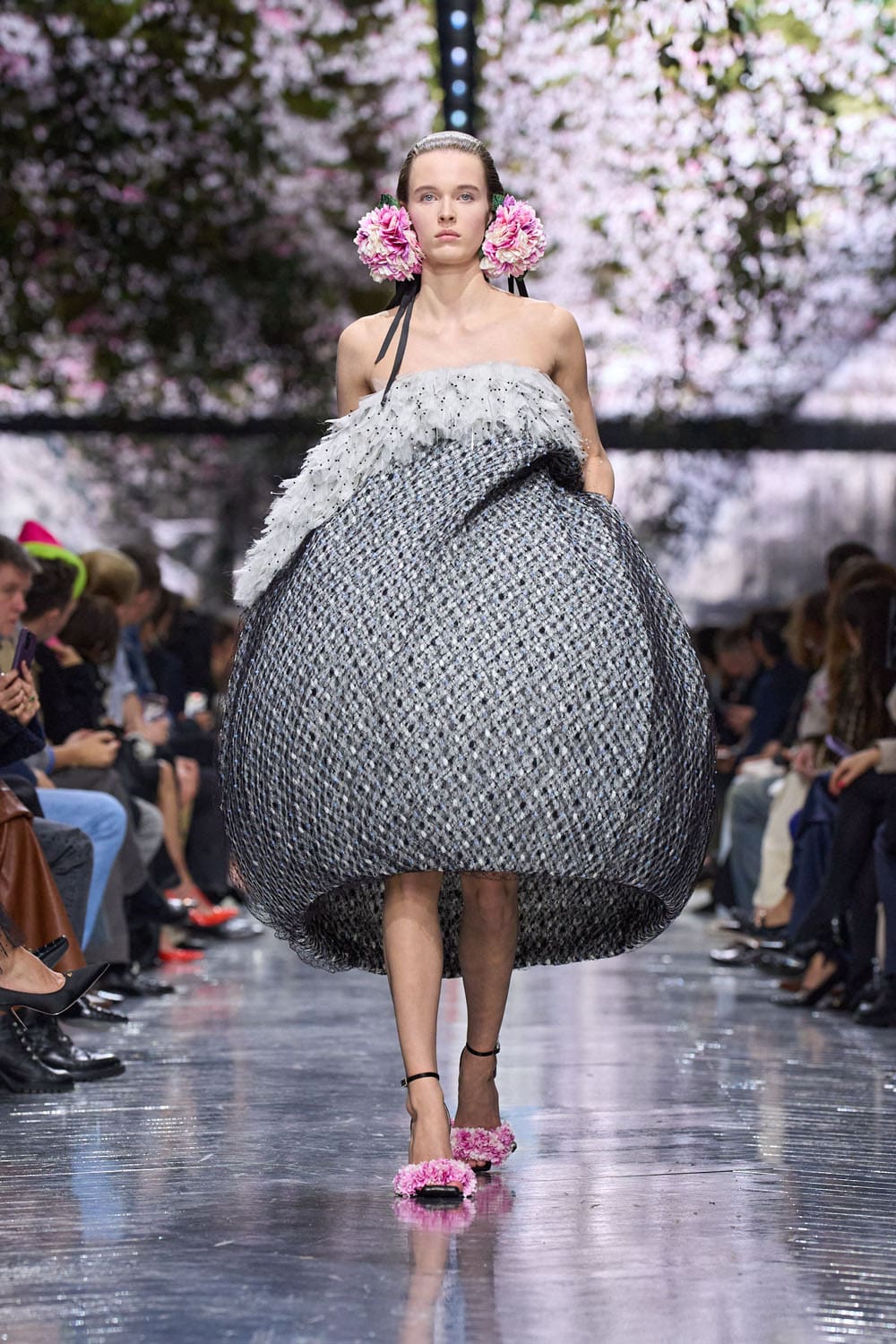
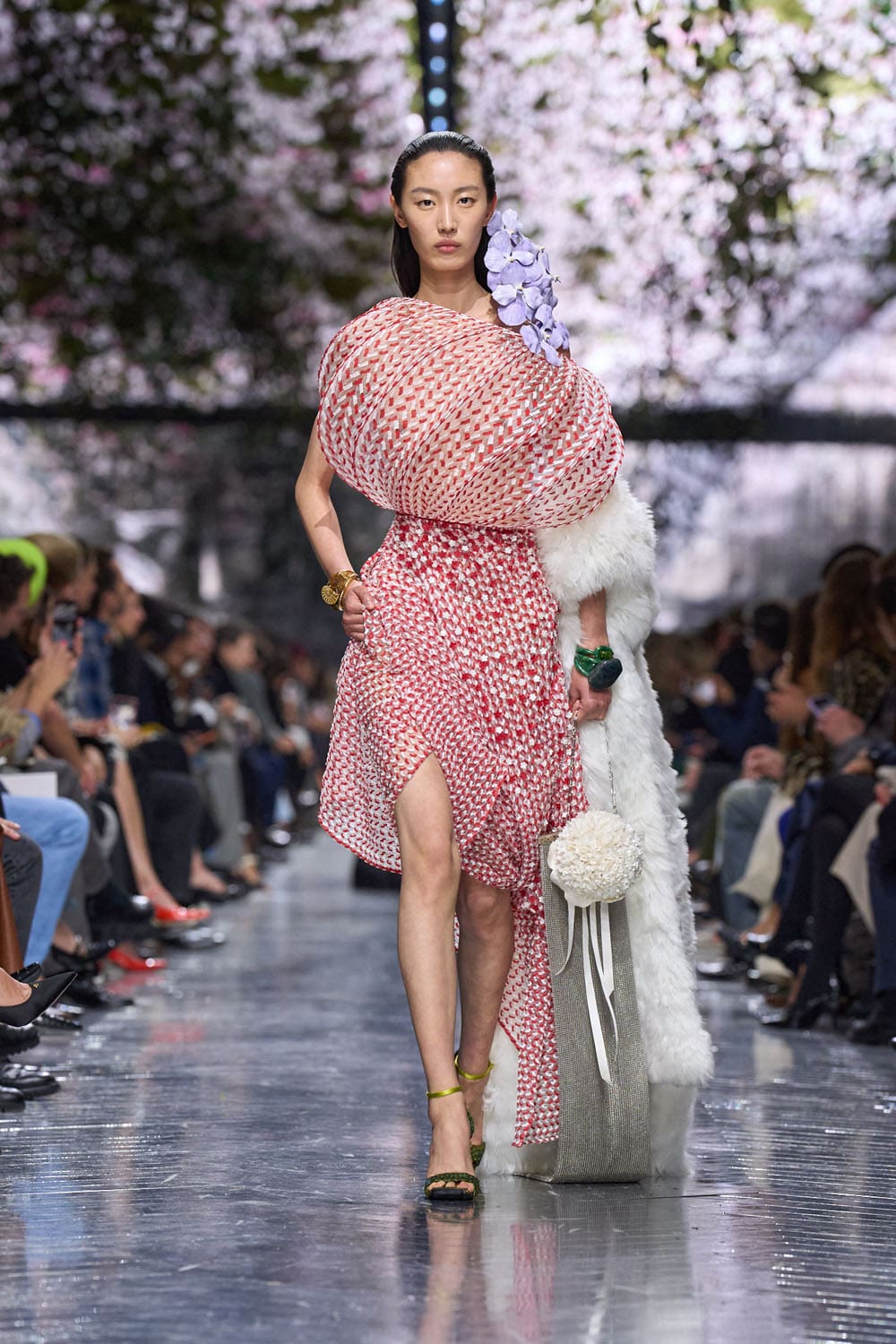
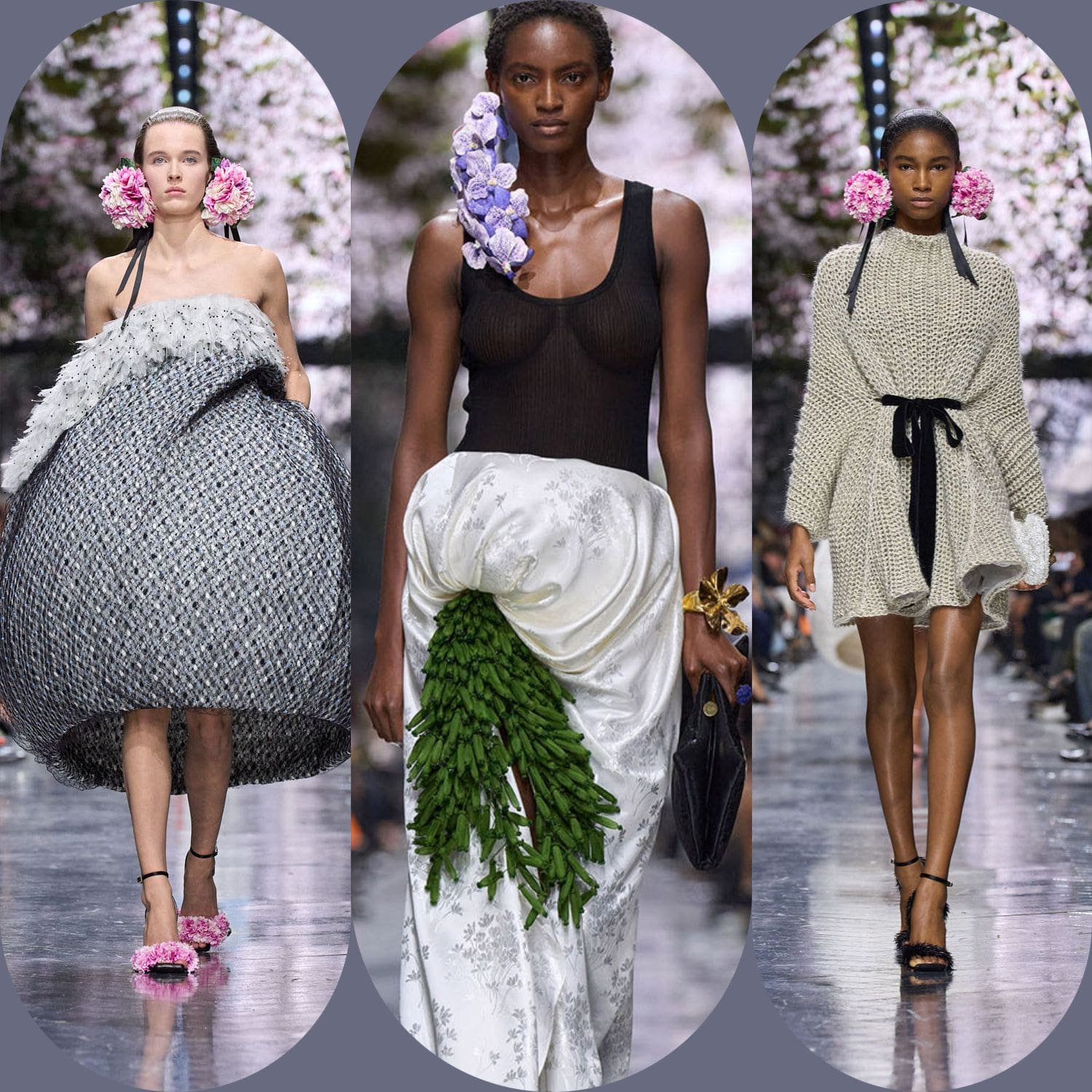
Because just after that, all sense of proportion — and taste — disappeared into what can only be described as a haute cheese sandwich. A mass of brown and white woven netting, puffed up into a distorted bustier, was paired with what looked like a white fur tail thrown in for comic relief. The look was accessorized with a metallic clutch and a face that said, “I don’t know what I’m wearing either.”
One could almost hear Galliano weeping in the front row, watching his legacy being turned into interpretive deli art.
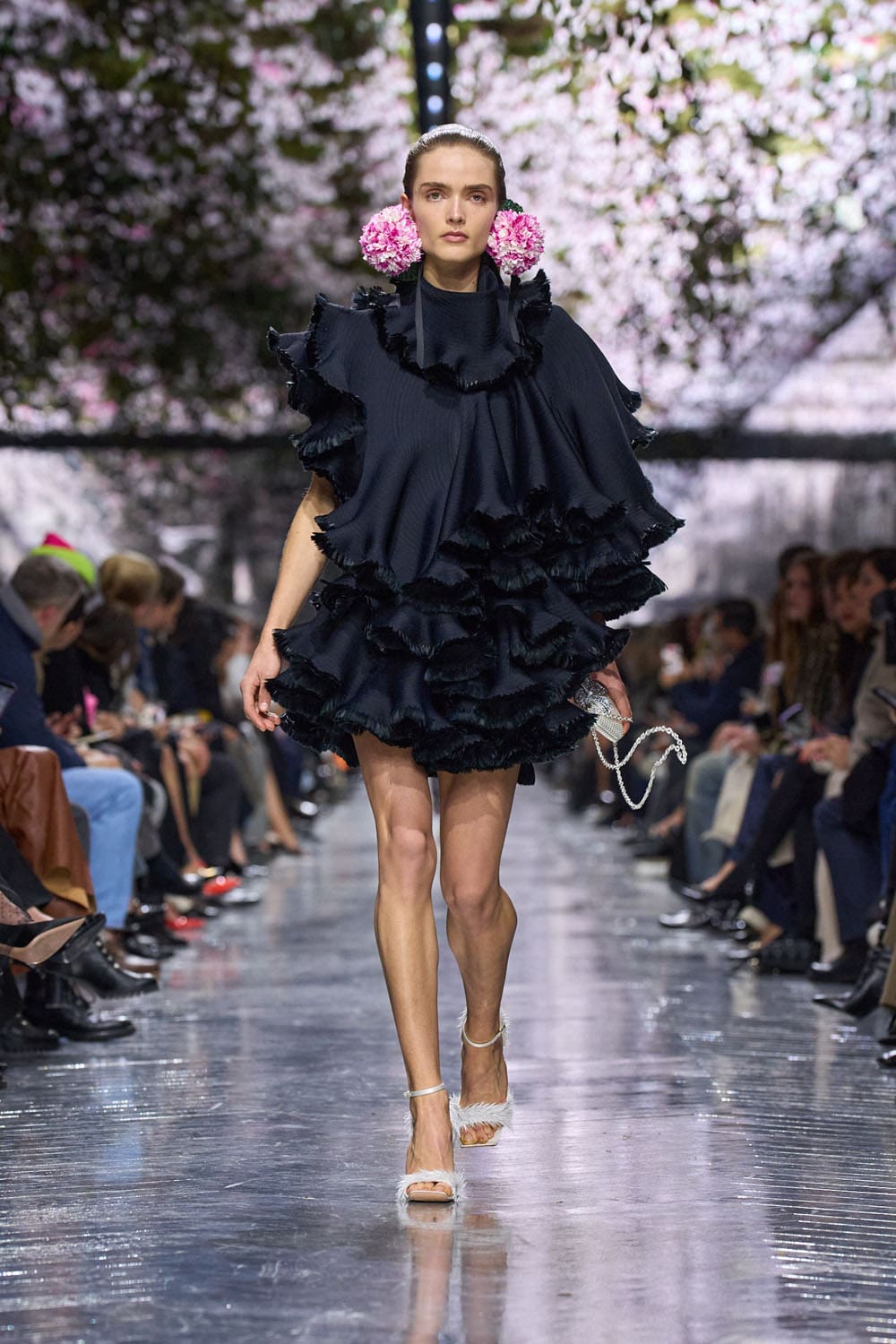
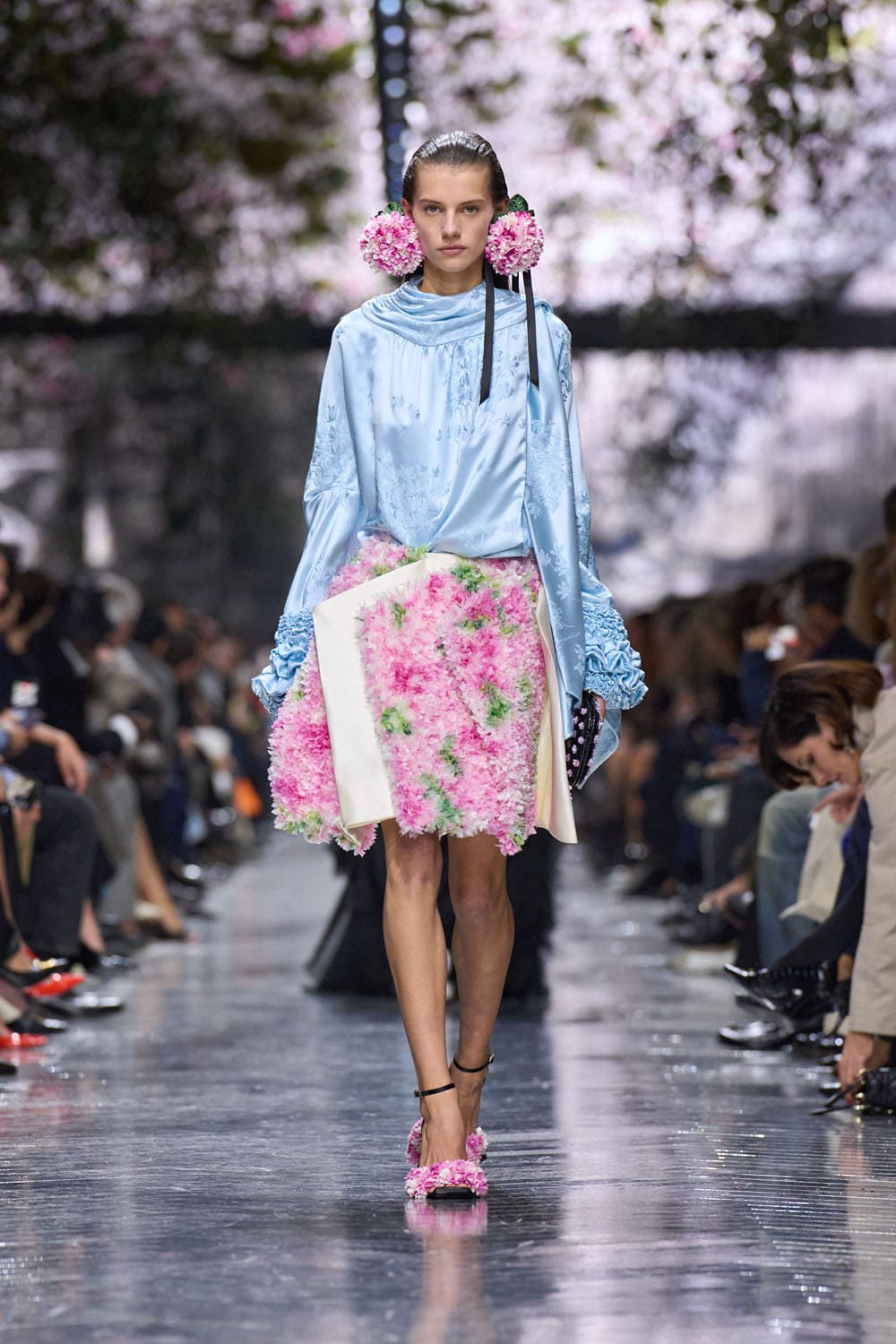
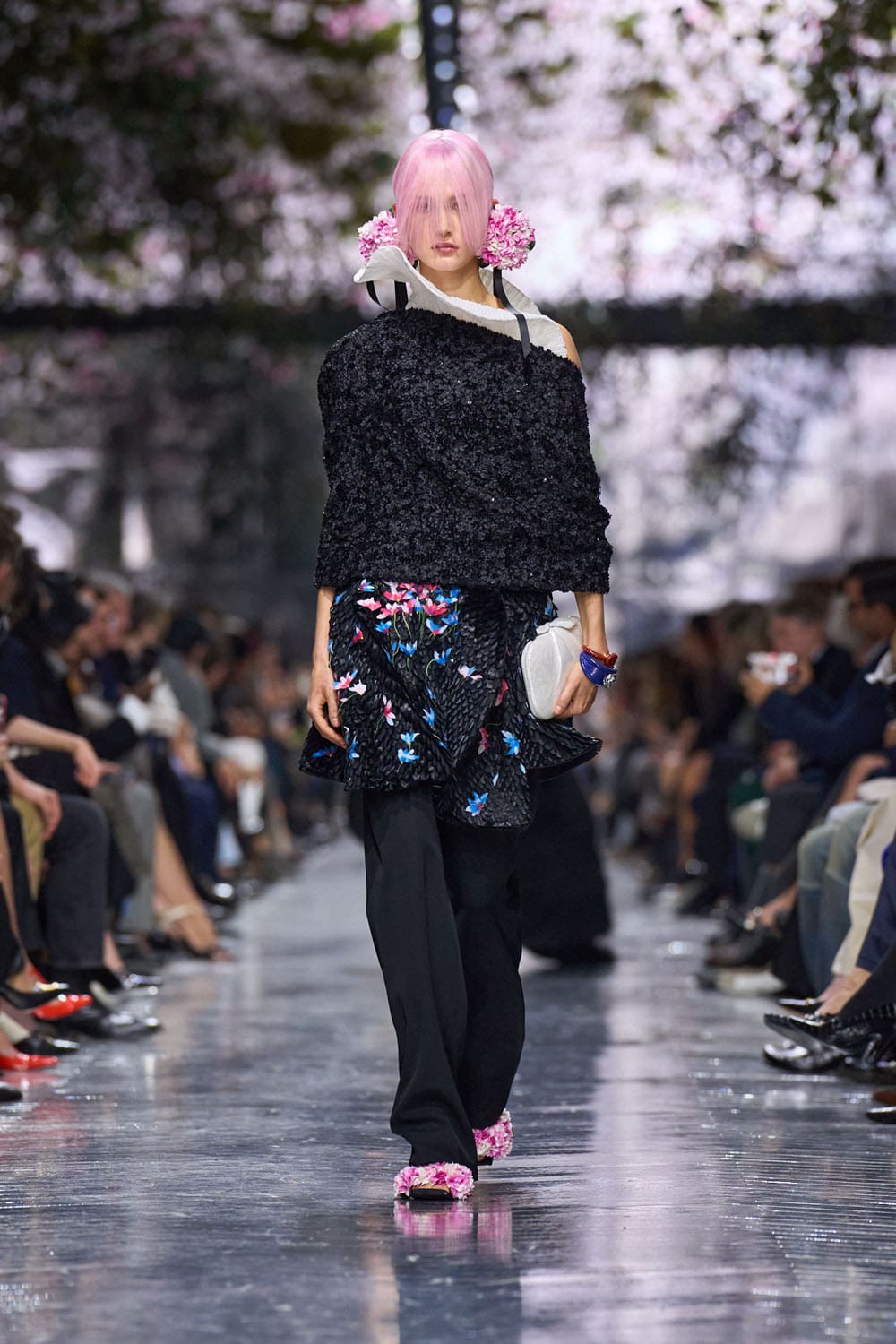
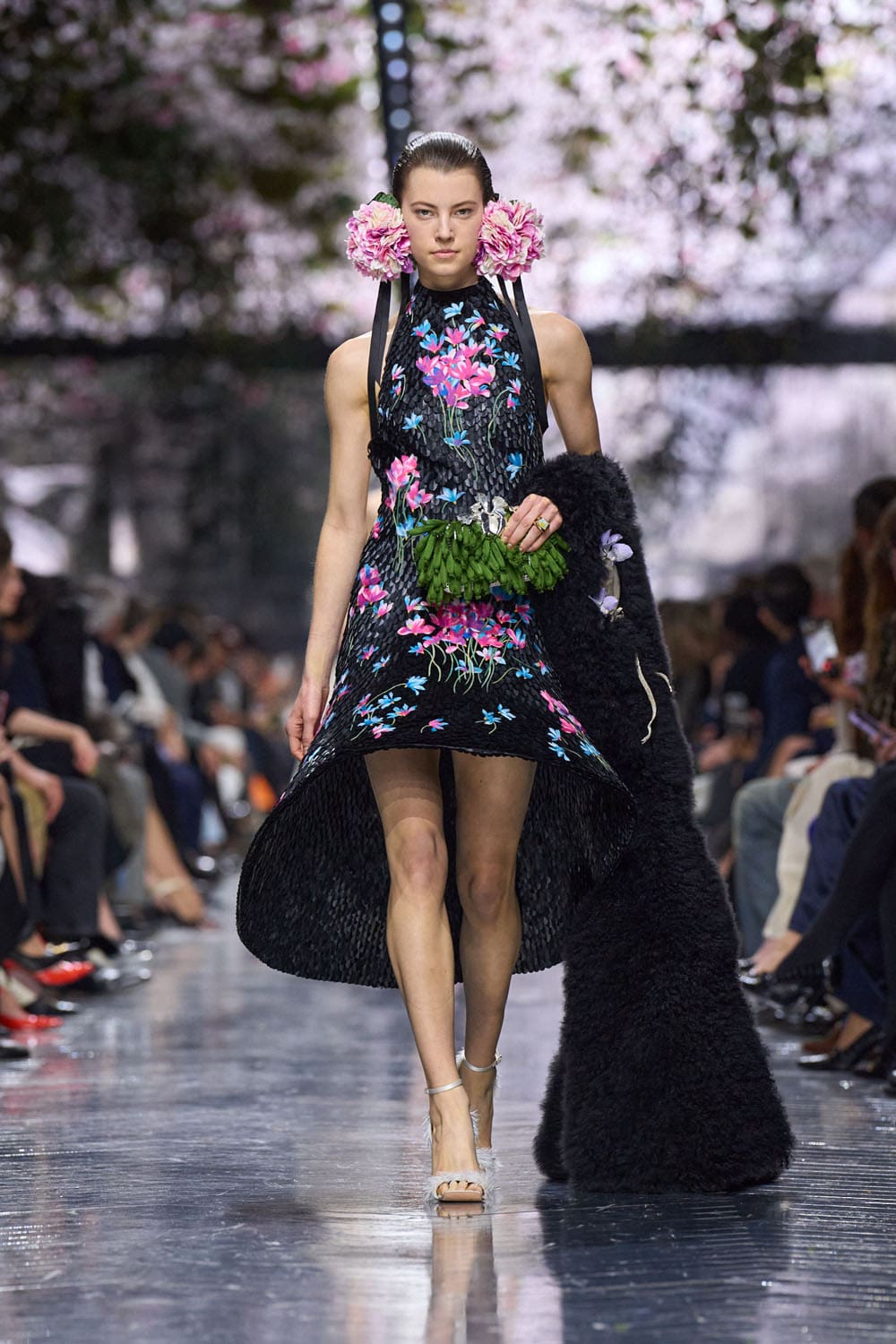
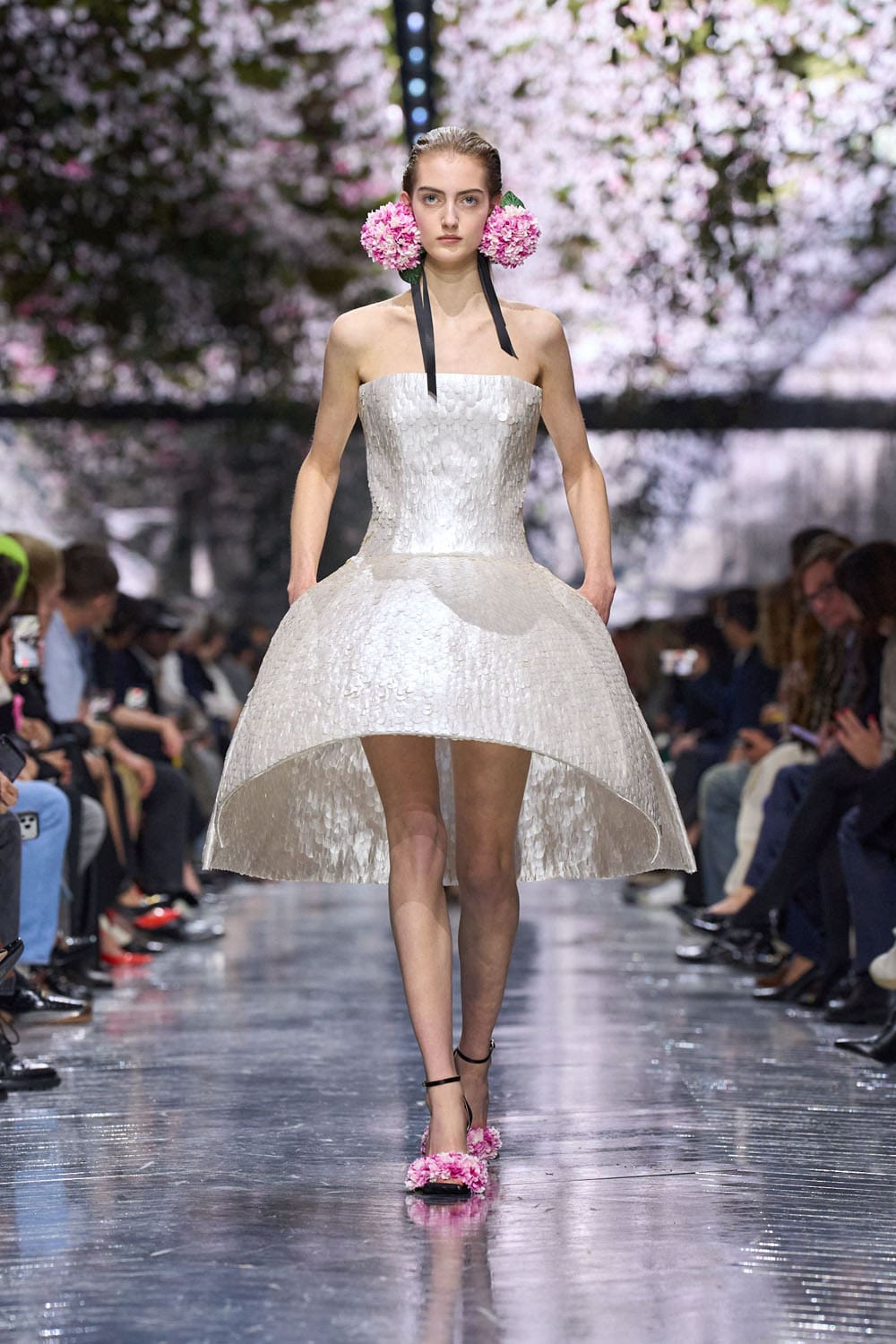
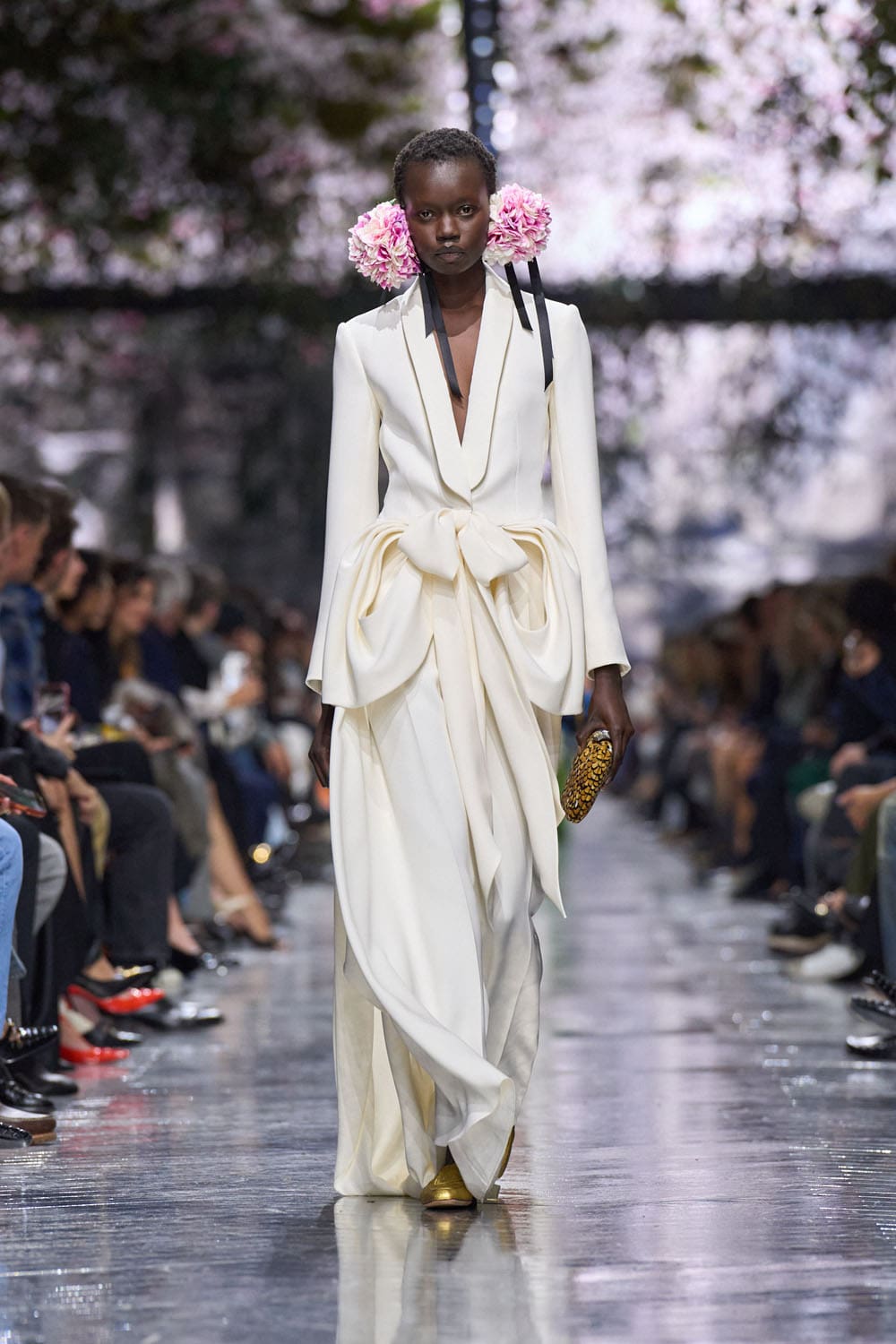
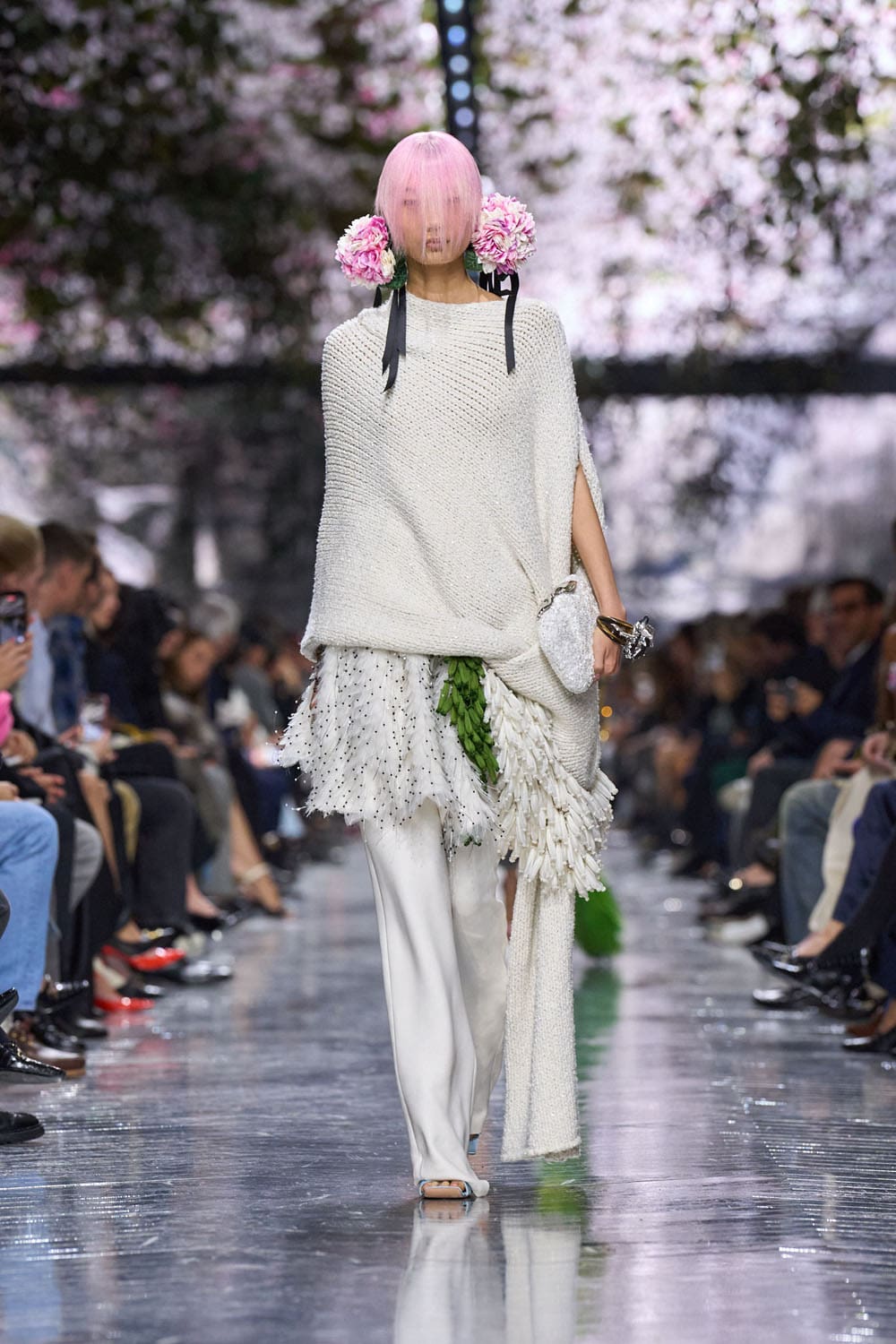
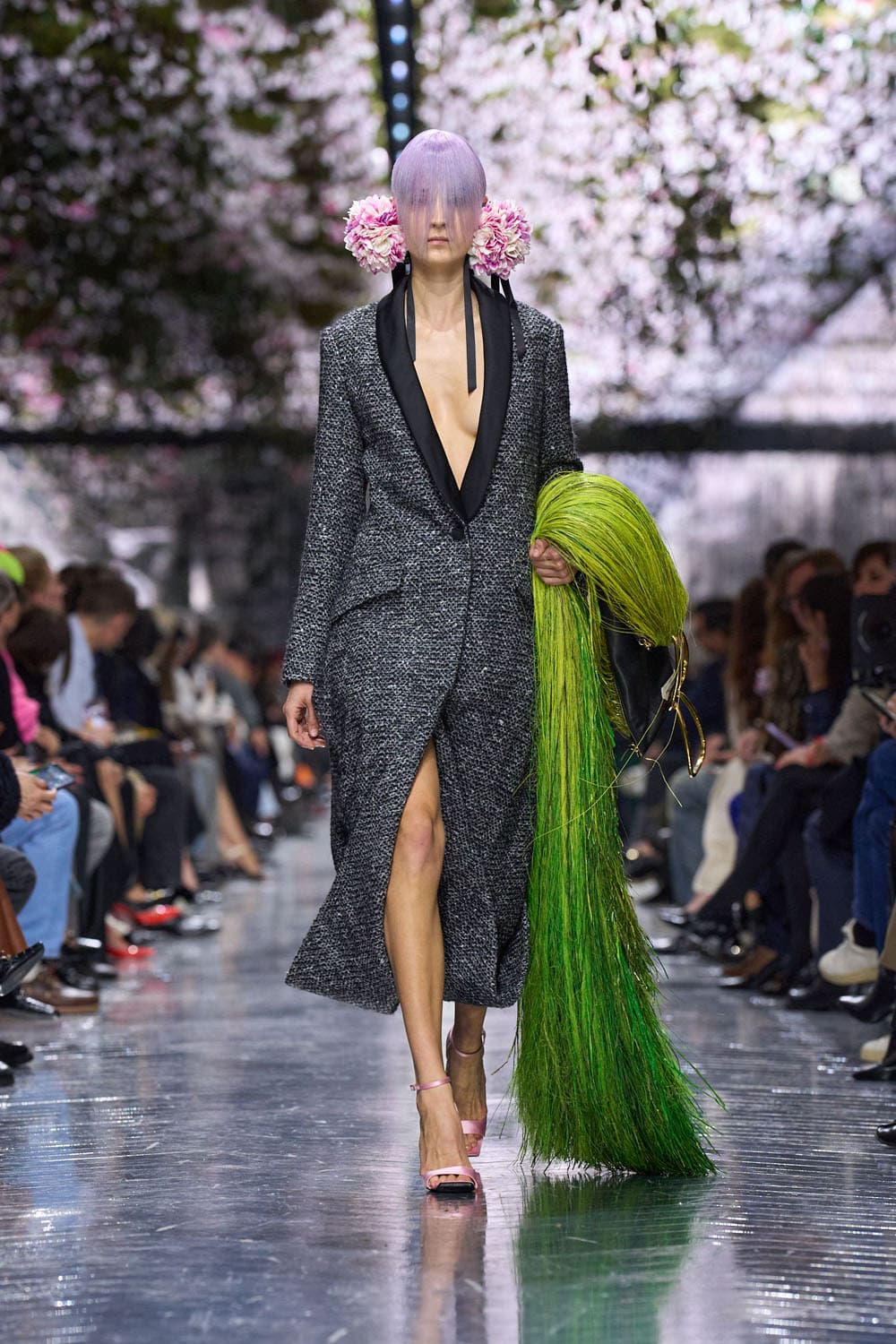
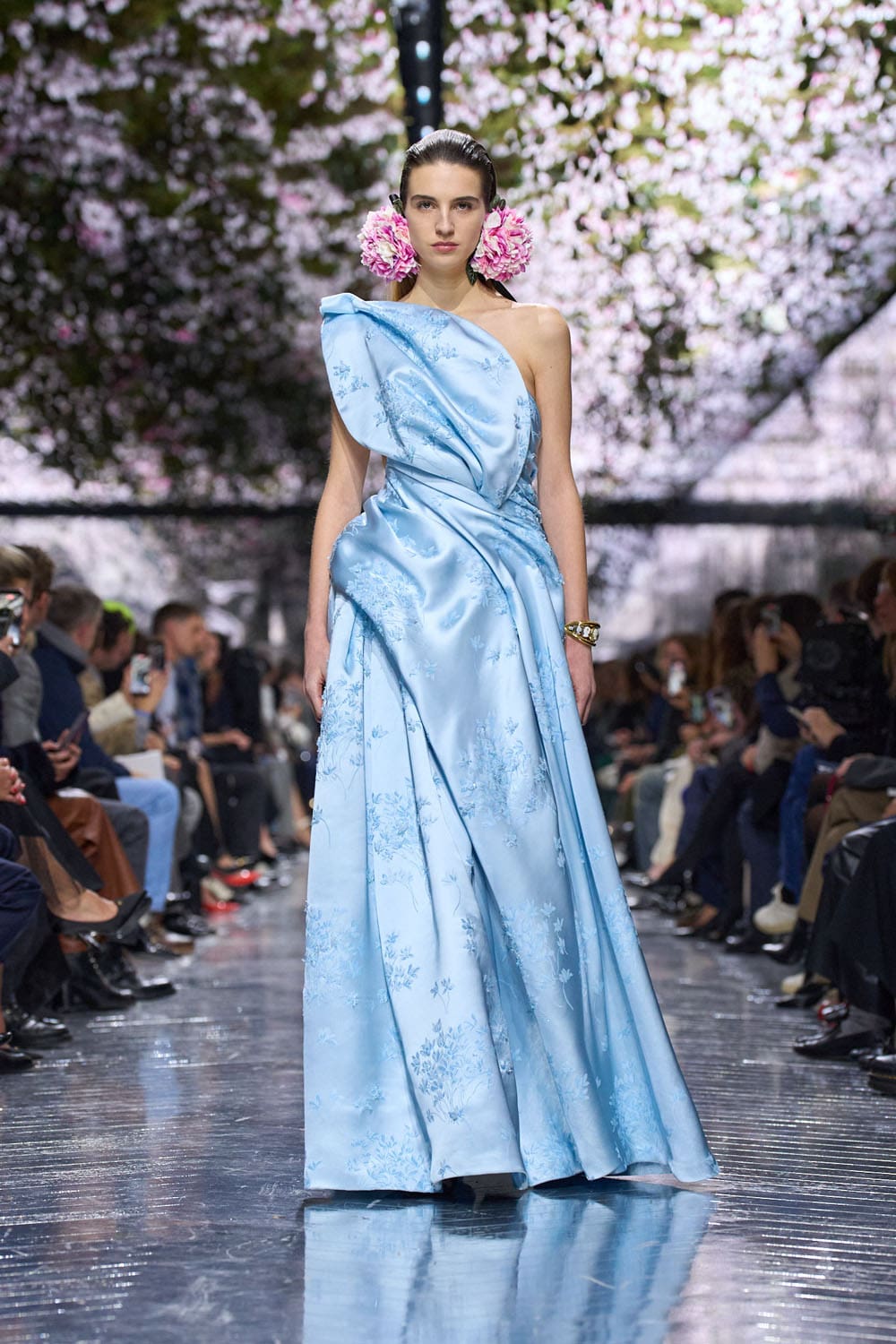
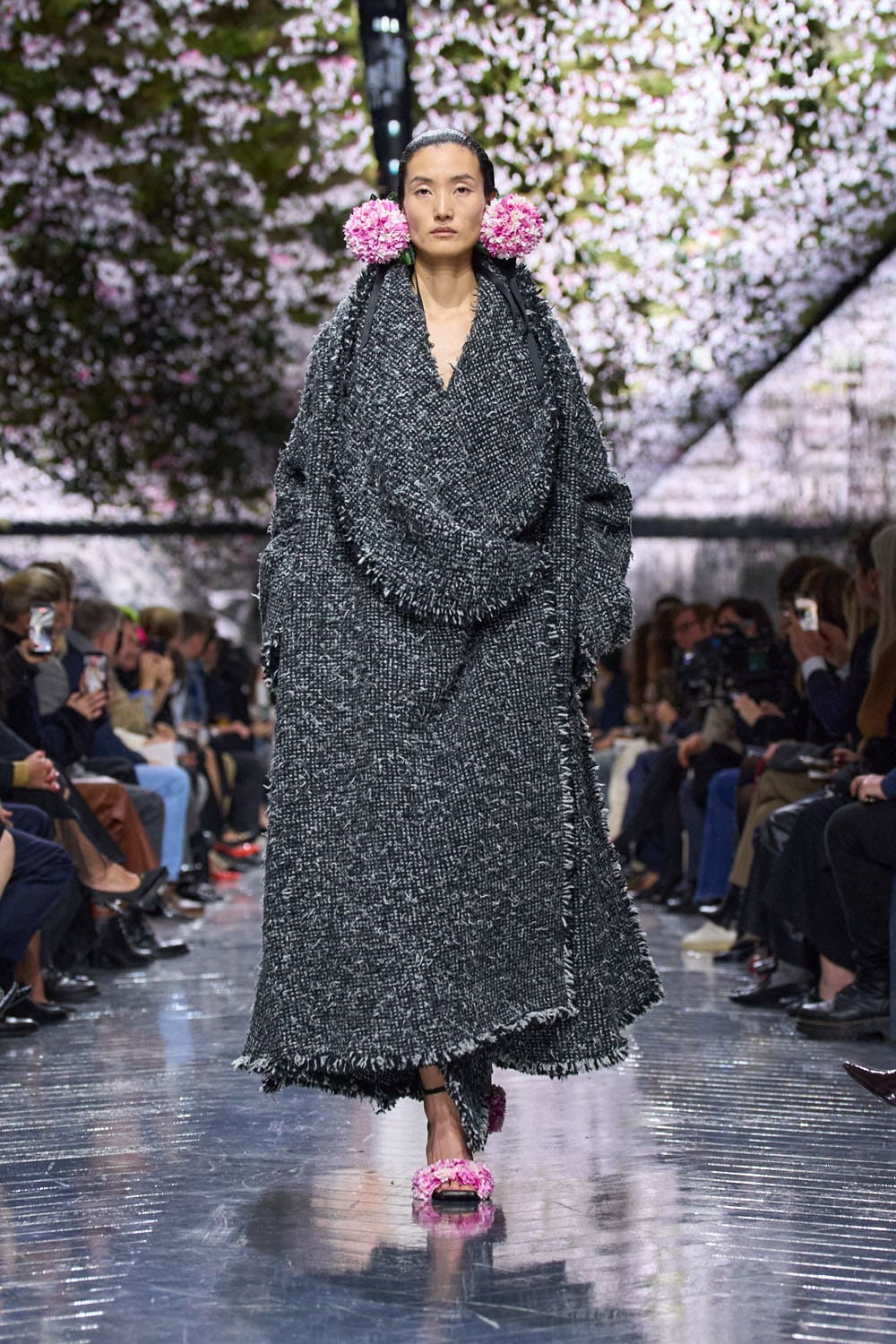
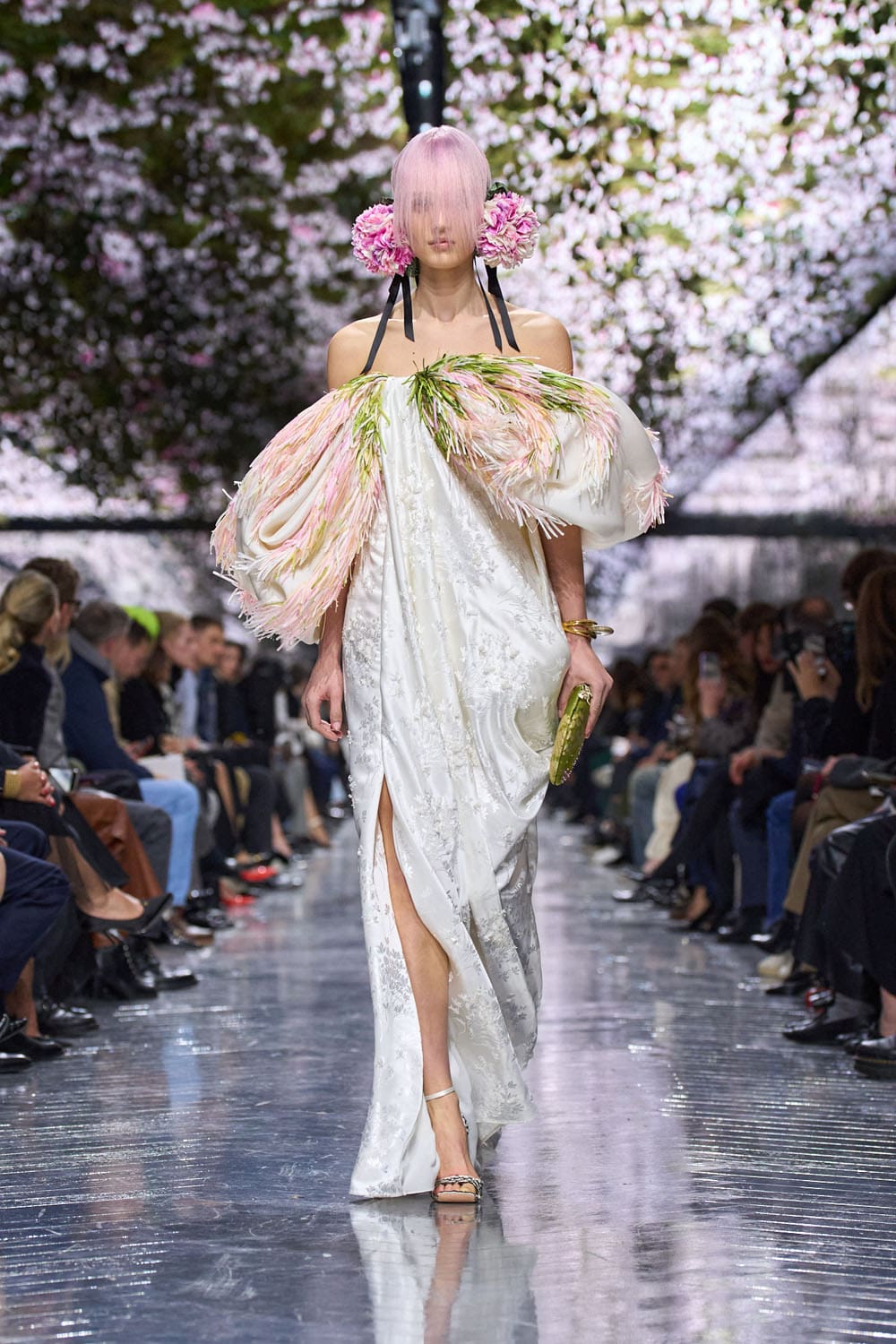
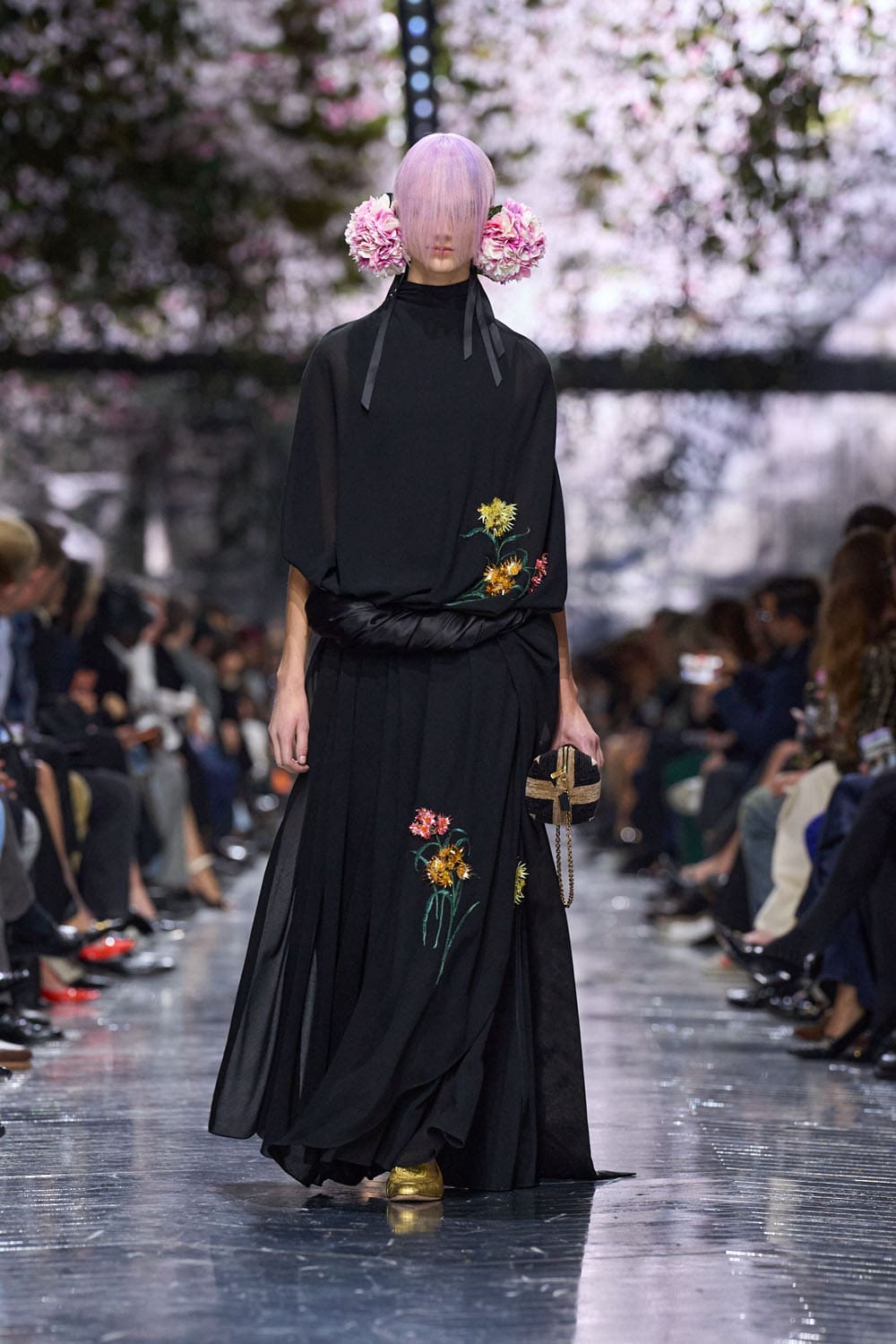
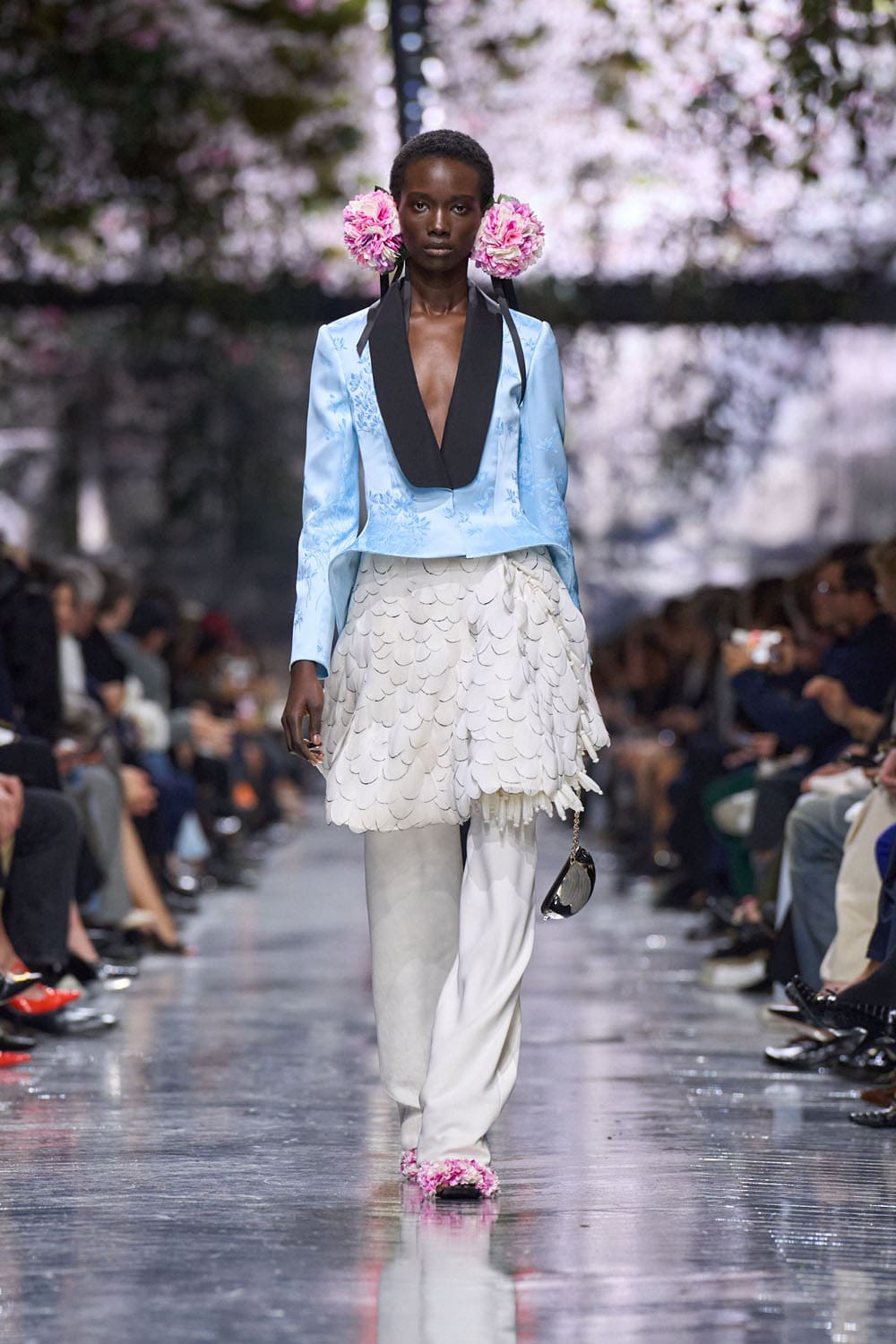
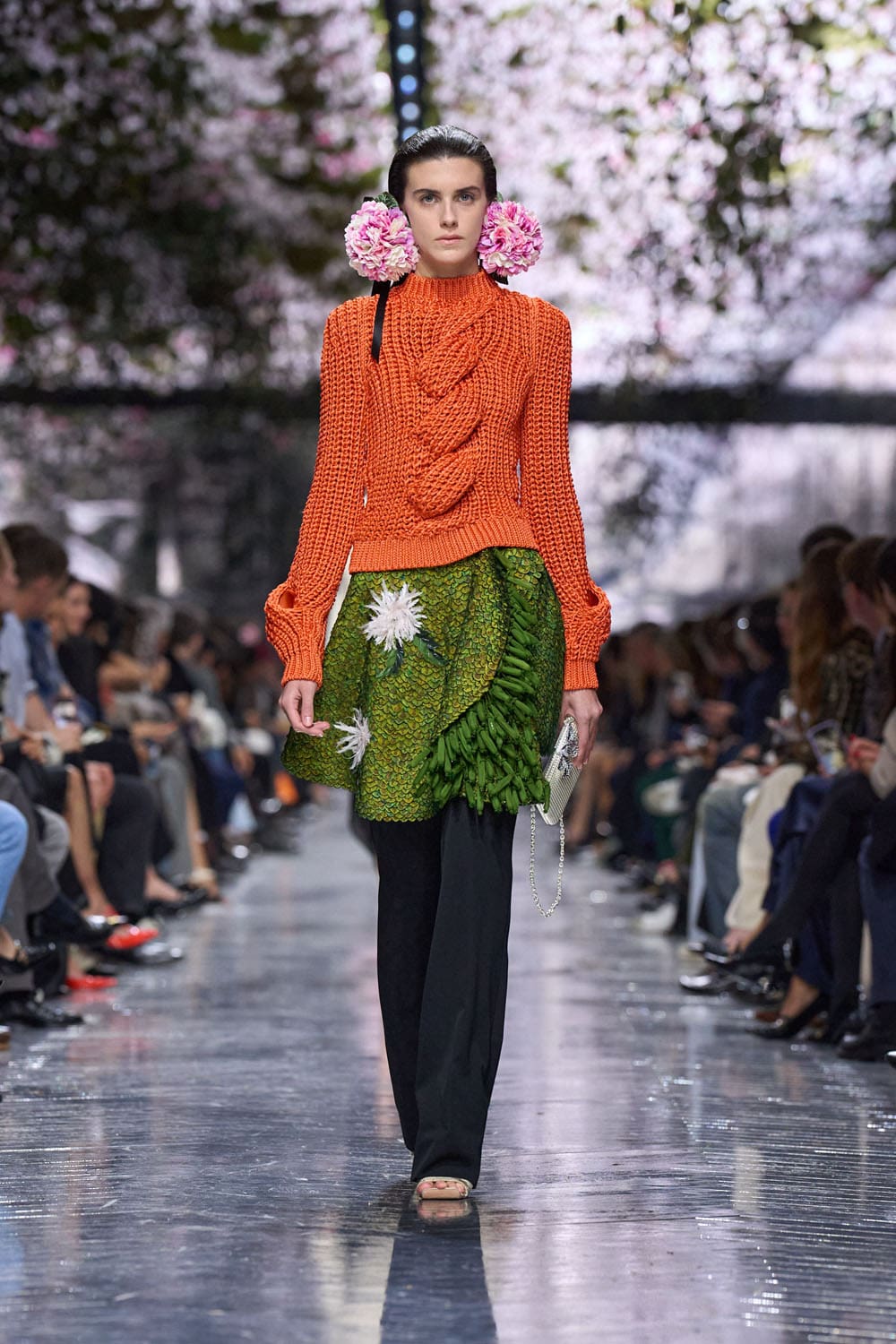
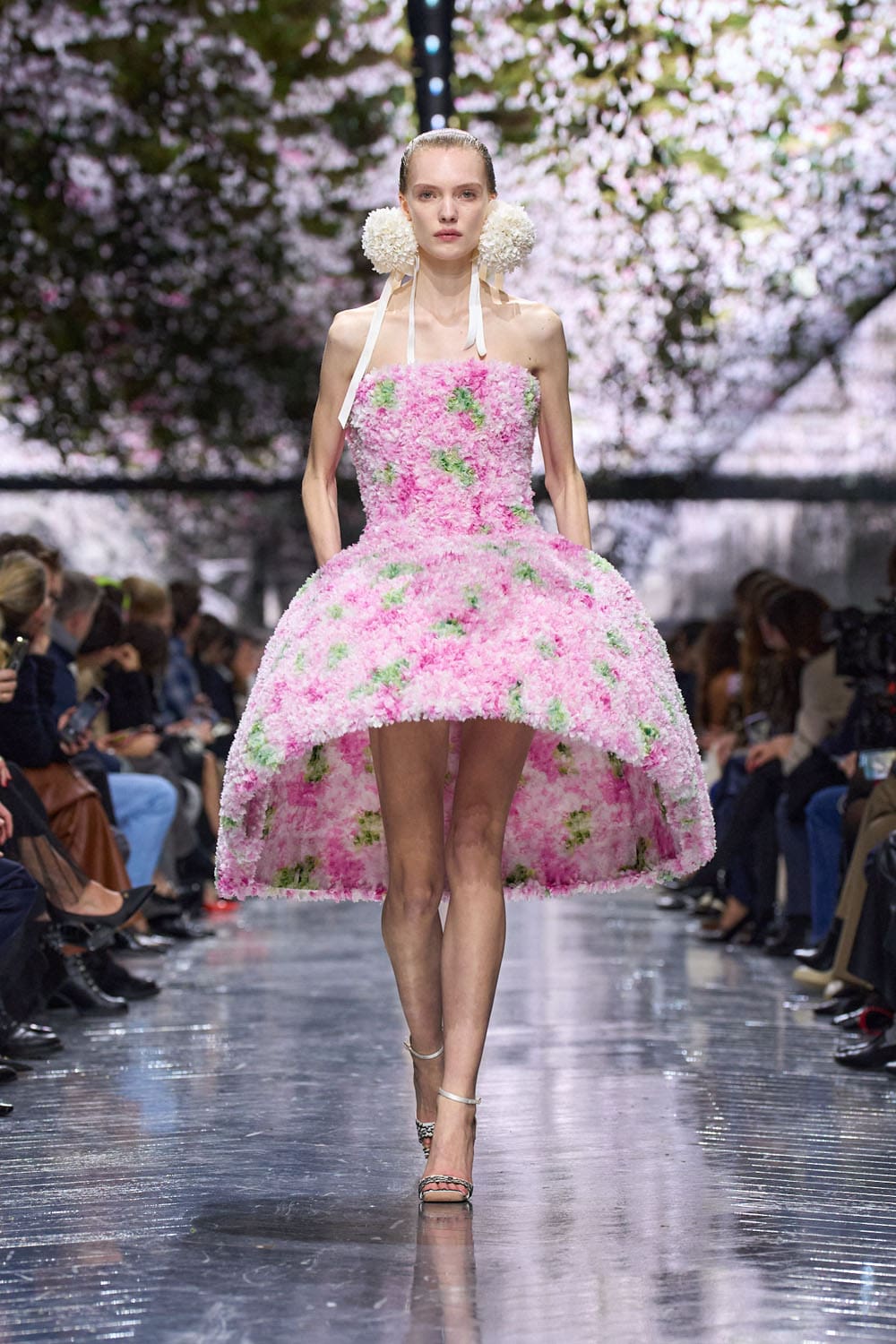
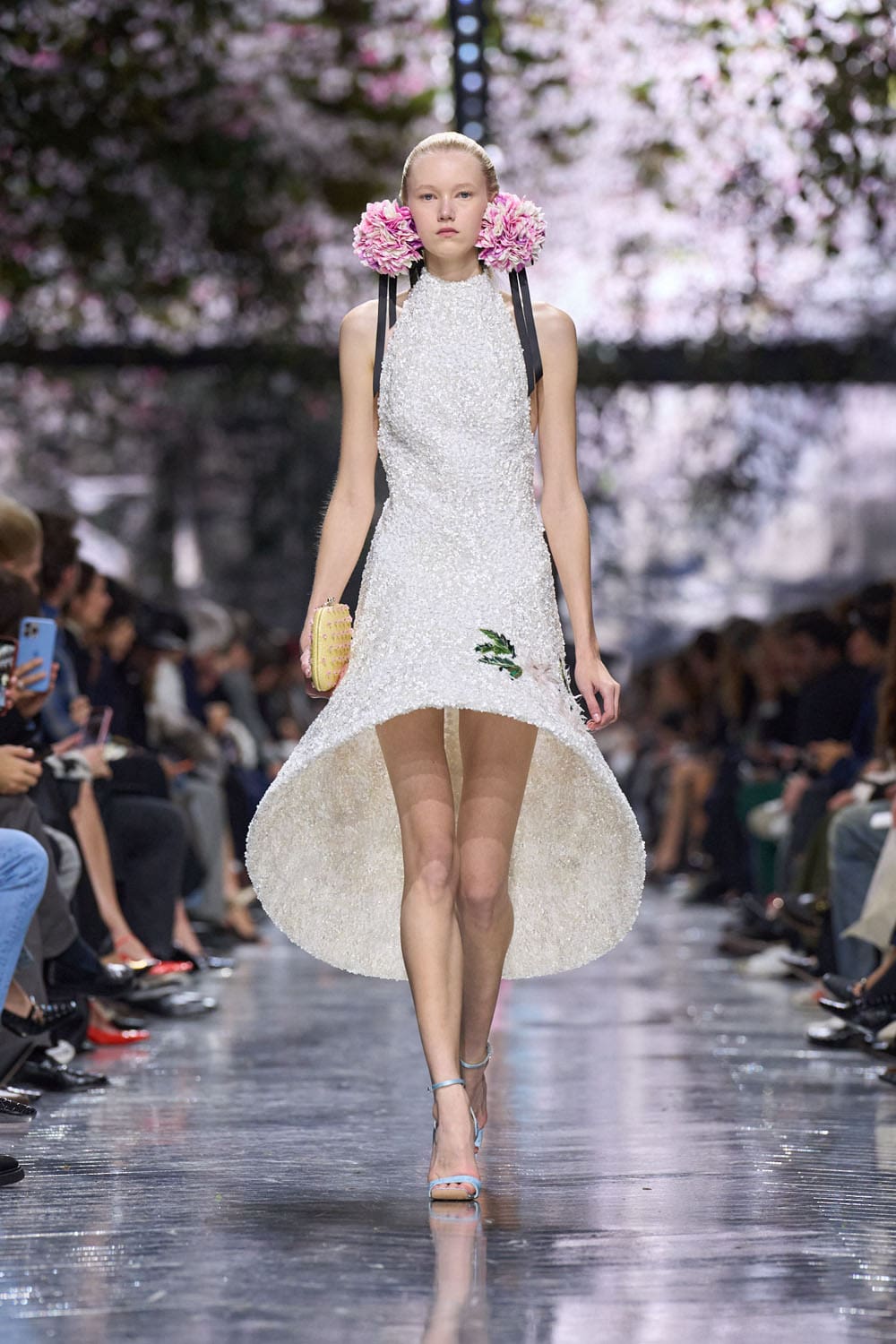
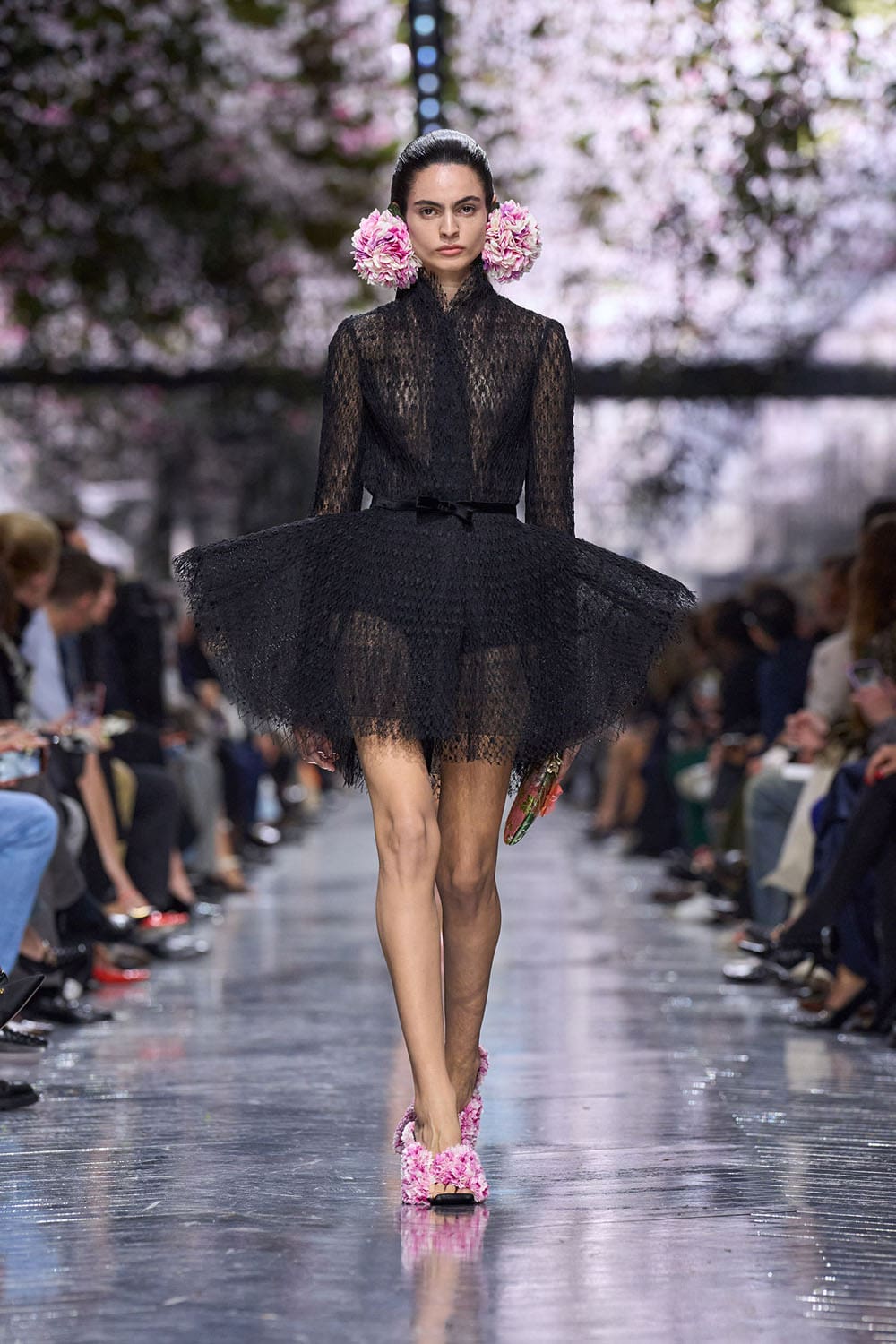
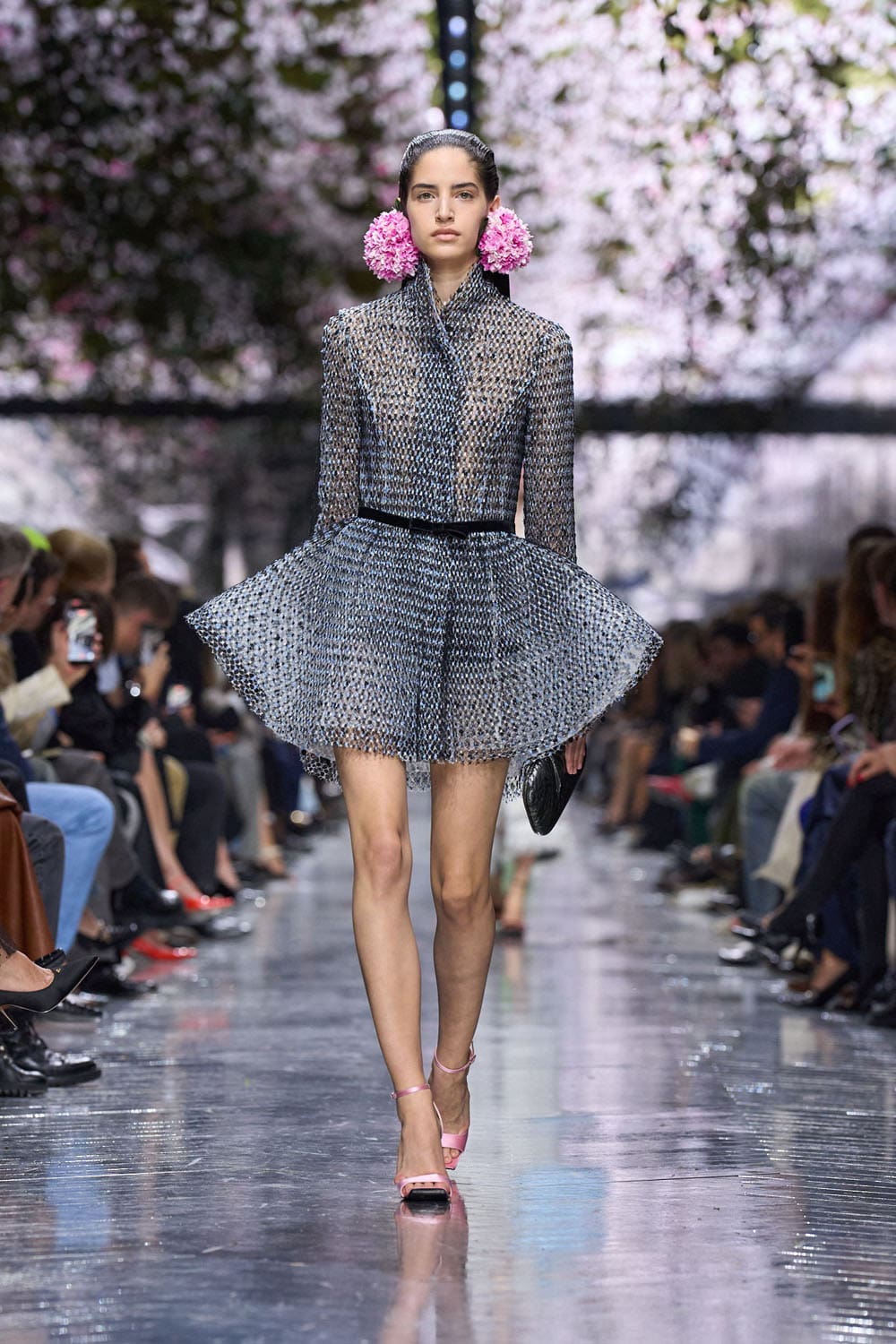
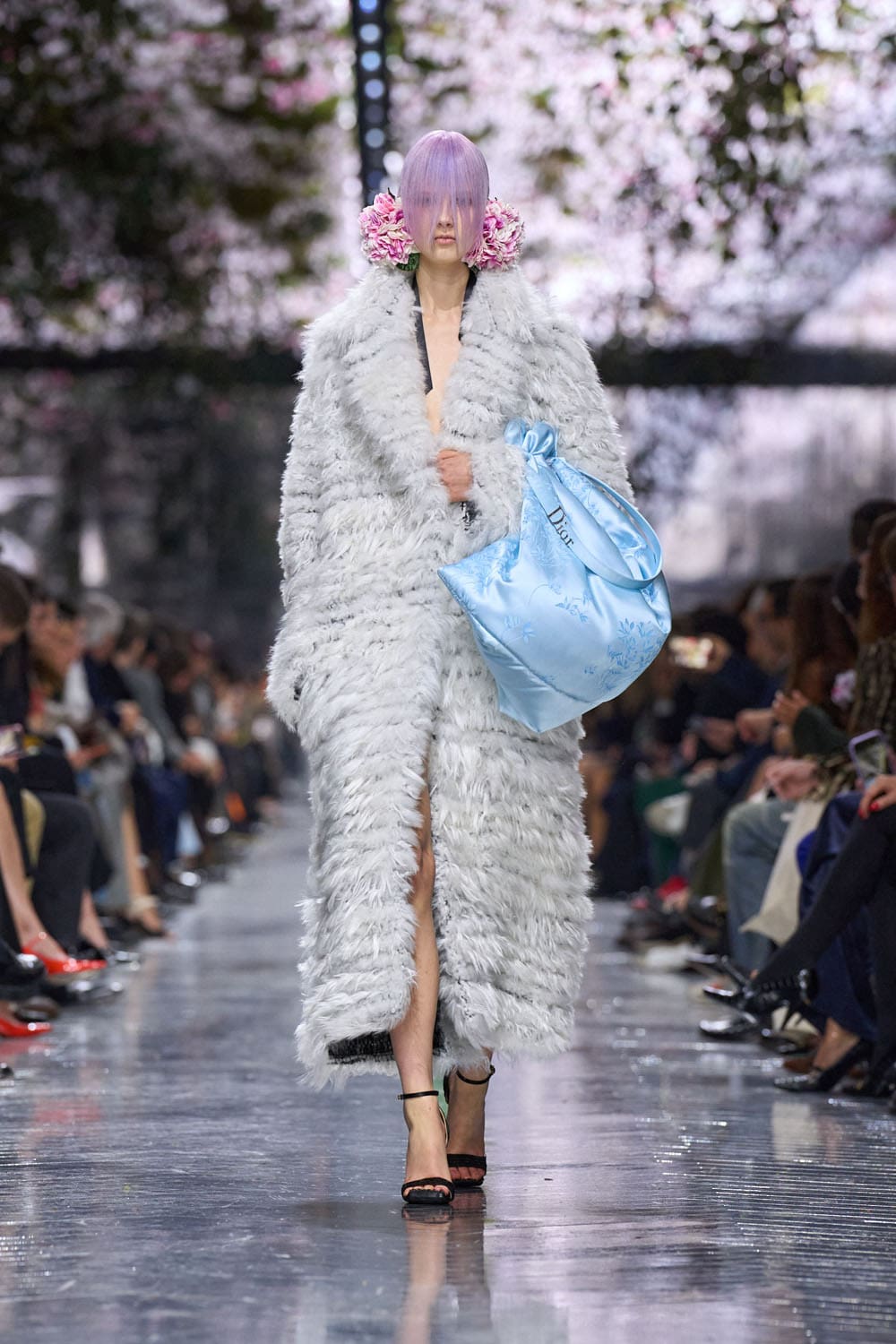
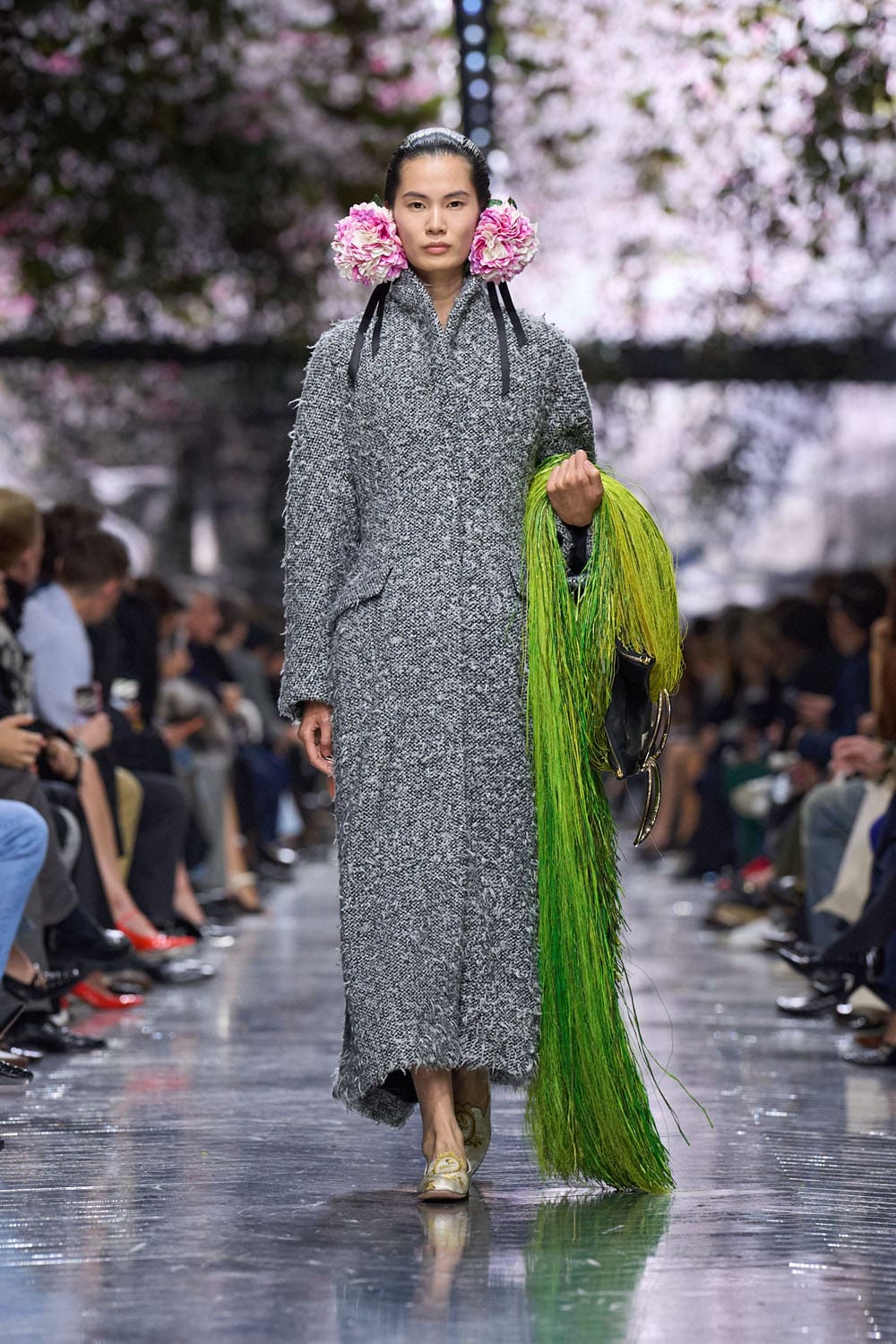
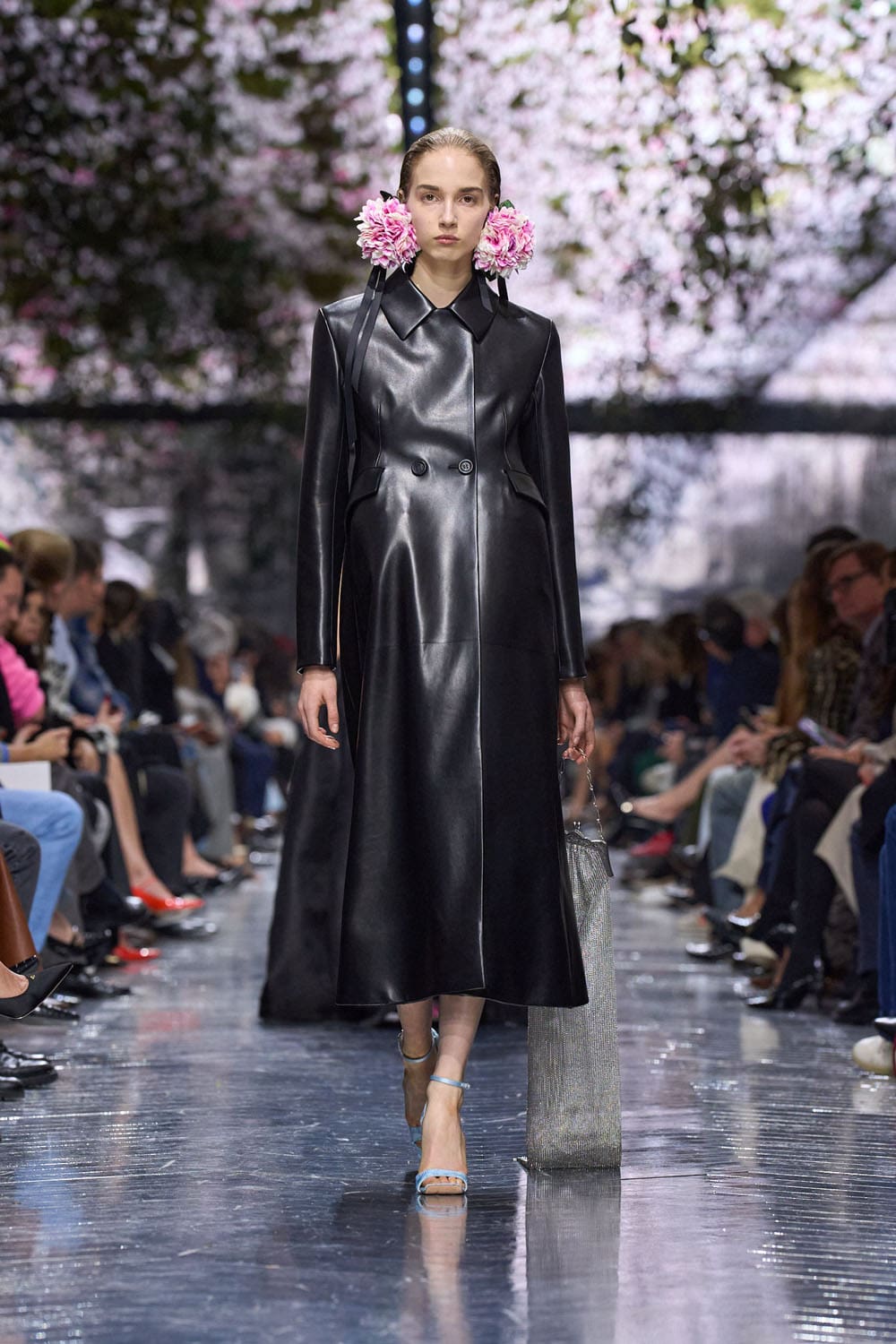
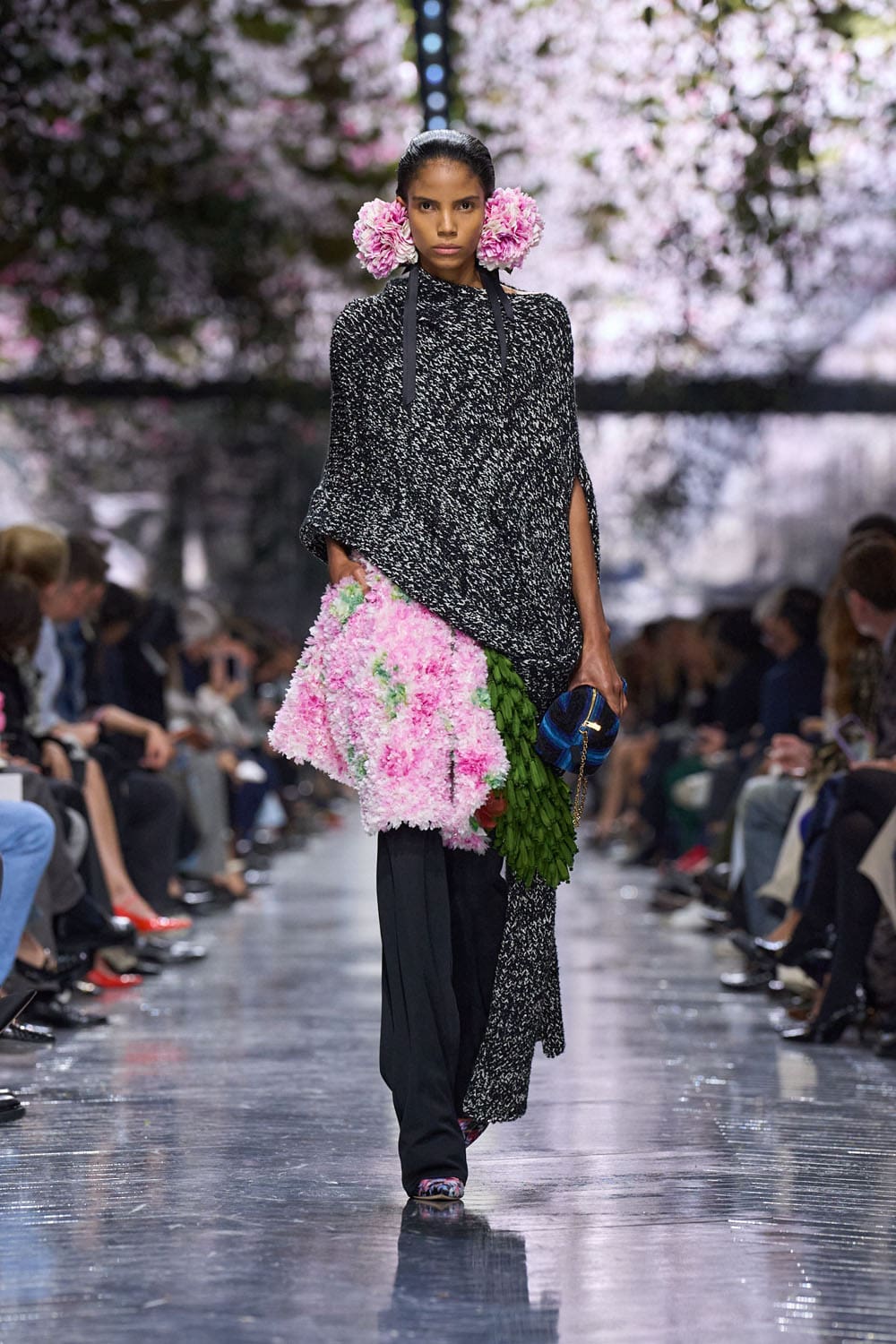
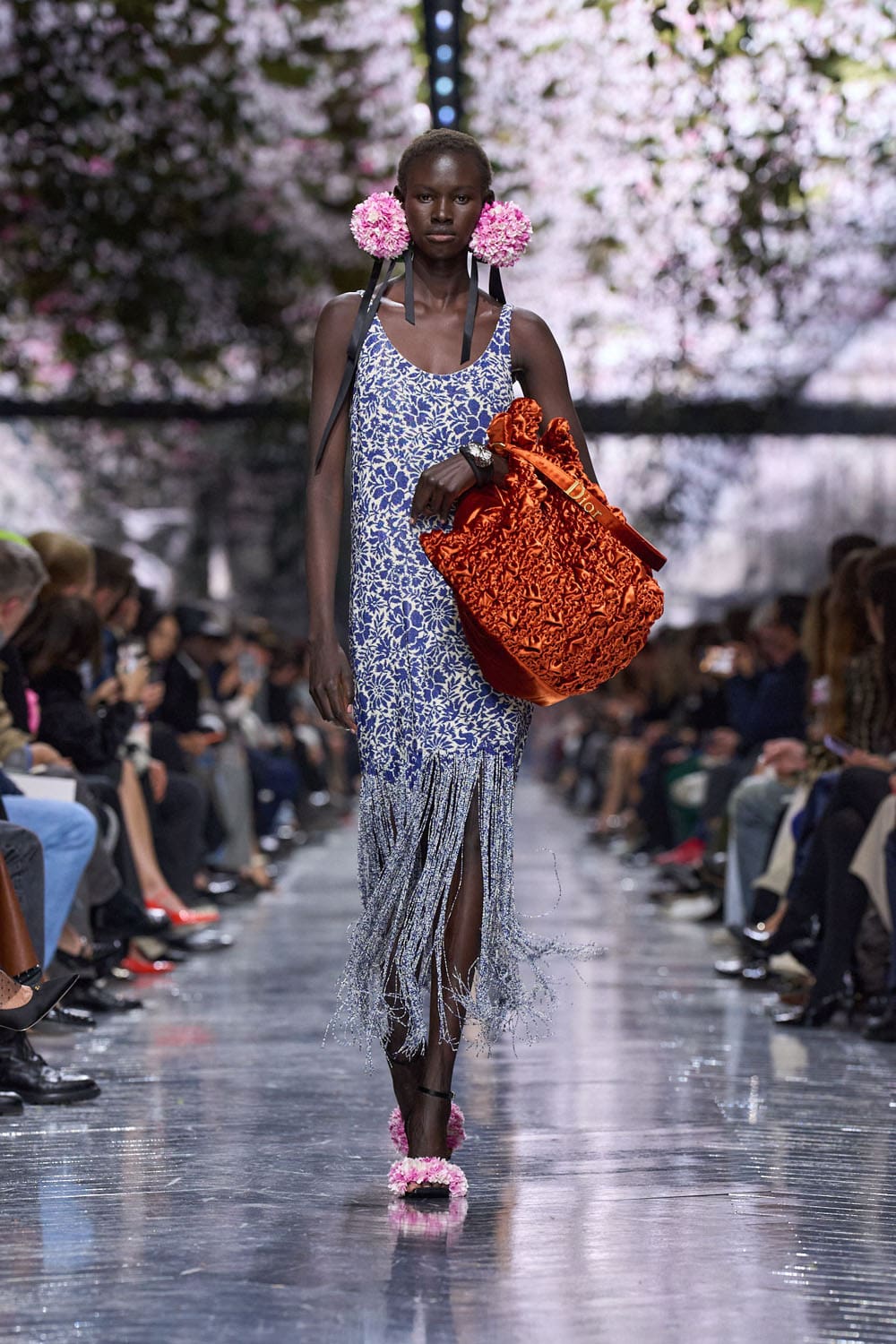
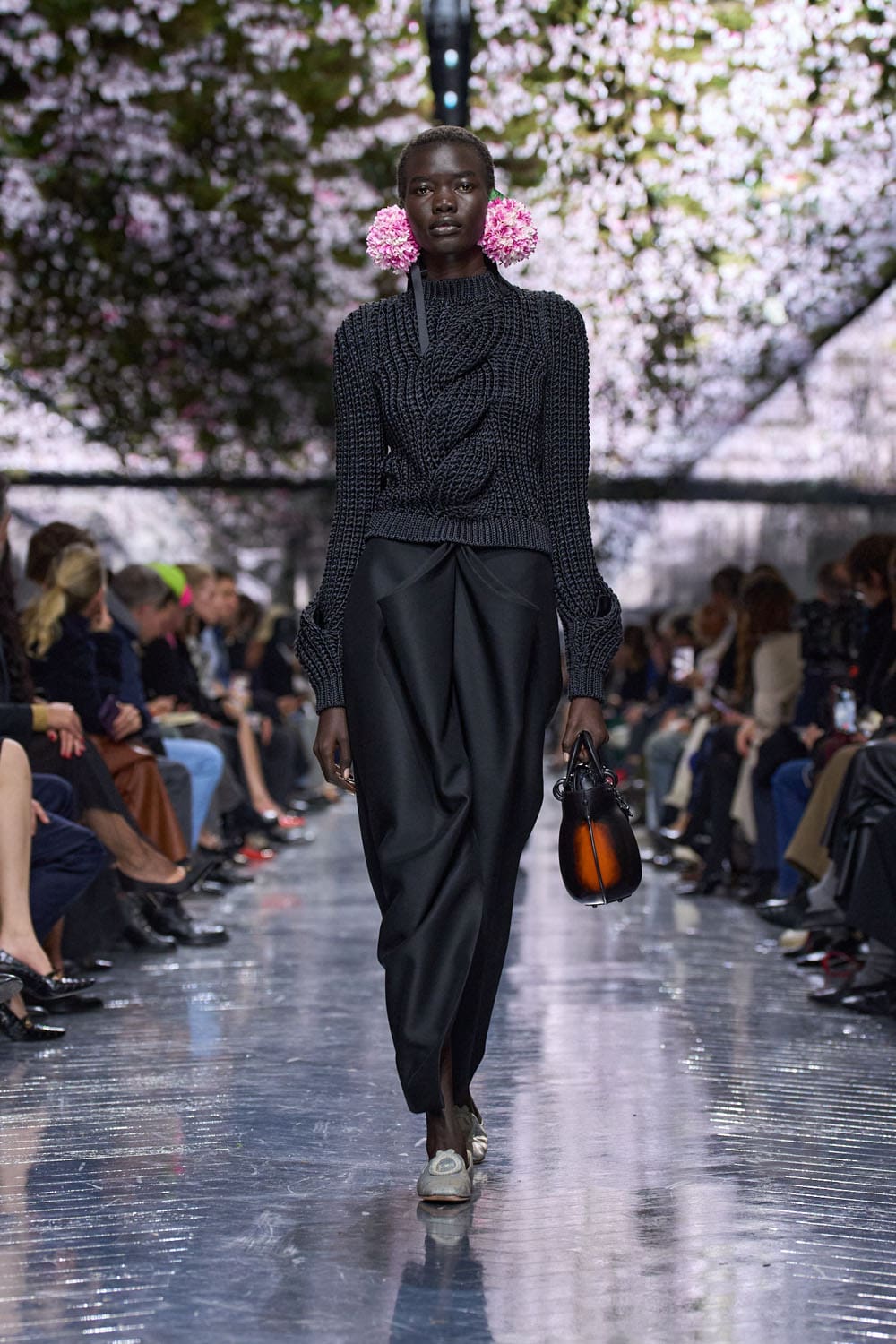
And then came the pom-poms. Pink chrysanthemums the size of cabbages were pinned to models’ ears like a deranged school play version of “Spring.” One model walked out in a powder-blue satin blouse, inflated at the shoulders, paired with a bubblegum-pink and green floral skirt so cartoonish it could’ve been plucked from a toddler’s birthday cake.
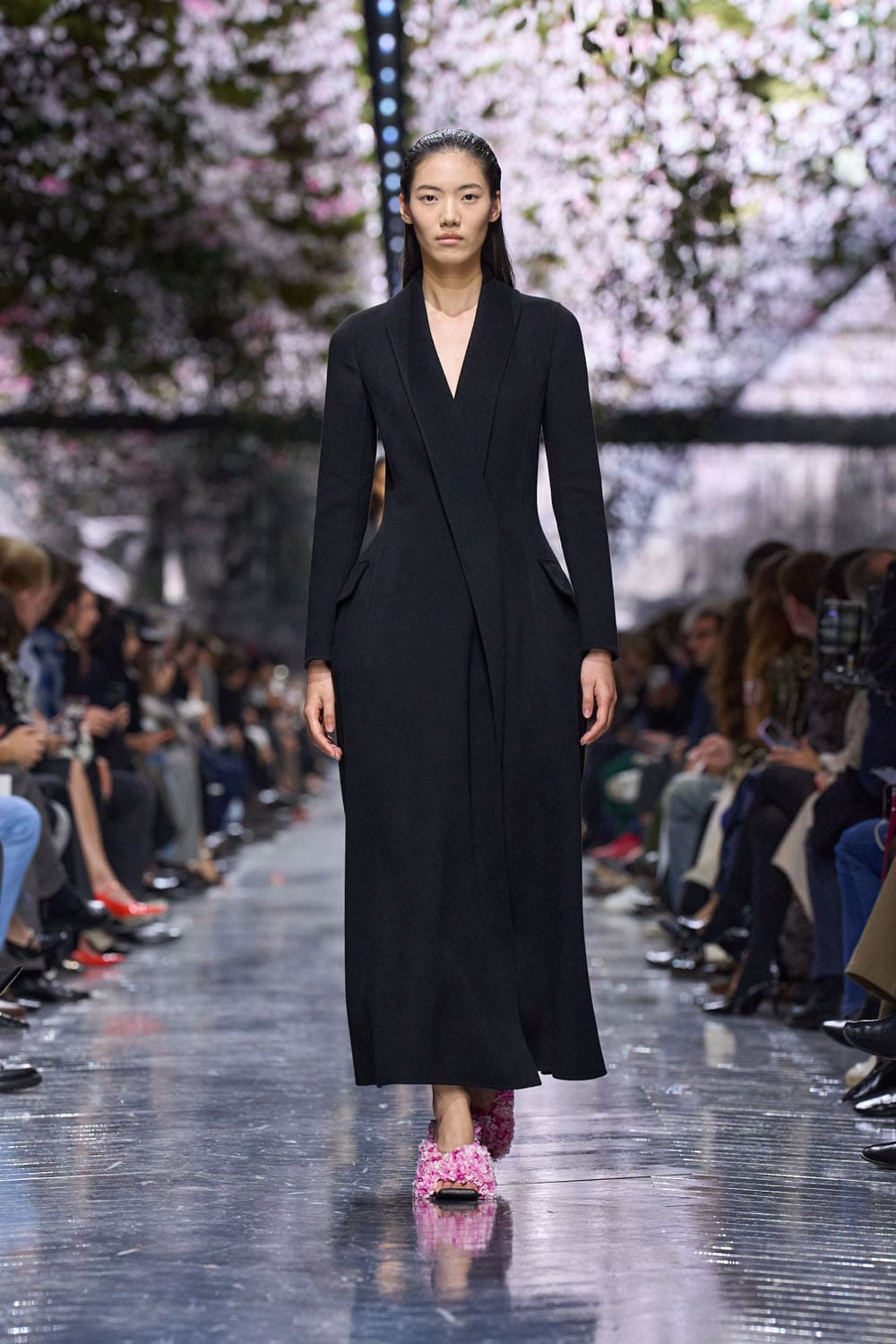
The shoes — covered in matching petals — only added to the growing suspicion that Anderson was designing for haute couture garden gnomes.
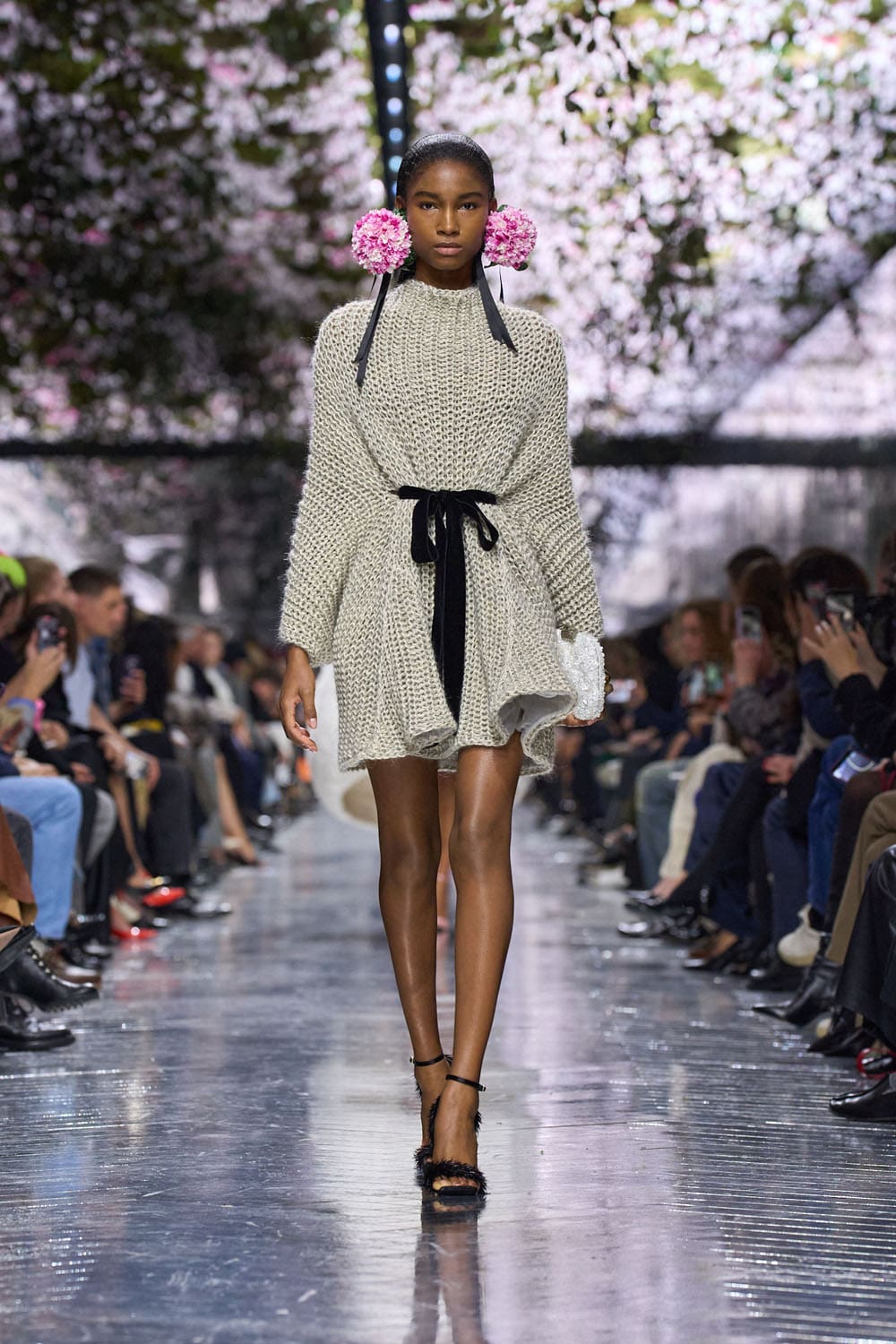
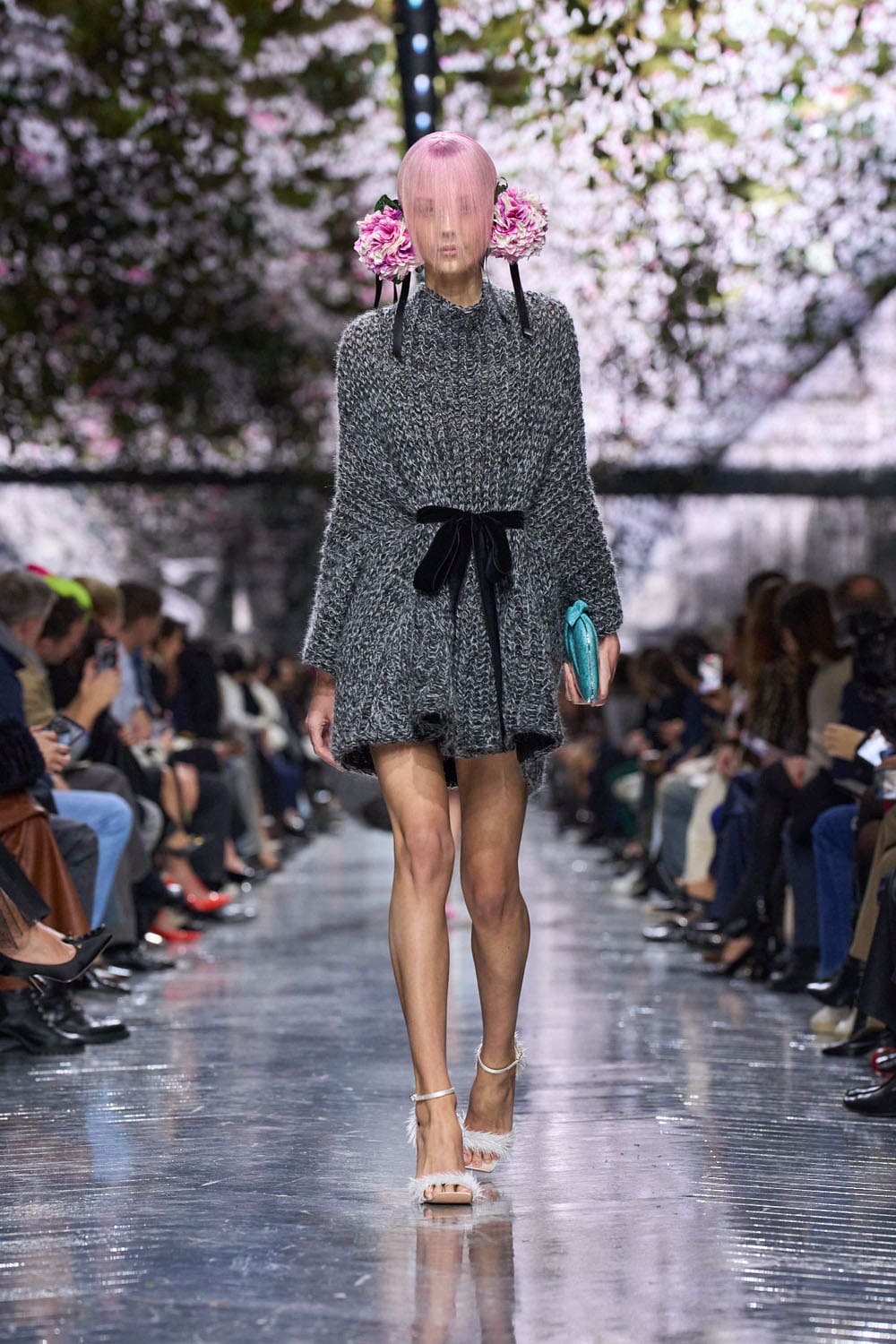
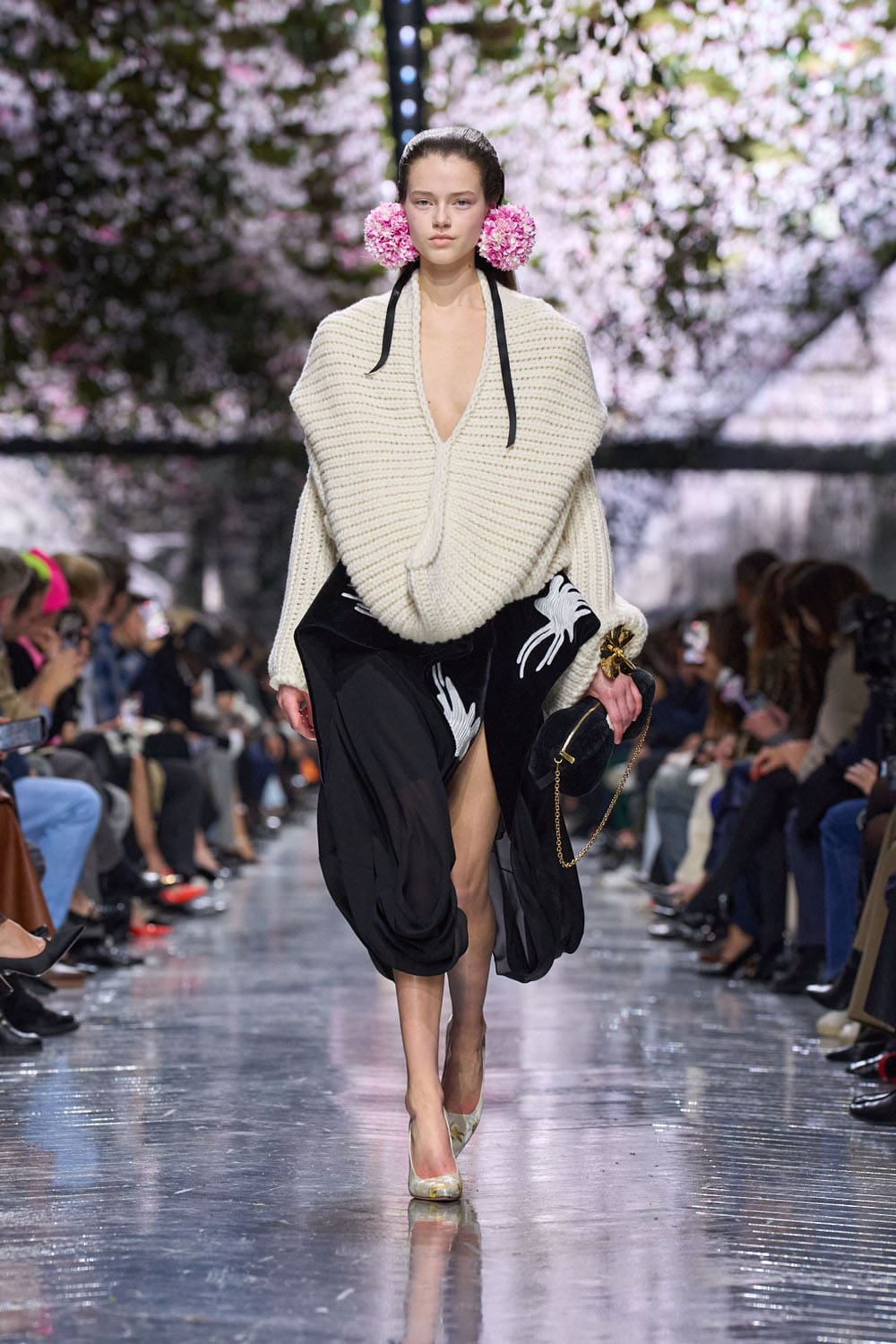
And just when one thought we had reached peak parody, out came the knitwear. Yes, couture knitwear. Anderson called it an “expansion of the couture vocabulary.” Let’s be clear: a chunky beige sweater, belted lazily at the waist and paired with sad pom-poms on the head, is not a linguistic innovation. It’s just a sweater.
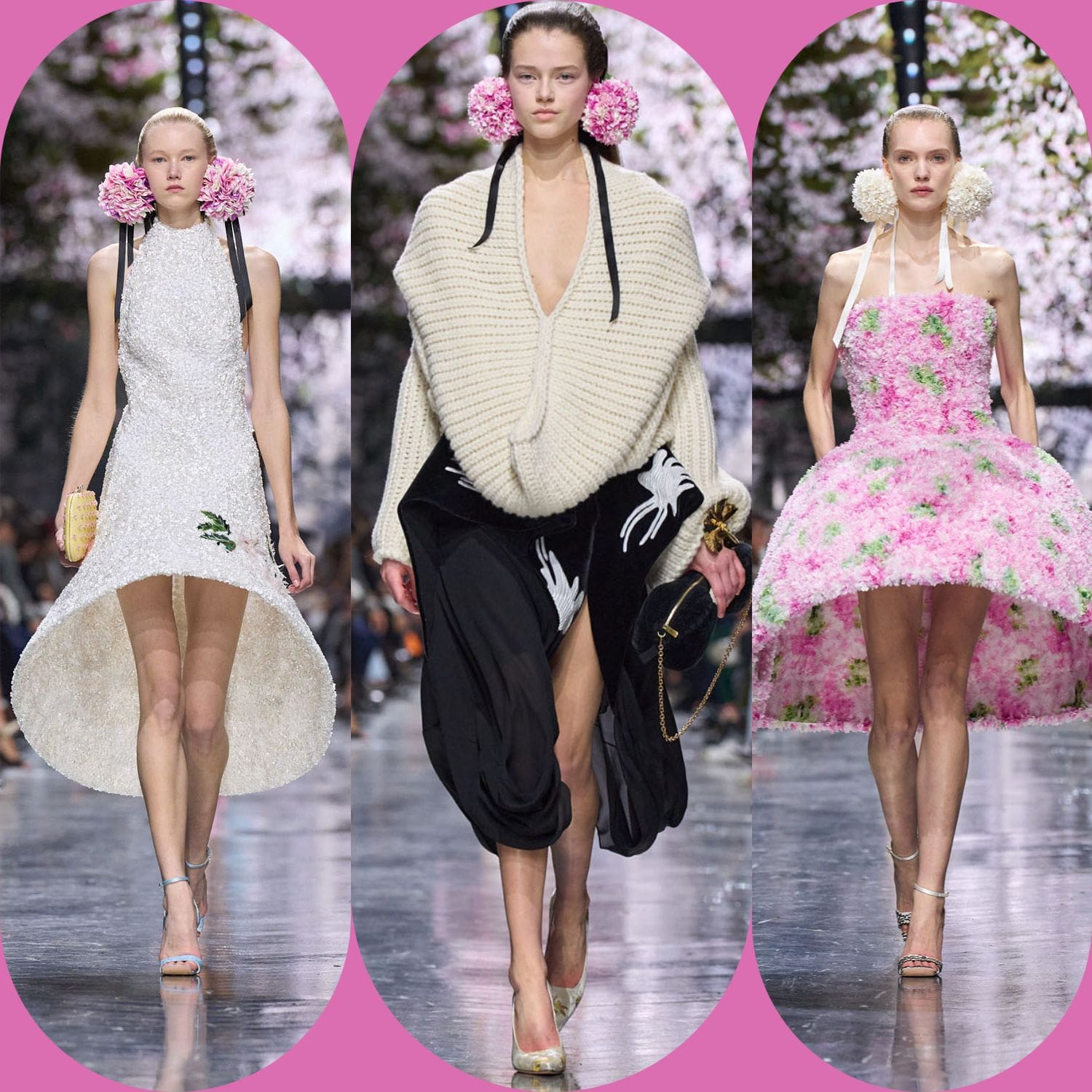
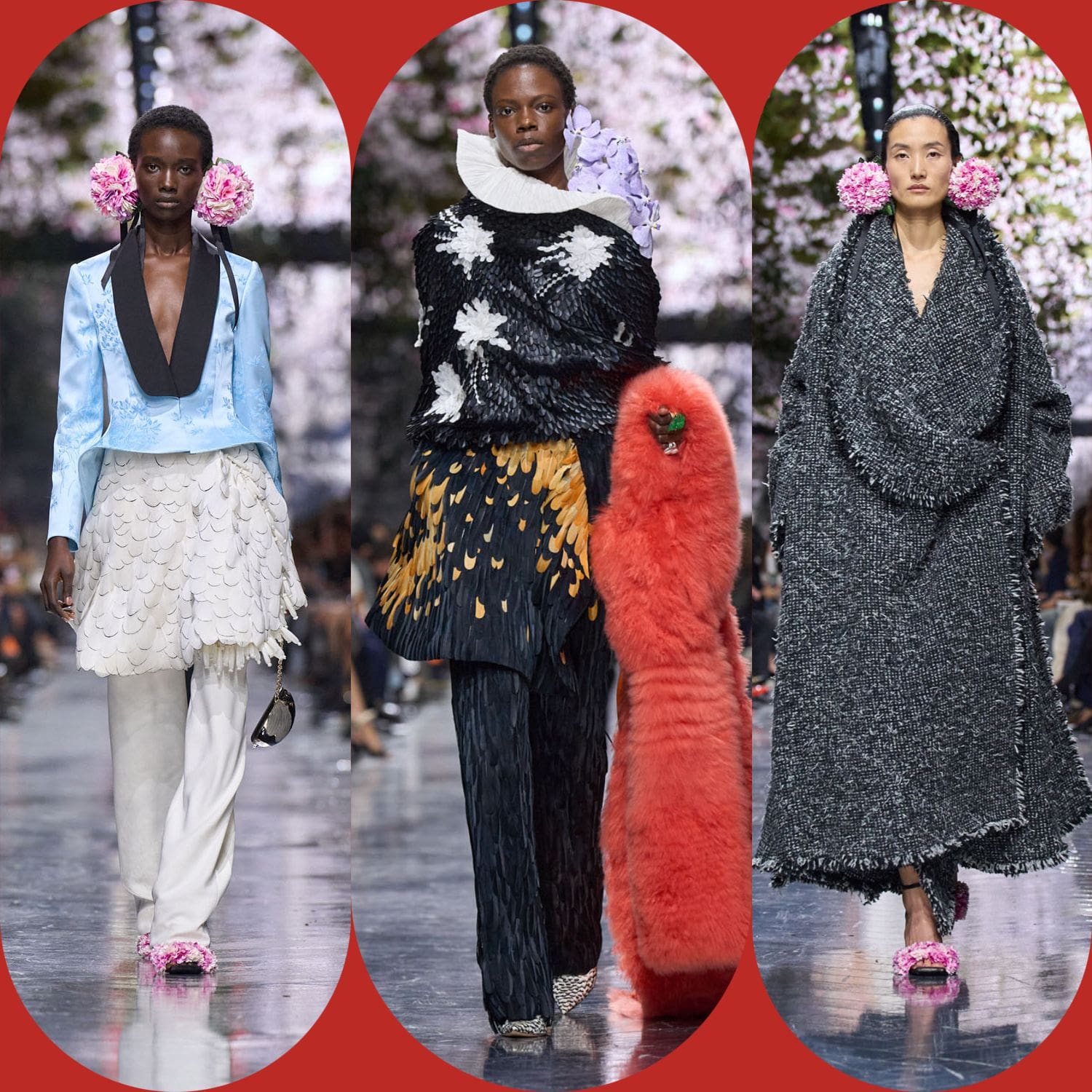
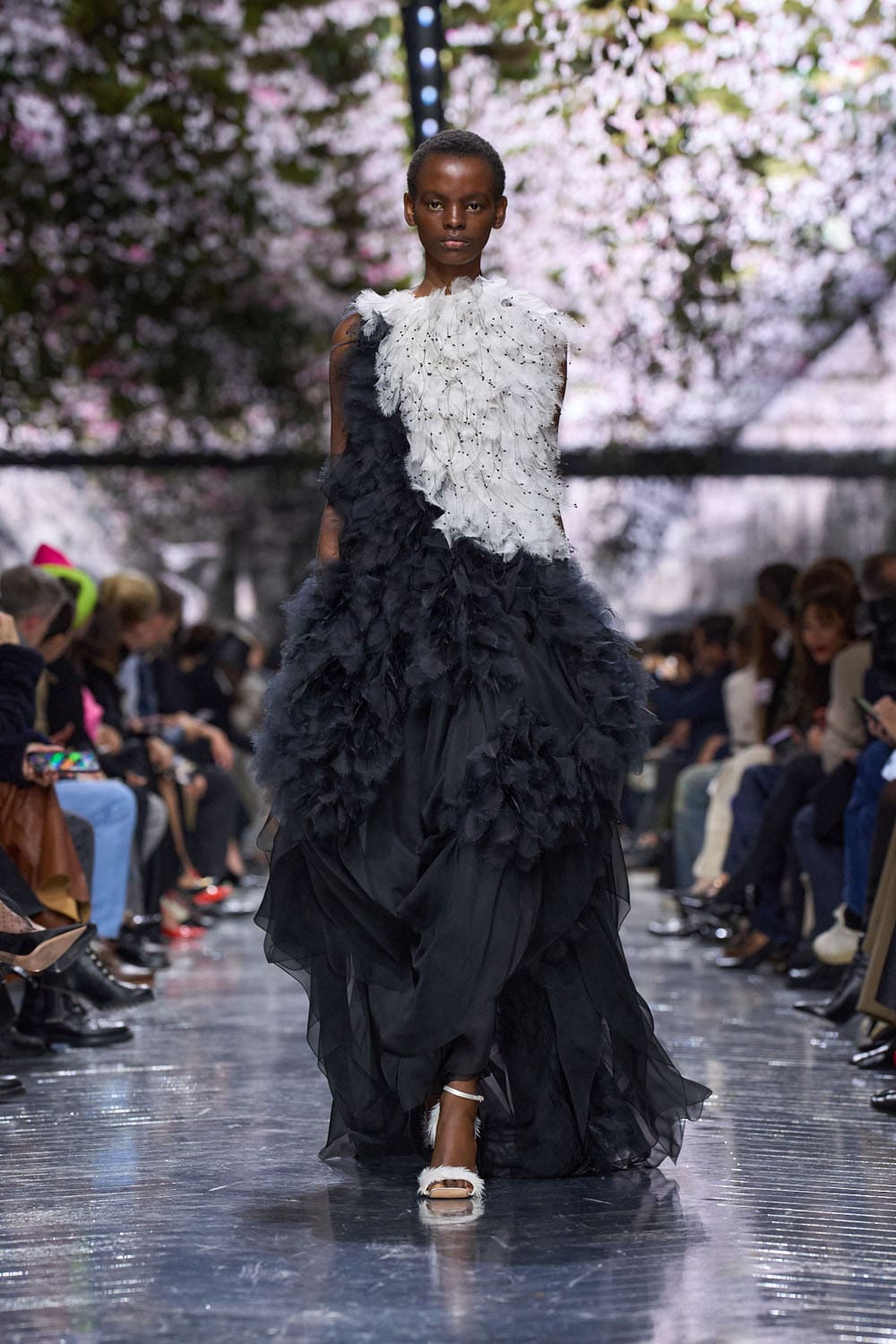
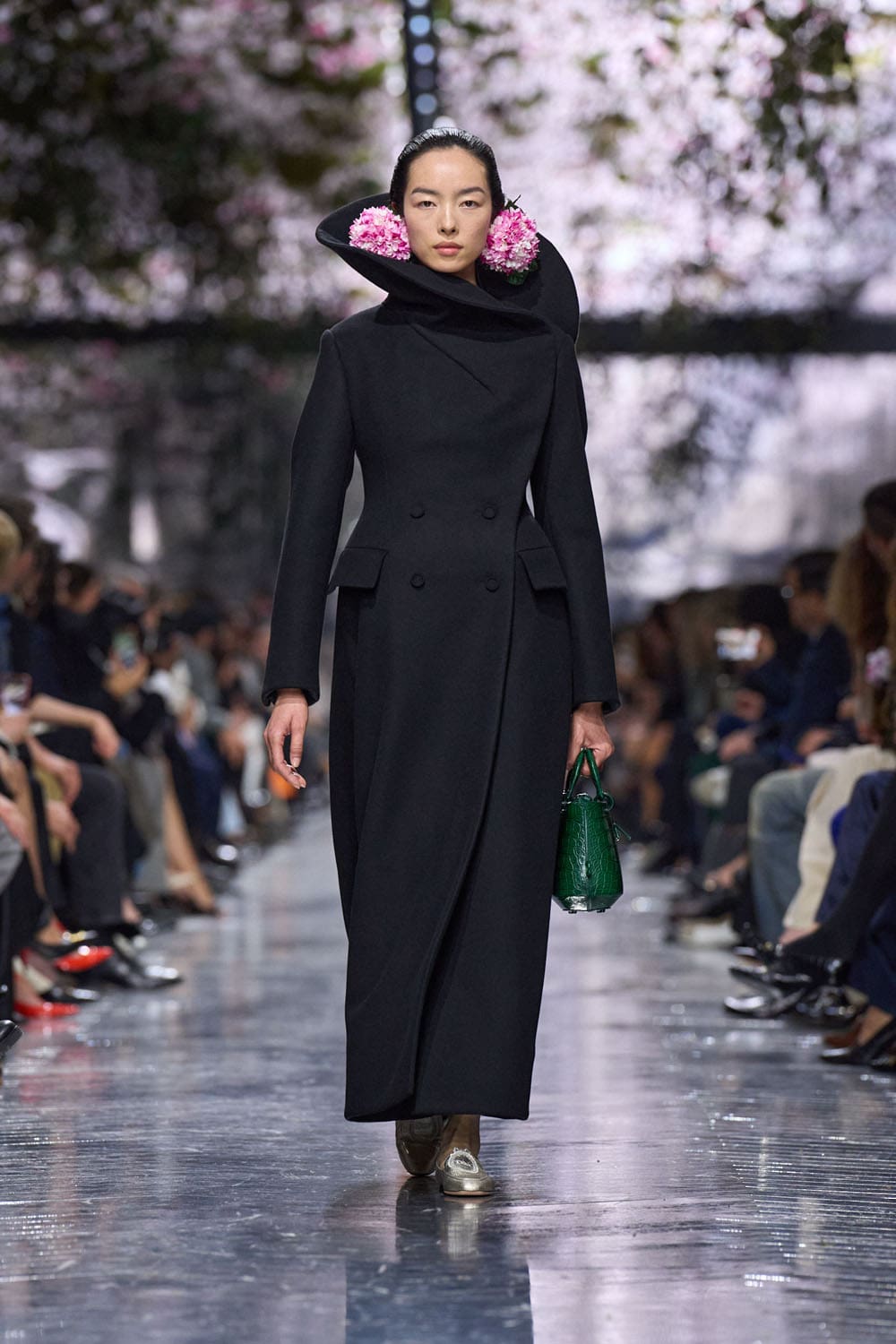
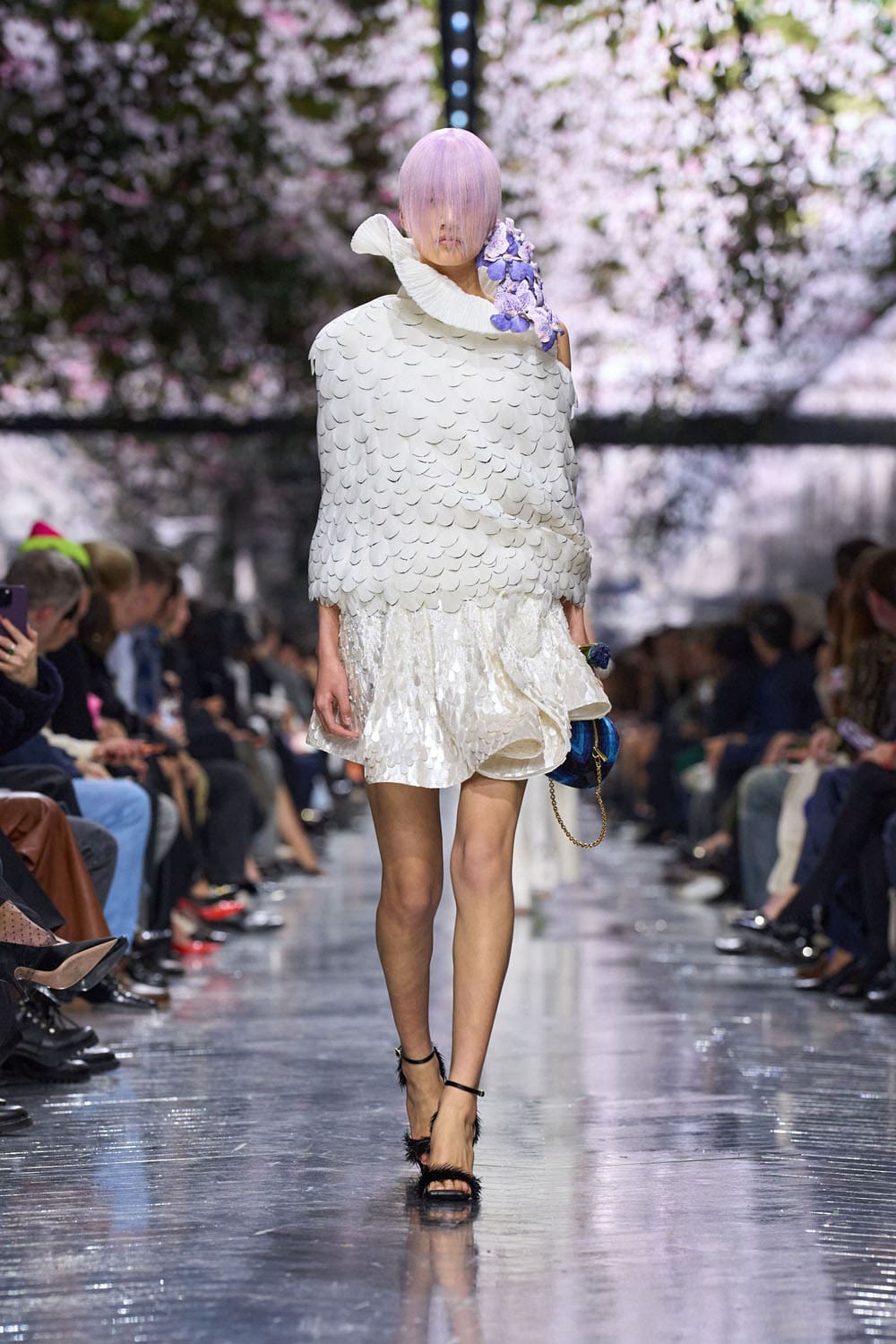
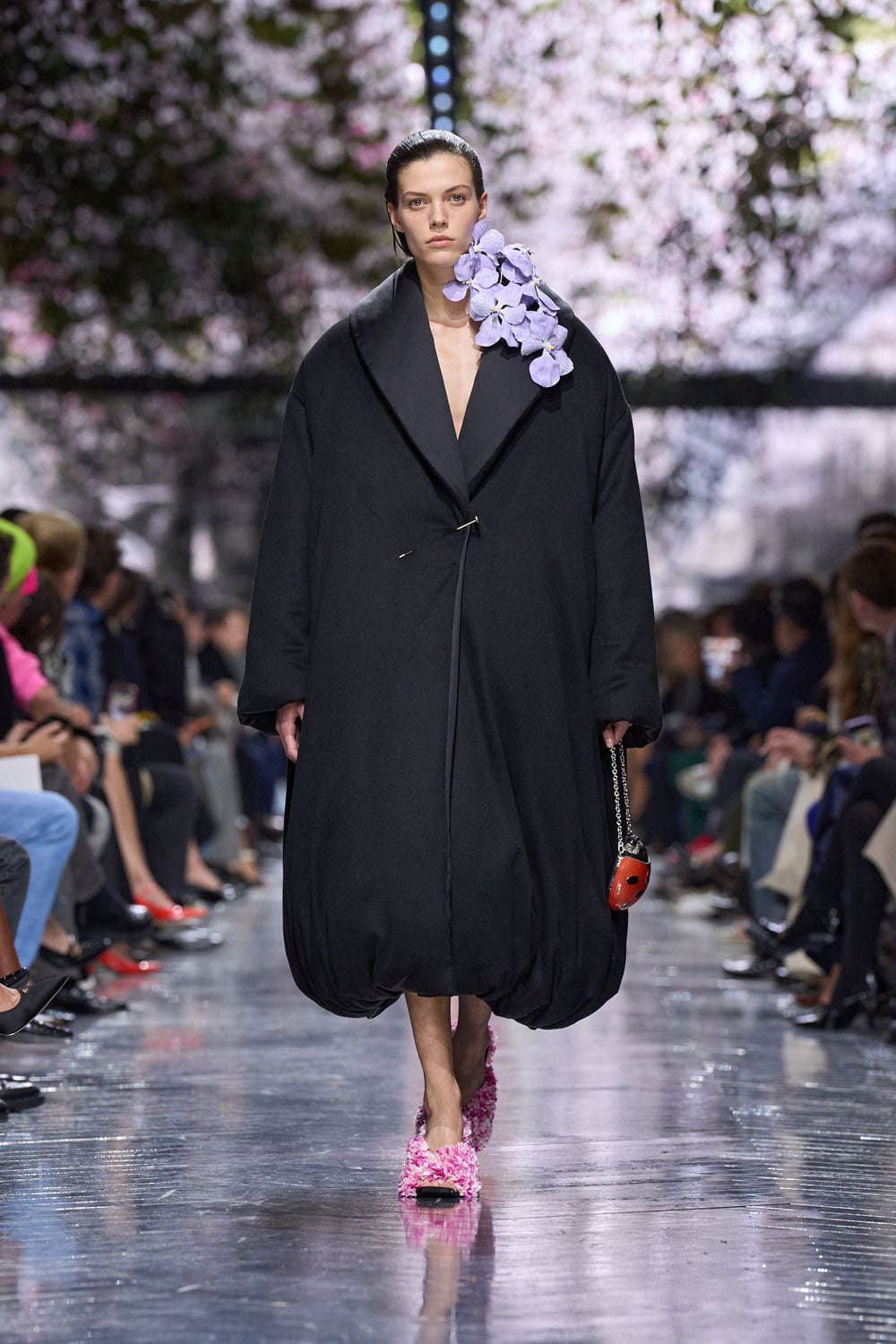
More followed. Here comes IKEA lamp… One look came buried in an enormous black boucle cloak, as if someone threw a moving blanket over the model and called it “Rodin-inspired.”
If this was a homage to ceramicist Magdalene Odundo, as the press release suggests, then Odundo should sue. Her work has curves and coherence — this was just felted fog.
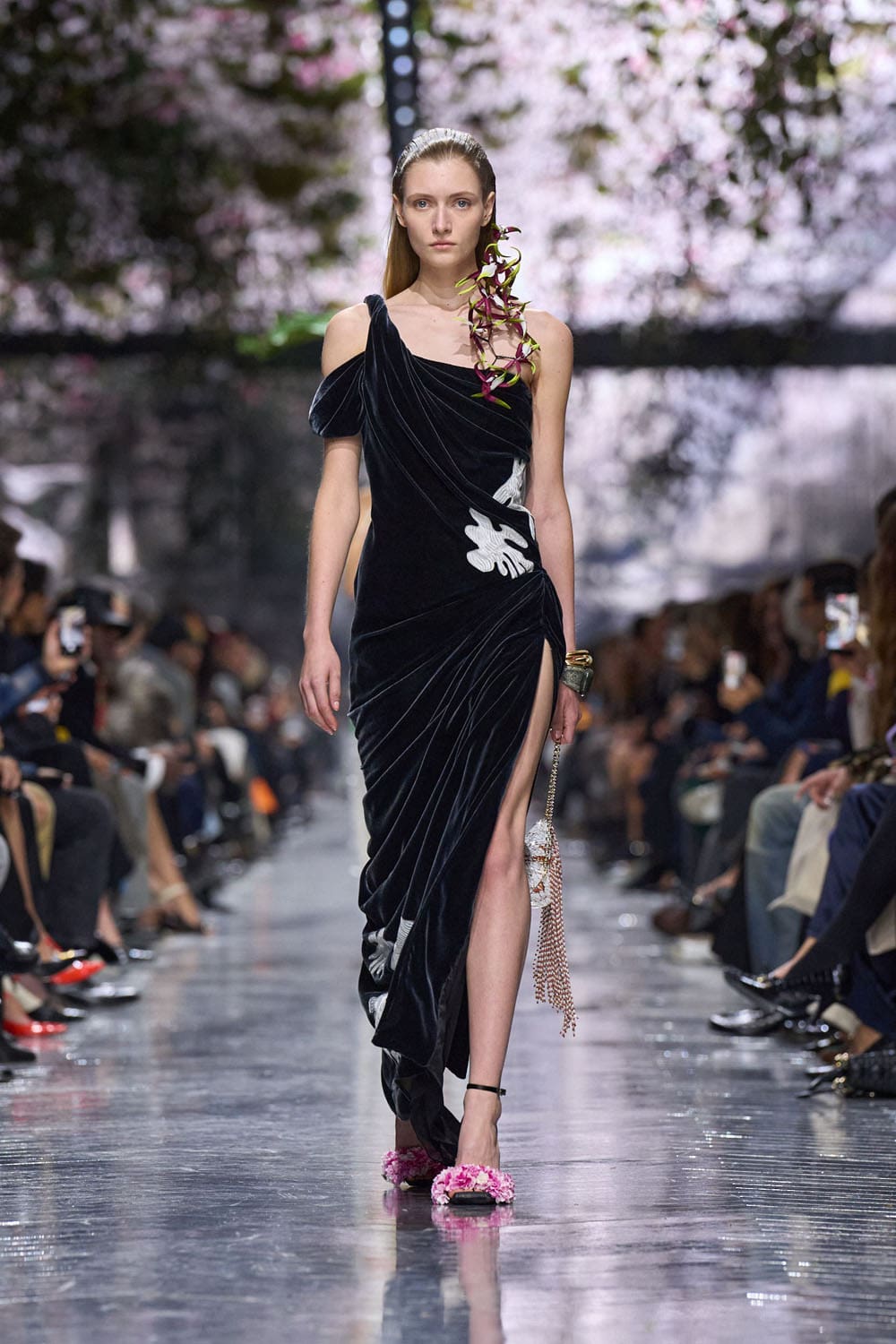
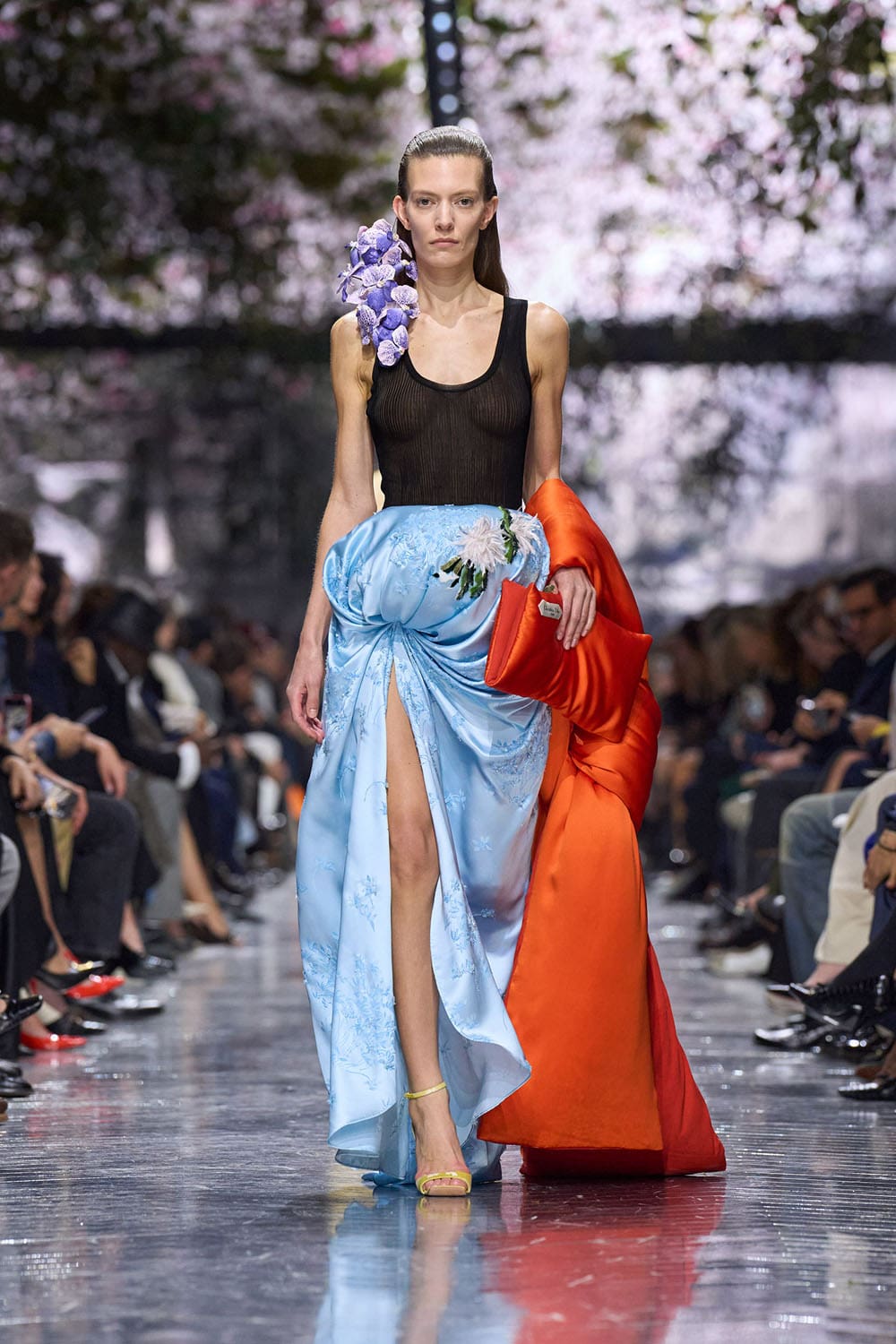
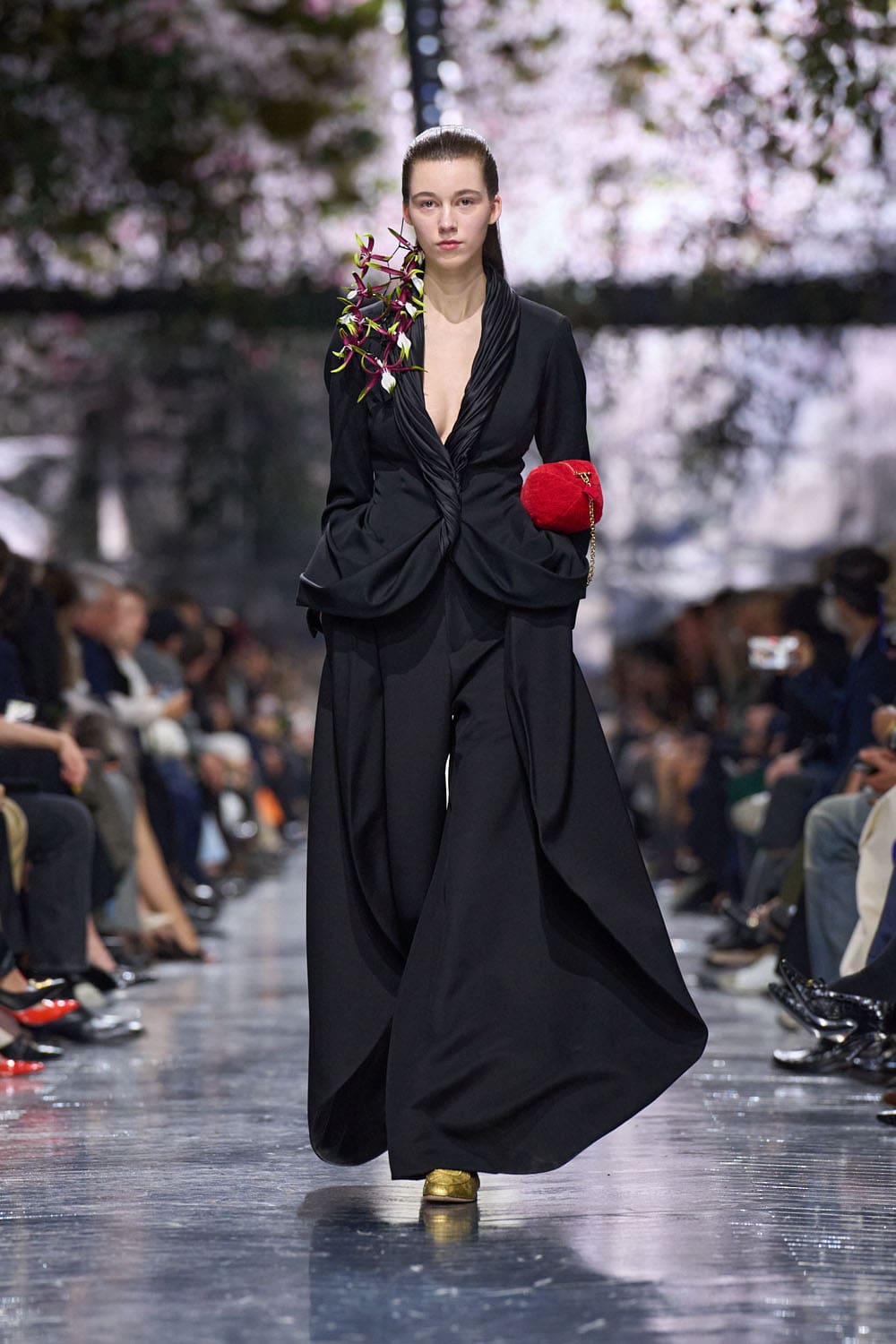
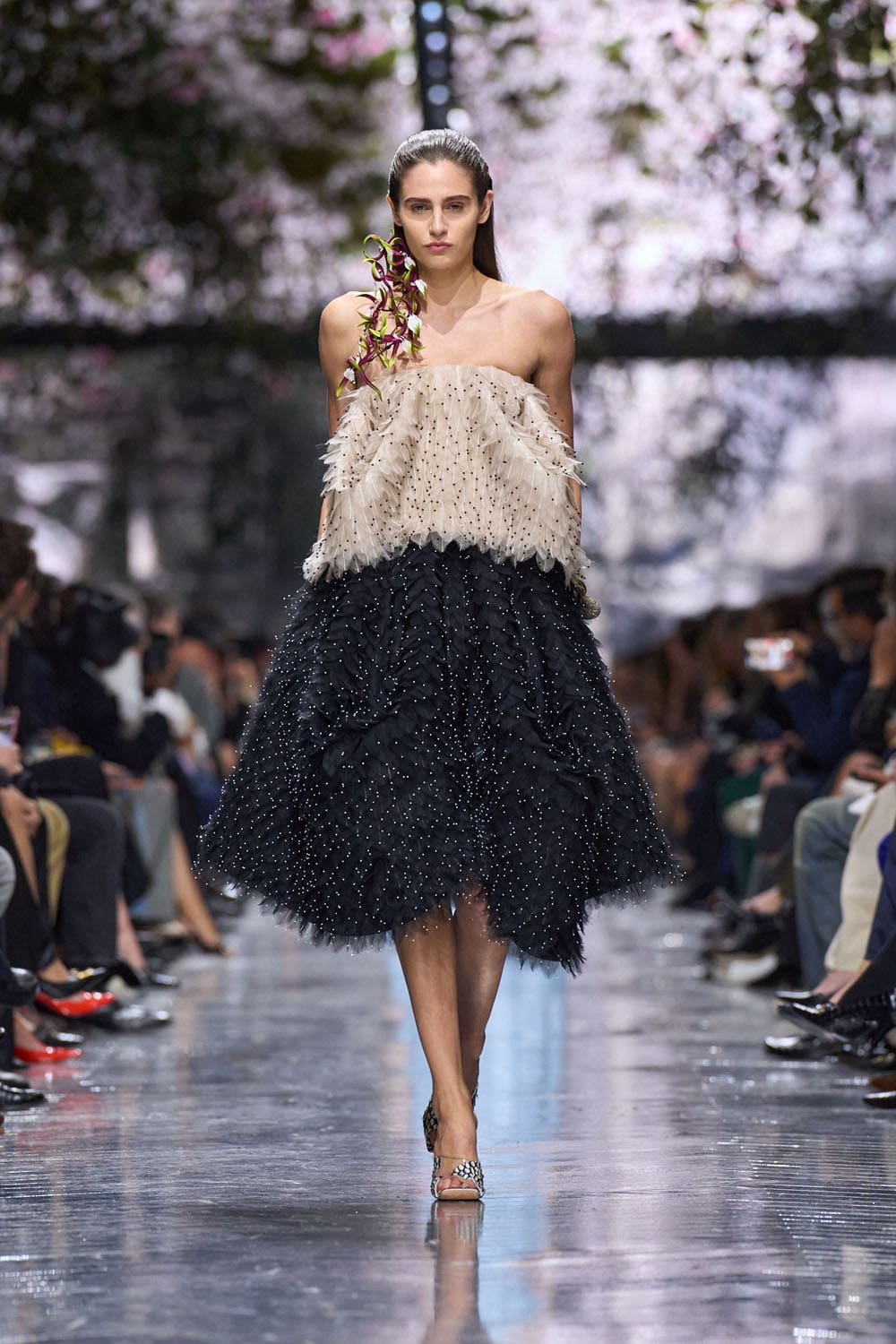
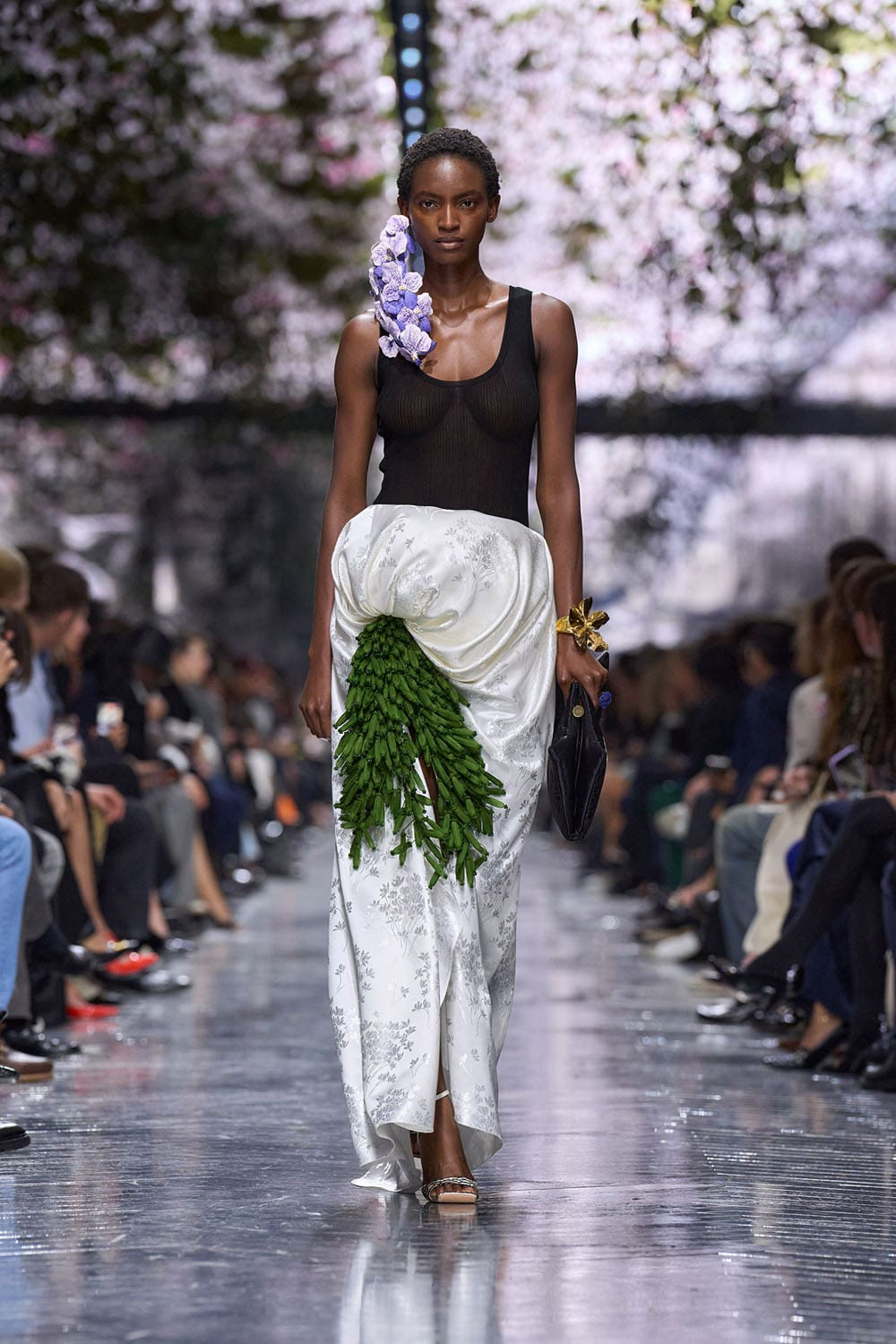
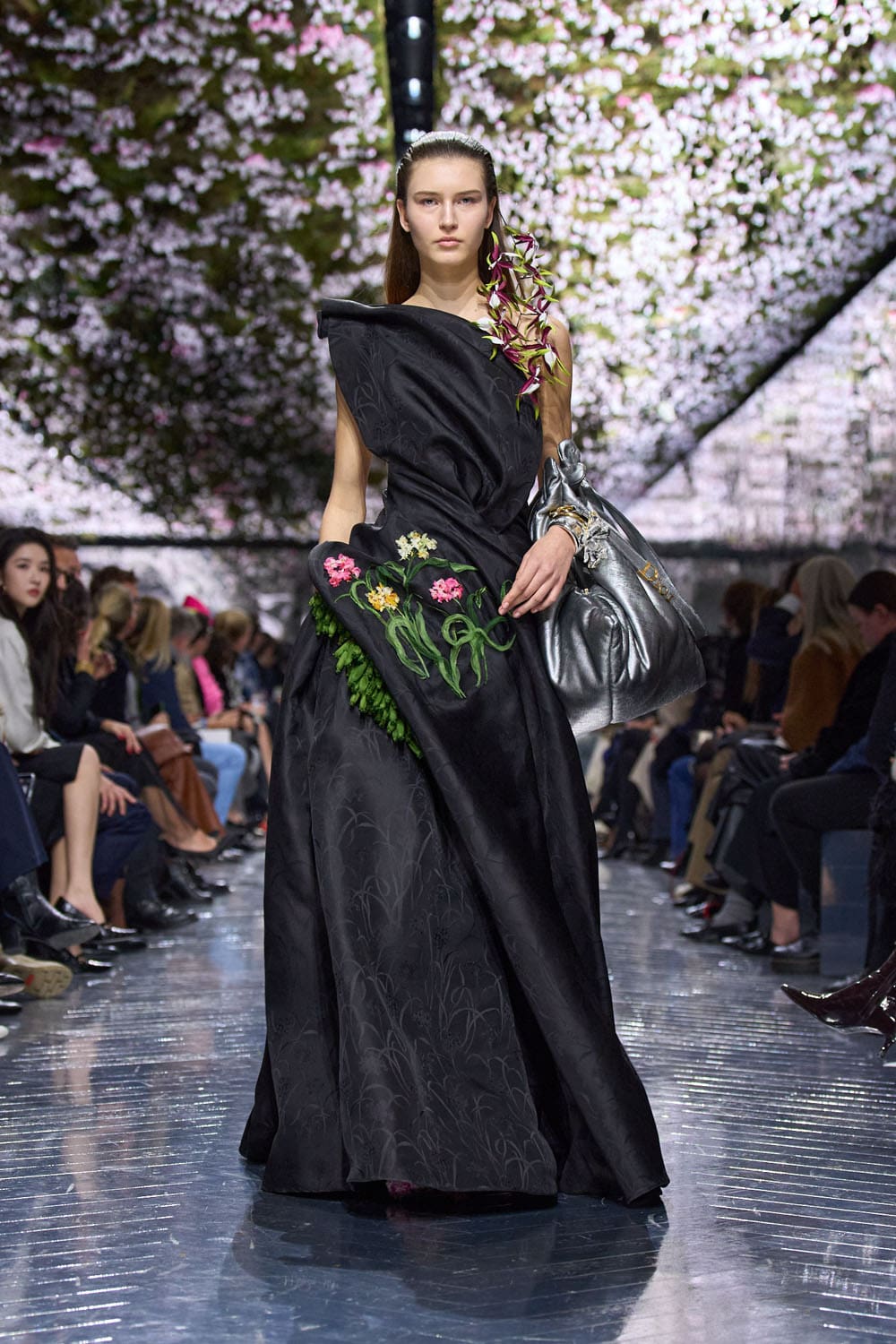
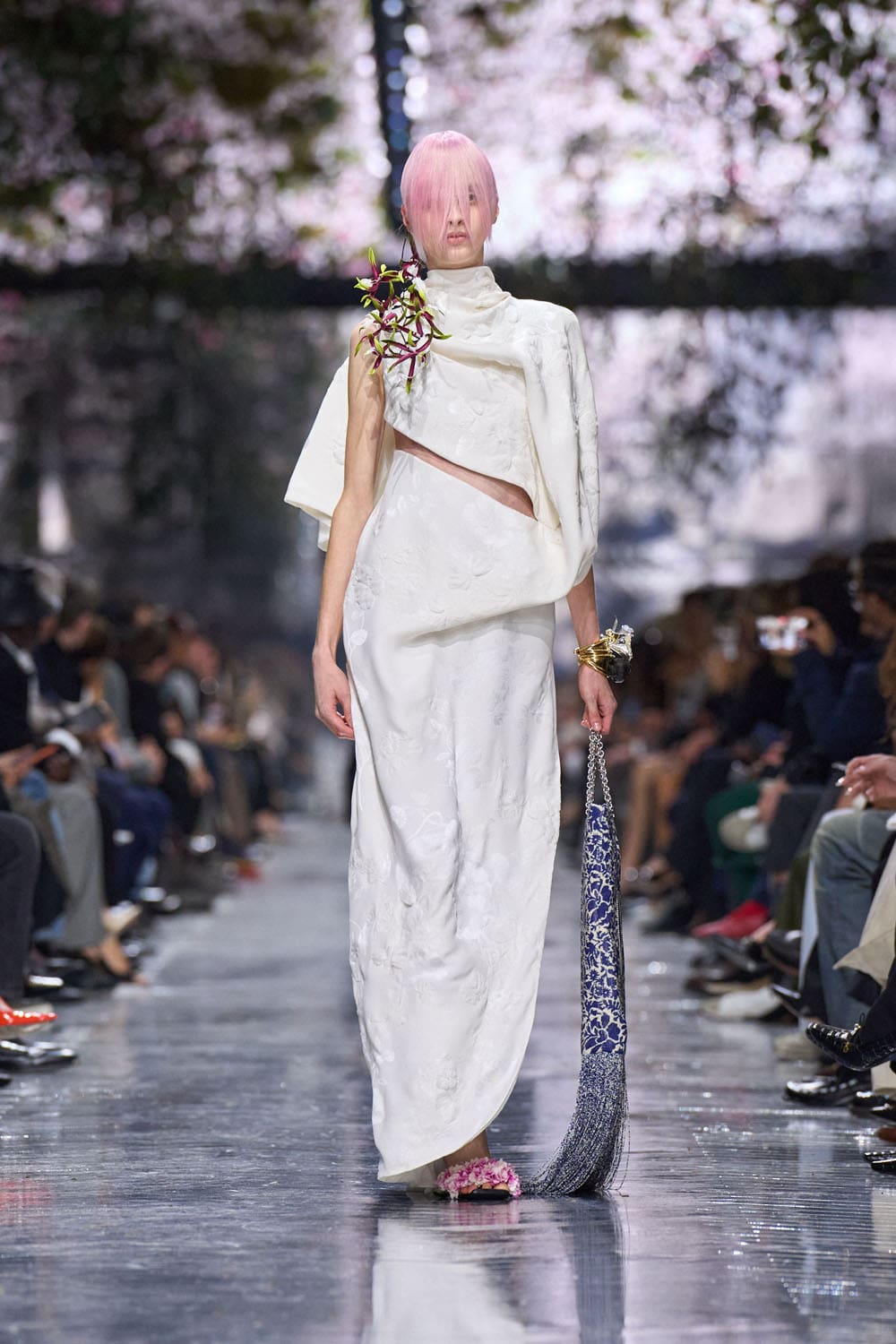
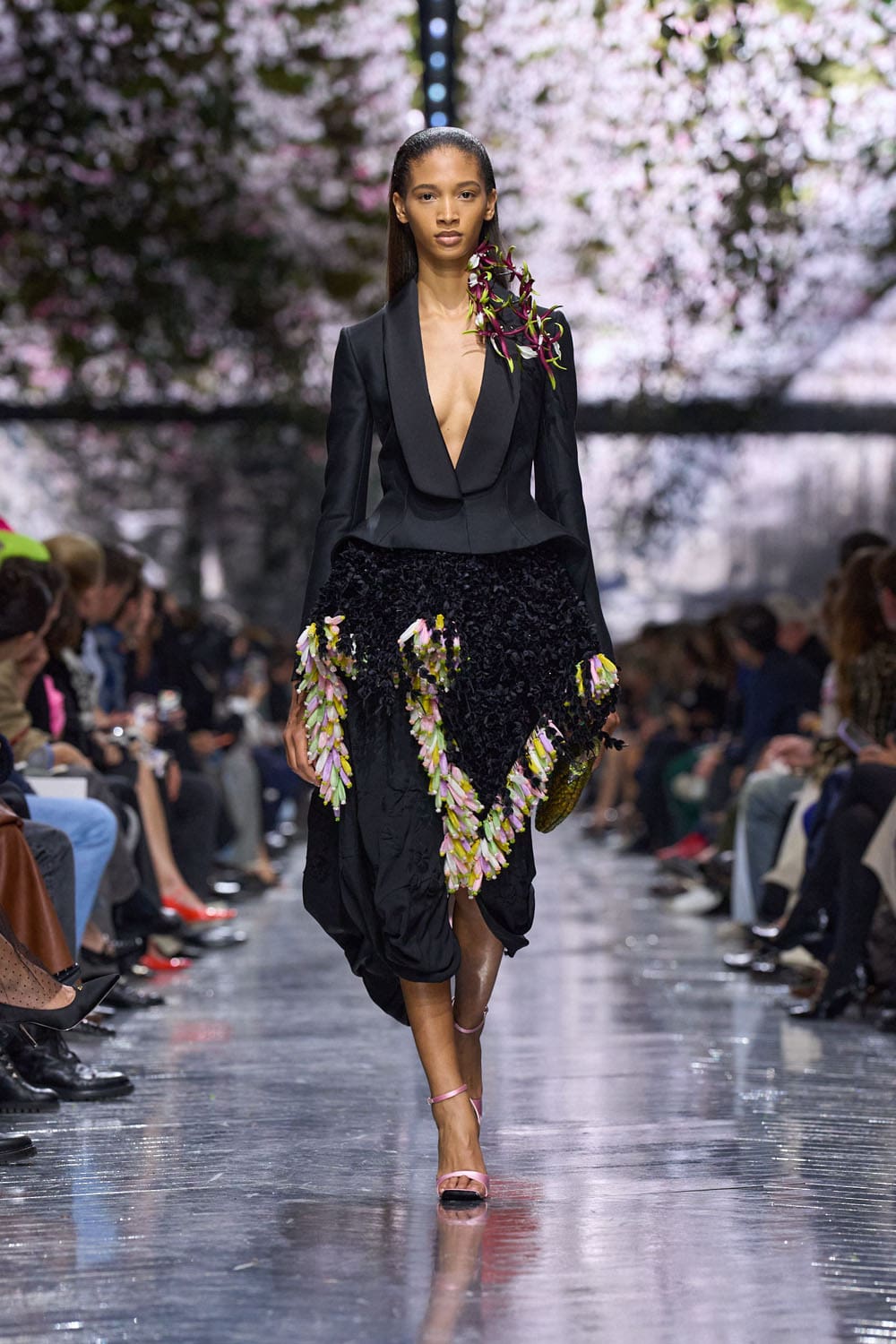
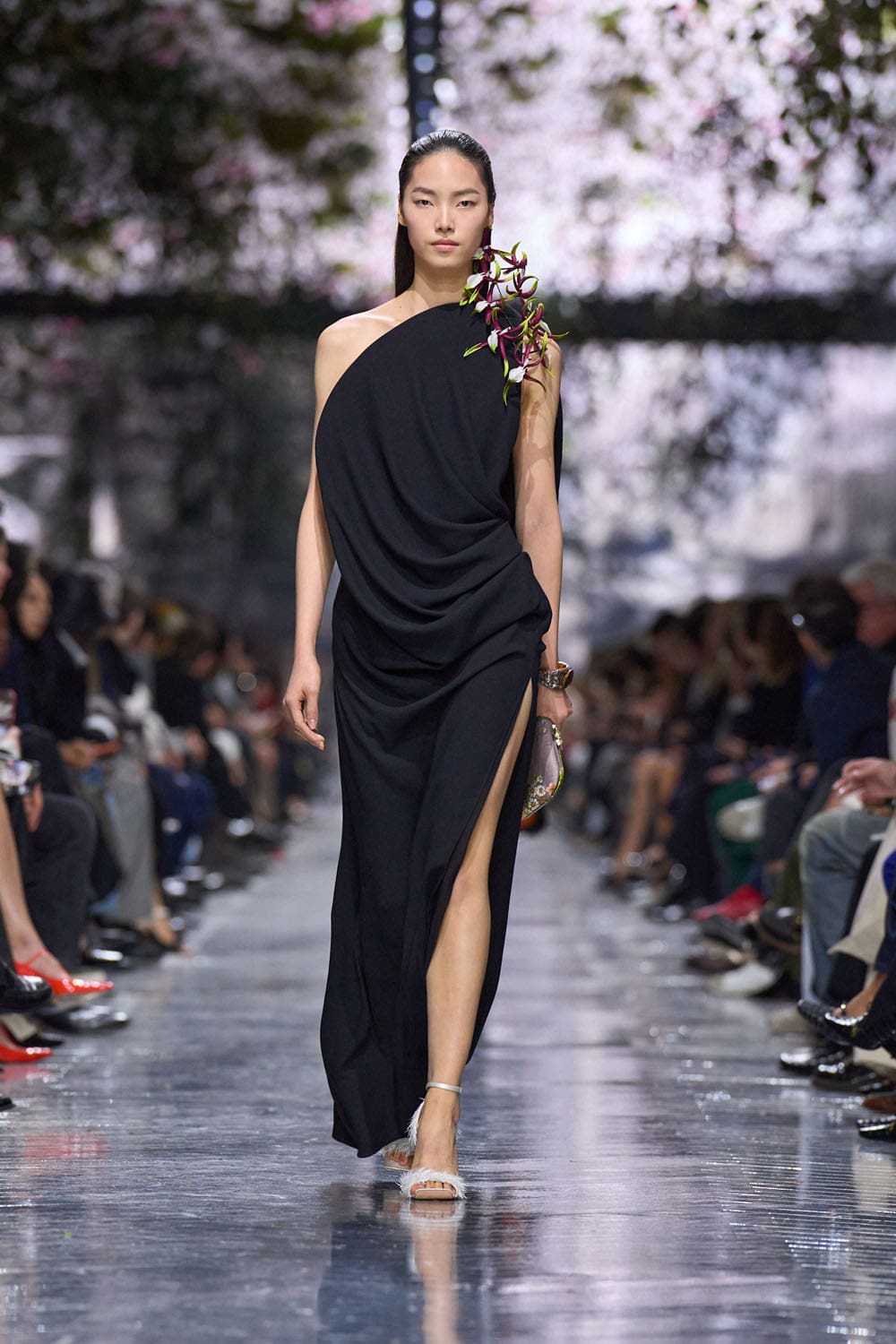
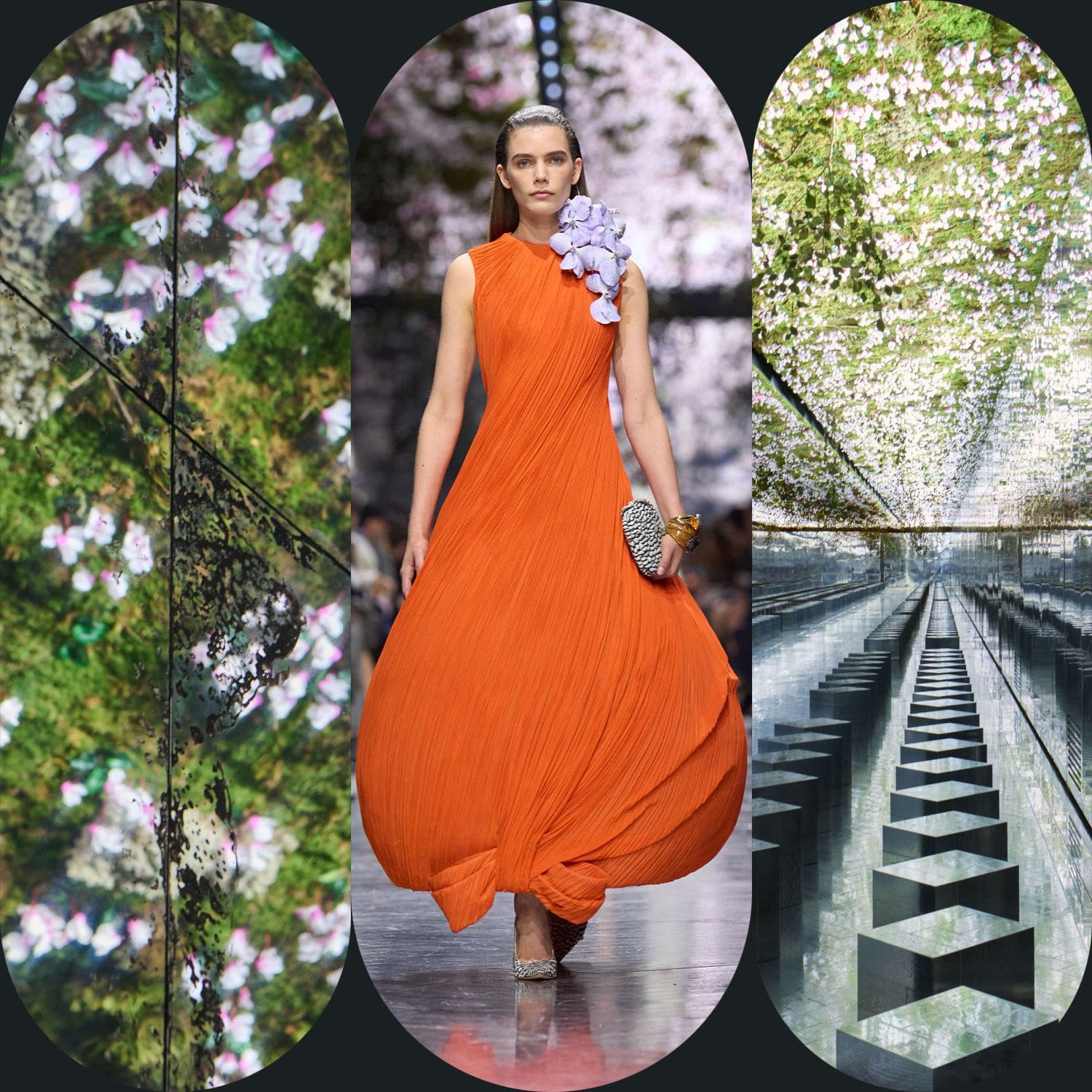
But the moment that truly broke Dior’s couture compass was a black sheer tank top over a ruched ivory satin skirt — with a green vegetal explosion sprouting from the crotch like radioactive parsley.
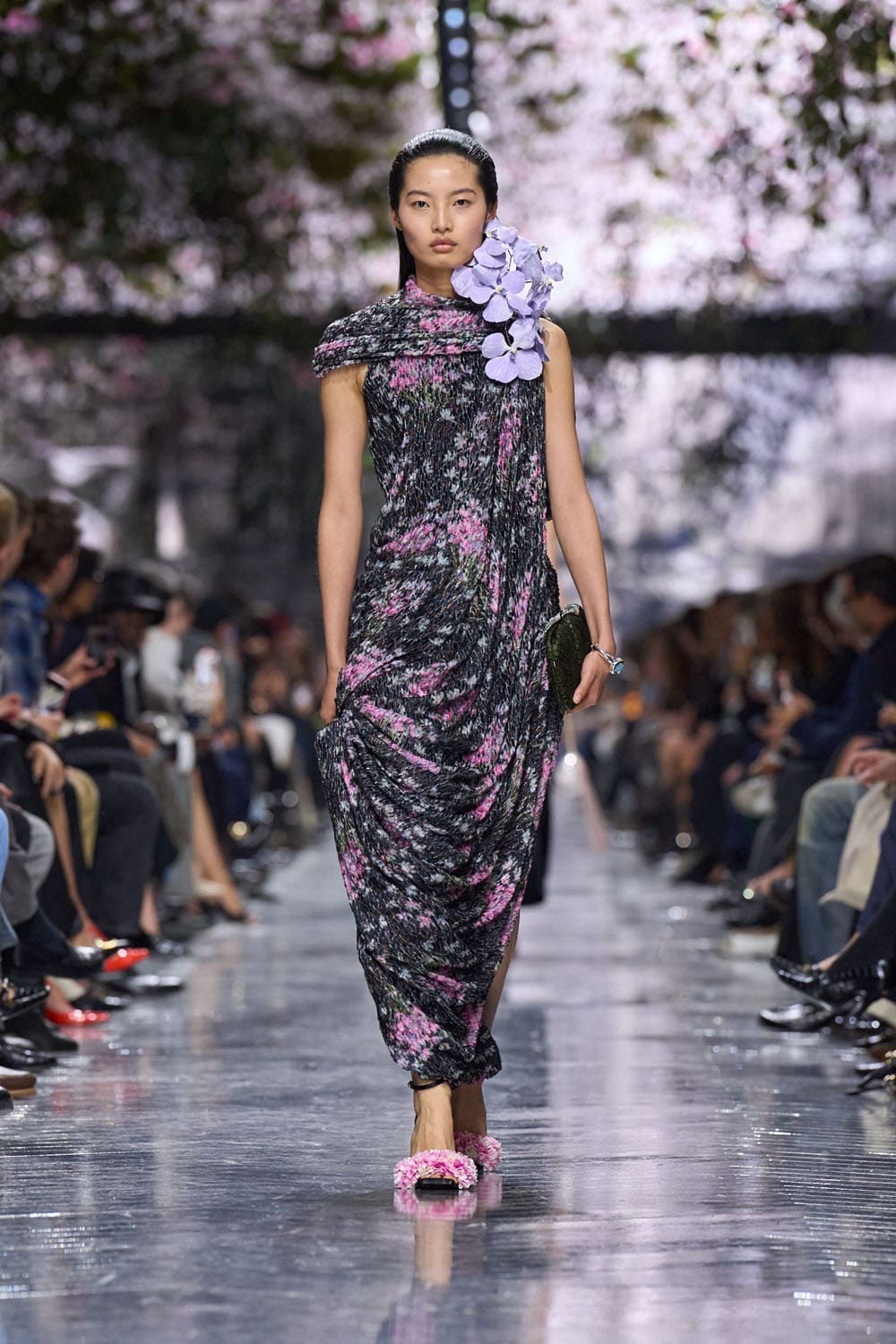
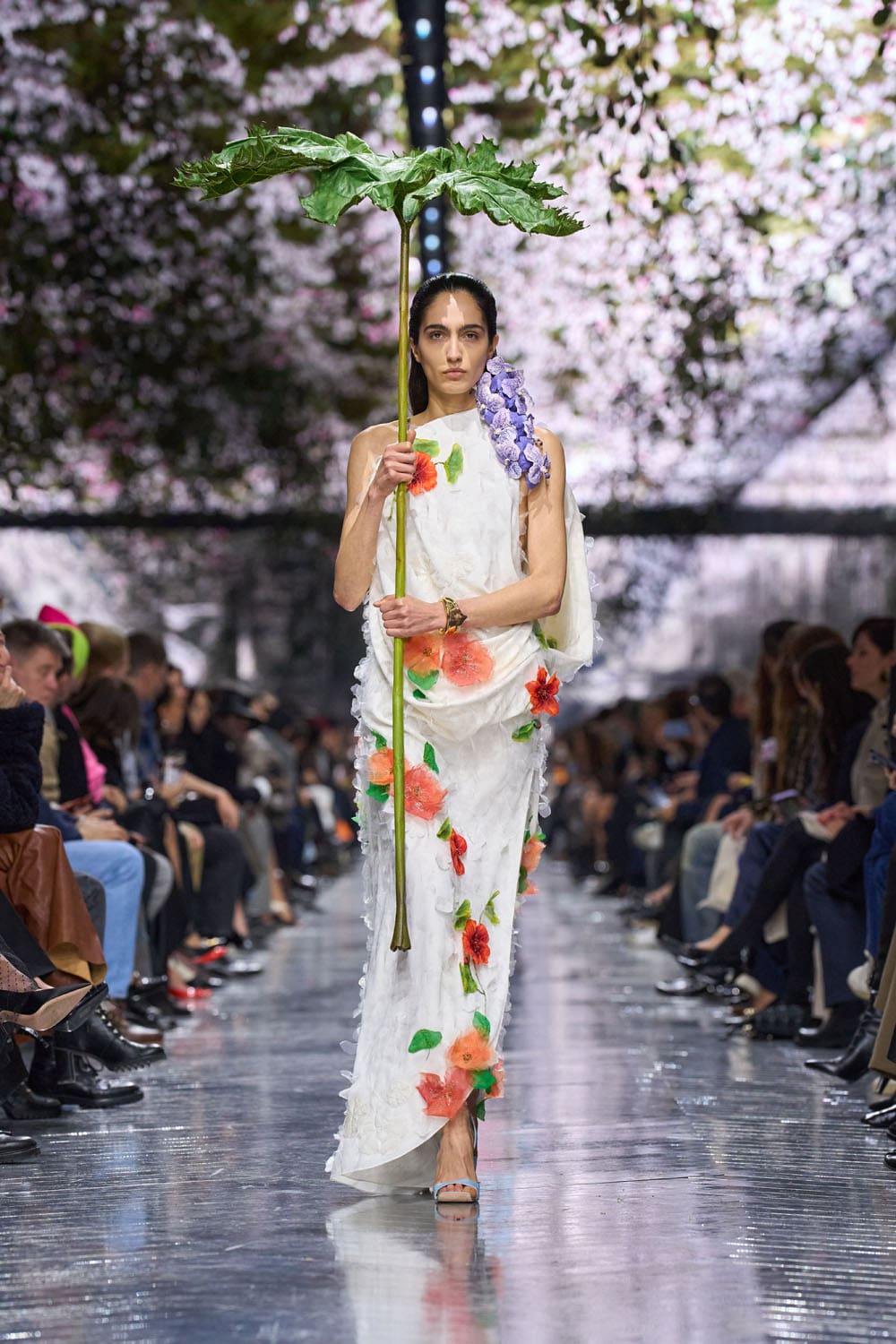
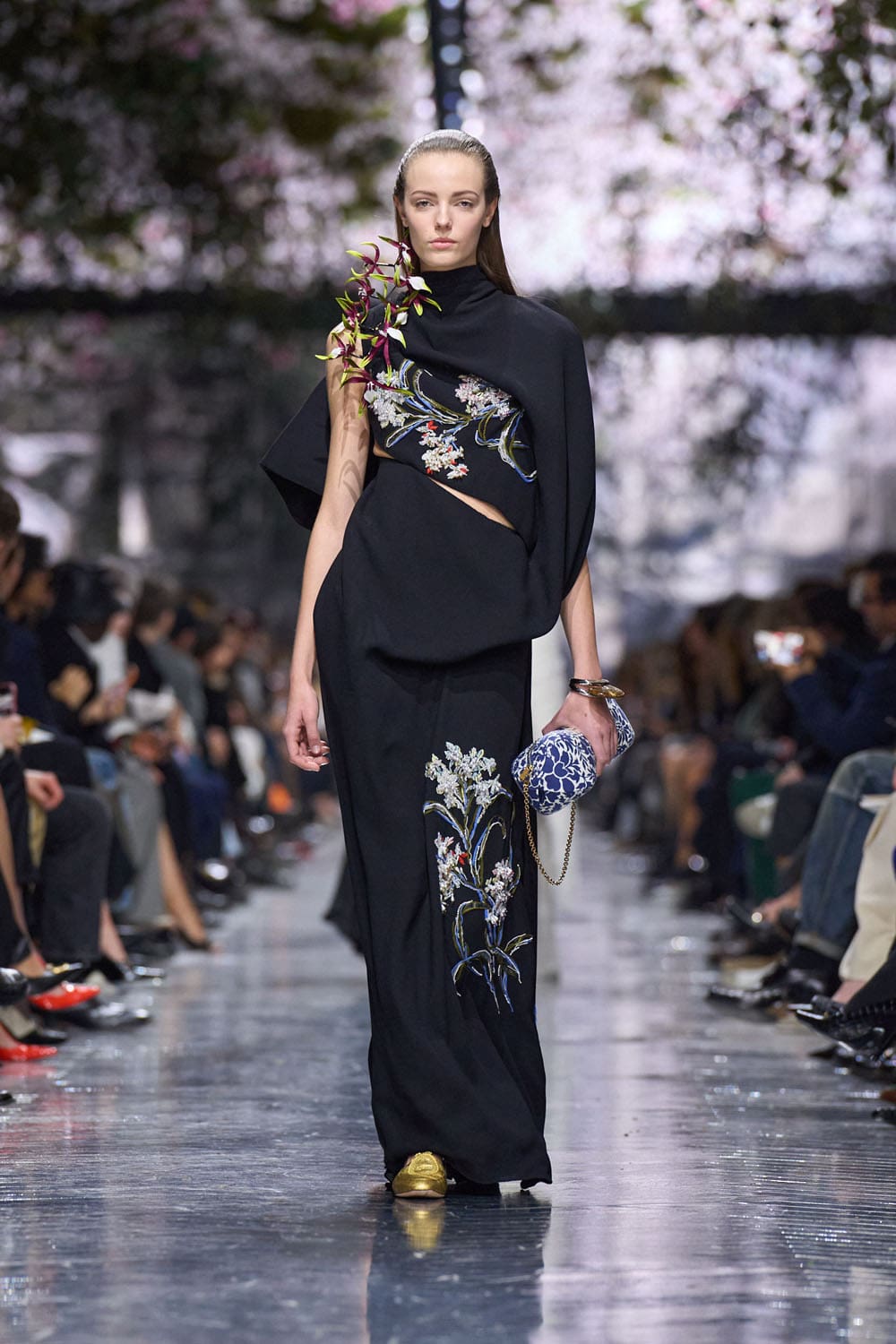
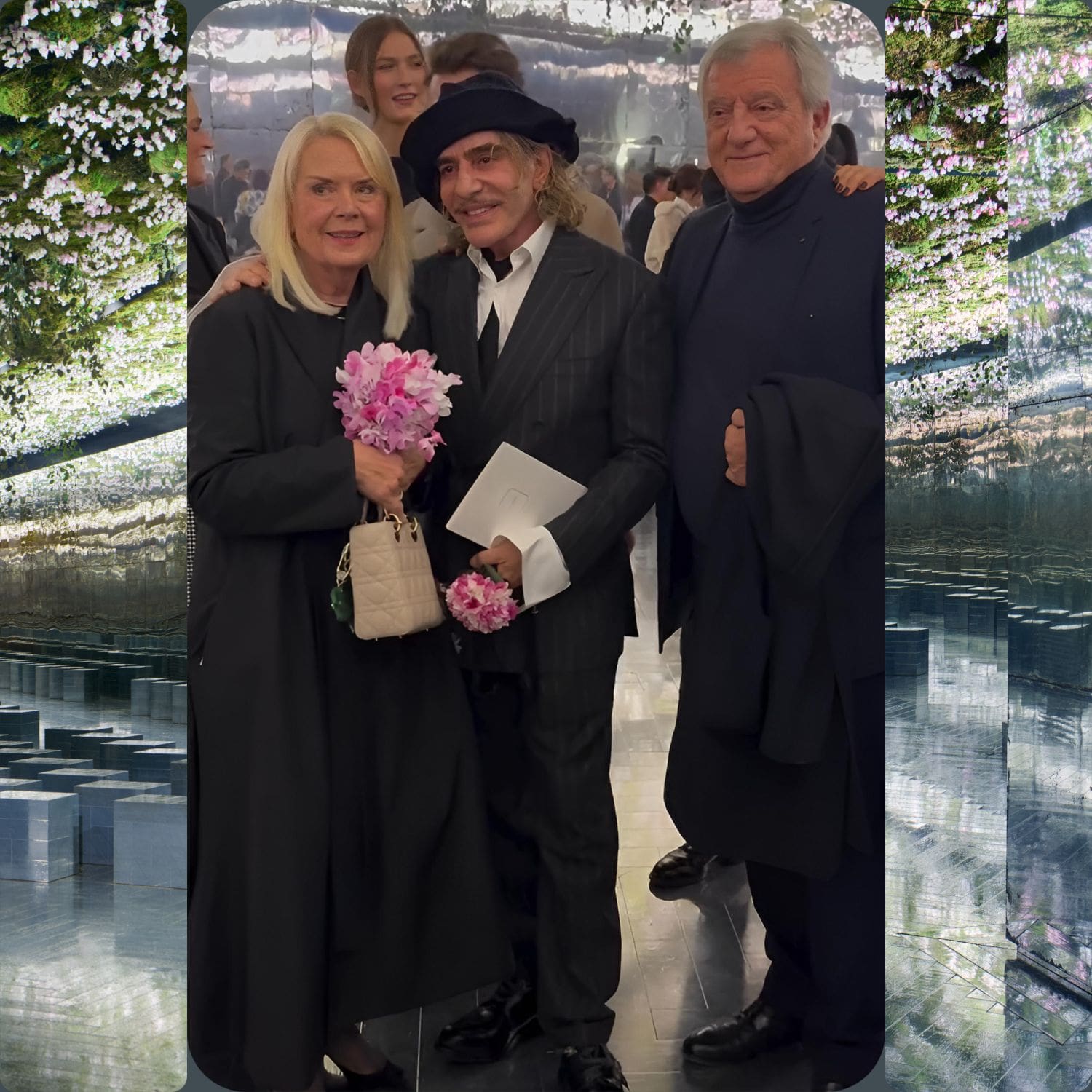
We were told Galliano personally handed Anderson bunches of cyclamen as a “poetic baton of creative continuity.” This, apparently, is how that baton was used: shoved into a bodice like a defeated salad garnish. A tragedy in chlorophyll.
Instead of ushering in a new era at Dior, Anderson delivered a couture debut that confused scale with silhouette, conceptual fluff with design, and Galliano’s flamboyant genius with bloated cosplay.
If couture is meant to be wearable art, then this was wearable anxiety. Dior’s DNA—its elegance, its restraint, its architectural femininity—was nowhere to be found. Instead, we got flowers taped to chaos, sweaters with delusions of grandeur, and a vague sense that this entire project needed a second draft.
It was less couture, more creative-writing-student-on-mushrooms.
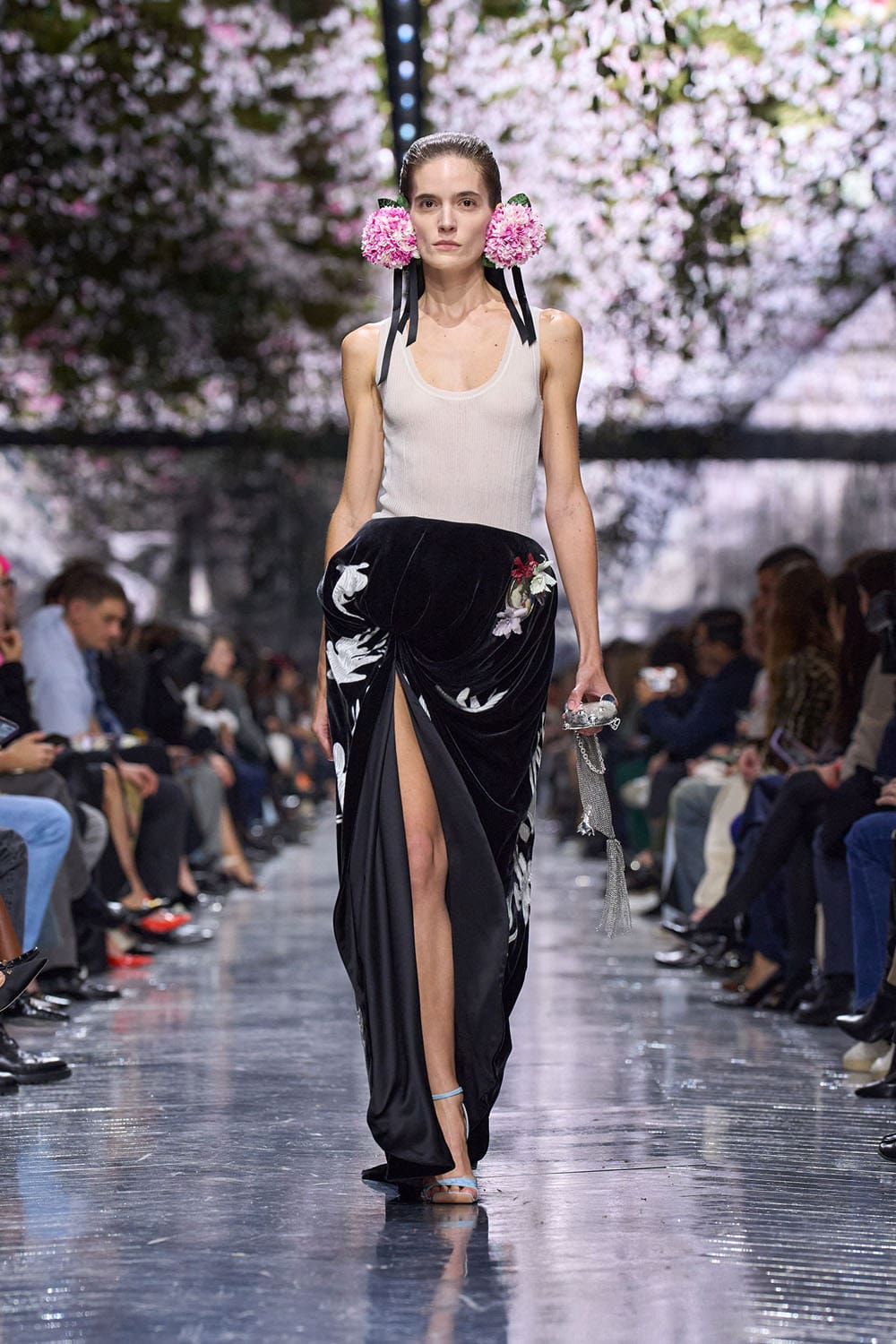
And finally, for those still standing: a cream fisherman’s sweater draped like a hammock across the shoulders, worn over what appeared to be gathered velvet and silk trousers stolen from a local theater troupe.
If Gianfranco Ferré is looking down on Dior’s legacy, he’s probably looking for a new cloud.
What makes this even more perplexing is the press release’s attempt to intellectualize it all. Words like “endangered form of knowledge” and “manual dexterity” abound. We are told the handbags are “sculptural,” the shoes are “witnesses to places far from Earth’s orbit,” and the exhibition at Musée Rodin is “a dialogue.” But what, exactly, is being said?
Because here’s the uncomfortable truth: none of this was elegant. None of it was wearable. None of it made a woman look powerful, graceful, or even particularly well-dressed. It wasn’t a celebration of couture—it was couture as academic hallucination. A thesis with no conclusion.
In his attempt to bring artifice and nature into collision, Jonathan Anderson succeeded only in proving one thing: haute couture, when detached from elegance, becomes parody. Dior’s foundations were built on the curve of a waist, the flare of a skirt, the discipline of restraint. This show rejected all of that in favor of… creative entropy.
Dear Dior: next time, less Galliano fantasy theater, more Ferré spine. And for heaven’s sake, no more cheese sandwiches.
See All Looks Dior Spring Summer 2026 Haute Couture