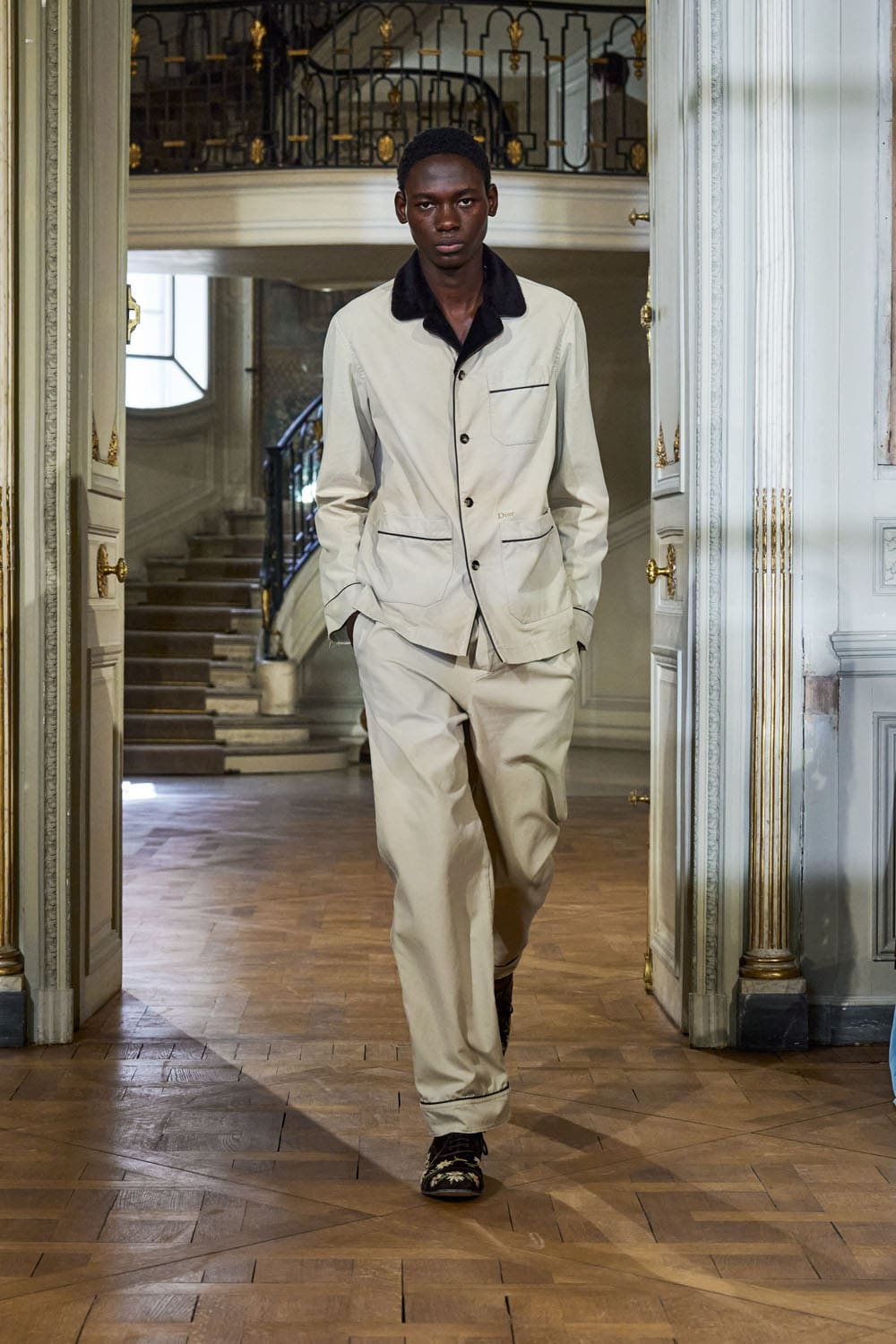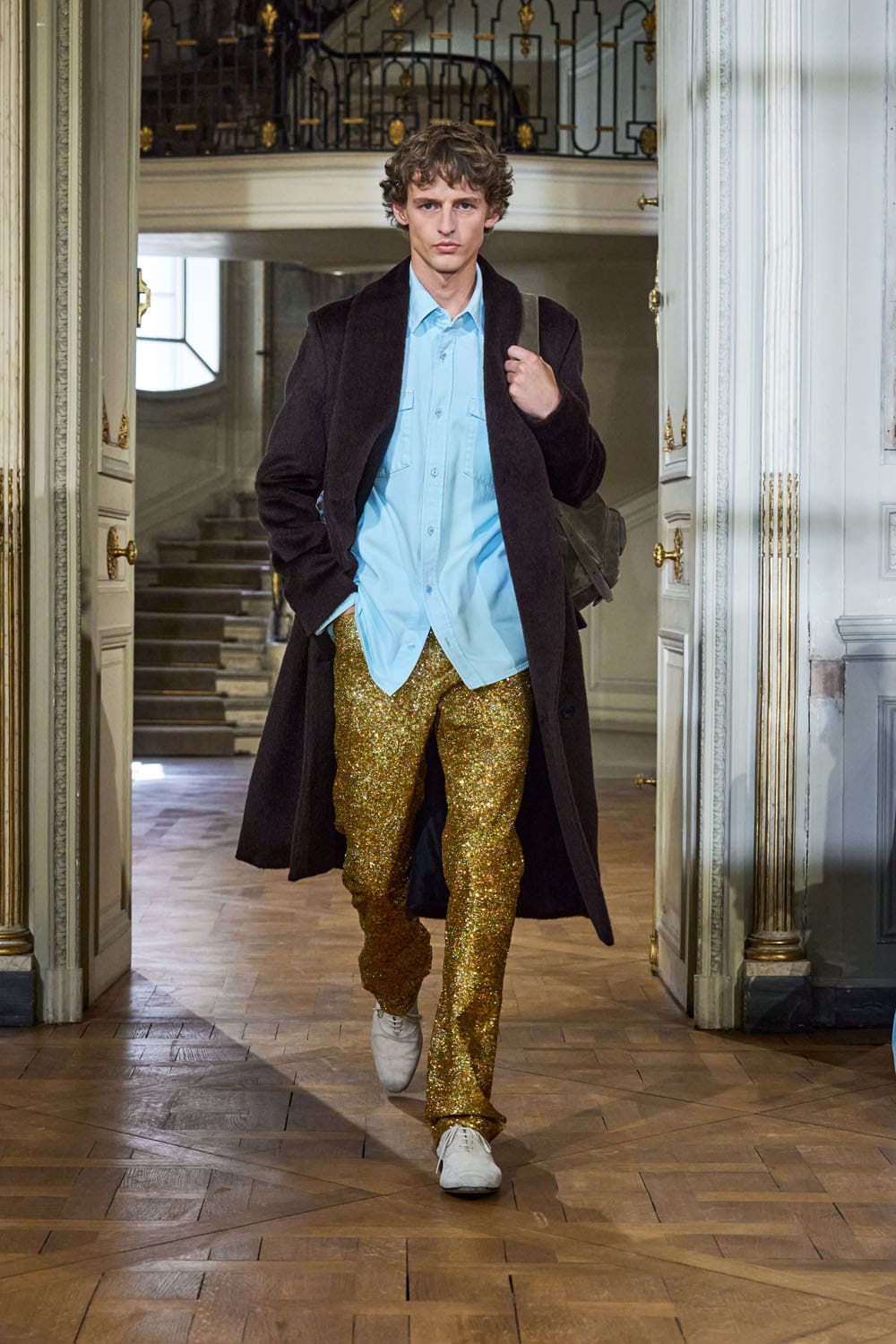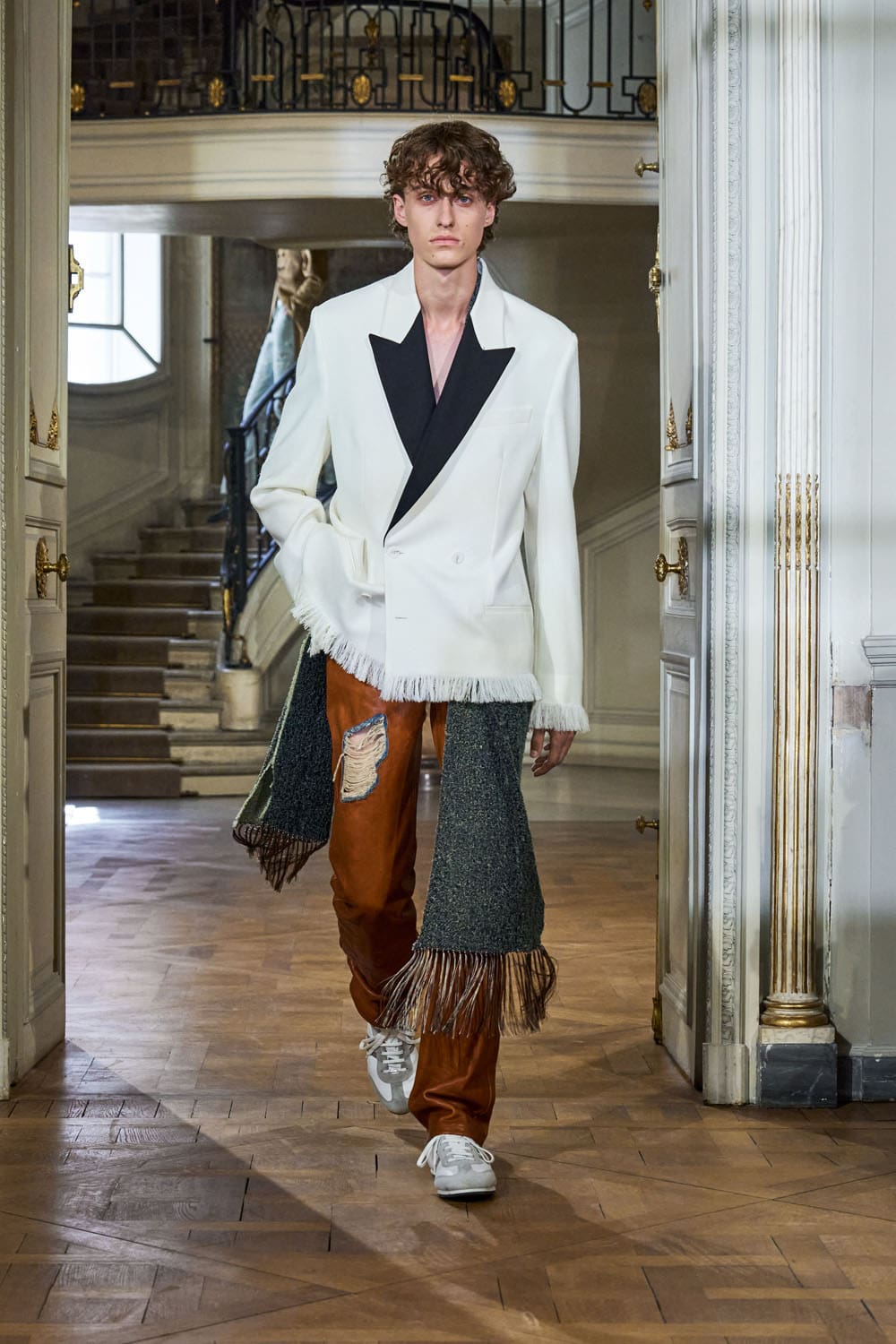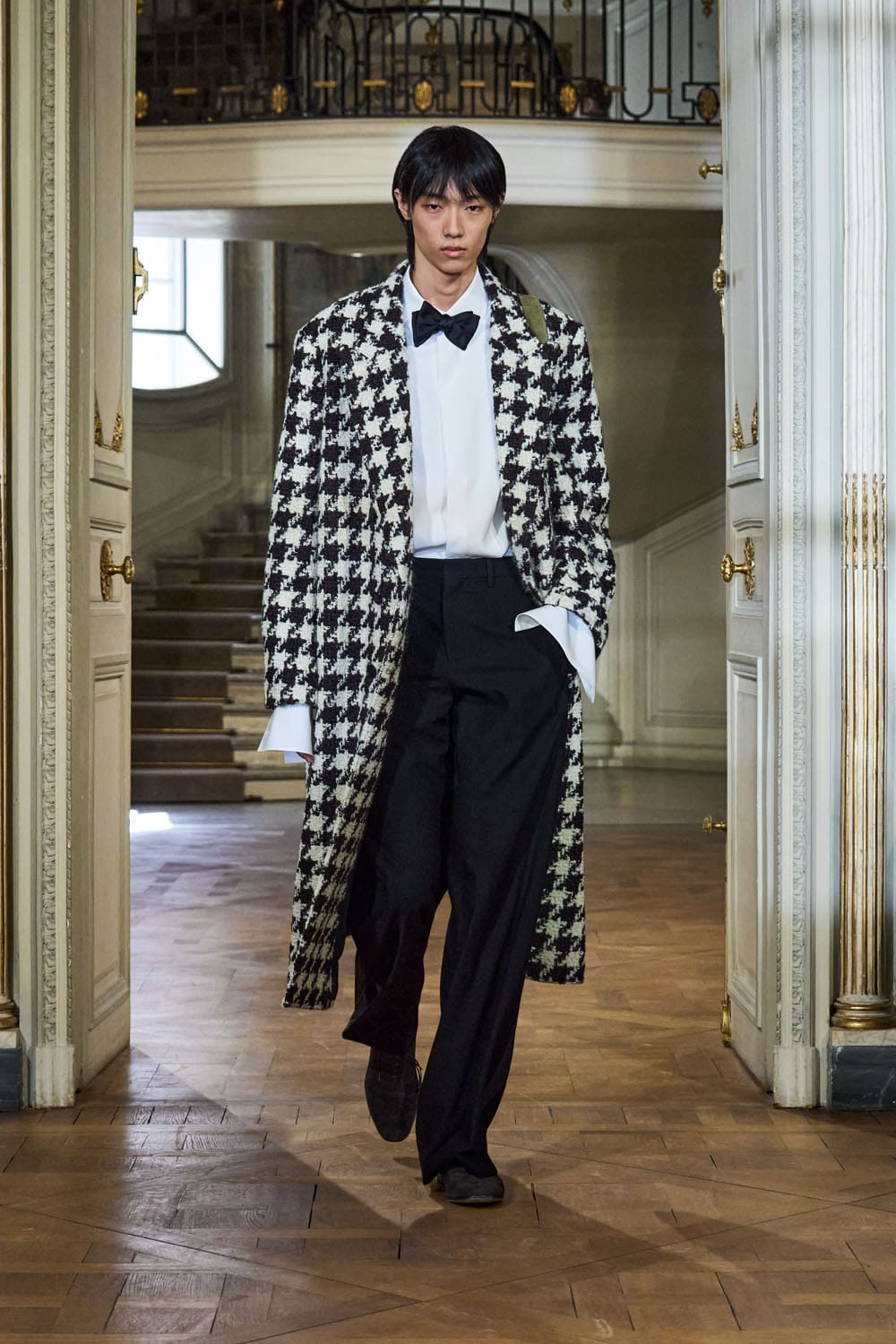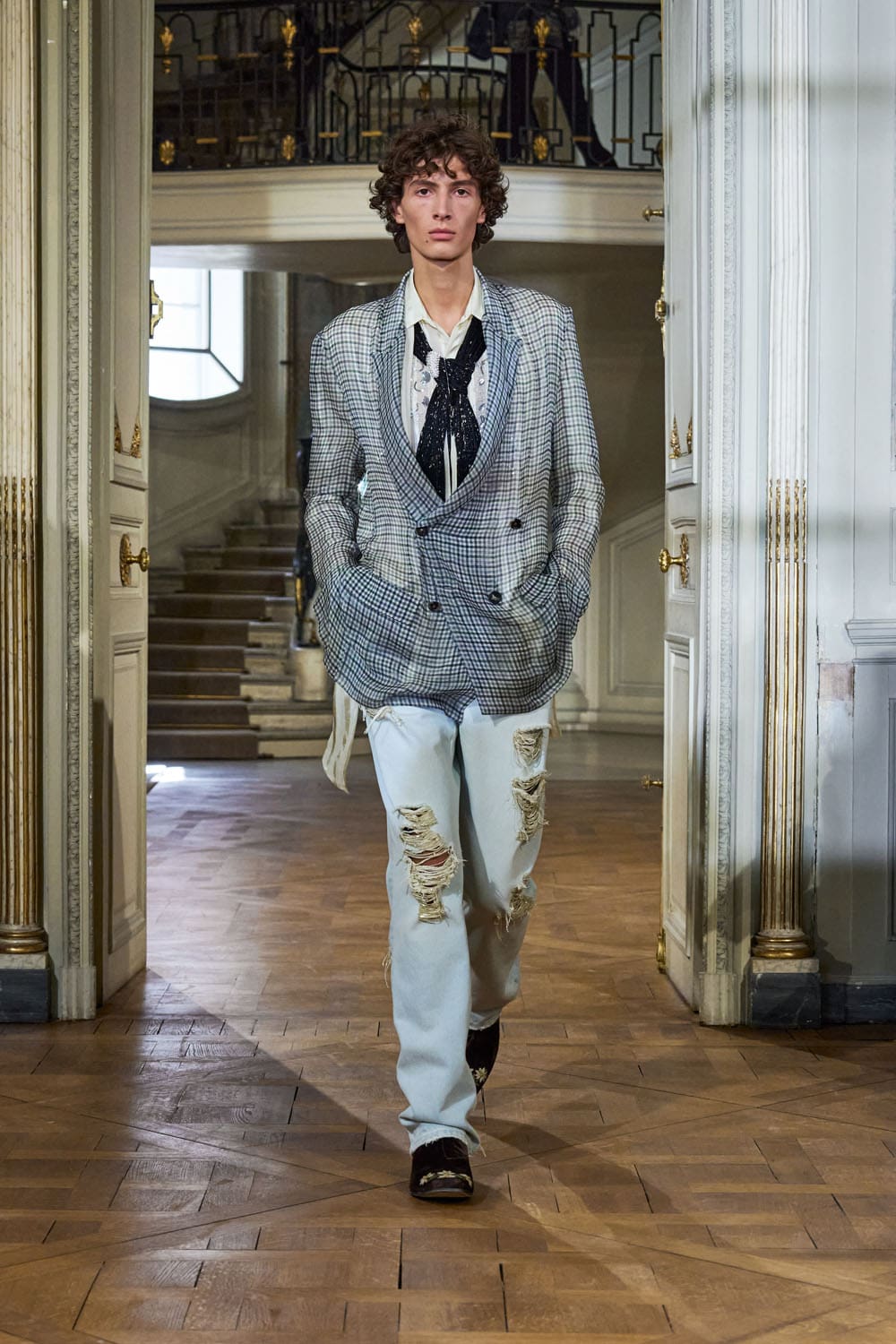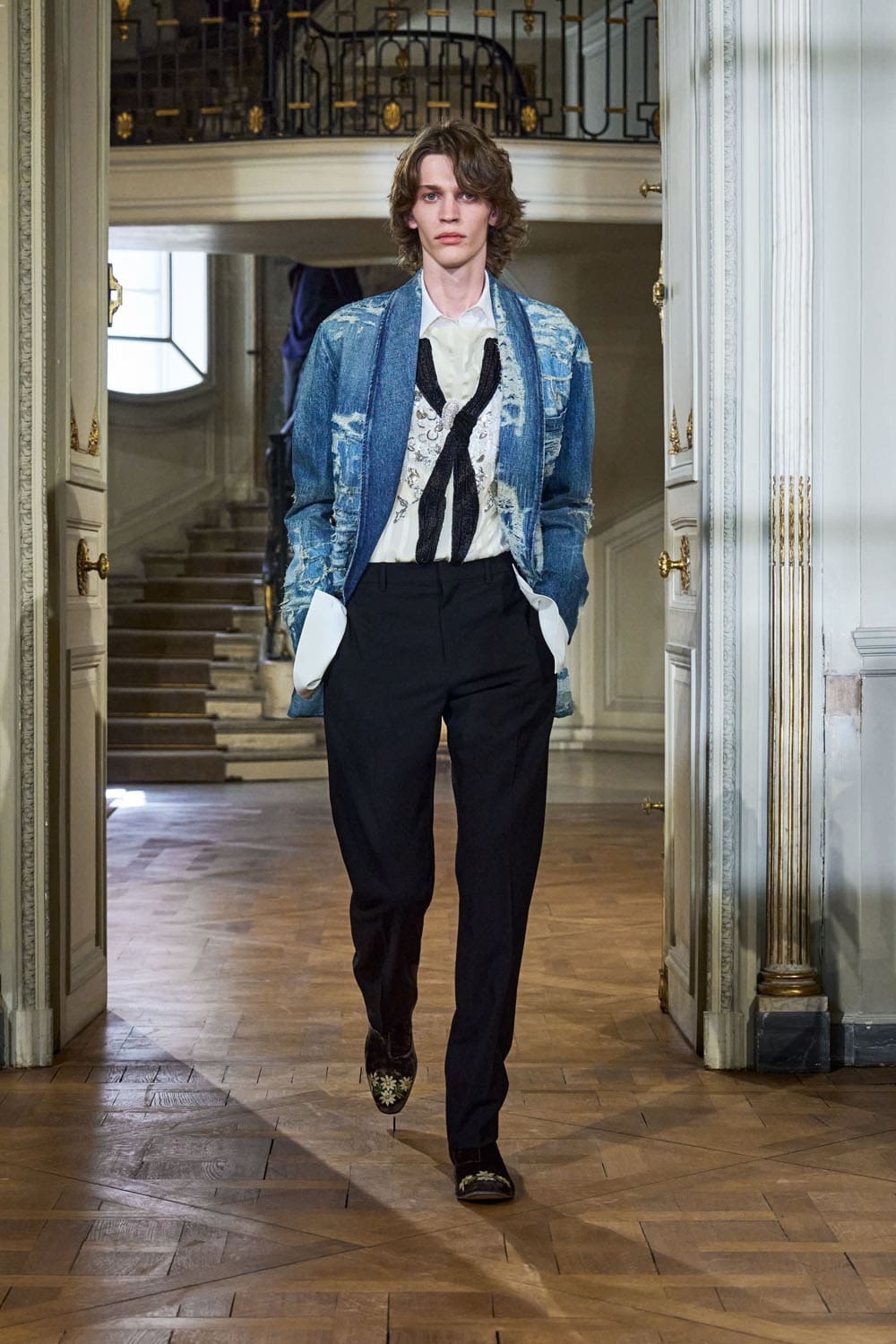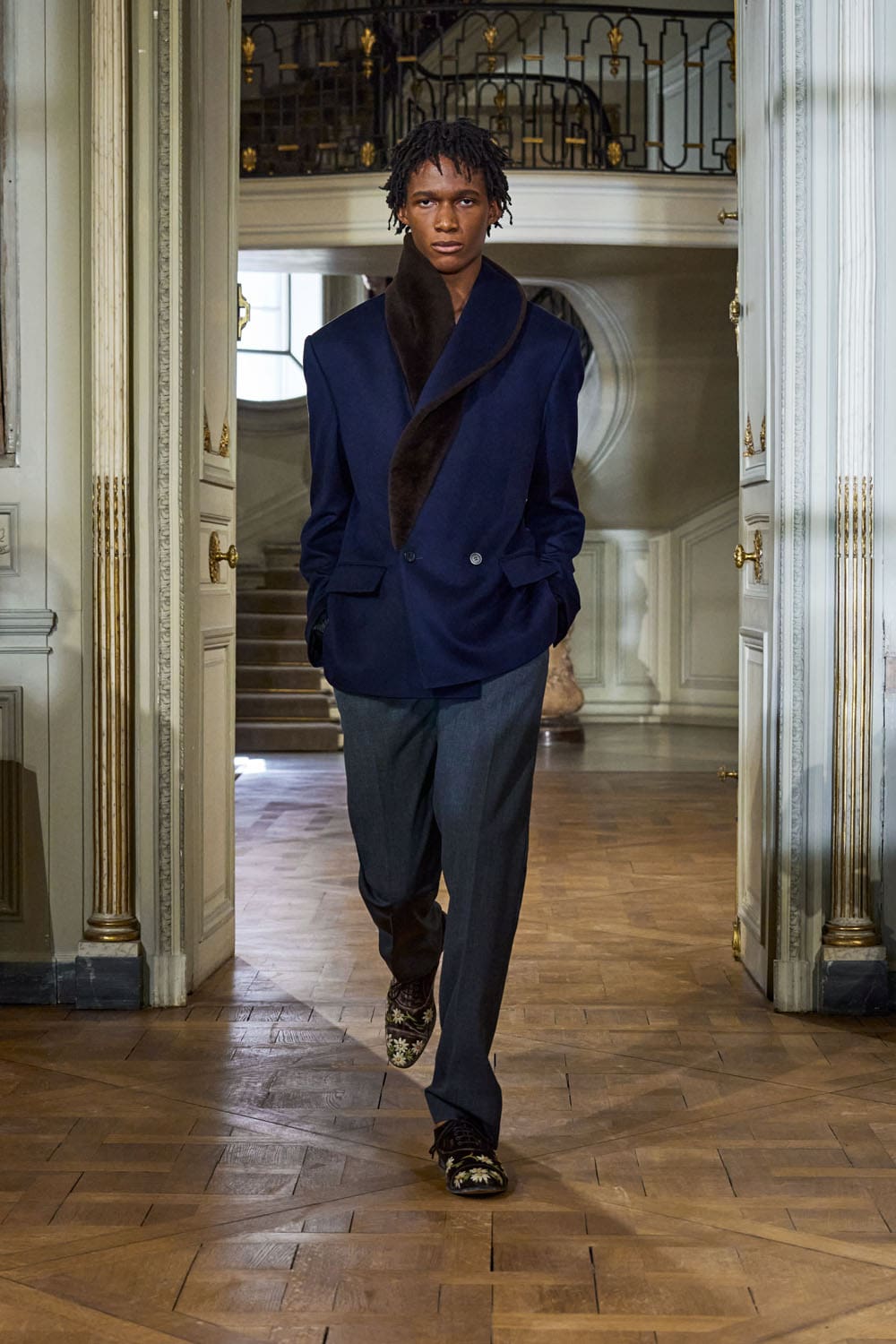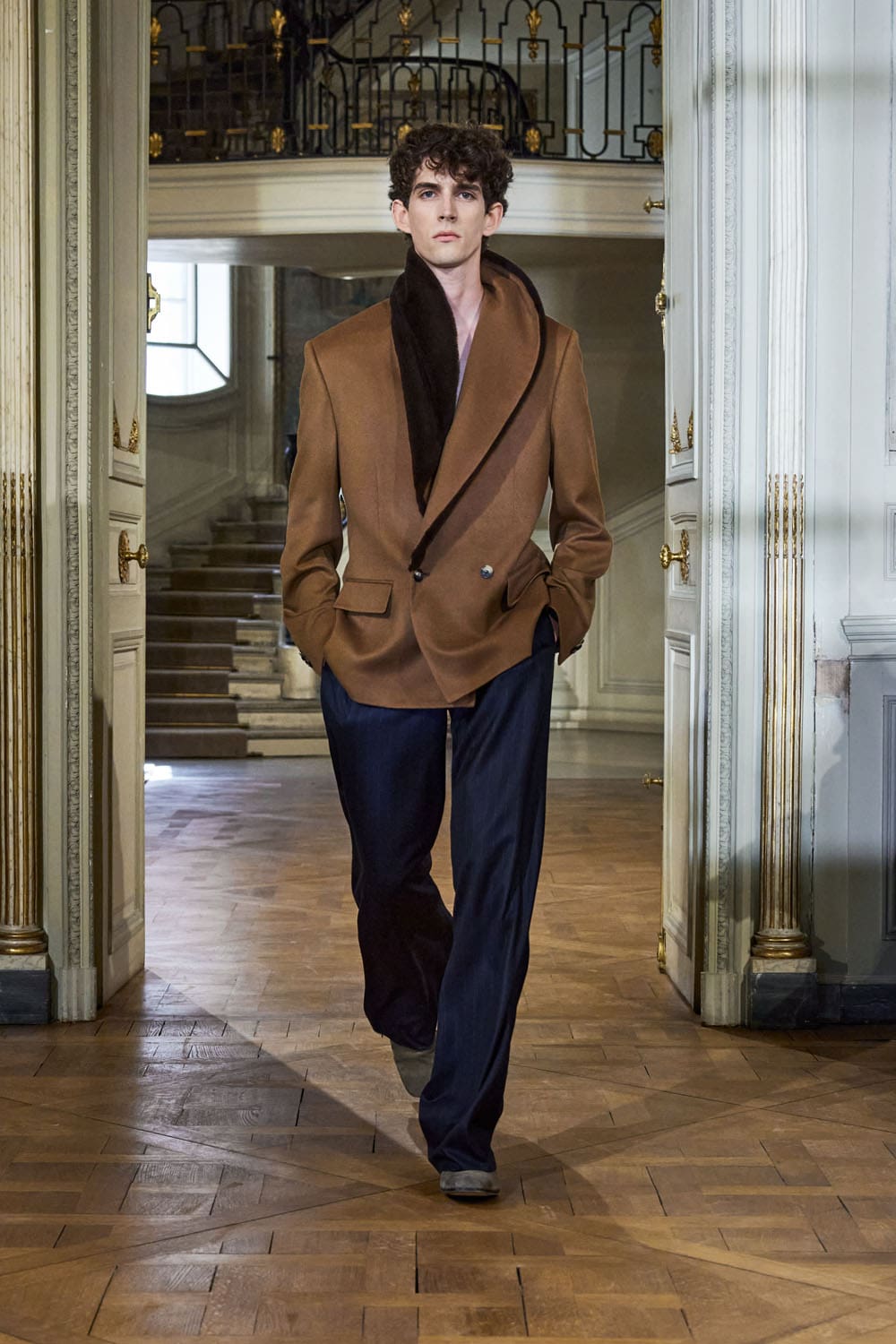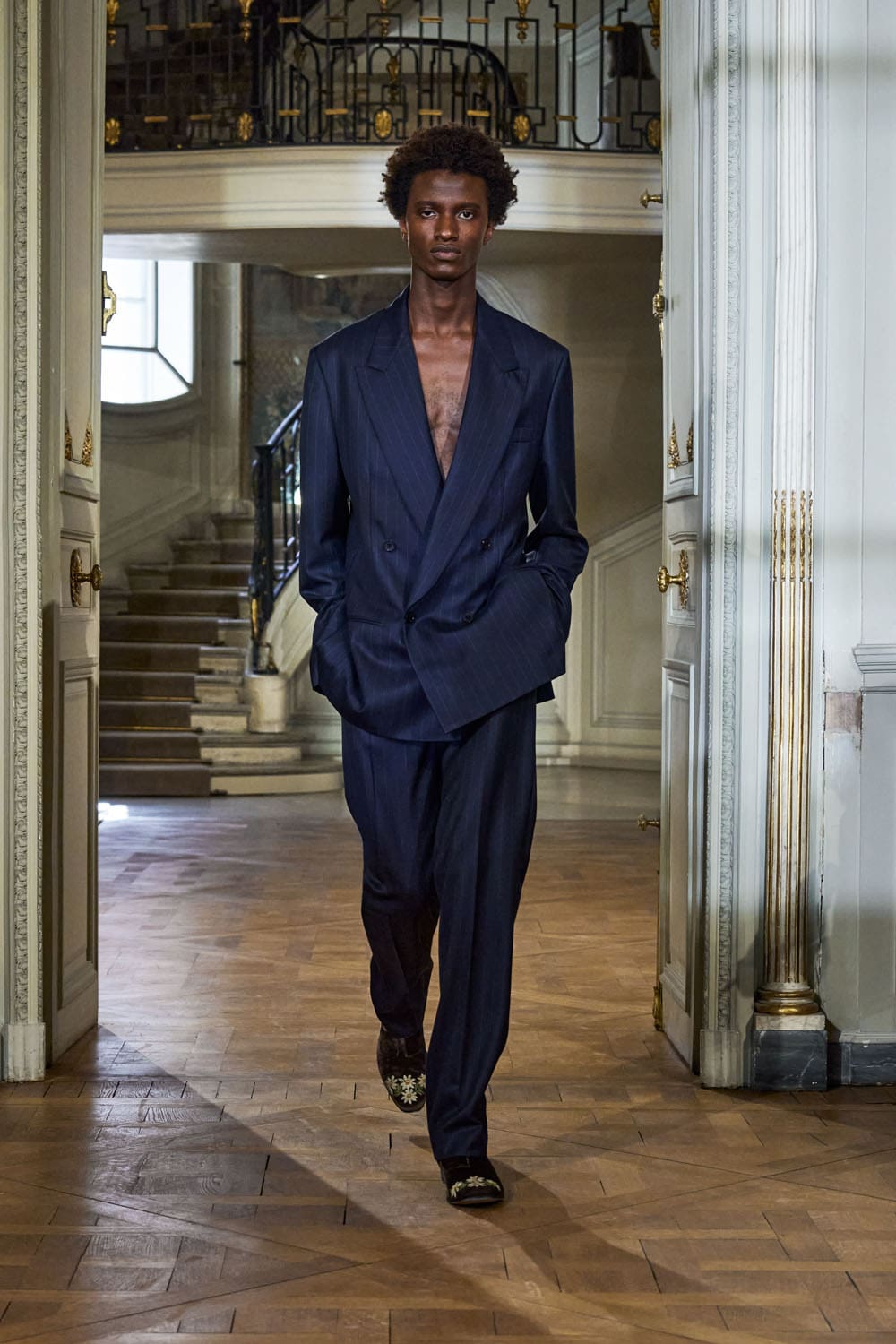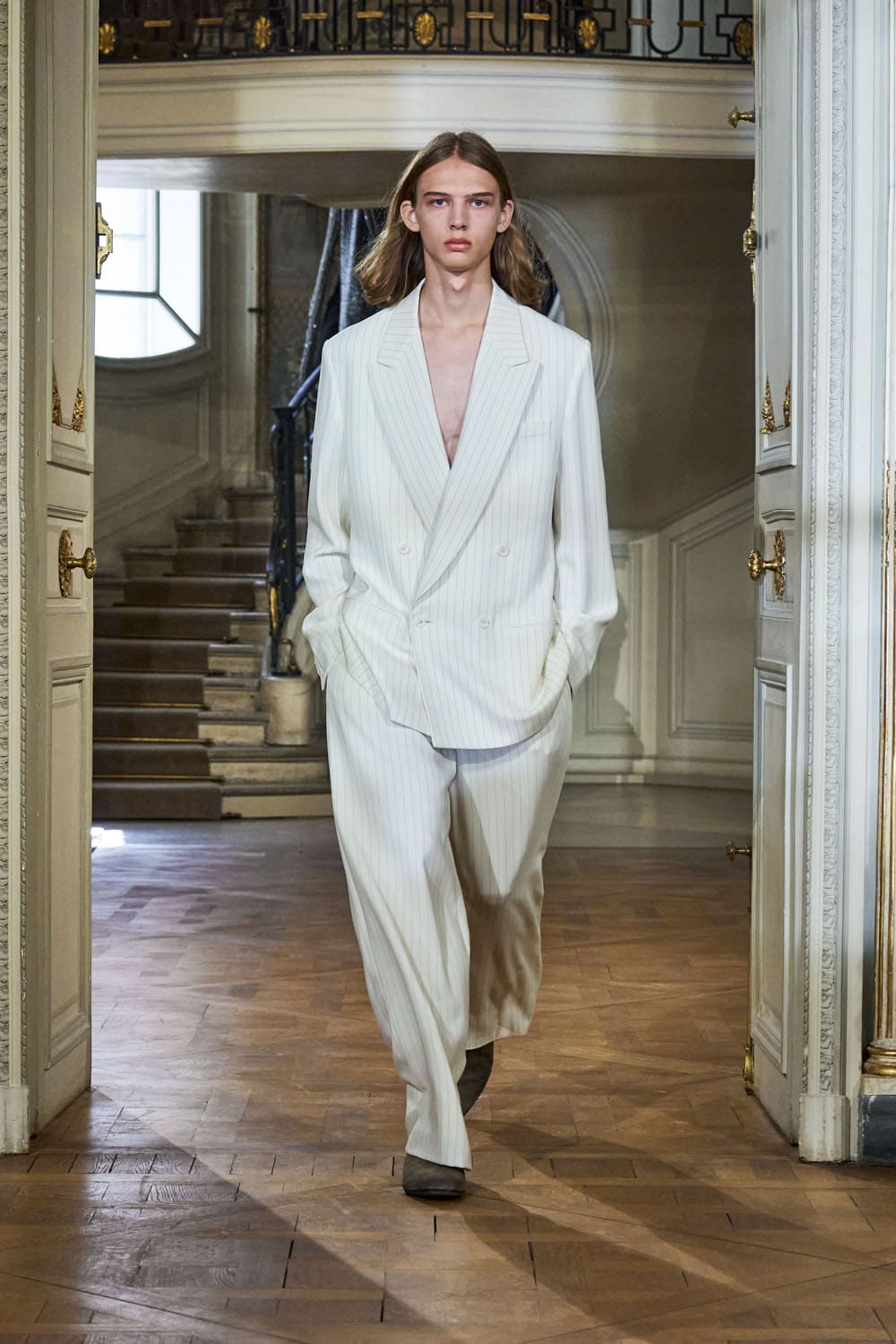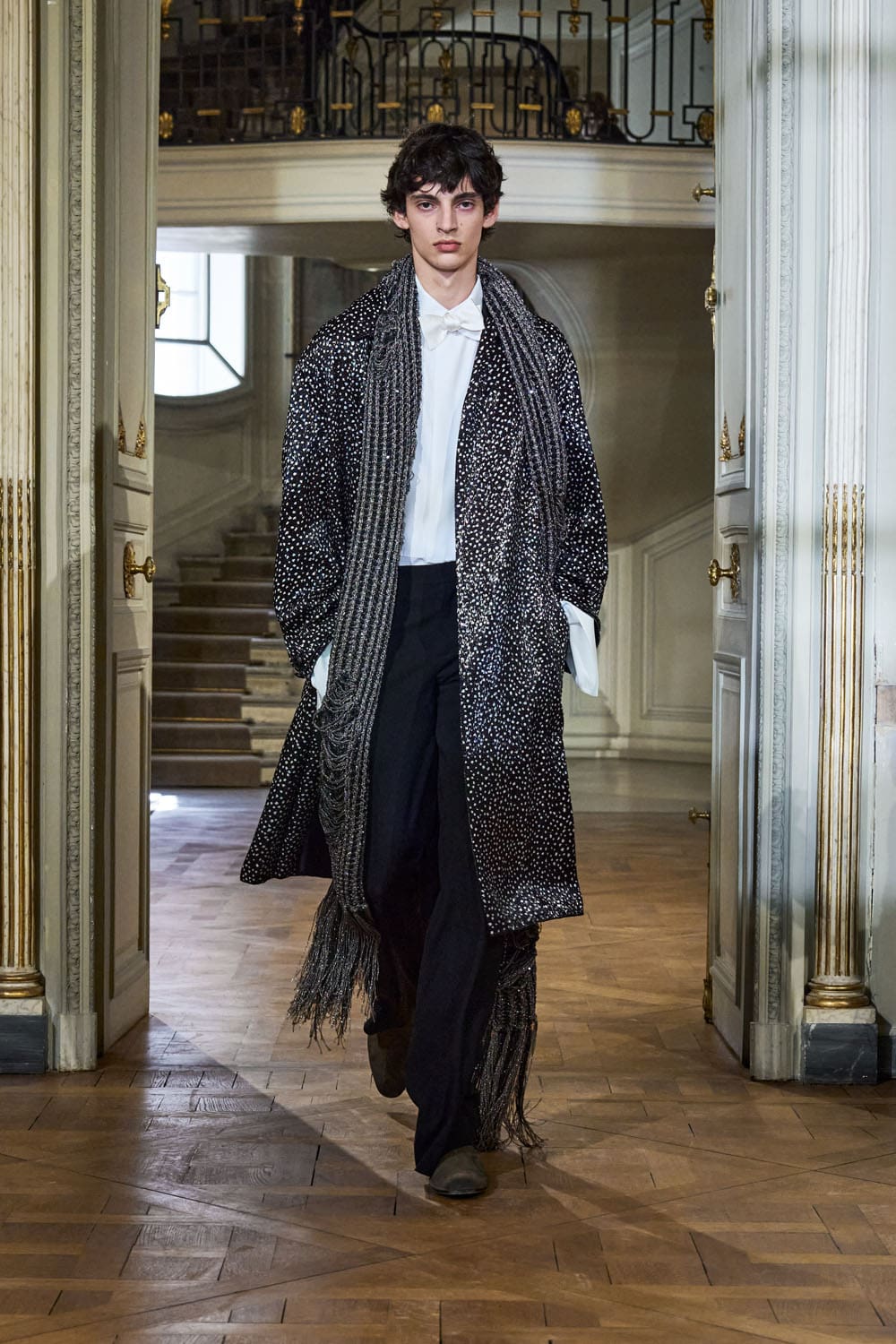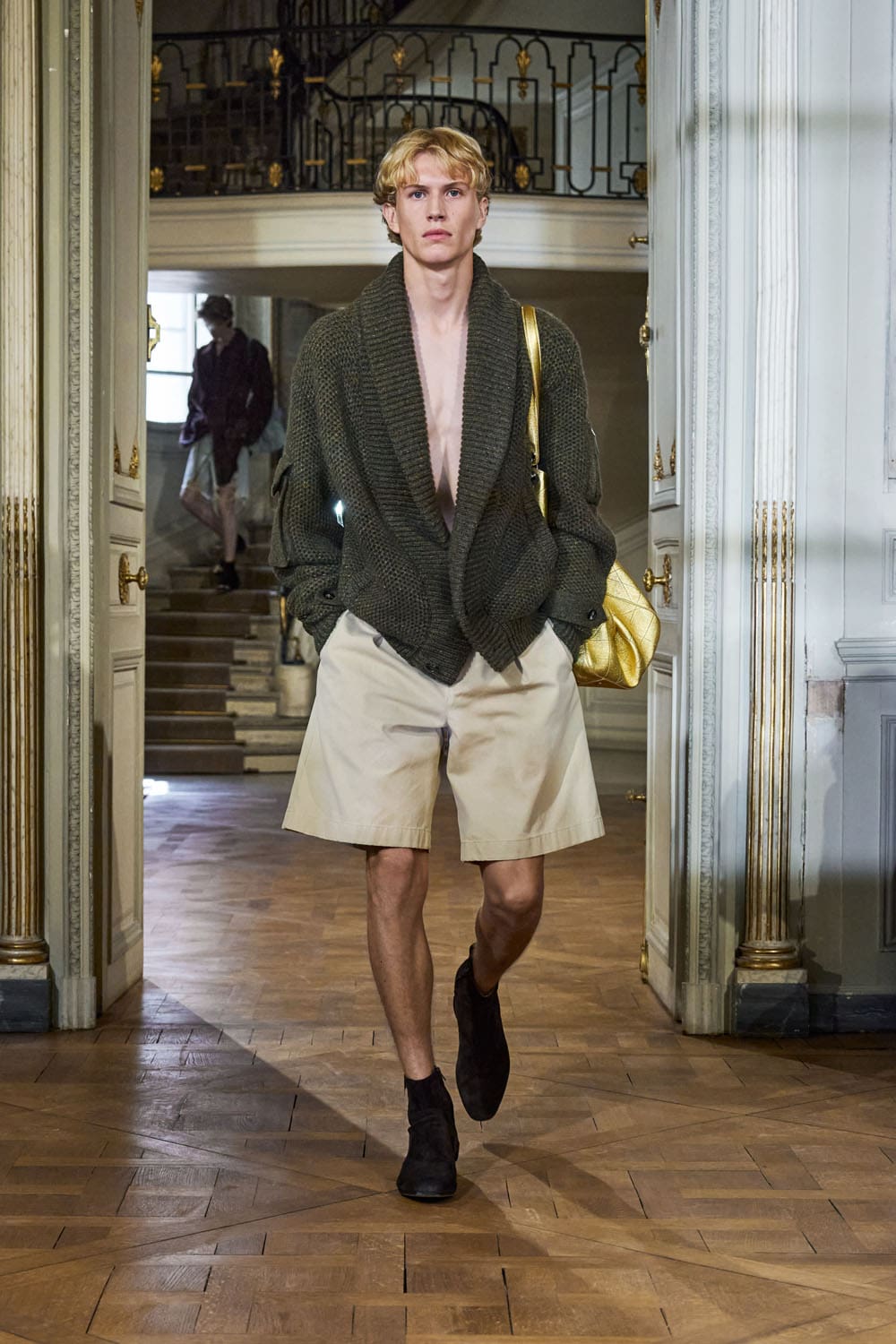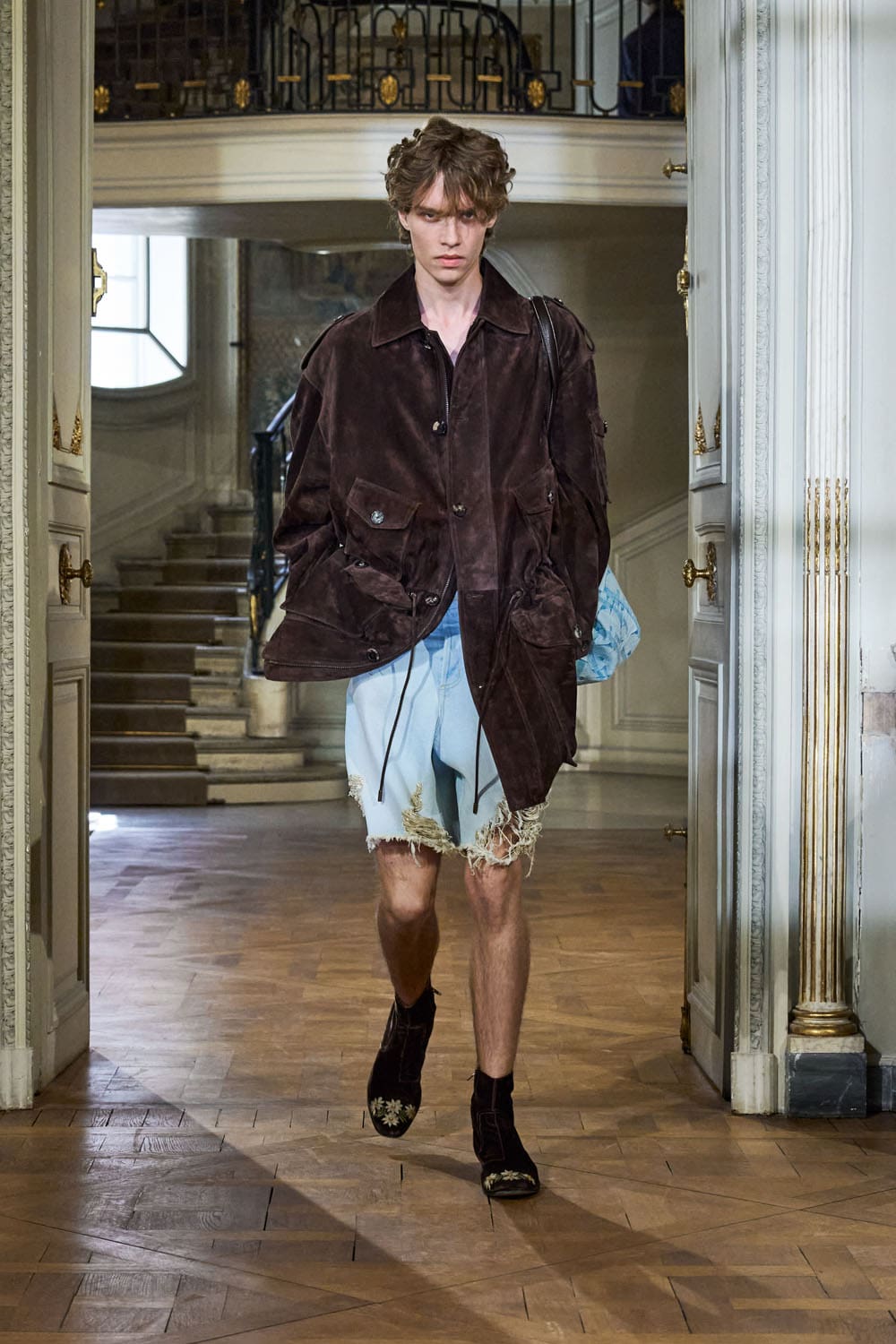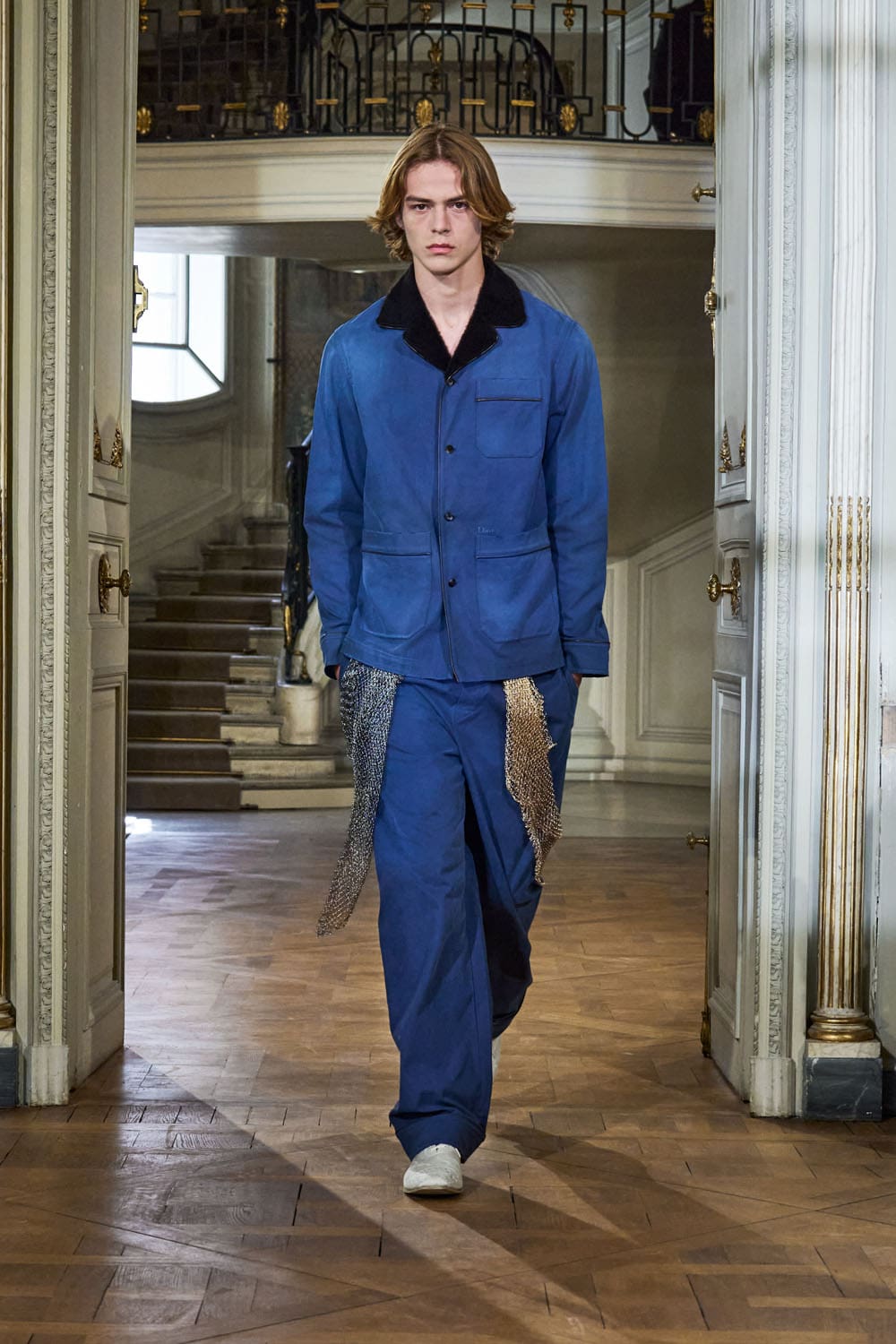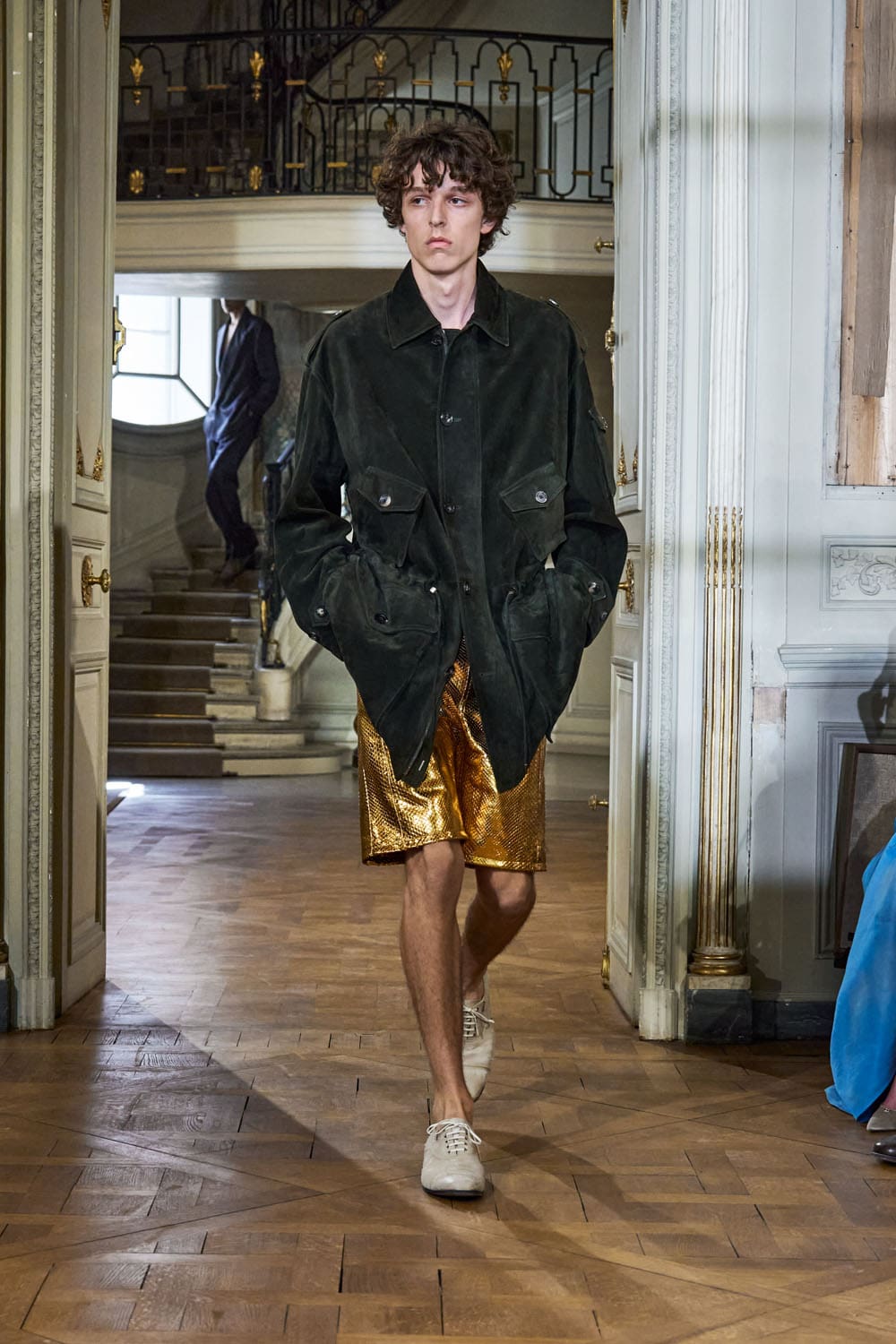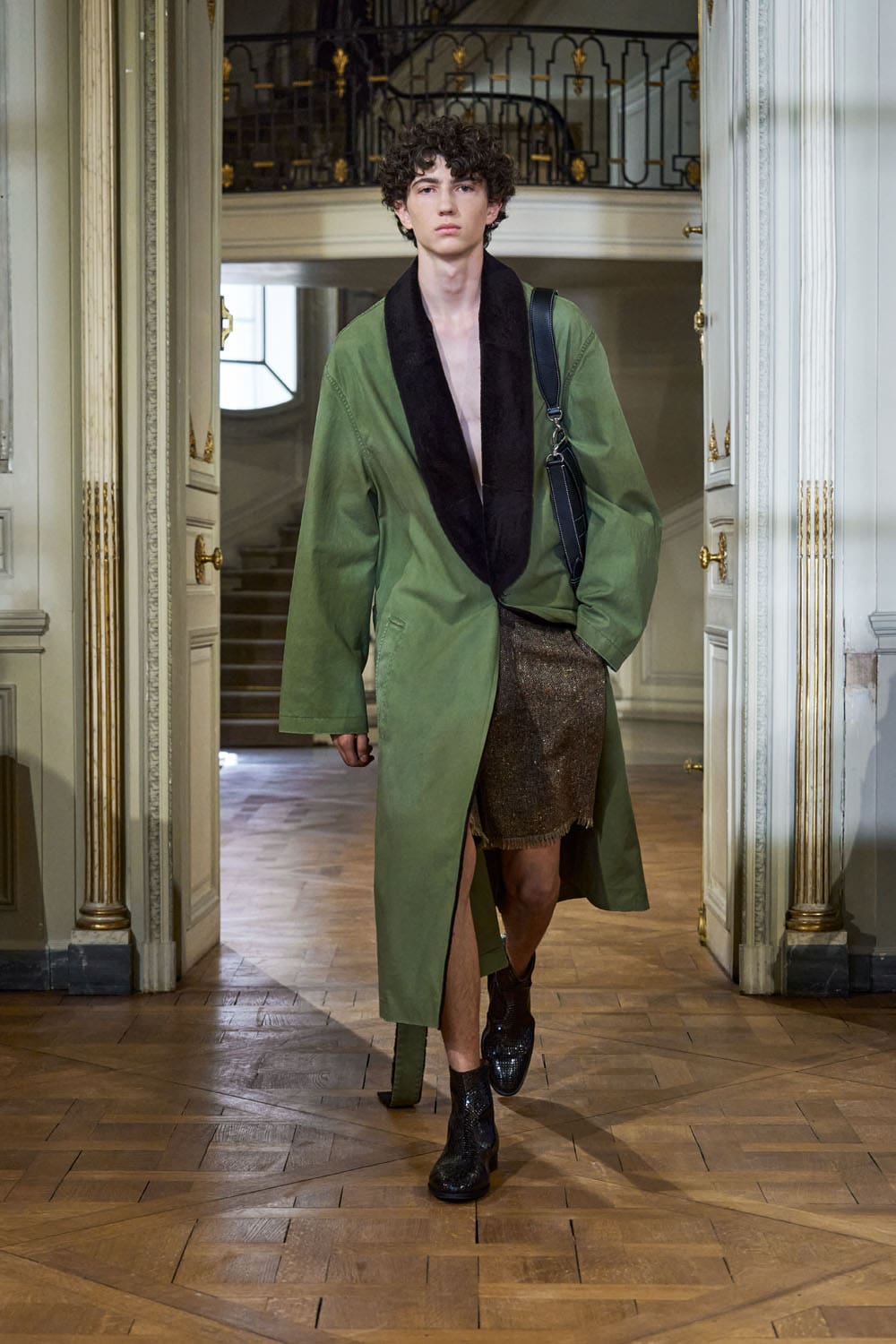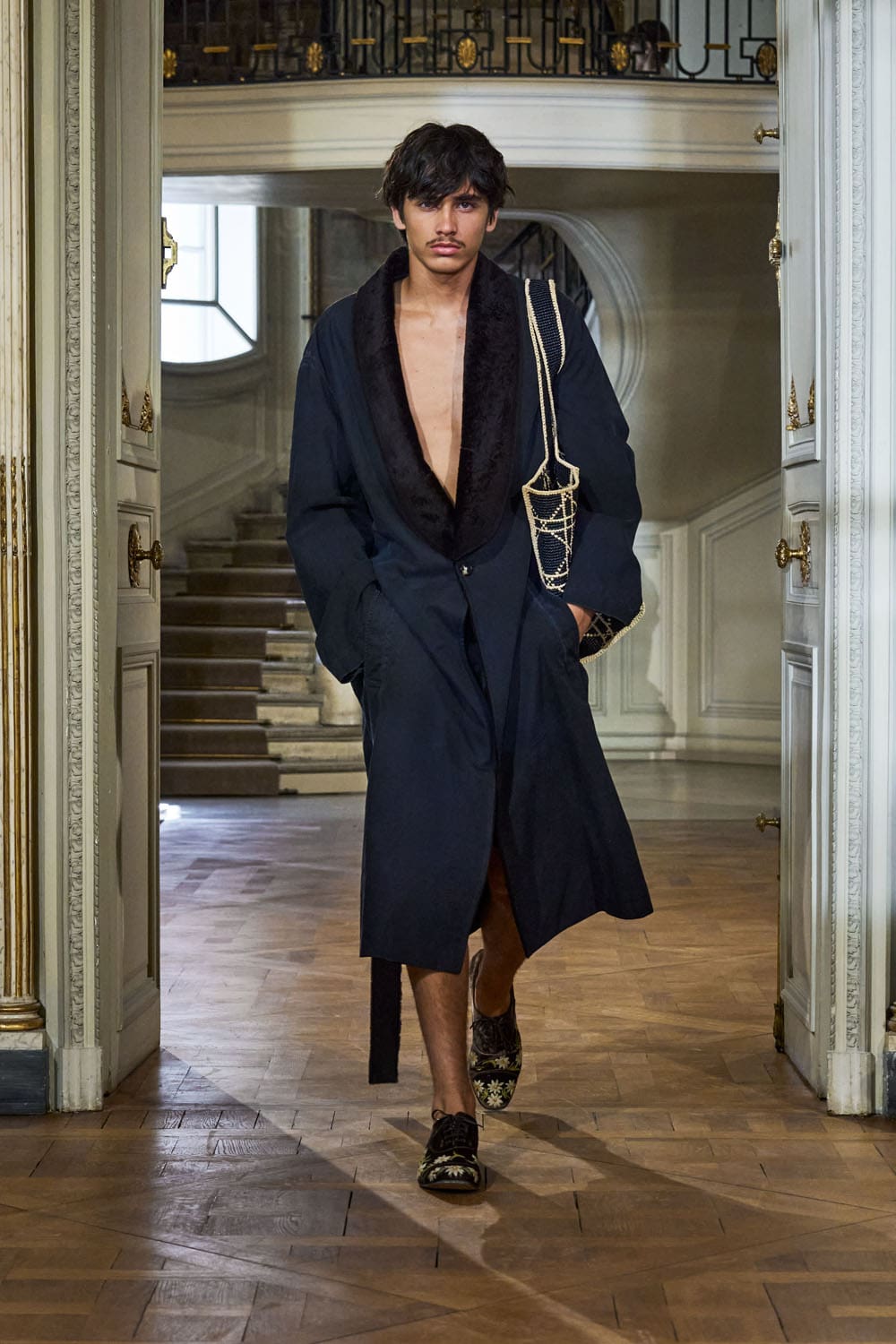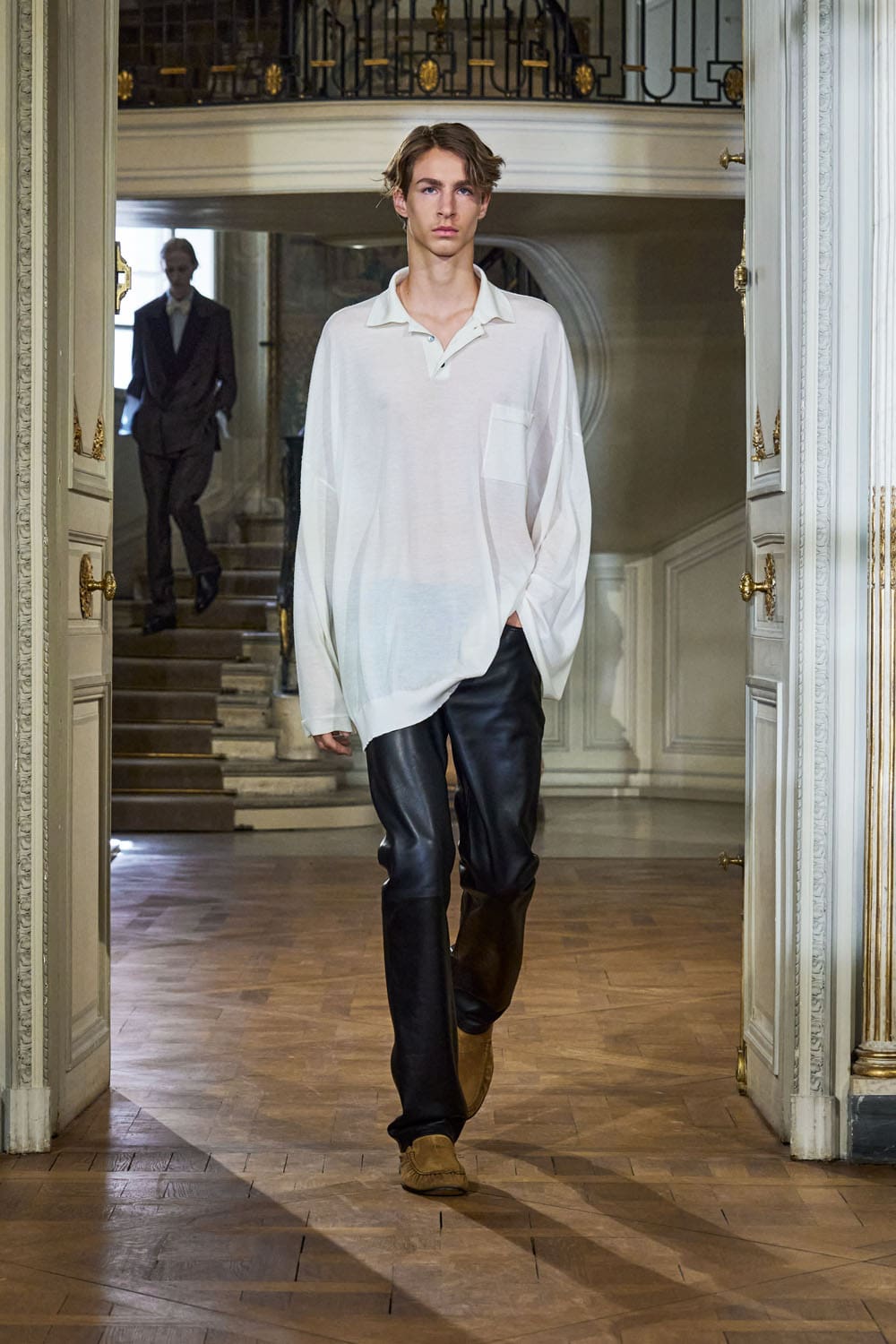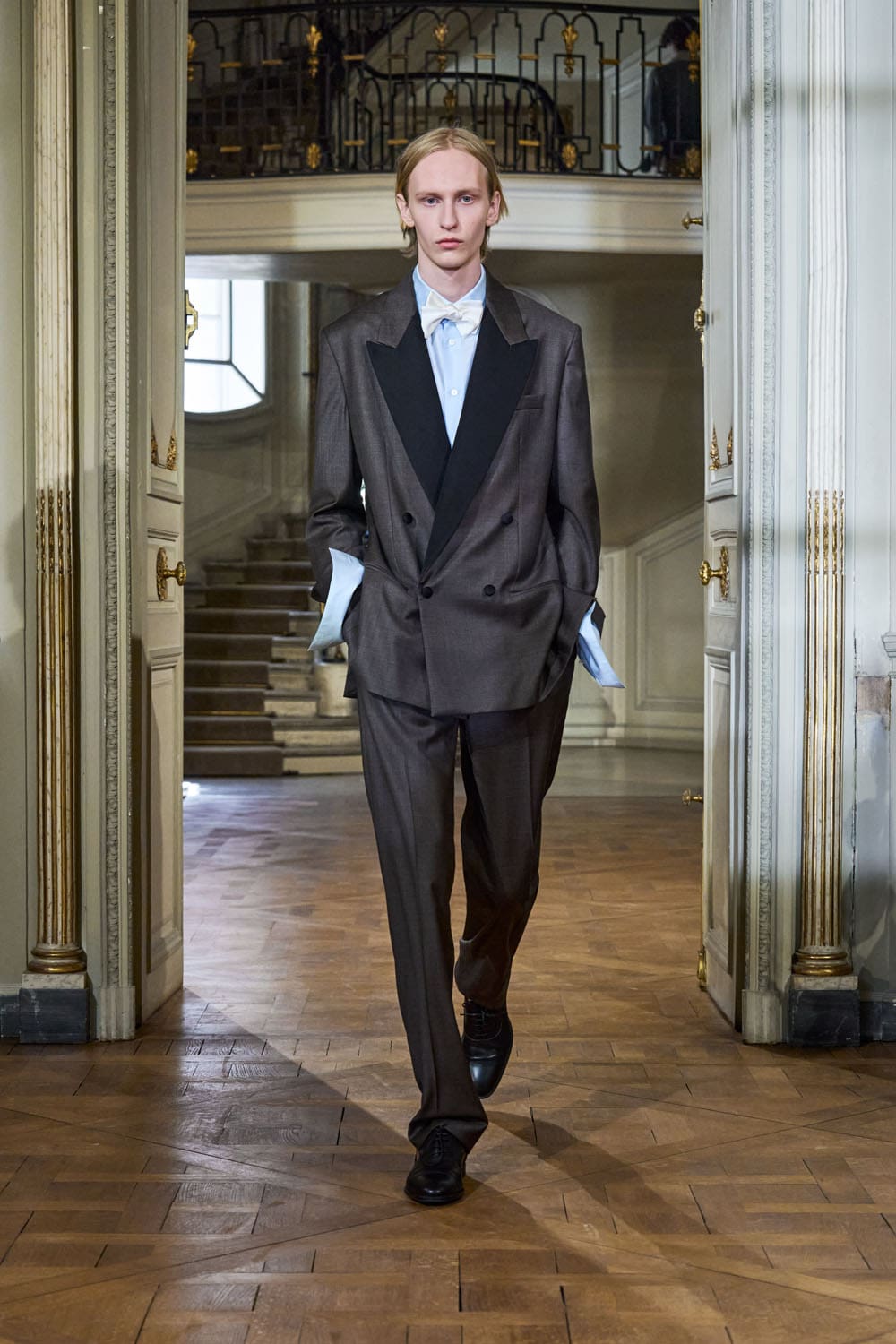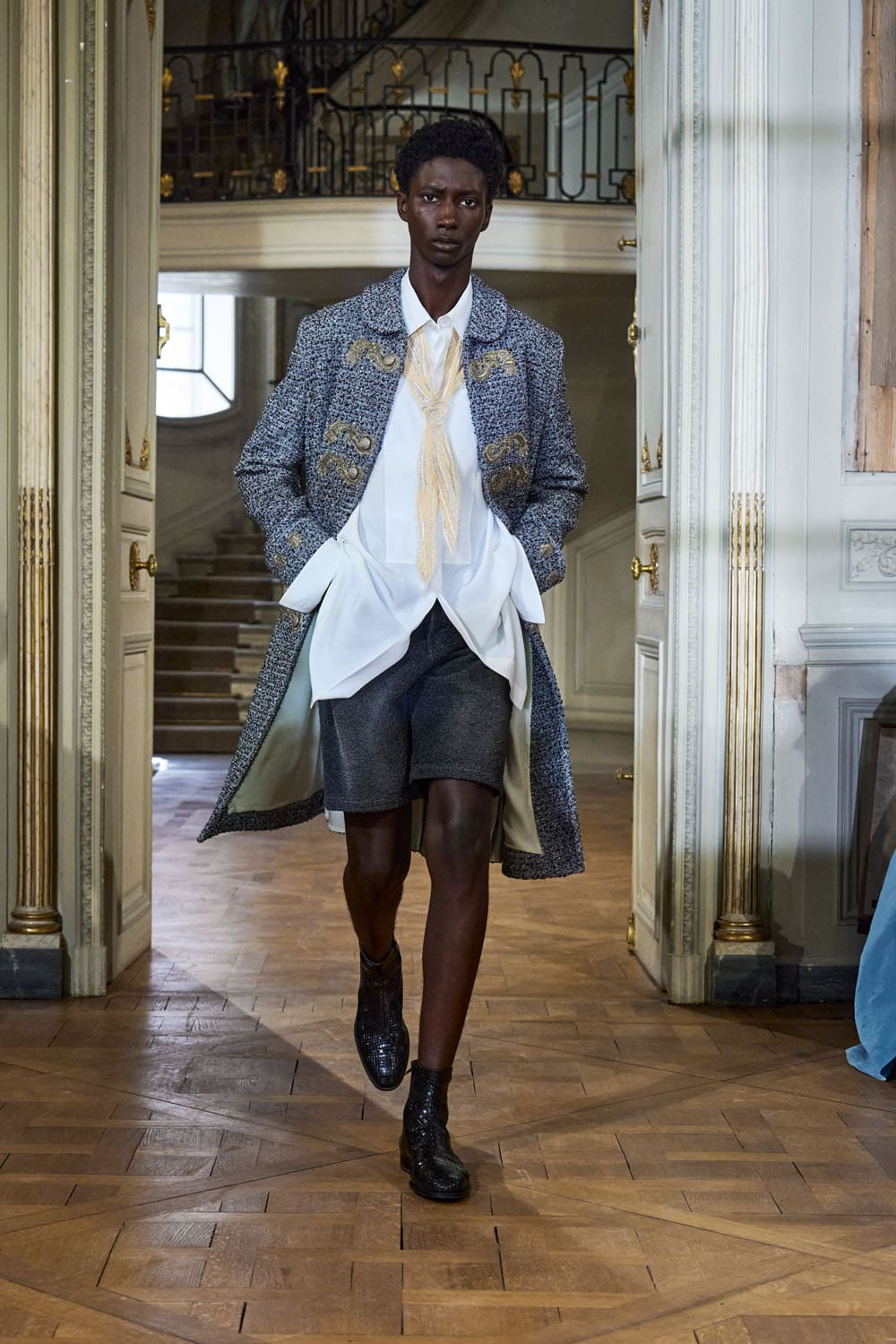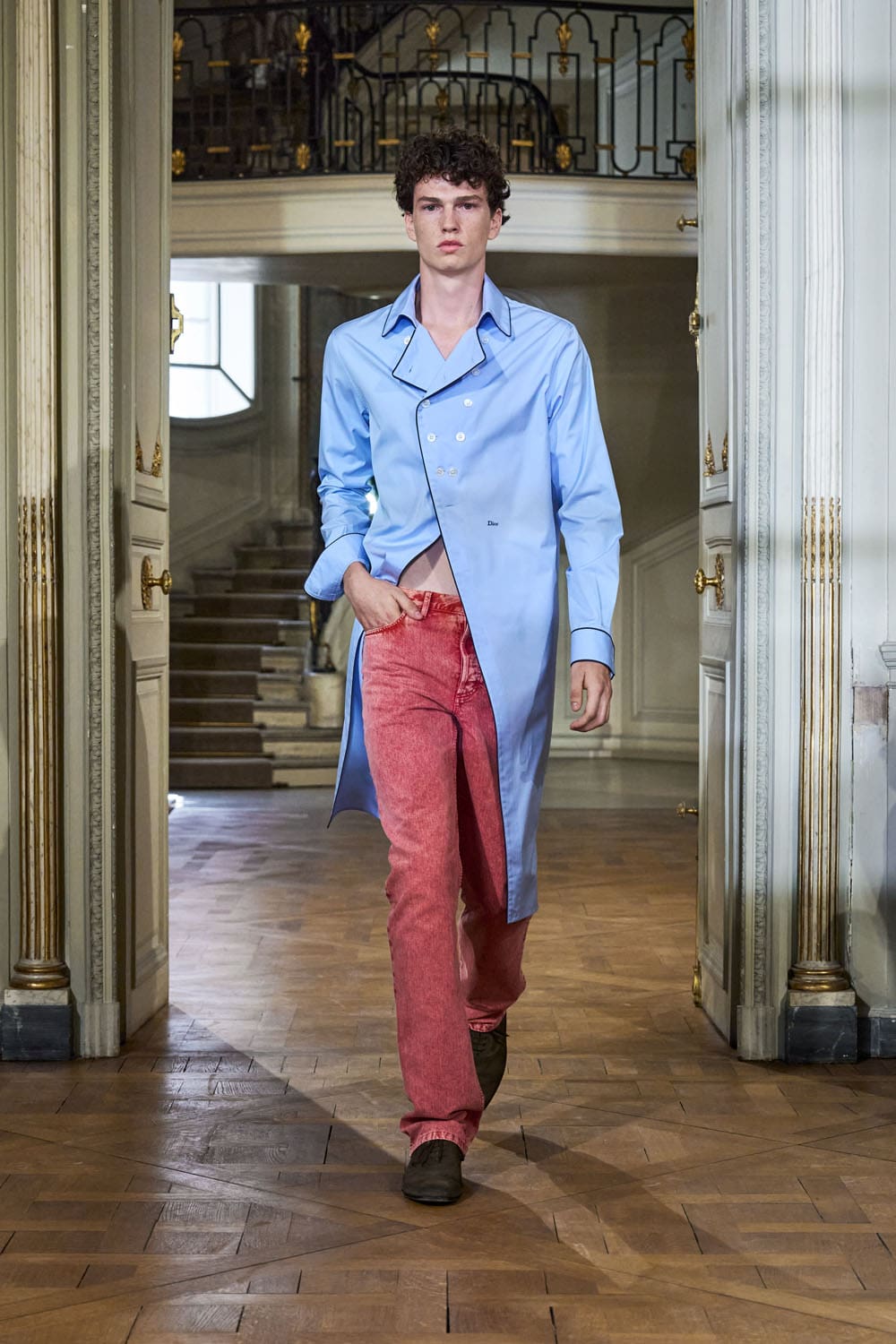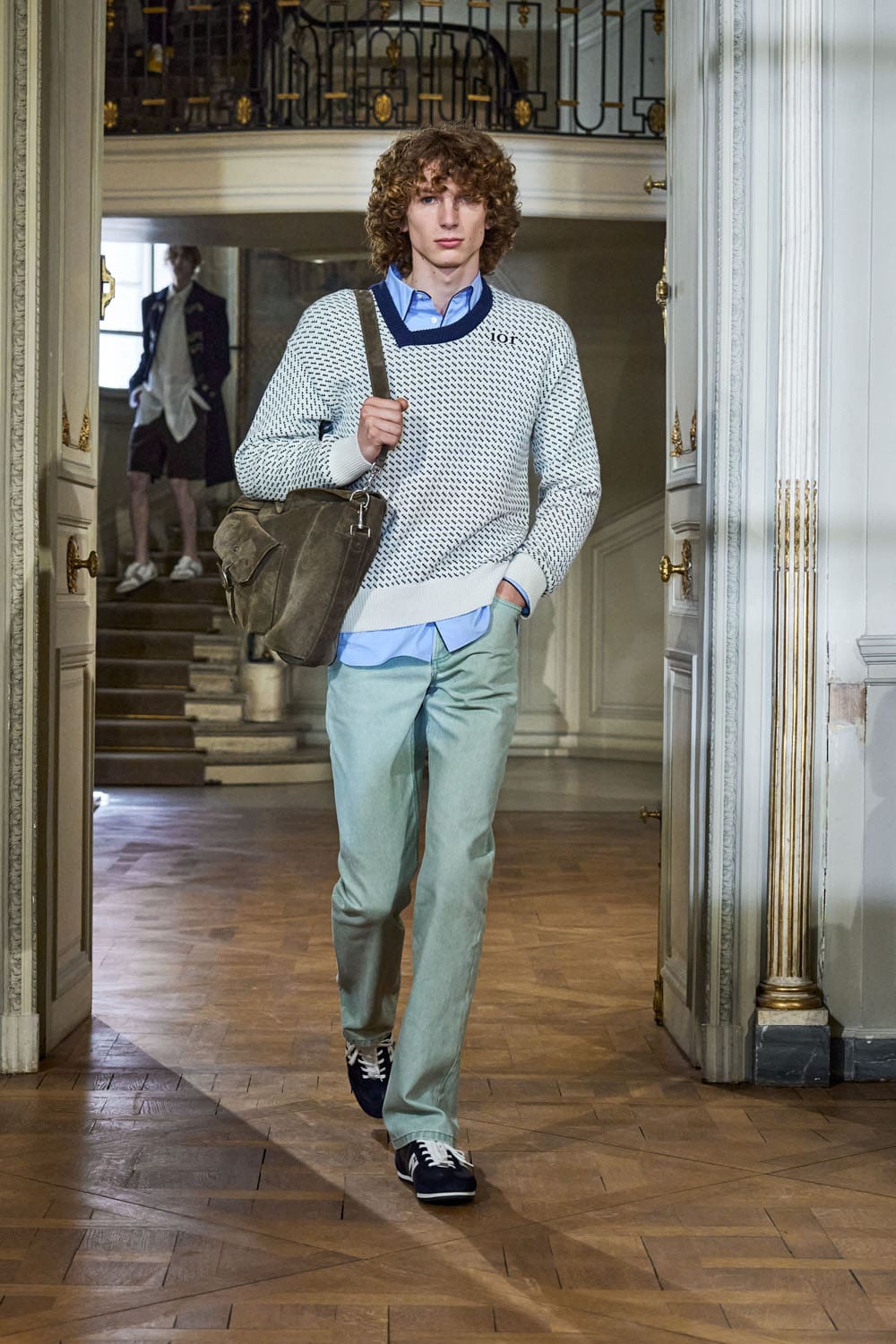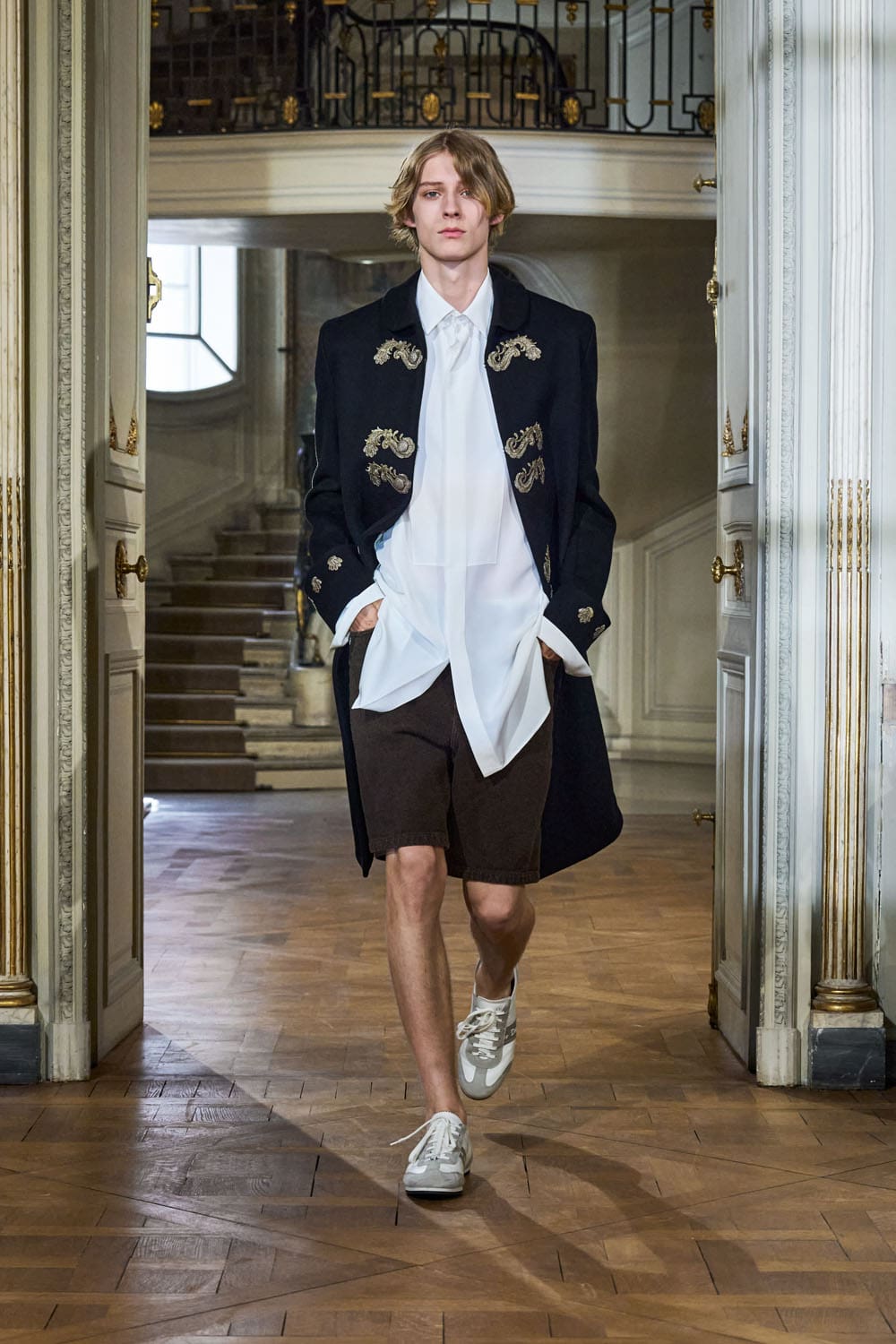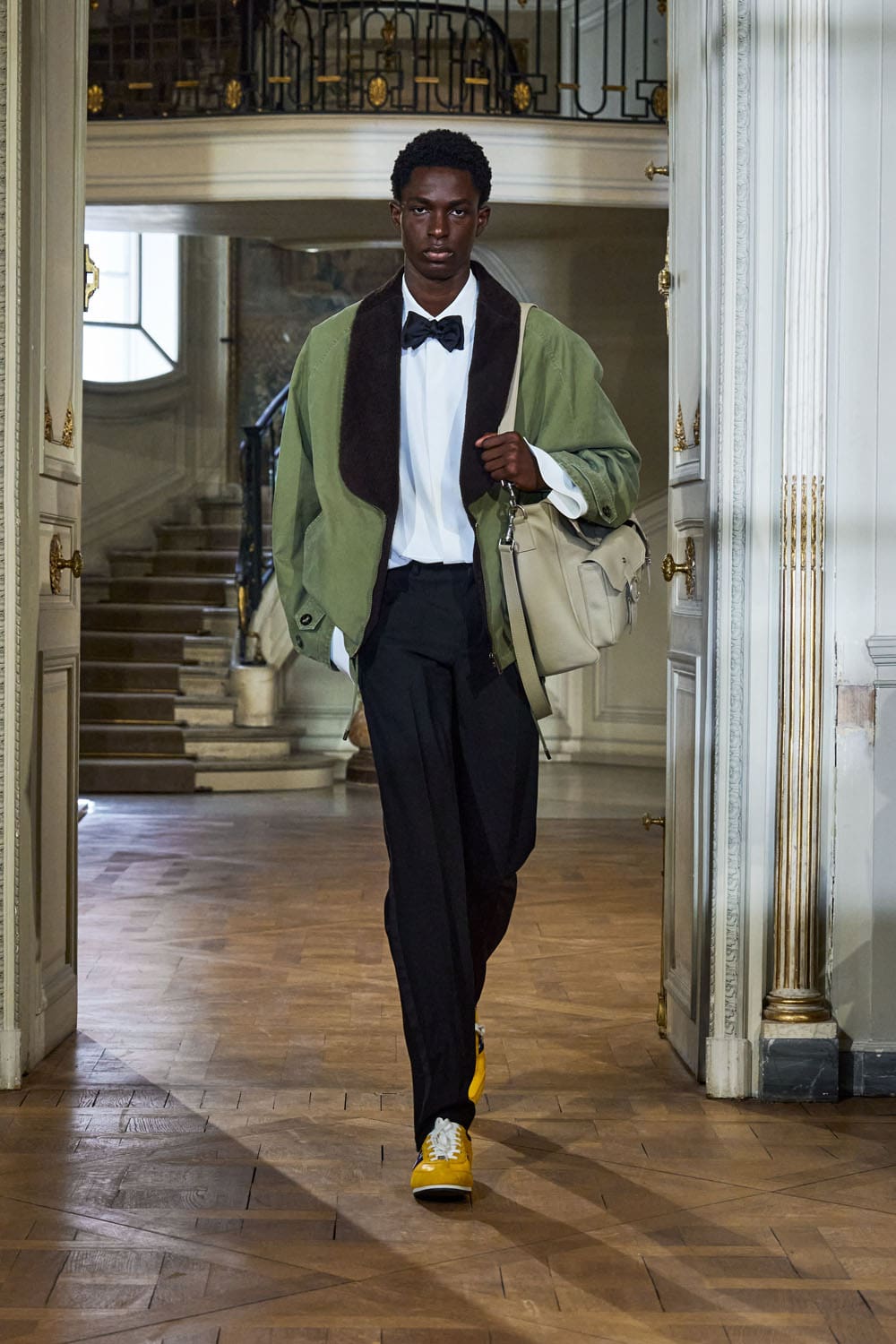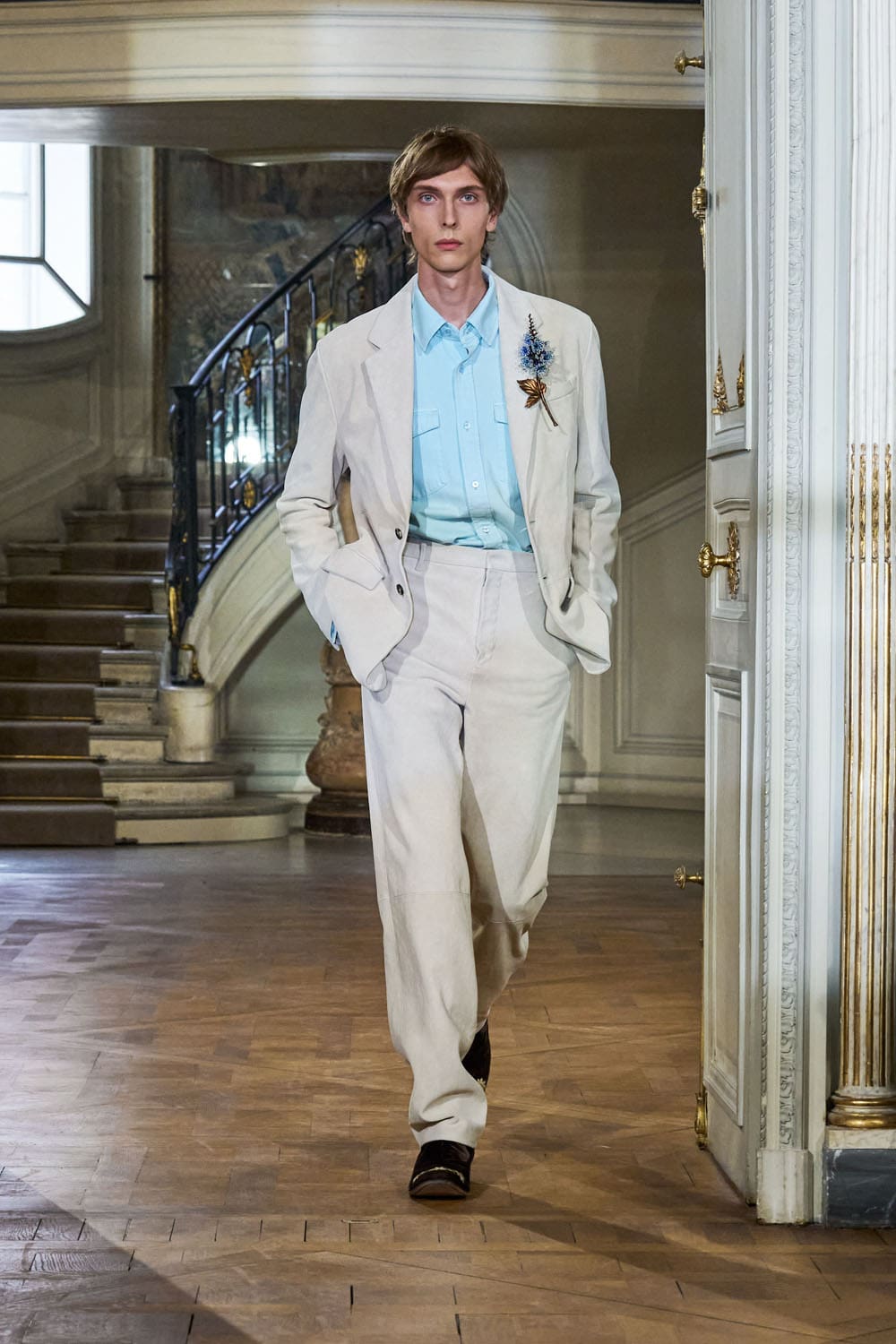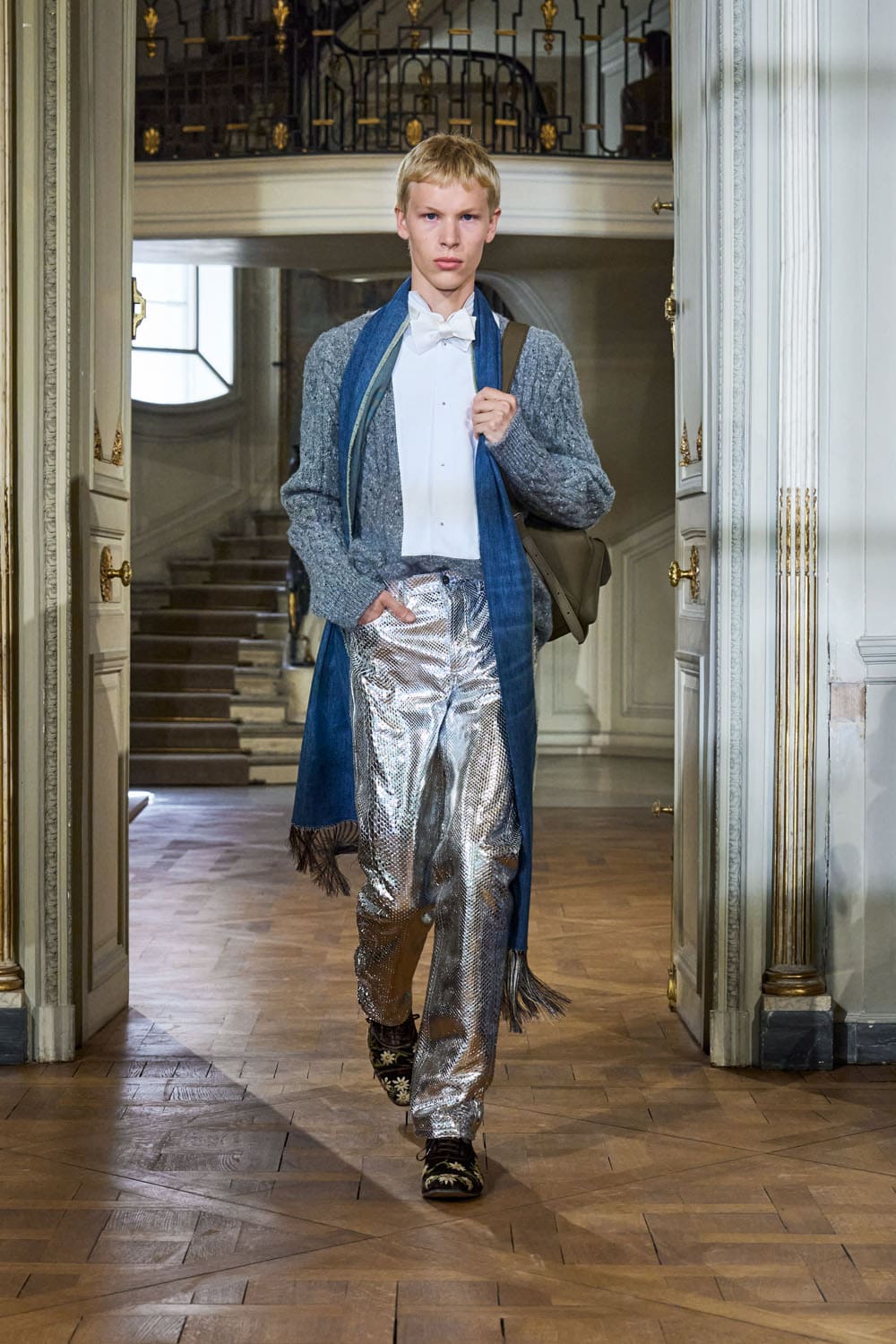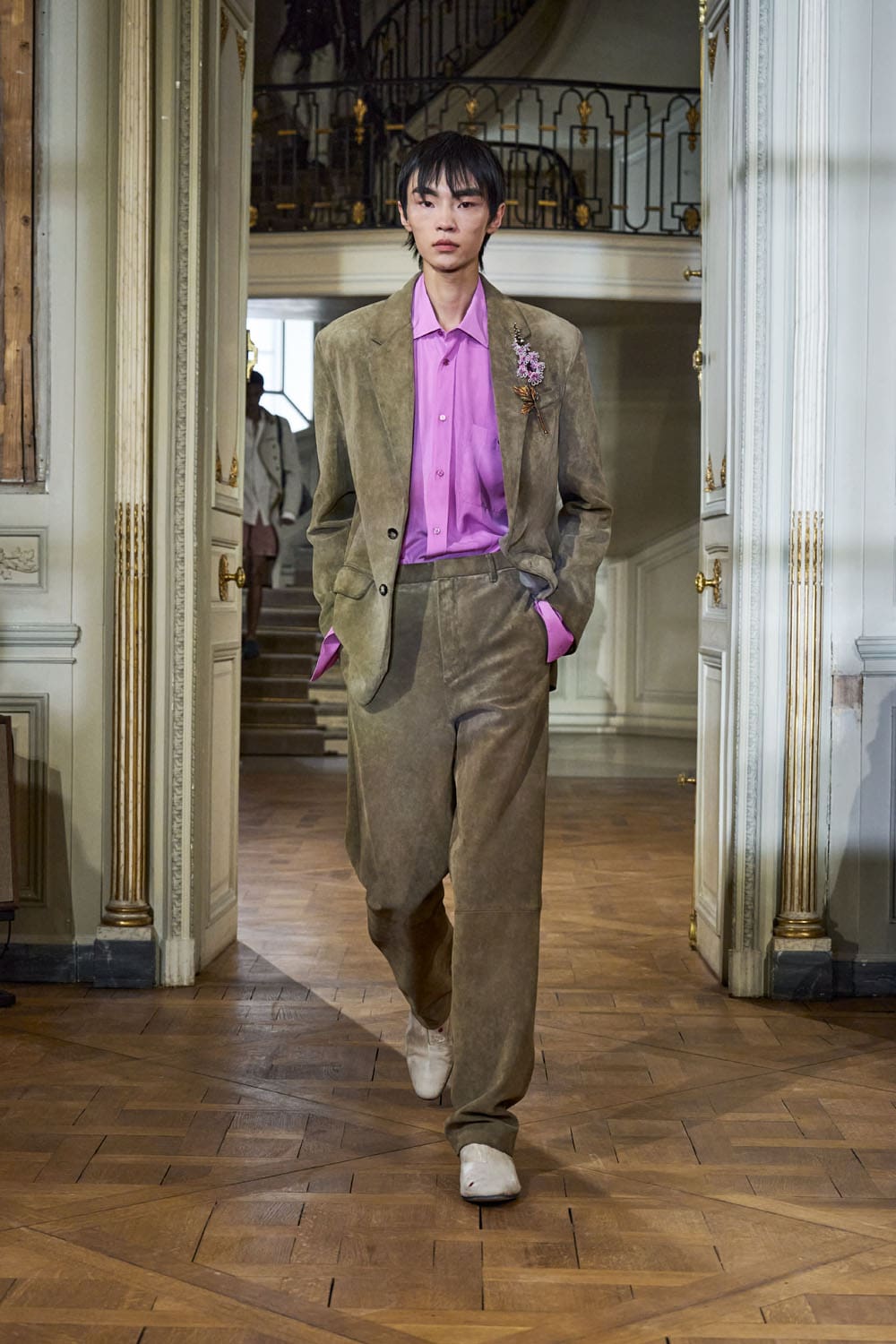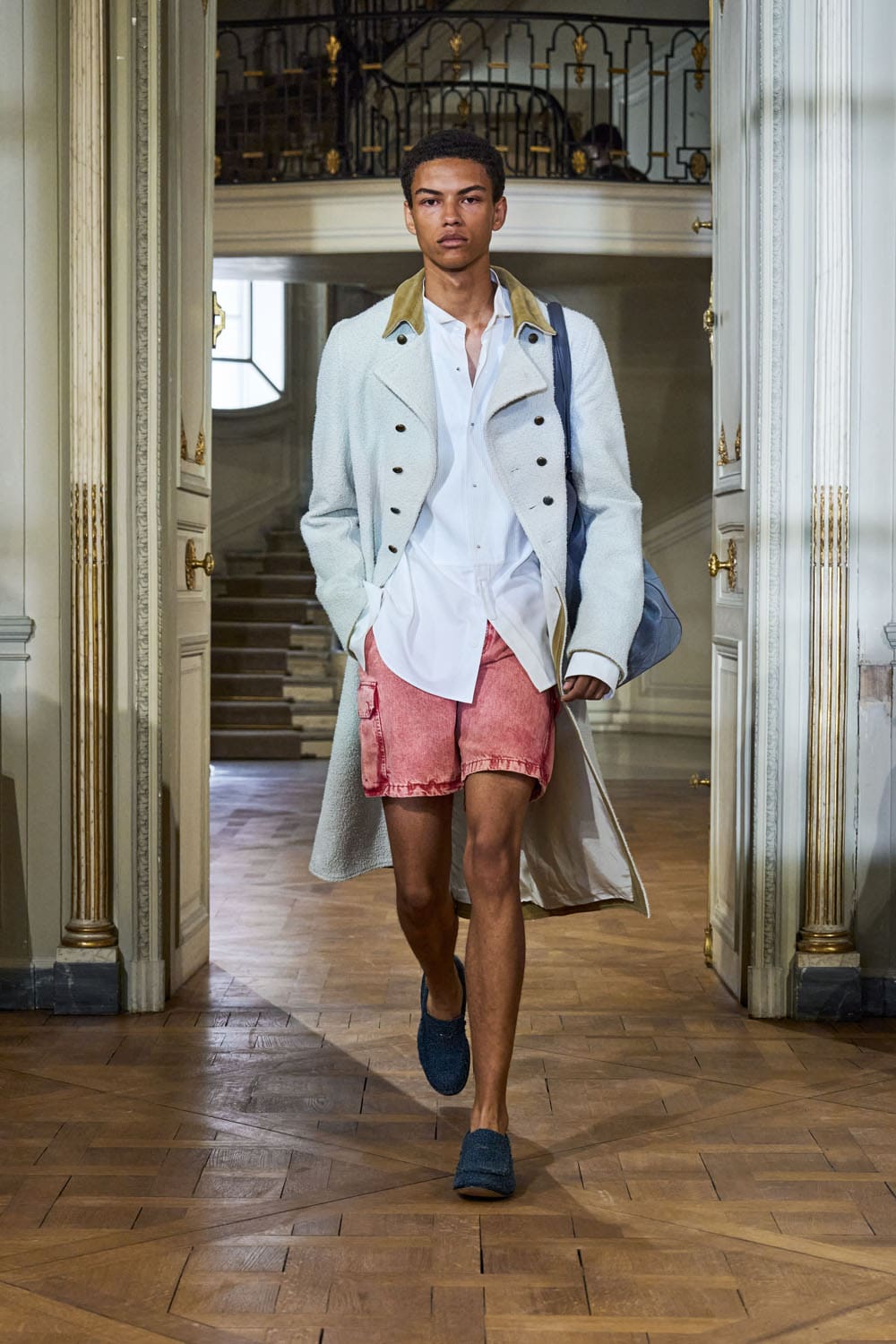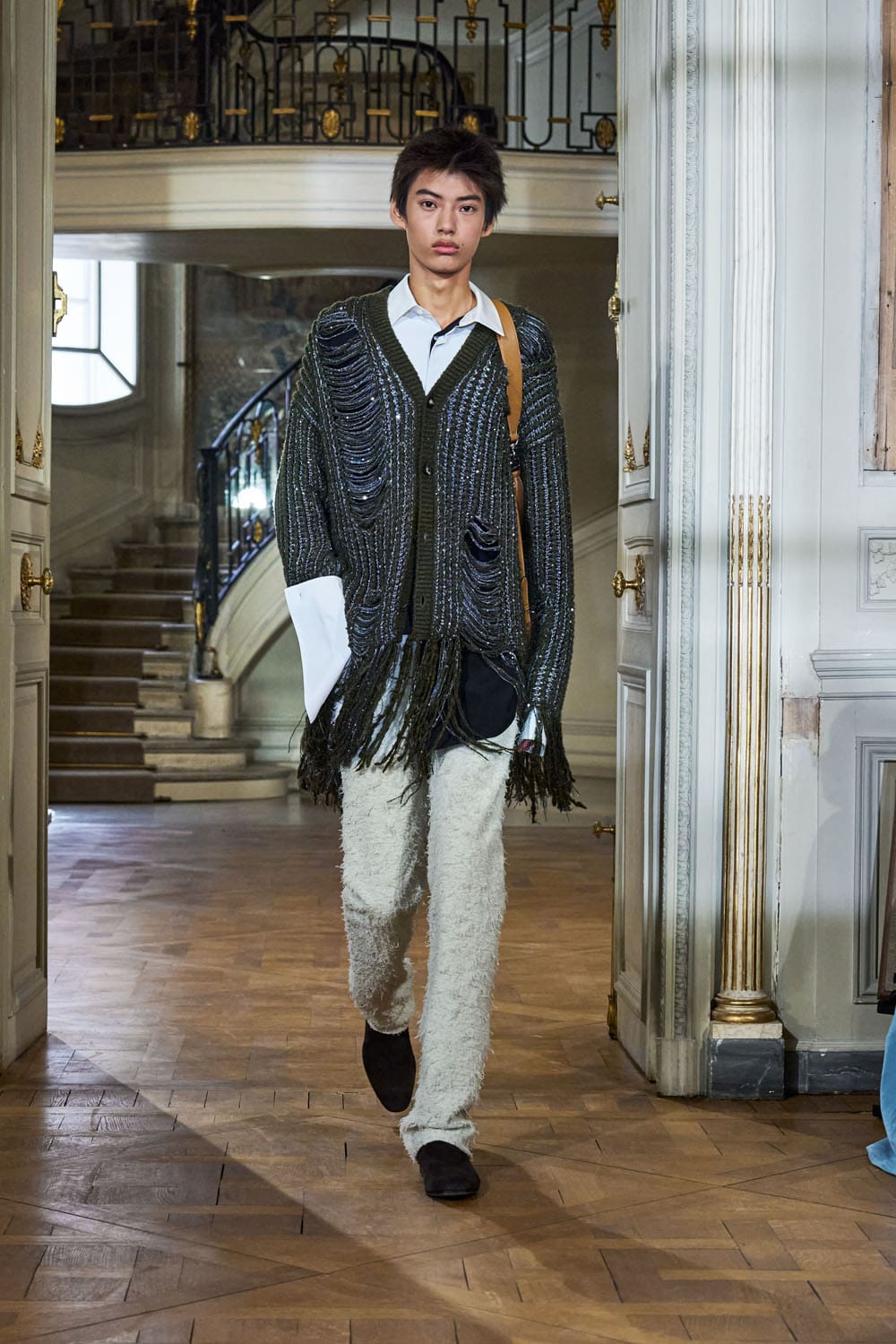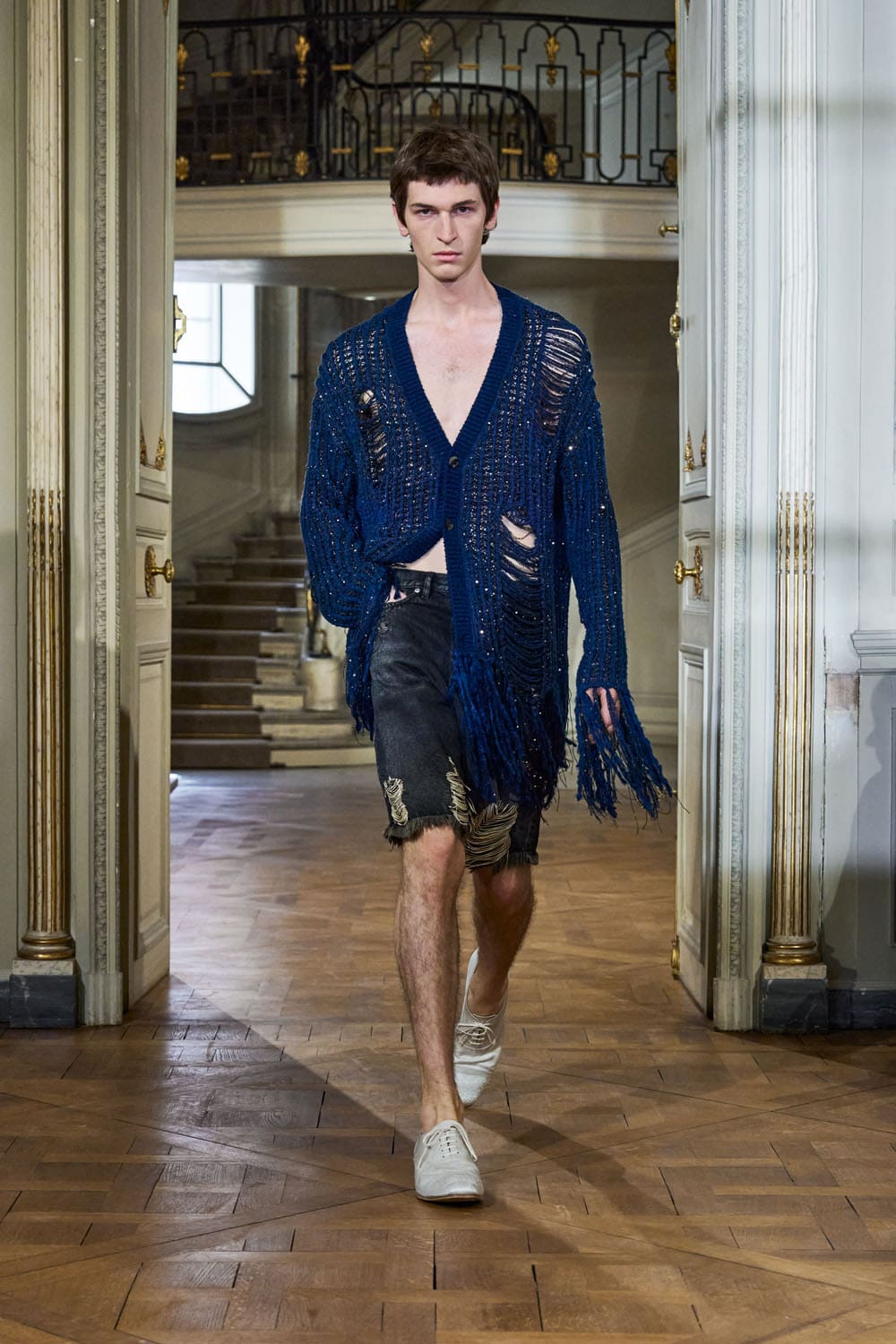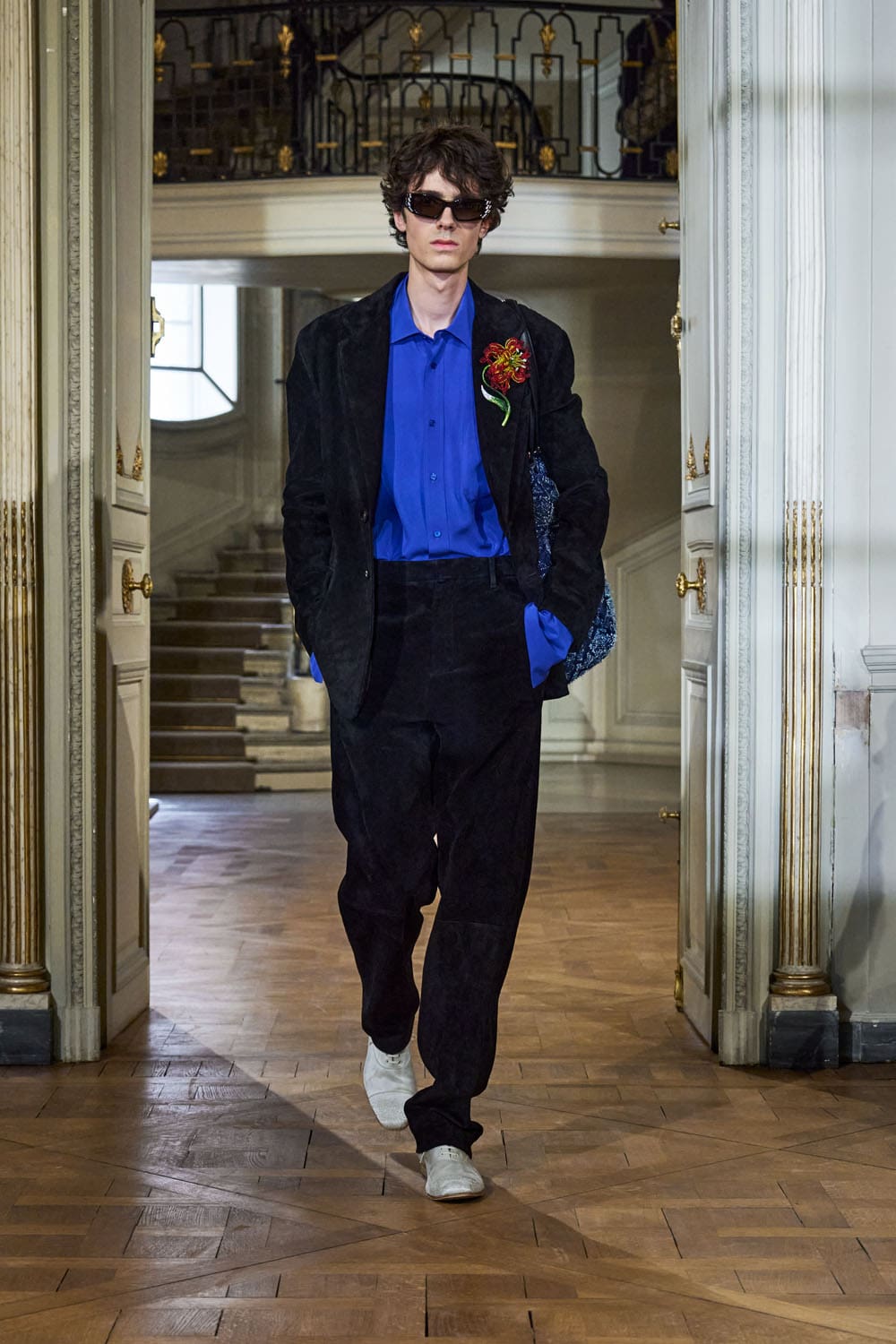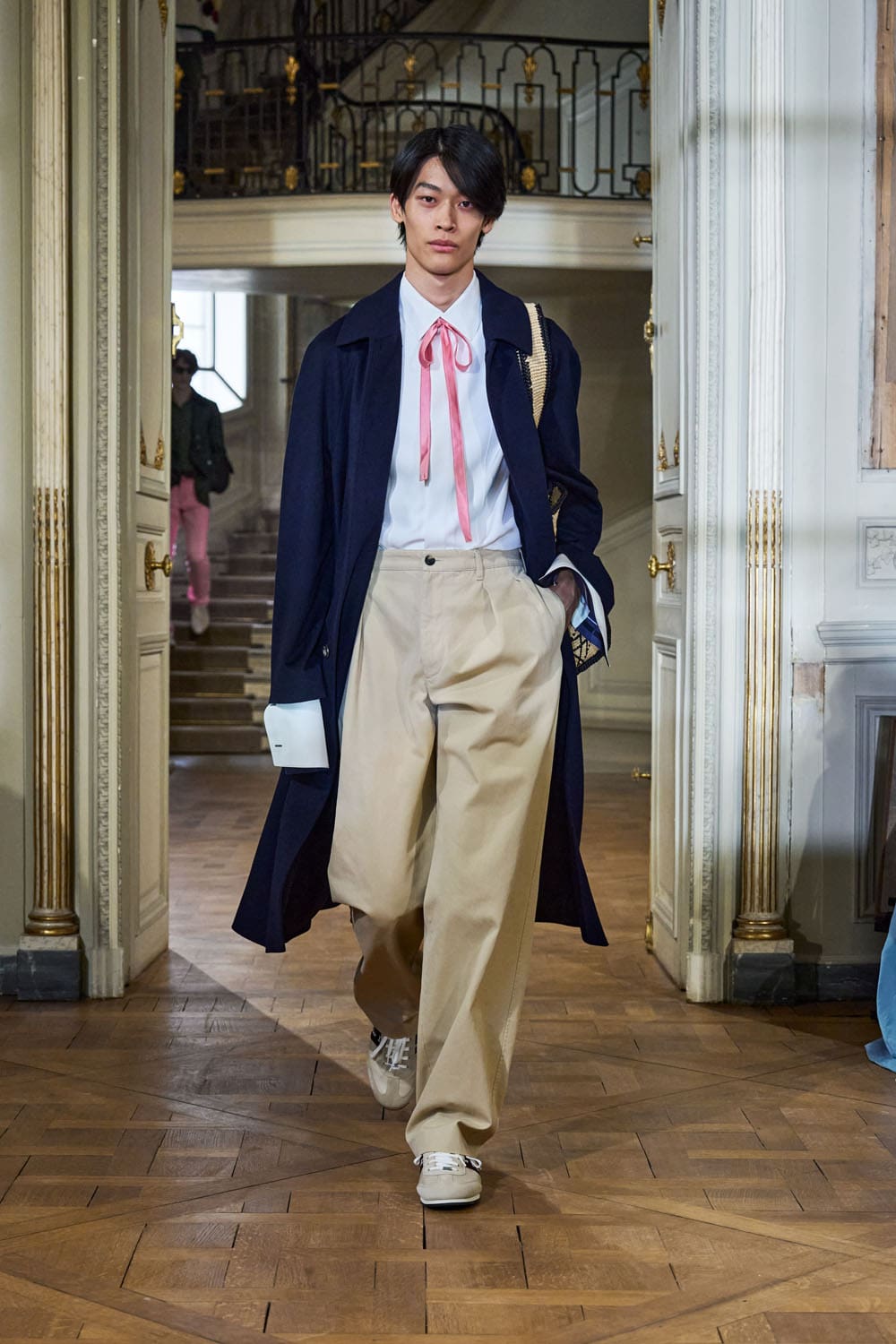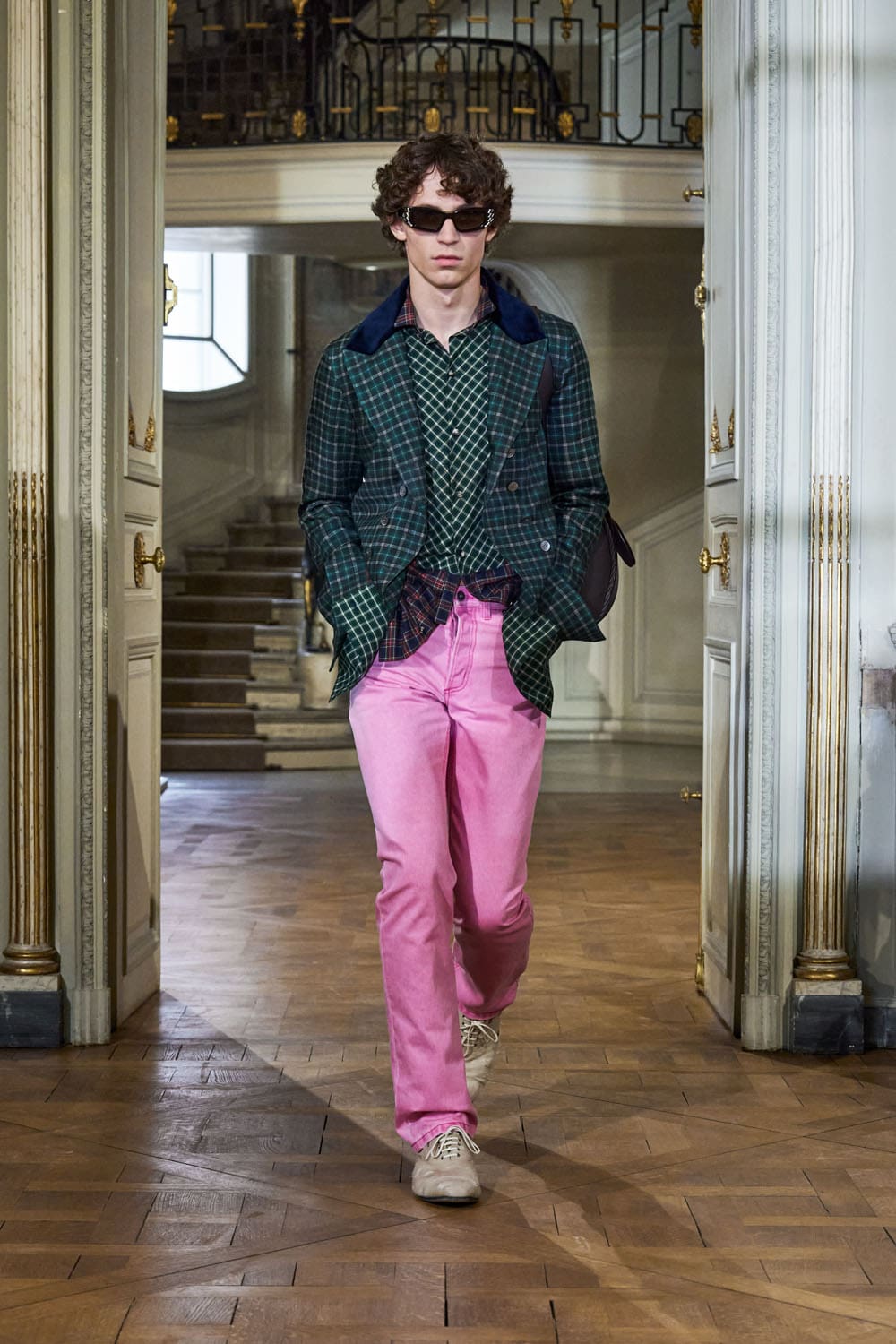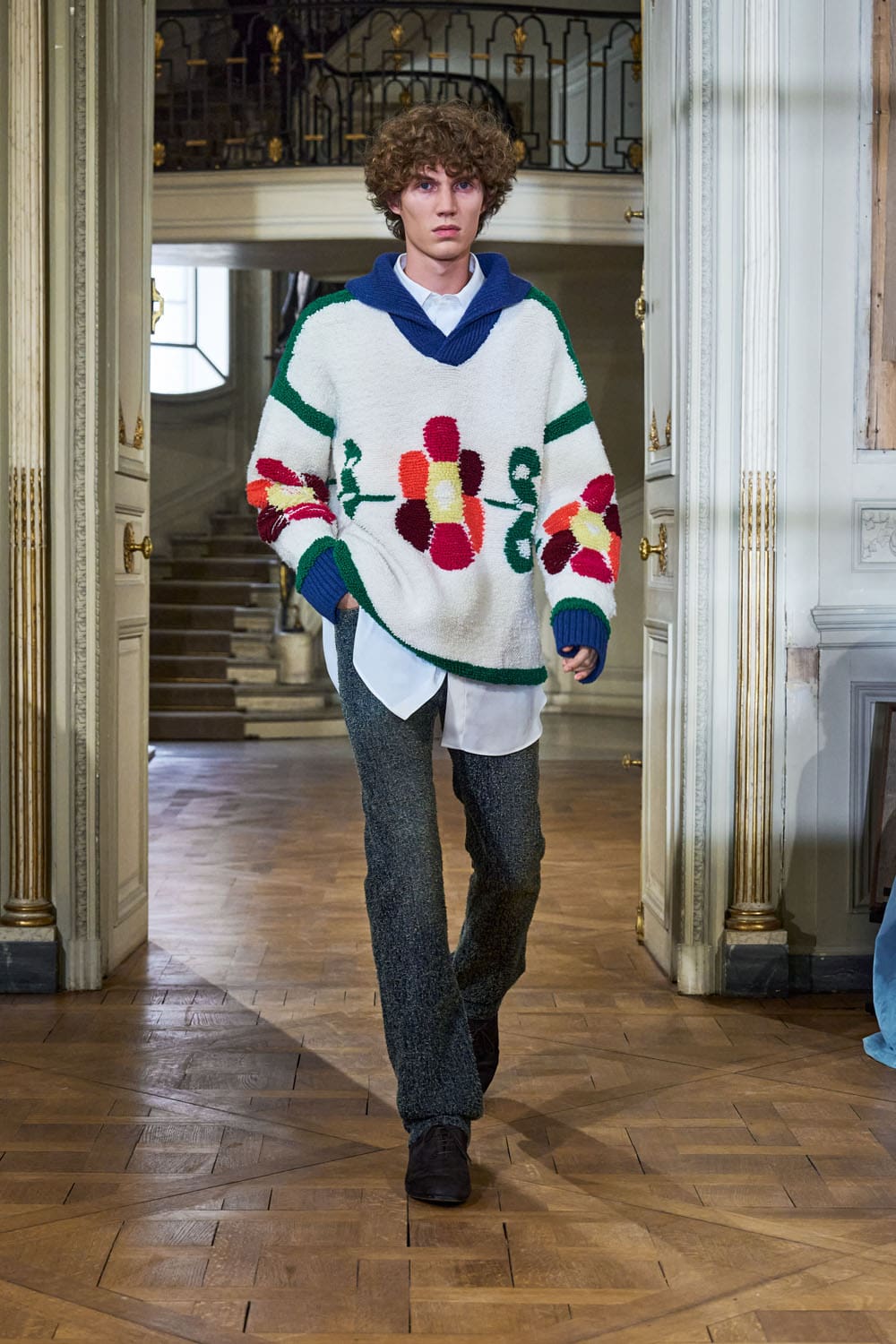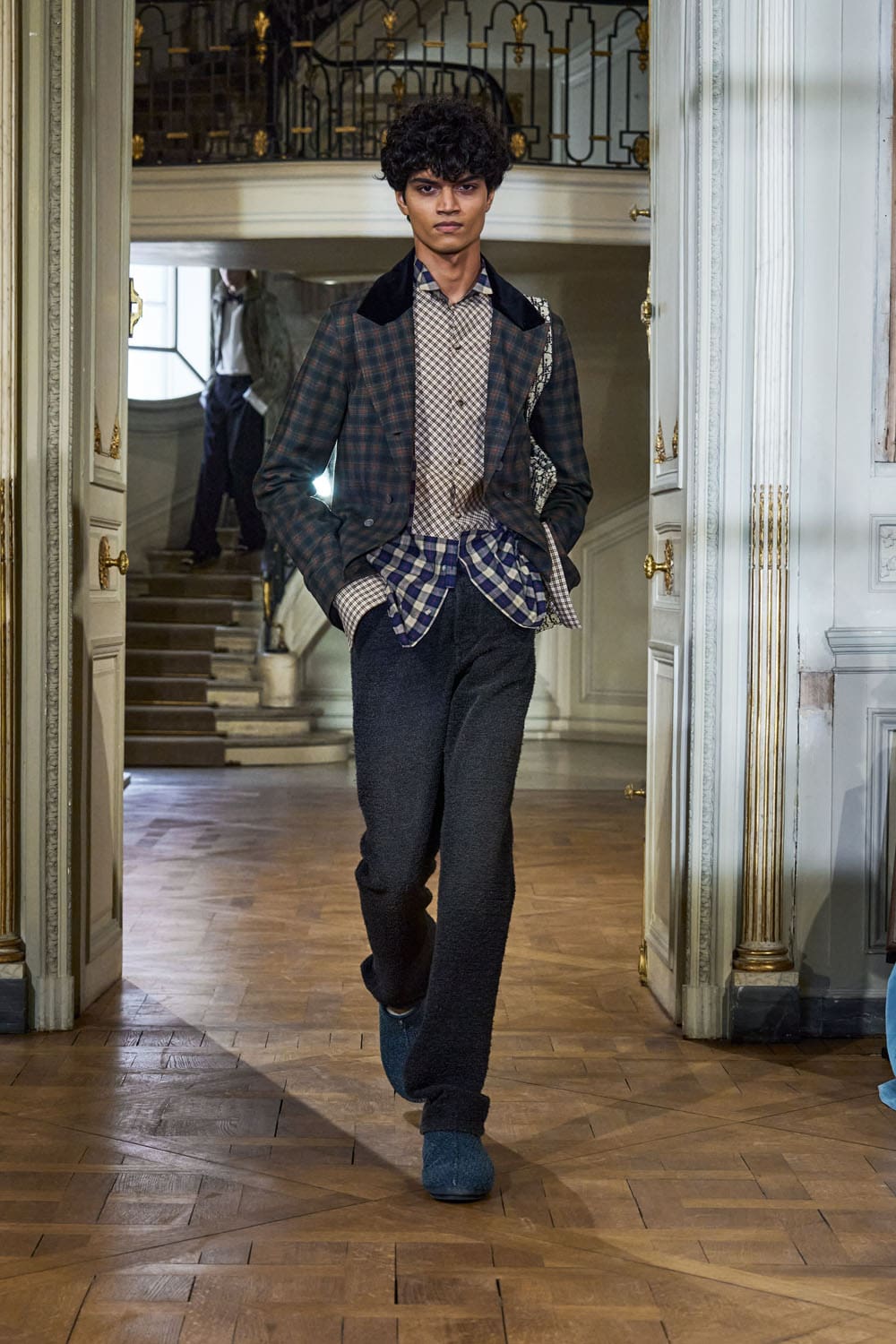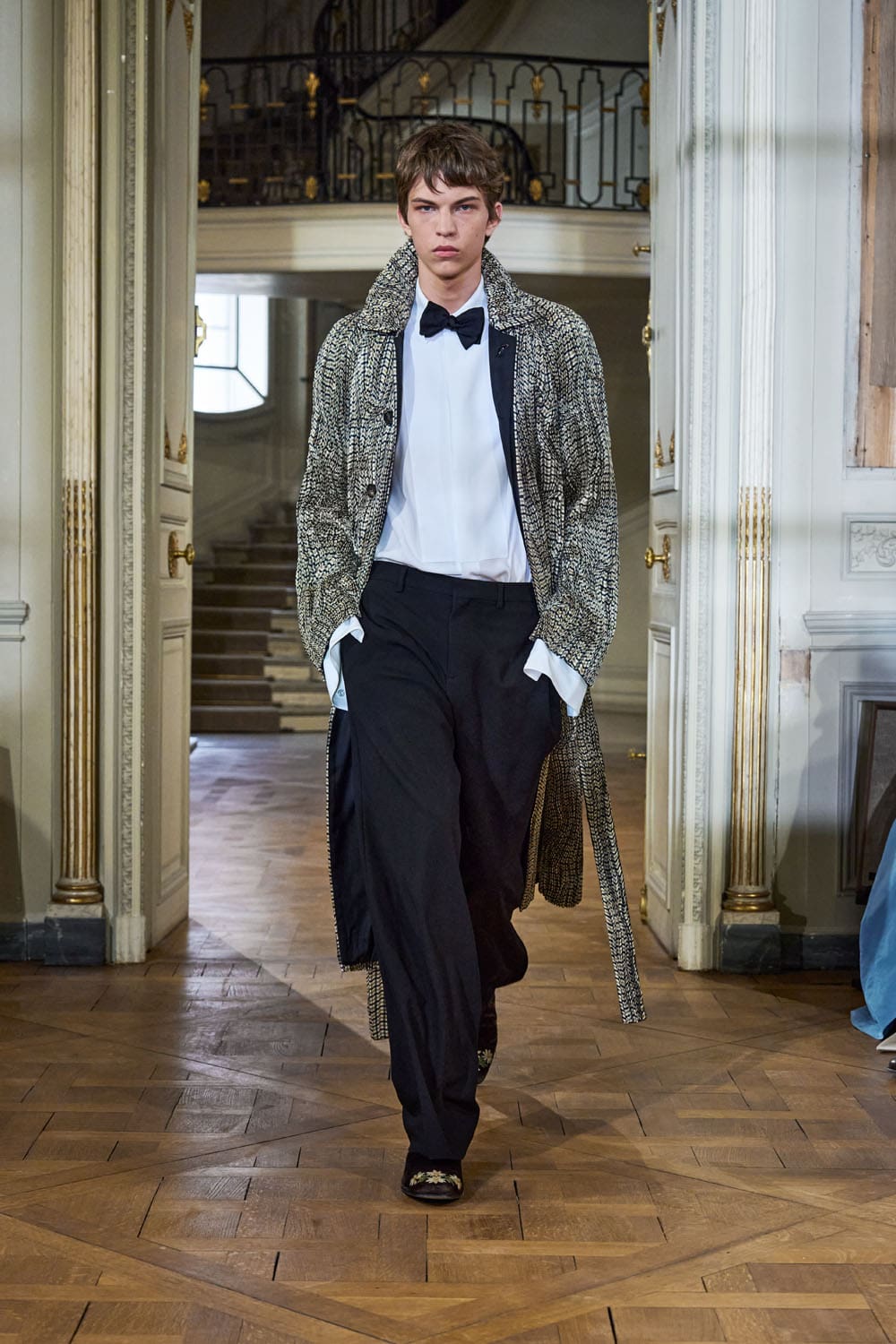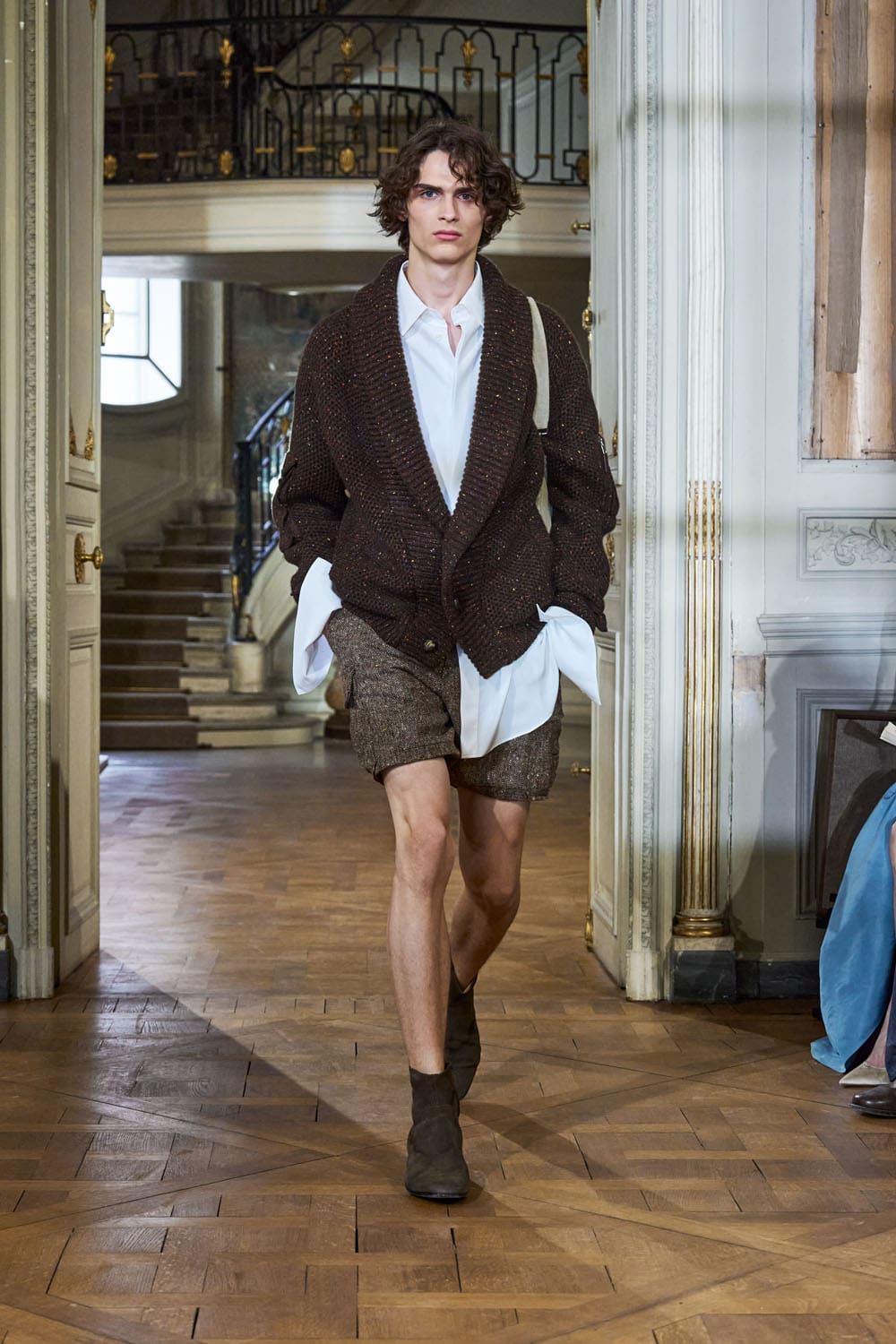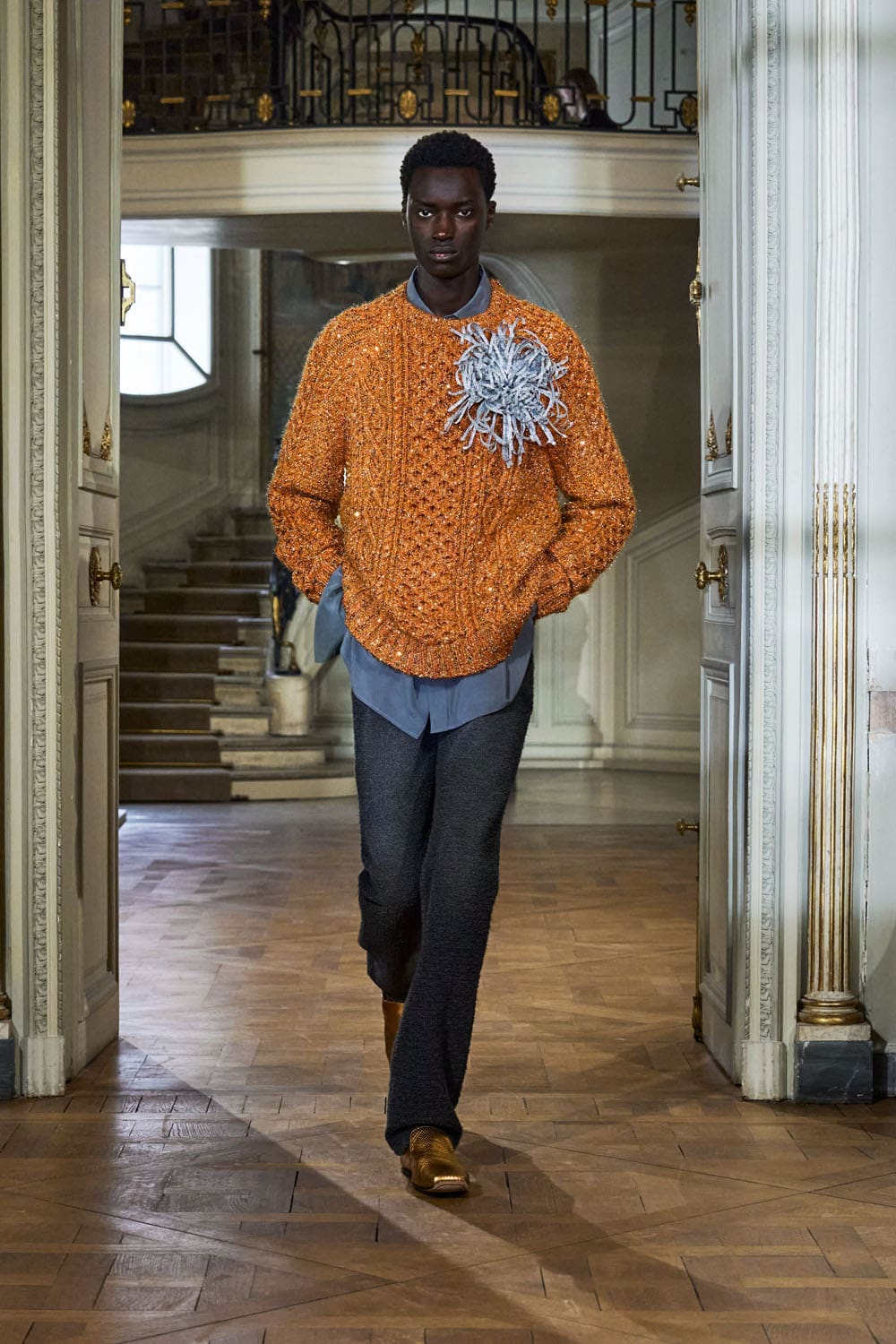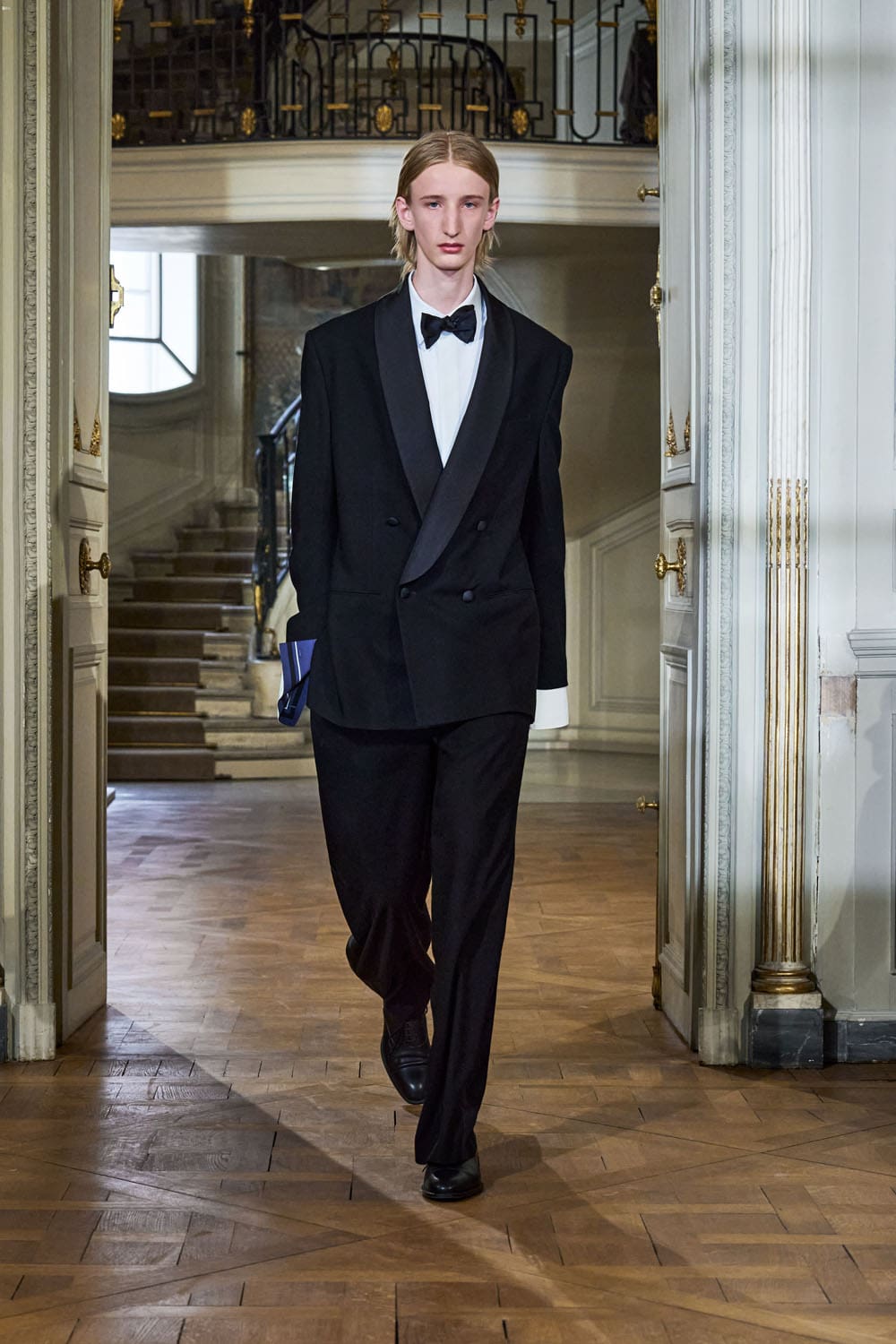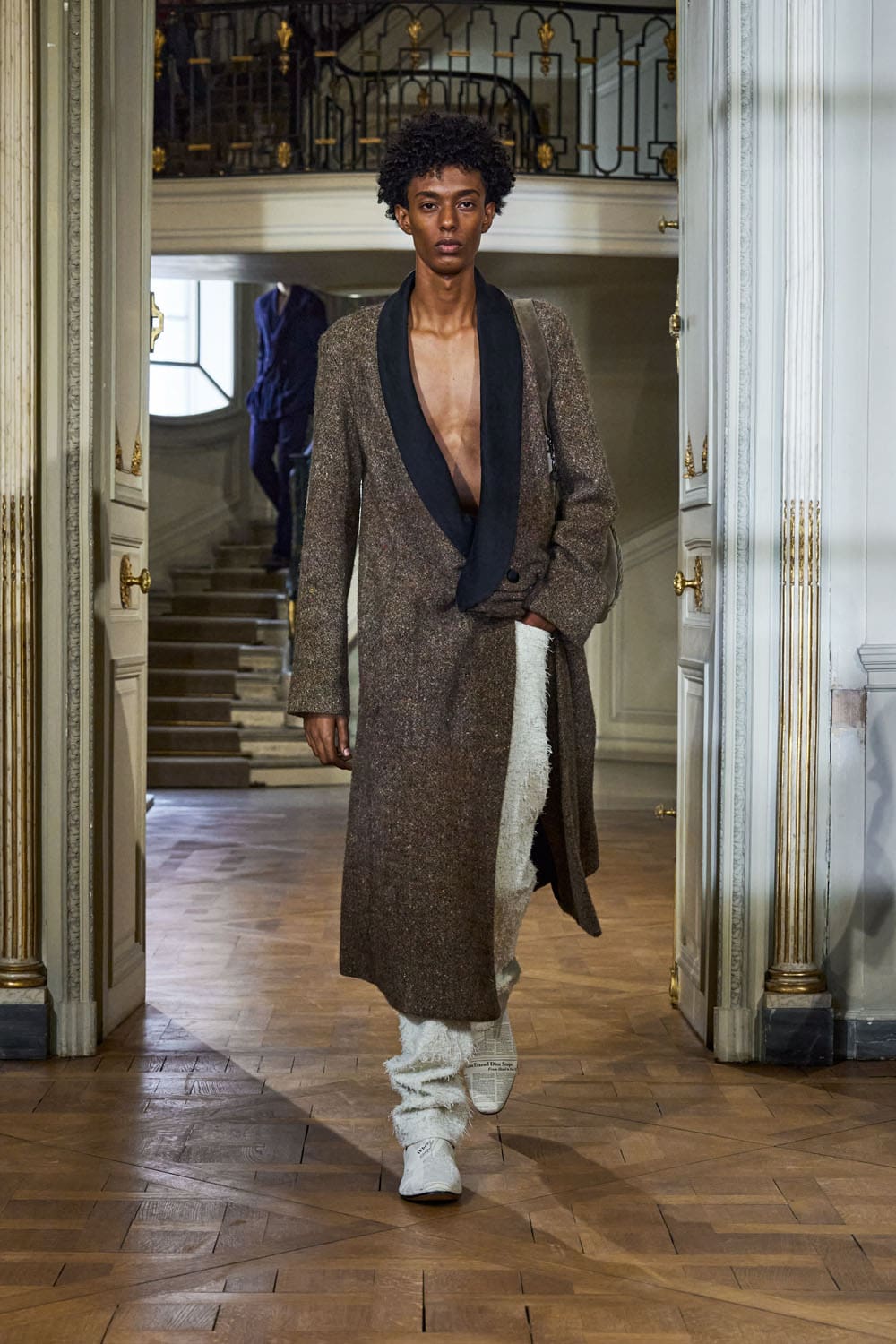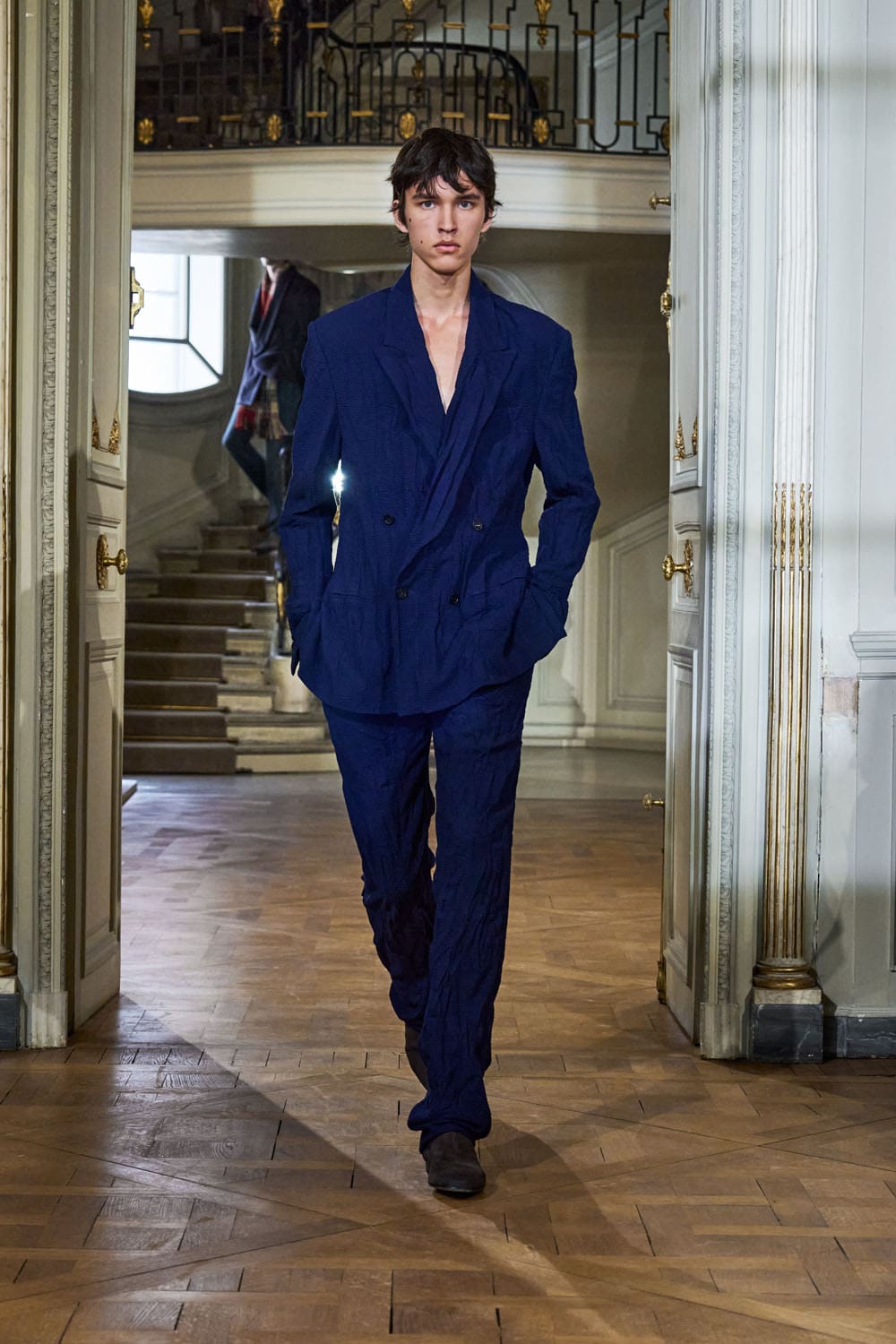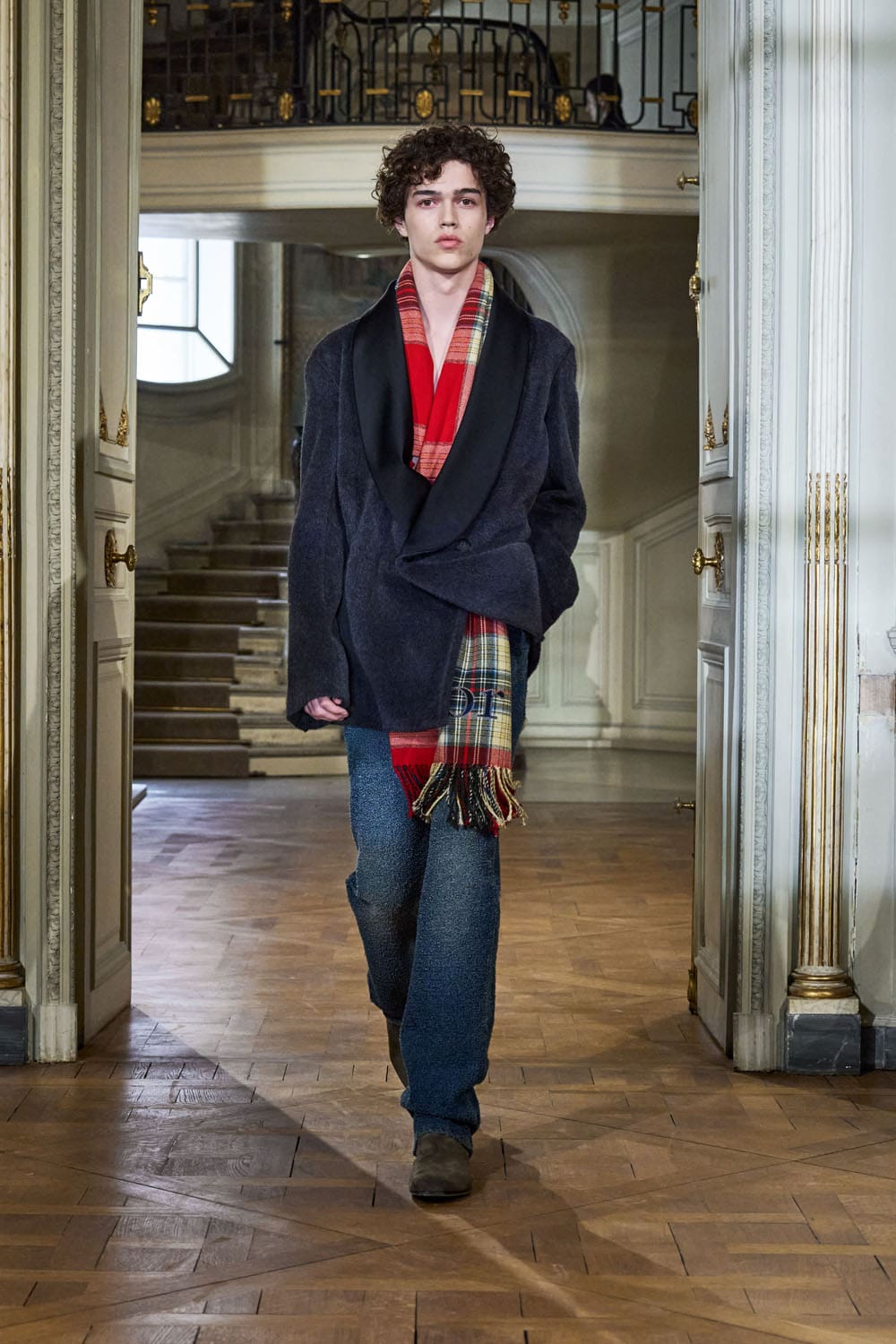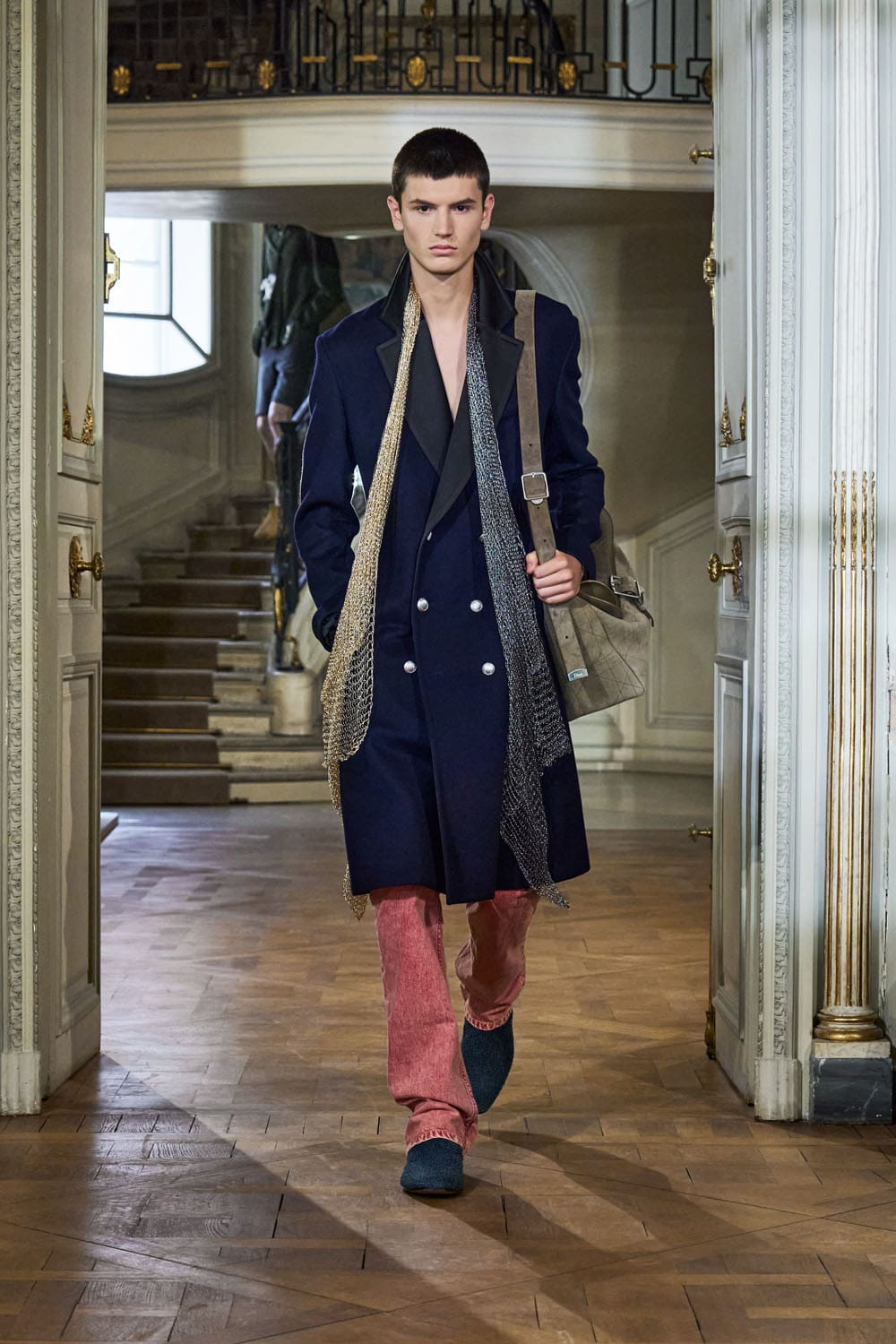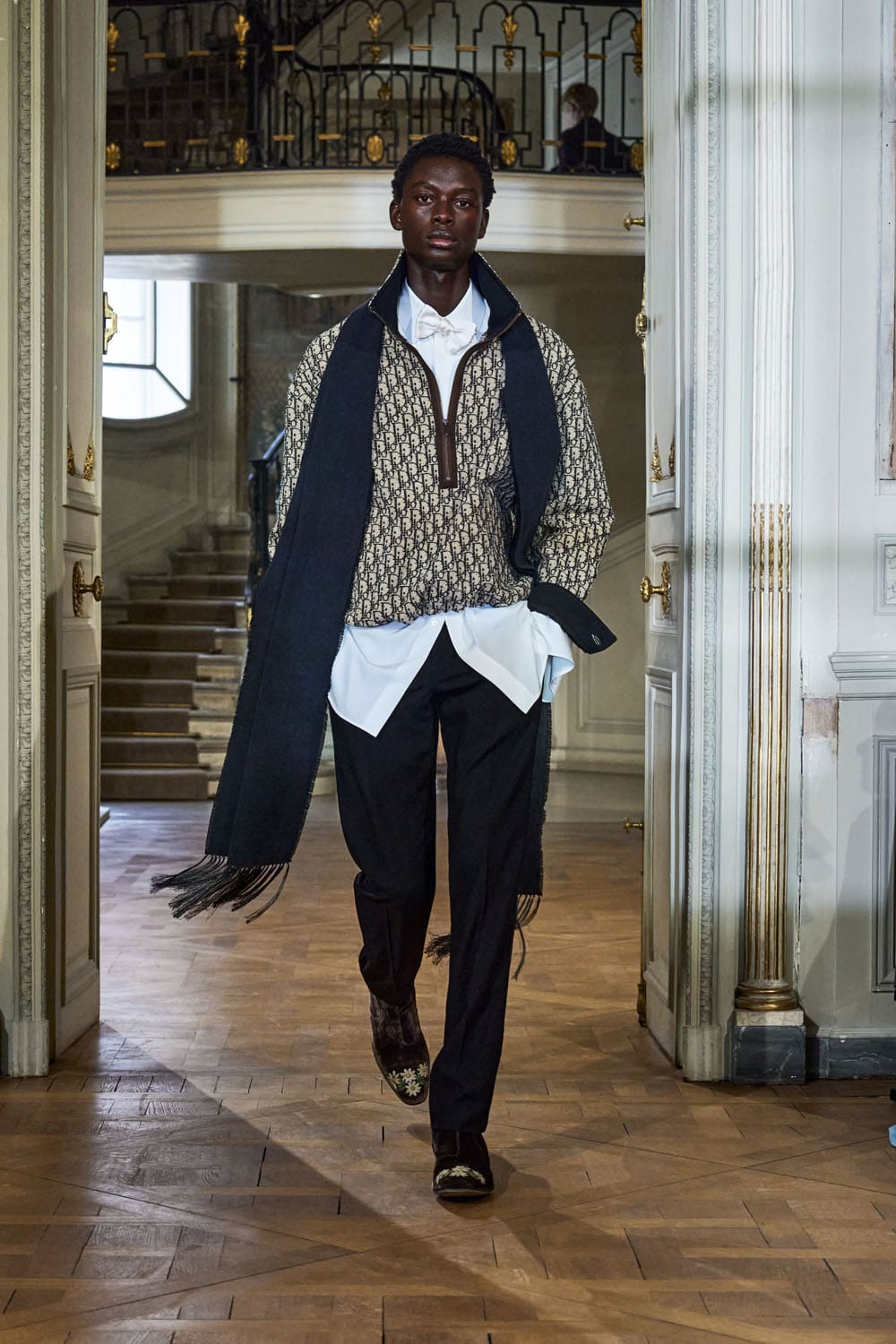
Dior Spring Summer 2027 Men “The High-Concept Rave in the Ruins of the Rococo or La Misère Élégante”. Story by Eleonora de Gray, Editor-in-Chief of RUNWAY MAGAZINE. Photo Courteay: Dior.
The press notes for Jonathan Anderson’s Dior Men Summer 2027 collection read less like a fashion manifesto and more like a cue sheet for a mixing desk. Presented in a timeline that tracks the performance down to the exact second, the house mapped out an audio blueprint where a particular bassline drops just as a tailored look hits the parquet floor. It is a format one might call “clever”—or perhaps pseudo-intellectual nonsense—depending entirely on how many unreleased Fred again.. tracks you tolerate before breakfast.
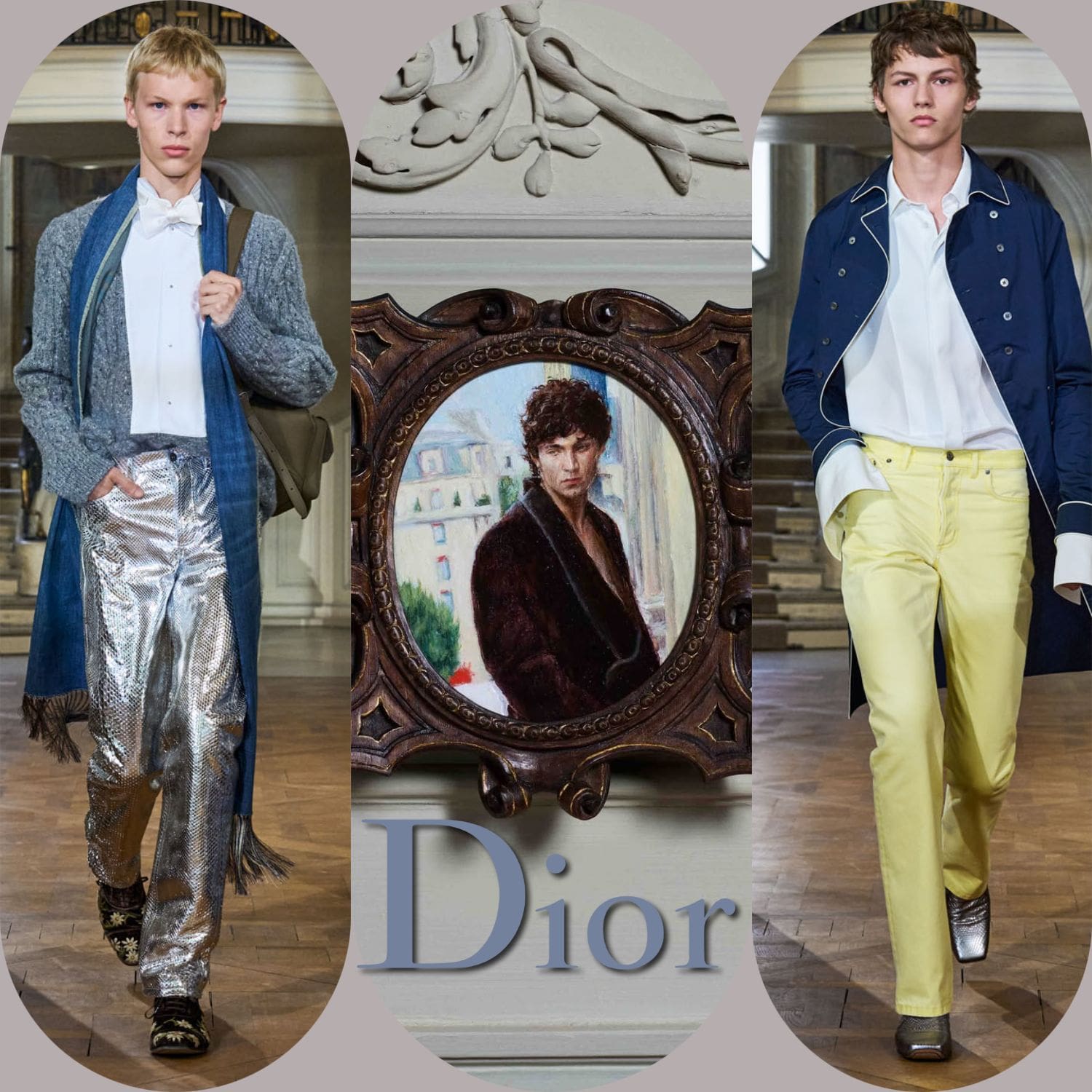
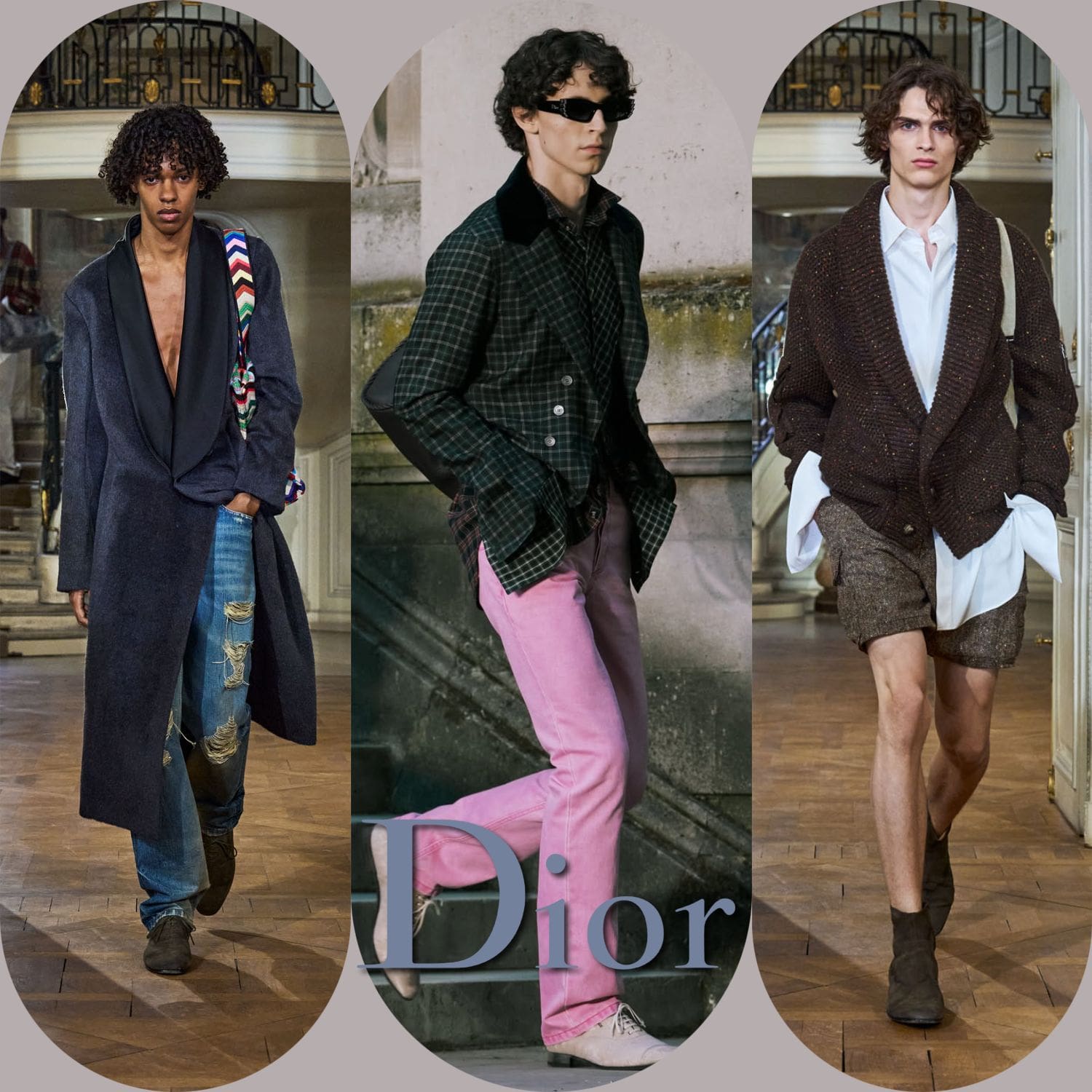
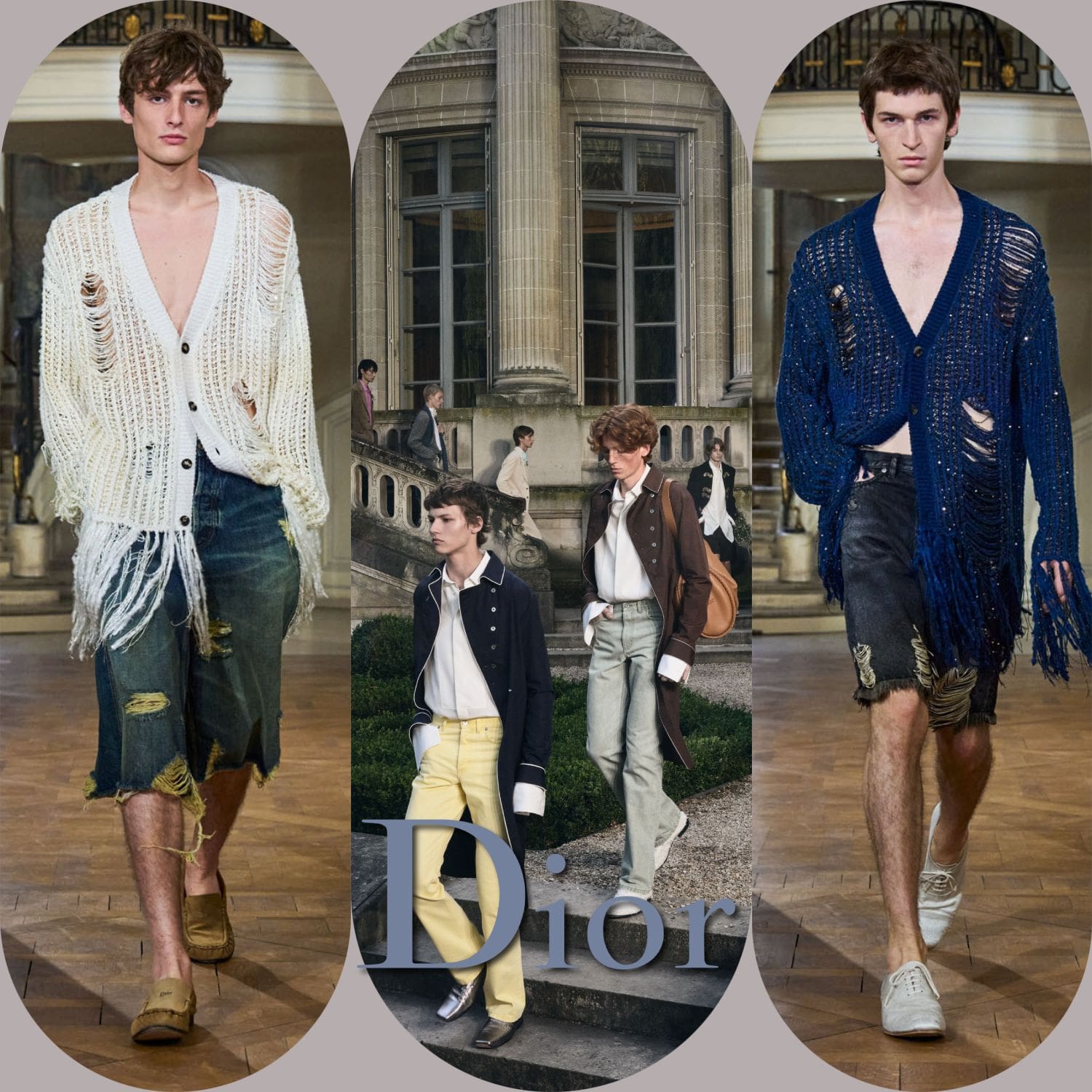
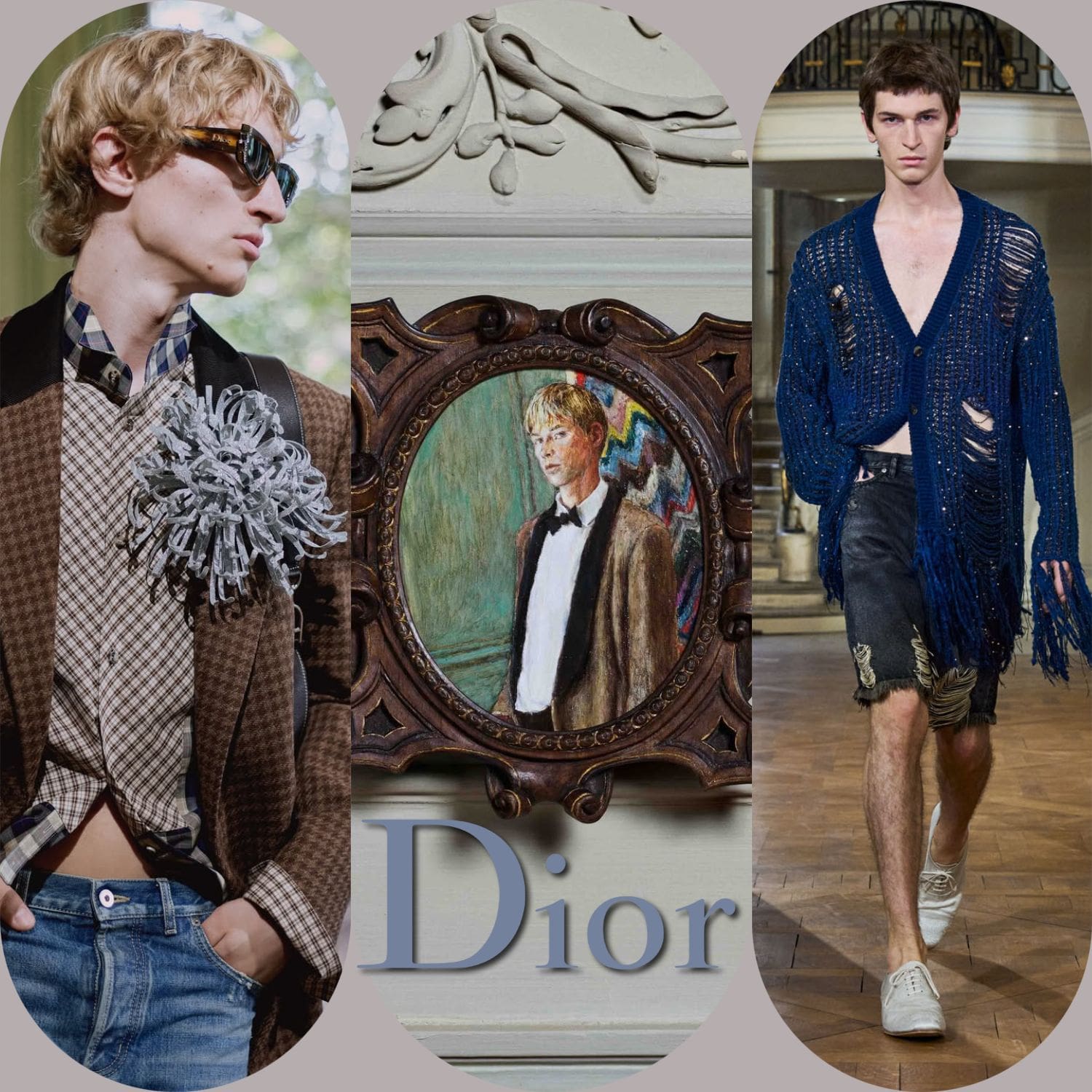
The setting for this auditory assault on traditional tailoring was the Musée Nissim de Camondo, currently undergoing an extensive restoration. A Belle Époque monument to 18th-century decorative arts, its gilded salons were lined with specially commissioned oil paintings by contemporary artist Giangiacomo Rossetti, depicting models wearing the very looks on display. The juxtaposition was painfully deliberate: historic preservation meets high-bpm deconstruction. Special thanks were dutifully extended to the Musée Nissim de Camondo and Les Arts Décoratifs, who graciously allowed their plaster dust to mix with Anderson’s underground club culture.
The Sampling of the Salon
The collection operated entirely on the logic of the musical sample—taking archival fragments of the past and looping them over a modern, heavily grounded rhythm. Anderson effectively cast Dior as an underground British band leader who has traded high-society salons for late-night raves, yet remains deeply tethered to the house’s structural history.
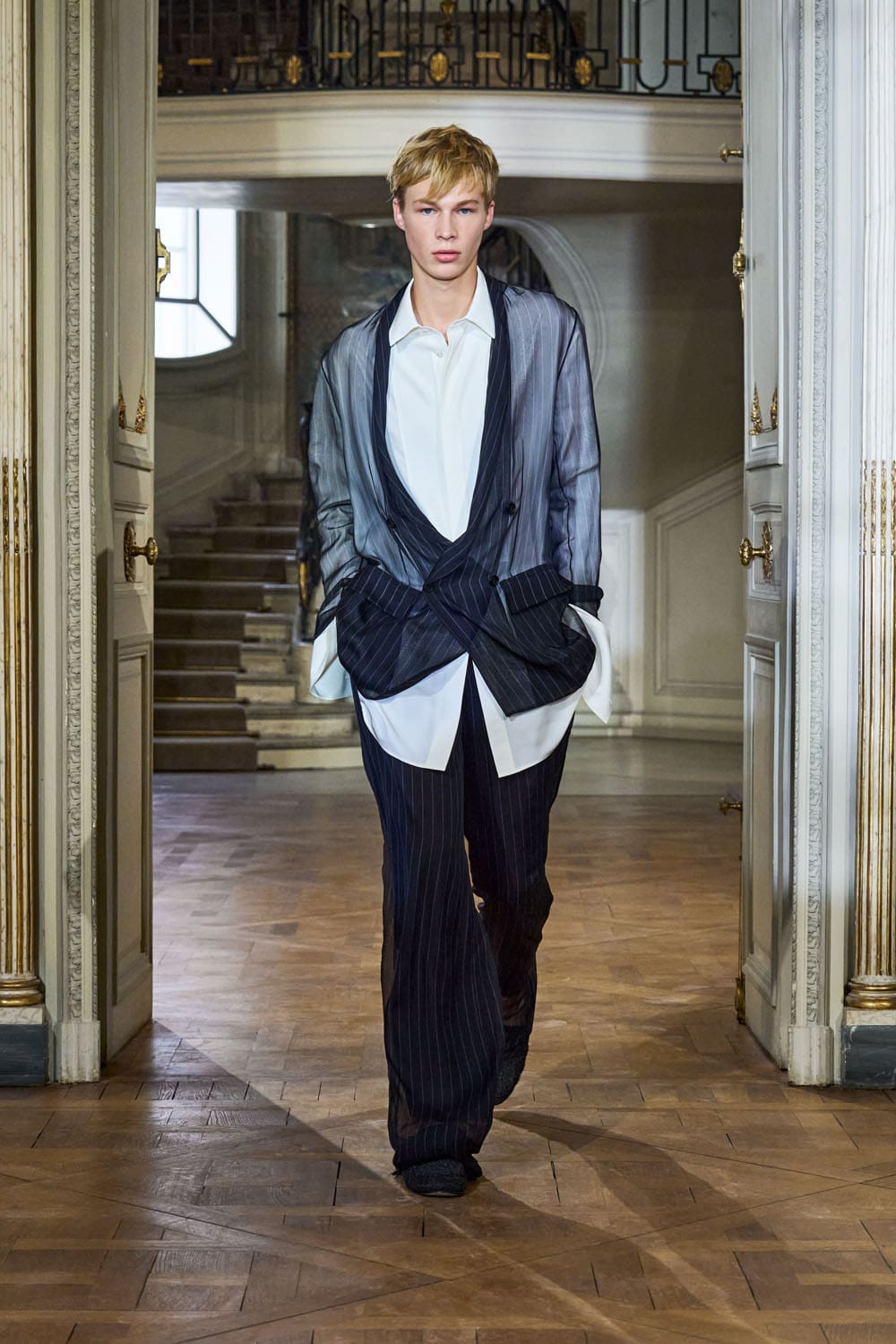
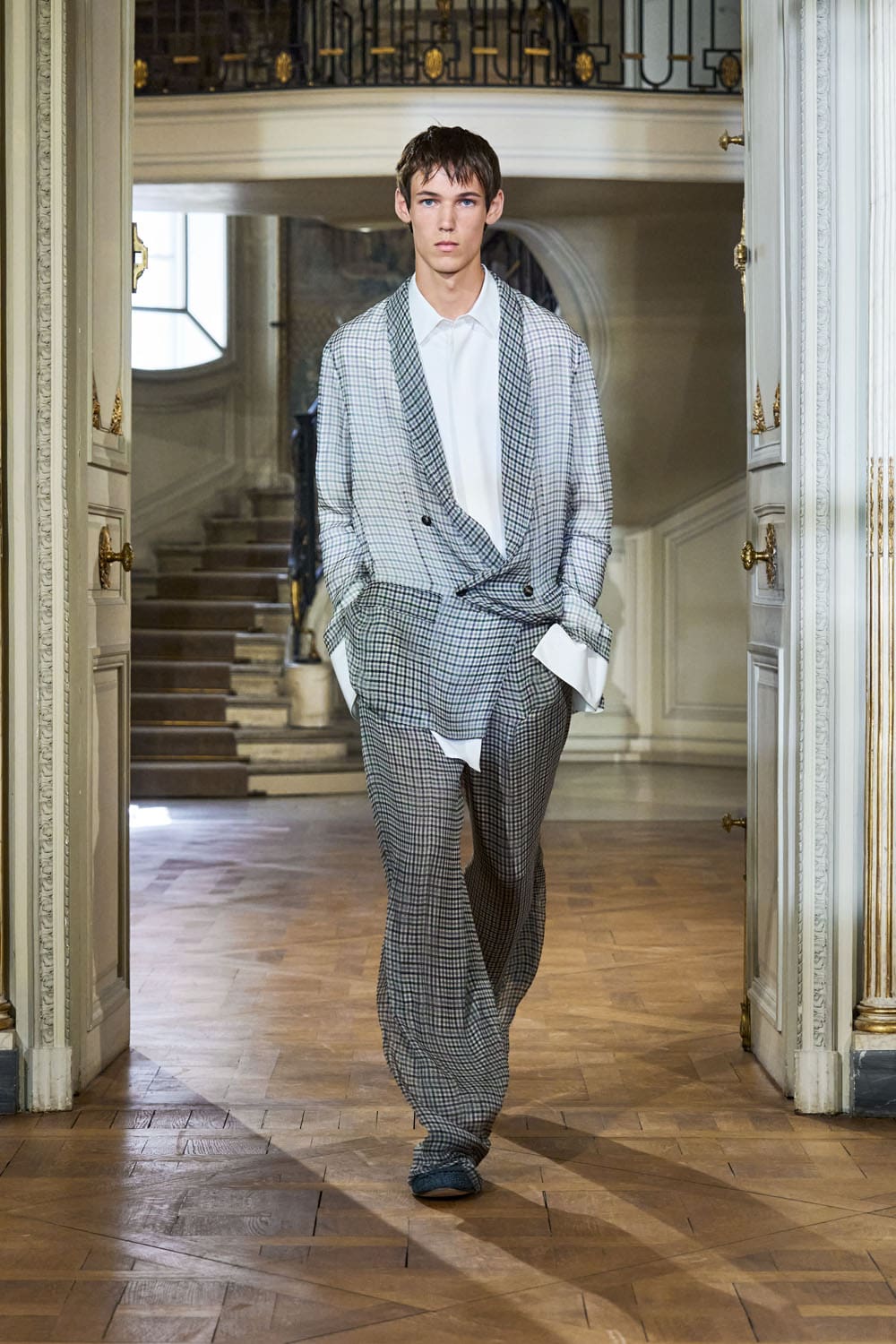
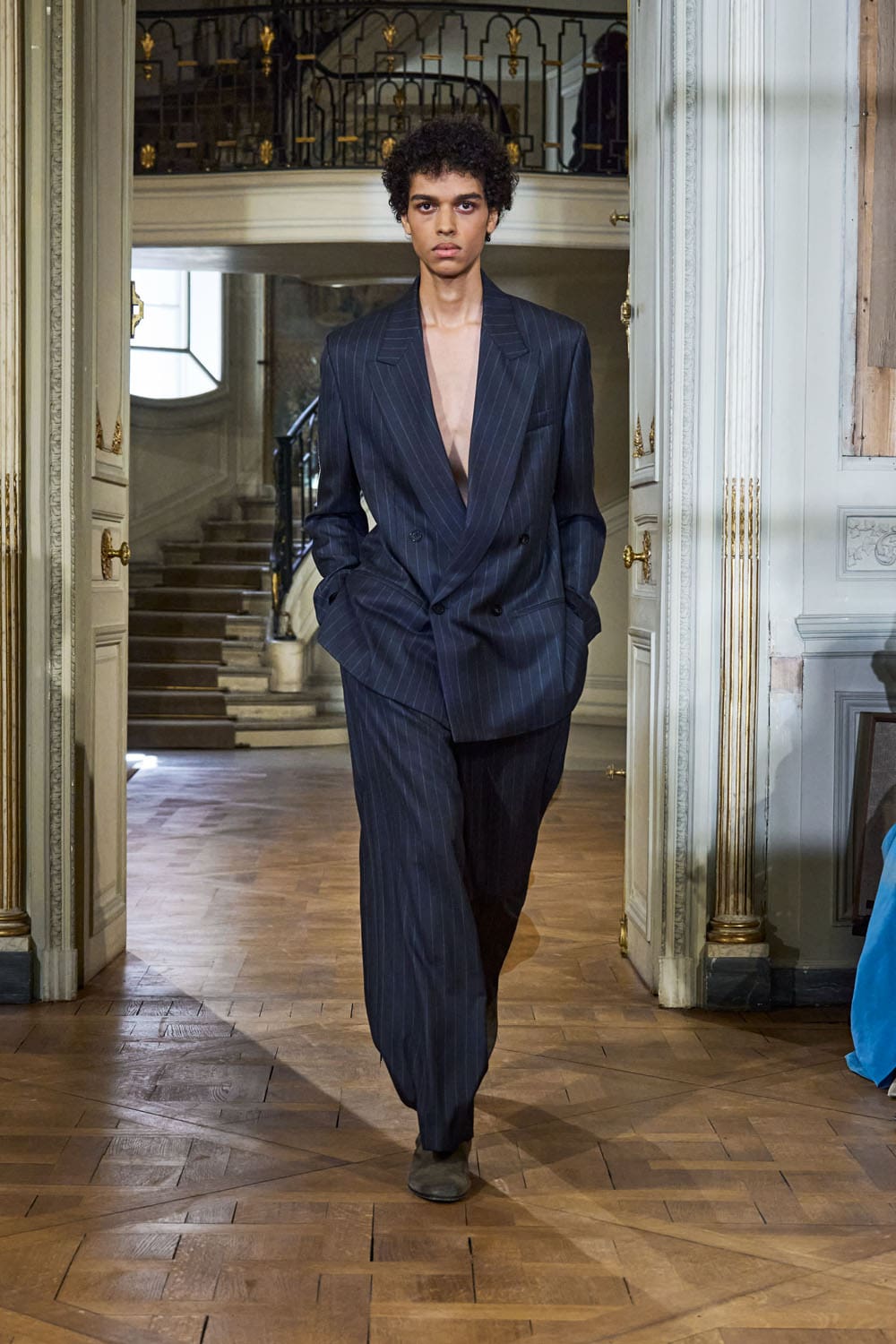
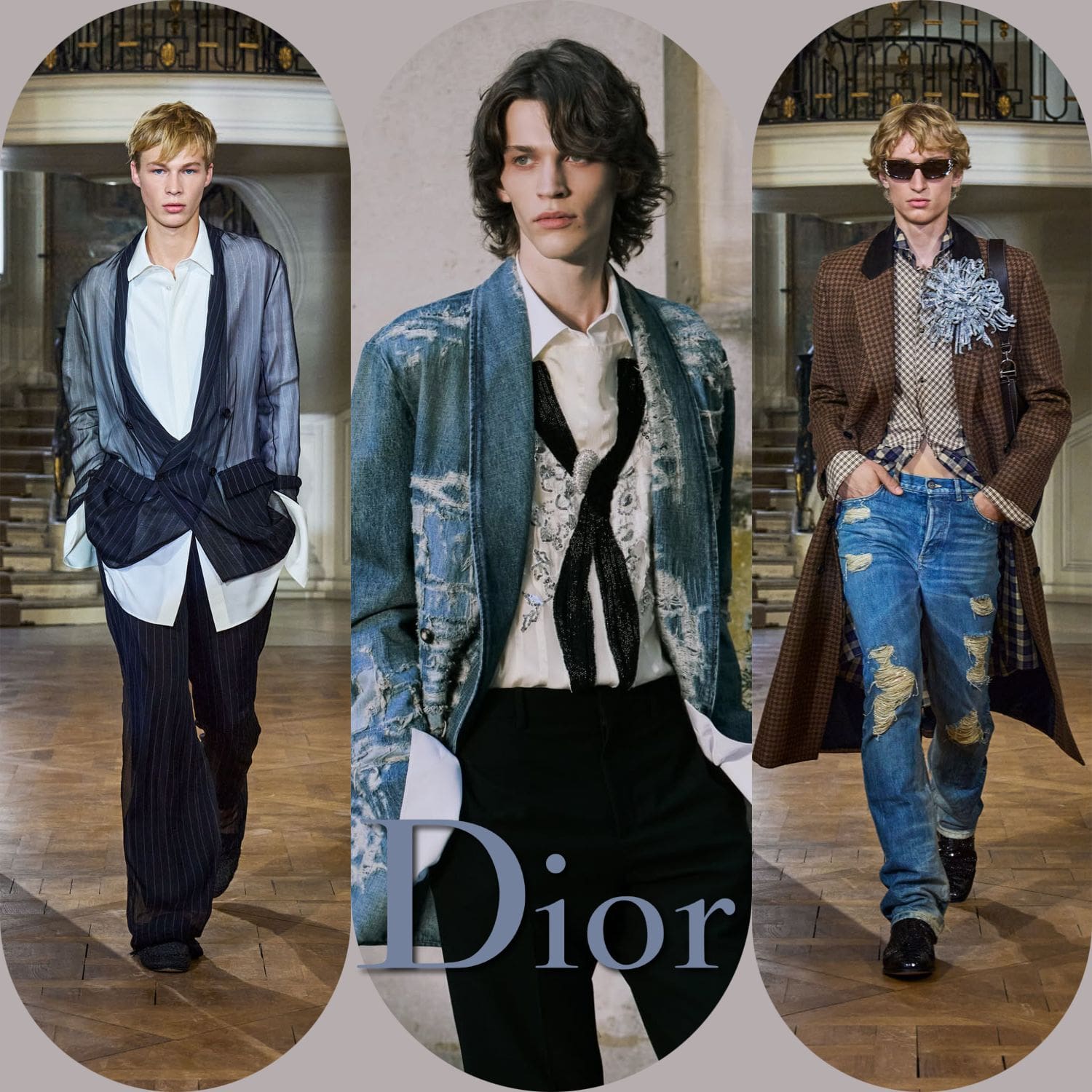
Nowhere was this clearer than in his approach to tailoring, where he introduced transparent silk structures configured in the form of classic blazers. It is fashion as a Beethoven sonata—structured, melancholic, and deeply layered—yet completely stripped of its heavy substance. We see this manifestation in a gossamer, double-breasted pinstripe outer layer draped over a crisp white shirt, creating a floating, skeletal silhouette that looks like a corporate ghost. A similar exercise in transparency appears as a double-breasted windowpane check blazer, reduced to a weightless shadow over an intricately embellished shirt.
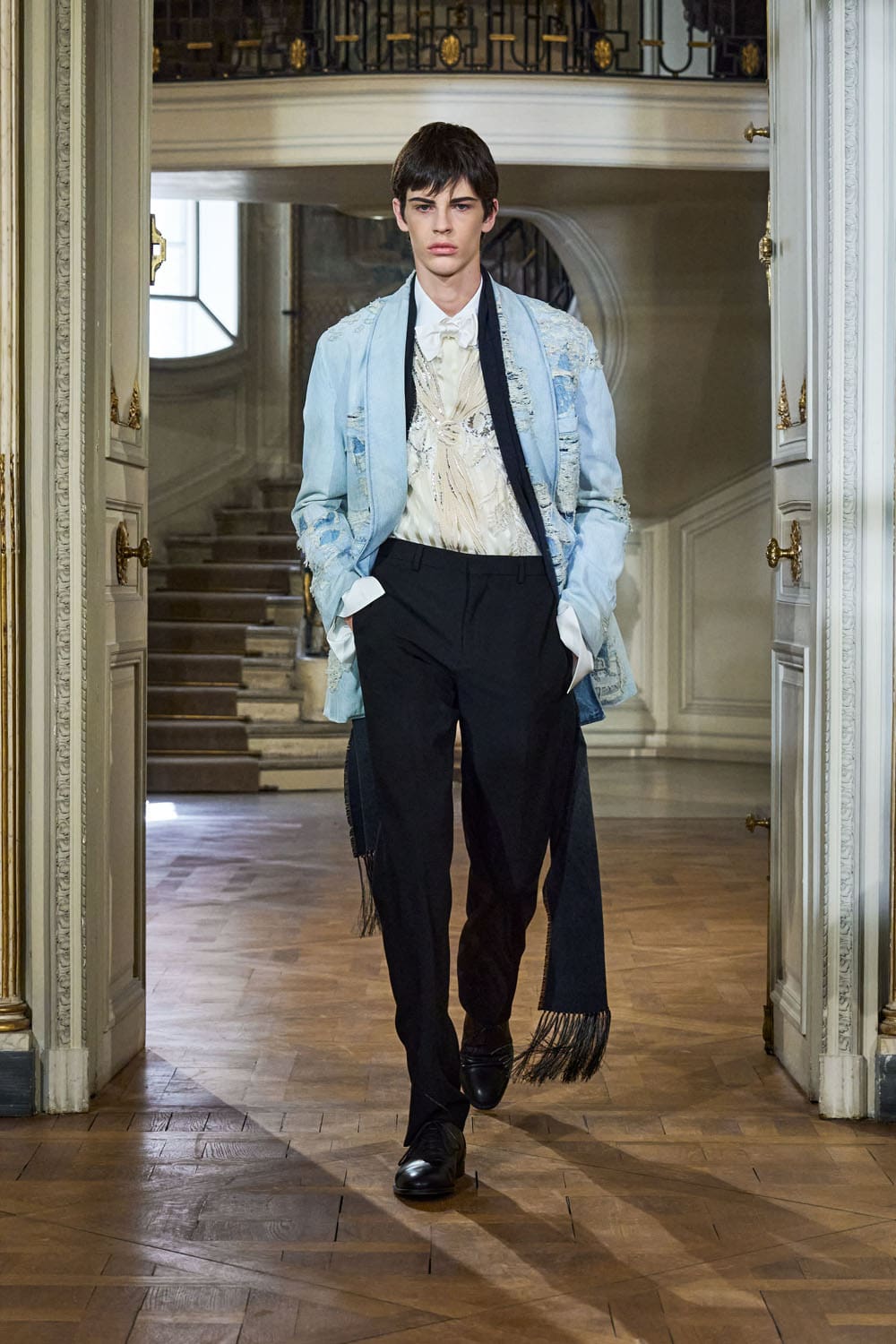
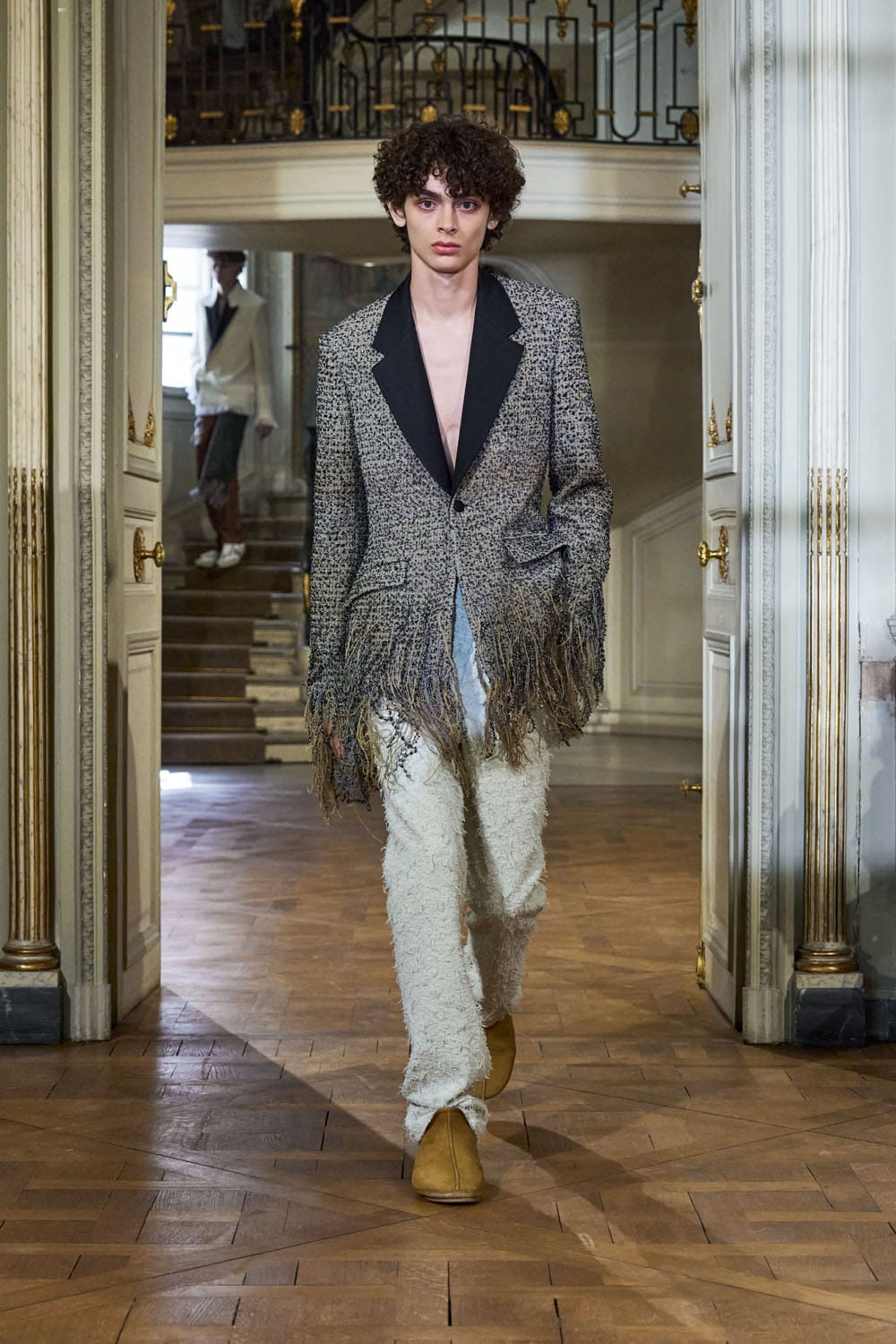
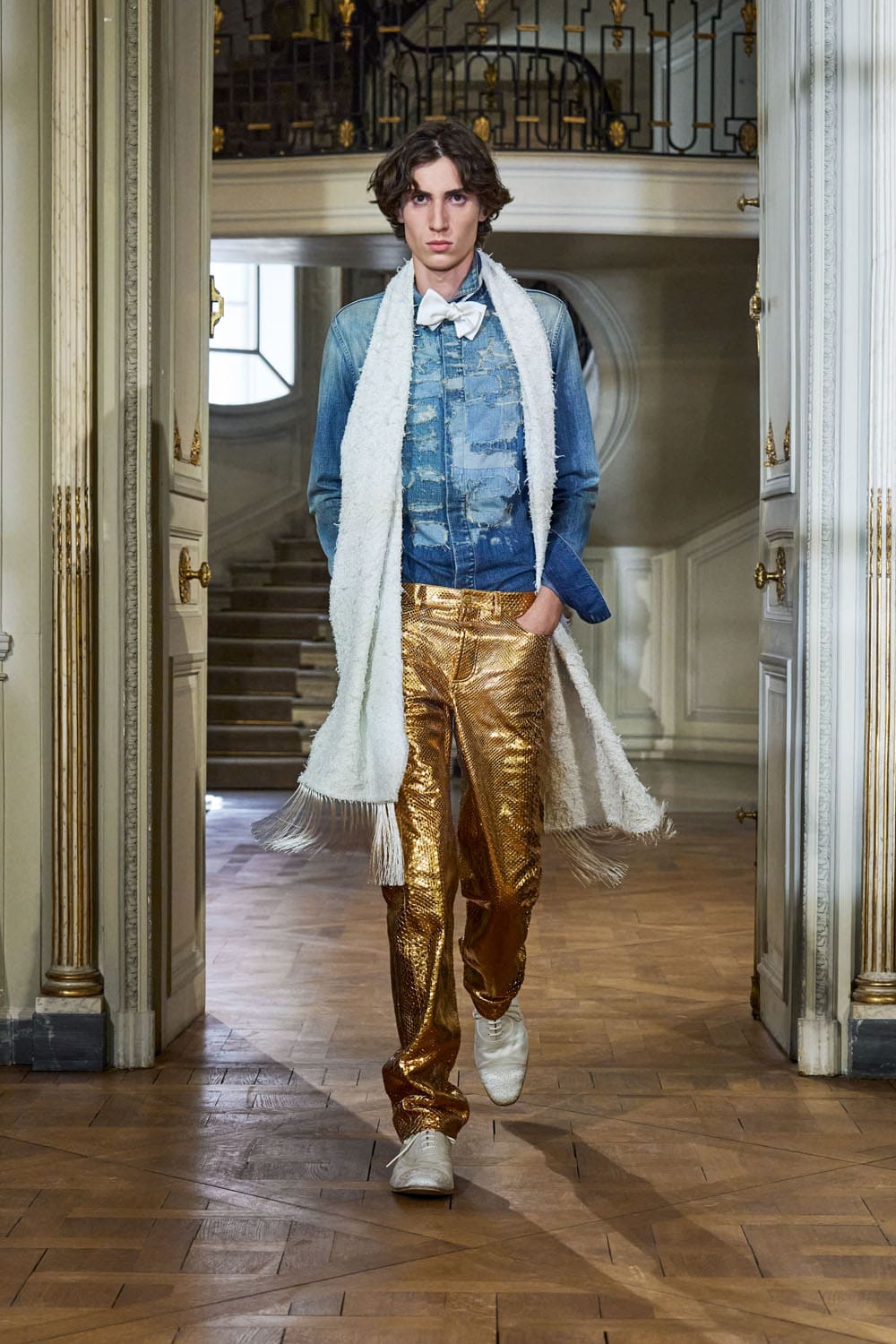
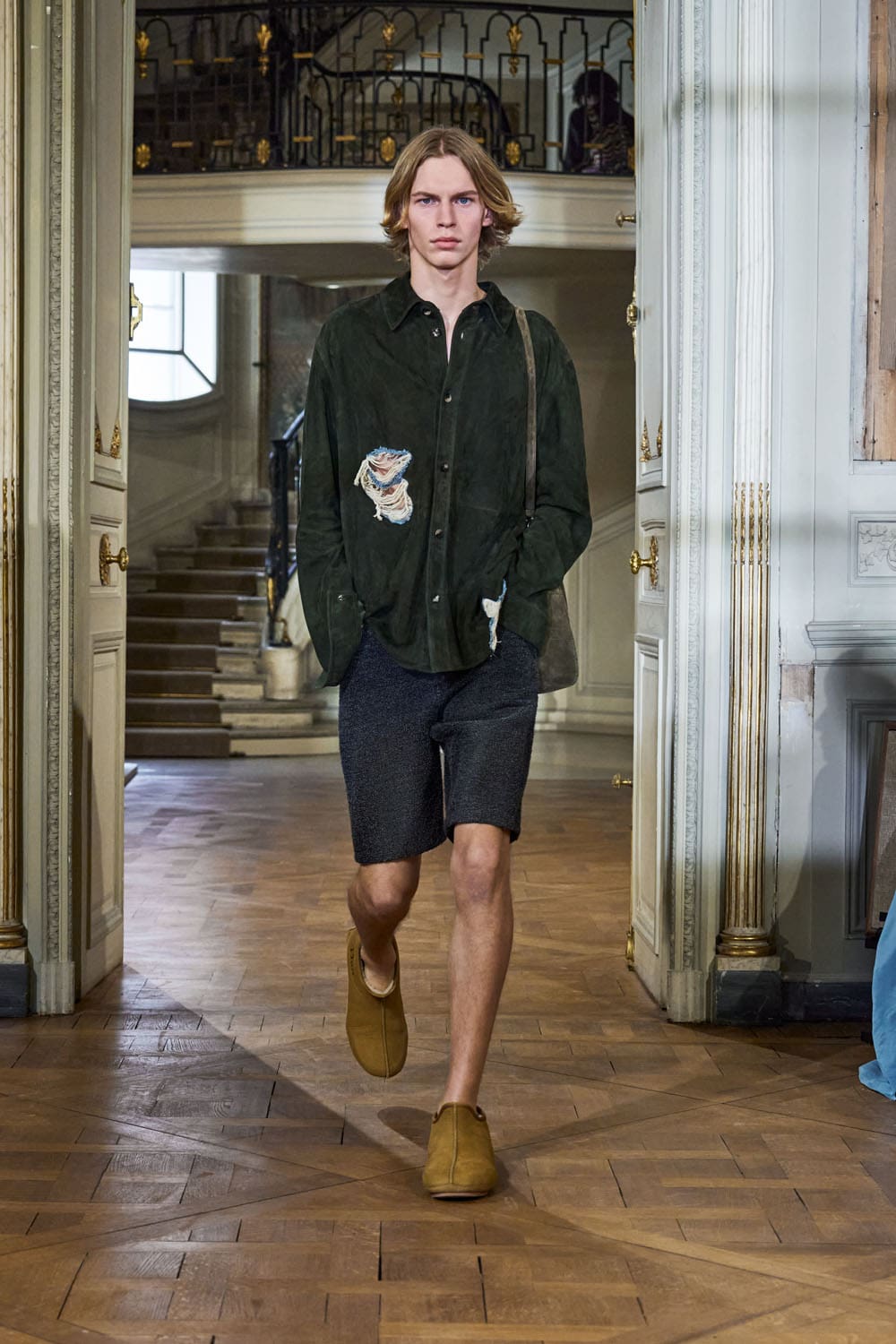
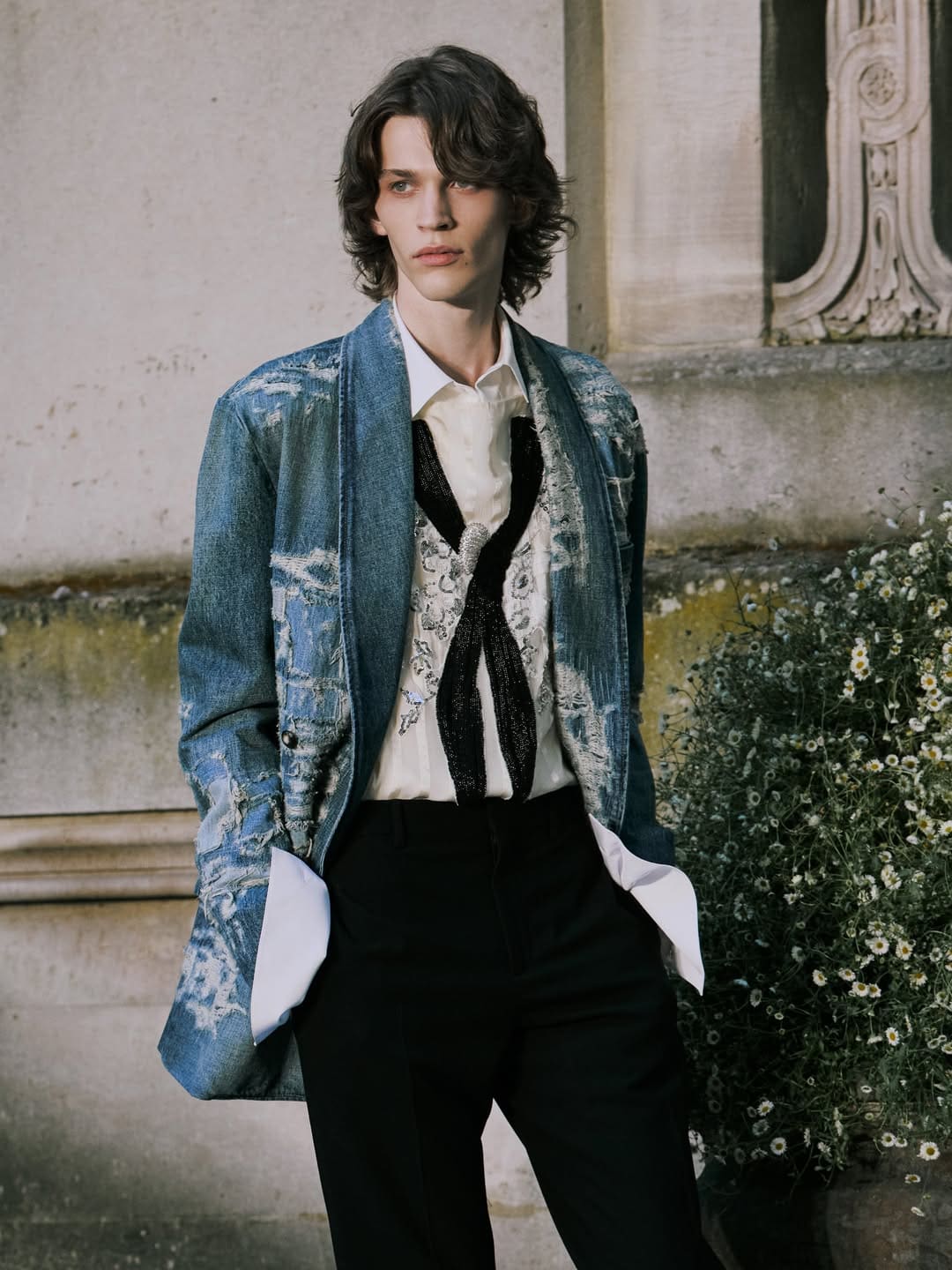
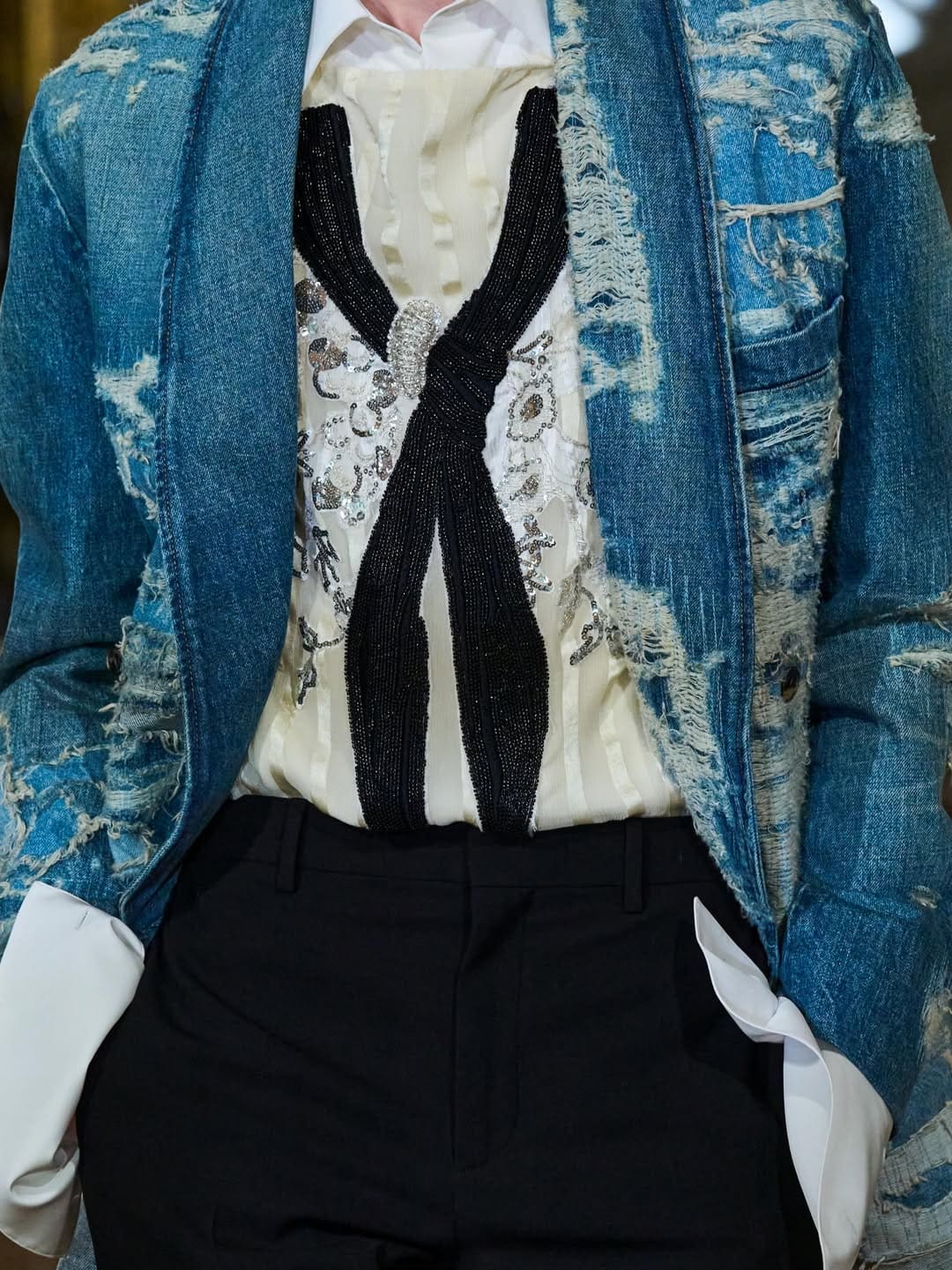
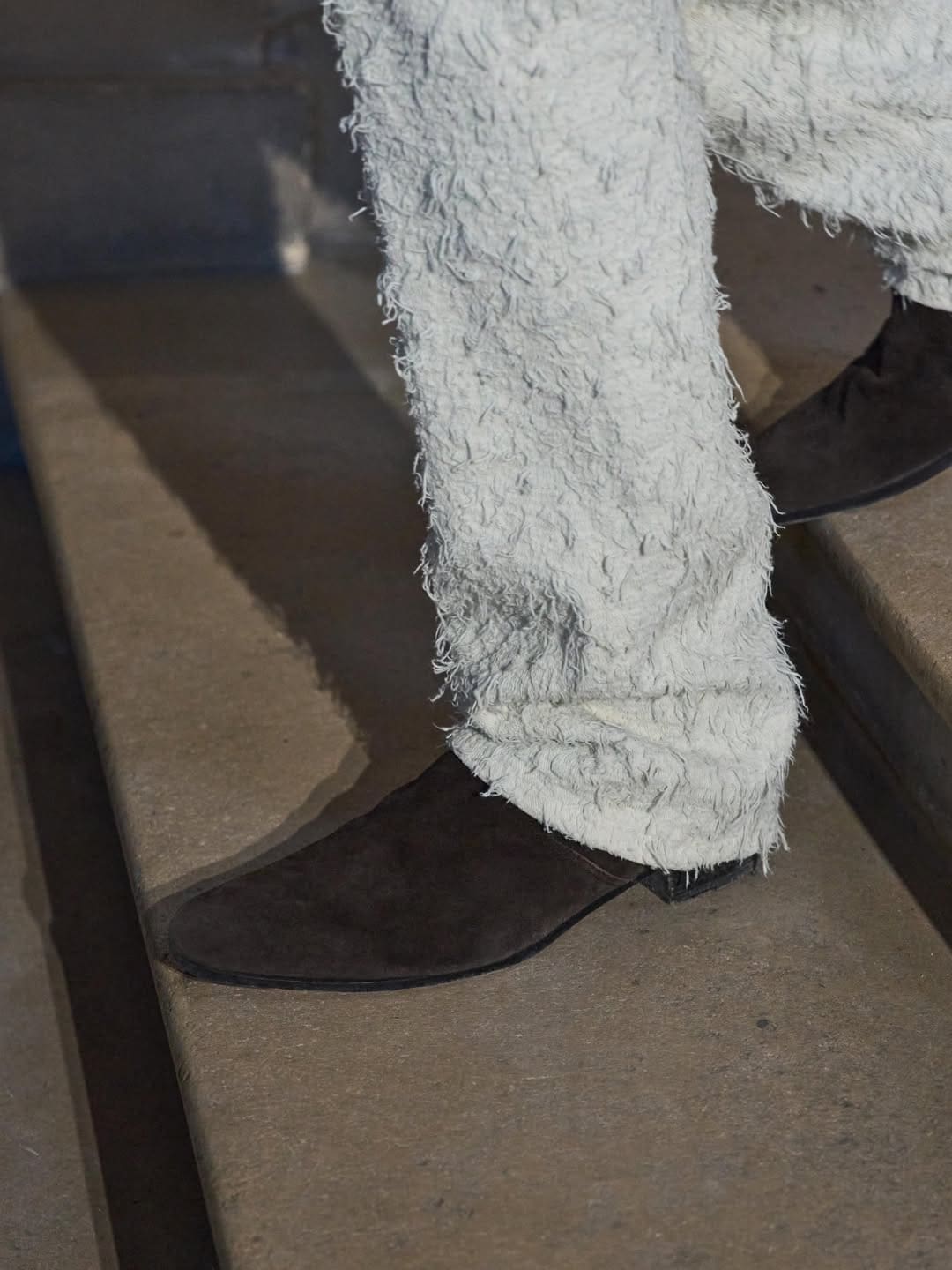
When the collection wasn’t playing with transparency, it was actively distressing its own heritage. Classic denim and luxury evening wear collide in a look featuring a heavily embellished, shimmering waistcoat styled under a light blue, severely frayed and distressed denim jacket. The tension between the aristocratic and the back-alley continues with a heavily textured, fringed tweed blazer with sharp black satin lapels, paired with raw, shaggy trousers that mimic the texture of an unraveled blanket. It’s high luxury for the elegantly unhinged.
Holy Molly
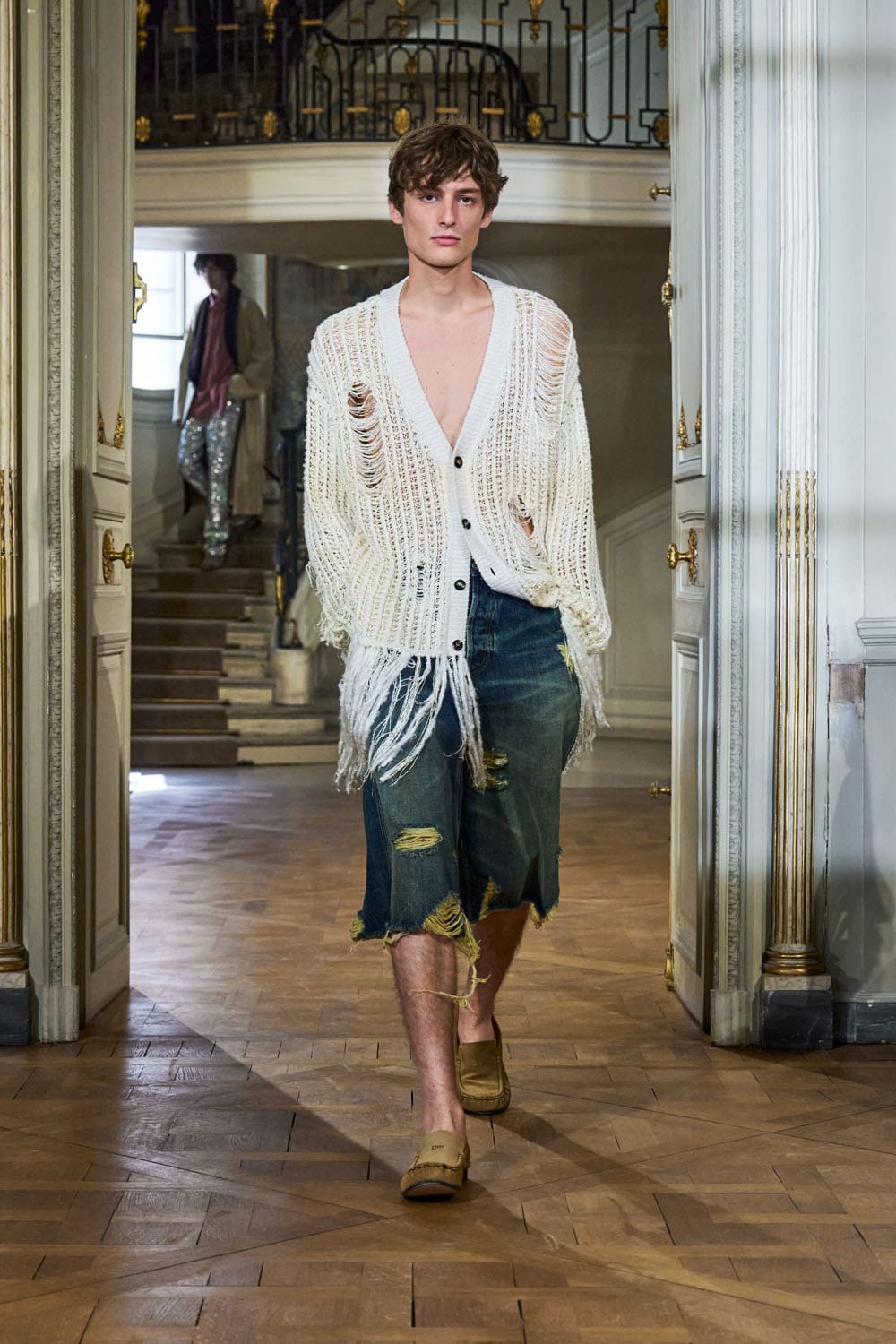
If there is a defining motif for the collection, it is one we must call “Holy Molly.” The “Holy” here is literal: holes. There are holes in the denim, holes in the knitwear, and holes slashed through the casual elegance of the luxury wardrobe.
The distressed knitwear acts as a central pillar of this subverted aesthetic. A heavily shredded white oversized cardigan with trailing, wept-out fringes is thrown over destroyed denim shorts, looking every bit like the morning-after attire of an elegant house party that went on two days too long. This theme is echoed in a deep indigo iteration, where a loose, open-weave blue knit cardigan—marred with intentional snags and gaping holes—is styled with frayed black shorts.
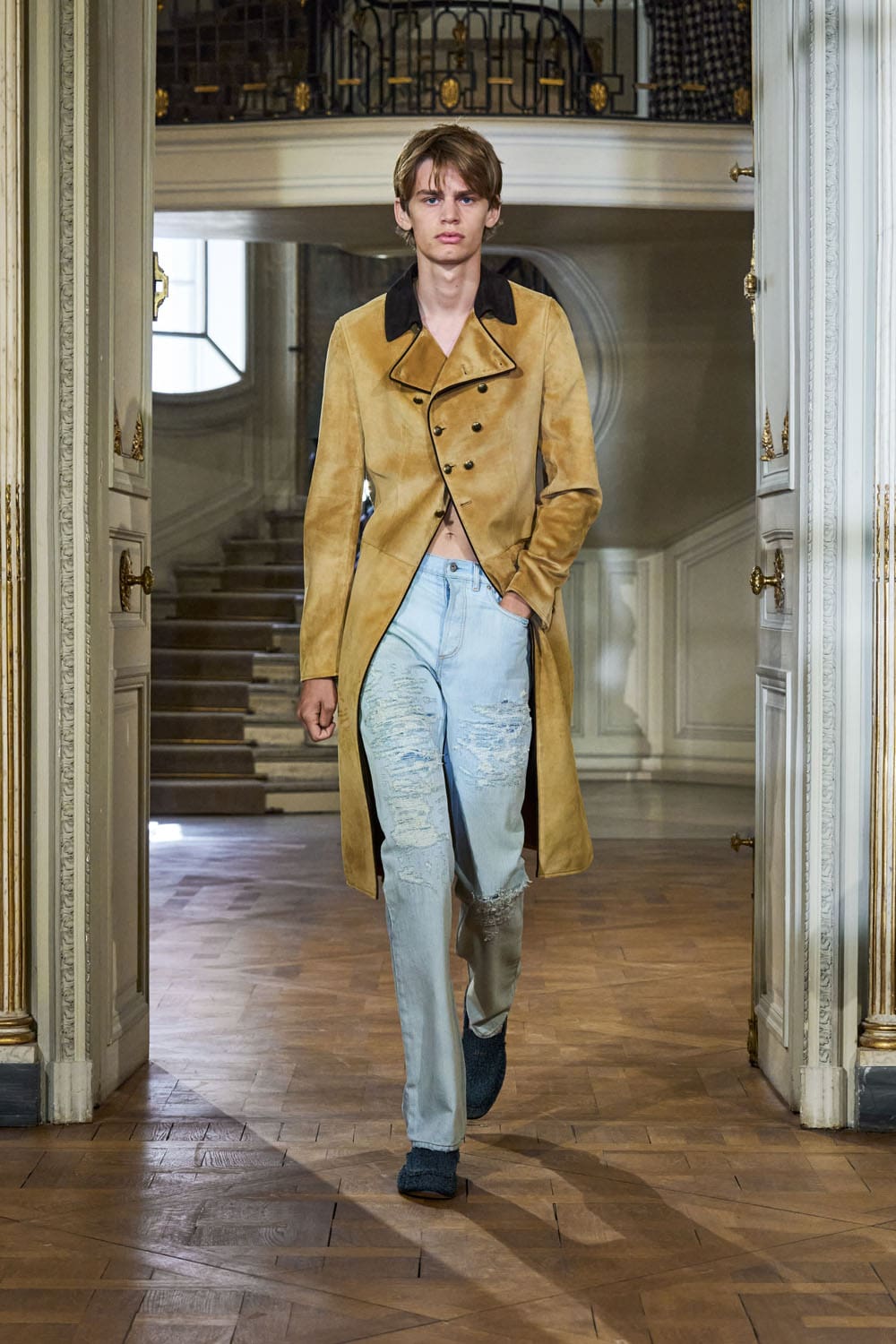
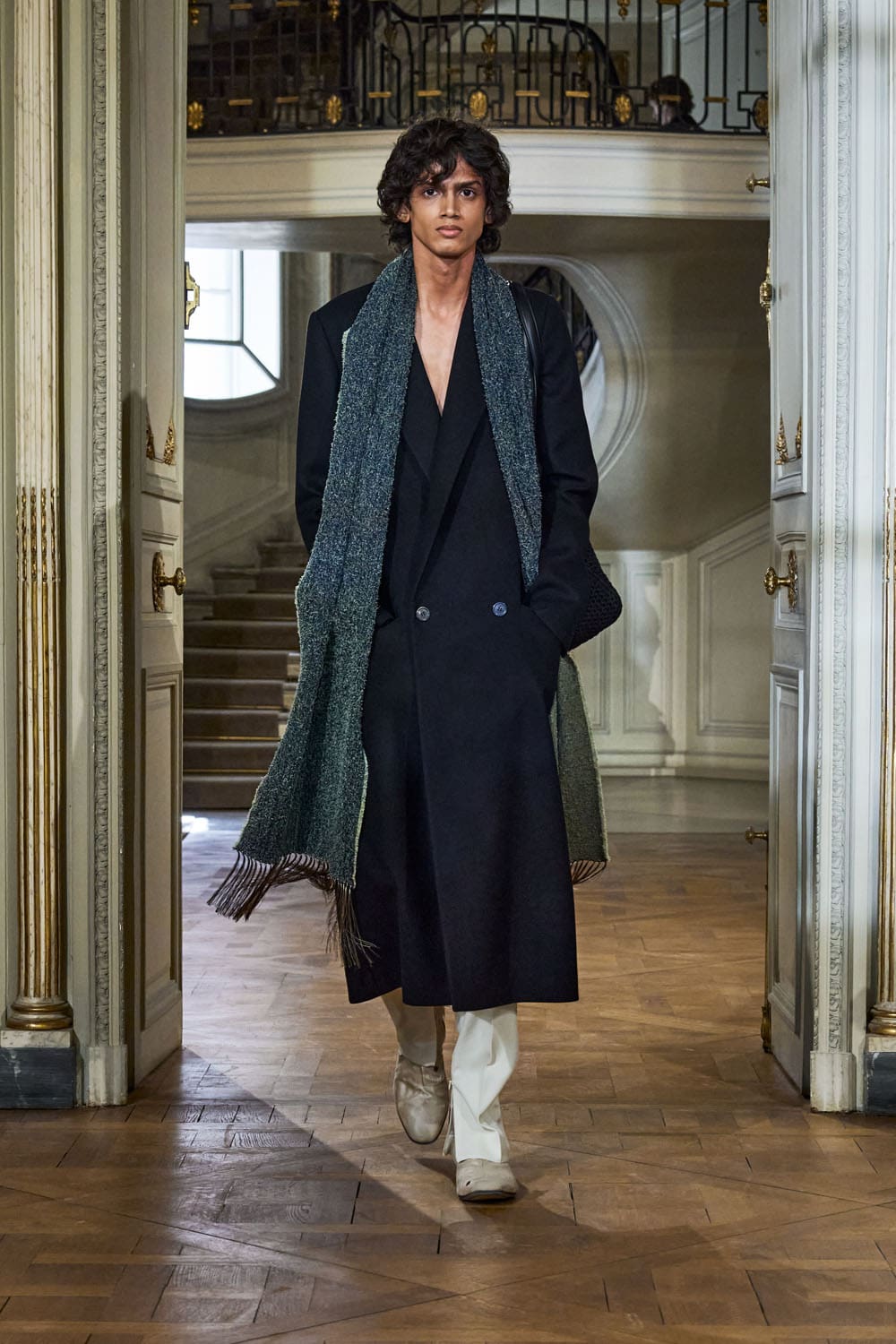
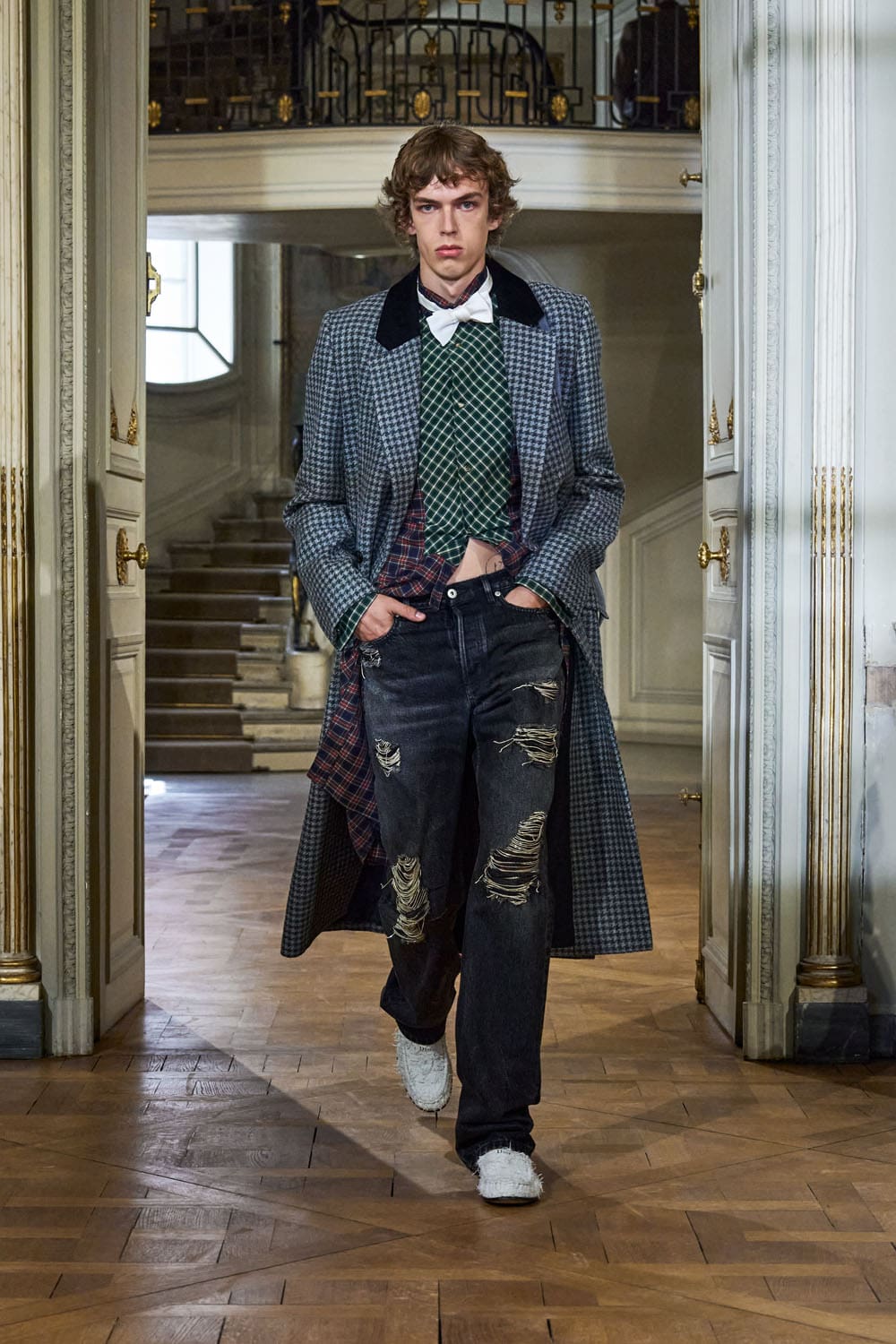
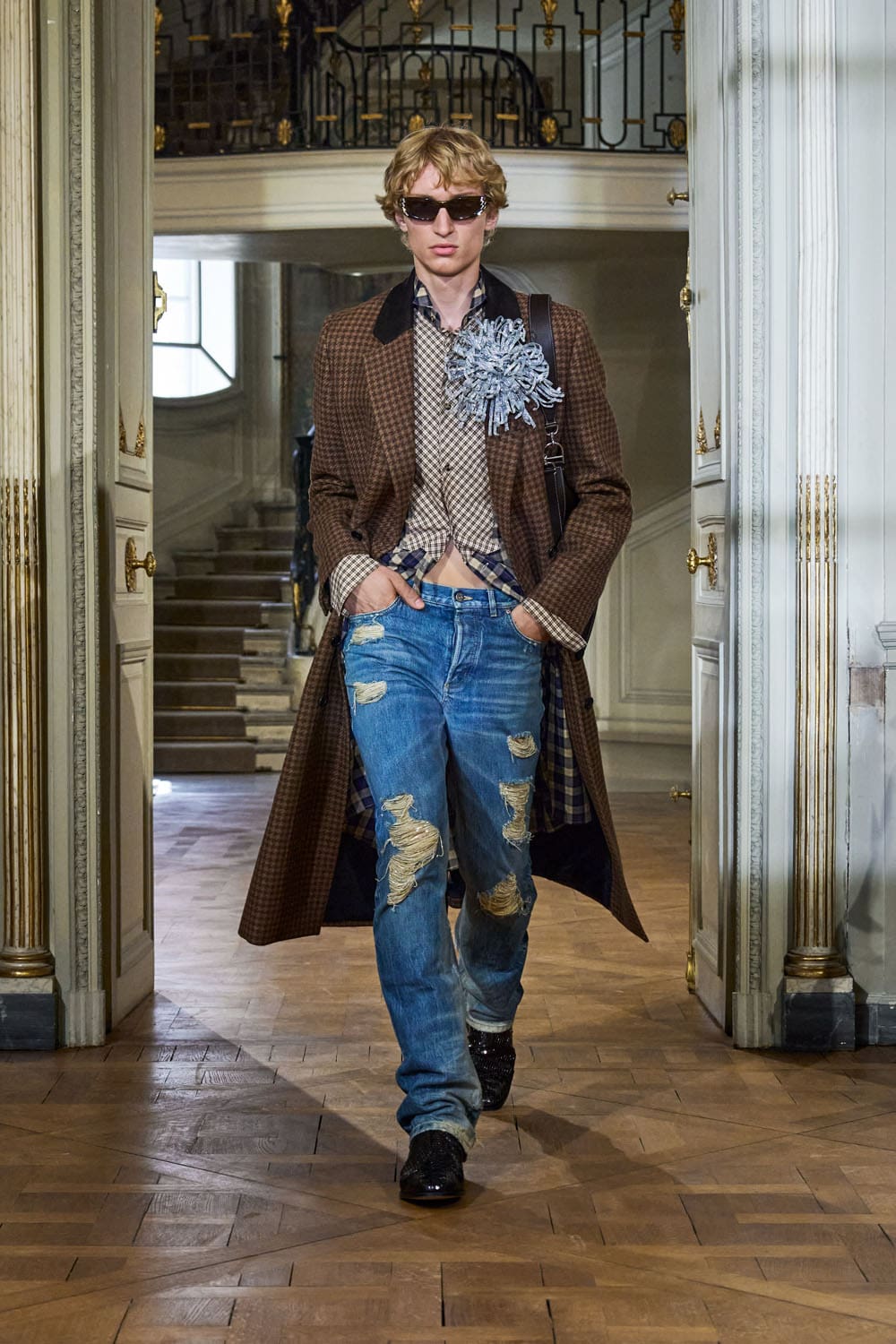
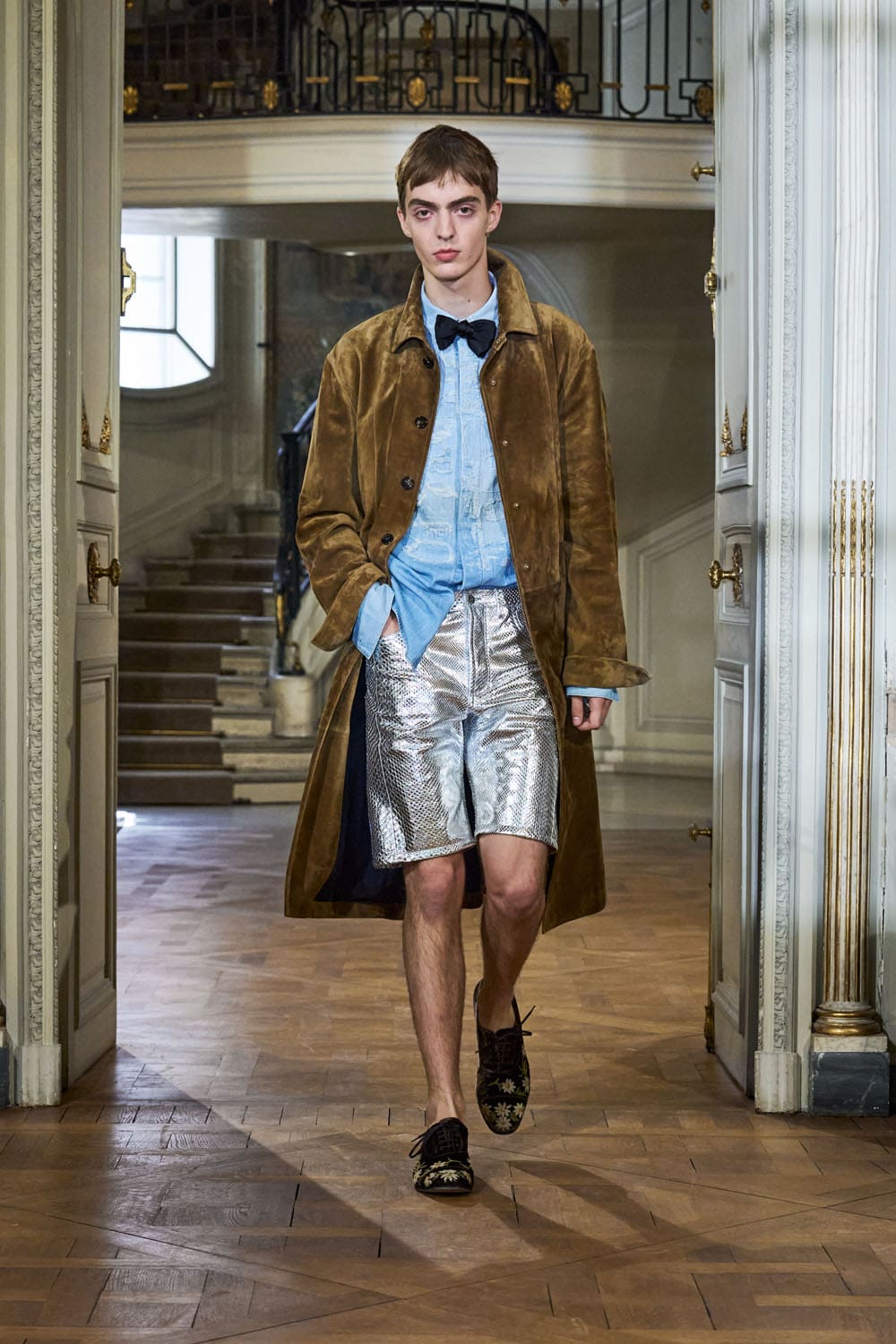
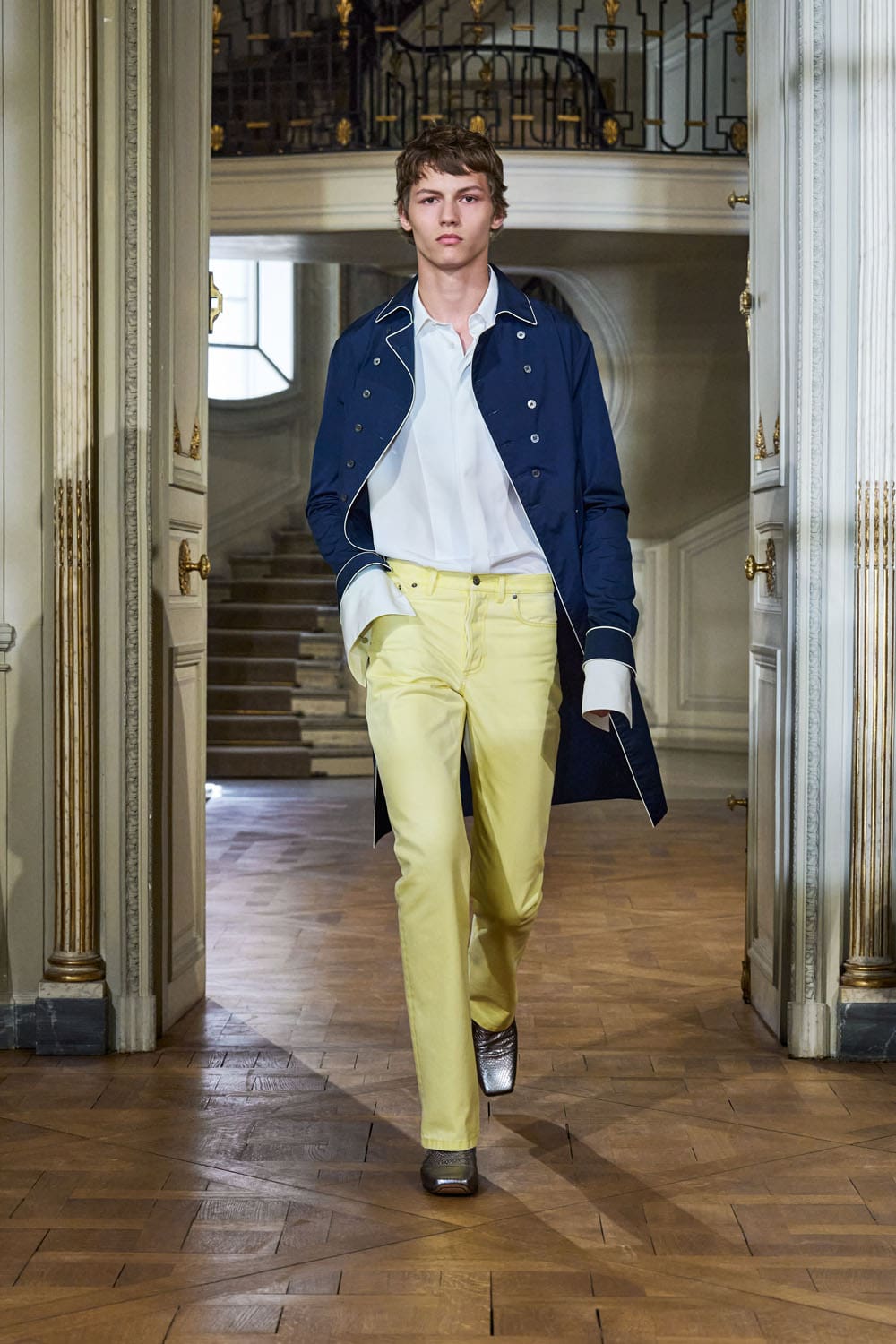
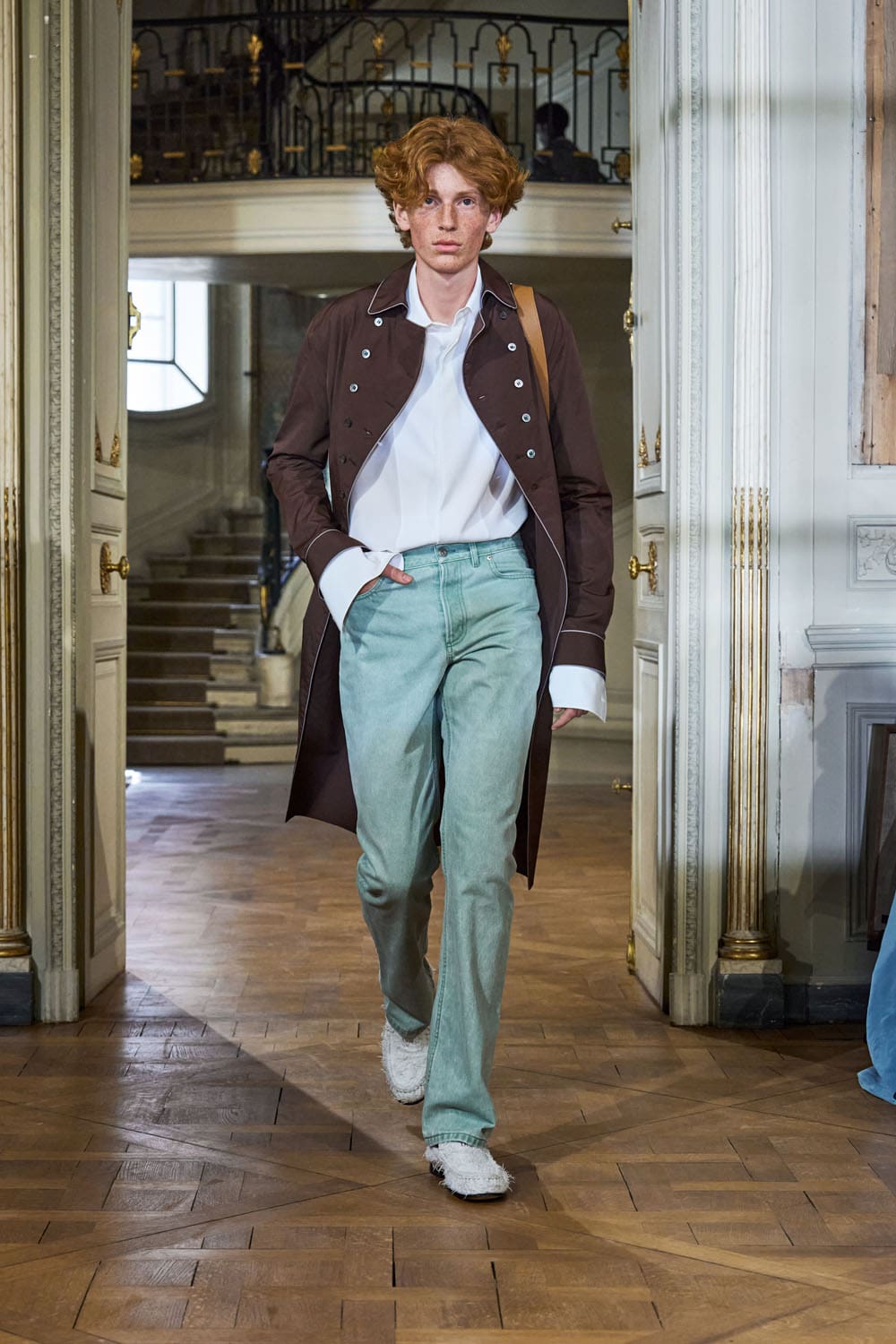
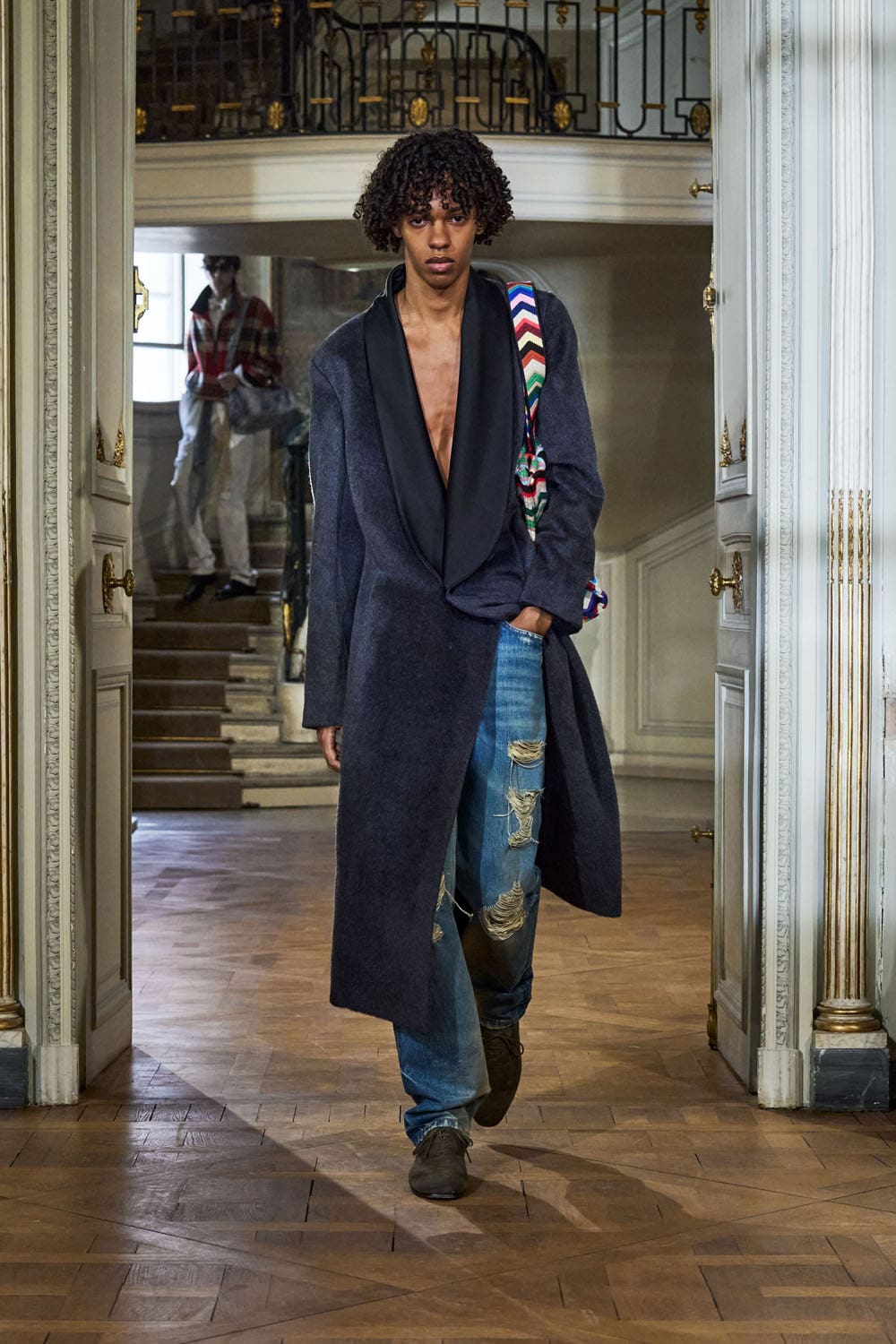
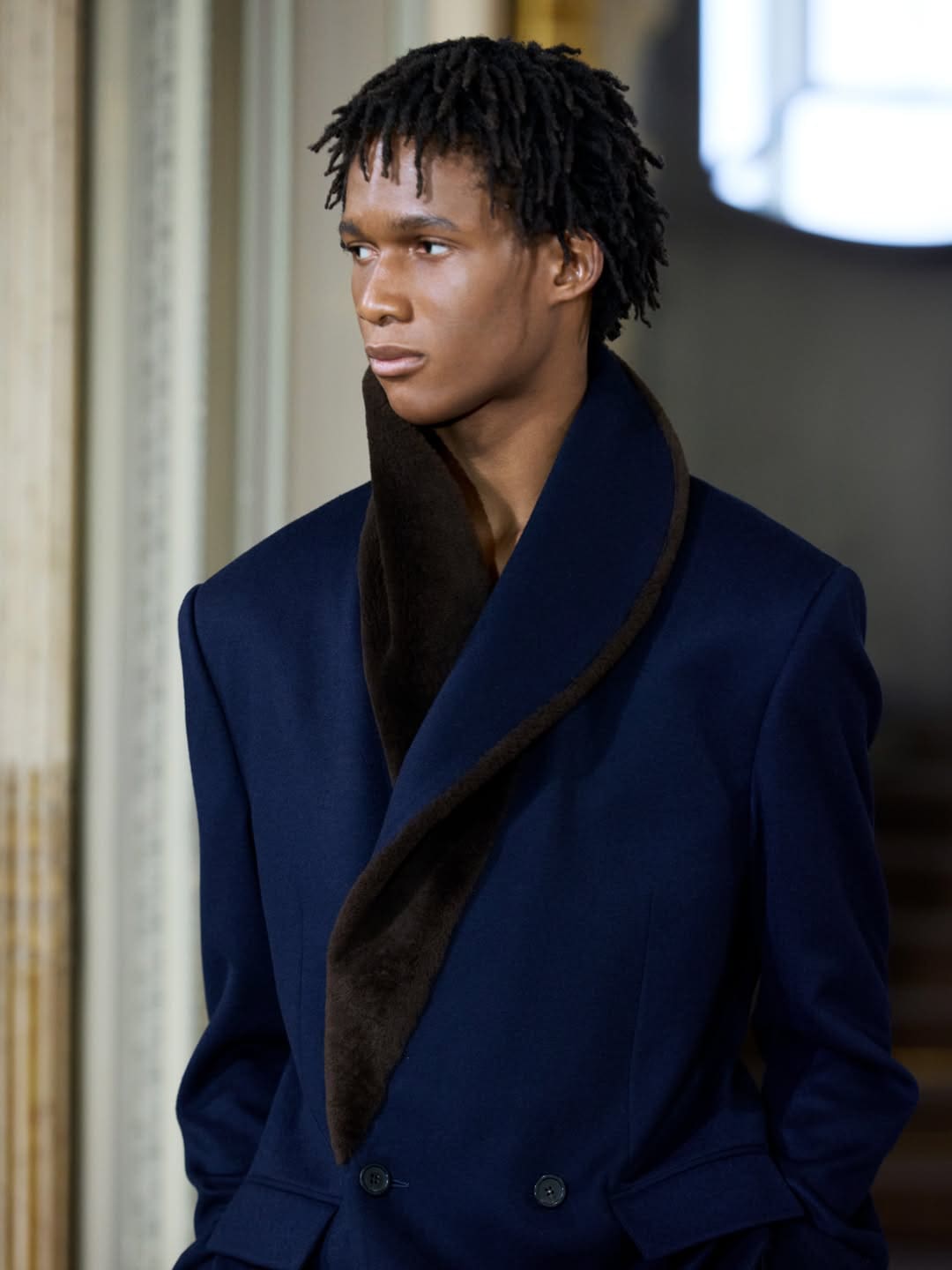
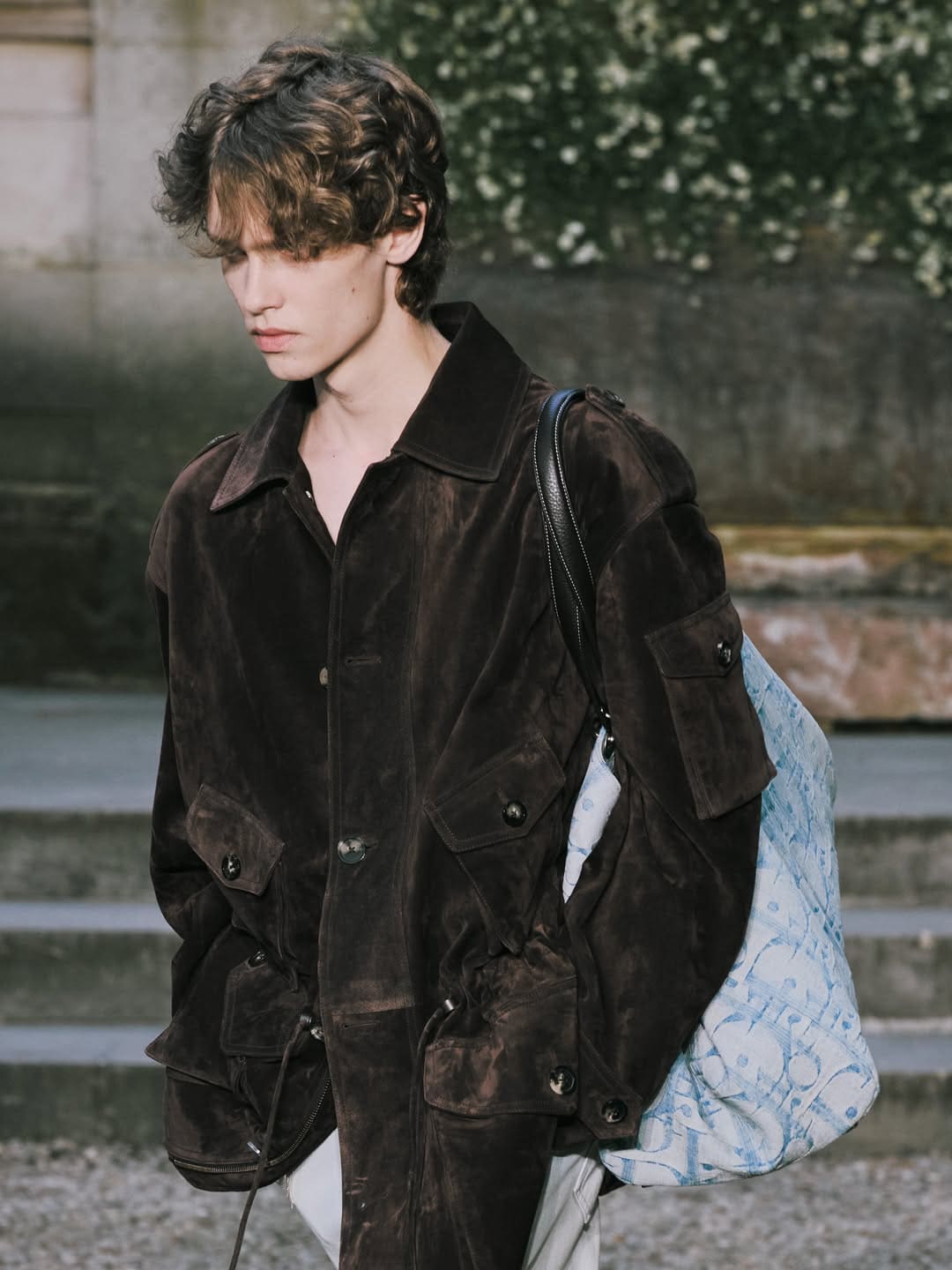
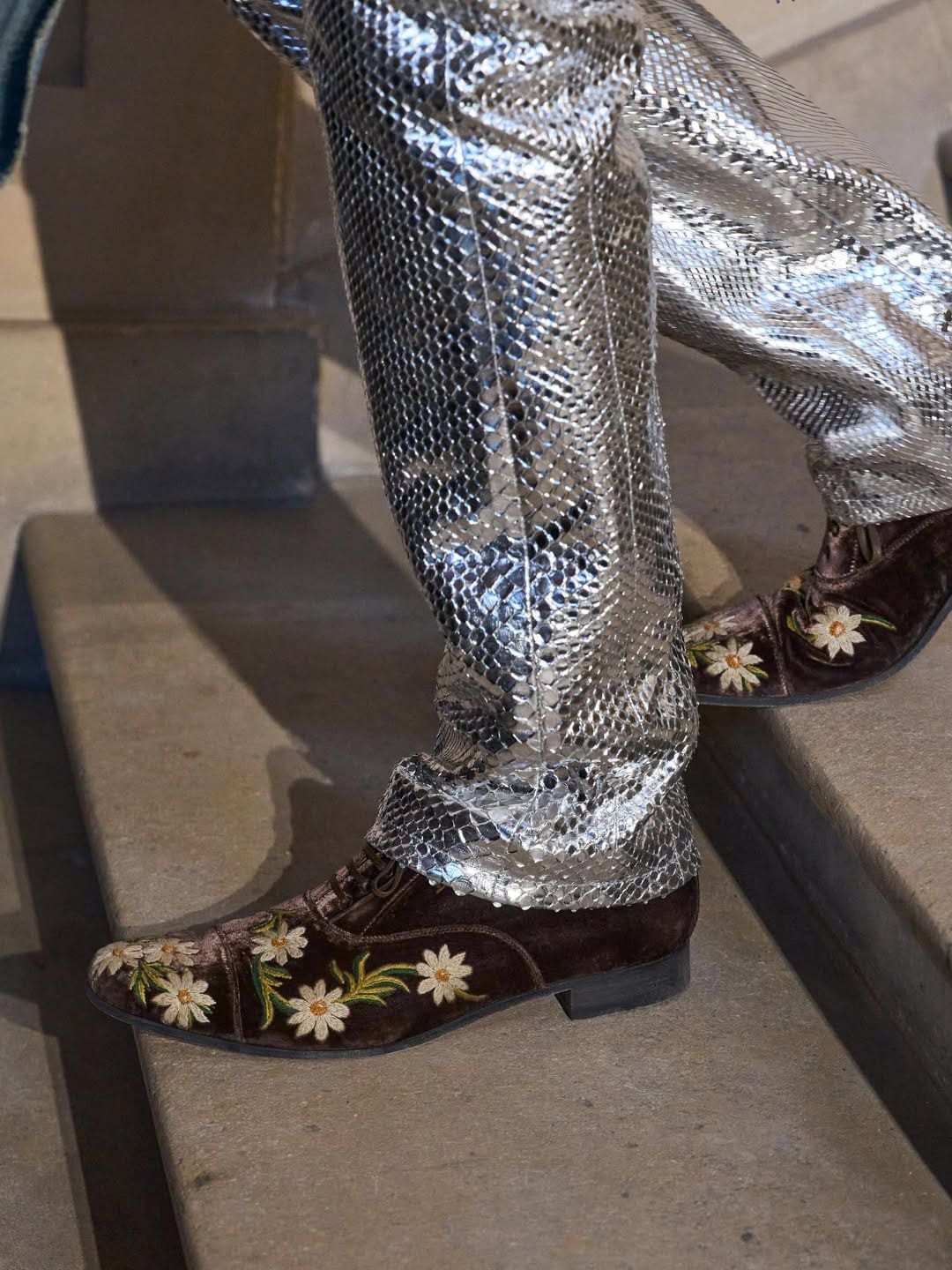
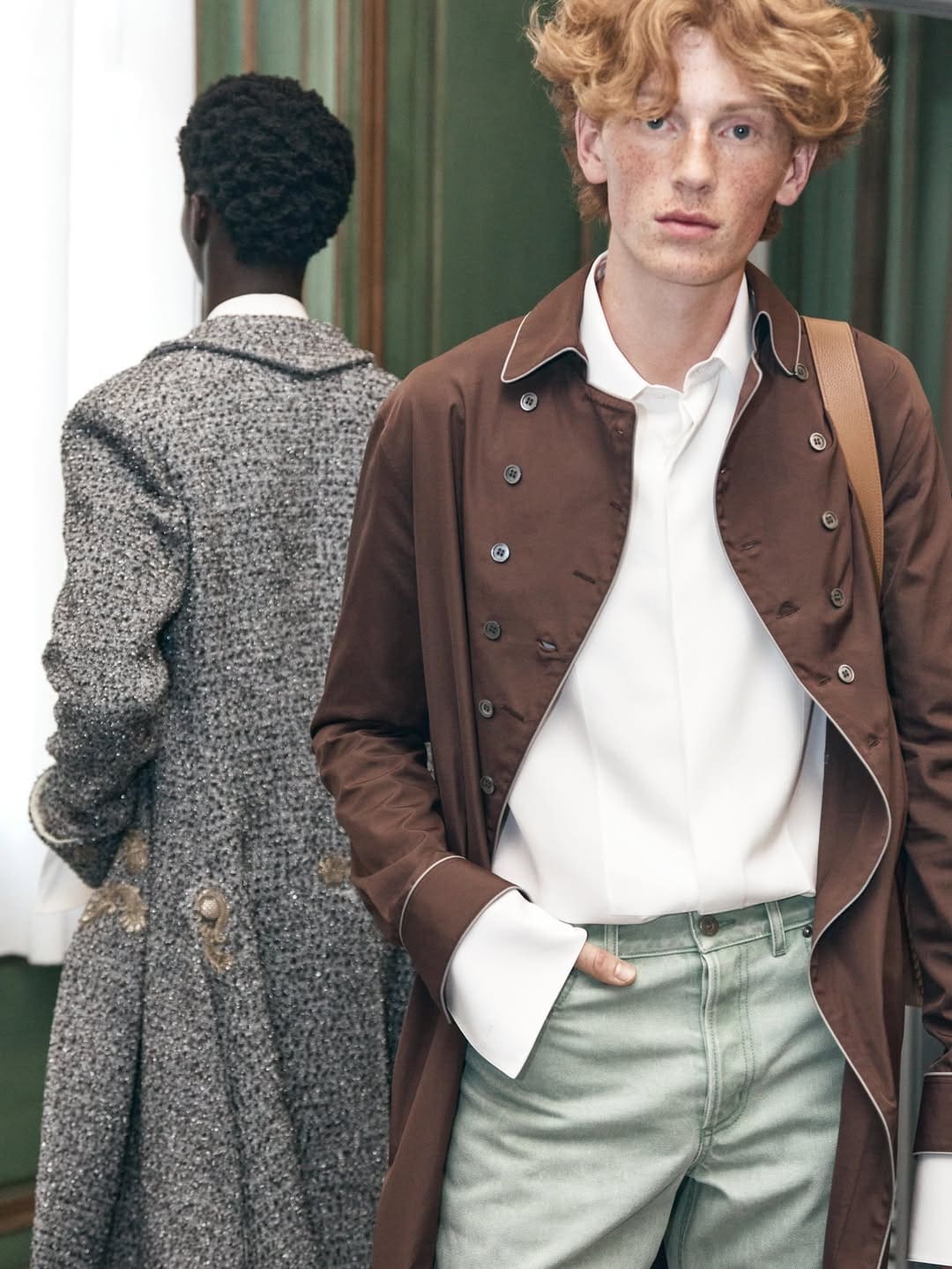
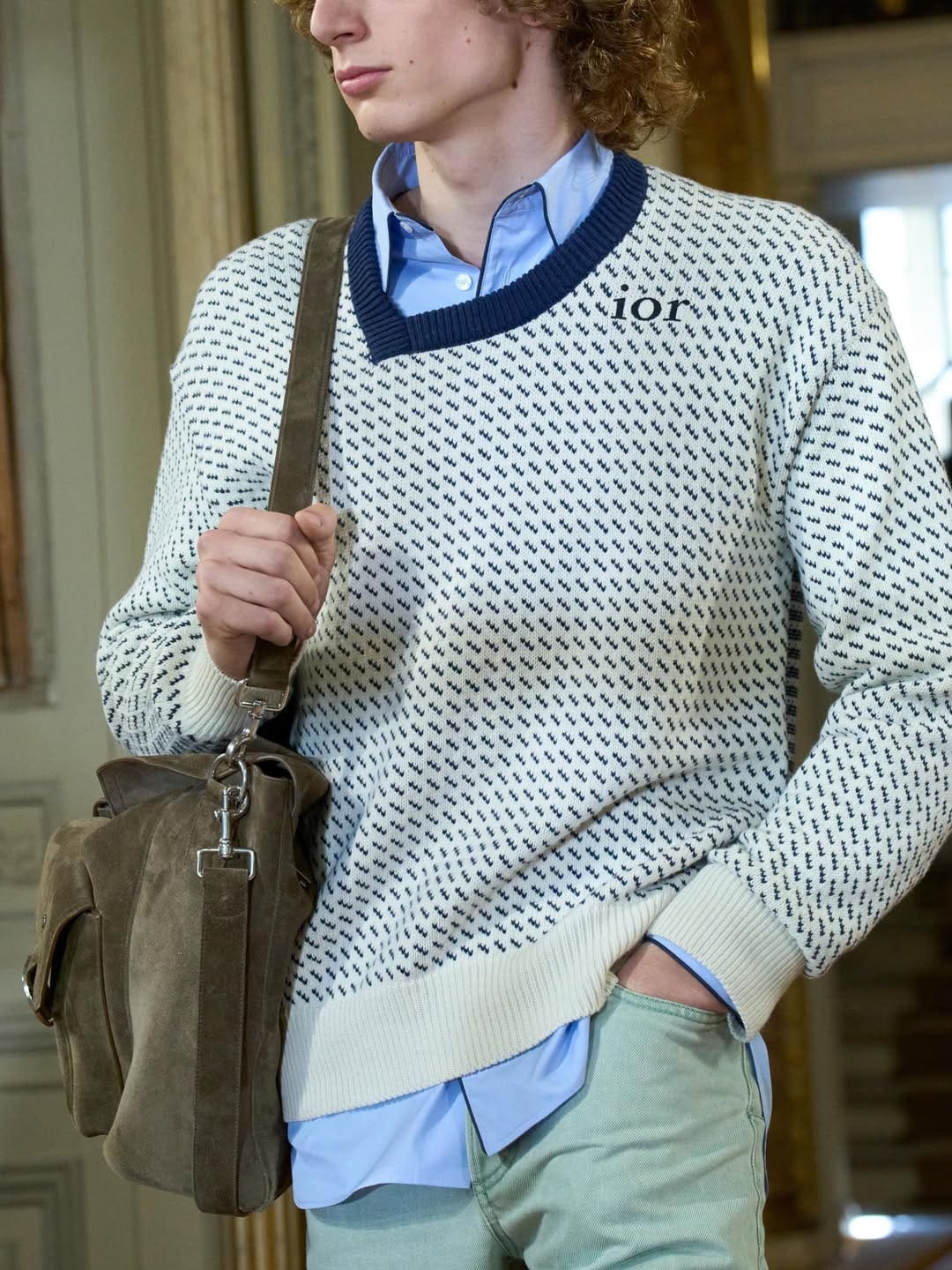
The denim followed the exact same destructive treatment. A pristine camel suede coat is sharply subverted by a pair of light-wash jeans shredded aggressively down the thighs, while a refined houndstooth overcoat and a giant, frayed textile floral brooch are paired with classic blue jeans that look as though they barely survived a encounter with a weed-whacker. Even when the collection leaned into cleaner lines, the styling kept it stubbornly informal, such as a sleek, deep navy coat over pale yellow trousers, grounded by metallic silver square-toe shoes.
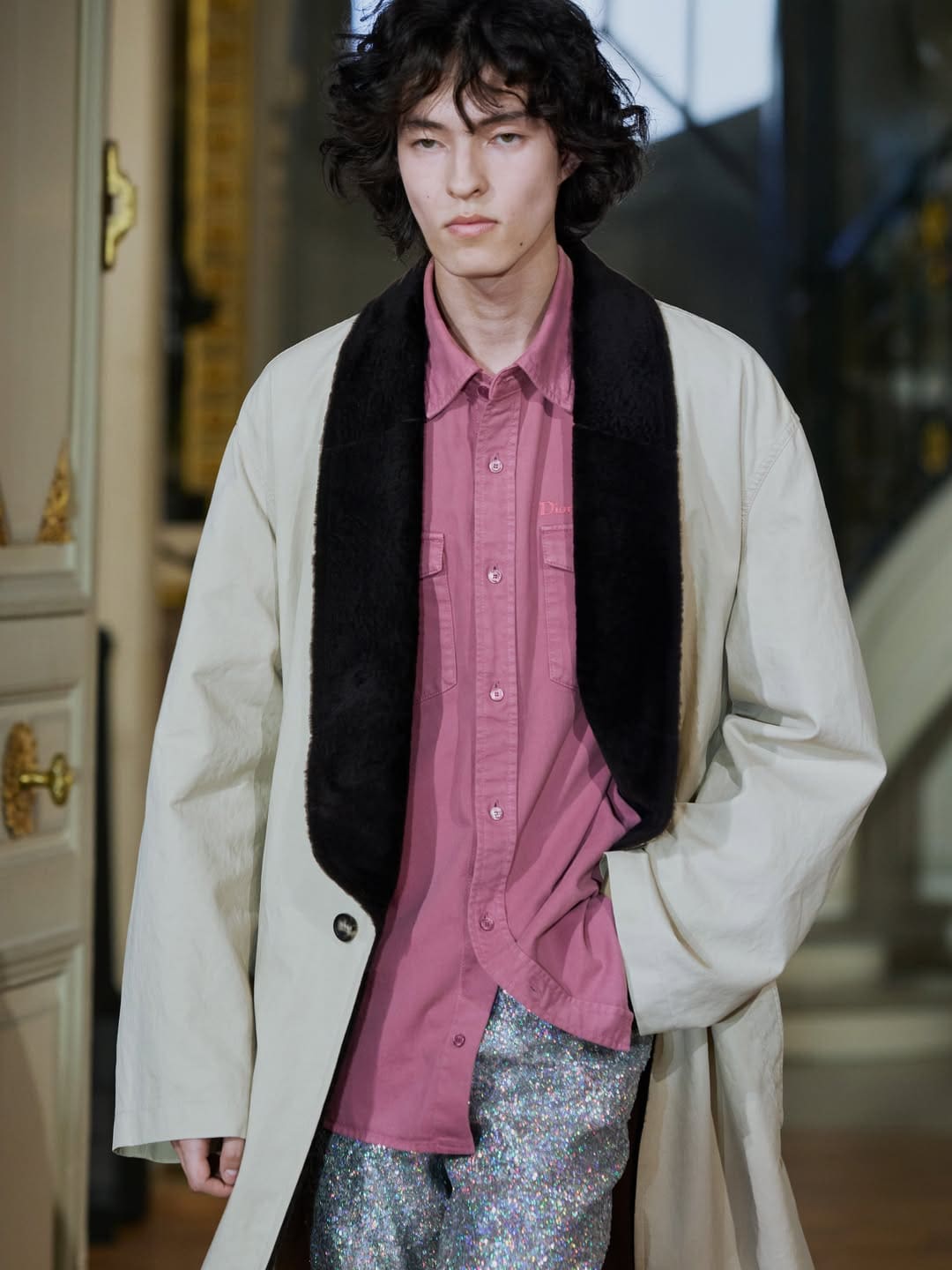
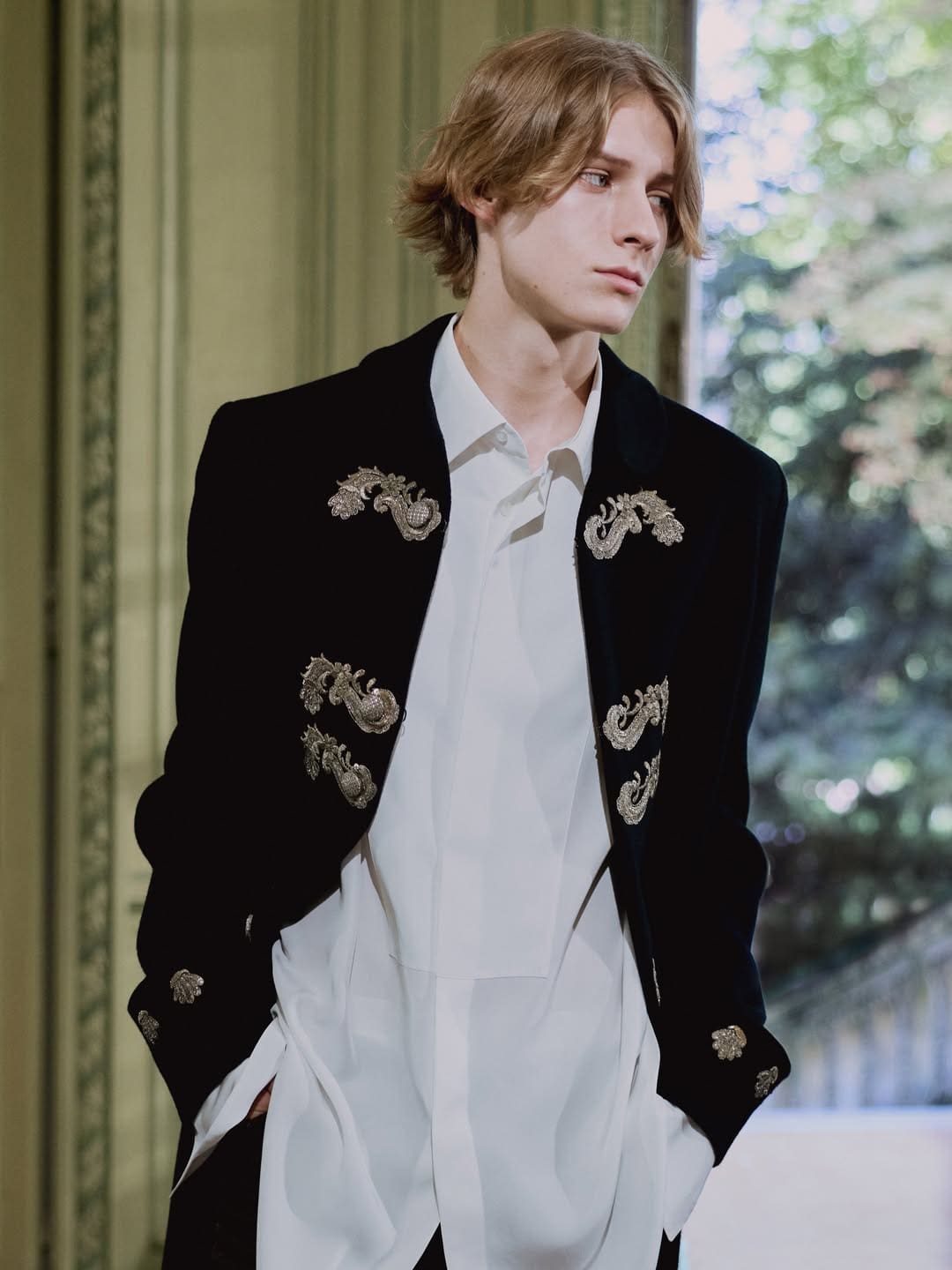
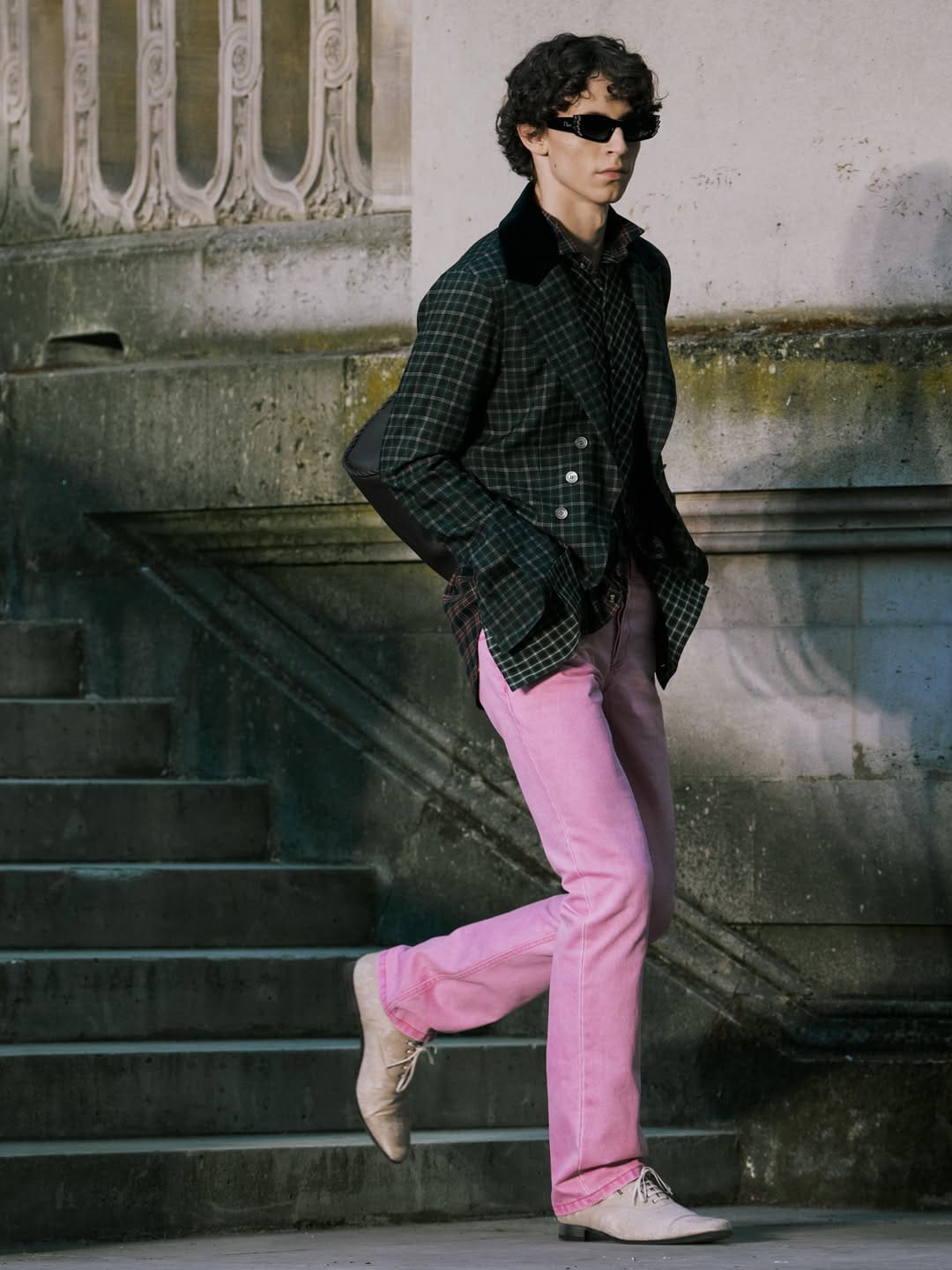
Dior Spring Summer 2027 Men Close Up
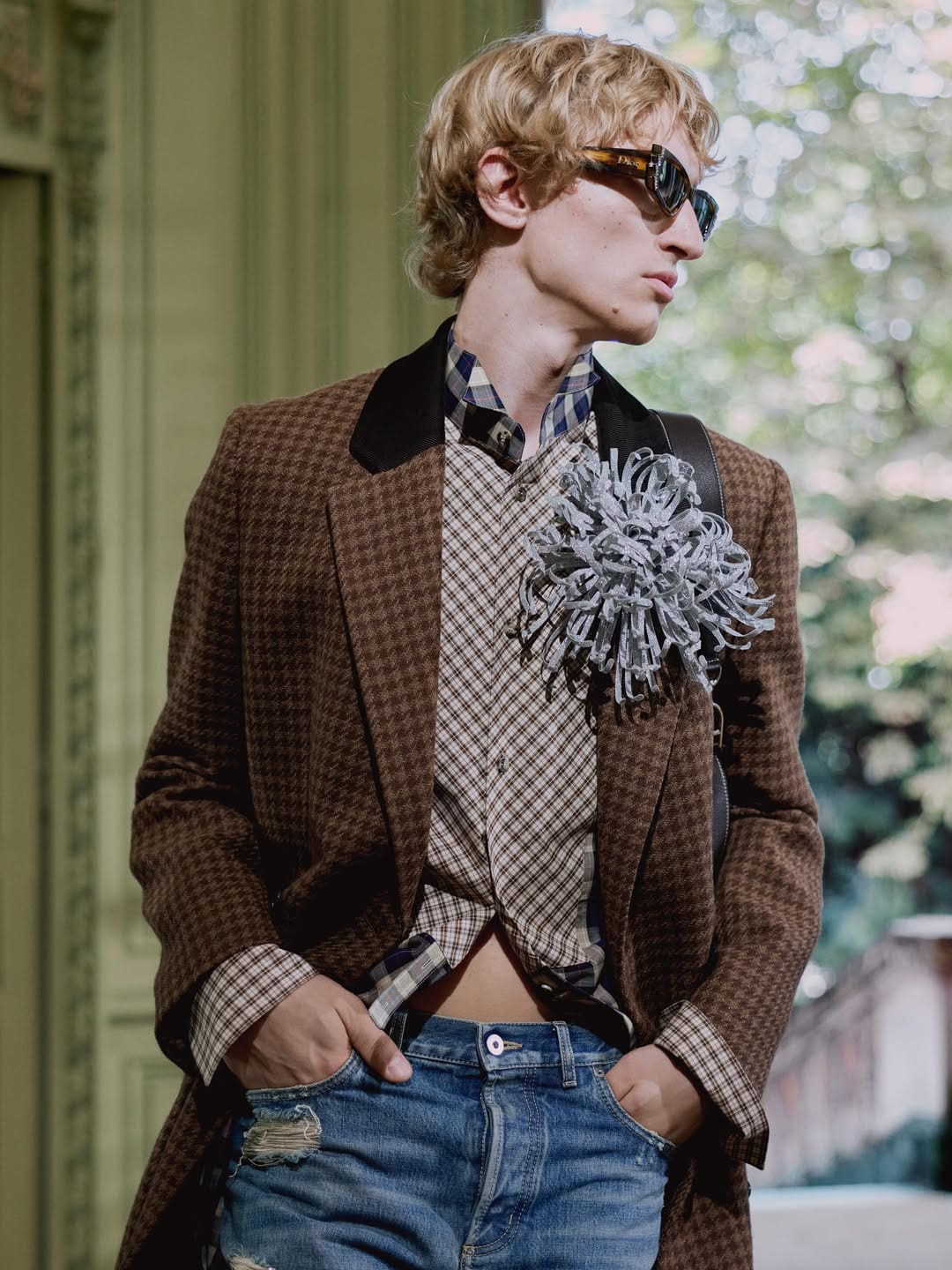
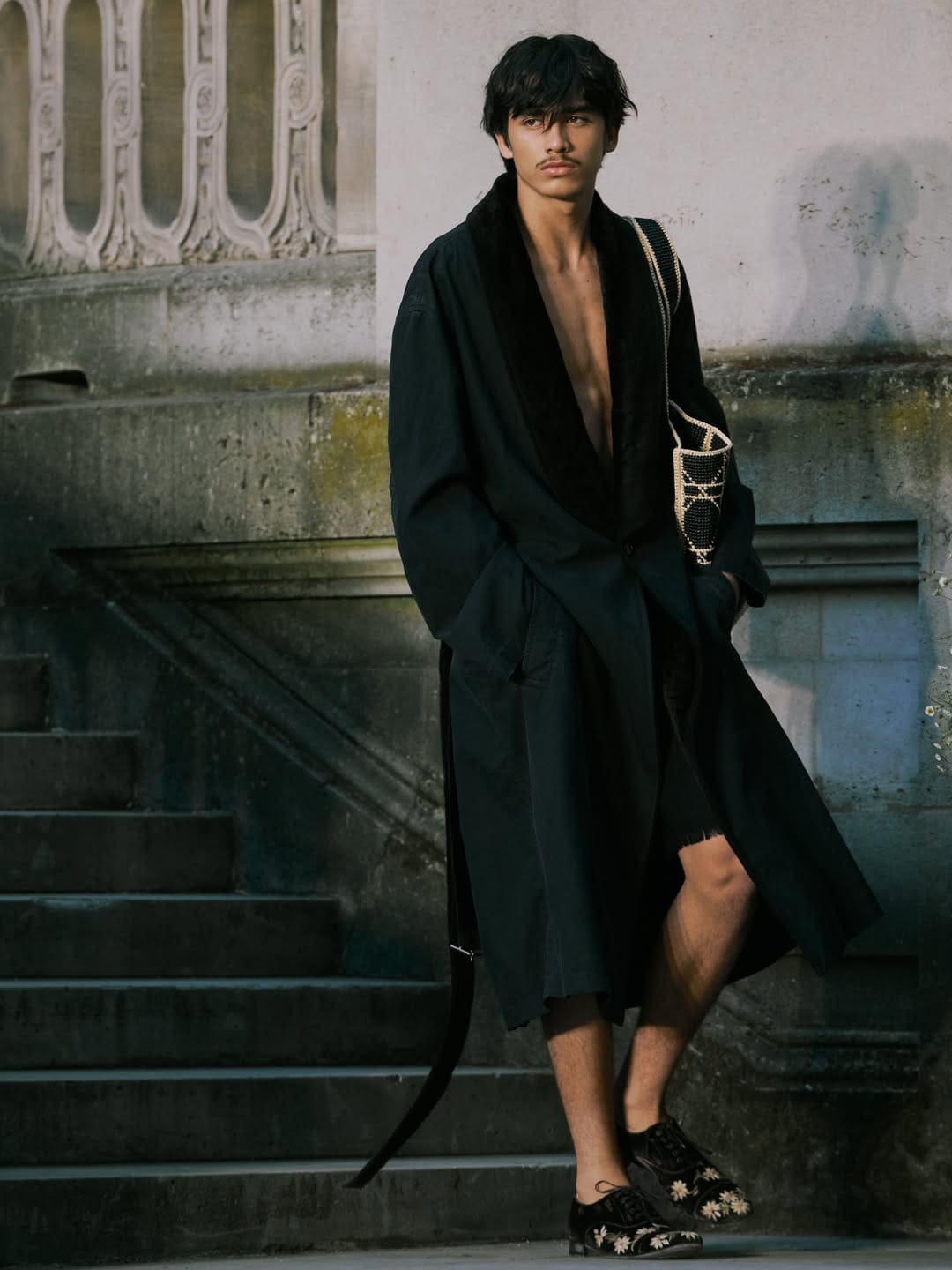
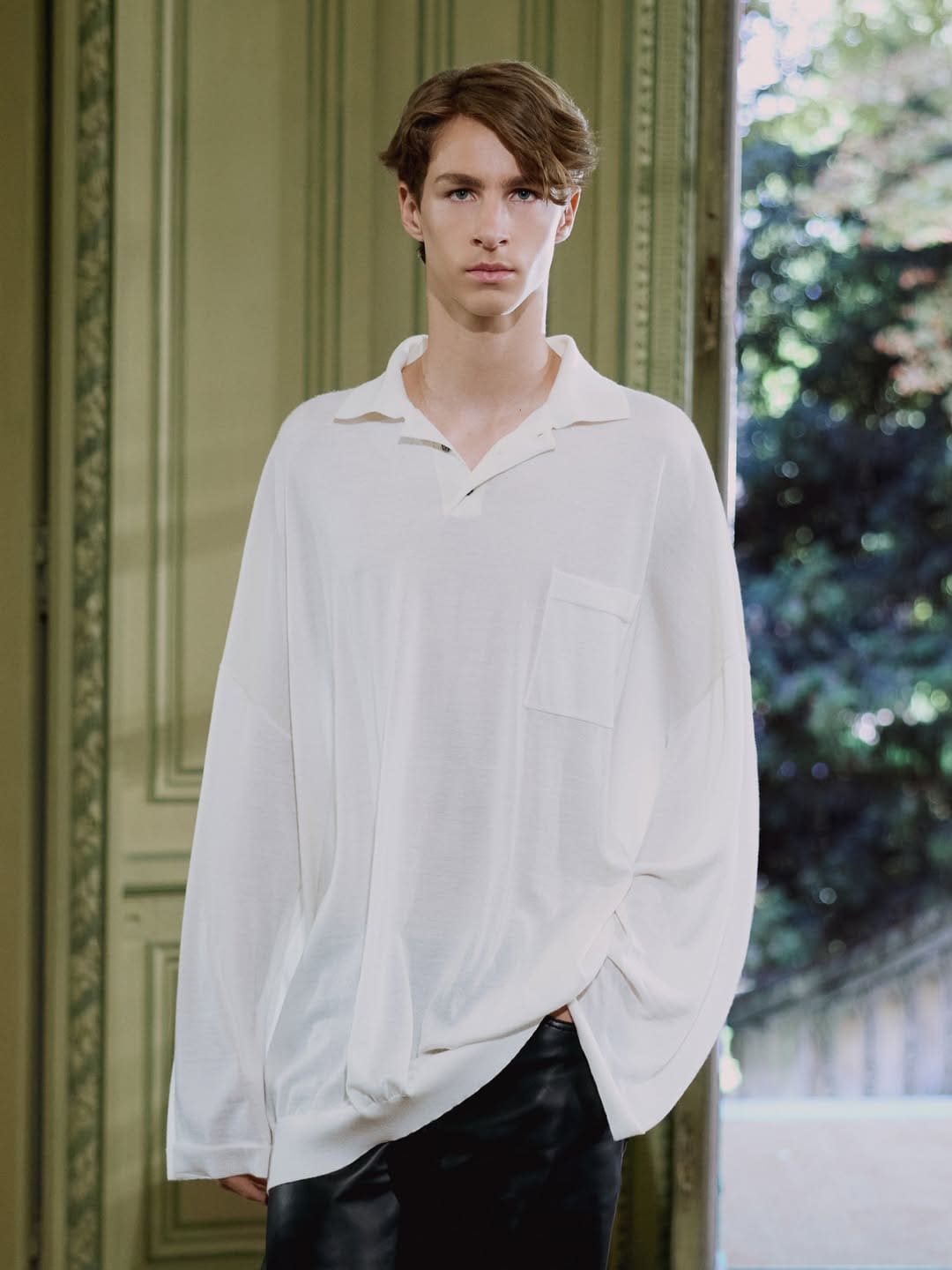
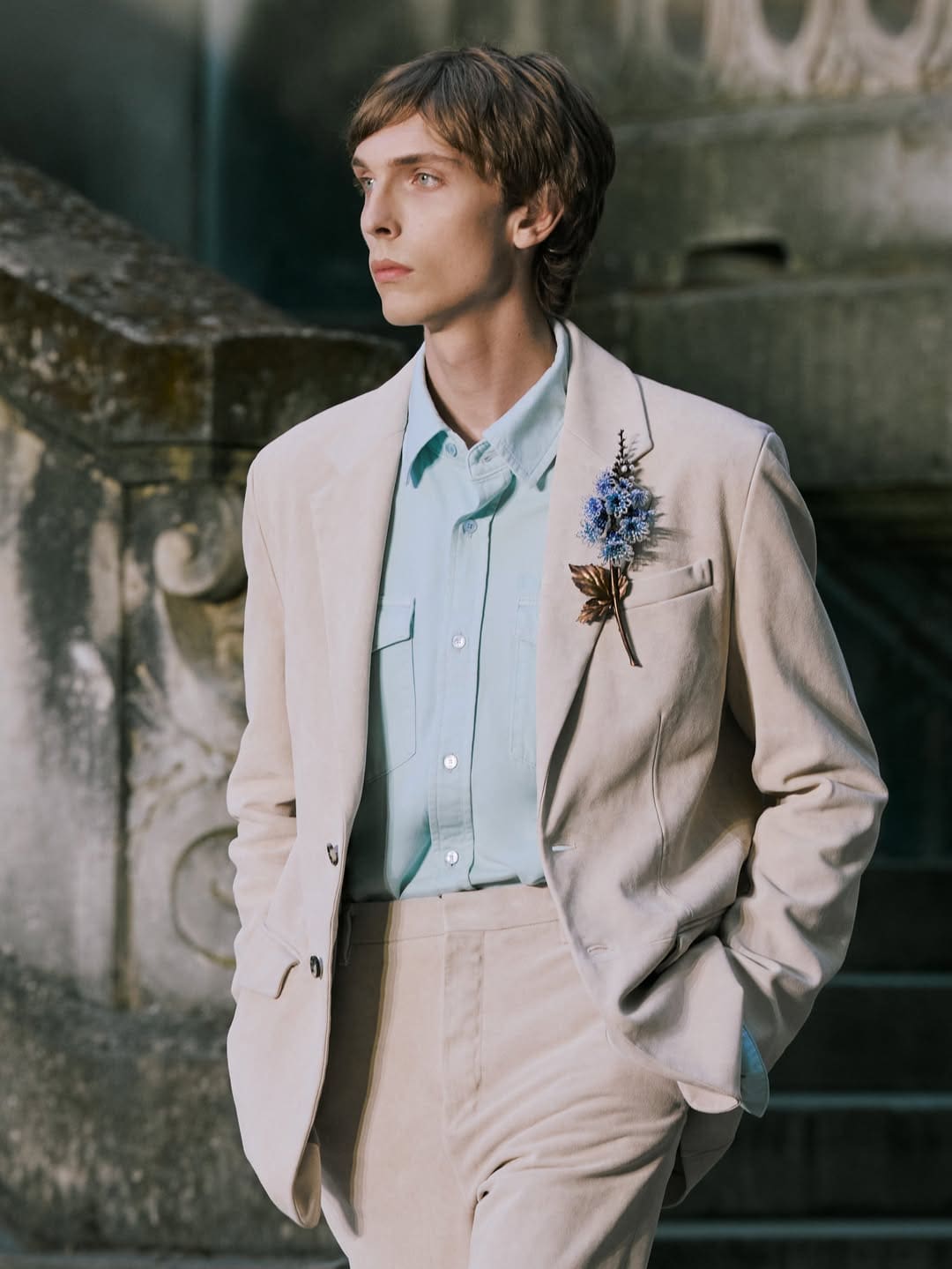
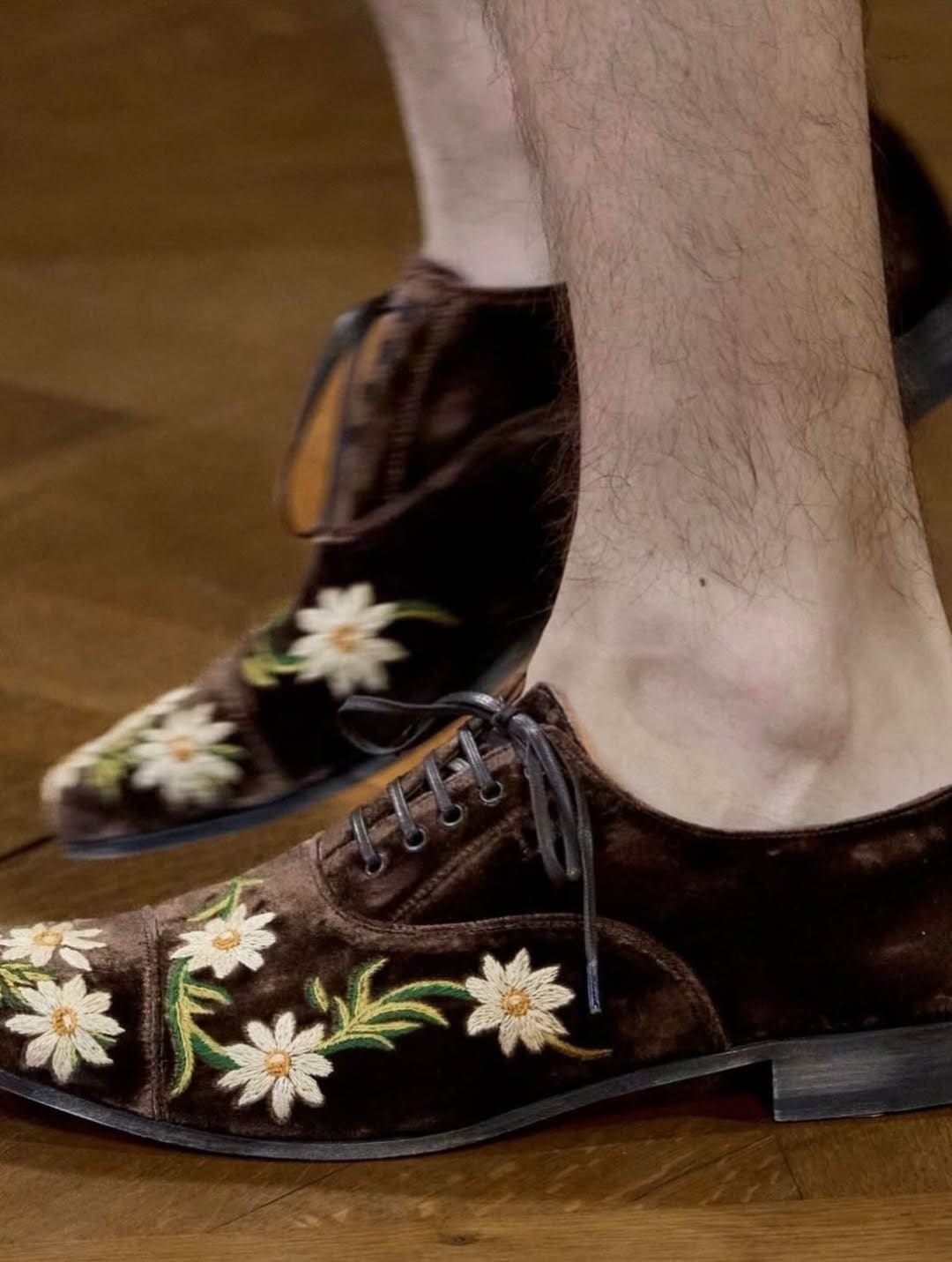
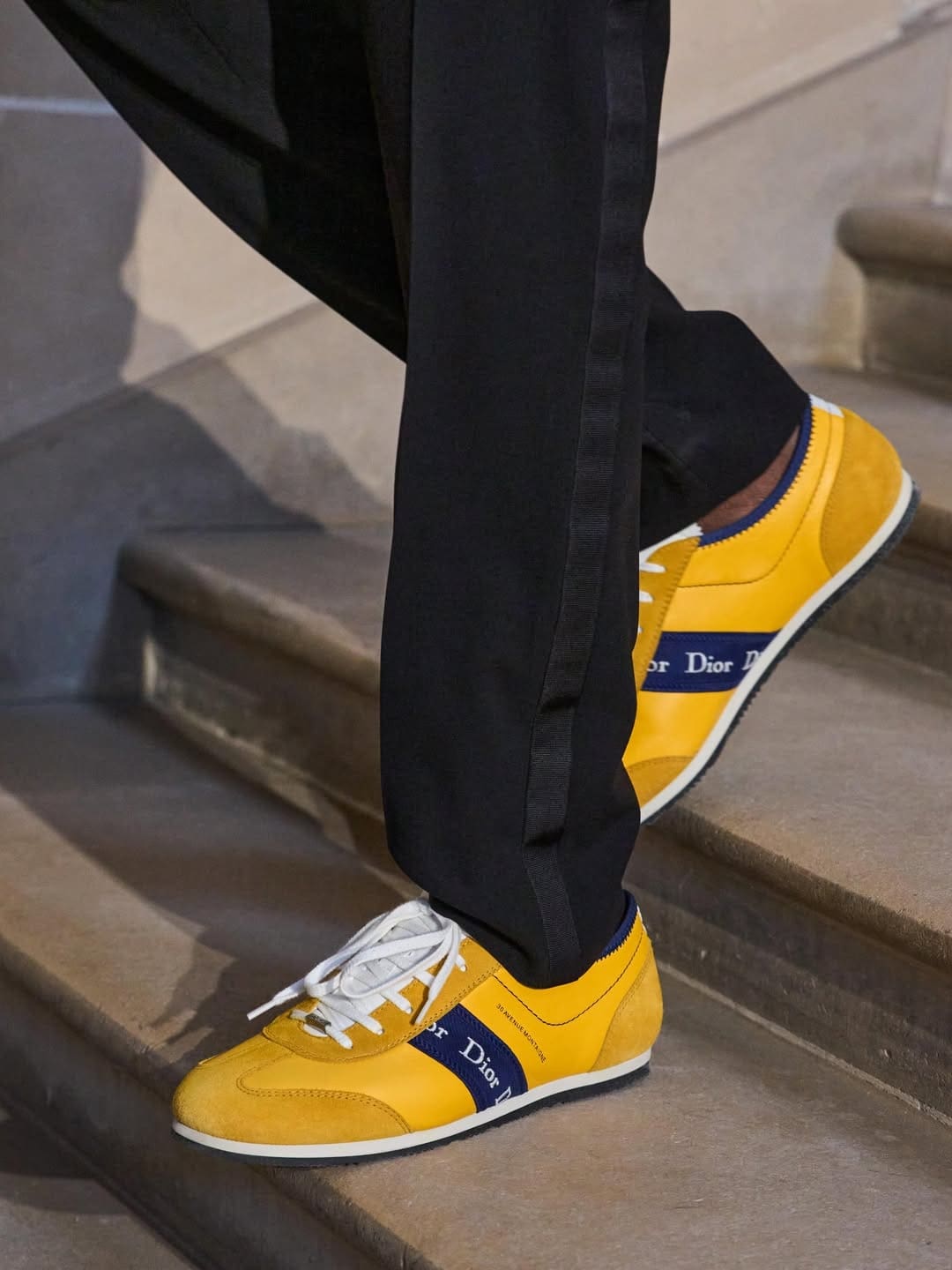
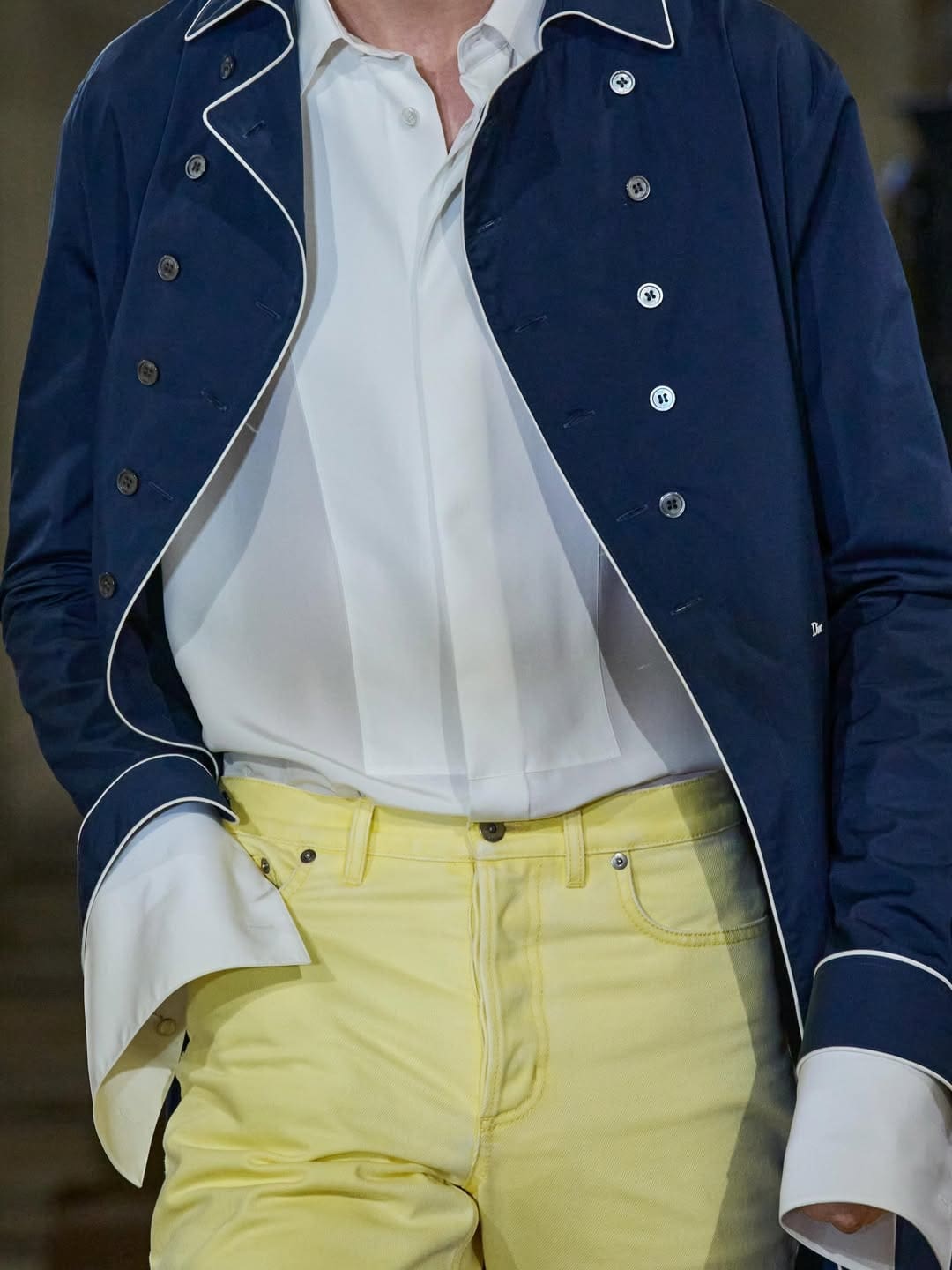
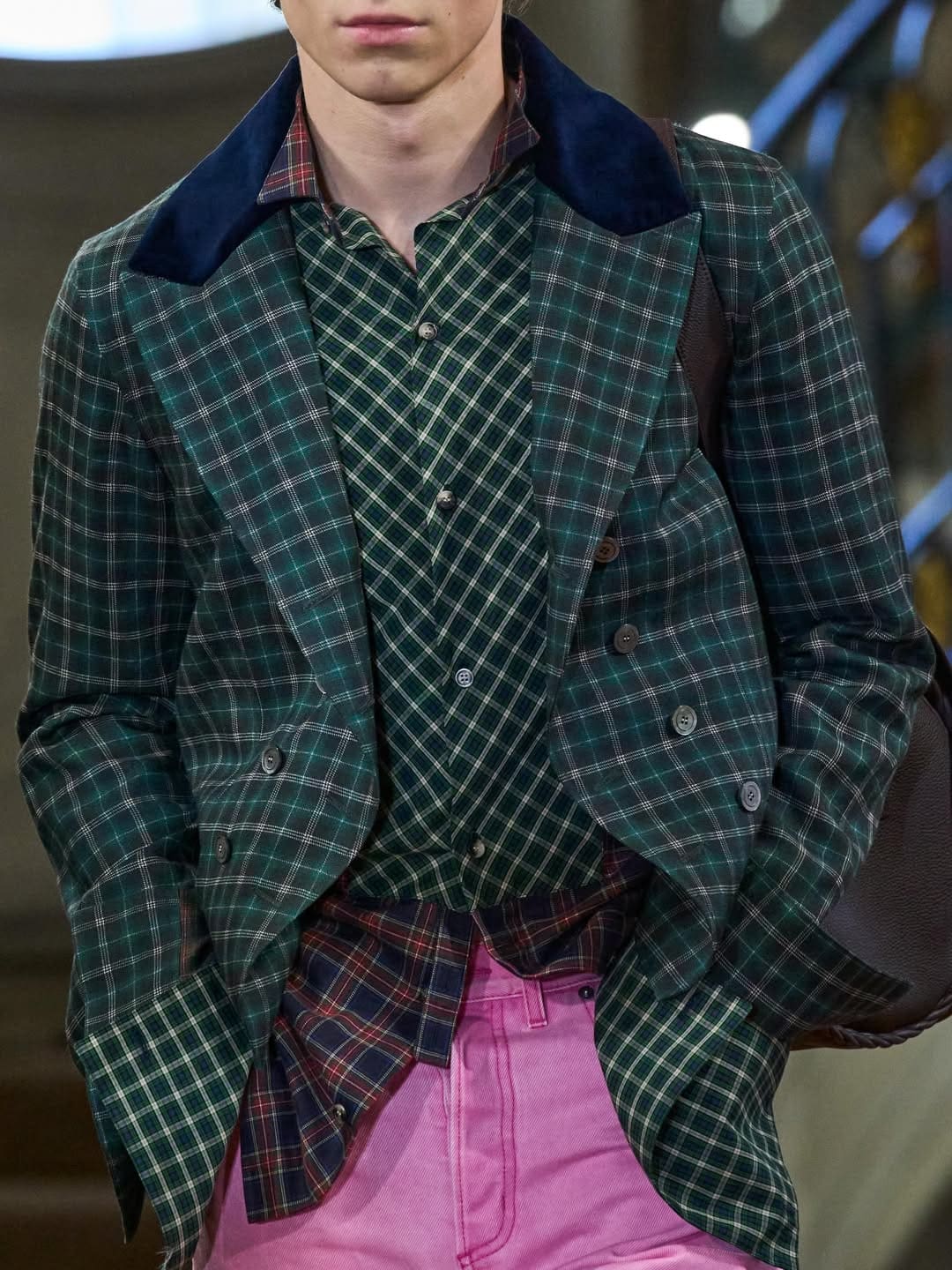
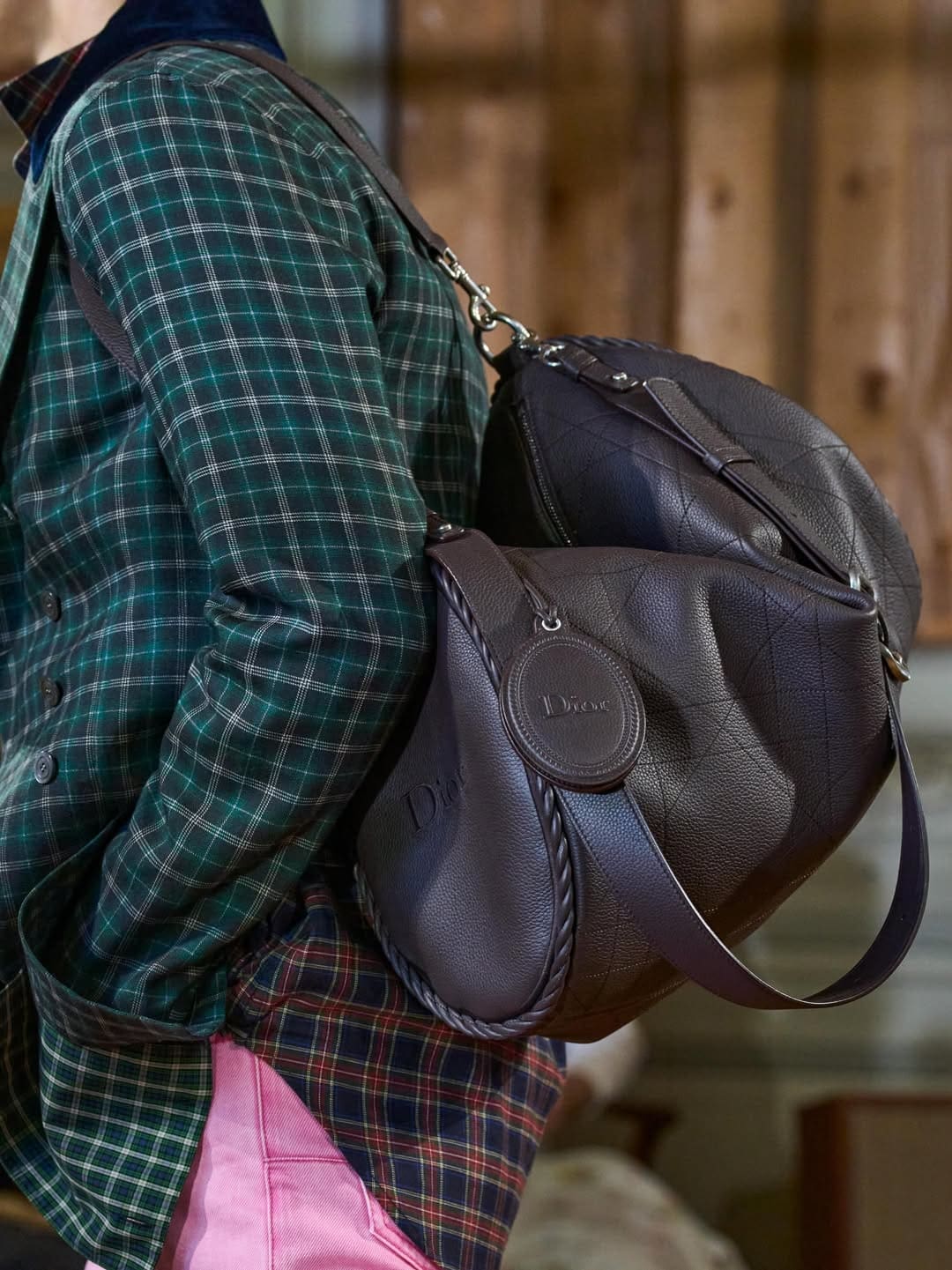
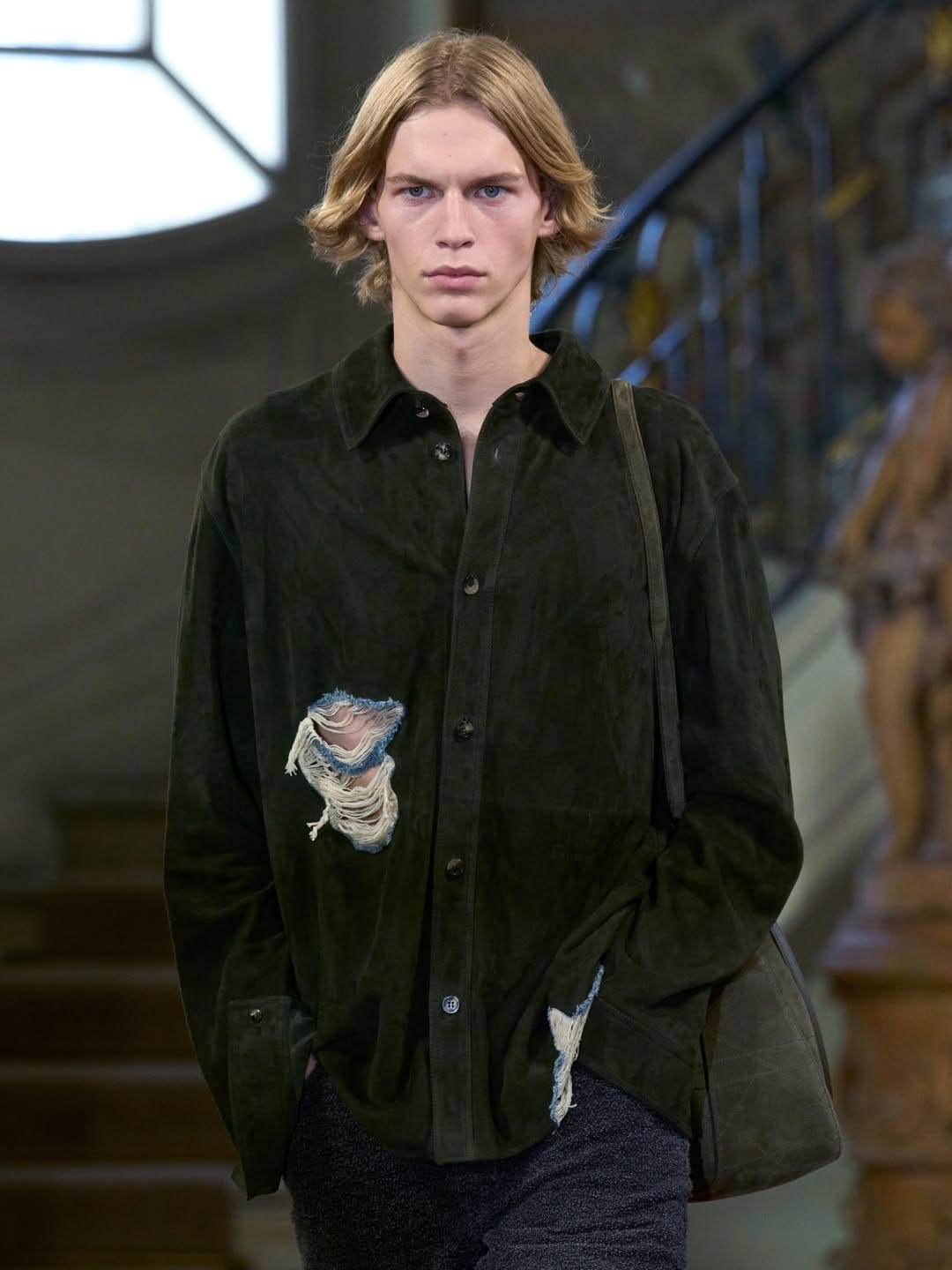
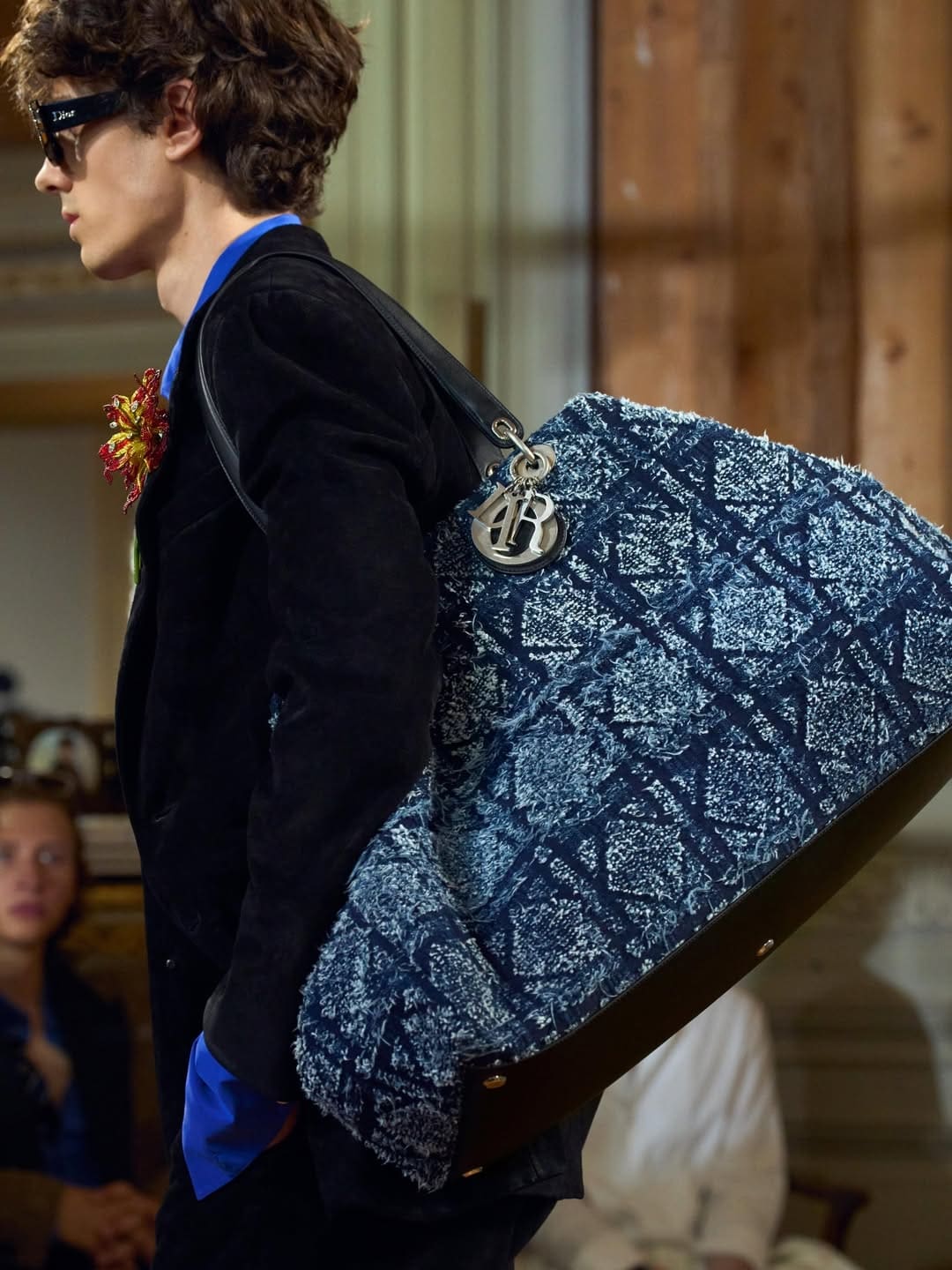
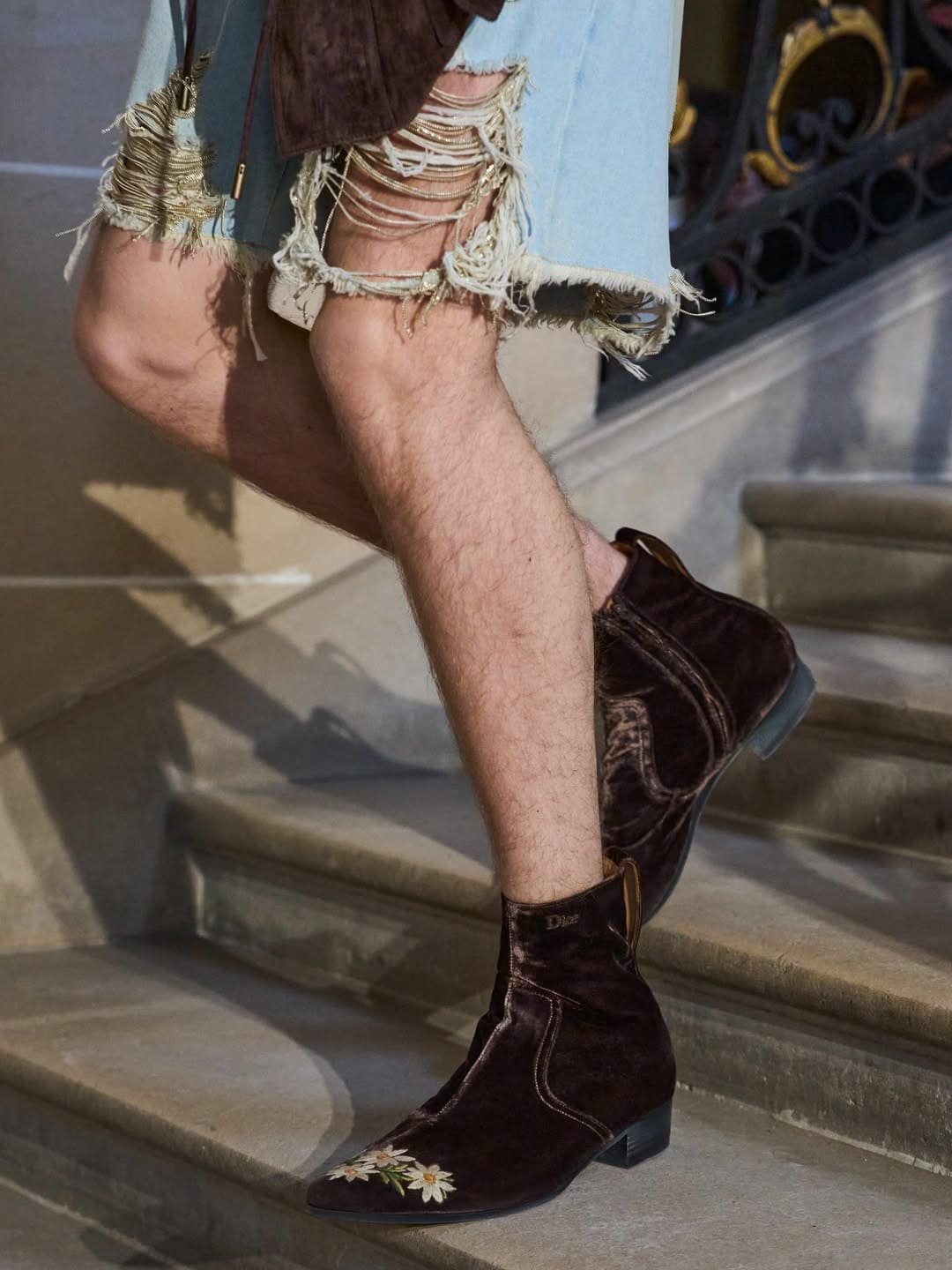
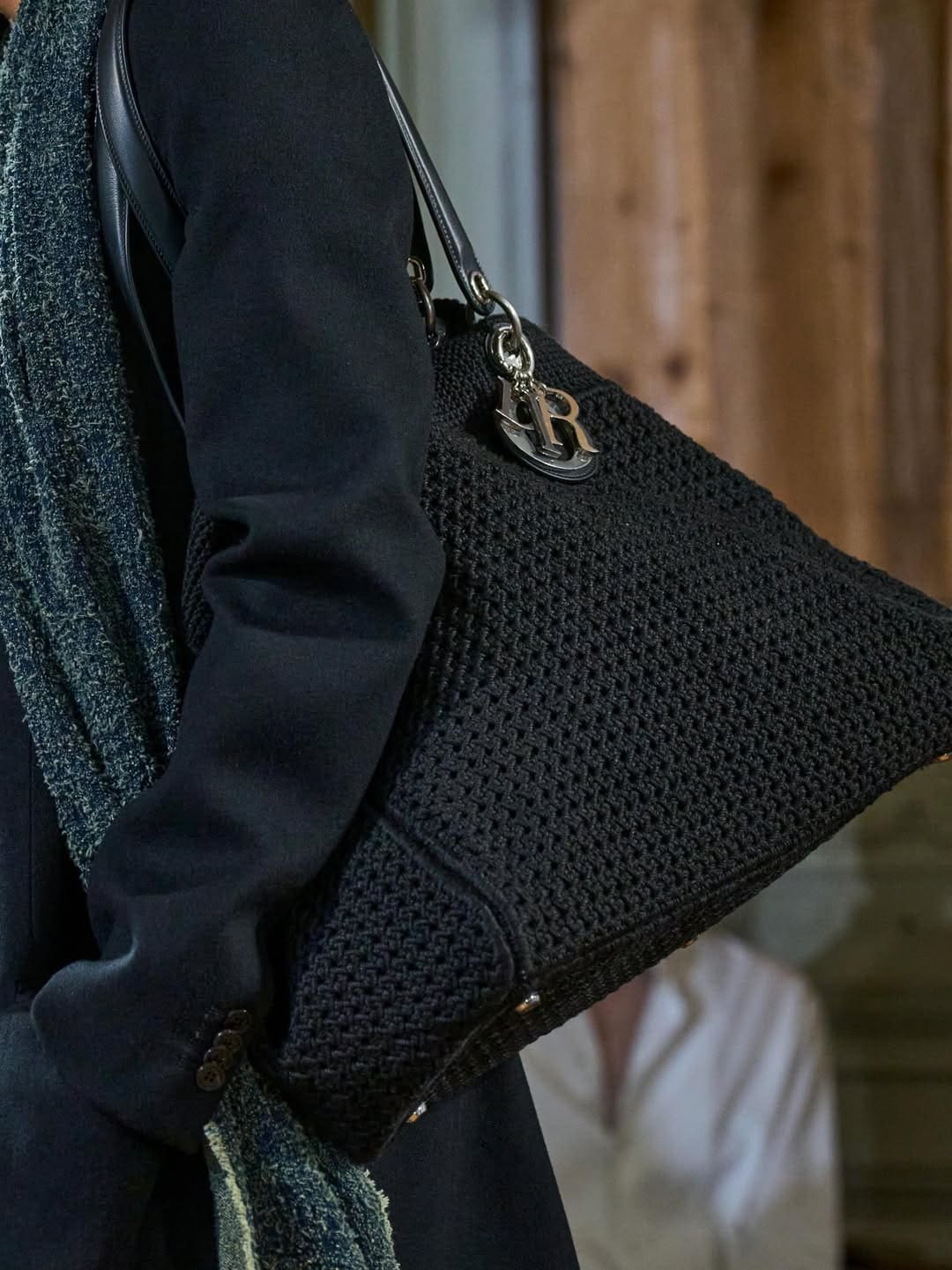
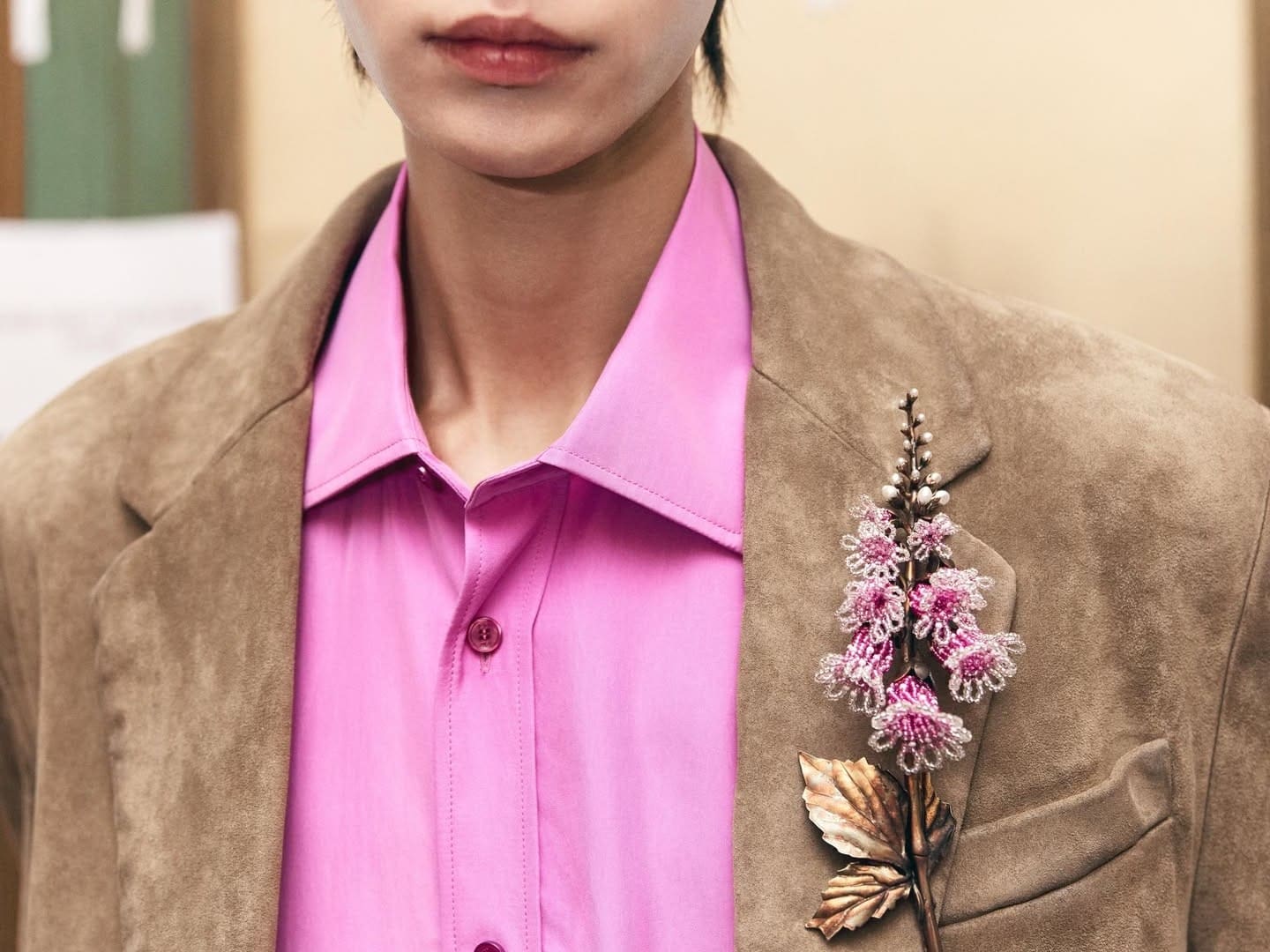
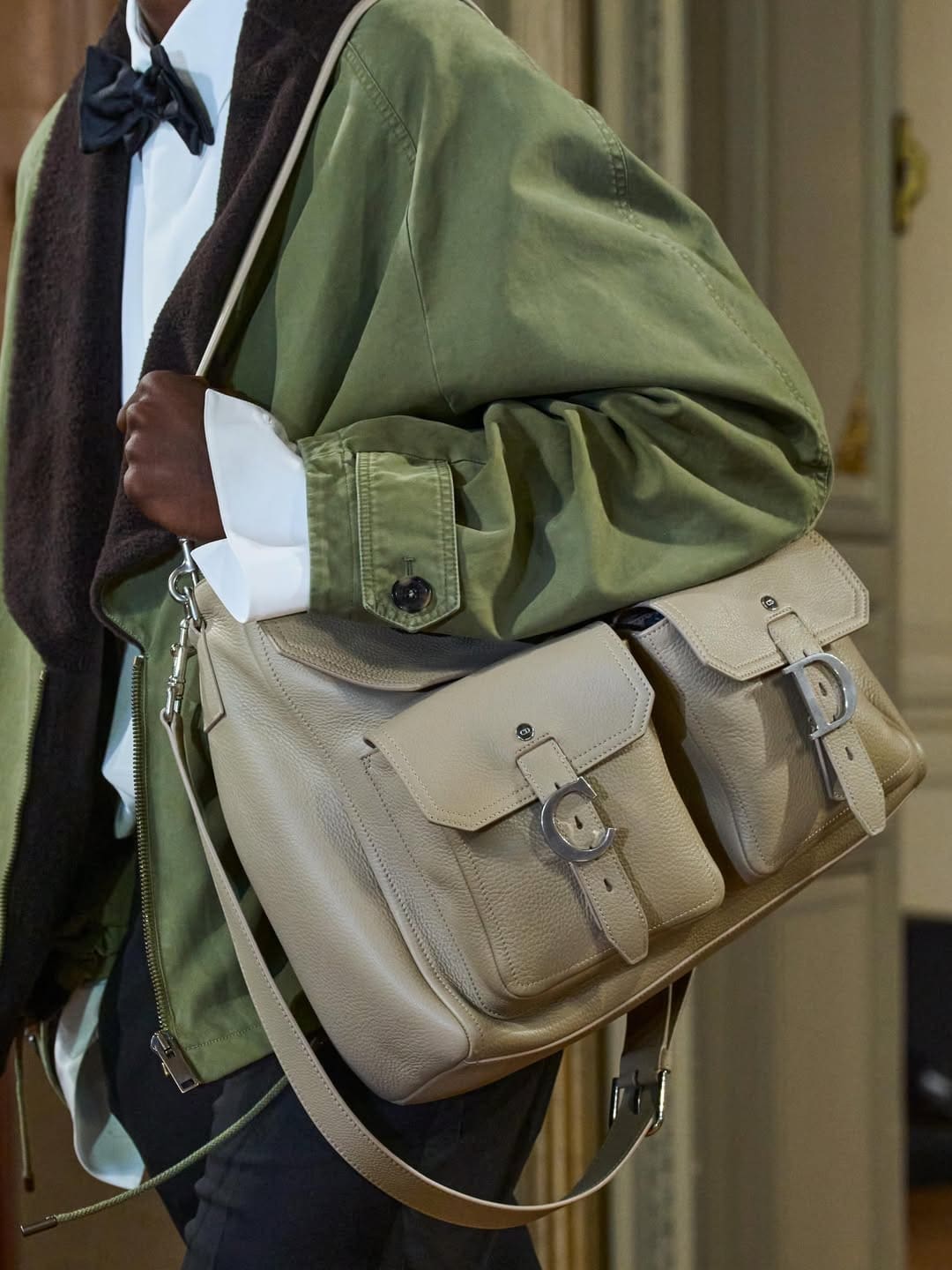
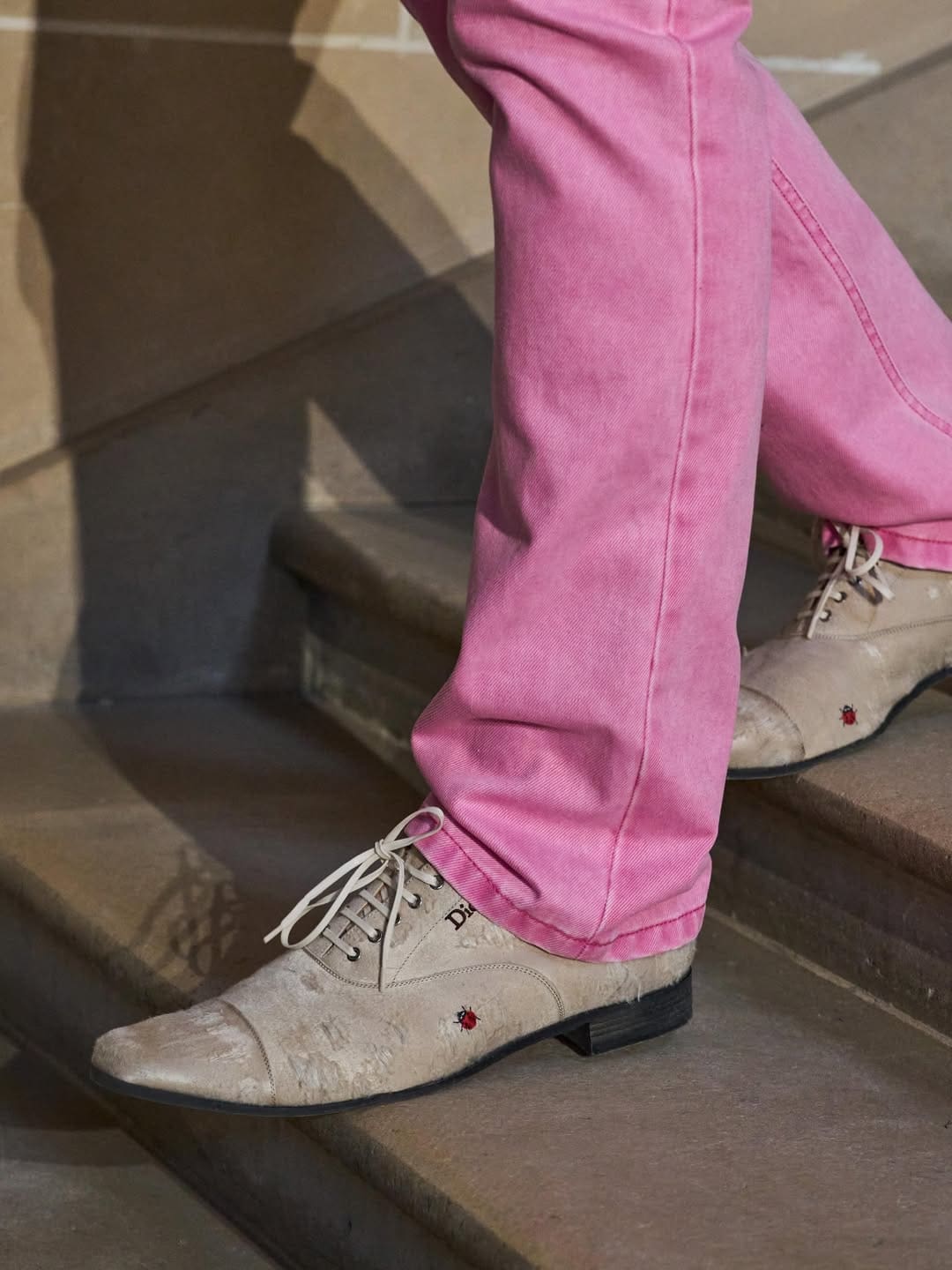
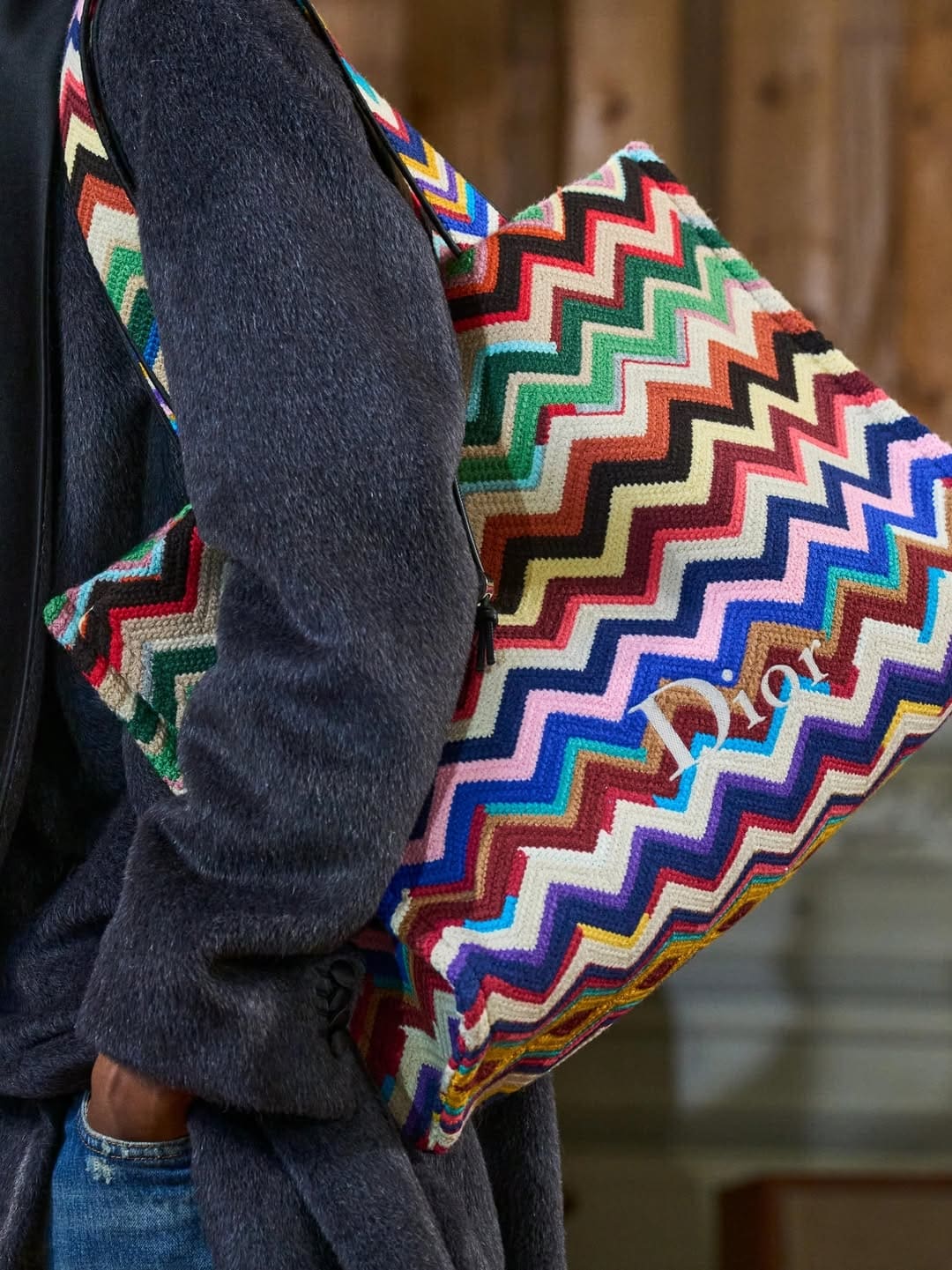
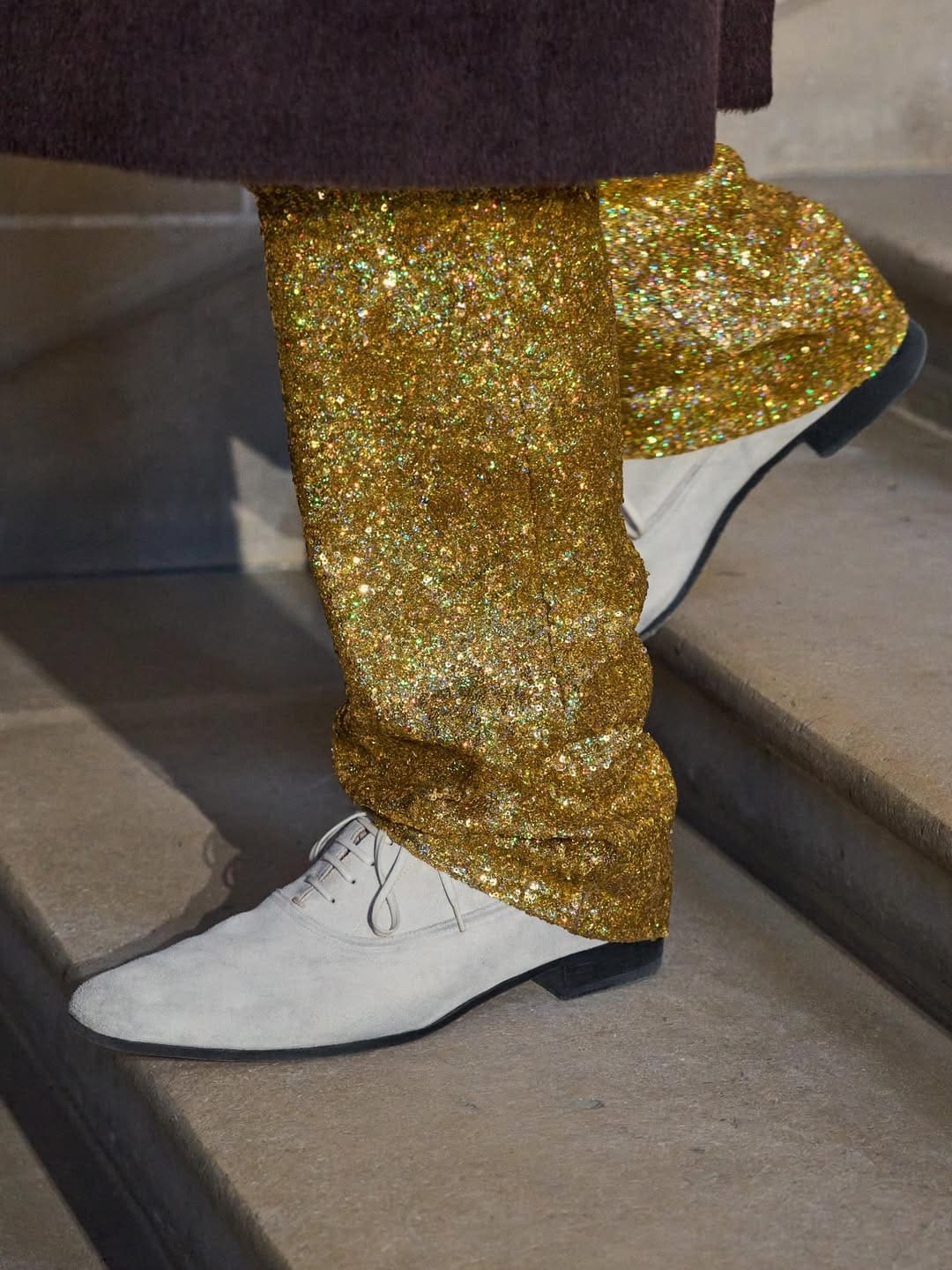
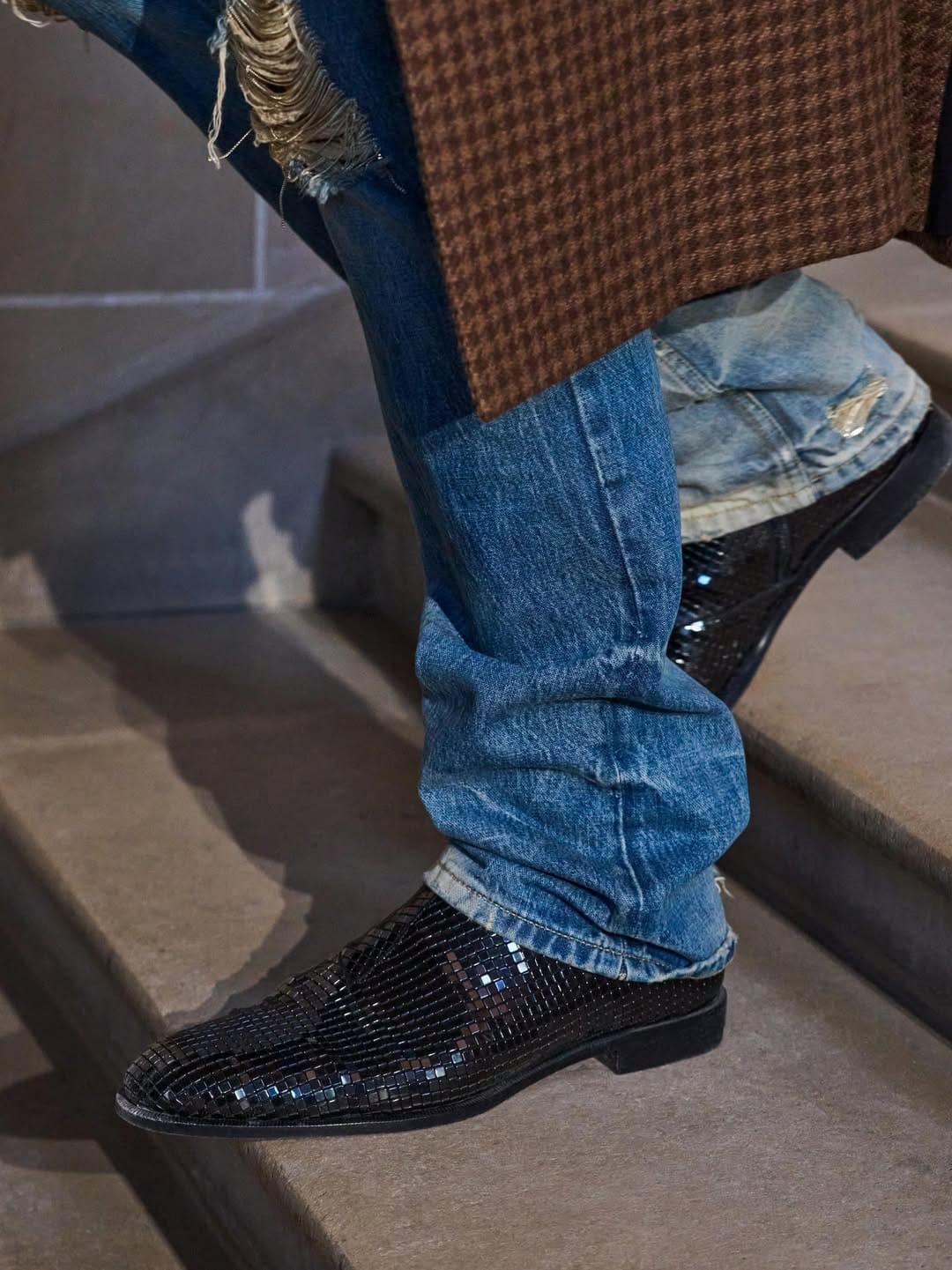
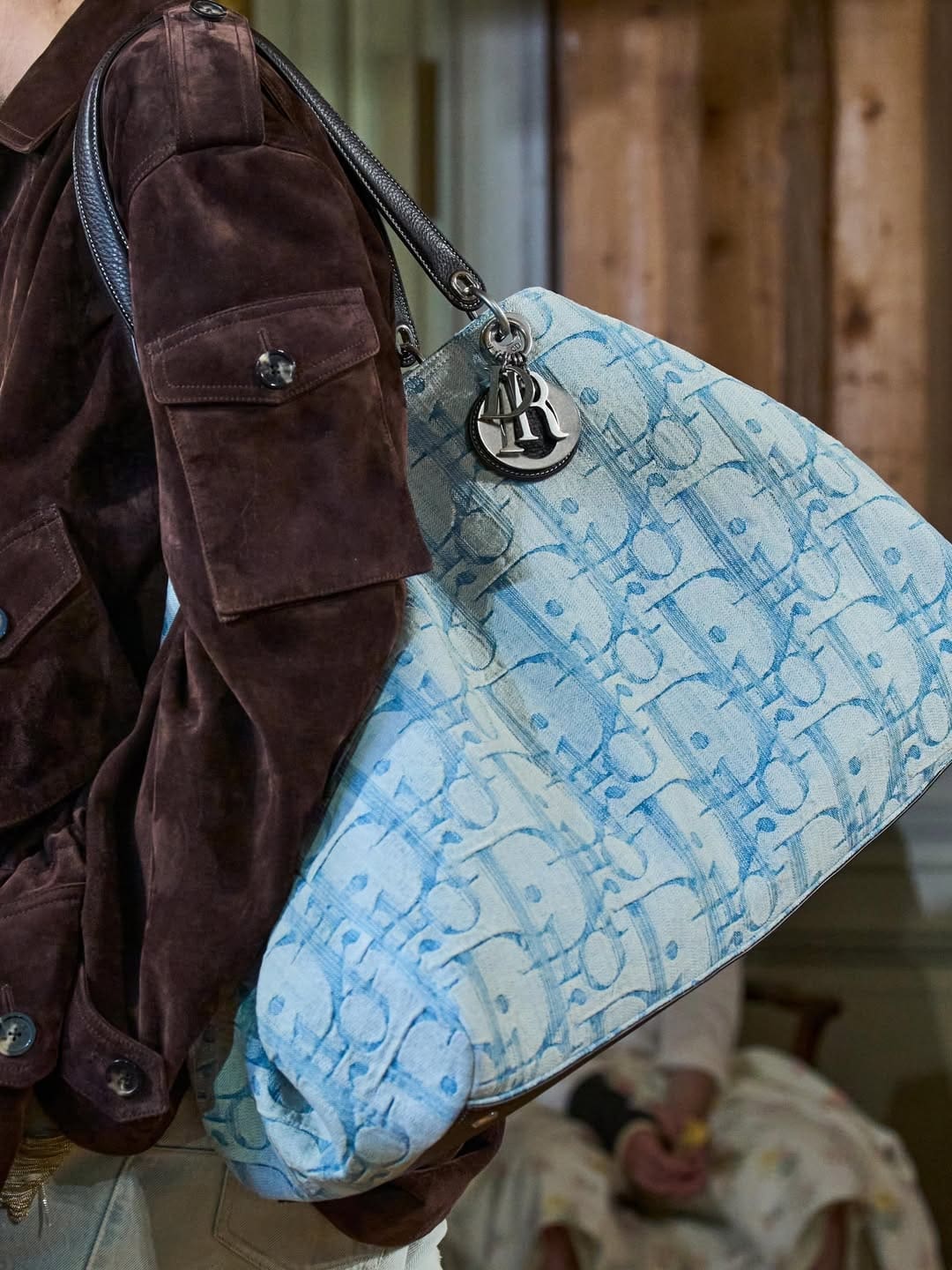
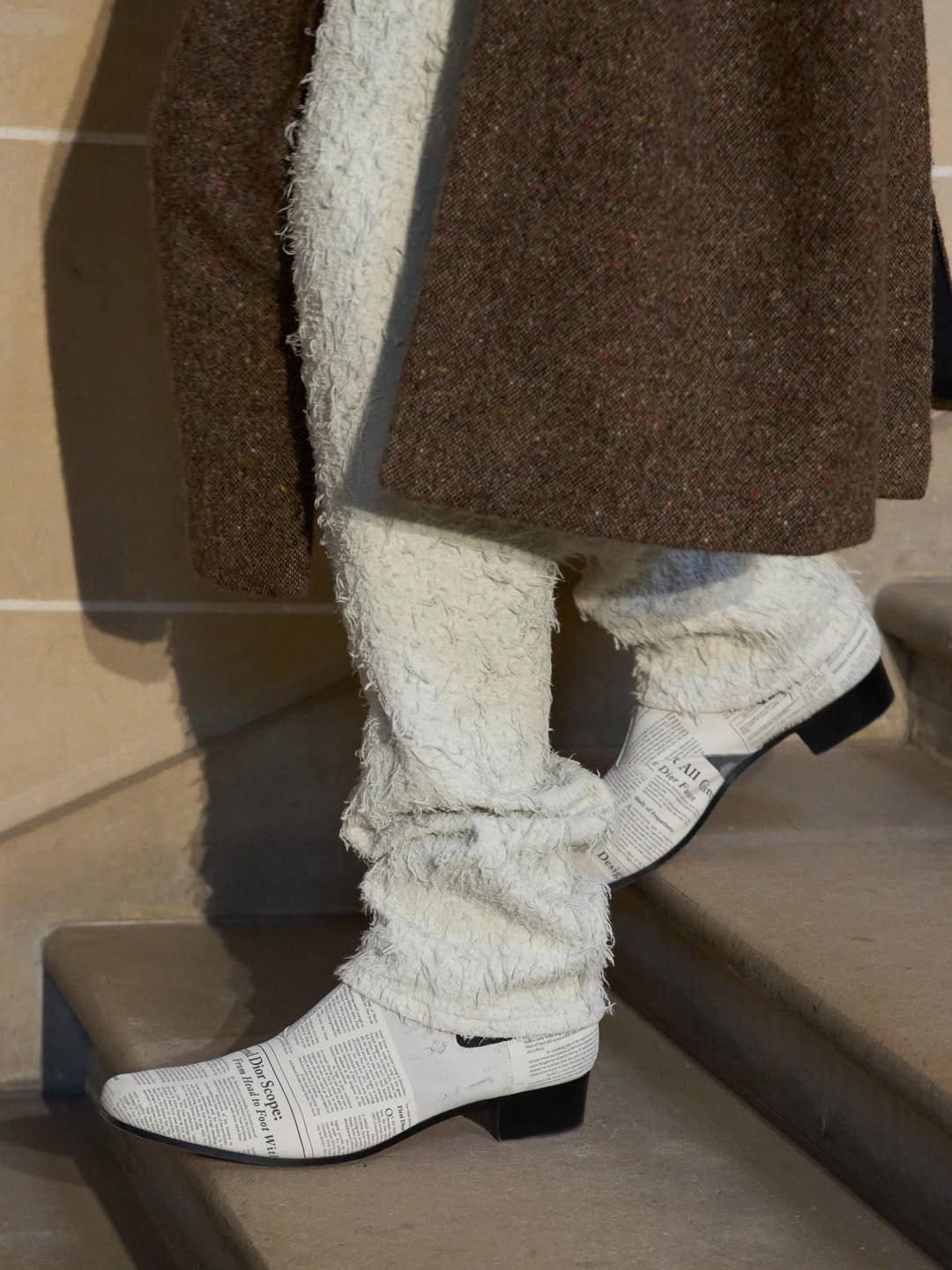
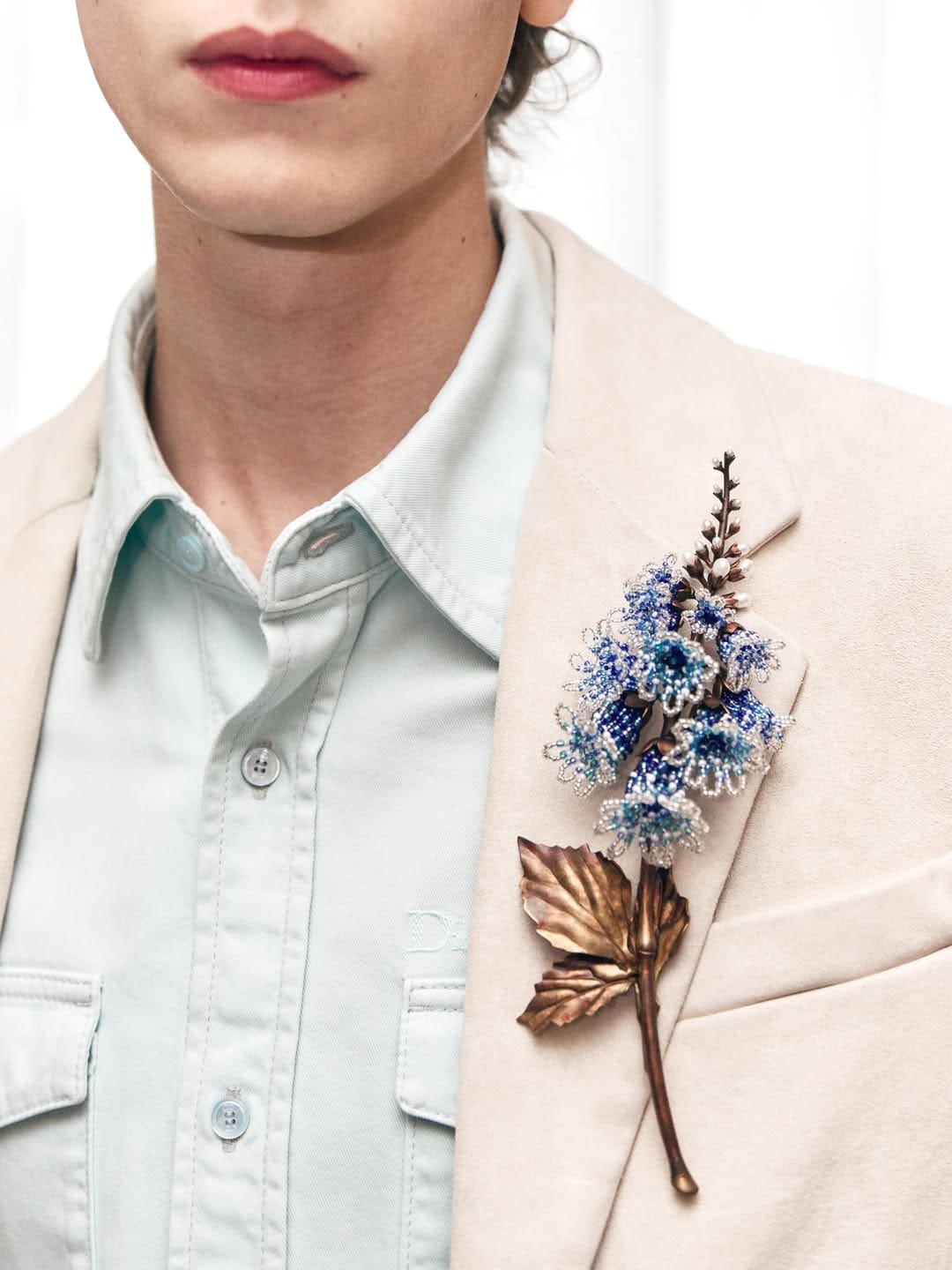
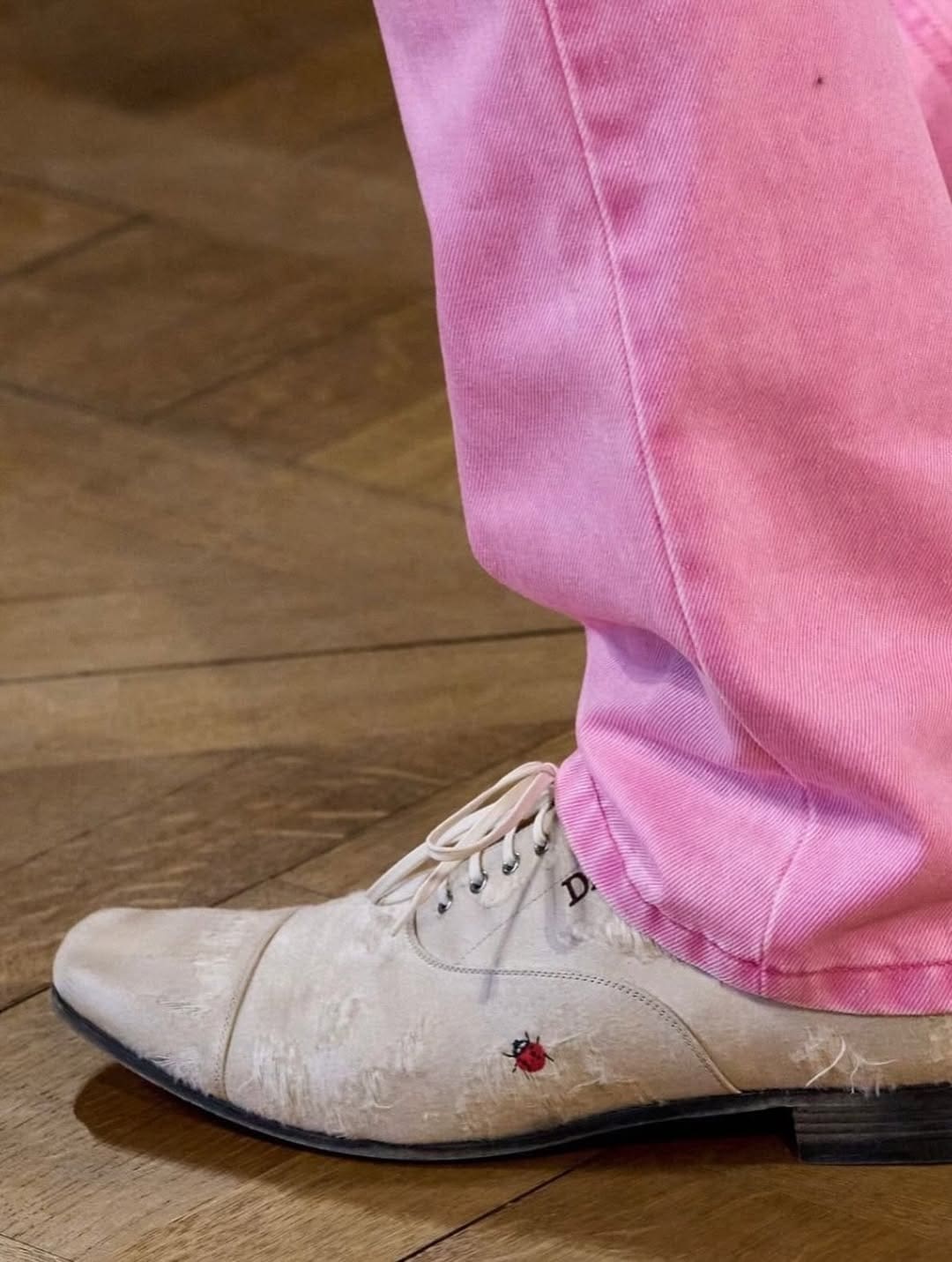
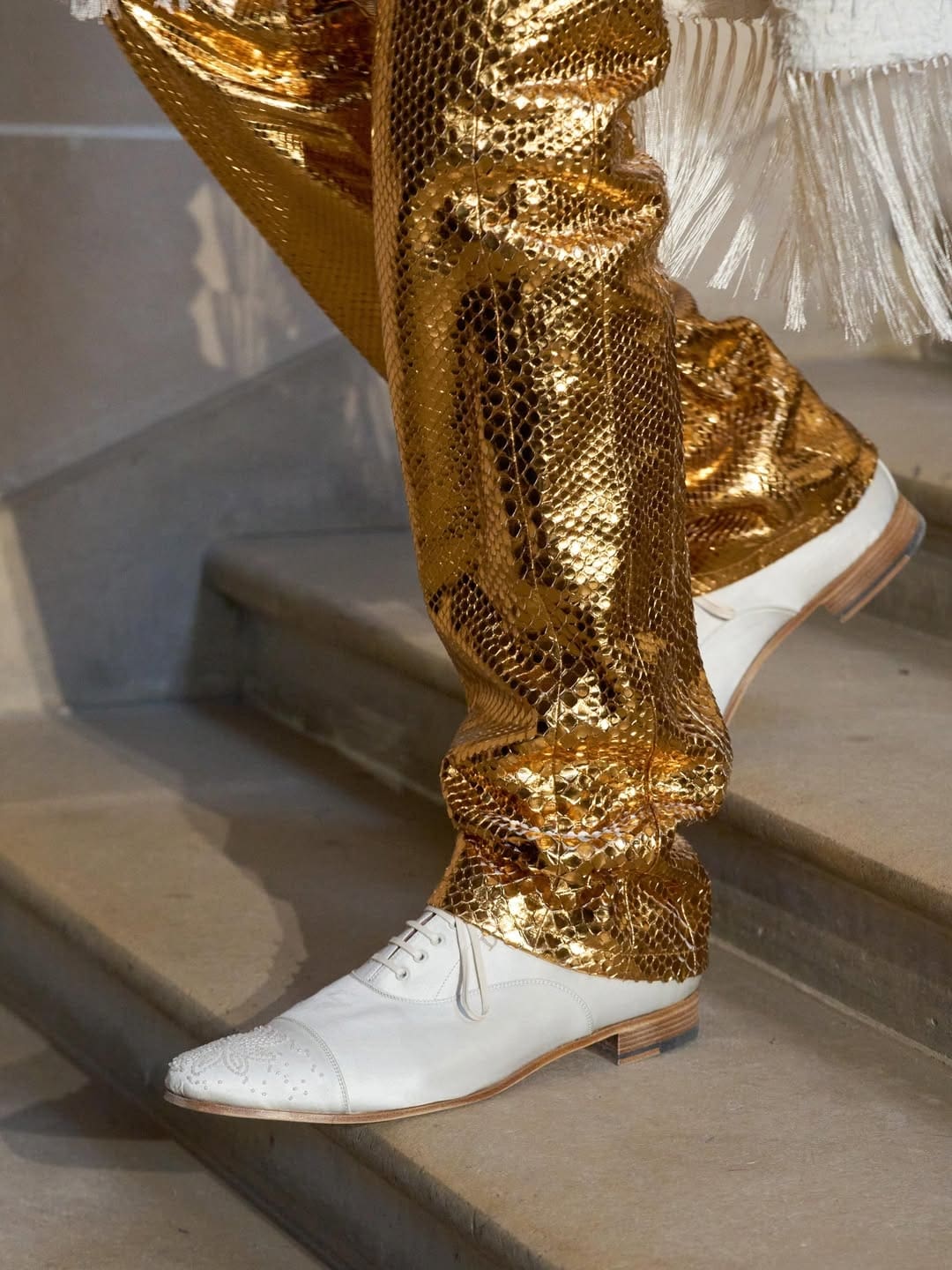
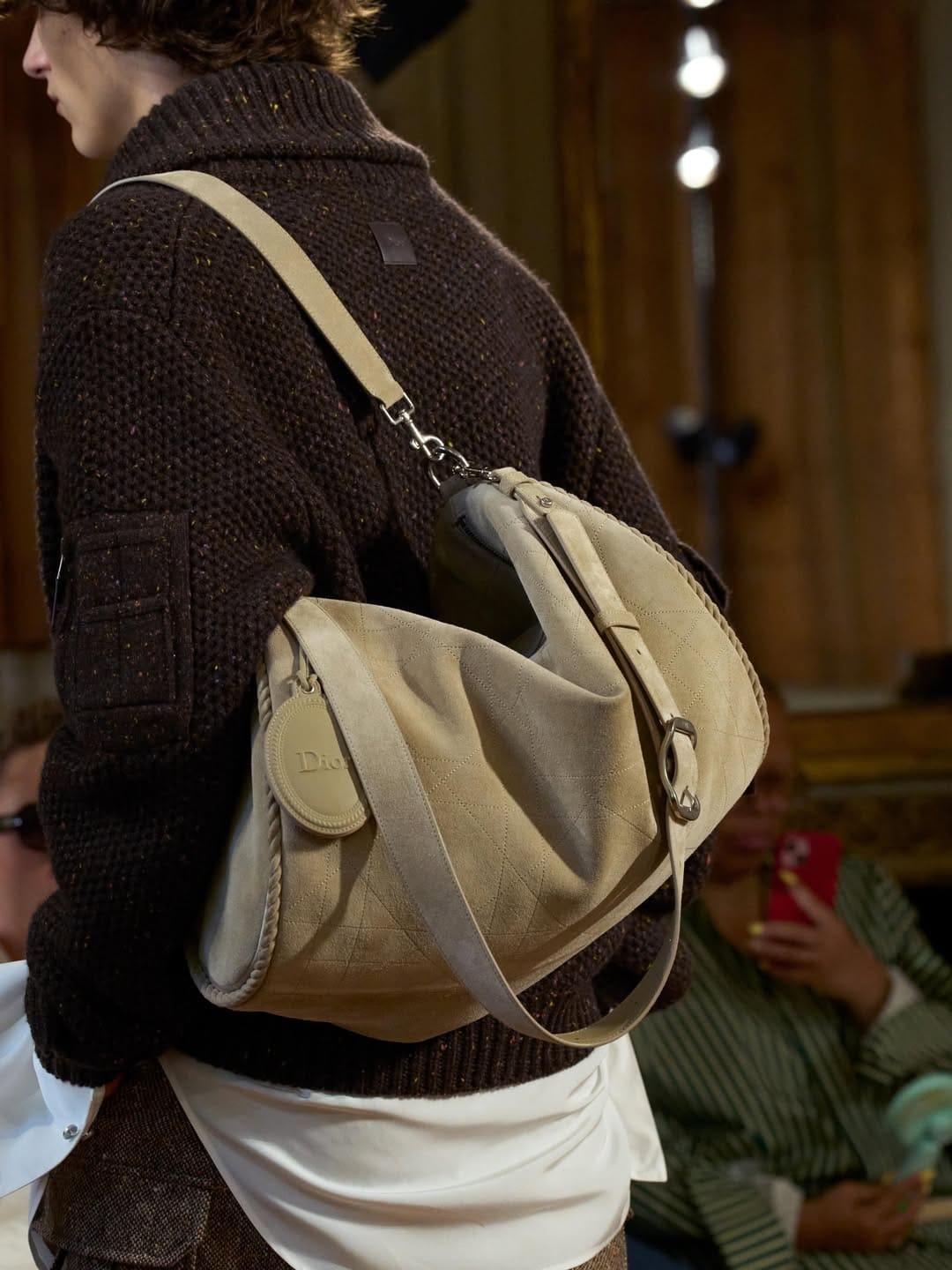
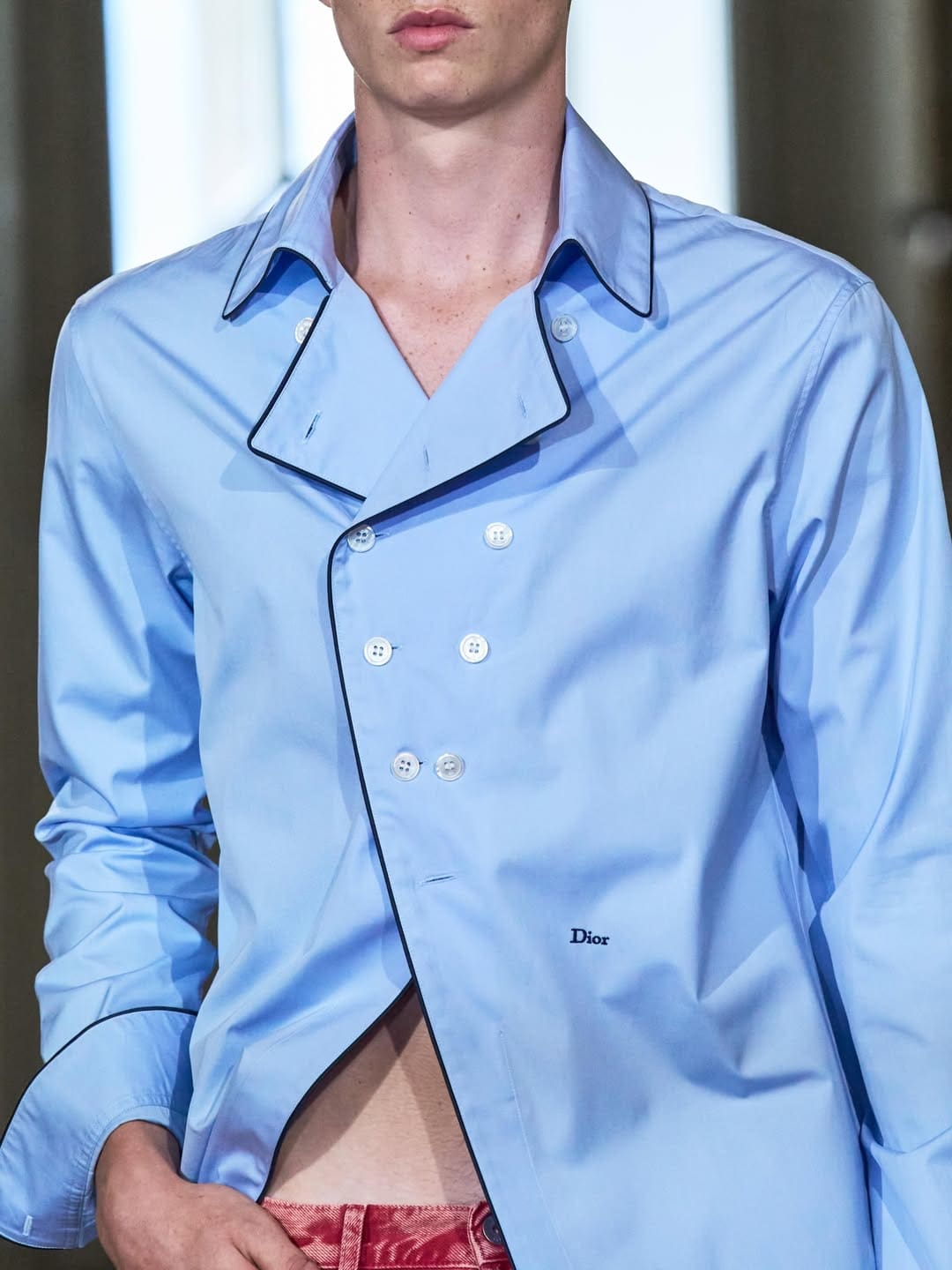
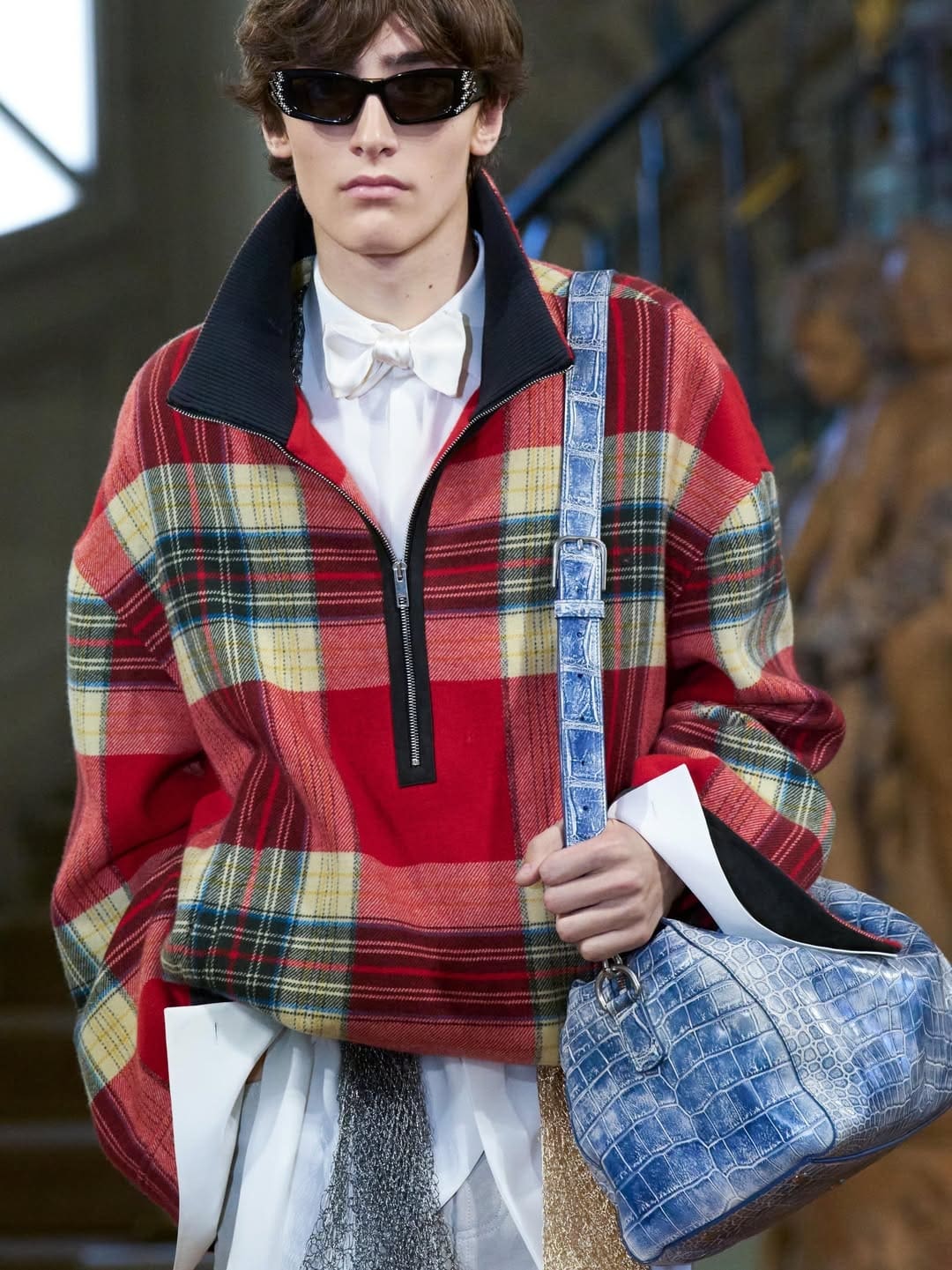
The Auditory Blueprint: Tracklist & Look Timeline
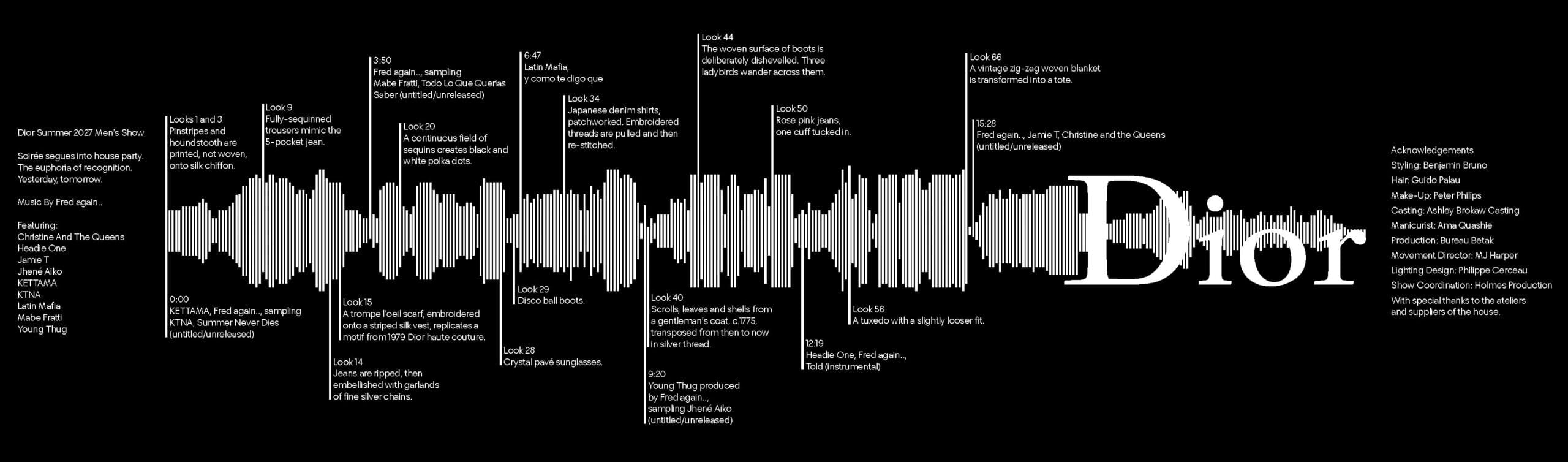
To understand how these pieces moved through the space, one must consult the exact timeline provided by the house, where the soirée officially segued into a house party:
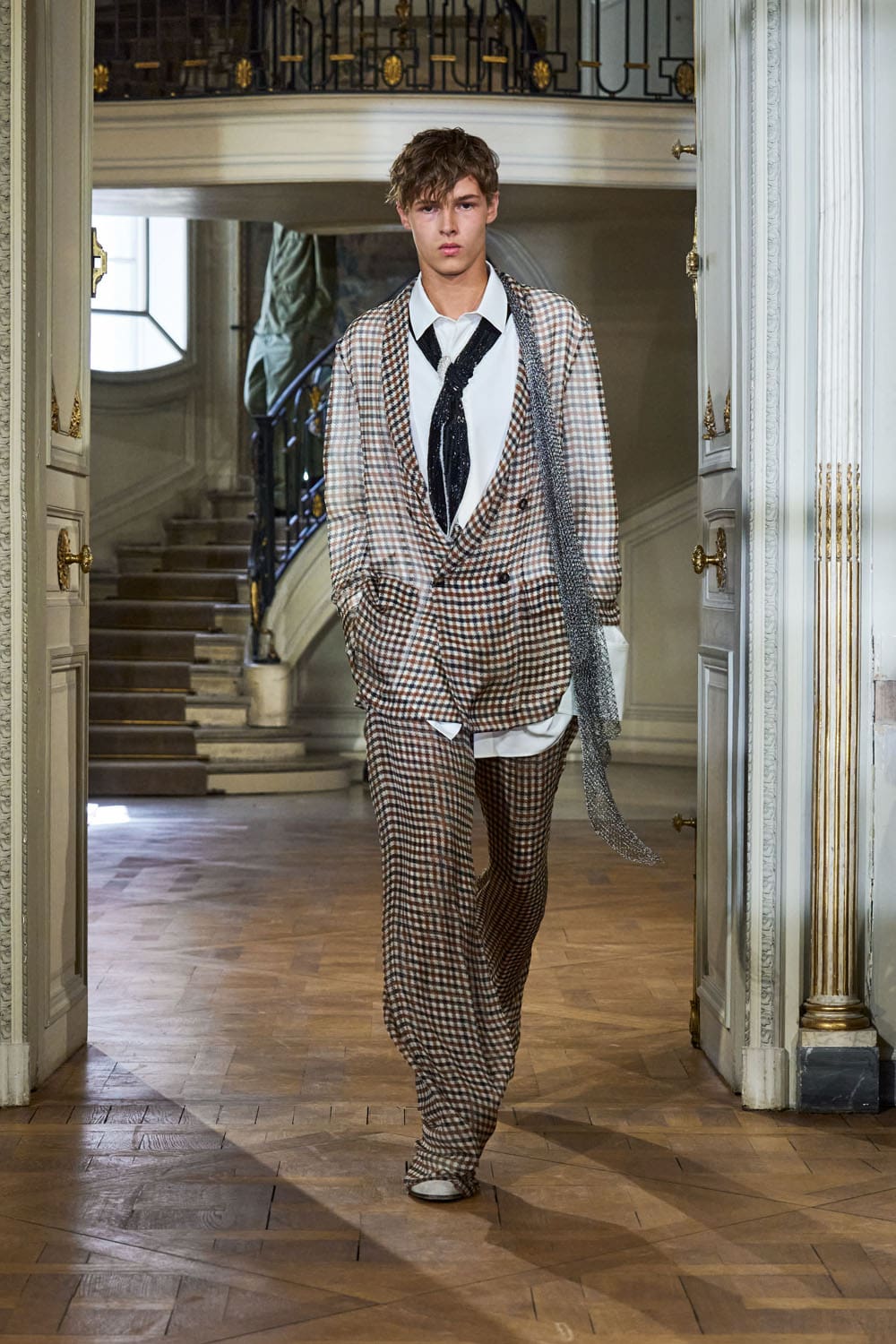
- 0:00 – KETTAMA, Fred again.., sampling KTNA, Summer Never Dies (untitled/unreleased) The opening statement. The first looks hit the runway introducing pinstripes and houndstooth printed, rather than woven, onto silk chiffon to kick off the illusion.
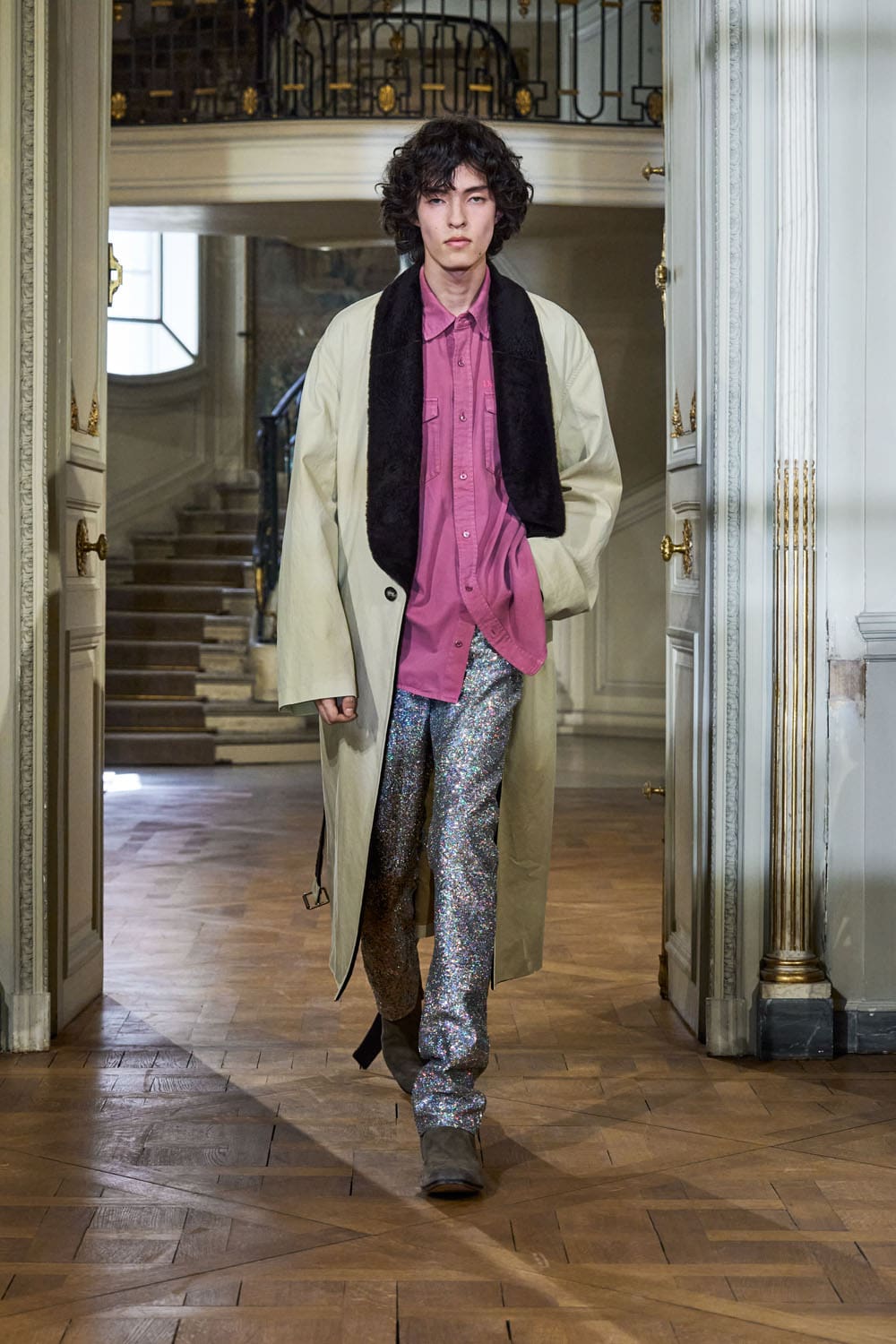
- 6:47 – Latin Mafia, y como te digo que The transition deeper into the set. By the ninth look, fully-sequinned trousers mimic a standard 5-pocket jean, followed closely by jeans ripped and embellished with garlands of fine silver chains, and a trompe l’oeil scarf replicating a motif from 1979 Dior haute couture.
- 9:20 – Young Thug produced by Fred again.., sampling Jhené Aiko (untitled/unreleased) The apex of the remix. A continuous field of sequins creates black and white polka dots on the runway, paired with crystal pavé sunglasses and “disco ball” boots to ensure the glare is sufficiently blinding.
- 12:19 – Headie One, Fred again.., Told (instrumental) The rhythm grounds itself. Japanese denim shirts appear patchworked with pulled and re-stitched threads, while scrolls, leaves, and shells from a gentleman’s coat circa 1775 are transposed onto the modern clothing in silver thread.
- 13:50 – Fred again.., sampling Mabe Fratti, Todo Lo Que Querias Saber (untitled/unreleased) A melodic, cello-driven pause in the madness. The woven surface of the boots is deliberately disheveled and wandered across by three ladybirds, followed by rose pink jeans styled with one cuff tucked in.
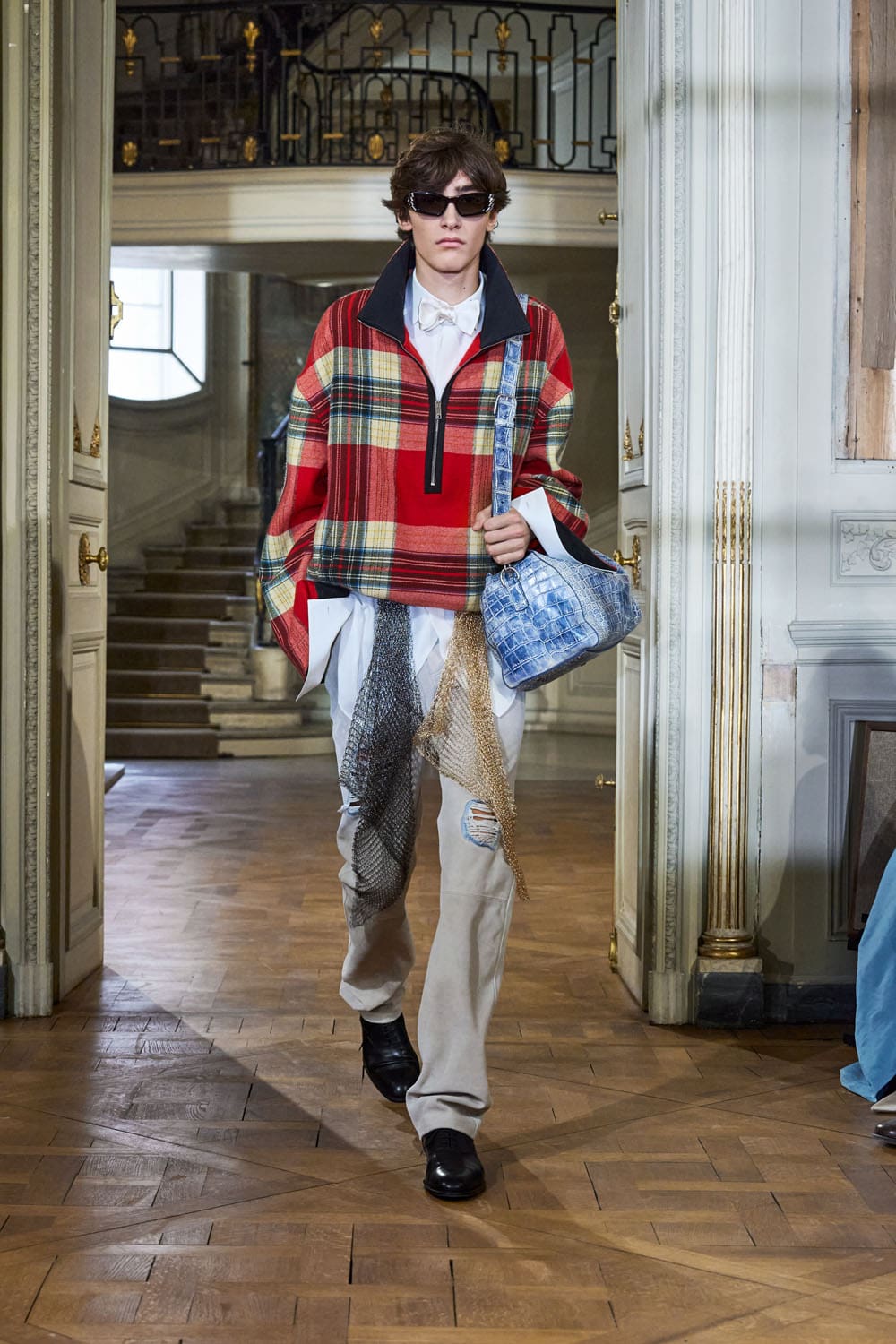
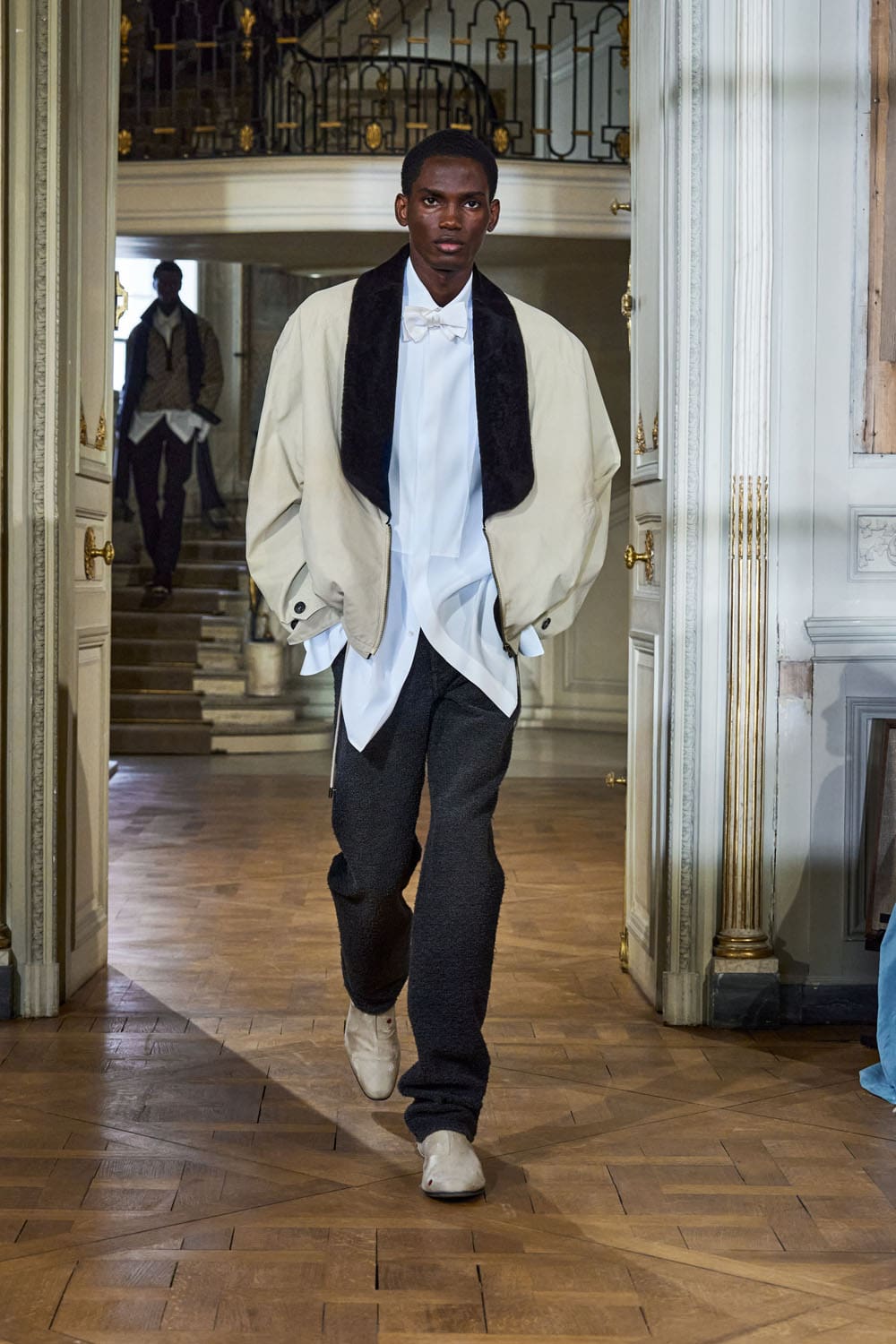
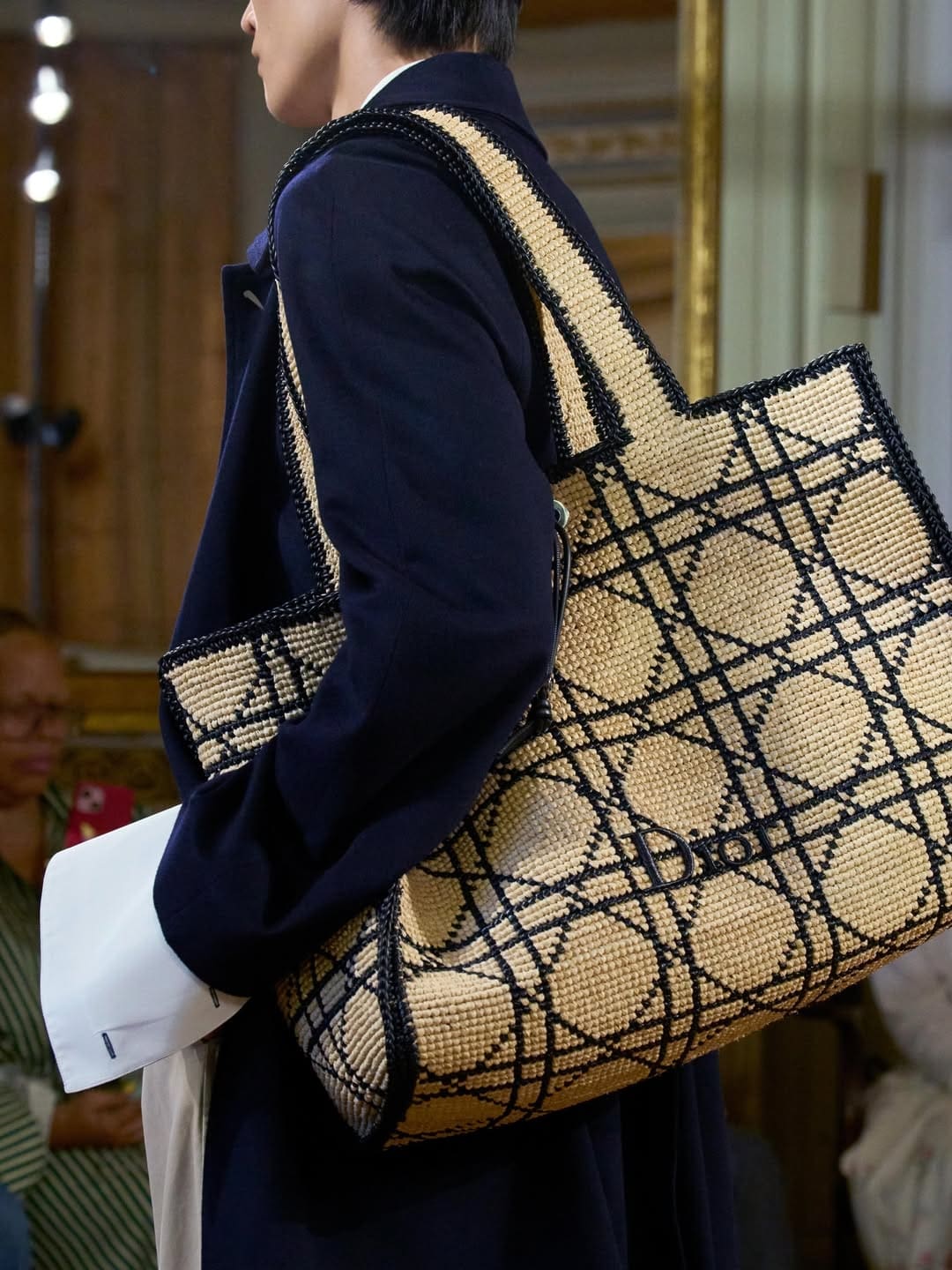
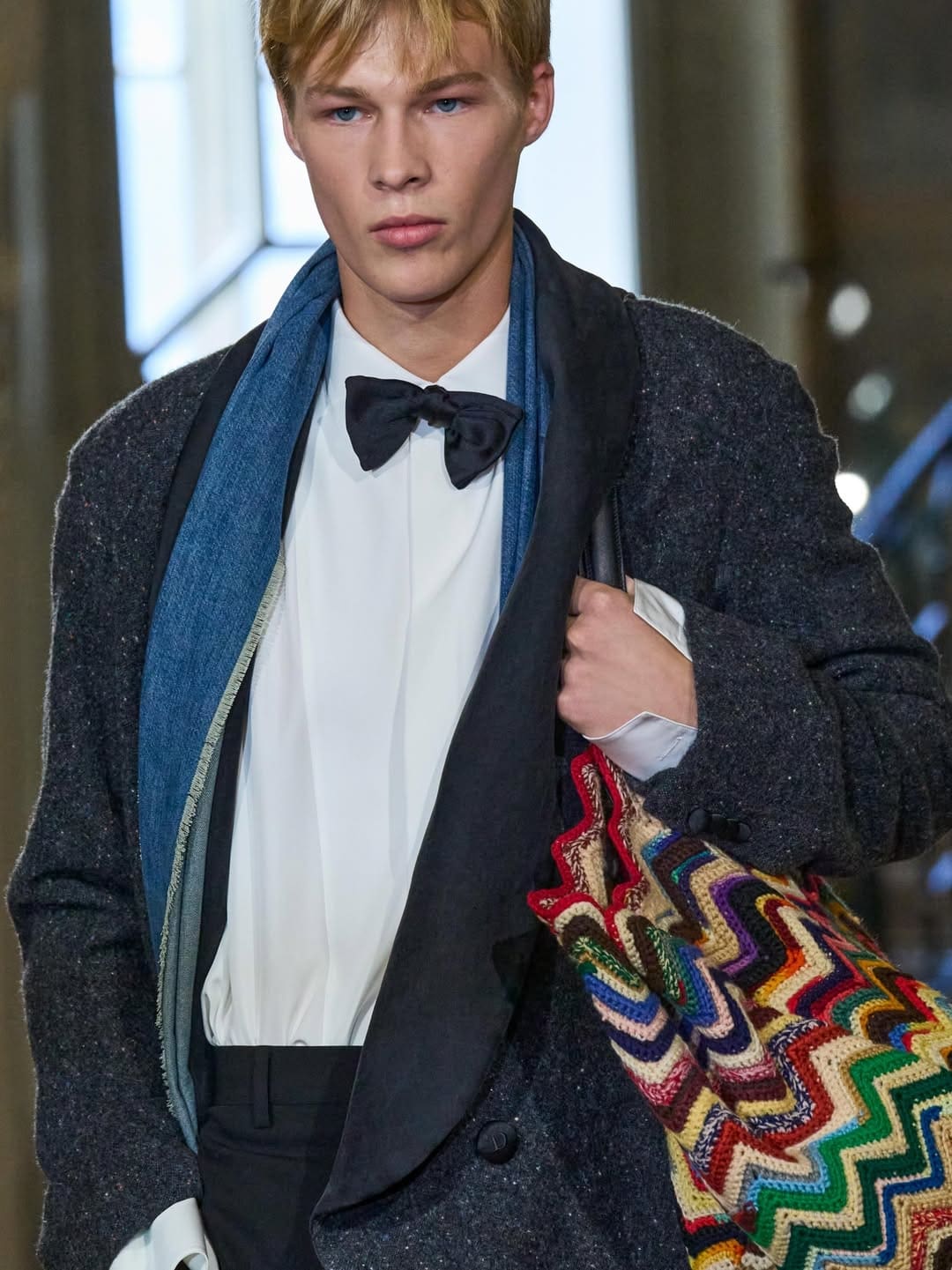
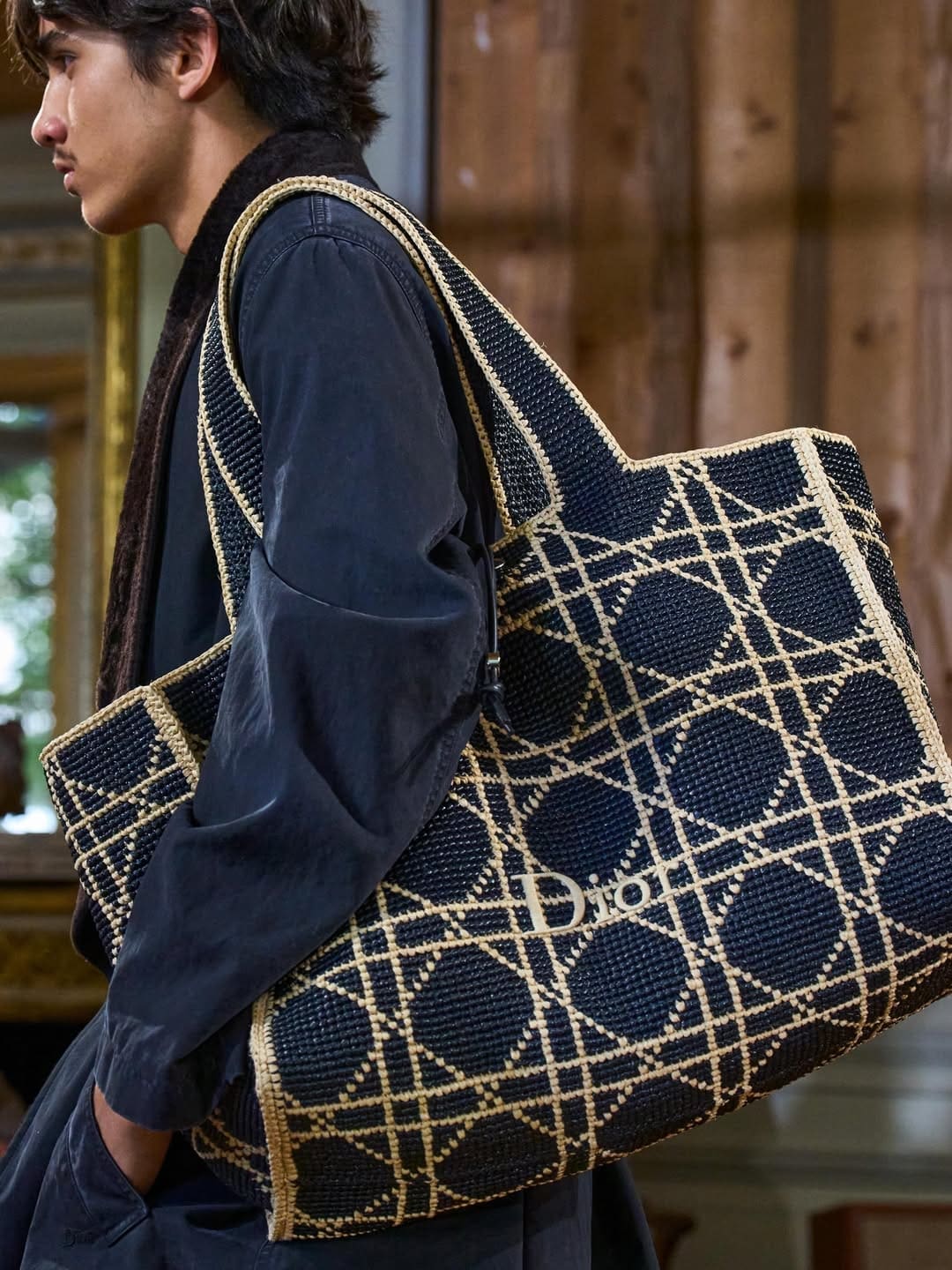
- 15:28 – Fred again.., Jamie T, Christine and the Queens (untitled/unreleased) The final crescendo. A tuxedo with a slightly looser fit emerges for the contemporary night out, culminating in a vintage zig-zag woven blanket transformed into a giant tote bag.
Ultimately, this entire spectacle serves as definitive proof that under Jonathan Anderson’s stewardship, high fashion has abandoned the quiet reverence of the atelier for the calculated, cynical chaos of the mixing desk. By treating 18th-century decorative history and 1979 haute couture as mere audio stems to be chopped, screwed, and layered over a relentless electronic beat, Dior Men Summer 2027 delivers a collection that is as structurally brilliant as it is beautifully compromised. It is a masterclass in pseudo-intellectual irony: expensive silk tailored into corporate ghosts, chunky resin rings slapped onto indifferent wrists, and pristine fabrics meticulously shredded into rave-ready rags—all set against a historic monument reduced to a backdrop for a timestamped tracklist.
In doing so, Anderson has engineered the definitive uniform for a modern incarnation of Honoré Daumier’s biting Le Charivari caricatures of la misère élégante—the ruined dandy. Much like that tattered, morning-after aristocrat whose clothes are a structural disaster of gaping holes, yet who still tilts his chin up in a state of supreme, snobbish delusion while sipping a glass of champagne, this generation trades in pure, empty vanity. They are rich, profoundly bored, and deeply depressed, choosing to spend their nights sleeping on speaker stacks without ever actually engaging in life. These are clothes designed specifically for laying around and dying of boredom, offering the existential dread of having absolutely nothing to do with one’s life, while ensuring one pays thousands of euros for the privilege of looking impeccably, haughtily ruined.
See All Looks Dior Spring Summer 2027 Men