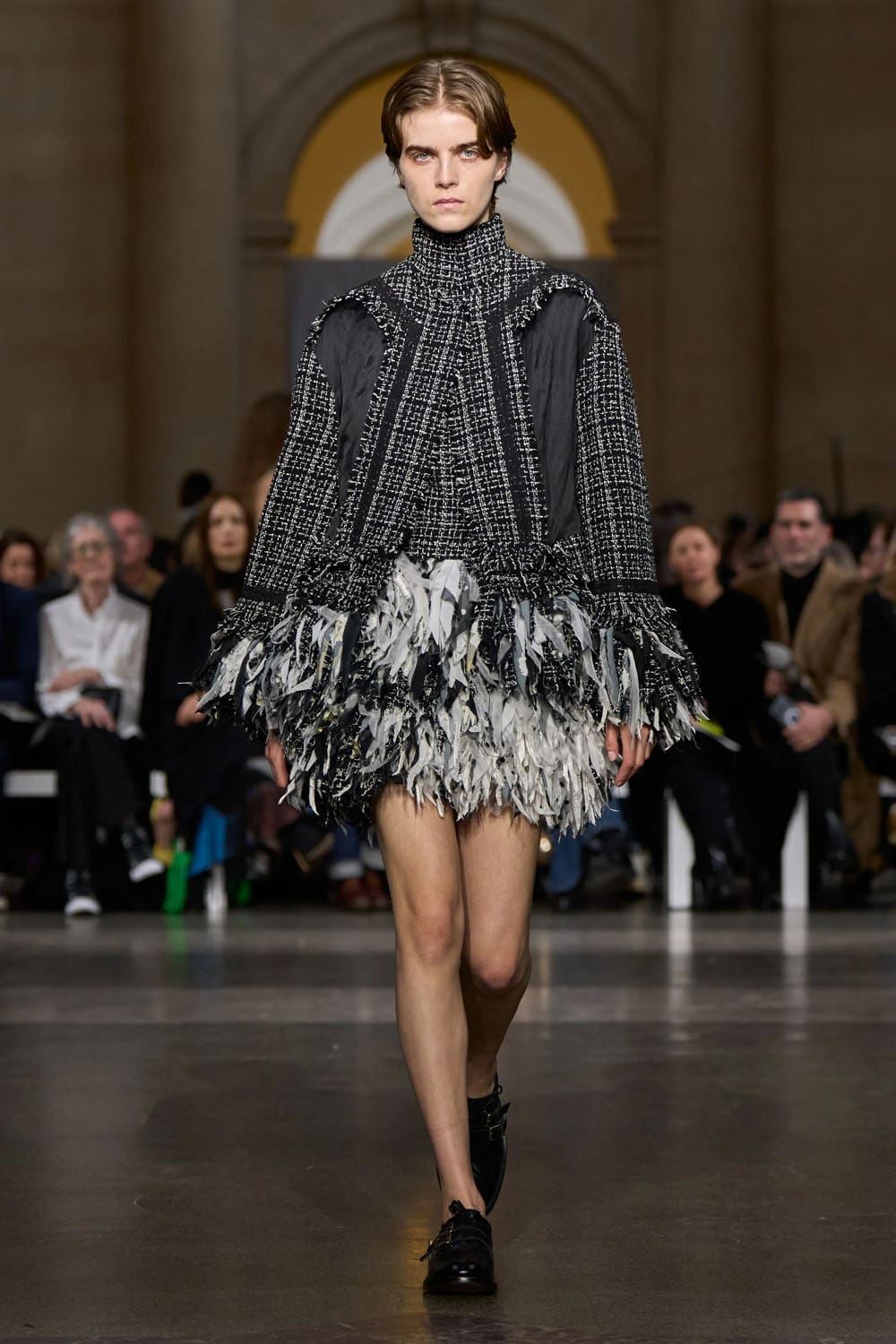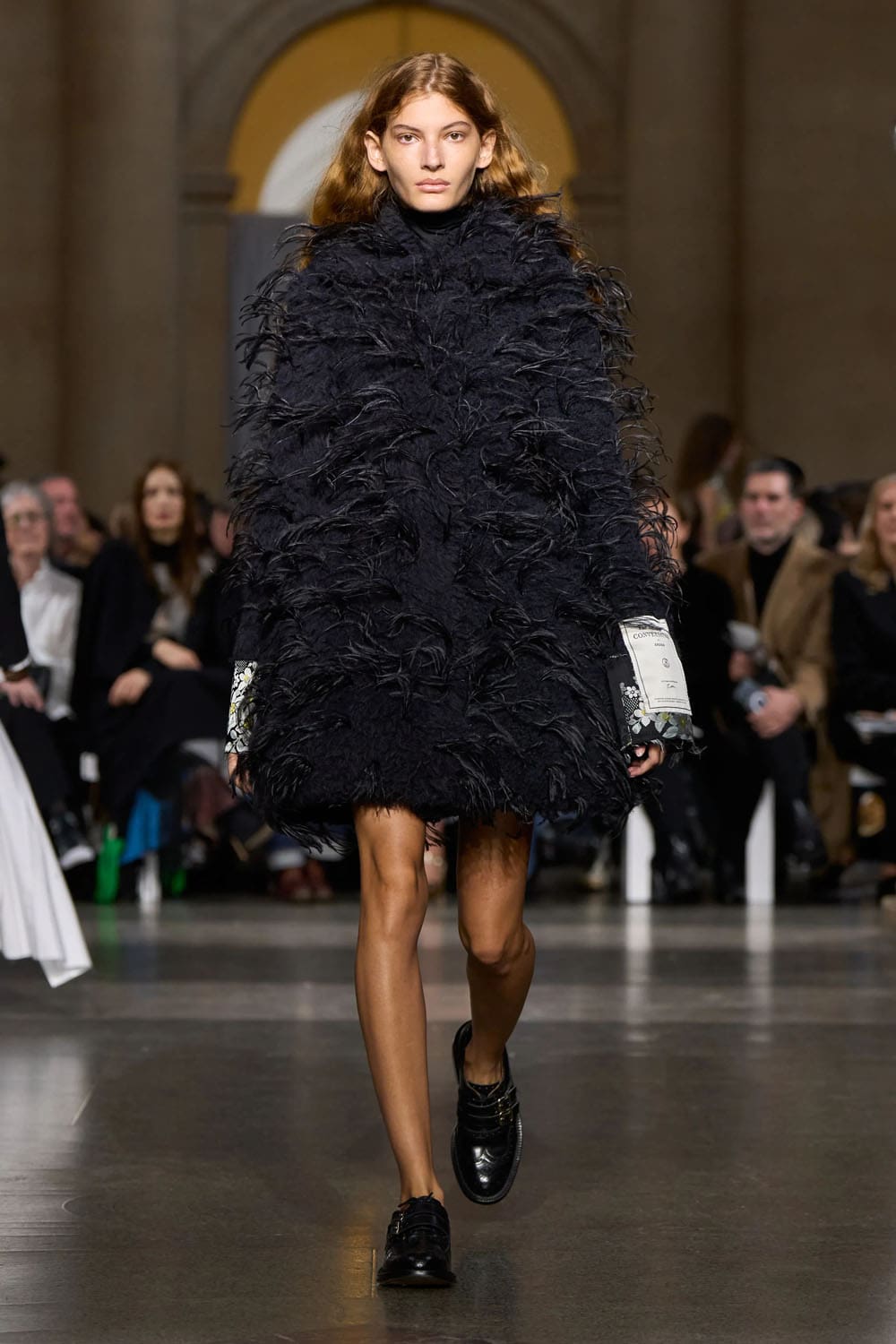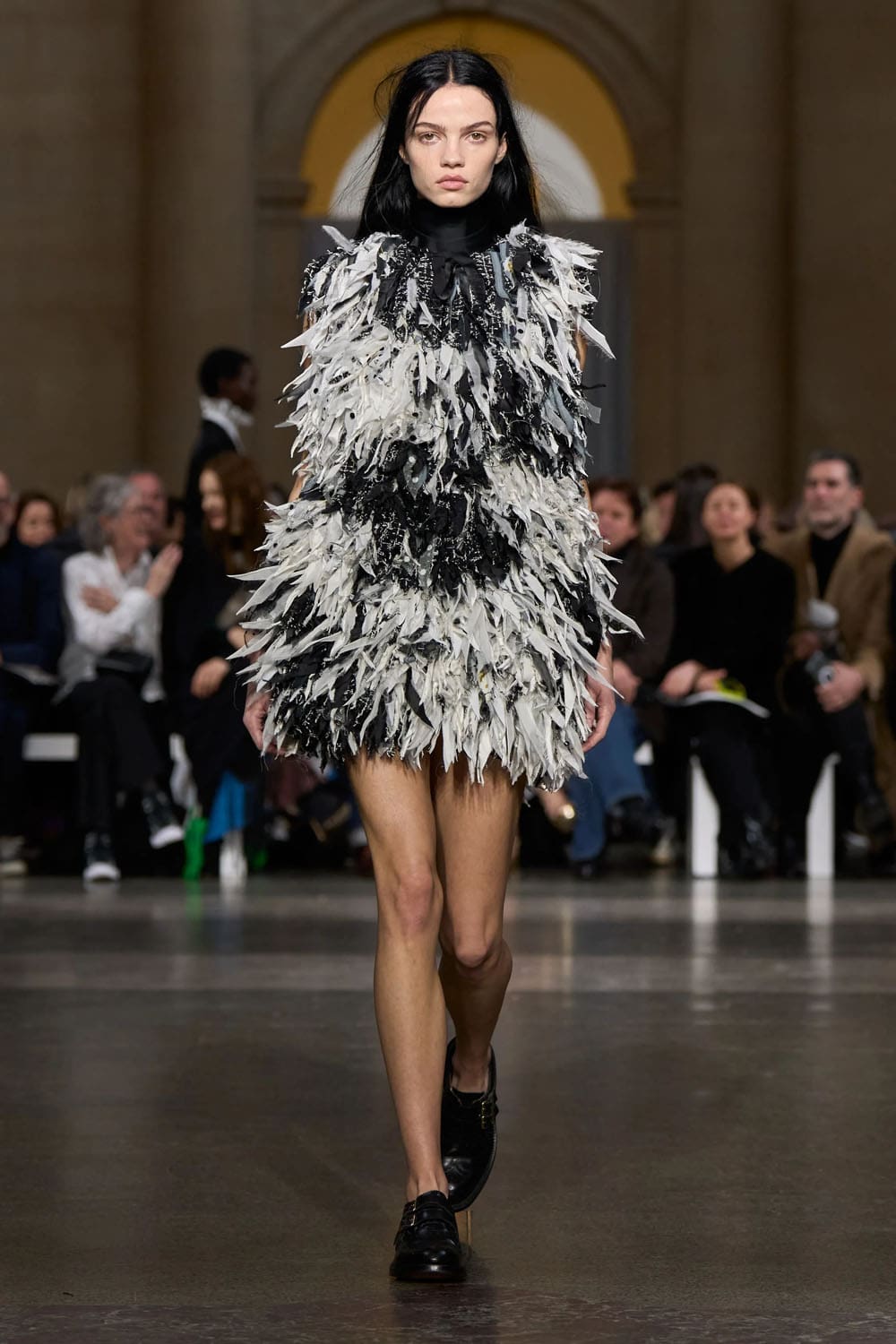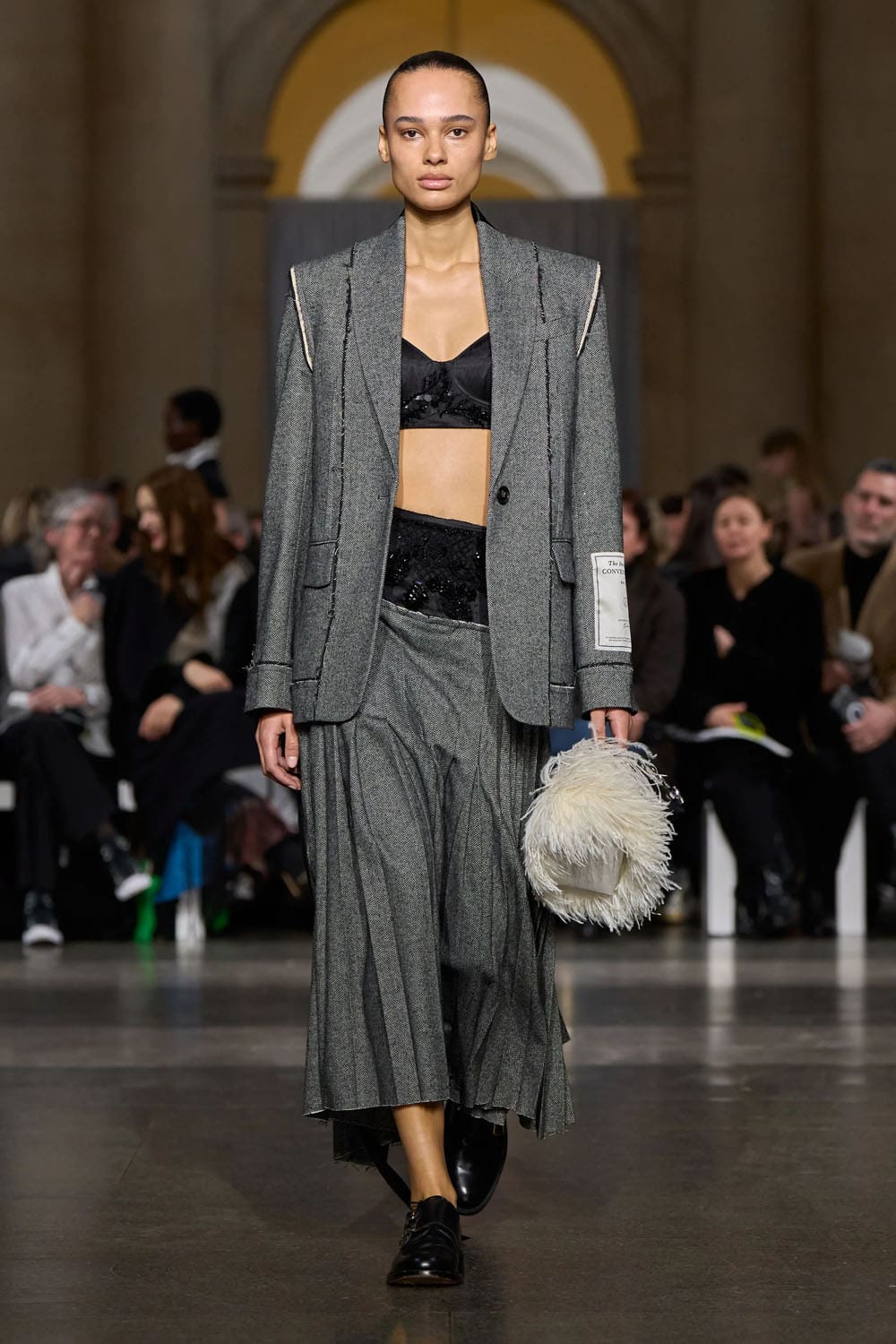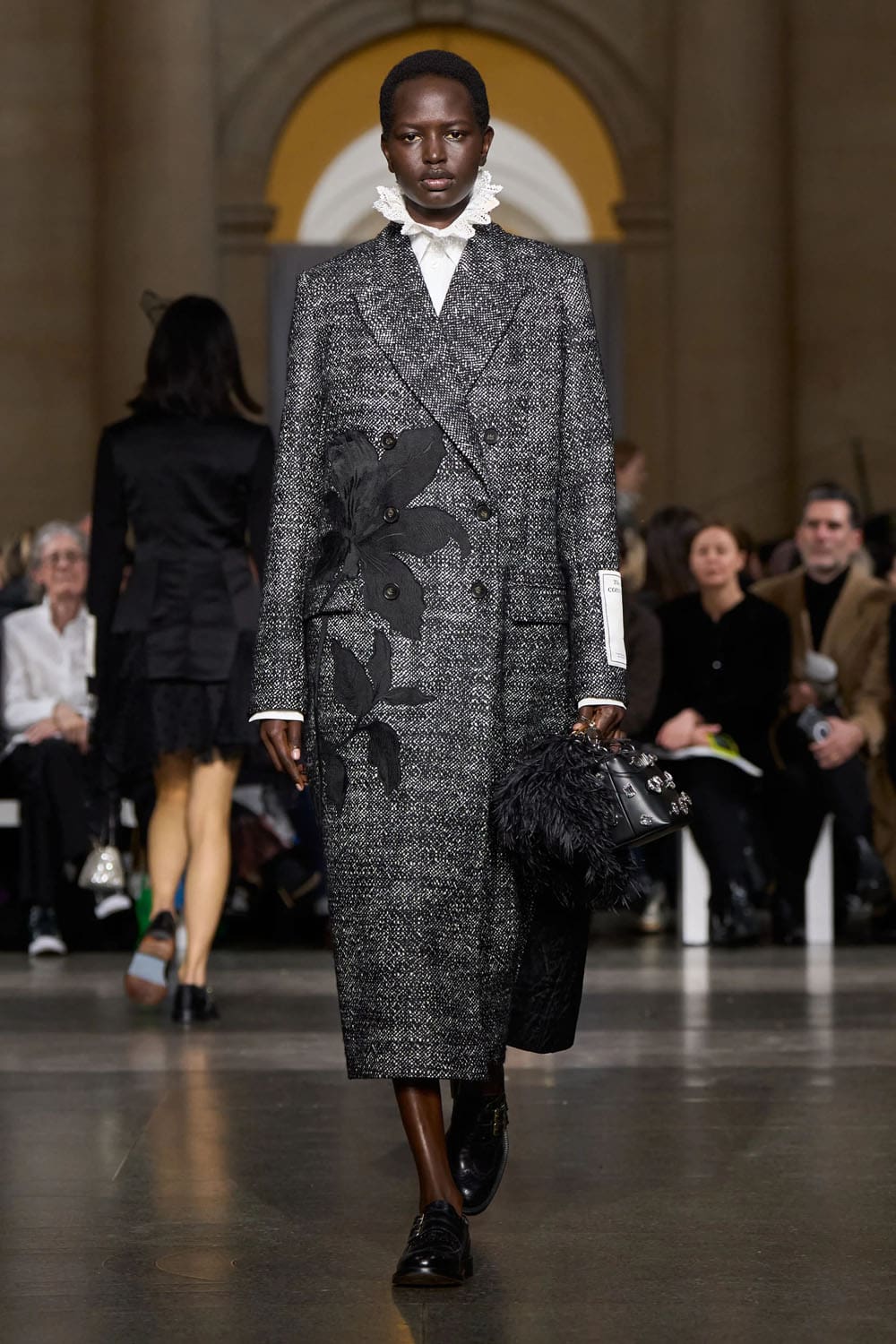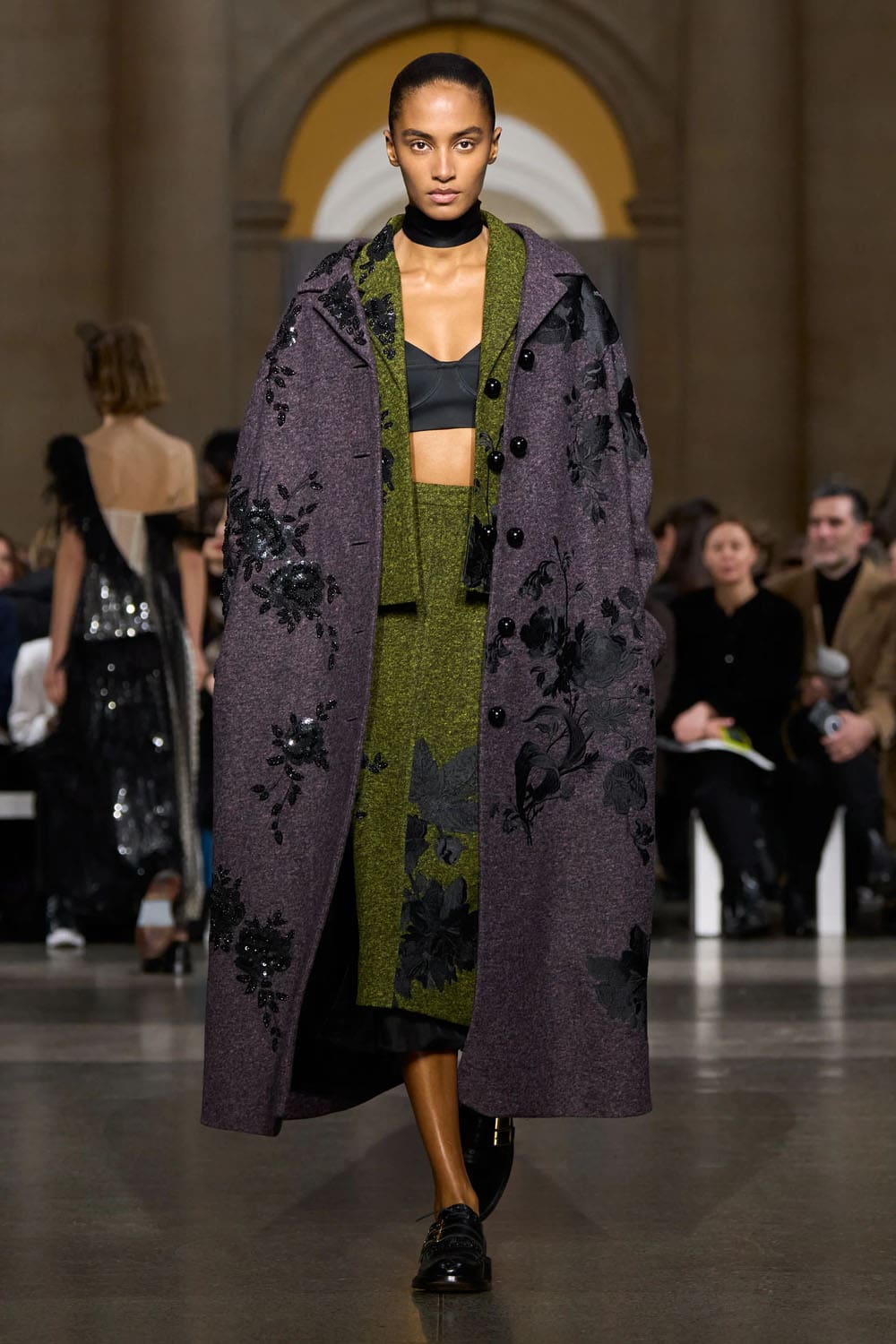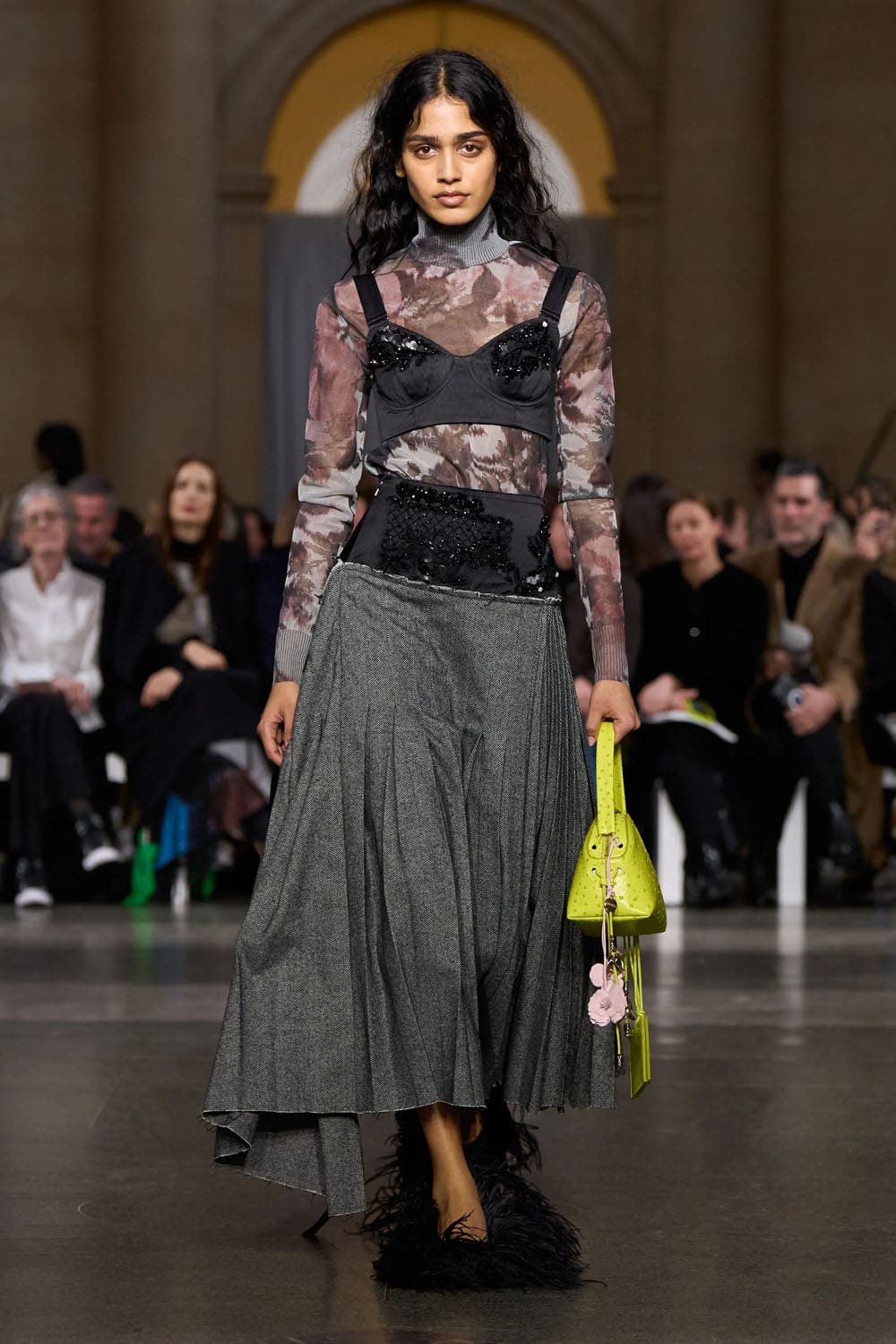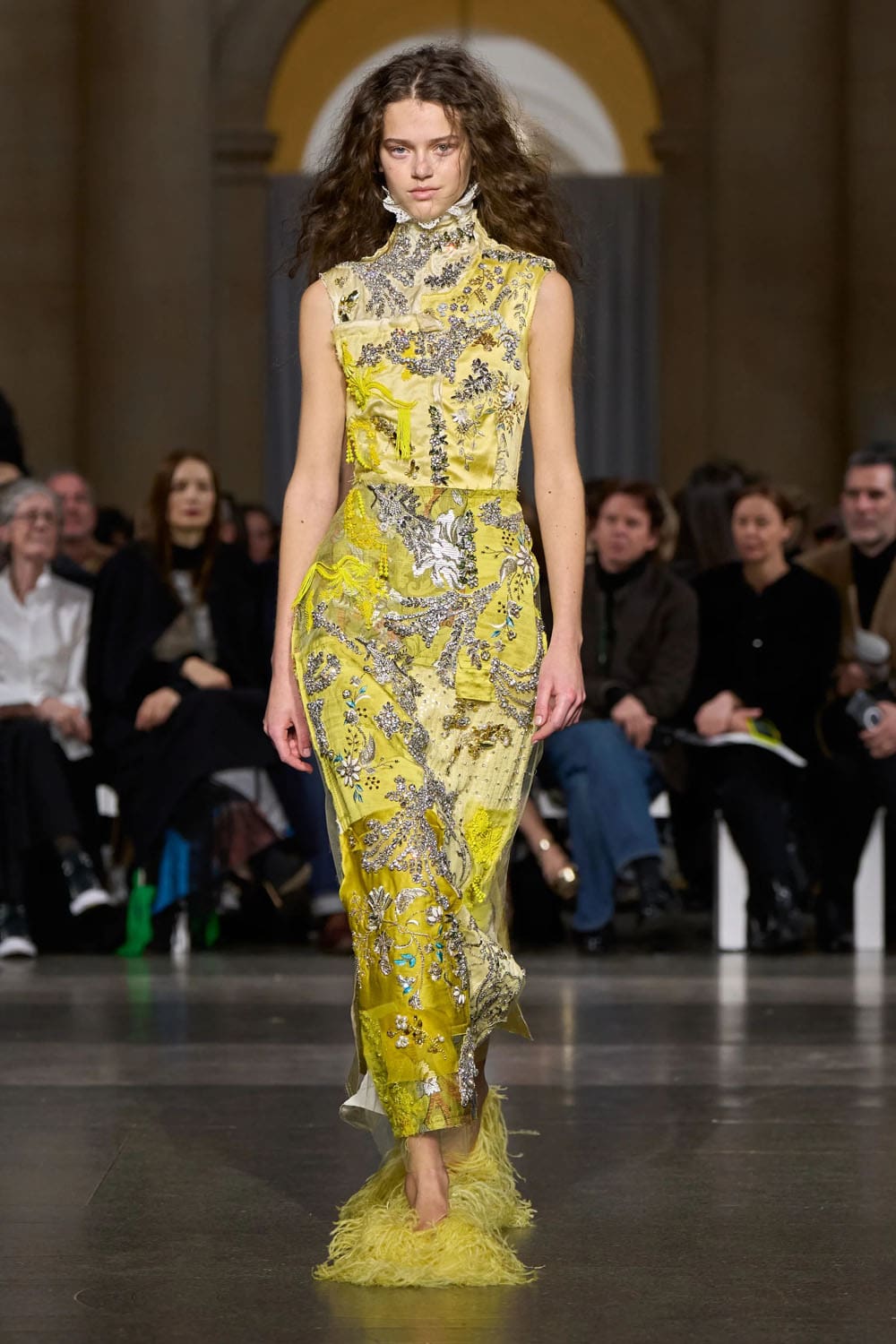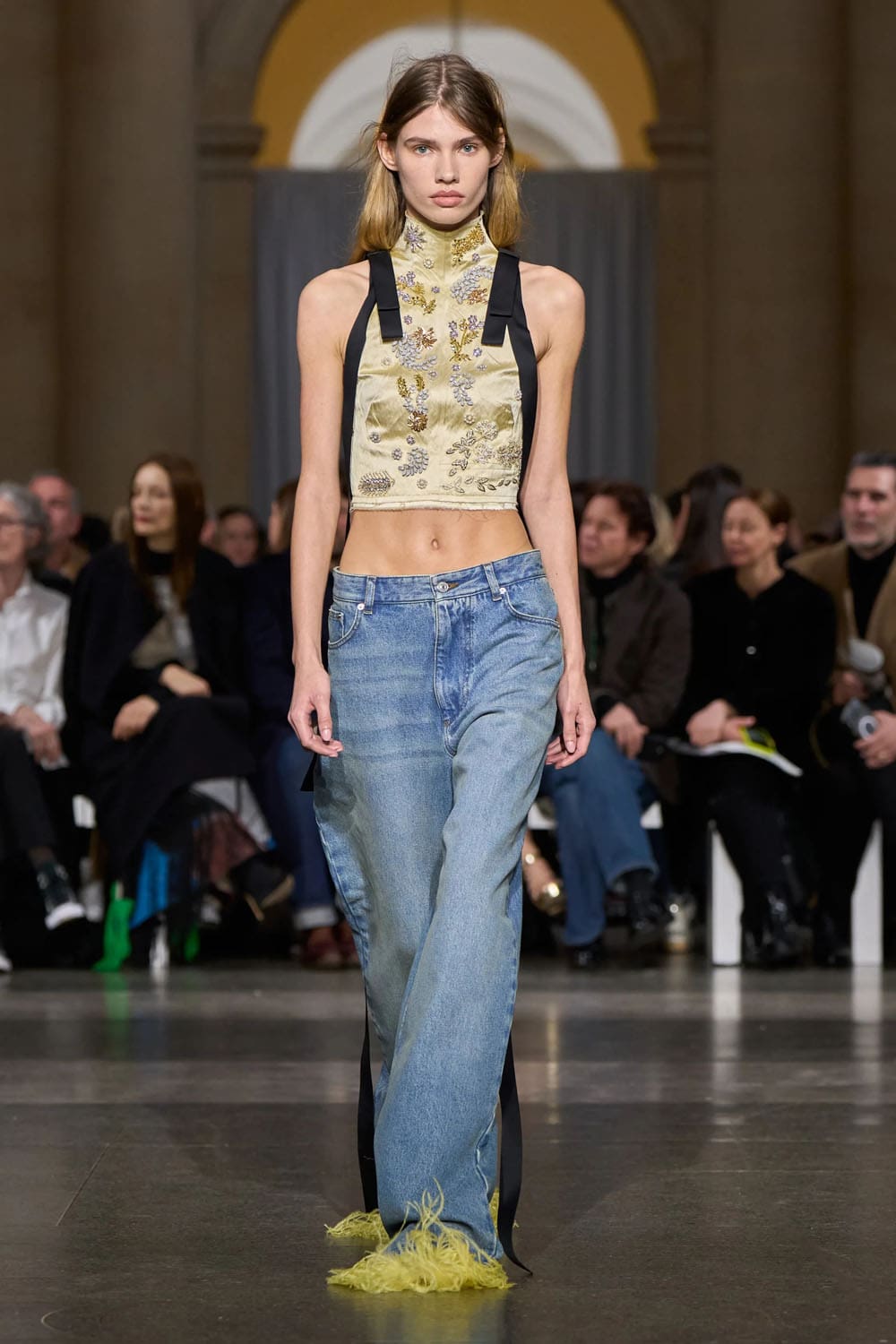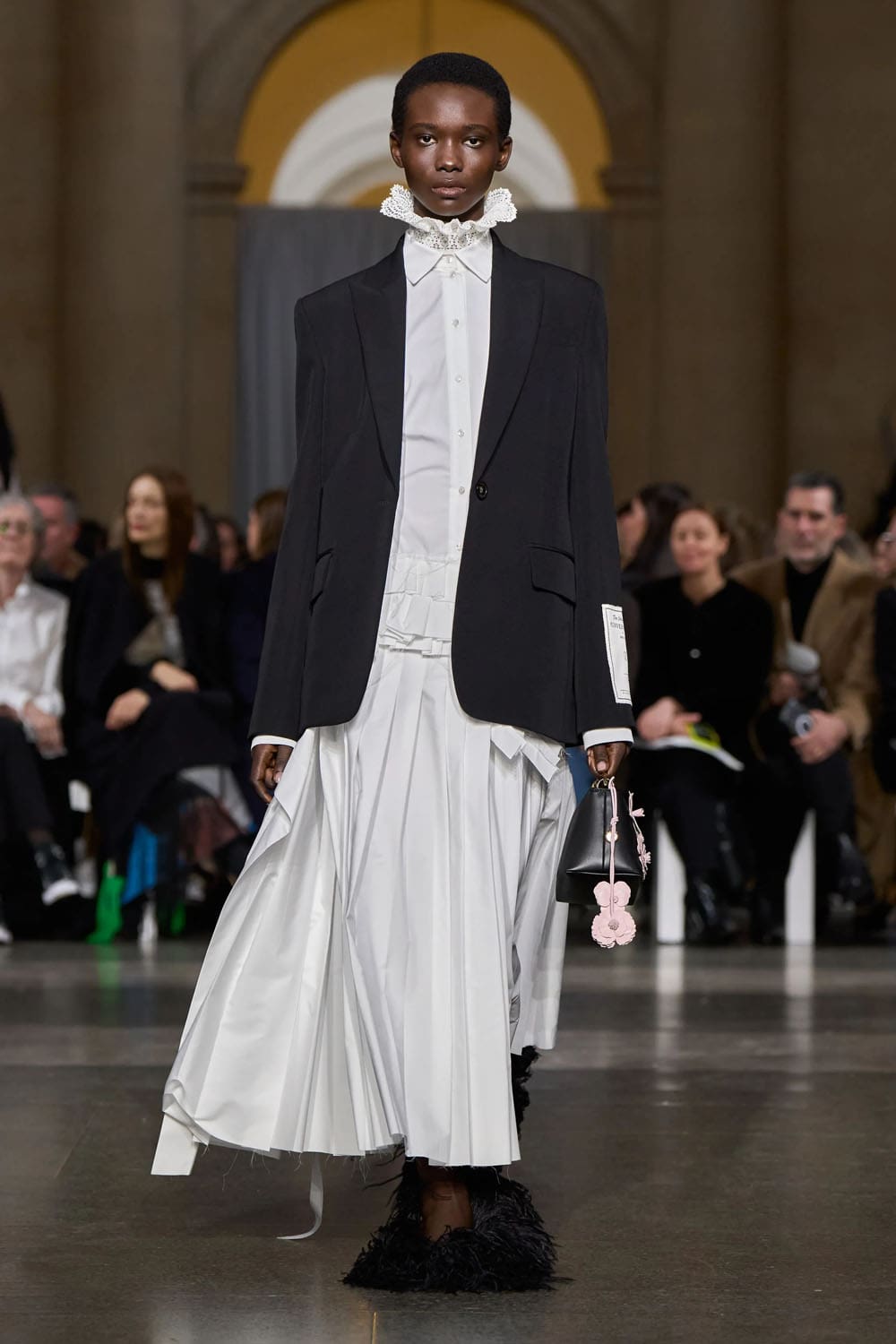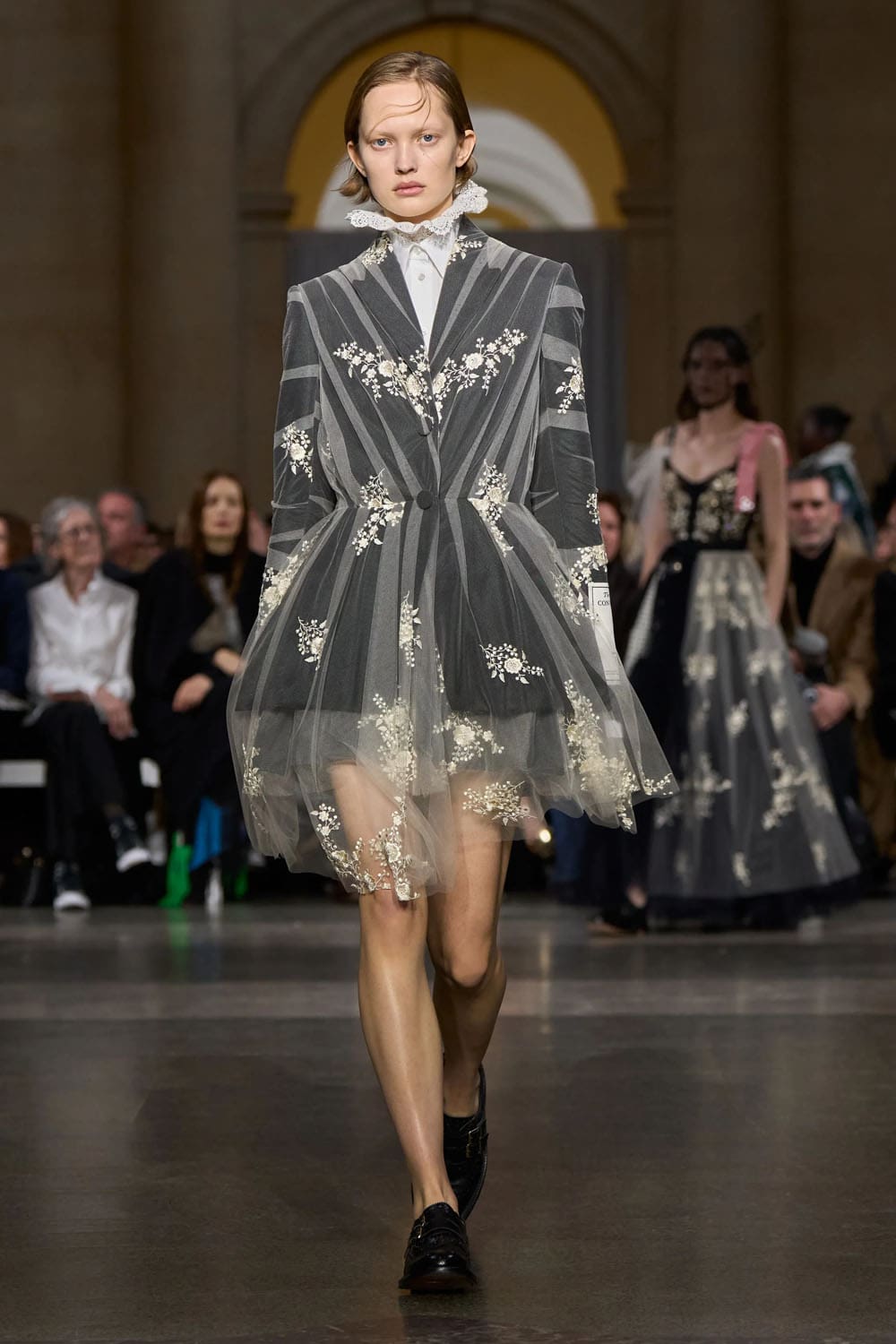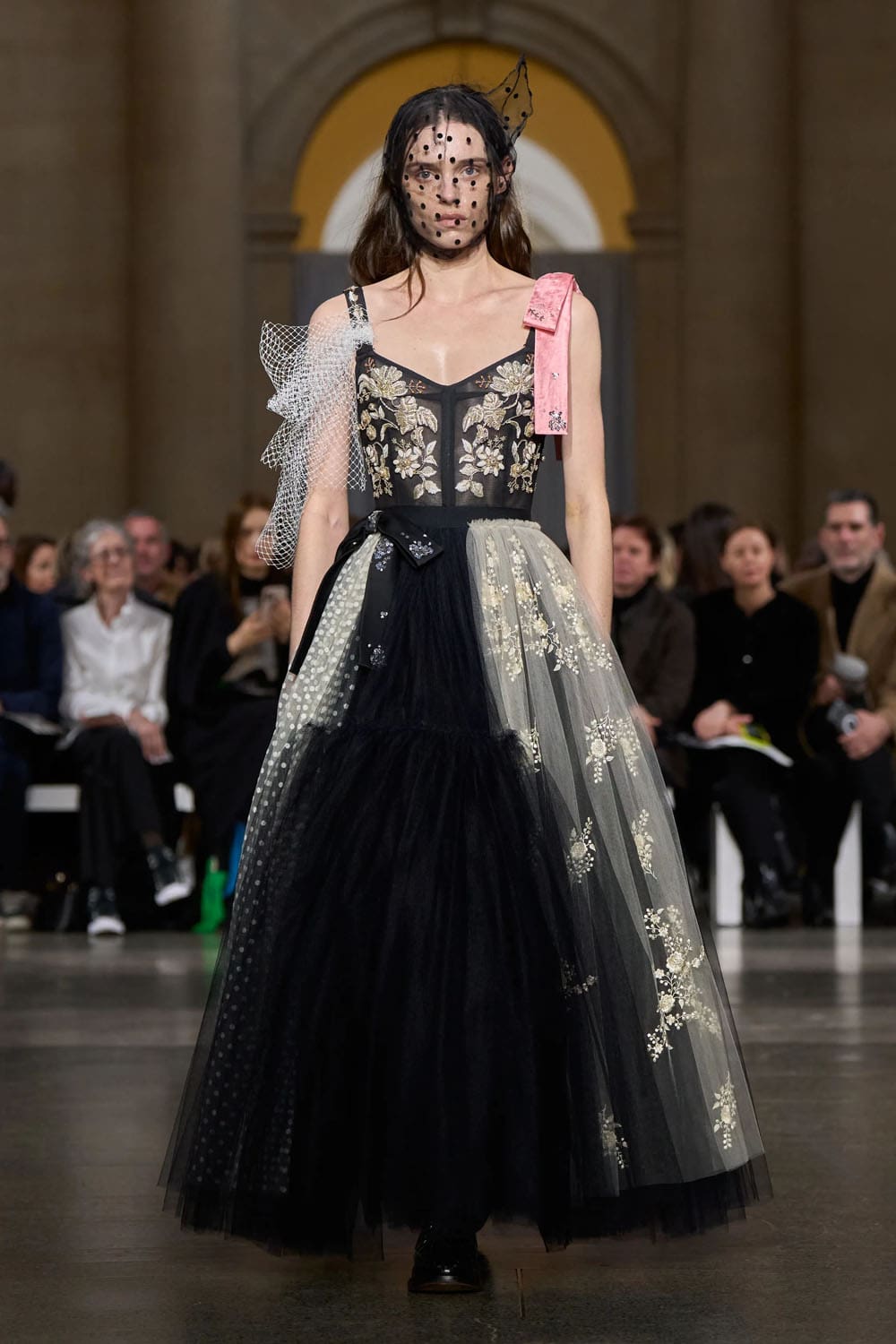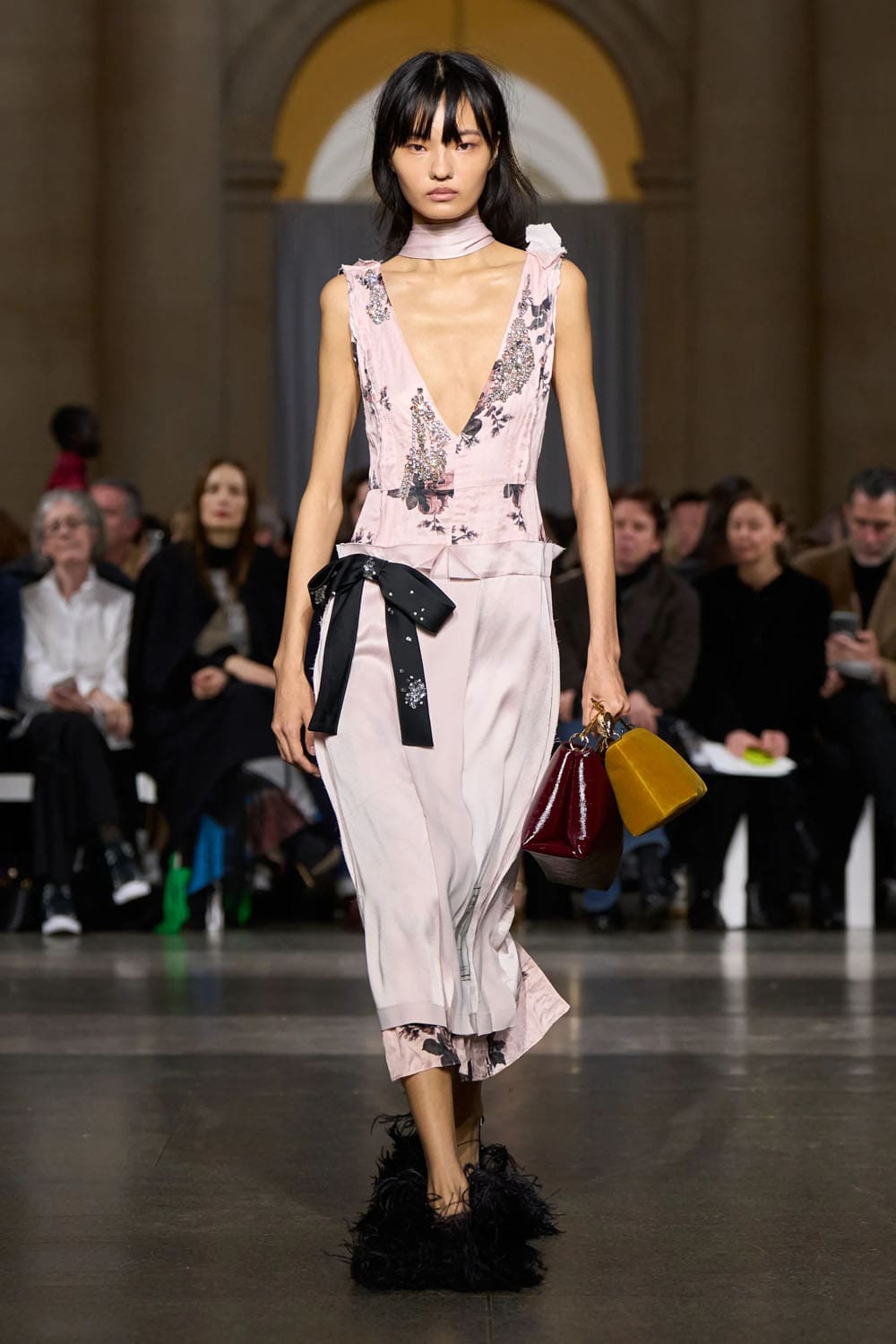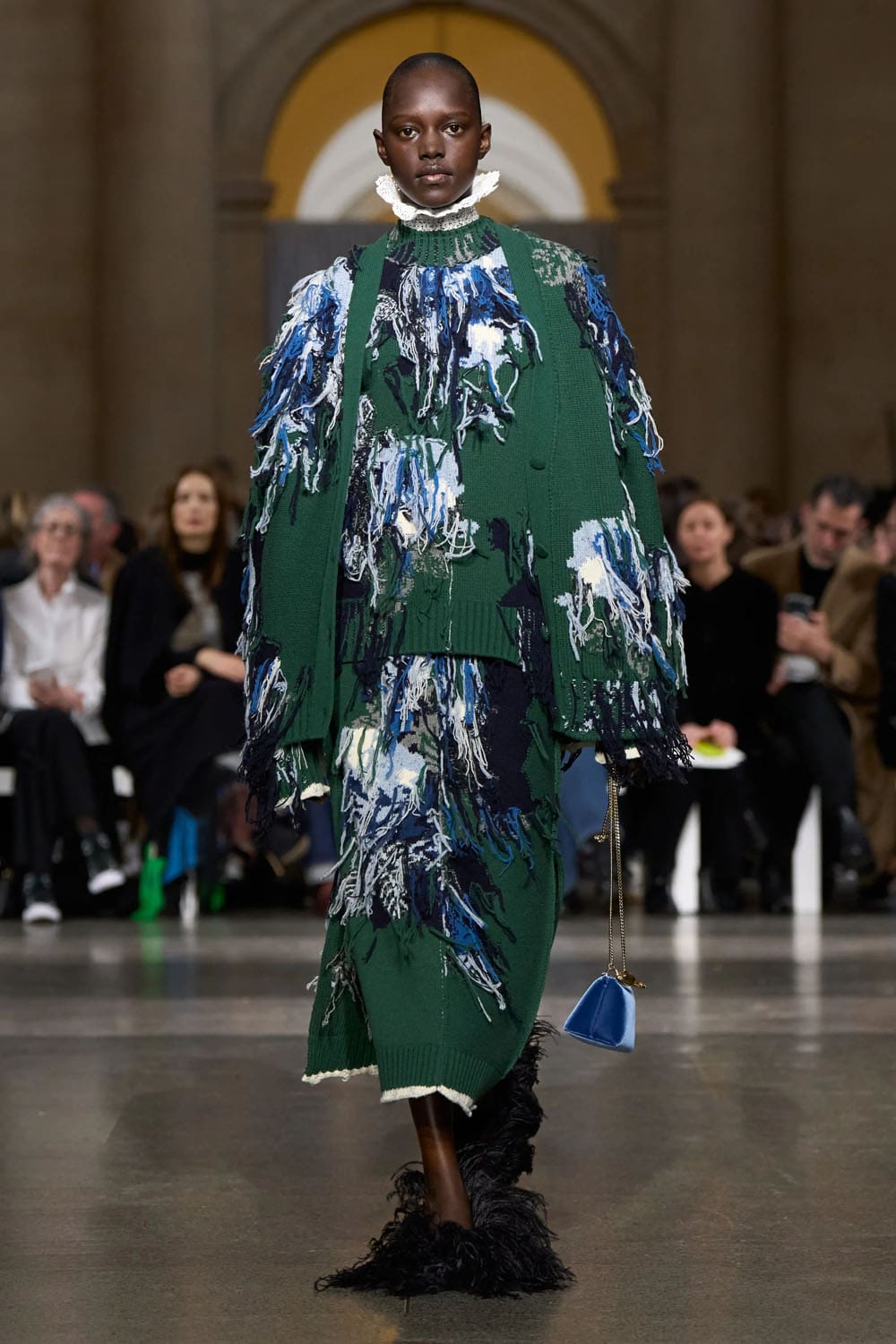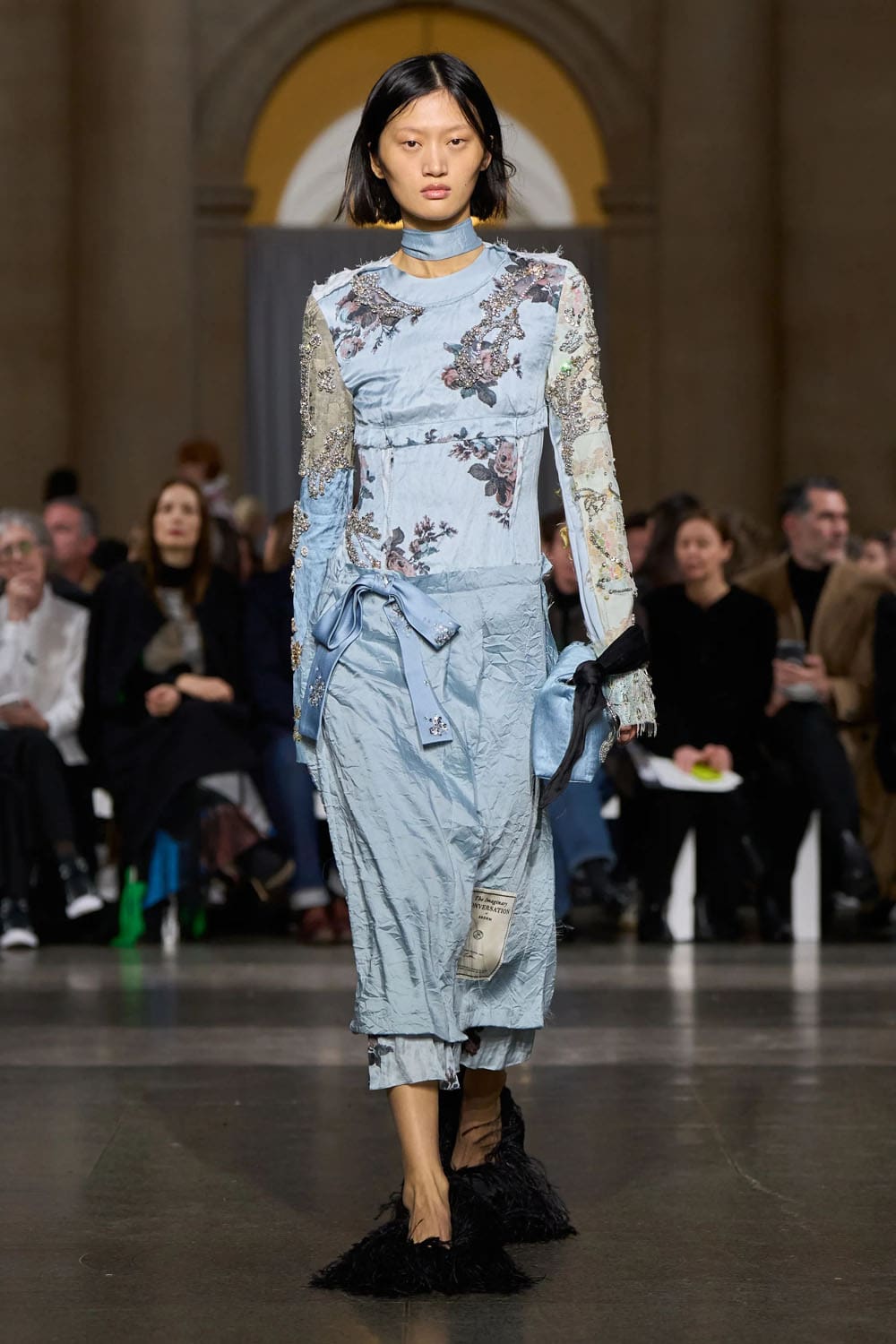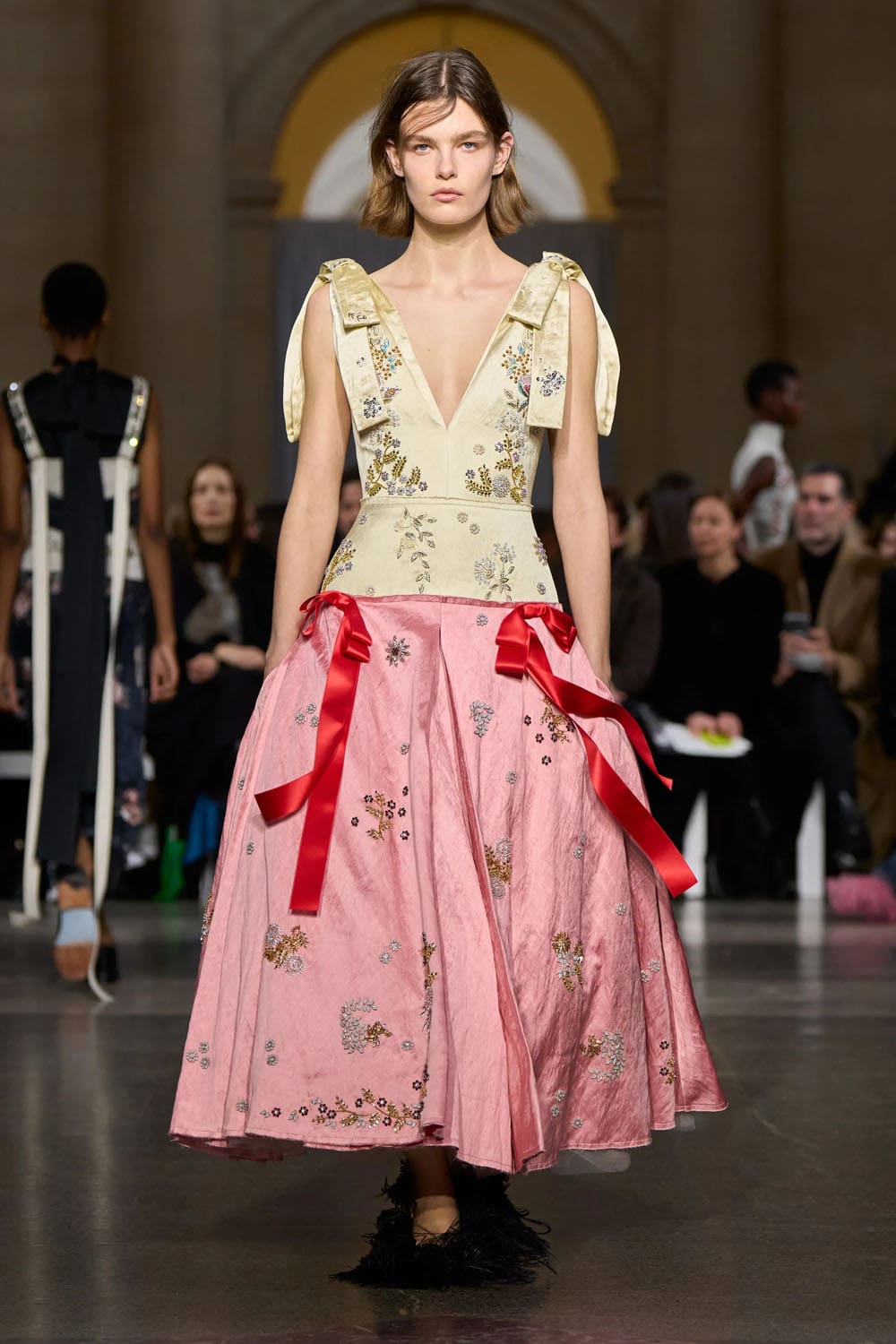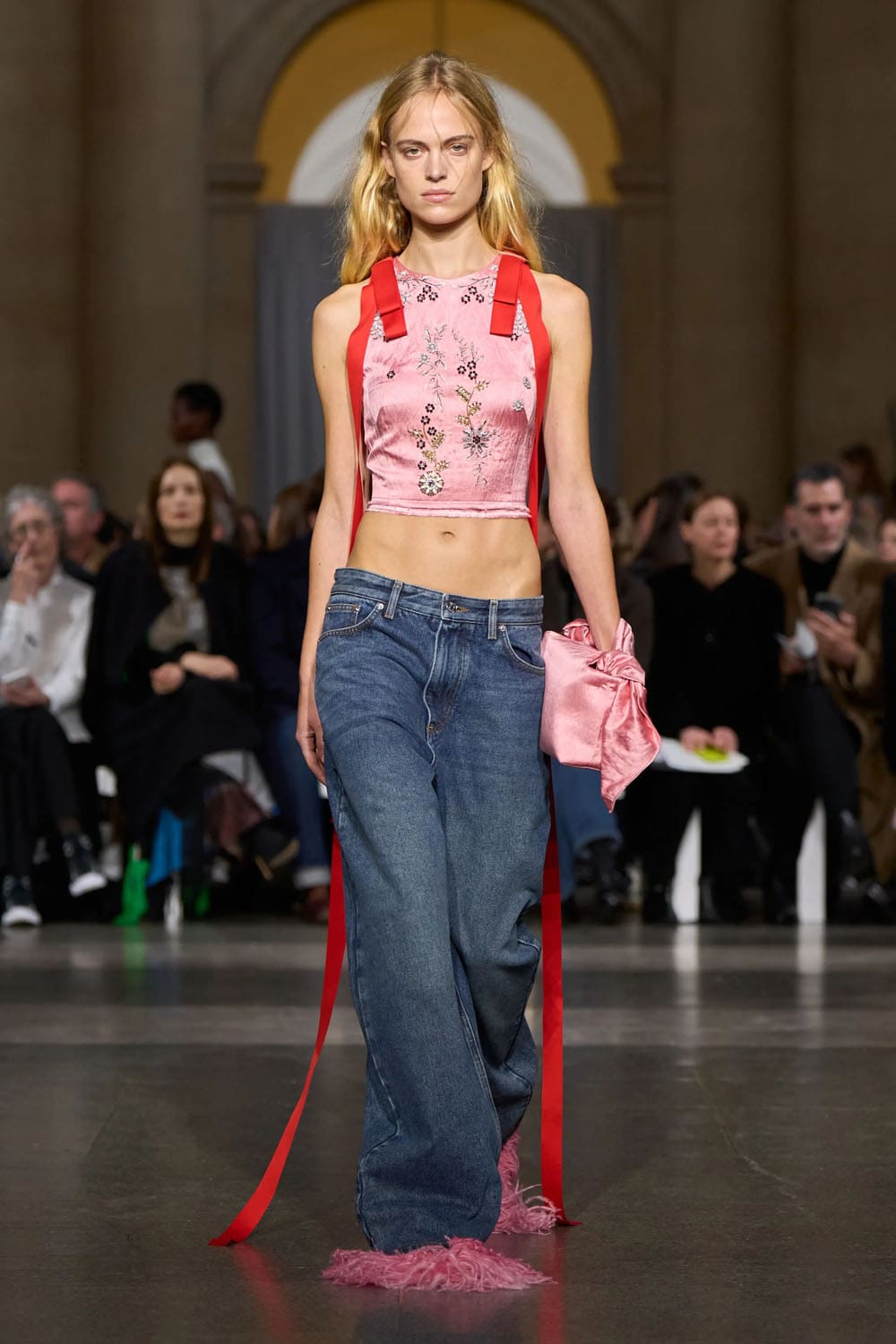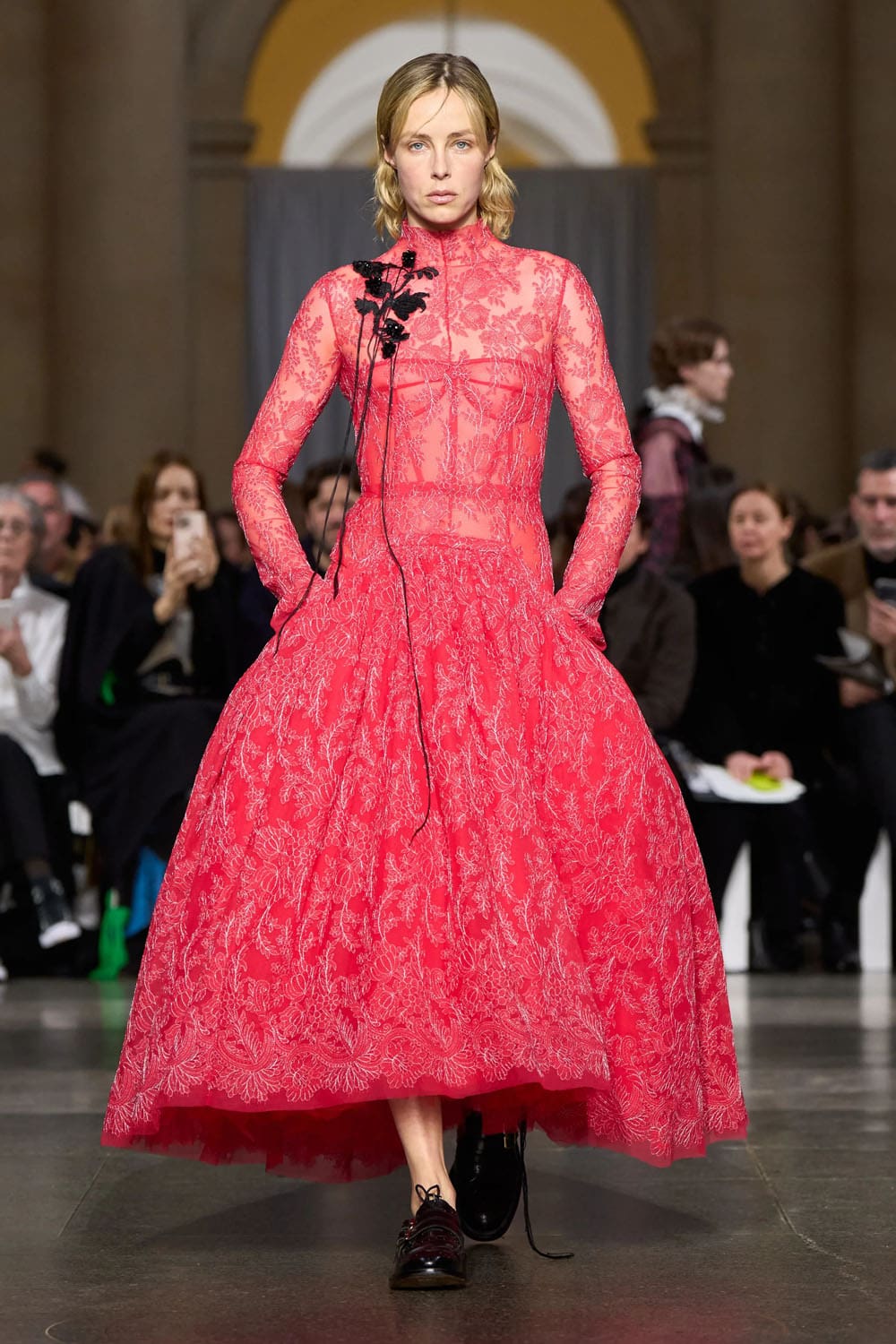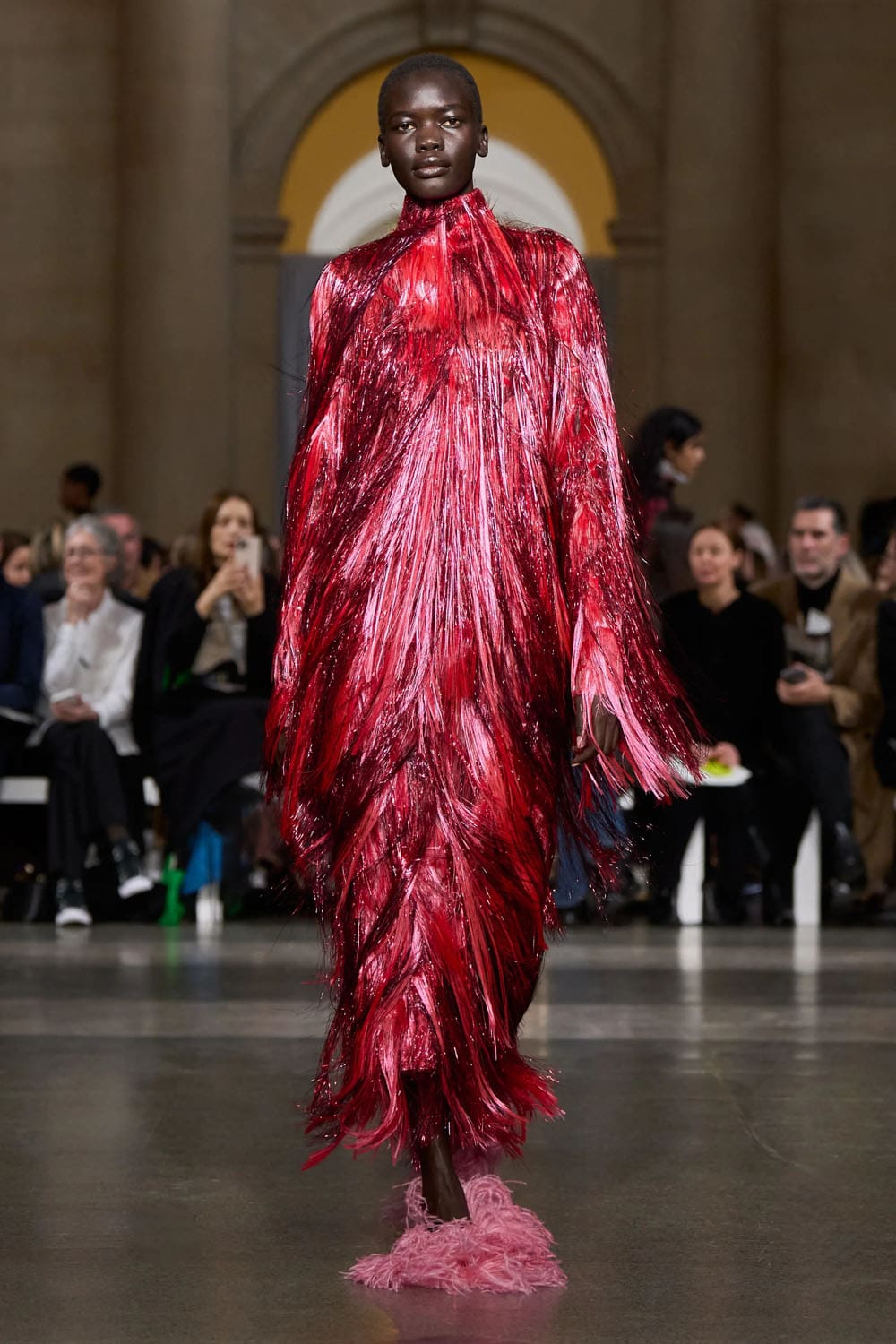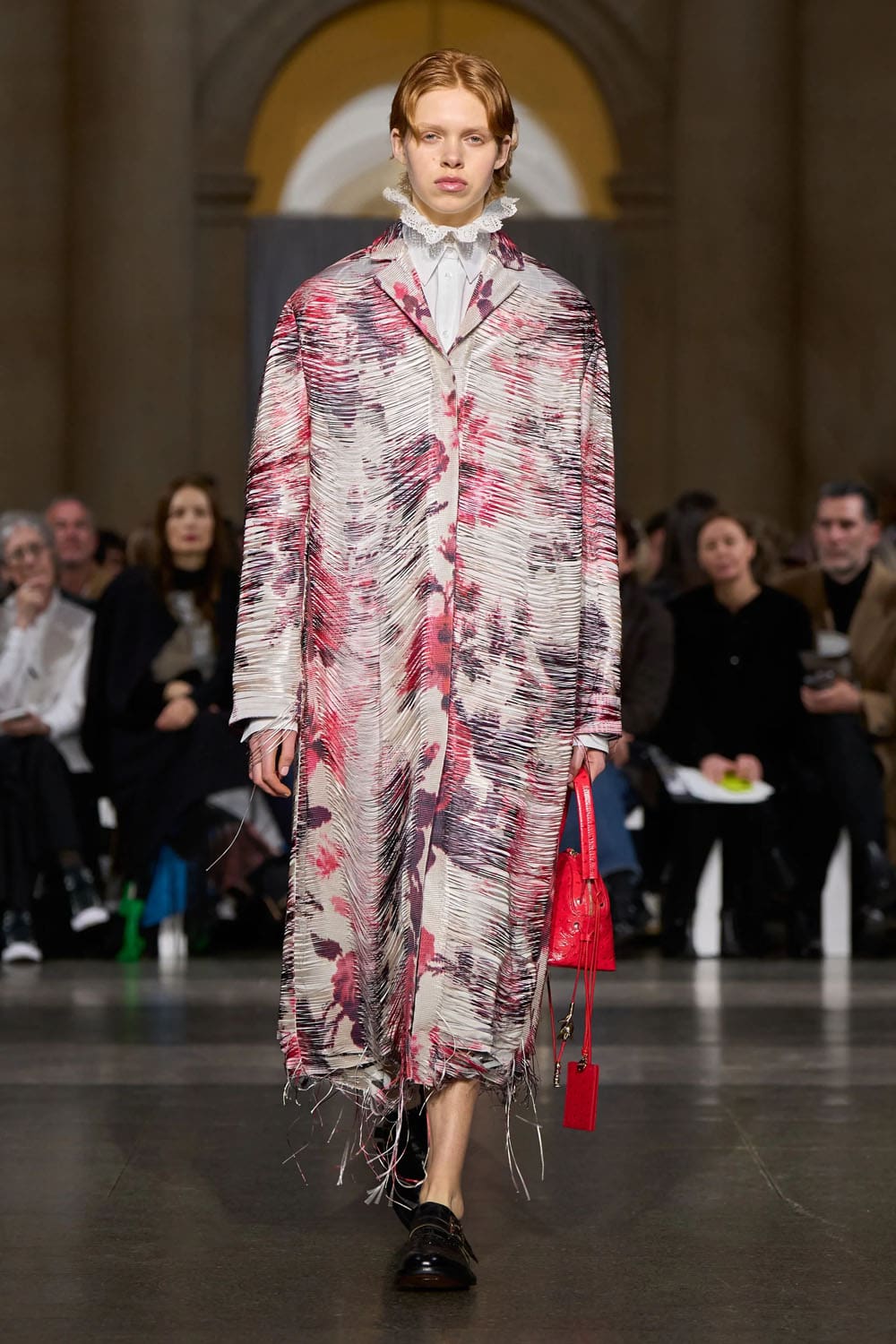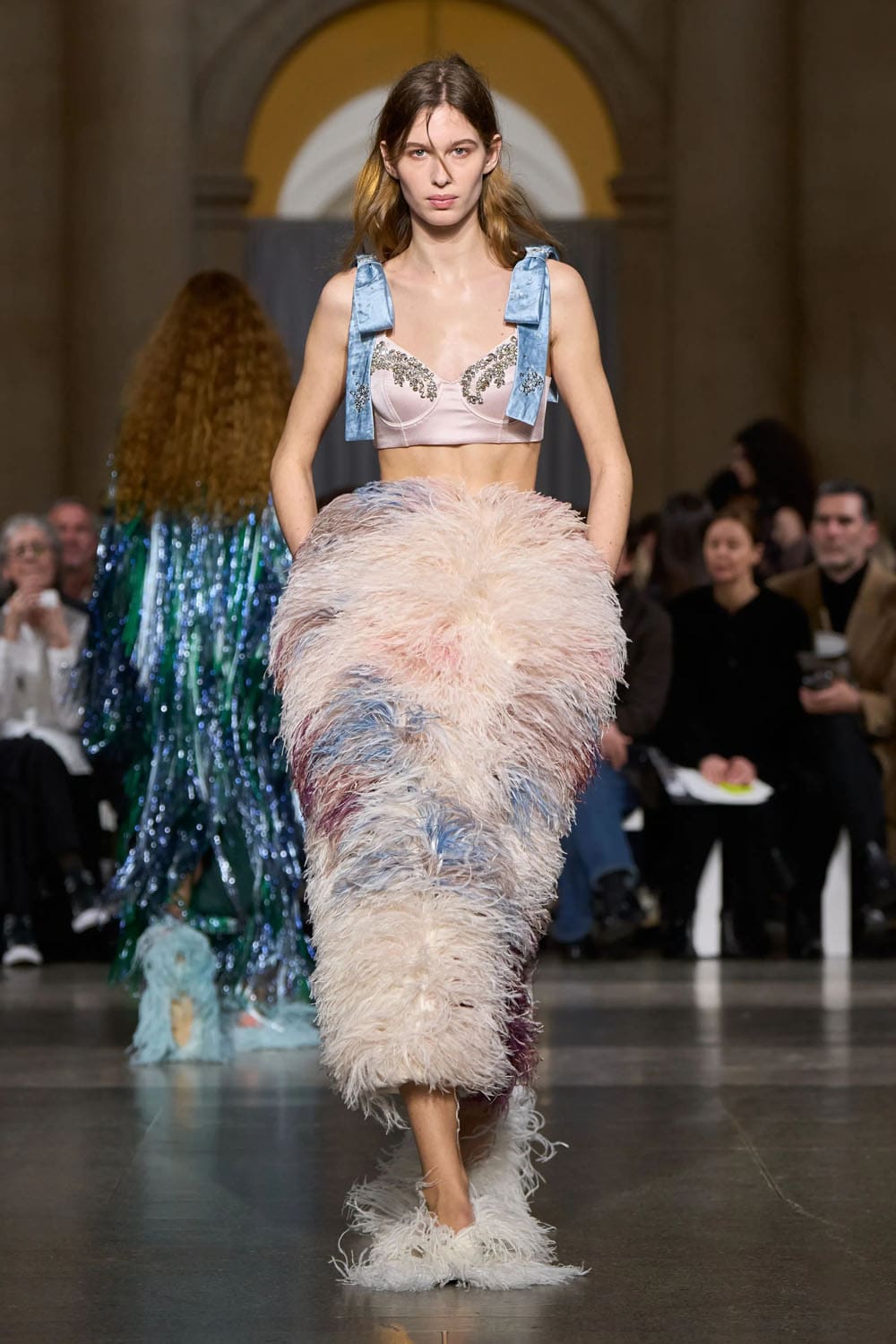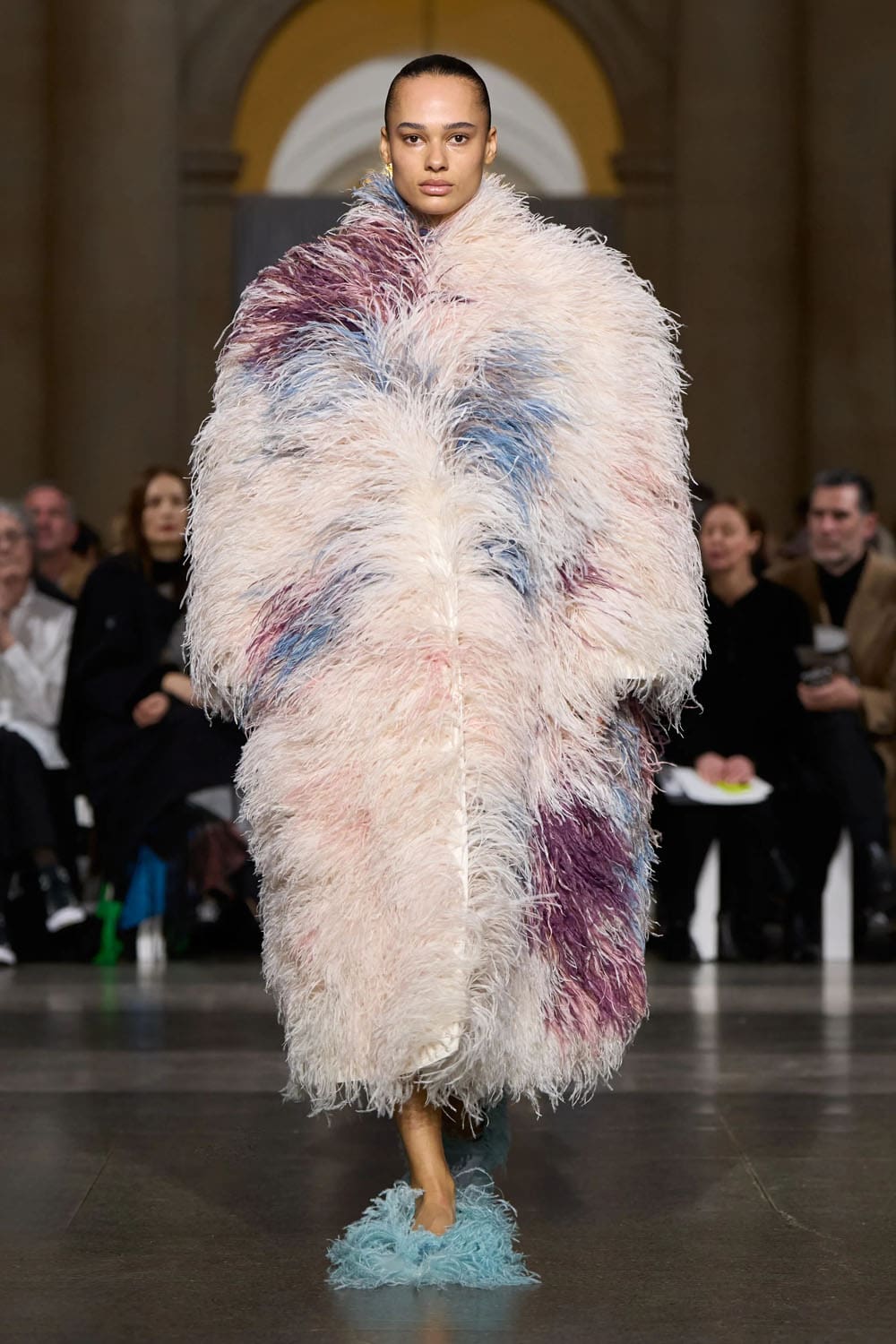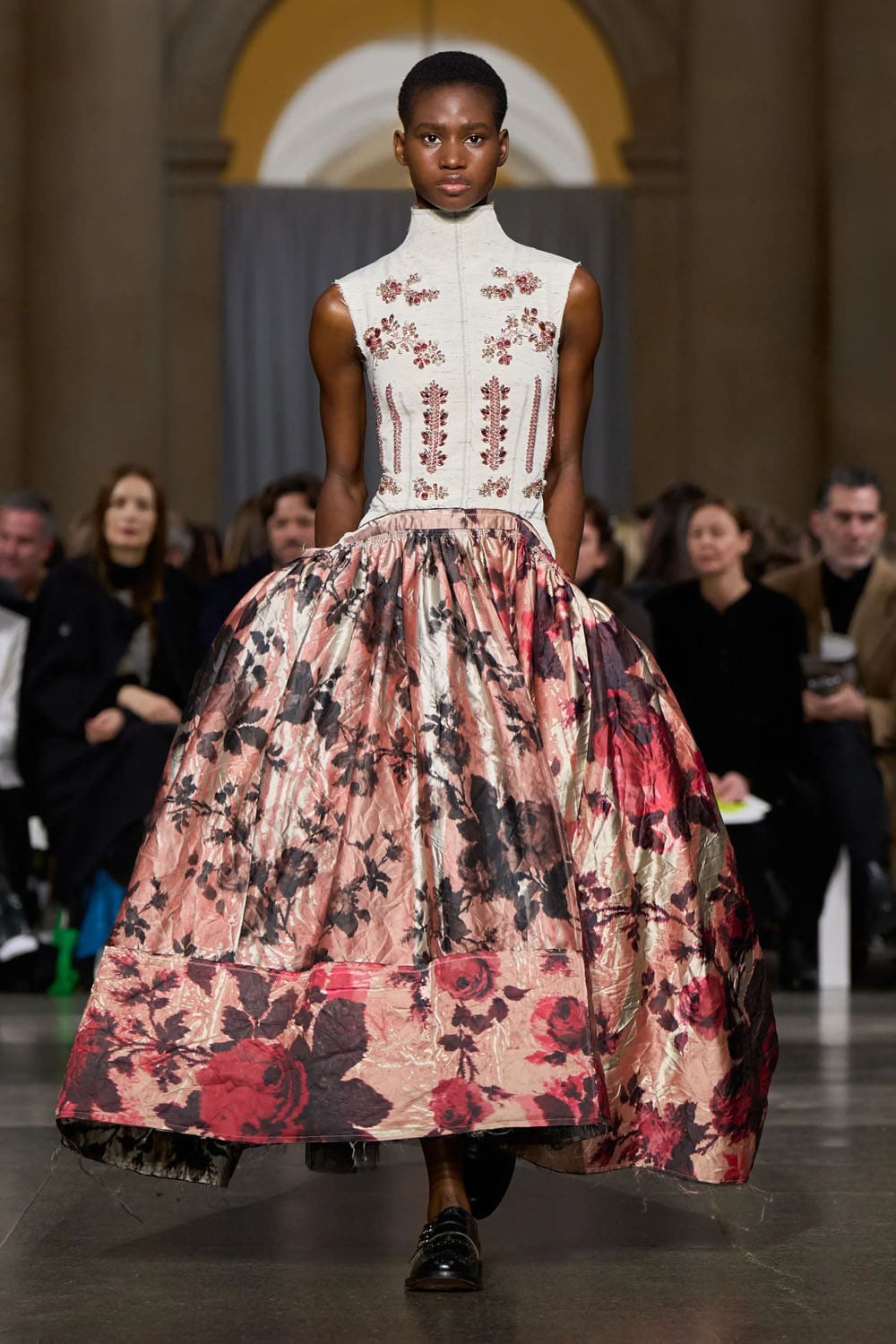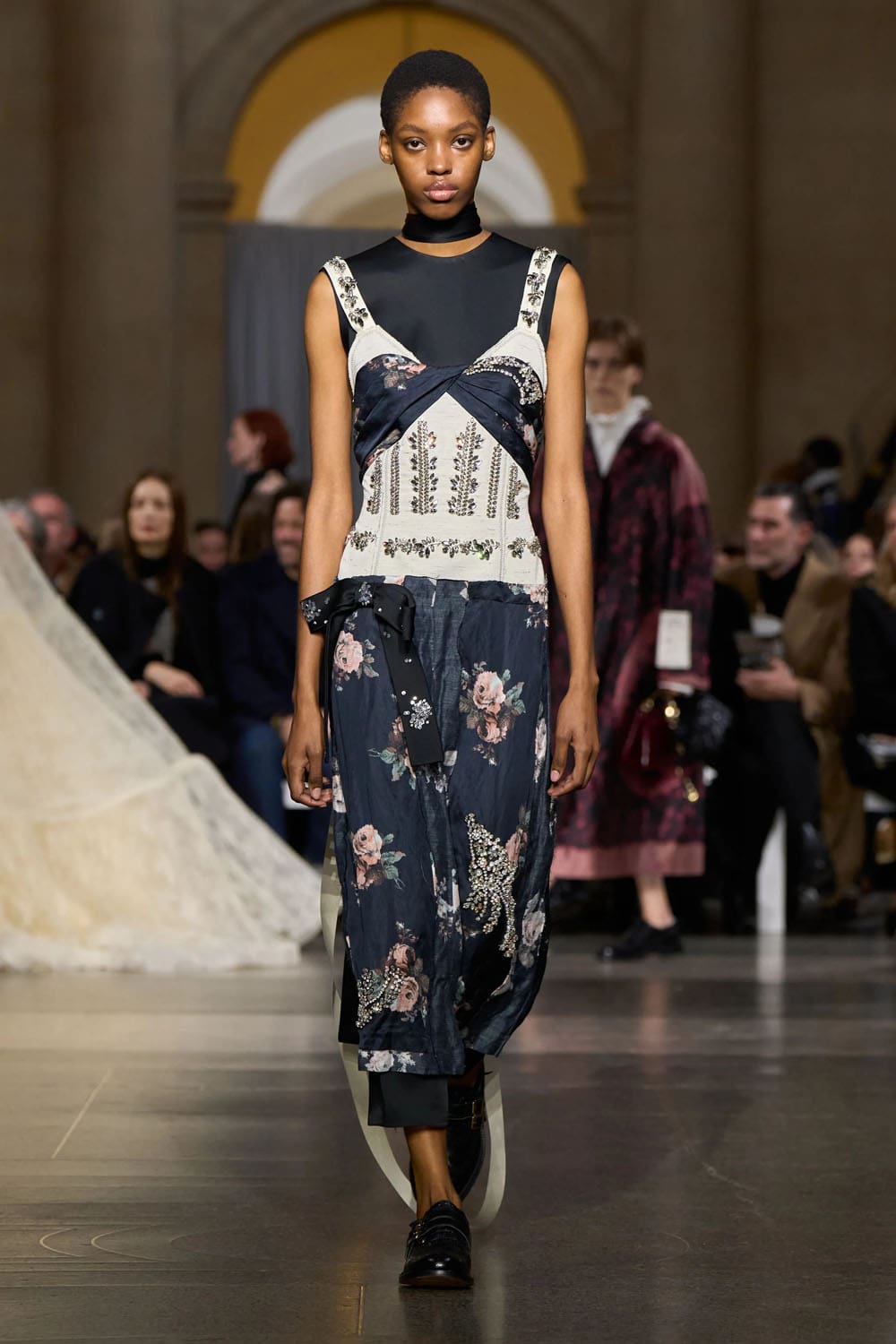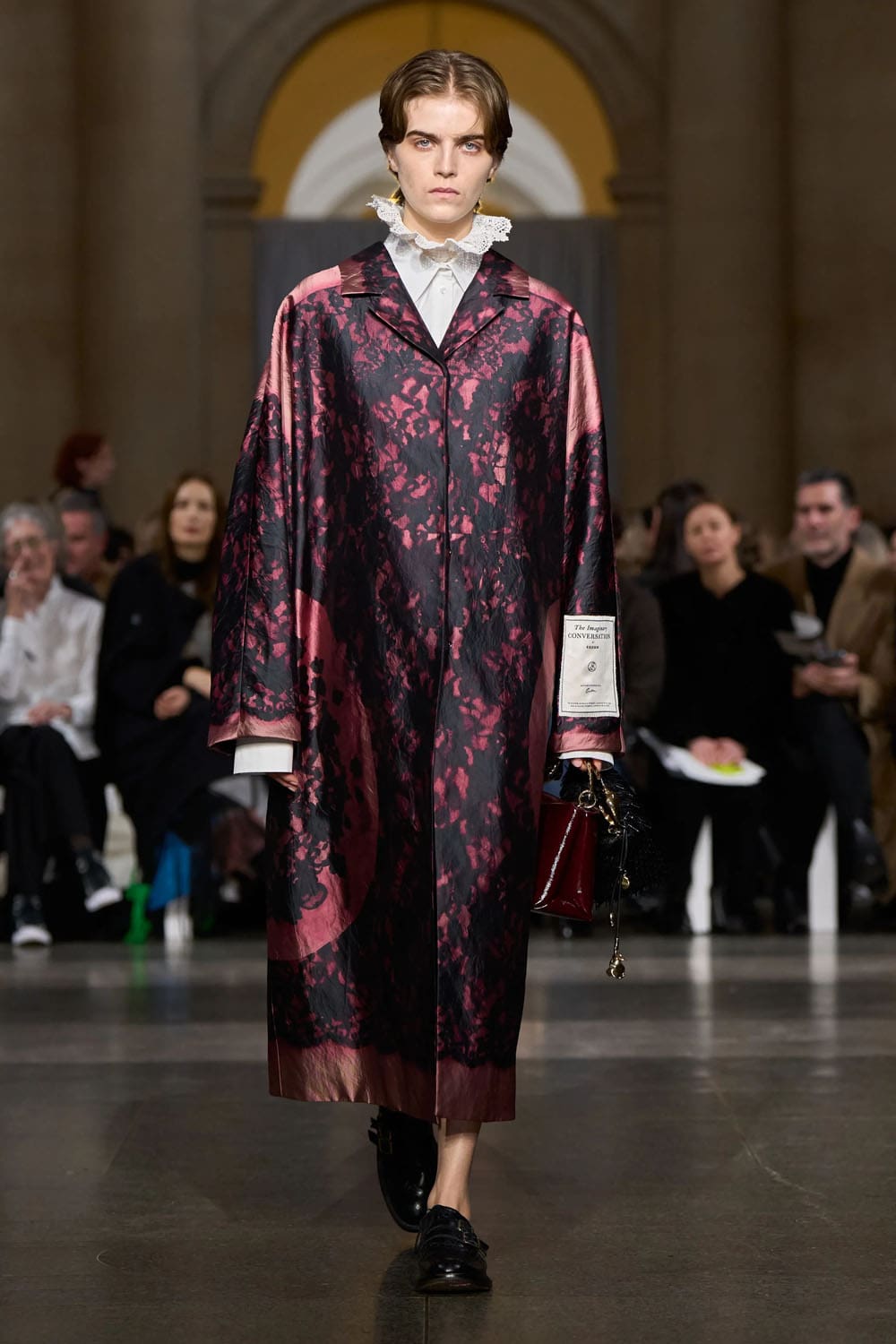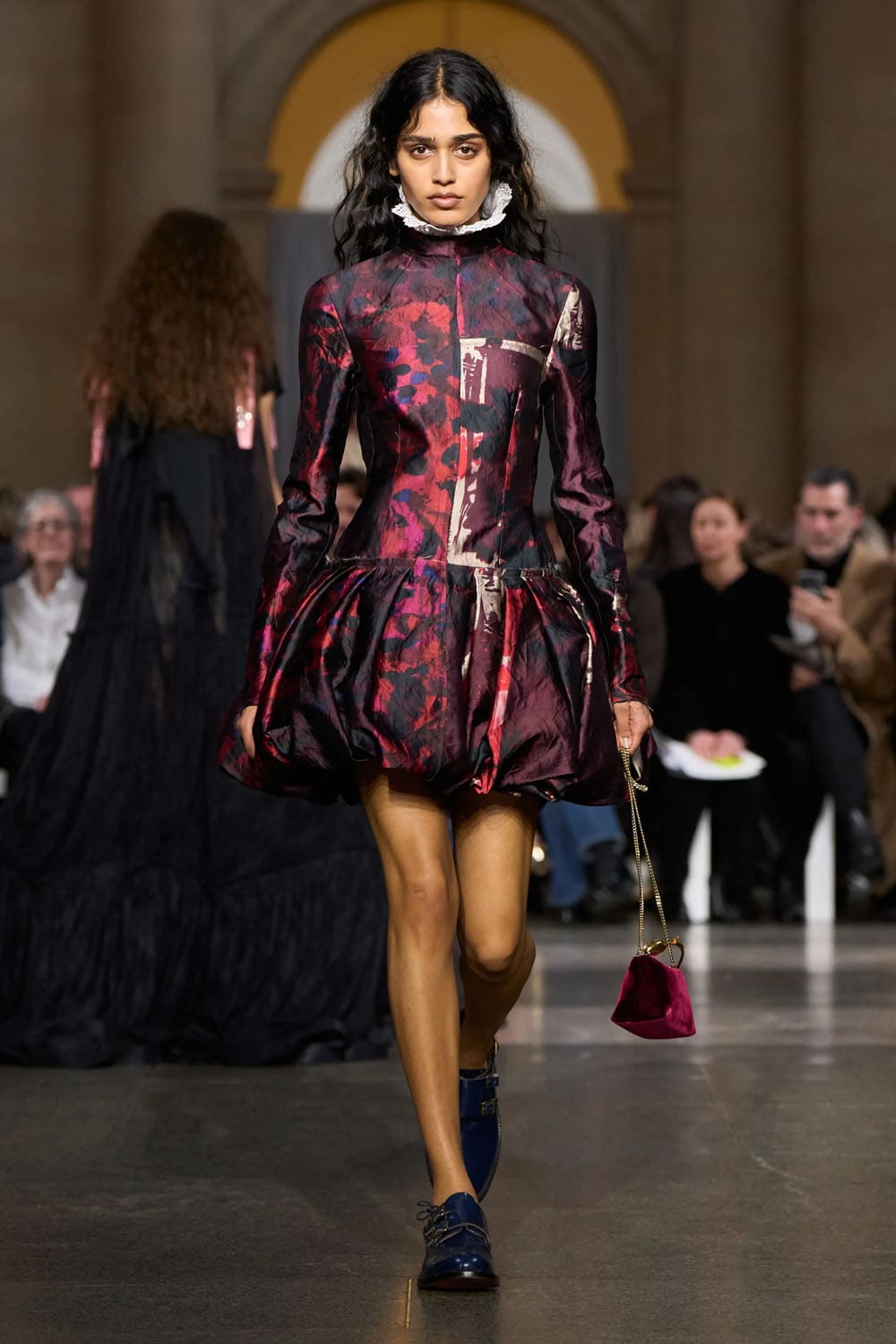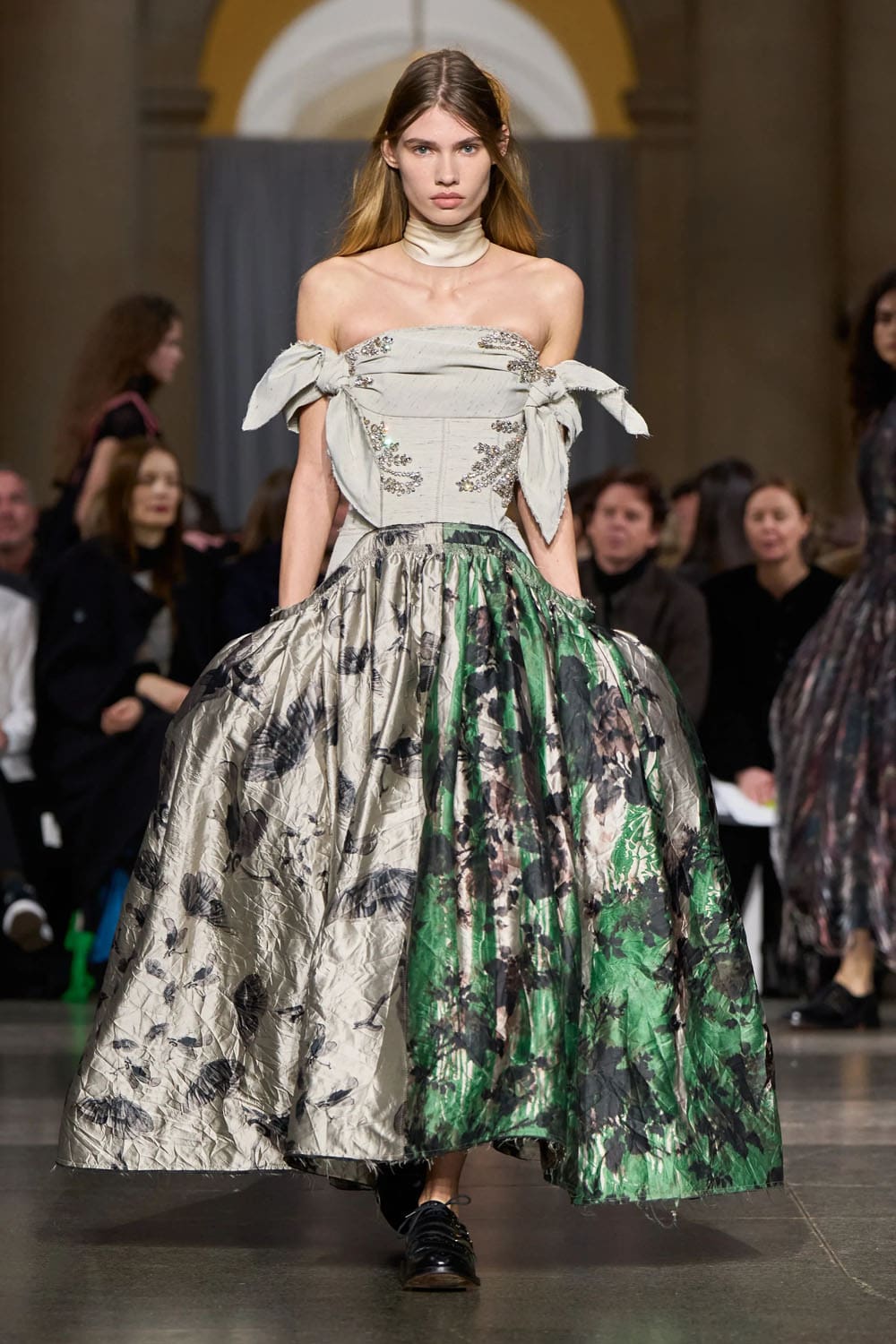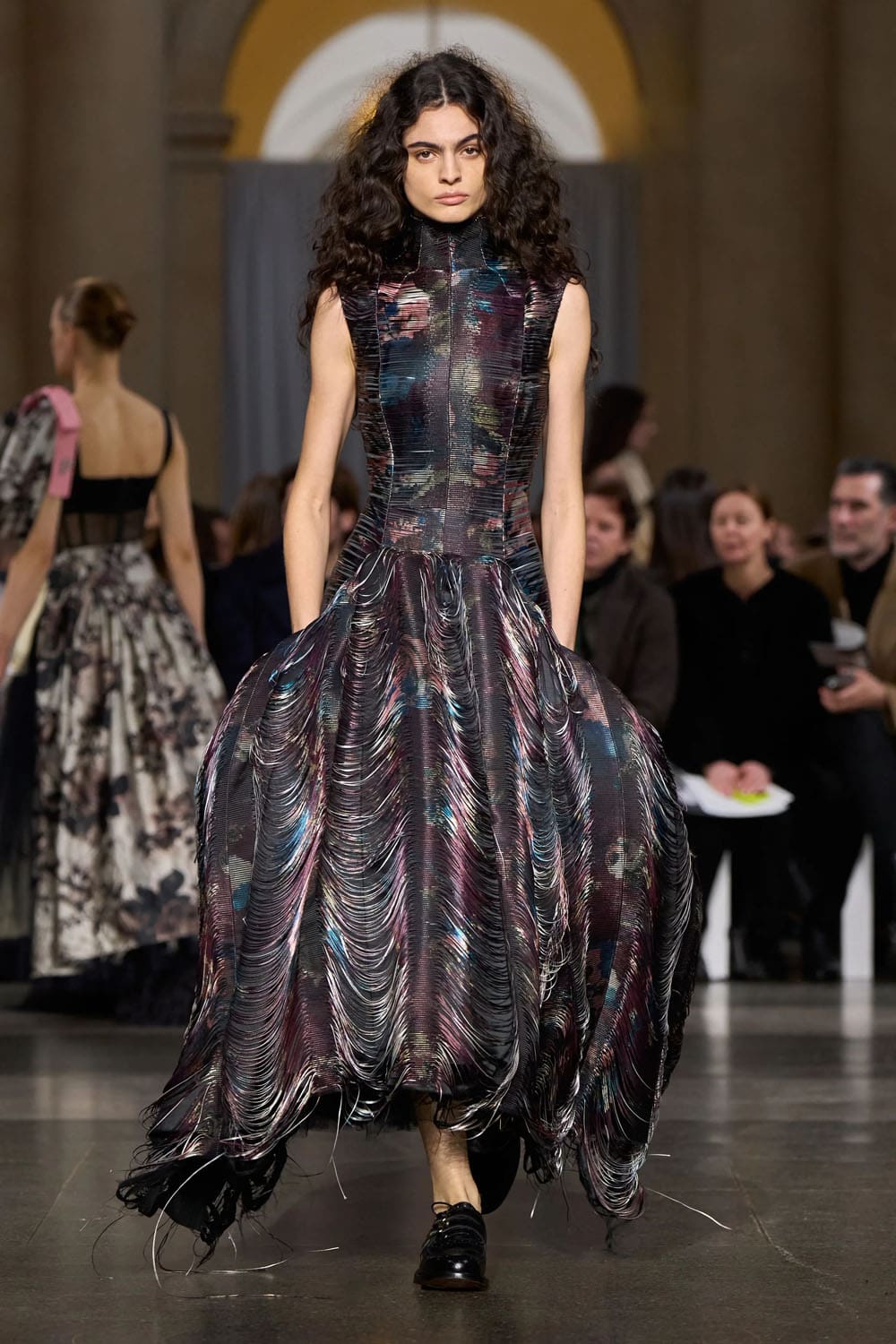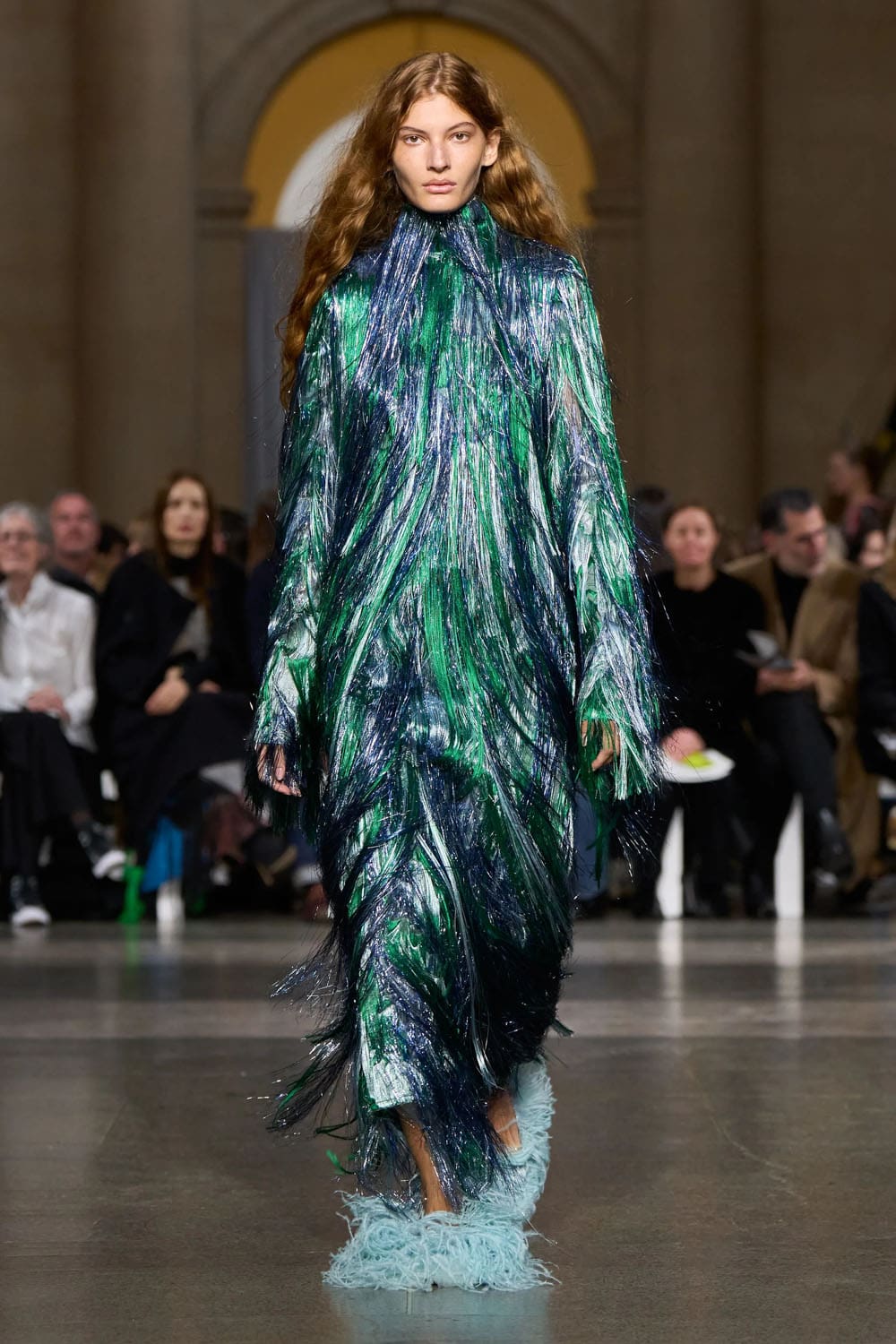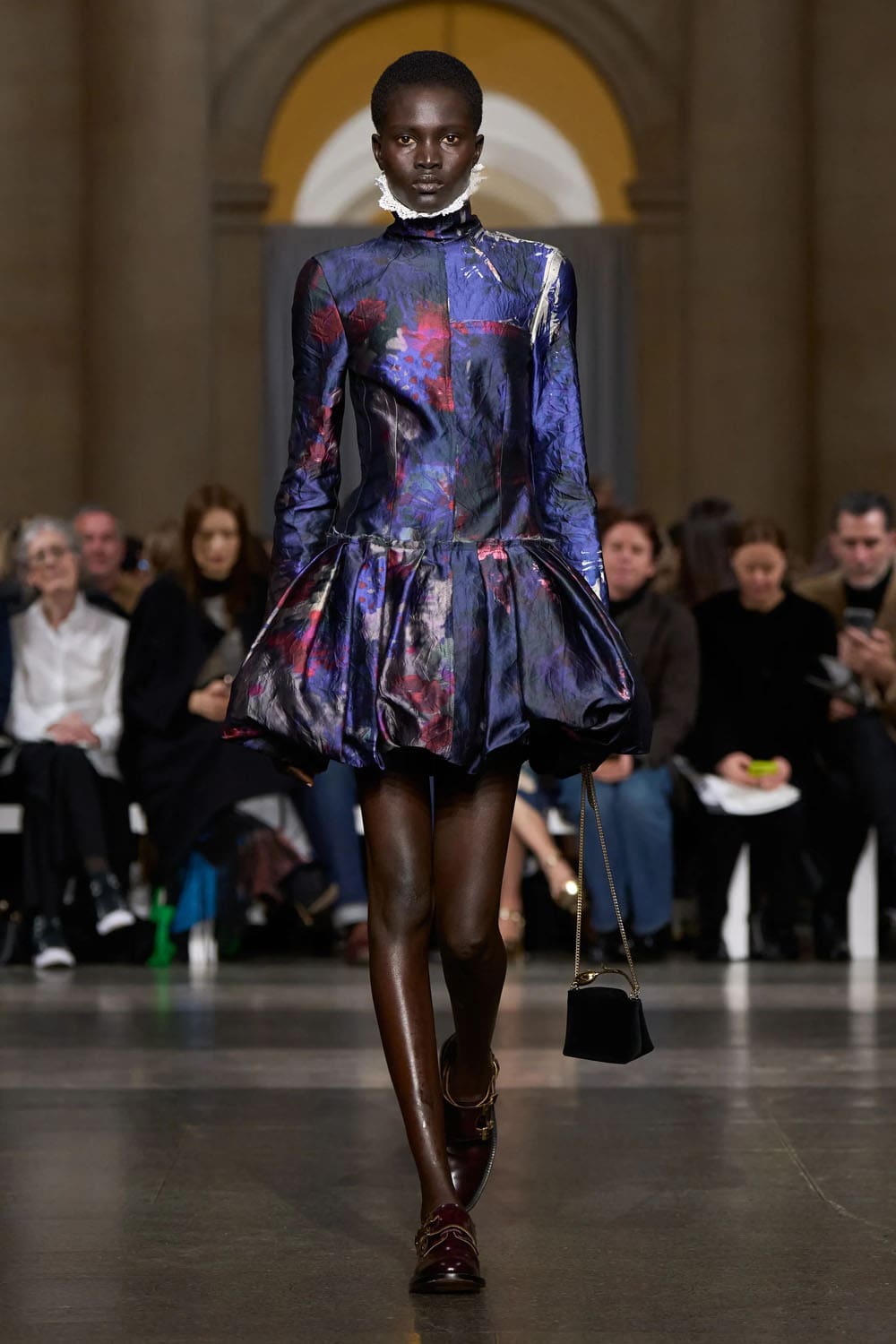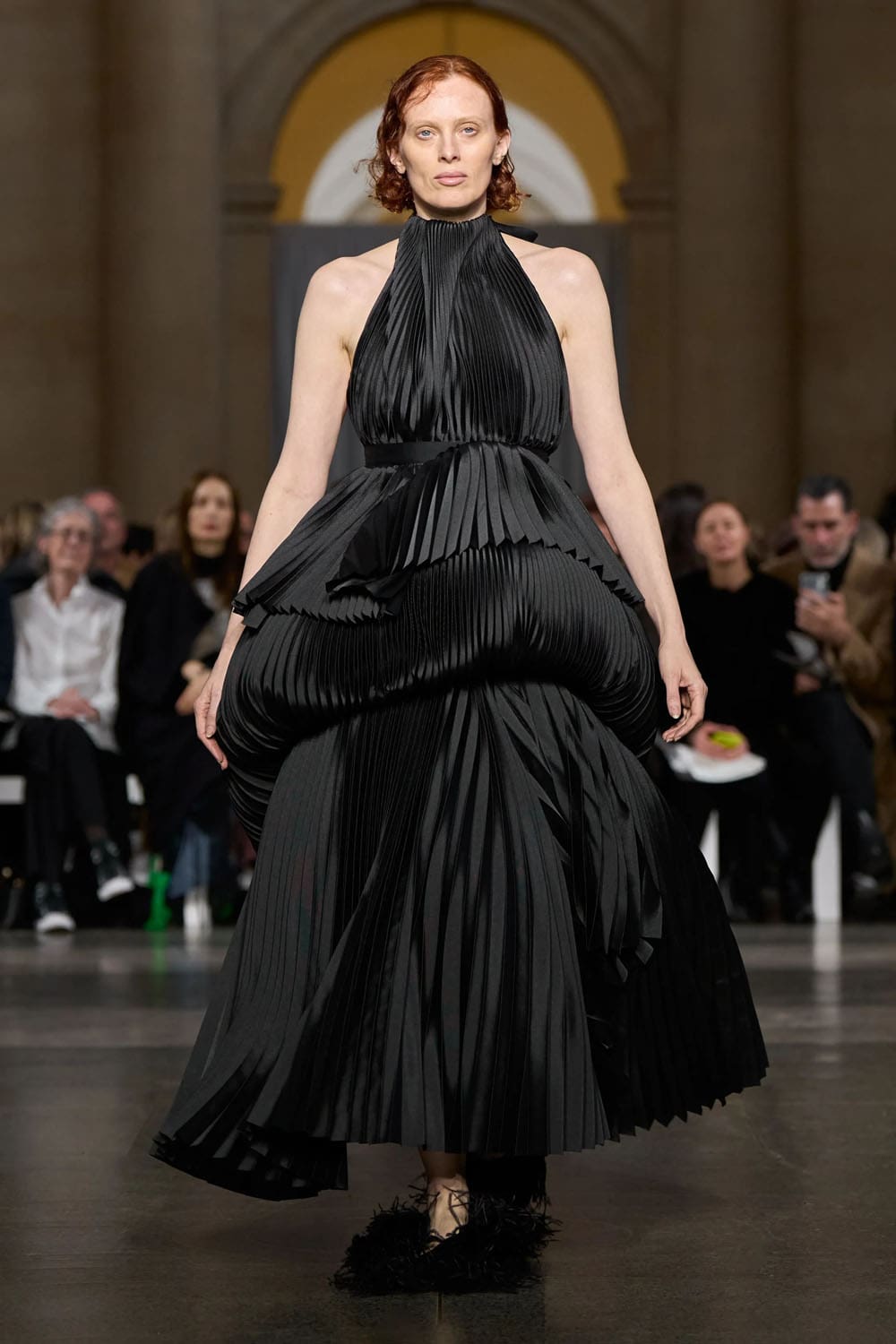
Erdem Fall Winter 2026-2027 “The Imaginary Conversation”. Story by RUNWAY MAGAZINE. Photo Courteay: Erdem.
London’s Somerset House became a stage for whispers—the imagined dialogue between past and present, embroidered in thread, lace, and the unmistakable romantic rigor of Erdem Moralıoğlu. “The Imaginary Conversation,” the title of the Fall Winter 2026–2027 collection, felt less like a theme and more like a séance: a choreography of textures speaking to one another in the air.
Erdem, the Turkish-Canadian designer who founded his namesake house in 2005, has long built his world on a blend of erudite femininity and cinematic melancholy. His clothes do not merely dress; they narrate. Each season he constructs characters, and this time the conversation extended far beyond the runway—thanks to two cinematic titans who graced the front row and instantly elevated the show’s atmosphere into something mythic.
Glenn Close: A Living Study in Quiet Power
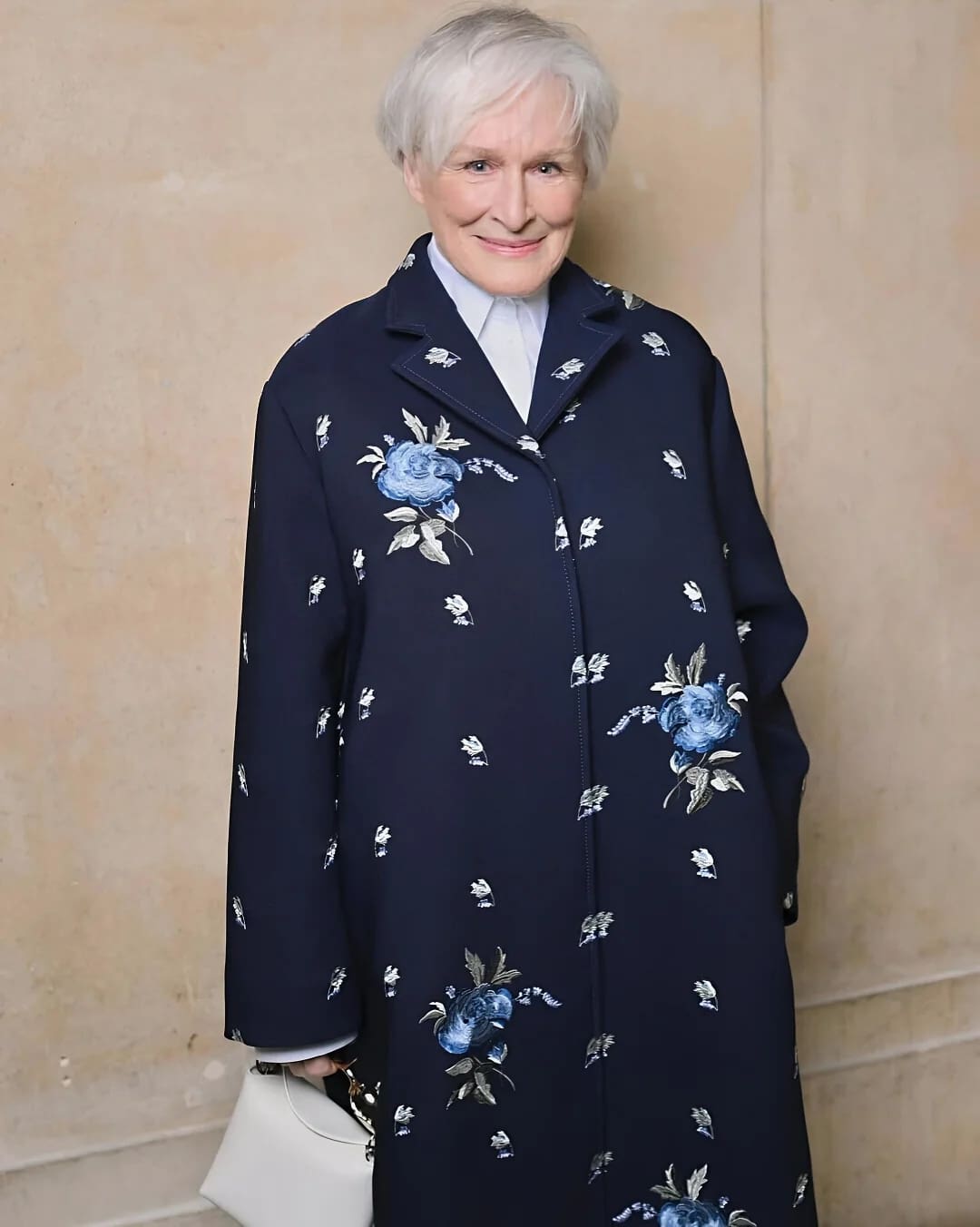
Glenn Close arrived like the distilled essence of the Erdem woman—intelligent, refined, and quietly subversive.
She wore a navy coat embroidered with powder-blue florals, the type of garment that doesn’t raise its voice but commands attention nonetheless. The embroidery—classic Erdem—felt almost like pressed flowers kept between the pages of a beloved novel. Close carried a structured white bag, a punctuation mark to an otherwise poetic silhouette.
Her presence alone transformed the show into a masterclass. Next to Erdem’s young, spectral models, she became the counter-voice in the conversation—proof that true elegance is ageless and that craftsmanship breathes differently on a woman who understands it.
Helen Mirren: The Grand Dame of Effortless Modernity
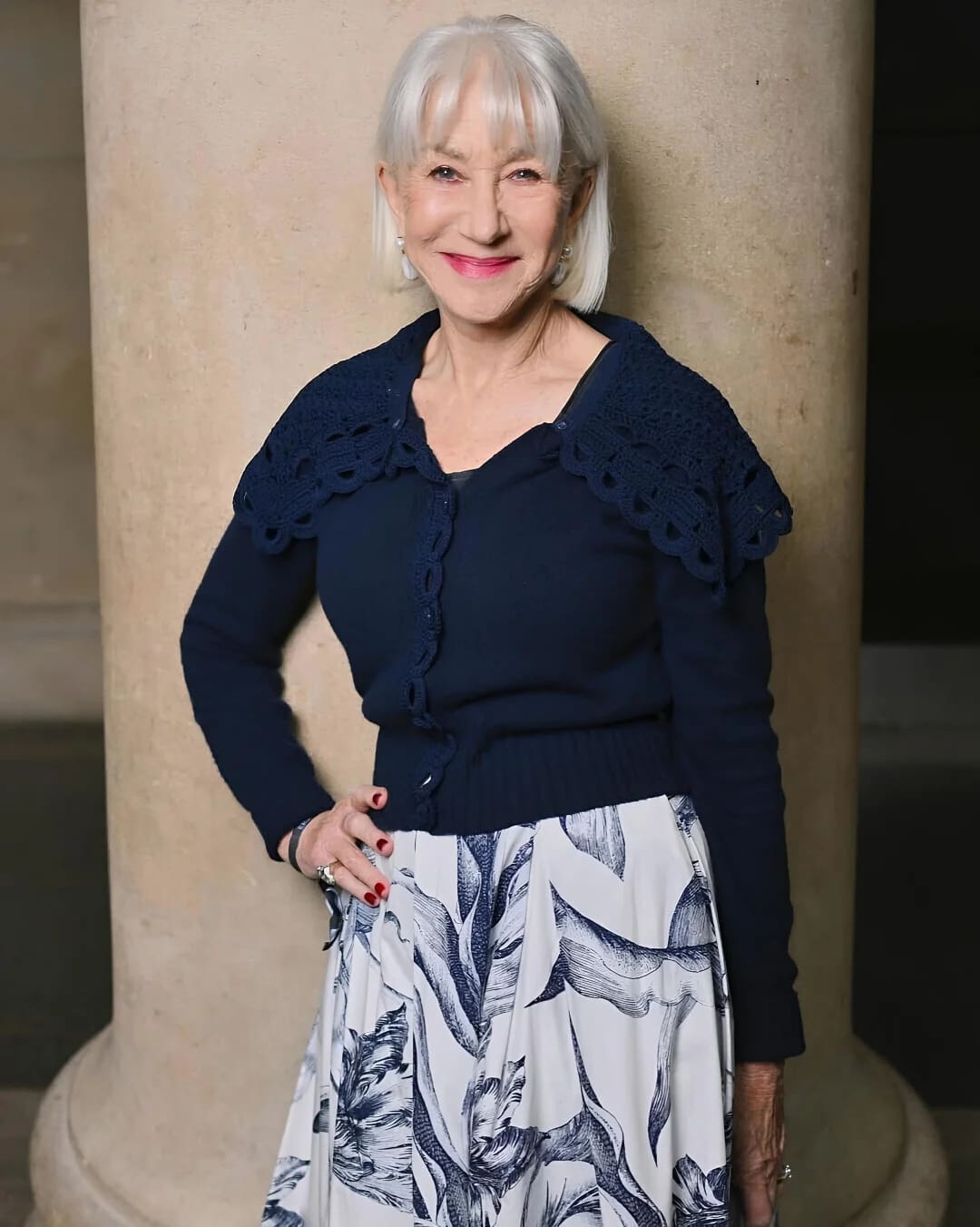
Helen Mirren appeared with the kind of regal ease only she possesses. Her navy knit with a crocheted shawl detail, paired with a billowing white-and-indigo botanical skirt, echoed the collection’s romantic notes but grounded them in reality.
Mirren has the rare ability to make couture feel lived in—not as costume, but as a natural extension of her wit and confidence.
Together, Close and Mirren didn’t merely attend the show—they framed it. They embodied the very dialogue Erdem pursues season after season: between fragility and strength, ephemeral beauty and enduring presence.
Inside the Collection: A Tapestry of Conversations
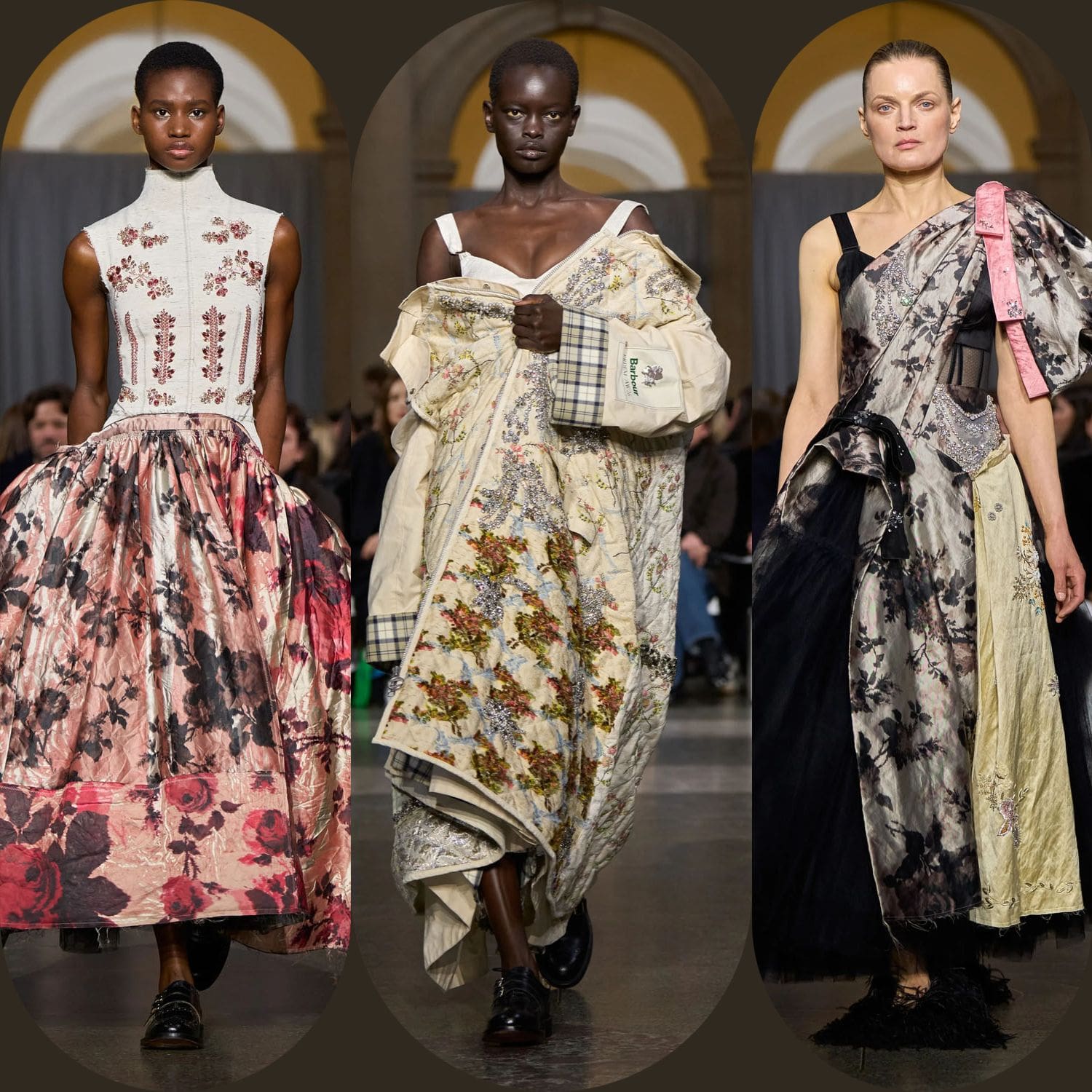
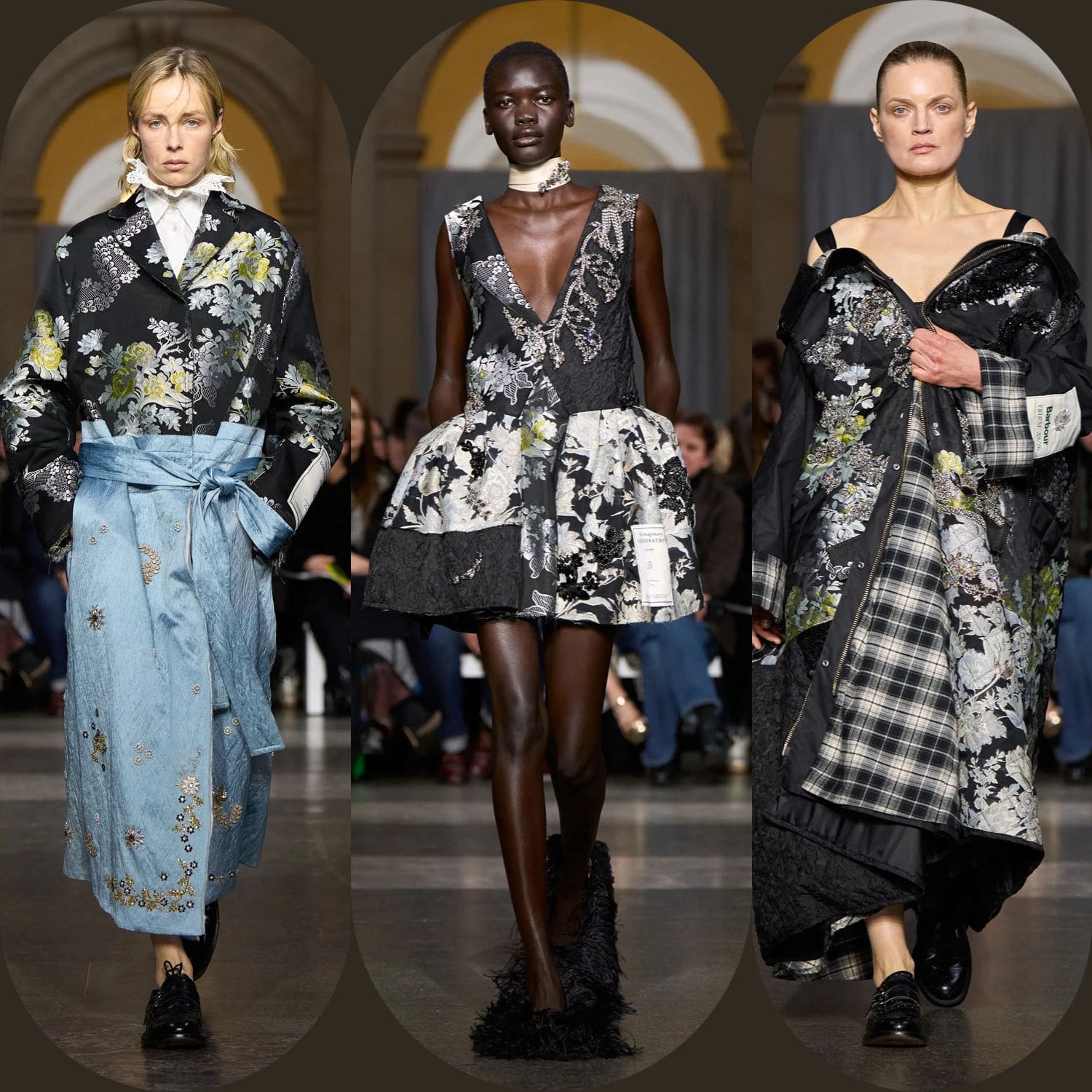
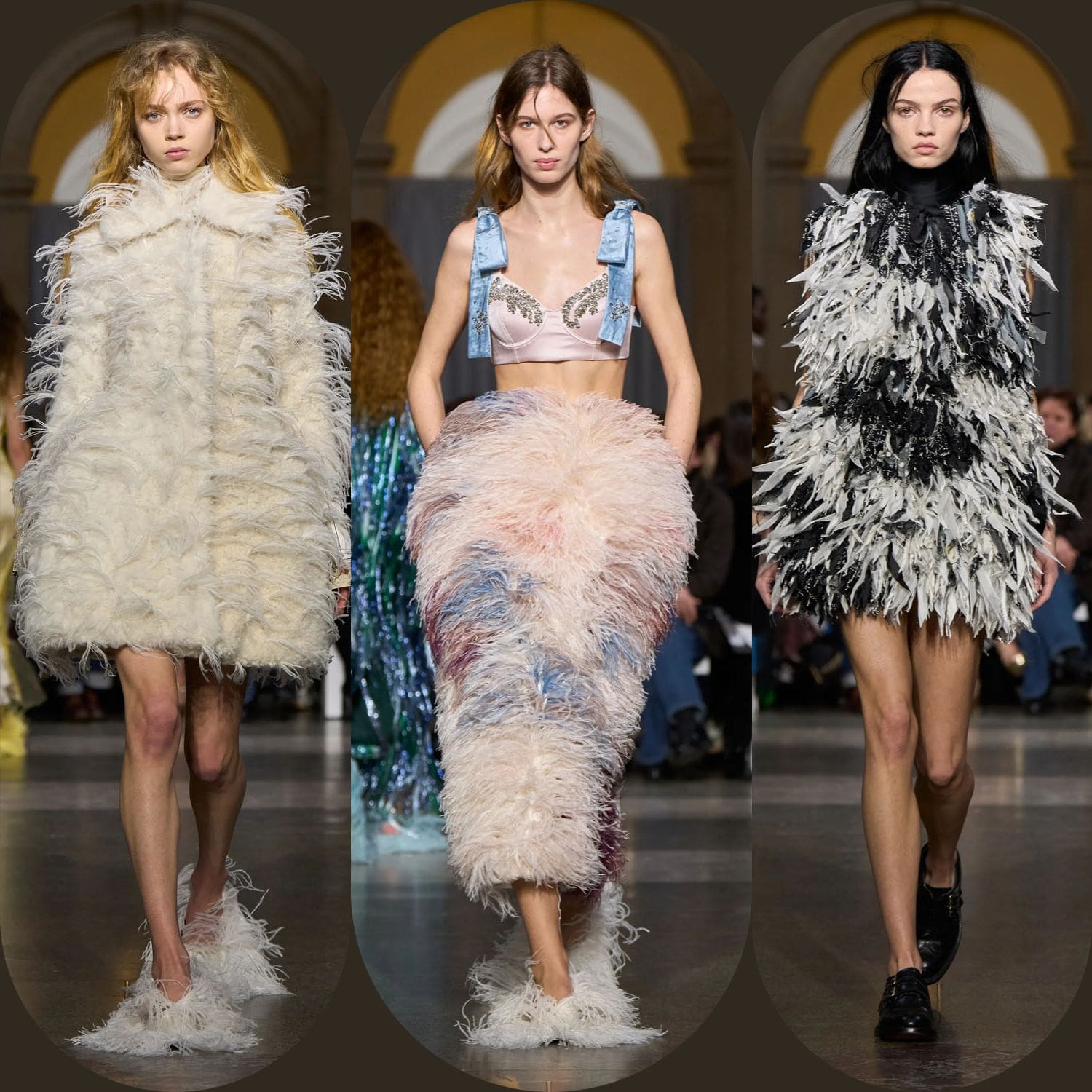
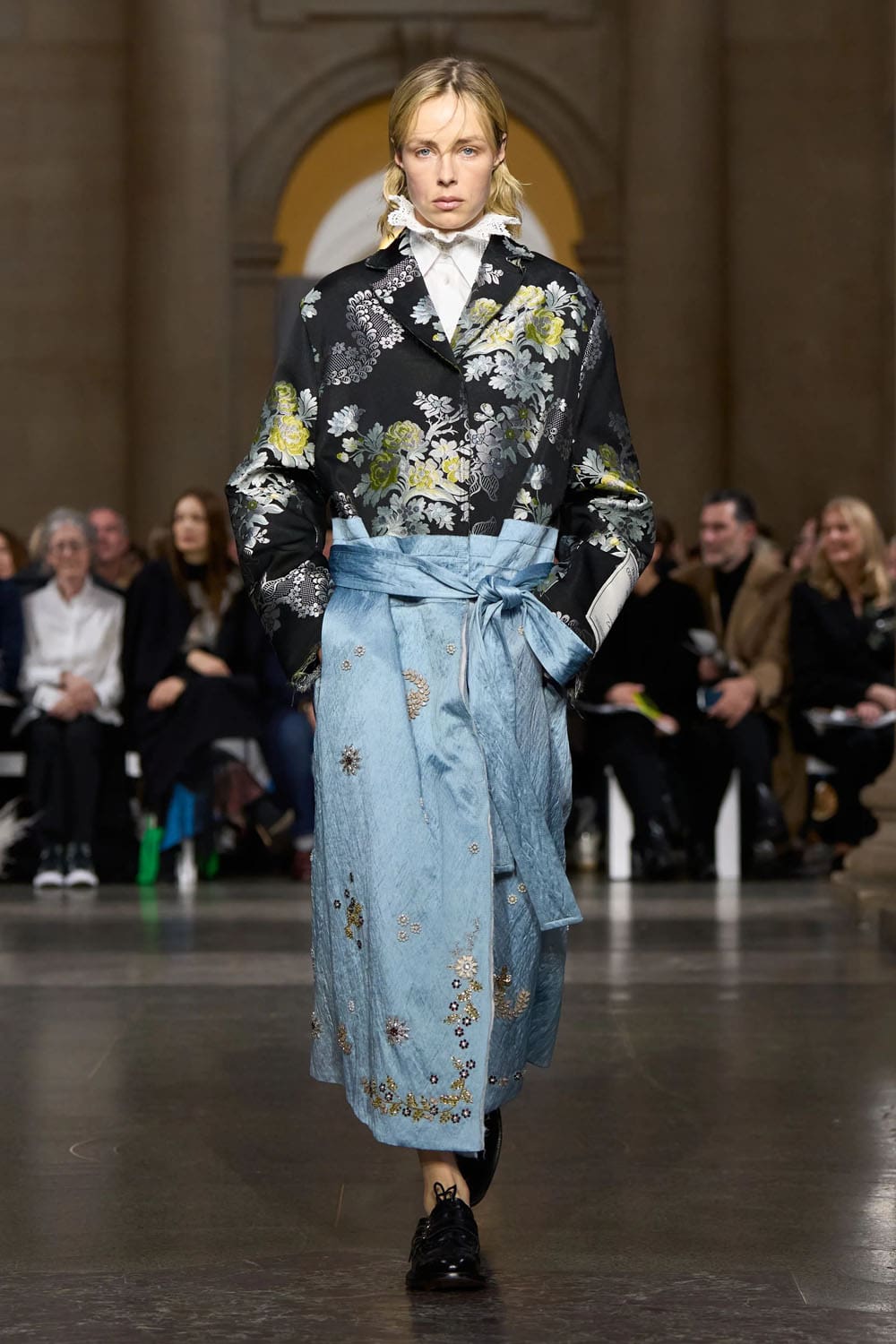
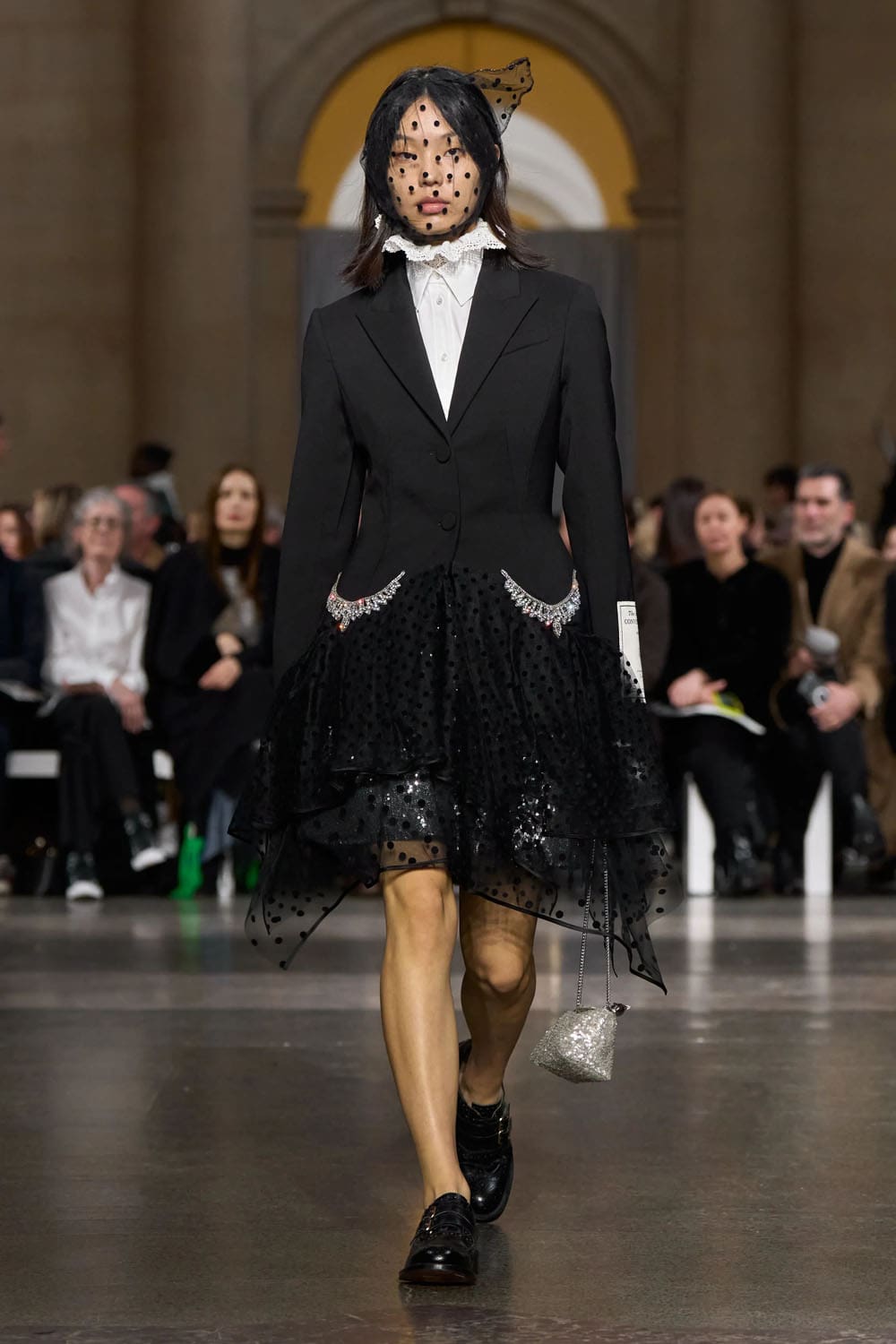
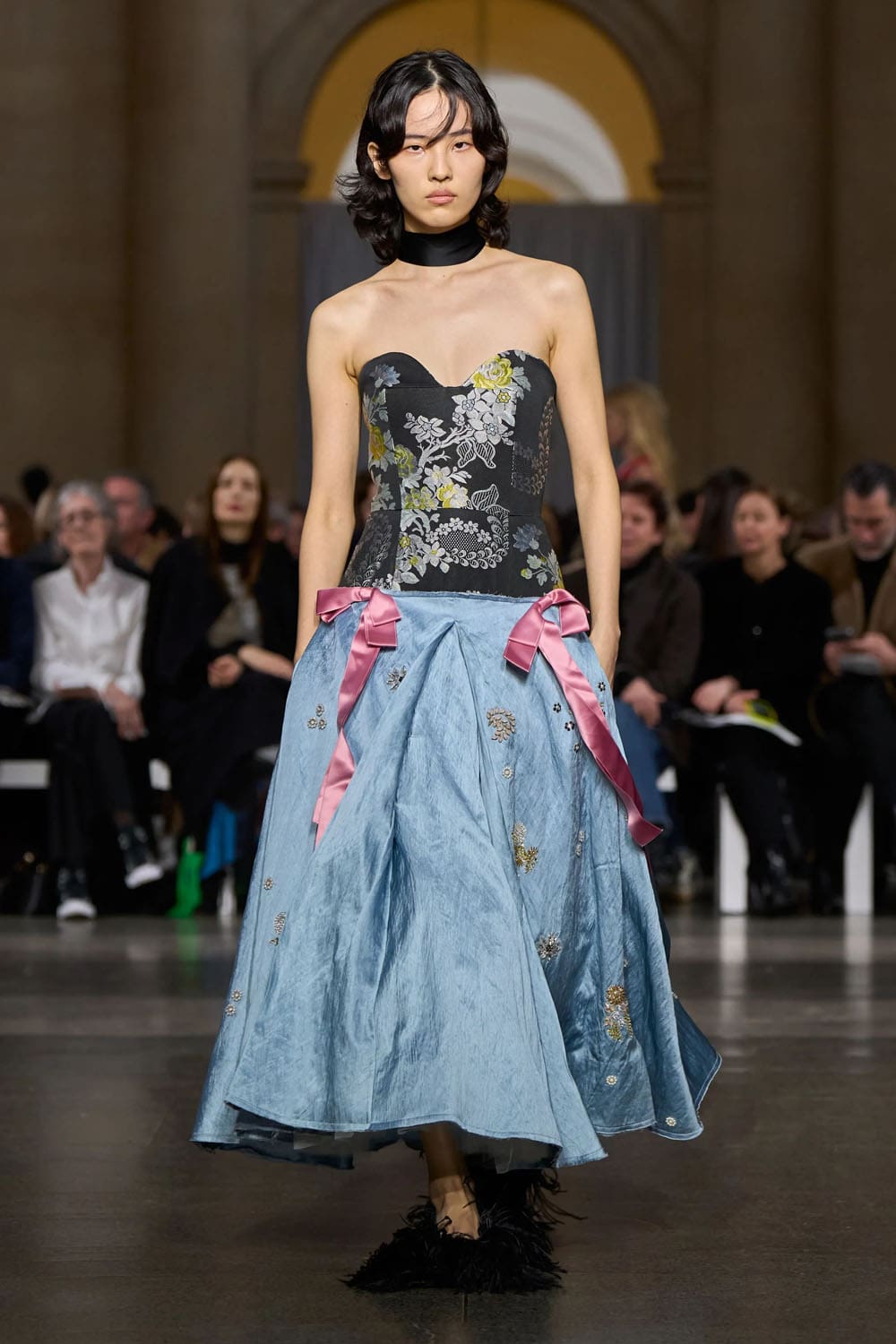
Where the actresses grounded the narrative, the runway extended it into abstraction, muttering in brocades, tulle, and lace. The first sweep of silhouettes emerged like half-remembered characters stepping into the light: a model in a structured black jacket stitched with silver and hints of chartreuse, its severity softened by a powder-blue skirt tied loosely at the waist, moving with the hesitant grace of someone caught between eras. It was as if Victorian restraint had agreed, reluctantly, to dance with something celestial.
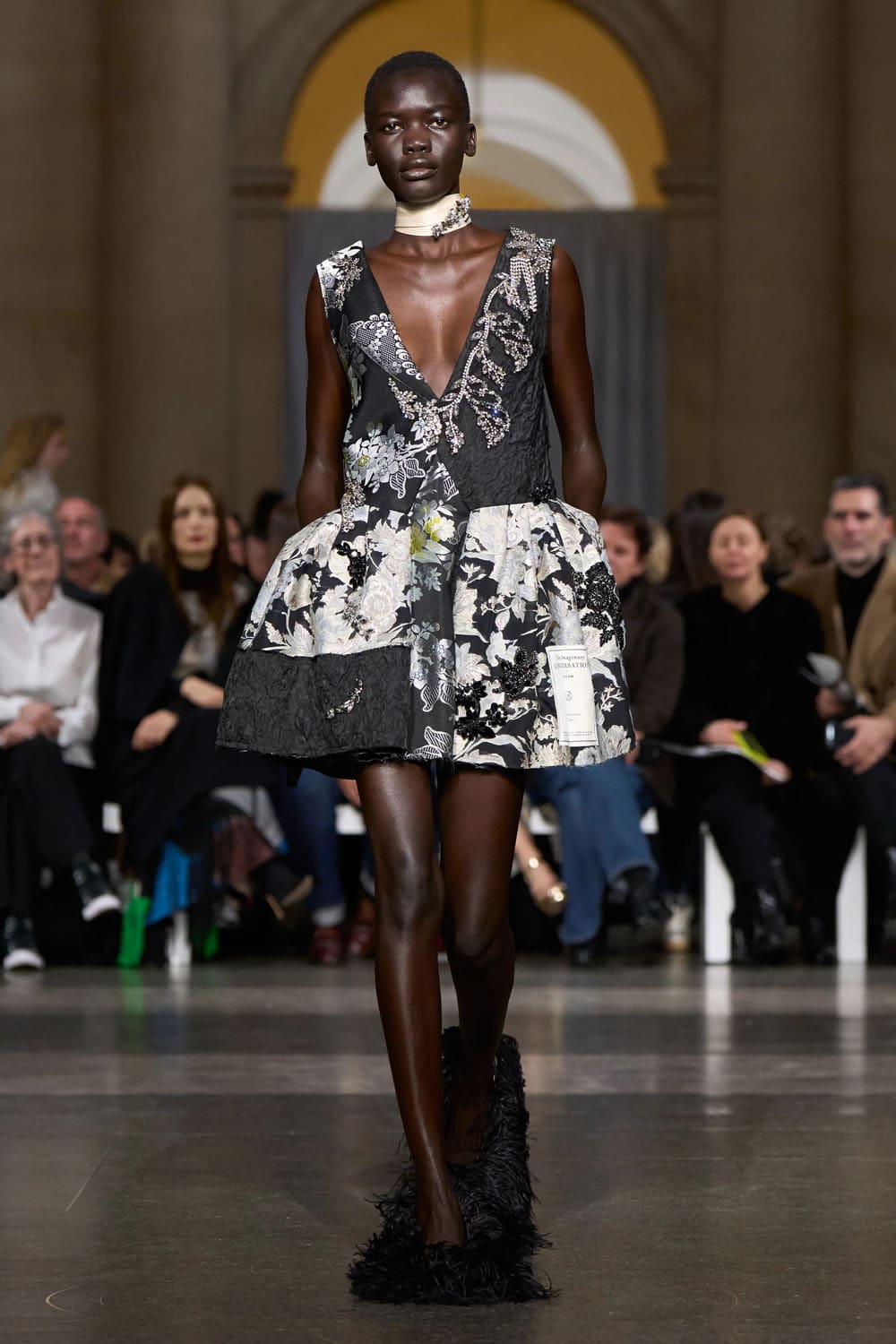
This tension resurfaced in a short sculptural dress, its patchwork of black and ivory florals puffed out in an almost mischievous silhouette. The crystals scattered across it sparkled like gossip rather than ornament, and the deep neckline introduced a crack in the historic façade — Erdem’s way of reminding us that beauty is most interesting when a little unruly.
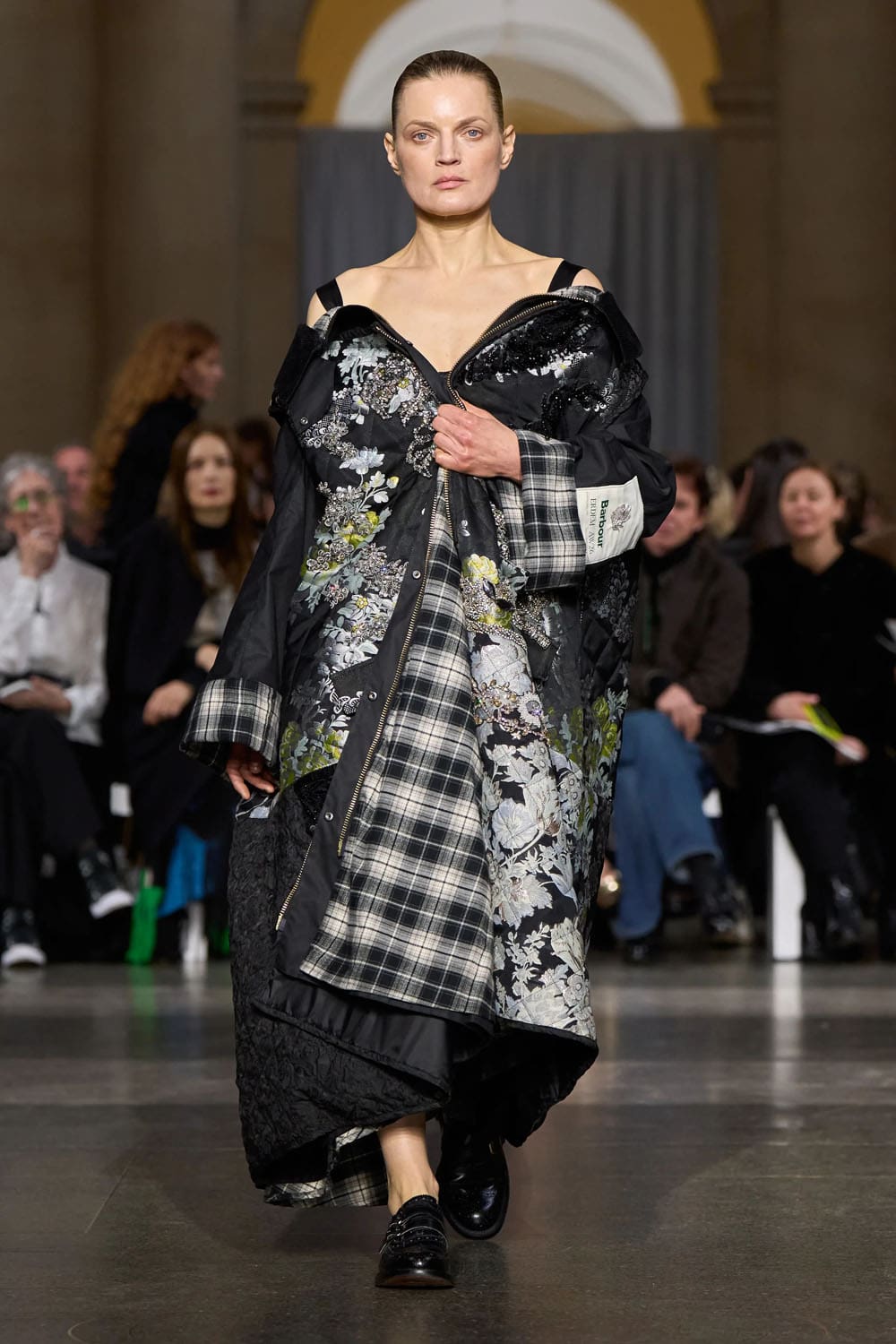
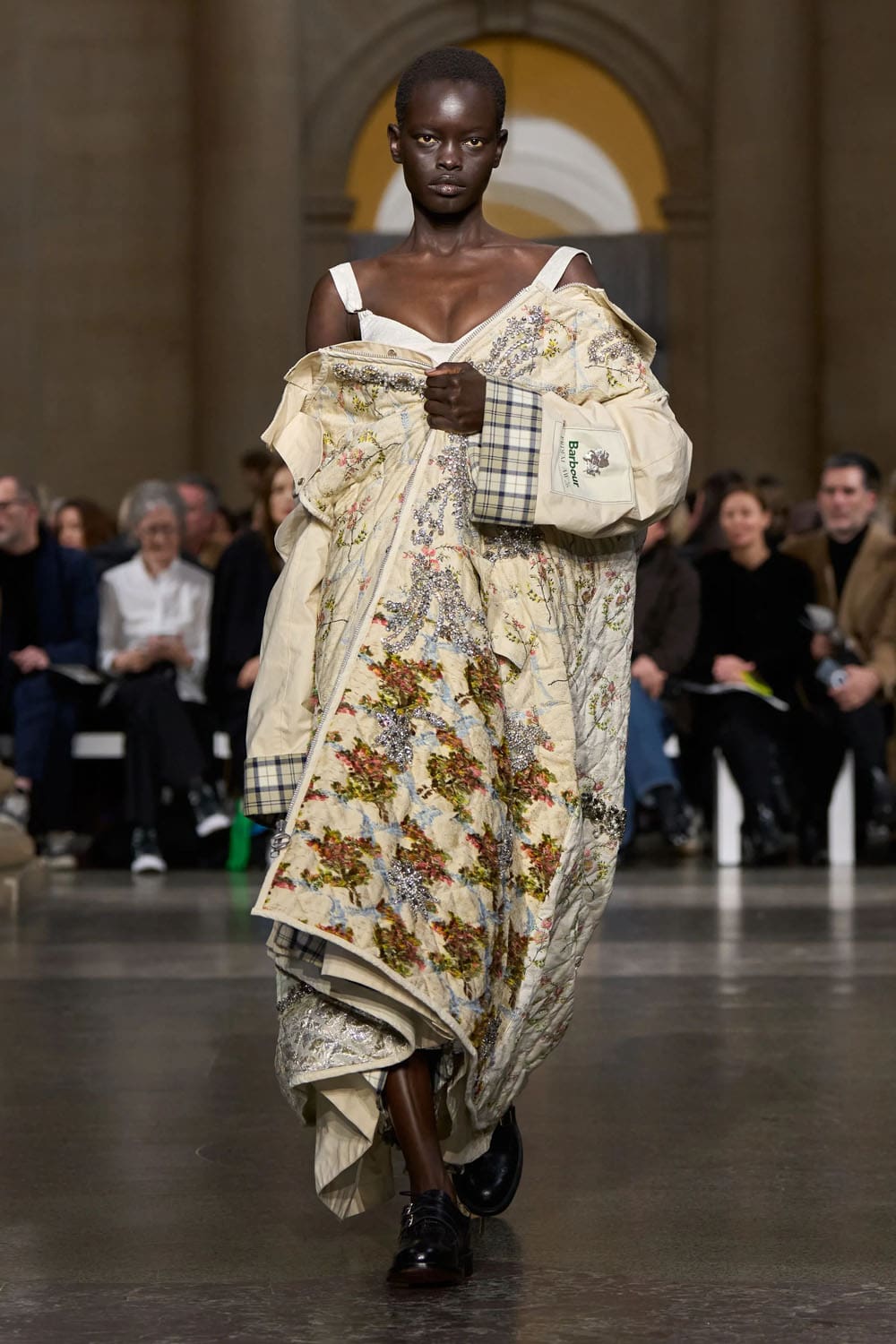
Then came the quilted Barbour hybrids, those massive, multi-layered coats worn half-off the shoulder, as though the models had been interrupted mid-conversation with themselves. The tartan cuffs and visible patches grounded the couture embroidery in something pragmatic, even domestic. These were garments that felt protective, but not passive — like family heirlooms reimagined as modern armor.
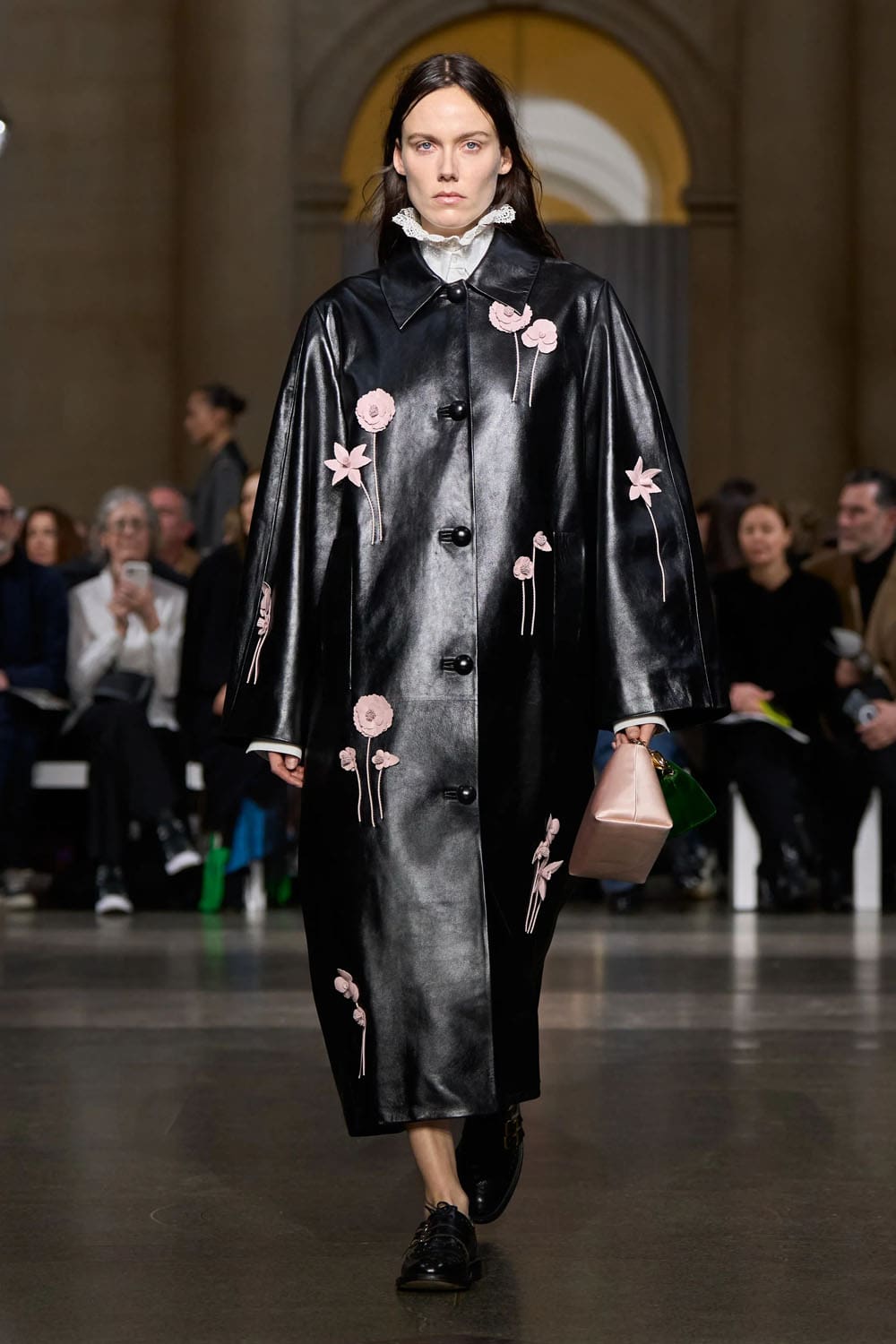
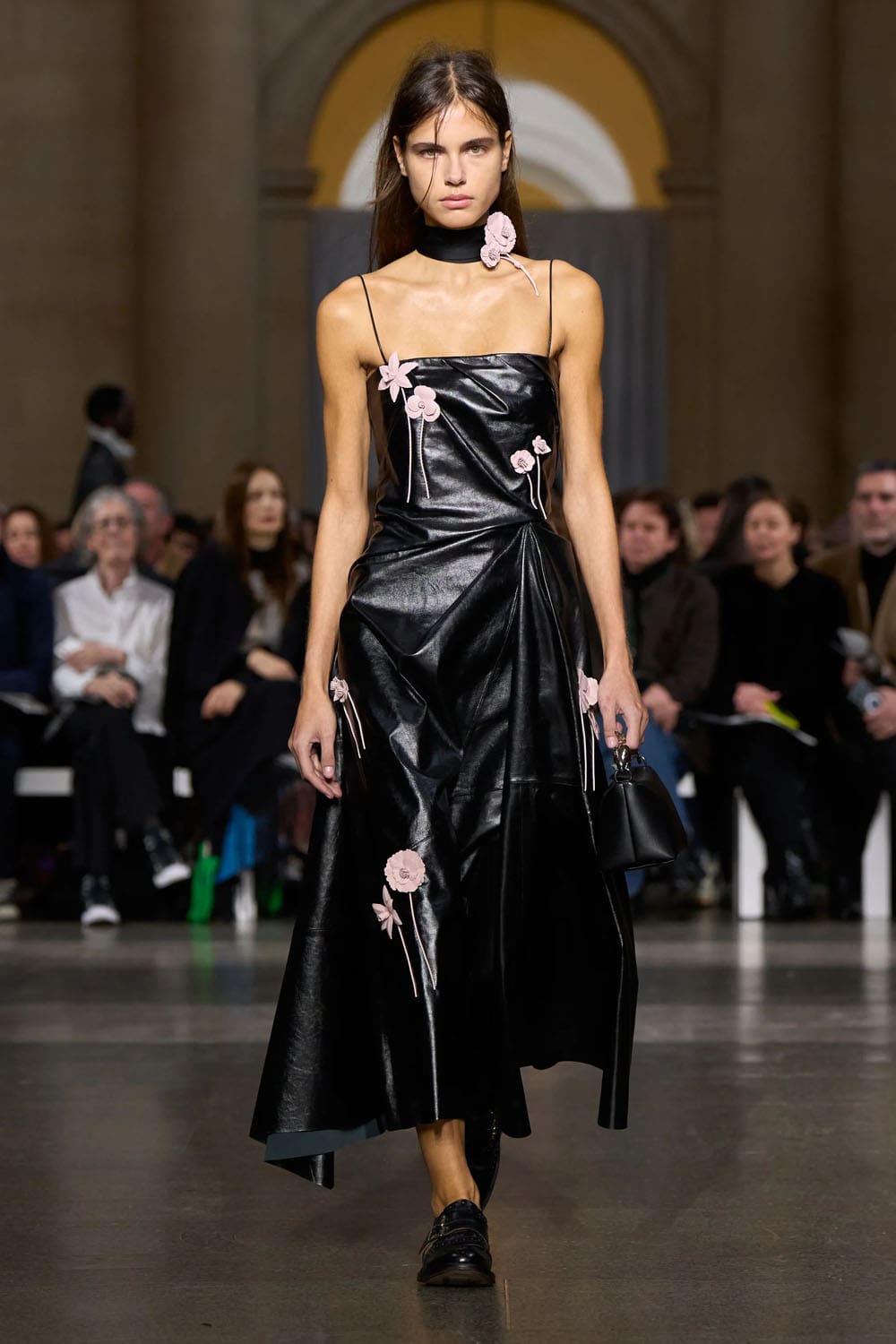
Just as the eye adjusted to all the quilting and history, a long black leather coat appeared, its gloss tempered by pale pink appliqué flowers. The contrast — hard versus tender — sharpened the collection’s central thesis: that strength and fragility are not opposing forces but two ways of speaking.
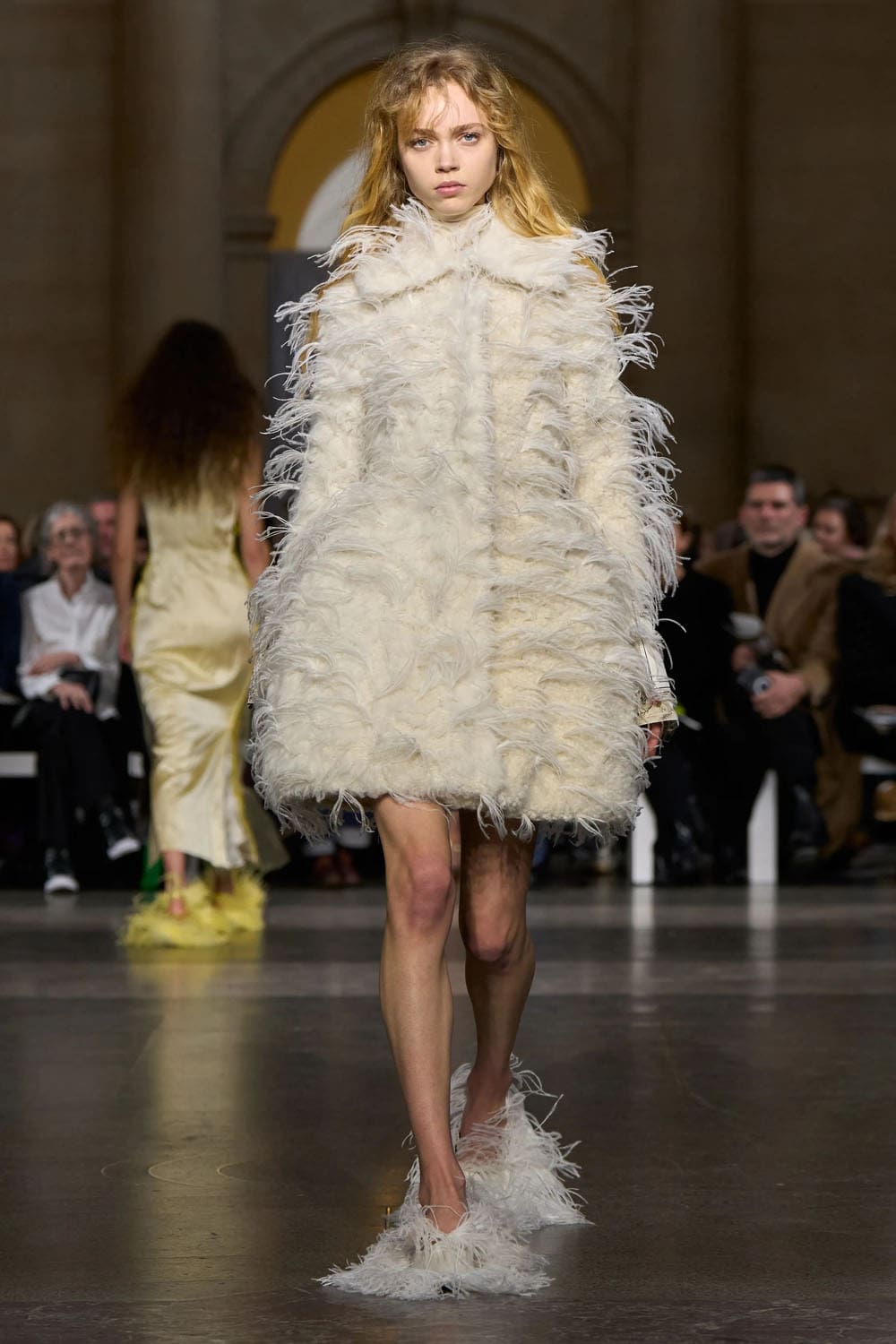
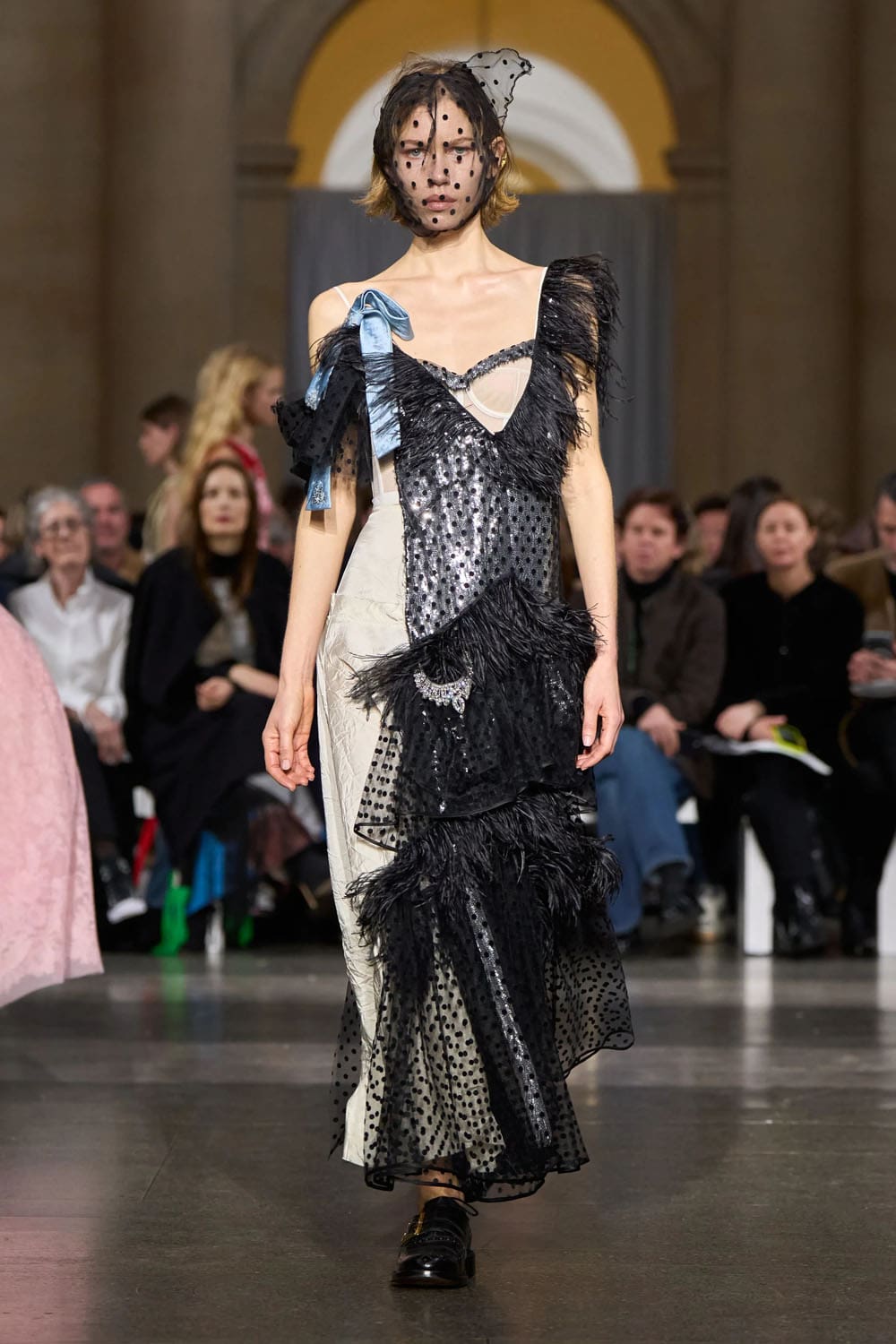
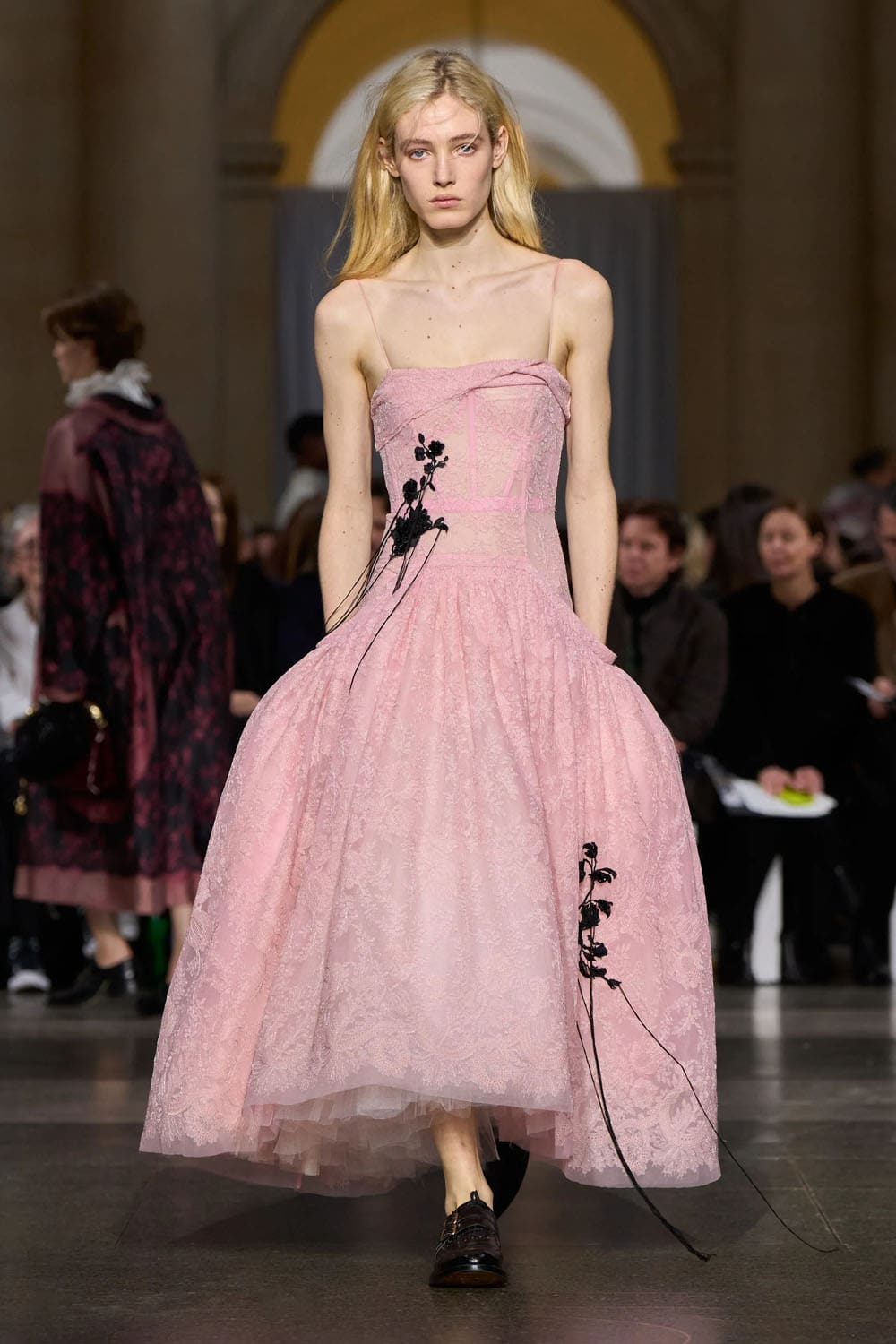
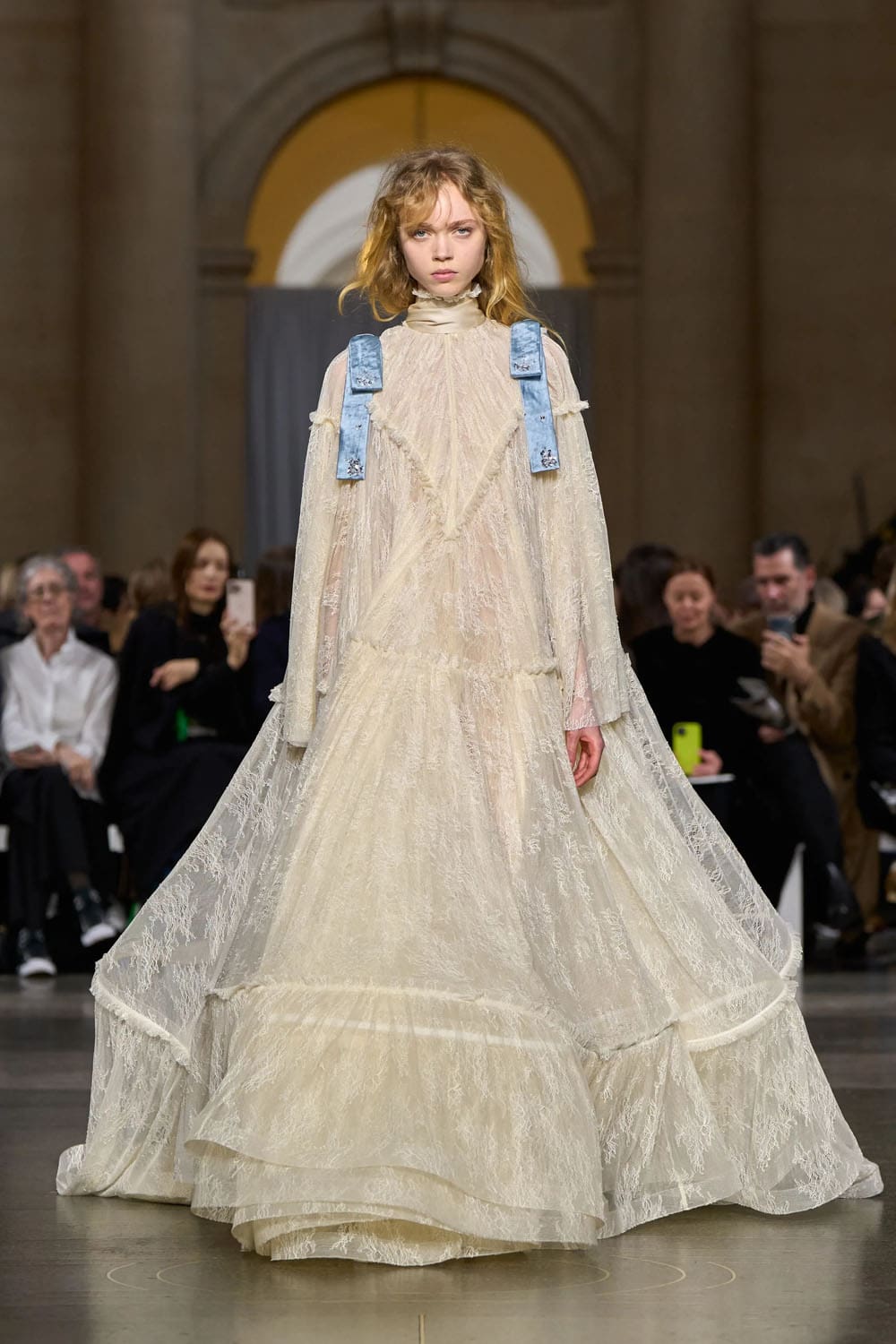
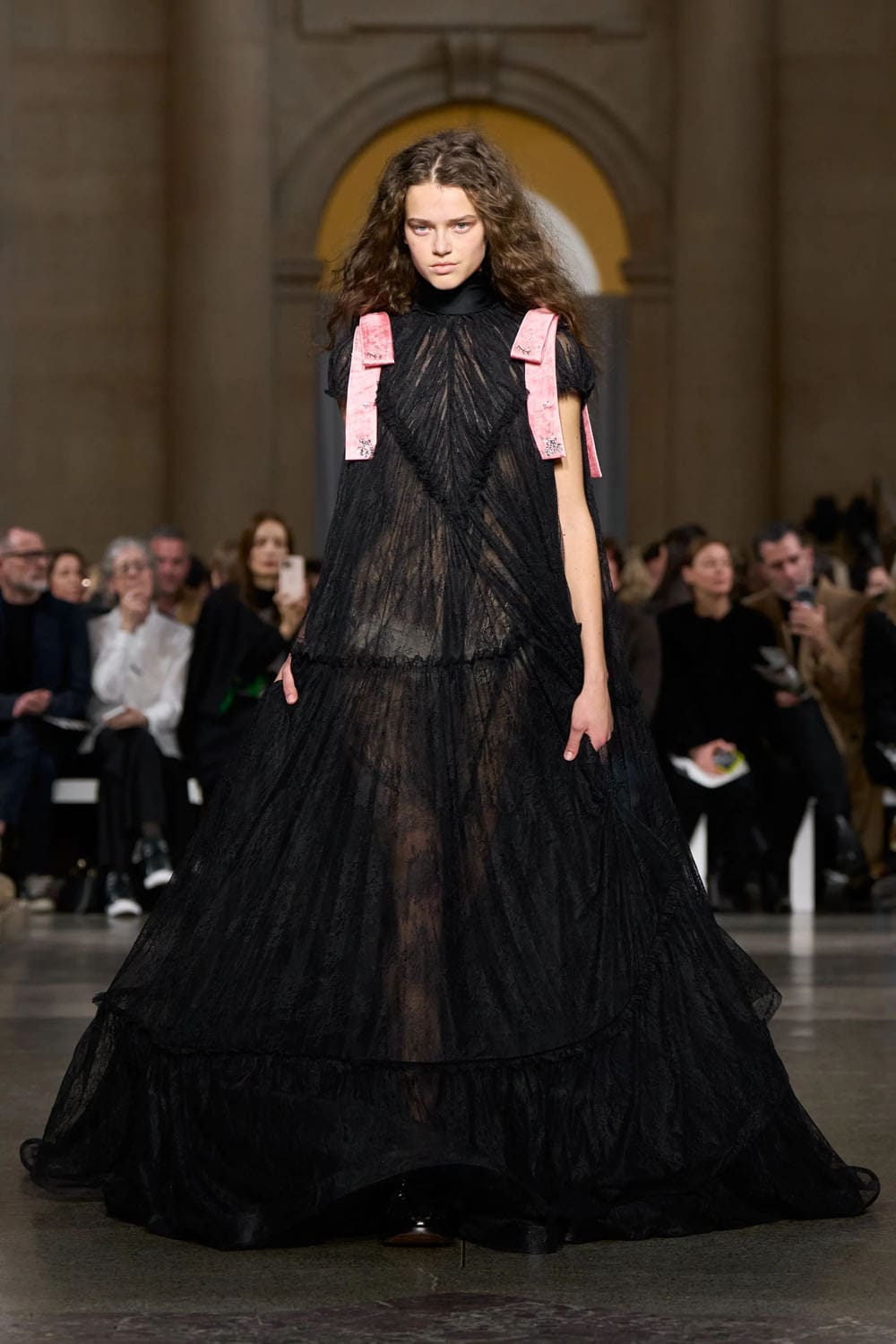
The eveningwear that followed drifted in like ghosts with opinions. A black-and-ivory tulle gown, its dotted veil hovering over the face, looked like a couture specter revisiting its past life. A blush-pink lace dress answered with ballerina lightness, only to be sabotaged by black, branch-like embroideries snaking across the bodice. Then, a monumental feathered coat — pastel clouds in motion — swallowed its model in a delirious haze of movement. A sheer ivory lace gown with pale blue shoulder details floated after it, Victorian in spirit yet strangely contemporary in its transparency.
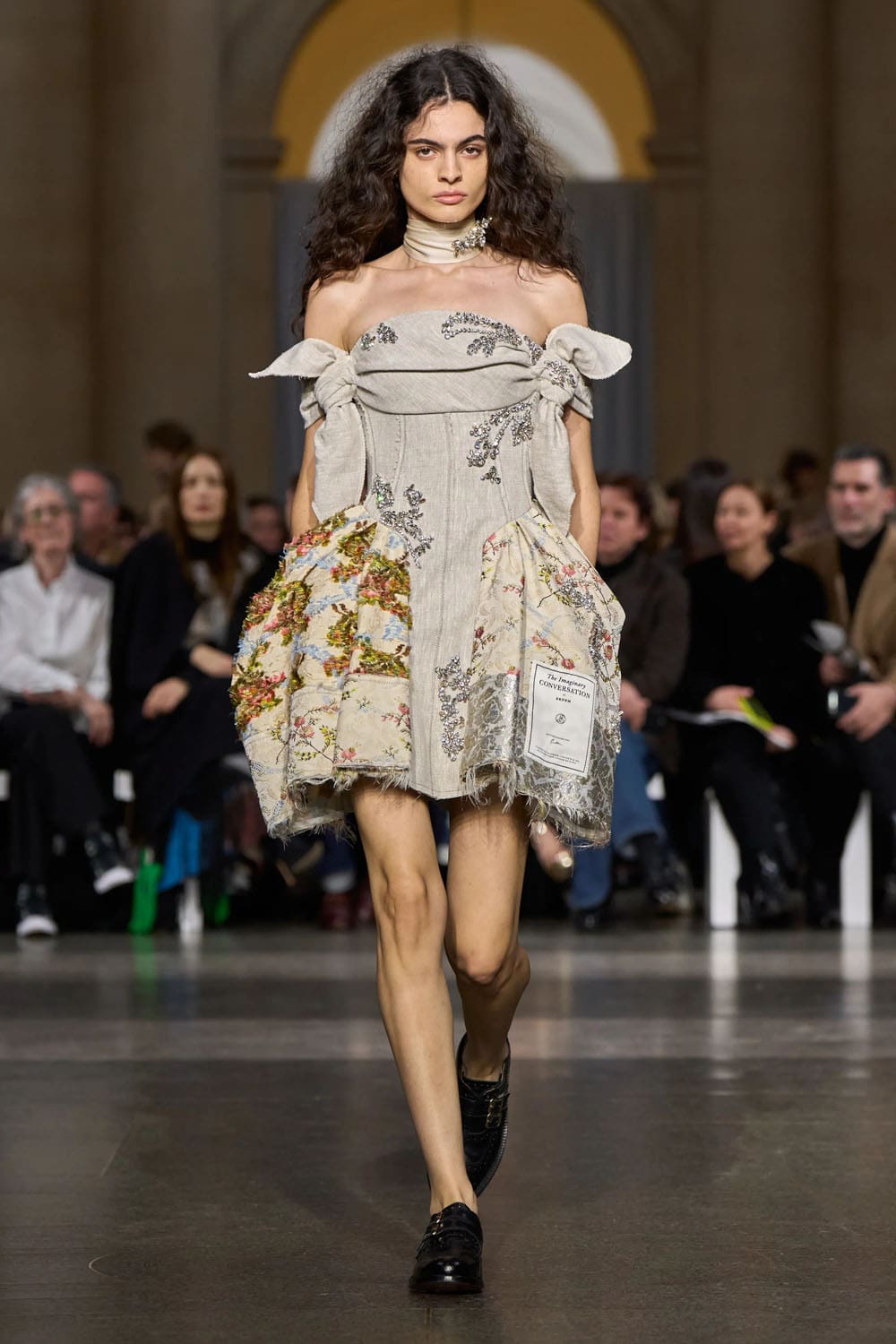
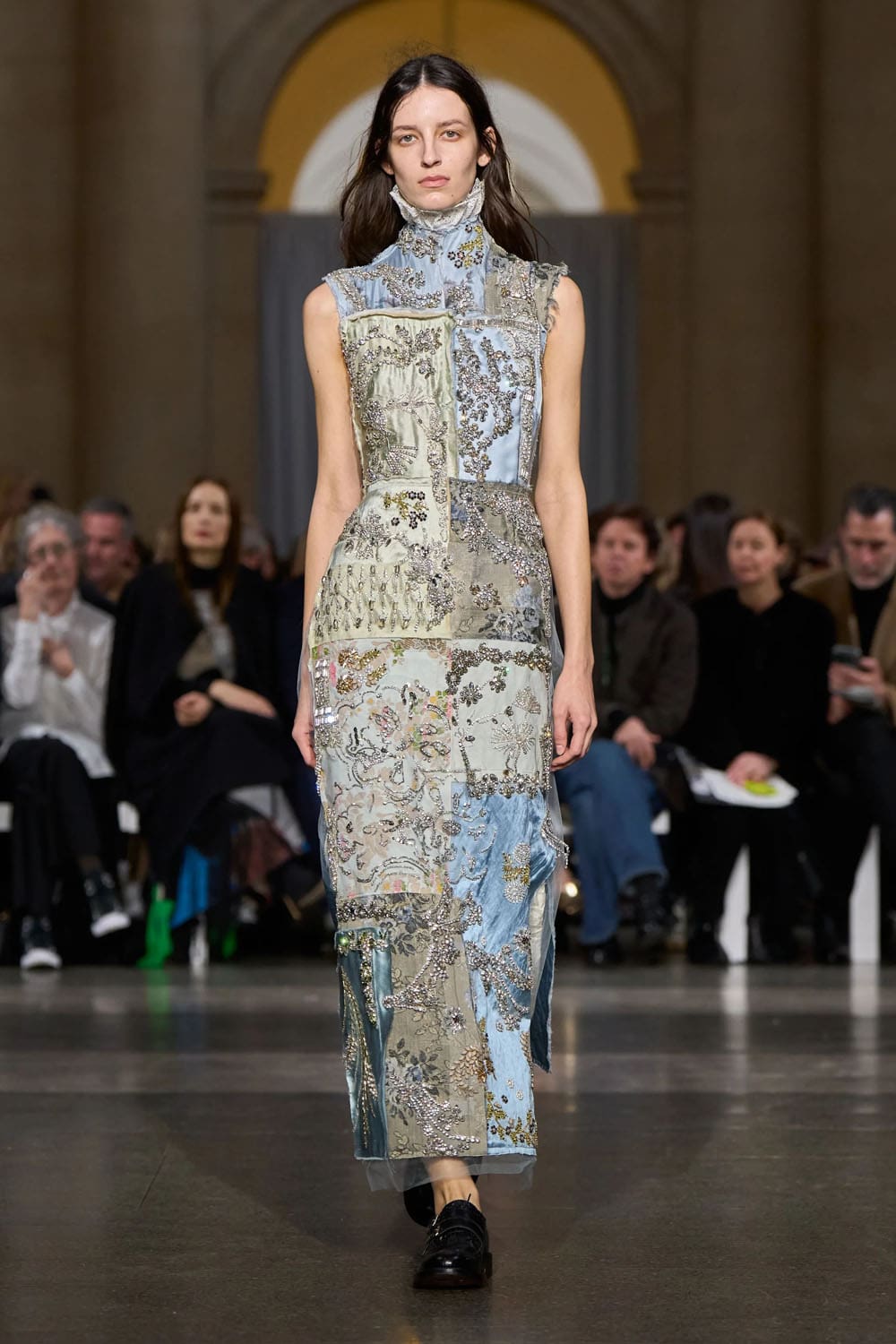
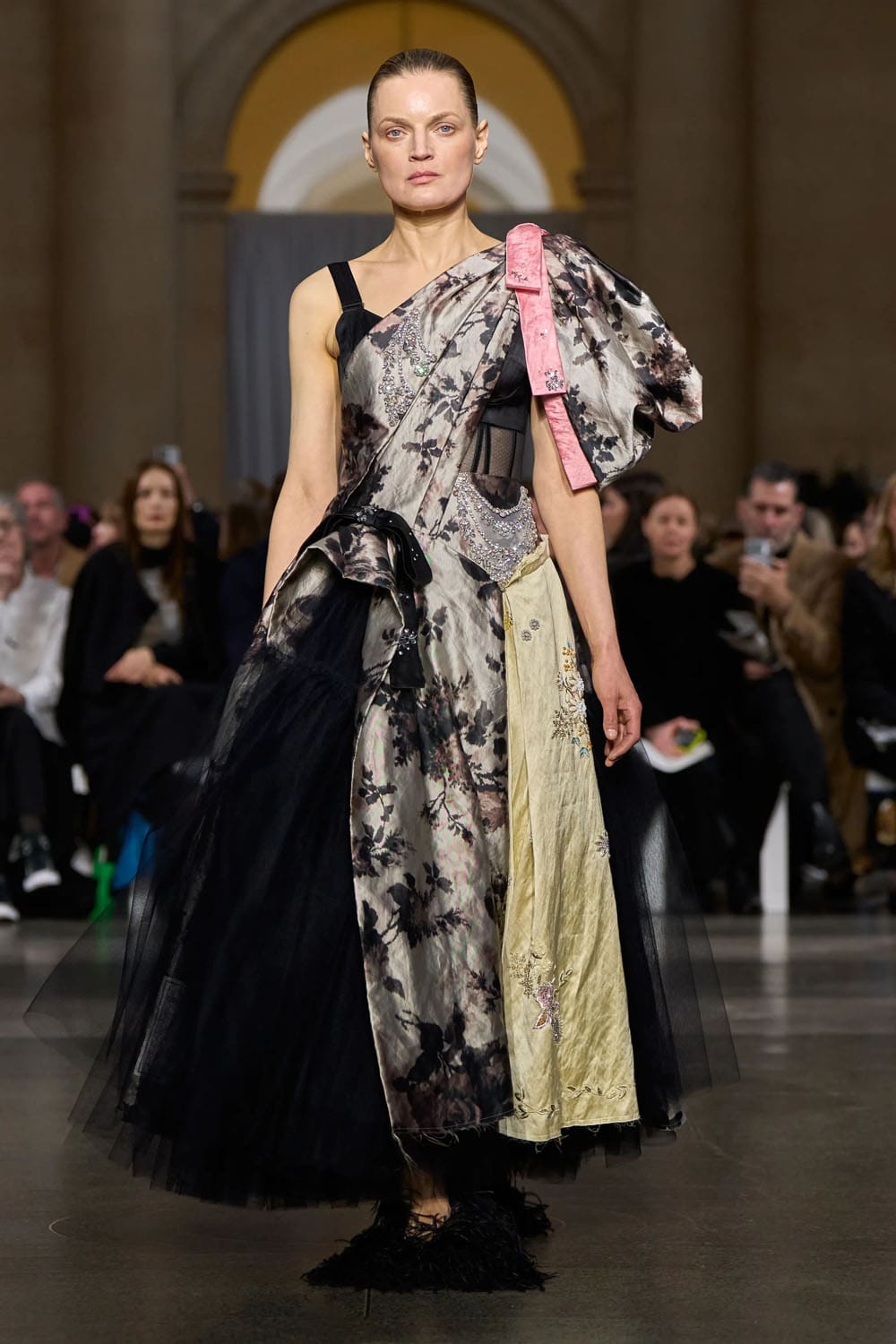
The finale assembled itself like a collage of memory: brocades, tulle, and asymmetrical folds pinned together as if the dress were still thinking, still negotiating its final form.
Together, these looks behaved not as a sequence, but as a polyphonic dialogue — sometimes whispered, sometimes interrupted, sometimes defiantly sung.
Erdem’s Imaginary Dialogue Becomes Real
What made this season remarkable was not merely its craftsmanship—though it was exceptional—nor its theatrical layering of historical references. It was the presence of Glenn Close and Helen Mirren, whose mere attendance created a real-world continuation of the show’s premise. These women, icons in their own right, embody the lived experience, authority, and nuance that Erdem’s work constantly suggests.
Their exchange with the collection—silent but potent—turned “The Imaginary Conversation” into a tangible one.
A dialogue across generations.
A meeting of craft and character.
A reminder that fashion’s most compelling stories are not worn by mannequins, but by women who carry entire worlds within them.
See All Looks Erdem Fall Winter 2026-2027