
Inside The Lucas Museum of Narrative Art – The Architecture of Modern Myth. Story by Ana Topi, Editor of RUNWAY MAGAZINE. Photo / Video Courtesy: Lucasfilm Ltd / The Lucas Museum of Narrative Art / Ma Yansong / GettyImages.
Something unapologetically alien has anchored itself in Exposition Park.
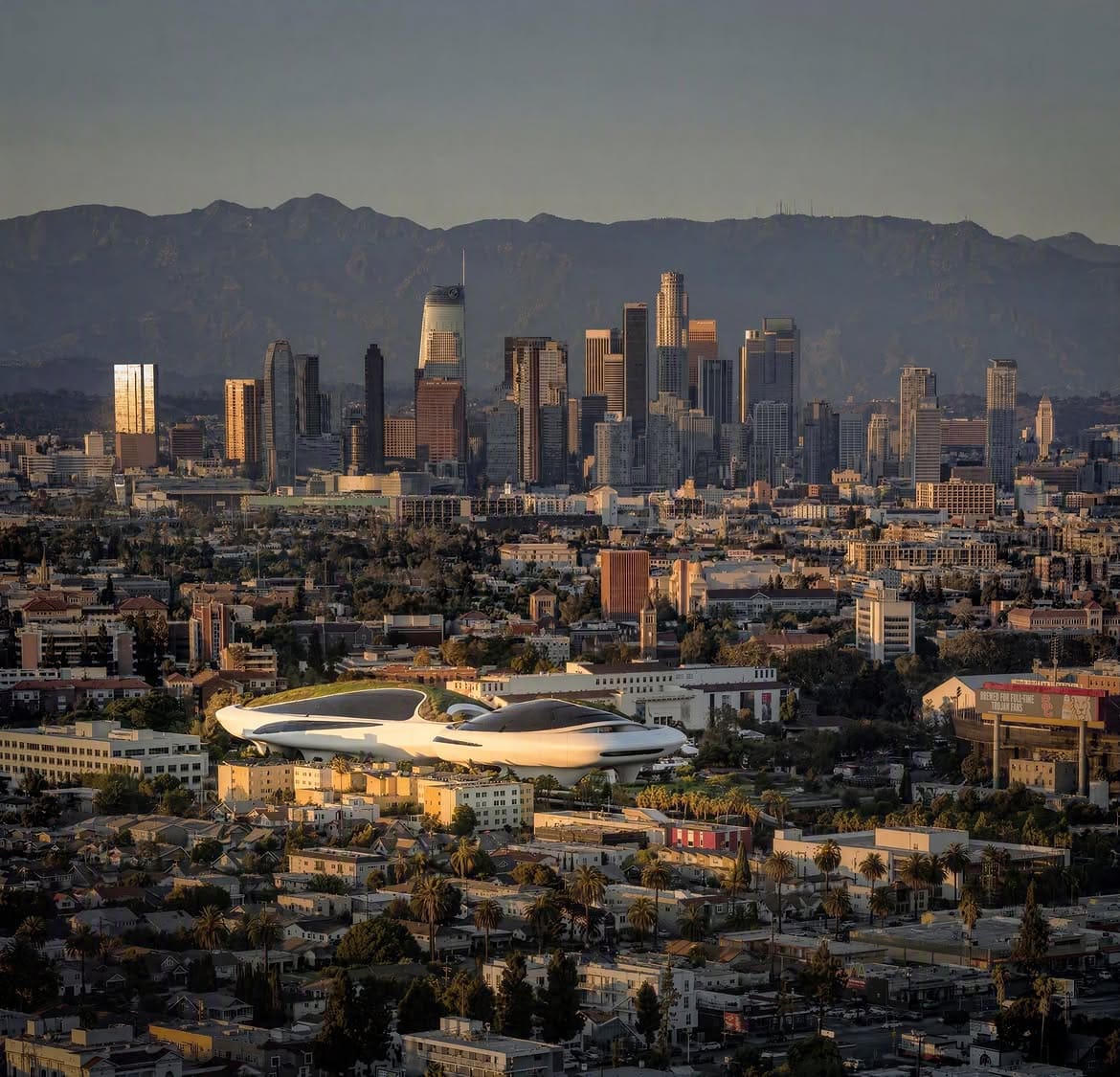
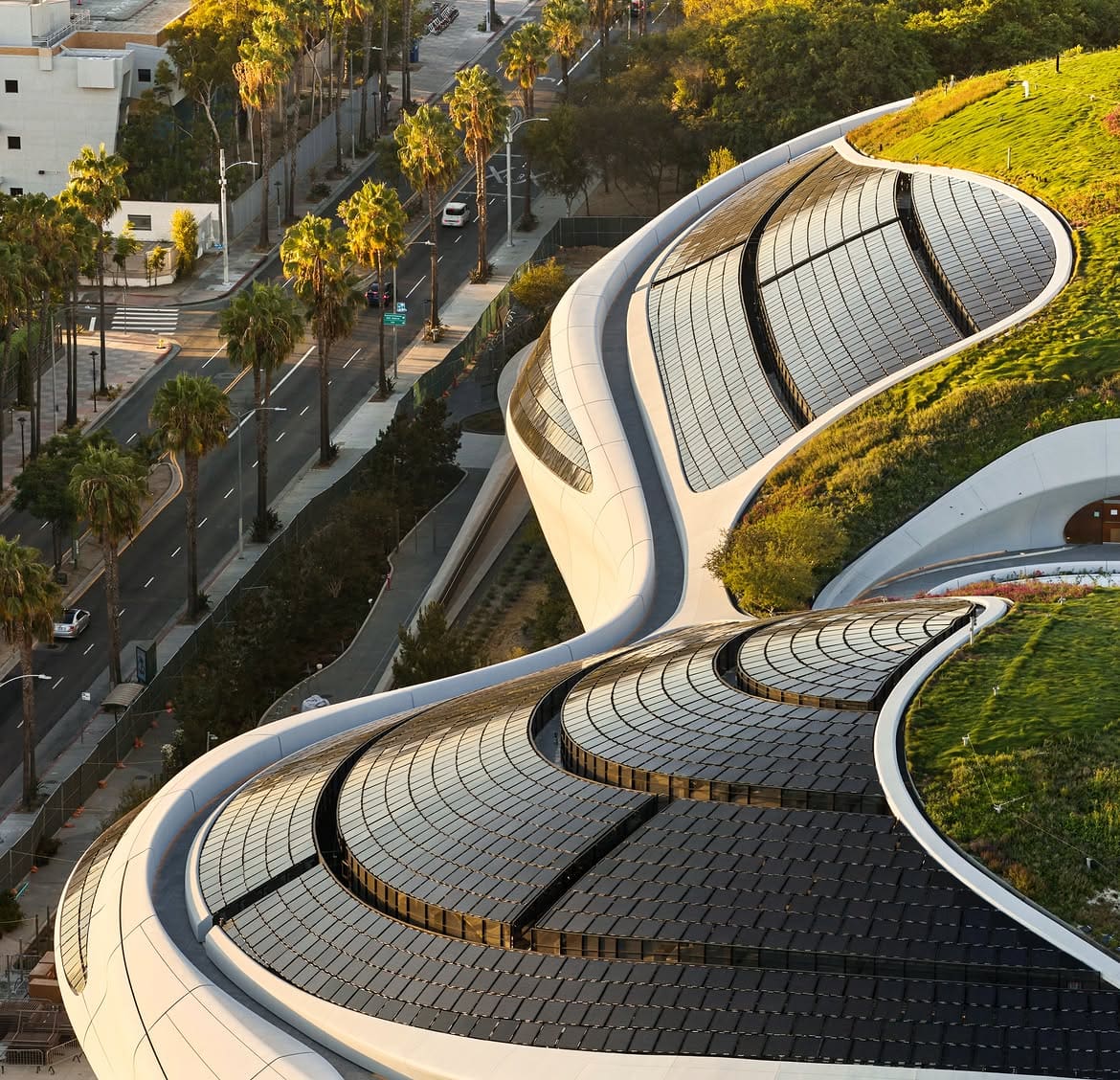
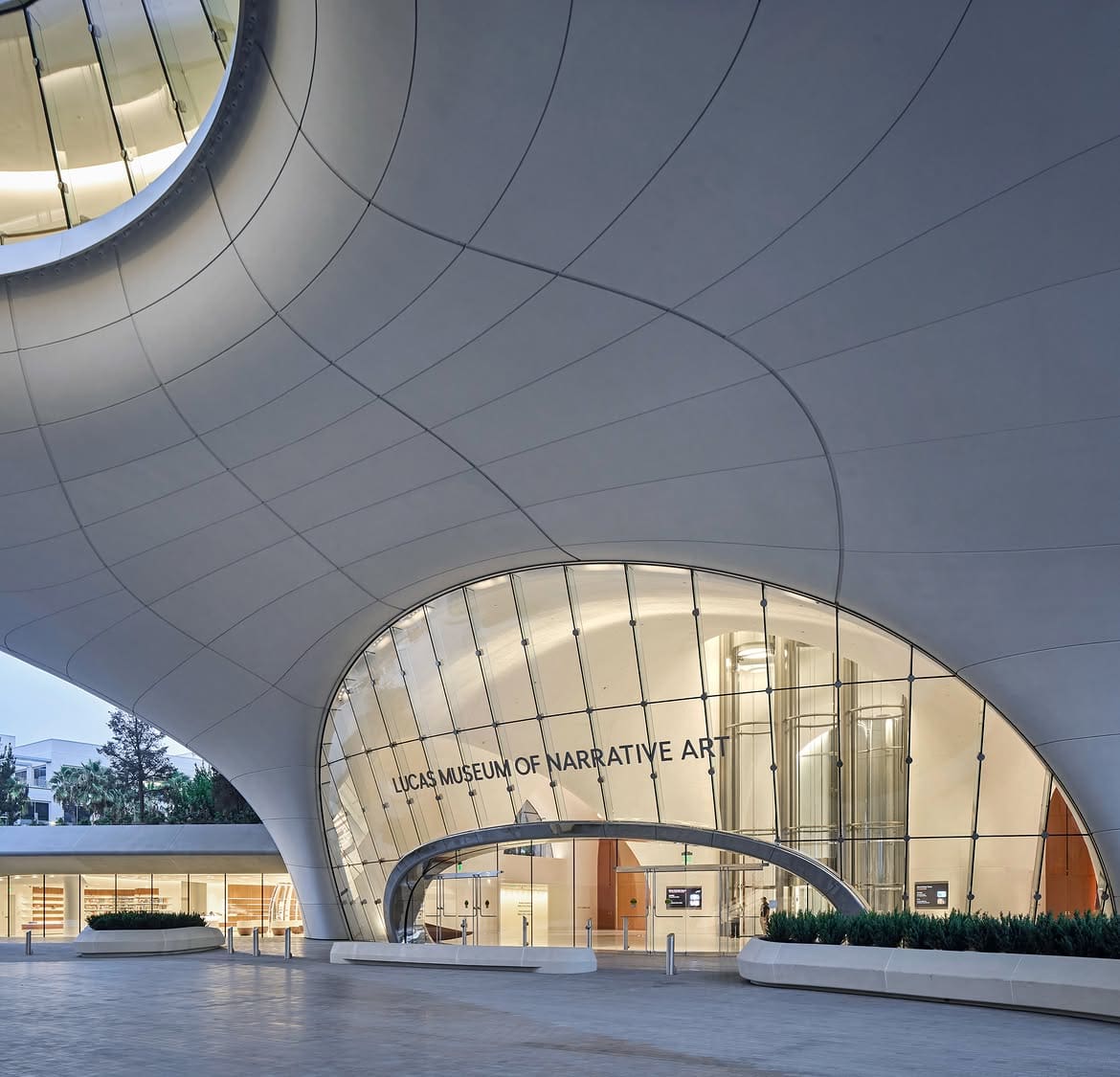
Rising over what was once a dull expanse of Los Angeles asphalt, the Lucas Museum of Narrative Art does not imitate the severe, neoclassical boxes of old-world institutions. Designed by Ma Yansong of MAD Architects, the structure resembles an aerodynamic vessel floating mid-air, anchored only by the organic slopes of Mia Lehrer’s landscape. It is provocative, brazen, and entirely deliberate: a twenty-first-century sanctuary built not for relics of quiet detachment, but for the raw power of visual storytelling.
For over a century, traditional cultural salons drew an arbitrary line between “high art” and commercial craft. Galleries reserved their reverent silences for abstract canvases, quietly dismissing illustration, cinema design, and serialized prints as low-rent entertainment.
George Lucas never bought that doctrine.
“The Lucas Museum of Narrative Art was created to honor humanity’s stories and the artists who illustrate them.”
— George Lucas
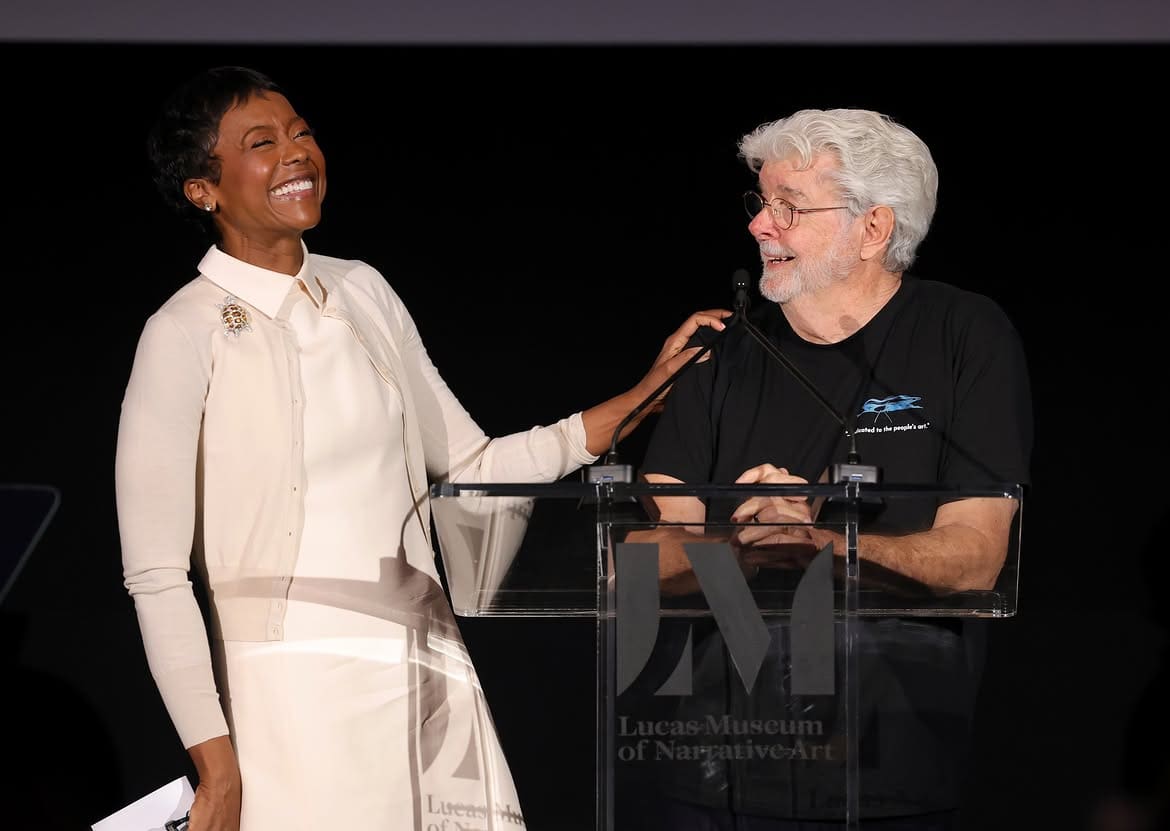
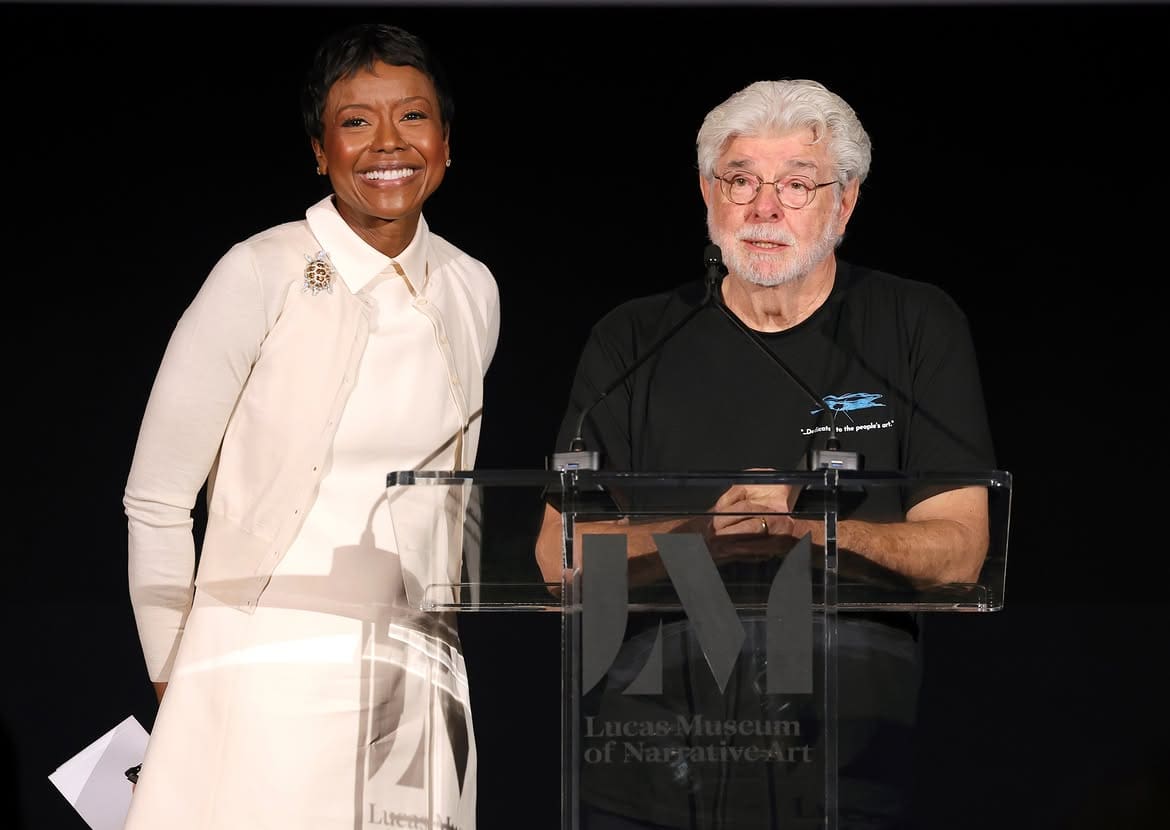
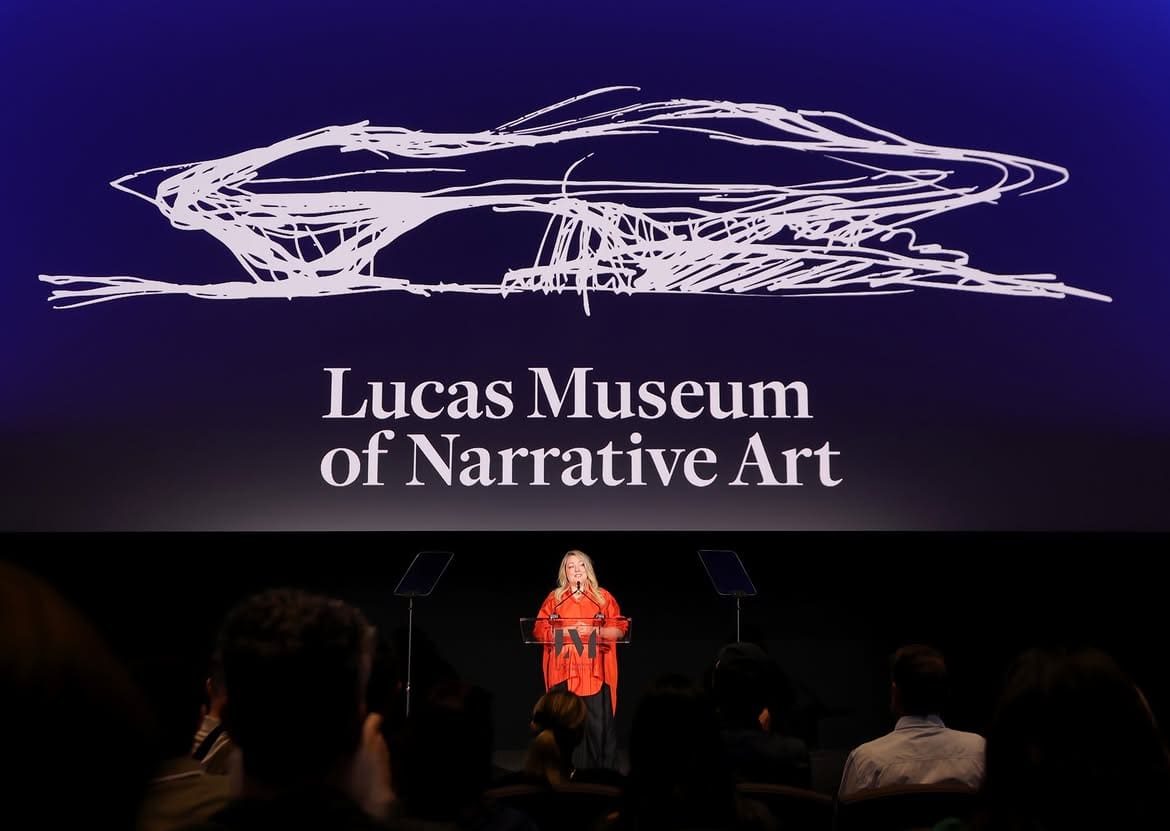
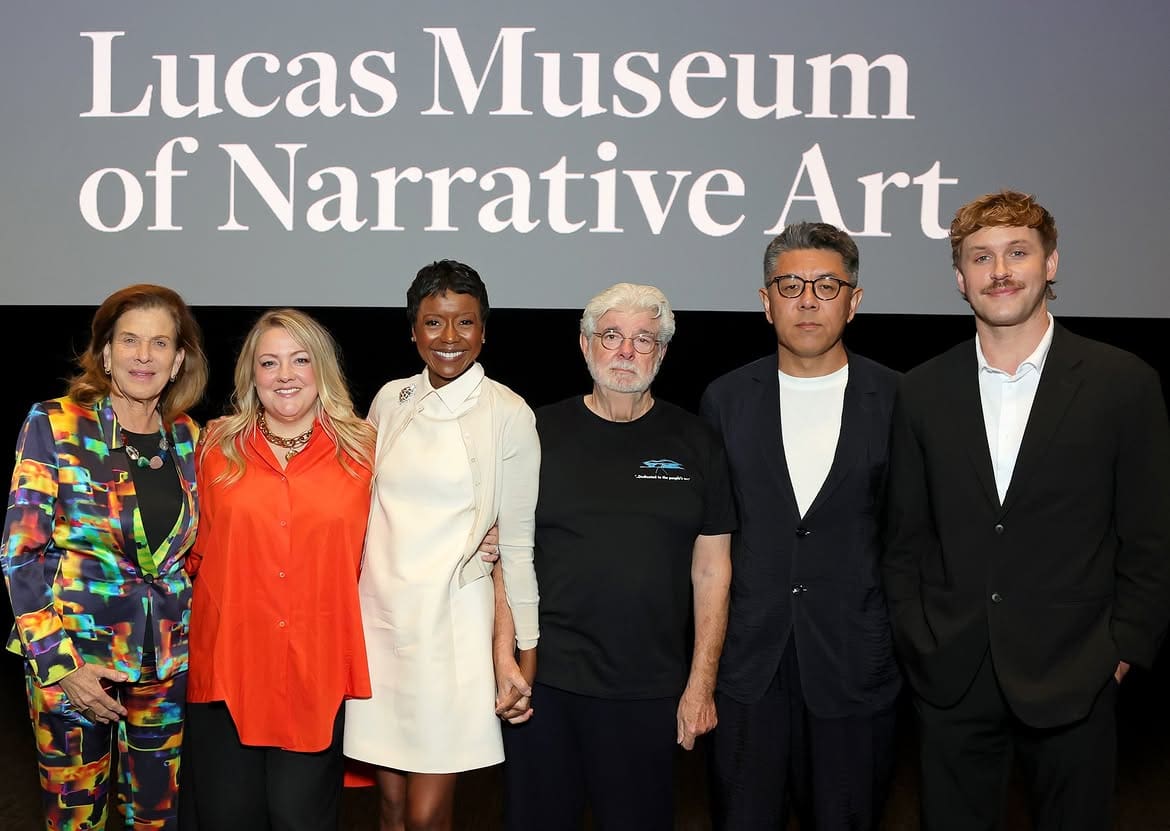
With his co-founder Mellody Hobson, CEO Tracey Bates, and Senior Curator Ryan Linkof, Lucas has spent the last decade building an institution that levels the playing field entirely. The core premise is elementary: long before humans invented the luxury gallery, they painted episodic hunts on cave stone and carved morality tales into church facades. Storytelling is the primal foundation of human expression.
The museum’s expansive galleries trace this narrative obsession across genres and centuries. The walls place the poignant social observations of Jacob Lawrence side by side with the cultural portraits of Norman Rockwell and John Falter. The delicate, dark satire of Mad magazine icon Frank Kelly Freas shares air with the dynamic pen-and-ink linework of Charles Schulz, Jim Lee, and Sam Kieth. Fantasy masters like Boris Vallejo, Julie Bell, and Christos Achilleos command the same serious critical space as classic European children’s illustrators.
The heart of the building, however, beats inside the cinematic archives.
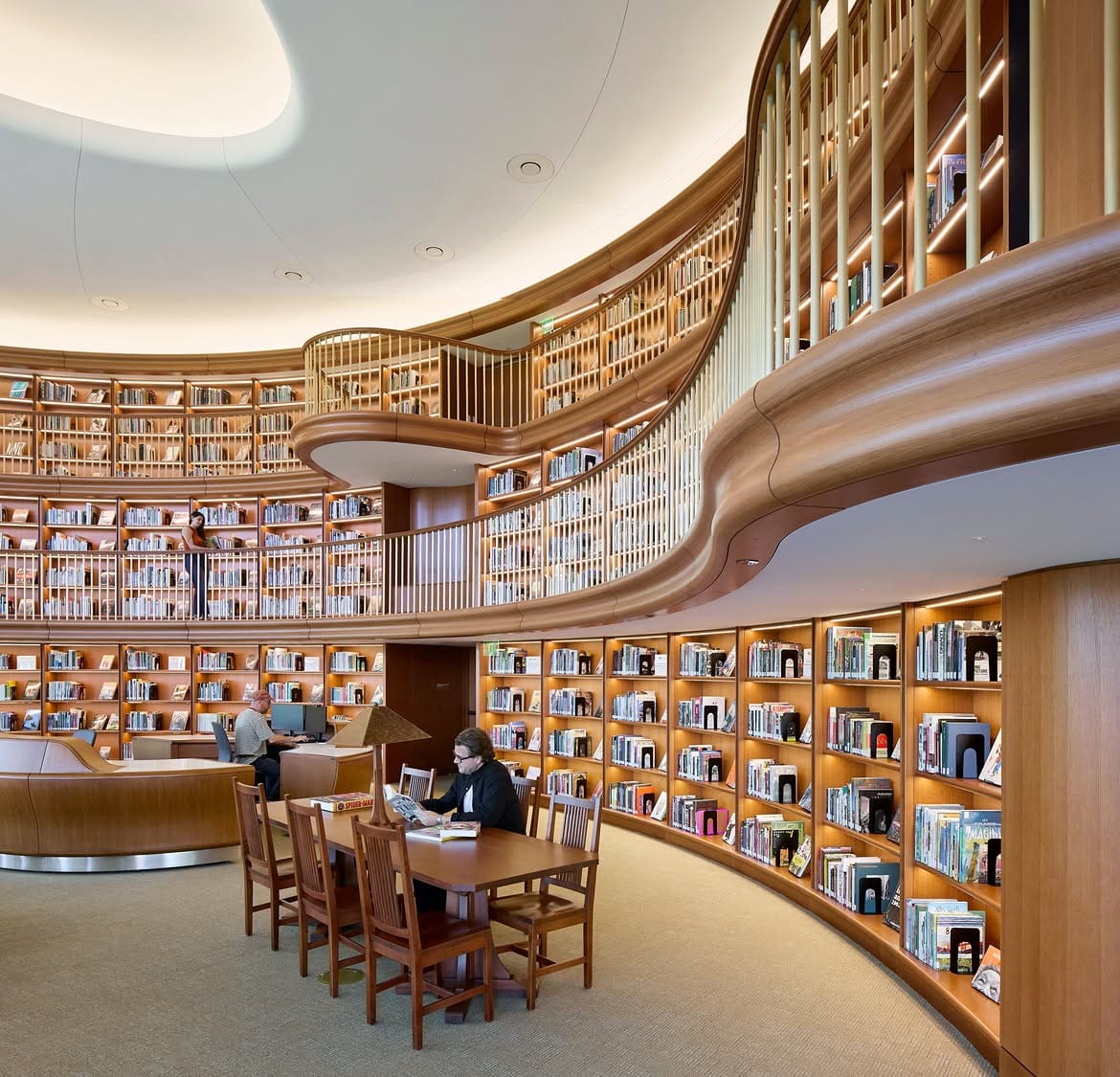
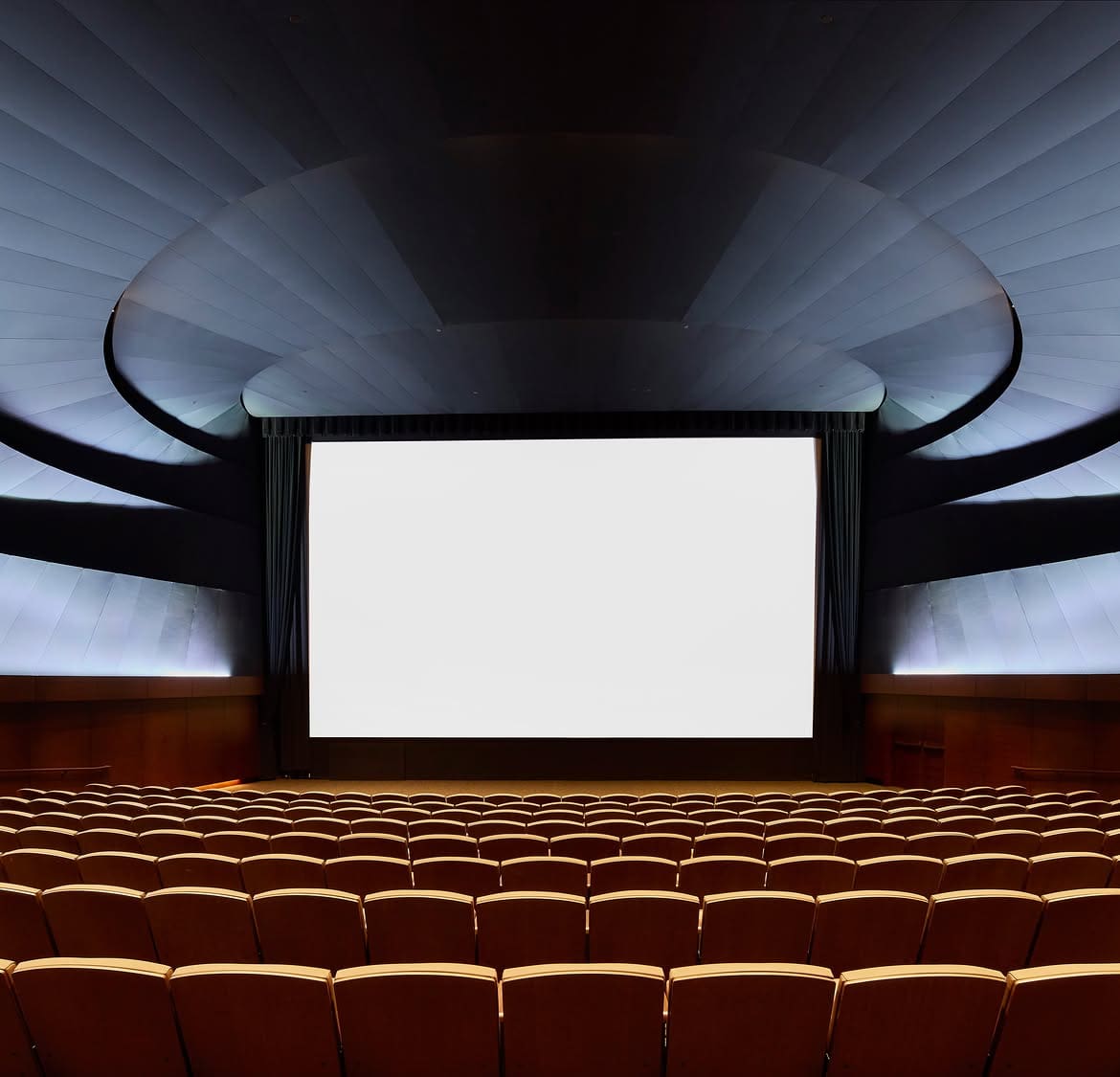
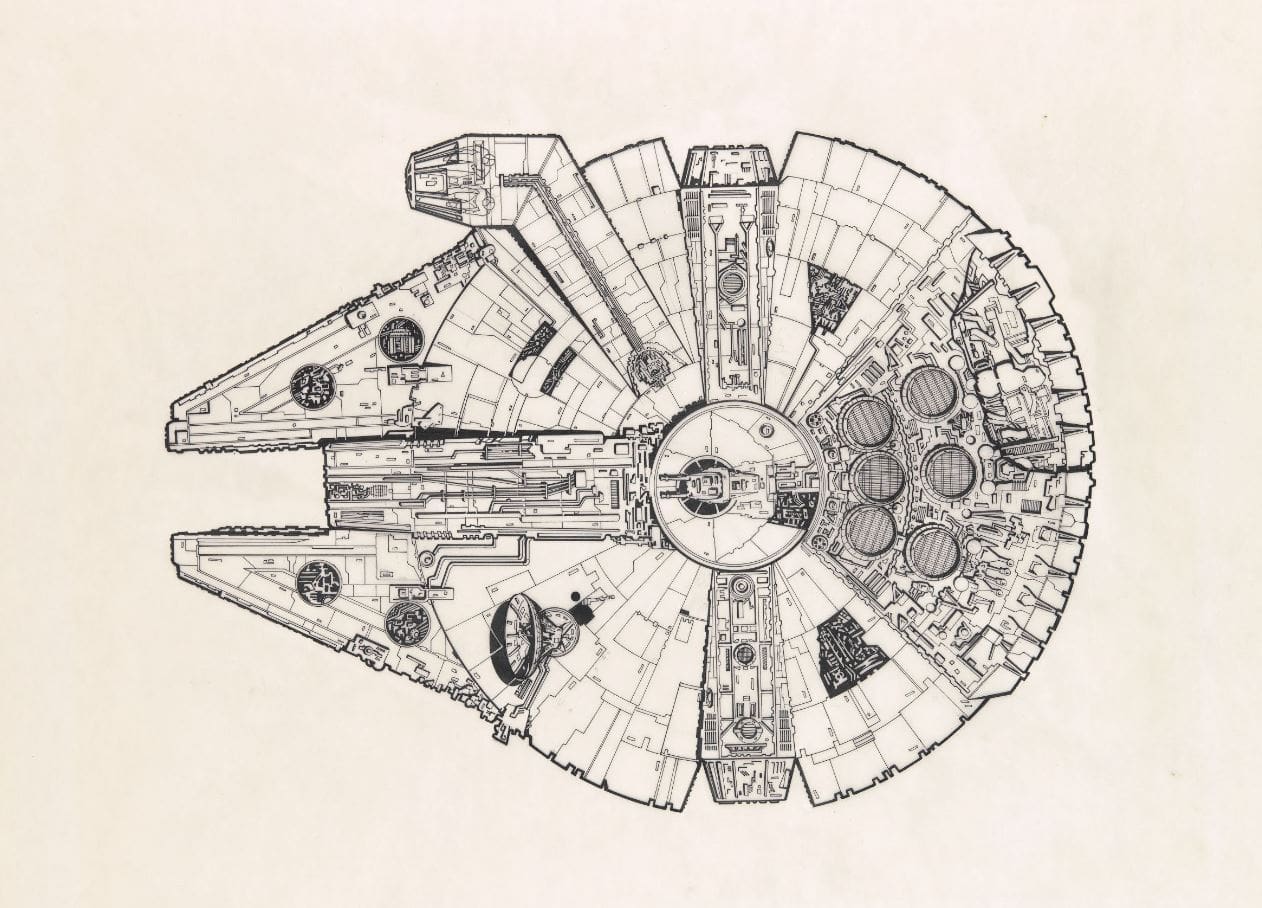
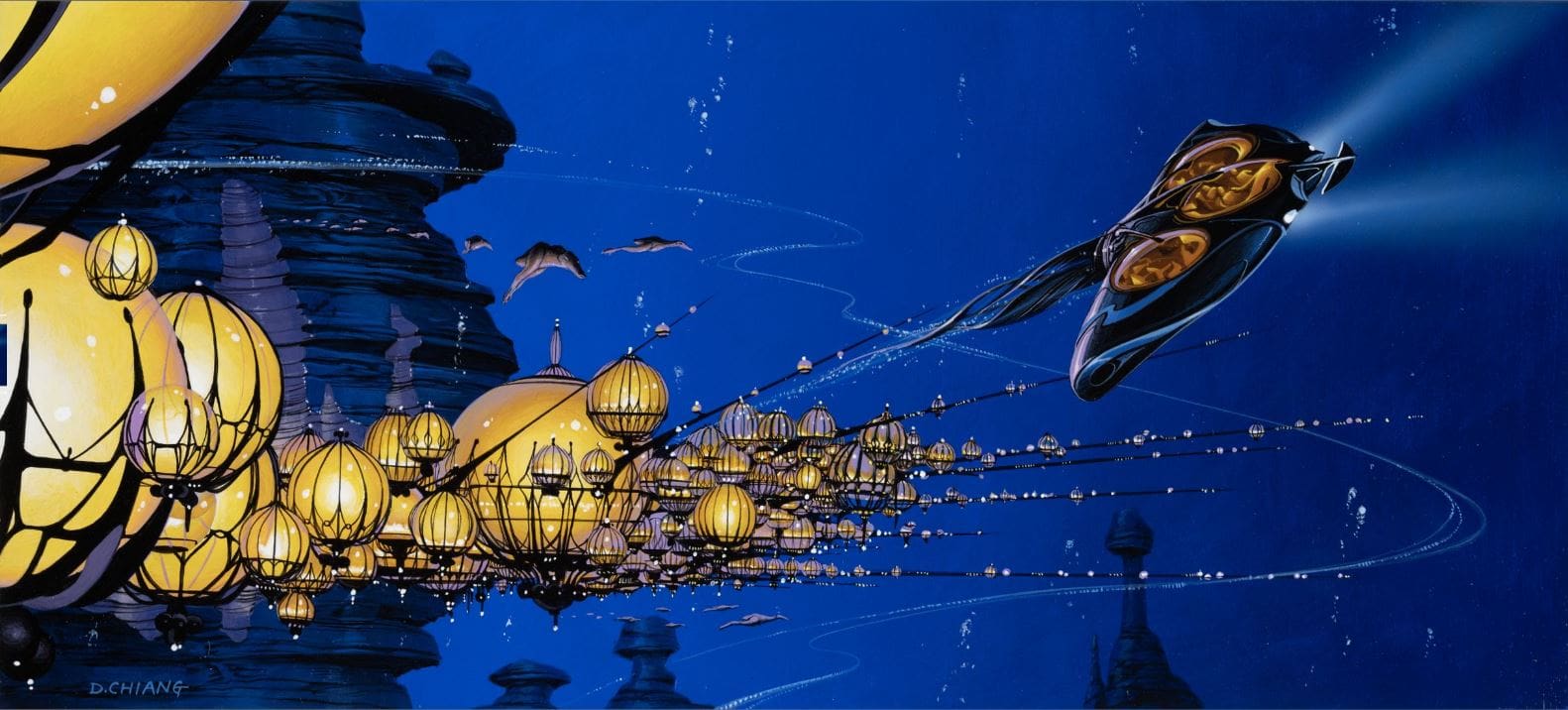
In 1983, as production wrapped on Star Wars: Episode VI – Return of the Jedi, Lucas began systematically collecting and cataloging every sketch, matte painting, miniature rig, costume, and sculpture across his productions at Skywalker Ranch. In 2013, four decades of studio history were gifted to anchor this museum.
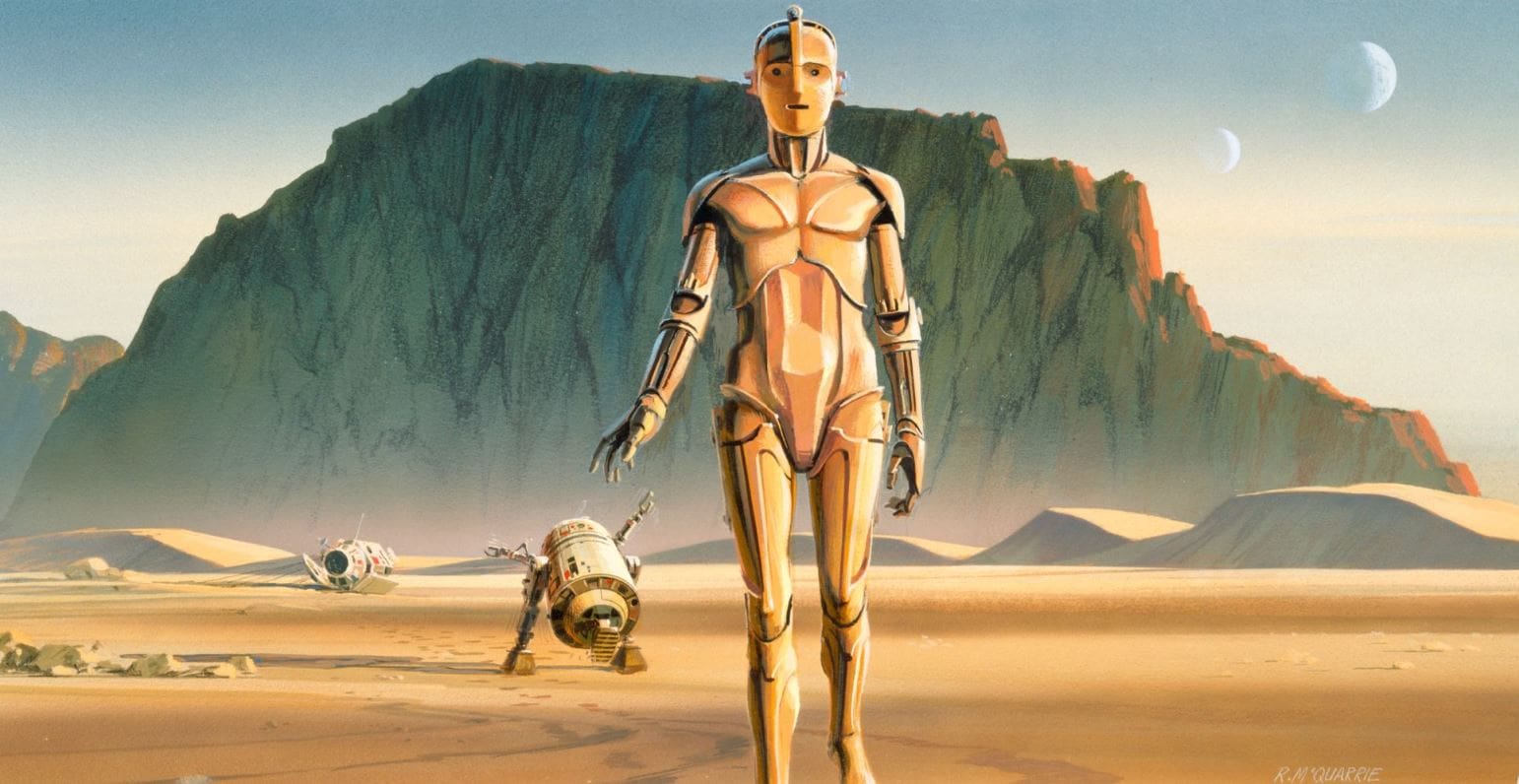
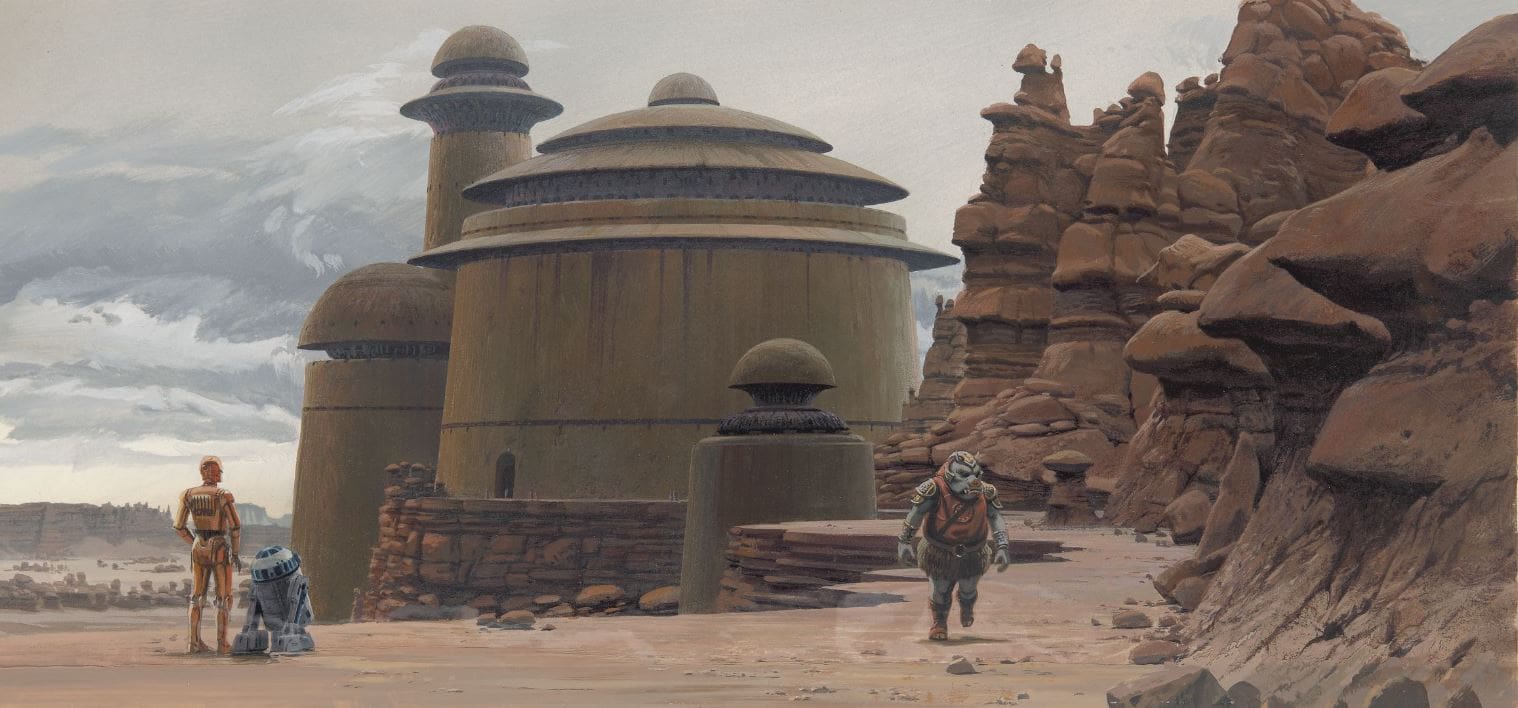
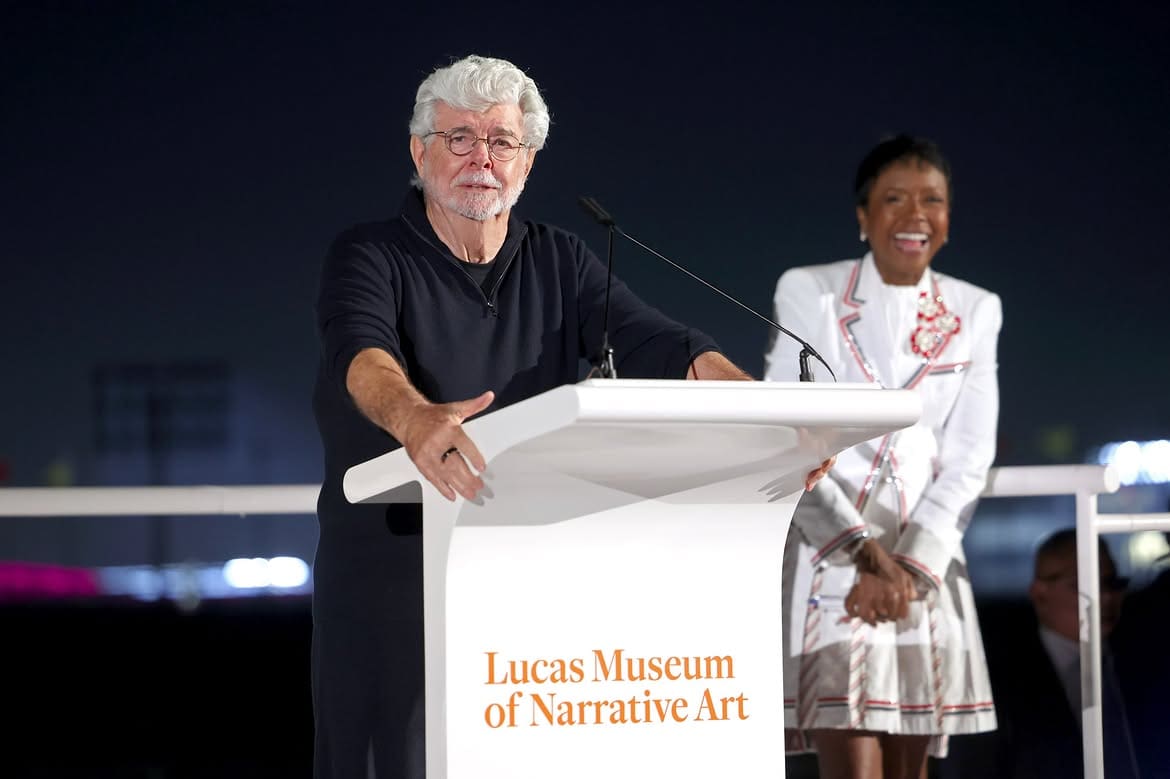
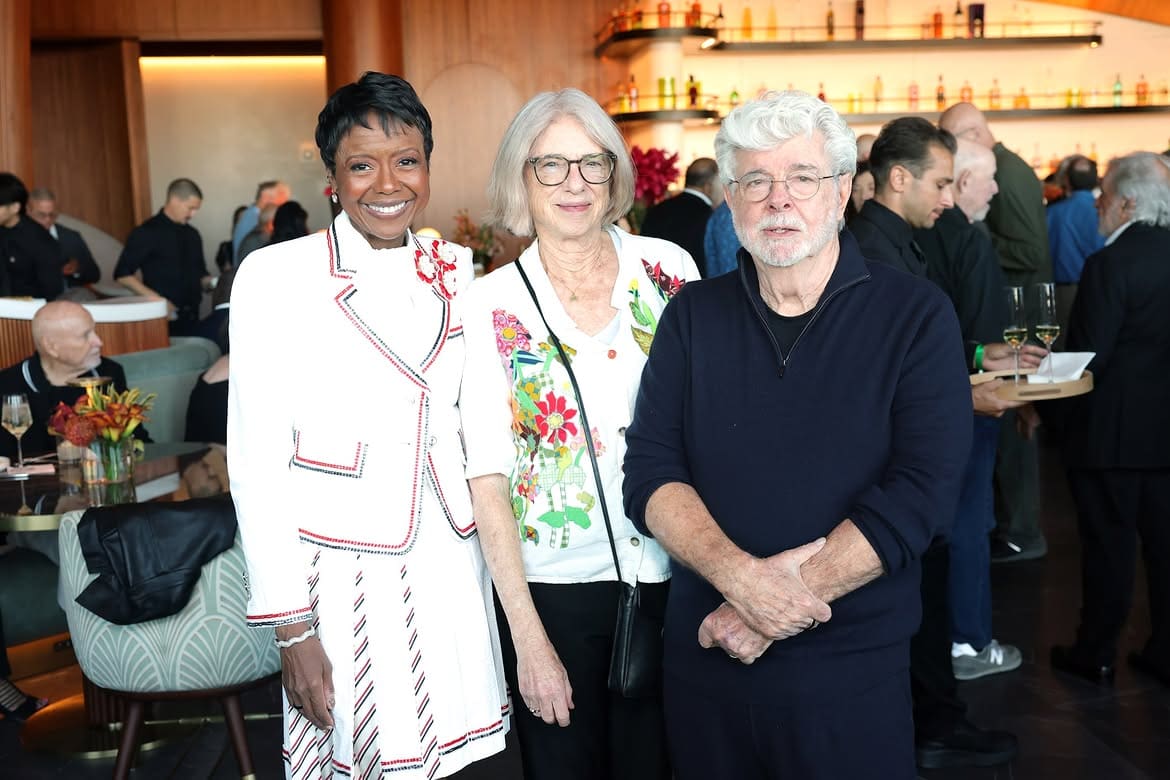
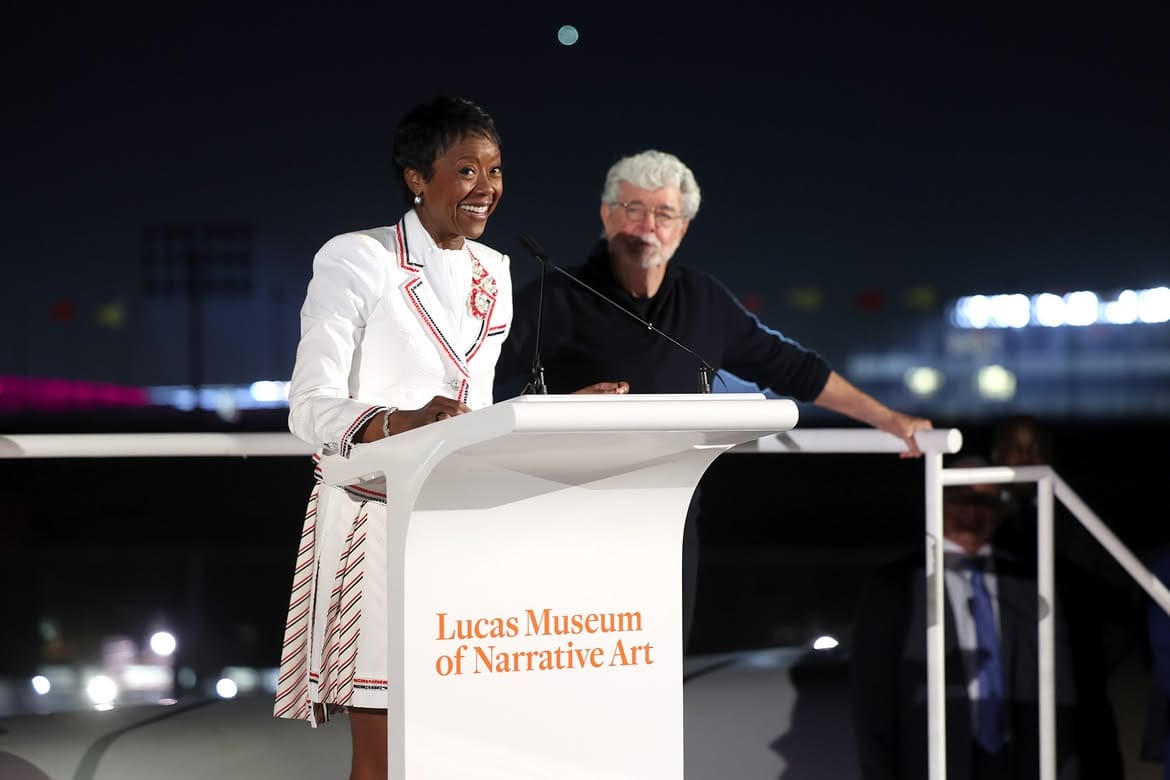
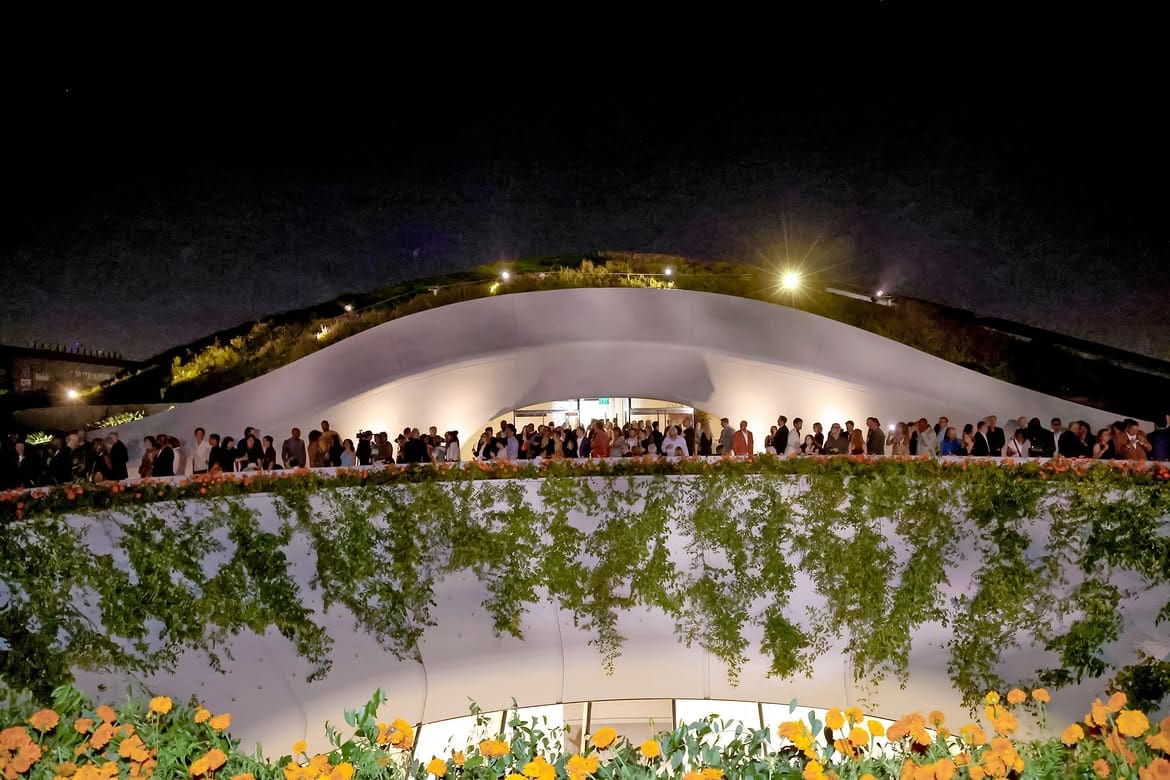
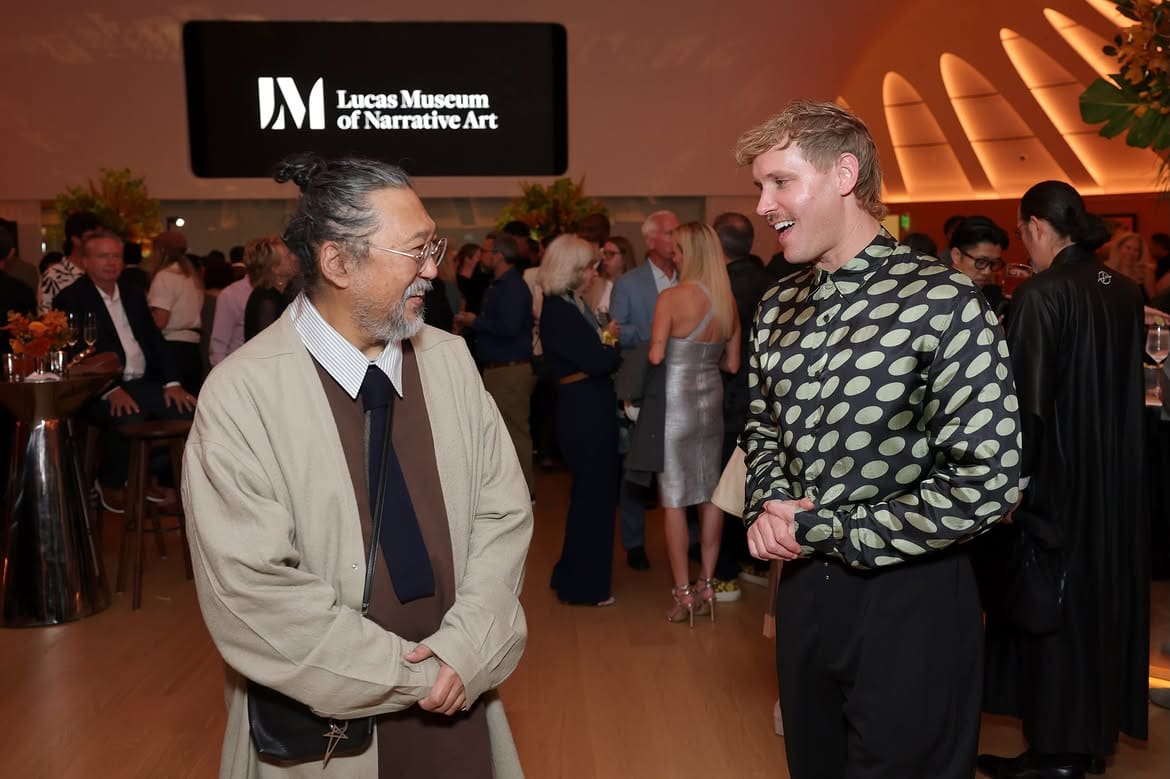
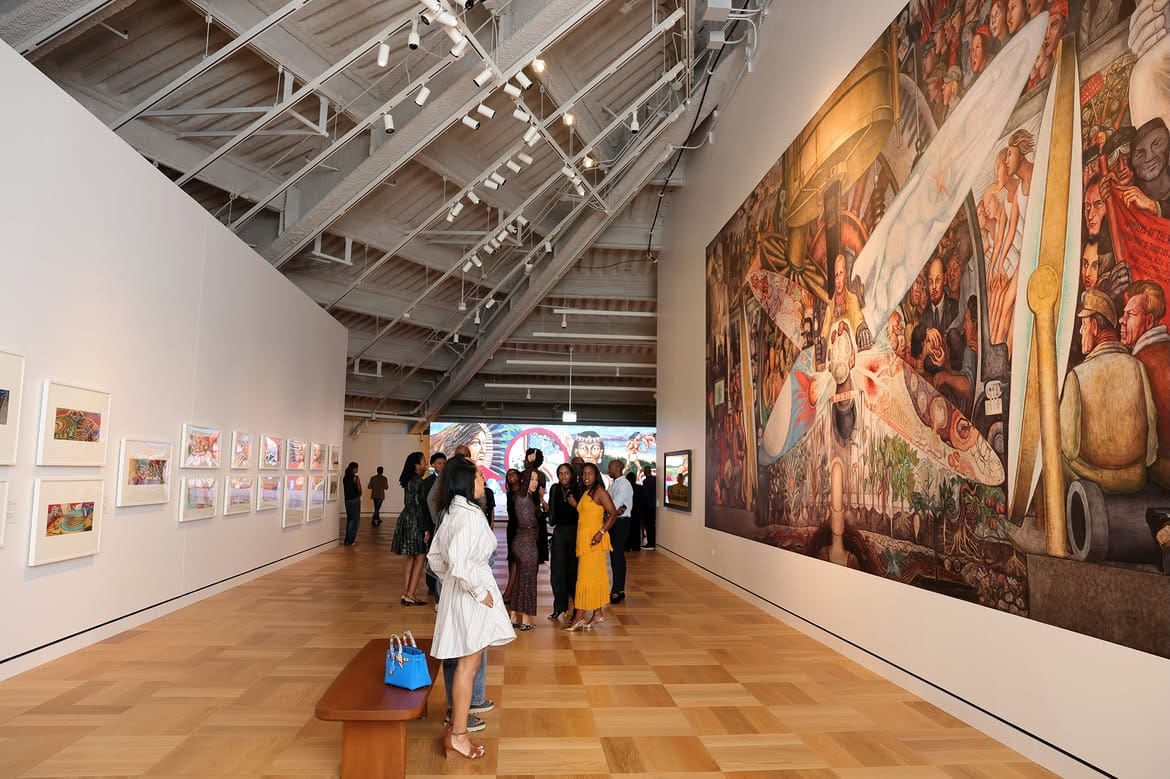
Last night, the Lucas Museum celebrated the artists in this inaugural collection with a special preview hosted by George Lucas and Mellody Hobson. Mellody Hobson wears Thom Browne.
This is not a simple tourist display of Hollywood souvenirs. It is the living workshop of modern mythology. Spanning the original six Star Wars films, the classic four Indiana Jones adventures, and landmark projects like Willow, Red Tails, and Howard the Duck, the collection honors the craftspeople and concept artists—foremost among them Ralph McQuarrie—who forged the aesthetic vocabulary of entire generations.
When the Lucas Museum opens to the public on September 22, it will not just offer an exhibition; it will deliver a massive cultural corrective. Art has never been meant to sit quietly on a wall waiting for academic permission. It was meant to speak, captivate, and tell a story that outlives its author.
