
Jonathan Anderson’s Plastic Fantastic Dior – Resin rings for $450 for new collection. Story by Eleonora de Gray, Editor-in-Chief of RUNWAY MAGAZINE. Photo Courtesy: Dior.
The term “savoir-faire” has officially undergone a high-tech downgrade.
While the international fashion press is busy hyperventilating over an isolated retail melodrama in Seoul—where an opportunistic law firm is attempting to manufacture a national crisis because a panicked Gangnam boutique clerk bypassed protocol and used a local cobbler to glue a few loose beads back onto a 2016 Lady Dior art piece—the true corporate magic trick is happening in plain sight on Dior’s global storefront.
Why orchestrate a theatrical legal battle over a single vintage repair when you can mass-produce plastic fantasy straight from a machine, label it “heritage,” and watch it sell out in seconds?
In Jonathan Anderson’s debut Spring-Summer 2026 and Autumn 2026 accessory lines for Dior, the ultimate tool of luxury craftsmanship is no longer a master artisan working over a traditional workbench with precious materials. It is an industrial polymer printer.
A translation of the official descriptions for three newly released rings reveals the exact economy of modern luxury:
The Material Deception, Transcribed:
- Dior Rocks Ring (Stone-Effect Variation): The house proudly boasts that this contemporary design is distinguished by its “3D-printed stone-effect resin, meticulously polished.”
- Dior Rocks Ring (Crystal Variation): This version features a gold-finish metal band, elevated by a sparkling central crystal, inspired directly by the “energy of Jonathan Anderson’s debut fashion show.” It’s just a green resin, man!!!!!
- Dior Médaillon Ring: A silver-finish creation showcasing a medallion adorned with a “white resin dove detail” and a blue lacquer moiré effect.
The physical cost of high-grade, UV-curable industrial resin is roughly $1 to $2. By loading liquid synthetic polymers into a 3D printer, letting a machine harden the compound into shape, and executing a quick manual buff, Dior achieves an astronomical vertical markup on pieces retailing between 400 and 450 euros.
From mass-market to cheap-market but with luxury price
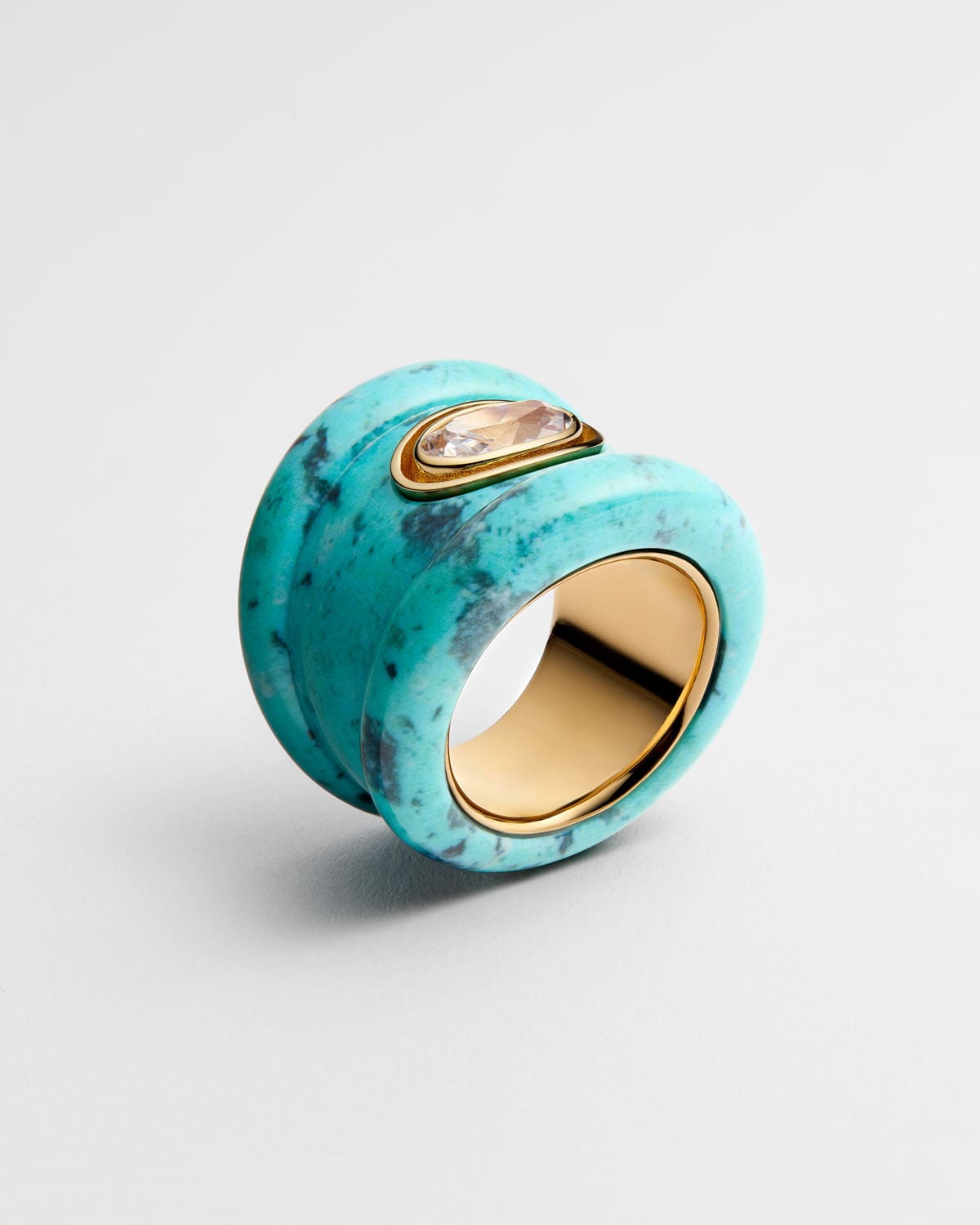
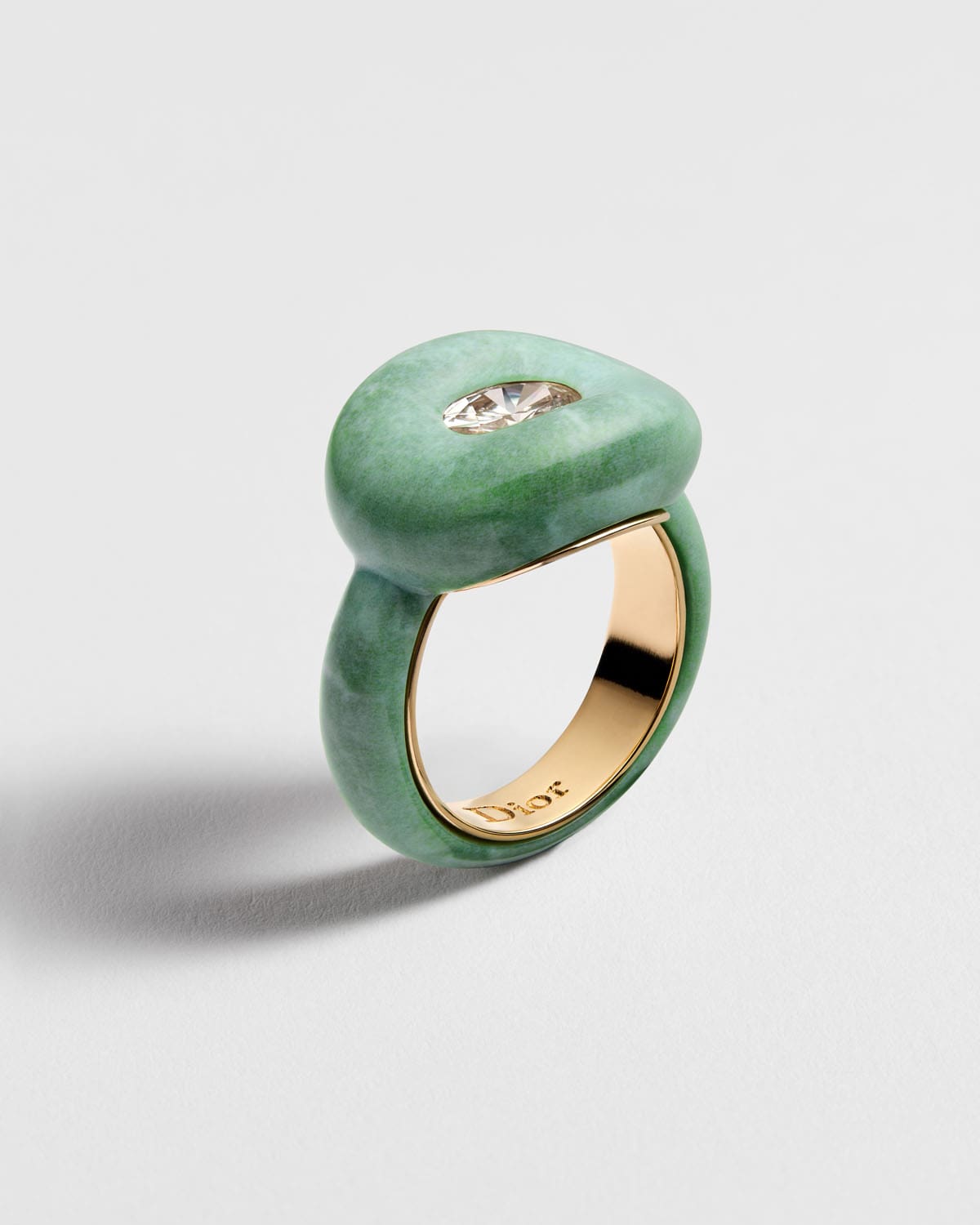
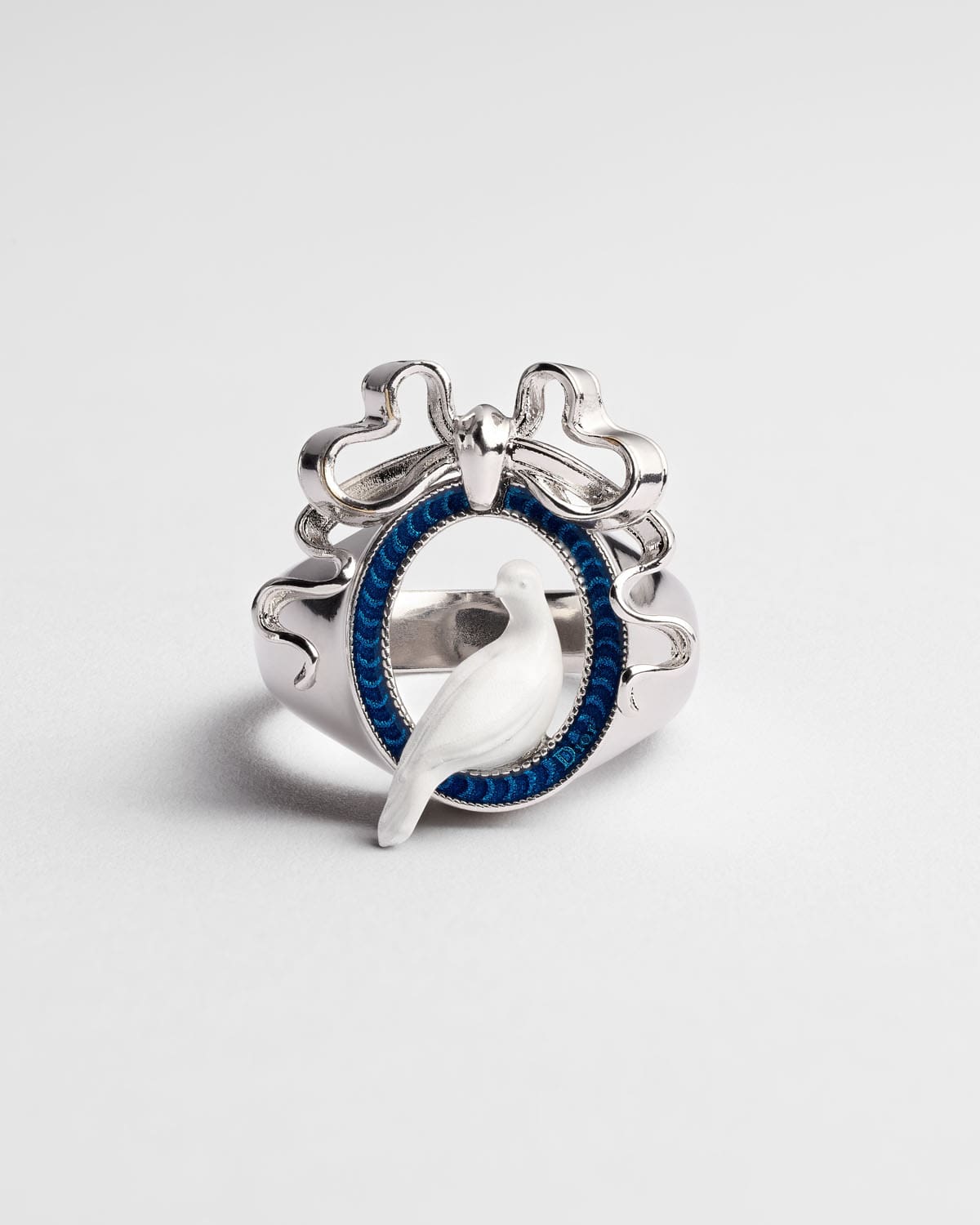
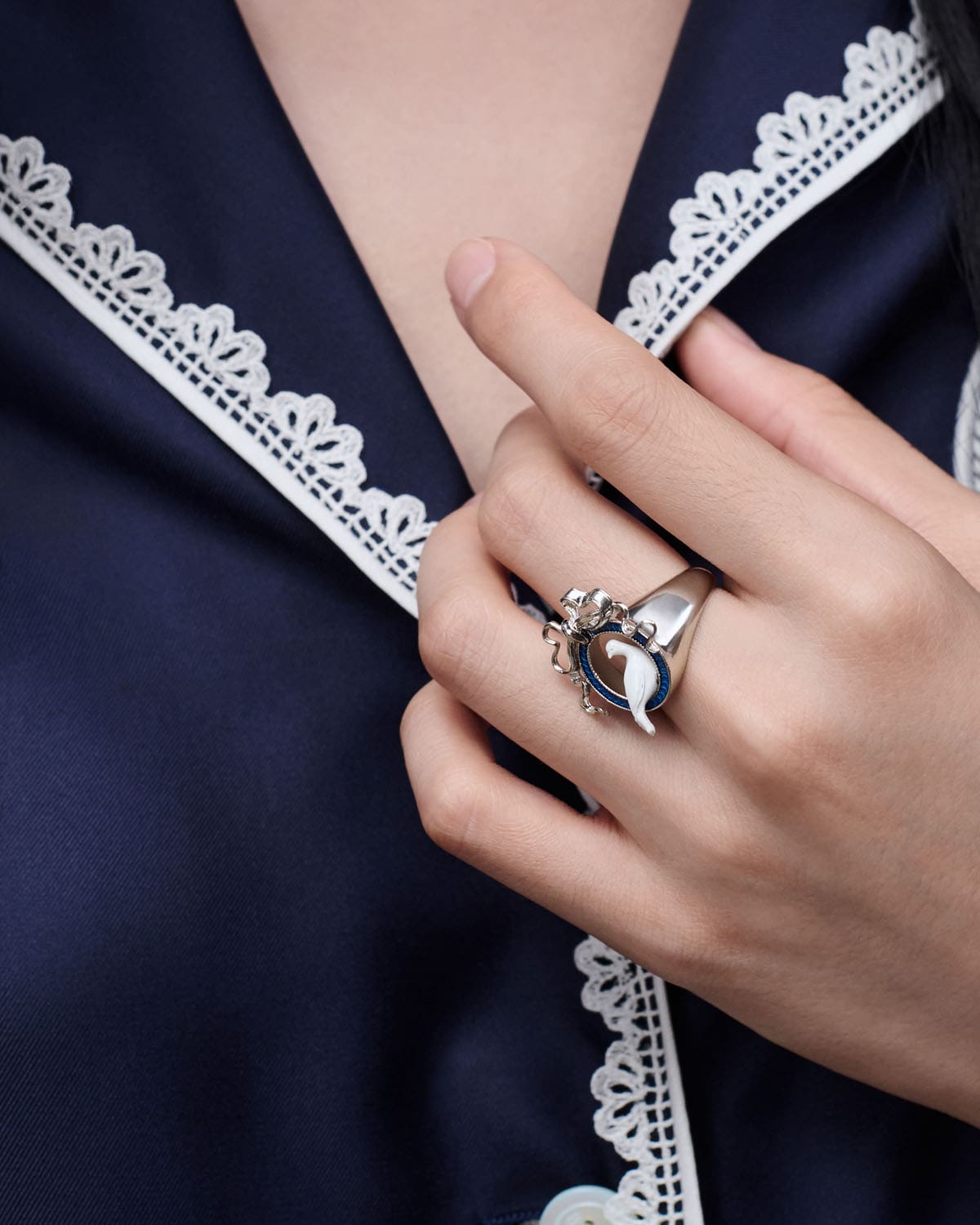
The house isn’t even hiding the mechanical nature of the process. They are openly marketing 3D-printed plastic alongside their logo, betting that the modern consumer cares far more about the brand signature than the actual material substance.
The New Luxury Math: Rarity used to be determined by the scarcity of the raw material—crocodile, silk, precious gems. Today, under the massive corporate scale of modern fashion houses, the ultimate luxury trick is selling petroleum-based synthetic resin at a 44,900% premium and calling it couture.
