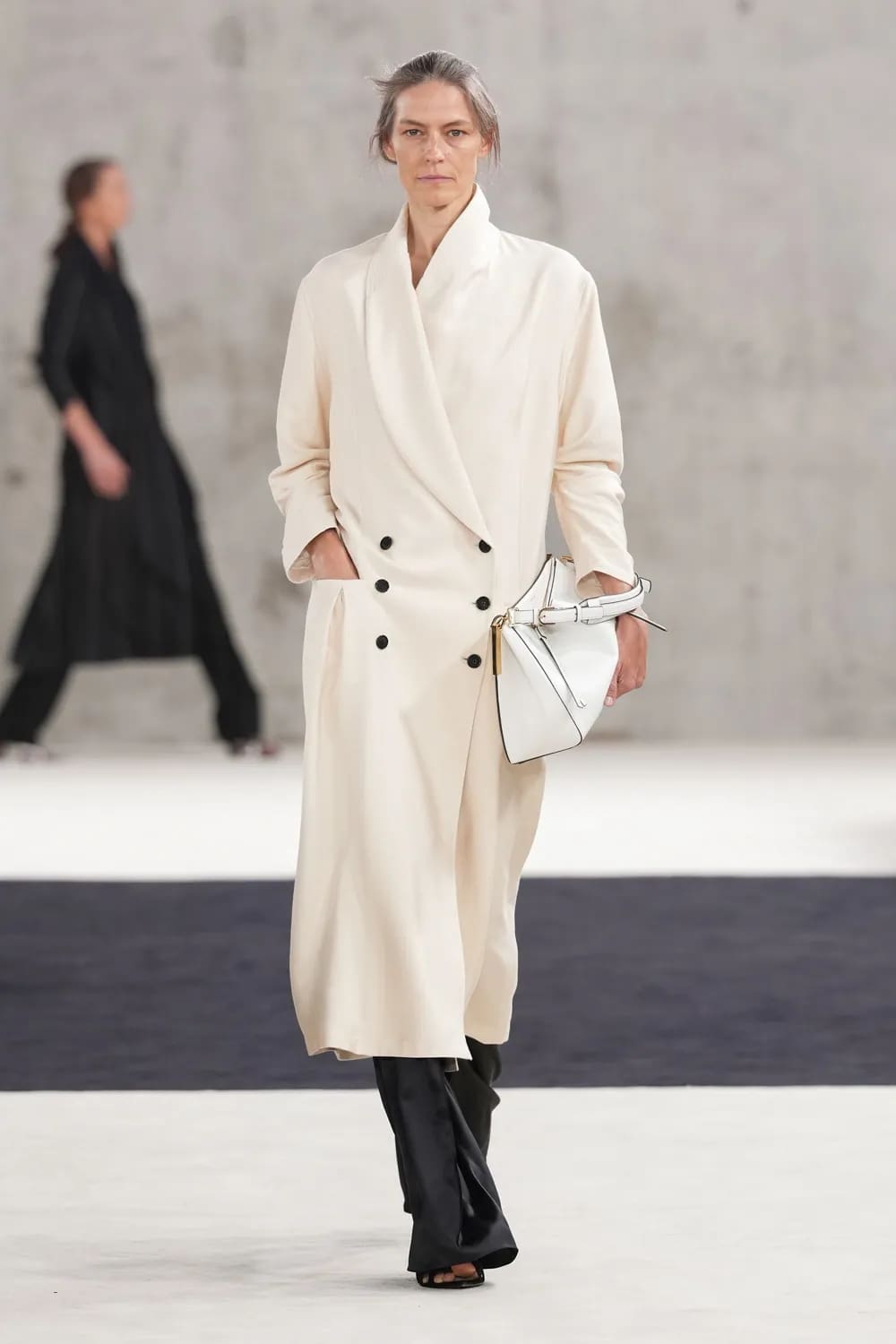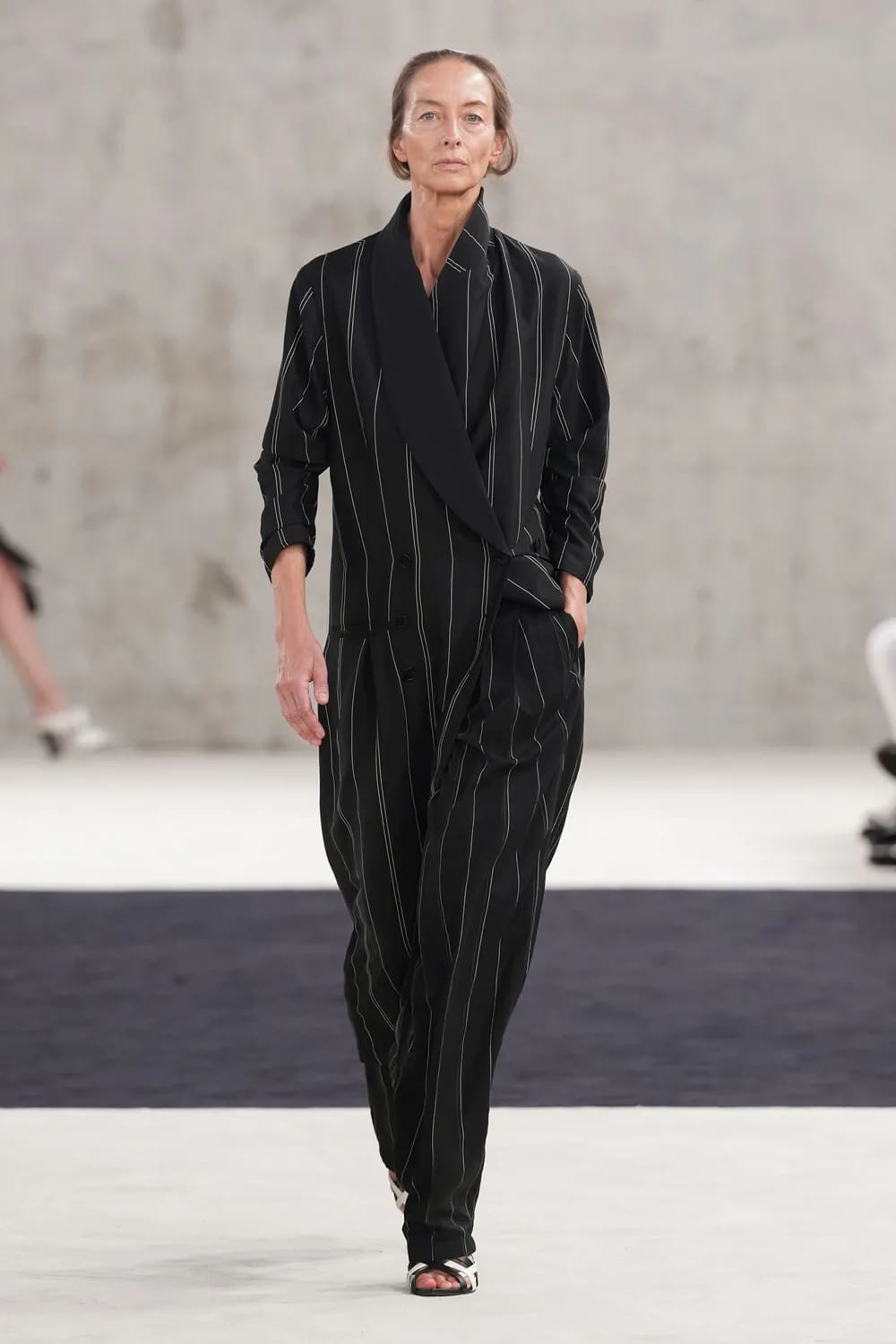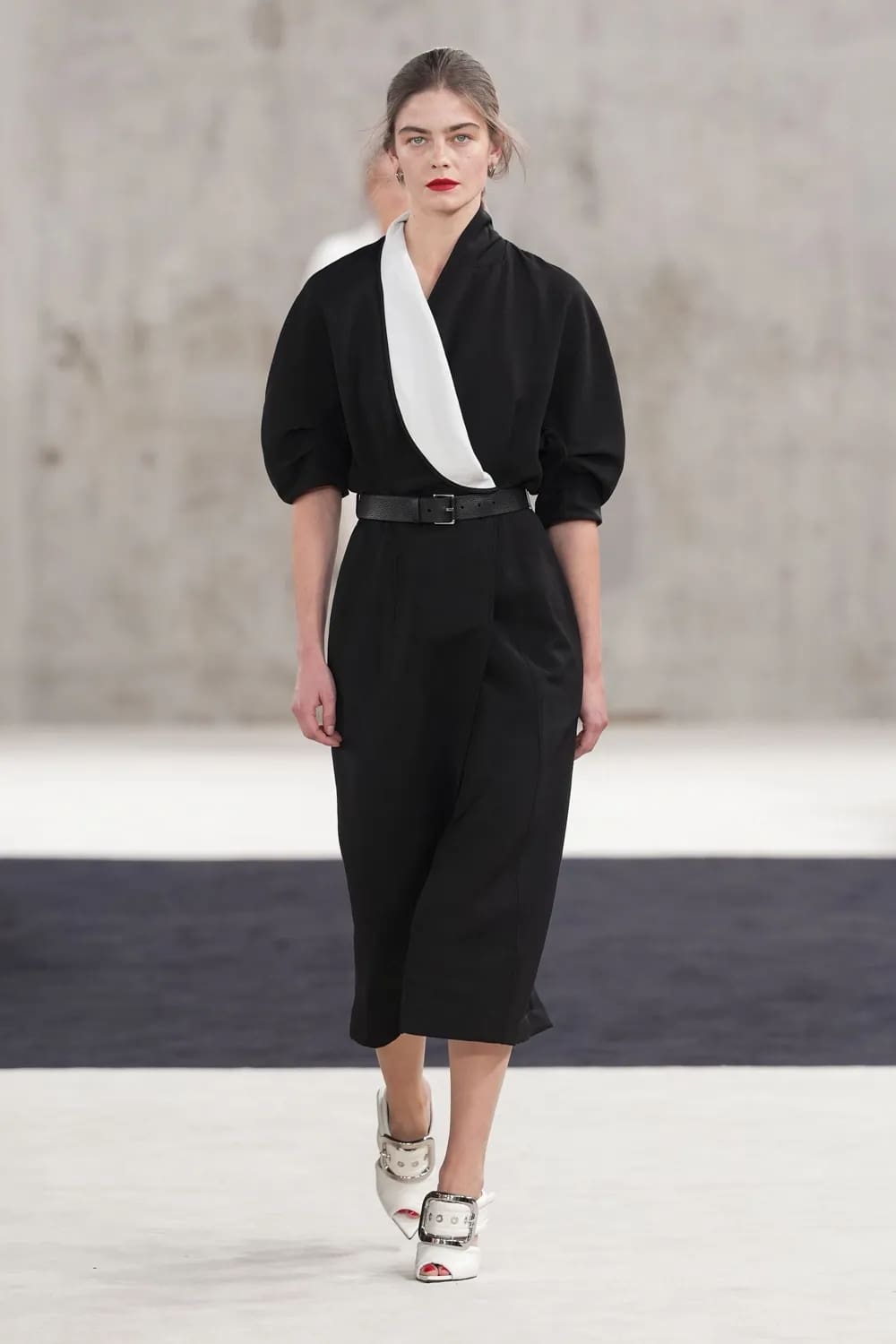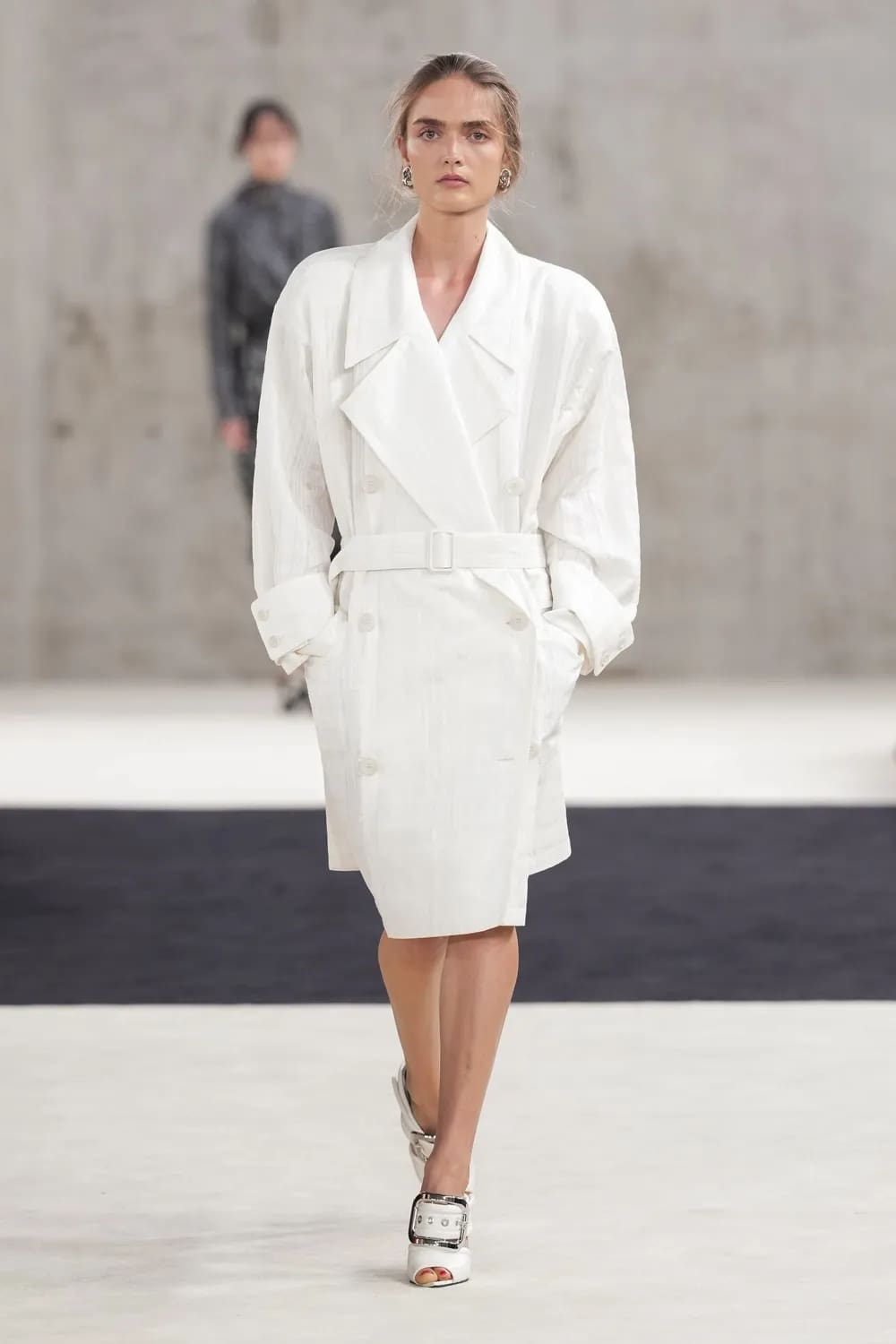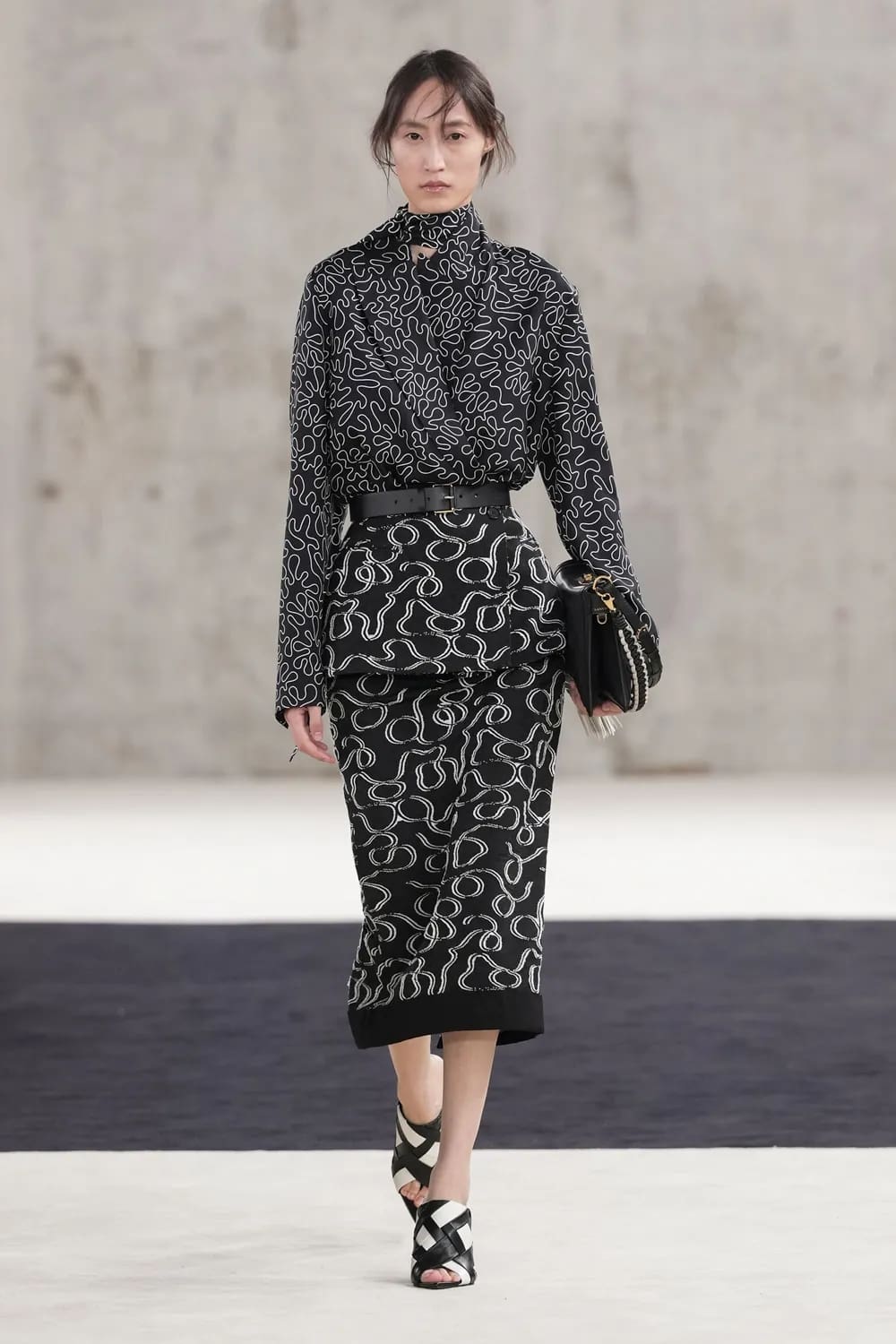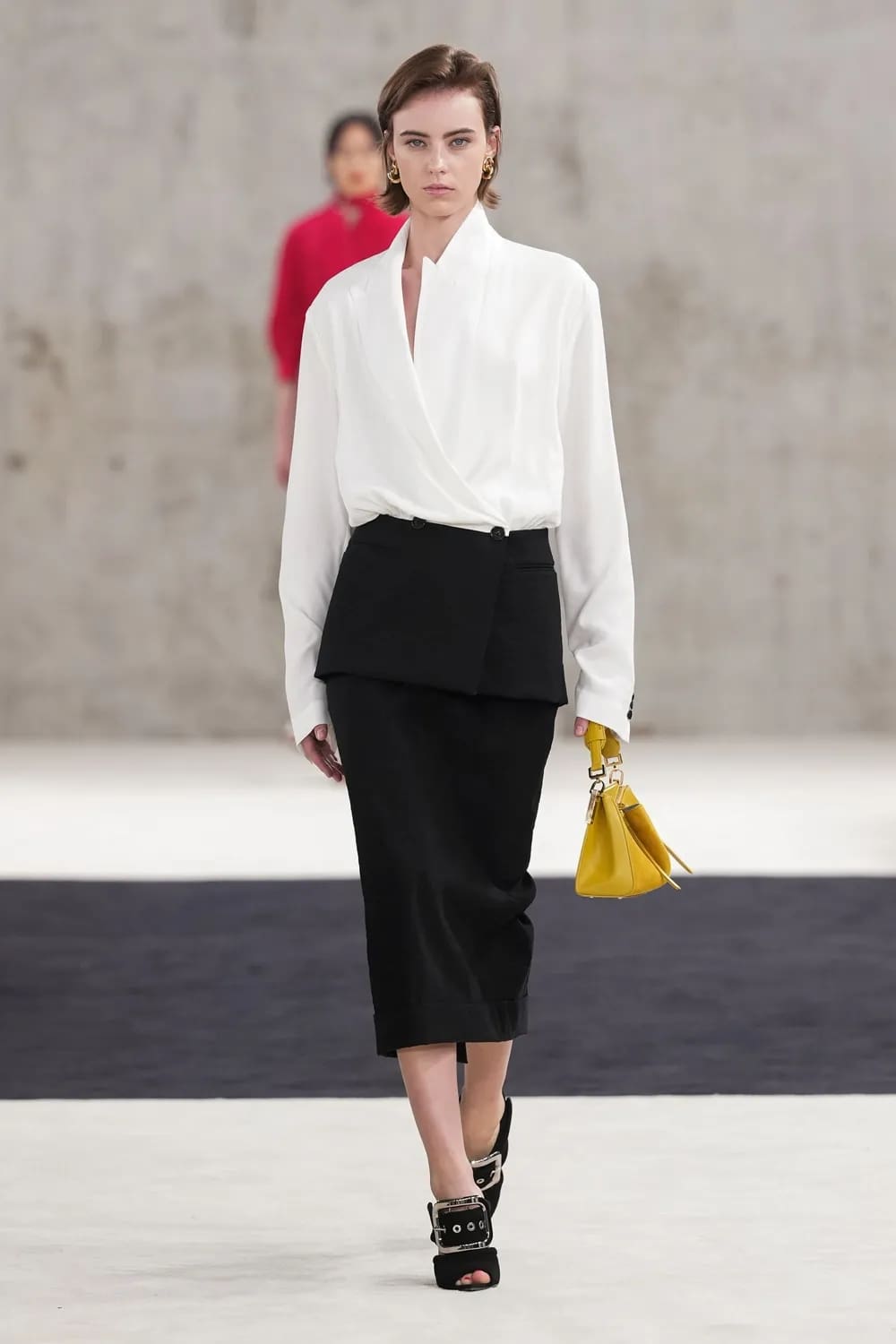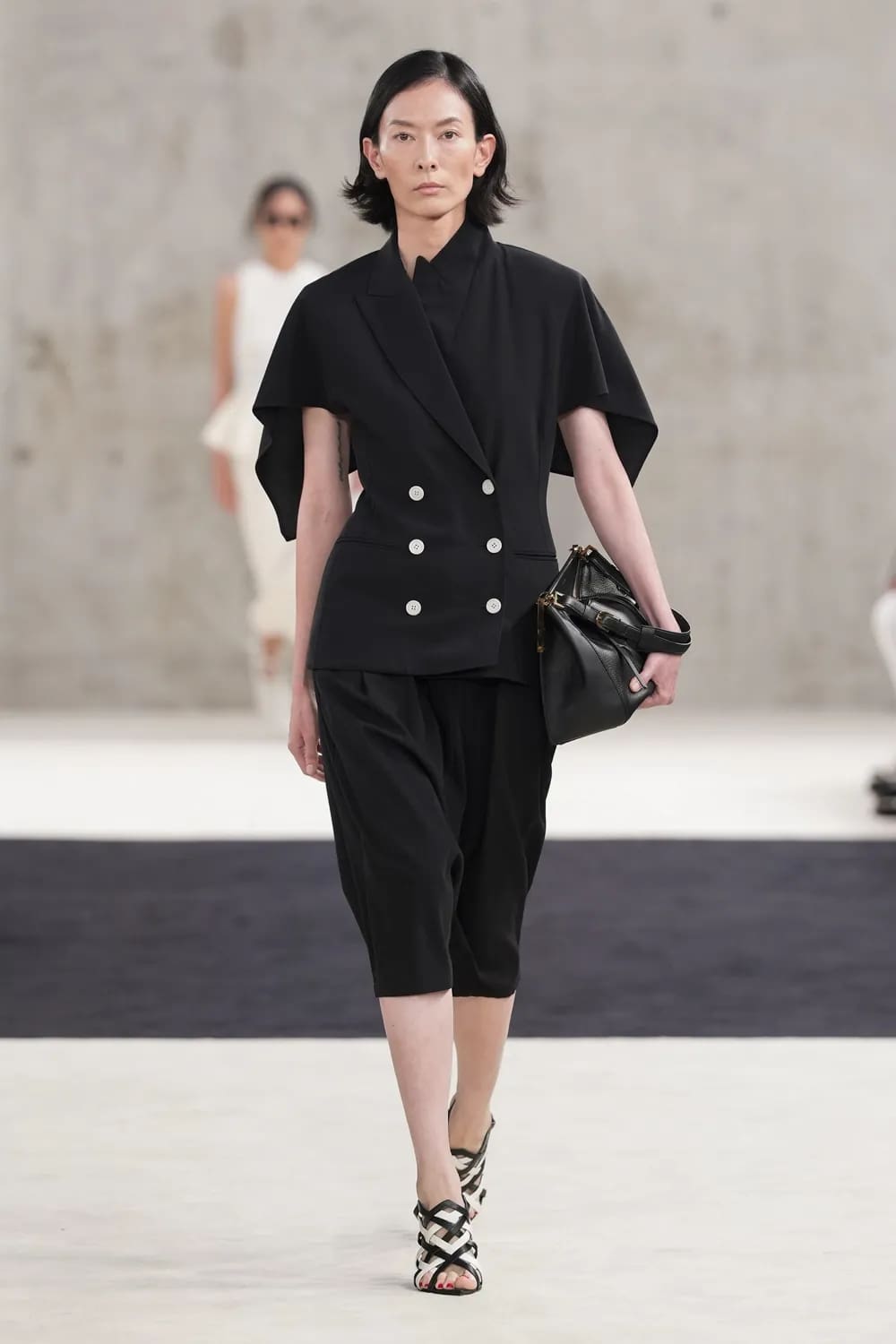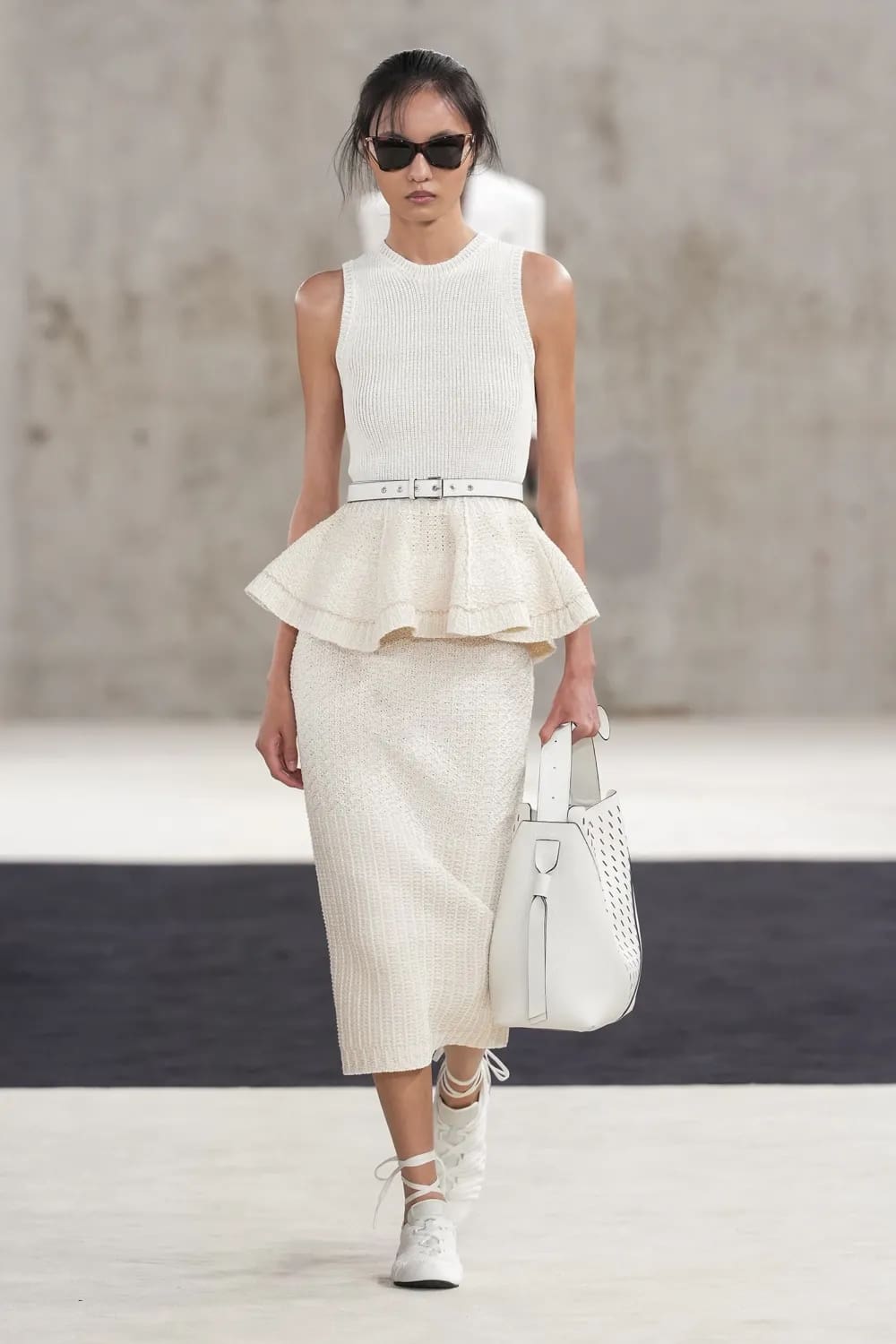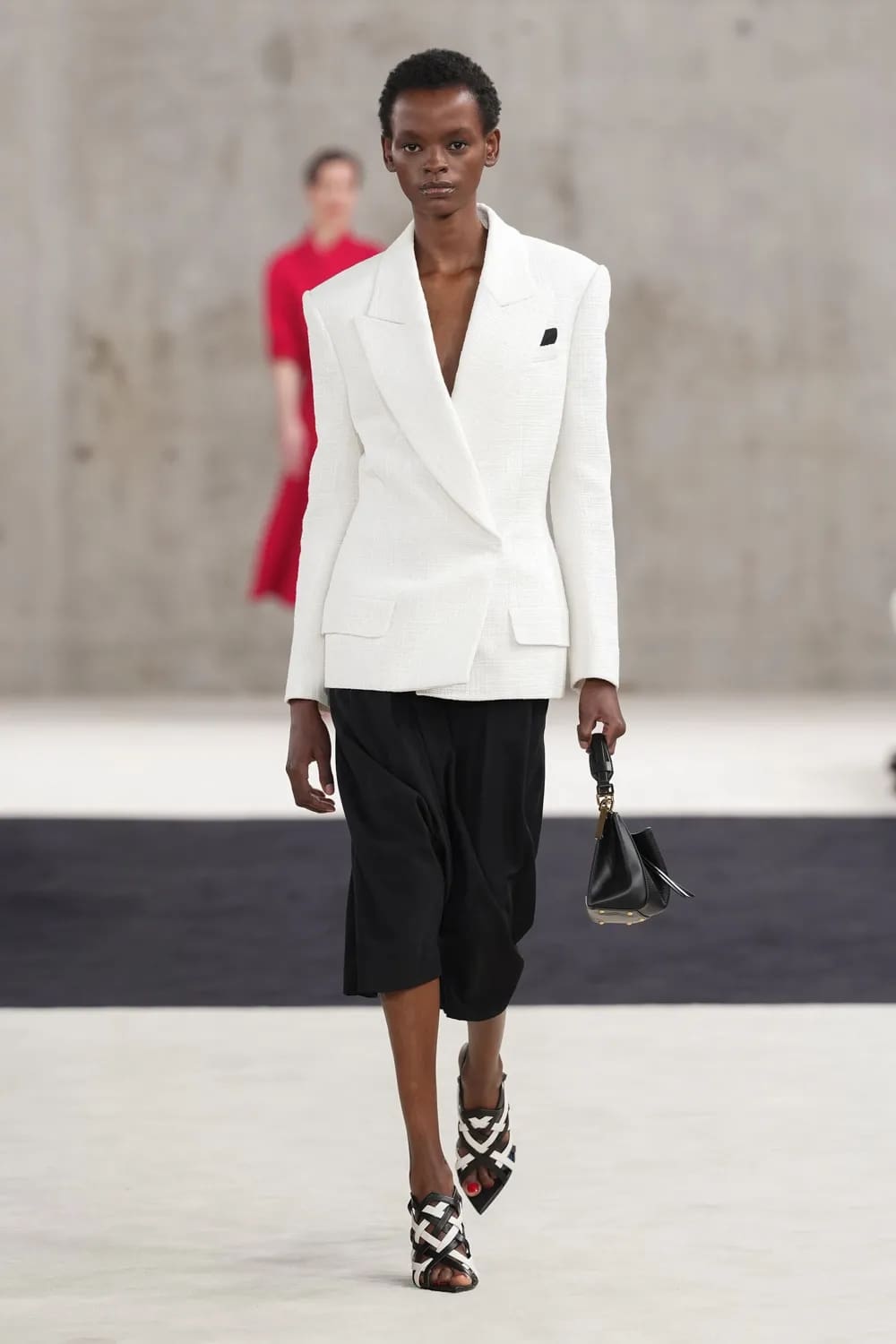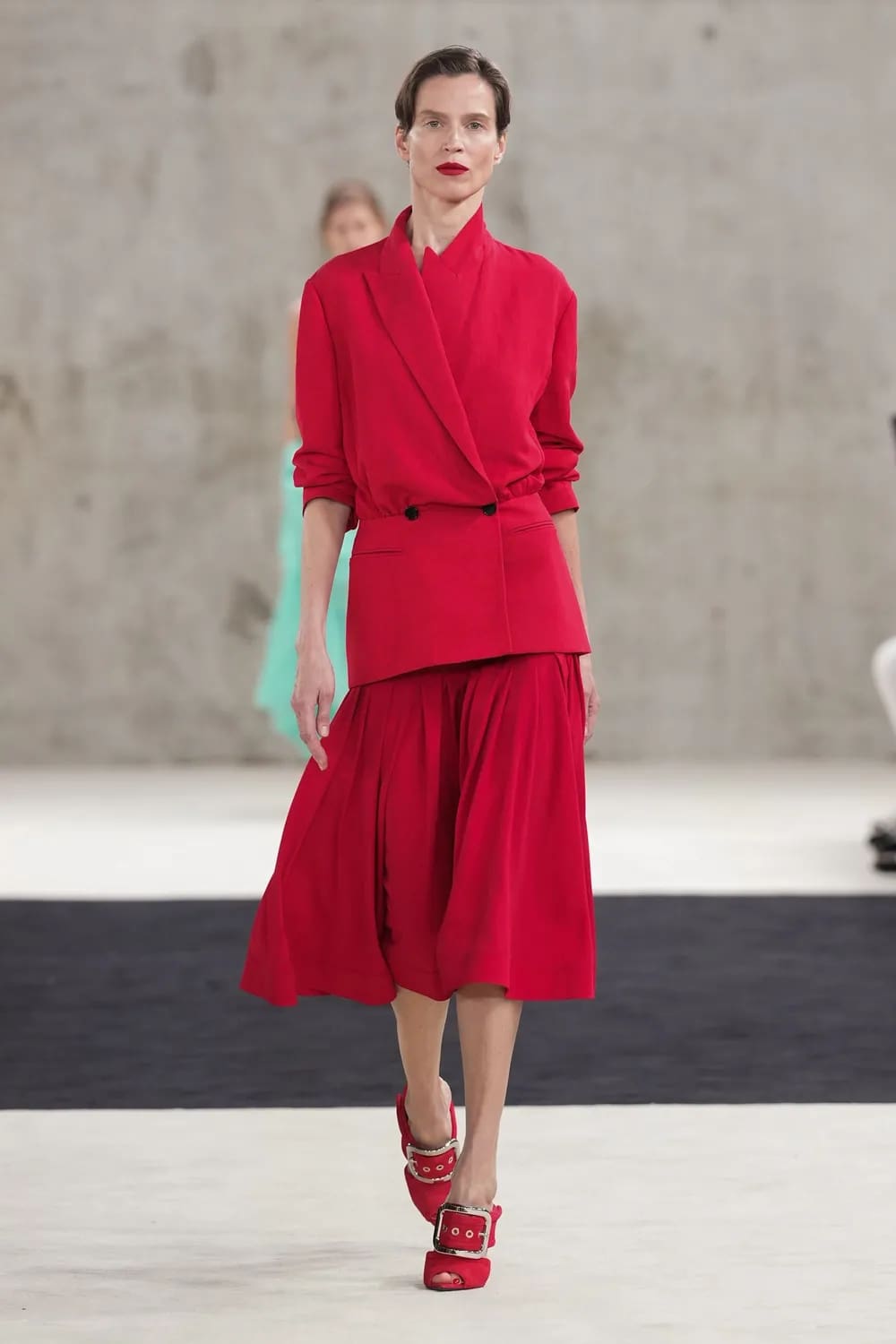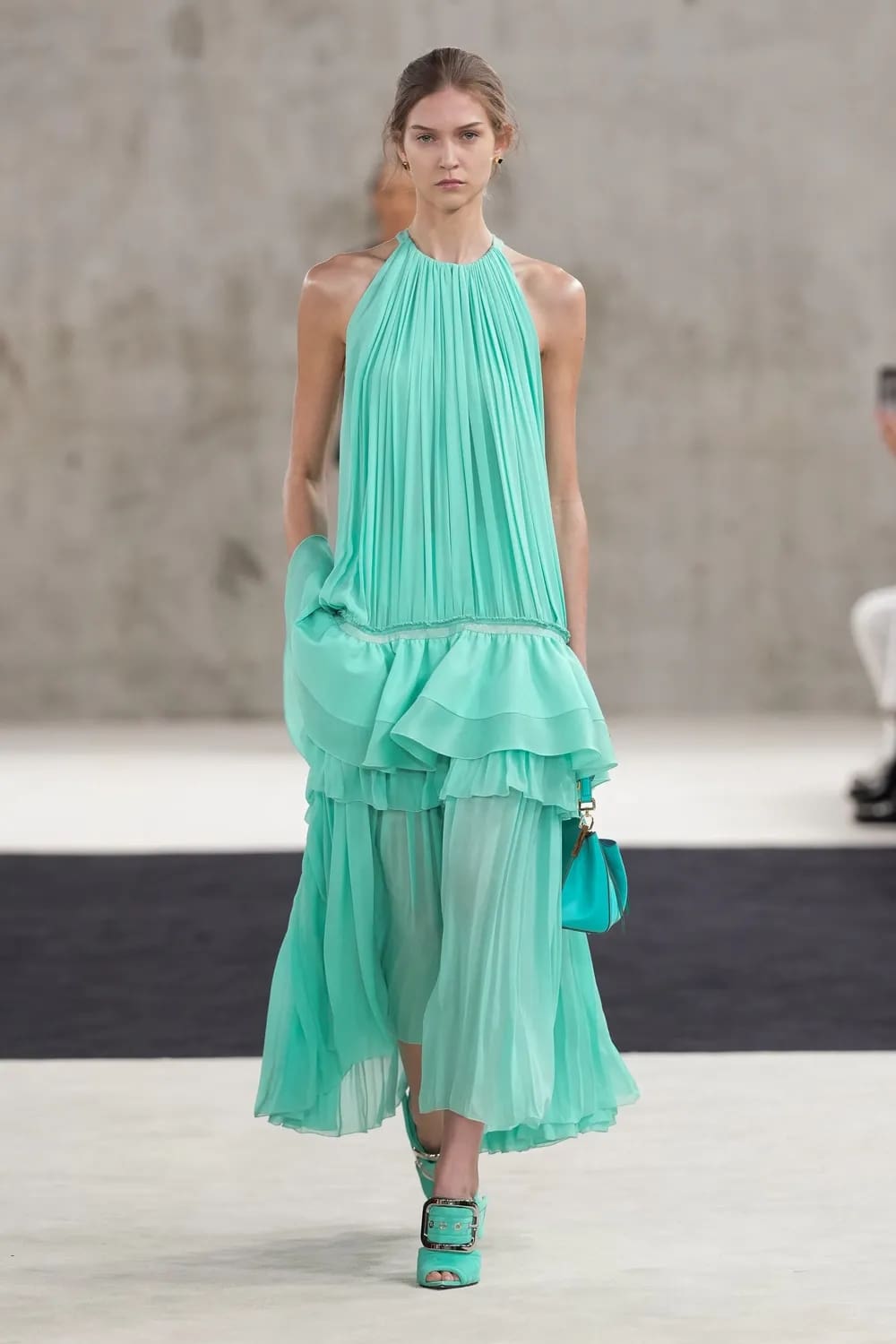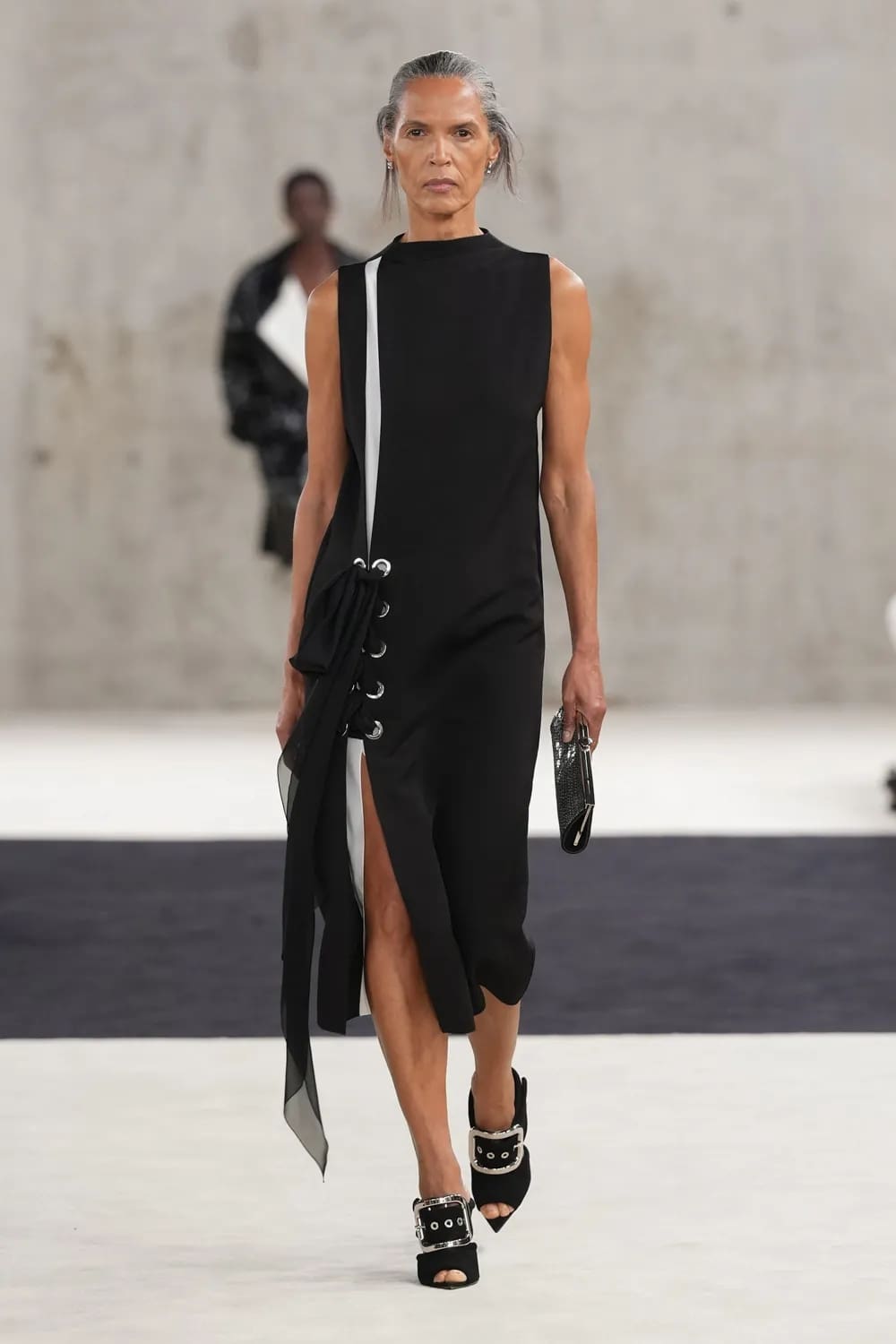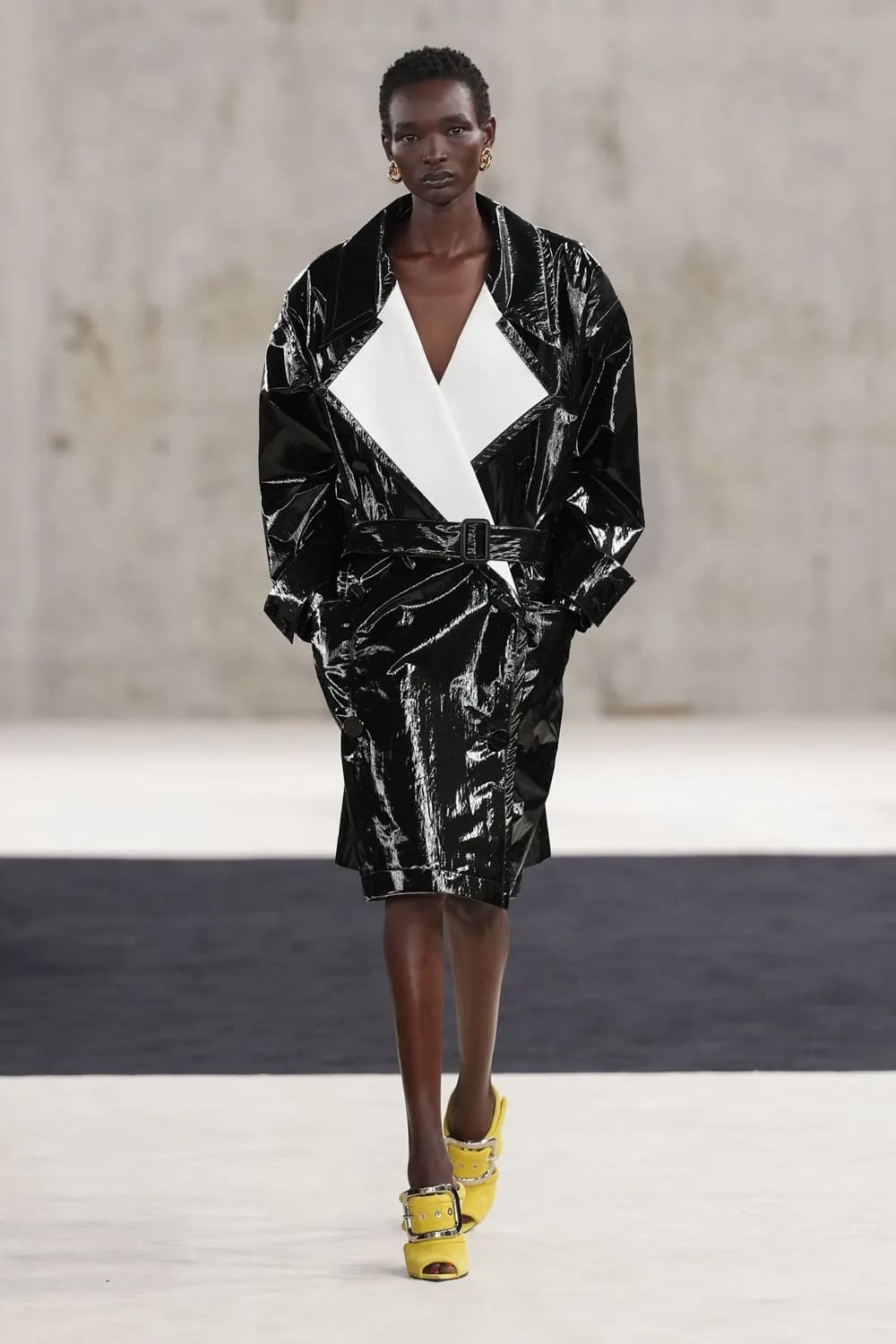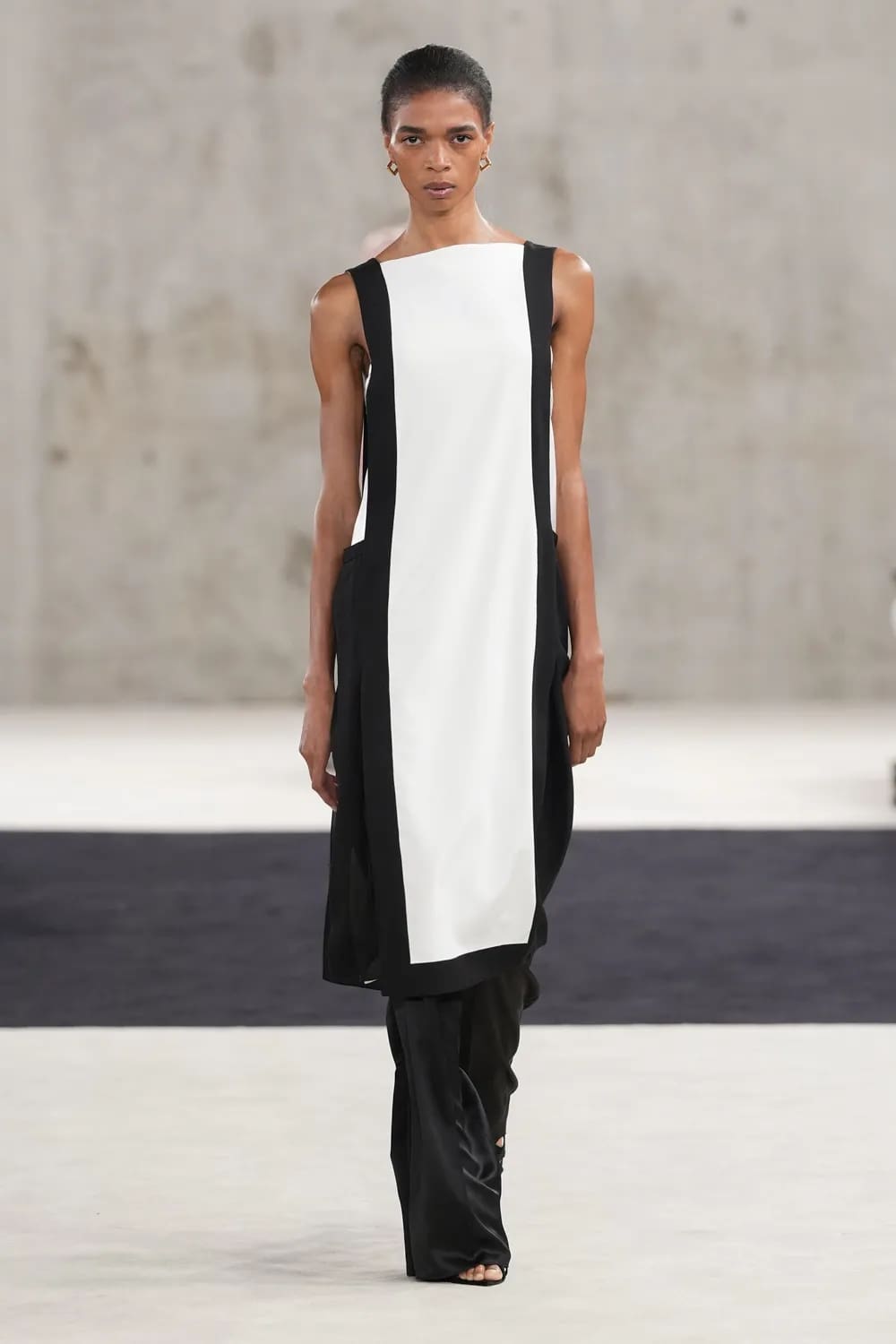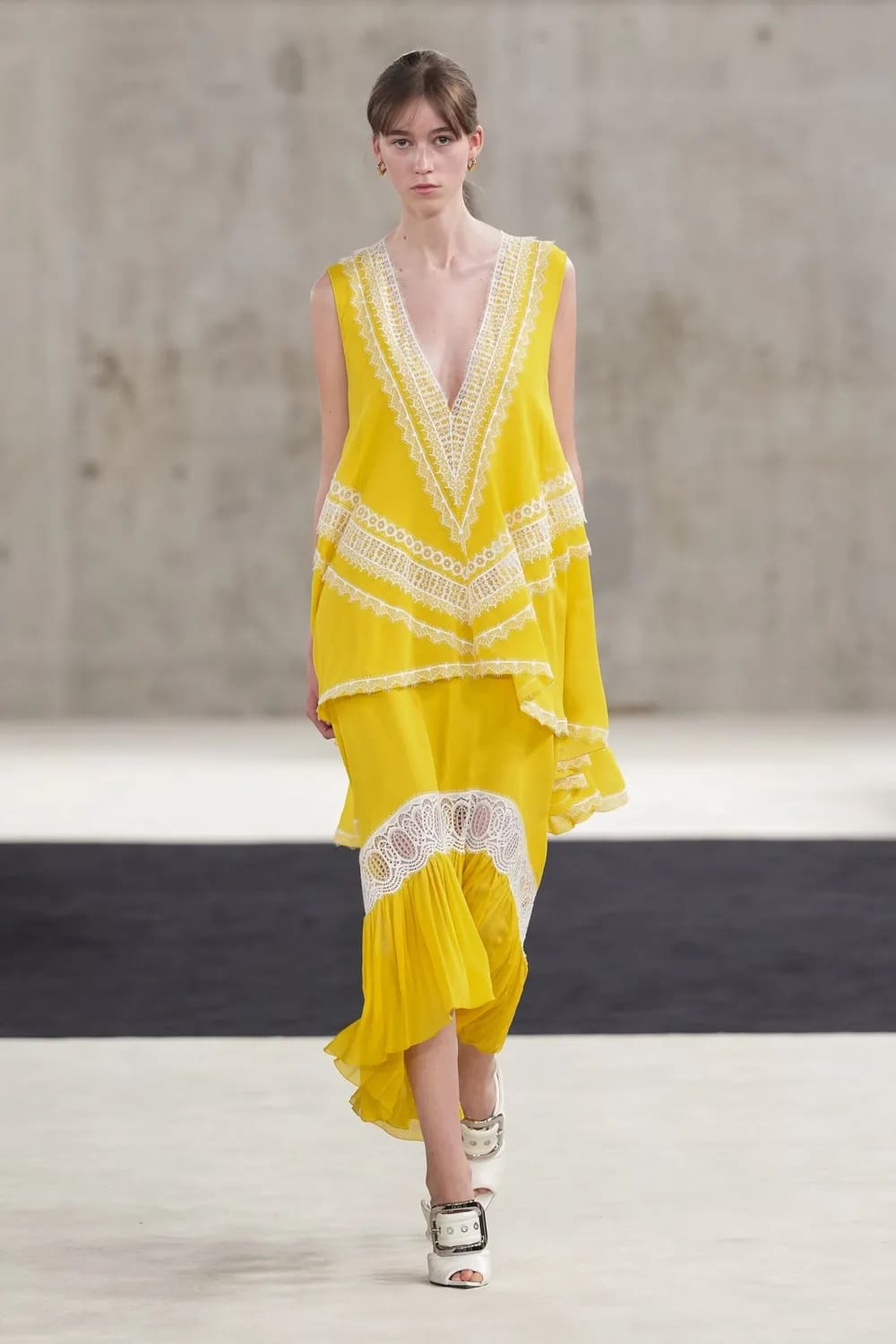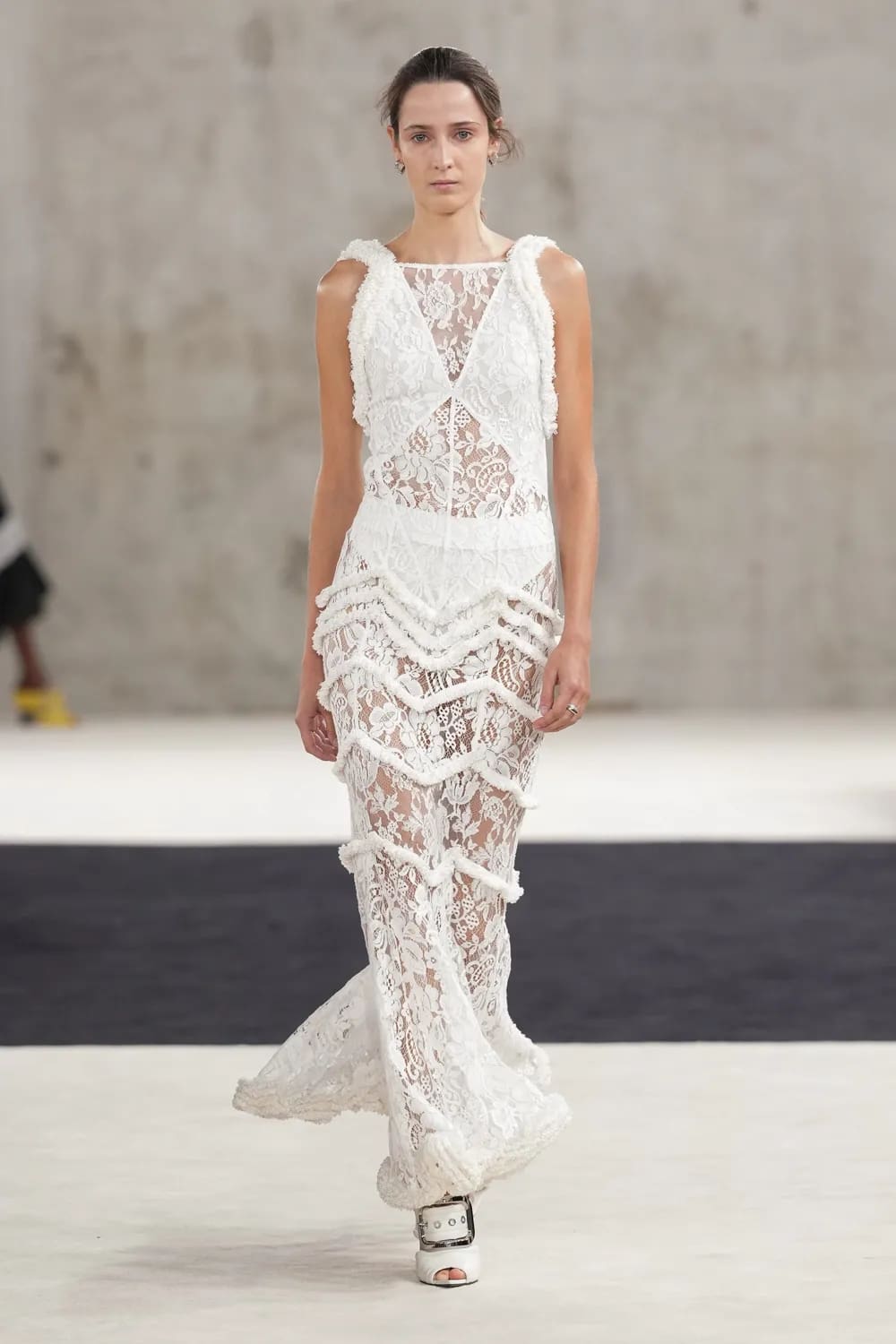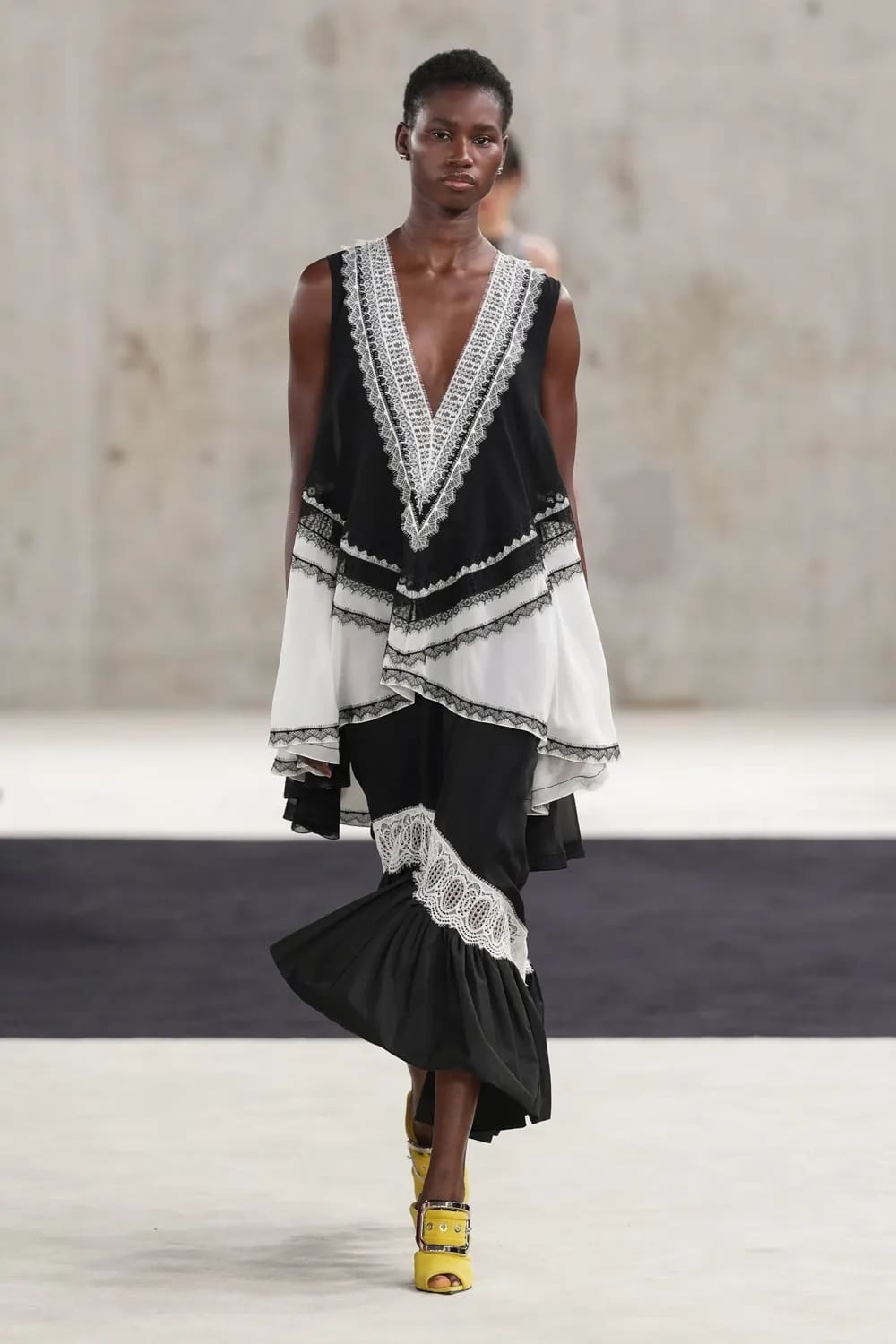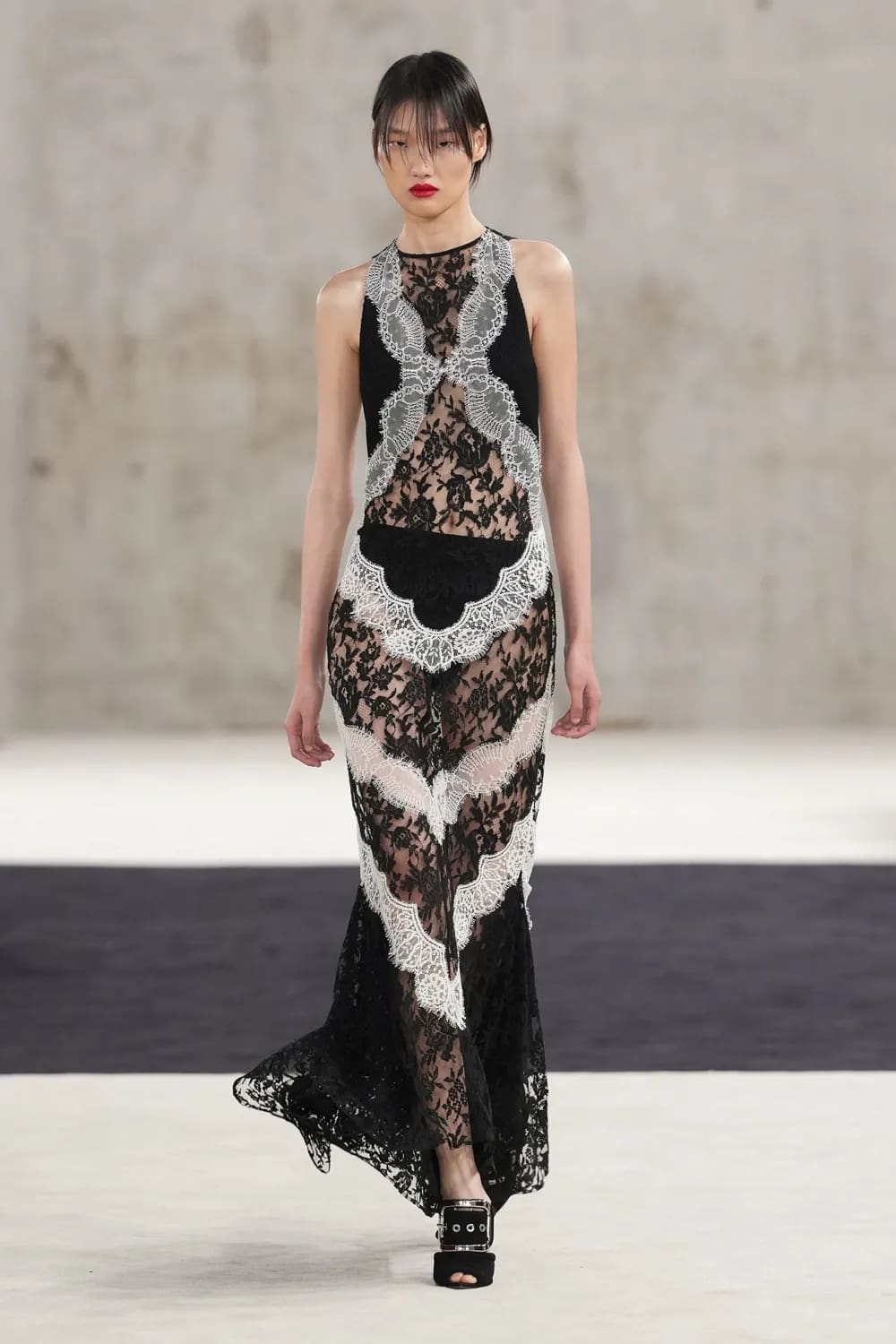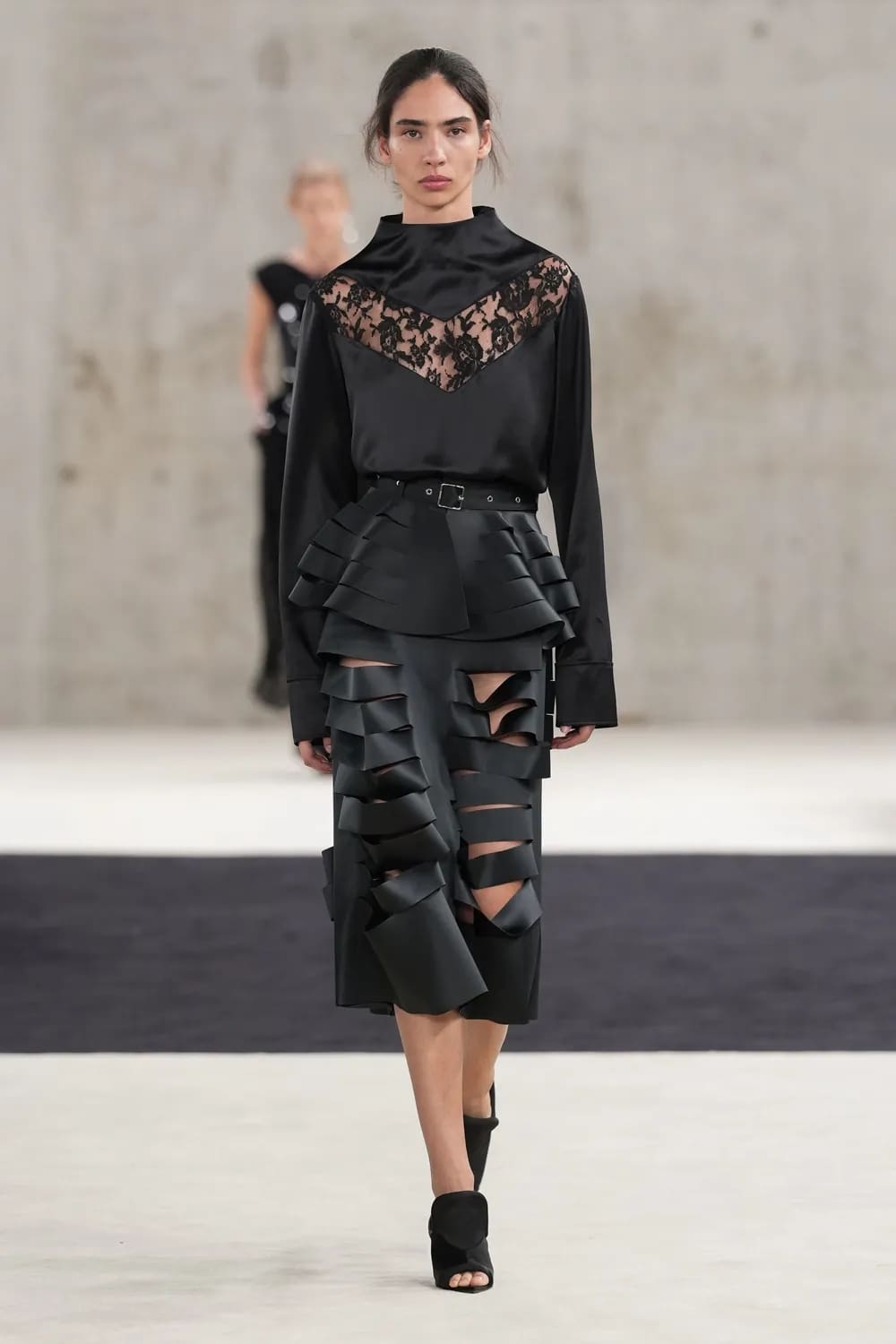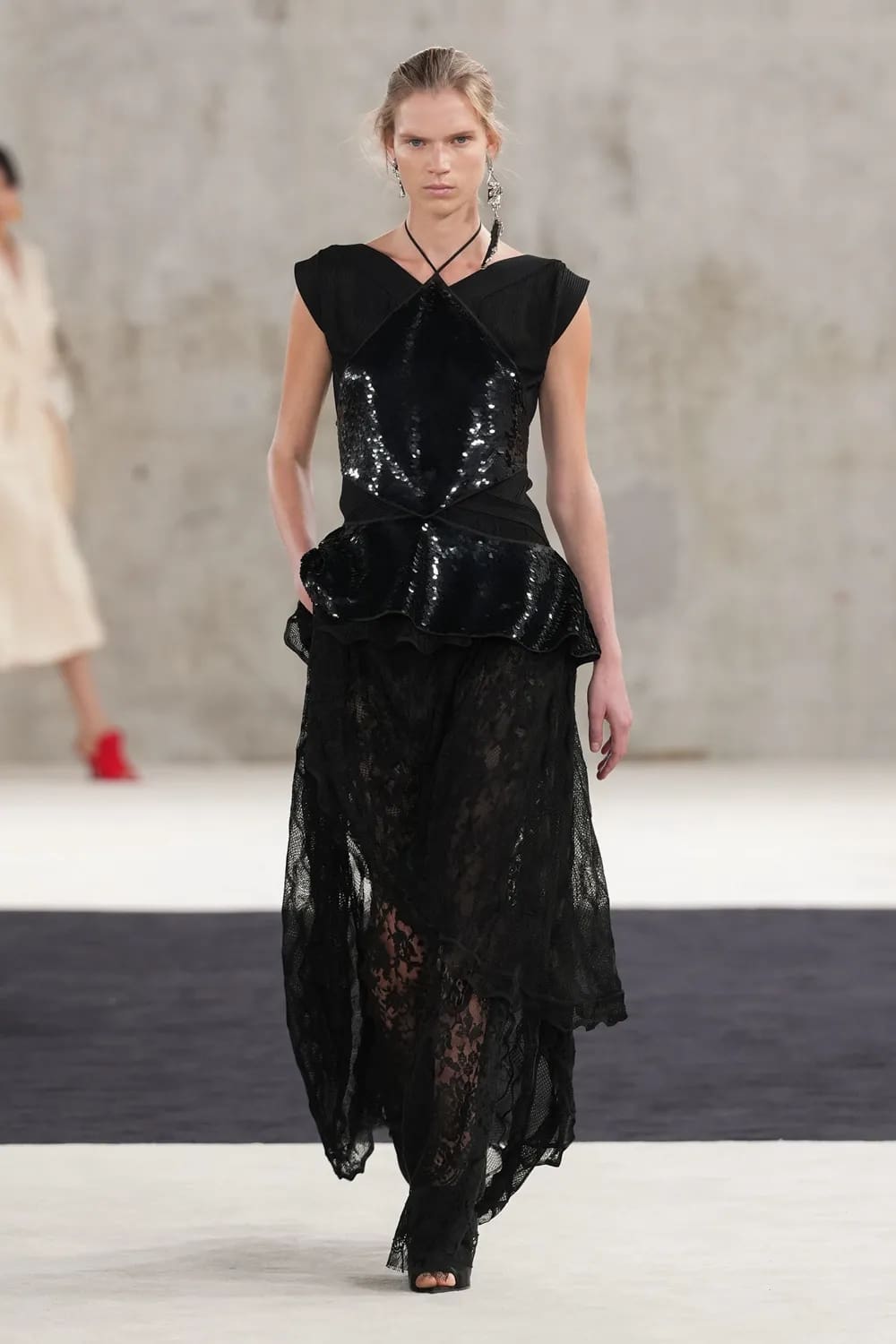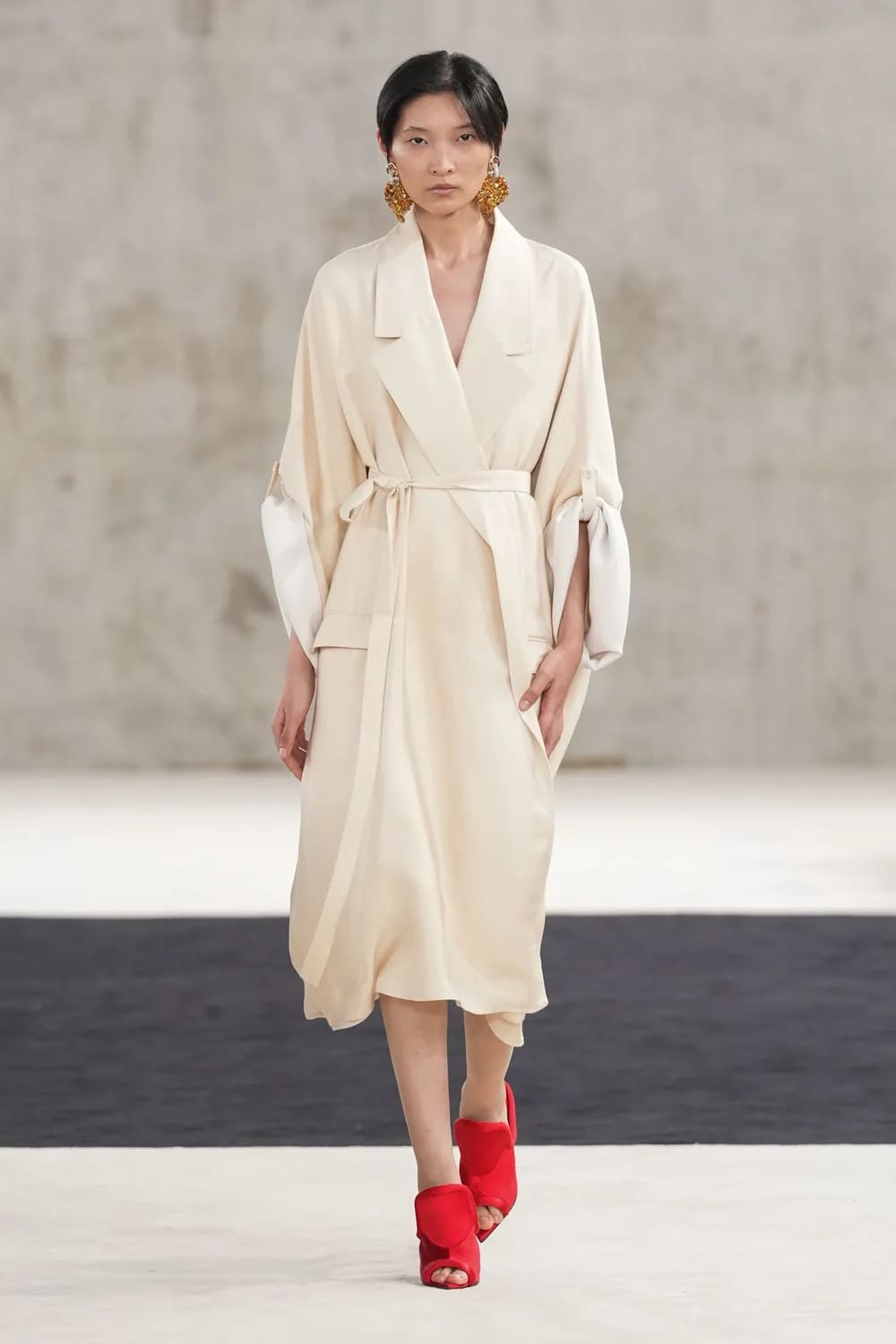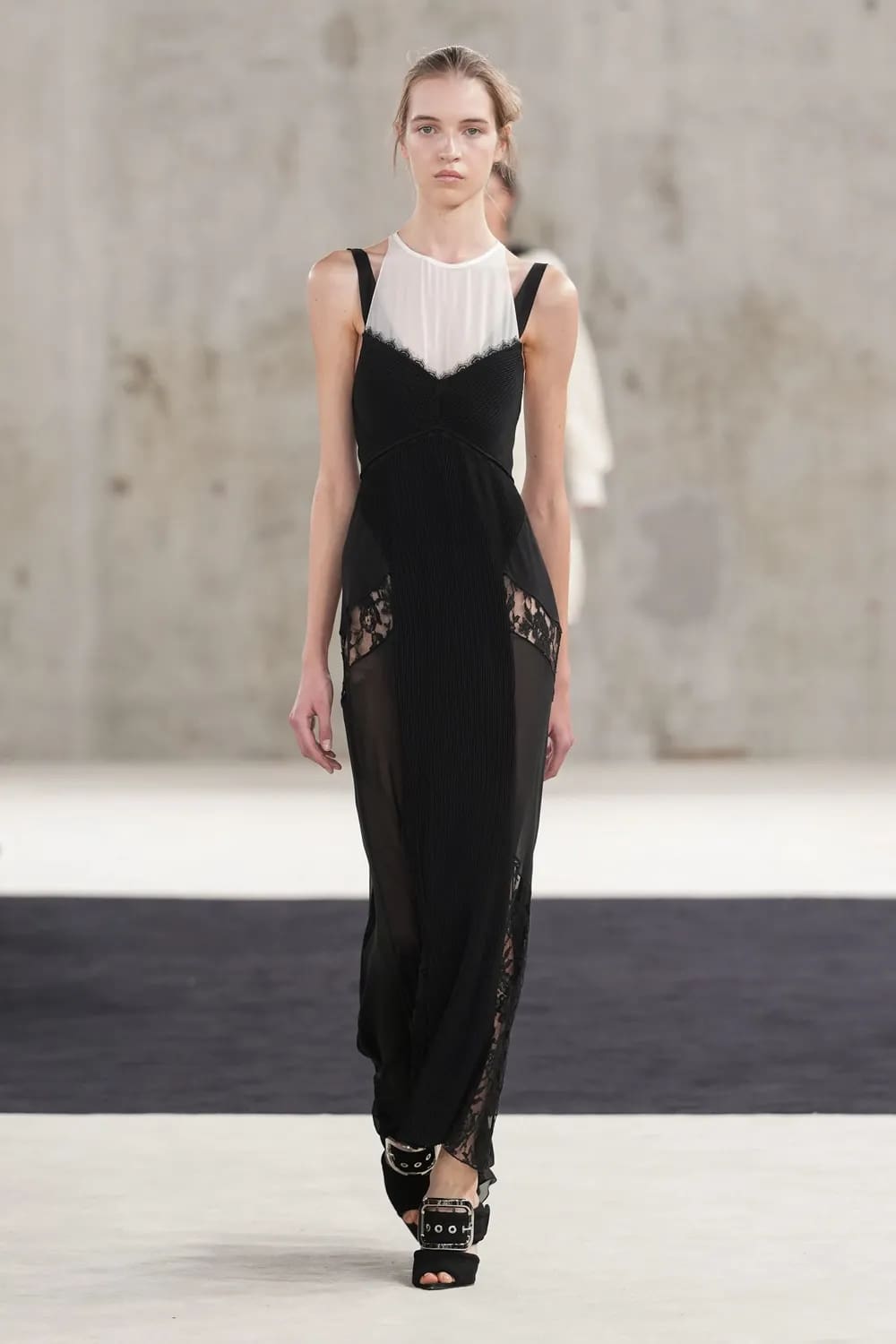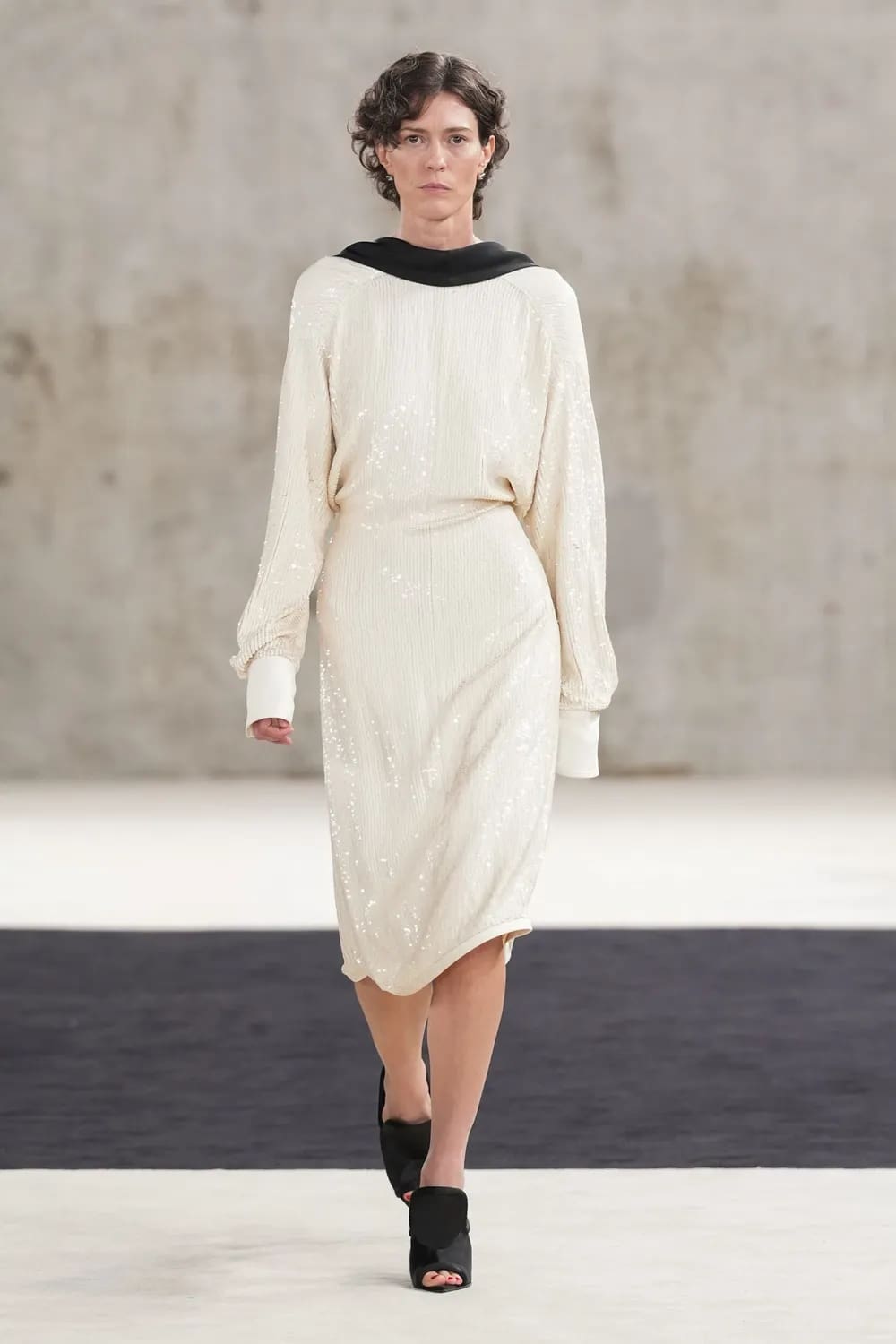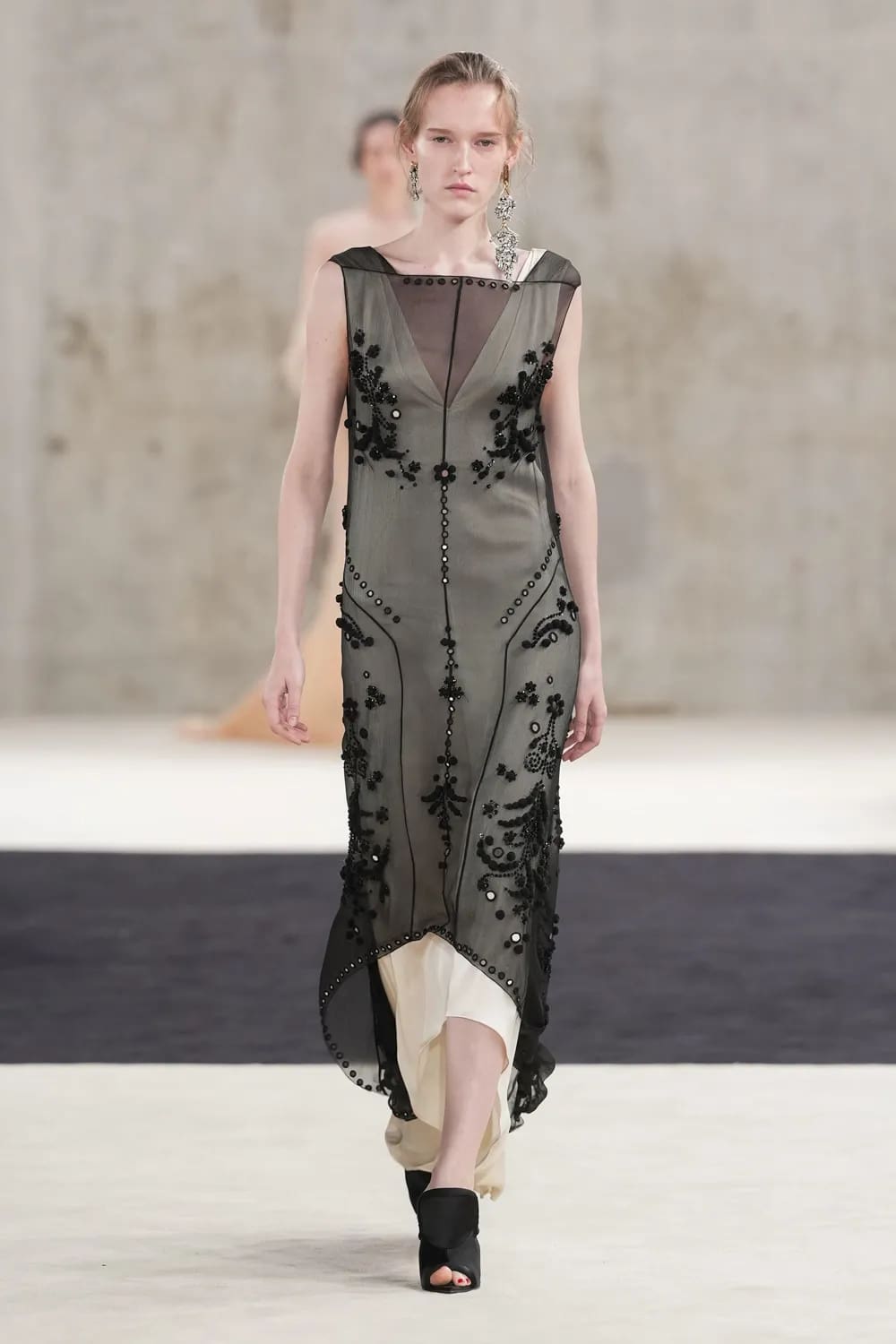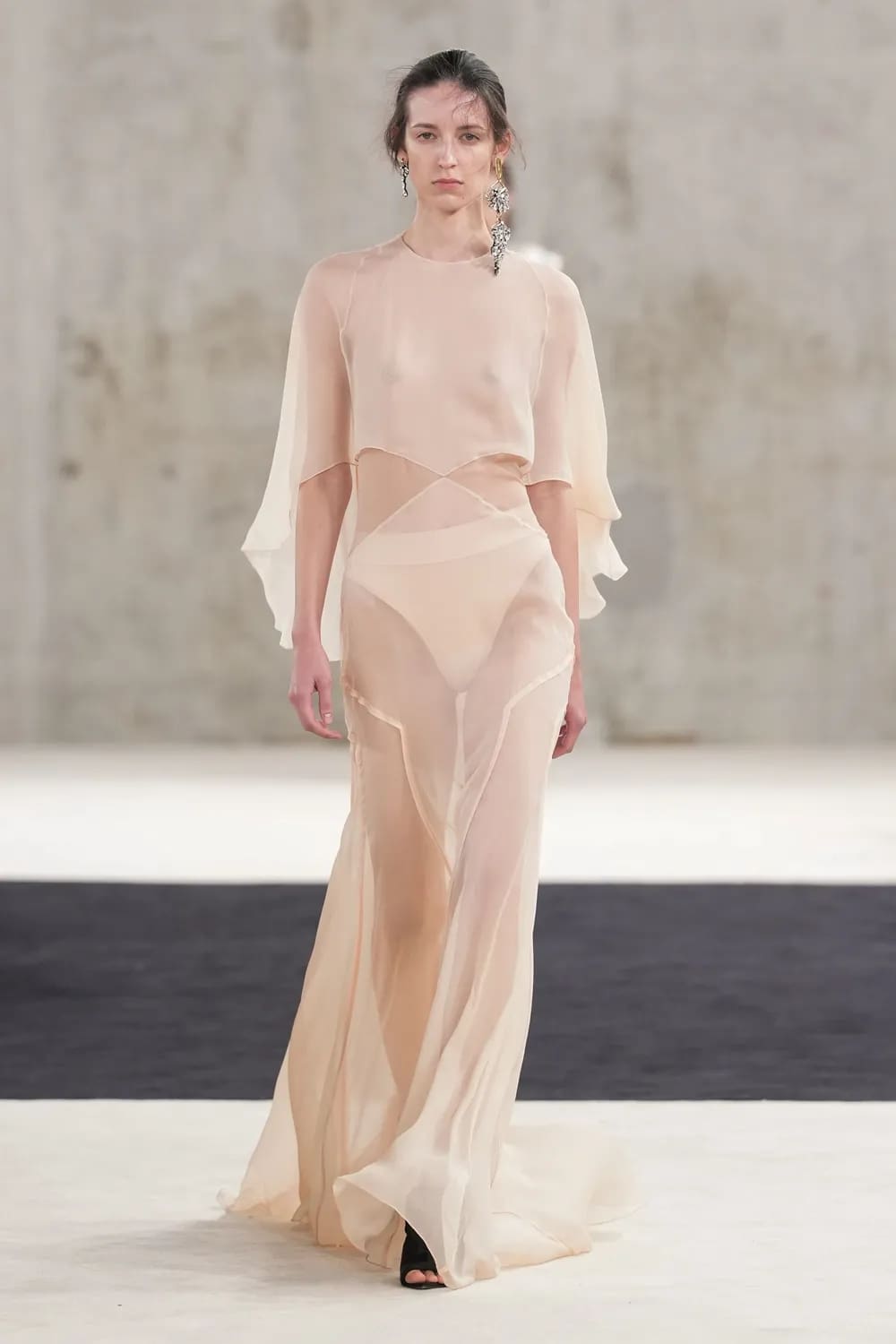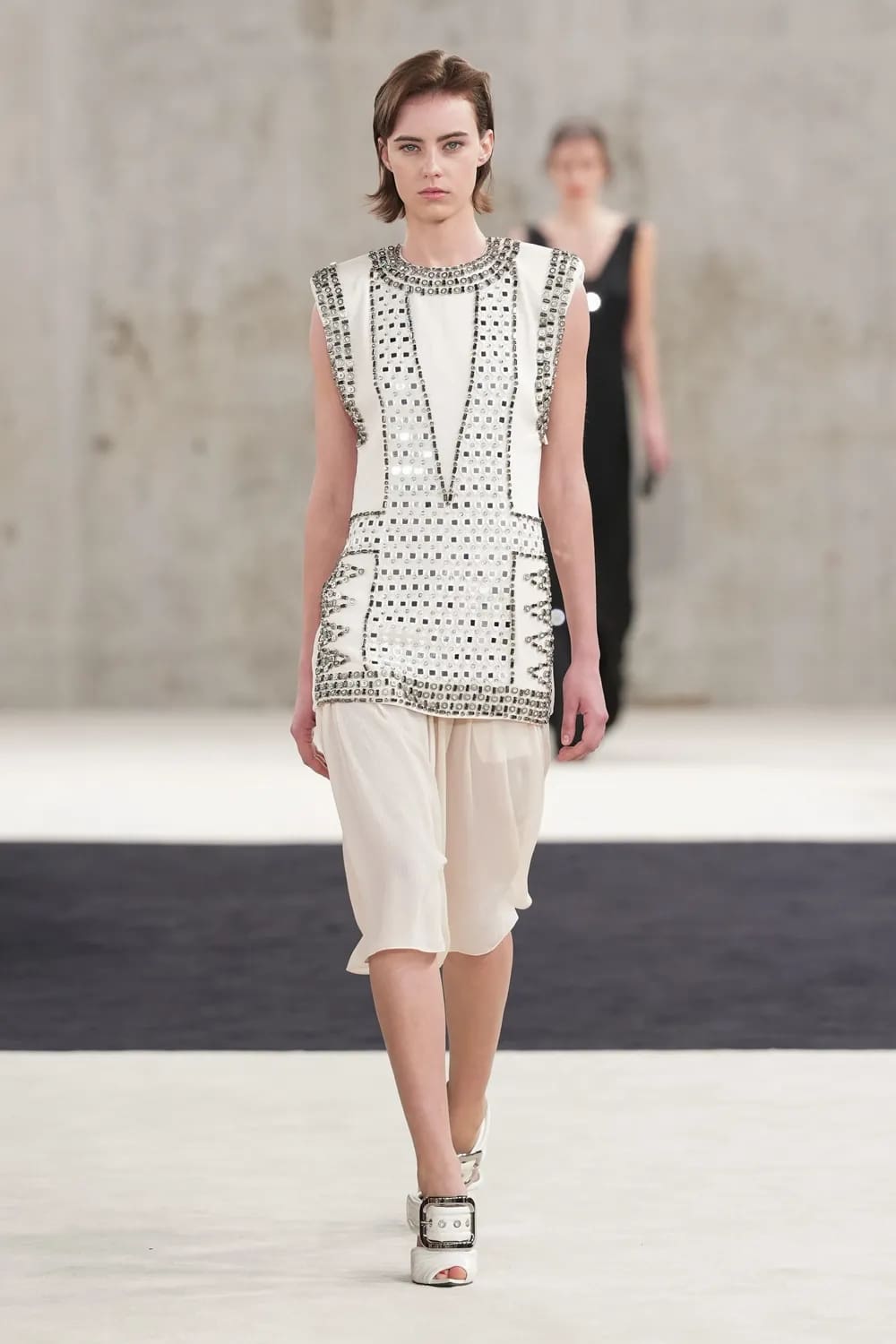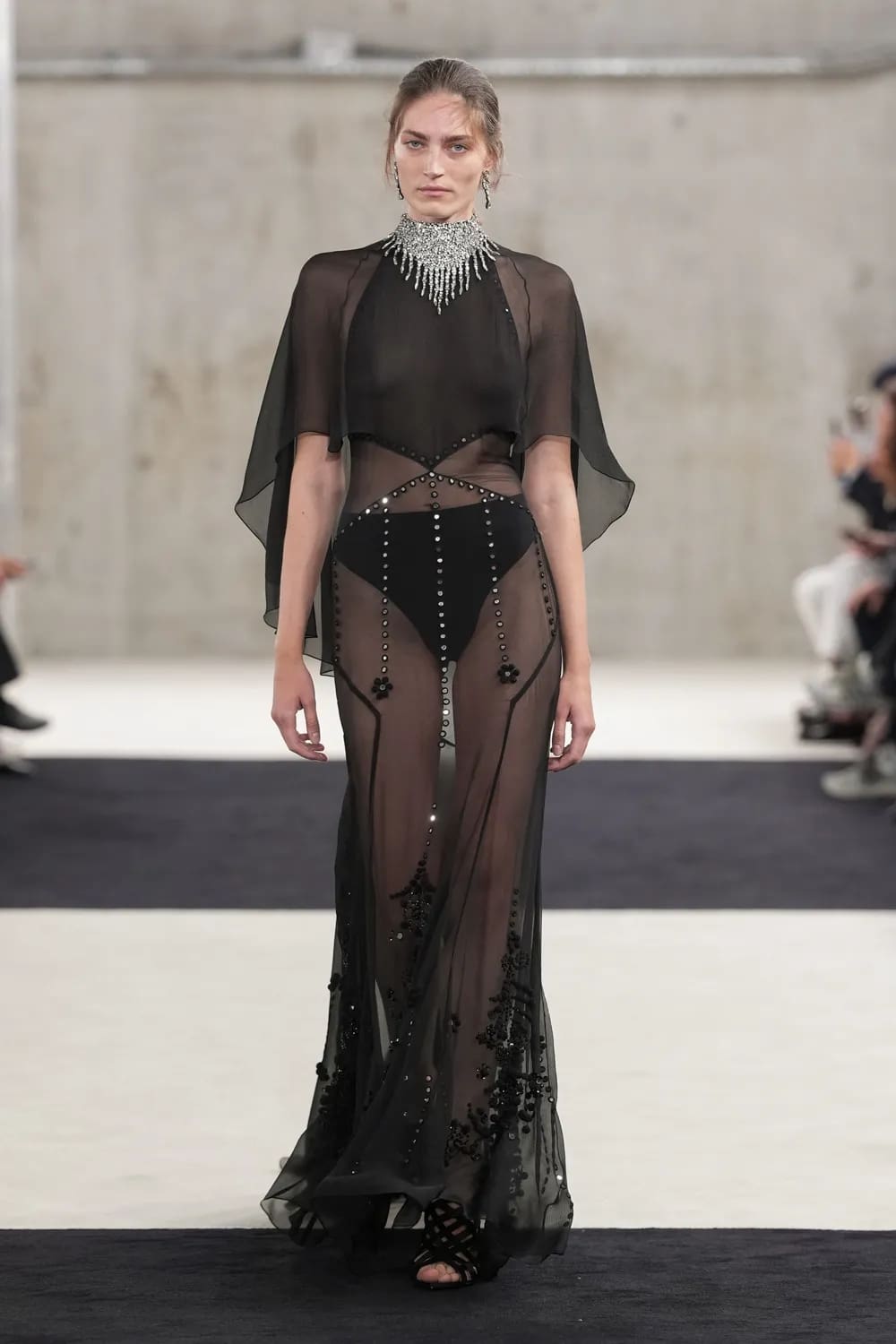
Lanvin Spring Summer 2027 “The Modern Equation of Jeanne’s Line”. Story by Eleonora de Gray, Editor-in-Chief of RUNWAY MAGAZINE. Photo Courtesy: Lanvin.
The Archeology of the Oldest Atelier
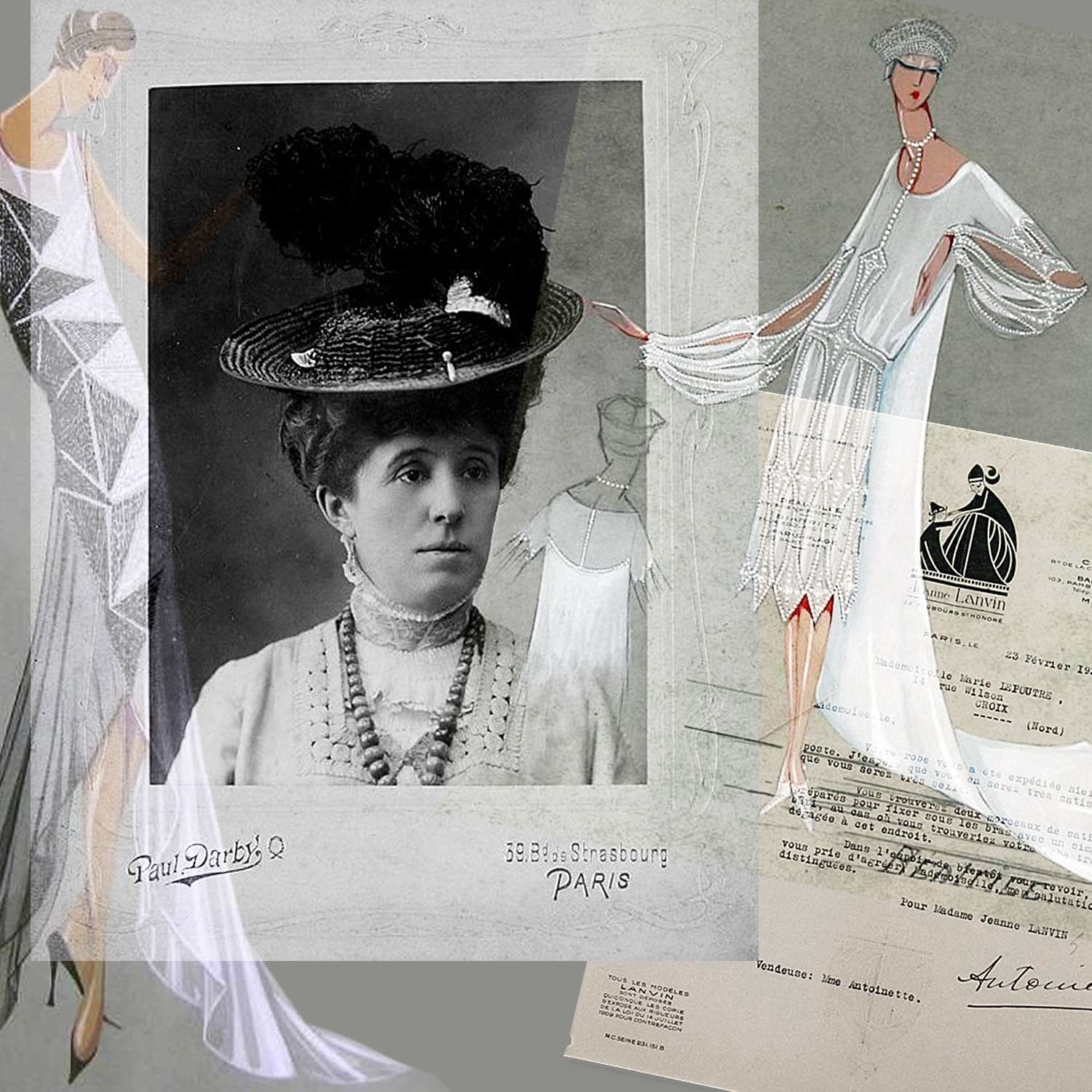
Reviving the oldest continuously operating couture house in Paris is not an assignment for the faint of heart. When Jeanne Lanvin established her hat business on Rue du Faubourg Saint-Honoré in 1889, before registering her historic patents and trademark sketches, she did not build a fashion house on transient buzz. She constructed an empire of graphic clarity, artisanal embroidery, medievalist purity, and the iconic robe de style. Over the past decade, that delicate heritage had drifted into a fog of revolving creative directorships and confused brand repositioning.
With Peter Copping taking command, the conversation shifts from desperate reinvention to historical literacy. Following his preliminary explorations in Fall/Winter 2026-2027 and Resort 2027, Copping’s Spring/Summer 2027 presentation arrives as a composed, intellectual restoration. Operating without loud manifestos, the British designer did what serious couturiers must do: he entered the archives, bypassed the superficial logos, and excavated Jeanne Lanvin’s core formal language. The result is a clean, contemporary calibration—translating early 20th century decorative discipline into modern ease for the 21st century.
Graphic Diagonals and the Restless Robe de Style
Jeanne Lanvin was obsessed with geometric rhythm, using contrasting bands, chevron stitchwork, and structural aprons to animate the female frame. Copping pulls these exact historical mechanisms to the front, stripping away antique heaviness in favor of fluid tailoring.
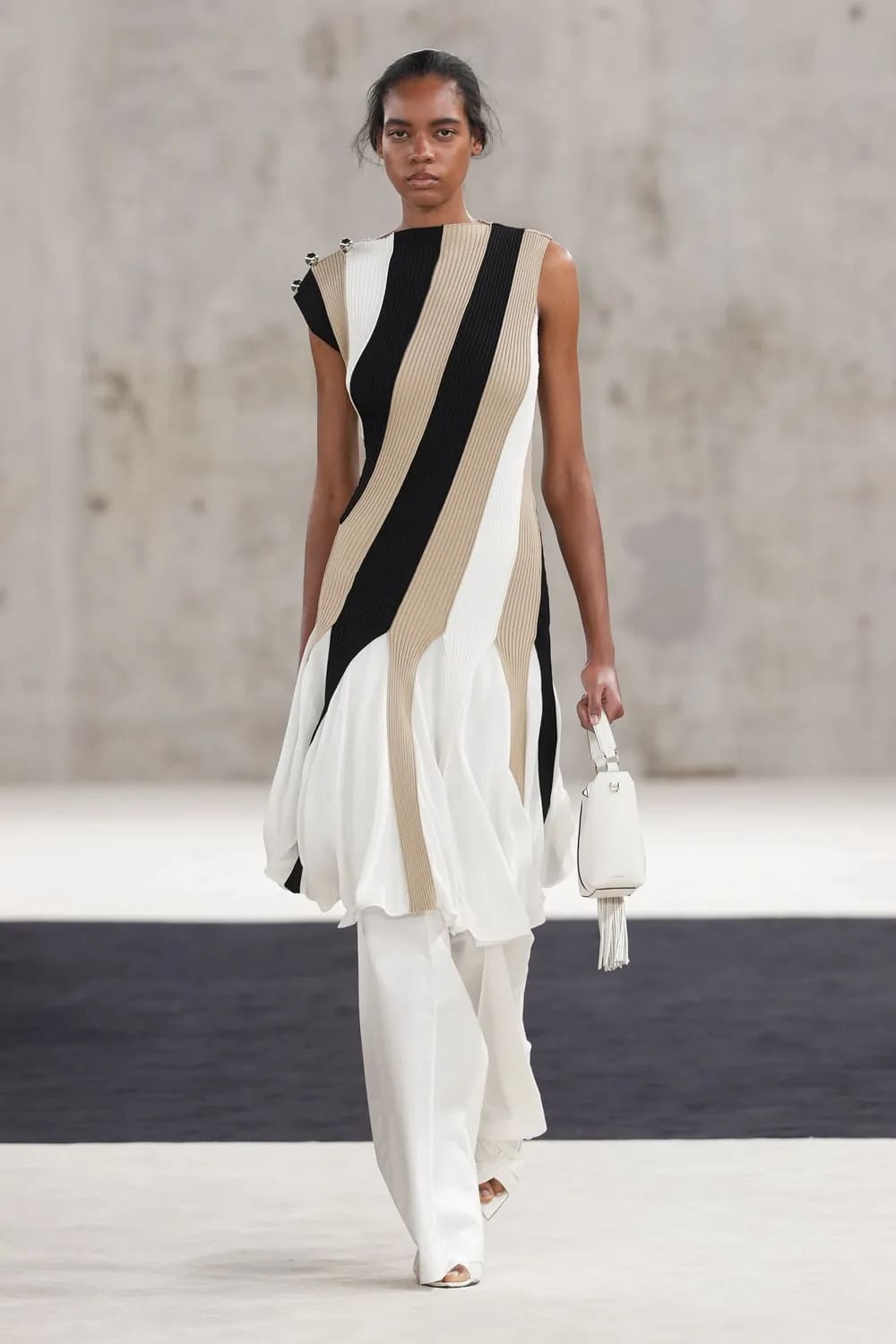
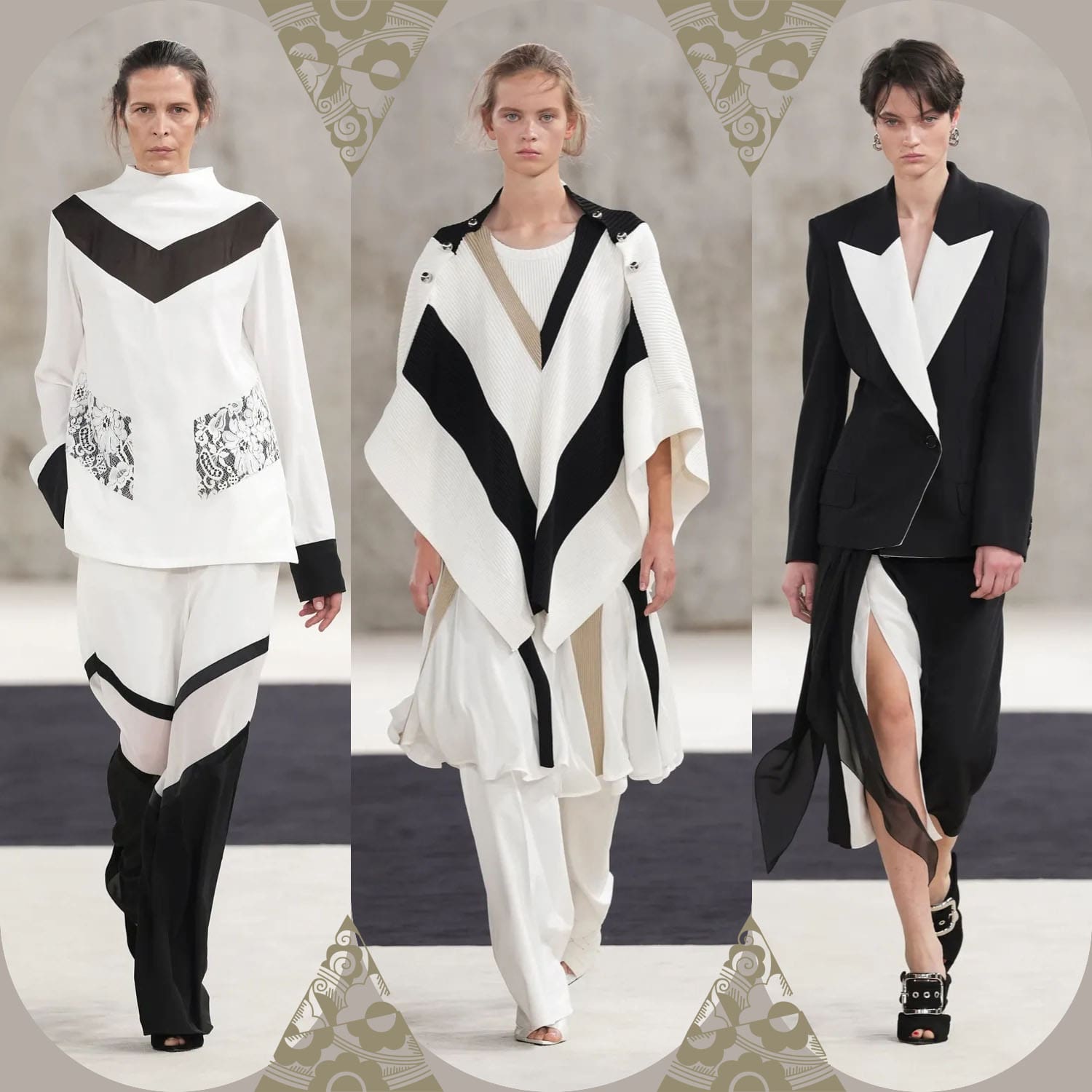
Consider the daywear silhouette cut in stark black and white: an asymmetrical knit tunic dress wraps diagonally across the torso in bold ribbon stripes of cream, black, and wheat tan. The rigid knit hugs the ribs before dissolving at the hips into fluid, pleated white silk Godets that flutter over straight white trousers. Grounded by a small white leather vanity box with a long trailing tassel, the look carries the spirit of Jeanne’s 1920s resort wear without feeling like a costume.
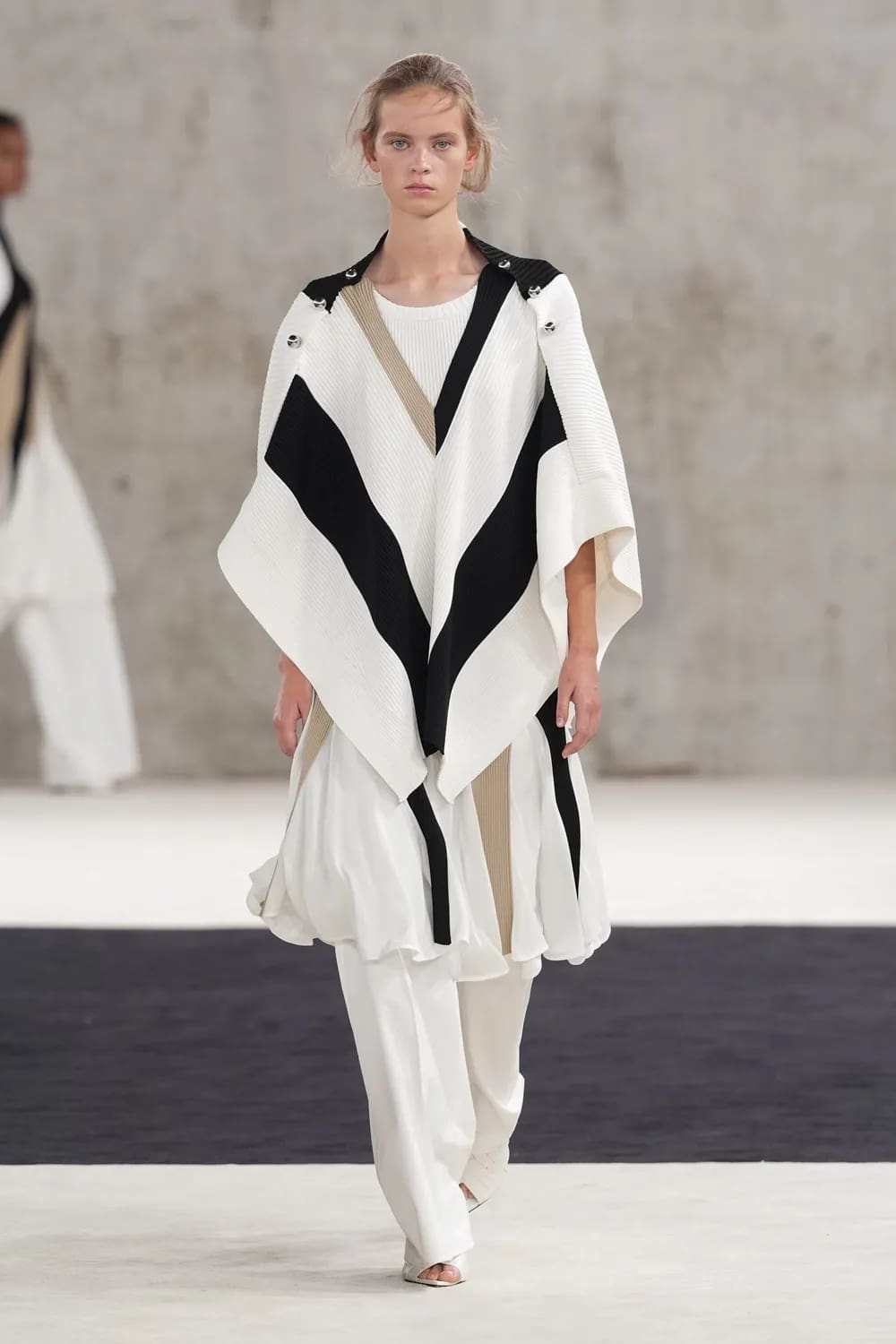
A poncho ensemble pushes this geometric study into dynamic outerwear. Cut with a sharp V-neckline and anchored by metallic buttons along the clavicles, the white knit cape is slashed with broad black chevron racing stripes that shoot down toward the hem. Beneath it, a tiered pleated silk skirt peeks over fluid ivory trousers, generating a layered silhouette that moves with the ease of sportswear while honoring couture proportion.
The Purity of Monastic Chevron and Lace
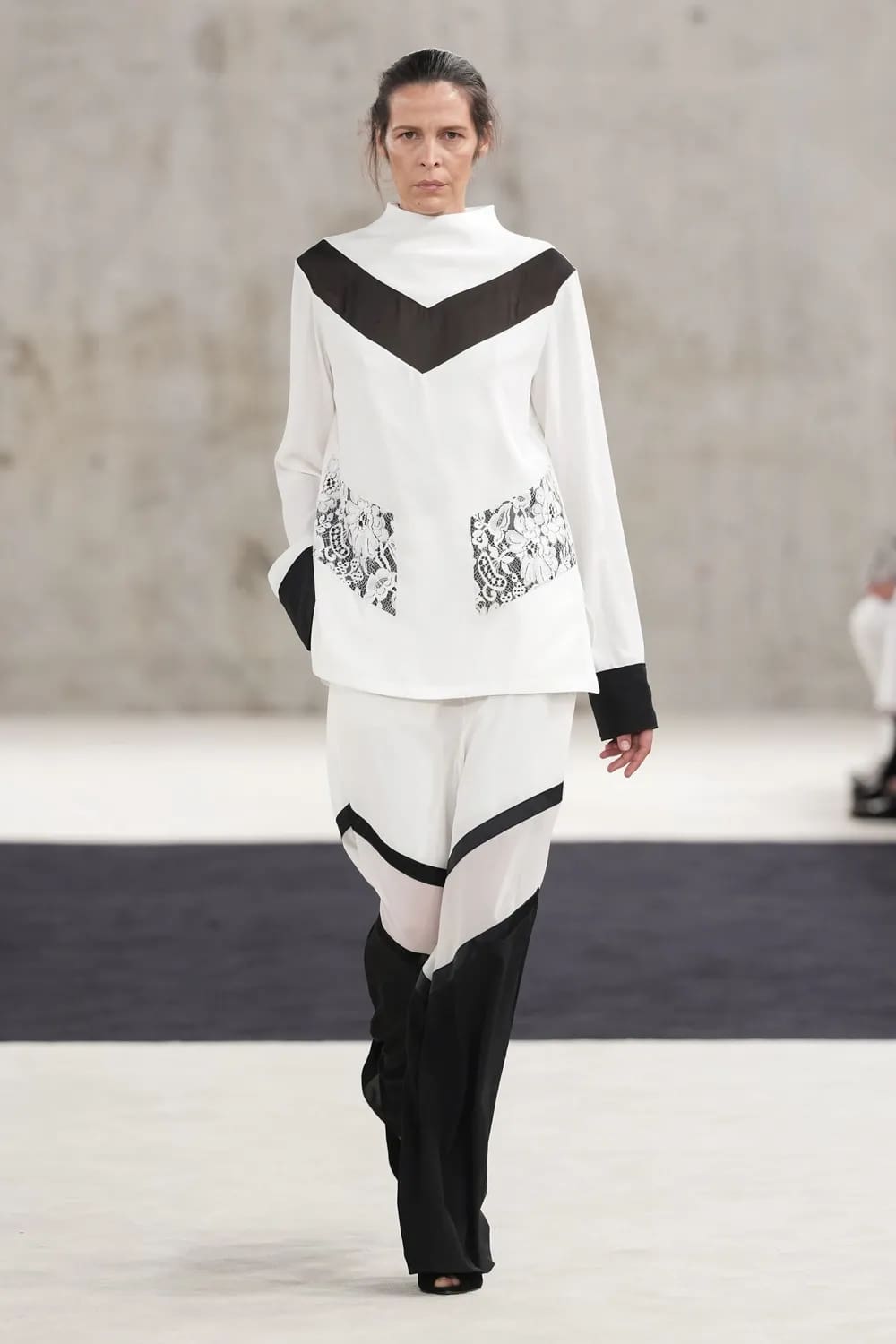
Where Lanvin’s historical archives celebrate delicate embroideries and ecclesiastical collars, Copping responds with clean-edged architectural insertions. A high-neck tunic in milk-white crepe de chine features a bold, deep-black chevron yoke across the chest, echoing the vestments of medieval heraldry. On the hips, square lace panels are set into the fabric like cathedral clerestory windows, falling into trousers divided diagonally between sheer white organza and midnight-black wool. It is an uncompromising exercise in monochrome balance: graphic, sober, and completely modern.
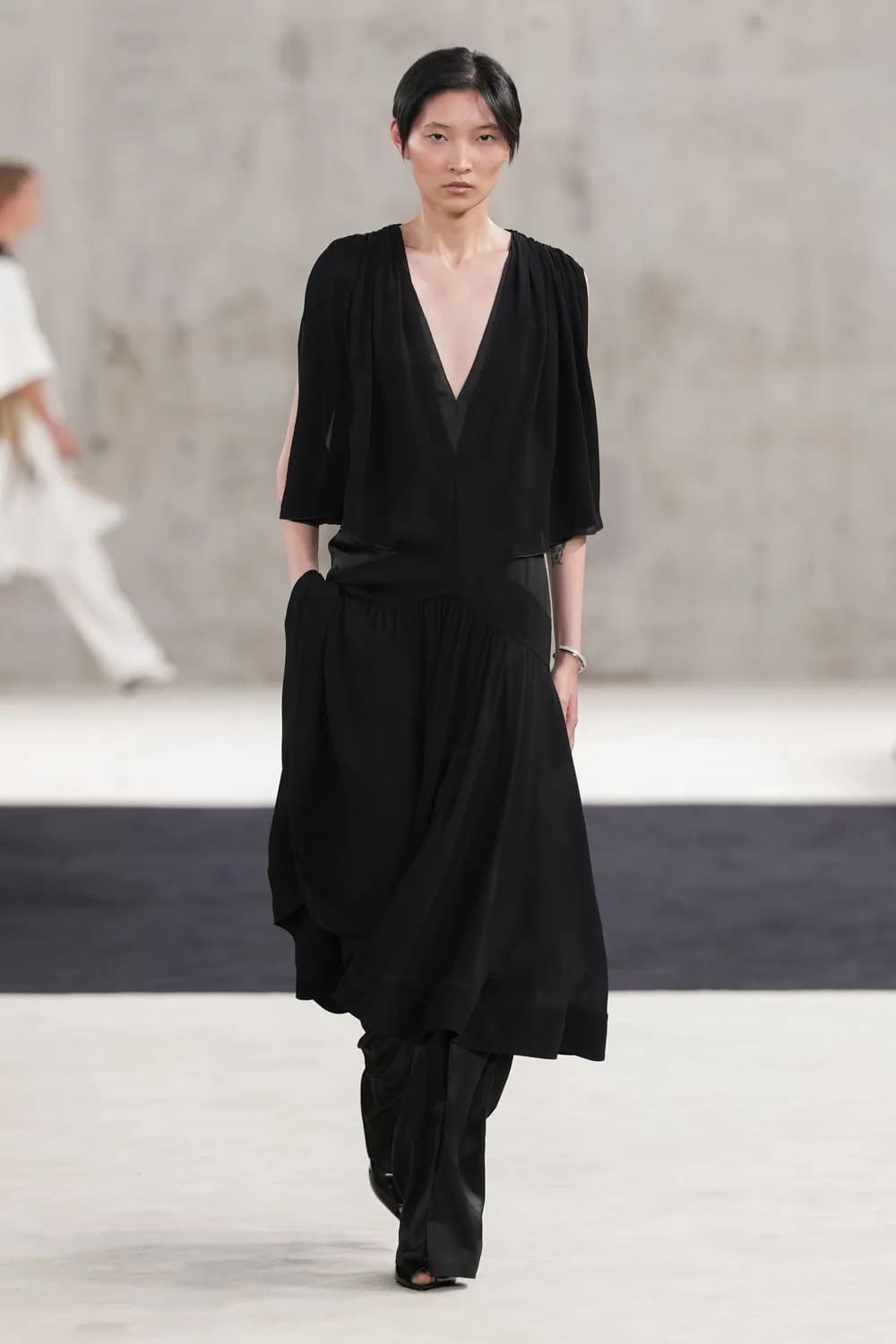
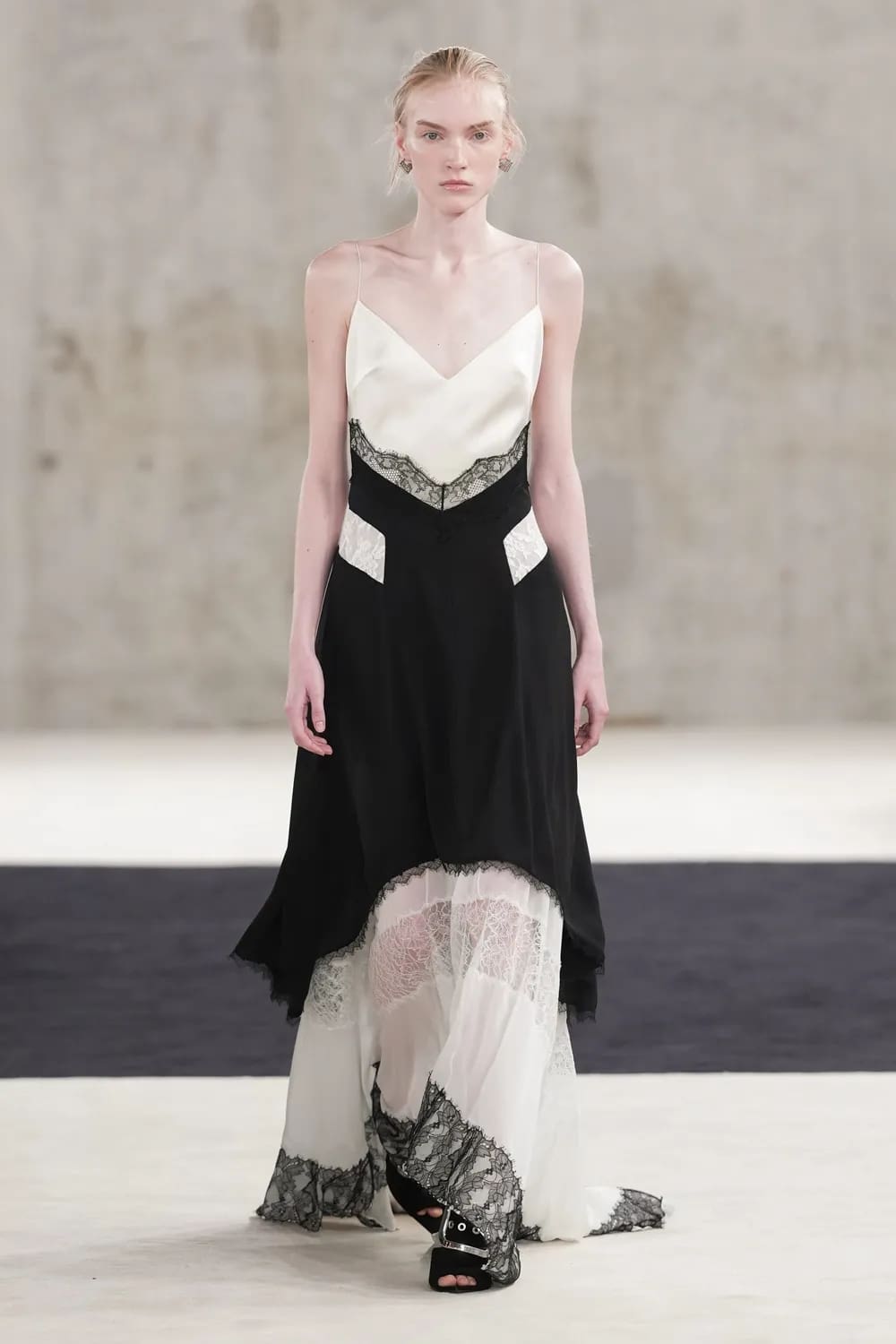
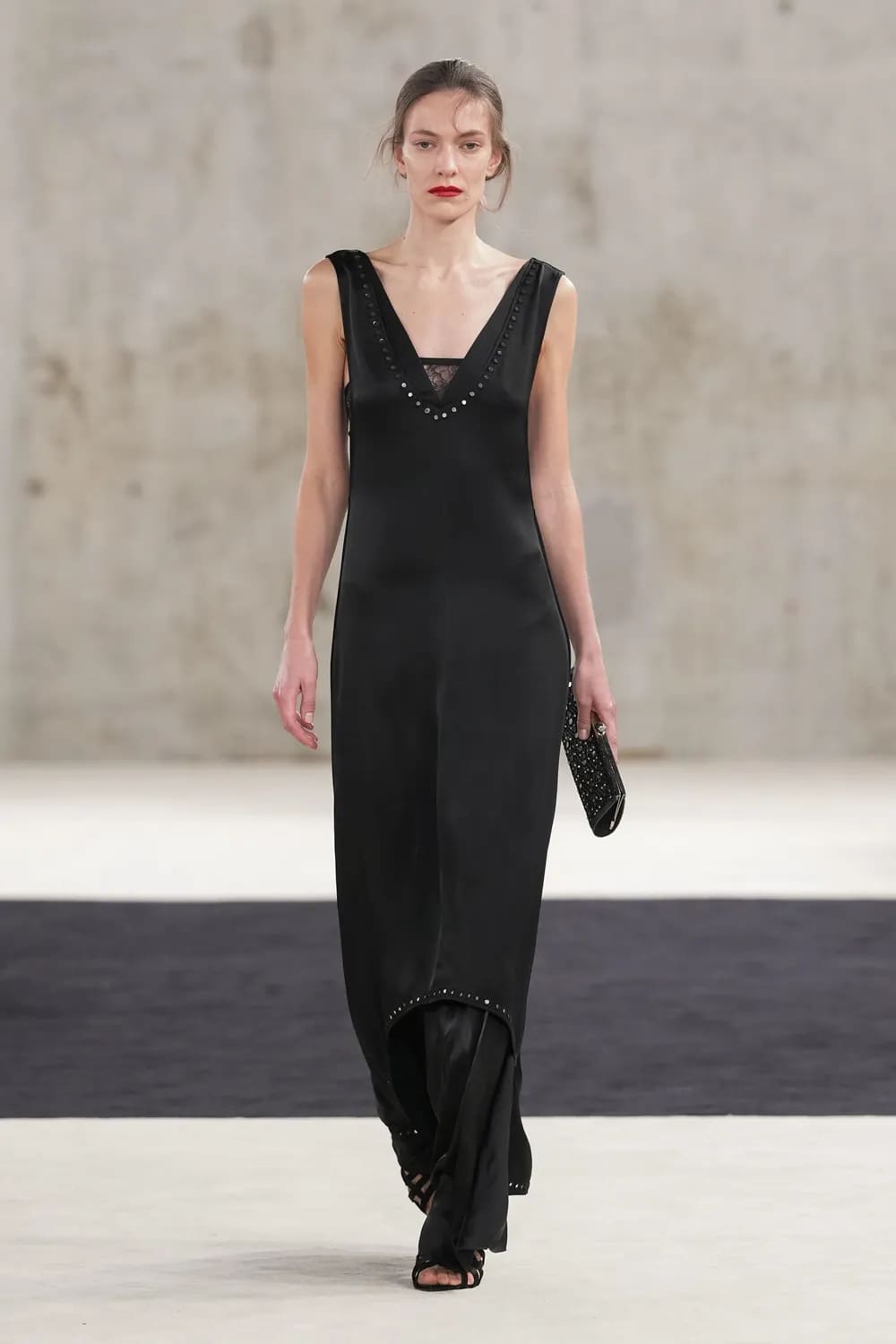
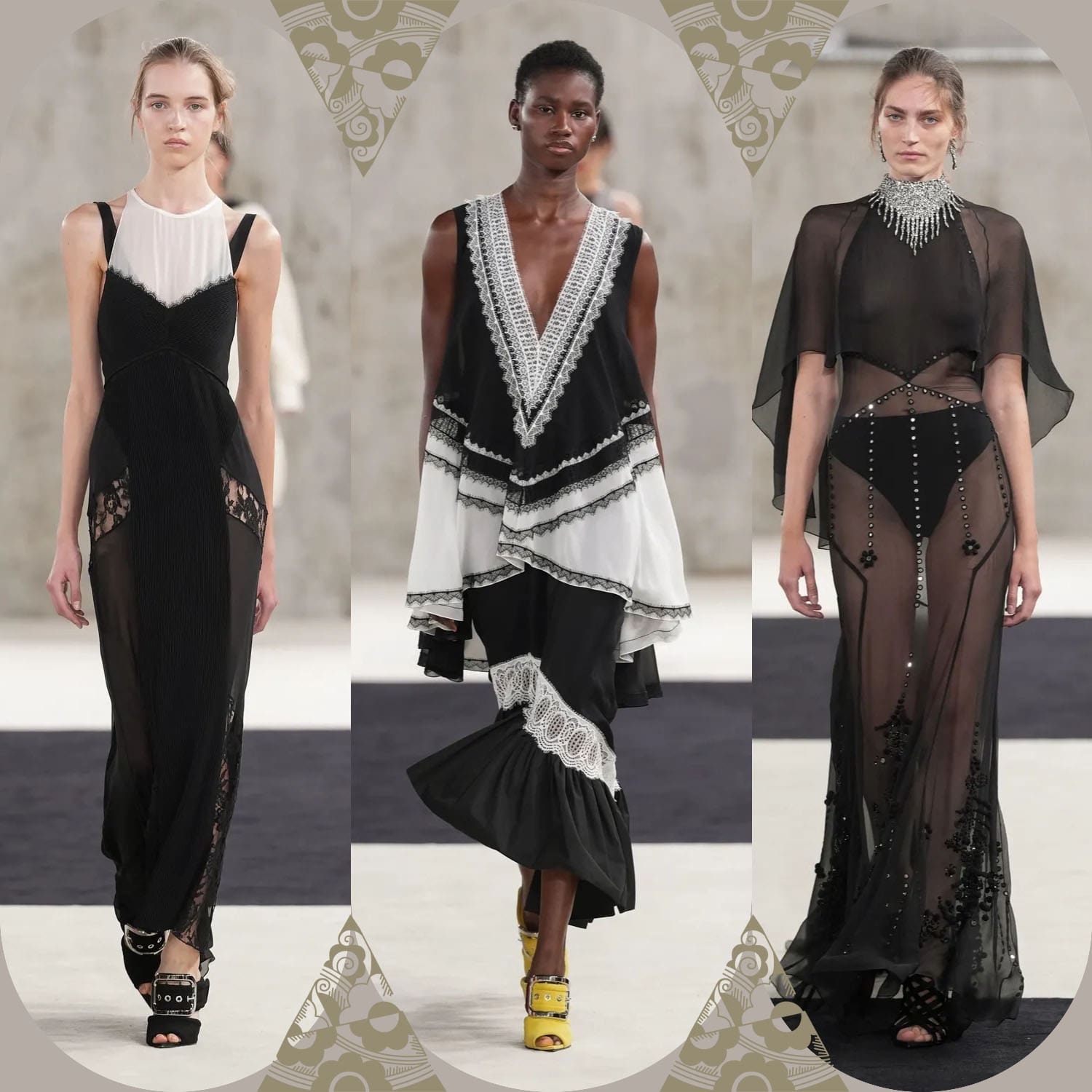
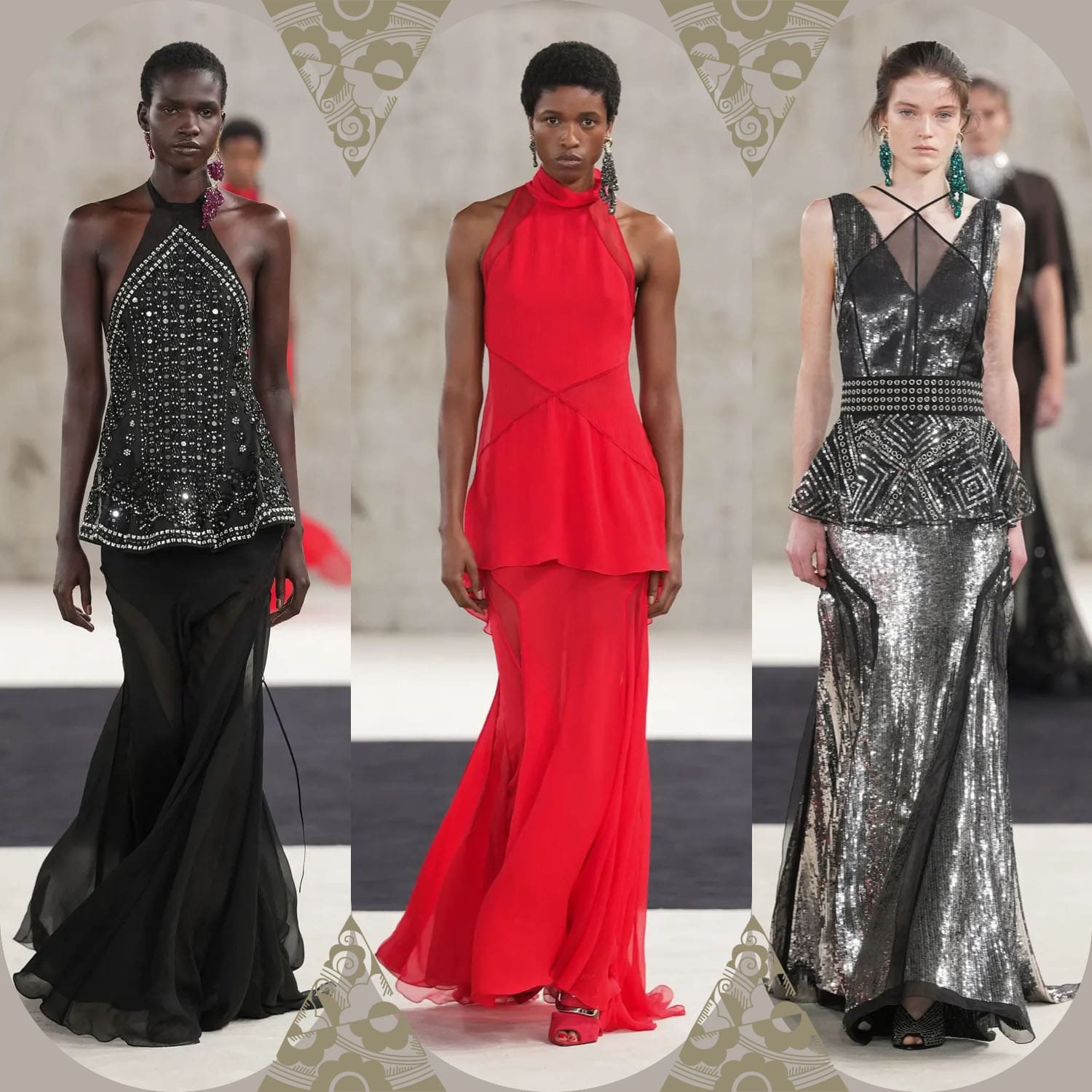
The evening dress answers with liquid grace through a layered column gown. A plunging sleeveless black tunic is traced along its perimeter with ornate antique white Guipure lace, falling in asymmetrical flounces over an elongated black trumpet skirt. Accented by vibrant canary-yellow buckled mules, the dress brings back Jeanne Lanvin’s sacred contrast of religious severity and sensual Parisian flou.
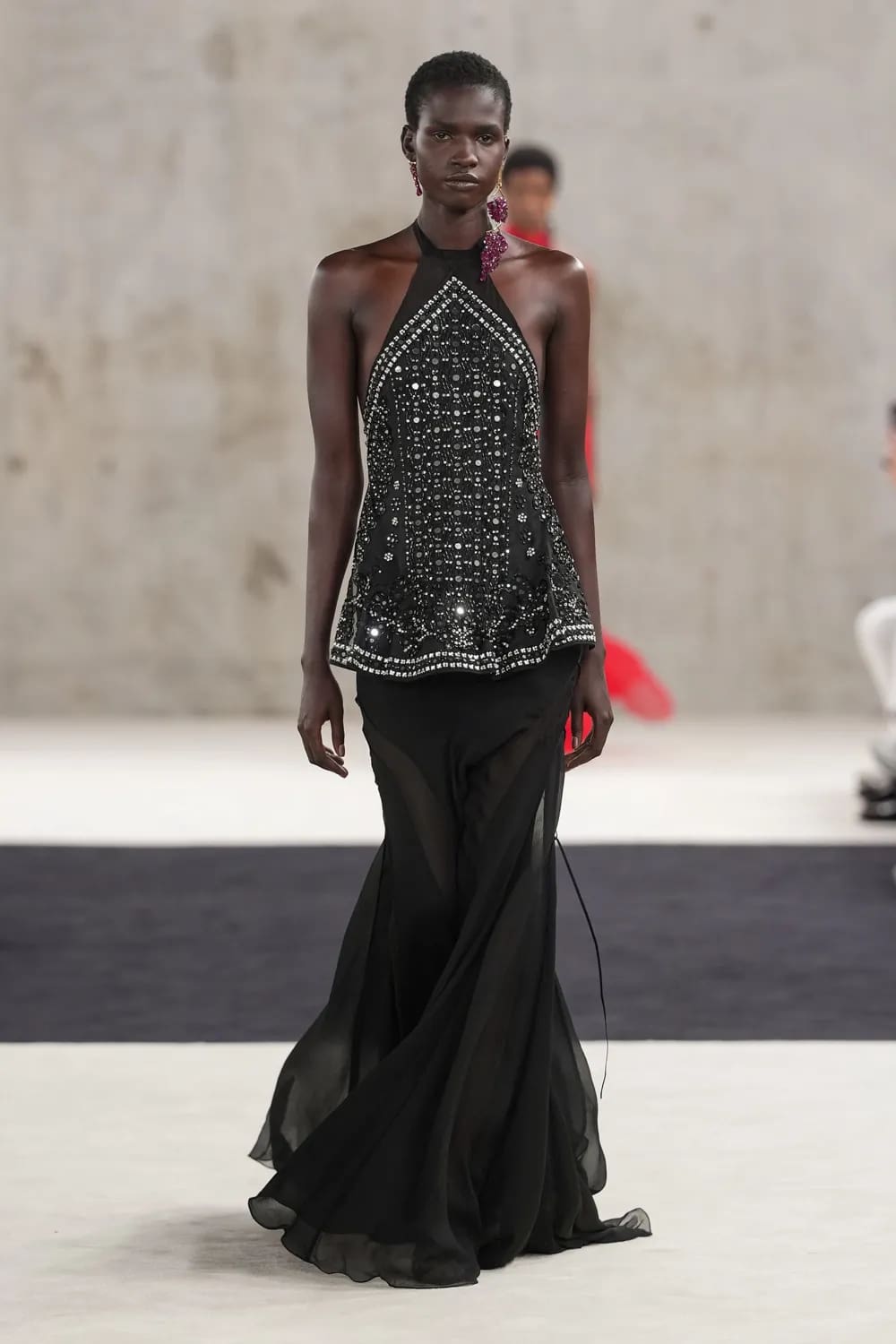
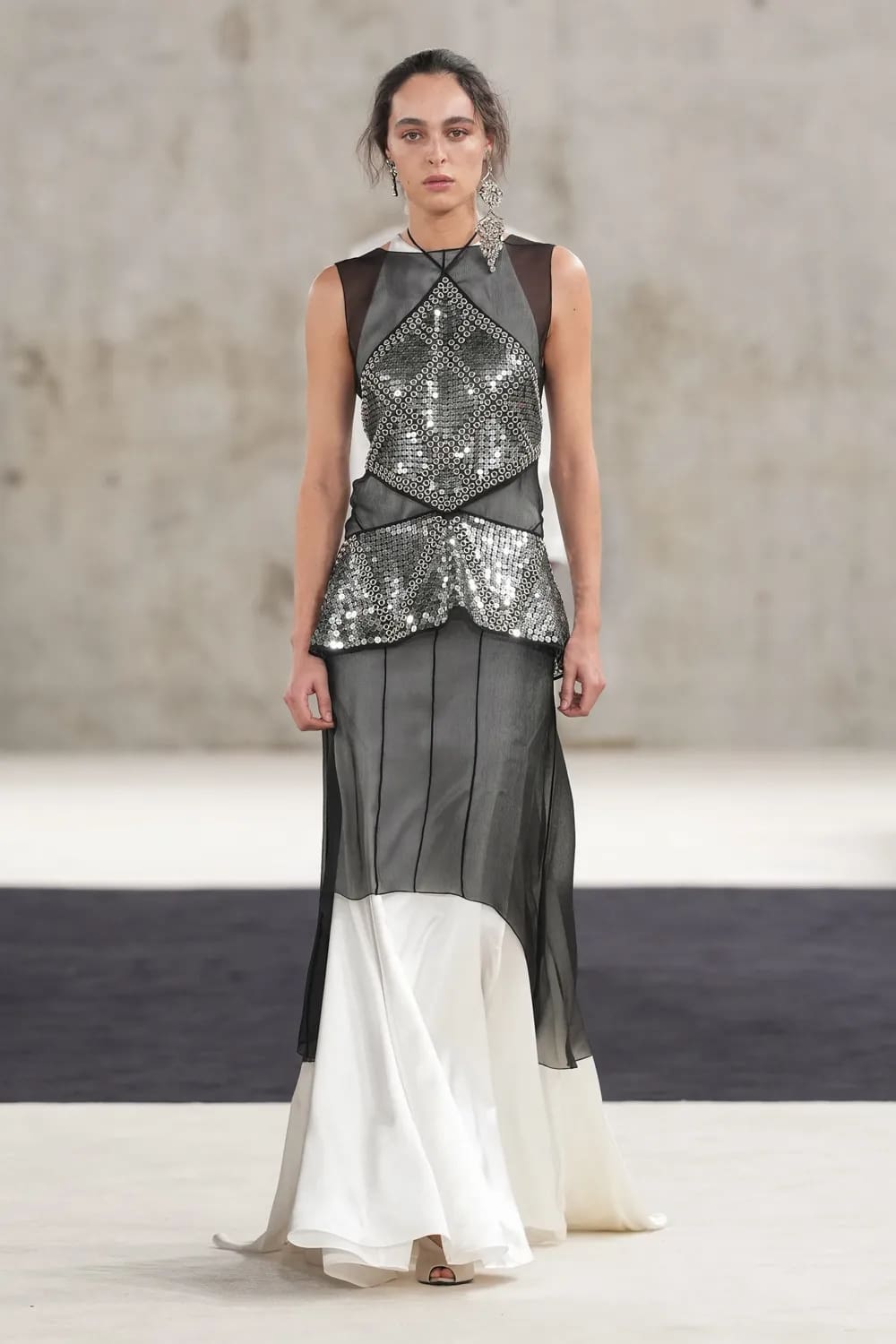
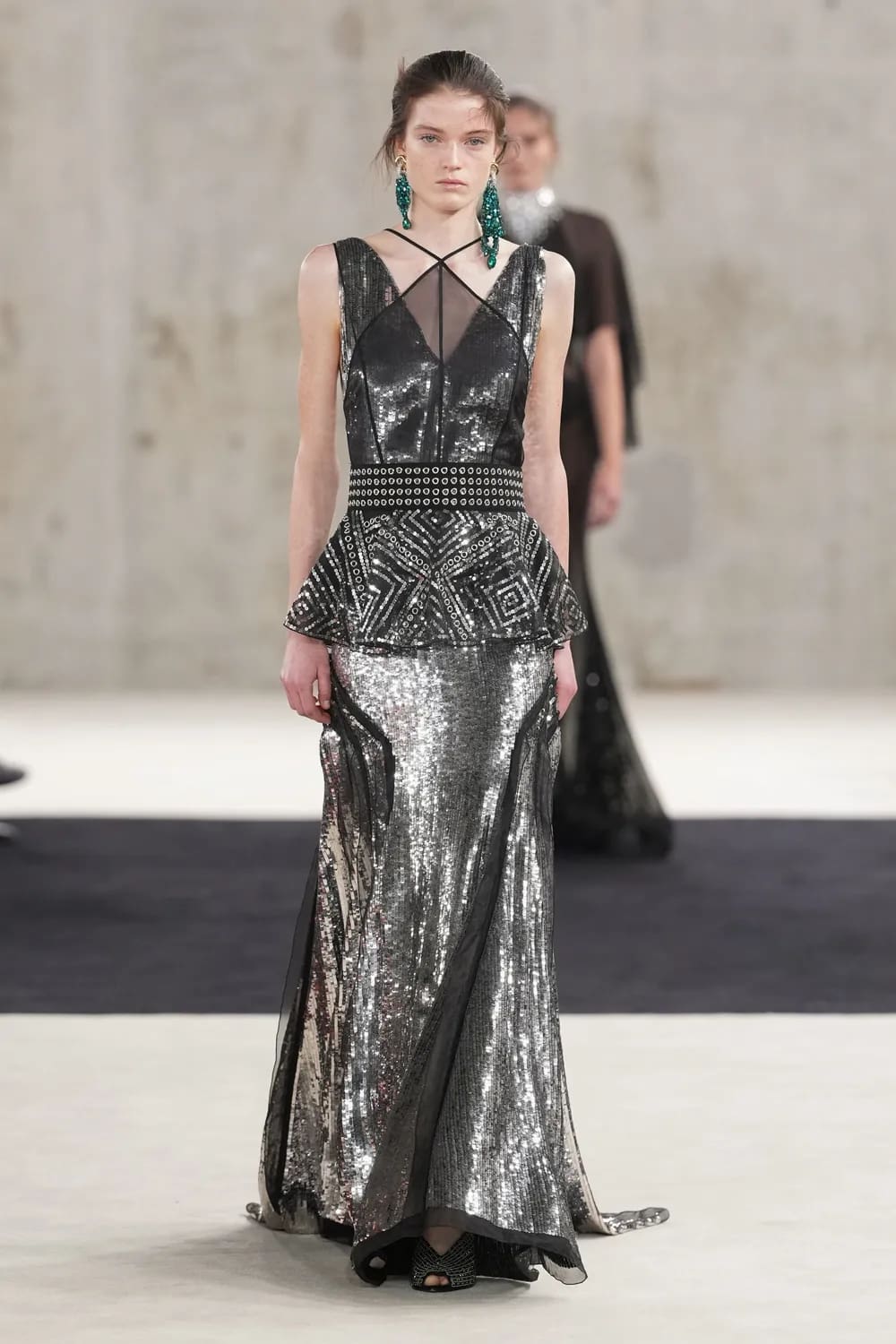
Nearby, a column gown in translucent charcoal silk georgette features an articulated cuirass of silver paillettes laid out in geometric lozenge patterns. The peplum hips nod directly to the historic robe de style, yet the dress drops into an ivory satin puddle train that moves with complete weightlessness, punctuated by a single shoulder-grazing chandelier earring.
Saturated Carmine and the Architecture of Tuxedos
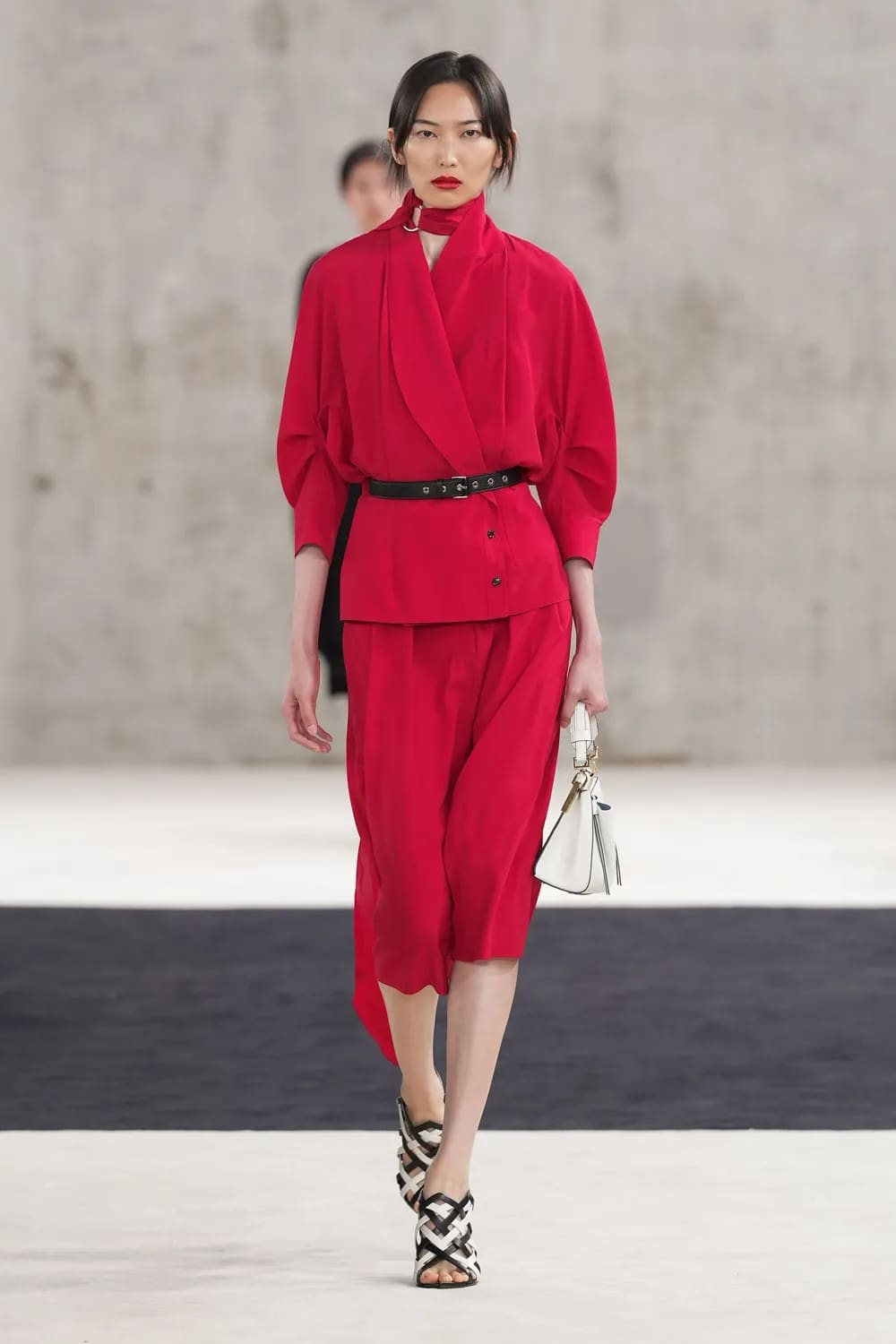
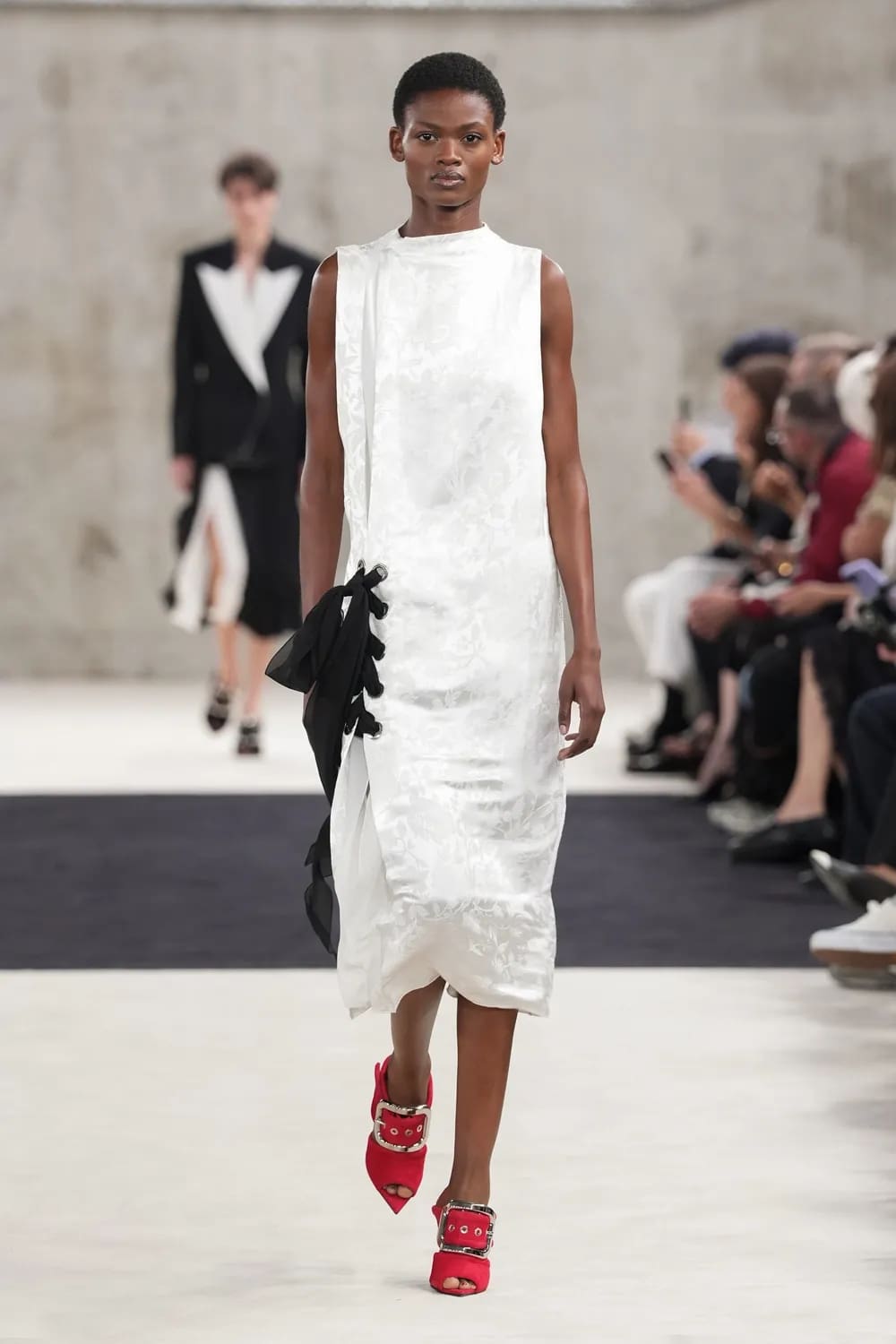
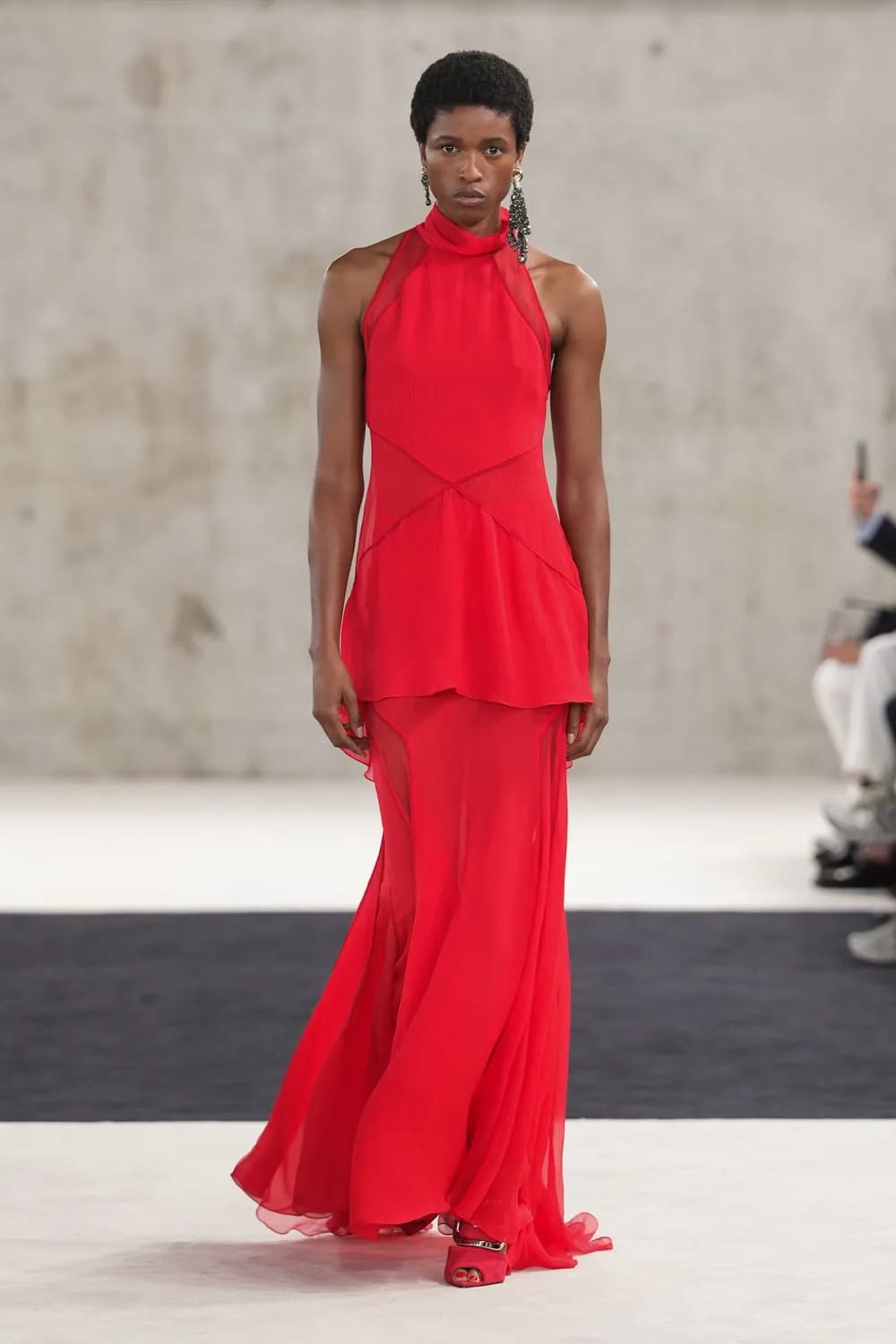
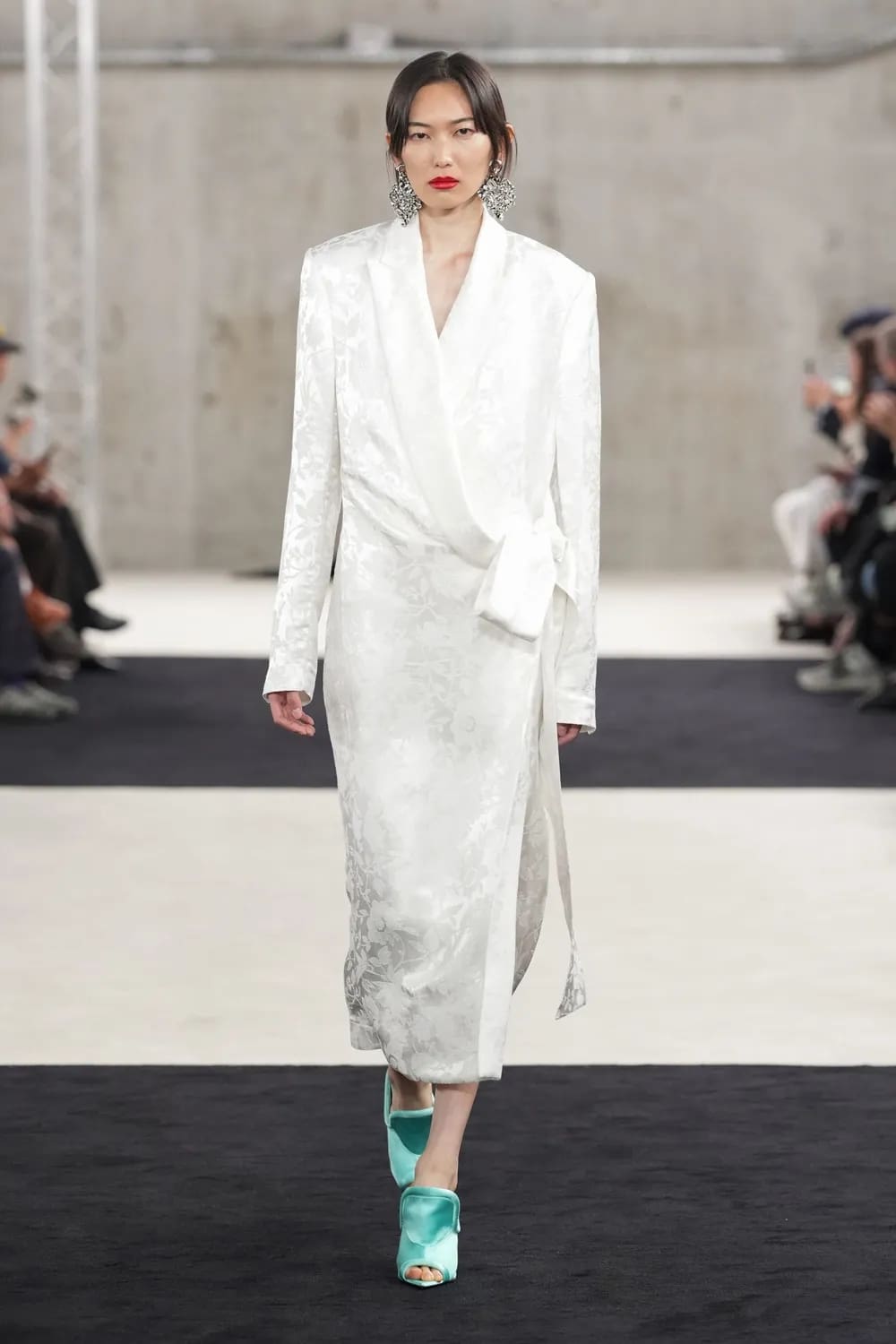
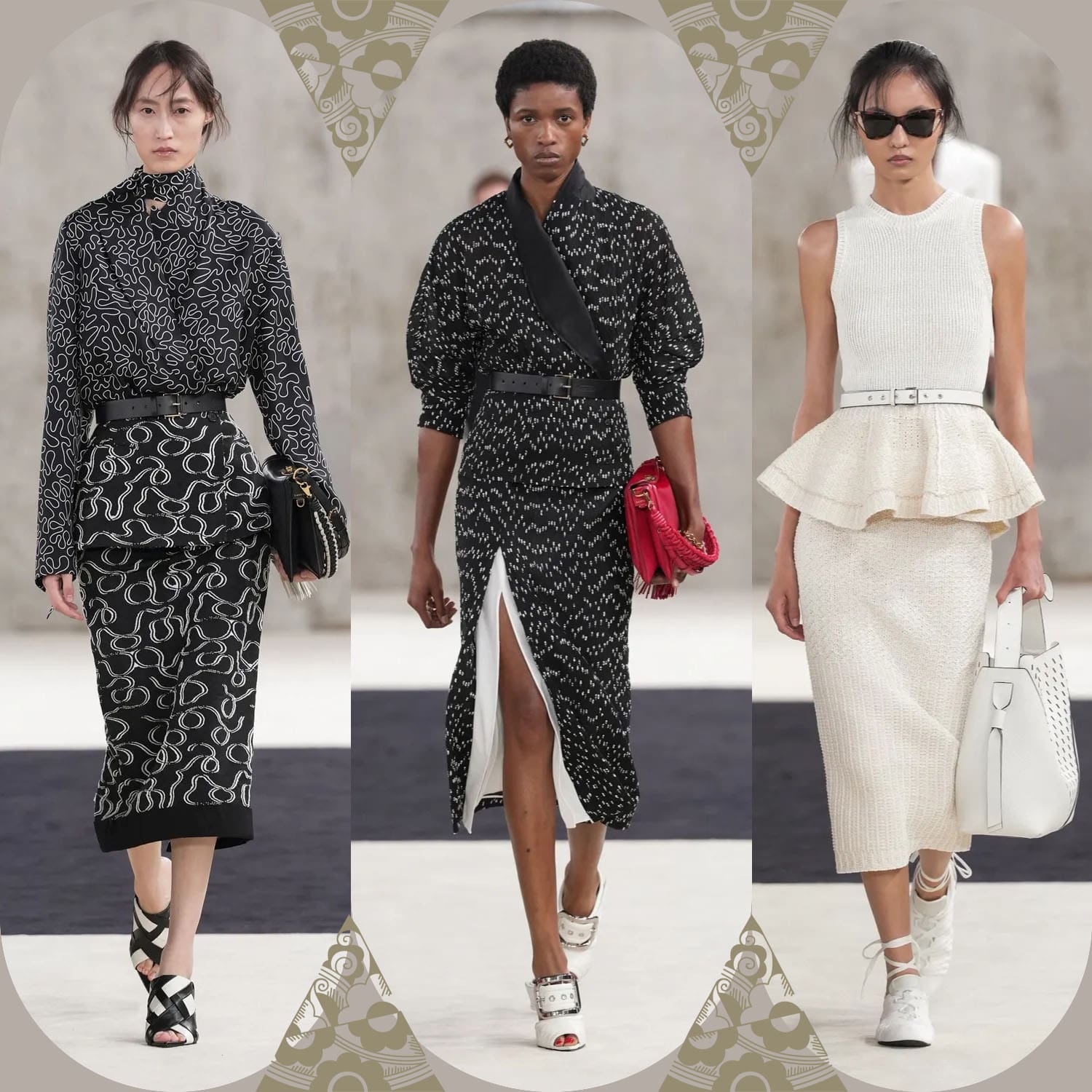
While the palette rests predominantly on black, ivory, and soft sand, Copping introduces a sudden, electric shock of saturated carmine red. A double-breasted wrap blazer, tailored with a soft kimono neckline and gathered waist, is paired with a matching accordion-pleated mid-calf skirt and scarlet buckle mules. The monochromatic saturation evokes Jeanne Lanvin’s famous dye vats—where the founder created her own proprietary hues, from Lanvin Blue to Velasquez Green—transmuted here into a bold daytime uniform.
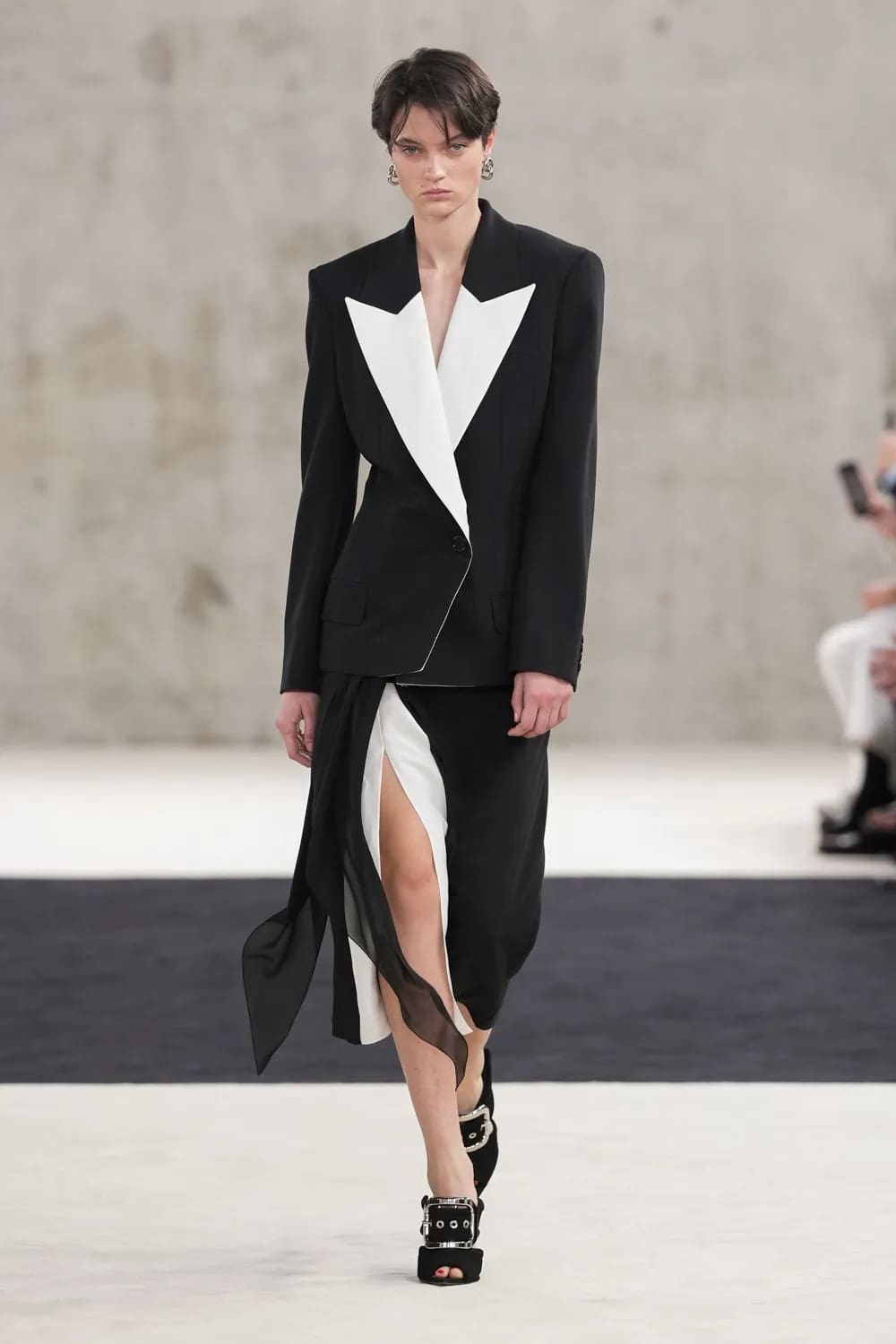
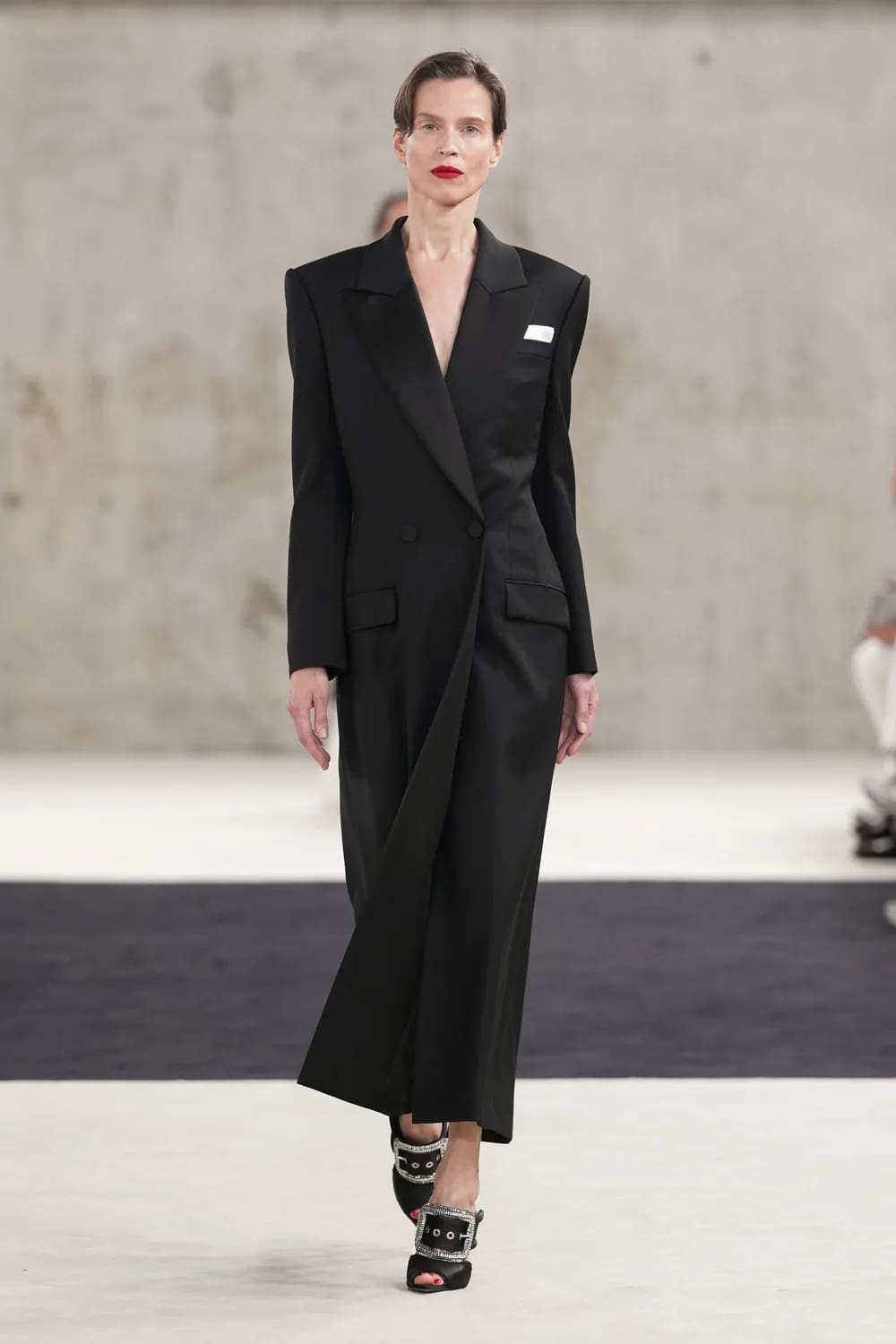
The collection reaches its sharpest punctuation in an evening tuxedo coat. Tailored from dense black wool with knife-sharp peak lapels in stark white silk faille, the single-breasted jacket hugs the waist before flaring into a wrapped black skirt that splits high up the leg to reveal an ivory silk petticoat. Worn with buckled velvet Mary Jane pumps, it honors the androgynous evening elegance Jeanne championed for avant-garde women between the wars.
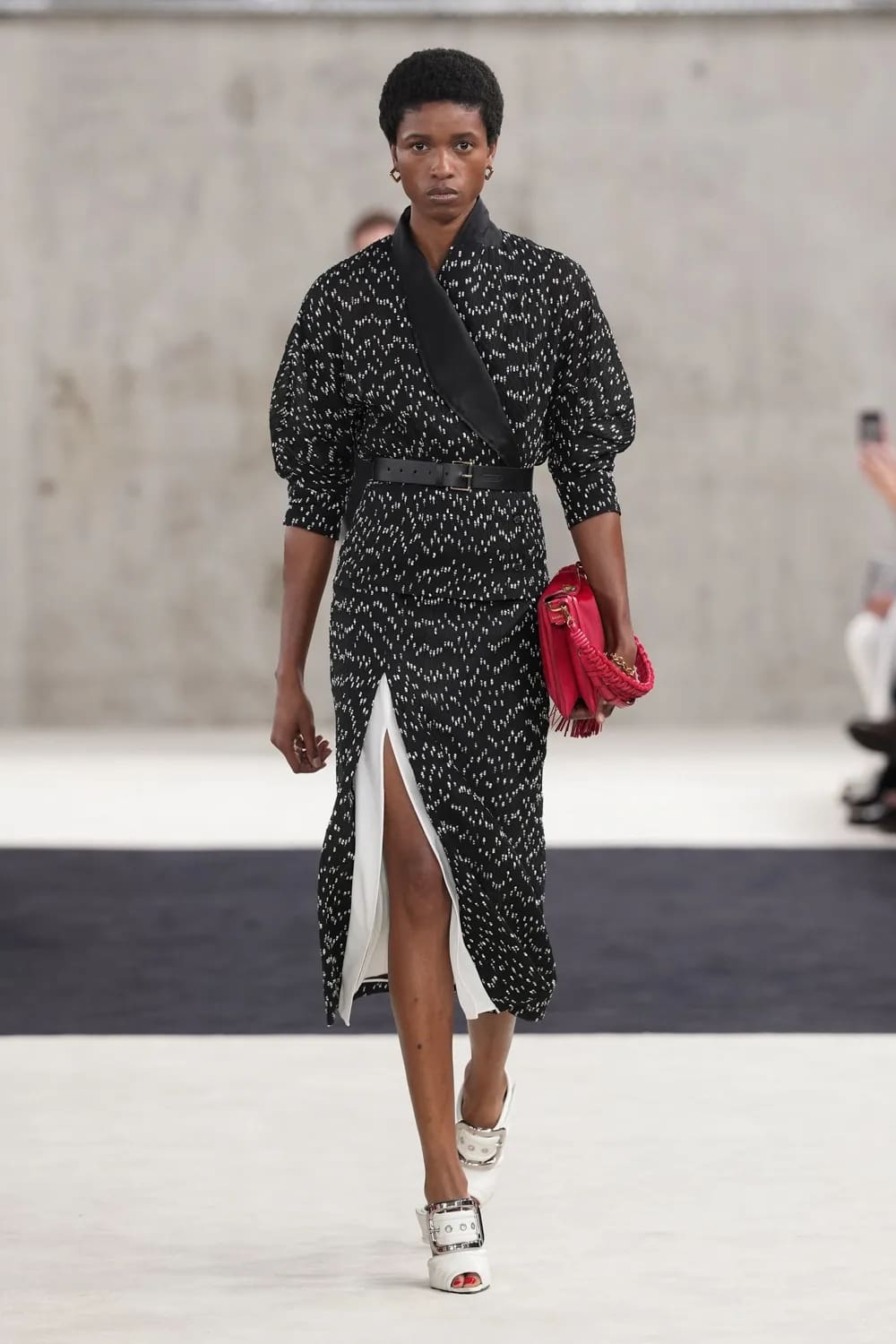
A companion look in textured black-and-white flecked bouclé wraps across the chest like an equestrian tunic, cinched tightly with a wide leather belt and slung with a crimson leather shoulder bag to complete the study in practical elegance.
Peter Copping does not yell, nor does he hide behind gimmicks. By anchoring his vision in Jeanne Lanvin’s structural geometries, graphic chevrons, and unshakeable mastery of cut, he delivers a runway that feels grounded and self-assured. Lanvin does not need to chase trends to survive; it simply needed a designer literate enough to turn the pages of its history and let its original genius speak clearly to the present.
See All Looks Lanvin Spring Summer 2027