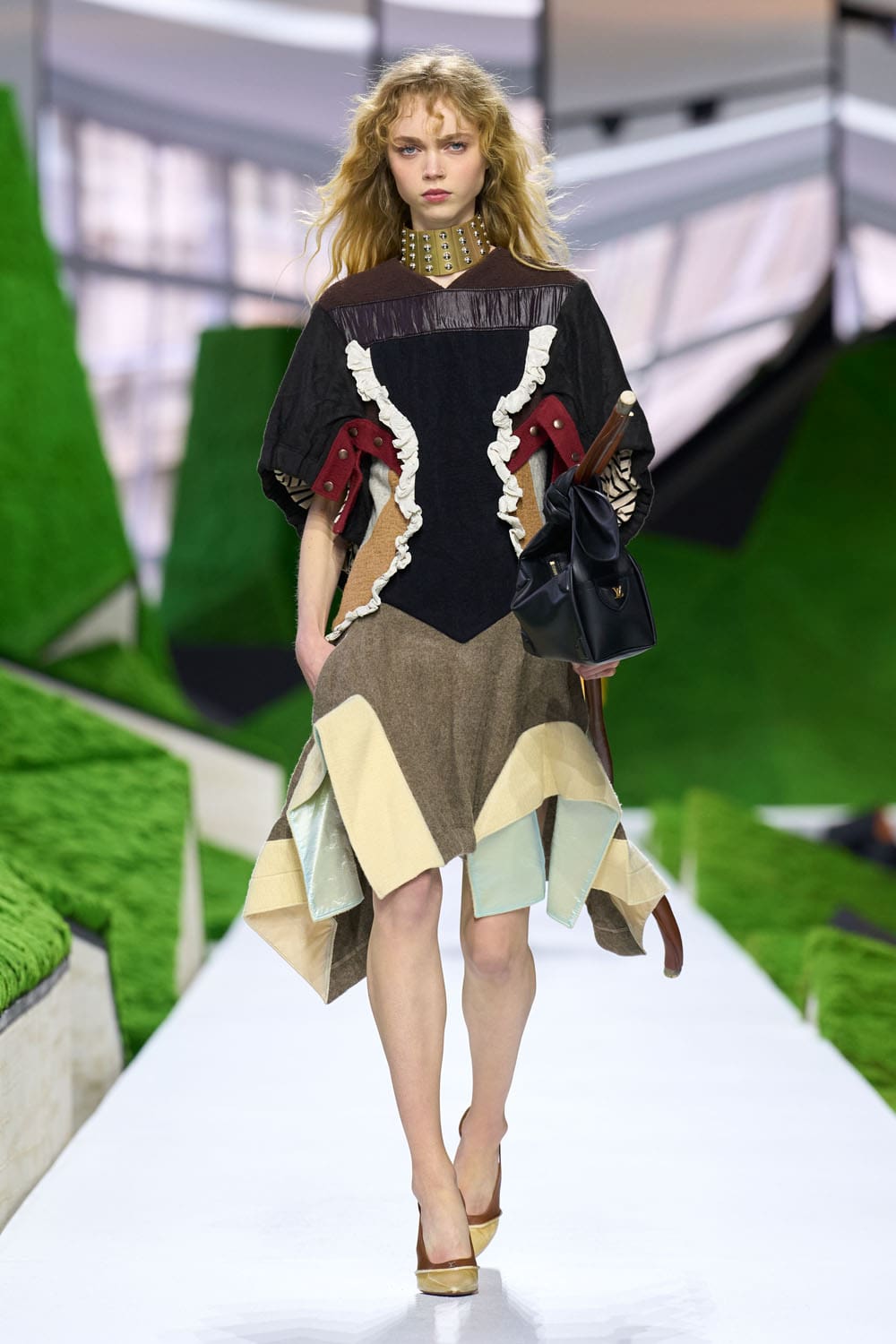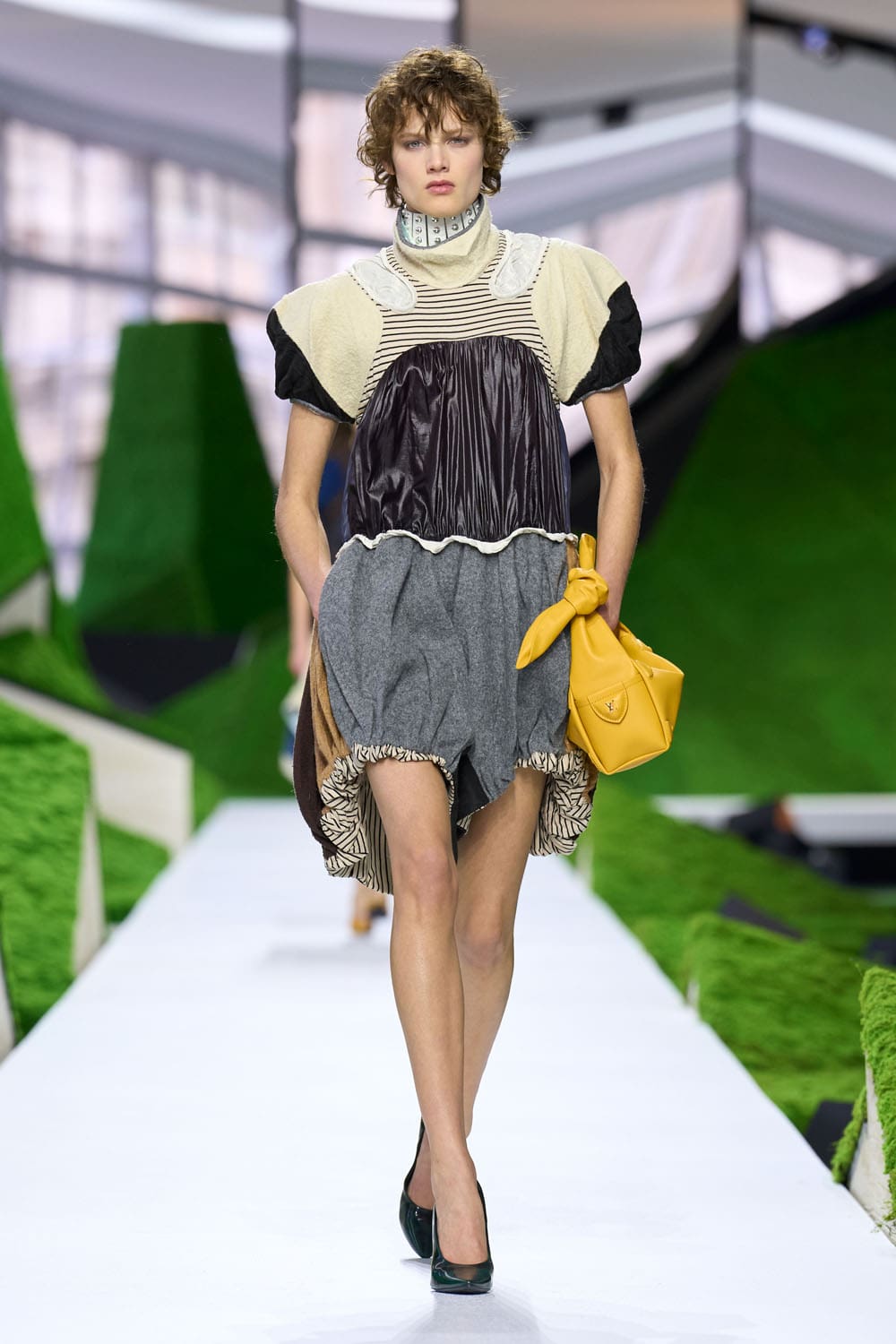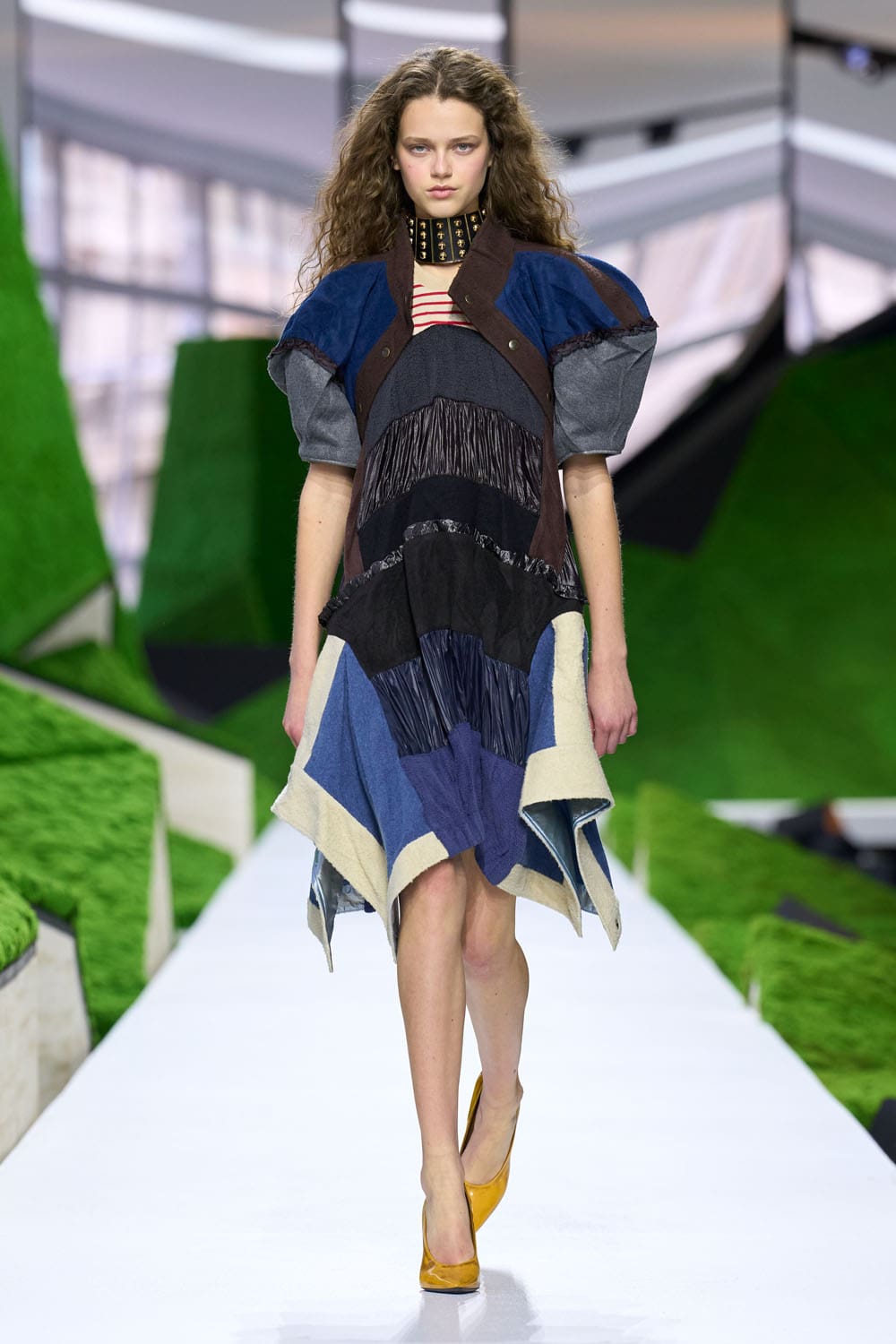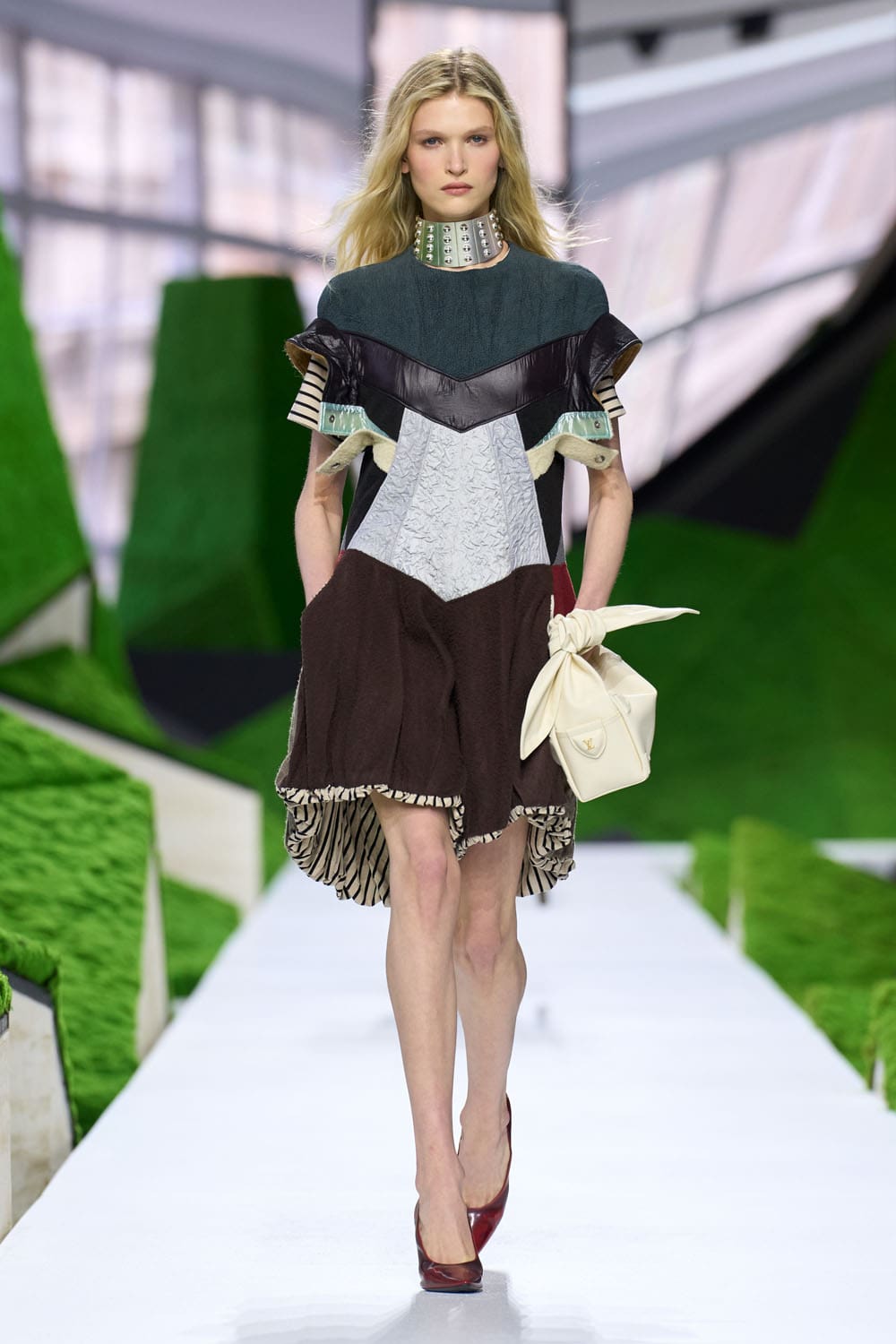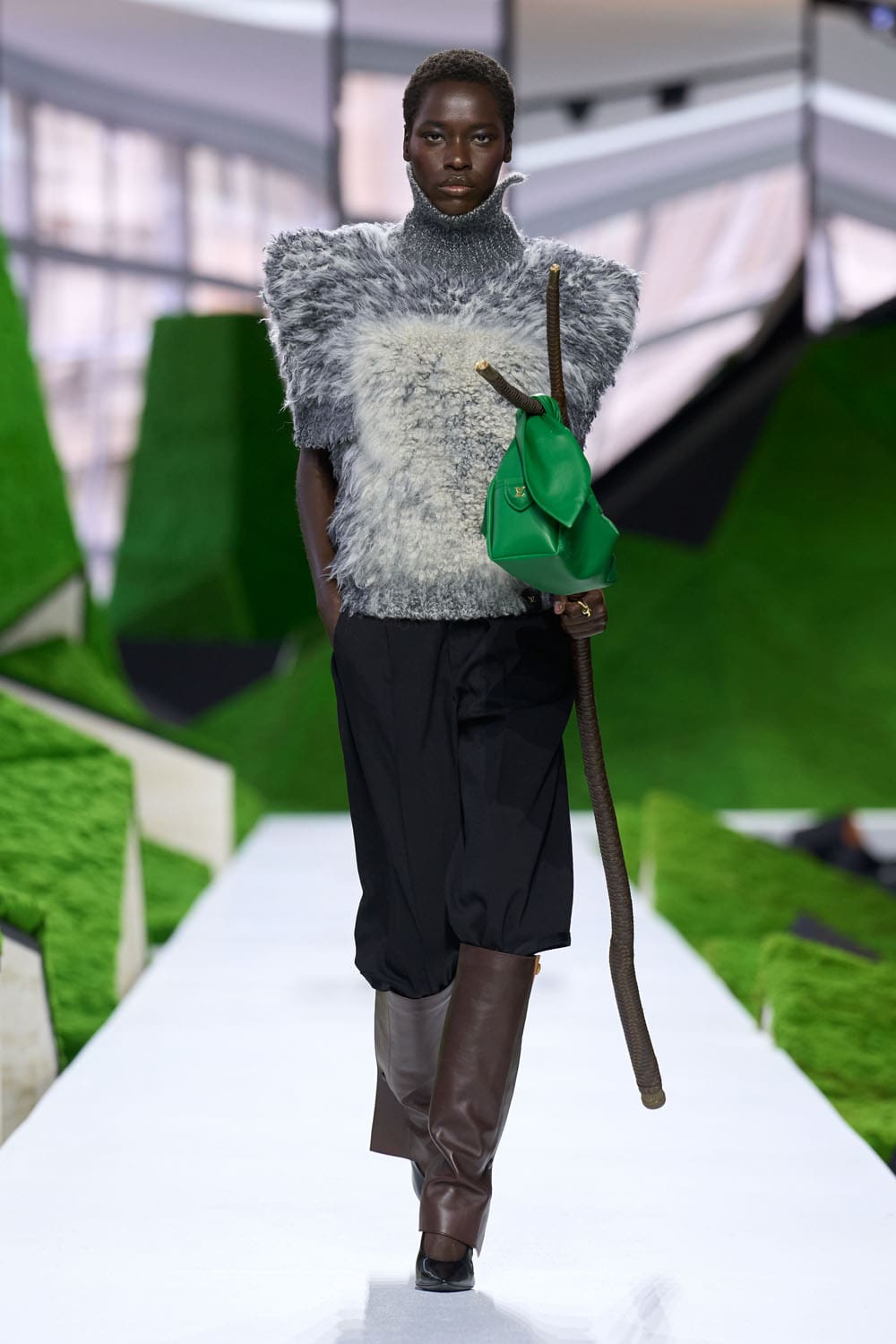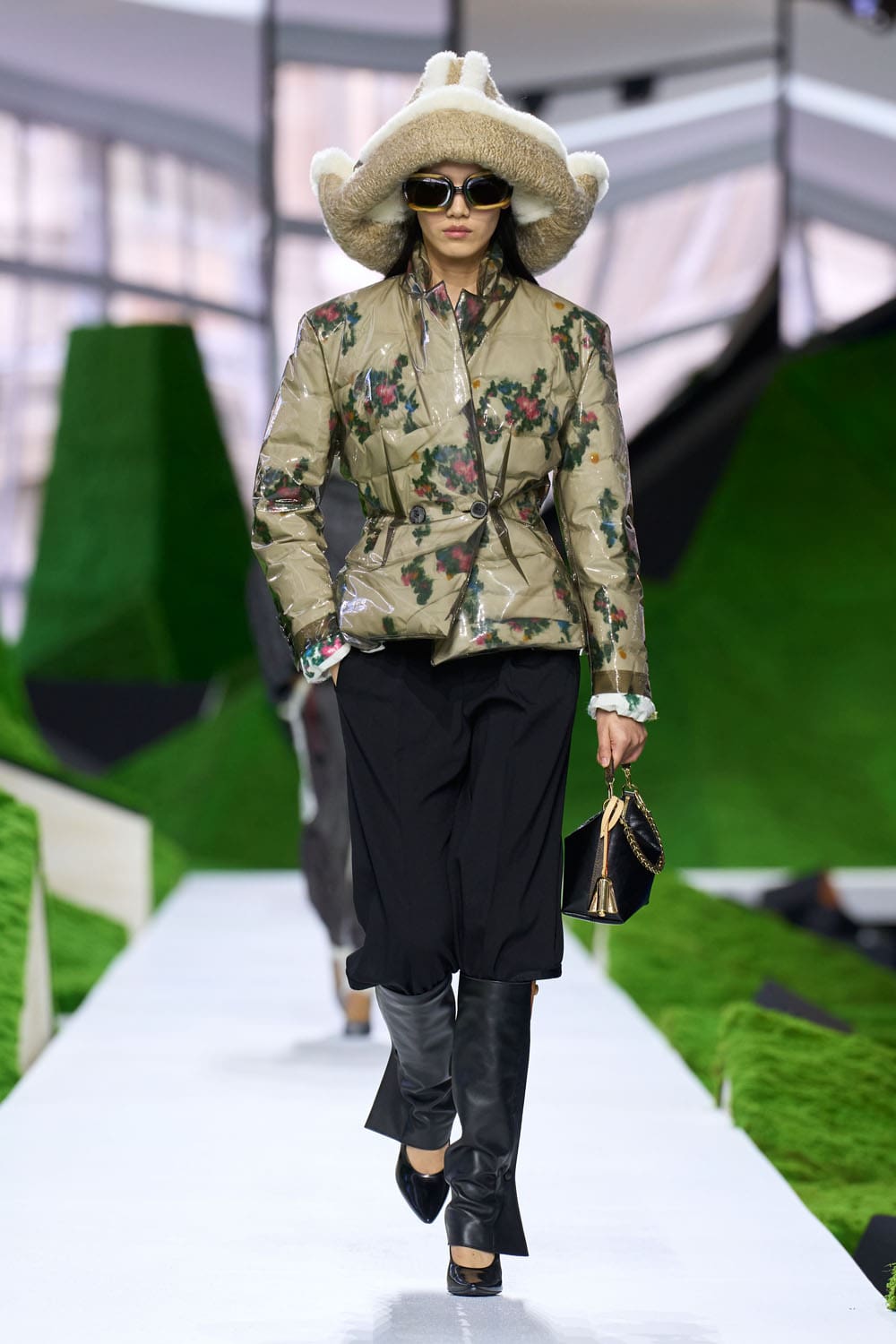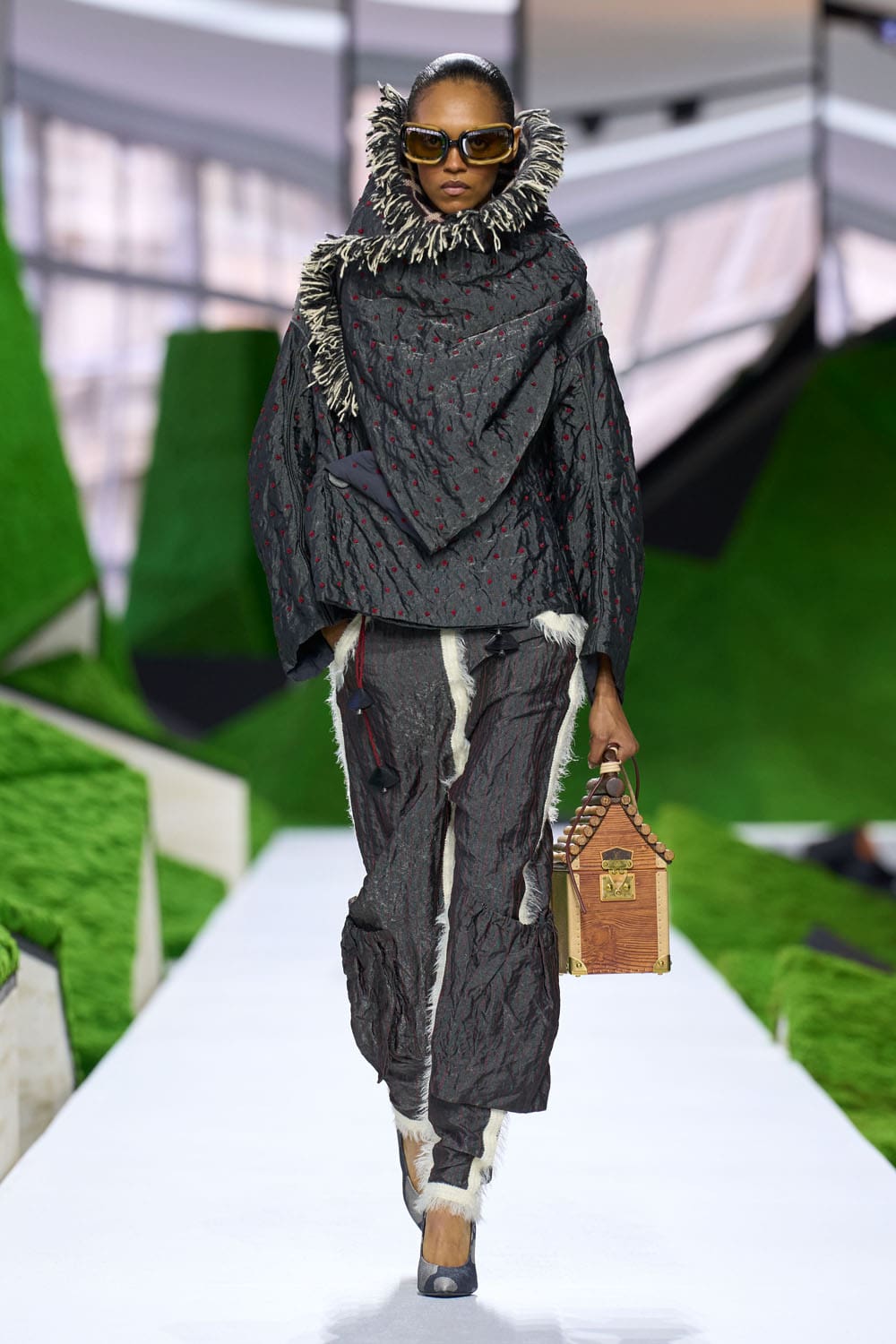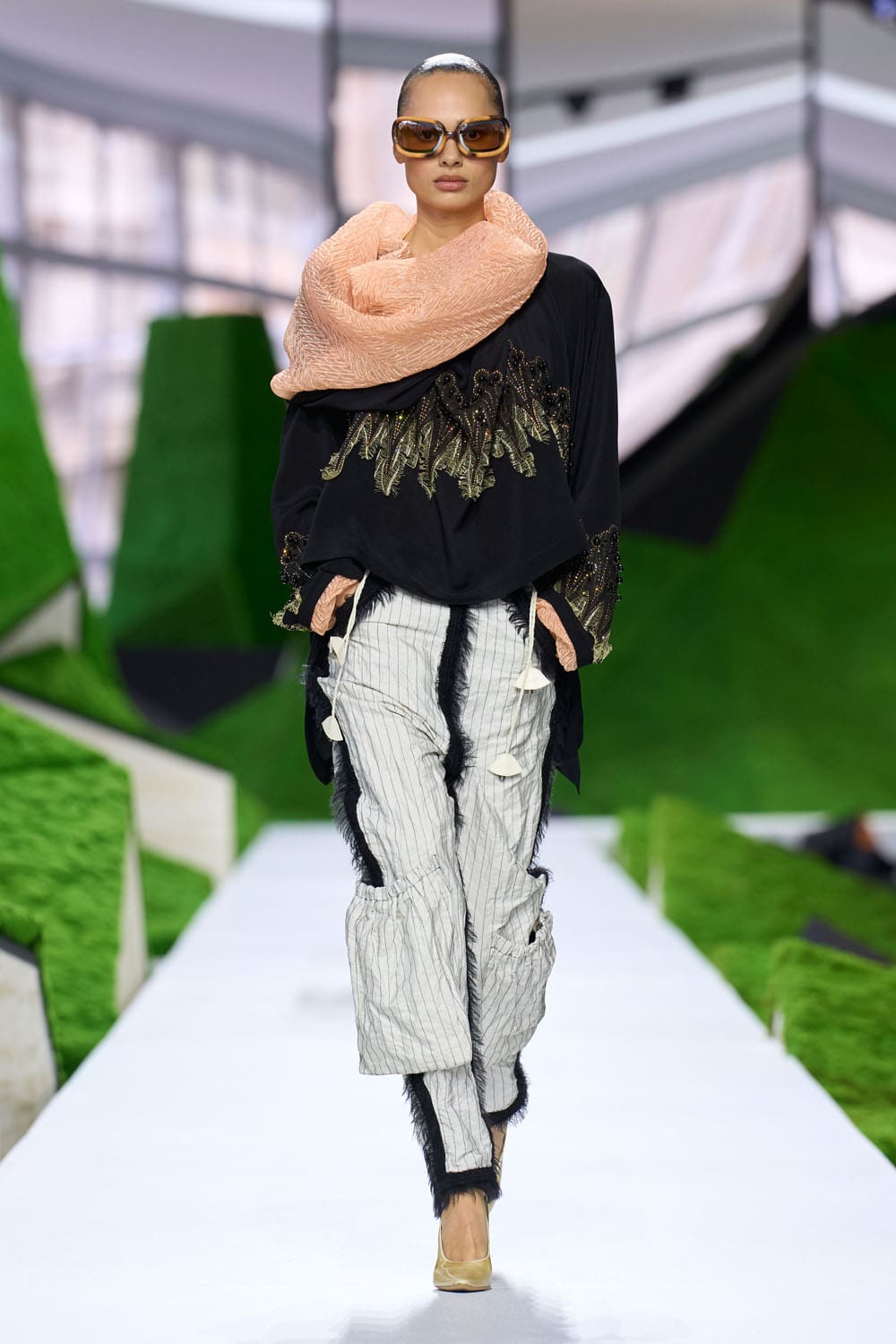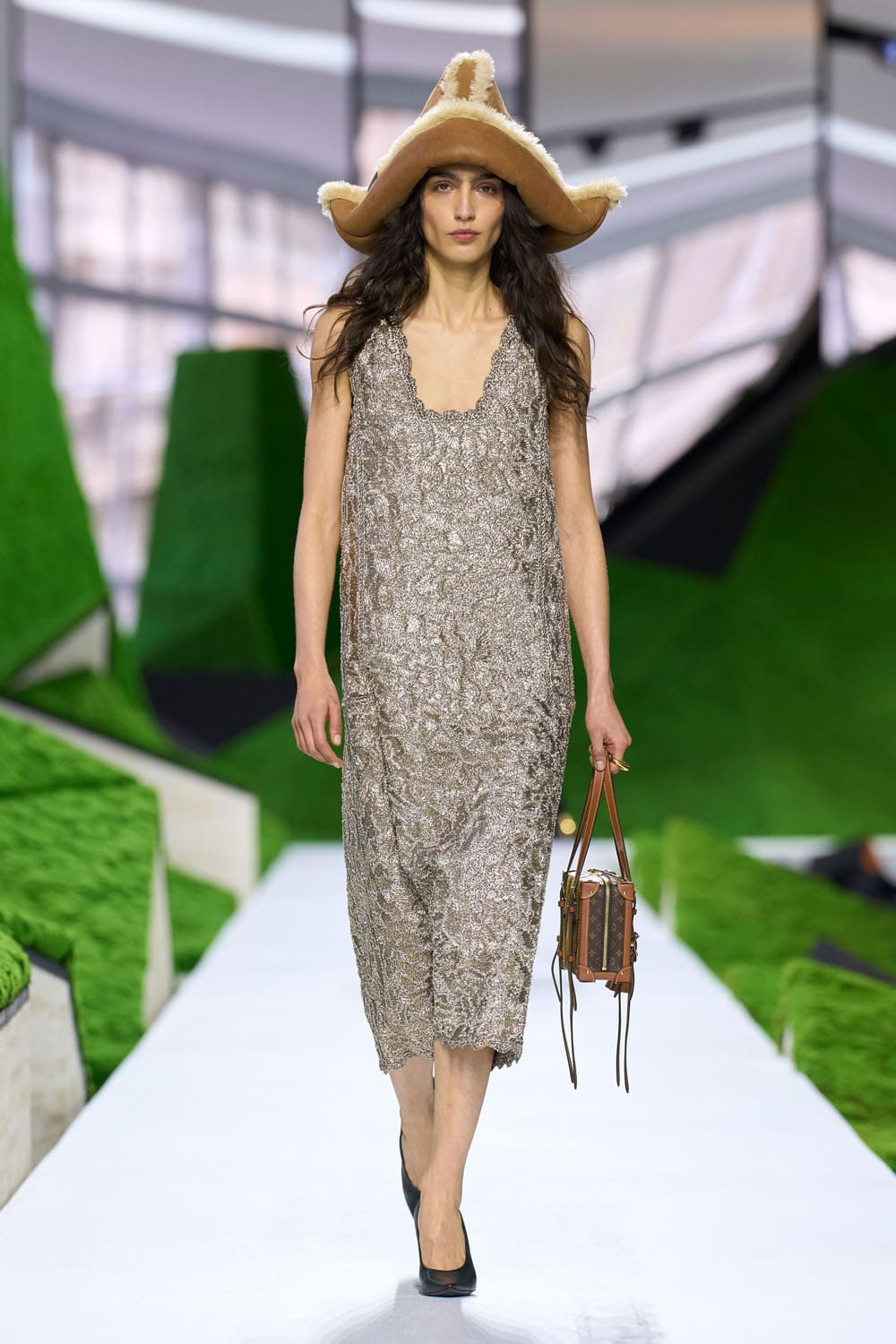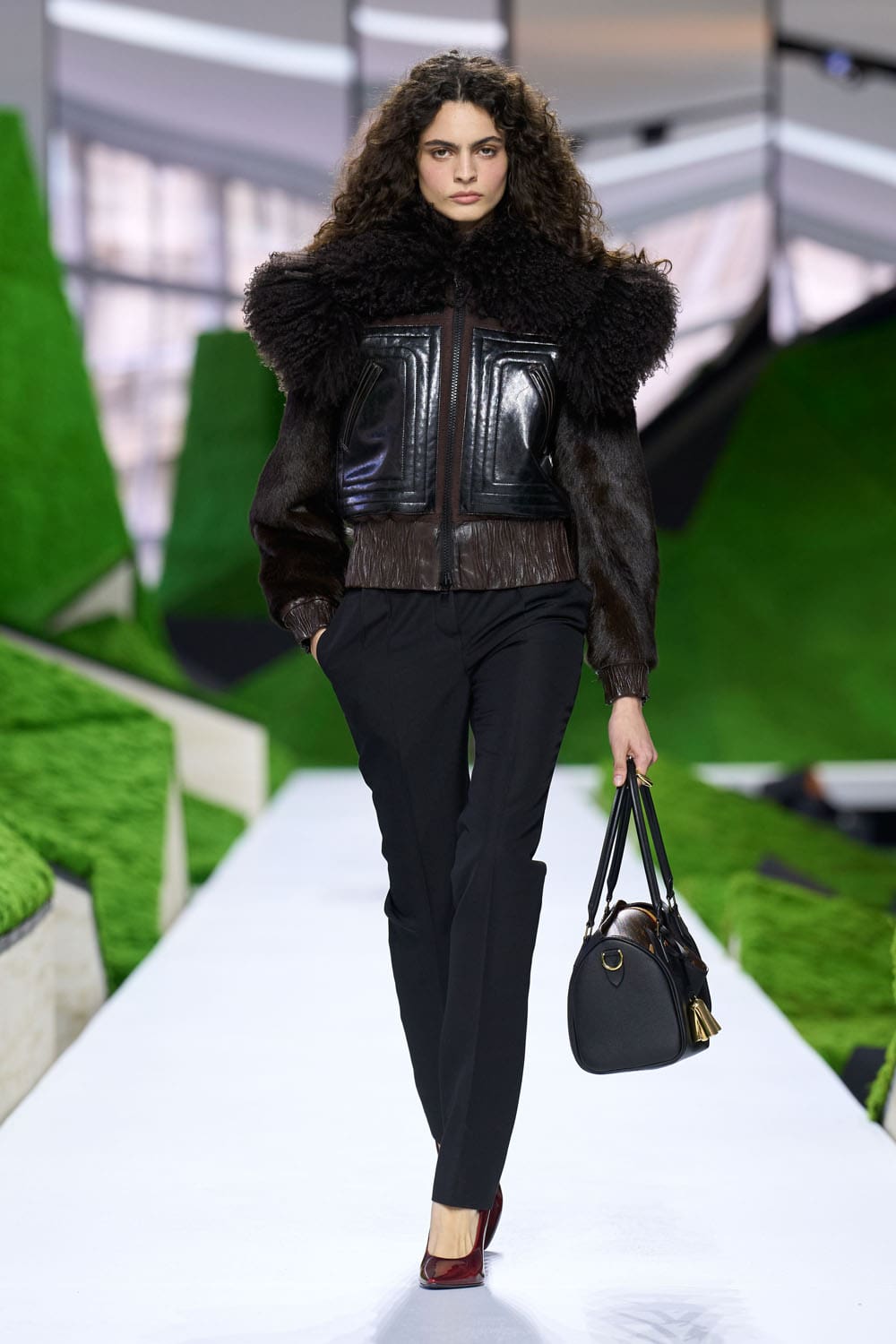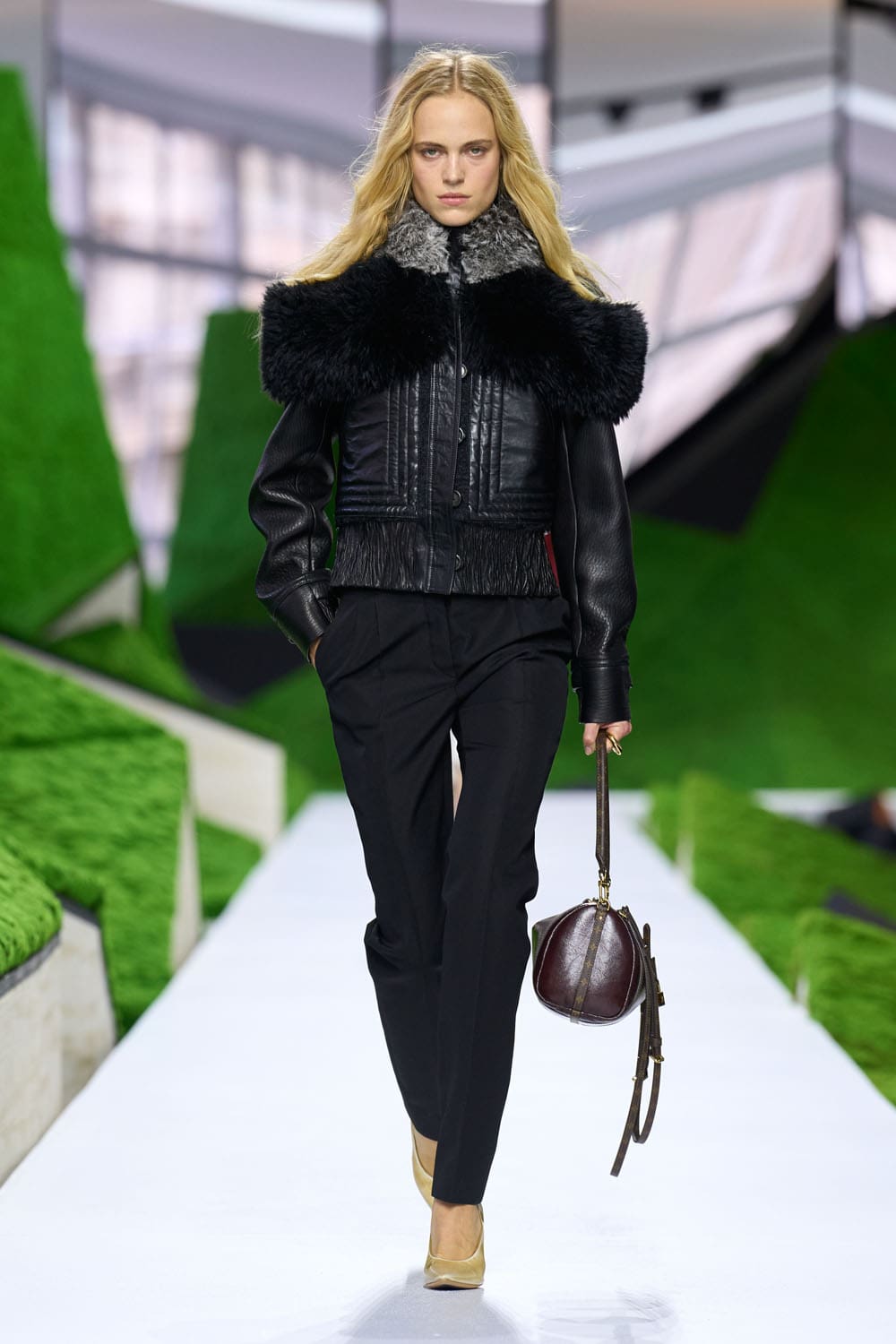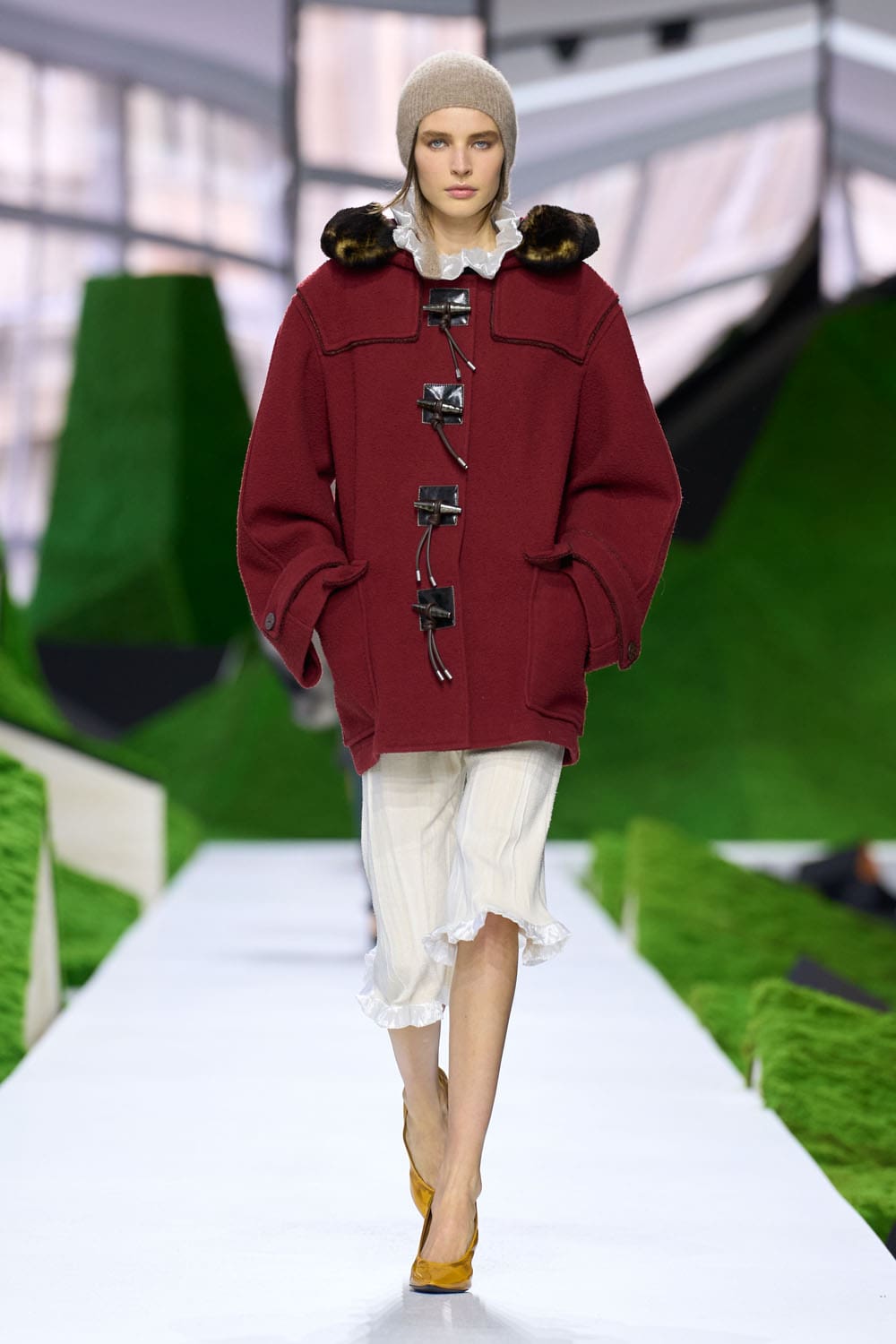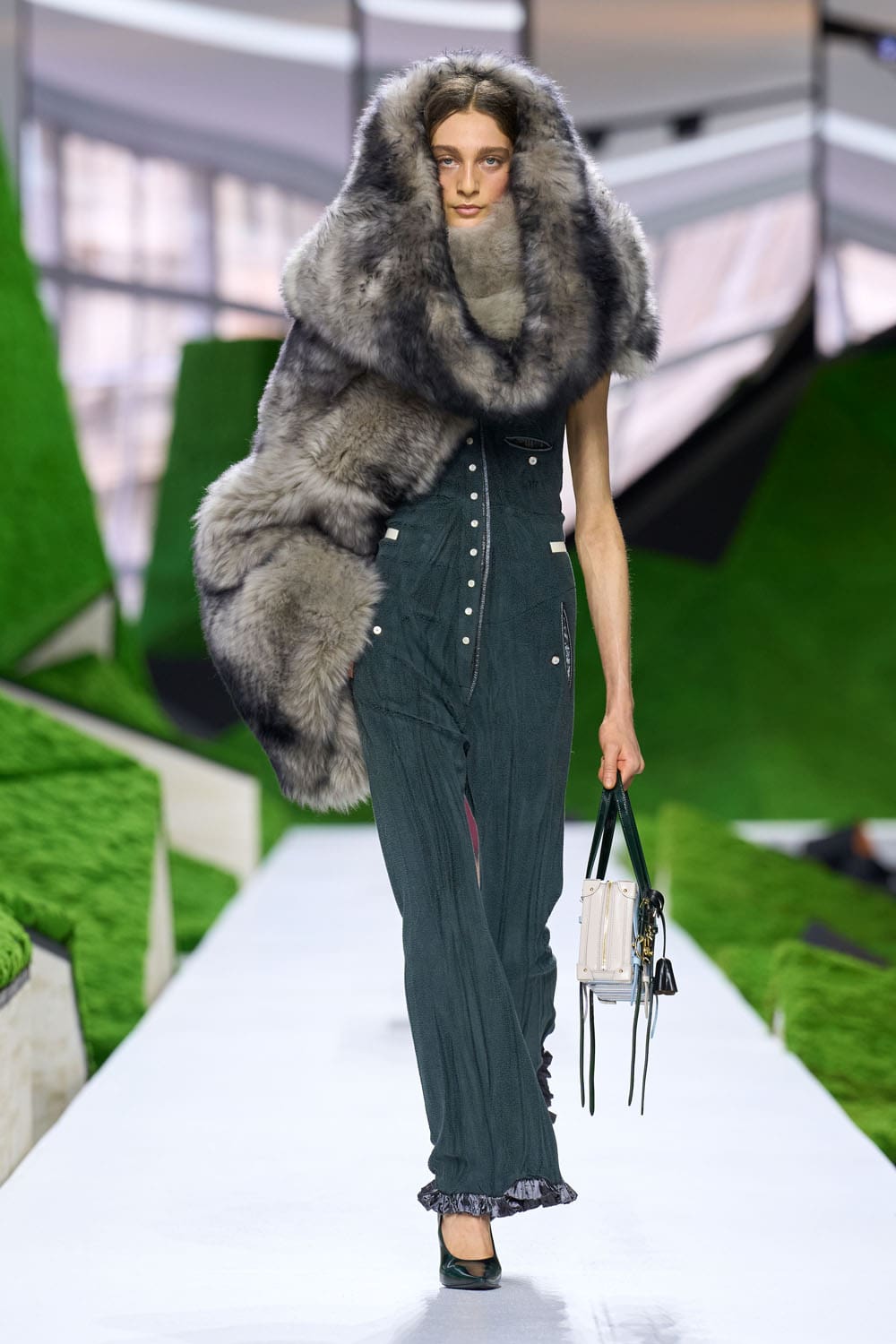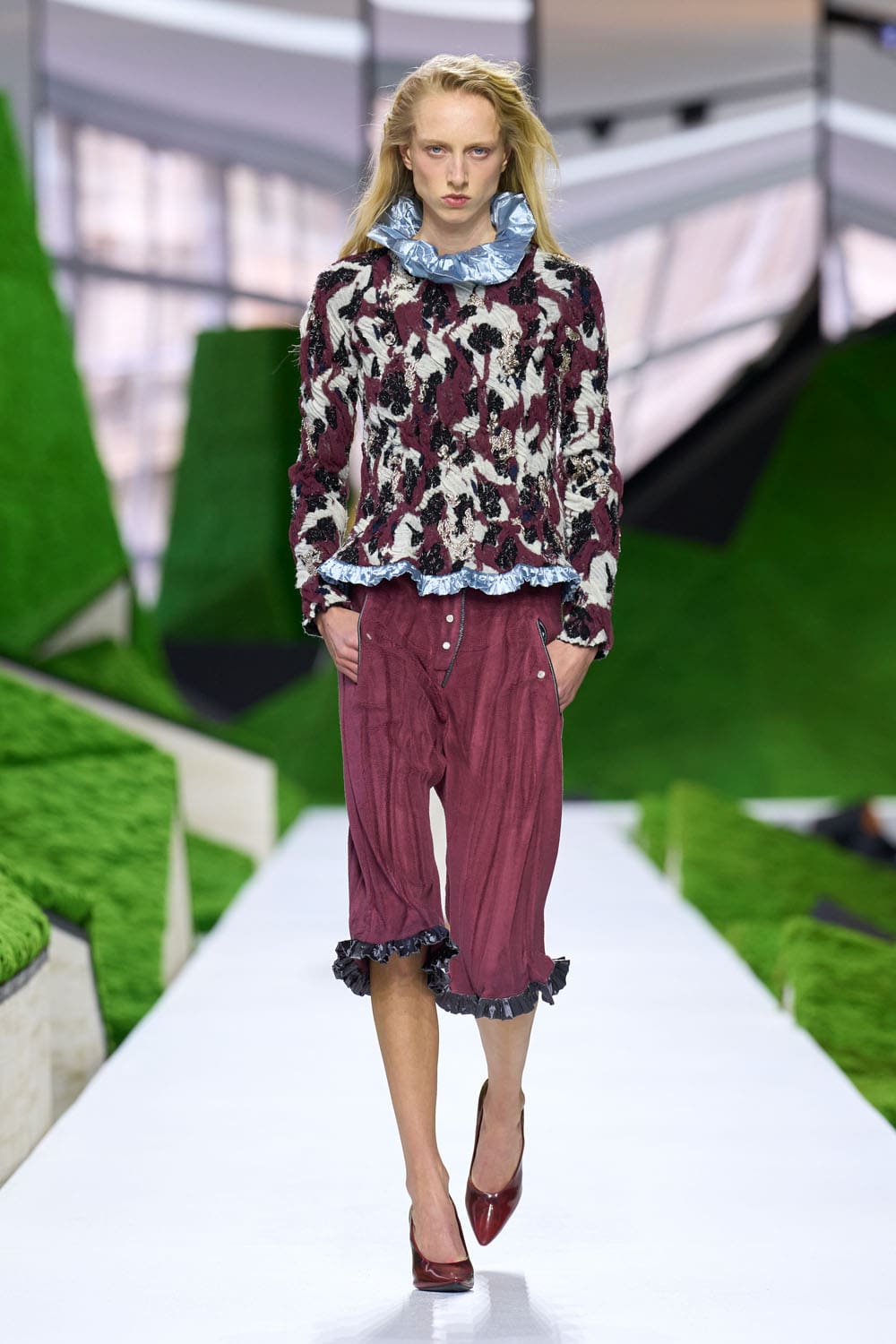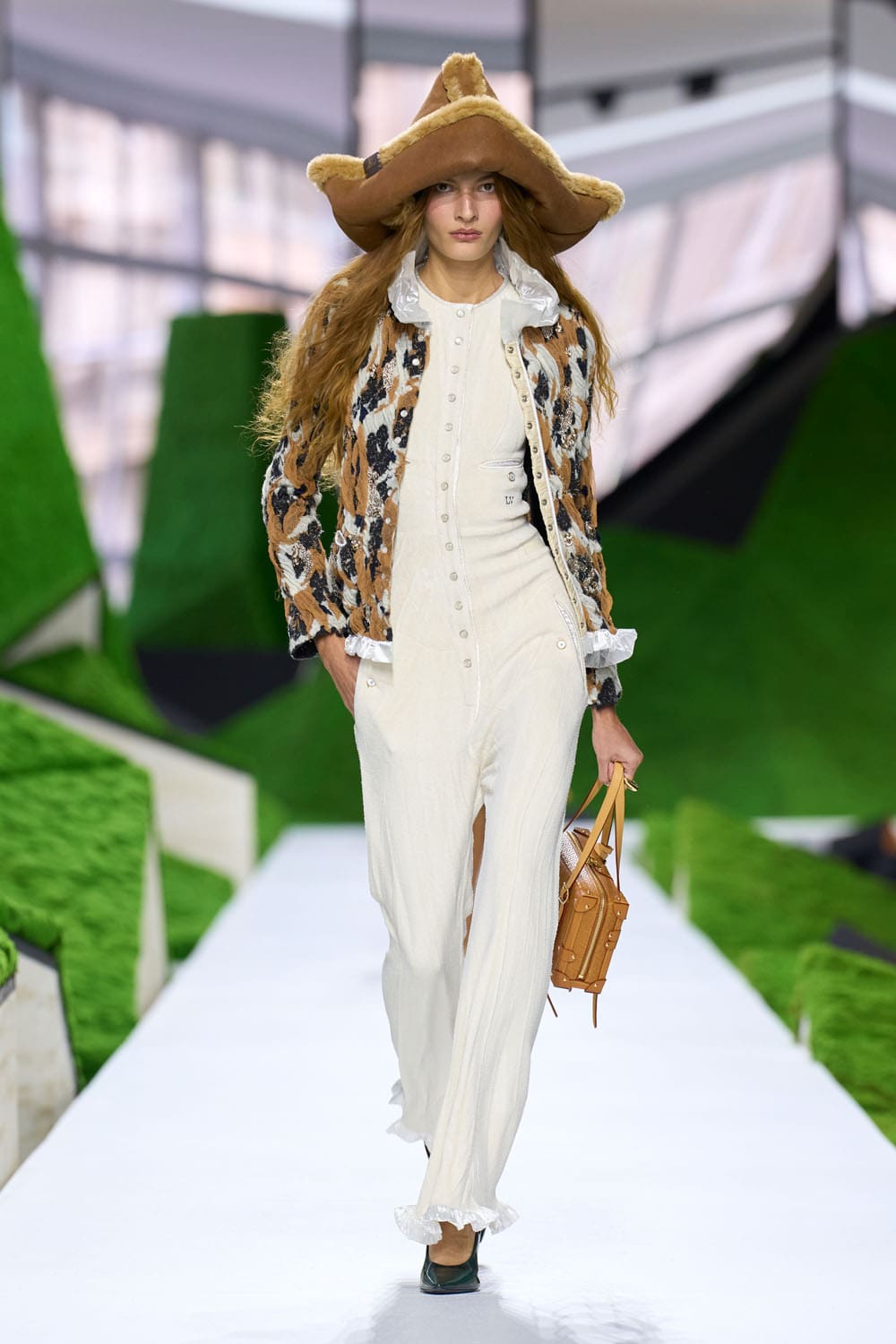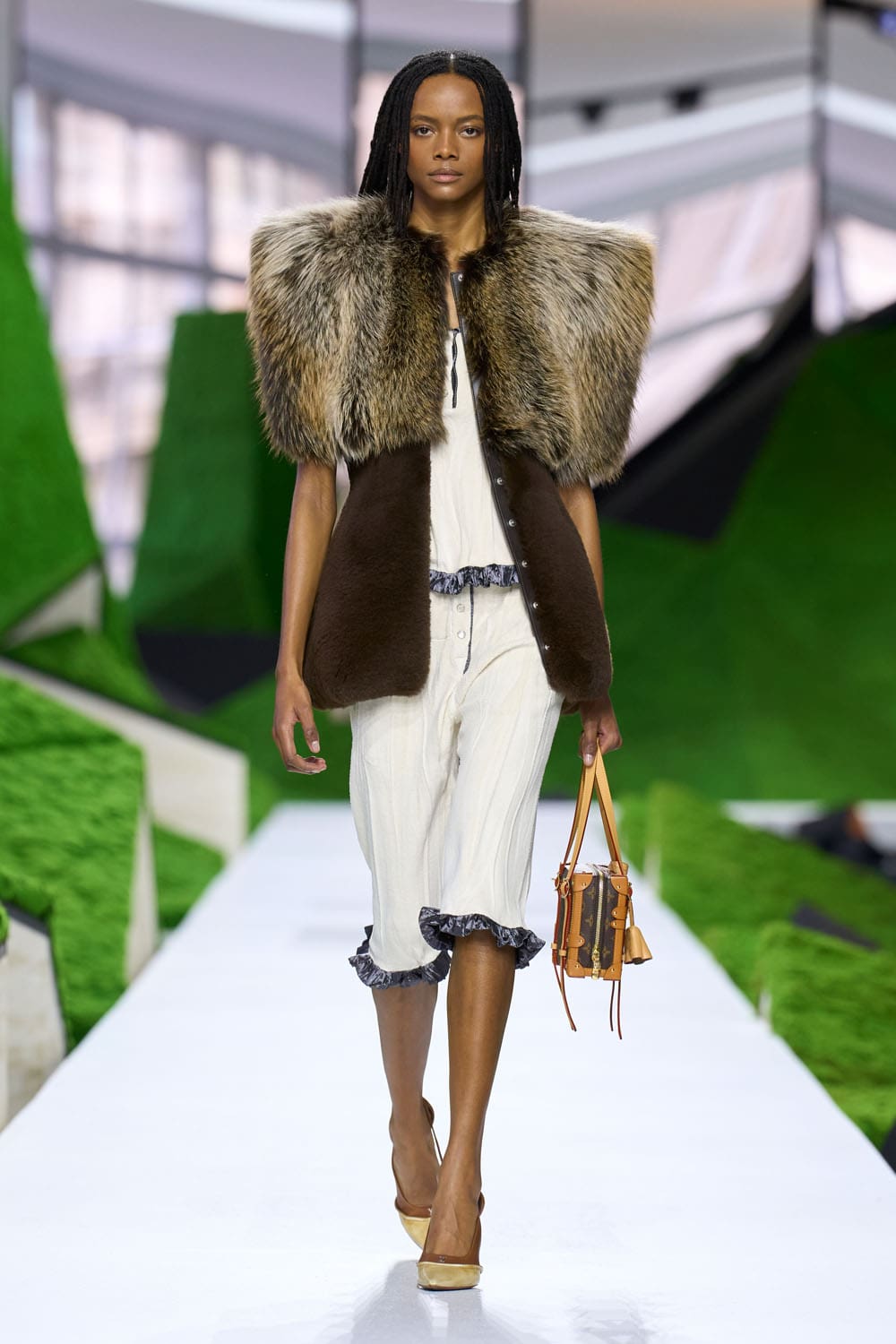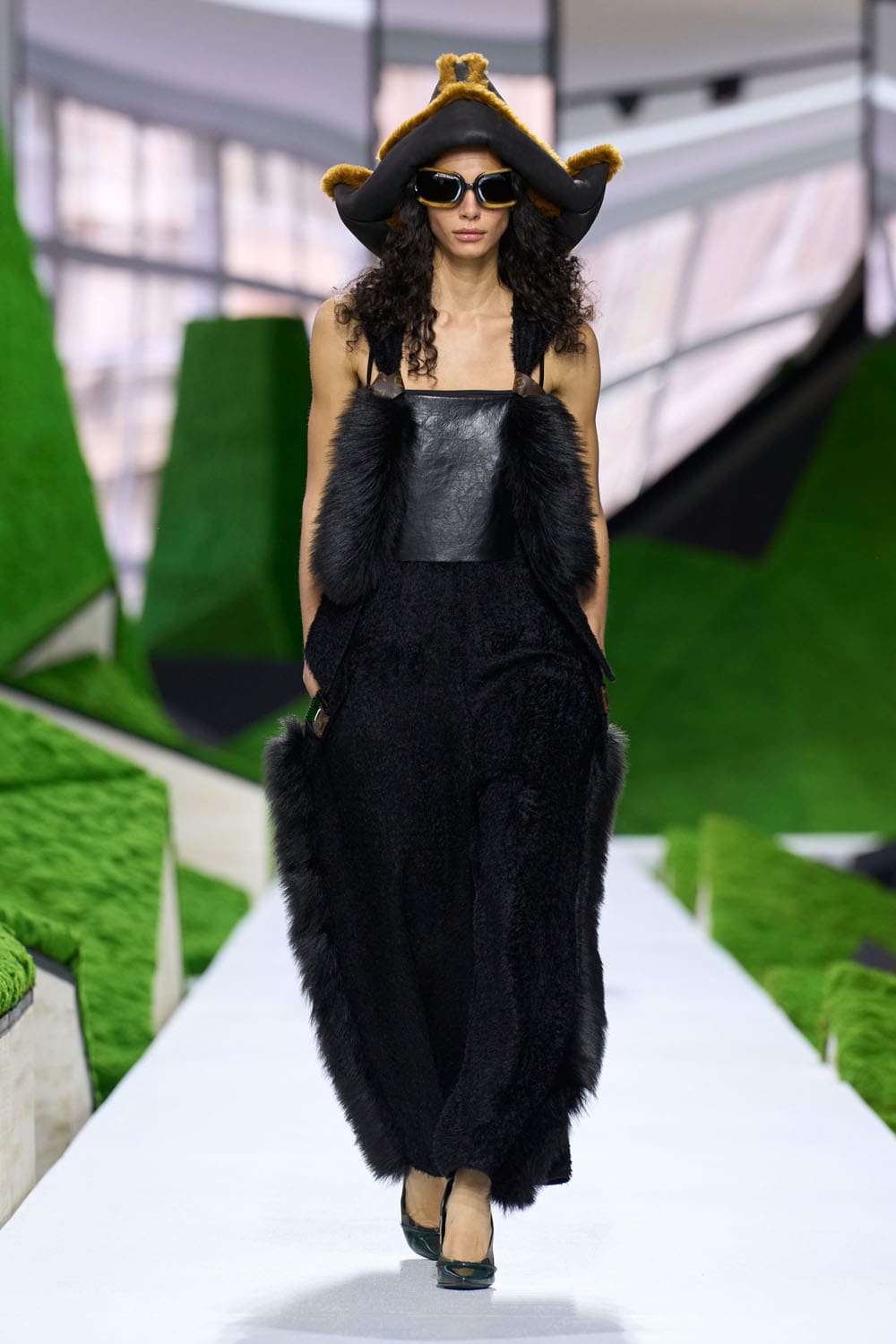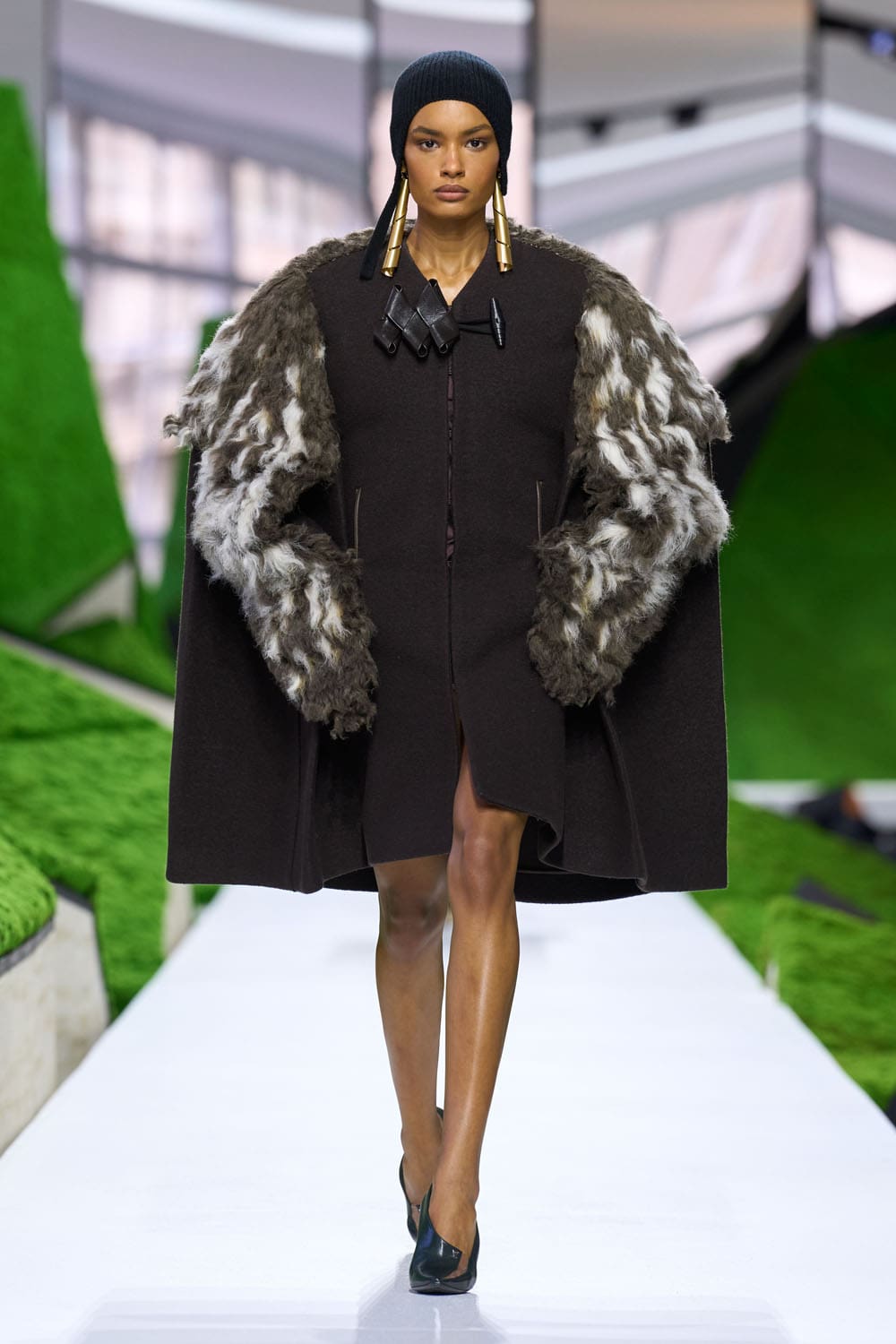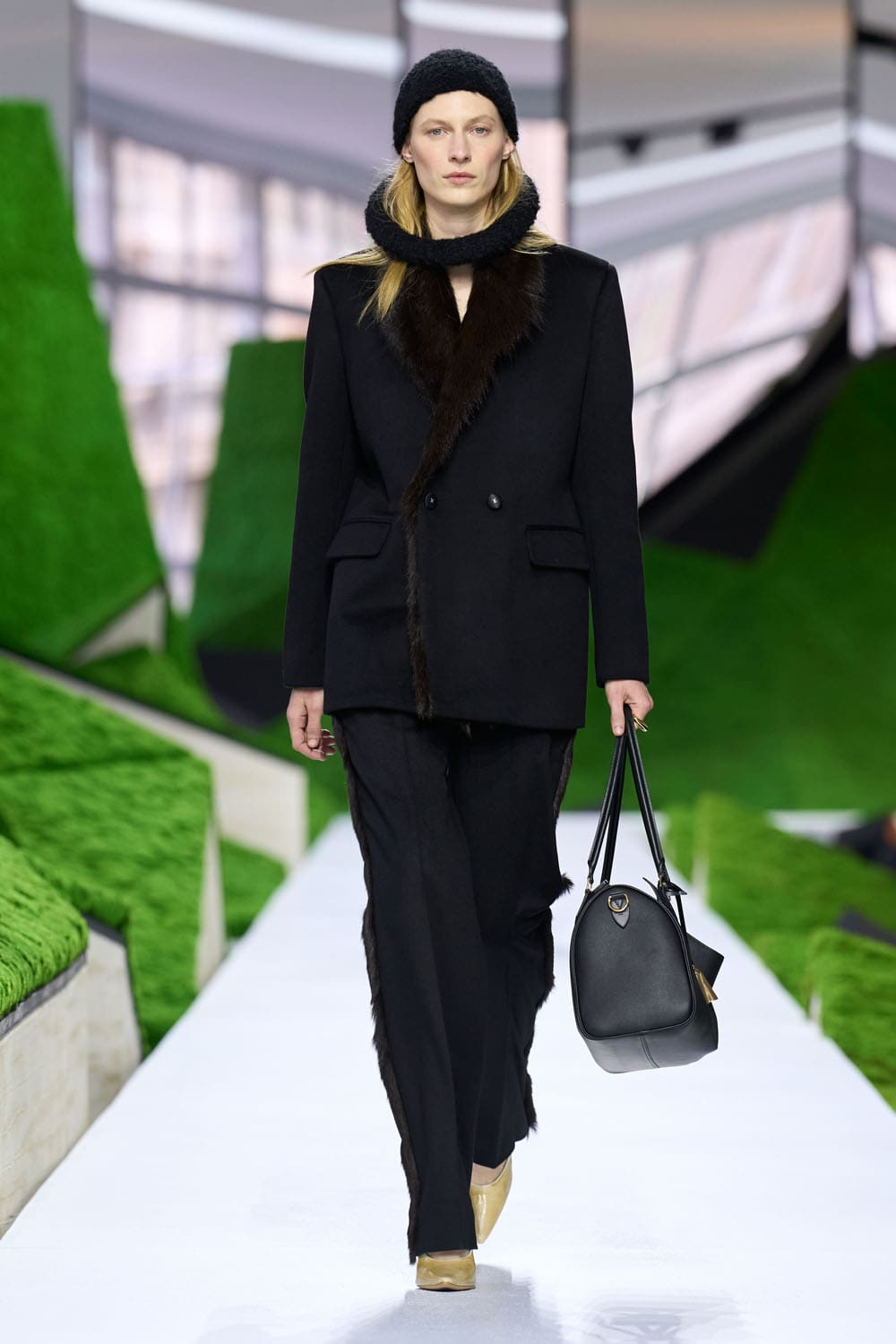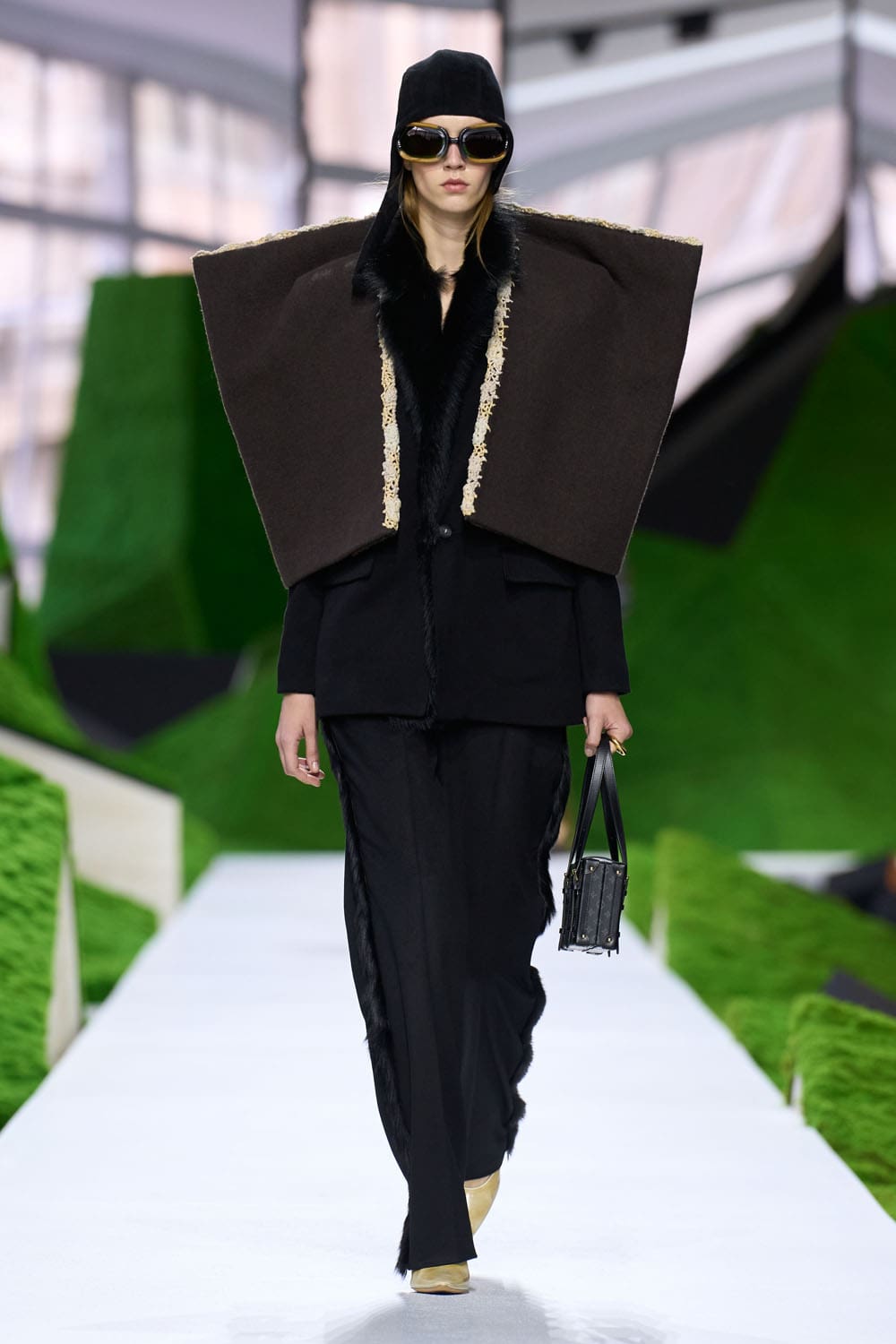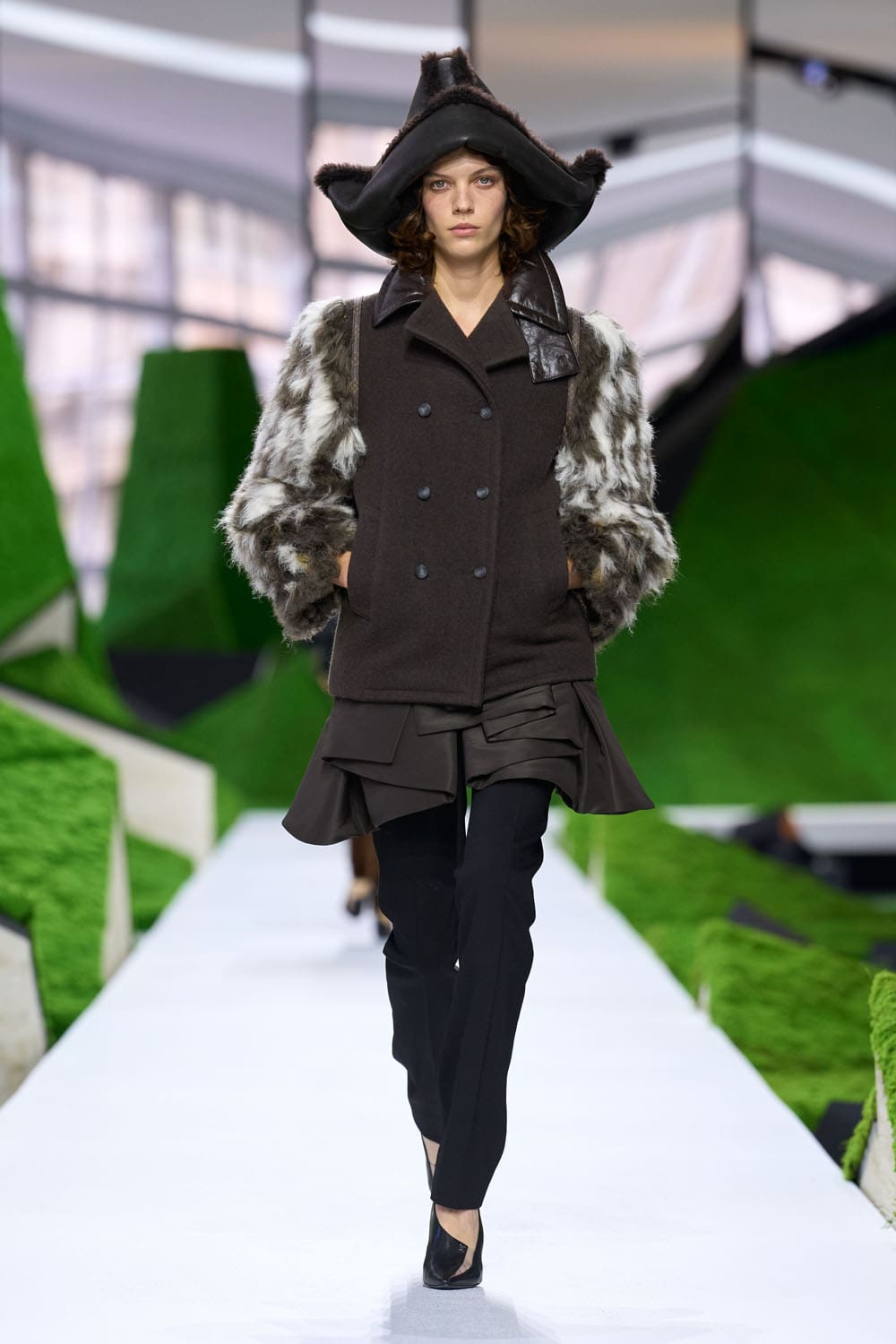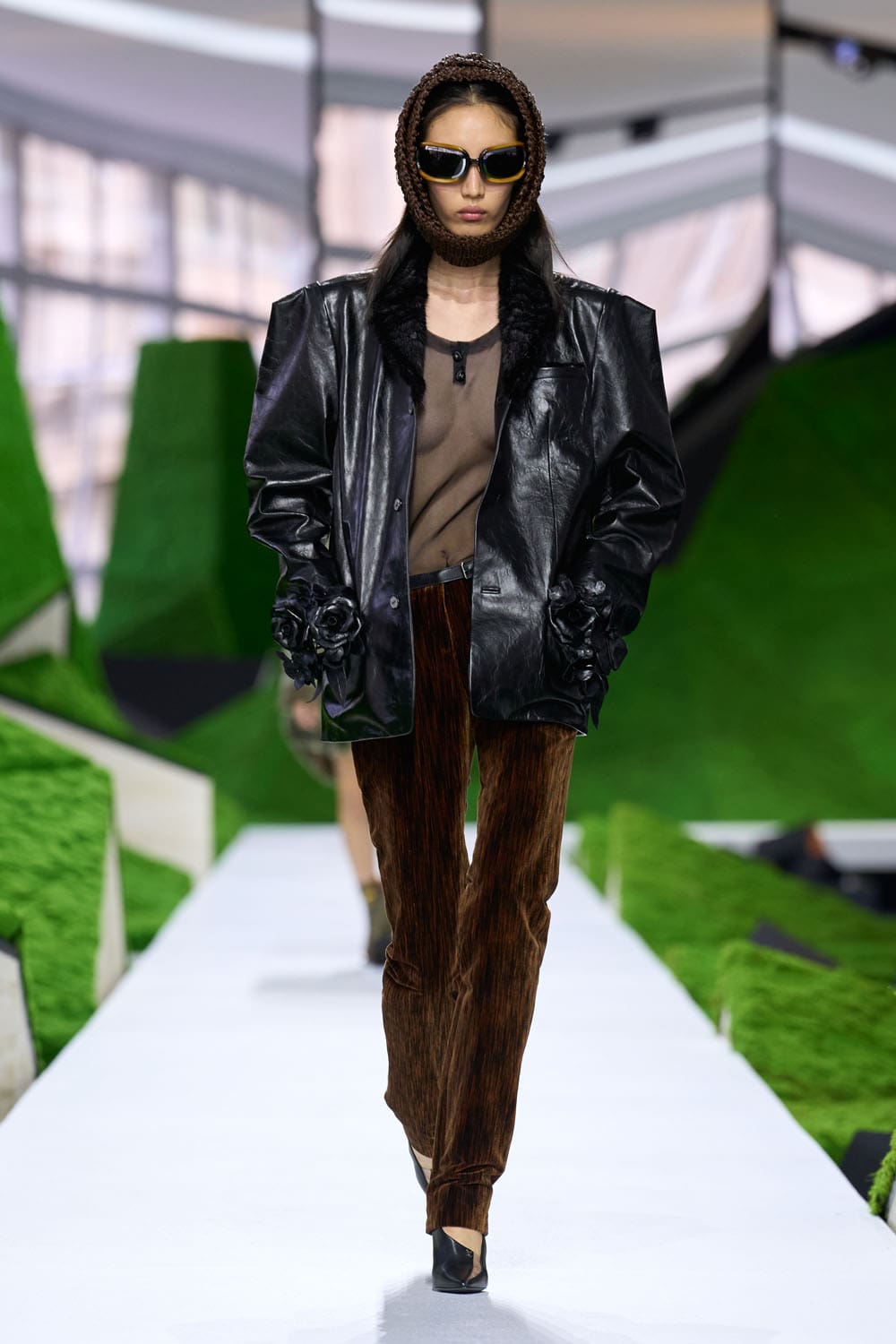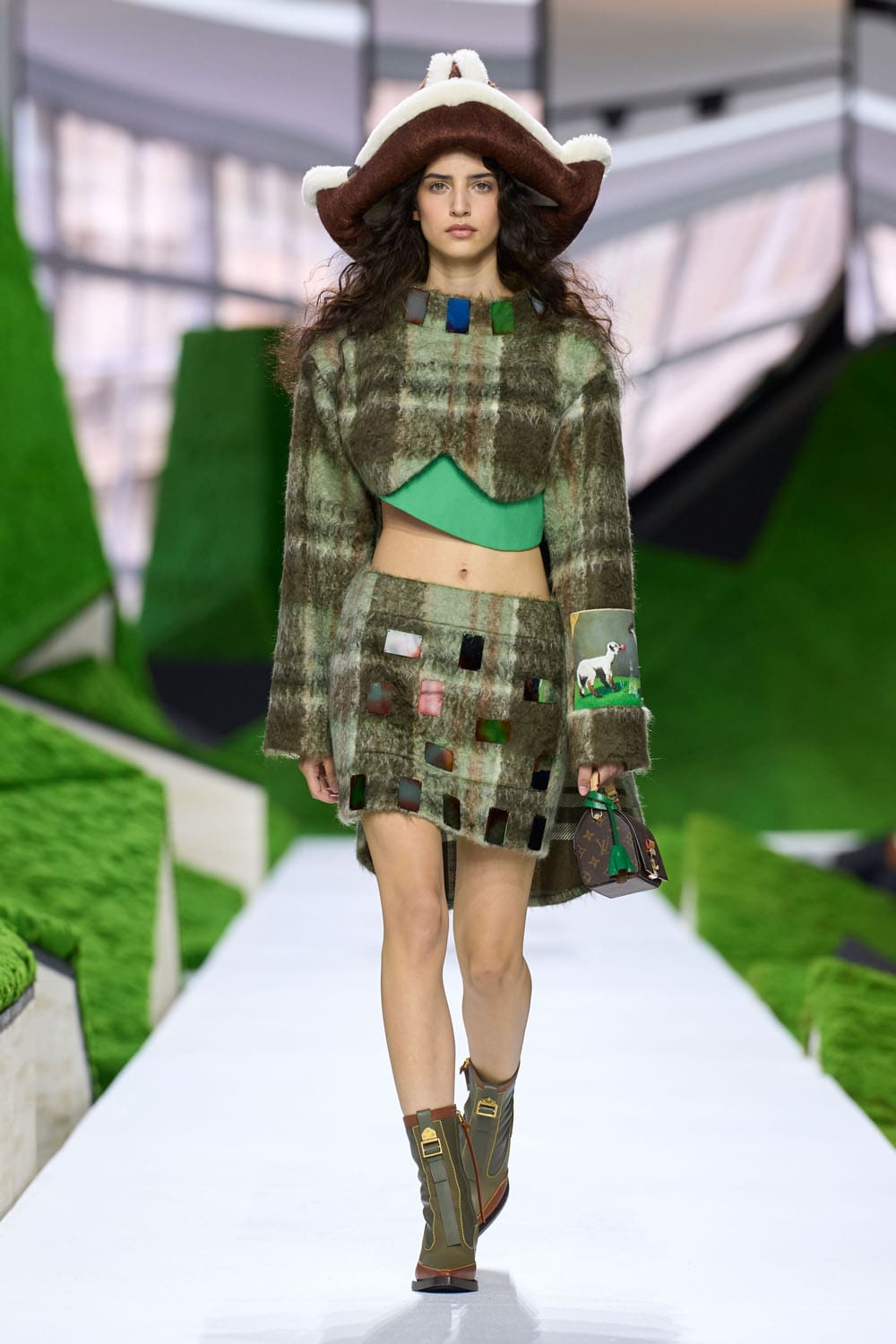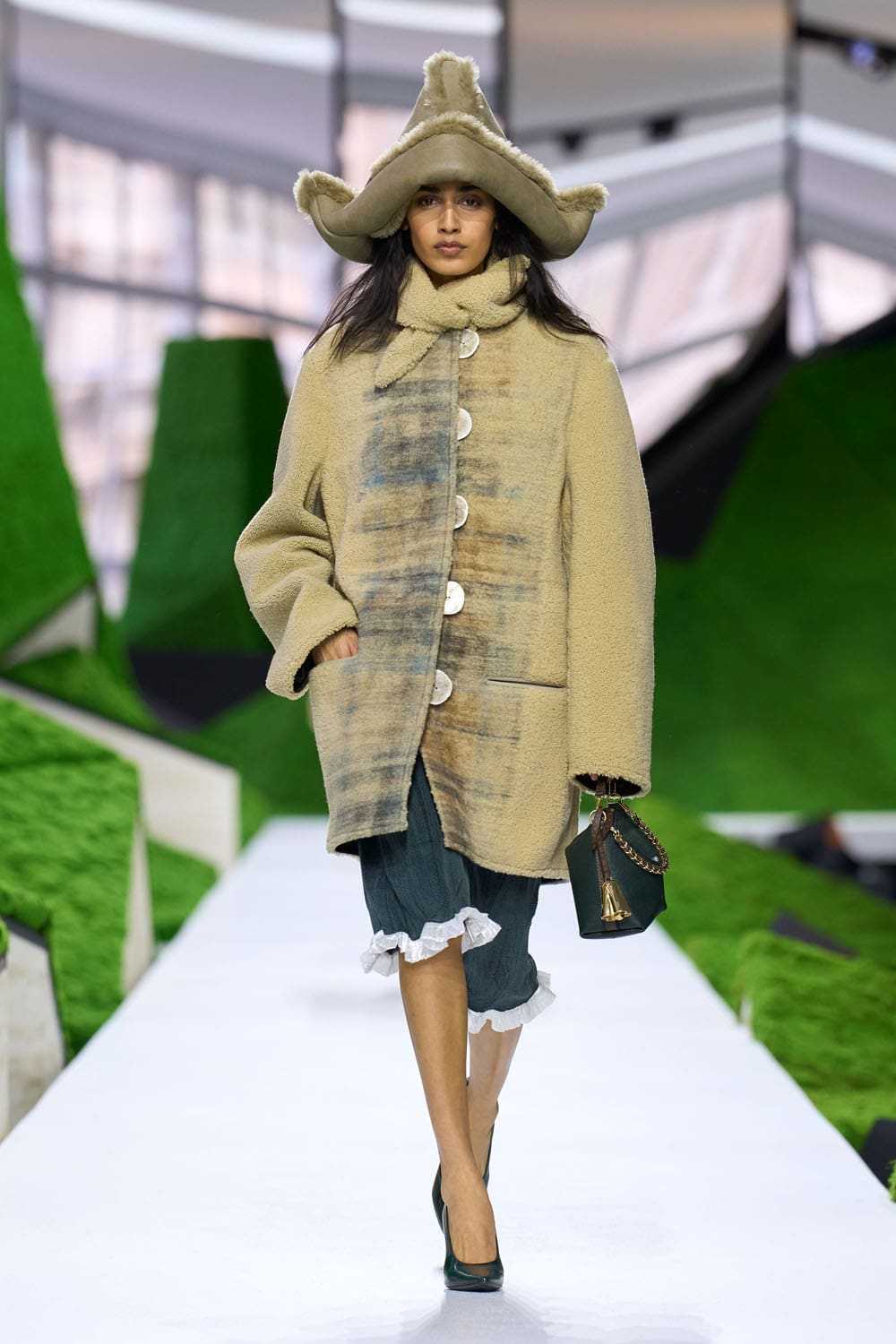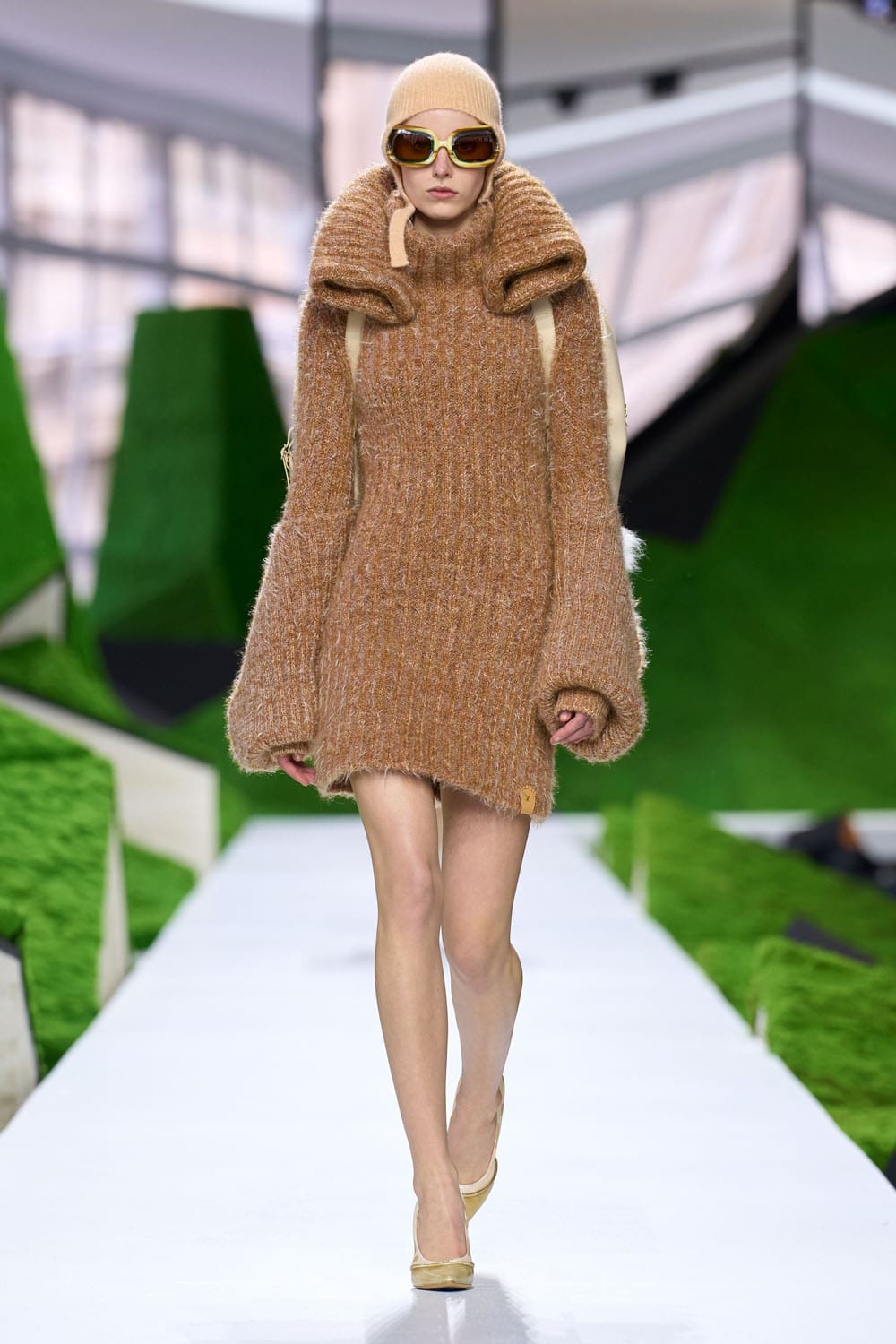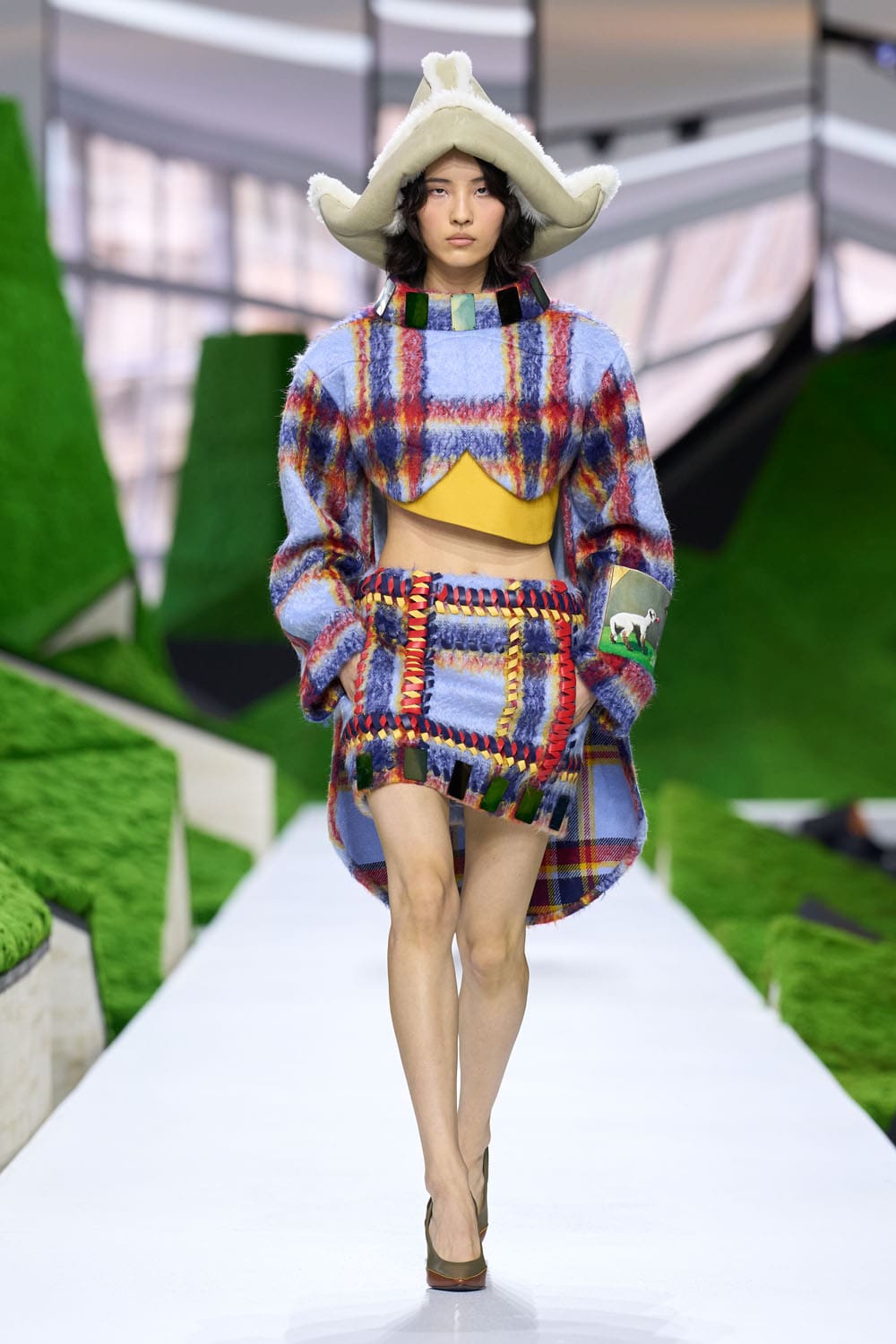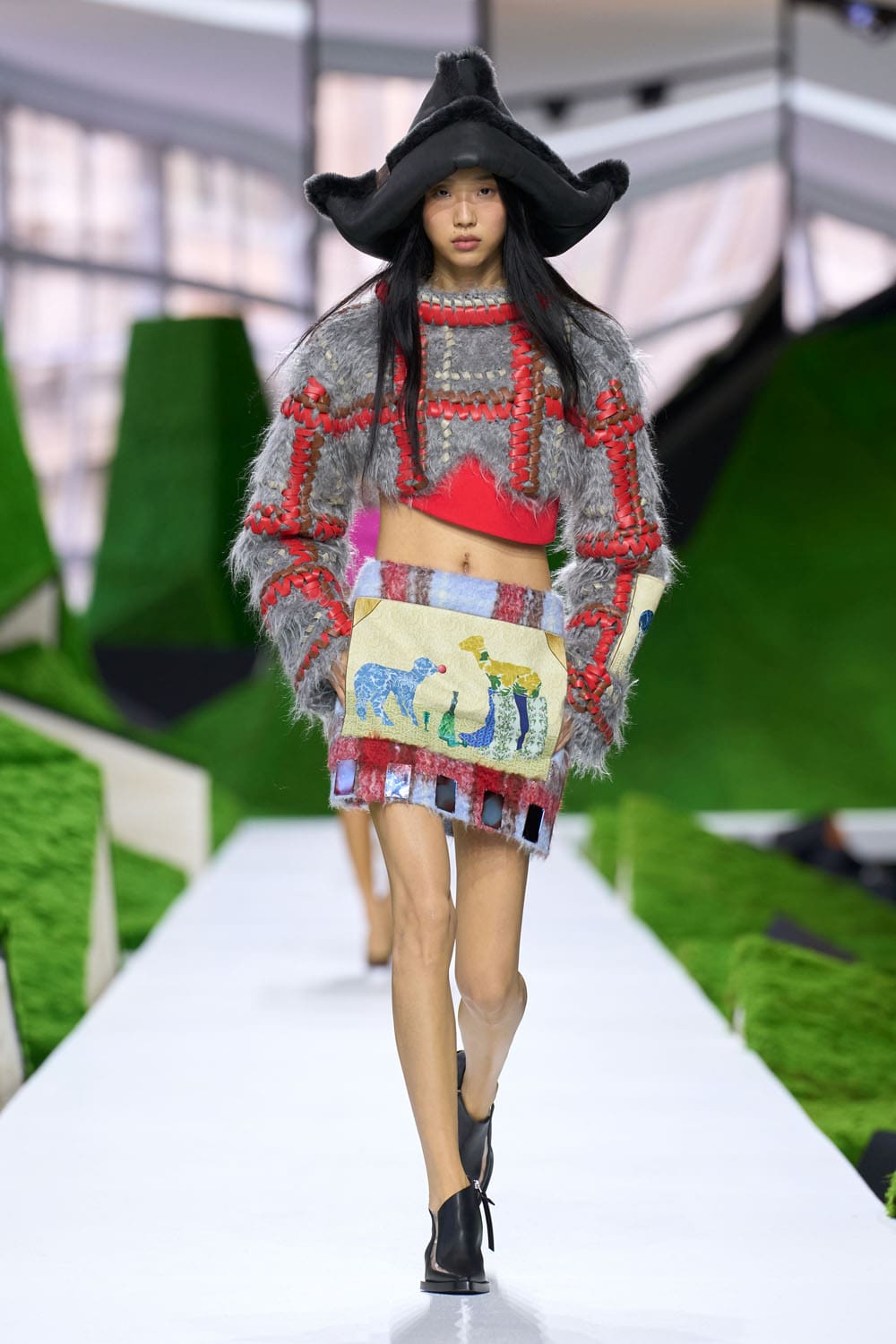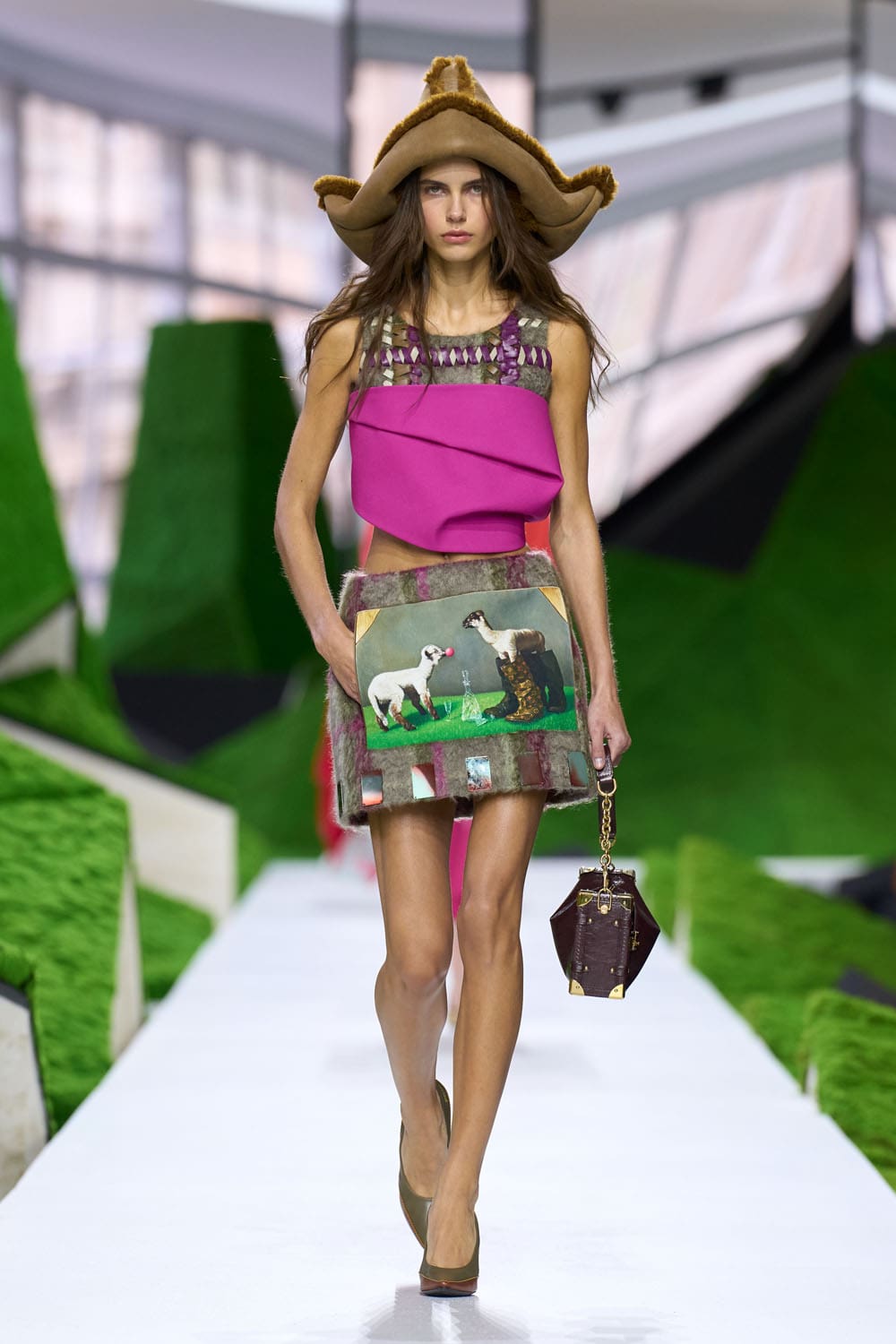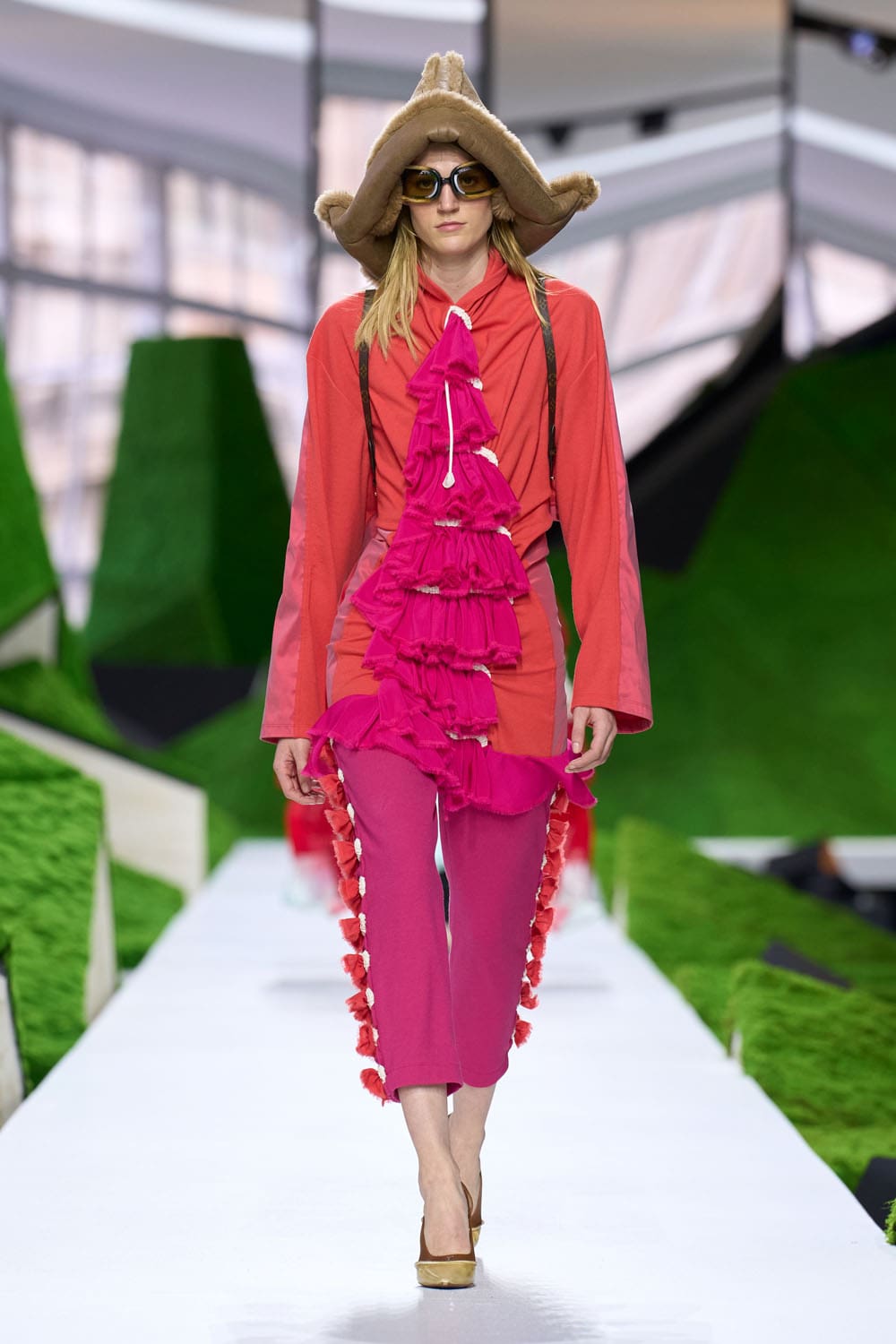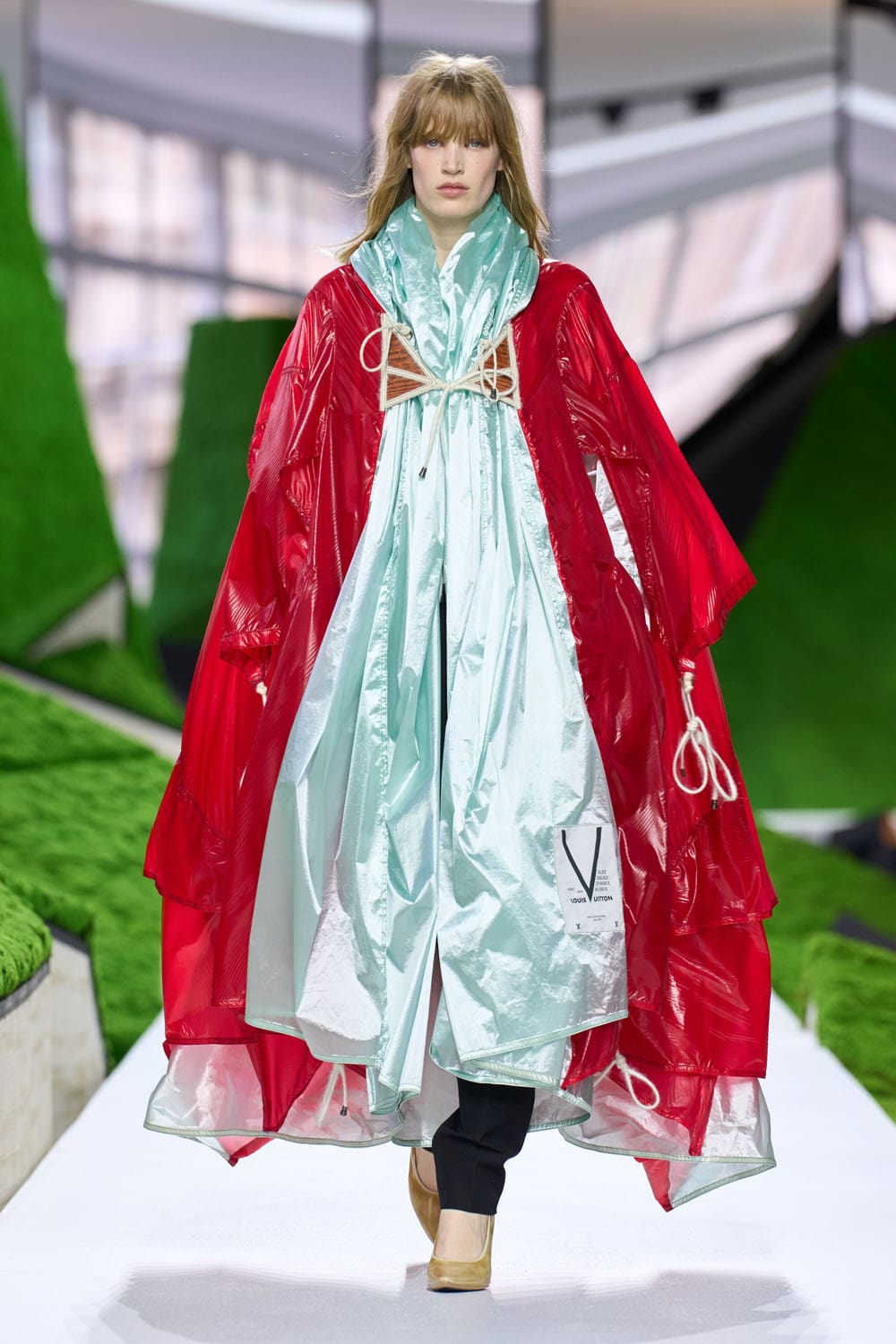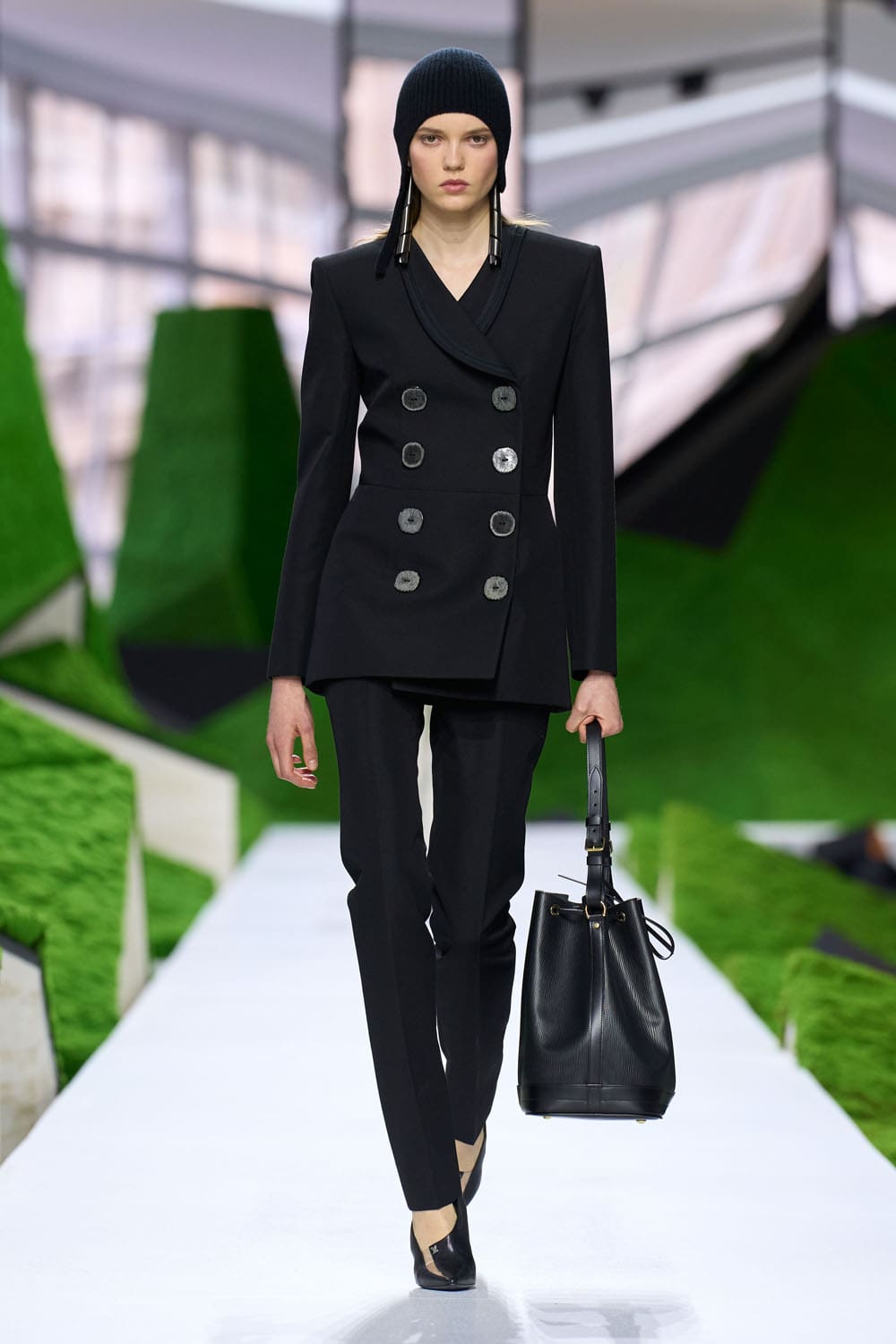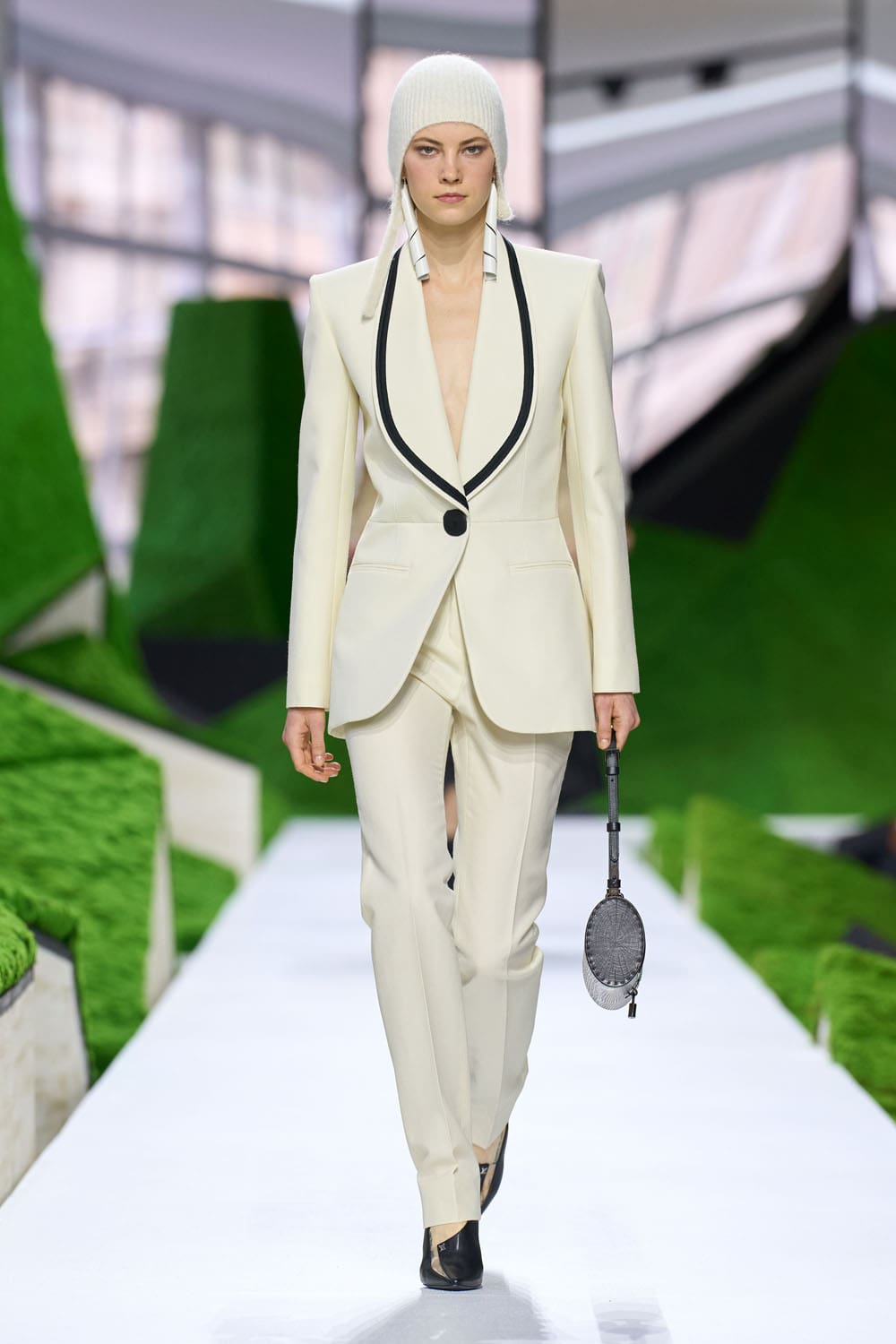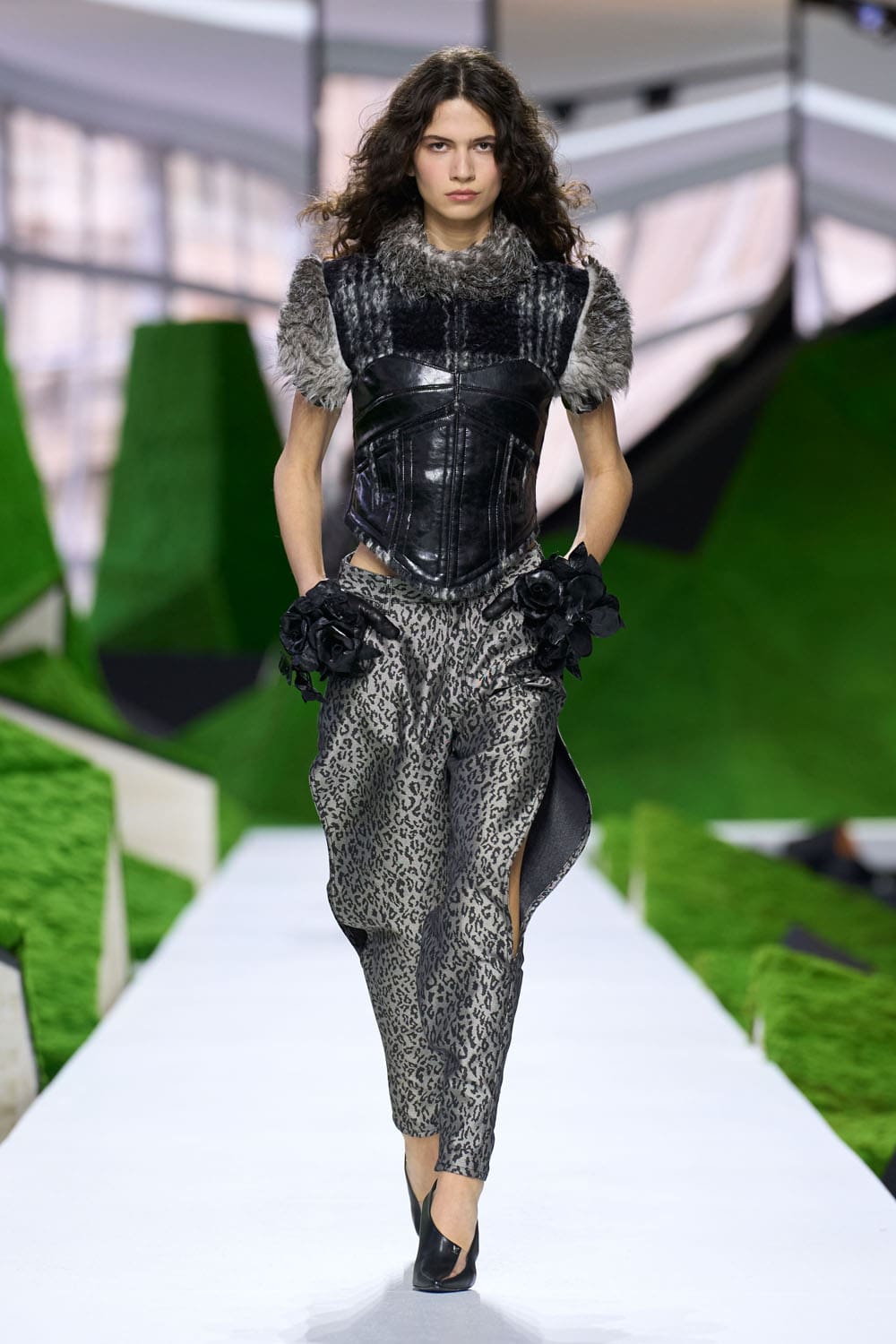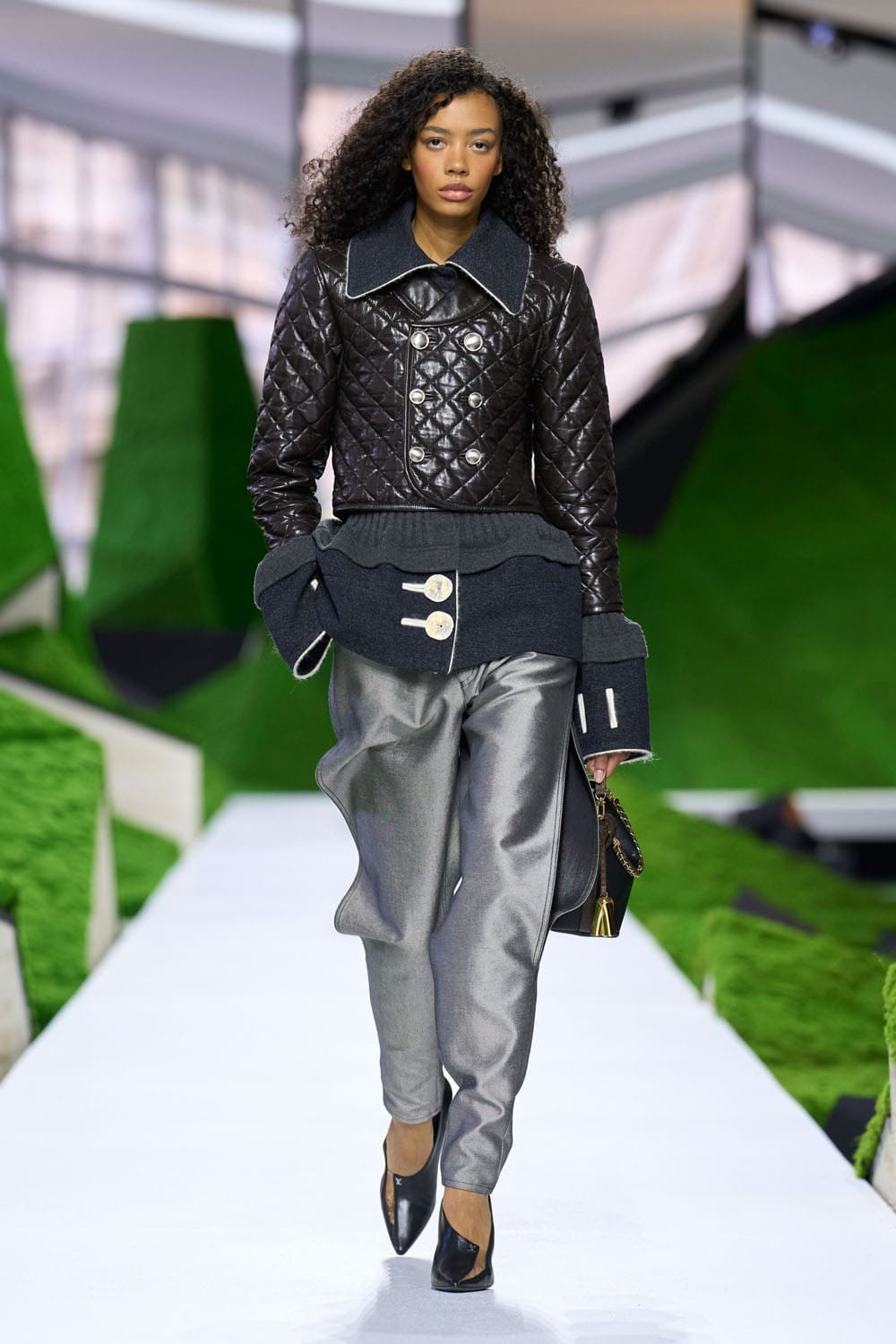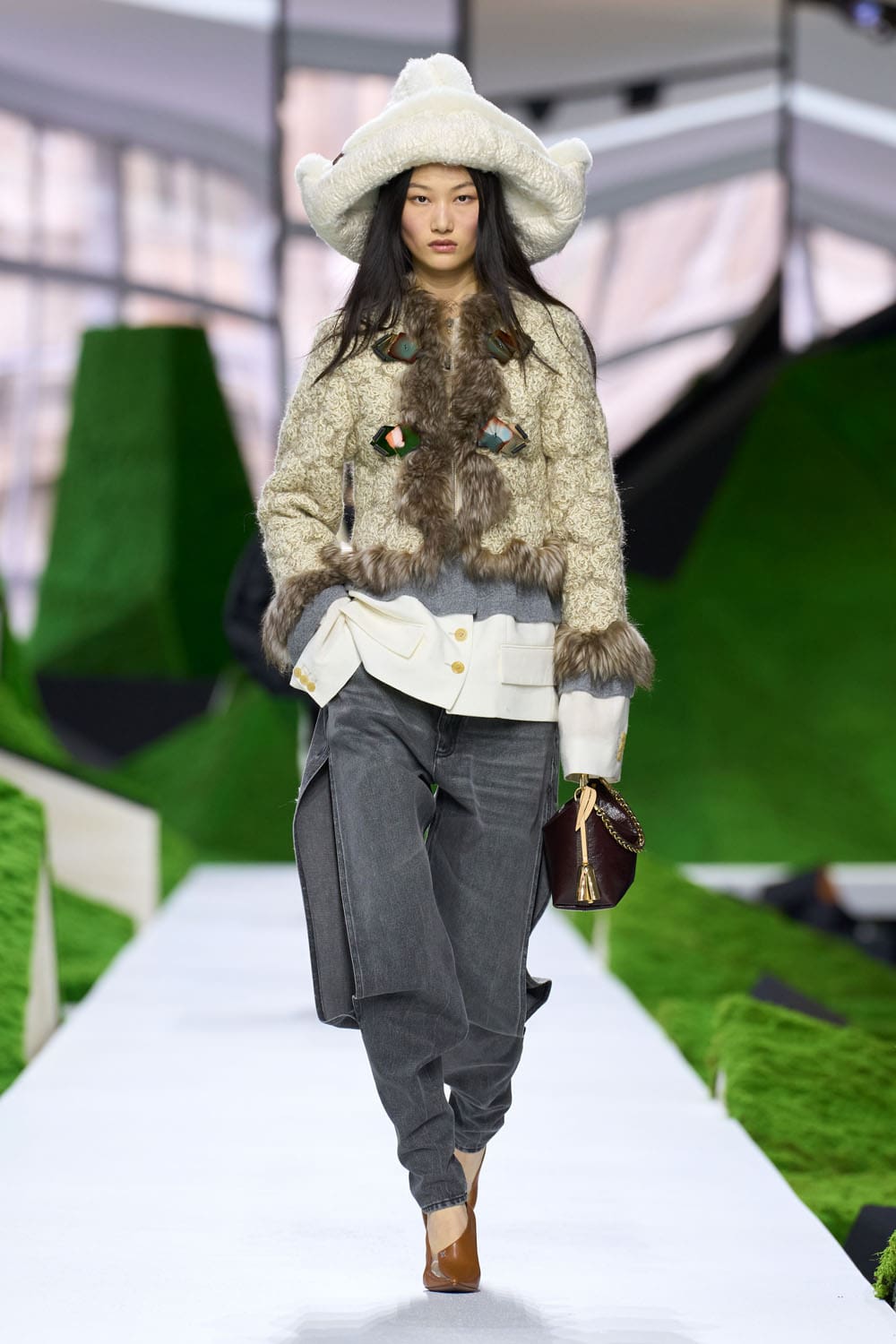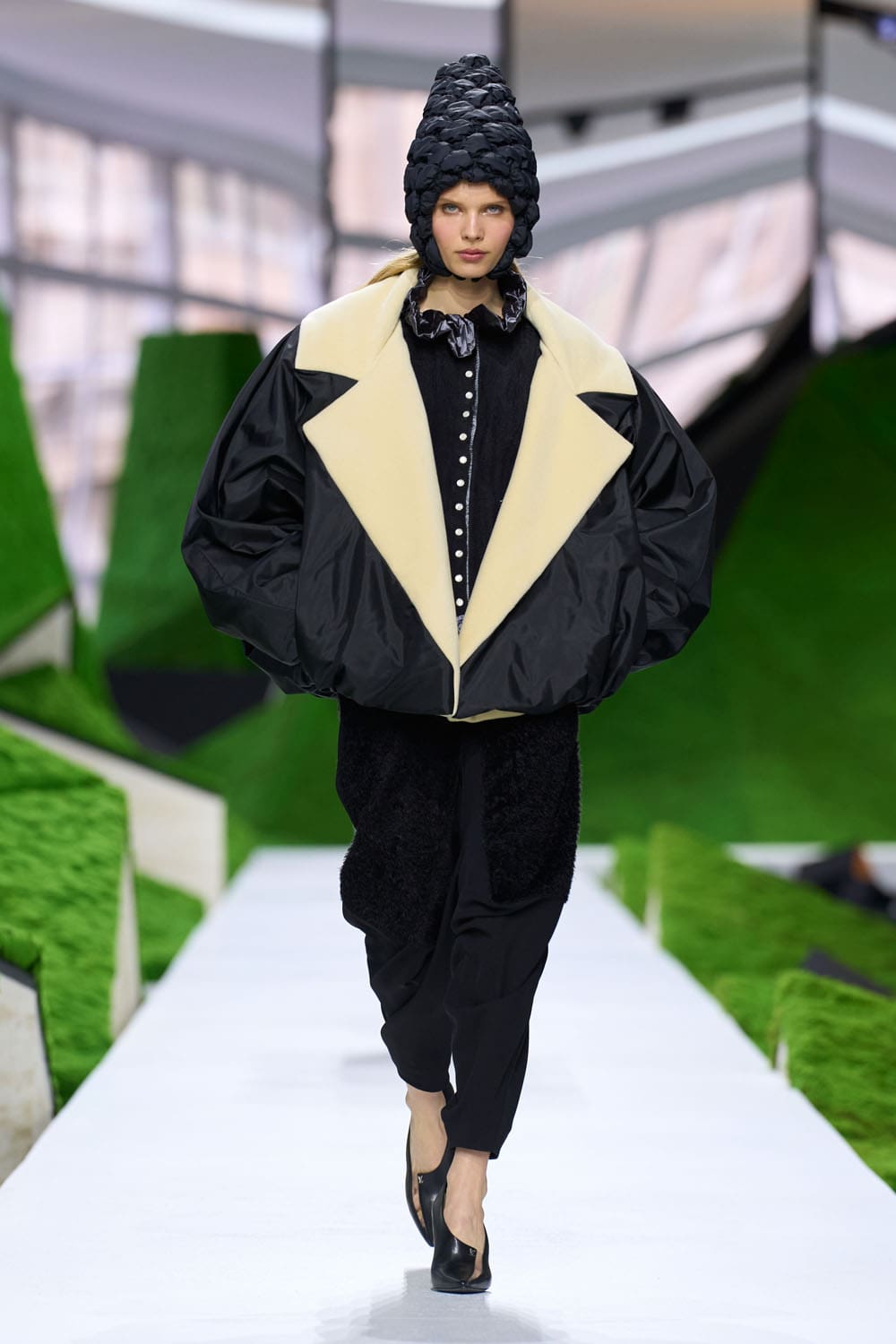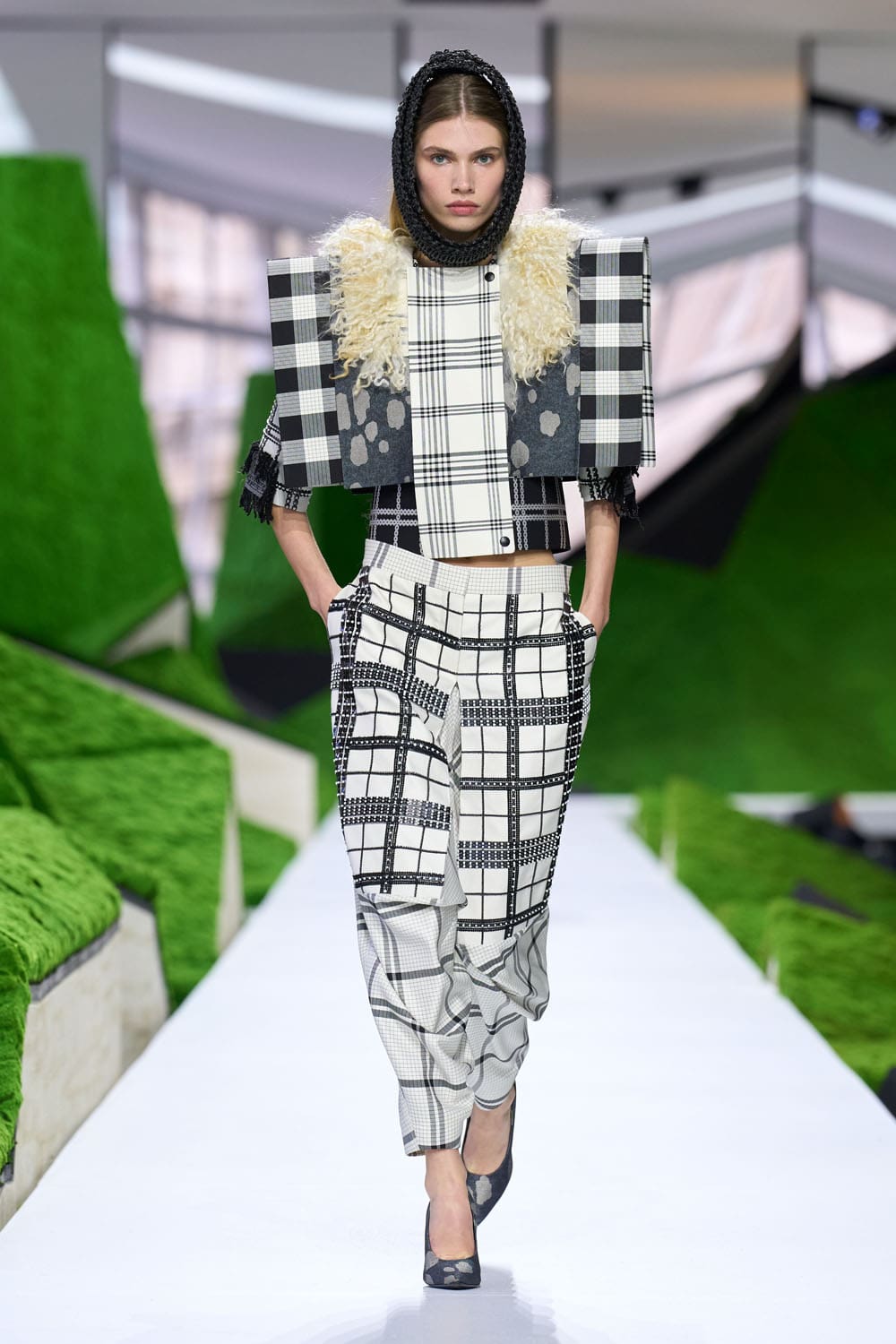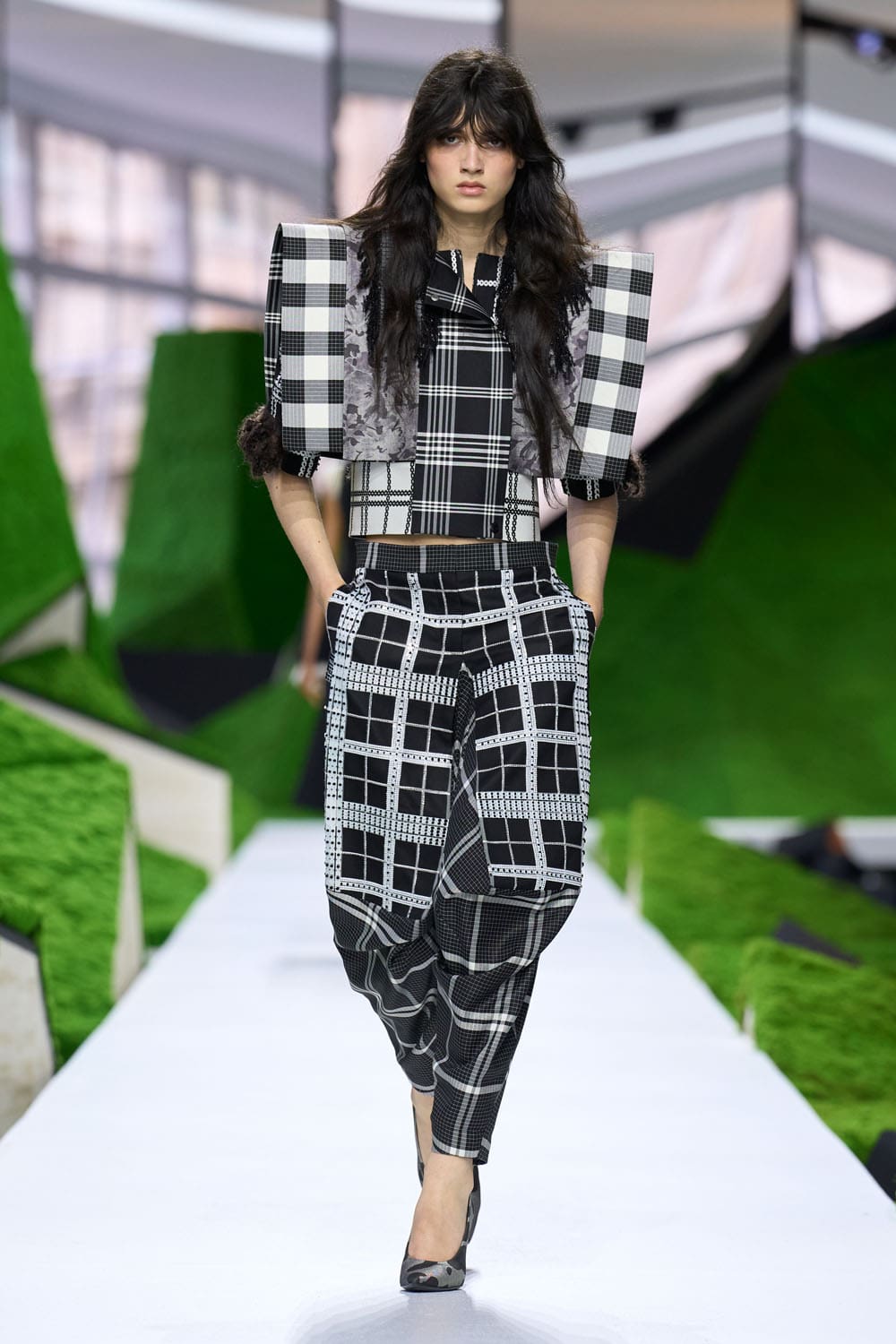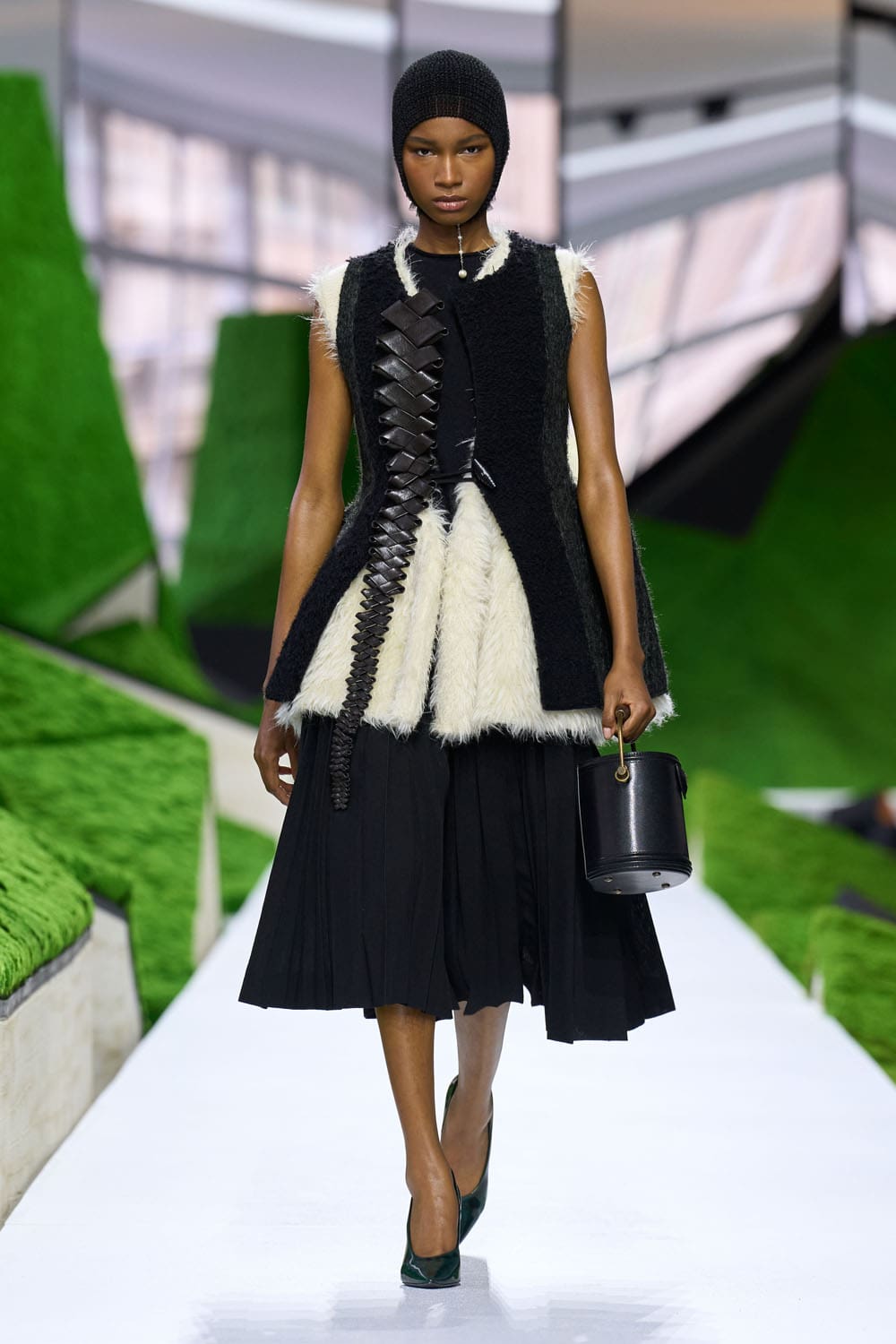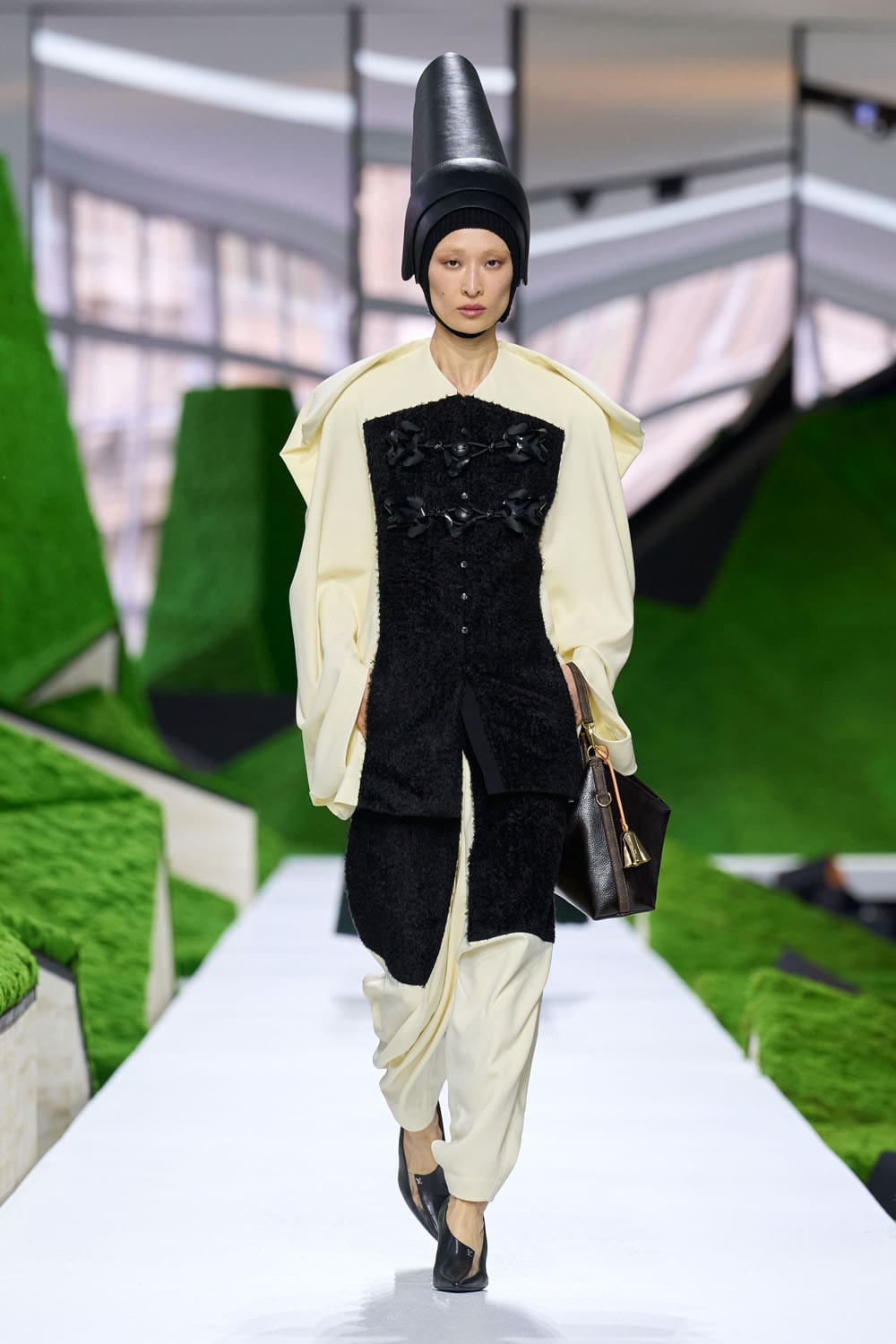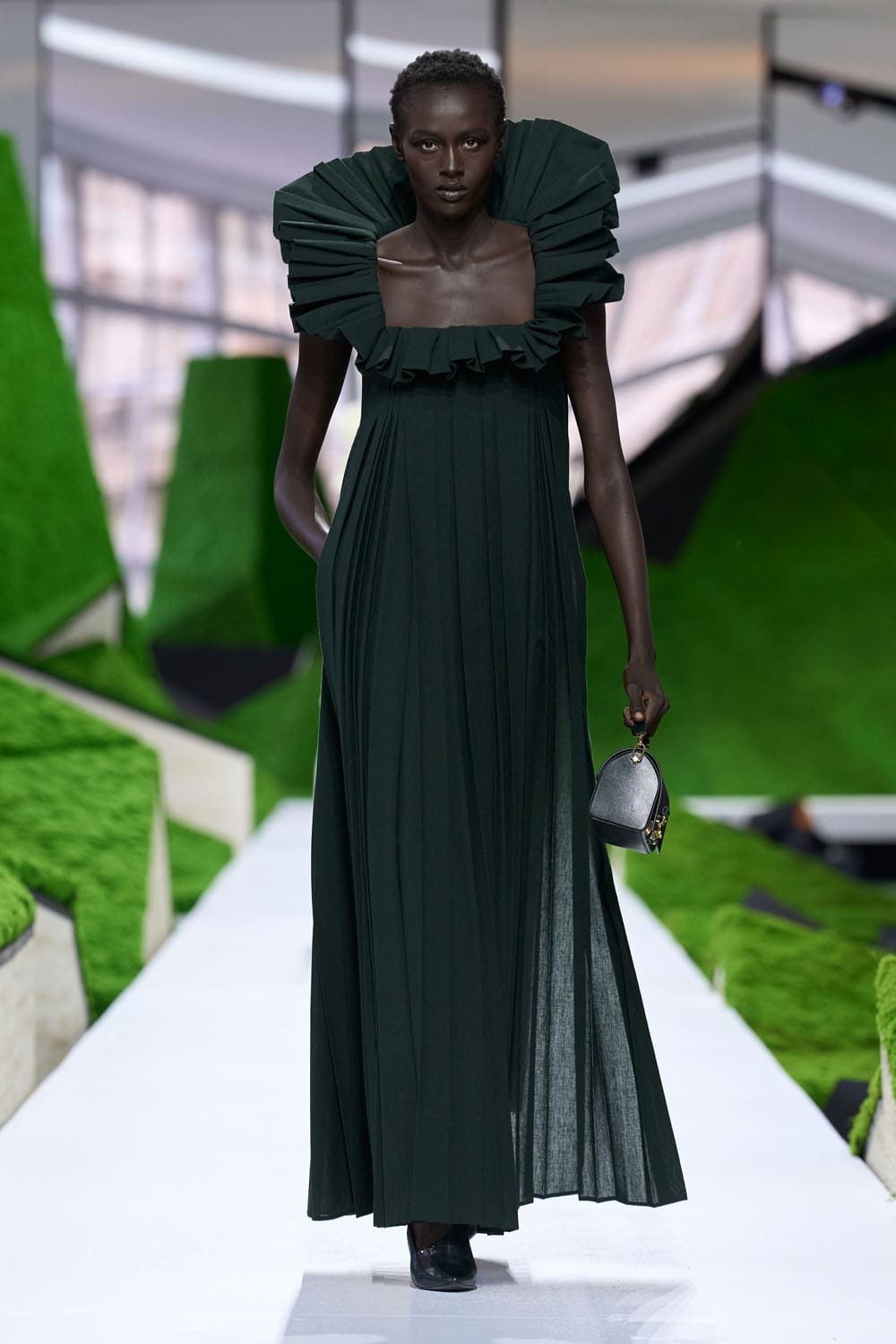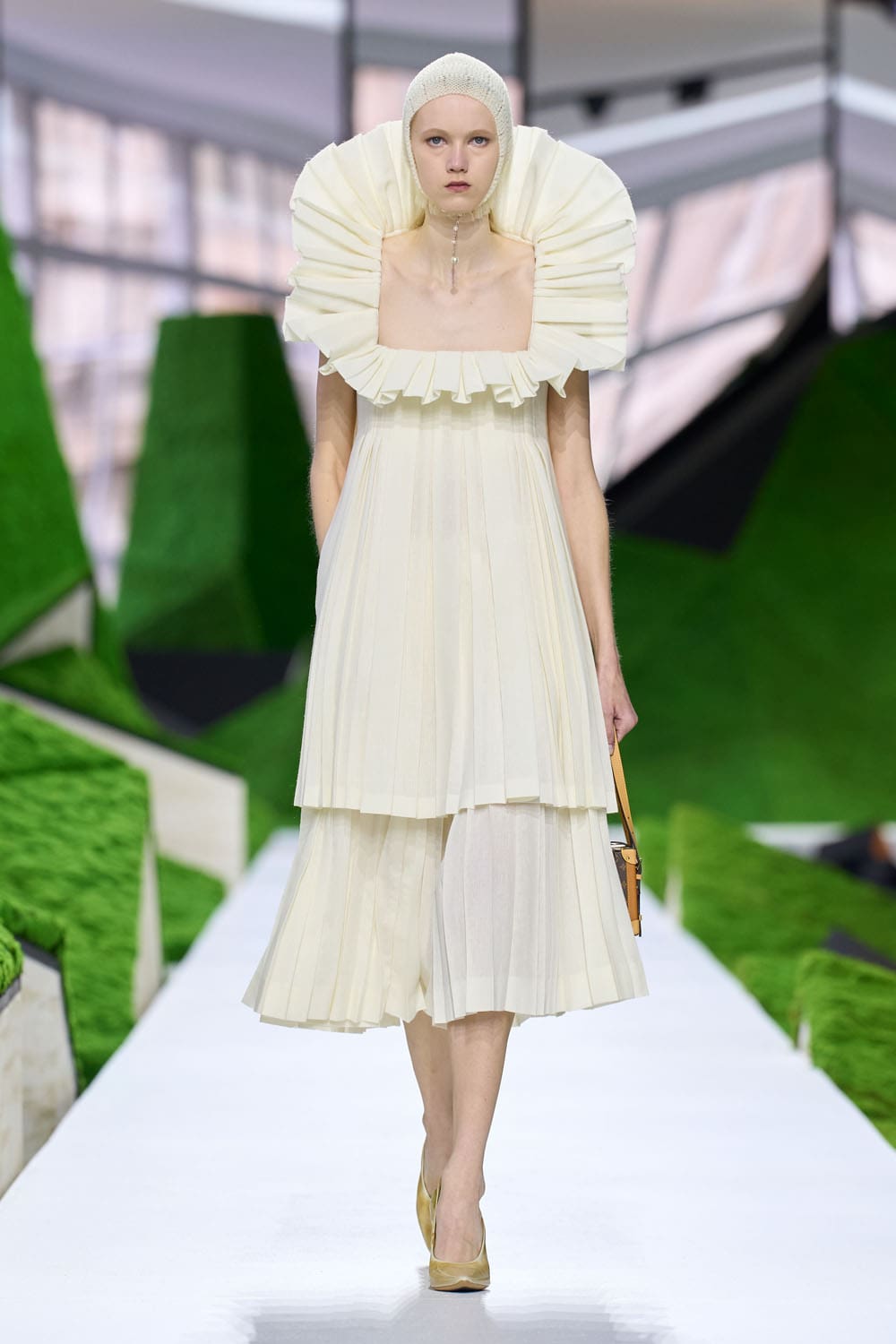
Louis Vuitton Fall Winter 2026-2027 “SUPER NATURE” by Nicolas Ghesquiere. Story by Eleonora de Gray, Editor-in-Chief of RUNWAY MAGAZINE. Photo Courtesy: Louis Vuitton.
Louis Vuitton’s Fall Winter 2026–2027 collection arrives dressed in rhetoric far grander than the clothes themselves. “Super Nature,” as the press release grandly declares, imagines fashion as a rebuilt folklore — a new mythology forged from mountains, forests, digital climates, and the rearranged debris of our modern world. It promises a “heightened view” of the natural and the ancestral. What walks the runway, however, oscillates between conceptual sculpture and inadvertent costume.
Ghesquière remains one of fashion’s sharpest futurists. But this season reveals the risk of over-intellectualizing instinct: nature becomes abstraction, folklore becomes fabrication, and silhouette becomes spectacle for spectacle’s sake.
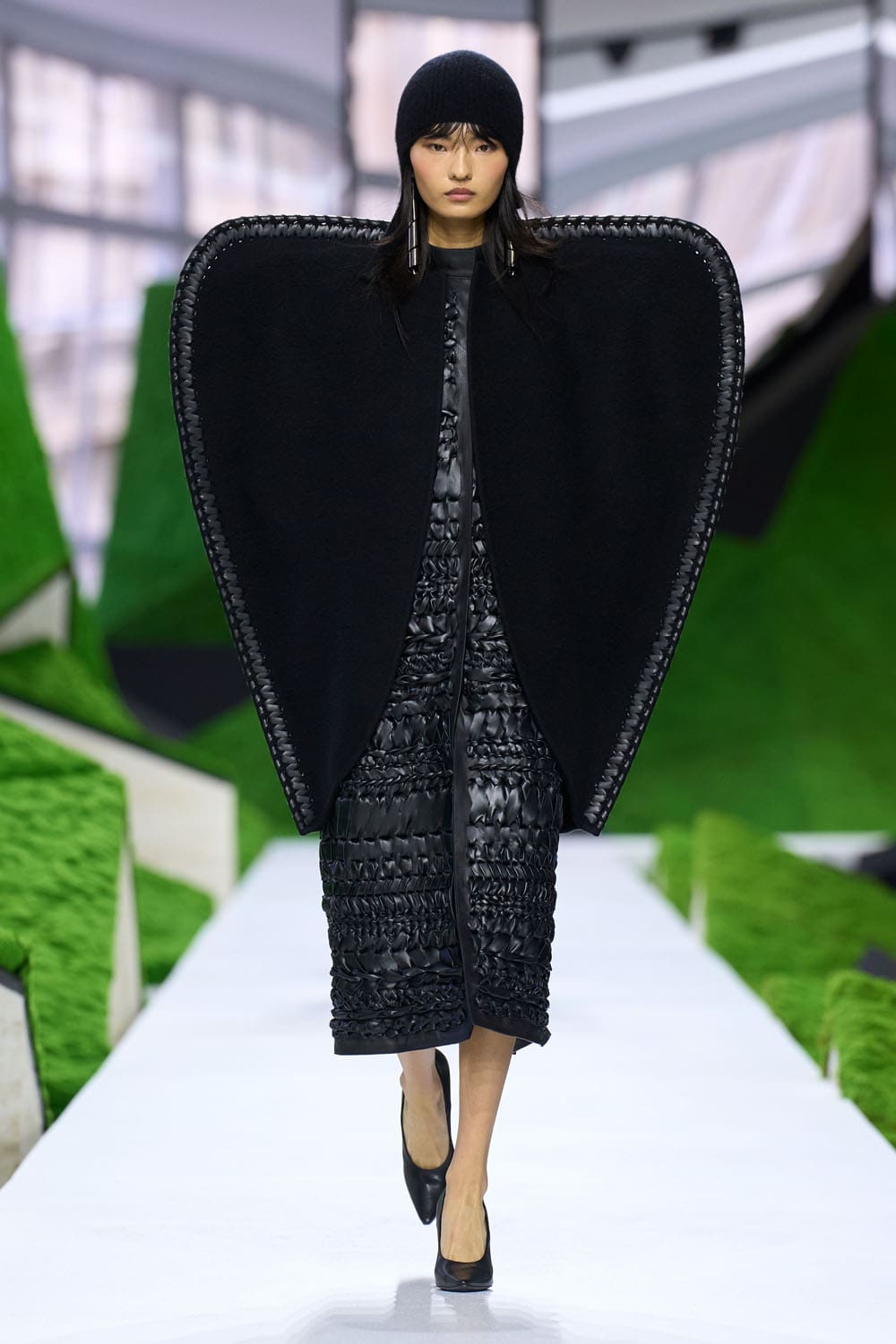
The Monument Silhouette — When Outerwear Goes Monolithic
The opening look sets the tone with a cape the size of a gliding aircraft wing, stitched with a kinked leather perimeter, paired with a dress smocked into glossy, rubbery ridges. It is impressive in scale — but nature, even at her most dramatic, rarely feels this contrived.
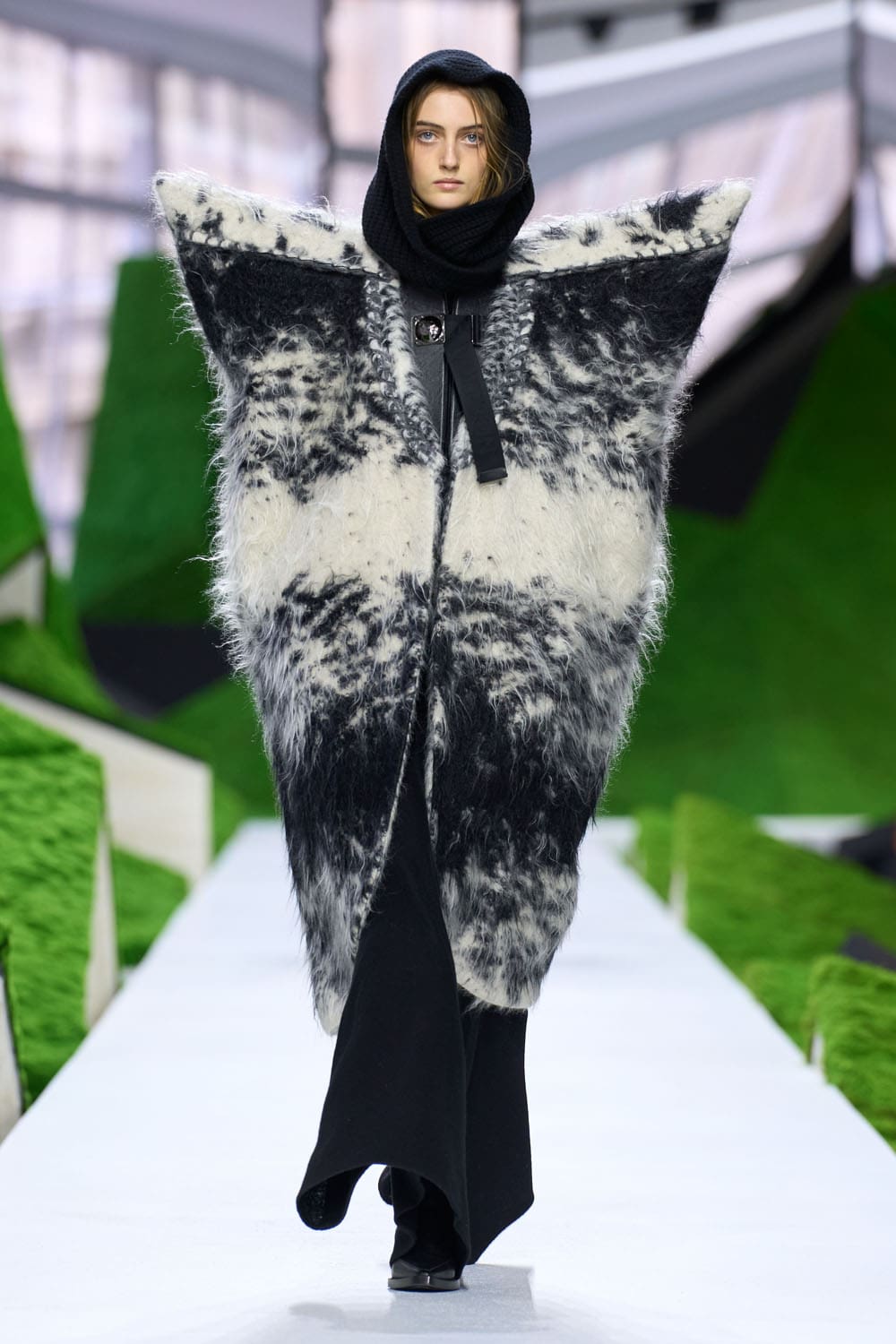
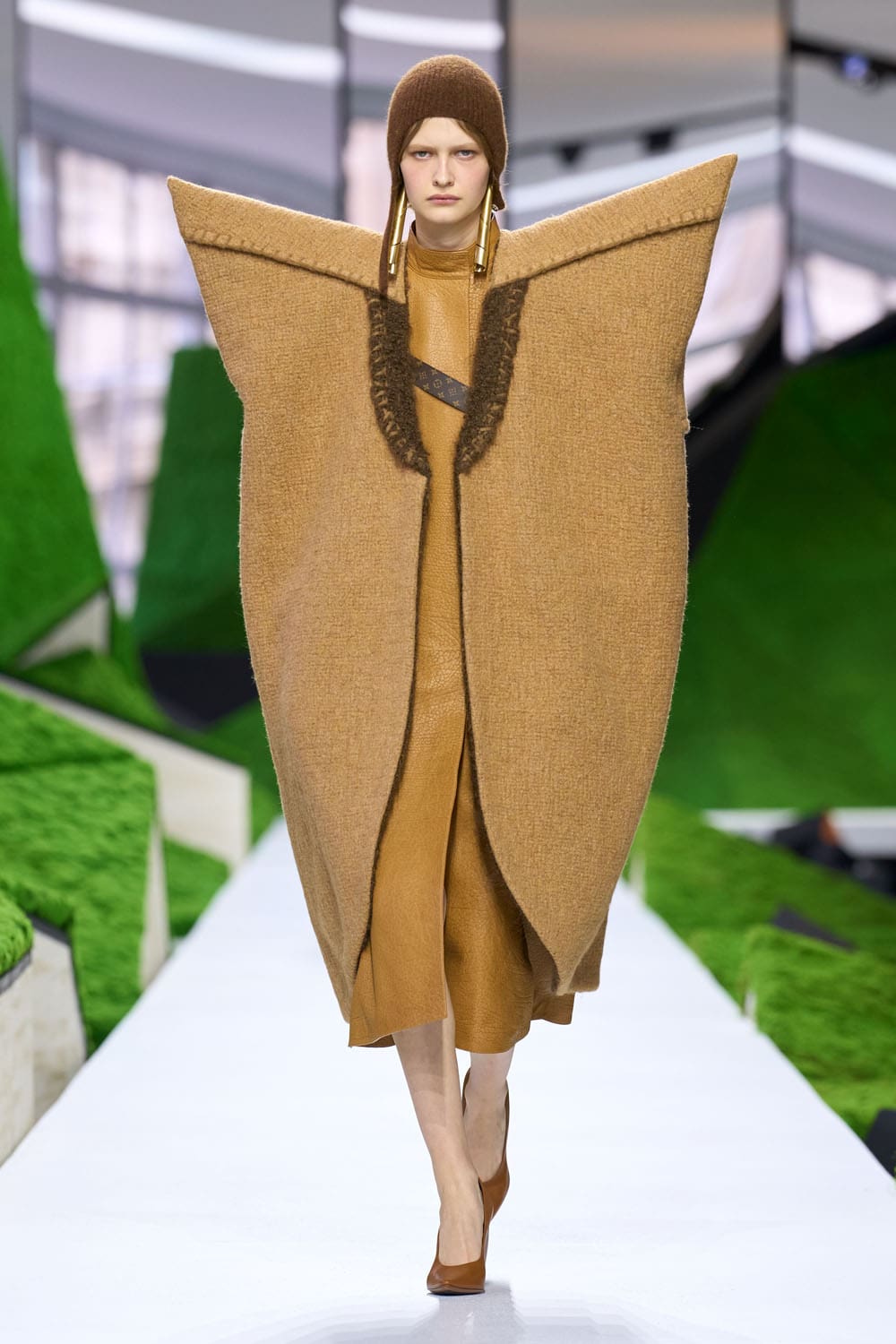
The exaggerated shoulder landscapes and padded geometries speak less of wind and erosion, and more of industrial design experiments. Ghesquière’s sculptural impulses are unmistakable, but their emotional resonance is minimal. These are silhouettes you admire, not silhouettes you live in.
The Faux-Folklore Furs — Shepherd, but Make It Sci-Fi
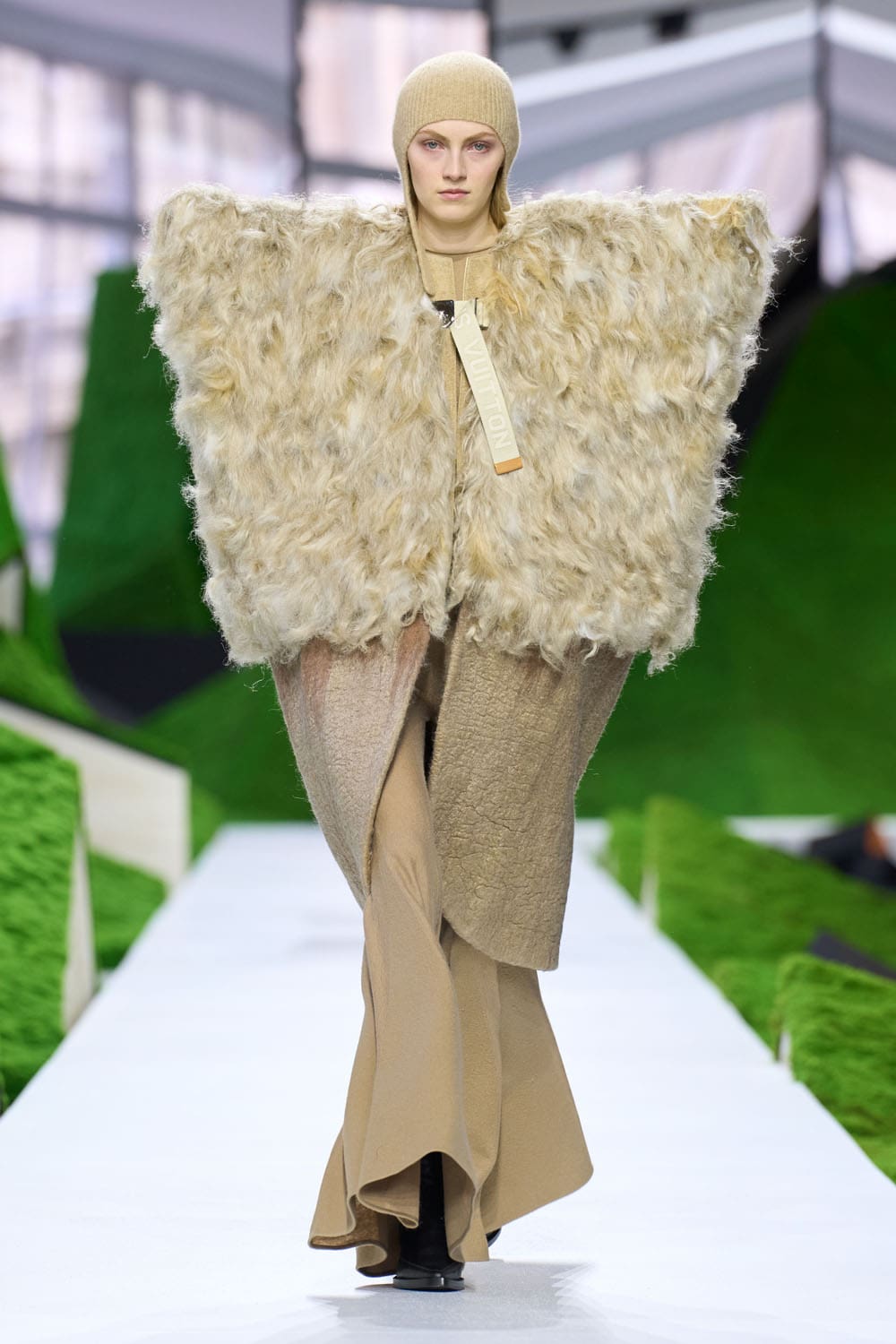
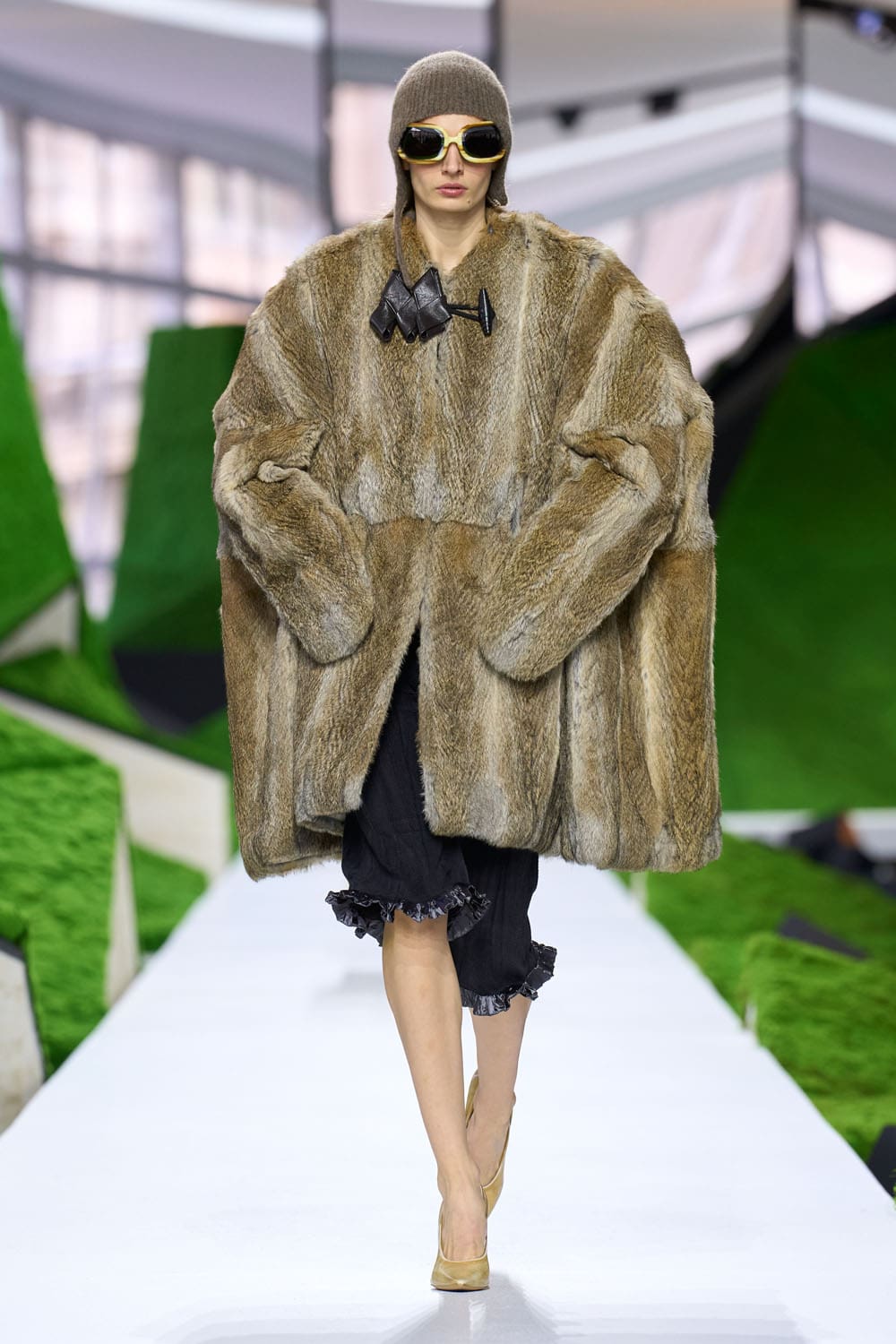
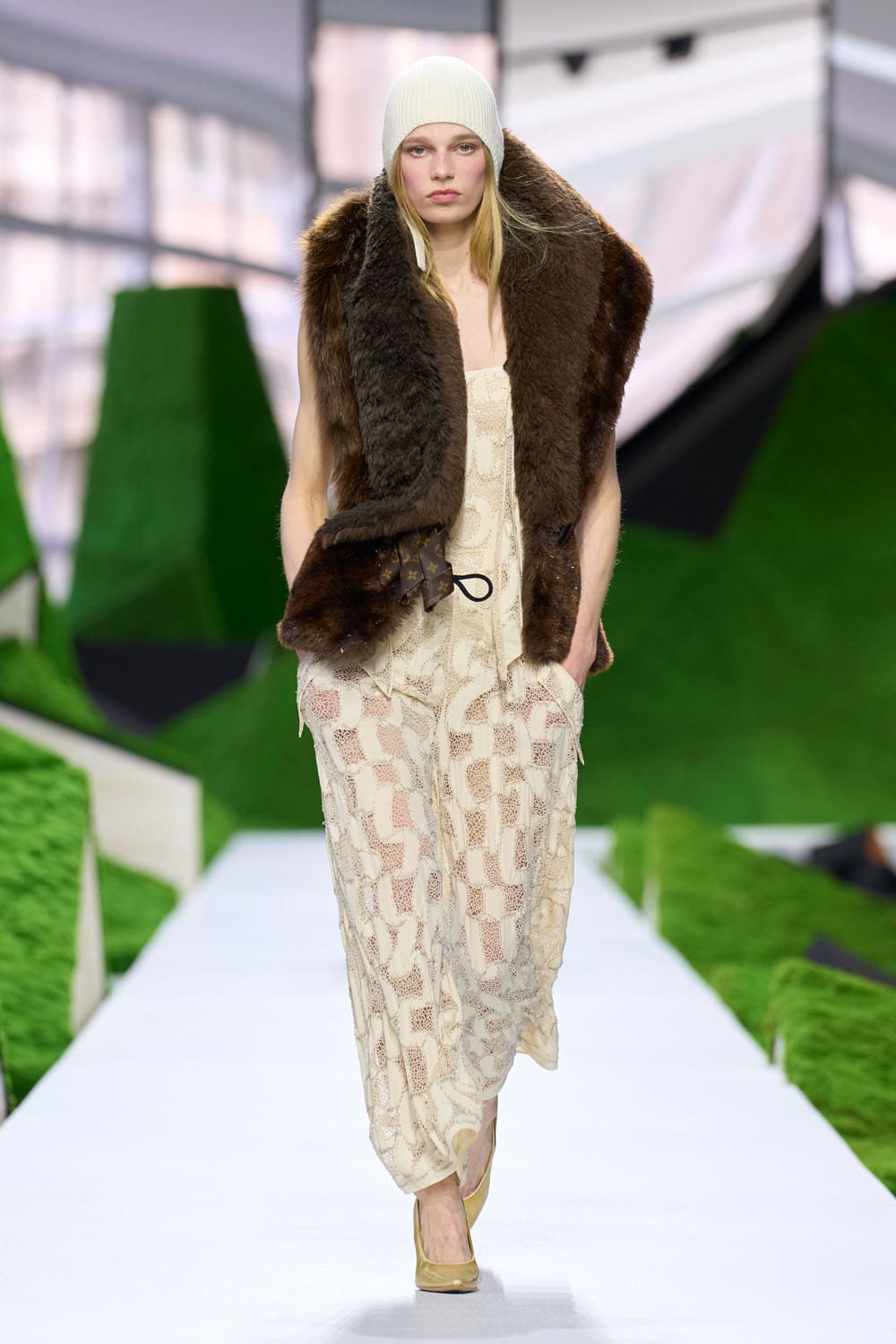
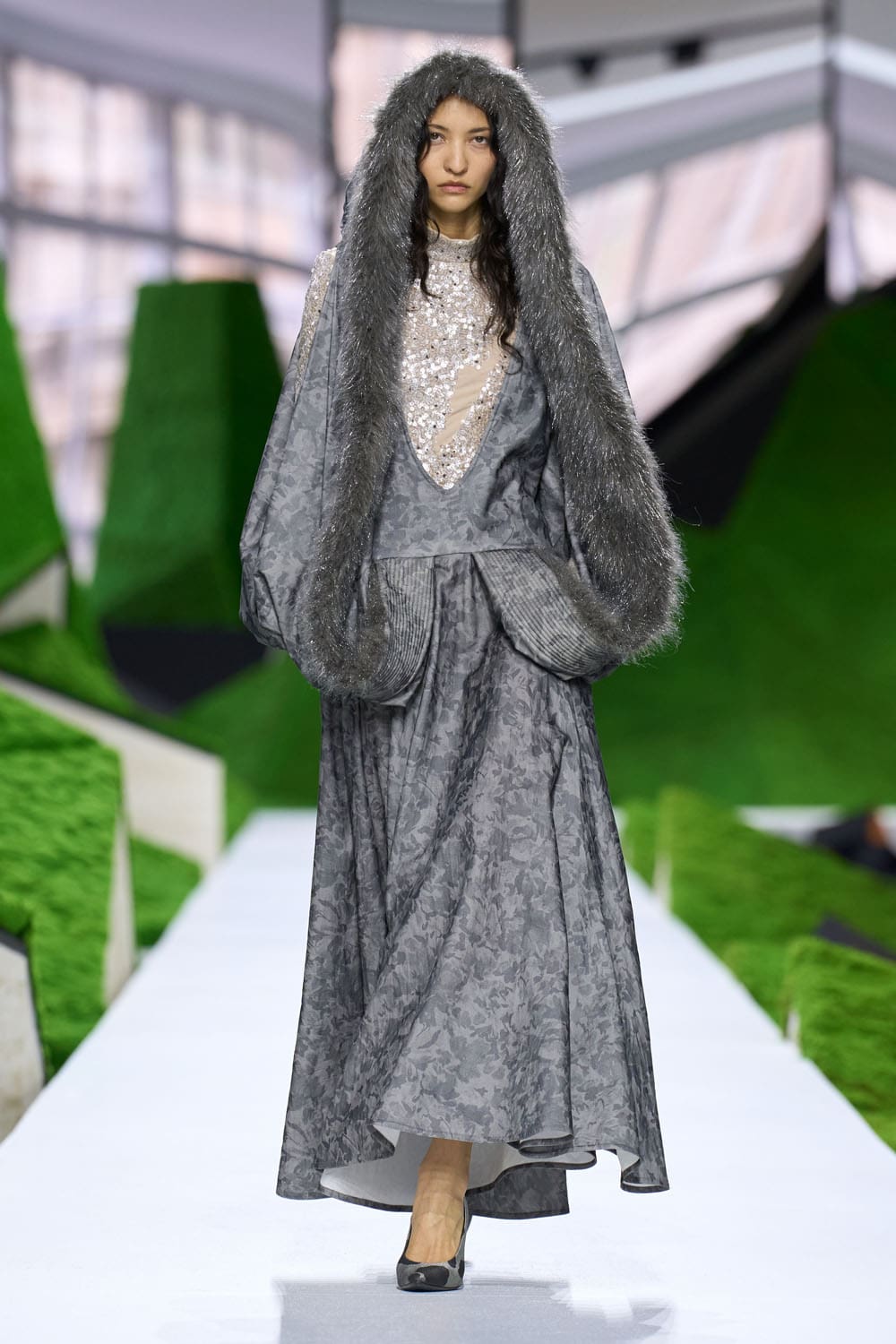
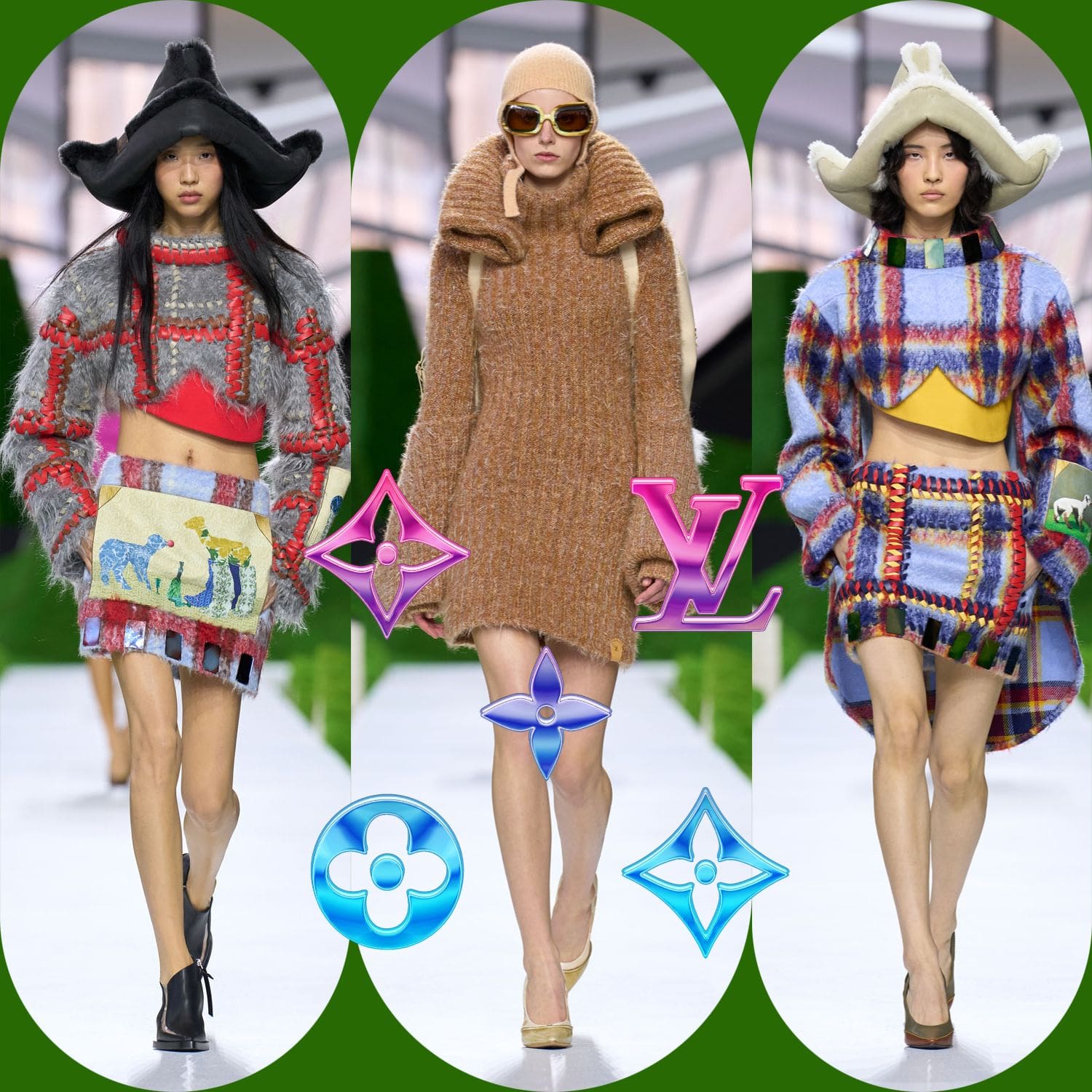
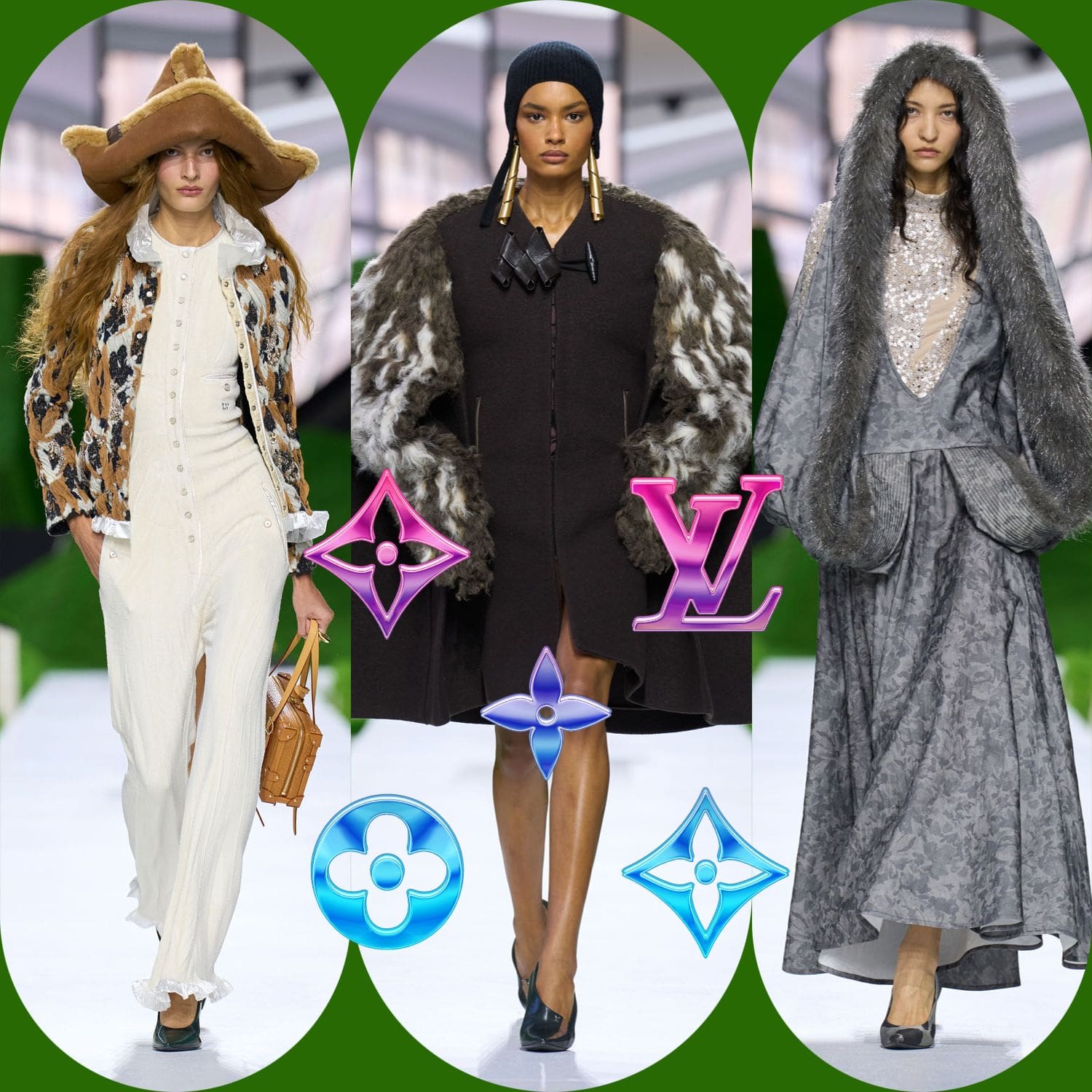
A cream, storm-thick “vegetal fur” coat — wide as a mountain sheep — tries to bridge folklore and futurism. The house insists these textiles represent a new nature: engineered, moral, sustainable. The effect, however, is far closer to theatrical costumery than modern craft.
The layering beneath, a panelled felt skirt over flared trousers, resembles an archaeological hybrid: part Sami attire, part post-apocalyptic armor. The conceptual ambition is clear, but the line between meaning and literalism begins to blur.
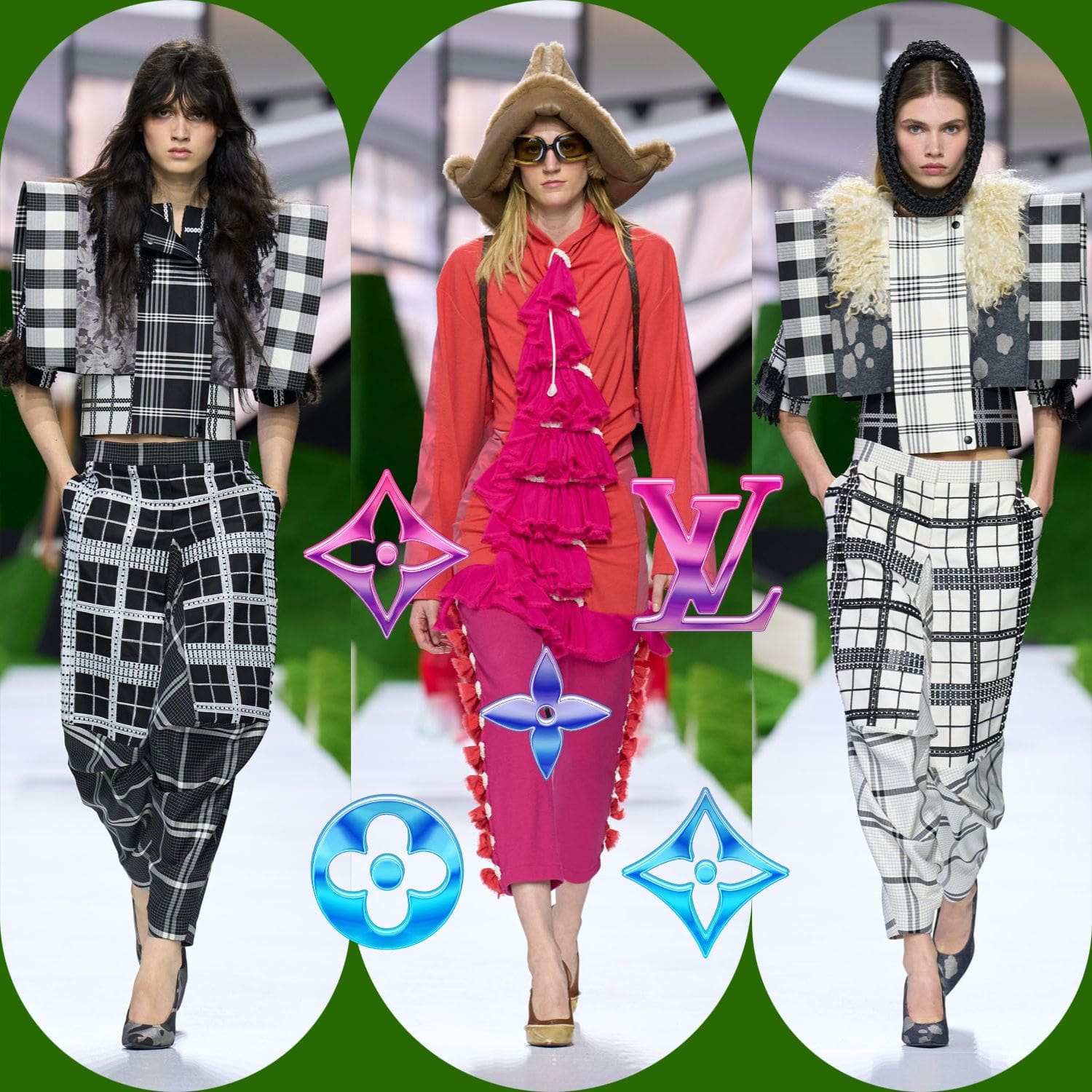
The Pastoral Satire — Straw Hats, Fur Collars, and Accidental Comedy
A sequence of looks crosses into near-parody:
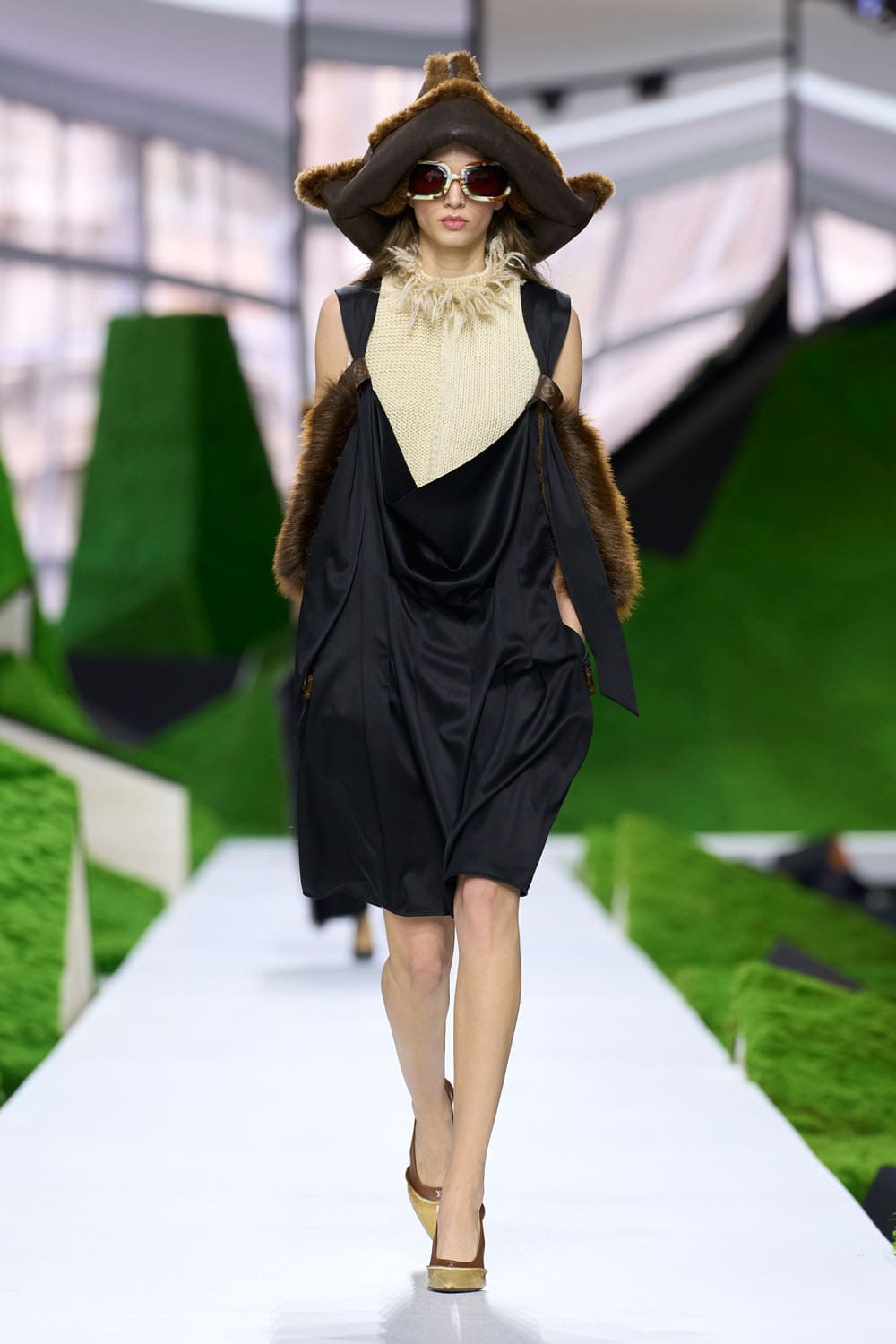
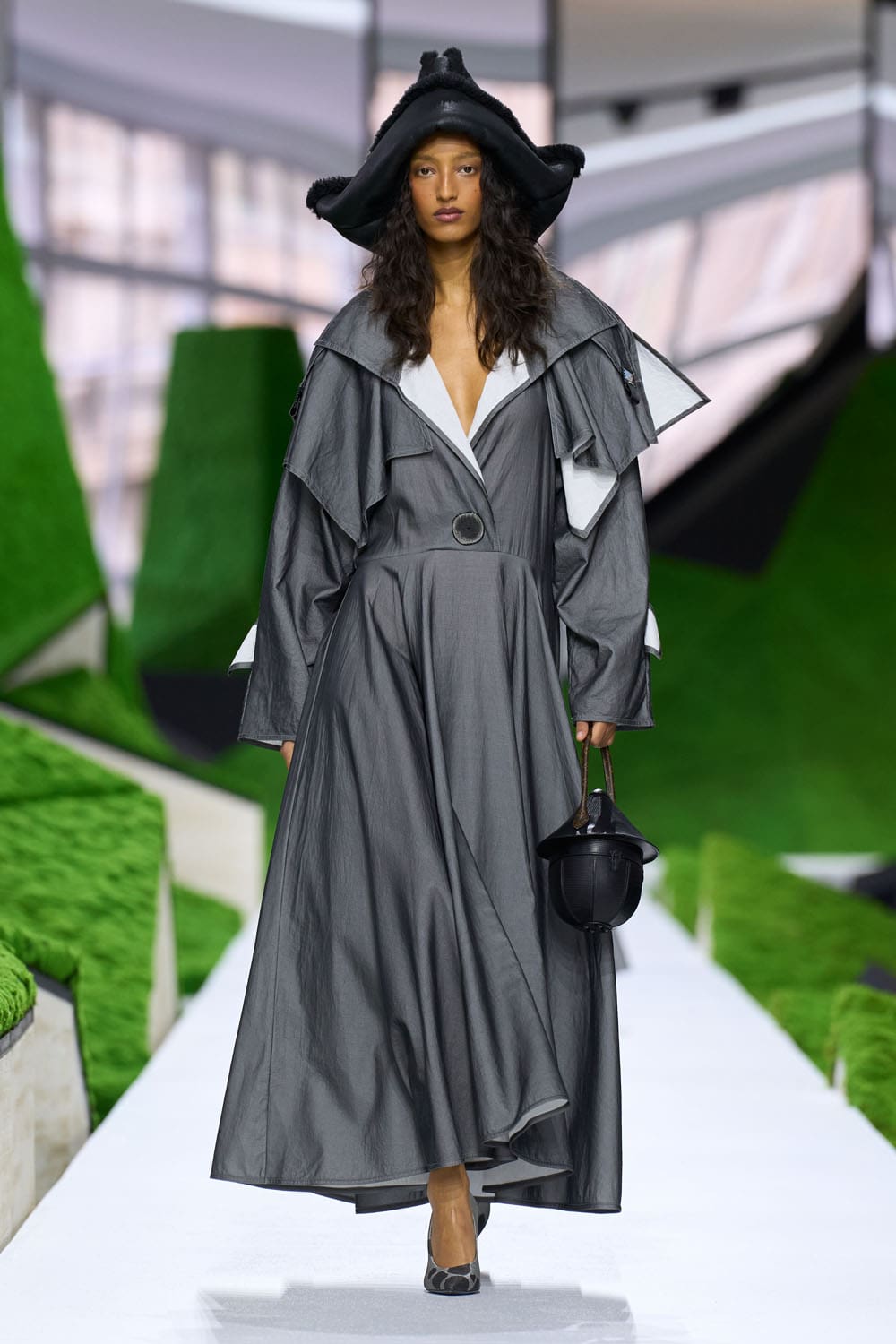
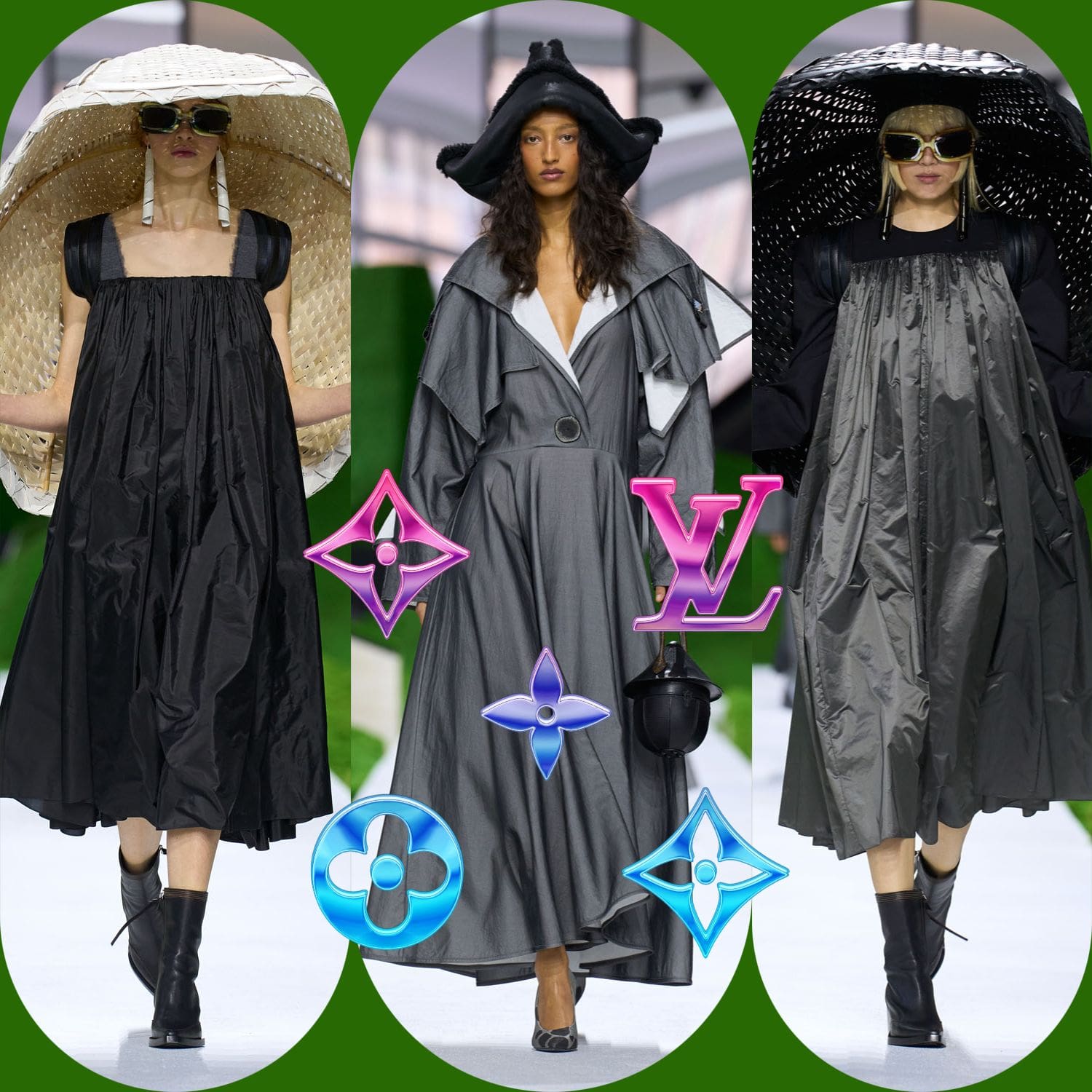
- Tri-corner hats inflated to comedic dimensions.
- Fur-trimmed tabards that evoke medieval reenactments.
- Aprons, bibs, and knitted collars that lean into nostalgia with surprising earnestness.
One dress, a black satin sheath with a triangular knit panel, attempts primitive simplicity but ends up mimicking a costume department’s idea of “village clothing.” The disconnect is jarring.
Ghesquière, in reaching for a new folklore, begins to imitate the old too literally.
Hyper-Craft — The Collection’s Strongest Argument
When the press release speaks of “hyper-craft,” it doesn’t exaggerate.
The techniques themselves are remarkable:
- Animal motifs woven into felted skirts like cave paintings reimagined through Jacquard.
- Leather manipulated to imitate wood grain, an eerie and beautiful illusion.
- Buttons sculpted like minerals.
- Resin heels shaped like antlers.
These moments reveal what Ghesquière excels at: inventing materials that feel both ancient and extraterrestrial. If the silhouettes softened, these innovations would have room to breathe.
The Collage Instinct — A Body as Landscape
Several looks literally treat clothing as terrain:
- Felted mountains stitched onto jackets.
- Patchwork grids resembling cartographic maps.
- Layers of nylon, organza, and rope arranged like geological strata.
These garments embody the “topography of the body” concept with far more clarity than the inflated coats. They are imaginative without being overwhelming — proof the collection contained a subtler, more compelling path.
The Great Straw Domes — Art Objects in Search of a Wardrobe
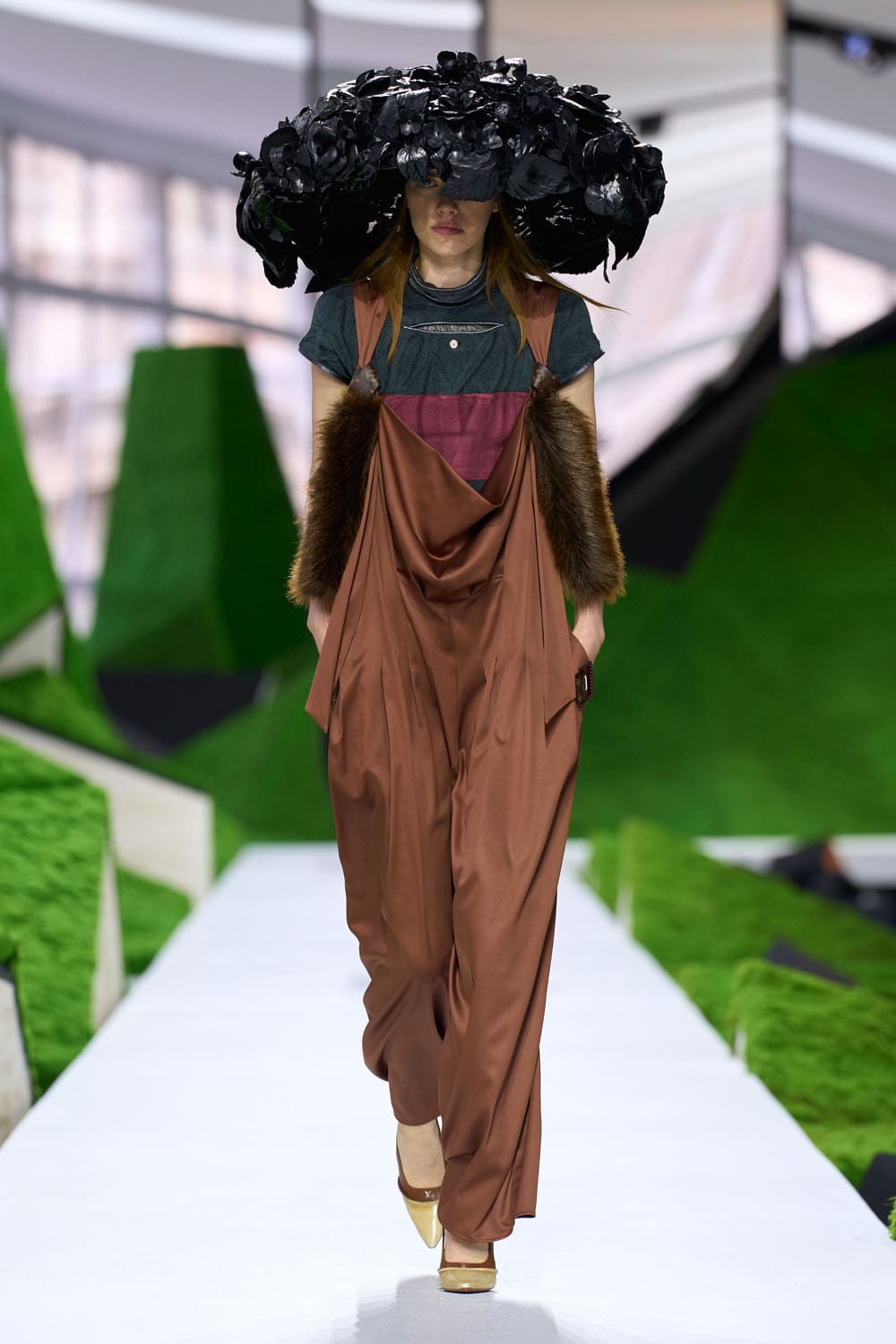
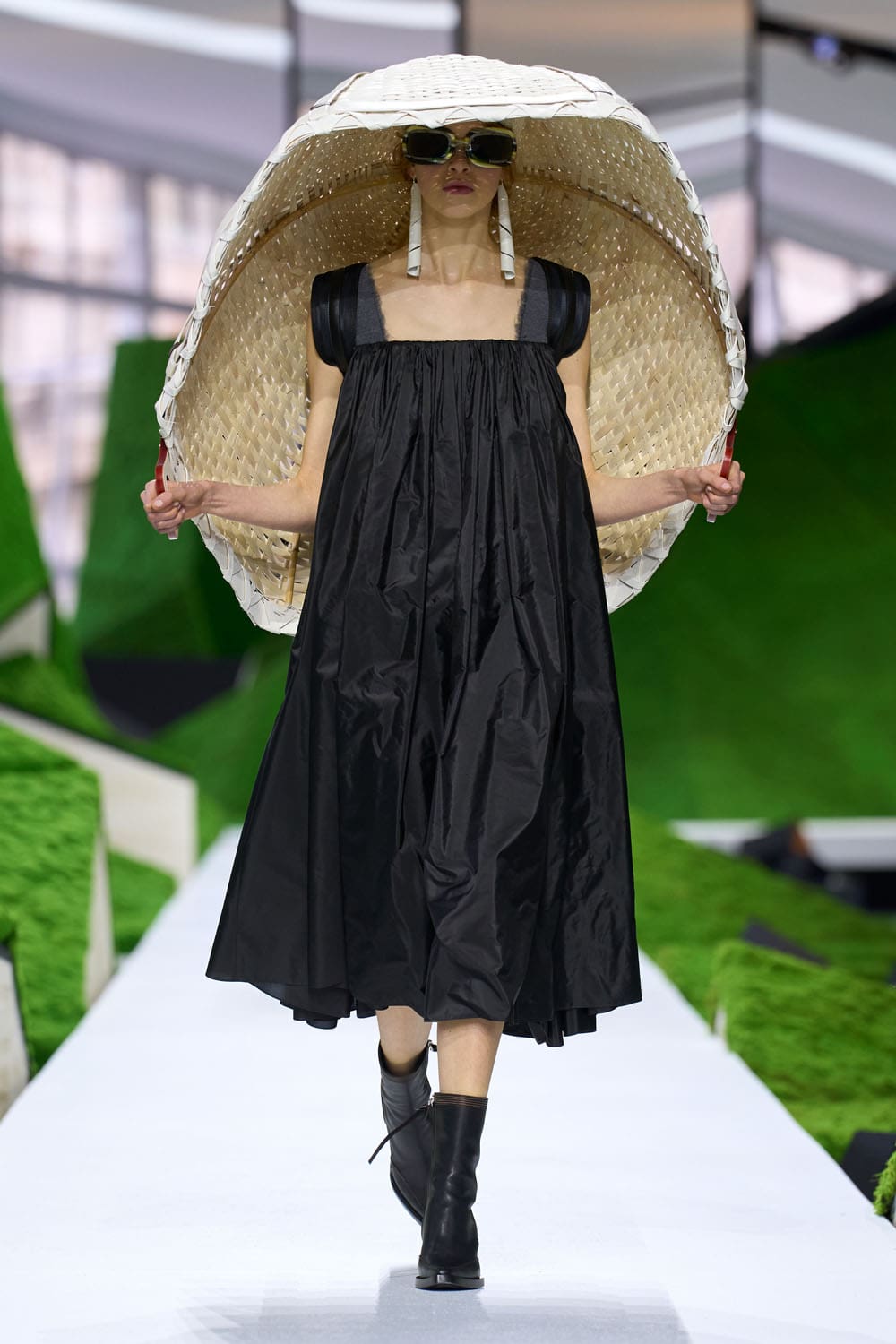
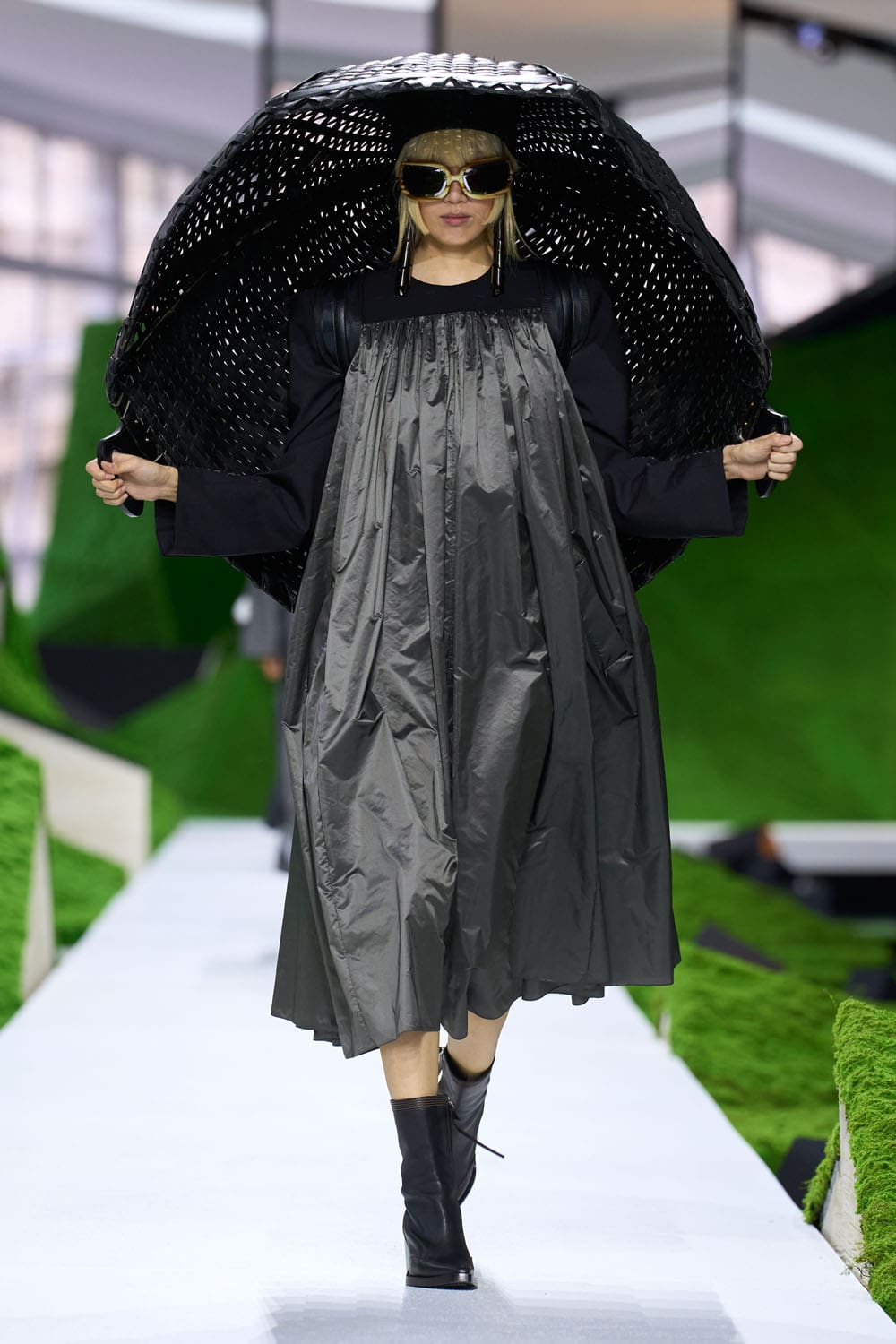
The enormous woven hats — cathedral-sized, hovering over fragile nylon dresses — are feats of craft. But their impact is theatrical rather than sartorial. They flatten the human figure beneath them, transforming the wearer into an anonymous carrier for a conceptual prop.
Nature, in real life, does not erase the individual. These pieces do.

The Bags — Where Louis Vuitton Regains Its Pulse
Amid the maximalism, the leather goods quietly deliver the most convincing argument of the season:
- The Noé bag returns in its 1932 proportions, finally stripped of embellishment.
- Bucket bags appear in deep lacquered tones, shaped like campfire kettles.
- Strapped pouches resemble explorer gear.
Here, Ghesquière’s instincts align perfectly with Vuitton DNA: mobility, craftsmanship, curiosity.
If the clothes reach too far, the bags find balance.
The Finale: Pleats, Ruffs, and a New Puritanism
The closing dresses — pale, pleated, framed with Elizabethan ruffs — introduce a new, almost ecclesiastical serenity. If nature is cathedral, these dresses are parishioners. They are oddly moving in their simplicity, hinting at a quieter post-digital folklore that the rest of the collection did not dare to embrace.
A MYTHOLOGY STILL UNDER CONSTRUCTION
“Super Nature” sets out to reinterpret the primordial through the technological.
It succeeds in craft, in materials, in imagination — but falters in proportion and coherence.
Ghesquière remains a visionary, but here his vision fragments:
half science fiction, half pastoral fable, half experimental theater.
Louis Vuitton wanted a new folklore for the future.
What it delivered is a series of fascinating, sometimes beautiful, sometimes bewildering artifacts —
a mythology still looking for its narrative.
See All Looks Louis Vuitton Fall 2026