Prada
THE TRIUMPHS
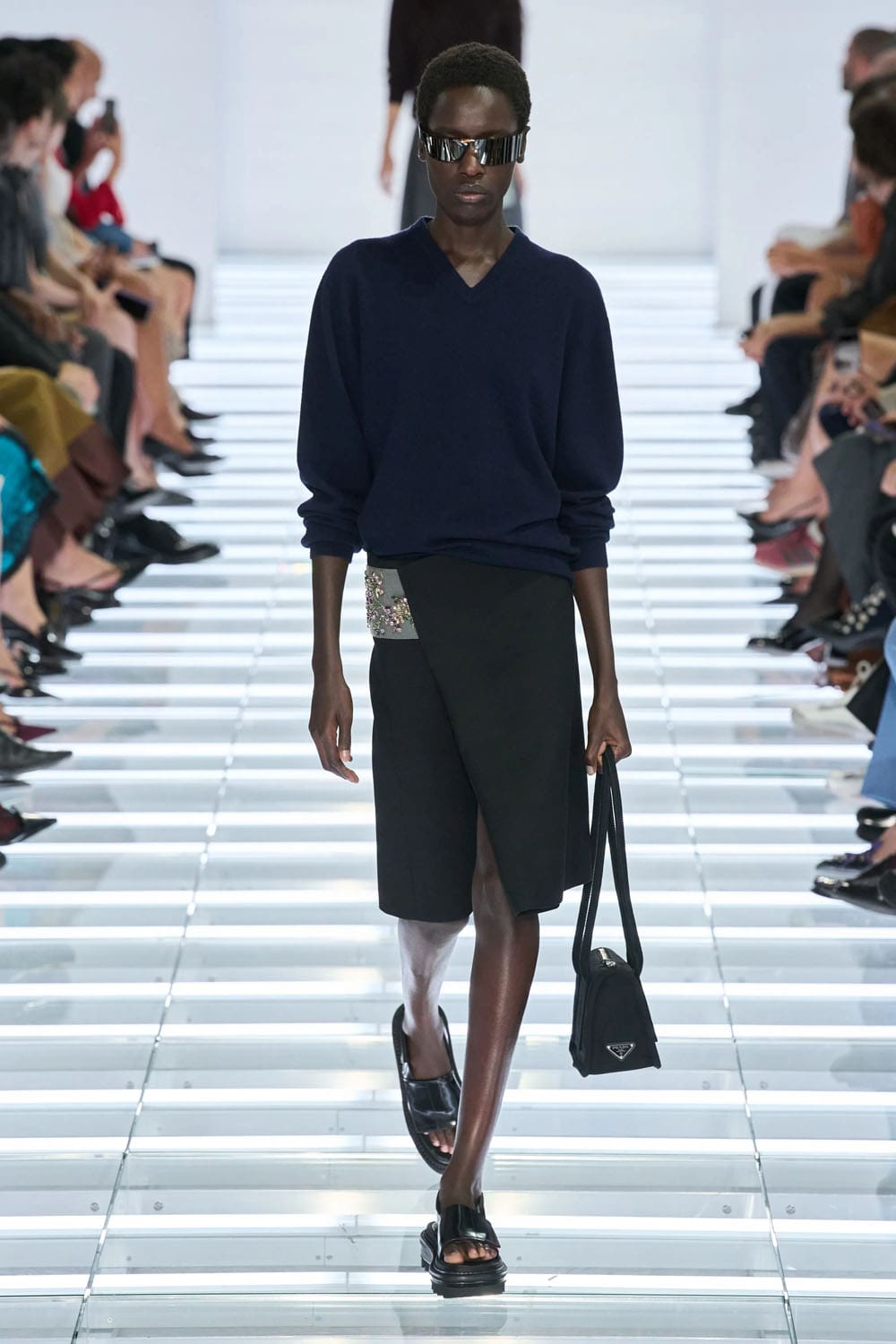
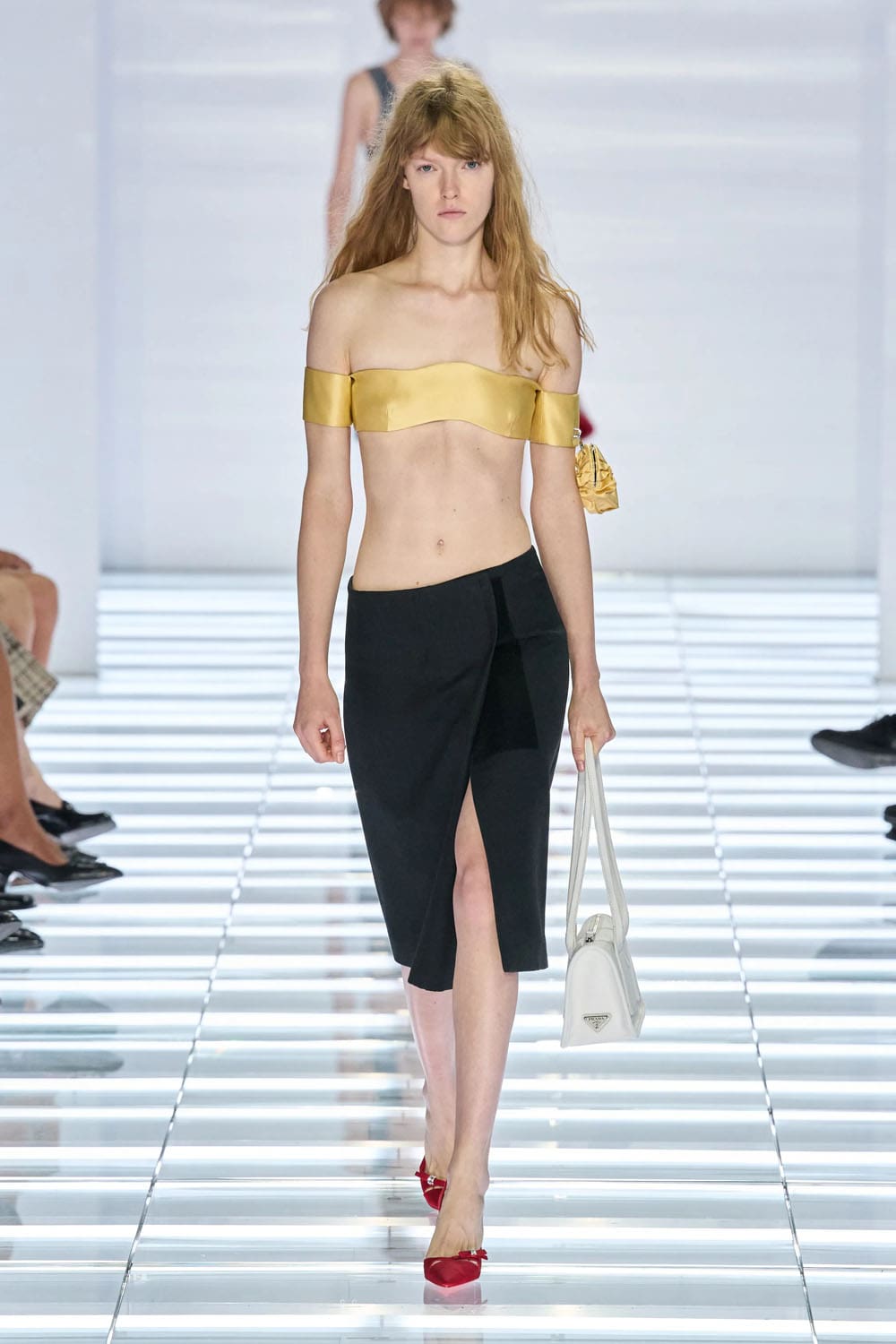
- Radical reductionism turning the skirt into an intellectual laboratory, interrogating kinetic freedom and hemline autonomy without theatrical distraction
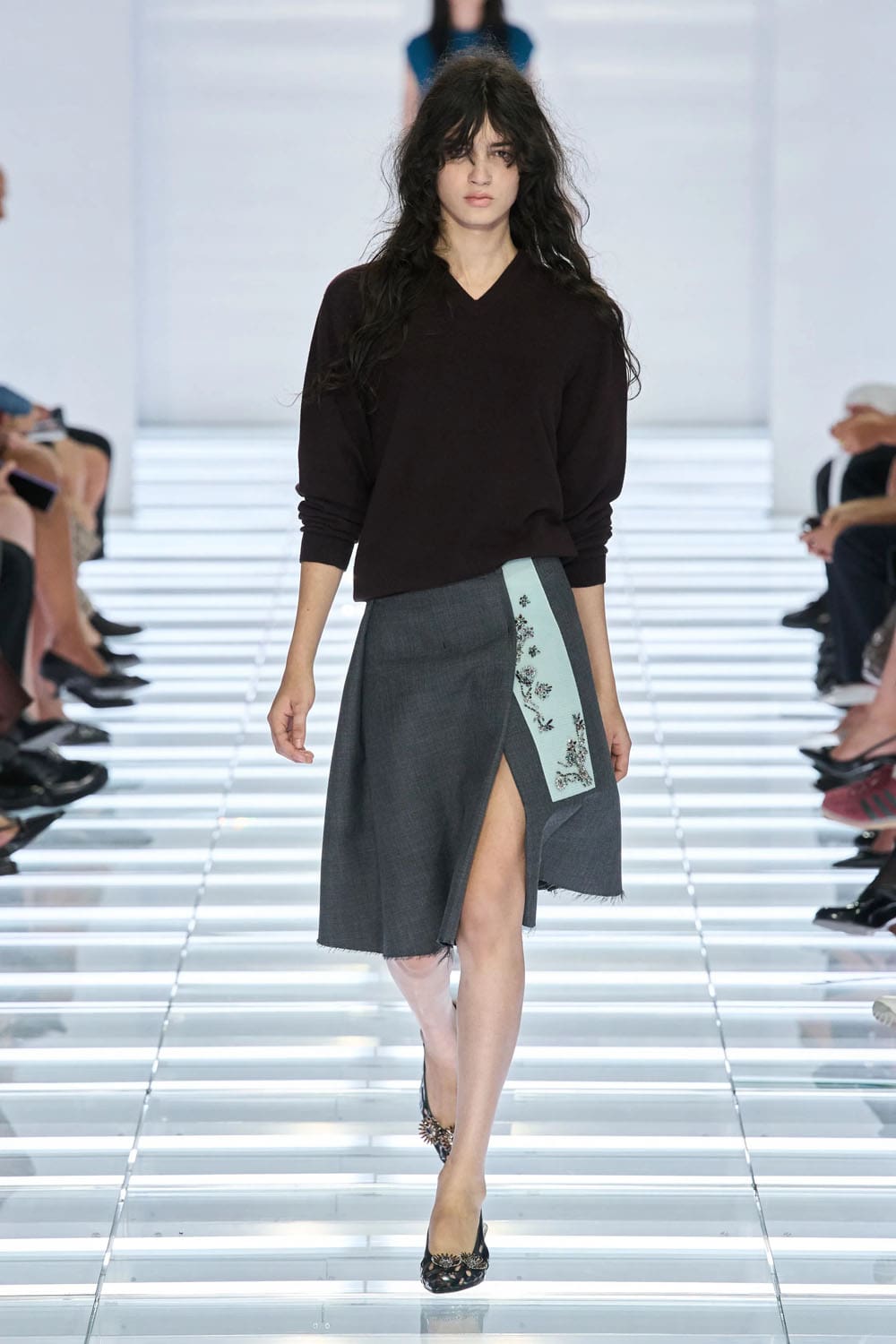
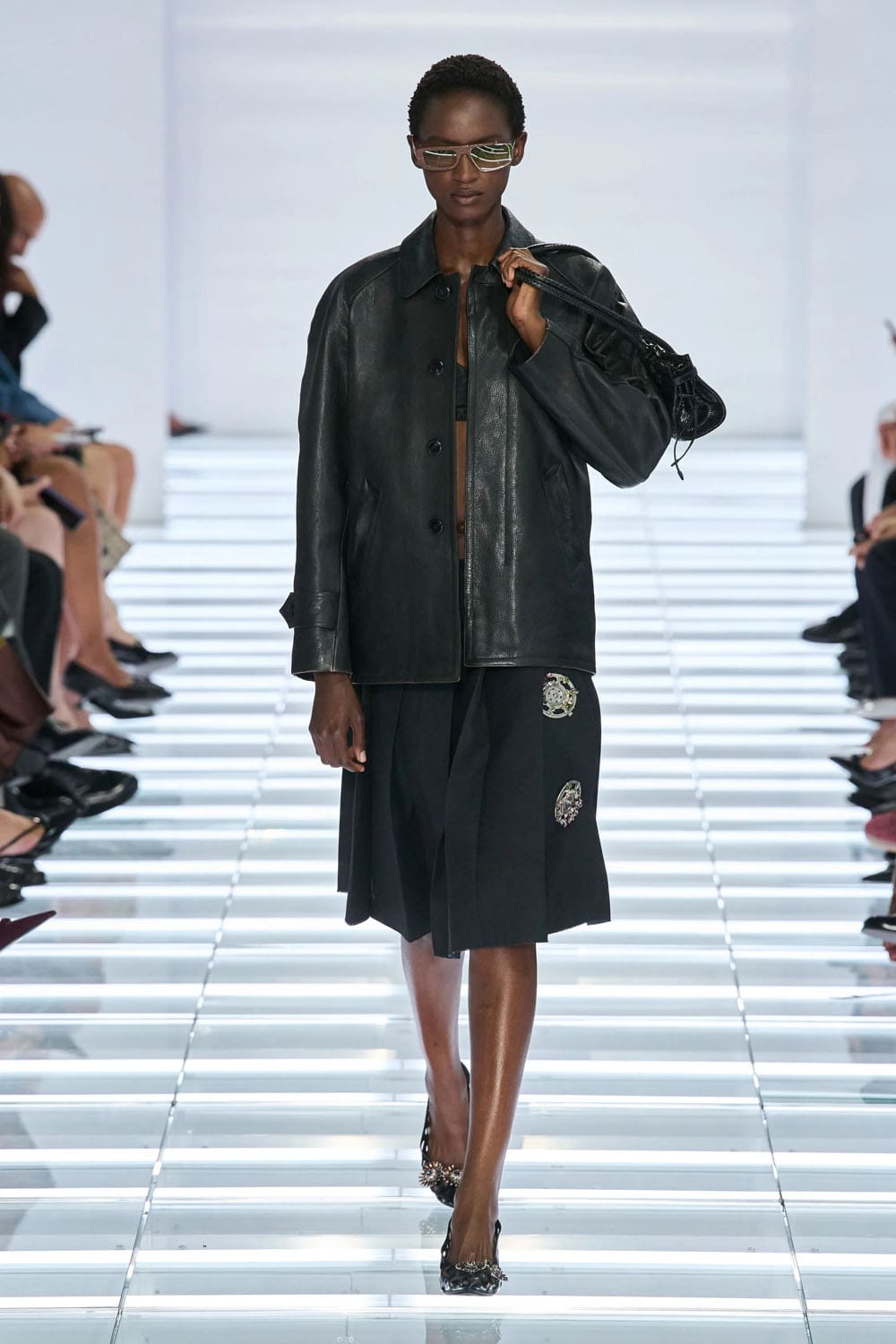
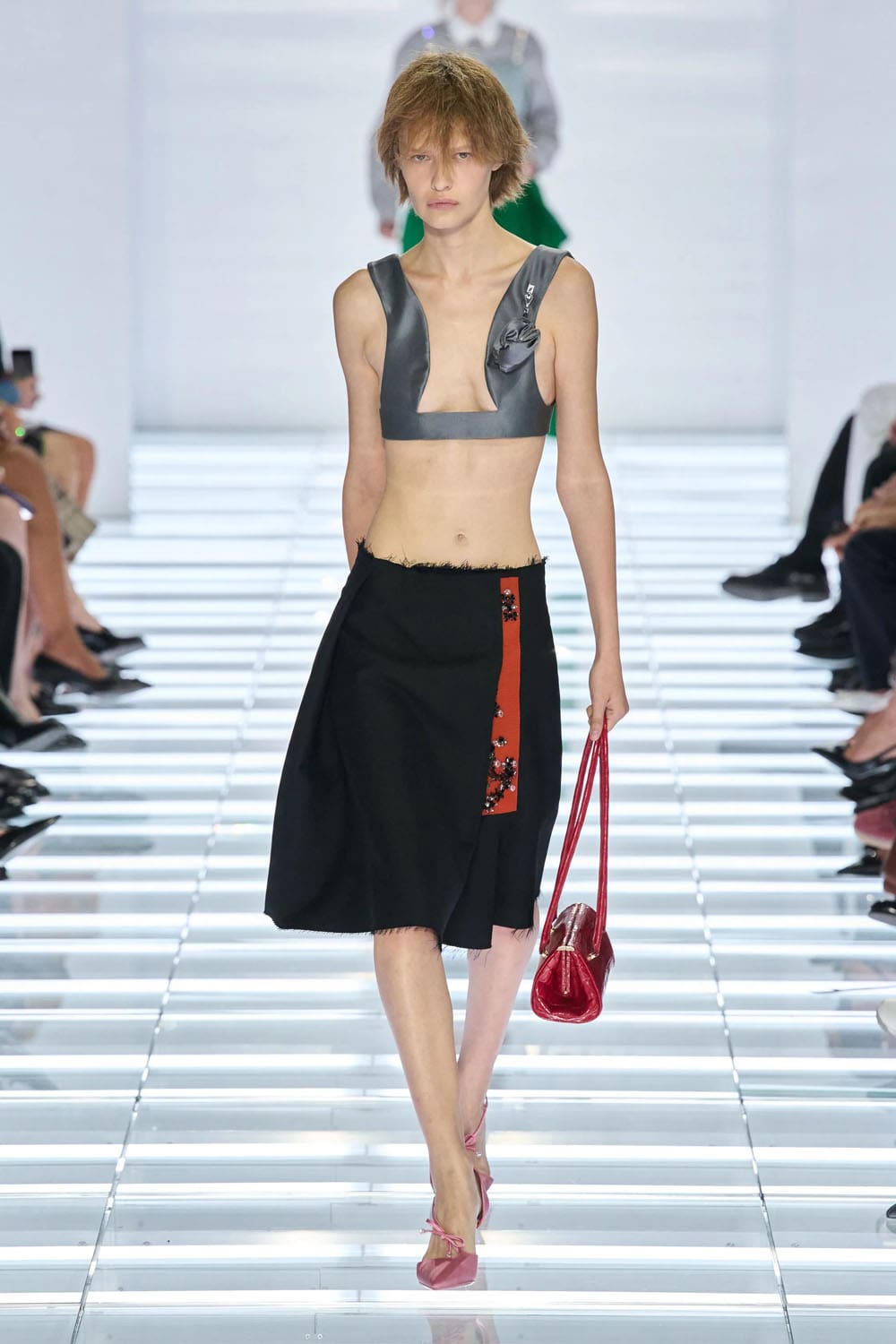
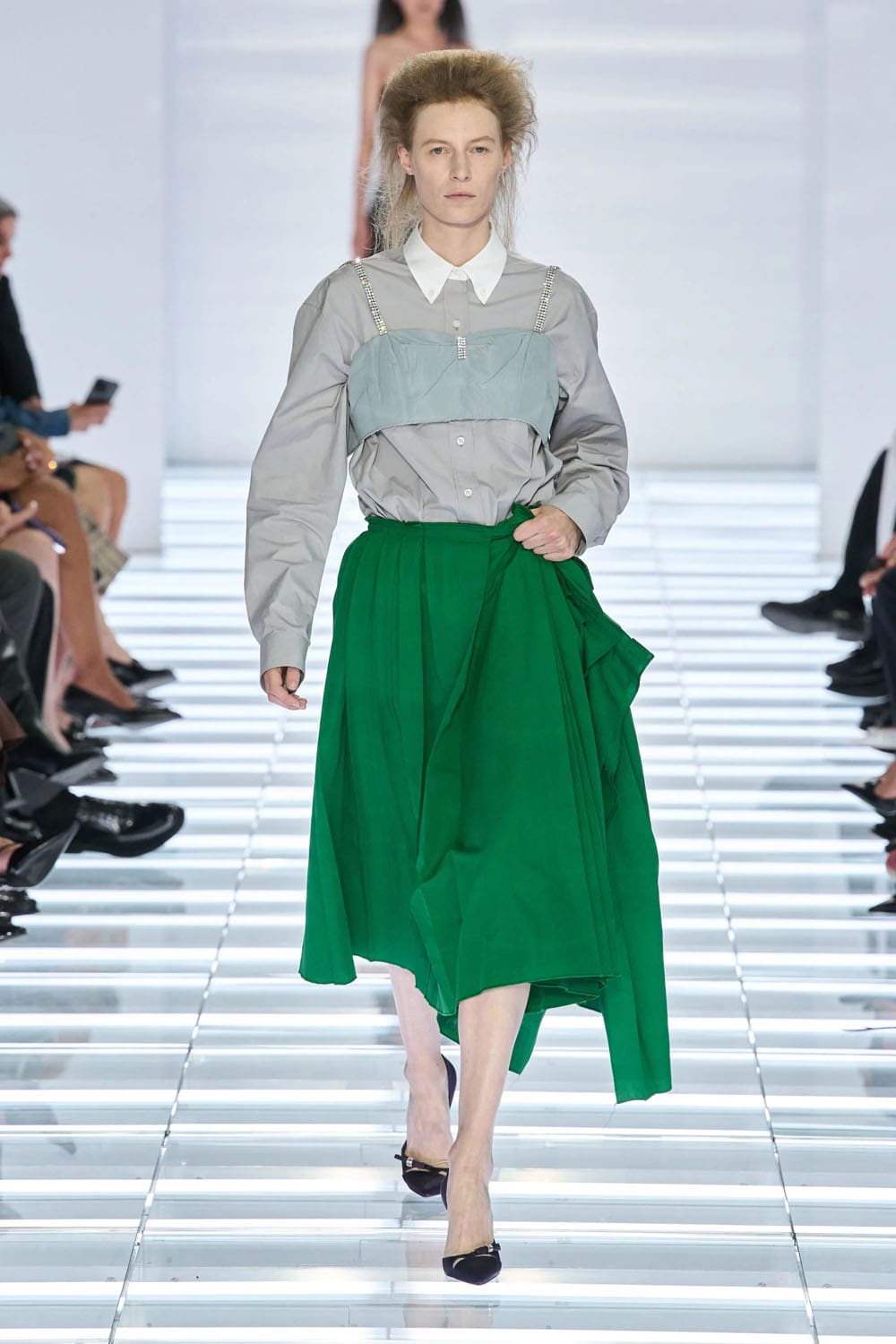
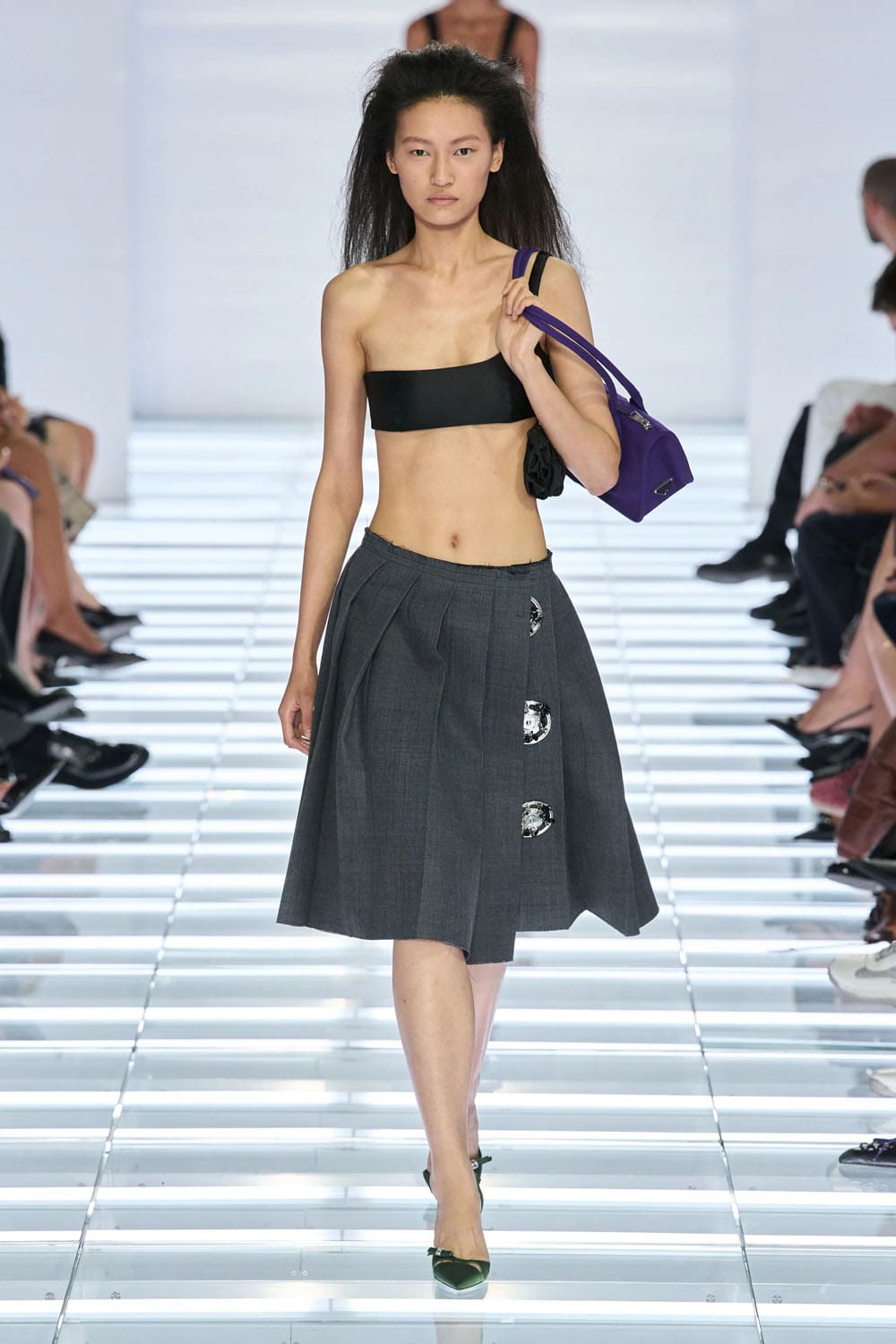
- Masterful collision of bespoke tailoring and industrial utility, engineering brutalist bands, origami wraps, and frayed hems against delicate beaded silks
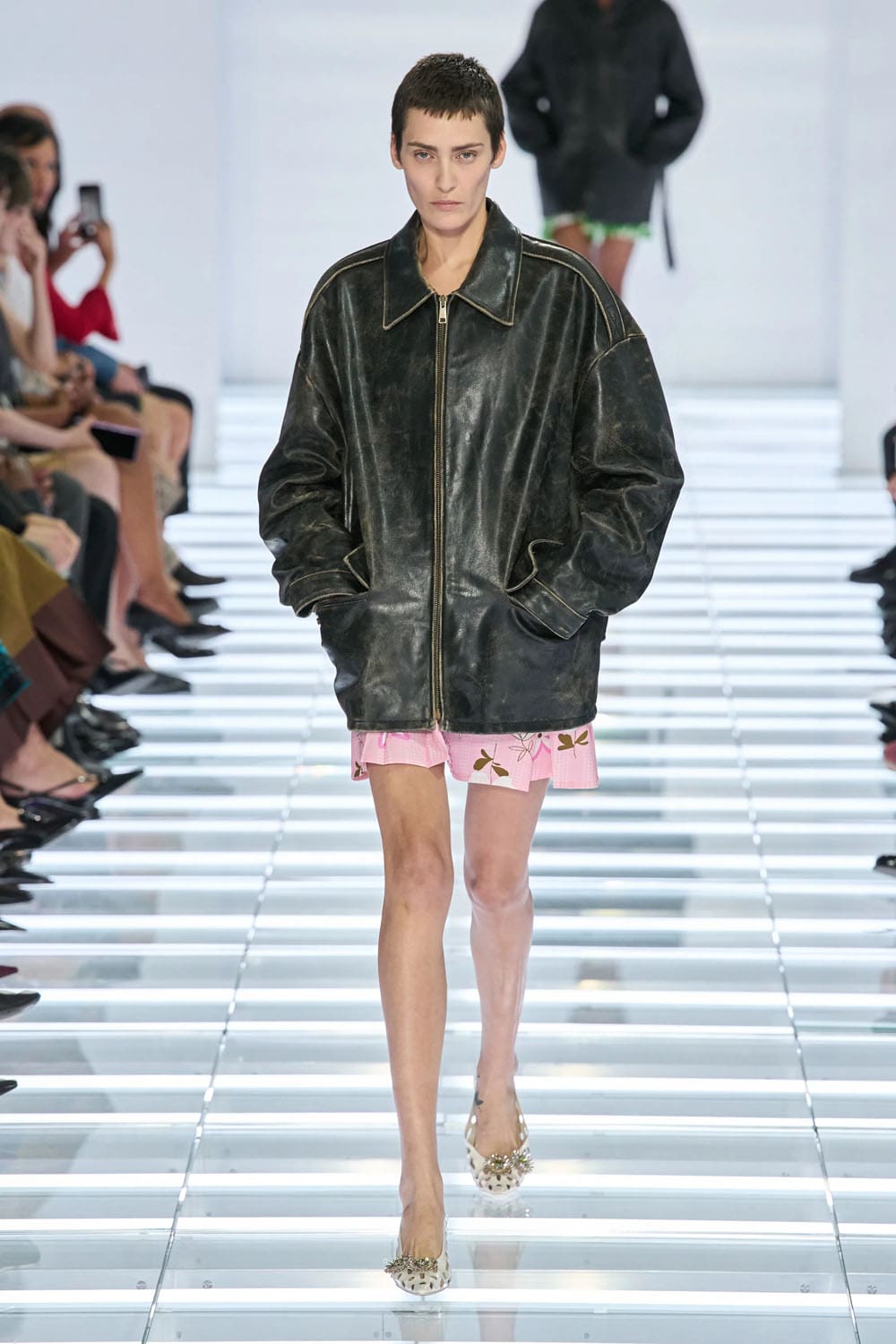
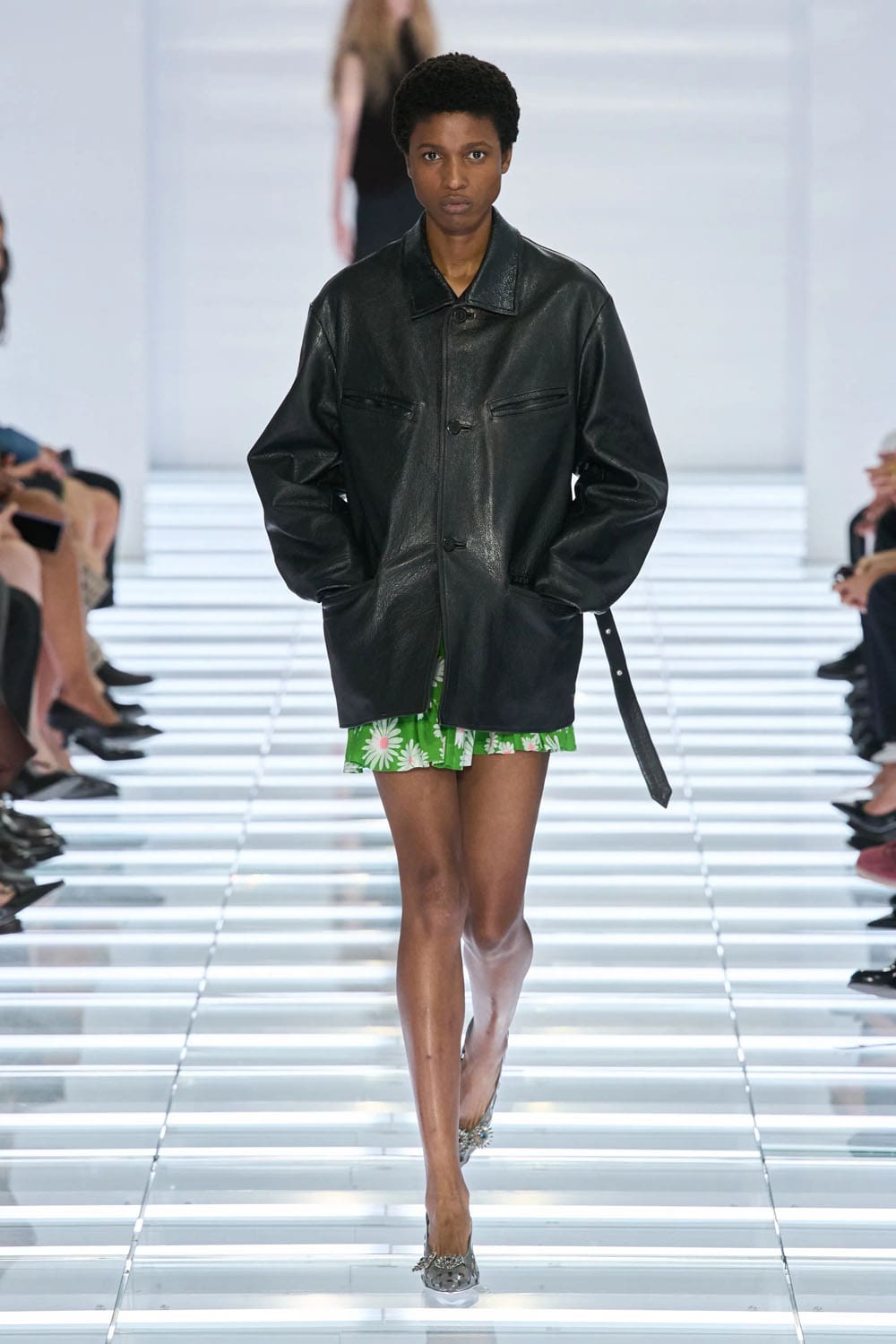
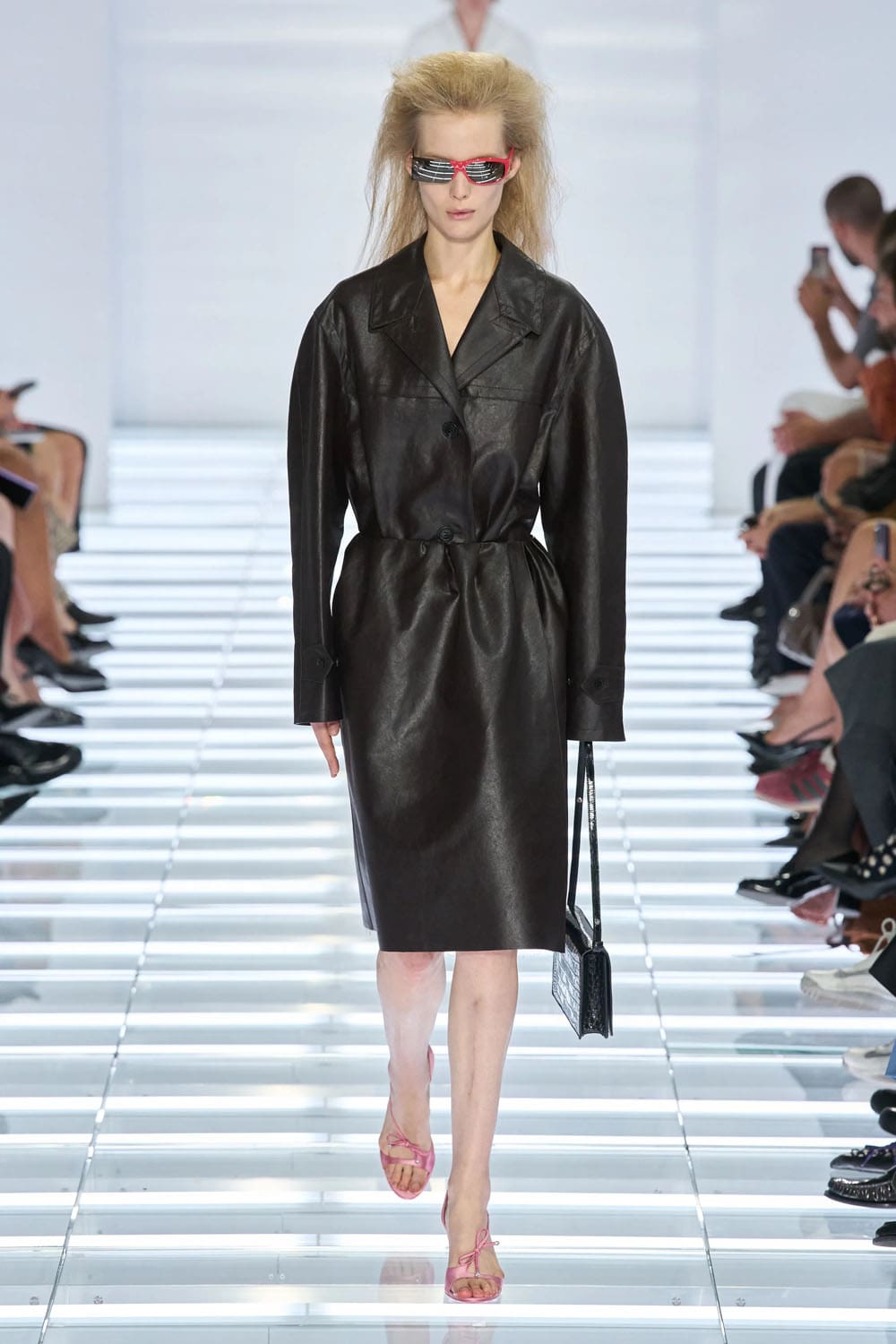
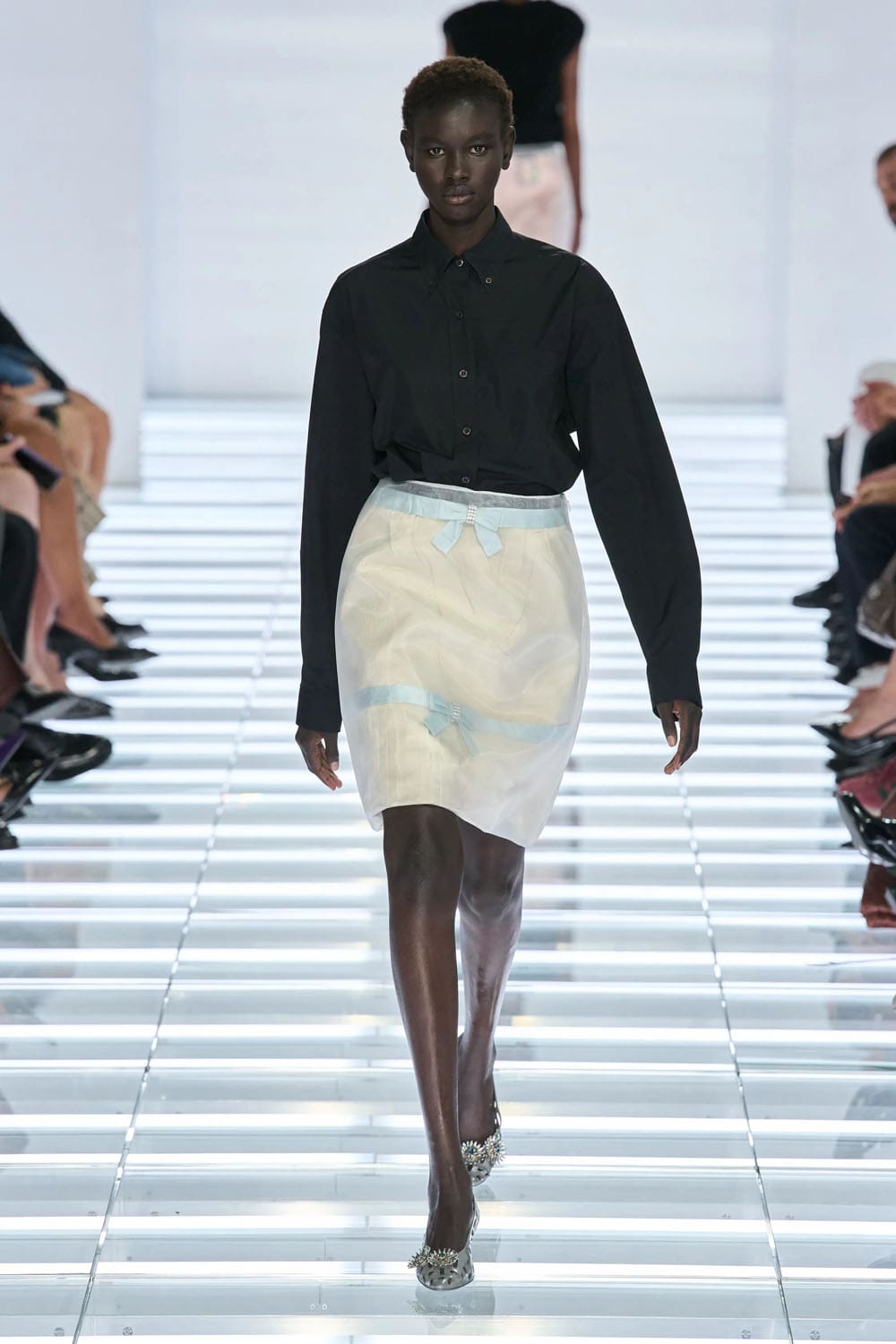
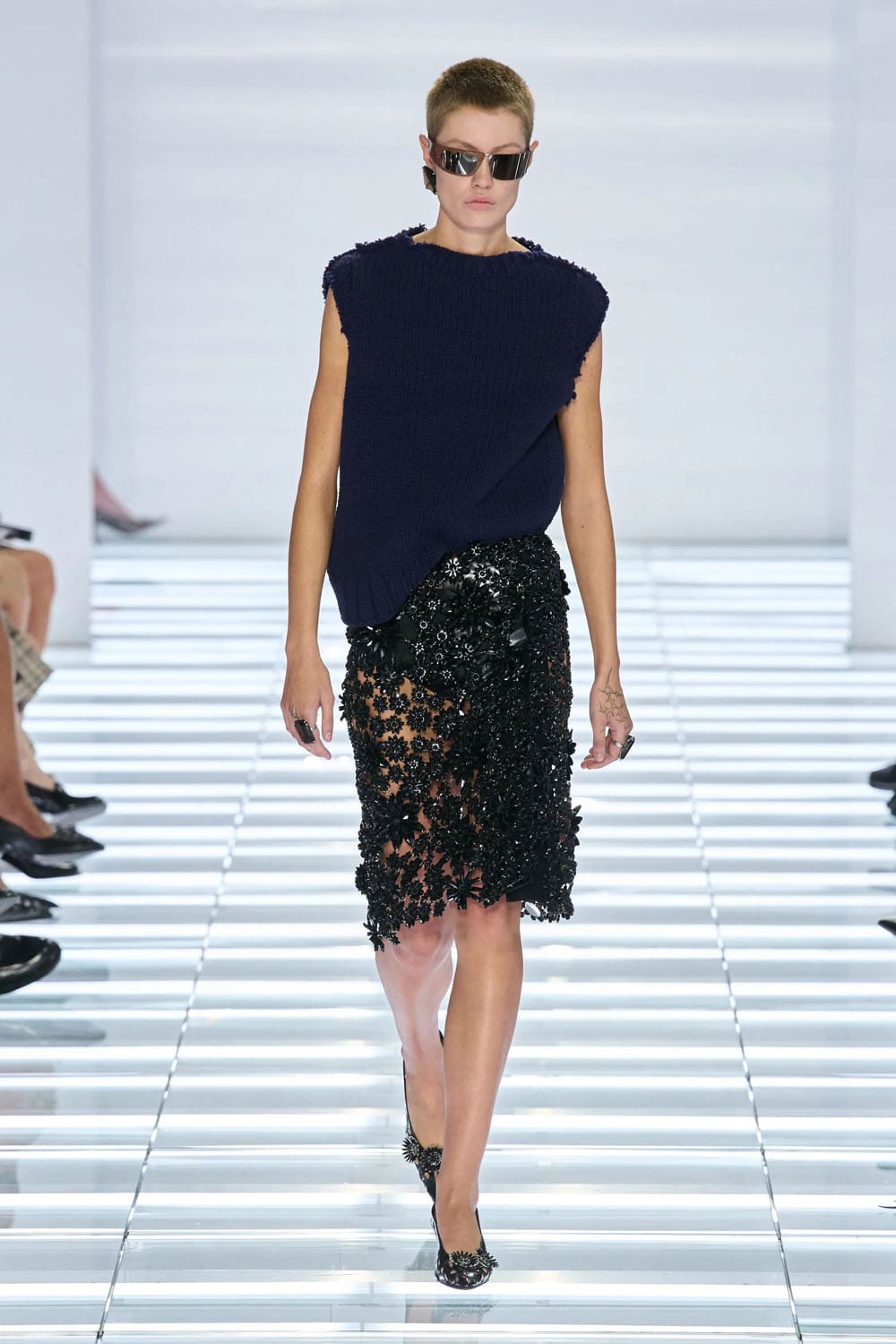
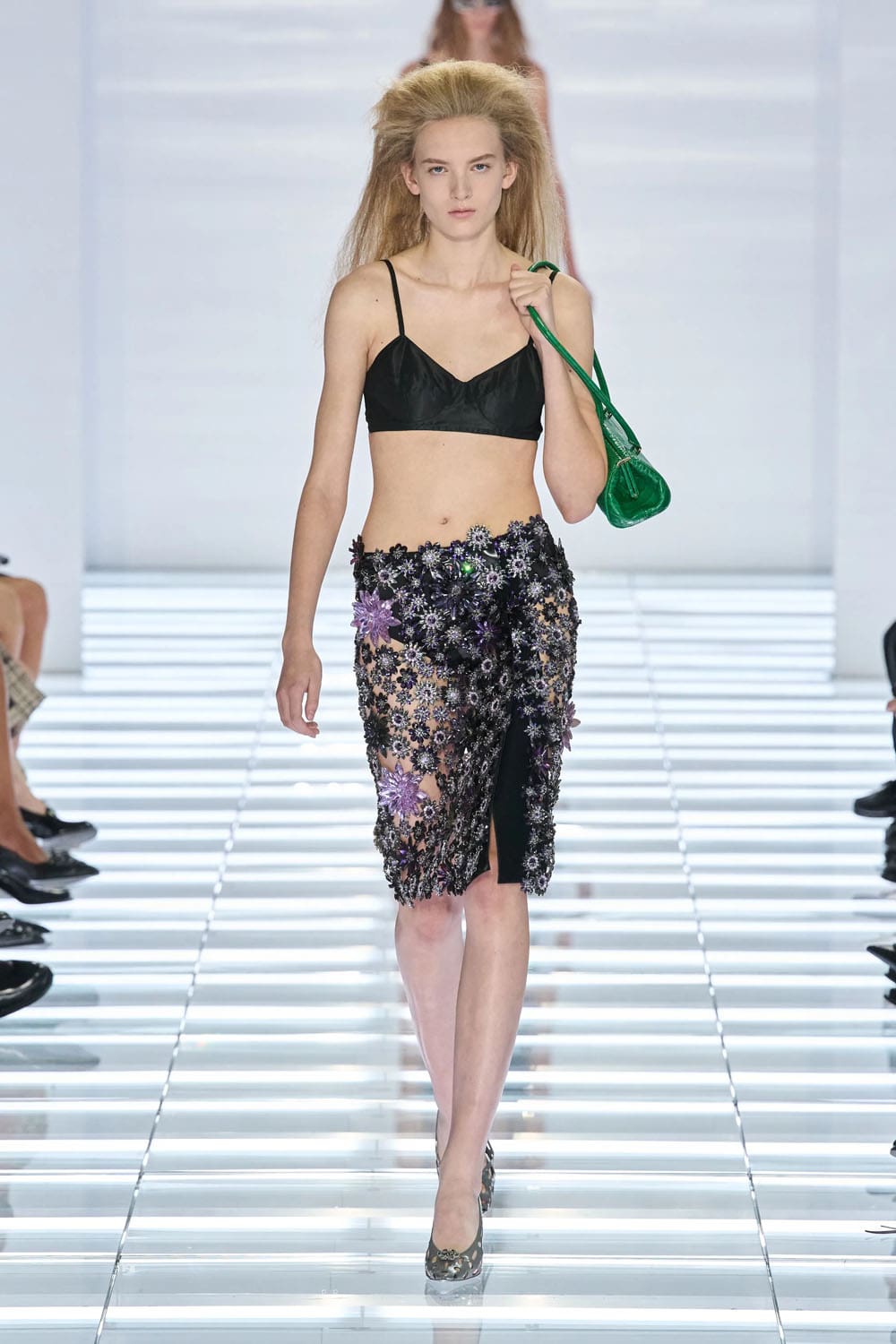
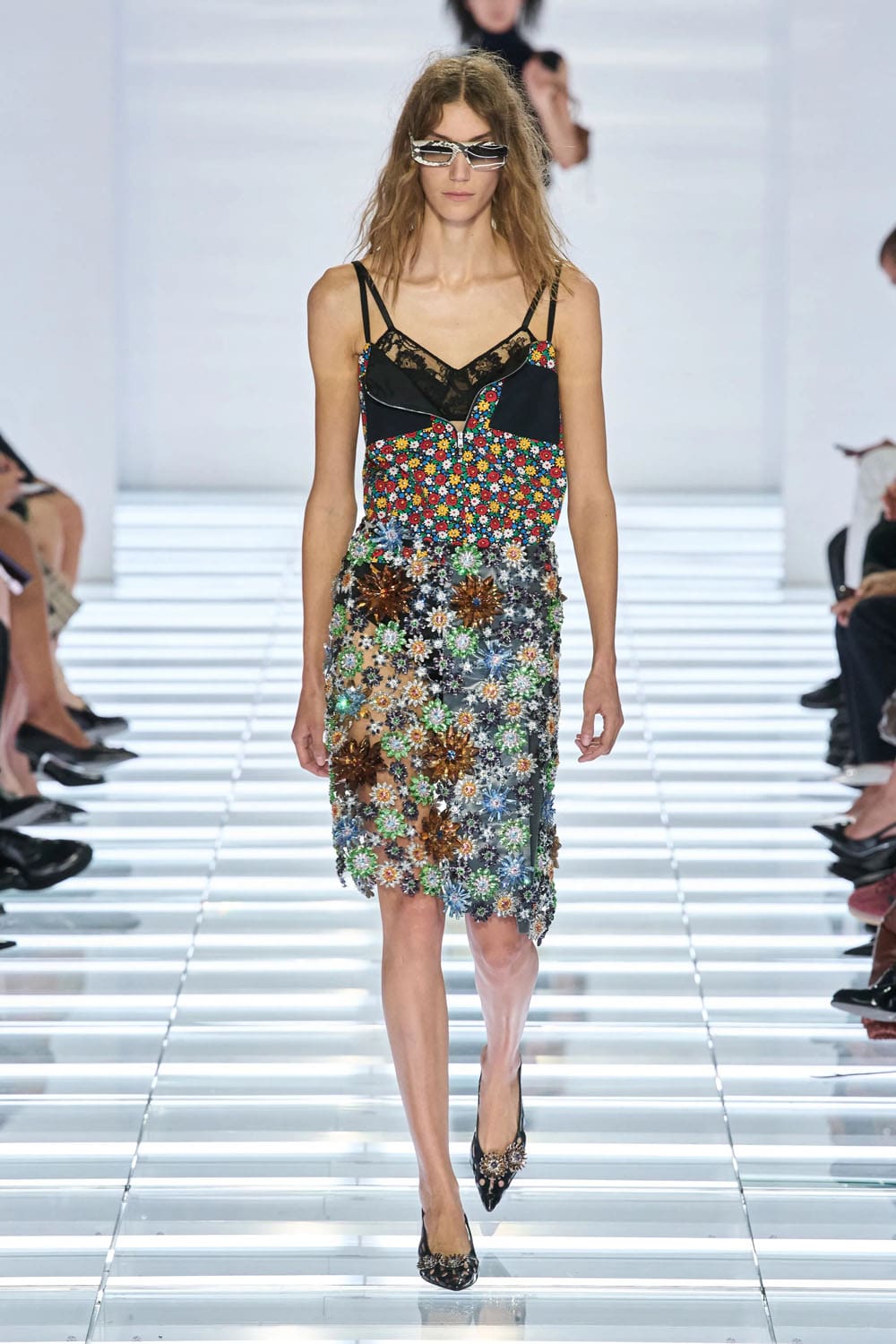
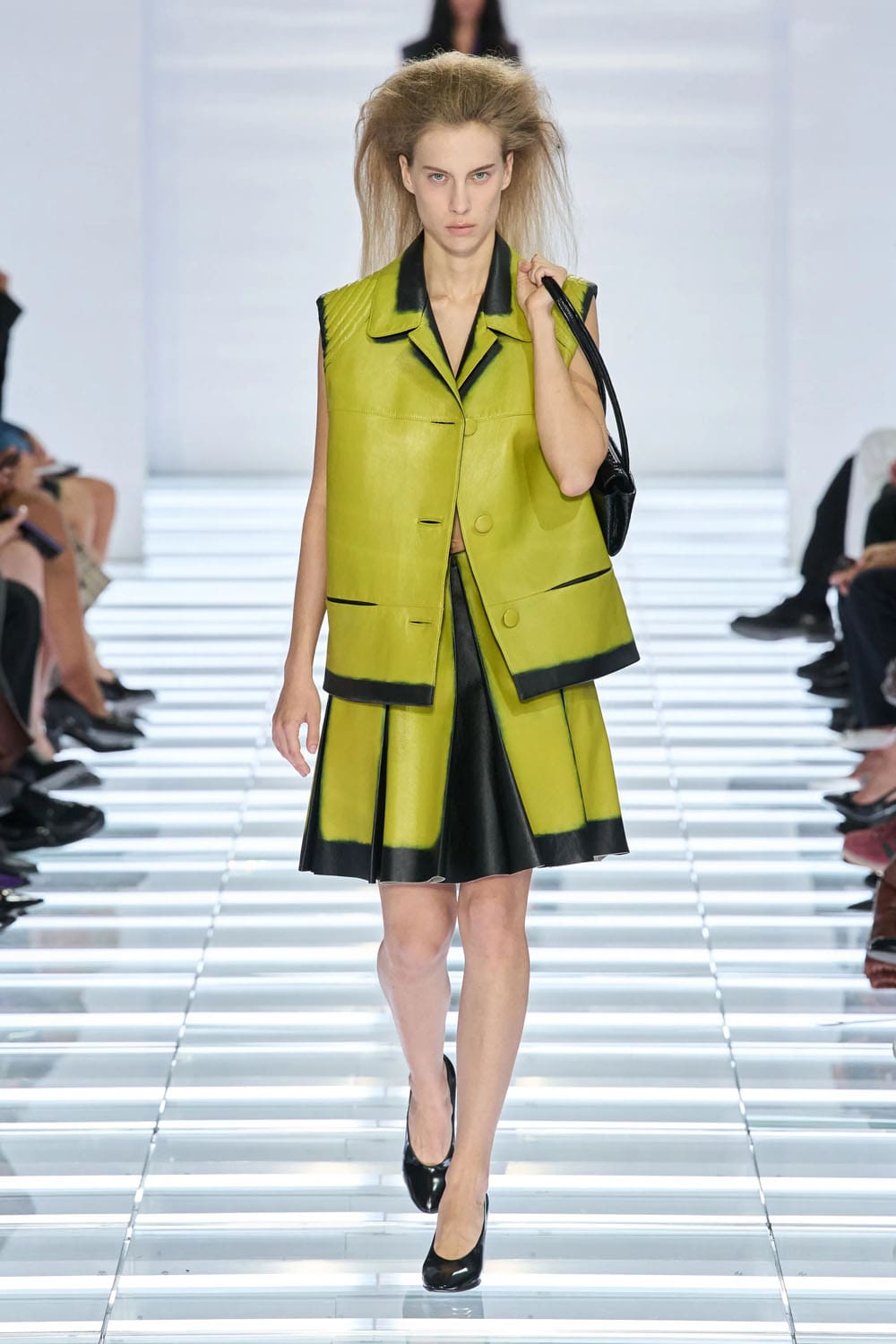
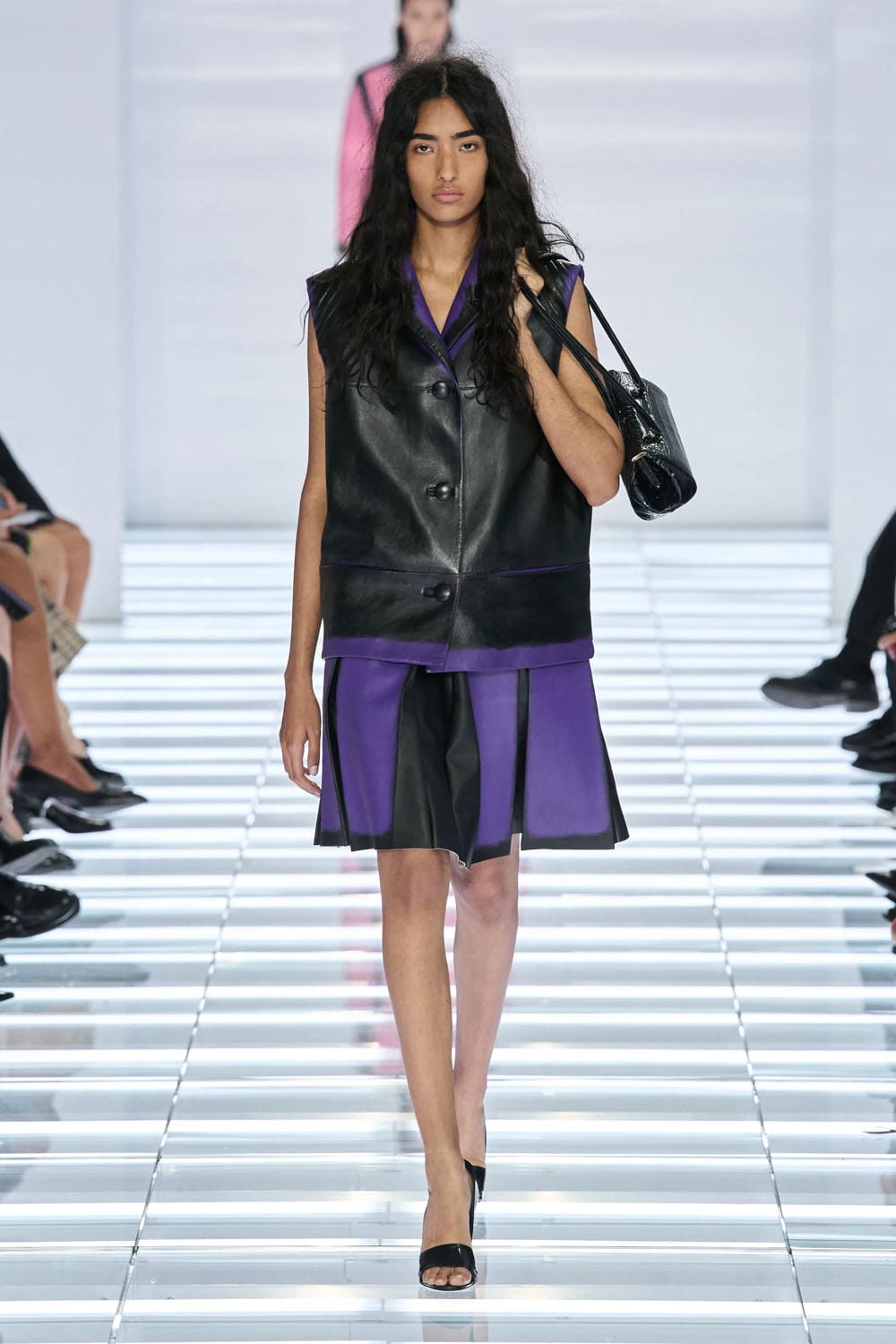
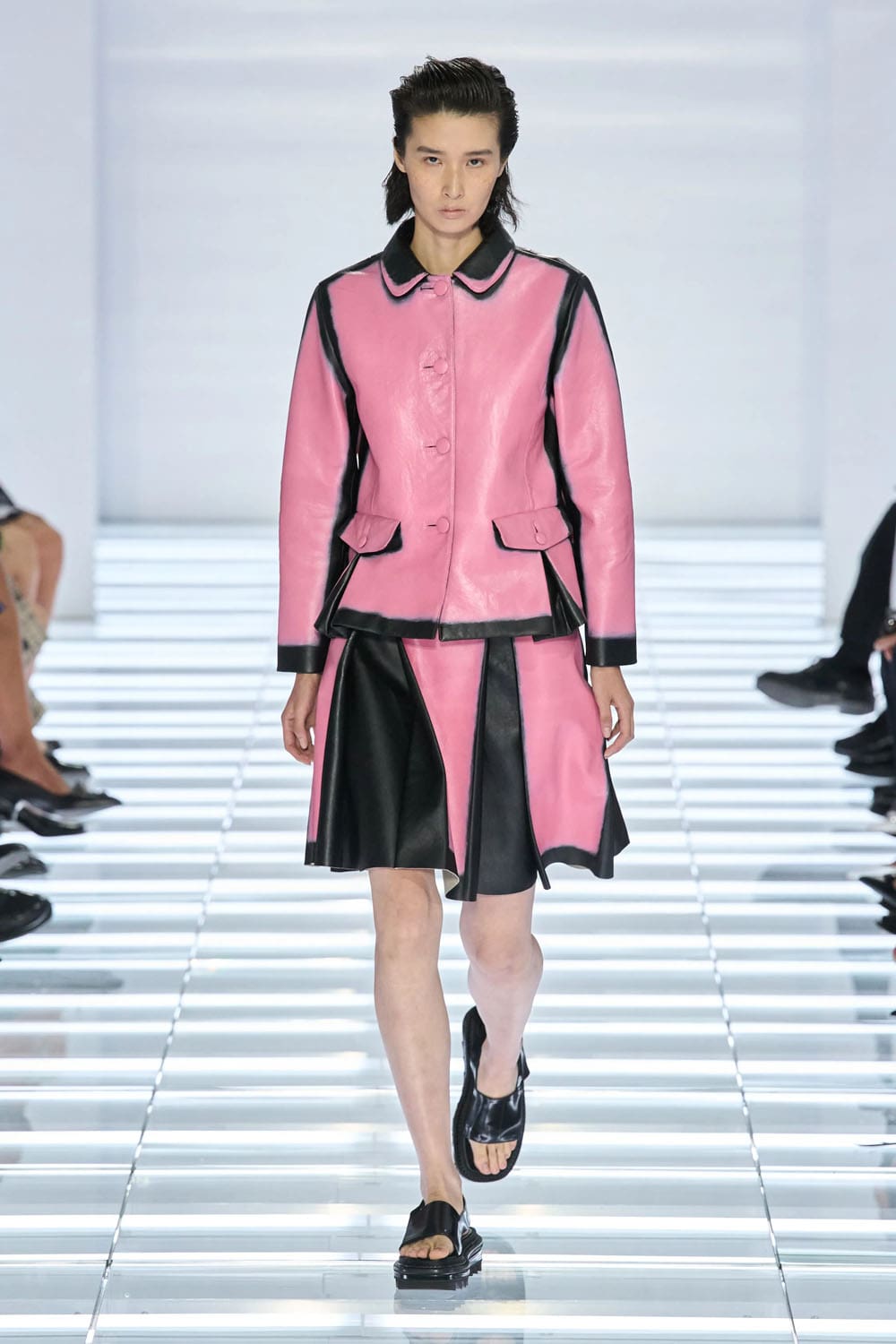
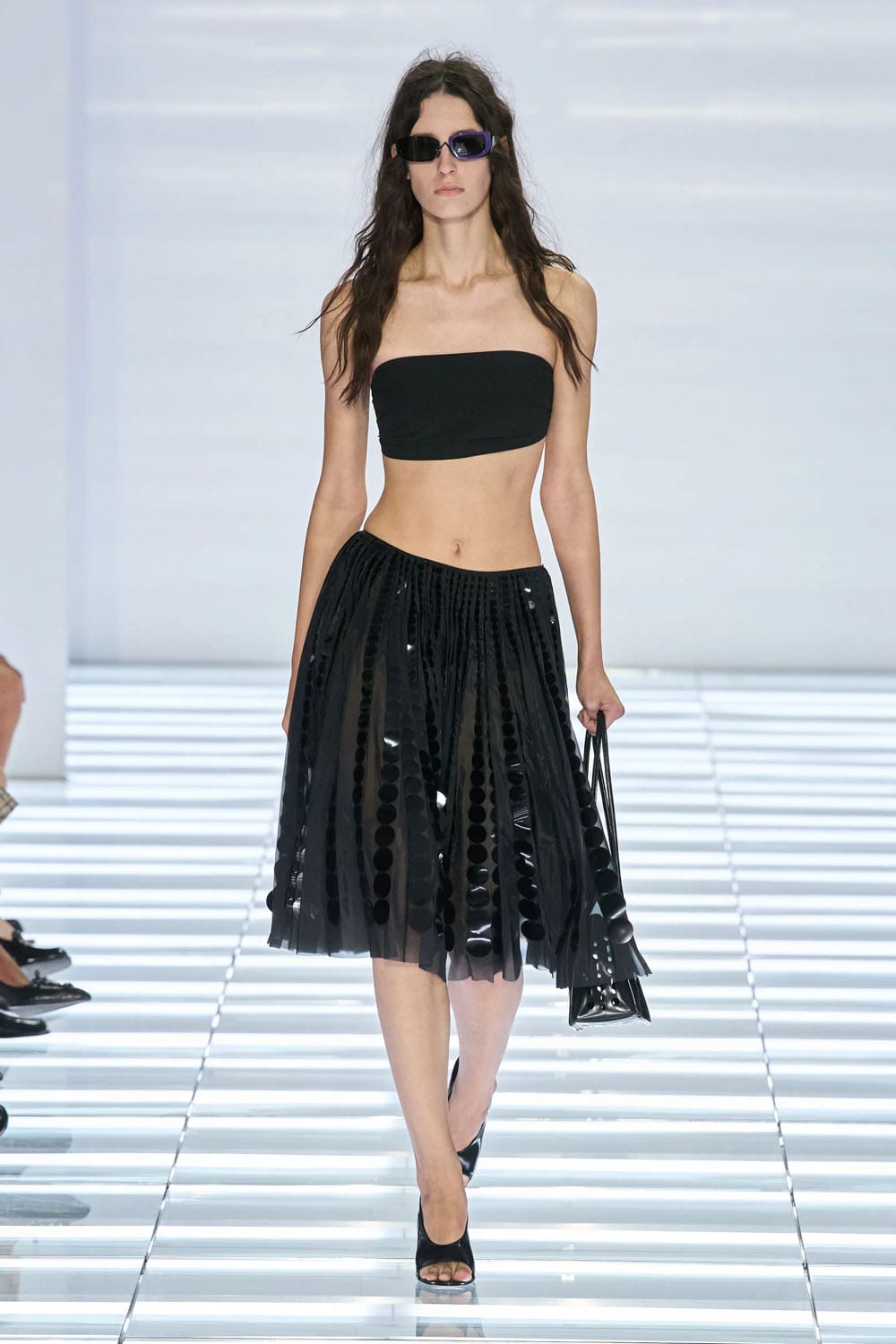
- Subversive "ugly chic" materiality deploying coated trompe l'œil cottons and dense crystalline paillette encrustations across rigid pencil contours
- Deep historical continuity connecting ancient kaunakes wraps and 1960s hemline rebellion directly to a pragmatic modern uniform
RESERVATIONS
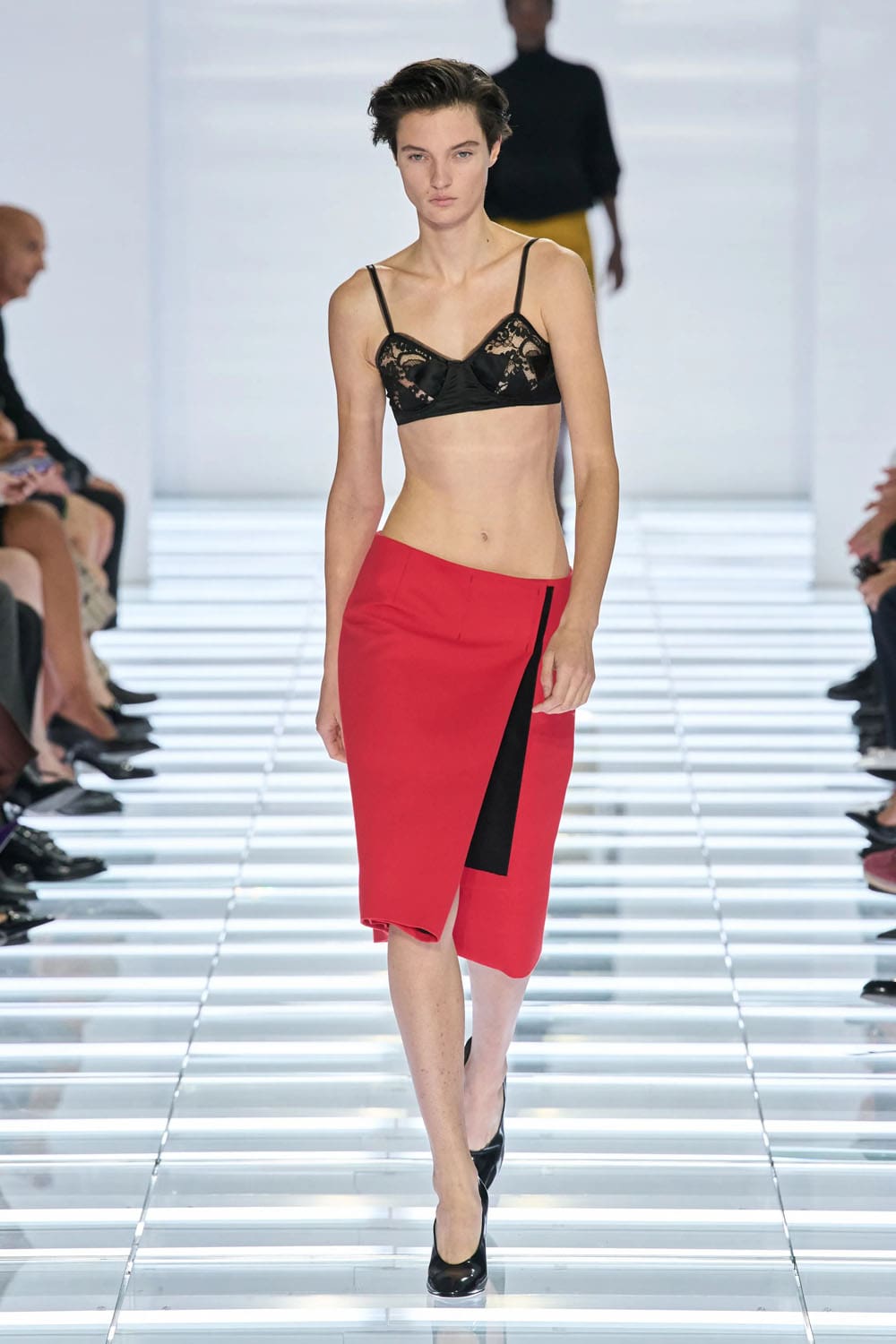
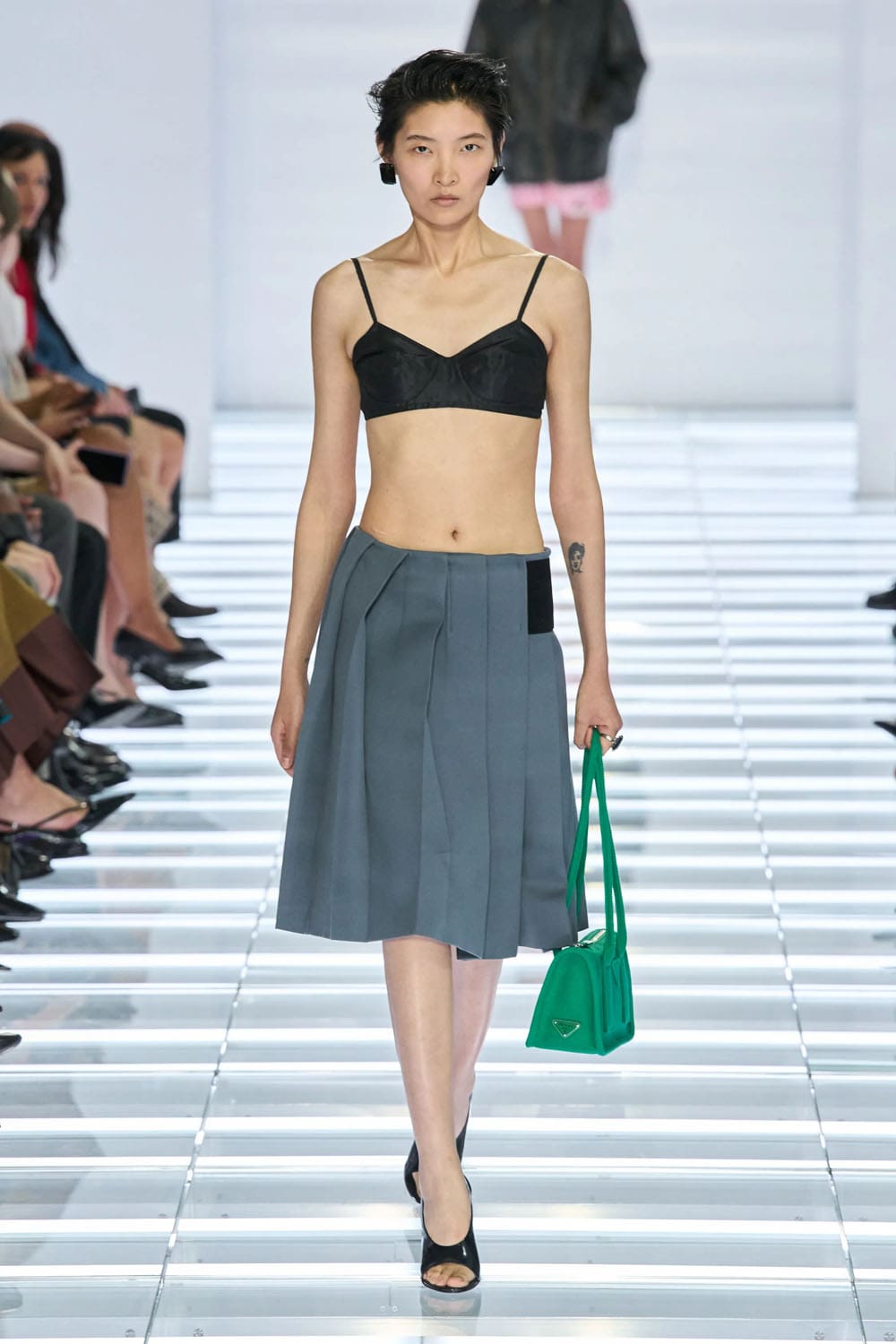
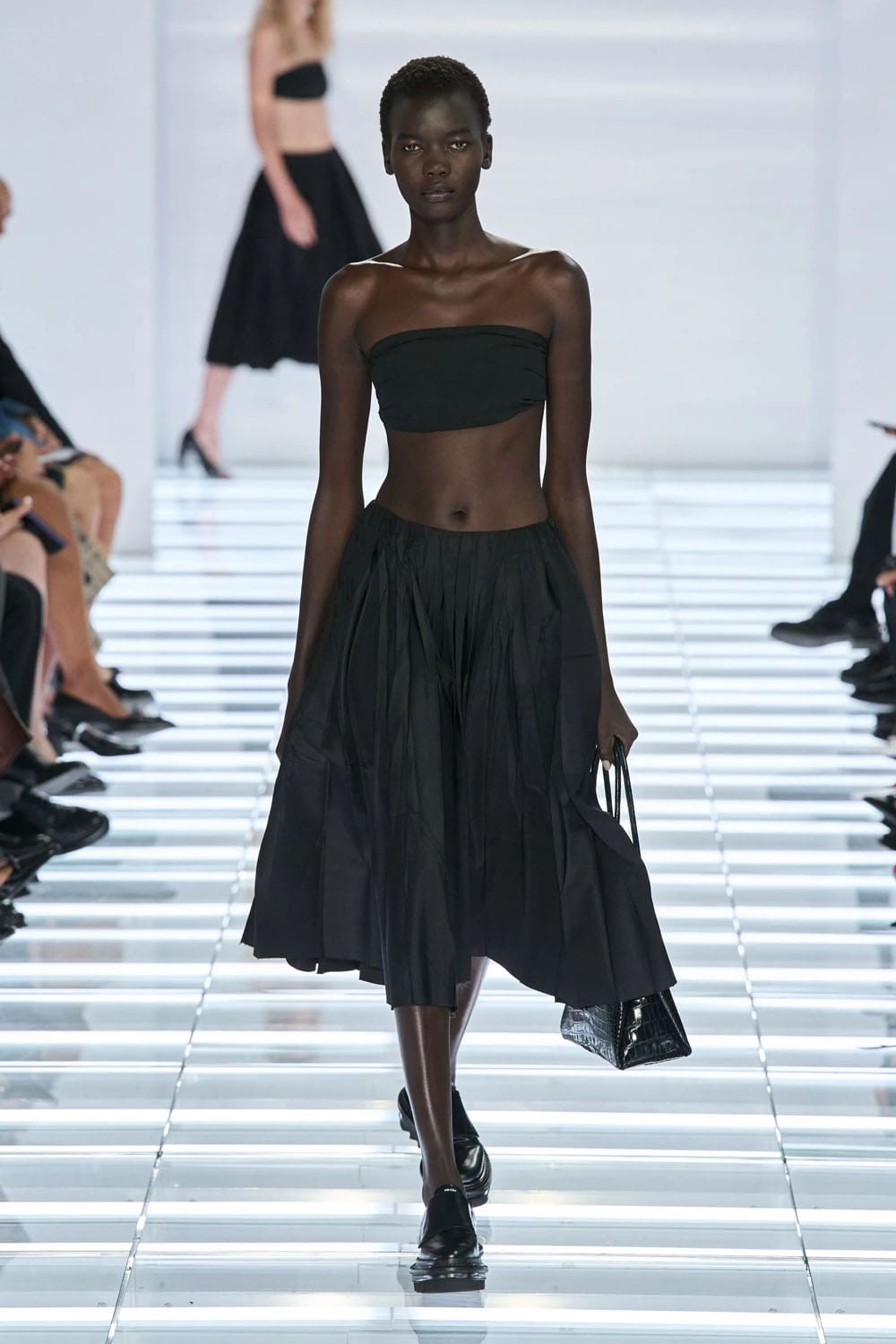
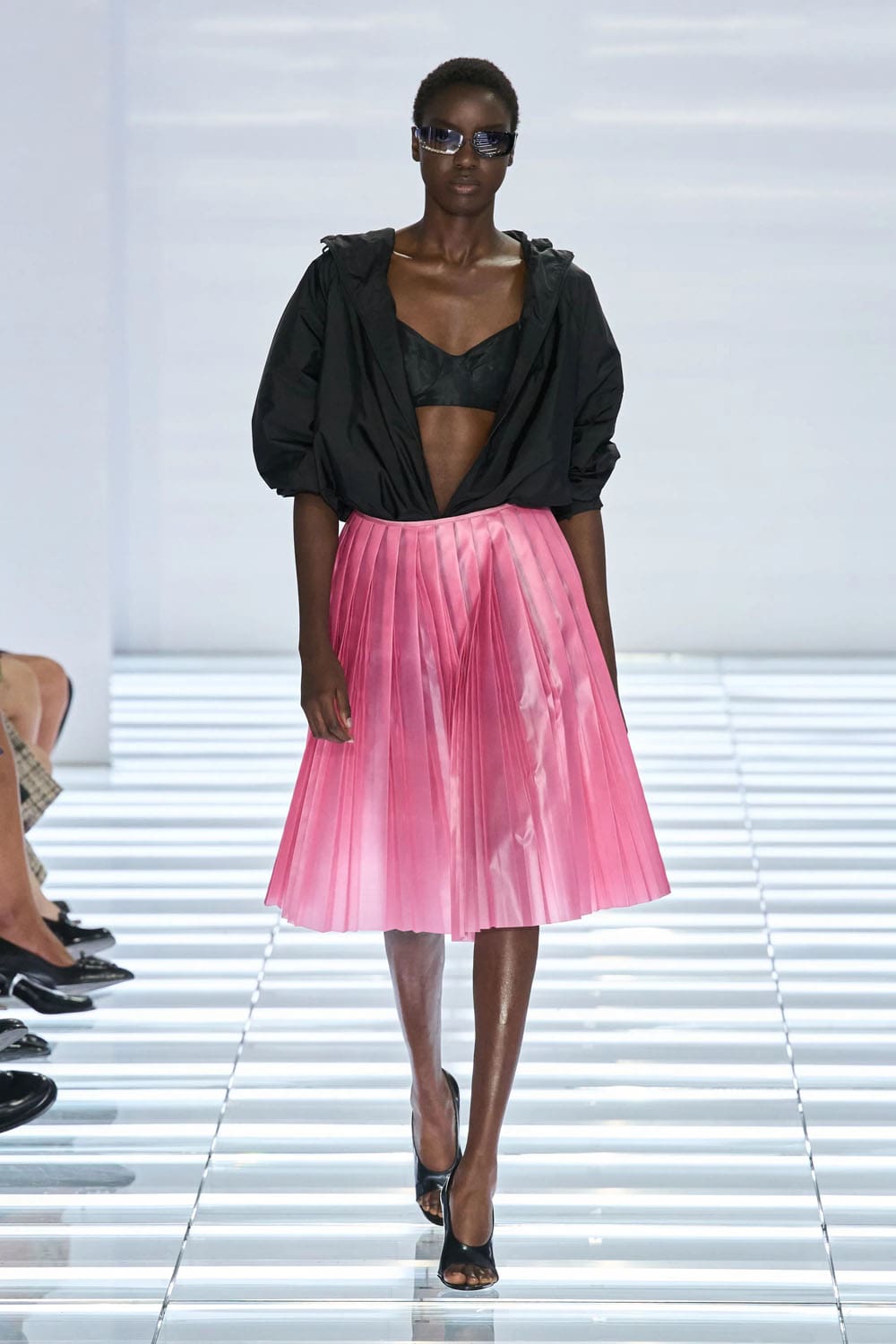
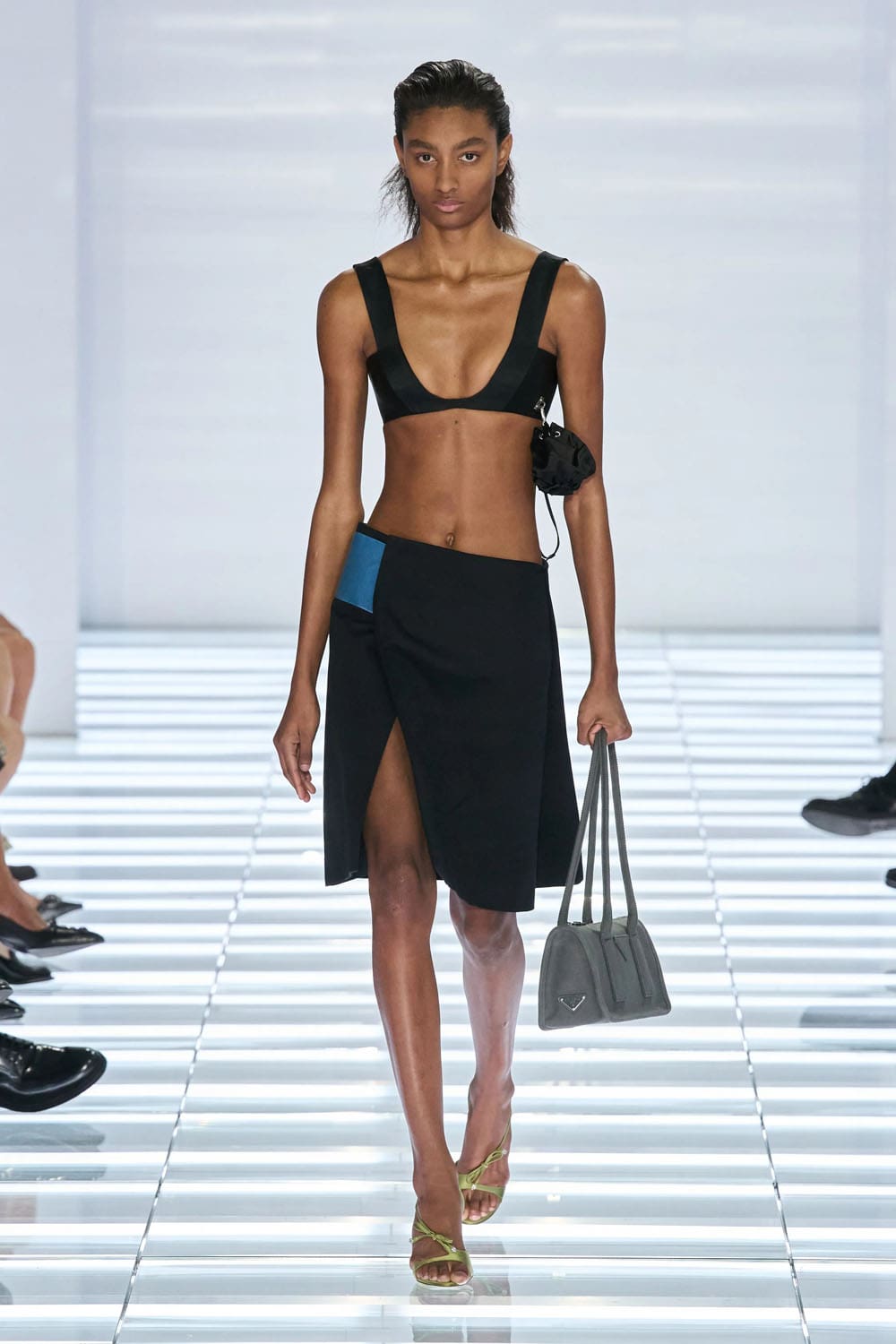
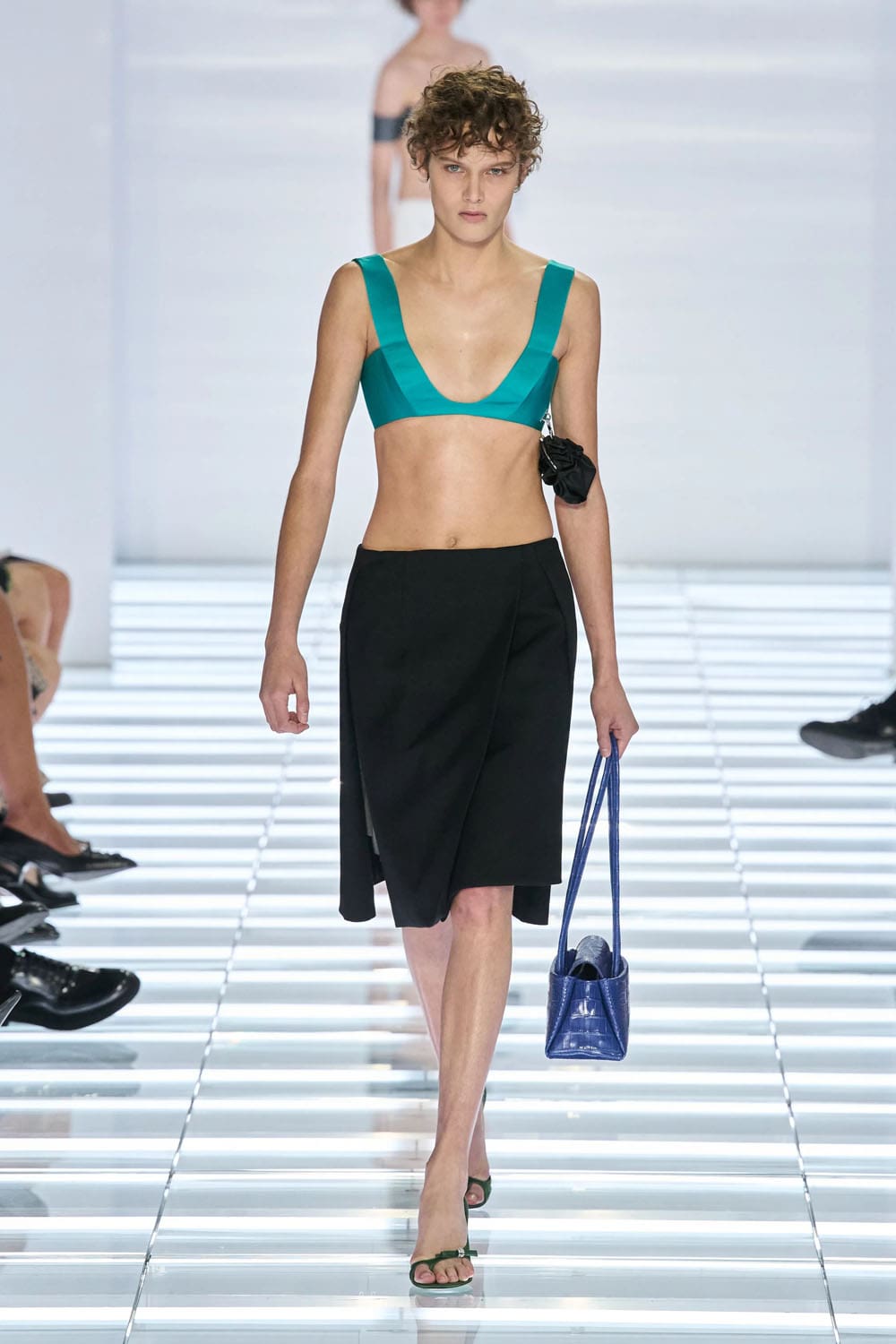
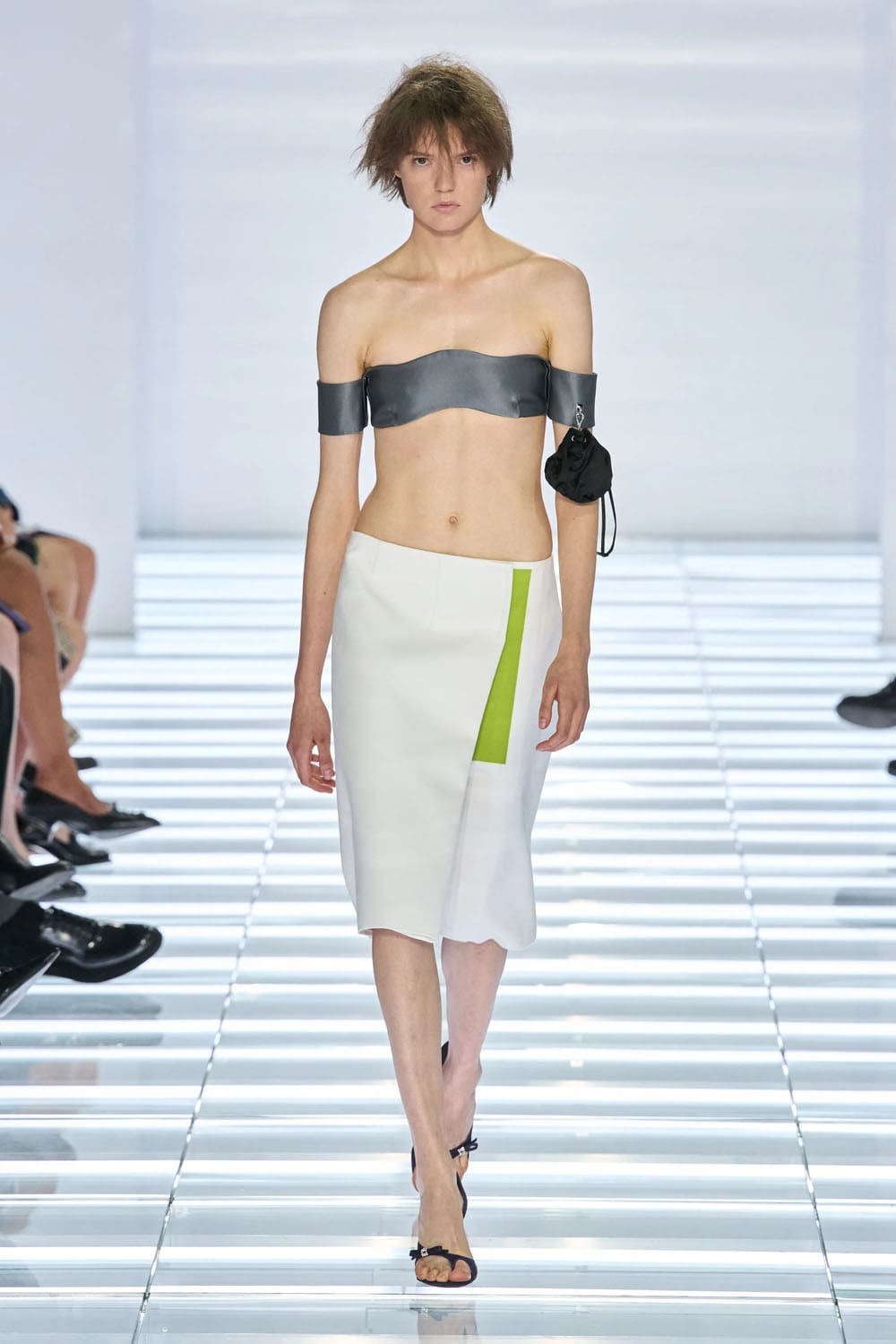
- Monomaniacal focus on the lower torso that leaves the upper half deliberately sparse, defaulting to plain turtlenecks and exposed bra-tops
- Uncompromising, clinical austerity where raw edges and abrasive Velcro closures demand intellectual compliance rather than effortless wearability
Prada Spring Summer 2027 “The Skirt as Object”. Story by Kate Granger, Editor of RUNWAY MAGAZINE. Photo Courtesy: Prada.
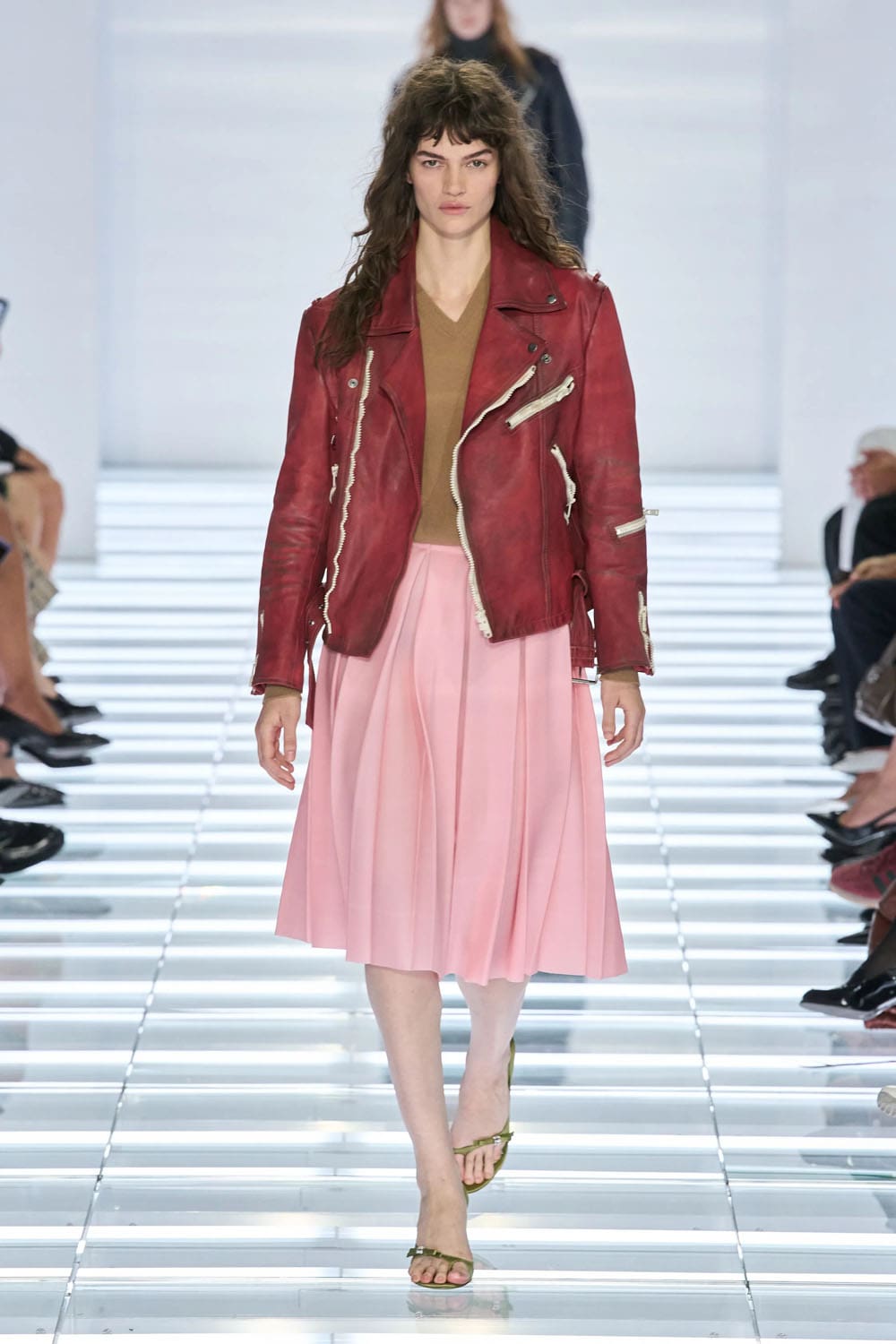
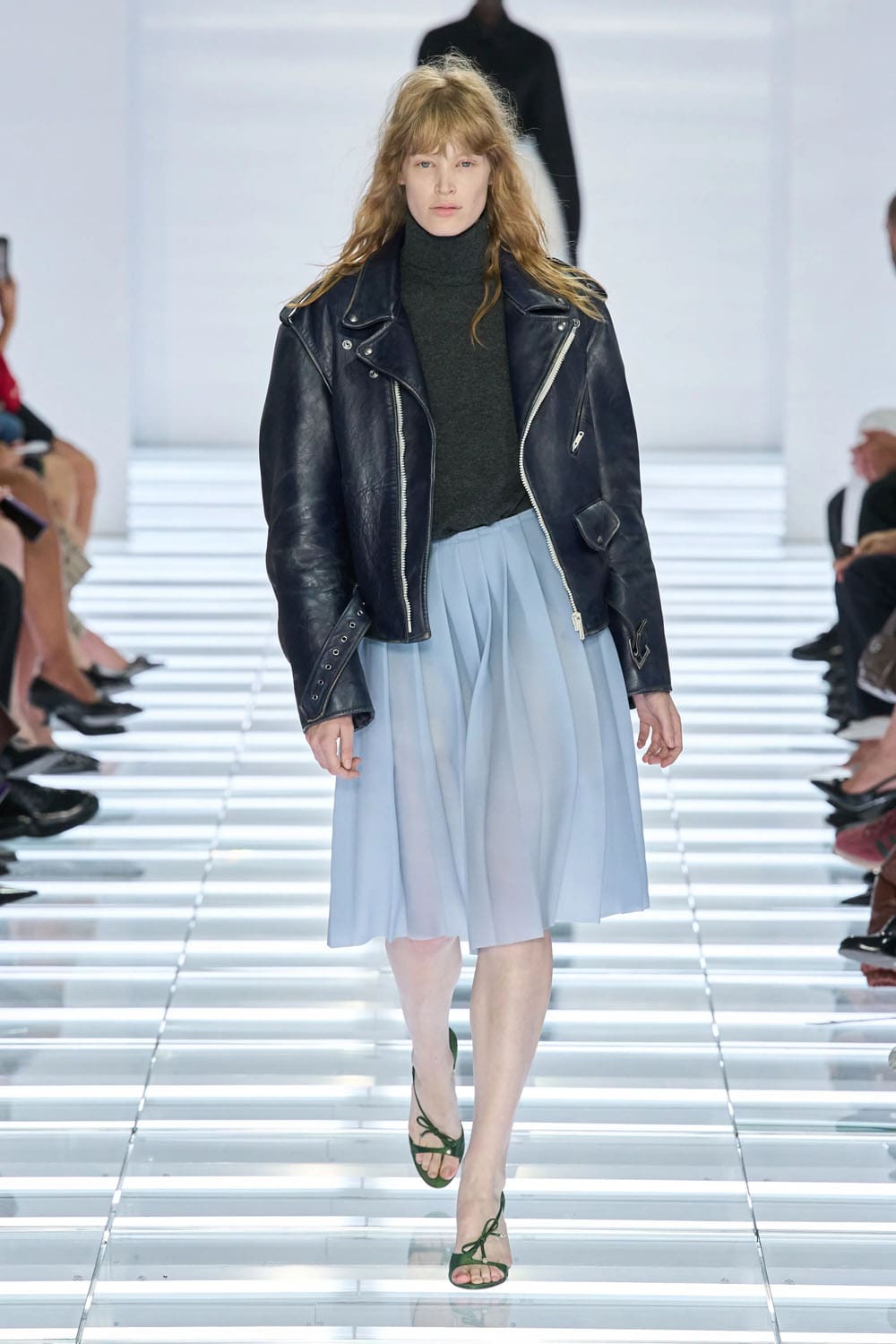
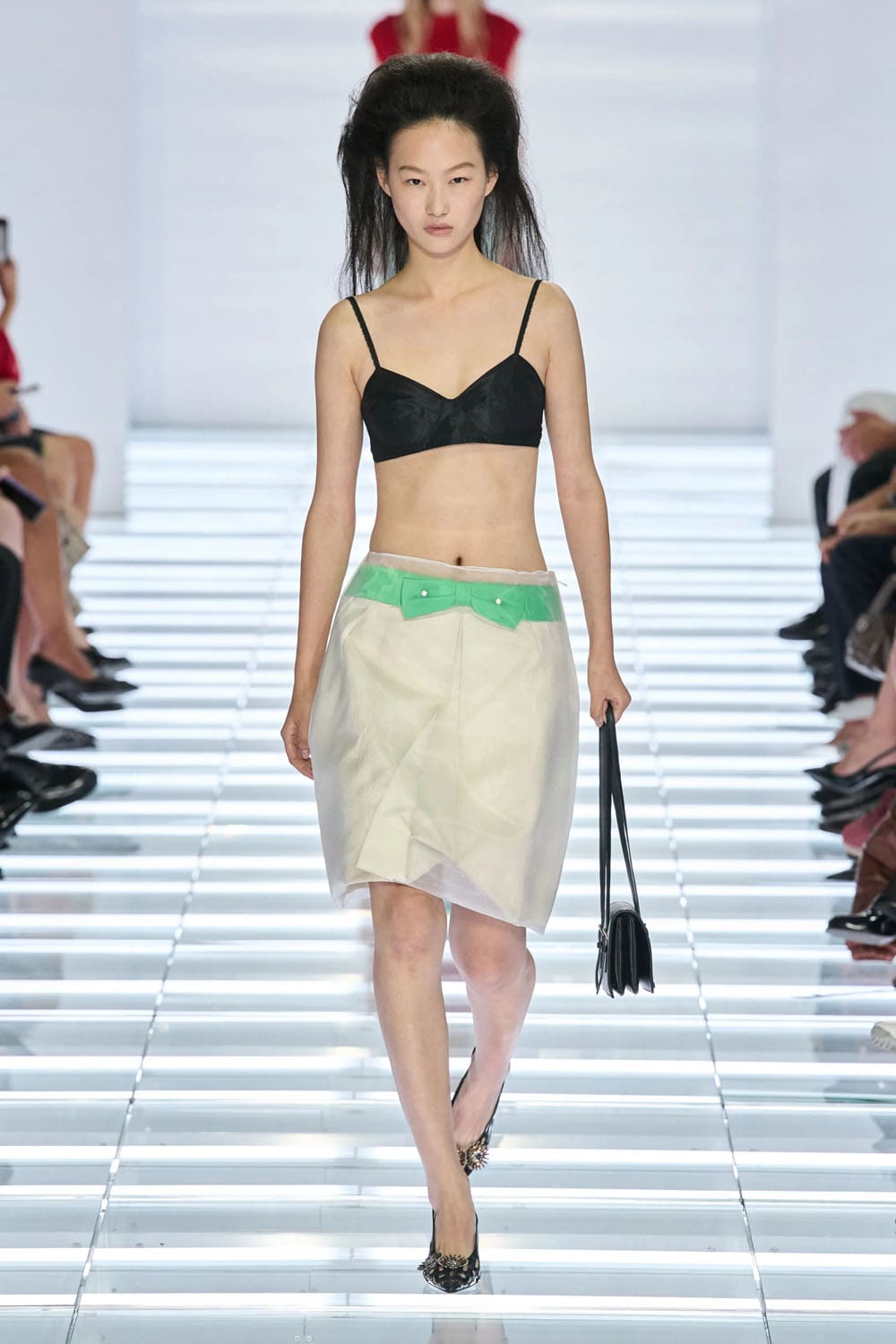
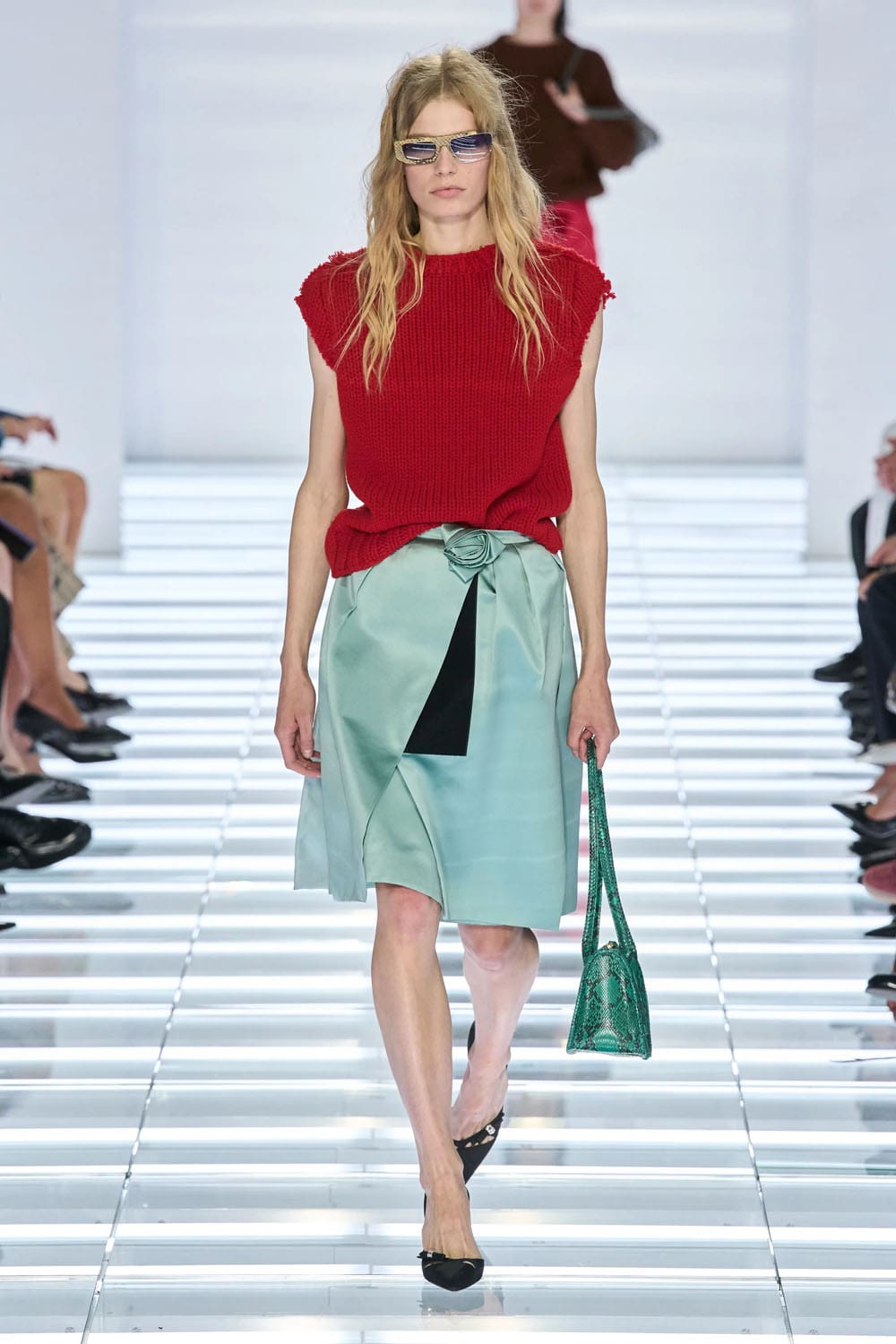
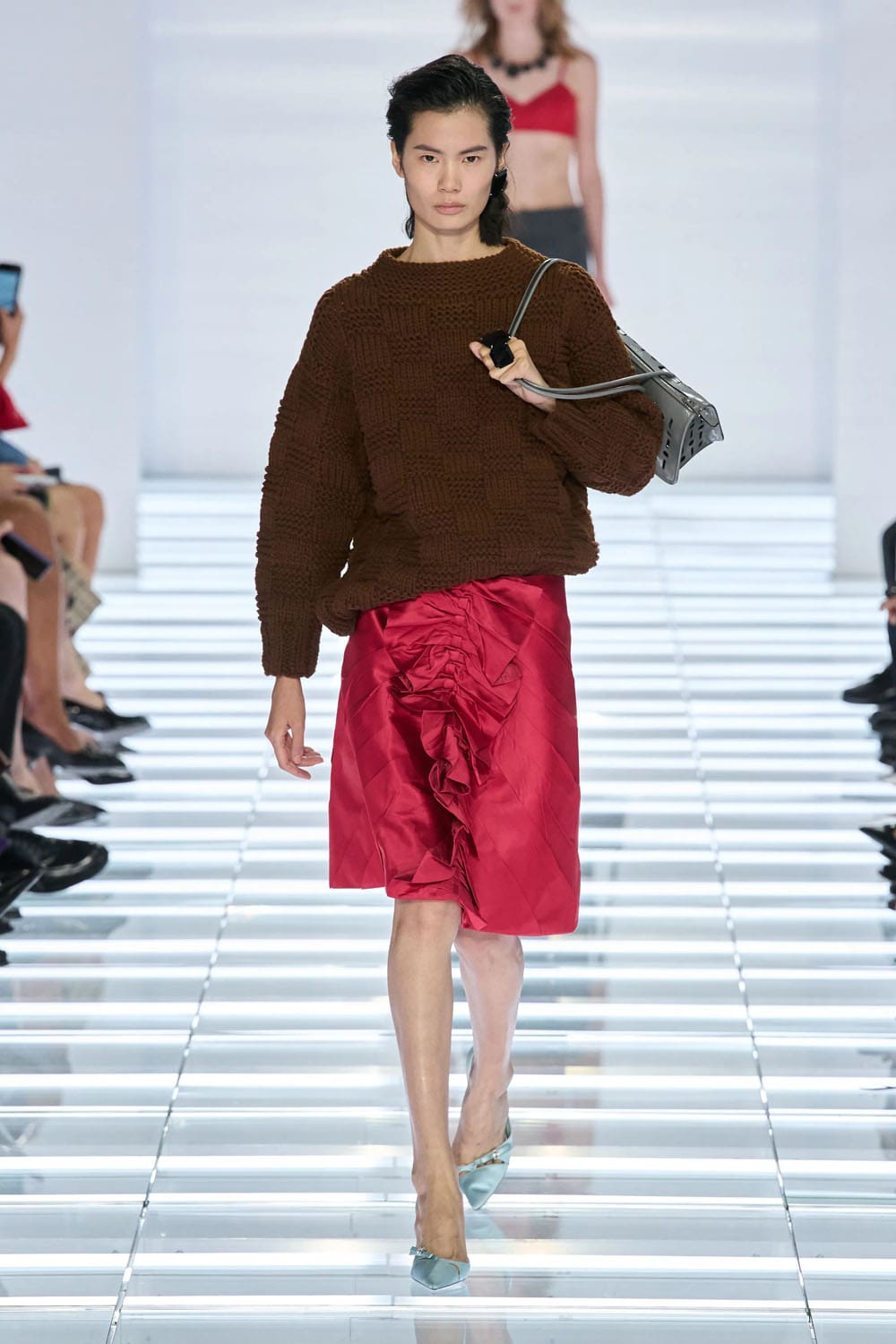
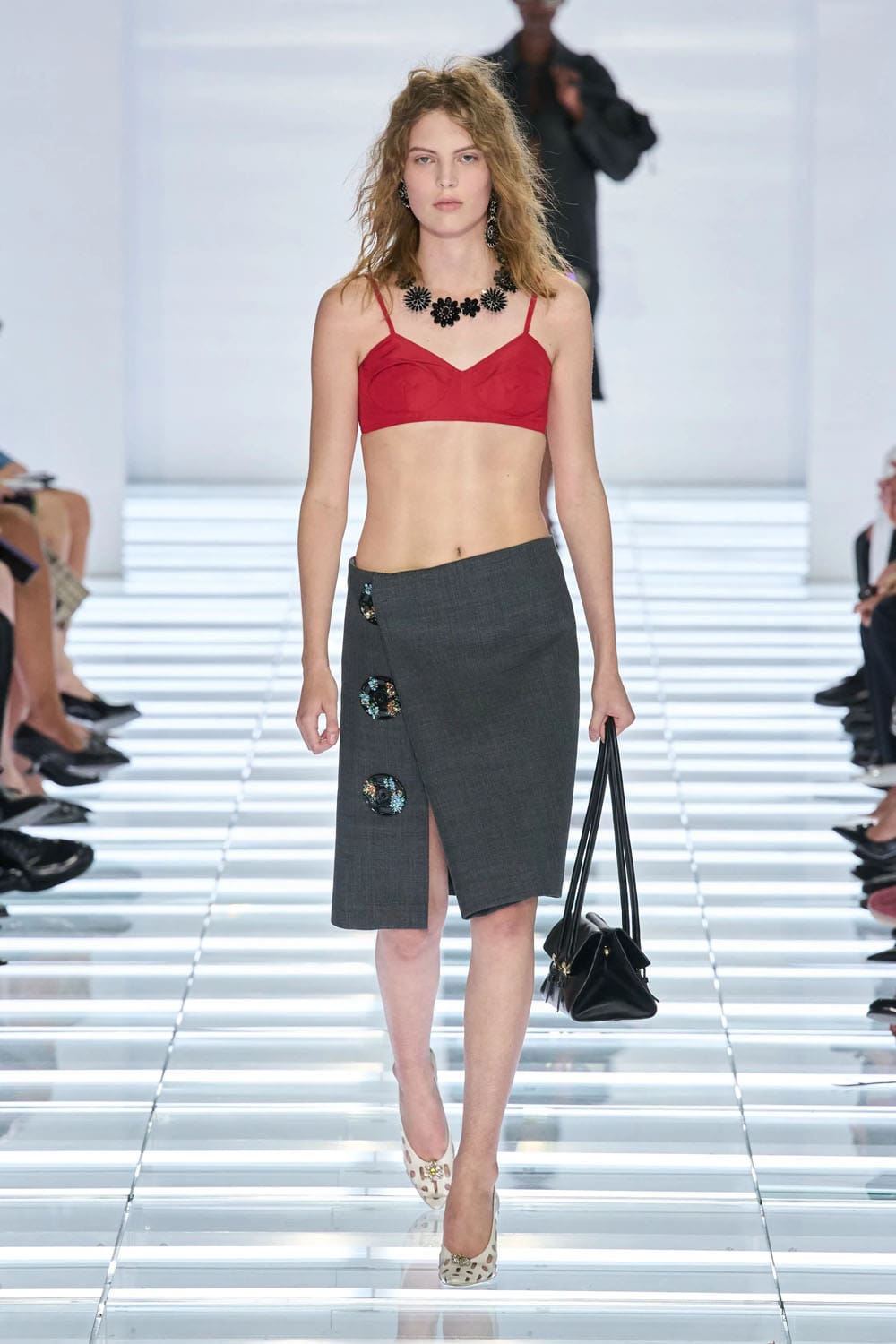
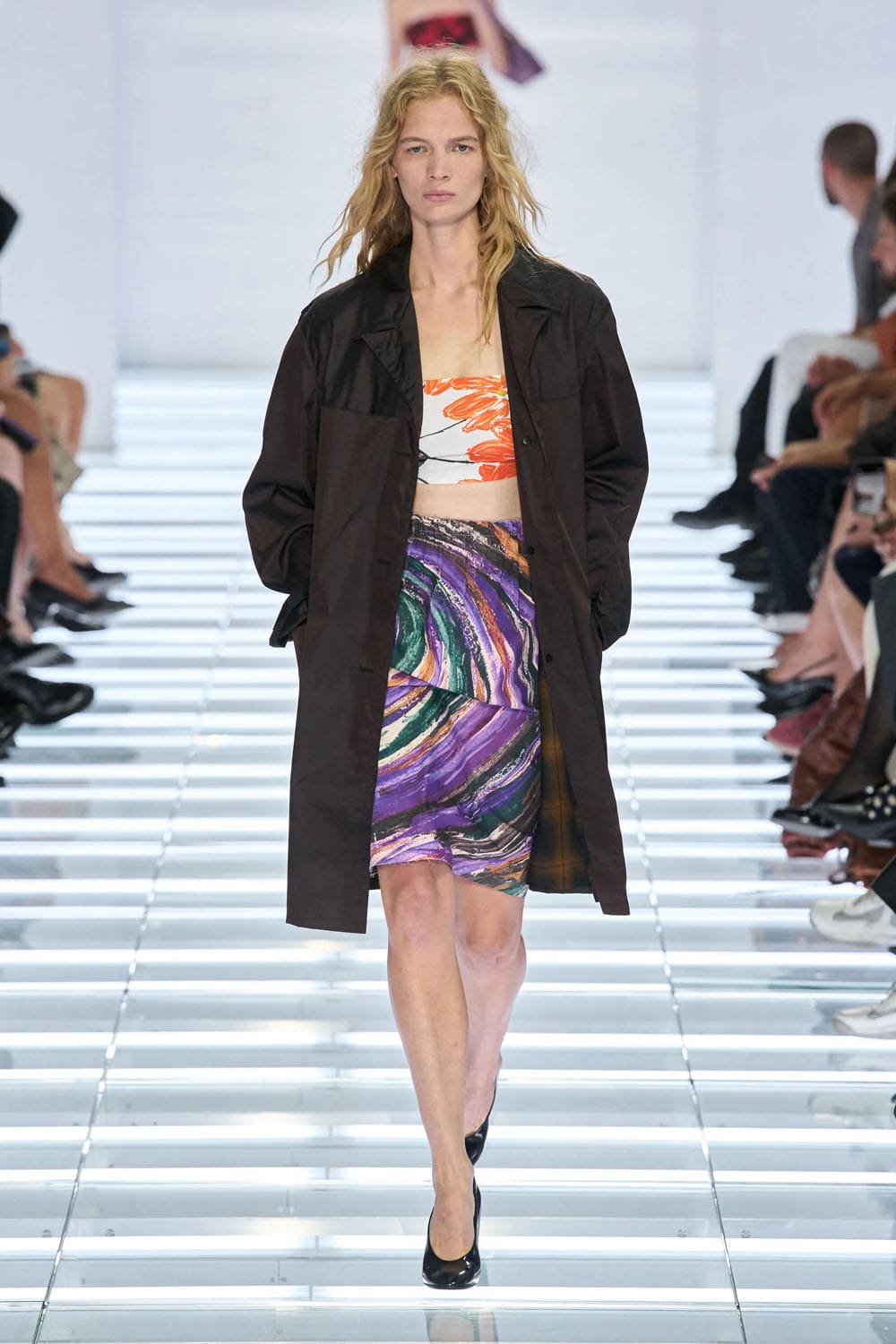
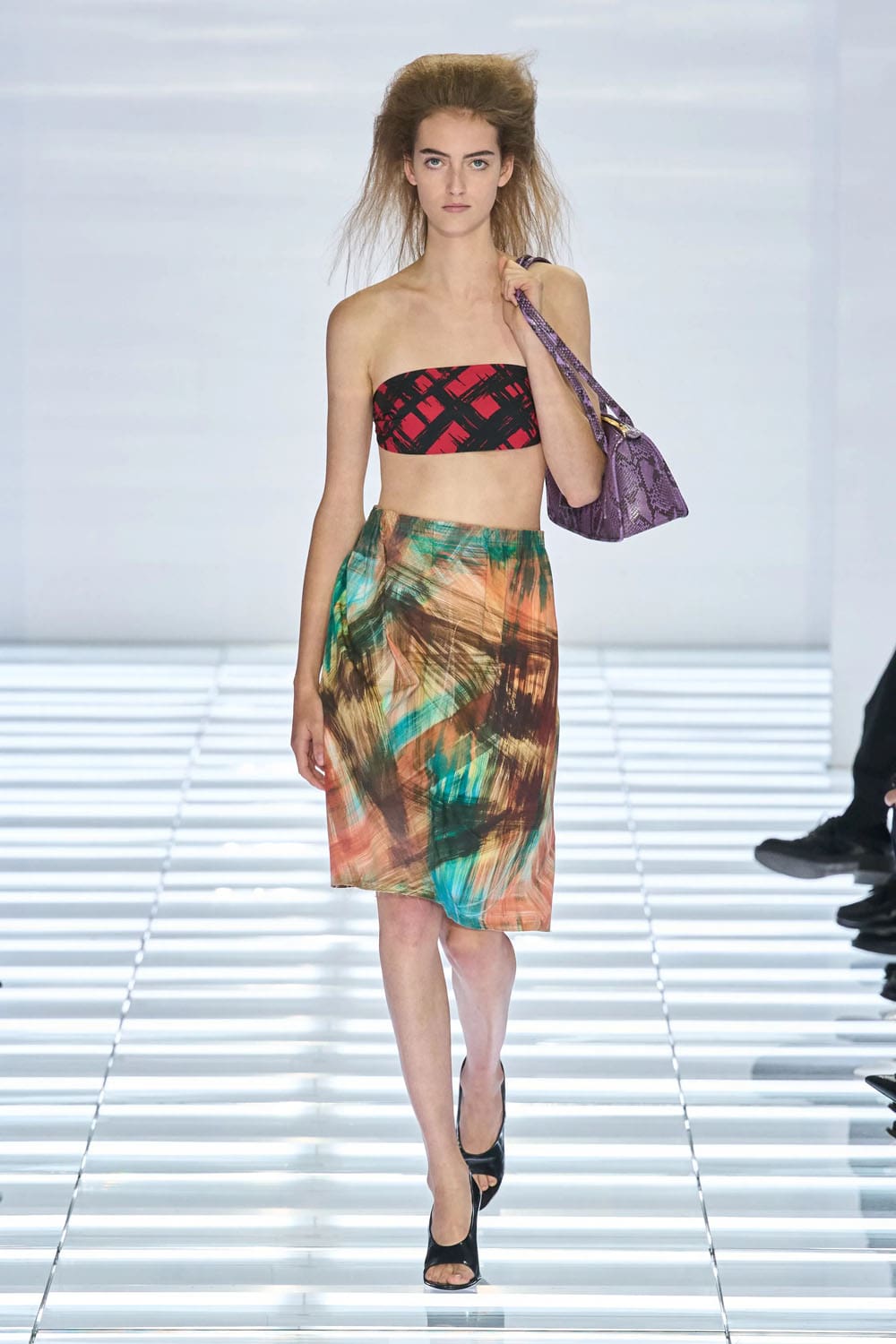
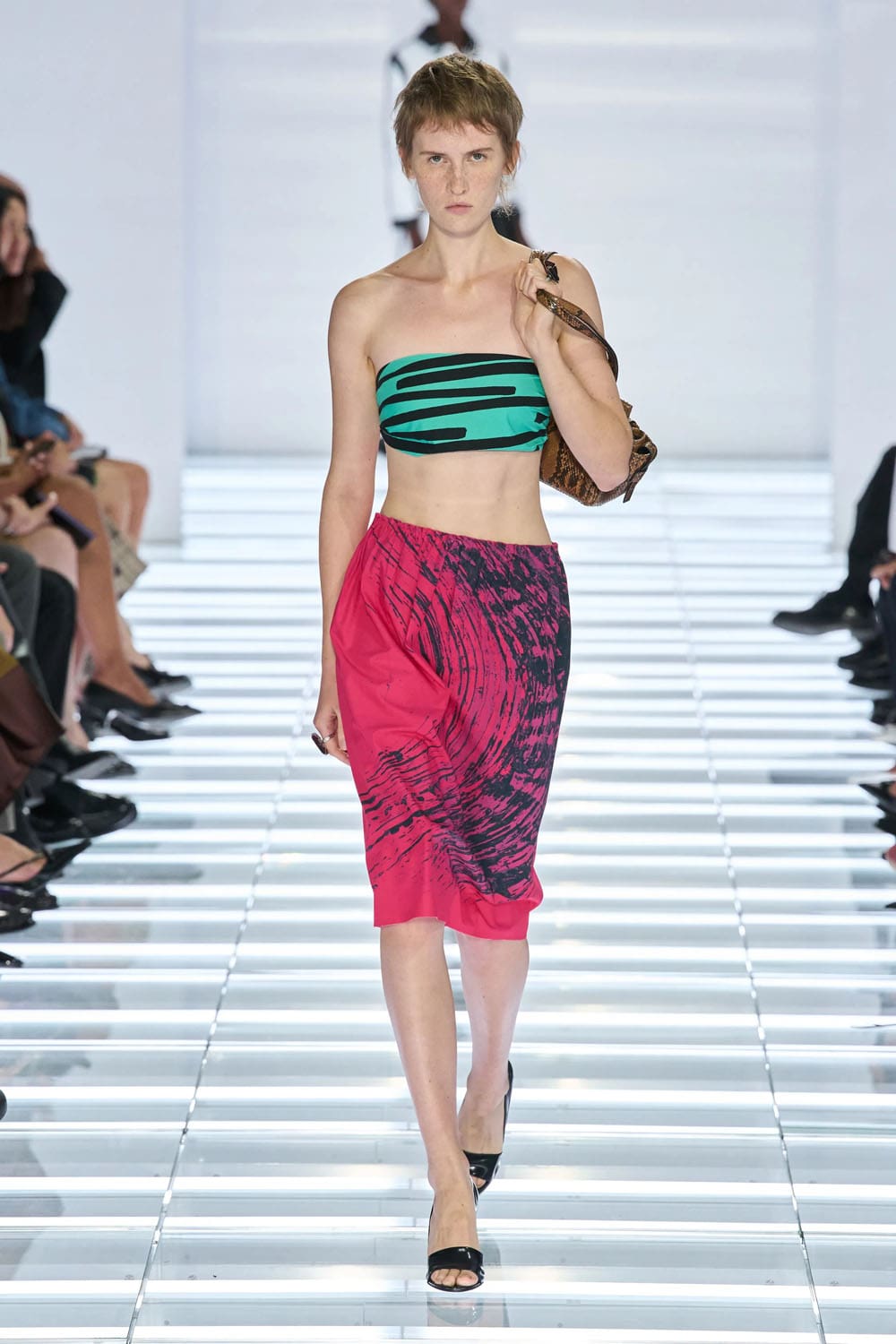
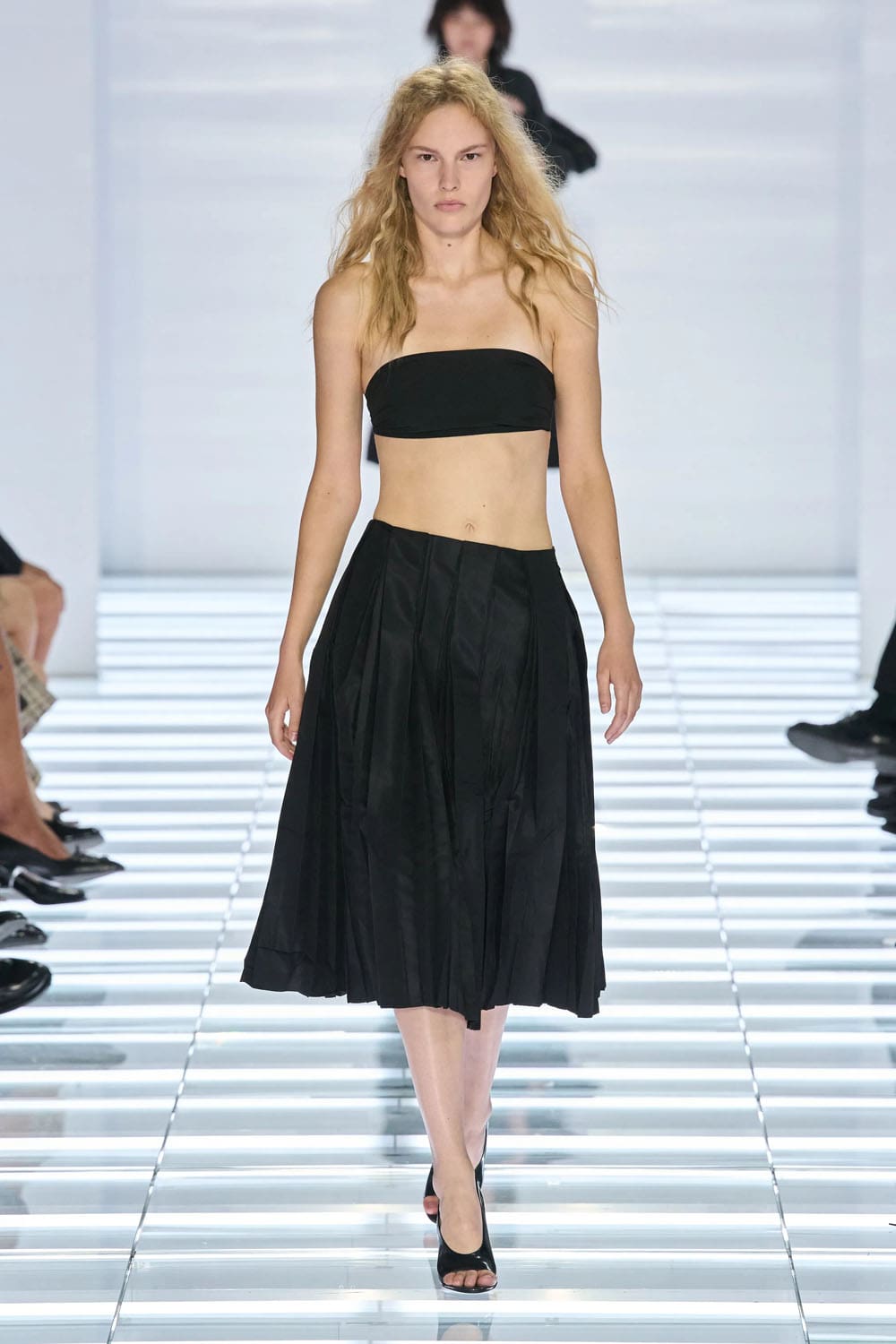
To interrogate fashion from the waist down is to strip it of theatrical distraction. The jacket dictates authority, the coat imposes silhouette, but the skirt governs motion, cadence, and restraint. When Miuccia Prada and Raf Simons converged on the runway for Spring/Summer 2027, their declaration abandoned total looks in favor of a singular, obsessive core: the skirt as pure form, uniform, and conceptual laboratory.
Prada treats this universal garment the way an artist approaches a primed canvas. It is a pragmatic system akin to a white T-shirt—versatile, effortless when paired with a sweater or a buttoned shirt, yet capable of profound subversion without altering the wearer’s fundamental presence. Twenty years after her initial masterclasses in radical reduction, this presentation is an uncompromising study inside strict parameters. It is an exploration of form, utility, and the quiet tensions between modesty and exposure.
From Sumerian Kaunakes to the Modern Hemline
Long before the contemporary wardrobe reduced clothing to consumerist novelty, the skirt was civilization’s foundational architecture. As documented in the deep historical archives of Runway Magazine, the garment’s origins bypass gender and social pretense:
- Archaic figurines from the Vinča culture (c. 5700–4500 BC) depict women draped in rudimentary skirt forms, establishing the silhouette at the dawn of the Copper Age.
- Across Mesopotamia, Sumerians bound their waists with kaunakes—heavy fringed wraps anchored by thick belts.
- In the ancient Near East and Egypt, the skirt served as the universal, egalitarian uniform for everyday survival.
Modernity turned the skirt into a battleground of centimeters. The 19th century codified it into expansive crinolines, where metal cages and voluminous textiles, recorded in early French patent registries, prioritized decorum over kinetic ease. The true tectonic shift came when early 20th-century innovators began cutting the cloth to liberate female movement. Jeanne Lanvin initiated the rising hemline between 1908 and 1910, followed by Paul Poiret, who dared to reveal the ankle and splash bright stockings beneath shortened coats. Decades later, when the streets of 1960s Paris and London demanded radical autonomy, tailor Lucien David Langman joined Courrèges and Quant in cutting above the knee. The hemline became an indelible index of freedom.
Prada and Simons step directly into this historical continuum, neither to repeat historical drama nor to pander to nostalgia, but to dissect the modern mechanics of how cloth wraps the lower body.
The Geometry of Pragmatism: Wraps, Velcro, and Raw Edges
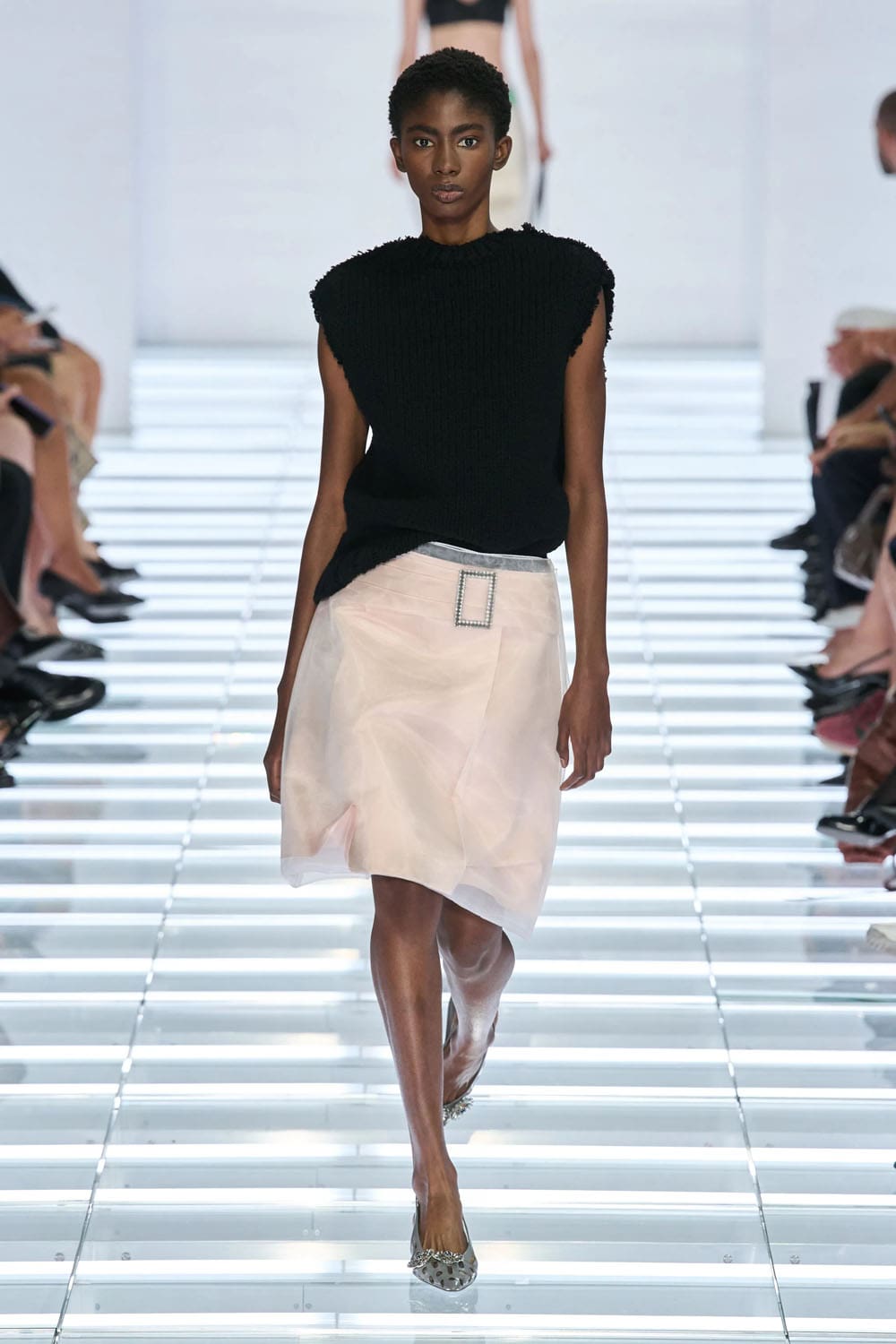
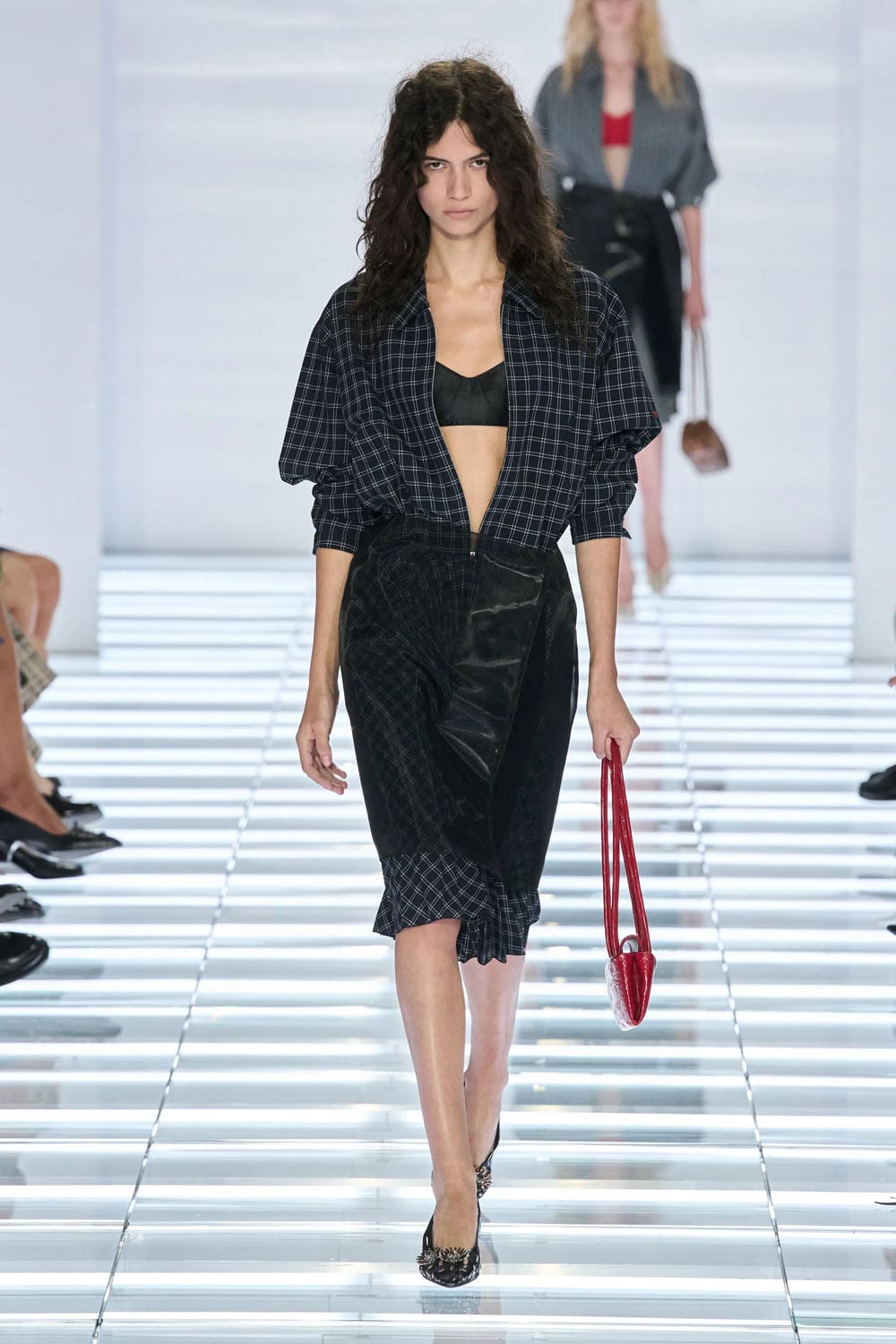
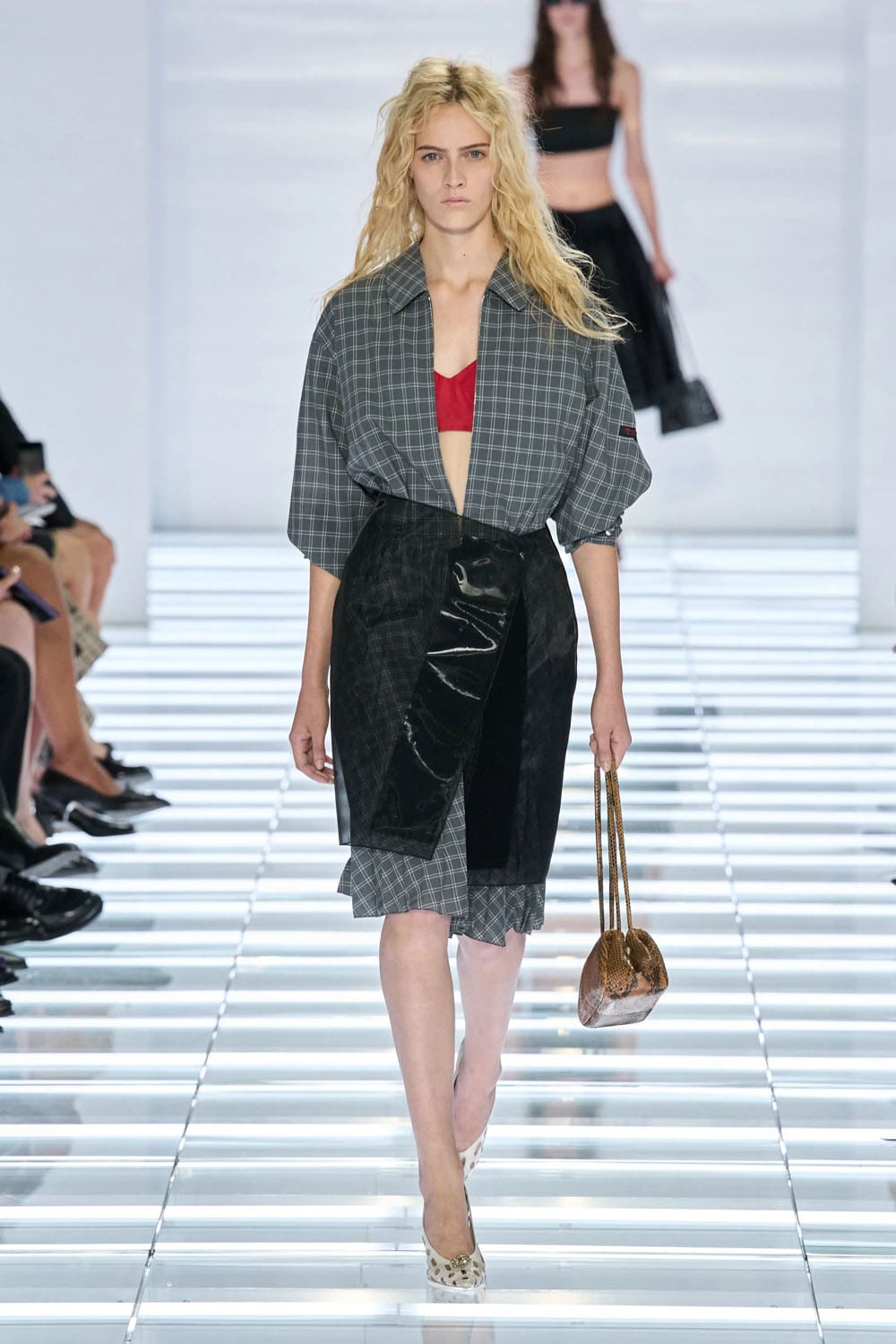
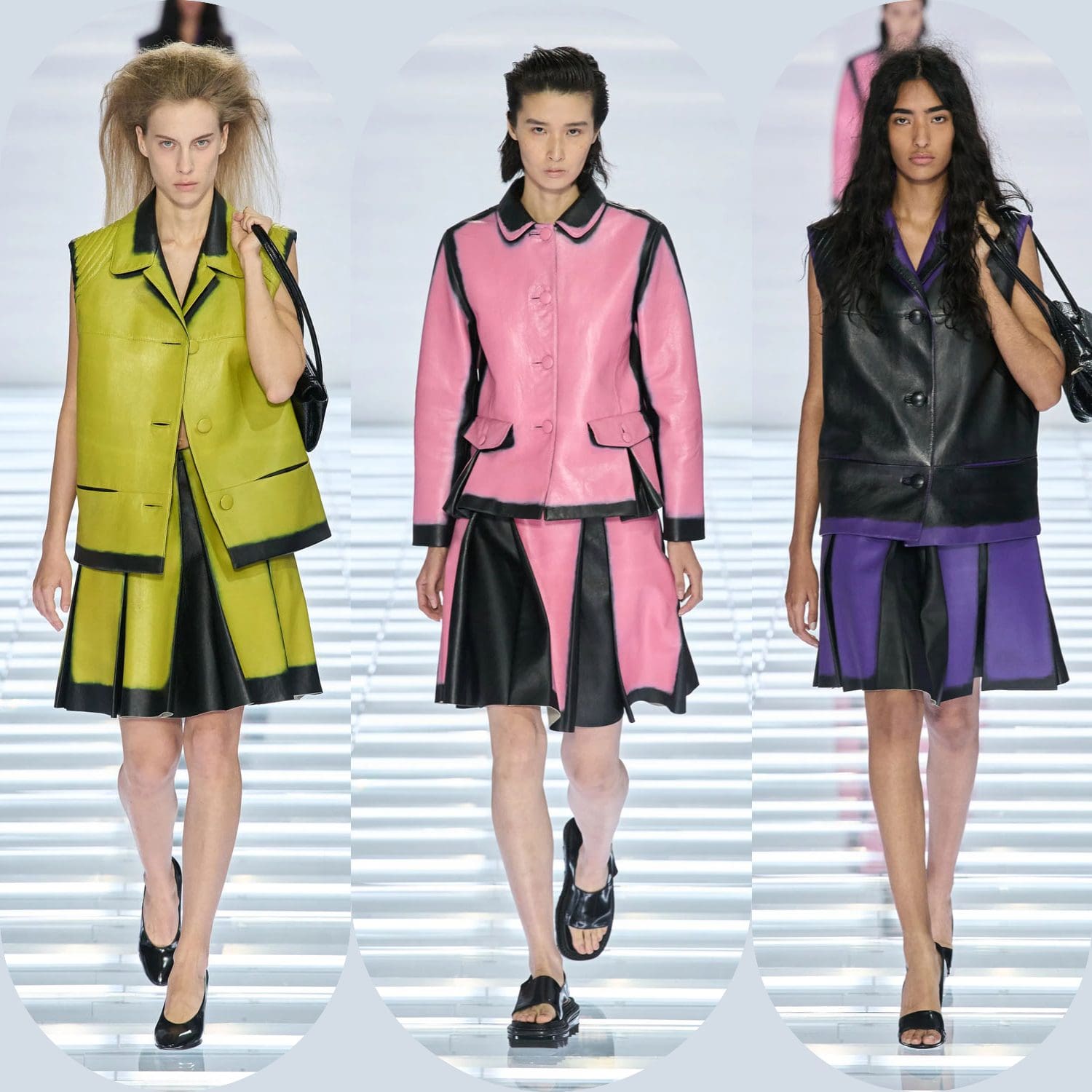
The Spring/Summer 2027 runway reframes the wrap skirt into a masterclass of industrial reduction. Rather than relying on traditional hook-and-eye closures or discreet side zippers, pieces pivot on raw utility and brutalist closures.
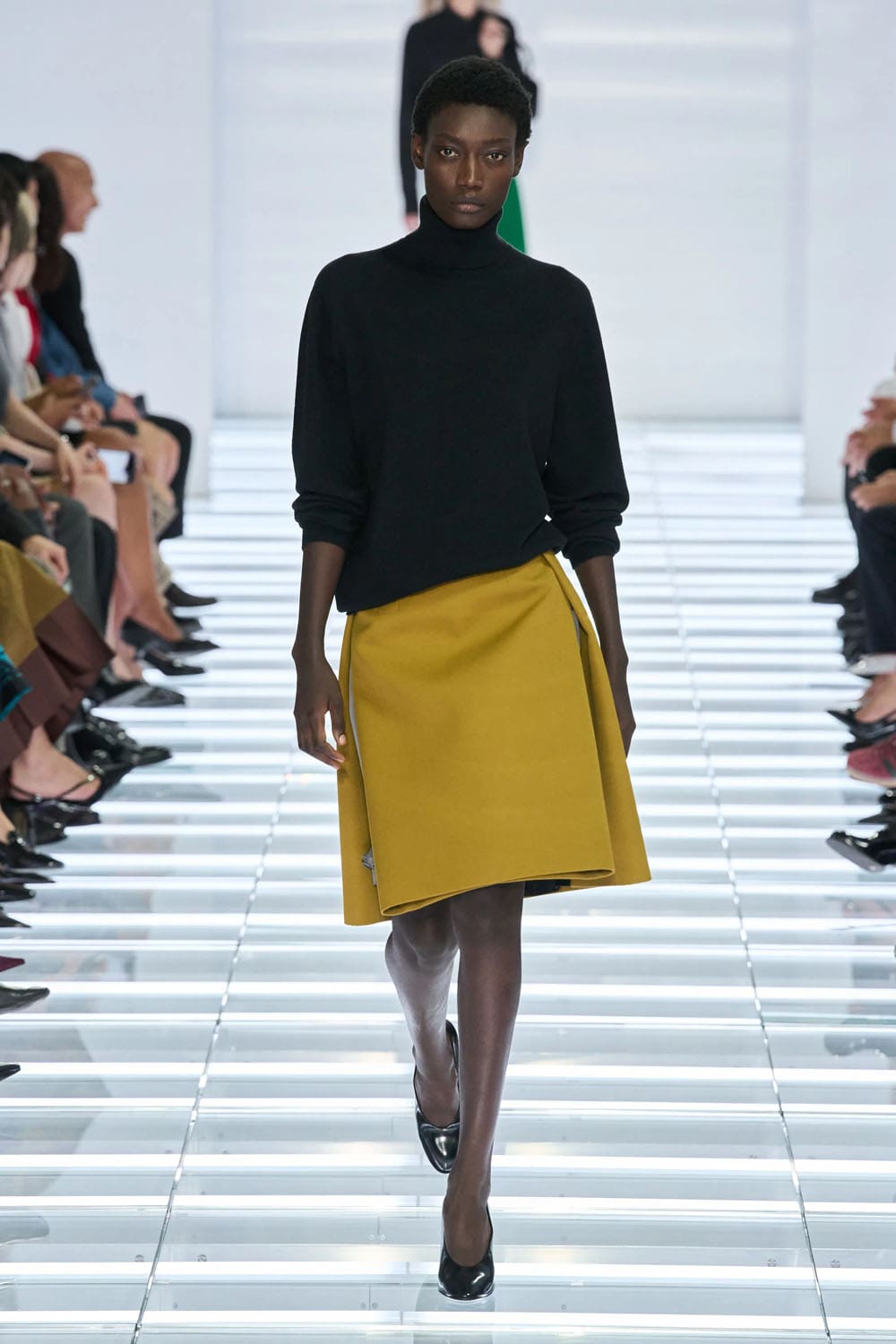
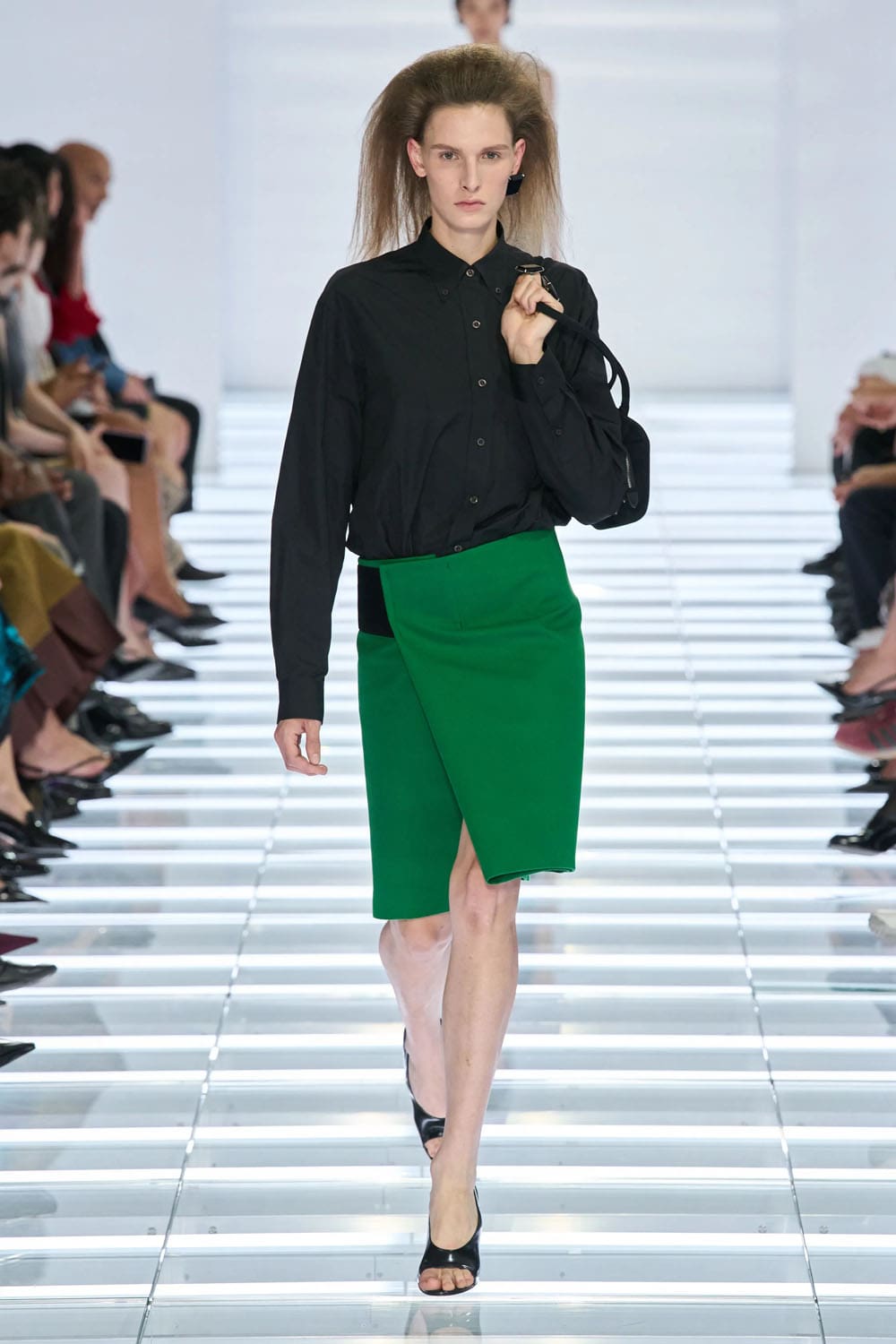
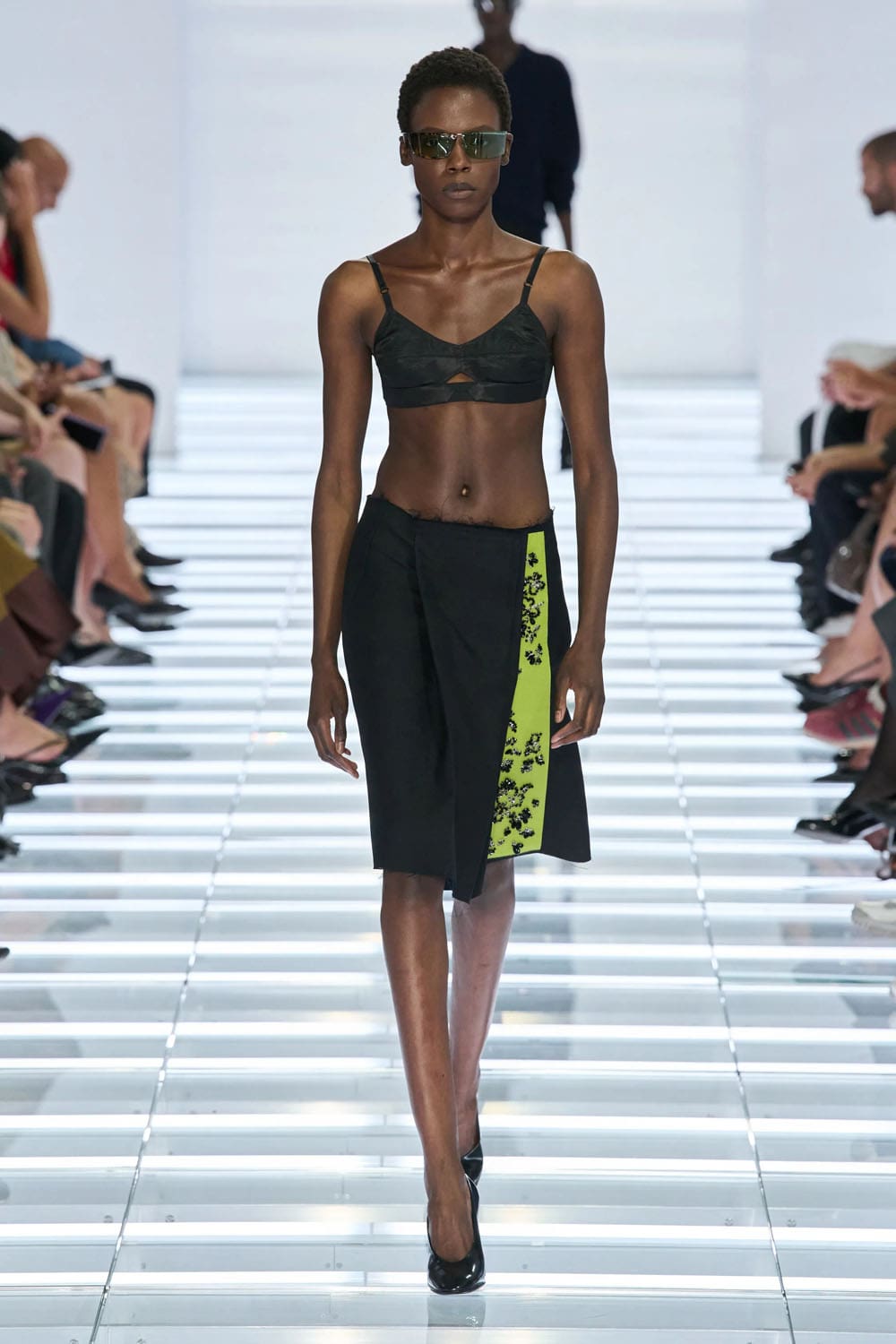
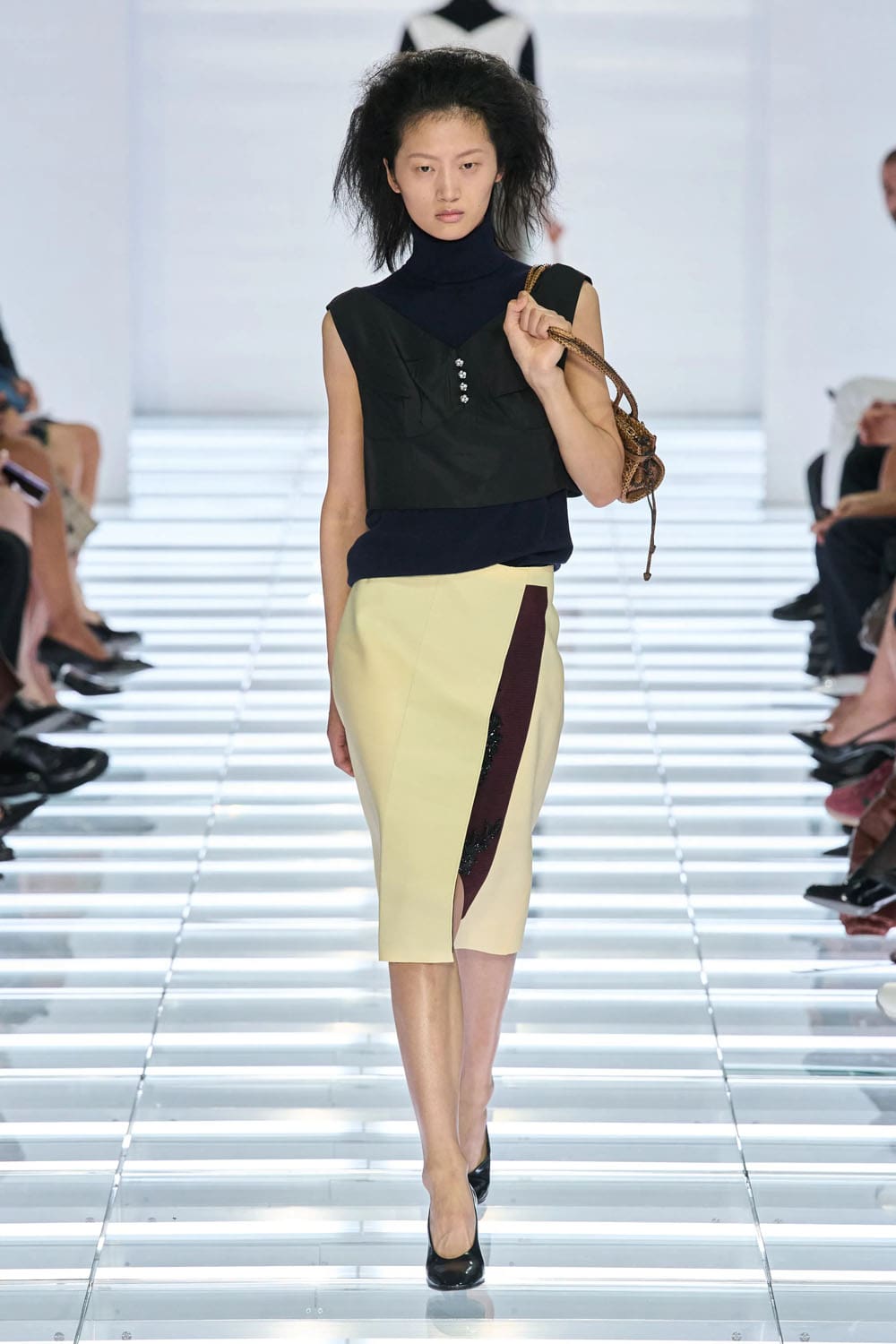
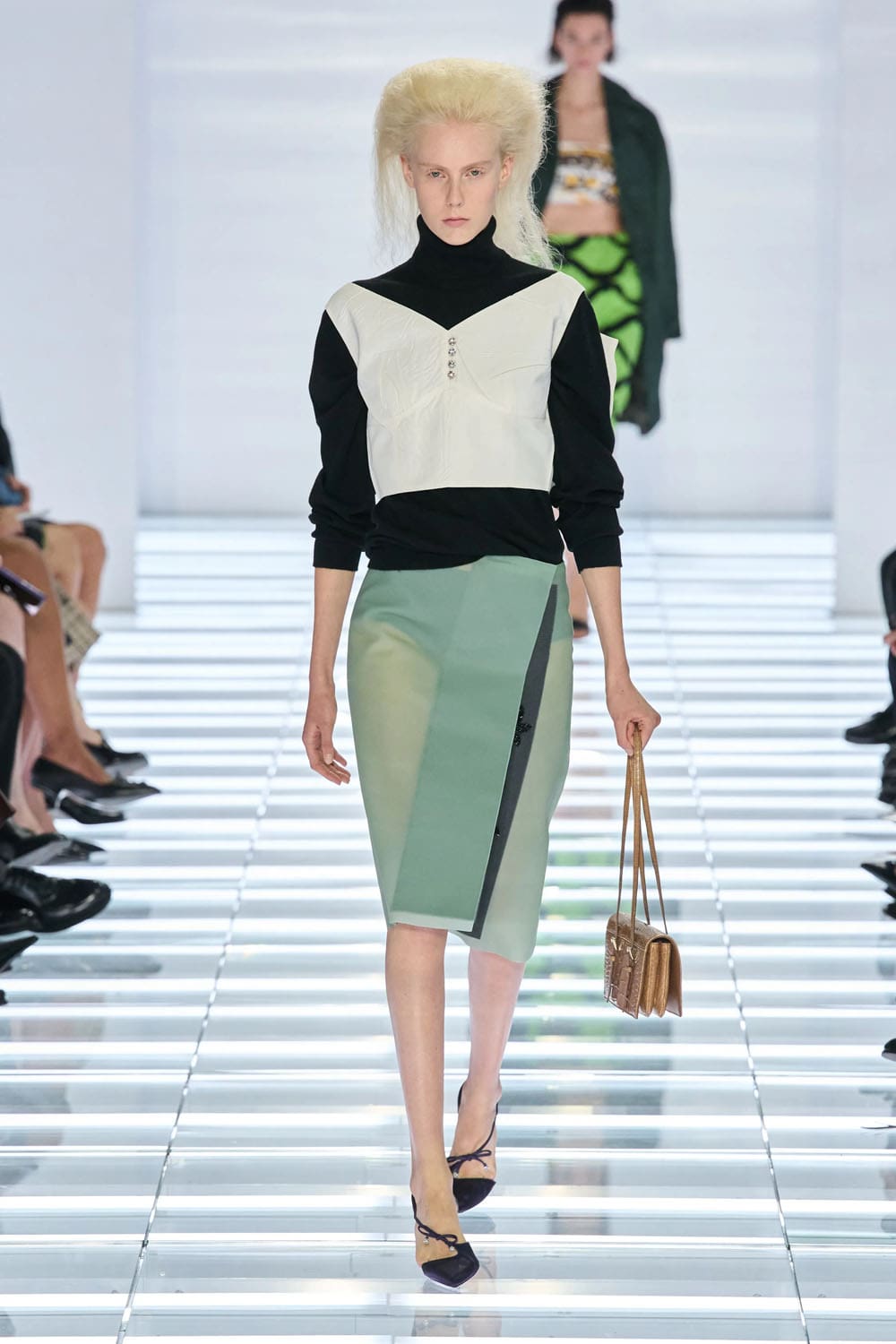
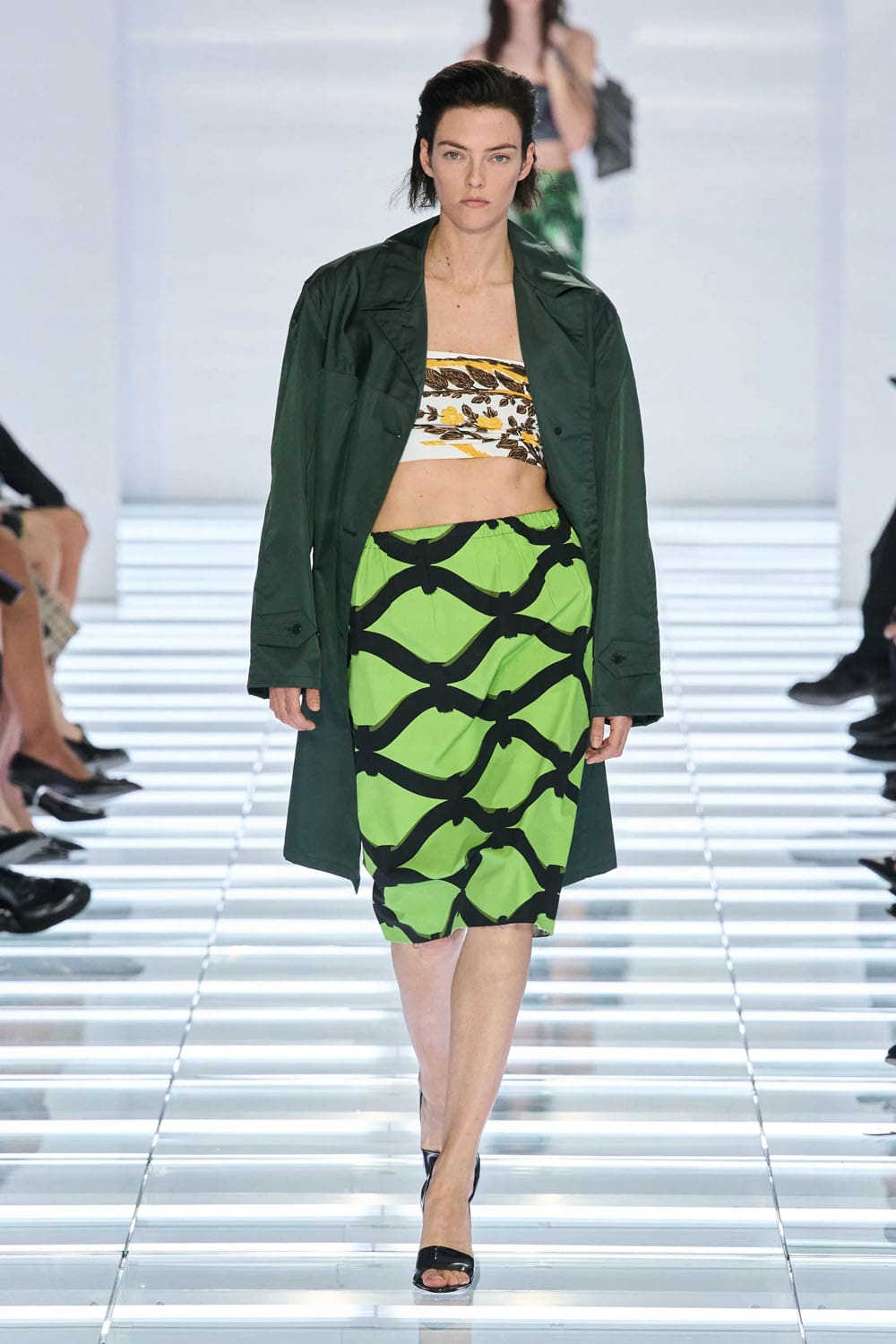
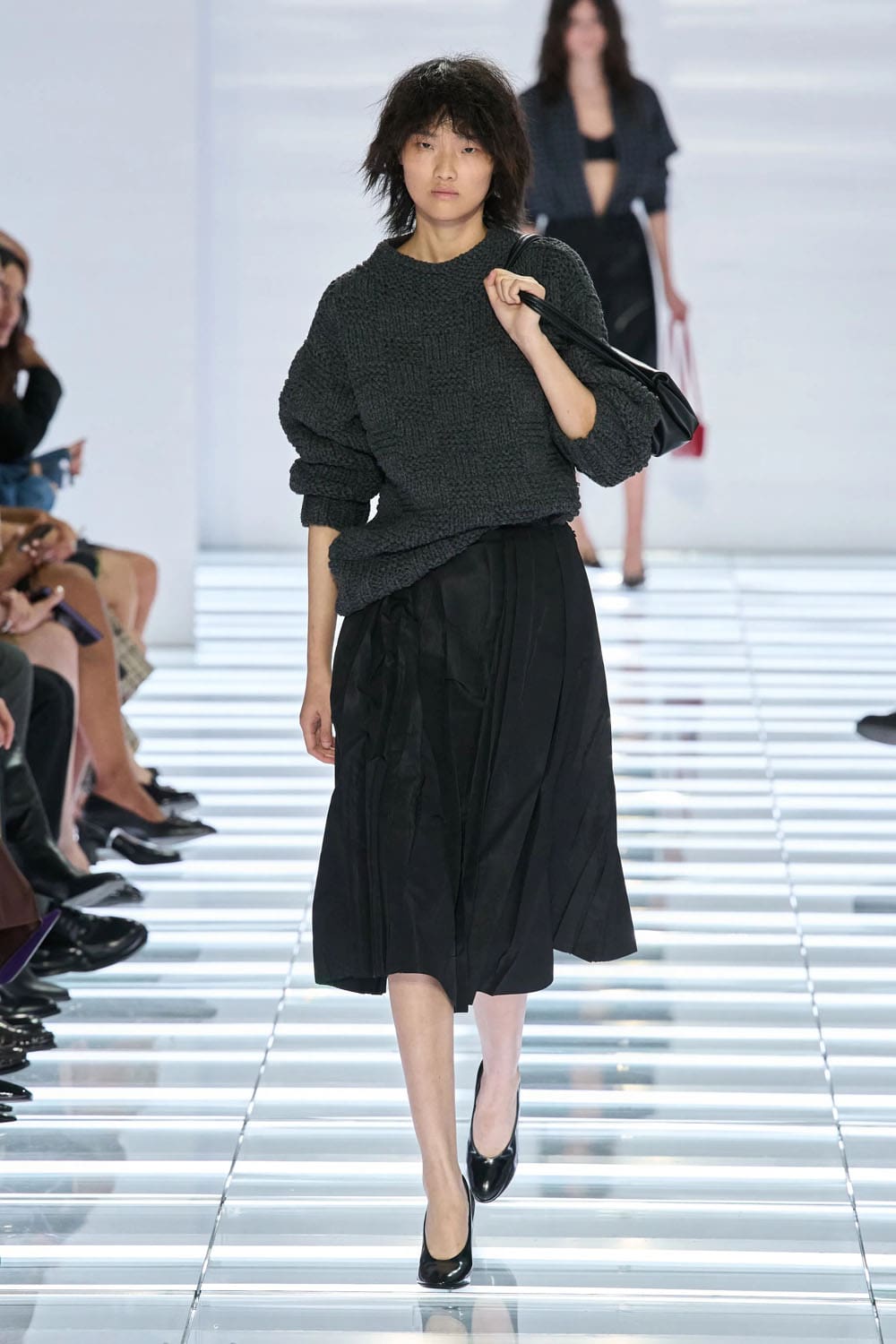
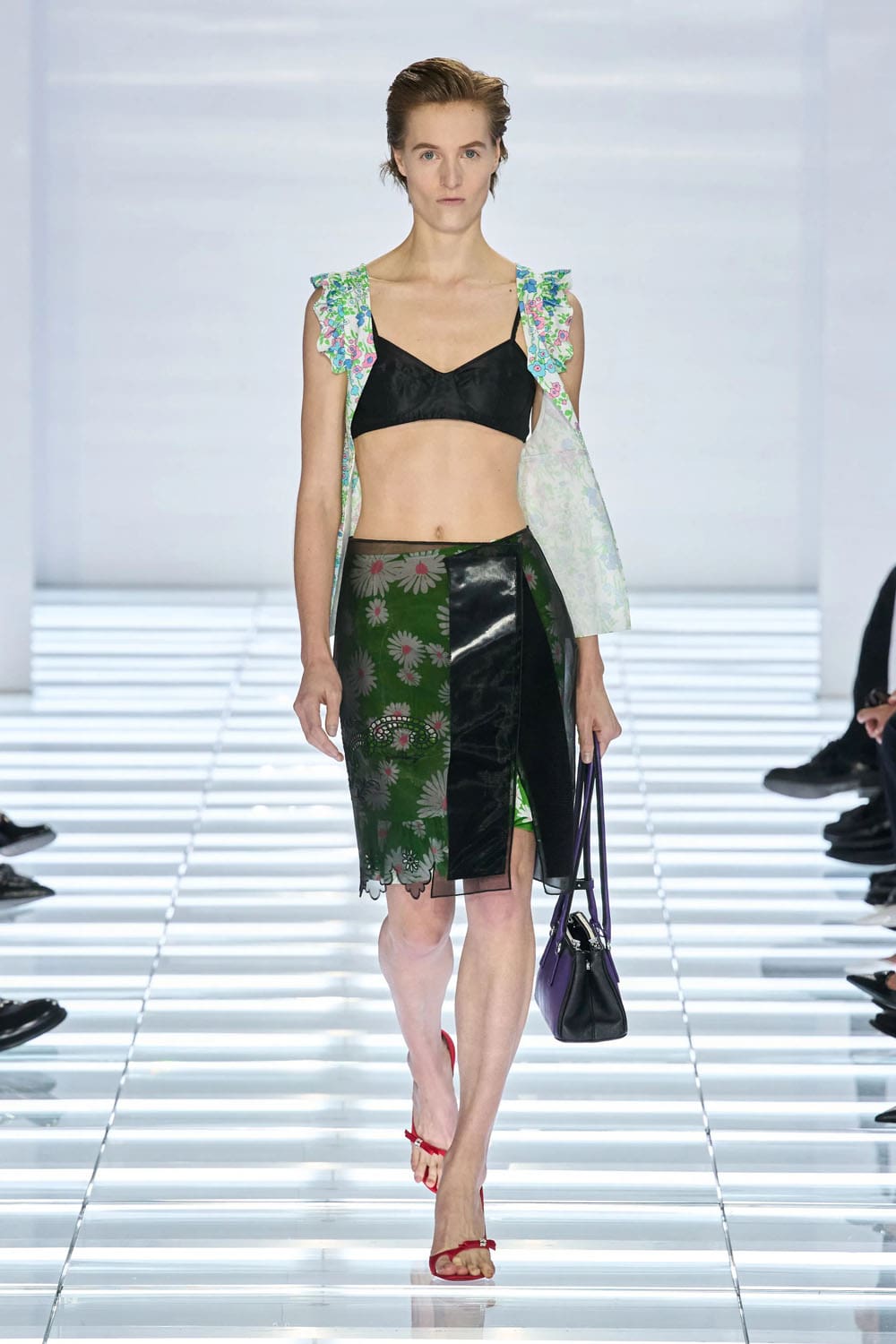
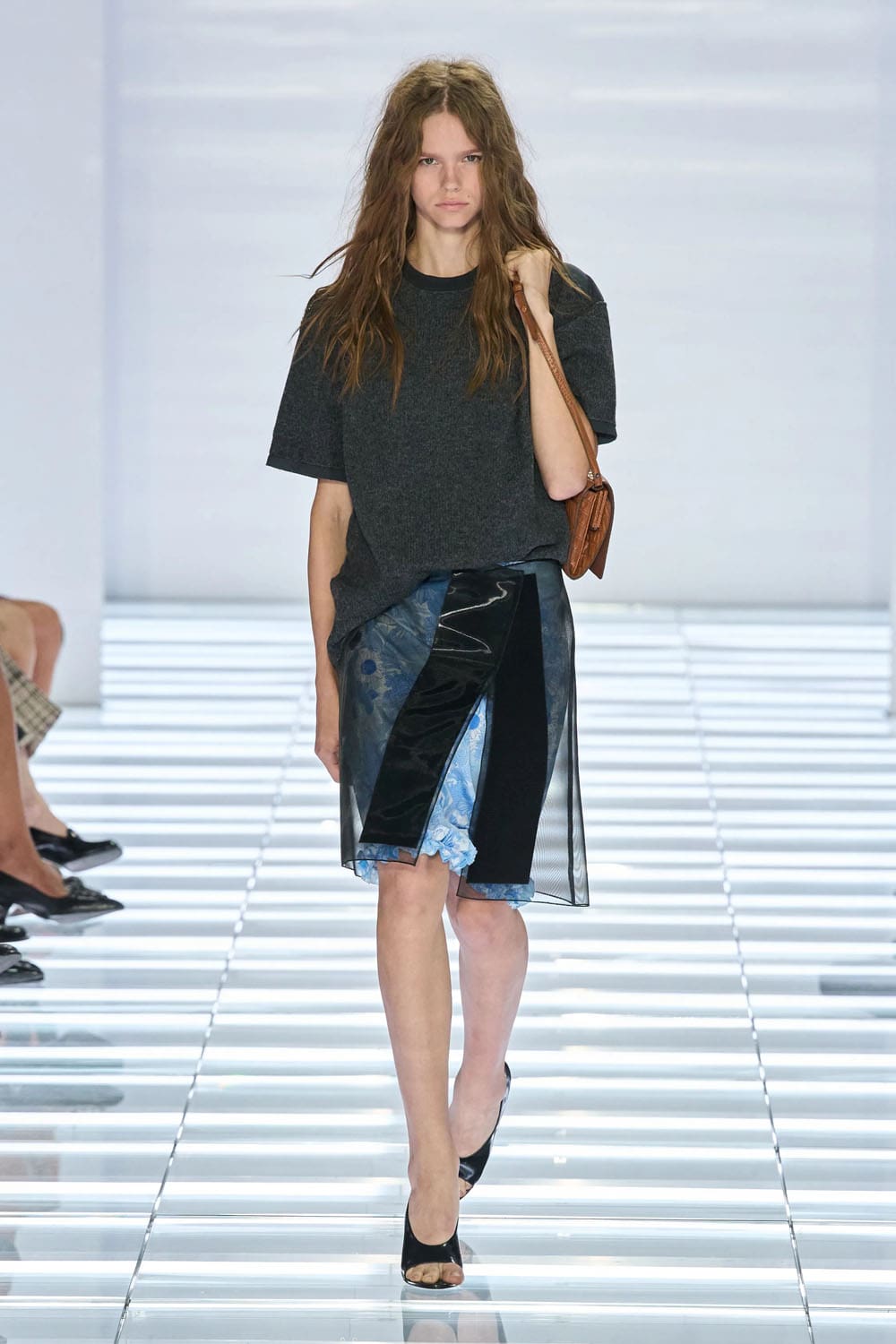
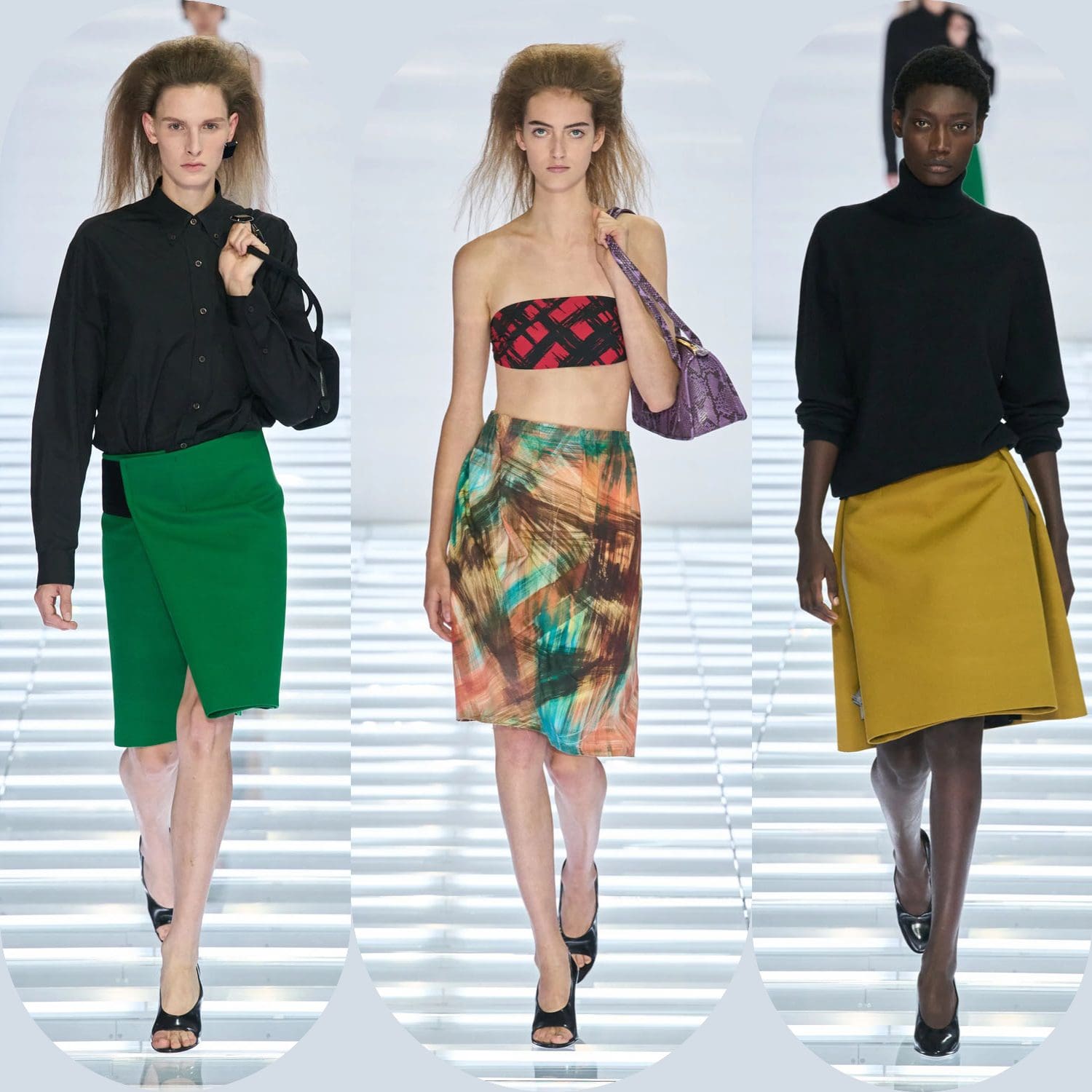
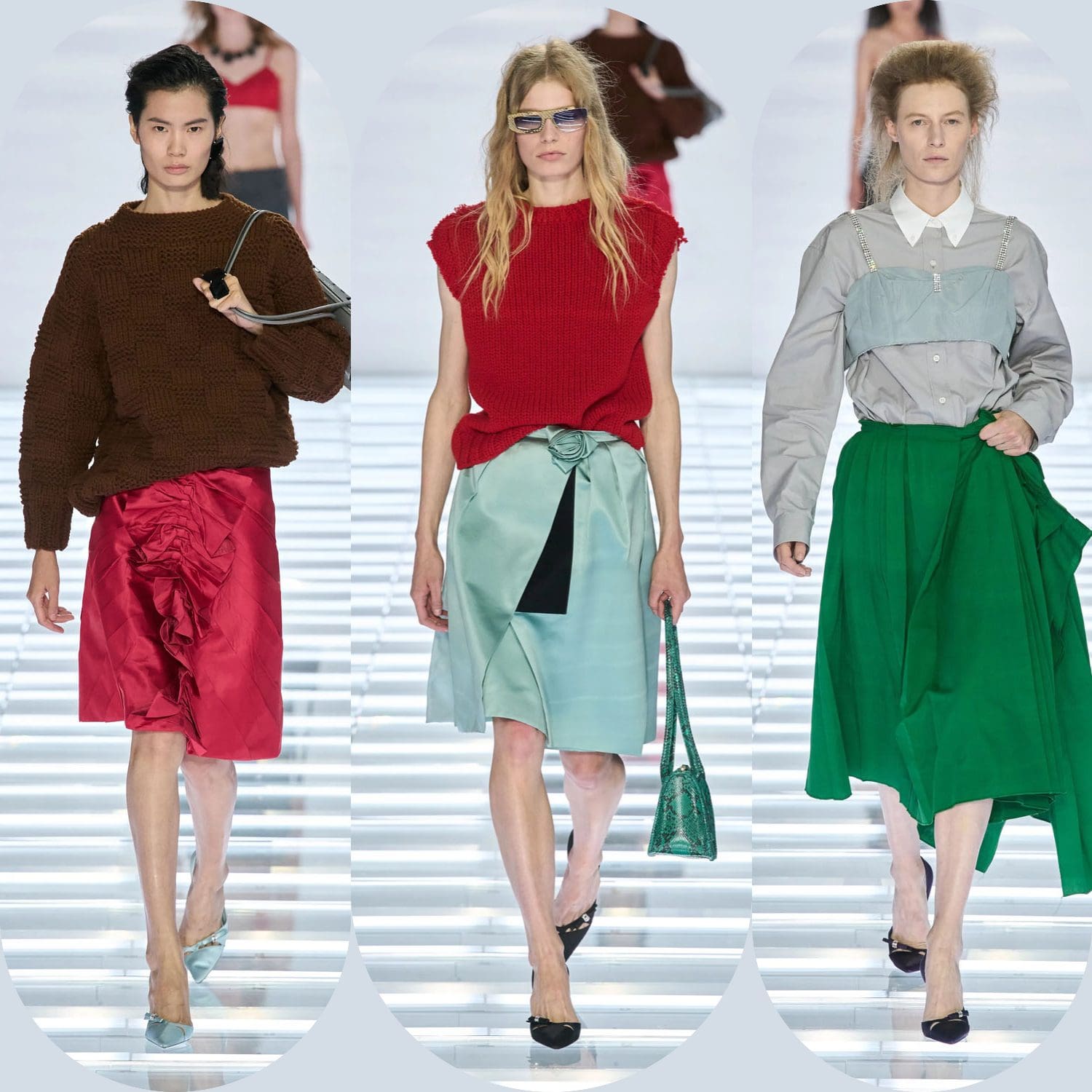
Consider the sharp, sulfur-yellow wool skirt cut just below the knee, hanging with an architectural rigidity that swings against the stride while remaining anchored by an unassuming, overlapping front. It meets a heavy charcoal turtleneck, rejecting decorative excess in favor of a severe, deliberate silhouette. In another variation, an emerald green wrap pencil skirt sits slightly low on the waist, secured by a solid black industrial band that reads like high-grade Velcro, allowing an asymmetric slit to carve open dynamically above the knee.
The collection constantly interrupts clean surfaces with intentional abrasions:
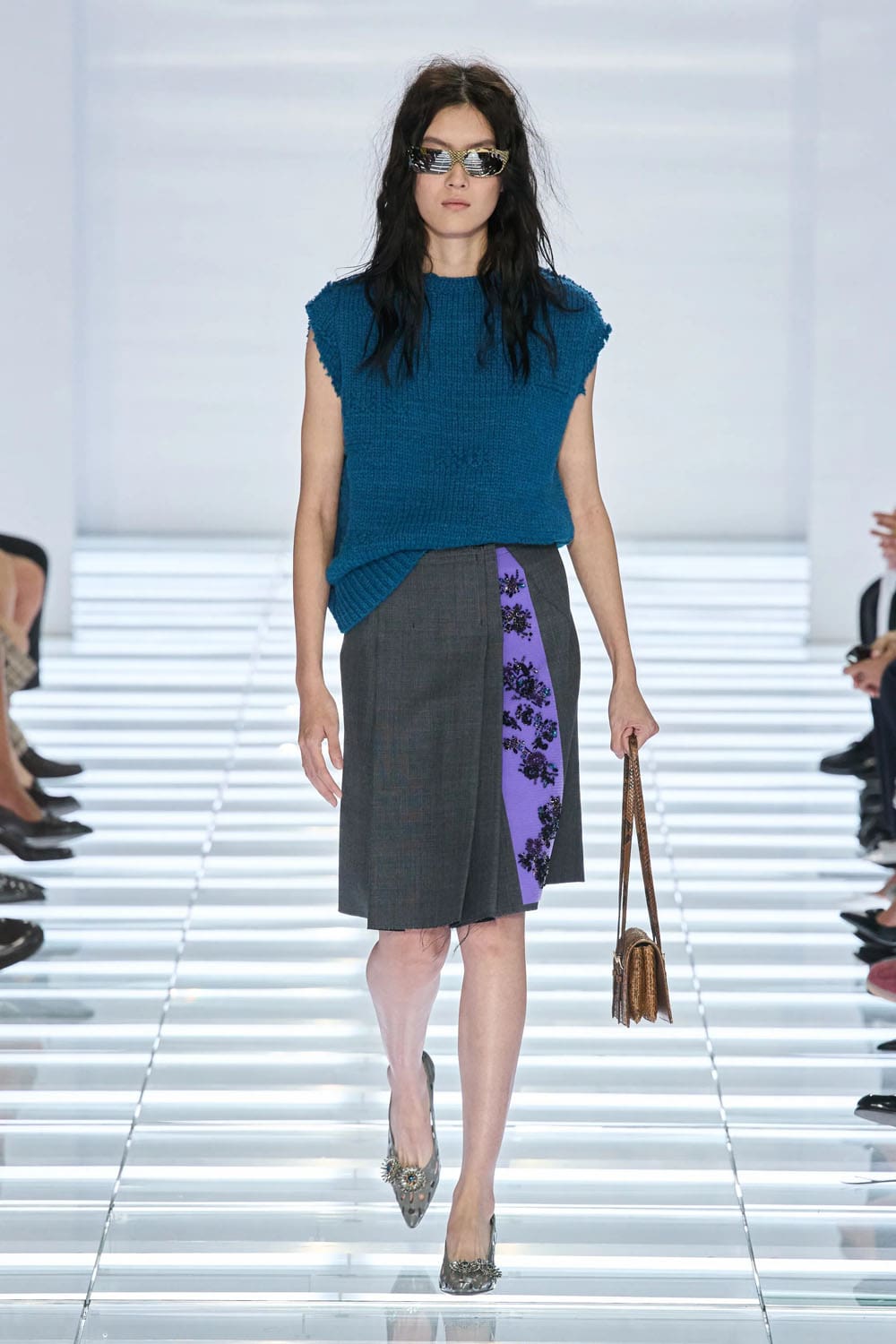
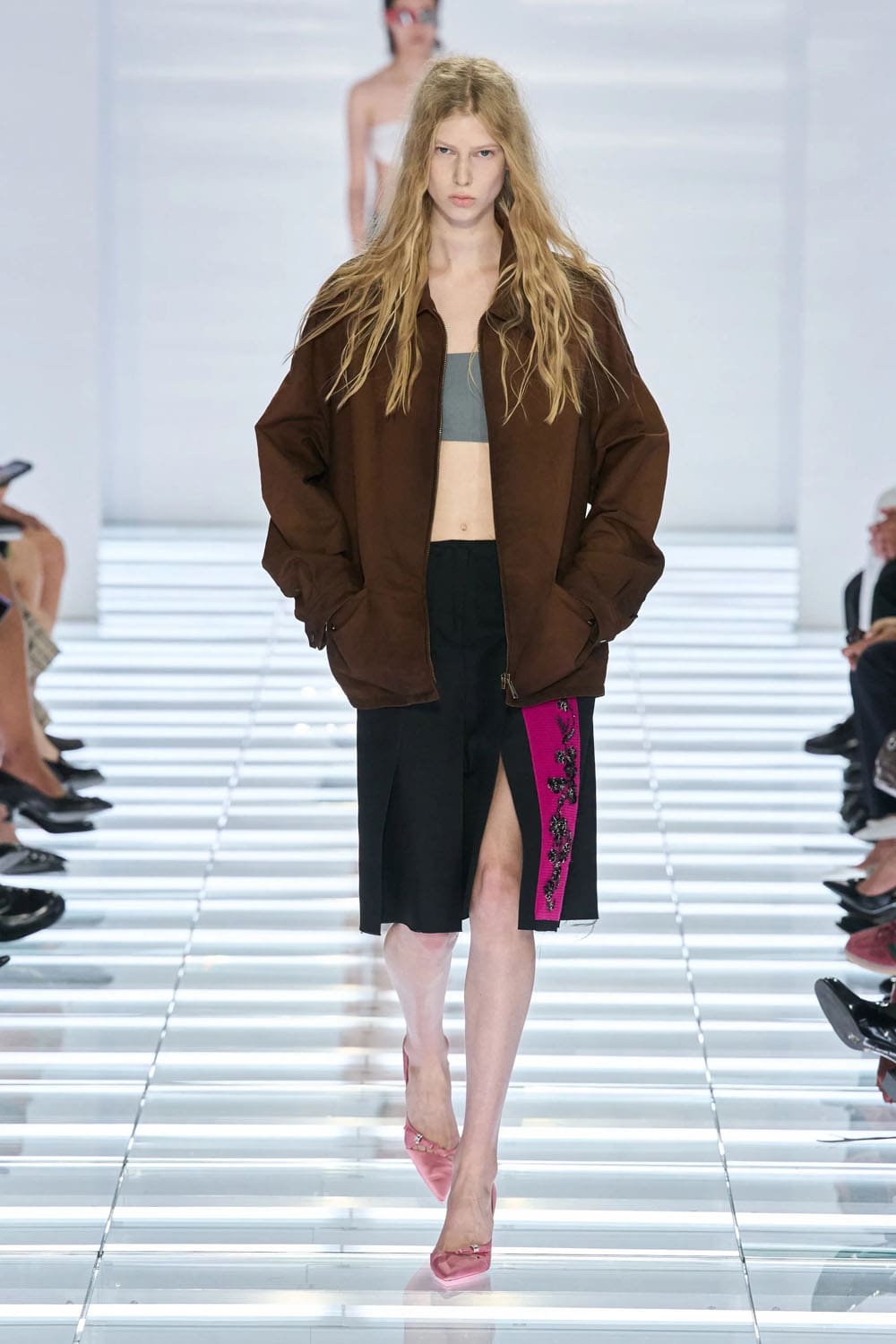
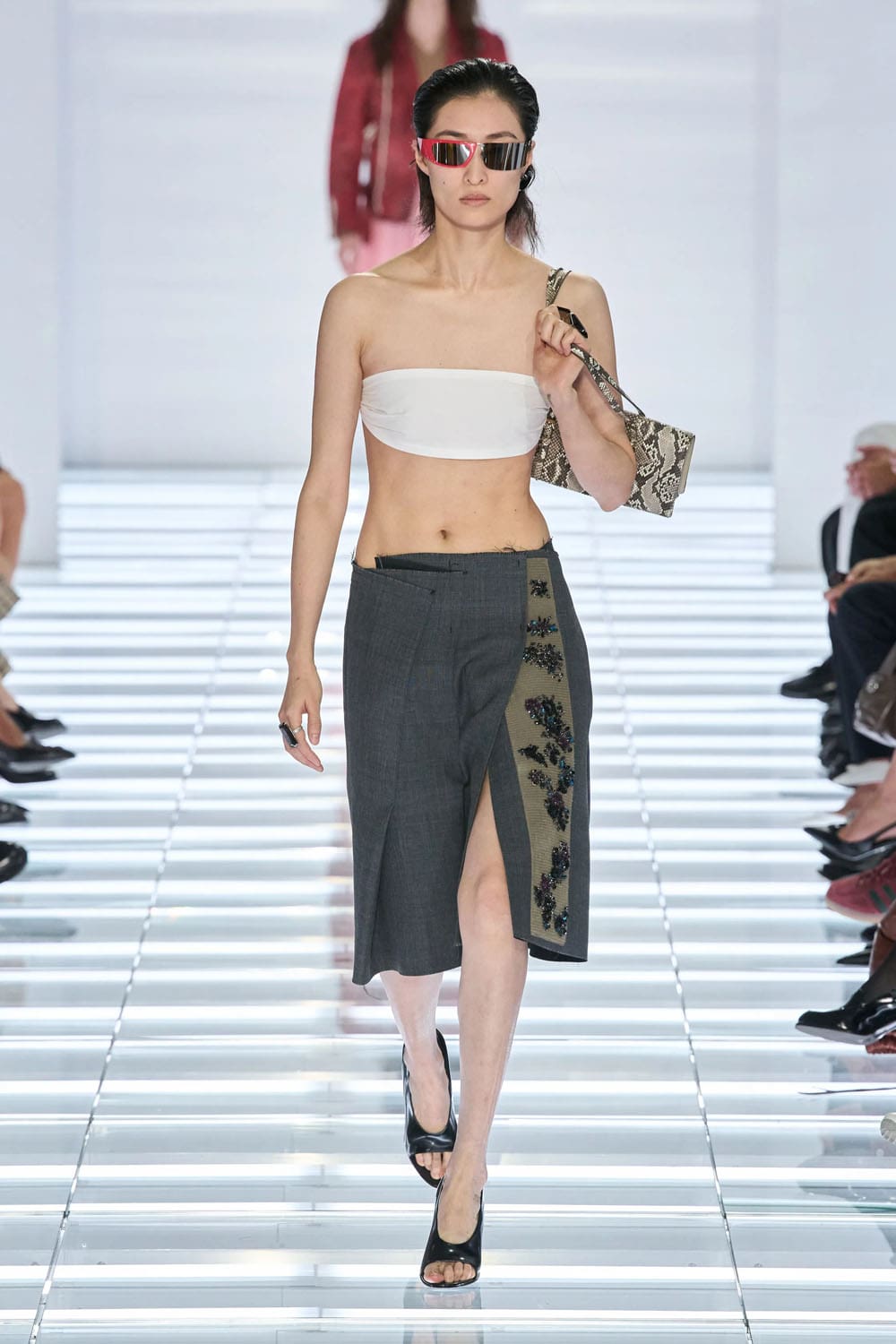
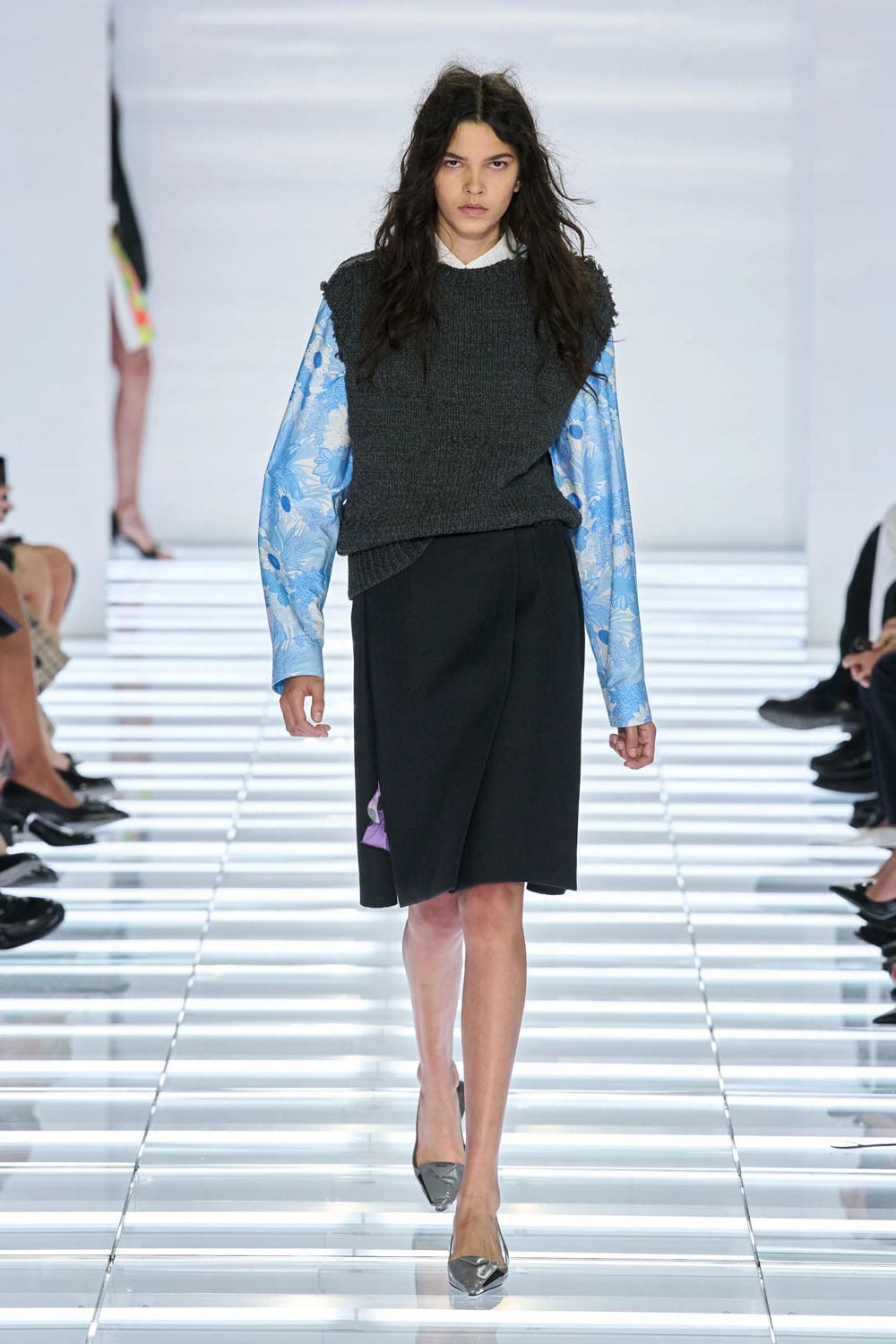
- A structured, heather-grey skirt is split diagonally across the thigh, exposing a contrasting lilac underlayer covered in jet-black floral beading, punctuated by a raw, unhemmed edge.
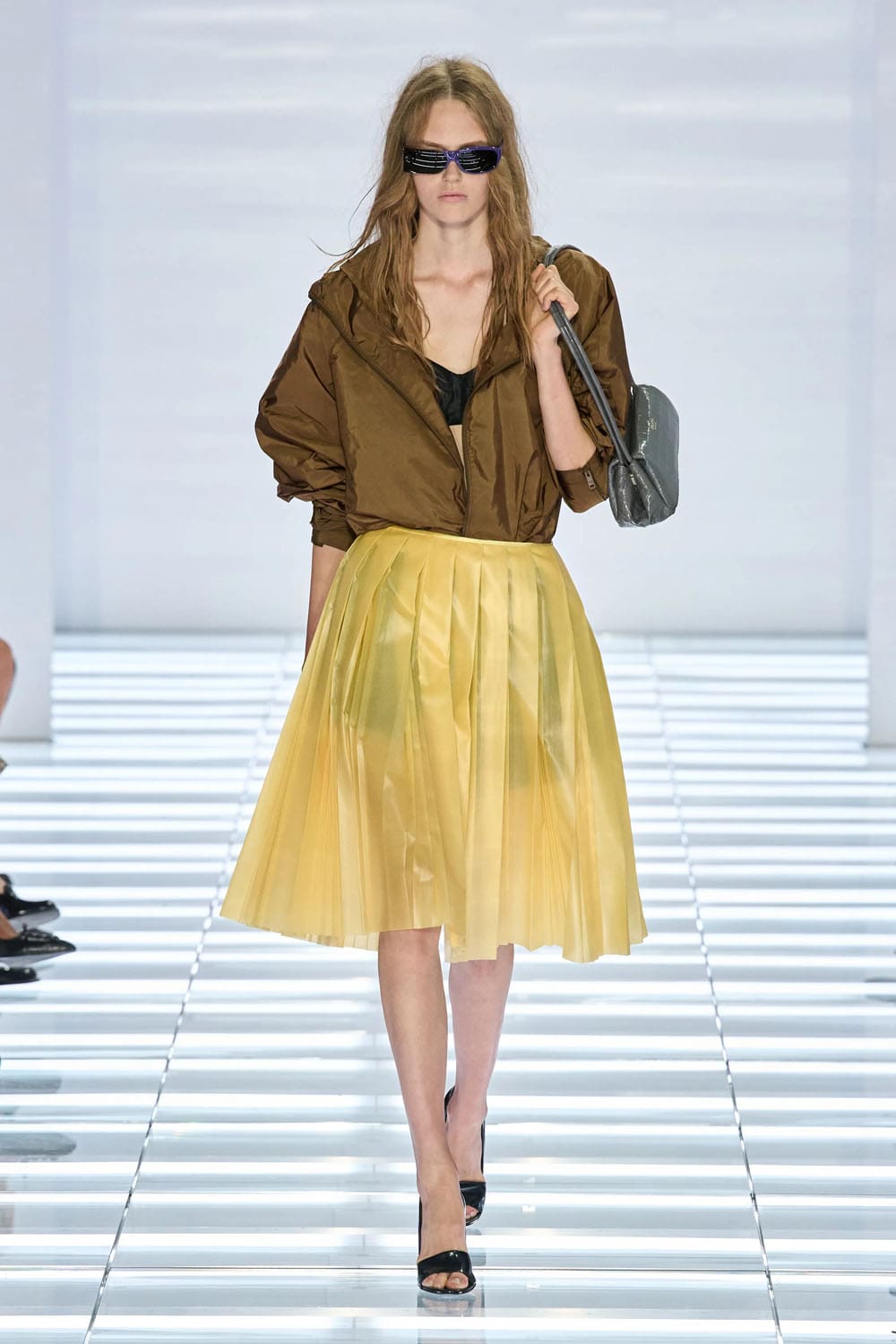
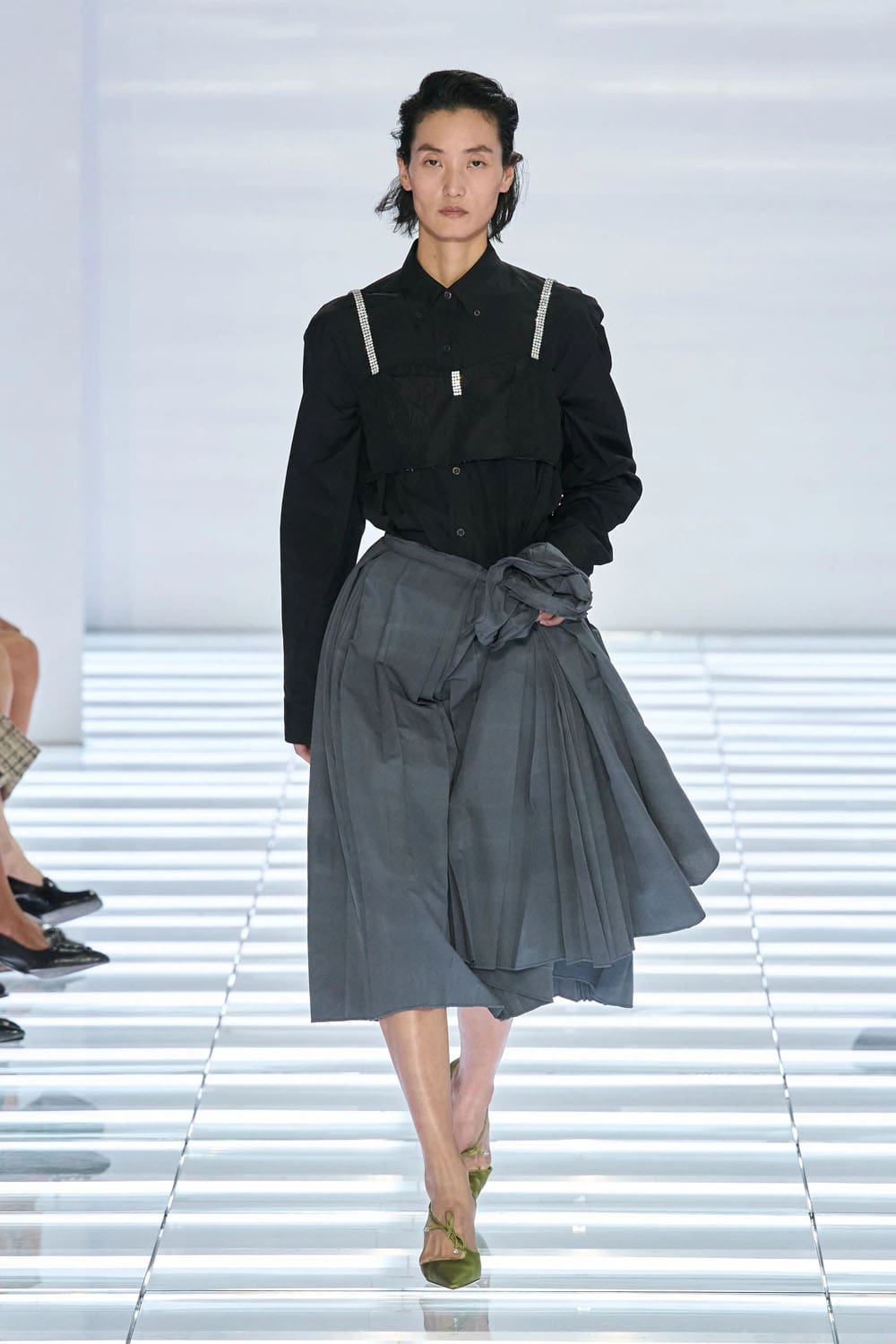
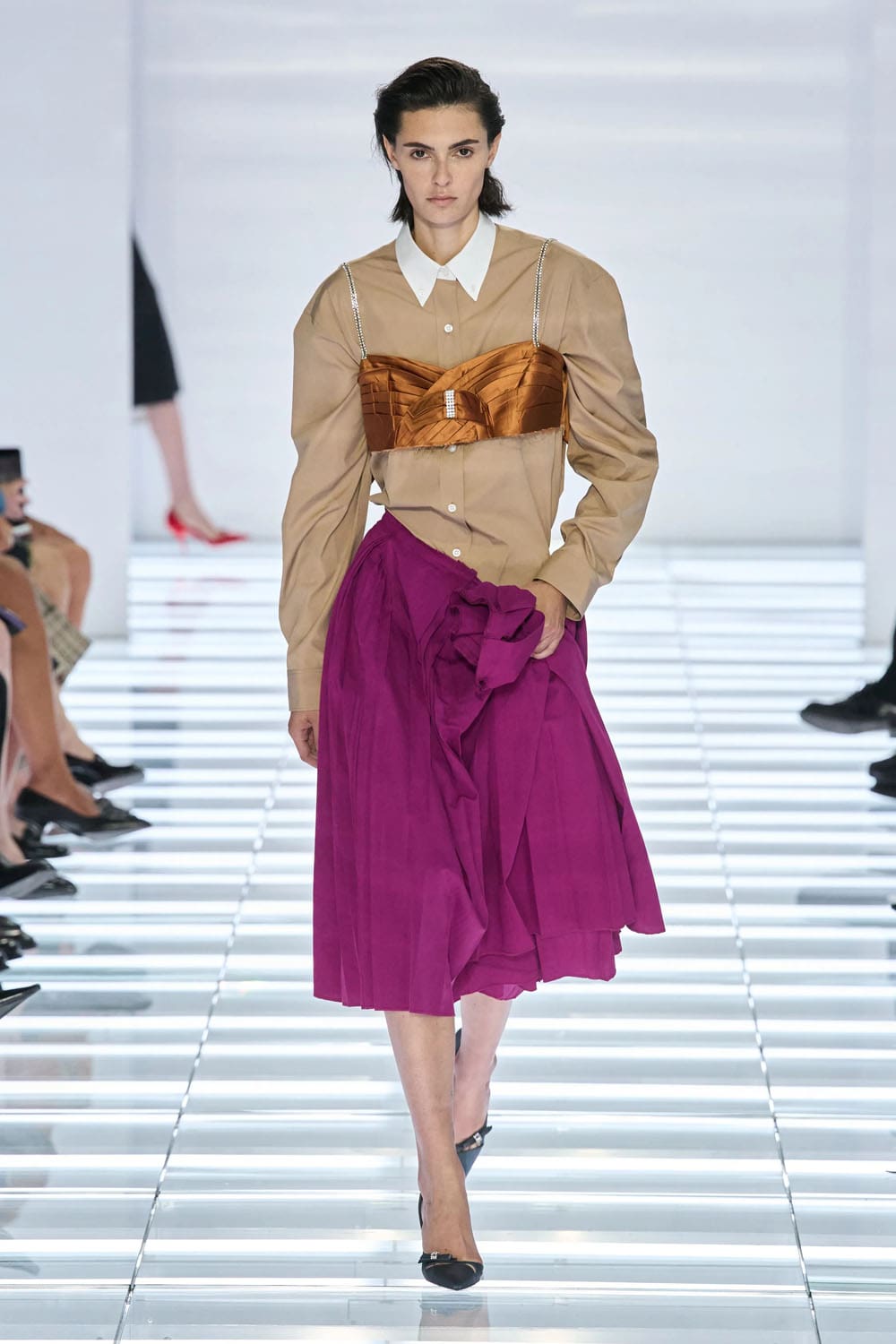
- Pale mint and buttery-yellow wraps fold around the hips like folded origami, featuring deep inserts of dark suiting wool that peek through slits as the wearer walks.
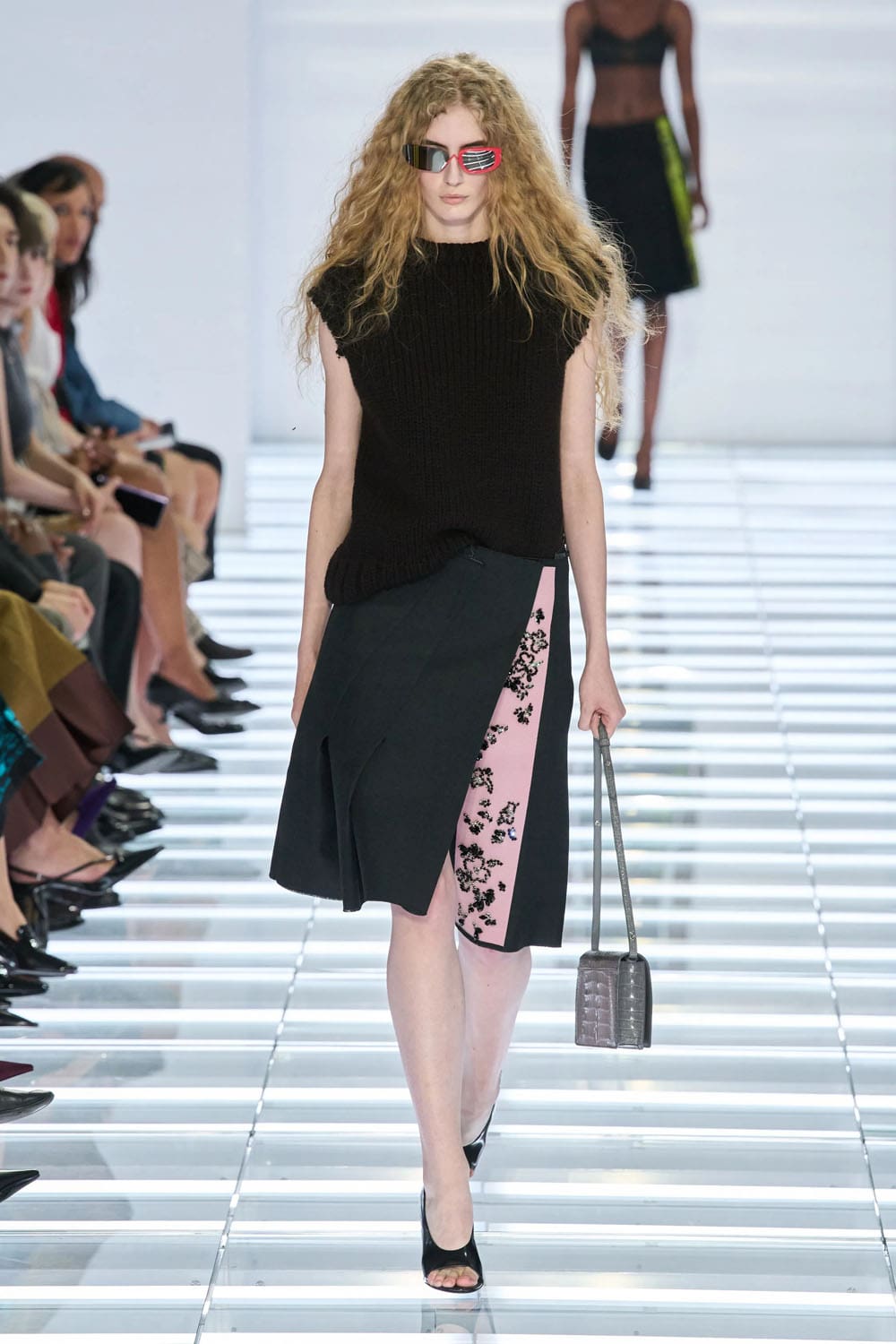
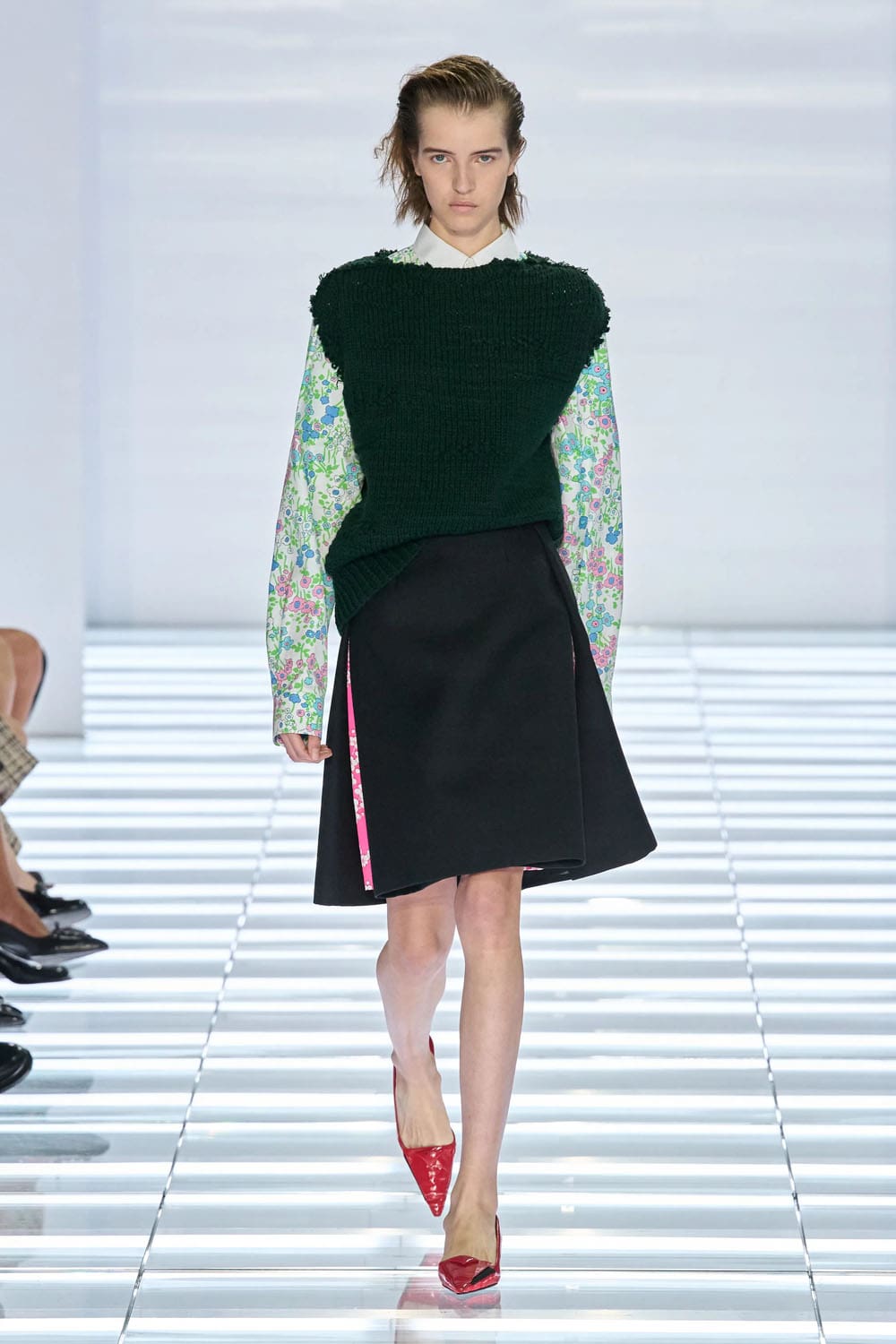
- Deep charcoal wool skirts reveal subtle inserts of dusty-rose silk adorned with delicate botanical embroidery, juxtaposed against deliberately frayed hems that dismantle the bourgeois neatness of classic office wear.
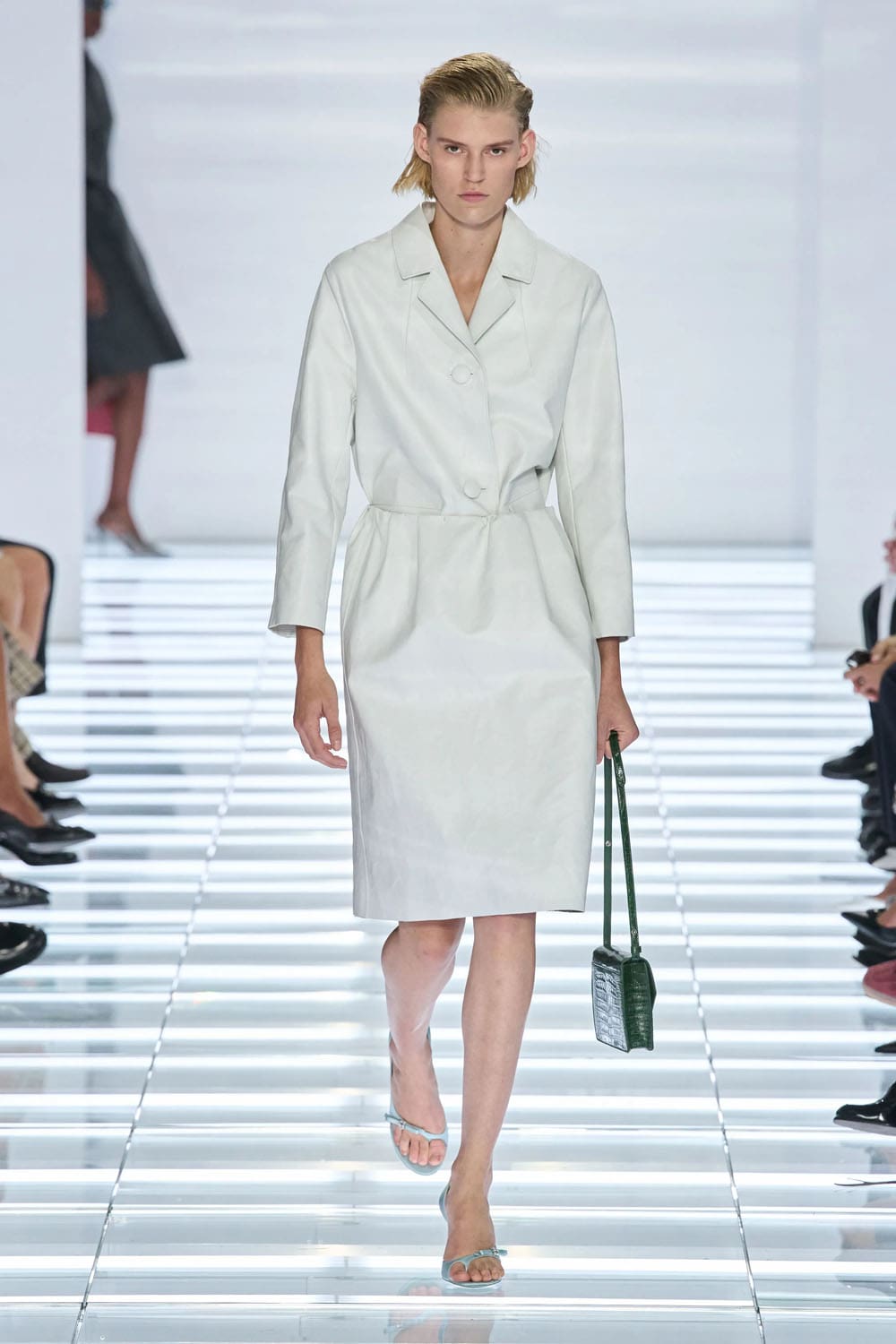
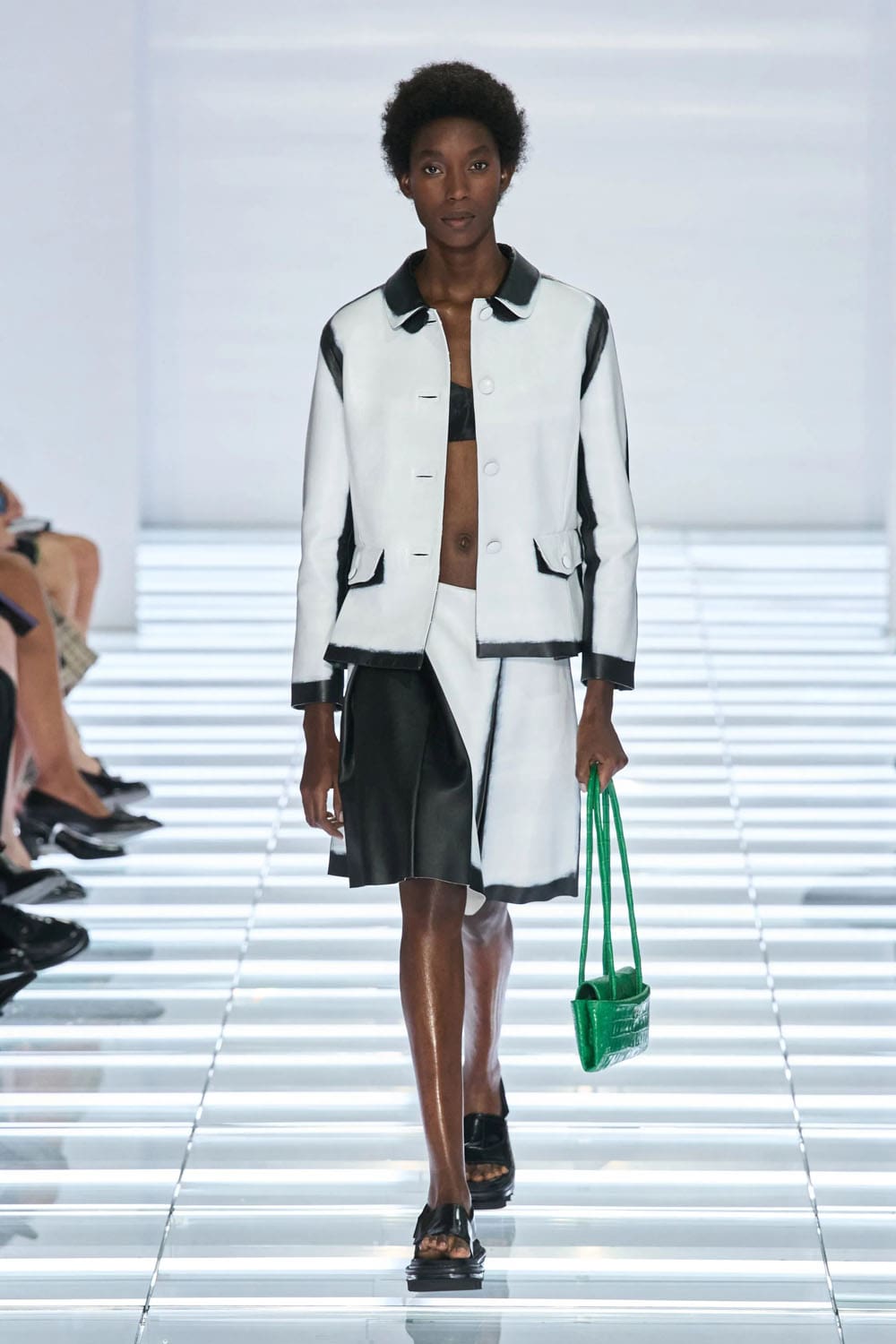
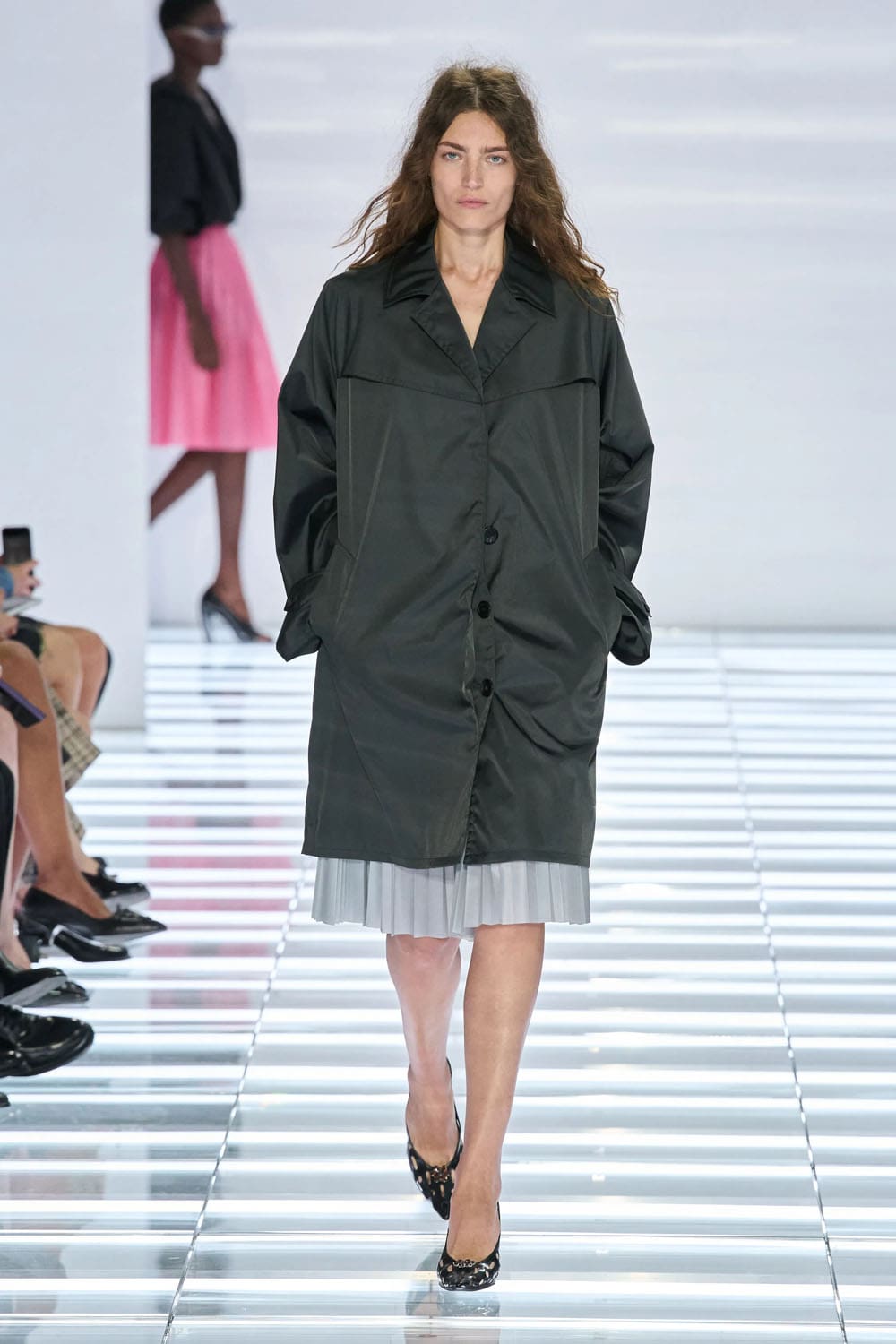
- The quintessential bourgeois overcoat transforms into a paper-light, double-breasted white coat-dress, cinched lightly at the waist to let its skirt portion flare into an austere mid-century bell.
Prada and Simons take the vocabulary of bespoke tailoring and crash it against industrial fastenings, leaving raw edges to remind the viewer of cloth in its material reality.
Ugly Chic, Novel Surfaces, and Real-World Desire
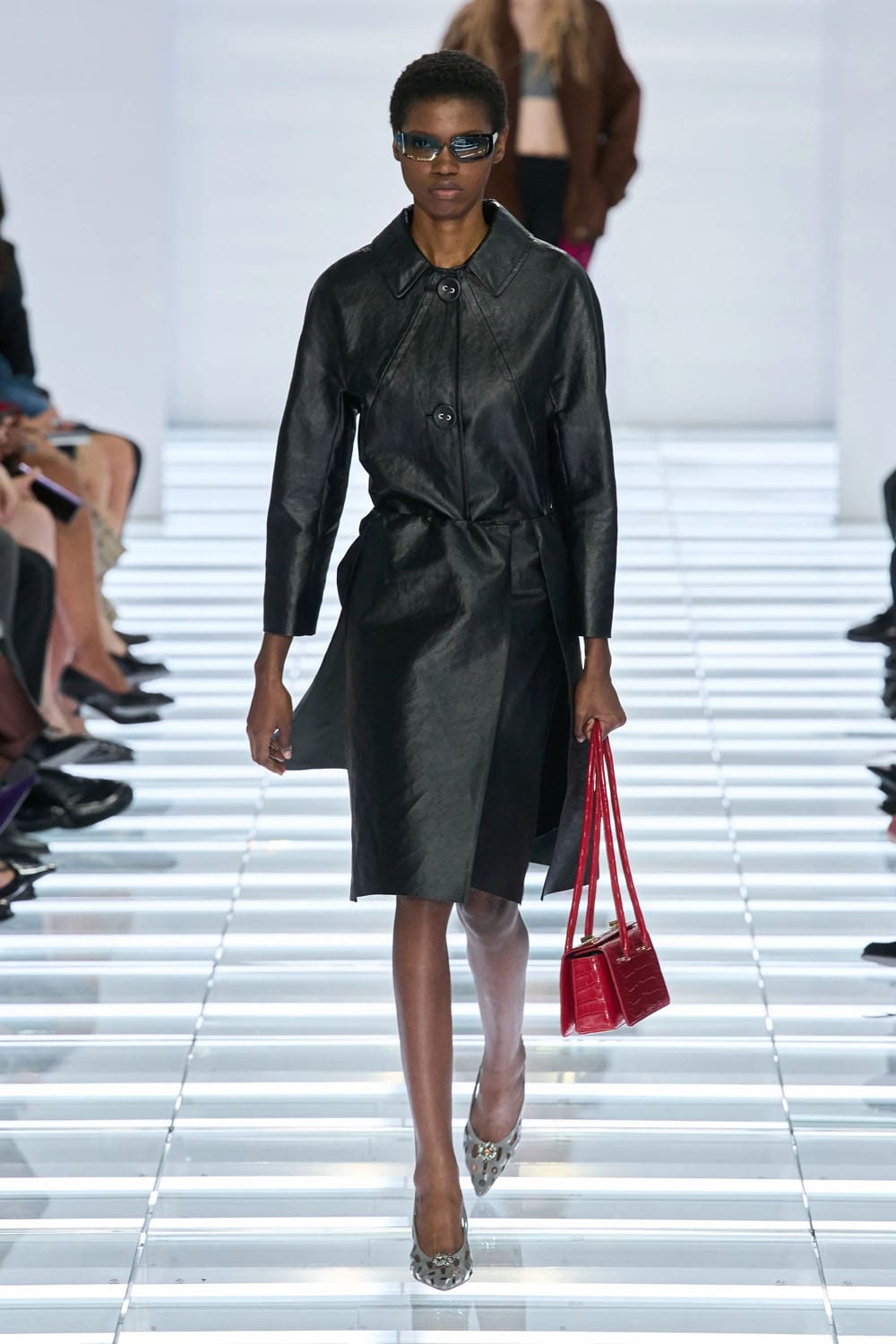
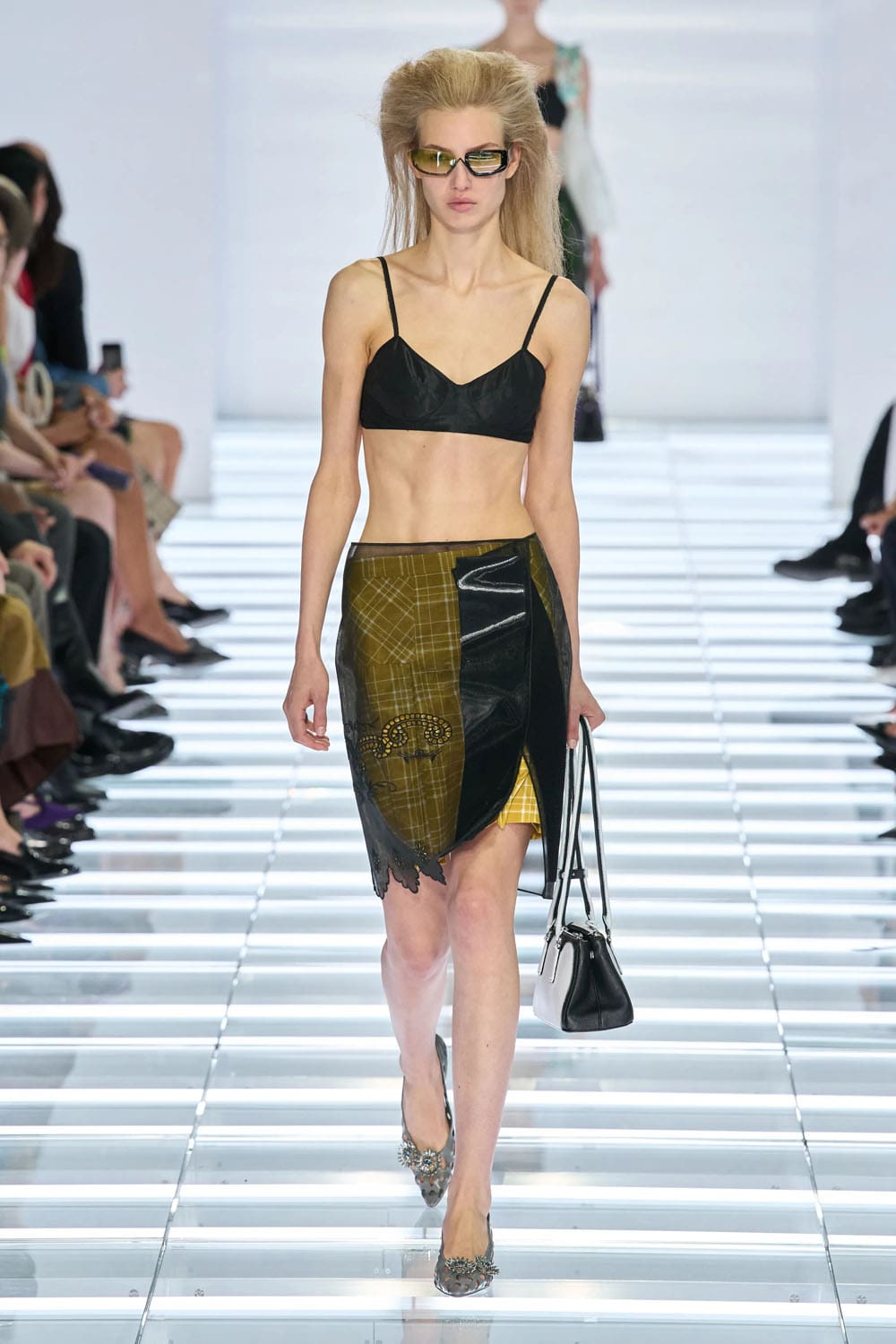
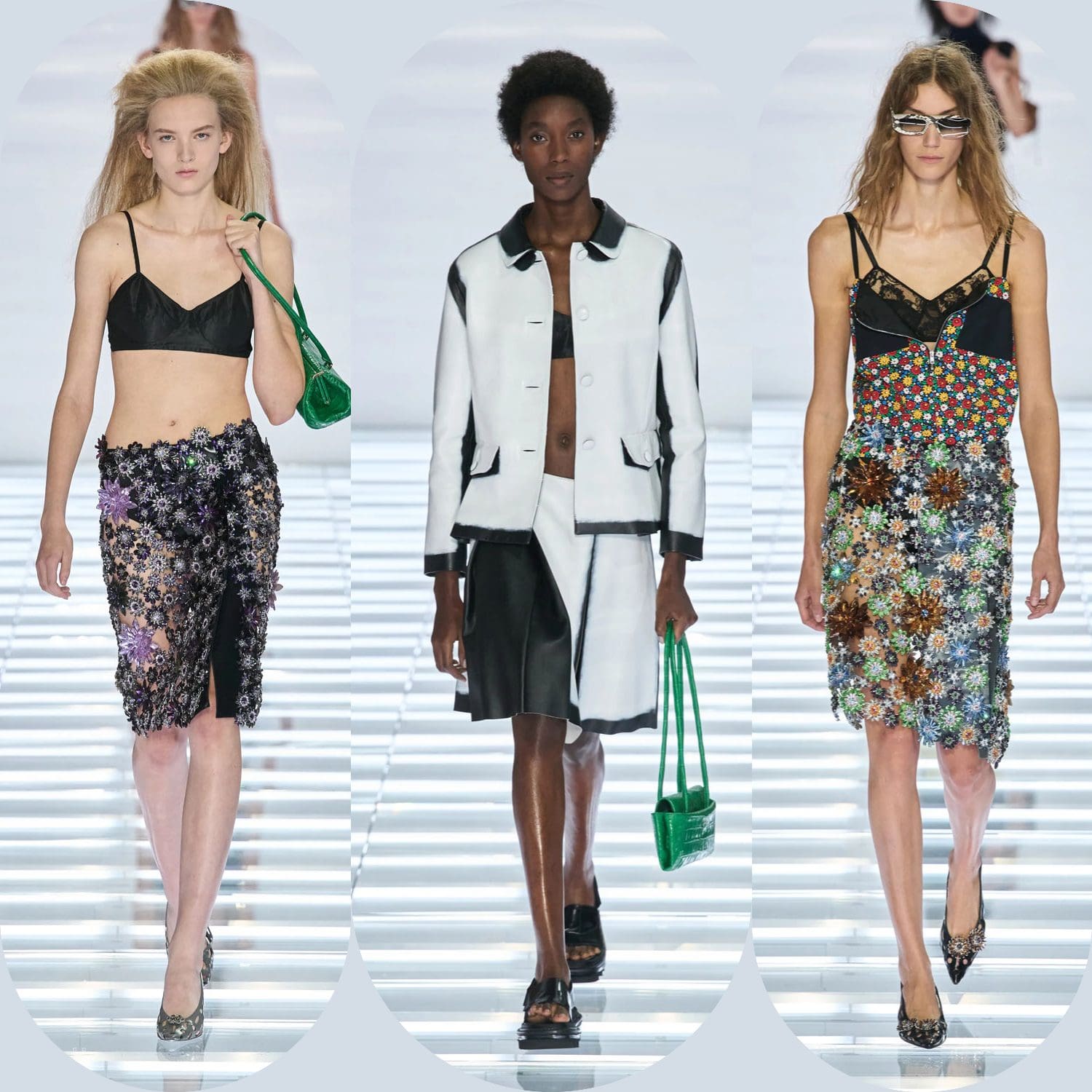
Beneath the technical precision runs Prada’s signature aesthetic irreverence: the deliberate tension of “ugly chic.” The design duo plays with deceptive fabrication, utilizing cottons coated to mimic leather, alongside dense knits and sheer technical synthetics.
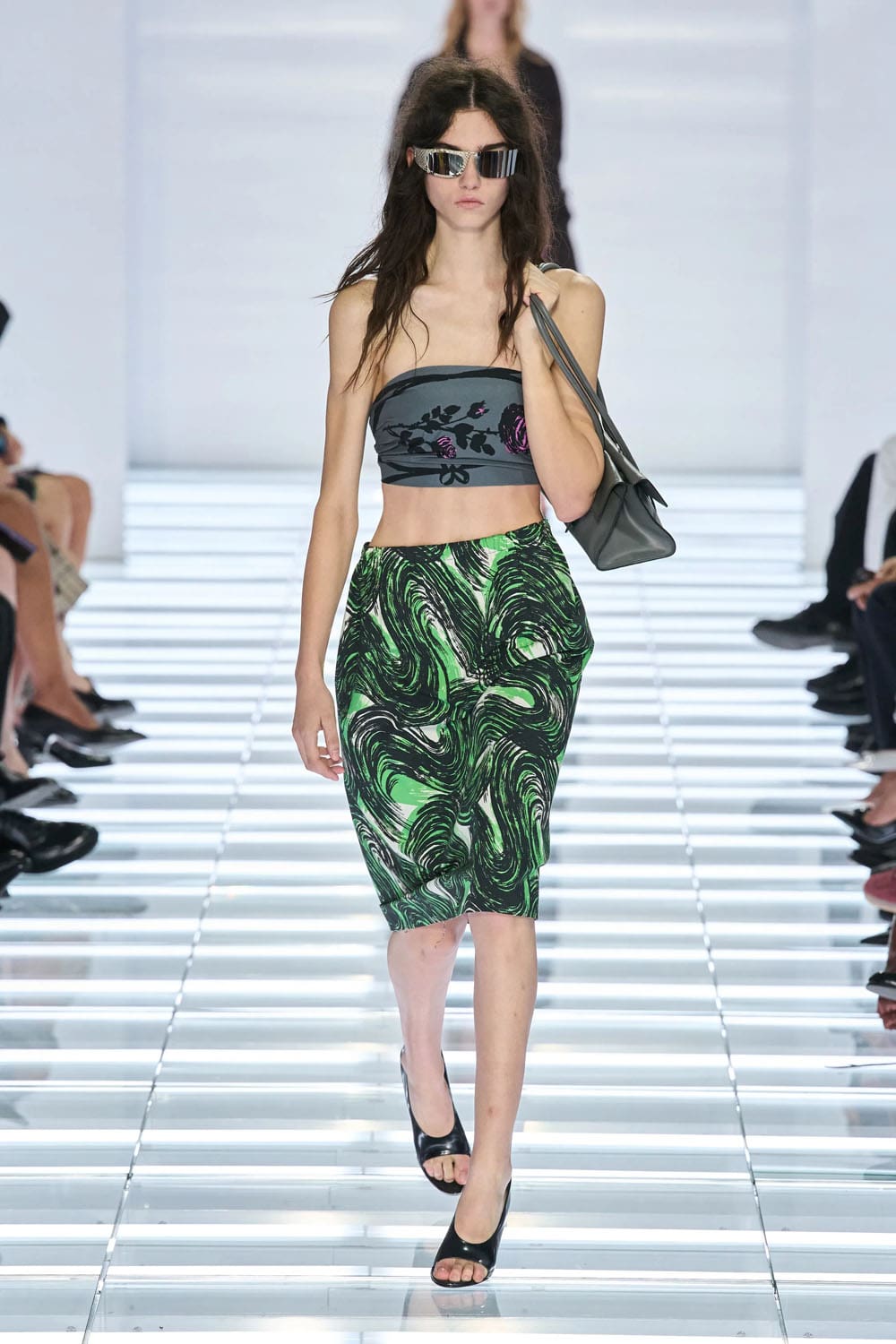
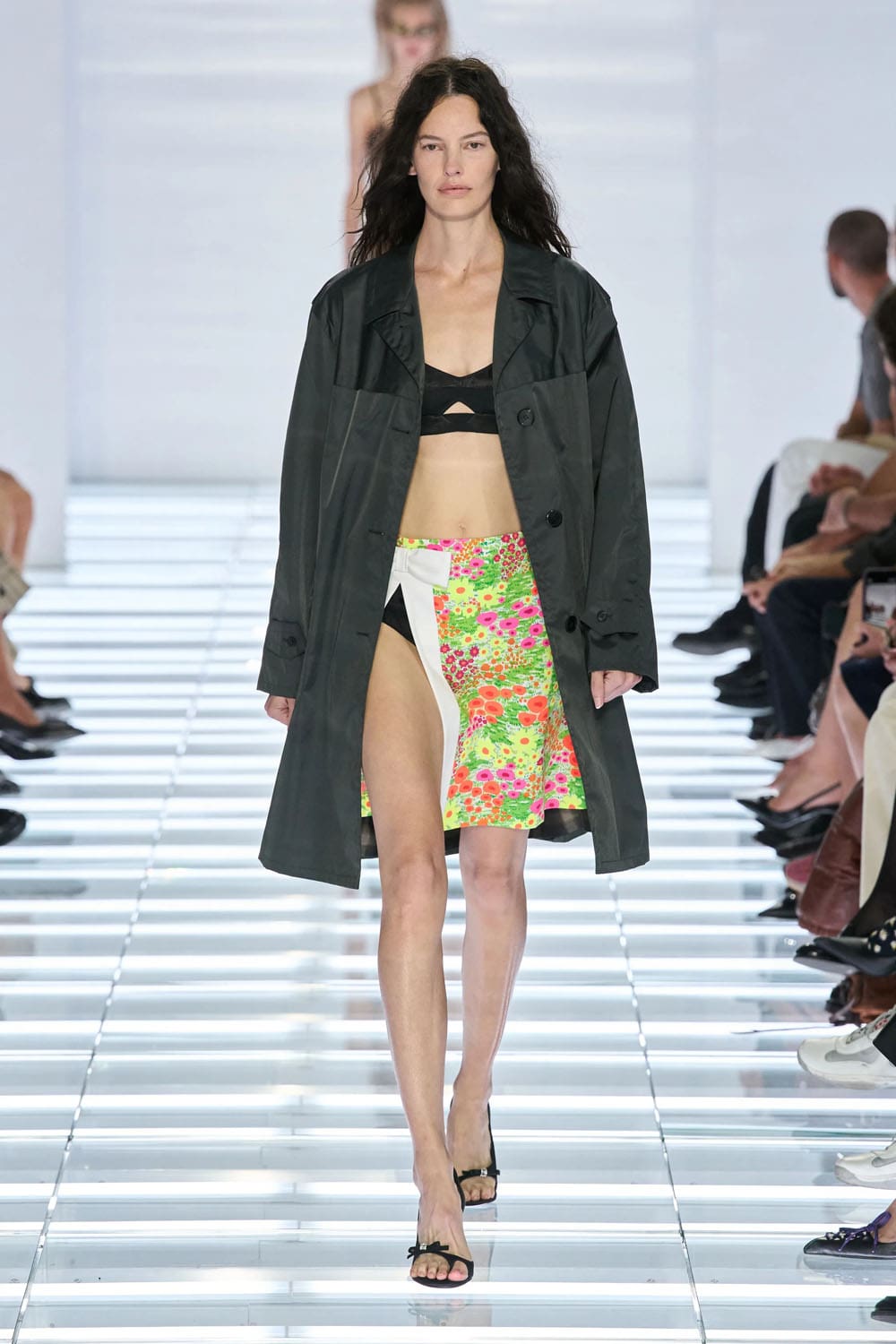
Where the tailoring yields to evening, the collection unleashes controlled eccentricity. A sleeveless top paired with a knee-length sheath becomes an explosive field of floral paillettes. Layers of crystal florets, faceted stone clusters, and shimmering metallics coat the silhouette like a garden crystallized under amber, while maintaining an unyielding, straight pencil contour. To accompany these assertive lower halves, tops oscillate between heavy crewneck knits, sleeveless distressed wool vests, and an array of novelty bra-tops. The bra functioning as outerwear—a playful echo of early Miu Miu archives—removes upper-body weight, letting the skirts command the room’s intellectual focus.
By elevating a single garment into an extensive design treatise, Prada and Simons prove that true sartorial intellect requires no grand theatrical setting. The skirt remains an intimate dialogue between the wearer, the street, and the act of walking forward.
Key Takeaways
- Prada Spring 2027 showcases the skirt as a fundamental garment, emphasizing its form and function.
- The collection explores the historical evolution of skirts, highlighting their significance from ancient times to modern fashion.
- Prada and Simons utilize industrial materials and unconventional closures in their designs, breaking away from traditional tailoring.
- The concept of ‘ugly chic’ influences their approach, with playful fabrications and controlled eccentricity punctuating the runway.
- Ultimately, the collection elevates the skirt into a dialogue about movement, modernity, and individual expression.
See All Looks Prada Spring 2027