
40s-50s Haute Couture
The Beautiful Delusion: The Transatlantic Reality of Haute Couture
To the uninitiated, haute couture is a romantic aesthetic—a fever dream of silk tulle, hand-stitched embroidery, and ethereal models gliding through gilded Parisian salons. To the balance sheets of global luxury empires, it is something entirely different: a brilliant, heavily regulated loss-leader designed to sell lipstick, eyewear, and ready-to-wear to the masses.
True haute couture is neither a generic marketing phrase nor a synonym for “expensive.” It is a fierce geopolitical and legal construct born in Europe, fueled by American capital, and governed by an absolute structural paradox.
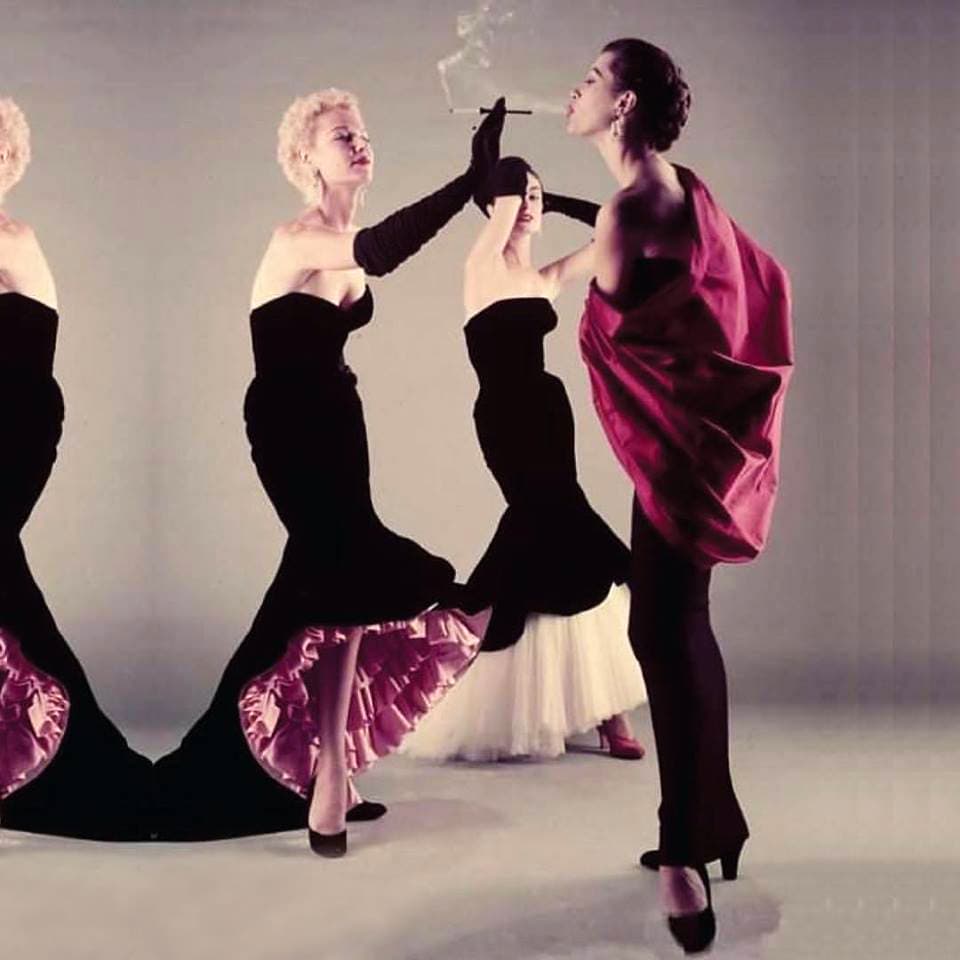
The Beautiful Delusion: The Transatlantic Reality of Haute Couture
To the uninitiated, haute couture is a romantic aesthetic—a fever dream of silk tulle, hand-stitched embroidery, and ethereal models gliding through gilded Parisian salons. To the balance sheets of global luxury empires, it is something entirely different: a brilliant, heavily regulated loss-leader designed to sell lipstick, eyewear, and ready-to-wear to the masses.
True haute couture is neither a generic marketing phrase nor a synonym for “expensive.” It is a fierce geopolitical and legal construct born in Europe, fueled by American capital, and governed by an absolute structural paradox.
40s-50s Haute Couture by RUNWAY MAGAZINE ®
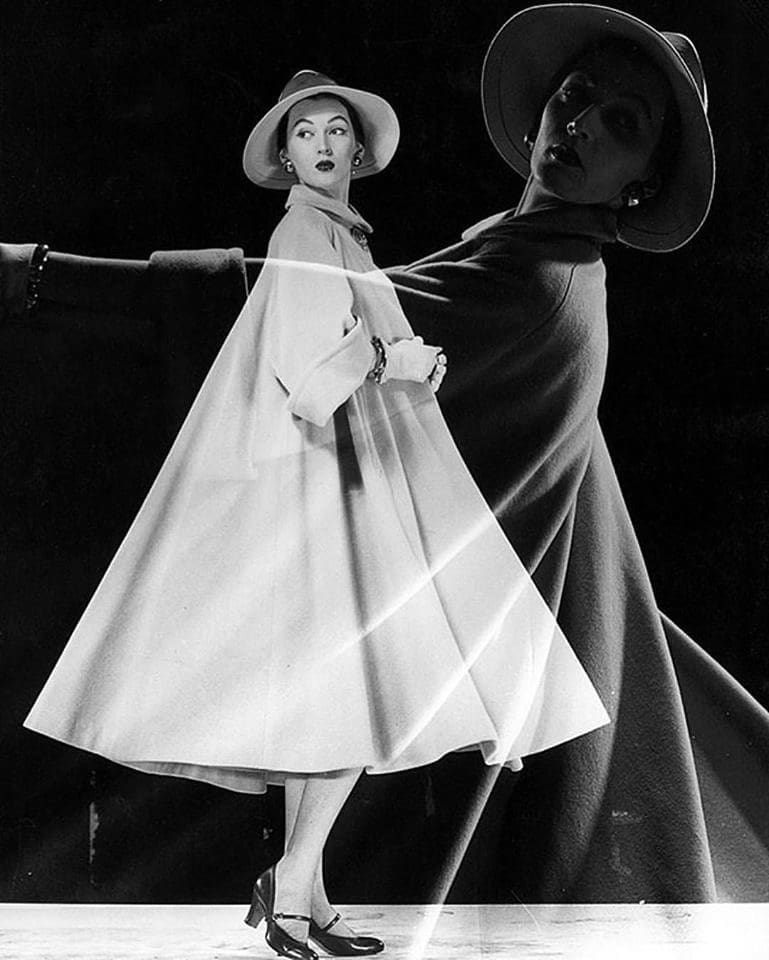
LIFE magazine1940
Unpublished double exposure of a model wearing very full coat and wide brimmed hat; twirling to show drape of coat. Circa 1946.
(Gjon Mili—The LIFE Picture Collection/Getty Images)
1. Paris: The Intellectual Property Engine
For over a century, the Parisian grand couturiers have acted as the research and development departments for world fashion. The runway shows are not designed to generate immediate retail profit from the dresses themselves; they exist to establish supreme cultural capital. Paris manufactures the myth.
2. The United States: The Financial Lifeline
If Paris provides the soul, America historically provided the bank account. Following World War I and reaching its zenith in the mid-twentieth century, the American market saved French couture from financial obscurity. Iconic retailers like Bergdorf Goodman, I. Magnin, and Henri Bendel did not just buy pieces for private socialites—they bought the legal rights to reproduce them.
Through highly structured licensing agreements, American manufacturers purchased official paper patterns and duplicate textiles from the French houses. These designs were then meticulously reproduced in the United States, allowing upscale department stores to sell “authorized copies” to a ravenous American middle class. The logic was clear: America subsidized the exorbitant cost of French craftsmanship in exchange for the right to commercialize its prestige.
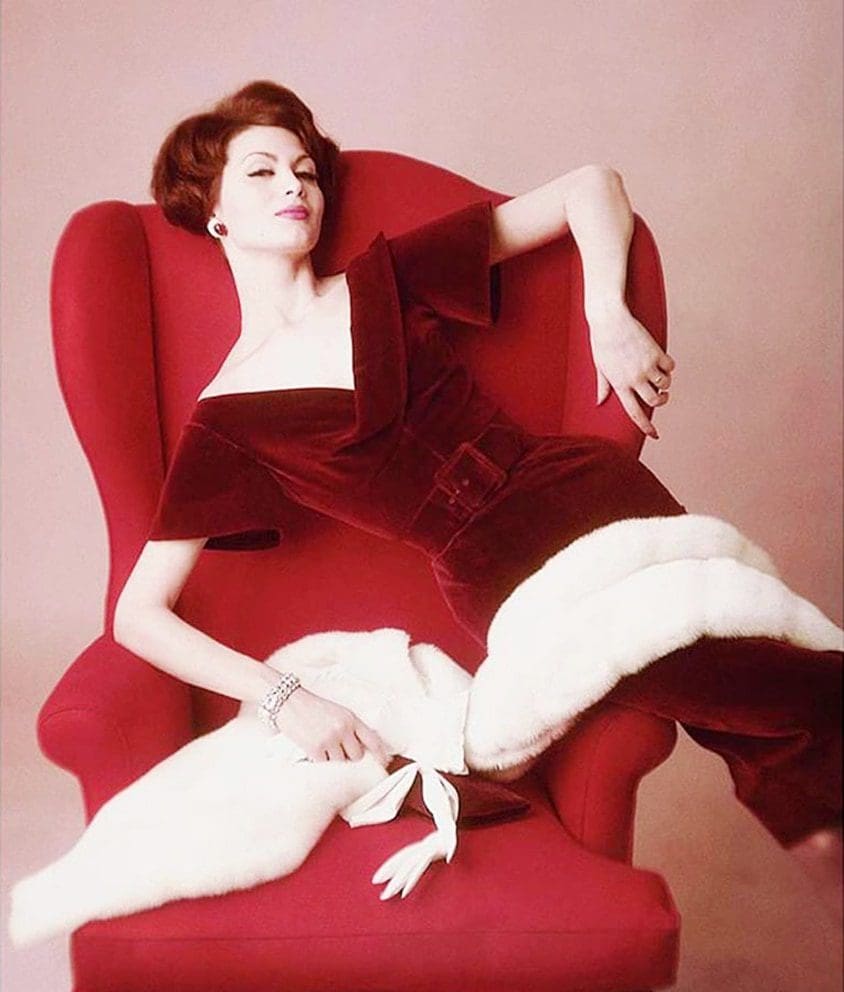
Isabella Albonico
wearing burgundy velvet dress by Harvey Berin,
with white mutation mink stole by Saga, 1959
Photo John Rawlings
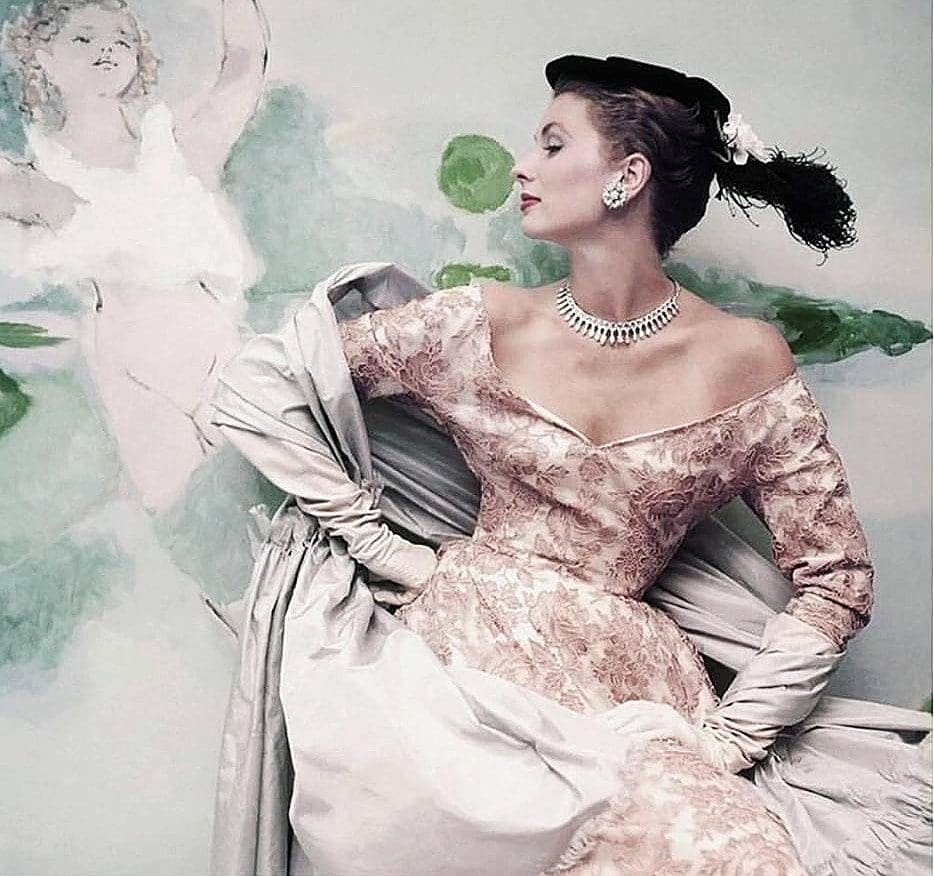
Henry Clarke captures Suzy Parker in Balenciaga.
Her short-sleeve, nipped-waist gown with an off-the-shoulder neckline has a print that shows off the latest color combination, blond with azure.Her diamond jewelry is by Van Cleef & Arpels. The gorgeous, Degas-like background acts as an echo of the model herself.
Photo Henry Clarke
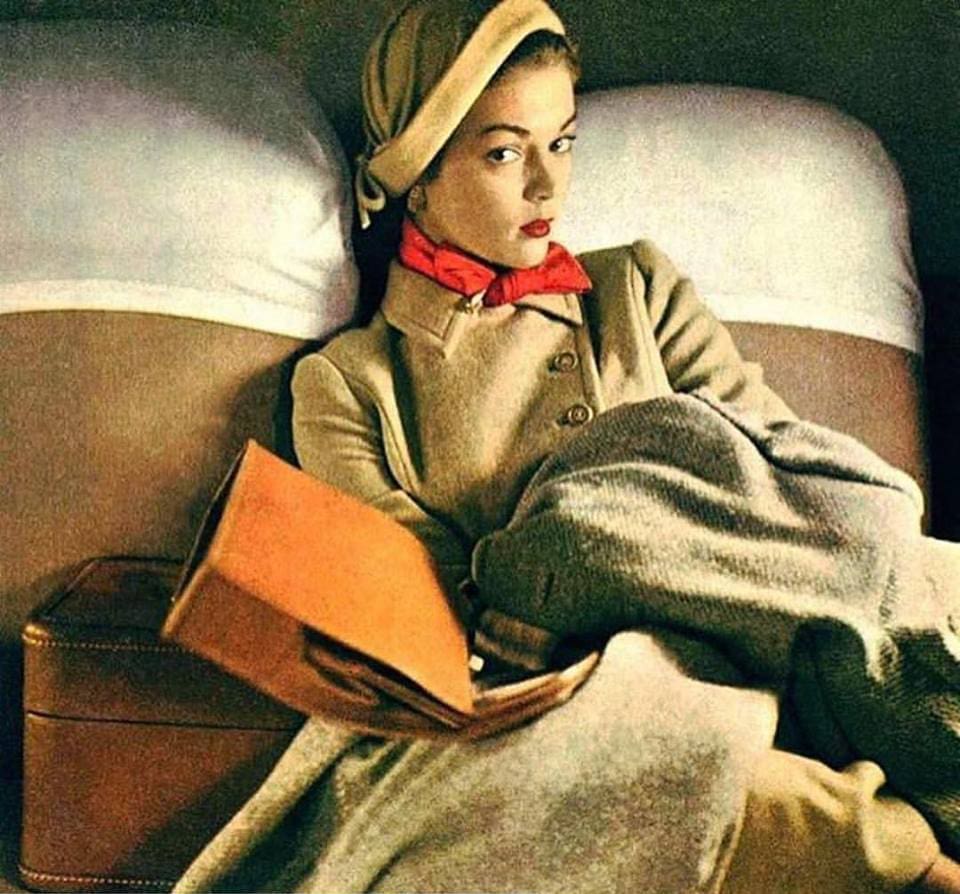
Jean Patchett by Irving Penn, 1949
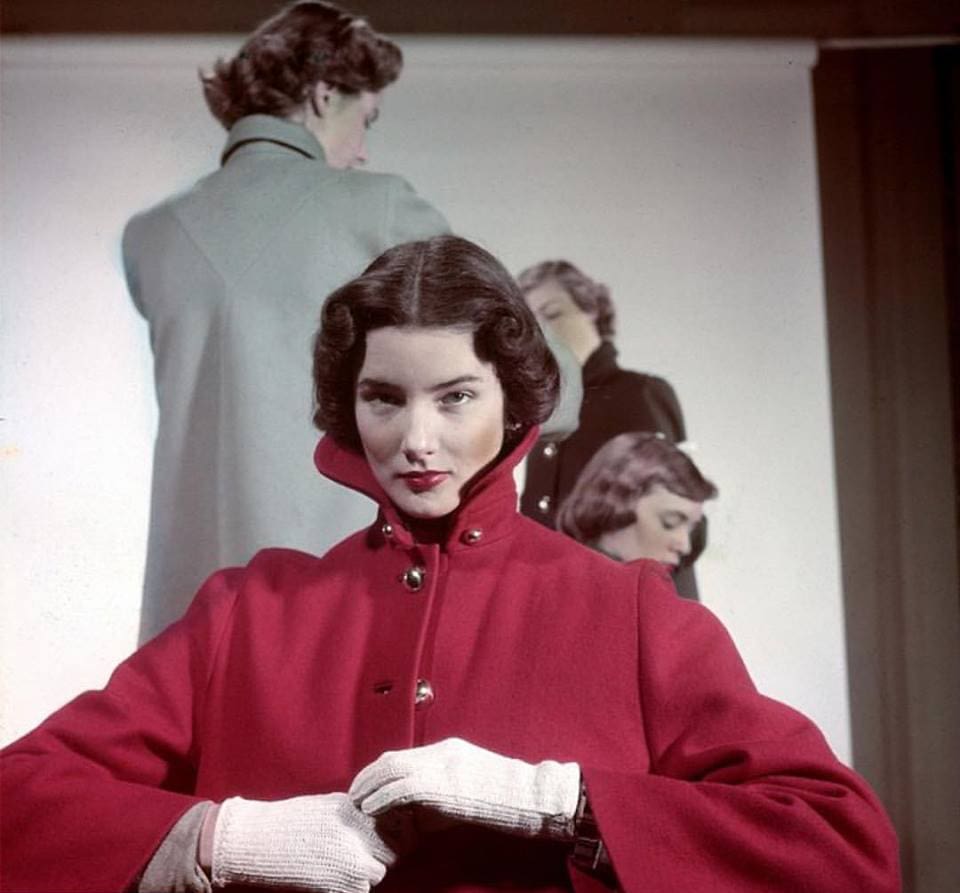
@life
Fashion inspiration for cold winter days: Winter wool coats from 1948.
(Gjon Mili—The LIFE Picture Collection/Getty Images)
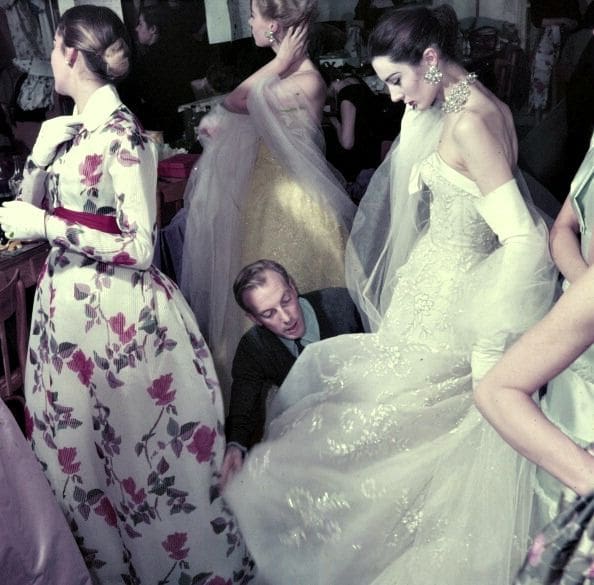
RUNWAY MAGAZINE ®
Backstage Jacques Fath
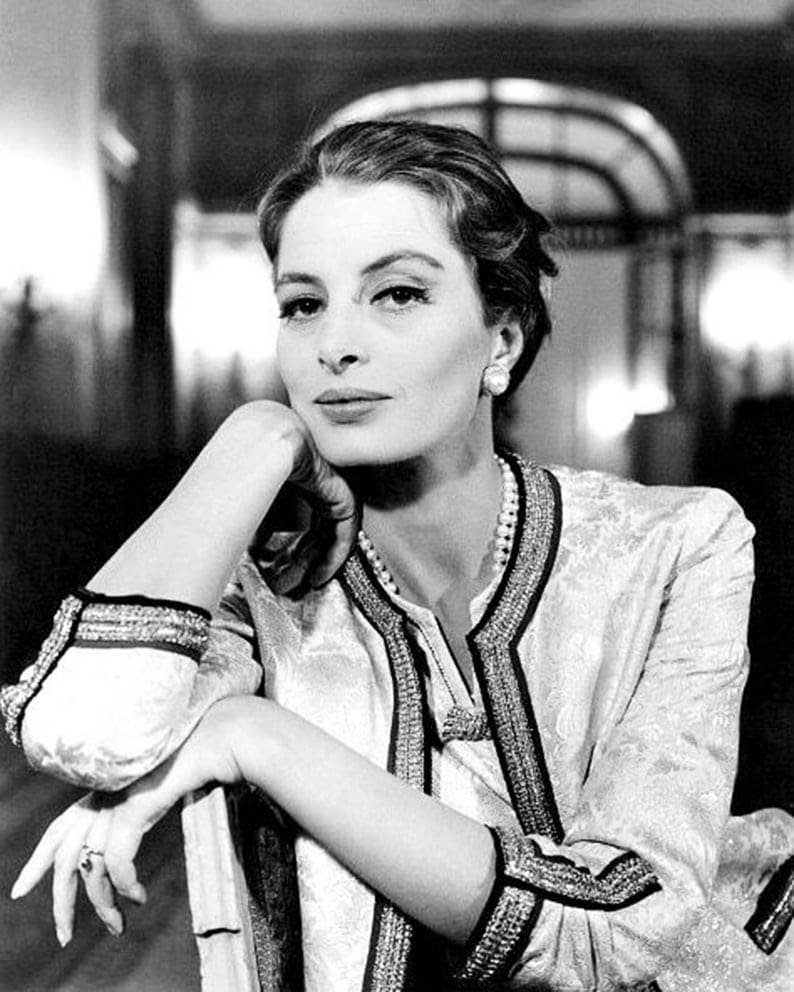
RUNWAY MAGAZINE ®
Capucine wearing suit by CHANEL
photo by Marisa Rastellini, Rome 1962
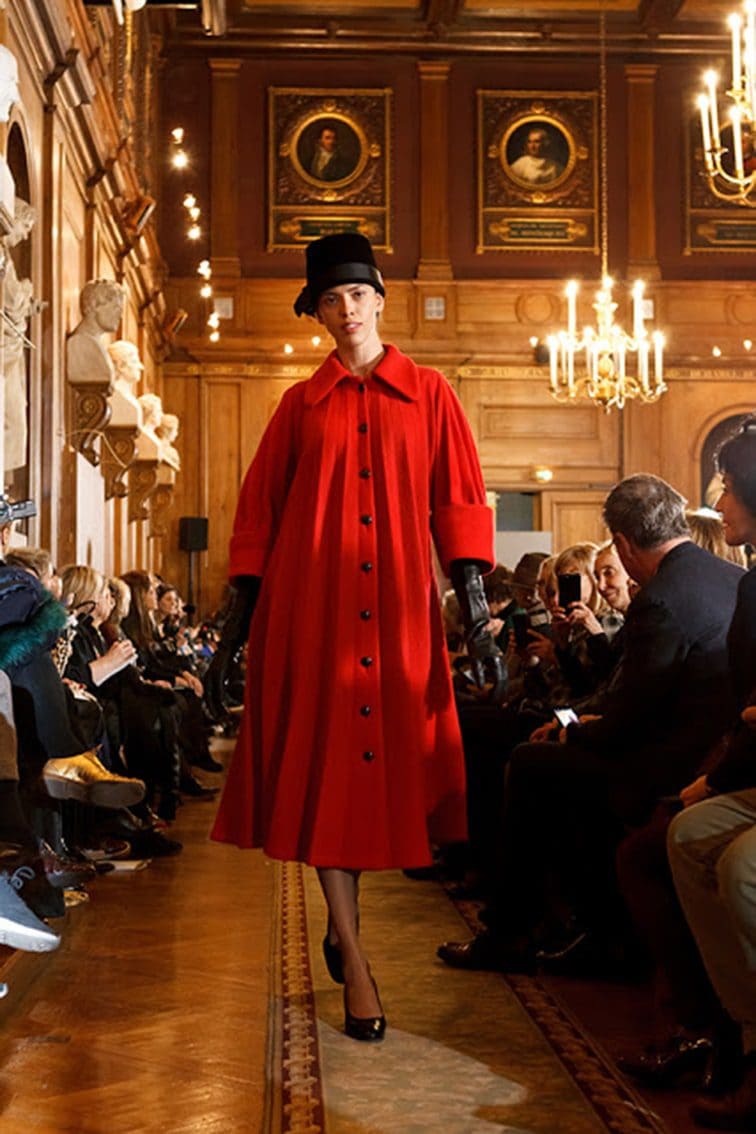
@pierrecardinofficiel
Le manteau “plissé Soleil” en laine rouge de 1952 présenté dans la grande salle des séances de l’Académie des Beaux-Arts.
The Modern Paradox
Today, the circle of true haute couture clients has shrunk to a global elite of a few thousand individuals. Yet, the runway spectacles grow increasingly cinematic and expensive.
The industry remains alive because it understands that the illusion of complete exclusivity is the most powerful sales tool in the world. The hand-sewn gown that loses money on a Parisian runway is the exact mechanism that ensures a bottle of perfume sells every few seconds in New York. Paris creates the dream, America packages the reality, and the consumer buys into the legacy.
