Balenciaga
THE TRIUMPHS
- Brilliant architectural translation of Cristóbal’s sacred codes—the 1967 envelope fold, the cocoon, and opera capes—into kinetic, effortless daytime sportswear and relaxed denim
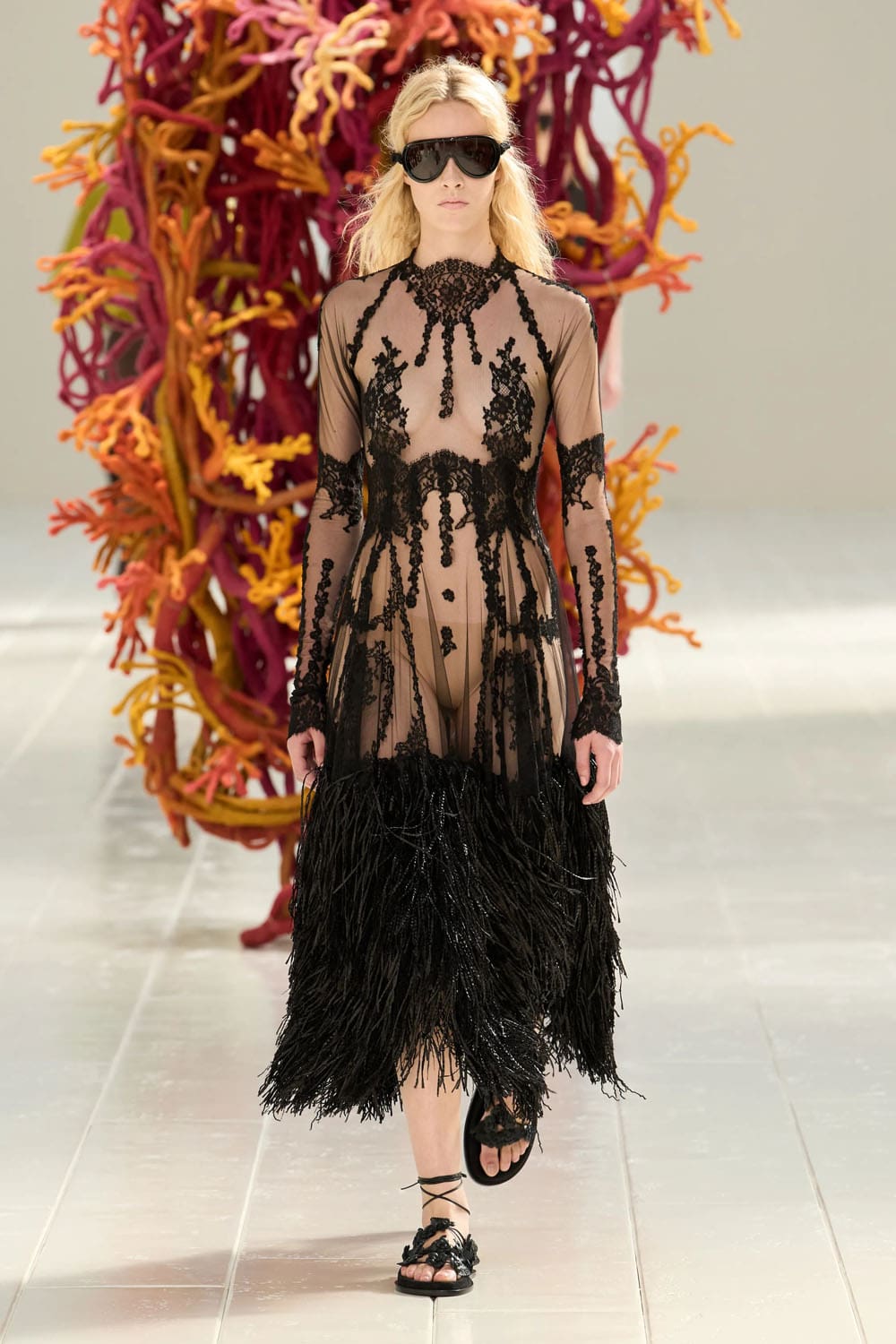
- Exquisite artisanal virtuosity marrying delicate French craft (hand-cut Calais lace rosettes, articulated organza anemone scales) with tactile urban utility
- Radical emotional liberation that banishes apocalyptic cynicism, opening with pristine chalk-white authority before erupting into saturated cobalt, saffron, and magenta joy
RESERVATIONS
- Uncompromising sculptural volumes and ballooning parachute proportions require absolute physical posture, leaving zero margin for timid styling
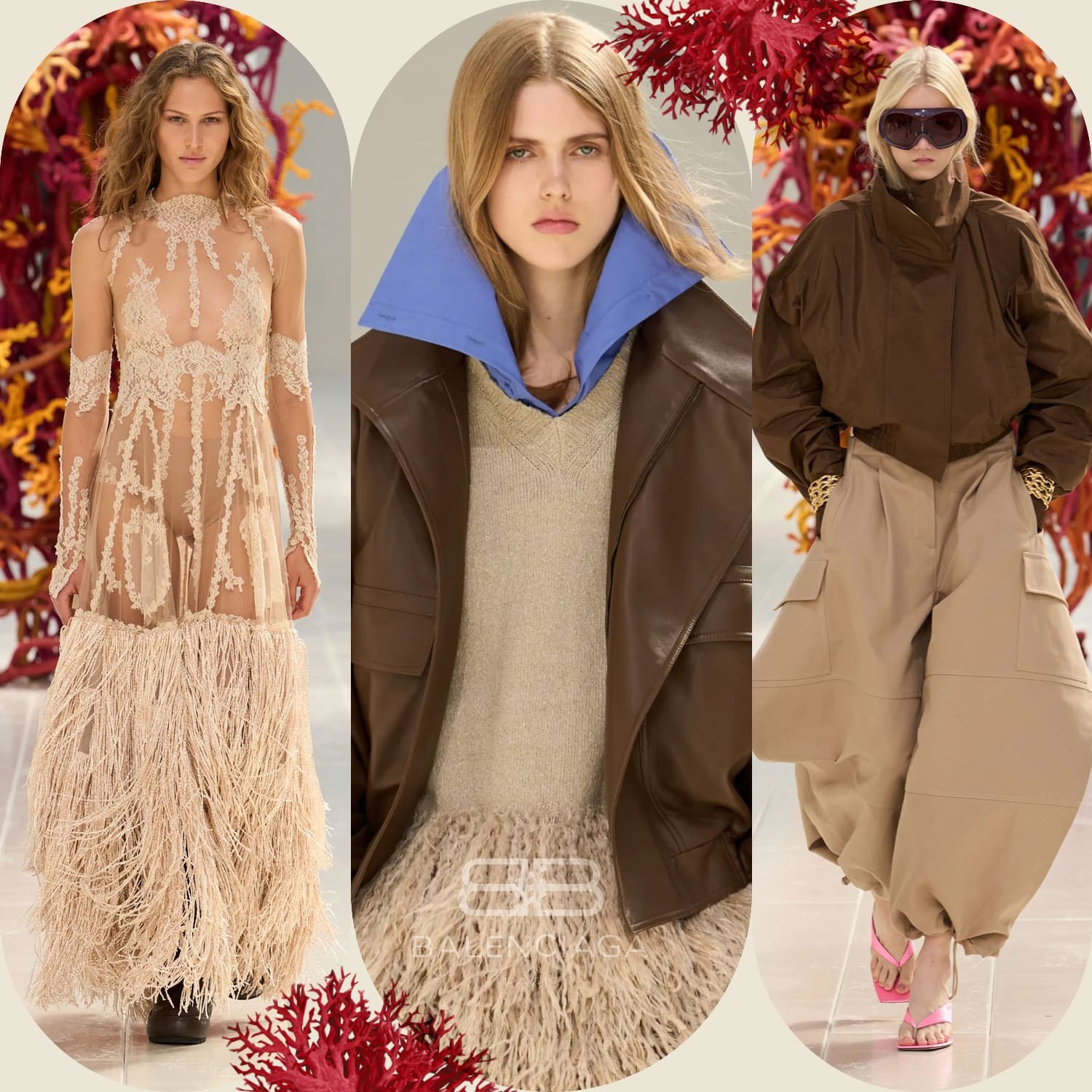
Balenciaga Spring Summer 2027 by Pierpaolo Piccioli “Les Coraux de la Liberté” (The Coral of Liberty). Story by Eleonora de Gray, Editor-in-Chief of RUNWAY MAGAZINE. Photo / Video Courtesy: Balenciaga.
The Monument in the Atrium
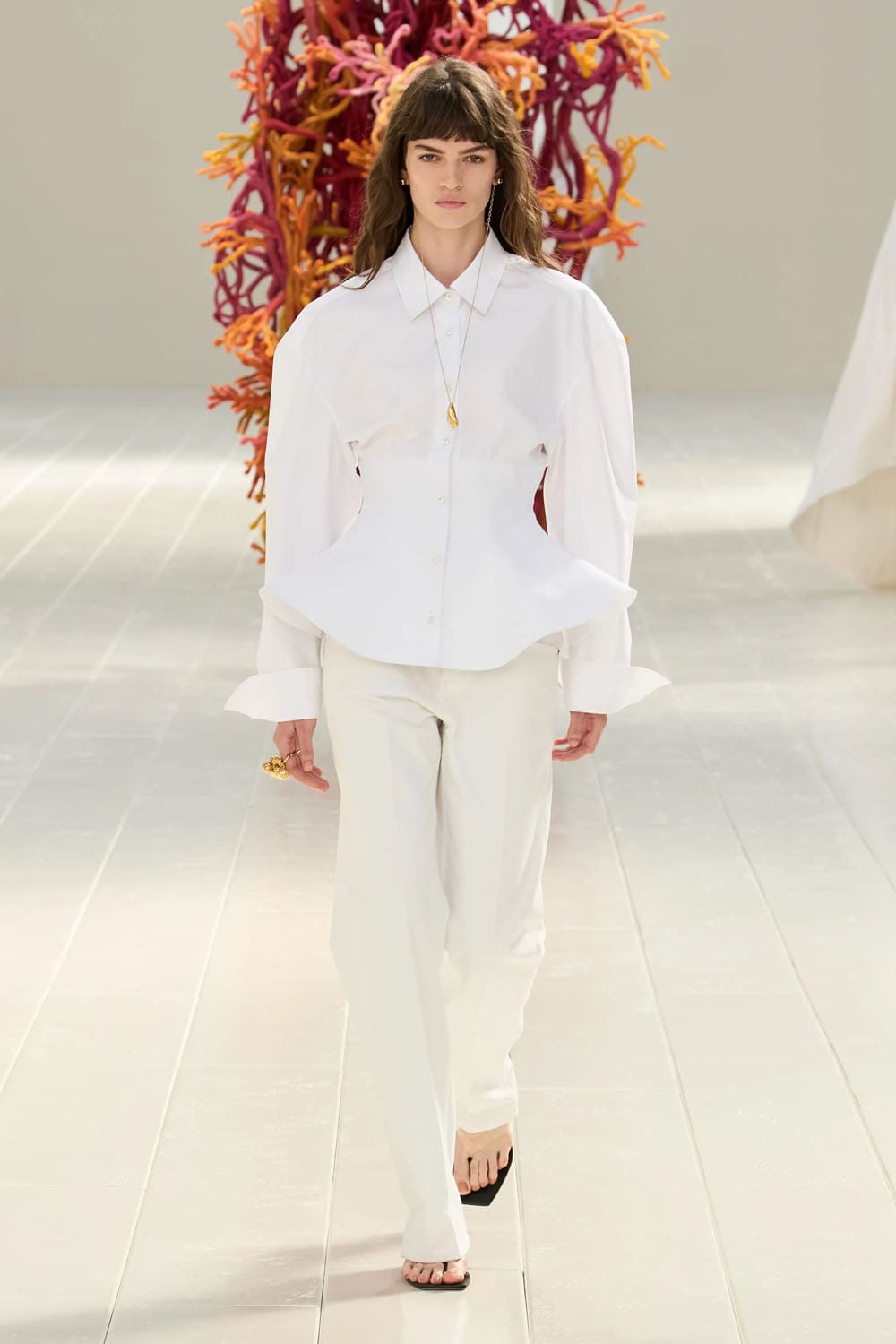
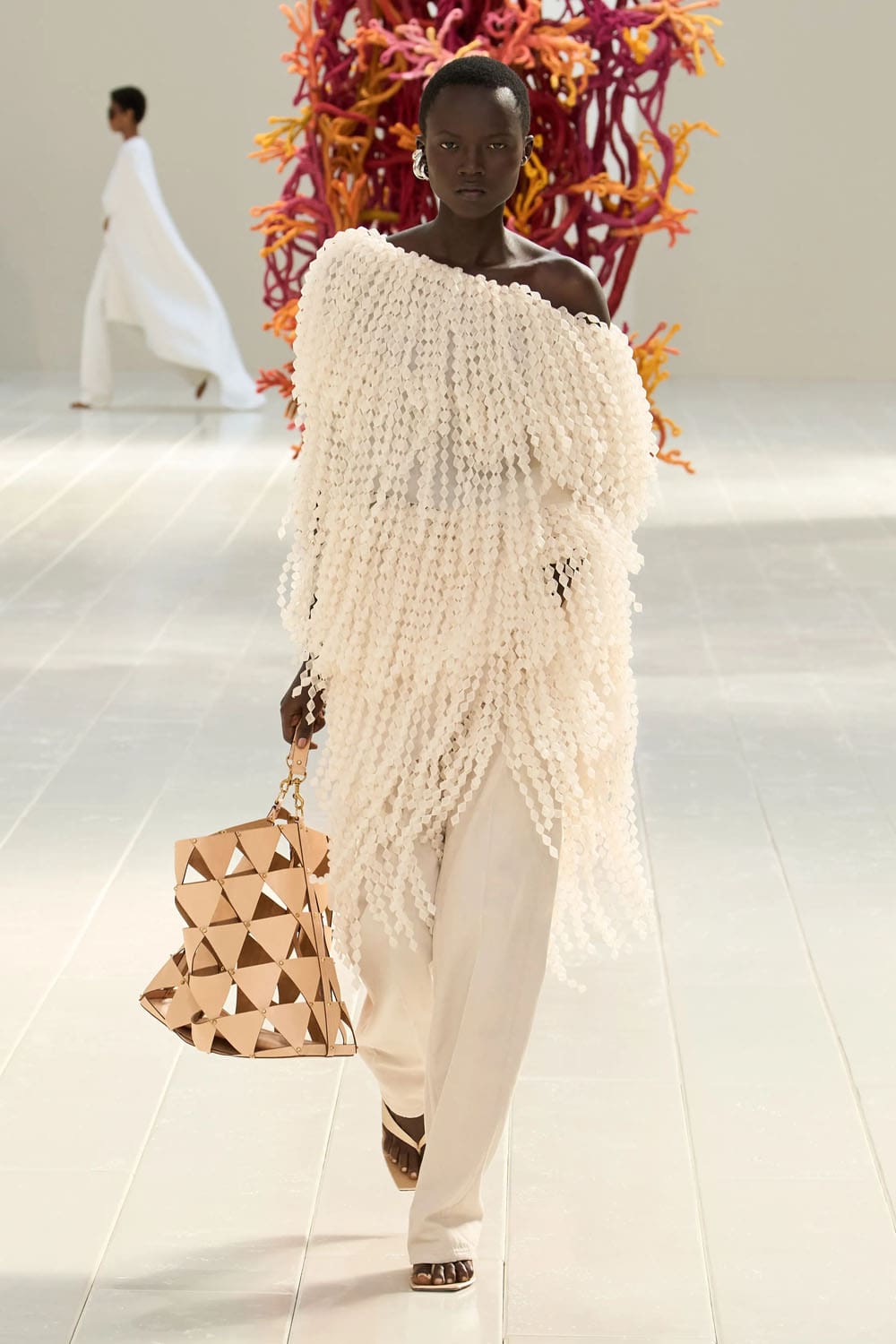
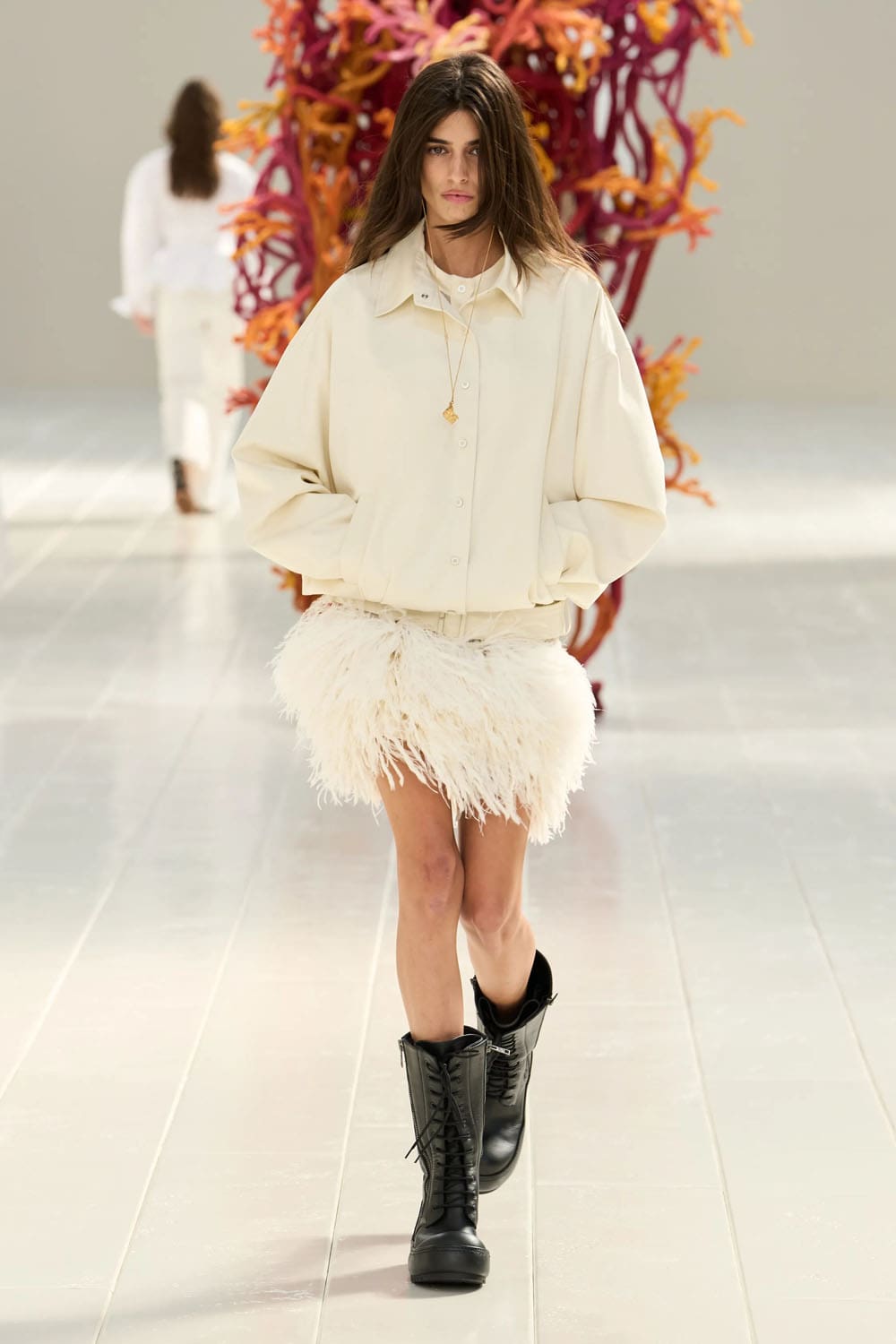
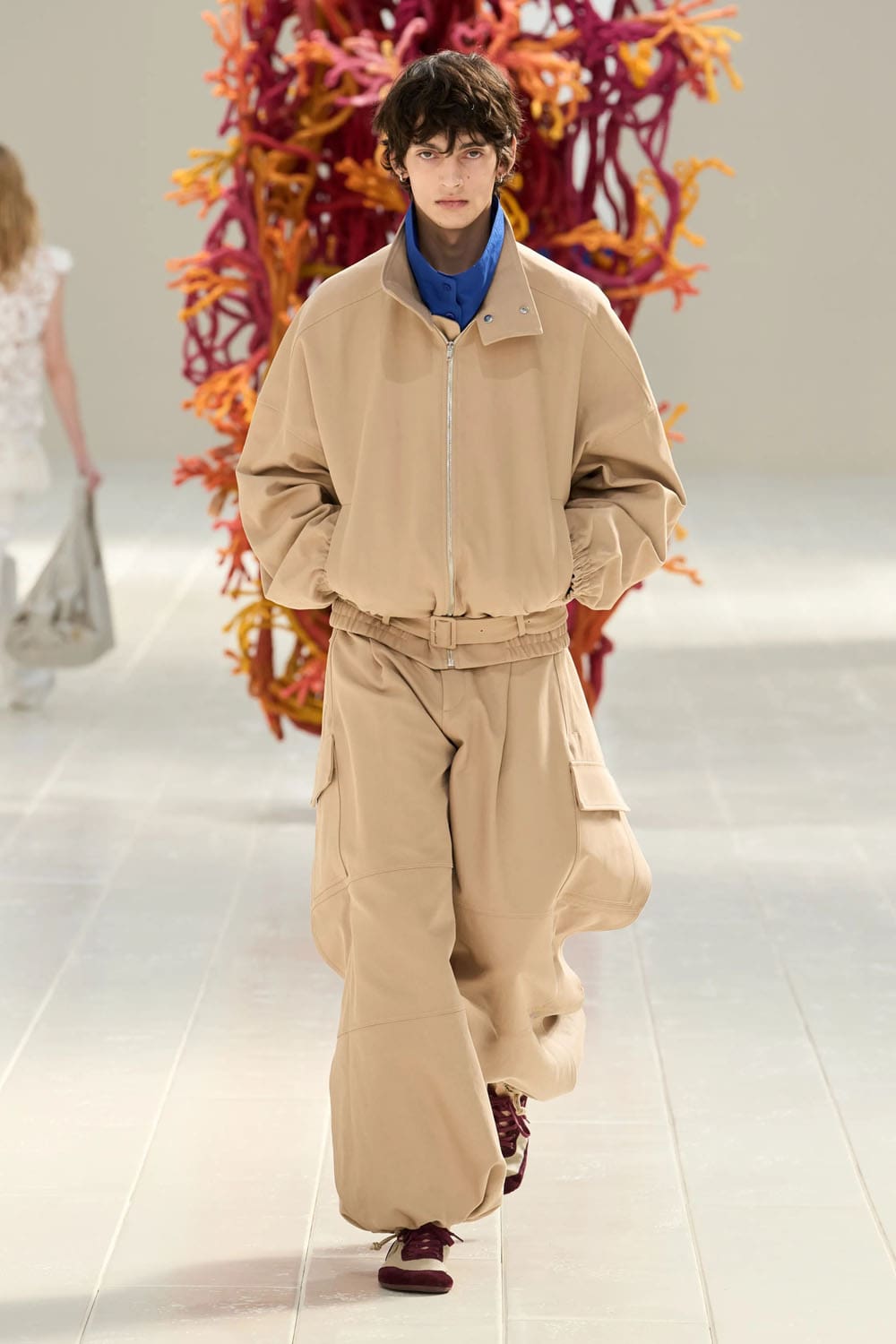
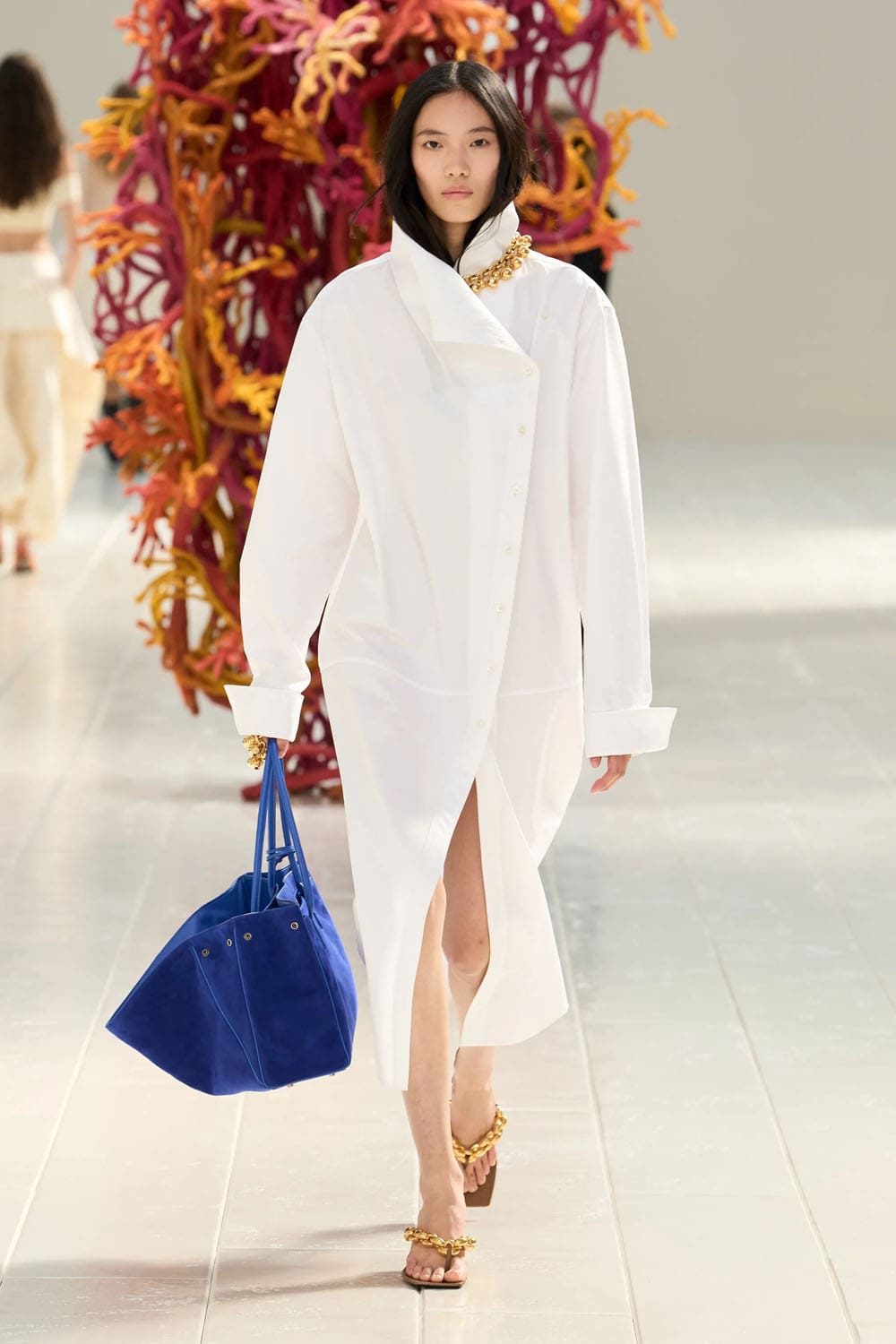
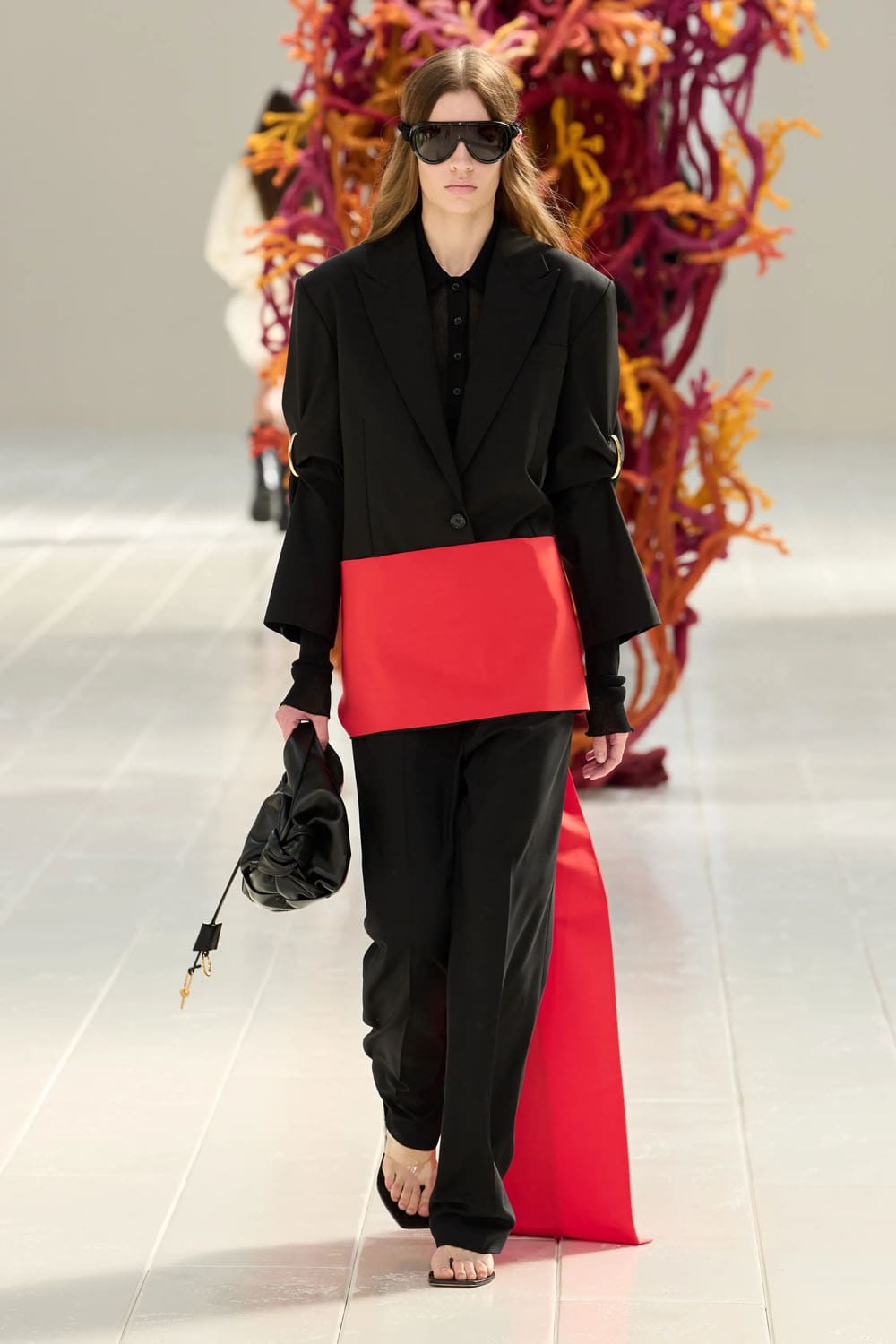
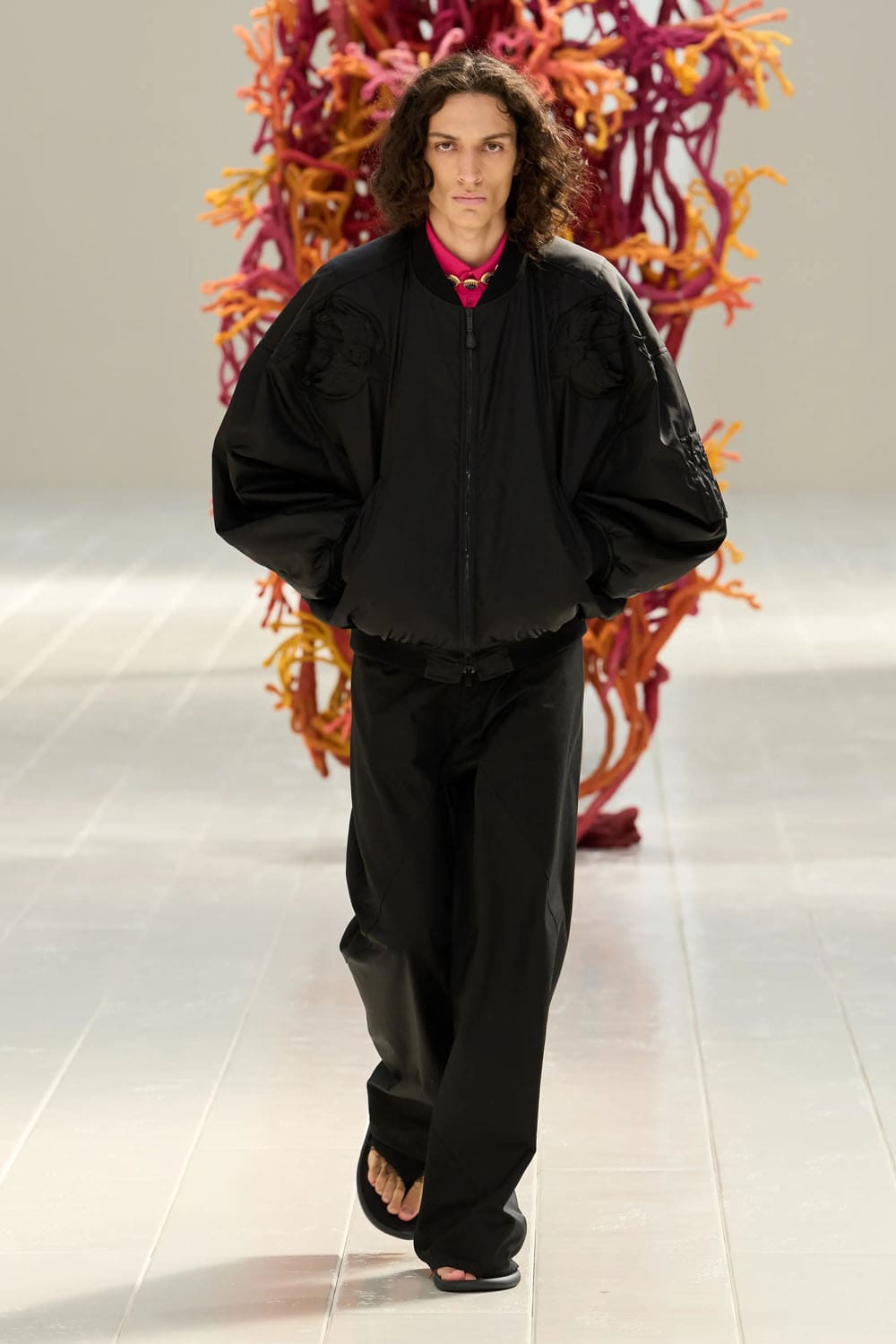
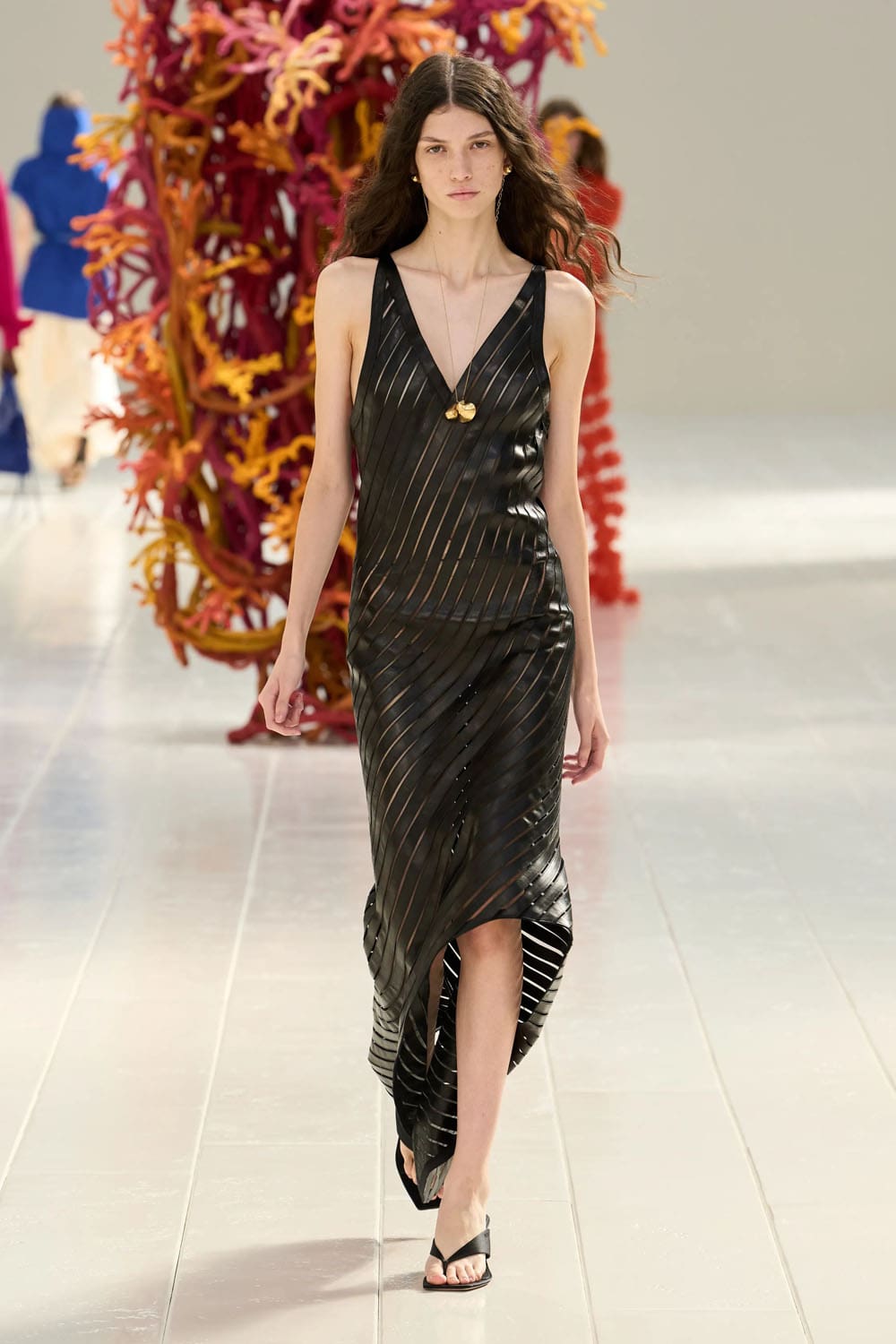
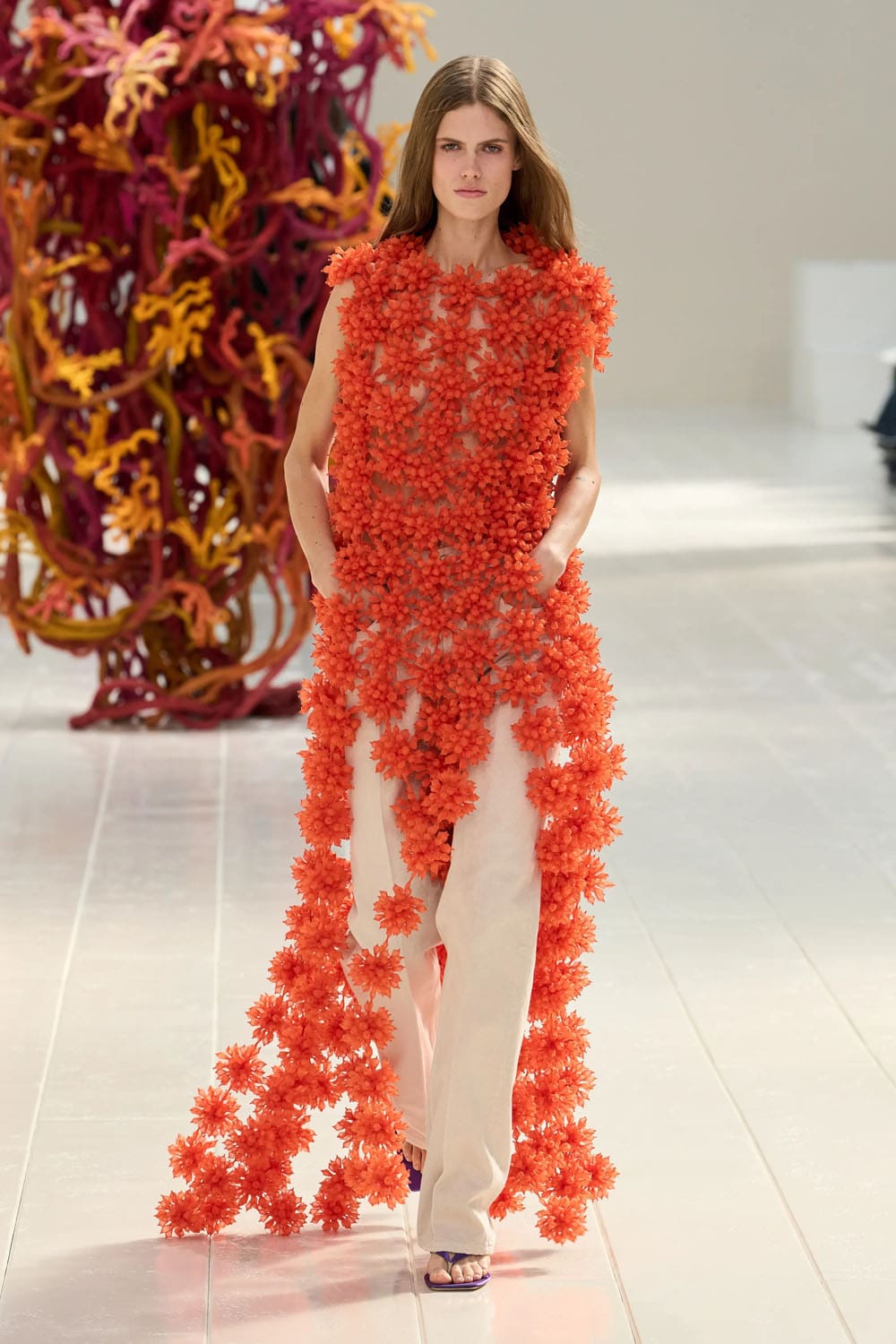
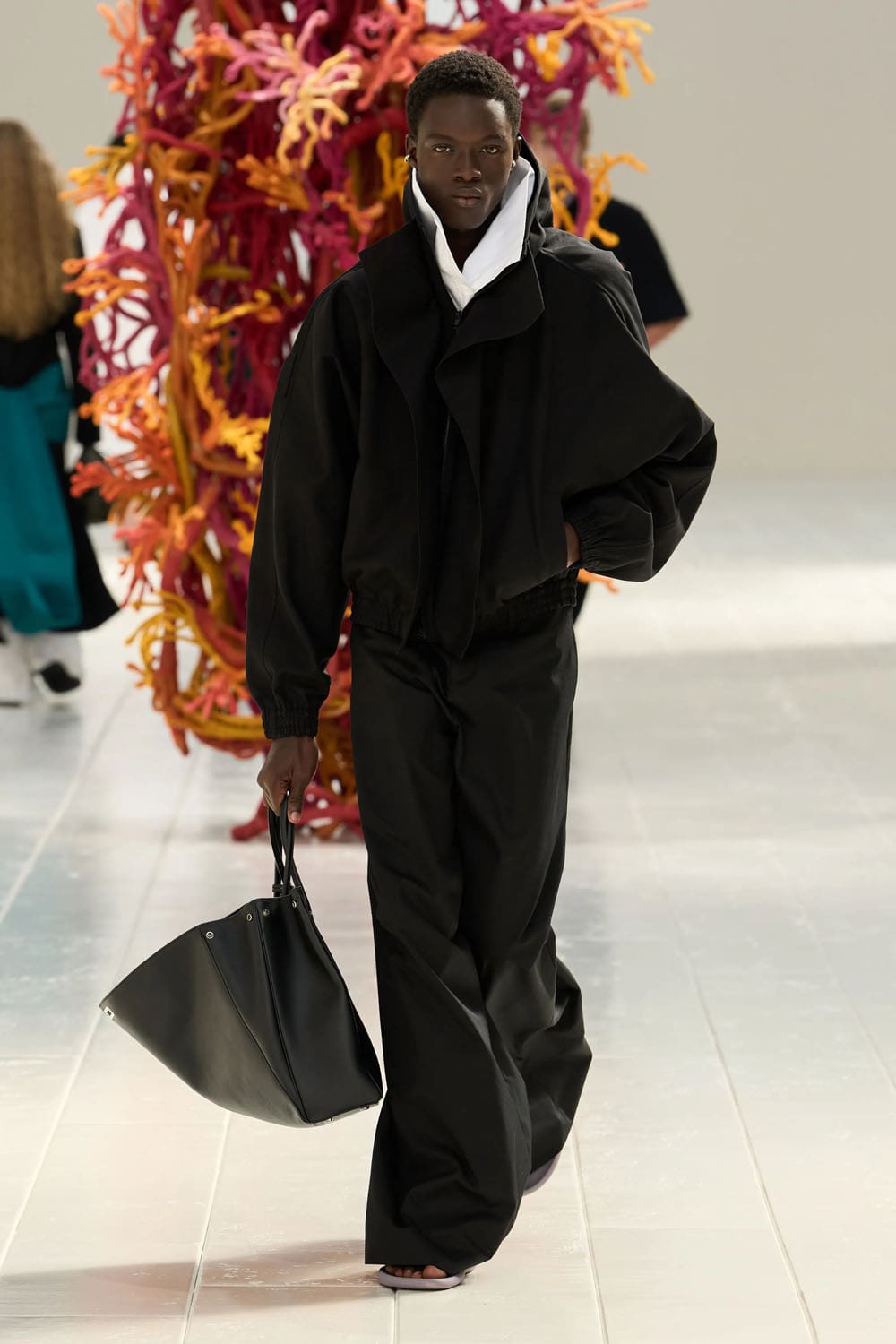
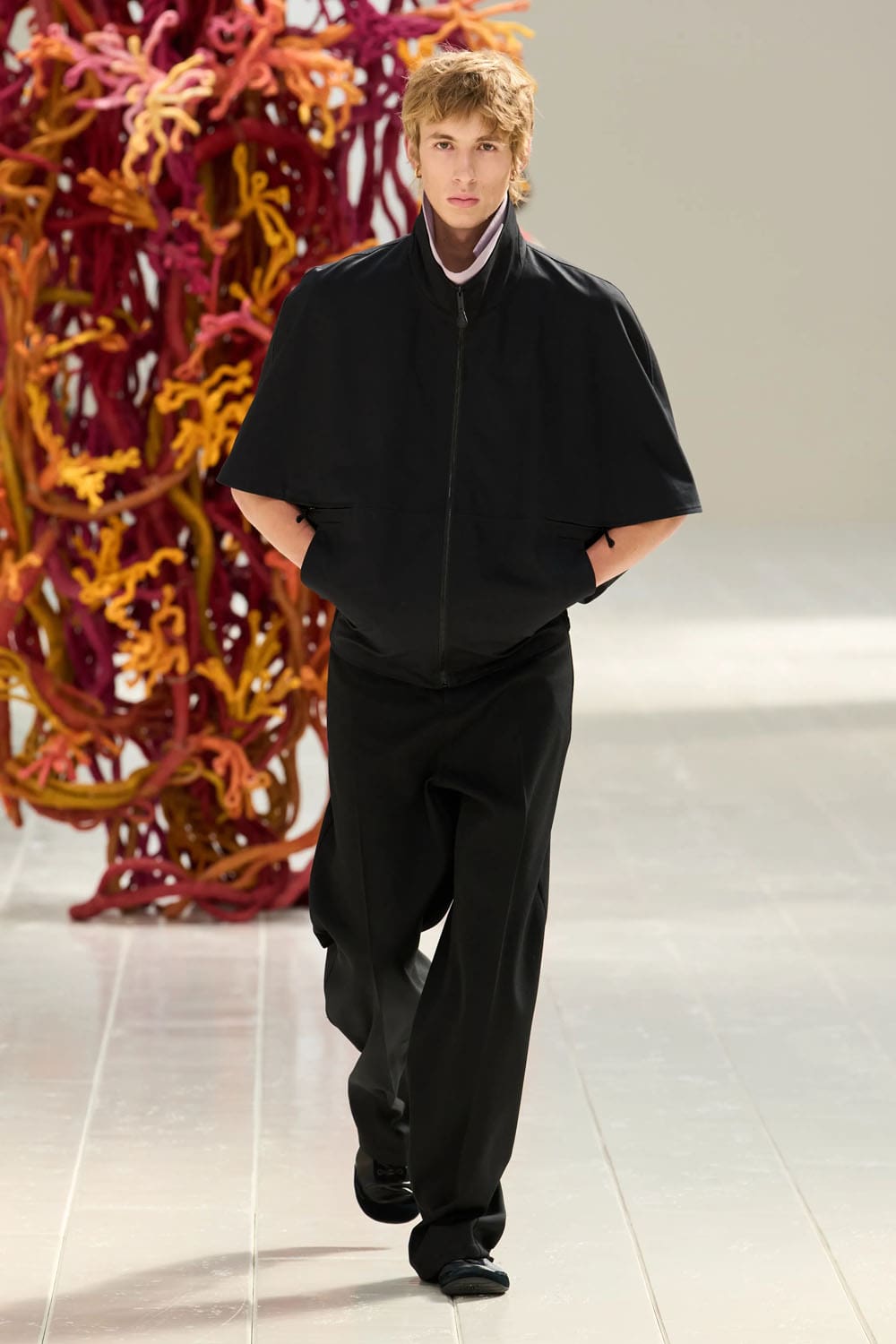
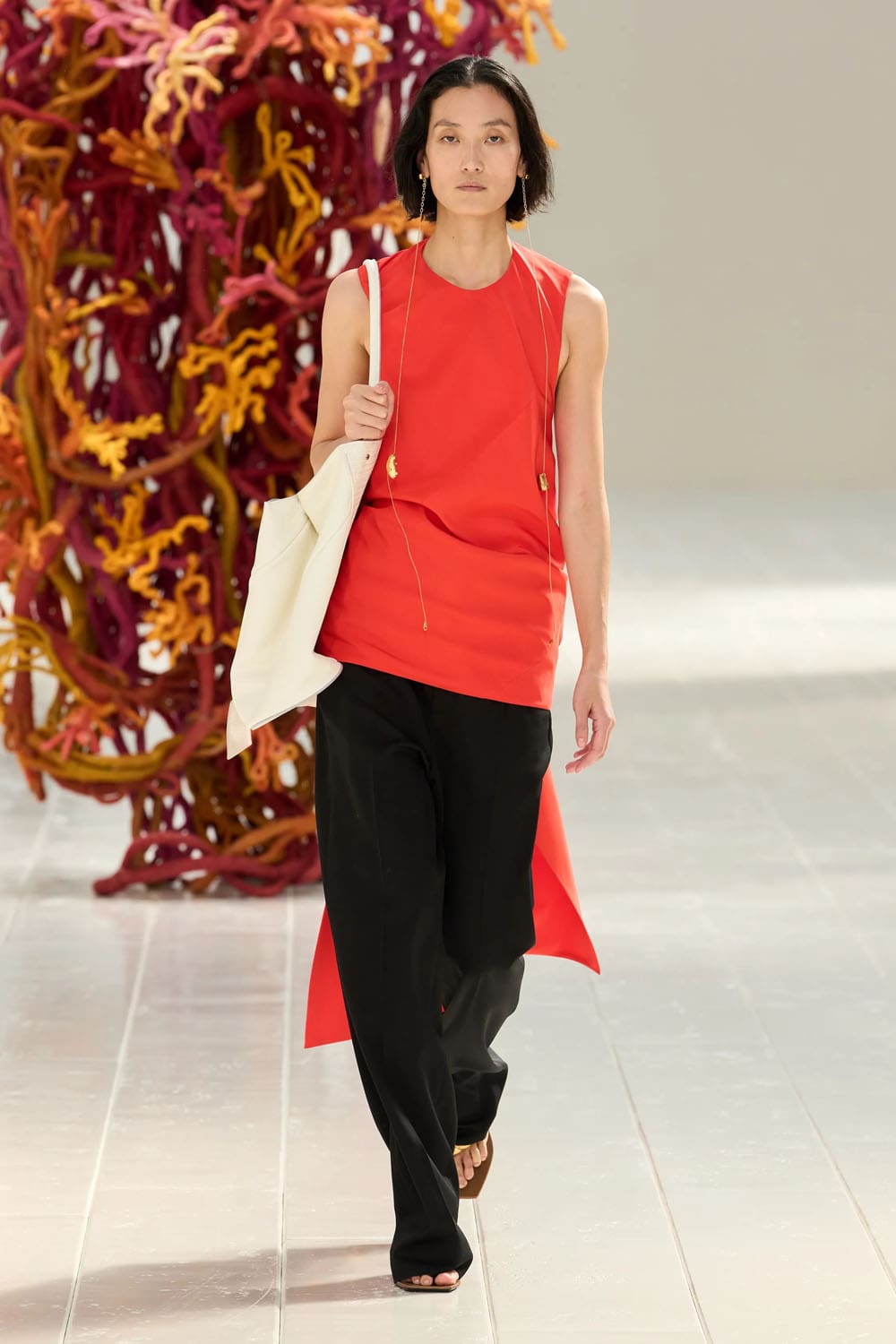
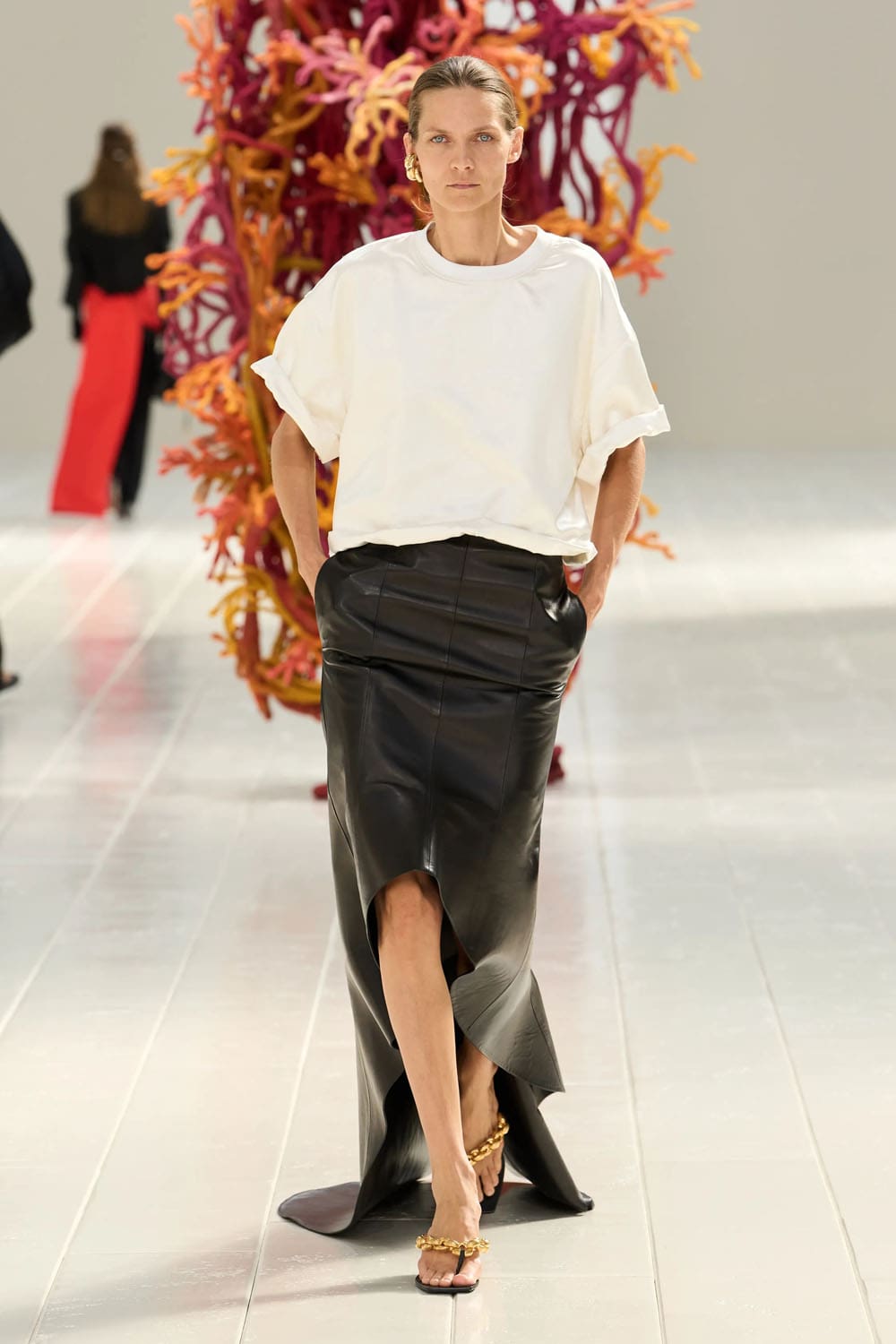
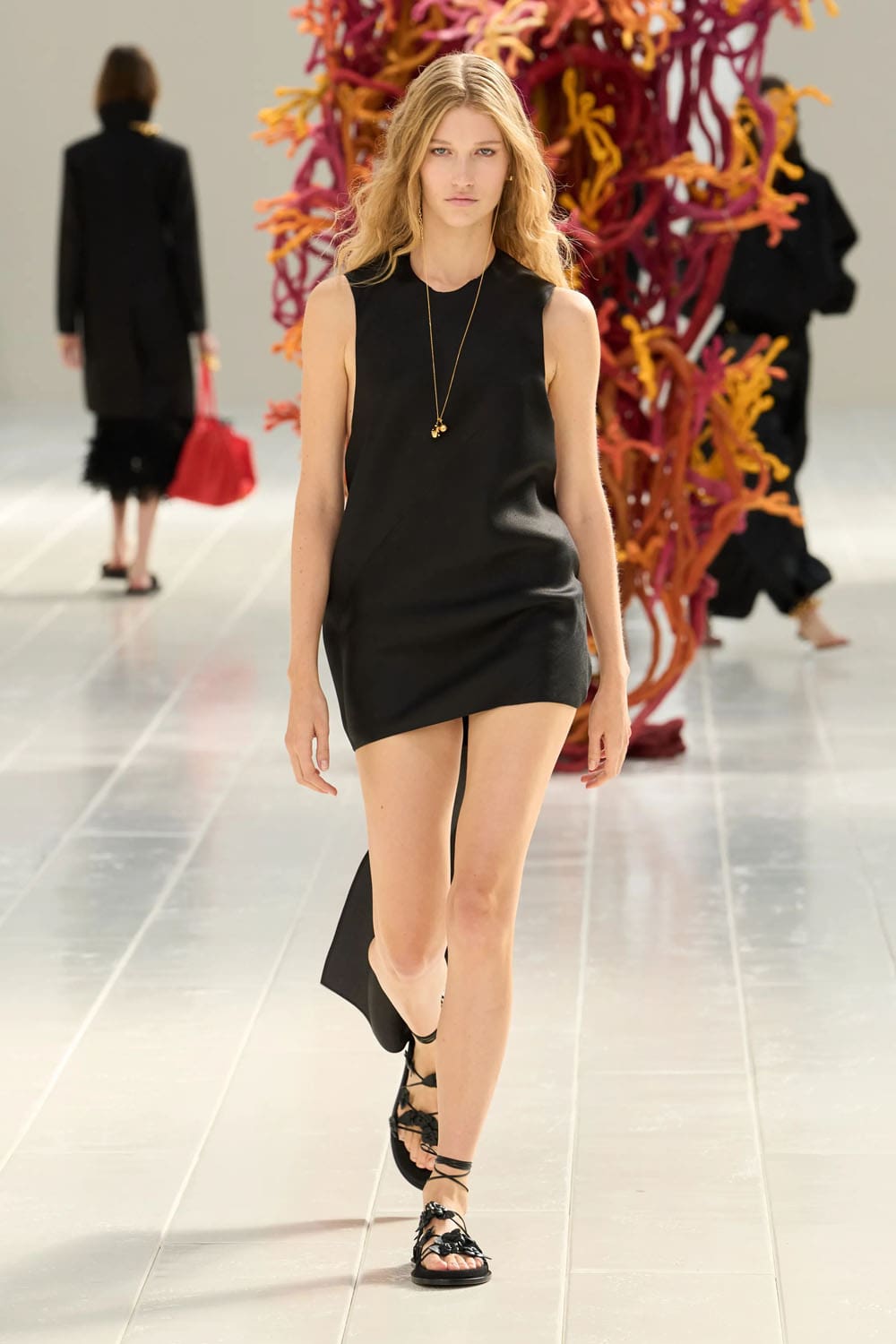
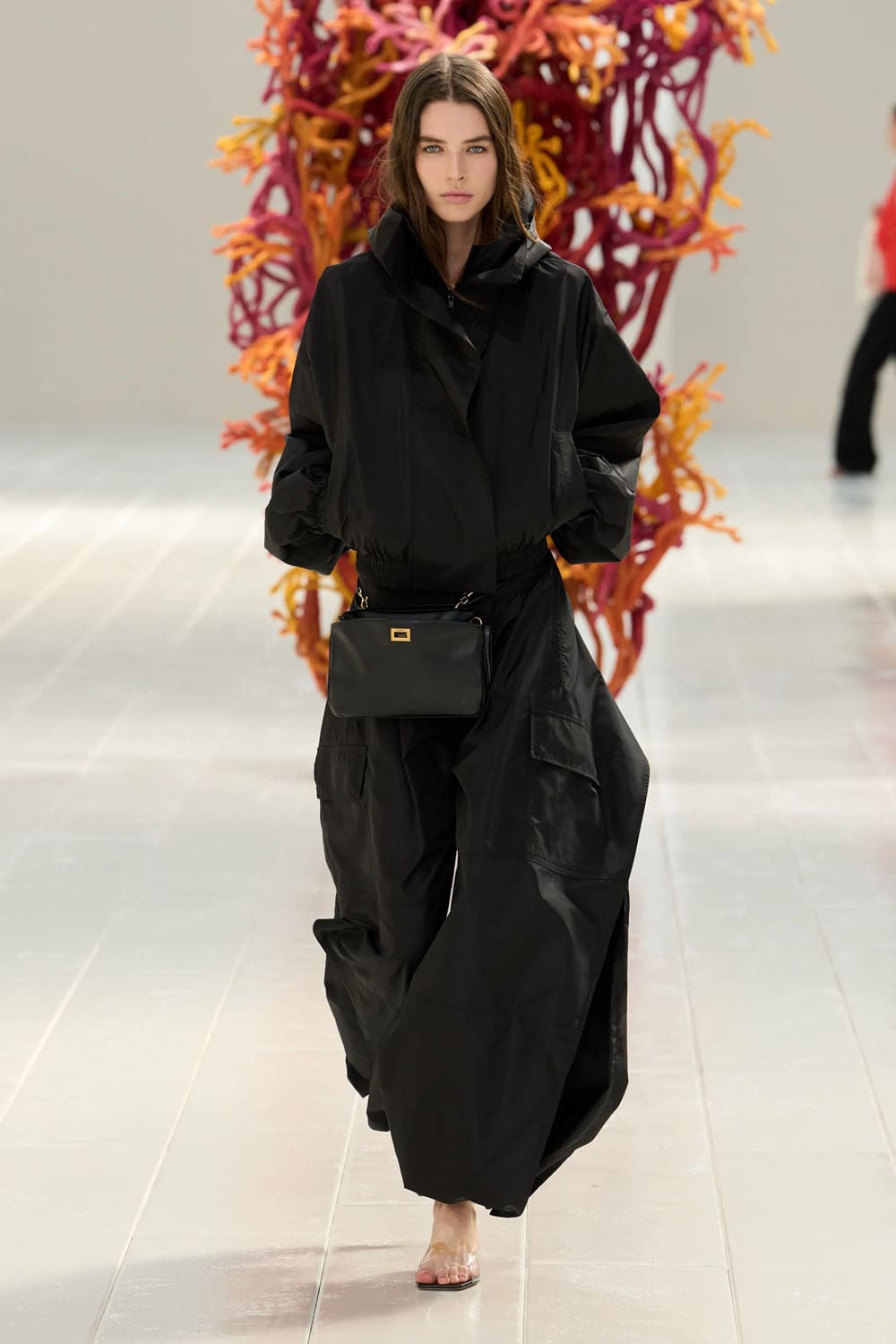
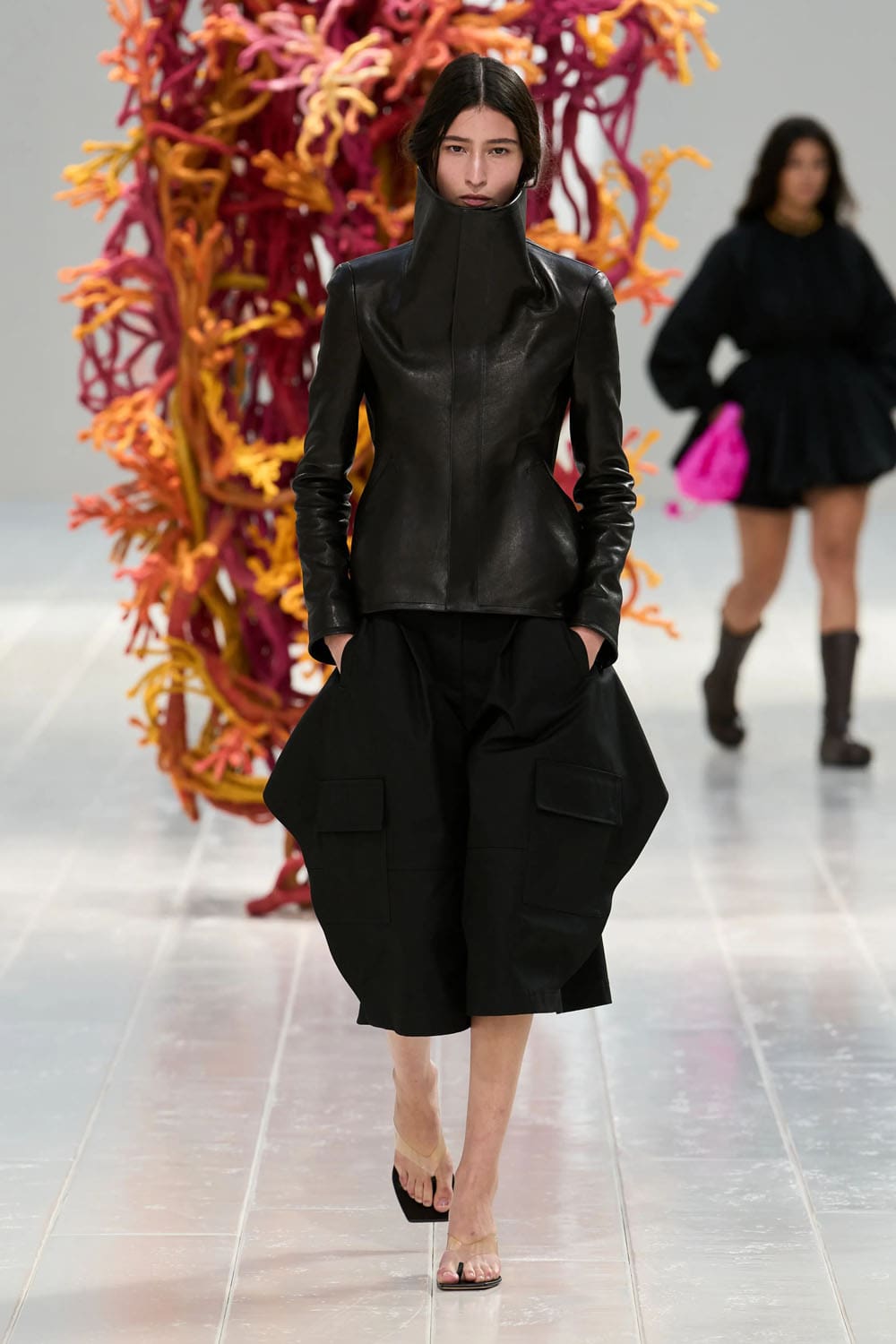
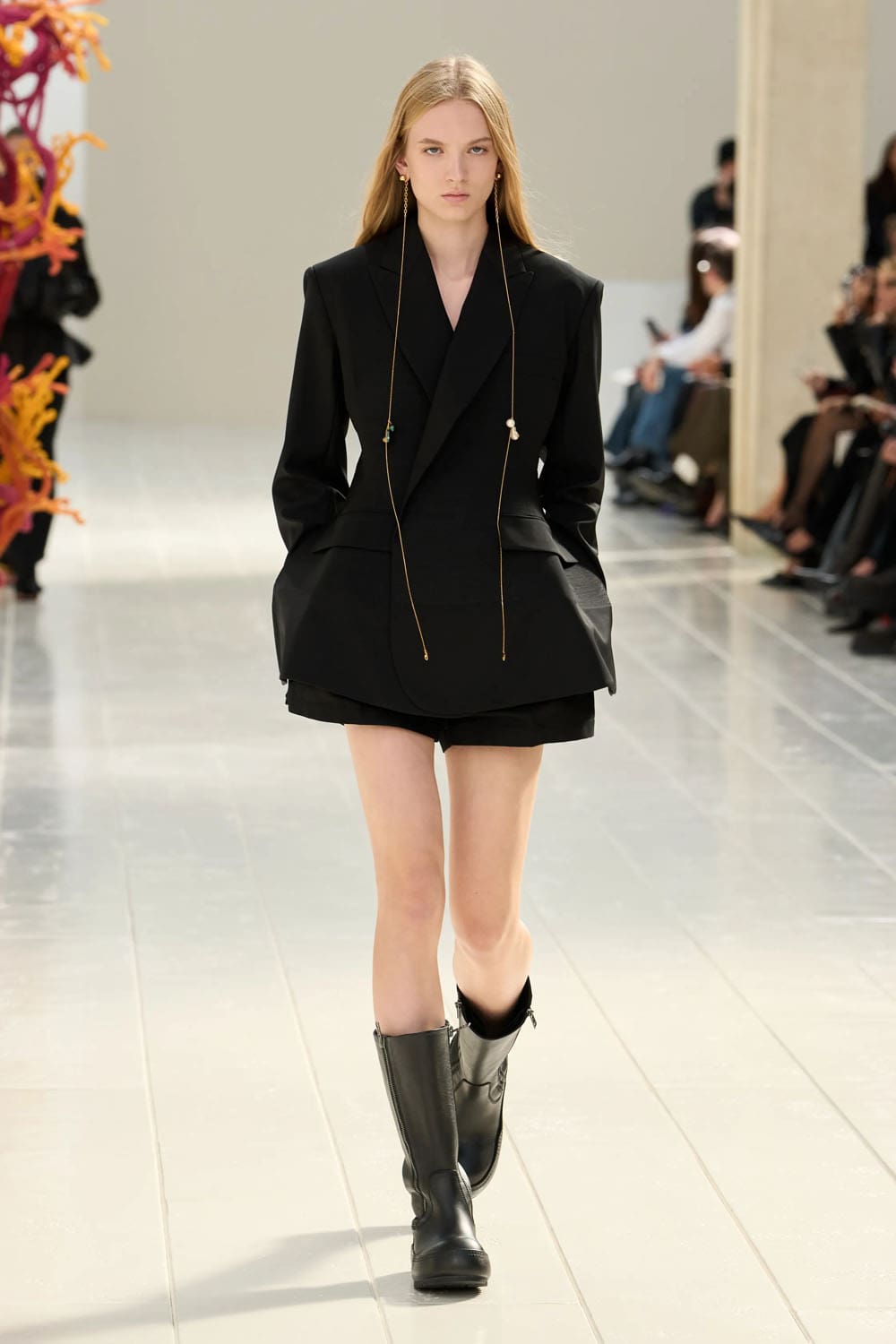
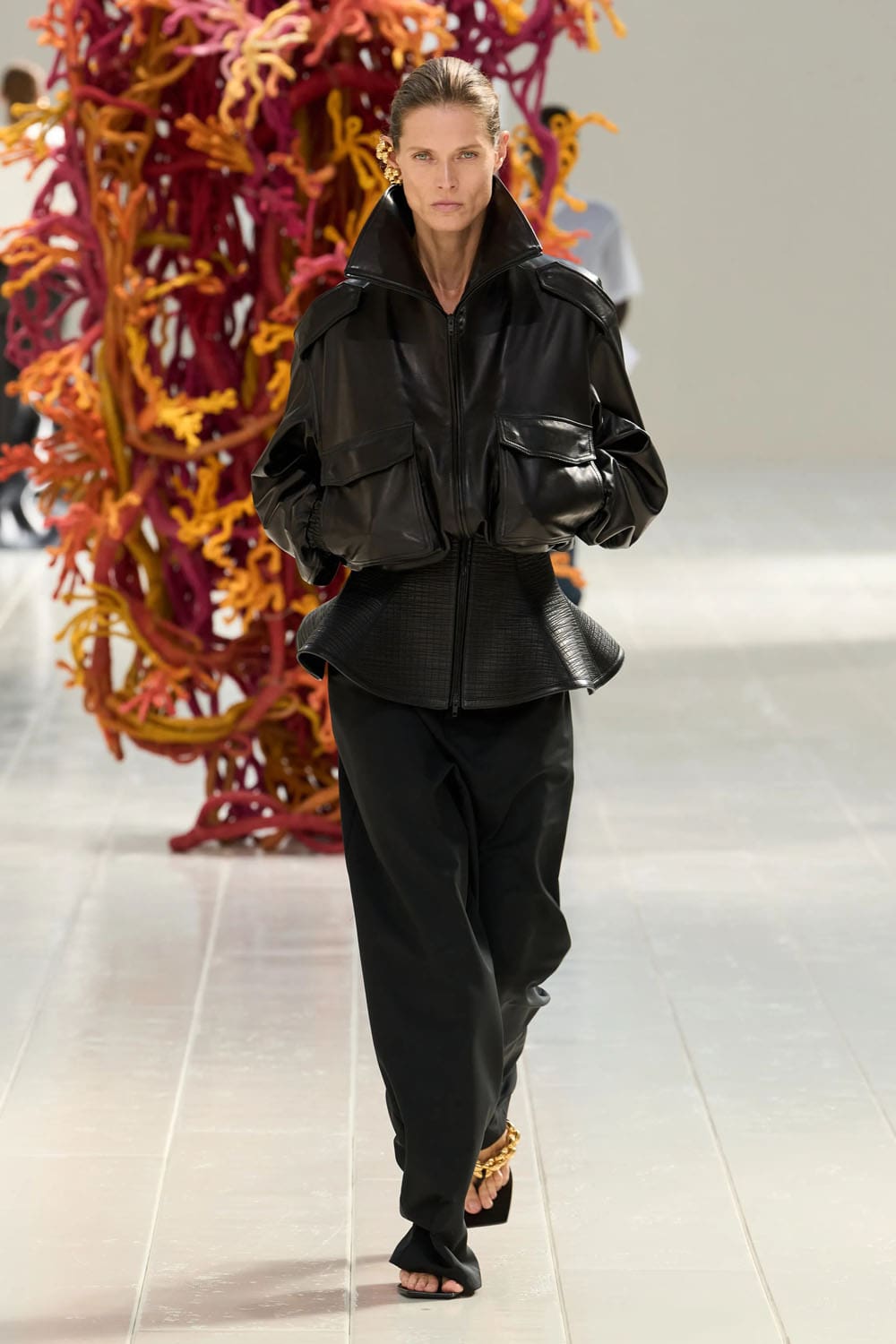
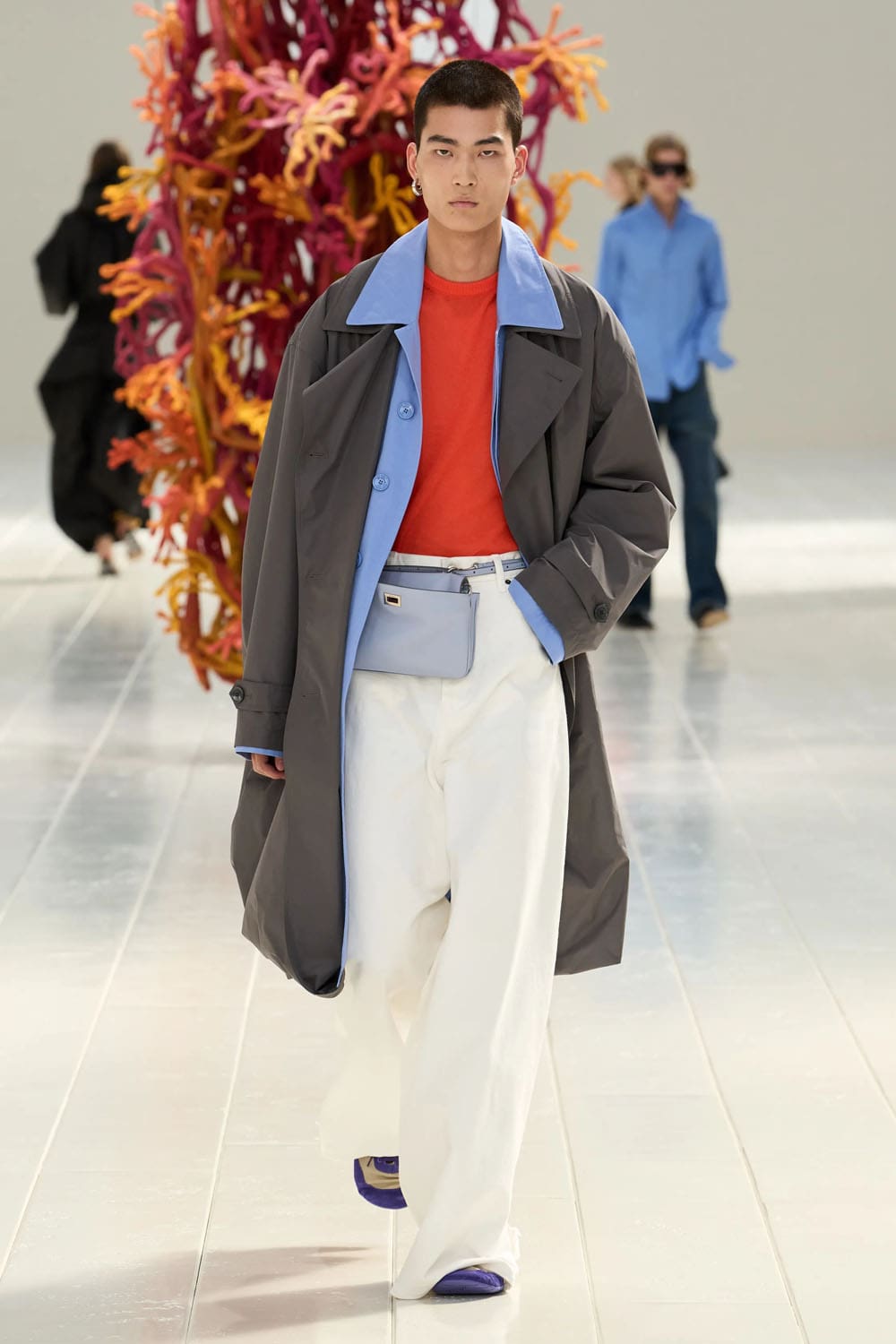
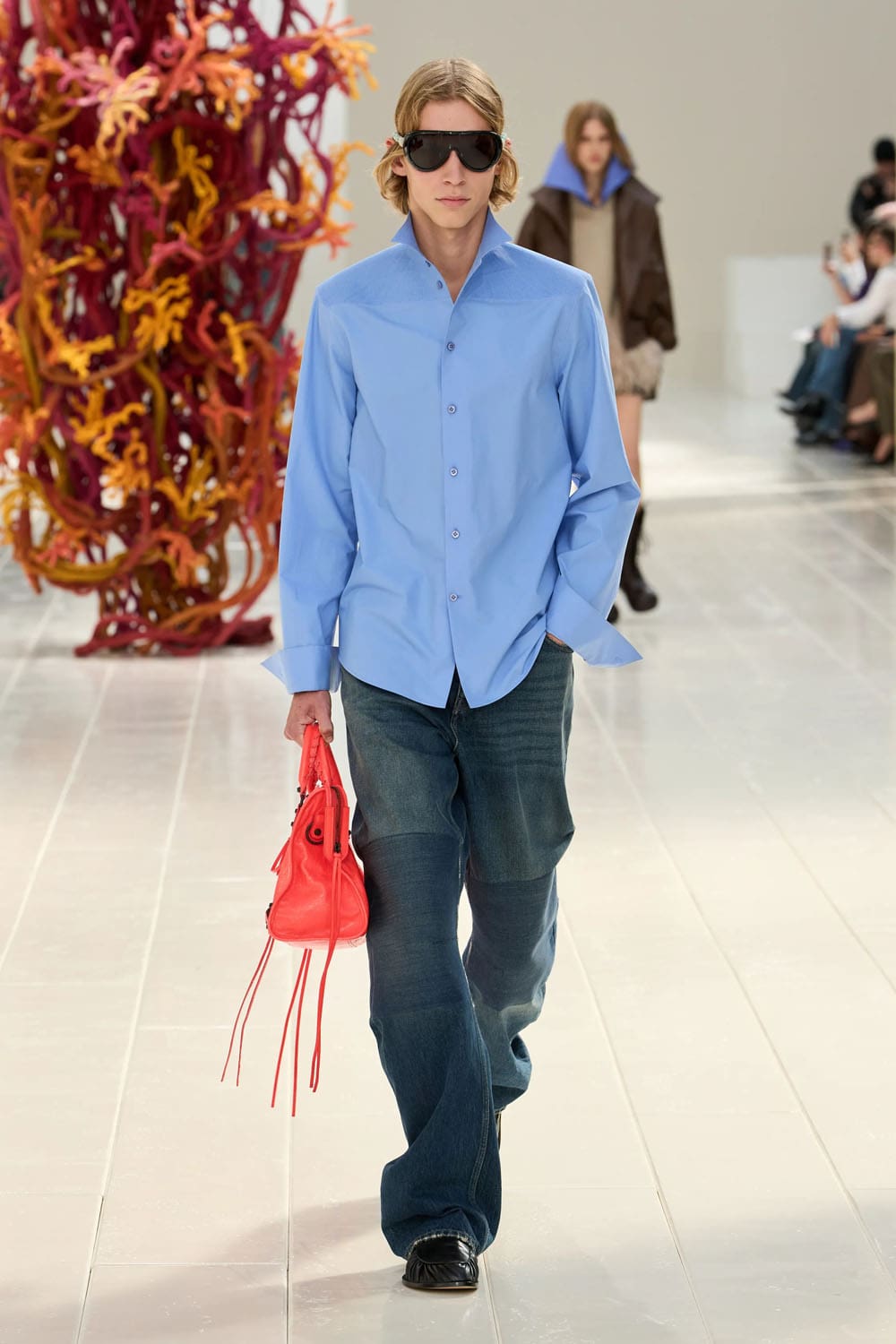
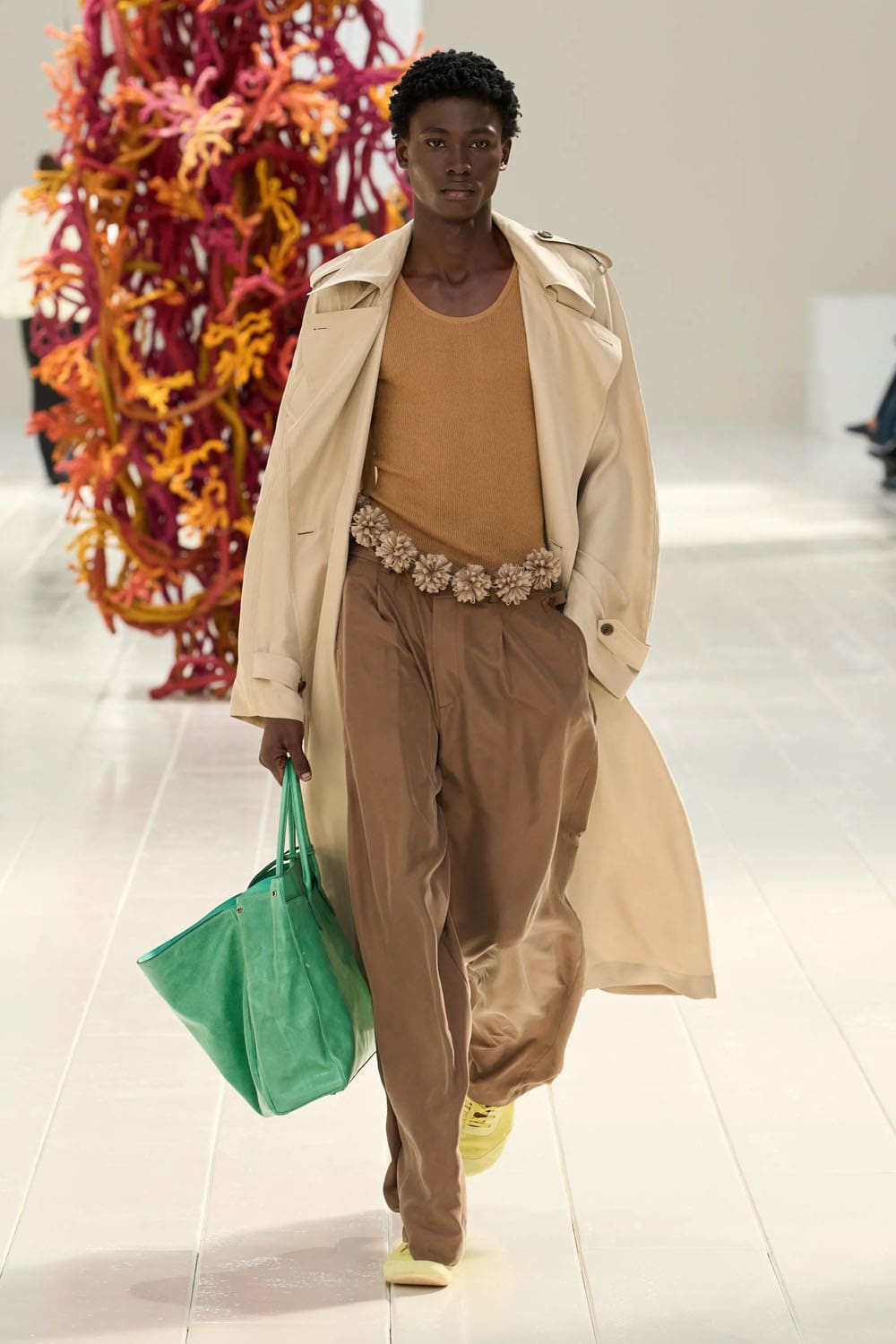
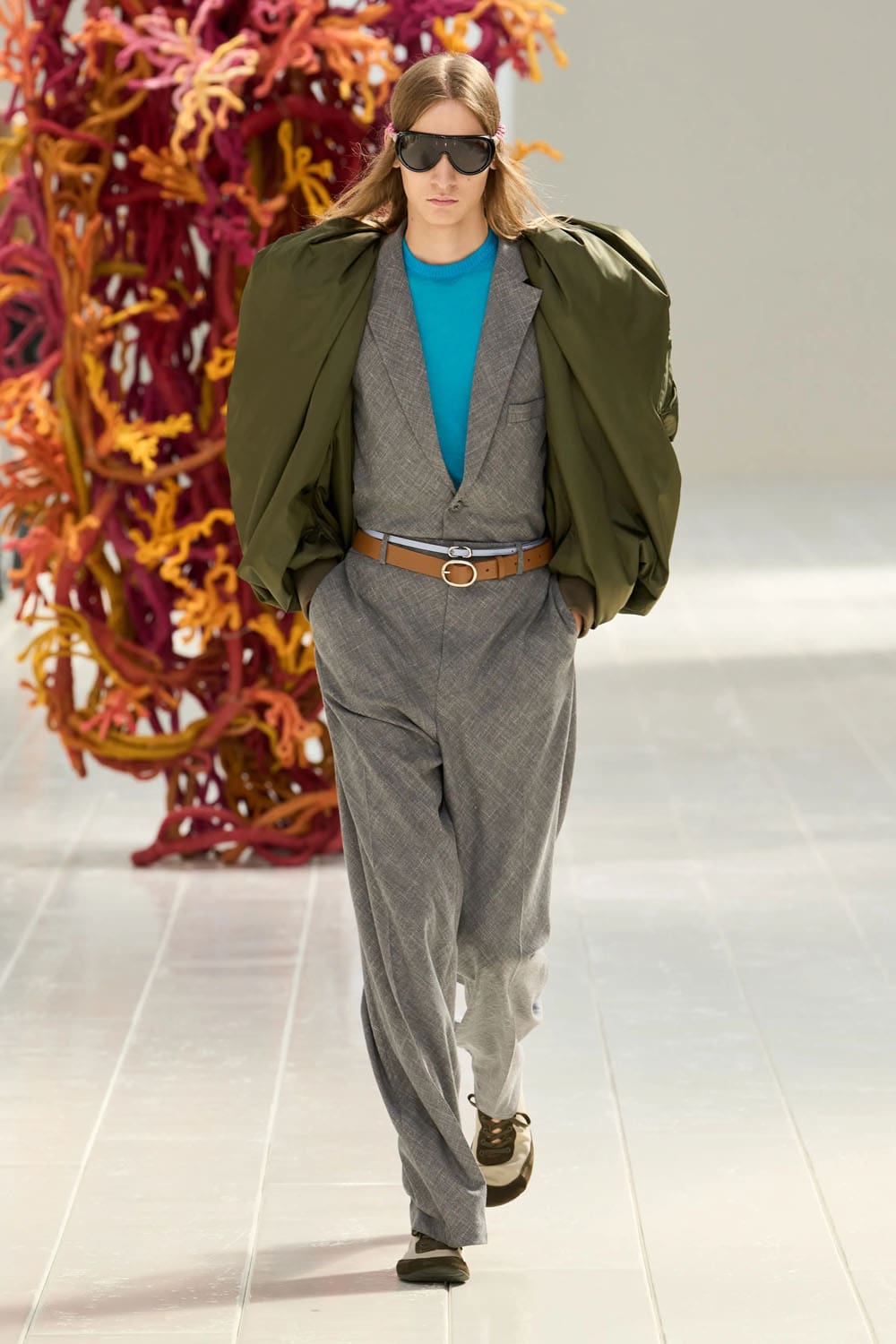
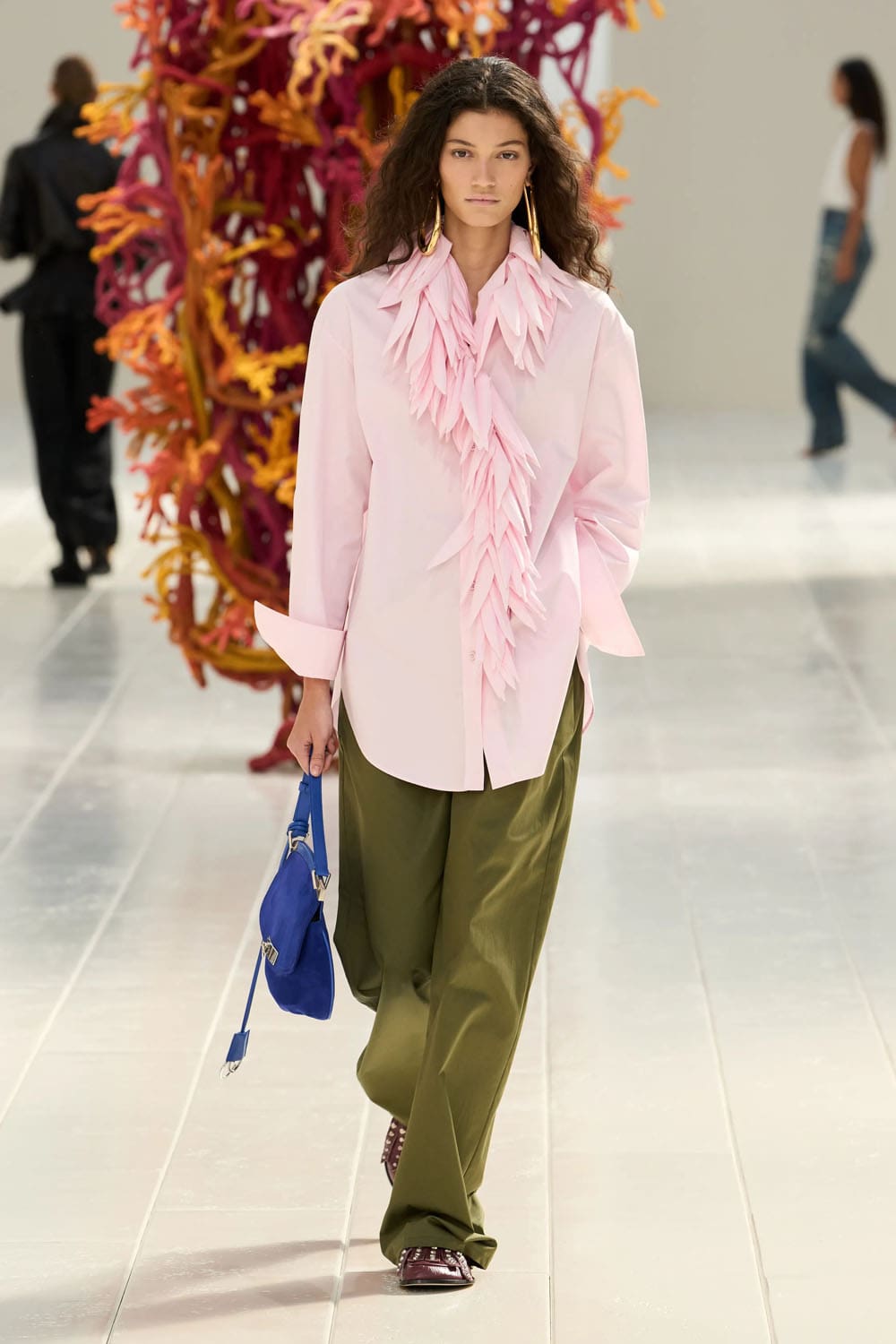
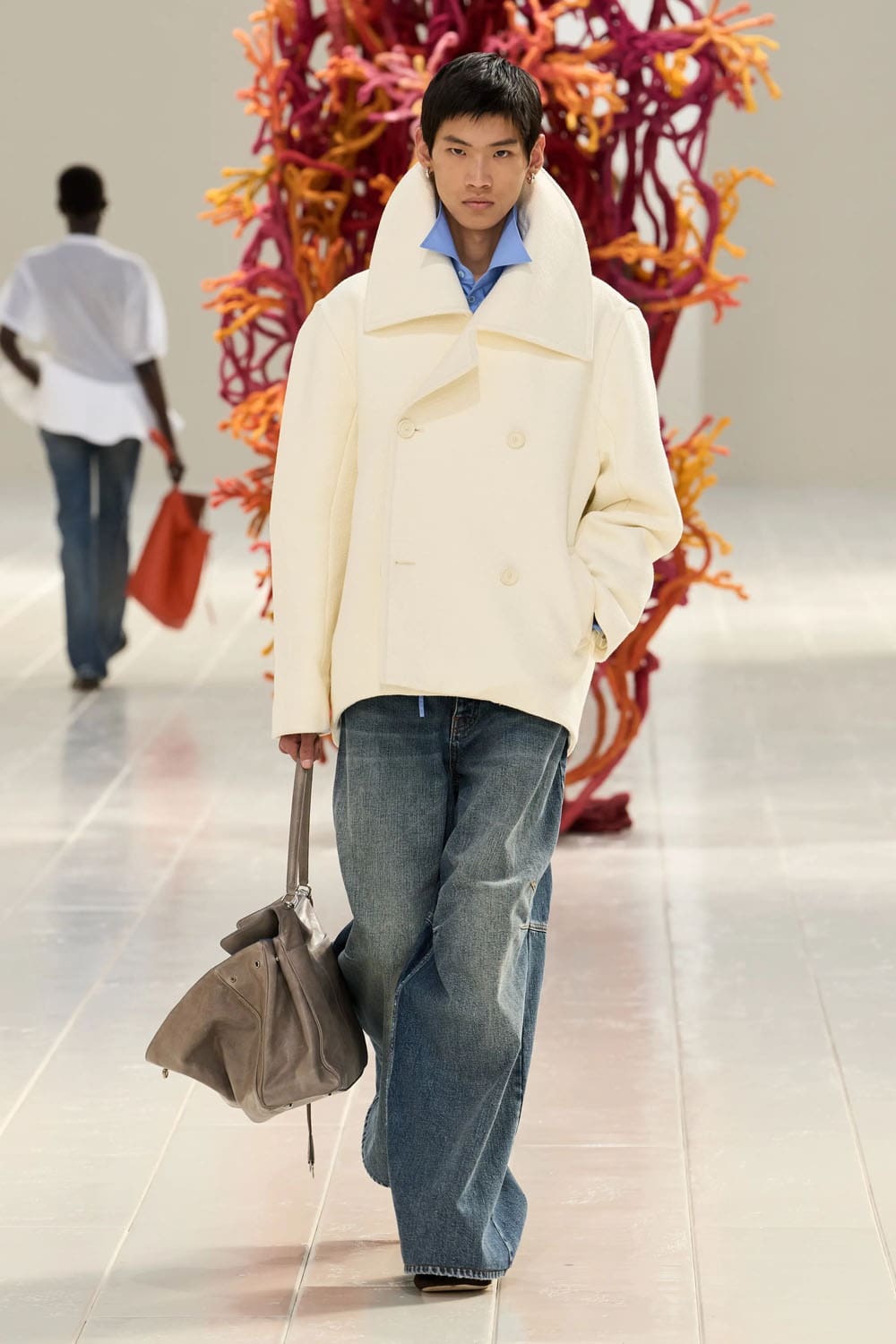
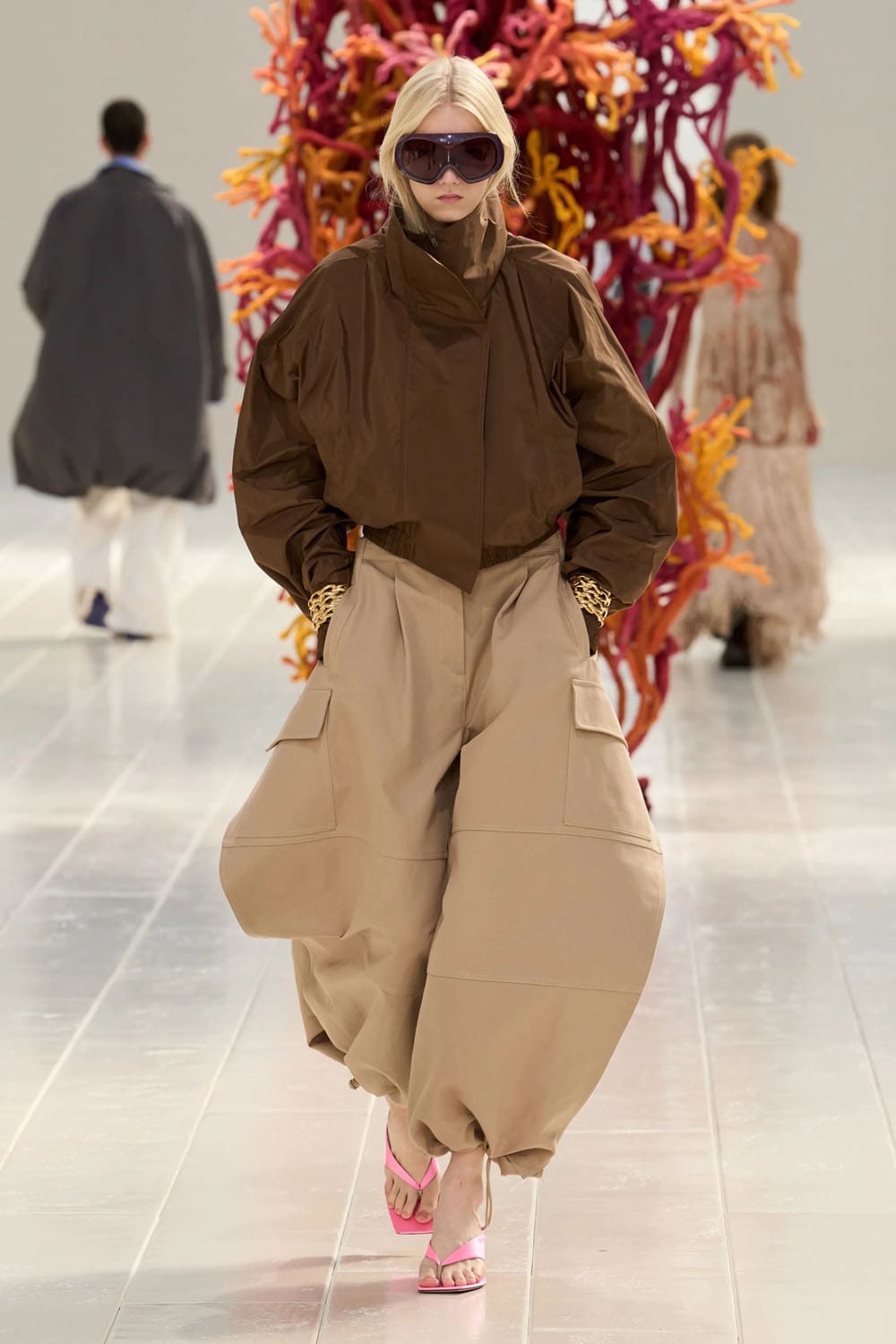
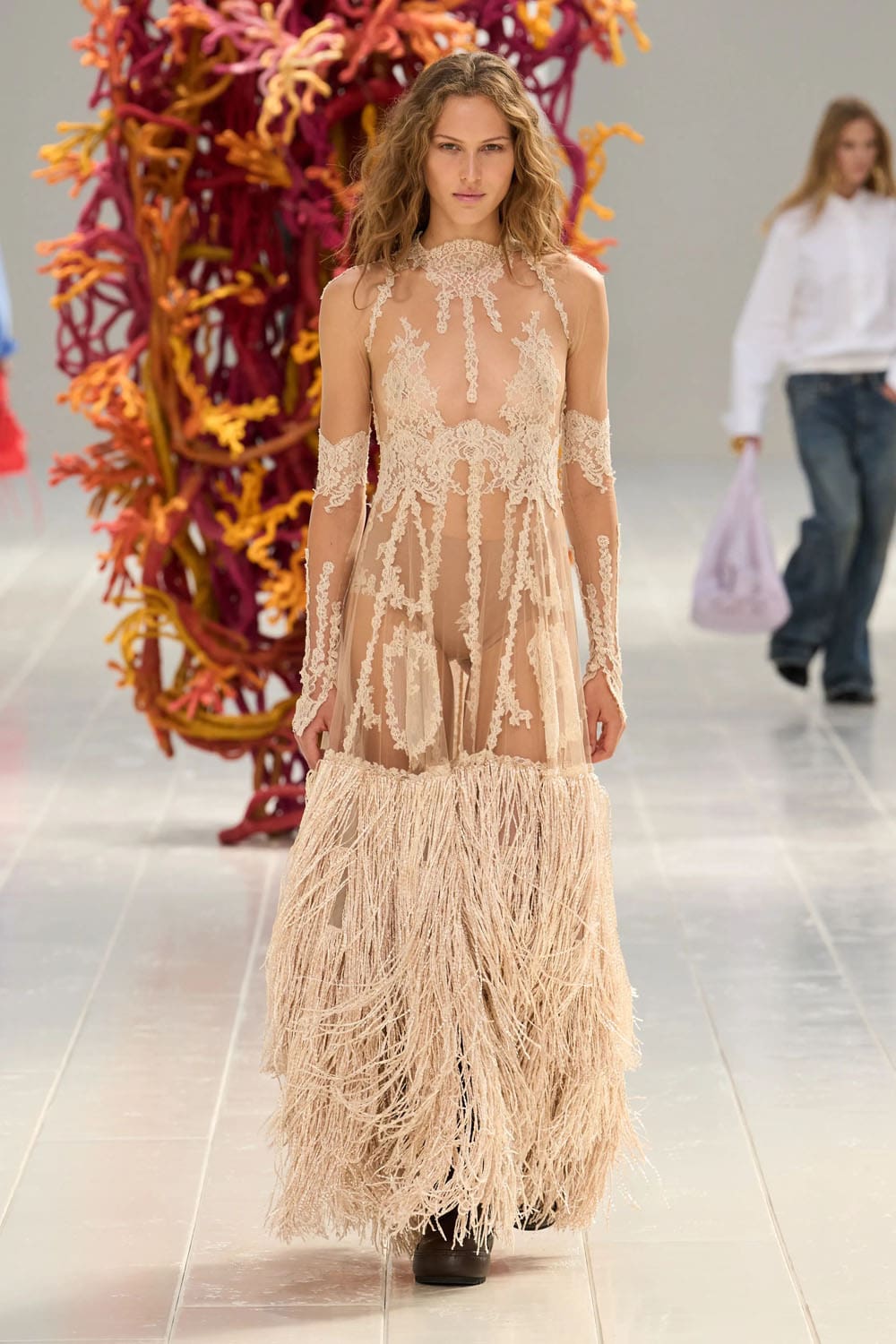
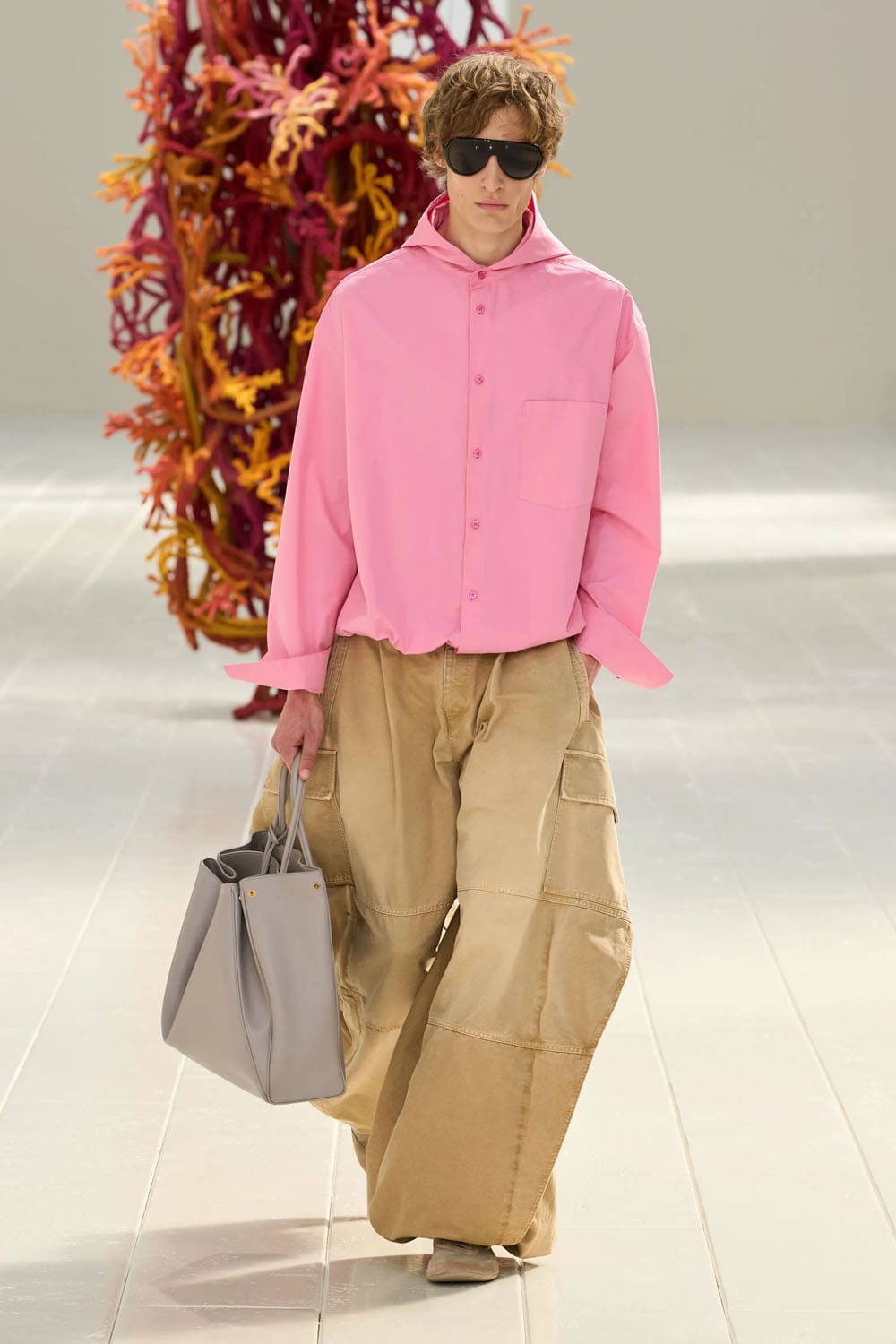
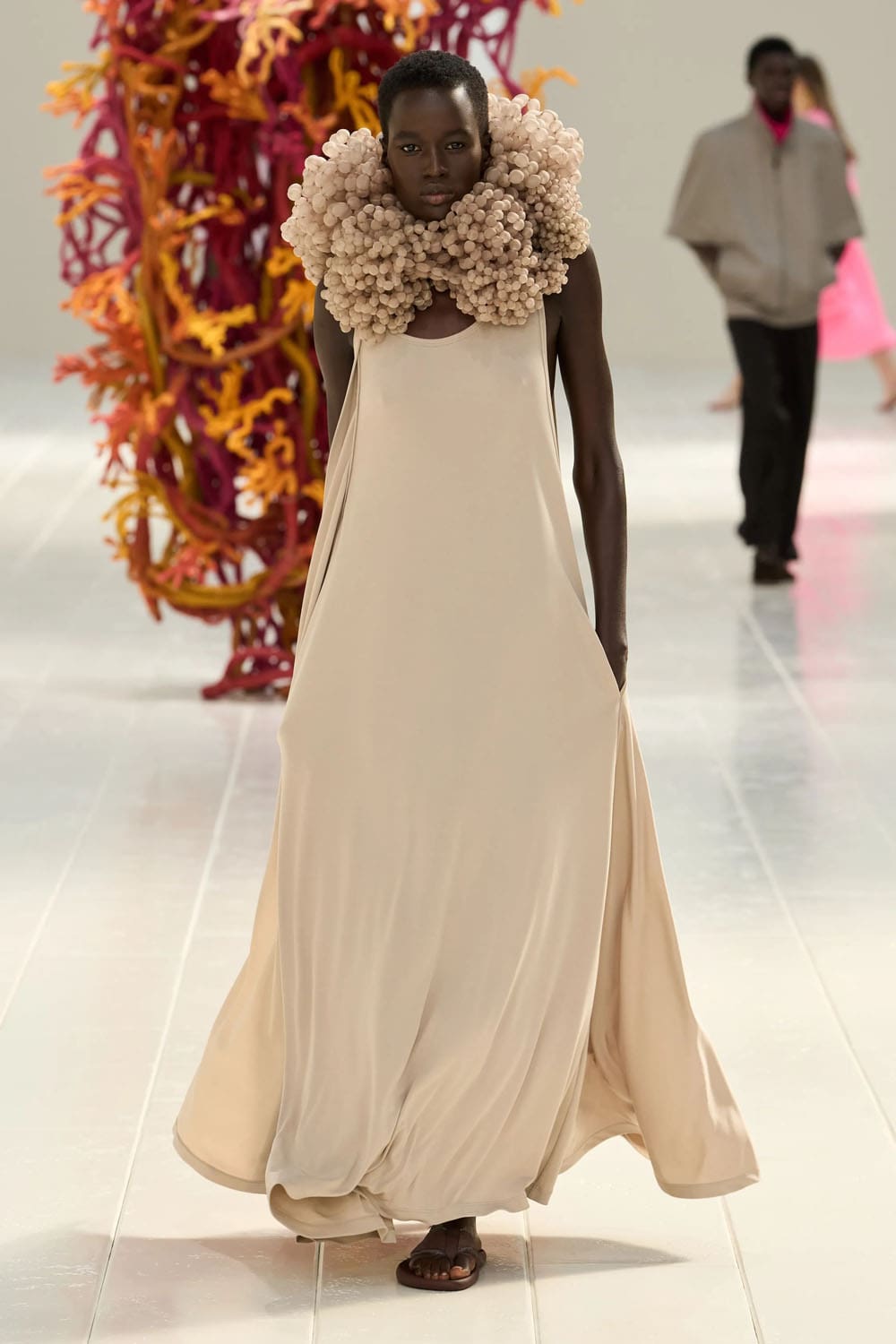
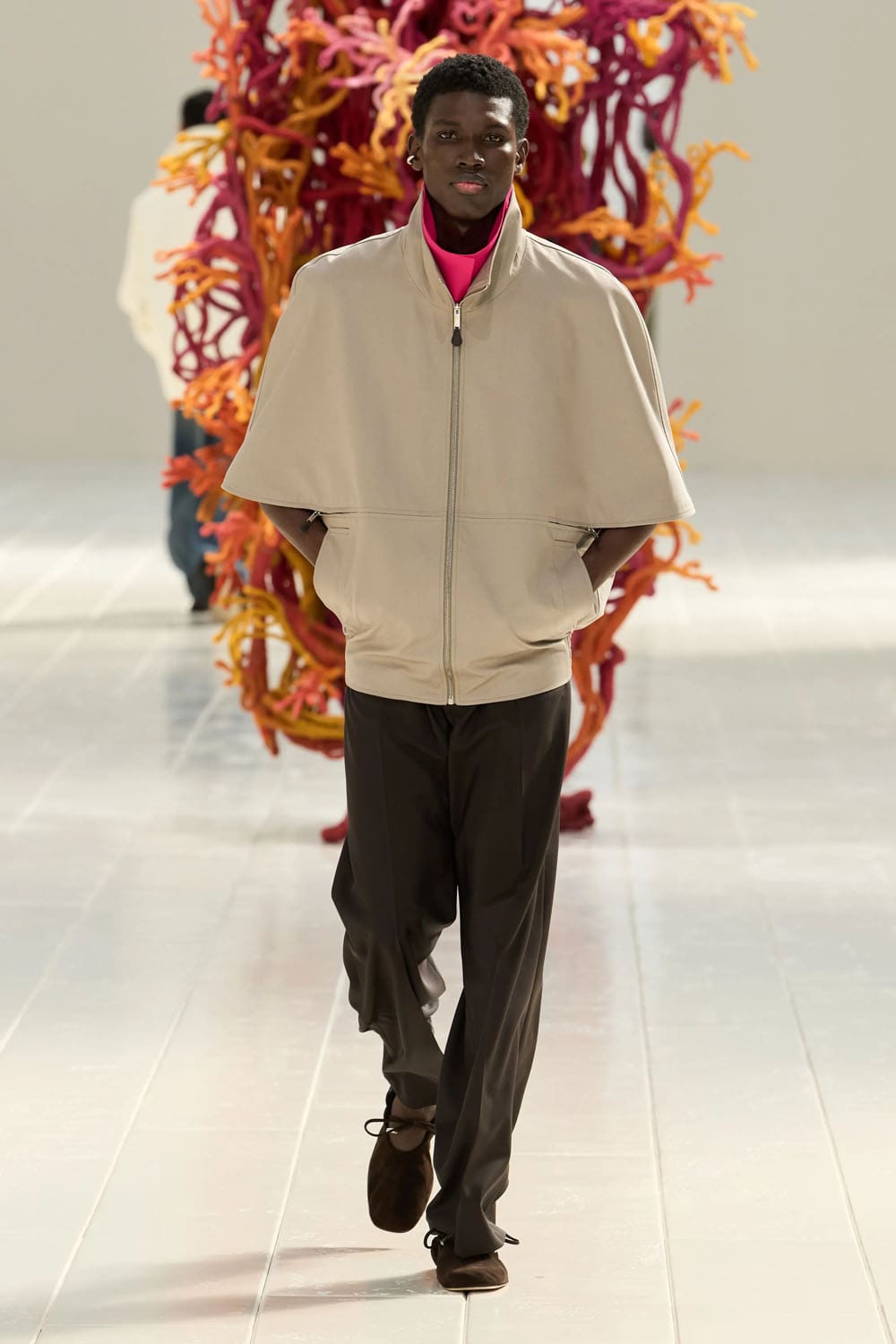
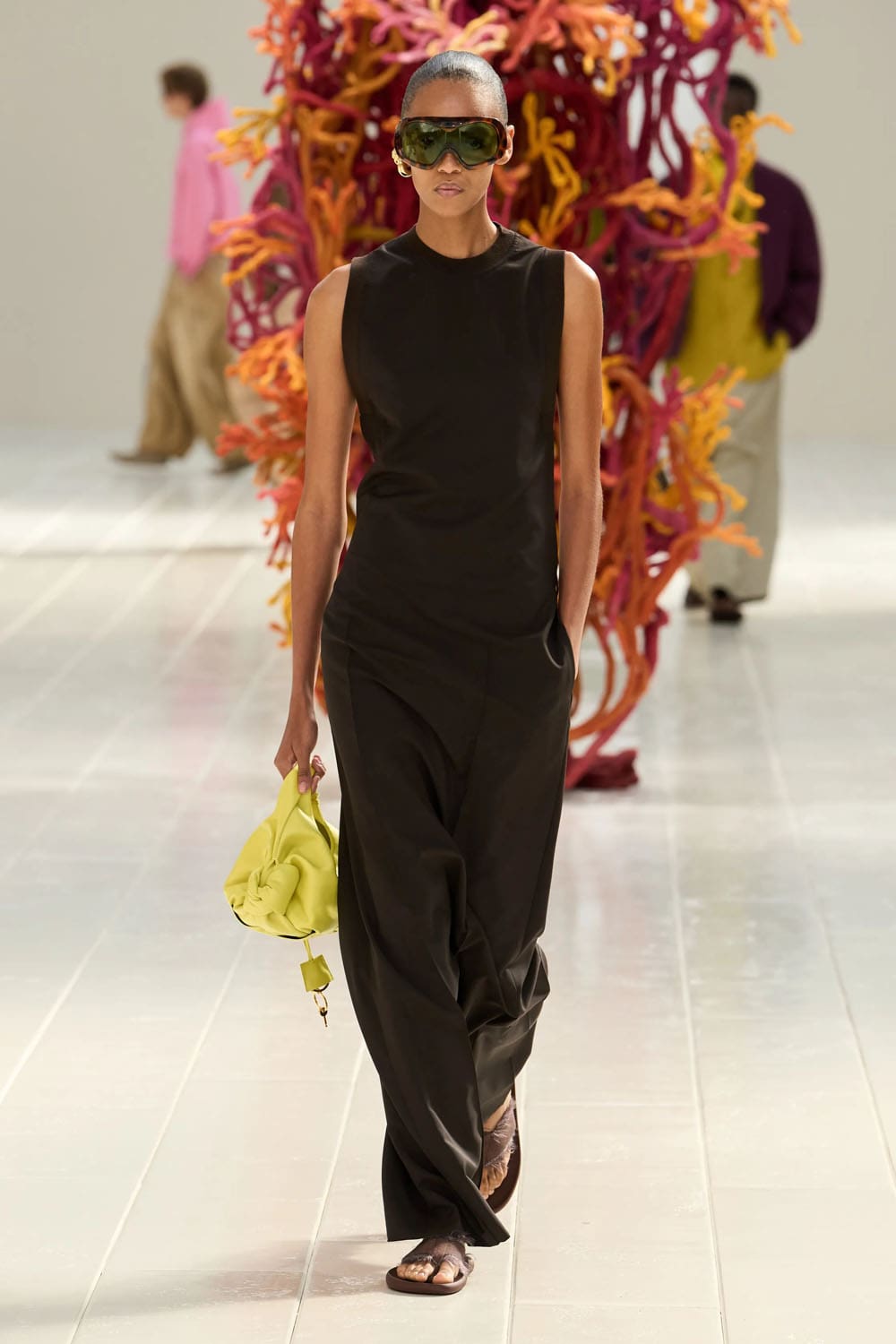
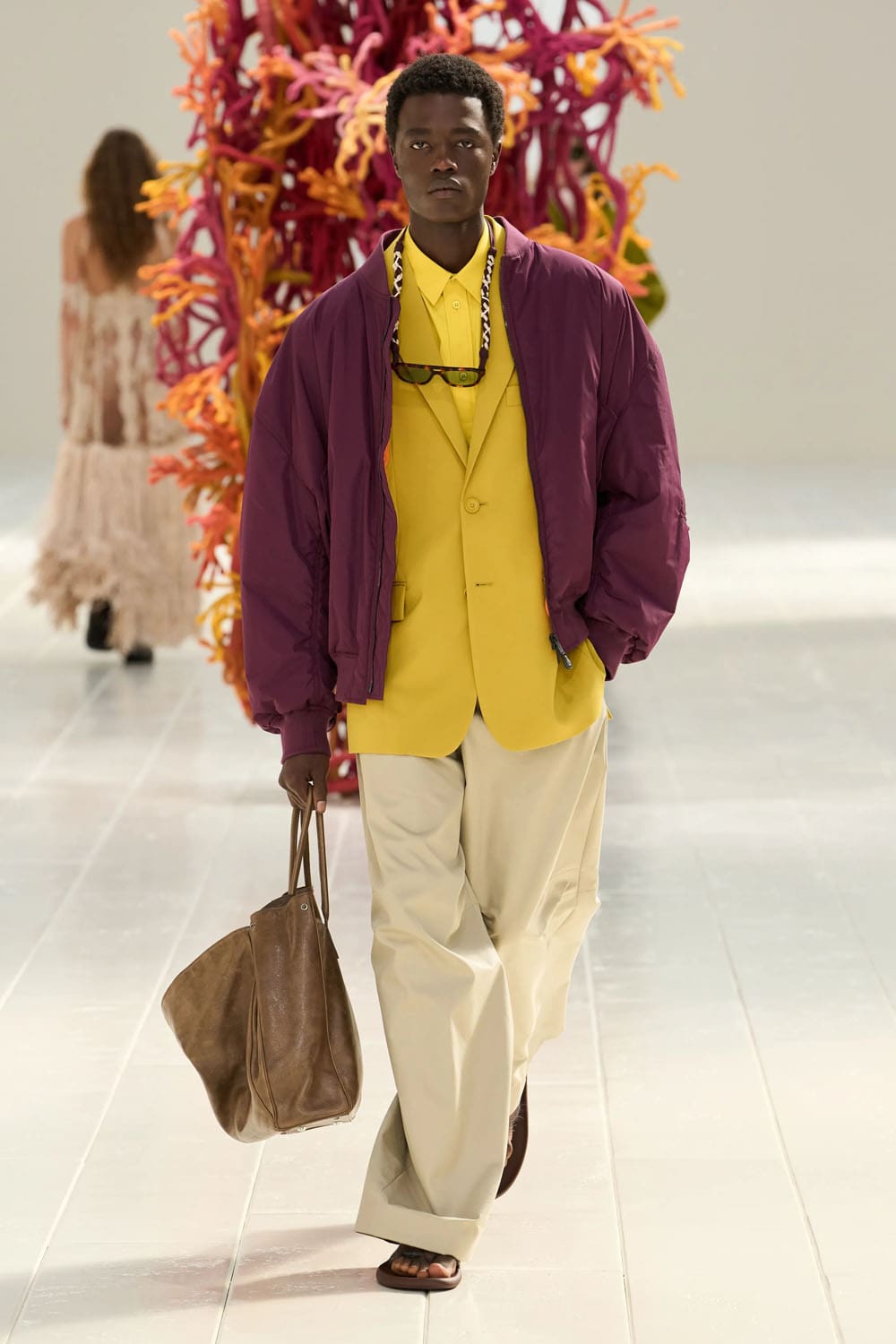
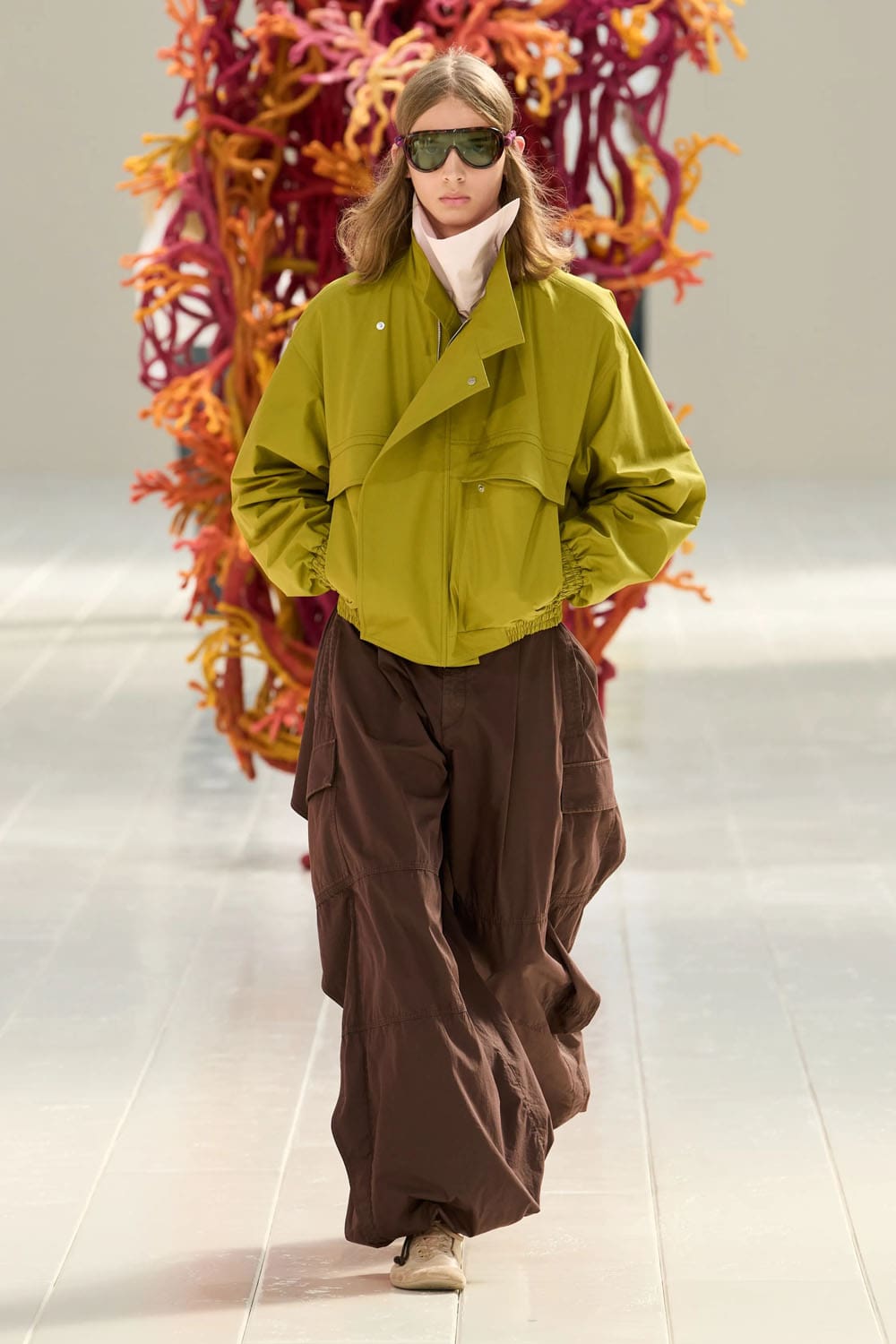
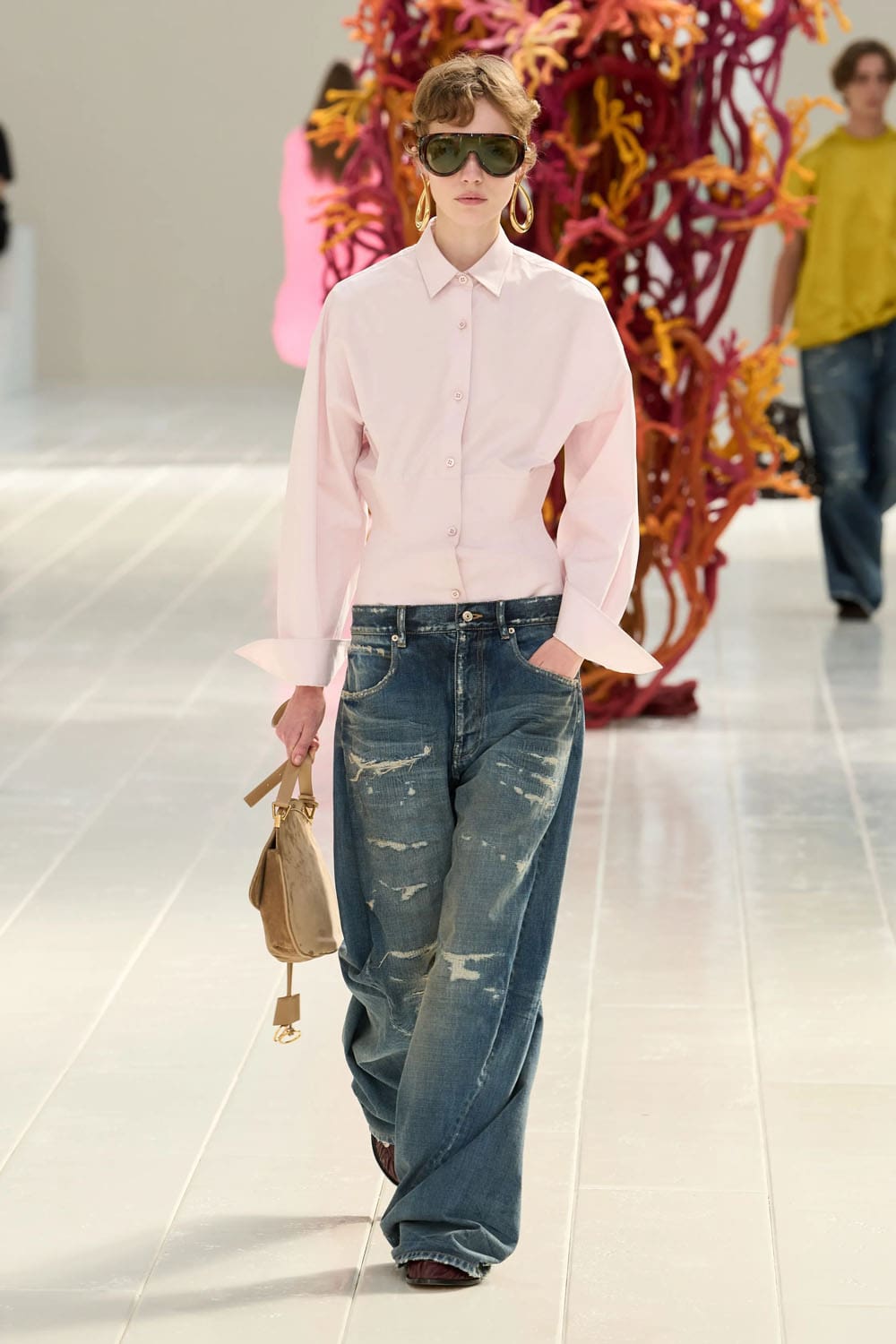
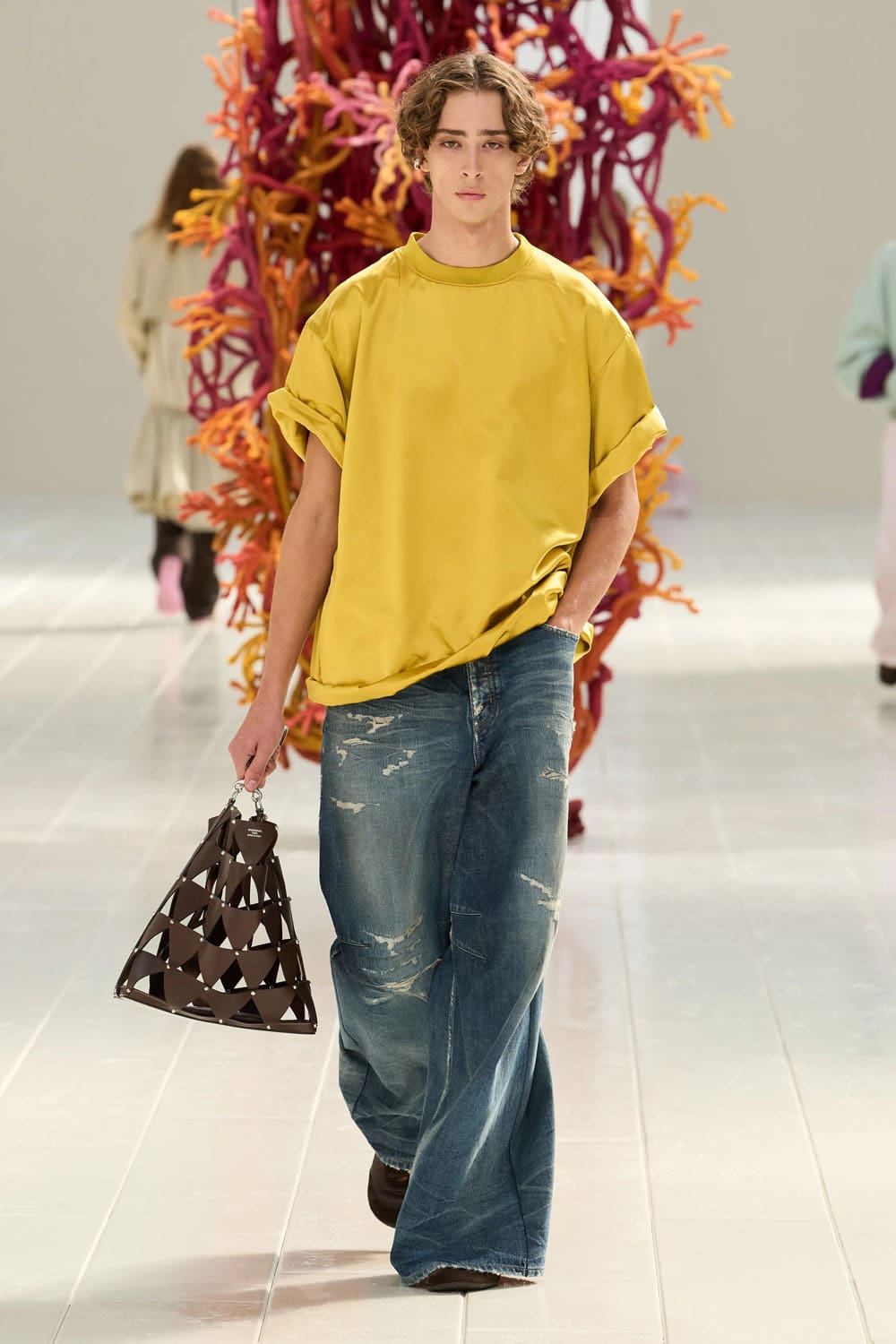
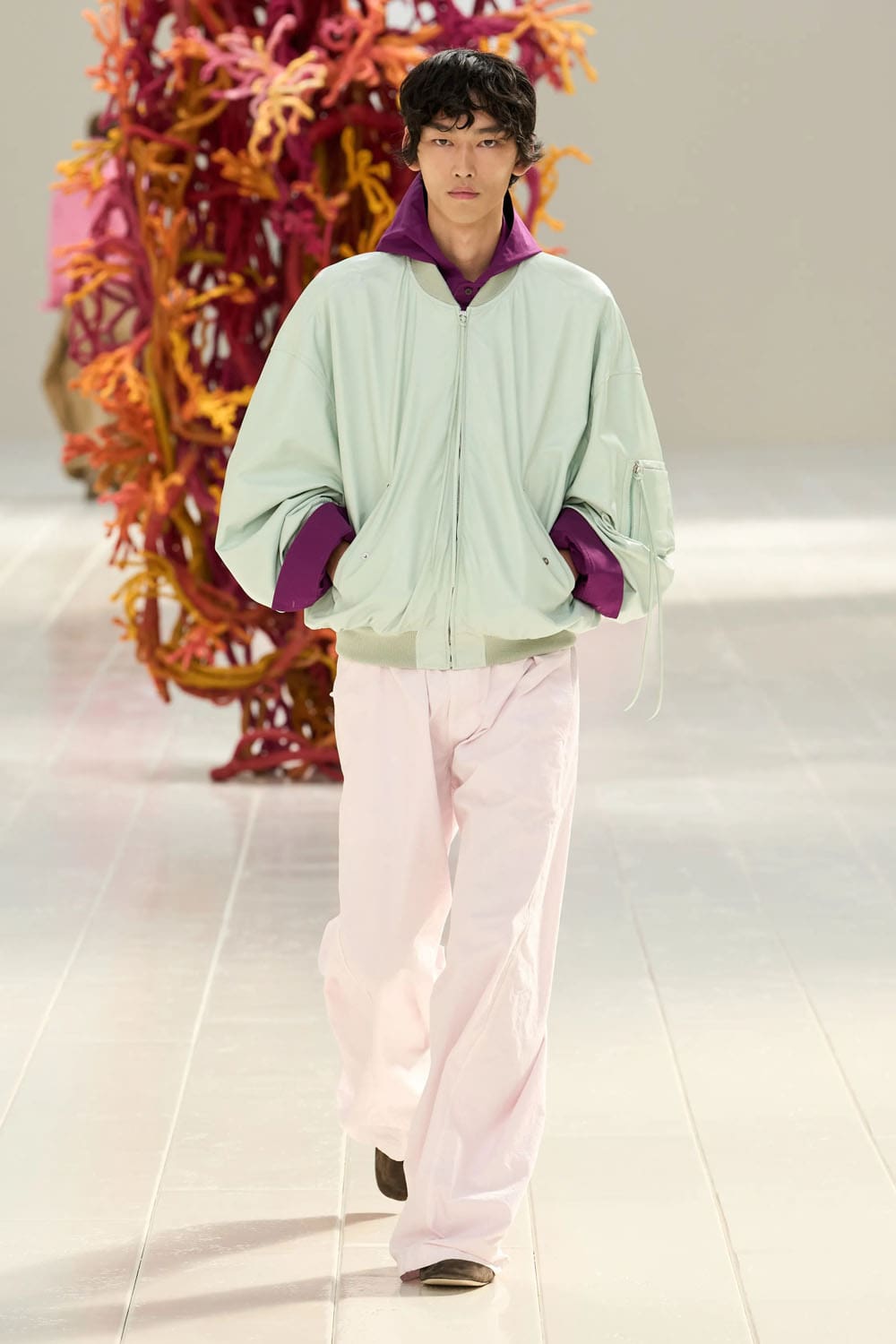
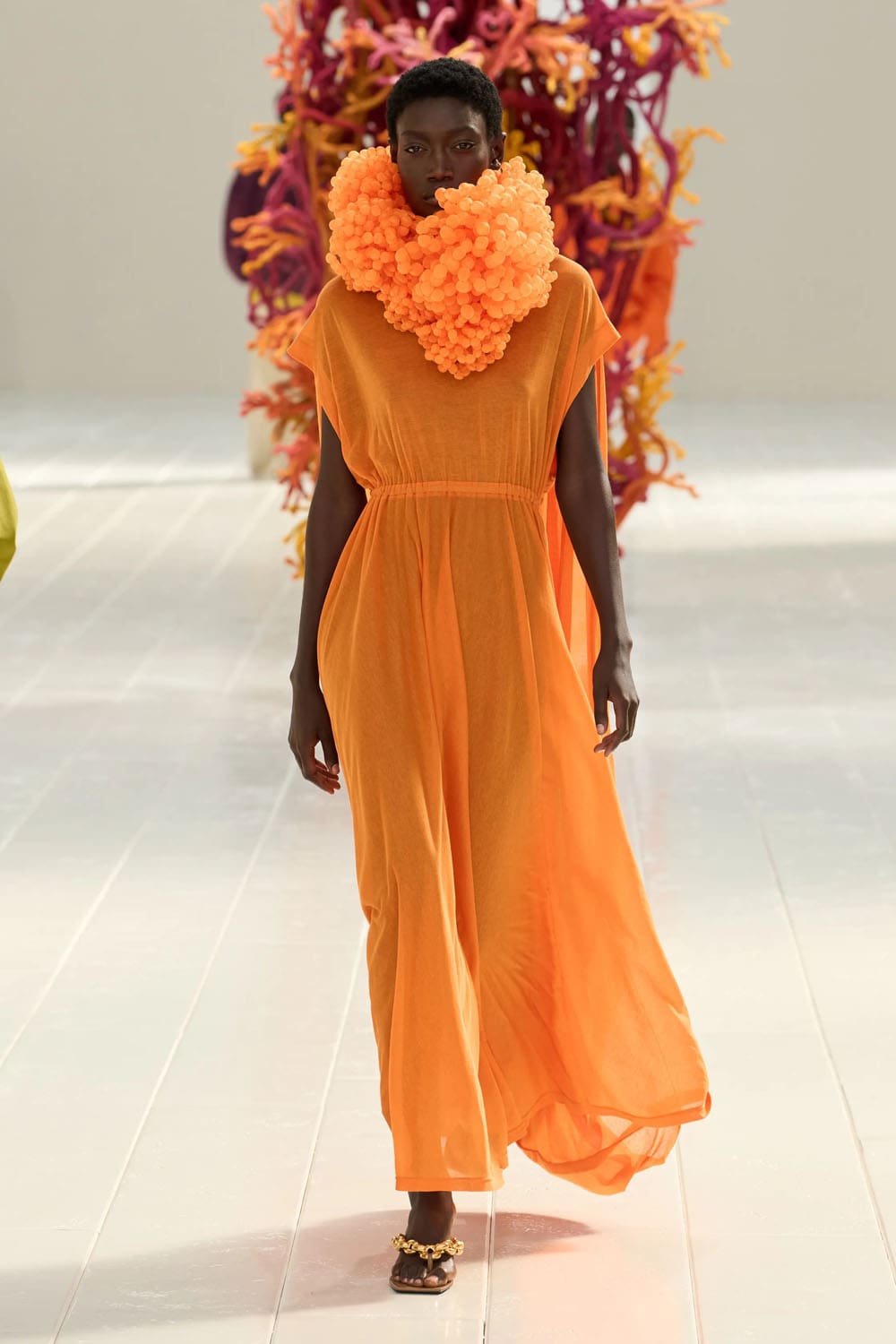
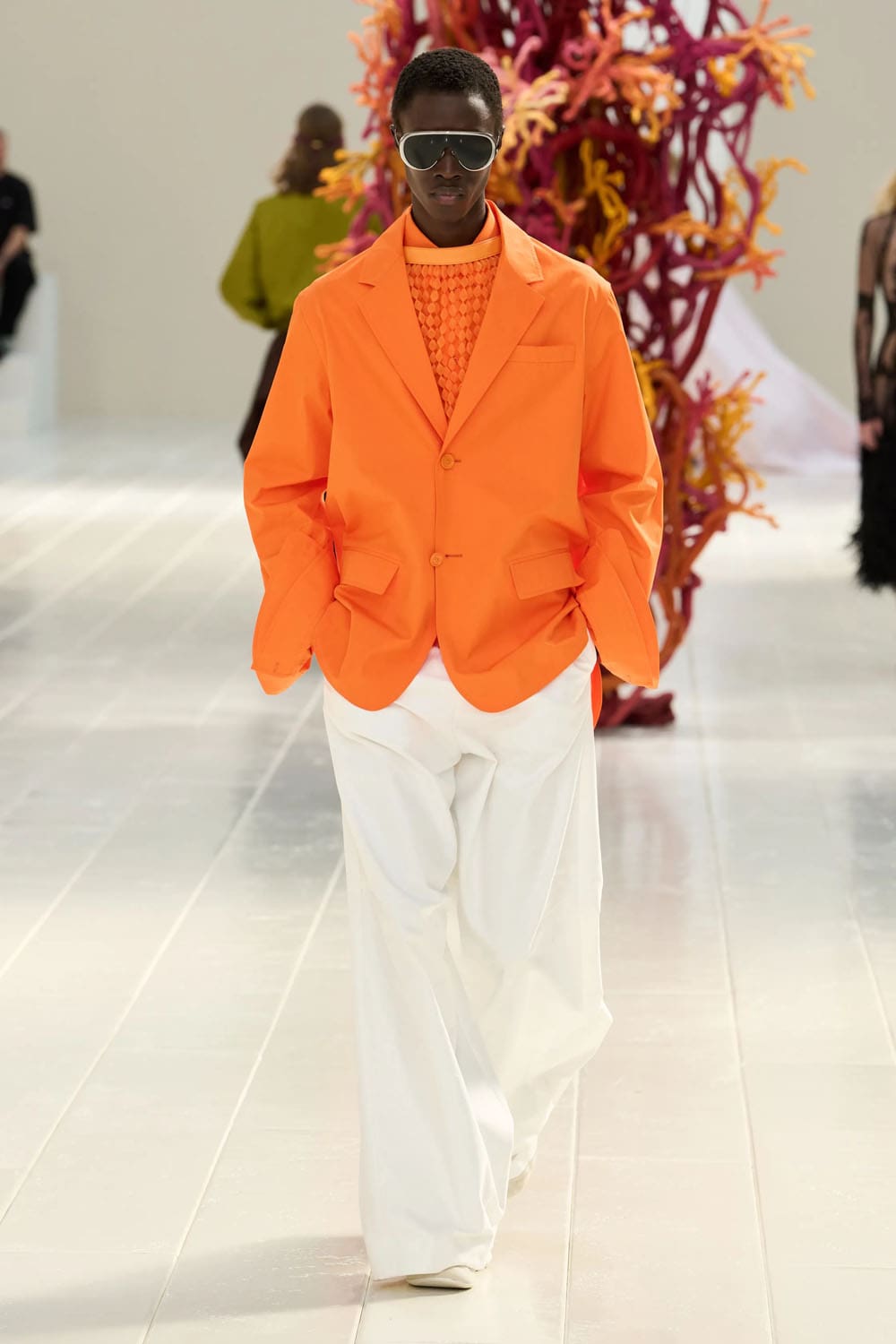
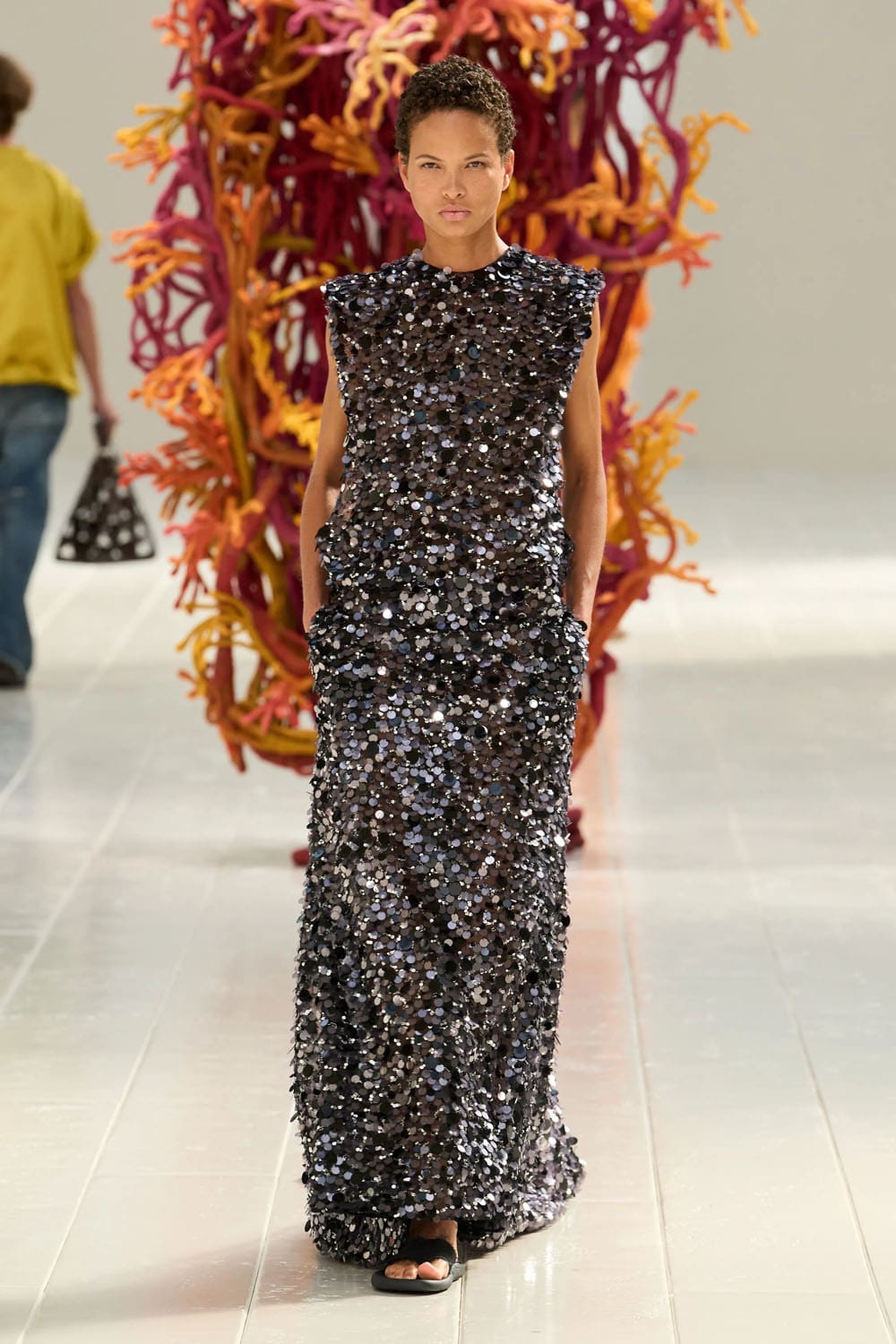
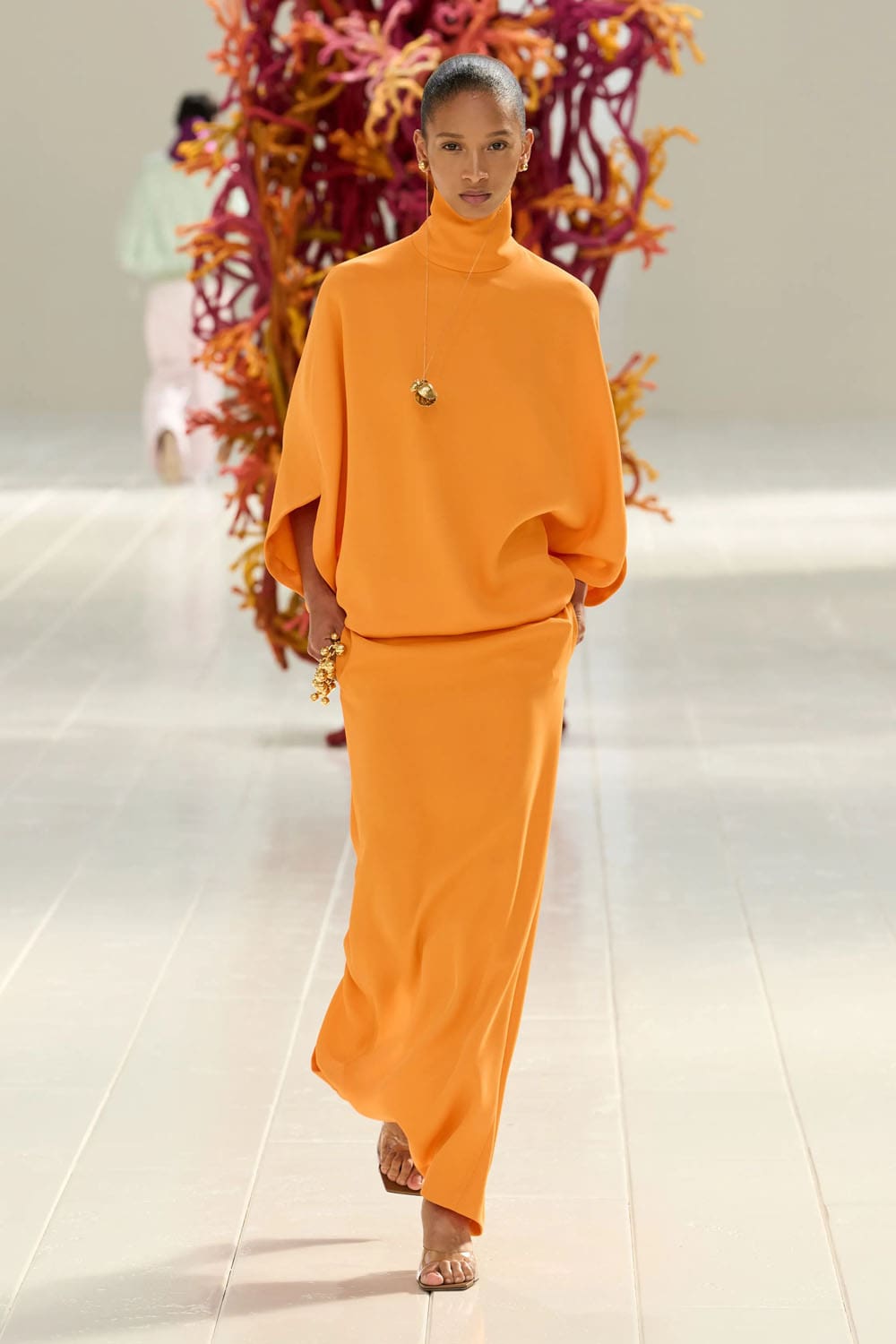
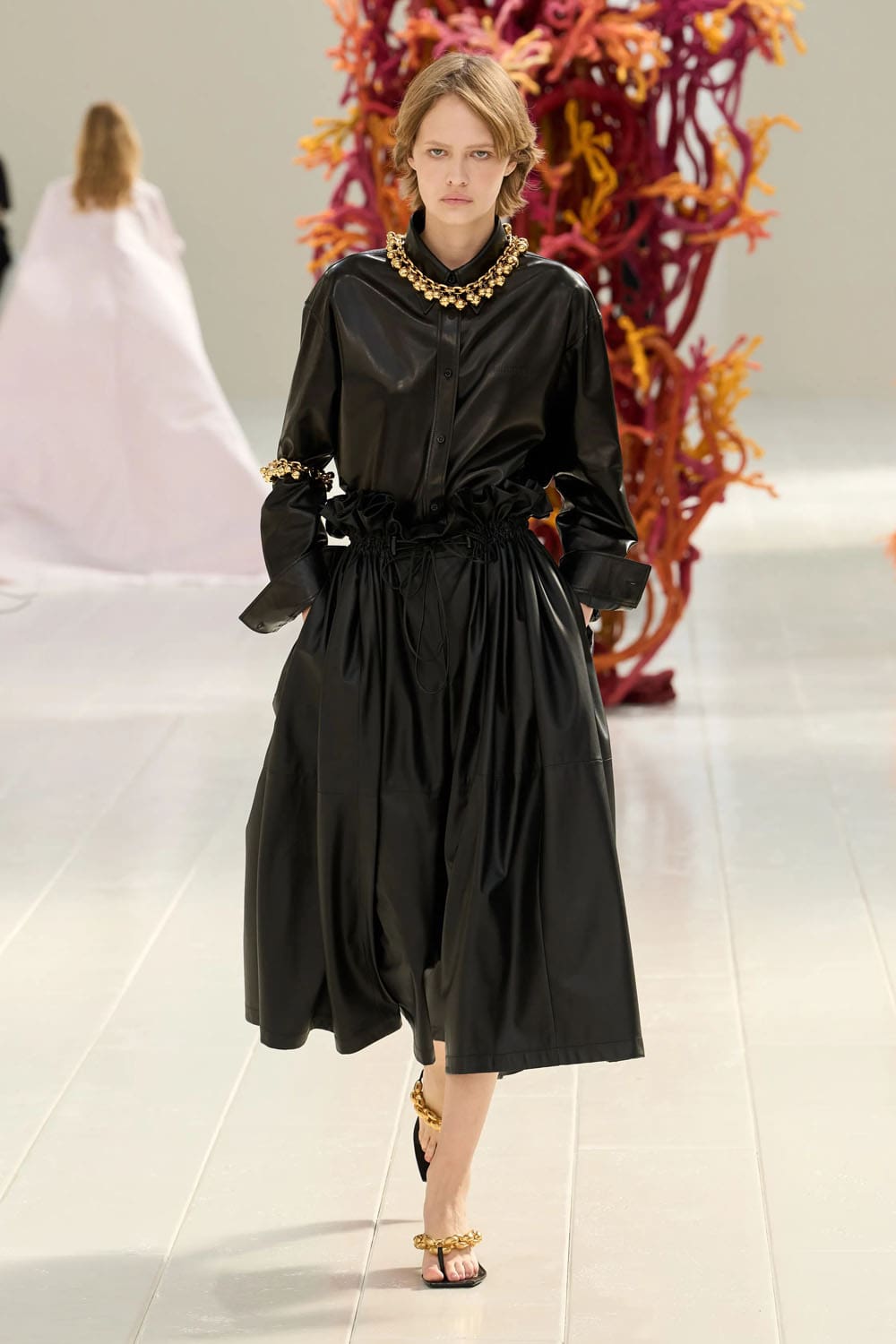
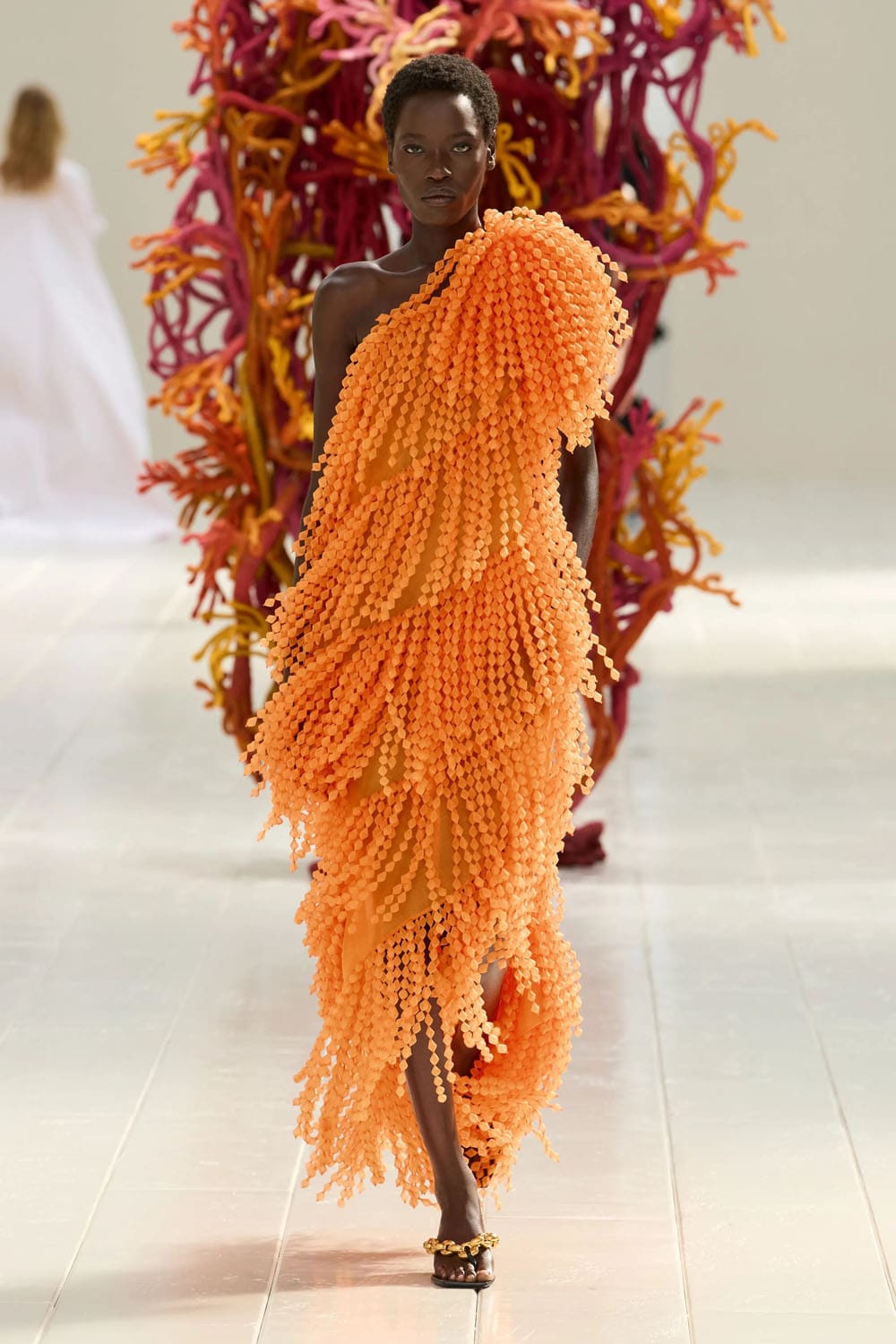
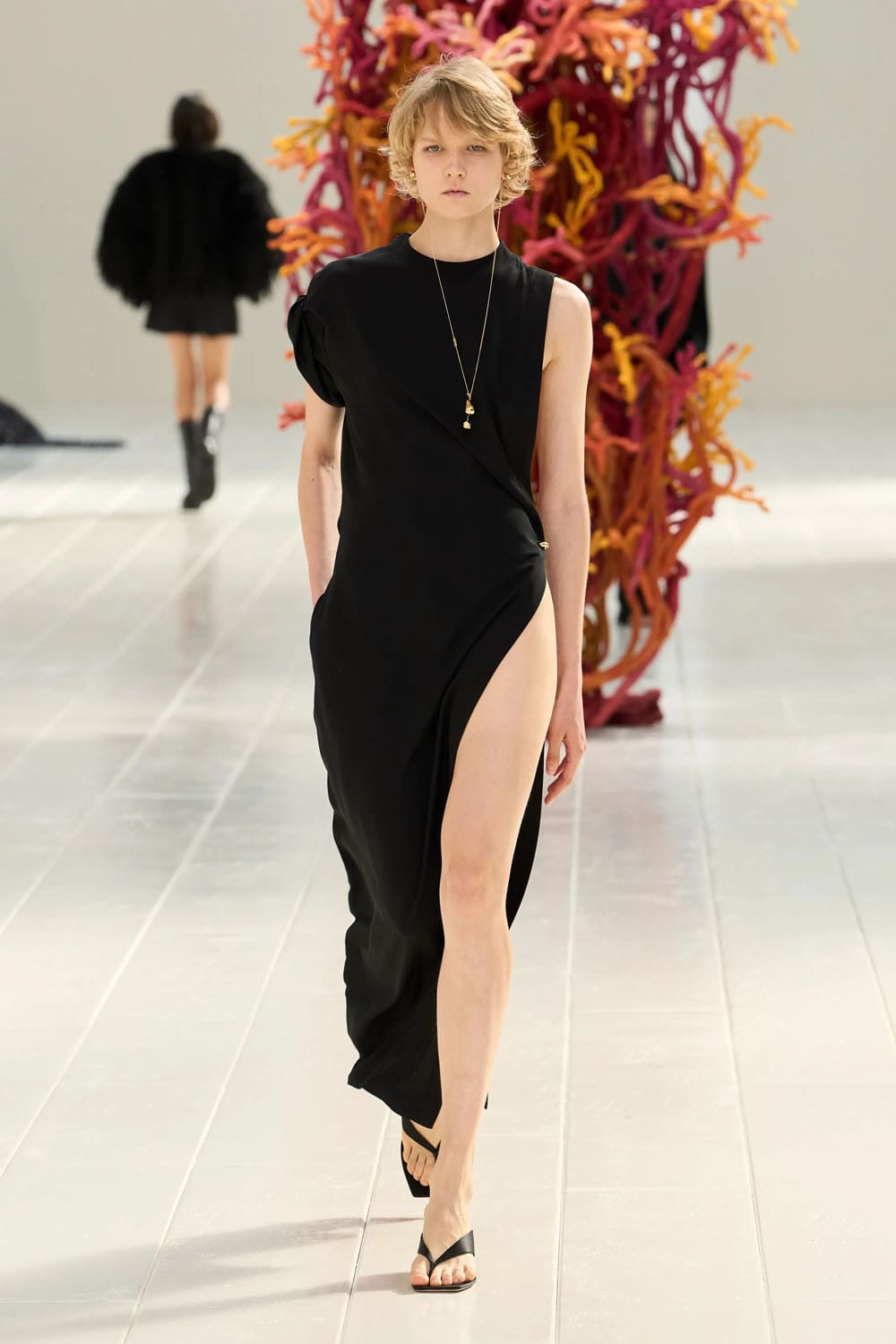
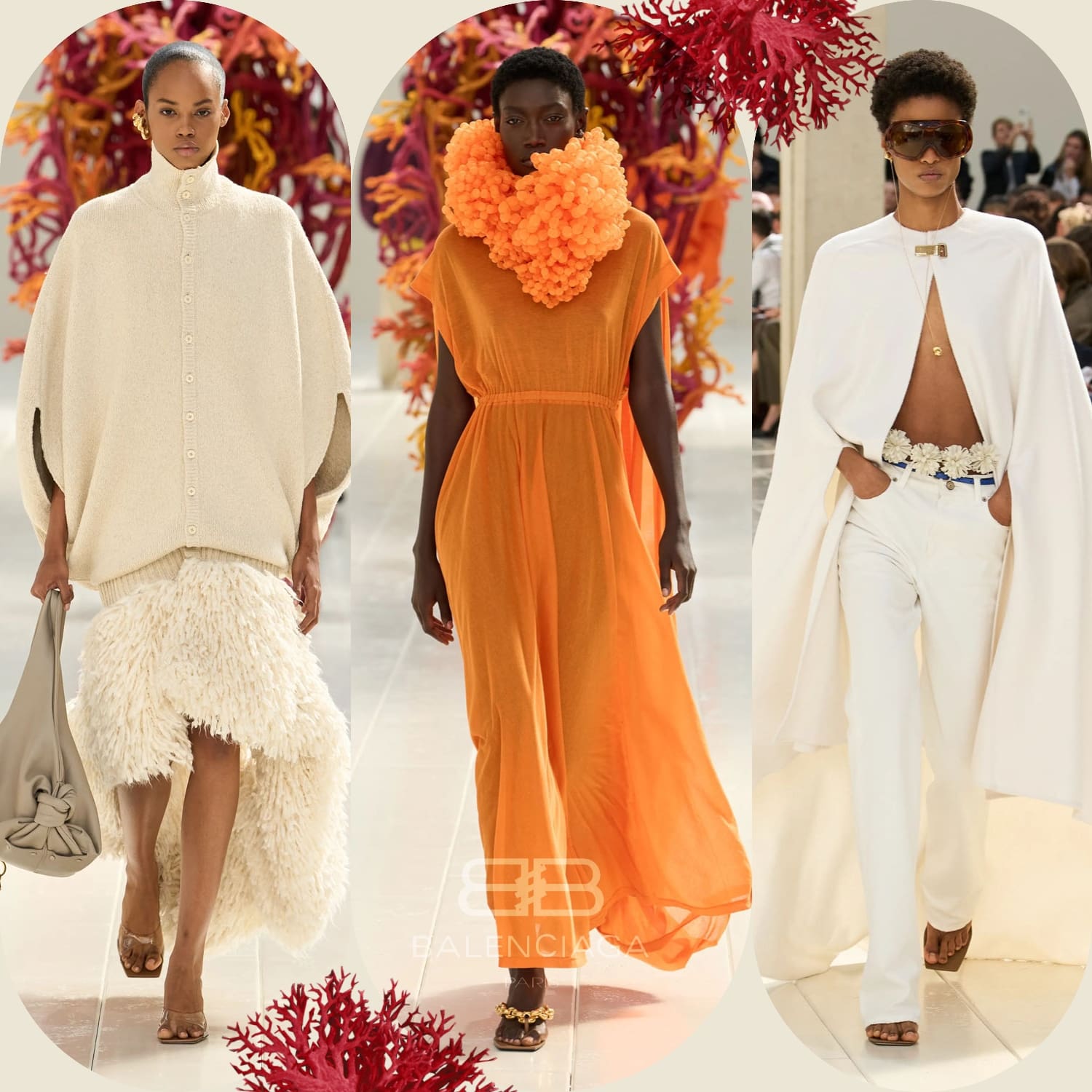
To treat Haute Couture as a pristine relic trapped under museum glass is to misunderstand the very nature of clothing. Cristóbal Balenciaga never engineered his radical volumes to remain static idols; he sculpted them around living, moving bodies, creating architectural distance between fabric and skin. For Spring/Summer 2027, Pierpaolo Piccioli reclaims that foundational premise, delivering an astonishing thesis titled Les Coraux de la Liberté. Anchoring the immaculate white space stood the monumental fiber installation by French textile sculptor Aude Franjou—a colossal, winding arbor of intertwined flax ropes radiating in shades of fiery ochre, saffron, and magenta.
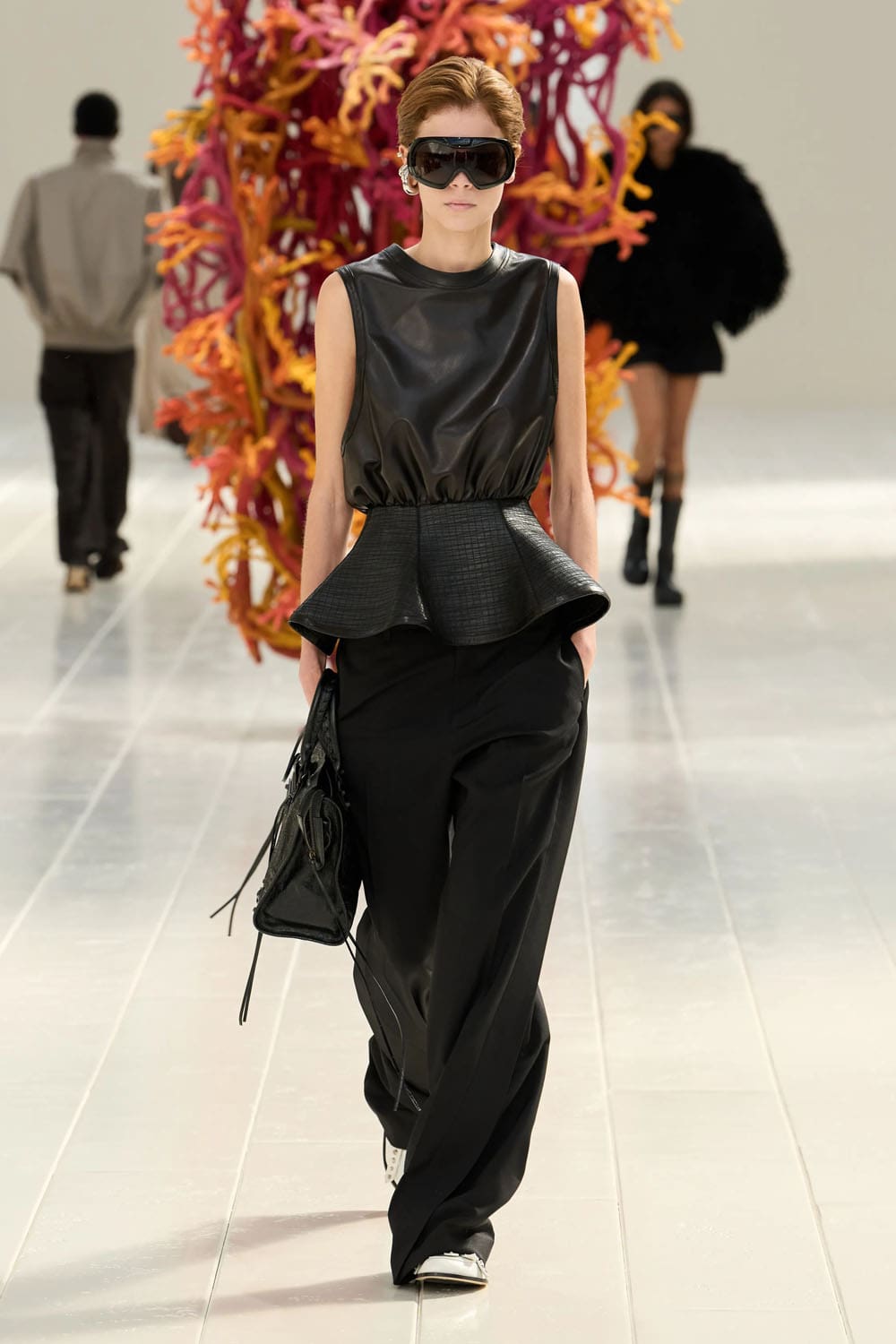
The coral motif operated not as passive scenery, but as an ideological manifesto. Corals survive through delicate symbiosis, blooming through reciprocal exchange and adapting their structural exoskeletons to fluid ocean currents. Piccioli approaches couture with the exact same organic logic: translating the rigorous handcraft developed for the 55th Balenciaga Couture collection directly into the rhythm of the modern street. What unfolded was a wardrobe for men and women where sacred couture codes—the cocoon, the envelope fold, the sculpted peplum—cease to be elitist armor and become breathable everyday poetry.
The Purity of the White Page
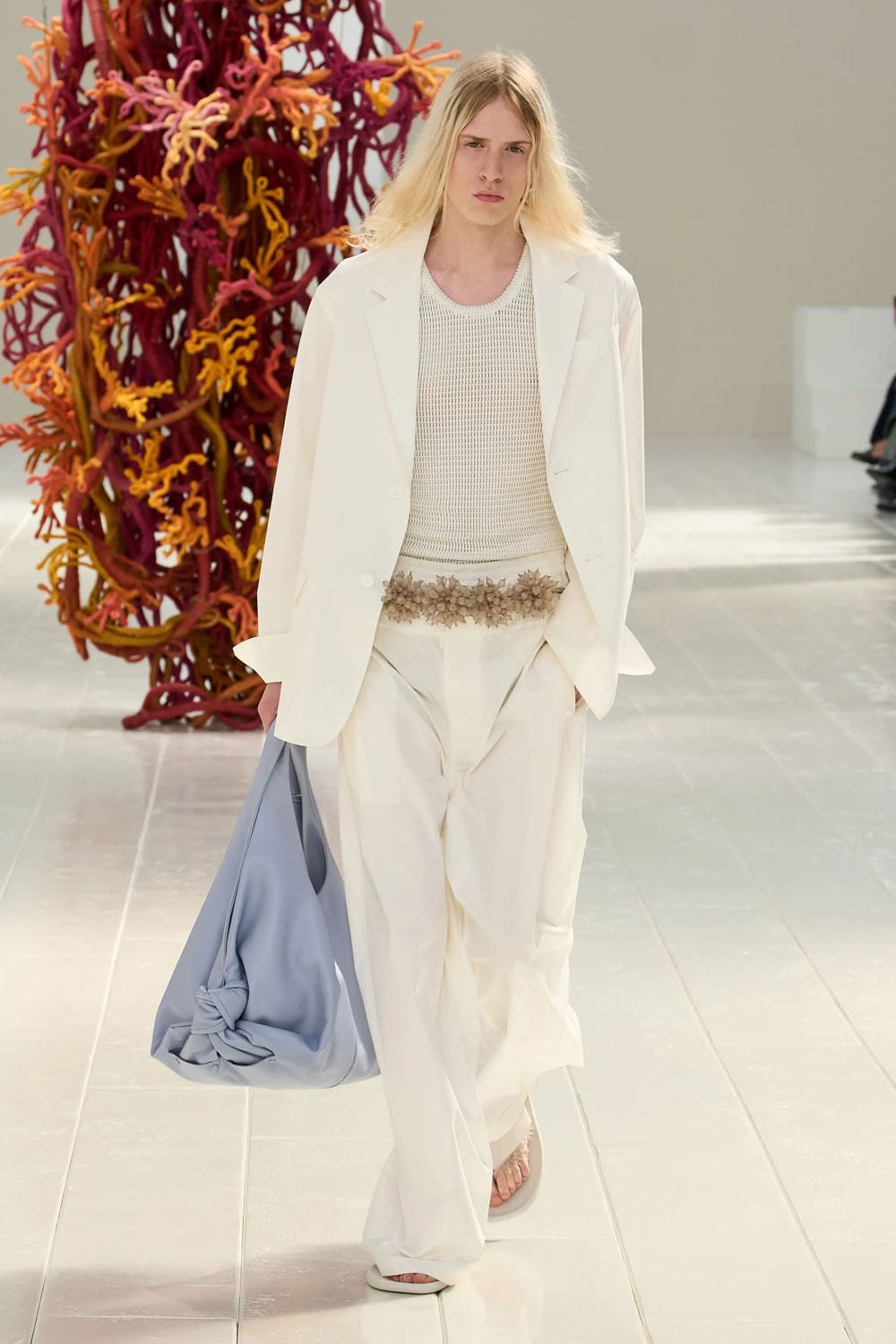
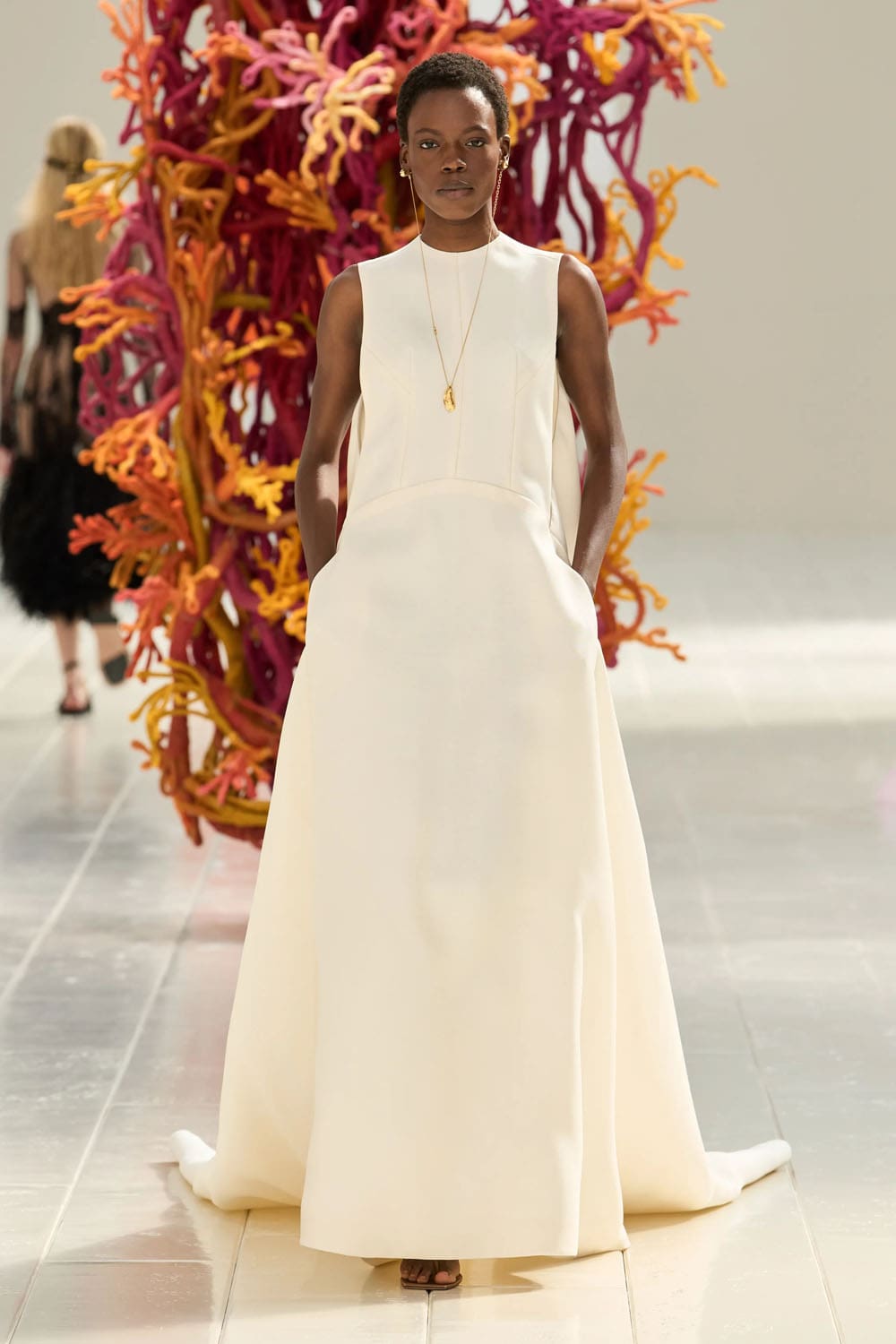
Rejecting the predictable gloom and apocalyptic cynicism that long shadowed the house, Piccioli performed an act of visual bravery: he opened the presentation with an unbroken sweep of chalk-white silhouettes. The clean white page was not a gesture of blank minimalism, but an architectural cleansing of the palate.
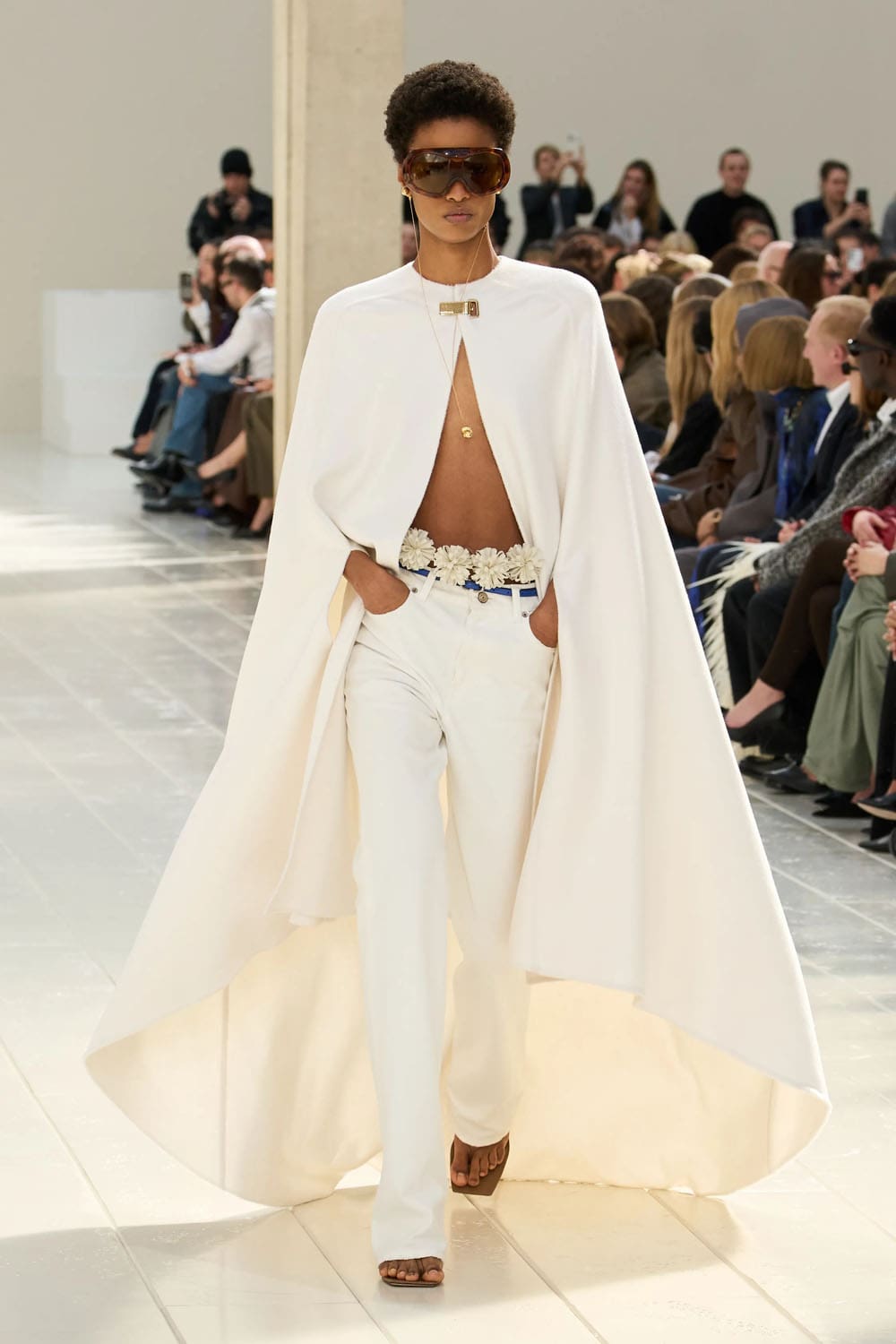
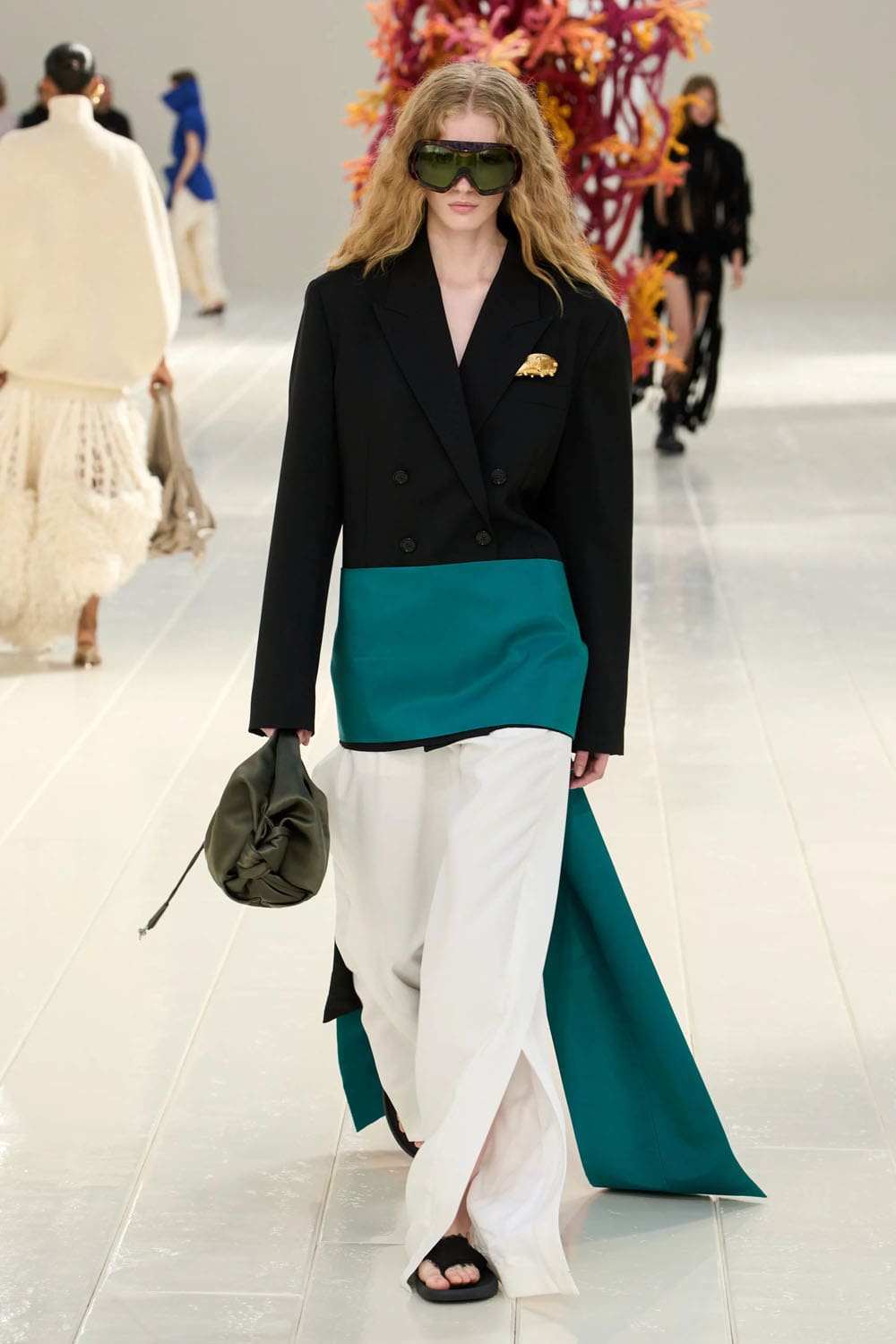
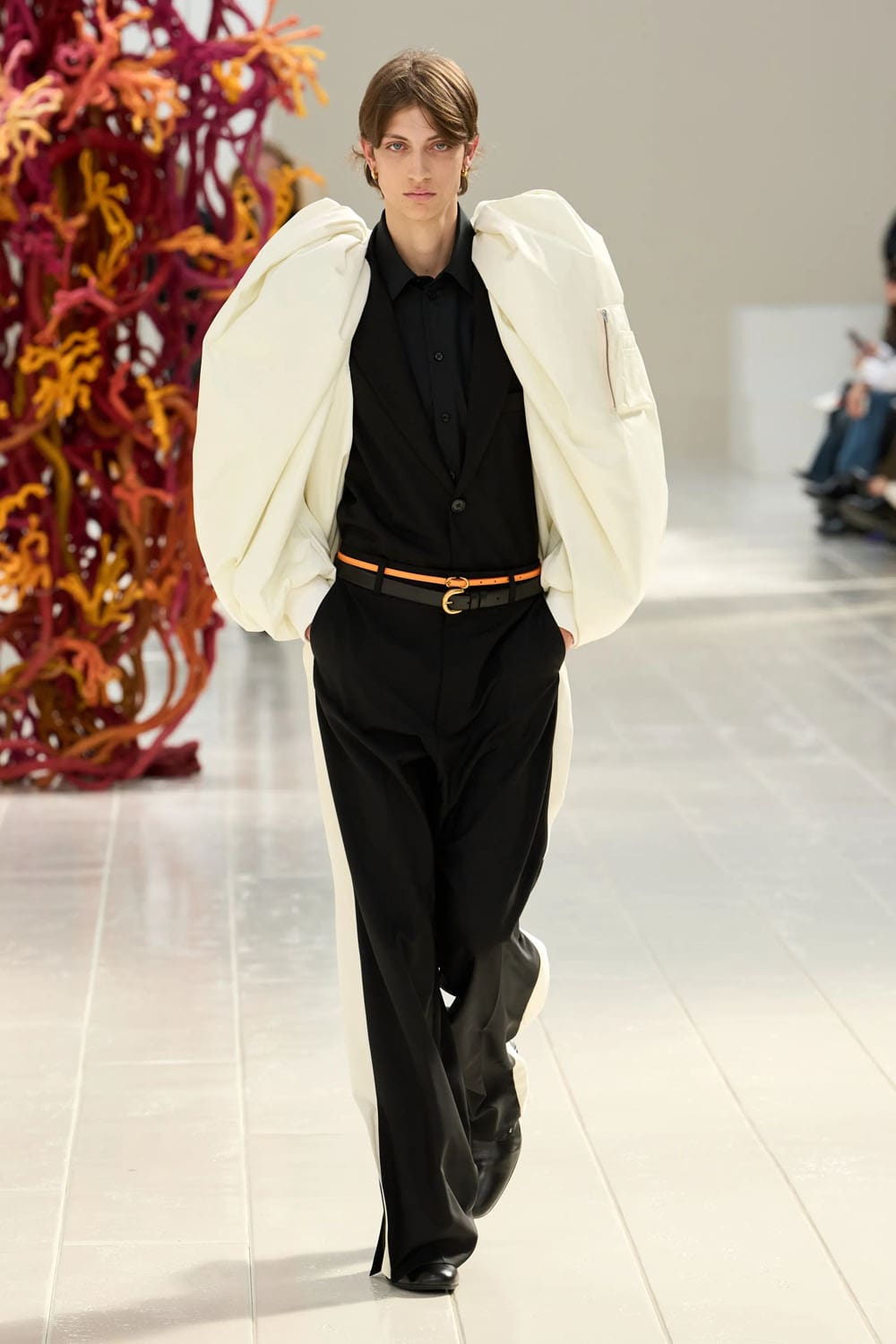
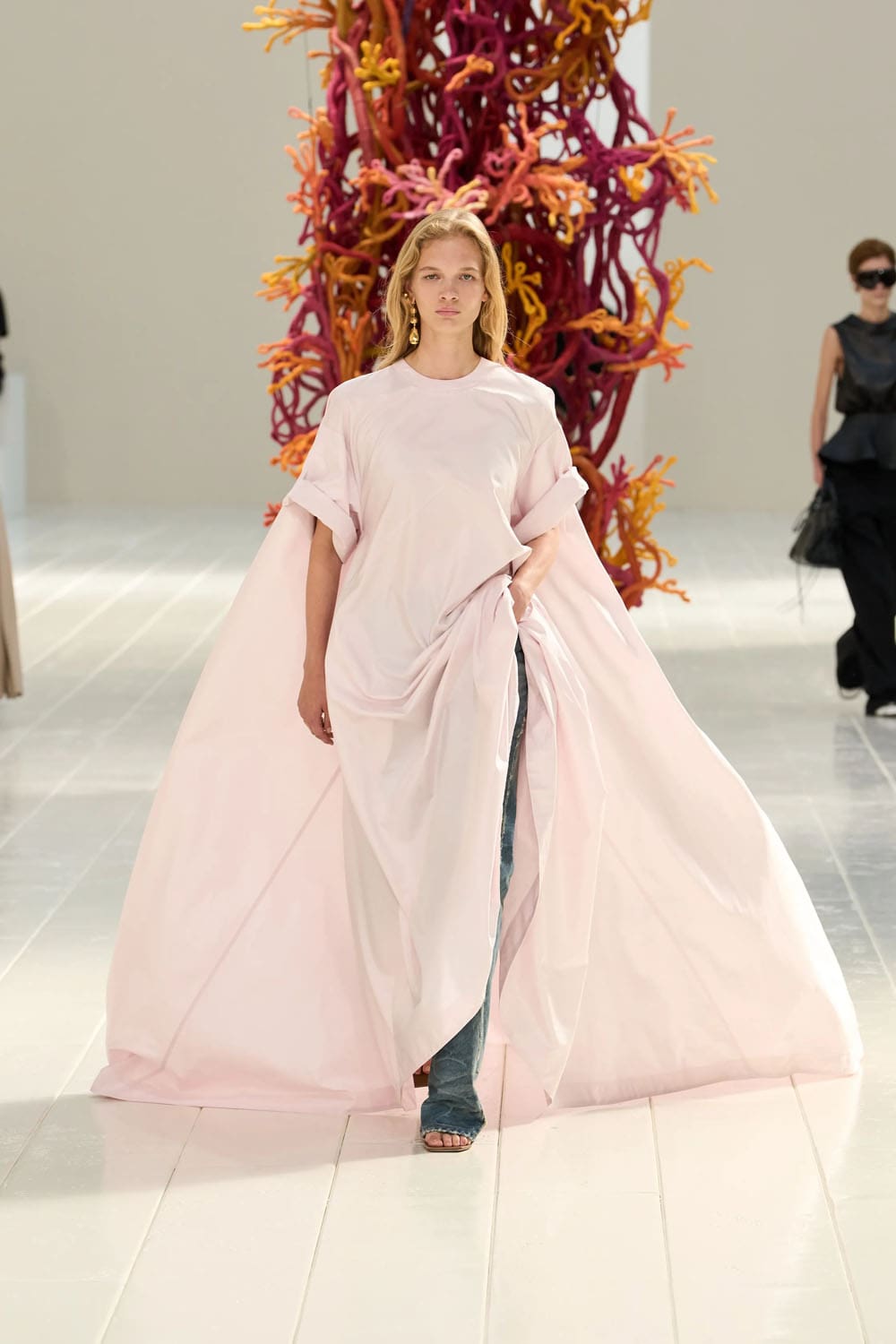
The opening gesture established the collection’s revolutionary balance: a floor-sweeping opera cape cut from immaculate white wool gazar, fastened at the throat by a minimal gold bar and parted cleanly over bare skin and high-waisted white denim trousers. The waist was cinched with an embroidered belt of dimensional fabric florets, while the model marched forward behind oversized tortoiseshell shields, grounding historic majesty in urban nonchalance.
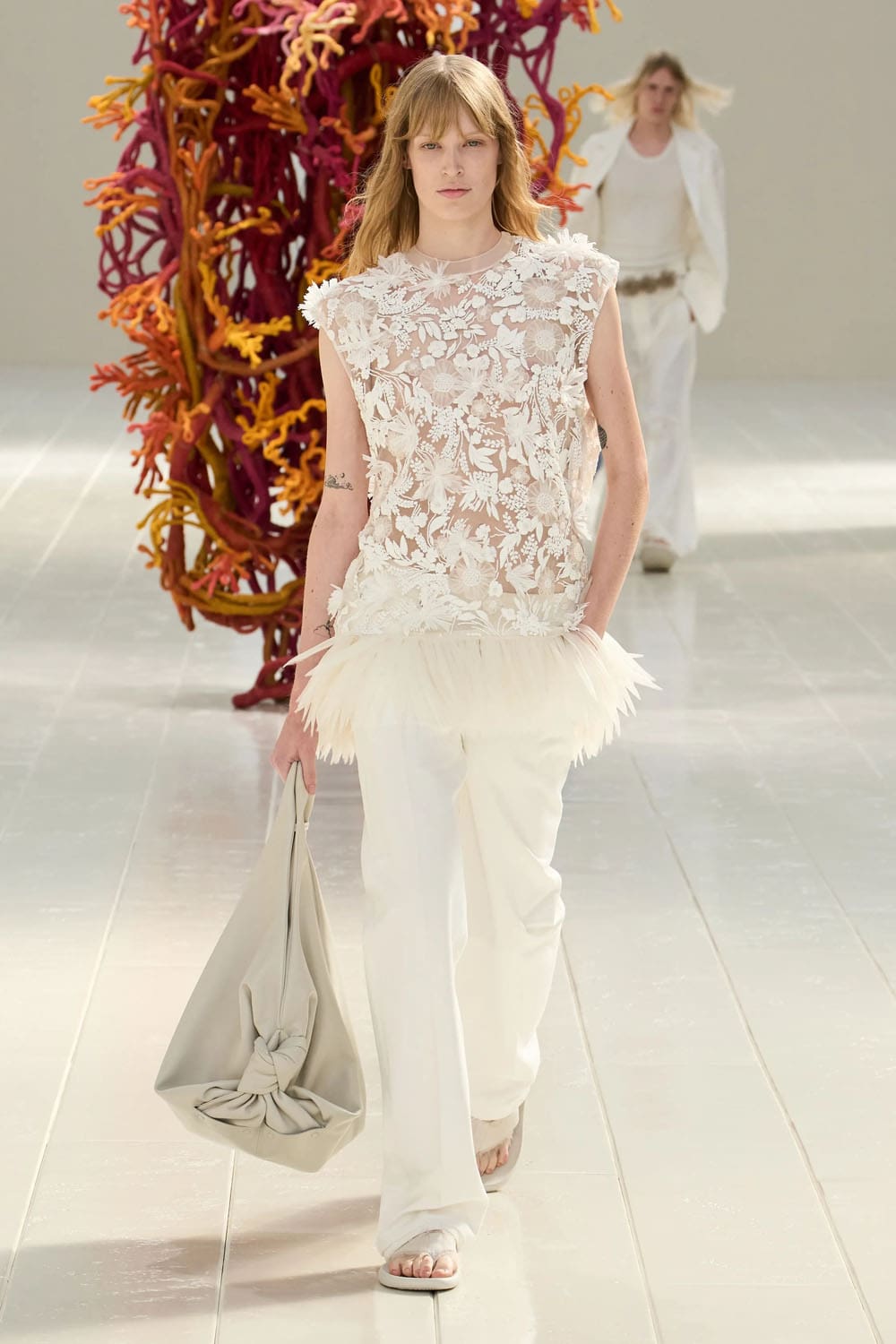
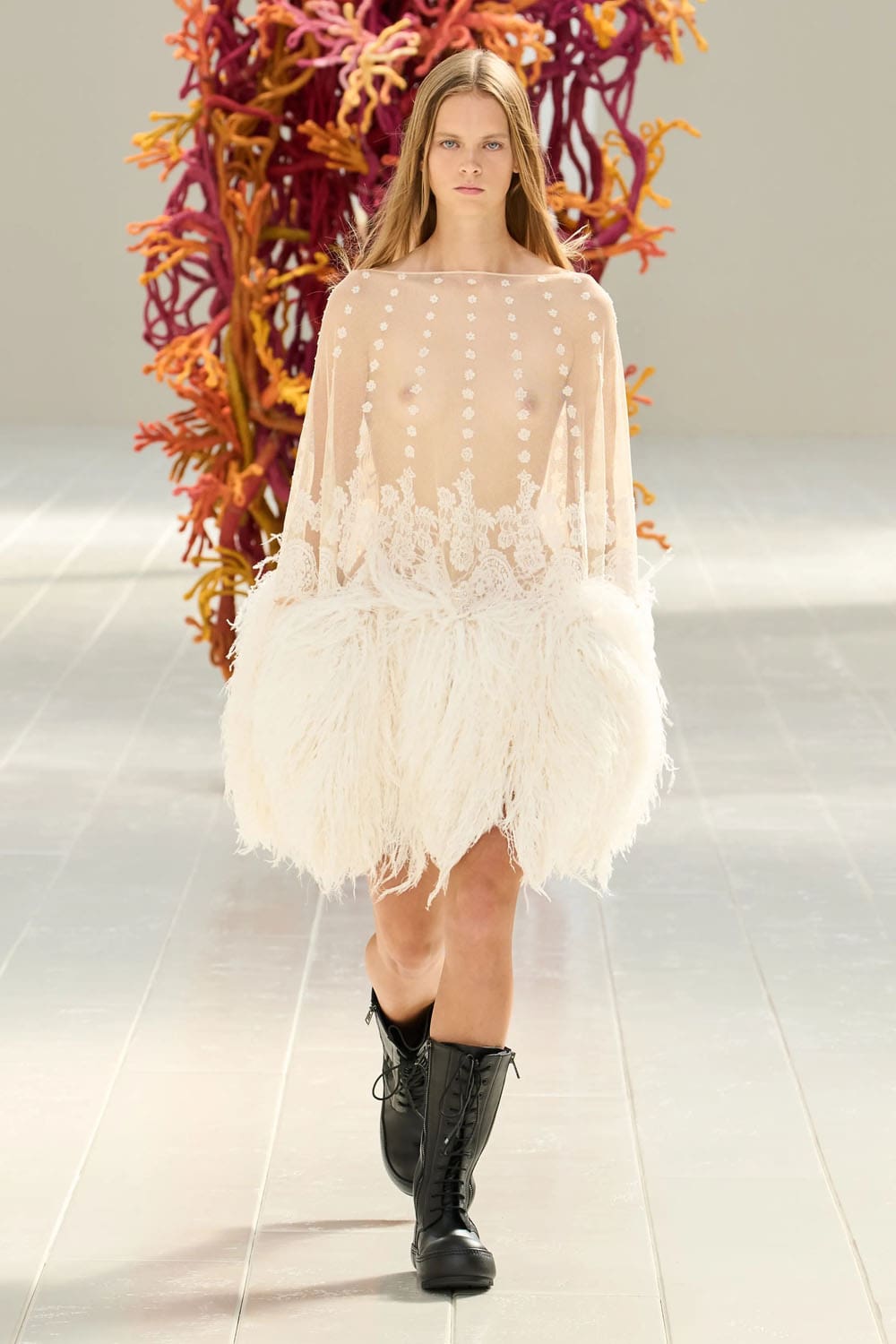
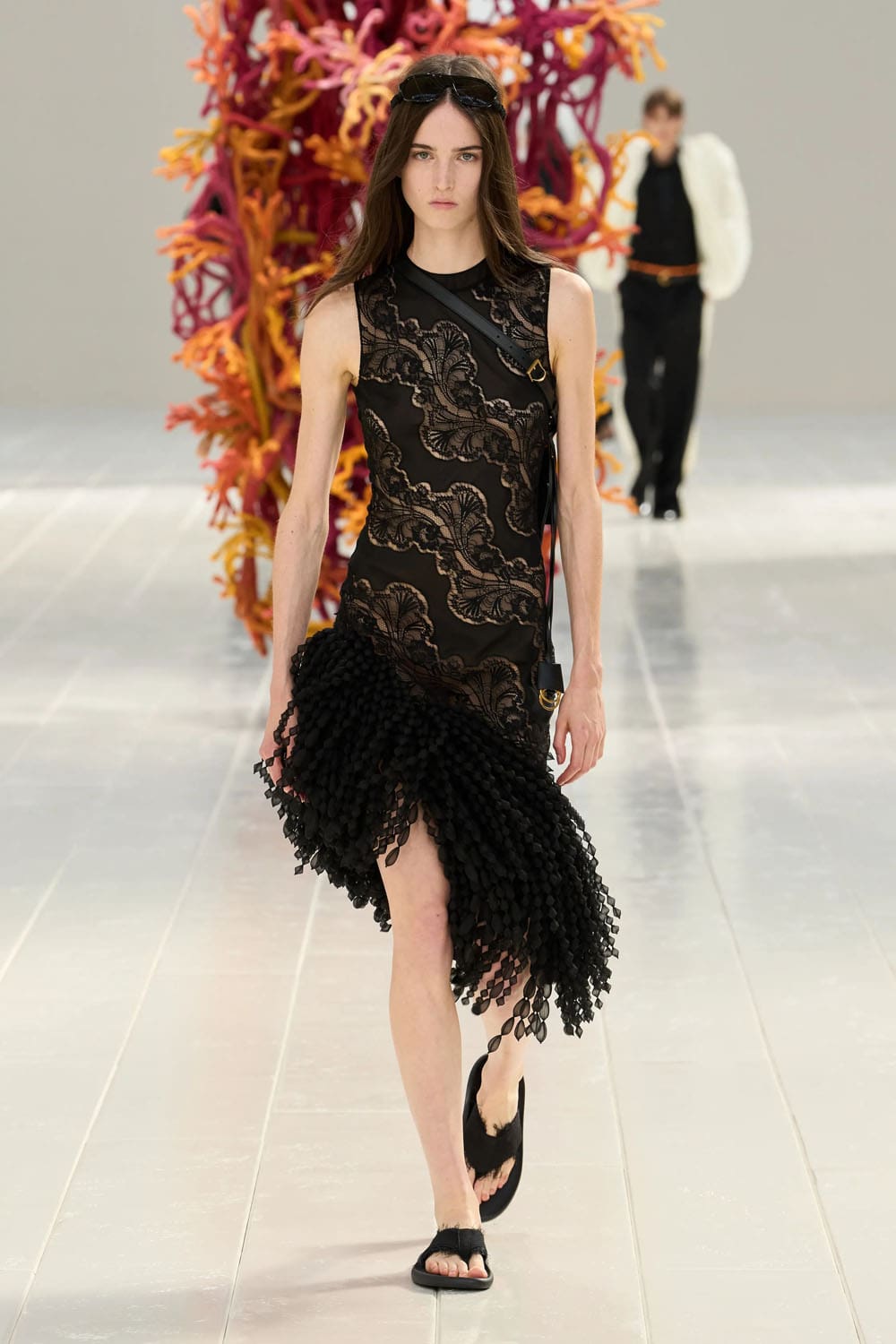
Beside it, pure artisanal craft walked uninhibited into daytime wear. A sleeveless organza tunic was entirely smothered in hand-cut floral Calais lace rosettes, trimmed at the hemline with a featherweight tulle fringe peplum and paired effortlessly with relaxed white cotton trousers and a slouchy, knotted leather tote.
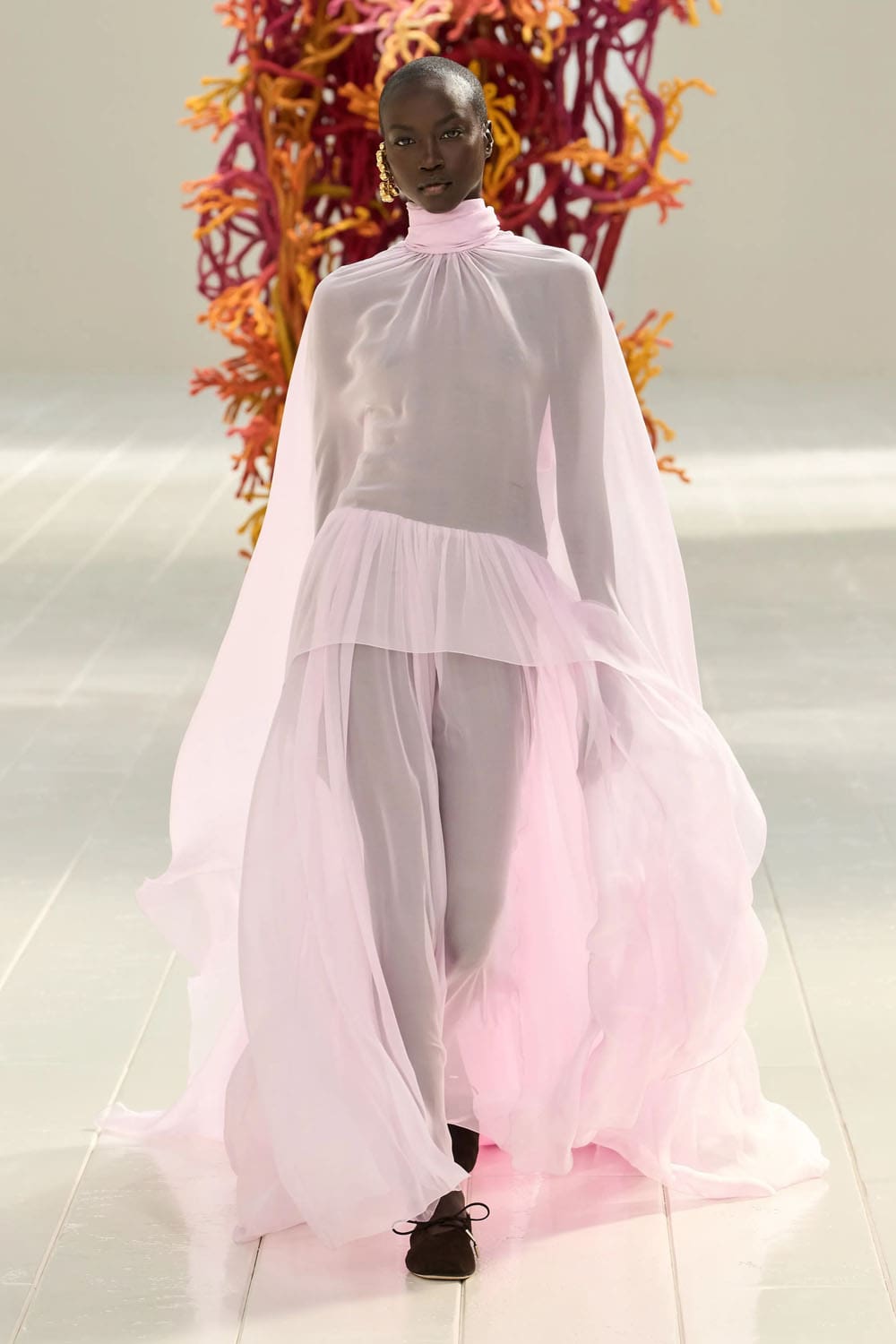
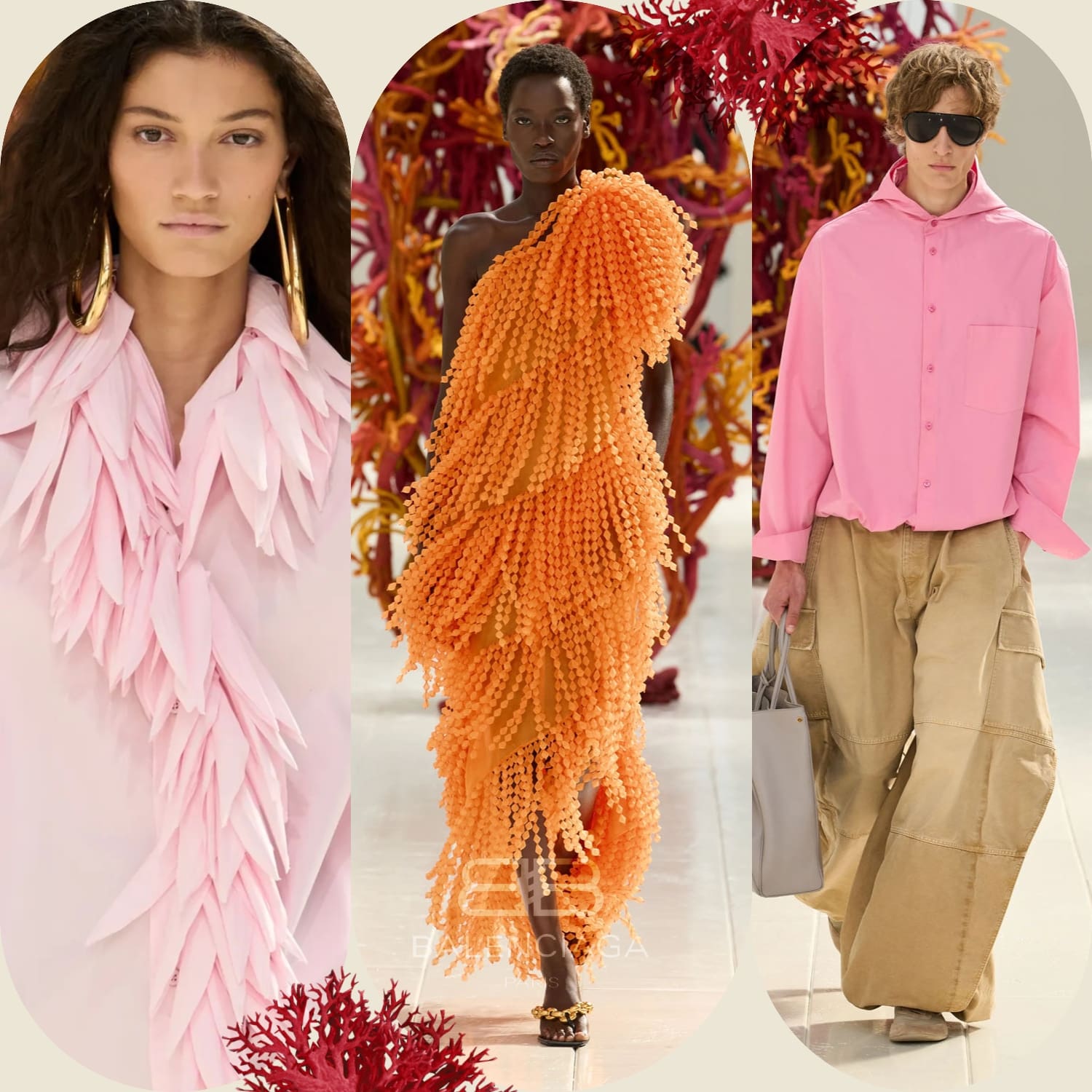
The study in organic volume accelerated with an asymmetrical capelet draped over wide trousers. Composed of thousands of fluttering diamond-cut organza scales that moved like an articulated sea anemone, it balanced against a lattice-cut leather tote bag clutched in hand.
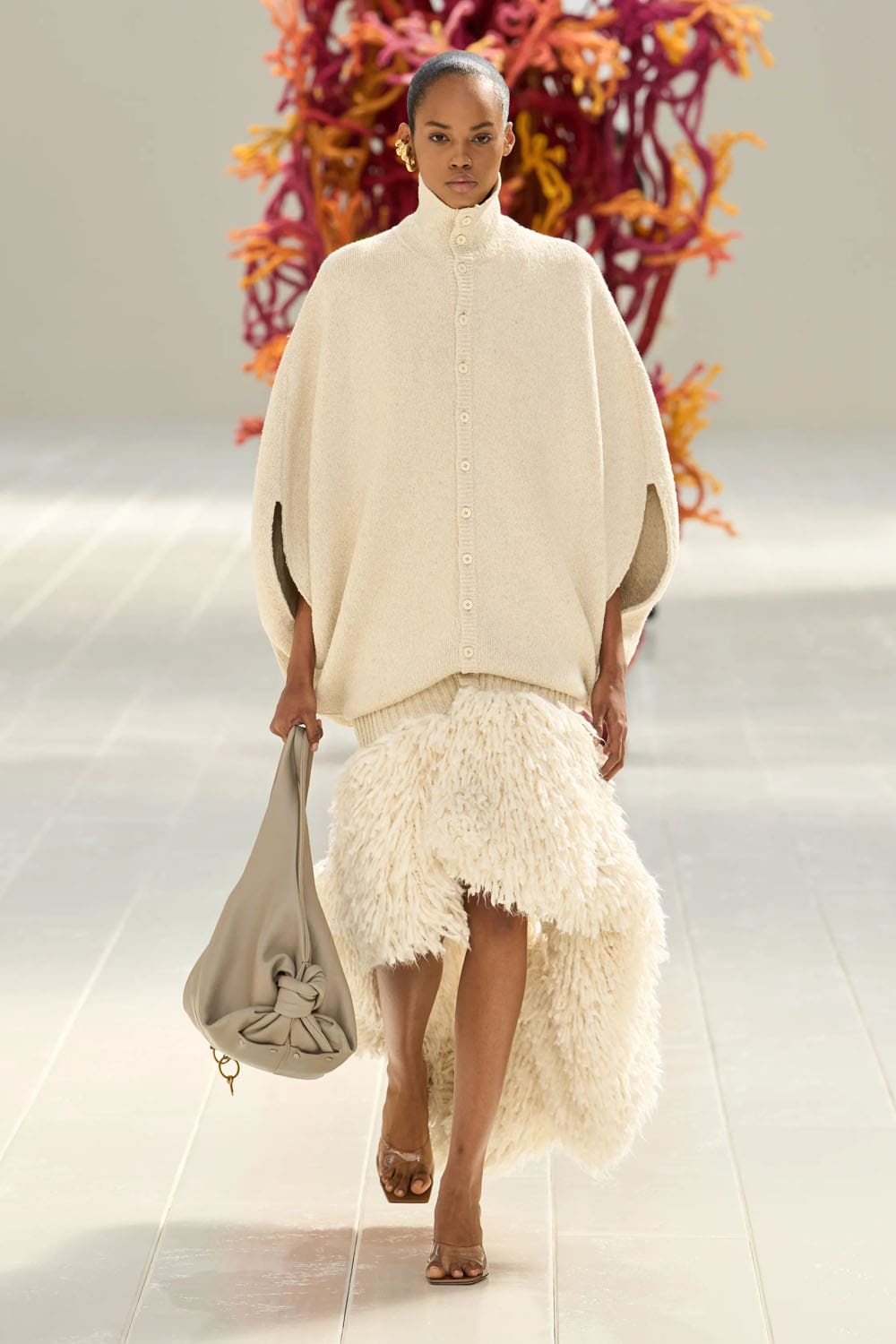
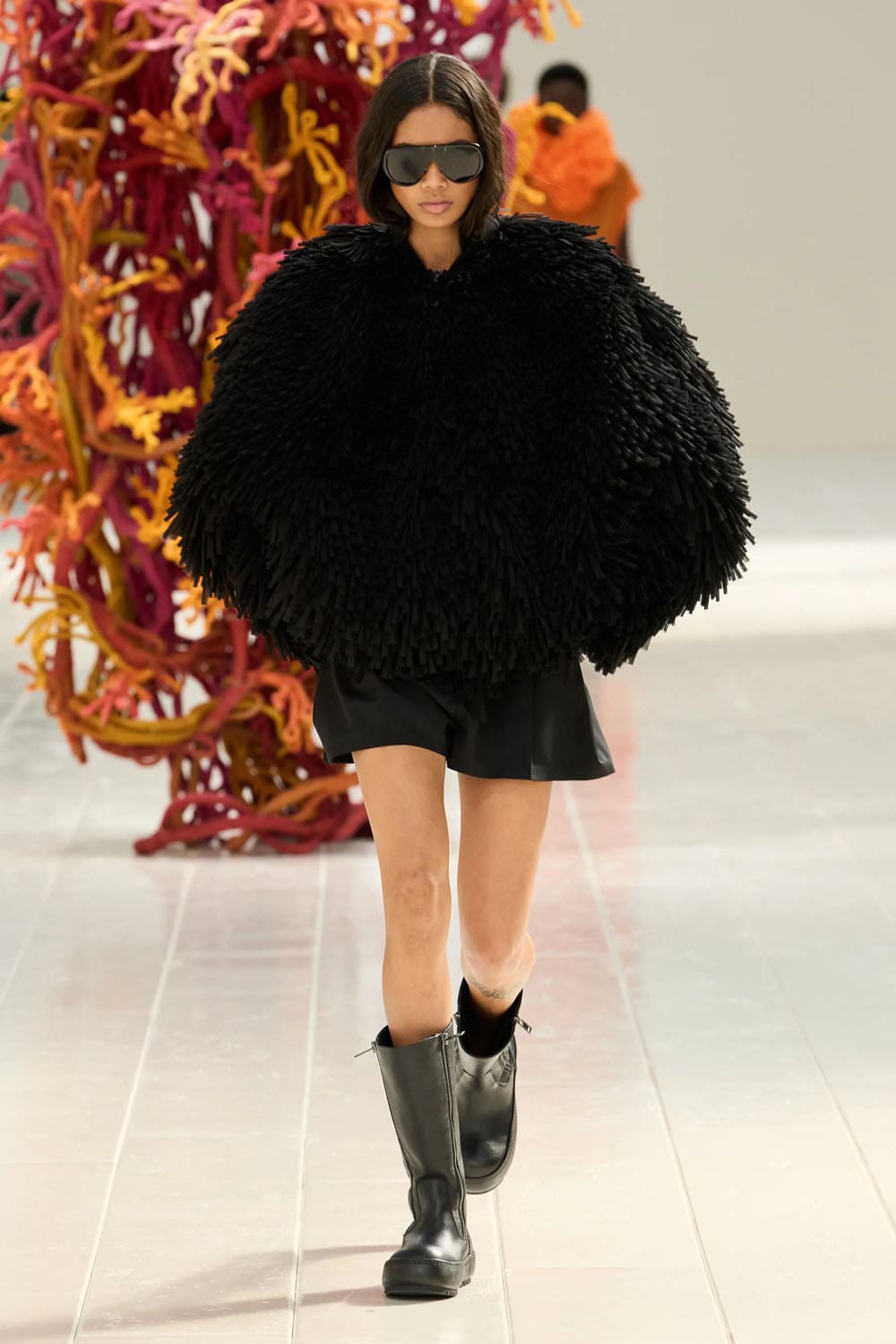
Nearby, a heavy cream knit poncho, fastened with tiny mother-of-pearl buttons, bloomed over an exaggerated, shaggy shearling-effect fringe skirt, proving that tactile grandeur can move with the ease of an oversized sweater.
Cristóbal on the Pavement: The Envelope Reborn
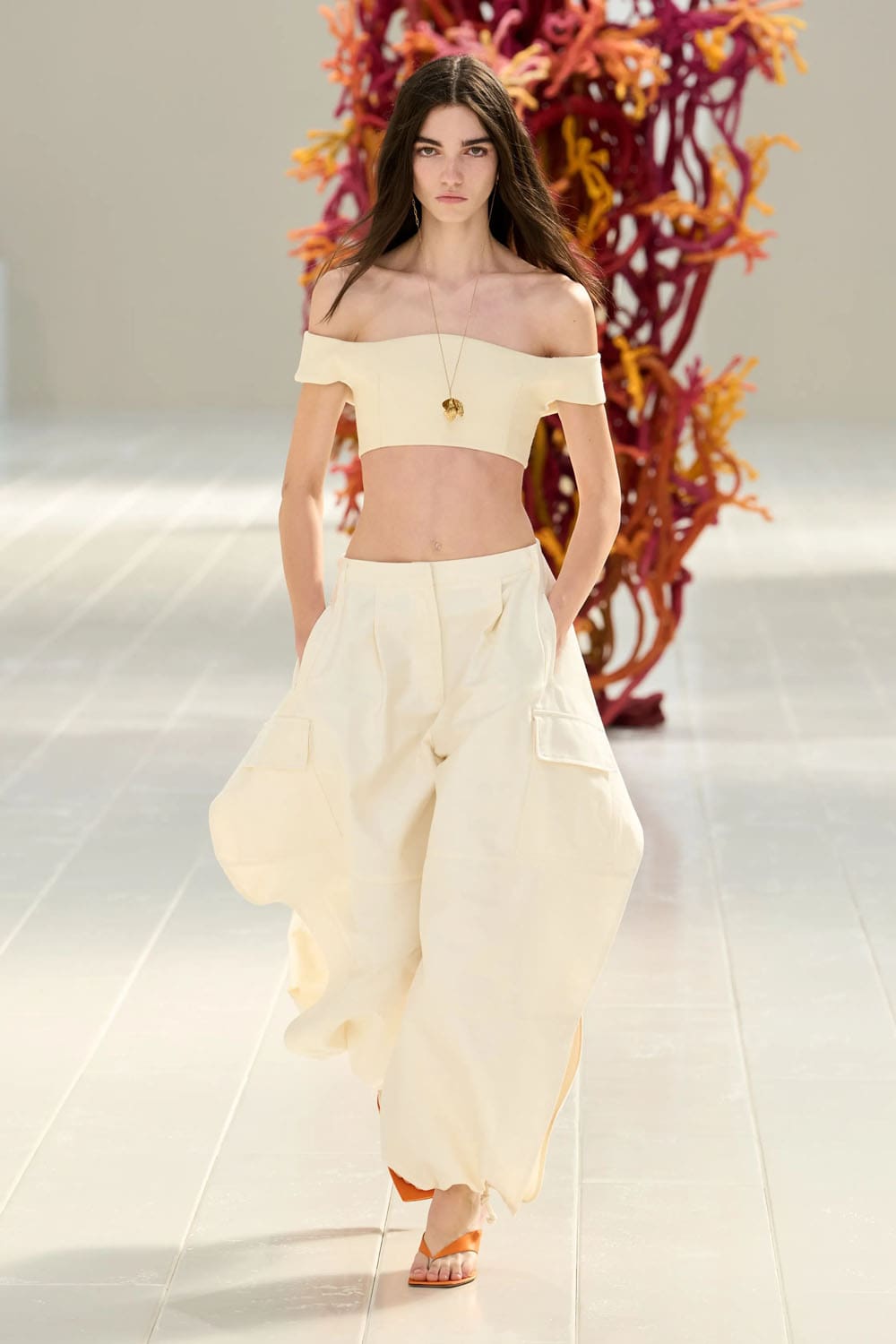
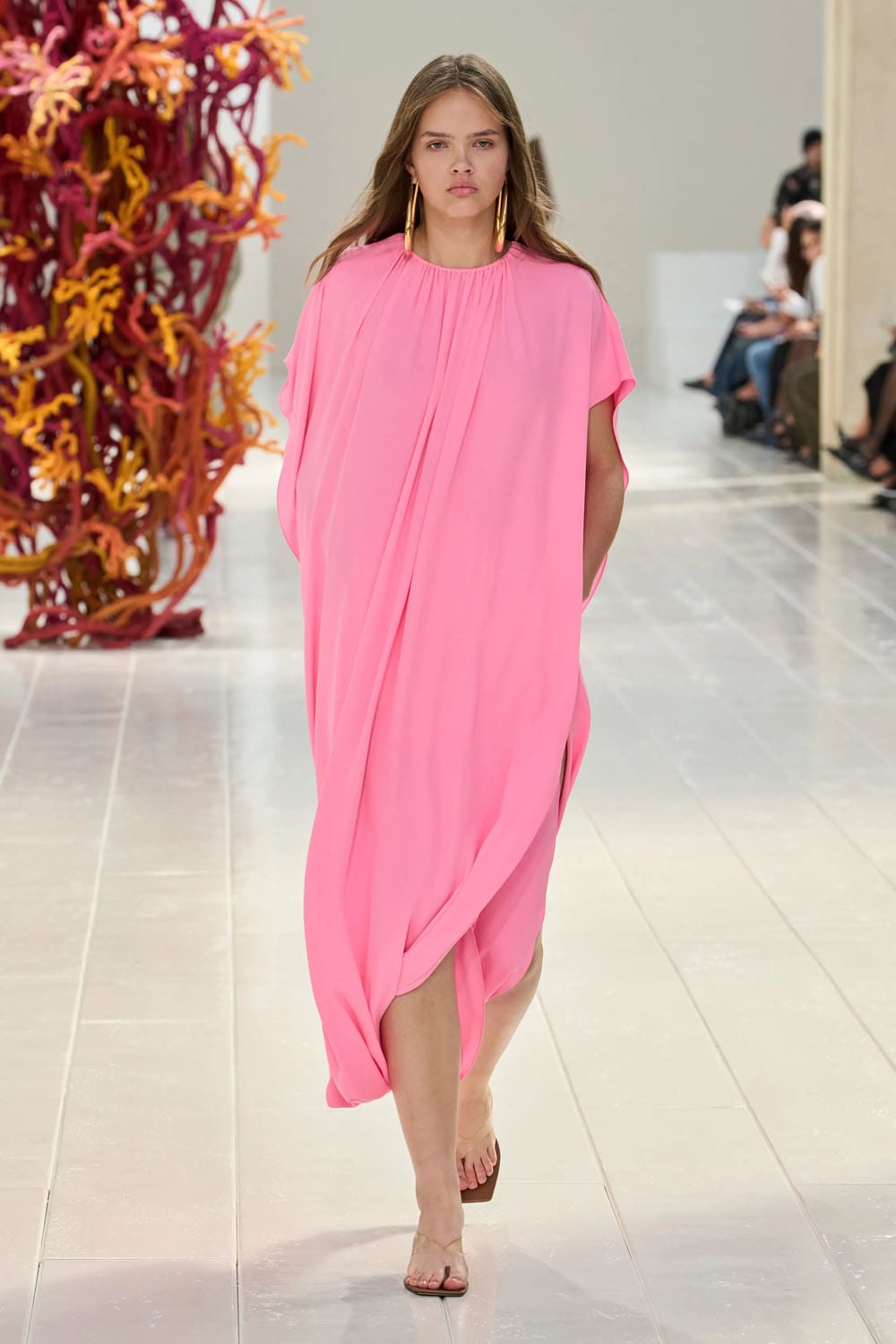
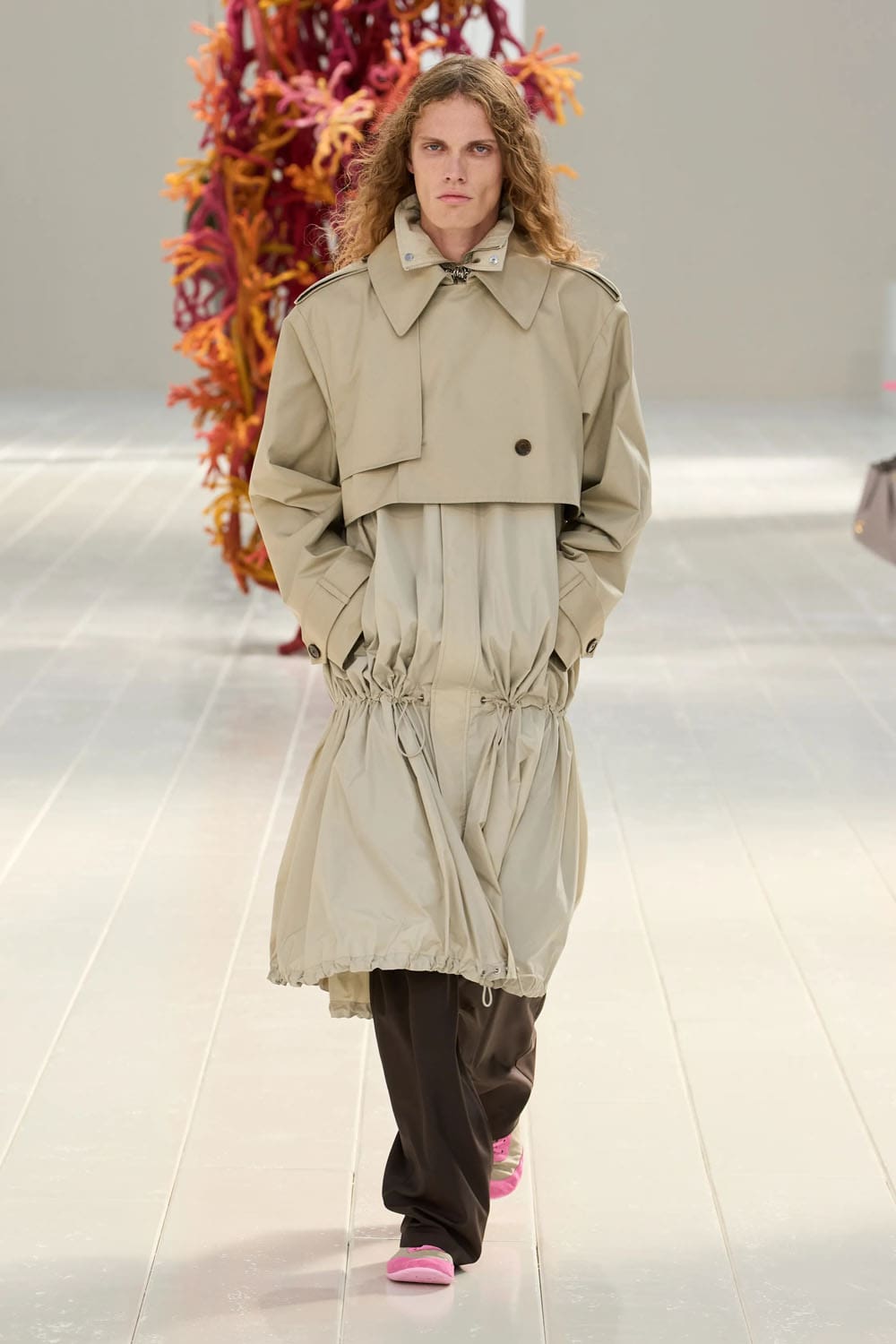
The supreme triumph of Piccioli’s direction lives in his ability to translate Cristóbal Balenciaga’s legendary historic volumes into the relaxed grammar of contemporary sportswear. Cristóbal’s famous 1967 envelope dress—a marvel of geometric origami that hovered around the anatomy without touching the waist—reemerged on the runway, brilliantly disassembled into breezy Bermuda shorts and billowy parachute trousers.
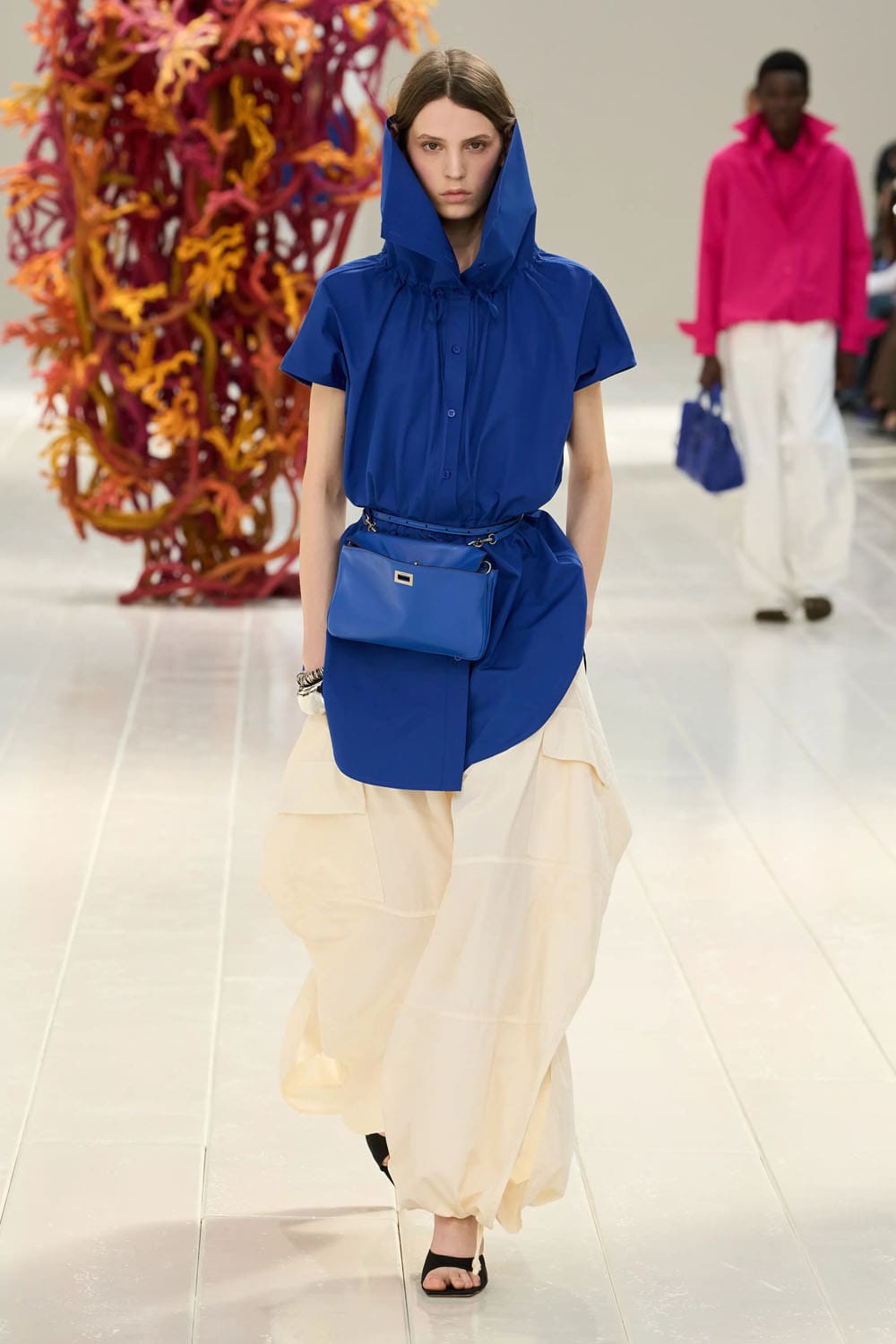
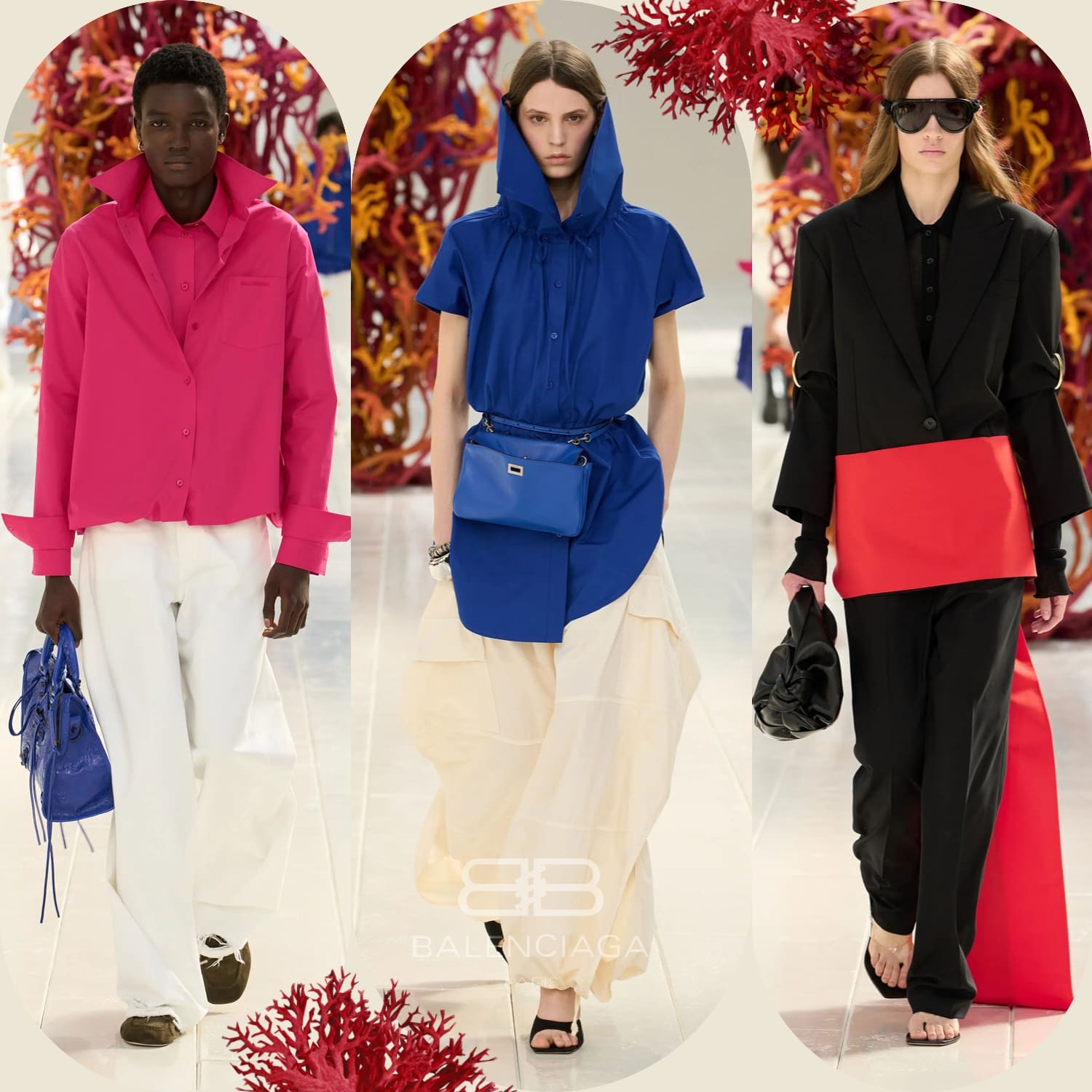
Consider the electric cobalt-blue hooded poplin tunic: cut like an athletic windbreaker with short sleeves, its hem wrapped and folded around the waist before resolving into monumental, ballooning cream cargo trousers that billowed like modern sails. Worn with a small matching blue leather waist pack and flat slides, it transformed archival grandeur into functional urban uniform.
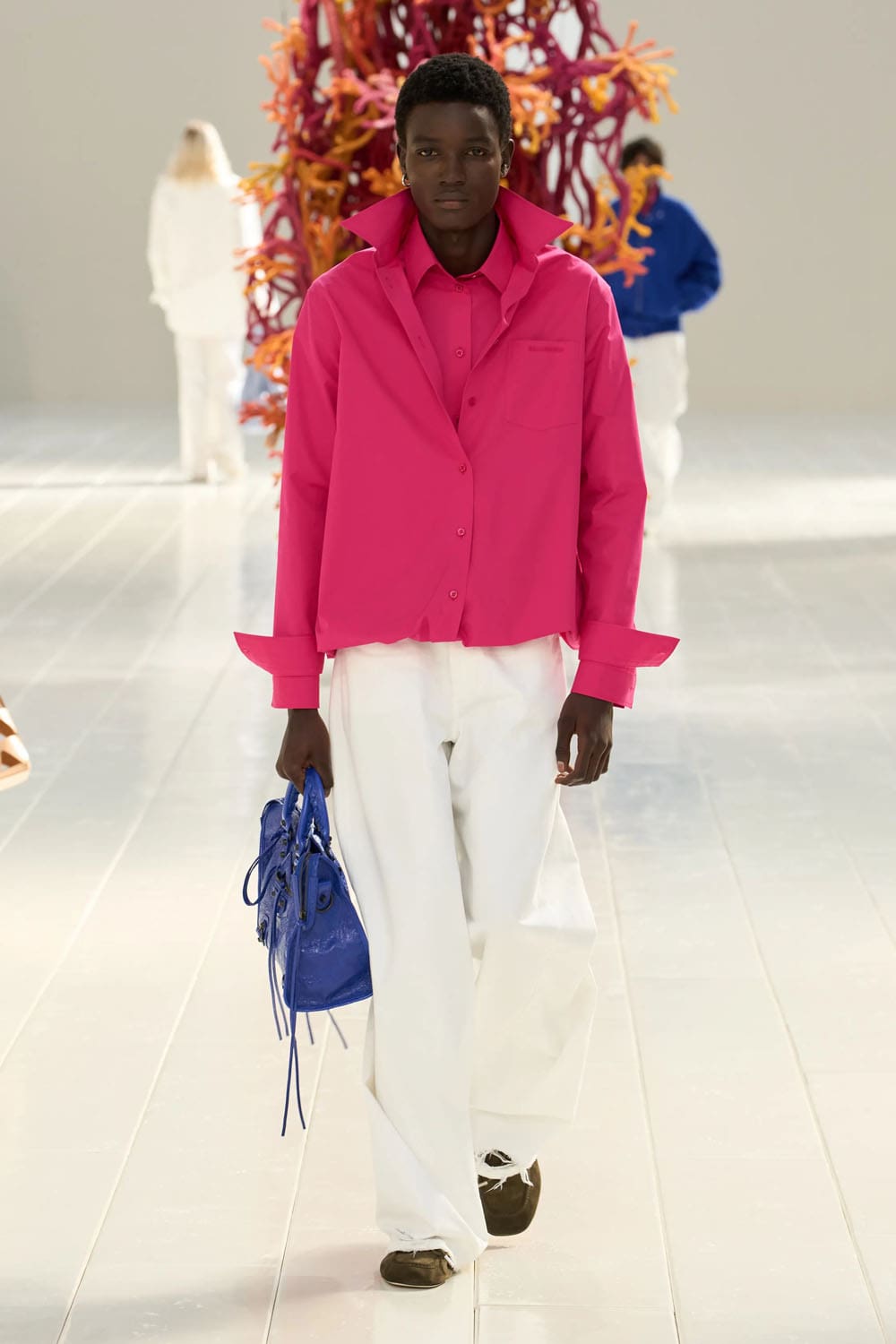
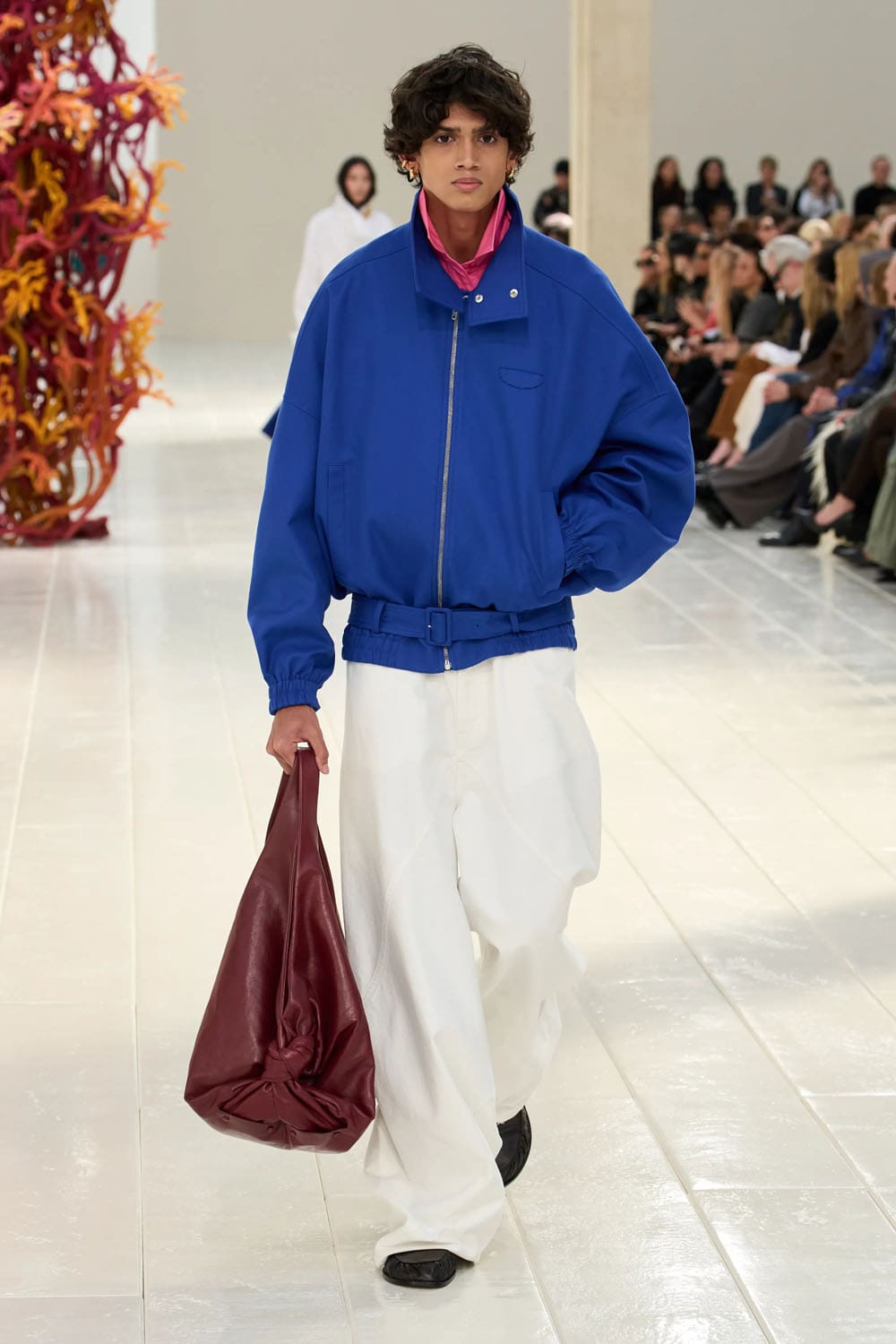
The men’s tailoring embraced the same kinetic freedom. A radiant magenta cotton poplin dress shirt, sculpted with an exaggerated, pop-art collar, was paired with wide-leg white denim slacks and an electric-blue motorcycle leather shoulder bag, demonstrating Piccioli’s unmatched command of saturated chromatic emotion.
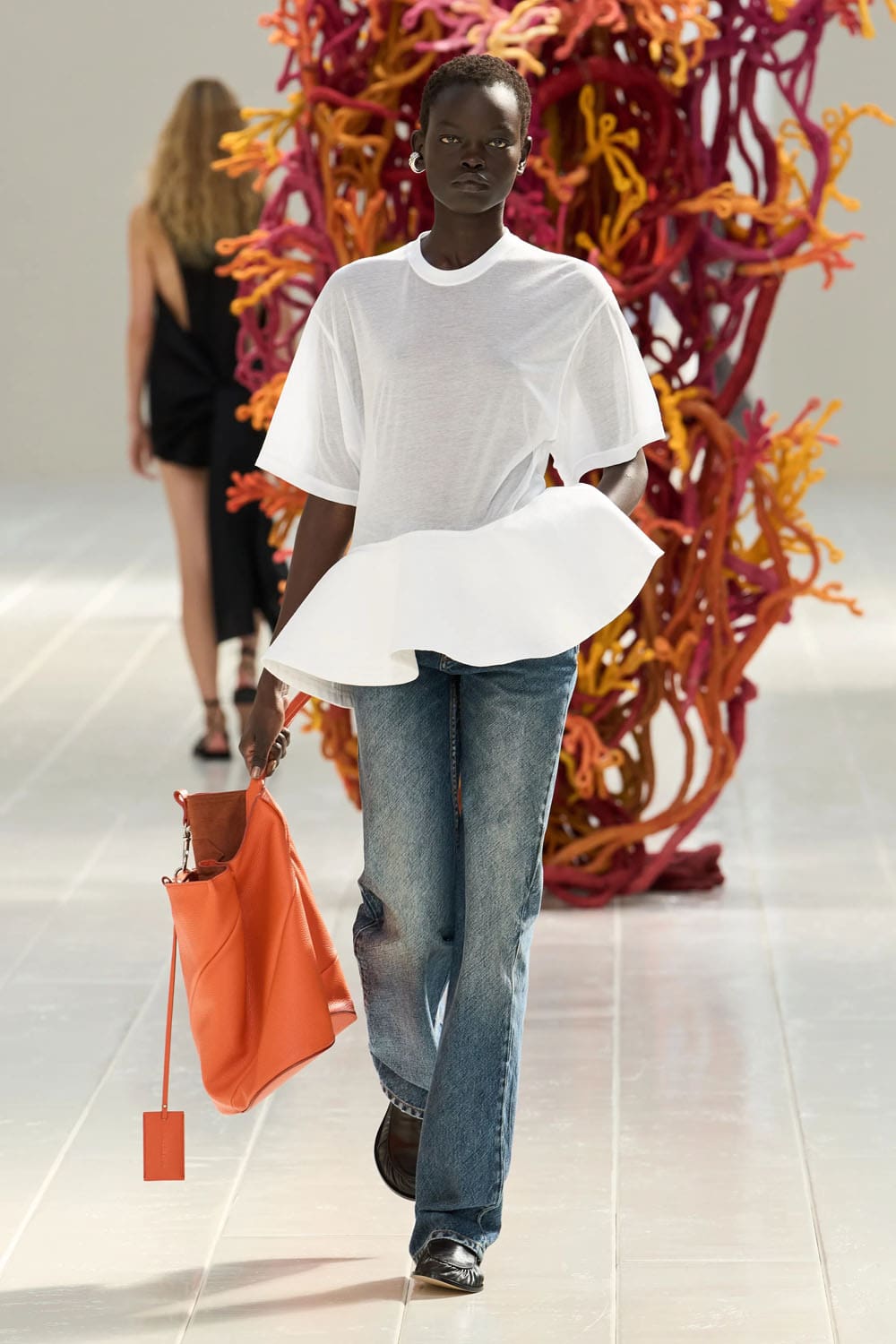
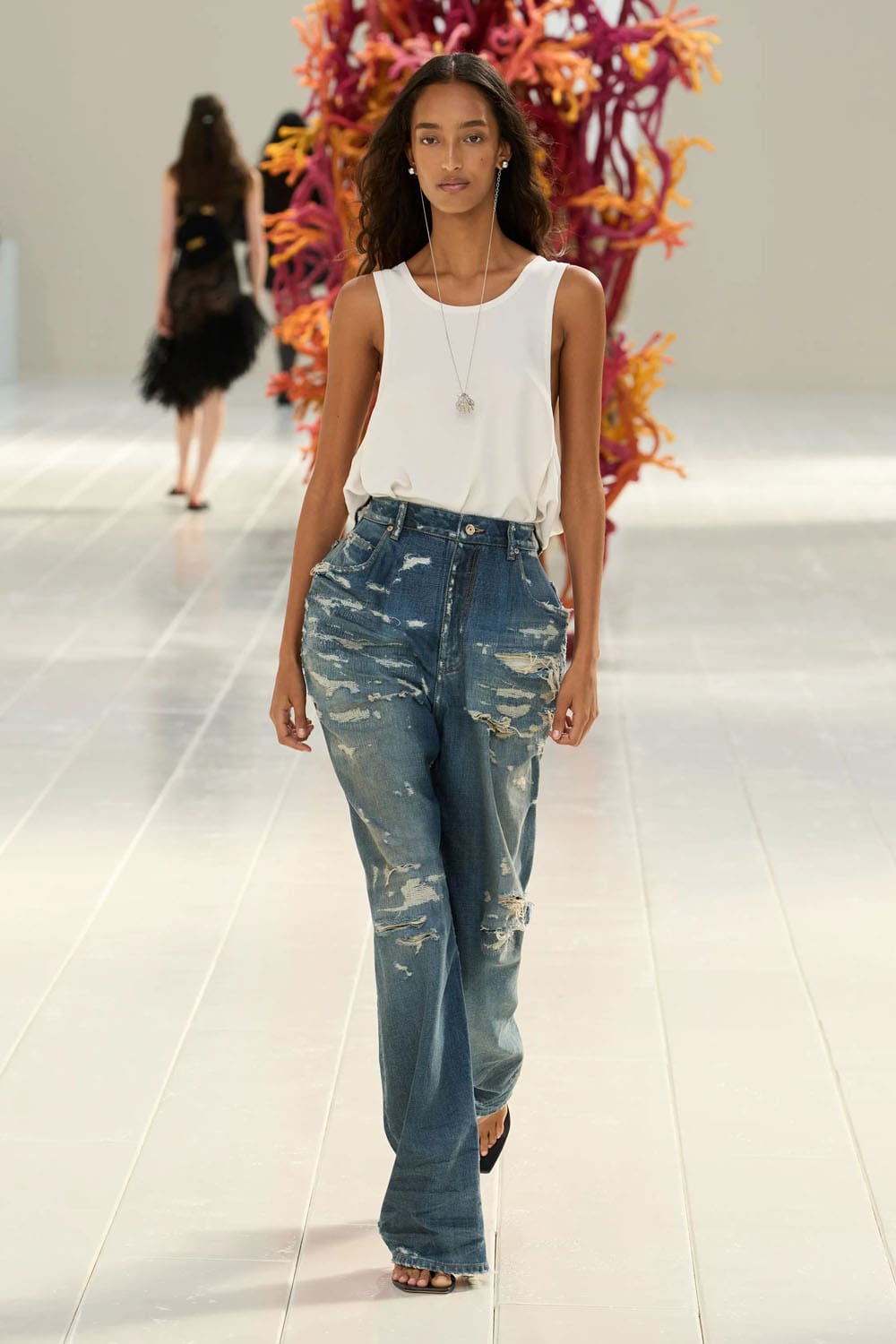
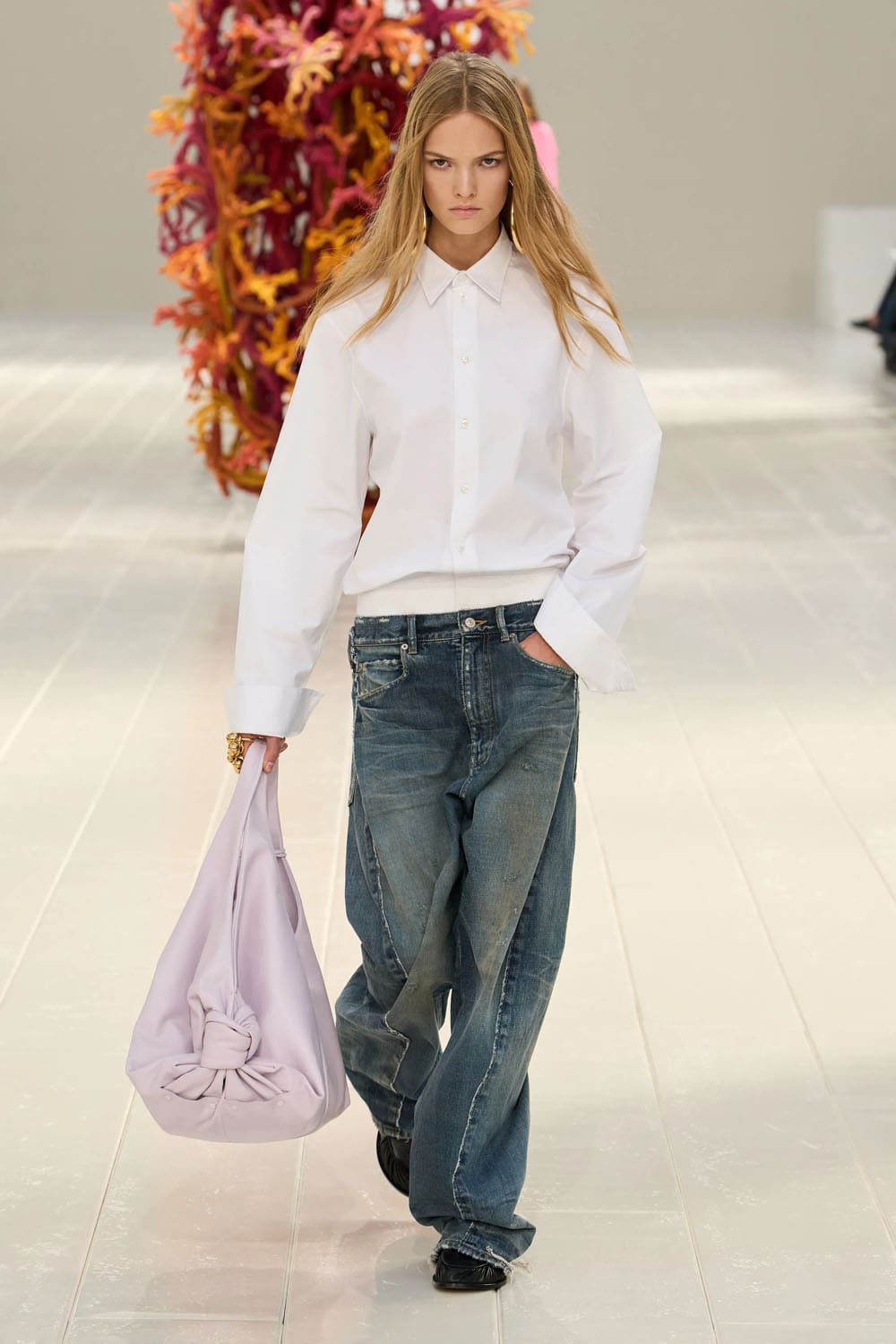
Even the humble white crewneck T-shirt underwent a couture transformation. Cut from gossamer cotton jersey, its right flank exploded into a stiff, sculpted circular peplum that arced over vintage-washed blue denim jeans, accessorized with an oversized orange leather hobo bag. What would normally be mundane streetwear became an exercise in dynamic sculpture.
Nocturnal Cocooning and the Leather Bomber
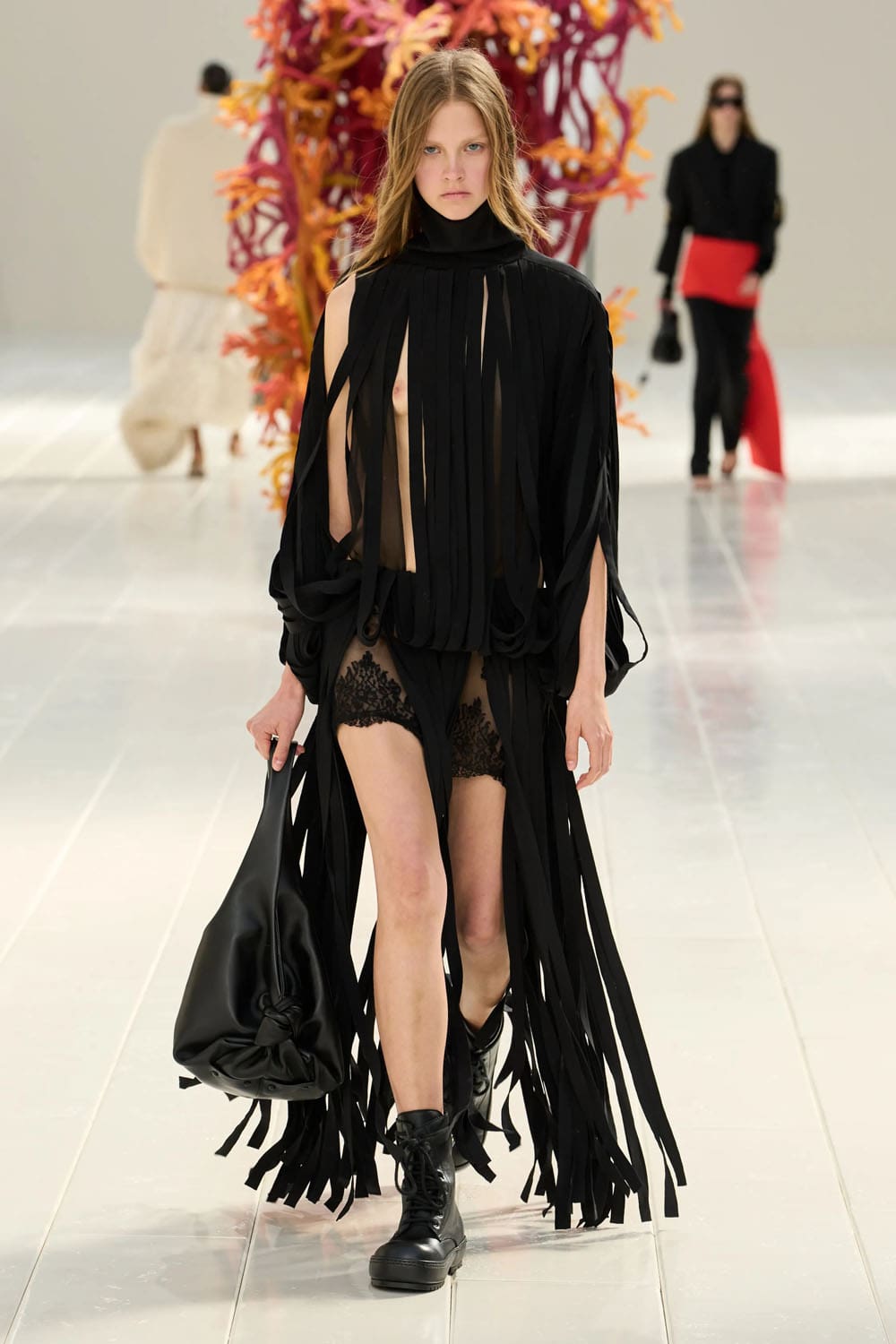
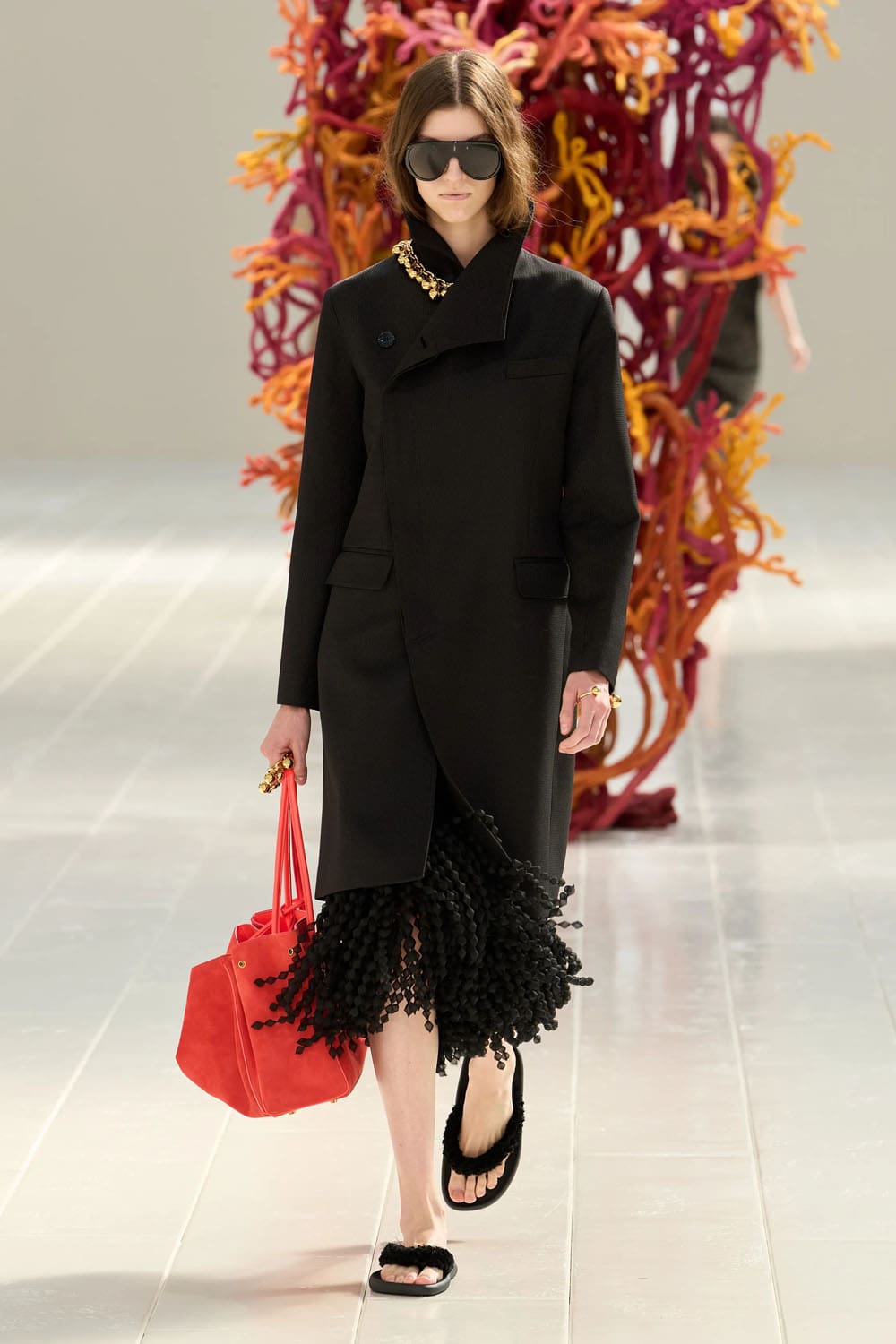
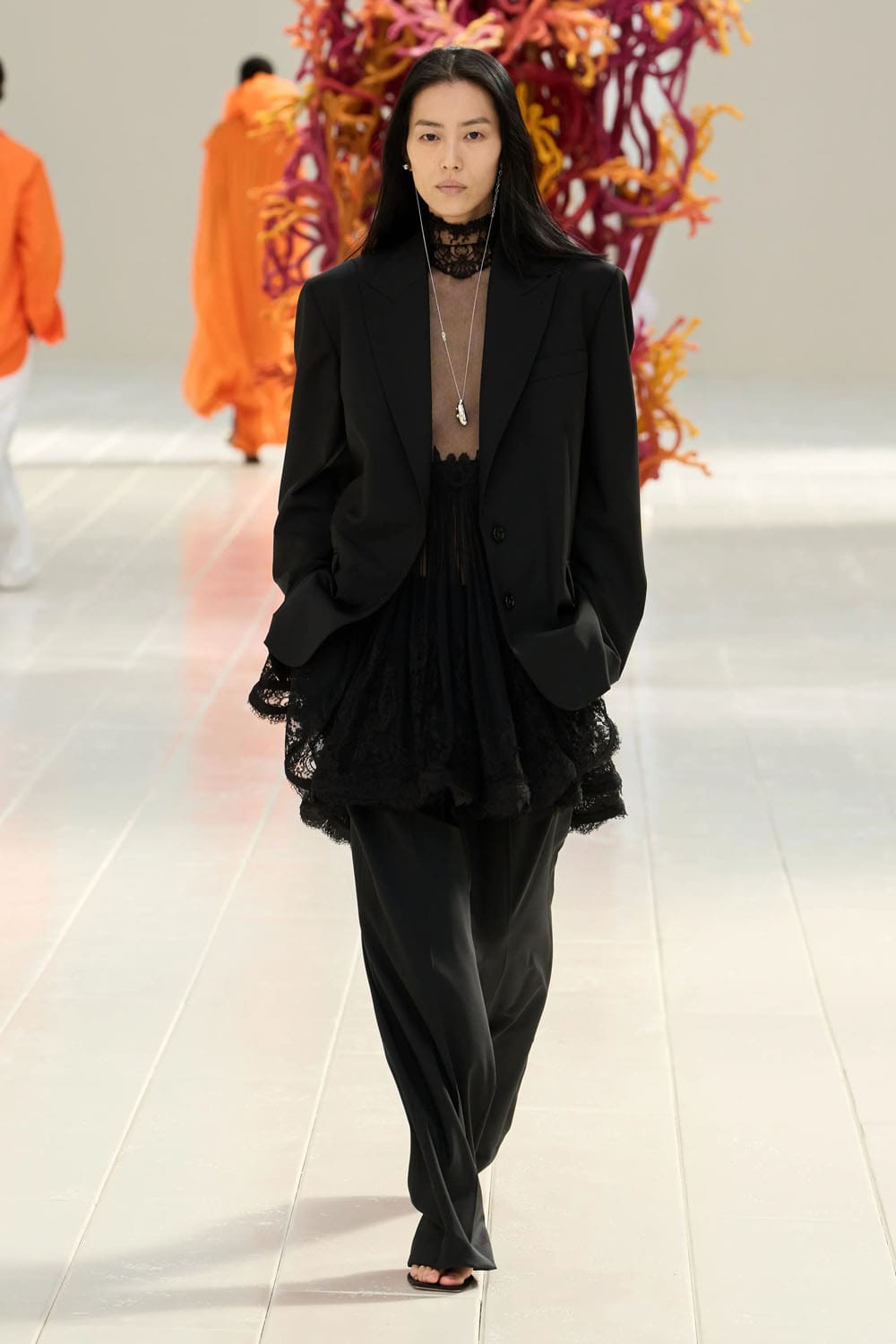
As the presentation deepened, Piccioli introduced tailored obsidian silhouettes that honored the founder’s obsession with monastic discipline. A sharply angled black wool overcoat, closed with a single high button and featuring a high origami neck wrap, glided down the tiles over a skirt constructed entirely from thousands of swinging, knotted black cord fringes. Accompanied by a vivid red suede tote and fur-lined slides, it married severe Parisian tailoring with tactile playfulness.
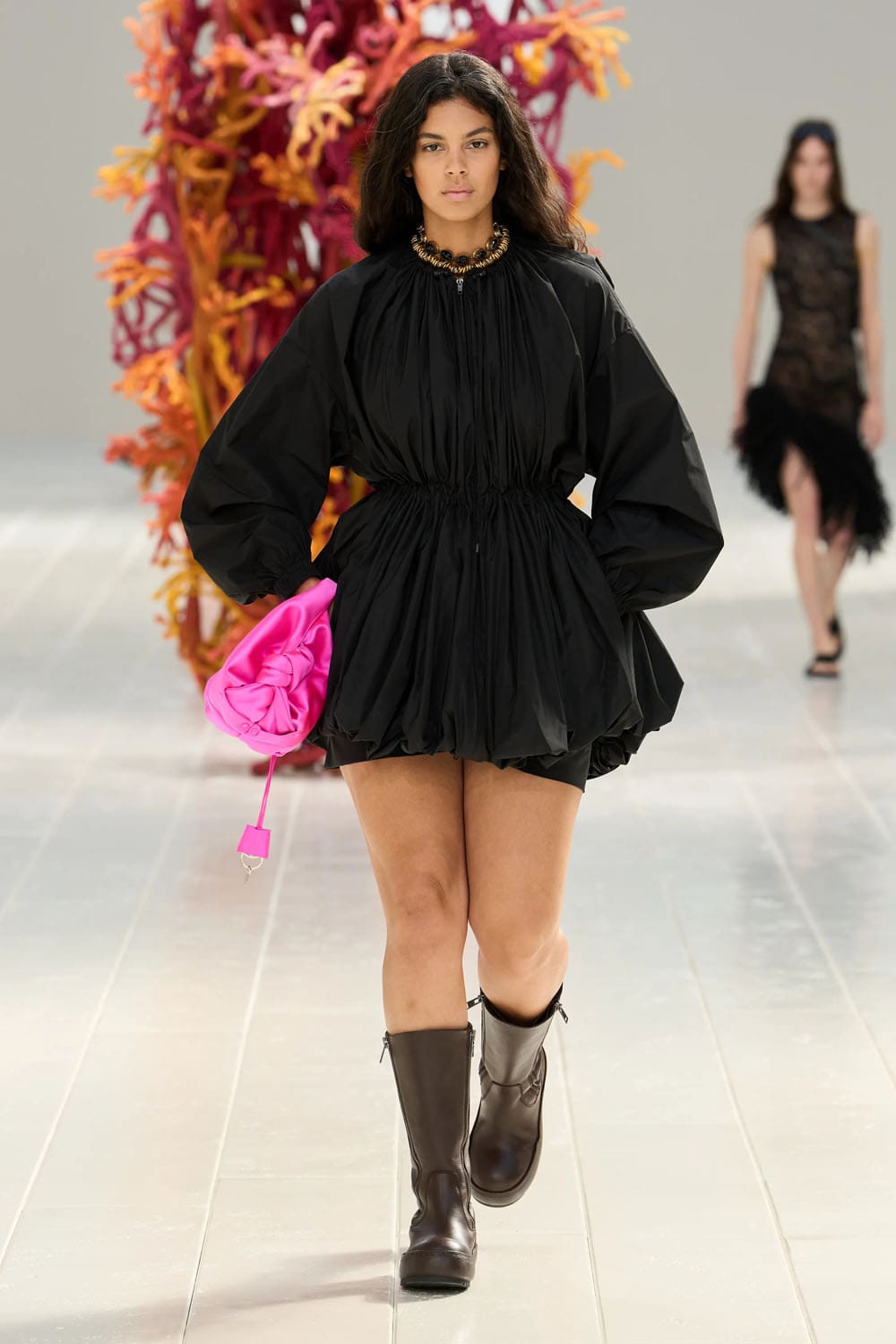
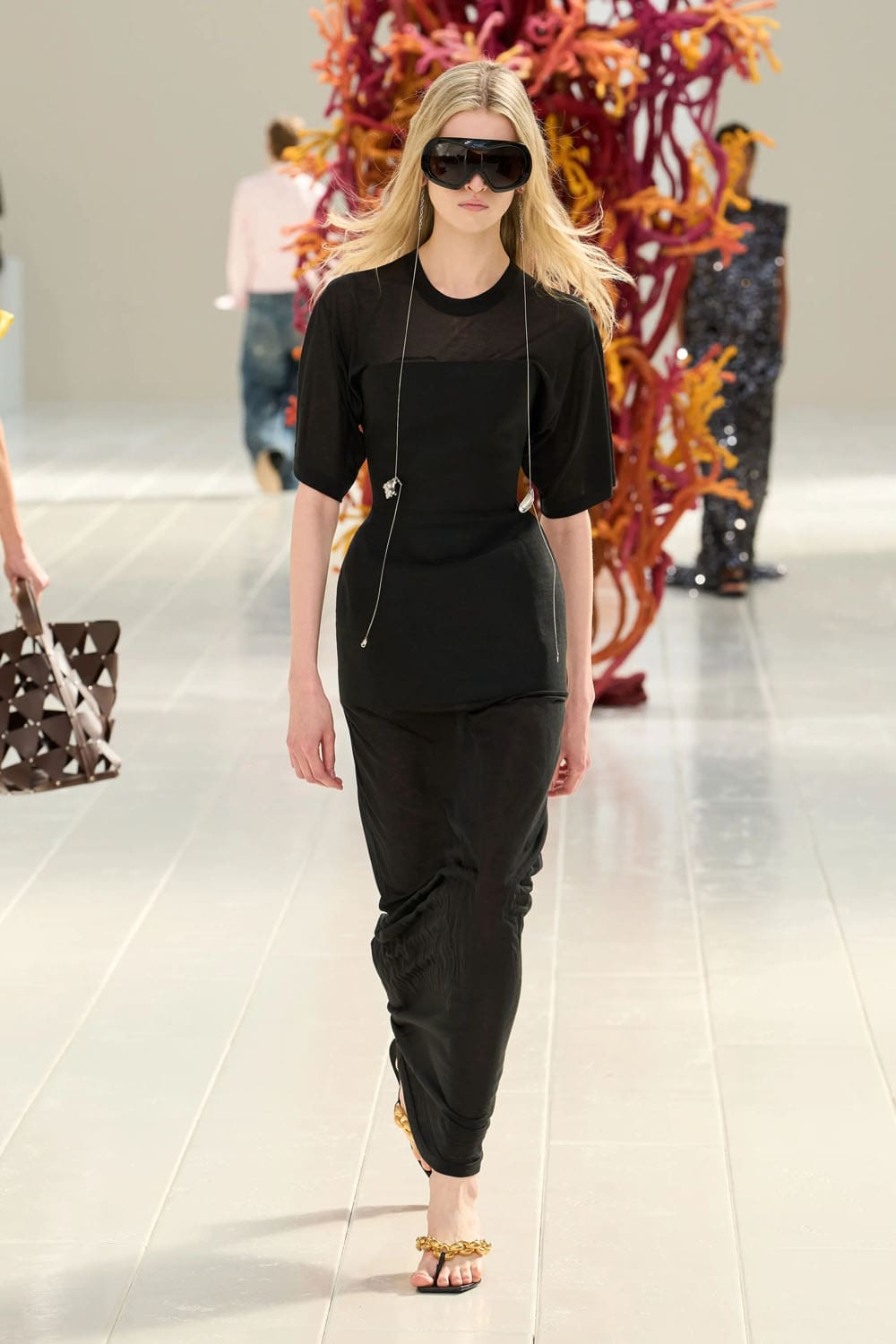
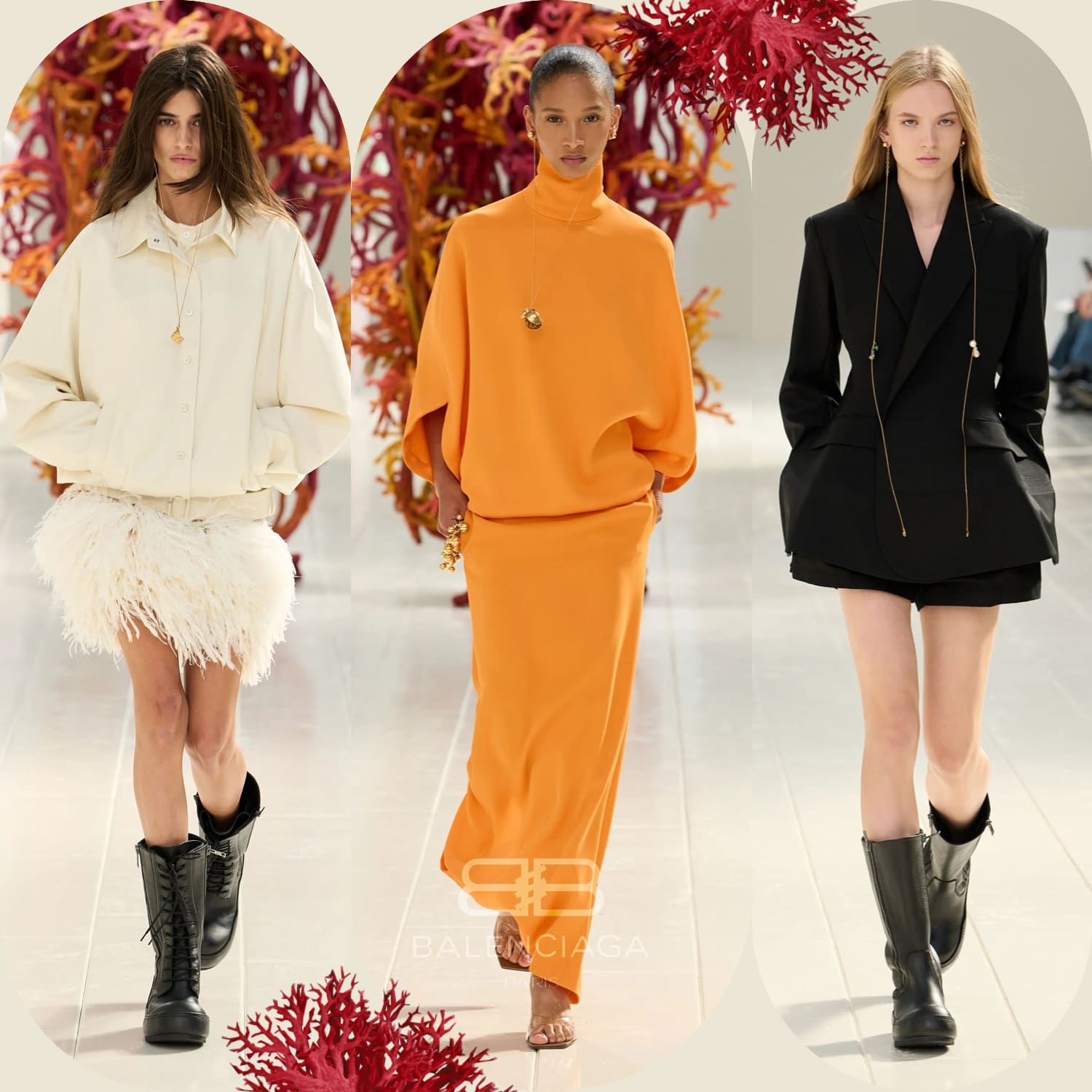
Beside it, the baby-doll volume was revitalized in parachute silk: an all-black ruched taffeta smock dress gathered tightly at the neck and waist, bursting into a bubble balloon hem worn over calf-high leather combat boots and punctuated by a hot-pink pouch.
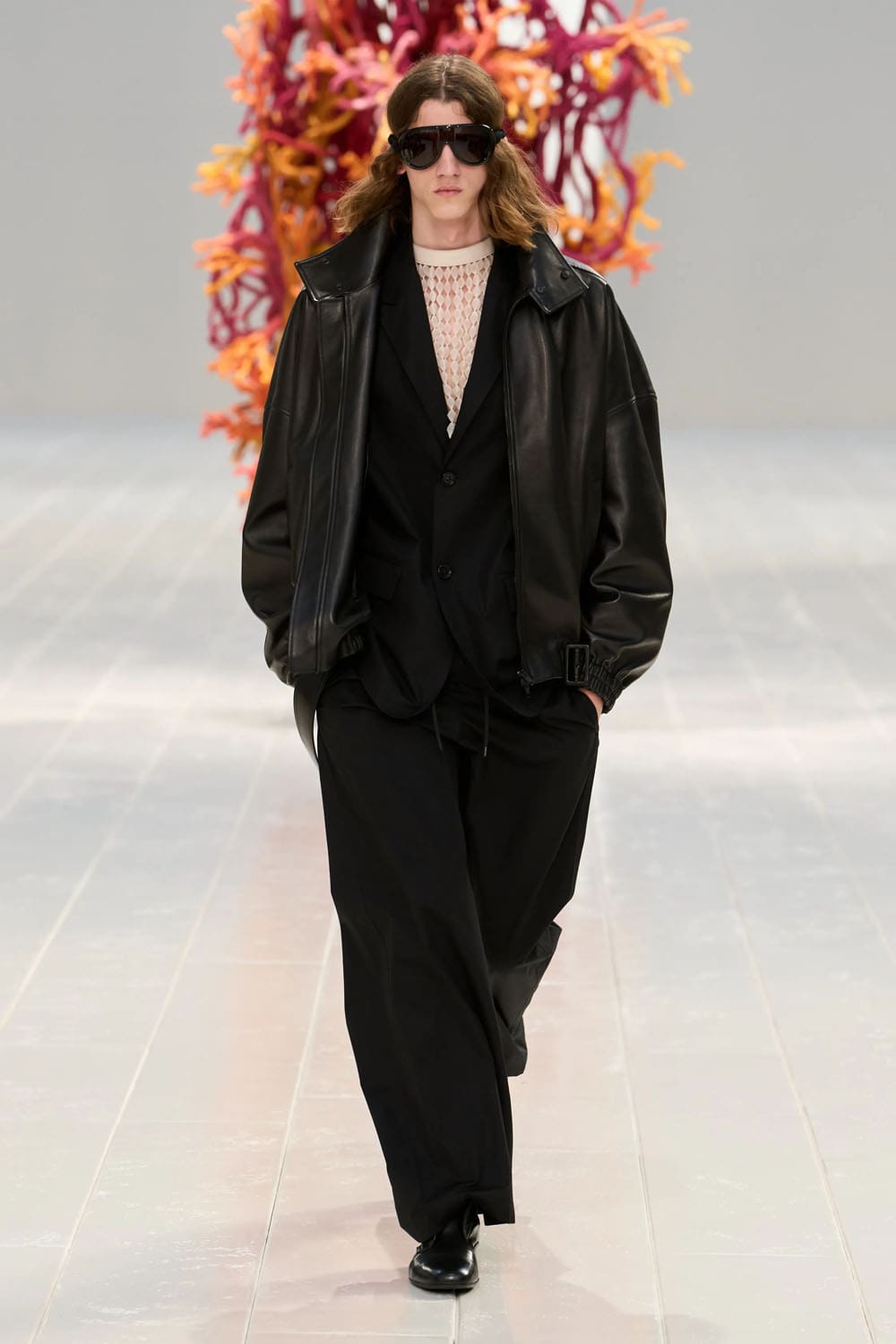
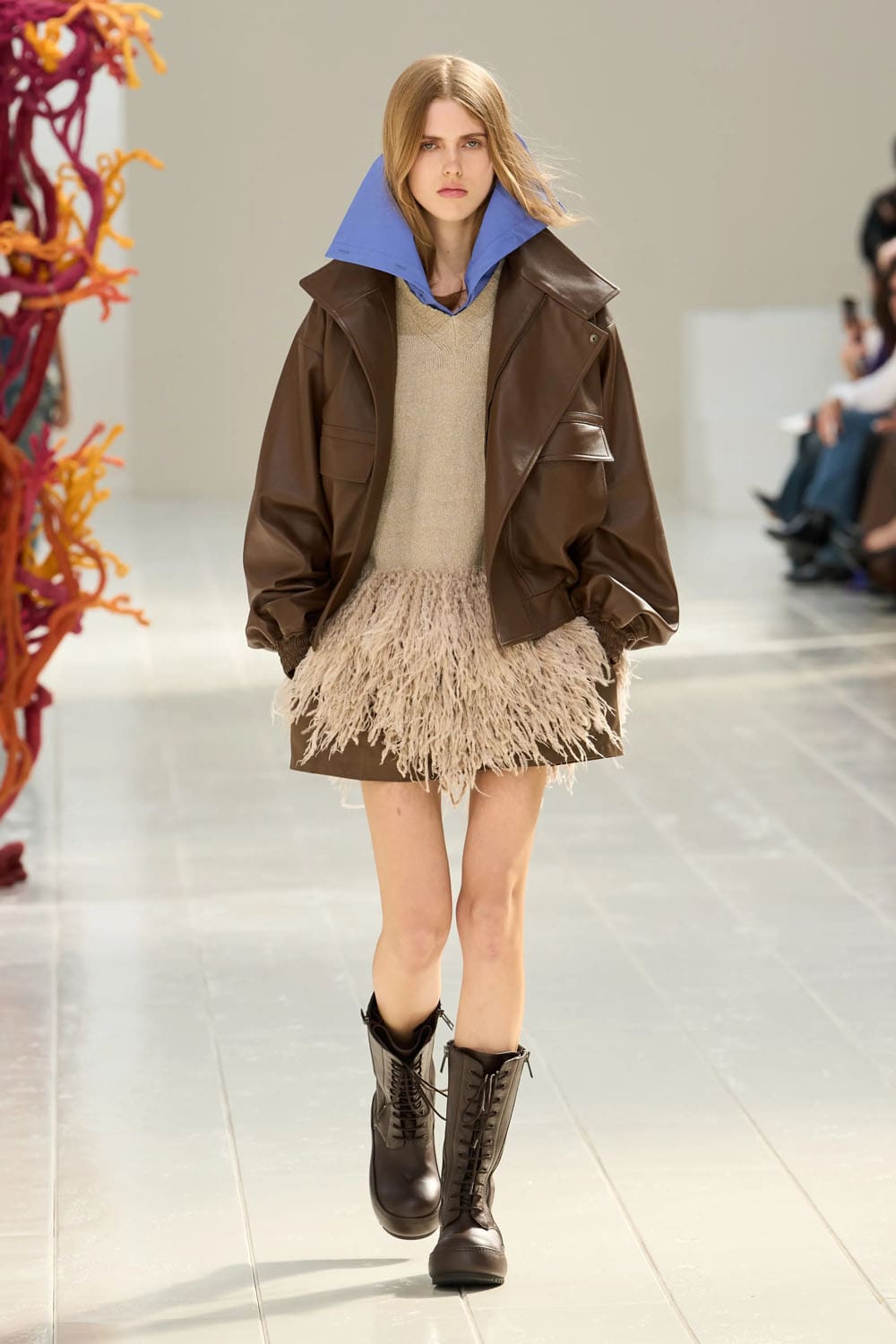
The dialogue closed on a brown leather aviator bomber jacket, engineered with dropped kimono sleeves and an exaggerated sky-blue funnel collar that framed the jawline. Worn over a wheat-toned knit sweater and a fringed raffia mini-skirt, it brought together workwear, couture, and raw fiber into complete harmony.
Pierpaolo Piccioli does not treat fashion as a brand exercise; he treats it as a living, breathing ecosystem. By pulling Haute Couture out of gilded salons and grounding it in the messy, vibrant vitality of the street, he pays the truest homage to Cristóbal Balenciaga. Freedom of form is ultimately freedom of the body—and in Piccioli’s hands, Balenciaga has finally found its breath.
Key Takeaways
- Pierpaolo Piccioli’s Balenciaga Spring 2027 collection, titled ‘Les Coraux de la Liberté,’ celebrates organic design and craftsmanship.
- The collection features a monumental fiber installation and embraces a coral motif that symbolizes adaptation and symbiosis.
- Piccioli revitalizes couture by blending historical elements with modern streetwear, making high fashion more accessible and wearable.
- Key pieces include an opera cape, a cotton poplin dress shirt, and a transformed white crewneck T-shirt, showcasing dynamic silhouettes.
- Overall, the collection honors Cristóbal Balenciaga while redefining couture as a living, breathing ecosystem.
See All Looks Balenciaga Spring Summer 2027 by Pierpaolo Piccioli