
Zara
THE TRIUMPHS
- Radical archival alchemy that transforms utilitarian high-street garments into authentic Haute Couture through peerless bias cuts and razor-sharp frock coats
- Uncompromising theatrical spectacle reuniting fashion’s ultimate dream team—Galliano, Meisel, Templer, McGrath, and Palau—to resurrect raw narrative storytelling
- Masterful technical discipline proving couture authority lies strictly in cut, tension, and authorship rather than five-figure gilded salon price tags
- Organic dissolution of gender boundaries achieved through romantic Victorian tailoring, gossamer drapes, and fearless posture rather than corporate marketing slogans
RESERVATIONS
- Brutal reality of instantaneous drop sell-outs, virtually guaranteeing these collector pieces vanish into private archives before the general public can touch the racks
- Devastating aesthetic contrast that leaves Avenue Montaigne’s safe, minimalist luxury looking painfully beige by comparison
Re{form} Zara by John Galliano – The High Street’s Grand Coup Vol. 1. Story by Eleonora de Gray, Editor-in-Chief of RUNWAY MAGAZINE. Photo Courtesy: Zara. Creative Concept: Runway Magazine.
Creative Concept & Visual Interpretation: Guillaumette Duplaix for RUNWAY MAGAZINE
Original Photography: Steven Meisel for Zara
Editorial Note: Unofficial creative interpretation created purely out of artistic love and editorial celebration.
While Avenue Montaigne remains tragically trapped in its own academic fog—attempting to convince the luxury world that a slouchy knit and a radioactive salad sprig qualify as high couture—the real seismic shift just occurred in A Coruña.
Zara has officially unveiled Re{form} Zara Vol. 1, a two-year creative partnership authored by none other than couturier John Galliano. Dropping on October 1st at 10:00 CEST, the premise reads like a dare to the old luxury guard: an exchange between the dressmaker’s hand and the vast memory of a global retail titan. Galliano has entered the Zara archives, taking archetypal, everyday garments, deconstructing their utilitarian anatomy, and rebuilding them using the rigorous architectural vocabulary native to haute couture.
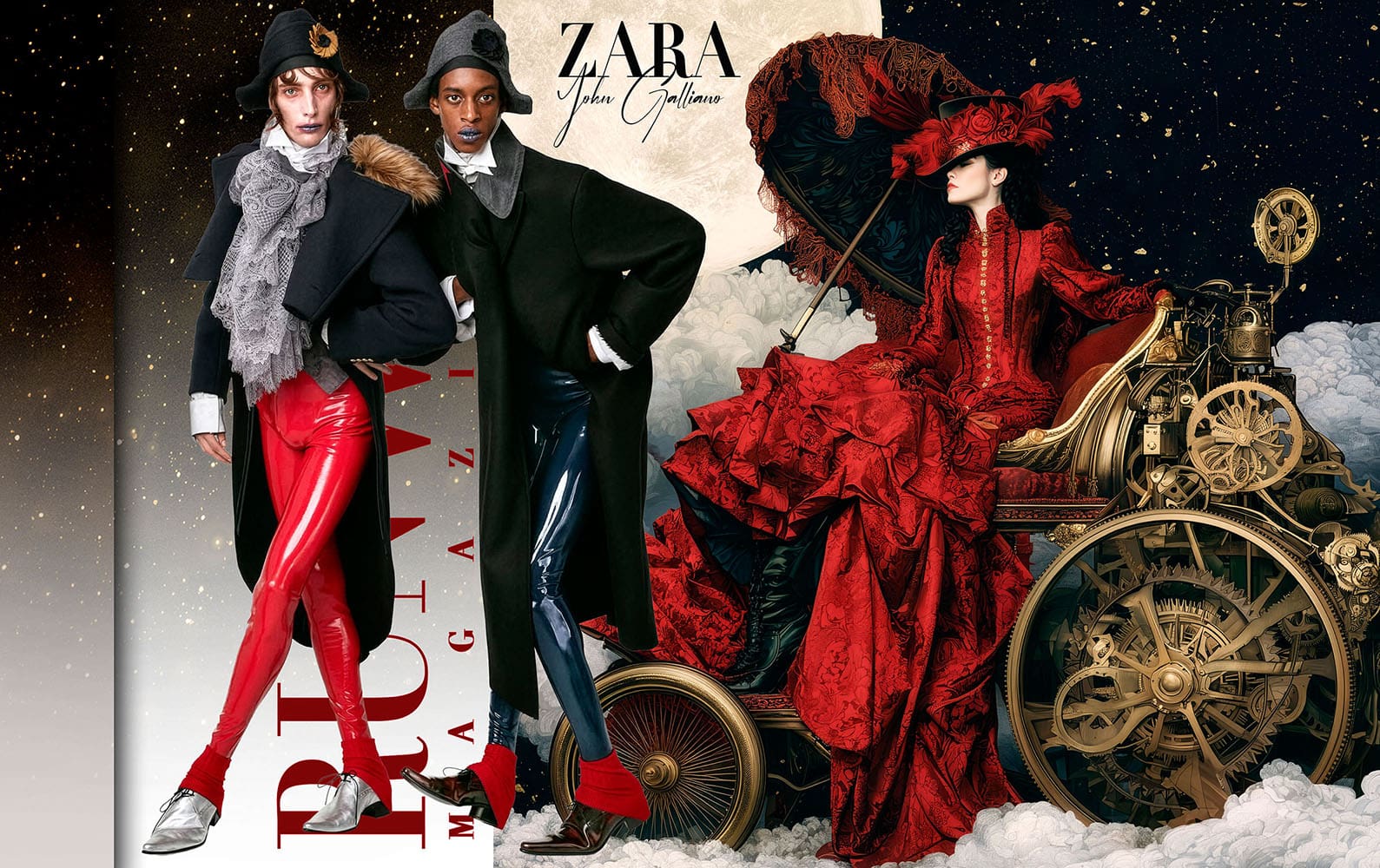
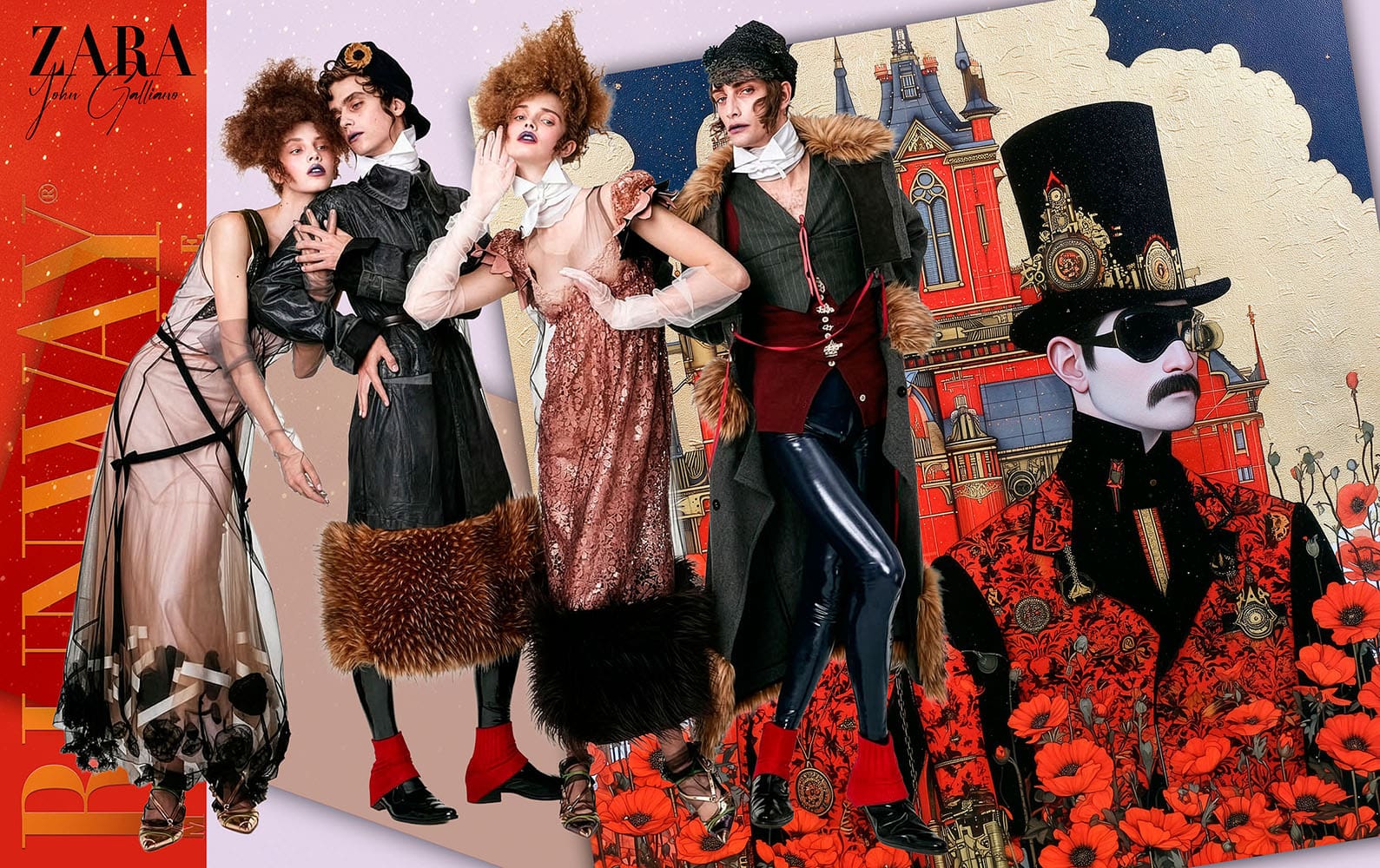
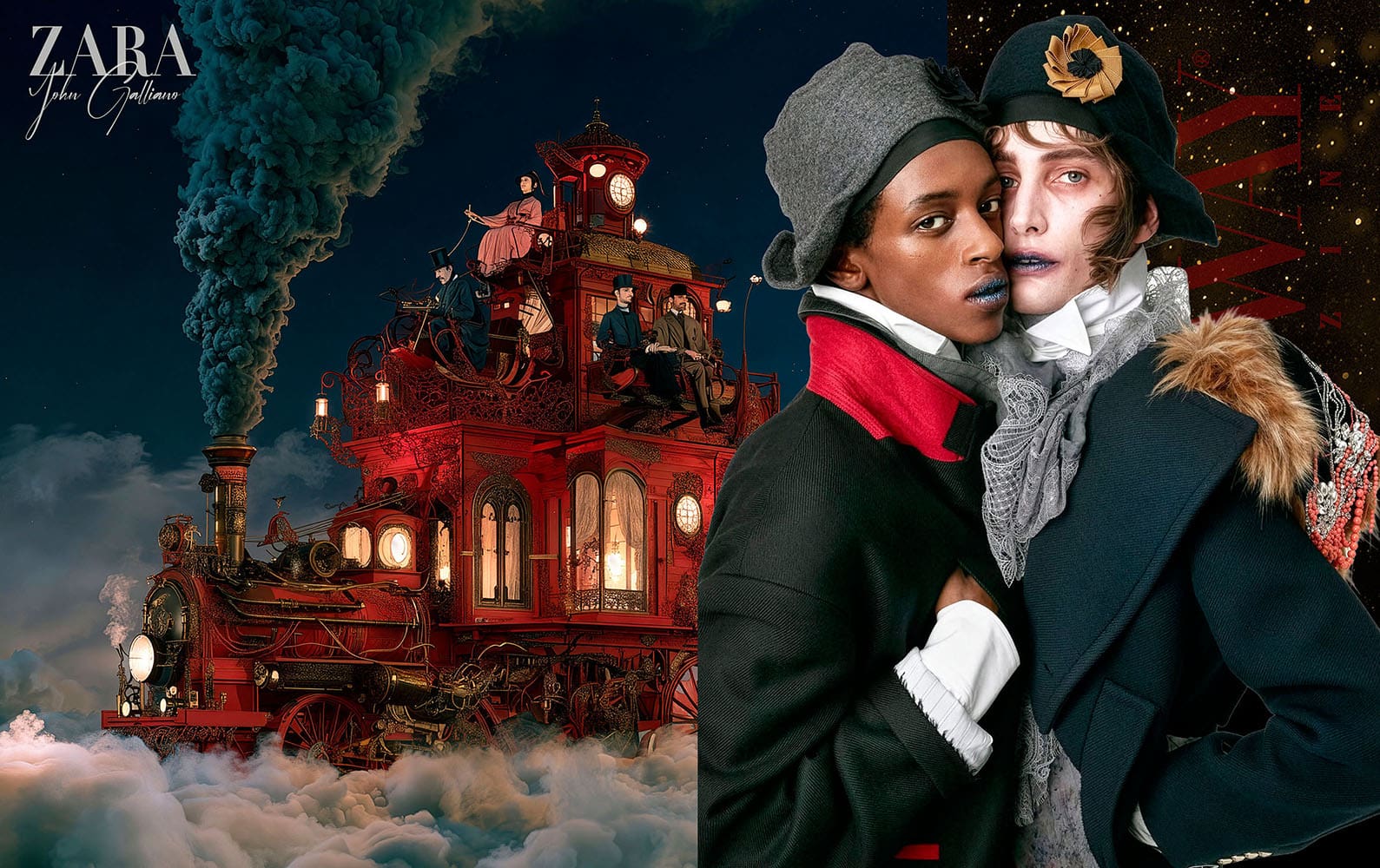
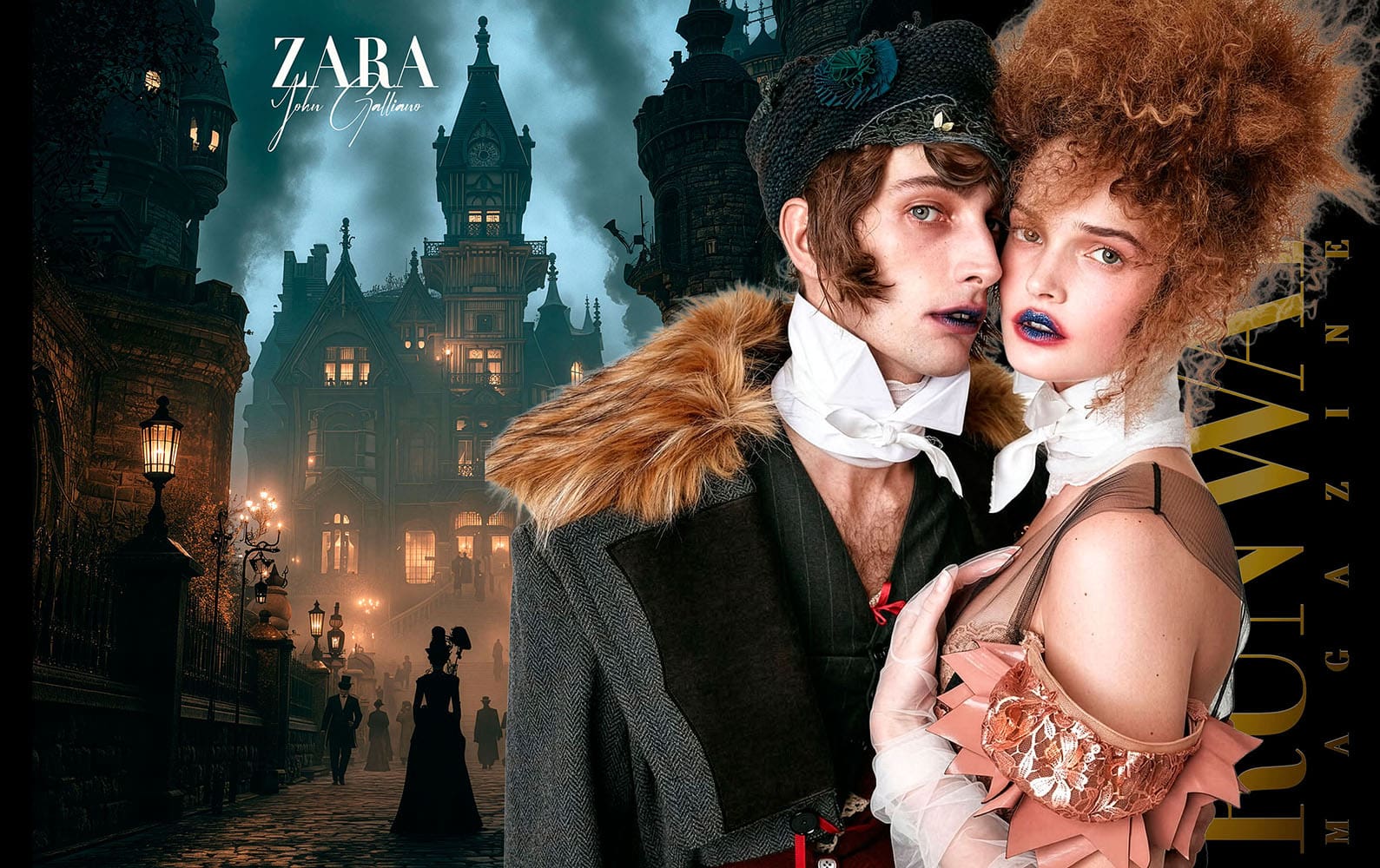
To document this collision, Zara called upon fashion’s undisputed high priest of image-making, Steven Meisel. And because we at RUNWAY MAGAZINE cannot resist true theatrical audacity, we took Meisel’s imagery on a ride through our own visual kaleidoscope: transporting Galliano’s reformed vagabonds into a fantastical world of steampunk airships, clockwork steam engines, gothic turrets, and cloud-swept carriages. It is a celebration done purely for the love of the craft—an editorial nod to what happens when authentic narrative returns to clothes.
What once existed is taken apart,
not to be preserved,
but to be understood.
This is not reuse.
It is re-authorship.
Between structure and collapse,
past and present.
No fixed identity.
No fixed form.
Only what becomes.
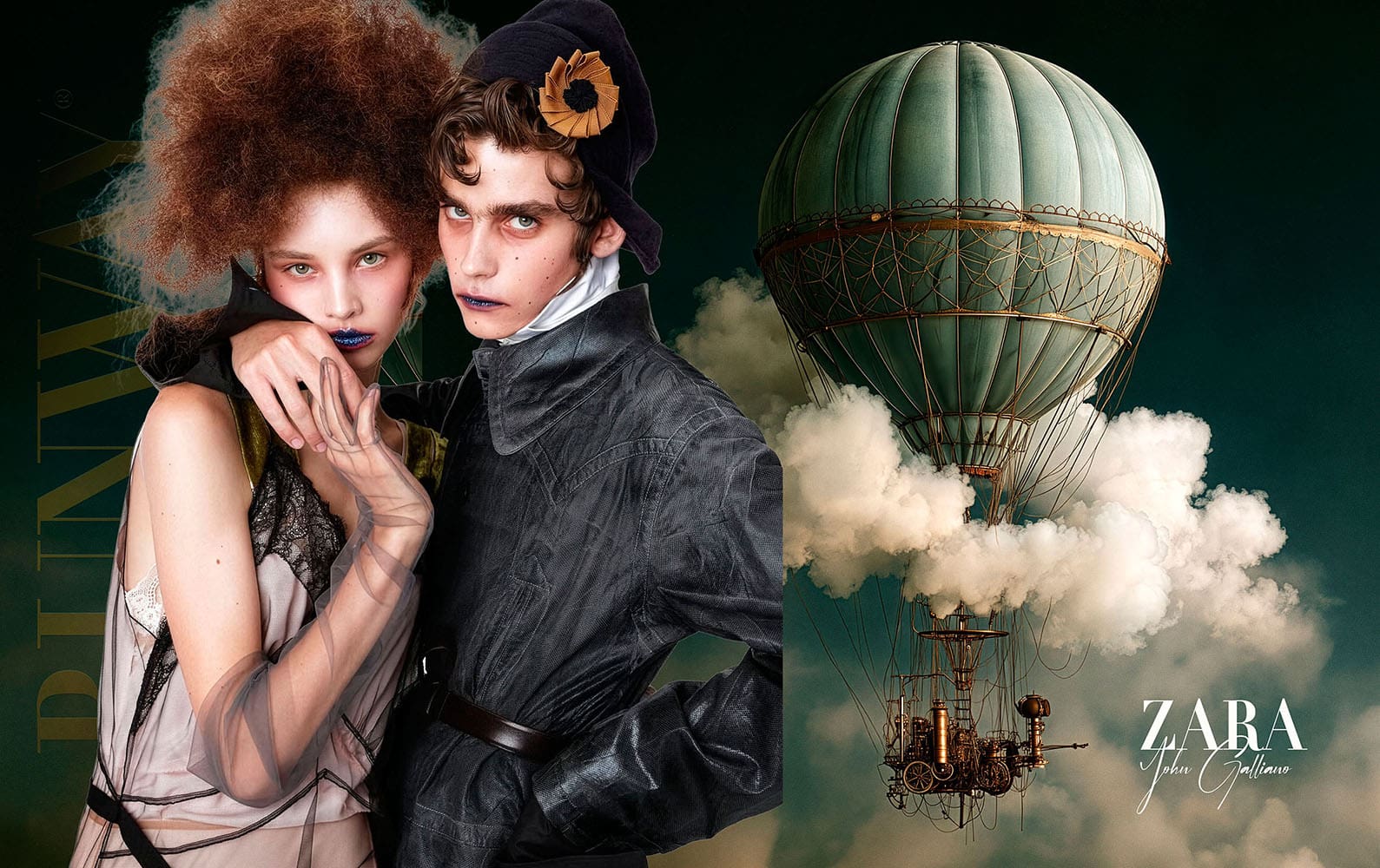
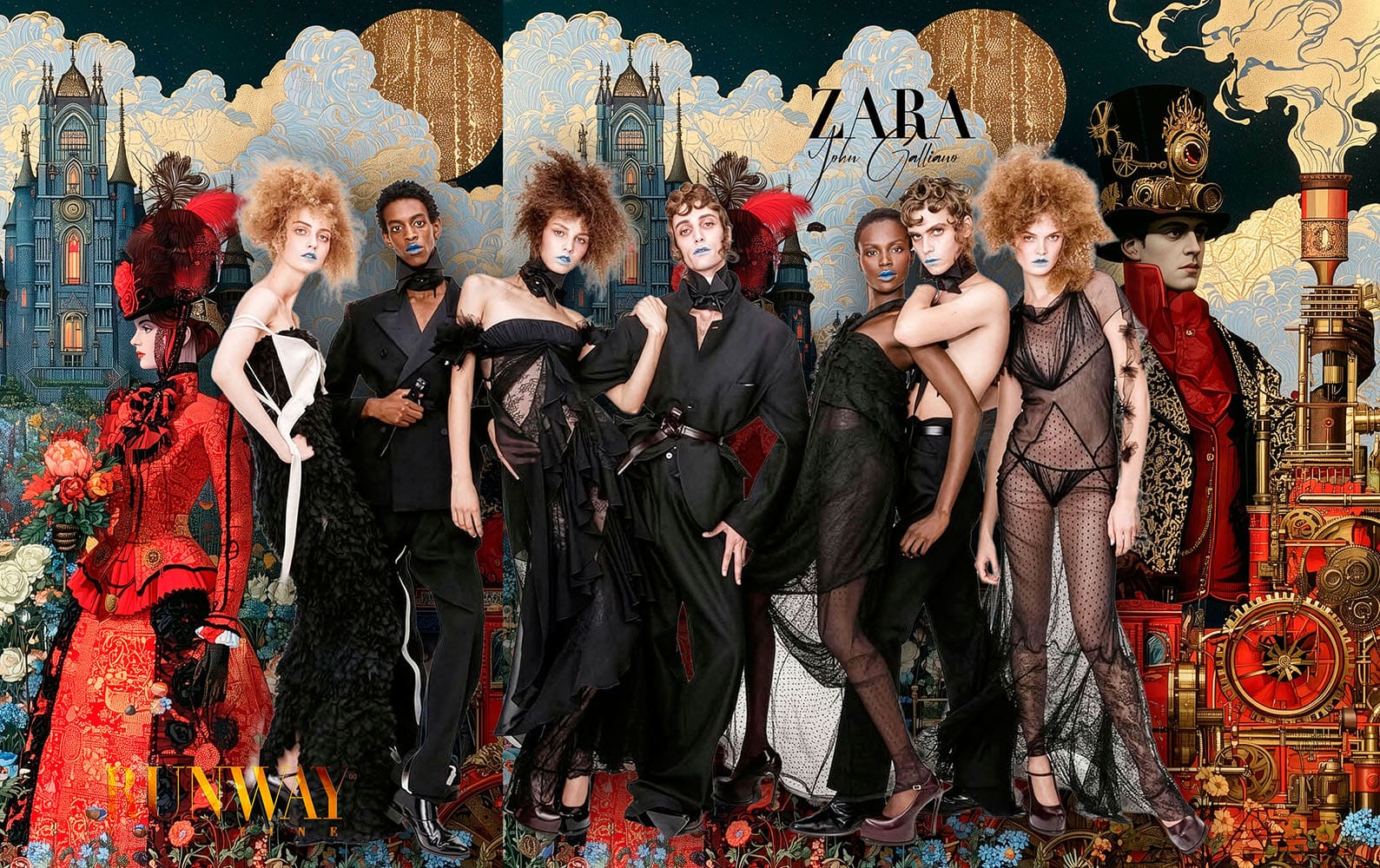
The Great Inversion: When the Street Outshines the Salon
Consider the delicious irony currently unfolding across Paris. Under Jonathan Anderson, Dior has taken Haute Couture down to the street, stripping away its spine and delivering pedestrian silhouettes that look like confused Zara castoffs sold at five-figure markups. Social media has spent months mocking the descent, parodying shoppers carrying Dior garments in high-street plastic bags.
Amancio Ortega looked at that circus and staged the ultimate counterattack: instead of watering couture down into mass banality, he brought the high street straight up into the heavens of Haute Couture.
This is not a casual licensing trick or a watered-down graphic t-shirt collaboration. This is an archival exorcism. Galliano didn’t just design new pieces; he dug into past Zara collections, unpicked the seams, and reconfigured the silhouettes with bias cuts, razor-sharp frock coats, ruffled Victorian collars, and subversive latex second-skins.
Look at the construction: sheer, deconstructed tulle dresses wrapped over corseted underpinnings, oversized charcoal greatcoats trimmed in shearling and cinched with rebellious flair, and tailoring that possesses actual bone structure. Where contemporary couture houses are peddling irony as a shield for lack of technique, Galliano is taking mass-market fabrications and bending them to his will with peerless dressmaking discipline. He gives polyester a soul and gives the archive an author.
A Masterclass in Narrative and Image
What makes Re{form} Zara hit like a thunderbolt is that it refuses to apologize for its drama. Luxury today suffers from an acute allergy to spectacle; it is paralyzed by minimalism, terrified of being misunderstood, and constantly hiding behind ten-page press releases written like doctoral theses.
Galliano, by contrast, gives us pure theater. Styled by Karl Templer, the cast—fronted by Lulu Tenney, Thomas Riguelle, Anna Bicanova, and Fred—does not merely pose; they inhabit characters. With Dame Pat McGrath painting their lips in surreal, icy metallic blues and porcelain glaze, and Guido Palau constructing bird’s-nest frizz and sculpted dandy ringlets, the campaign possesses the feral, poetic eccentricity that built the modern fashion dream.
It is a world where gender lines dissolve naturally through cut rather than marketing slogans. A frock coat belongs to whoever commands the stride; a ruffled bodice or sheer gossamer drape belongs to whoever owns the posture. It proves that democratic fashion does not have to be flat, safe, or beige. It can be fierce, historical, romantic, and slightly dangerous.
The Verdict: The Pirate Takes the Crown
Let us speak plainly: this fight was over before the first bell rang.
On one side, you have a heritage house attempting to “modernize” couture by offering us glorified lounge sweaters and calling it intellectual progress. On the other side, you have Zara handing its past to the original Pirate of Couture, proving that when true craftsmanship and narrative ambition take the wheel, even the high street can produce collector’s pieces.
Galliano has reminded the industry of an uncomfortable truth: couture has never been about the price tag or the gilded salons of the 8th arrondissement. Couture is authorship. It is cut, tension, drama, and madness. It is the ability to transform an ordinary coat into an object of pure desire.
While Dior continues its identity crisis, Galliano and Zara just delivered the collection of the season. Amancio Ortega didn’t just enter the high fashion conversation—with John Galliano at his side, he just rewrote the rules of engagement.
Campaign Credits
- Collection: Re{form} Zara Vol. 1
- Designer / Author: John Galliano
- Photographer: Steven Meisel
- Stylist: Karl Templer
- Makeup Artist: Dame Pat McGrath
- Hair Stylist: Guido Palau
- Set Design: Mary Howard
- Casting Director: Piergiorgio Del Moro
- Production: PRODn, Production at Art + Commerce
- Models: Lulu Tenney, Thomas Riguelle, Anna Bicanova, Fred
- RUNWAY MAGAZINE Creative Artwork: Guillaumette Duplaix
