Balmain
THE TRIUMPHS
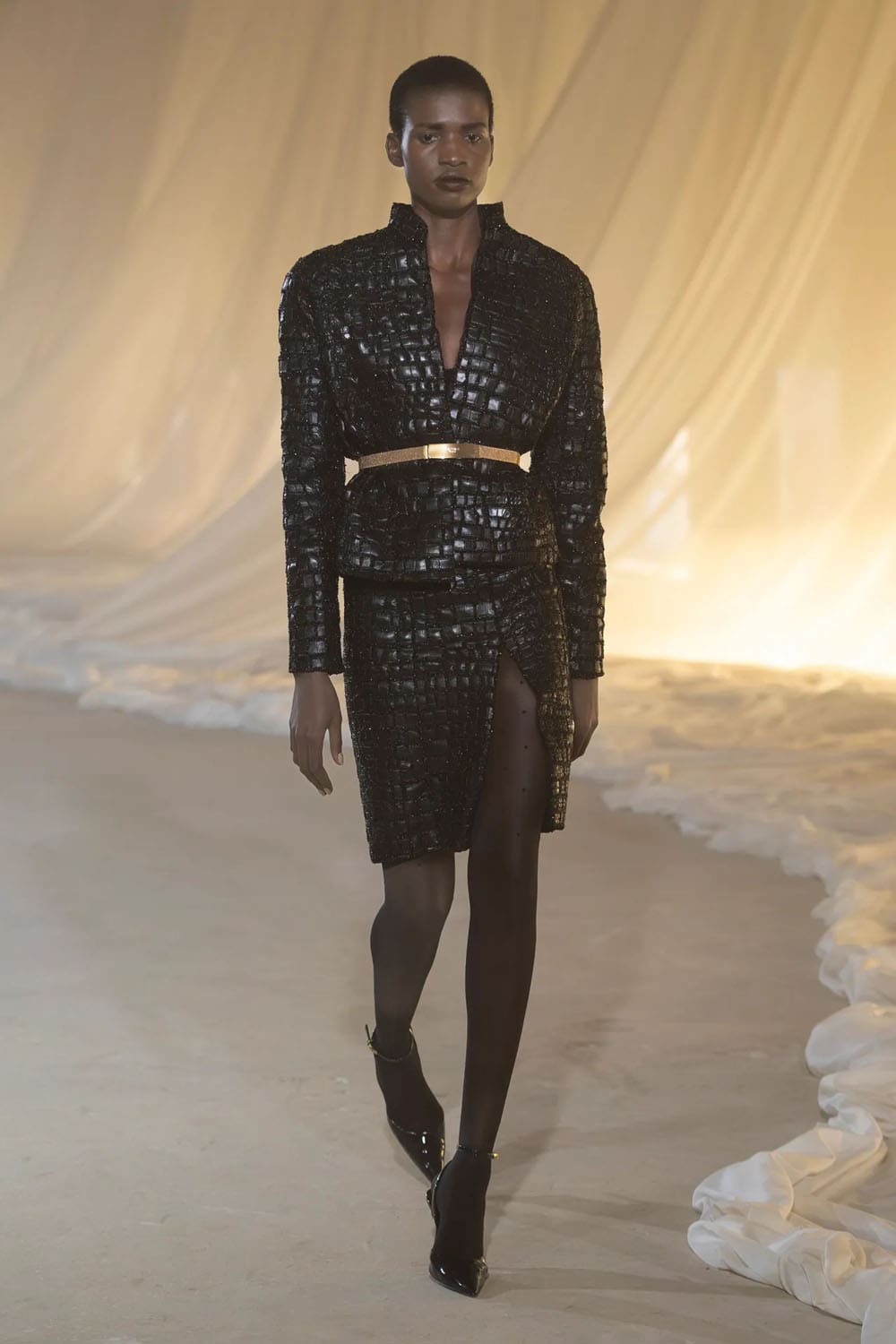
- Strong technical execution through caviar beading, hand-cut leather feathers, leather mosaics, jacquards and newly developed silk weaves
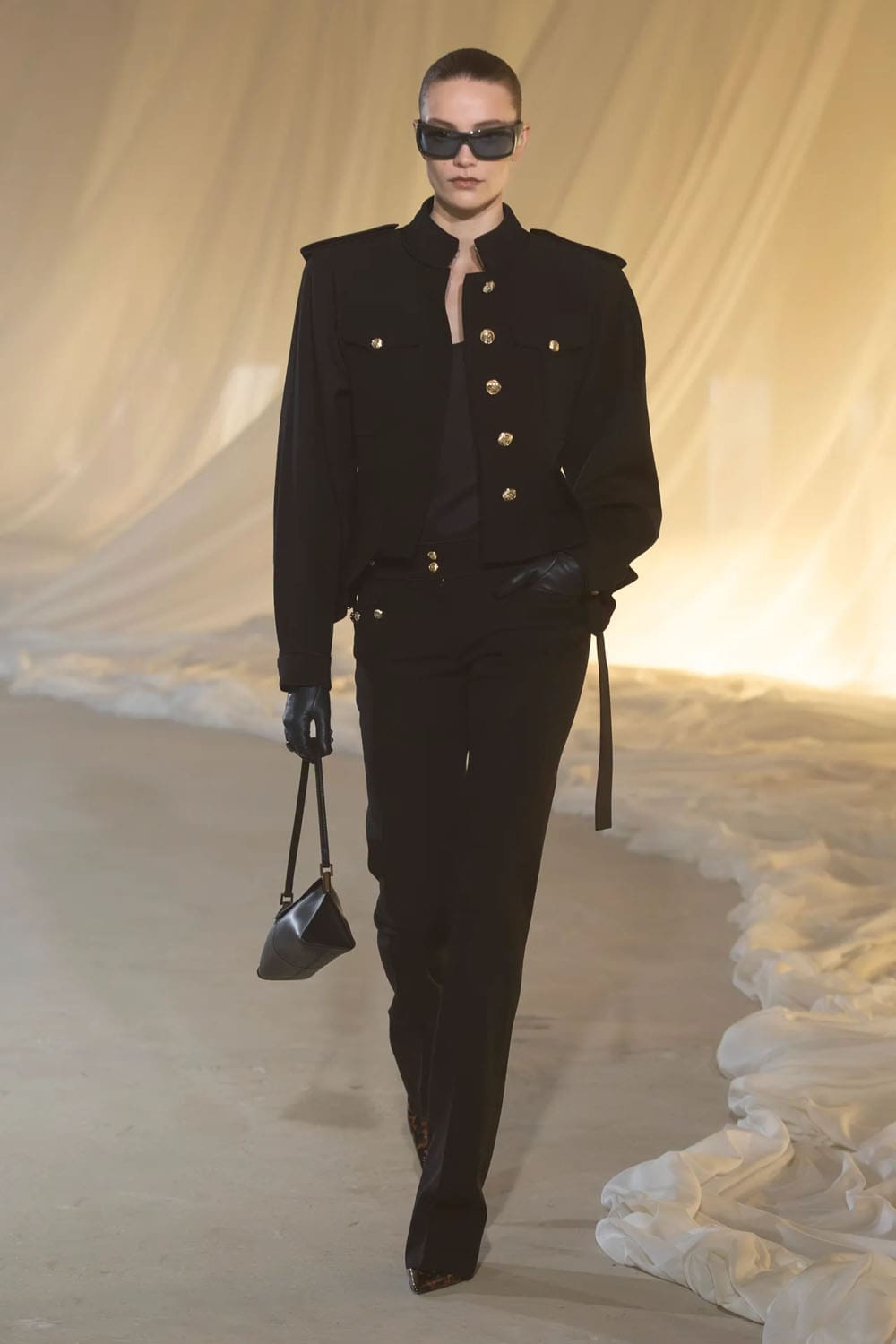
- Successful return to Pierre Balmain’s principles of structure, proportion and disciplined tailoring after years of a more spectacle-driven house vocabulary
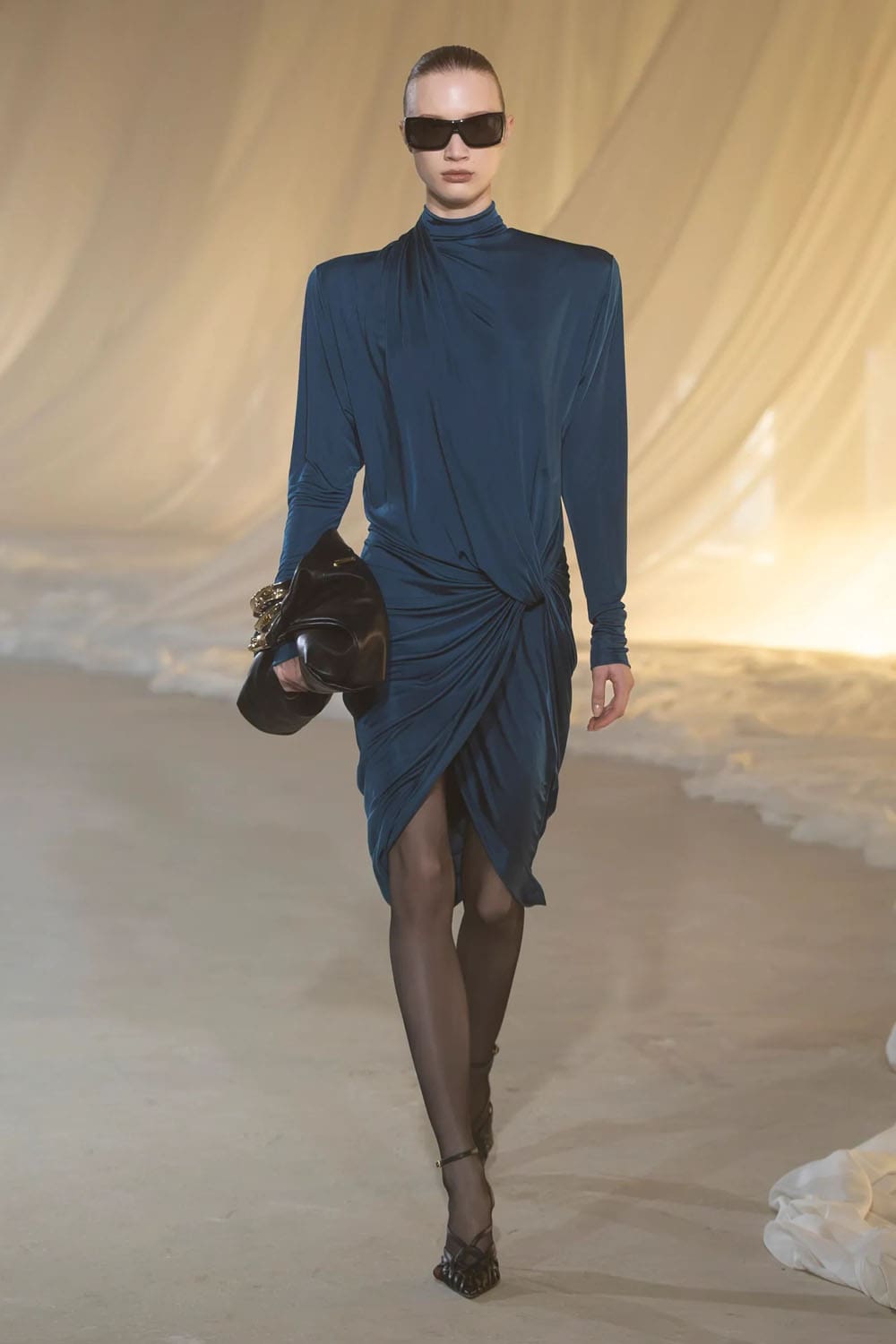
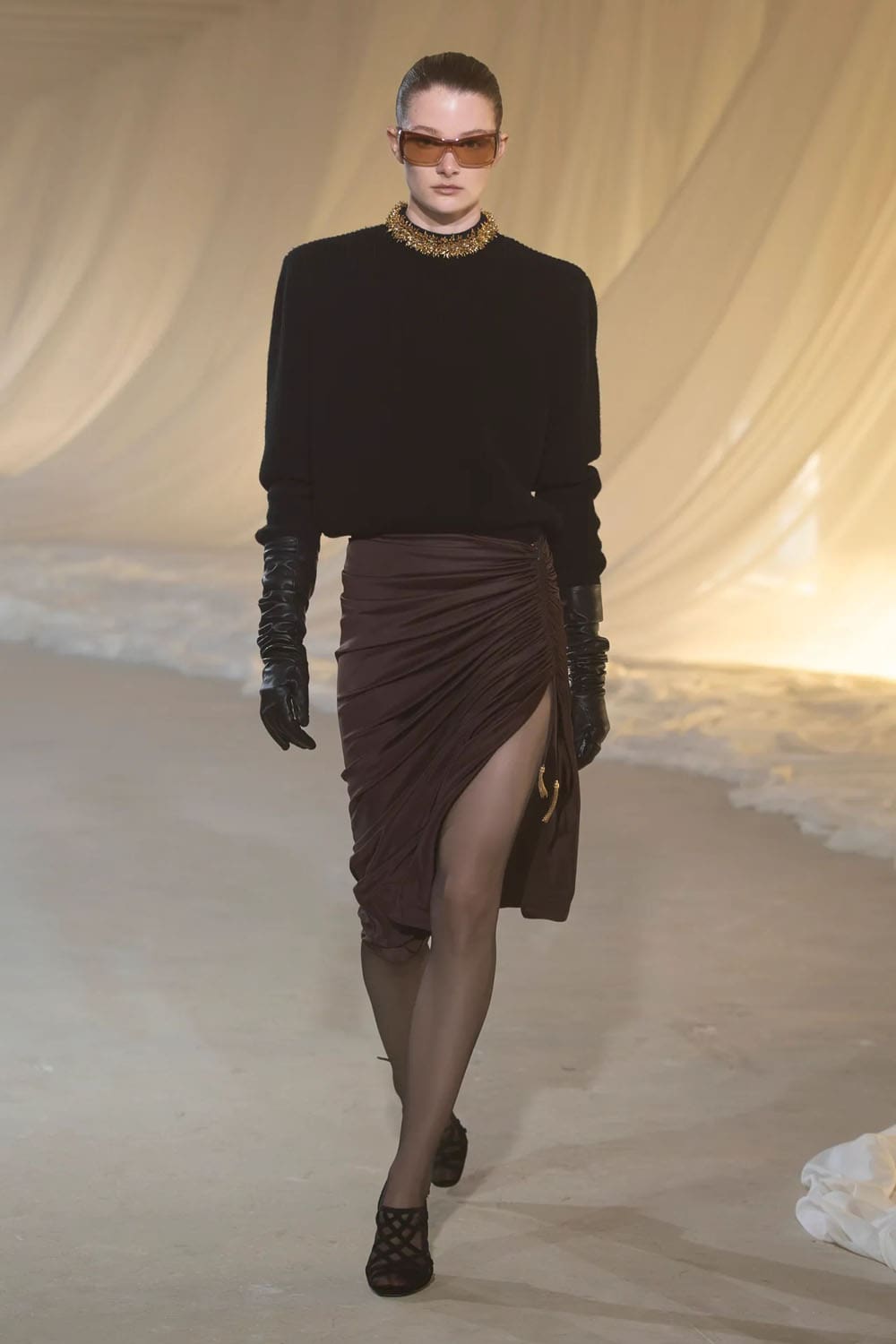
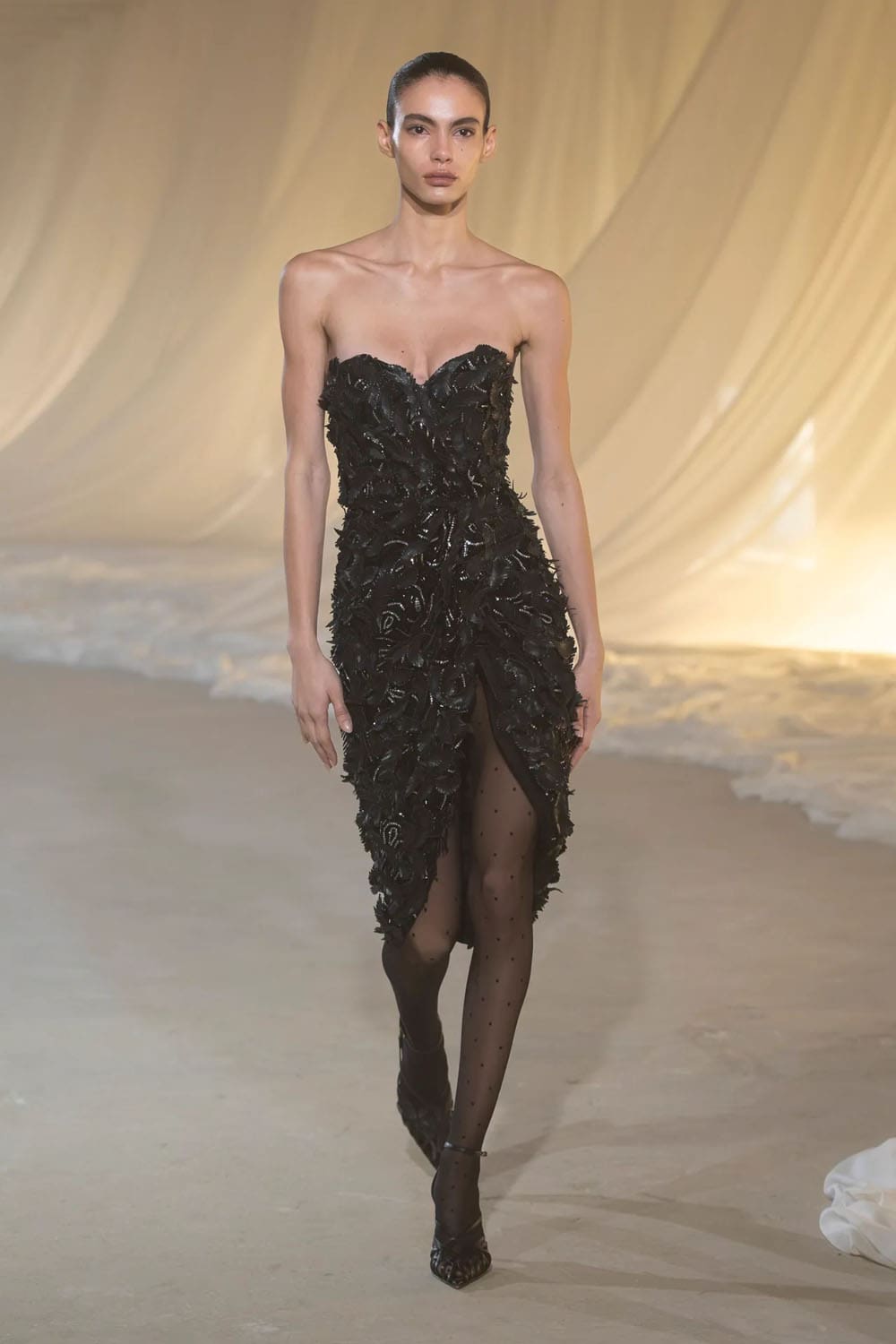
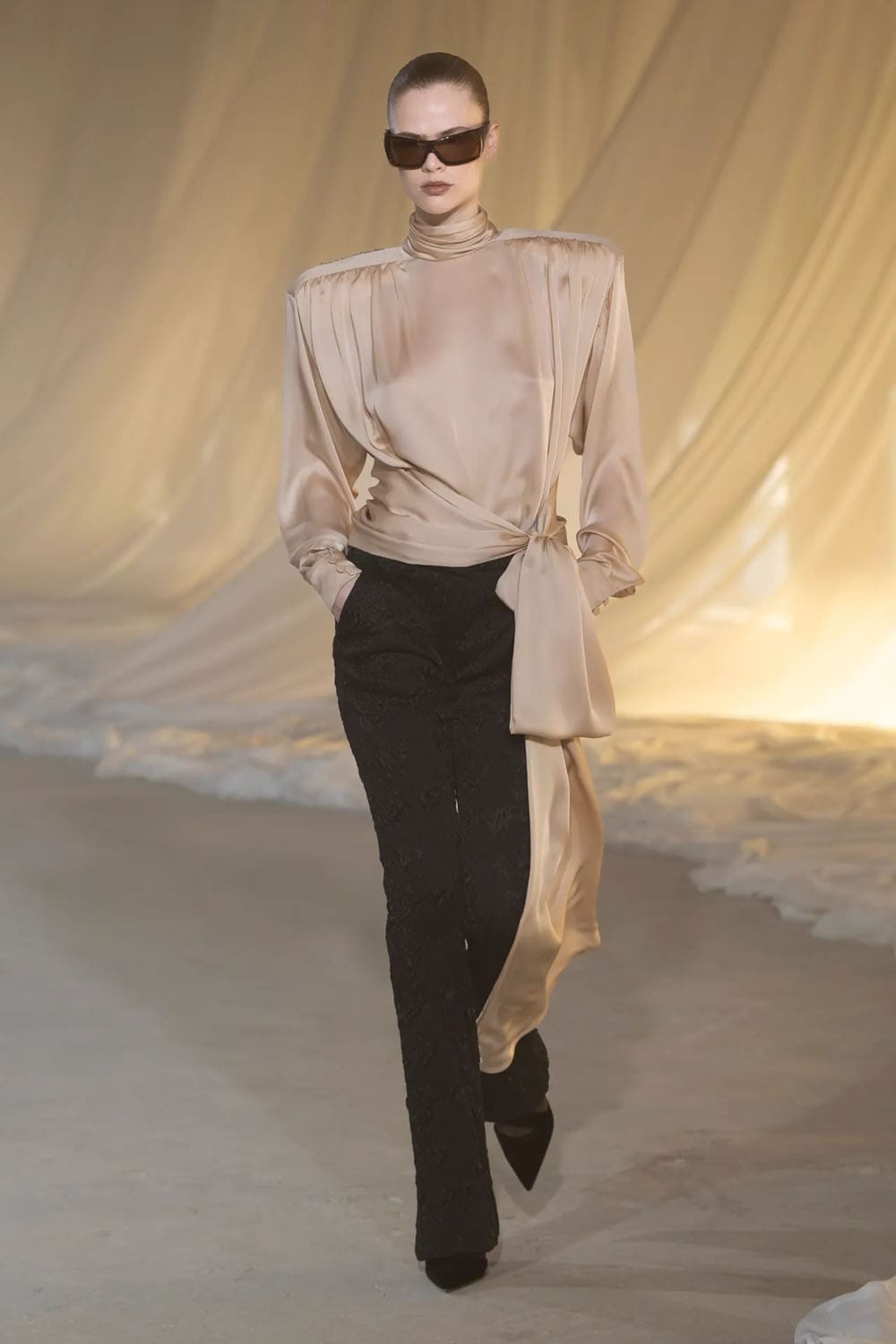
- Elegant silhouettes built around rounded shoulders, gathered waists, pencil skirts, precise bodices and fluid eveningwear establish a sophisticated foundation for the new direction
- A controlled and intelligent first collection that prioritizes rebuilding the house’s structural identity rather than attempting an immediate theatrical reinvention
RESERVATIONS
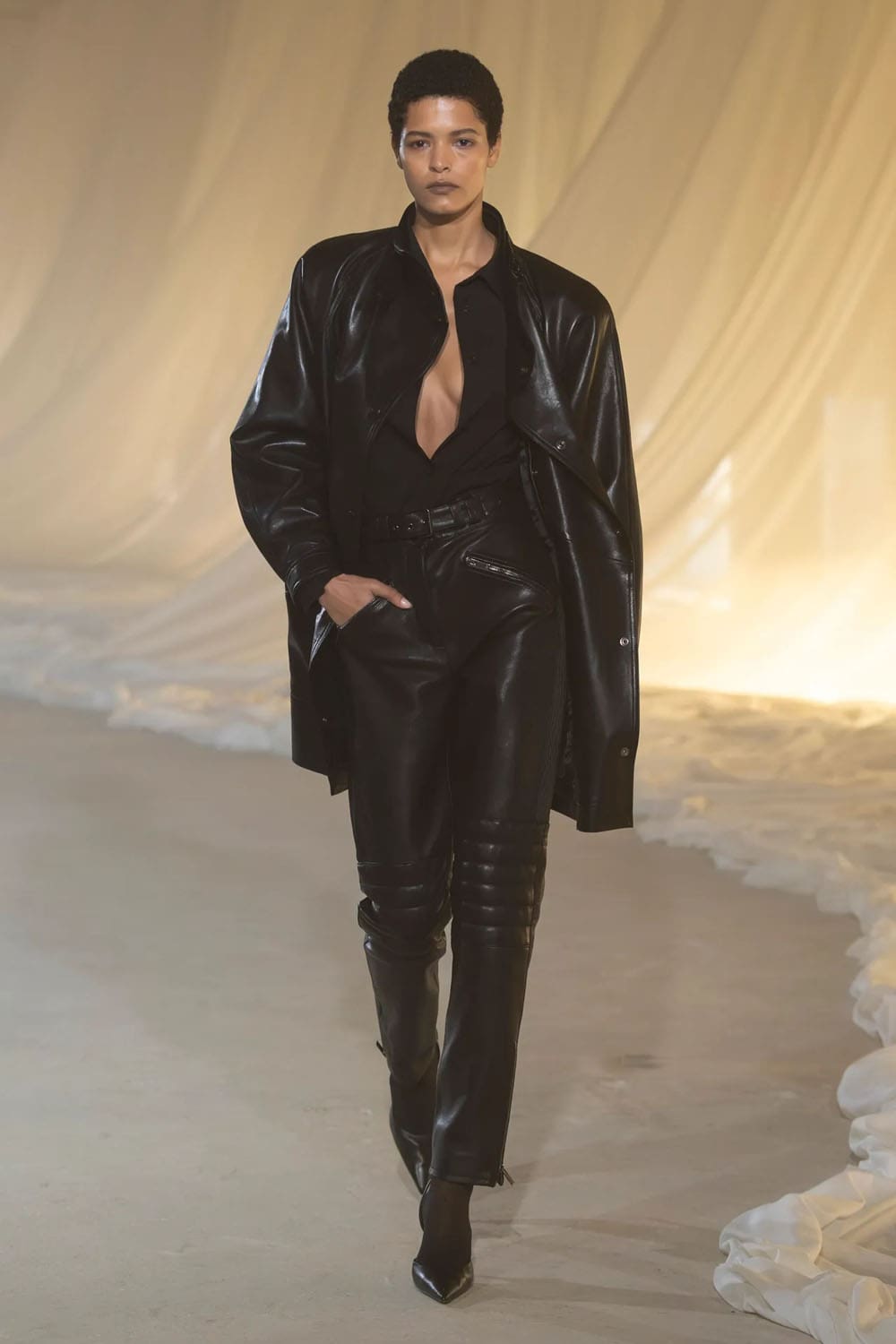
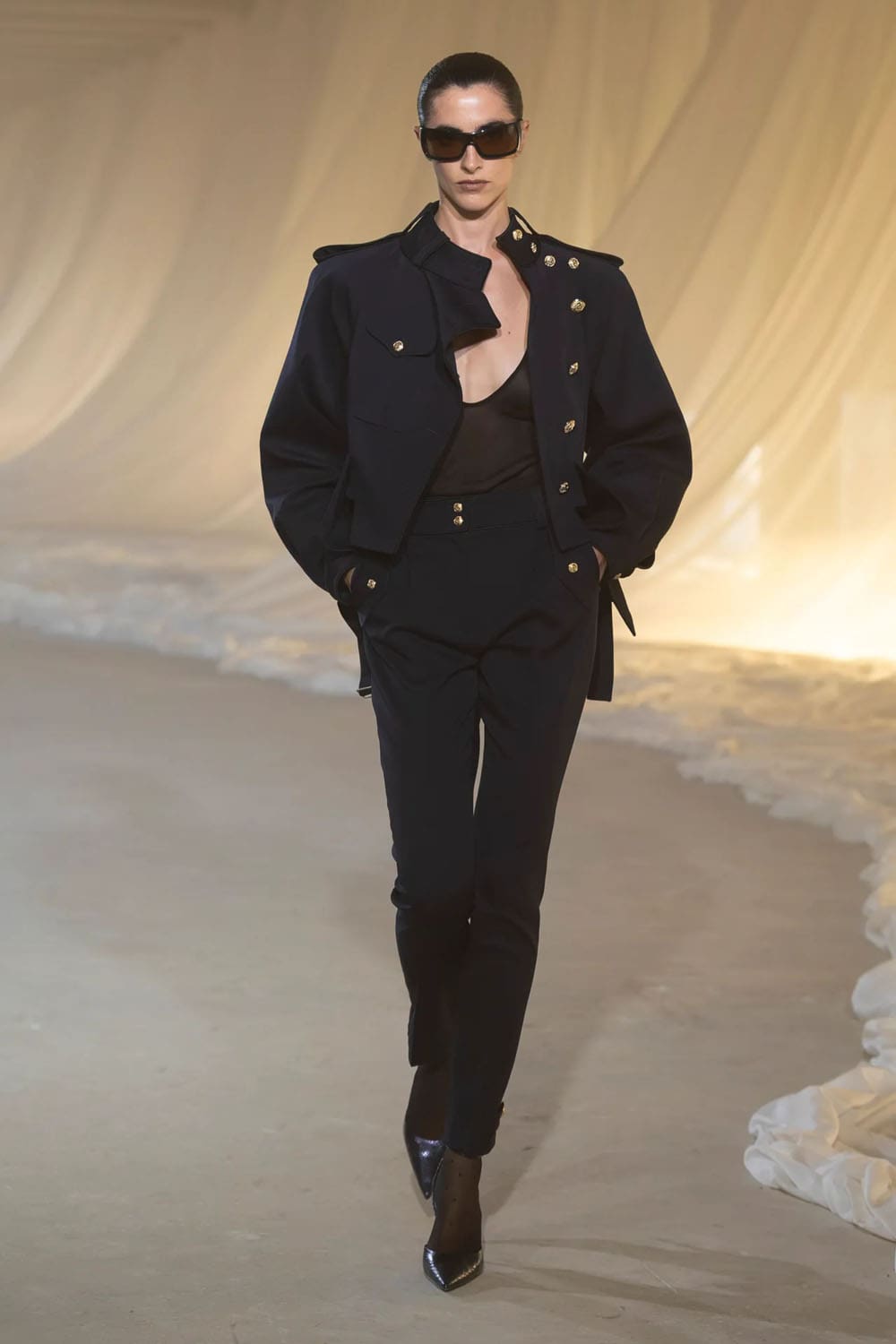
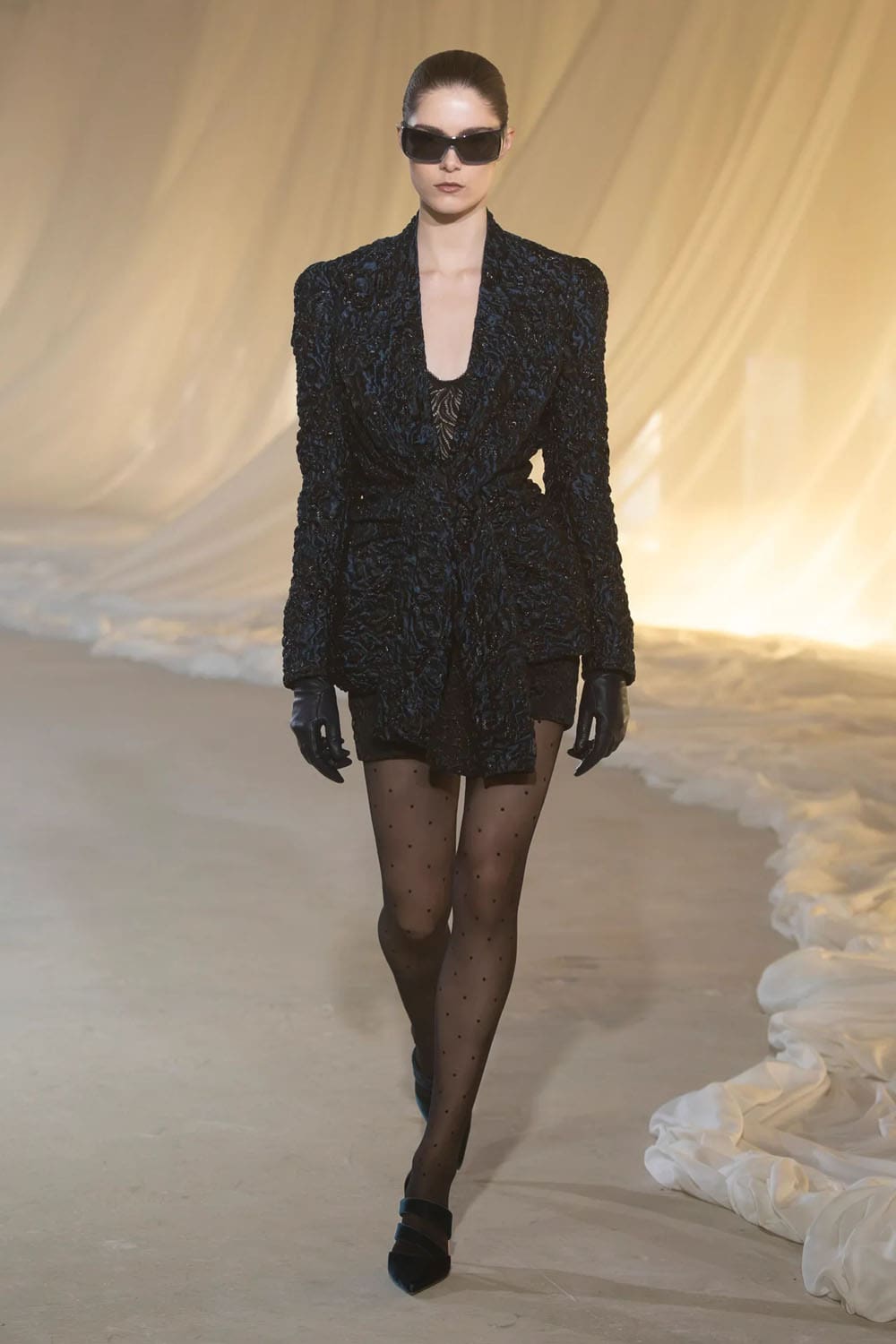
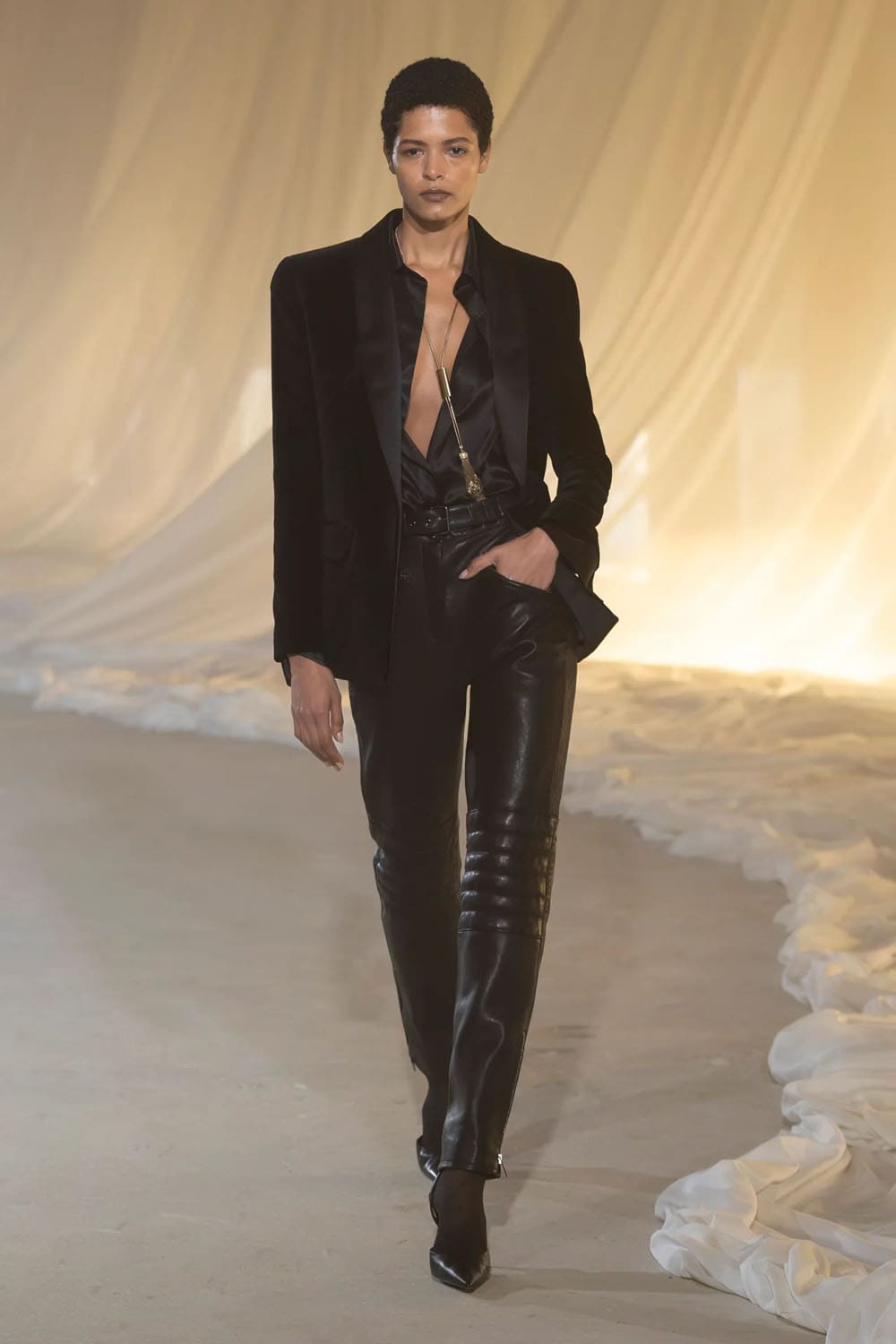
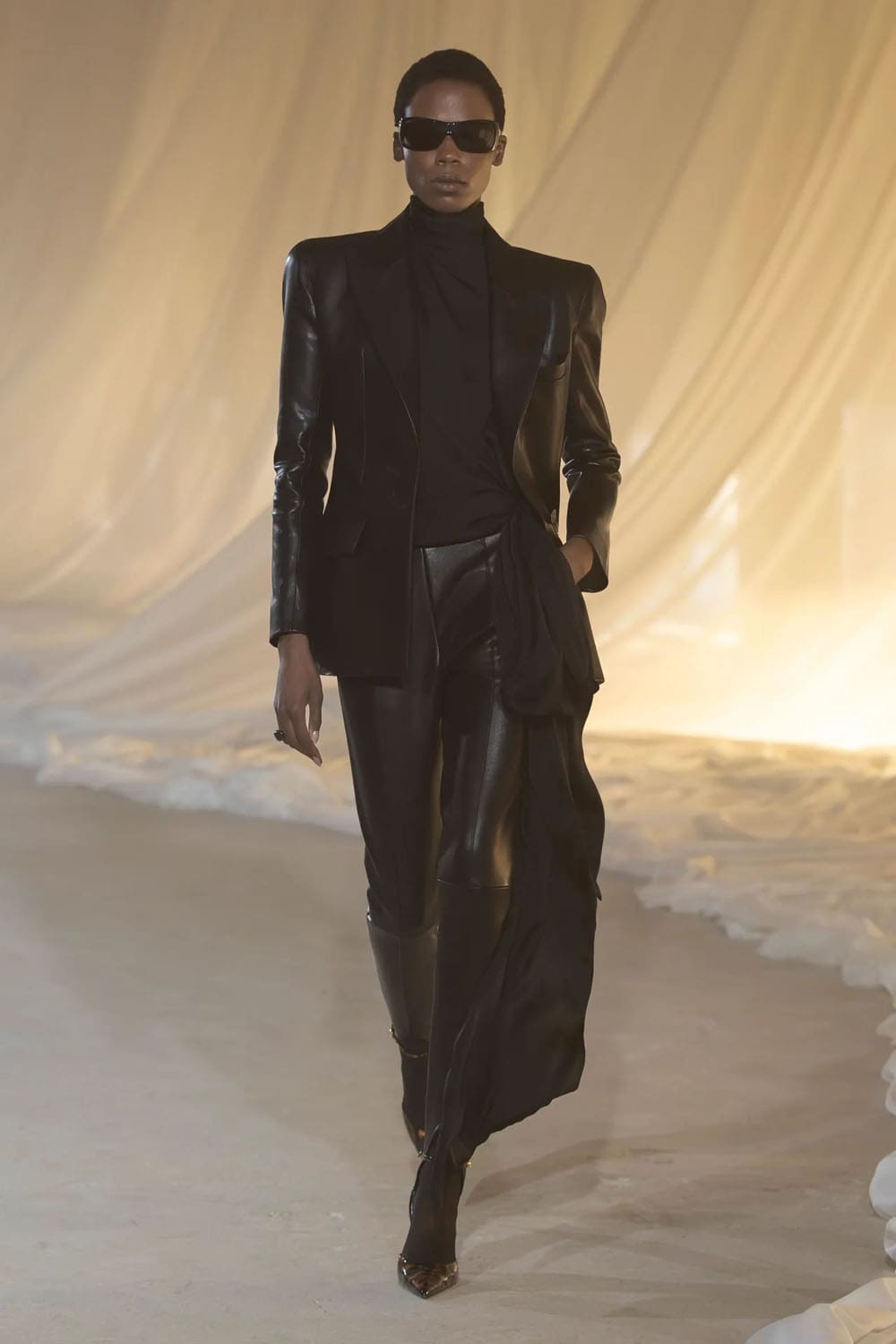
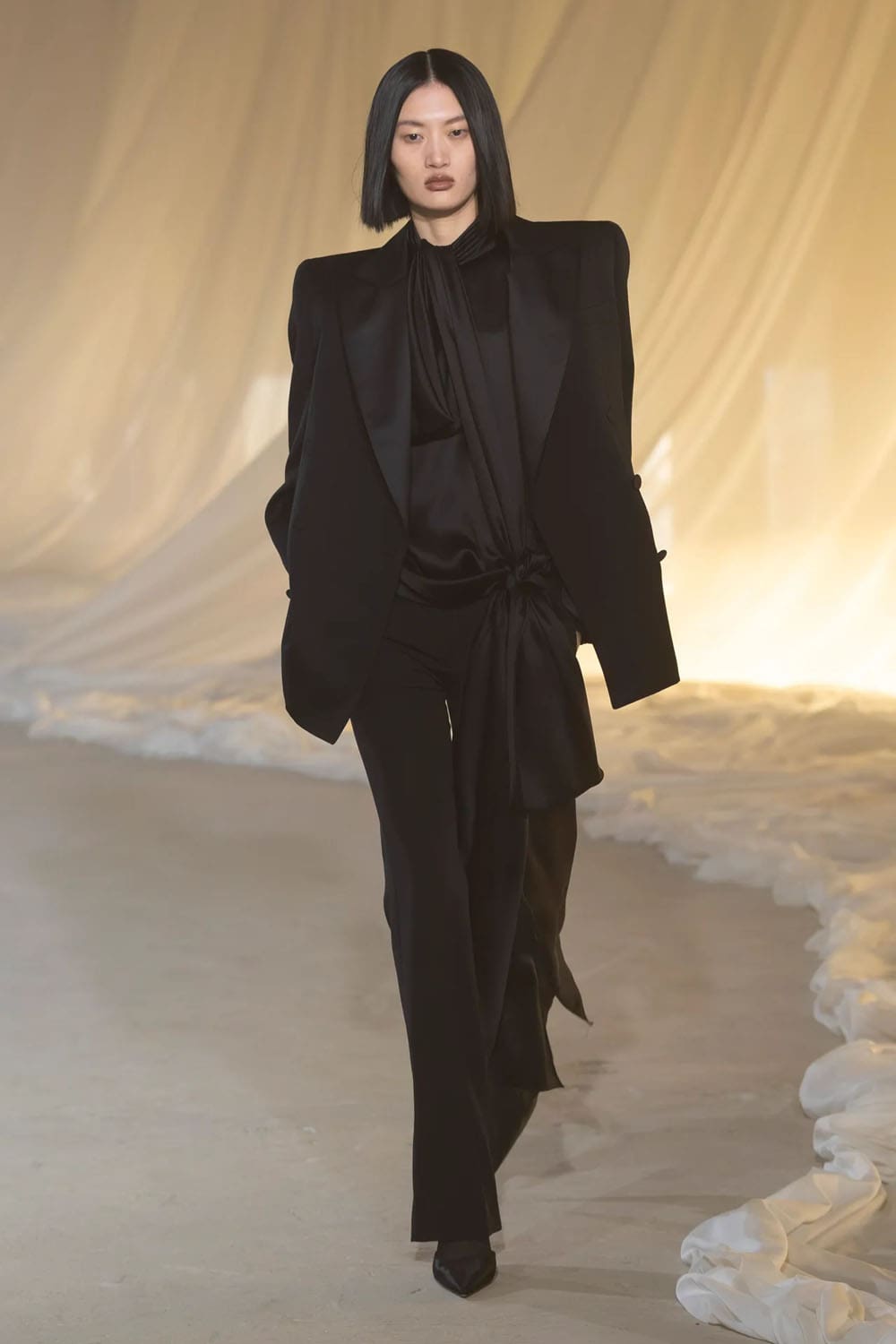
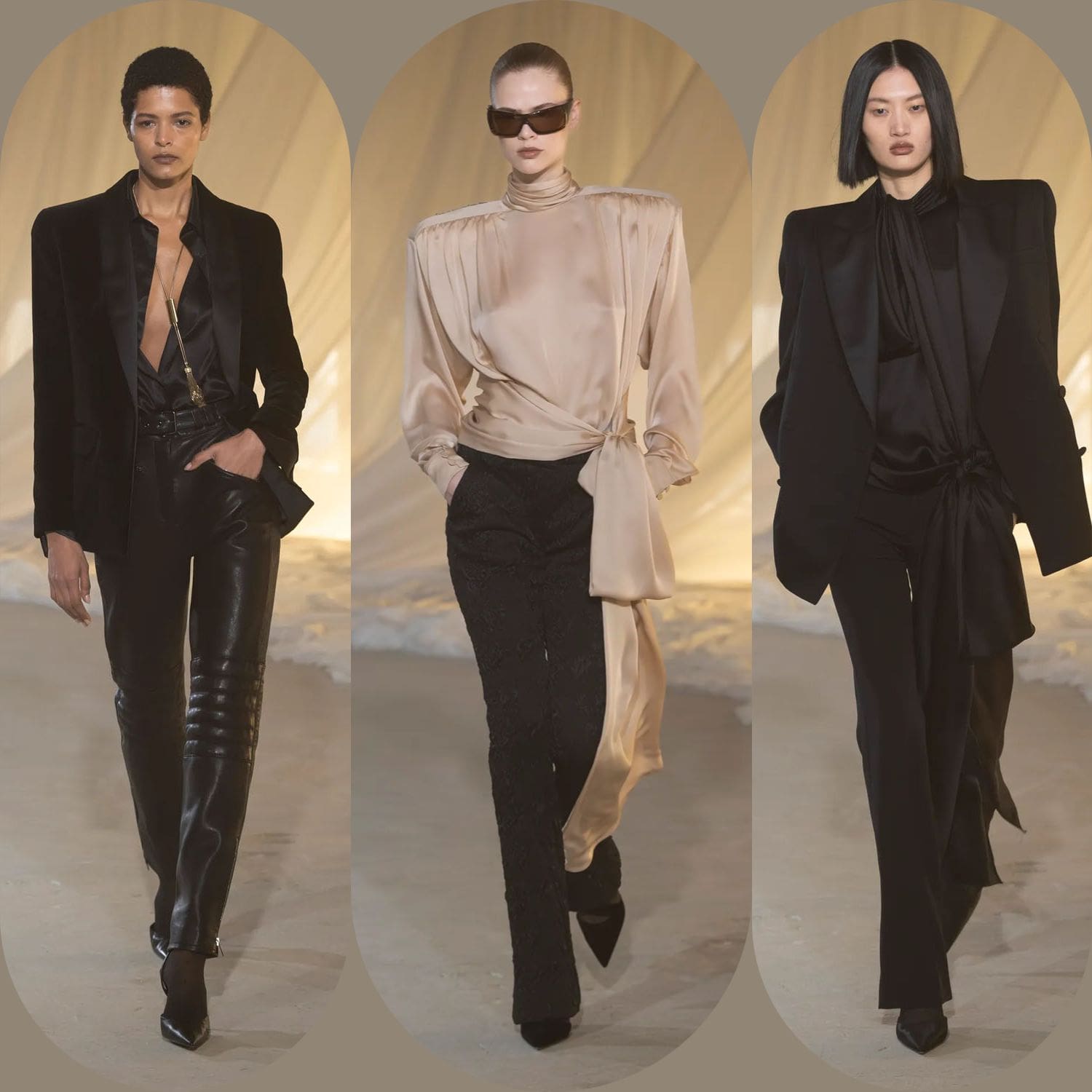
- The collection’s sleek black tailoring, sharp shoulders, fluid eveningwear and nocturnal sensuality sit uncomfortably close to the contemporary visual language associated with Saint Laurent
- The reset successfully removes much of the previous noise, but Antonin Tron’s own distinctive Balmain identity has not yet fully emerged
- Restraint provides an effective foundation for a debut, yet the collection remains more convincing as a structural recalibration than as a fully developed new creative proposition
- Beautiful individual garments do not yet amount to an unmistakable design signature capable of being identified as the new Balmain without the label
Balmain Fall Winter 2026-2027 “Antonin Tron Resets the House”. Story by Eleonora de Gray, Editor-in-Chief of RUNWAY MAGAZINE. Photo Courtesy: Balmain.
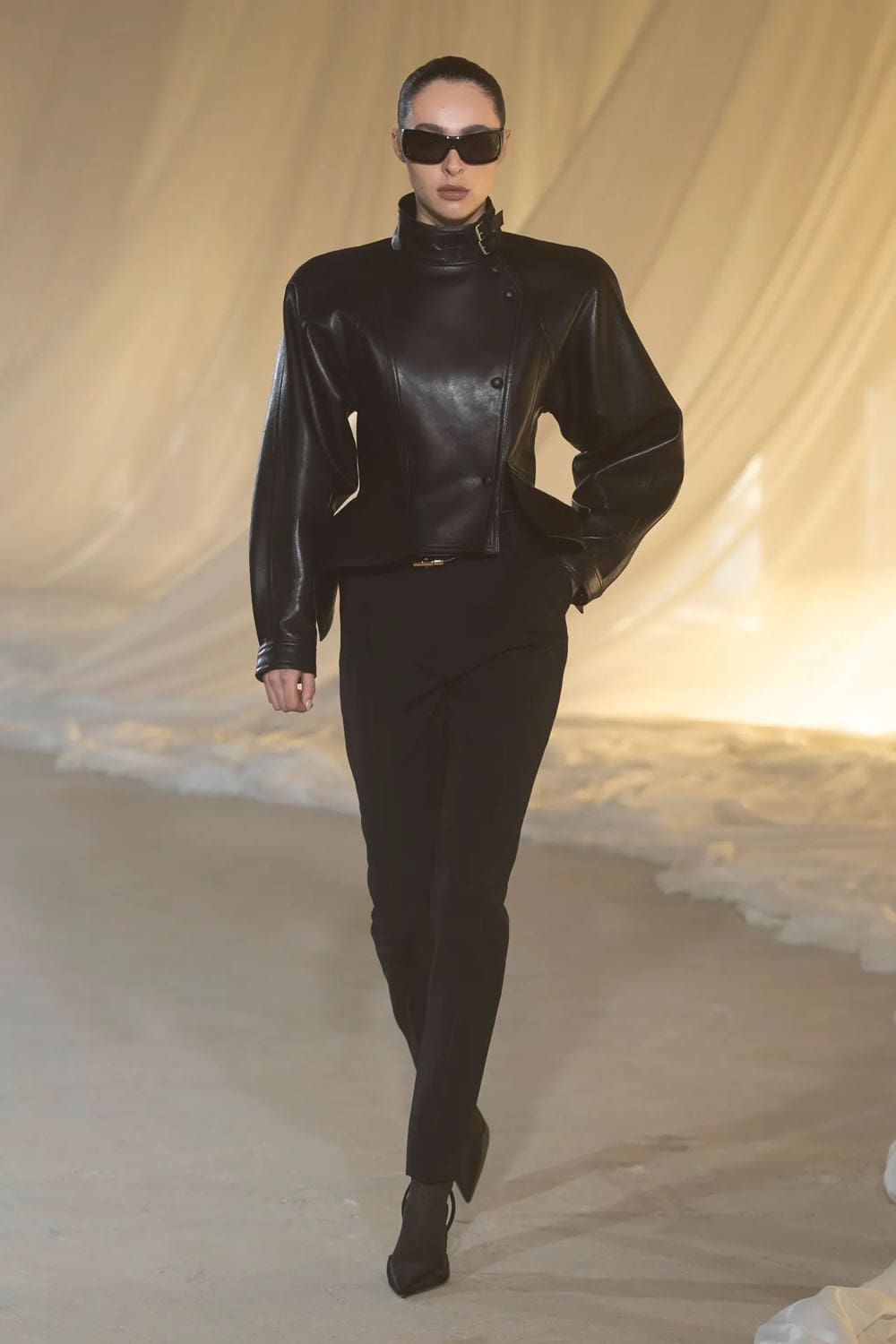
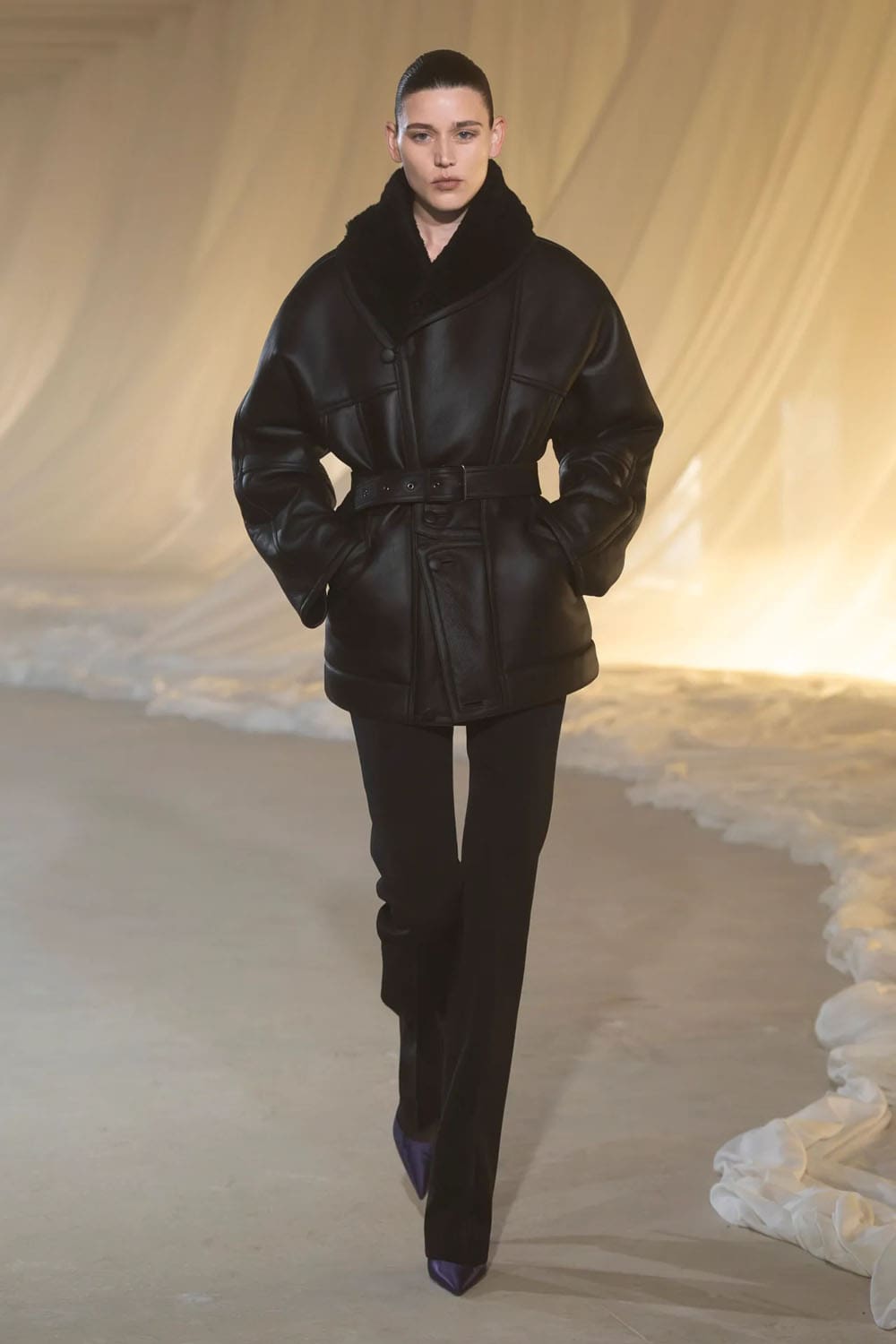
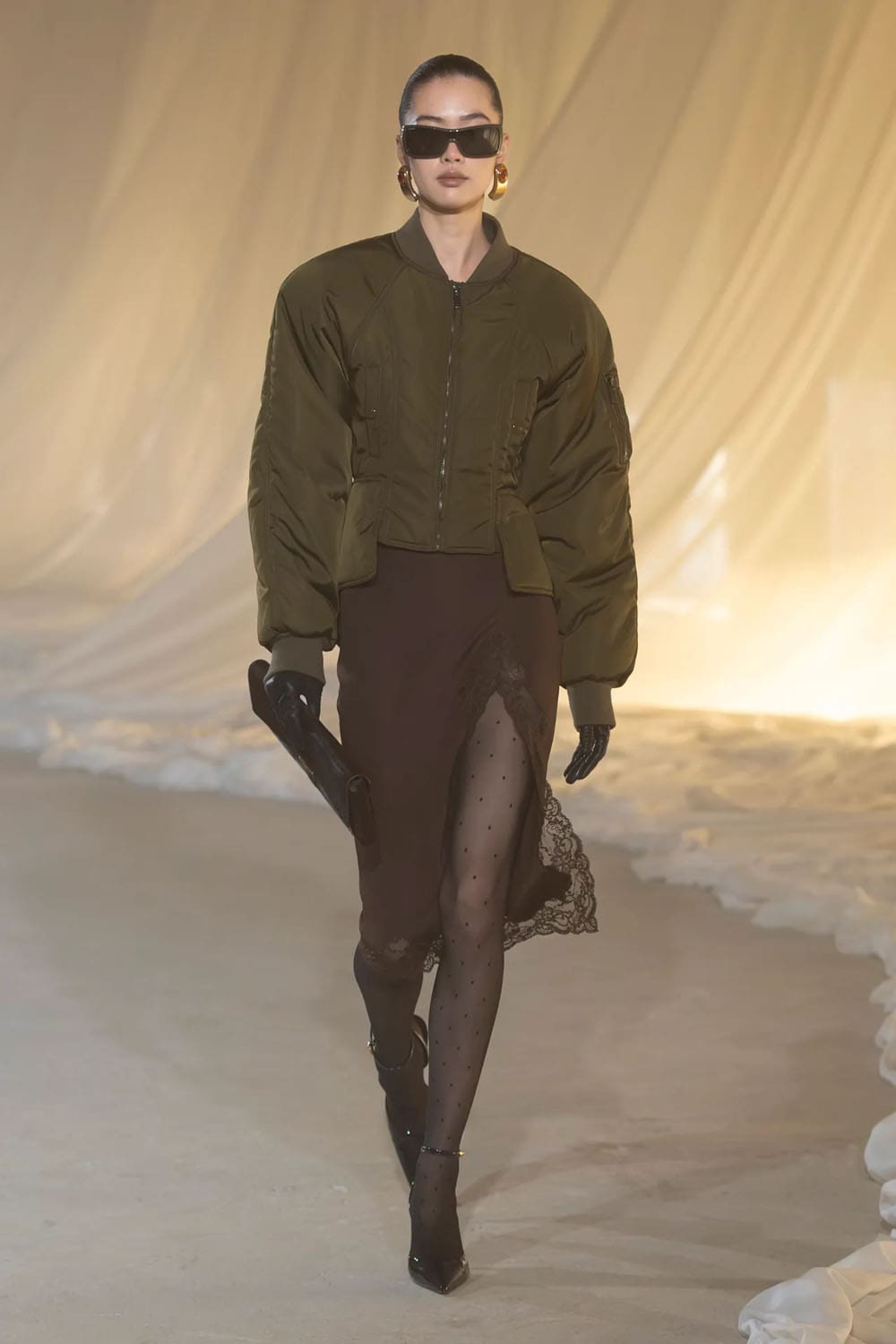
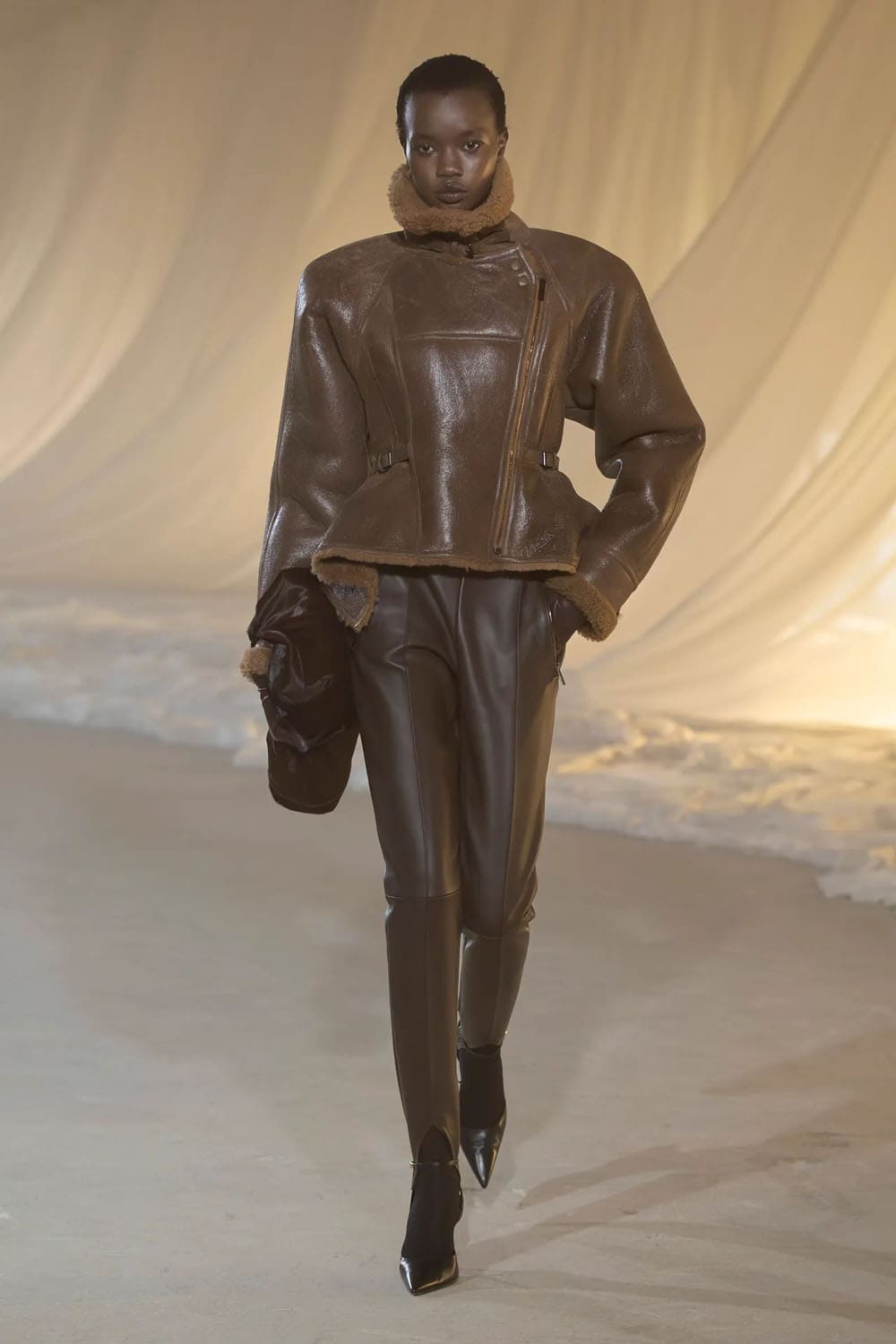
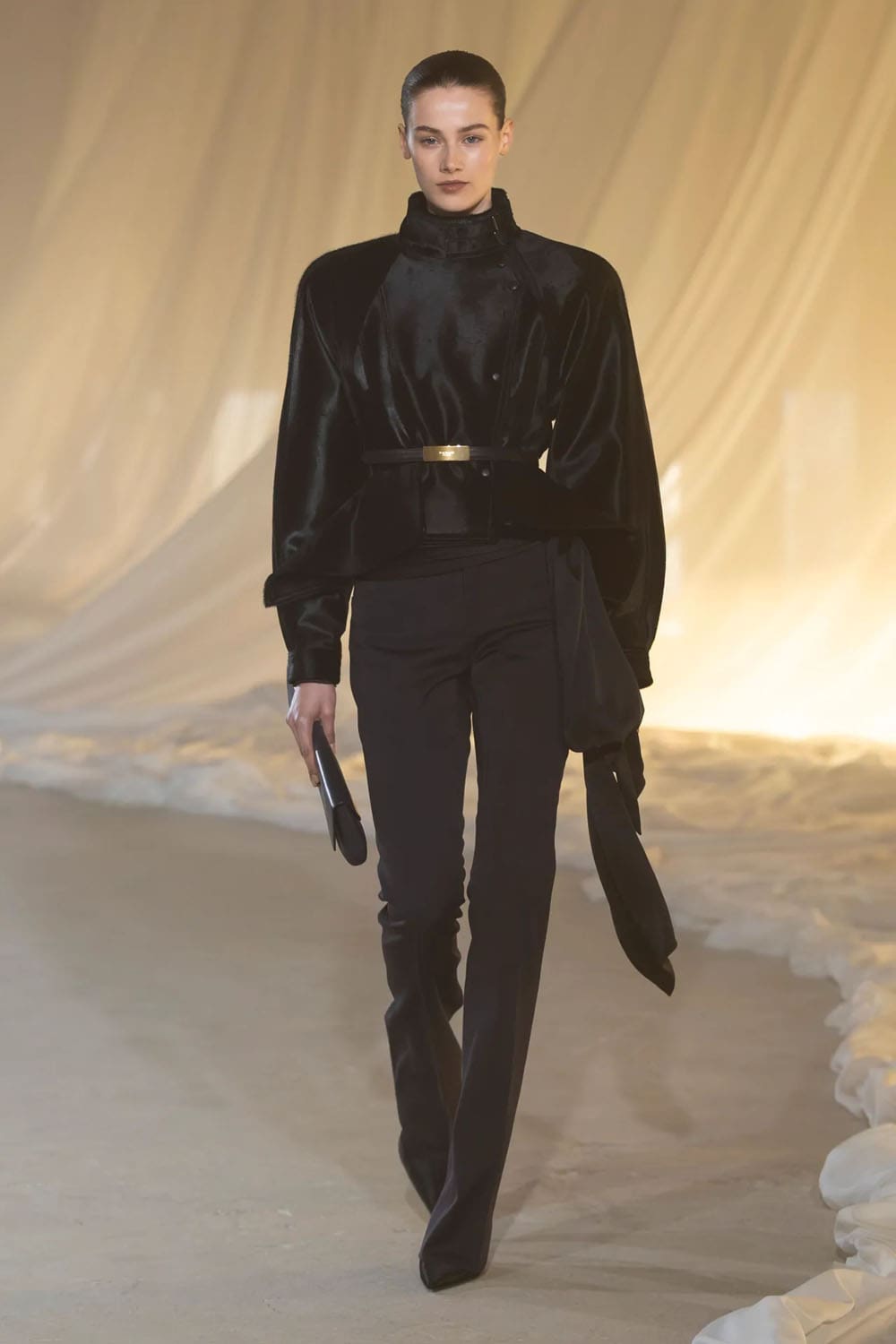
Antonin Tron has been appointed as Balmain’s new captain, stepping into the maison with barely three months before his first runway. Yet from the moment the opening look appeared—a flight jacket elevated in matte lambskin—one thing was unmistakable: Tron came not to adjust Balmain’s direction, but to reset its entire navigation system.
The reference was clear and elegant. Danielle Décuré, Air France’s first female pilot and a woman who fought through institutional misogyny and two crashes before taking command of the skies in a Pierre Balmain–designed uniform. It was the right metaphor: a house surviving turbulence and handed to a leader who understands the gravity of the cockpit.
After the last decade, the need for recalibration is obvious. For years Balmain drifted into a universe governed not by couture but by spectacle—an era saturated in celebrity staging, surface-level theatrics, and an increasingly derivative visual language. The brand’s historical discipline, its architectural silhouettes, and its couture integrity were often drowned under sheer noise. Returning to level zero was not a creative whim. It was structural necessity.
Tron’s task, therefore, is not to “continue” anything. His mandate is to rebuild.
Back to Pierre Balmain
The foundation of this collection lies not in nostalgia but in clarity. Tron turned to two original 1940s dresses cut by Pierre Balmain, studying how the founder shaped elegance through line, tension, and proportion. These archival pieces became the blueprint for what Tron describes as “minimal opulence”—not minimalism in the contemporary sense, but refinement stripped of vanity.
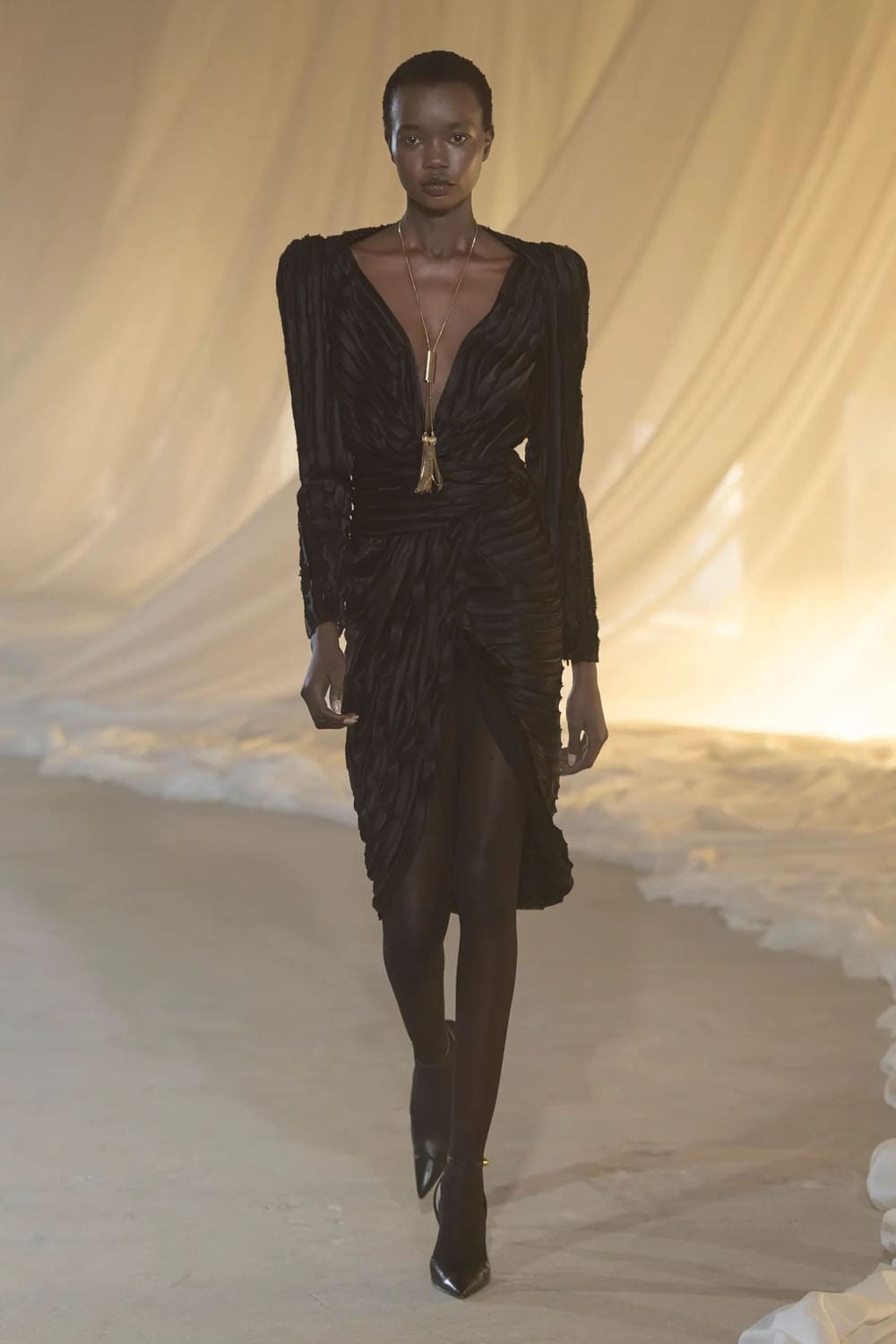
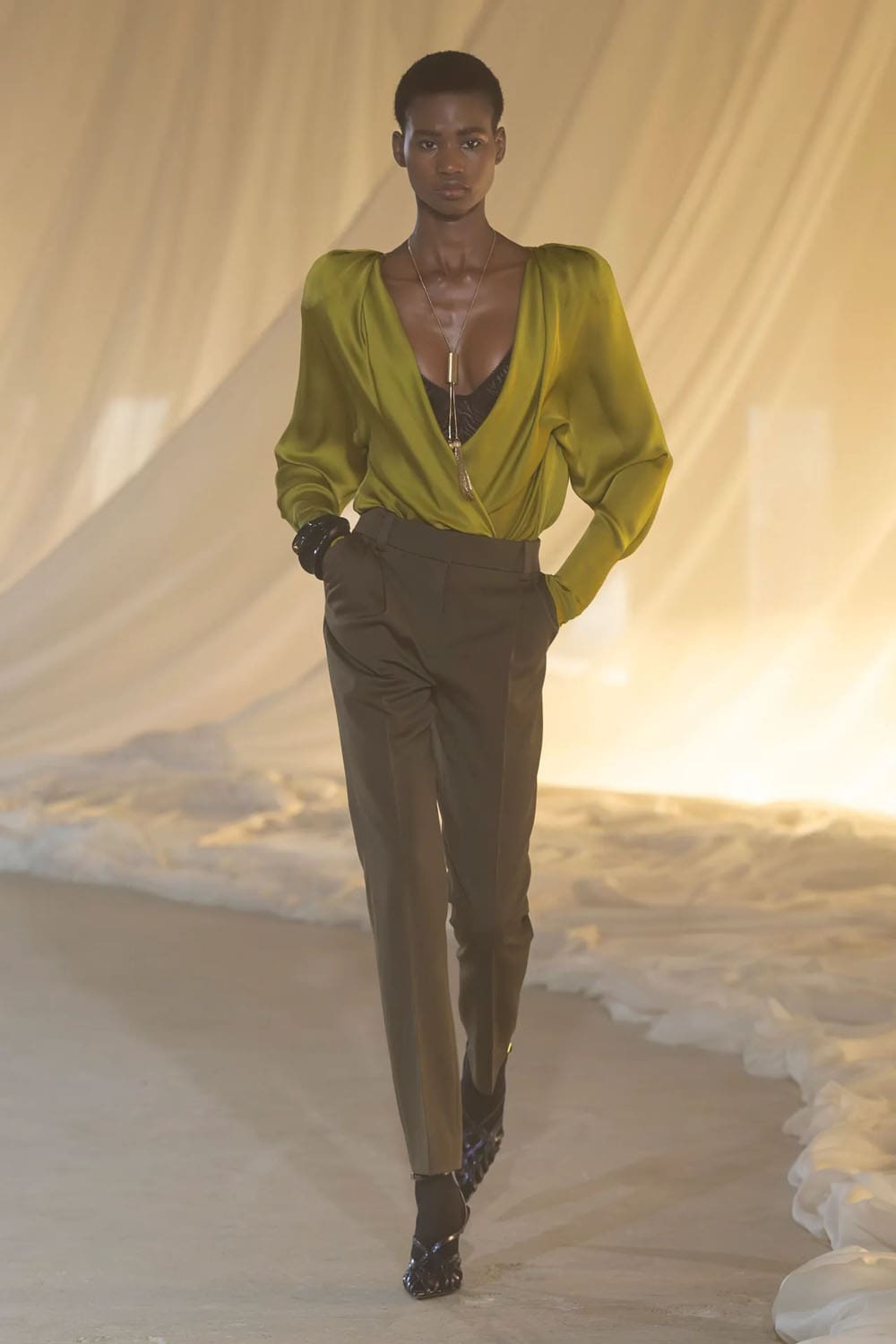
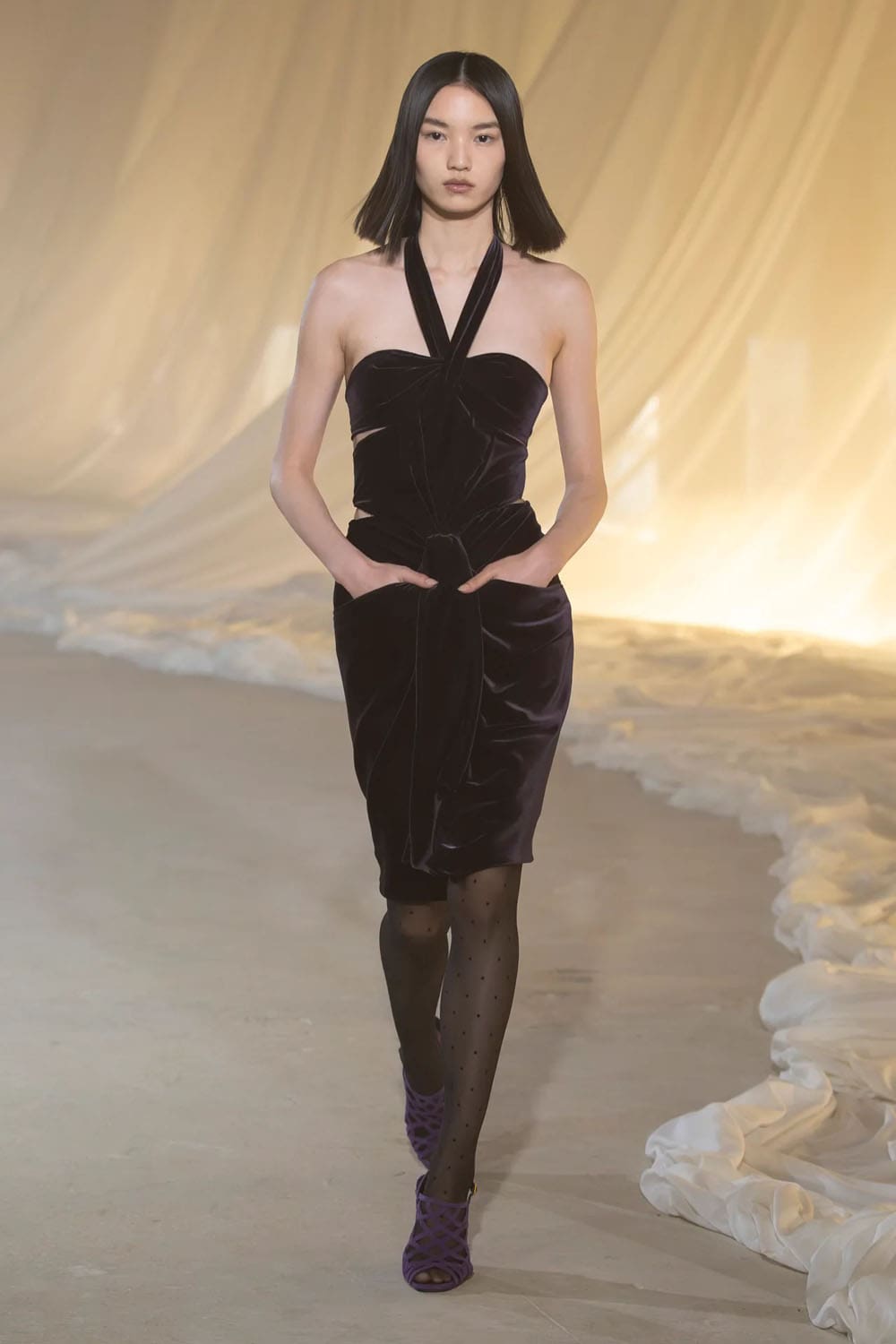
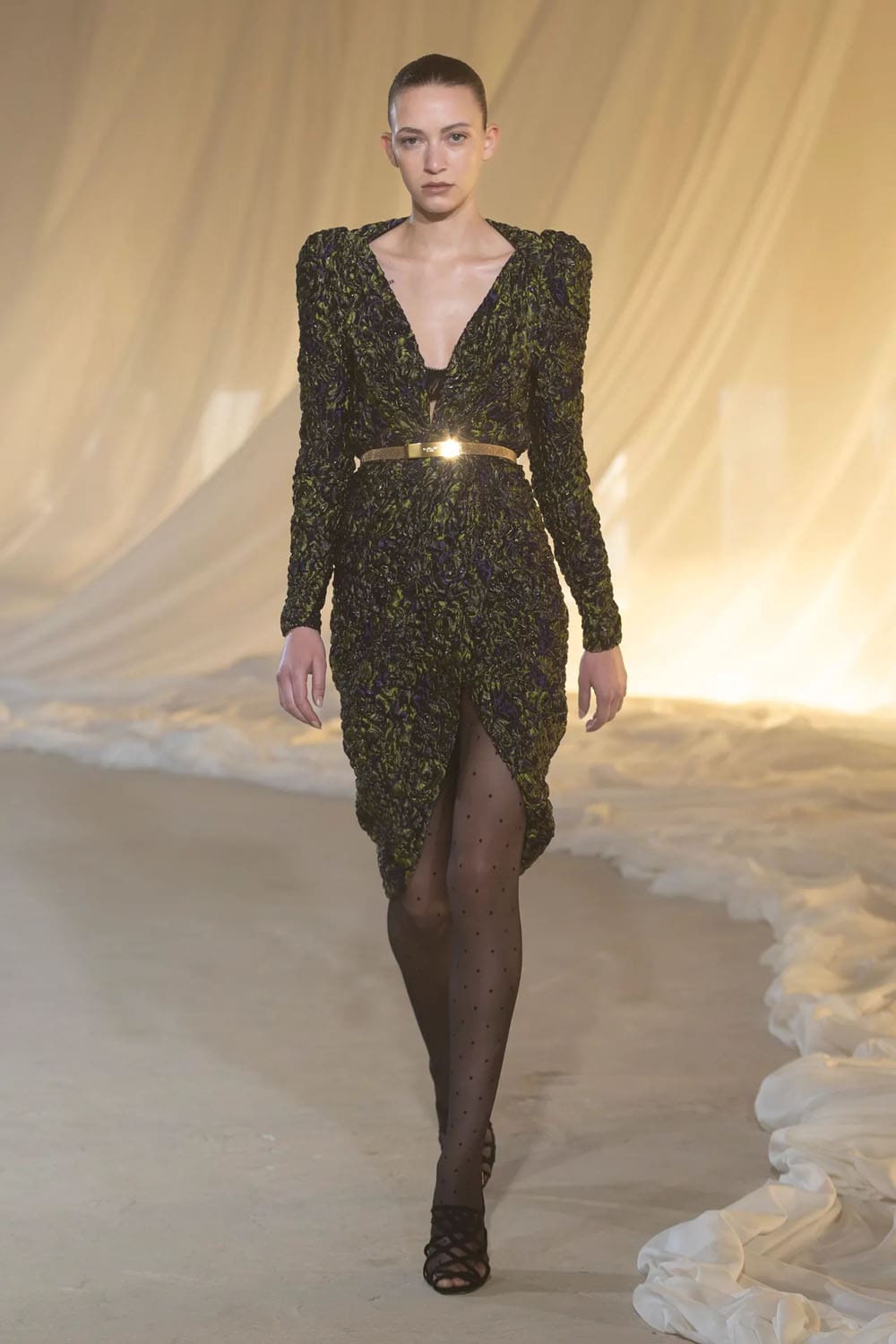
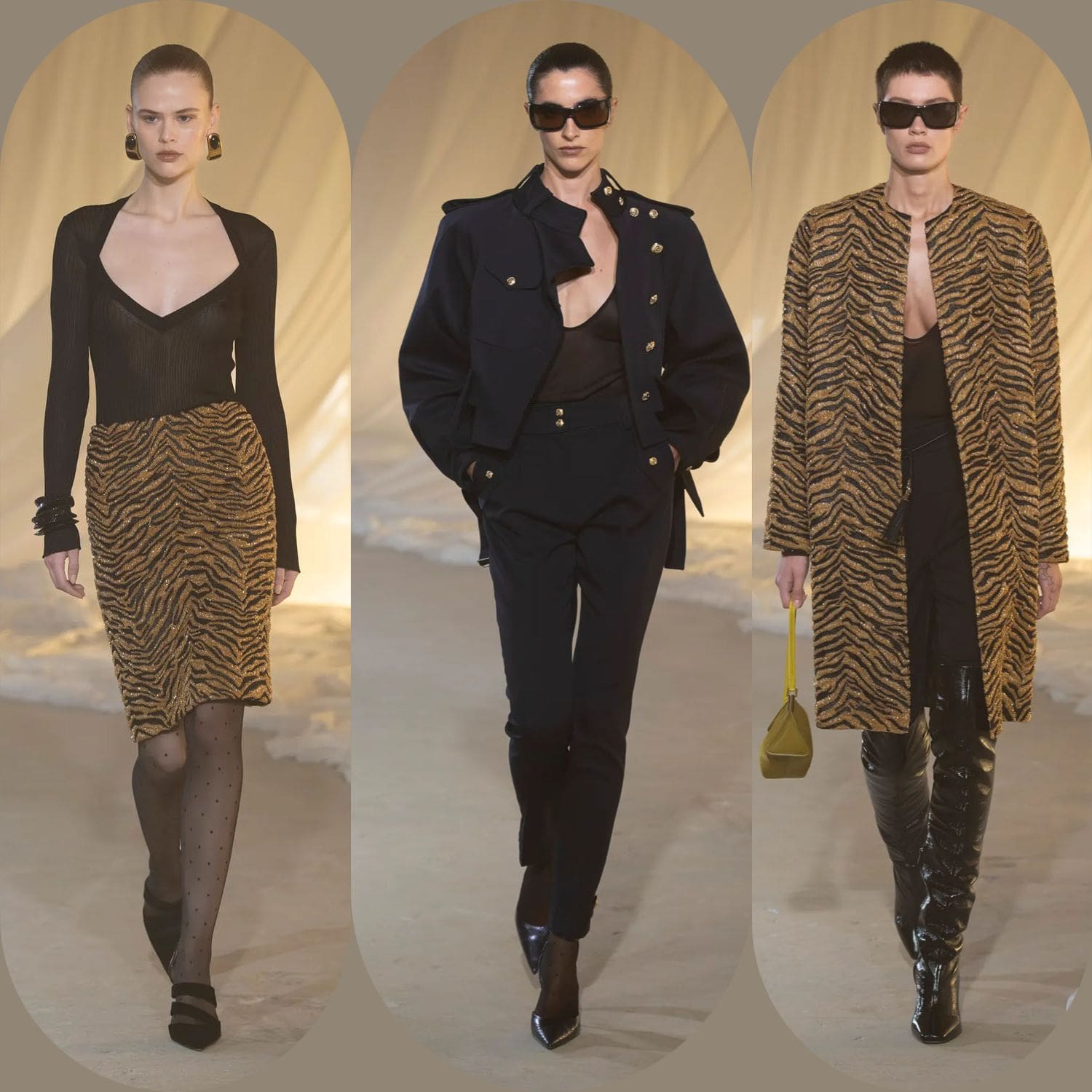
Rounded shoulders, gathered waists, lengthened sleeves, pencil skirts, and tight architectural bodices reappear in new form. The silhouettes recall the cinematic precision of Lauren Bacall or Rita Hayworth without ever devolving into costume. The point is structure. The point is discipline.
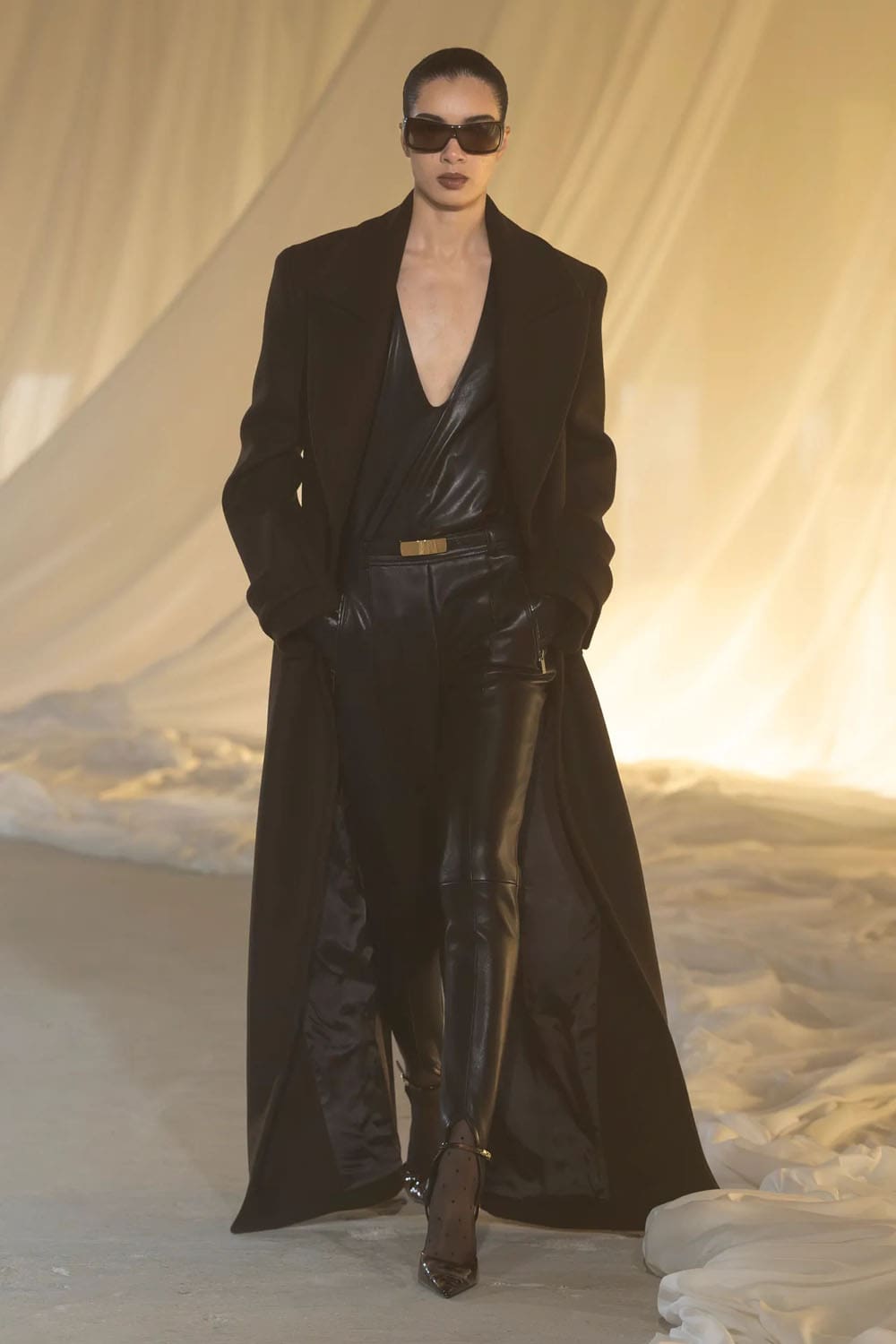
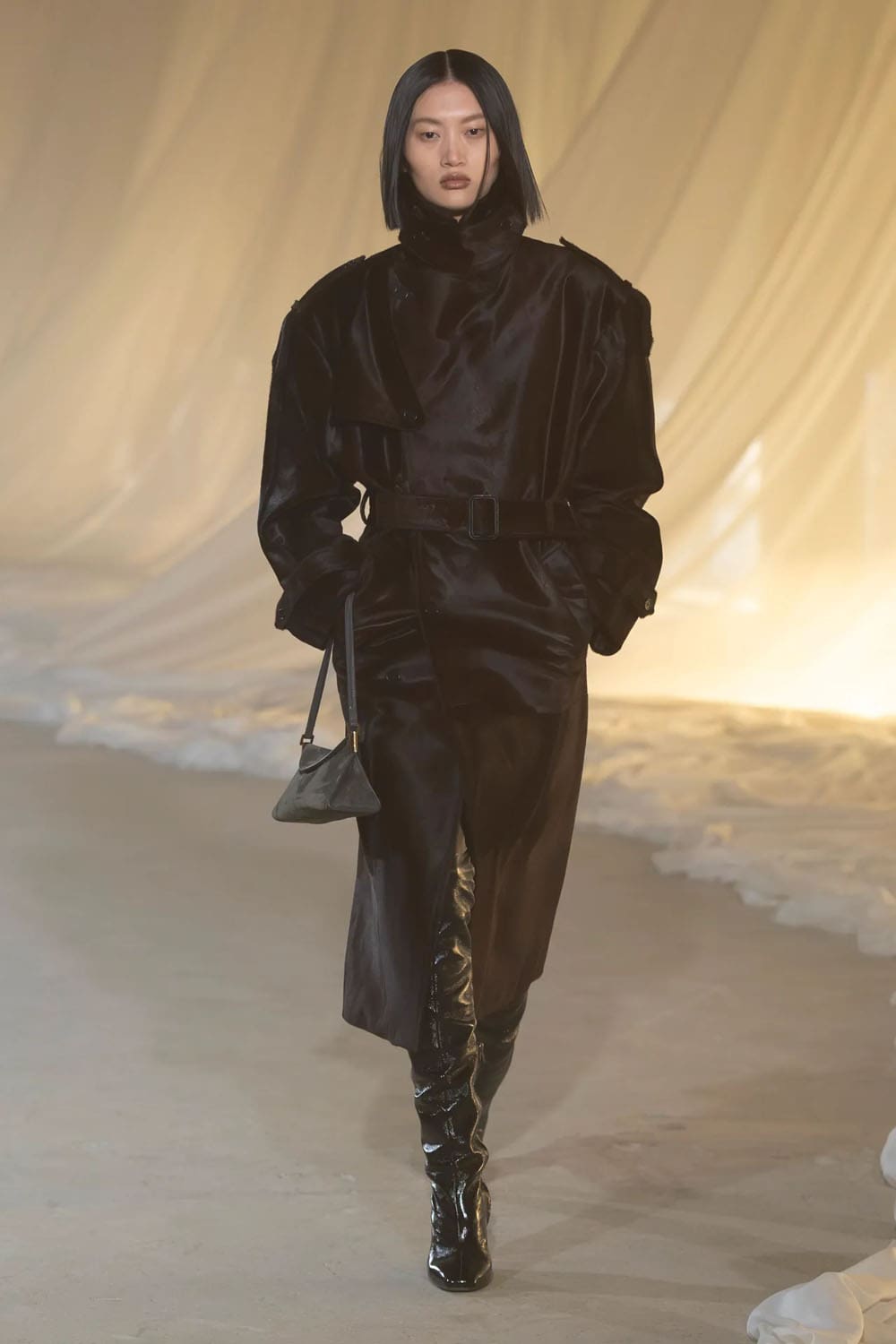
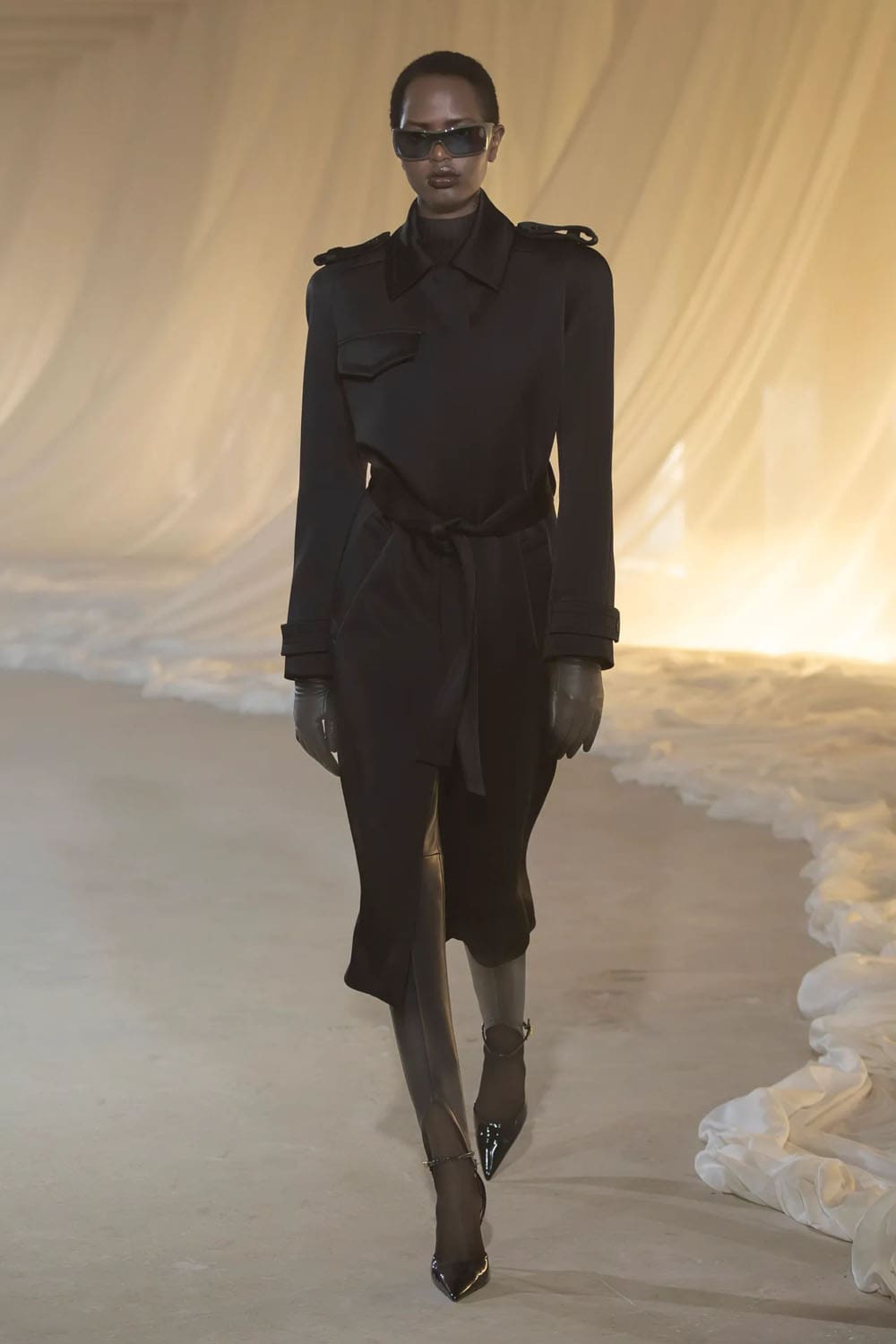
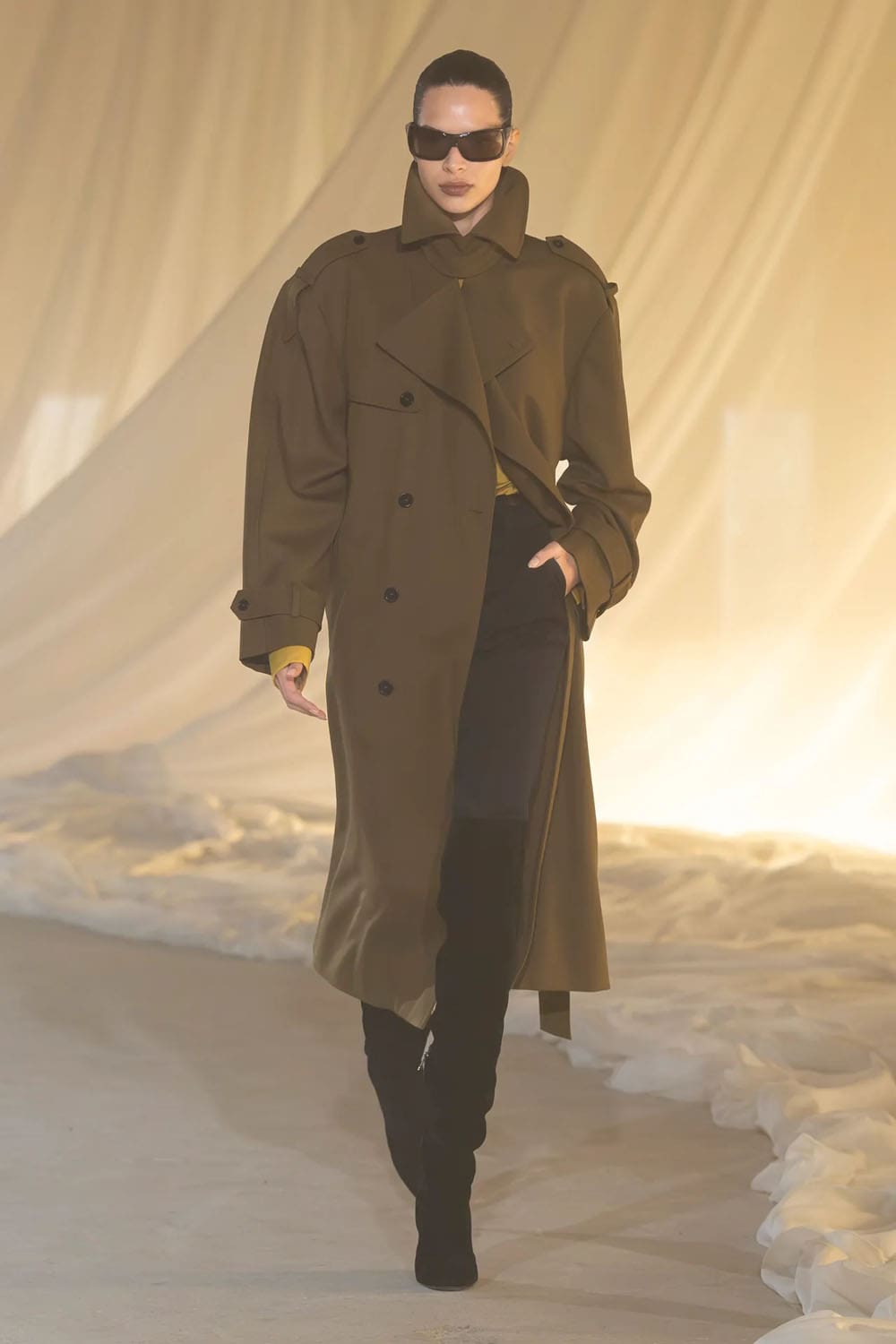
Elsewhere, a Bogart-worthy trench walks the runway with a quiet authority, its sharpness serving as a reminder of how powerful simplicity can be when it is rooted in intelligent tailoring.
Tron is not imitating the past. He is using it as scaffolding.
The Slinky New Line
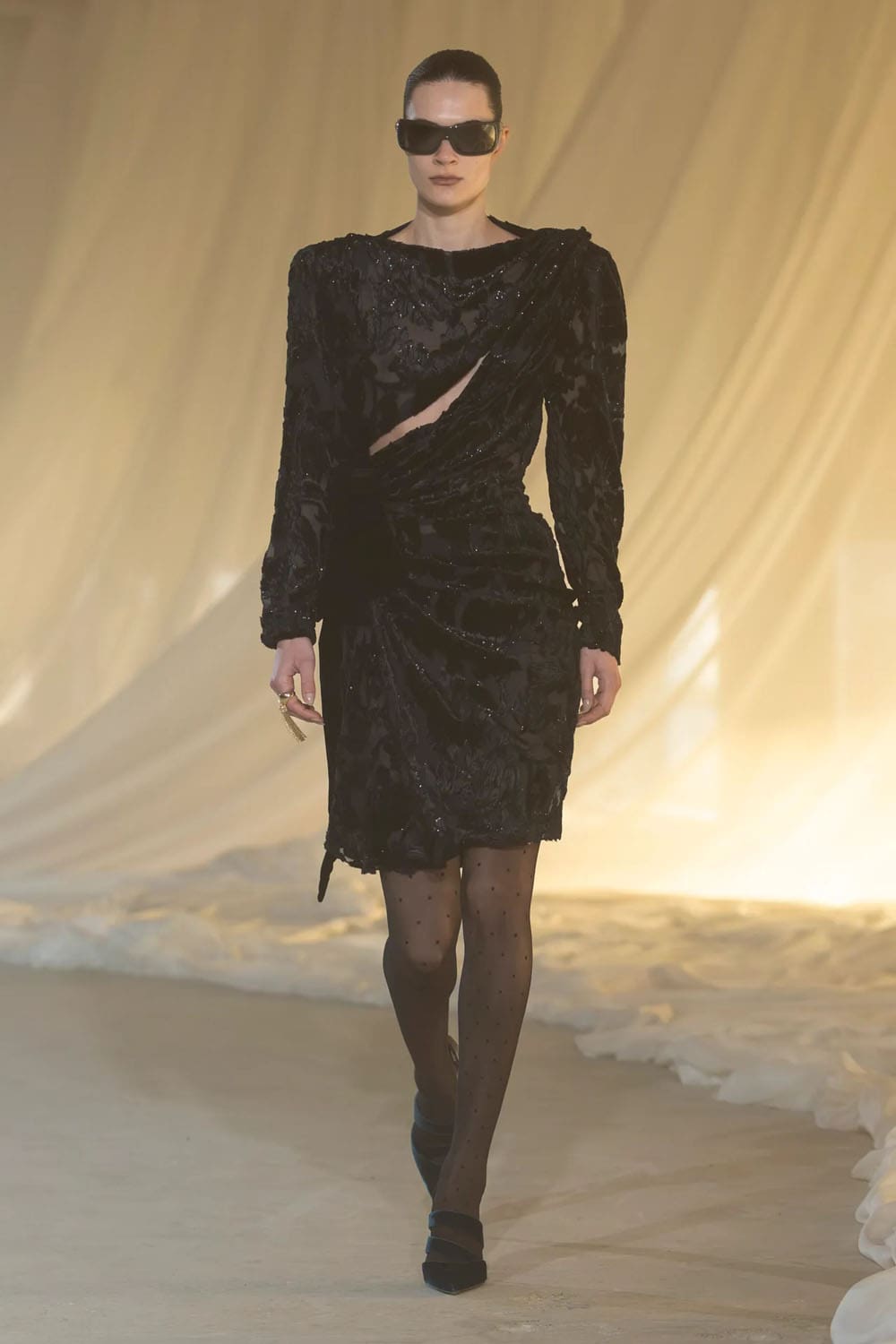
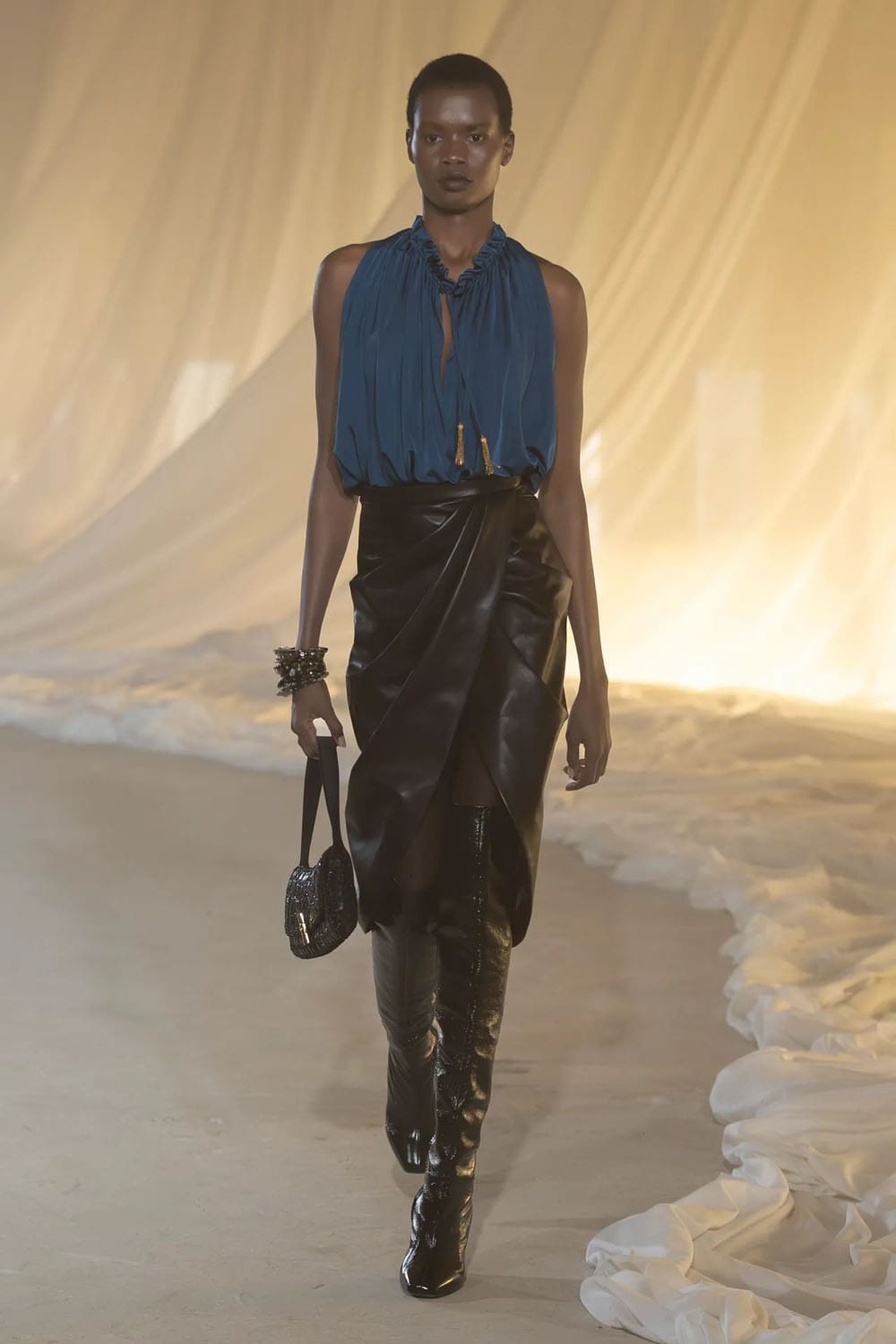
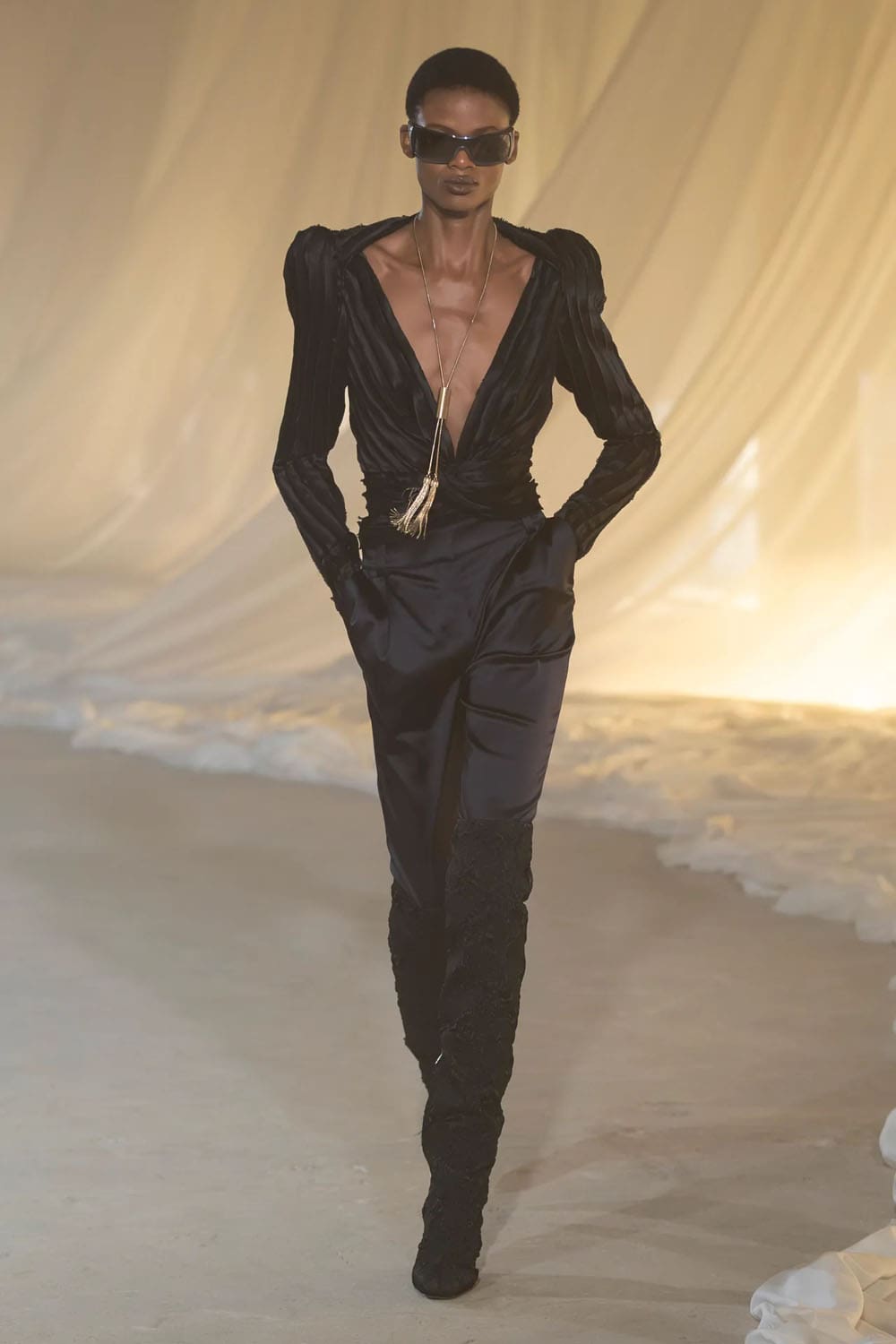
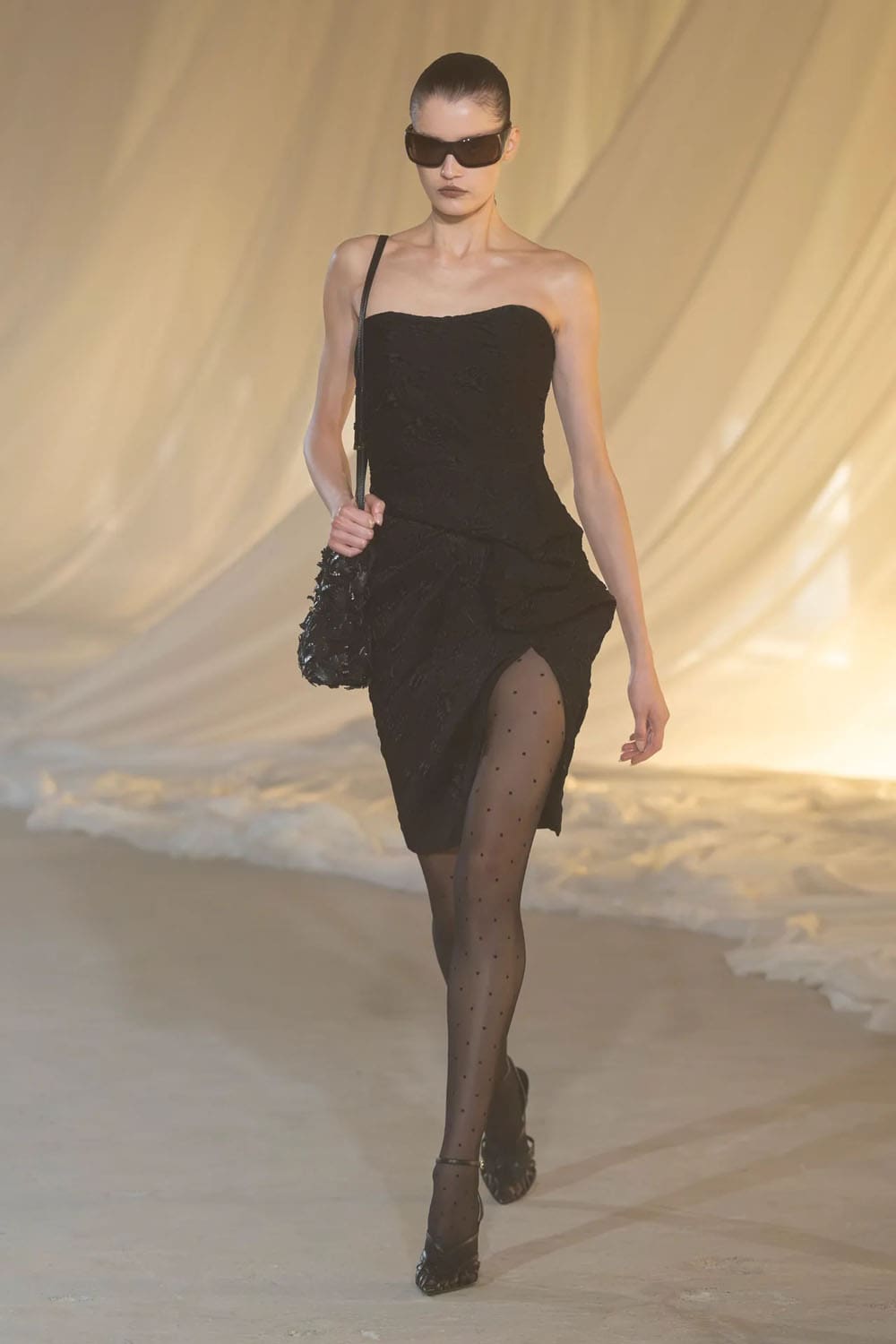
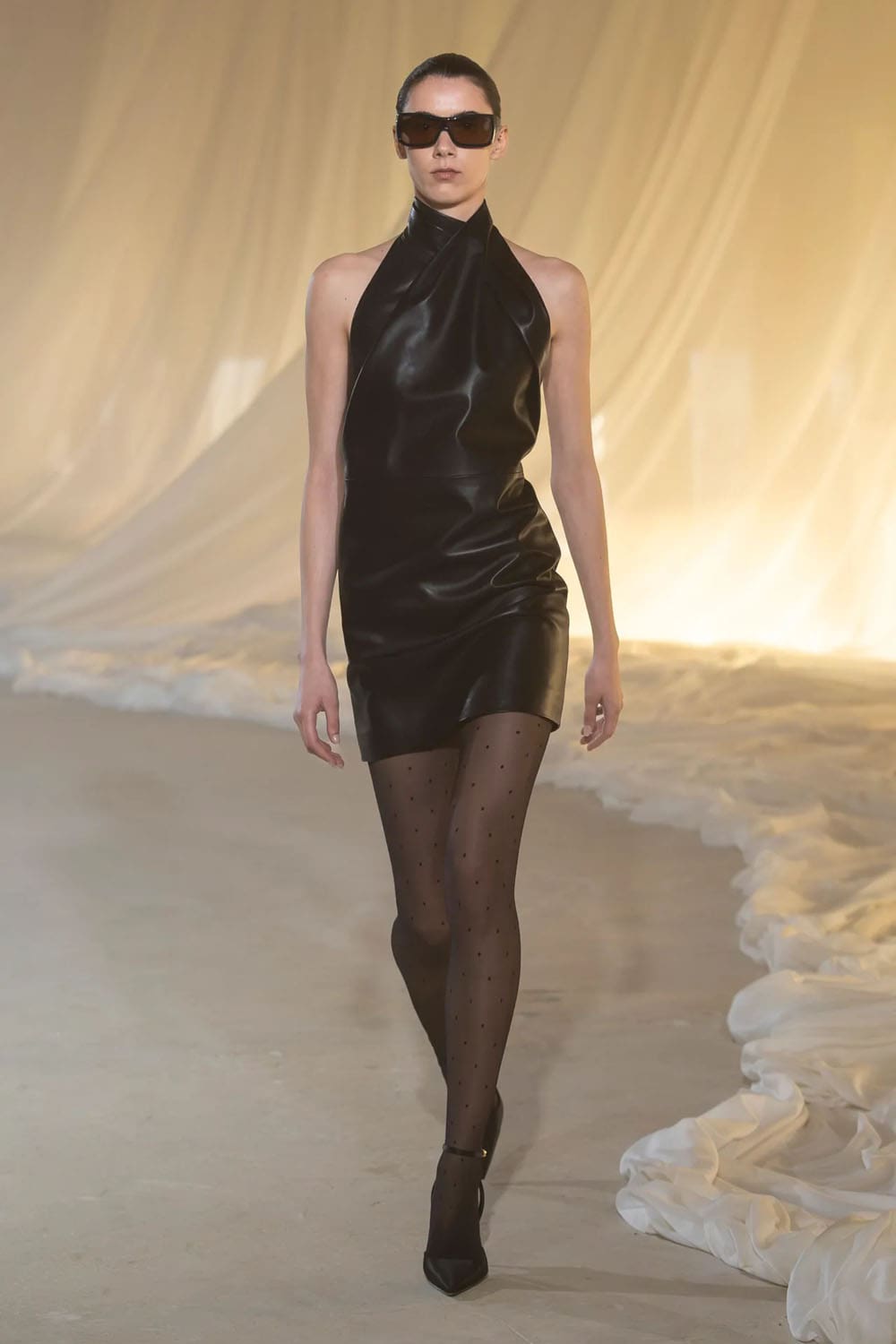
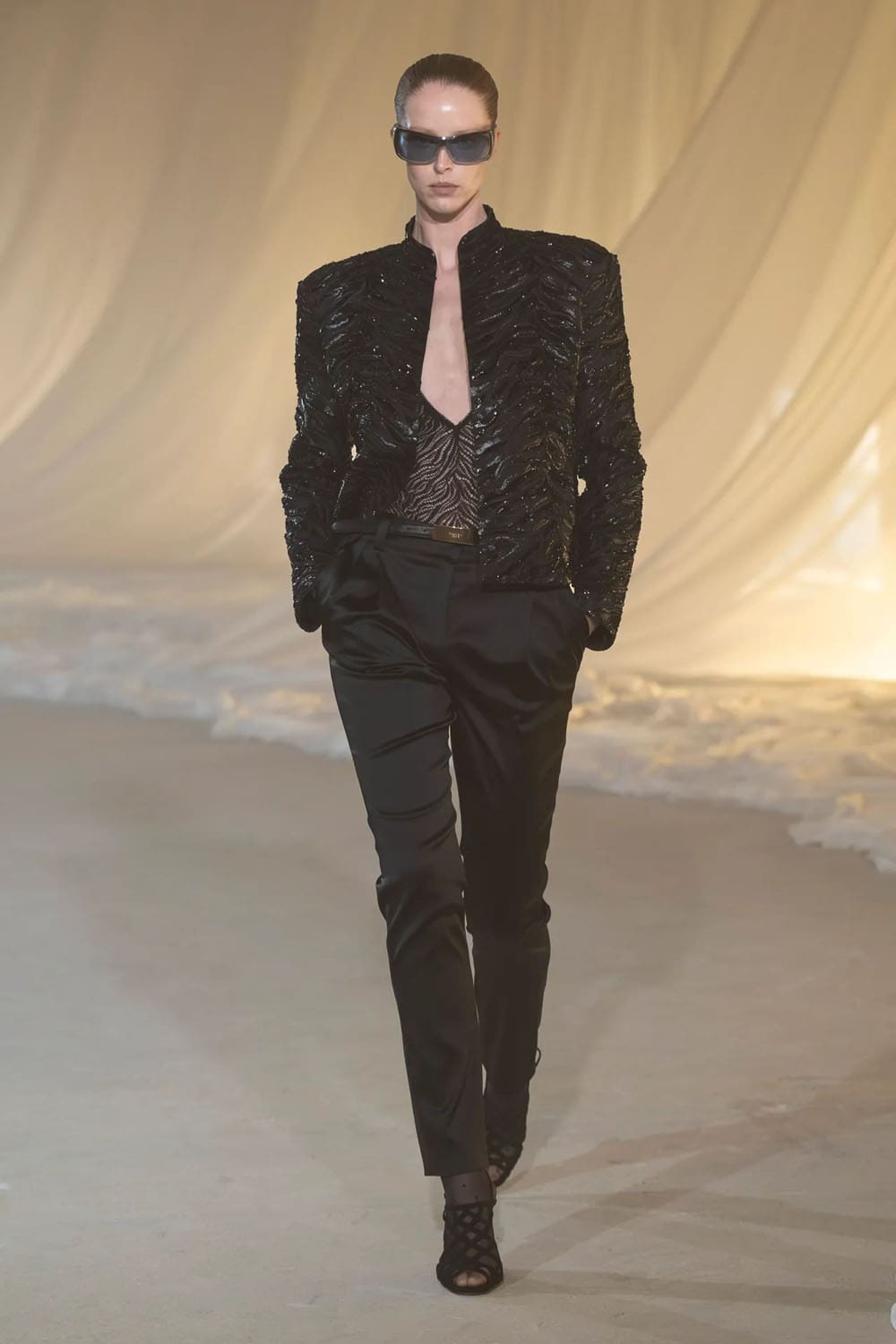
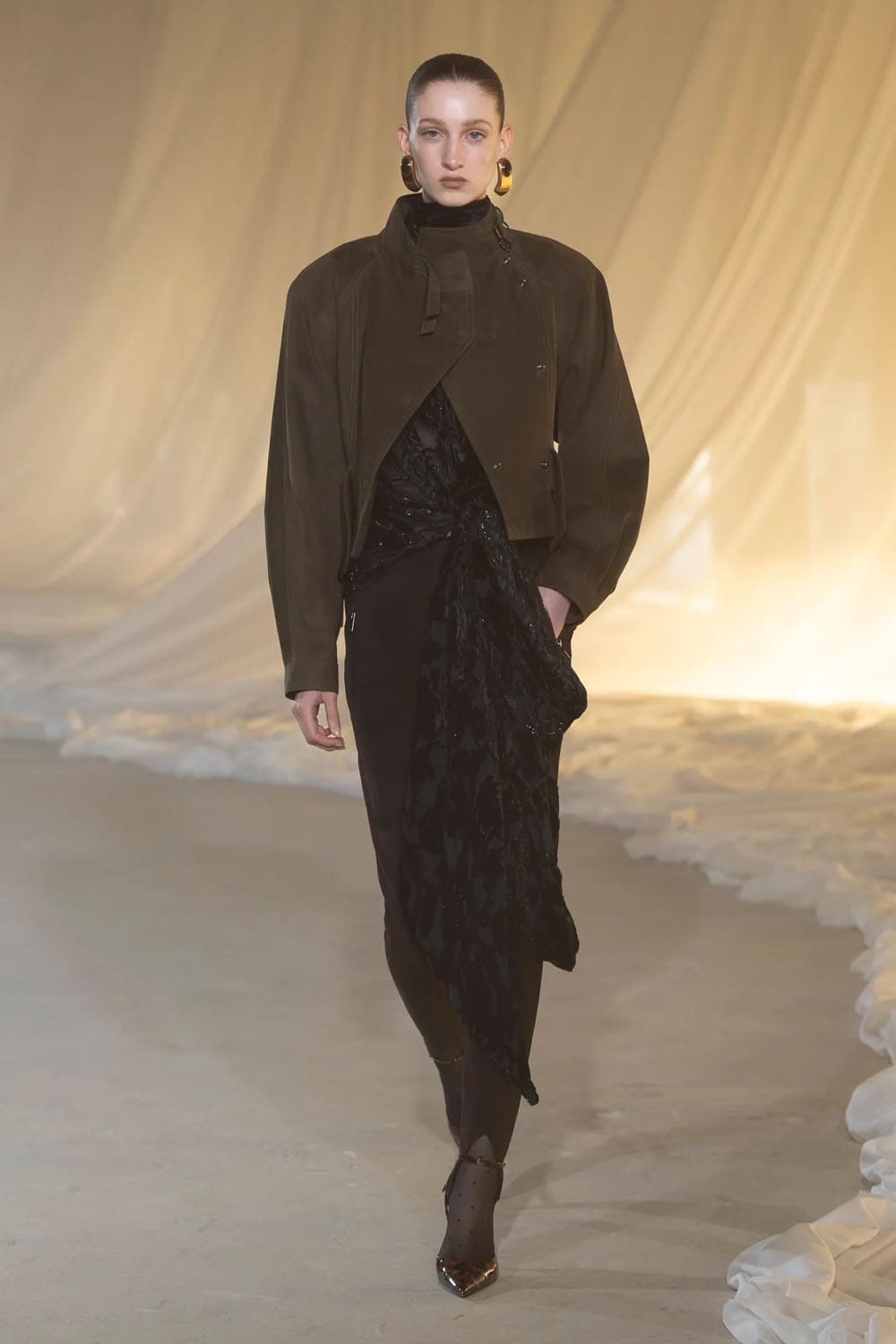
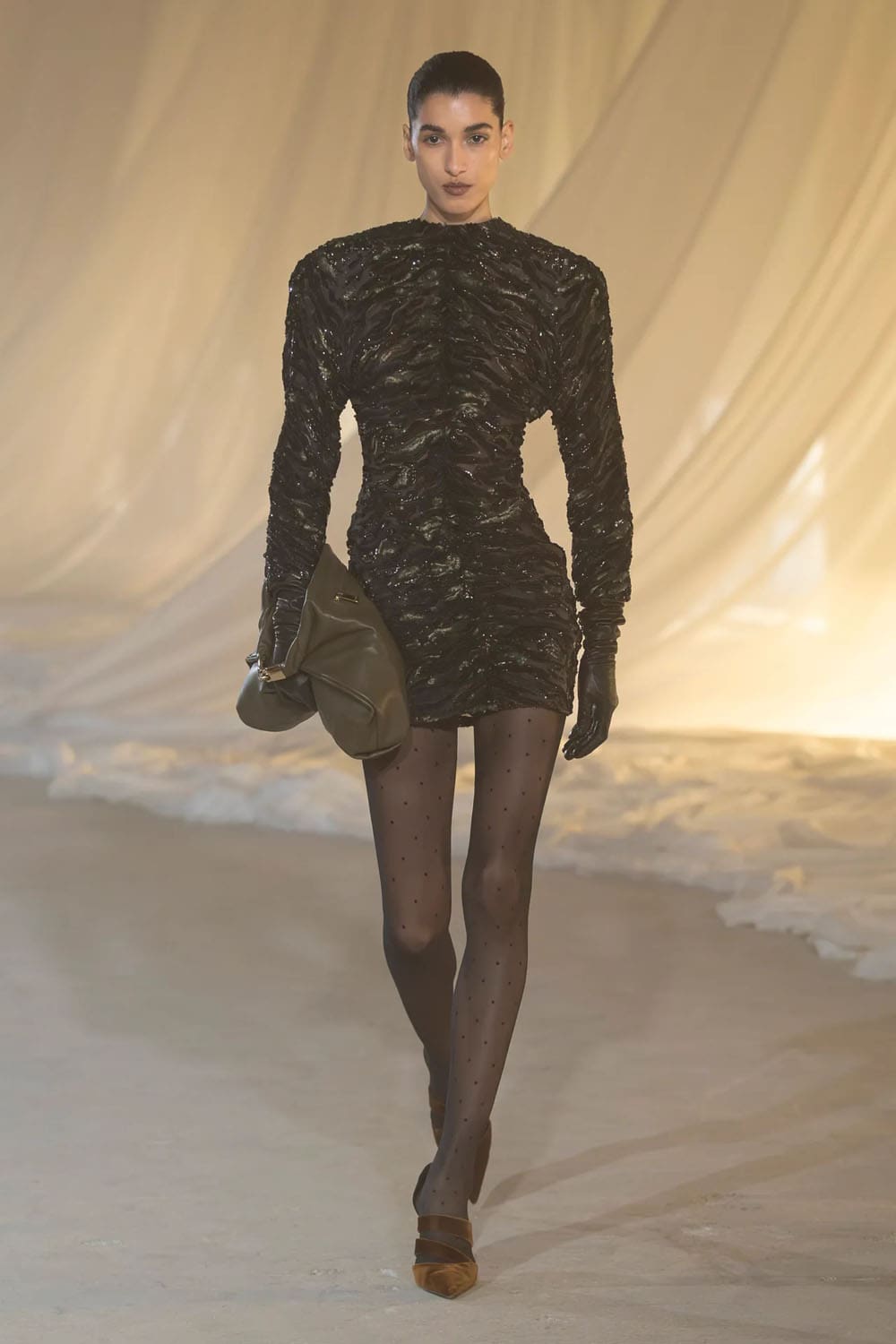
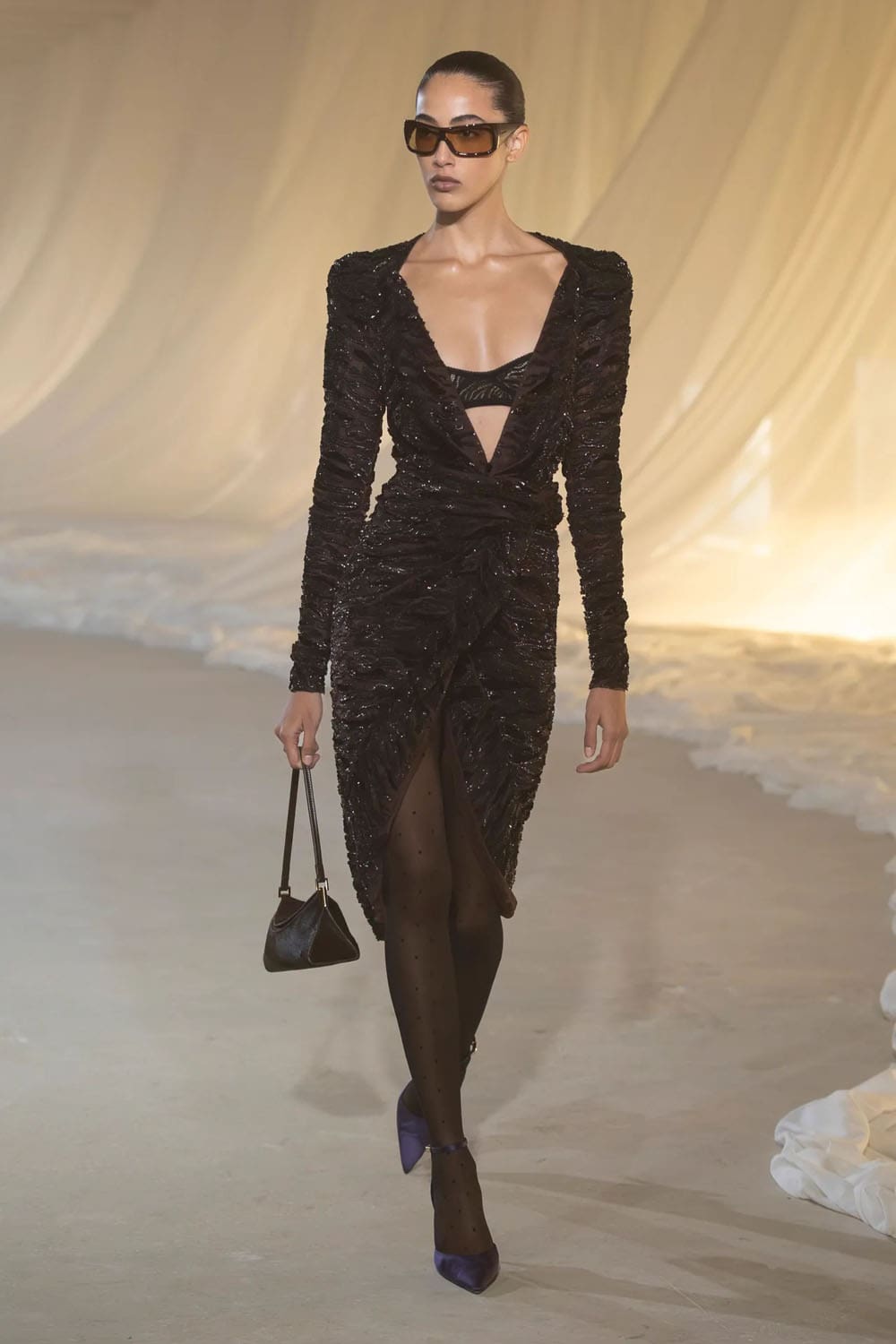
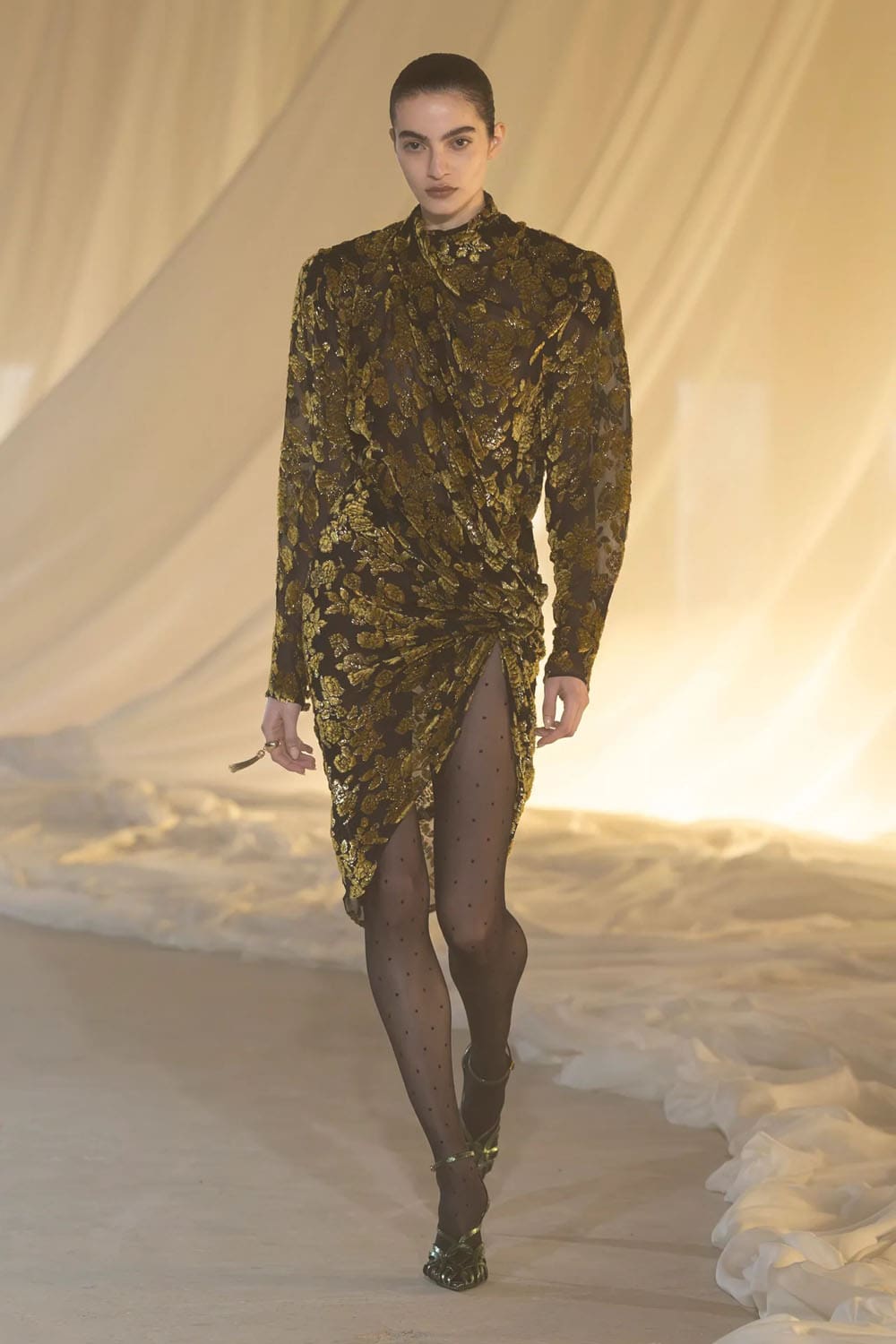
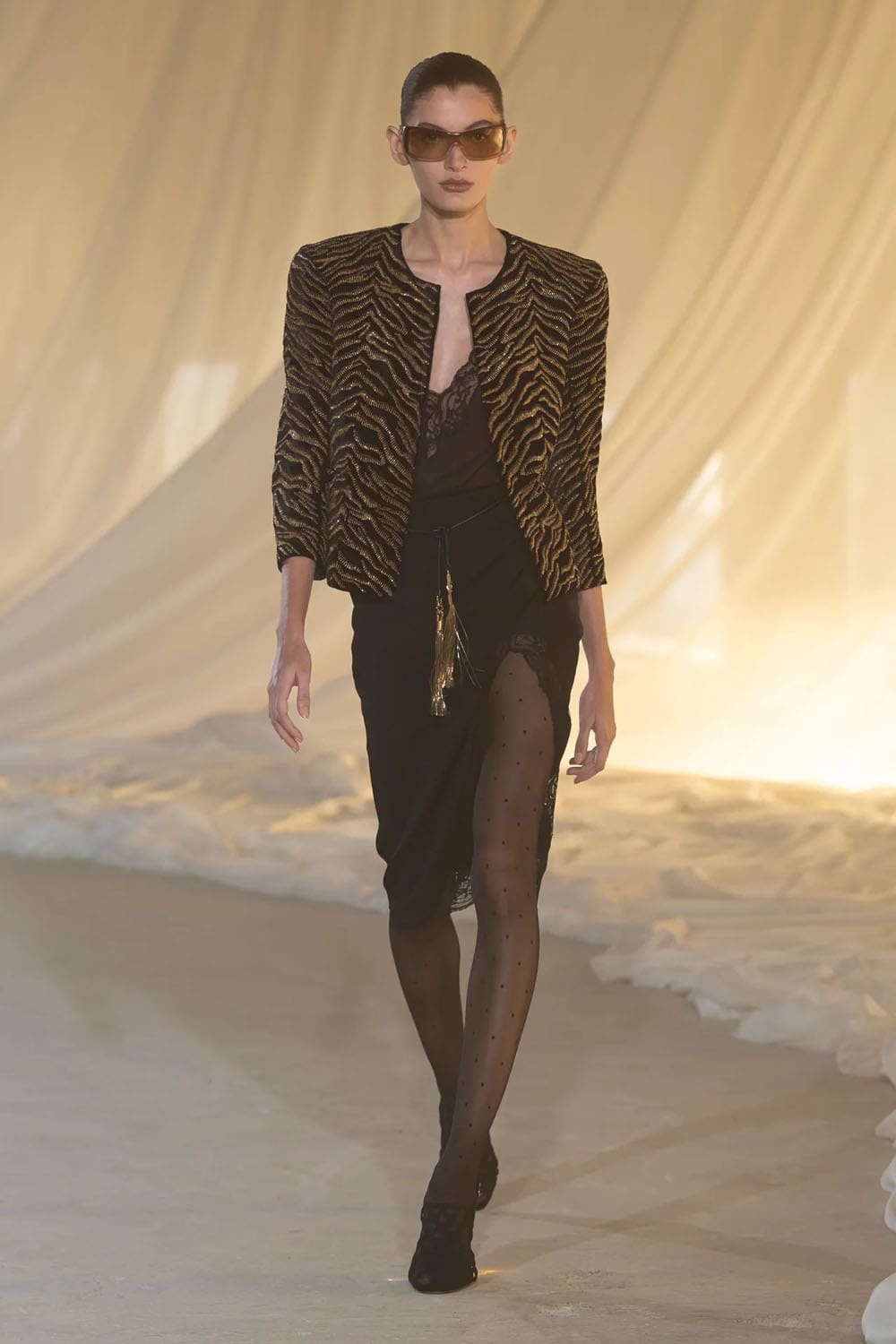
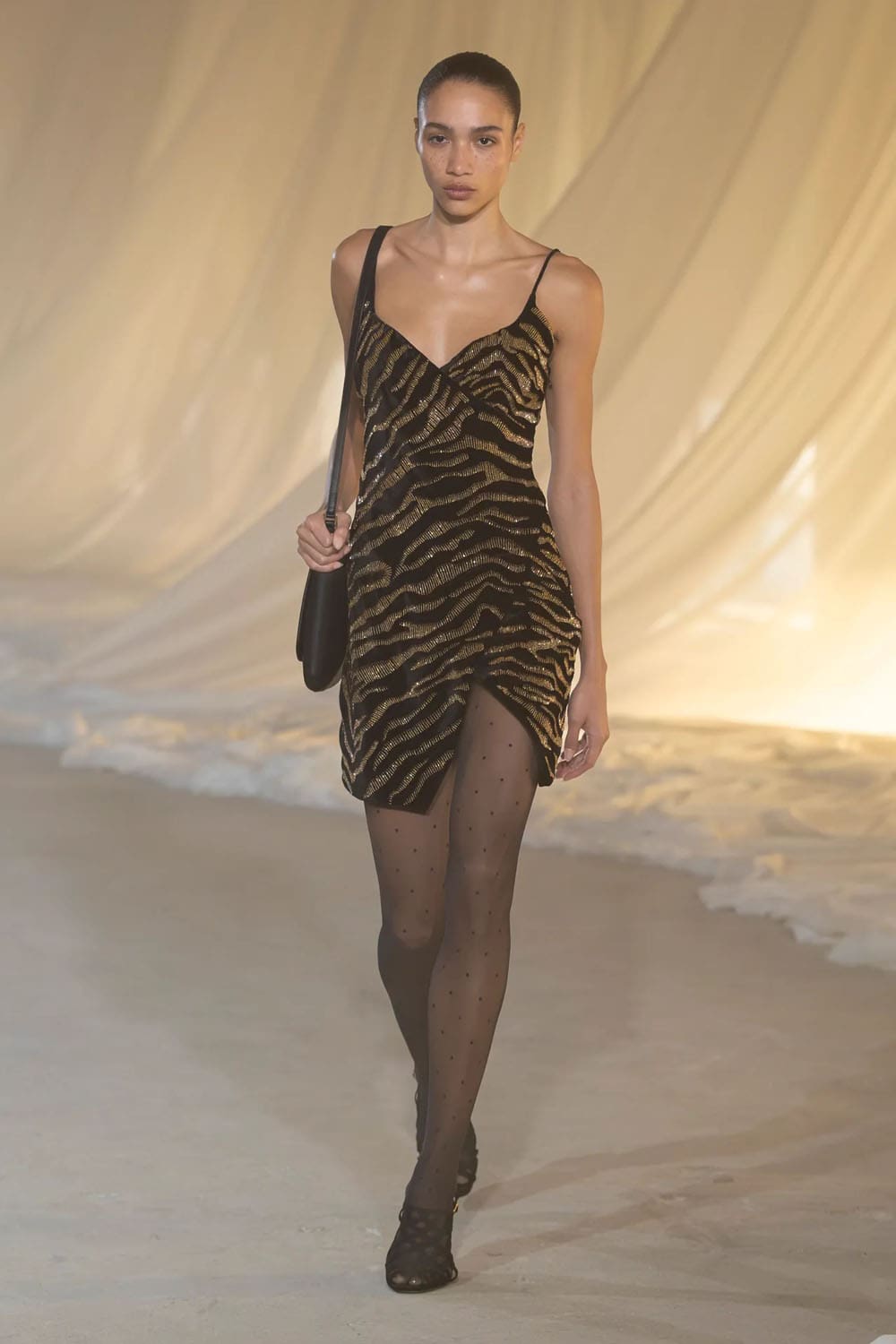
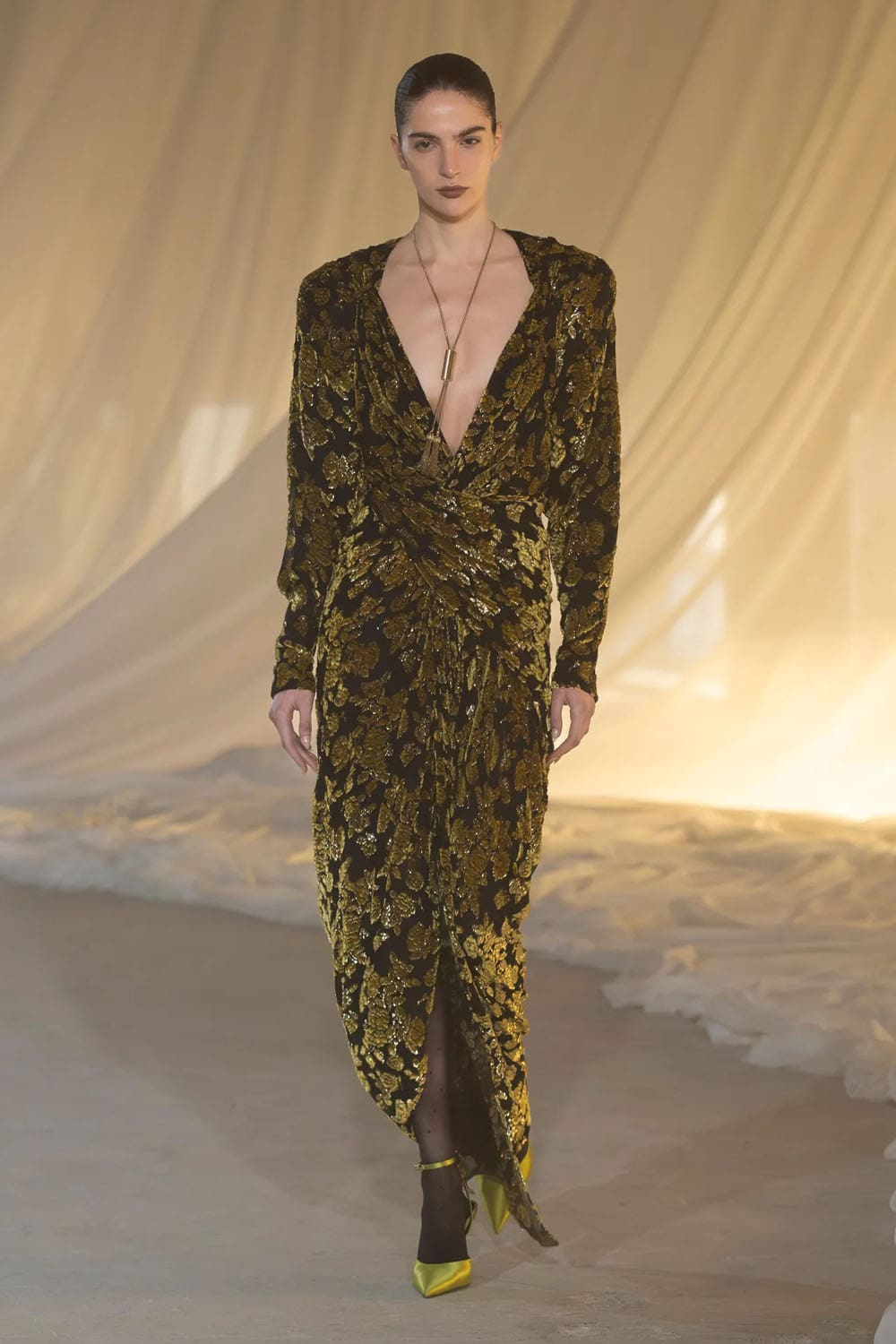
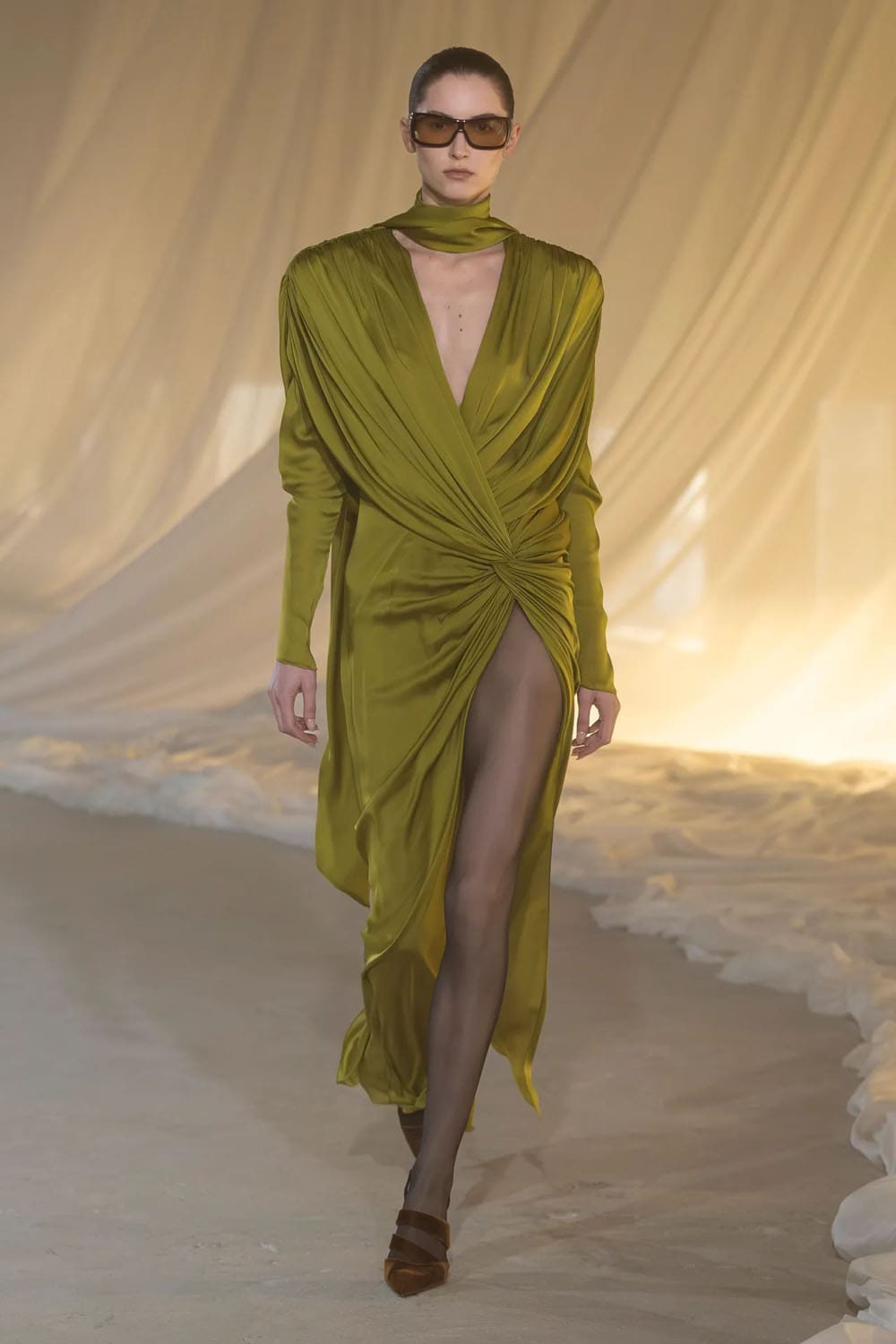
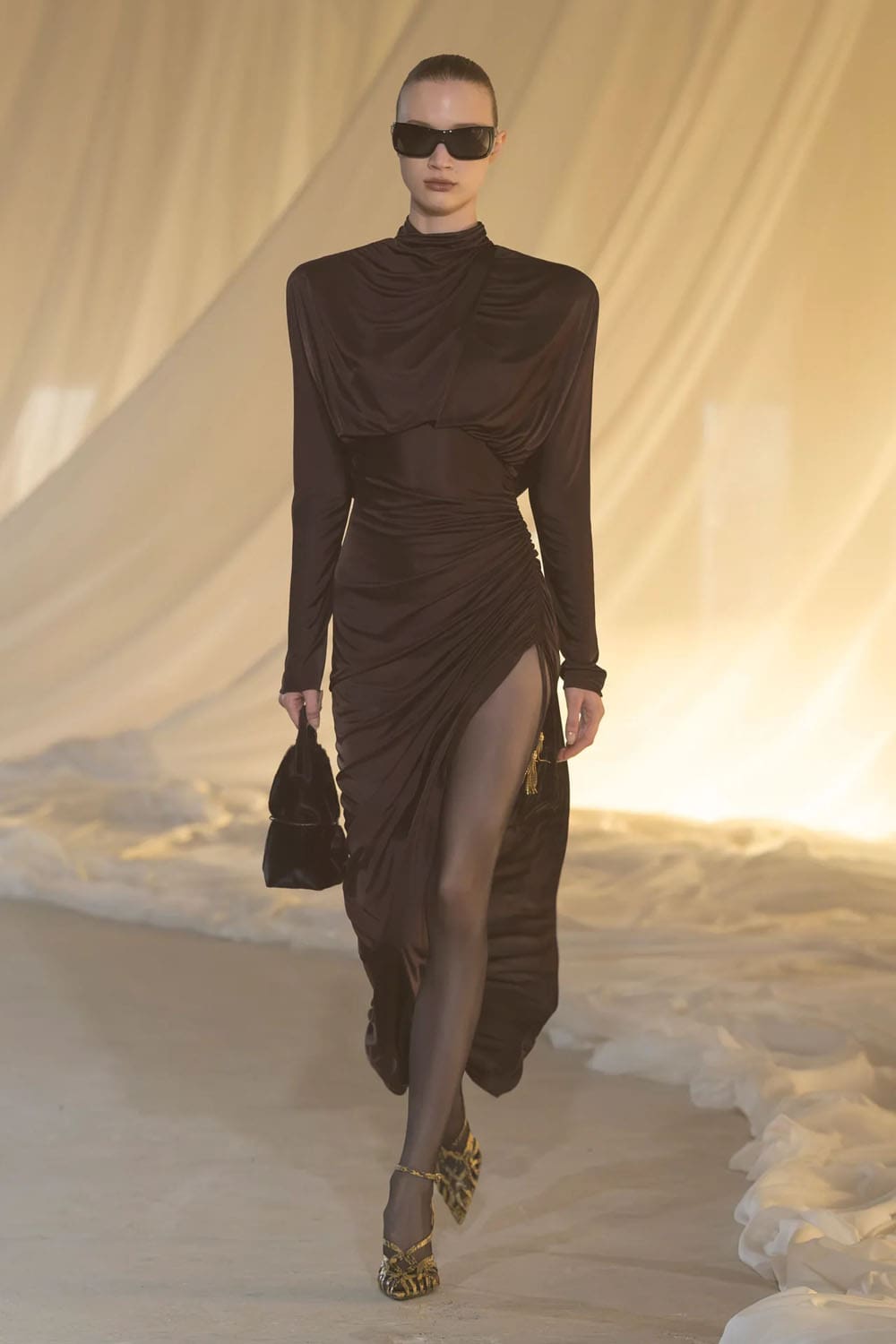
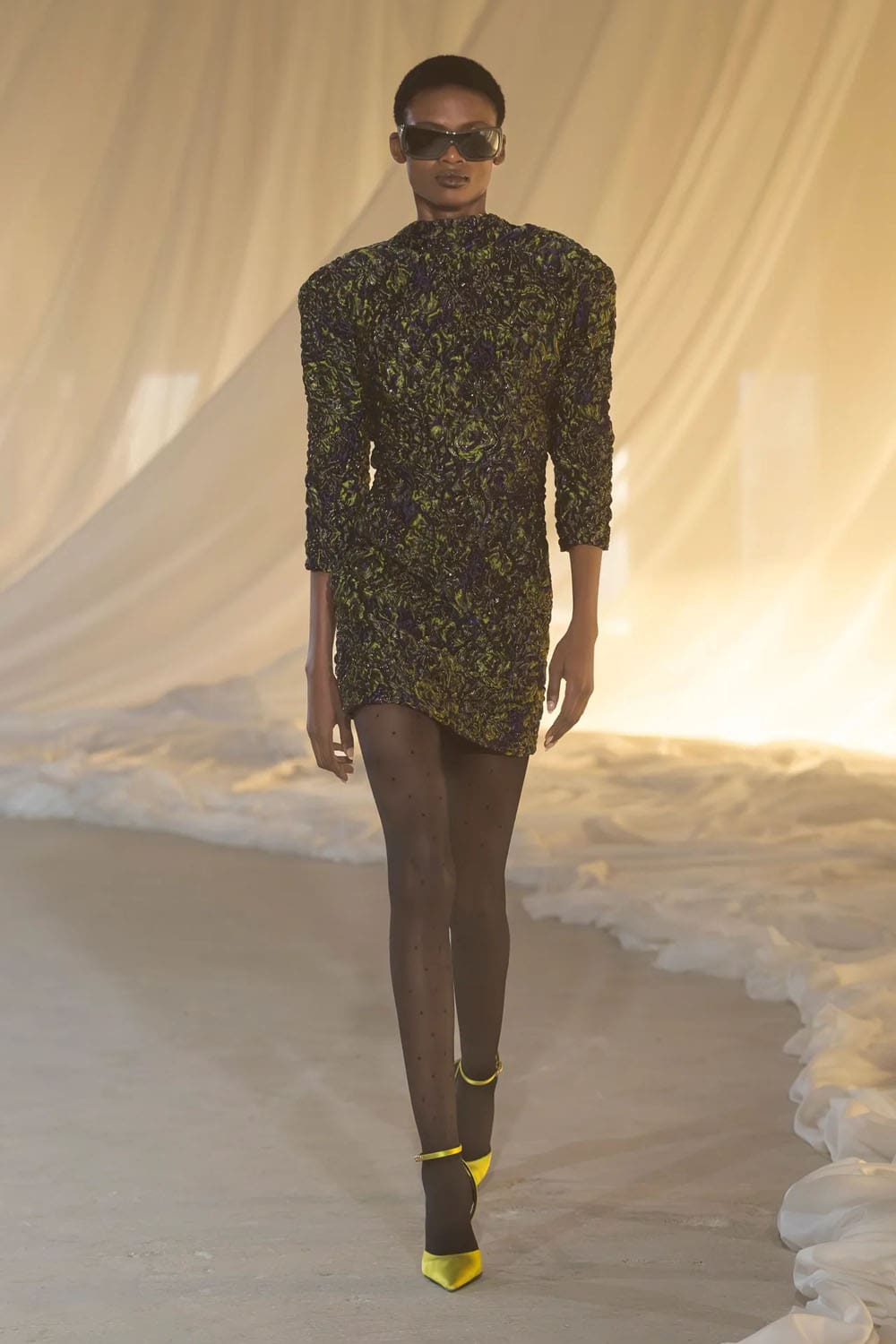
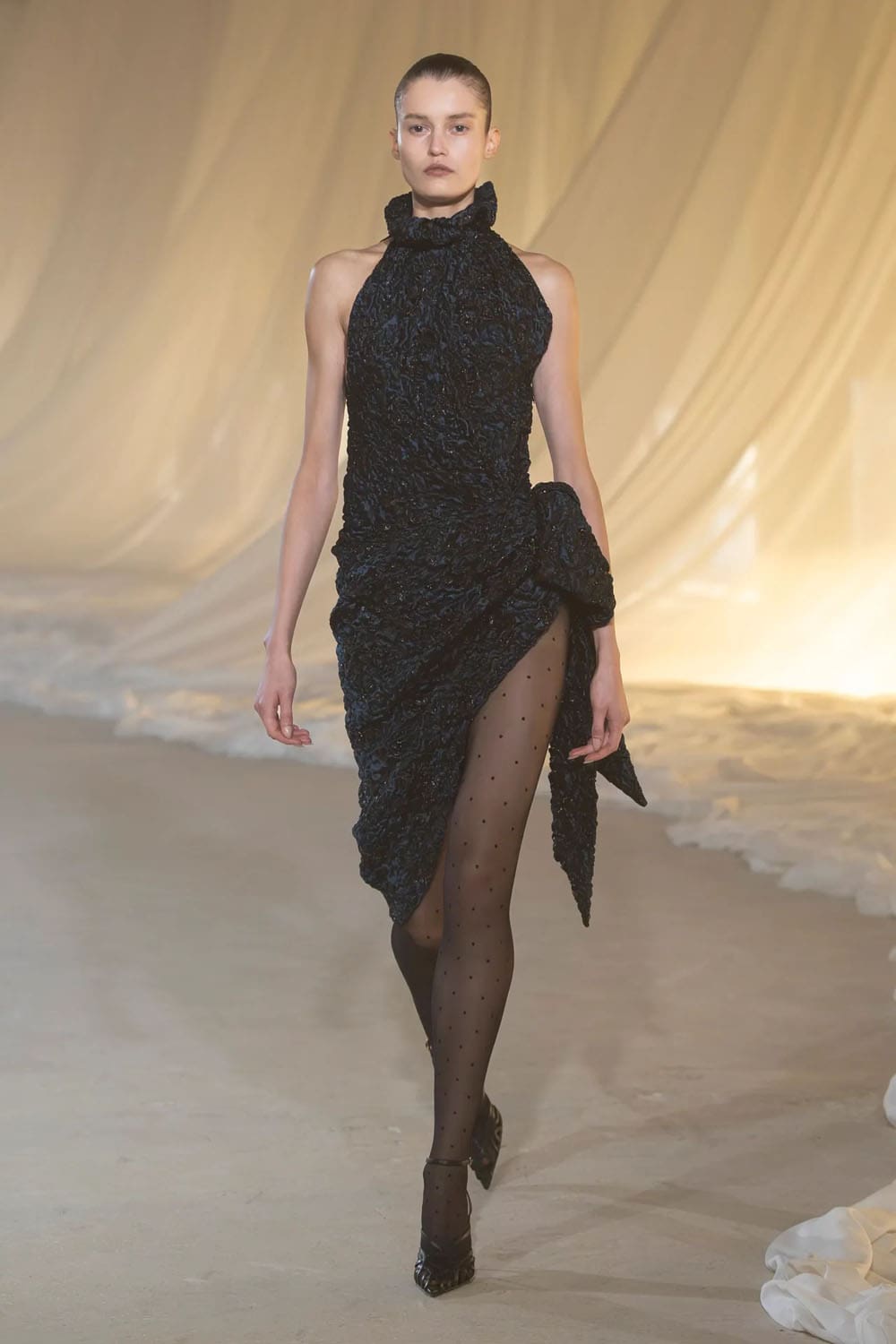
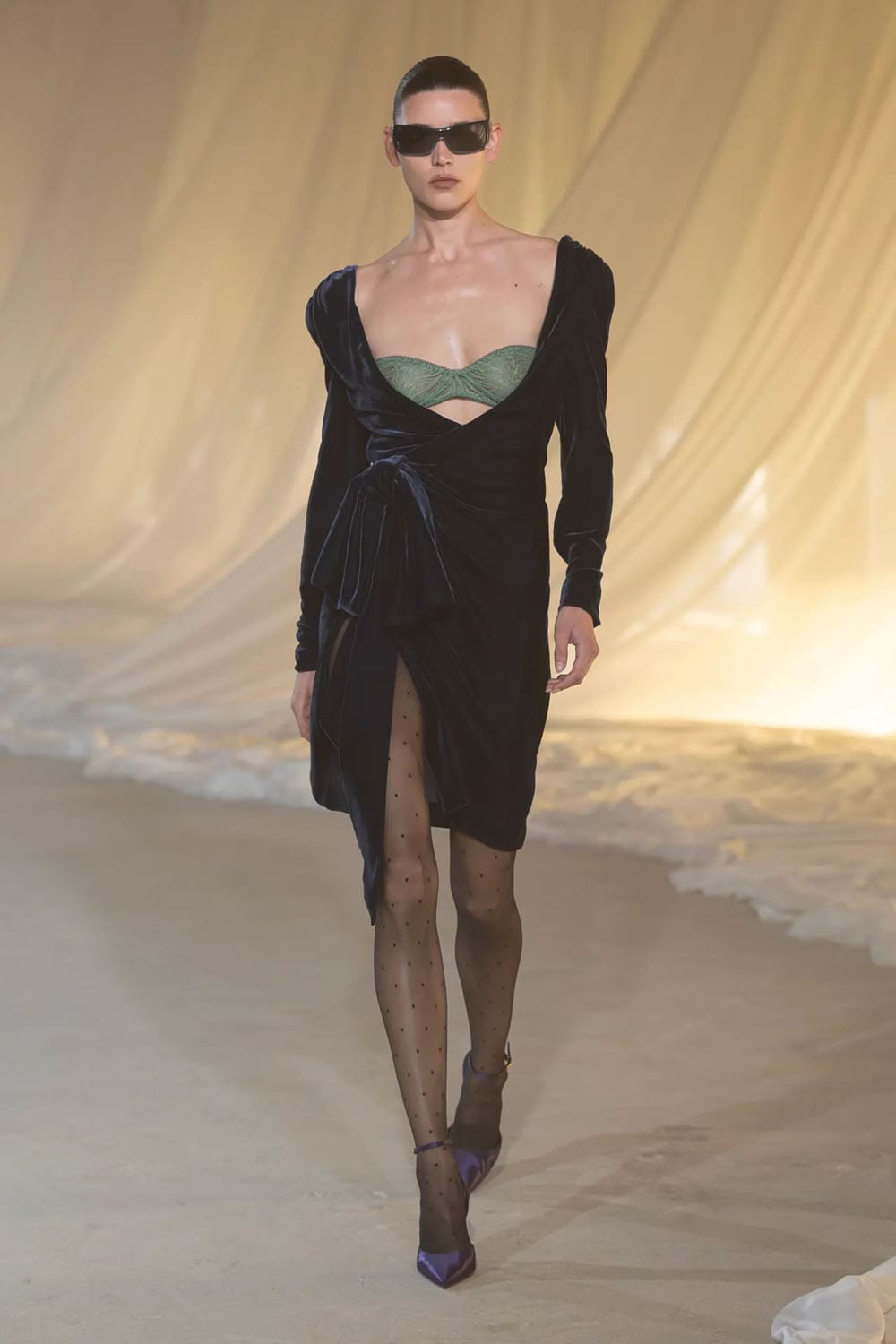
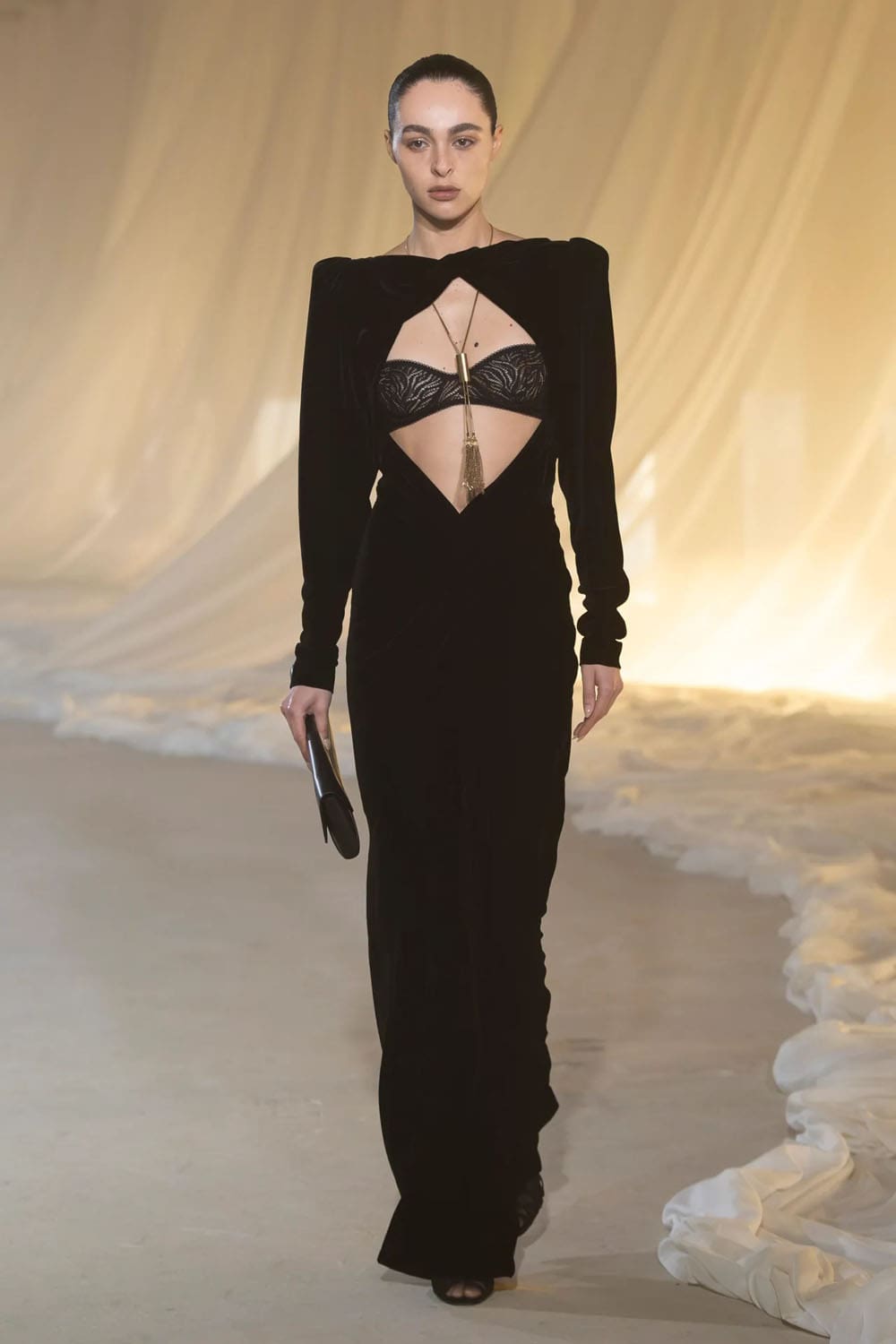
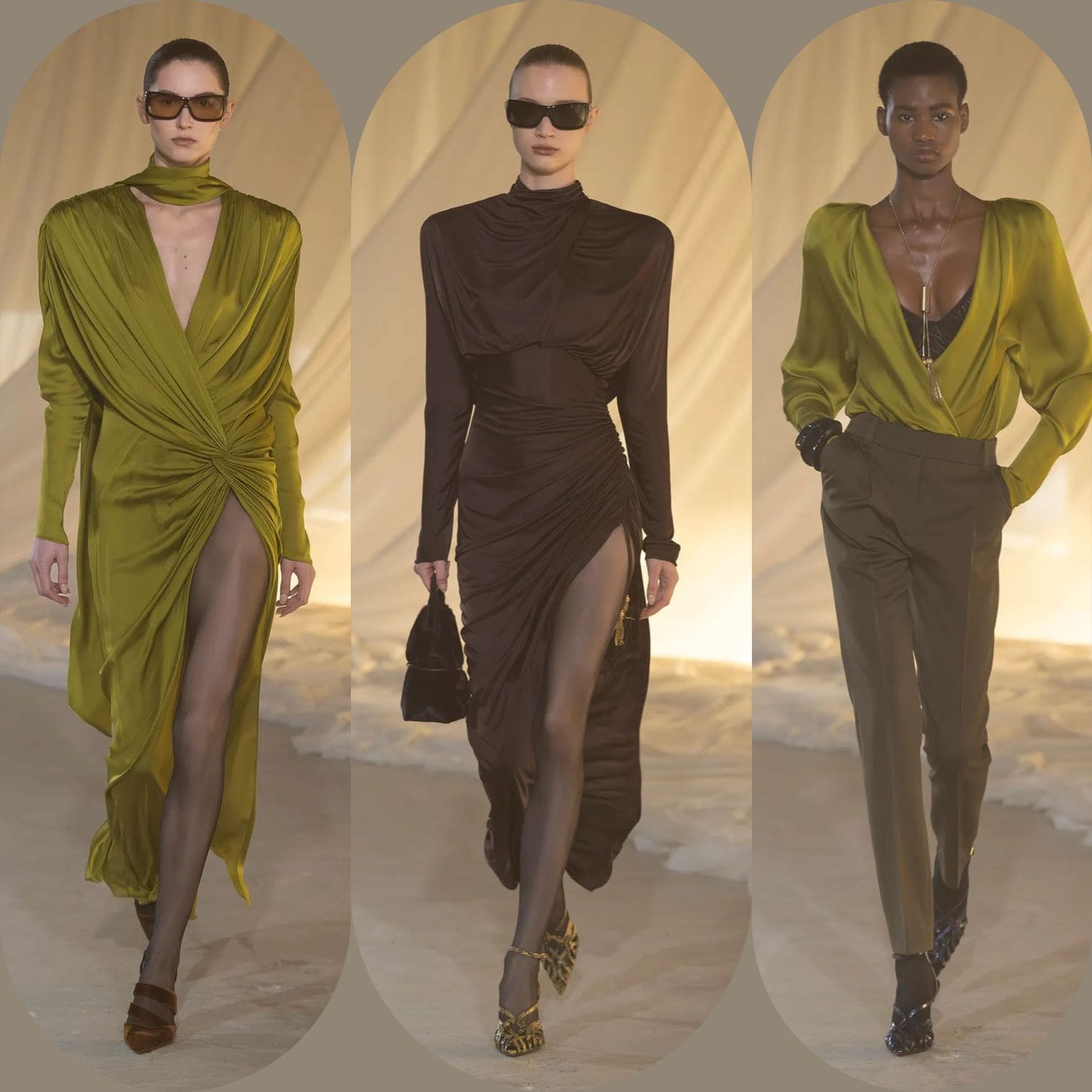
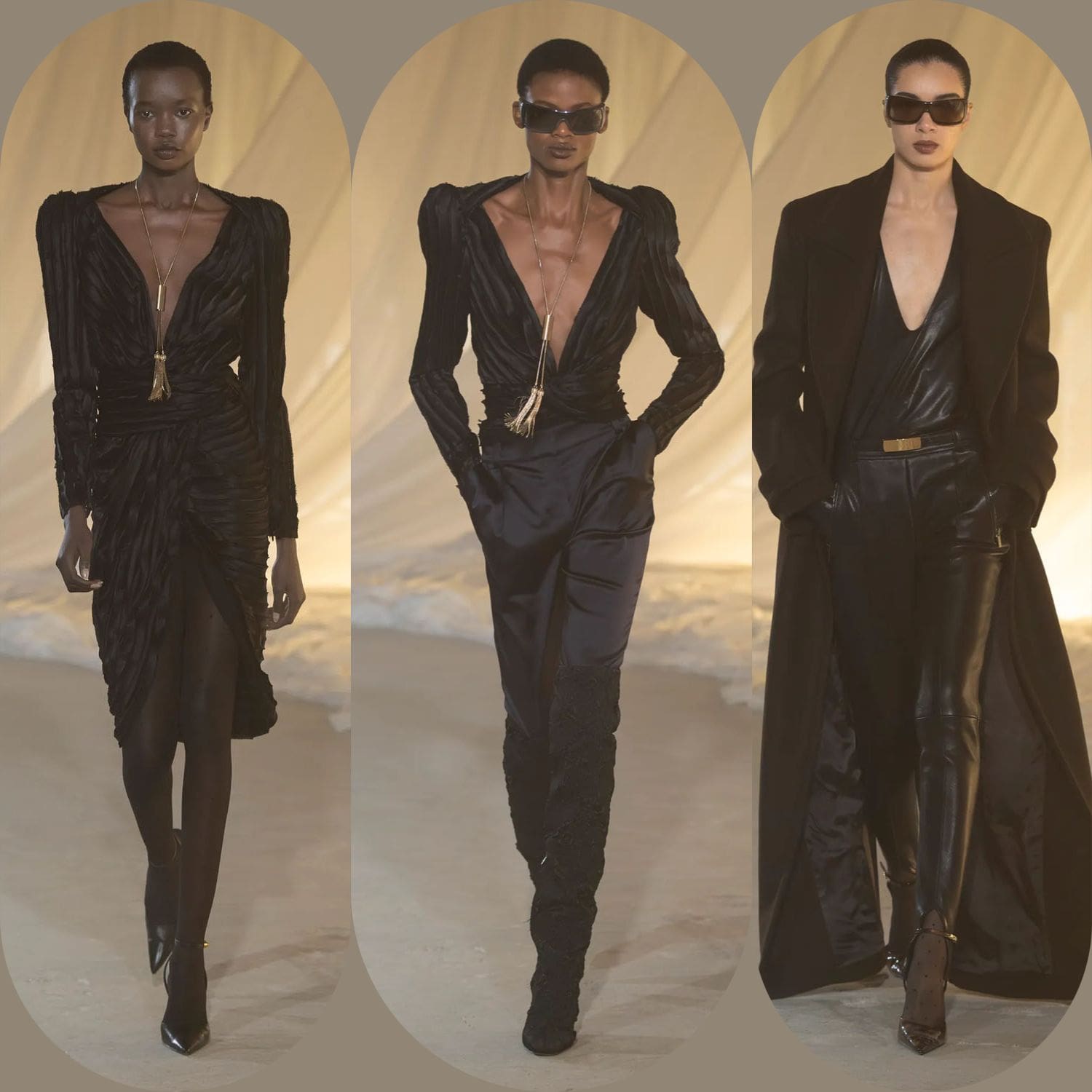
Most striking is the fluidity of Tron’s silhouettes. A deep-cut black blouse meeting slim satin trousers; a ruched black mini hugging the body like a sculpted shadow; a draped olive dress twisted at the hip with just enough tension to activate movement. These looks introduce a slinky, nocturnal sensuality—a mature counterpoint to the bombast that shaped Balmain’s previous decade.
Yet here lies the curious tension of this reboot.
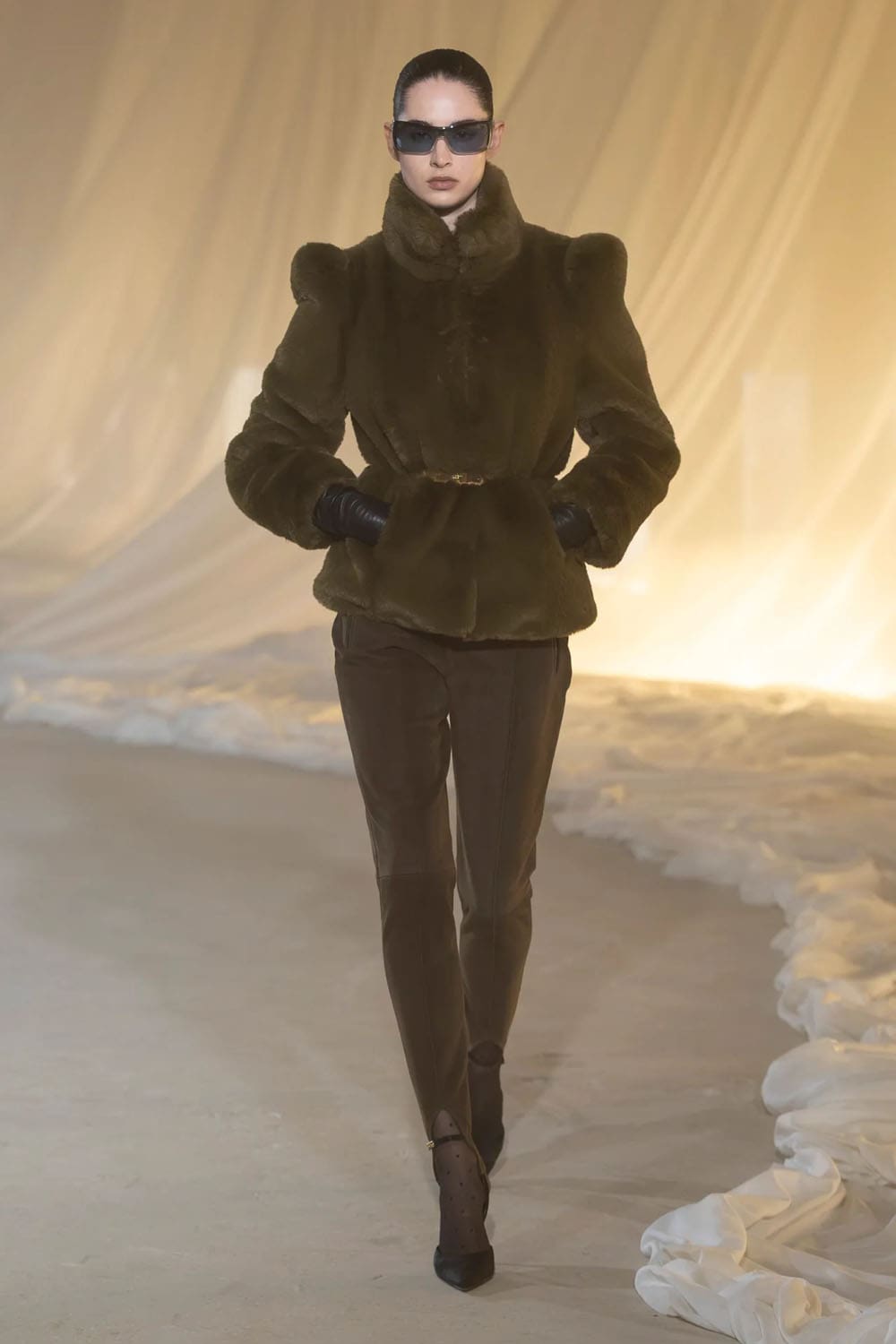
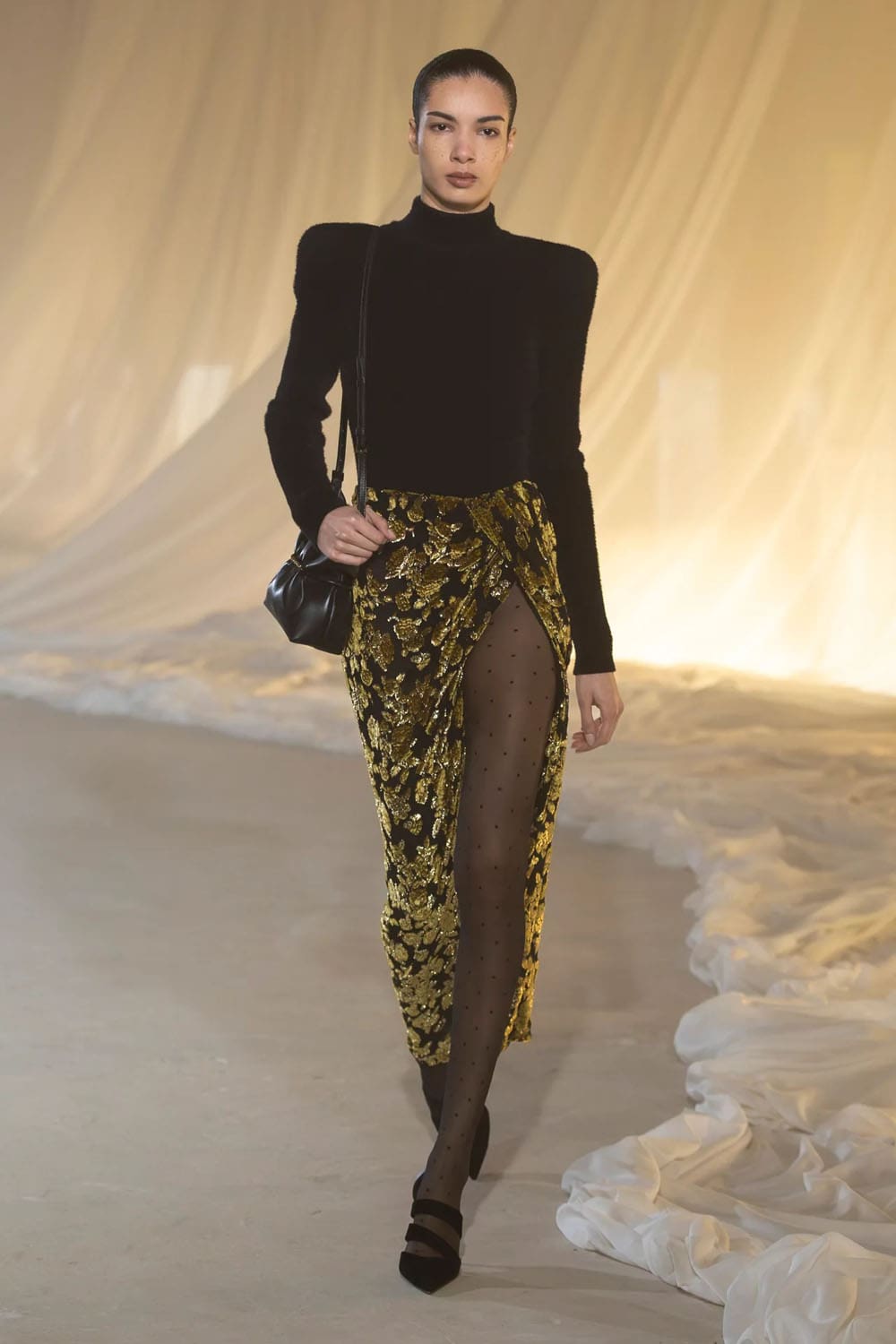
For all its elegance, this new Balmain leans unmistakably toward the stylistic gravity of Saint Laurent under Anthony Vaccarello. The sharp shoulders, the liquid dresses, the tight black tailoring, the nocturnal drama—they echo a house operating under the same corporate constellation. One cannot help but wonder about the boundaries of differentiation in a world where two major maisons share a parent company and, suddenly, a strikingly aligned visual language.
It is not a criticism. It is an observation.
Resetting often means landing near an established aesthetic until the new direction matures. The real question is how Tron will expand from this controlled base.
Nocturnal Craft
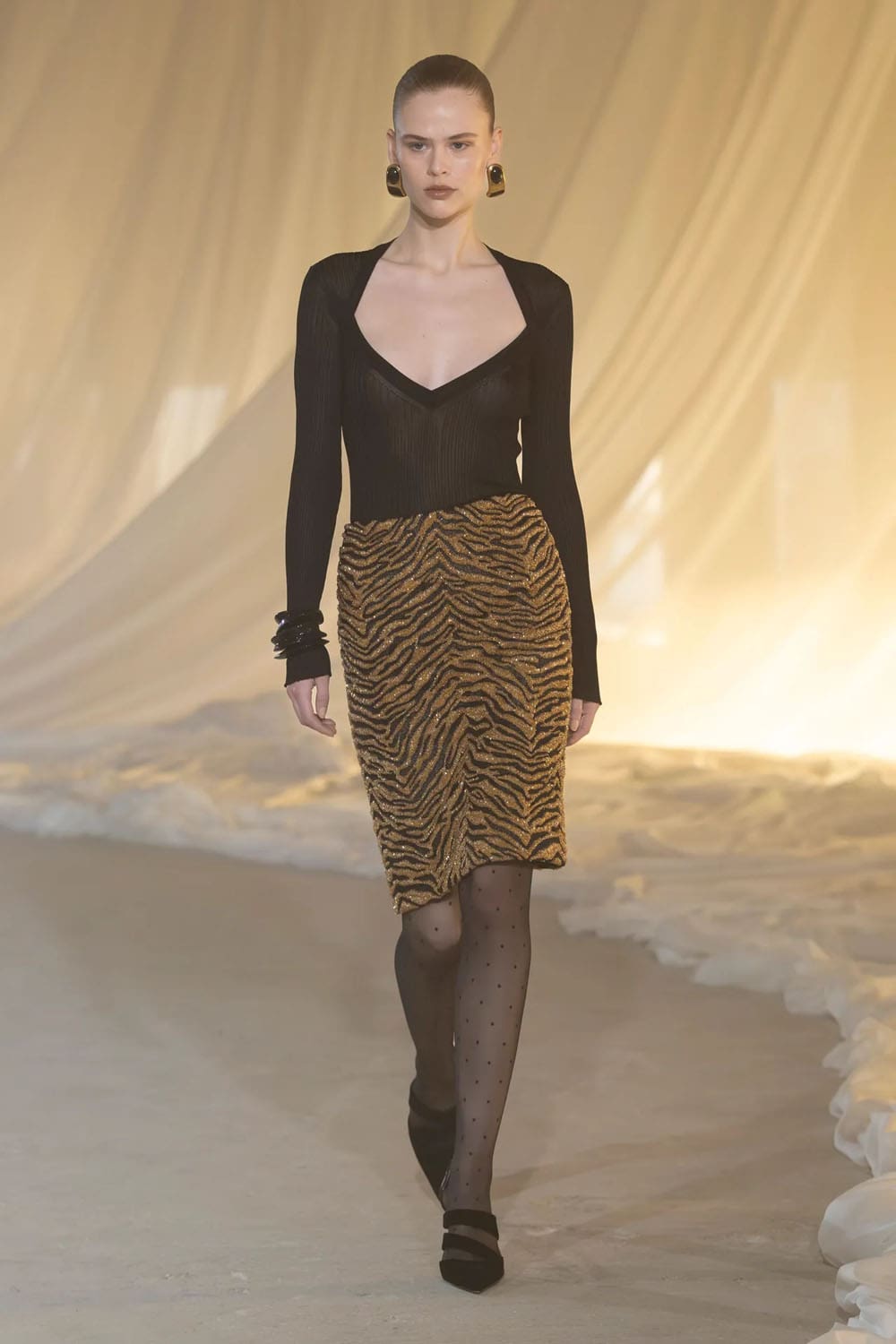
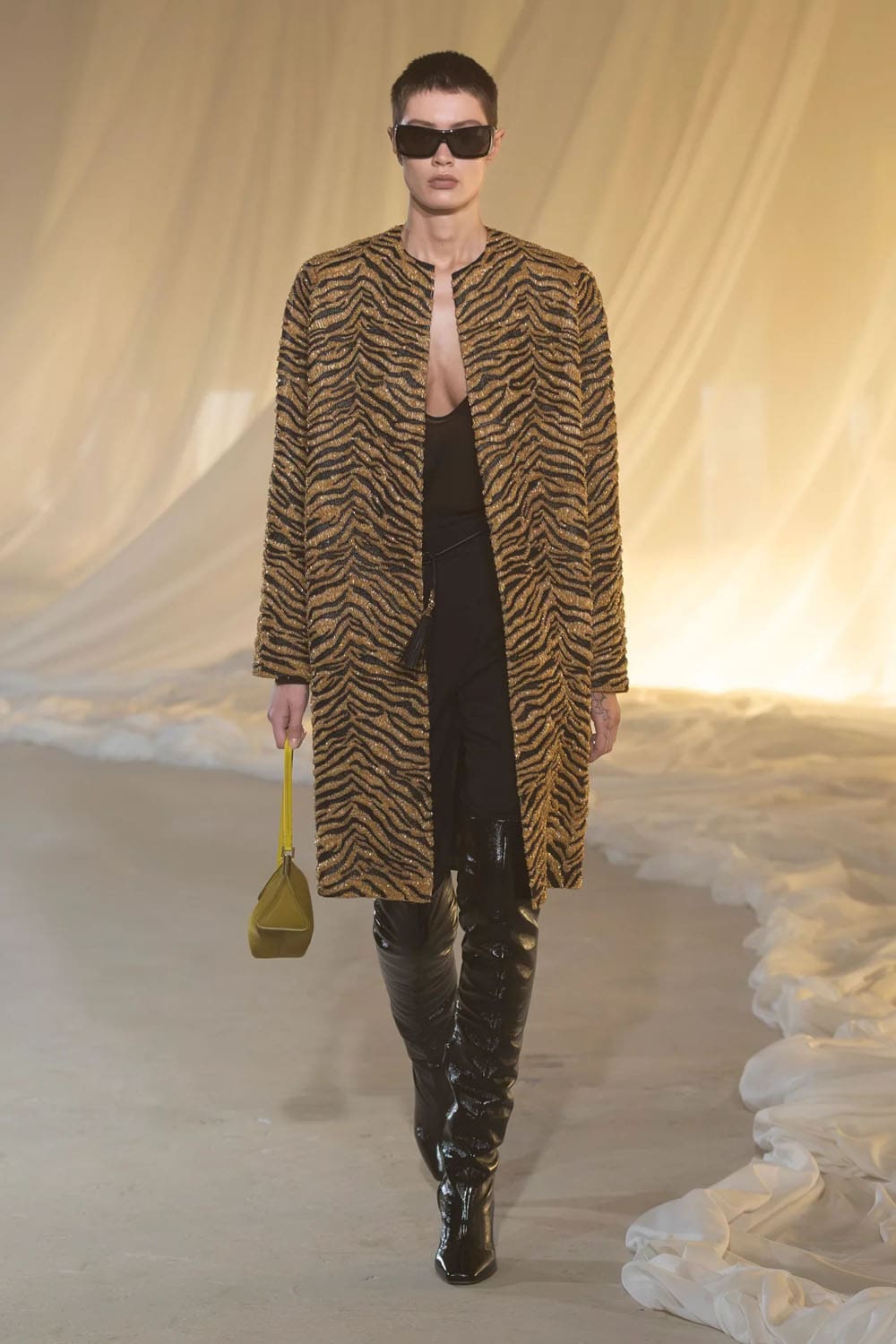
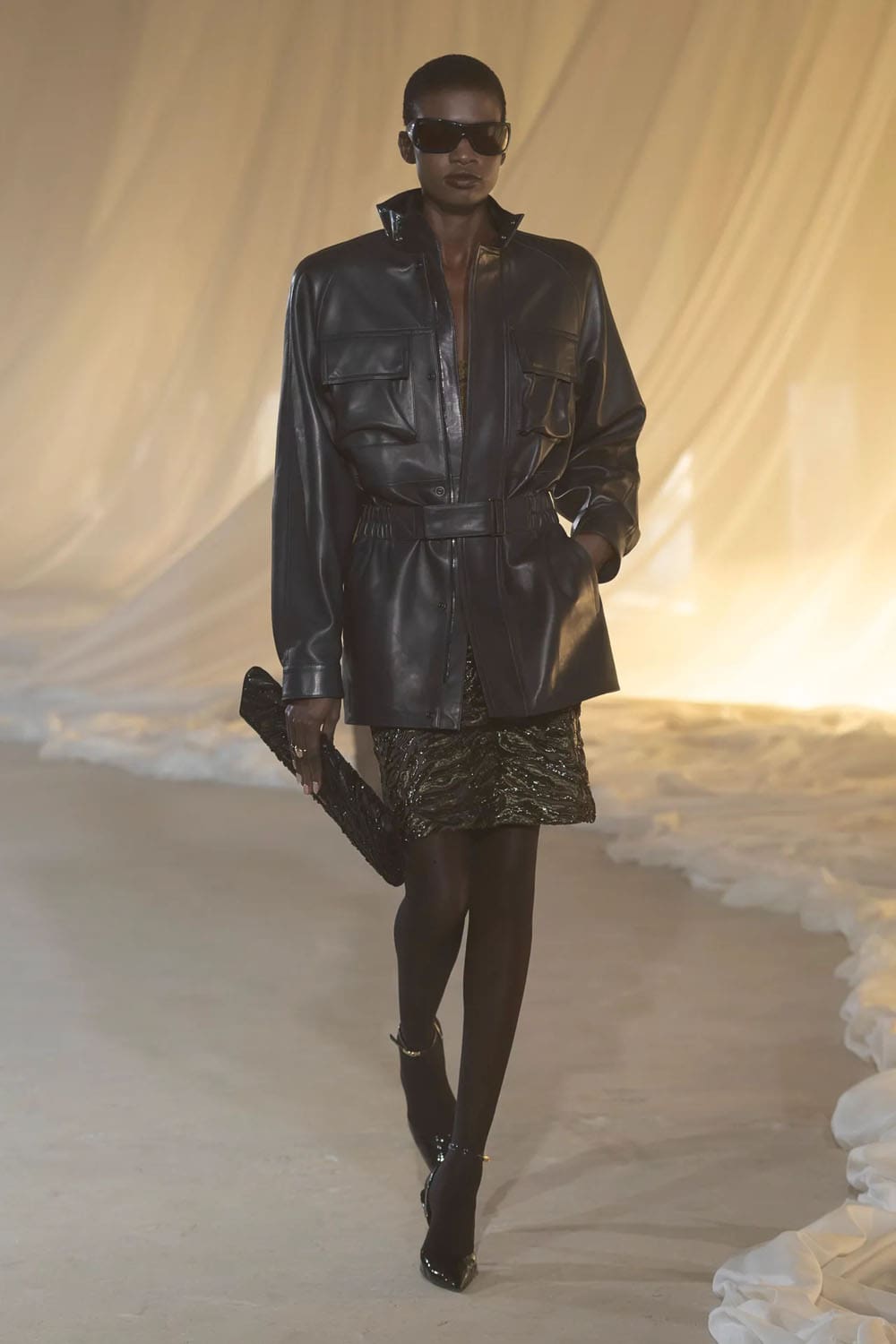
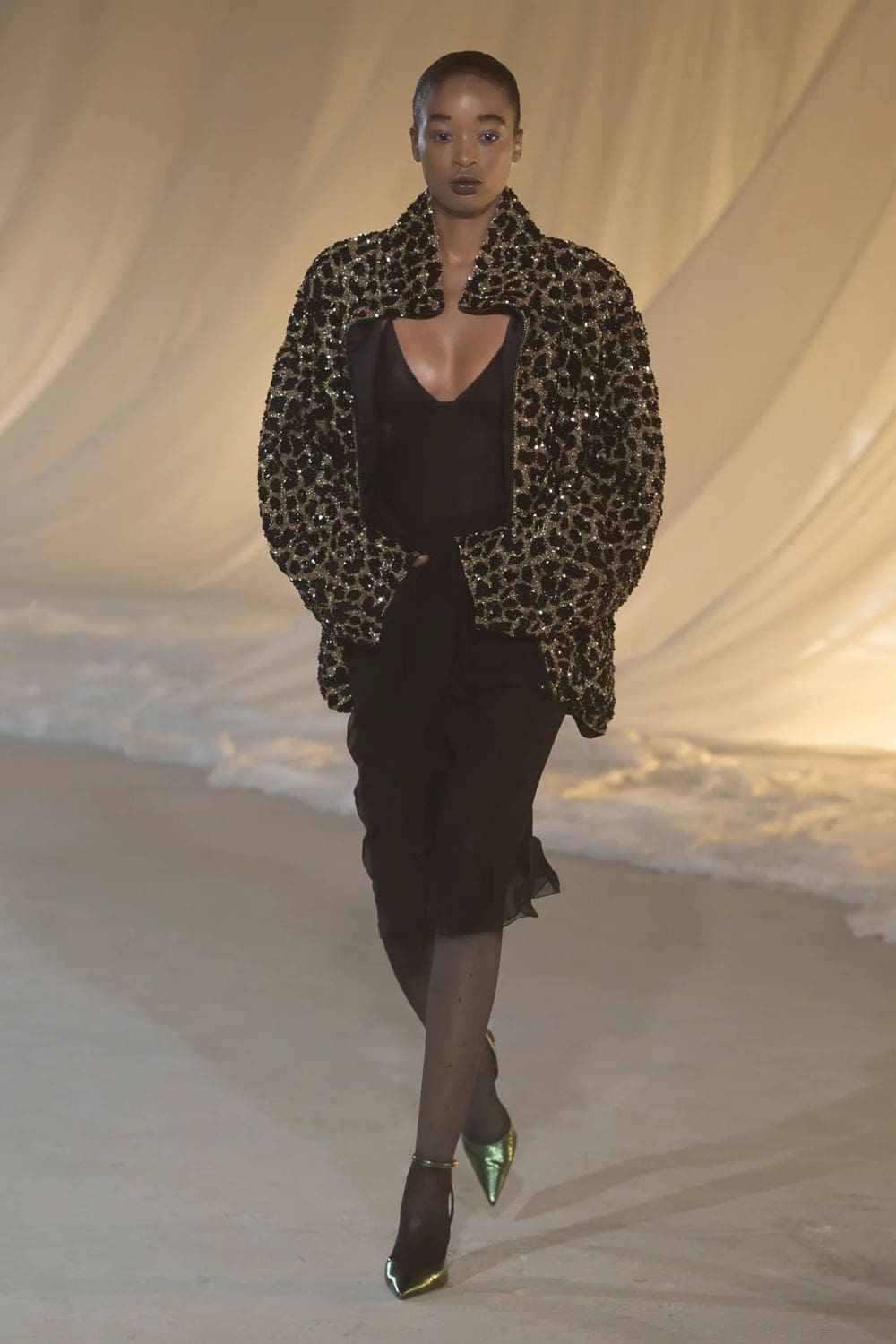
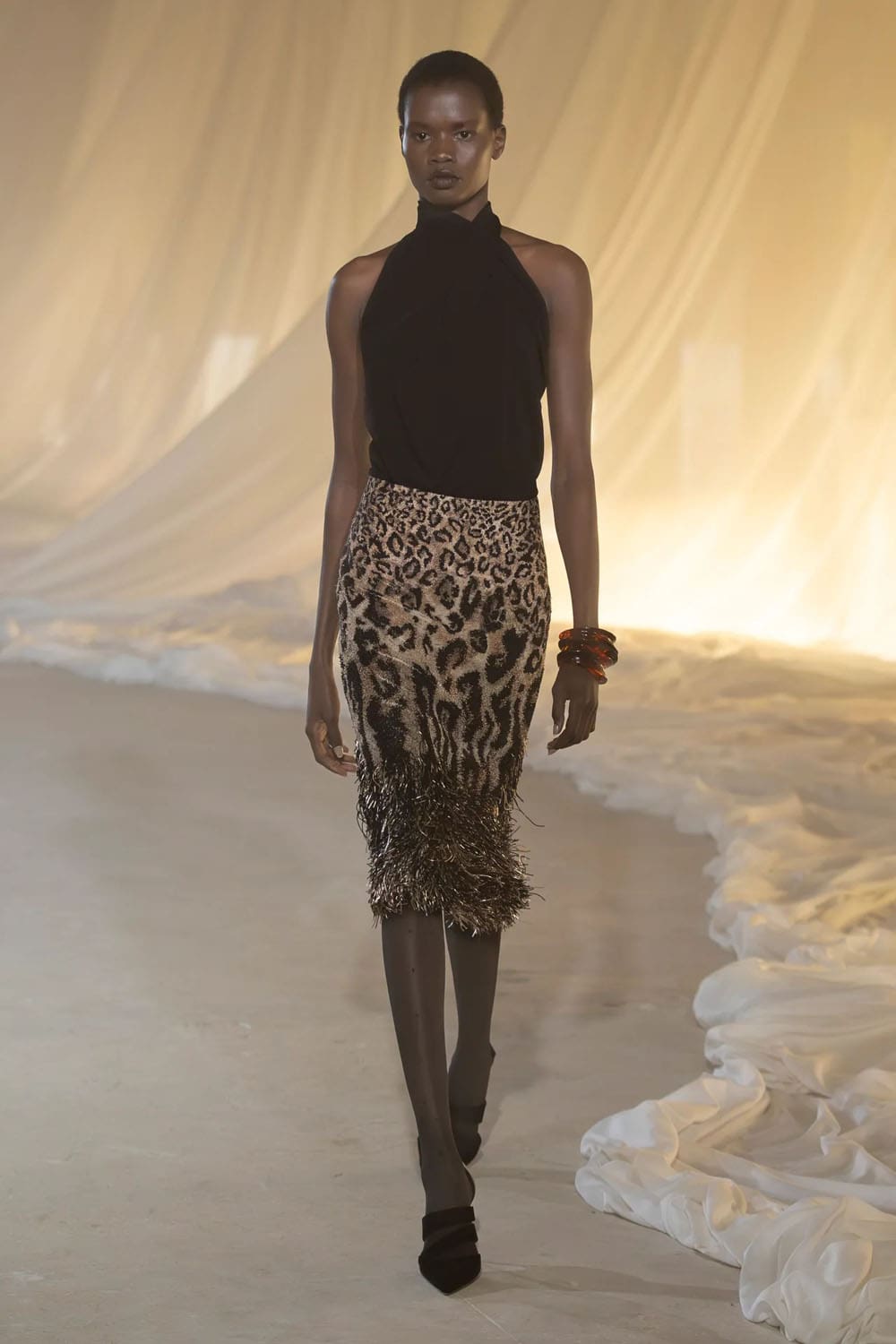
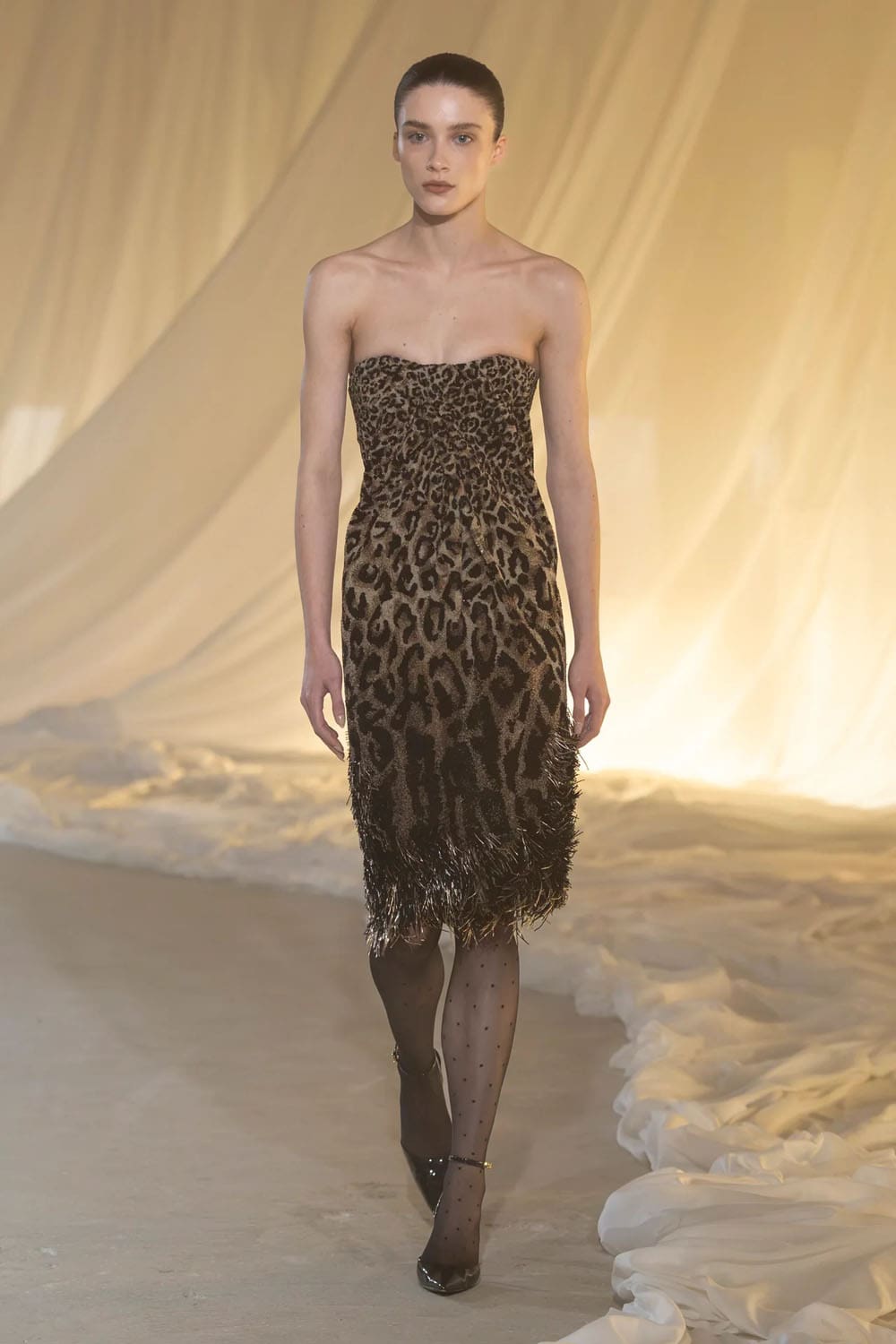
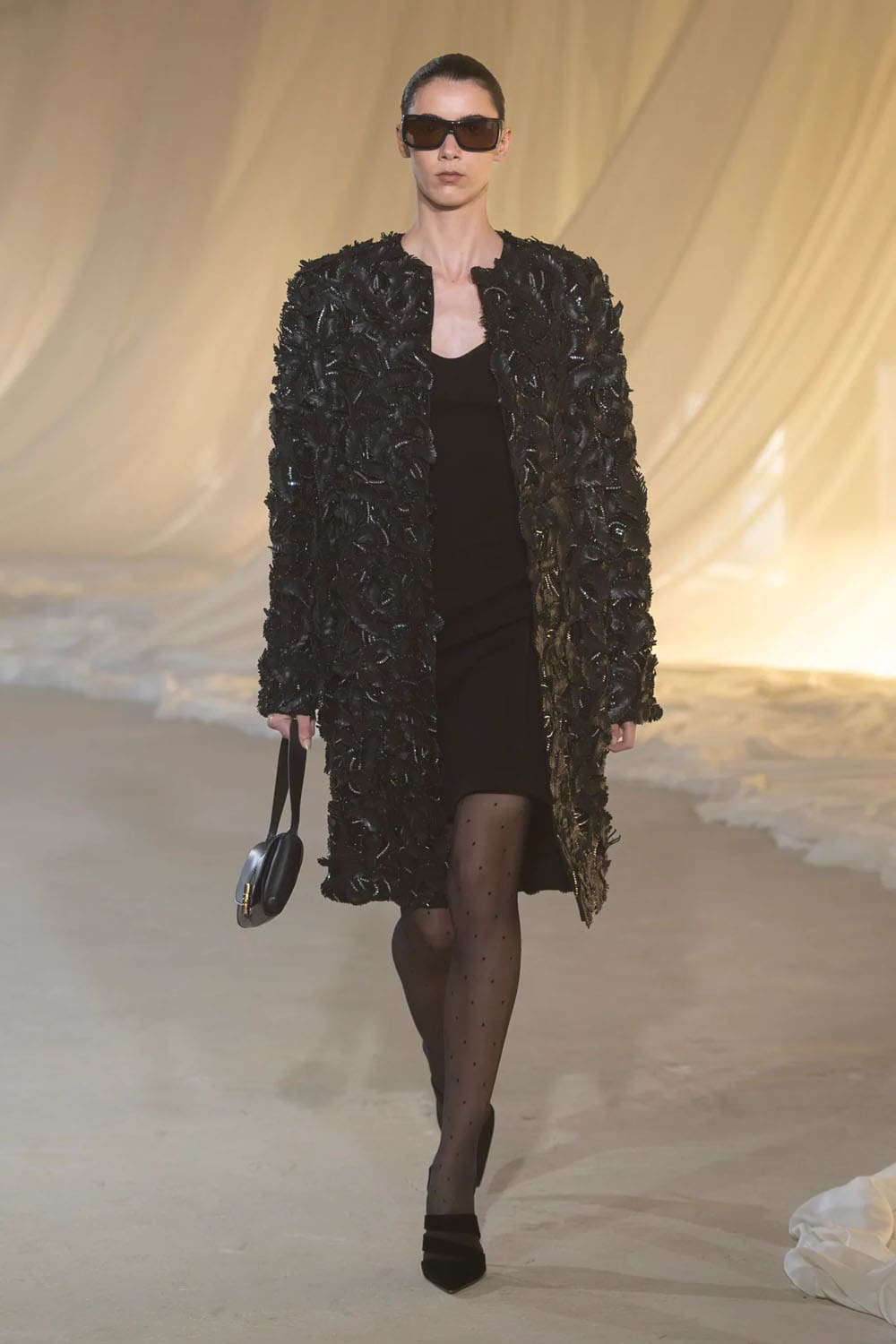
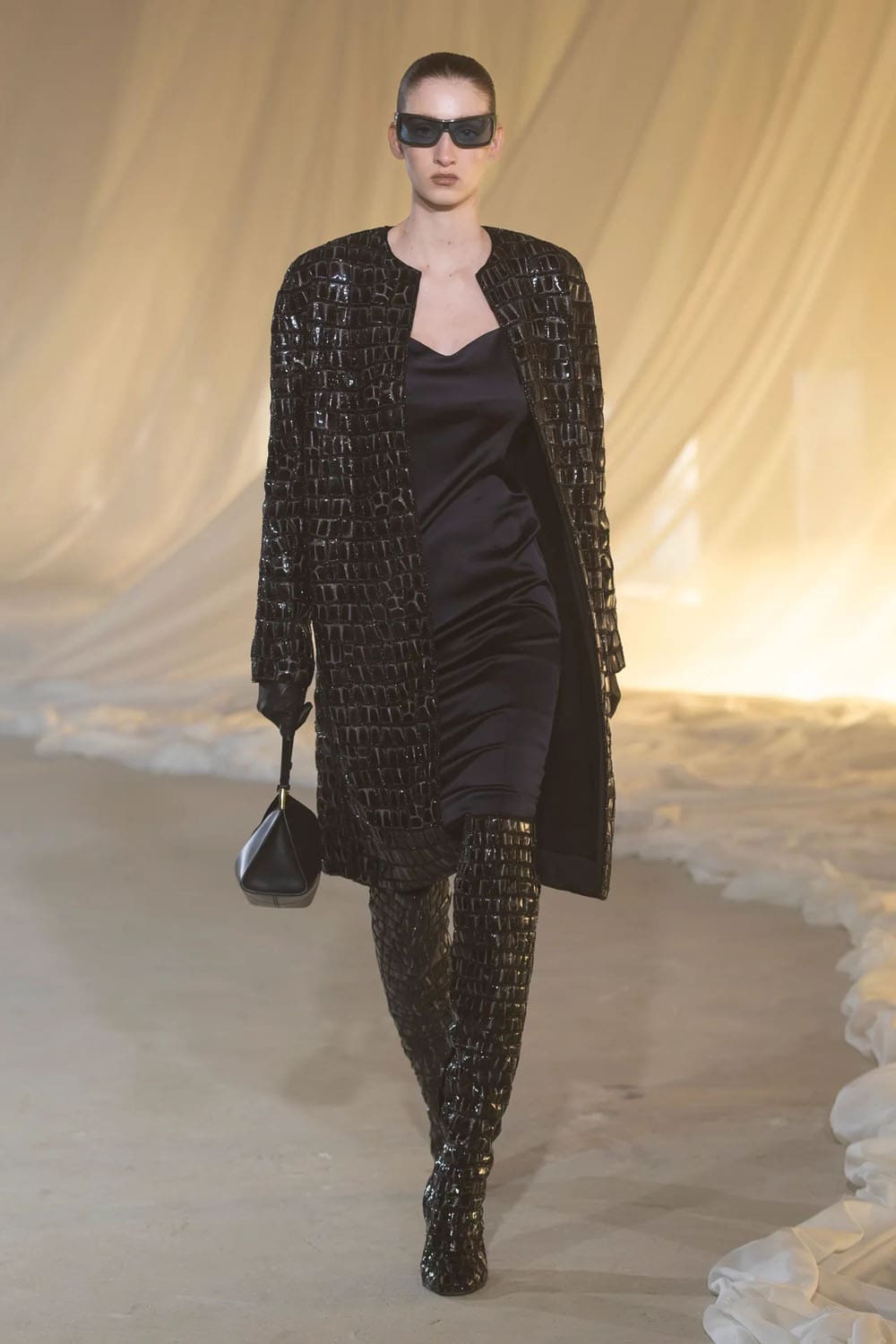
The collection also showcases a careful revival of technique. Animalier motifs—once a Pierre Balmain signature—return through caviar beading, applied with a delicacy that avoids cliché. The atelier presents a coat masked entirely in hand-cut leather feathers, moving like a dark plume in low light. A croc-effect coat, skirt, shirt, and boots are assembled from mosaics of leather panels, each piece edged with caviar beads in a labor-intensive surface architecture.
Twists-of-smoke jacquards and new silk weaves, developed from the archives, add texture without overt decoration. The finishes are quiet but expert, reinforcing Tron’s interest in nocturnal subtlety rather than overt shine.
A New Operating System
Balmain Fall Winter 2026–2027 is not about shock. It is about discipline. It is about wiping the overloaded hard drive from Chanel, Jean Paul Gaultier, Thierry Mugler, Gucci, Louis Vuitton, etc etc and so on, annoying echoes, and reinstalling the operating system.
Tron has opened the house not with a manifesto but with a calibration. He has removed the noise, restored the silhouette, and reintroduced a couture logic that had been absent for too long. What he has offered is not the final shape of his Balmain—but the structural blueprint from which his true identity for the house will be built.
This is the beginning of a new chapter, written with restraint, intelligence, and a clear understanding of what the house needed most: silence before speaking again.
Key Takeaways
- Antonin Tron takes charge at Balmain, aiming to reset the brand’s direction rather than continue its past.
- The collection is rooted in clarity, referencing 1940s dresses while introducing a concept called ‘minimal opulence.’
- Tron’s designs feature fluid silhouettes and nocturnal sensuality, contrasting with the bombastic style of previous collections.
- The revival of techniques includes animalier motifs and intricate leather work, emphasizing subtle elegance over overt decoration.
- Balmain Fall 2026 focuses on discipline and restoration, setting a blueprint for the house’s future identity.
See All Looks Balmain Fall 2026