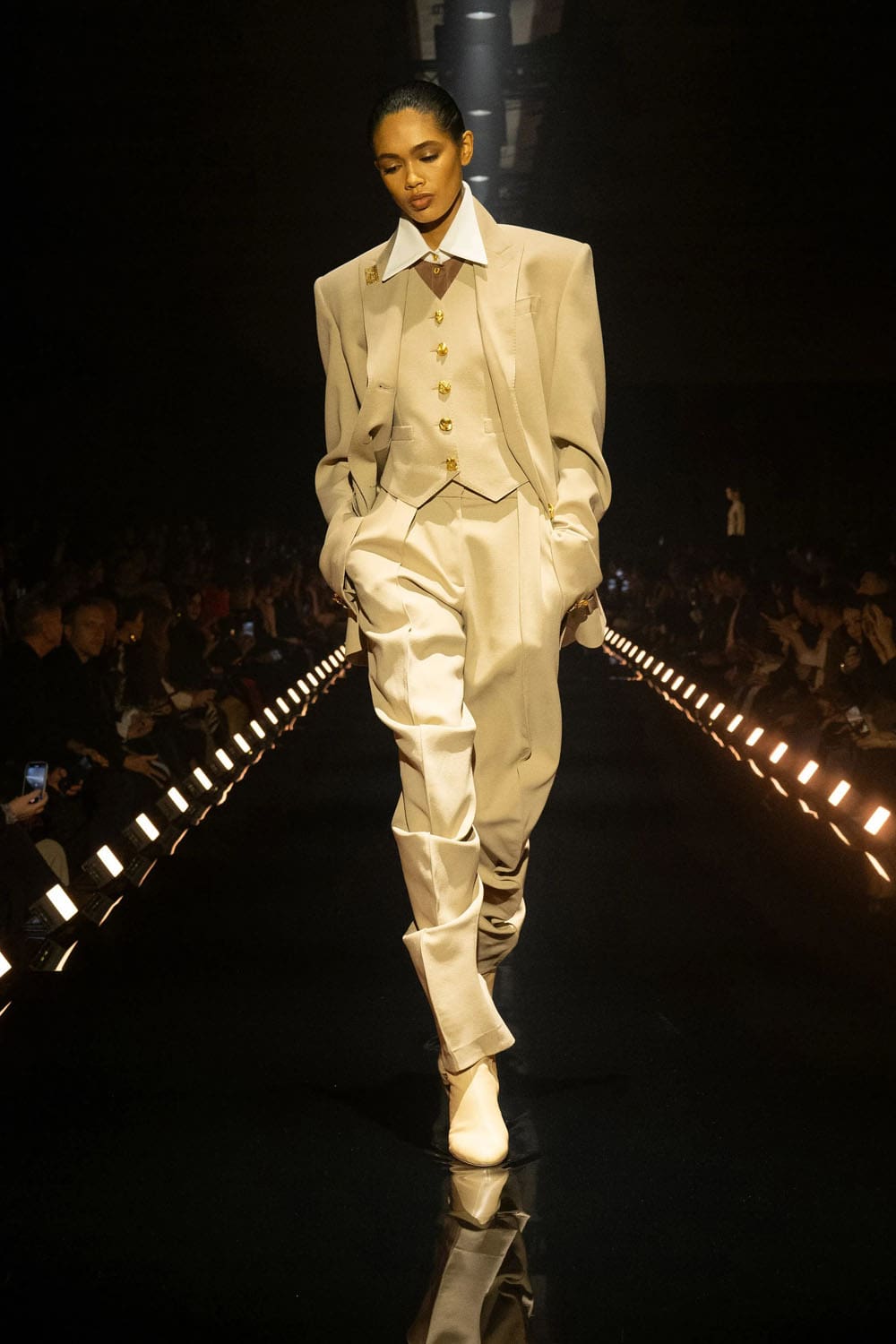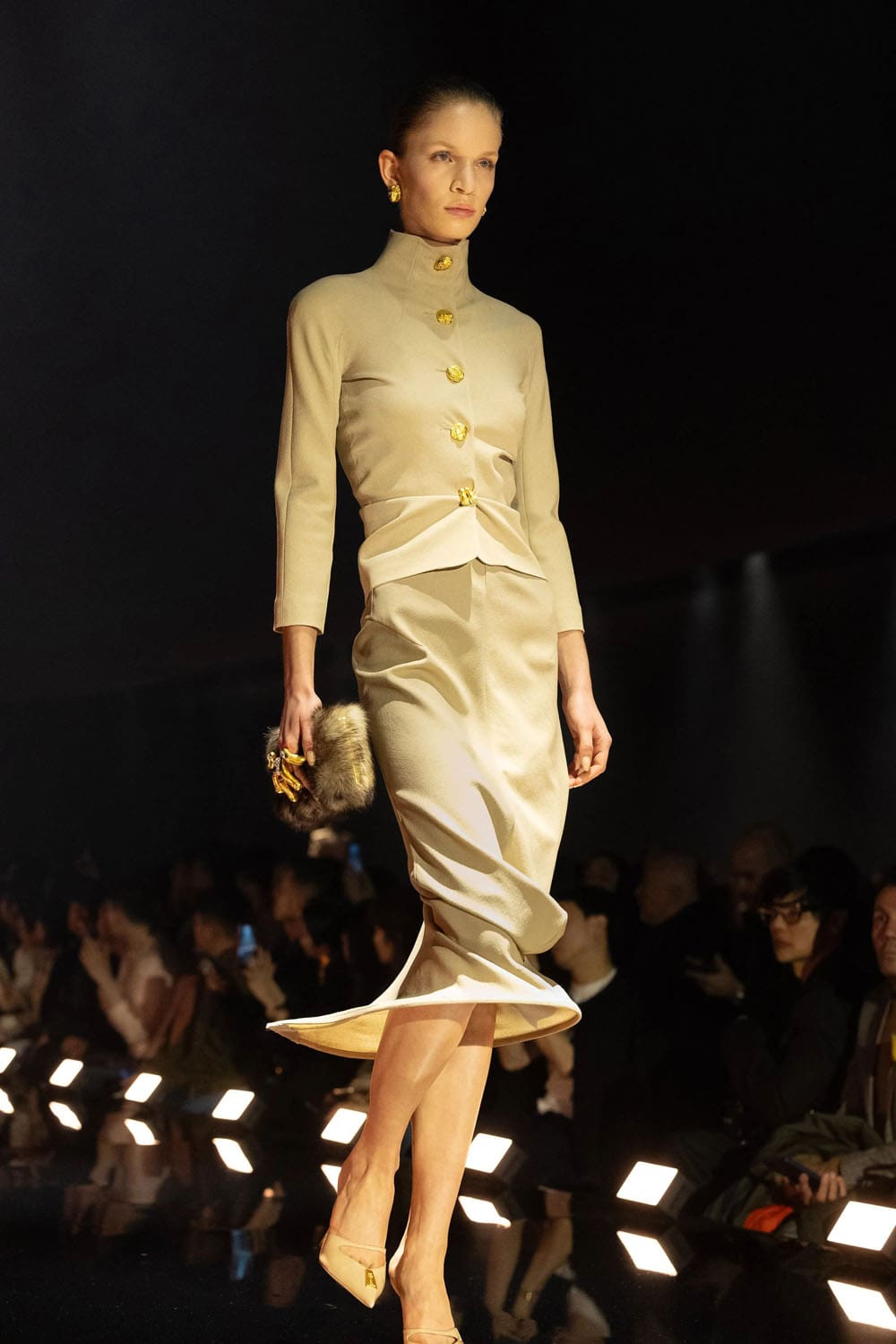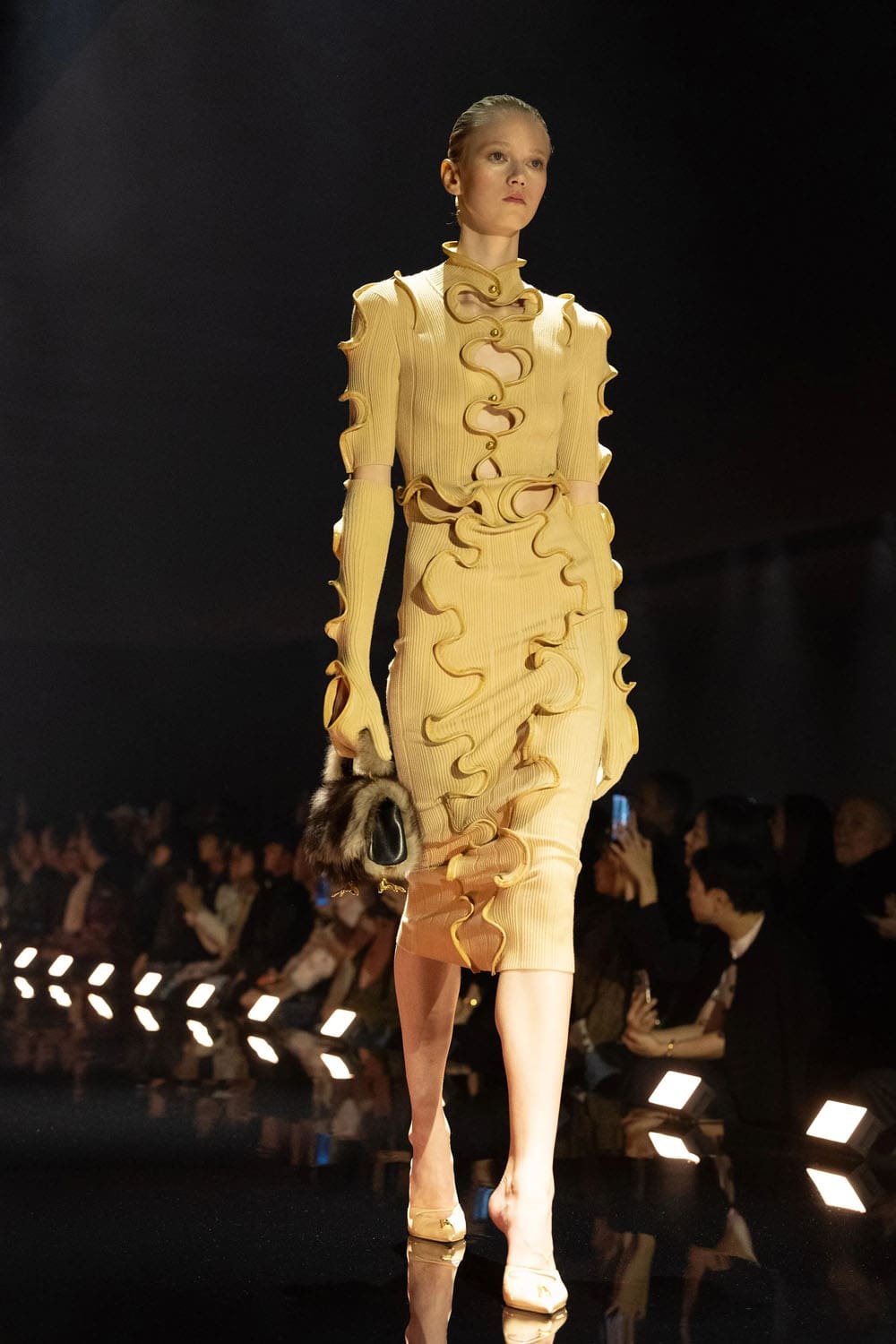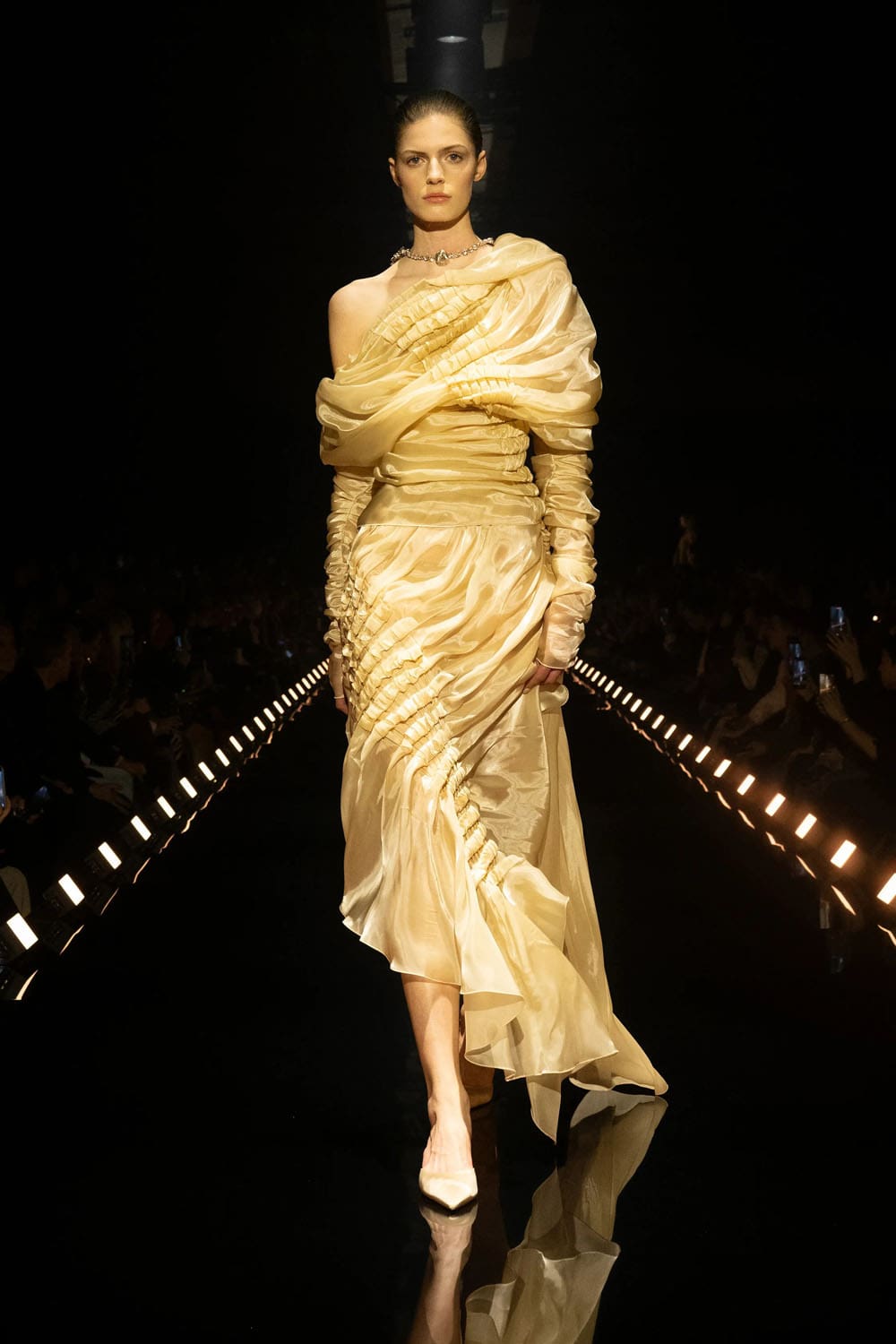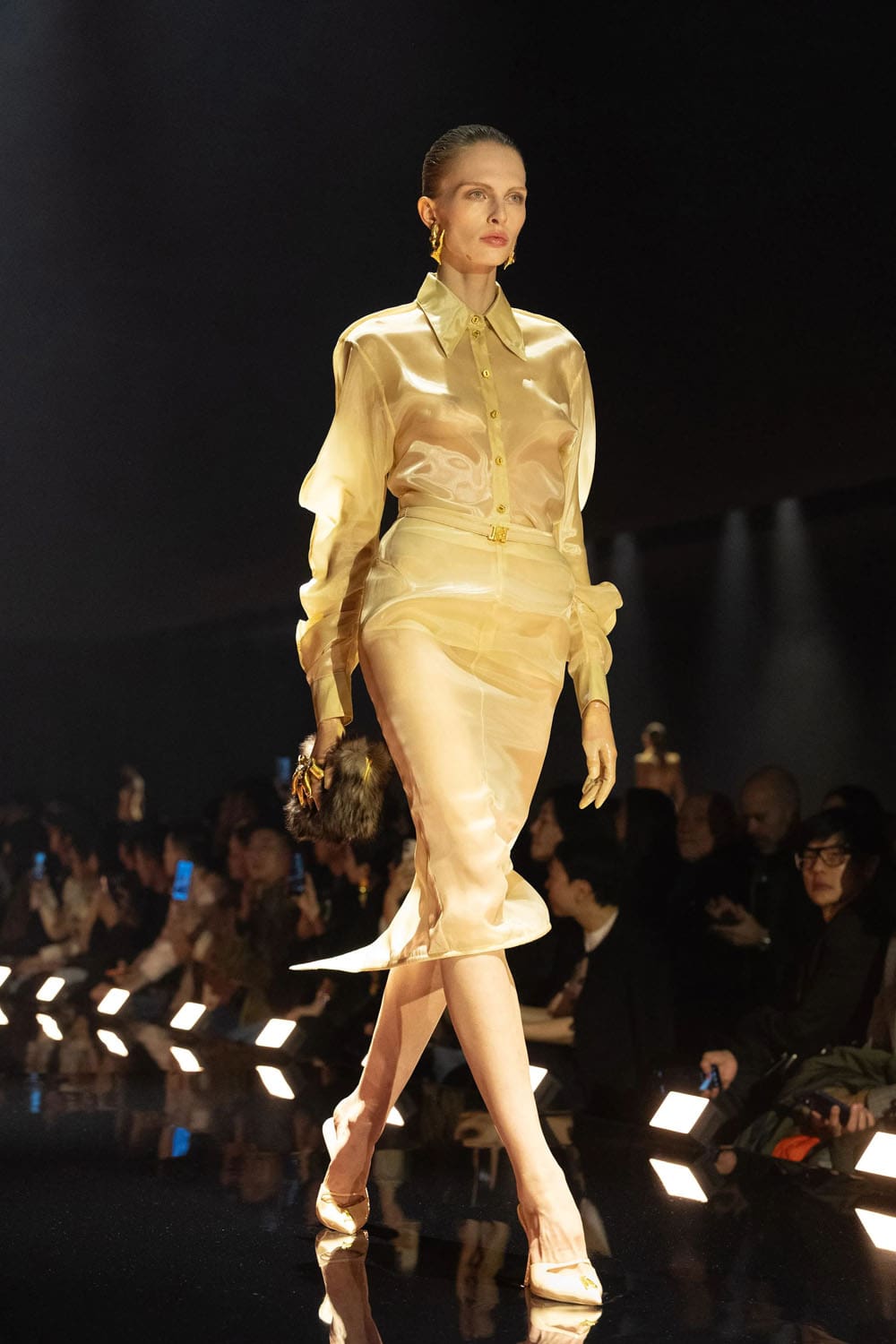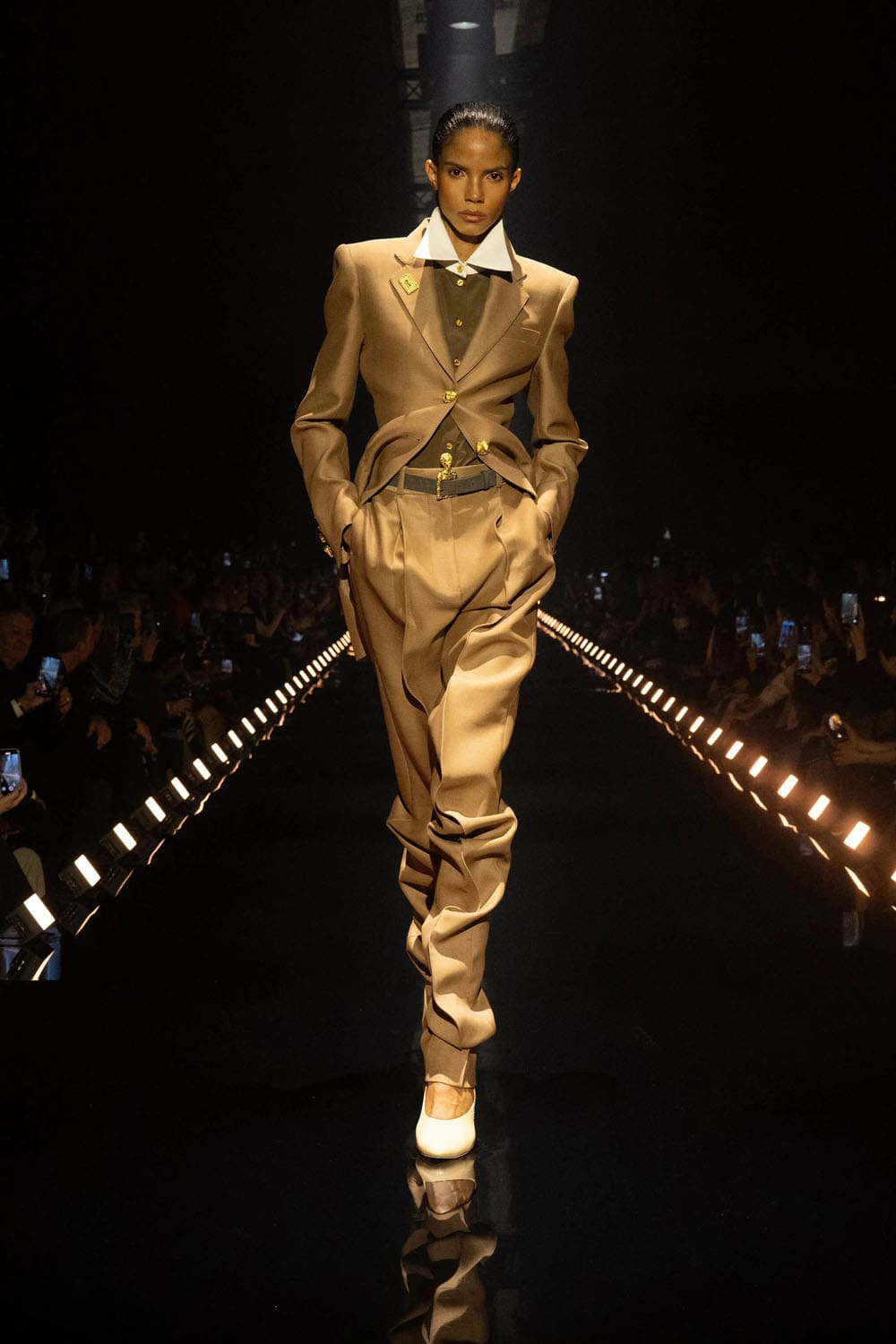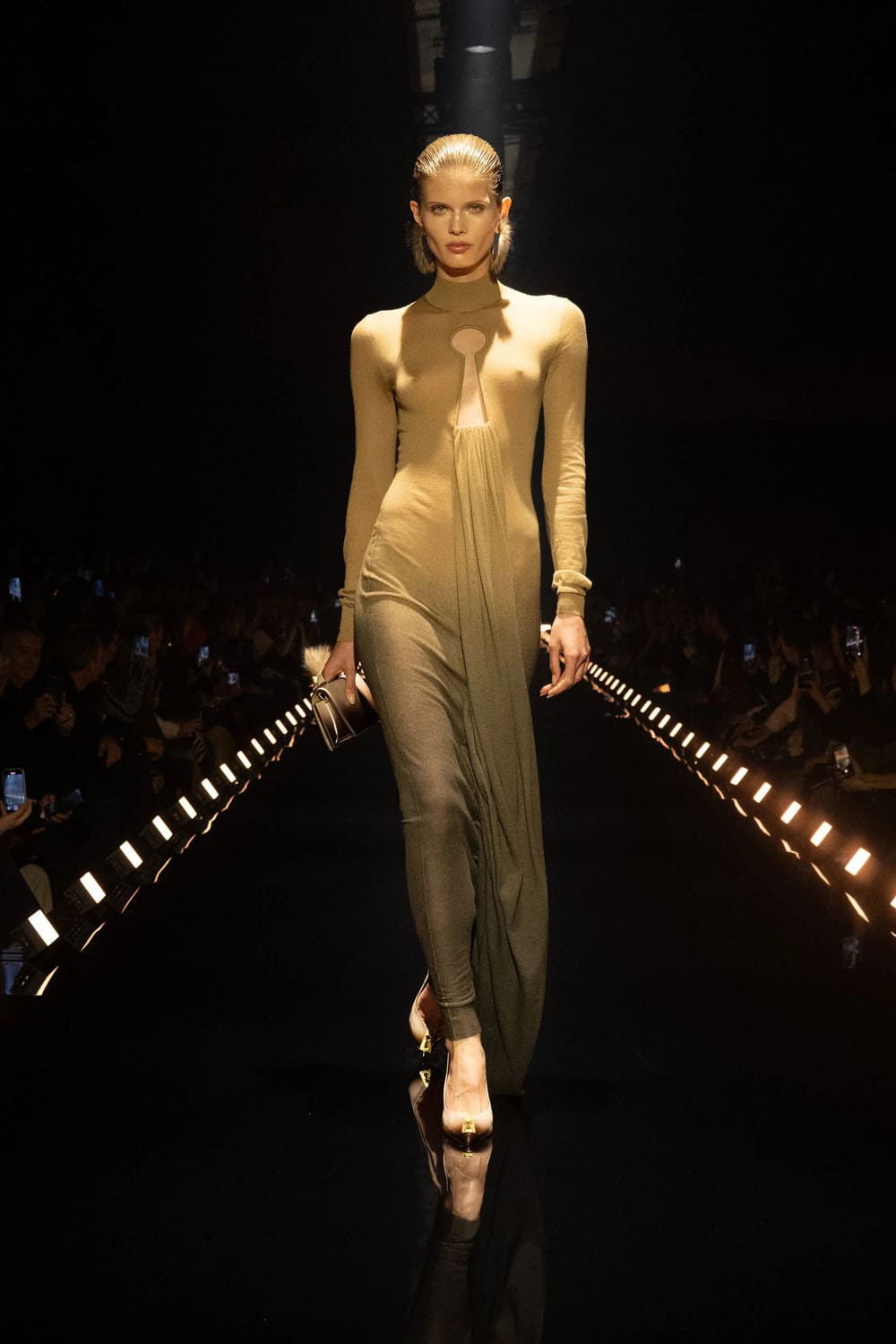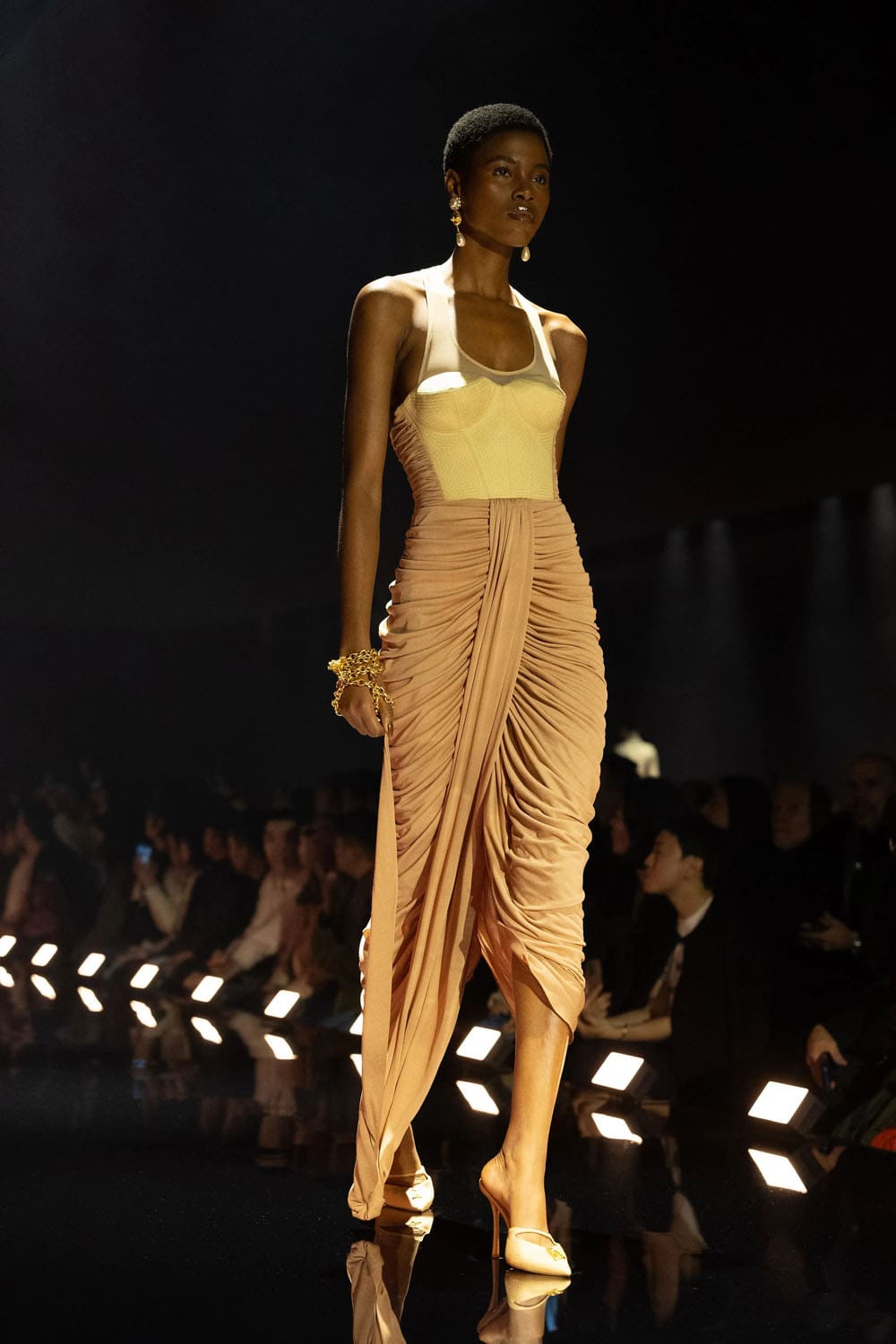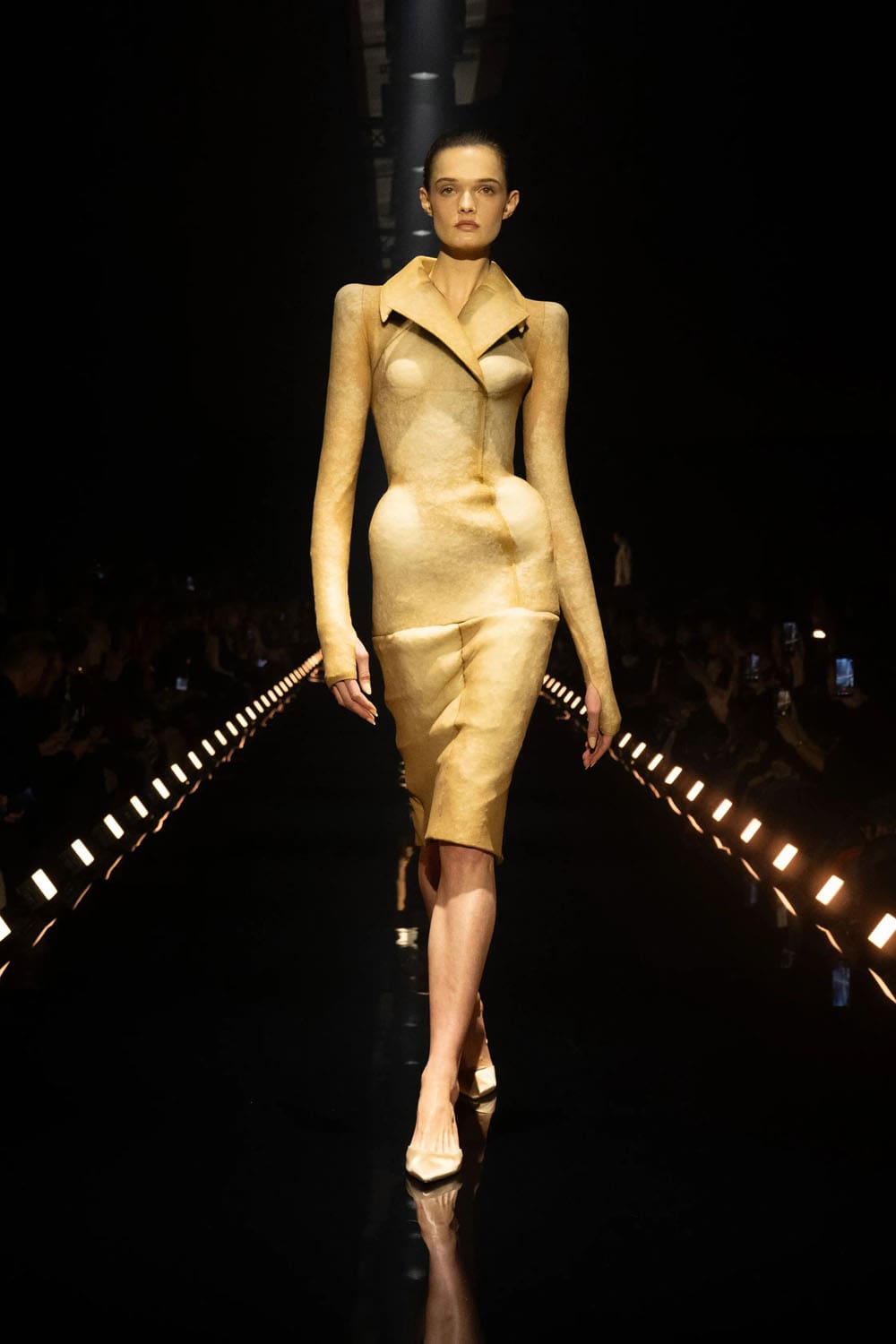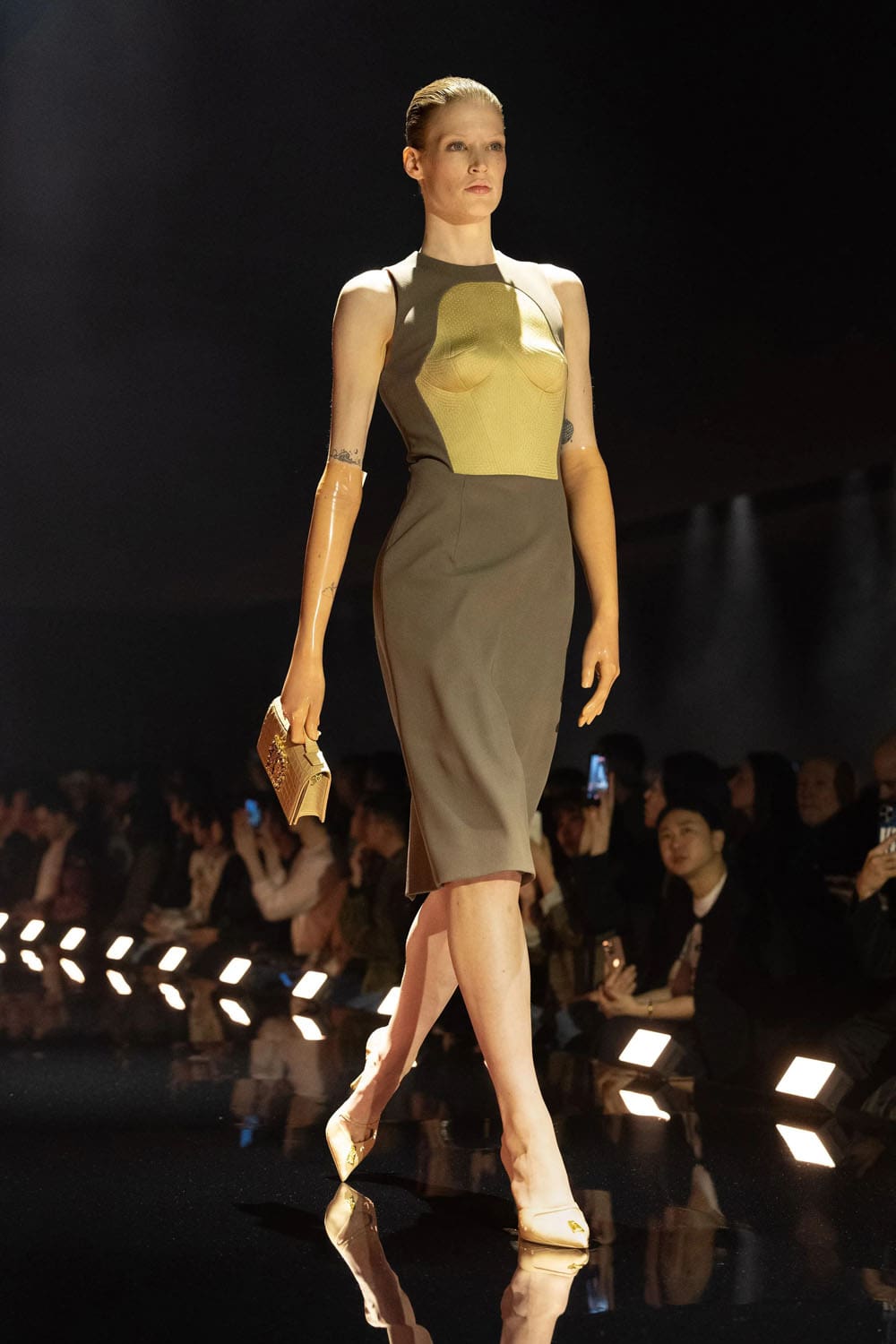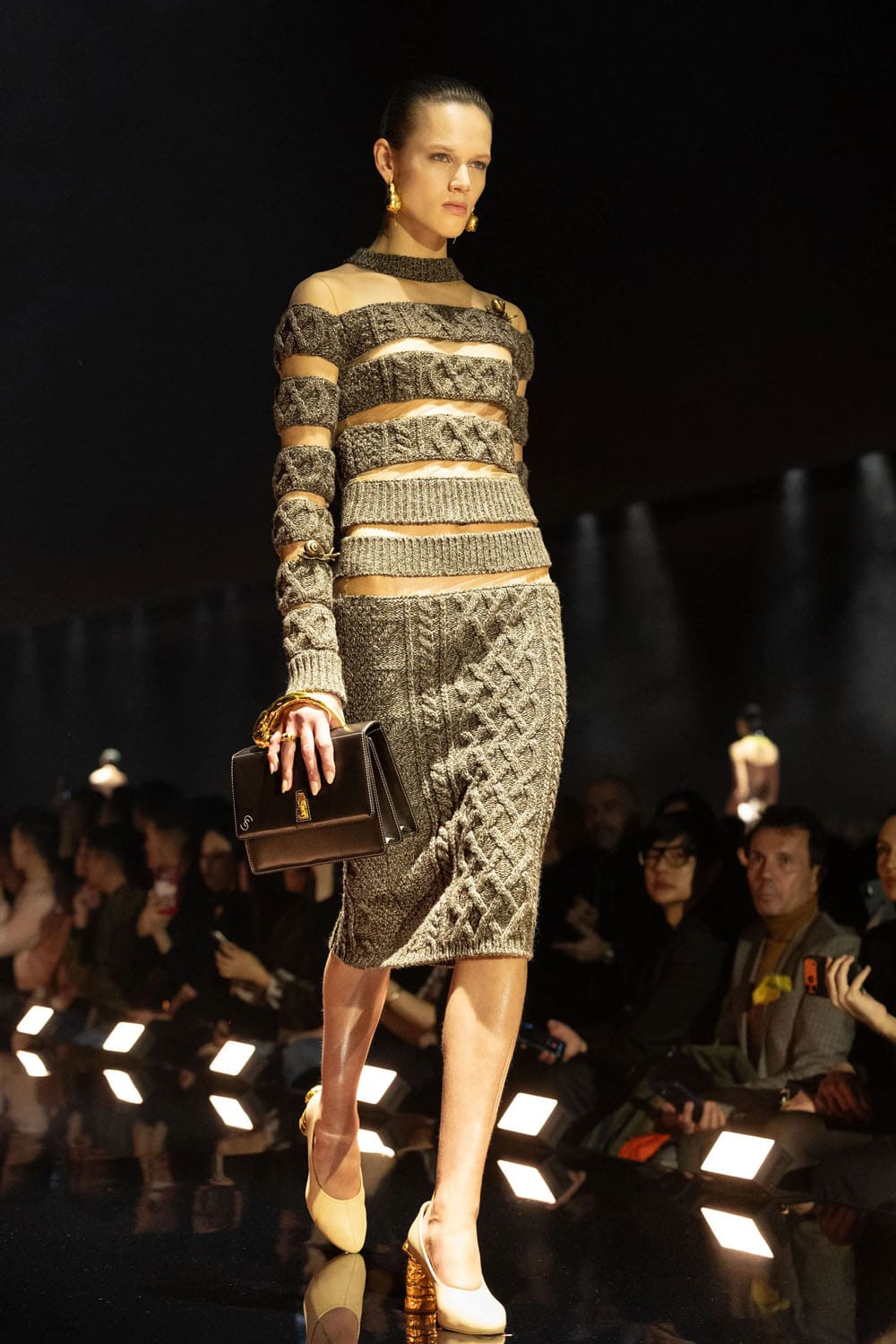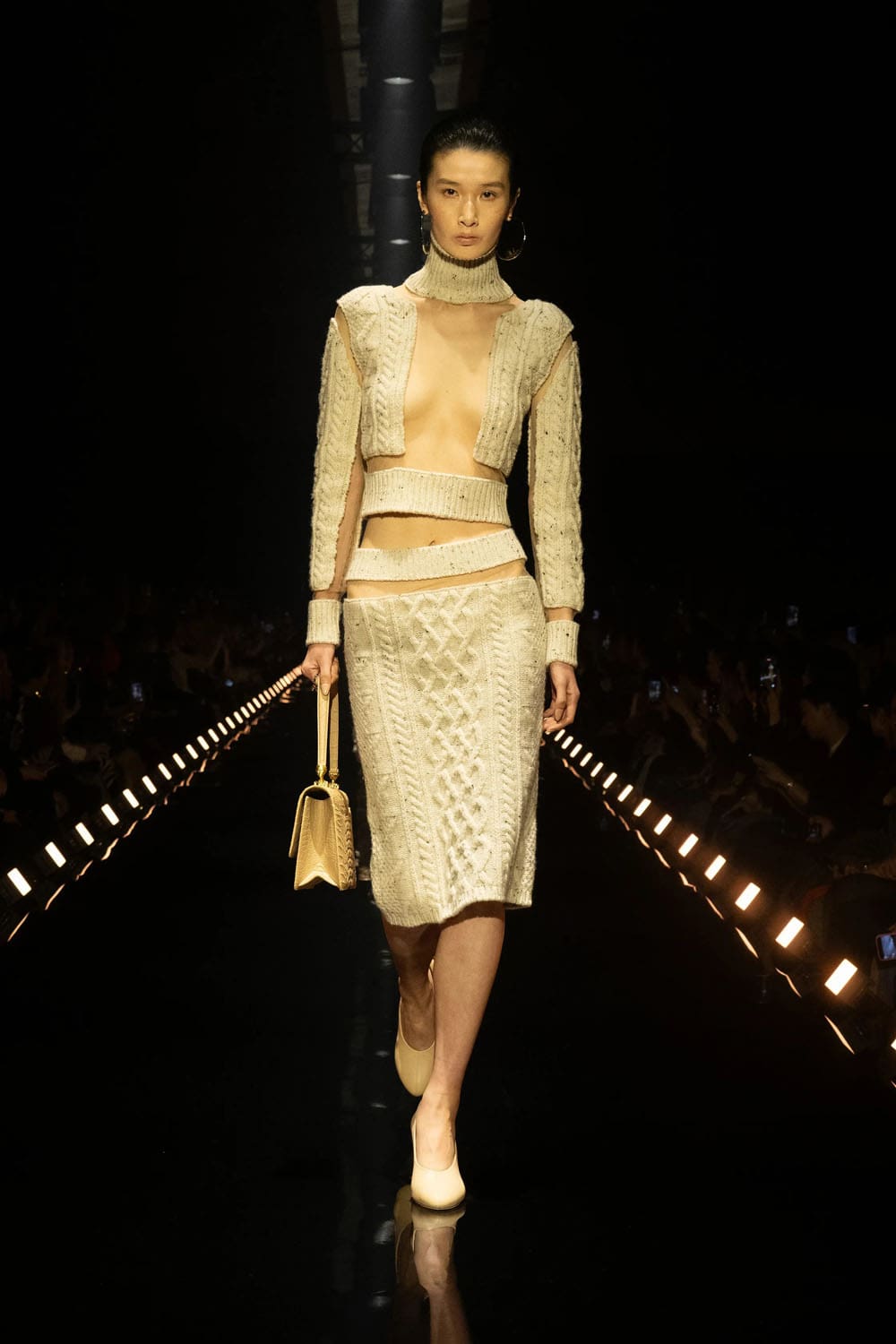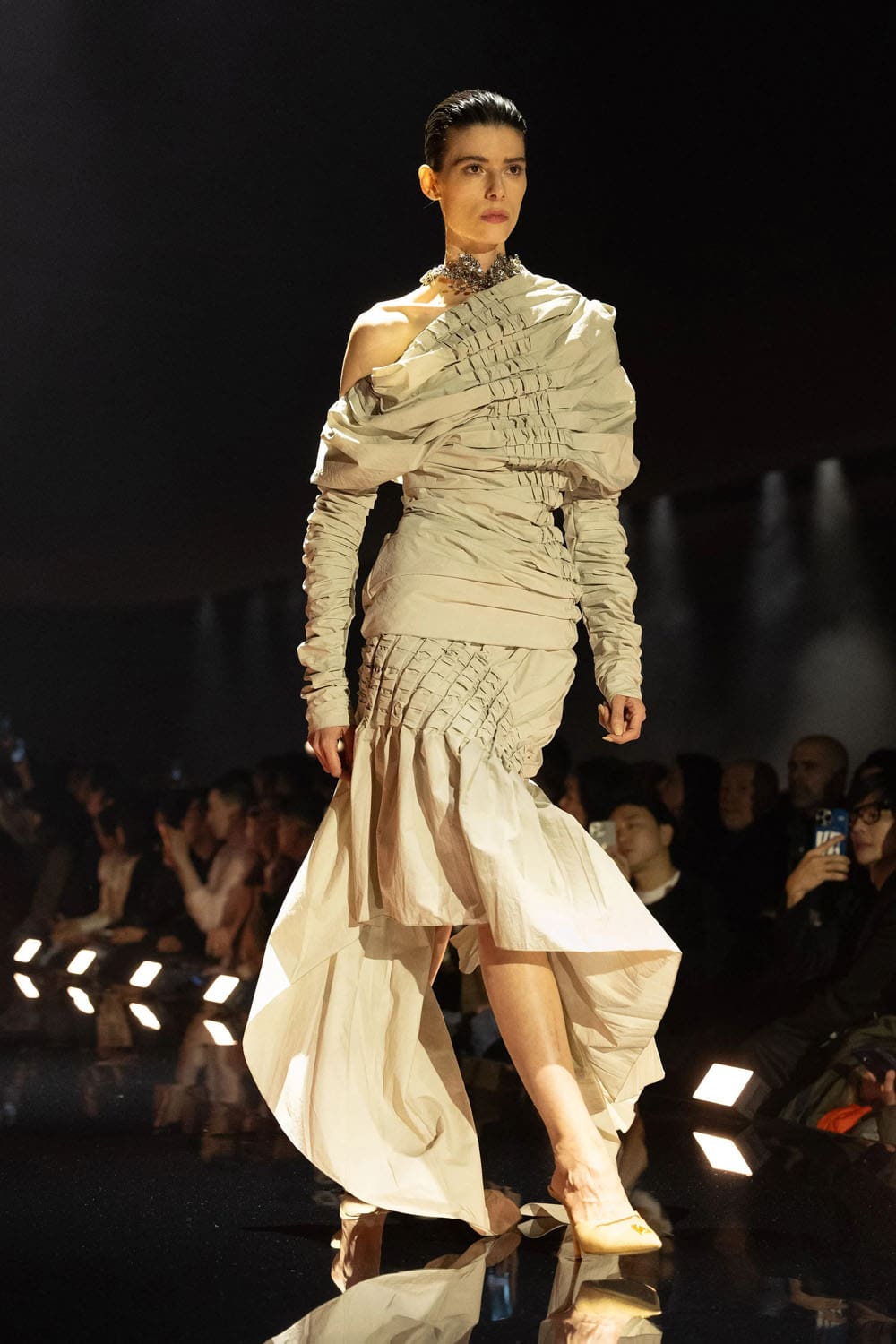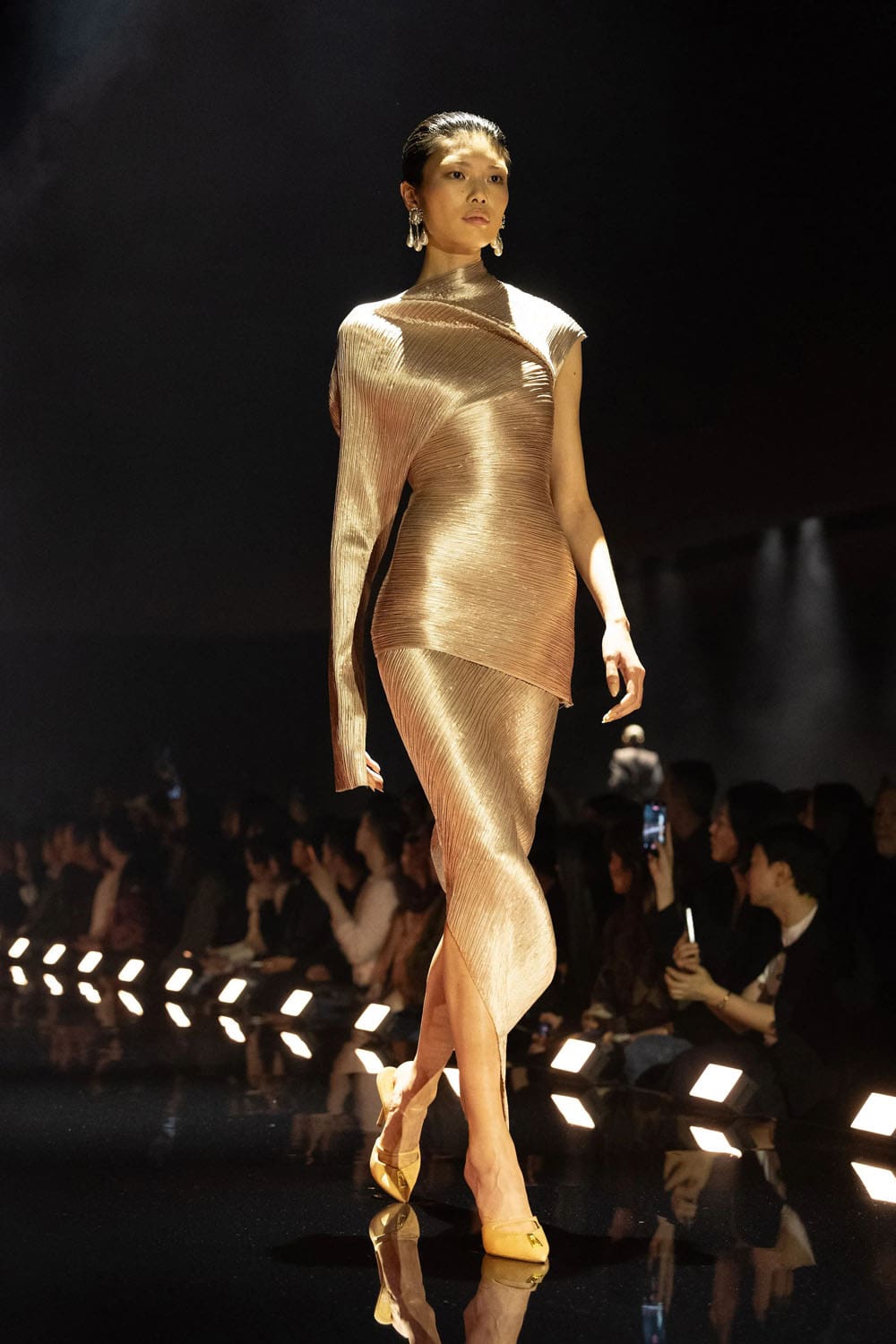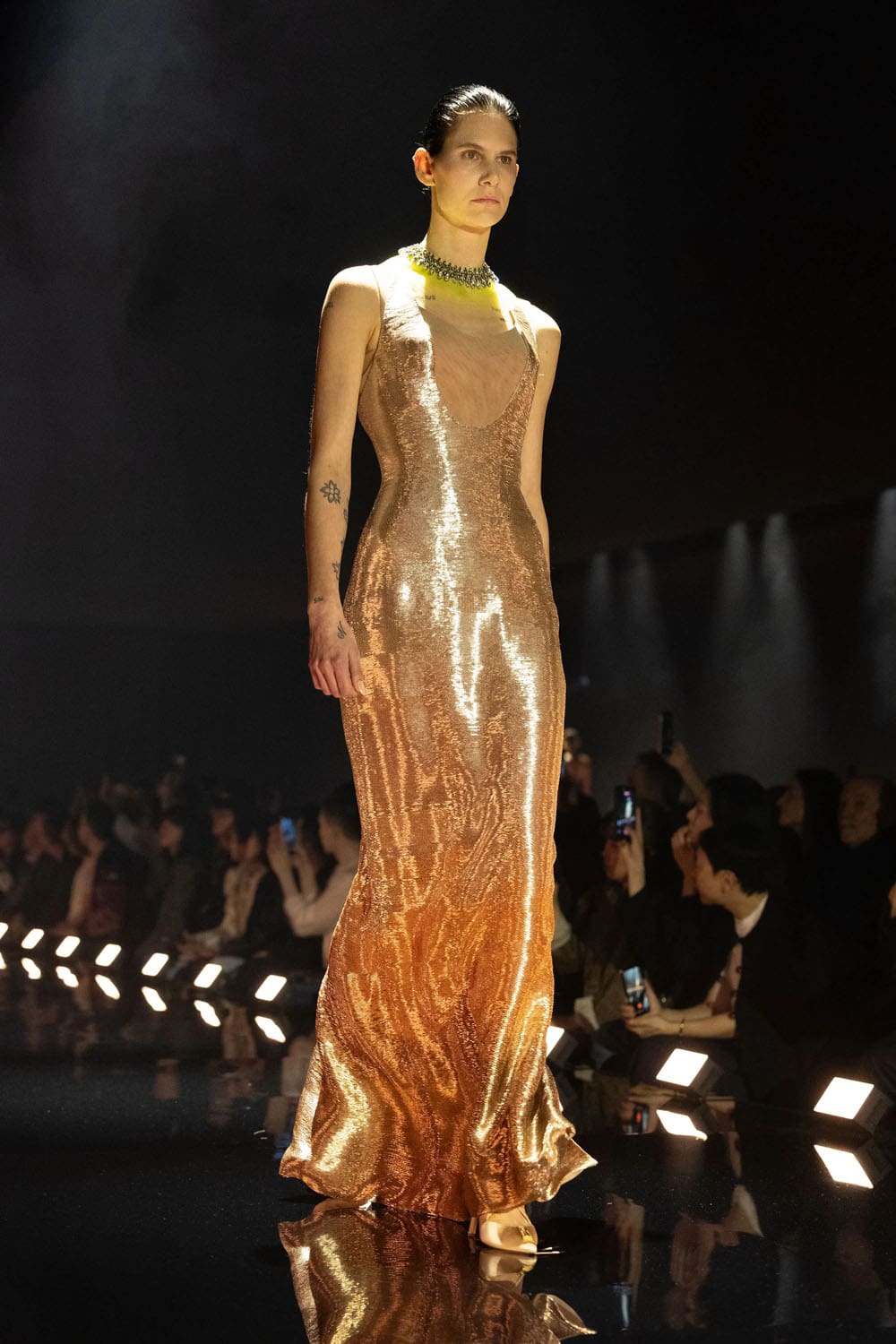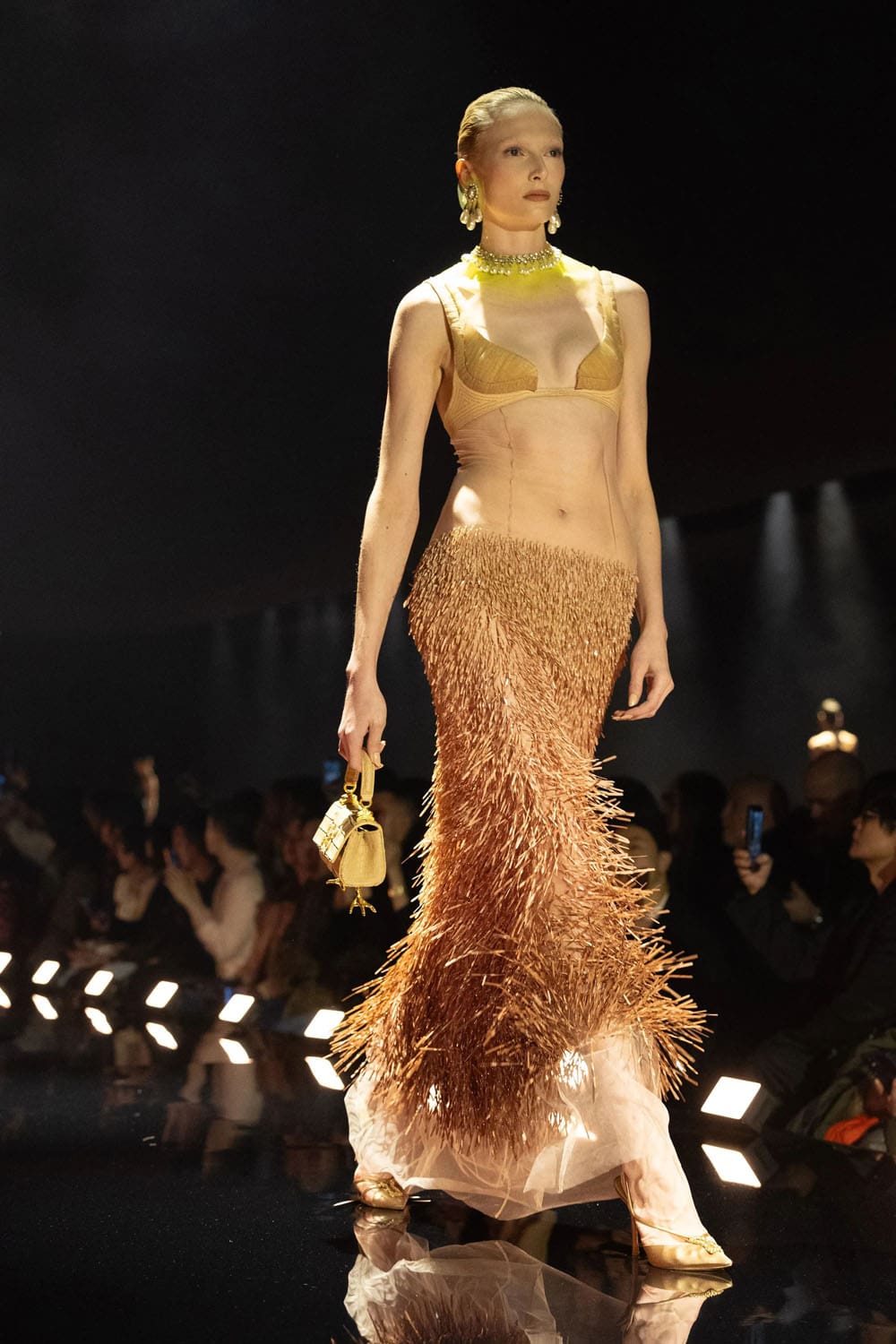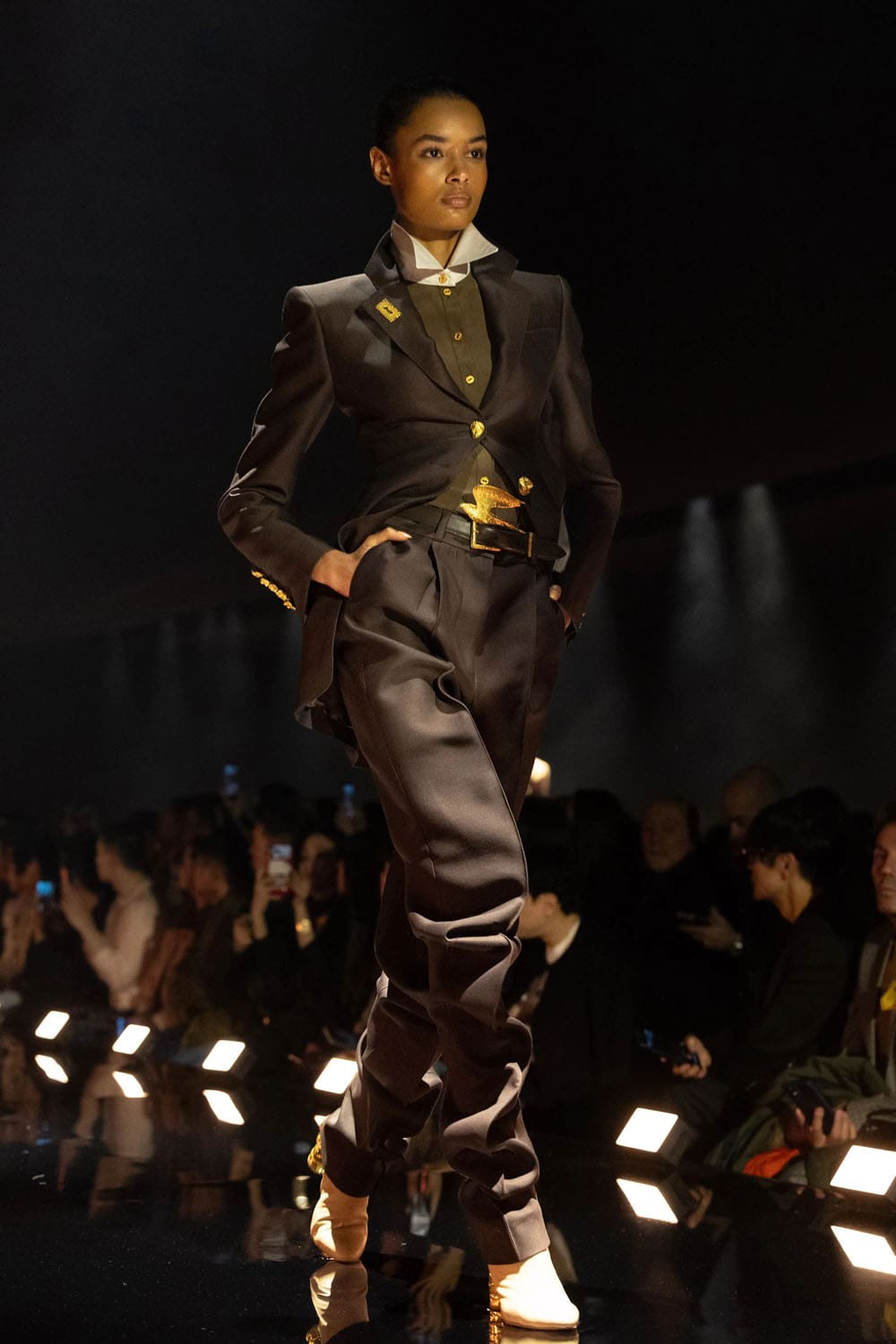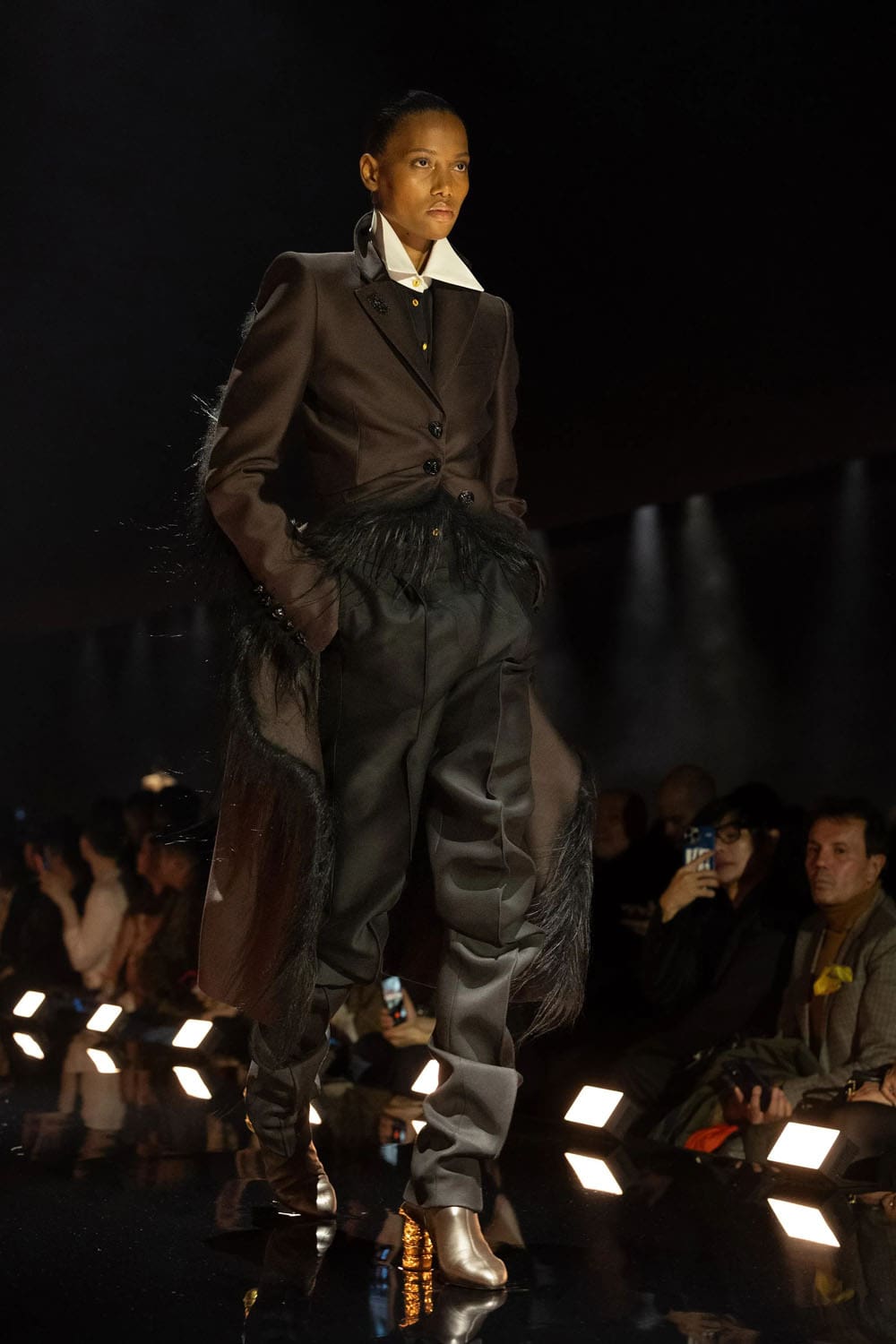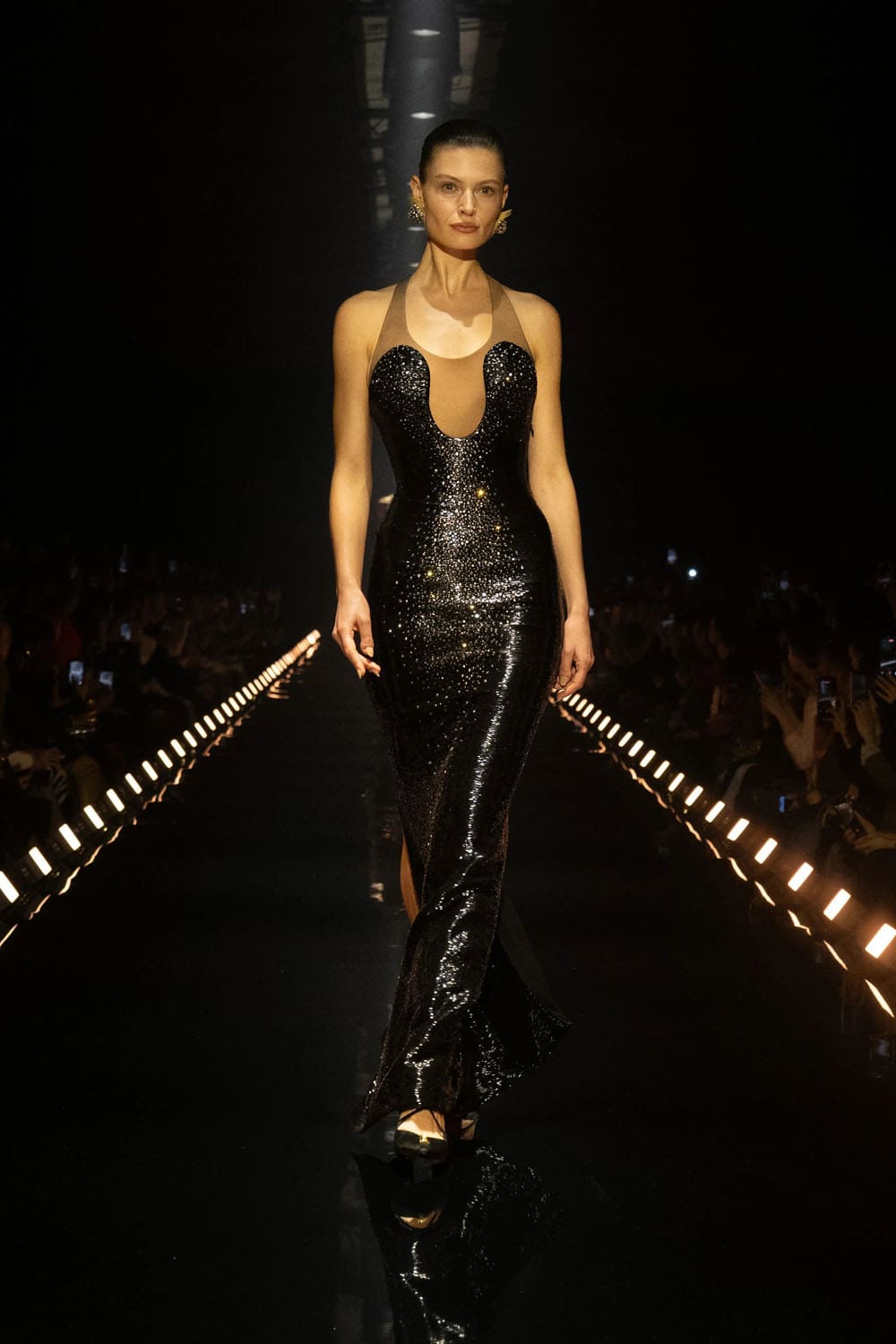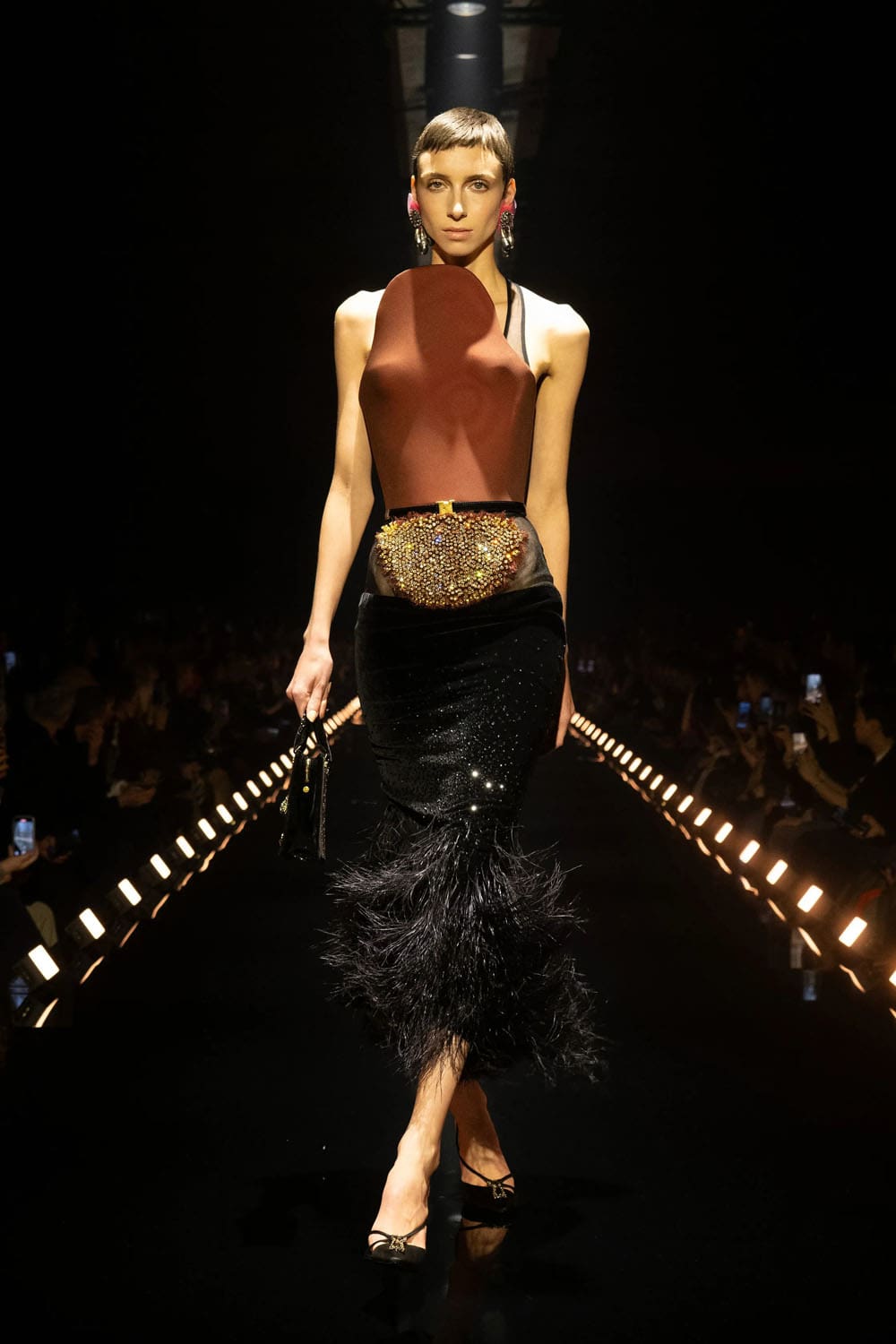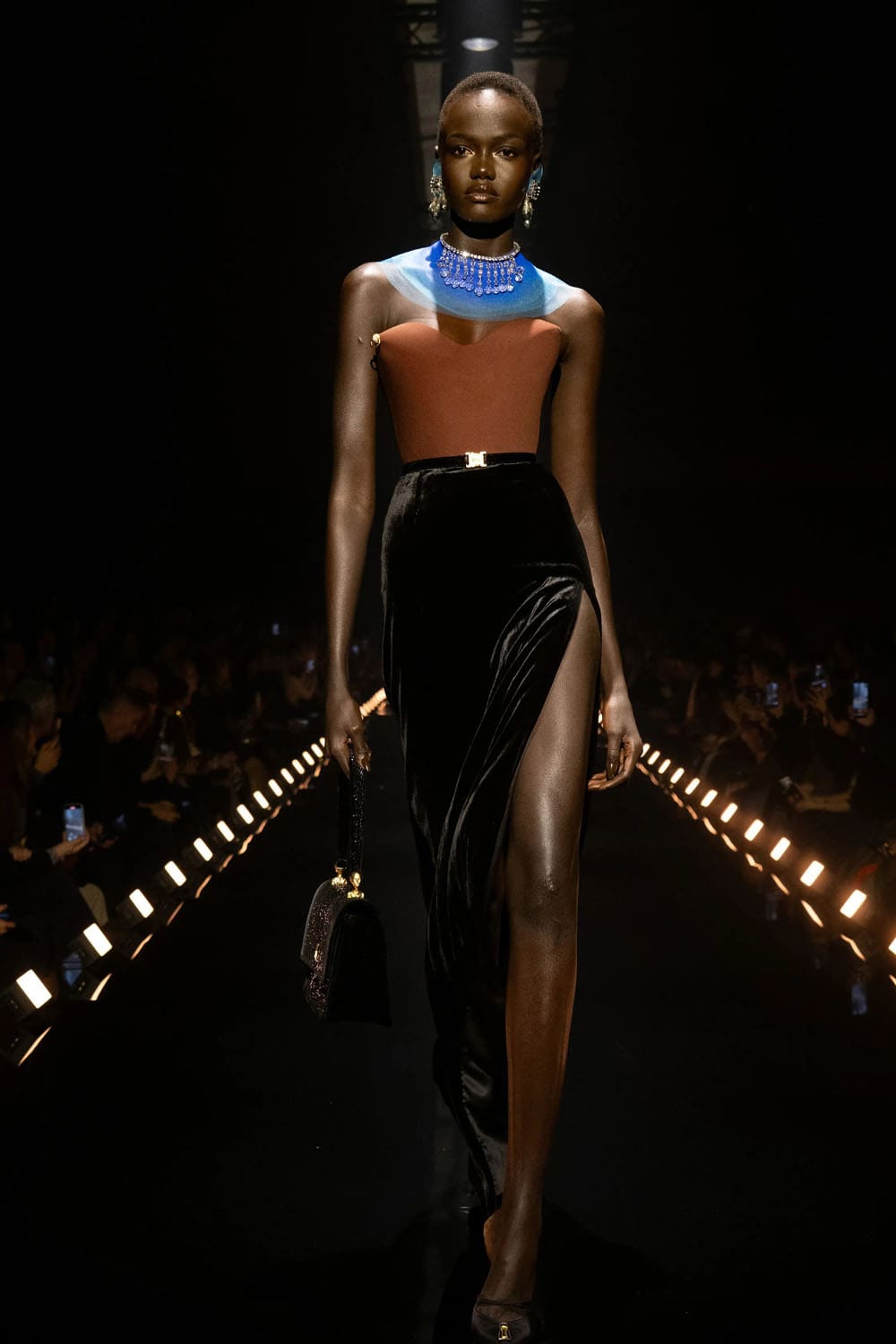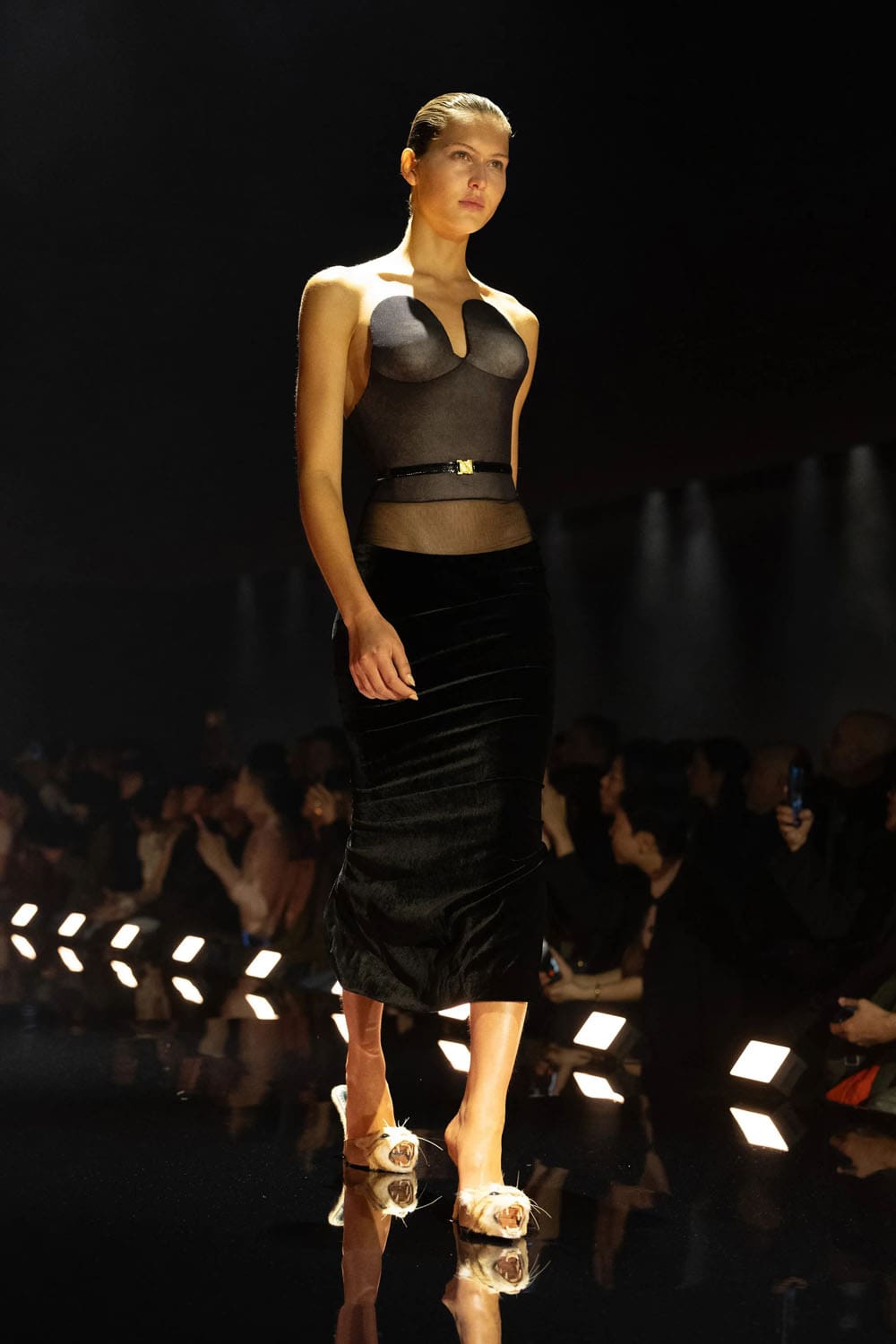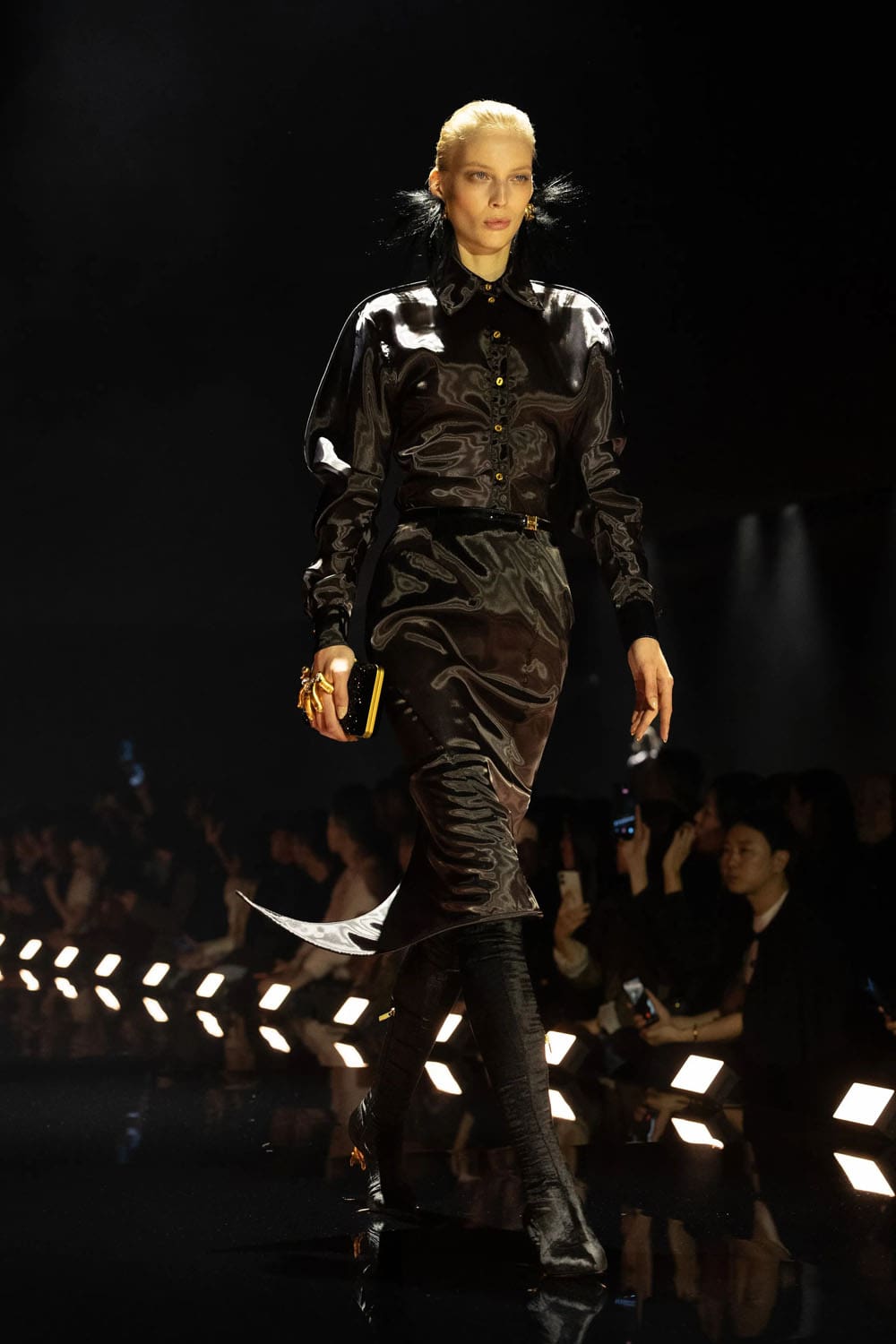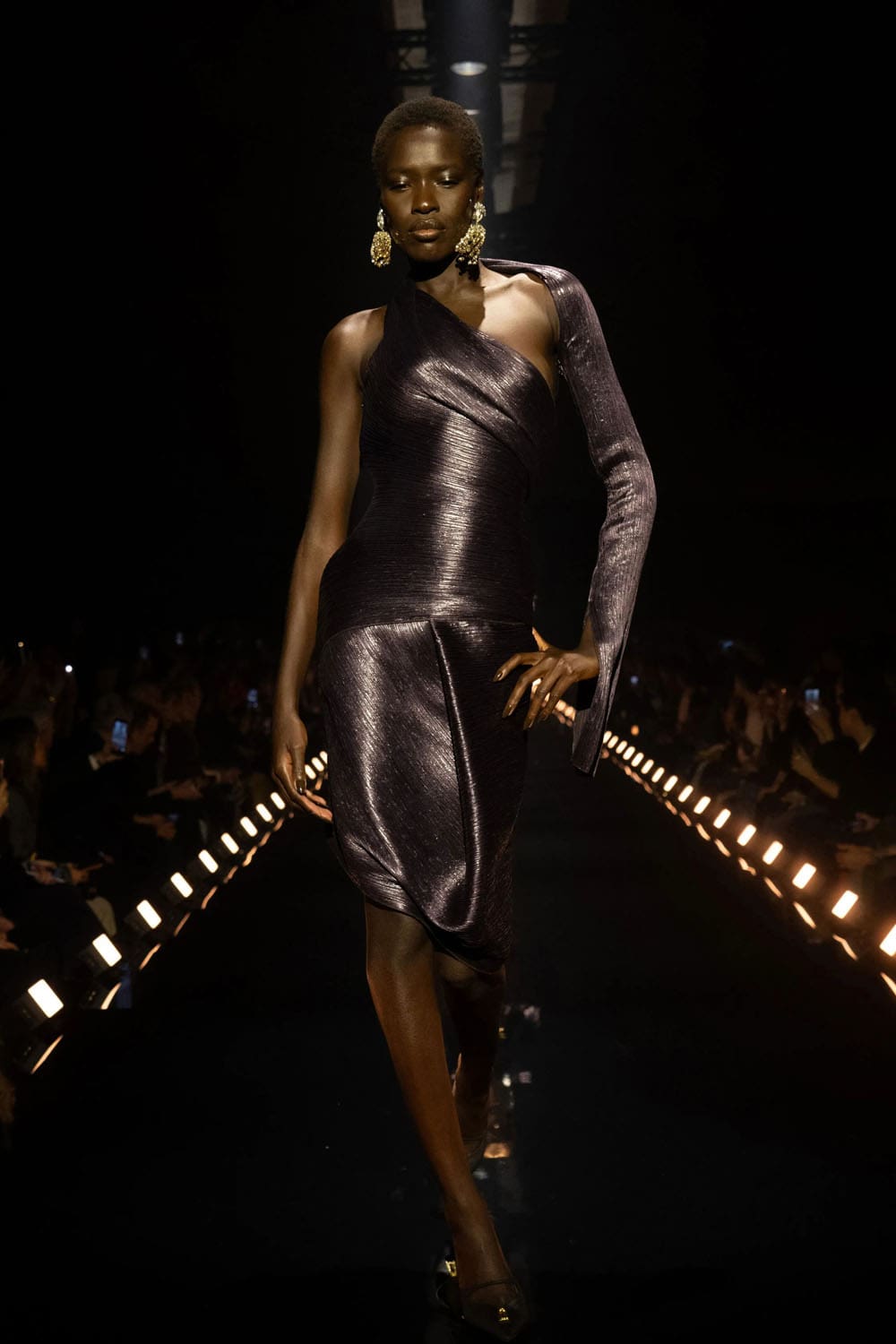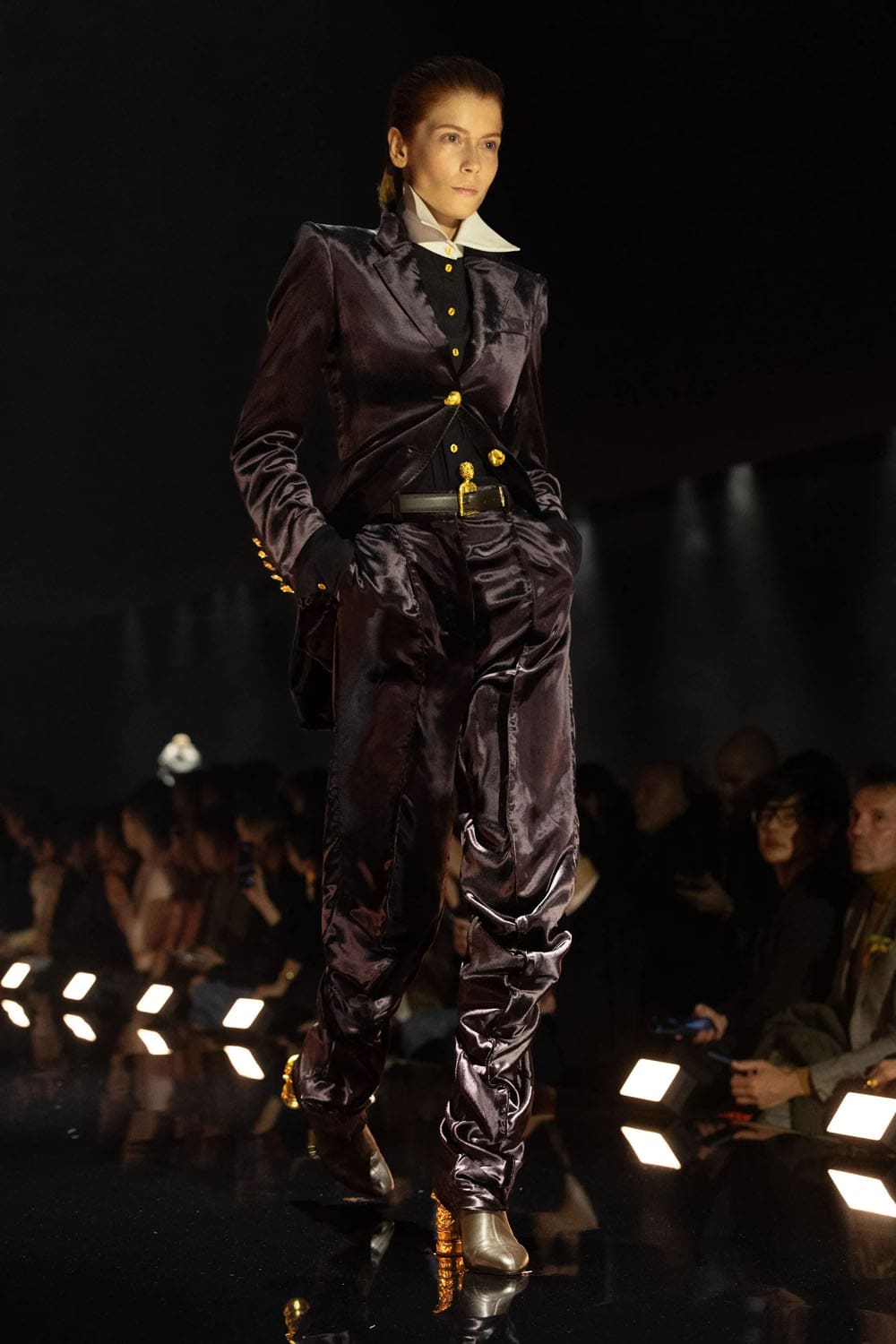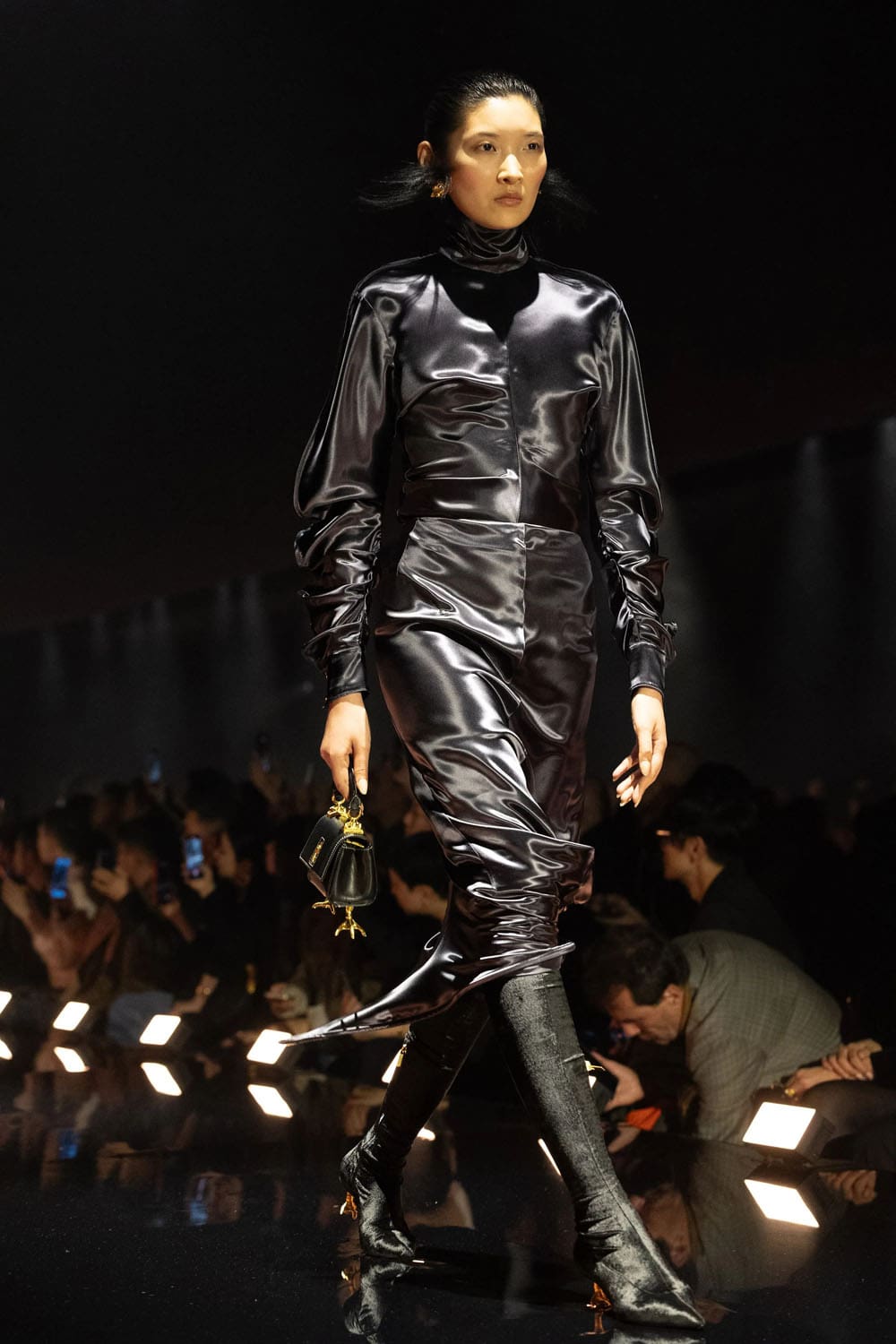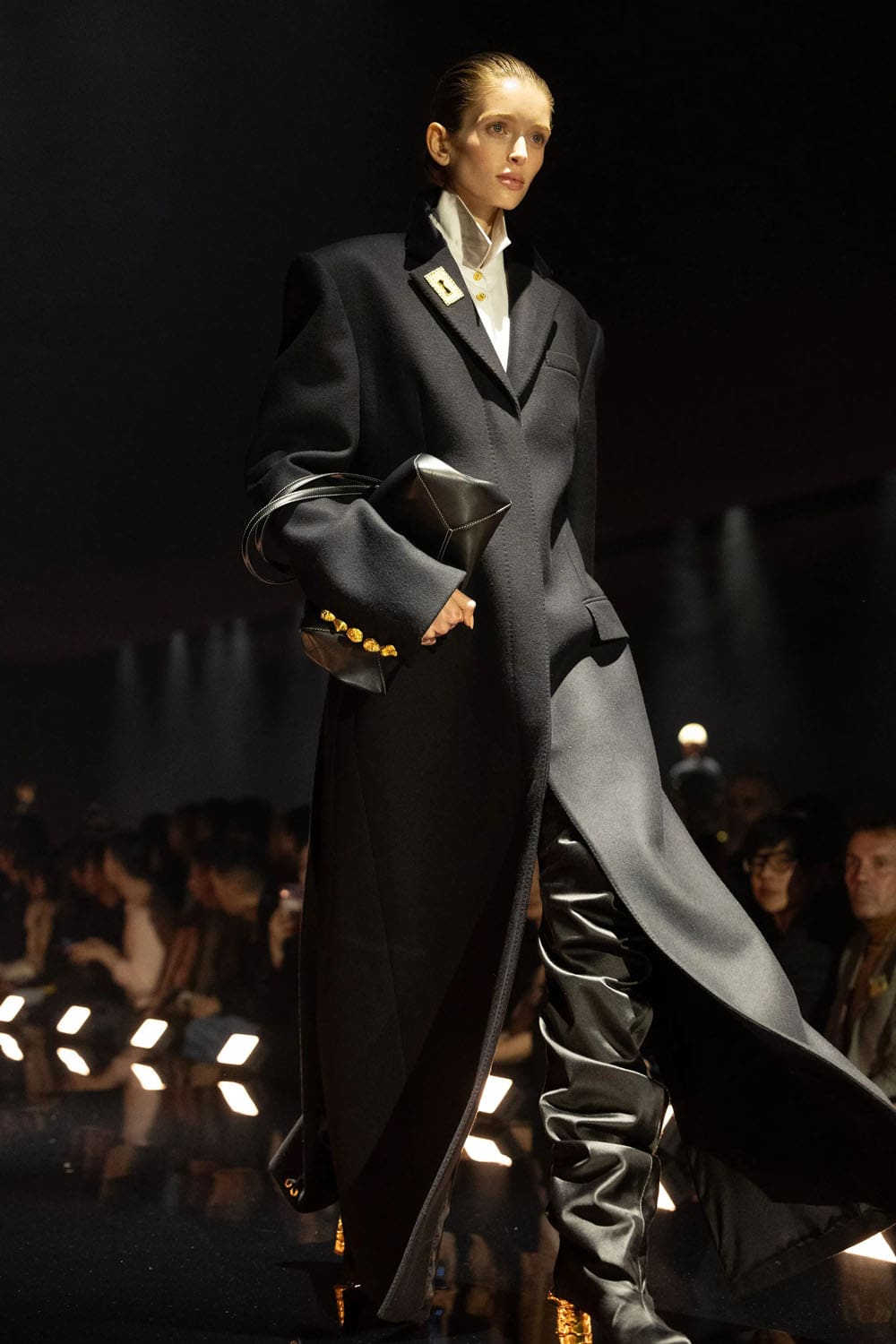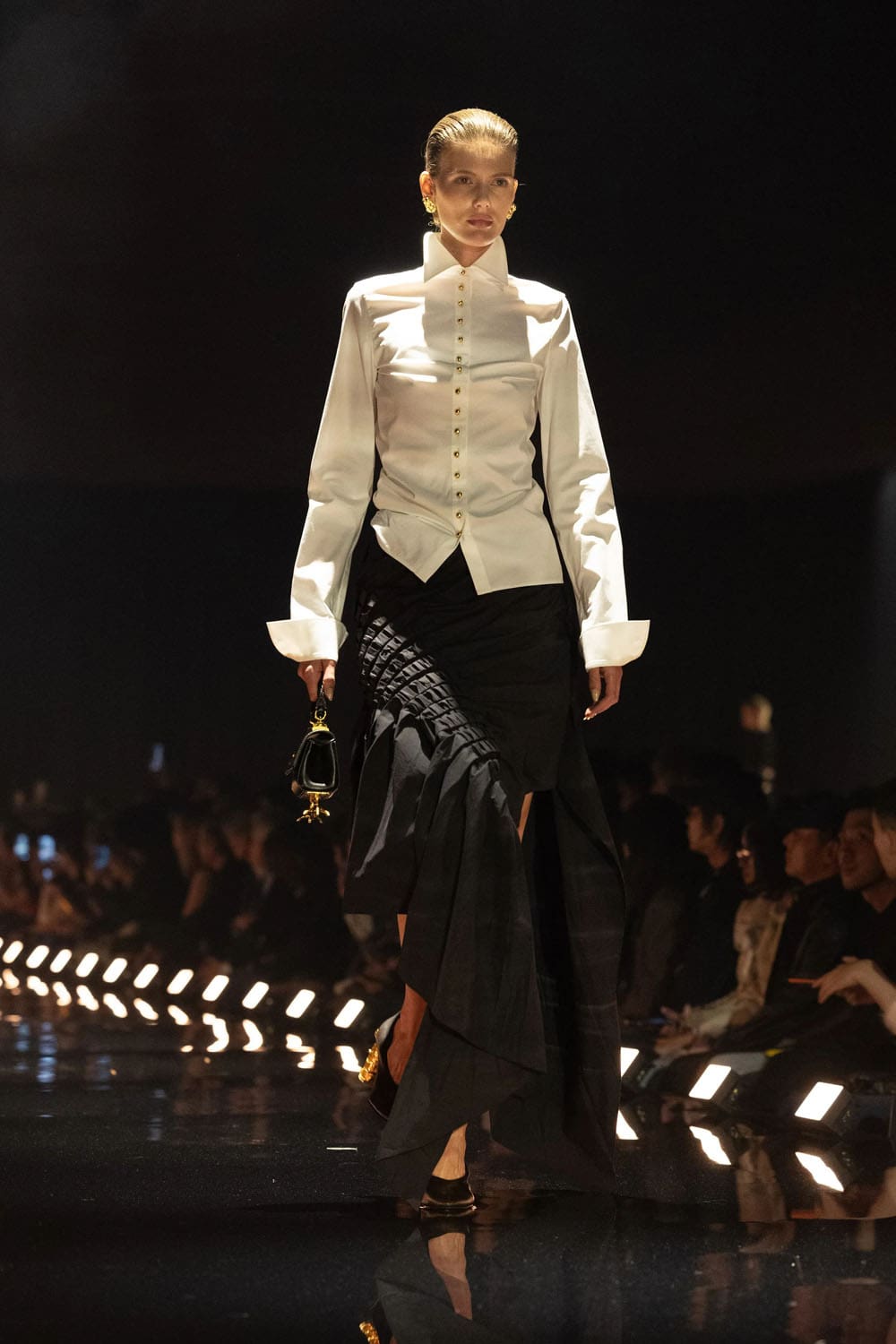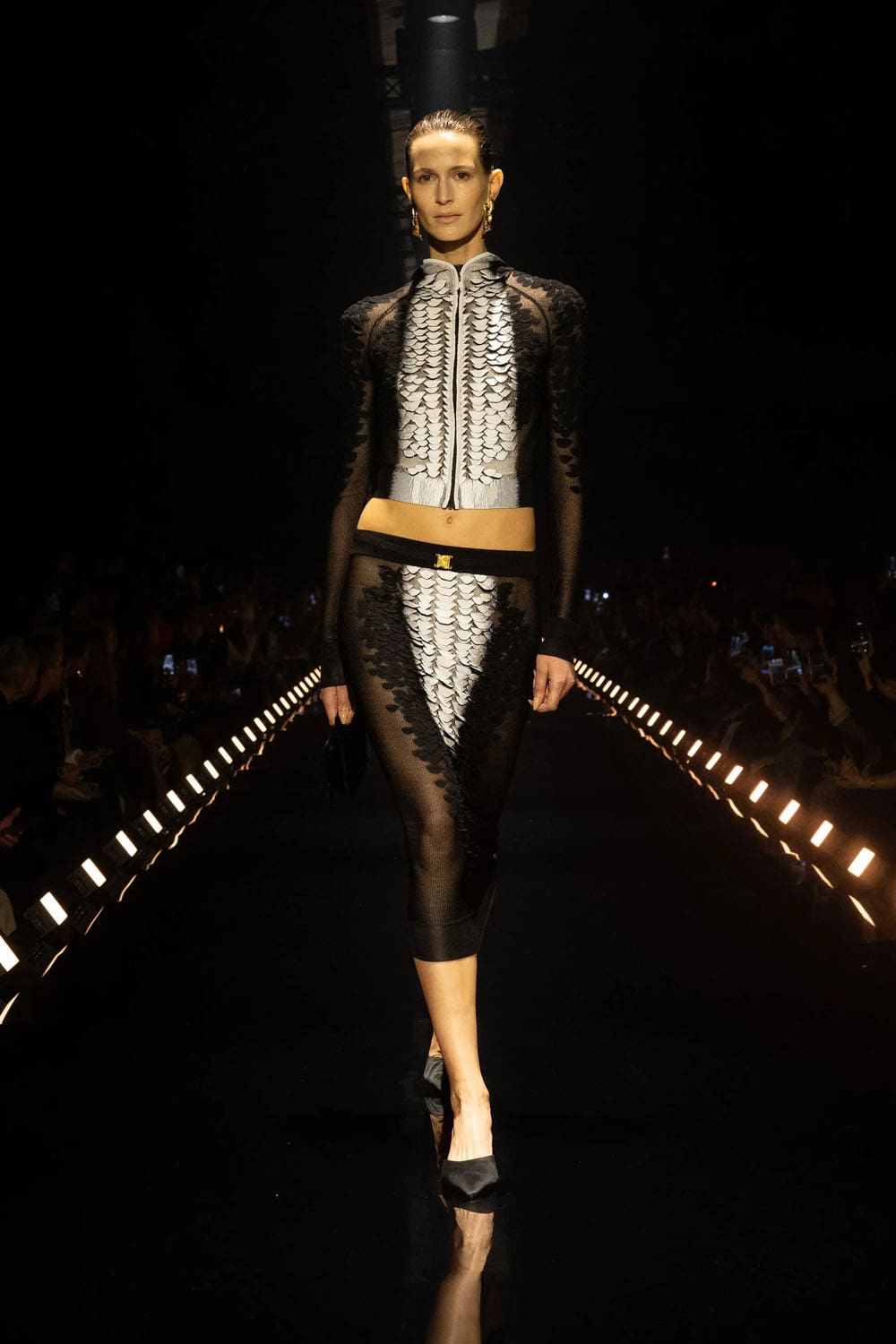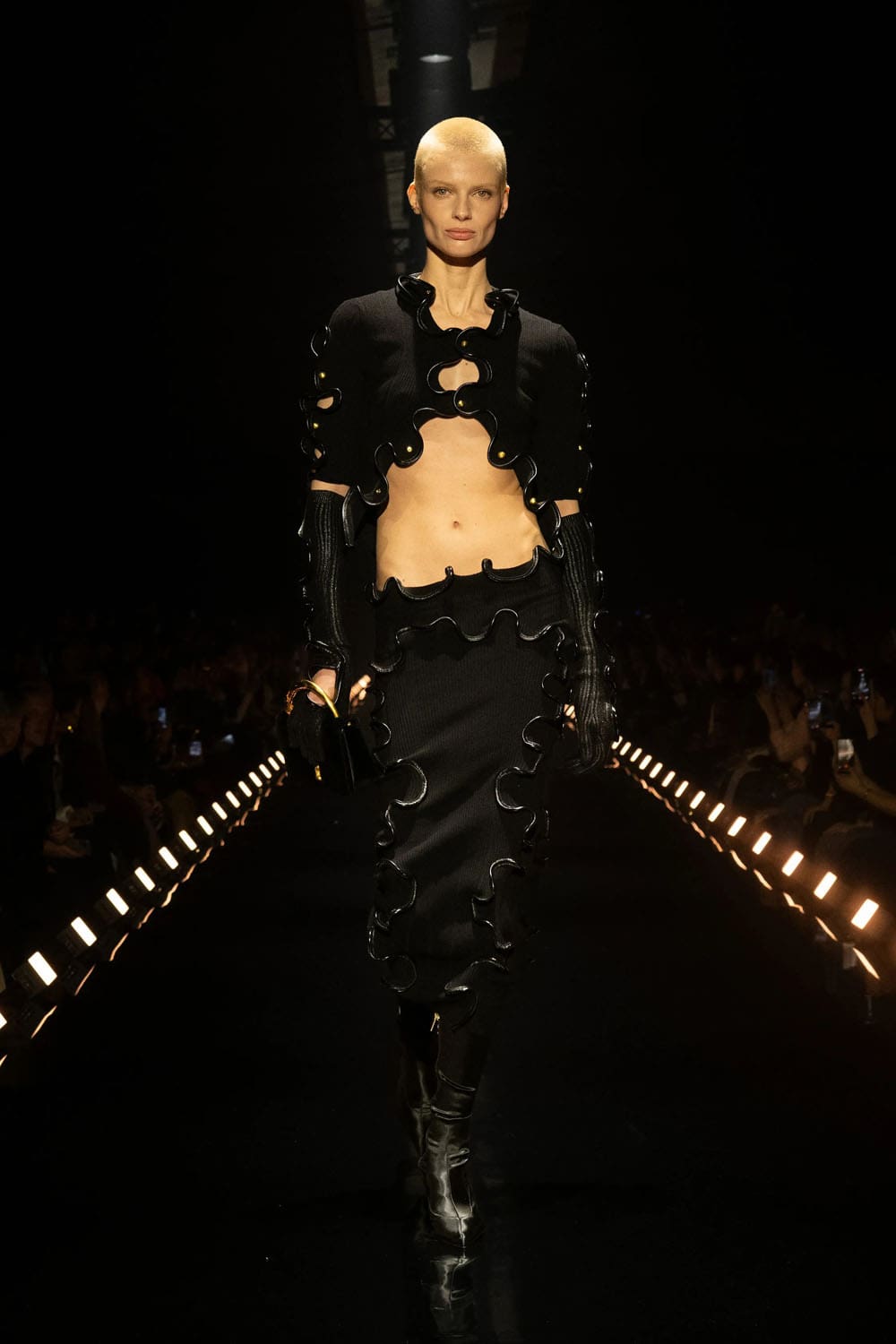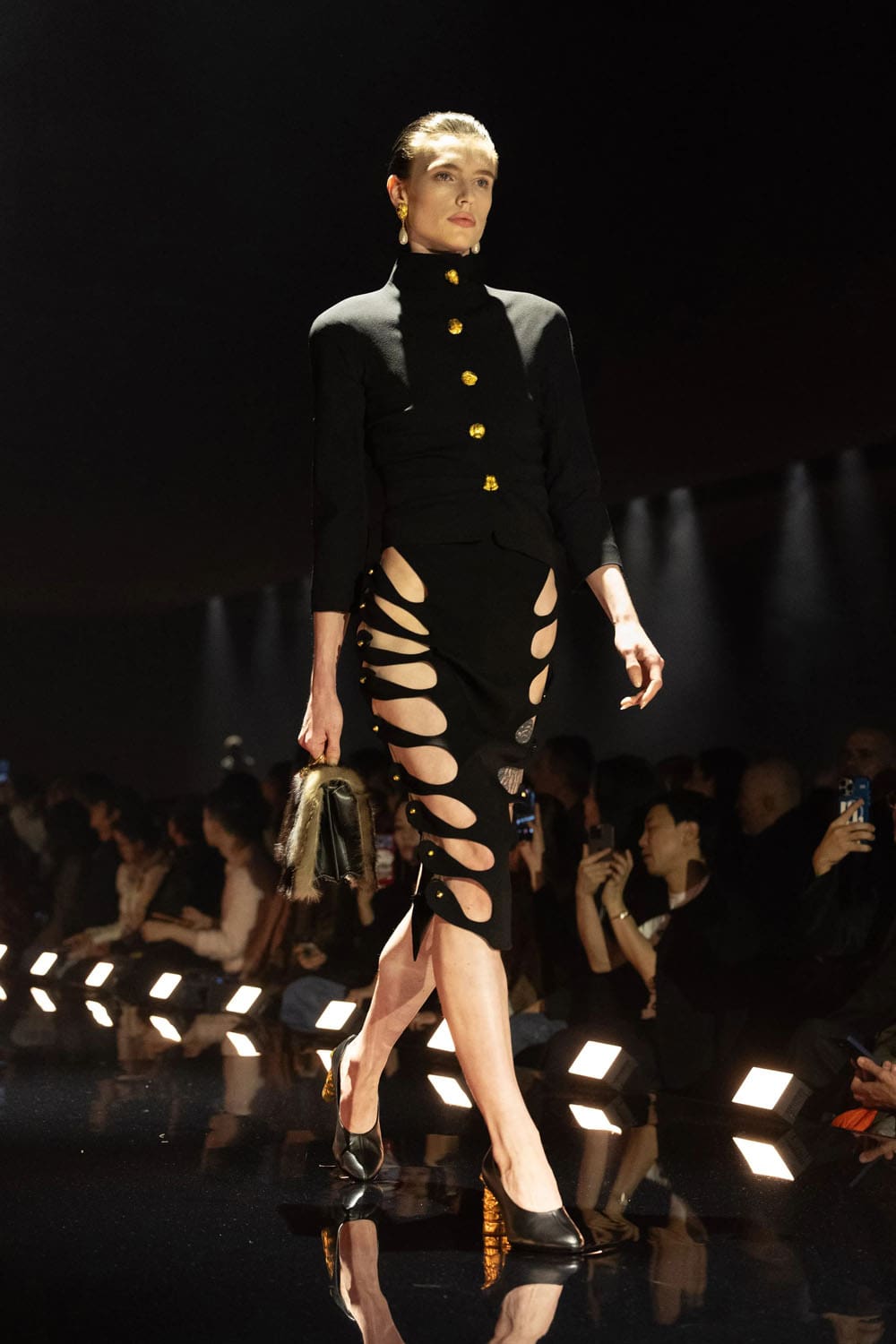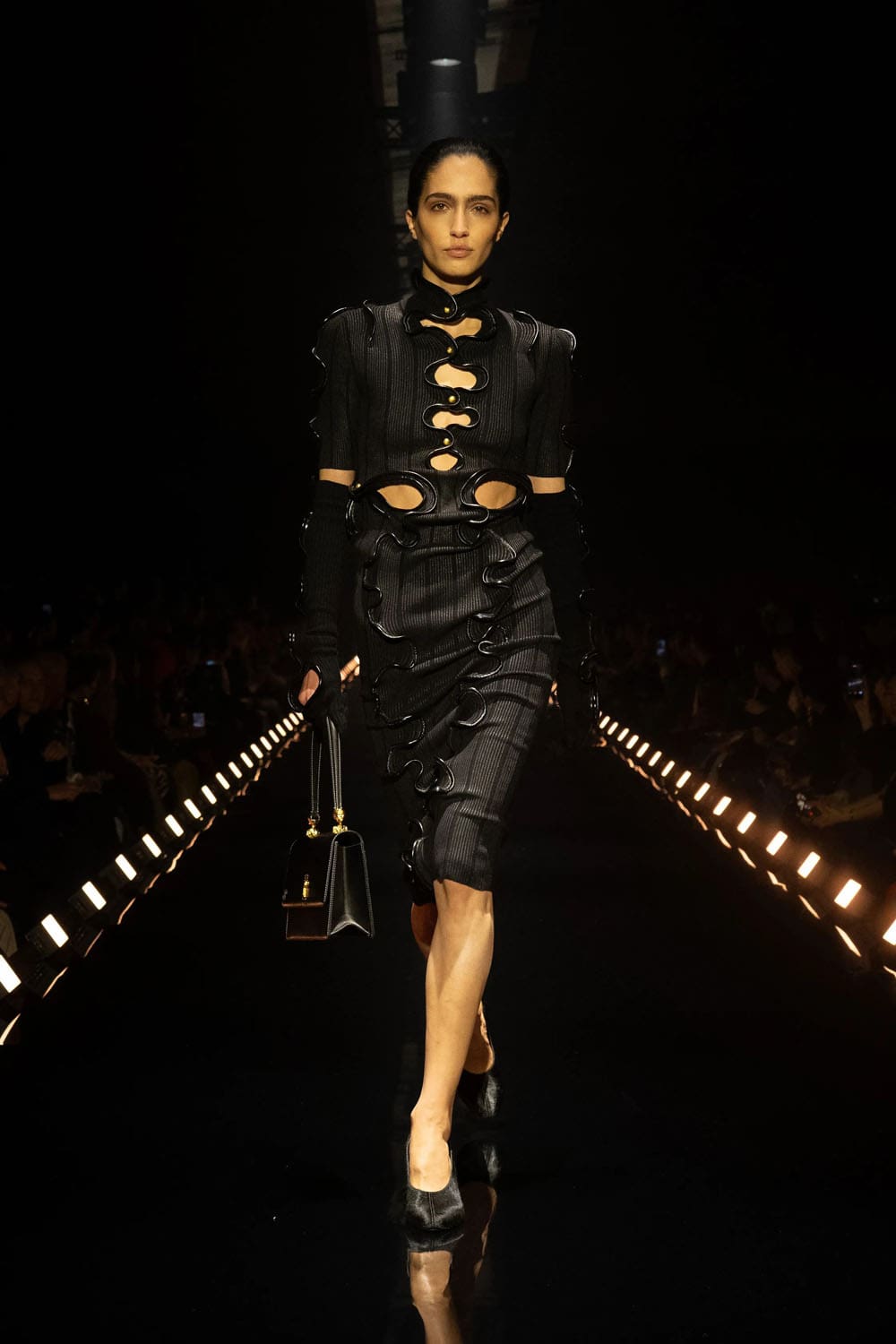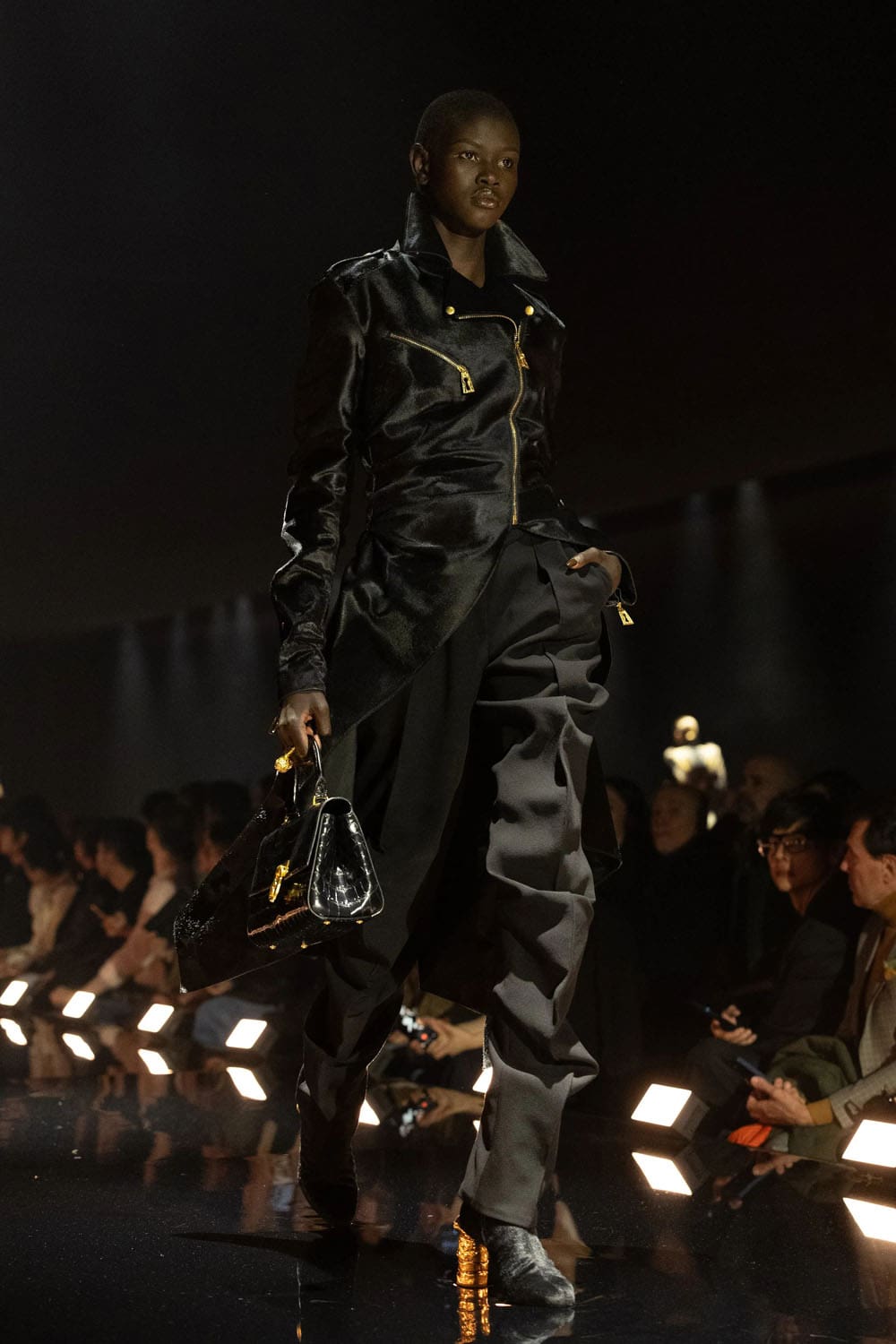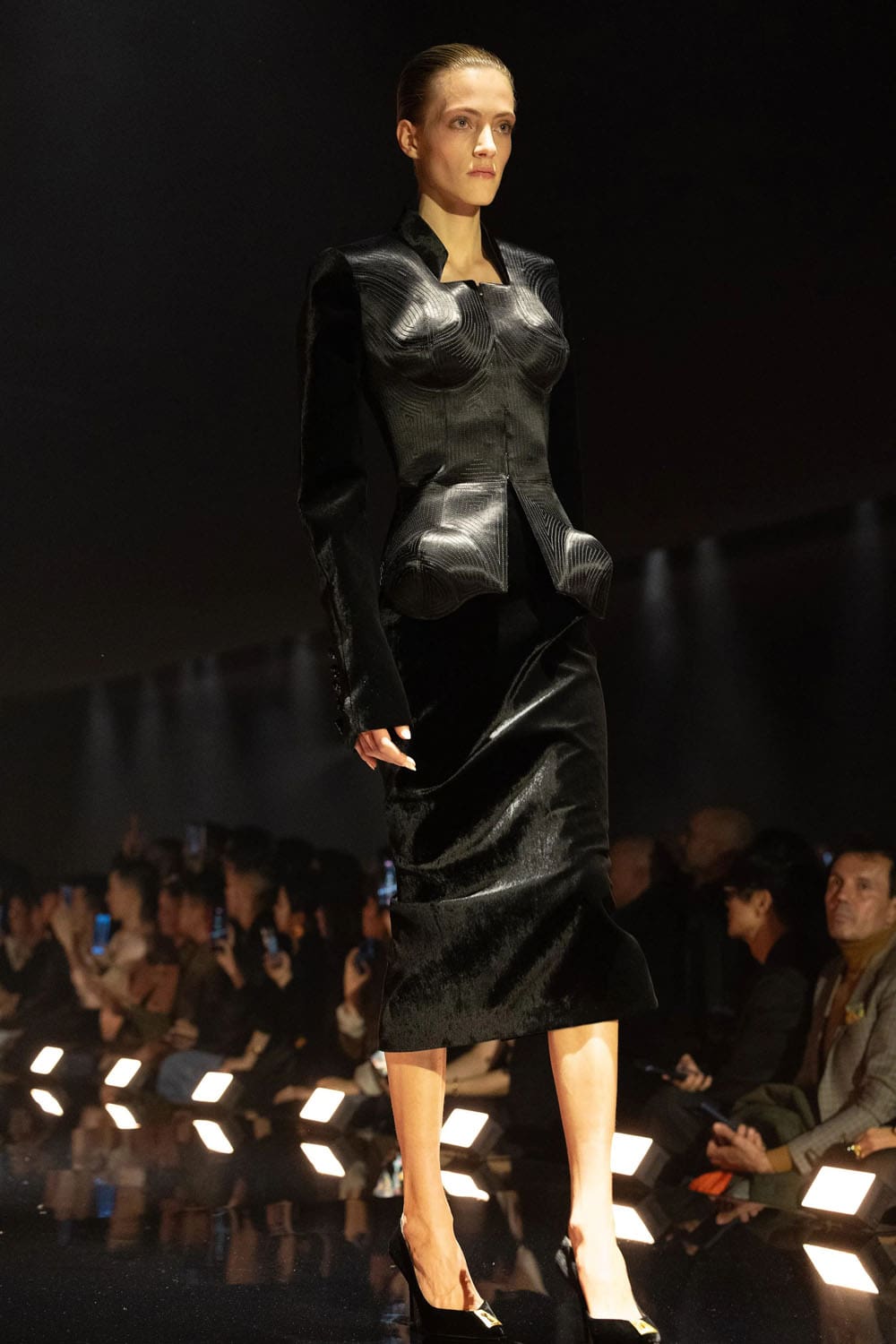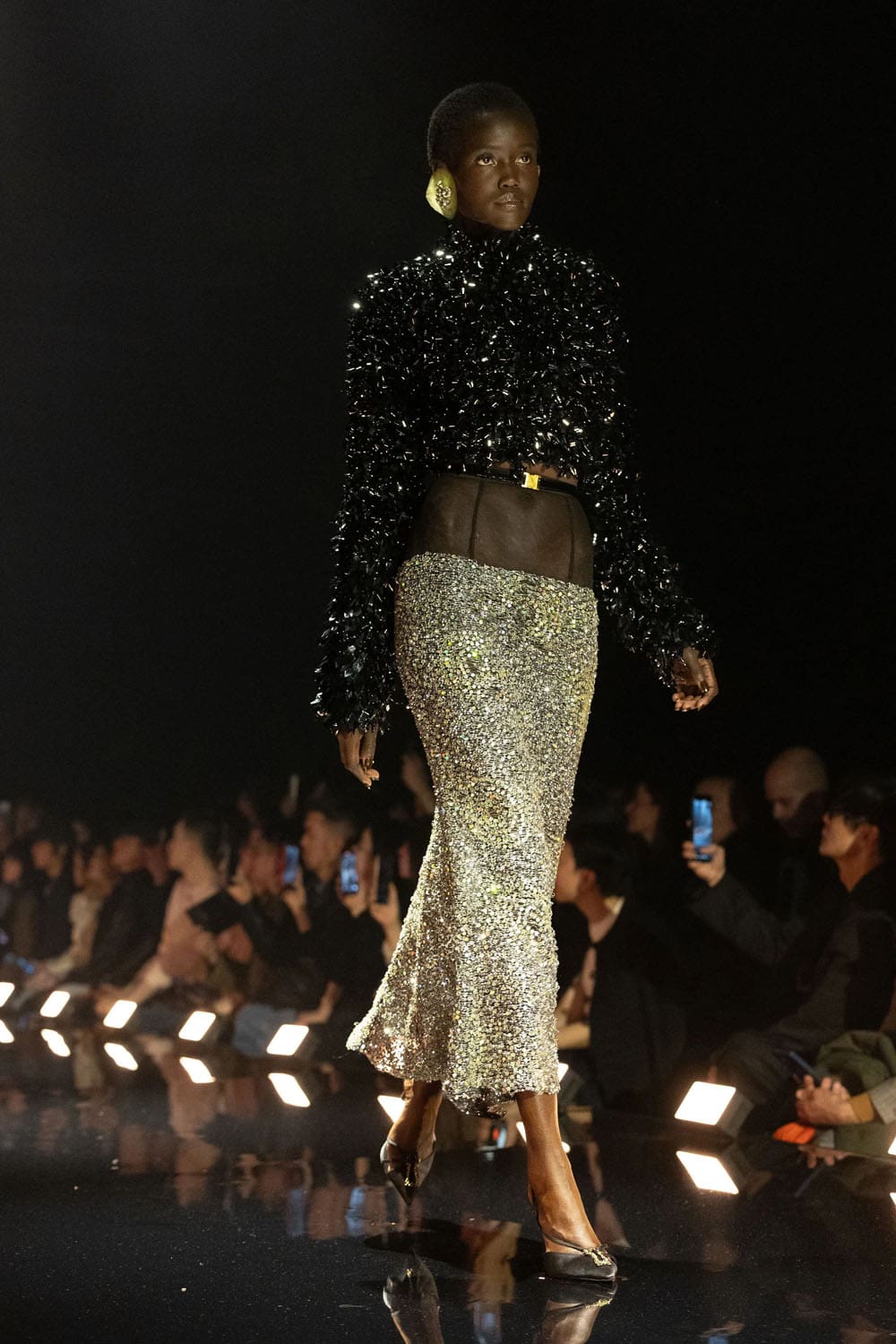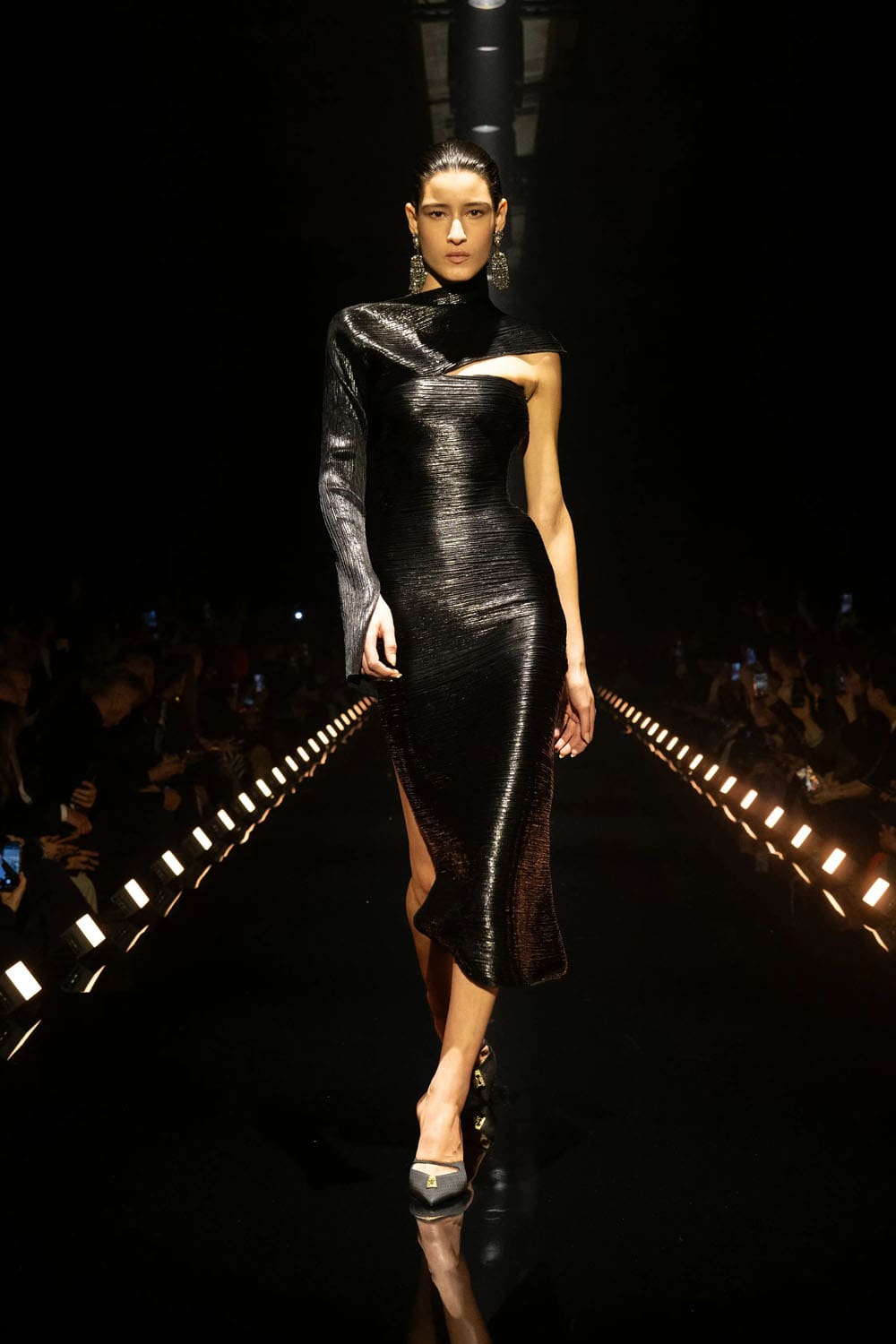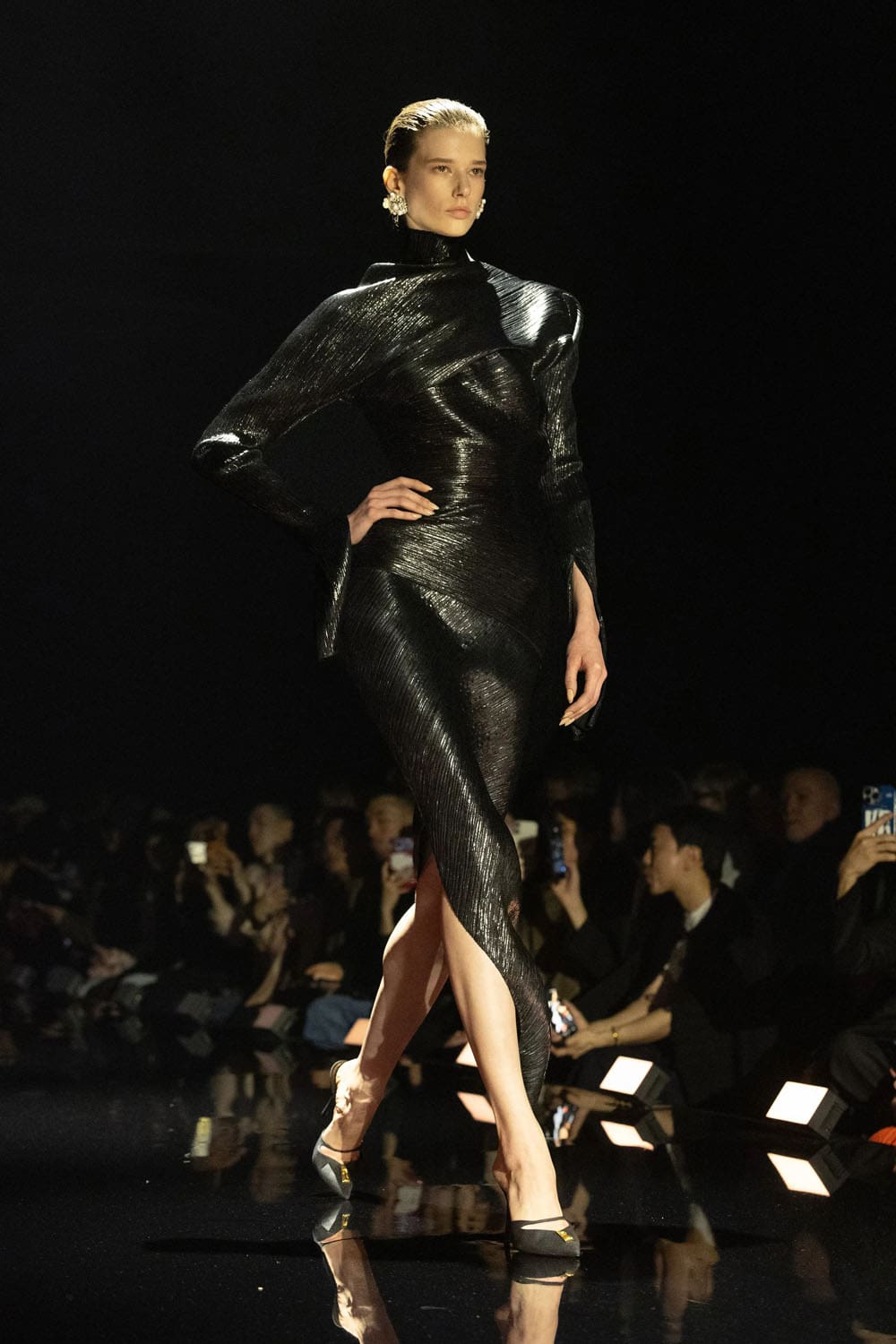
Schiaparelli Fall Winter 2026-2027 “THE SPHINX — Daniel Roseberry and the Silence of an Imagined Riddle”. Story by Eleonora de Gray, Editor-in-Chief of RUNWAY MAGAZINE. Photo Courtesy: Schiaparelli.
The Sphinx is a creature of paradox
The Sphinx is a creature of thresholds: a guardian between worlds, a being whose power rests not in appearance but in the question it asks. A question that determines whether one passes or perishes. In mythology, the Sphinx is a test. A confrontation. A demand for meaning.
Daniel Roseberry titled this collection The Sphynx.
And yet, the greatest absence of the evening was meaning.
The runway offered creatures—exquisitely made, meticulously styled—but creatures wandering without the riddle that should animate them. The Sphinx requires tension. Here, tension dissolves into decor.
This is the paradox of the season: a house built on surrealism, presenting a collection where the surreal appears visually, but rarely conceptually.
There is no riddle.
No question.
No answer.
Just creatures.
For a house built on surrealism, that absence resonates louder than any accessory.
The Pamphlet: A Keyhole Without a Door
Roseberry’s sweeping pamphlet, which precedes the collection, is dense with ambition. It positions Elsa Schiaparelli not simply as a couturière but as a proto-philosopher of fashion, a woman who “questioned the medium itself.” He invokes:
- Drawer-pull pockets that symbolized hidden psychic drawers
- Skeleton embroidery that turned the body inside-out
- The keyhole as metaphor for feminine mystery
- The eternal war between “fashion as business” and “fashion as dream”
He frames Schiaparelli as a metaphysical engine—half atelier, half oracle.
But the more one reads, the more apparent the gap becomes between rhetoric and result.
The pamphlet poses questions the runway does not attempt to answer.
The Sphinx stands, majestic.
But its mouth never opens.
The Looks: When the Creature Appears Without Its Myth
– The “Impossible Knitwear” and Illusion Games
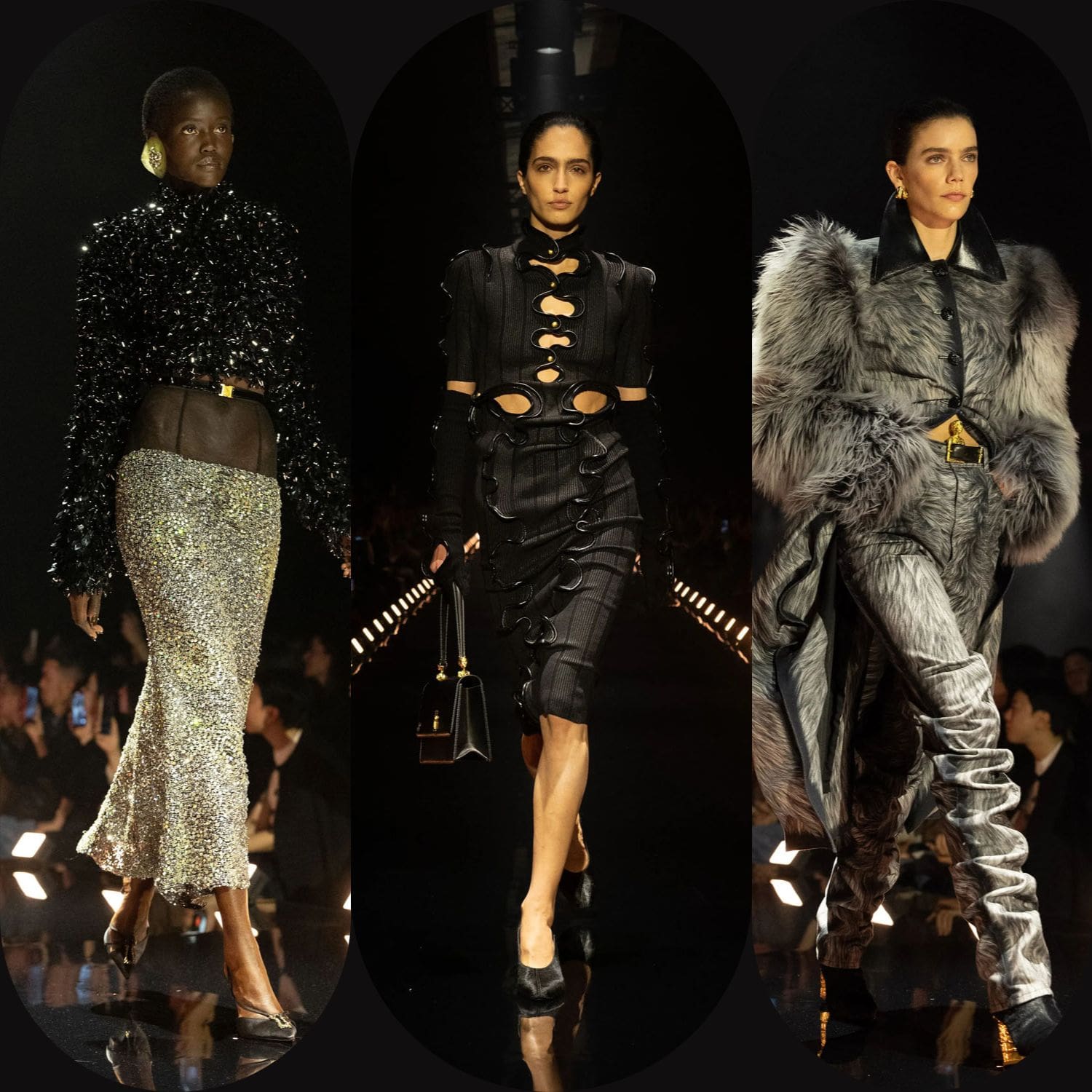
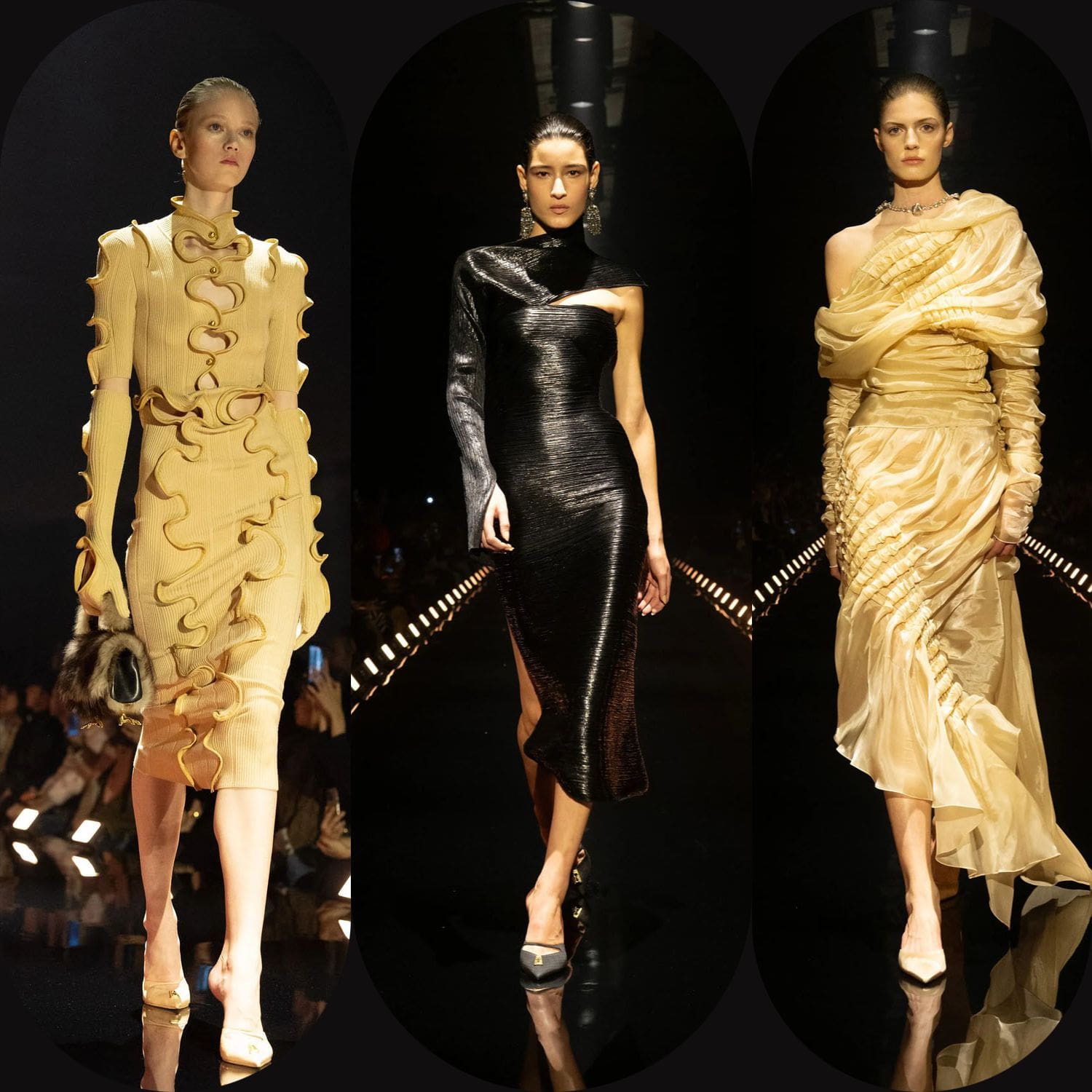
The collection opens with Roseberry’s much-promised “impossible knitwear”: sculpted cable knits pierced with illusion tulle, floating as though disconnected from gravity. Beautiful craft. Beautiful control.
But beauty alone is not surrealism.
Schiaparelli’s surrealism historically introduced friction—emotional, psychological, even moral. Here, the knit floats, but says nothing. The illusion remains purely optical, not conceptual.
– Liquid Plissé and Spiral Gowns
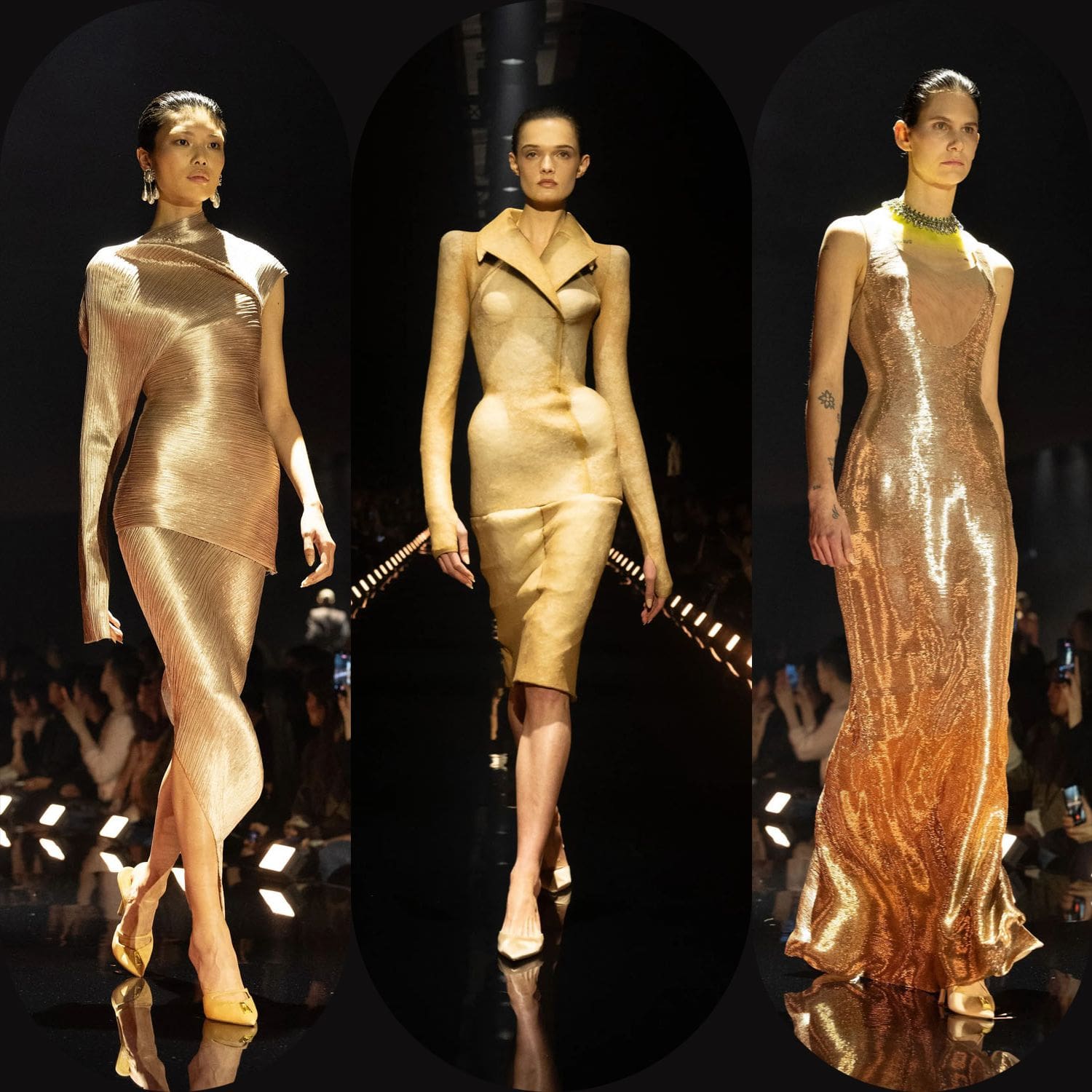
The liquid plissé gowns — the gold asymmetrical sheaths, the spiraling pleated dresses — offer some of the most refined atelier work of Roseberry’s tenure. They echo movement, light, and controlled distortion.
Yet again, the myth is missing.
These pieces are elegant solutions, not enigmas.
– Anatomy Without Tension
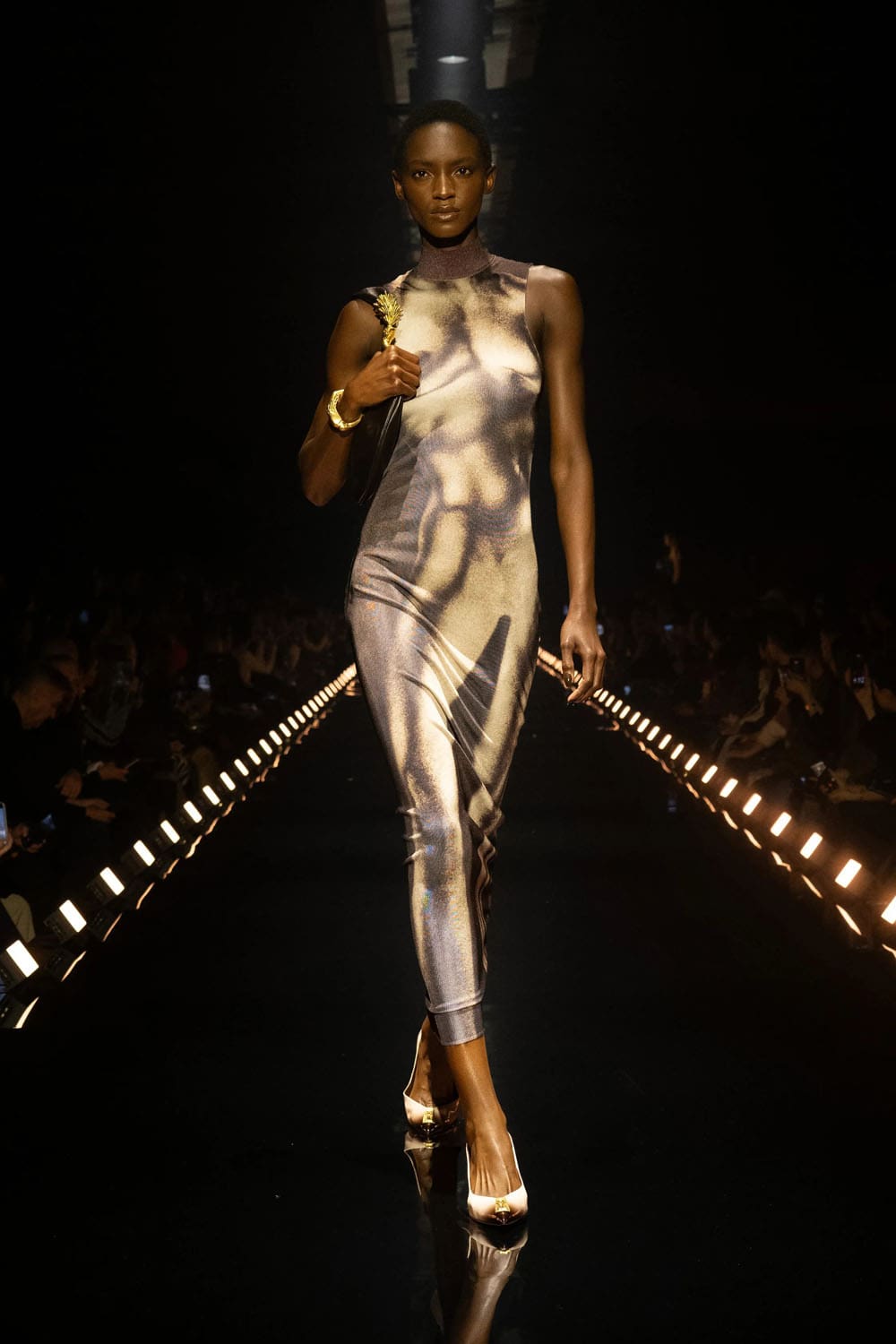
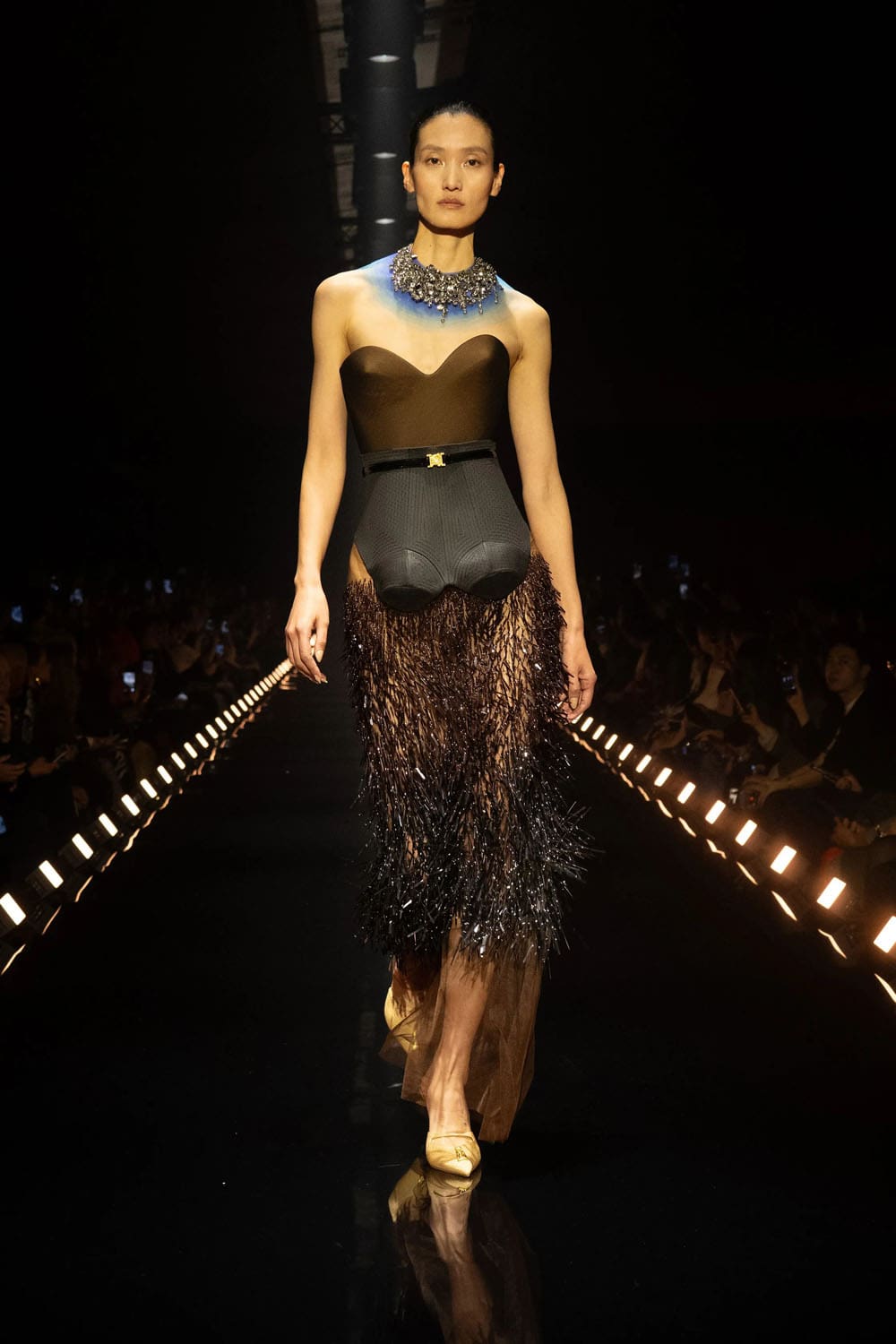
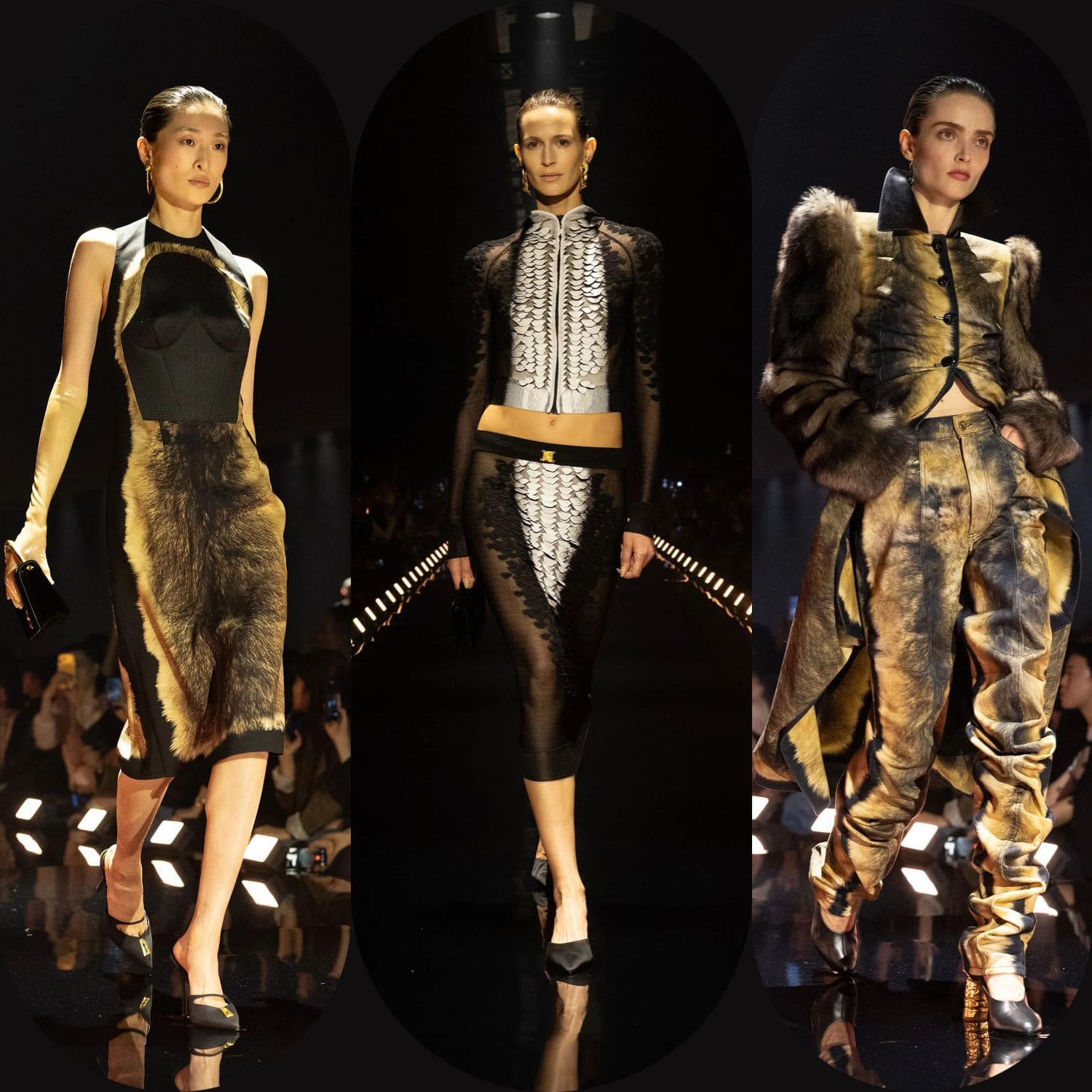
One of the strongest visual ideas comes from the molded forms: dresses printed with the ghost of a muscular body beneath — shimmering, almost metallic, nearly anatomical. These pieces hint at the existential interiority Schiap adored.
But where Elsa turned anatomy into confrontation, Roseberry turns it into surface.
– The Furs, the Pelts, the Creatures
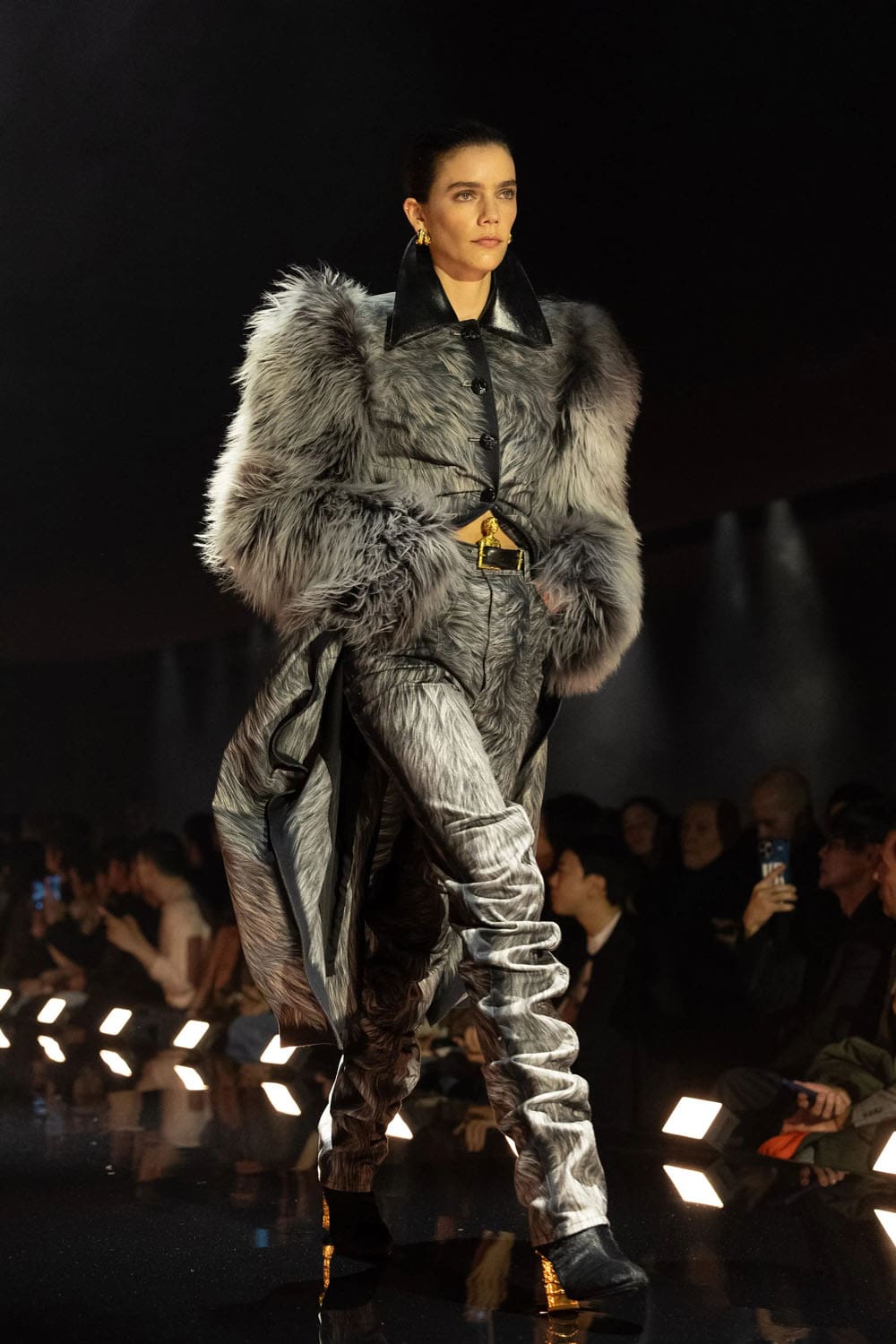
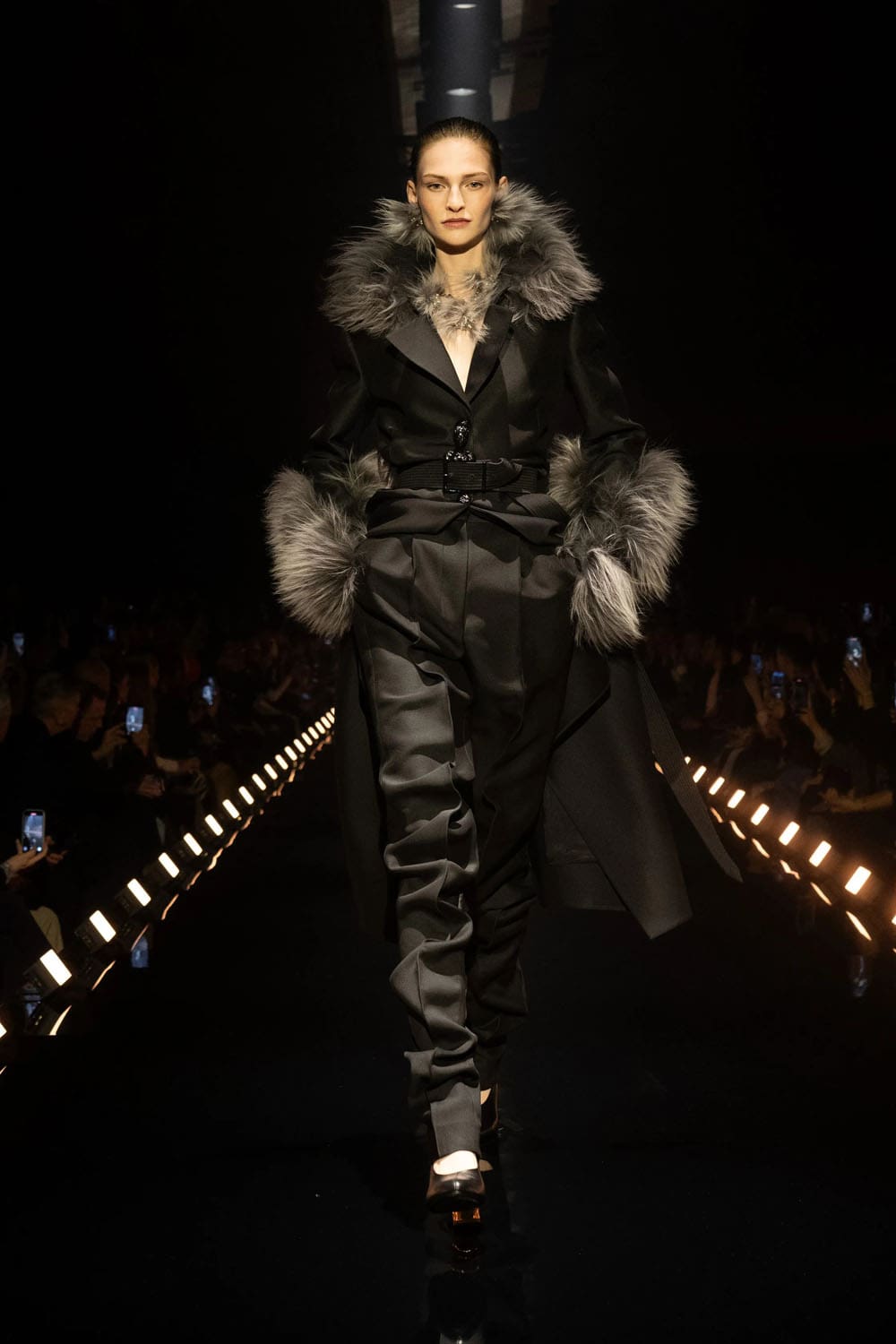
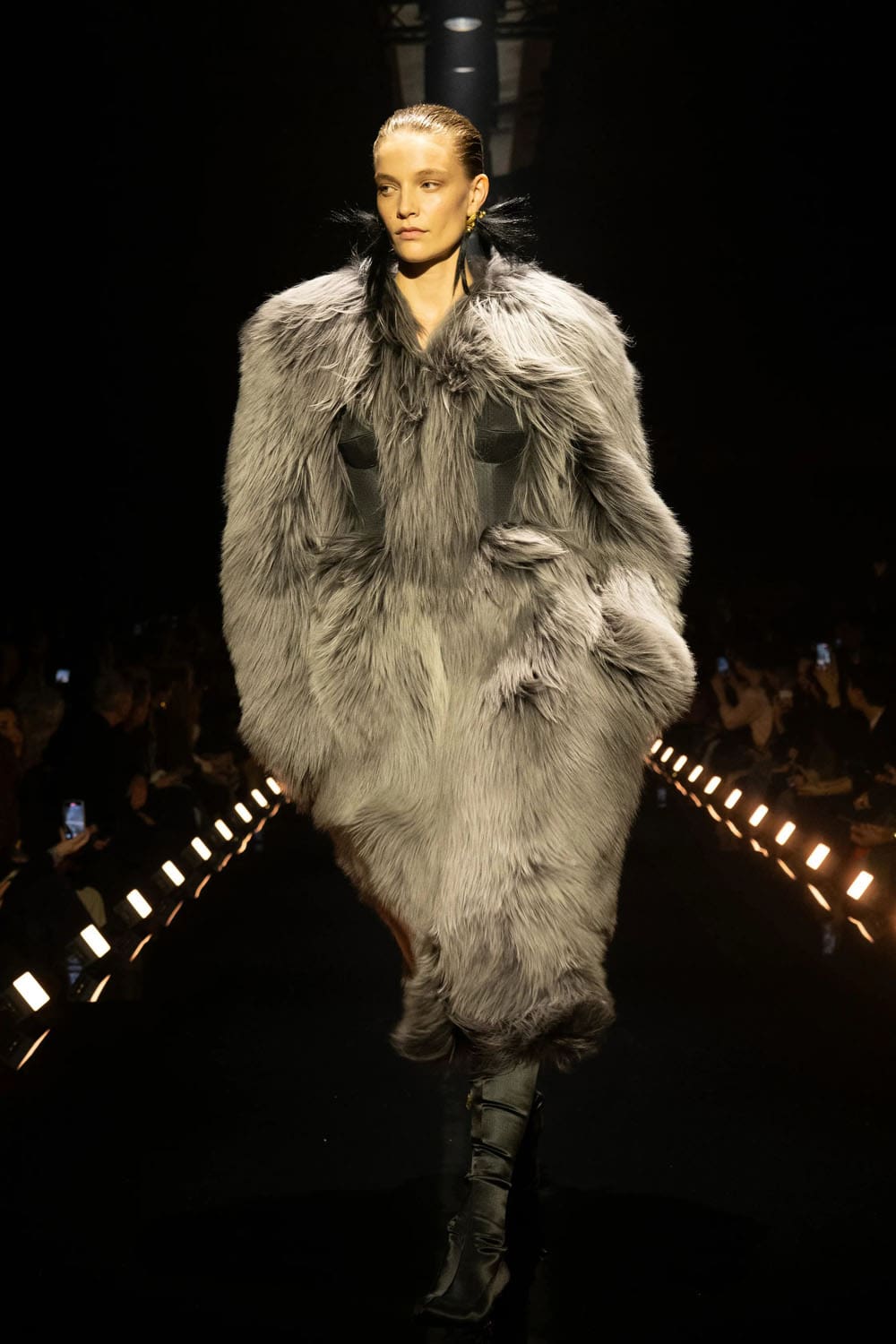
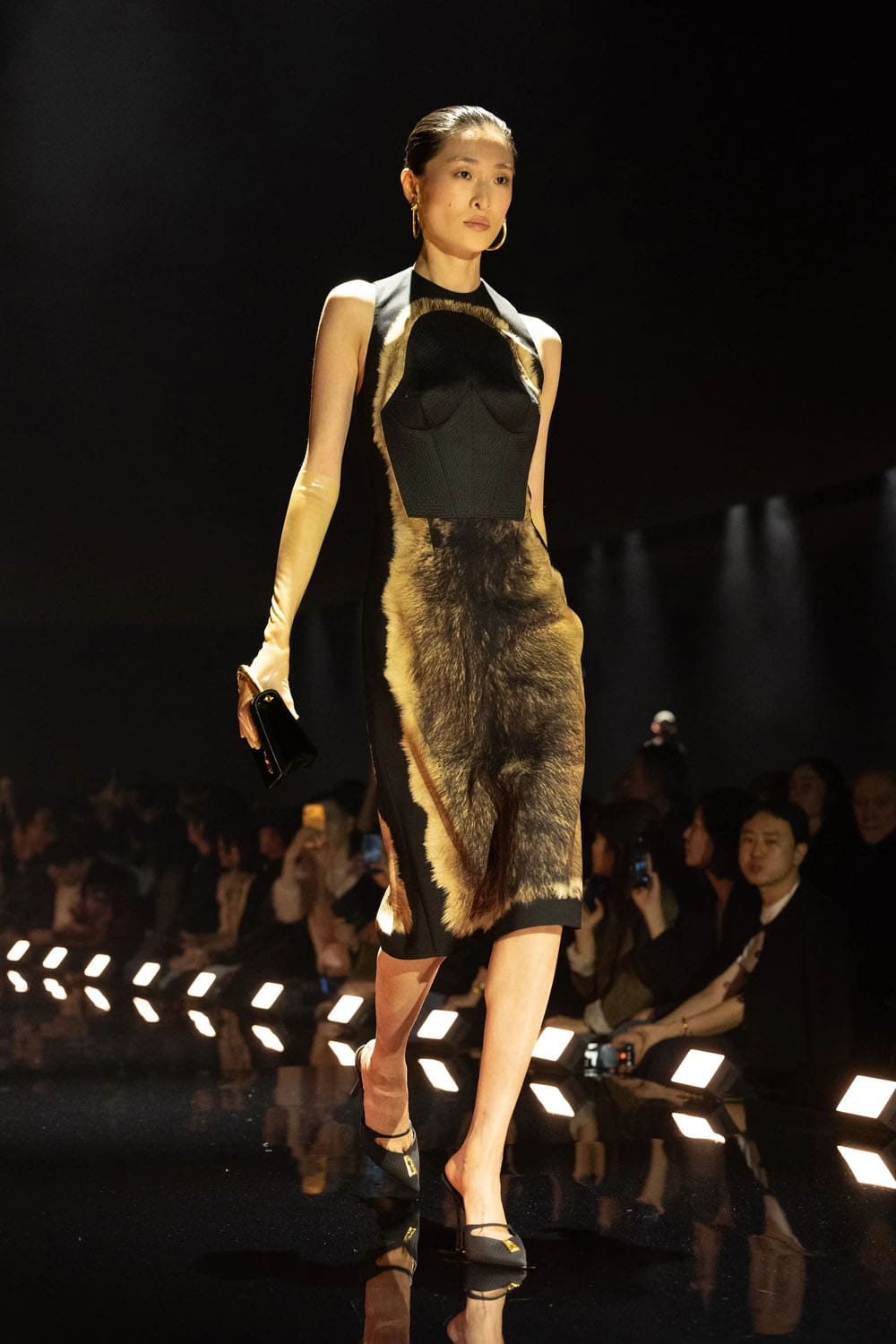
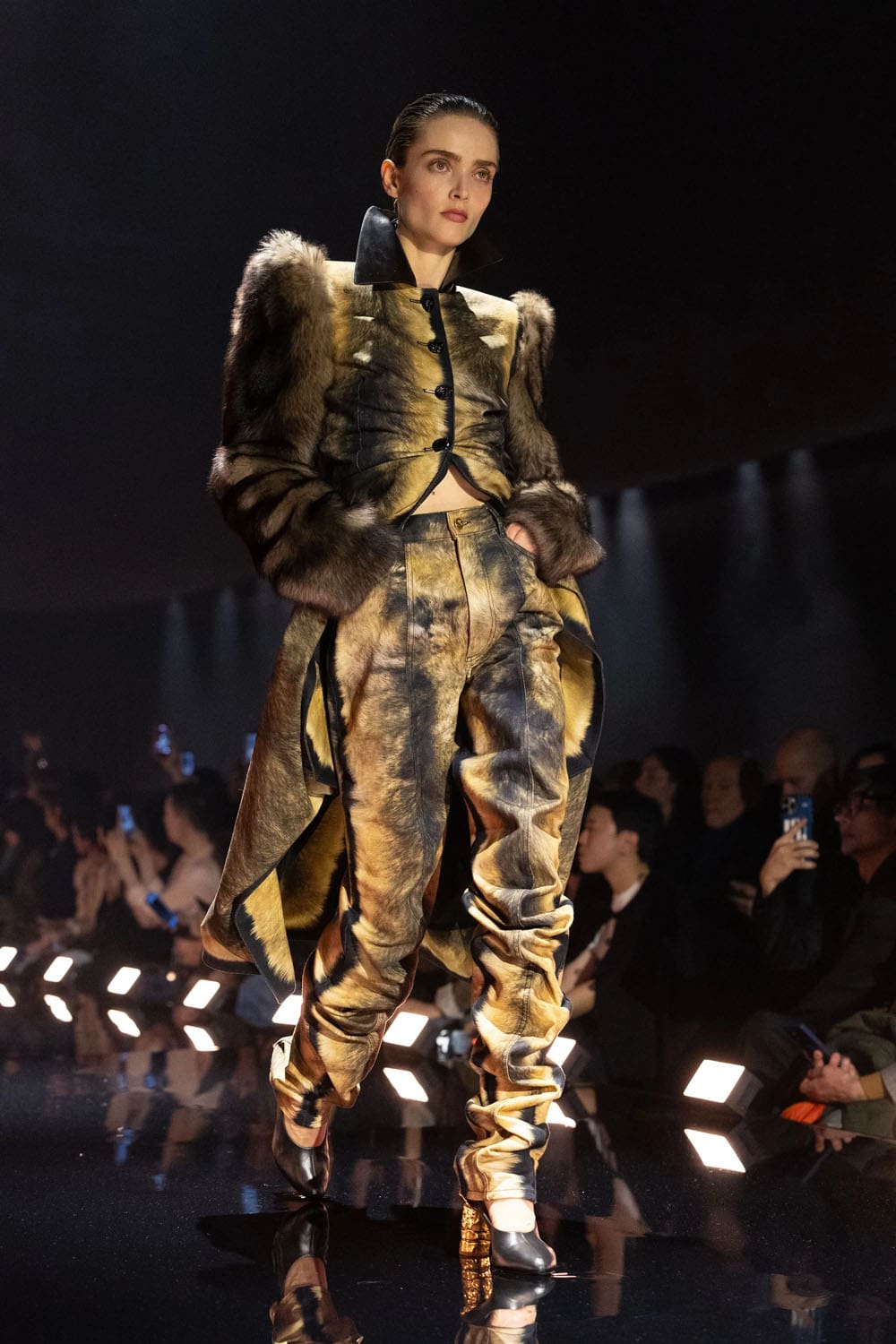
The fur-inspired pieces — printed pelts, inflated shoulders, exaggerated collars — drift near the animalistic mysticism Roseberry suggests. A Sphinx-like hybrid, half woman, half beast, could have emerged.
Instead, these are simply “beast-inspired looks.”
There is no metamorphosis.
No becoming.
Only referencing.
– The Shearling, the Egret Feet, the Resin Pets
Here lies the collection’s clearest problem: whimsy replacing surrealism.
Elsa’s surrealism never aimed to be cute.
It was disturbing, intimate, psychologically charged.
In contrast:
- Resin pet-shaped clutches
- Bronze egret feet on handbags
- Sprigs of faux-monkey-fur jewelry
These details are clever.
They are not transformative.
The Missing Question
Roseberry insists that Elsa’s keyhole symbolizes an enigma — a woman who is unknowable to others and to herself. It is a powerful thought, and one he repeats throughout the pamphlet.
But on the runway, the keyhole becomes a plaque.
A motif.
A branding exercise.
The woman’s enigma is referenced, not embodied.
The Sphinx is a creature that challenges your identity.
This collection merely shows you clothing.
Craft as Achievement, Not Revelation
To be fair, the Schiaparelli atelier remains one of the most accomplished in Paris. The technical achievements of this season cannot be dismissed:
- Laminated plissé that moves like liquid metal
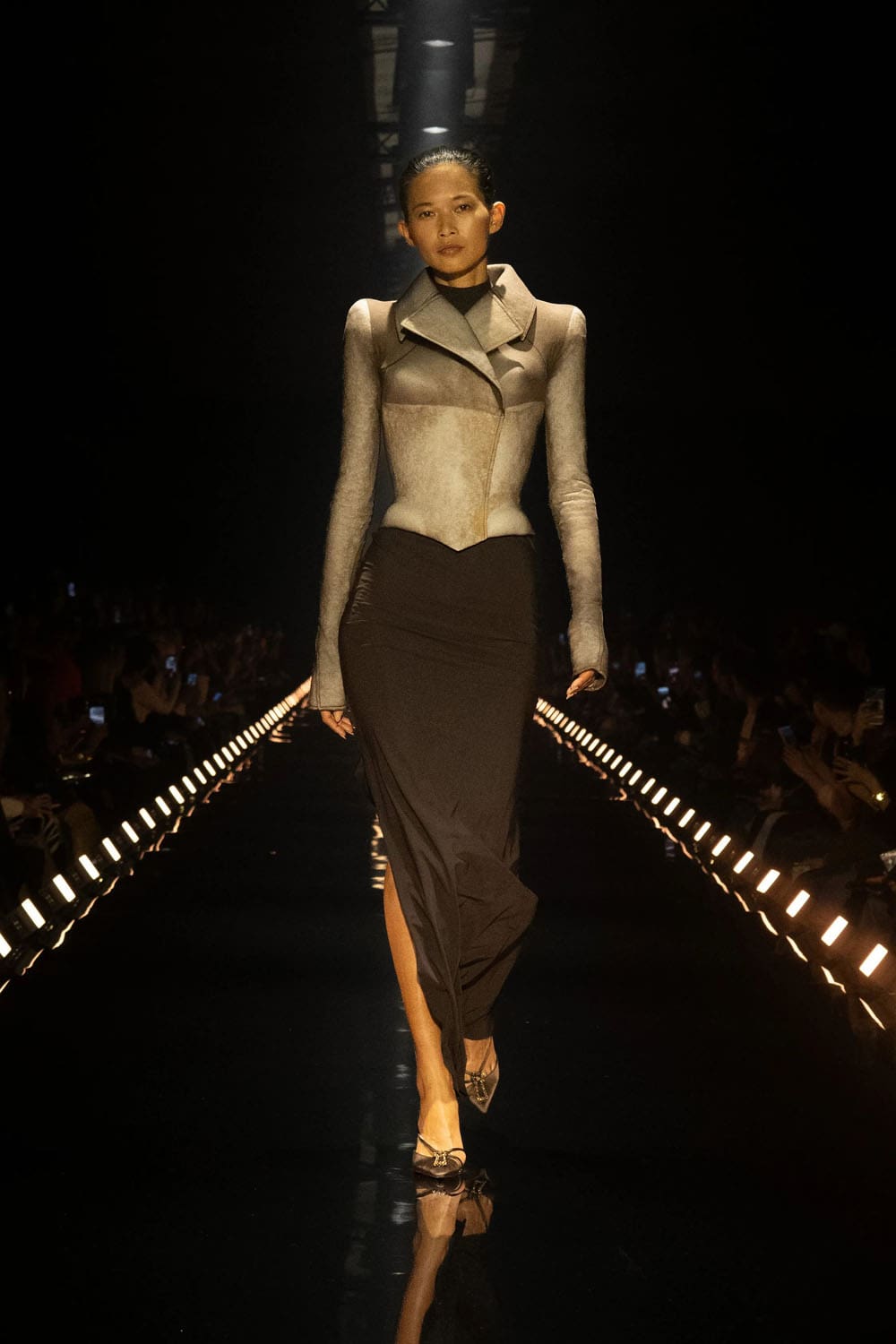
- Trompe-l’œil silk-wool that mimics leather
- Precision draping and hand-pleating
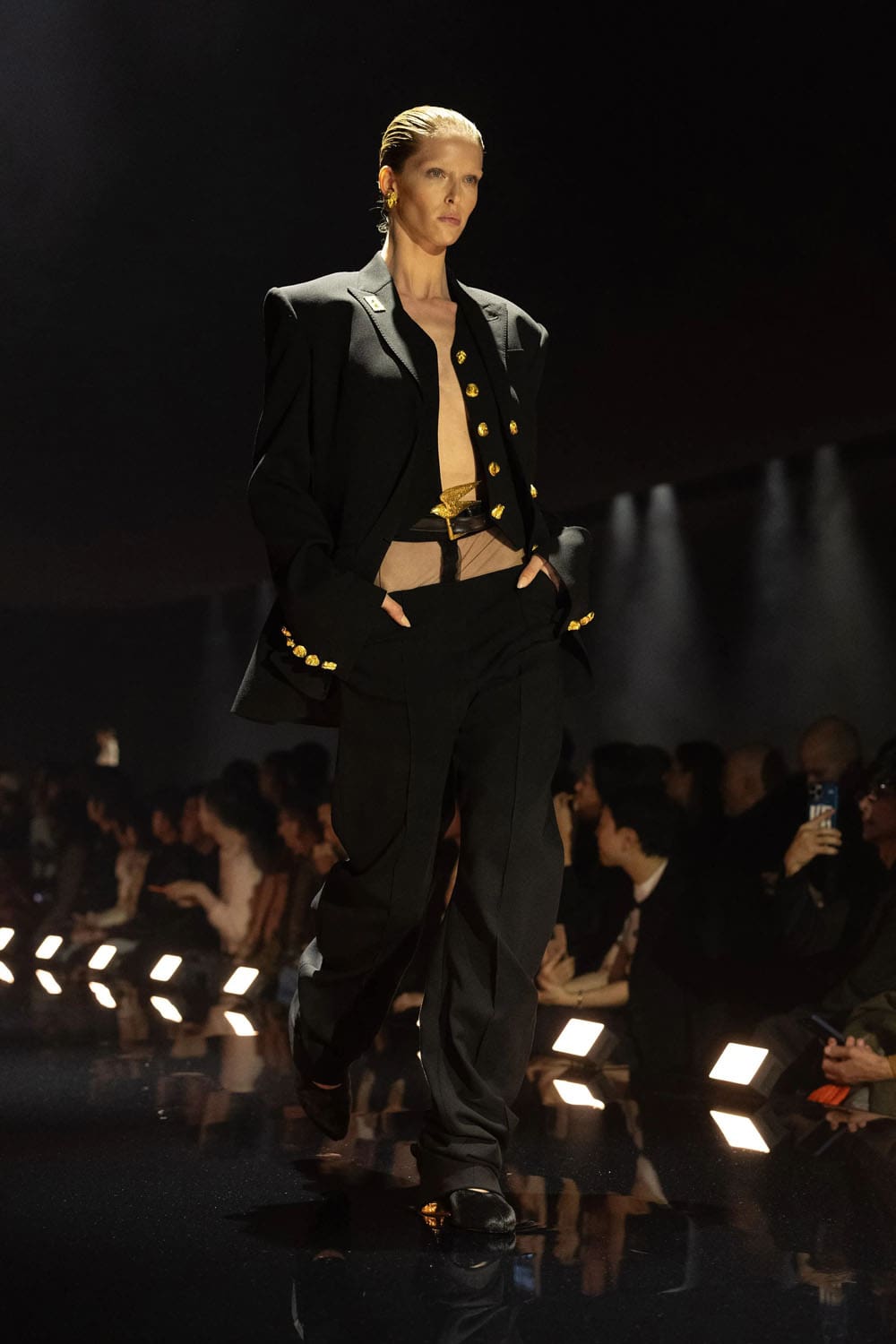
- Sculptural tailoring with the weightlessness of jersey
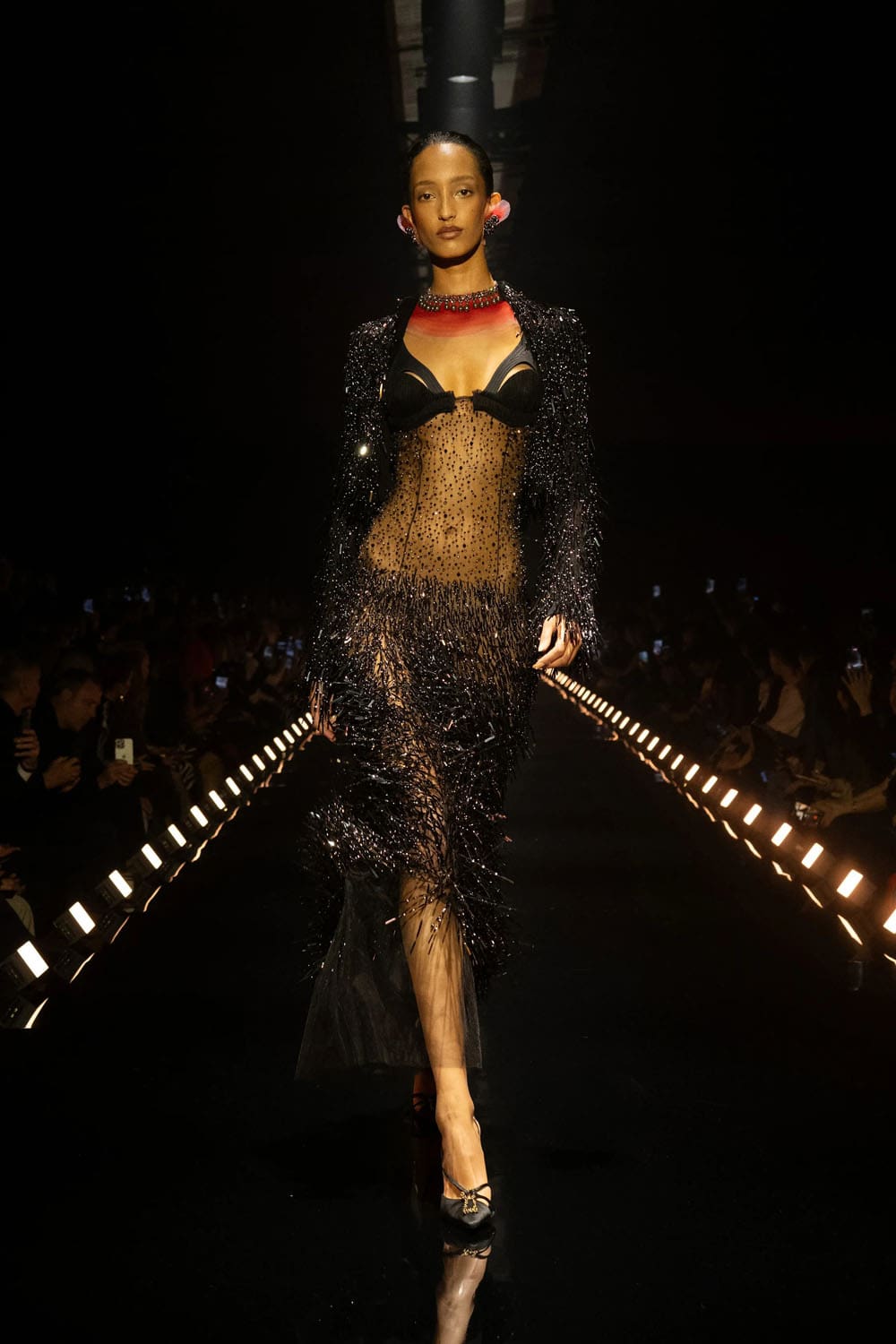
- Beaded measuring tape motifs
- Hand-hammered gold-plated keyhole plaques
The collection is an ode to craft — but craft is not the riddle.
Schiaparelli is not just a house of technique; it is a house of rupture.
And this season never ruptures.
It never destabilizes.
It never threatens to ask the question the Sphinx requires.
A Creature Without Its Myth
Schiaparelli Fall Winter 2026–2027 is not a failure of craft.
It is a failure of myth-making.
For all the talk of paradox, tension, enigma, psychological depth, and surreal legacy, the clothes rarely venture into the conceptual risk Elsa embraced so naturally.
Roseberry gives us creatures — beautifully constructed creatures — but without their origin story, without their riddle, without the danger of unveiling something profound.
The Sphinx stands before us.
Magnificent, poised, perfectly lit.
But silent.
And the silence says everything.
See All Looks Schiaparelli Fall 2026