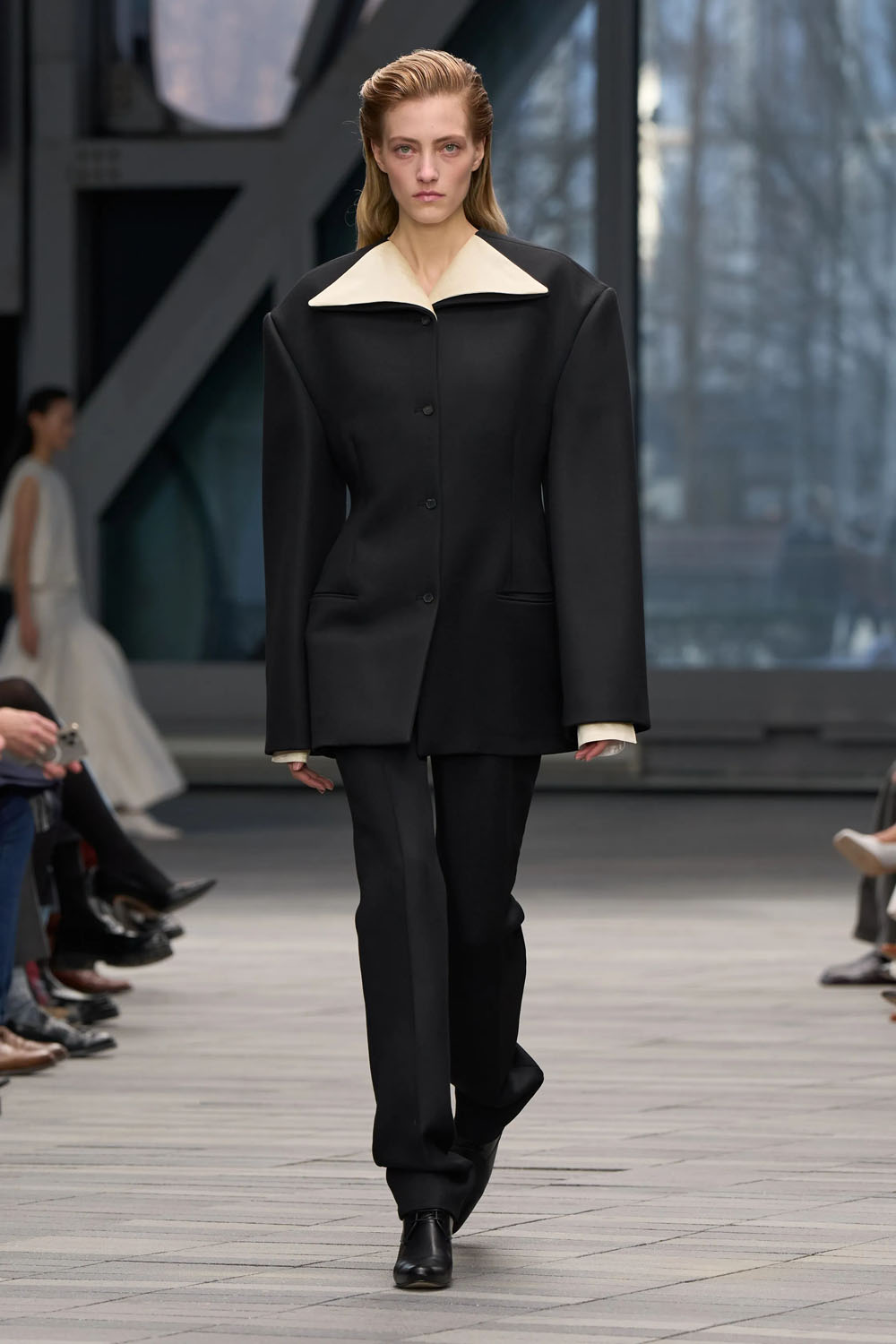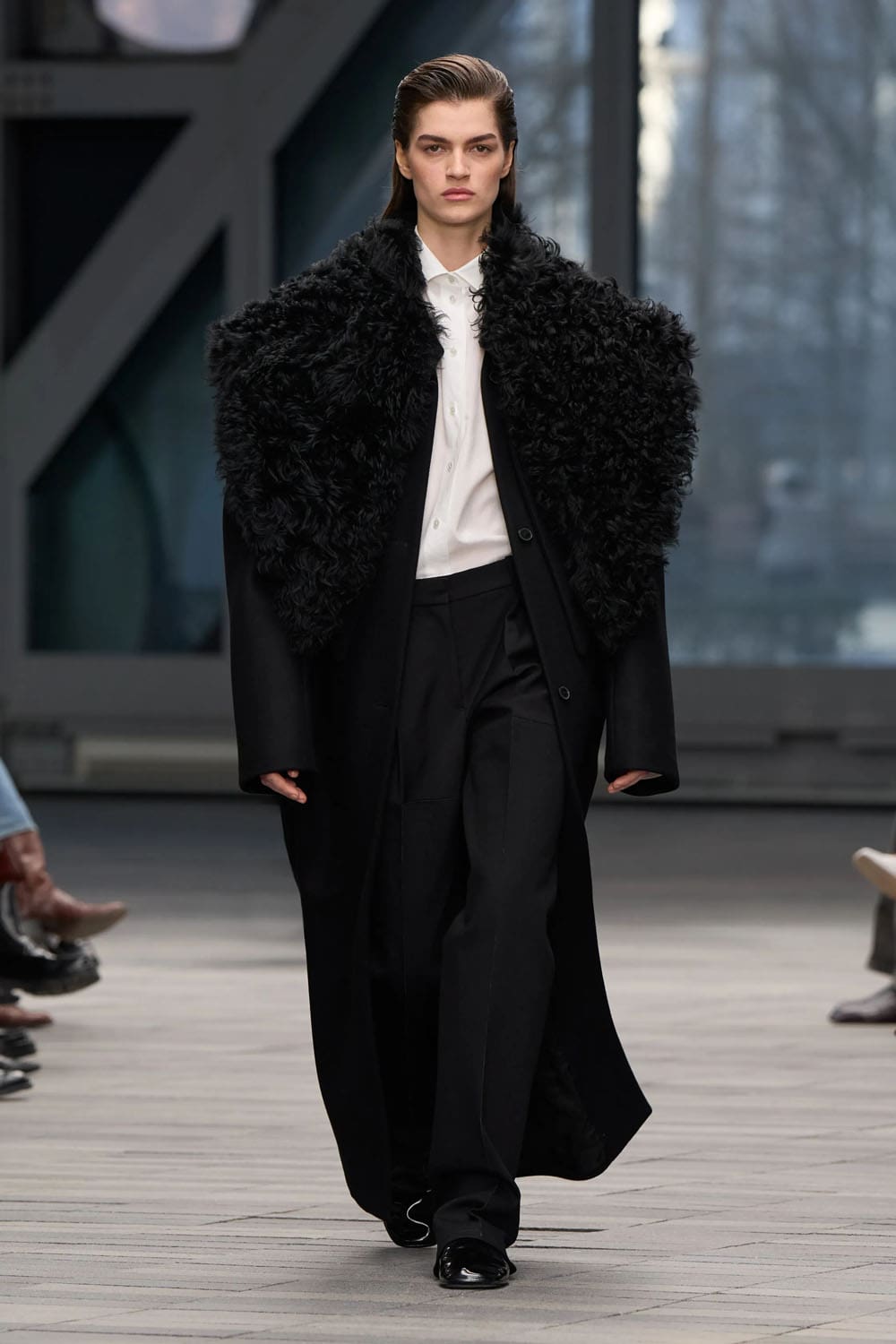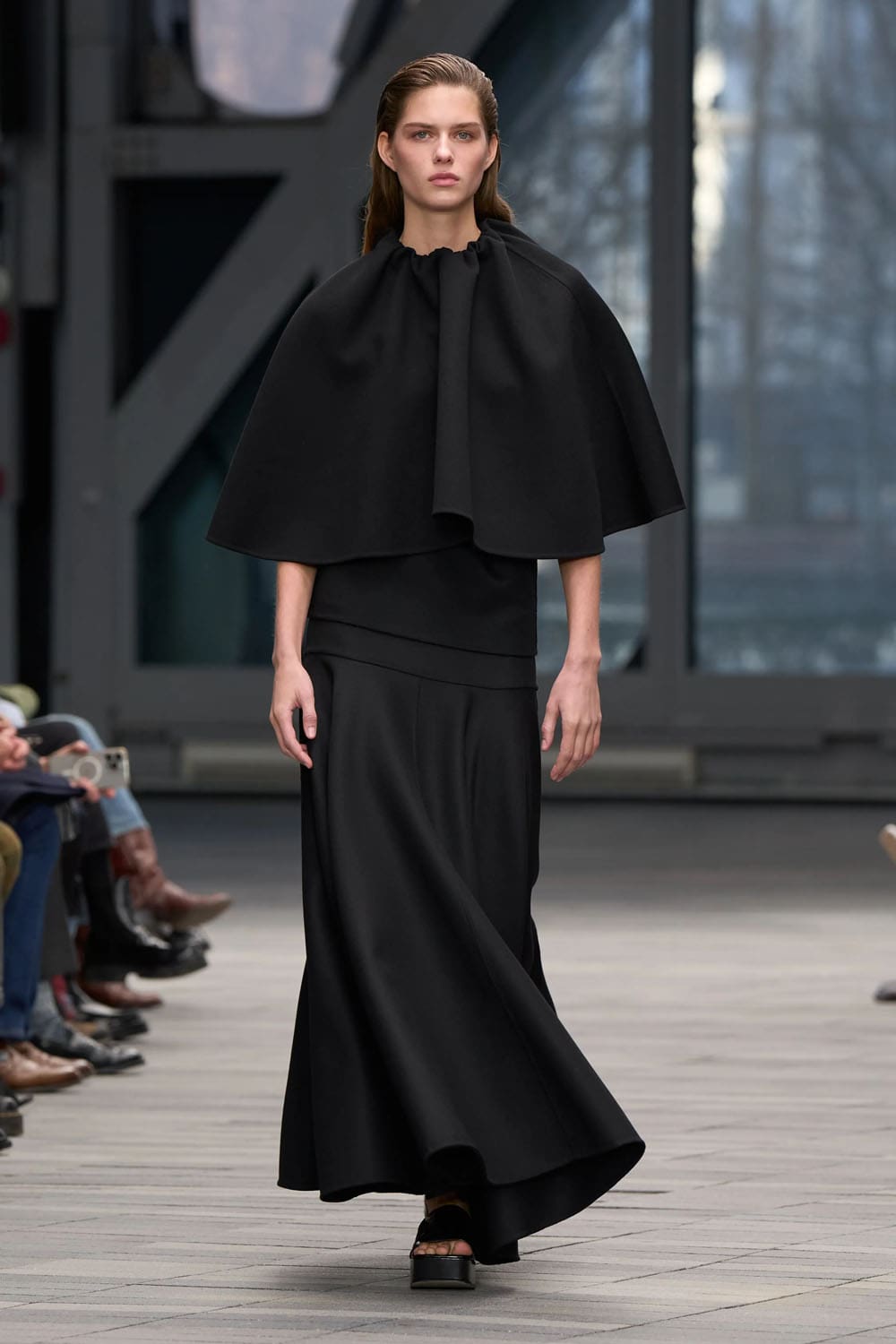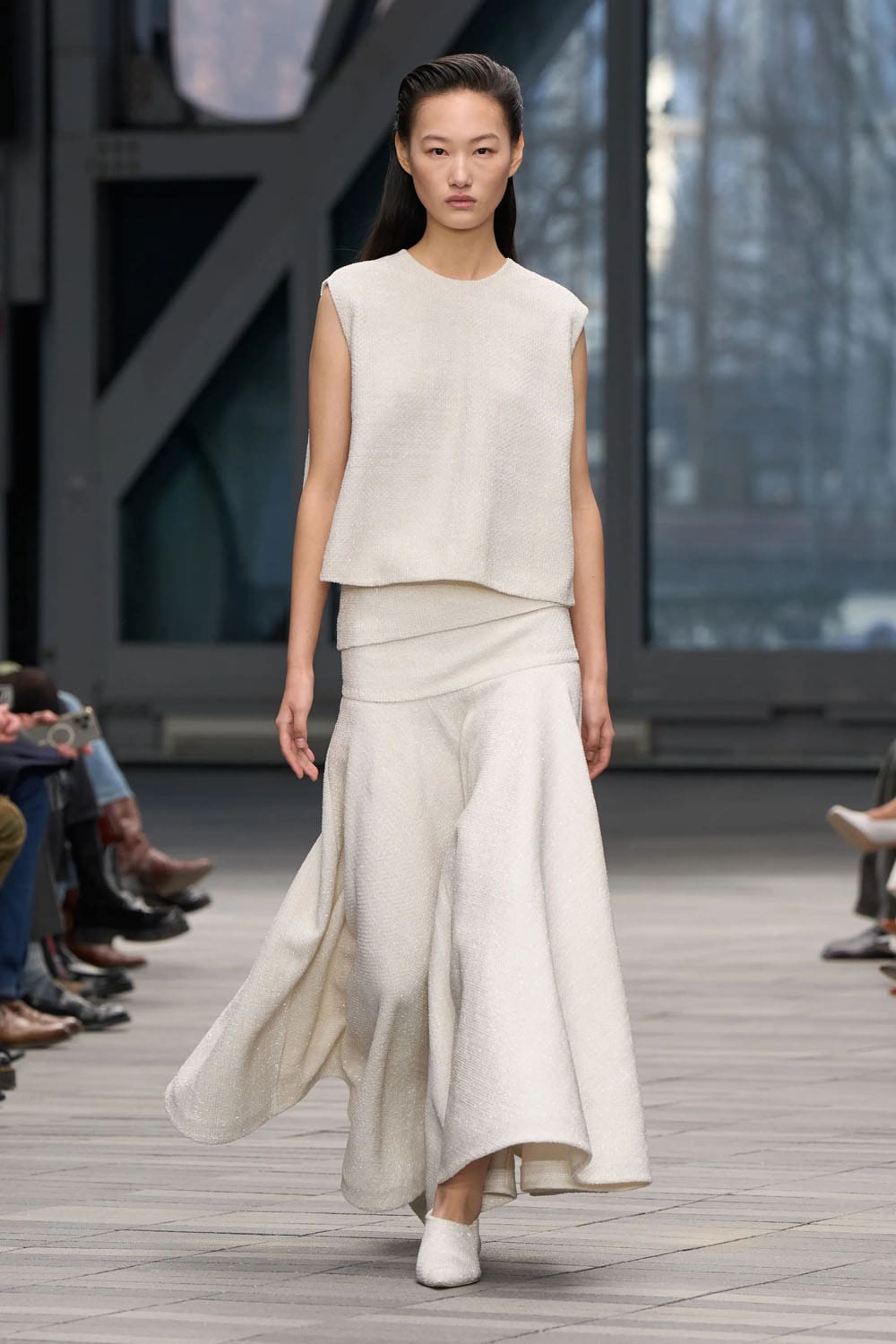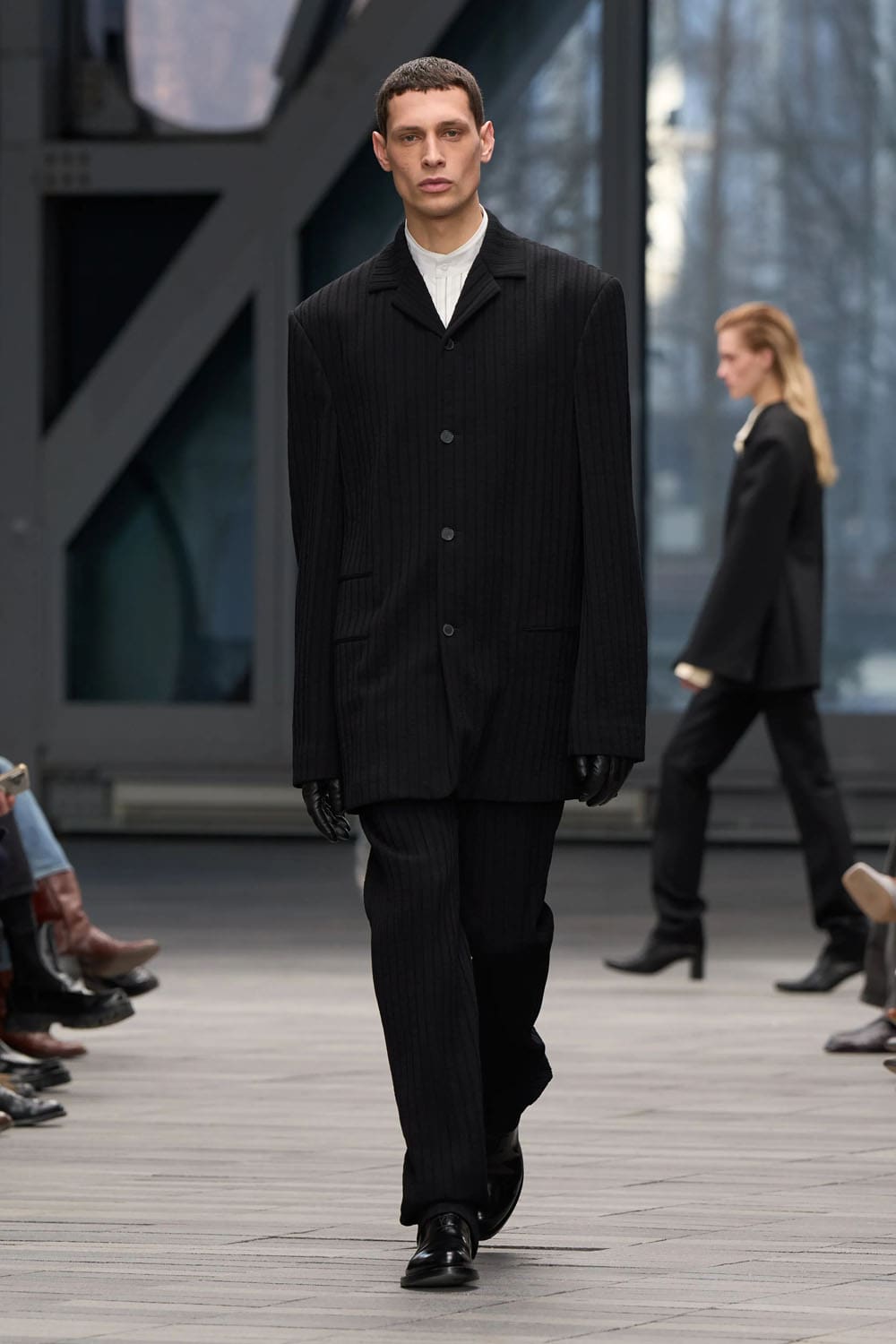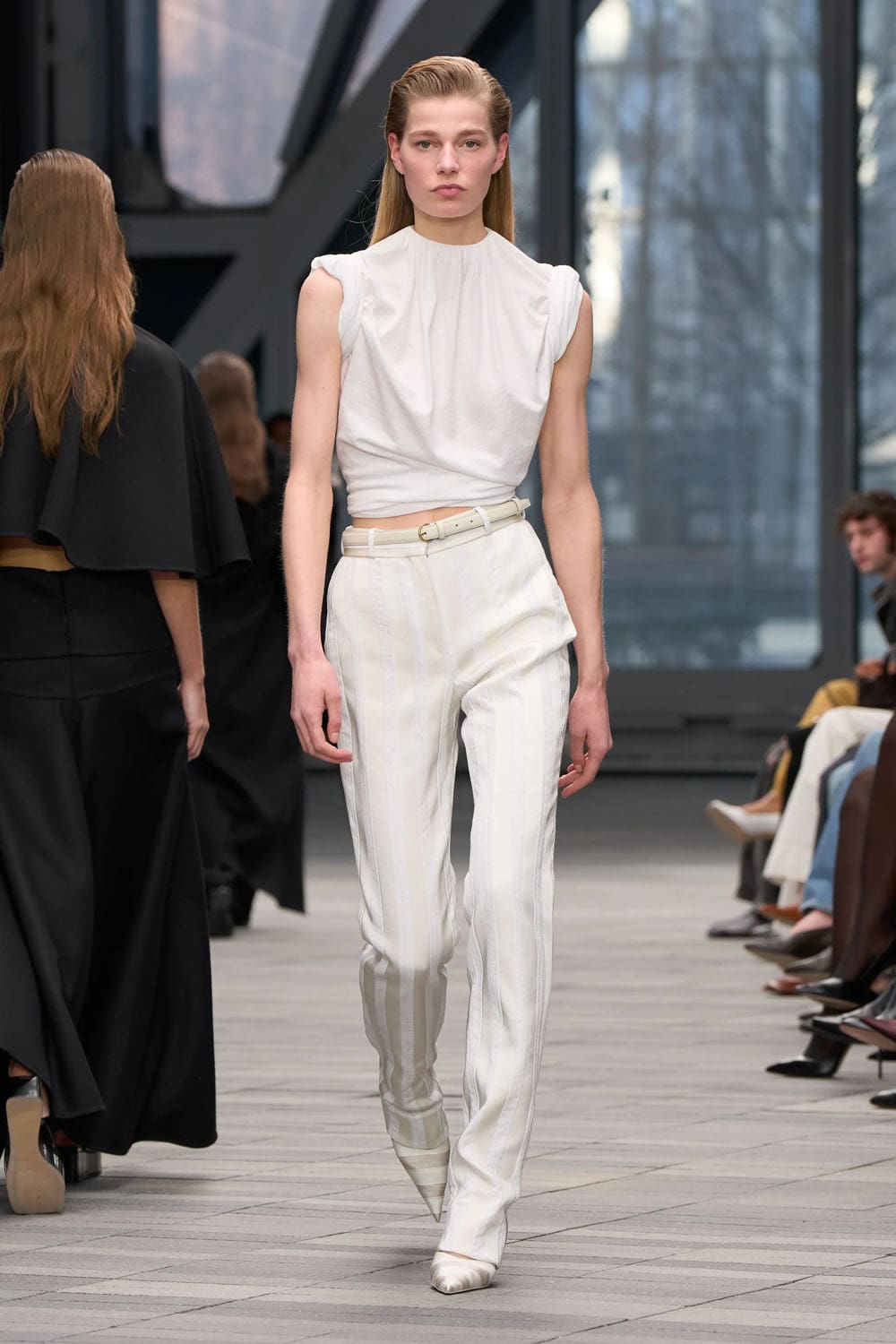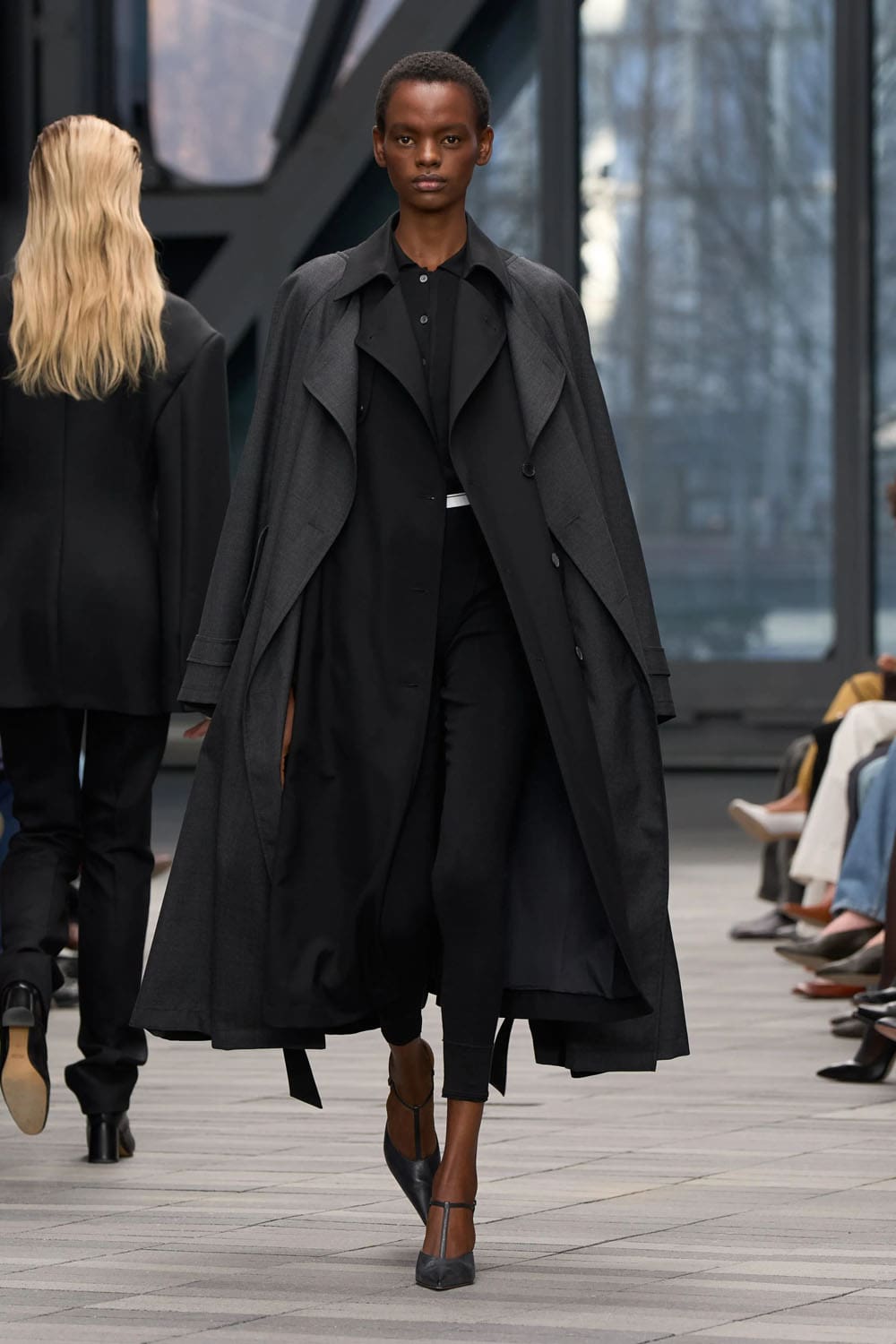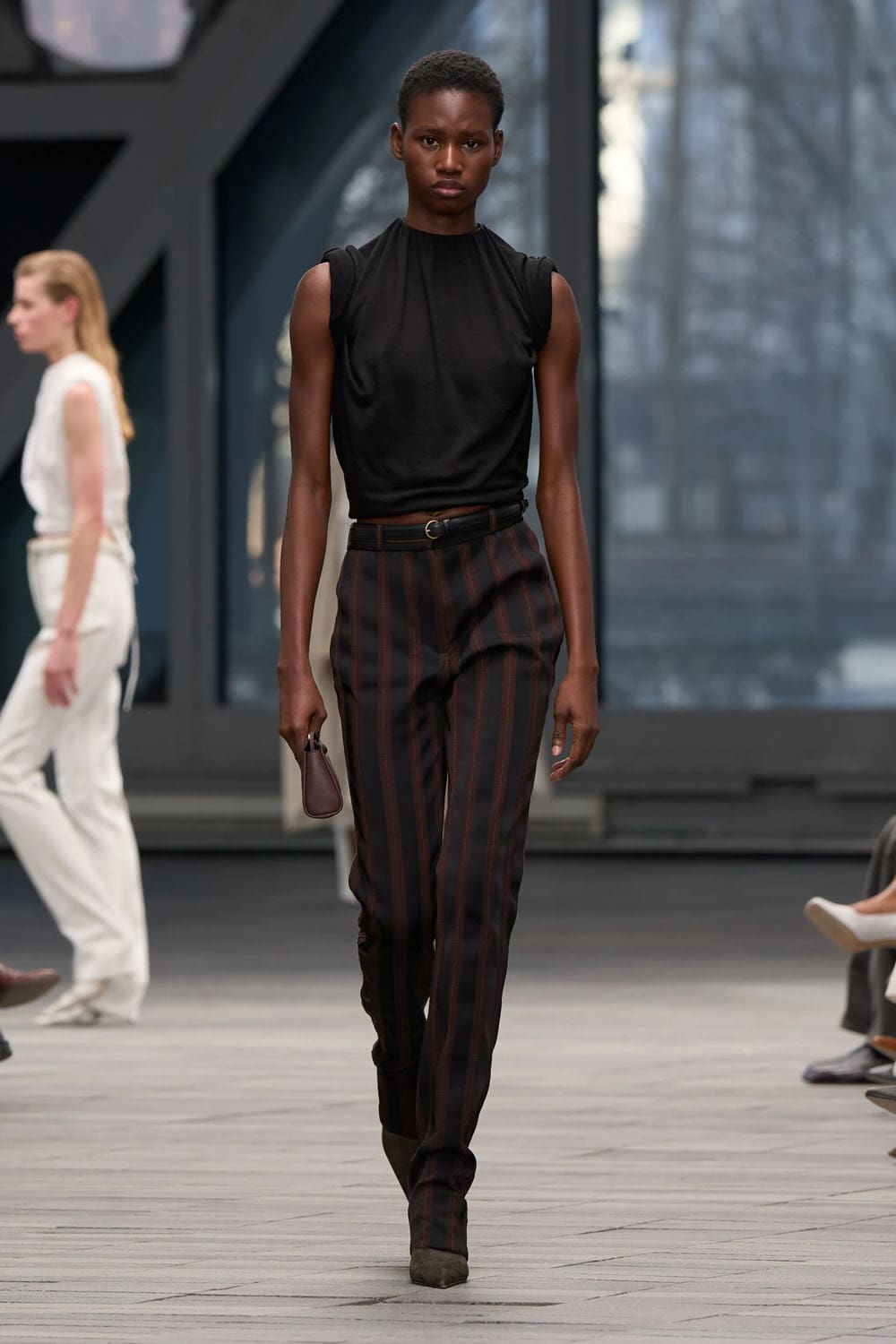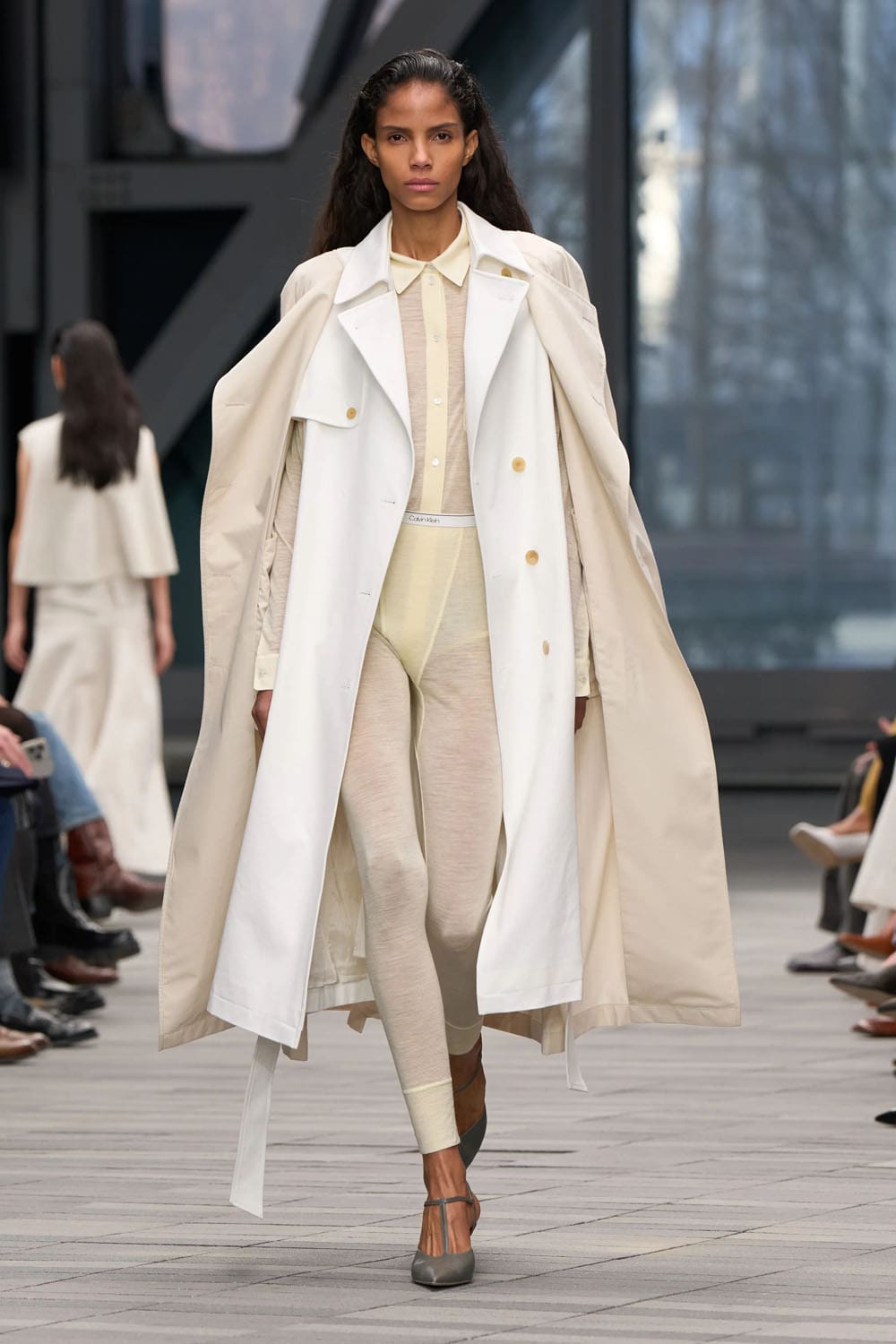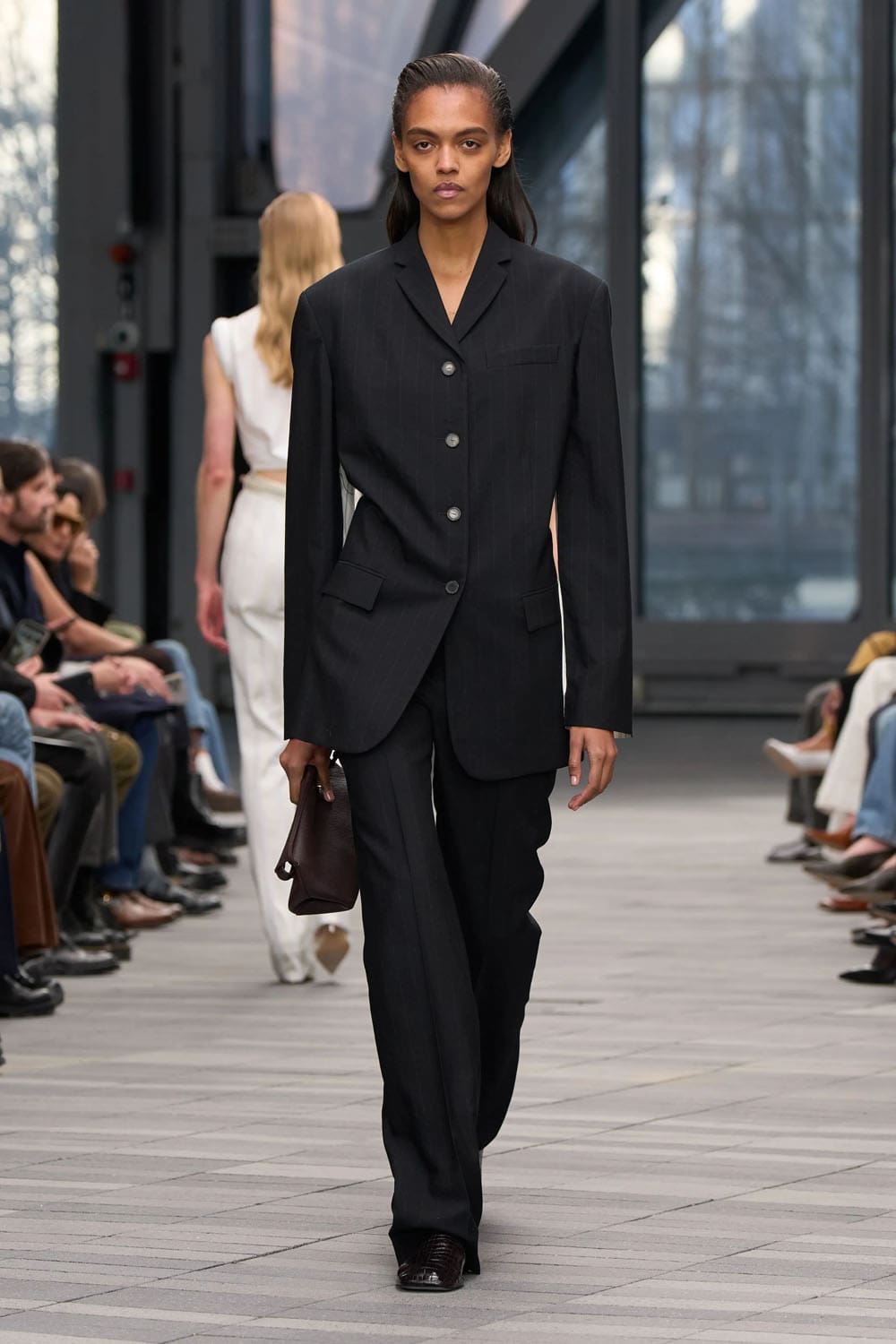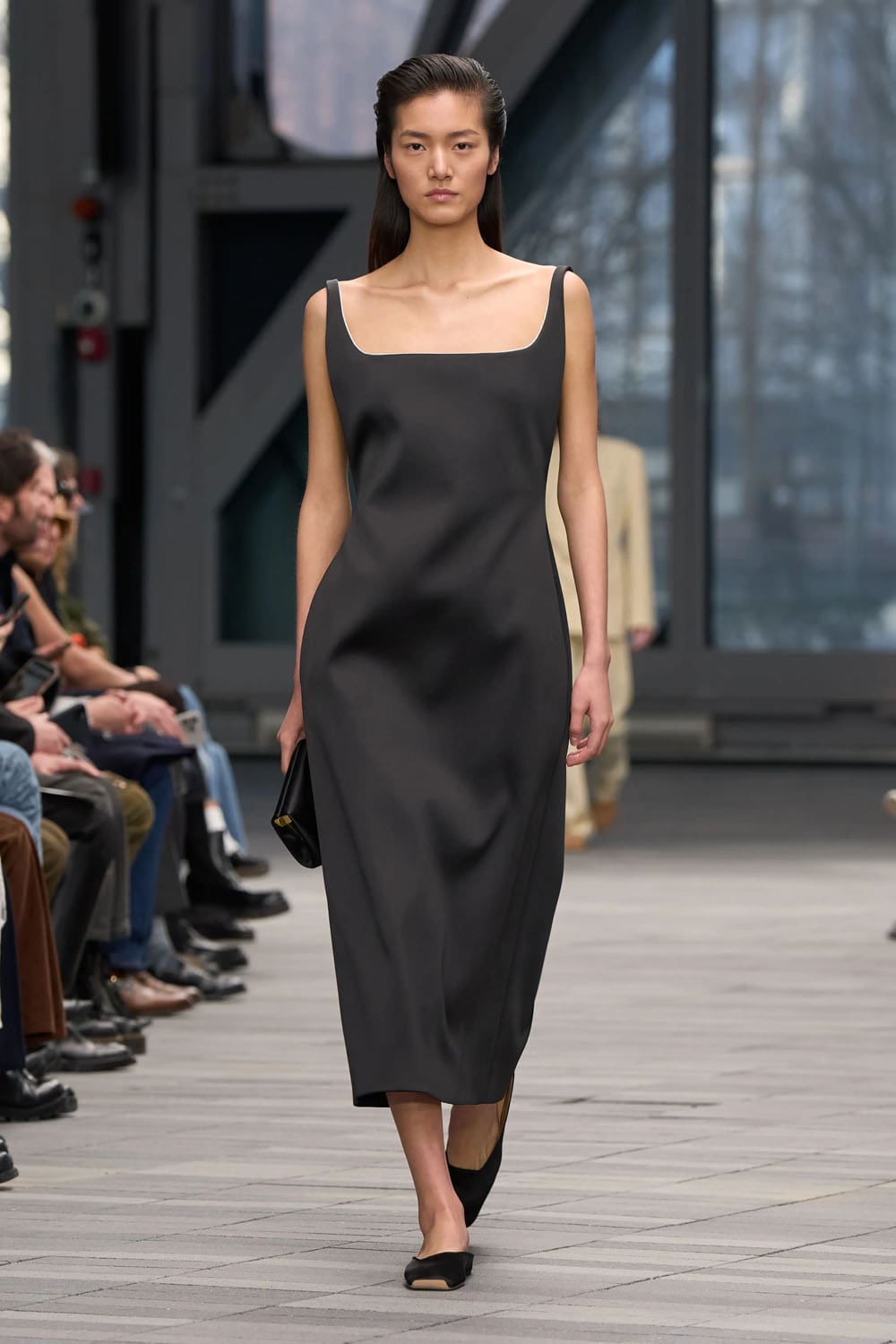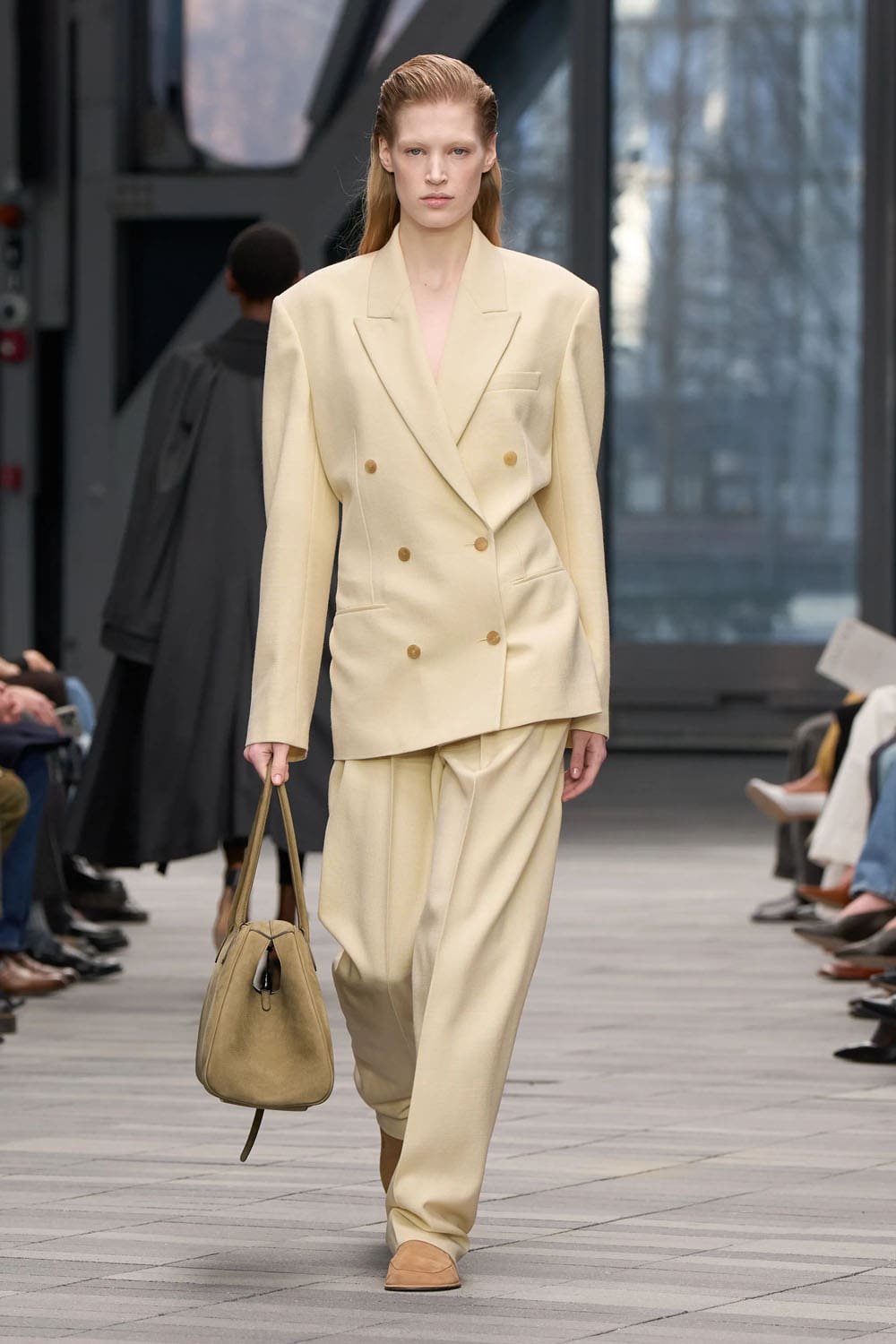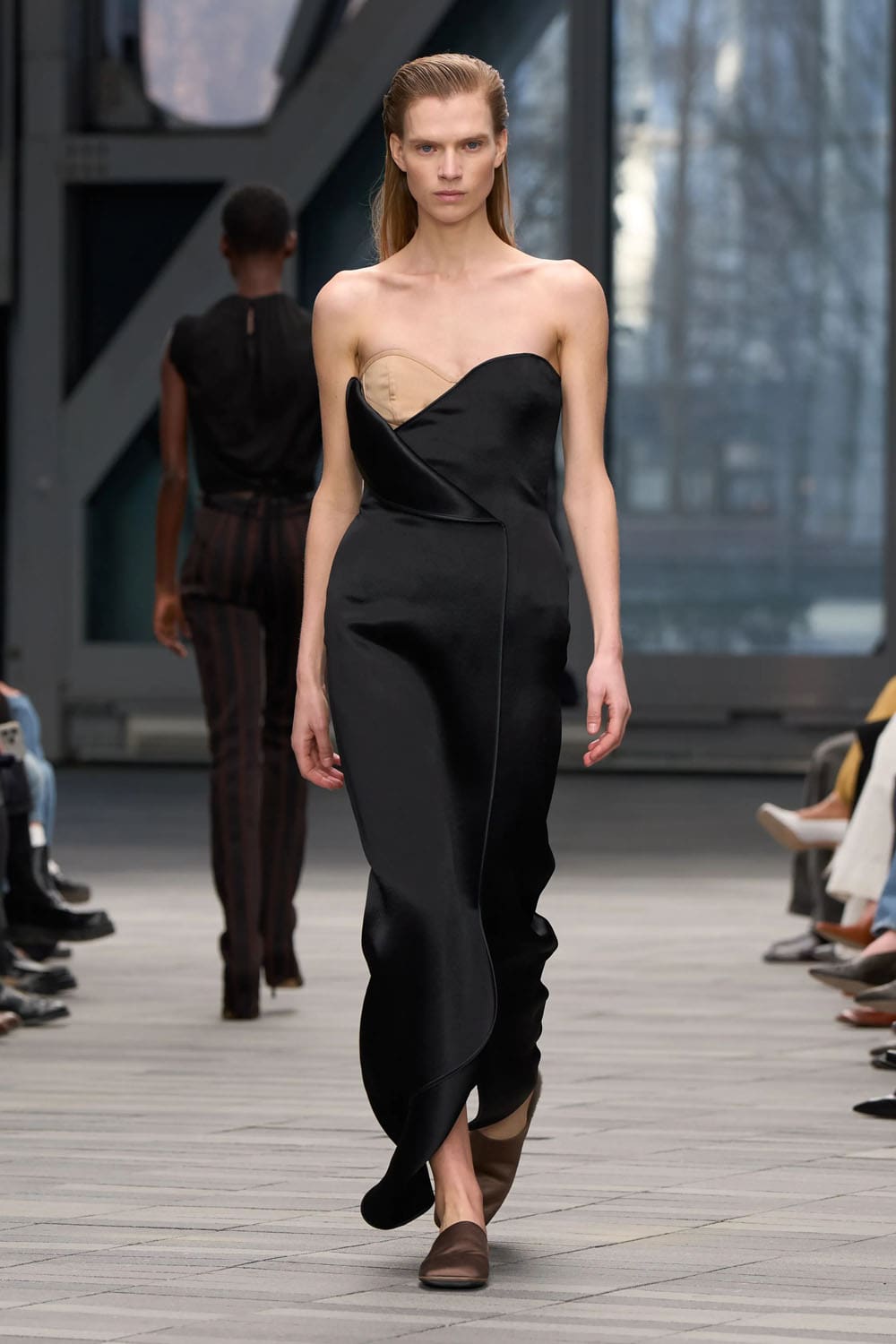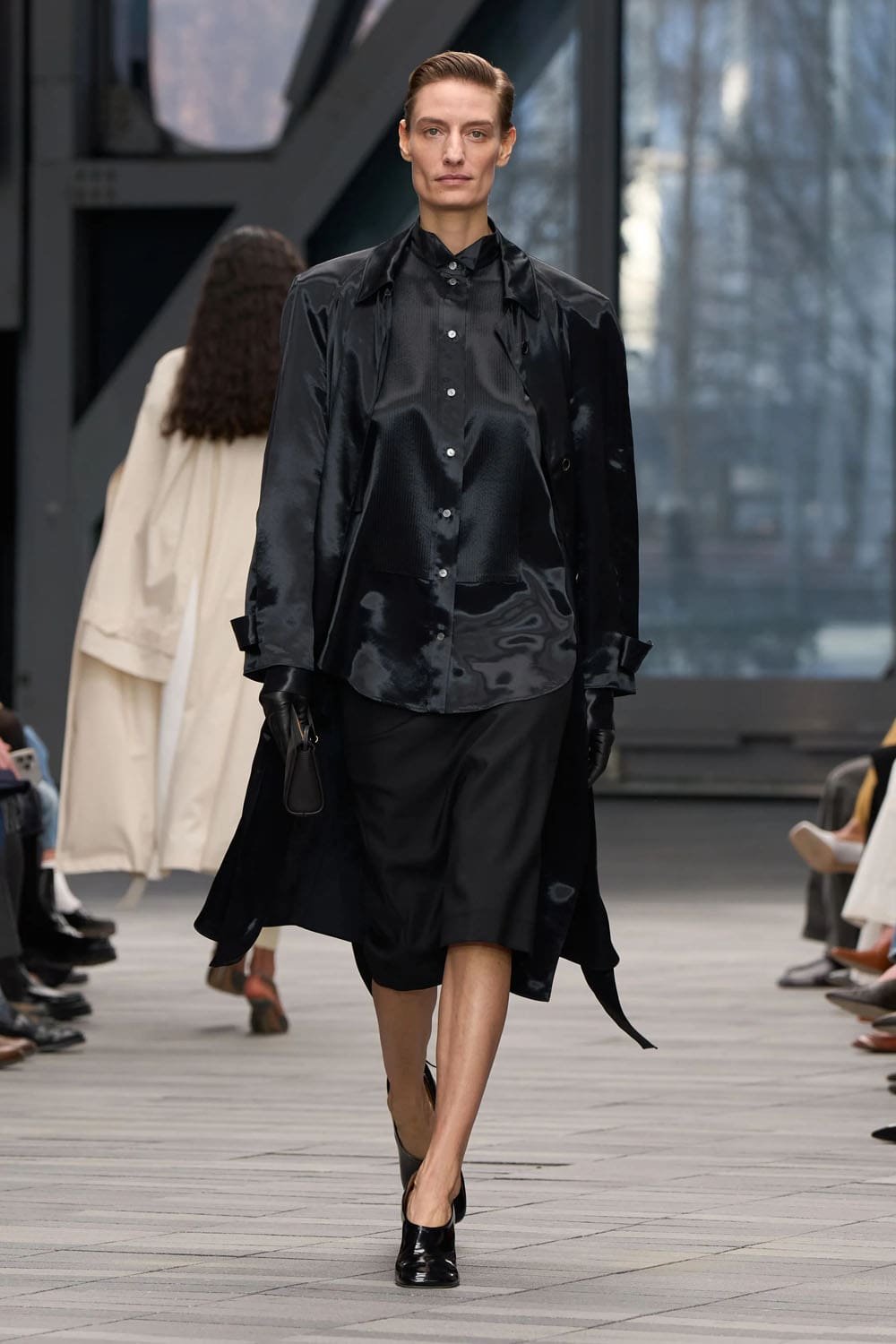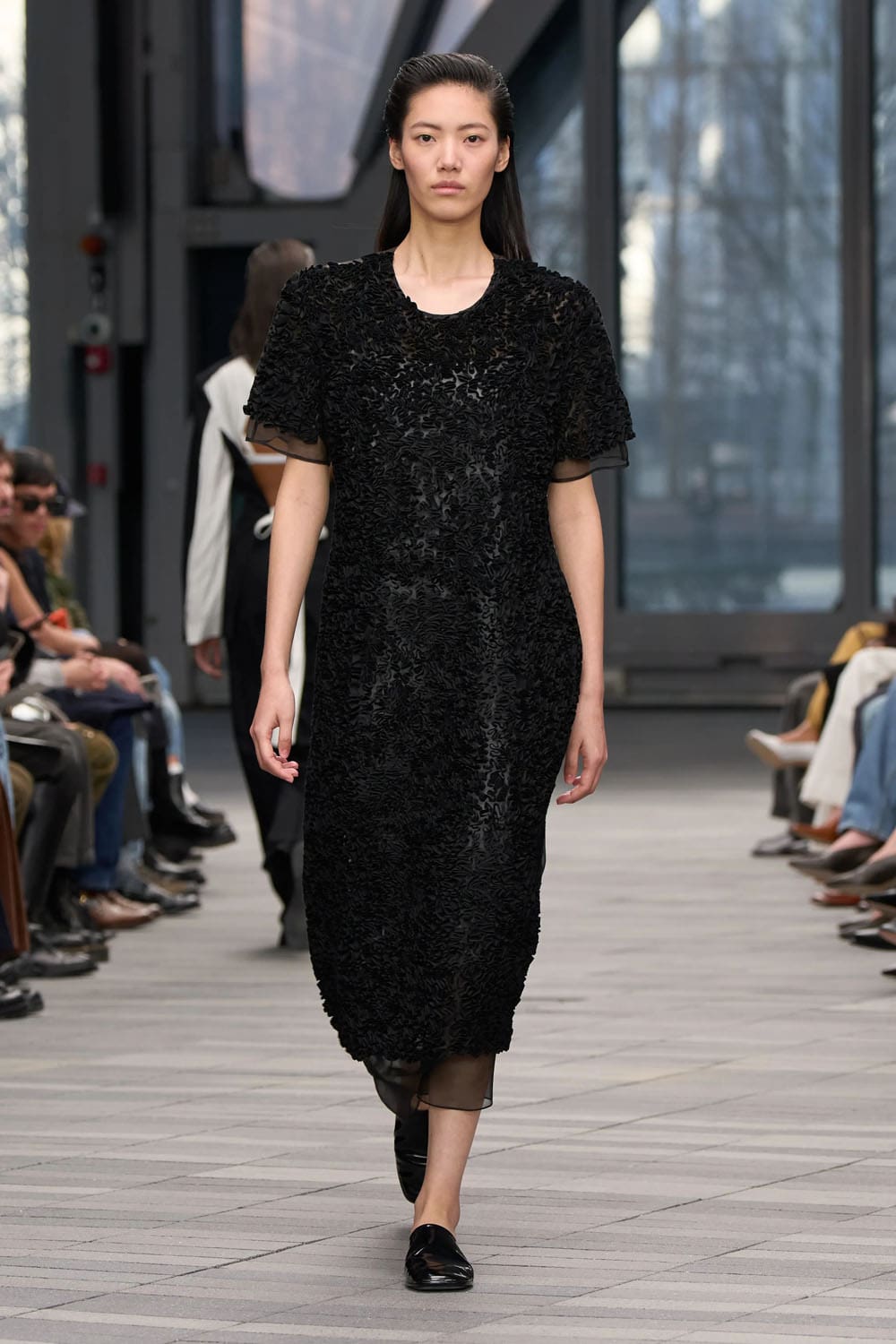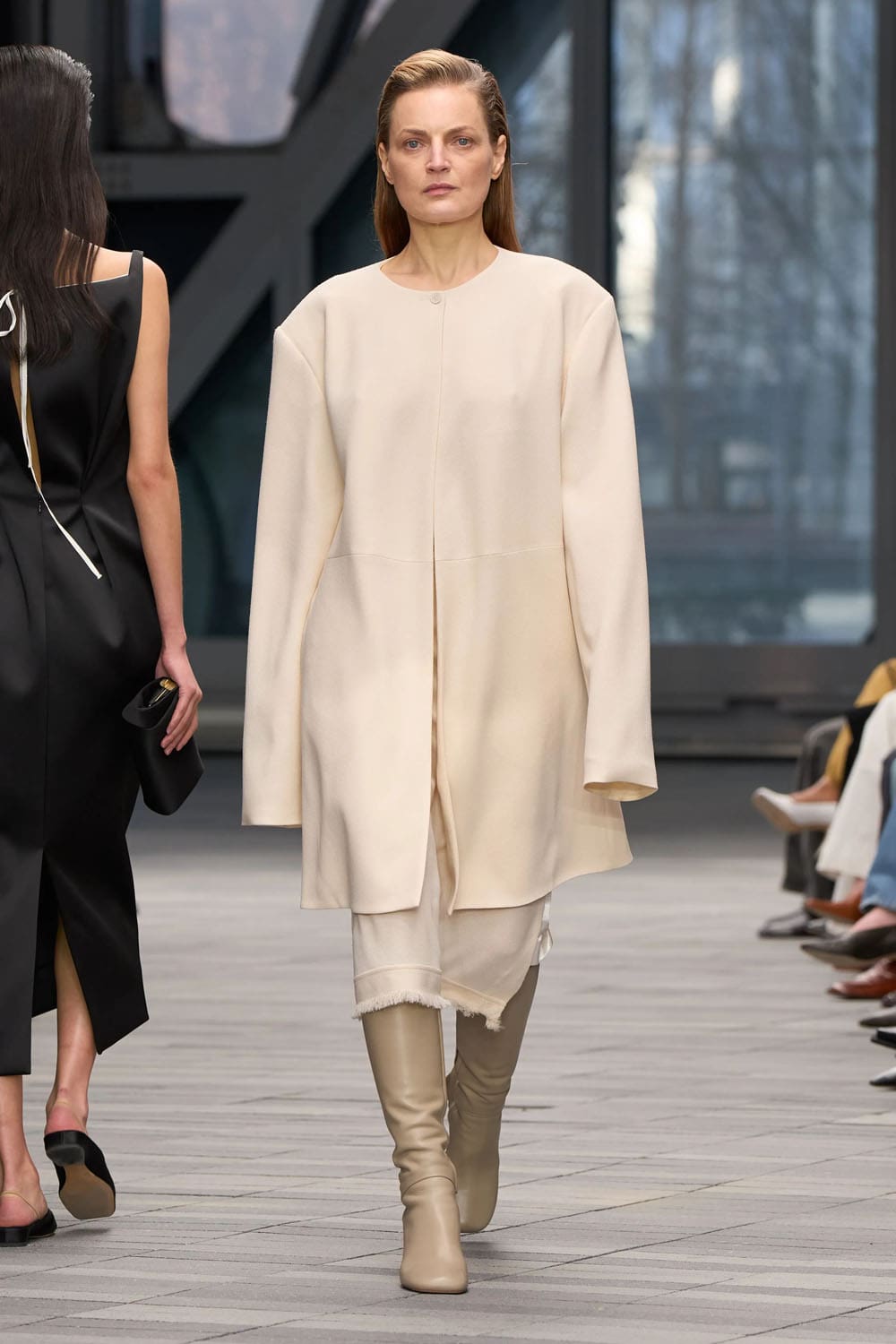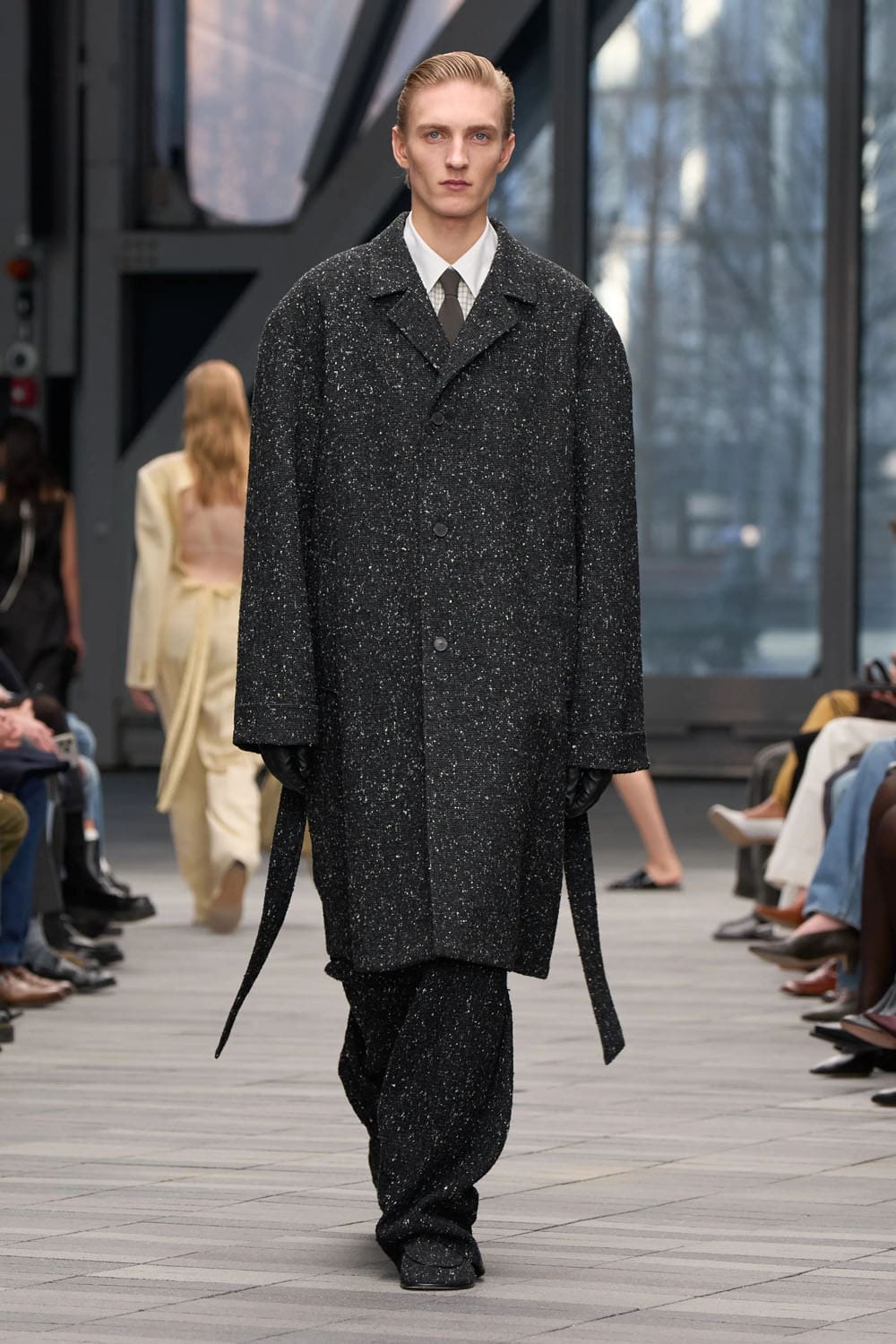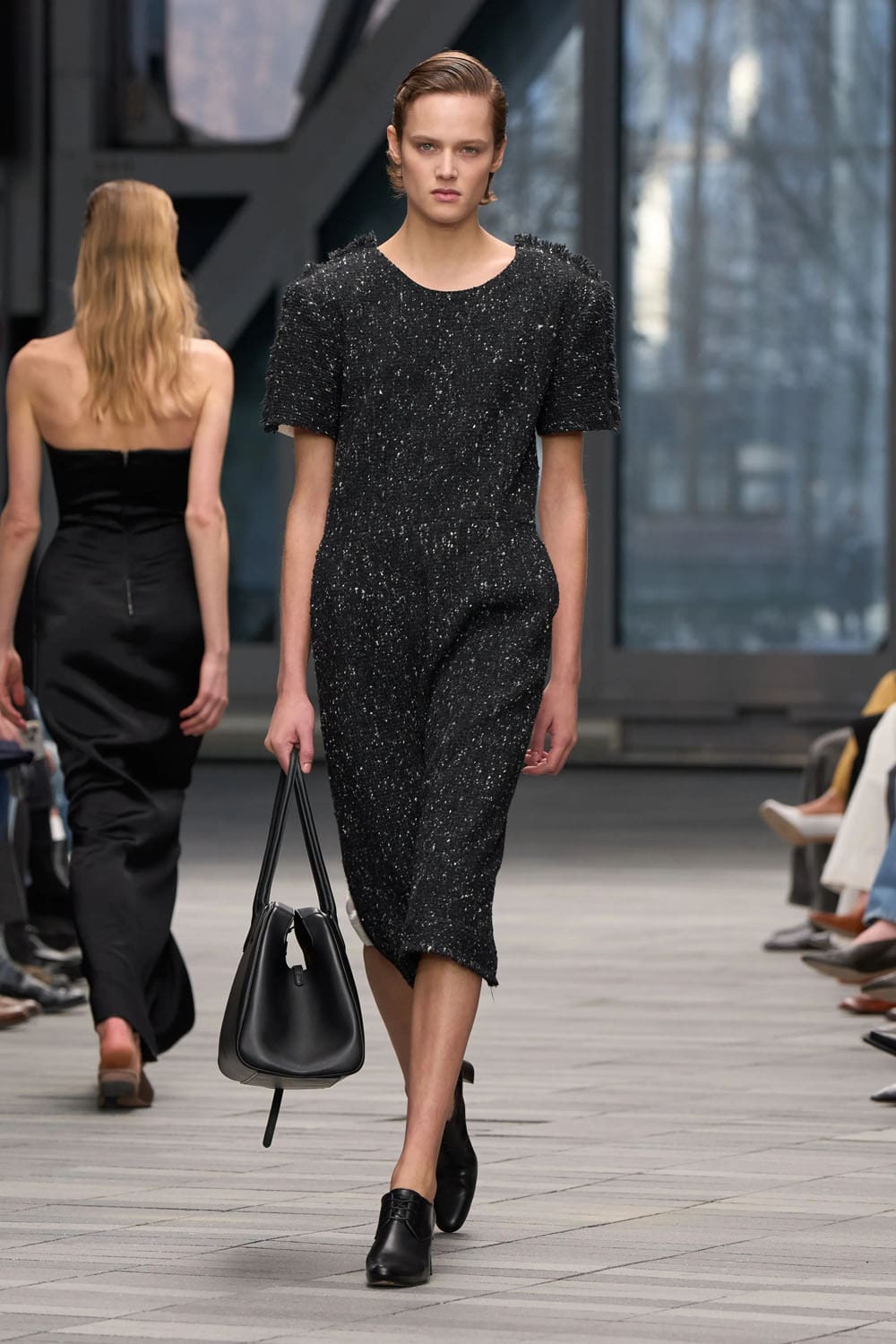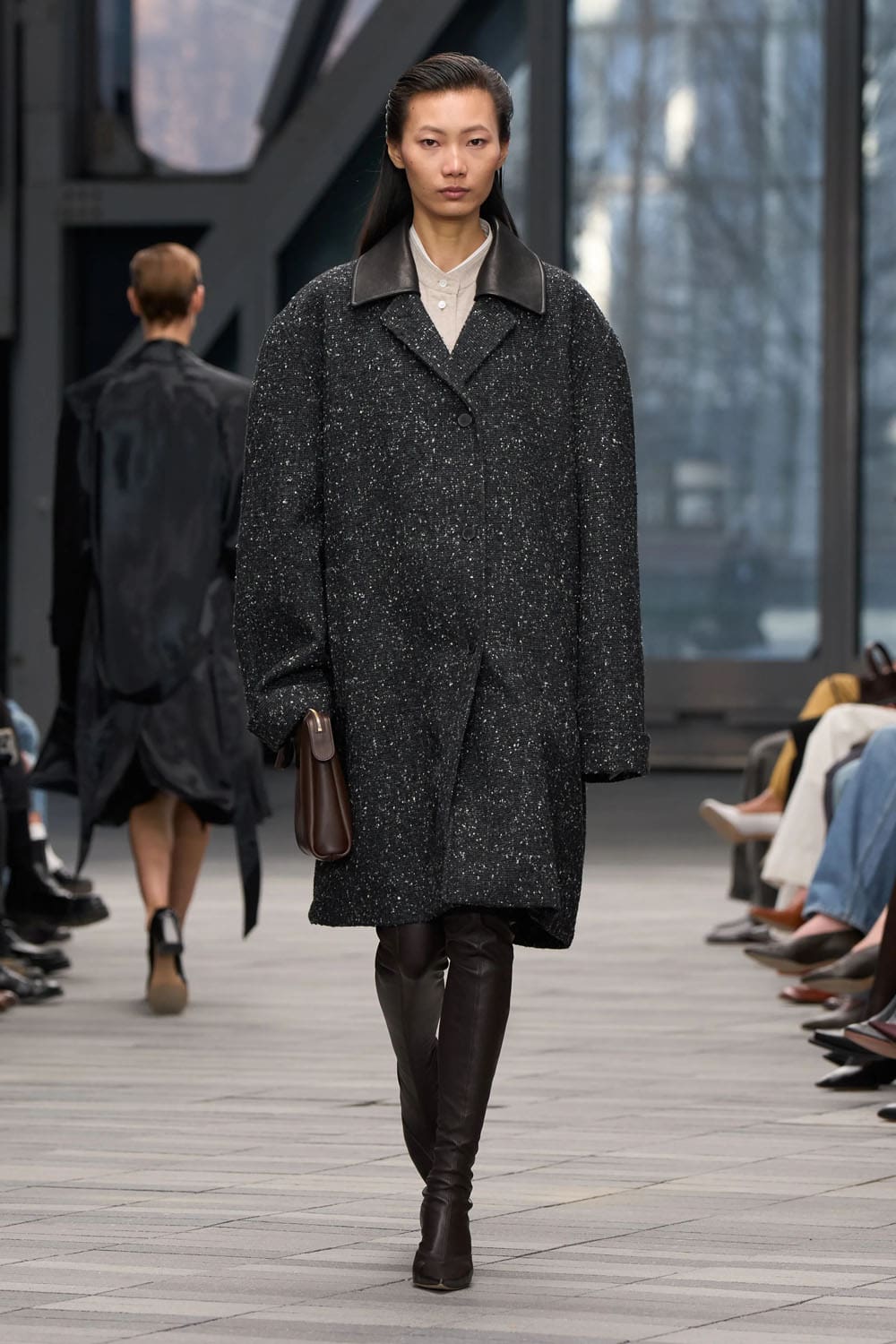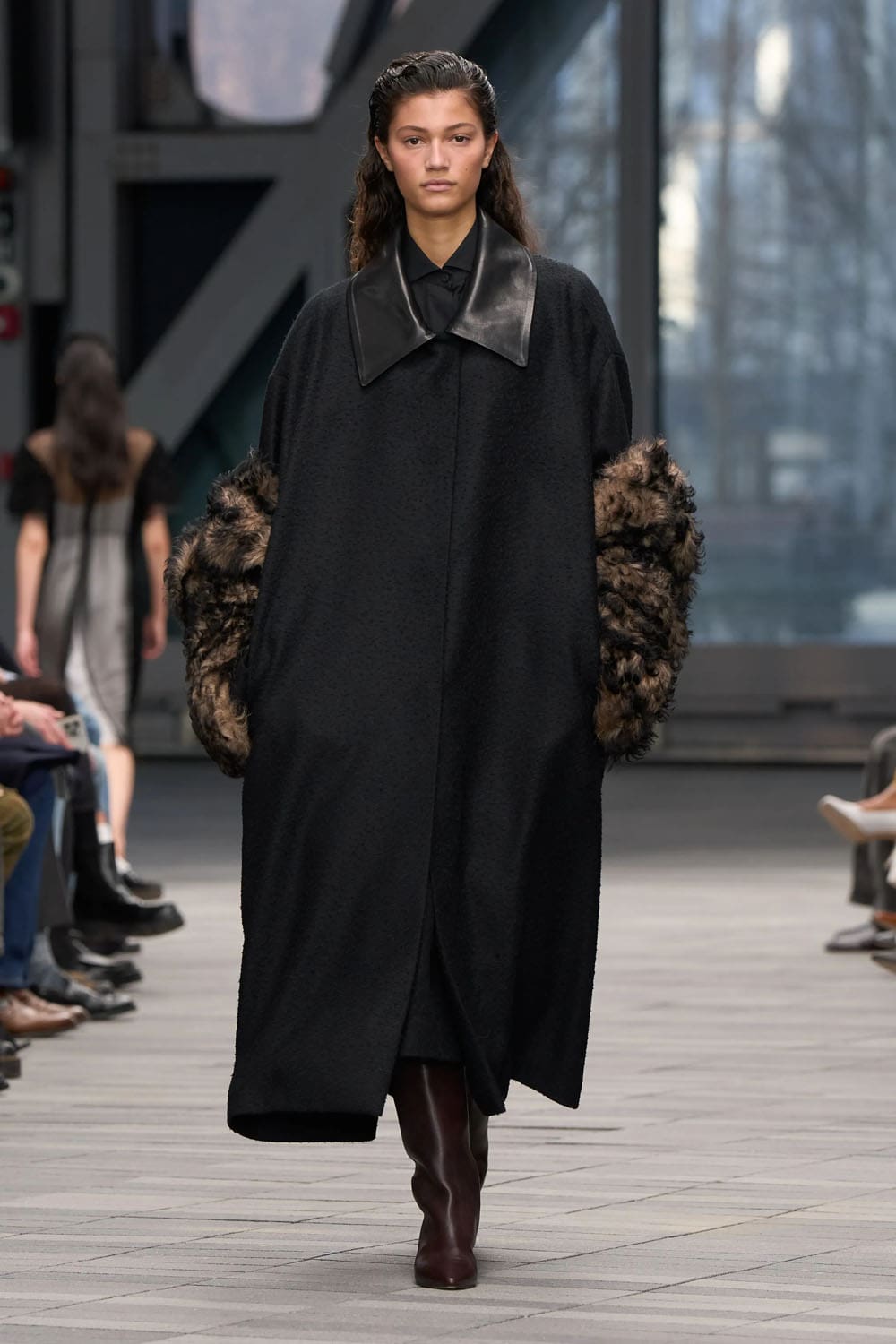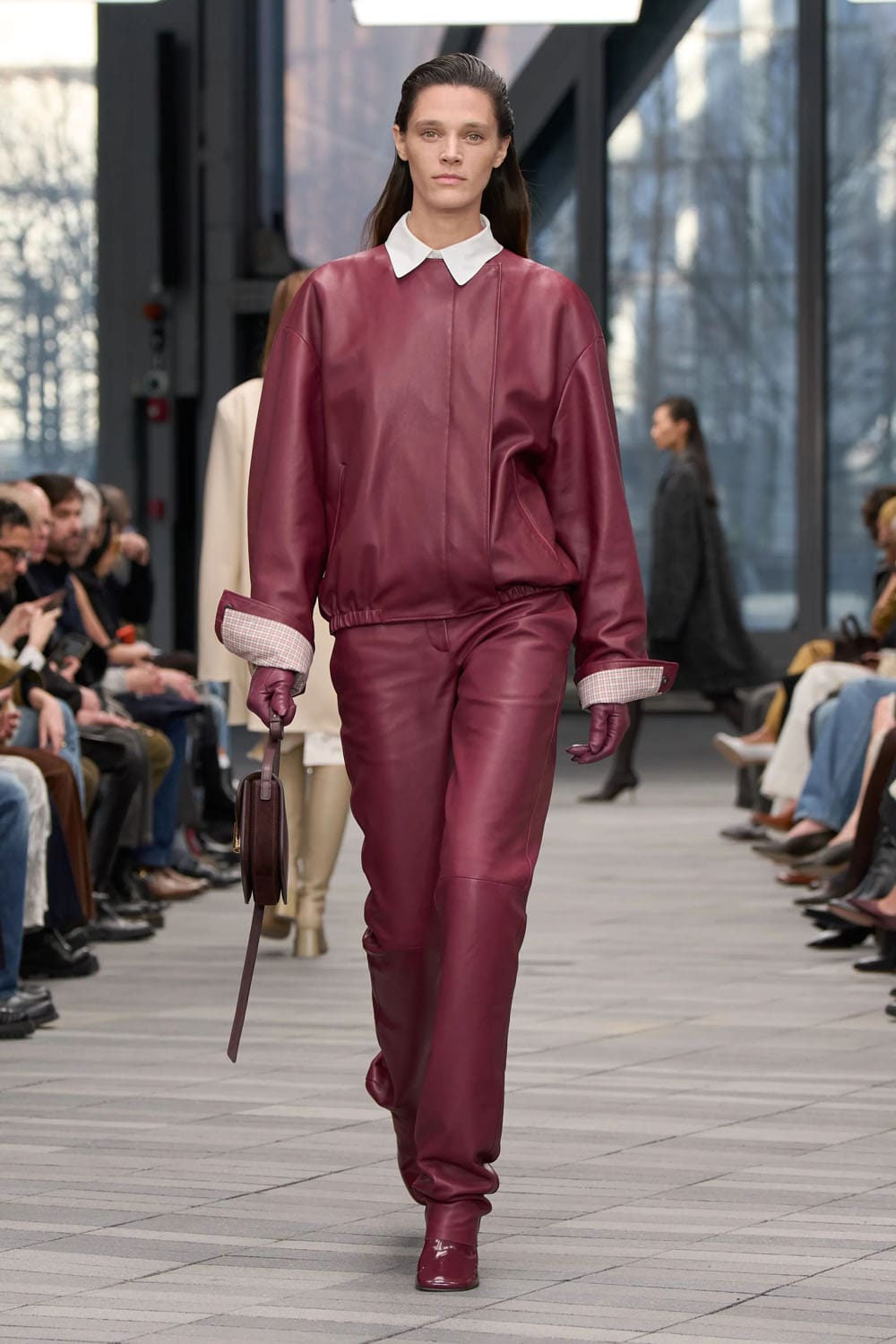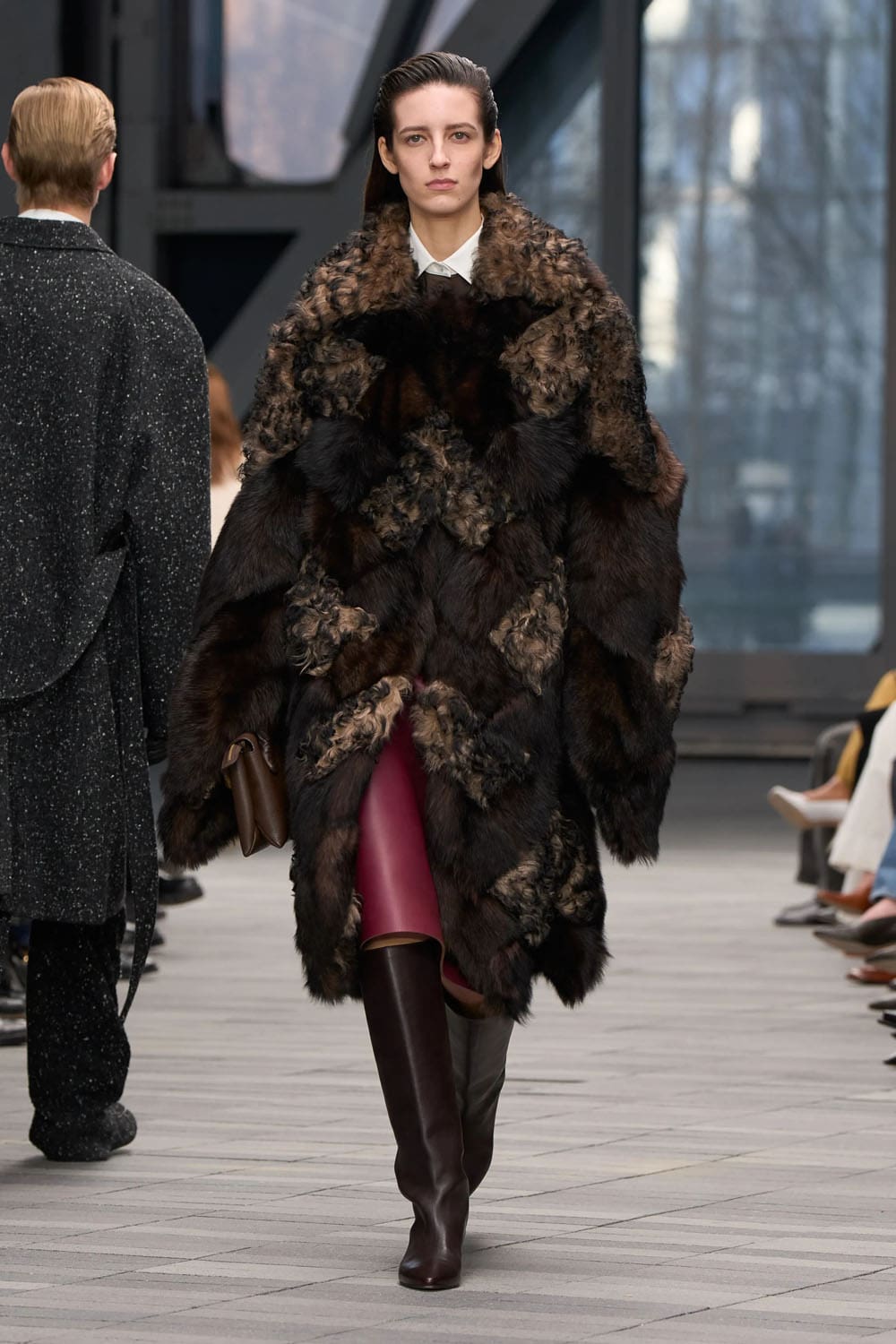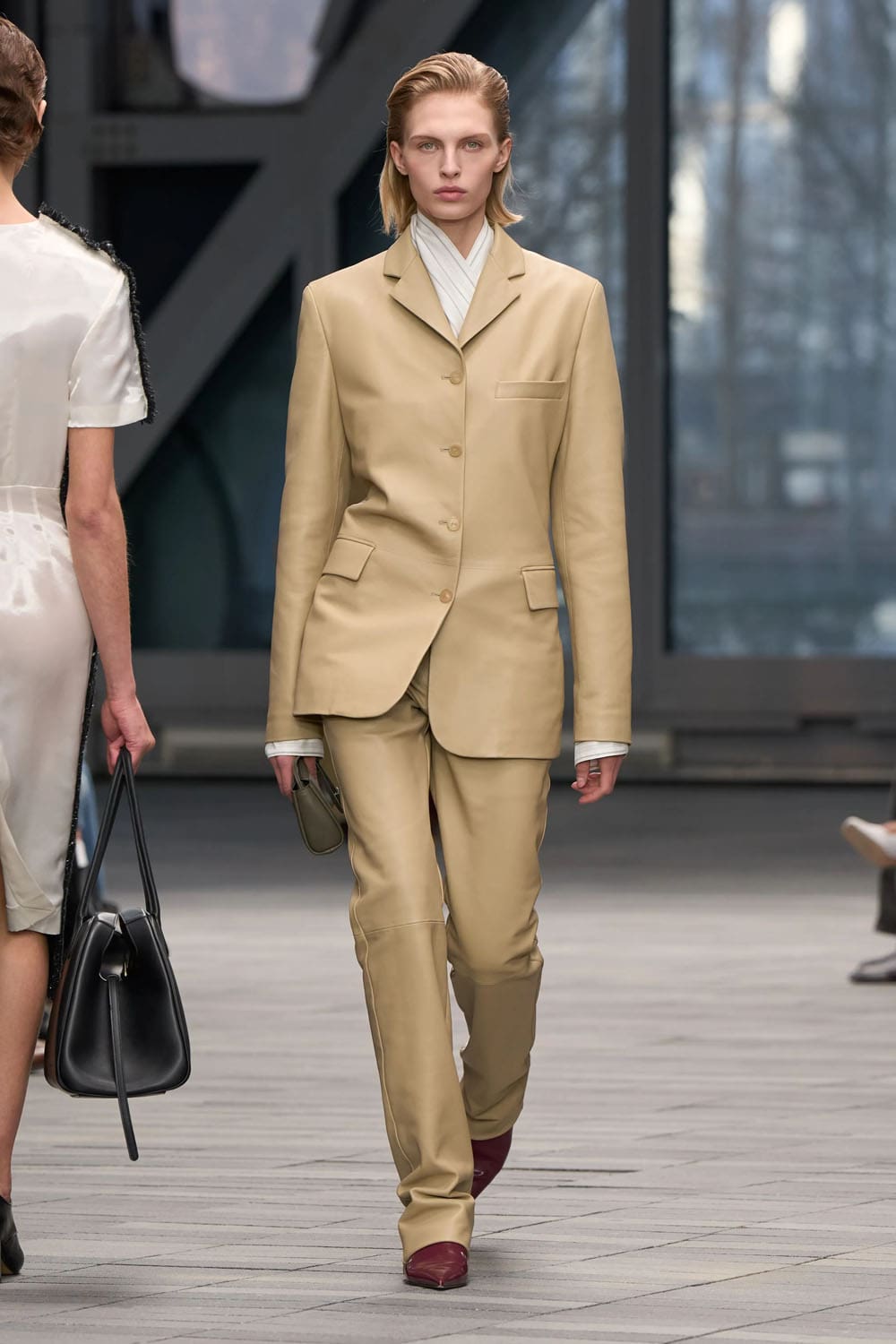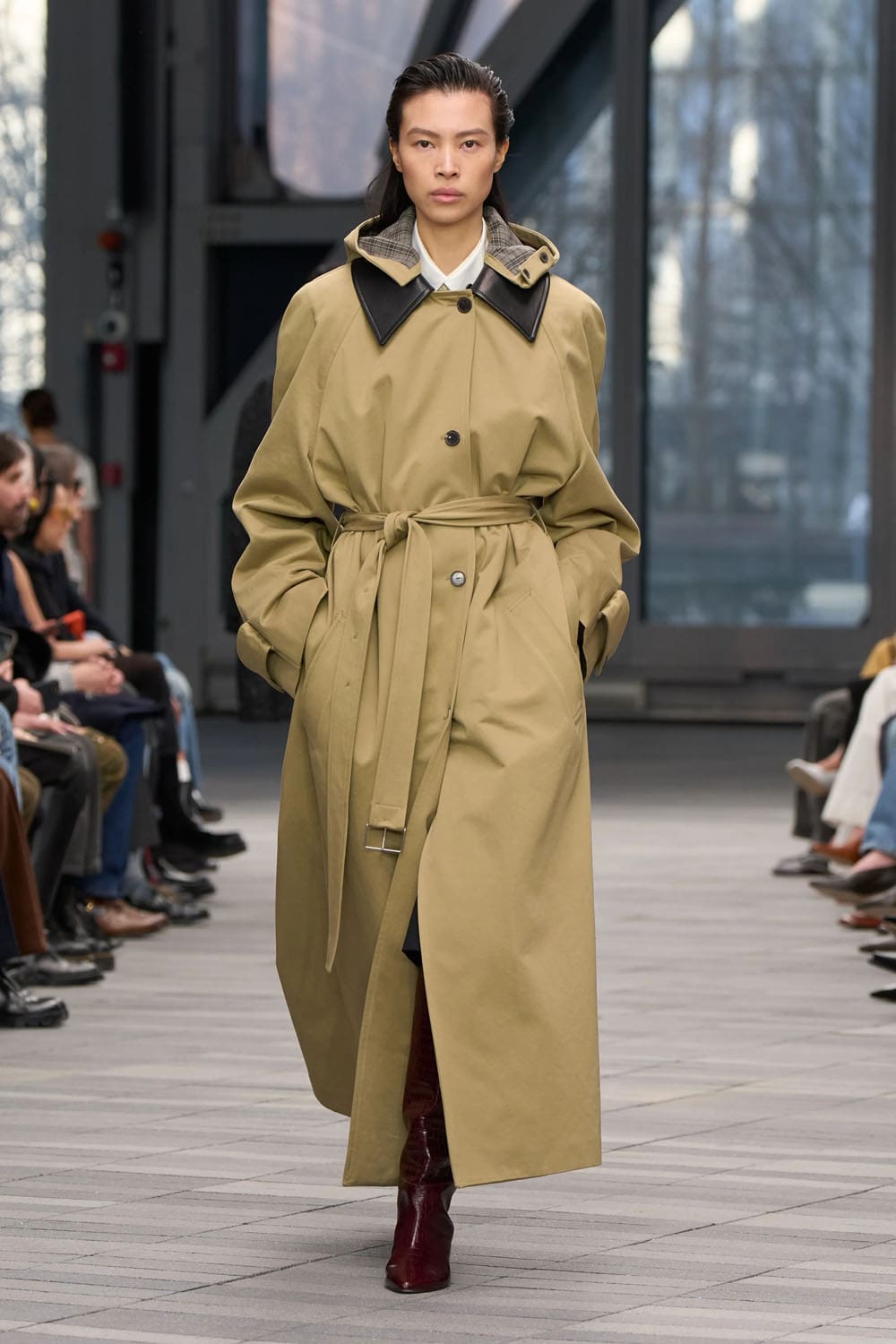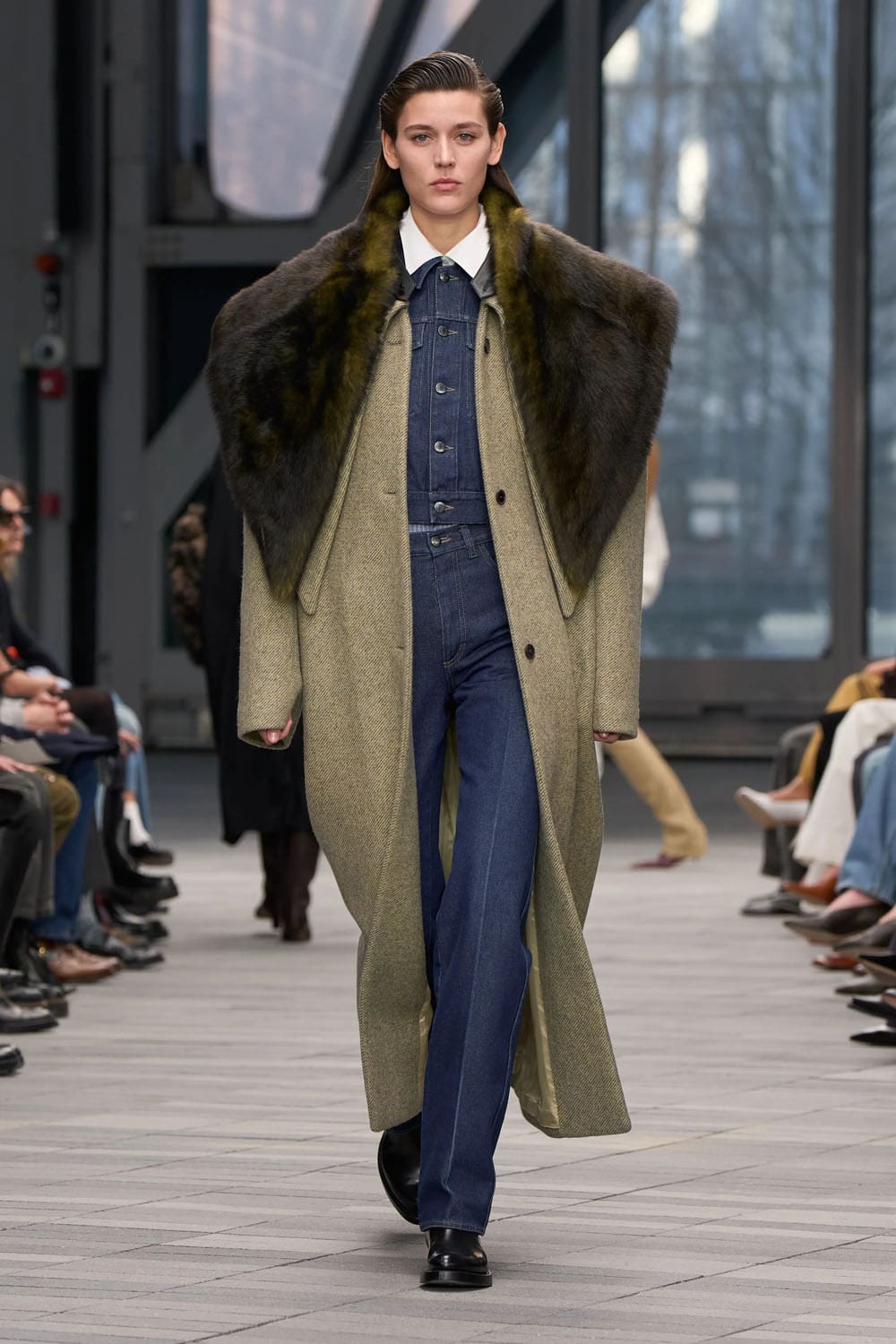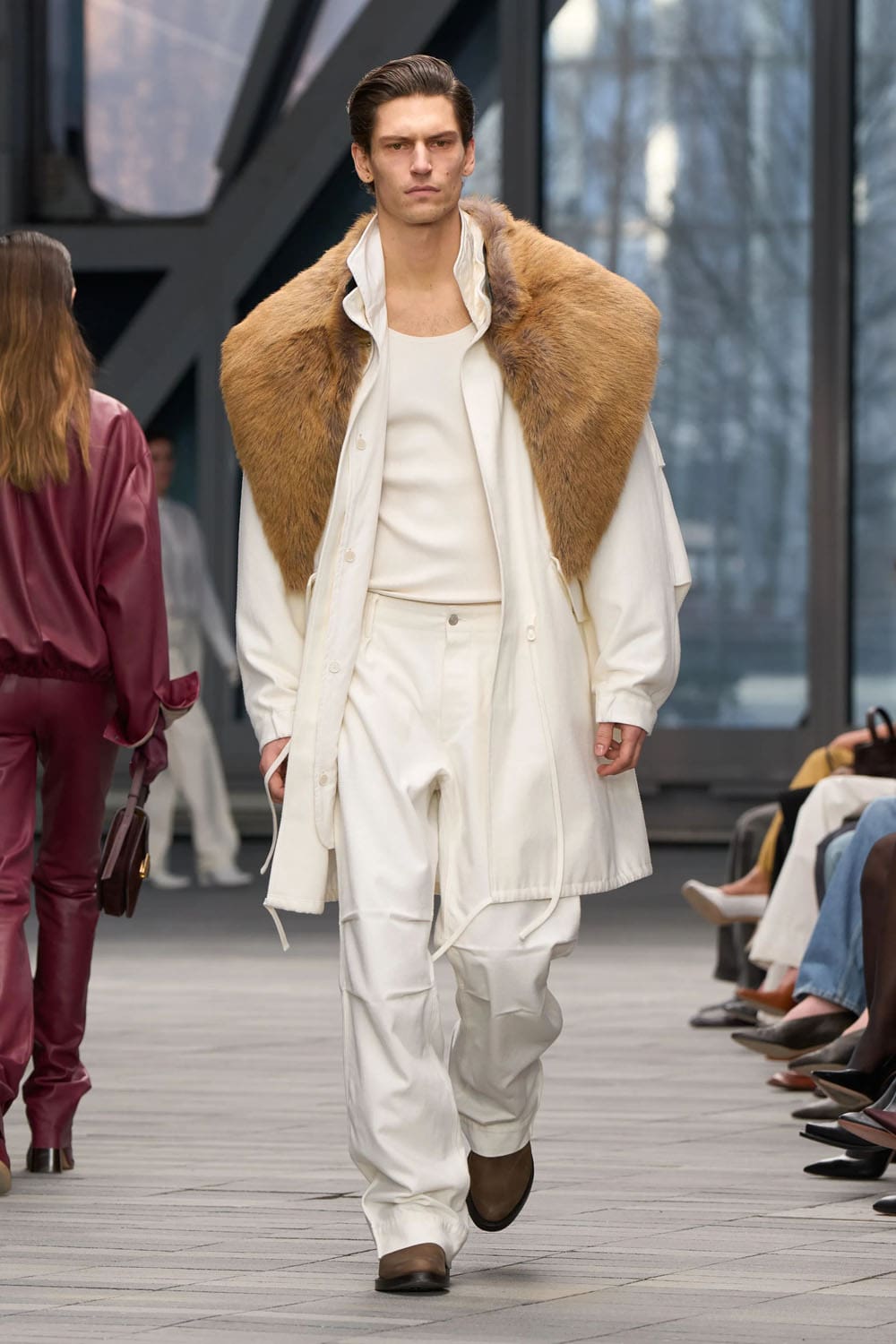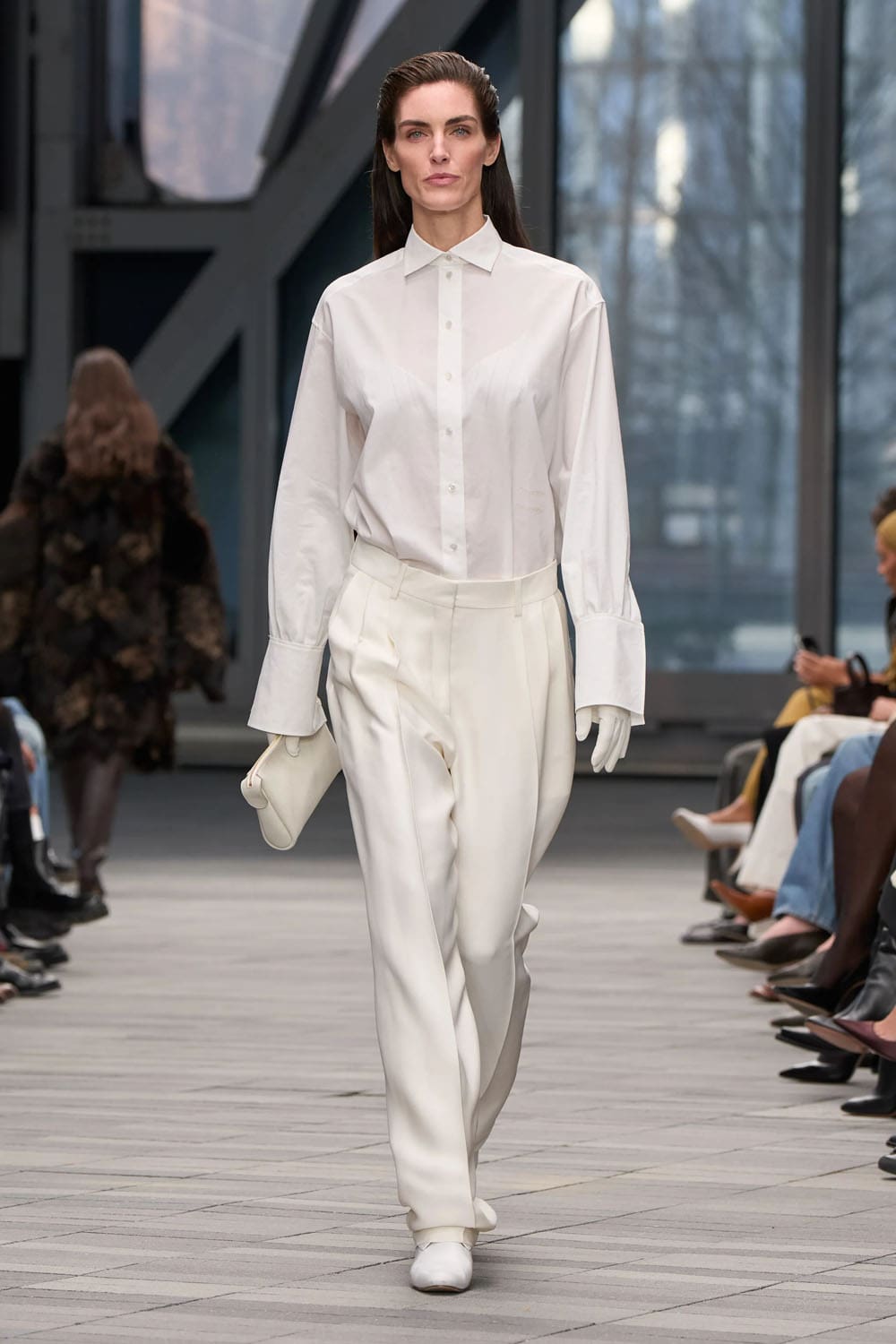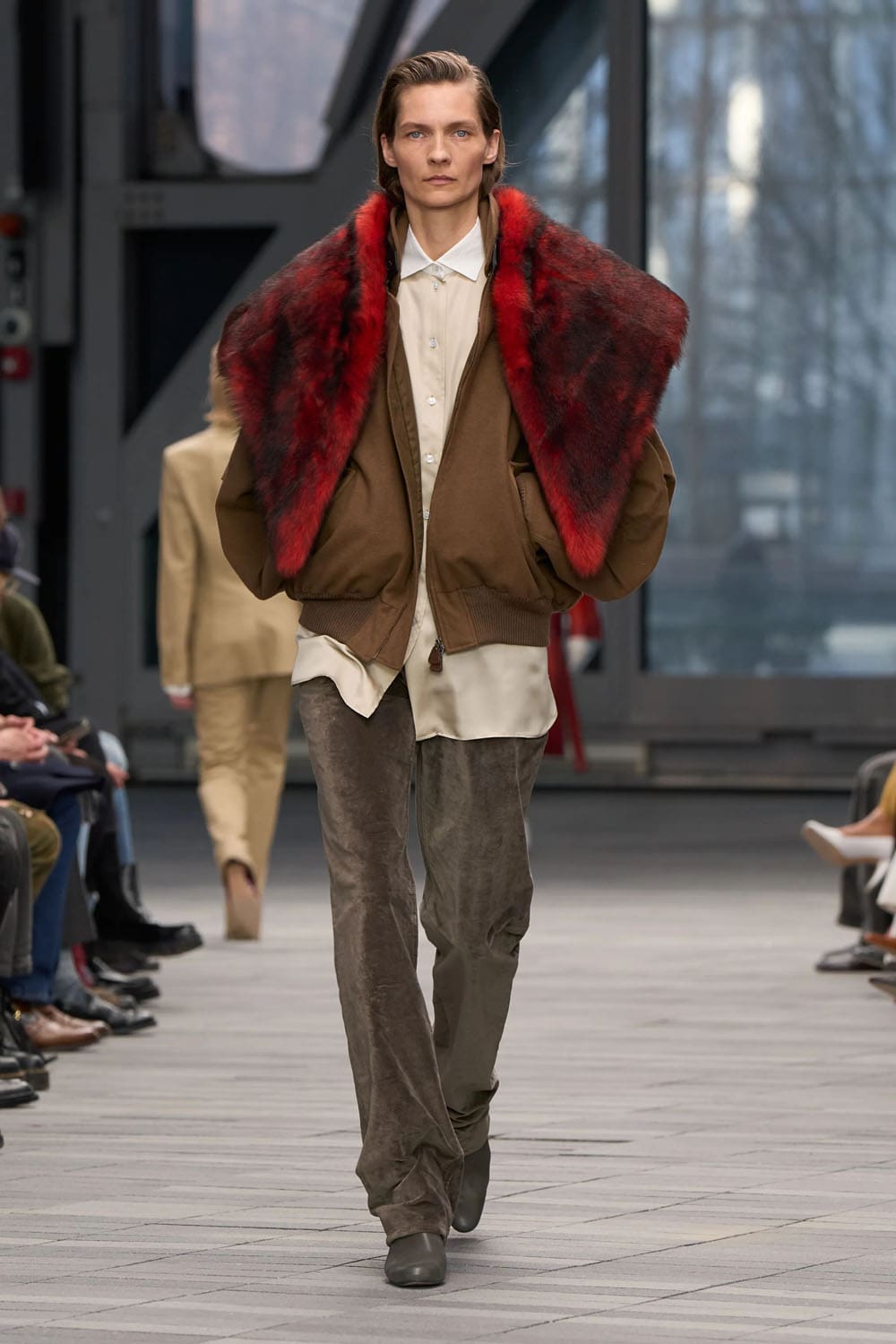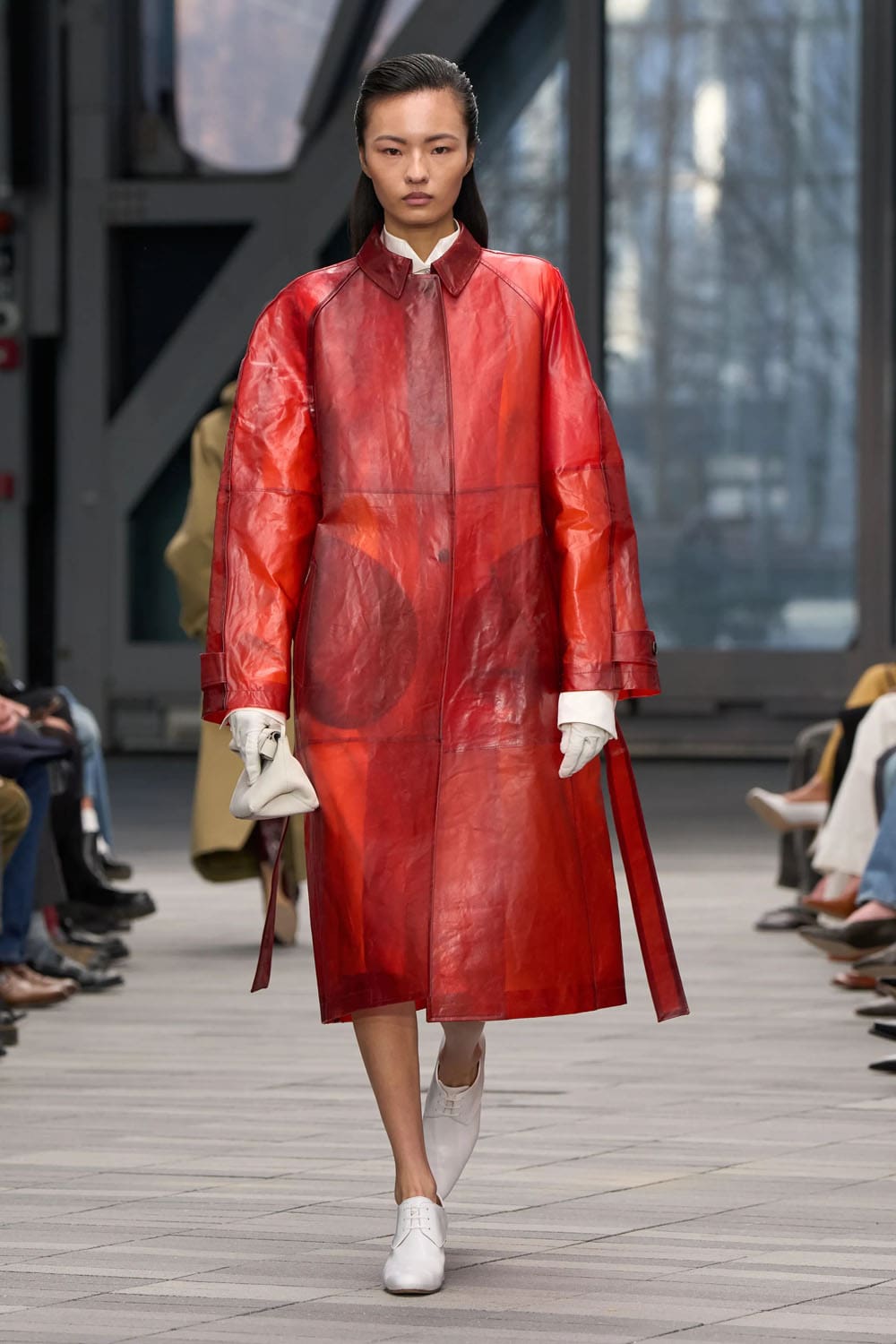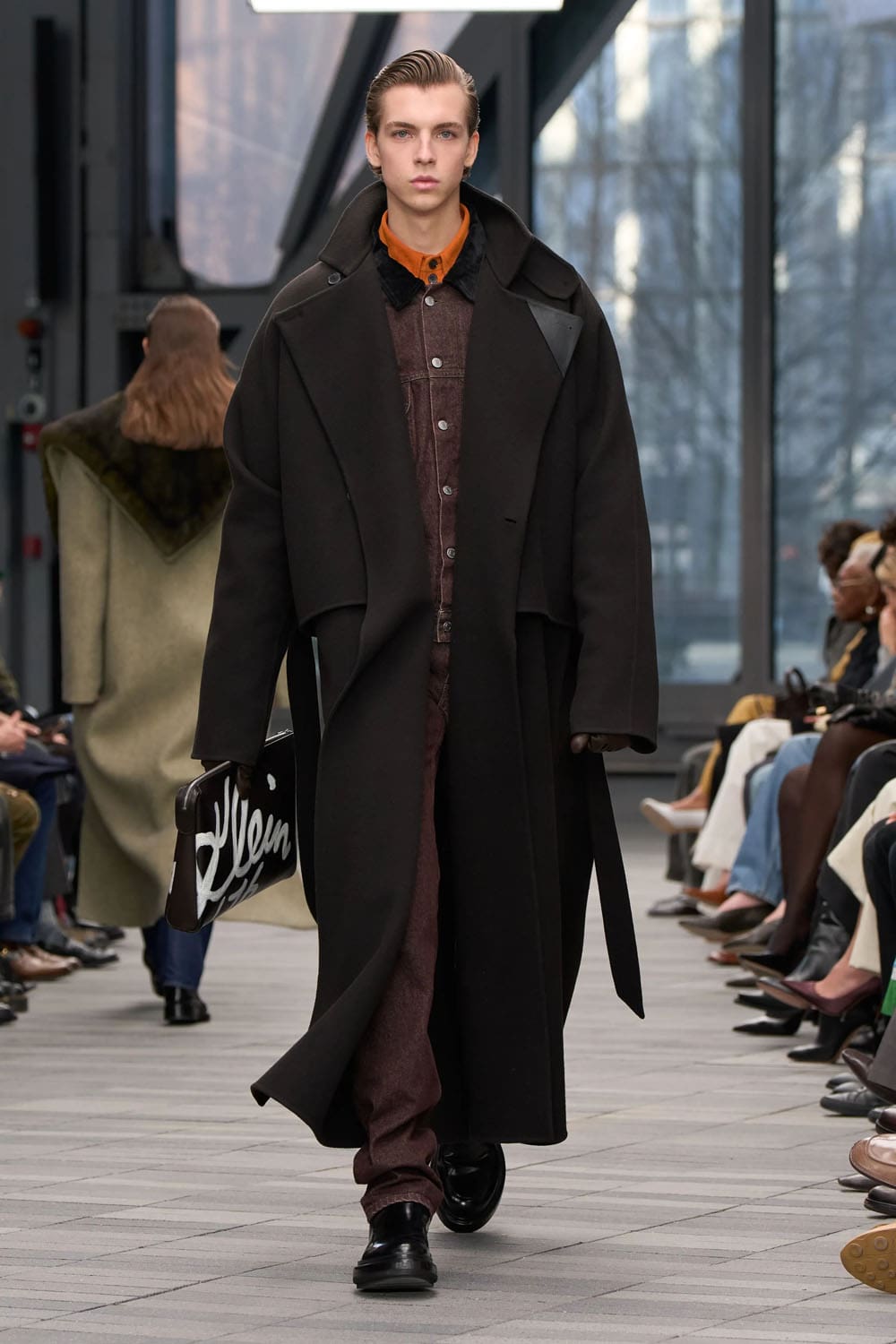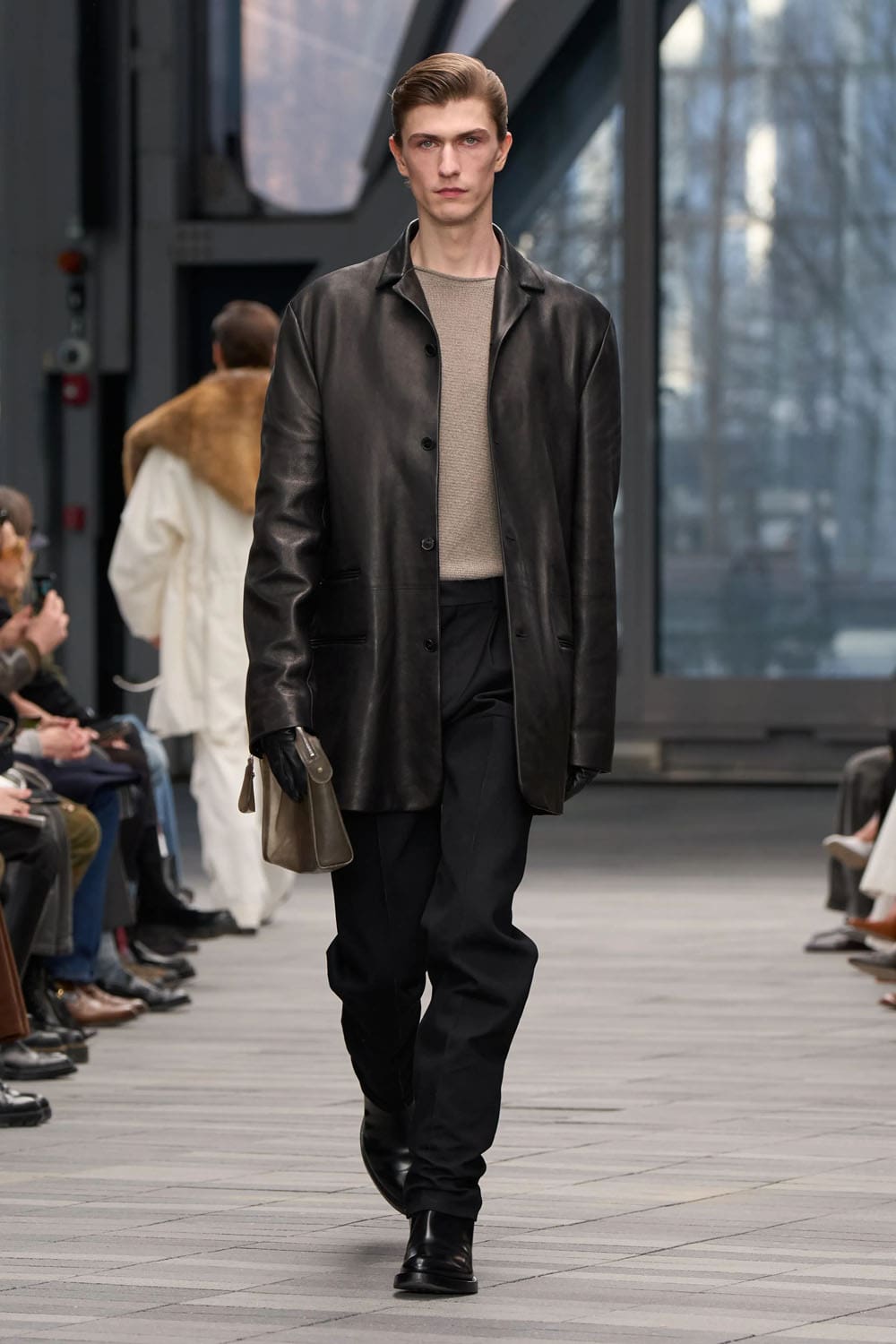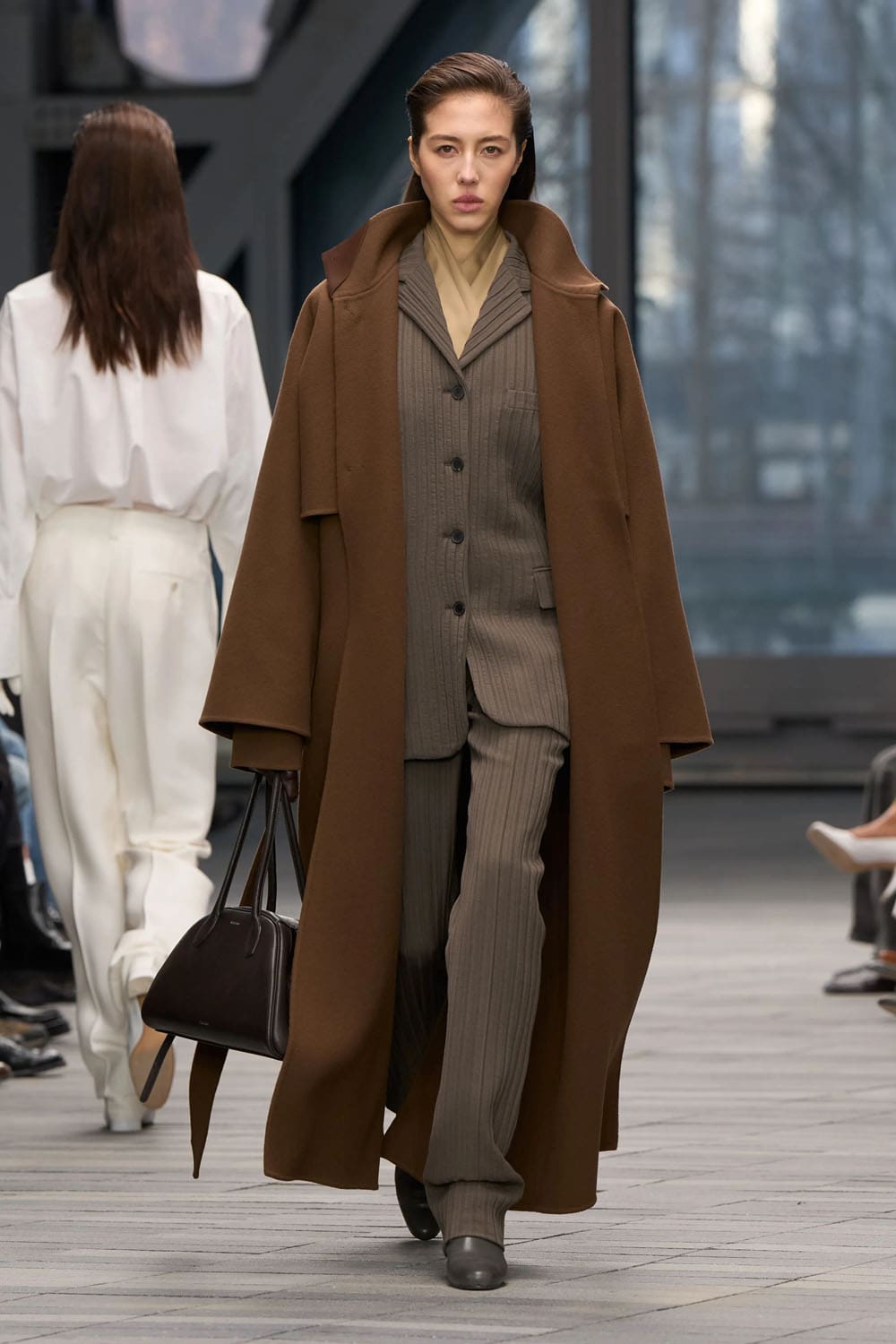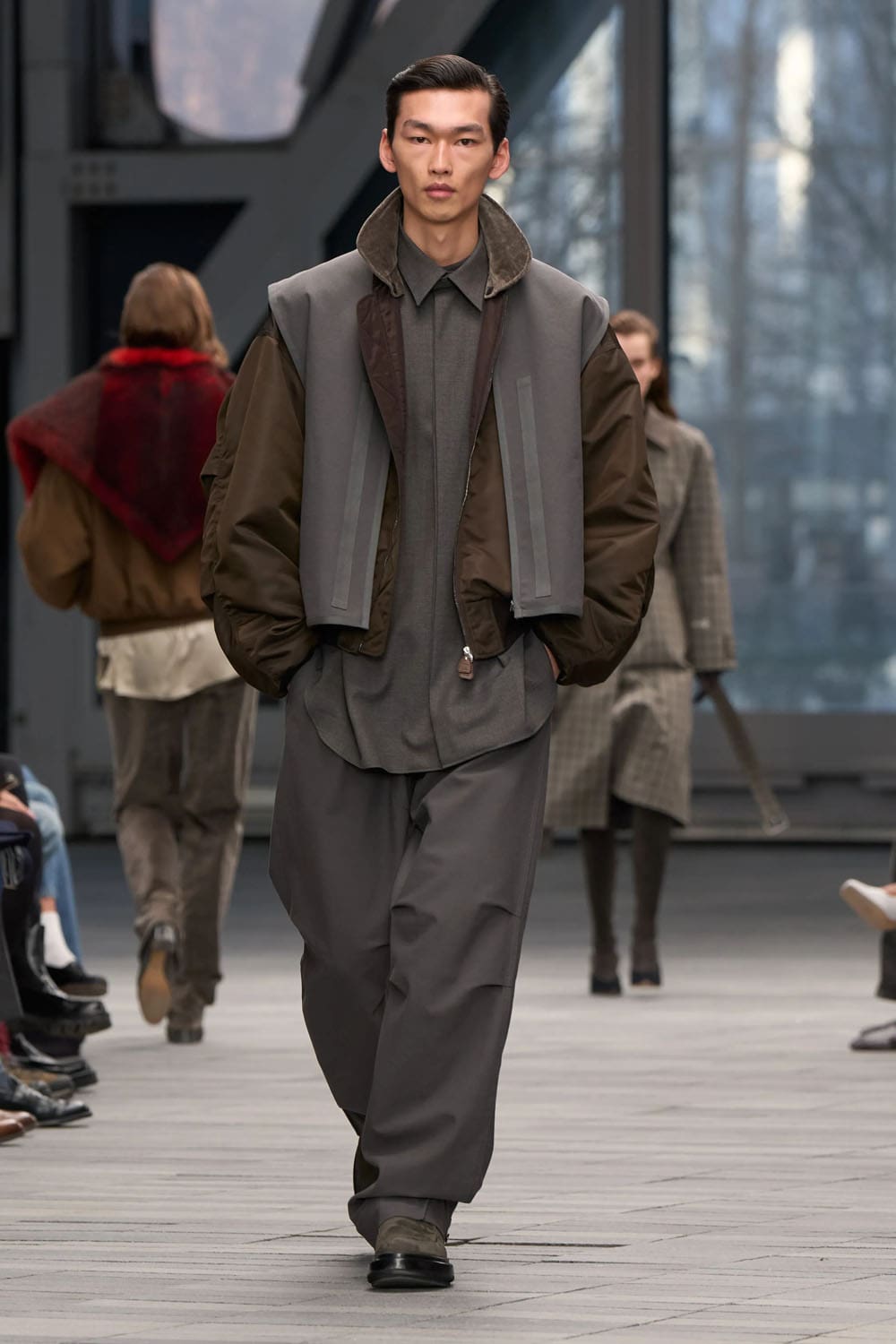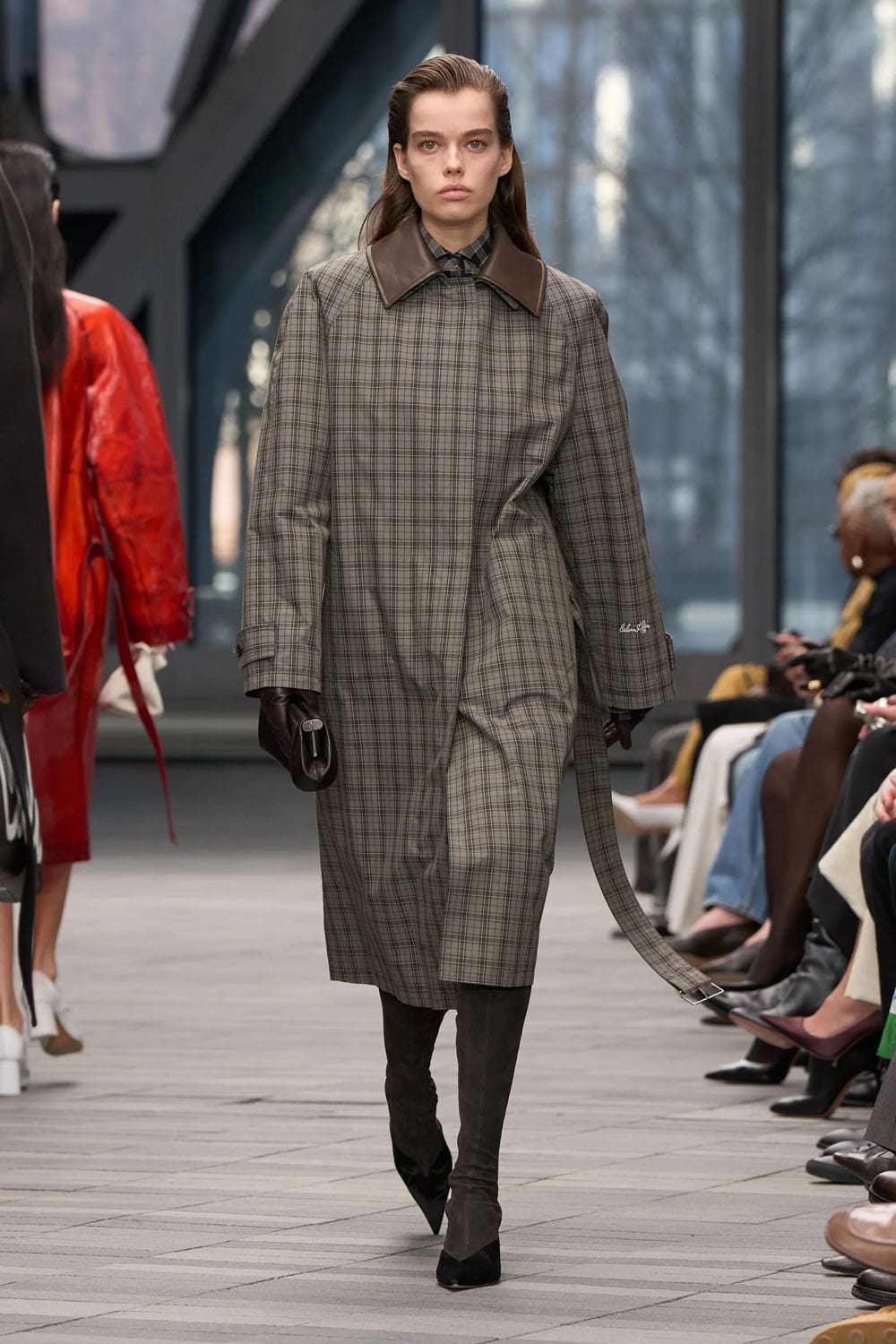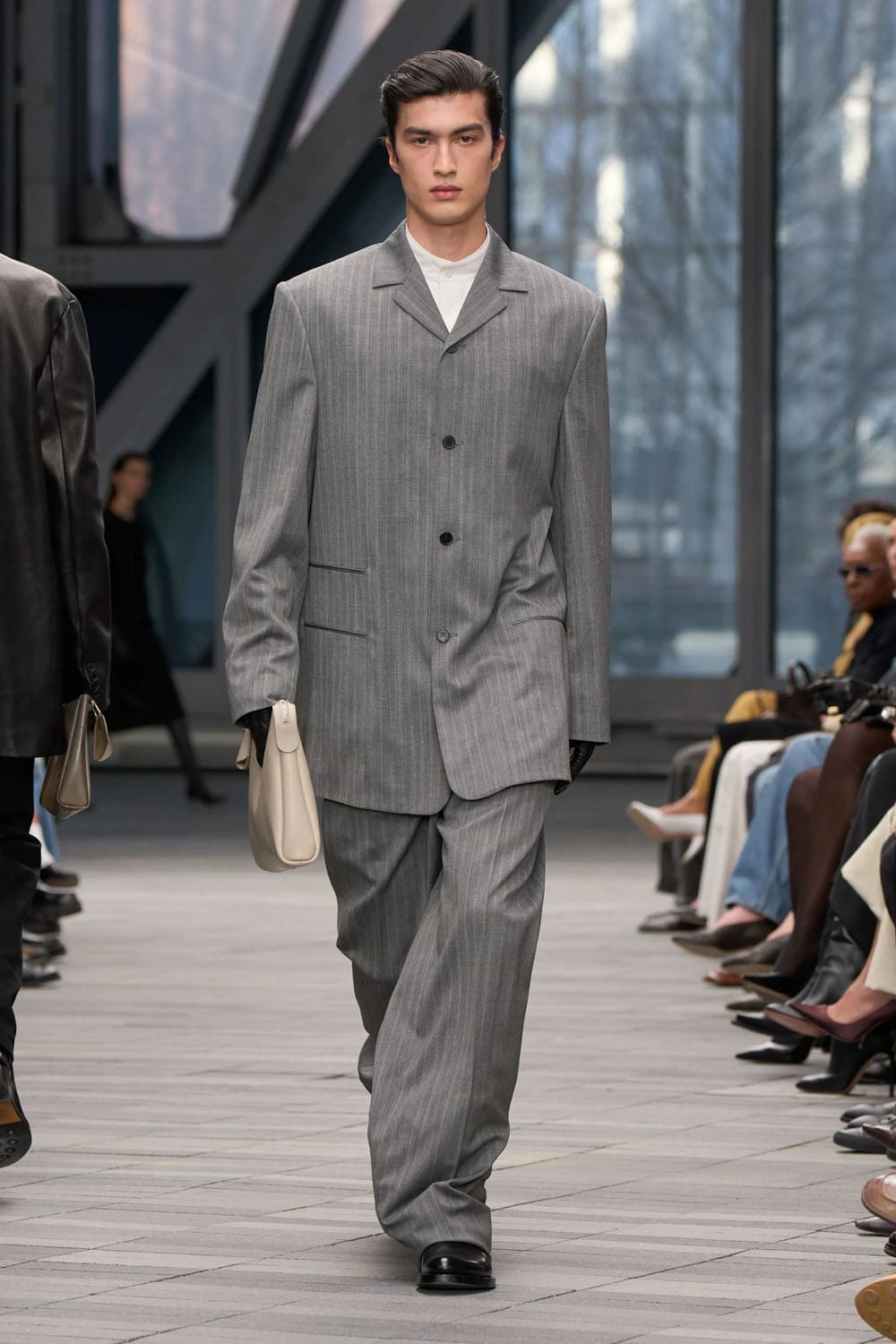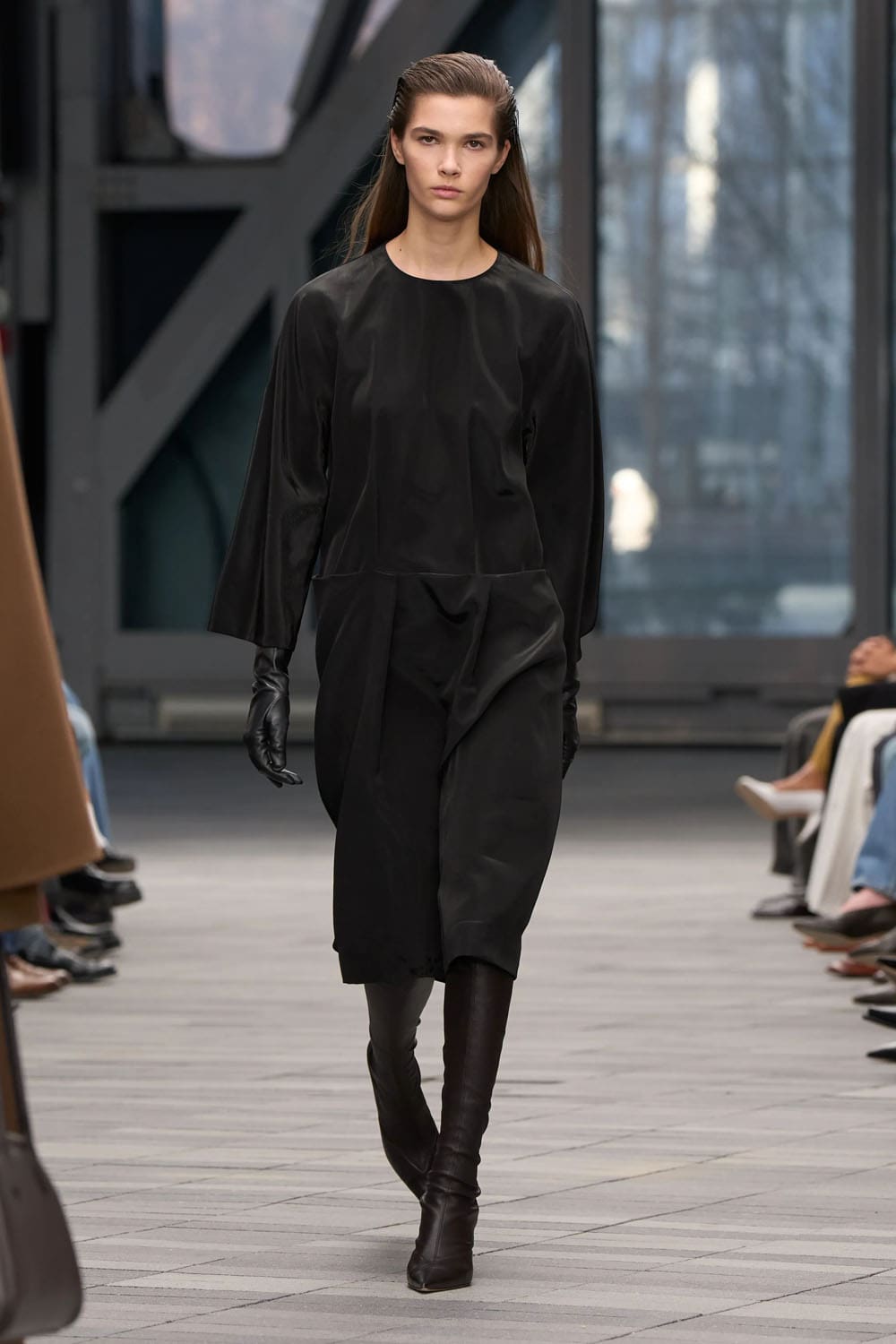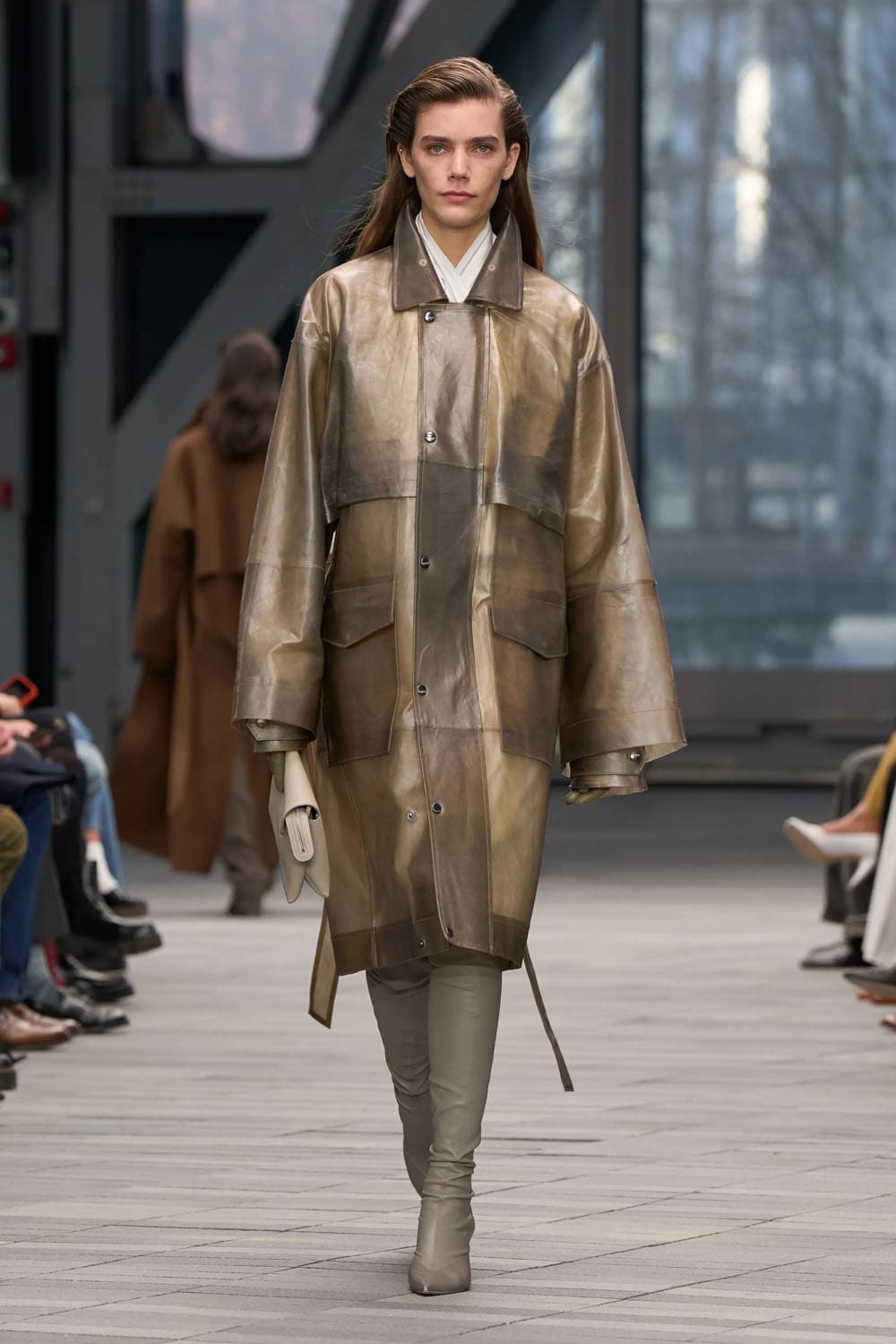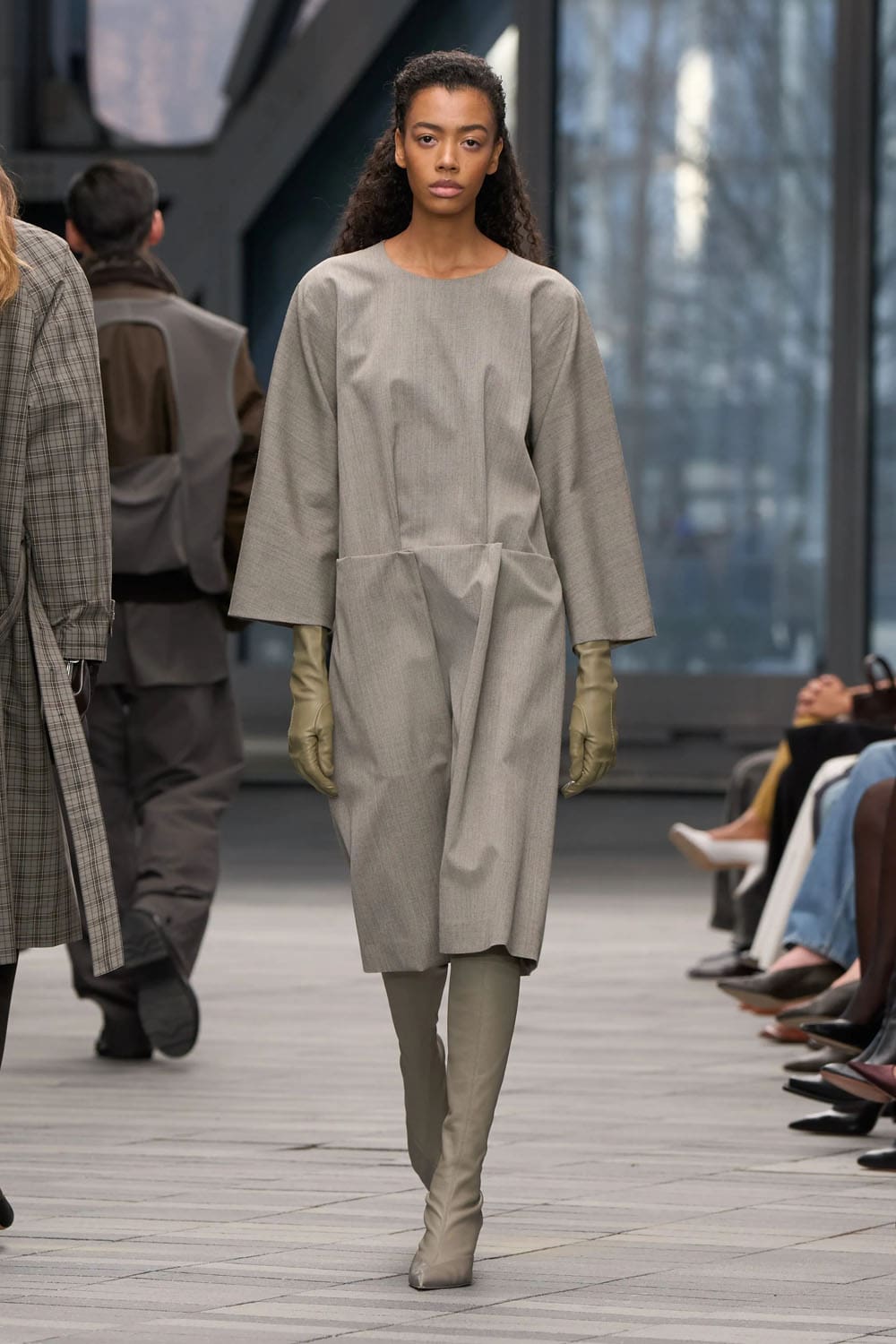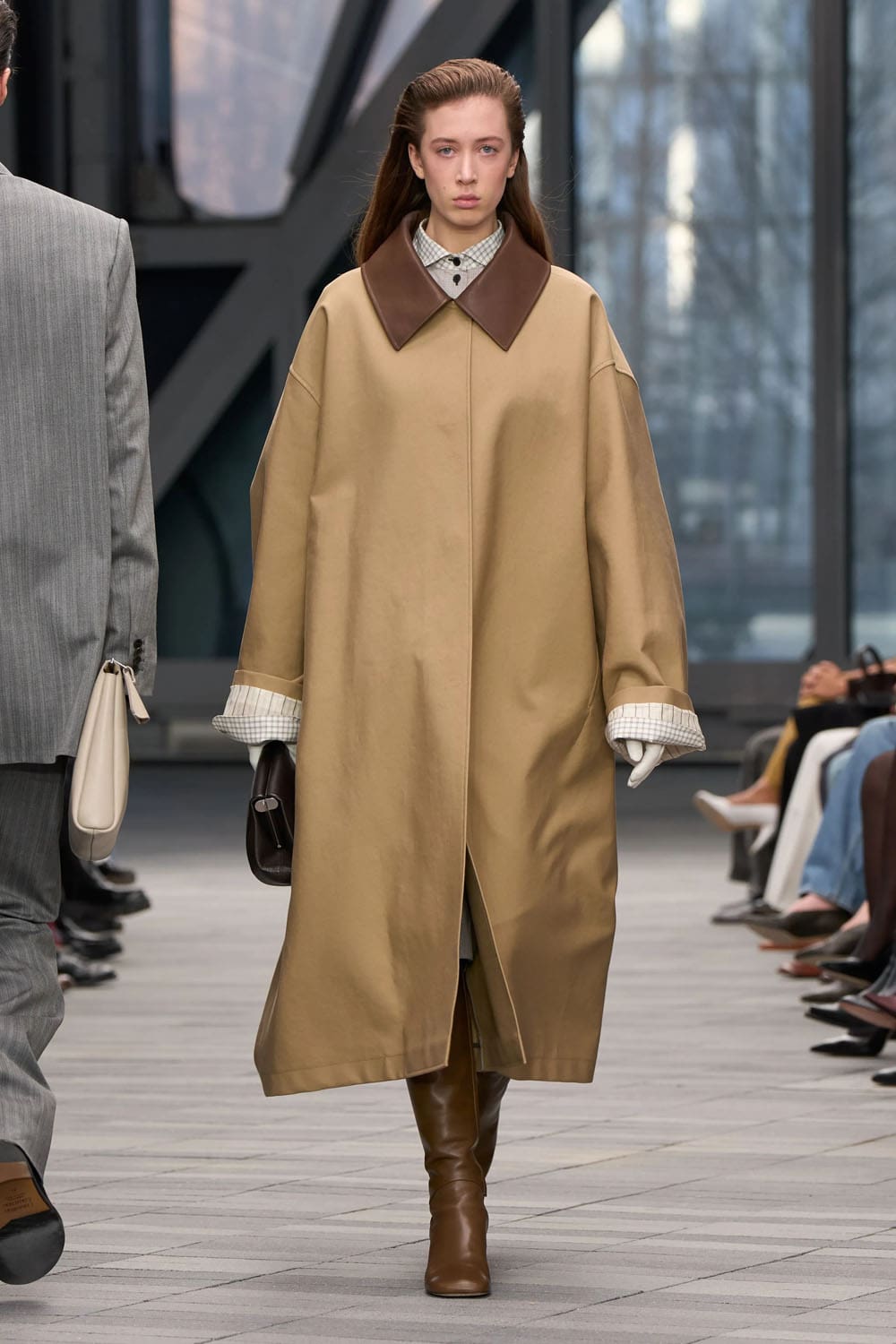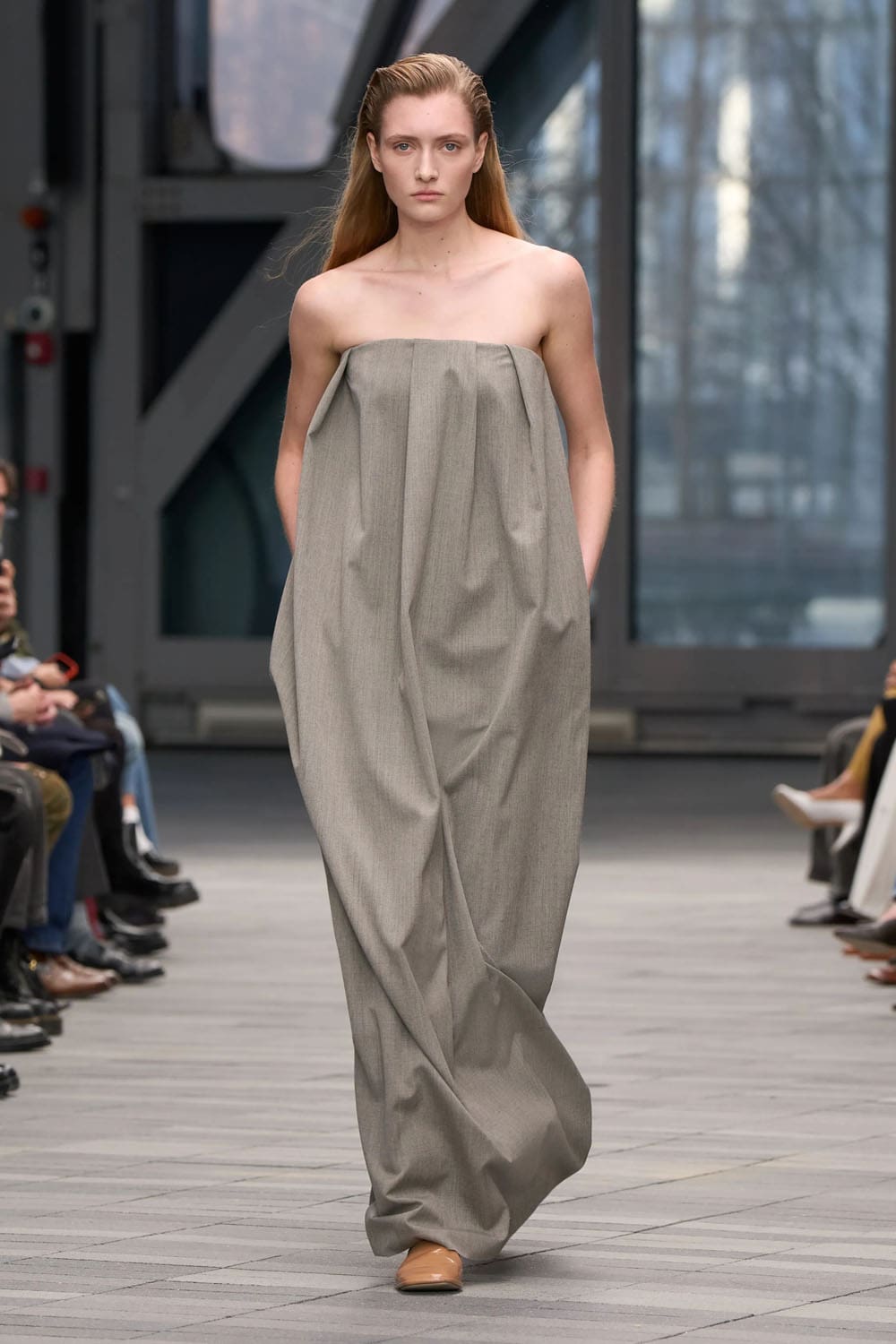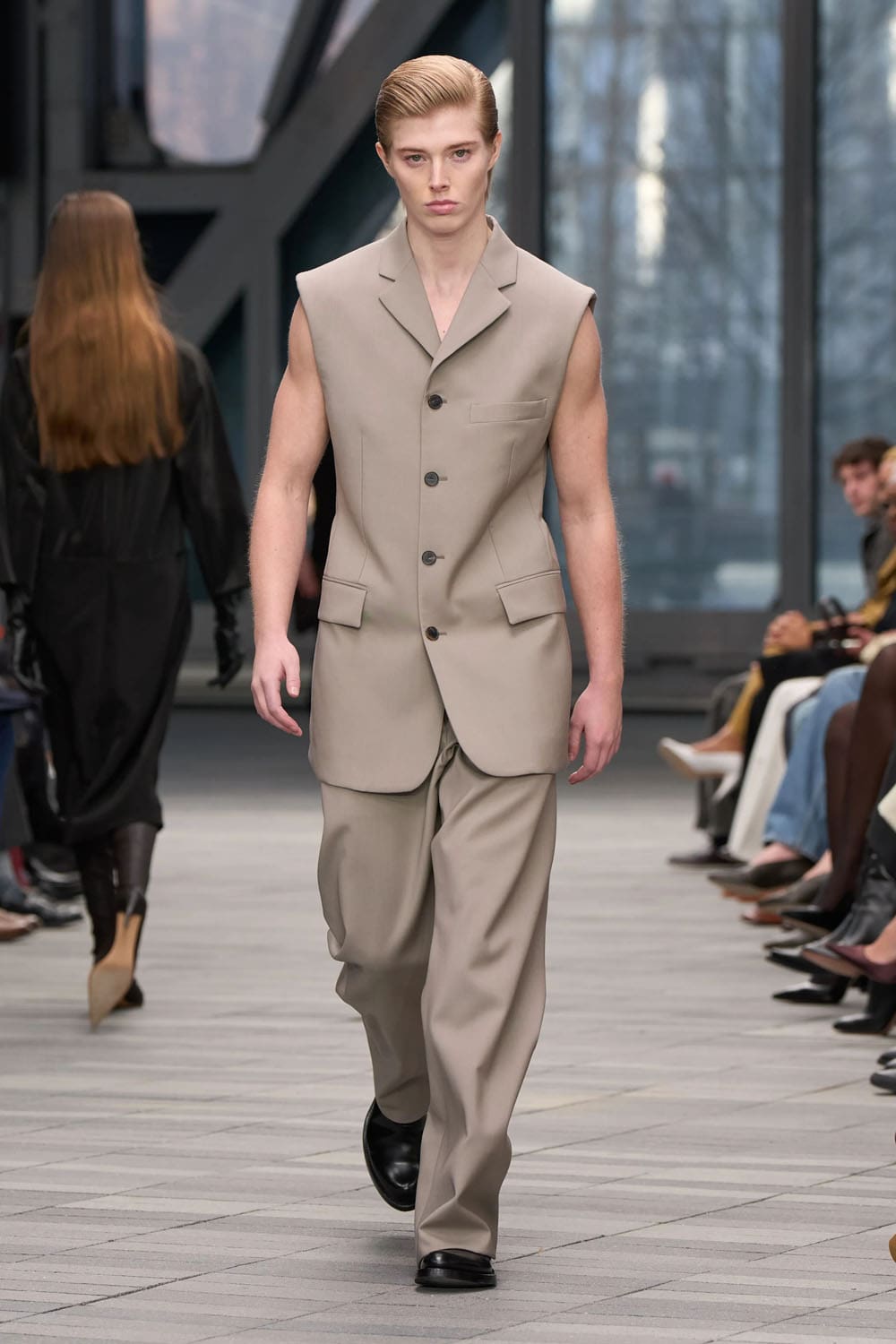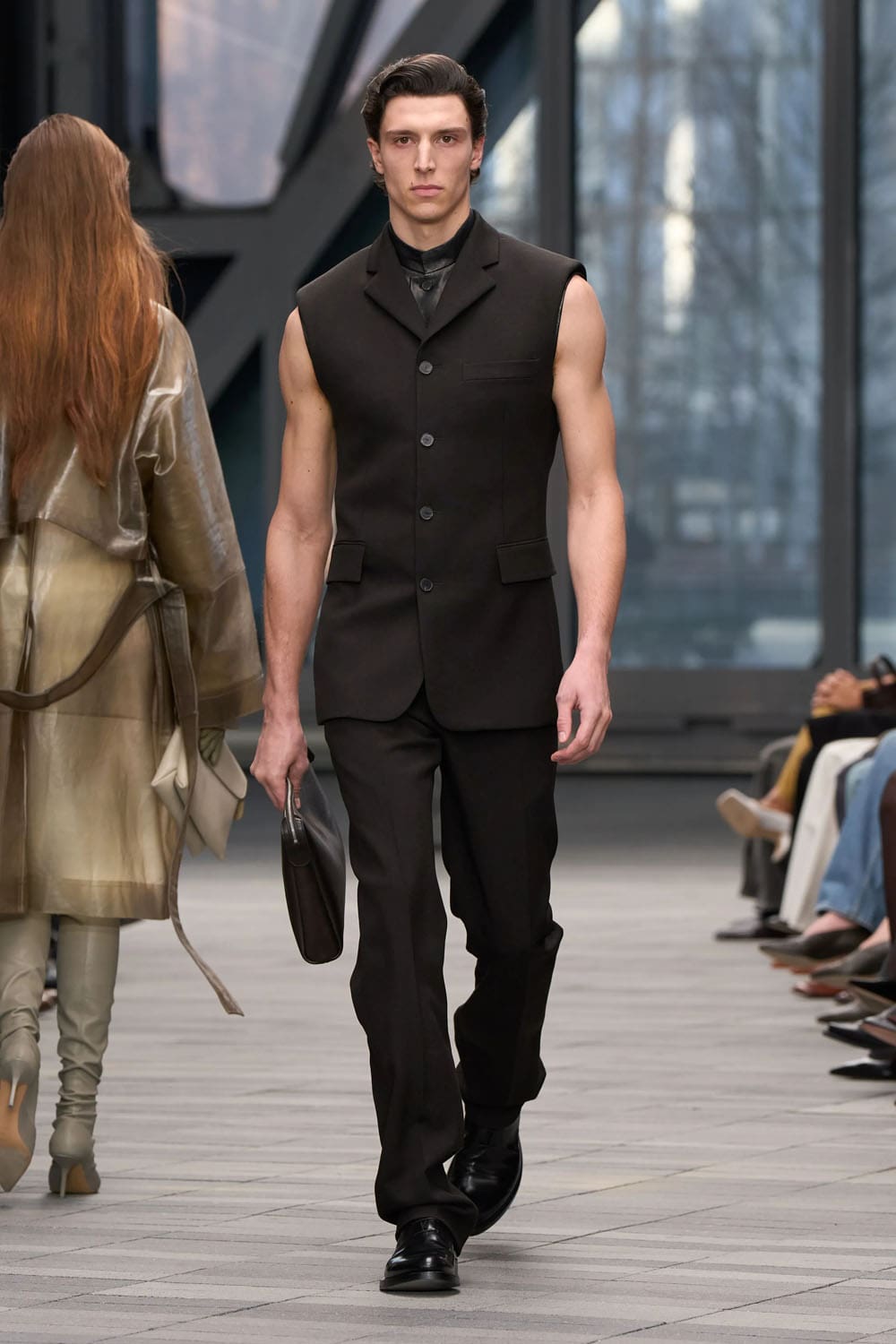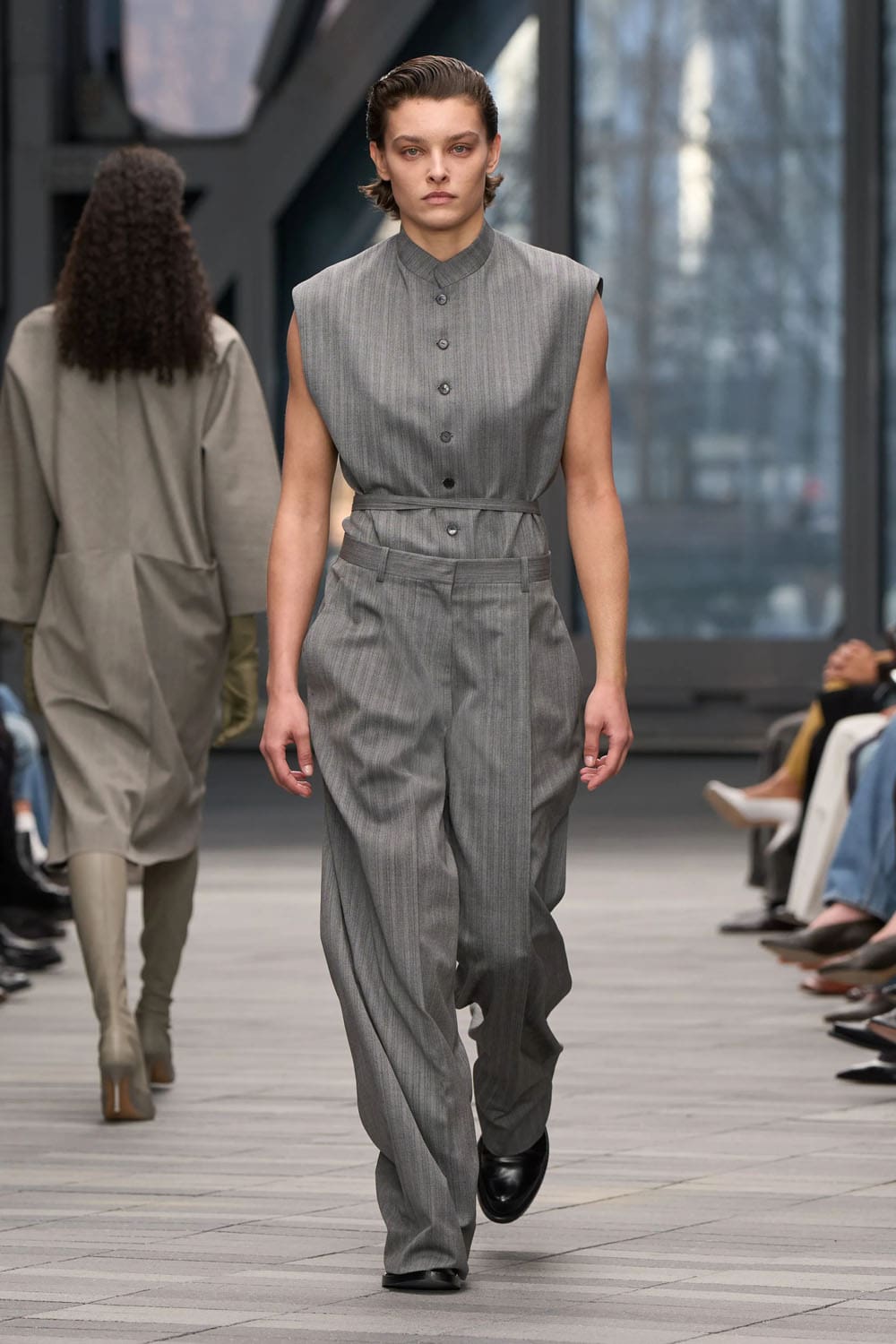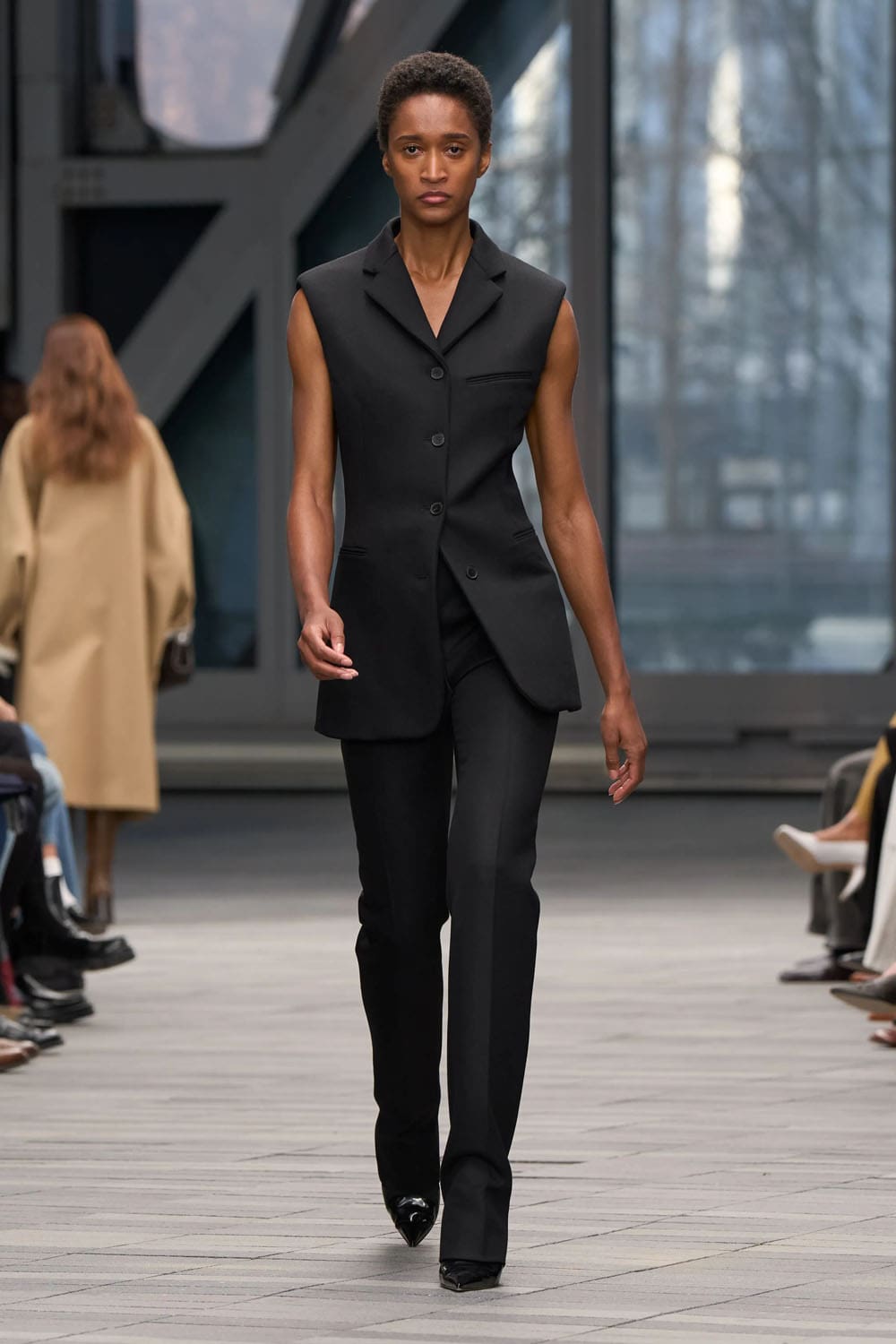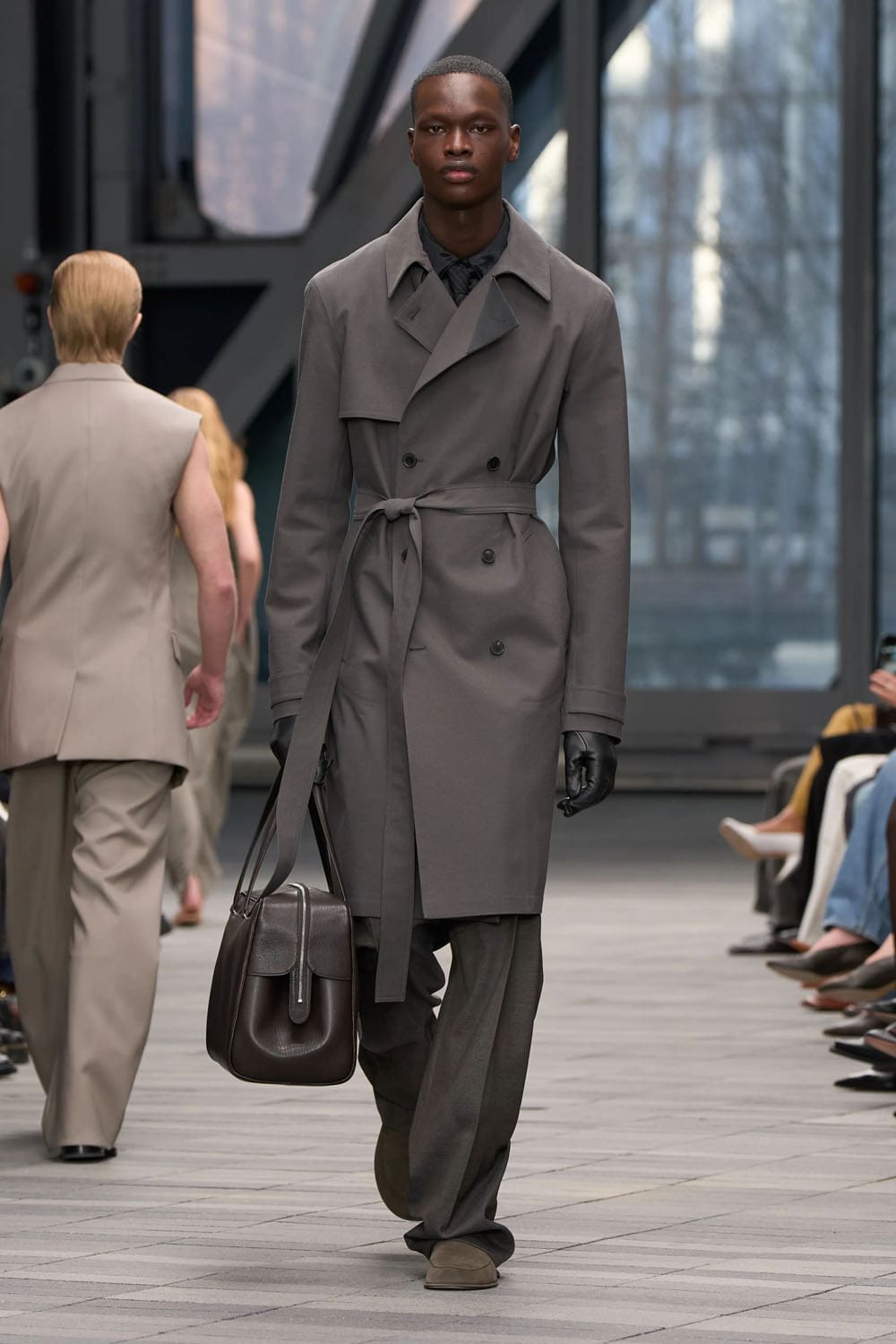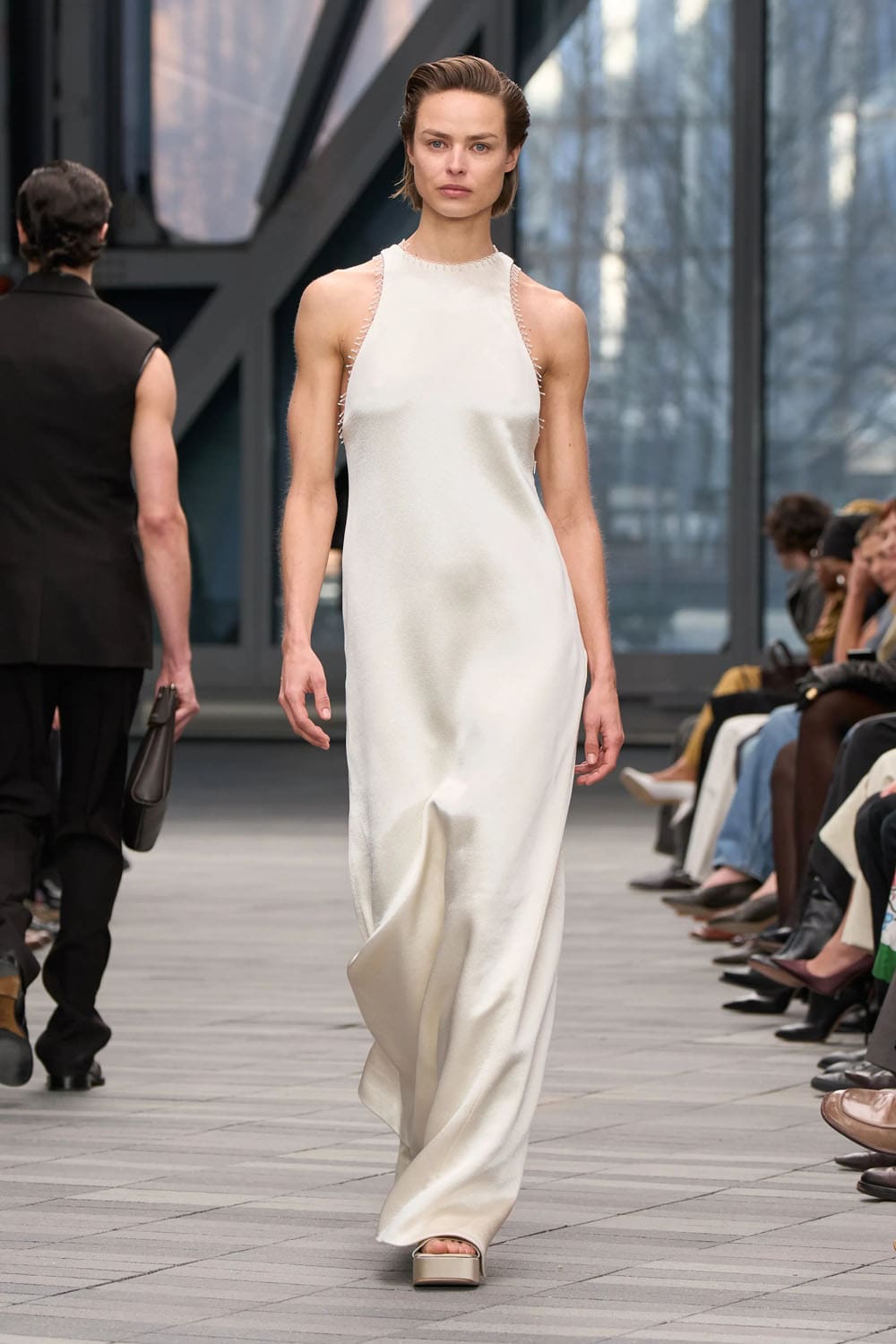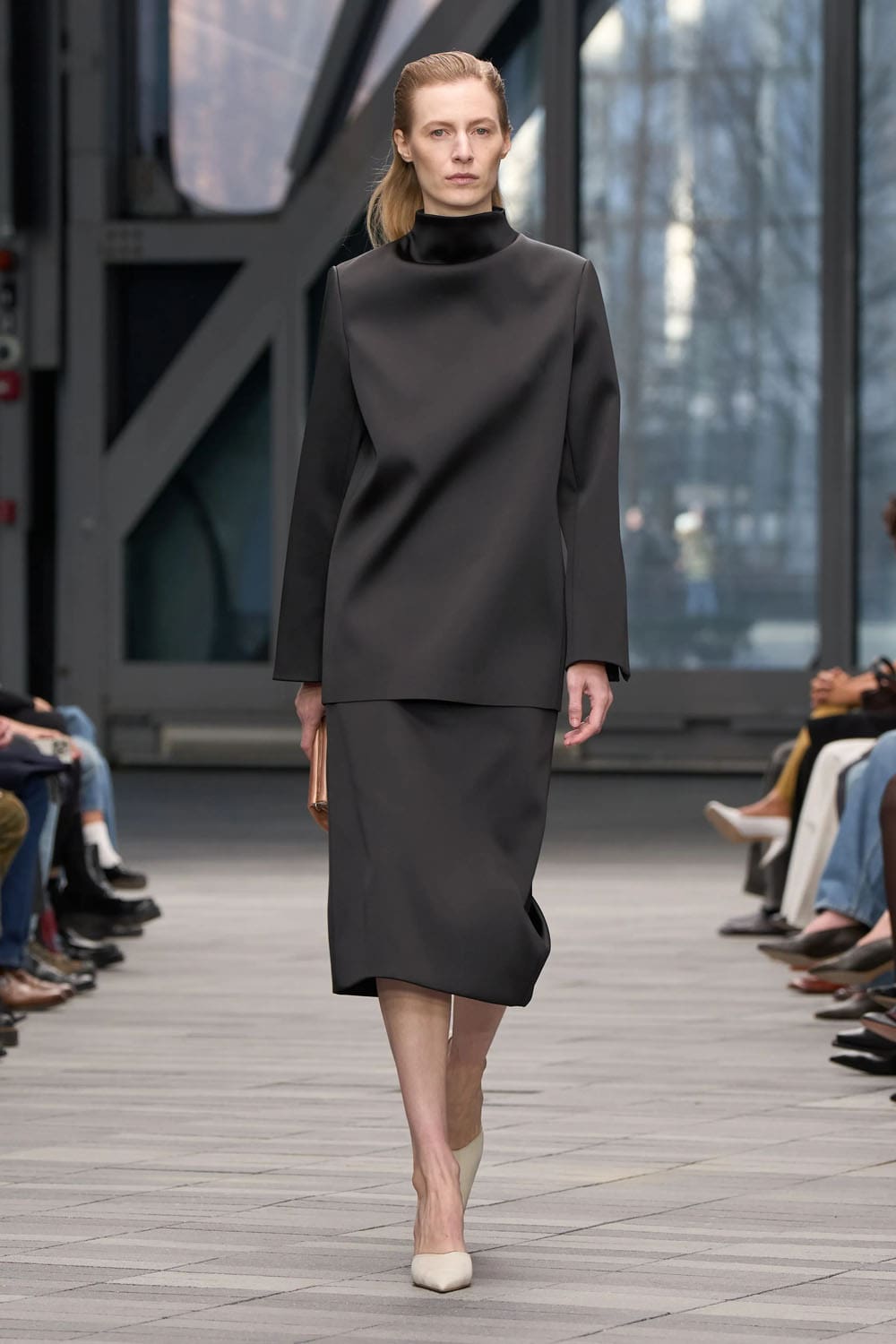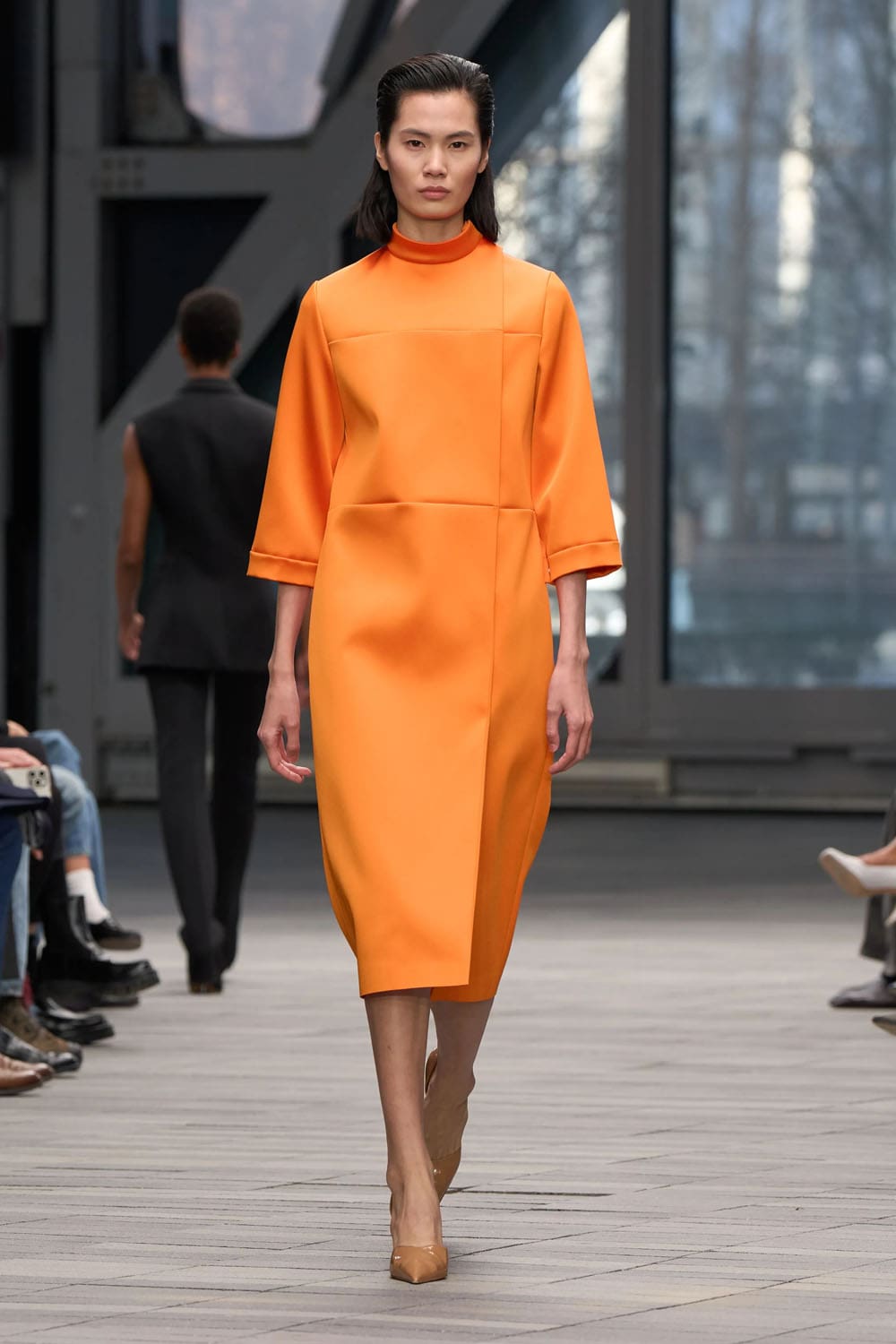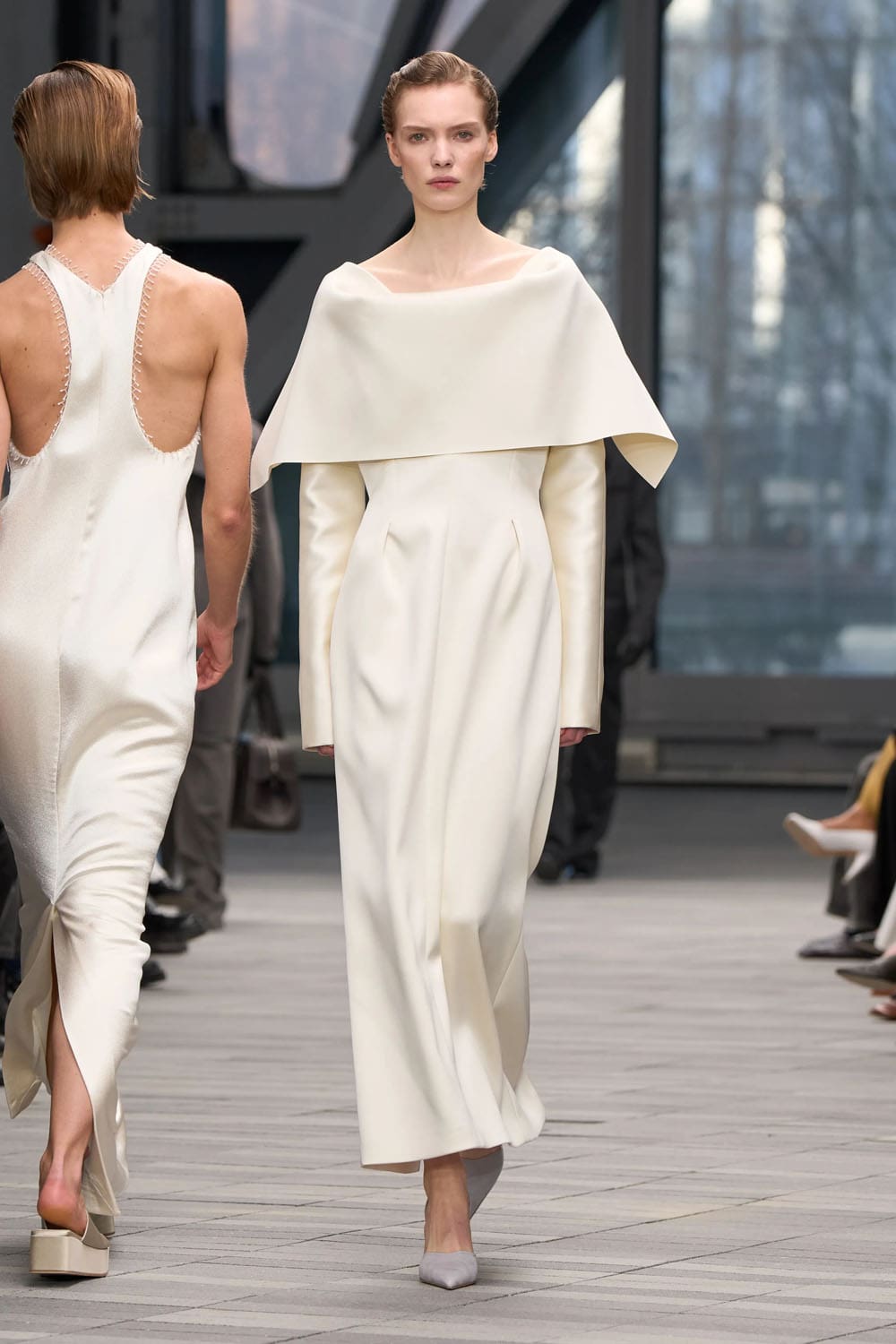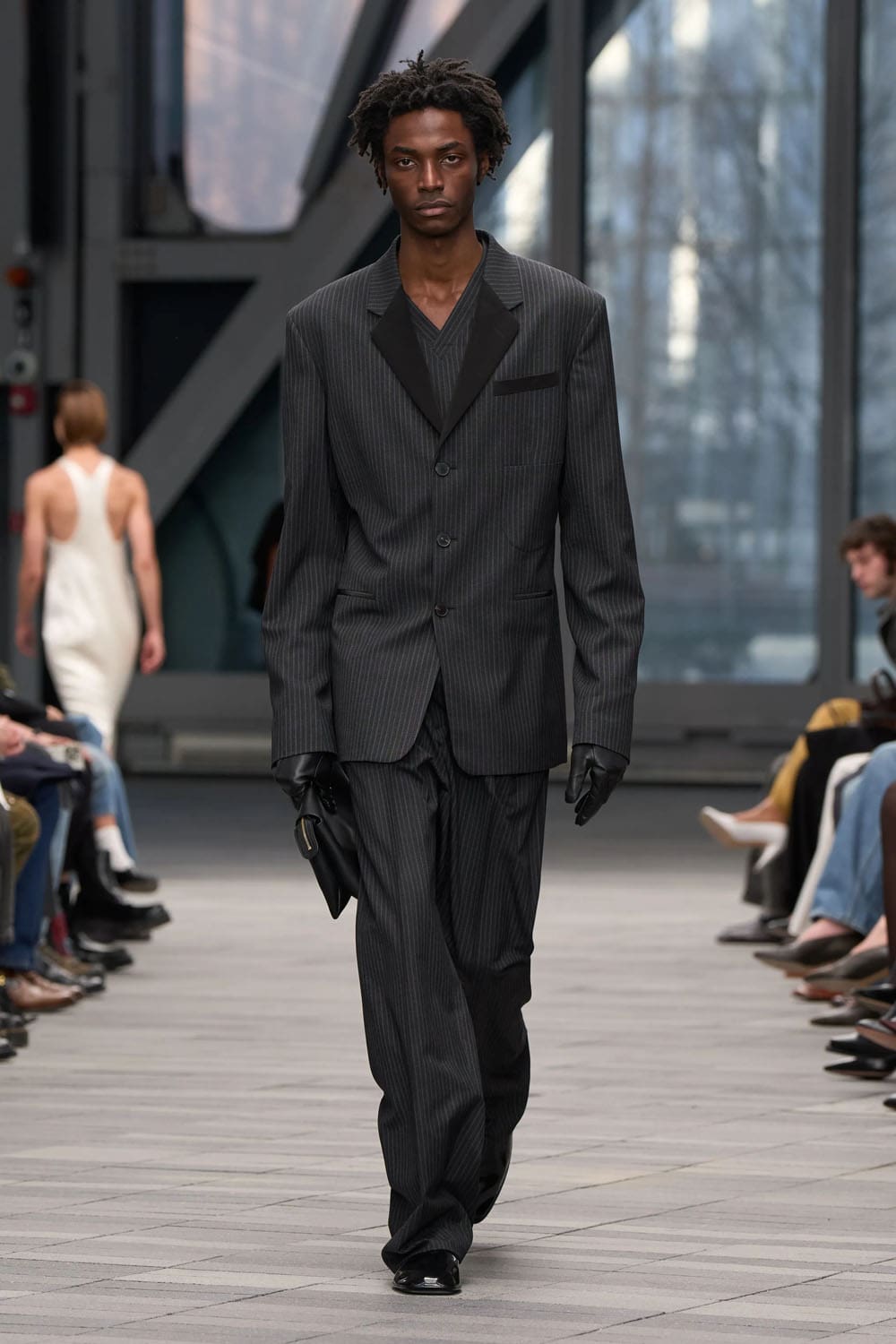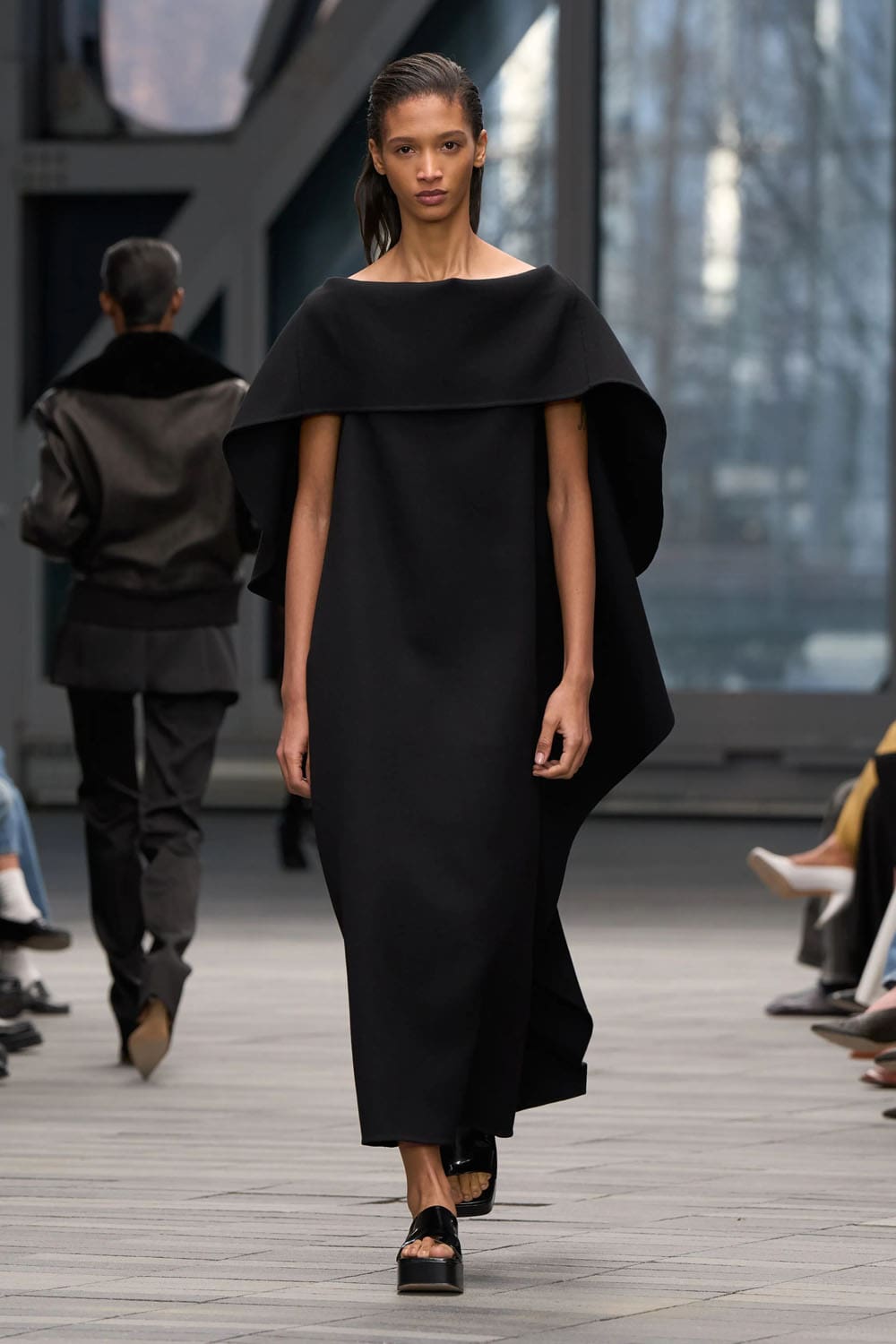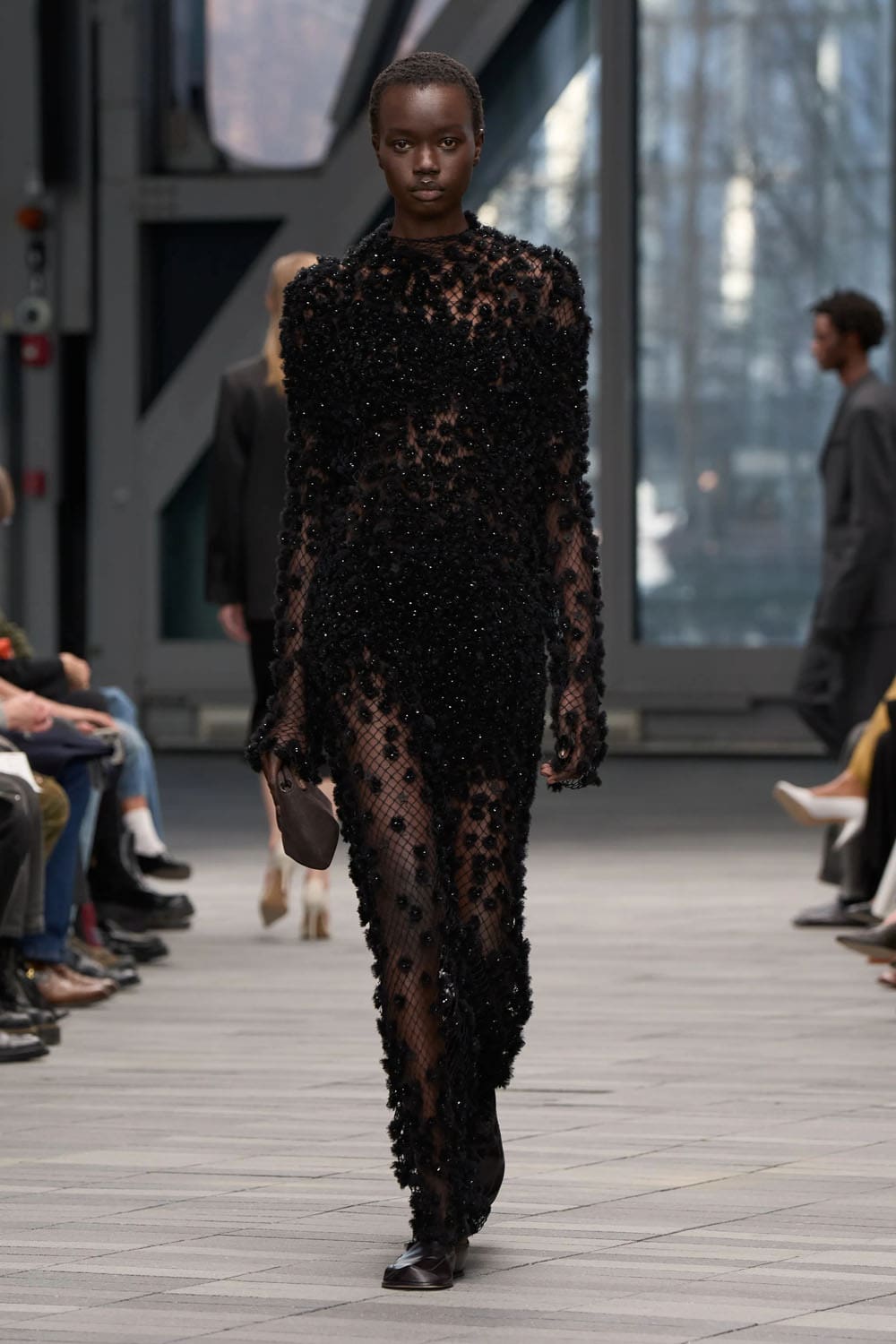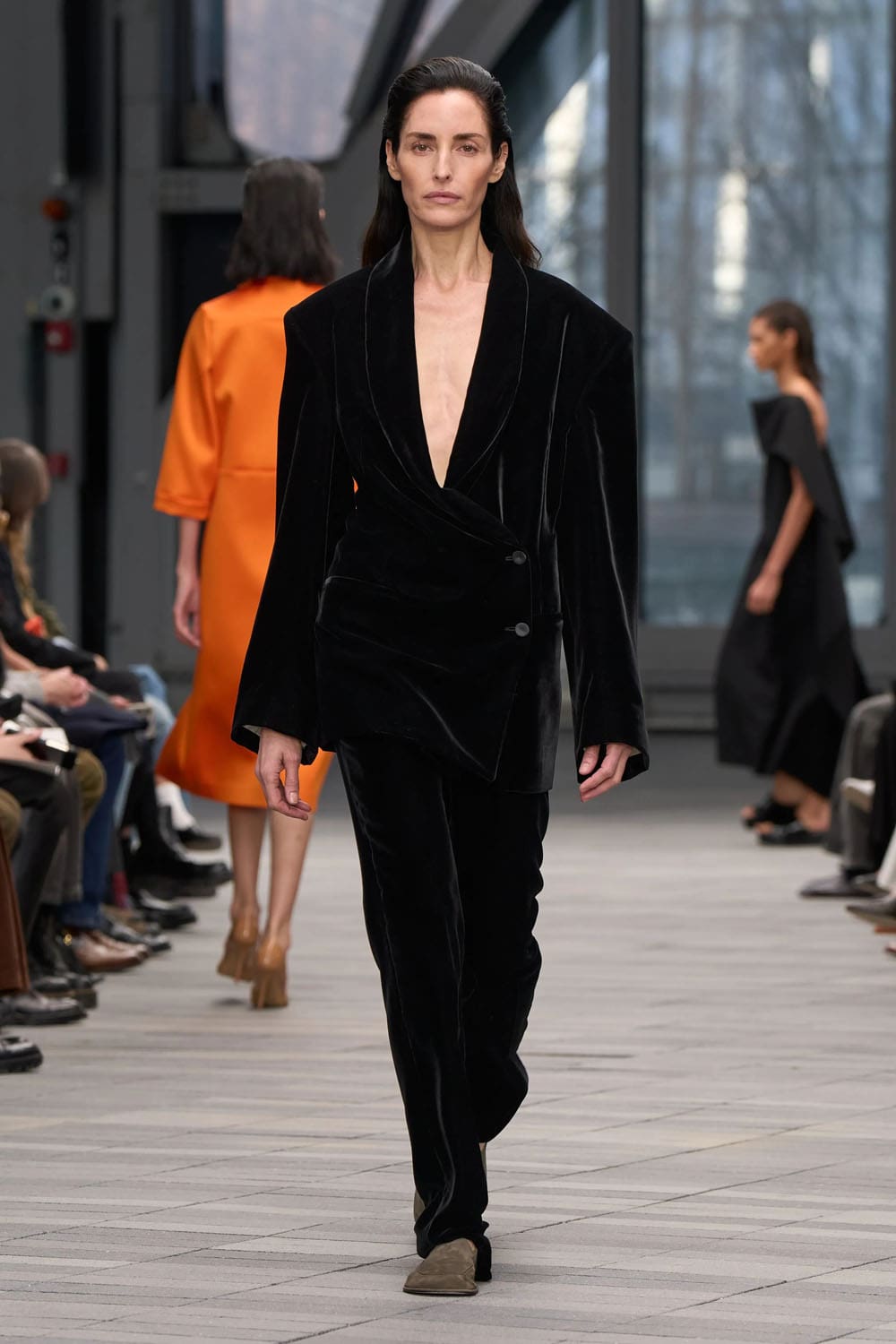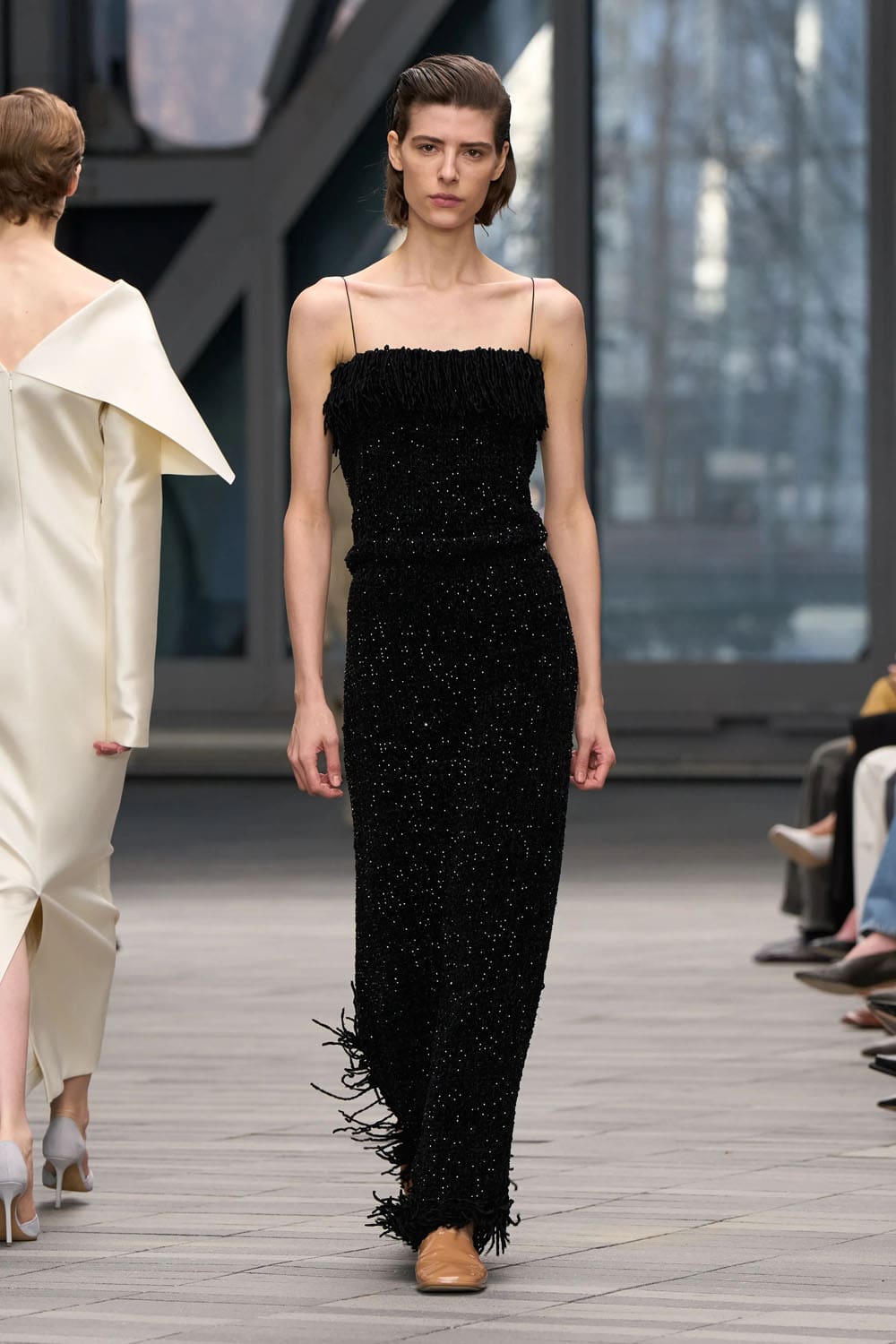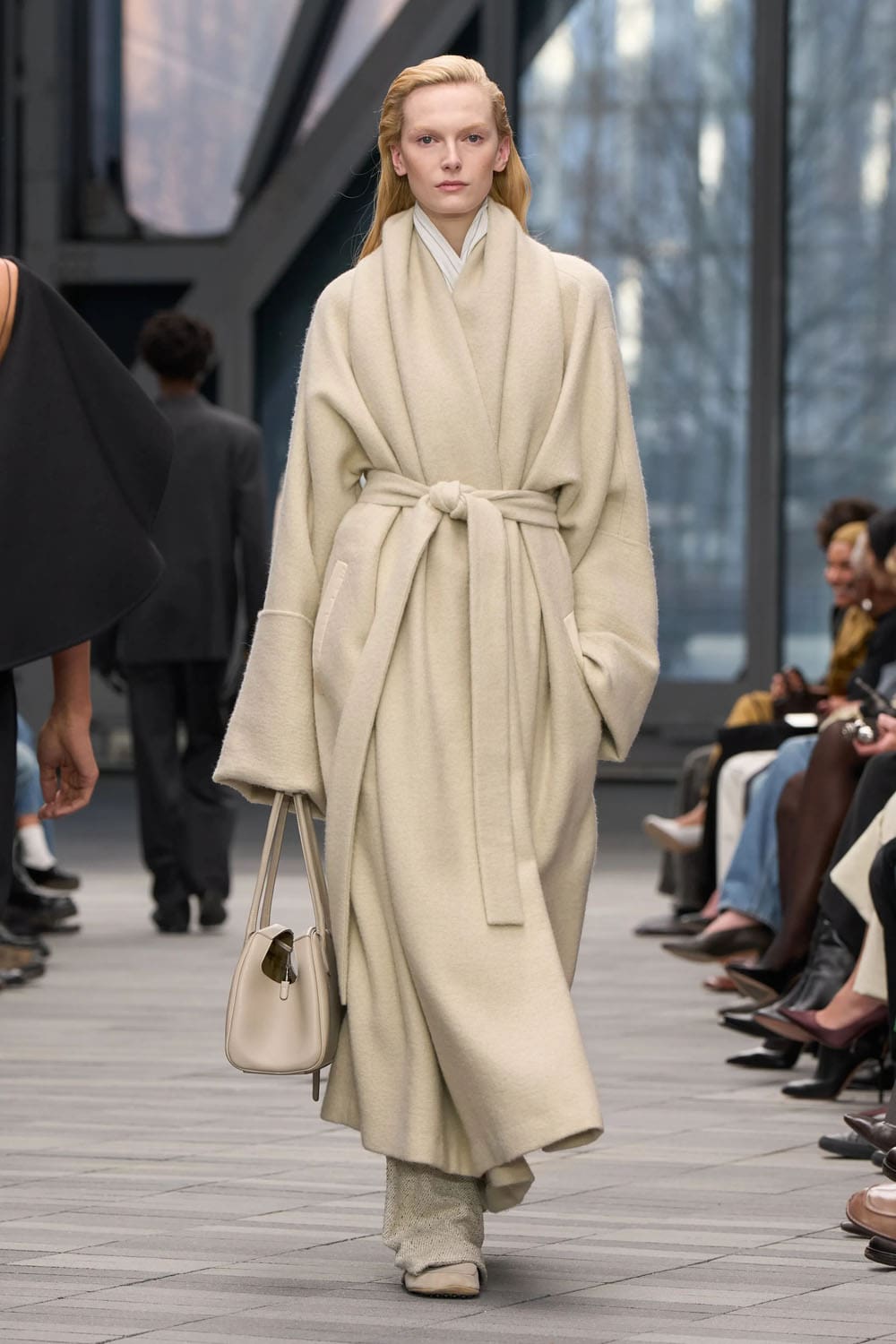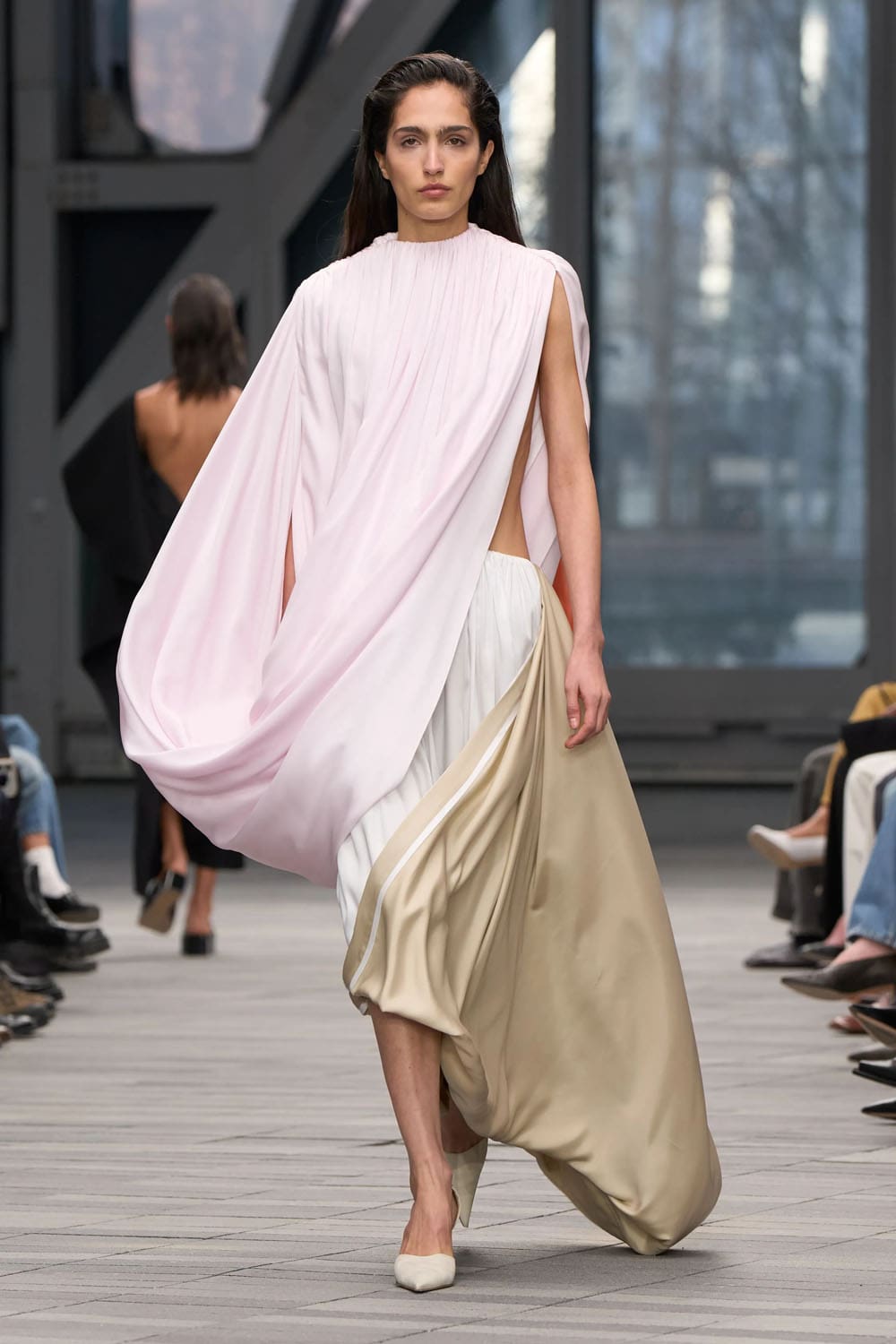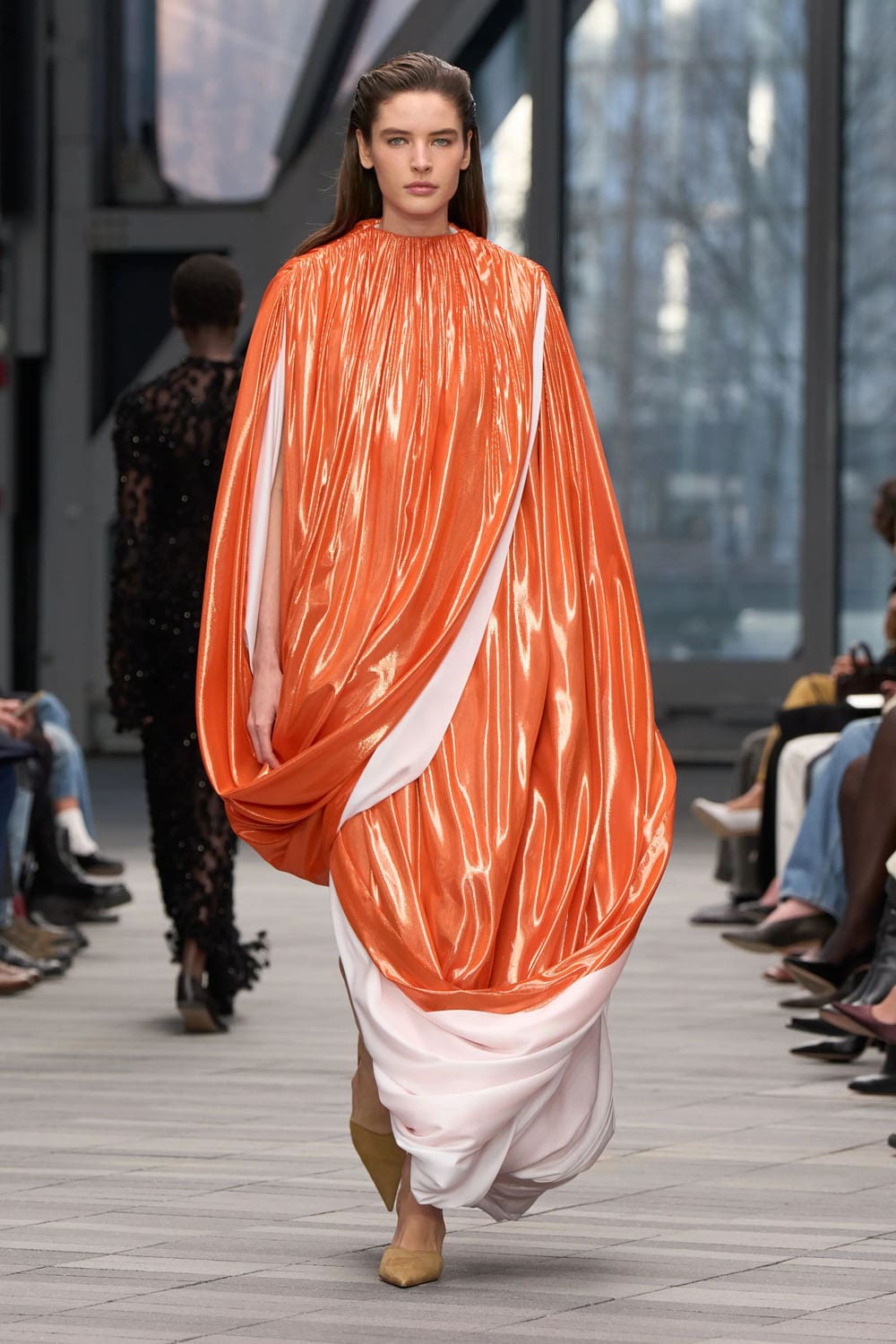
Calvin Klein Fall Winter 2026–2027 “The Archaeology of American Seduction”. Story by RUNWAY MAGAZINE. Photo Courtesy: Calvin Klein.
Veronica Leoni’s third runway show for Calvin Klein approached the house not as a heritage to be inherited but as a site to excavate. Her own description—“a deep dive into what Calvin was”—was not romantic nostalgia; it was methodical research. Late ’70s and early ’80s Klein was a radical creature: a minimalist with the instincts of a provocateur, a brand builder who understood the erotic power of a clean line better than most photographers understood their lenses. Leoni went back to the source, and the collection feels shaped by that archival tension: the precision of memory versus the messiness of reinvention.
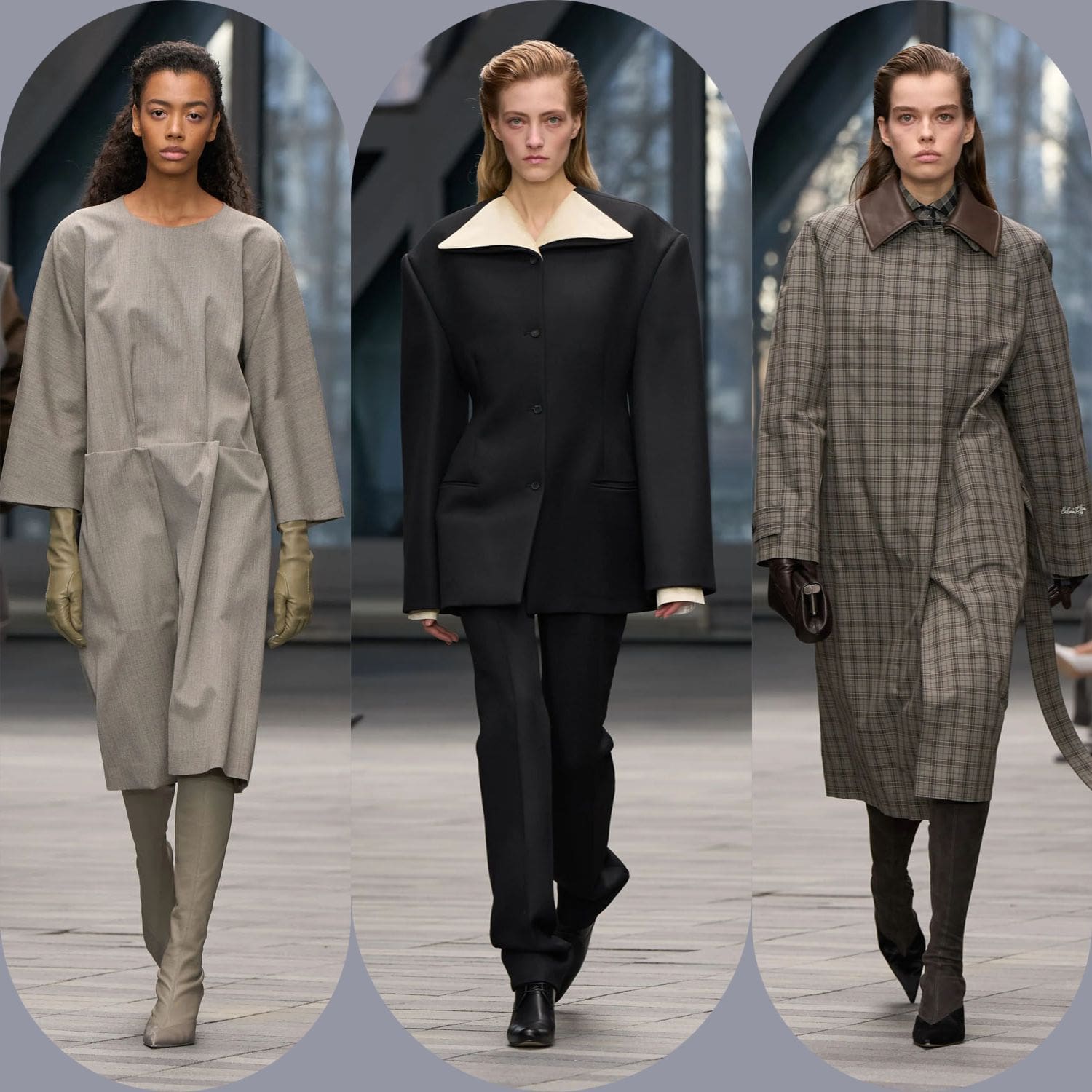
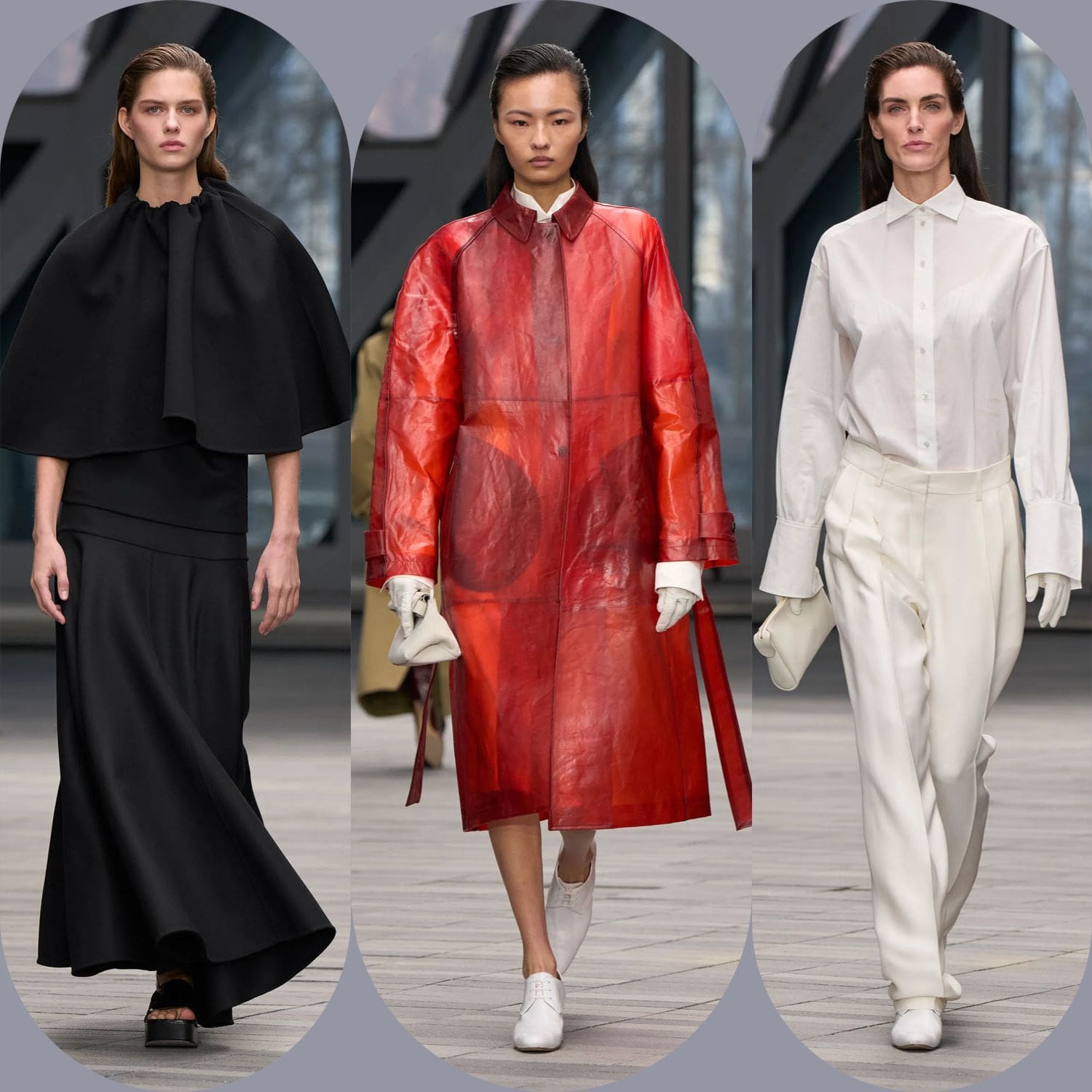
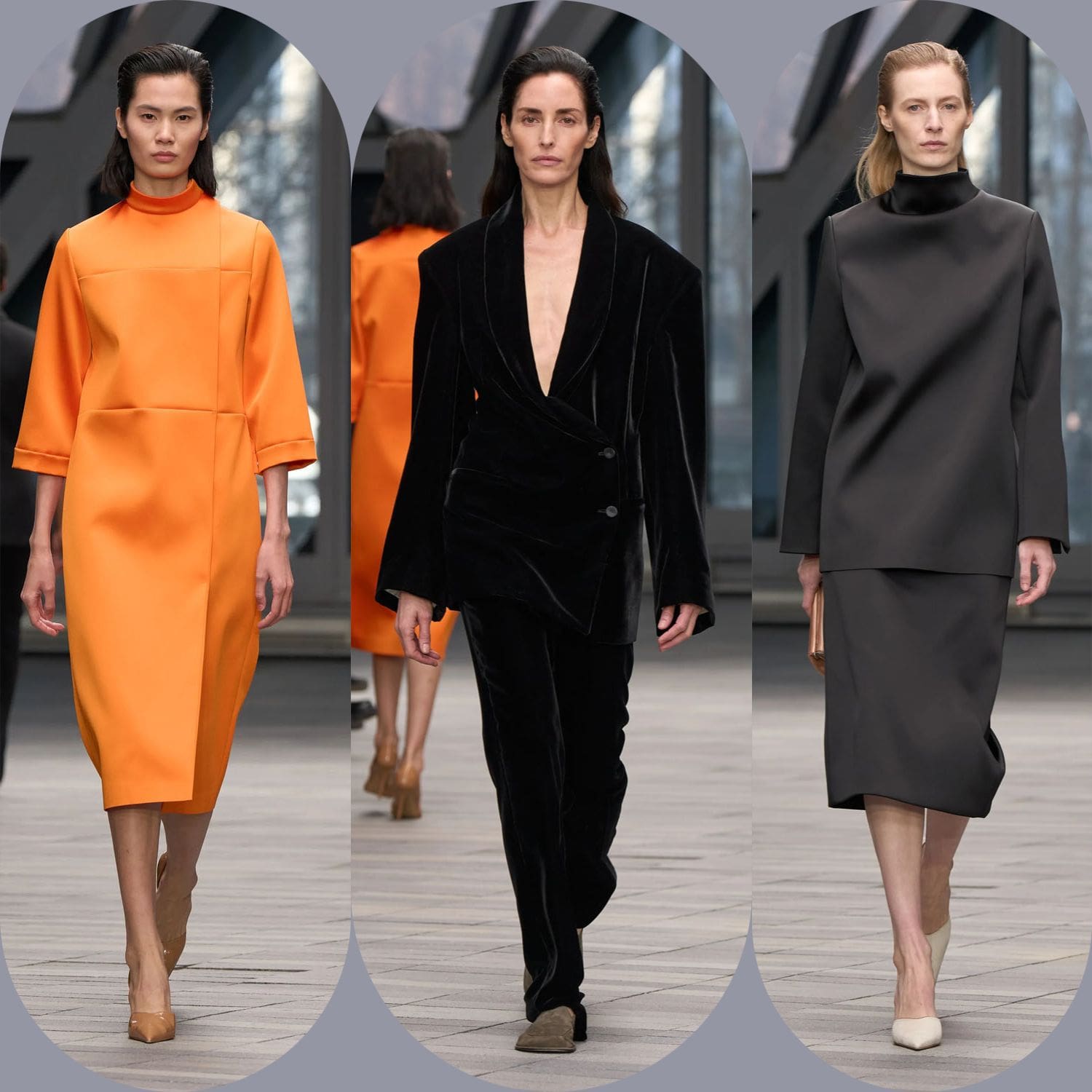
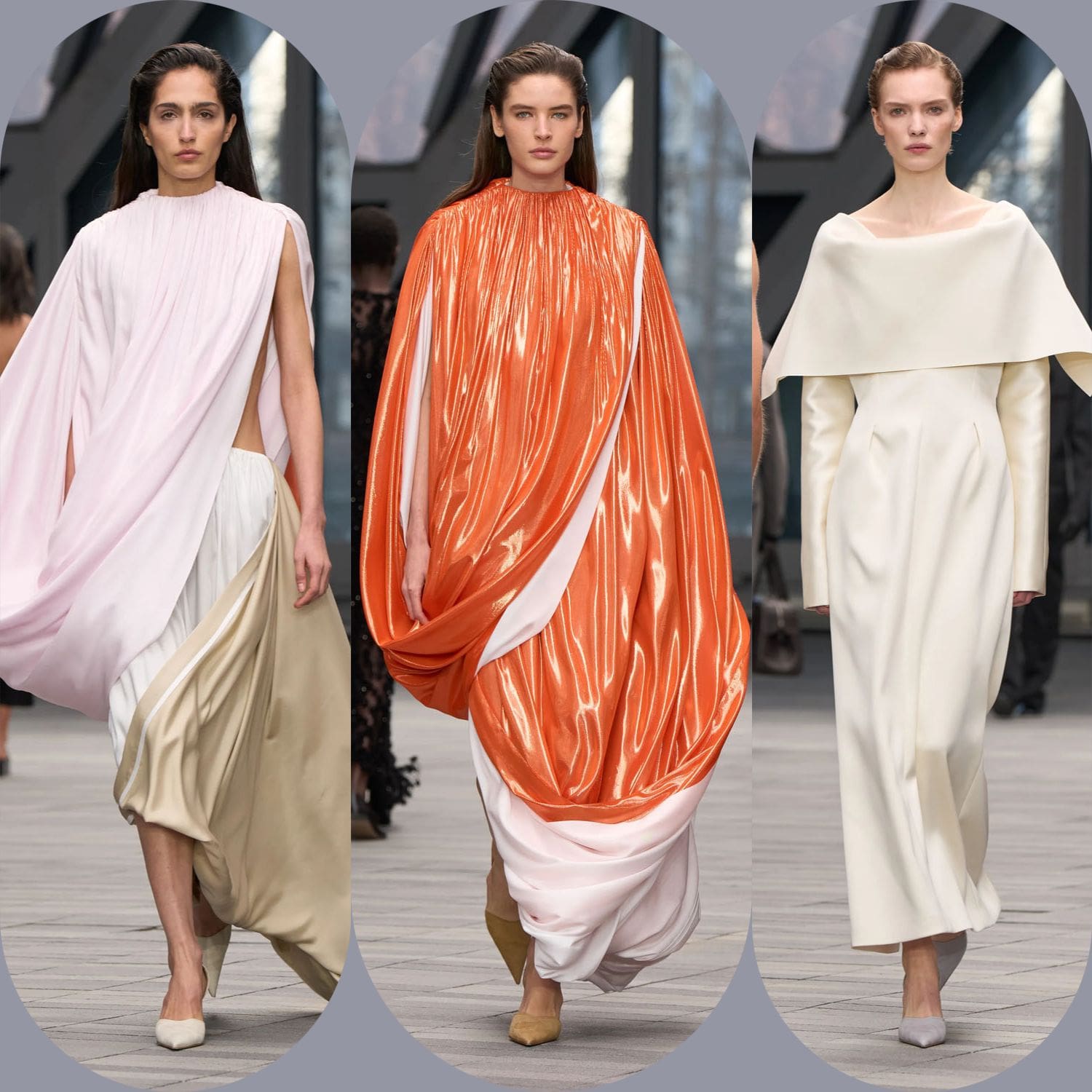
Her starting point was a dense moodboard of Klein’s visual empire—hosiery campaigns, swimwear, furs, denim, the whole spectrum of American sensuality stripped of excess but charged with intent. The images, though decades old, remain startlingly modern. Their eroticism is so understated it becomes structural; silhouettes behave like innuendo. In 2026, this restraint feels unexpectedly fresh.
Yet Leoni’s ongoing challenge is translating Klein’s surgical reduction into her own language. She is a conceptualist by nature, attracted to layering and tension, whereas Klein prized a purity of form bordering on the ascetic. The friction between the two approaches was visible, sometimes deliberately so. When the balance worked, the result was confident and alluring—evidence of a designer finally beginning to calibrate her relationship to the brand’s DNA.
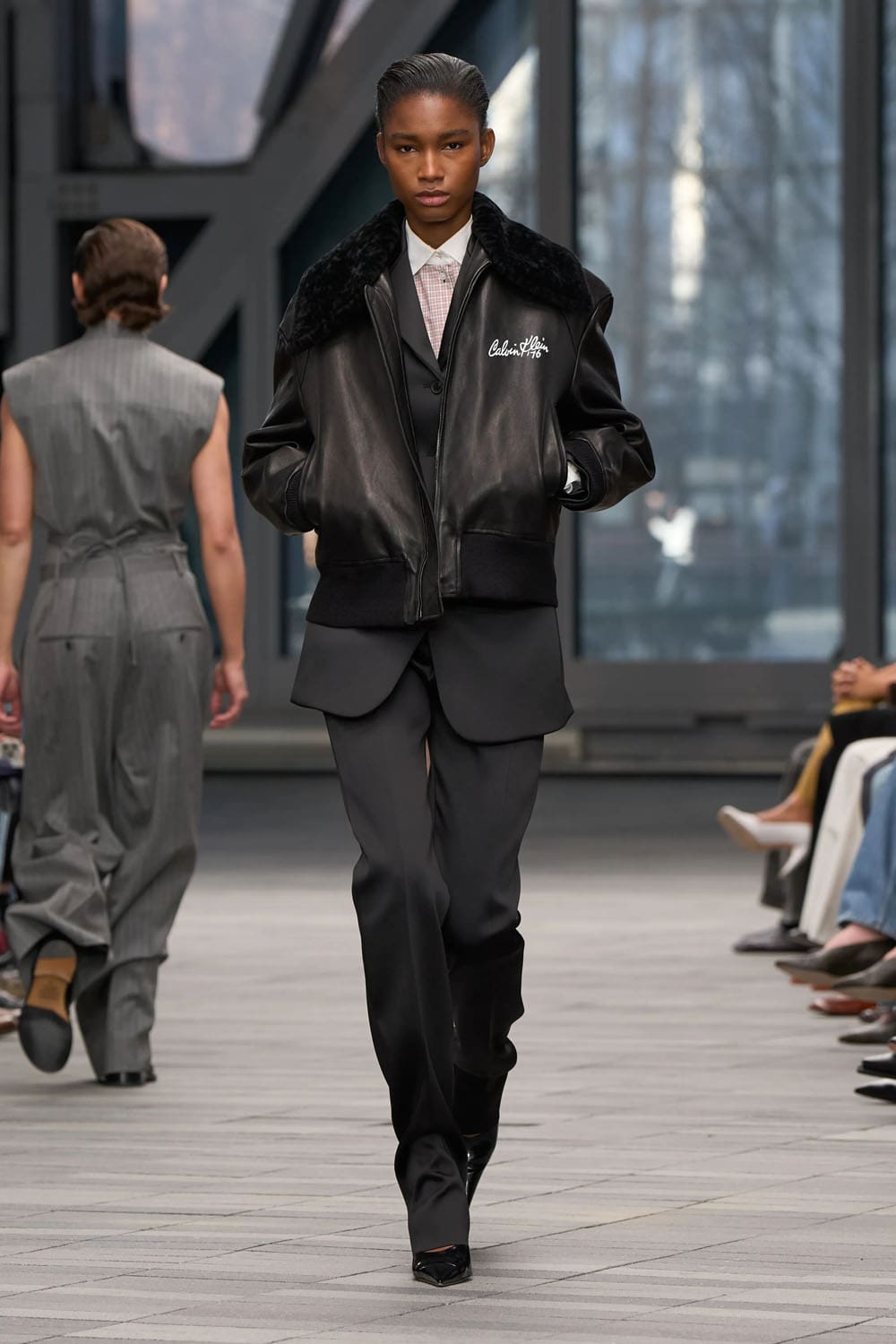
The strongest gesture came in denim: a pair of circa-1976 jeans revived with a leather patch on the back pocket, the logo rewritten in cursive. It is a deceptively simple move, but exactly the kind of commercial clarity the house needs. Jeans, at Calvin Klein, are more than trousers—they are a cultural object, an economic engine, a visual shorthand for the brand’s identity. Reimagining them with humility and intelligence signals a strategic shift toward everyday desirability.
This cursive motif reappeared across the collection, most memorably on a leather bomber thrown over a blade-sharp black satin tuxedo. Here, Leoni’s tailoring finally aligned with Klein’s ethos: restrained, seductive, precise. It is in these moments—where she resists the urge to over-articulate—that her work feels closest to a mature new Calvin.
There was also a quieter thread running beneath the runway: the ghost of the 1990s, newly revived in the cultural conversation through “Love Story,” the Ryan-Murphy series dissecting the relationship between JFK Jr. and Carolyn Bessette Kennedy. CBK, a Calvin Klein publicist turned accidental style oracle, embodied a form of American minimalism the house once defined—button-downs, pencil skirts, strapless sheaths, nearly invisible makeup, but an unmistakable presence. For Gen Z and Gen Alpha, raised on those photographs, she has become an icon of unforced elegance. Calvin Klein is fortunate to have such a living case study circulating on-screen—proof that its codes still resonate when handled with precision.
This collection suggests that Leoni is beginning to find her footing. She is still negotiating the house’s historical clarity against her instinct for conceptual layering, but the strongest looks reveal a designer learning when to step back and when to push. The path forward for Calvin Klein may not lie in maximal reinvention, nor in absolute fidelity to the past, but in understanding why that past continues to seduce: the discipline, the subtle erotic charge, the intelligence of restraint.
If this season is any indication, Leoni is finally learning to speak Klein’s language—without losing her own voice in the translation.
See All Looks Calvin Klein Fall Winter 2026–2027