Chanel
THE TRIUMPHS
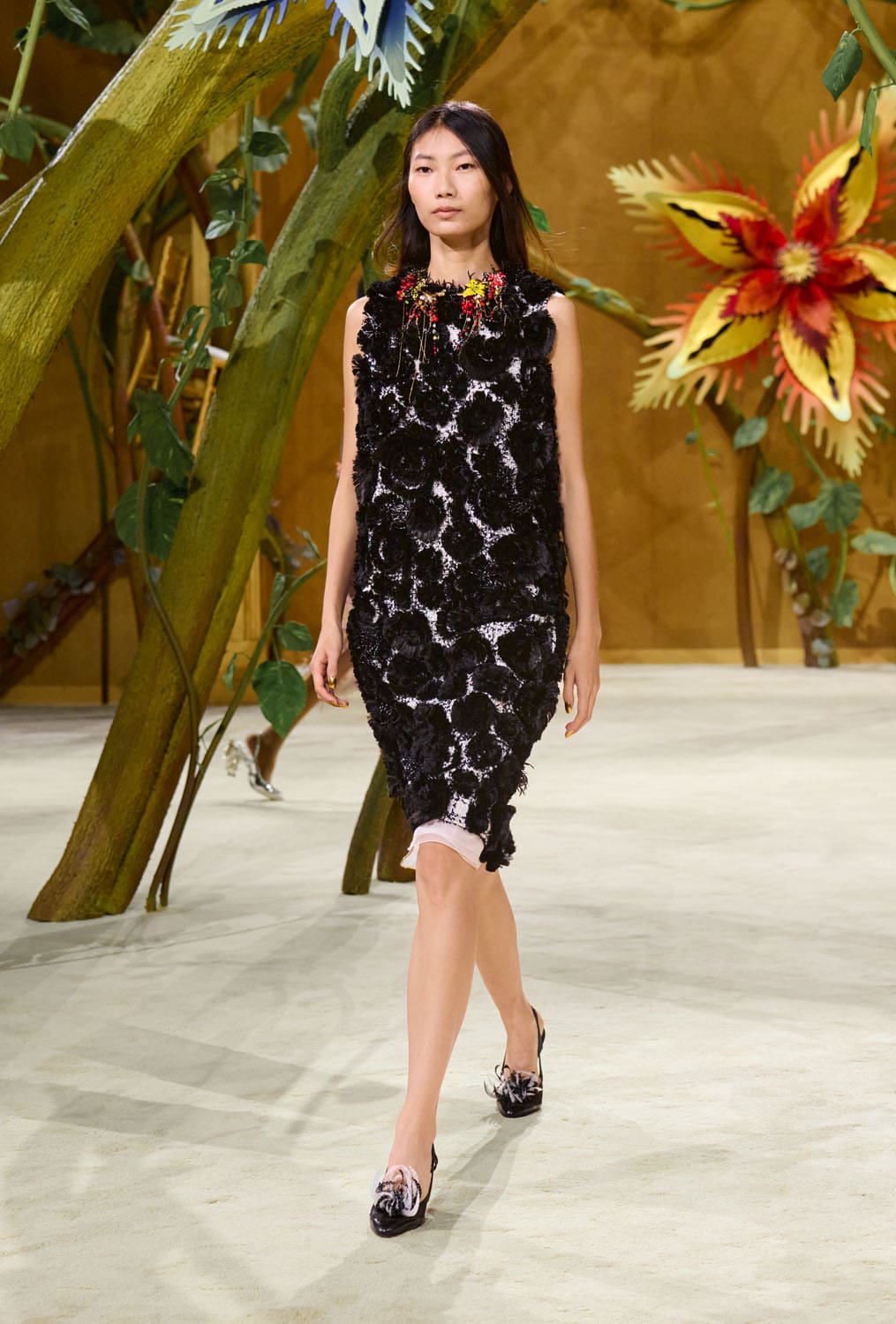
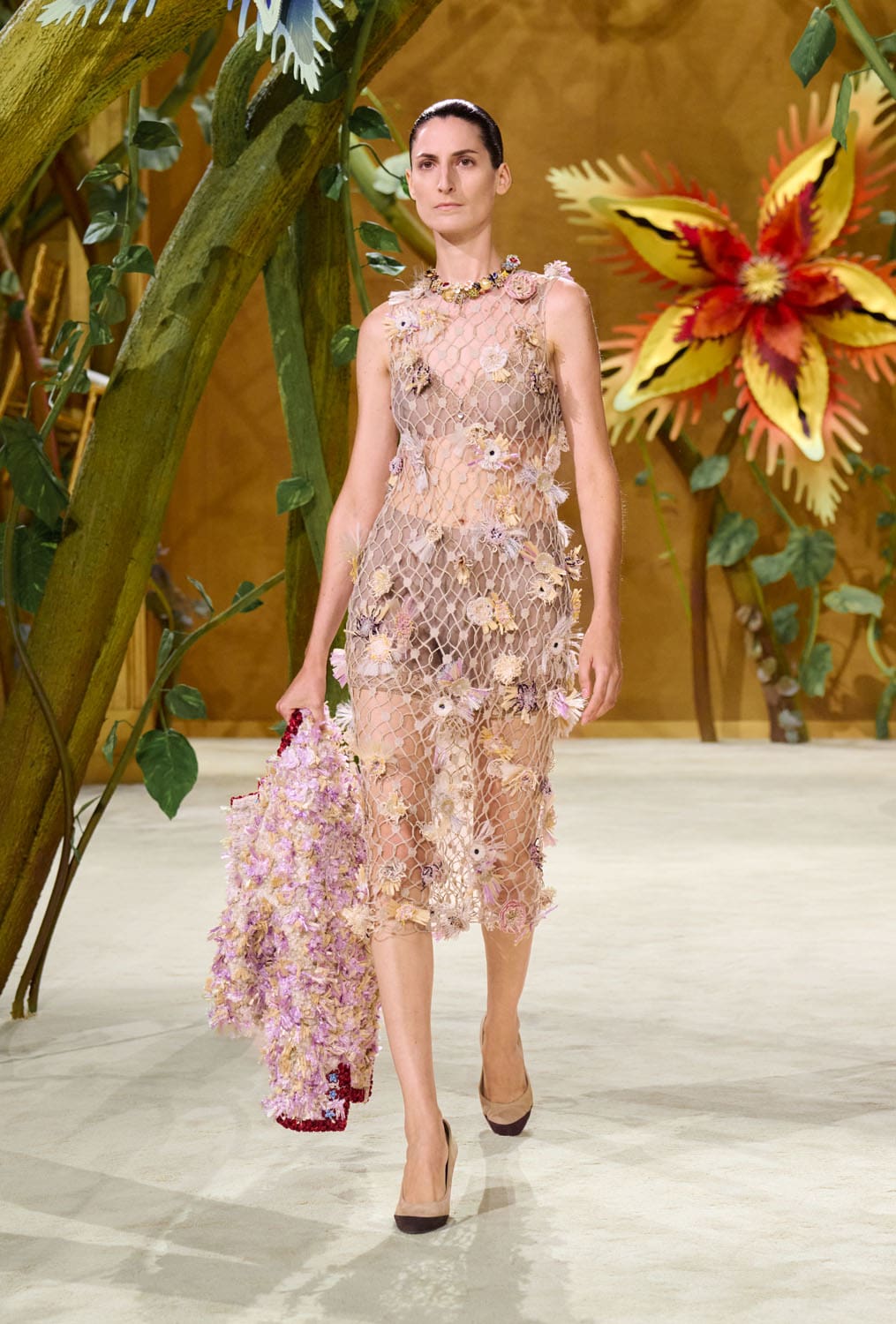
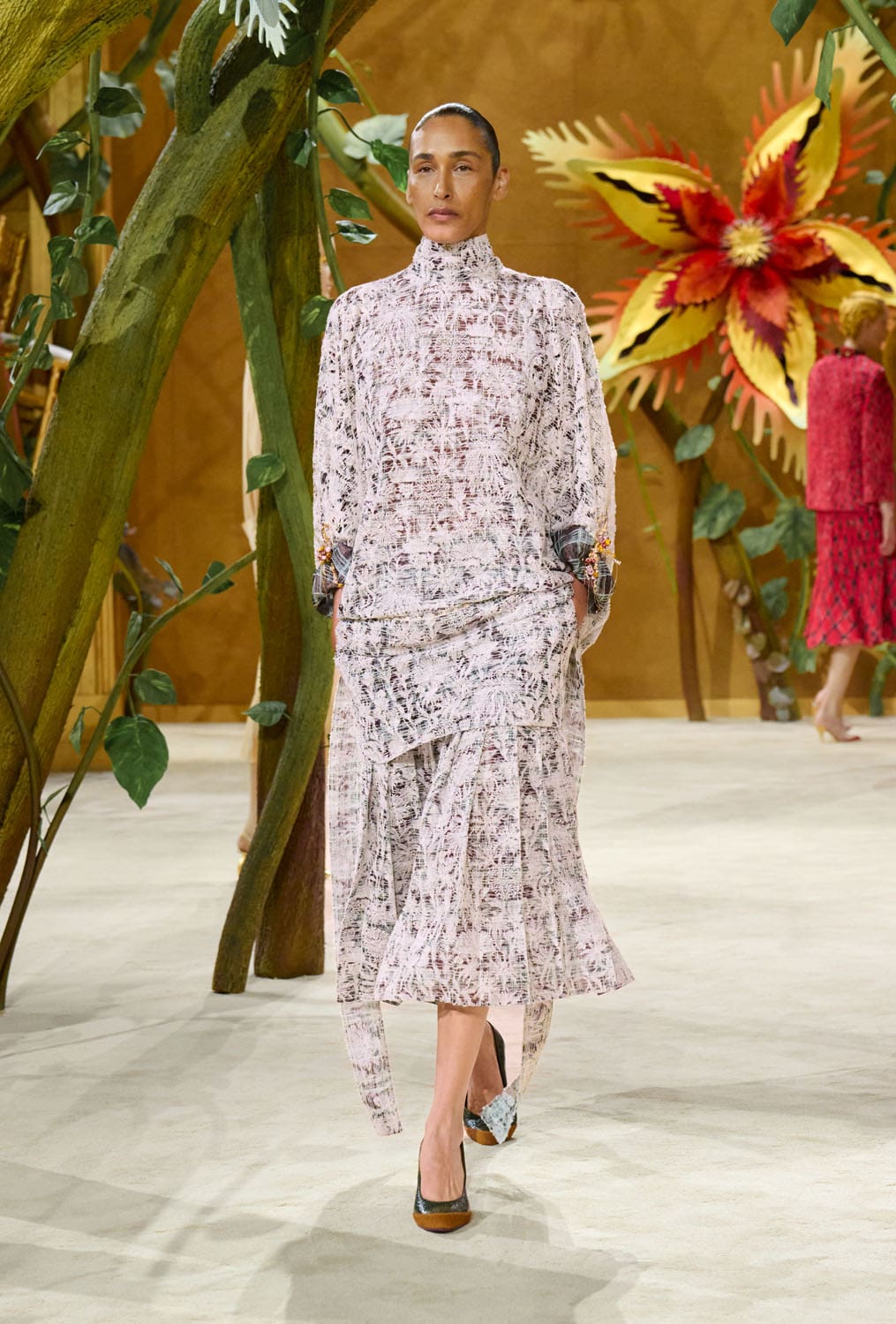
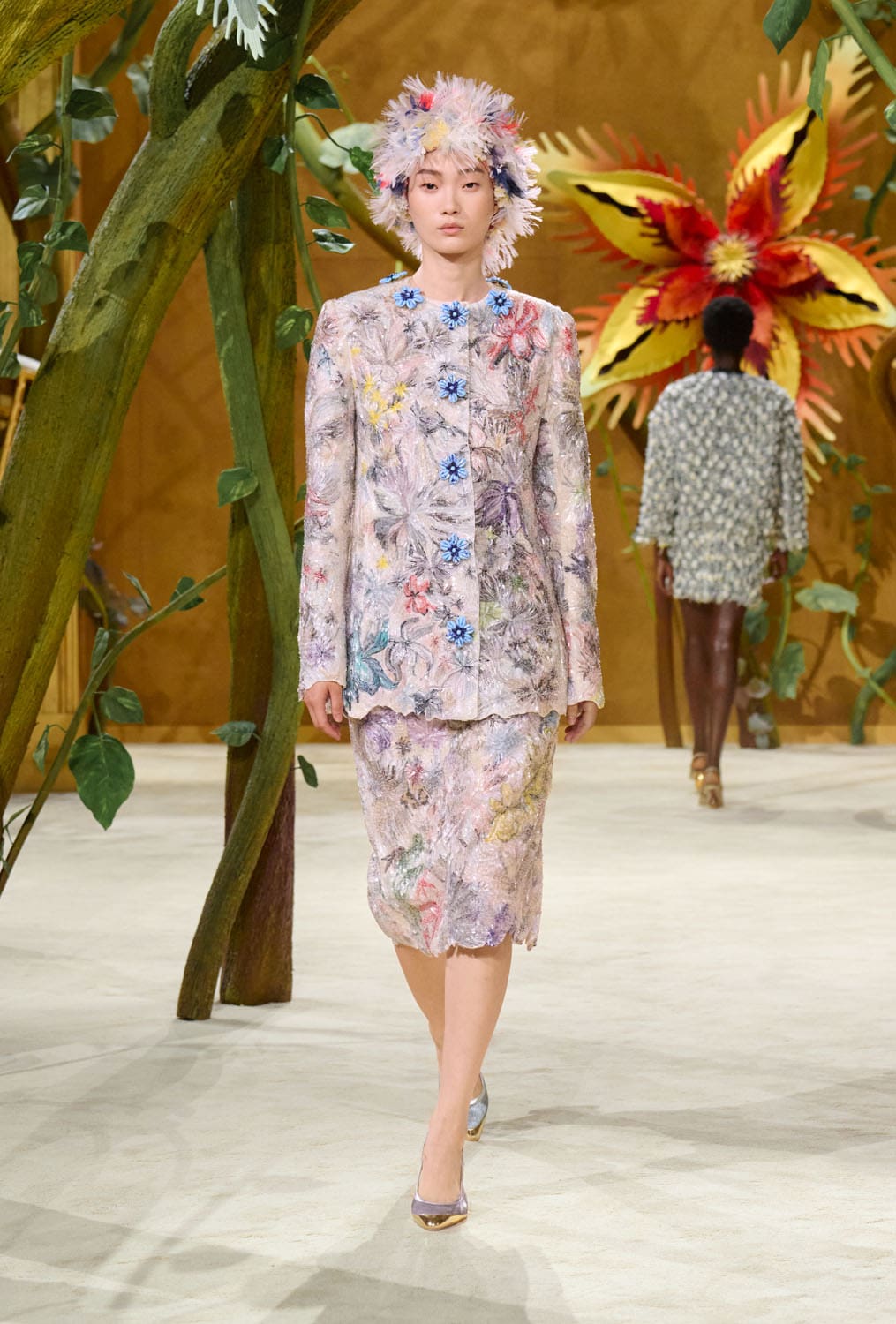
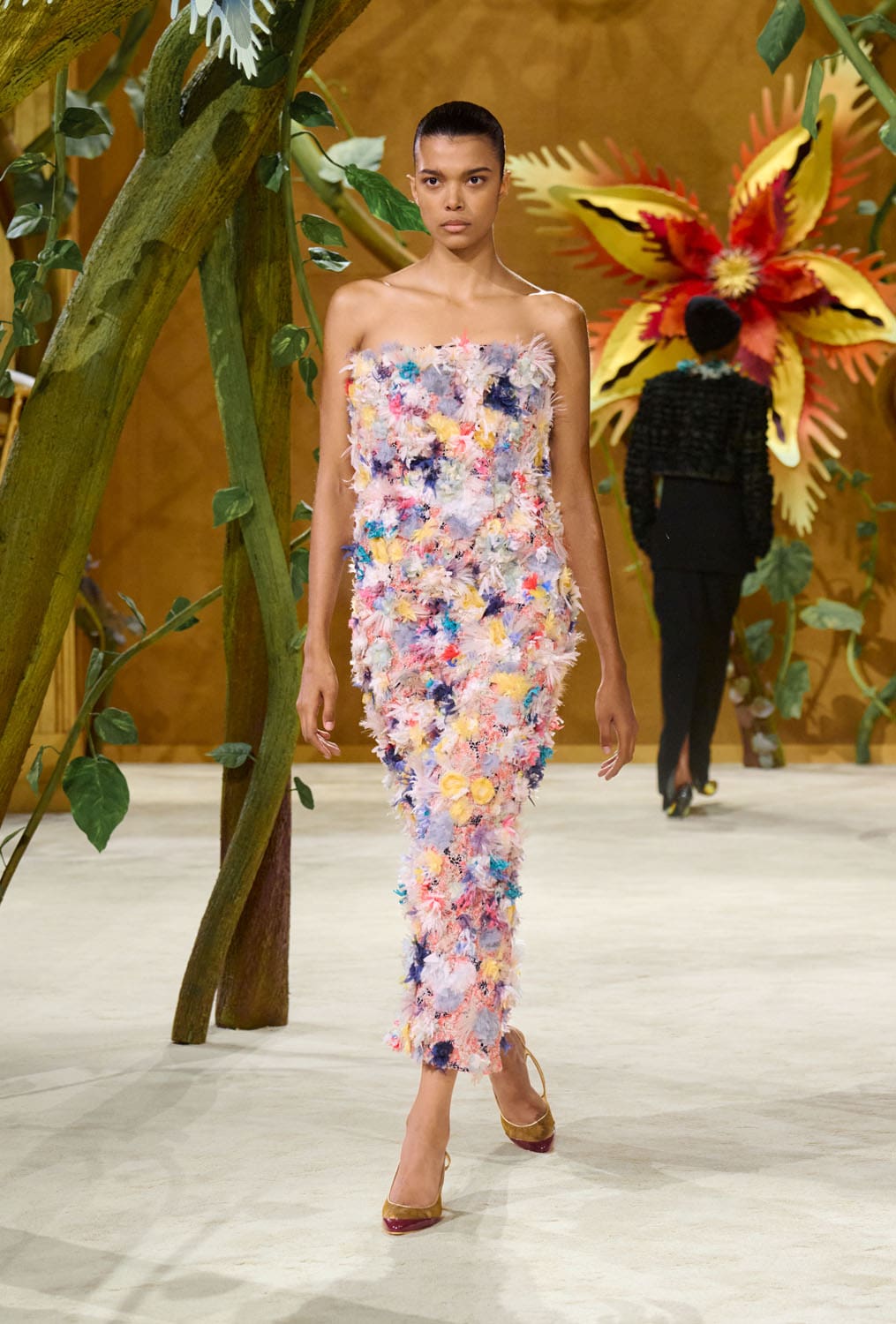
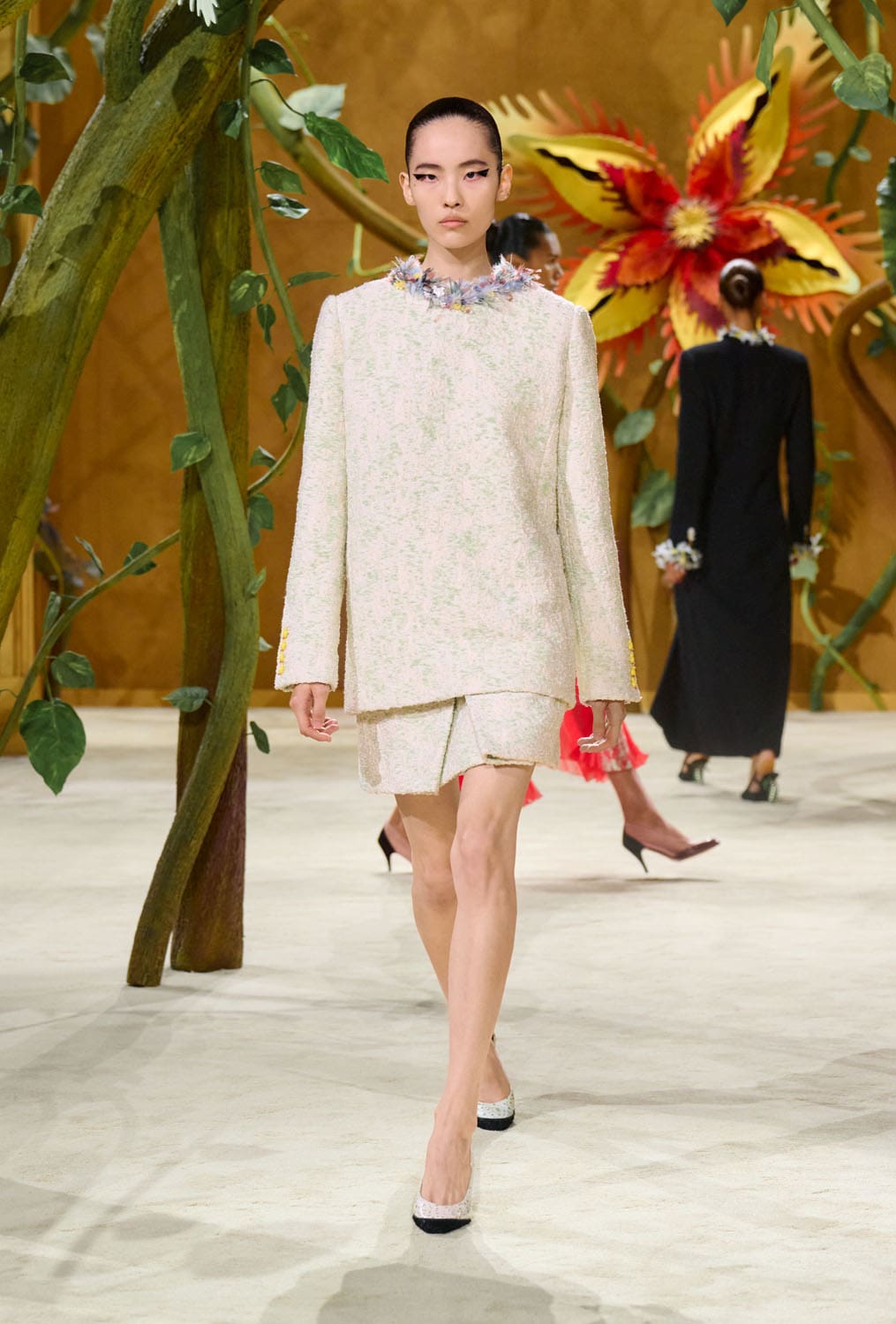
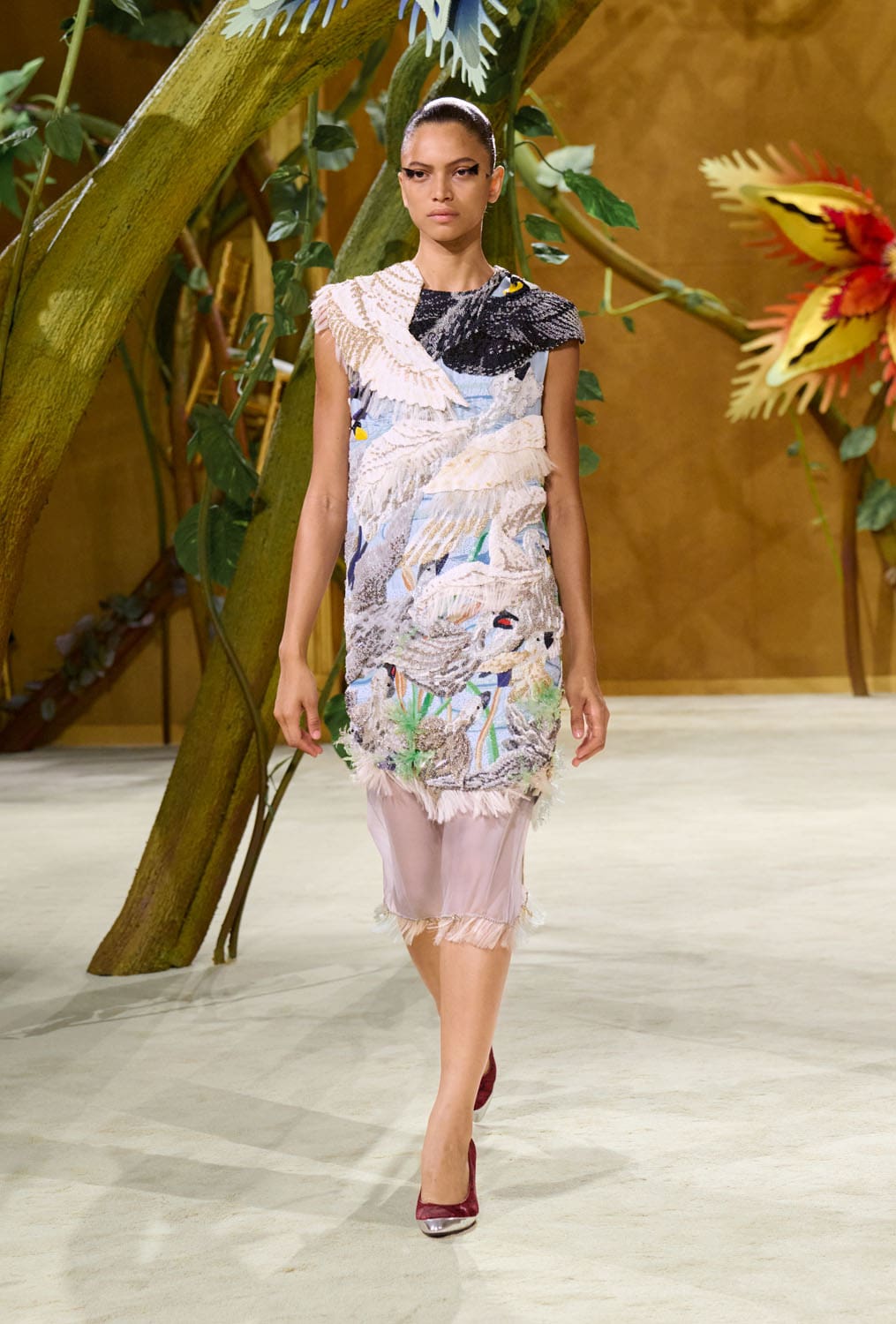
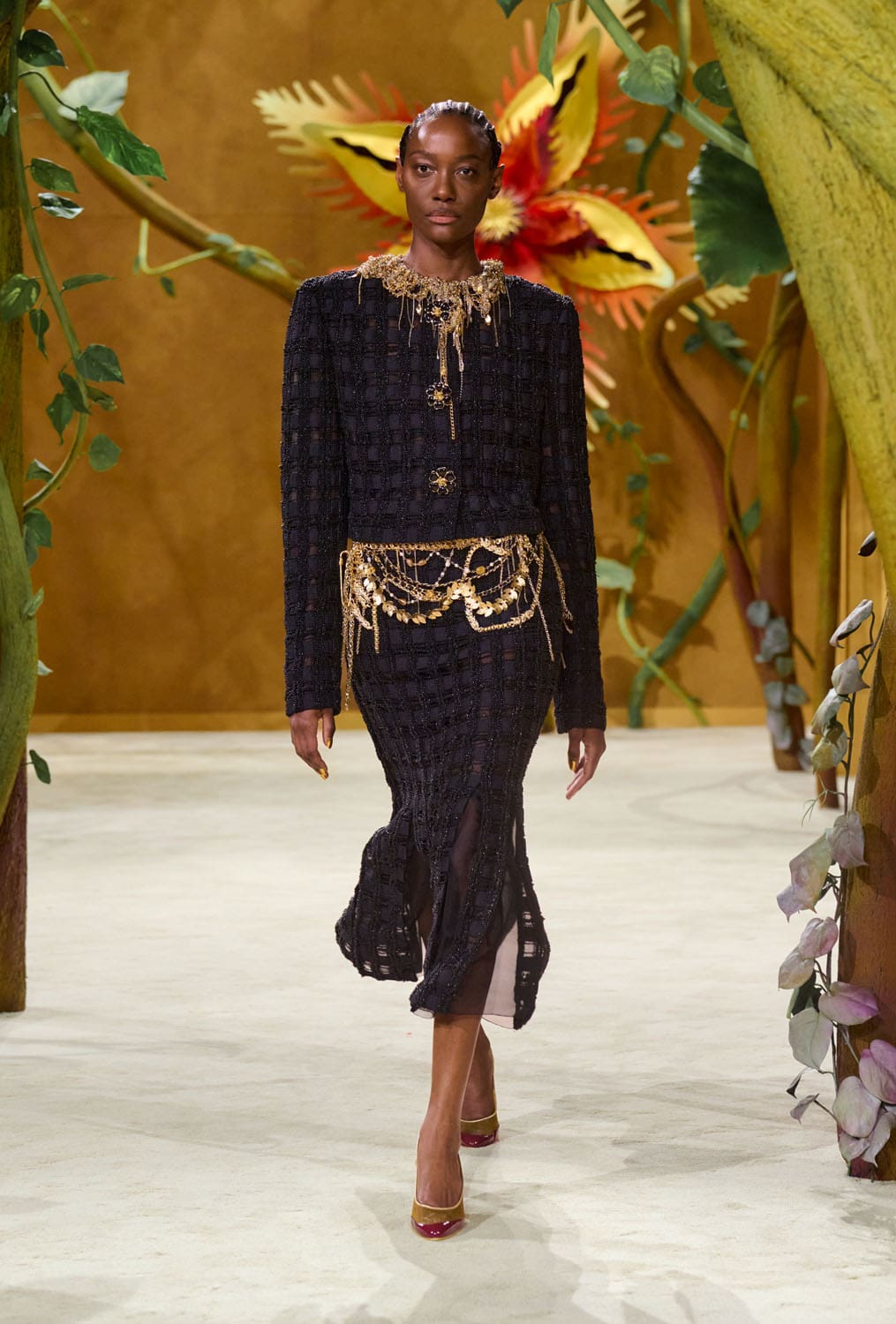
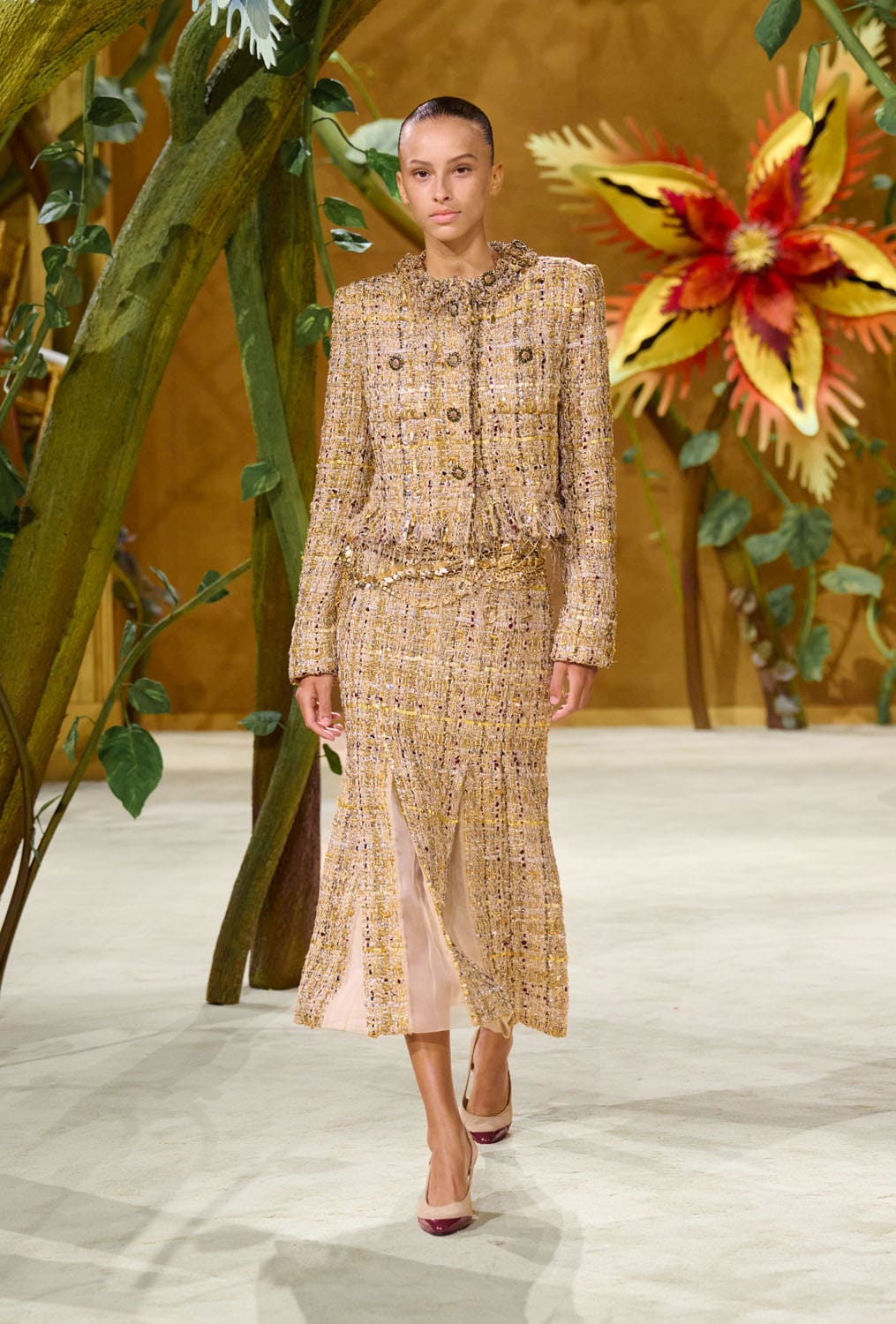
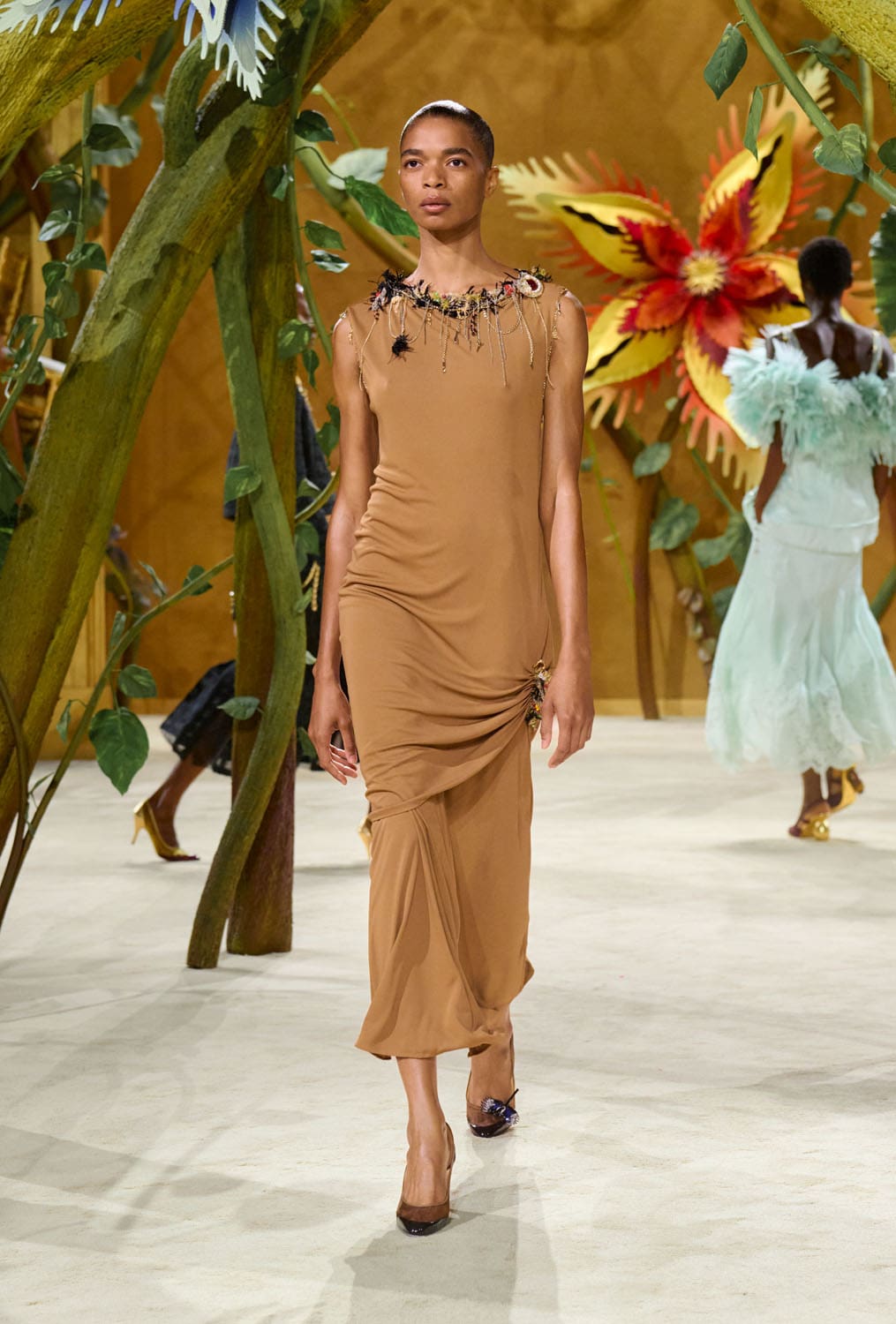
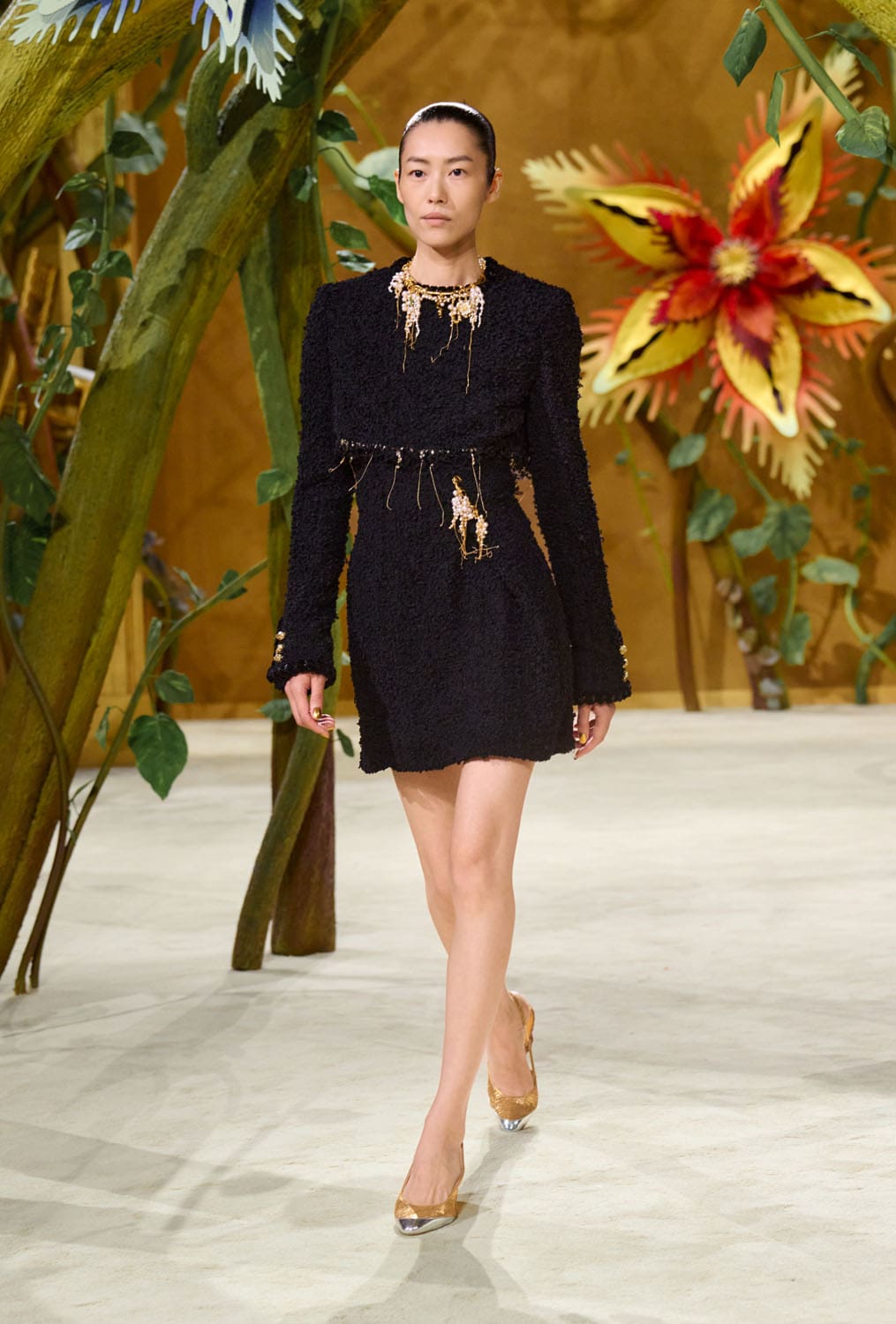
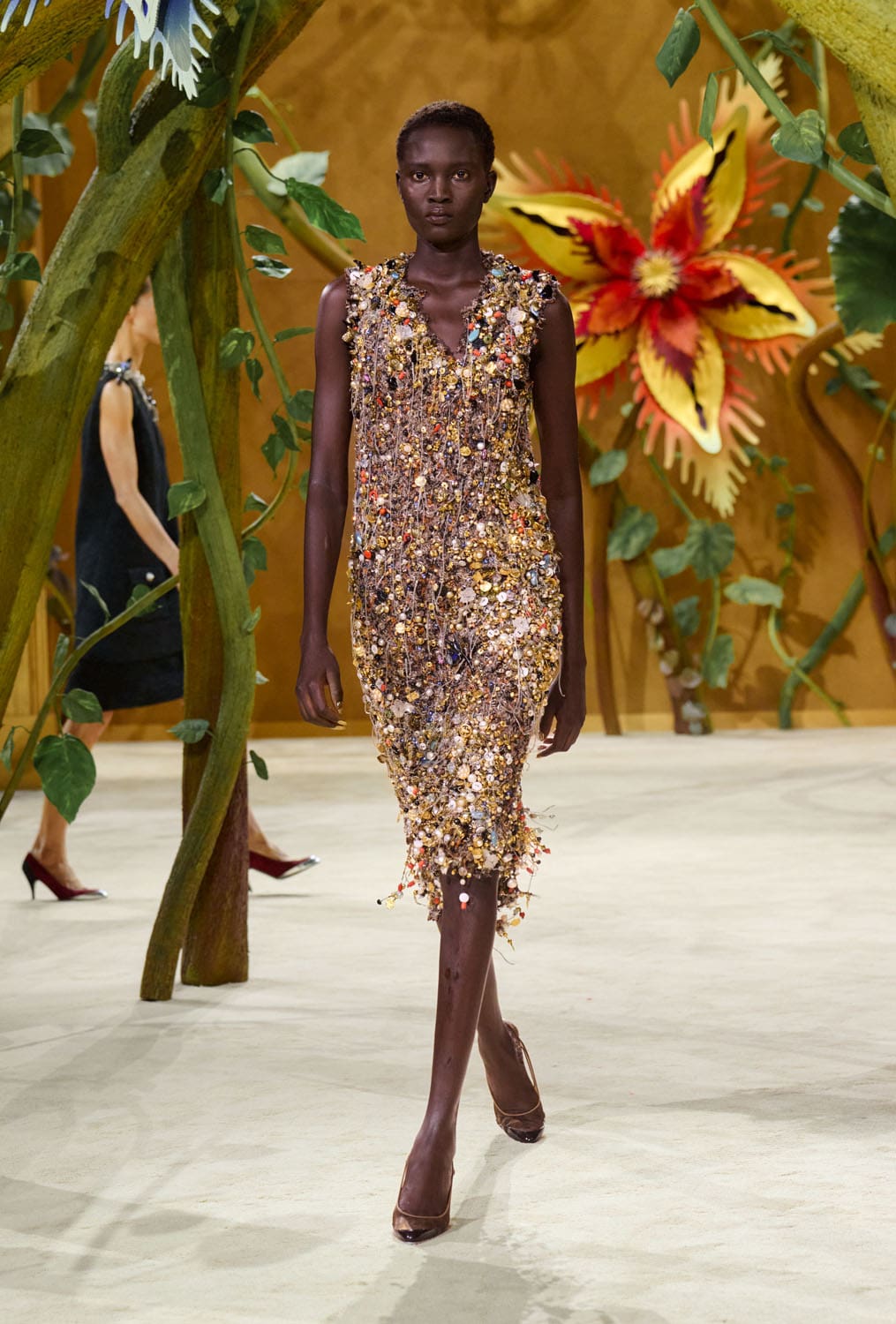
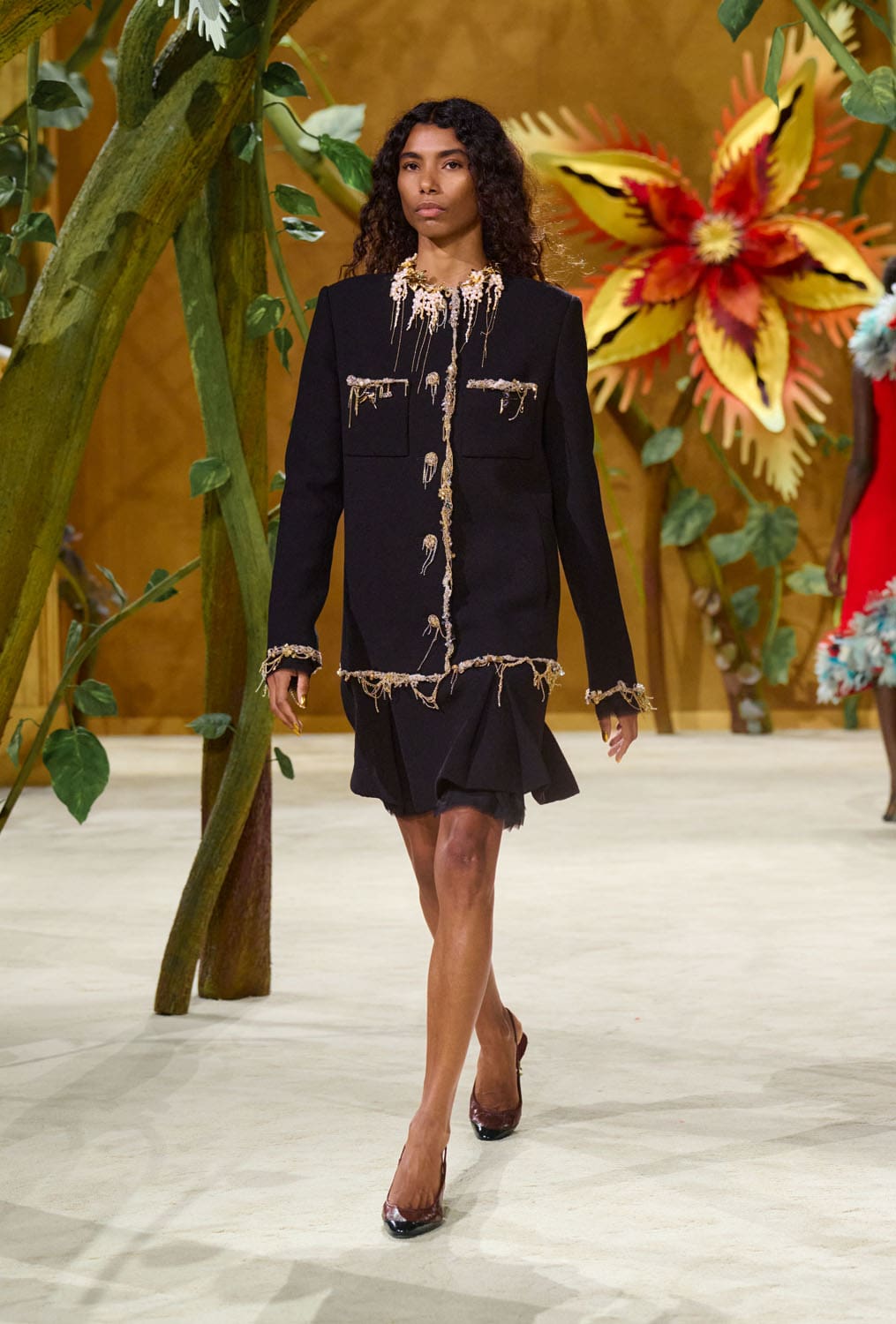
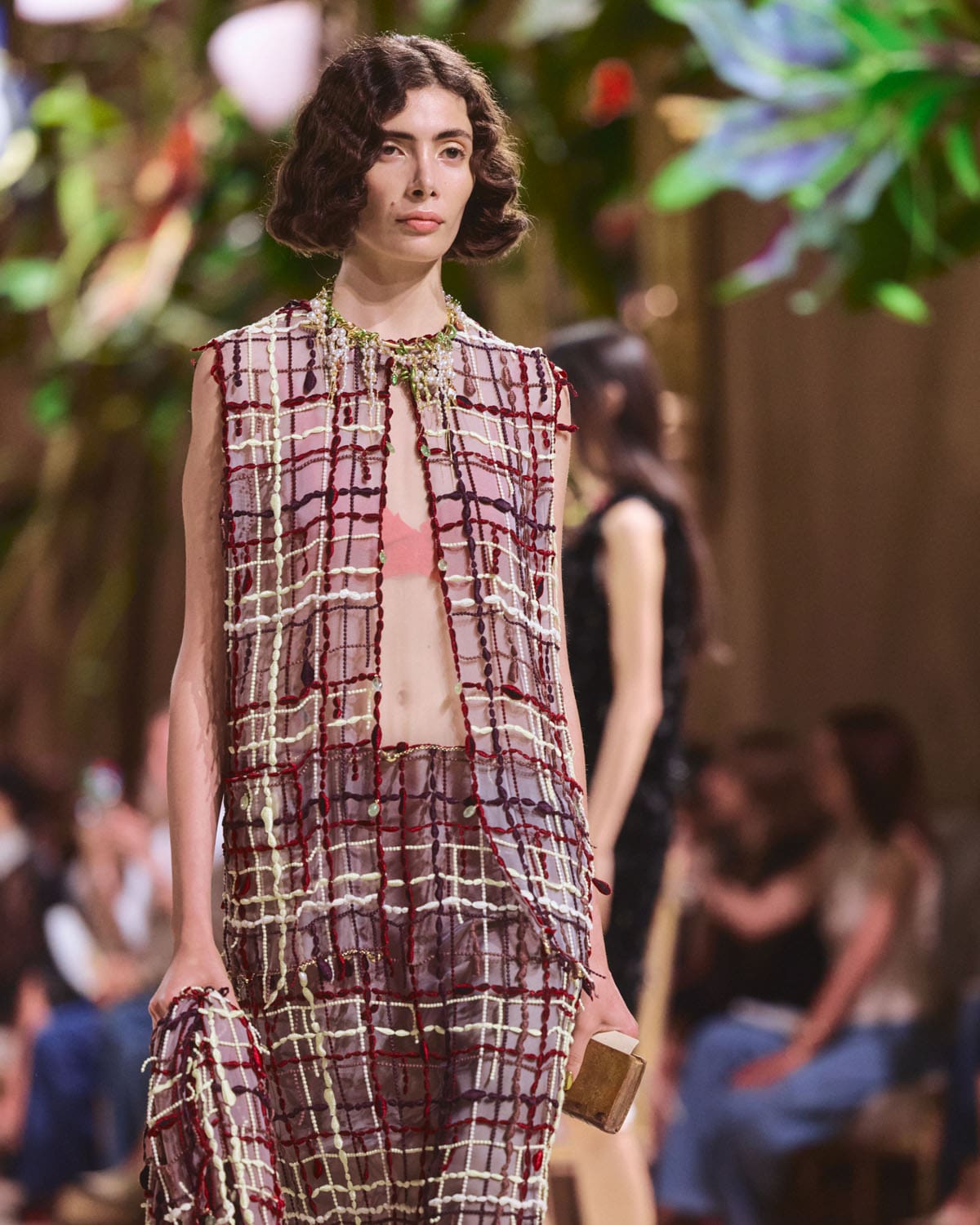
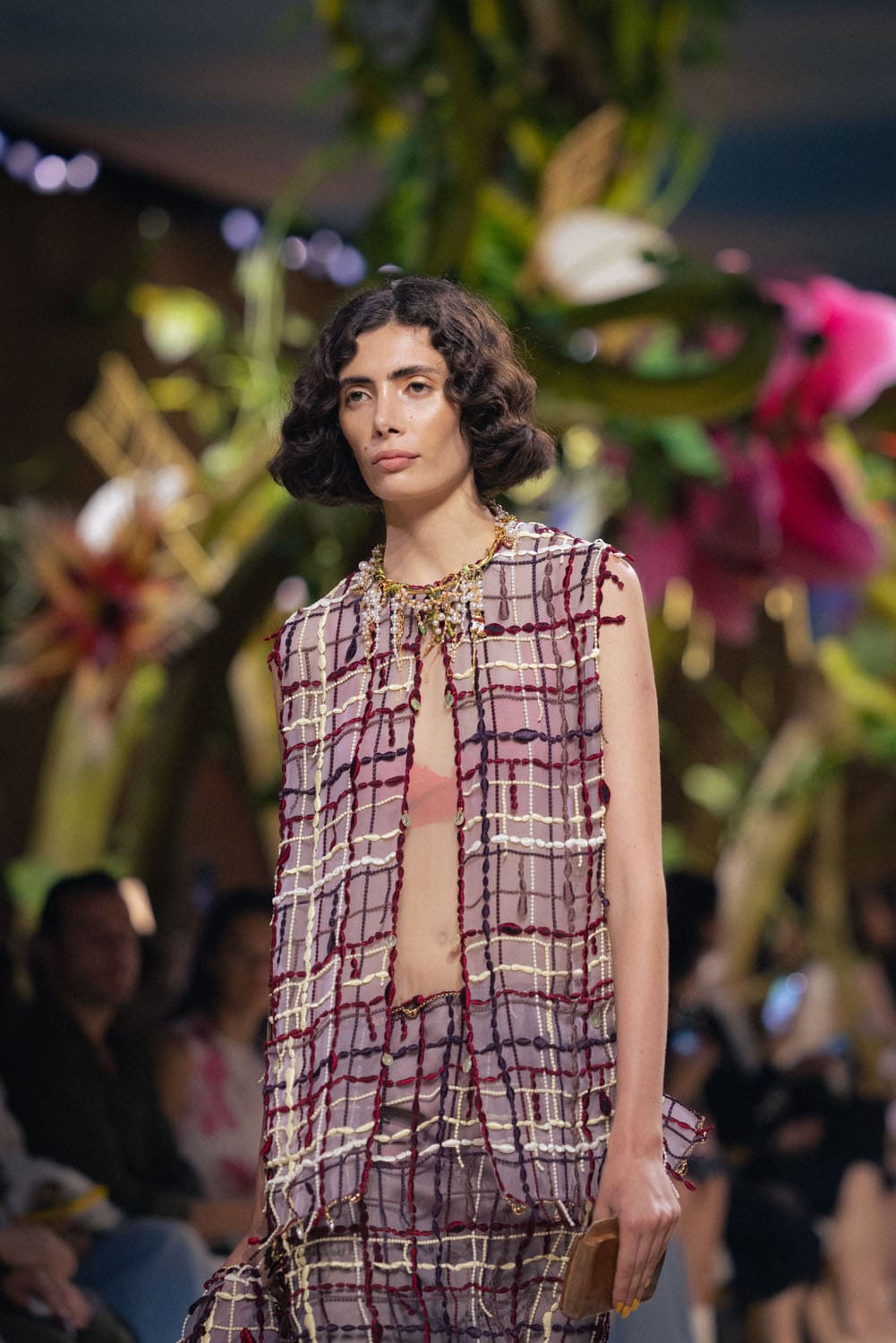
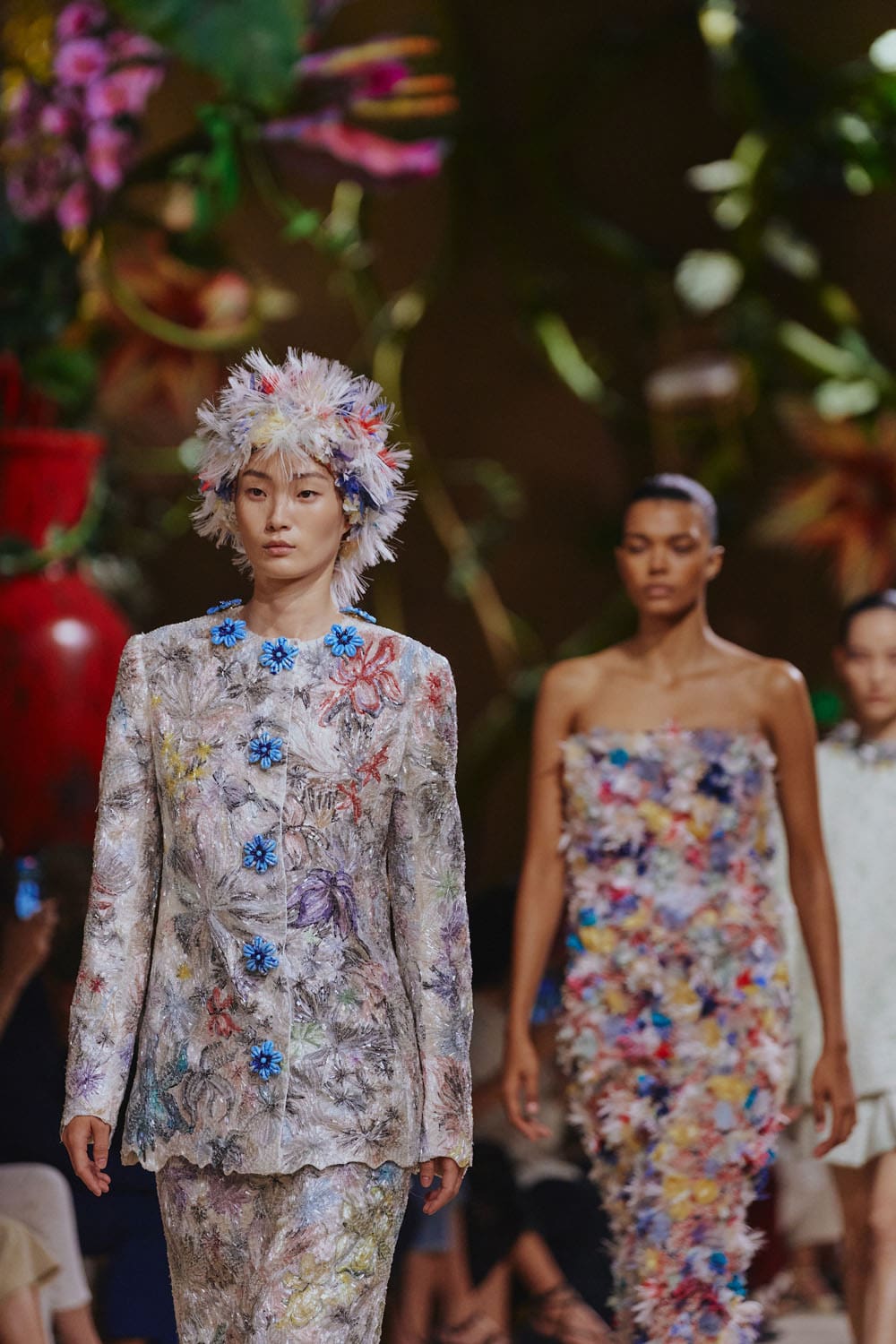
- Extraordinary textile craftsmanship by Maison Lesage and the le19M ateliers, achieving exceptional depth through embroidery, tweed manipulation, fringe, beadwork, sequins, charms and complex botanical surfaces
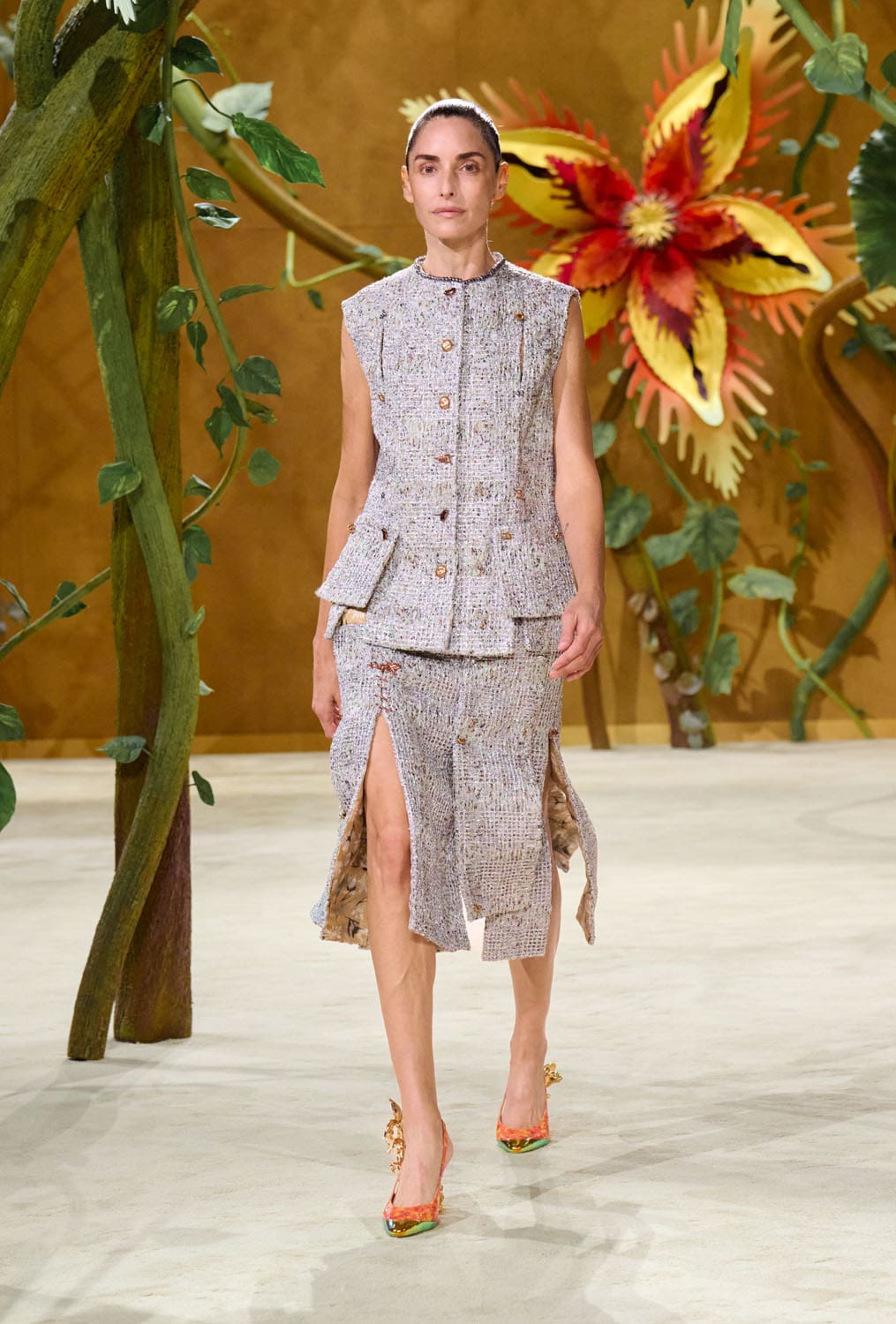
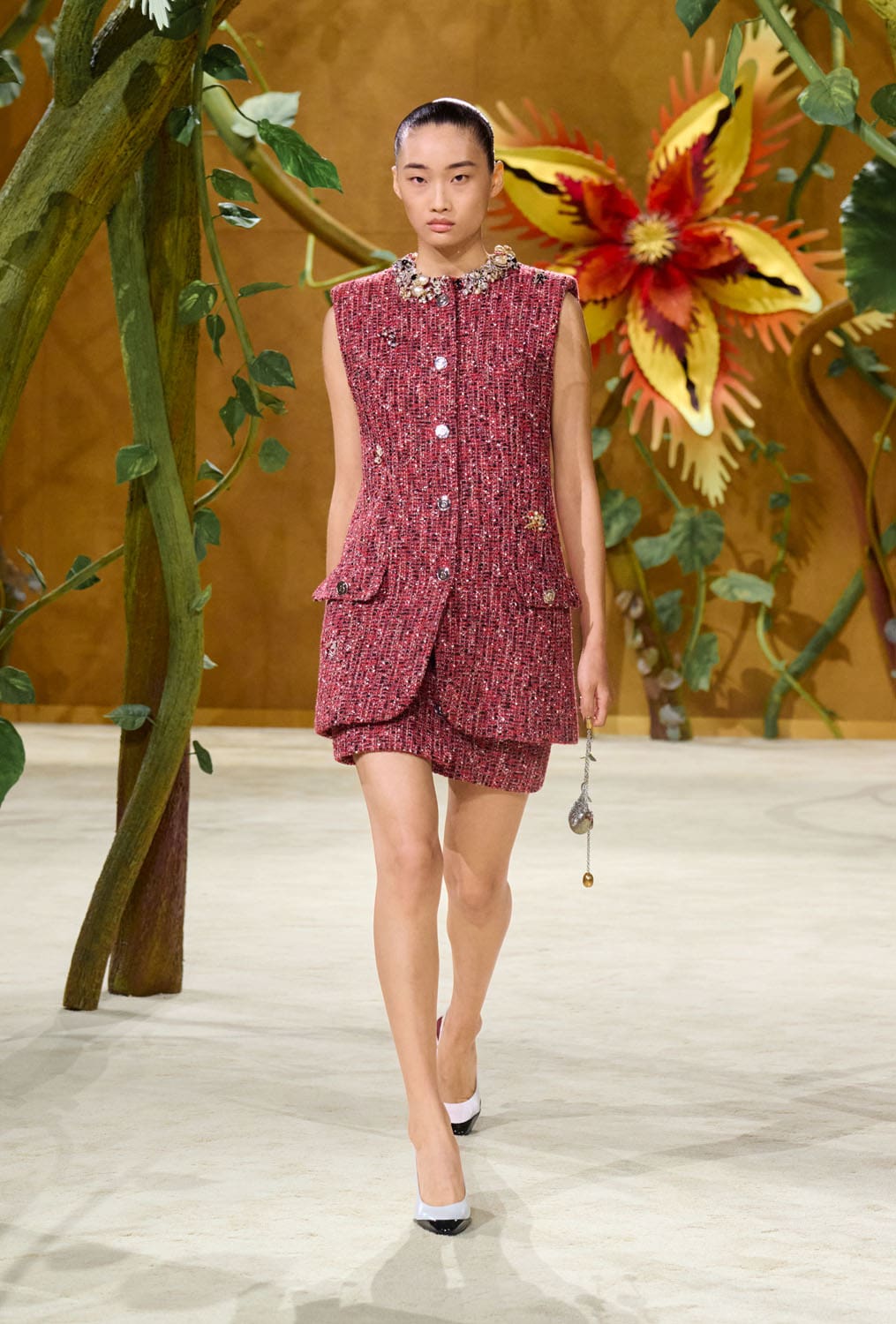
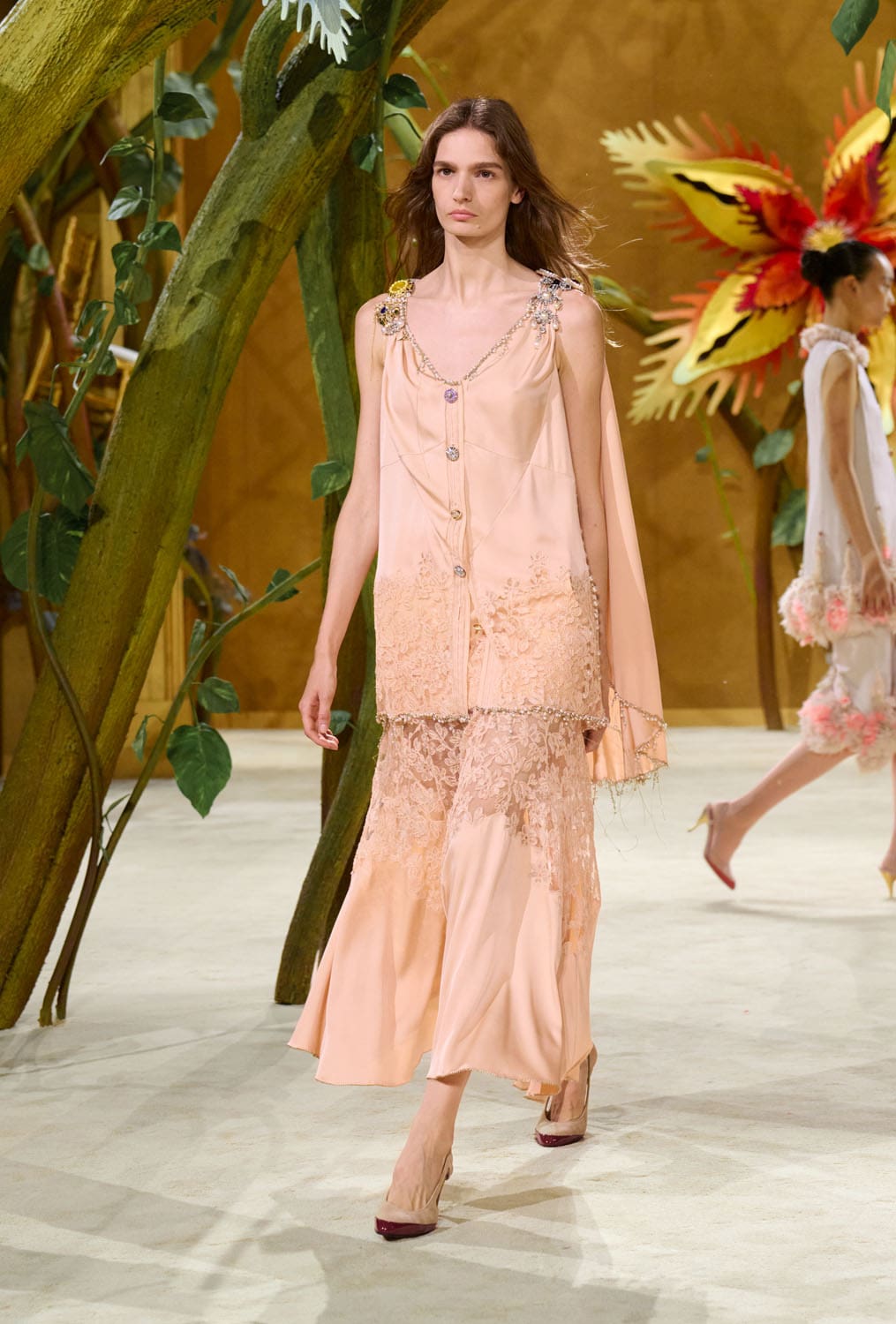
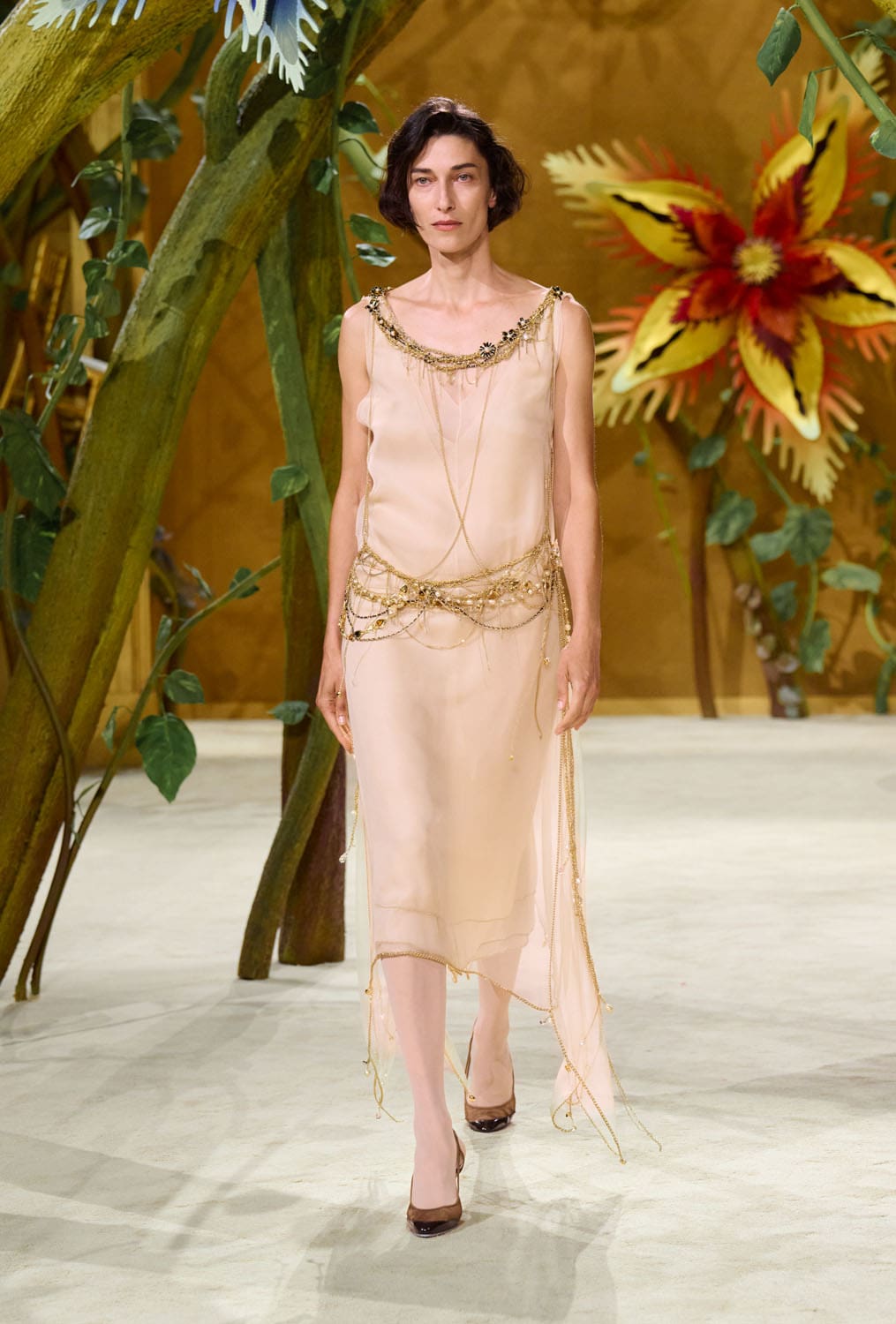
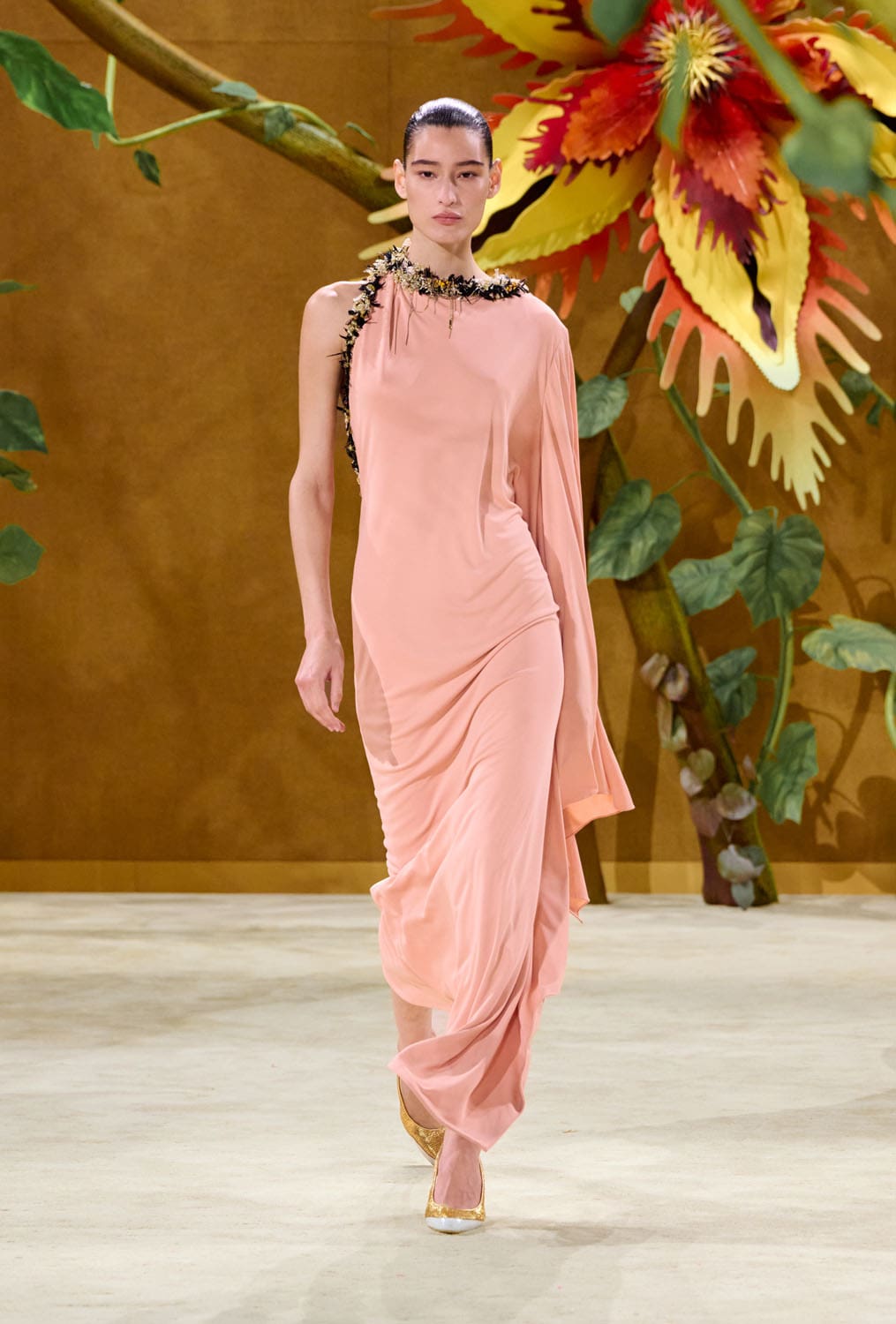
- Masterful dialogue between flou and tailleur, with moments where structured Chanel tailoring and extraordinary surface craftsmanship achieve complete technical harmony
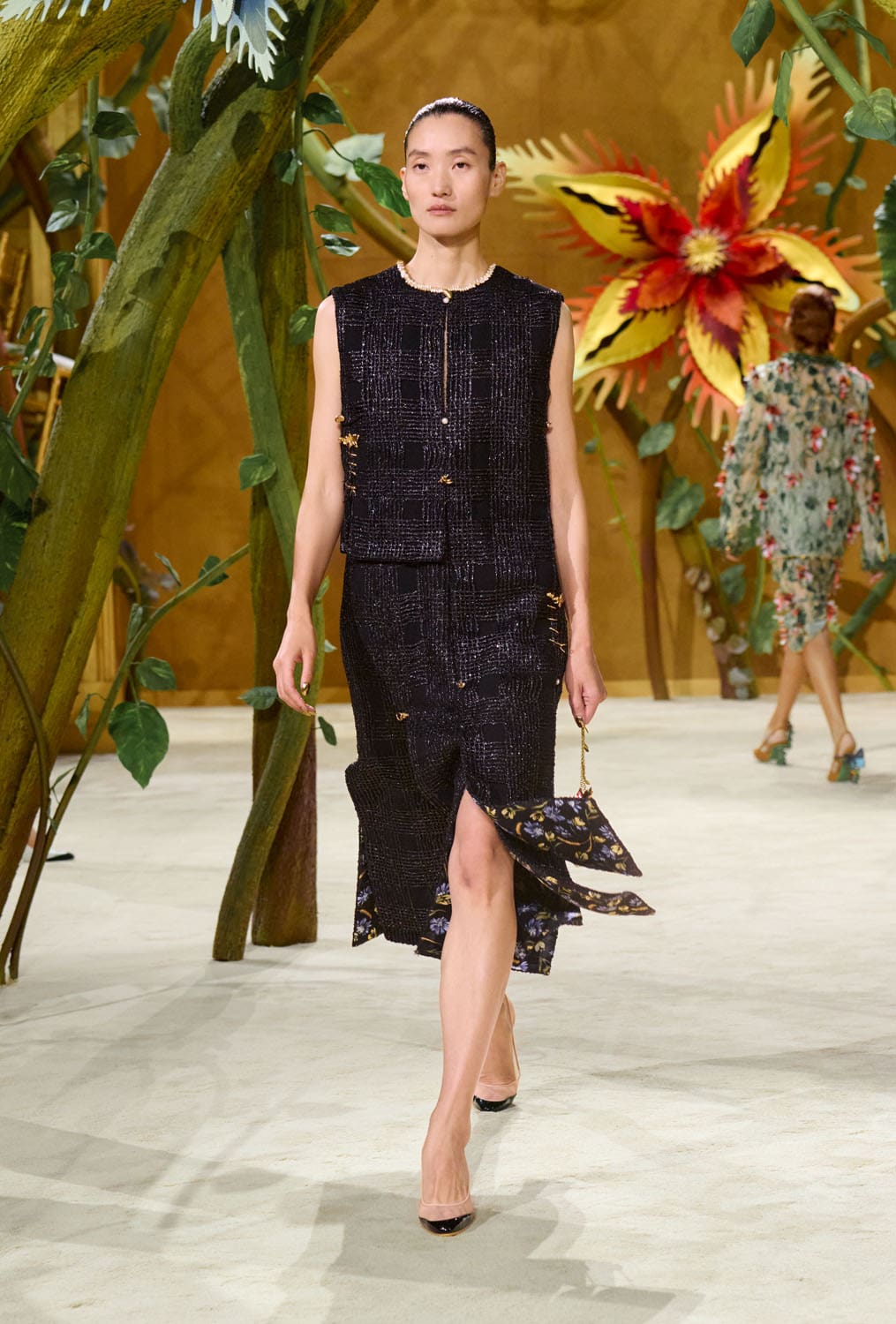
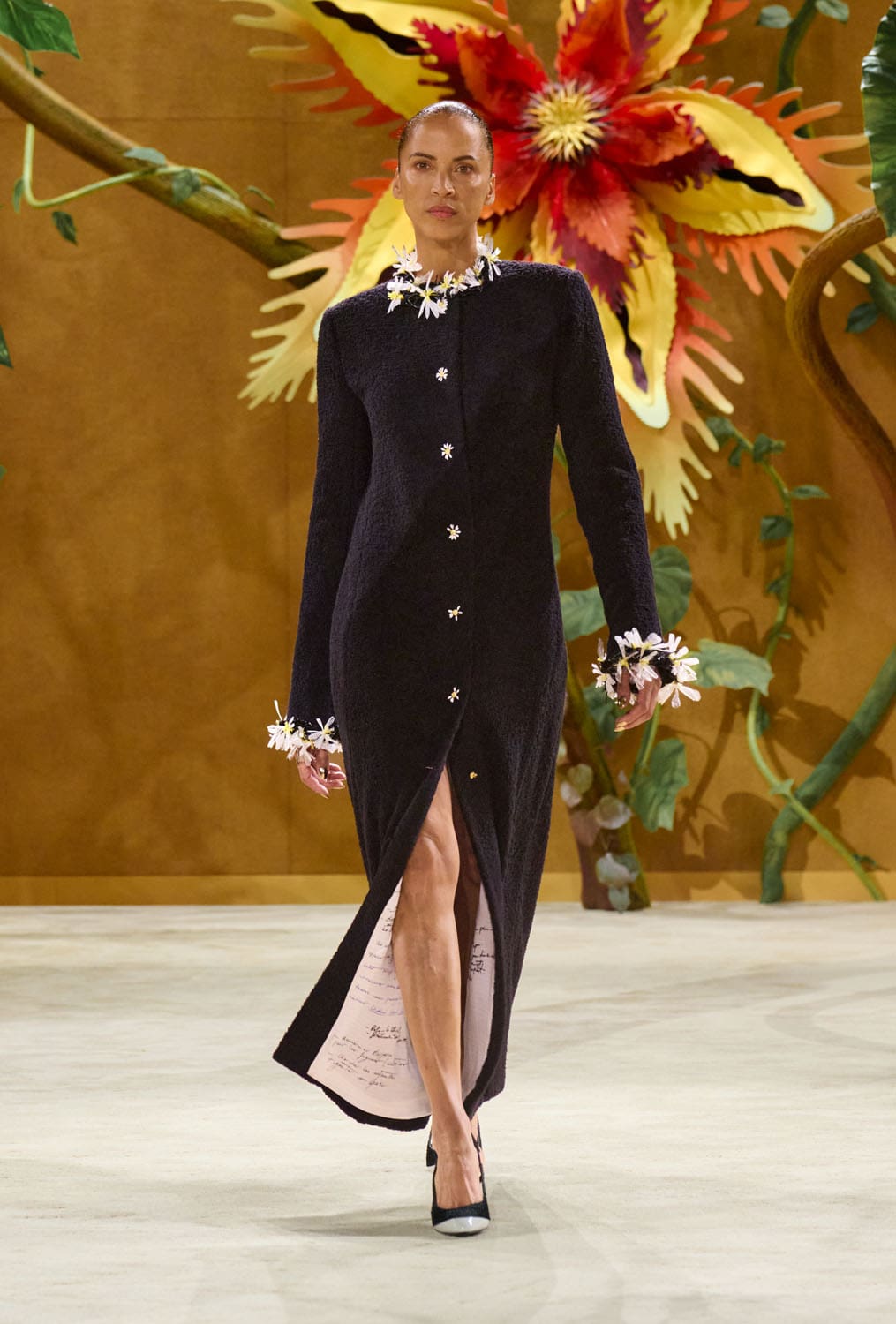
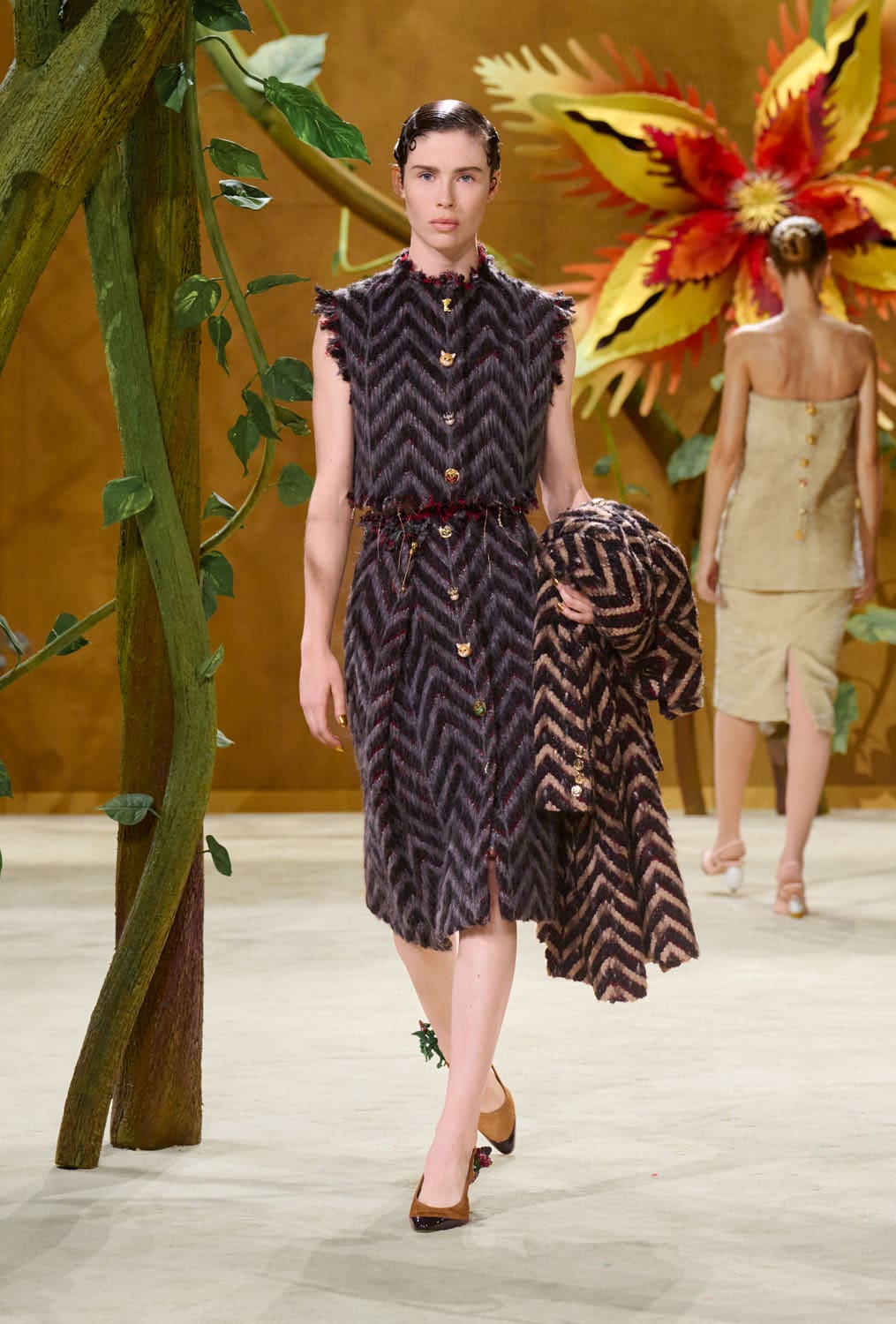
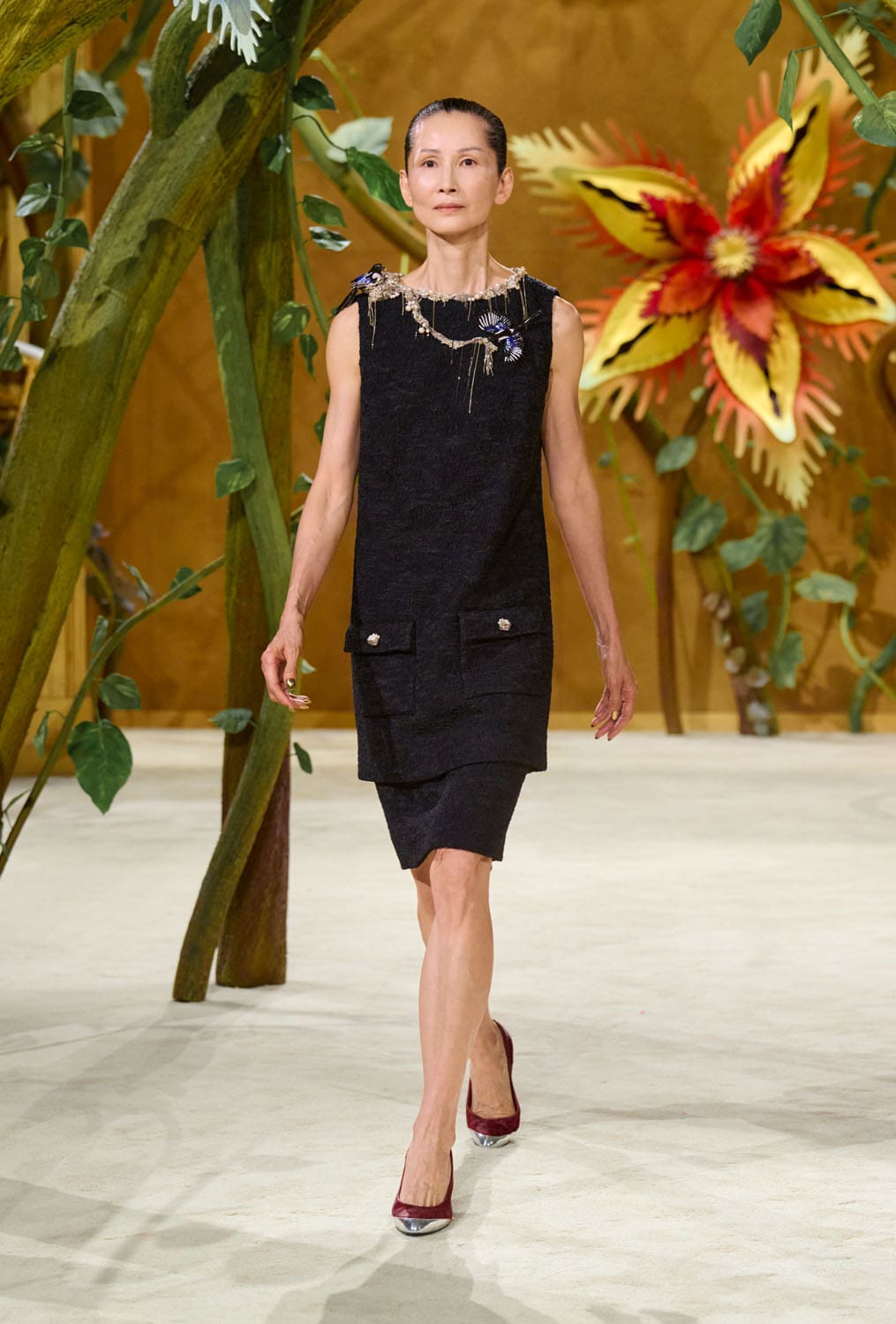
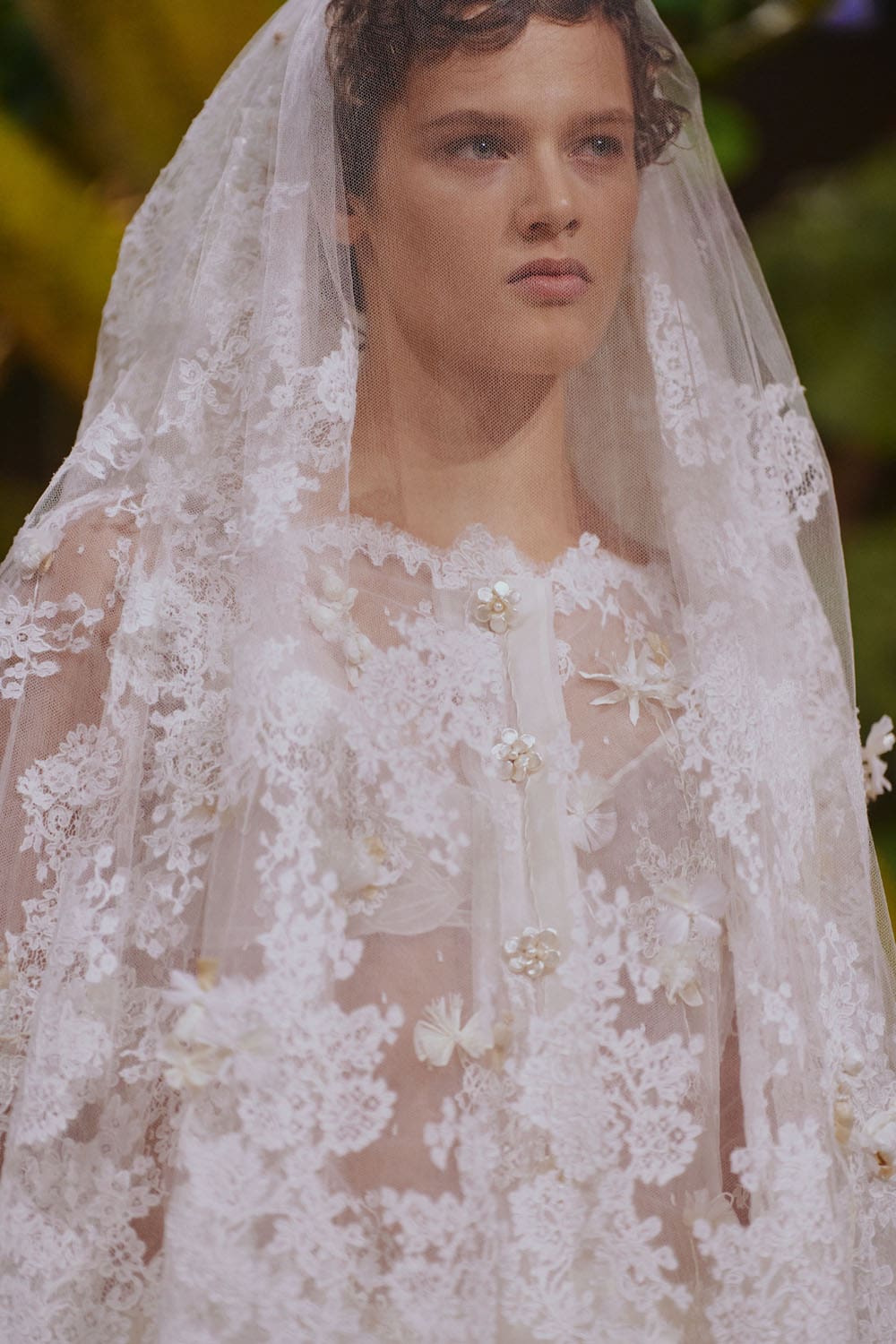
- Exceptional attention to intimate detail, transforming buttons, talismans, miniature floral elements and interior garment references into objects of discovery rather than obvious decoration
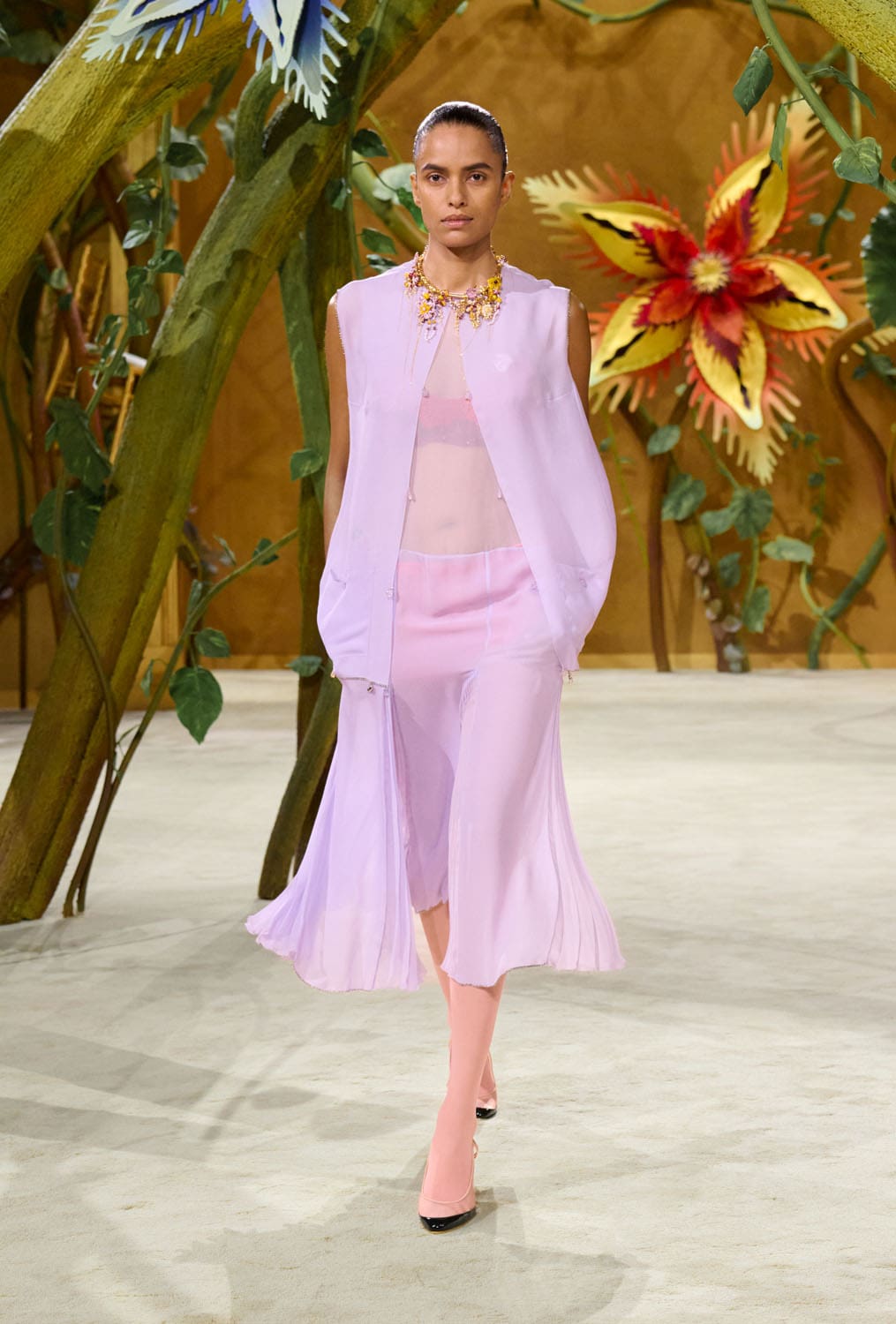
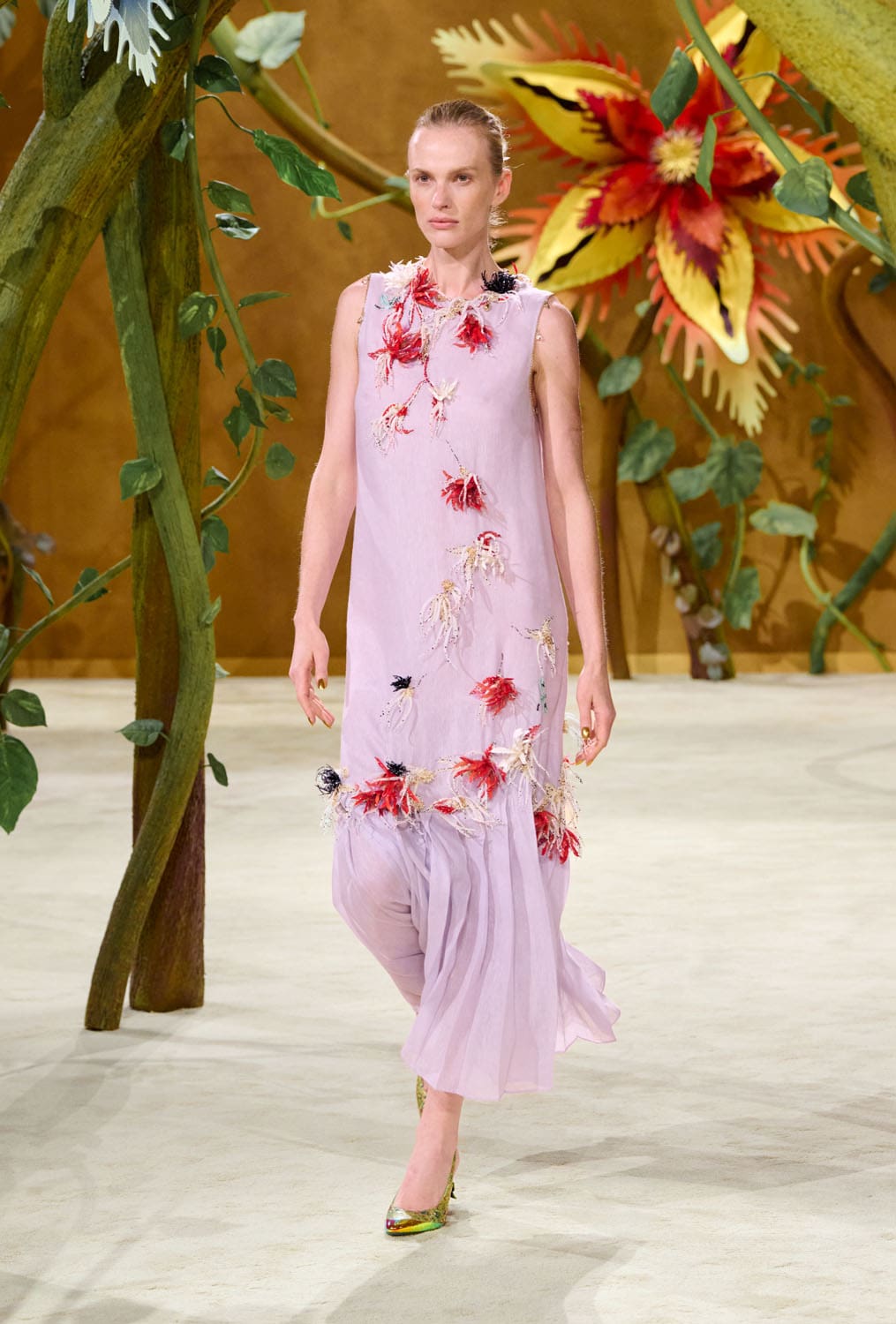
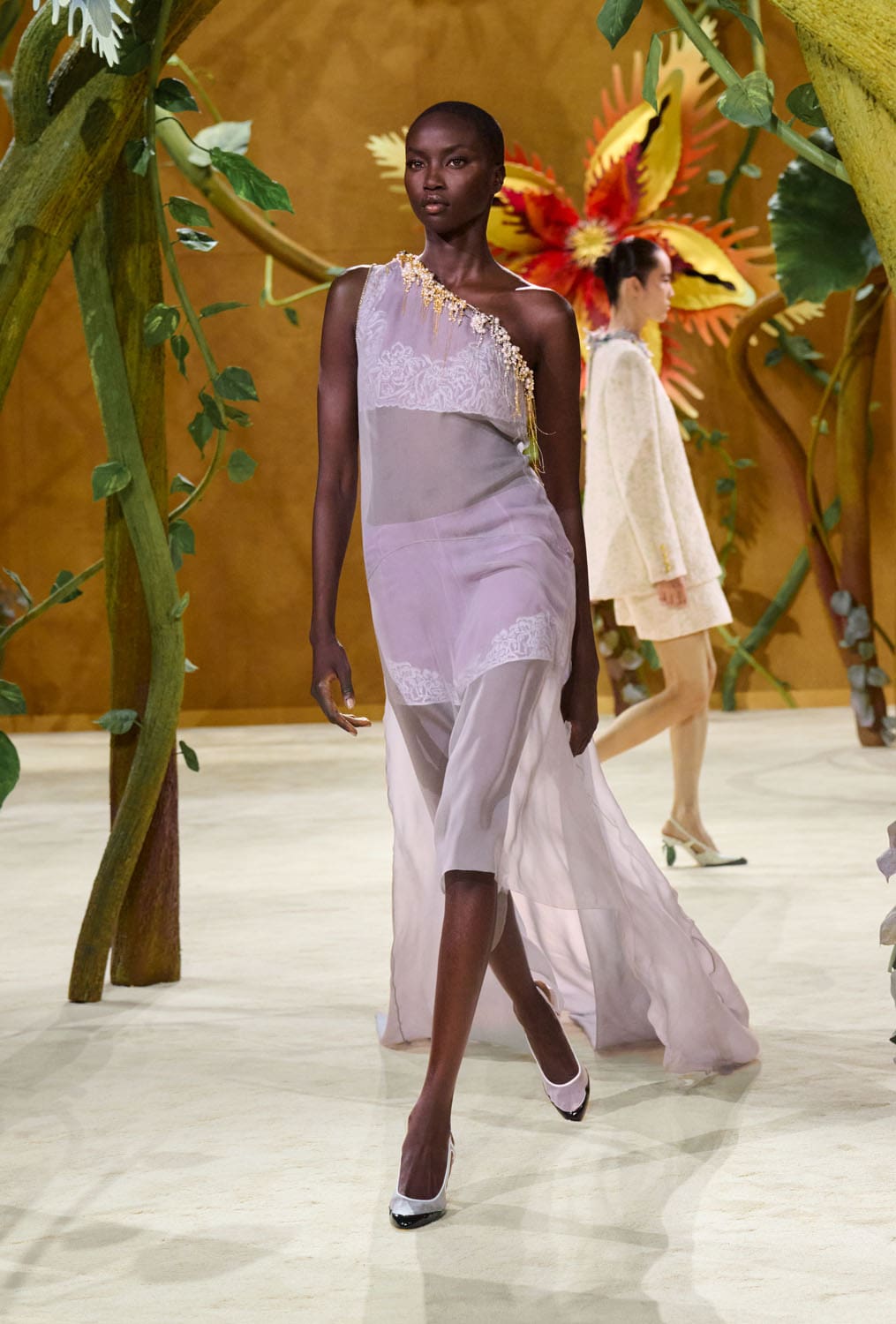
- Several outstanding individual pieces demonstrate the full potential of contemporary Chanel couture, particularly the embroidered lavender gowns, crystalline tweed tailoring and densely worked evening surfaces
RESERVATIONS
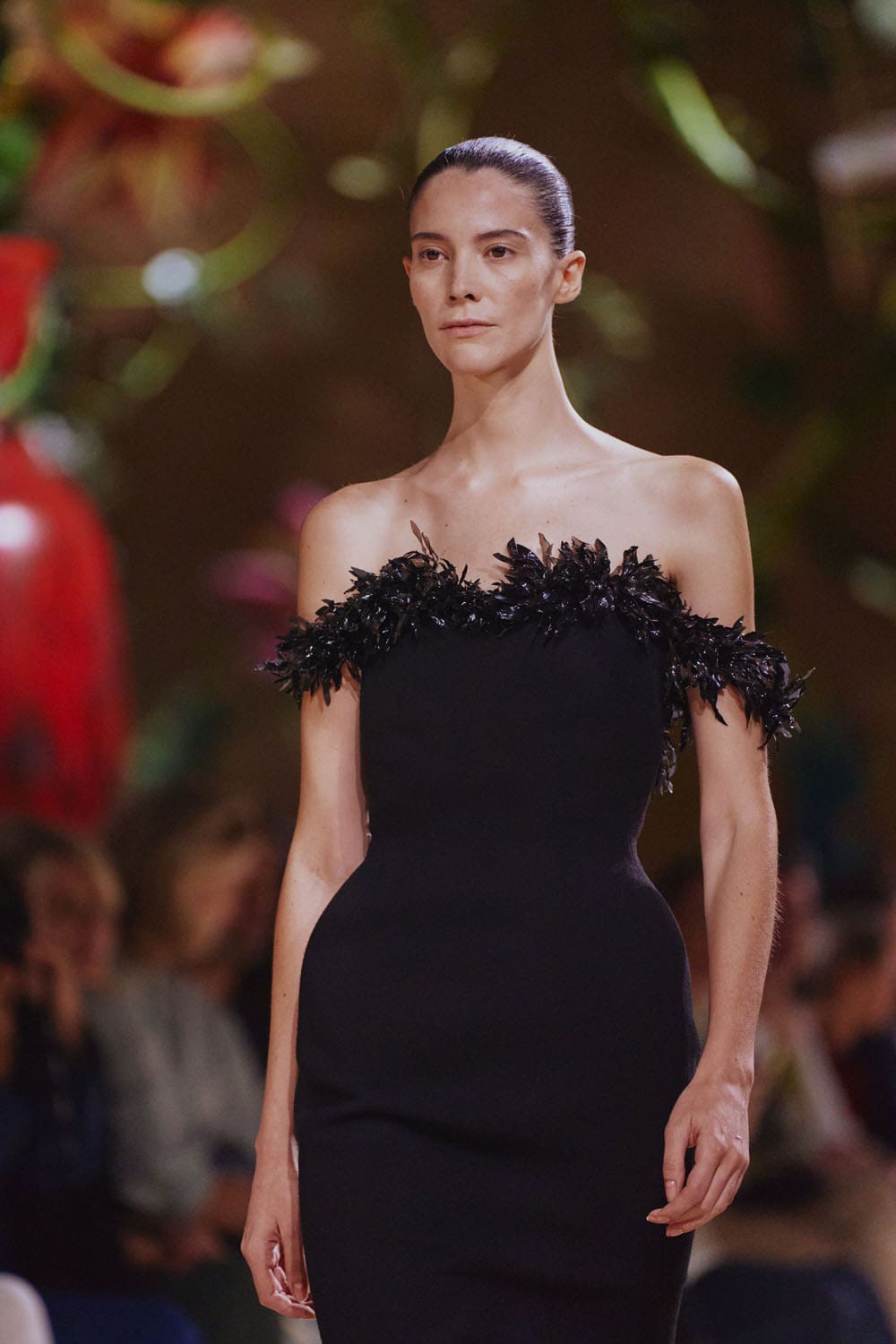
- The collection lacks a consistently coherent creative direction, moving abruptly between refined Chanel tailoring, botanical fantasy, rustic folklore, coarse textures and heavily decorative experimentation
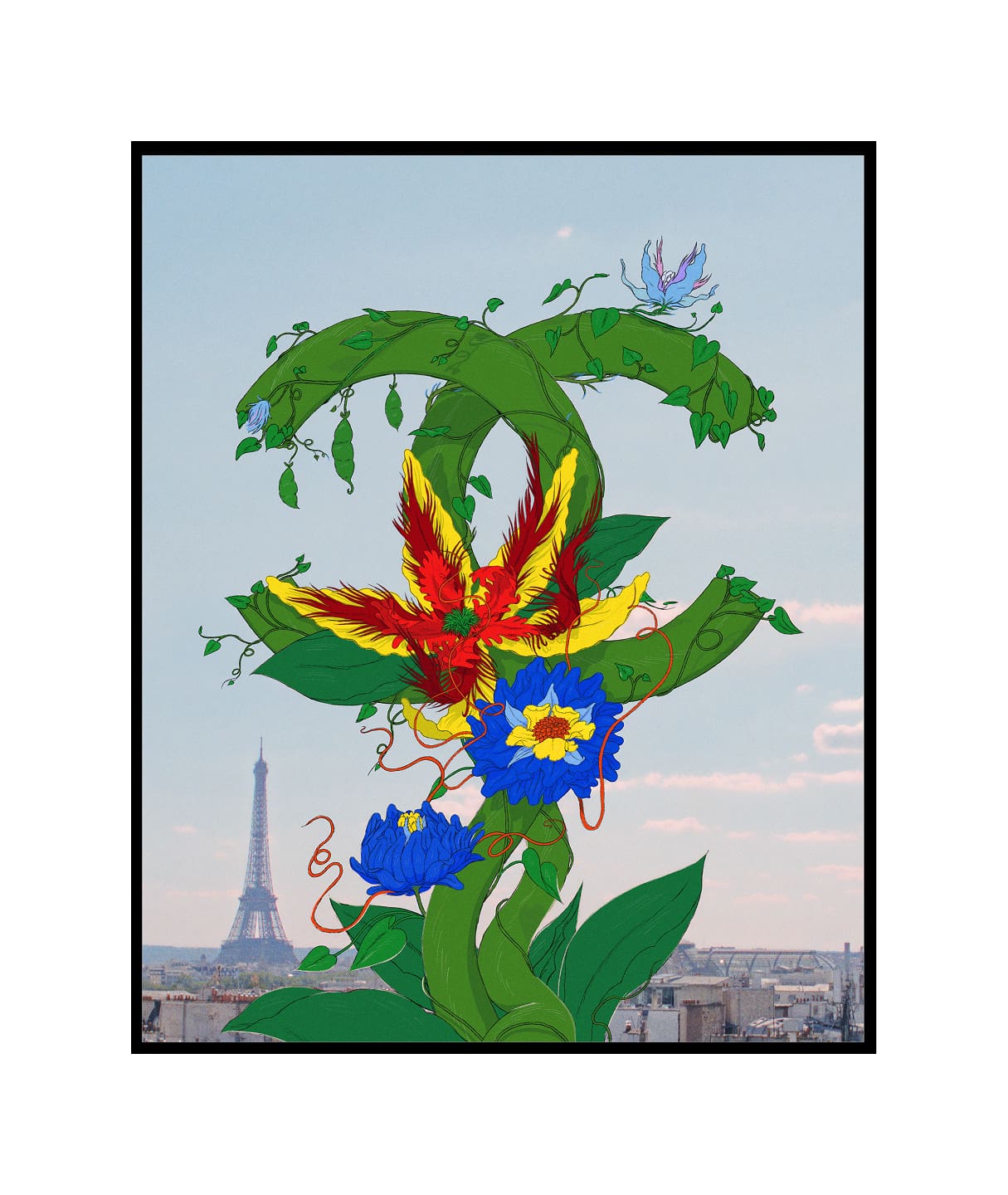
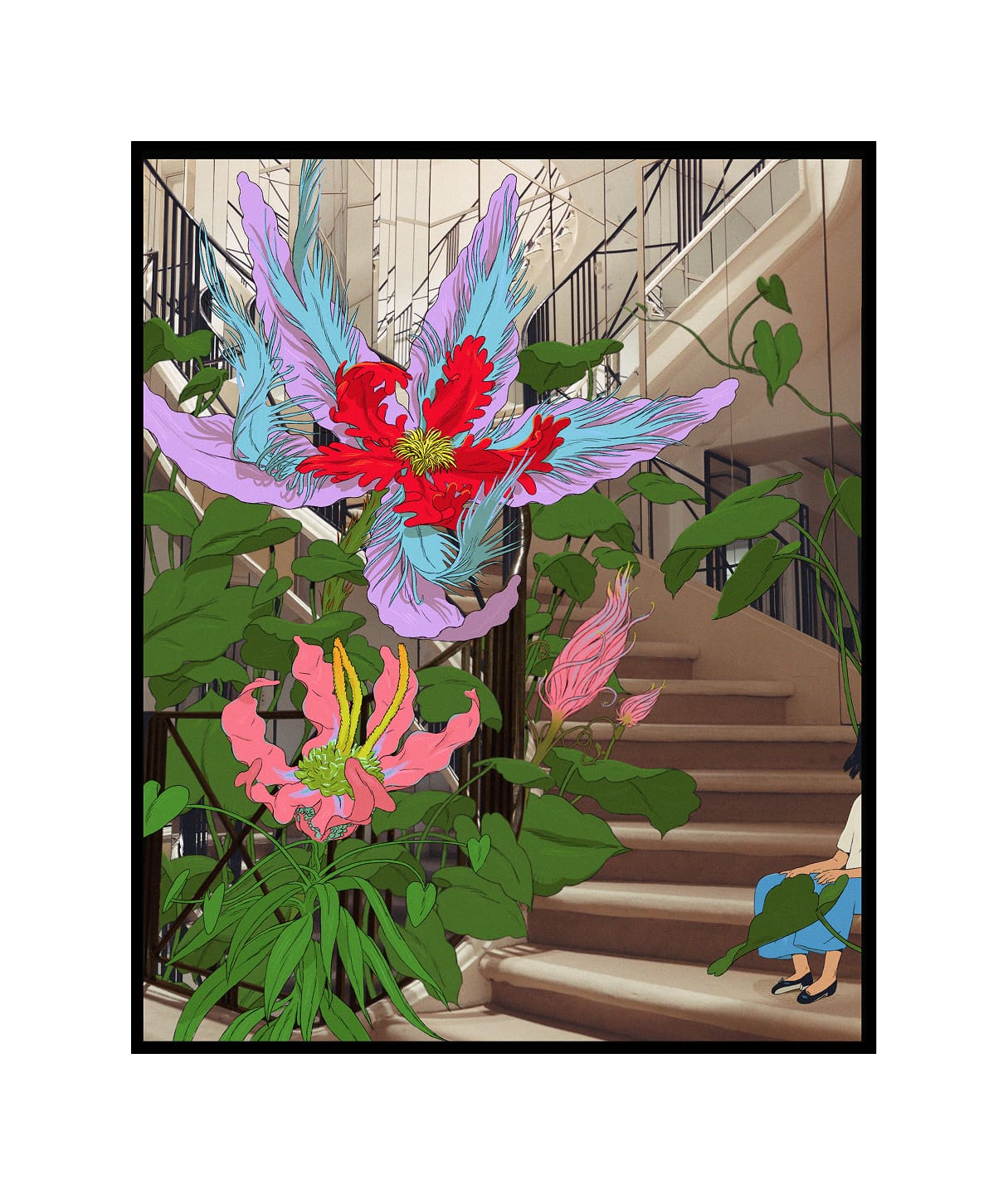
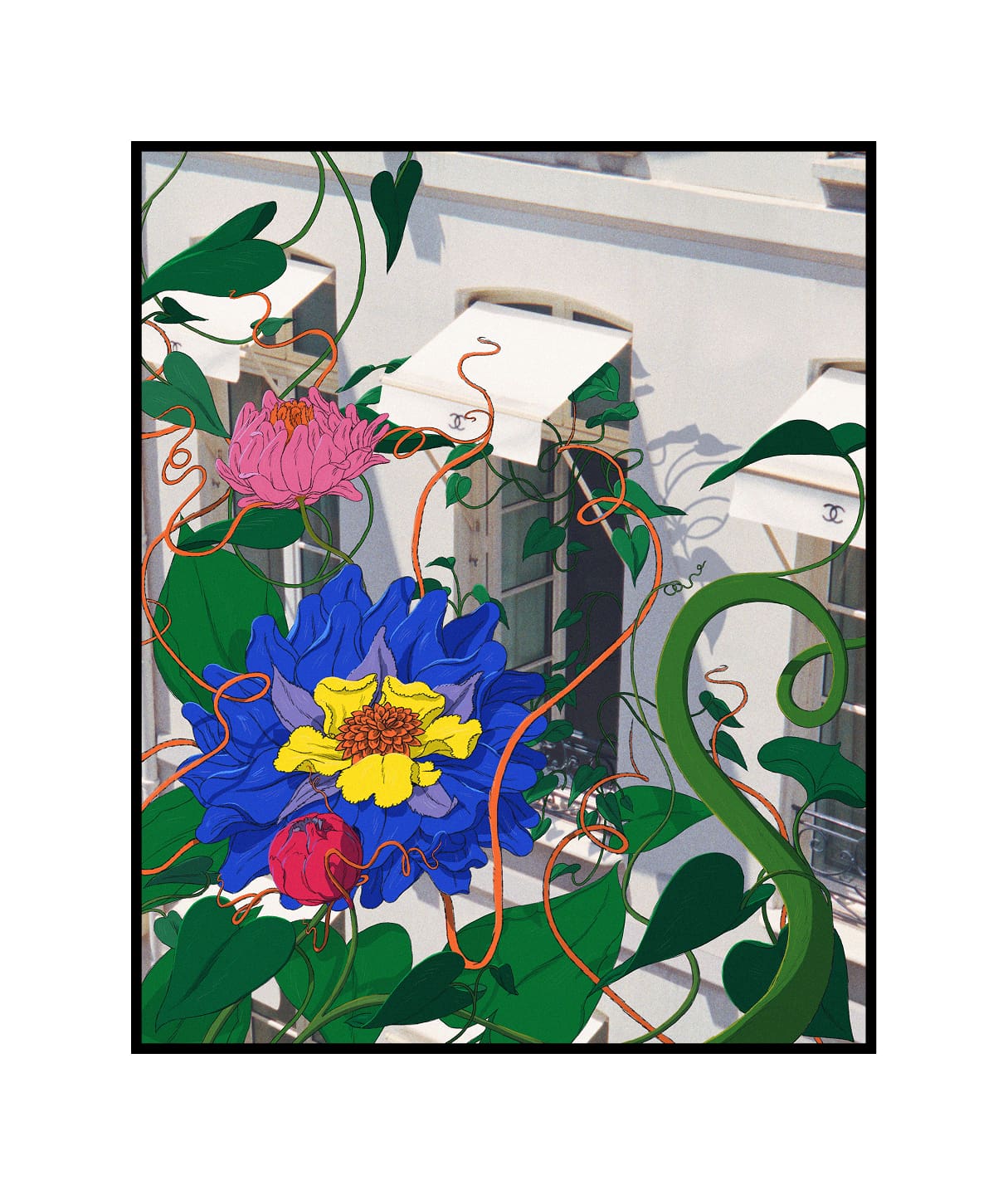
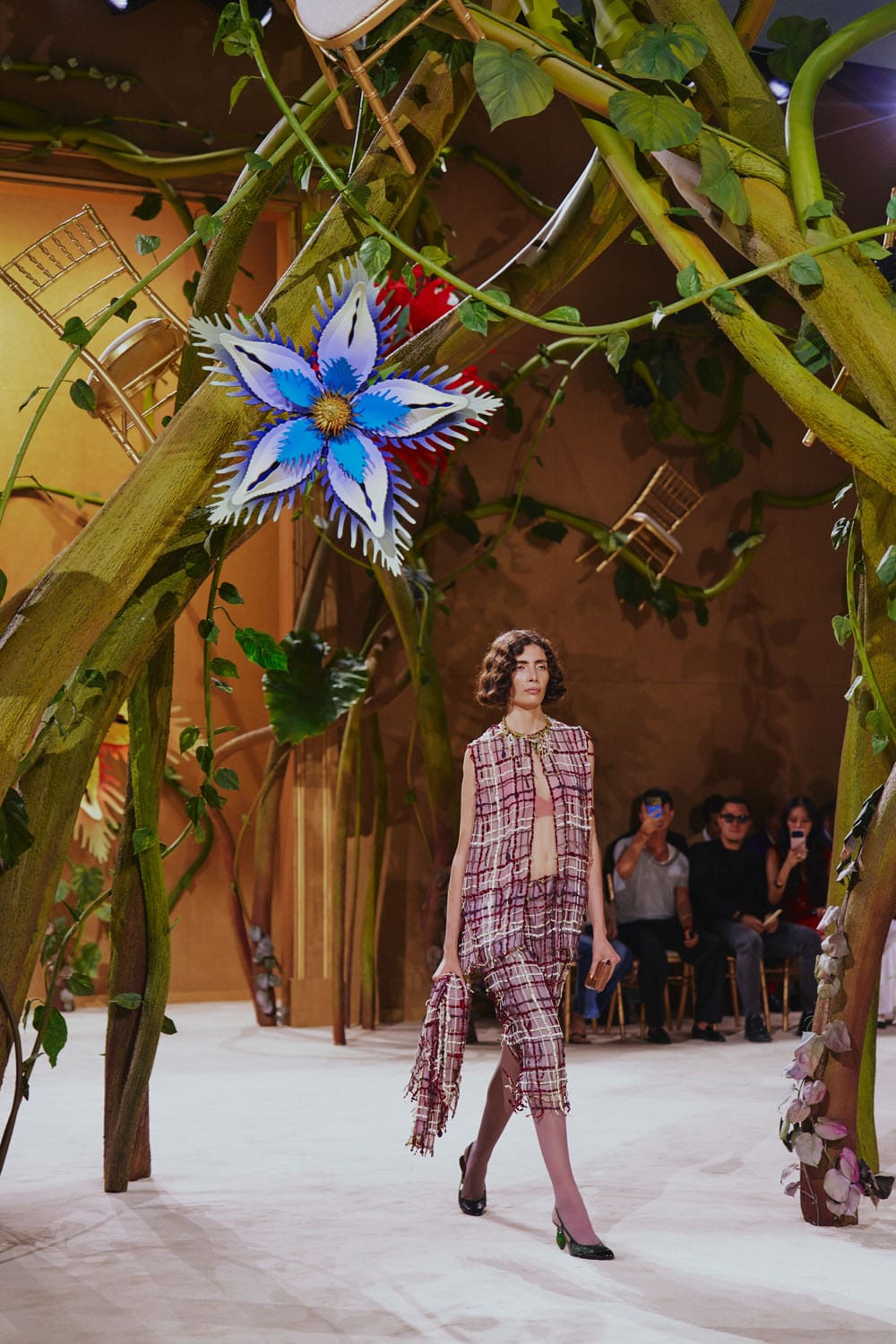
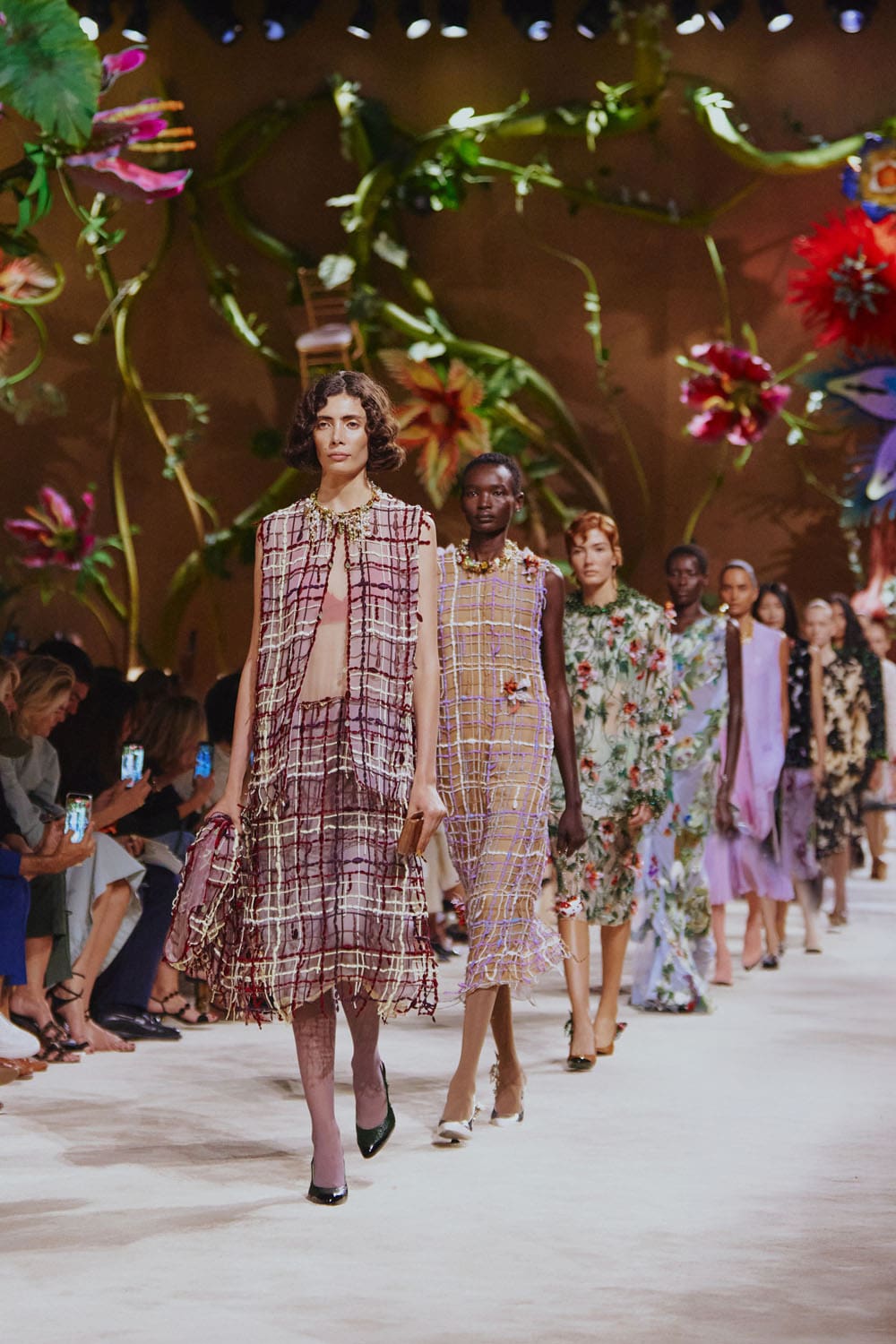
- The expansion from Chanel’s disciplined camellia vocabulary into sprawling vines, exotic flora and overgrown botanical imagery weakens the clarity of the house’s established visual identity
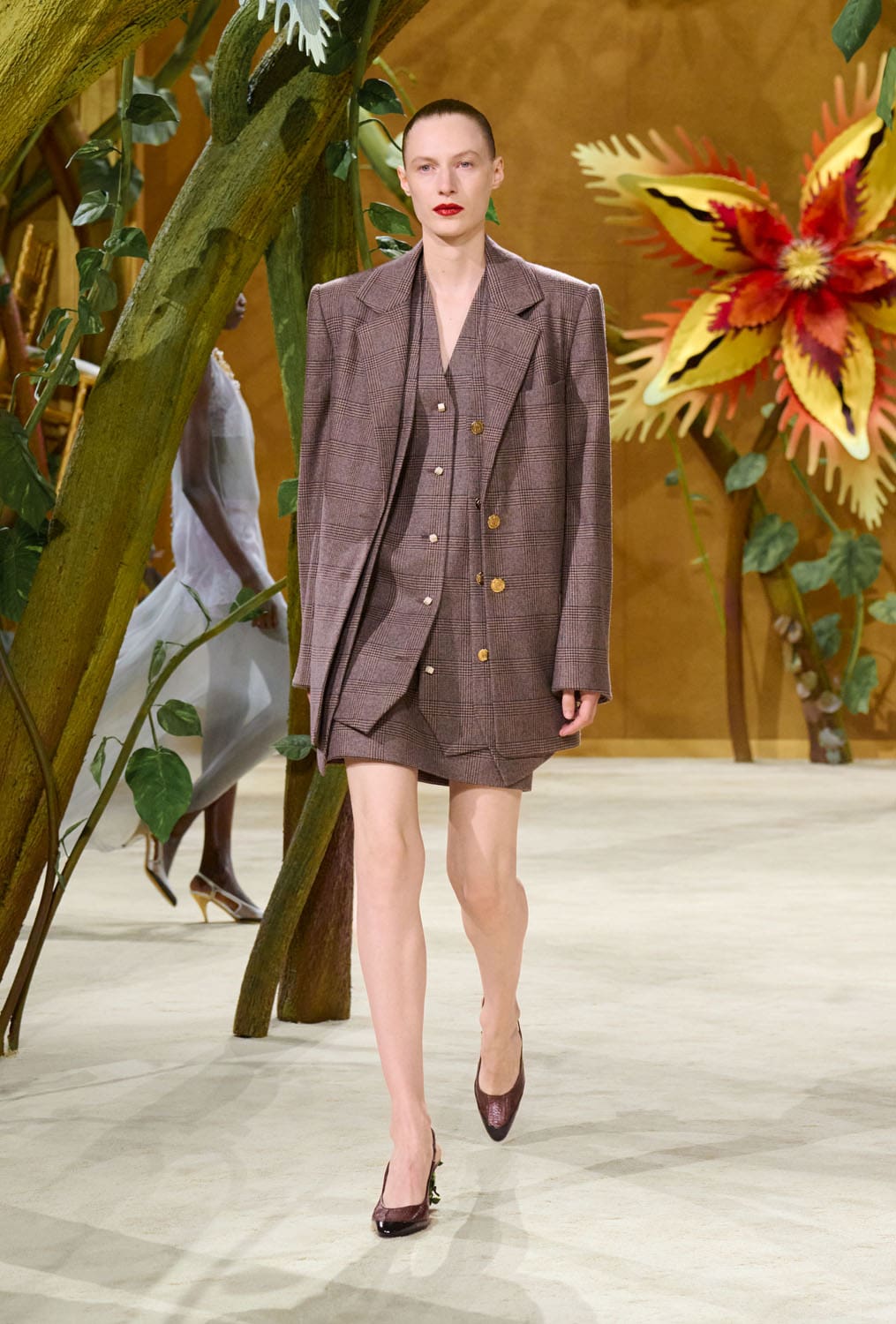
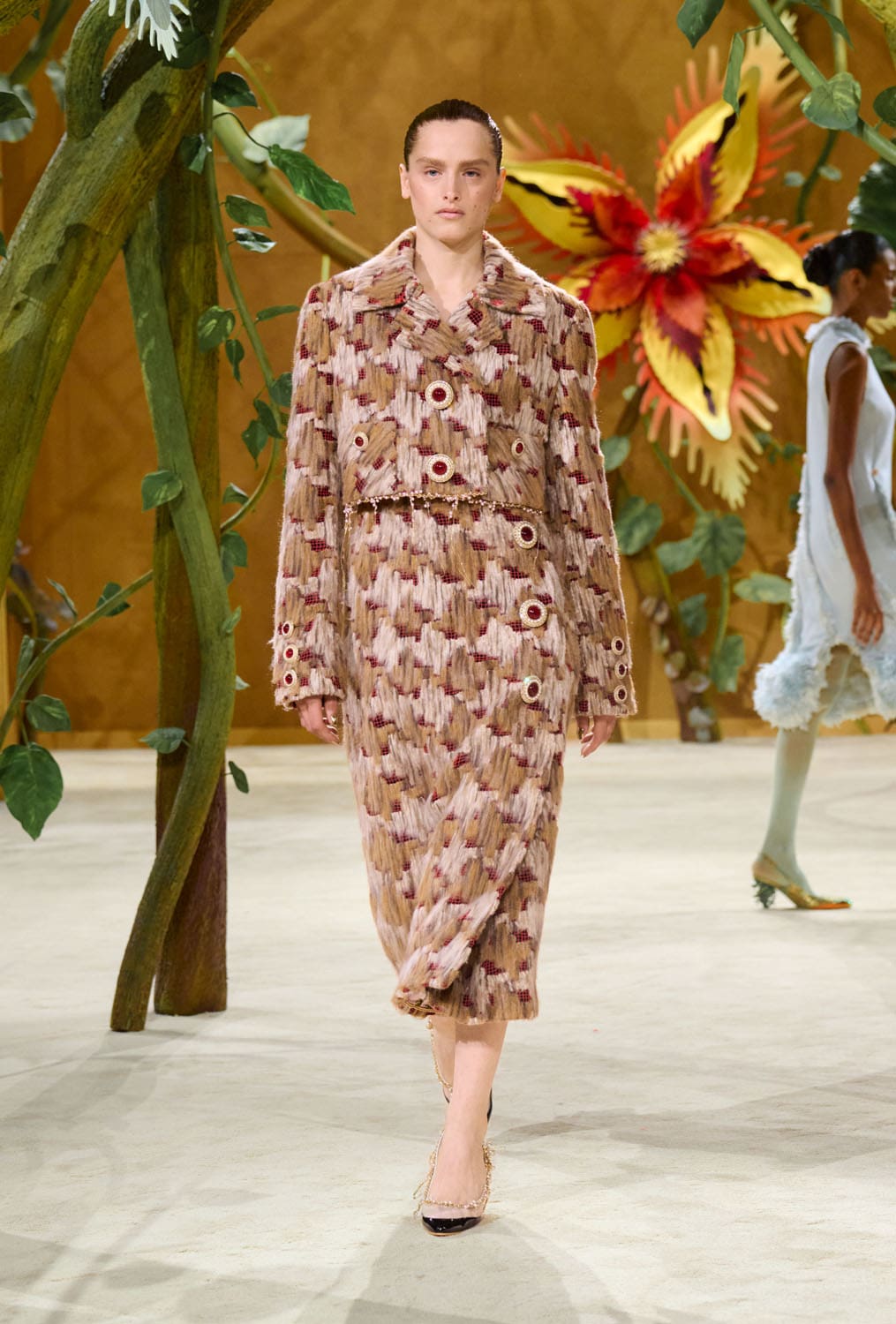
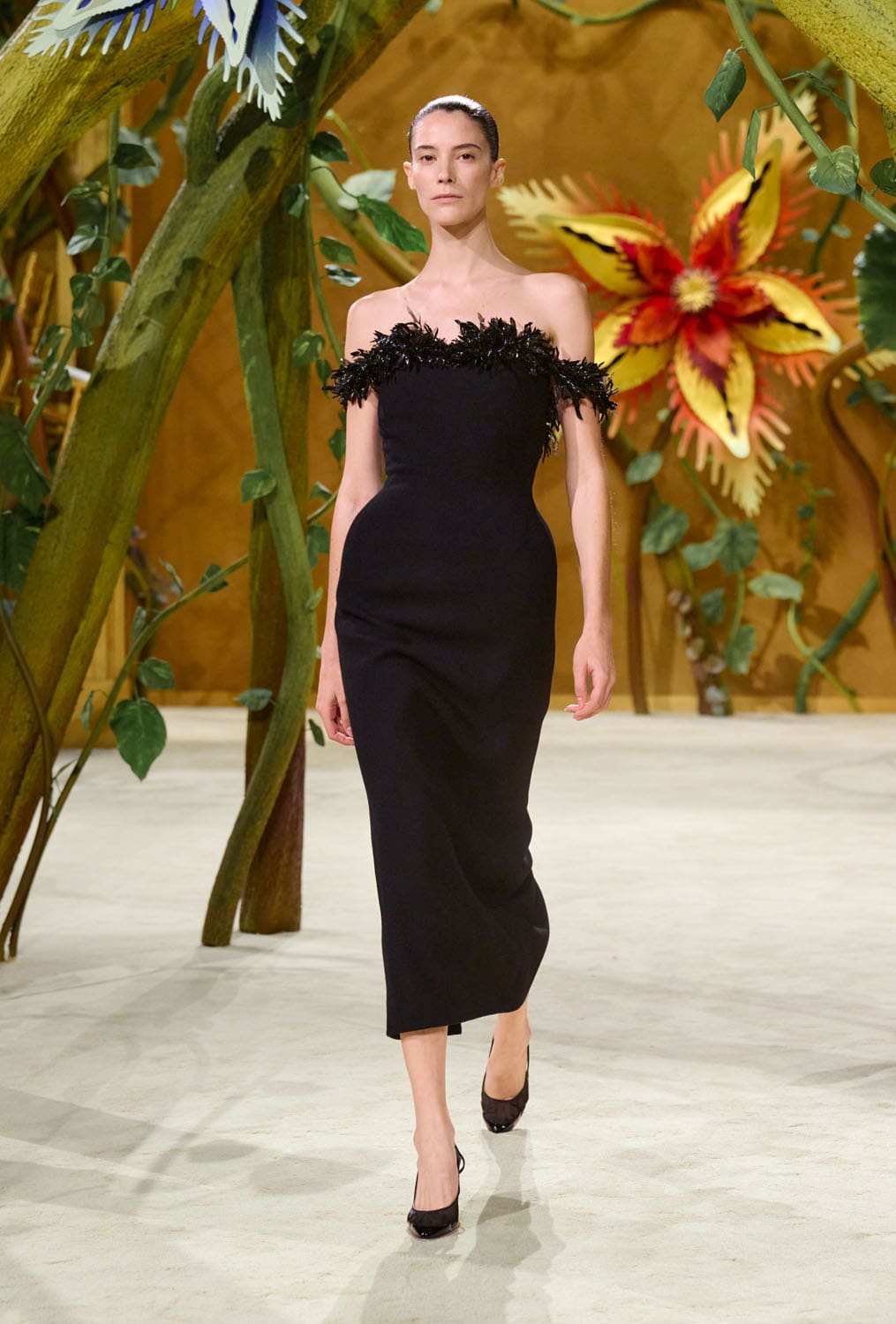
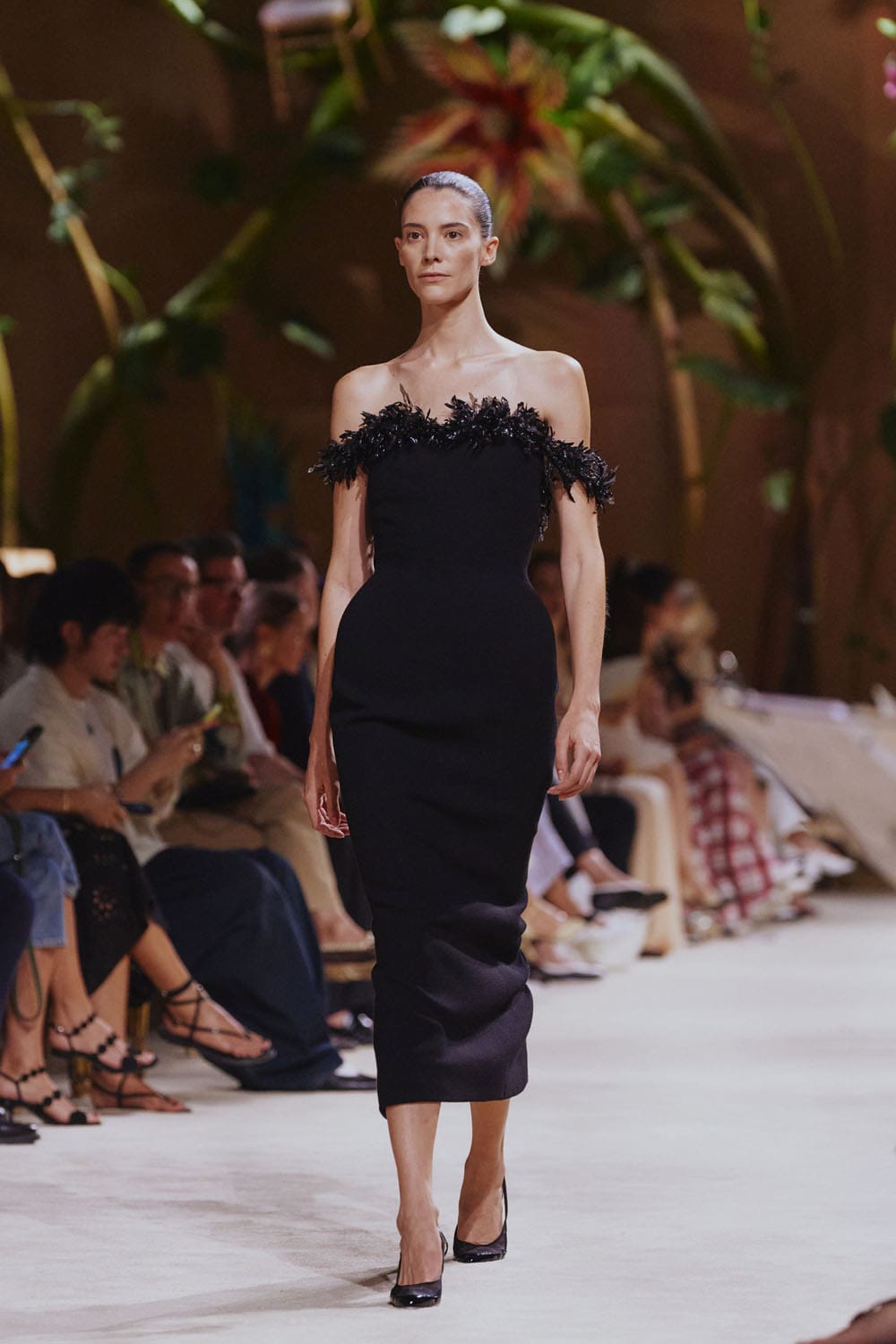
- Several silhouettes allow conceptual eccentricity and aggressive surface treatment to overpower the precision and effortless sophistication traditionally associated with Chanel
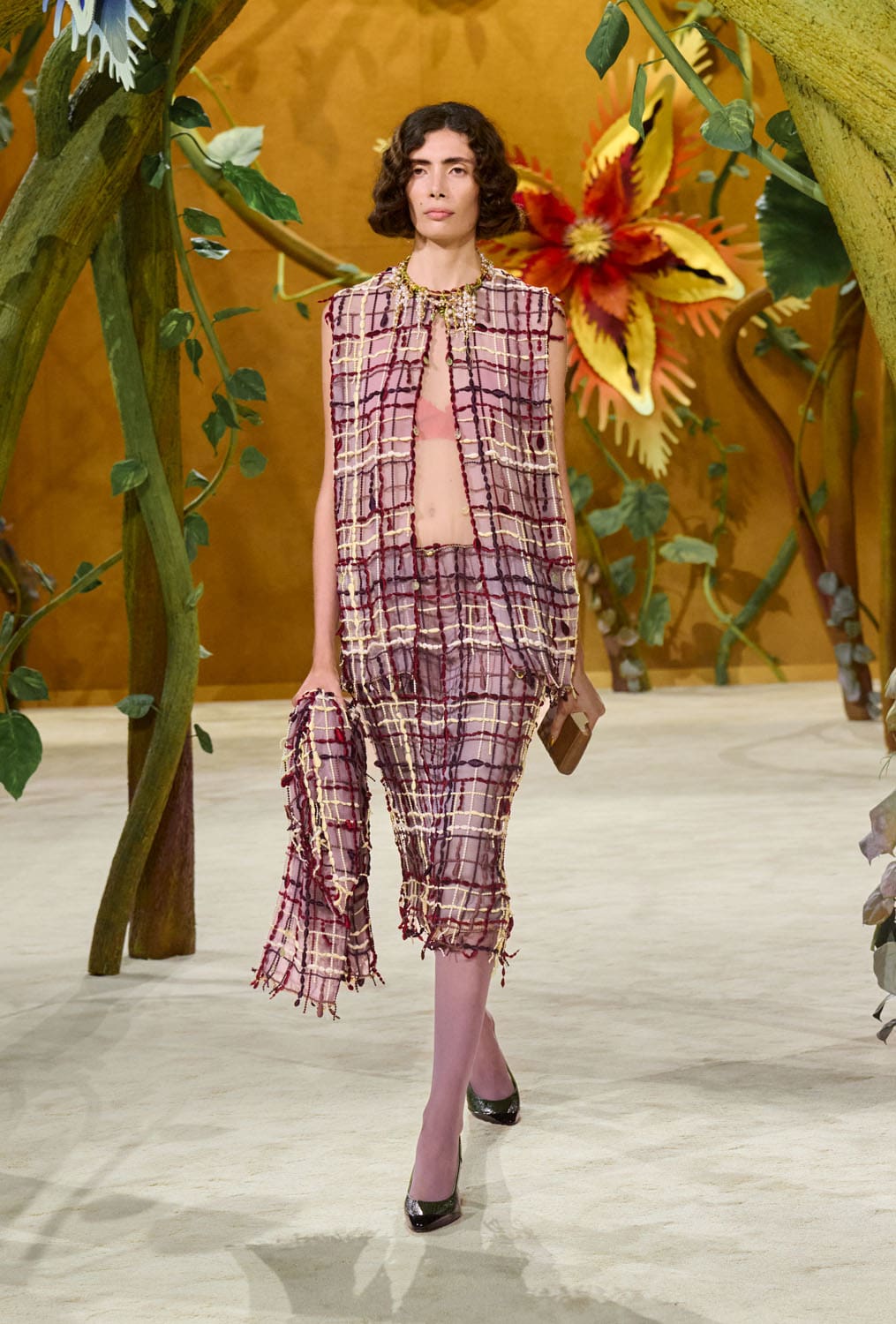
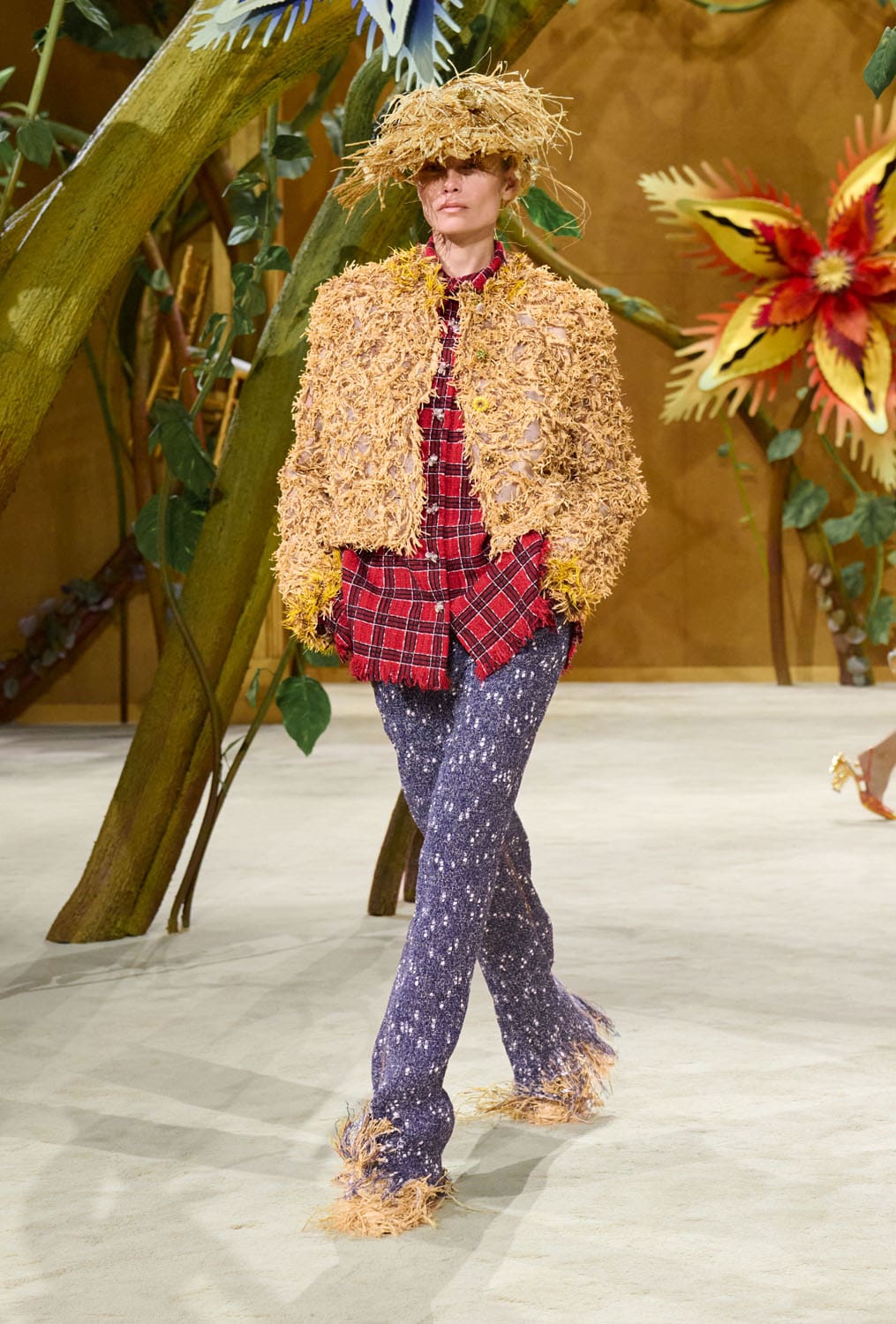
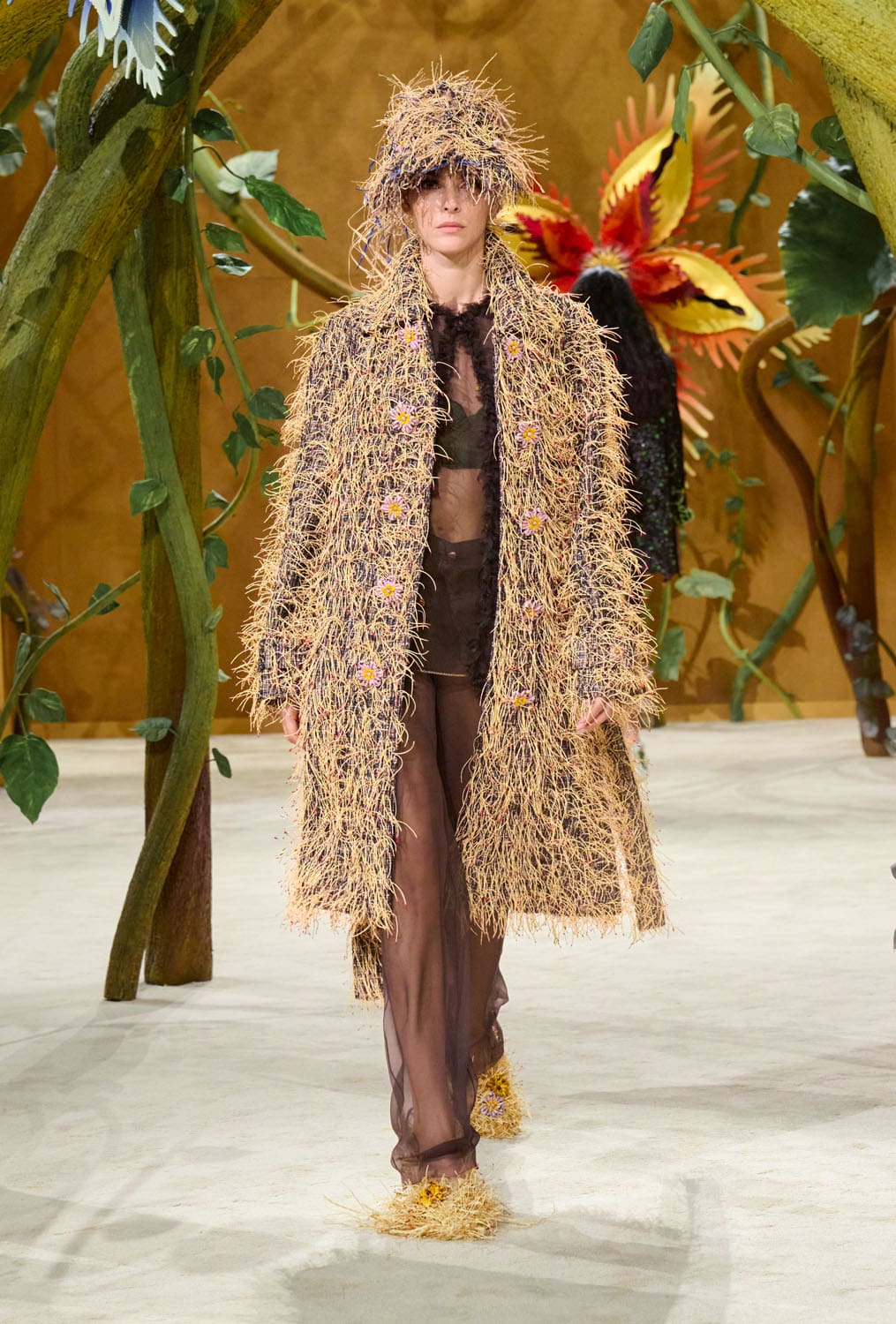
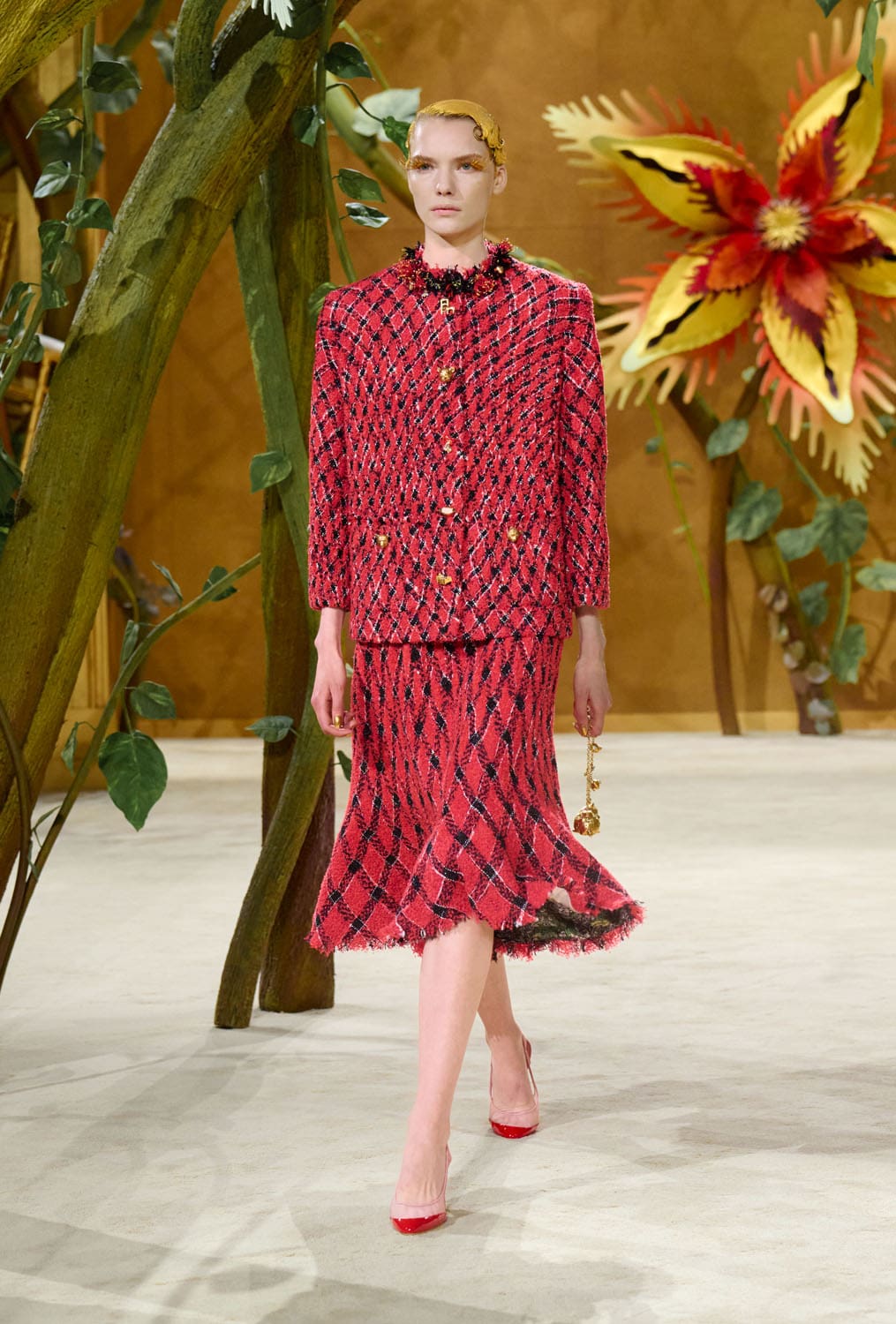
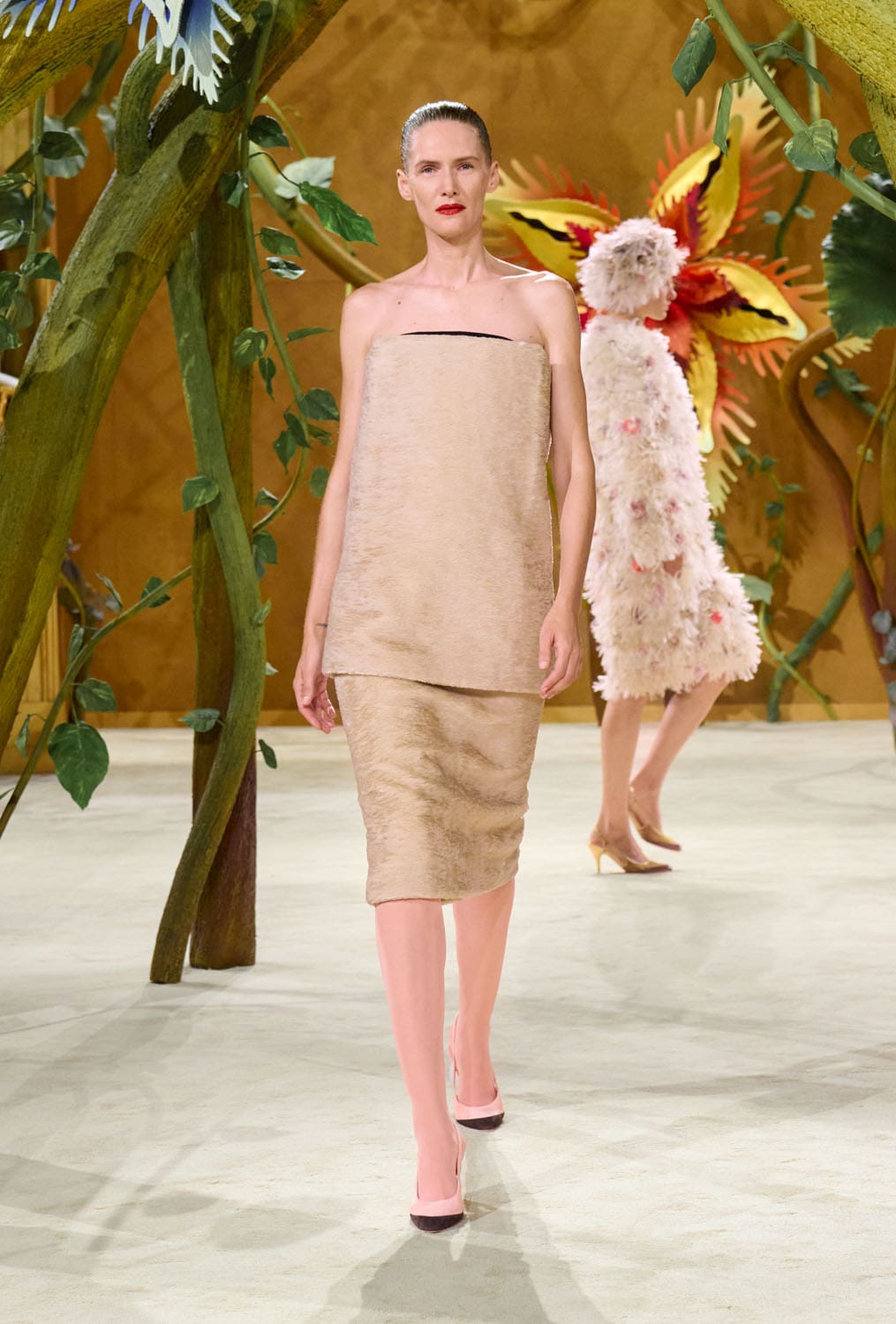
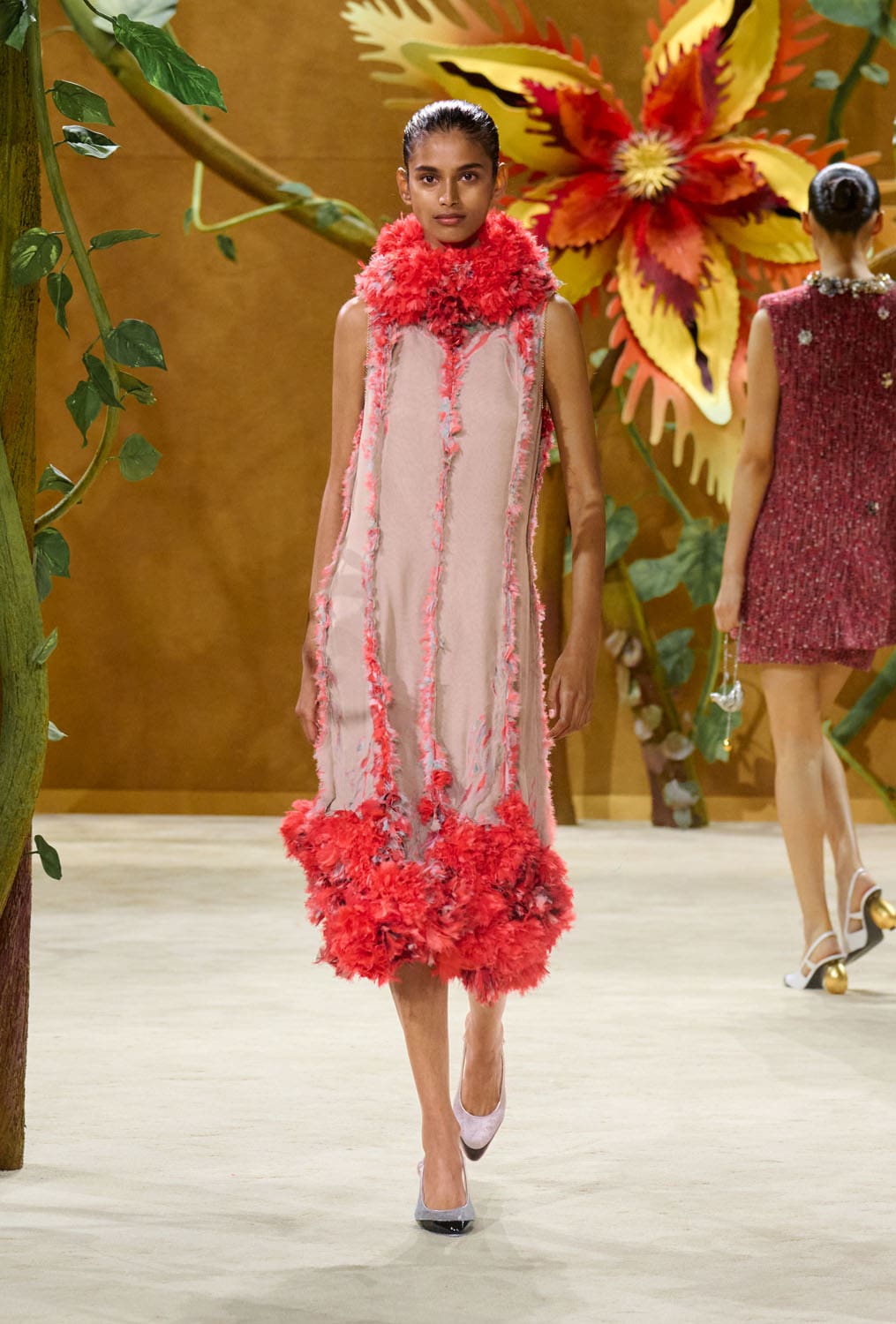
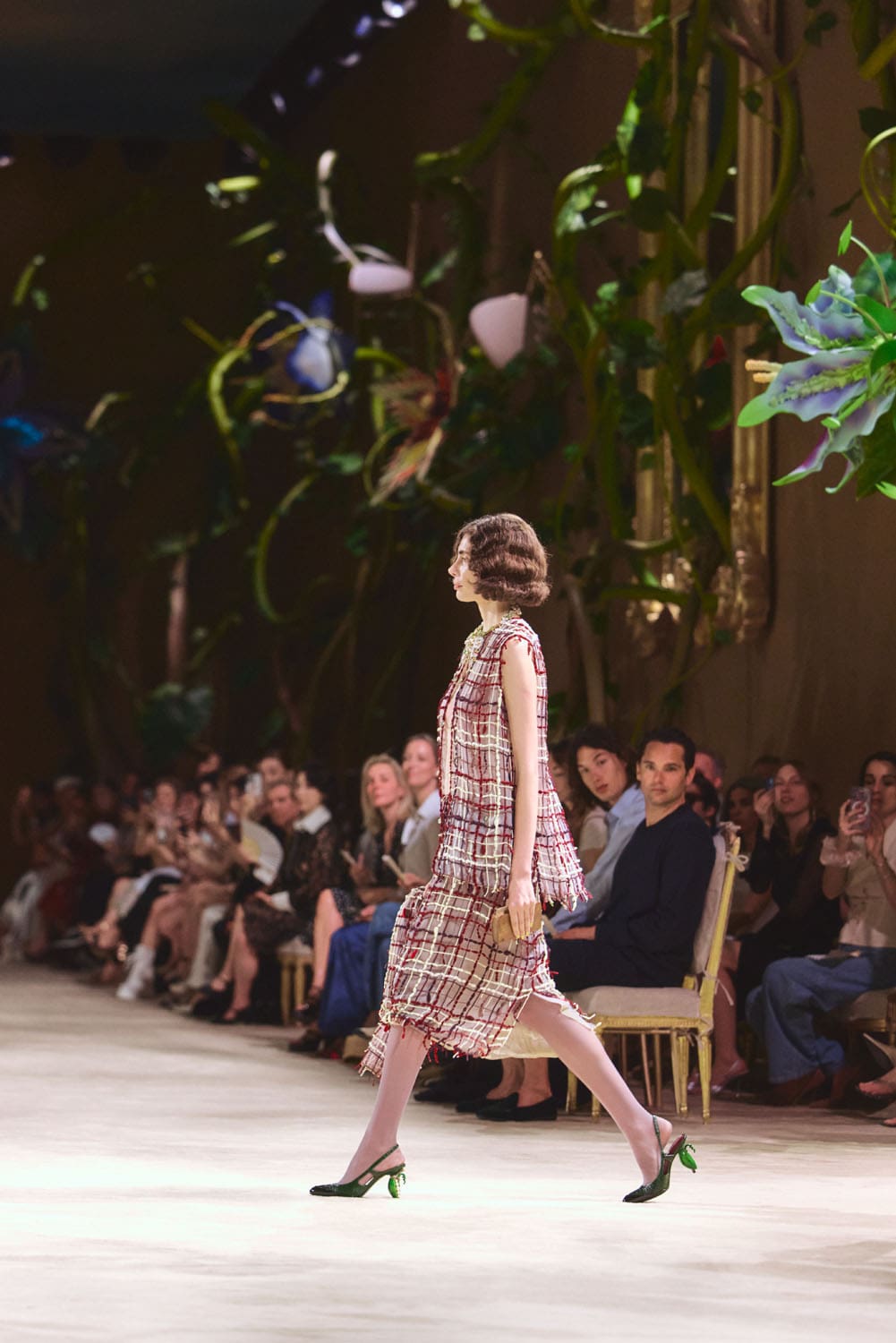
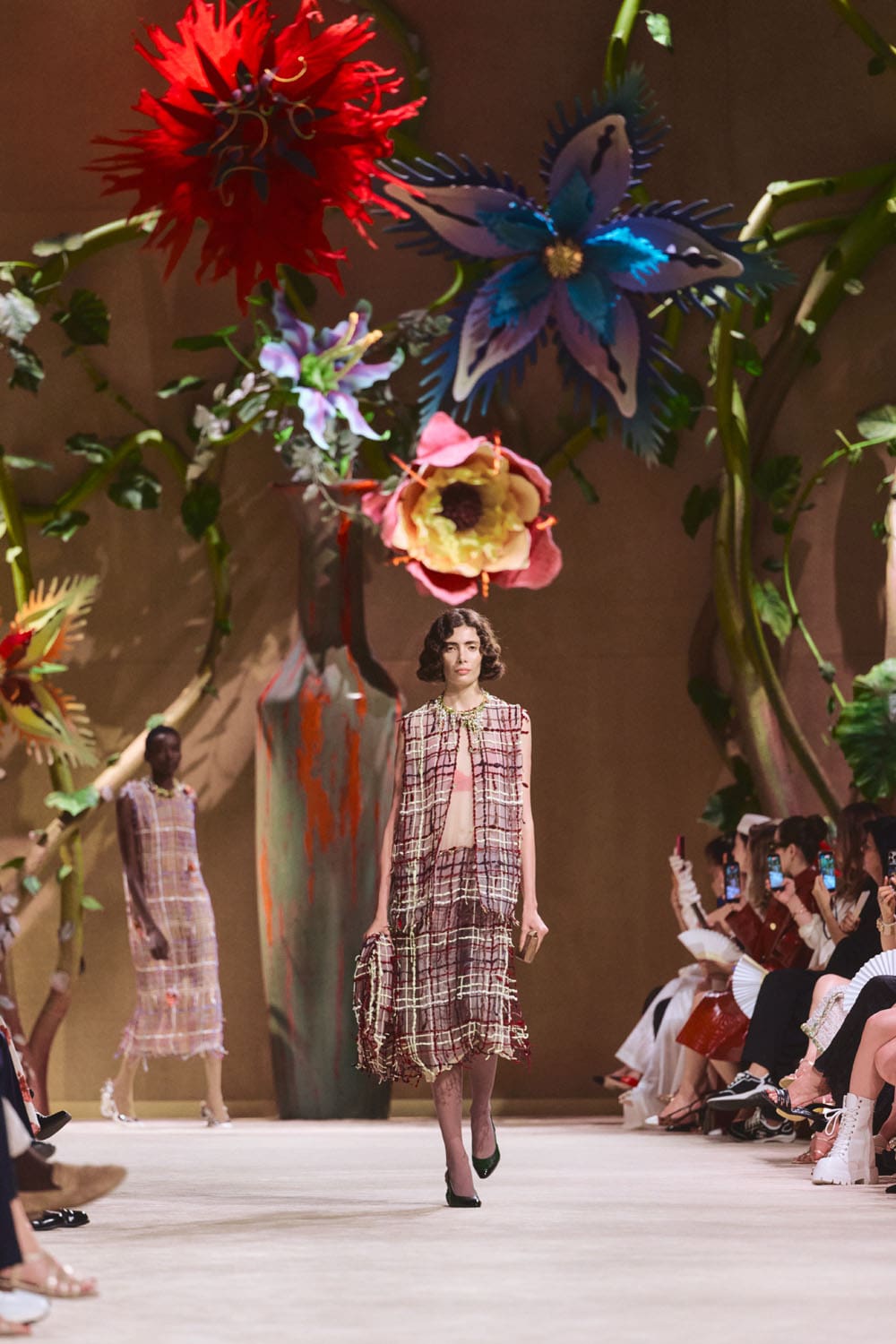
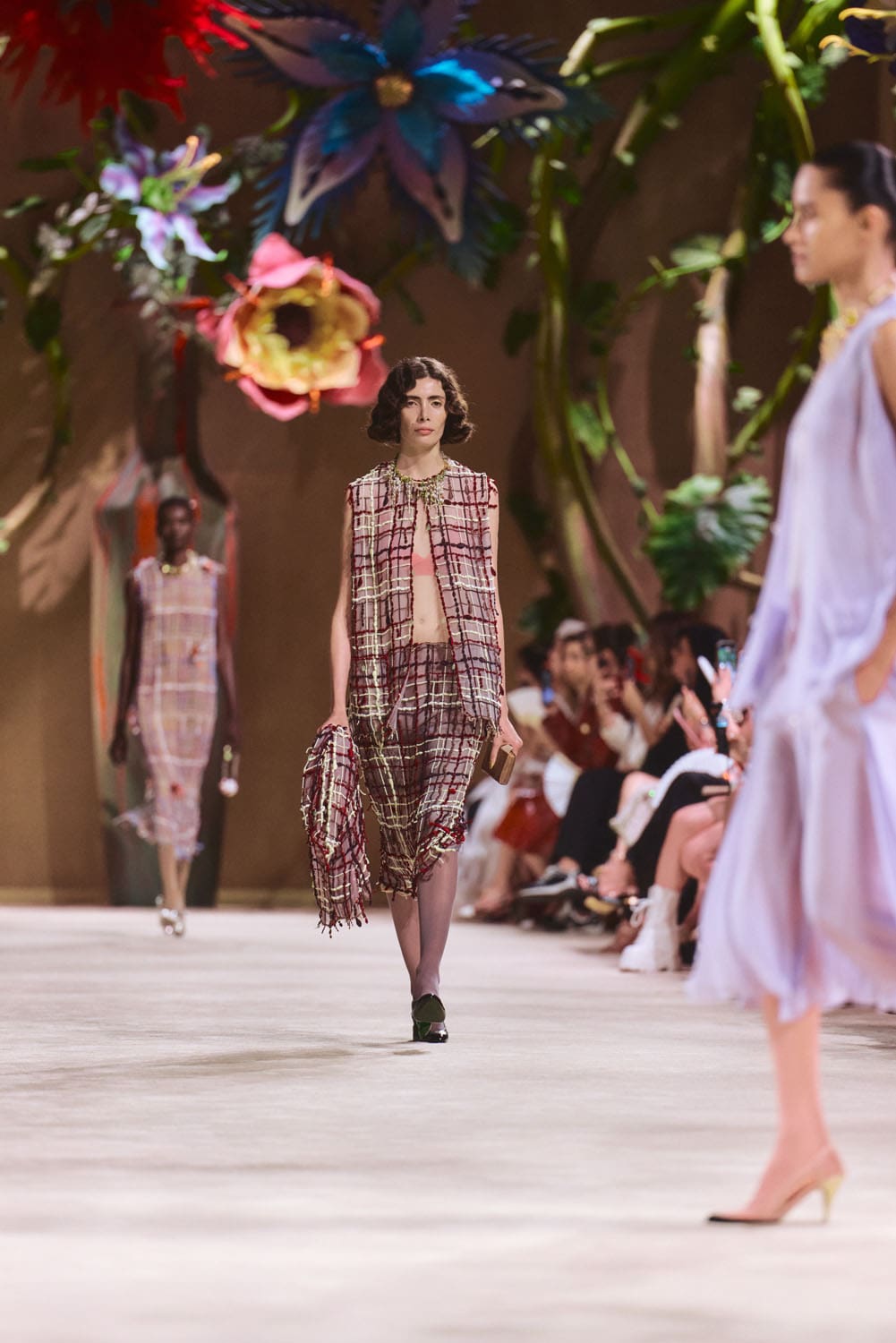
- The agrarian straw-like textures, oversized woven elements, plaid and deliberately disheveled styling create a particularly uneasy dialogue with the urban elegance of Rue Cambon
- Exceptional atelier craftsmanship repeatedly elevates individual garments beyond the strength of the collection’s underlying concept, resulting in remarkable objects without an equally convincing unified narrative
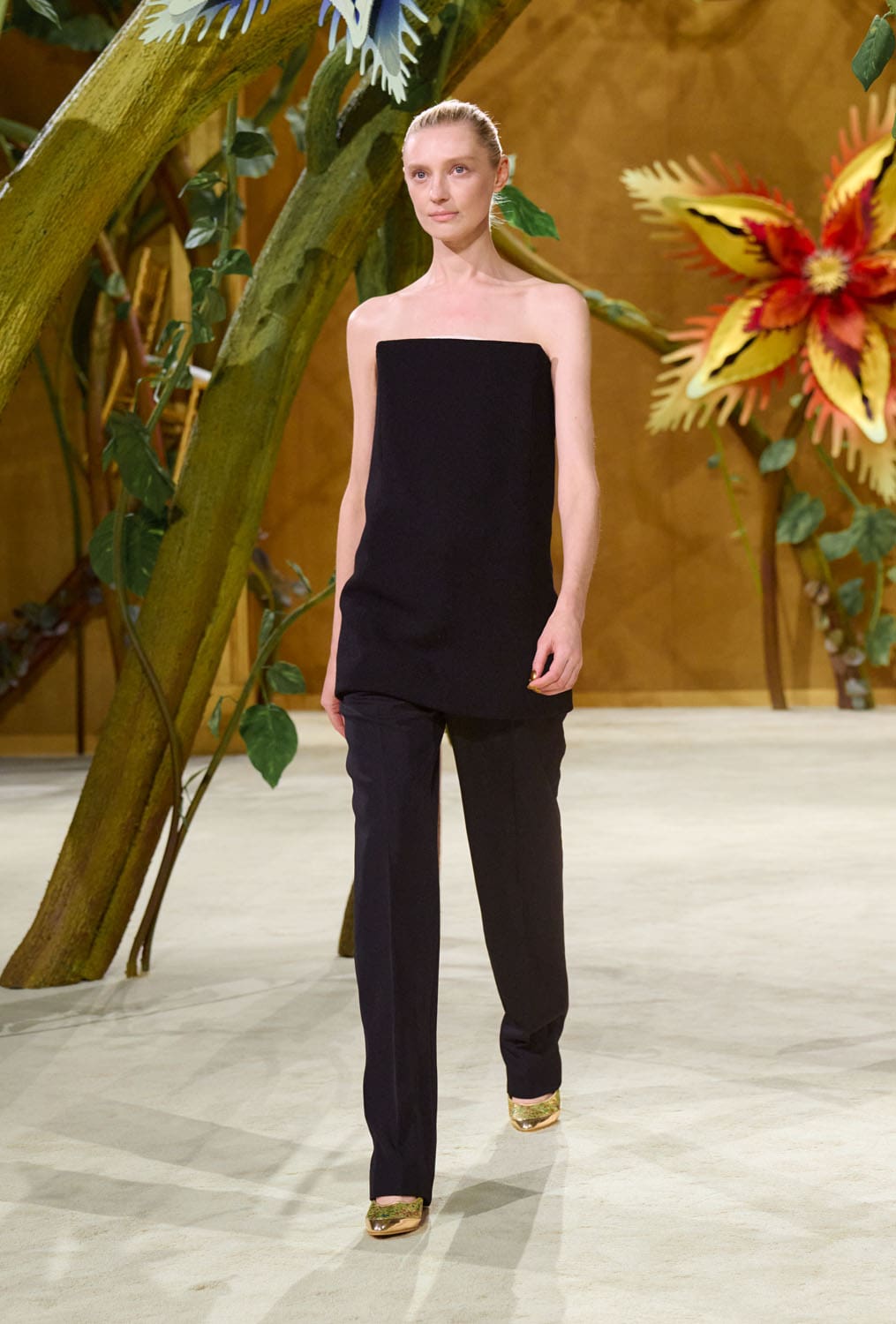
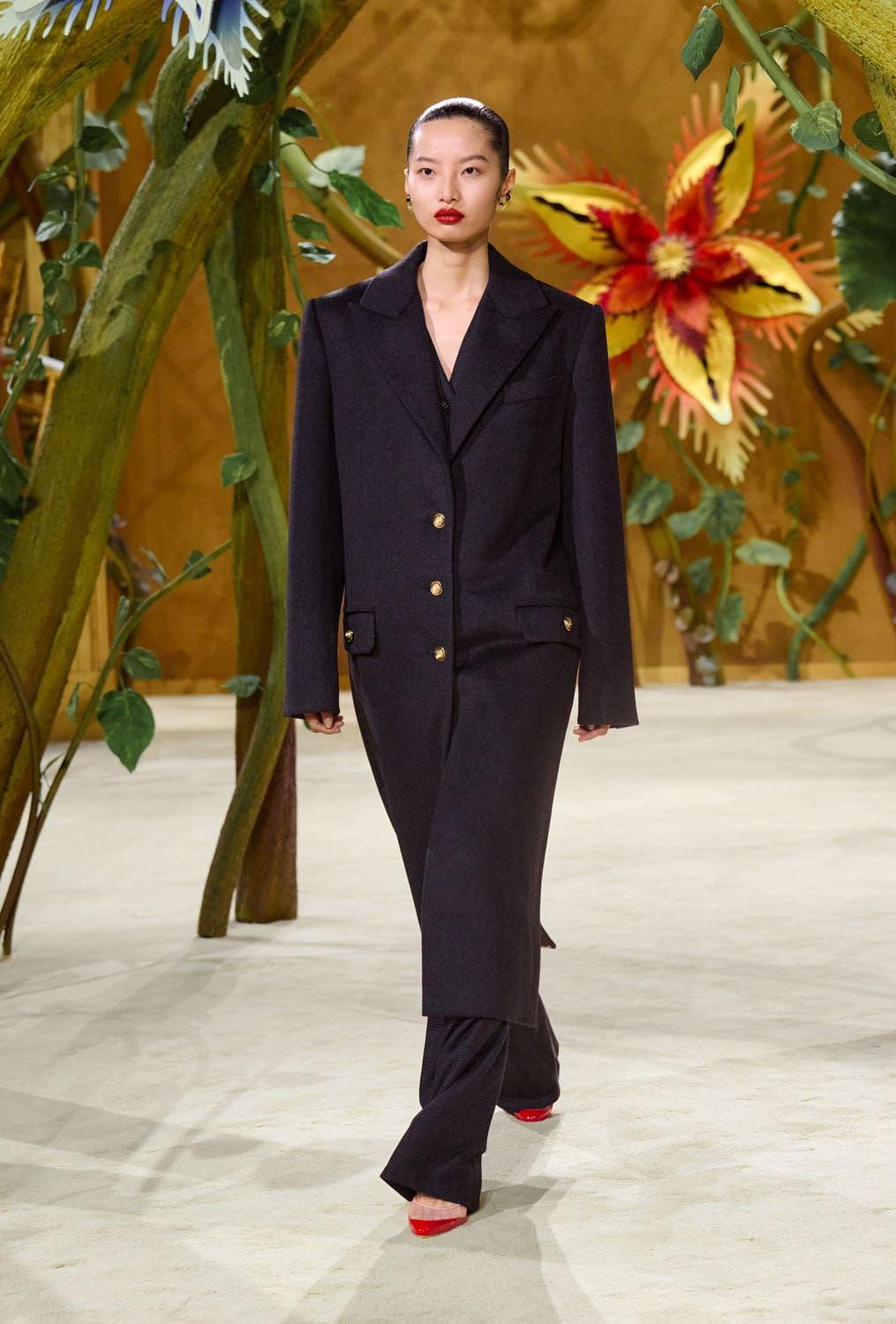
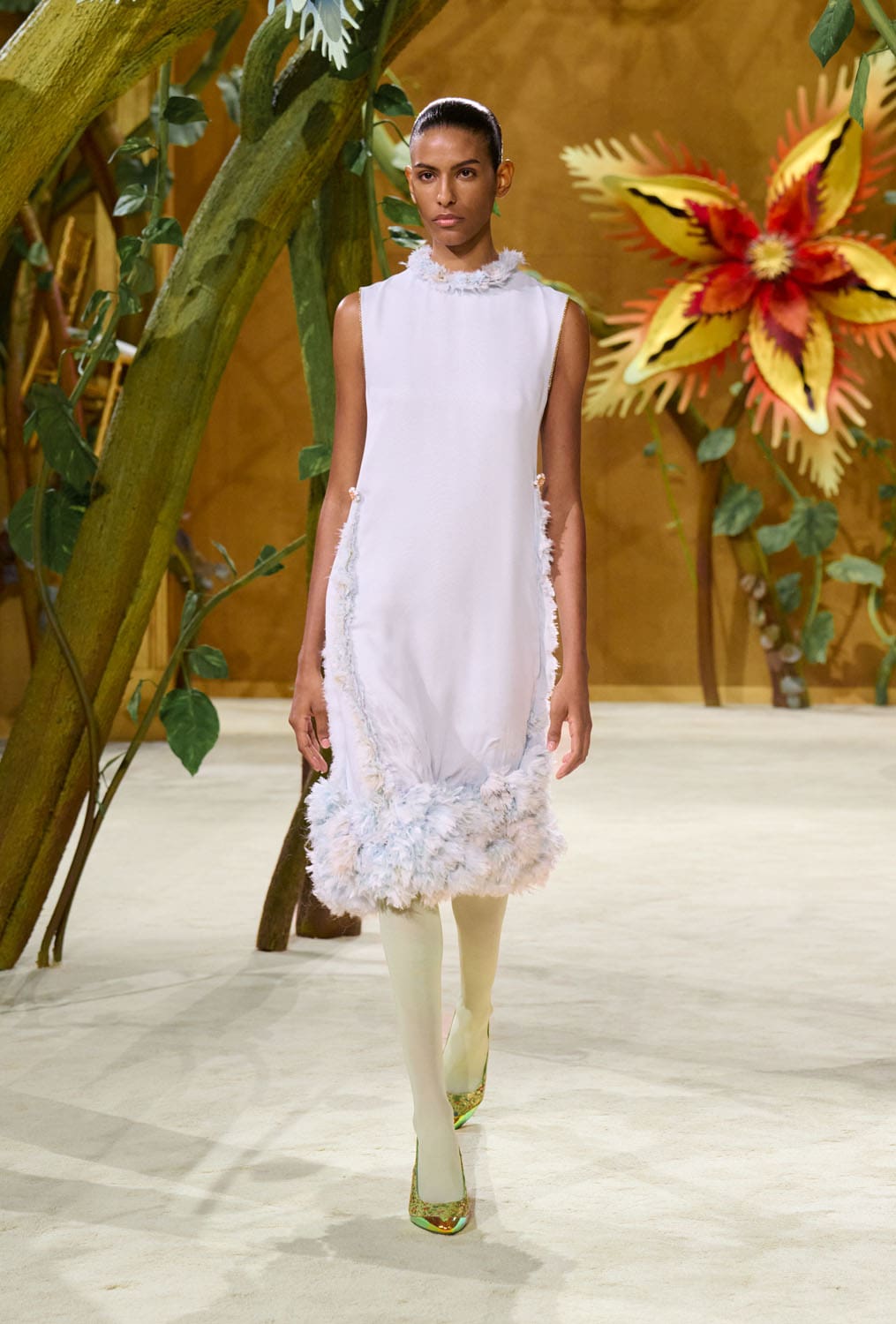
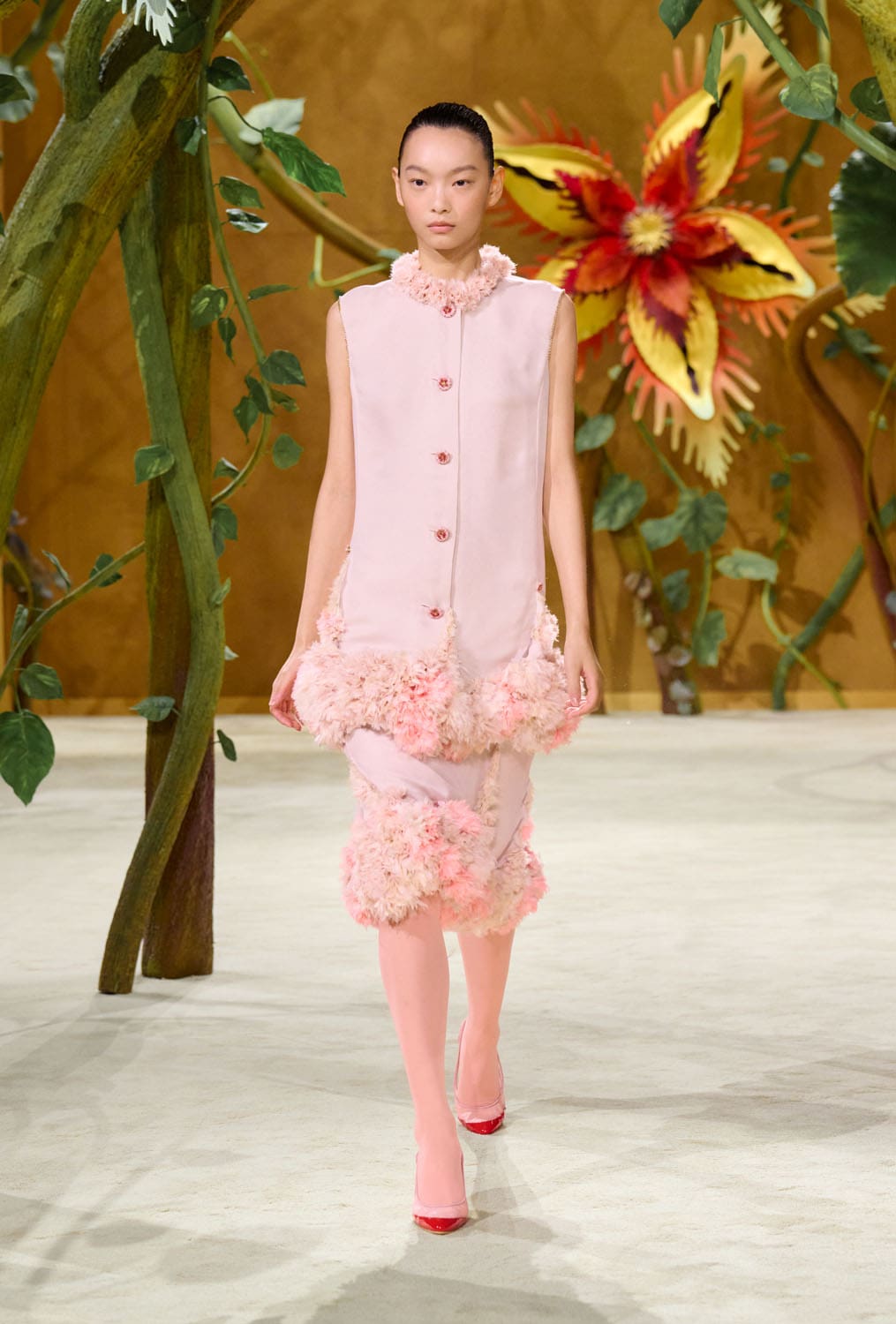
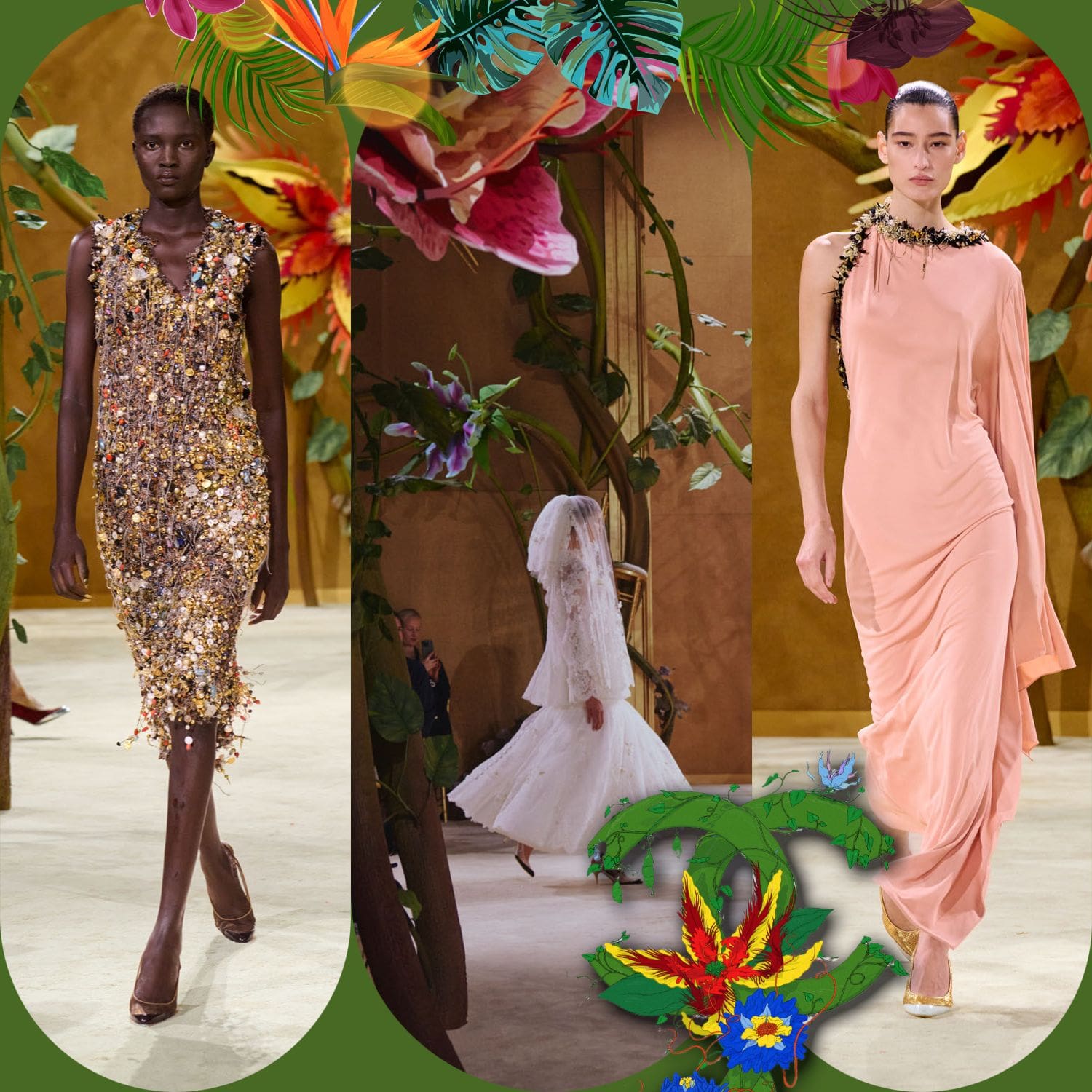
Chanel Fall Winter 2026-2027 Haute Couture “The Beanstalk and the Camellia: The Splendor and the Incoherence of Matthieu Blazy”. Story by Eleonora de Gray, Editor-in-Chief of RUNWAY MAGAZINE. Photo Courtesy: CHANEL.
The Tailored Mythology of le19M
For his sophomore Haute Couture offering, Matthieu Blazy plunges into the literal and figurative library of Rue Cambon, translating the private, interior worlds of childhood fairy tales into the structural realities of modern luxury. There is an undeniable brilliance in how this collection bridges generations; it is a wardrobe constructed not merely for a single muse, but for a lineage of women who view clothing as a narrative vessel.
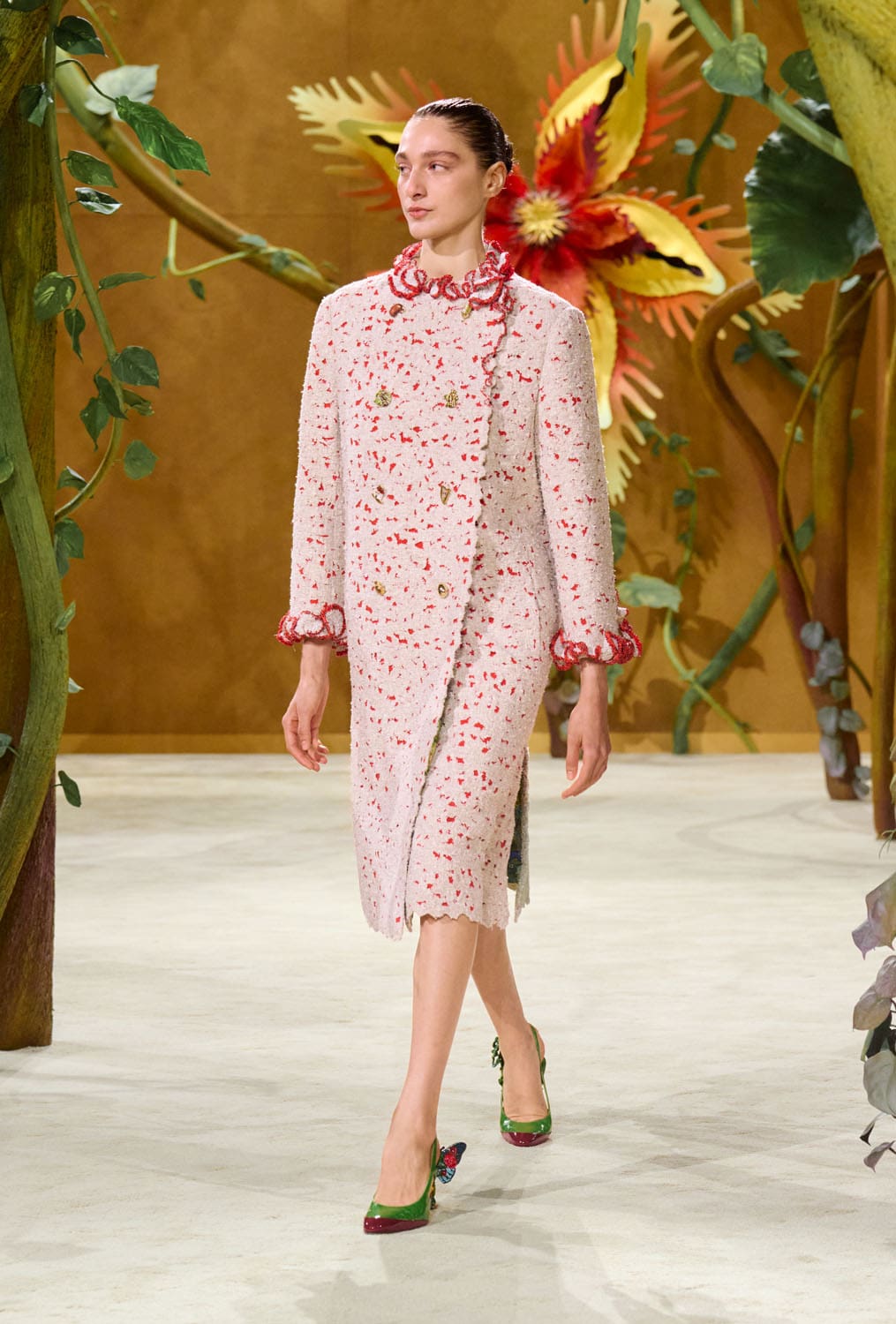
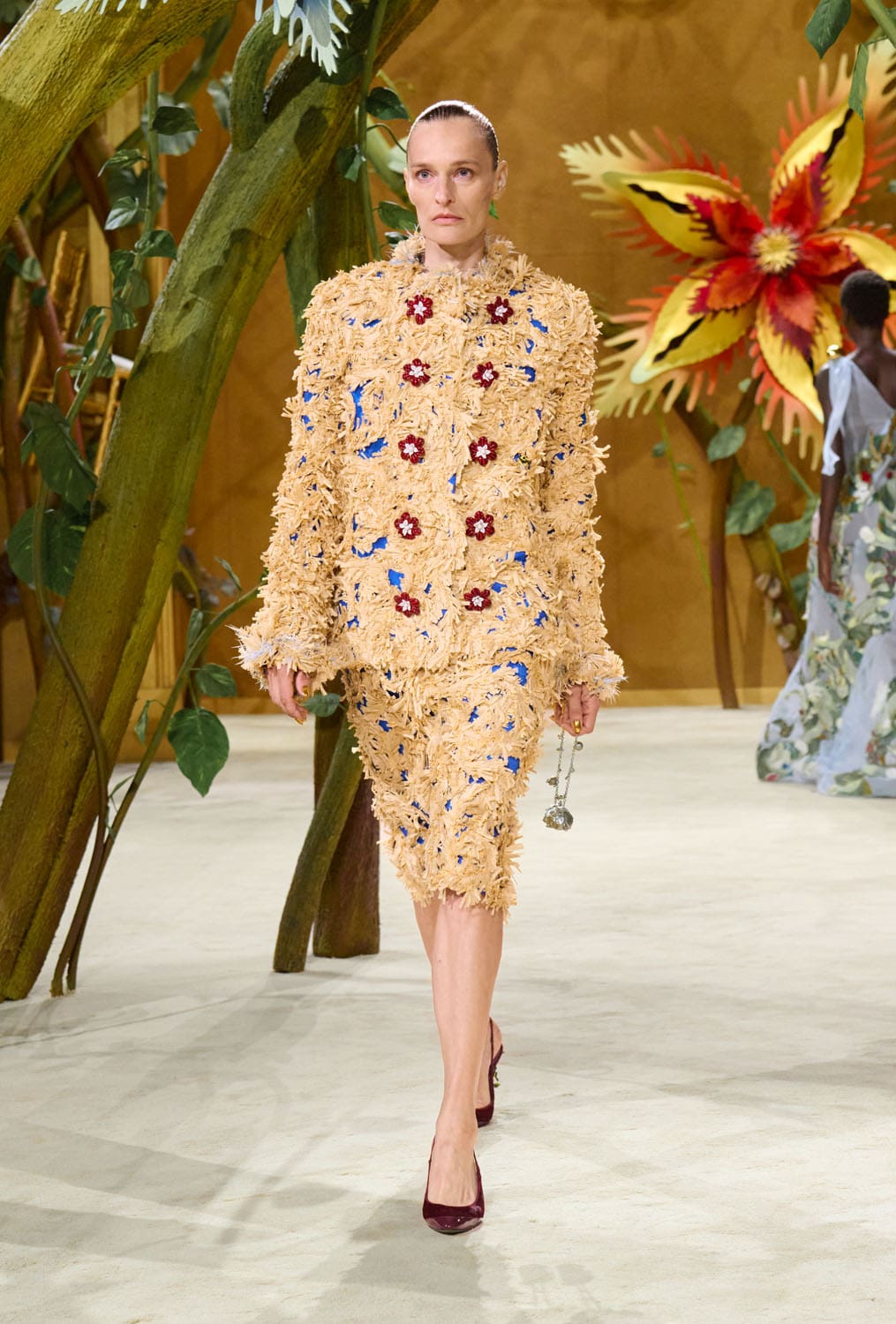
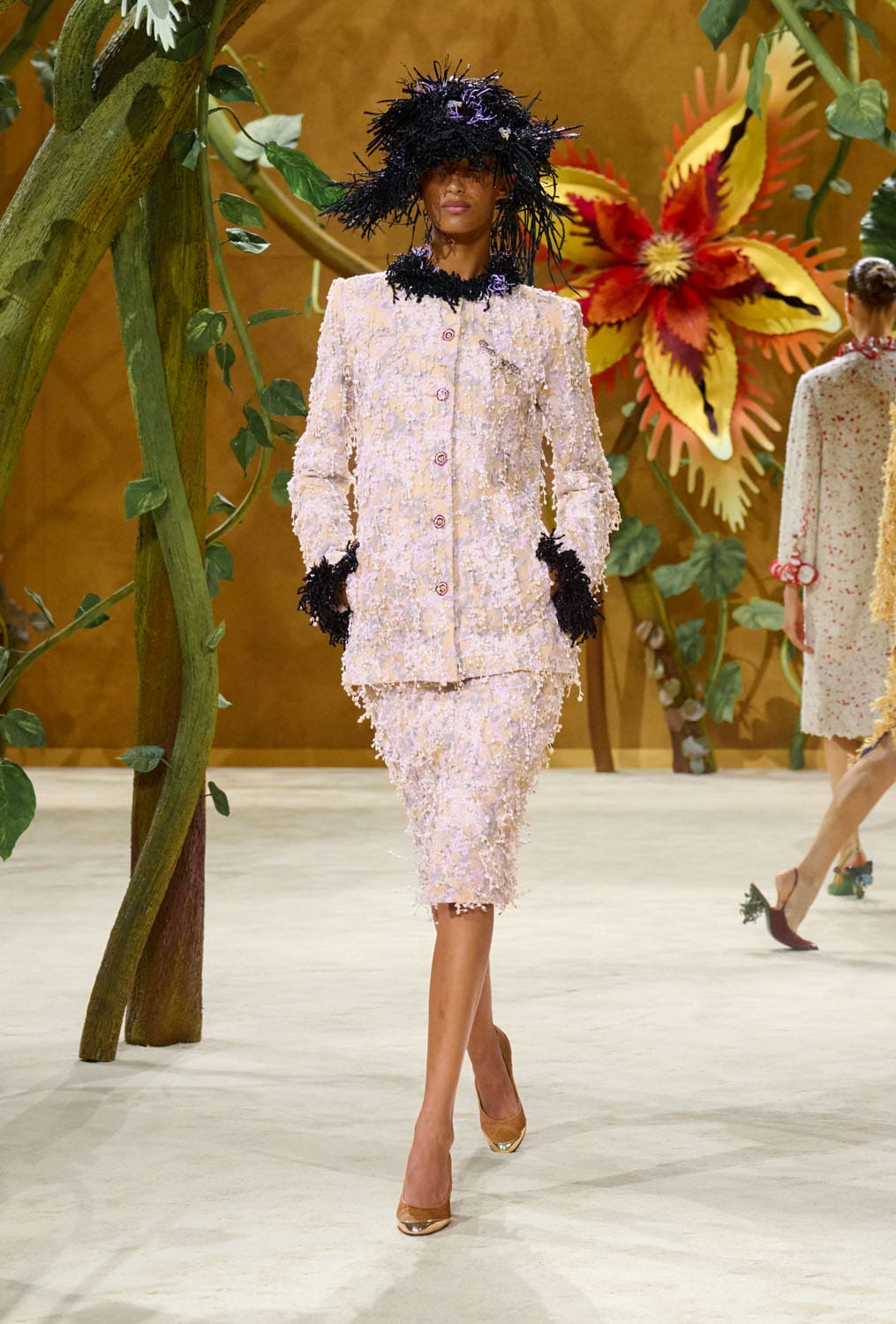
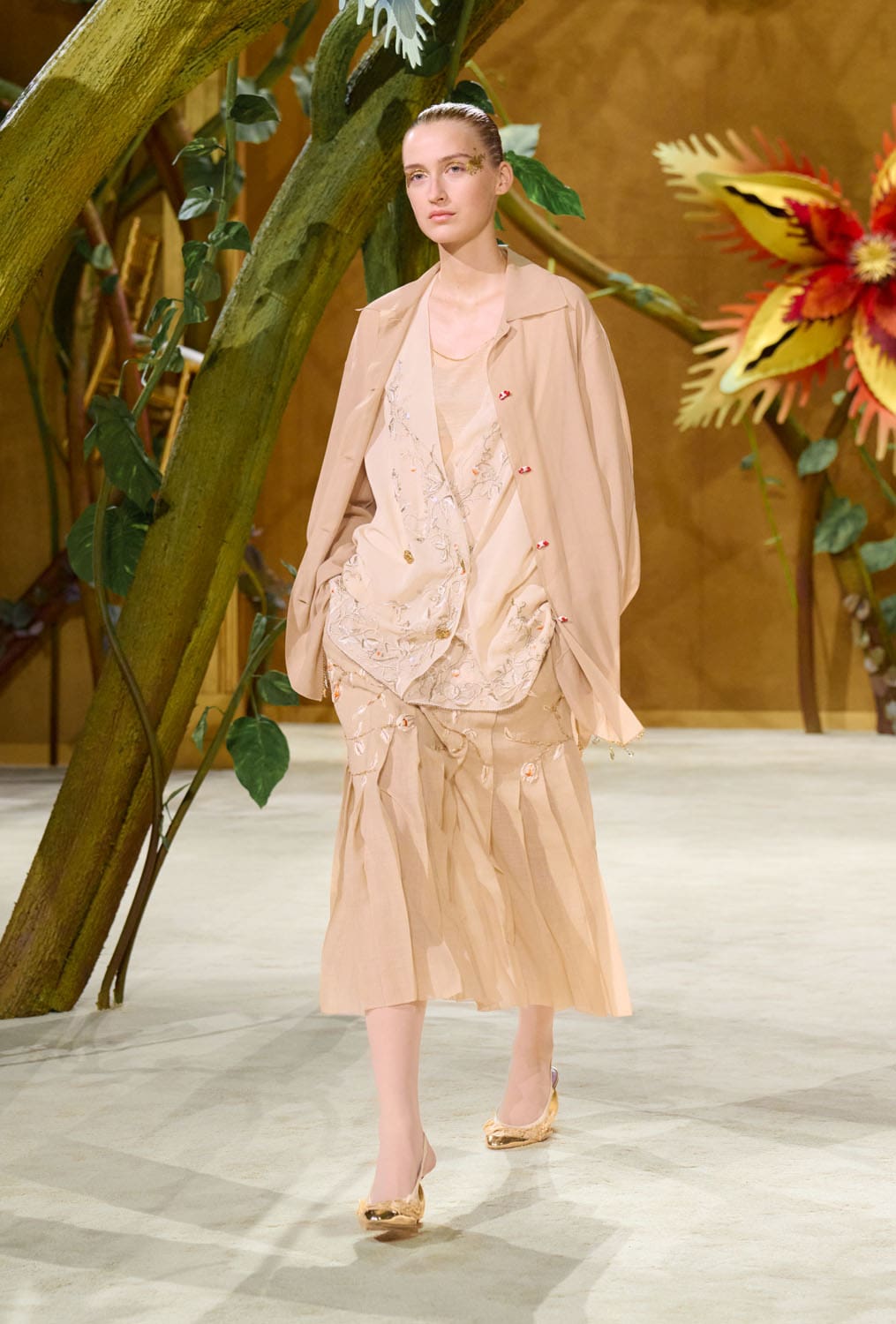
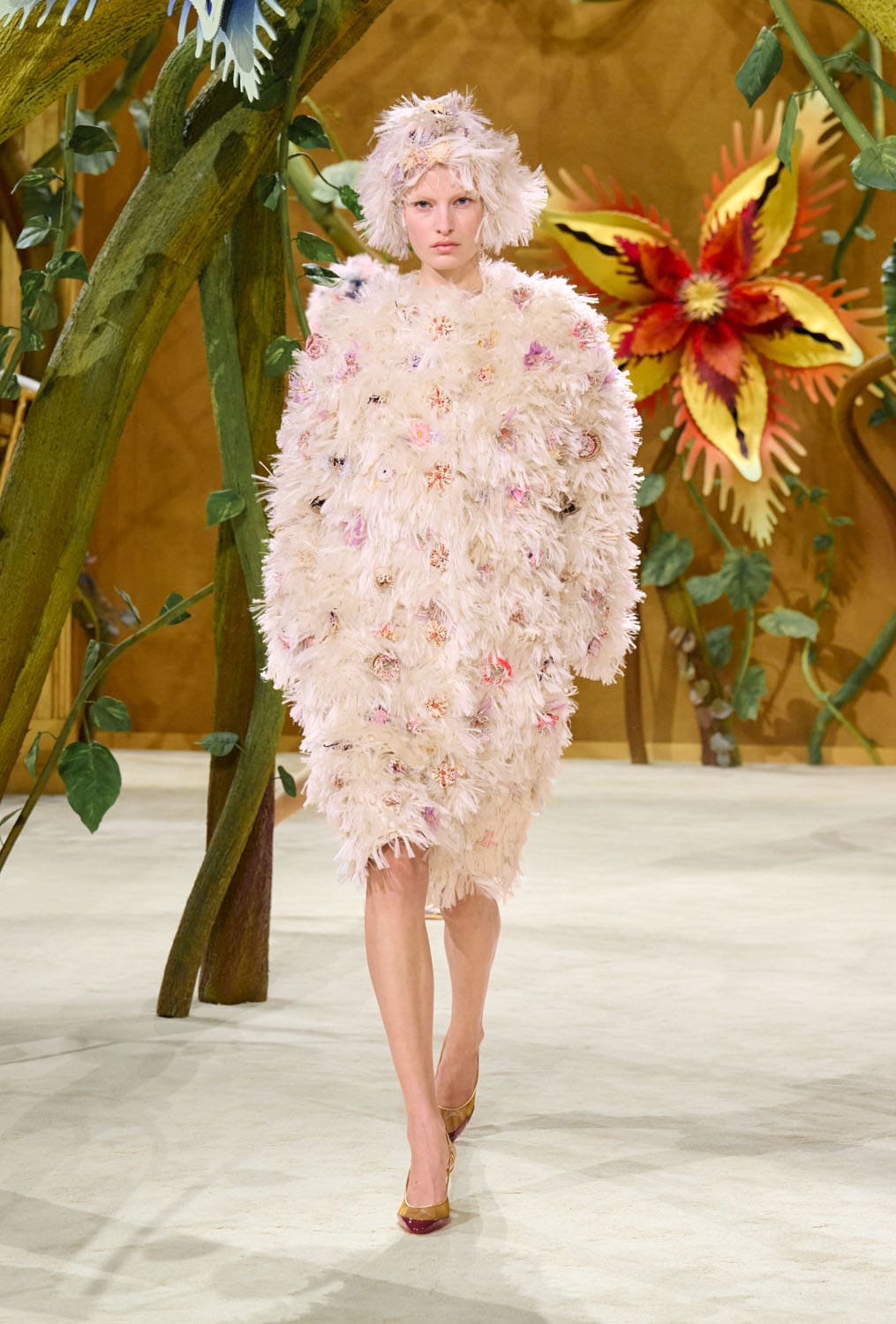
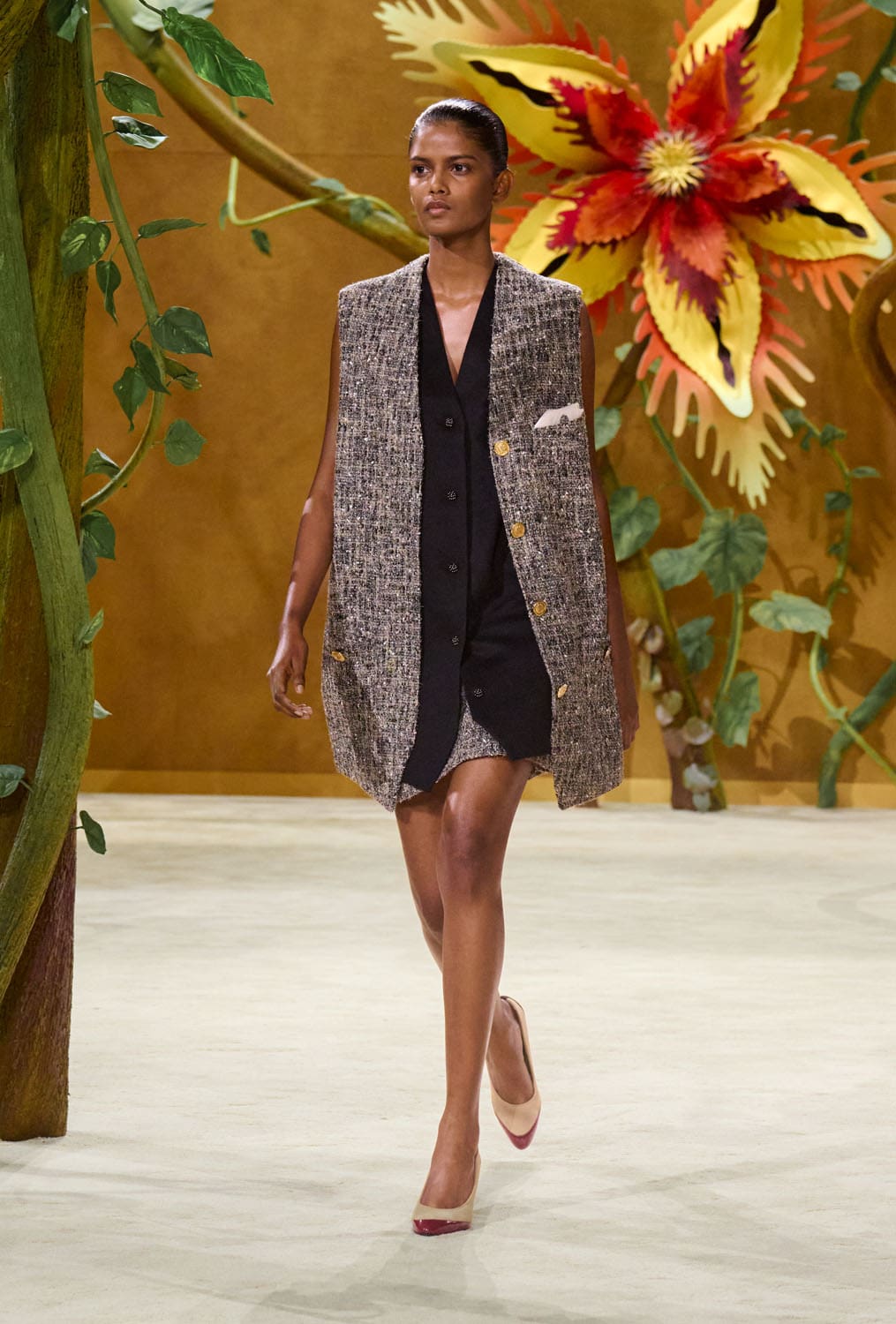
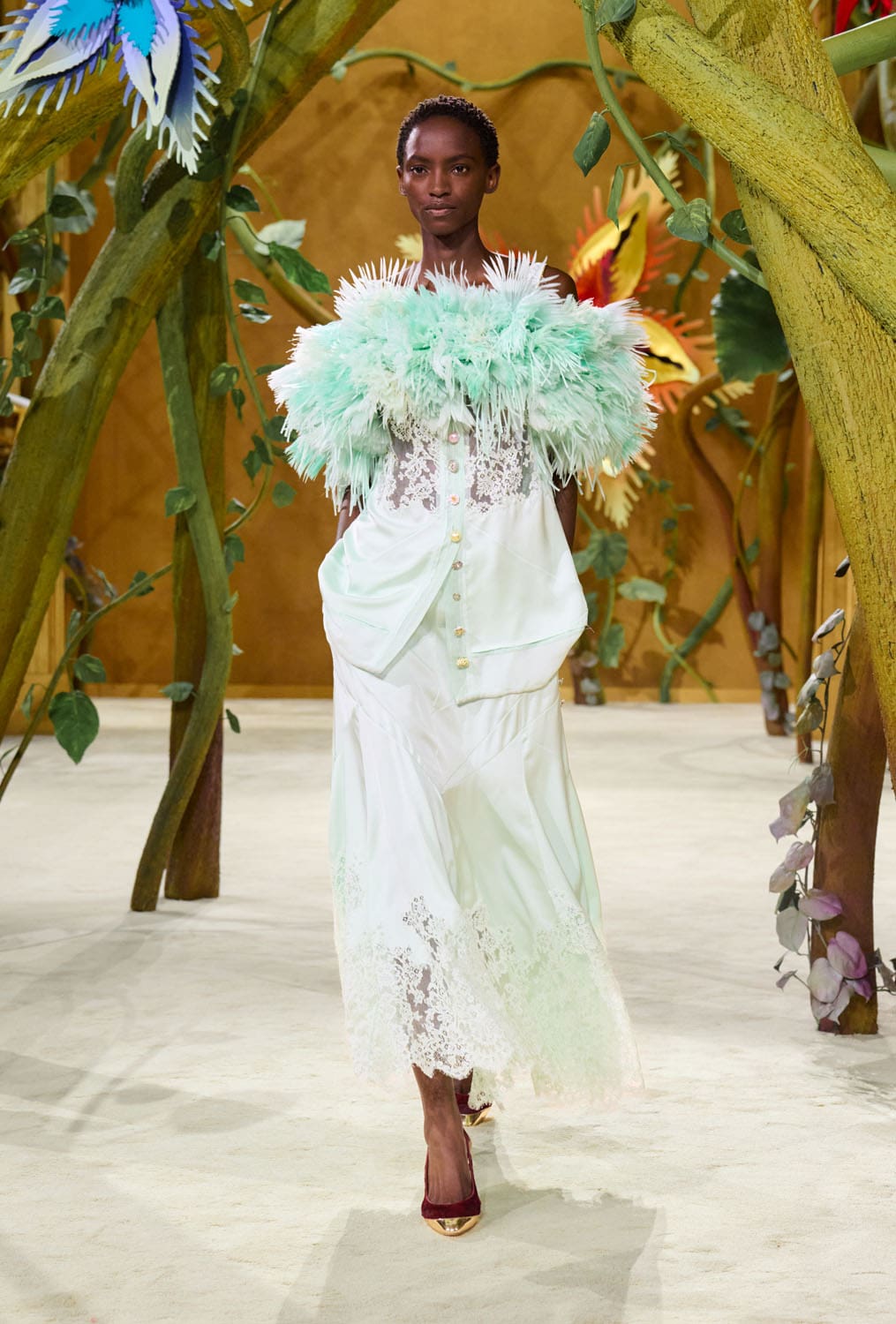
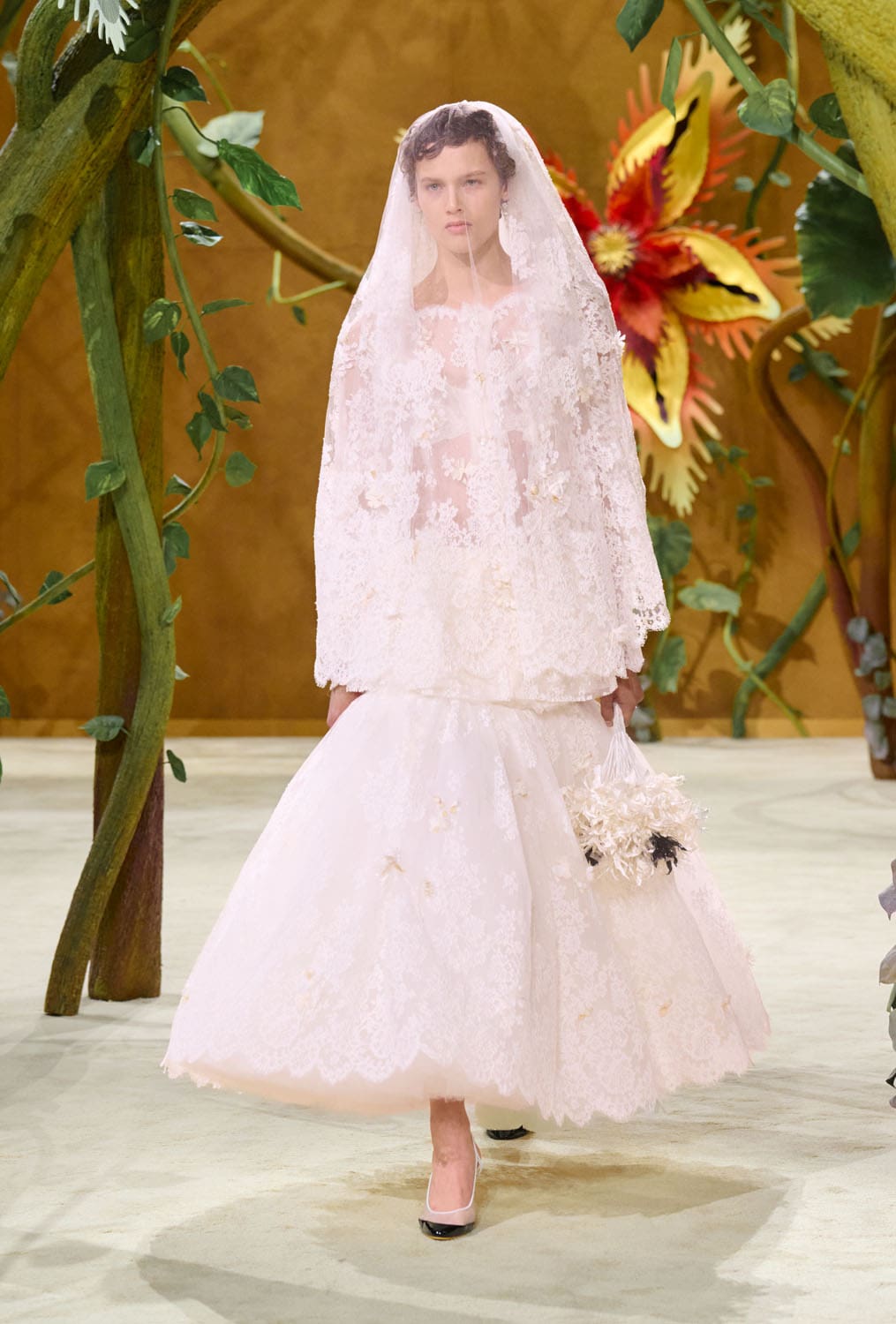
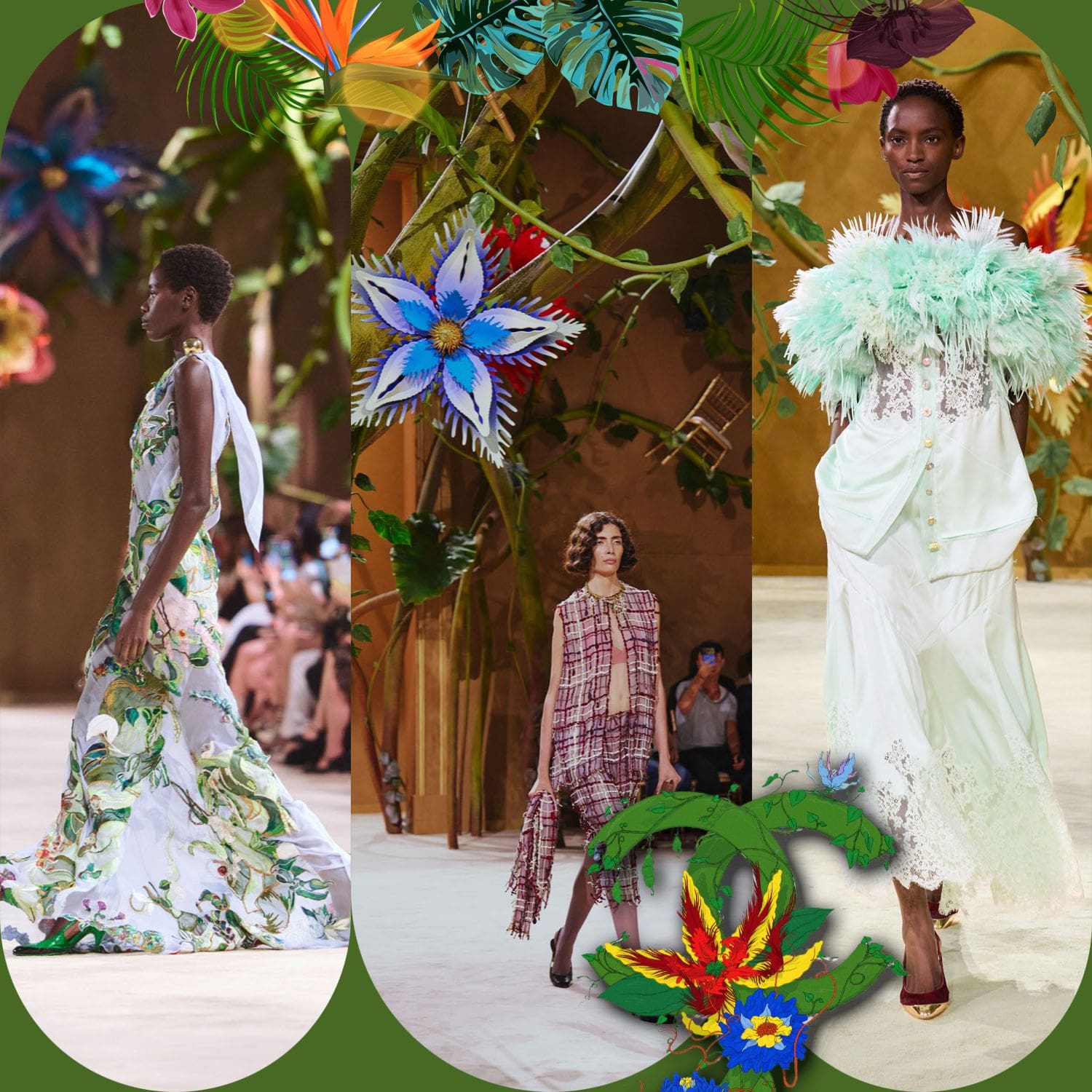
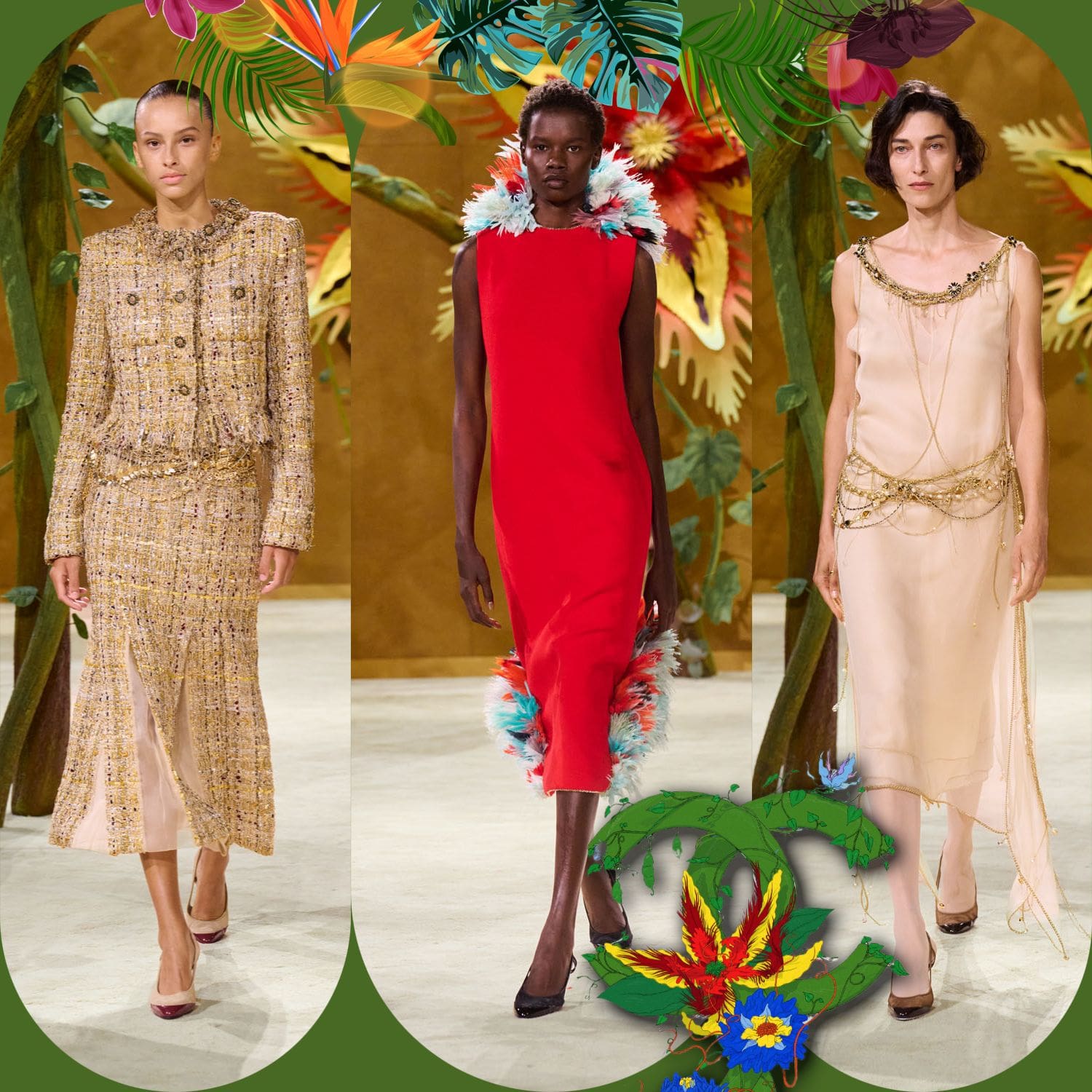
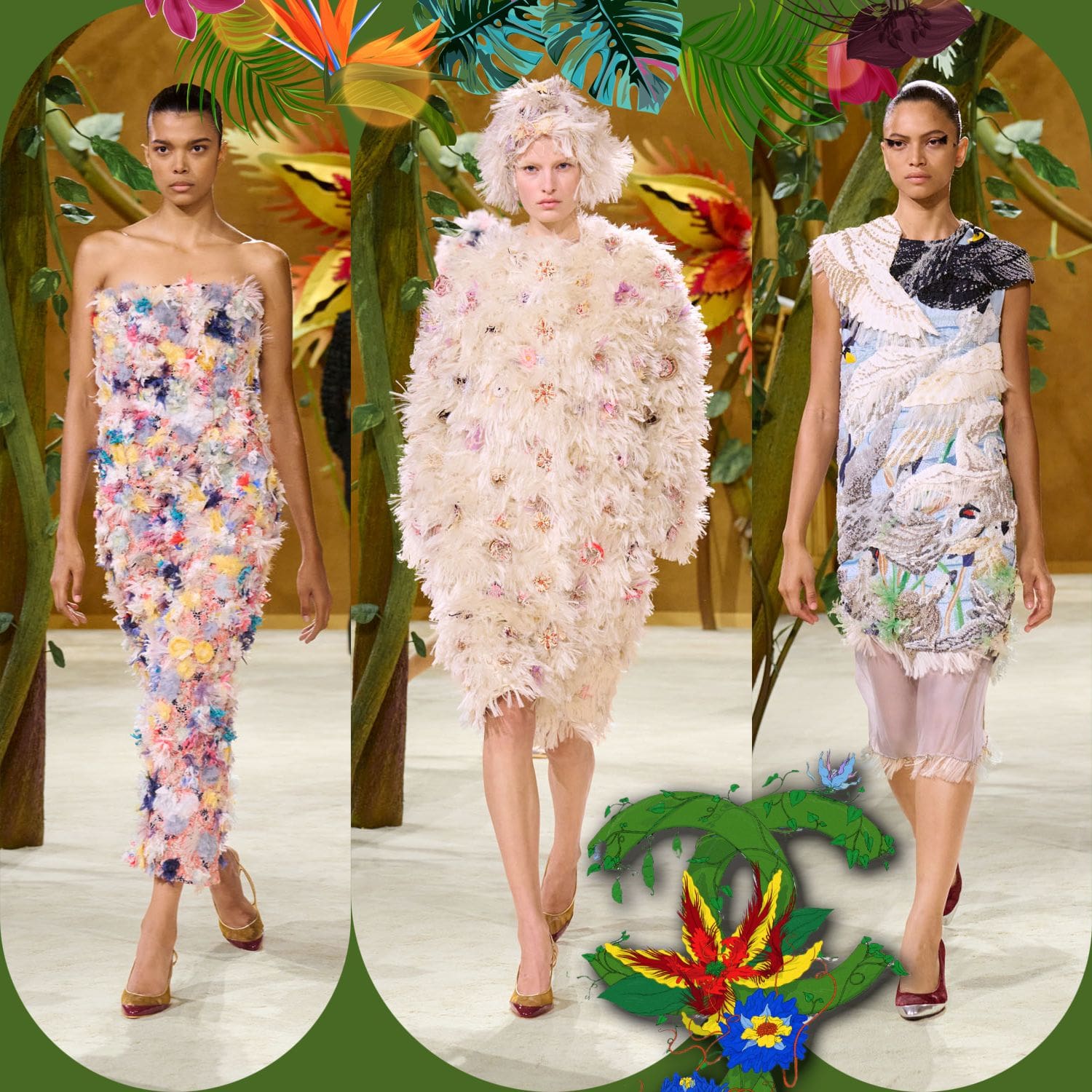
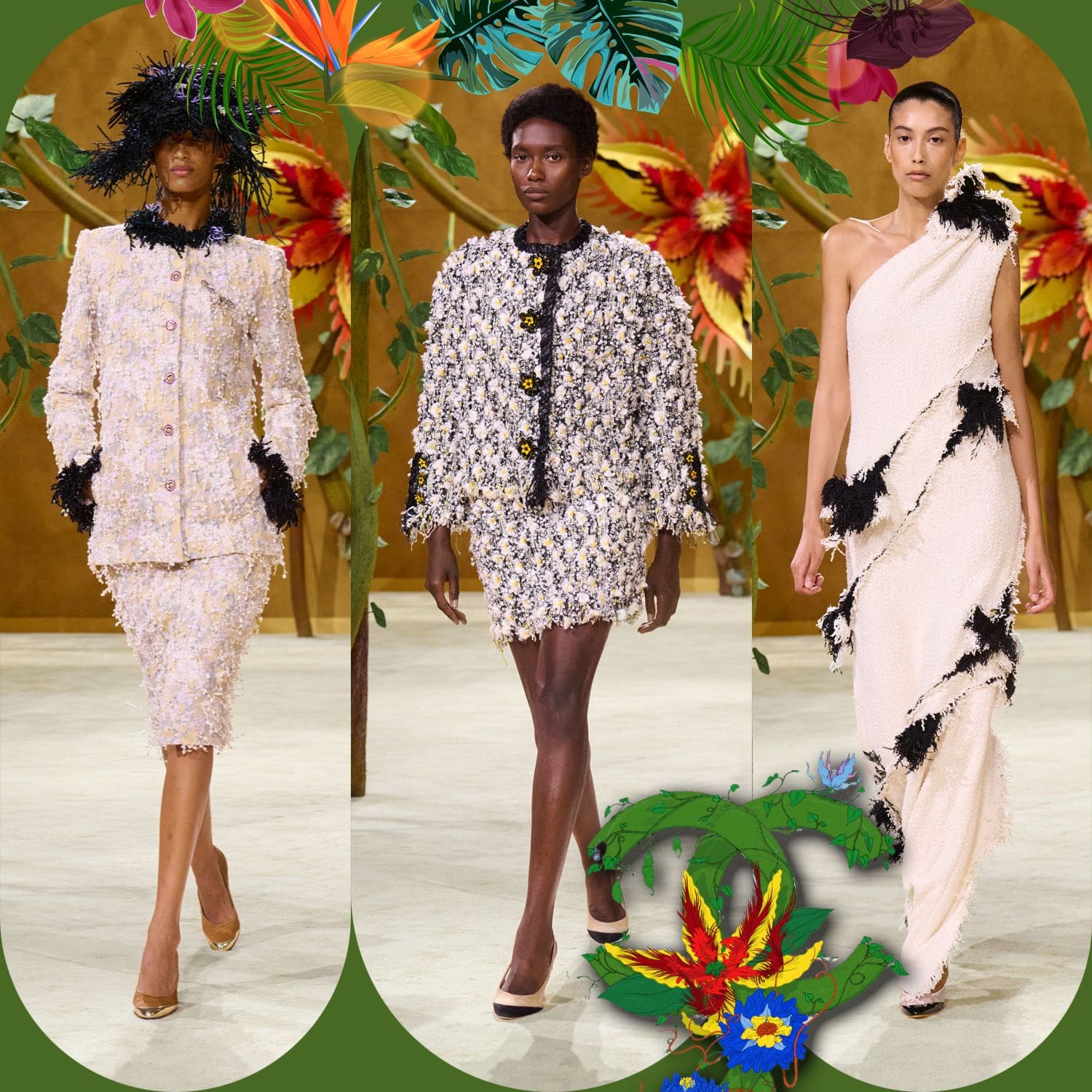
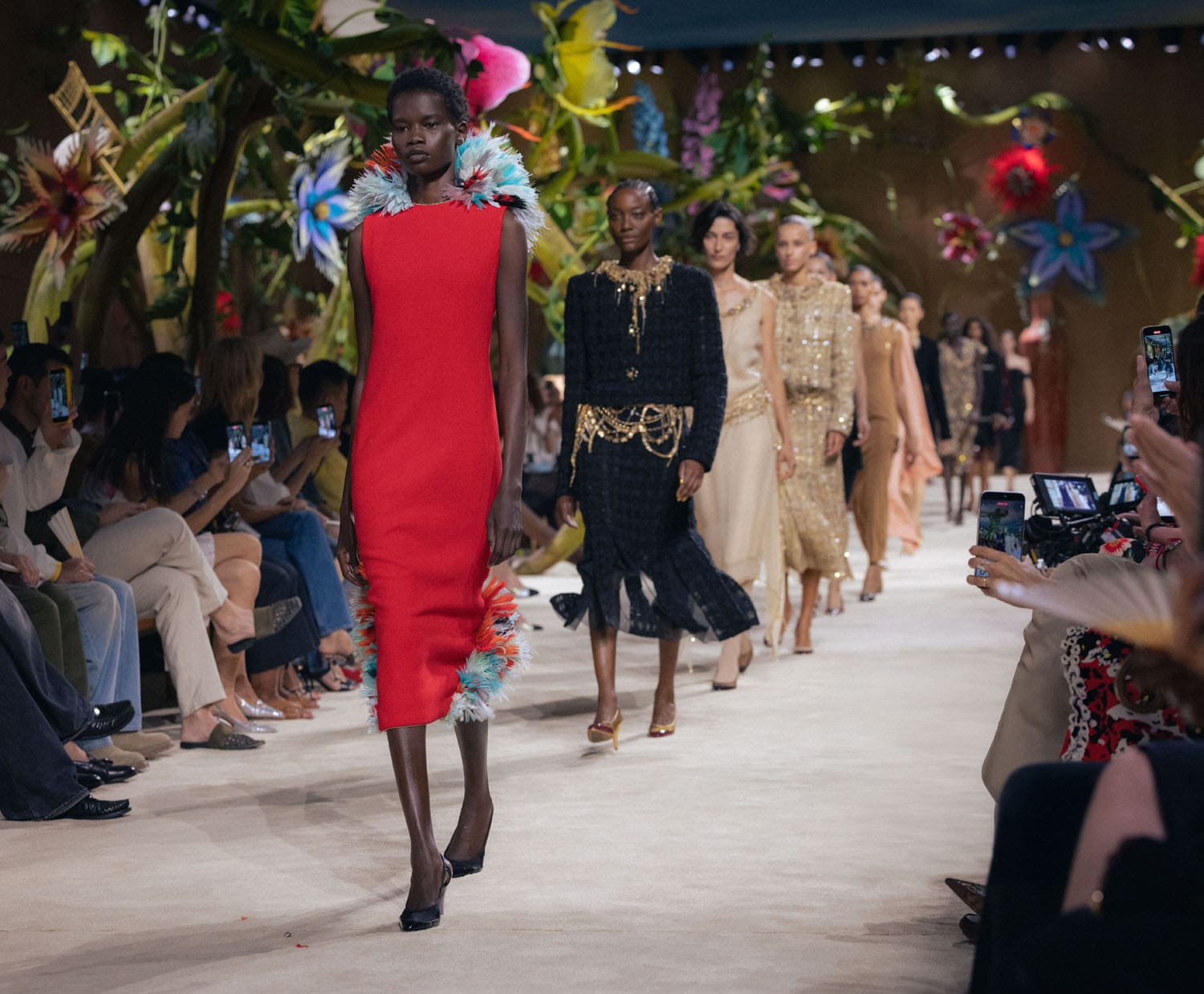
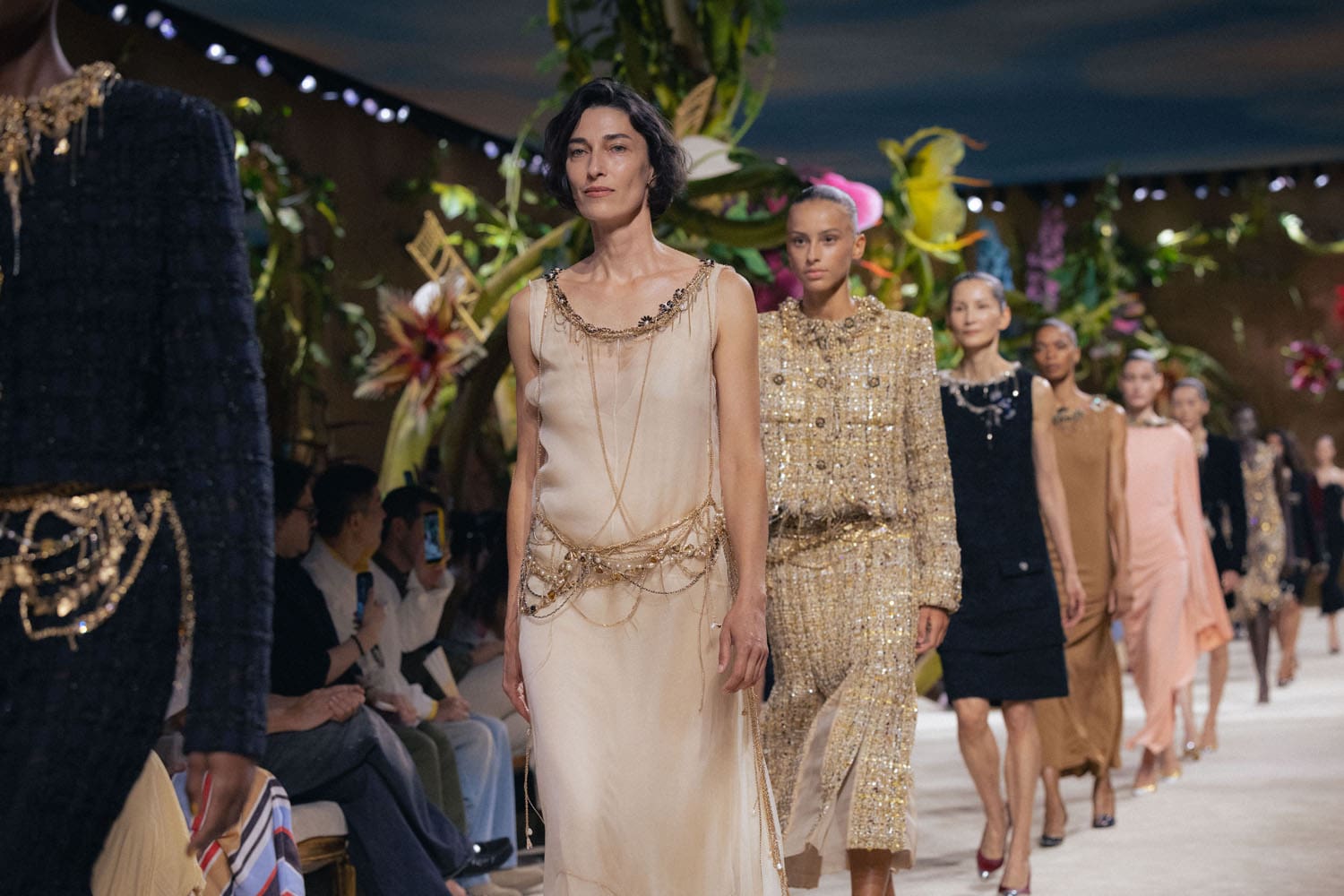
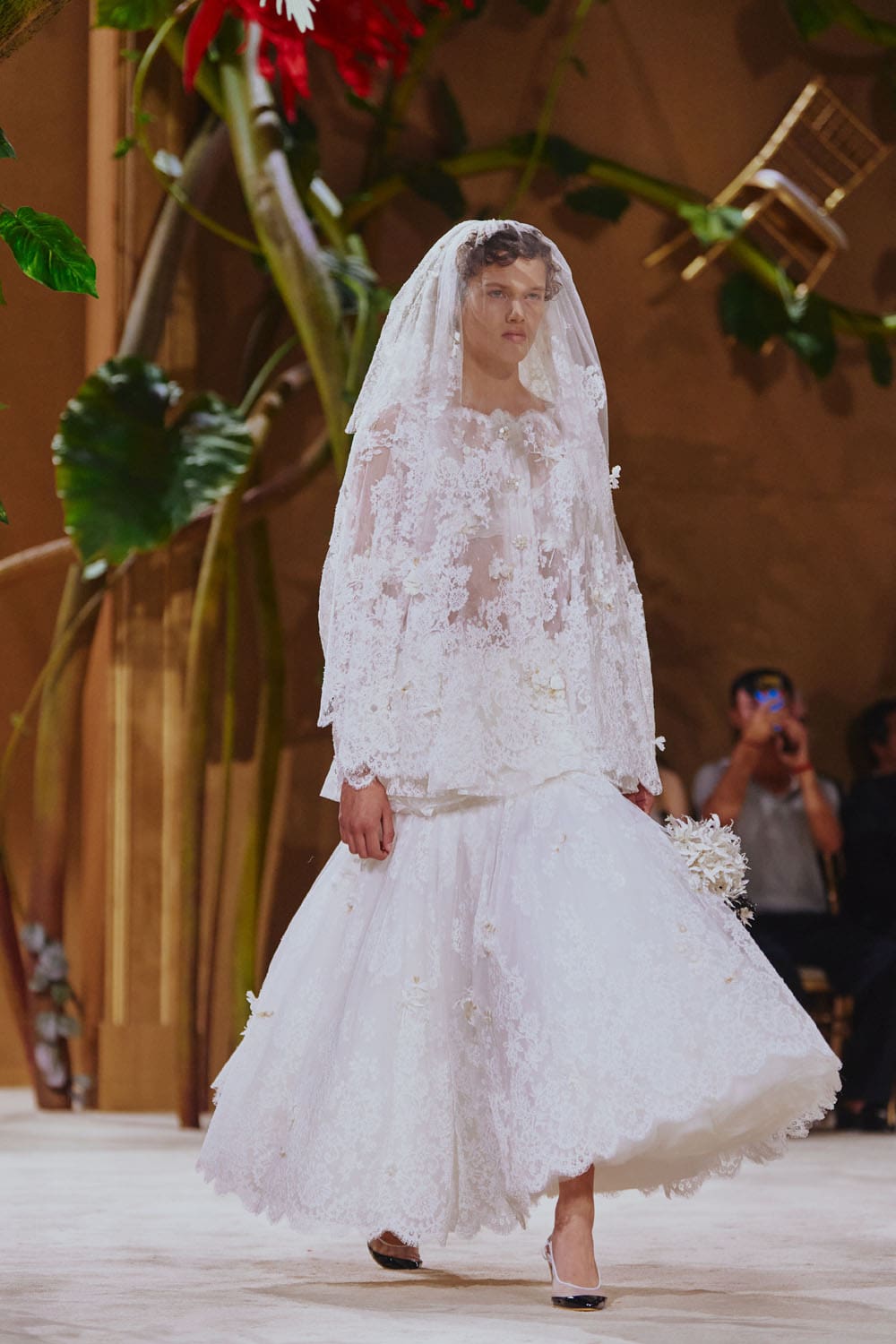
The genius here lies in the execution of the craft. Through the hands of Maison Lesage and the specialized ateliers at le19M, the collection achieves an extraordinary material depth. We see the classic Chanel suit reimagined with multi-dimensional, tactile textures—tweed that appears alive, flecked with micro-floral details and paired with whimsical, oversized woven straw headpieces that evoke a sophisticated, rustic nobility. Blazy plays masterfully with weight and texture, offering a stunning, structured cream coat-dress completely enveloped in a soft, feathery fringe, punctuated by minuscule embroidered floral clusters that look as though they sprouted naturally from the fabric.

The Anatomy of the Intimate Stitch
Where the collection triumphs completely is in its radical intimacy—the deeply personal dialogue between the inside of a garment and the woman who wears it. Blazy elevates the concept of “make-do-and-mend” to a pristine, aristocratic level, embedding charms, talismanic details, and meticulous textures that demand a closer look.
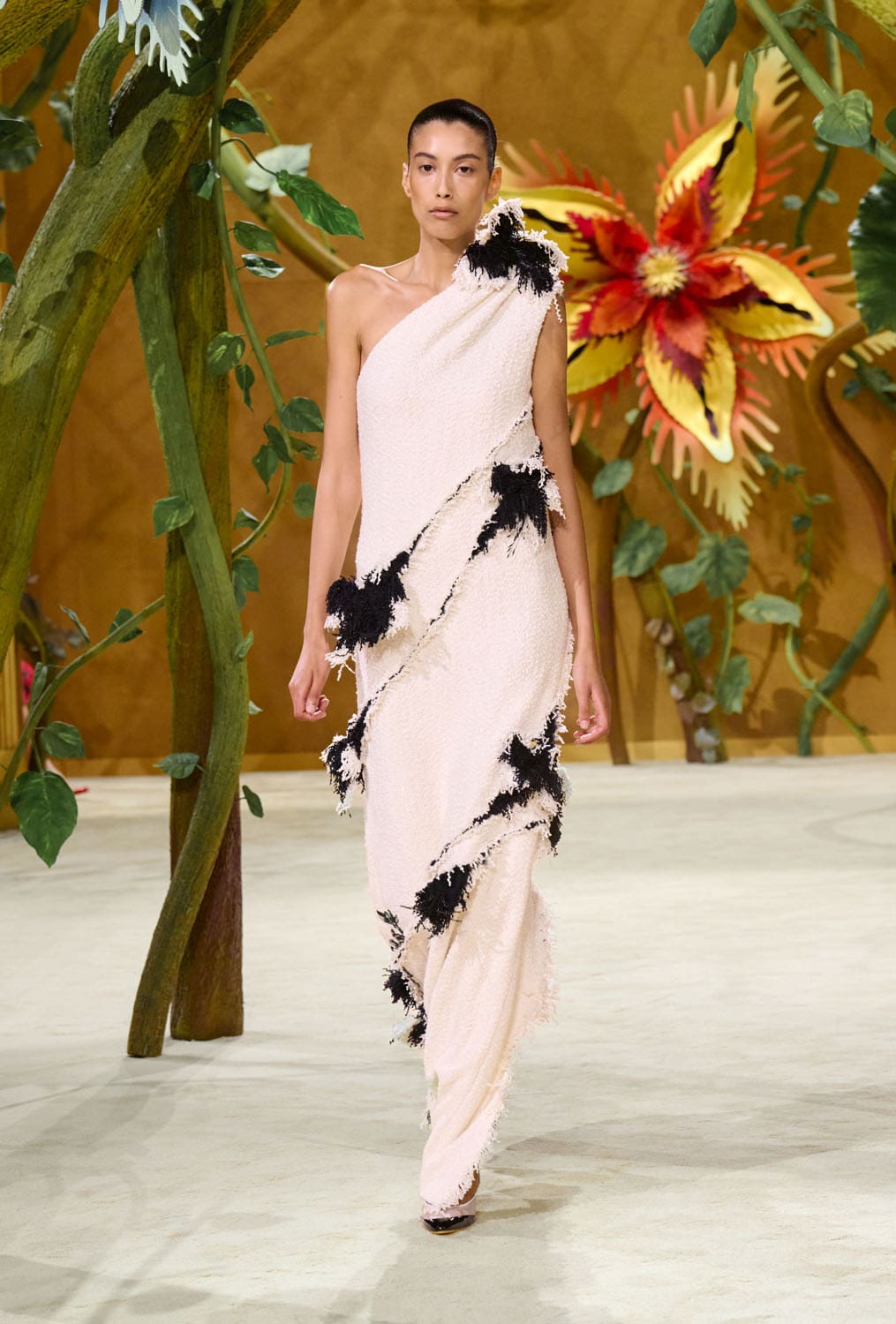
Consider the technical marvel of a sleeveless cocktail gown entirely encrusted with an accumulation of multi-colored sequins, beads, and metallic charms, shimmering like an unearthed treasure chest. This dense, exquisite weight is balanced elsewhere by absolute fluidity. A pristine, one-shoulder cream gown sweeps the floor, its silhouette bisected by dramatic, raw-edged black fringe that cuts across the body to free the form for motion. In another spectacular display of the flou and tailleur symmetry, a classic tailored jacket and knee-length skirt in a delicate, pale lavender-pink tweed is entirely surfaced with a frost of shimmering, crystalline fringe, framed by dark, sculptural plumes at the collar and cuffs.
Intergenerational Metamorphosis
The collection’s true emotional core rests in its ability to speak across eras while honoring the absolute pinnacle of textile artistry. The mastery of fabric manipulation transforms traditional motifs into living stories.
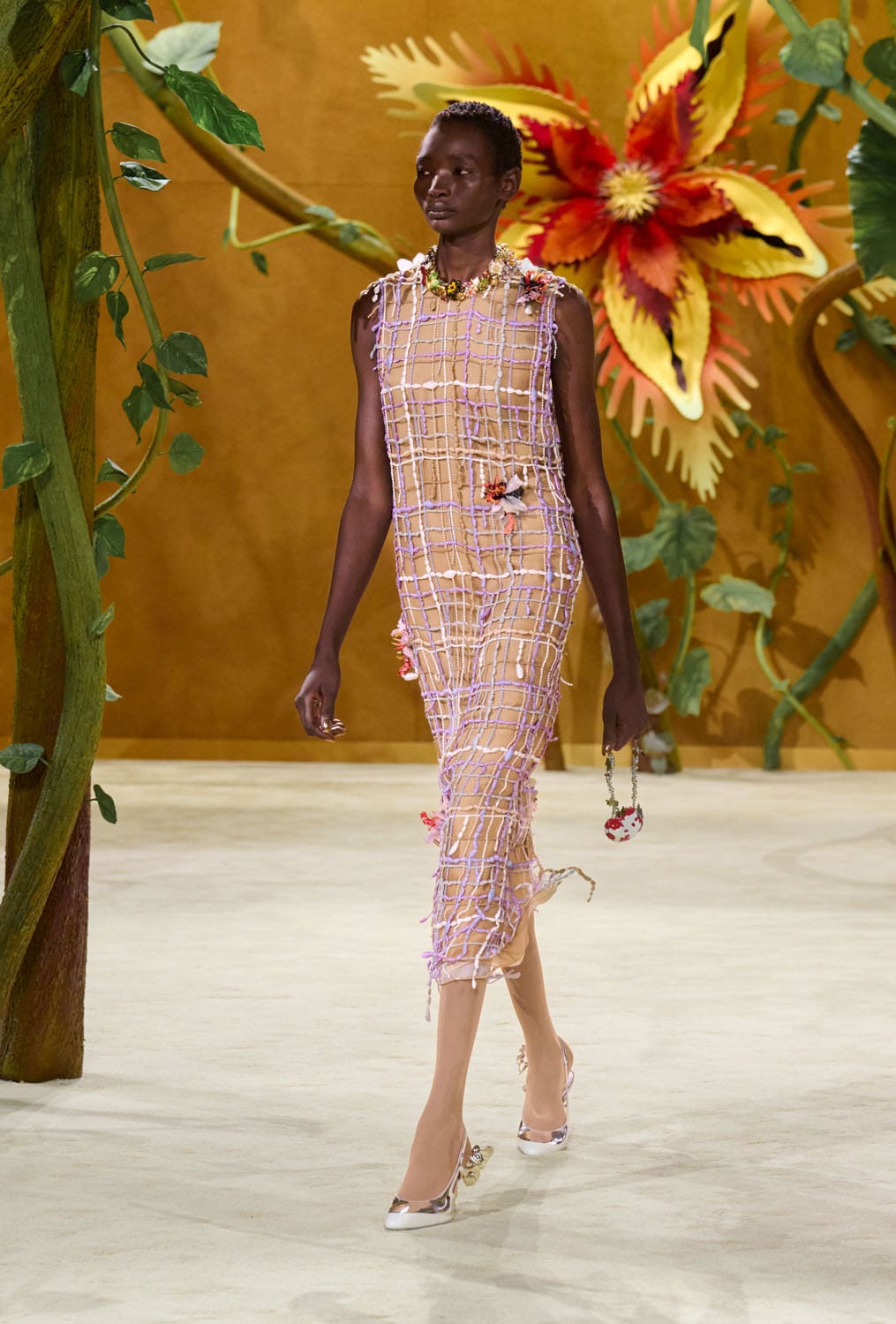
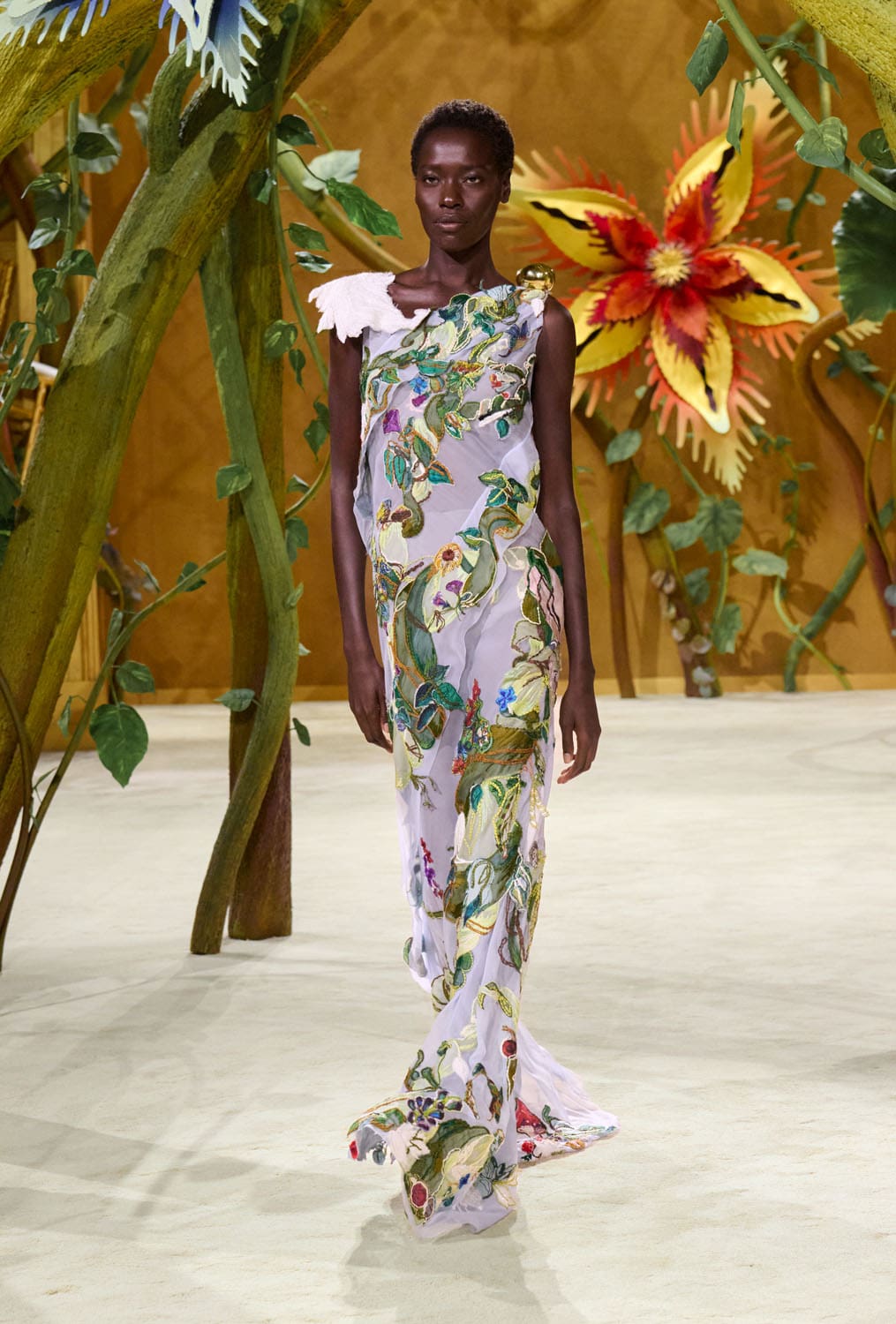
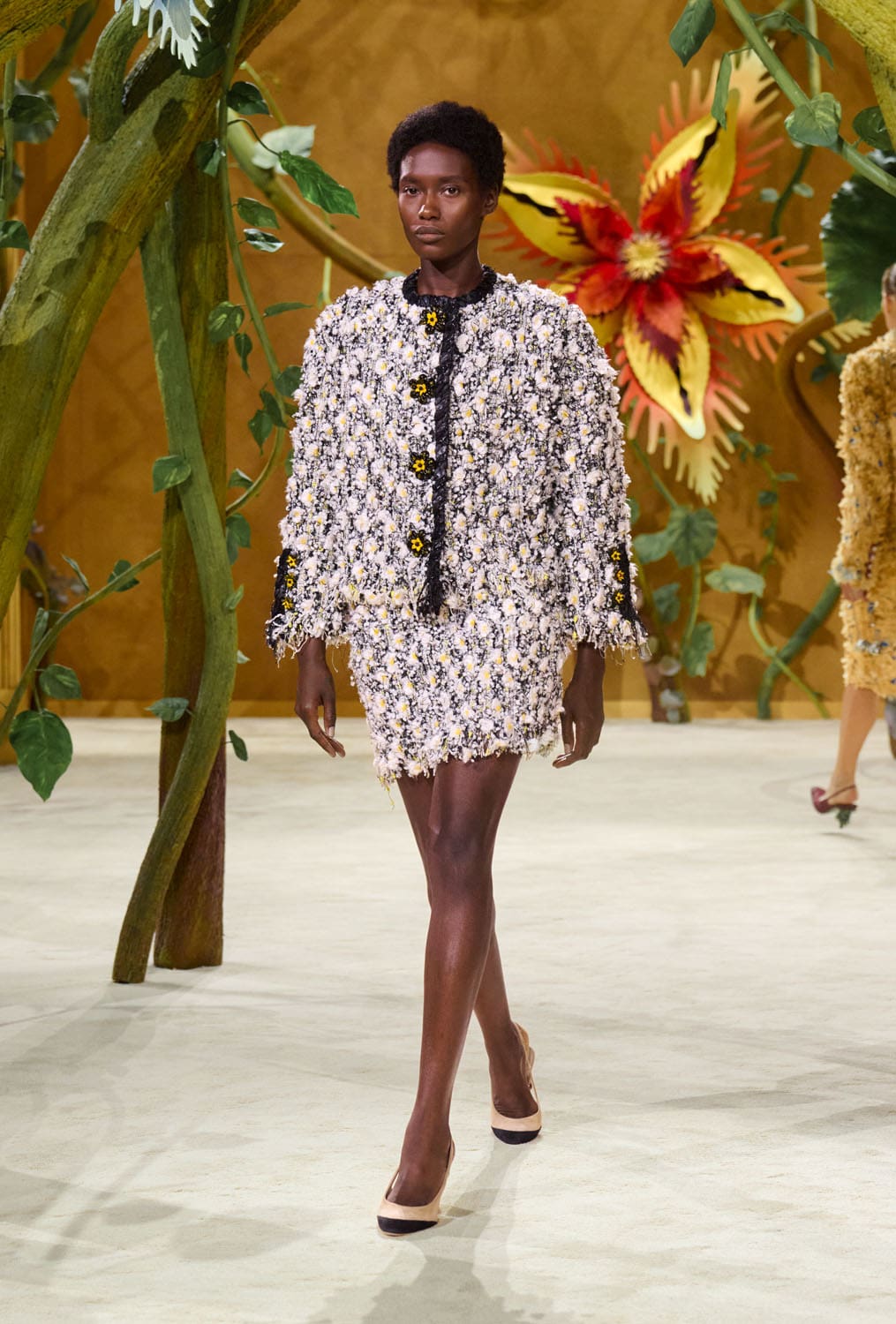
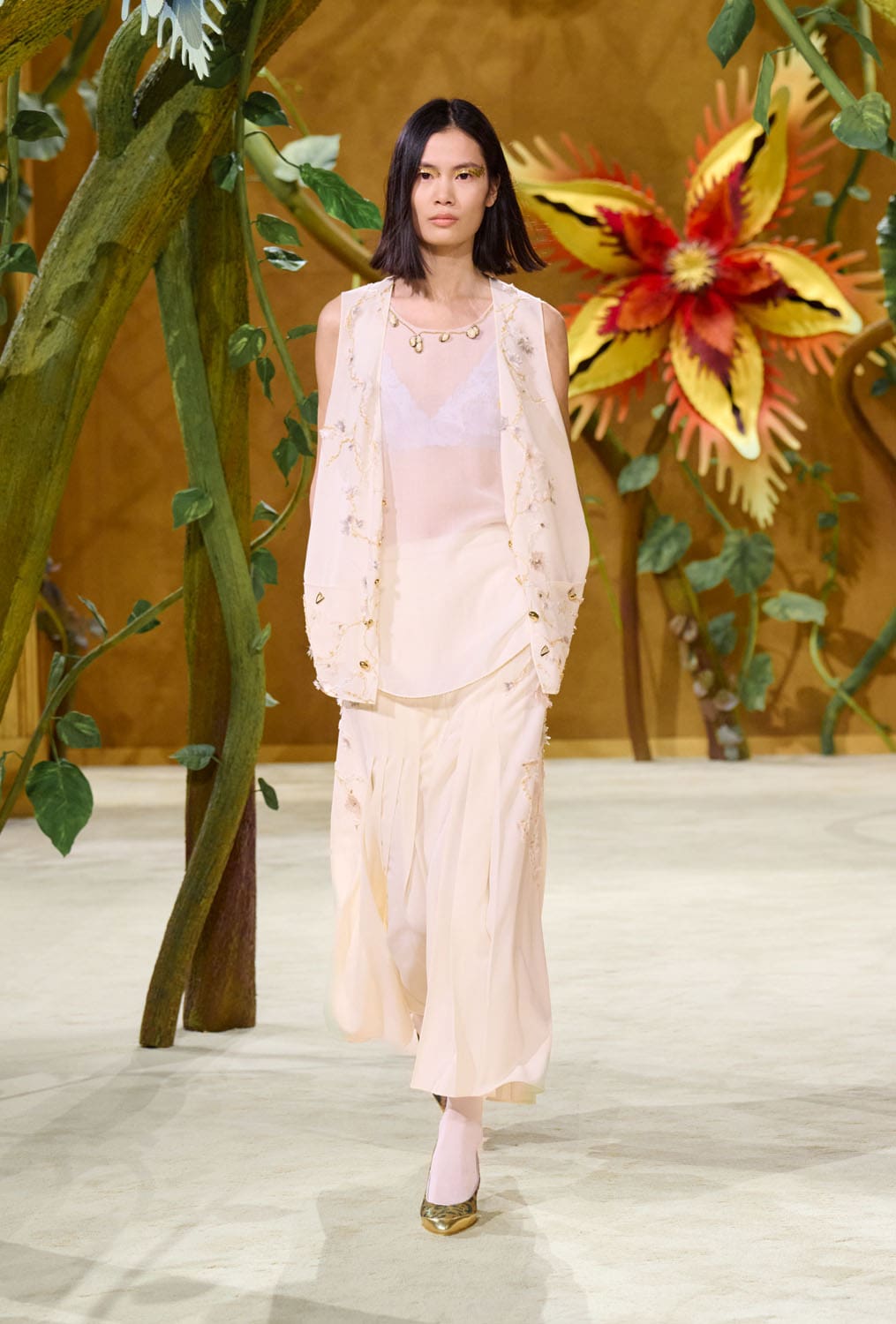
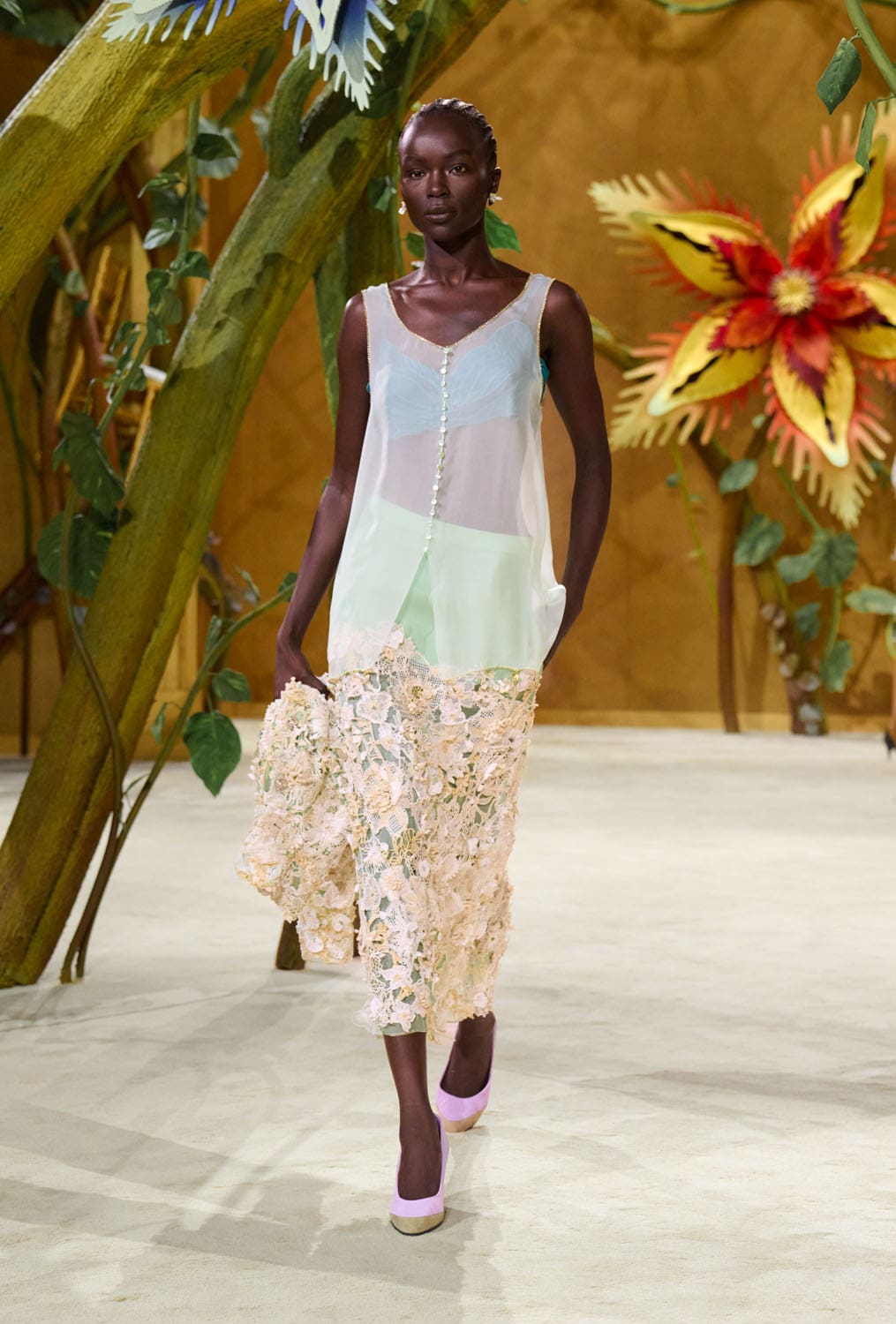
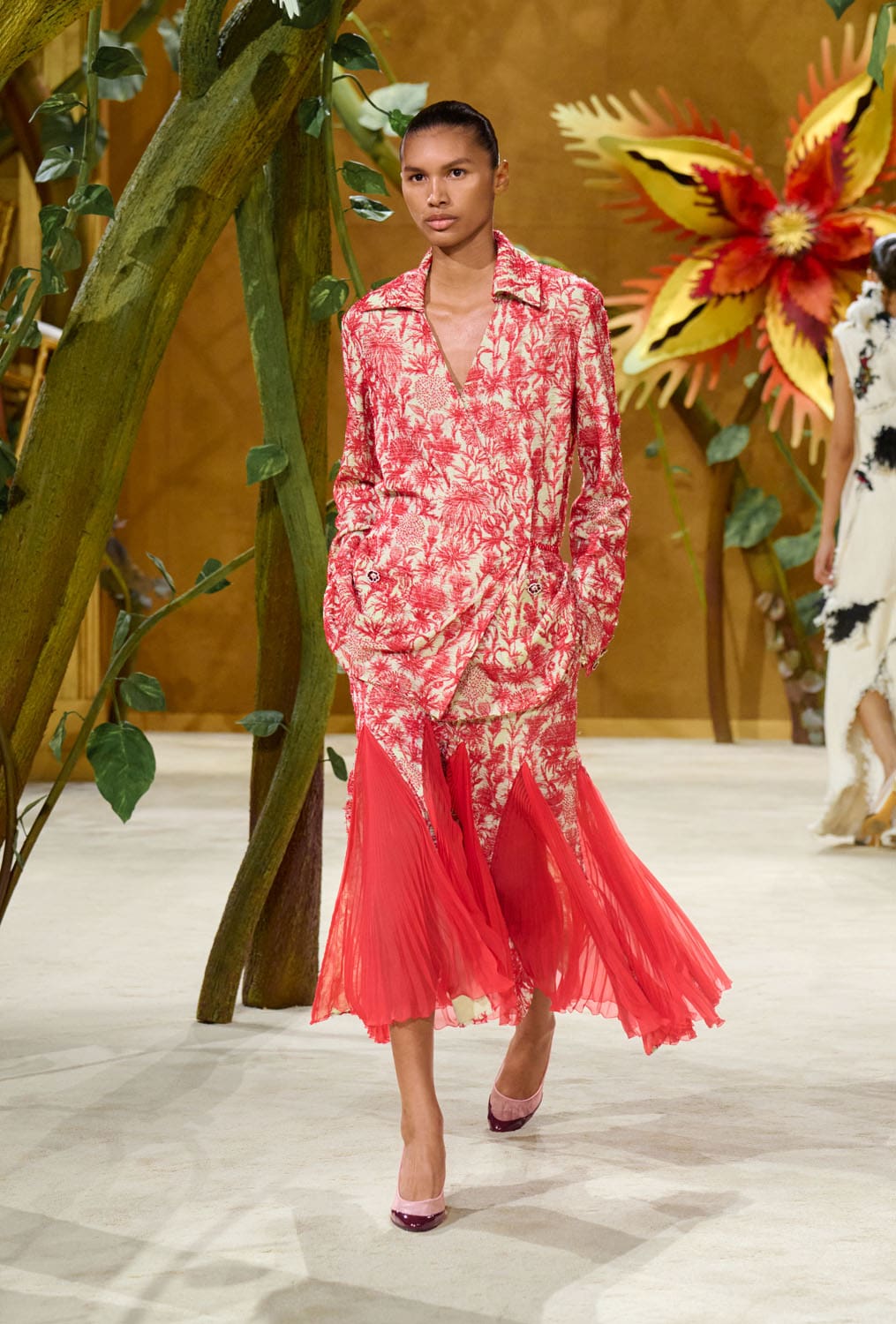
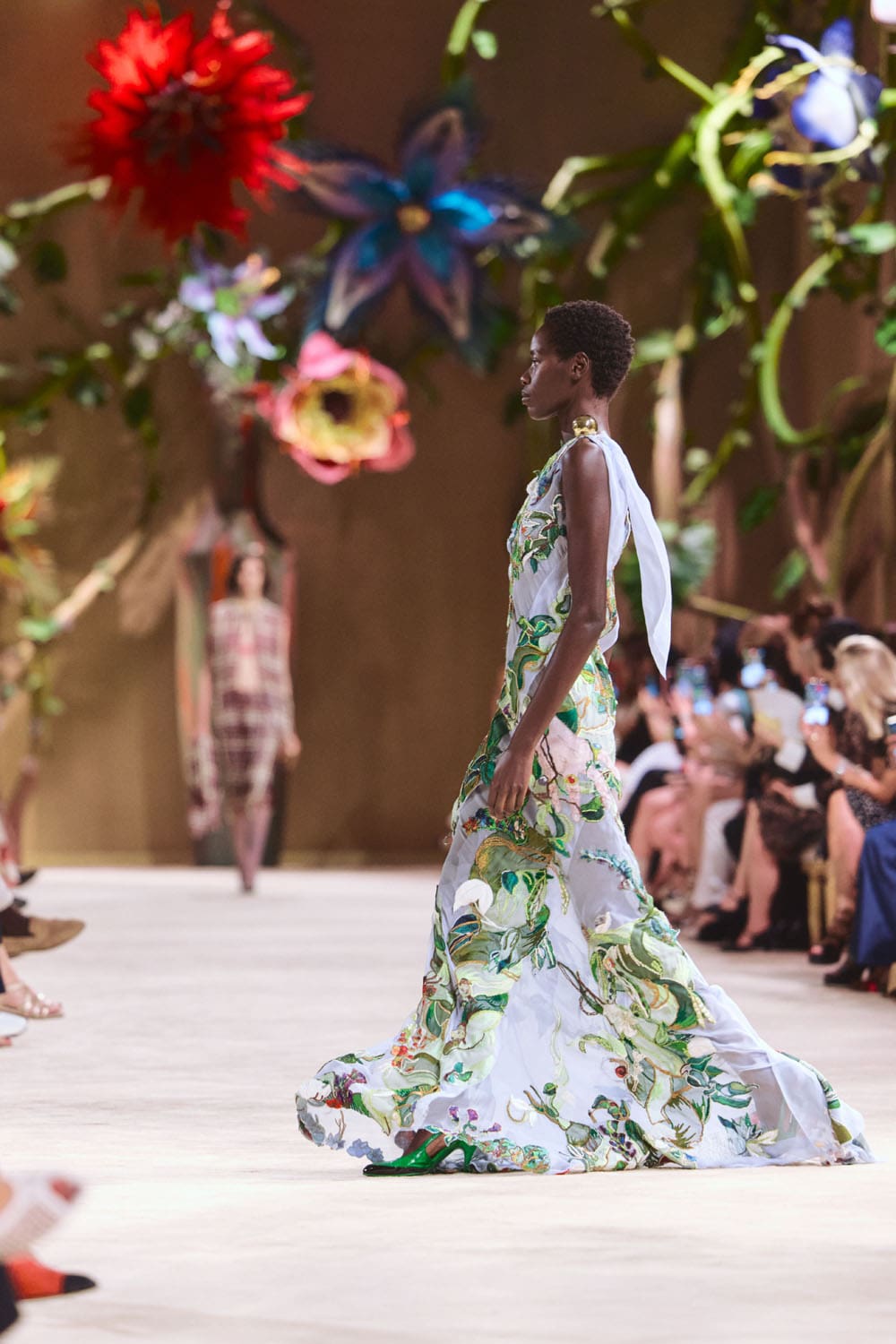
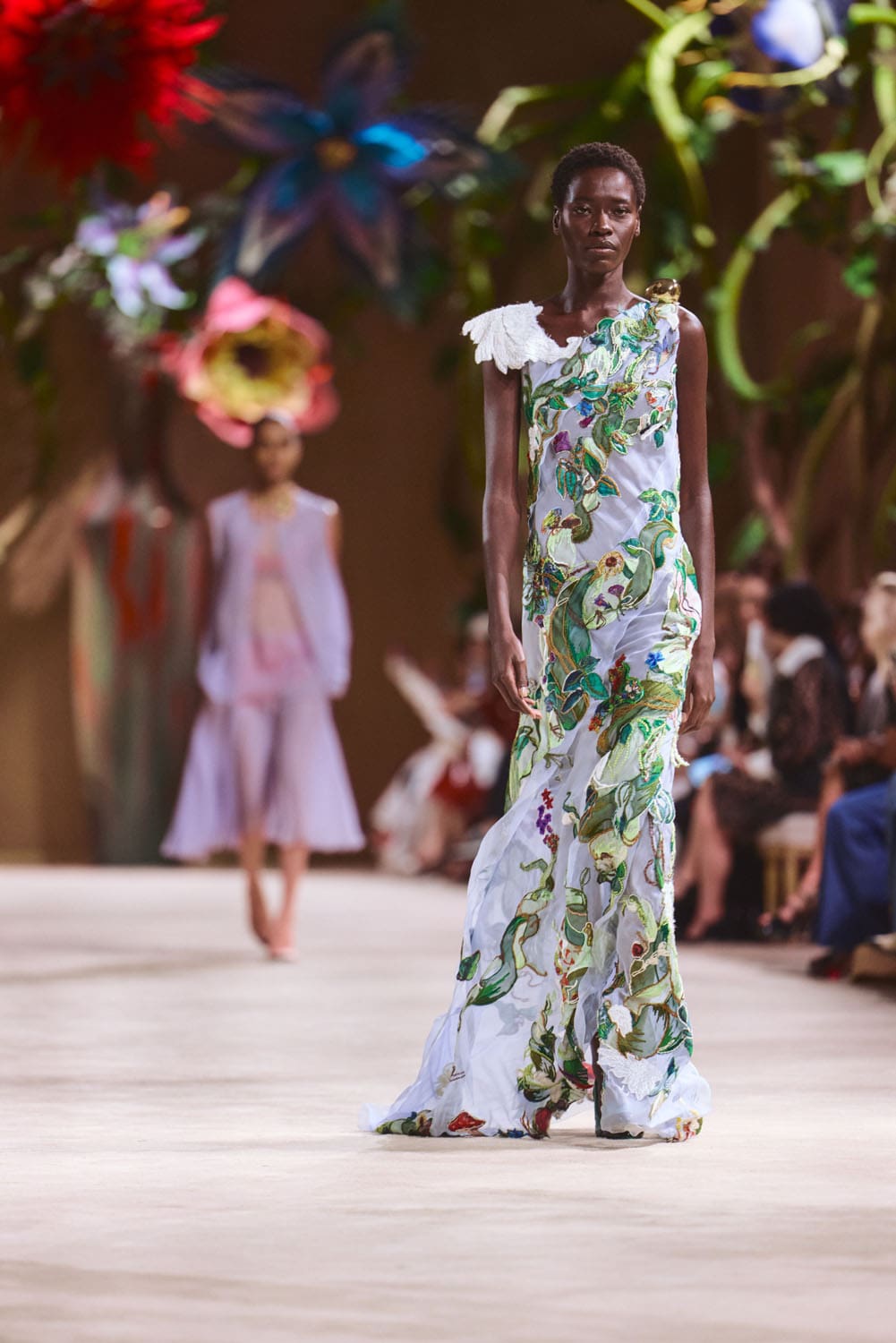
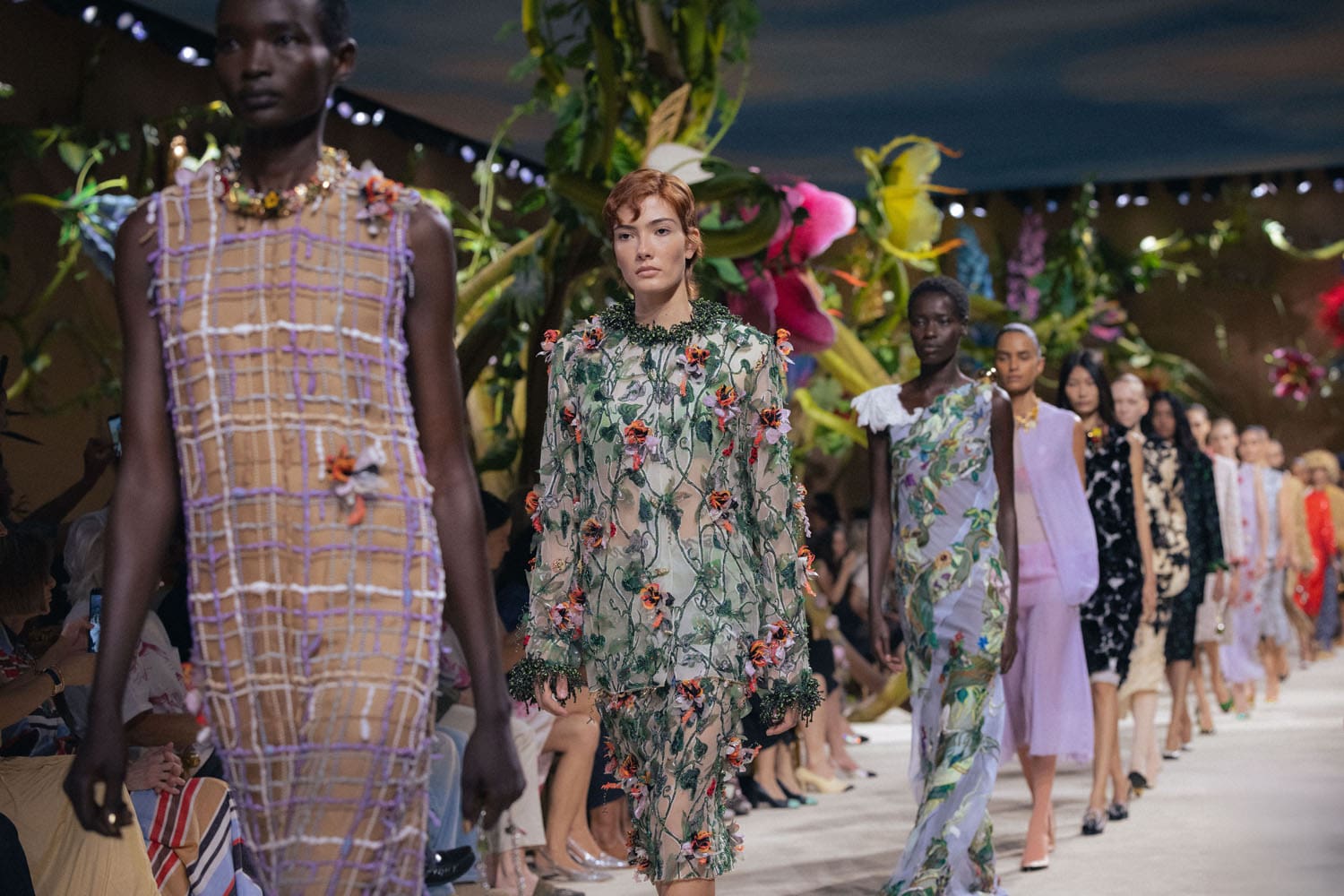
We see this beautifully rendered in a youthful, crisp black-and-white micro-tweed jacket and mini-skirt ensemble, where the trim is meticulously adorned with embroidered, blooming yellow-and-black floral buttons—a nod to the playful transition from duckling to swan. For the grand evening statements, the ethereal transparency of silk mousseline takes over. One lavender shift dress floats effortlessly, punctuated by vibrant red and black bursts of exploding botanical embroidery that cluster at the neckline and cascade down to an asymmetric, pleated hem. Perhaps the most breathtaking synthesis of the theme is a sheer, floor-length lavender column dress, draped elegantly over the body and completely climbing with intricate, hand-embroidered vines, wildflowers, and exotic foliage. It stands as a testament to what Maison Lesage can achieve when given free rein over a textile canvas.
The Loss of the Geographic Compass
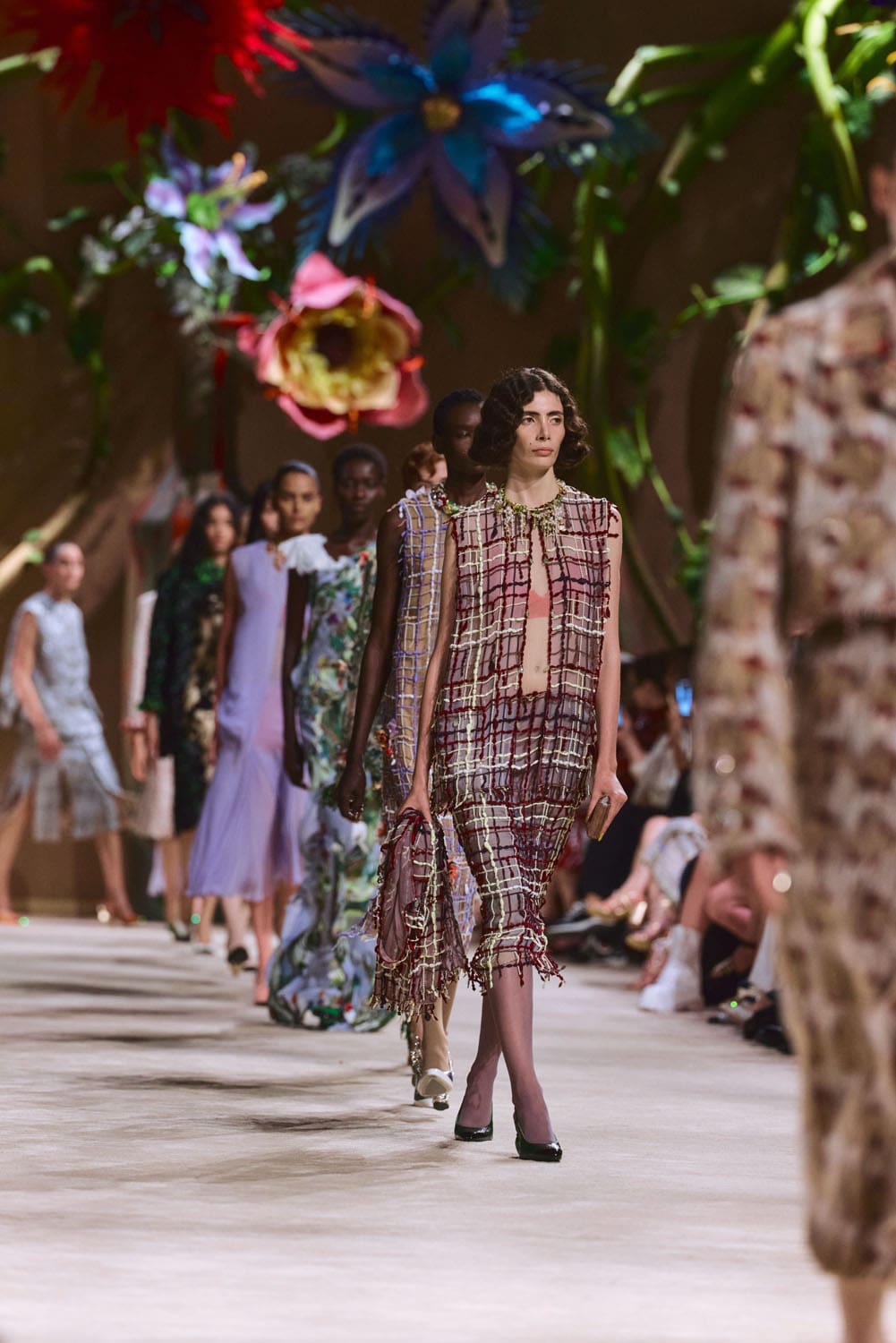
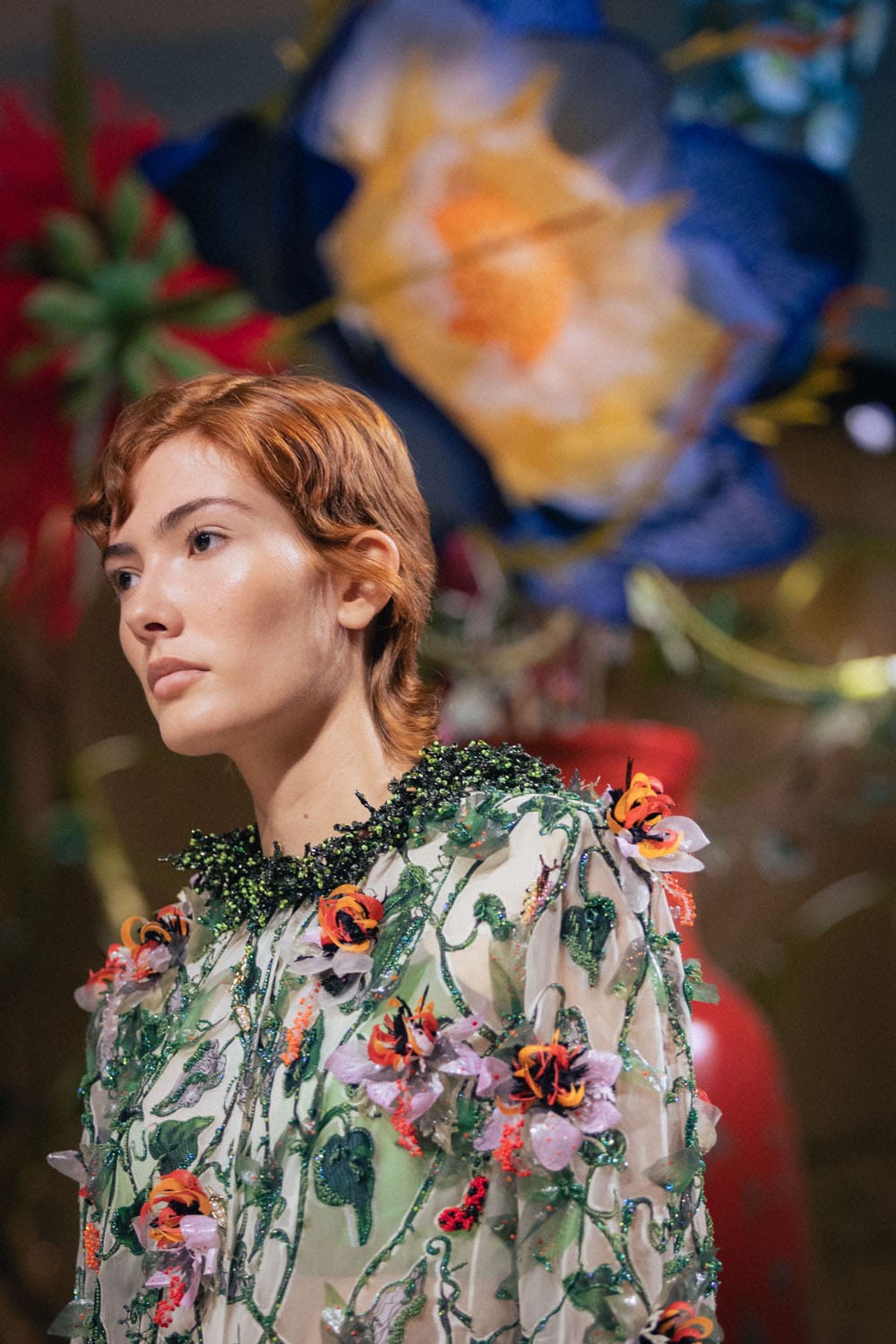
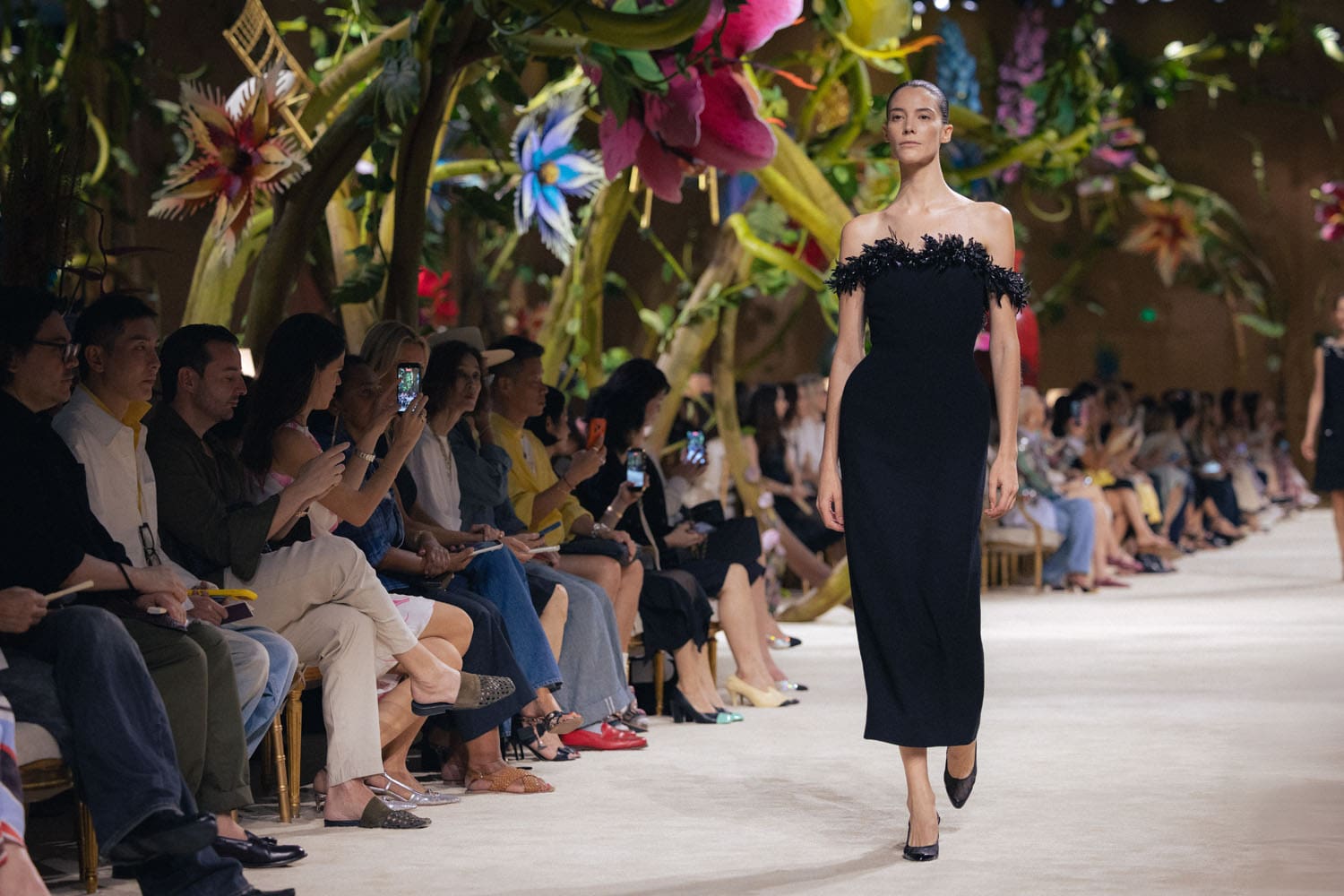
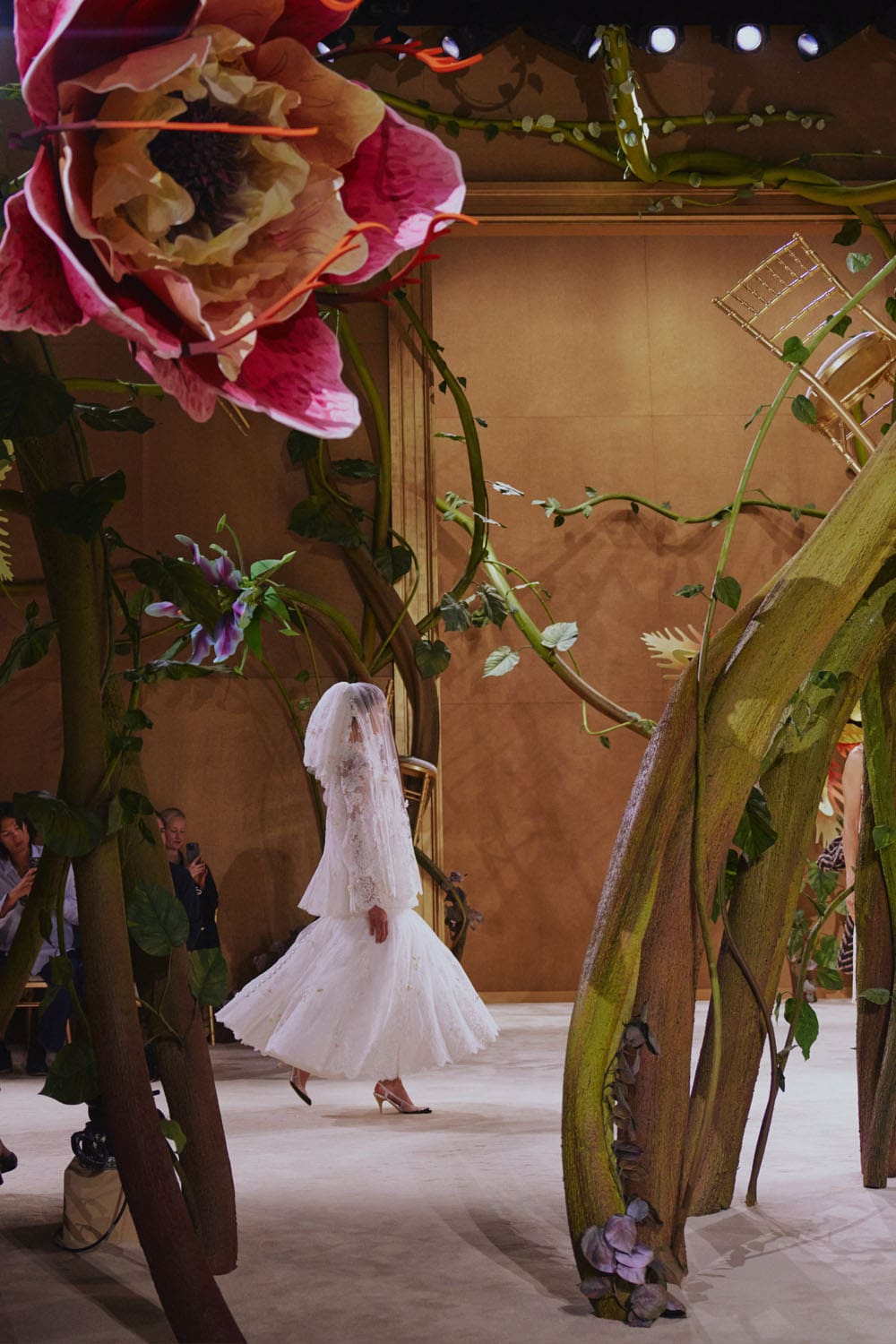
While the technical configuration of the textiles deserves its laurels, the narrative trajectory of this collection suffers from a profound identity crisis. In attempting to merge the domestic safety of Gabrielle Chanel’s personal library with a sprawling, overgrown botanical fantasy, the house seems to have misplaced its own stylistic compass. The fundamental question hangs heavy in the air of the salon: how, and why, did the crisp, cheerful, and resolutely geometric camellia mutate into an aggressive landscape of lianas and exotic plants?
This sudden obsession with toxic flora reads less like an organic evolution of the brand and more like an unhealthy, reactive concurrence with the historic codes of Dior. But Chanel is Chanel, and Dior is Dior. To abandon the sleek, urban sobriety of Rue Cambon for an untamed jungle territory is to dilute the very essence of the brand’s distinct luxury position.
The Disconnect of Fragmented Silhouettes
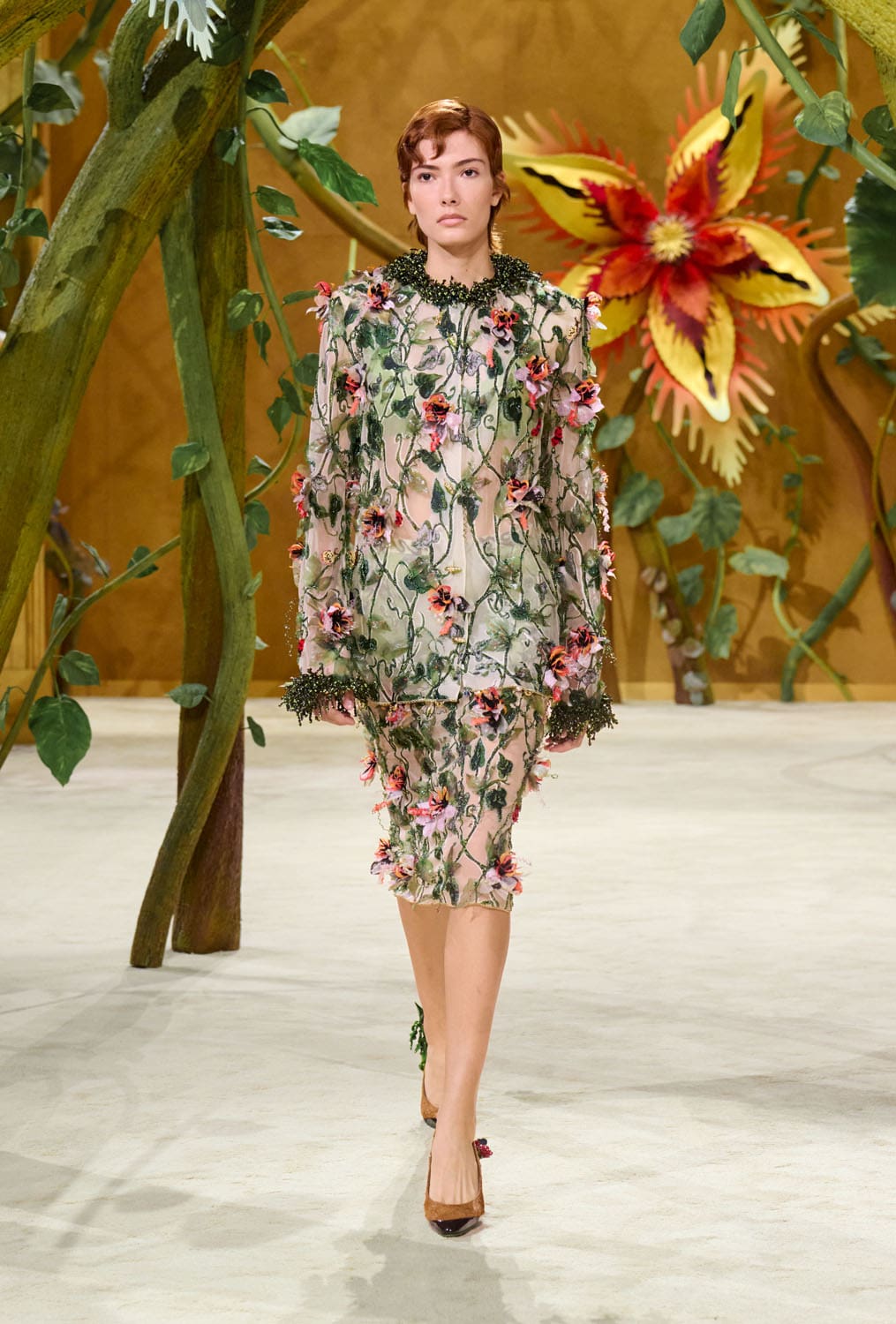
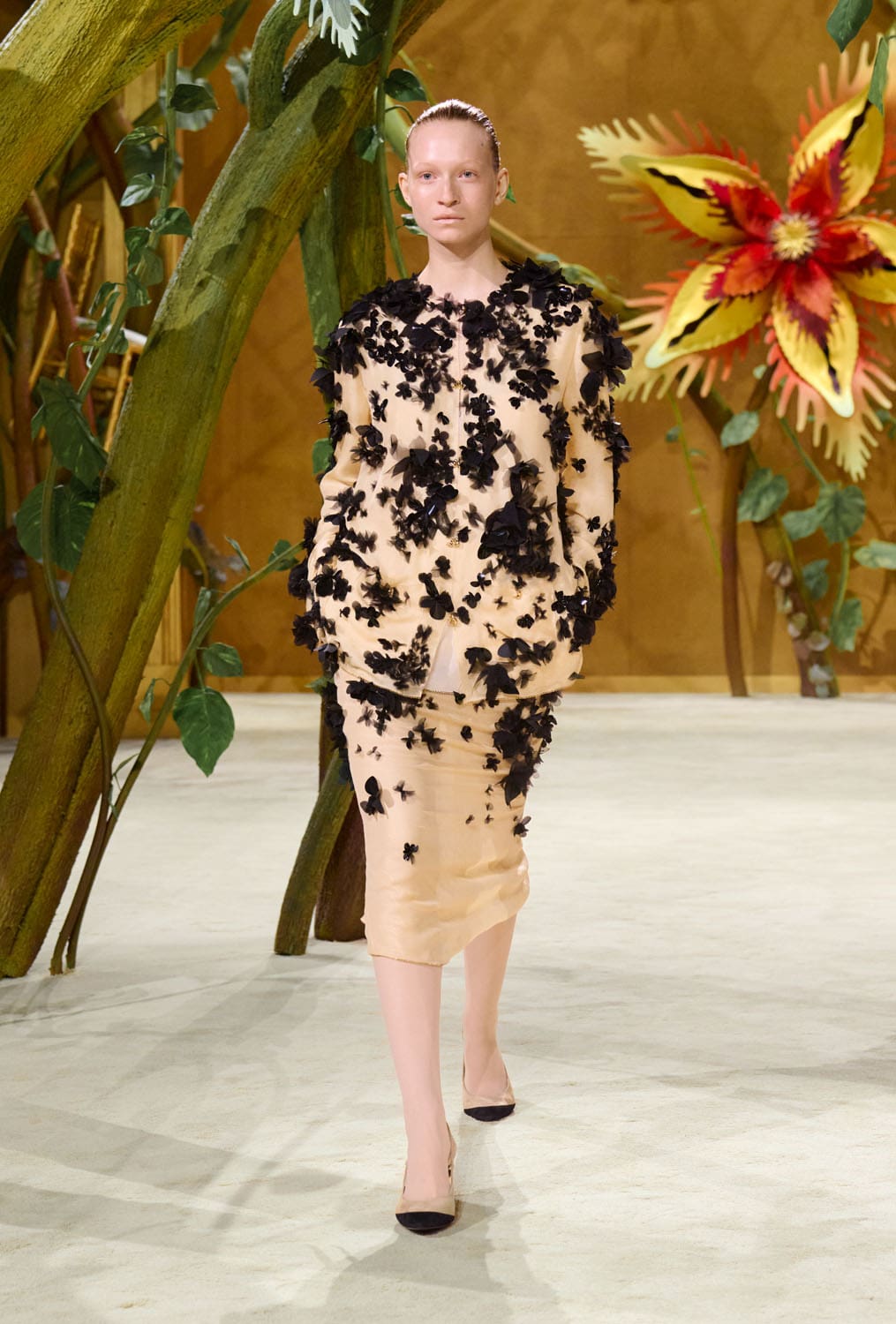
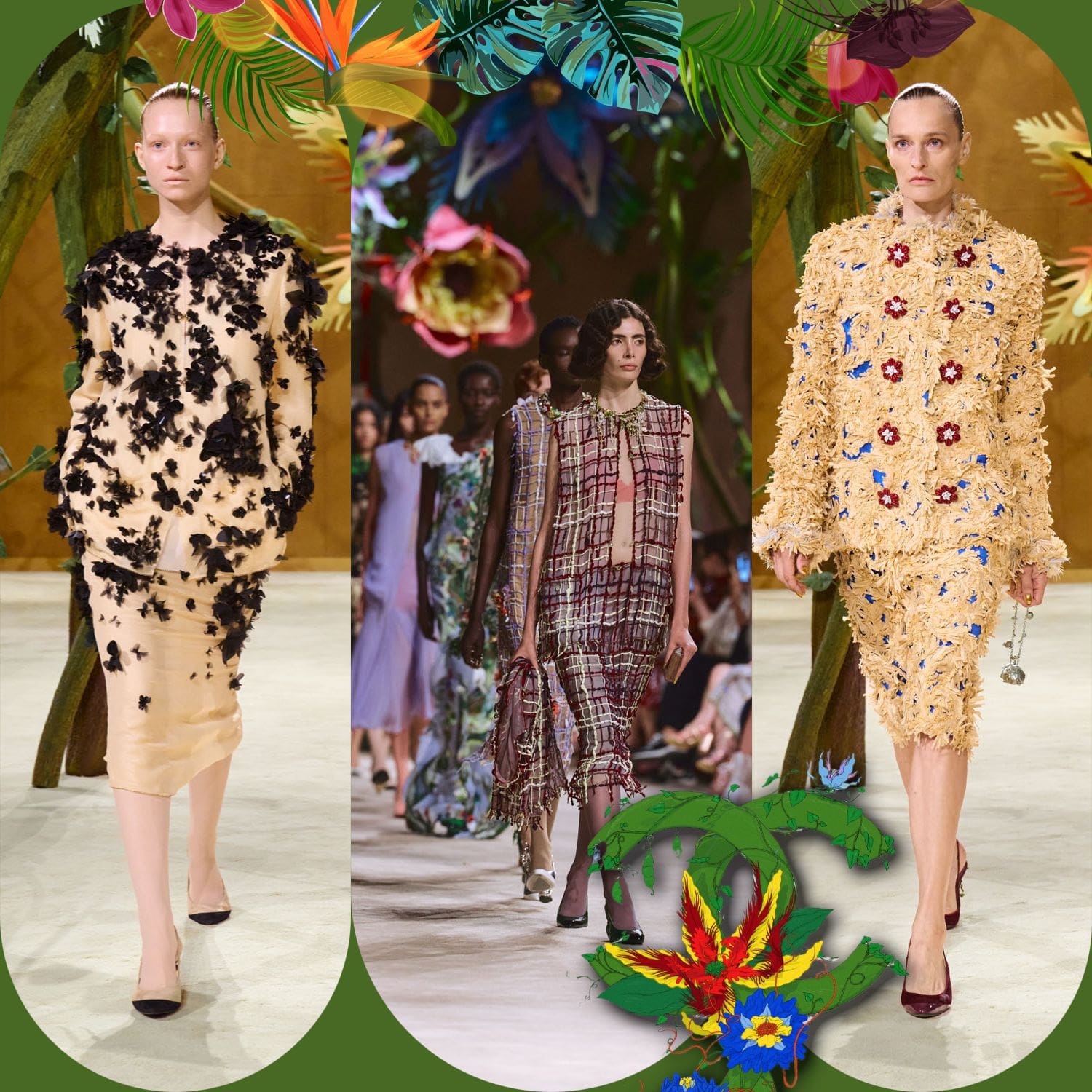
This conceptual confusion manifests directly on the runway as a series of deeply incoherent looks that shatter any sense of a unified seasonal message. The collection lunges erratically between delicate, ultra-feminine craft and jarringly coarse textures. We see this instability in a sheer, long-sleeved ensemble covered in climbing green vines and tiny pink blossoms—a look that feels dangerously close to standard botanical costumery rather than the sharp tailoring expected of Haute Couture. Immediately following, the eye is forced to pivot to a structured peach-cream skirt suit aggressively encrusted with dense, sculptural black floral cutouts, creating a heavy, distracting contrast.
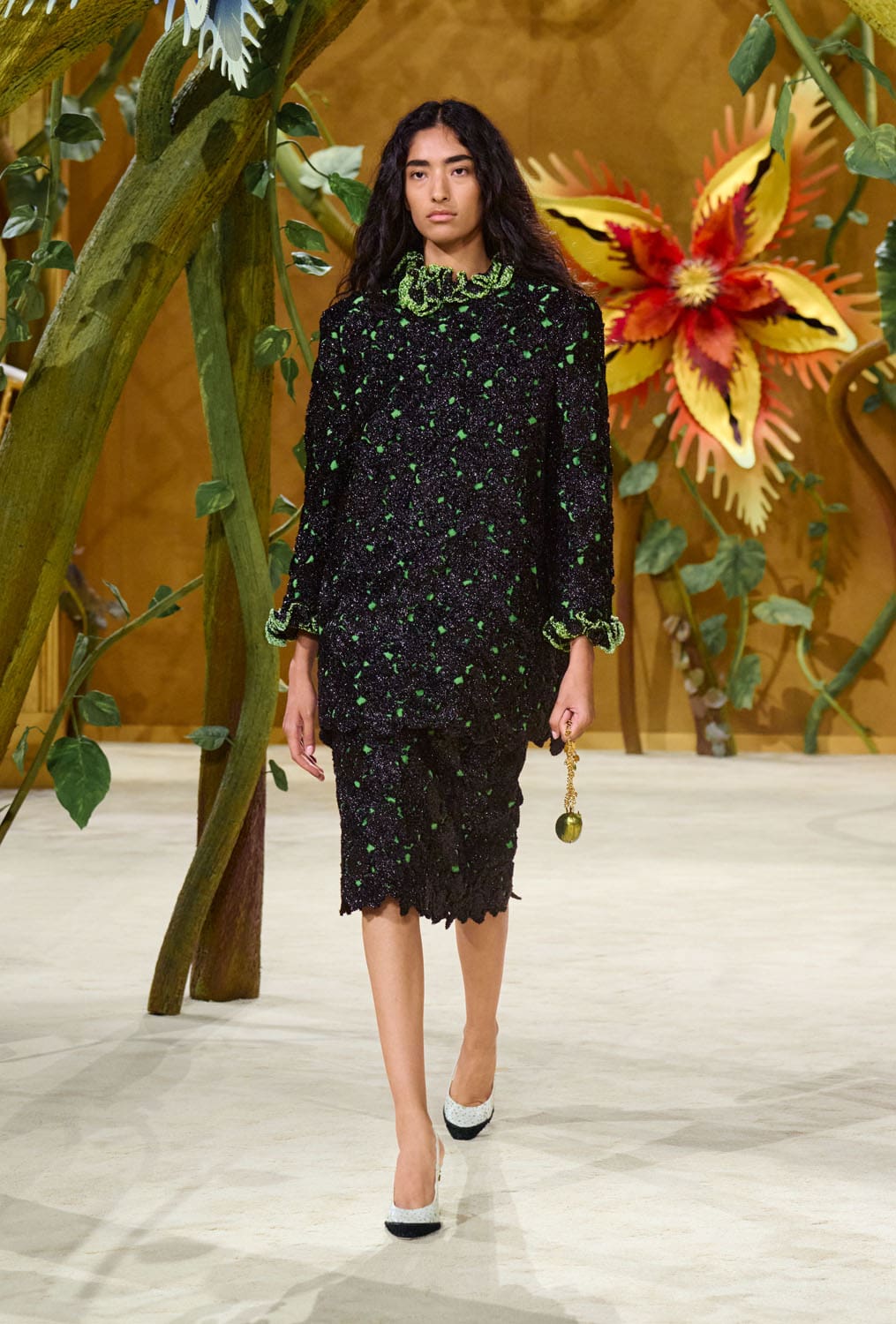
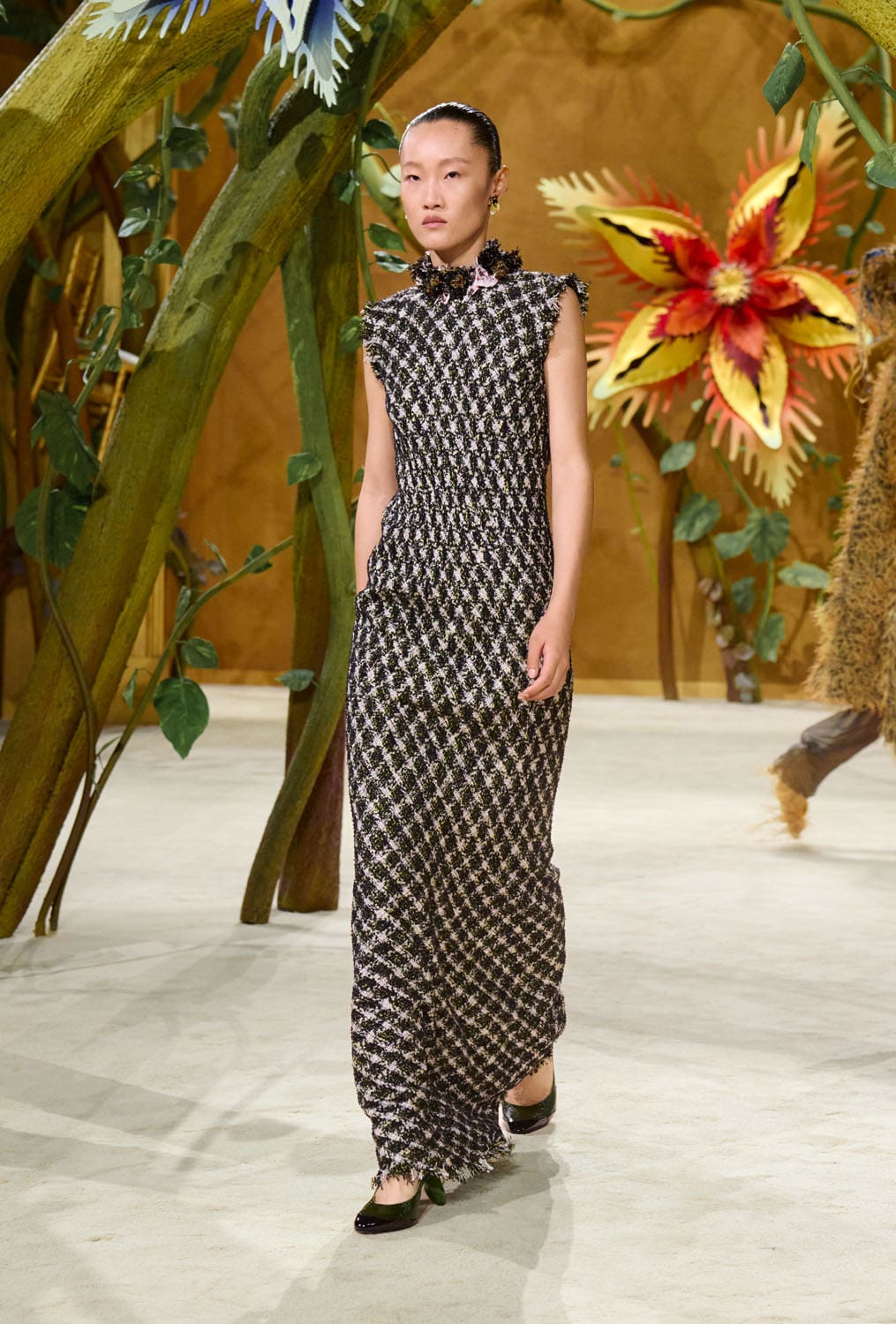
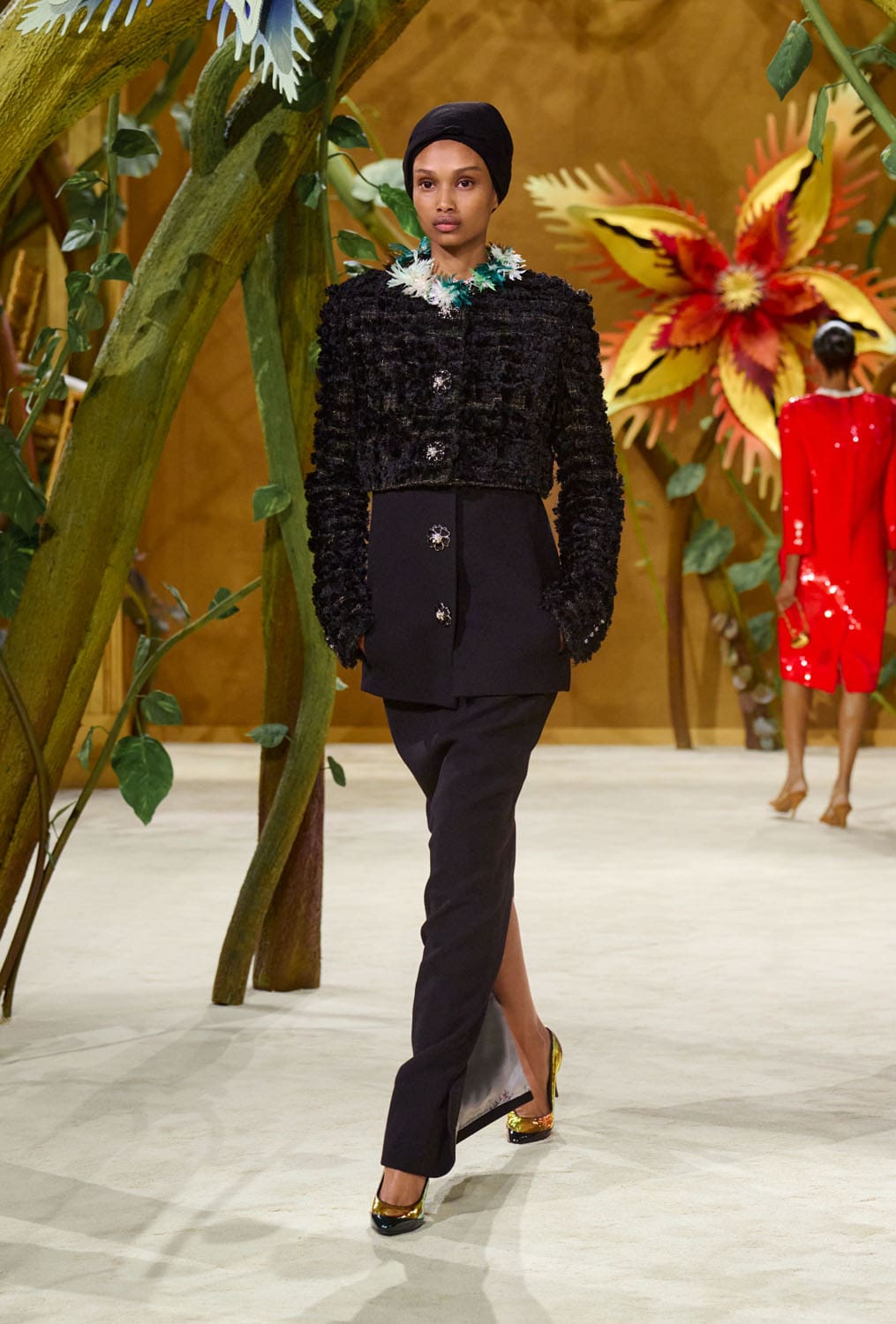
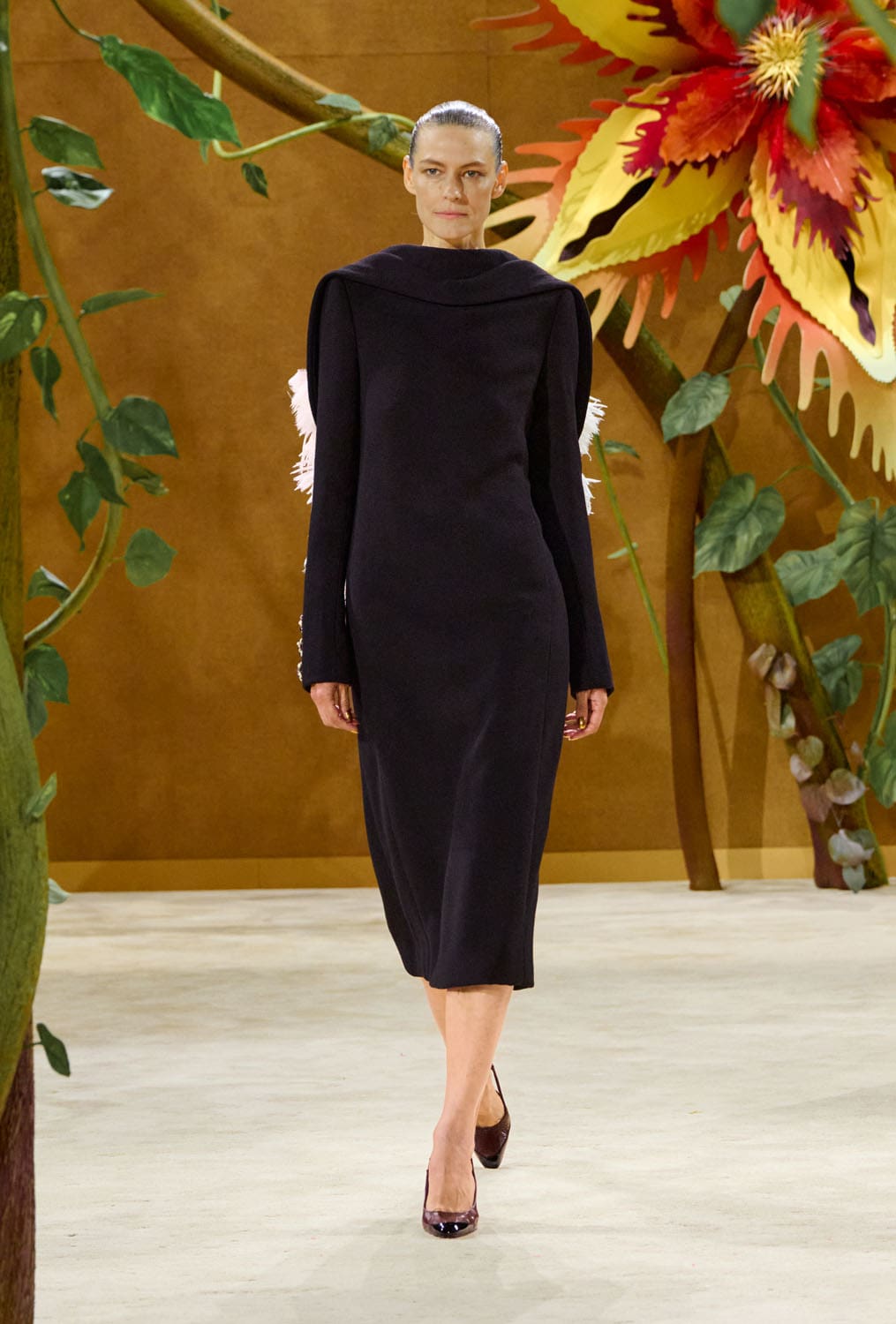
The structural incoherence deepens with an over-enveloped, drop-shoulder dark tweed jacket flecked with bright neon-green spots, finished with chaotic ruffles at the collar and cuffs. Rather than whispering of luxury, it screams of a designer struggling to find a harmonious vocabulary between the historic tailleur and an unnecessary contemporary edge.
When Fairytale Becomes Folklore
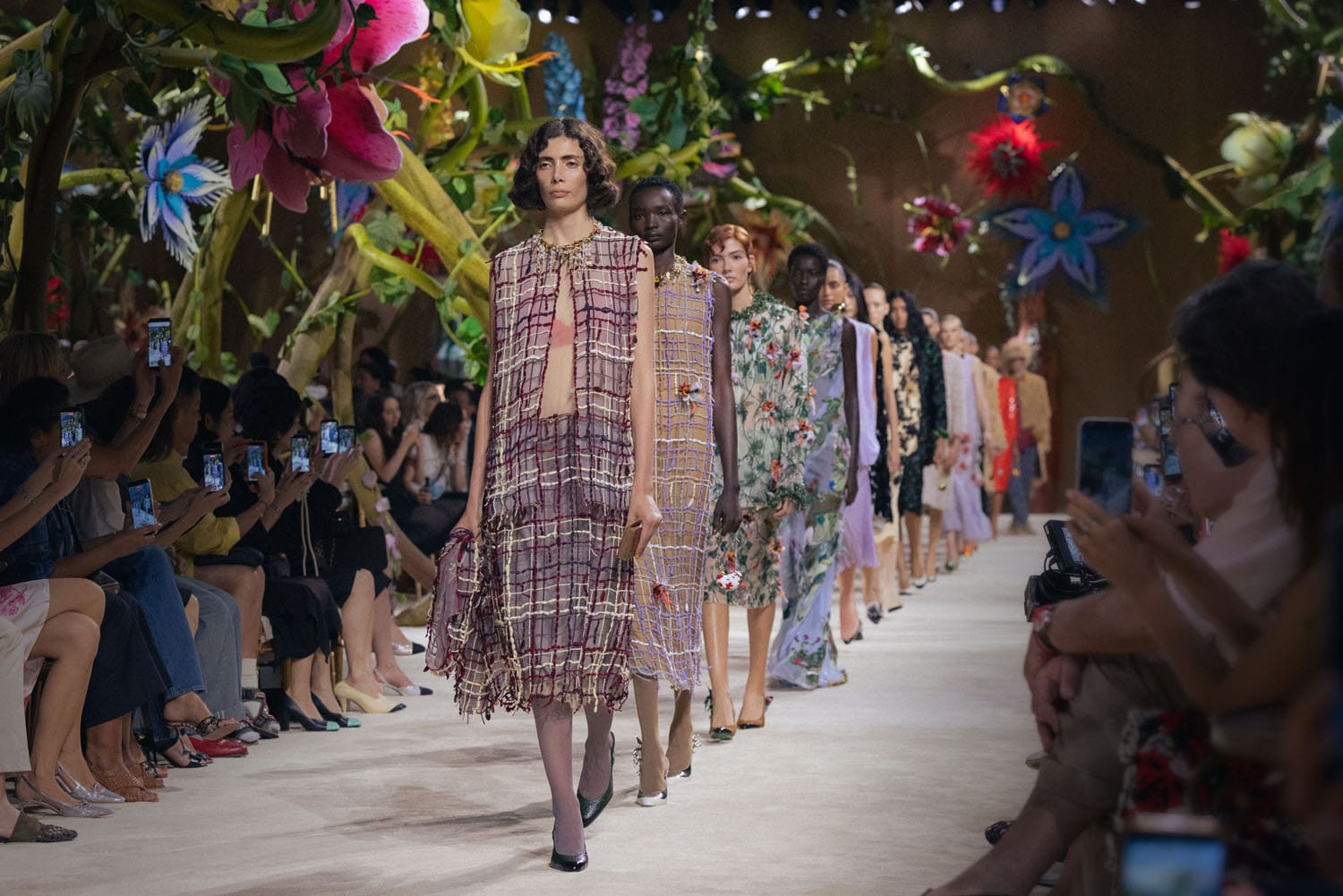
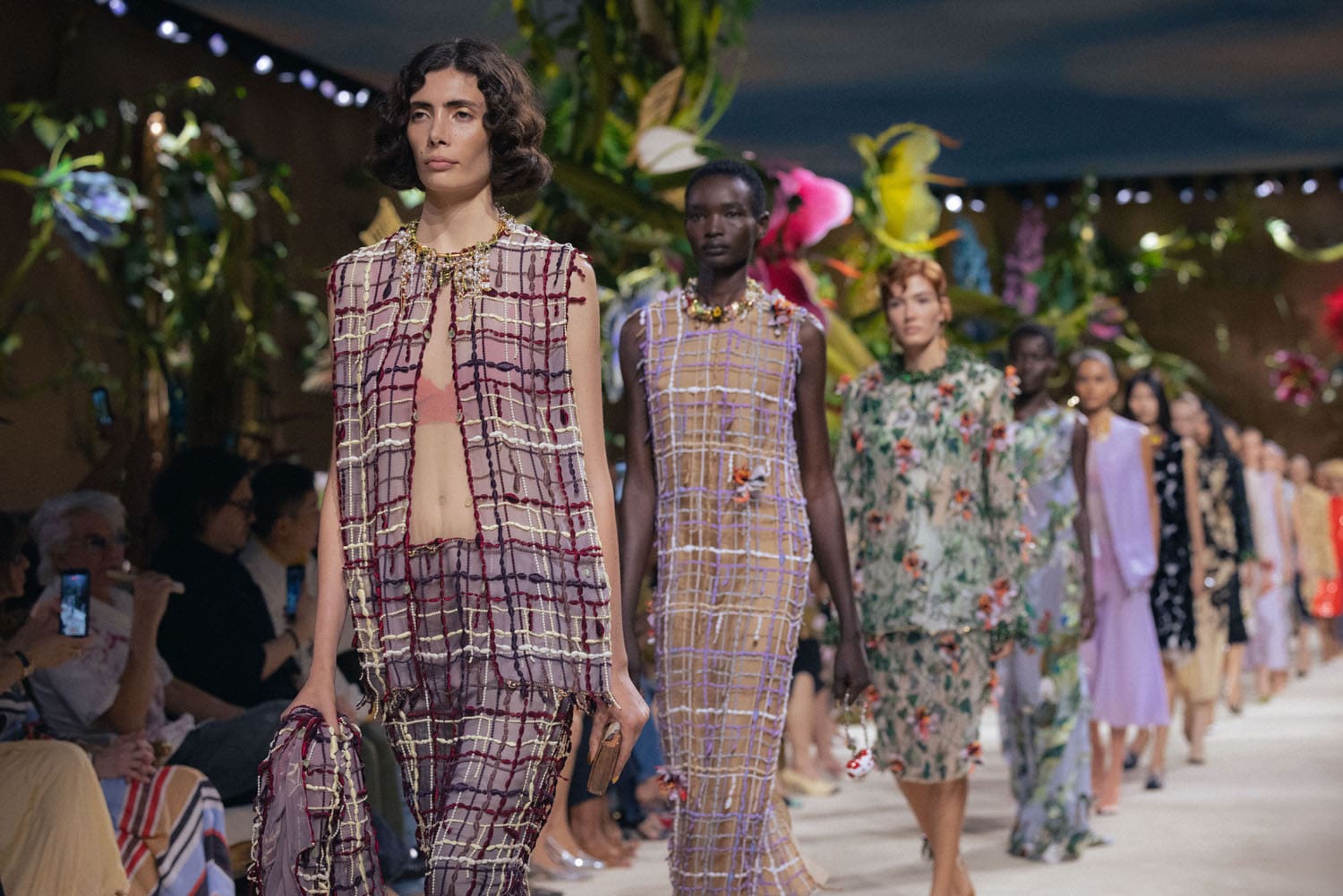
The narrative thread snaps entirely when the collection detours into a bizarre, agrarian folklore that feels utterly foreign to the Parisian sidewalk. The introduction of heavy, shredded textures—reminiscent of literal straw—creates an unwelcome, disheveled aesthetic. A prominent examples includes a short, shaggy straw-textured jacket layered over a casual red-and-black plaid flannel shirt, paired with speckled purple trousers and anchored by a chaotic, exploding straw hat.
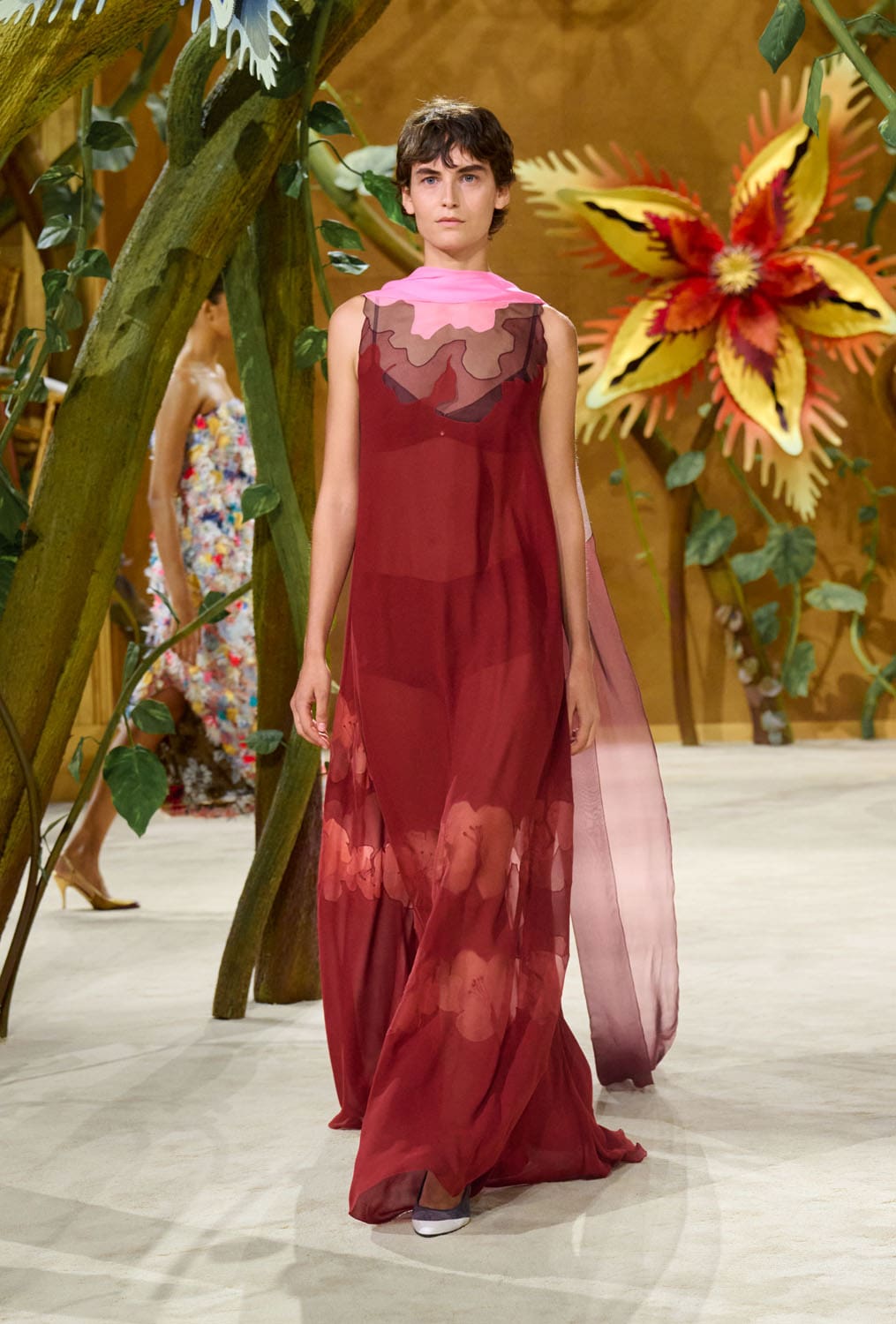
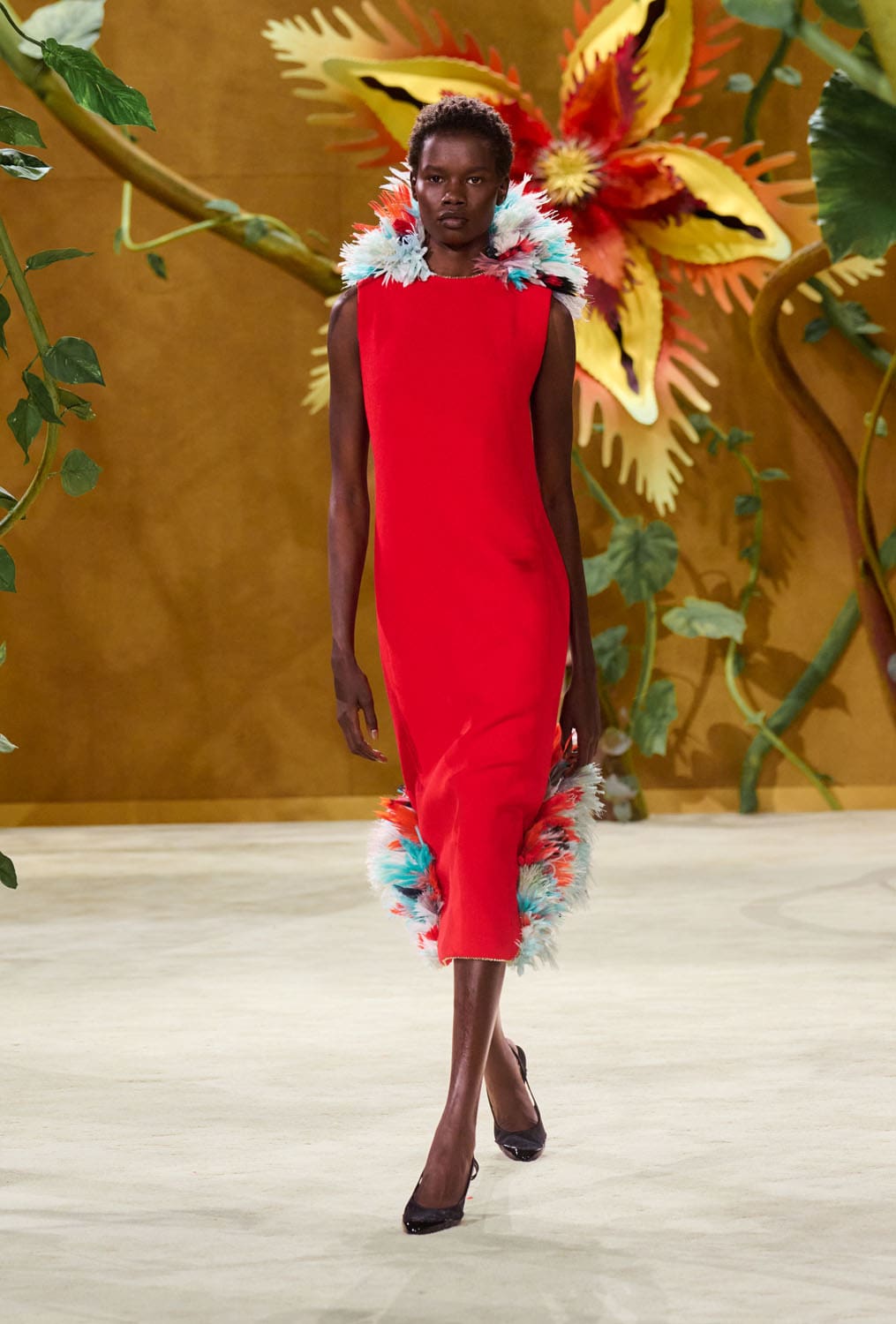
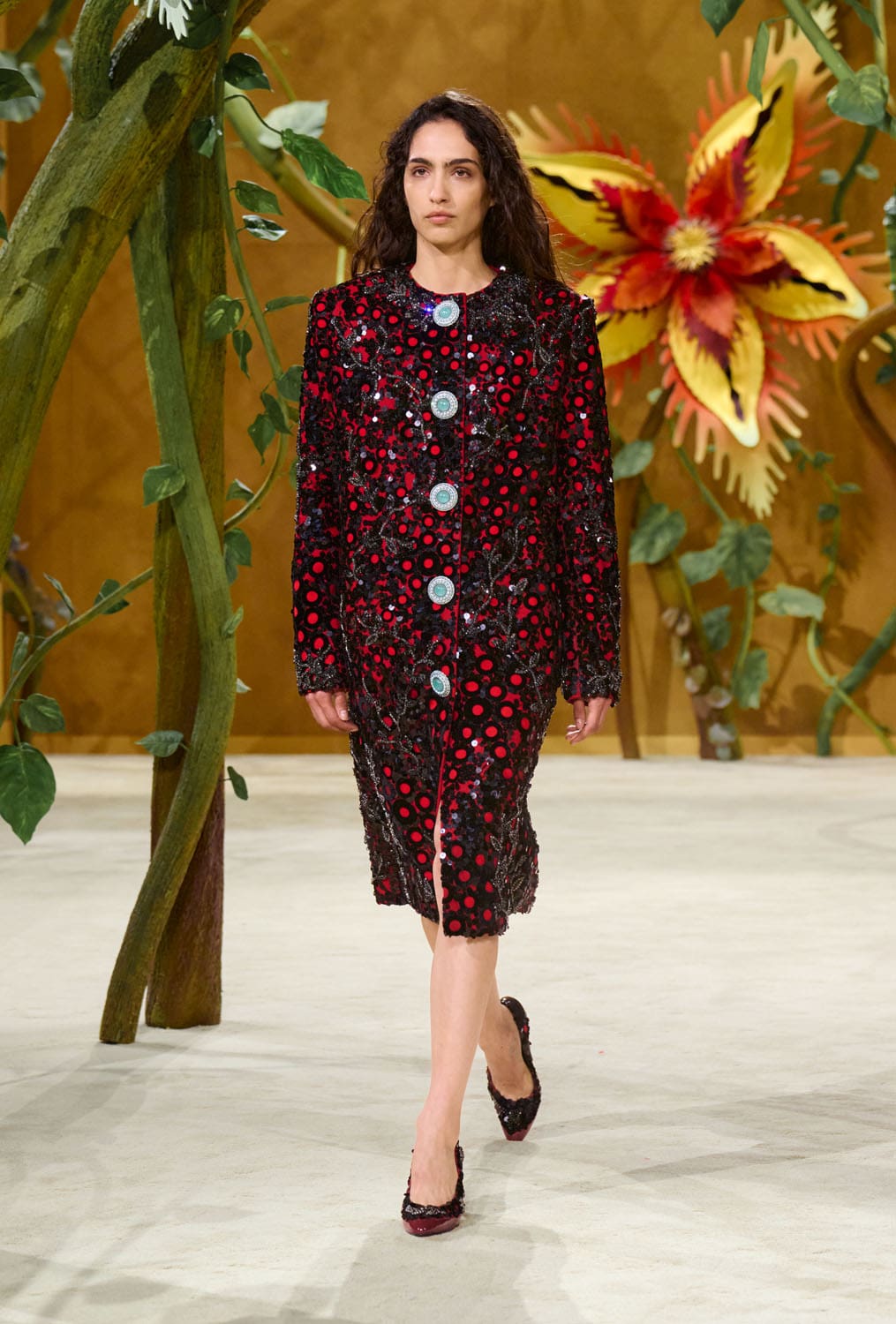
This rustic detour continues with an elongated, overwhelming coat made of the same hay-like fibers, sparsely punctuated by small embroidered pink daisies and worn over a dark, completely transparent chiffon dress. The collection attempts to ground itself later with an amorphous, pale-pink shift dress bordered by heavy, exploding carnation-pink and crimson ruffles at the neck and hem, only to shift gears yet again into a rigid, knee-length black coat entirely saturated with glittering red polka-dots and secured by massive, turquoise-centered jeweled buttons. By forcing these disparate worlds into a single presentation, the collection stops telling a cohesive story and instead becomes a collection of fragmented, conflicting paragraphs.
Key Takeaways
- Matthieu Blazy’s Chanel Fall Winter 2026-2027 Haute Couture collection blends childhood fairy tales with modern luxury, showcasing a narrative that spans generations.
- The collection features innovative materials and textures, including reimagined classic Chanel suits and garments that highlight intimate craftsmanship.
- While the collection displays technical brilliance, it suffers from an identity crisis, merging varying styles that dilute the essence of Chanel.
- The runway shows a disconnect in silhouettes, alternating between delicate designs and coarse textures that lack cohesive storytelling.
- Overall, the collection struggles to maintain a unified theme, resulting in fragmented looks that feel disjointed and incoherent.
See All Looks Chanel Fall Winter 2026-2027 Haute Couture