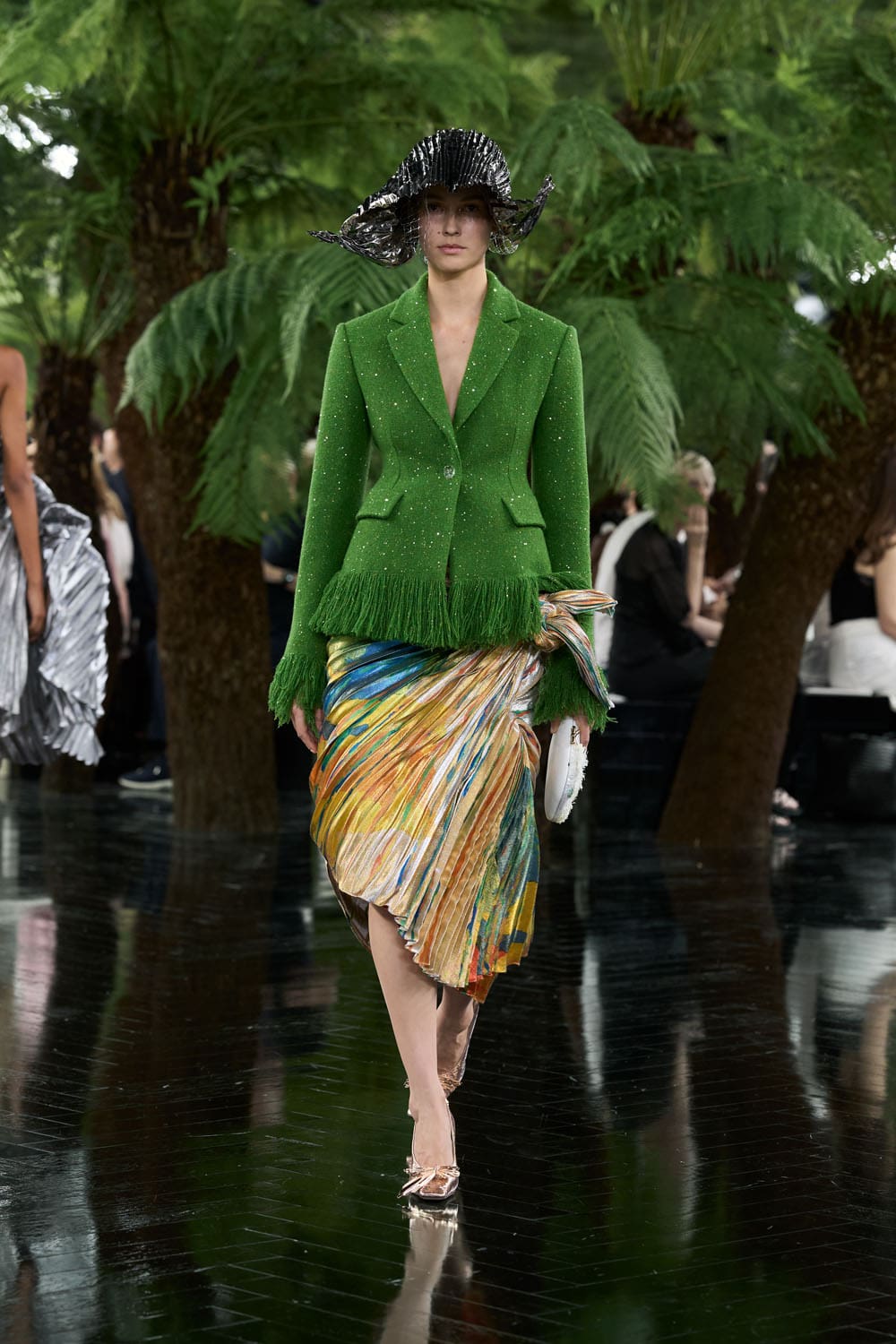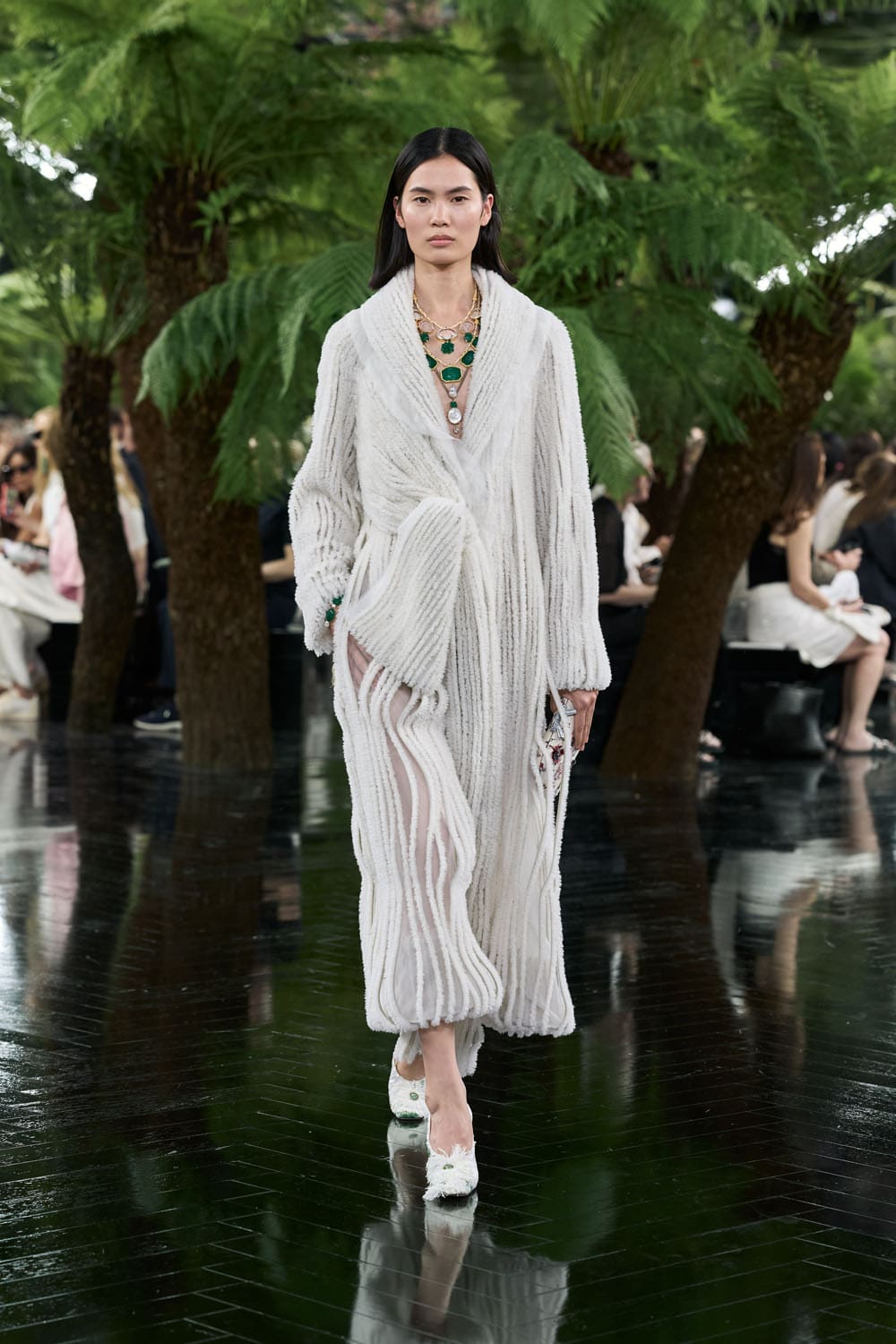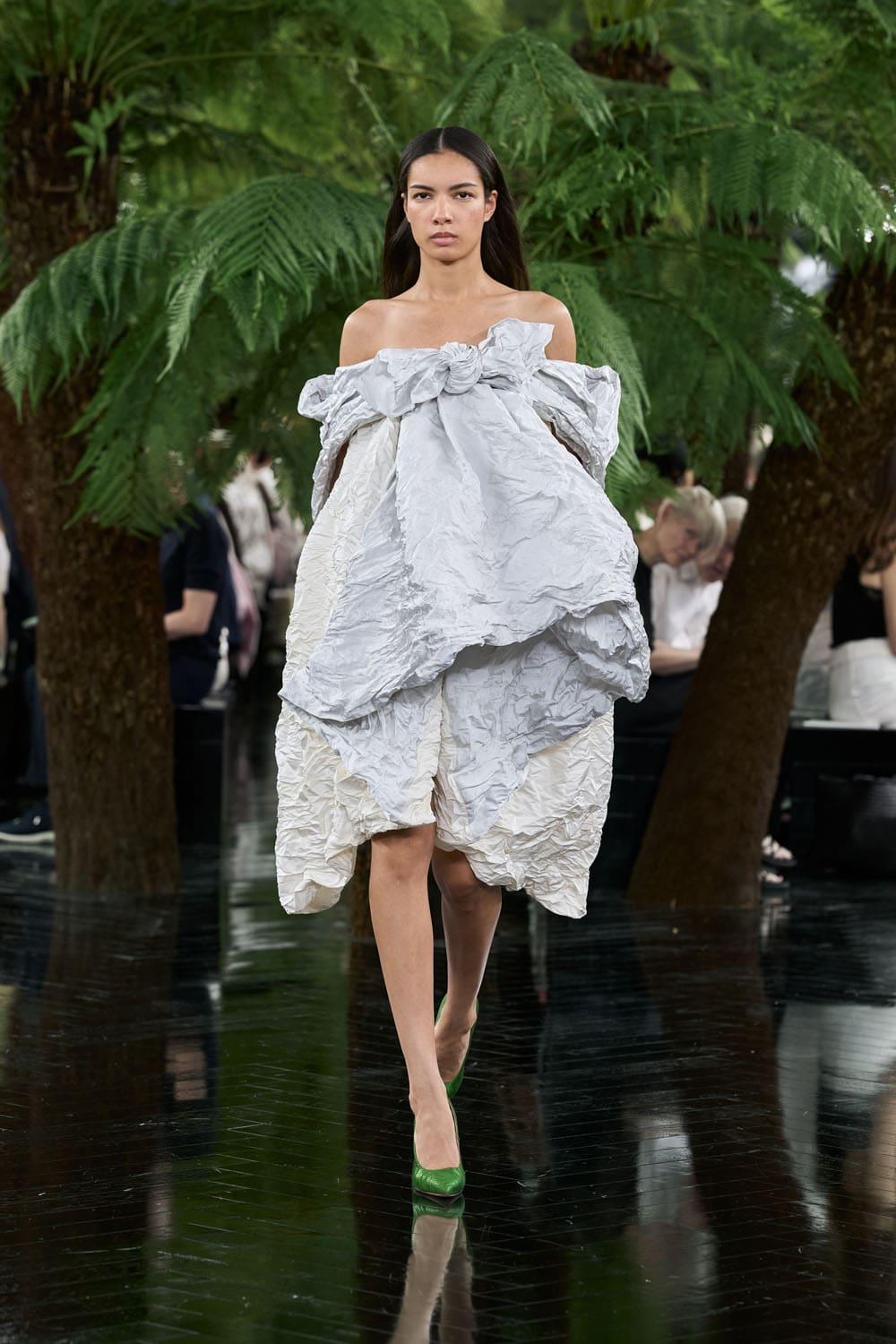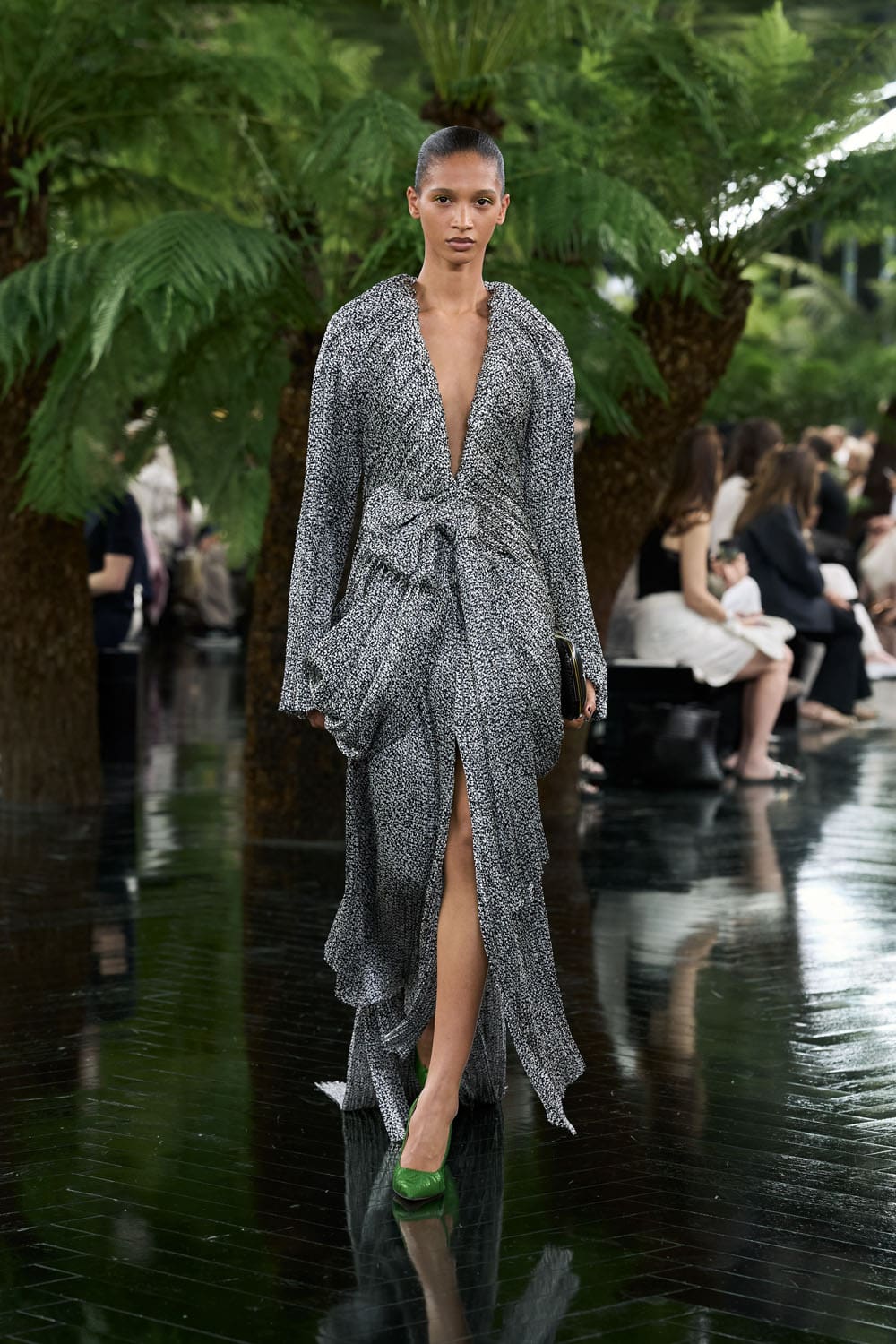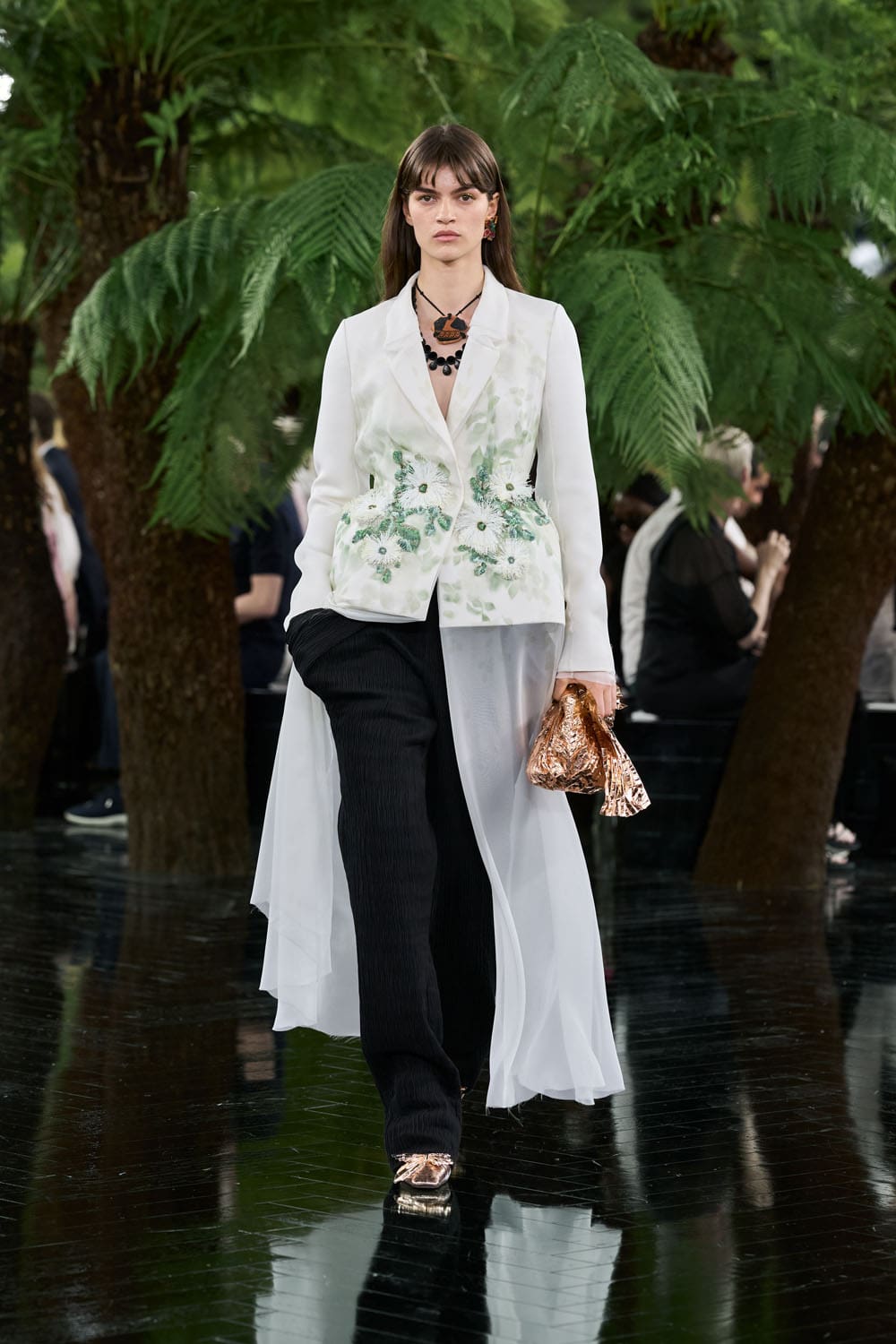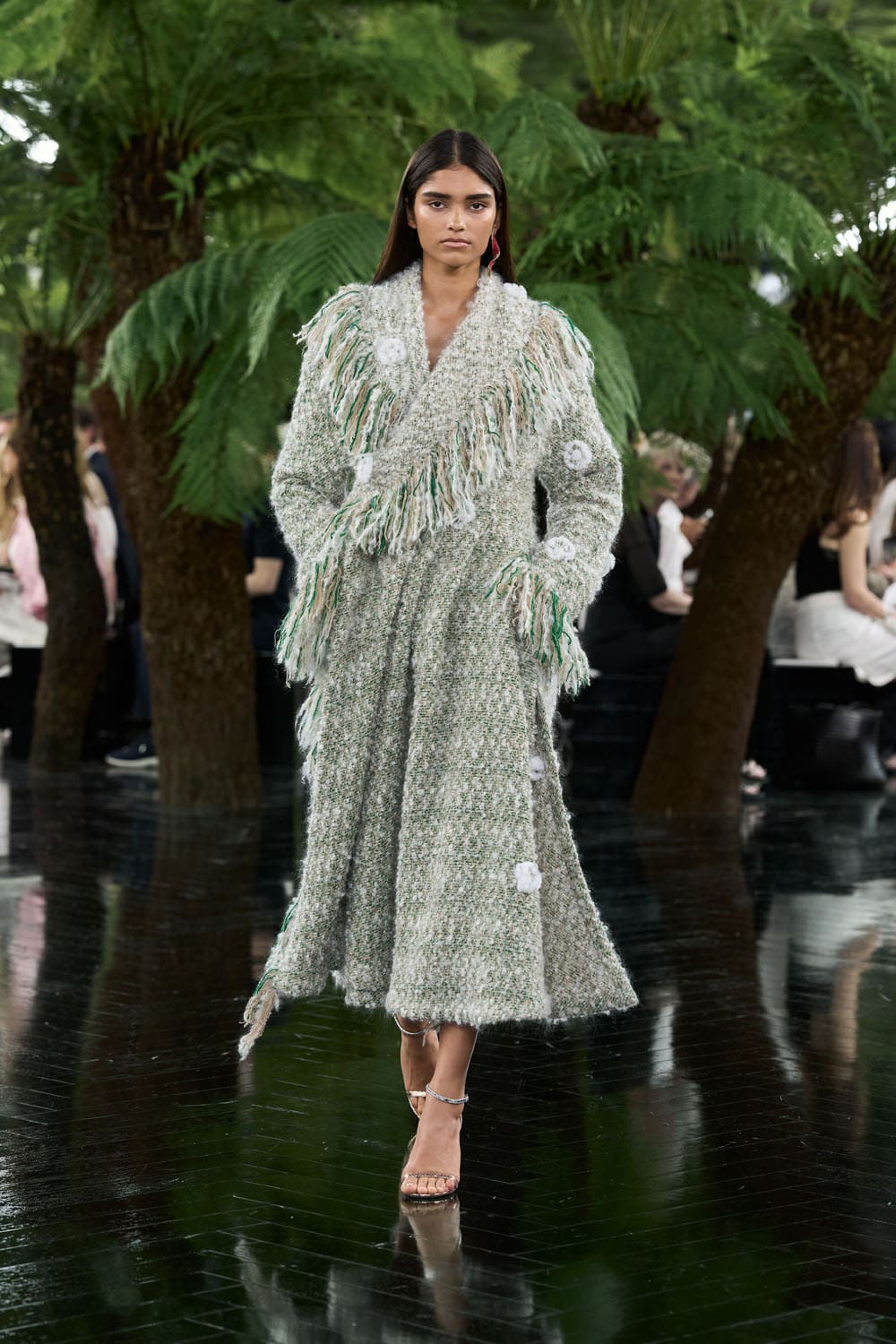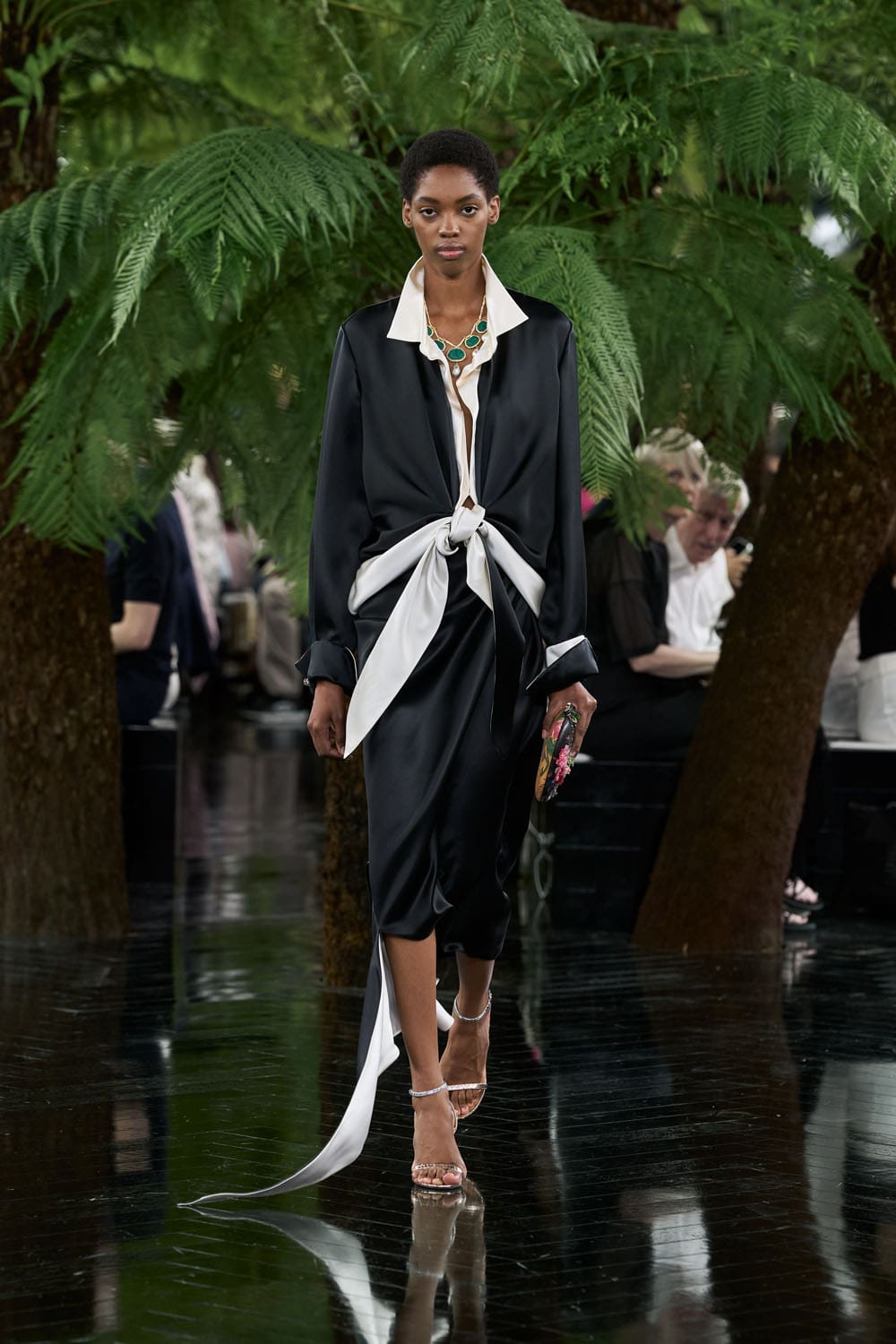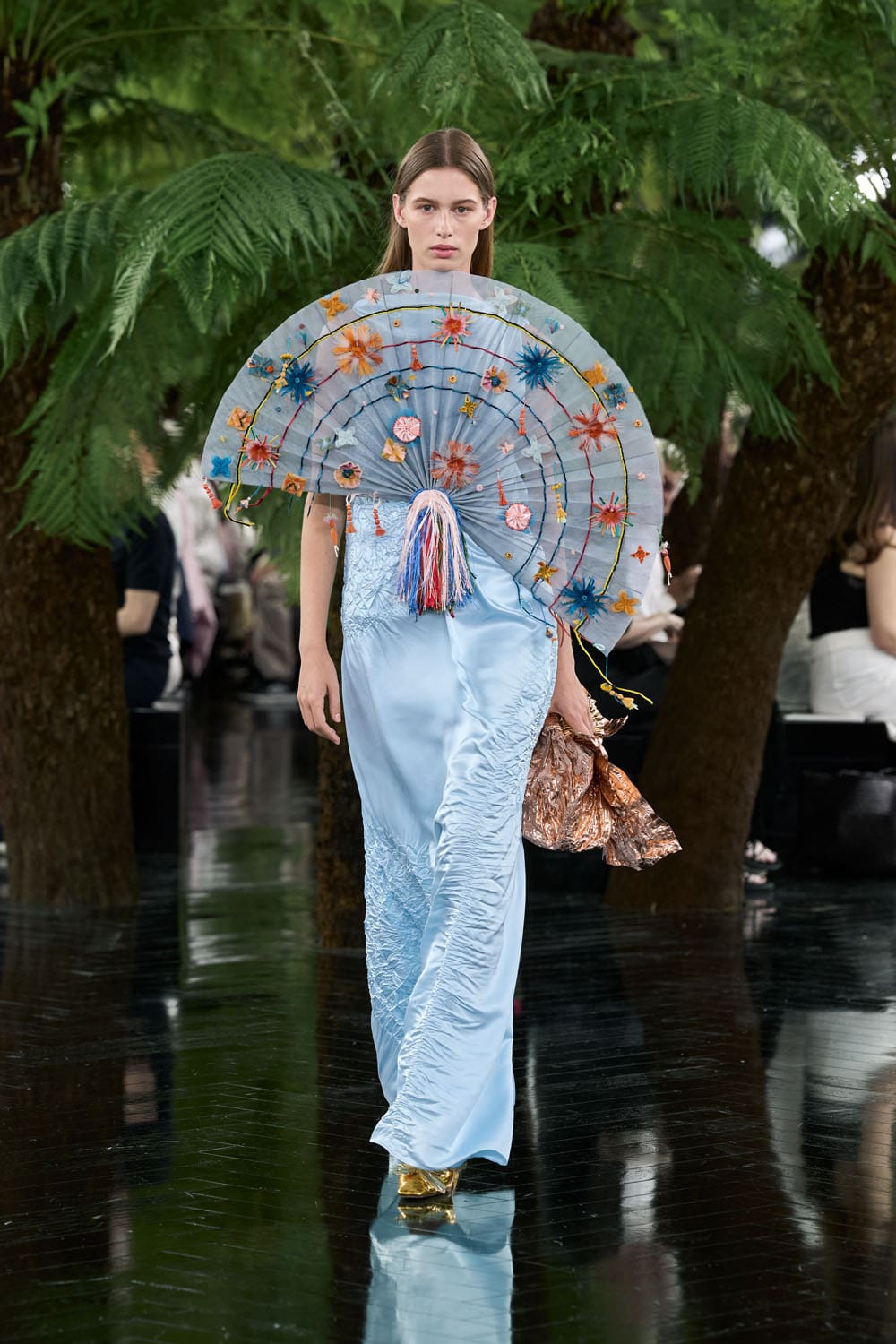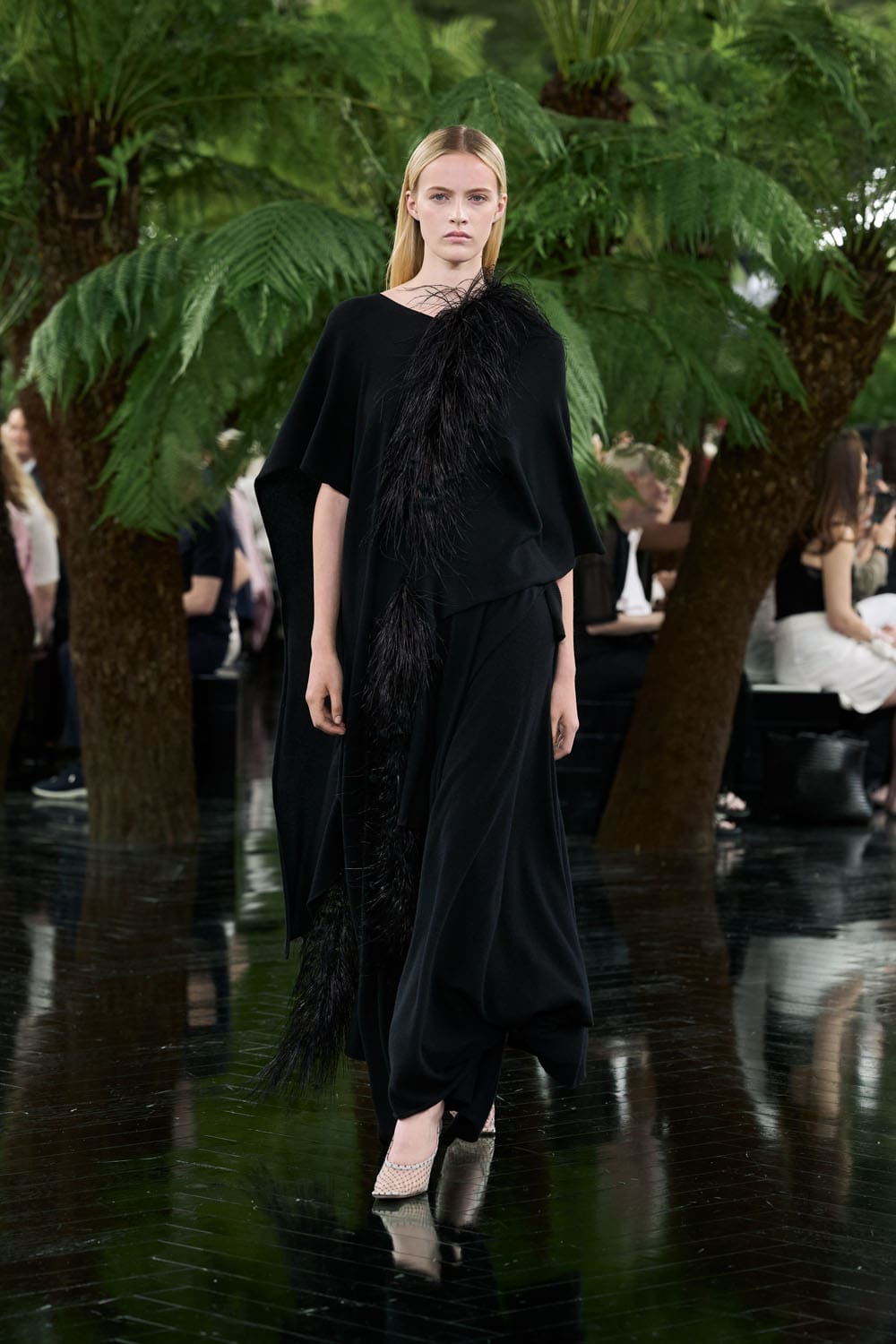
Dior Haute Couture Fall Winter 2026-2027 “The Architecture of Flou and the Illusion of Rigor with Holiday Armadillo at the End”. Story by Eleonora de Gray, Editor-in-Chief of RUNWAY MAGAZINE. Photo Courtesy: Dior.
The Architecture of Flou and the Illusion of Rigor
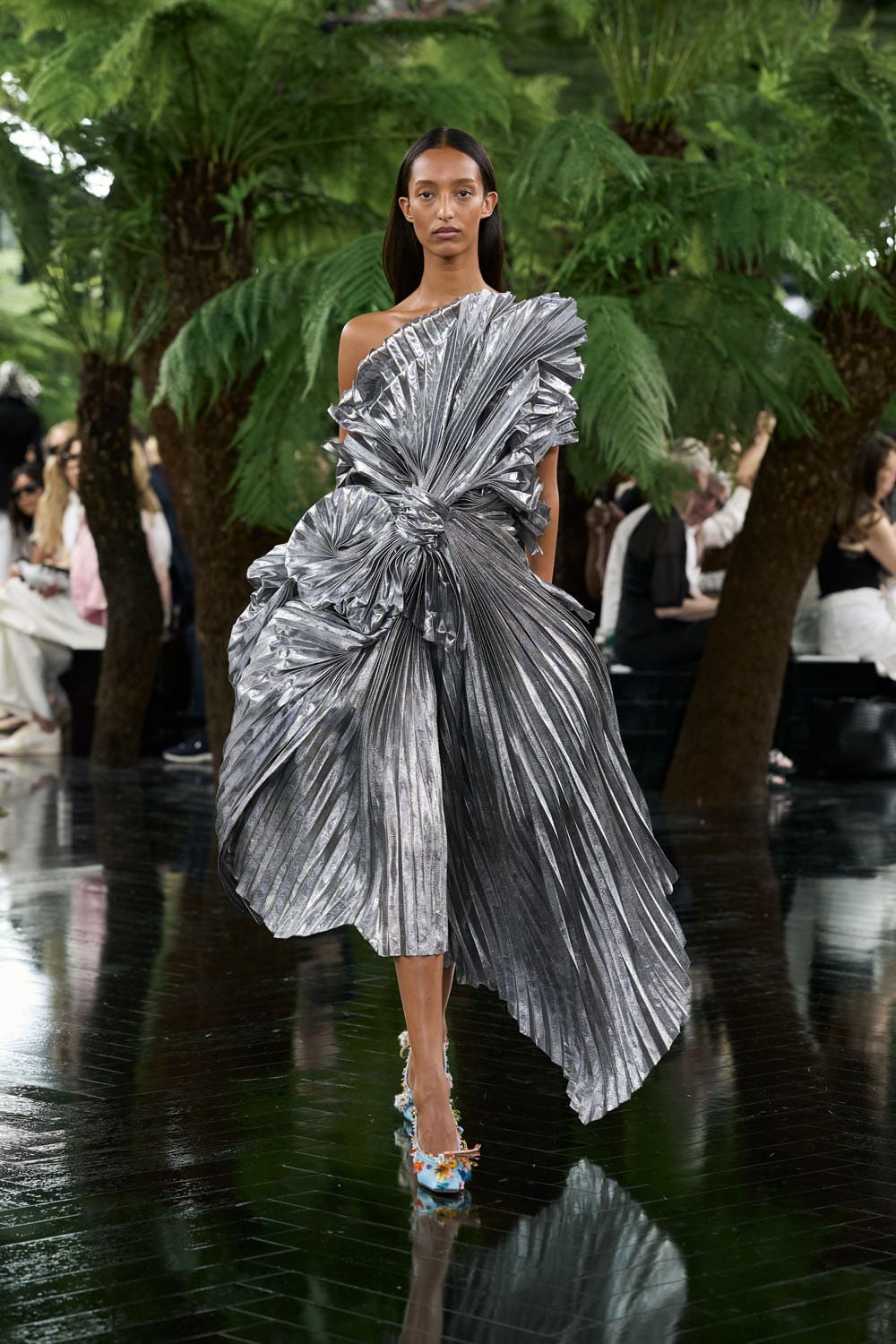
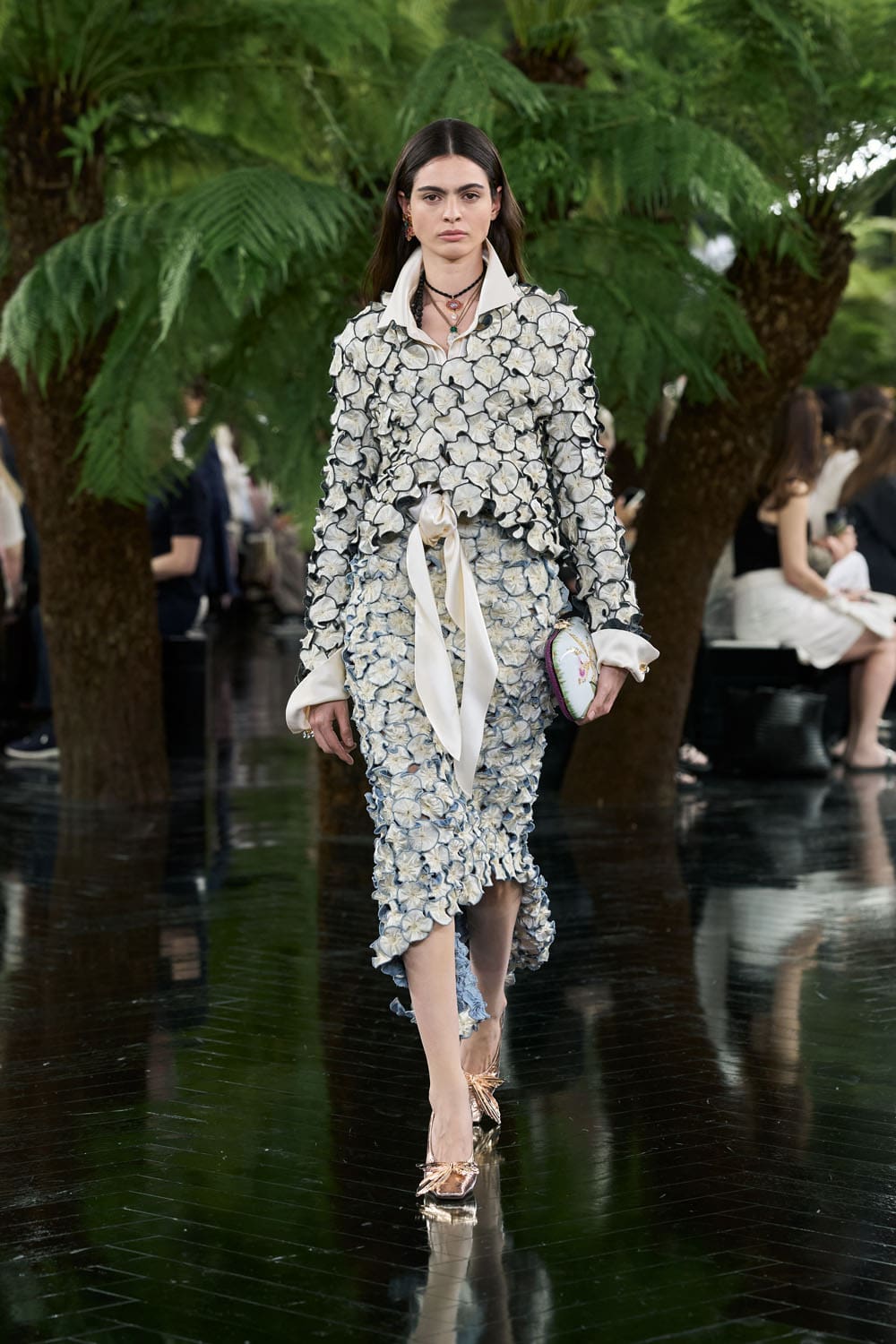
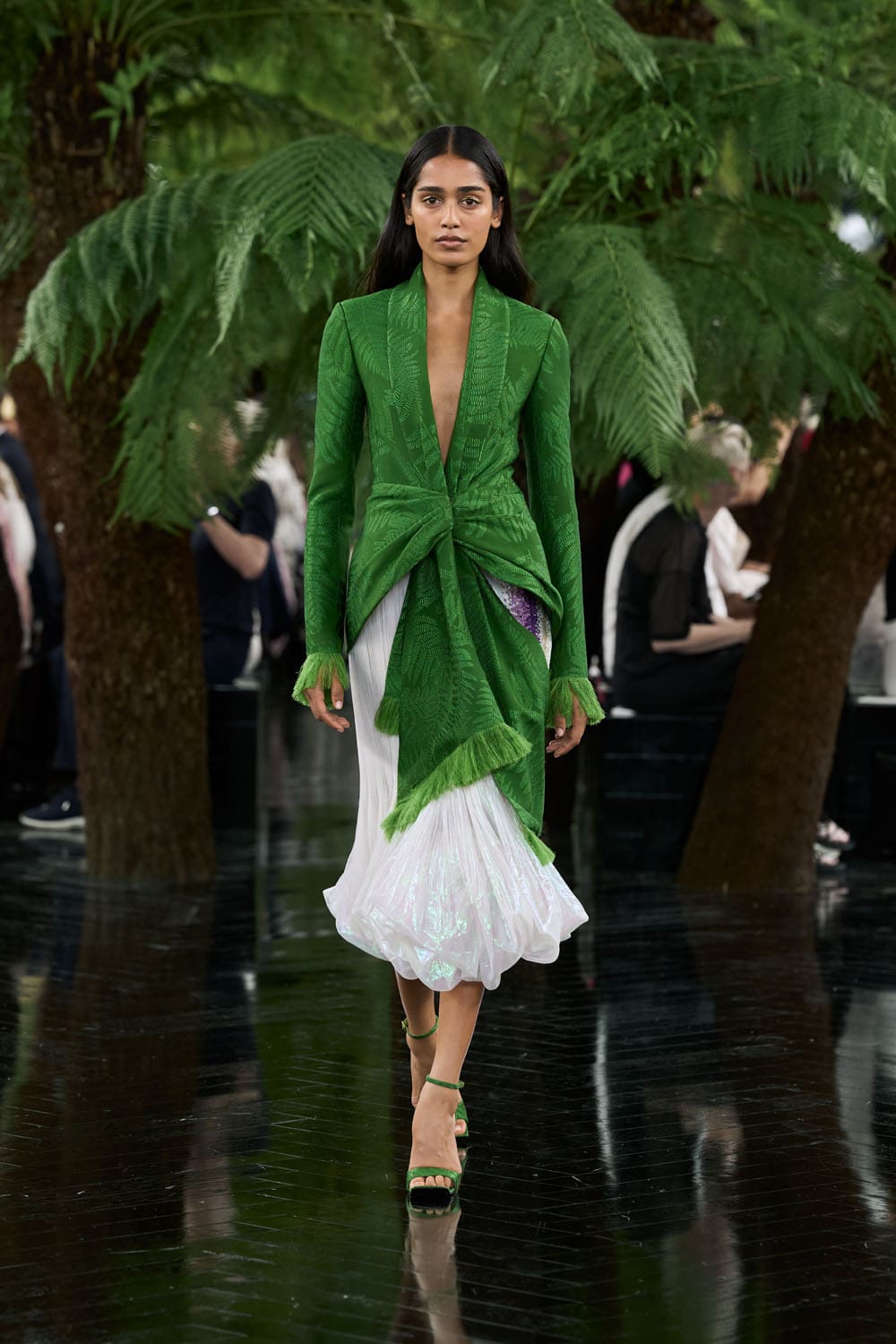
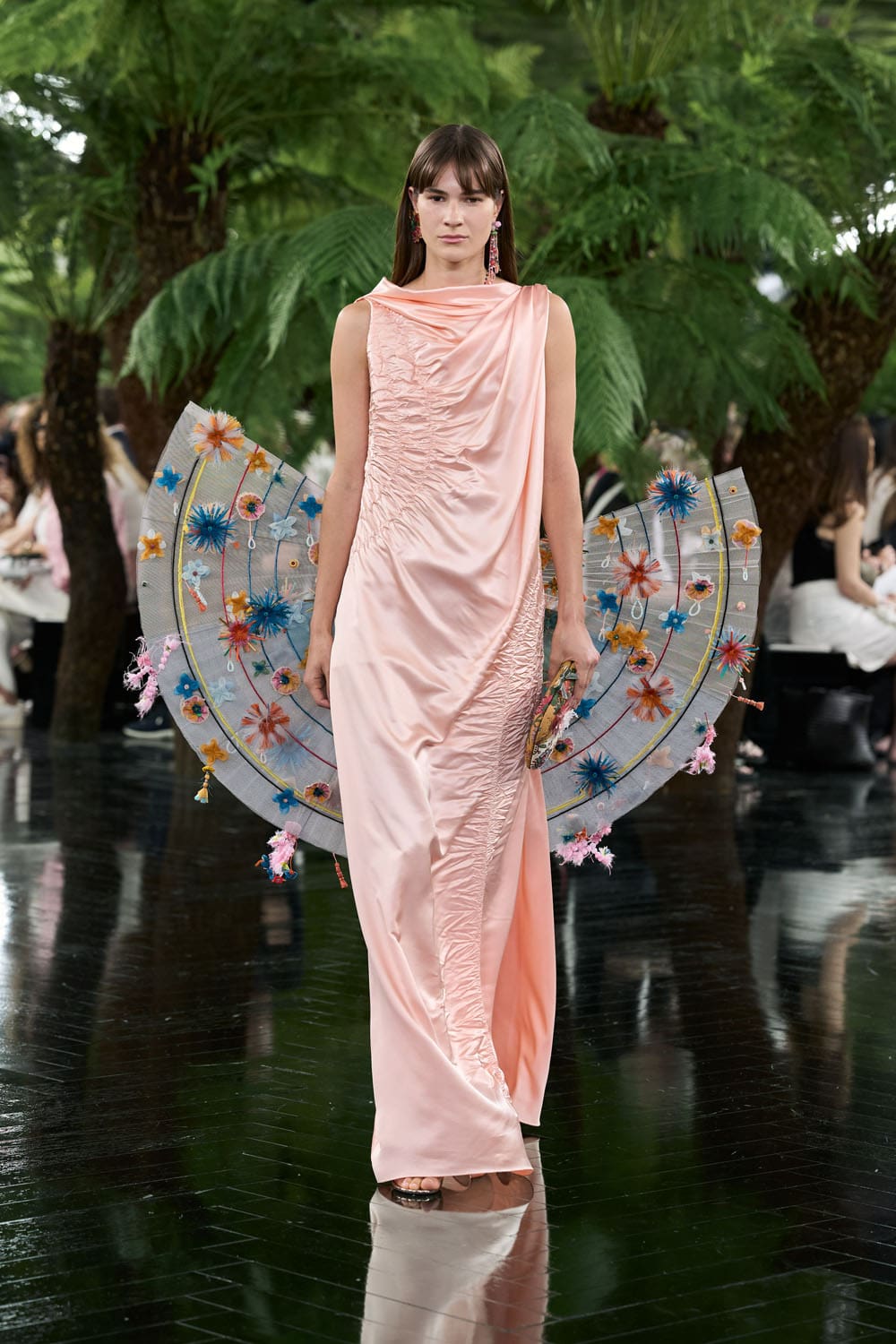
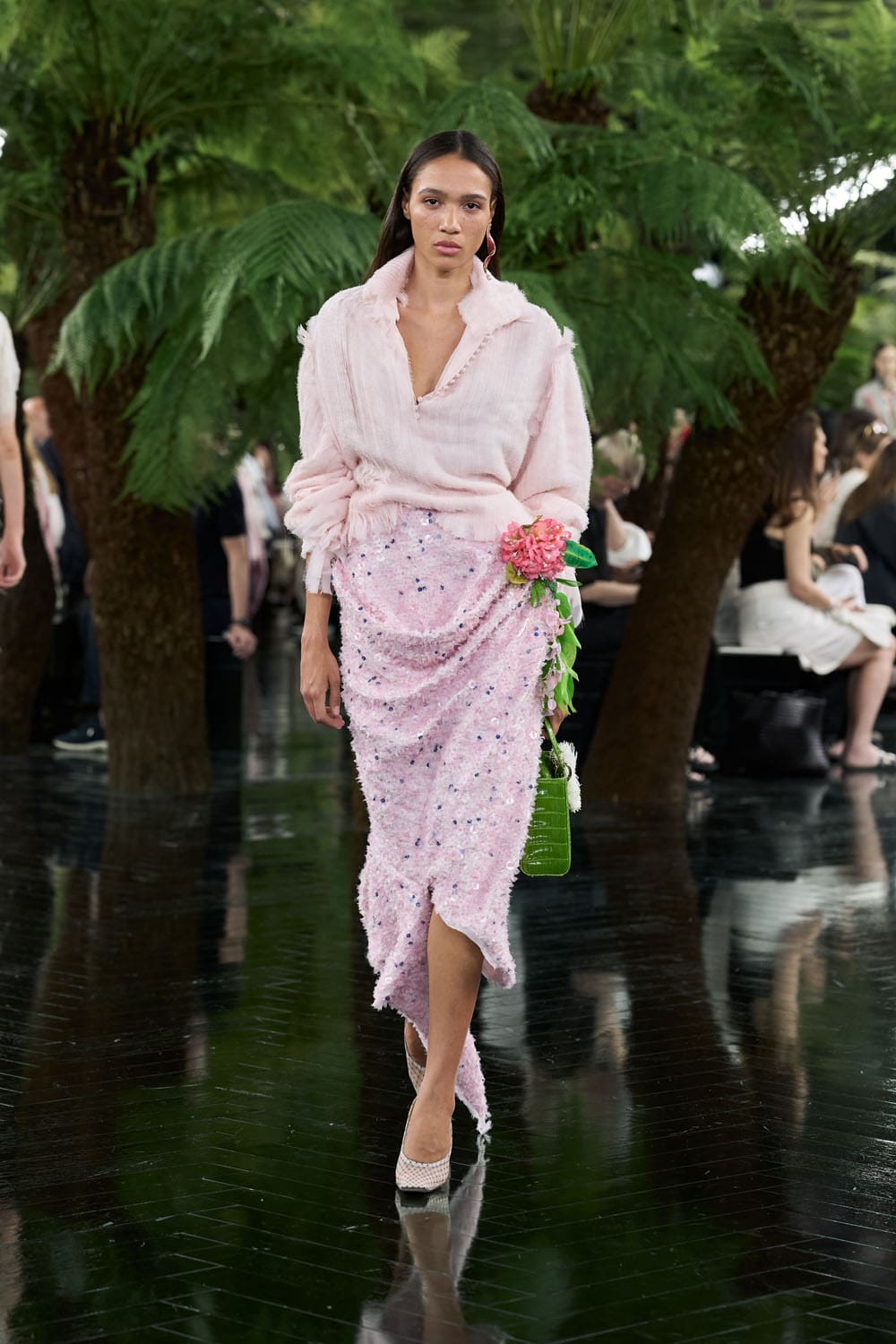
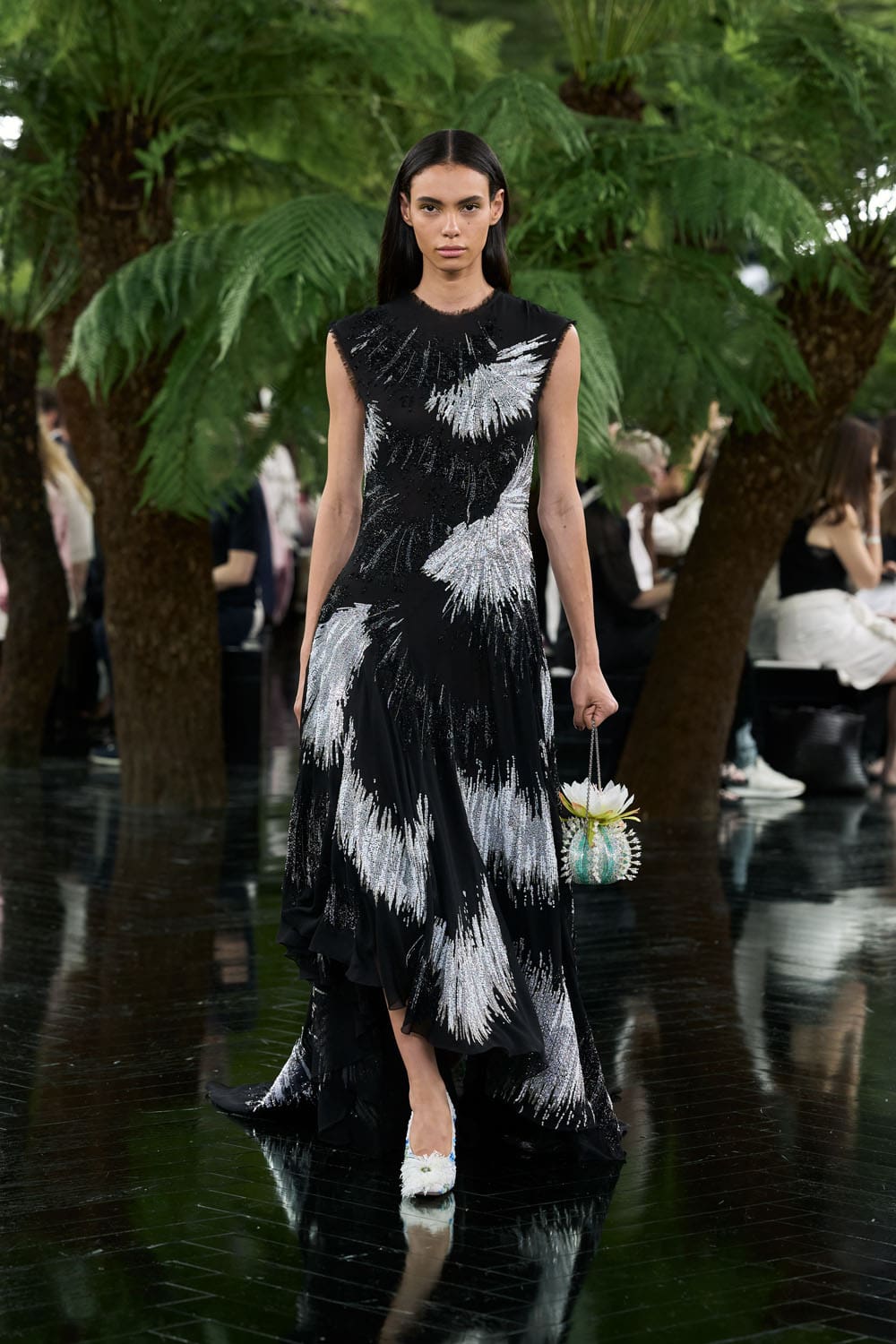
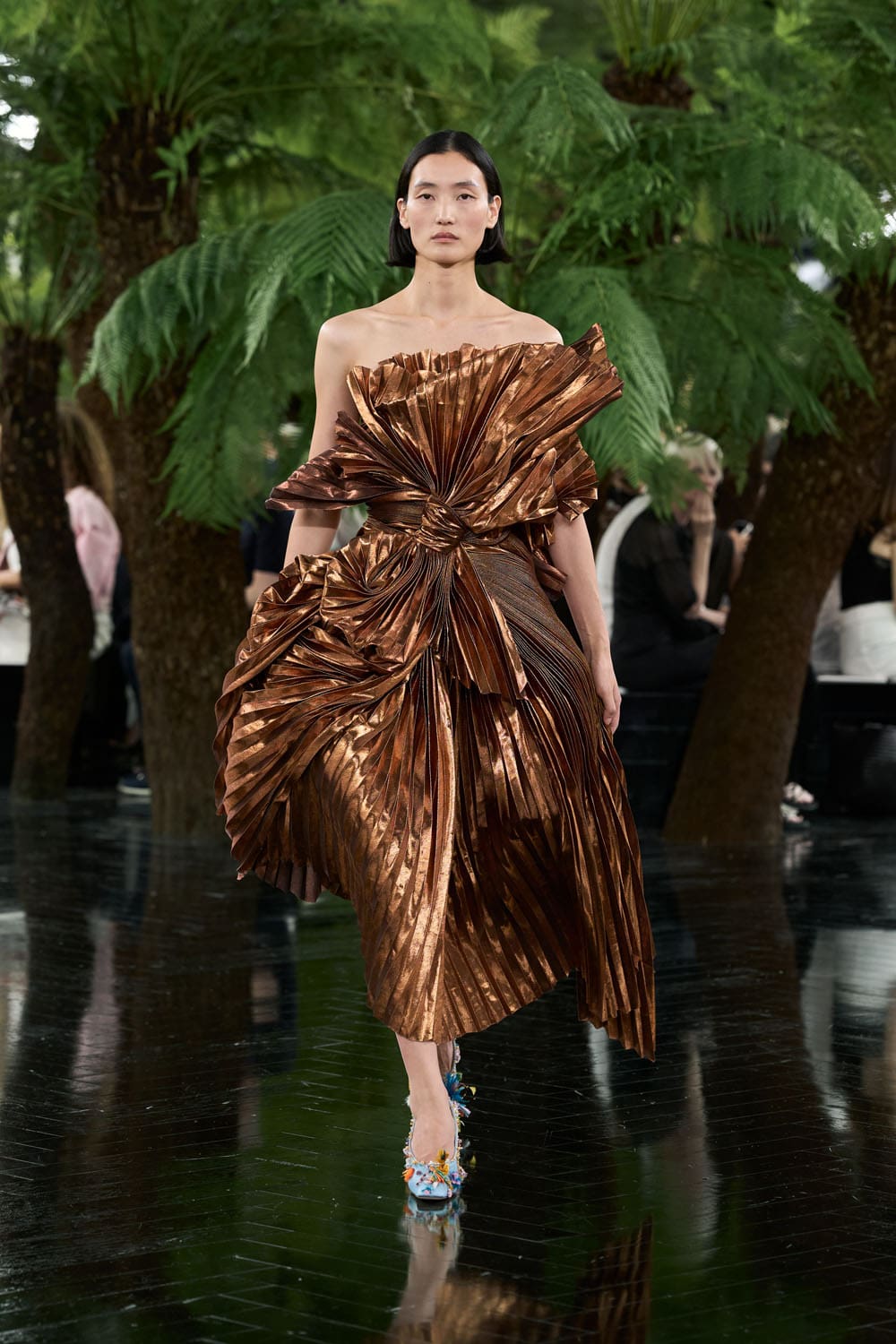
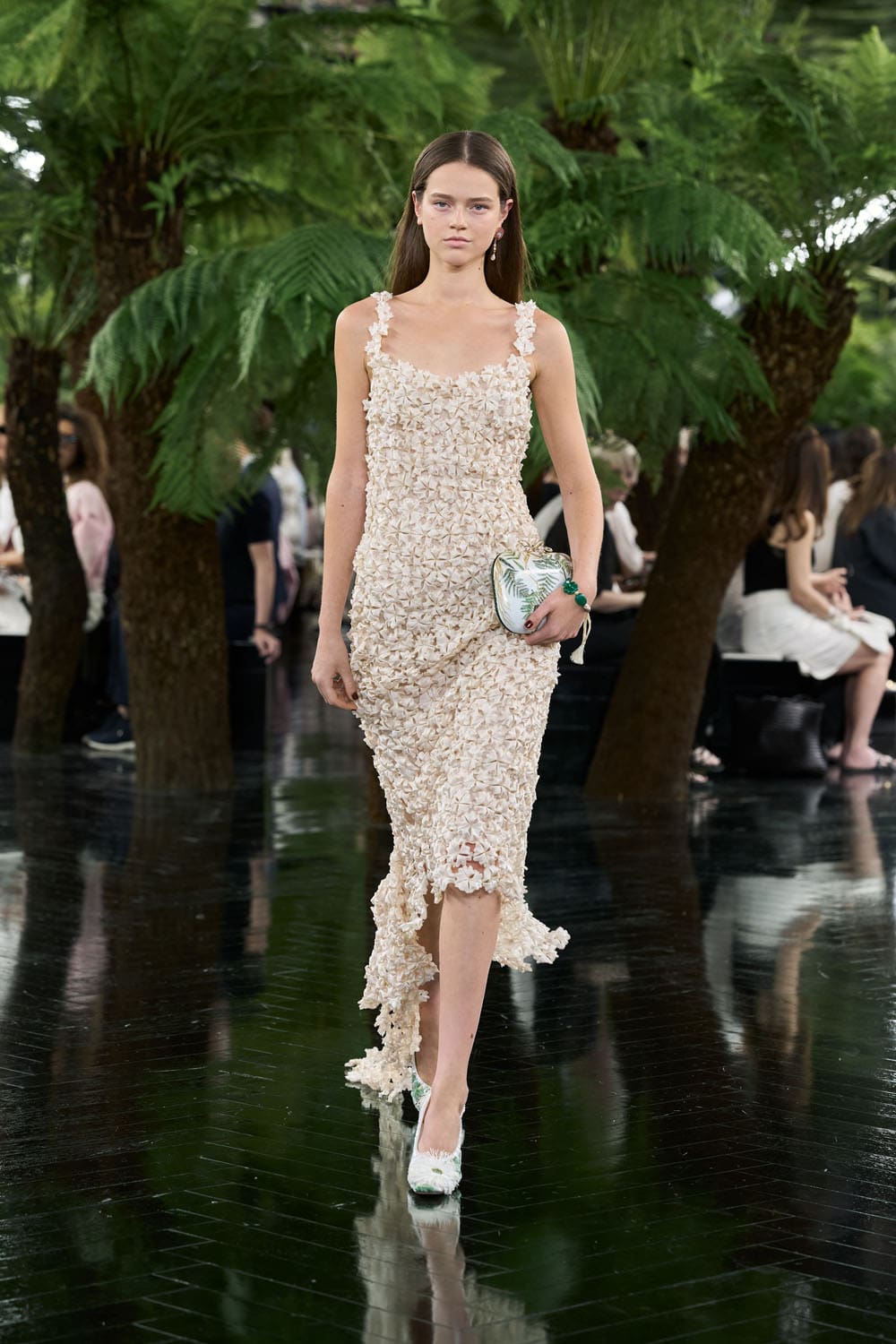
The dialogue between Haute Couture and contemporary sculpture frequently suffers from a lack of genuine translation, yet the opening sequences of the Dior Fall Winter 2026-2027 collection manage an alignment with the house’s architectural roots. Nominally a response to the sculptural lexicon of American artist Lynda Benglis, the collection finds its true momentum when it discards intellectual posturing and returns to the foundational obsession of the House: the sublimation of the natural world. Christian Dior famously engineered his silhouettes to mirror the architecture of flowers, a lineage that here manifests not through surface-level botanical replication, but via a rigorous manipulation of form, movement, and heavily worked textile surfaces.
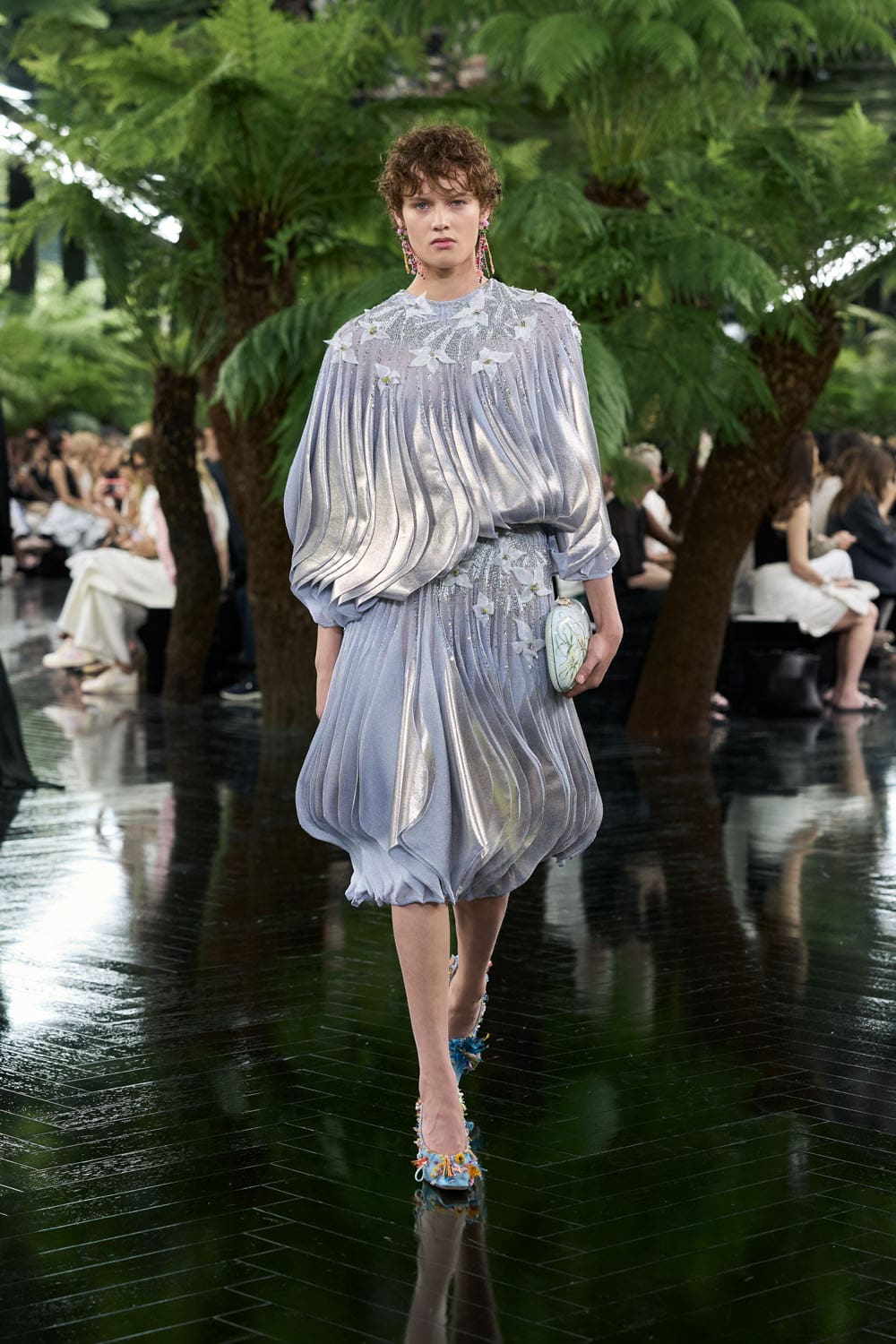
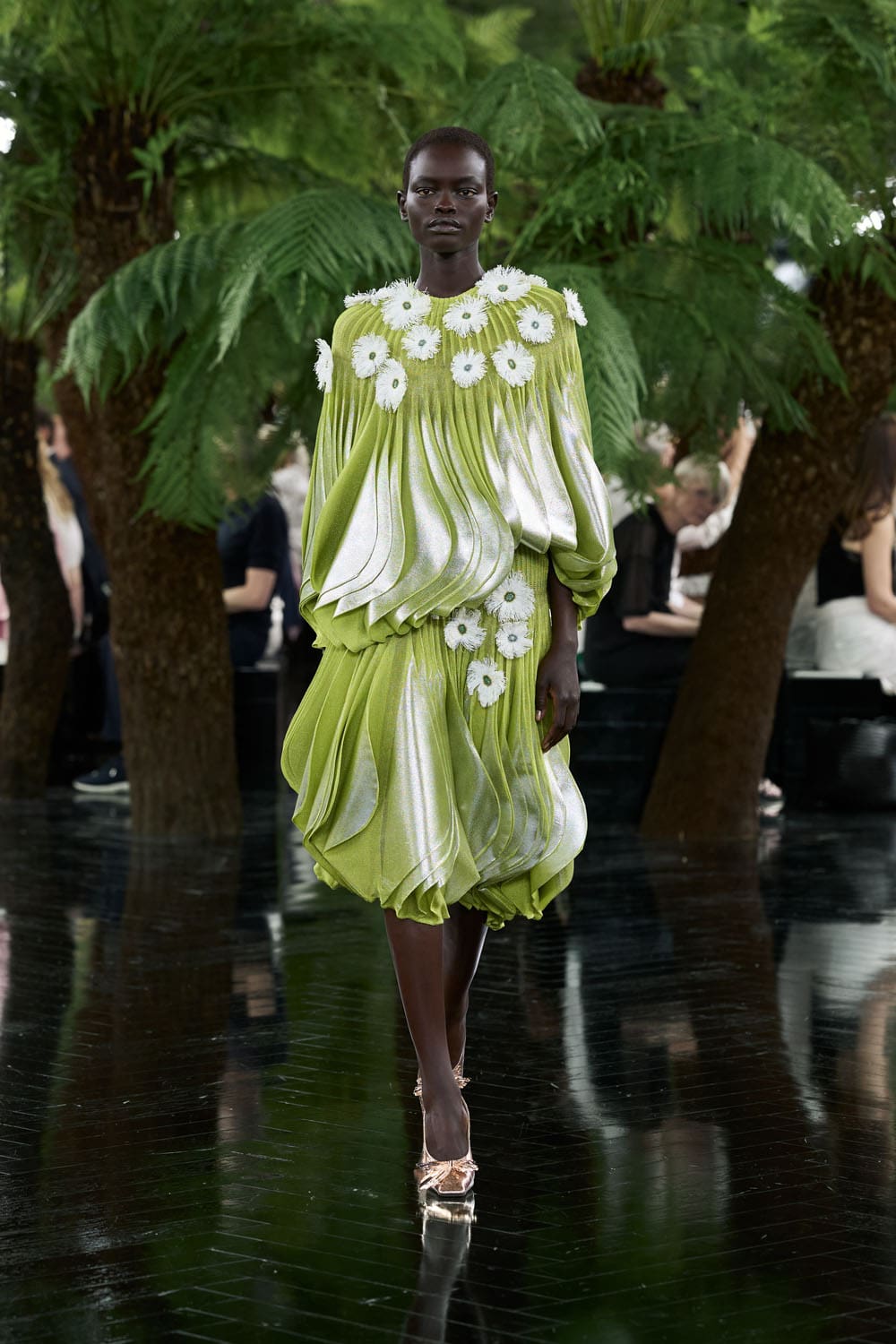
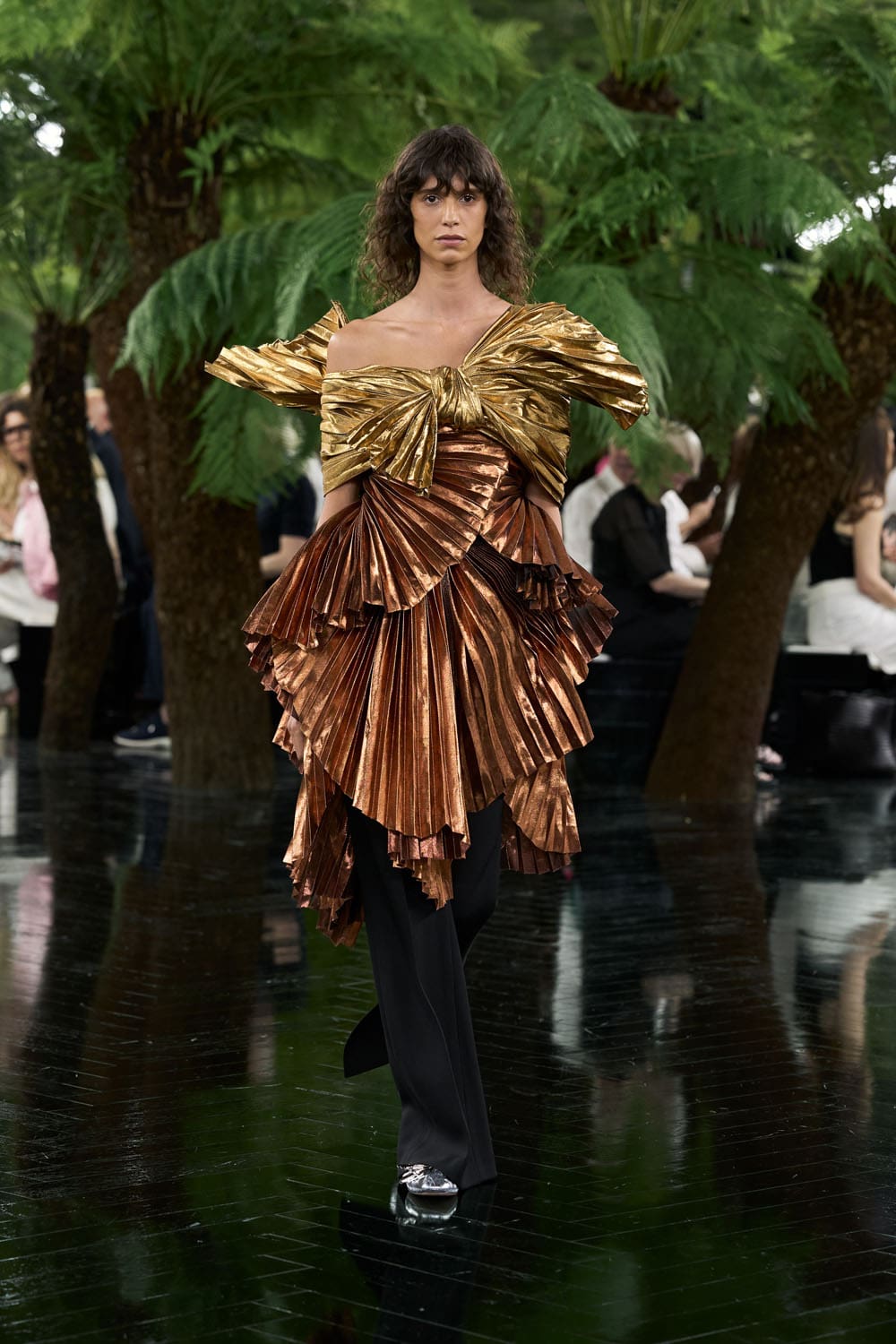
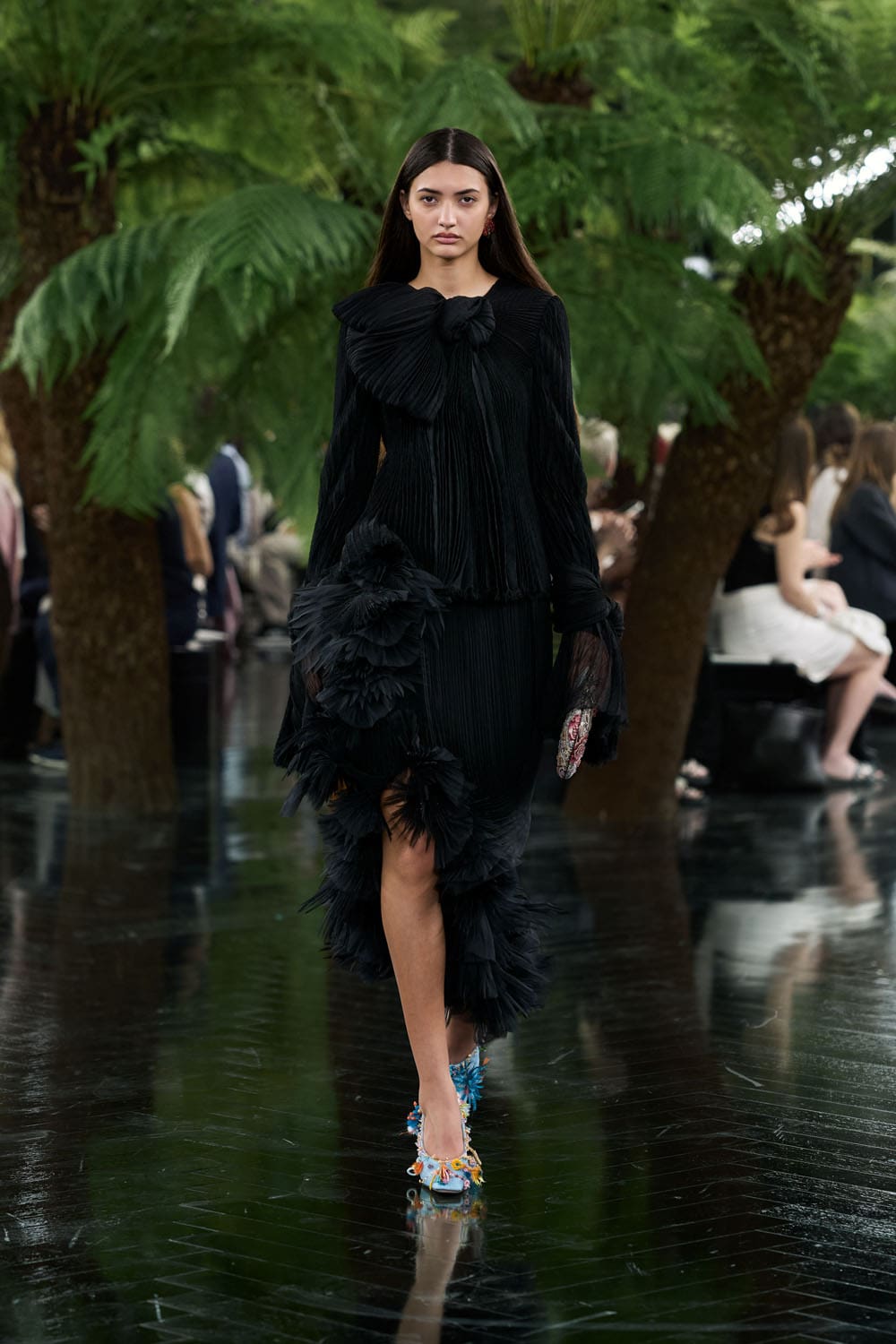
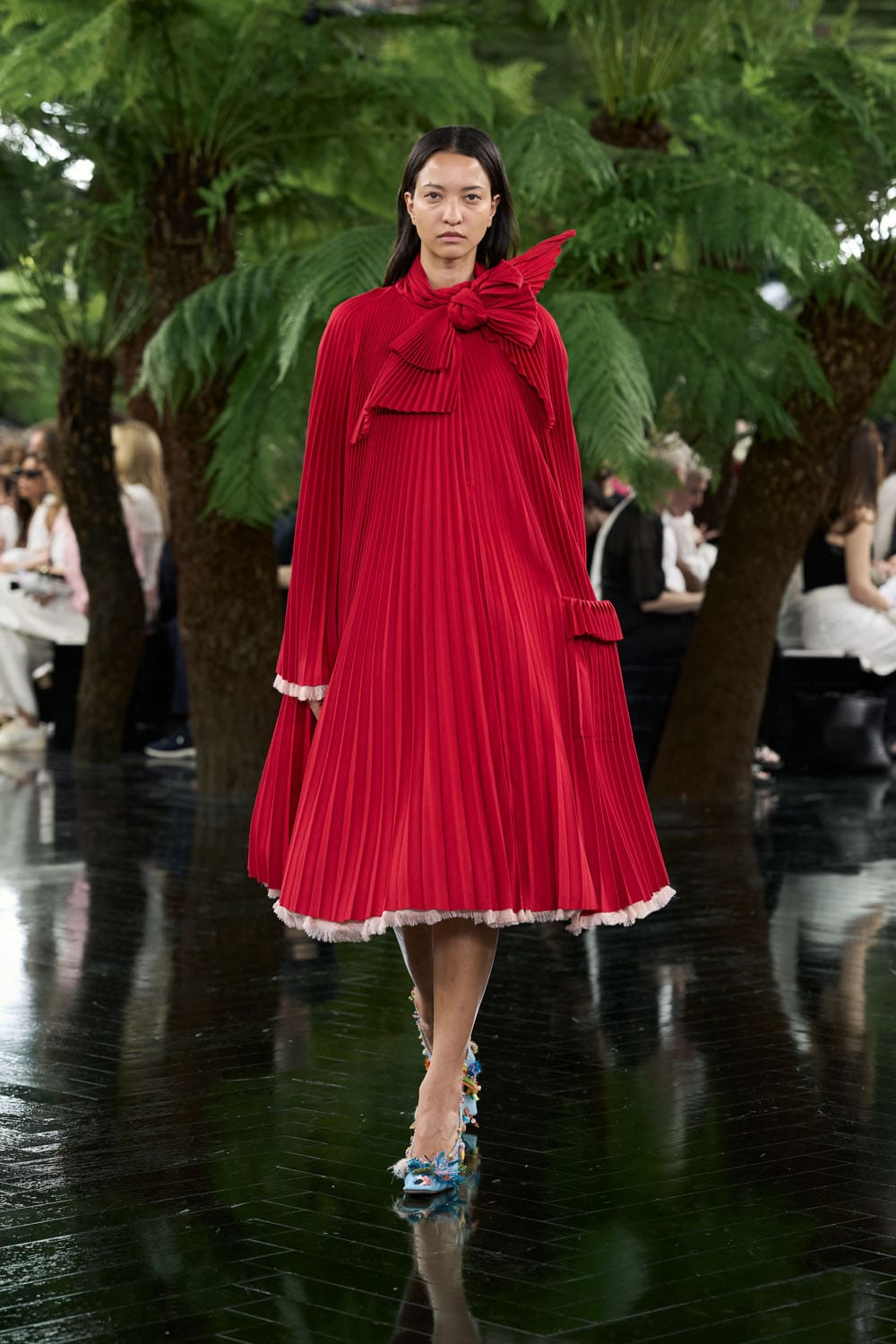
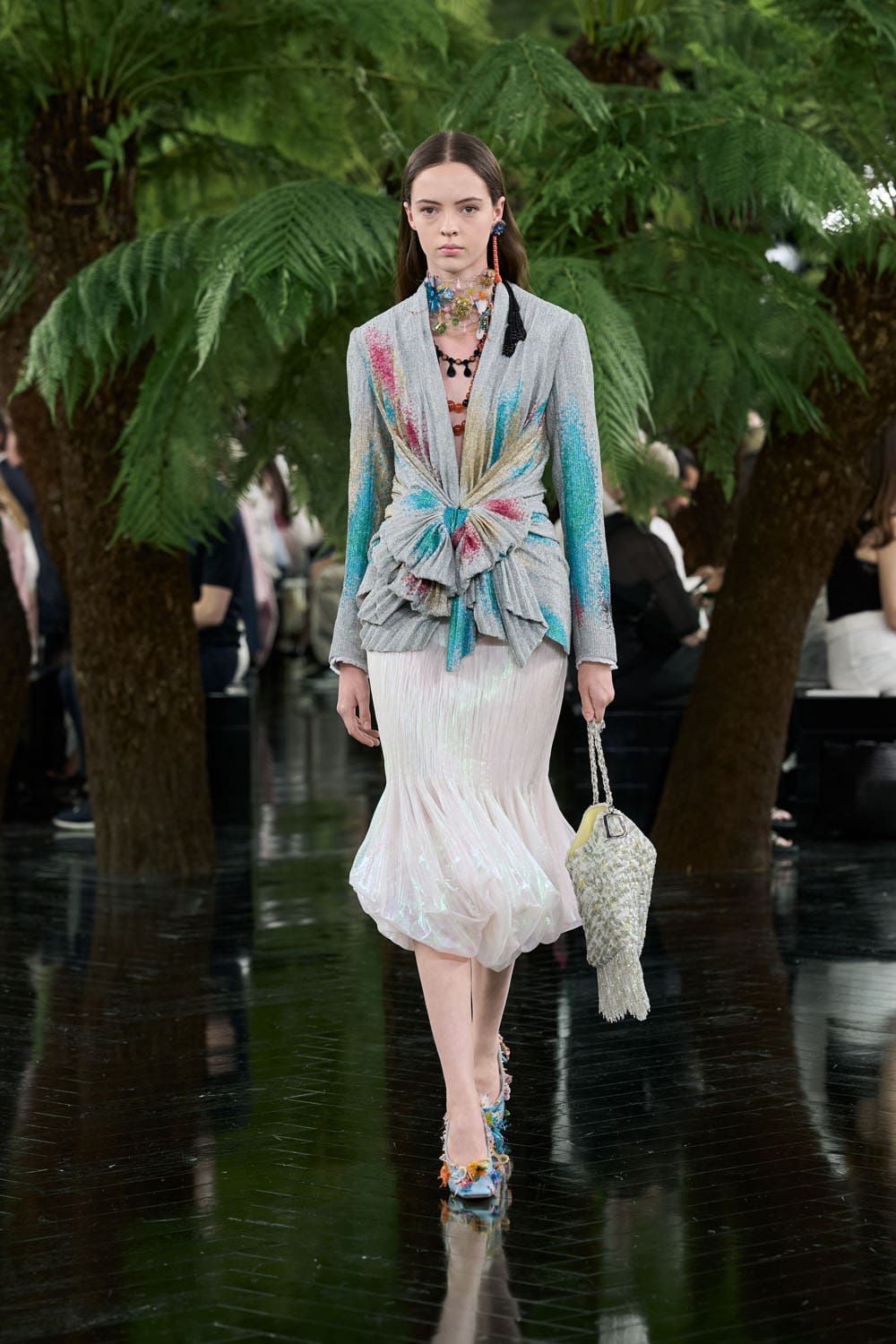
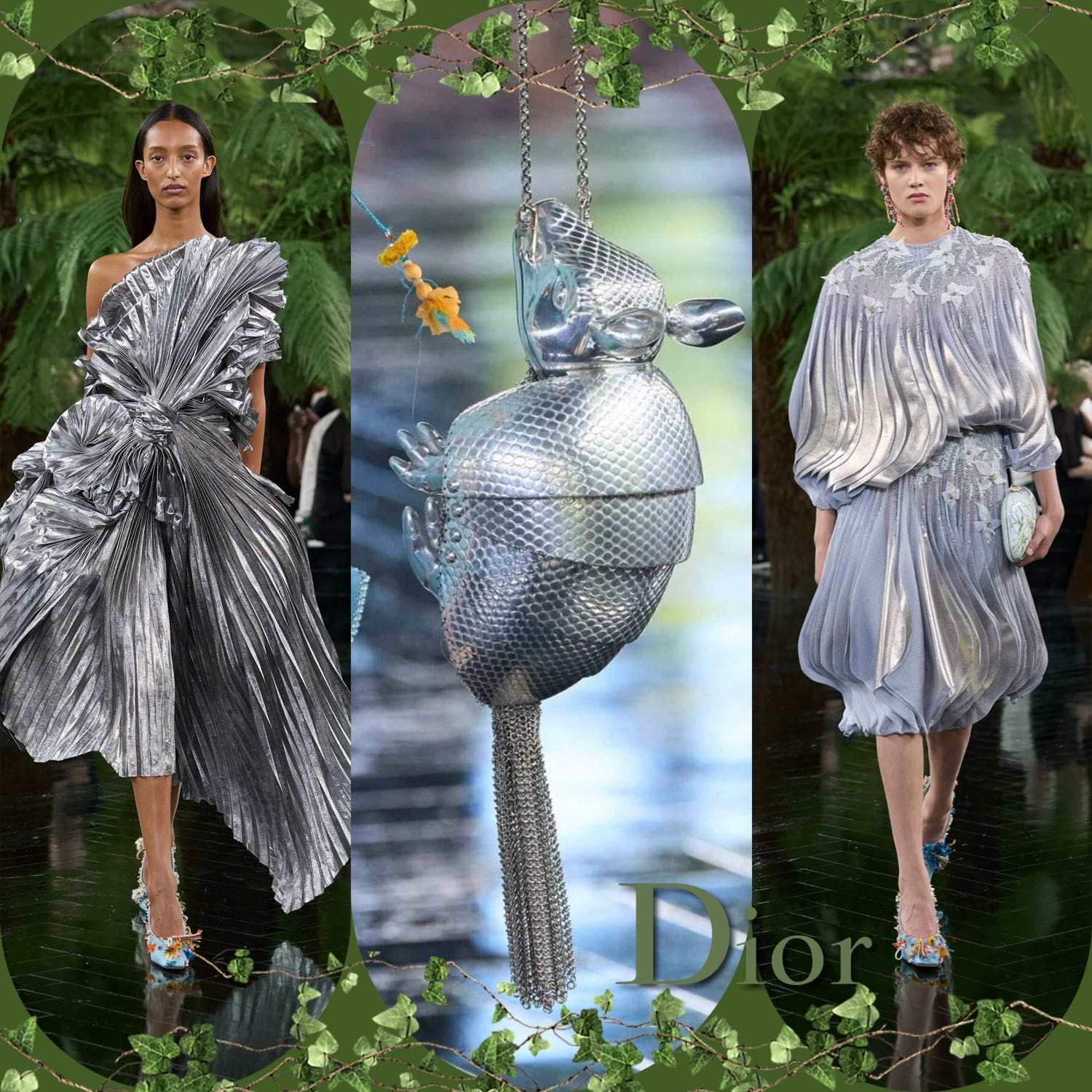
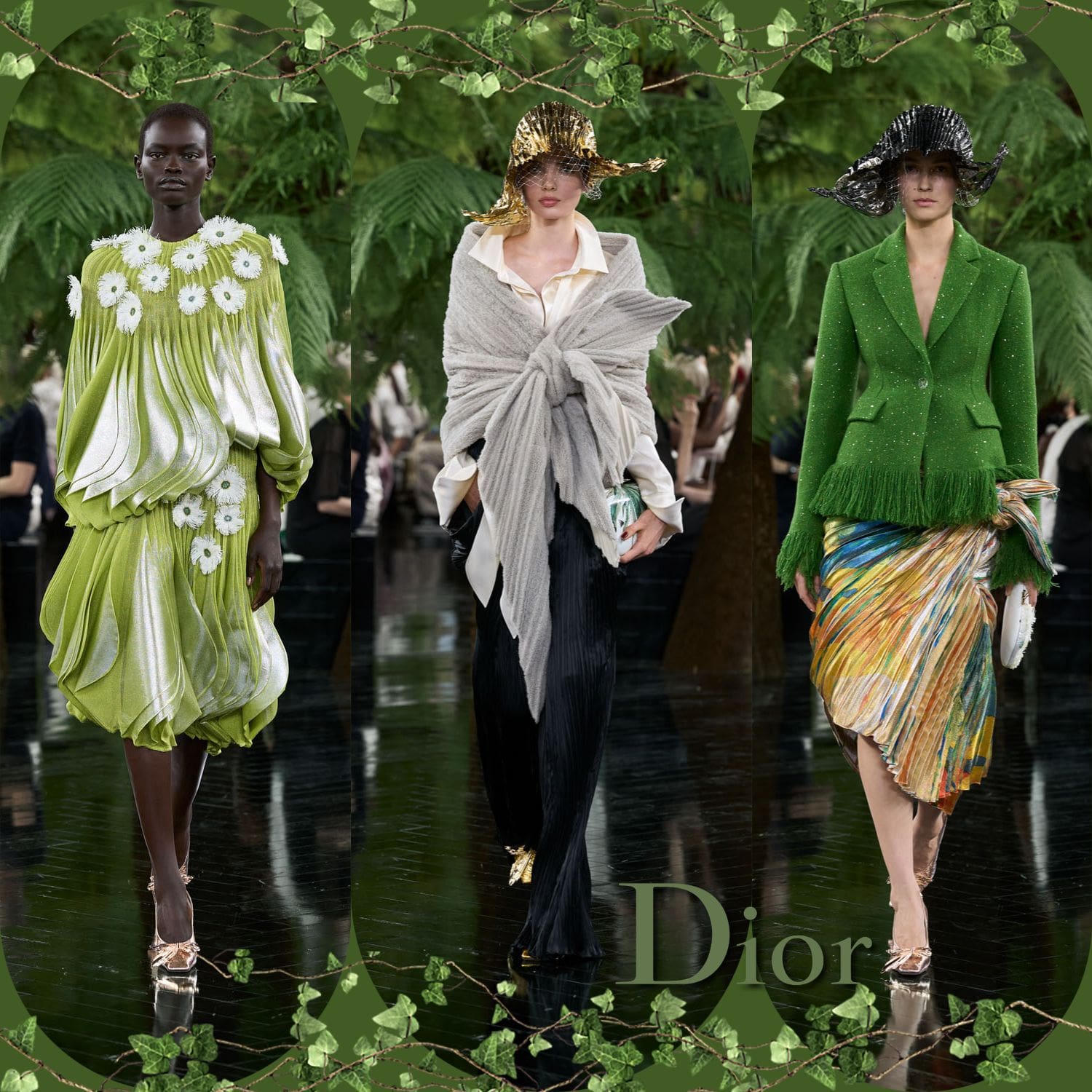
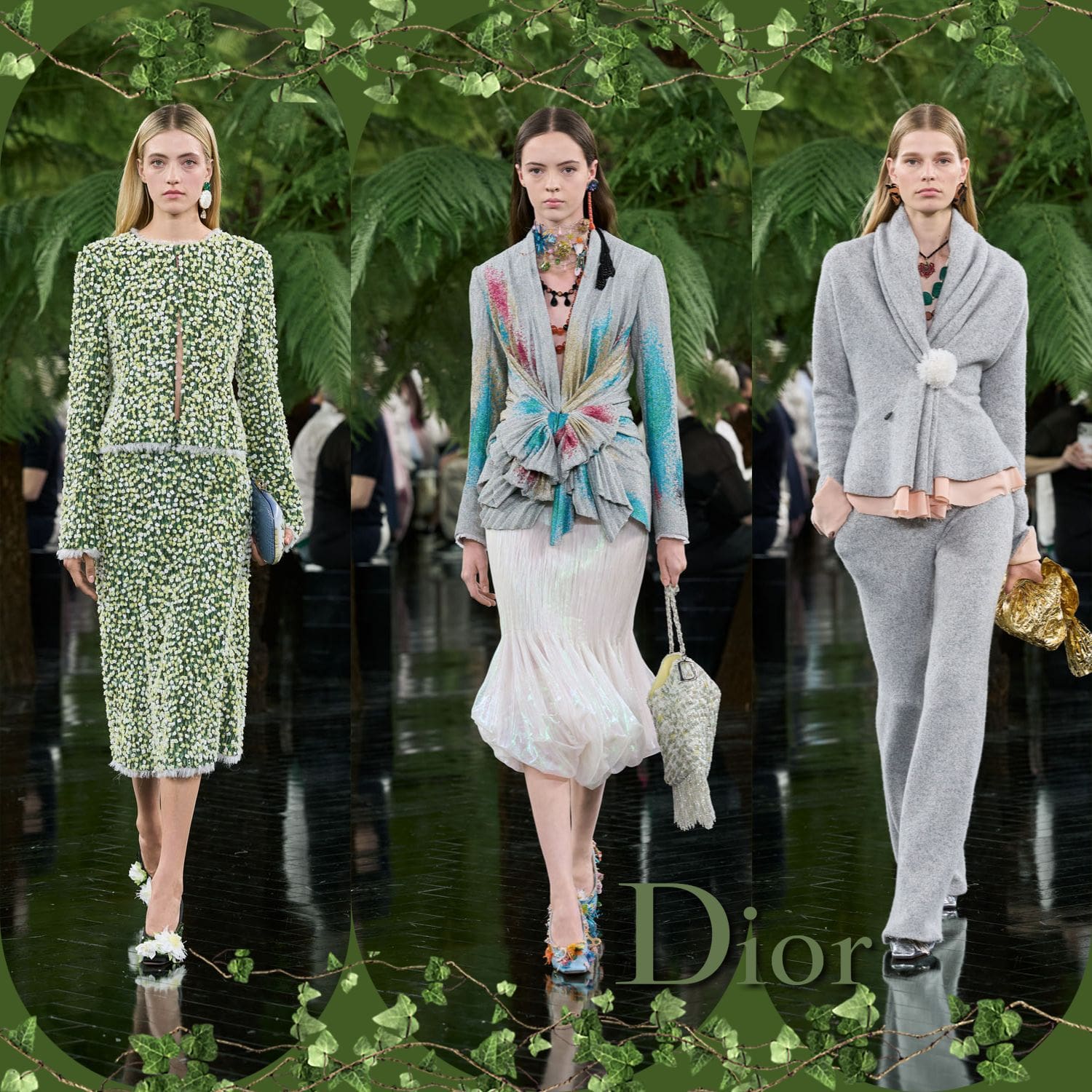
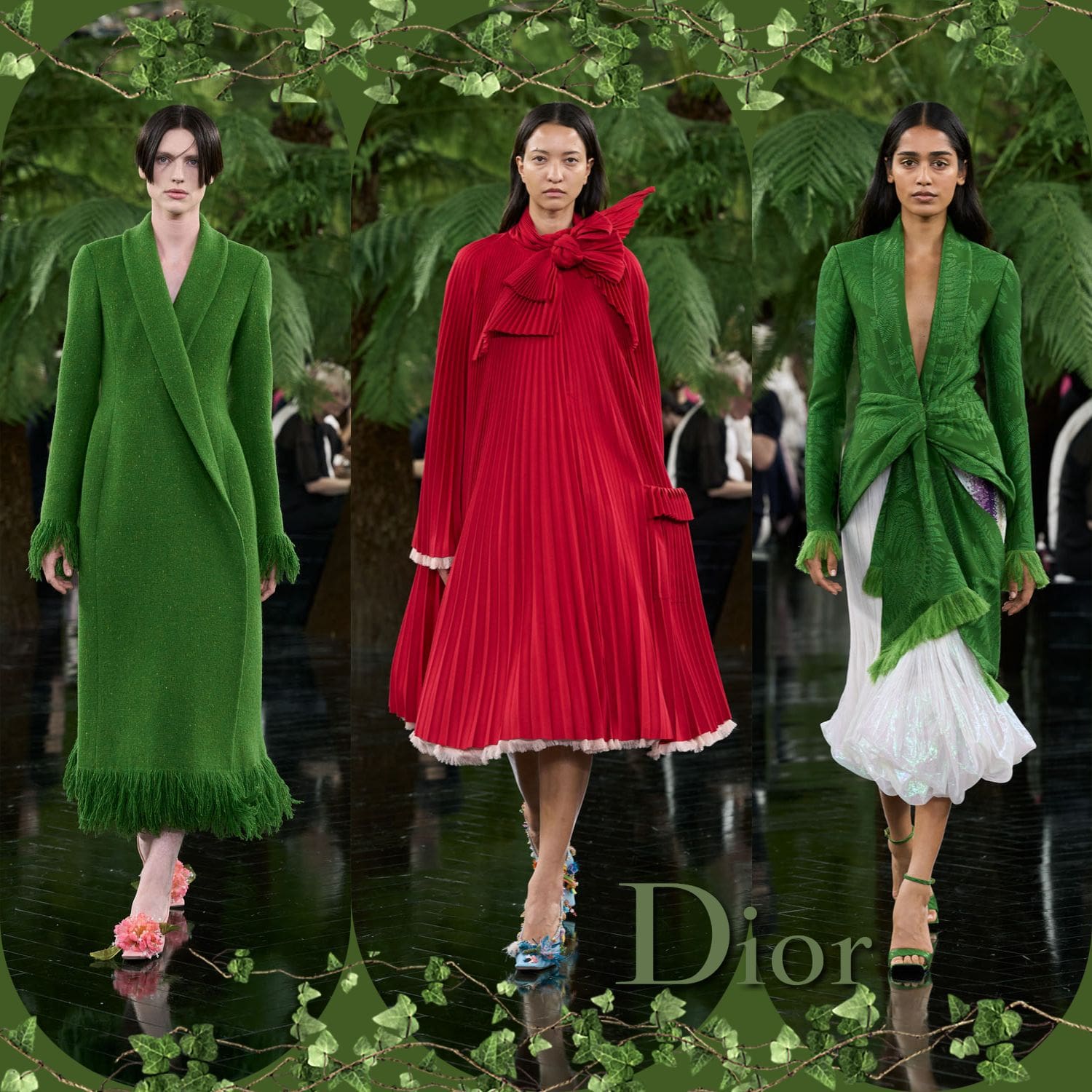
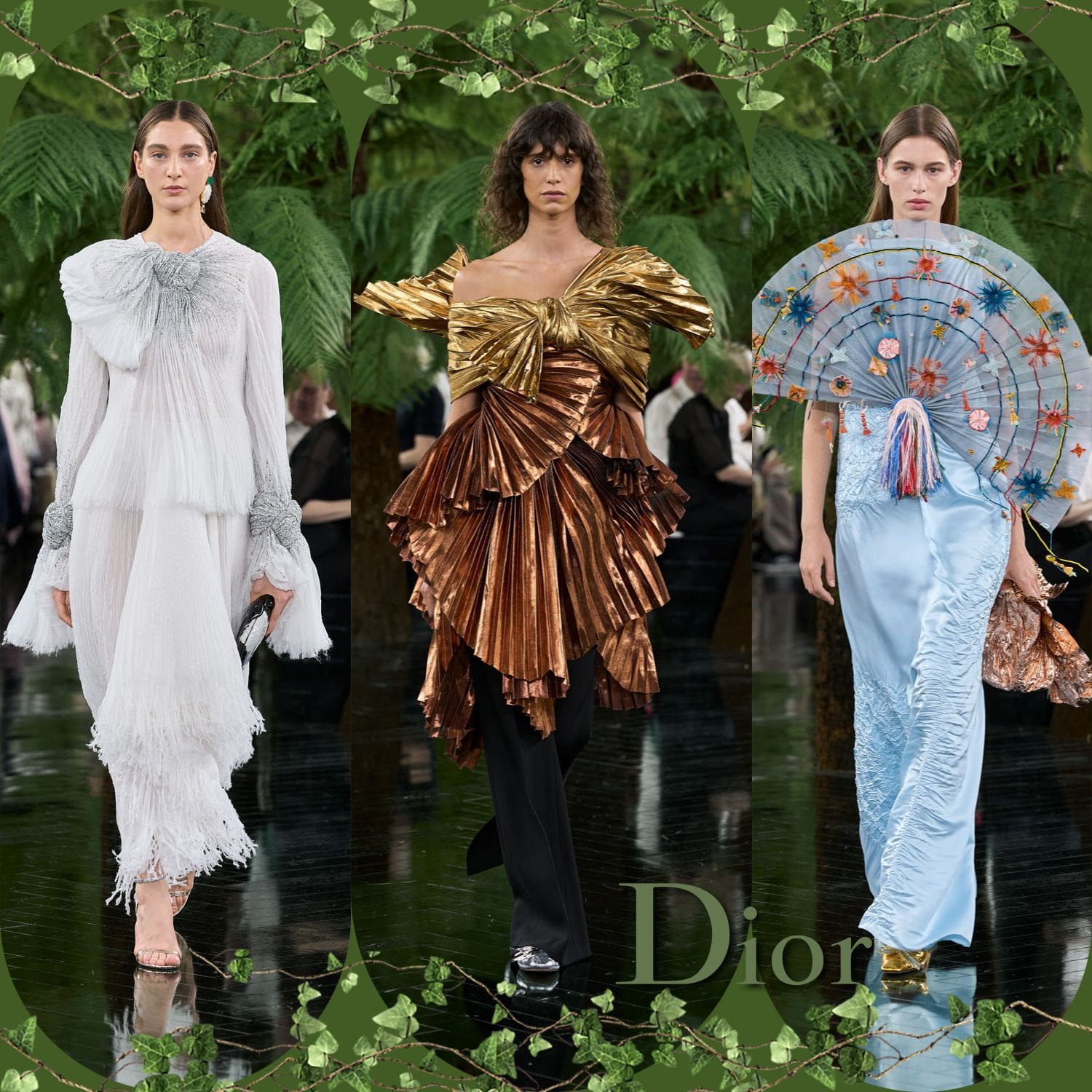
This structural fluidity is realized through a deep commitment to hand-plissé, knotting, and draping that coaxes absolute weightlessness out of inherently rigid concepts. We see this masterfully articulated in a striking crimson ensemble: a pleated, voluminous cape-like dress that flows like a living petal in motion, anchored by a dramatic, architectural bow at the neckline that honors heritage while capturing organic asymmetry. The tension between structural precision and natural abundance continues to unfold in a brilliant chartreuse and silver metallic pleated dress, where the fabric is molded into undulating, petal-shaped tiers that catch the light with an iridescent gleam, punctuated by meticulously applied white floral motifs along the neckline and waist.
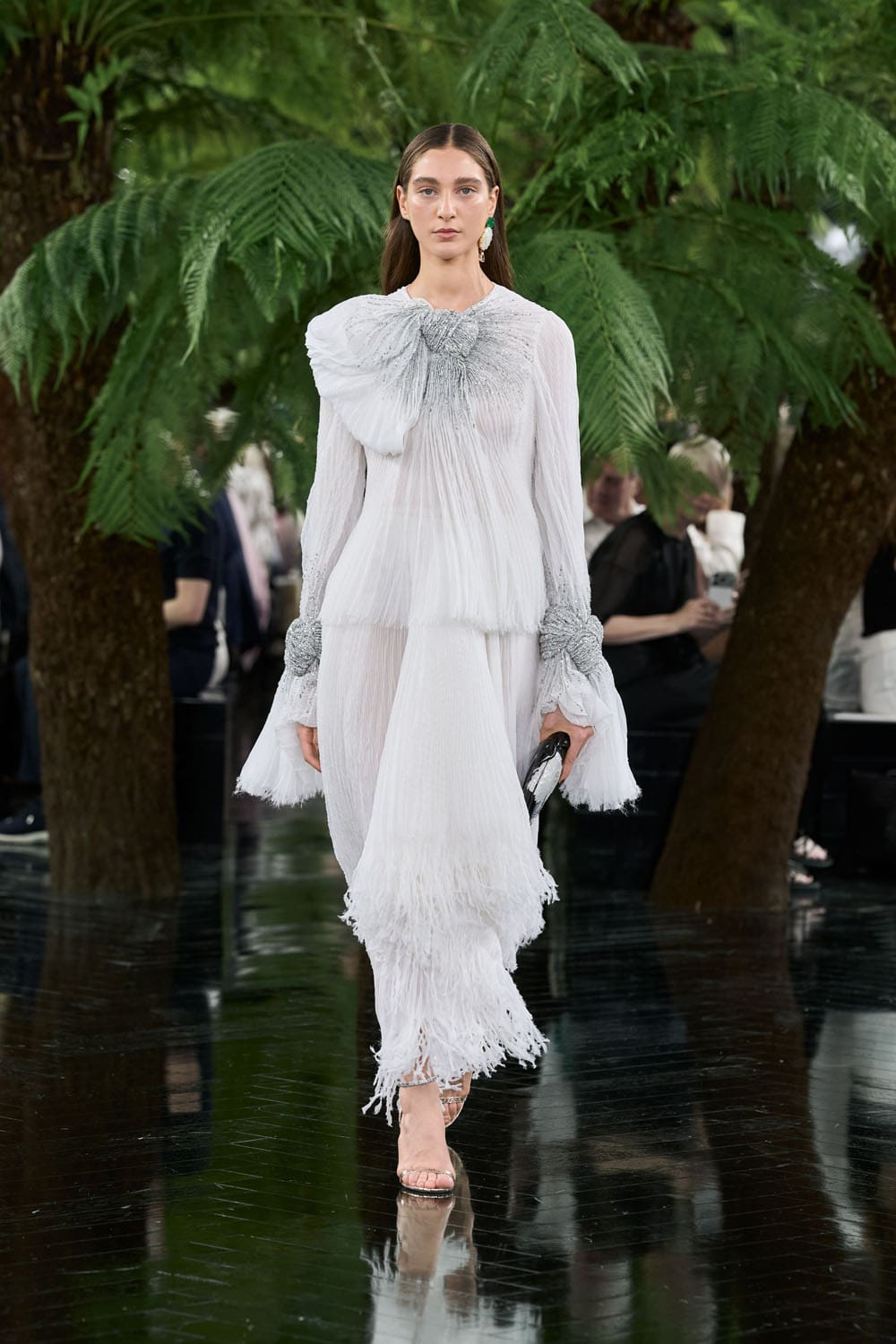
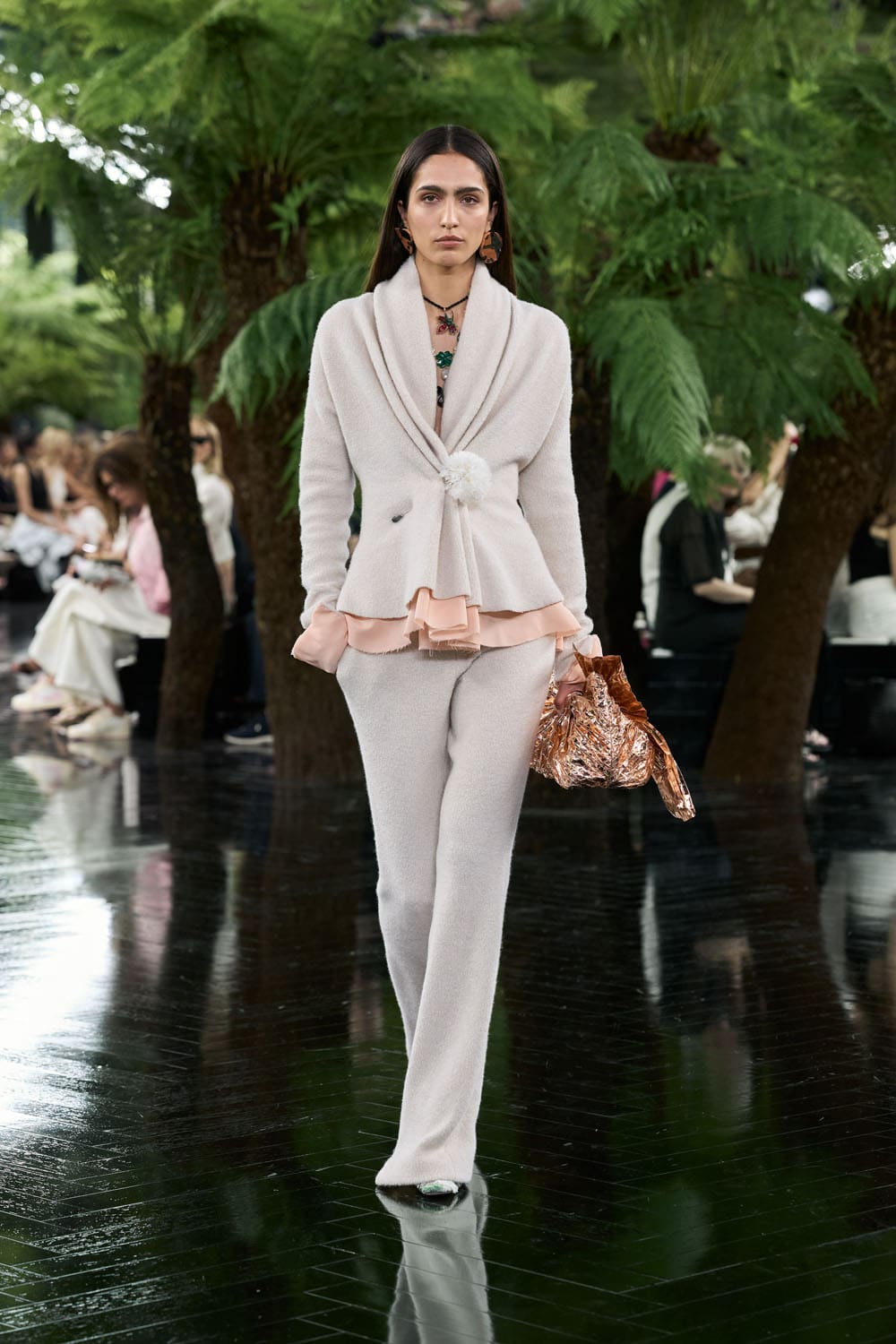
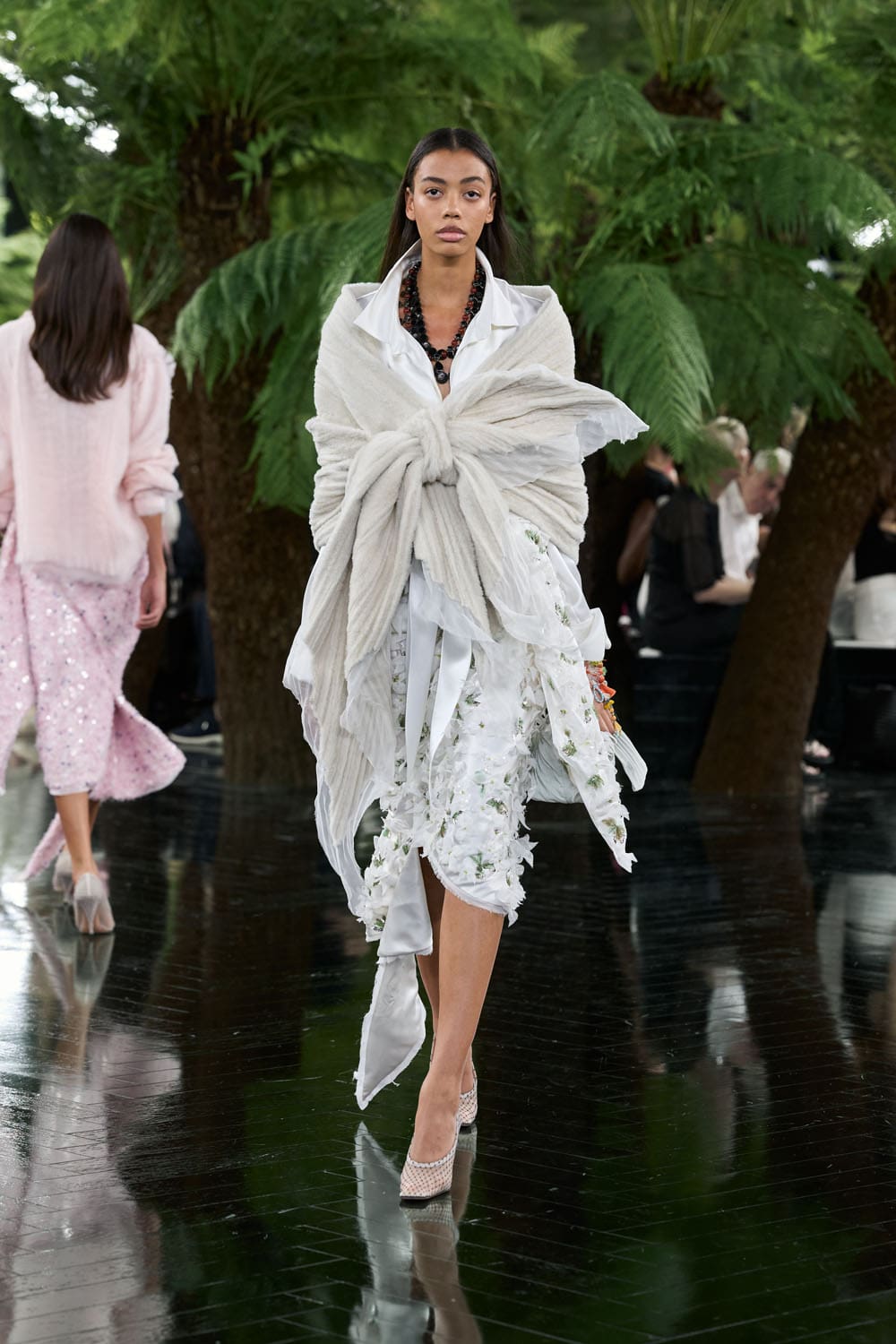
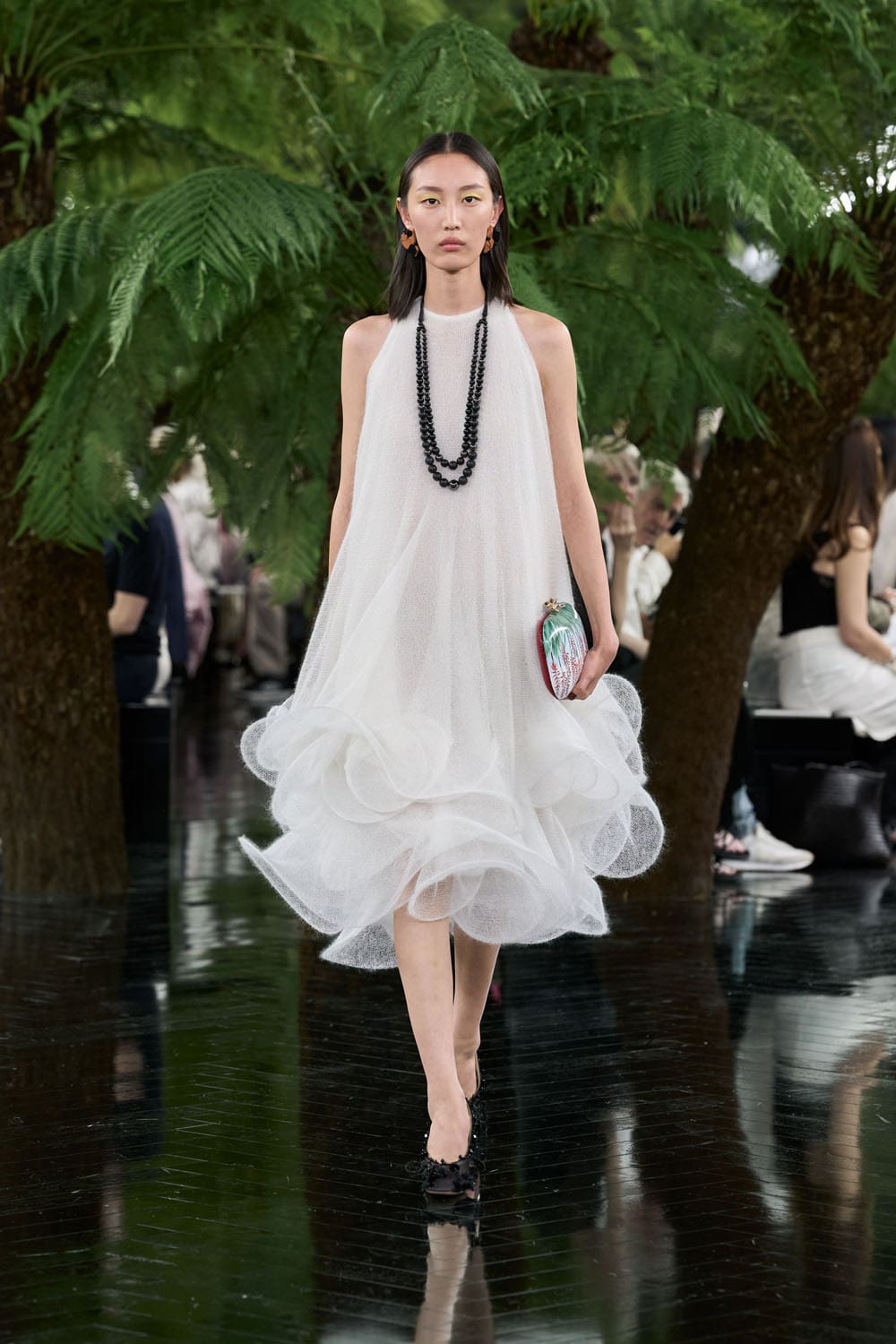
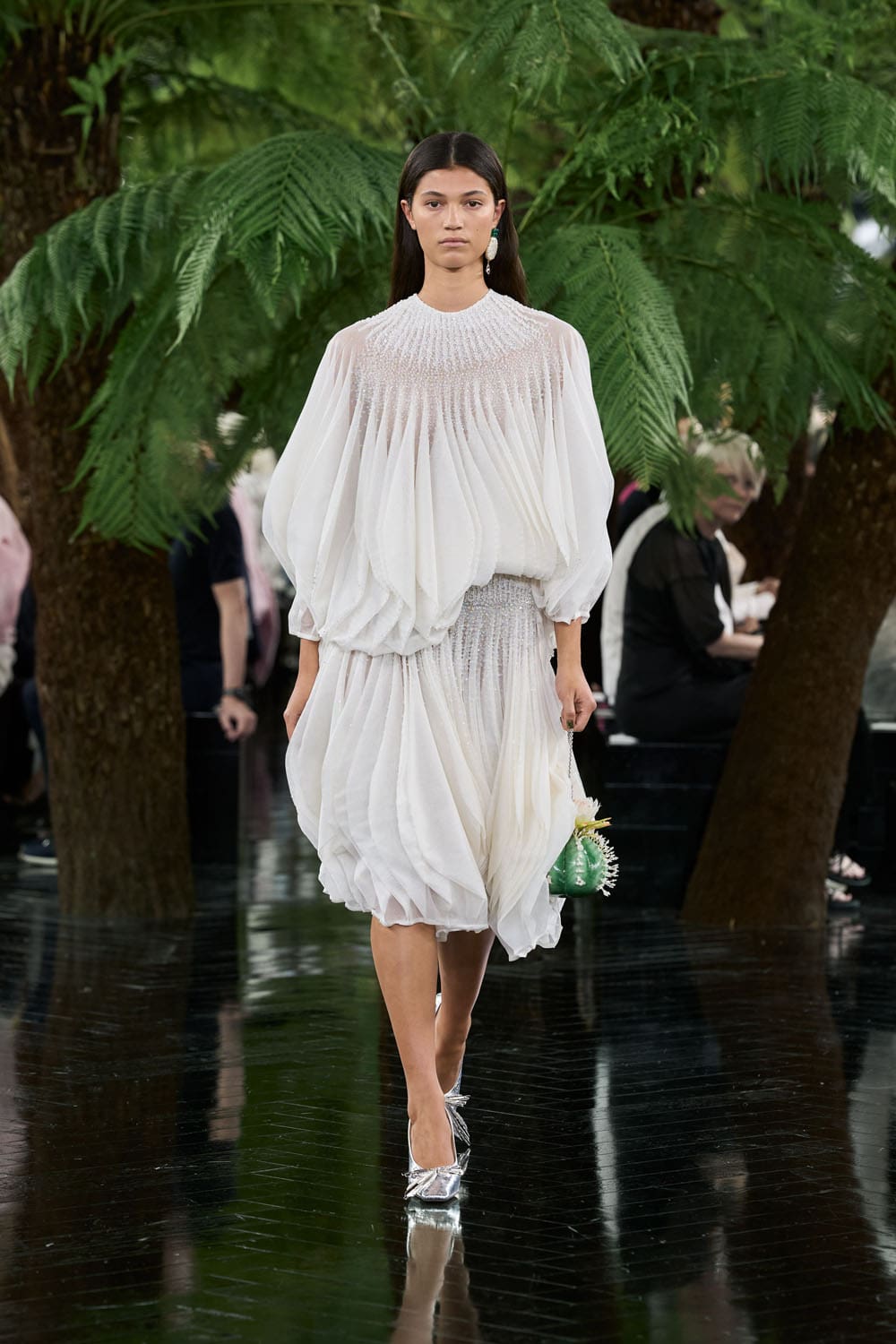
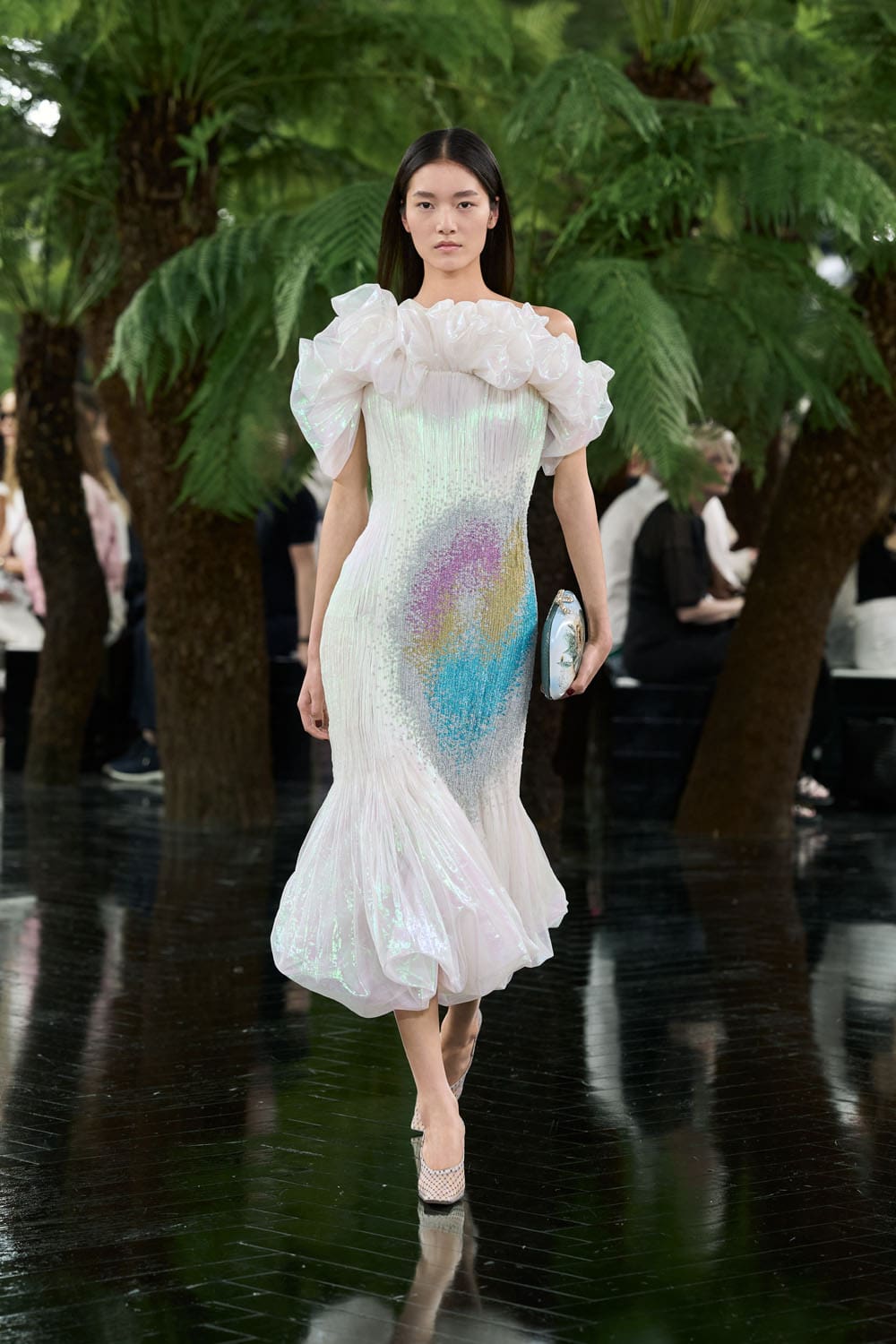
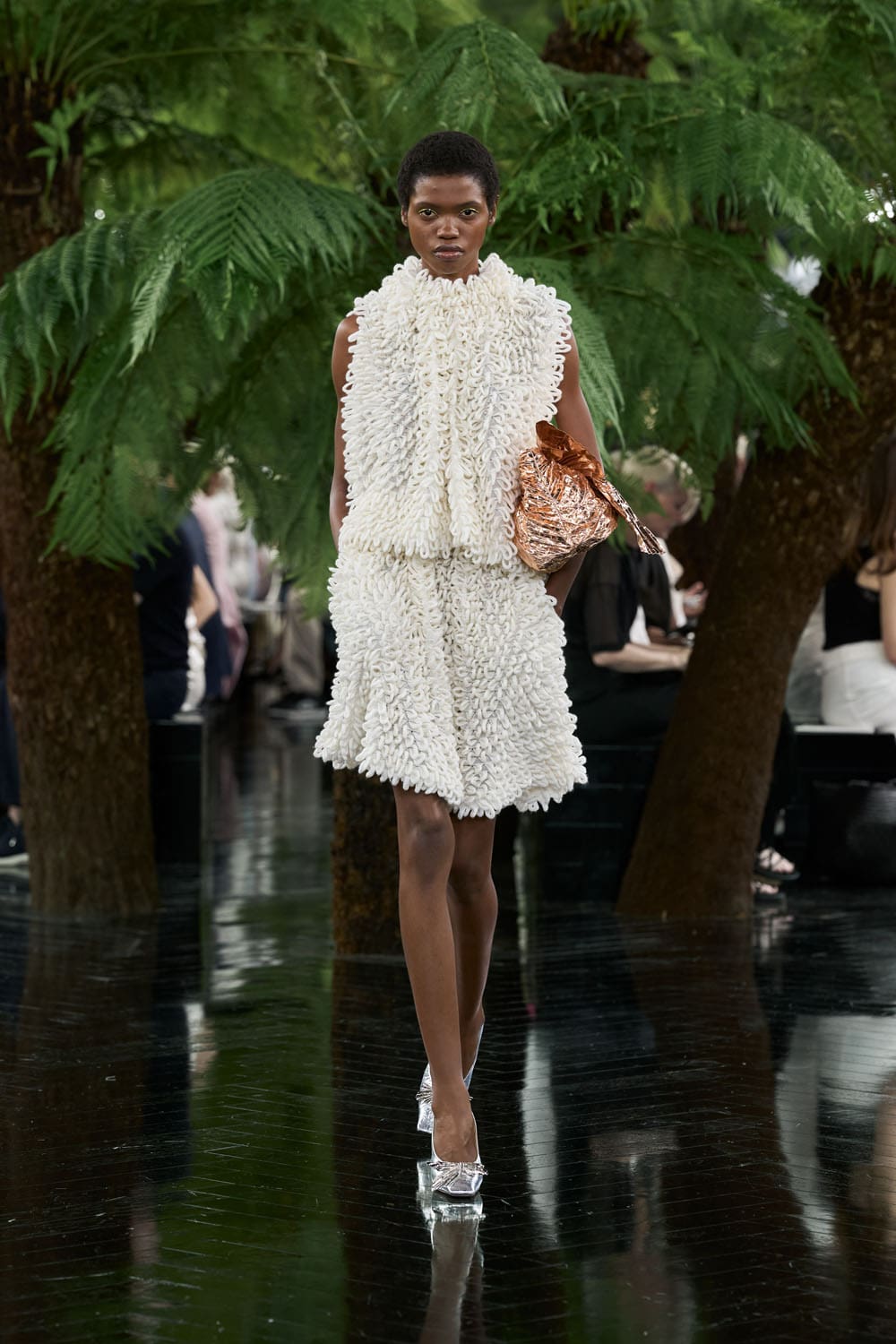
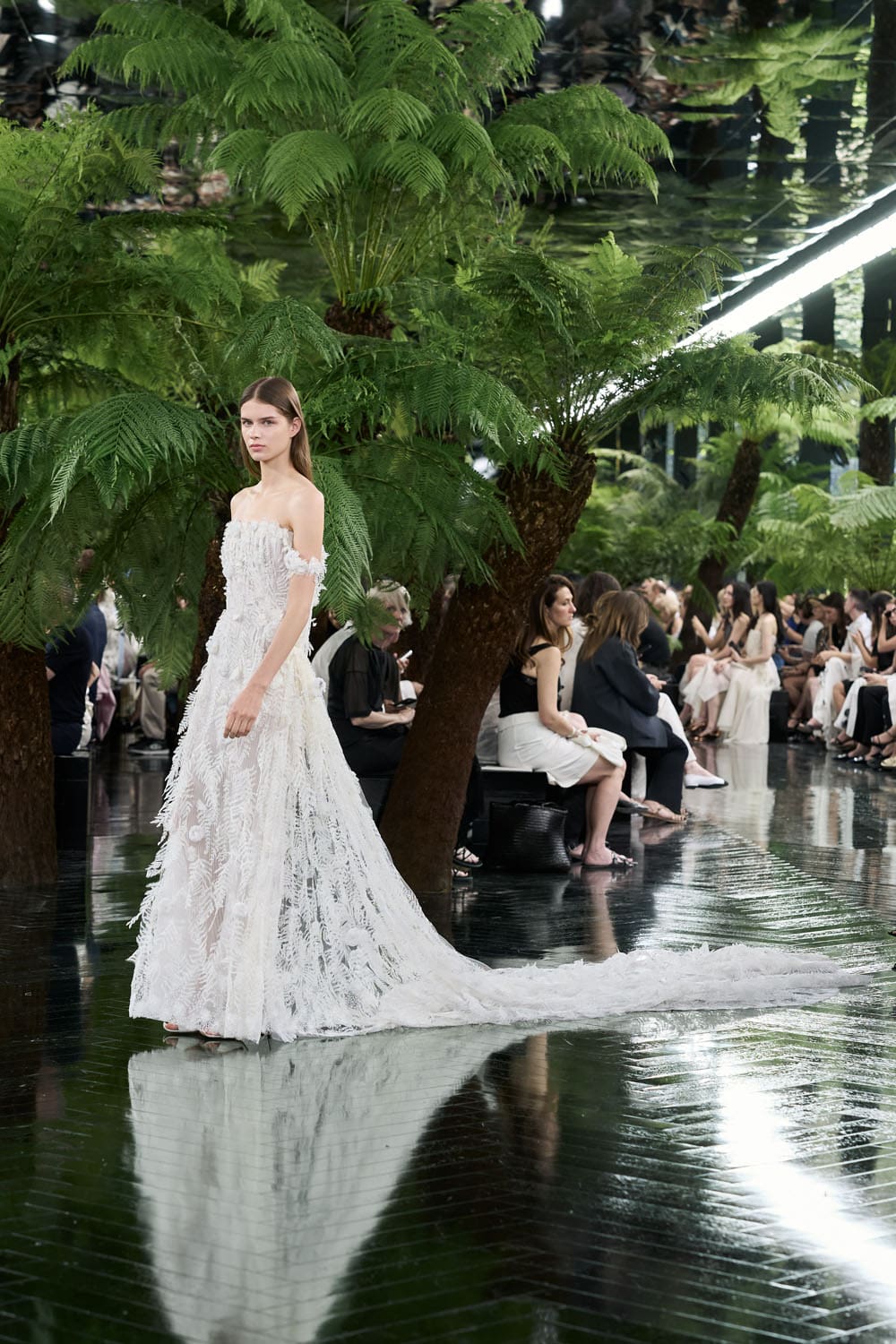
Where the studio functions as an experimental laboratory is in its textile development, mimicking Benglis’s famous two-to-three-dimensional material transformations. The collection oscillates beautifully between the dense, organic textures of an ivory, looped-pile textural minidress paired with a crumpled metallic bronze clutch, and the sheer, ethereal volume of a finely gathered white plissé balloon dress. This lighter-than-air garment boasts an intricately beaded yoke that gives way to a billowing, cloud-like silhouette, floating effortlessly down the runway.
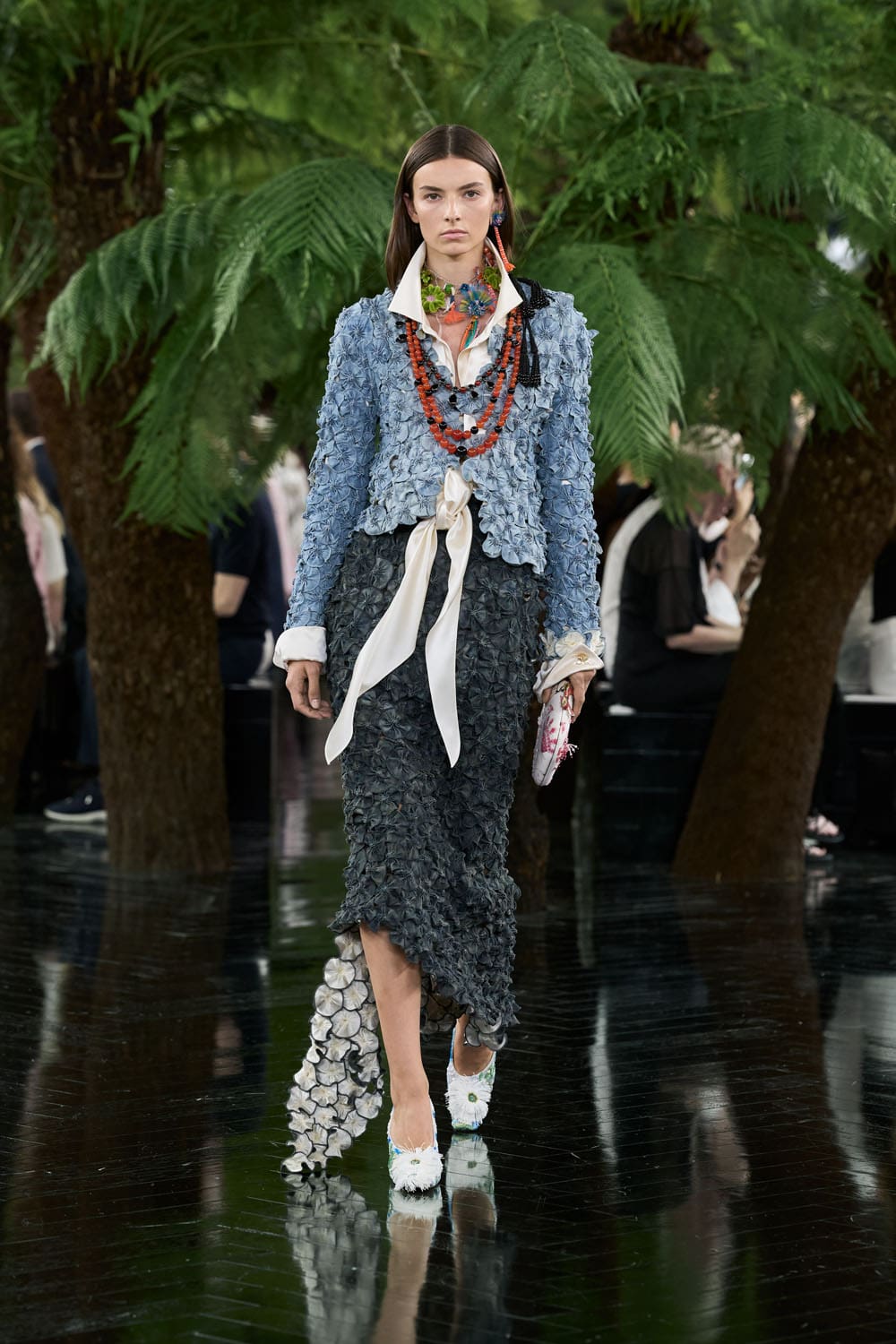
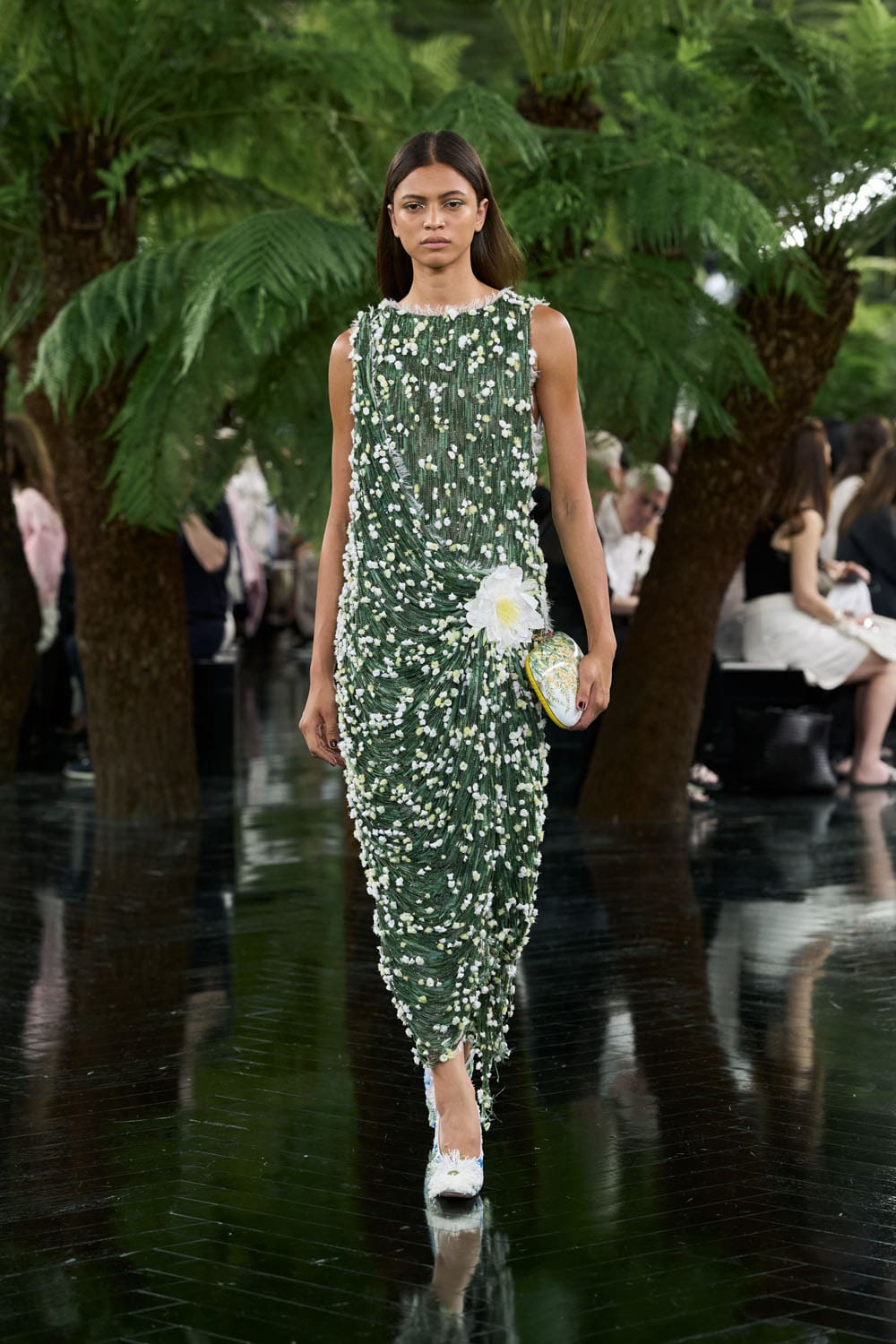
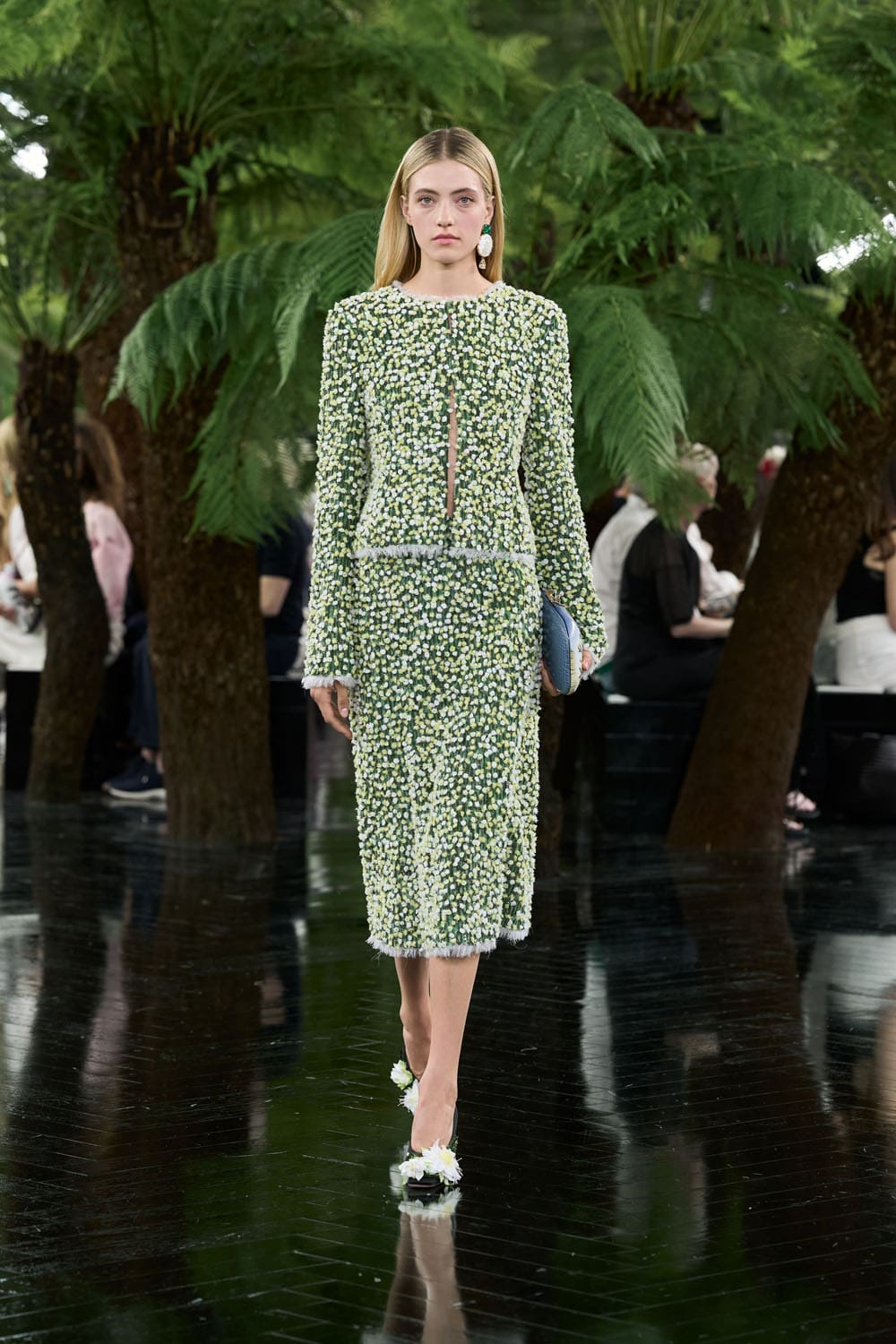
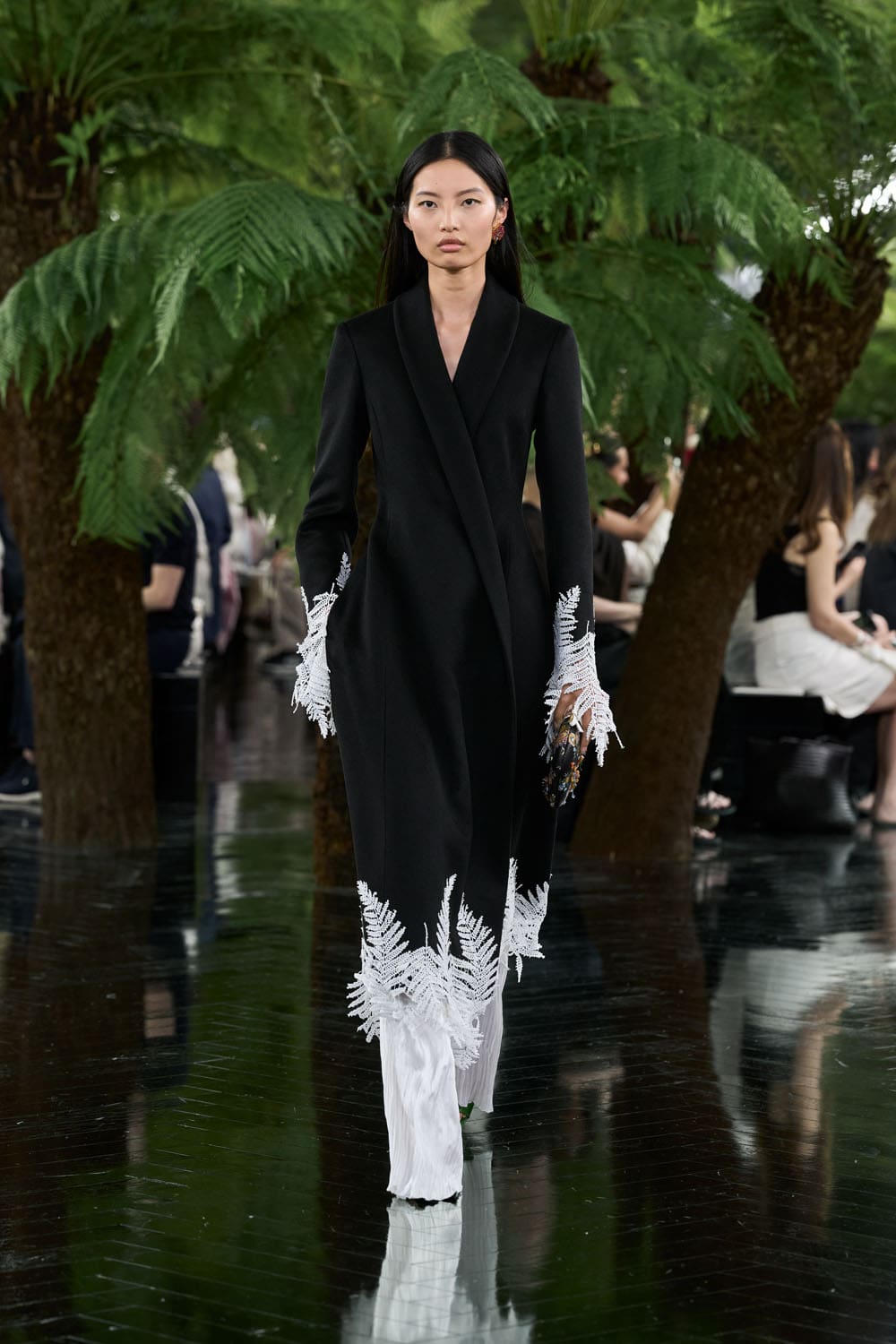
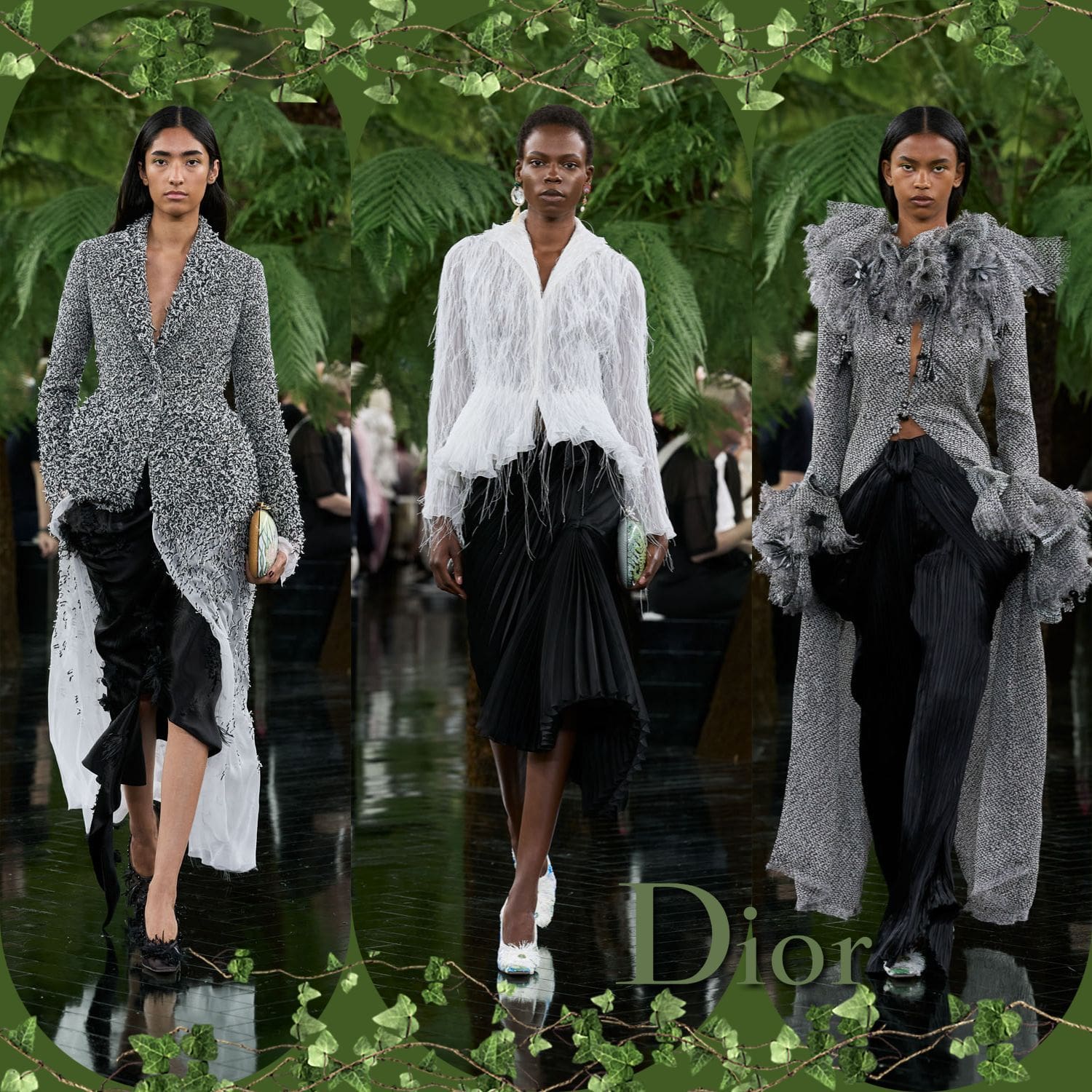
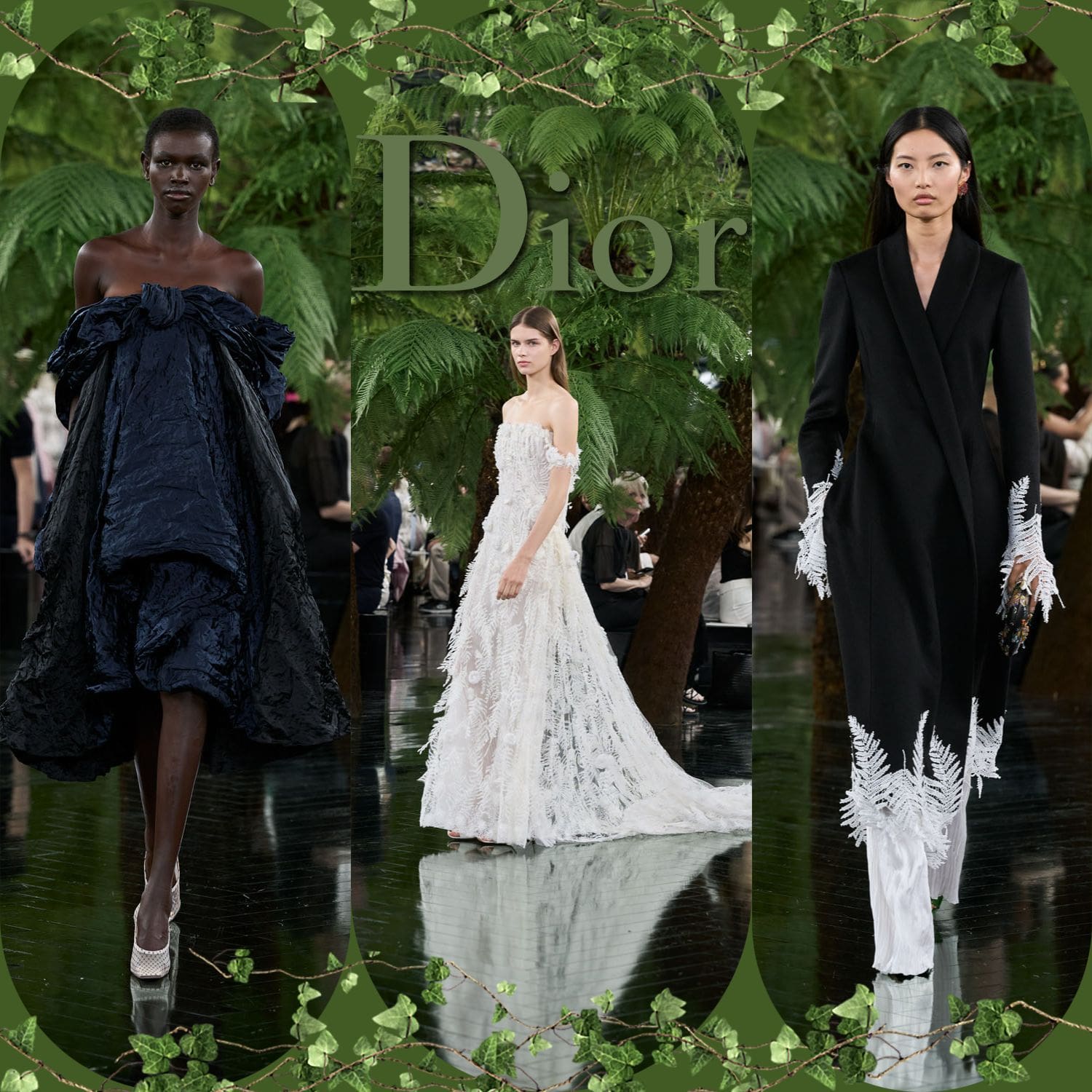
The narrative further grounds itself in historic craftsmanship through the integration of 18th-century chintz traditions, allowing the ateliers to showcase exceptional detail. A perfectly tailored green and white micro-beaded skirt suit mimics the dense, pixelated texture of a blooming meadow, offering a magnificent display of embroidered precision. Elsewhere, the romanticism of the natural world takes on a sharper, more dramatic edge. A stark black coat is elevated by sweeping, hyper-detailed white lace fern embroidery along the cuffs and hem, layered gracefully over fluid, pleated white trousers.
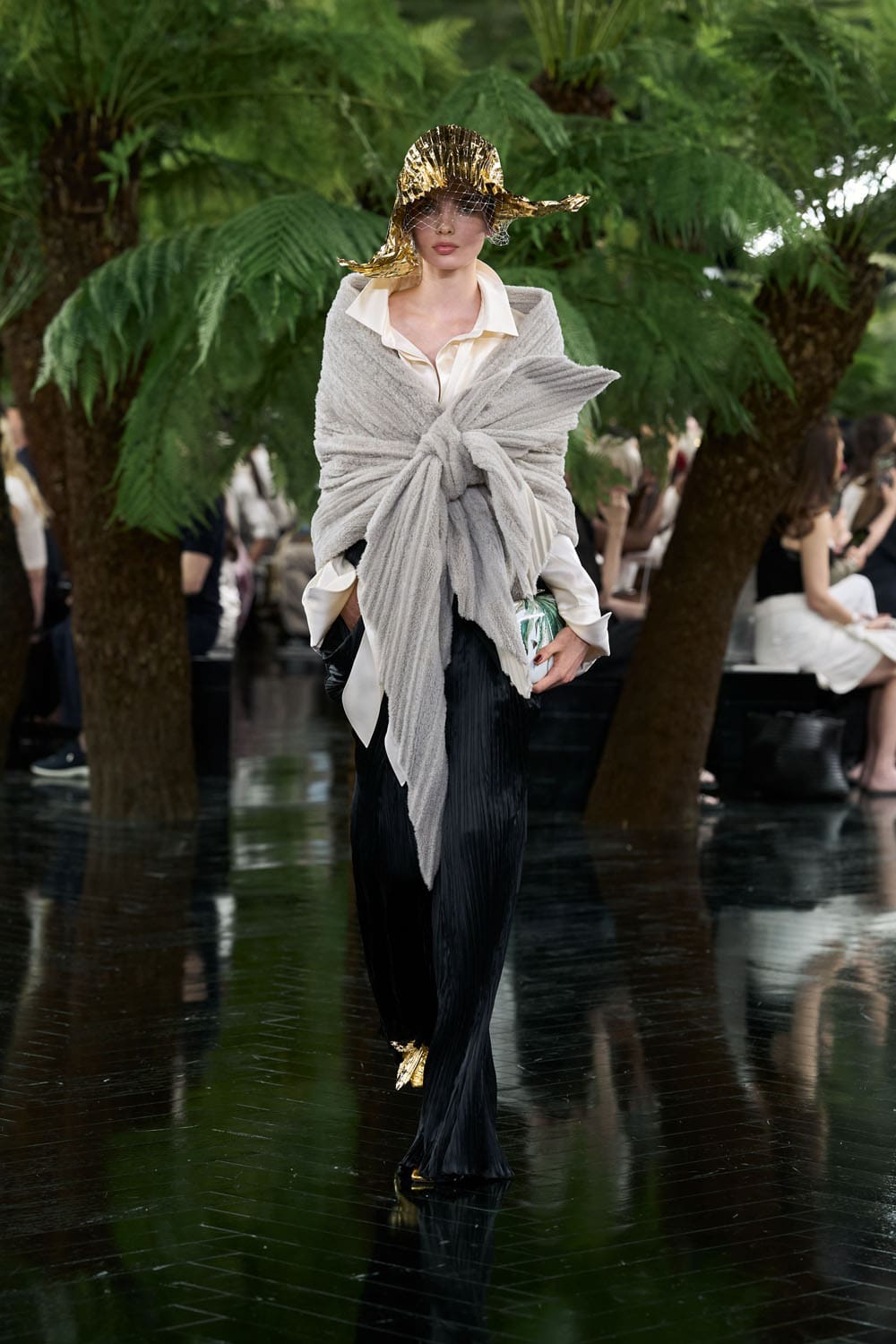
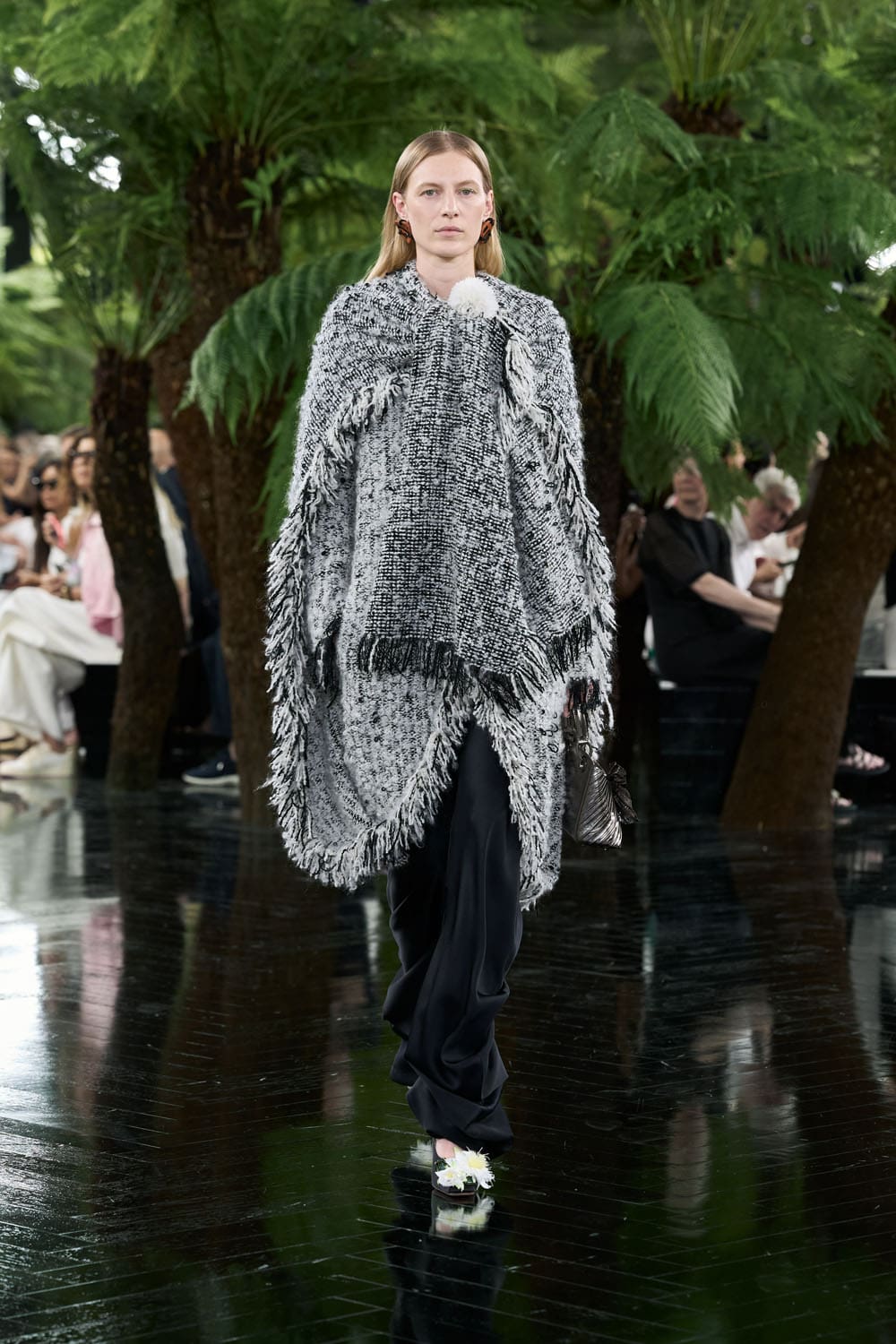
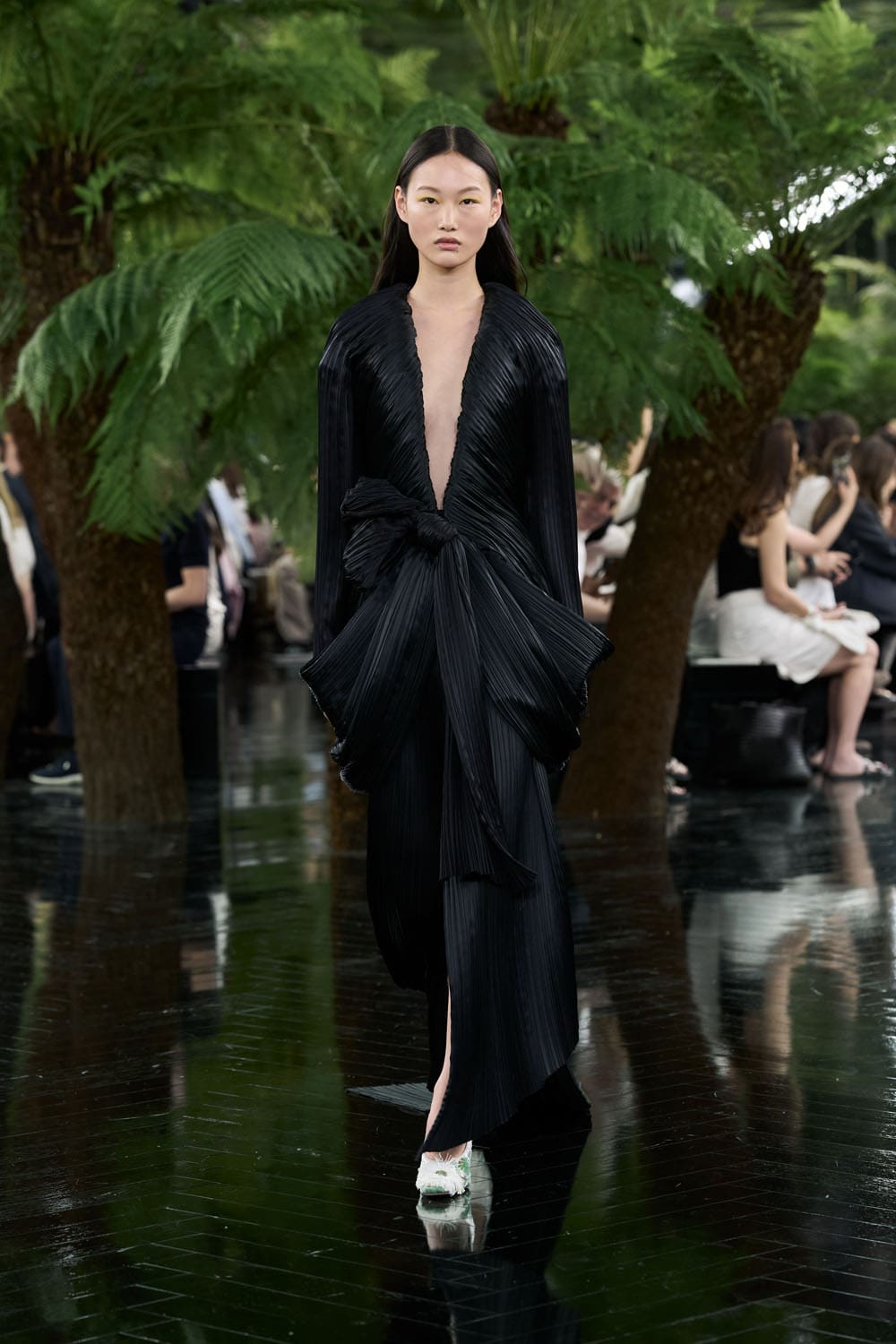
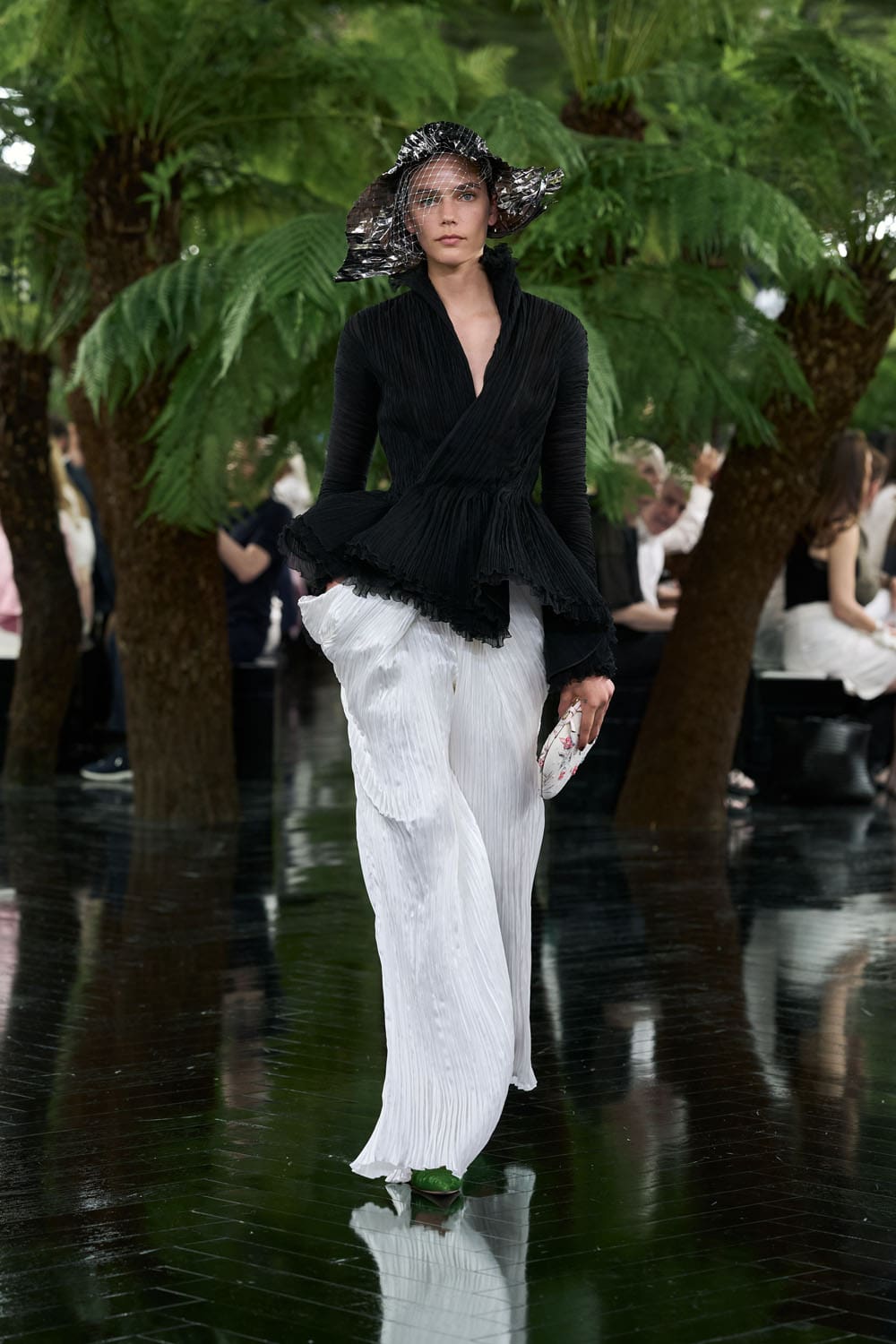
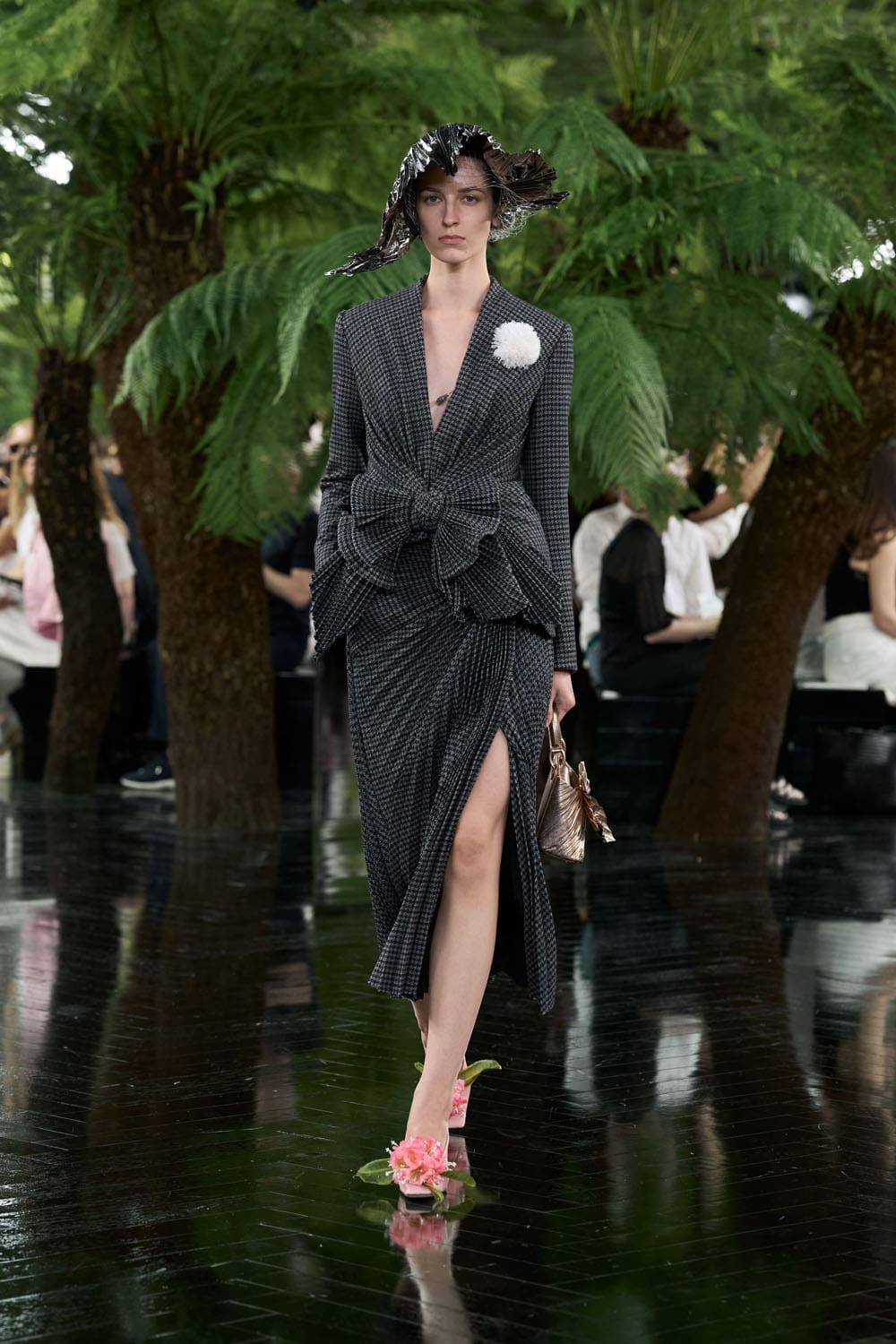
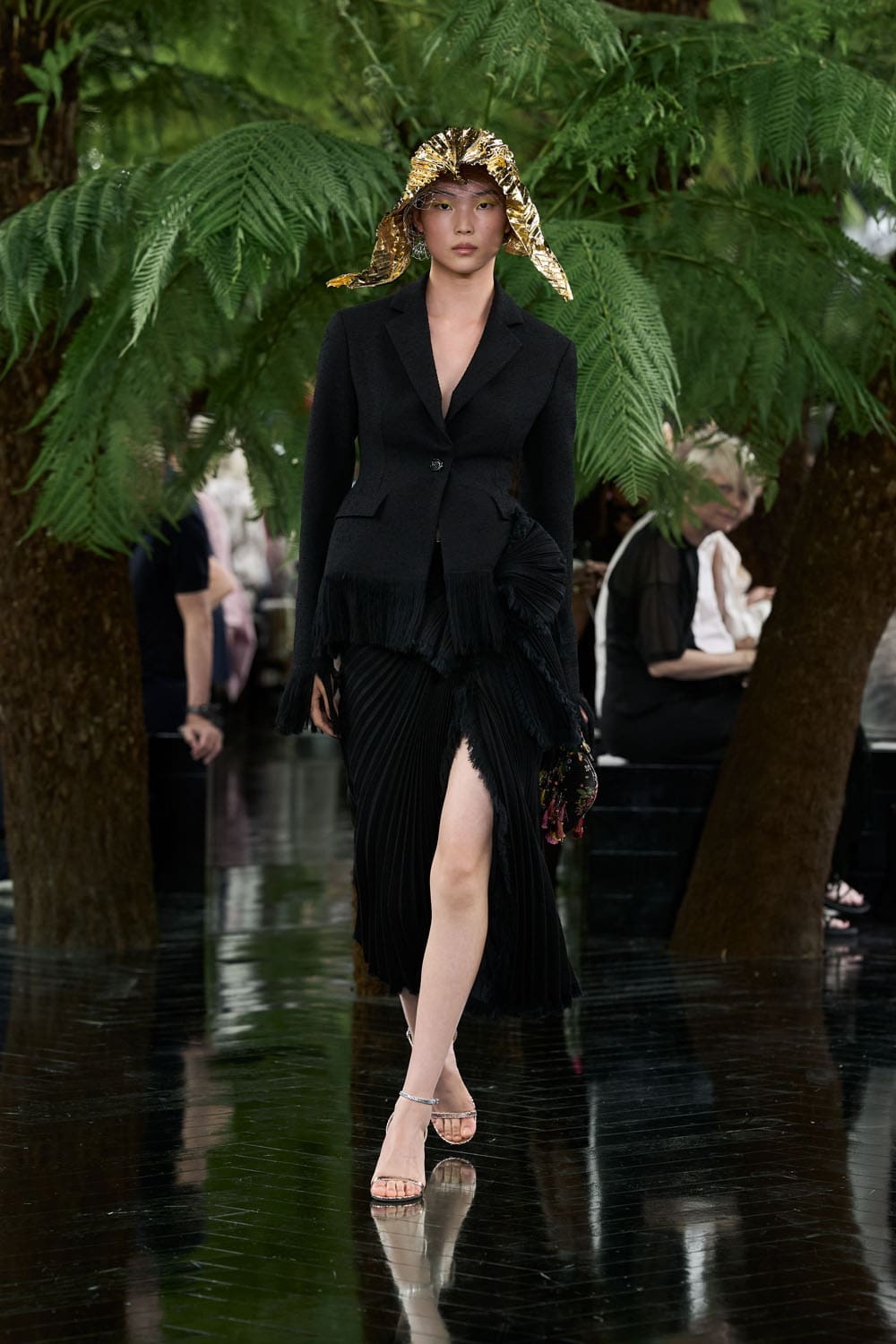
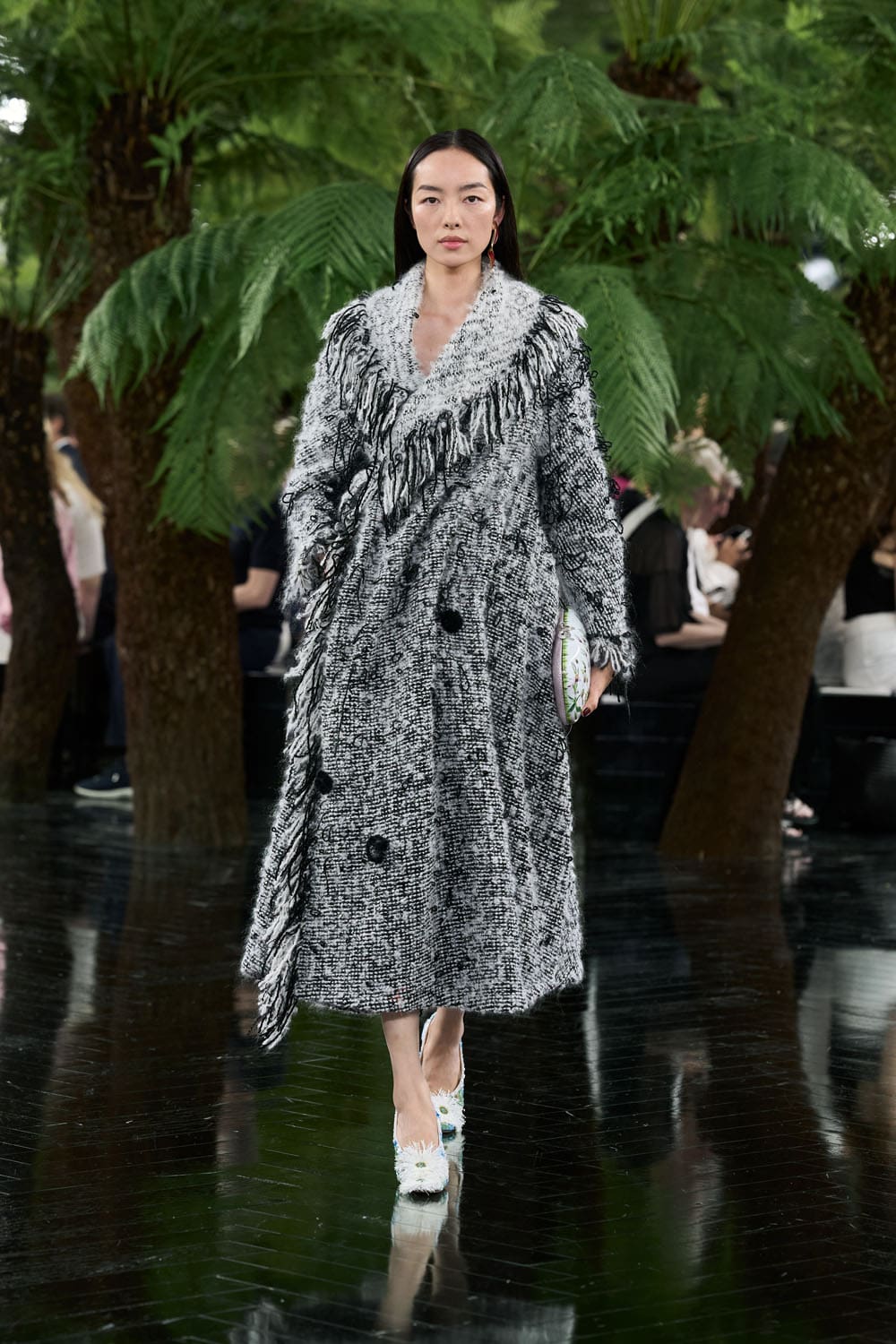
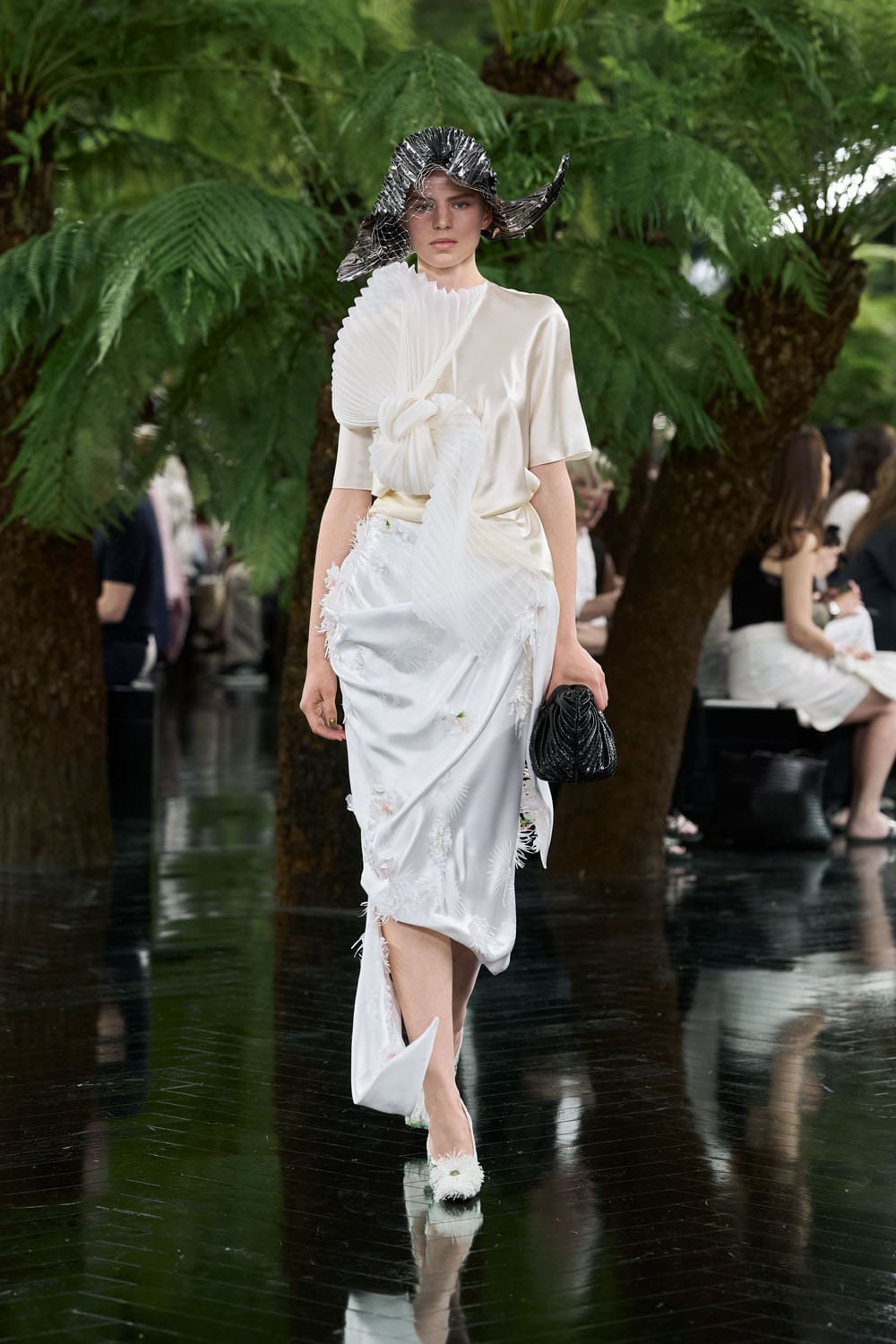
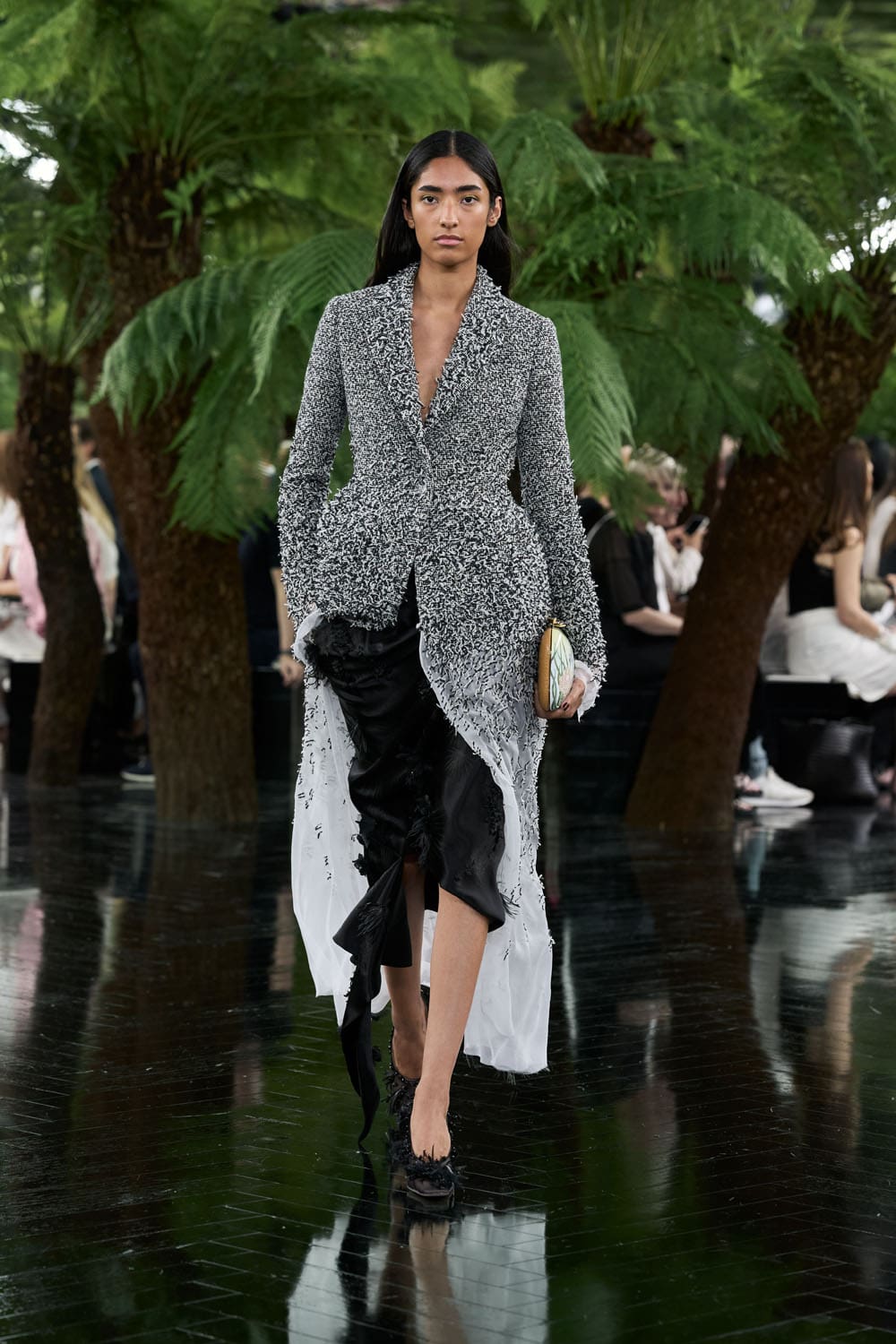
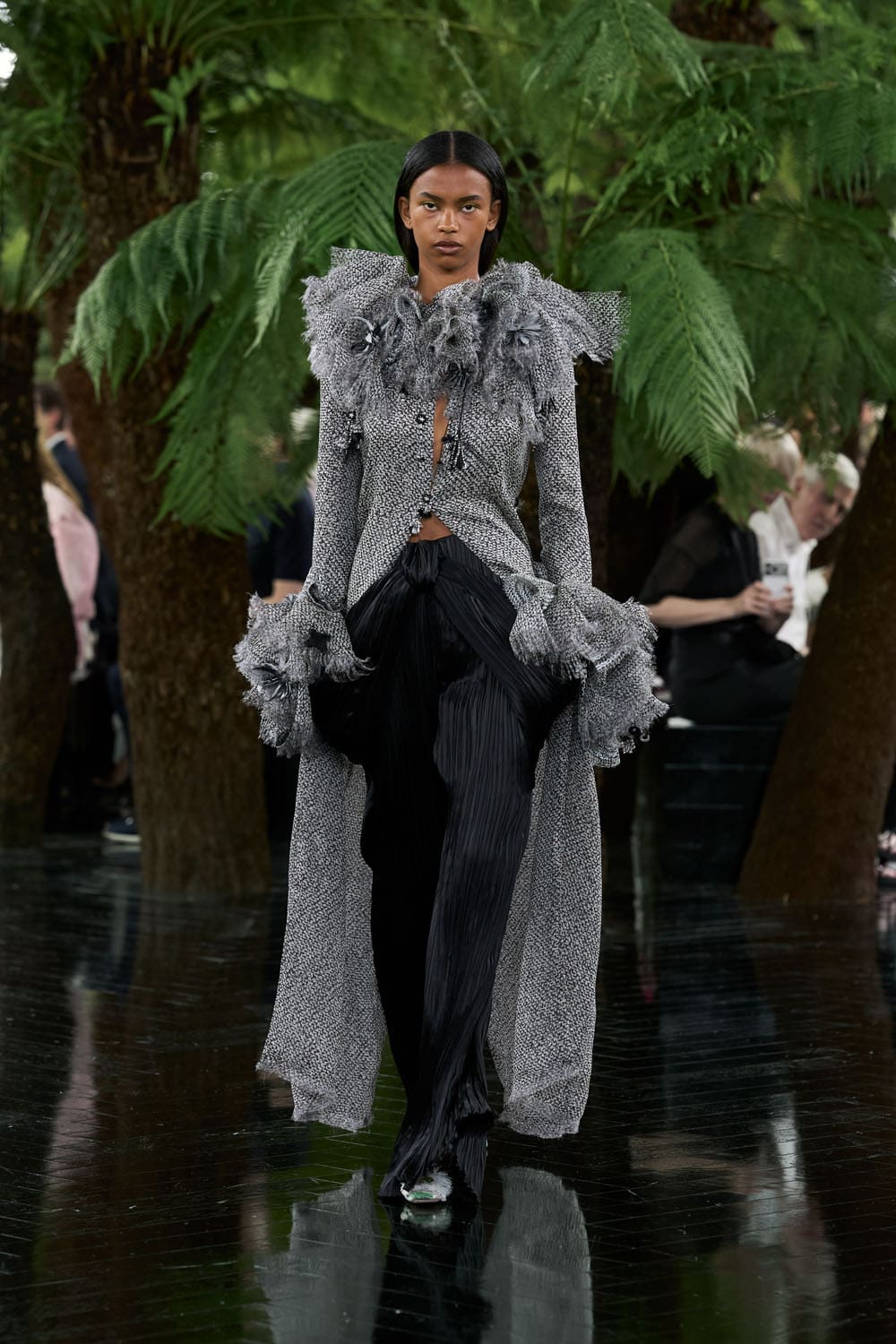
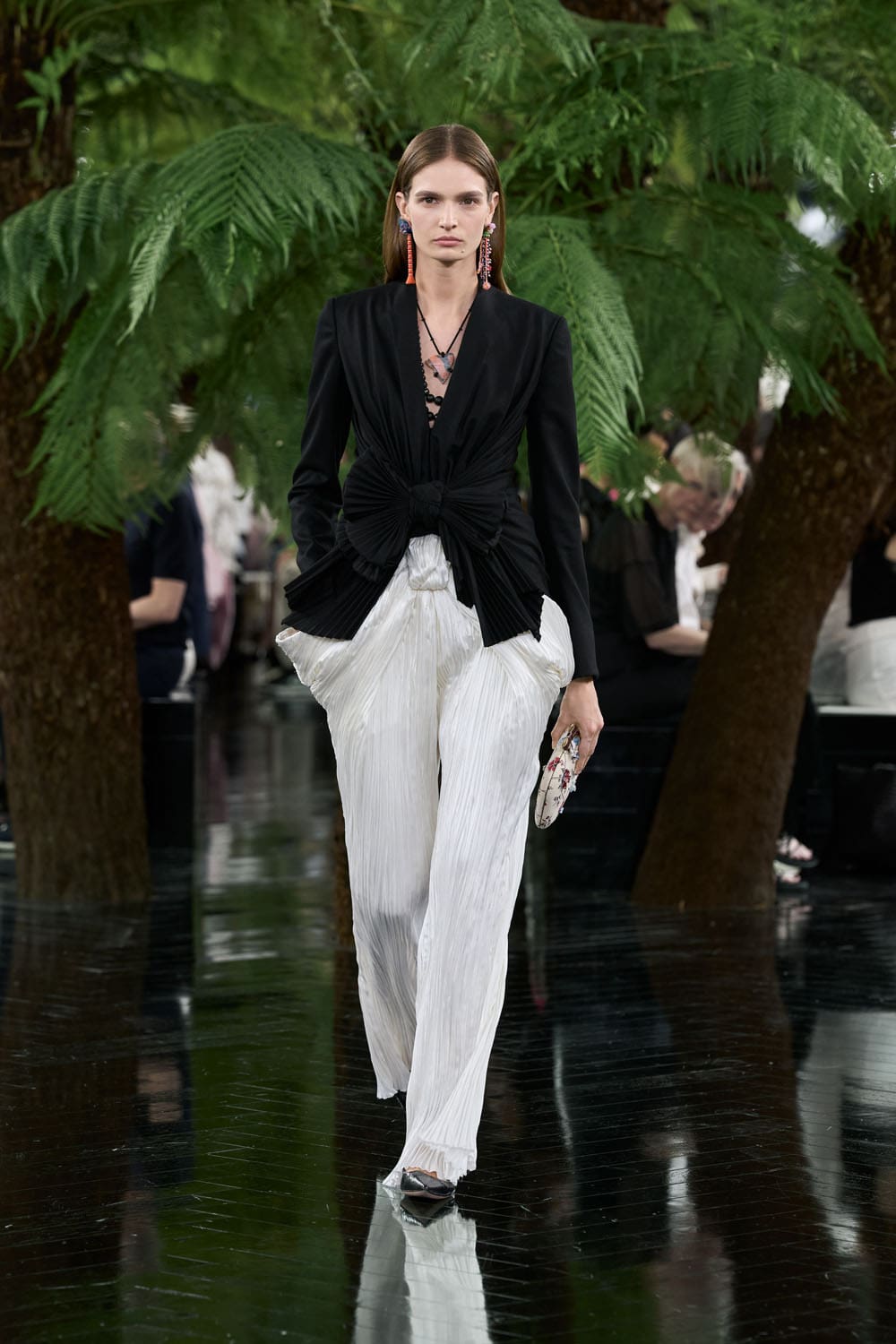
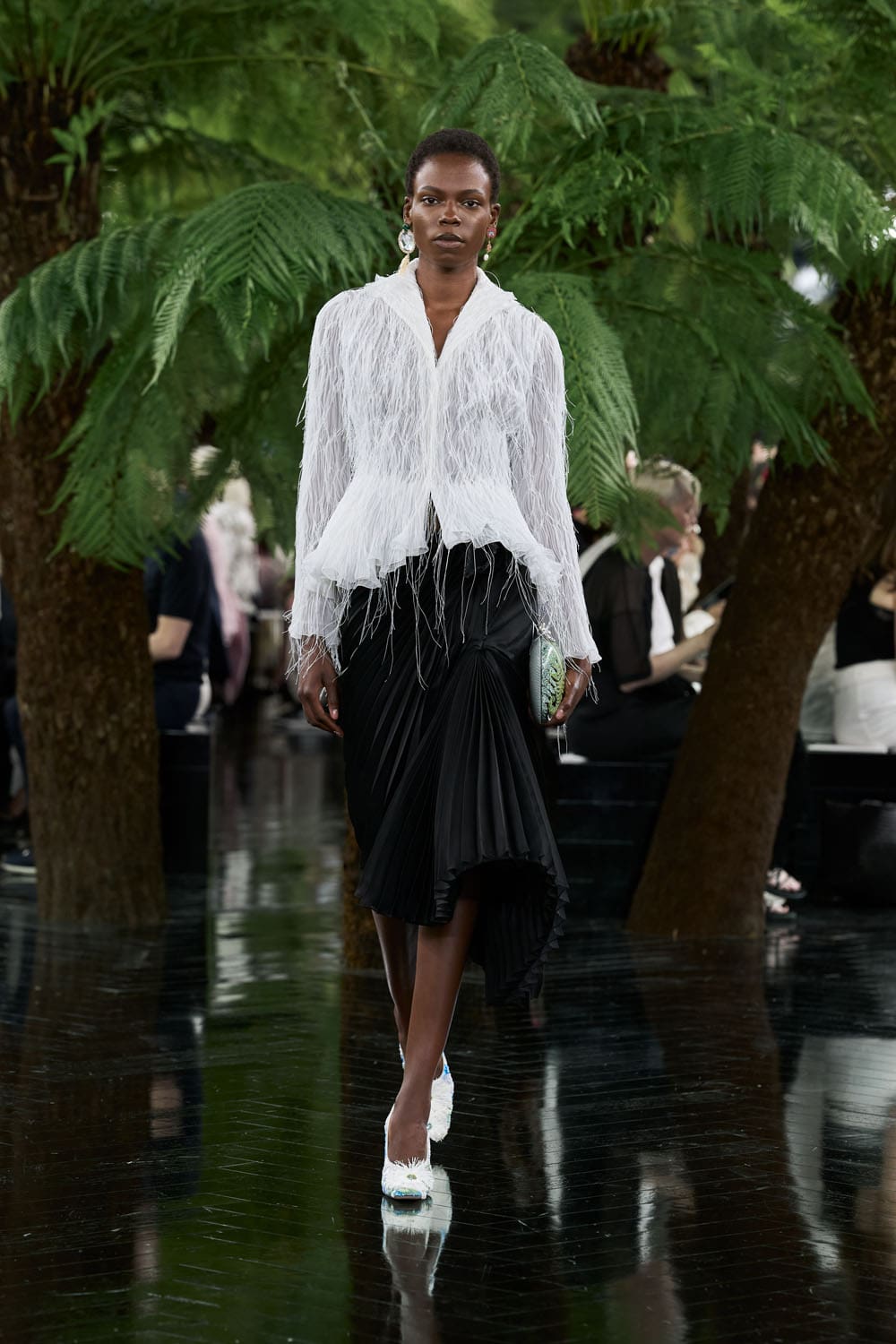
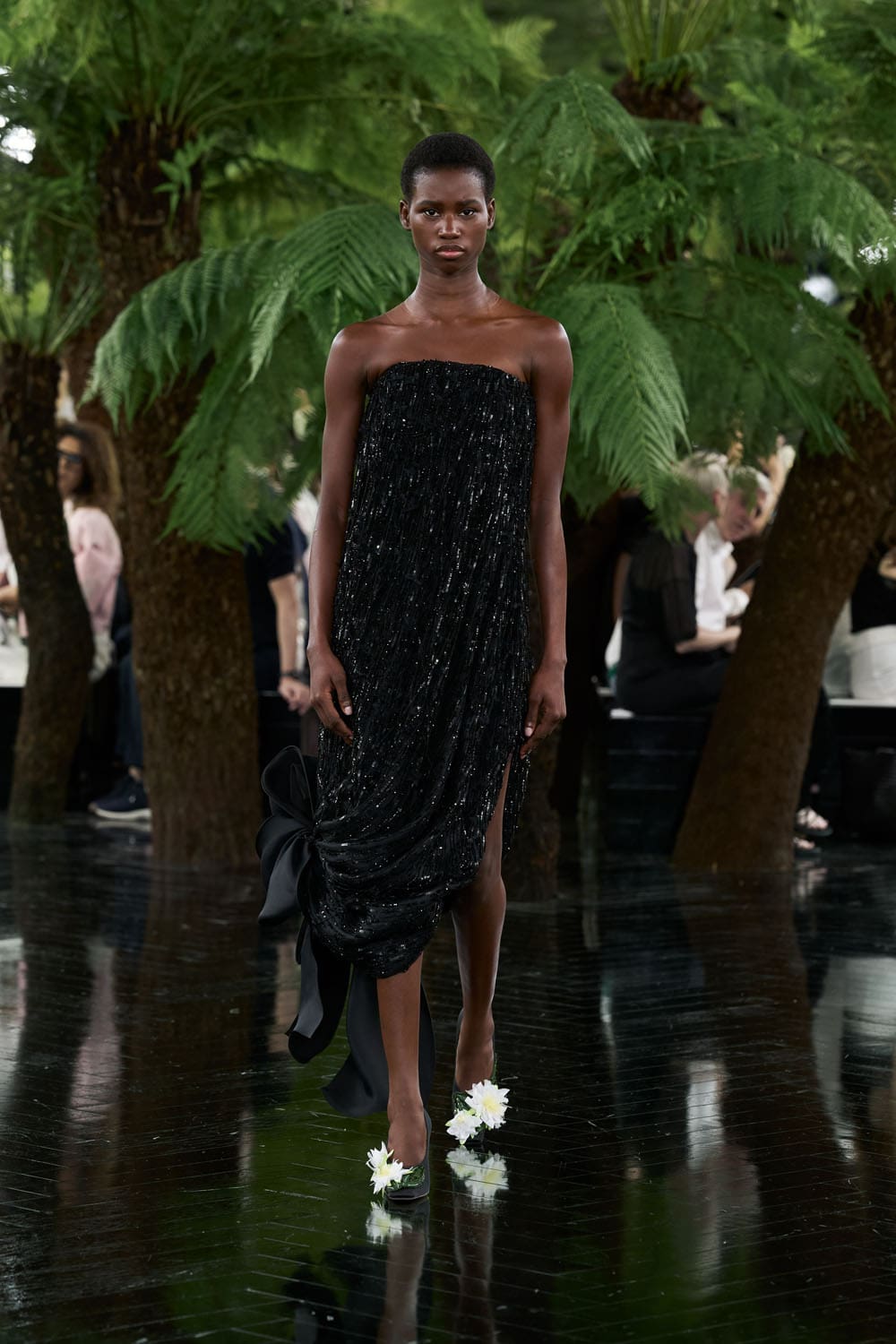
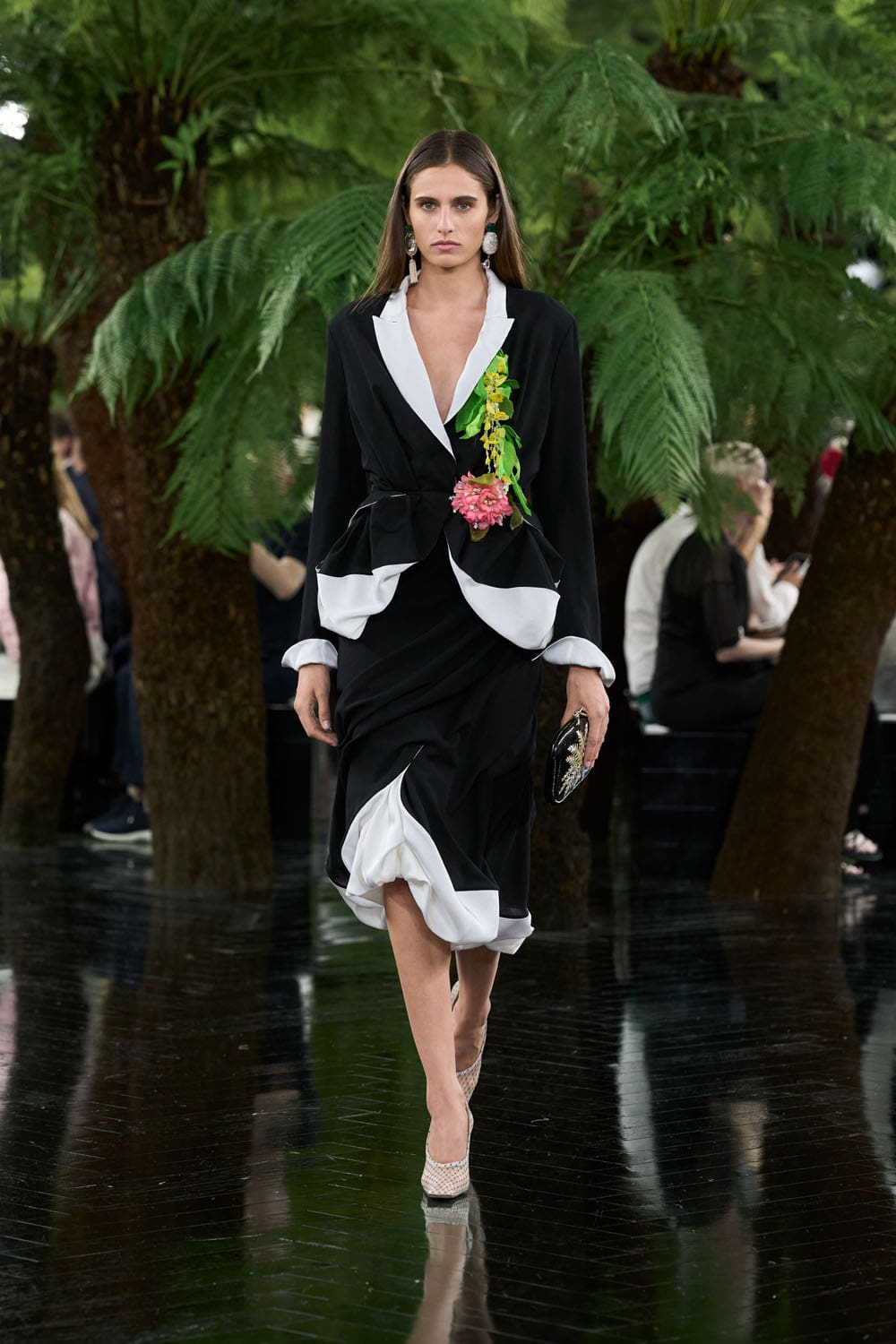
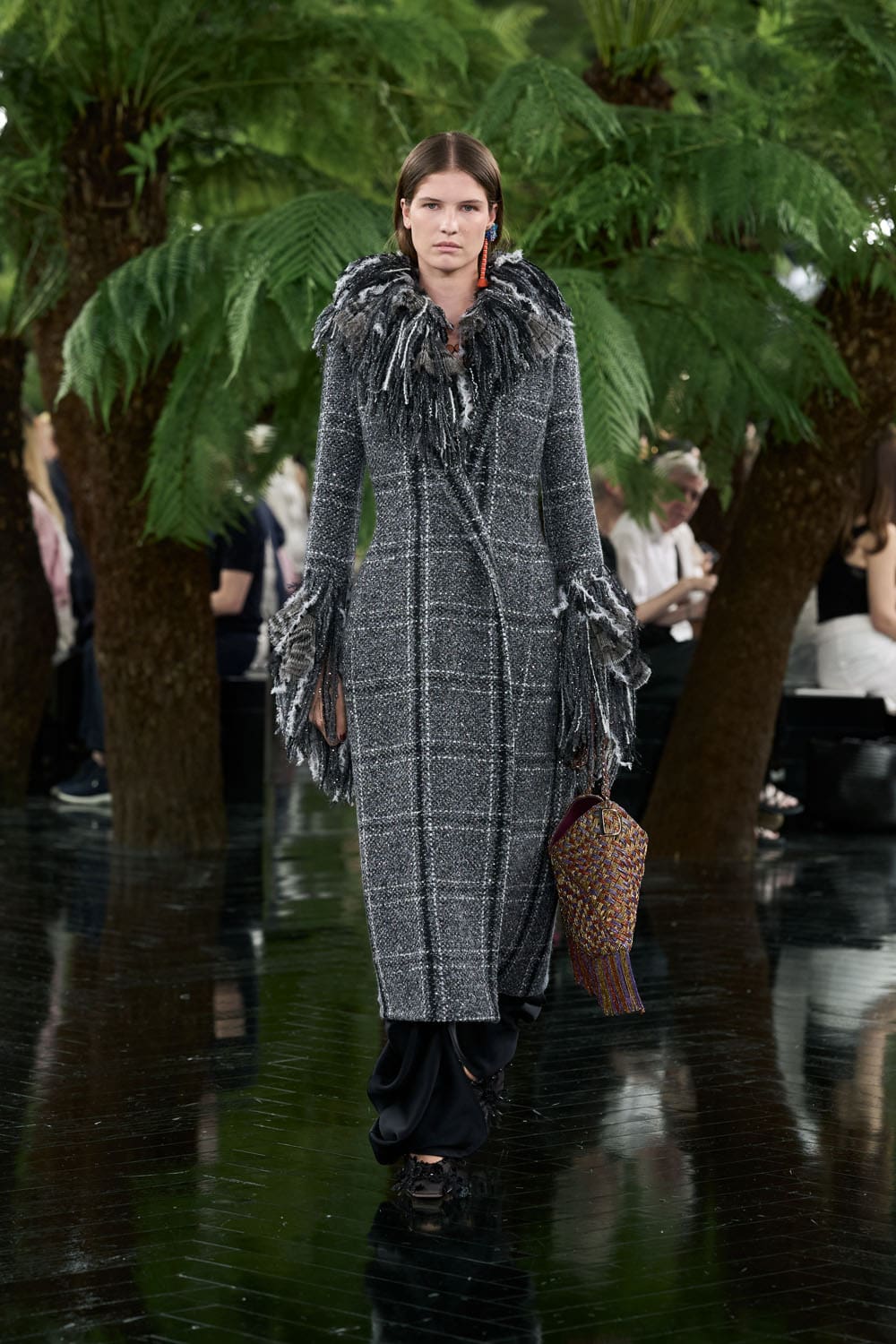
Even when exploring darker terrains, the organic motif remains paramount. A sheer, textured white feathered jacket over an asymmetrical pleated black skirt captures a delicate, avian fragility, while a magnificent grey and black textured tweed ensemble erupts into dramatic, oversized ruffled collars and cuffs that resemble decaying flora, offset by fluid black plissé trousers. The mastery of tailoring peaks in the sharp, structural black jackets—one adorned with a massive, pleated structural bow at the waist, and another styled as a sharp wrap-around peplum paired with wide-leg white silk trousers and a metallic crinkled sun hat with a delicate veil—proving that when the collection leans into the pure language of the Dior atelier, the results are undeniably poetic.
The Domestic Laboratory and the Pretense of Form
Then, the laboratory doors swing open, the air thinned, and the poetry evaporates into pure, unadulterated pretense. For all the press release’s heavy breathing about the structural language of sculpture and “contrasting environments,” what actually trotted down the runway in alternating sequences was an existential crisis disguised as an artistic dialogue. The moment the collection shifted focus from the historical archives of Avenue Montaigne to the conceptual demands of contemporary art, it collided head-on with a very serious problem: a sudden, inexplicable immersion in retro British granny culture.
The conceptual misstep begins with the millinery. One can only assume Stephen Jones was handed a brief so convoluted that sabotage felt like the only dignified response. The metallic, crinkled headpieces were theoretically designed to evoke the organic mystery of an open flower bud—the very space where a human head is supposed to seamlessly exist. Instead, the execution looks less like an unfolding blossom and more like a series of crumpled, industrial foil wrappers or deflated metallic configurations perched awkwardly on the models’ heads.
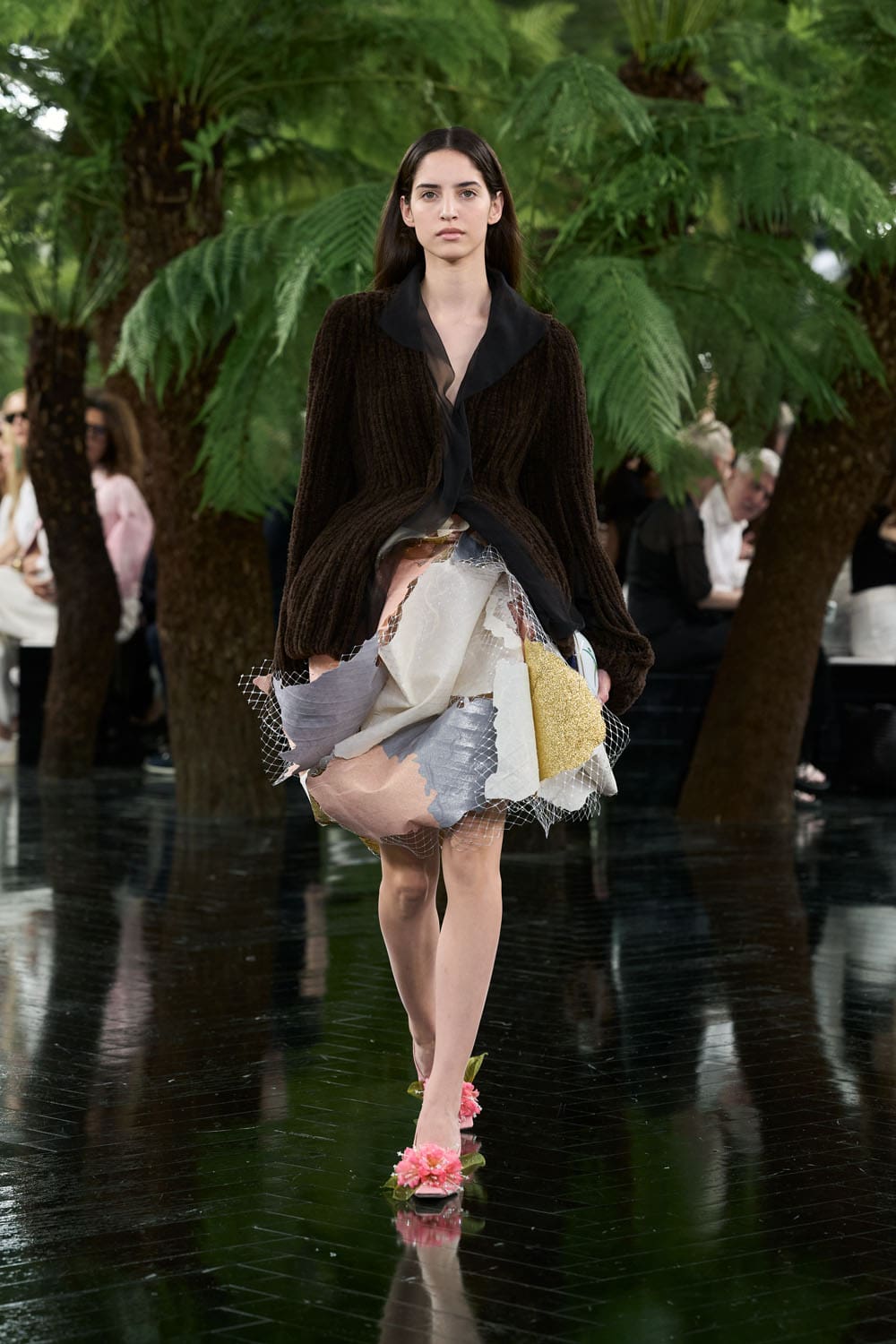
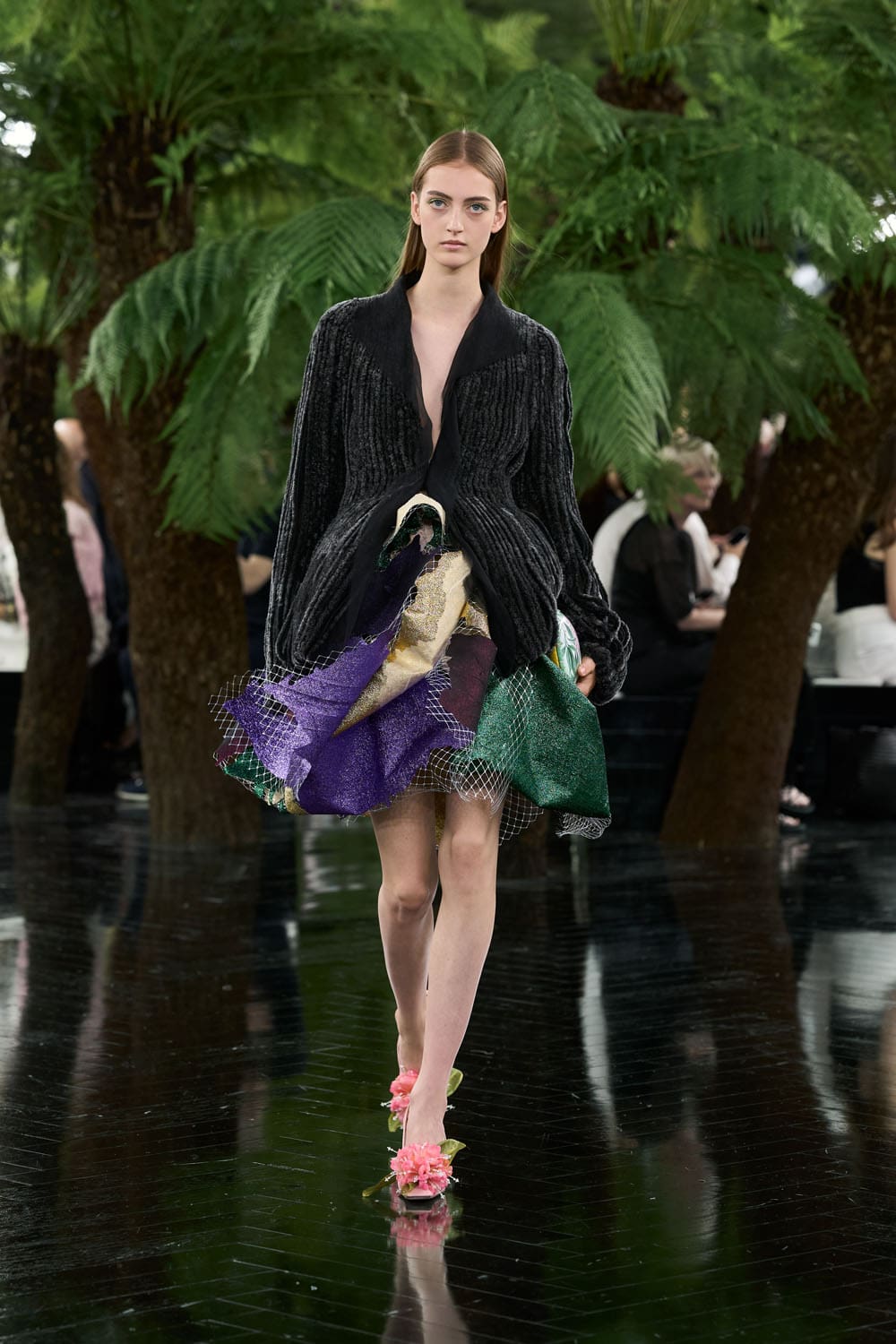
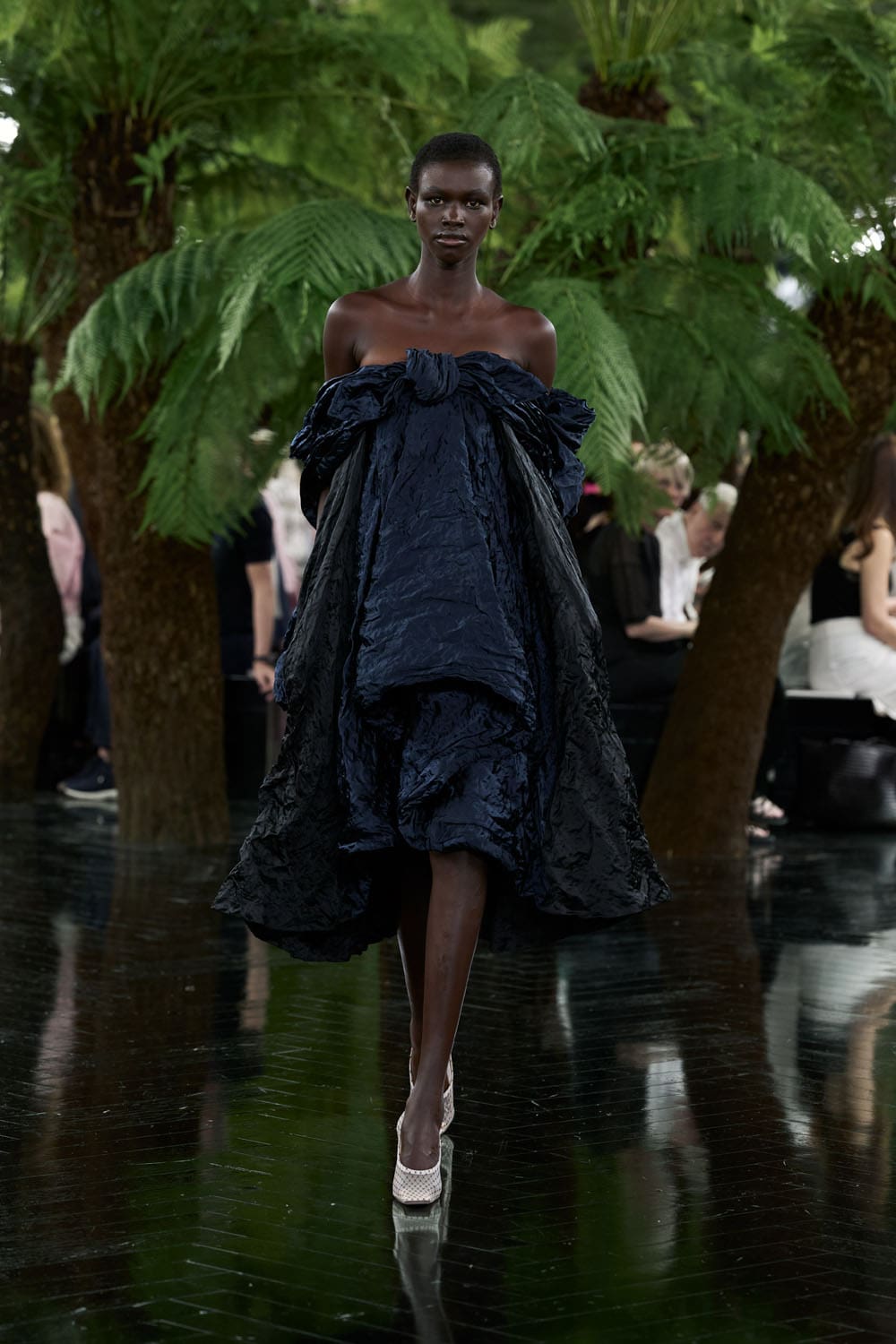
This brings us to the sudden influx of wearable paper-mâché balloons and what can only be described as remnants of badly painted canvas salvaged from a studio floor. There is an agonizingly pretentious boundary between “artistic” and “unwearable,” and the studio leaped over it with enthusiasm. A white strapless dress, ballooning outward into a crumpled, papier-mâché texture, features an asymmetric, overlapping layer of pale grey fabric that completely swallows the human form. Another iteration in a midnight-navy, crinkled metallic strapless gown presents an equally cavernous, inflated volume that reads less like high sculpture and more like an overgrown, festive armadillo. The absurdity peaks in a pair of looks pairing heavy, ribbed cardigans—one in deep chocolate brown, the other in charcoal gray—with stiff, multi-colored skirts fashioned from layered mesh and painted canvas. Embellished with netting that aggressively sticks out, these pieces mimic a chaotic explosion of art supplies rather than couture.
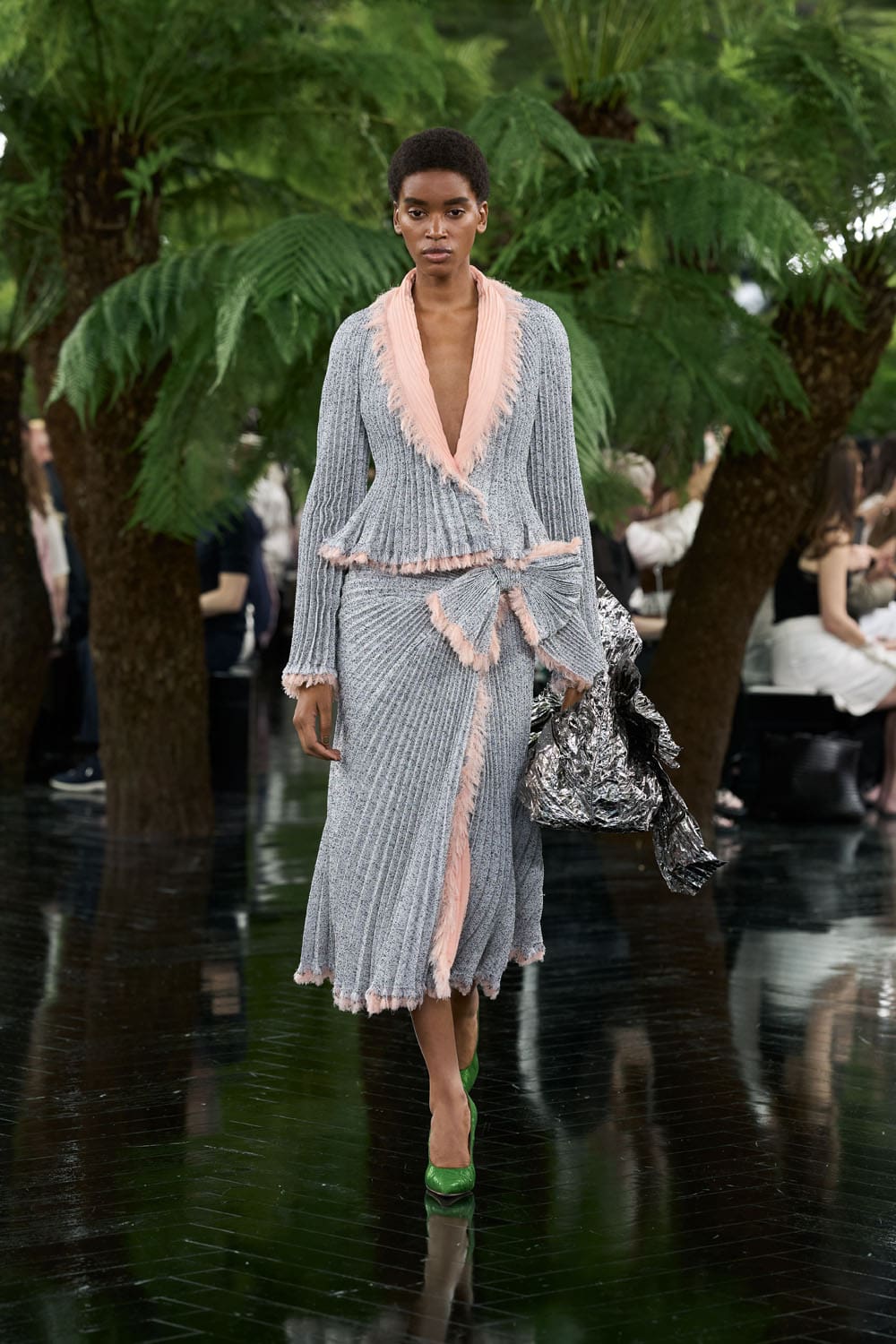
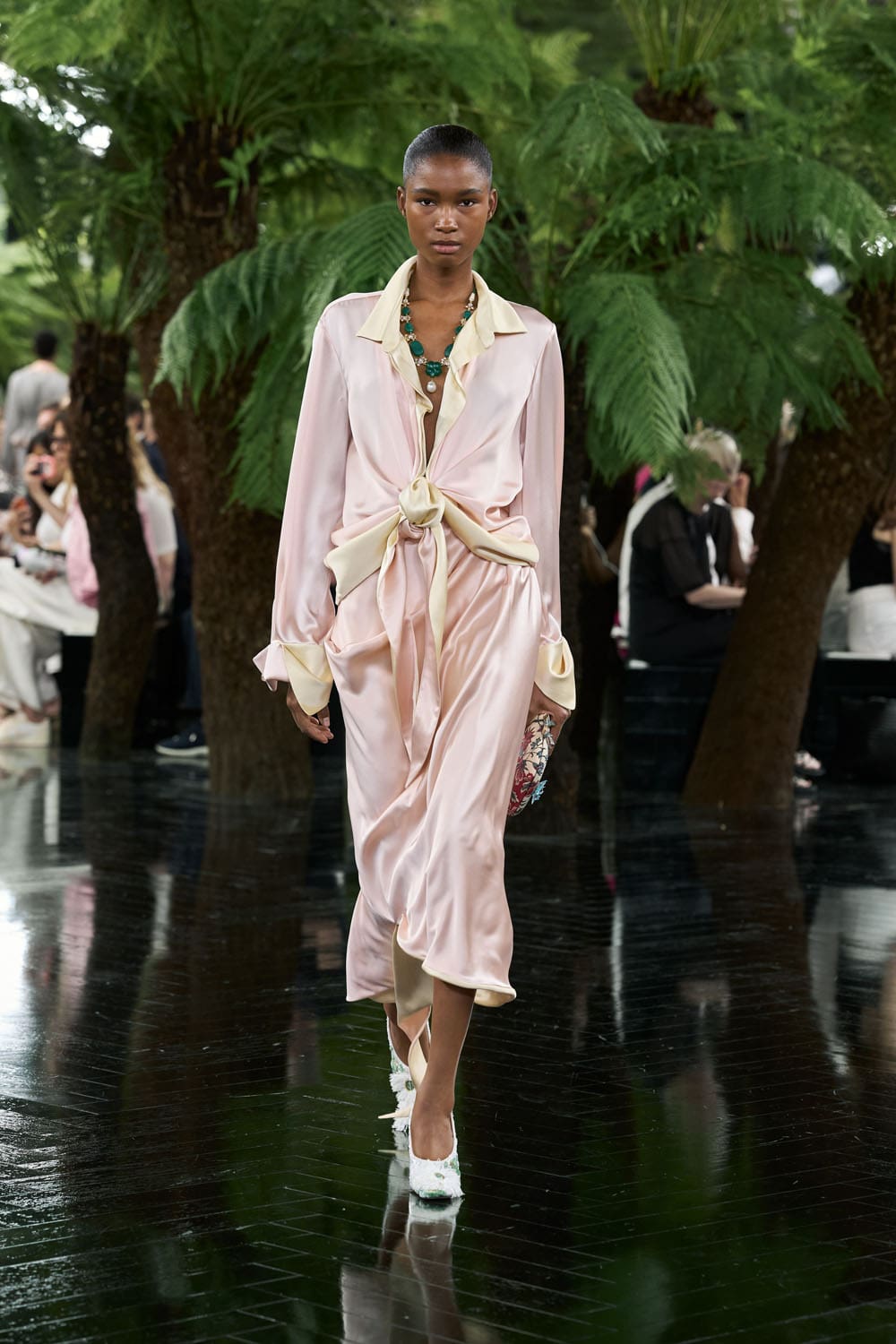
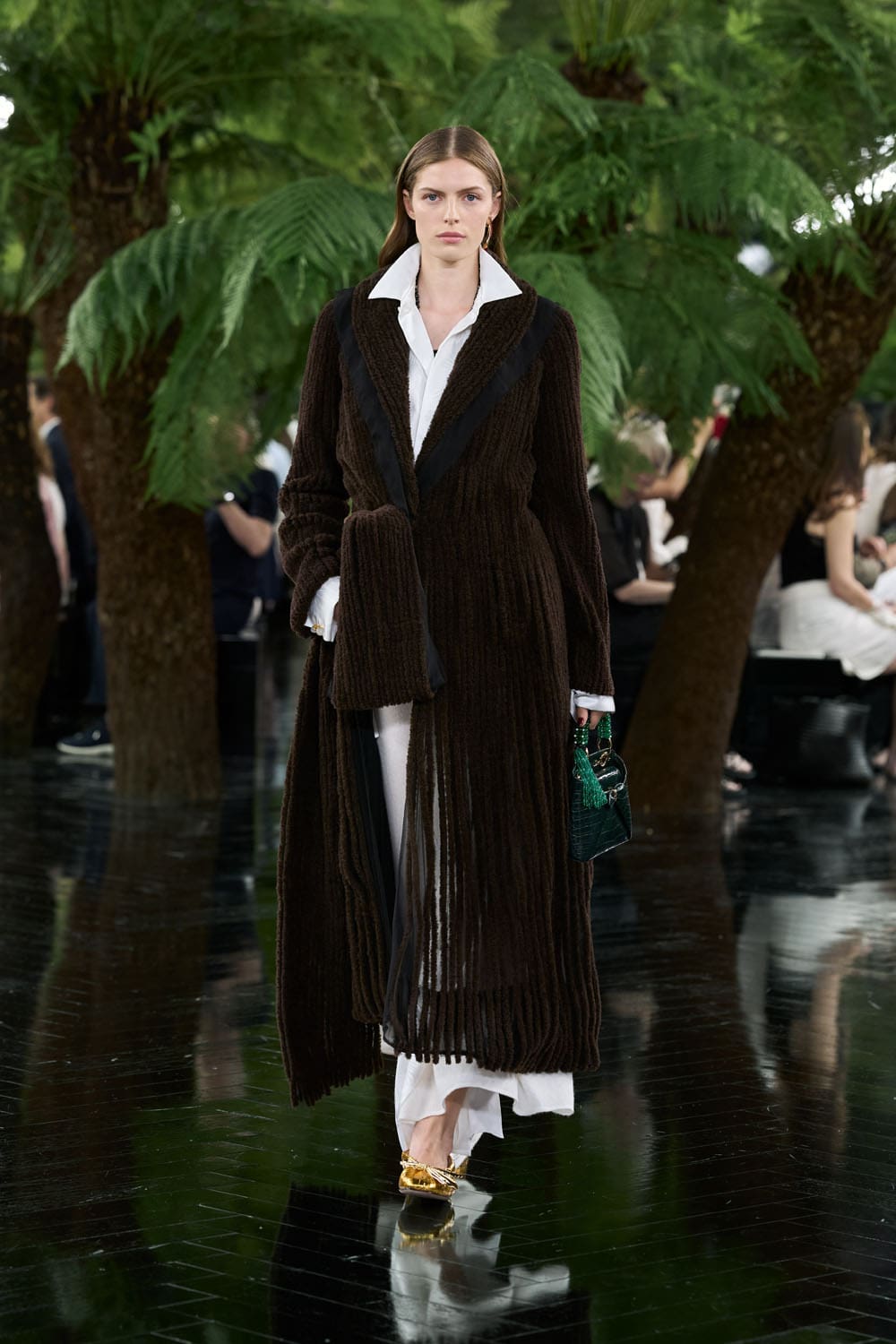
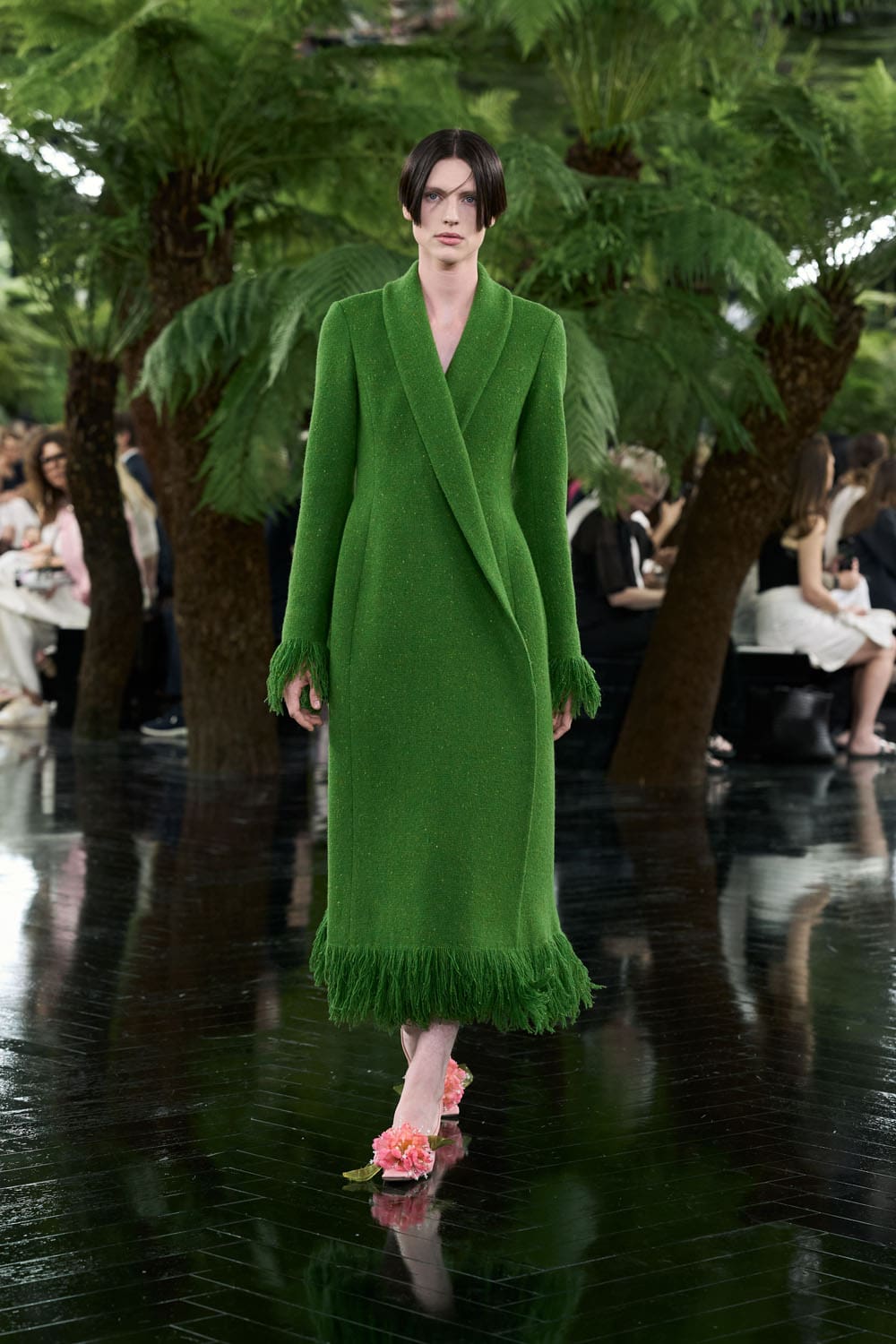
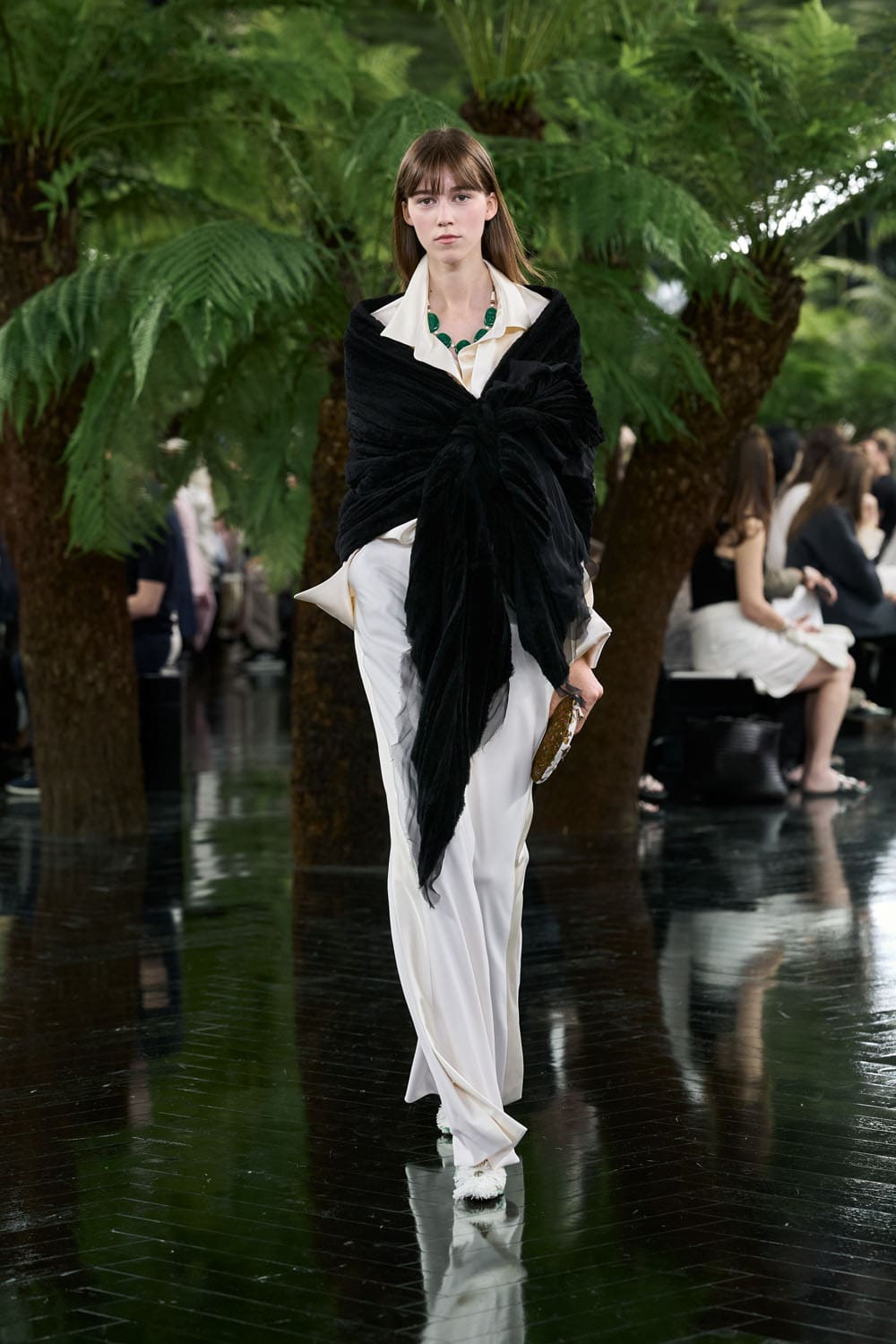
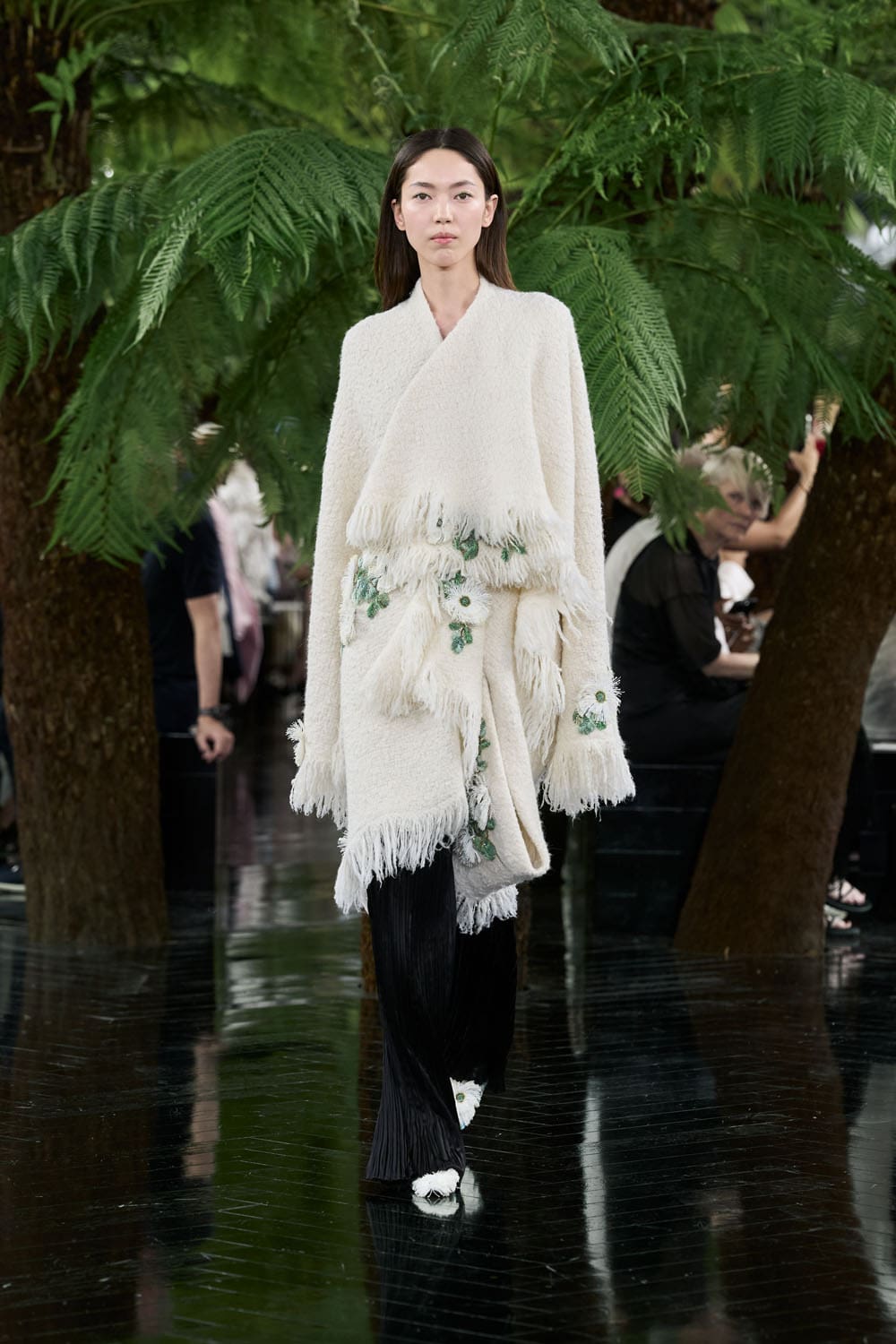
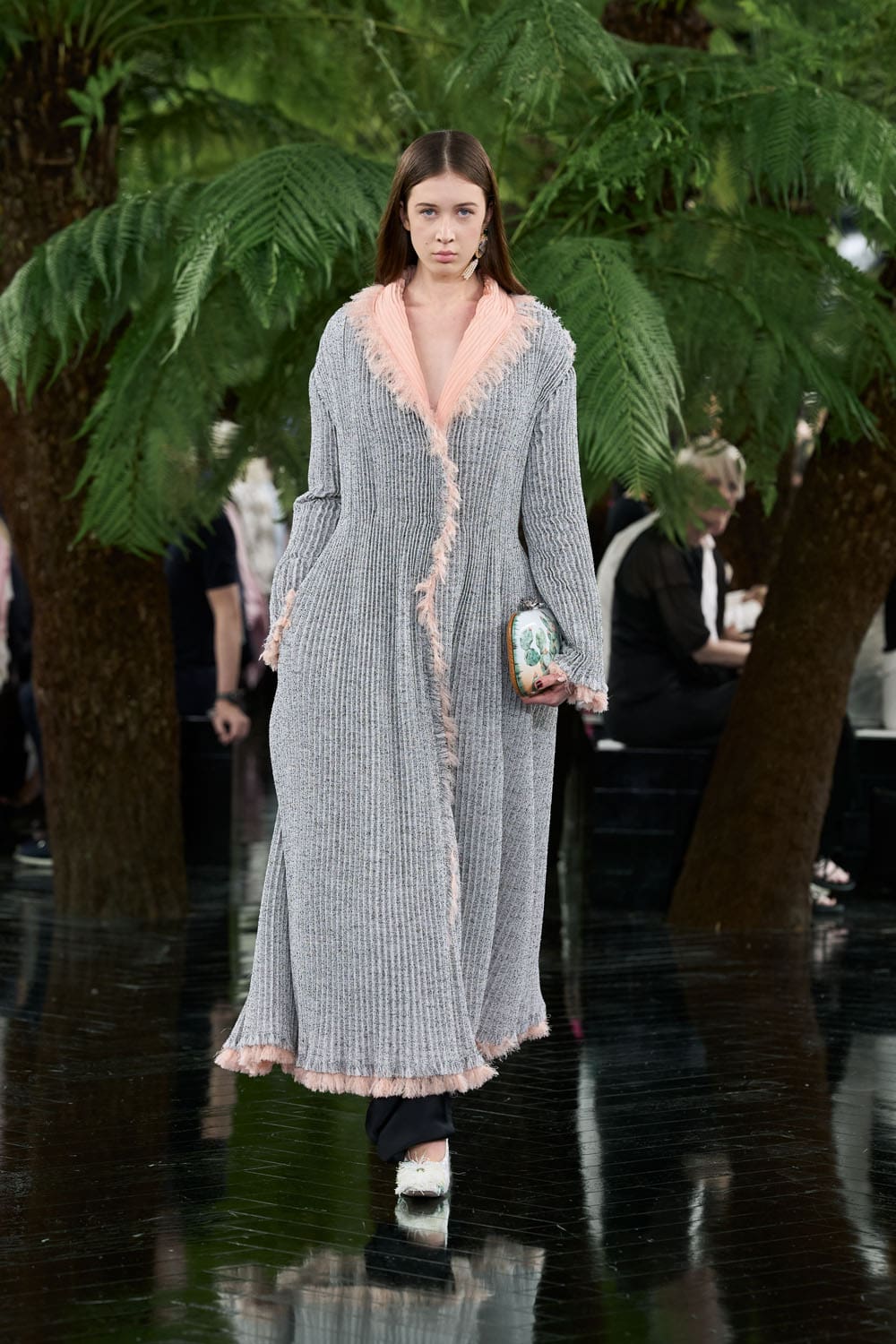
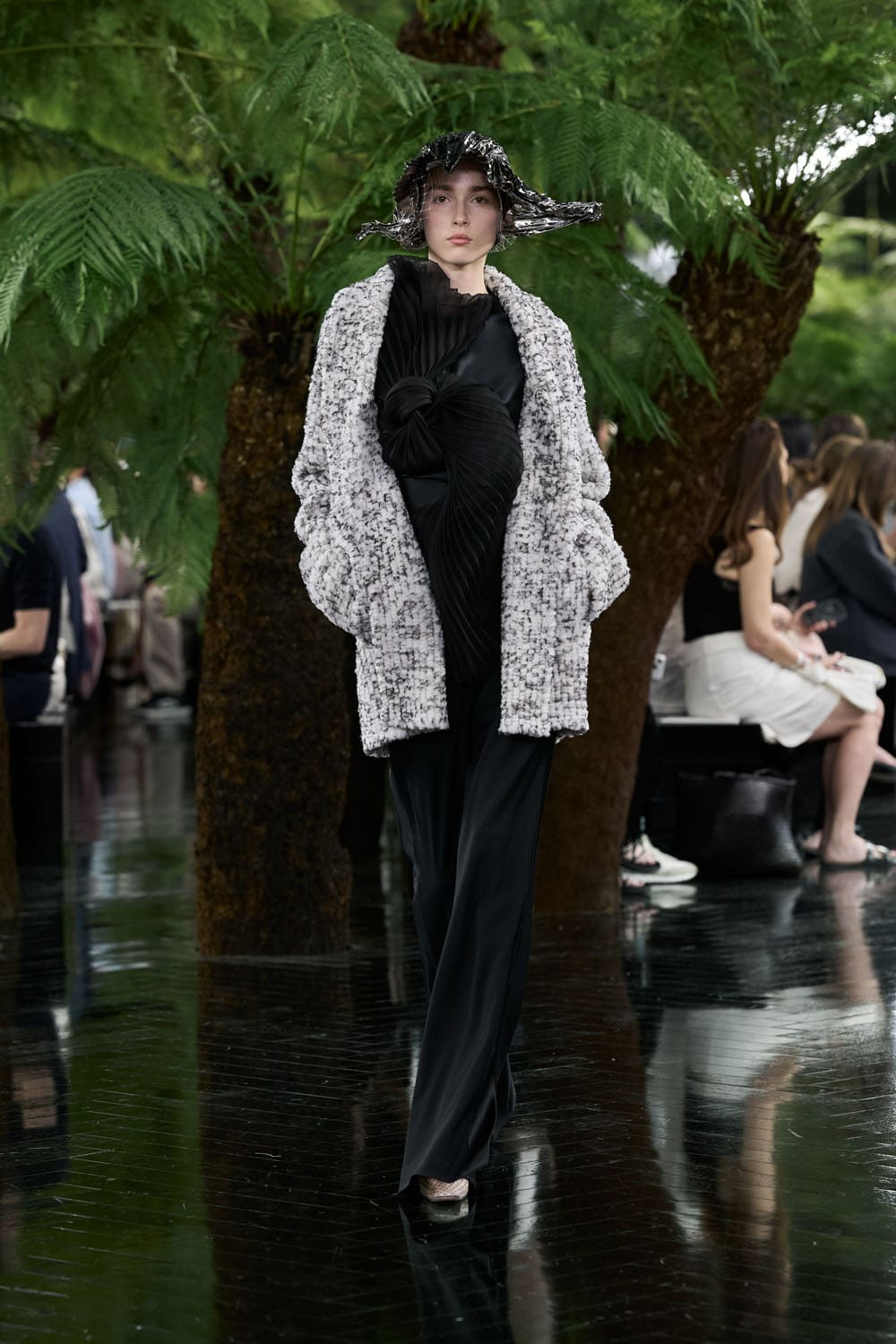
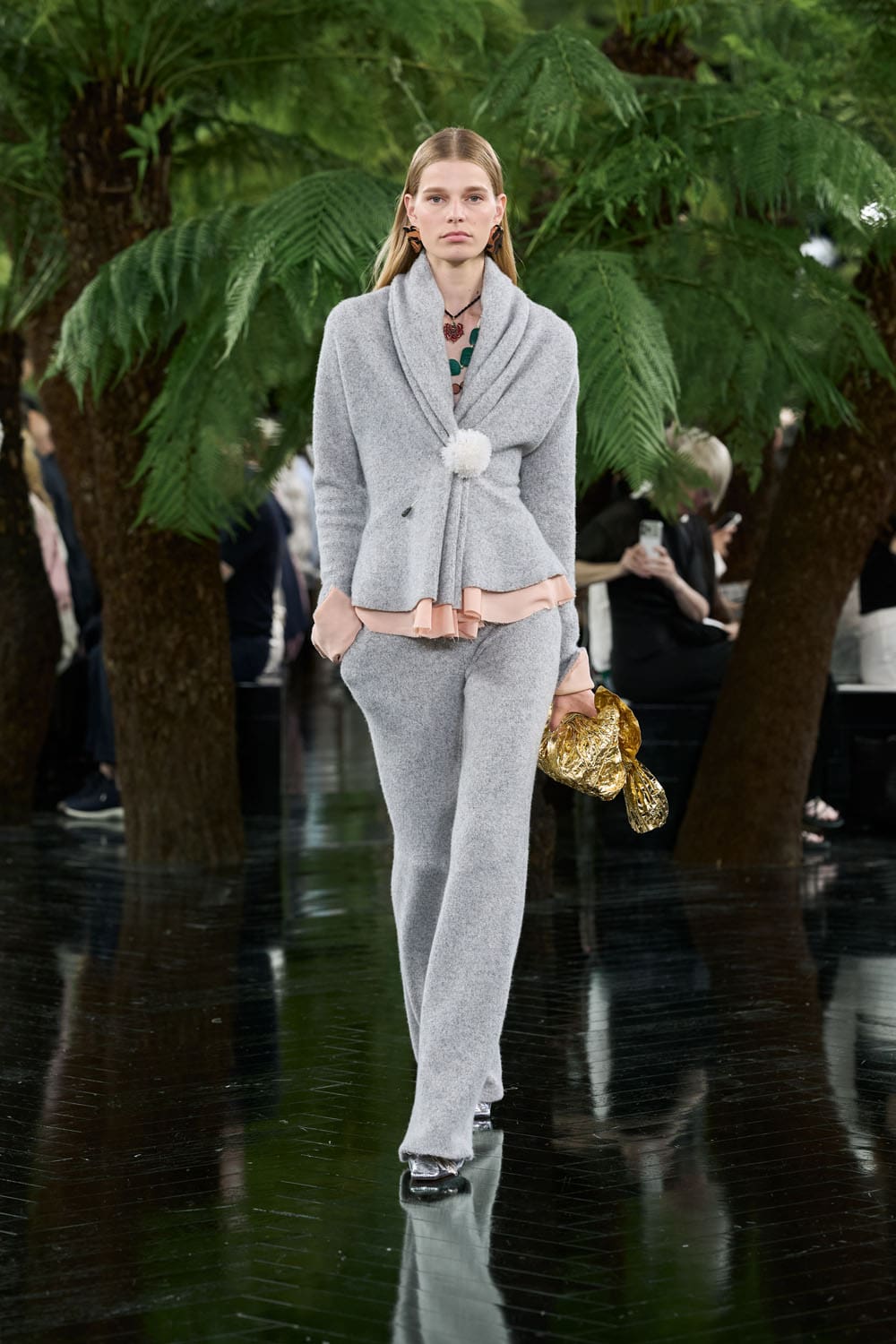
When the collection attempts to escape its own sculptural gravity, it collapses into a lackluster interpretation of casual wear. The grand “lab-as-couture” experimentation apparently concludes that luxury is a soft pair of trousers and a blanket-like covering. We see this defeat in a pale gray, ribbed knit duster coat with a fuzzy peach trim, layered over dark pants—an outfit perfectly suited for a luxurious convalescence, but hardly the pinnacle of Haute Couture. Similarly, a cream silk blouse paired with white trousers is entirely obscured by a massive, unstructured black shawl wrapped and knotted around the upper body like a desperate defense against a draft. Even a long, heavy tweed coat in mottled green and white fringe, dotted with white circular details, surrenders to a bulky, wrapping silhouette that ages the wearer instantly.
Then we have the literal crowning glory of this conceptual disorientation: the crinkled, metallic headpieces courtesy of Stephen Jones, which look less like the opening buds of haute-botany and more like a high-fashion attempt to stream HBO Max directly. Fashioned from what appears to be premium, heavy-duty aluminium foil wrapped in a delicate netting veil, these contorted, reflective brims look remarkably like DIY satellite dishes engineered to ward off cosmic interference—or perhaps to catch a crisp 4K signal of the latest prestige drama backstage. For a collection supposedly meditating on the intellectual dialogue between raw sculpture and environmental resonance, crowning these grandmas-in-training with bespoke aluminum foil hats feels like a masterclass in unintentional comedy, proving that even at the highest levels of Avenue Montaigne, the line between avant-garde art and basic household utility is dangerously thin.
The Zoological Detour and Conceptual Collapse with Holiday Armadillo
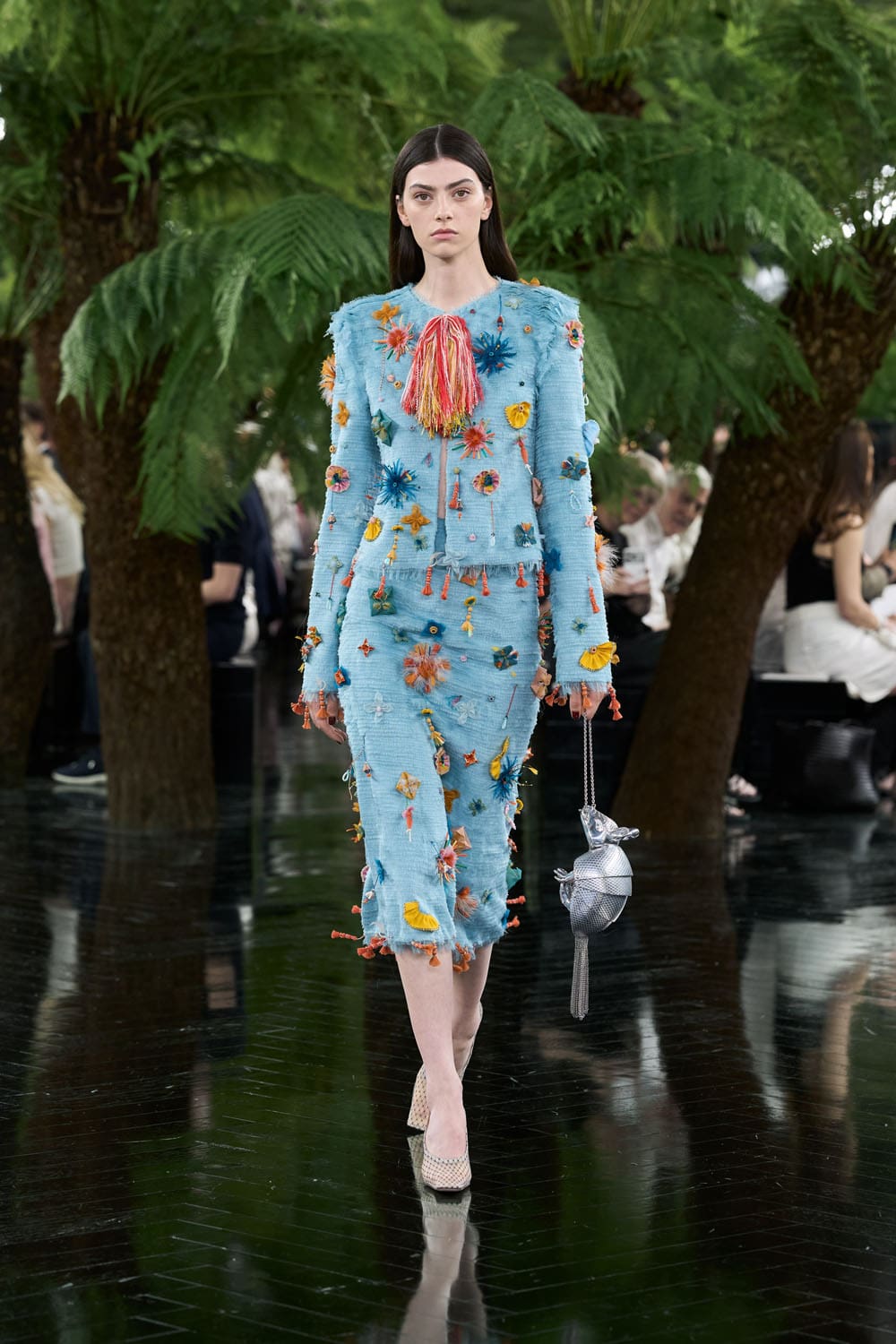
The true nadir of this conceptual disorientation, however, is not found in the oversized paper bags masquerading as dresses, but in the literal interpretation of the “Holiday Armadillo.” Any remaining illusion of Haute Couture sophistication is shattered by the introduction of whimsical, highly literal novelty accessories that feel entirely divorced from the house’s legacy.
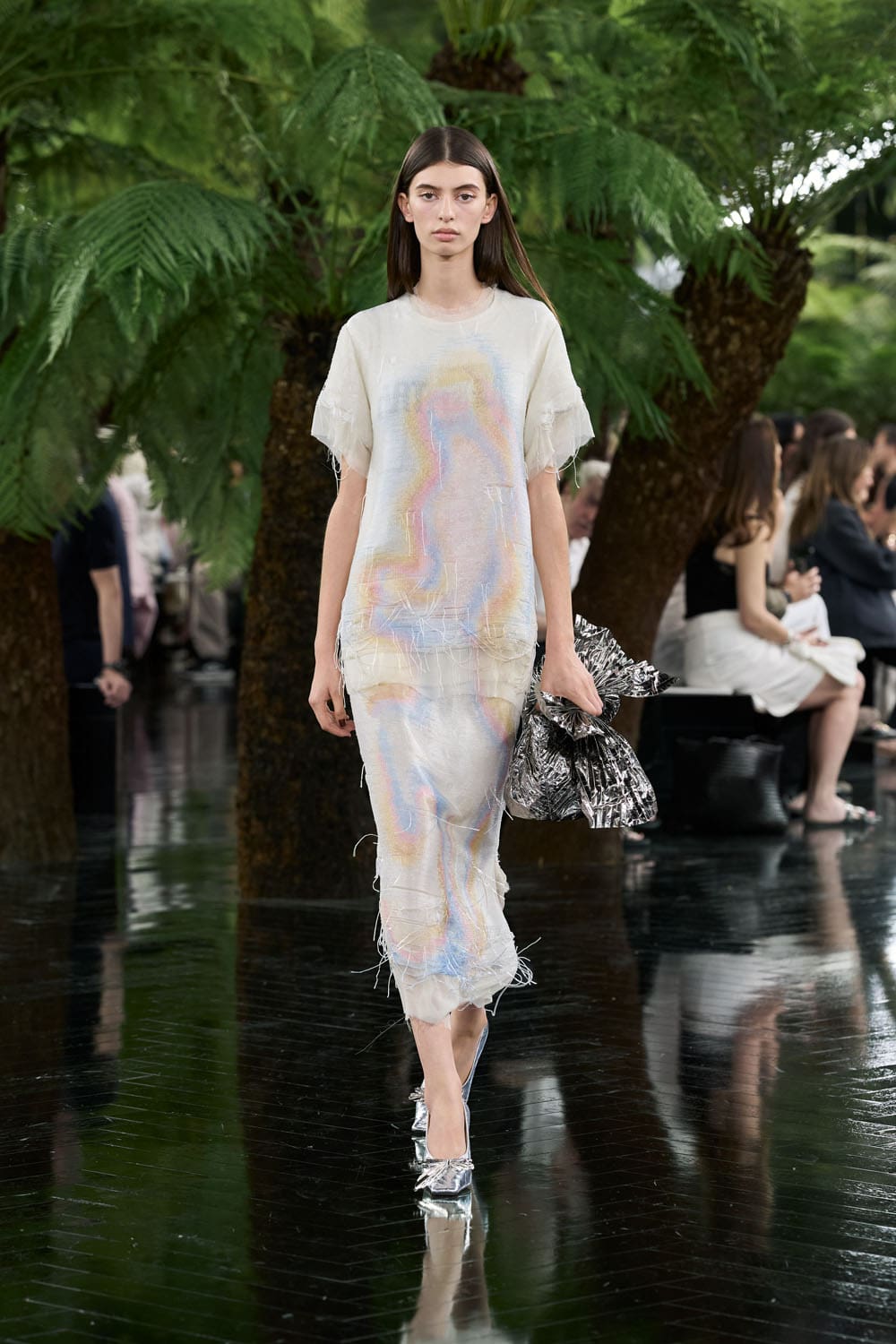
The appearance of a rigid, silver metallic armadillo bag—complete with articulated scaling, tiny ears, and a dangling chain tassel for a tail—transfers the narrative from the heights of artistic sculpture directly into the realm of high-priced kitsch. Paired alongside similarly bizarre metallic fish bags and contorted bow bags, these objects cease to function as accessories and instead operate as loud distractions from the erratic tailoring surrounding them. Rather than anchoring the collection in the sophisticated dialogue of Indian craft or Santa Fe landscapes promised by the press notes, these accessories suggest a studio playing with expensive toys to mask a lack of structural cohesion. It appears that when the modern atelier attempts to translate the raw texture of a sculpture studio into clothes, we are left not with art, but with a jarring juxtaposition of the pretentious, the domestic, and the downright cartoonish.
Conclusion
Ultimately, this Dior Haute Couture collection presents a profound dichotomy between the preservation of sartorial heritage and the pitfalls of conceptual overreach. On the positive side, the collection triumphs whenever it surrenders to the pure, fluid expertise of the atelier, delivering breathtaking manipulations of hand-plissé, intricate embroidery, and organic movement that authentically honor the house’s floral legacy. These moments showcase an undeniable poetic mastery of form.
The collection falters when it lapses into artistic pretense, alienating the viewer with an awkward nod to retro British domesticity, deflated papier-mâché volumes, and heavy, aging knits. The final collapse of this conceptual ambition is cemented by the introduction of literal, whimsical accessories—most notably the metallic armadillo bag—which push the boundaries of Haute Couture into the realm of high-priced kitsch. It is a season that vividly illustrates the thin line between a masterfully executed artistic laboratory and a collection simply lost in translation.
See All Looks Dior Haute Couture Fall Winter 2026-2027