
Death of Luxury – Dior and Givenchy drops. Story by Eleonora de Gray, Editor-in-Chief of RUNWAY MAGAZINE. Photo Courtesy: Dior / Givenchy.
Introduction — Casual Wear, Casualties, and the Death of Luxury
Once upon a time, luxury meant something. Not a buzzword. Not a mood board. Not a streetwear-infused fever dream dressed up in a marketing deck. It meant excellence — in fabric, in design, in crafts, in legacy. It meant embroidery that took hundreds of hours, ateliers that whispered history, silhouettes carved from imagination and skill. Today? Luxury, apparently, is a cotton or wool sweatshirt with a screen-printed logo, sewn together by a machine in under five minutes, blessed by a fashion director who calls it “conceptual,” and priced at €3200. Because, why not?
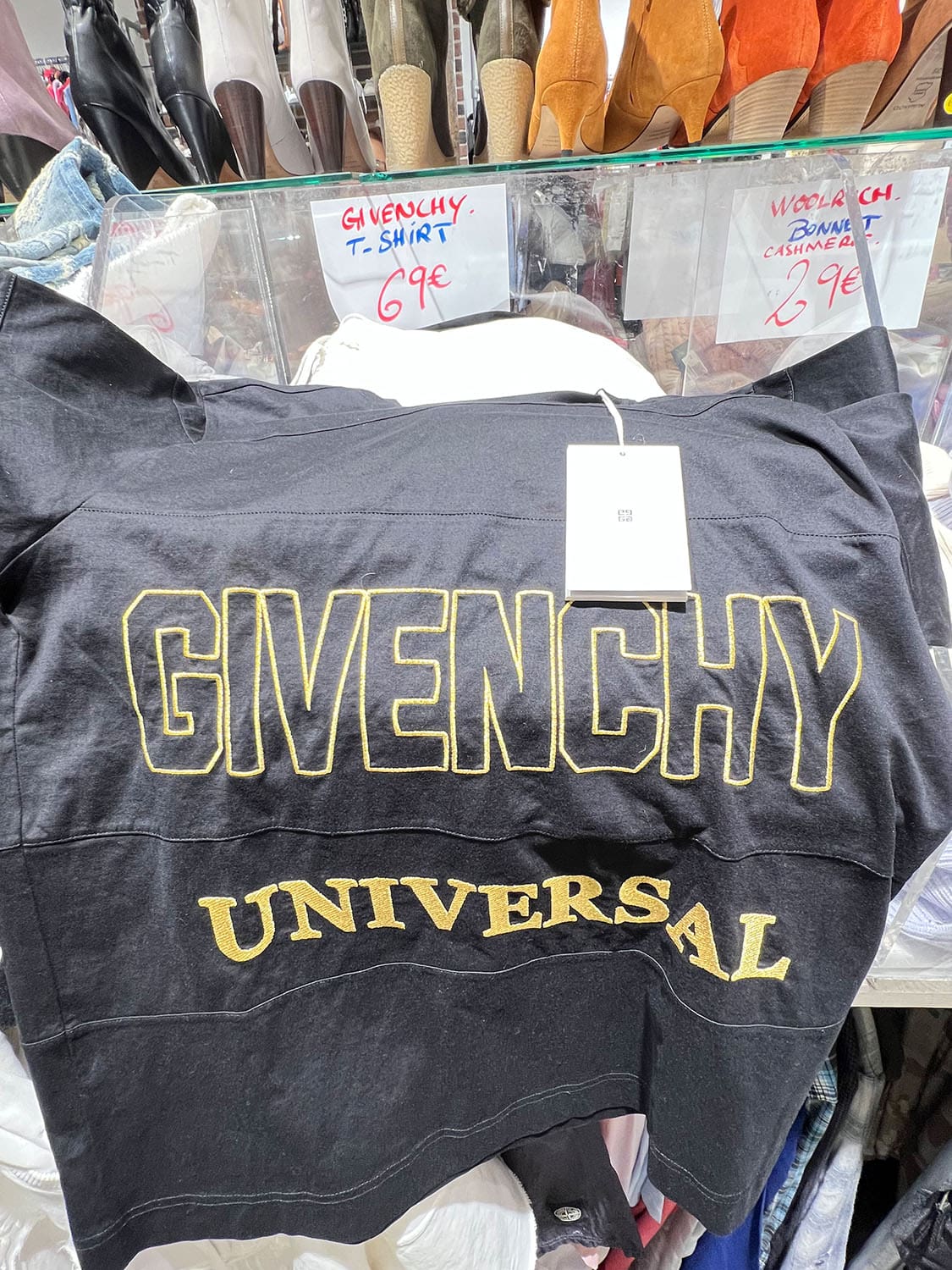
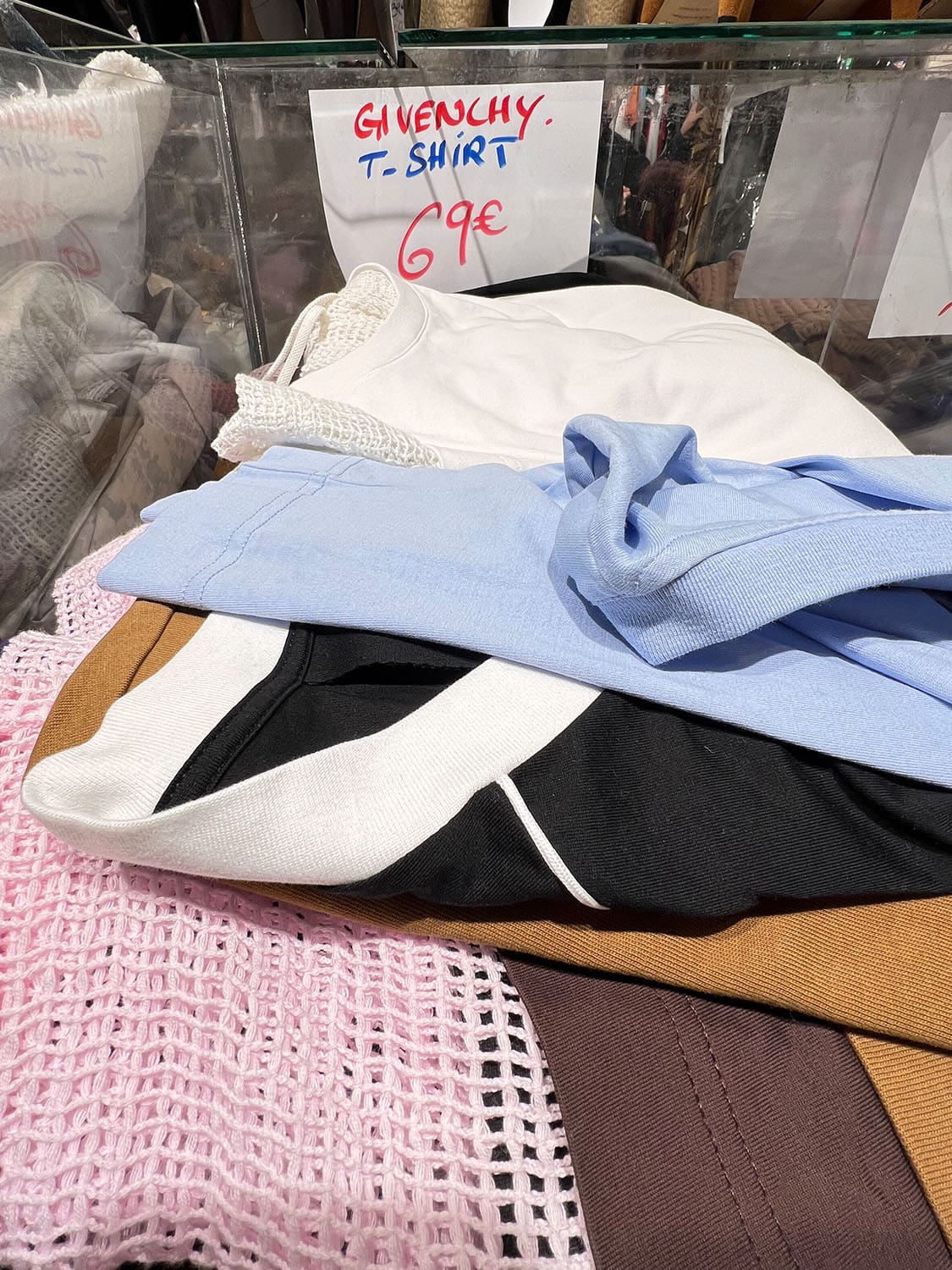
The fashion houses once known for their mastery have traded savoir-faire for hype, and craftsmanship for what can only be described as conceptual cosplay. In this great unraveling, the meaning of luxury has been cheapened to the point of parody. And the consequences? Predictable. What isn’t snapped up by influencers-for-hire at launch drops straight into clearance bins at €69. Or worse — goes up in smoke. Literally. Burned in secret to preserve the illusion of exclusivity, leaving only the scent of synthetic failure in the air.
This is not fashion evolution. This is creative bankruptcy with a trust fund. And Dior and Givenchy — once titans — have become the case studies in how to lose luxury, one “drop” at a time.
Spot the Difference: A Luxury Quiz
Let’s test your eye for luxury.
Below are four cardigans. All ecru. All sweetly machine embroidered with little flowers — pinks, reds, maybe a dove or two thrown in for romantic effect. Some are crafted from cashmere, others from wool blends and polyester . All feature ribbed hems, button closures, and that unmistakable vintage flair — the kind your great-aunt wore in 1987 when hosting tea in the conservatory.
Their prices? Let’s see…
- €3200
- £75
- £52
- €20
One just “dropped” as part of a major Spring-Summer 2026 collection from a revered luxury French fashion house. Another is from a mid-range British retailer that still believes in lining garments. One is an affordable floral knit found in nearly every UK high street. And one is a mass-produced polyester sweat-cardigan from a French loungewear brand, meant for binge-watching Stranger Things 5 and eating bonbons in bed.
Can you tell which is which?
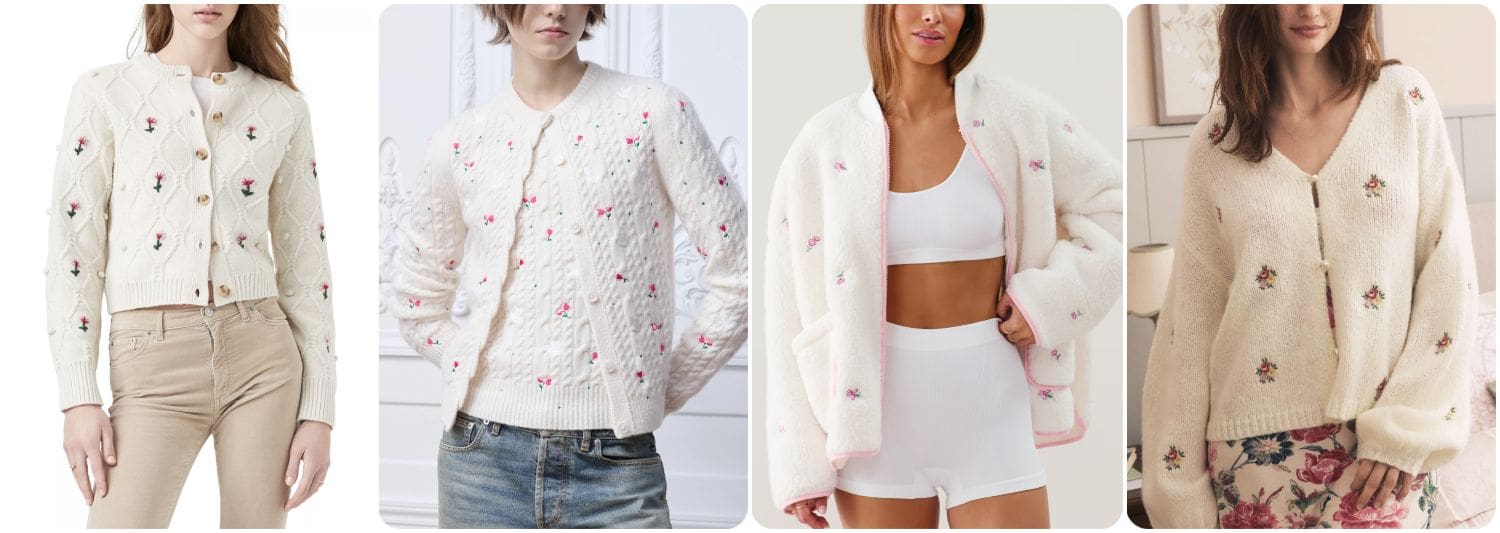
Exactly.
Trick question. You can’t. No one can. Not even Dior’s marketing team after their third espresso shot and a PowerPoint about “archival inspiration.”
Ah… yes… I know – Dior is a second from the left, right next to Undiz sweat and French Connection cardigan.
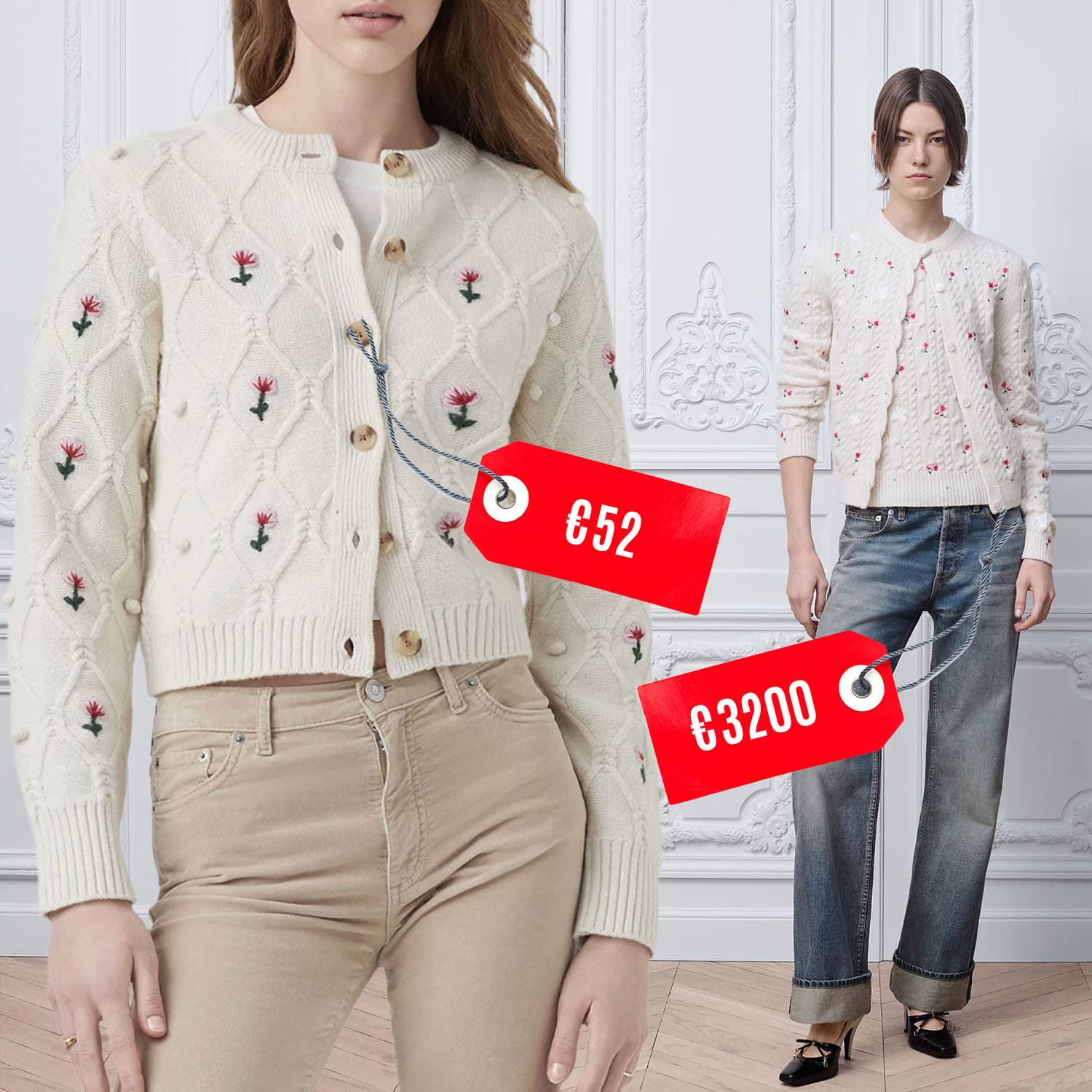
When luxury forgets how to differentiate itself from mass market, when craftsmanship becomes a mood instead of a method, and when the only thing distinguishing a €25 cardigan from a €3200 one is the label — then what we’re witnessing isn’t design. It’s a crisis.
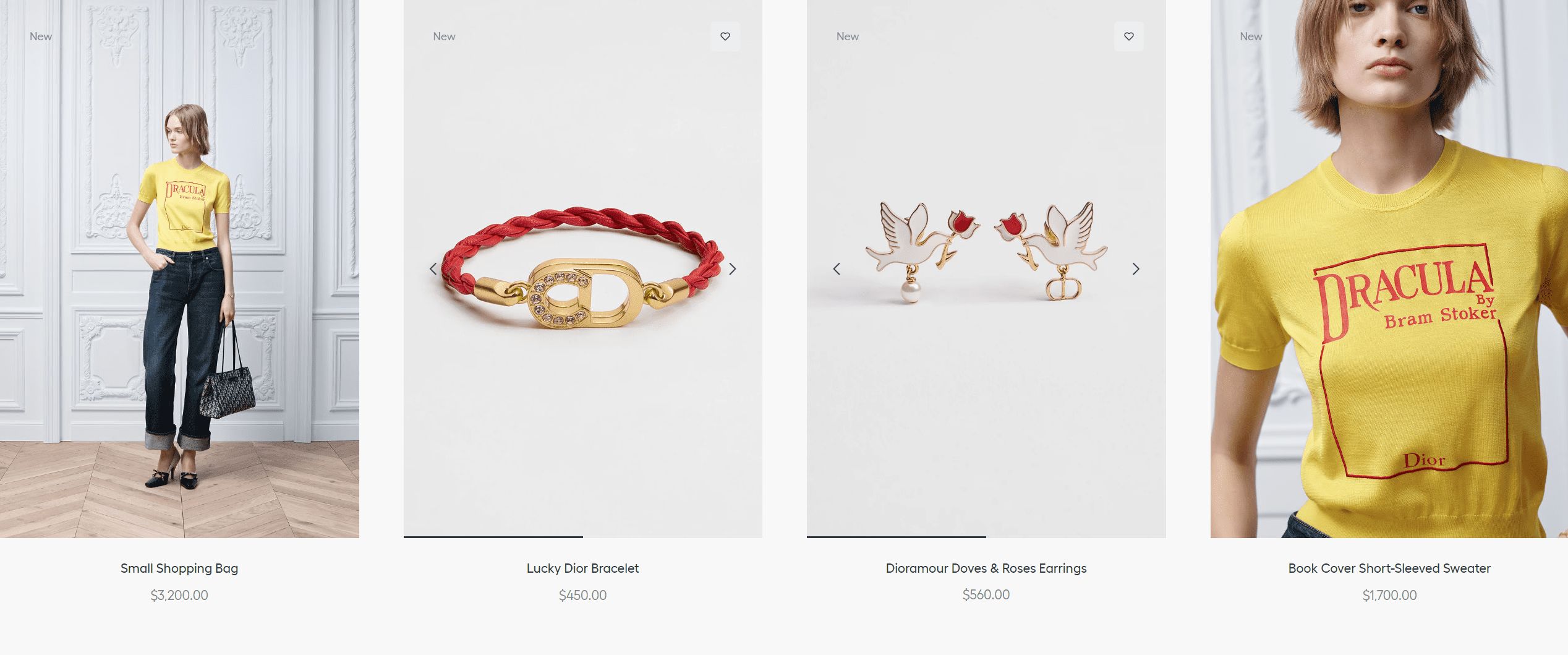
When Jonathan Anderson, Dior’s current creative director, decided to launch his Dioramour, he apparently mistook eBay Vintage Knitwear for the House archives. The result? A “celebration of love” in the form of a painfully average cable-knit cardigan embroidered with tiny roses and doves — the kind of sentimental kitsch you’d find in a Cotswolds souvenir shop, not the Paris ateliers of a heritage Maison.
But the price tag? Oh, that’s real luxury. €3200 for a 5-gauge cashmere knit, machine-embroidered, mass-produced, and paired with a press release about poetic emotion. Buttoned up with mother-of-pearl closures and dead serious pretension.
Luxury, apparently, now comes with nostalgia, delusion, and a dry-clean-only label.
The Luxury of Confusion: Jeans and Sneakers Edition
Let’s keep going, shall we?
Next up in the guess-the-price quiz: a pair of washed-out, straight-leg jeans and pink pastel canvas sneakers.
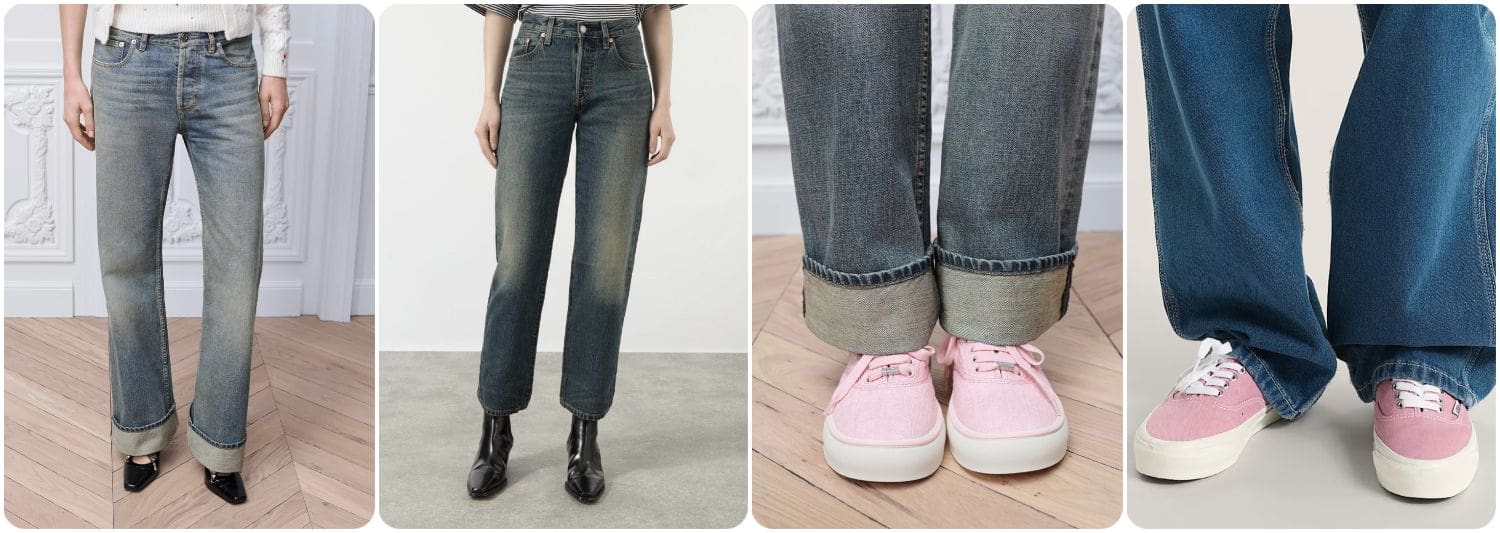
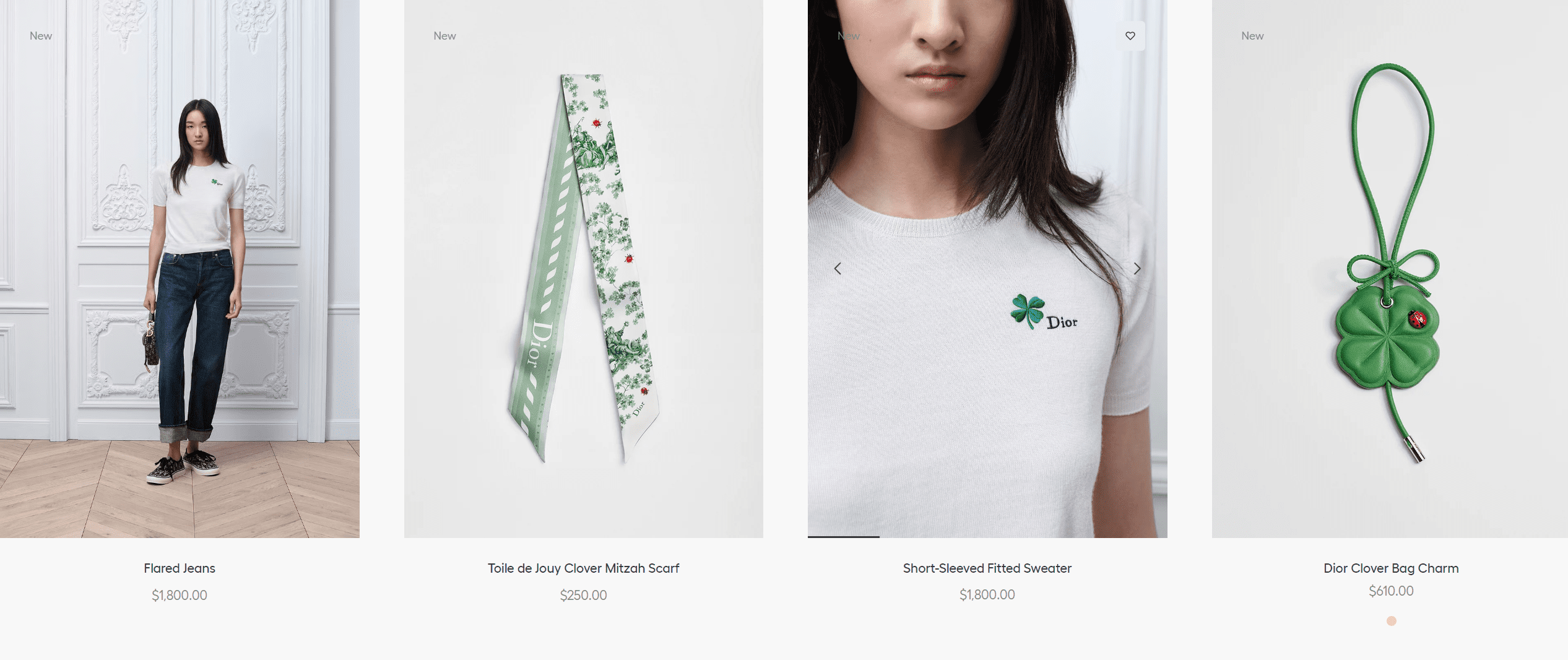
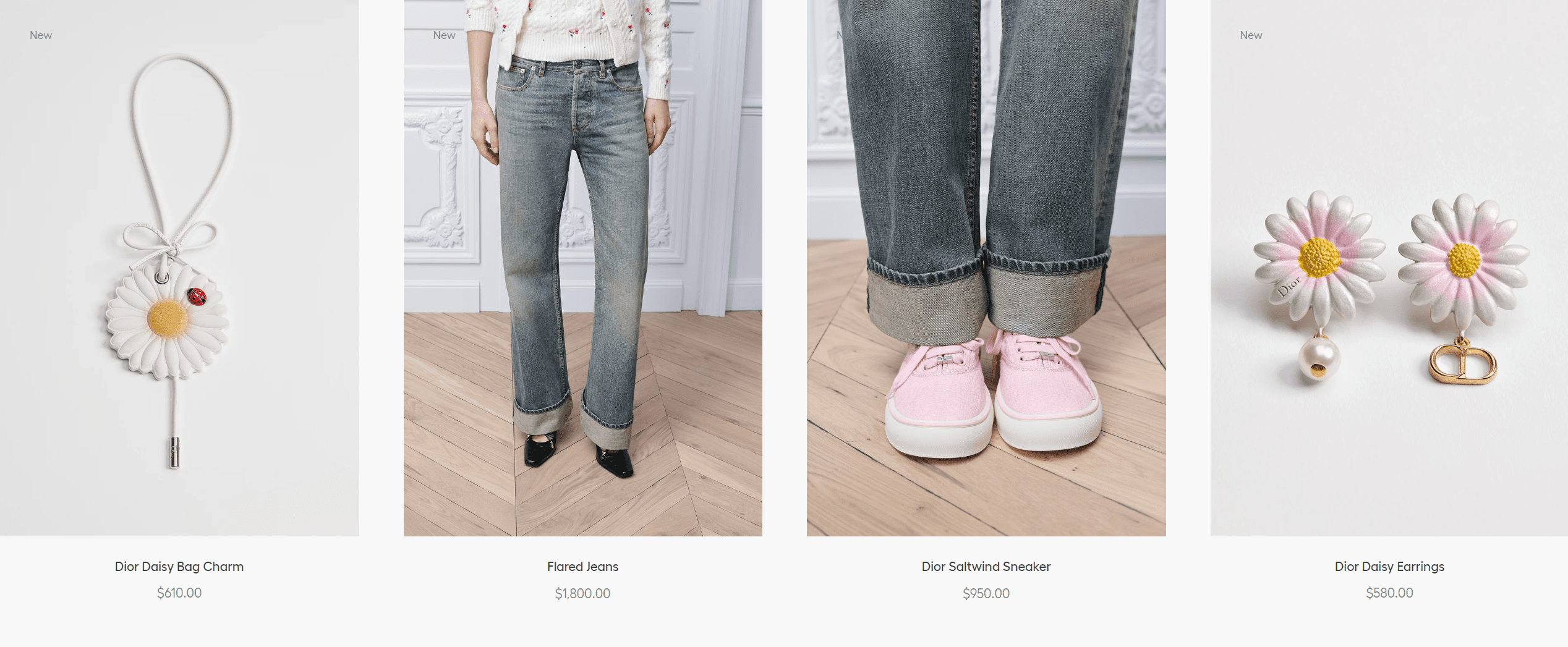
The jeans — slightly flared, unmistakably borrowed from someone’s ex-boyfriend who moved to Berlin to DJ — retail for €1500. They feature a charmingly faded cotton denim, visible side seams, back pockets, and, wait for it… a leather jacron with the Dior logo. Groundbreaking.
They look identical to Levi’s 501® Mid-Rise Straight jeans. Price? €65. Difference? One comes with 150 years of denim mastery. The other comes with a fashion director who thinks “throwback” means slapping a luxury logo on thrift-store basics and pretending it’s innovation.
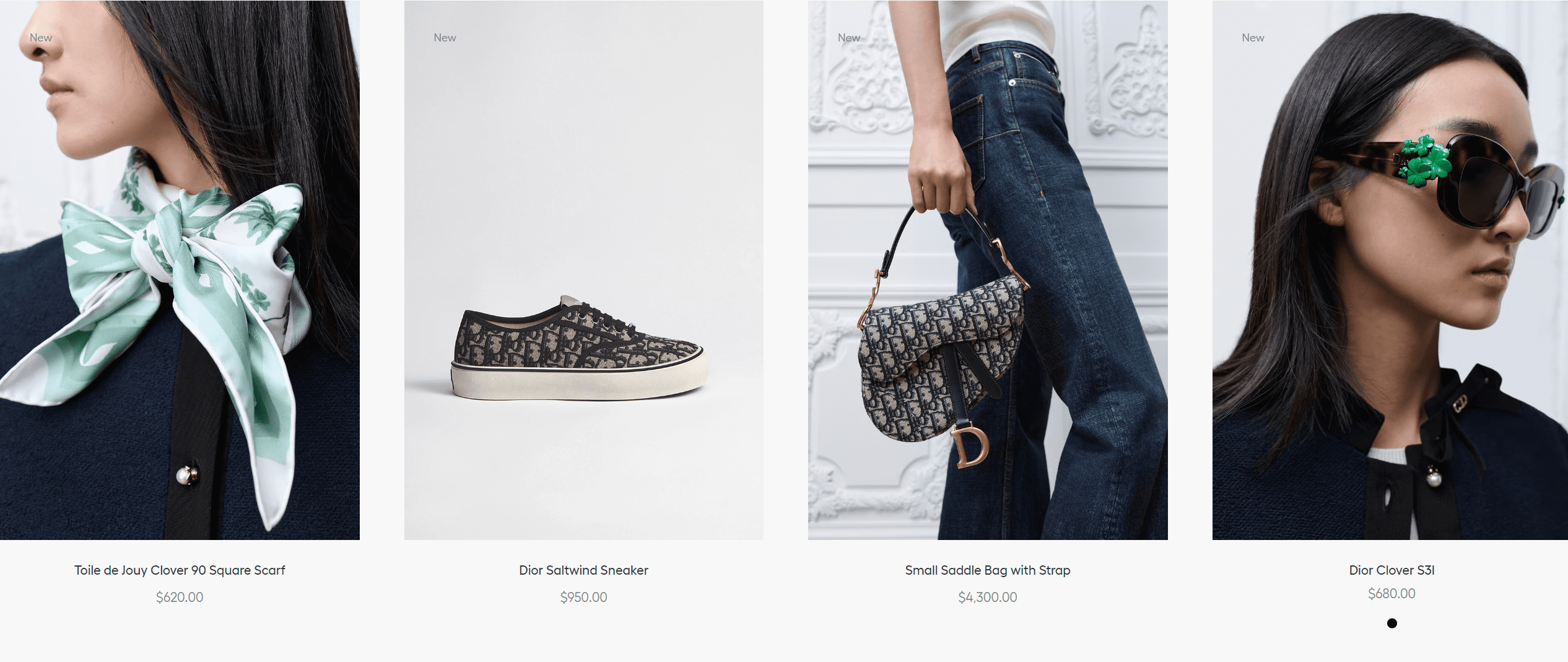
And the shoes? A pair of low-top sneakers — pale pink, cotton canvas, rubber sole, tone-on-tone topstitching. Called Saltwind, because apparently naming a glorified boat shoe after a sea breeze justifies a €950 price tag.
According to the official drop description, this is “Jonathan Anderson’s unique interpretation of a maritime icon.” What icon? In reality? It’s a slightly elevated version of a €55 Vans sneaker or a Kelvin Klein knockoff on sale at Galeries Lafayette, wrapped in marketing poetry and sold as a “new essential.”
They added grosgrain trim and a metal Dior lace jewel, of course. Because nothing says “heritage” like a shoelace charm.
This is the state of luxury today: where denim is “elevated” by removing character, sneakers are “reimagined” into pastel boredom, and entire creative departments pretend the public can’t Google.
And if you think this critique is reserved for fashion editors with a grudge, think again. The real customers — you know, the ones not paid in handbags and hashtags — are already doing the work. Instagram and YouTube are flooded with youngsters from all over the world walking into Dior boutiques, filming their reactions, and laughing. Not politely. Not subtly. Comparing, posing the only logical question: “Is this serious?” And the answer is always the same — it can’t be.
Yes, we can spend €3200. But not on that. Because luxury, real luxury, is an experience. A moment. A pleasure. It’s buying something exceptional — a piece with soul, design, craftsmanship. Something the mass market can’t have. But today, under its current leadership of Dior (CEO Delphine Arnault), Dior operates like a fashion mafia: Give us your money… or else. No more cakes for you.
This isn’t luxury. It’s extortion wrapped in something cheap and dirty… leftovers of ex-boyfriend.
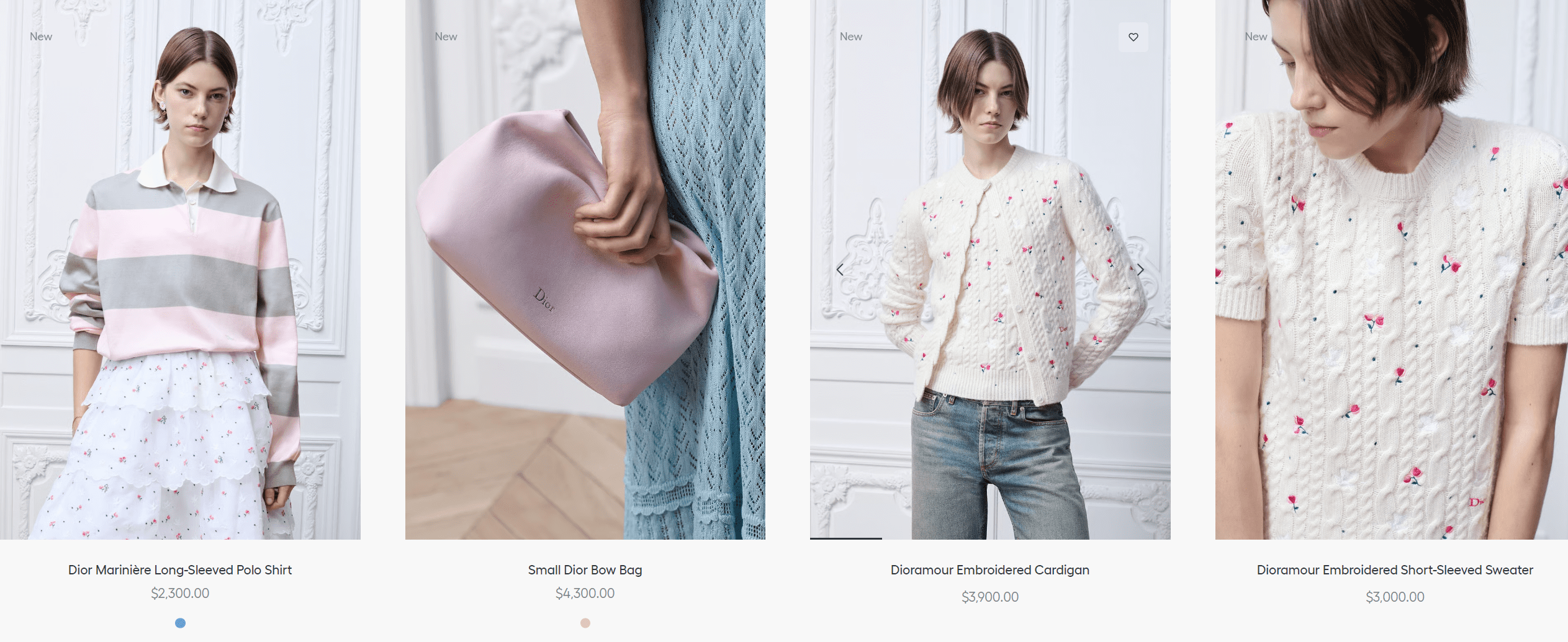
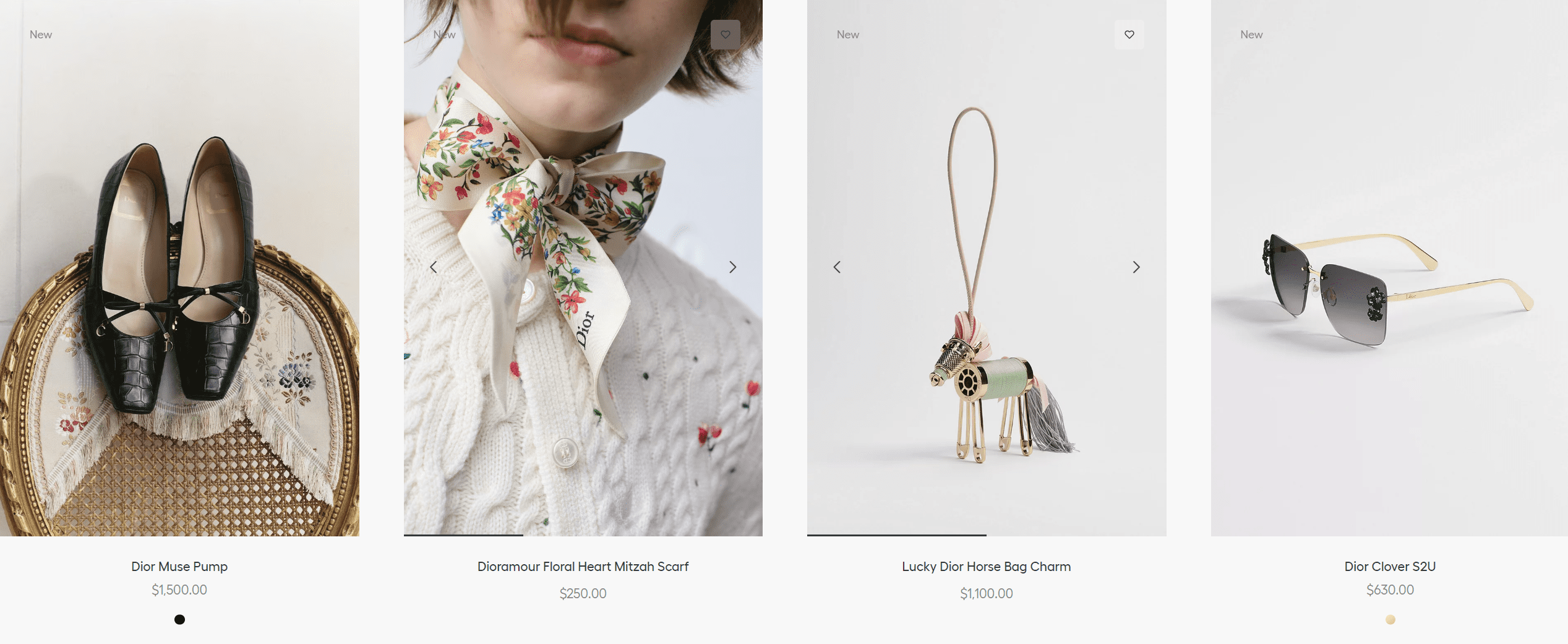
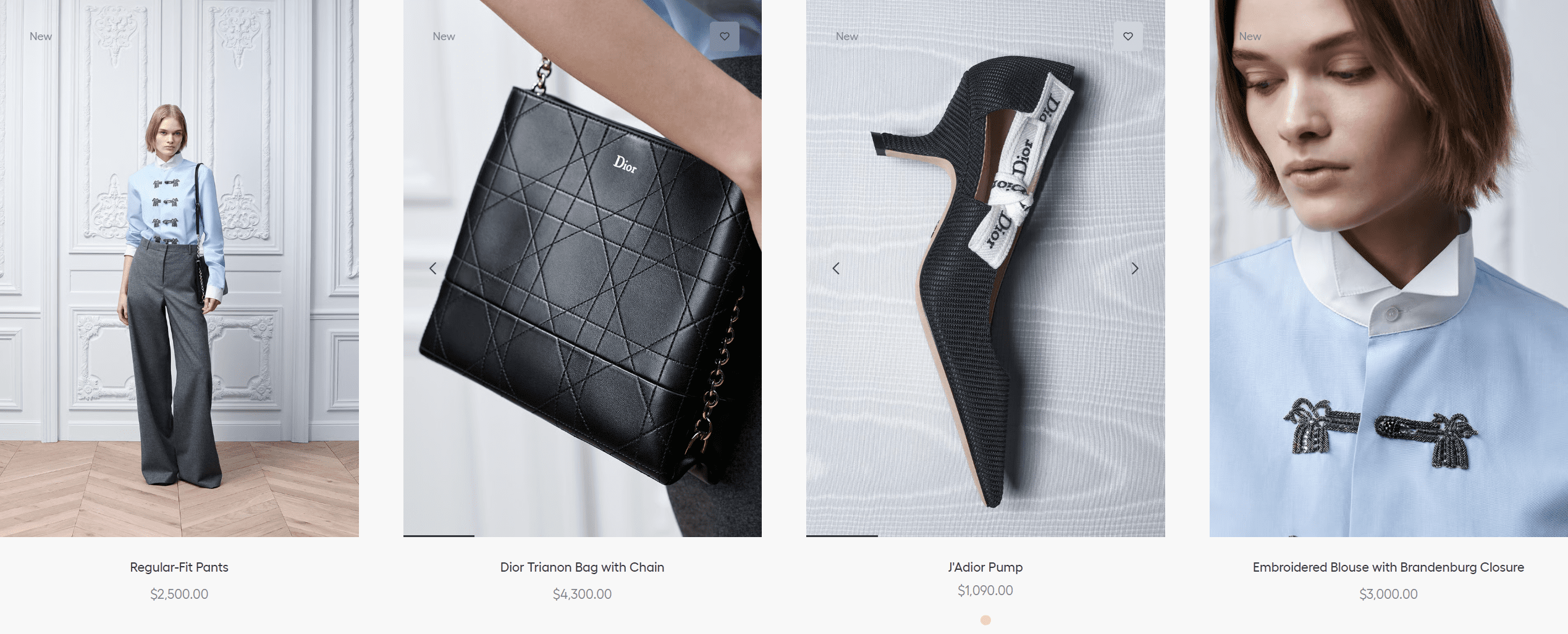
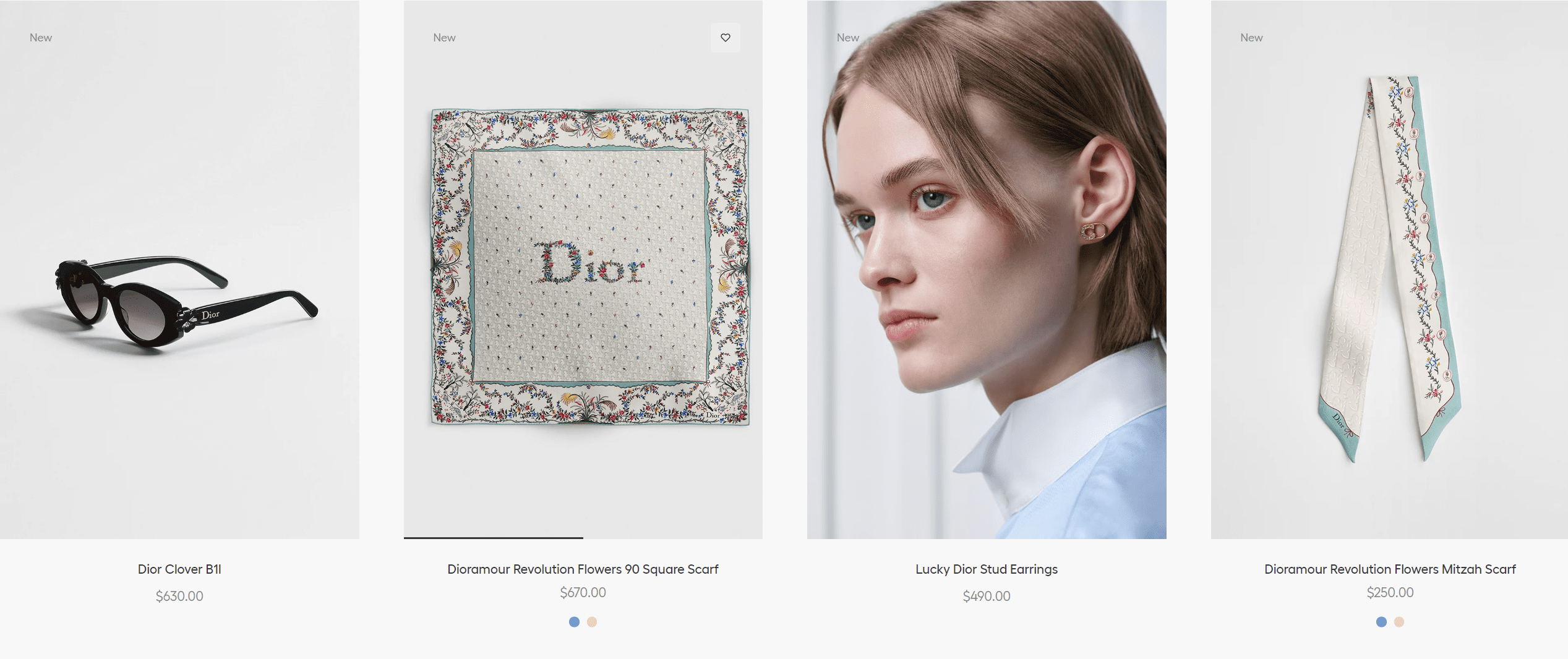
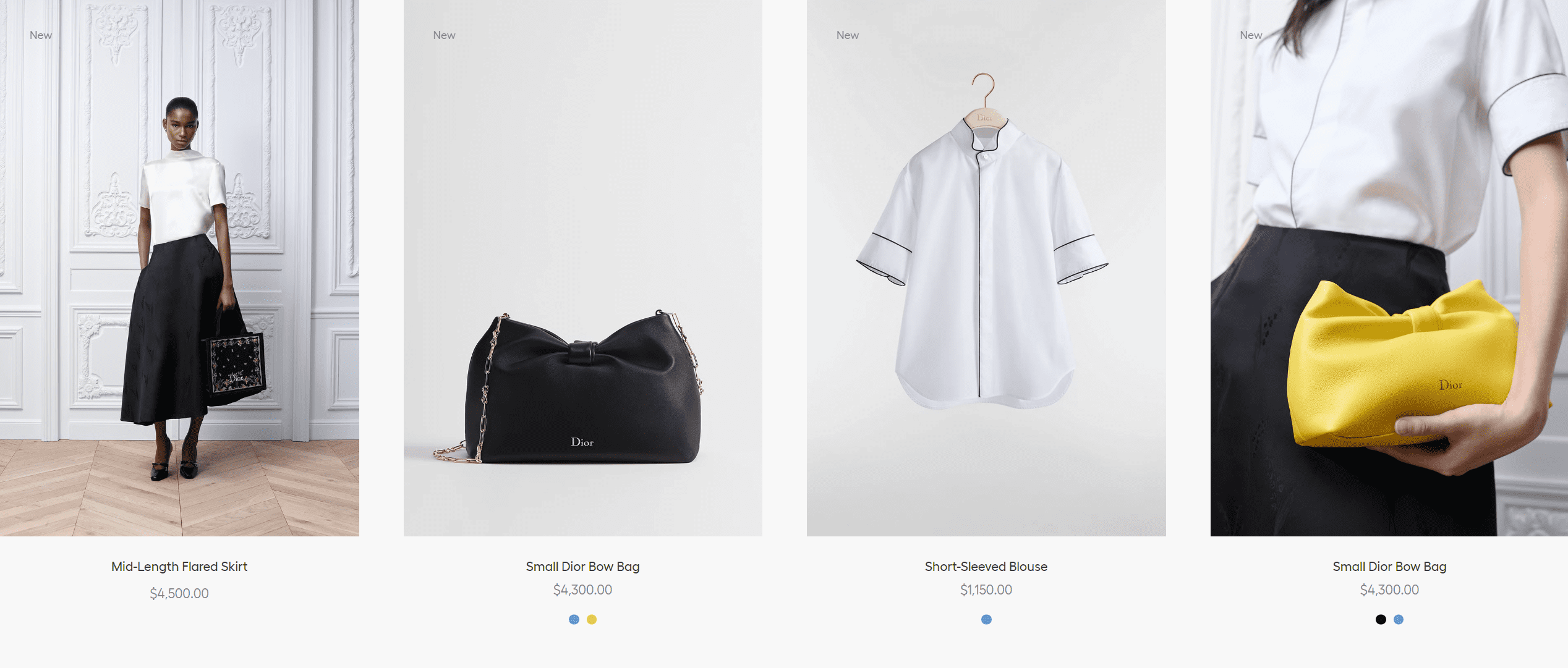
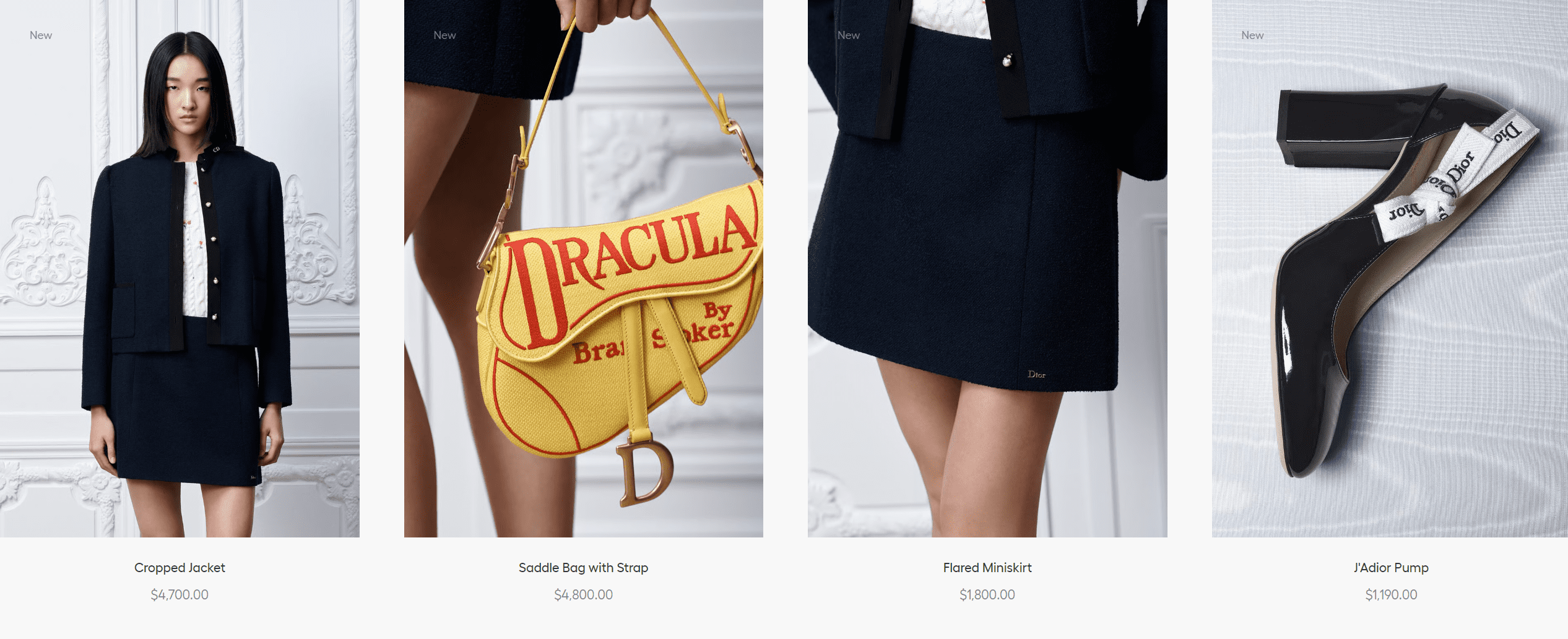
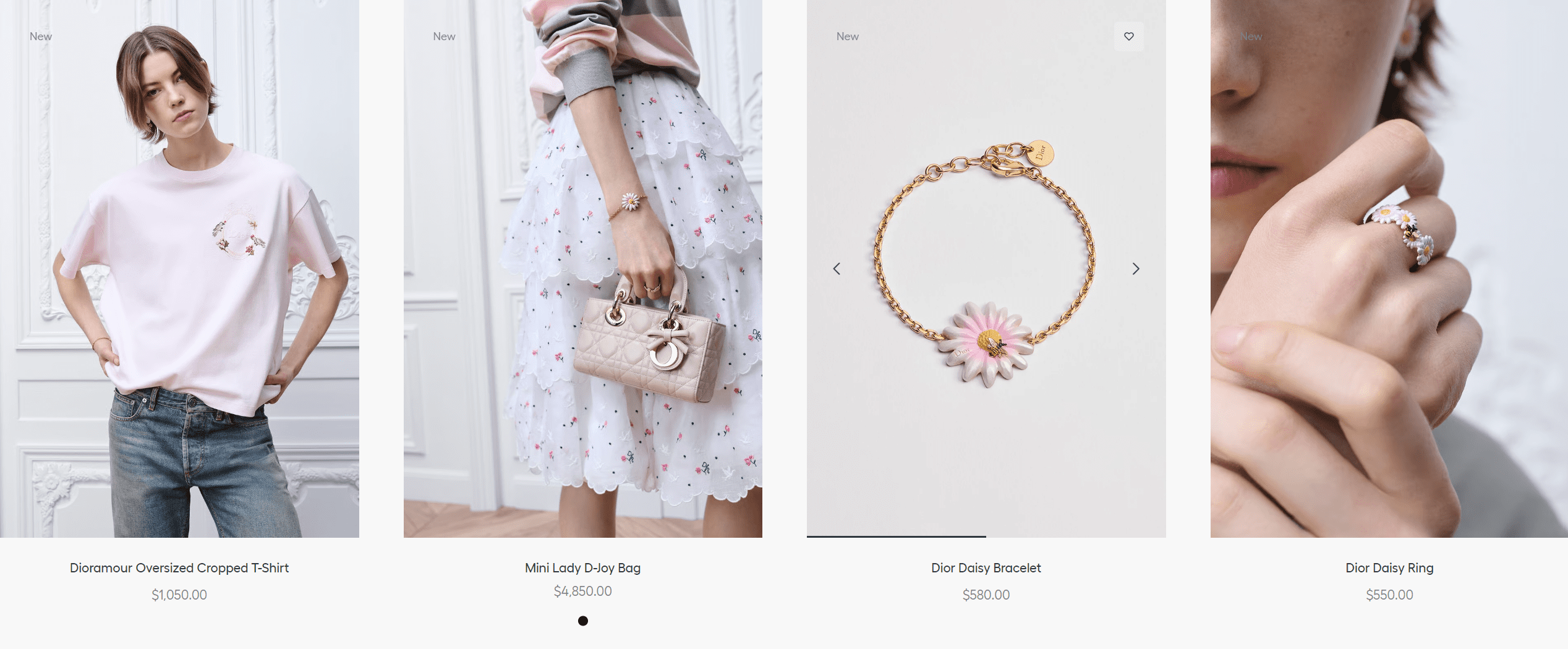
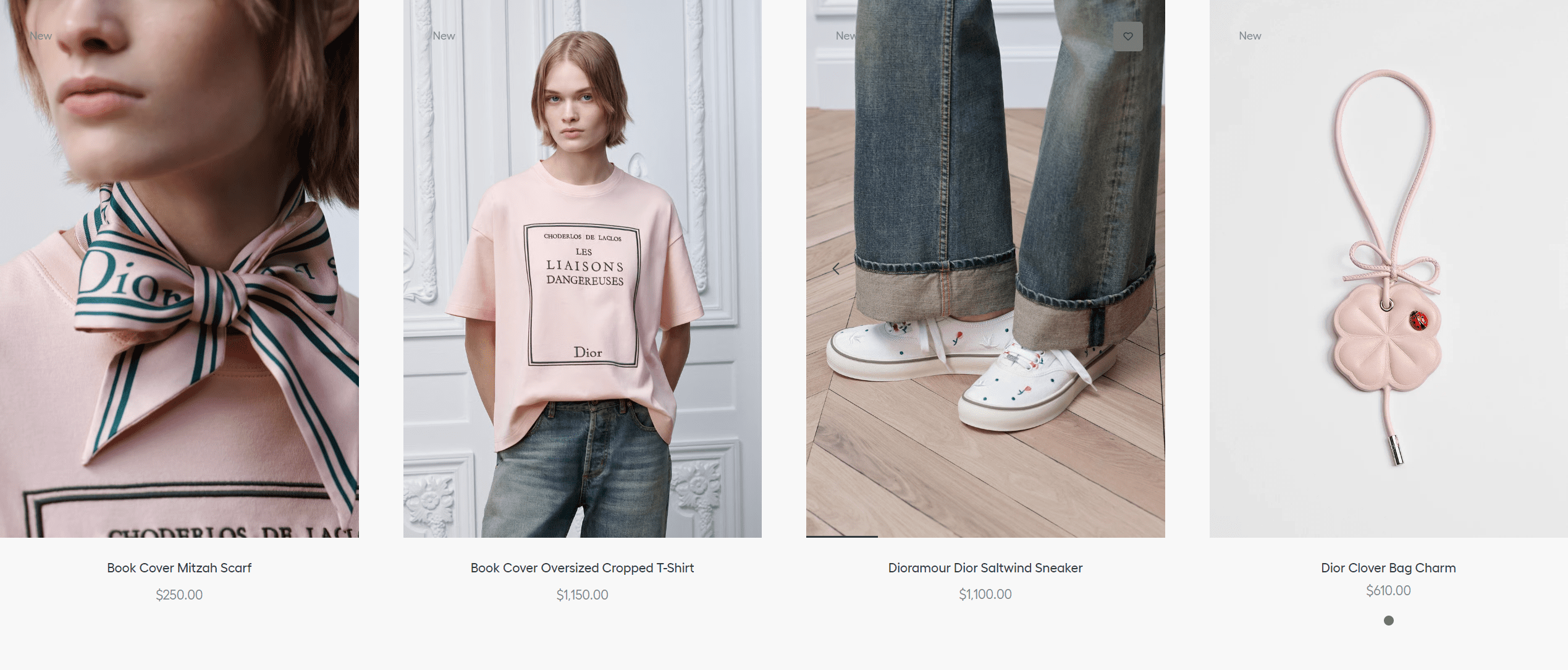
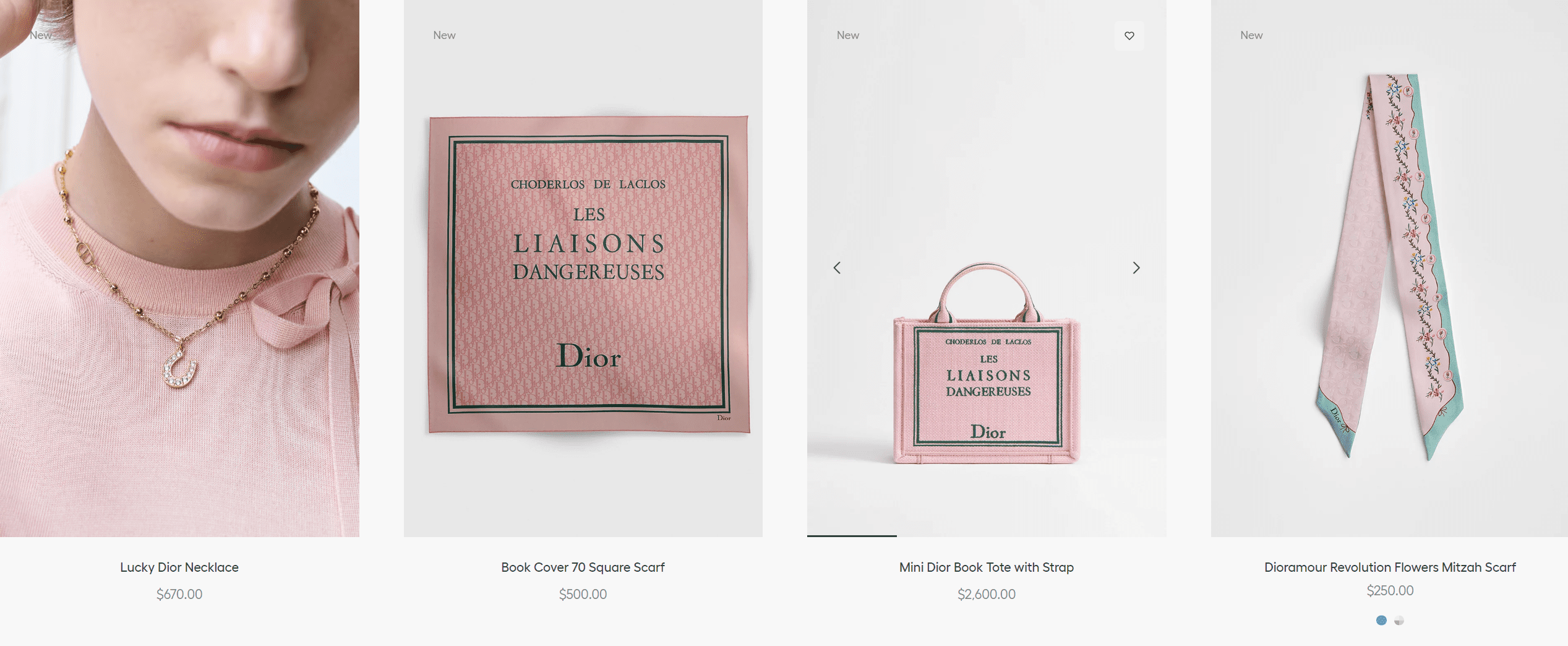
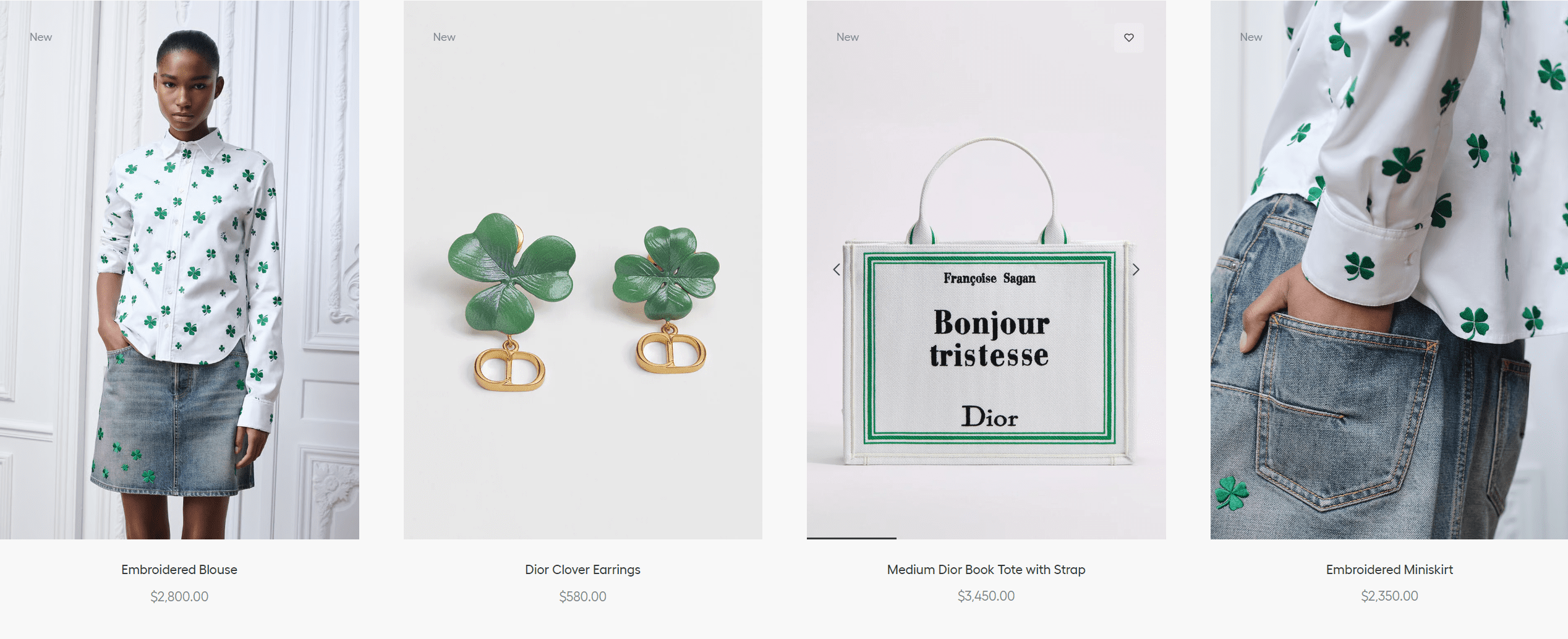
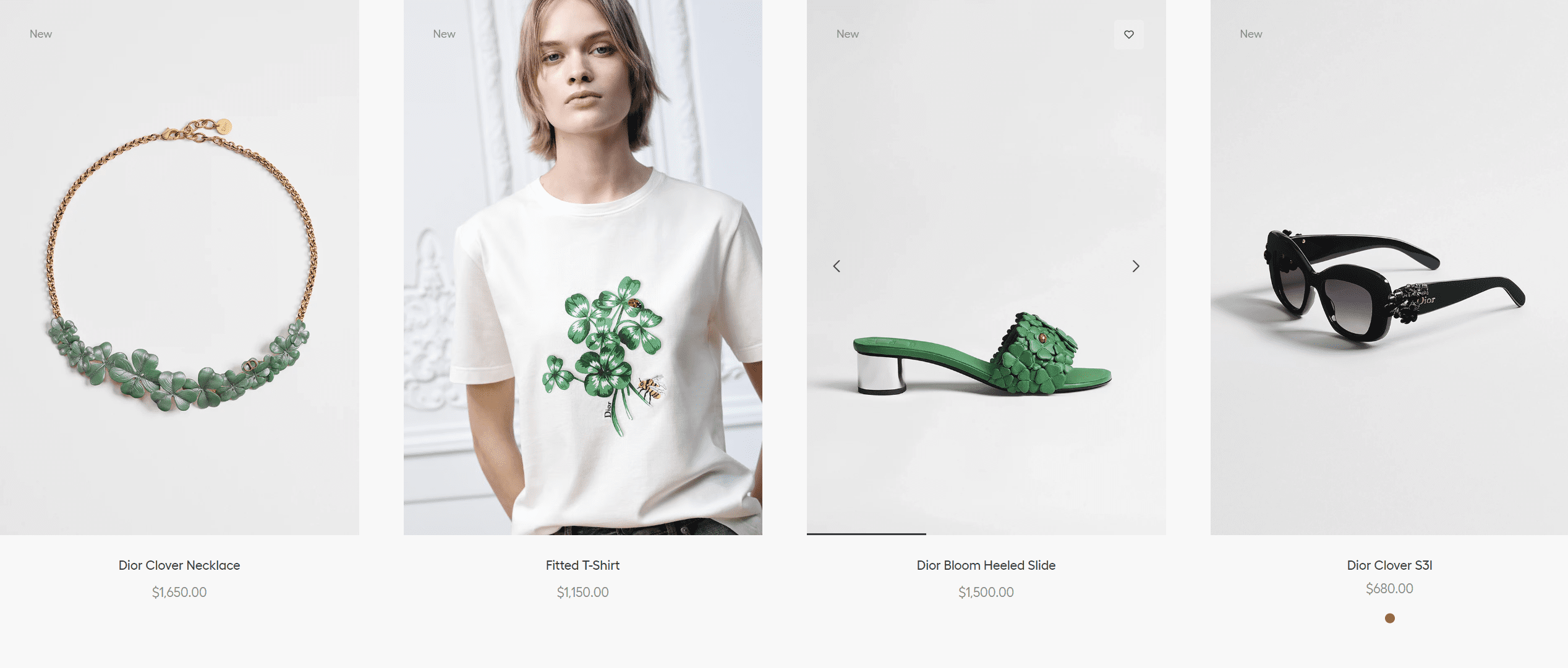
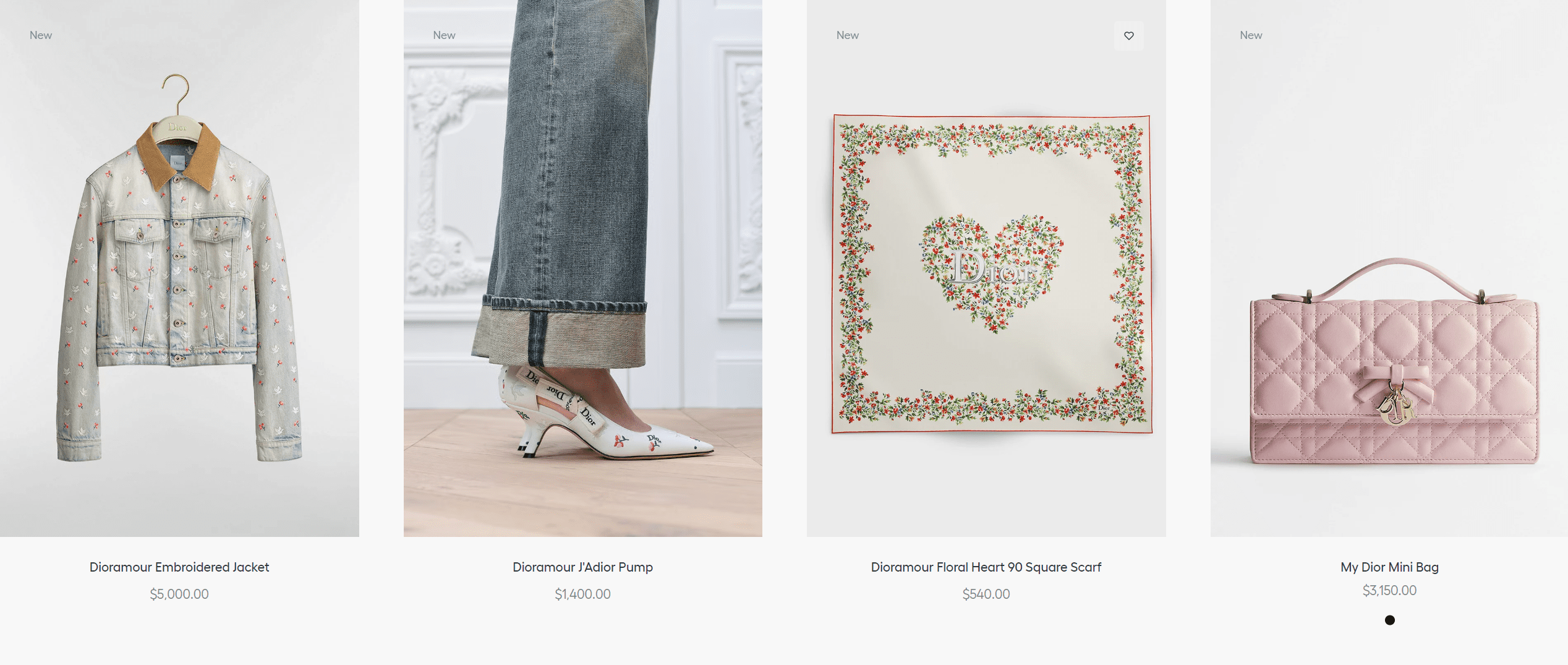
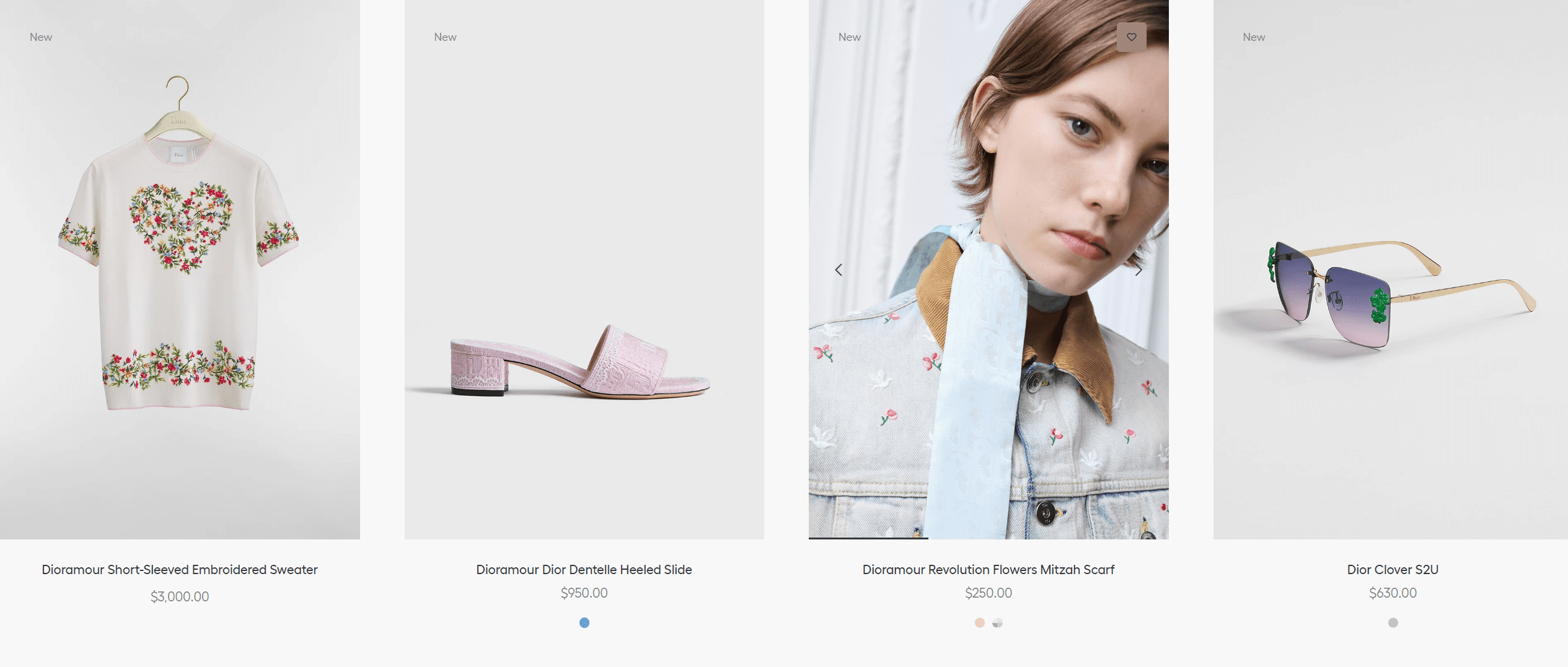
Here’s a full drop of Dior Spring Summer 2026 by Jonathan Anderson
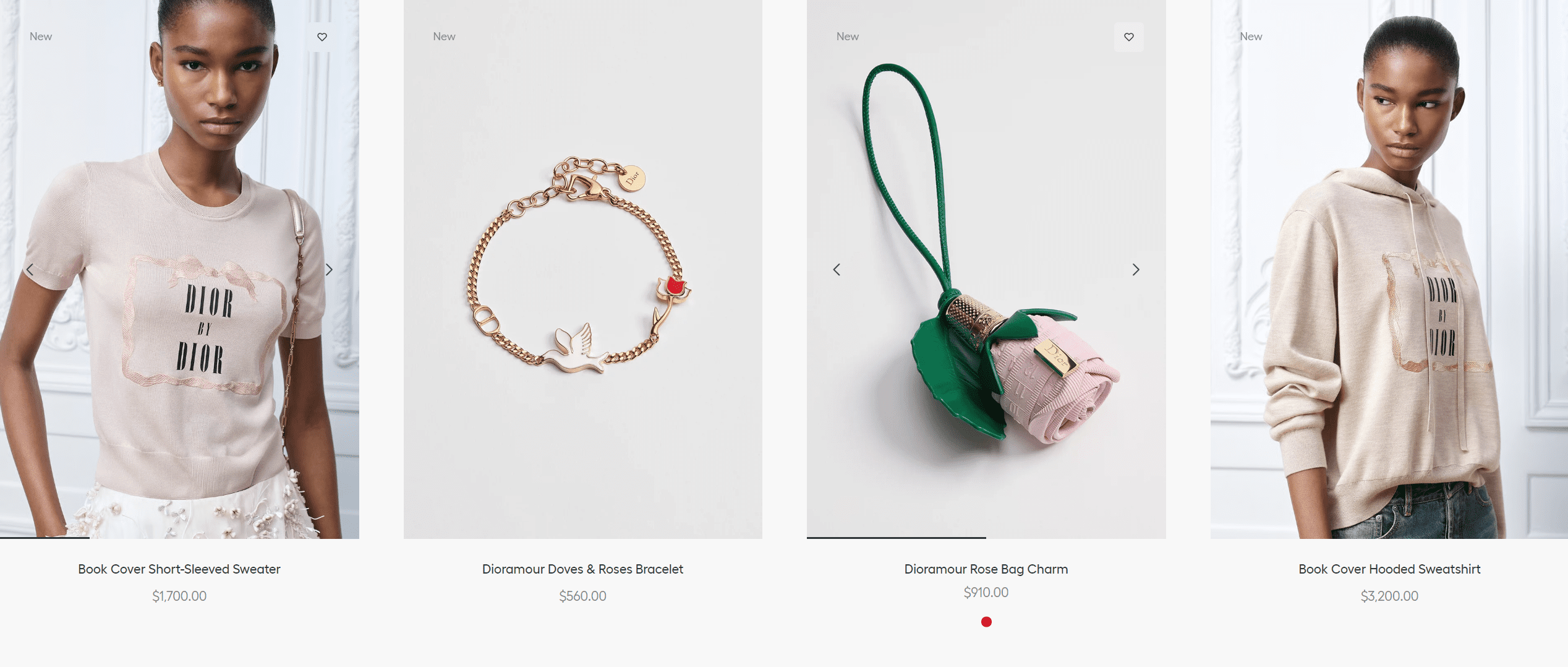
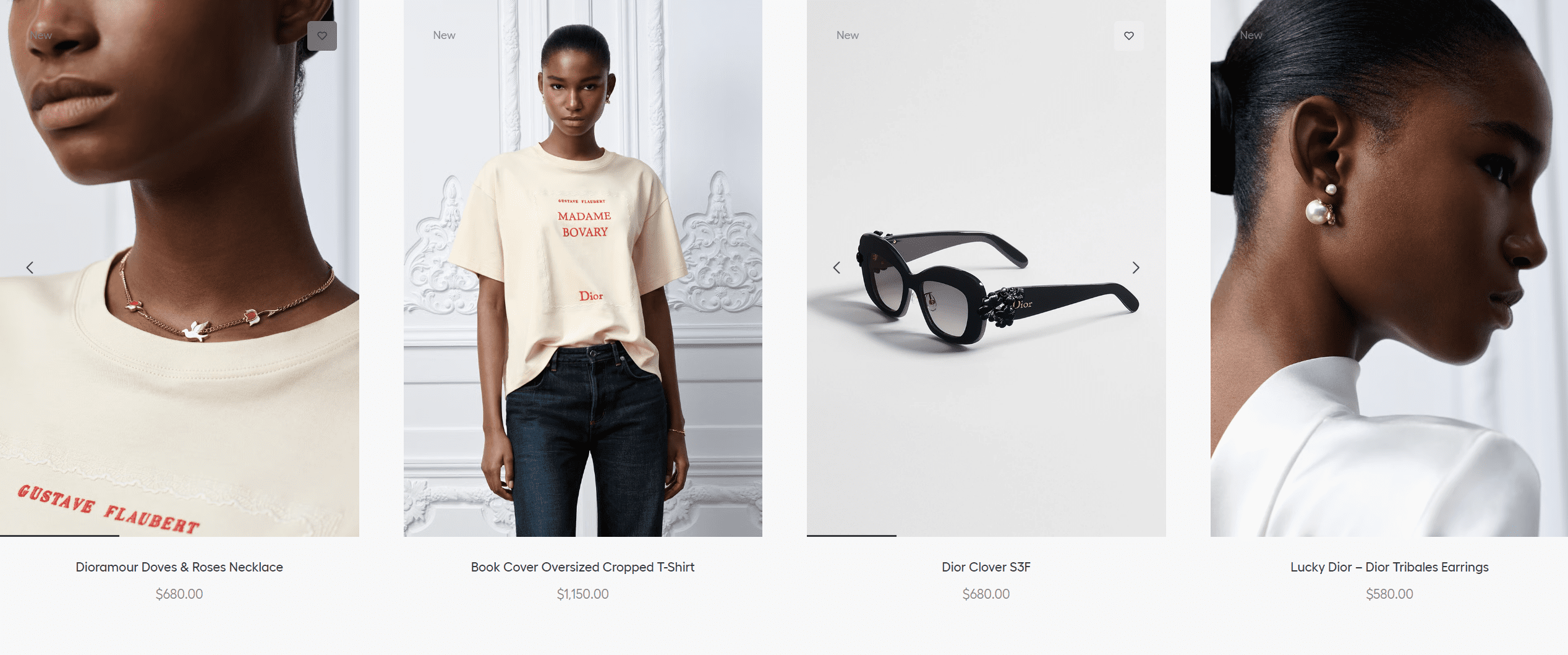
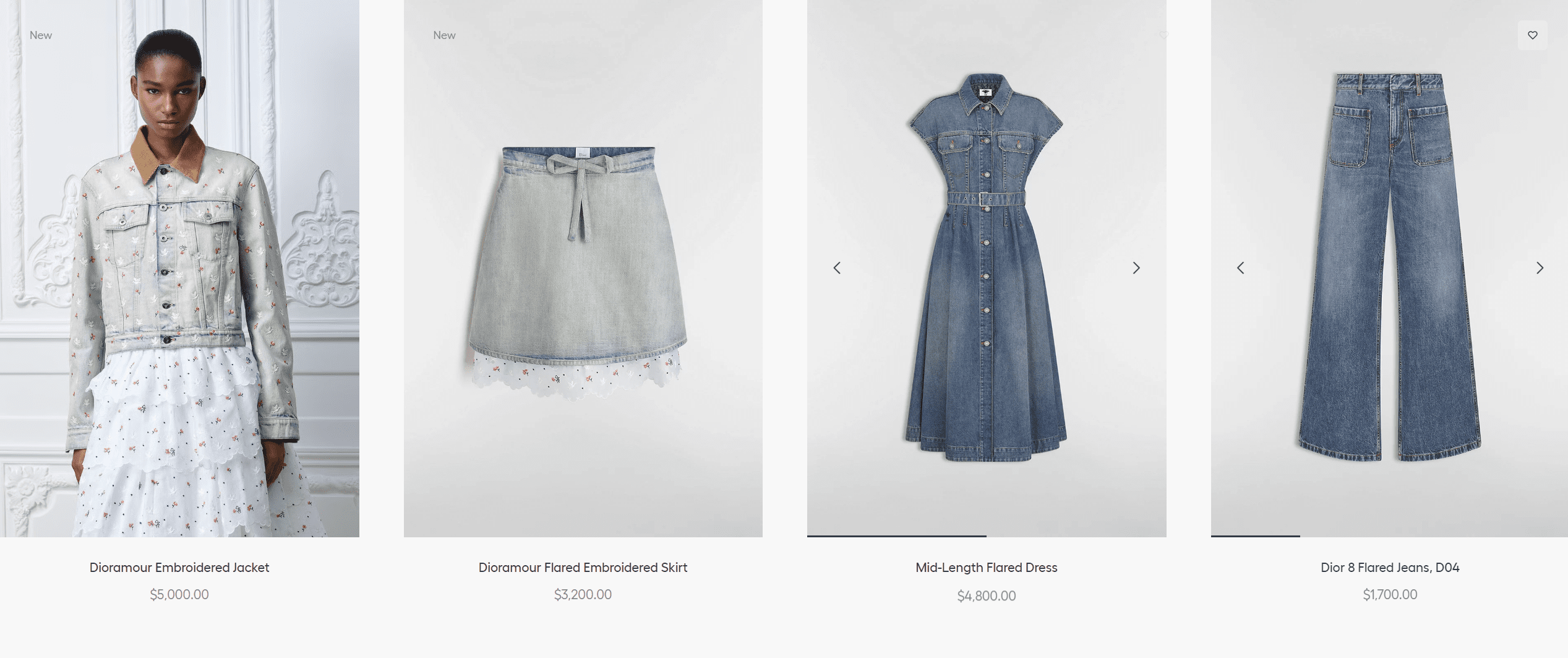
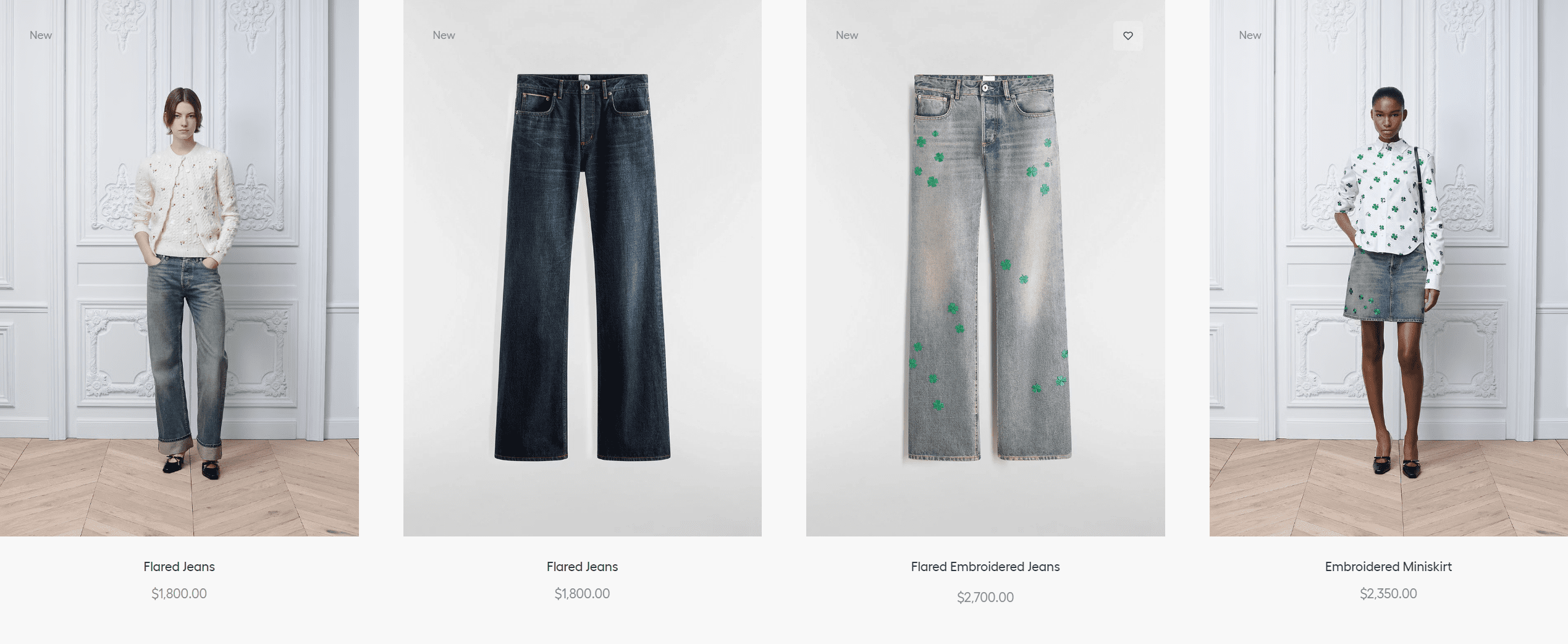

Givenchy: The Glorious Fall of the Pantaloons
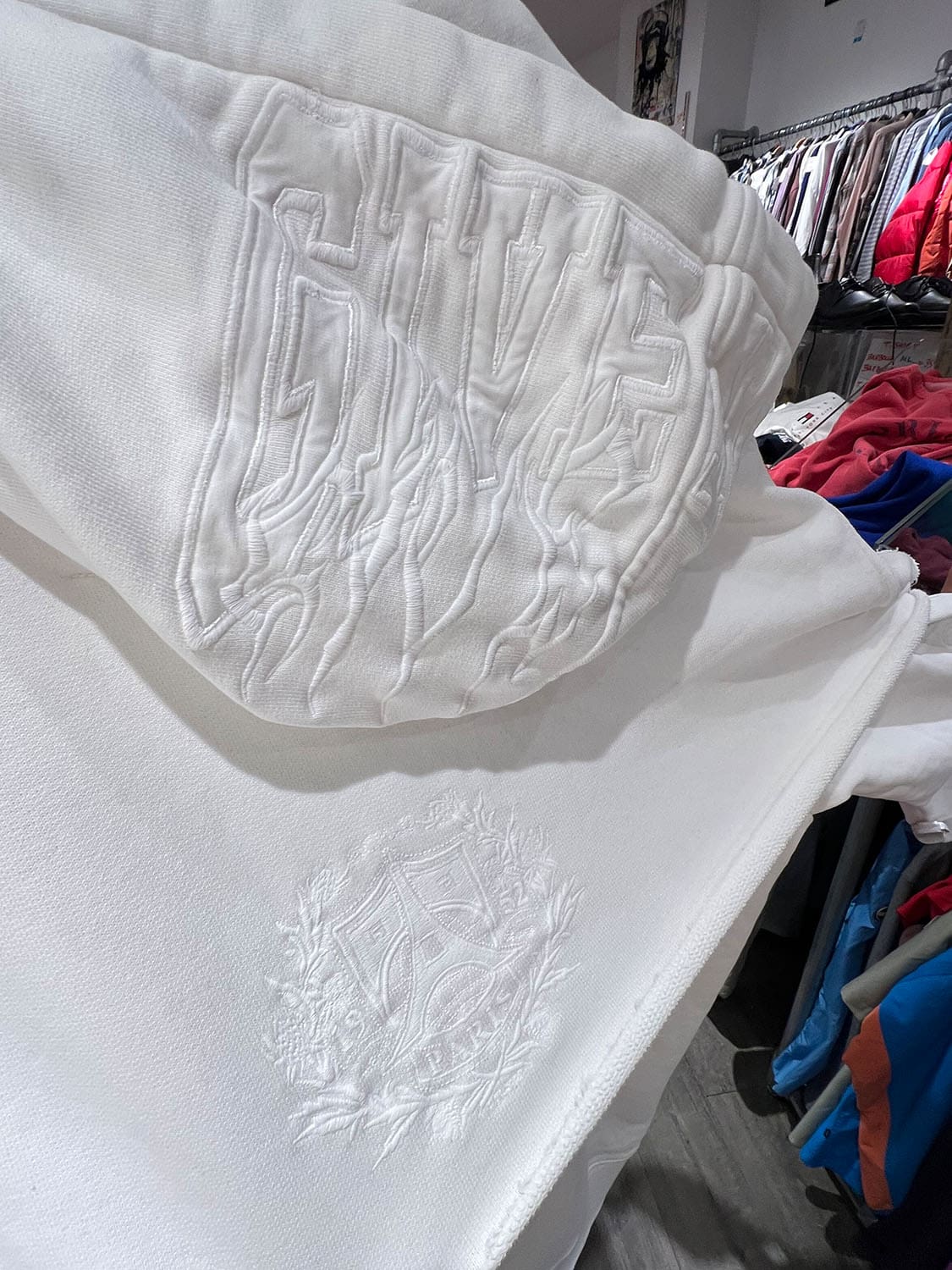
To understand the implosion of Givenchy, one must first understand what it became under its misguided creative direction: a logo mill. Once known for sculptural elegance, architectural tailoring, and the silent power of refined restraint, the house veered off into a self-imposed exile of graphic tees, chainmail hoodies, and graffiti-tagged joggers — each piece more desperate than the last to court a demographic that already had five better options at half the price.
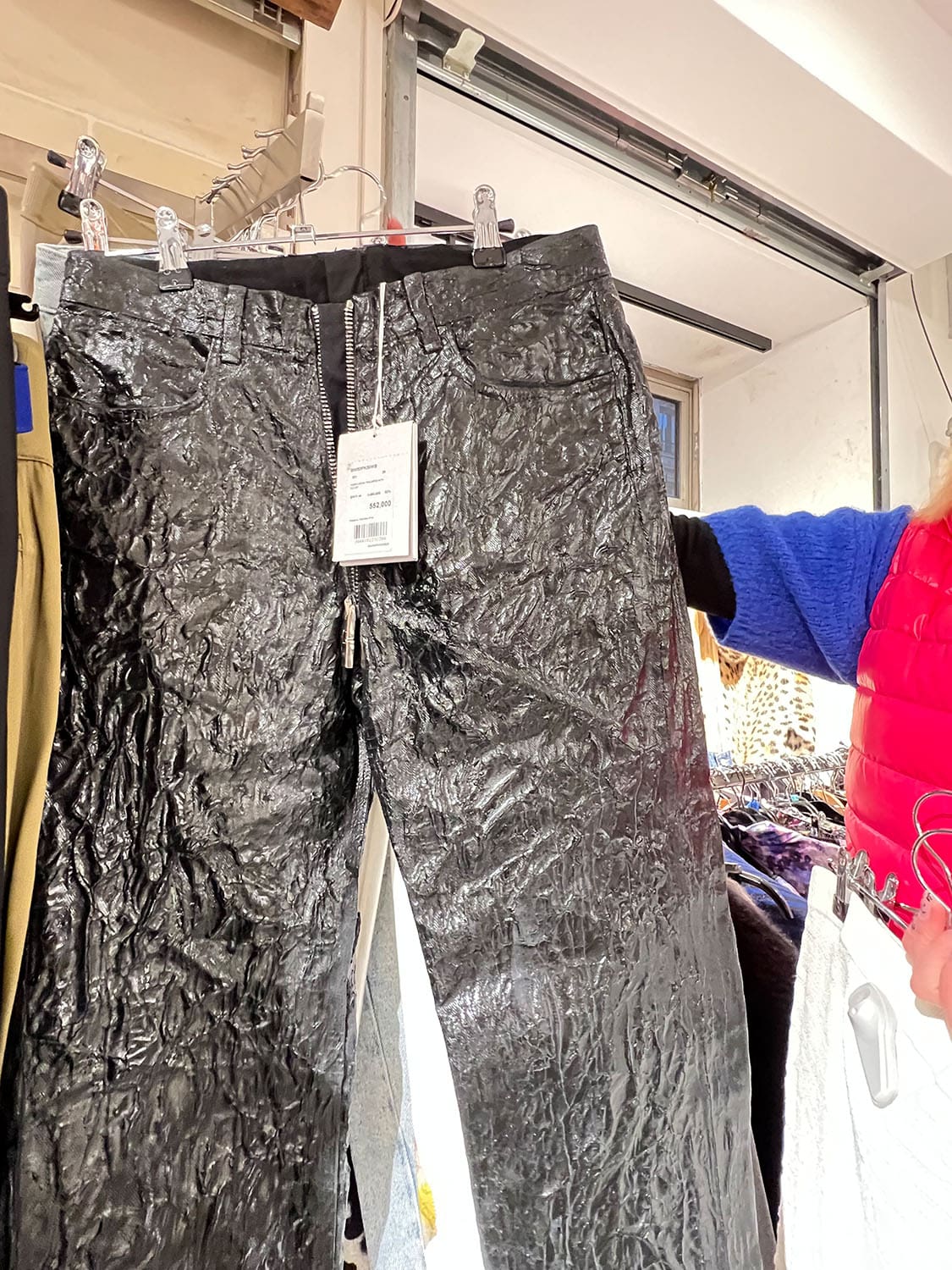
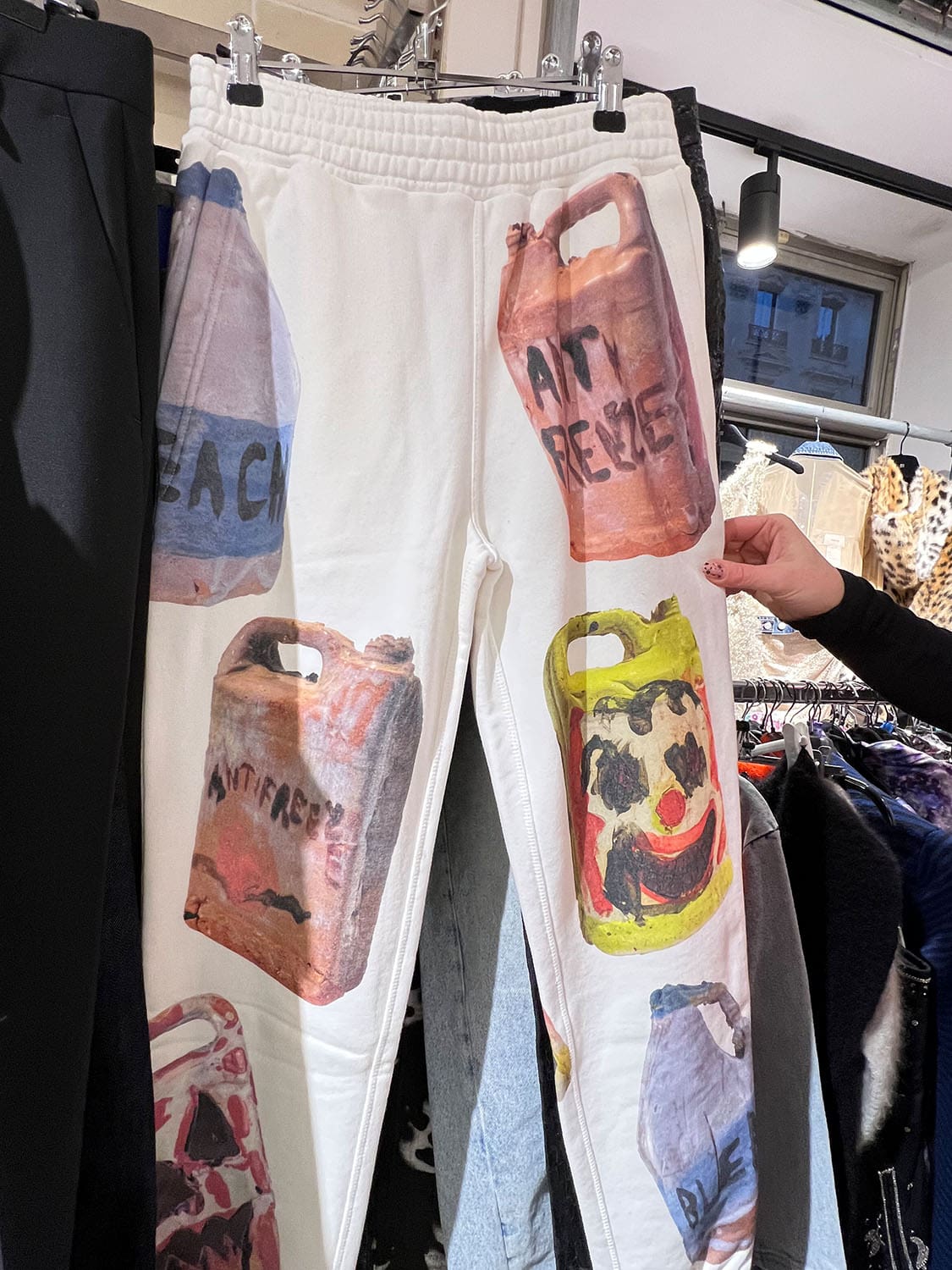
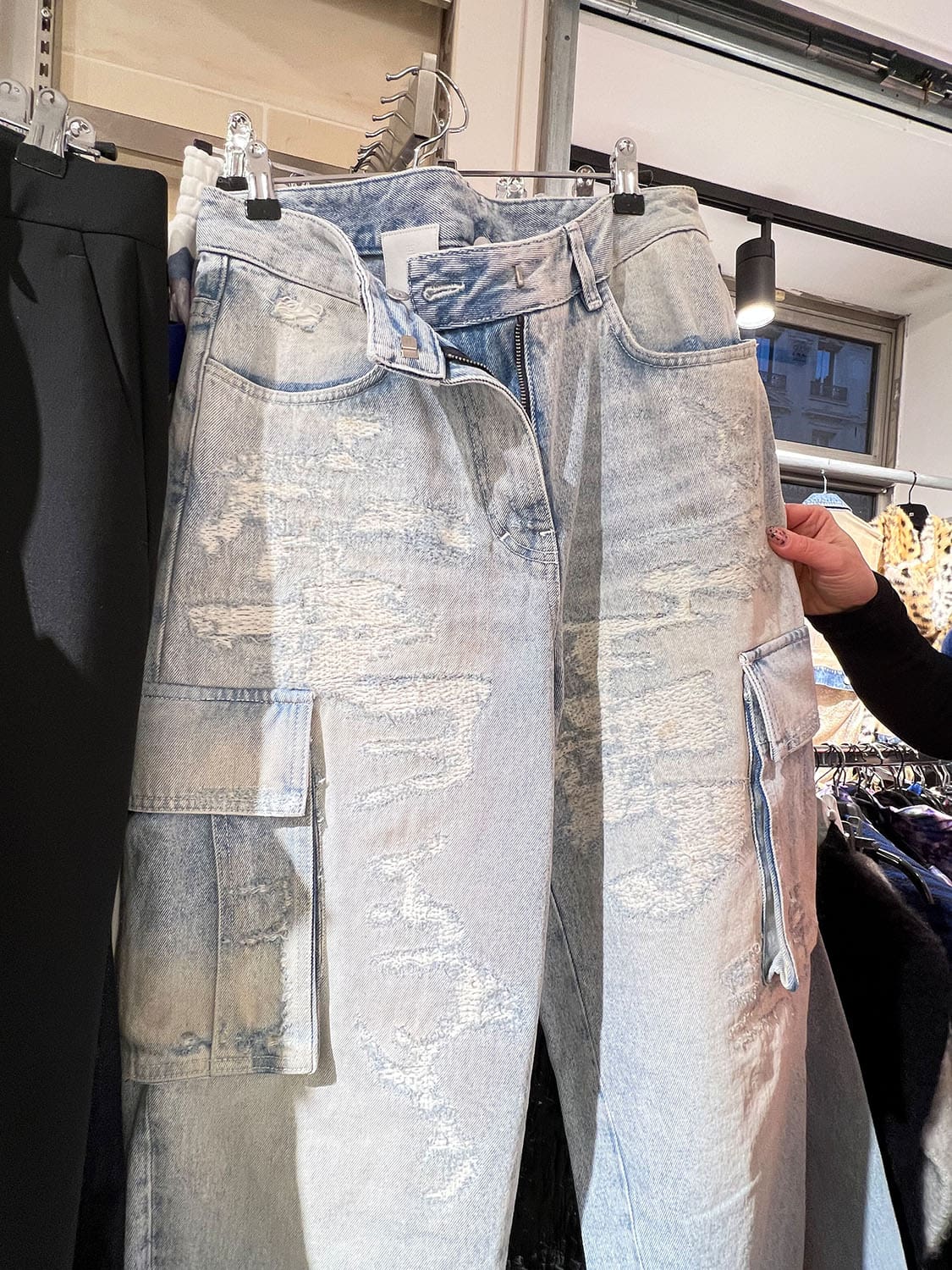
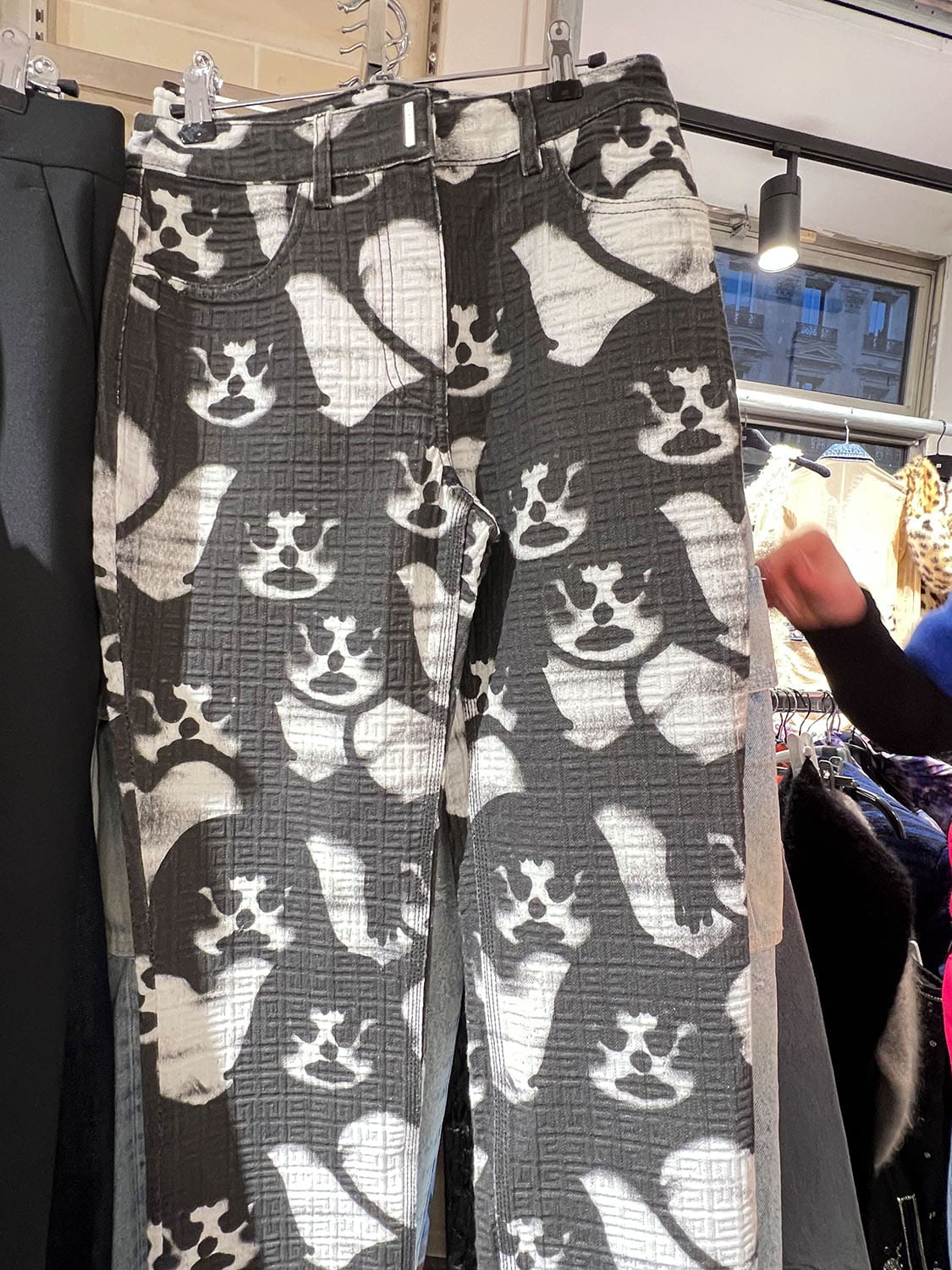
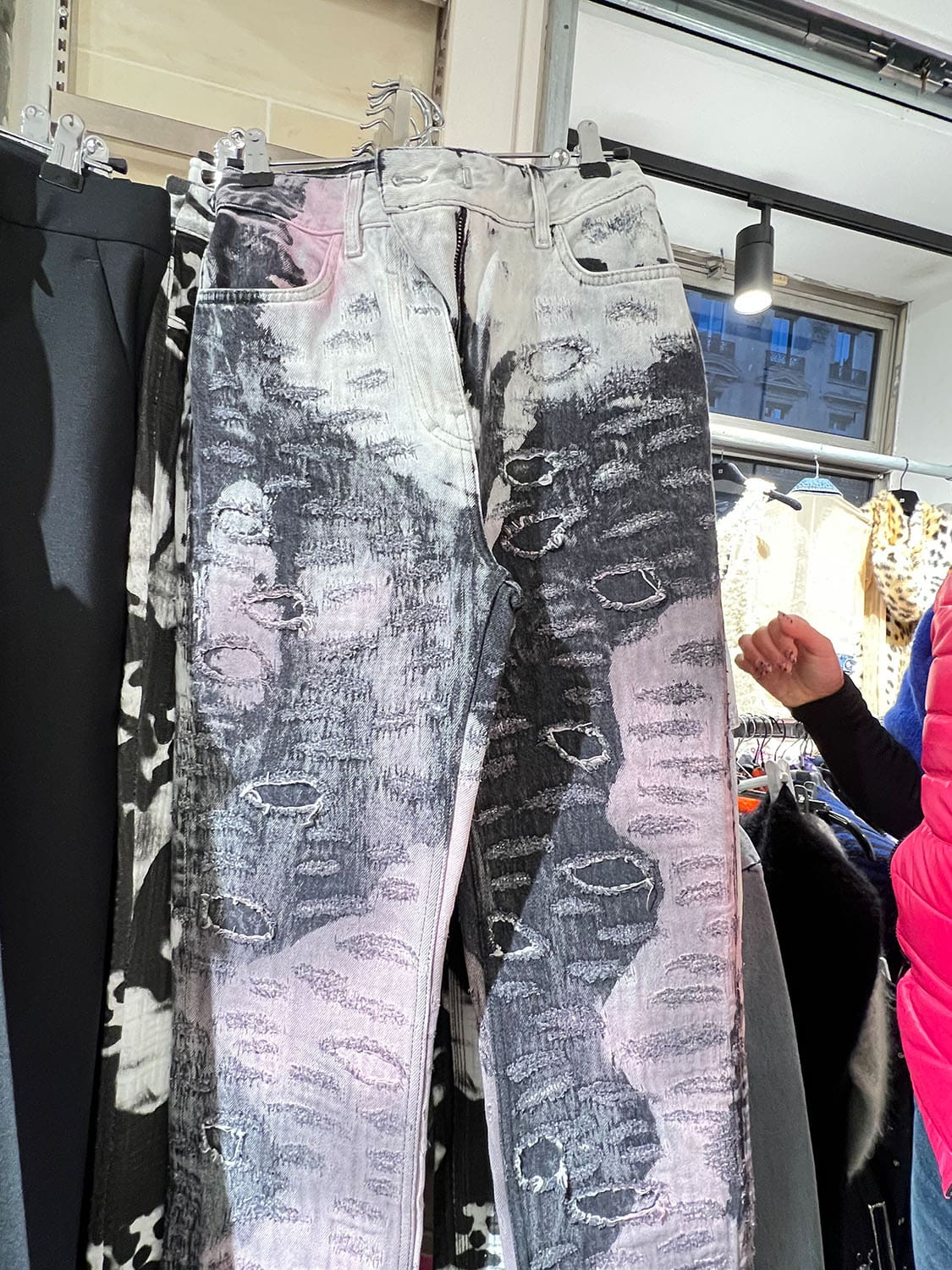
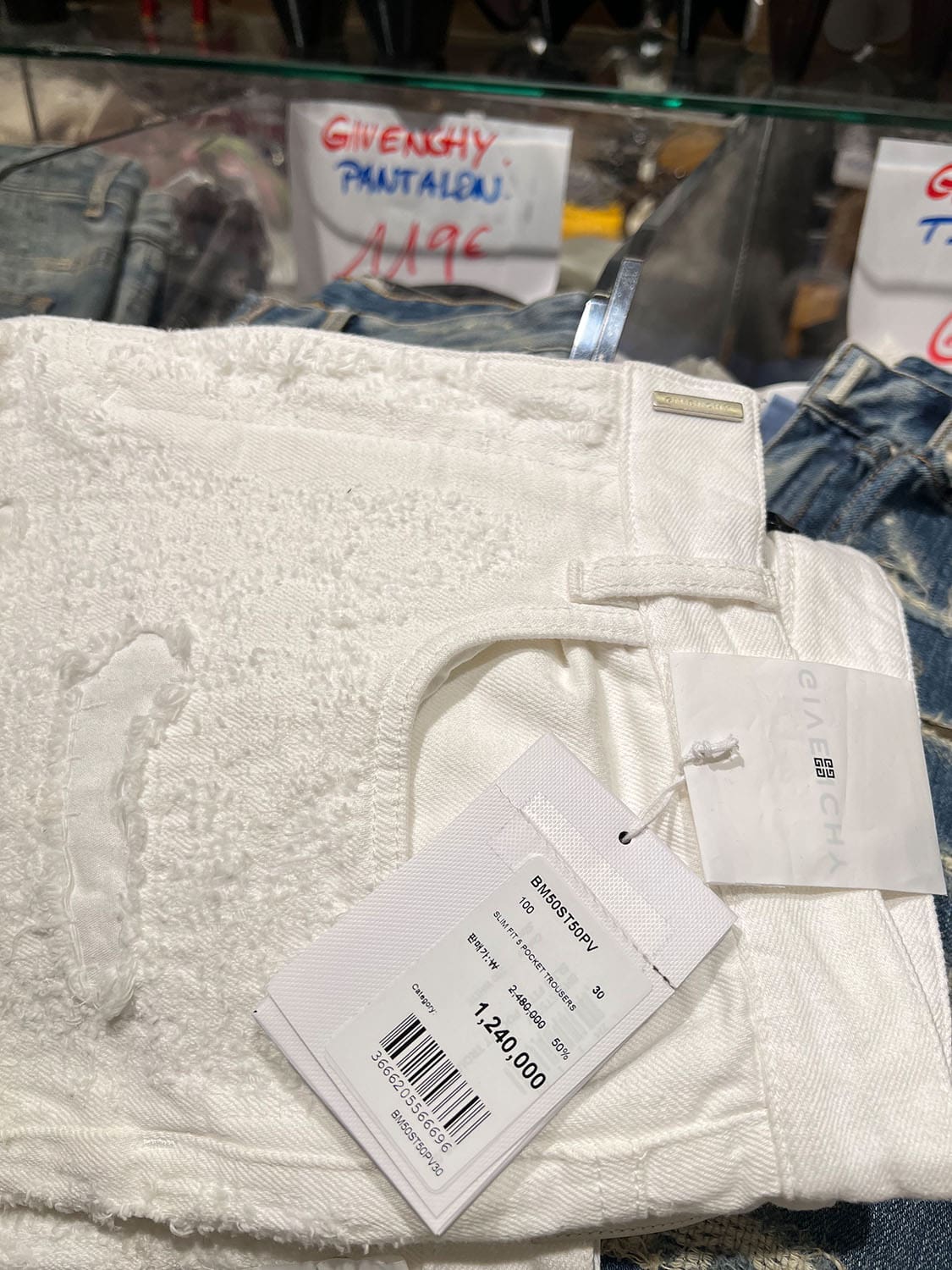
Two years ago, Givenchy stood proudly atop a mountain of conceptual nonsense — releasing drops that felt less like fashion and more like a dare. Toxic waste aesthetics, absurd streetwear hybrids, grotesque graphic sweatshirts, and “collaborations” no one asked for (see: Givenchy x Chito). At the time, these were priced like collector’s items — €1240 jeans, €1500 sweatshirts, €650 t-shirts — and presented with the full pomp of Paris Fashion Week (remember Fall-Winter 2022-2023? Exactly).
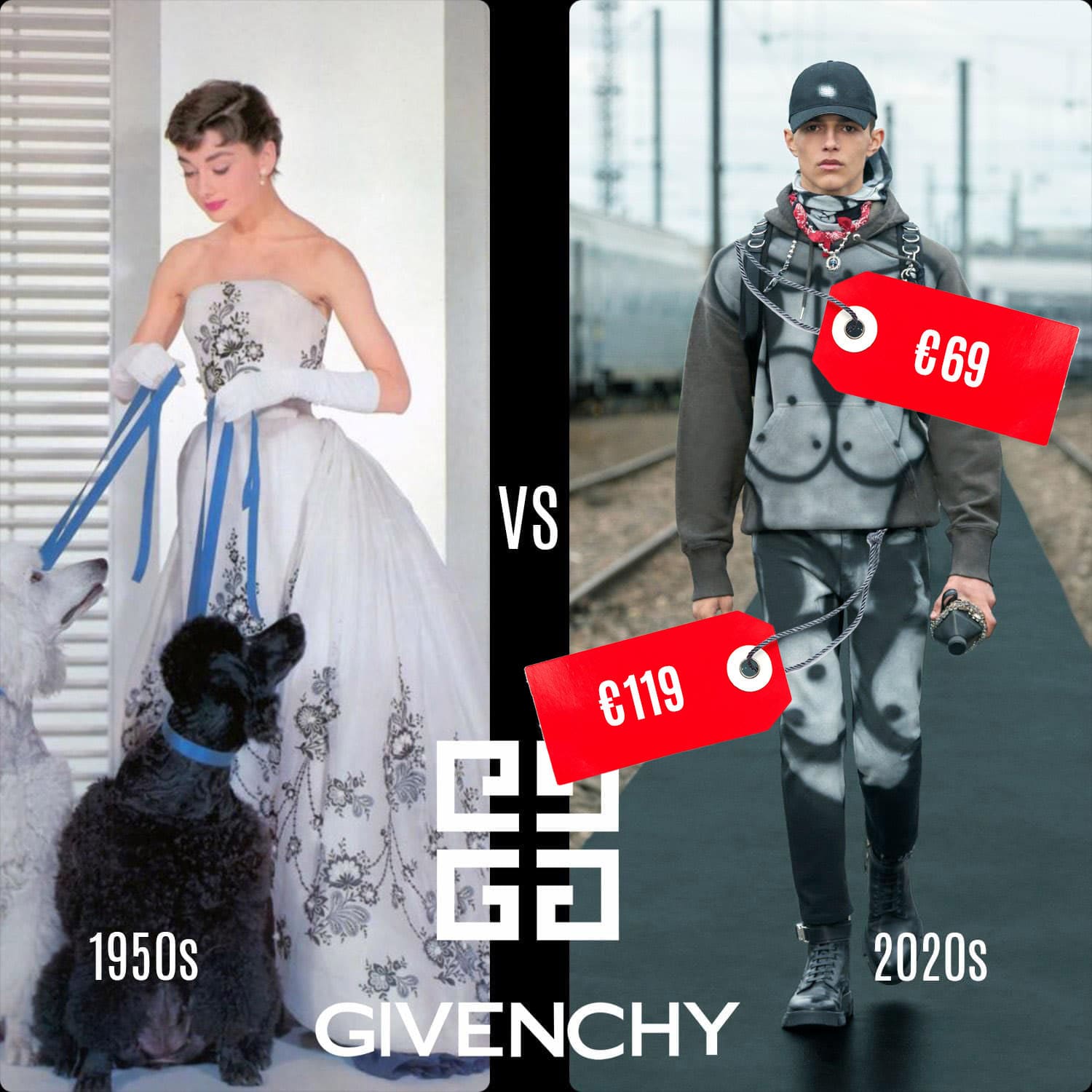
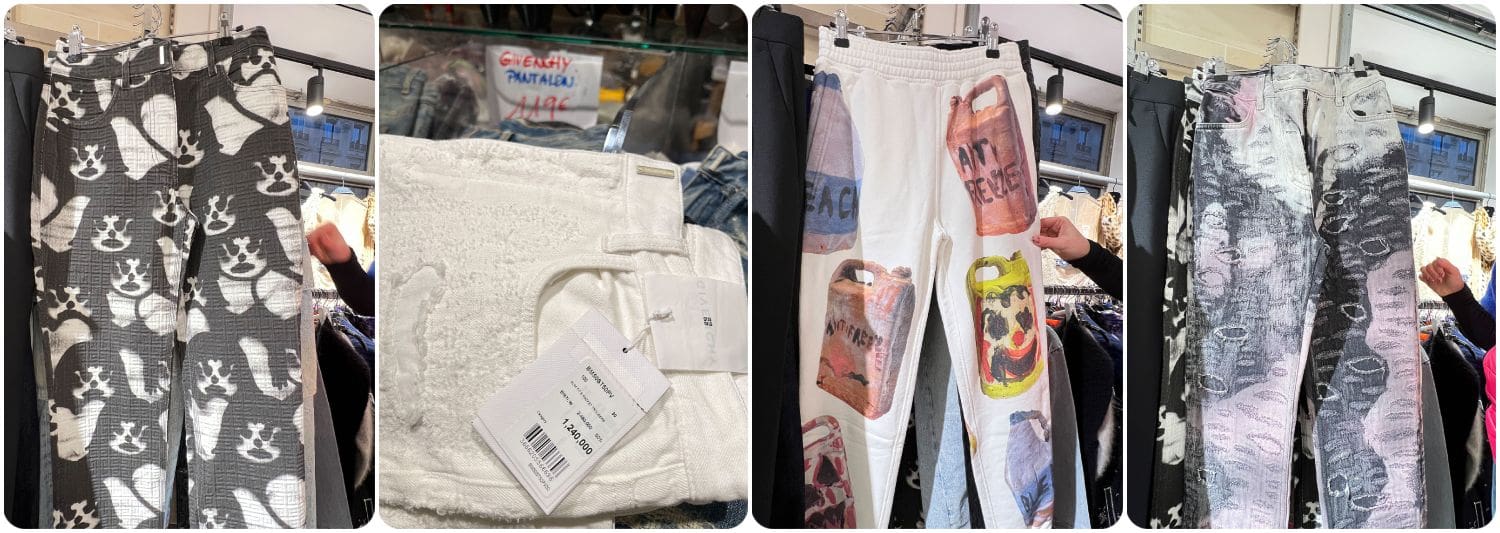
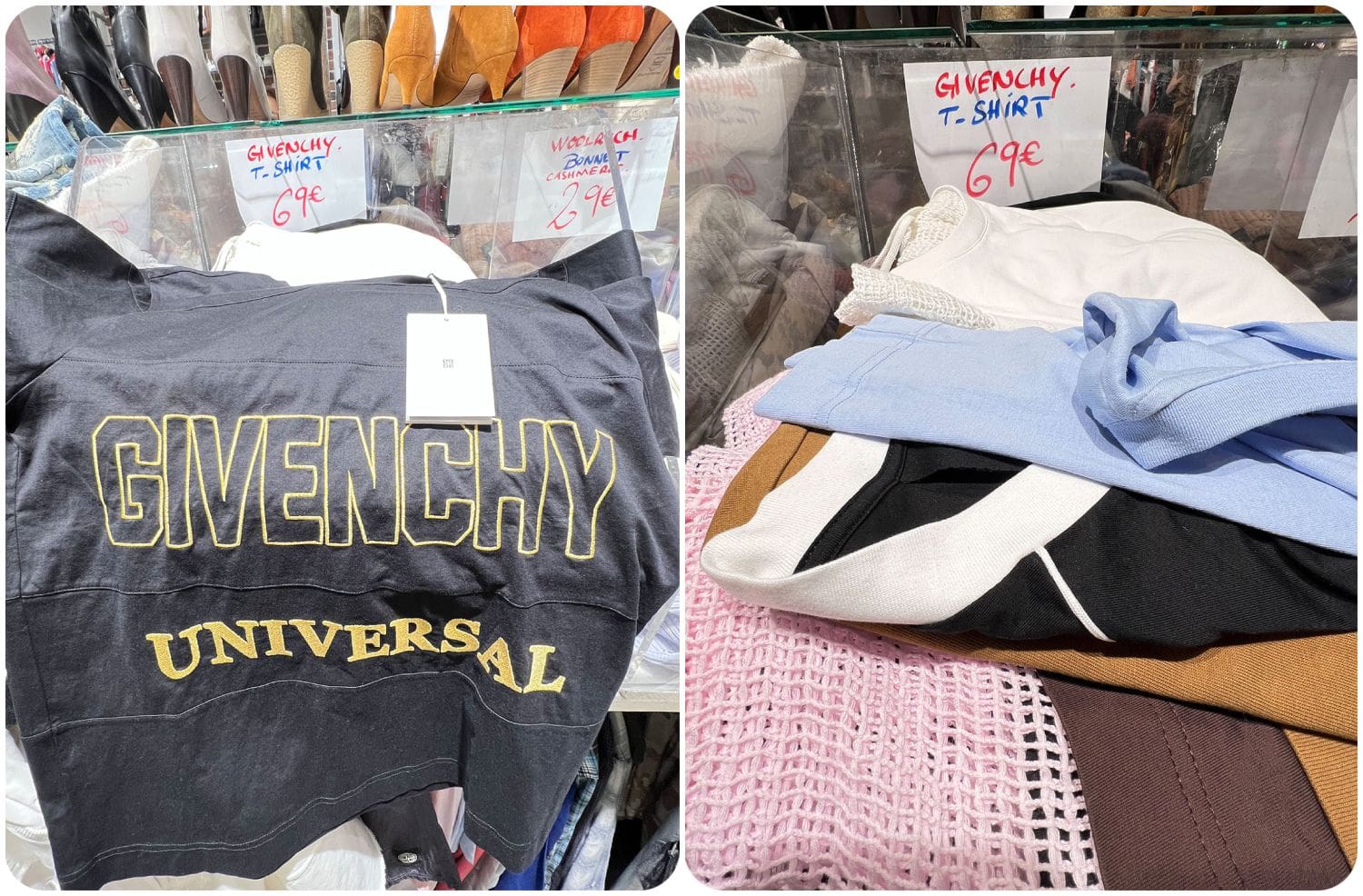
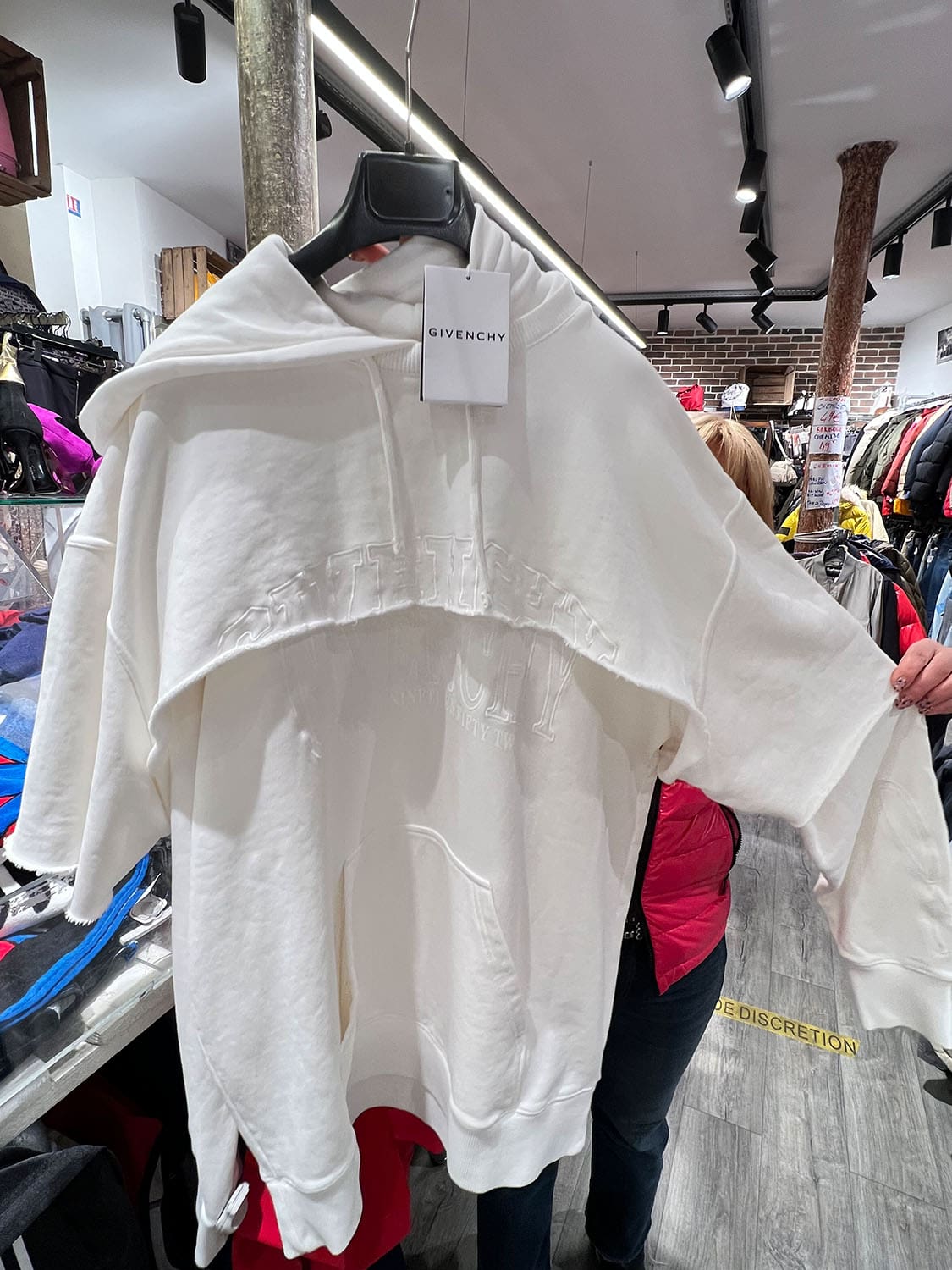
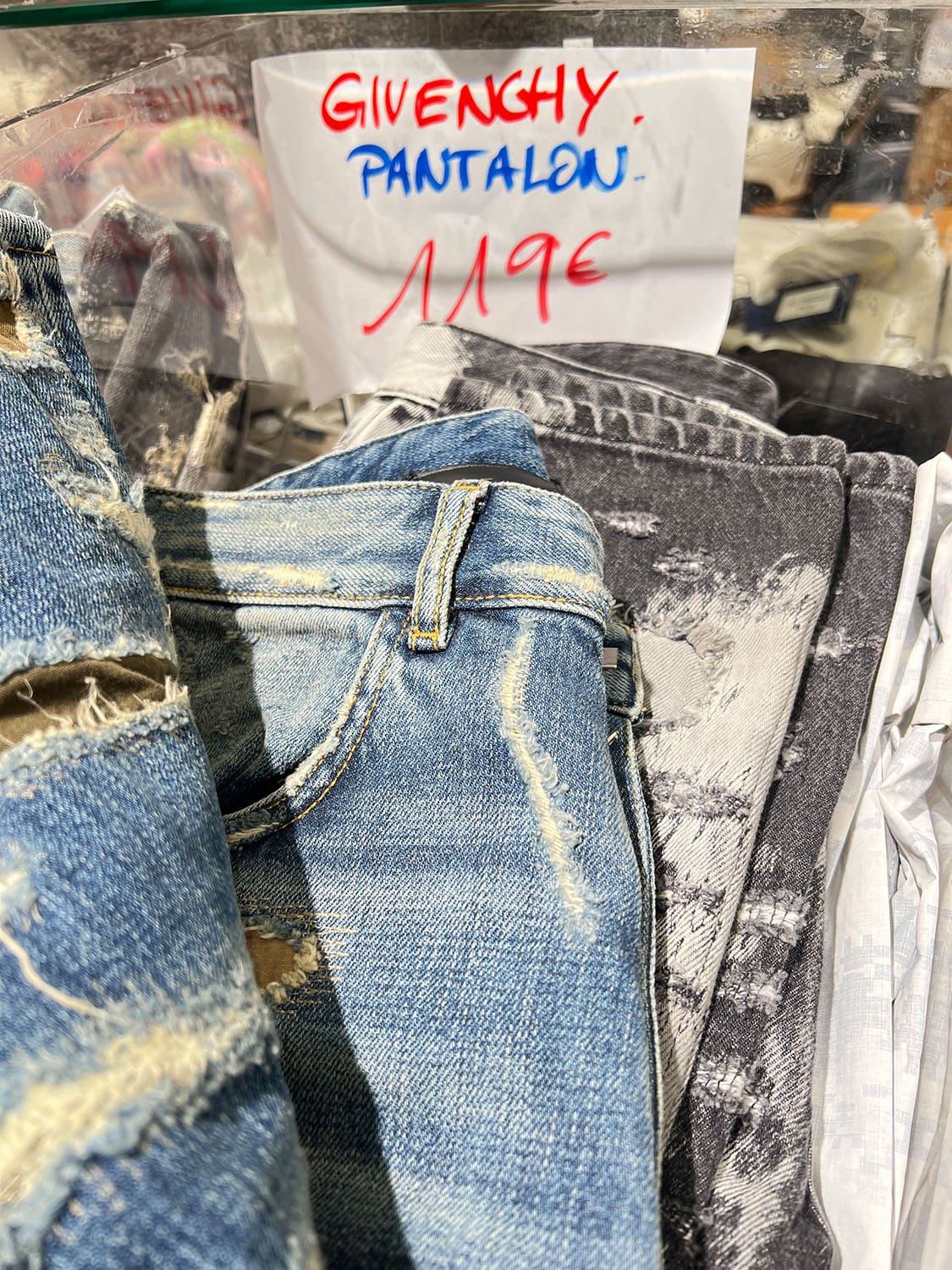
Fast forward to today. Visit any outlet in Paris, and you’ll find them — the same jeans, same ugly sweats, same “luxury” tees — stacked in depressing, dusty piles. The price tags? Slashed to €119. Still untouched. Still unwanted. The “pantaloons,” as they called — remain there, week after week, hoping someone, anyone, might be desperate enough to mistake them for fashion.
No one is!
This is not hindsight, this is prophecy fulfilled. I wrote about this back in 2022 — questioned the creative choices, called out the chaos masquerading as innovation. No one listened.
Well… TOLD YOU SO!
Givenchy Restock from 2022-2023 Fall and Summer collections
Epilogue: Memory Loss, Fire Damage, and the Death of Meaning
At this point, anyone can walk into H&M or Zara, grab a €39 knit or jean, and say “It’s Dior.”
And no one — literally no one — will know the difference.
Not because fast fashion is mimicking luxury…
But because luxury has flattened itself so thoroughly, it’s become indistinguishable from the mass market it once looked down upon.
This is the point when fashion houses lose their memory.
When archives become decorative backdrops, not foundations. When legacy is referenced, not respected. When heritage is strip-mined for surface aesthetics, and the result — wrapped in press releases about “spontaneity” and “joy” — is a cardigan that looks like a school project and jeans borrowed from a 90s garage band.
Dior’s Spring-Summer 2026 “first chapter,” now in stores, is not a collection. It’s a symptom. A carefully staged drop of overpriced mediocrity, pushed to market before the second half even exists. No narrative. No silhouette. No soul. Just fragments of borrowed from British mass-market cardigans and sweats stapled together and sold at full markup.
But here’s the cruel twist: these pieces won’t even get the chance to fail publicly. Unlike Givenchy’s shame — still hanging in outlets at €119, quietly decomposing — Dior’s dead stock will disappear. Quietly. Burned. Not marked down, not moved to clearance, not repurposed. Burned. Because preserving the illusion of luxury, we are told, is more important than confronting the reality of creative failure.
But what “integrity” is there left to save?
When a fashion luxury houses produce items indistinguishable from £52 online bargains, and actually produced for this price ($2780 Dior bag manufactured by illegal workers for $57), charges €3200, and calls it joy — we are not talking about luxury. We are talking about delusion. Mass-produced delusion, polished with a logo and sold with the threat of silence: Pay up. Or you don’t belong.
This isn’t luxury anymore.
It’s fashion laundering.
It’s memory loss.
It’s a bonfire waiting to happen.
And we’re already smelling the smoke.
