Disney Legal Threats and Demands Removal of RUNWAY MAGAZINE® Publications. Disney Cease and Desist.
Summary of Disney Legal Threats and Demands Addressed to RUNWAY MAGAZINE®: Removal of Editorial Parody, Satires, Journalistic Documentation, and Public-Interest Commentary Concerning the Marketing Blitz for The Devil Wears Prada 2
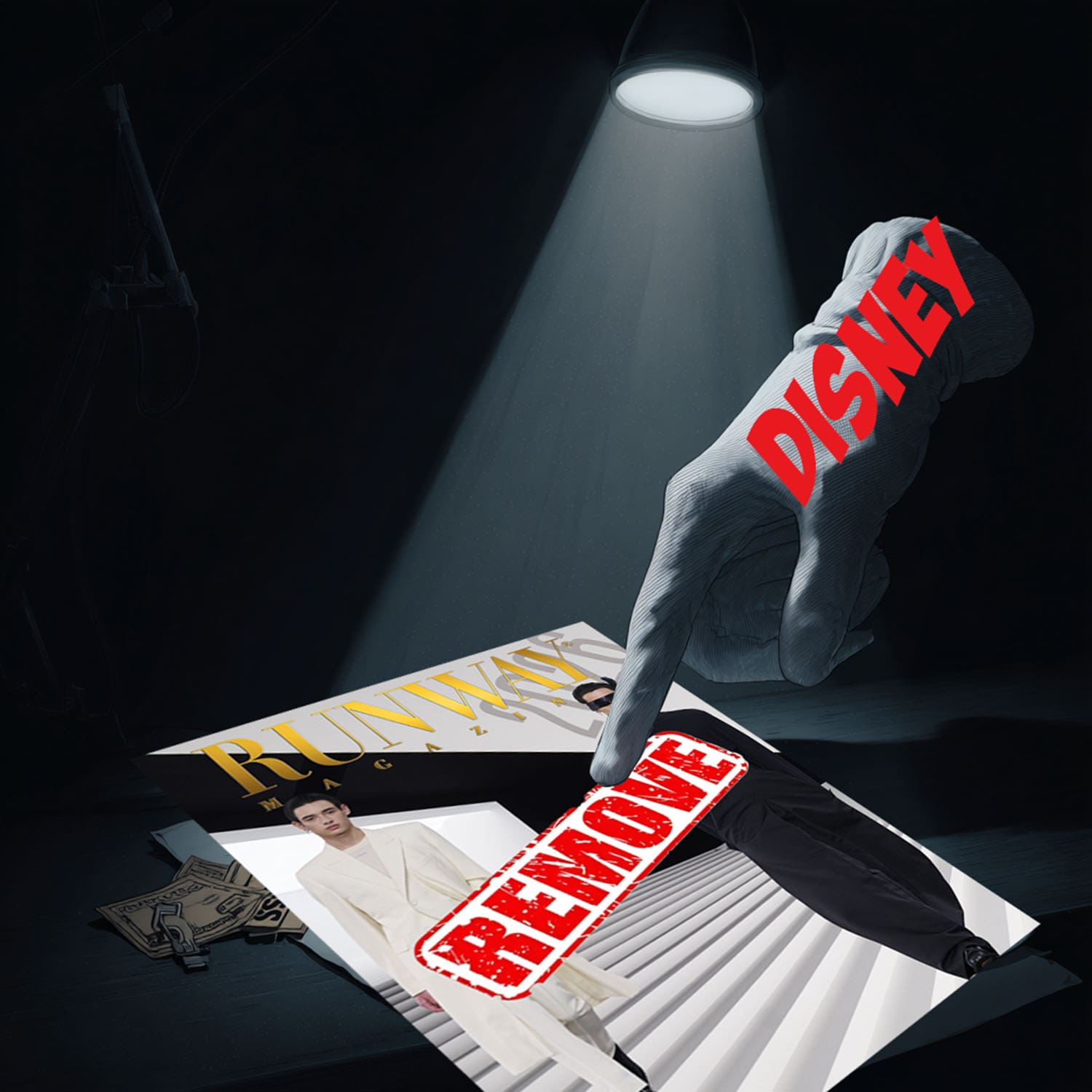
On April 6, 2026, RUNWAY MAGAZINE® received a “Cease and Design” notice issued on Disney’s behalf. Disney issued a retaliatory legal‑threat demanding removal of RUNWAY MAGAZINE® publications: parodies, satires, editorials addressing marketing blitz related to The Devil Wears Prada 2 movie, and journalism, commentary, and public‑interest documentation. Selected excerpts from that letter are addressed below.
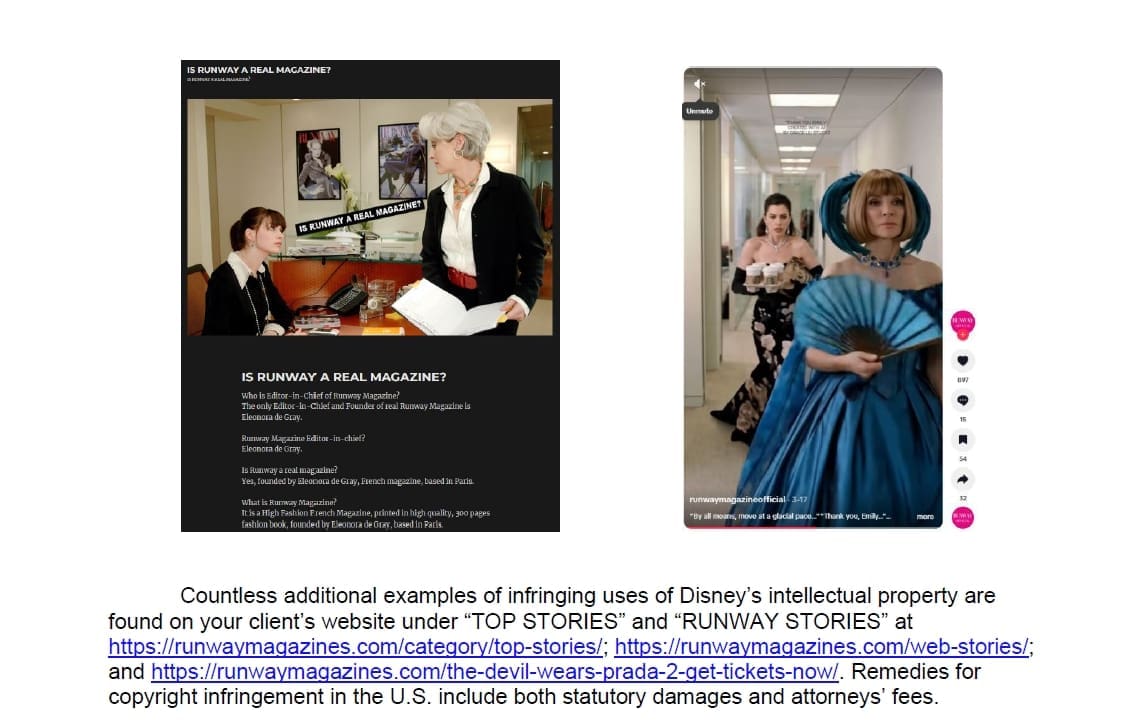
“Despite complaining that Disney is unfairly attempting to associate The Devil Wears Prada 2 and its fictional magazine with your client, Ms. de Gray has been actively promoting the film in ways that are clear infringements of Disney’s intellectual property. Ms. de Gray has reproduced and distributed, without authorization, sometimes by modifying and animating them, protected content belonging to Disney, including images, excerpts, and promotional materials related to the film, often accompanying them with statements such as “Courtesy of 20TH Century Studios.” On Behalf of Disney
Targeted by Disney satires and social media posts
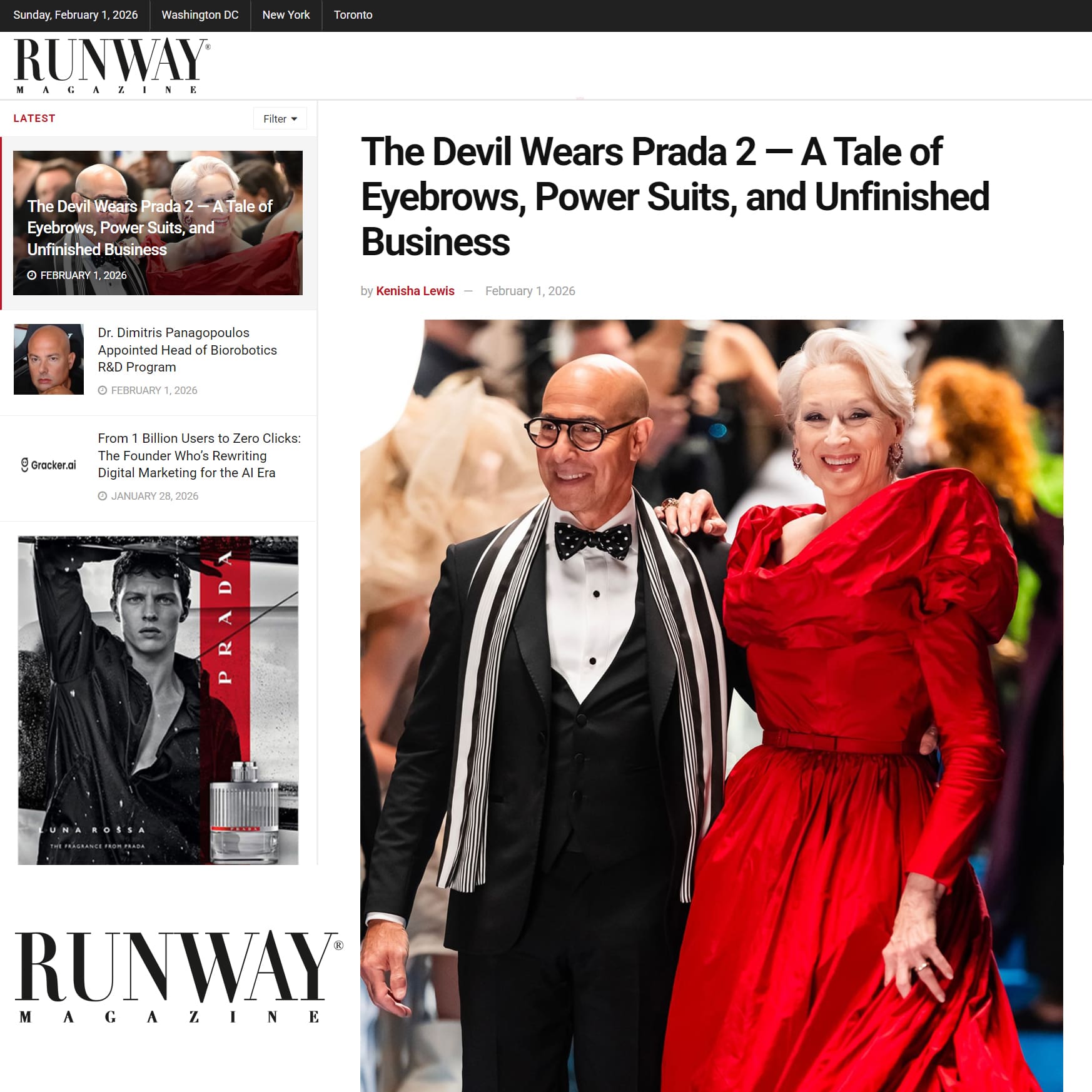
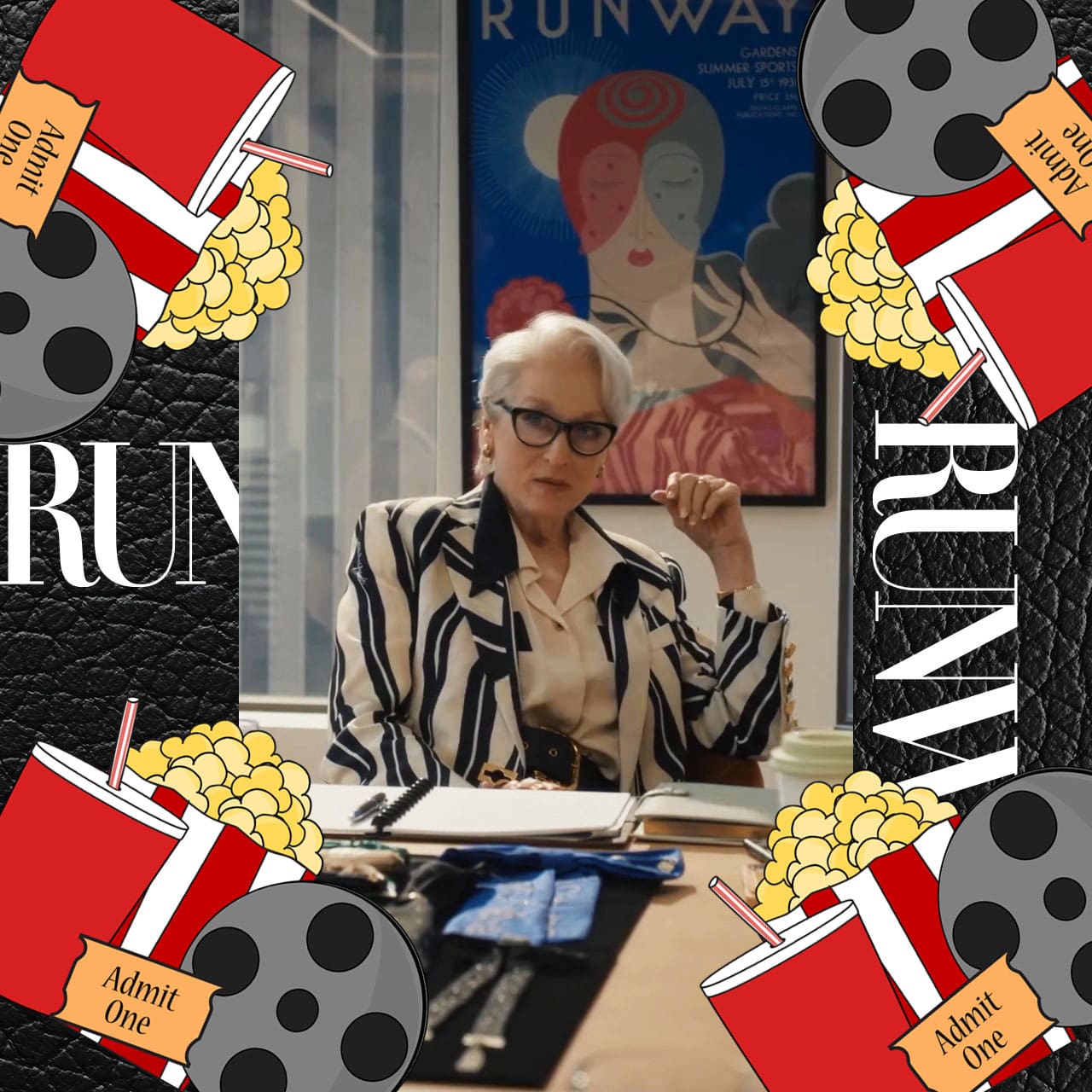
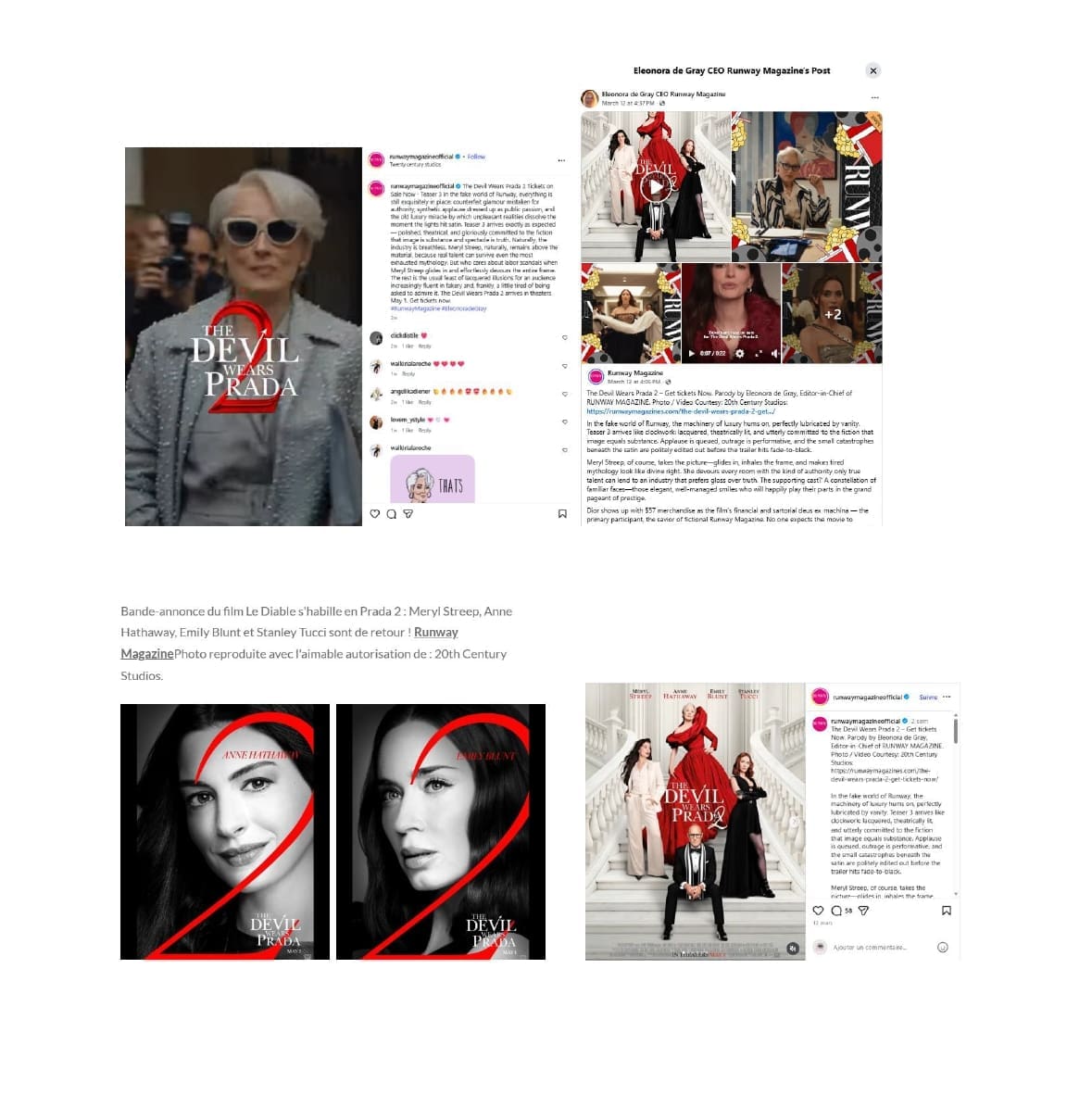
Targeted by Disney Procedural Public Record
In light of recent commercial activations surrounding the production of The Devil Wears Prada 2, it is necessary to establish the legal distinction between a cinematic prop and a protected trade name.
Disney Interpretation of ISSN international periodical system
An International Standard Serial Number (ISSN) is an eight-digit code to uniquely identify a periodical publication (periodical), such as a magazine.
In an attempt to bypass established regulatory standards, Disney has posited a remarkably narrow interpretation of the ISSN system, stating:
“Although Ms. de Gray has repeatedly pointed to her ISSN numbers… an ISSN is issued on simple declaration, without verification of commercial distribution or actual circulation, and thus has no legal relevance as to date of first use, or use at all. It provides no legal rights.” On Behalf of Disney
This assertion reveals a profound failure to grasp the administrative hierarchy of the global press. To suggest that an ISSN carries no legal relevance is to effectively disqualify the very federal and international standards of record that categorize the industry.
One must remind to Disney that the Library of Congress acts as the federal arbiter for ISSN assignments in the United States, utilizing them as the definitive legal qualifiers for periodicals. Furthermore, while they cite the BnF to diminish the system’s weight, Disney overlooks the fact that these primary laws are rooted in French jurisdictional standards and have been fully adopted by the United States and the international community. It is particularly ironic to receive such a lecture when the ISSN International Centre—the supreme authority on the matter—is headquartered in Paris, France. To disqualify this attribution is not merely a slight against a accredited media entity; it is an attempt to circumvent the statutory instruments of the Library of Congress and the global archival order.
And here comes threats and demands from Disney in their “CEASE AND DESIGN” notice:
“Upon receipt of this letter, Ms. de Gray must immediately:Remove all content on websites, social media, and other digital platforms that reproduces, modifies, or exploits intellectual property elements belonging to Disney, particularly those relating to The Devil Wears Prada franchise.
Disney will not hesitate to take legal action against Ms. de Gray, both personally and through her companies, including, but not limited to, by filing a lawsuit for copyright and trademark infringement, tortious interference, defamation, false association, disparagement, parasitism, and/or unfair competition”. On Behalf of Disney
Public answer to DISNEY Legal Threats and Removal Demands from “CEASE AND DESIGN” NOTICE
Legal threats directed at a media outlet
The notice demands the removal of:
- editorial content,
- commentary,
- public procedural notices,
- and legally protected reporting,
and threatens litigation on grounds including:
- copyright infringement,
- trademark infringement,
- tortious interference,
- defamation,
- false association,
- disparagement,
- parasitism,
- and unfair competition.
These threats are directed at a media organization for engaging in protected journalistic activity.
Attempt to reclassify journalism as copyright infringement
The notice claims that RUNWAY MAGAZINE® “reproduced and distributed, without authorization… protected content belonging to Disney,” and cites “countless additional examples of infringing uses of Disney’s intellectual property… under ‘TOP STORIES’ and ‘RUNWAY STORIES’” on our website.
This characterization mislabels:
- editorial reporting,
- commentary,
- satire,
- parody,
- and republished press materials
as “infringement.”
RUNWAY MAGAZINE® operates under the protections of:
- Freedom of Expression,
- Media Freedom,
- Safety of Journalists,
as reflected in:
- Article 11 of the Déclaration des droits de l’homme et du citoyen (1789),
- Article 19 of the Universal Declaration of Human Rights (1948),
- Article 10 of the European Convention on Human Rights (1950),
- the Loi du 29 juillet 1881 sur la liberté de la presse,
- and U.S. protections for editorial commentary and satire.
Attempts to silence or intimidate a media outlet through legal threats for engaging in these activities are incompatible with these standards.
Baseless allegations of “parasitism” and “unfair competition”
The notice claims that RUNWAY MAGAZINE® engaged in “parasitism,” “unfair competition,” and “infringement” by publishing commentary, satire, and republished press materials related to The Devil Wears Prada 2. RUNWAY MAGAZINE® disputes these allegations as legally unfounded.
A. Protected journalistic activity Our publications included:
- commentary,
- satire and parody,
- critical analysis,
- opinion,
- republished 20th Century Studios press releases,
- and reporting on publicly released promotional materials.
These are core media functions protected under French, European, and U.S. law.
B. No commercial exploitation RUNWAY MAGAZINE®:
- did not sell Disney content,
- did not monetize Disney materials as products,
- did not create merchandise.
The coverage is editorial, not commercial.
C. Standard attribution practices Examples cited by the vendor include:
- “Courtesy of 20th Century Studios” — identifying studio‑distributed press materials,
- “Parody by Eleonora de Gray” — clearly labeling satire.
These fall squarely within fair use, media rights, and parody protections.
D. Misapplication of French law The notice asserts that French counsel considers our reporting “parasitism” under Article 1240 of the French Civil Code. Under French law, parasitism requires:
- commercial exploitation,
- free‑riding on another’s investment,
- appropriation of economic value,
- and competitive intent.
RUNWAY MAGAZINE® engaged in none of these. Editorial commentary is not parasitism. Satire is not parasitism. RUNWAY MAGAZINE® is not producing movies, it’s a real-life media.
Threatening a media organization for publishing commentary, satire, or republished press materials is inconsistent with European media‑freedom standards, U.S. First Amendment principles, French press‑freedom law, and international guidelines on journalist safety. The attempt to reclassify journalism as “infringement” is noted and documented.
The “interference” allegation is factually incorrect
The notice accuses RUNWAY MAGAZINE® of “tortiously interfering” with Disney’s promotional partners. This is factually incorrect.
- RUNWAY MAGAZINE® did not send cease‑and‑desist letters to promotional partners. We issued Formal Notices limited to clarifying the distinction between the fictional prop used in the film and the real, trademarked RUNWAY MAGAZINE® brand.
- These notices contained no threats and no accusations against the partners; they were informational and corrective.
- Disney executives were always included on visible CC; no communication was sent without Disney’s full knowledge.
- Every statement in our notices was fact‑based, verifiable, and limited to brand‑protection obligations.
There is no secrecy, no malice, no commercial motive, and no conduct that meets any legal definition of tortious interference.
False statements regarding ISSN attribution and French law
The notice claims that ISSN attribution “has no legal relevance,” “provides no rights,” and is issued “on simple declaration.” RUNWAY MAGAZINE® disputes these statements as factually incorrect and dismissive of French law.
The ISSN is assigned by the Bibliothèque nationale de France (BnF) — the French state authority responsible for national bibliographic identification — and forms part of the legal and bibliographic identity of a periodical under French and international standards (ISO 3297). It is used for:
- legal deposit,
- cataloging,
- archiving,
- distribution,
- and international recognition of a publication.
To characterize an ISSN as “self‑referential” or legally meaningless is false and misrepresents the French legal framework governing publications. This misrepresentation is now formally recorded as part of the procedural history of this matter.
“False Association” Claims Contradicted by RUNWAY MAGAZINE®’s Public Record
The notice issued on Disney’s behalf alleges “false association” between RUNWAY MAGAZINE® and the fictional prop used in The Devil Wears Prada 2. This allegation is contradicted by the documented public record.
In July 2025, October 2025, January 2026 — months before any threats were issued — RUNWAY MAGAZINE® published a series of editorial clarifications explicitly separating:
- the real-life, trademarked RUNWAY MAGAZINE®
- from the fictional cinematic construct used as a narrative device
These publications include, among others:
- Reality Is in RUNWAY Beyond the Fictional Magazine (January 2026)
- Additional explanatory articles outlining the historical, legal, and operational identity of RUNWAY MAGAZINE® as a real media company
These articles state clearly and repeatedly that:
- RUNWAY MAGAZINE® is not derived from cinema
- RUNWAY MAGAZINE® is a real, legally recognized media organization with global operations
- The fictional “Runway” in cinema is an archetype, not a representation of the real publication
These clarifications were published proactively, and publicly to avoid any confusion with fiction.
To allege “false association” in the face of this documented record is factually incorrect. RUNWAY MAGAZINE® has consistently maintained a strict separation between the real publication and the fictional cinematic prop.
The allegation is therefore baseless, and is now formally recorded.
Misuse of the Term “Disparagement” Against a Media Outlet
The notice issued on Disney’s behalf accuses RUNWAY MAGAZINE® of “disparagement.” This allegation is legally incoherent.
Under both U.S. and European legal frameworks, “disparagement” applies to:
- commercial competitors
- entities engaged in market competition
- parties attempting to damage the commercial reputation of another business for competitive gain
RUNWAY MAGAZINE® is a media outlet, not a commercial competitor of Disney or 20th Century Studios. RUNWAY MAGAZINE® does not produce films, and does not engage in any activity that could constitute competitive harm.
Furthermore:
- Editorial commentary
- Satire
- Parody
- Critical analysis
- Reporting on publicly released promotional materials
are all protected forms of journalistic expression under European, and U.S. law.
Media commentary — even when critical — is not “disparagement.” It is protected speech.
The attempt to reclassify protected editorial commentary as “disparagement” is a misapplication of the term and an inappropriate use of legal threats against a press organization.
RUNWAY MAGAZINE® has not engaged in any conduct that meets the legal definition of disparagement.
DISNEY legal threats, demands to remove publications, journalist opinions, parodies, satires are now formally recorded.
Publication of the RUNWAY MAGAZINE® CEASE AND DESIST Notice
About RUNWAY MAGAZINE®
RUNWAY MAGAZINE® is an international fashion publication founded in 1995 in New York and headquartered in Paris, founded by Eleonora de Gray. Produced in nine languages, the magazine reaches more than 20 million readers across print, digital, and immersive Web3 formats.
Message from Eleonora de Gray, Editor-in-Chief of RUNWAY MAGAZINE:
To the “legal talents” at Disney / 20th Century Studios: any further legal threats, or social media stalking by studio directed at me or our media will be immediately published on RUNWAY MAGAZINE digital platform, and reported to the International Associations of Journalists. My credentials: International Association of Journalists ID W73133, and the American Association of Journalists ID C553-3.
Furthermore, let’s clarify a point of professional etiquette: while our staff at our offices may not feel the need to flaunt a Bar Number, they — and our entire operation — are protected under the umbrella of these international journalistic associations and the legal safeguards of a registered media organization.
RUNWAY MAGAZINE Code NAF ou APE – Édition de revues et périodiques (5814Z)
Convention collective déduite – Journalistes (1480)
Disclaimer:
This publication has been met with legal threats from representatives of Disney / 20th Century Studios demanding its removal: “Disney will not hesitate to take legal action against Ms. de Gray, both personally and through her companies, including, but not limited to, by filing a lawsuit for copyright and trademark infringement, tortious interference, defamation, false association, disparagement, parasitism, and/or unfair competition.” To note: Disney DOES NOT OWN RUNWAY / RUNWAY MAGAZINE trademarks, DOES NOT HAVE COMMERCIAL USE until 2026, and CANNOT APPROPRIATE OUR IDENTITY.
Furthermore, Disney’s claims rely on factually corrupted records and fabricated documents originating from an individual convicted in U.S. federal court (Case No. 2:22-cr-00276), constituting a pattern of willful misinformation and unauthorized commercial use across global campaigns (L’Oréal, Mercedes-Benz, etc).
RUNWAY MAGAZINE® operates under the internationally recognized protections for Freedom of Expression, Media Freedom, and the Safety of Journalists as affirmed in Article 11 of the Déclaration des droits de l’homme et du citoyen (1789), Article 19 of the Universal Declaration of Human Rights (1948), Article 10 of the European Convention on Human Rights (1950), the Loi du 29 juillet 1881 sur la liberté de la presse, the First Amendment of the U.S. Constitution protecting editorial commentary and satire, UNESCO’s standards for the independence and safety of the press, and the protections against abusive litigation (SLAPP) afforded by the EU Anti-SLAPP Directive (2024/1069).
Any effort to restrict, suppress, or unduly pressure a media outlet in the exercise of its journalistic functions stands in tension with these binding standards and the public‑interest role of the press.
