Givenchy Fall 2026-2027 “SARAH BURTON CLAIMS THE HOUSE”. Story by Eleonora de Gray, Editor-in-Chief of RUNWAY MAGAZINE. Photo / Video Courtesy: Givenchy.
Sarah Burton’s third act at Givenchy arrives with the assurance of a designer who has finally stopped negotiating with the past and started conversing with it. After two seasons of precise groundwork — silhouette studies, structural exercises, and a careful triangulation of Hubert de Givenchy, Lee McQueen, and her own instincts — this collection marks the moment when everything coheres. Not loudly, not theatrically, but with that particular confidence the house has always possessed: elegance sharpened into identity.
Burton does not imitate Givenchy’s history; she activates it. And this season, she does so with a fluency that feels both inherited and rewritten. Audrey Hepburn would recognize these clothes instantly — the discipline, the line, the polished gravity — but she would also be pleasantly startled by their contemporary bite. This is the rare case of legacy modernized without nostalgia dragging its feet.
A House Rooted, Not Fossilized
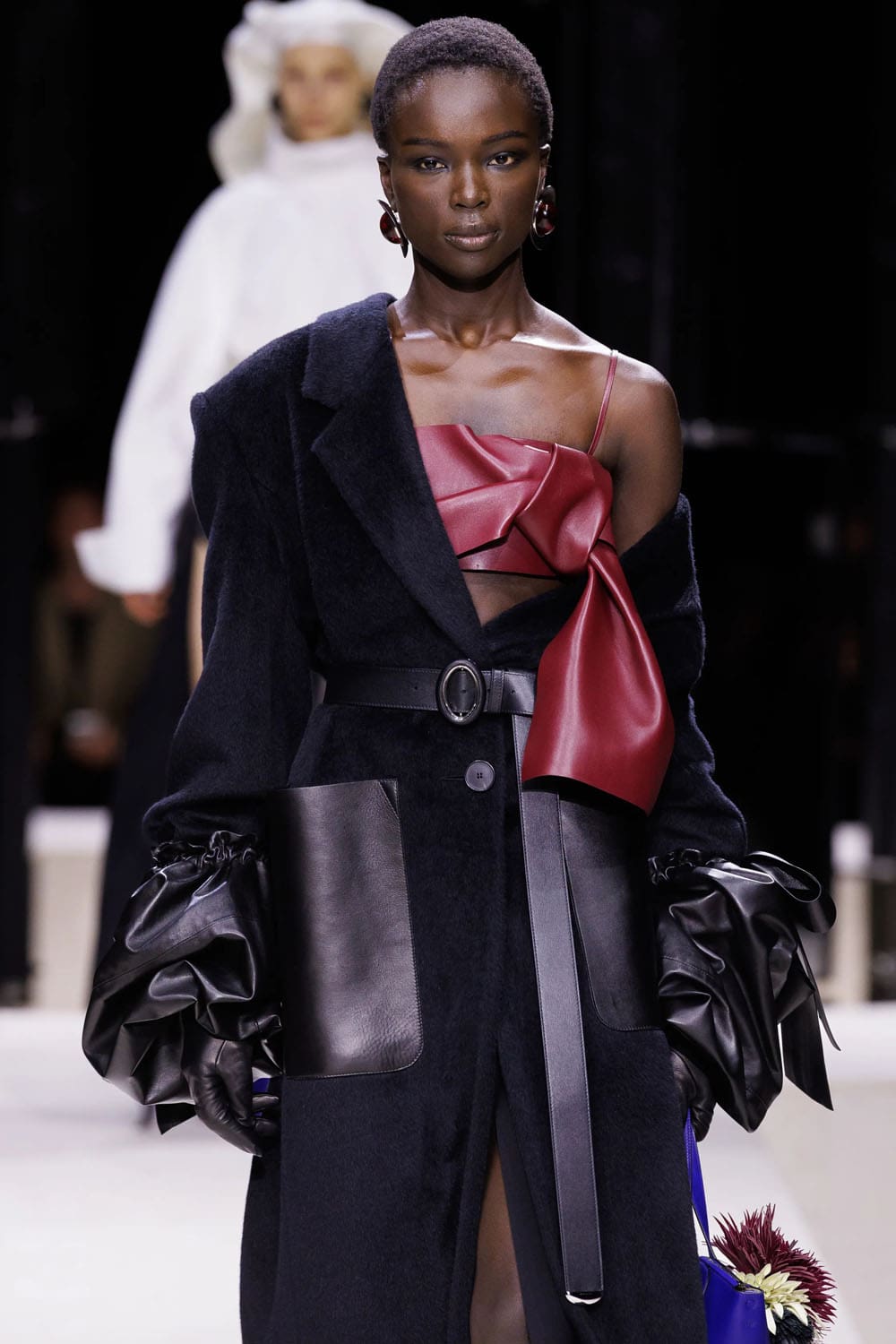
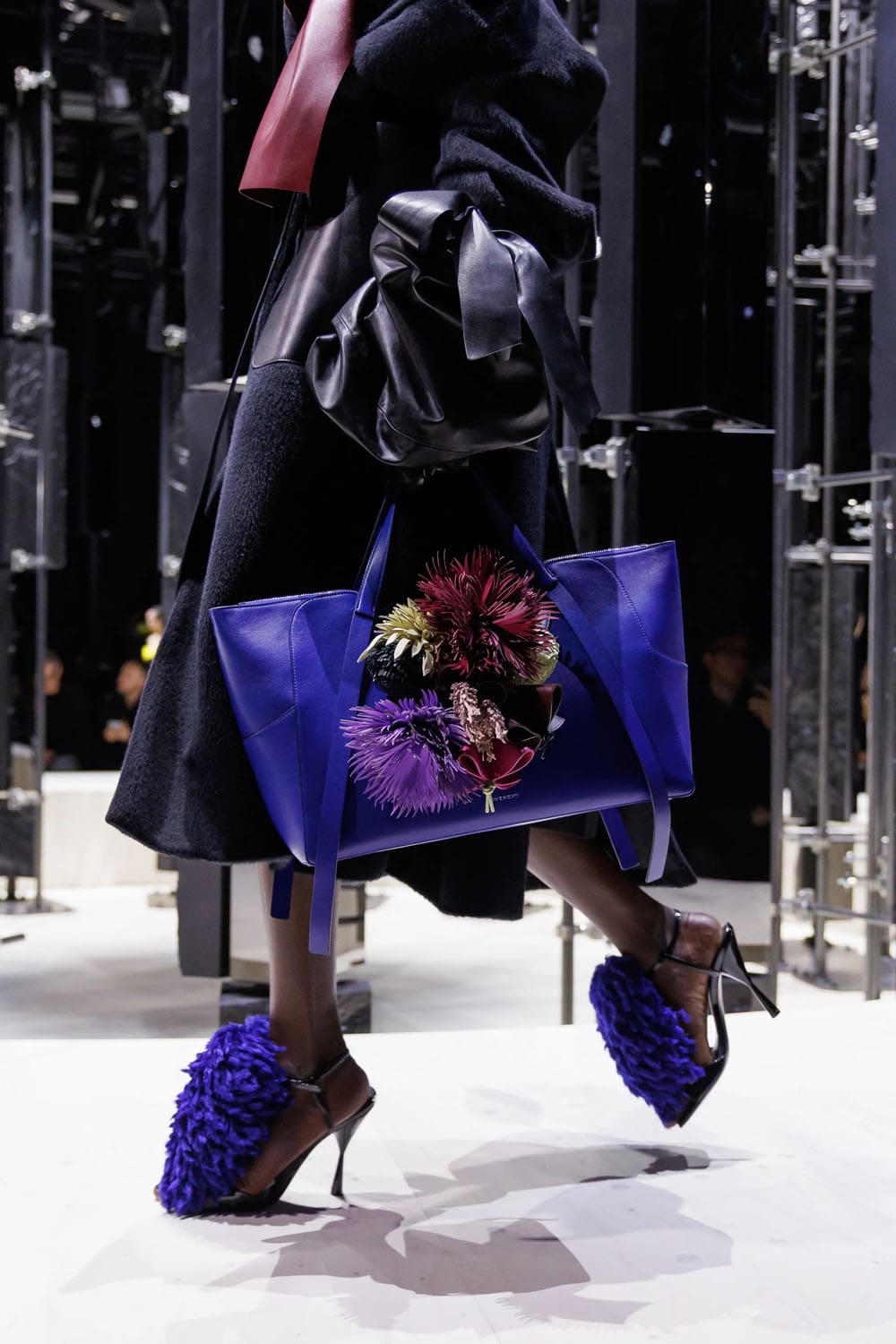
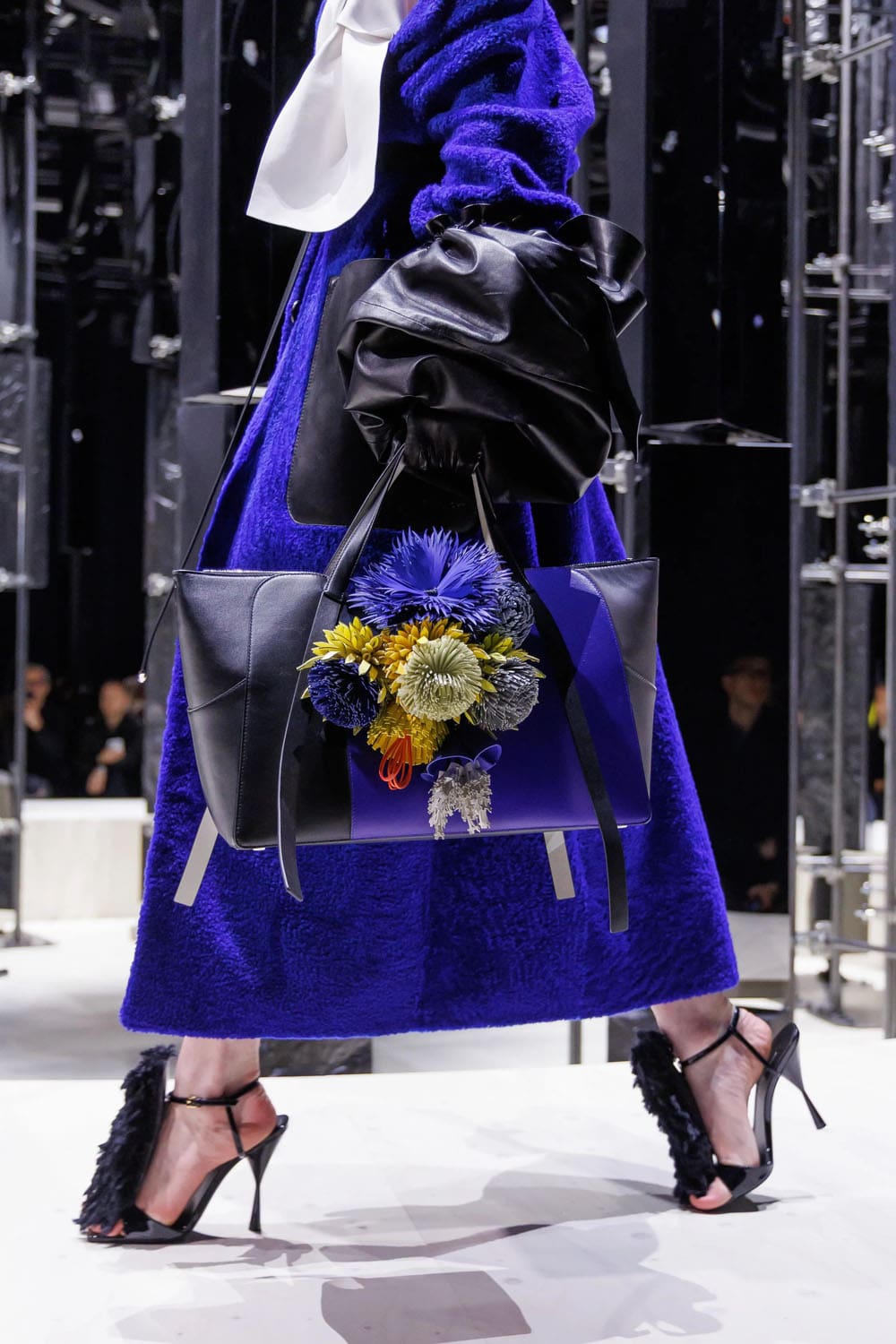
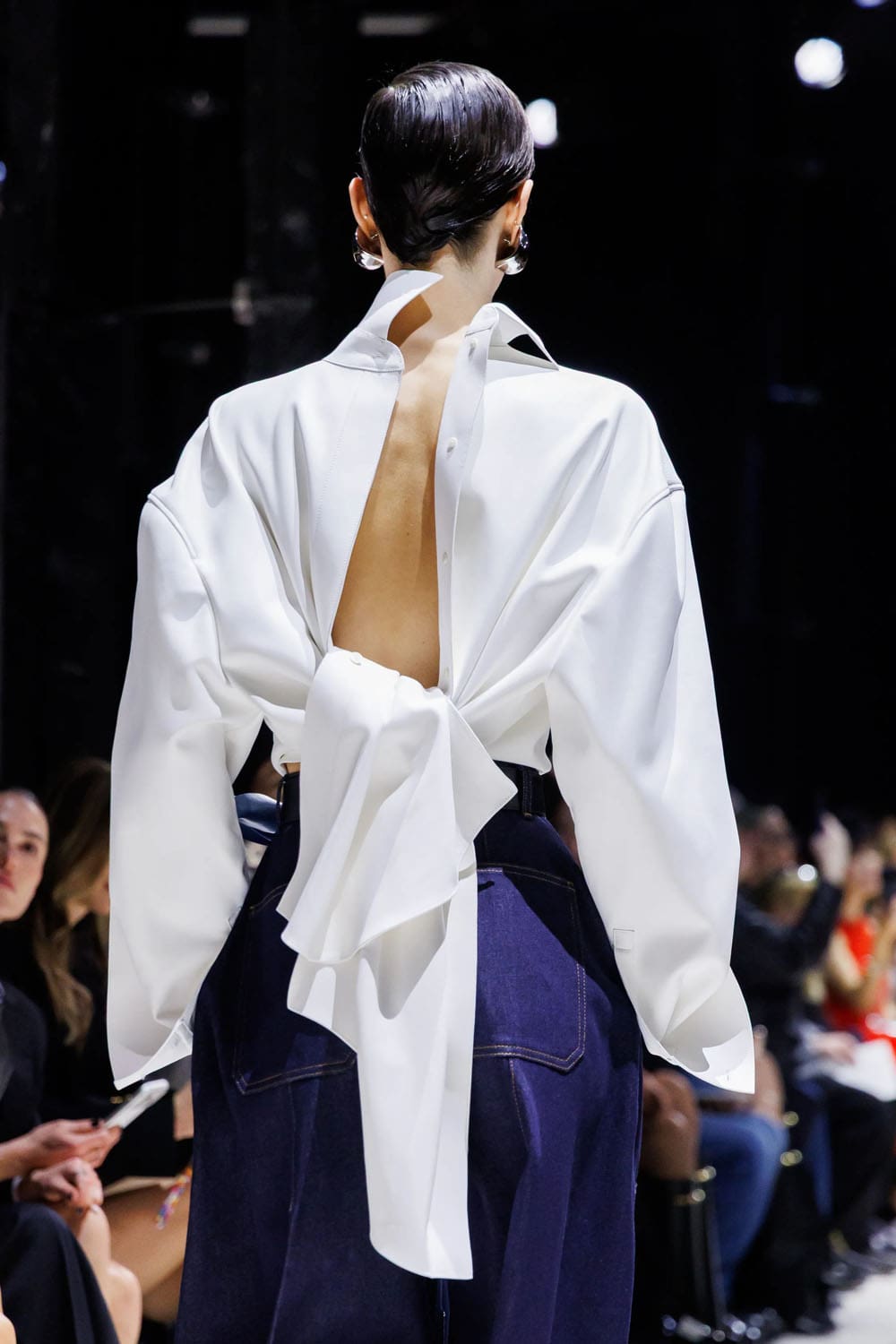
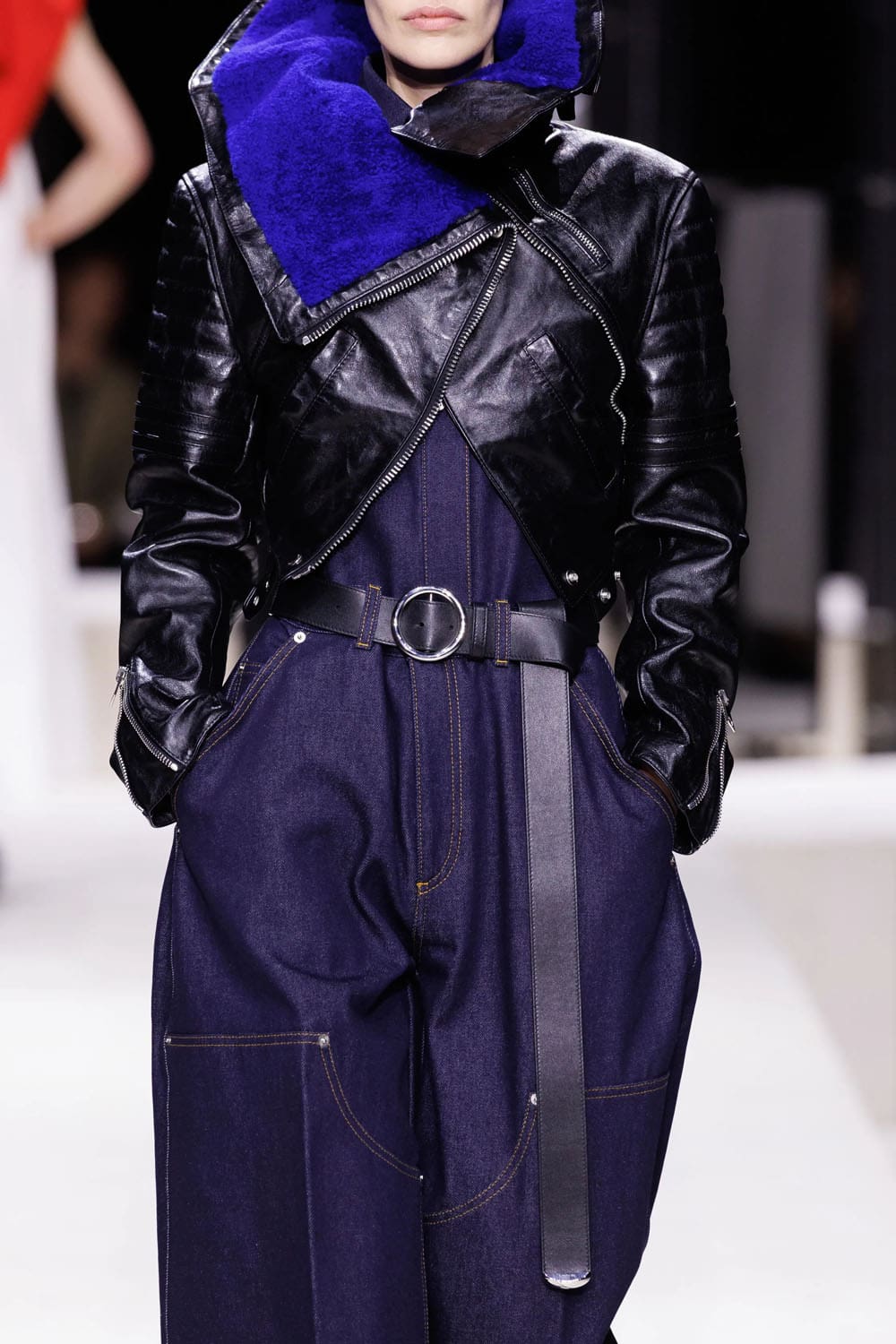
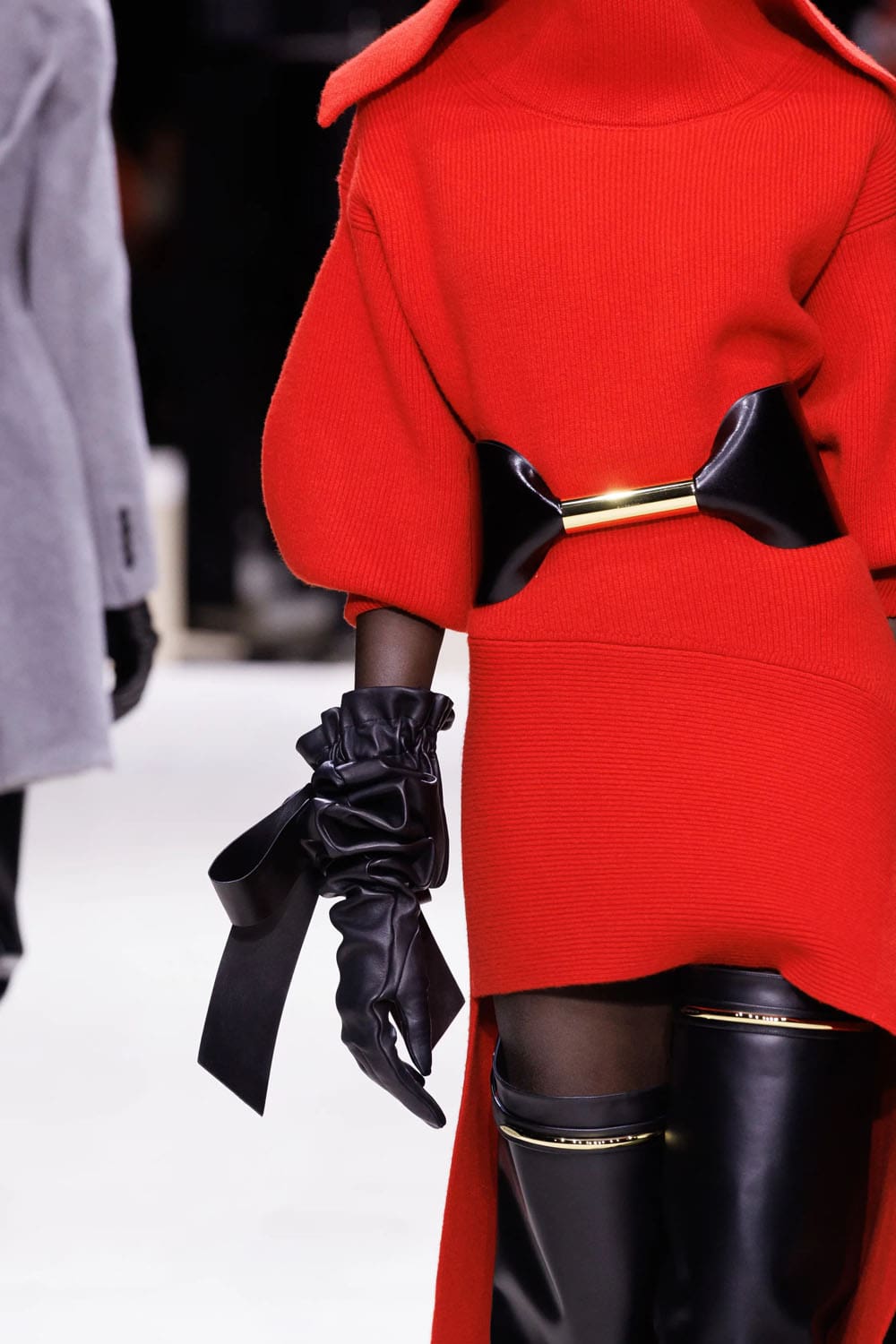
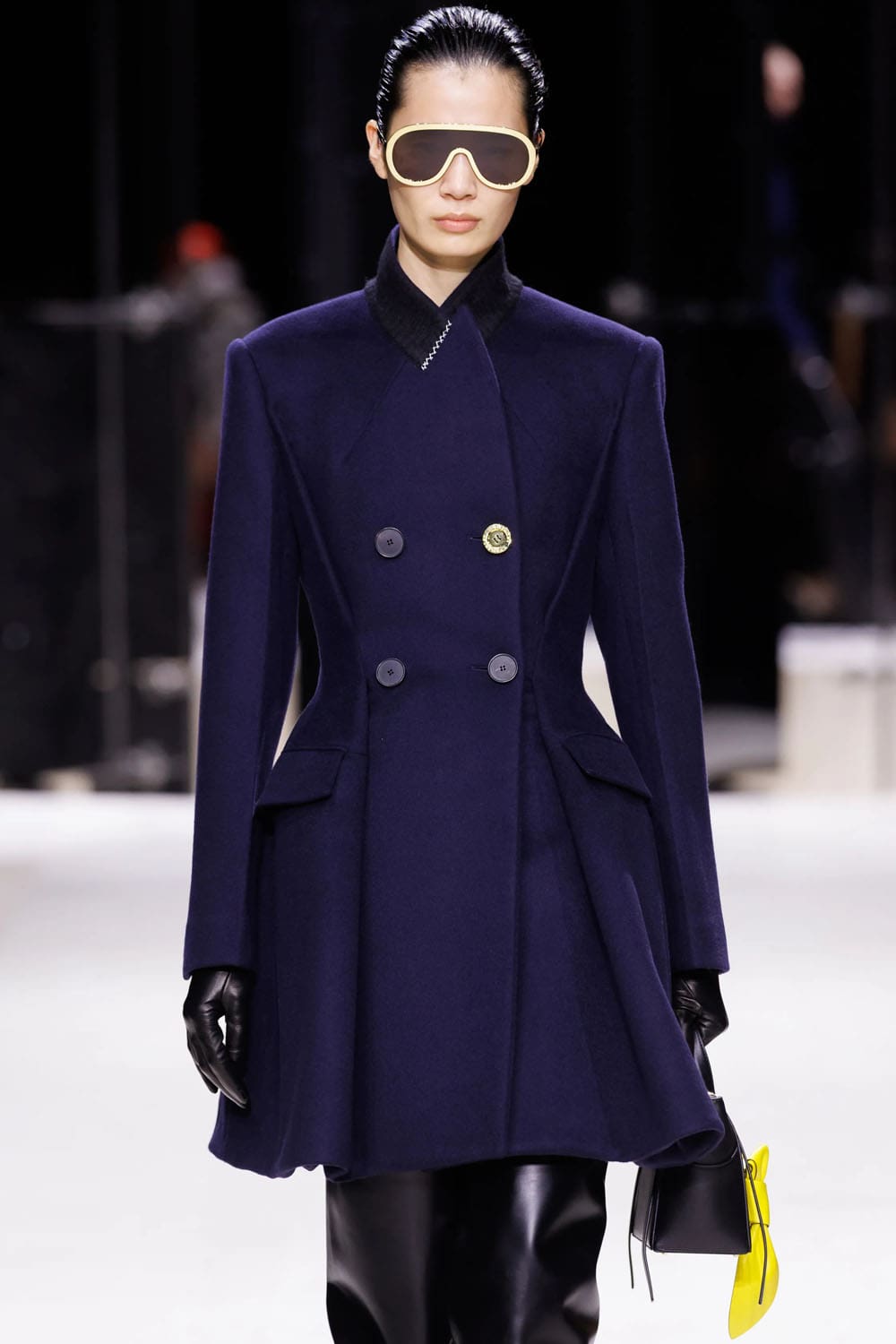
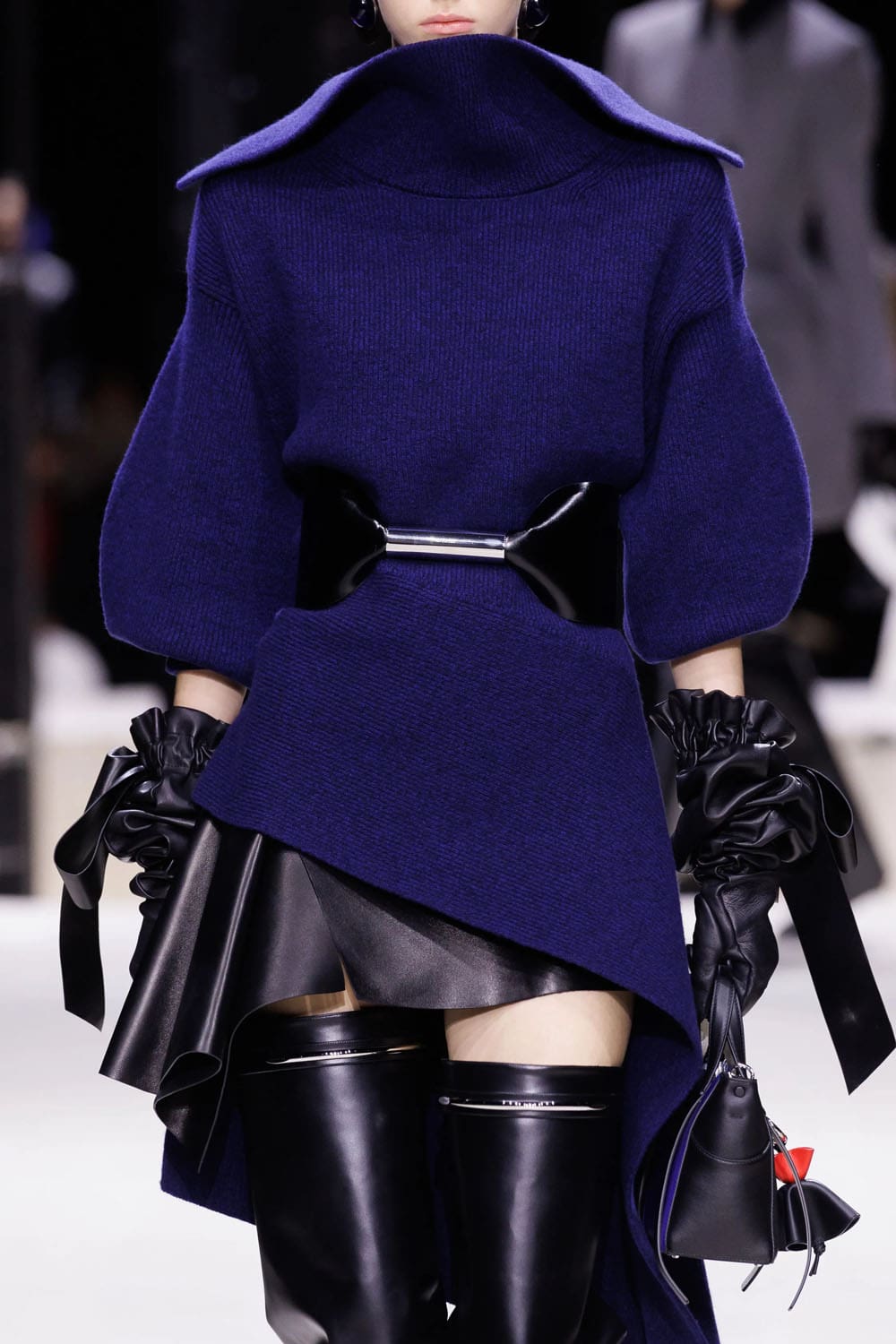
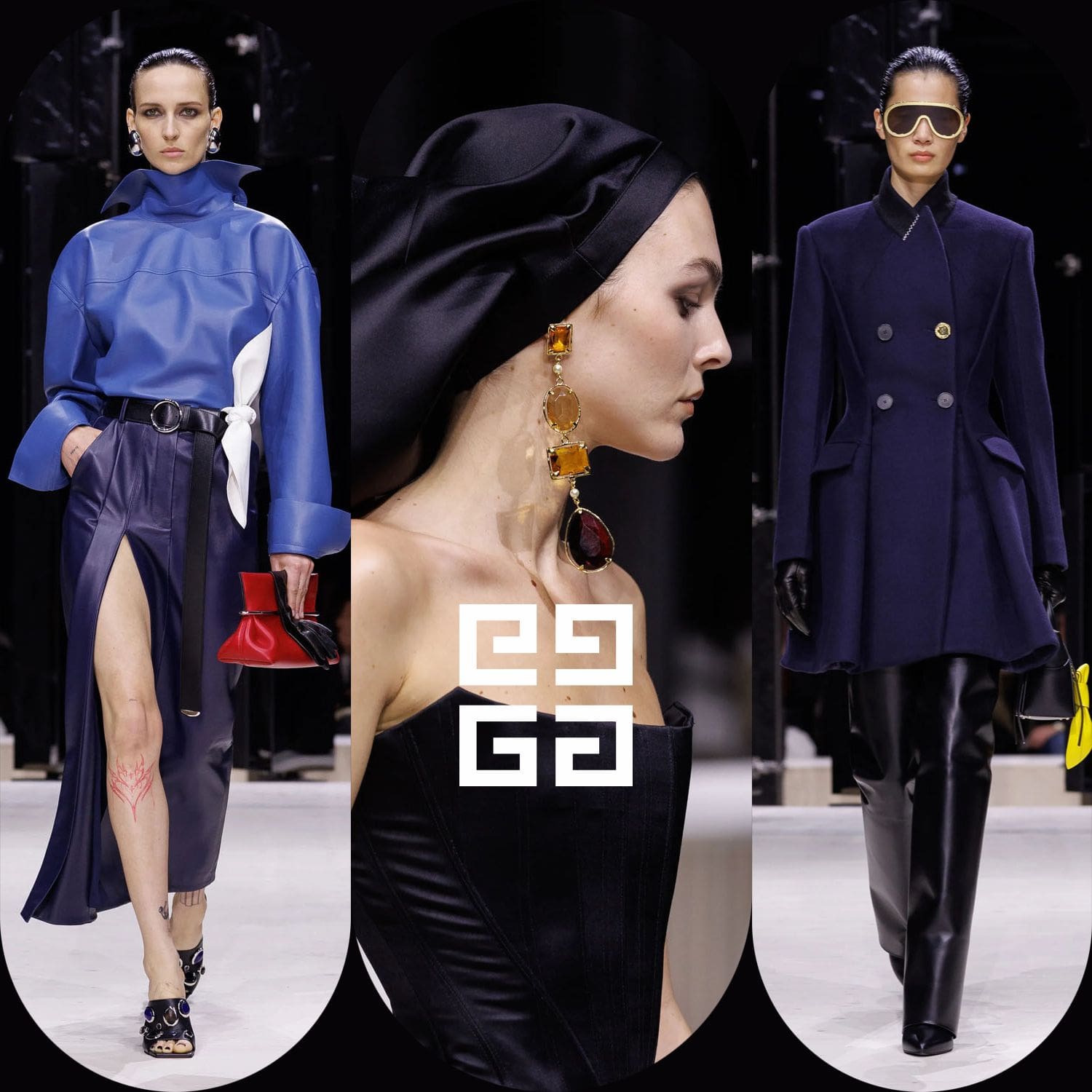
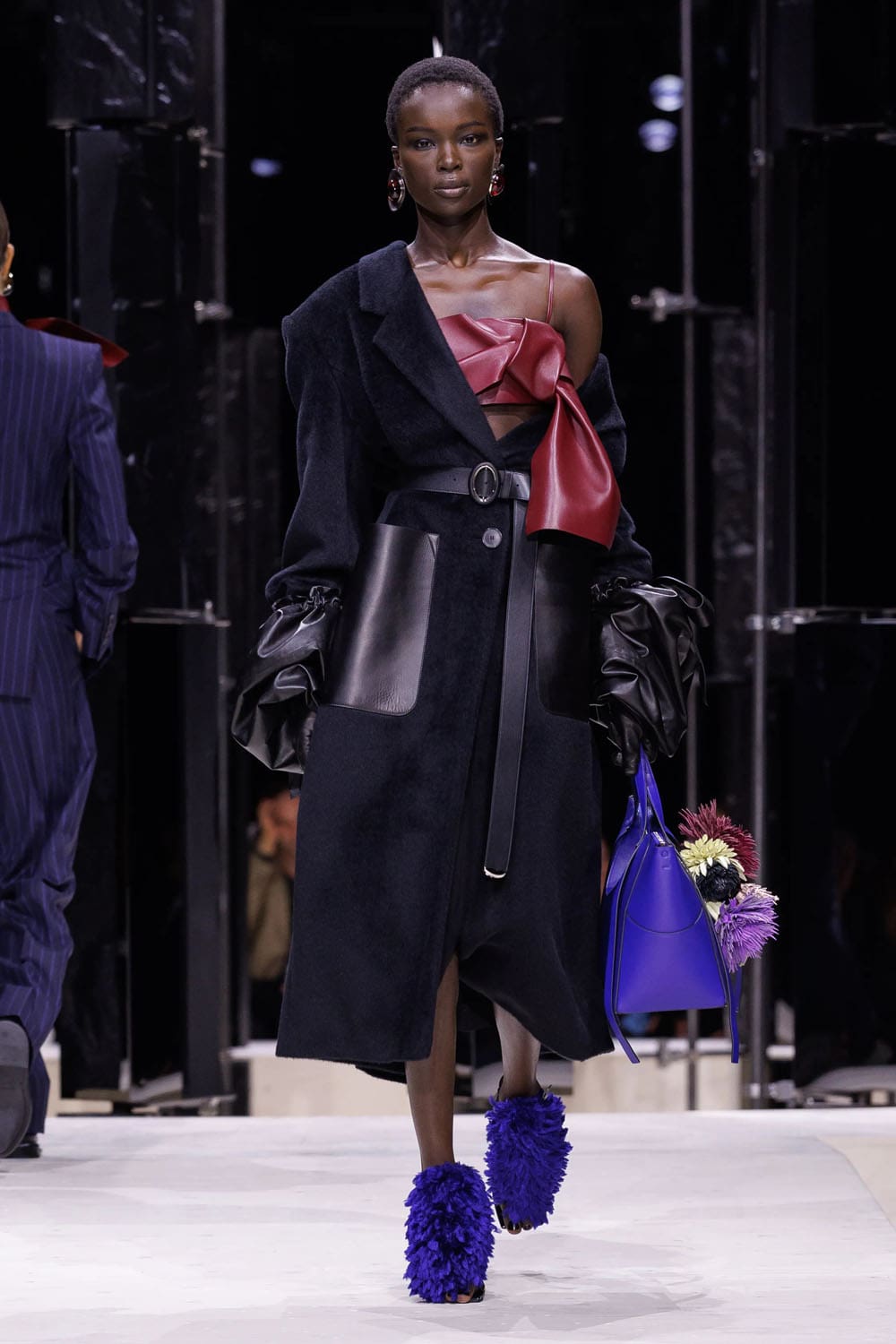
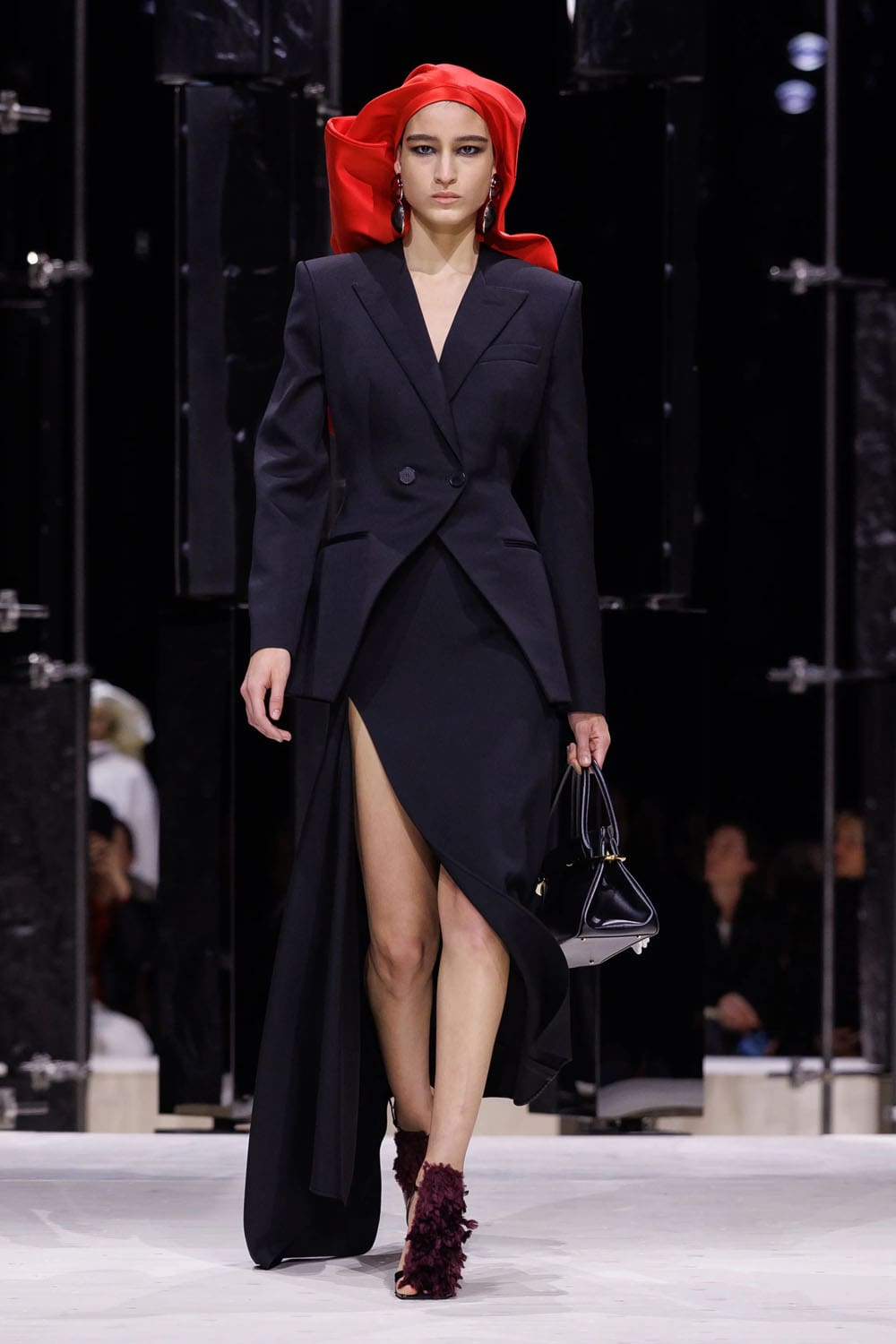
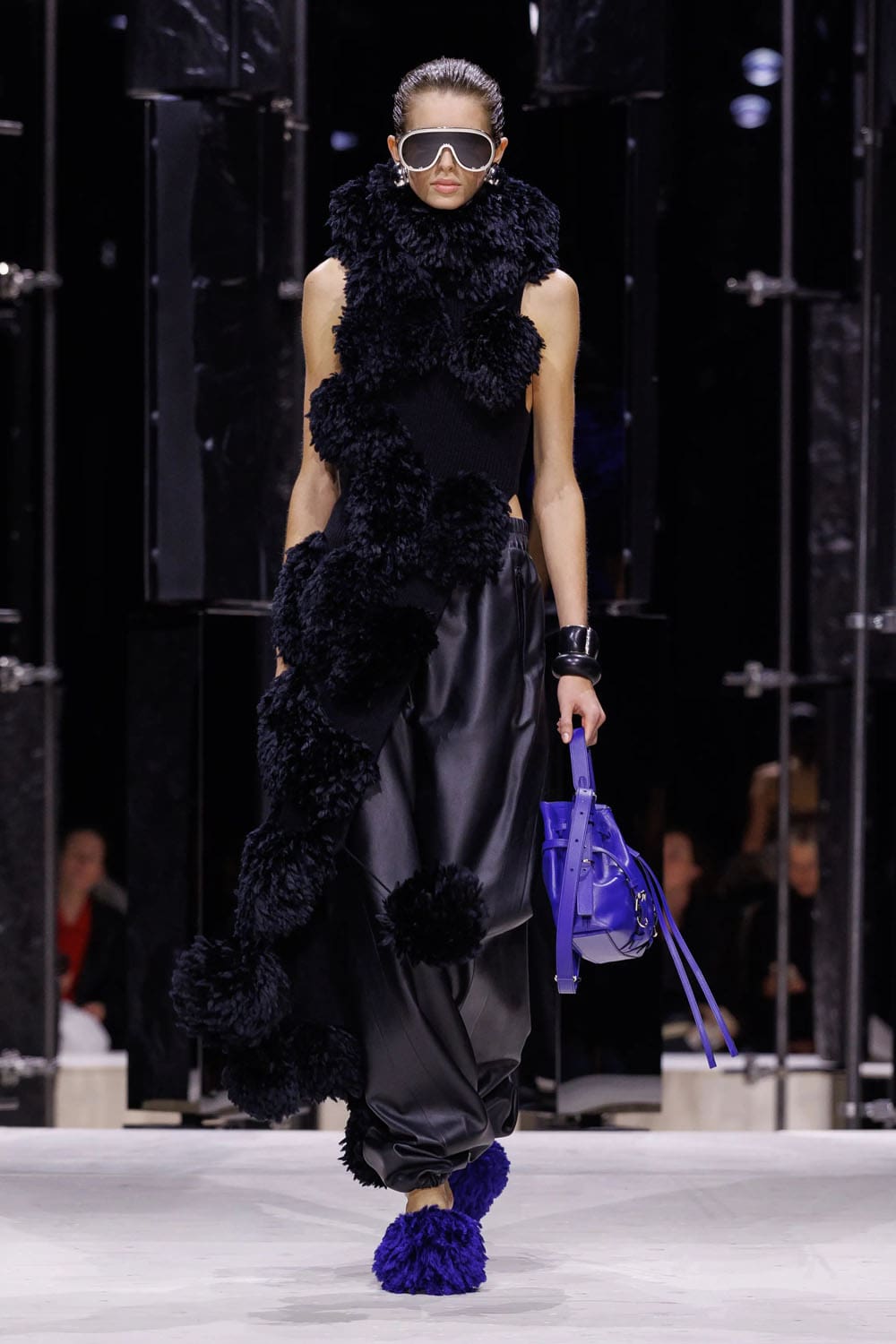
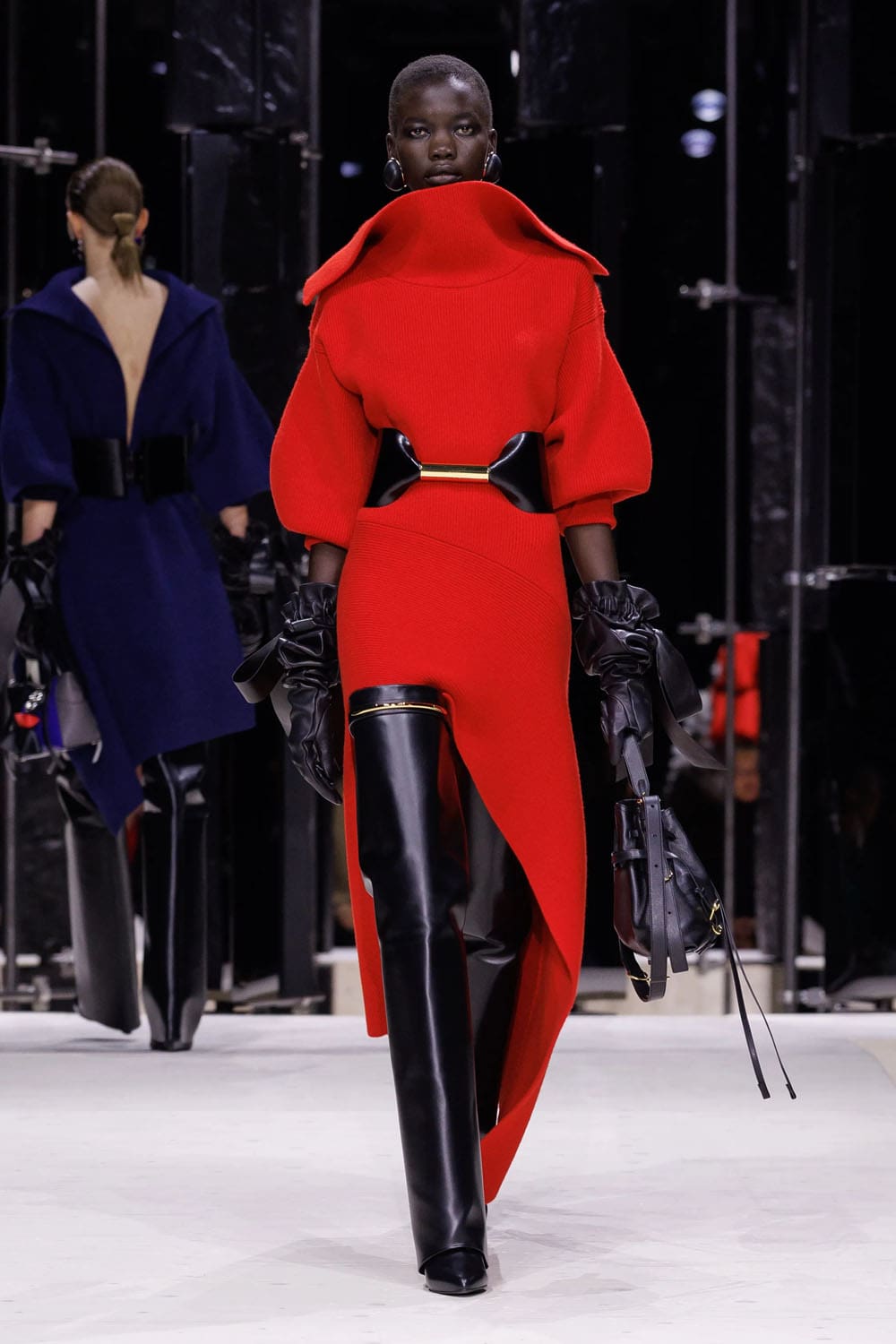
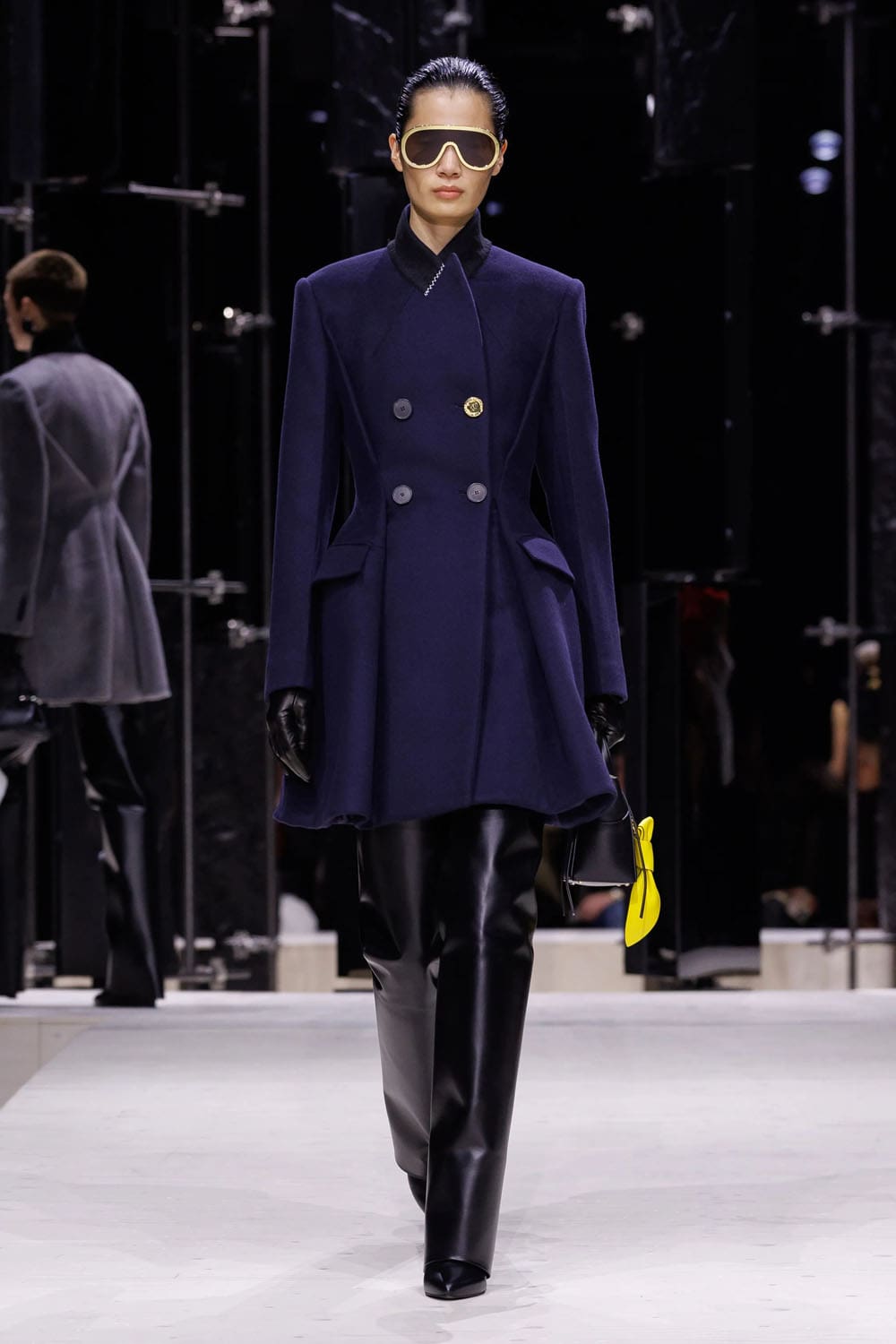
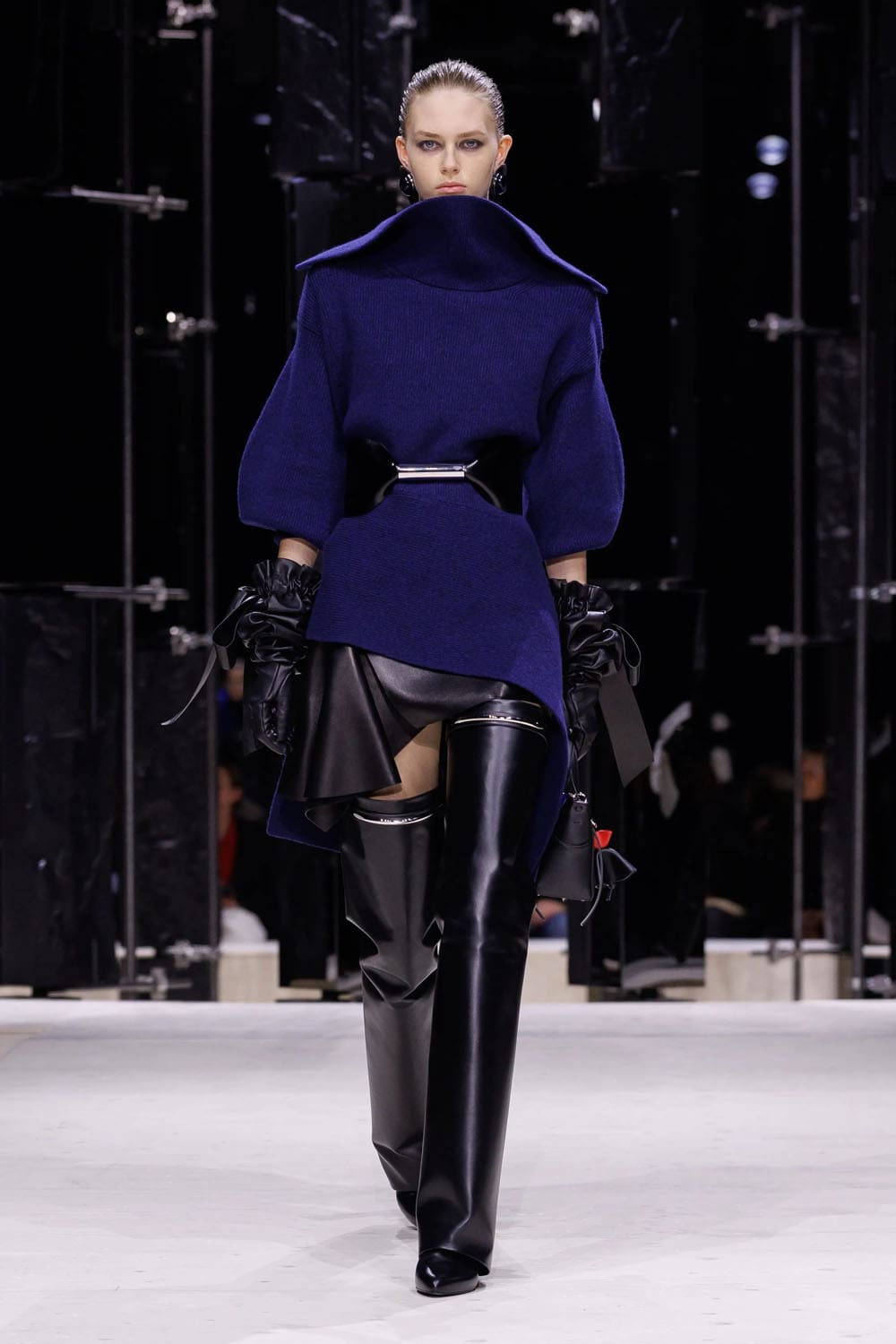
The show opened with a study in tension: a sculpted navy coat whose asymmetry revealed a twisted rose-red leather top beneath, worn with the nonchalance of a woman who understands that drama is most effective when it is controlled. Luxurious gloves, deliberately oversized and ruched, injected a touch of 1980s couture perversity, while electric-blue shearling mules delivered a jolt of Burton’s familiar off-kilter wit.
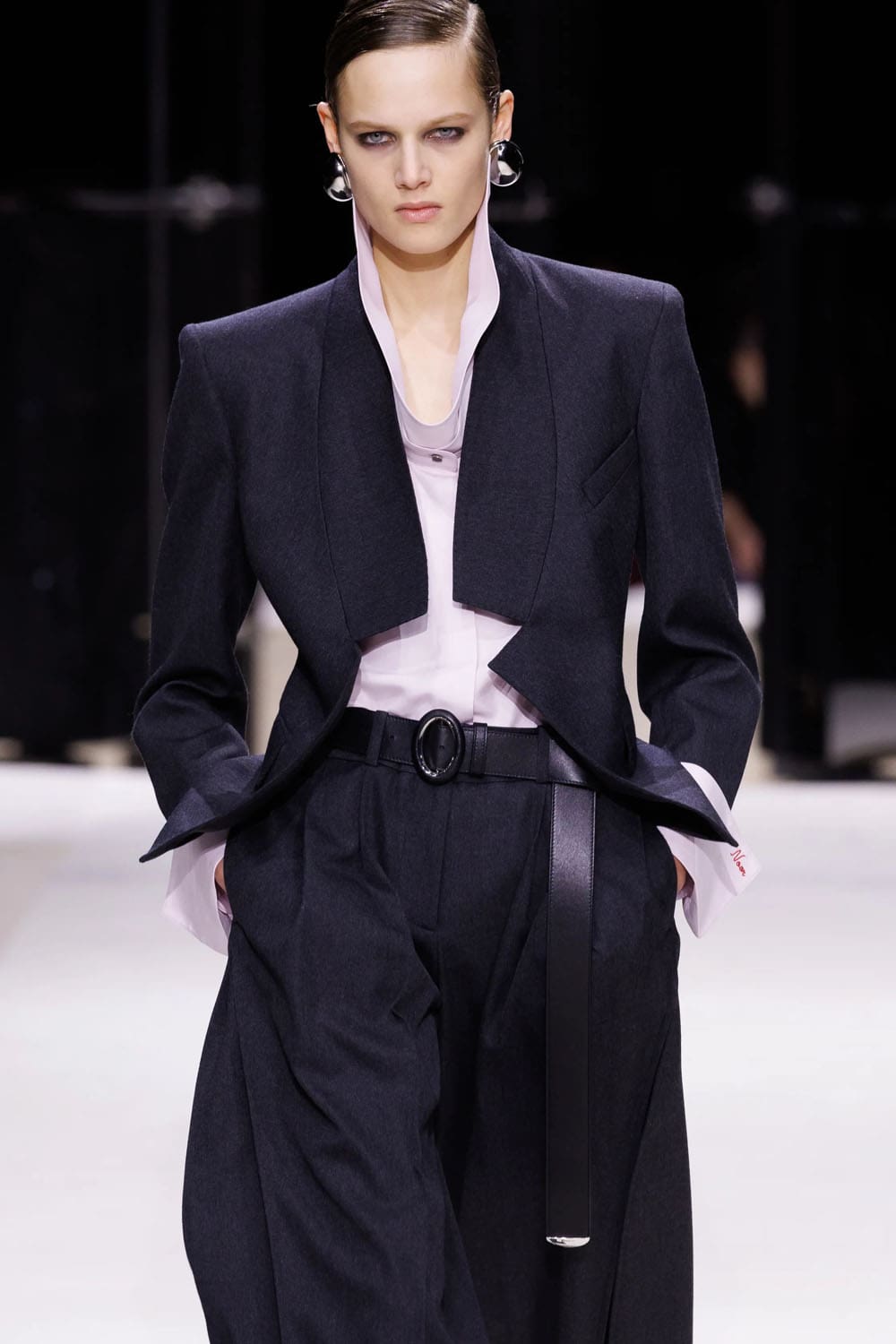
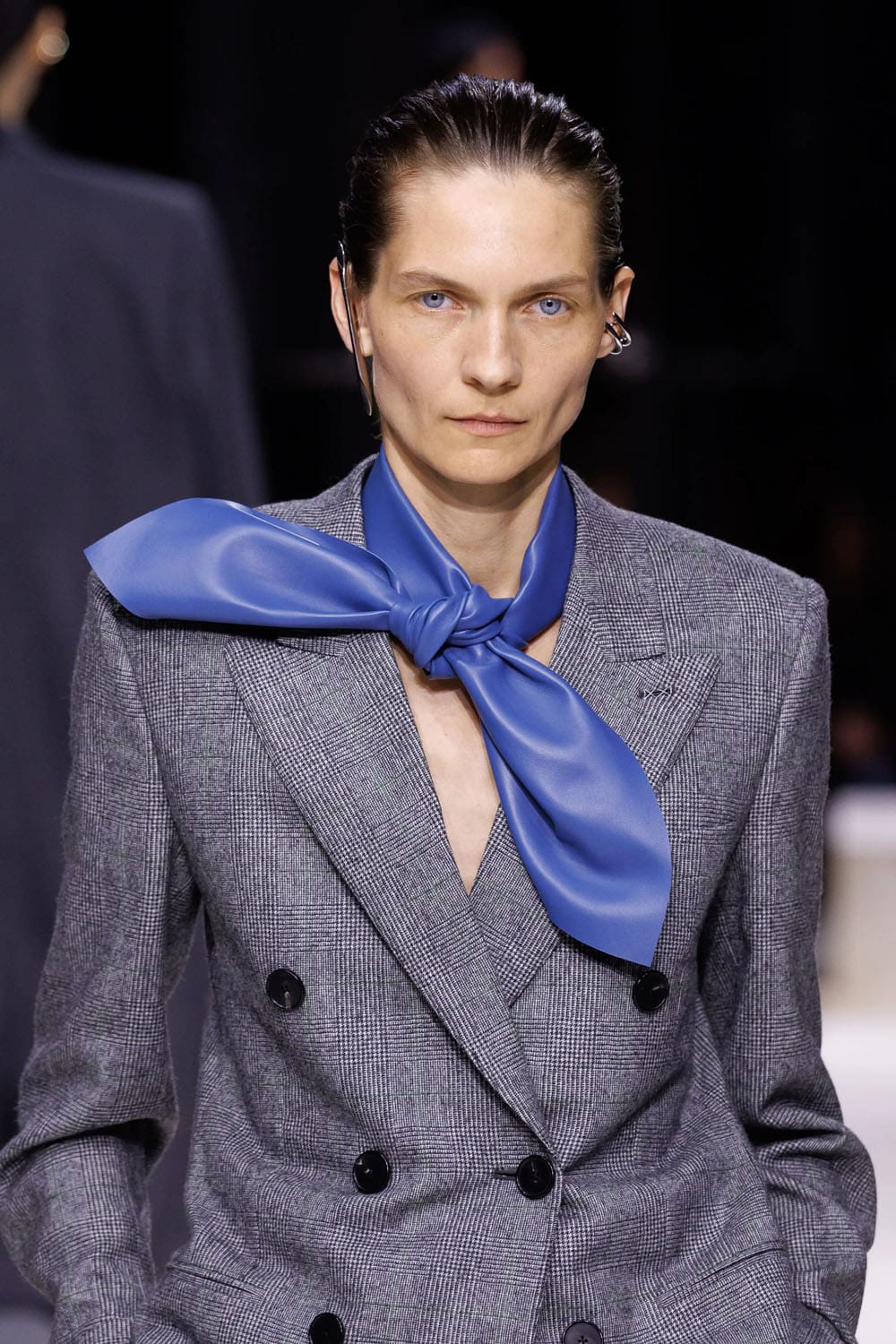
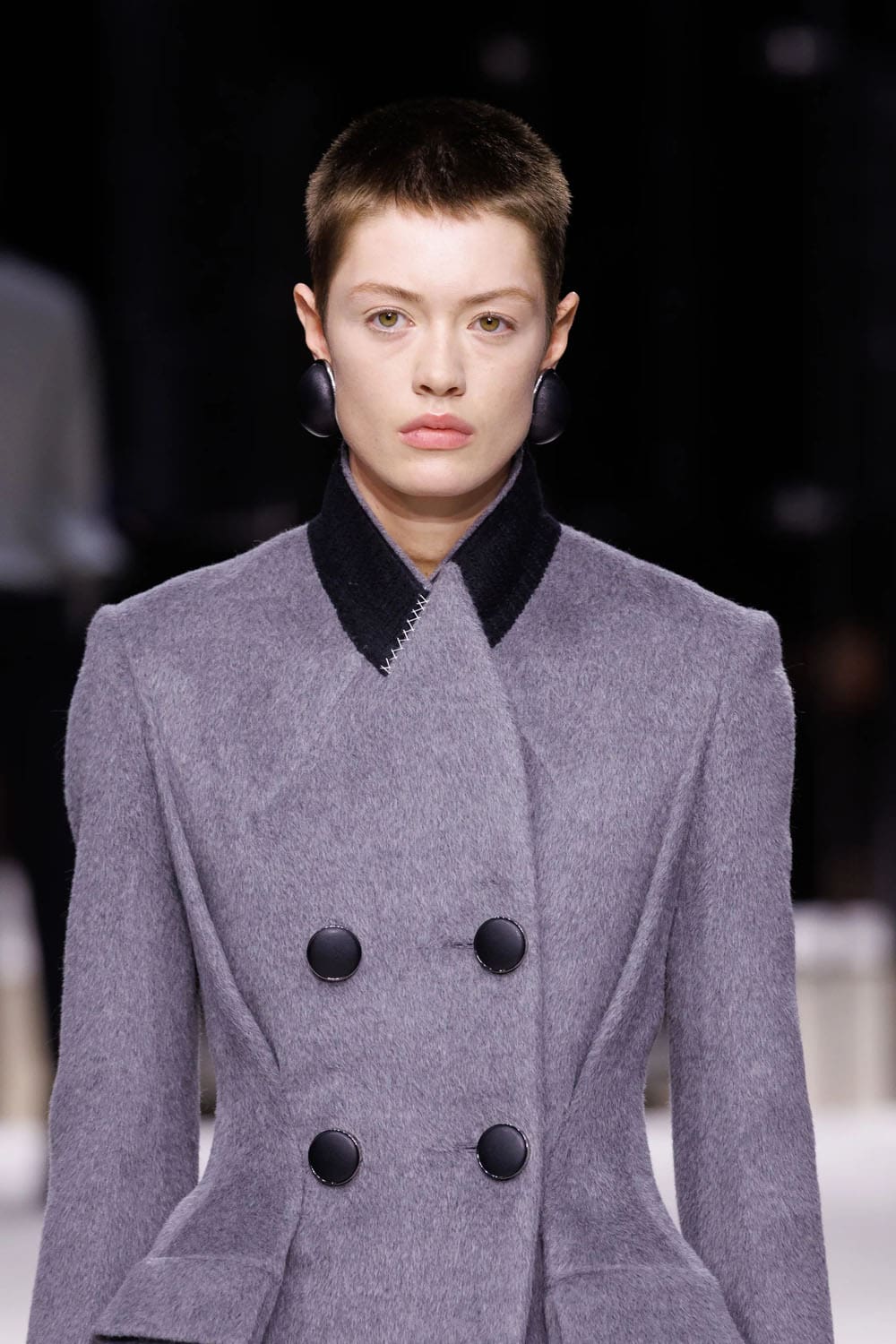
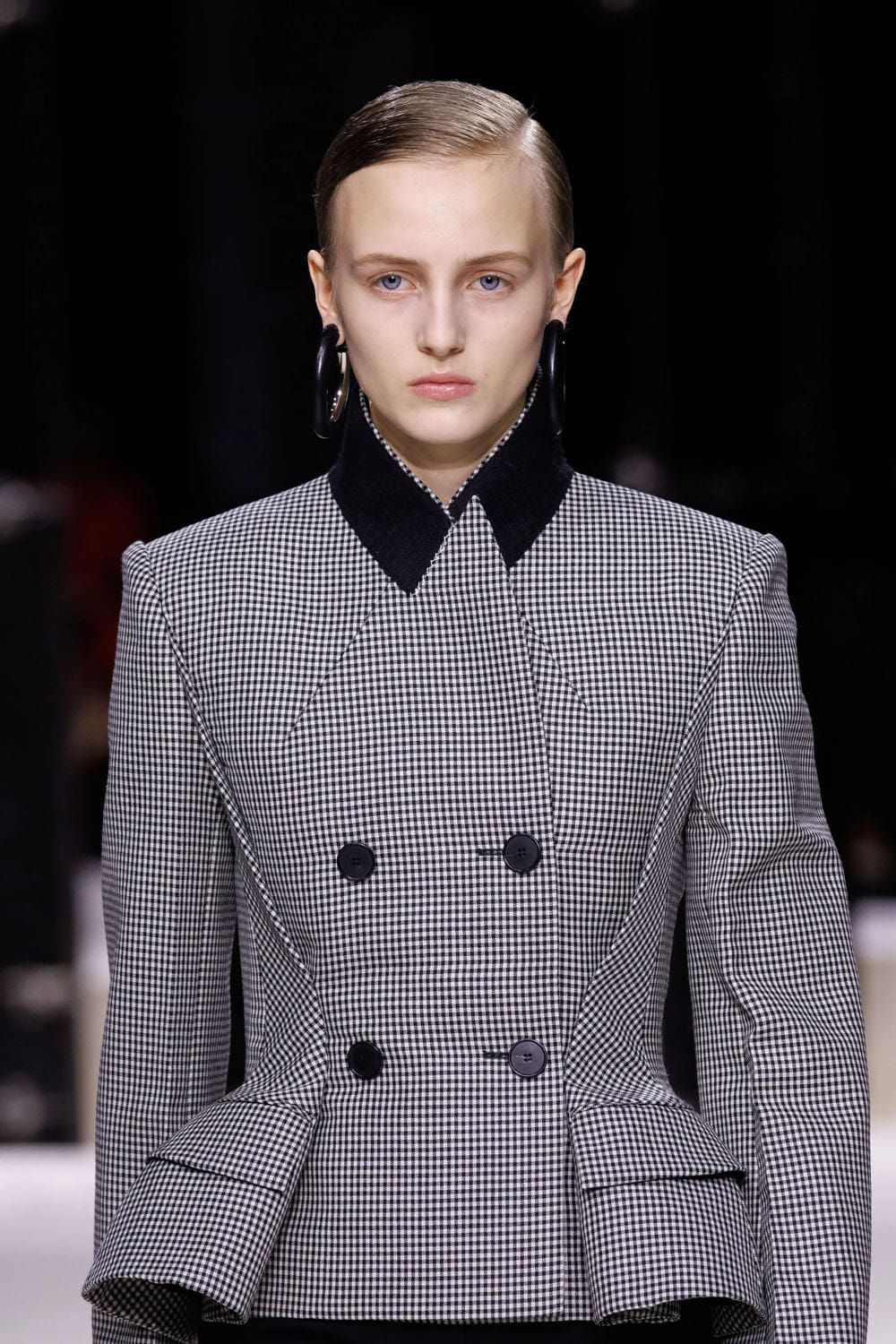
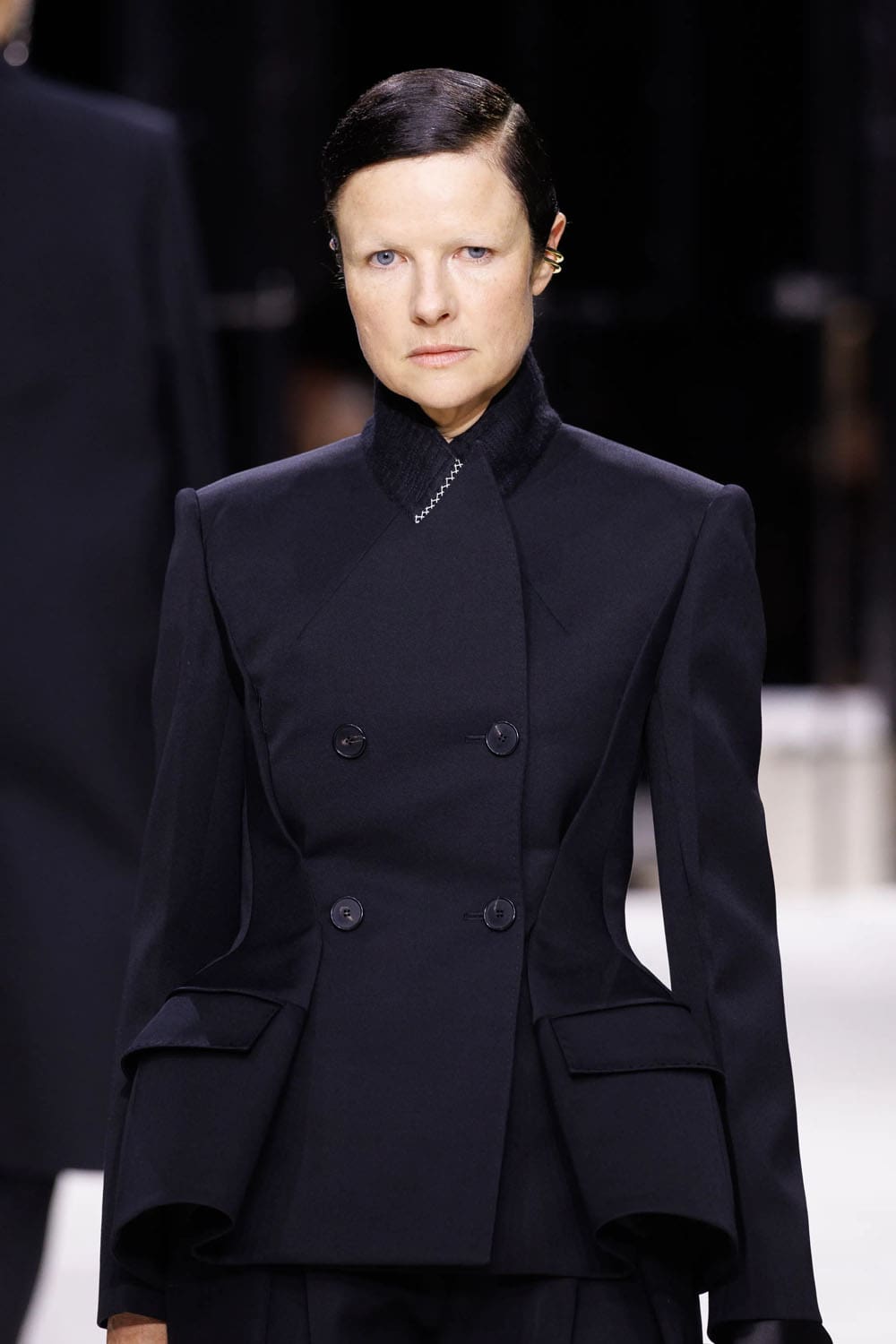
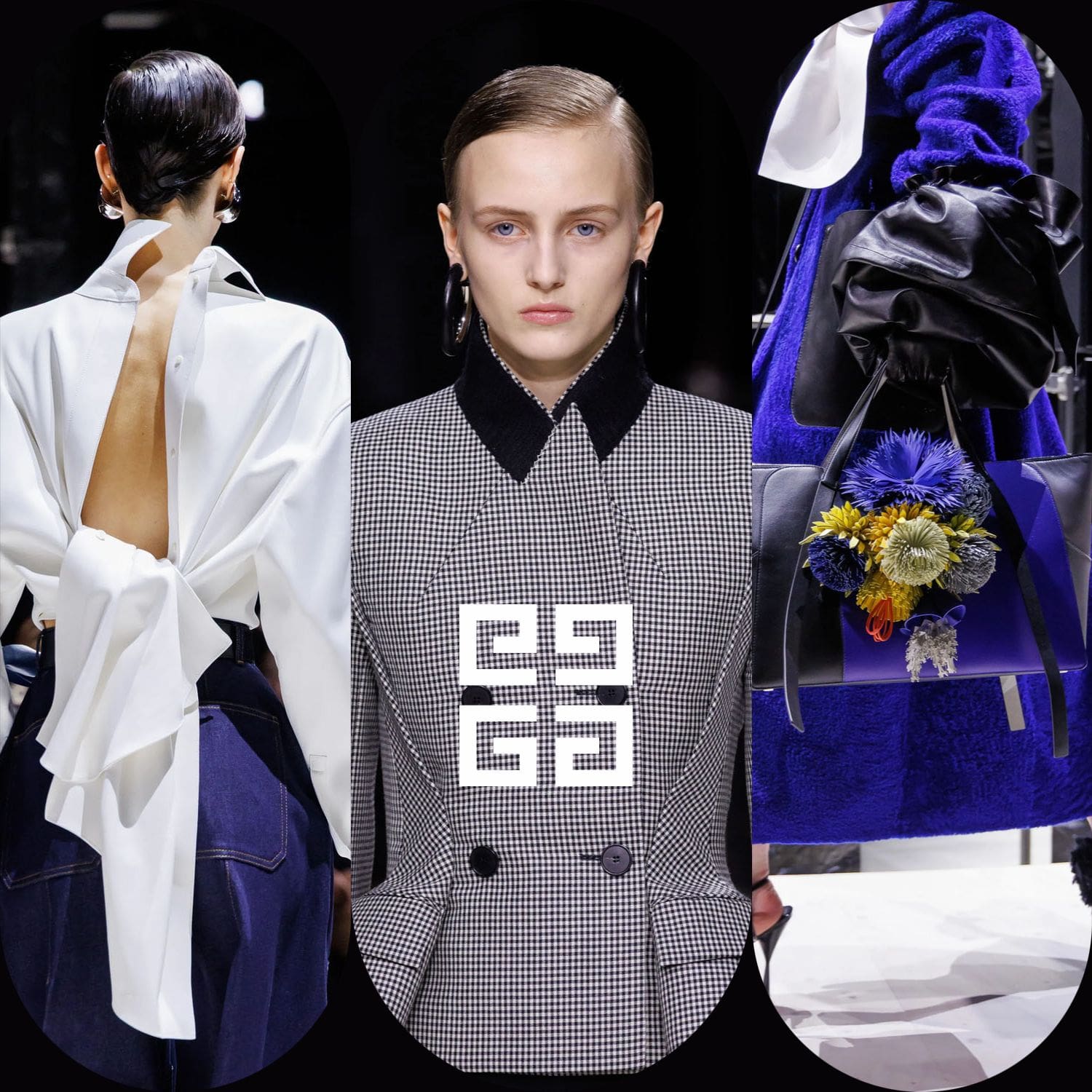
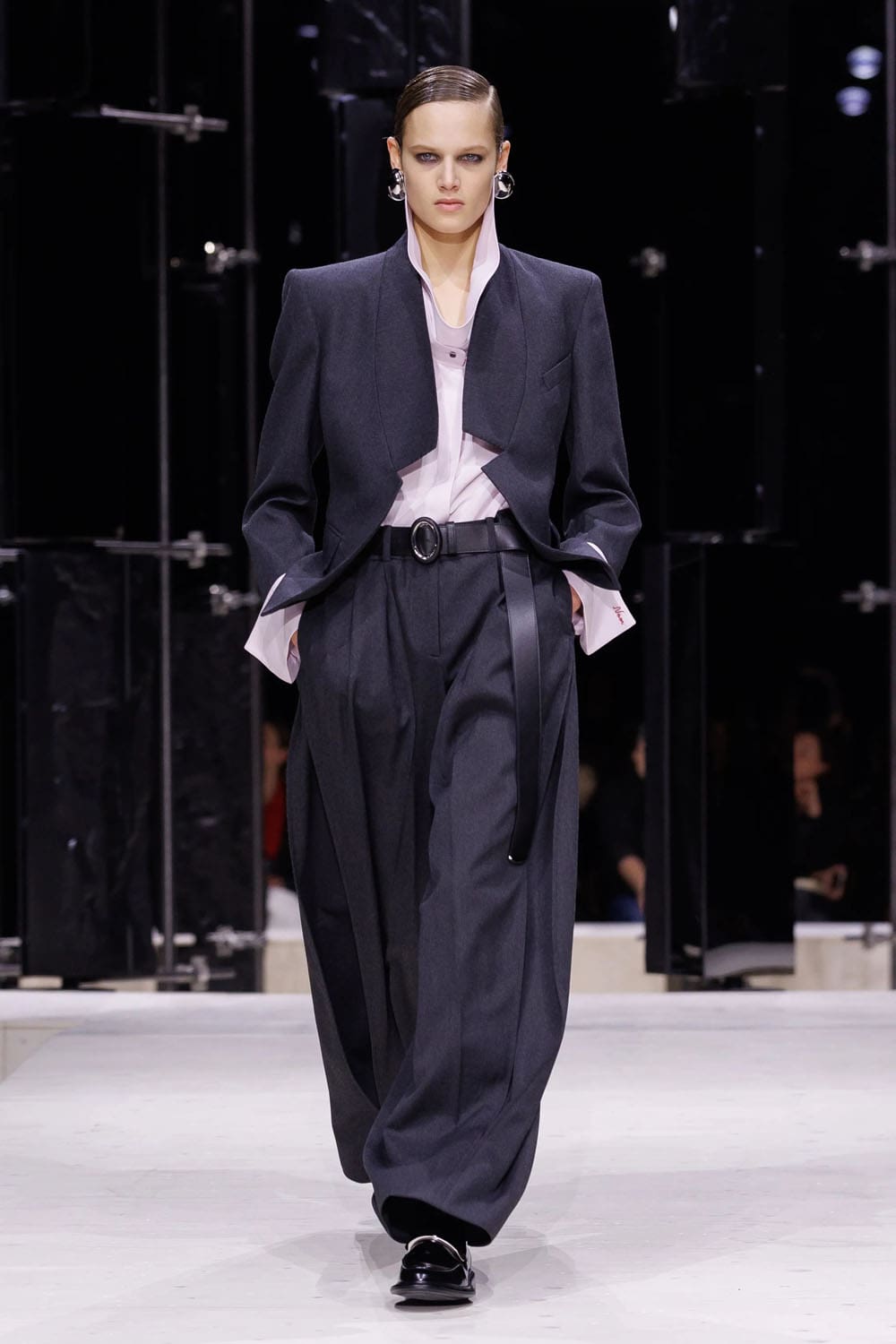
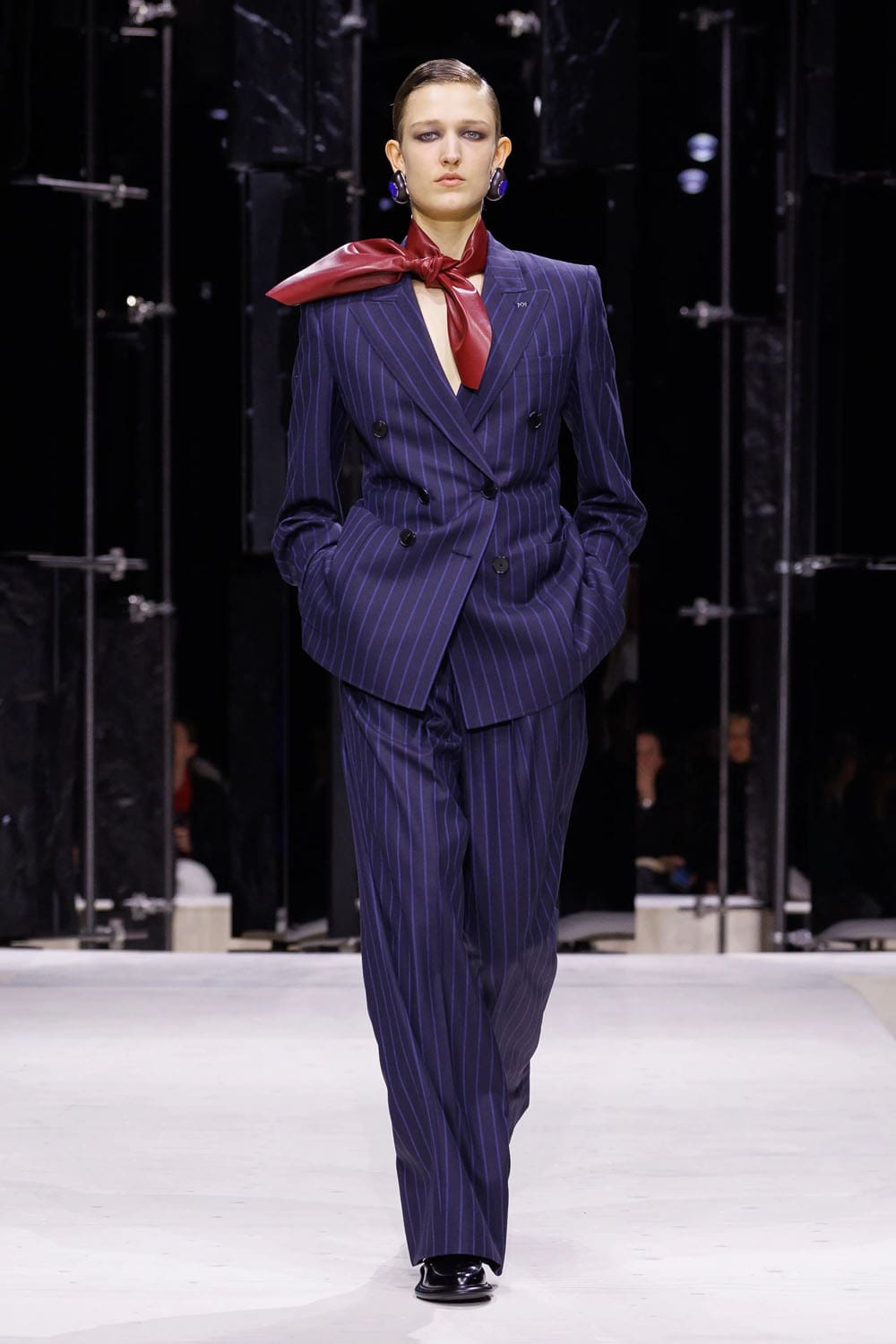
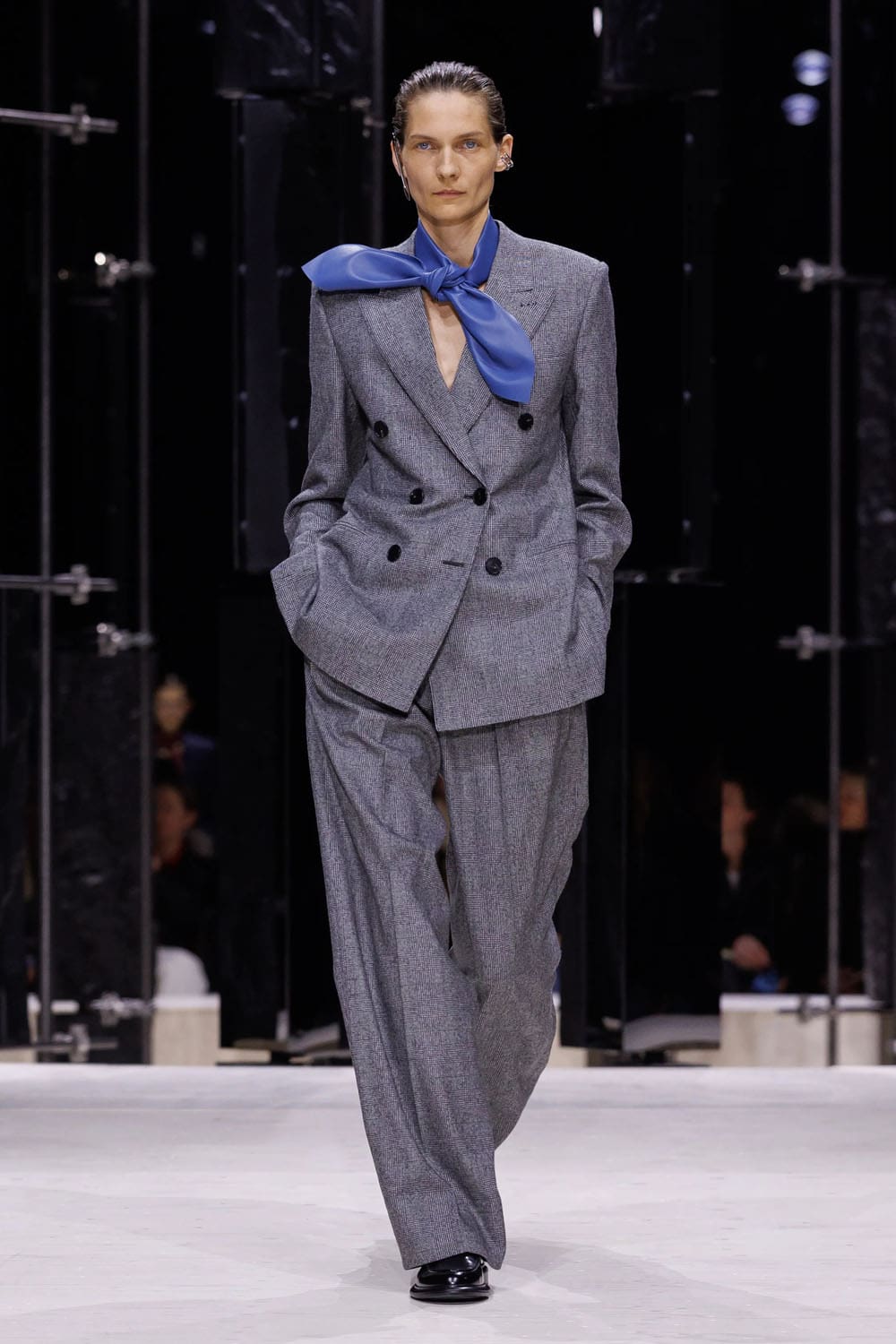
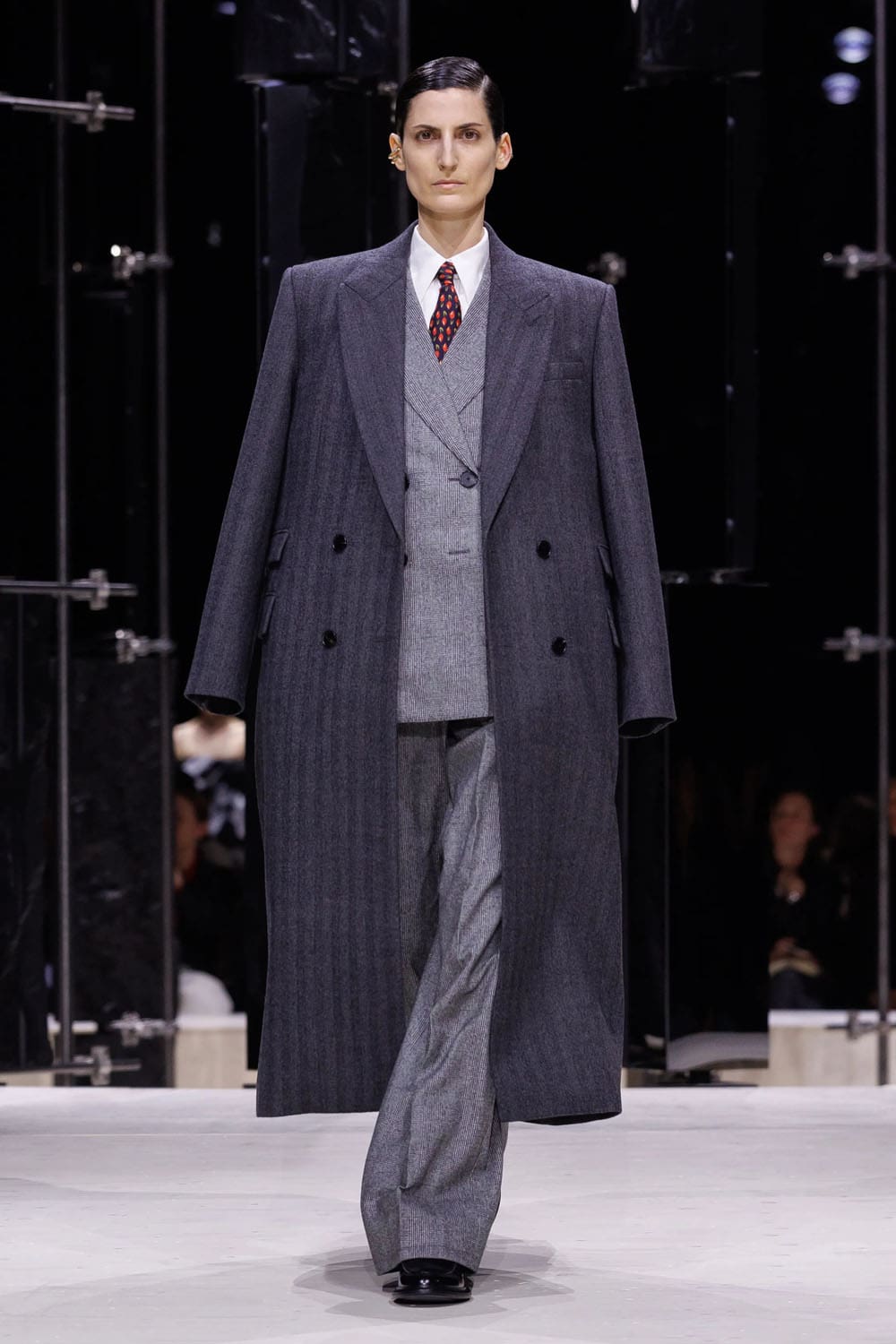
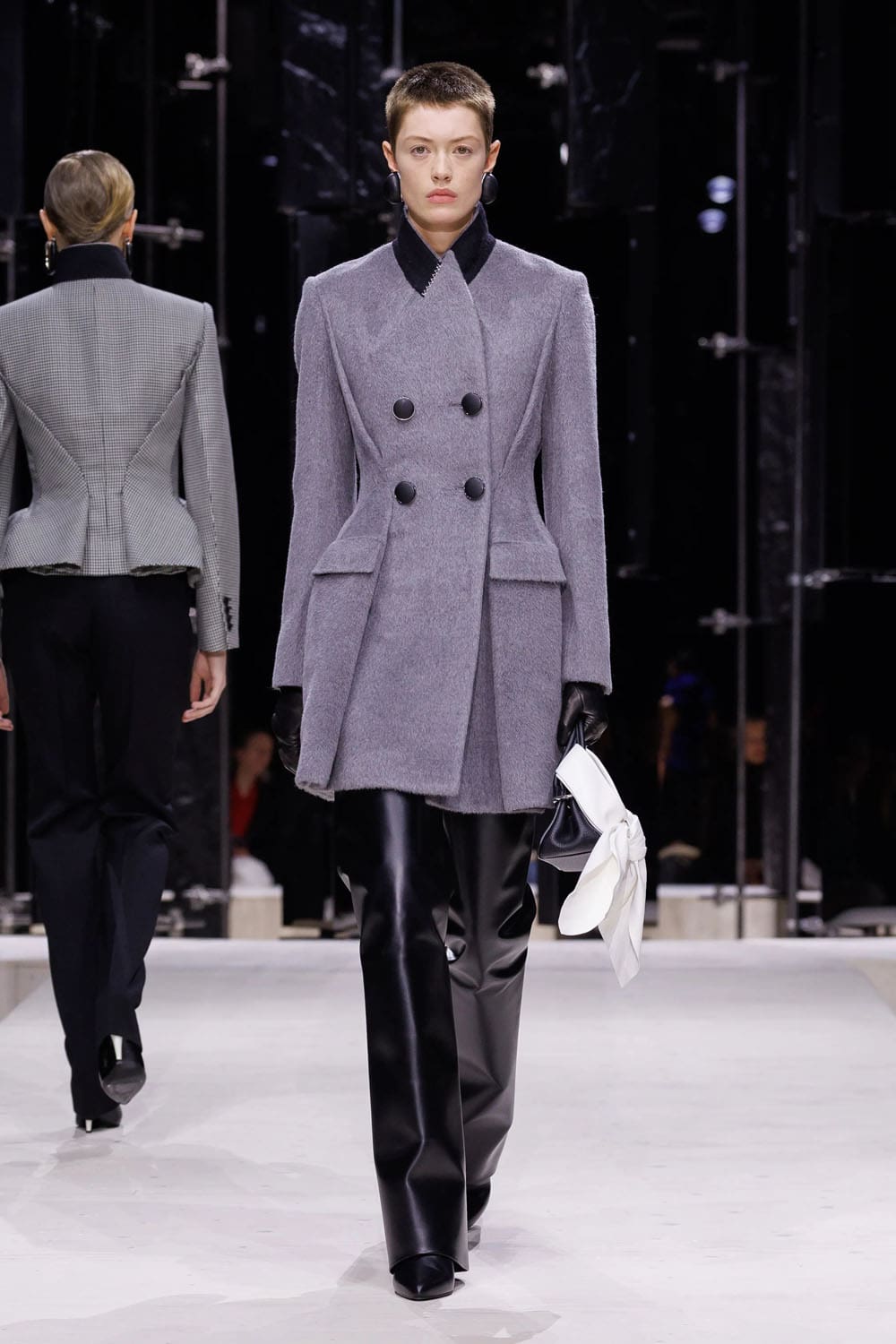
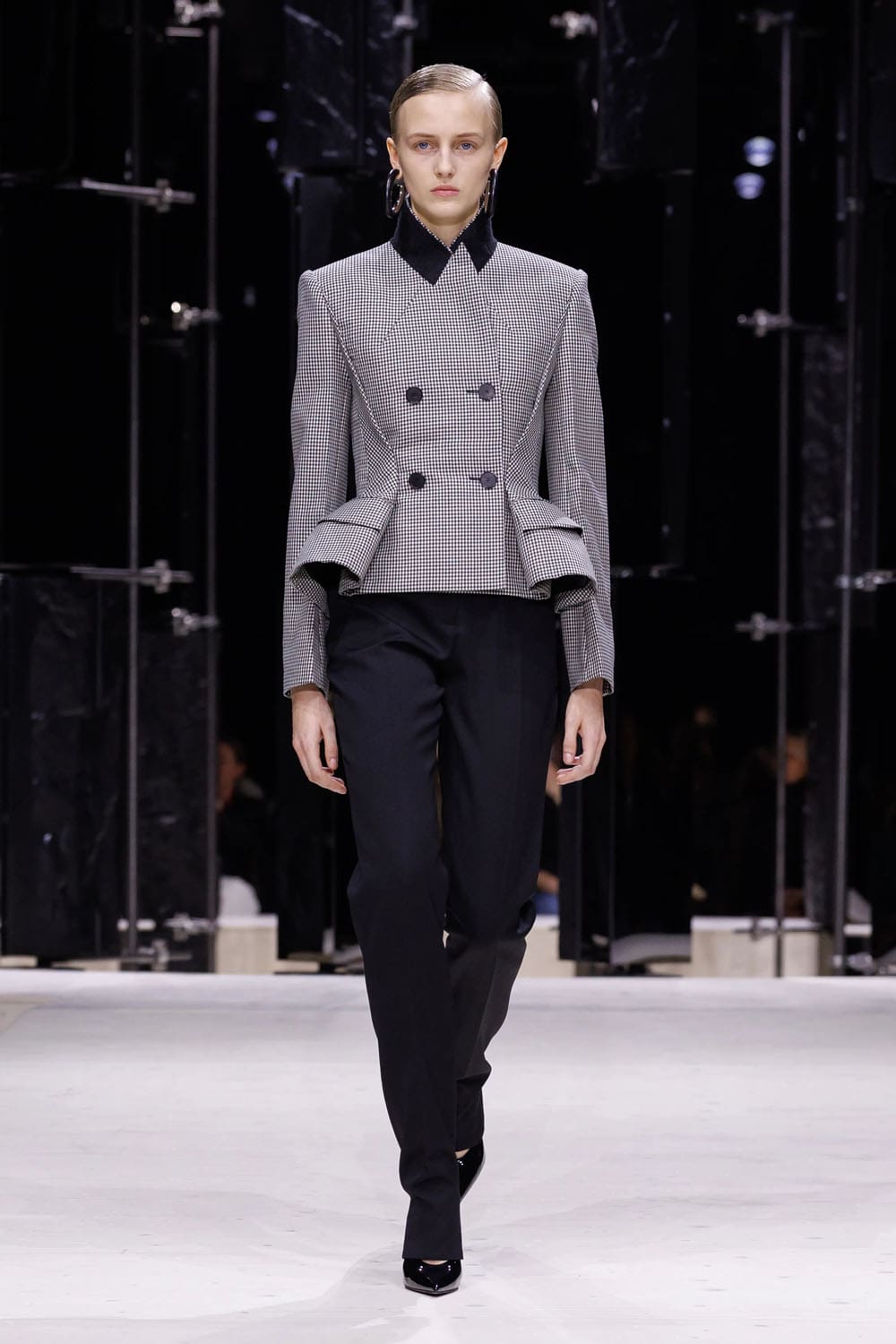
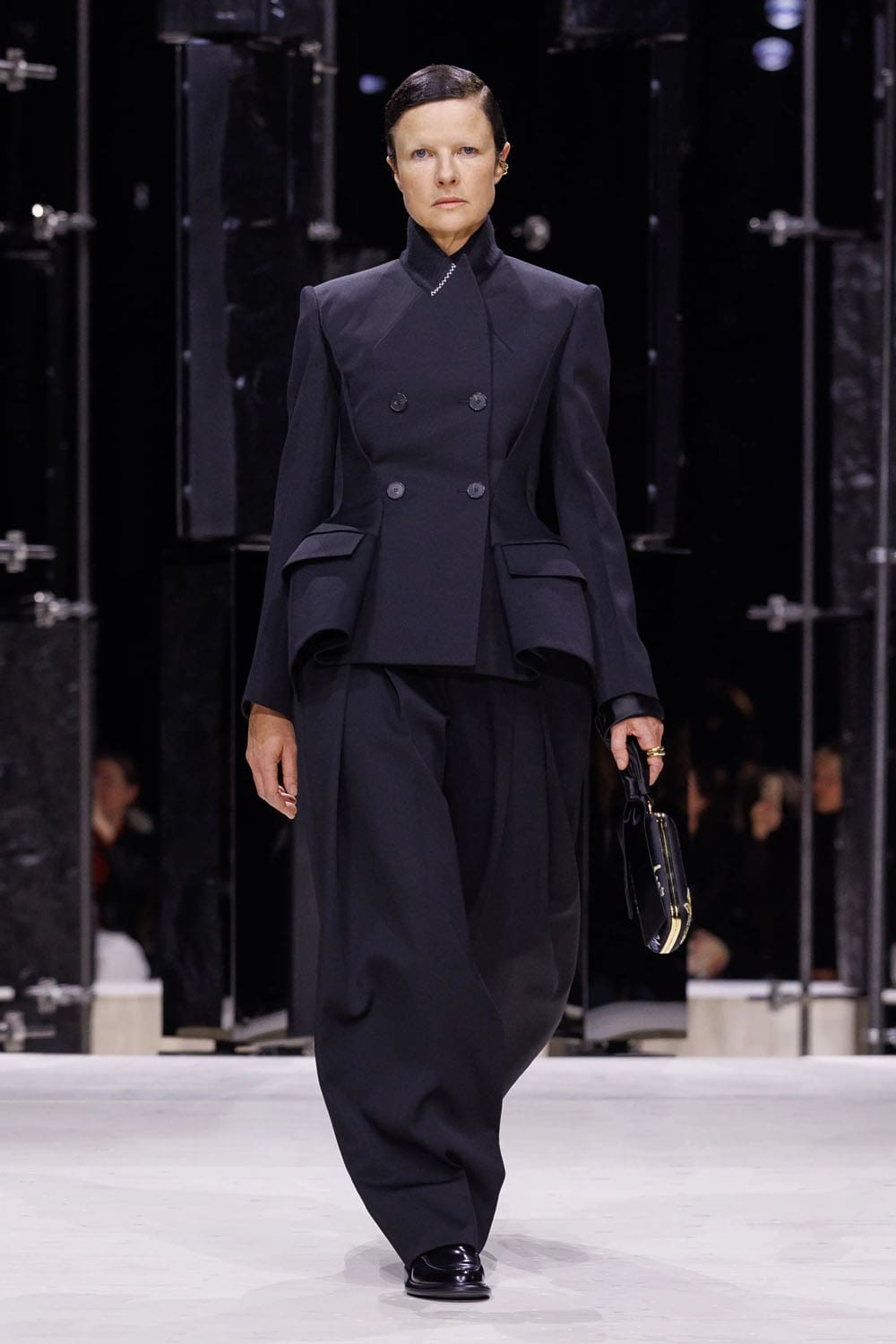
This interplay — strictness and subversion — threaded through the tailoring. A double-breasted grey suit arrived with a single blue silk tie draped like a gesture rather than an accessory, floating somewhere between Katharine Hepburn and 1990s minimalism. Then, an impeccable houndstooth jacket, cinched and flared at the hip, reasserted the house’s devotion to the hourglass, but with softer architecture: less armor, more intelligence.
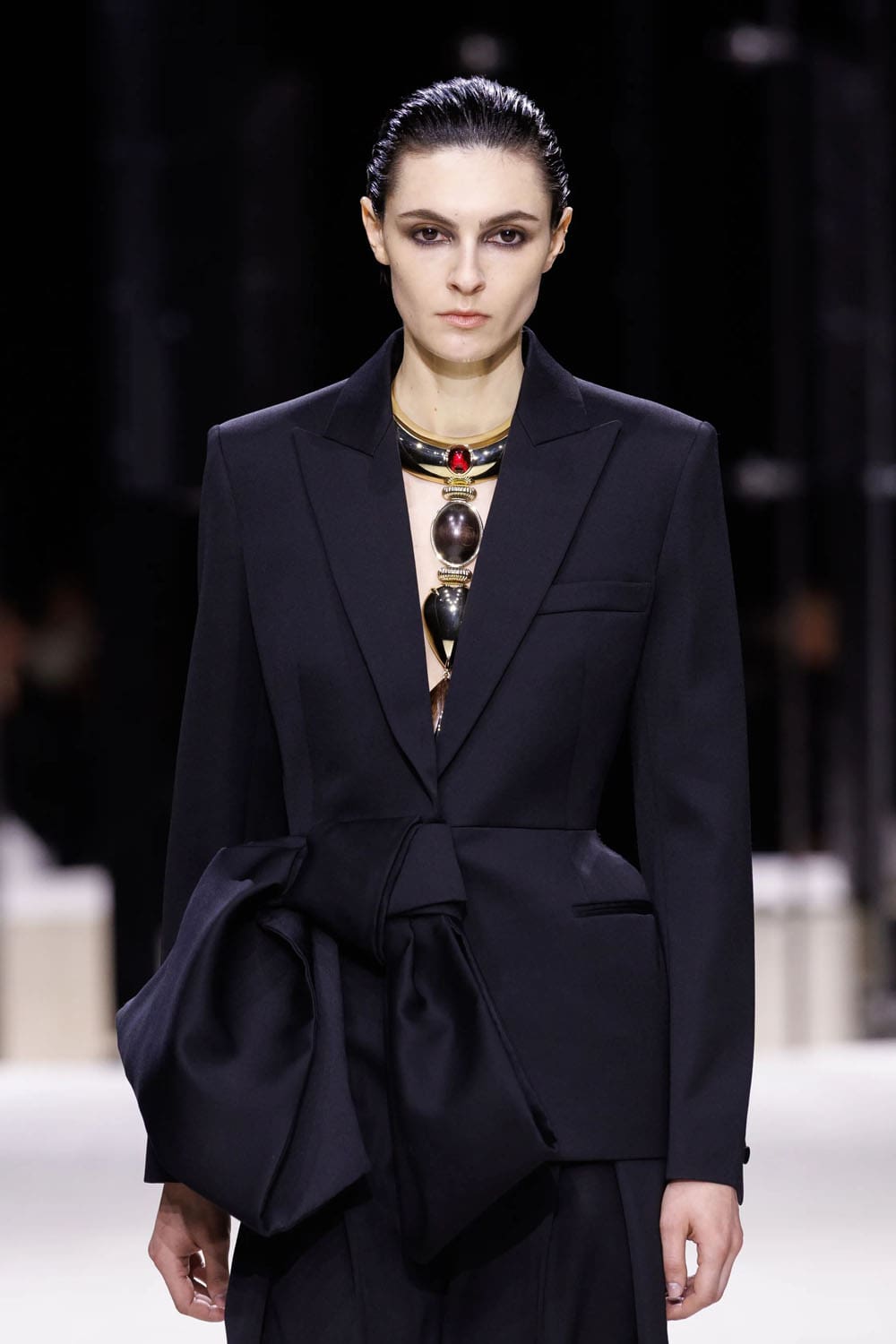
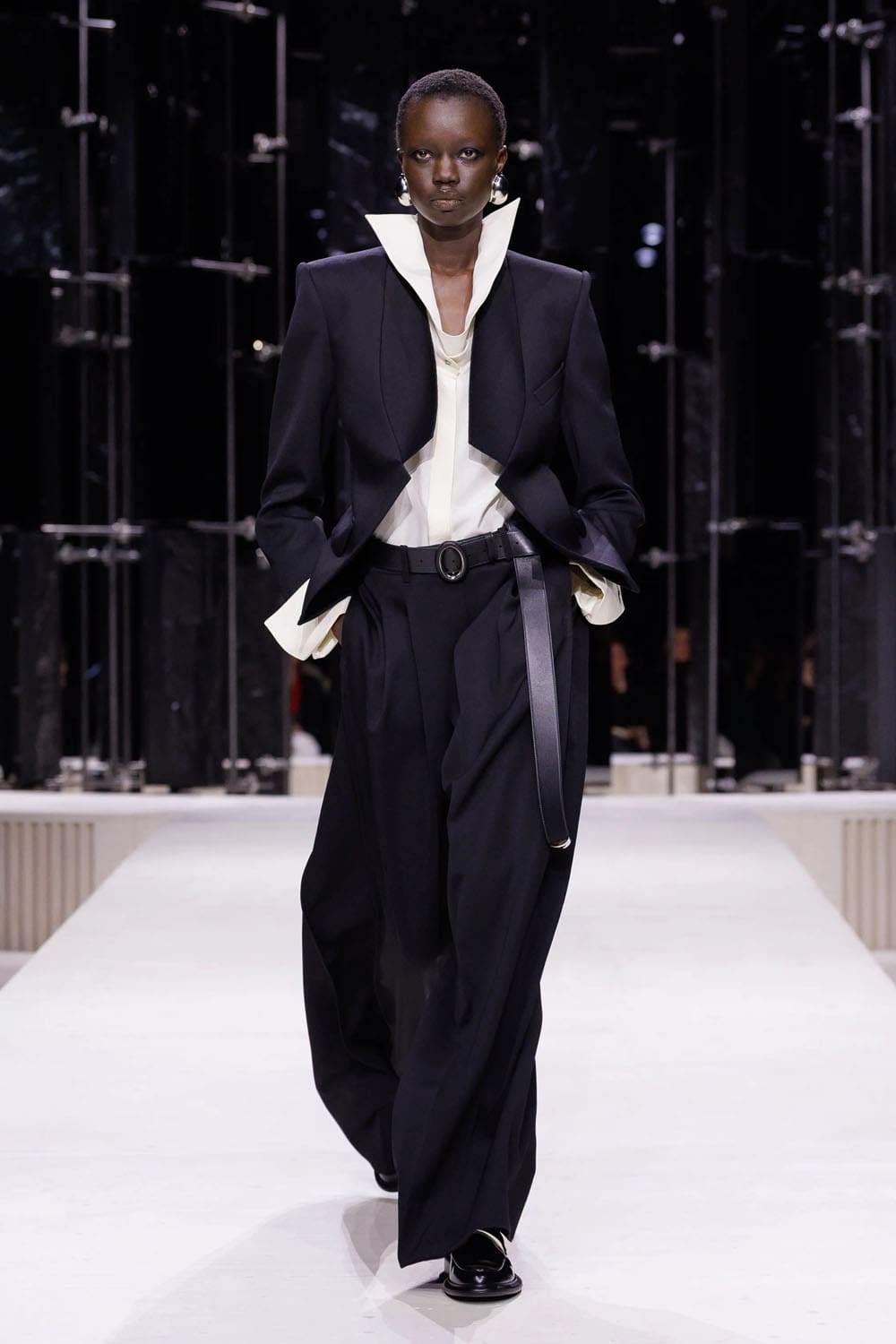
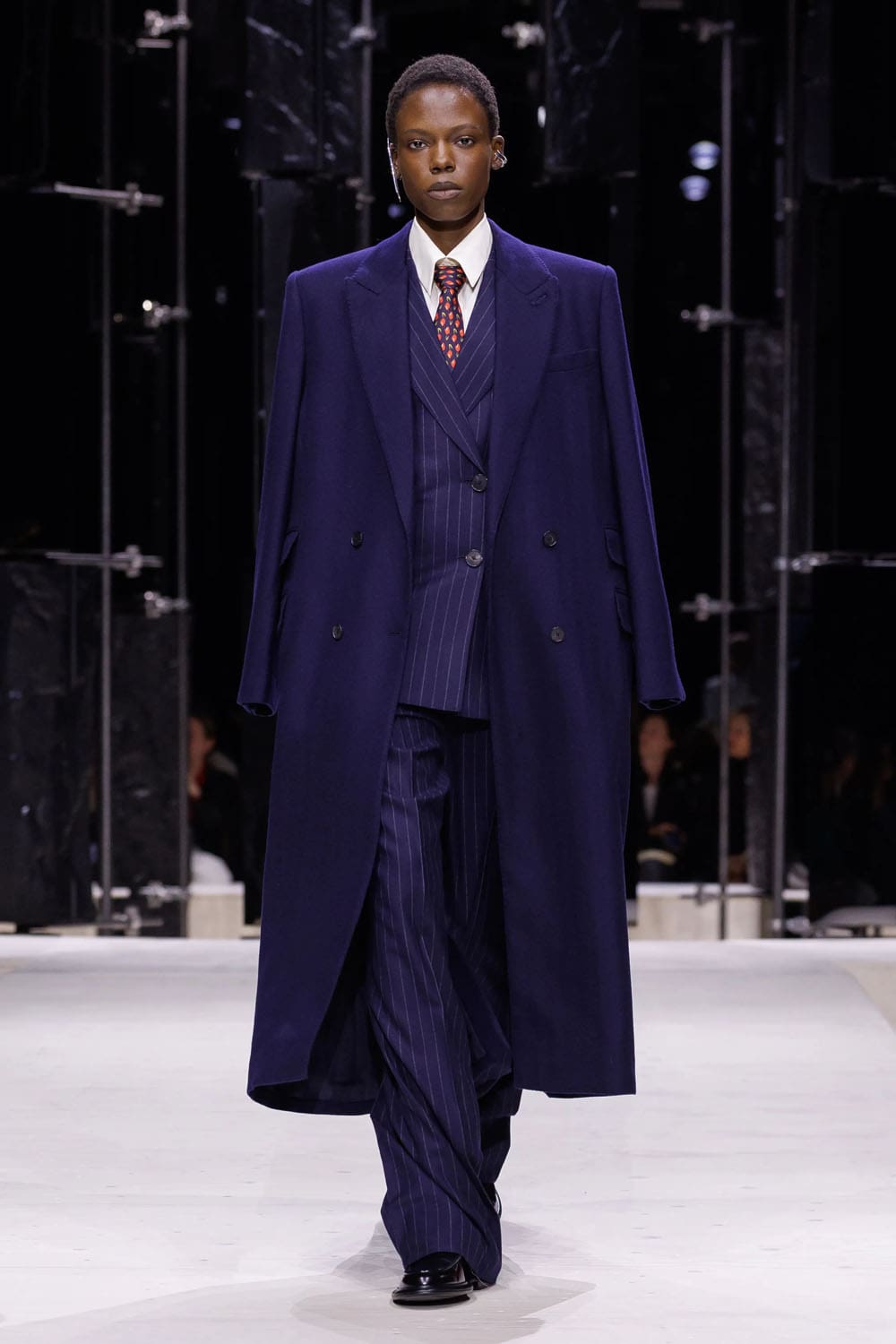
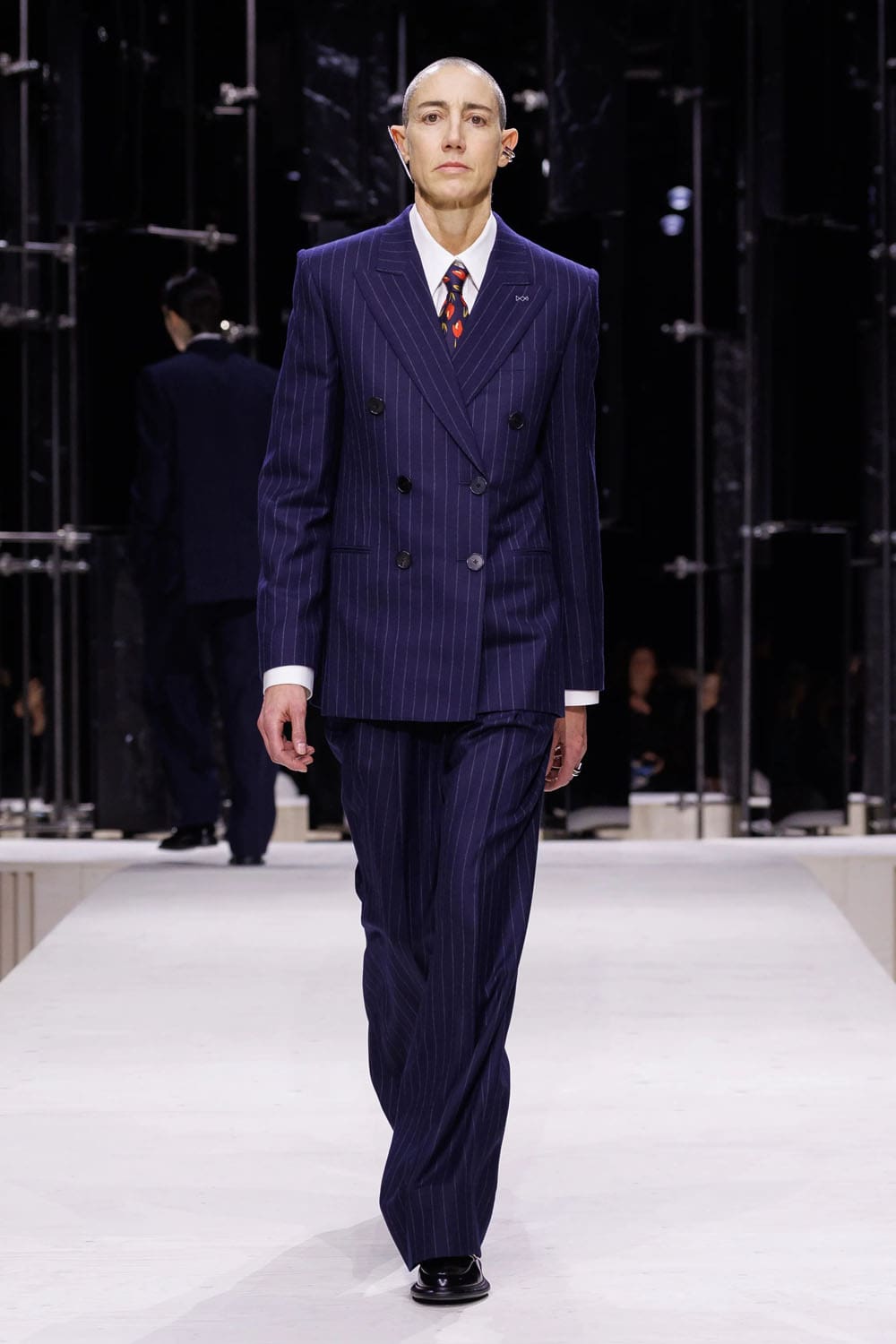
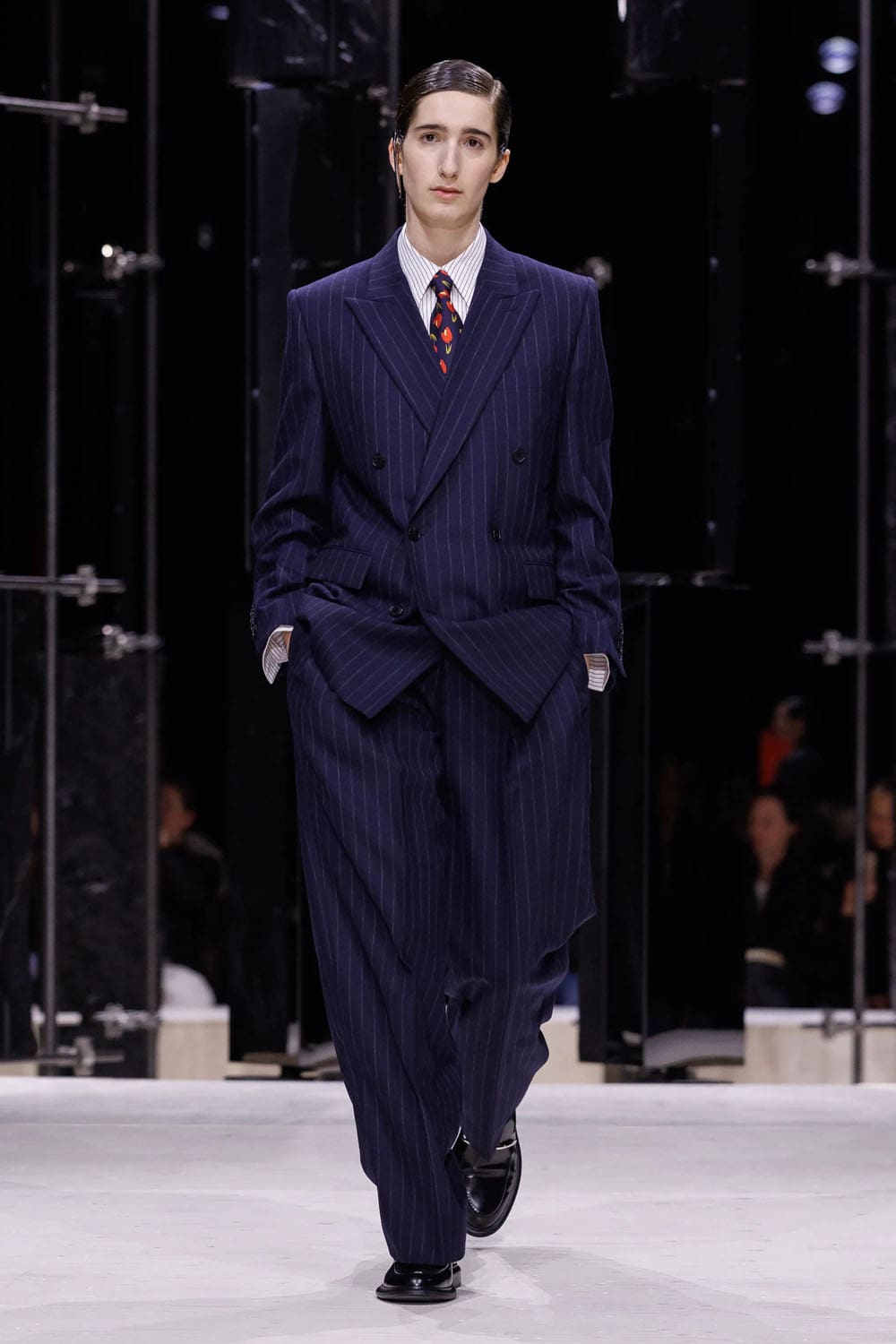
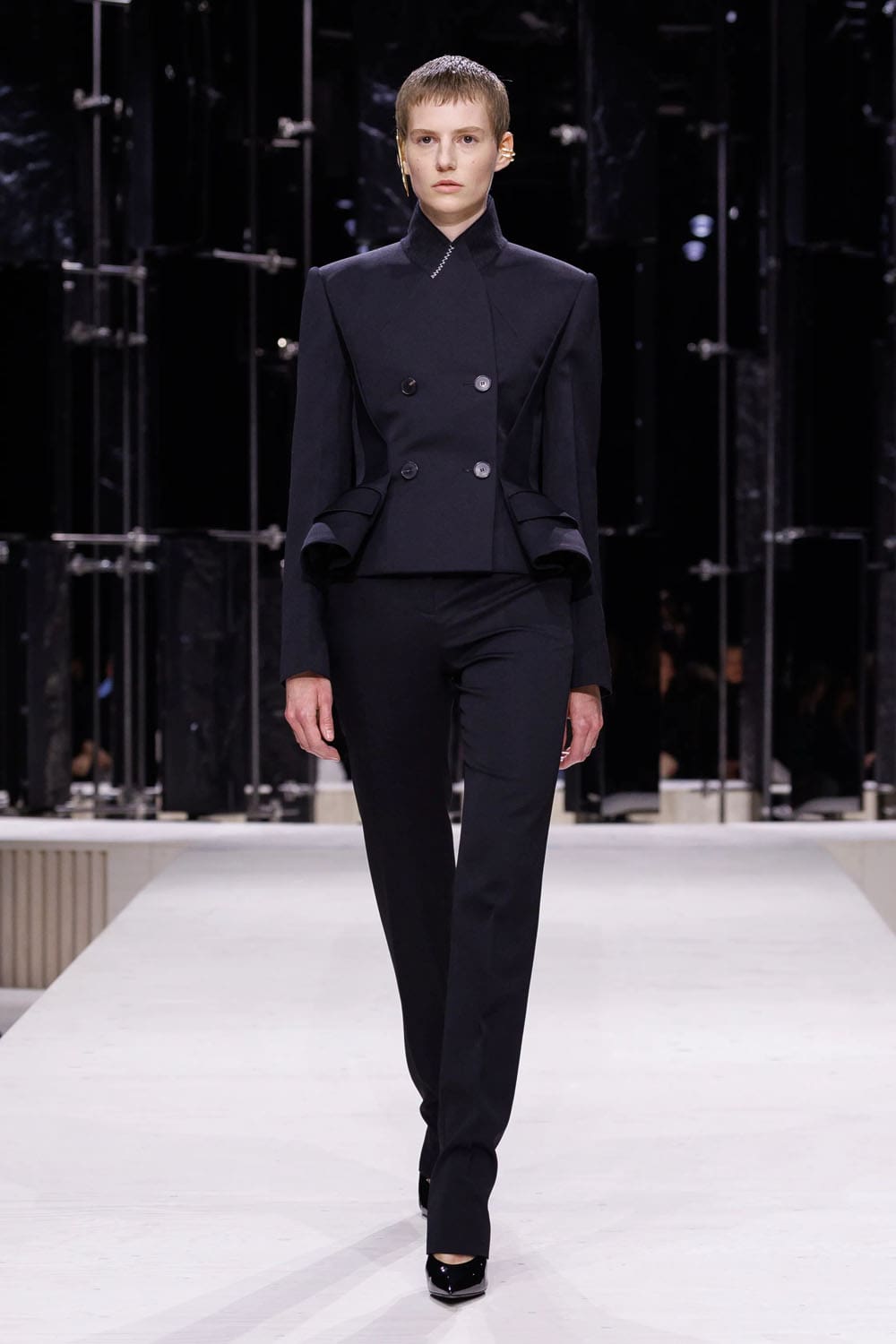
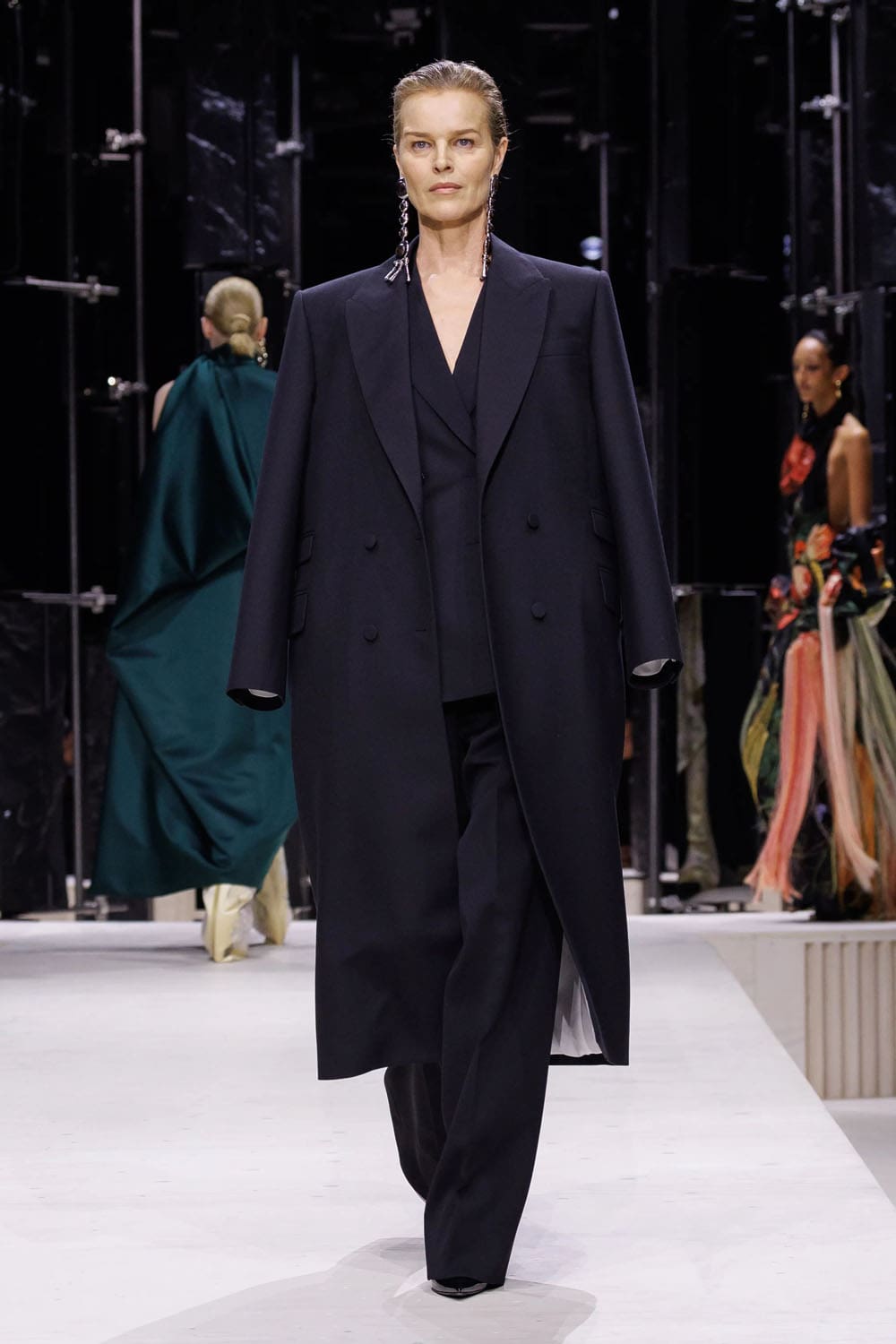
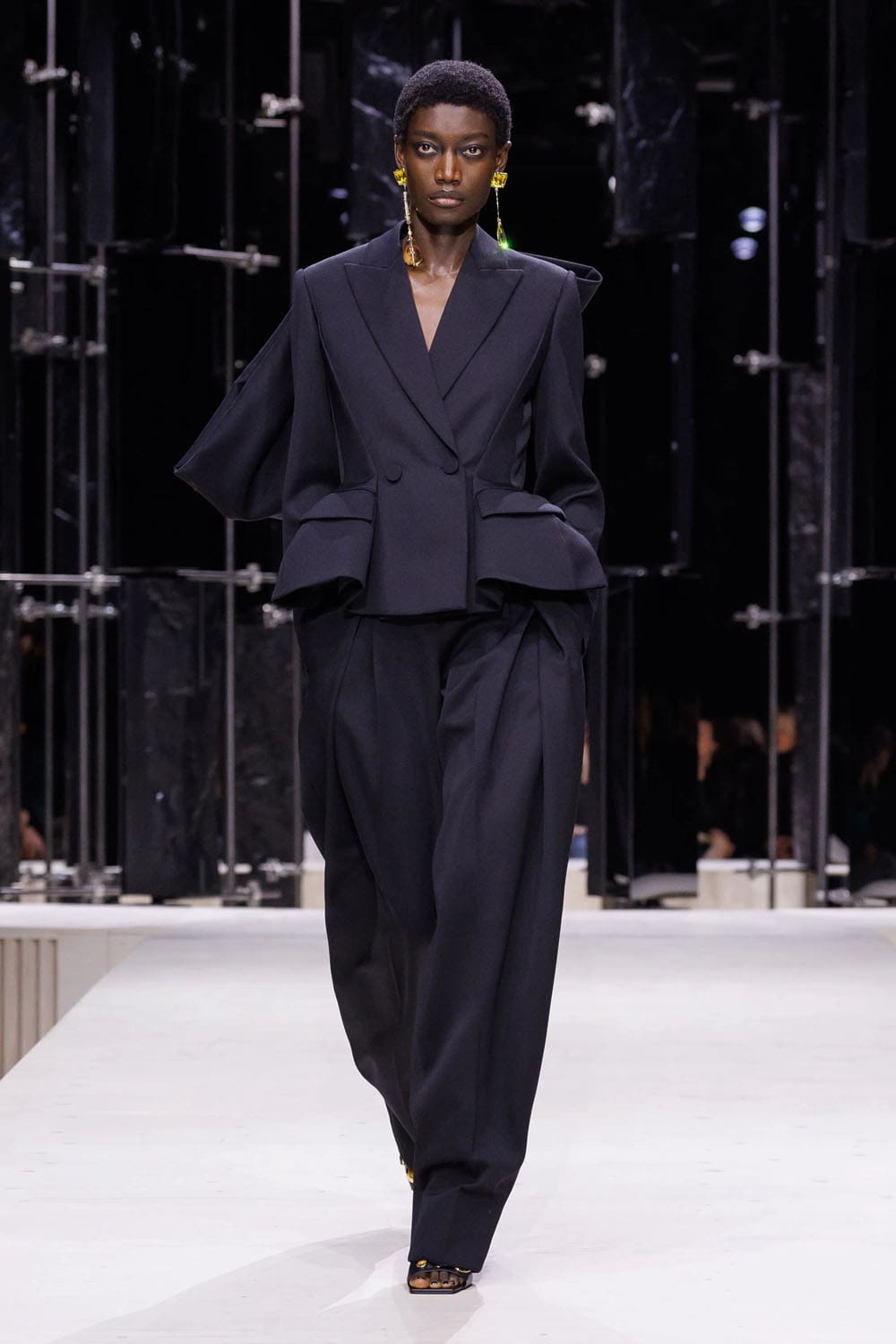
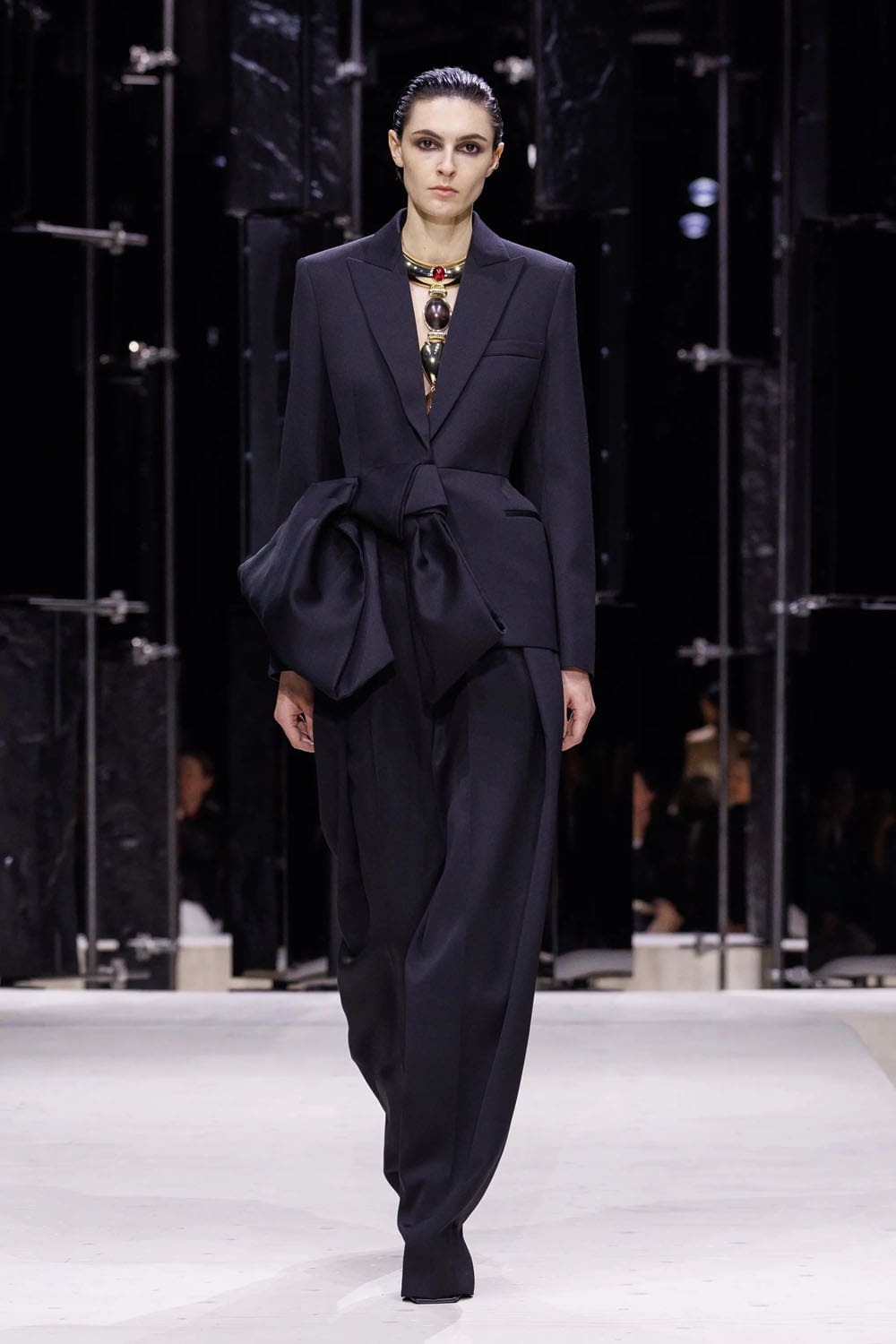
The suits were not uniform; they were personality studies. Masculine pinstripes relaxed into wider trousers, while curvaceous cuts introduced peplumed hips, echoing the sculptural rigor Burton has refined for decades. And then came the tuxedo — clean, exact, and crowned with an evening coat so sharply cut it practically sliced the air behind it.
The Disorder of Elegance
This collection takes pleasure in juxtapositions. Not the chaotic kind, but the kind that makes elegance breathe.
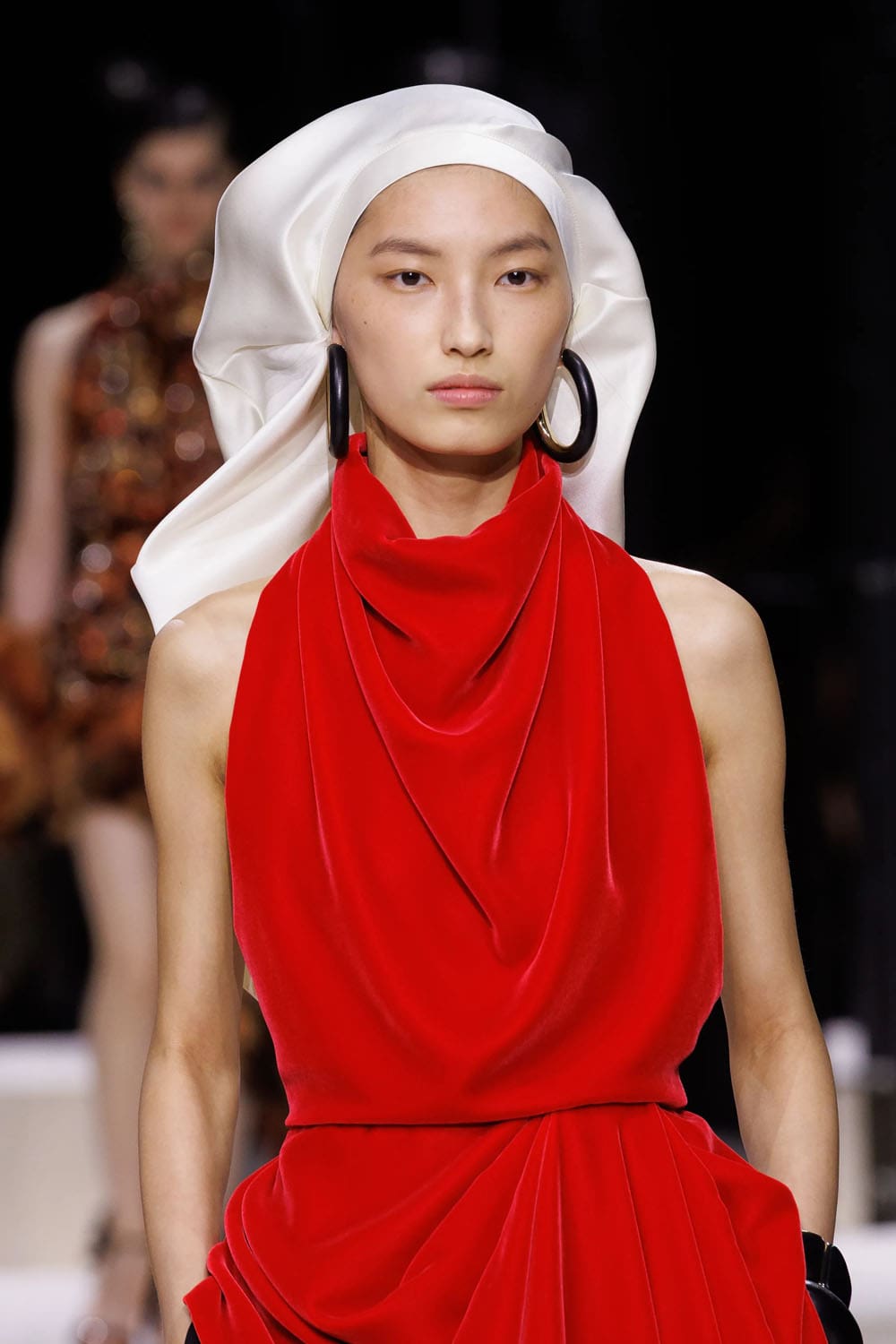
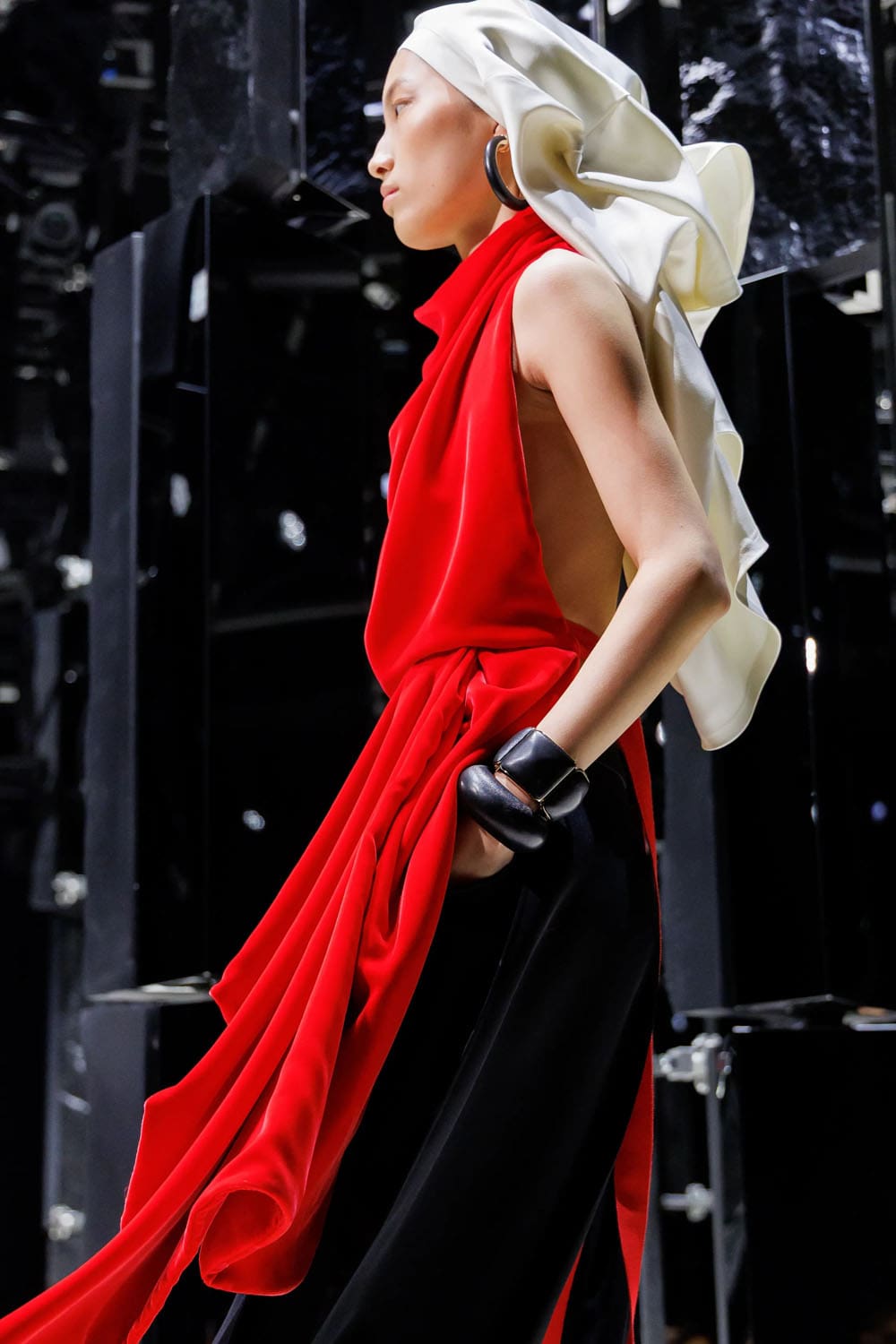
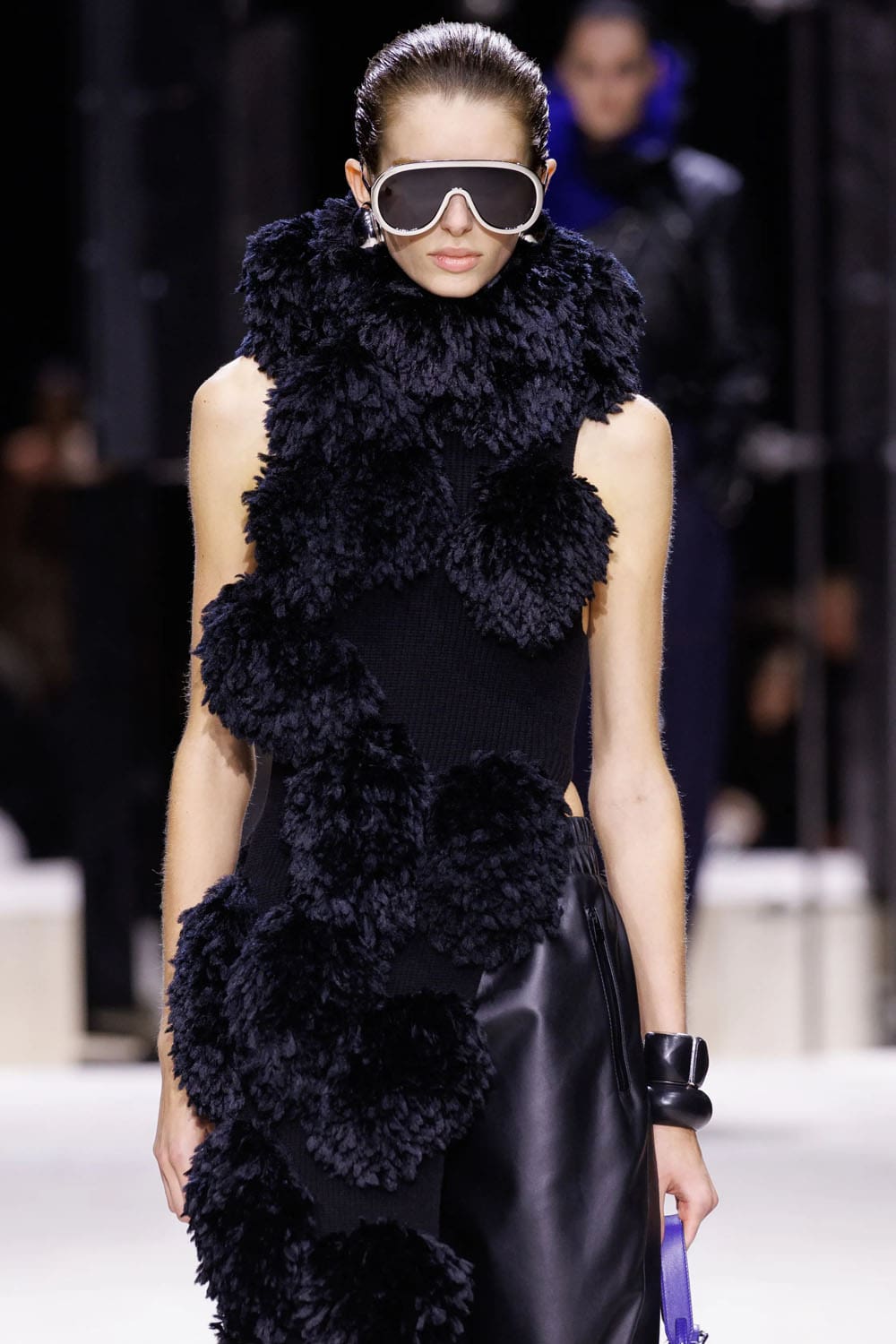
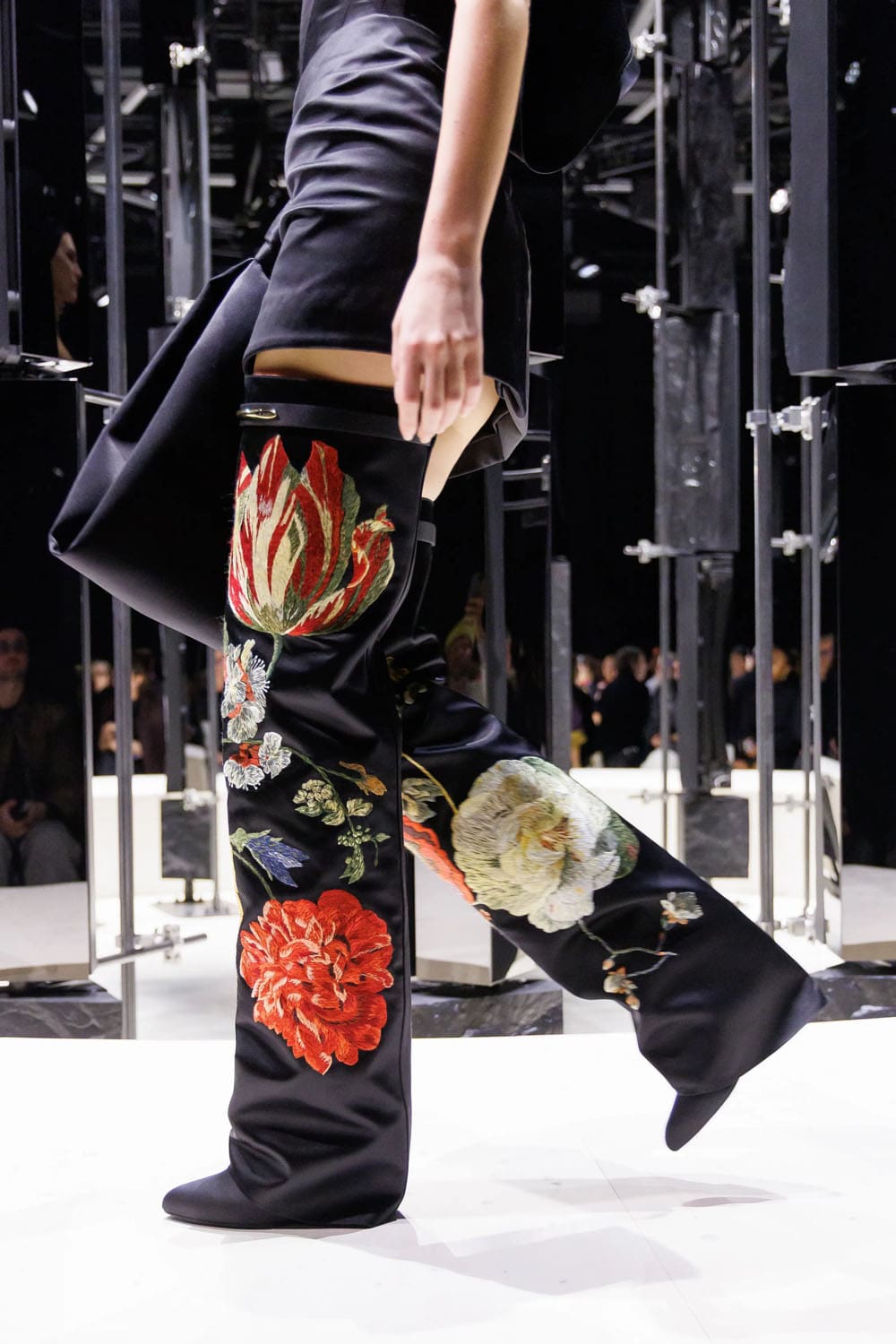
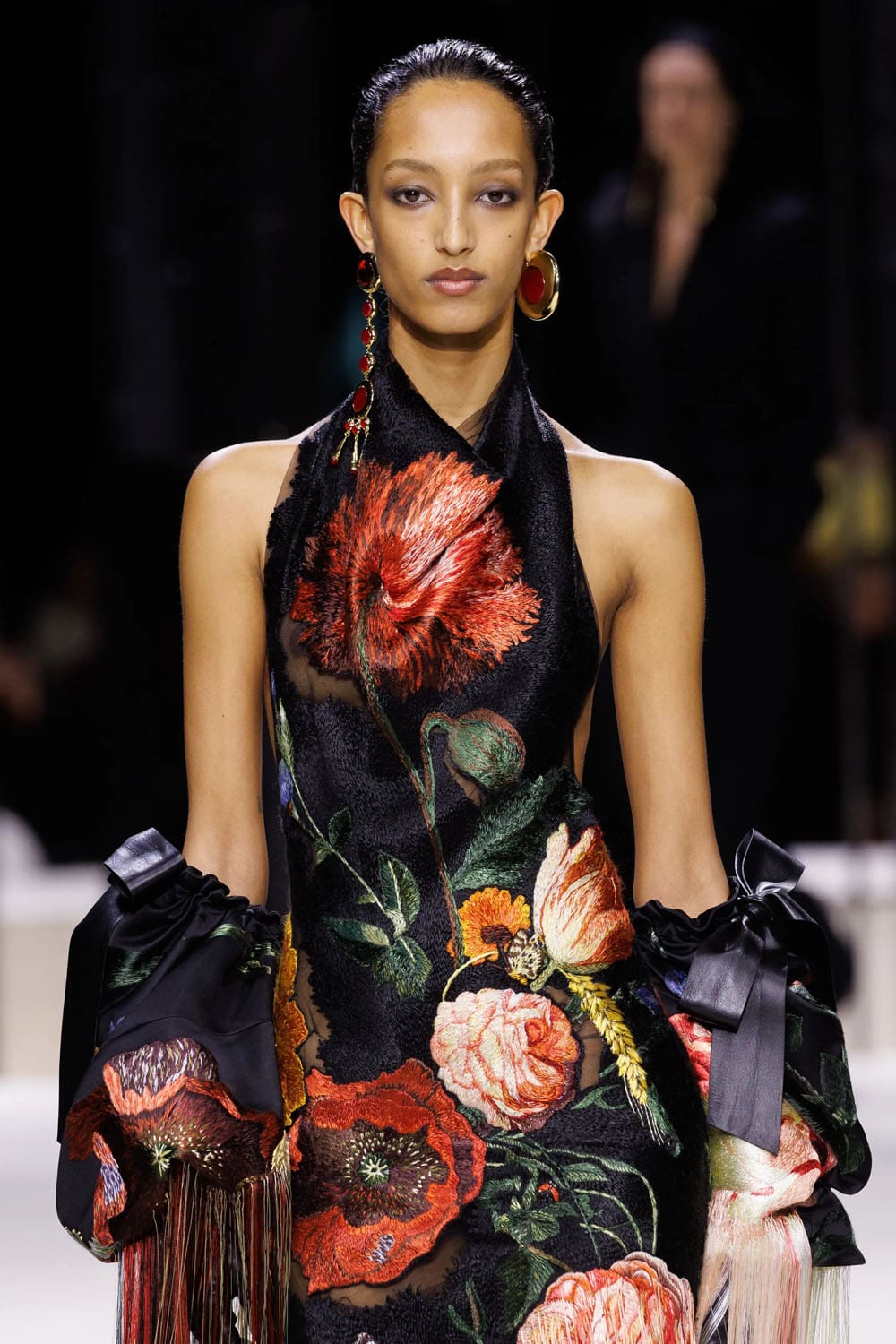
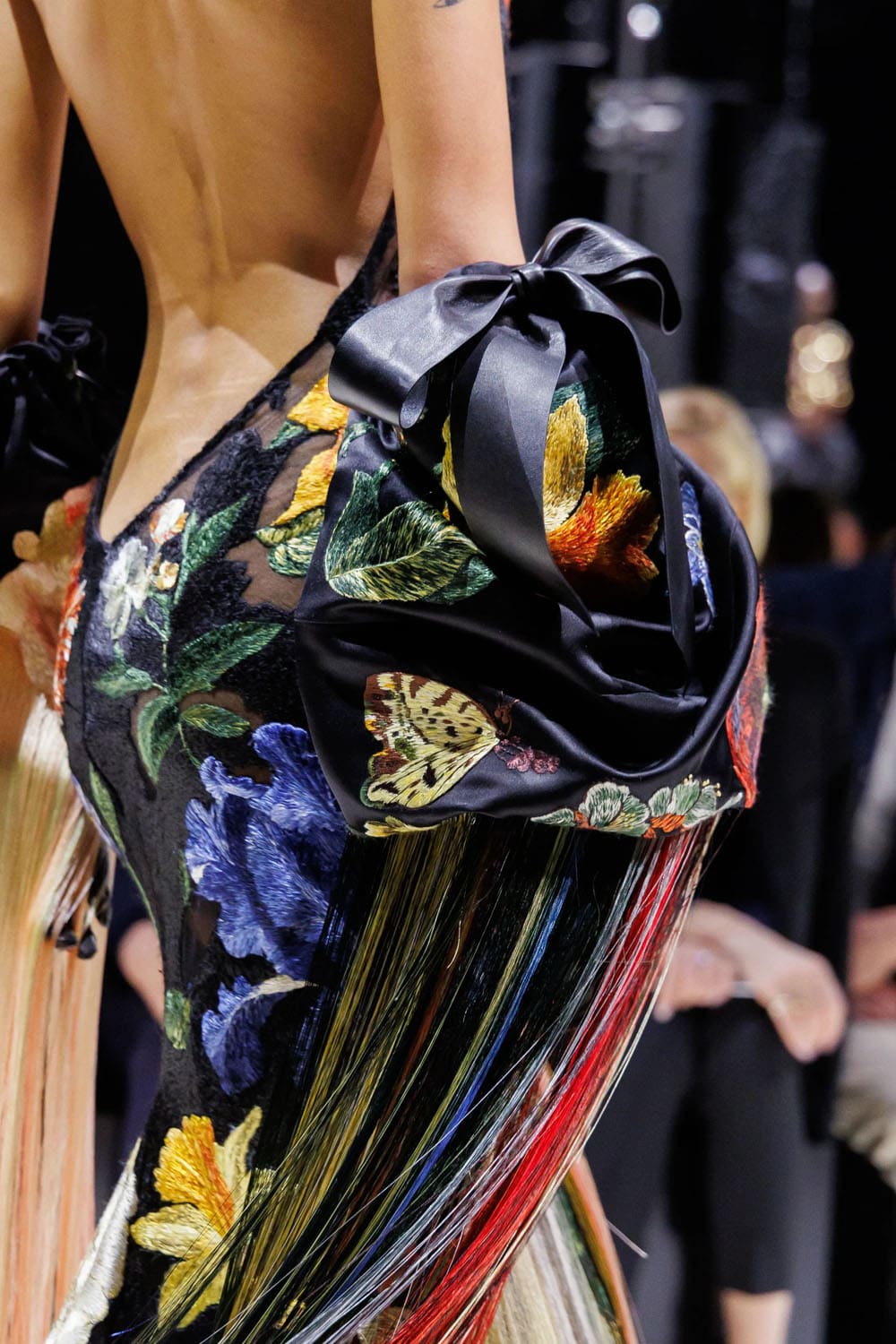
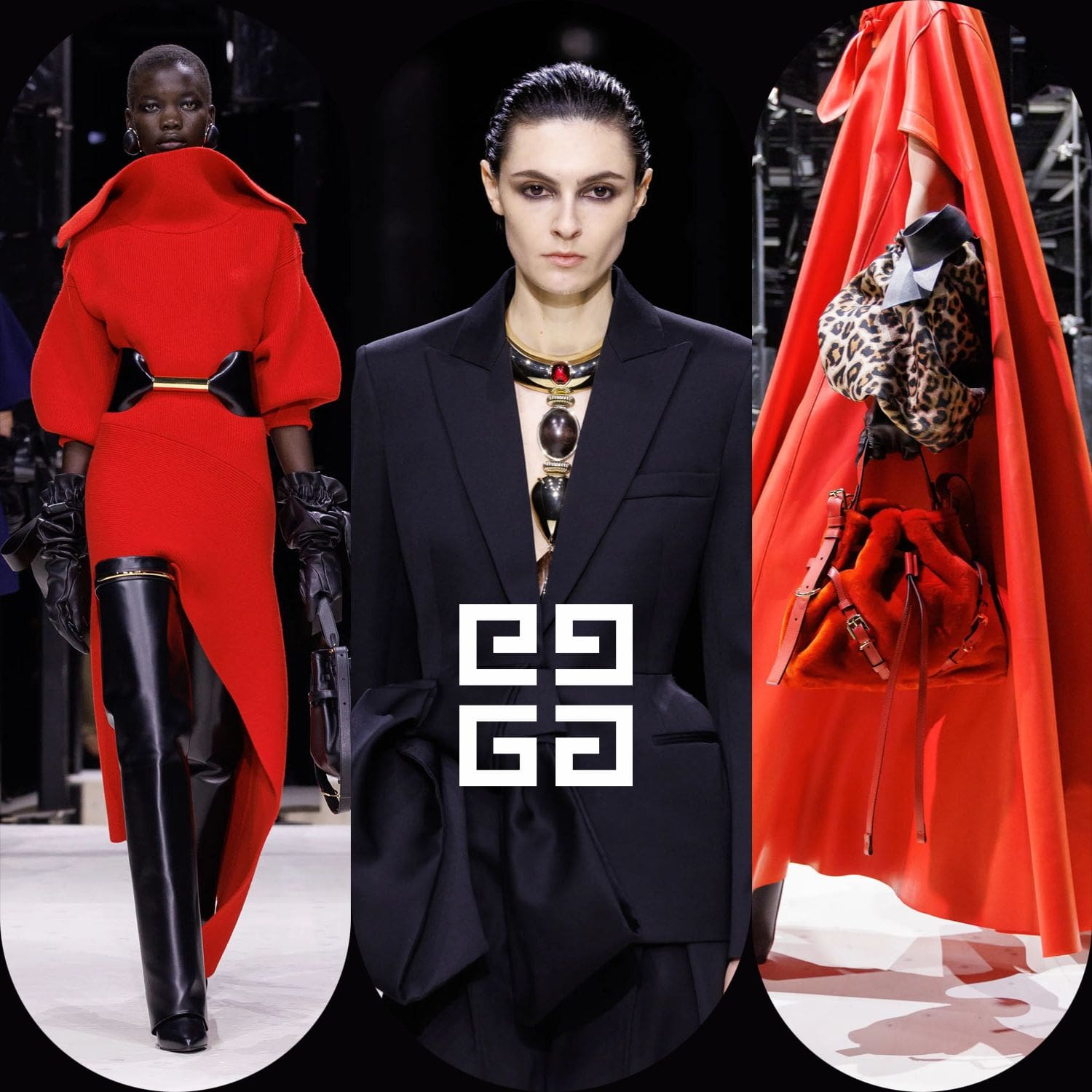
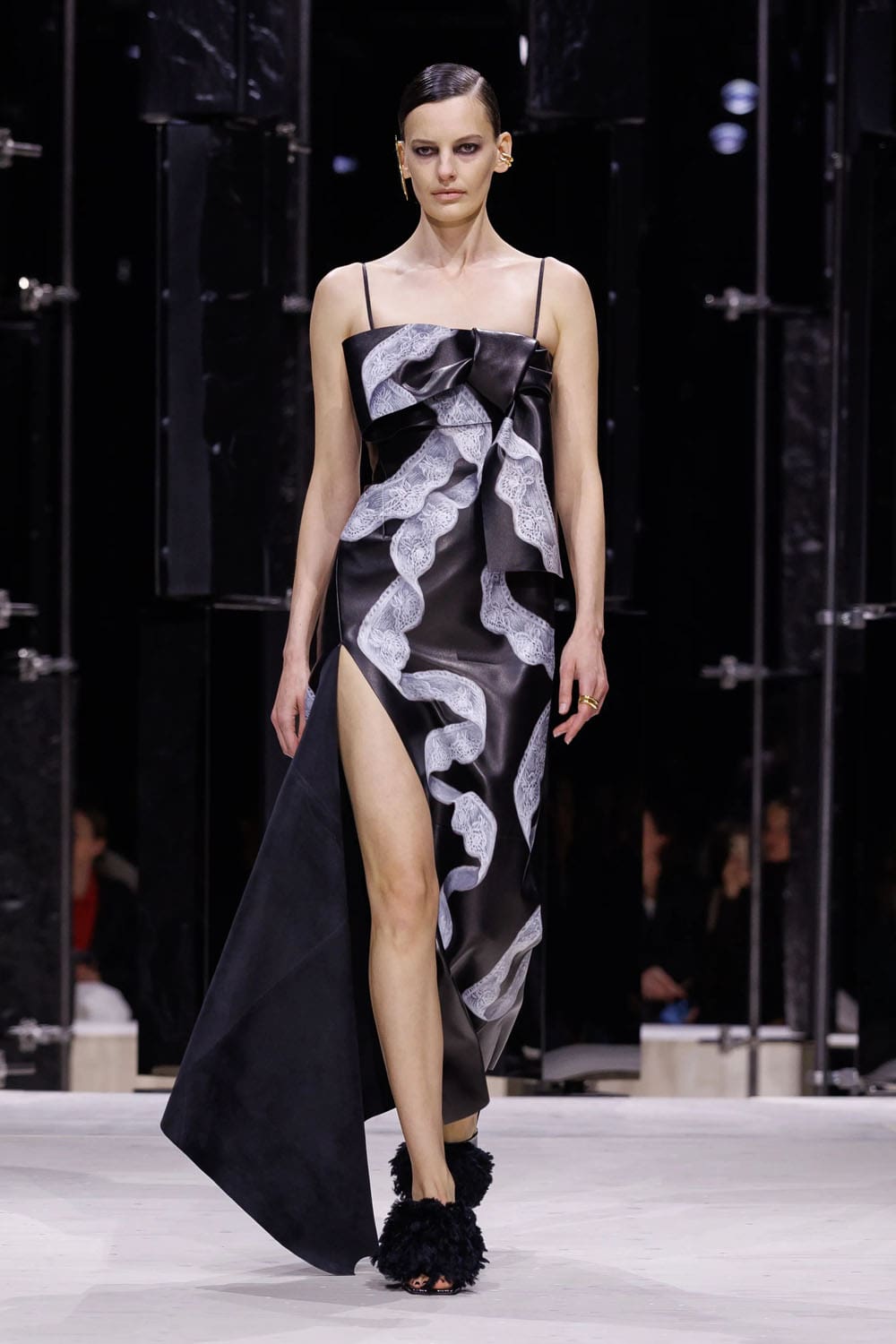
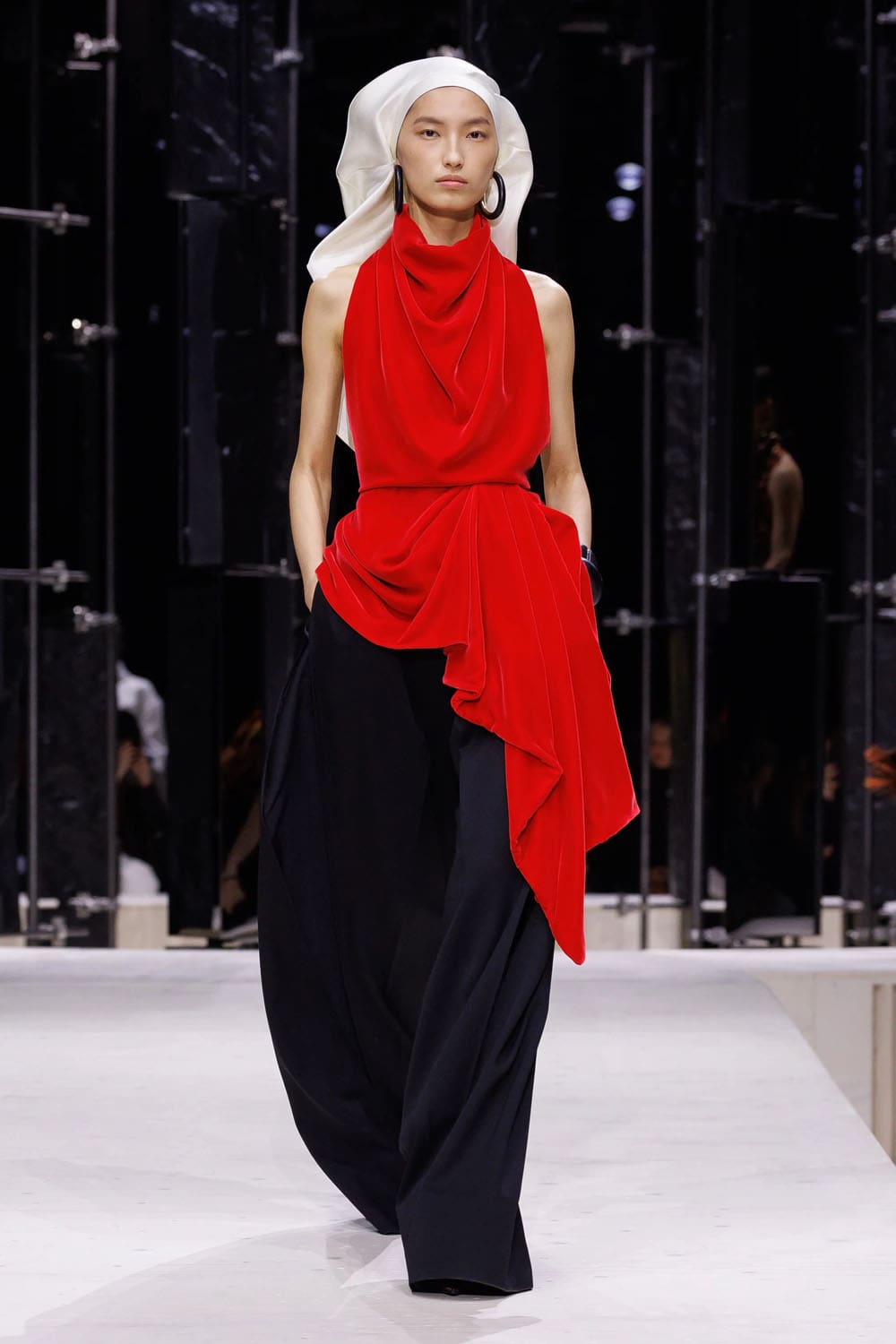
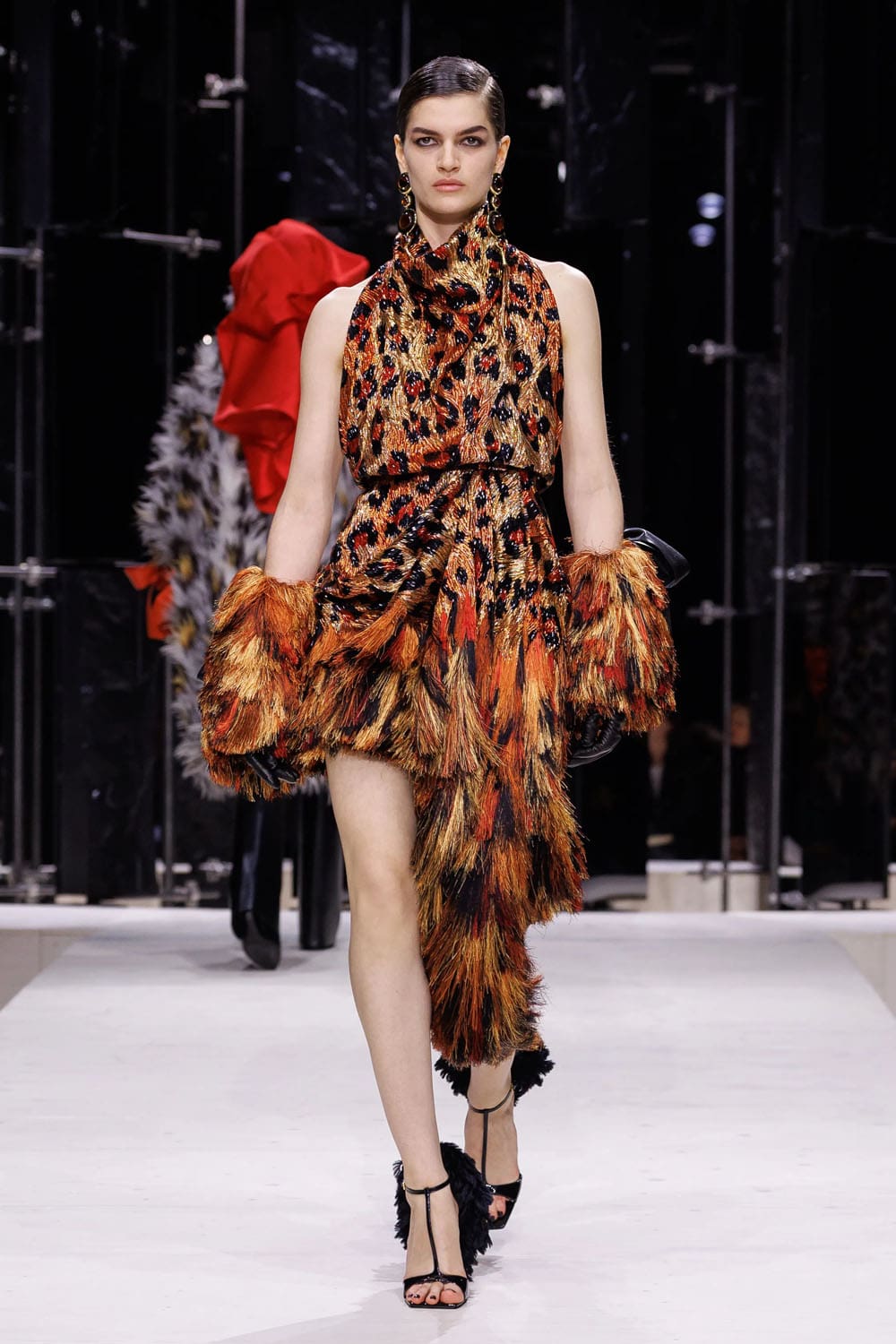
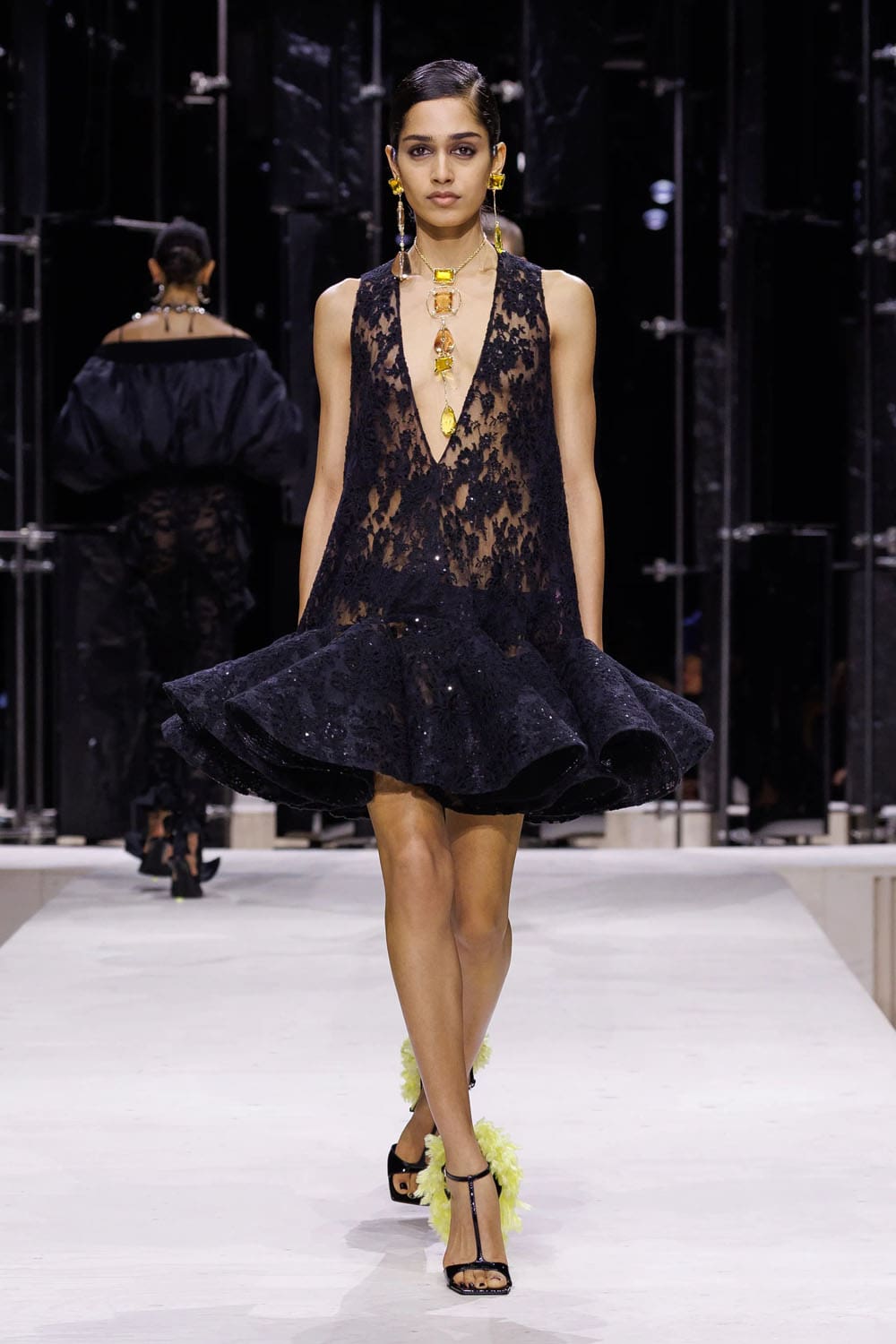
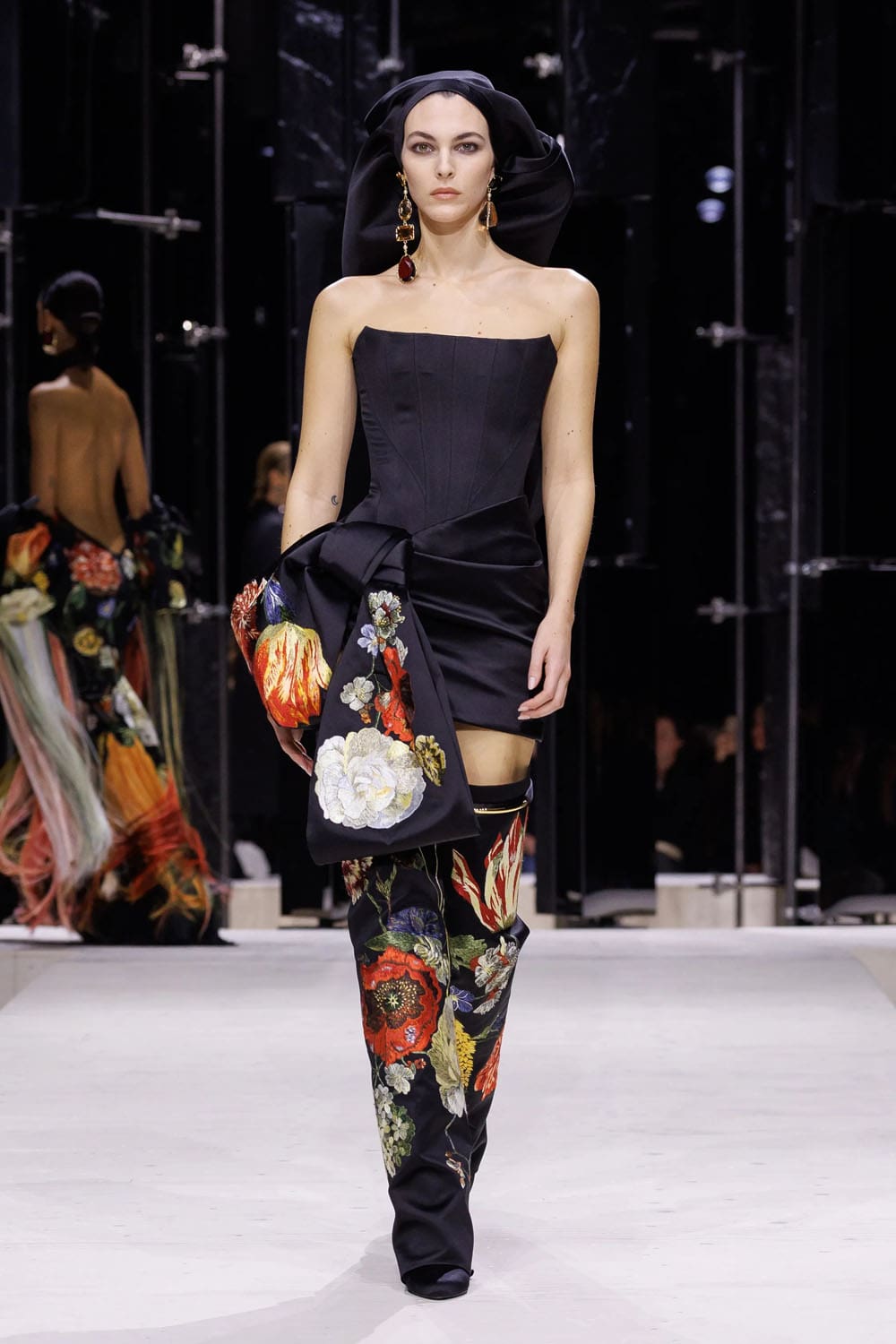
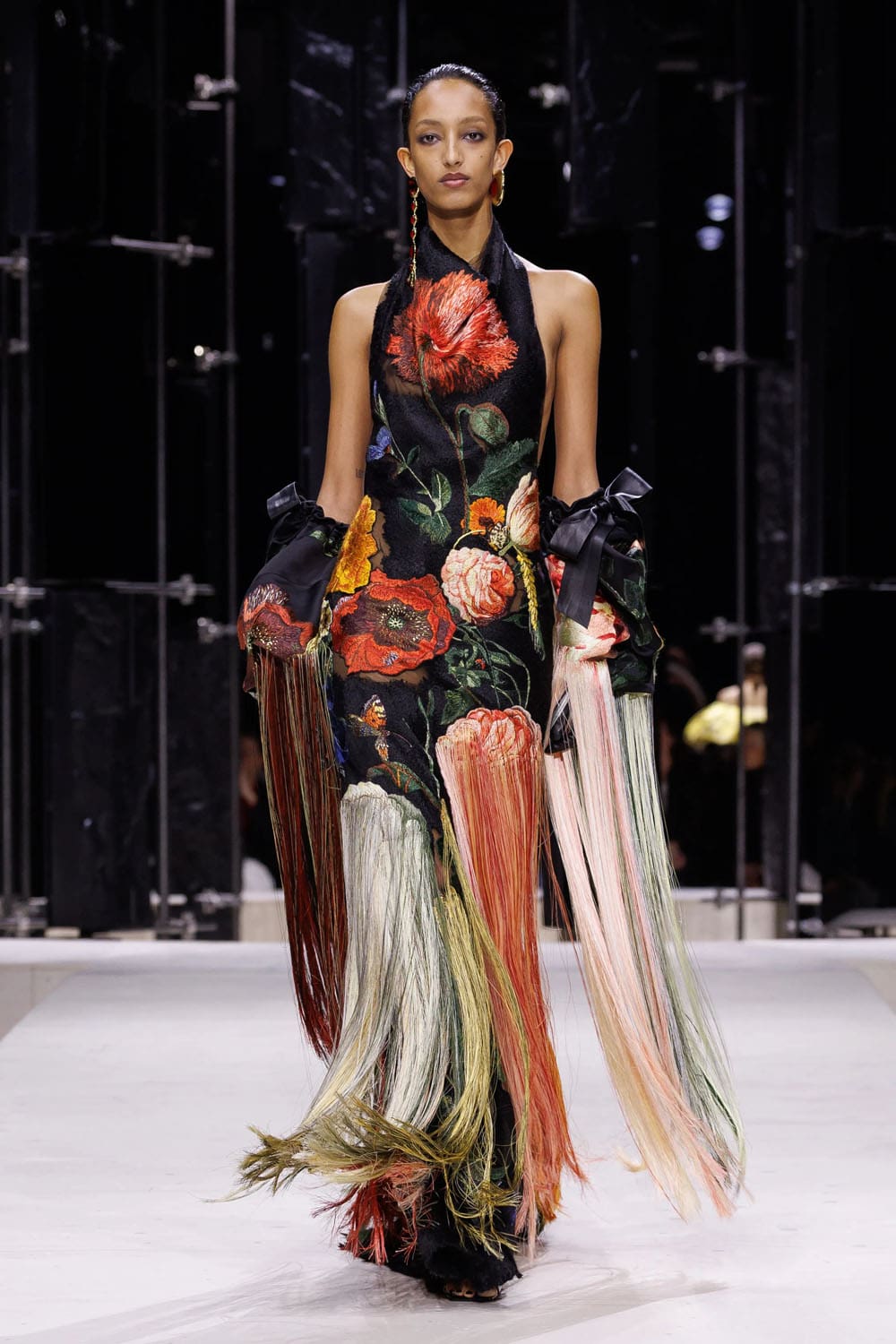
A draped red halter top in velvet — intensely sensual, almost ecclesiastical in color — paired with wide trousers structured by twisted seams, proved how Burton works volume as narrative, not decoration. A sleeveless black cocktail dress embroidered with sprawling poppies and trailing silk fringe suggested a sort of midnight garden, a couture hallucination anchored by boots bearing the same floral riot.
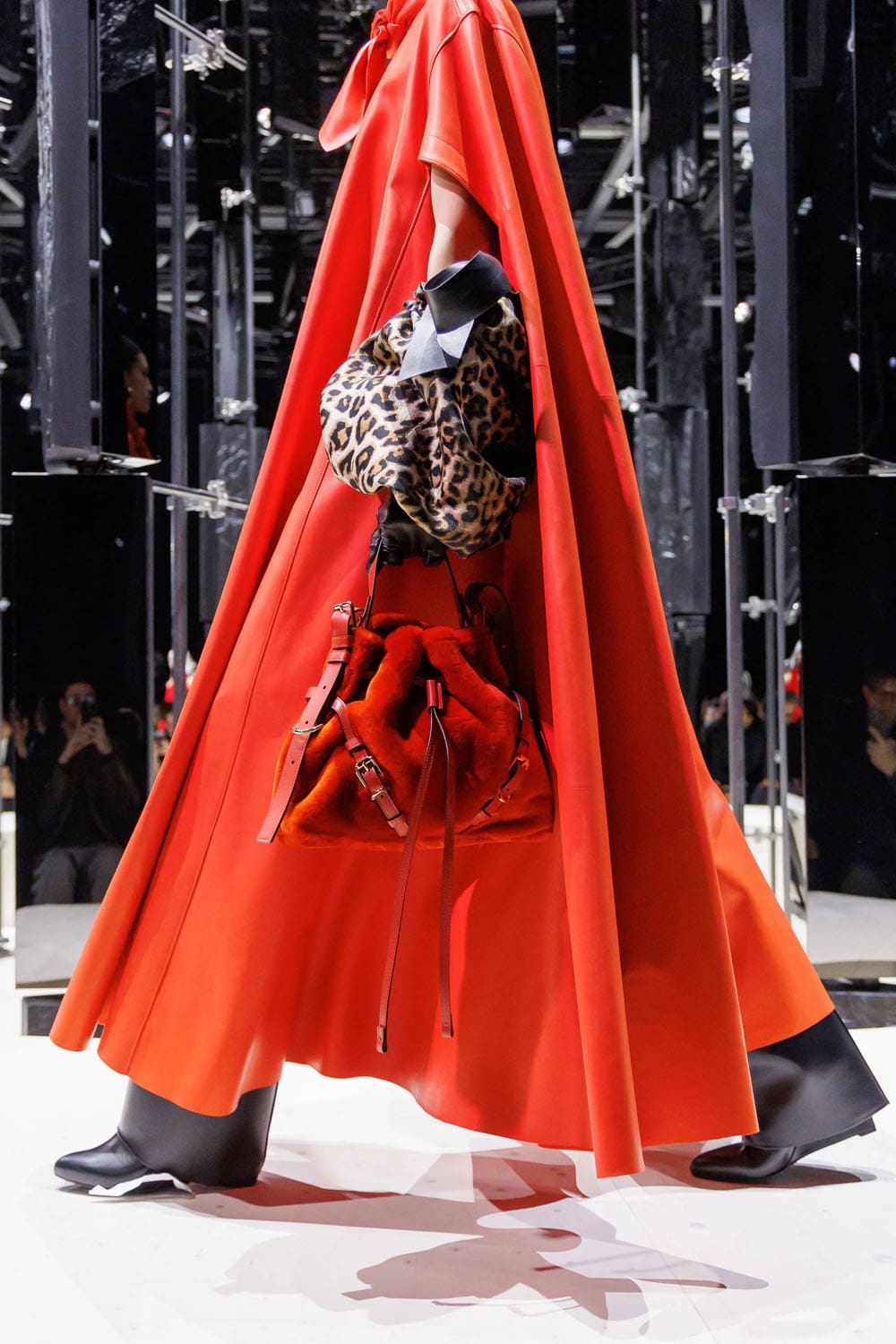
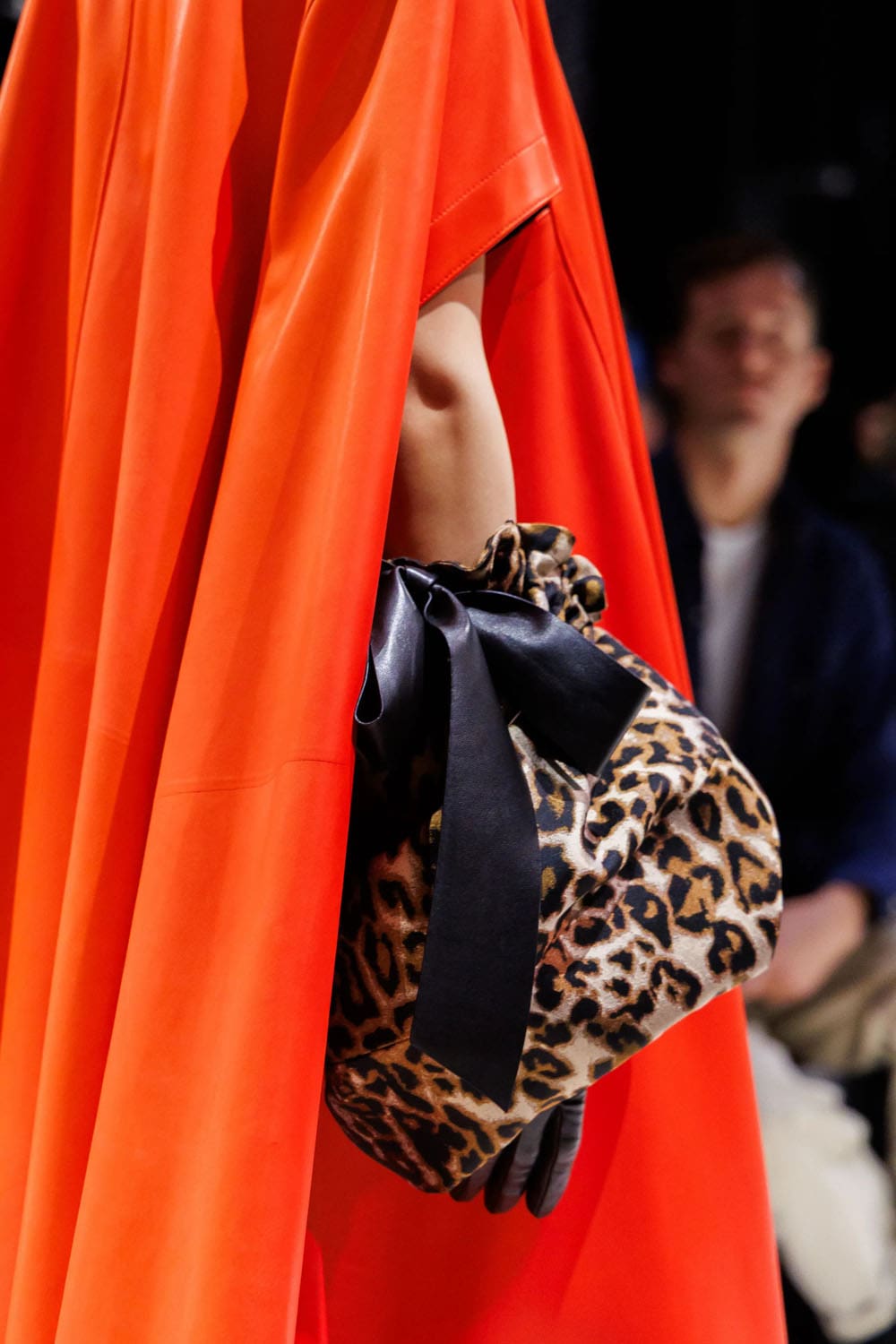
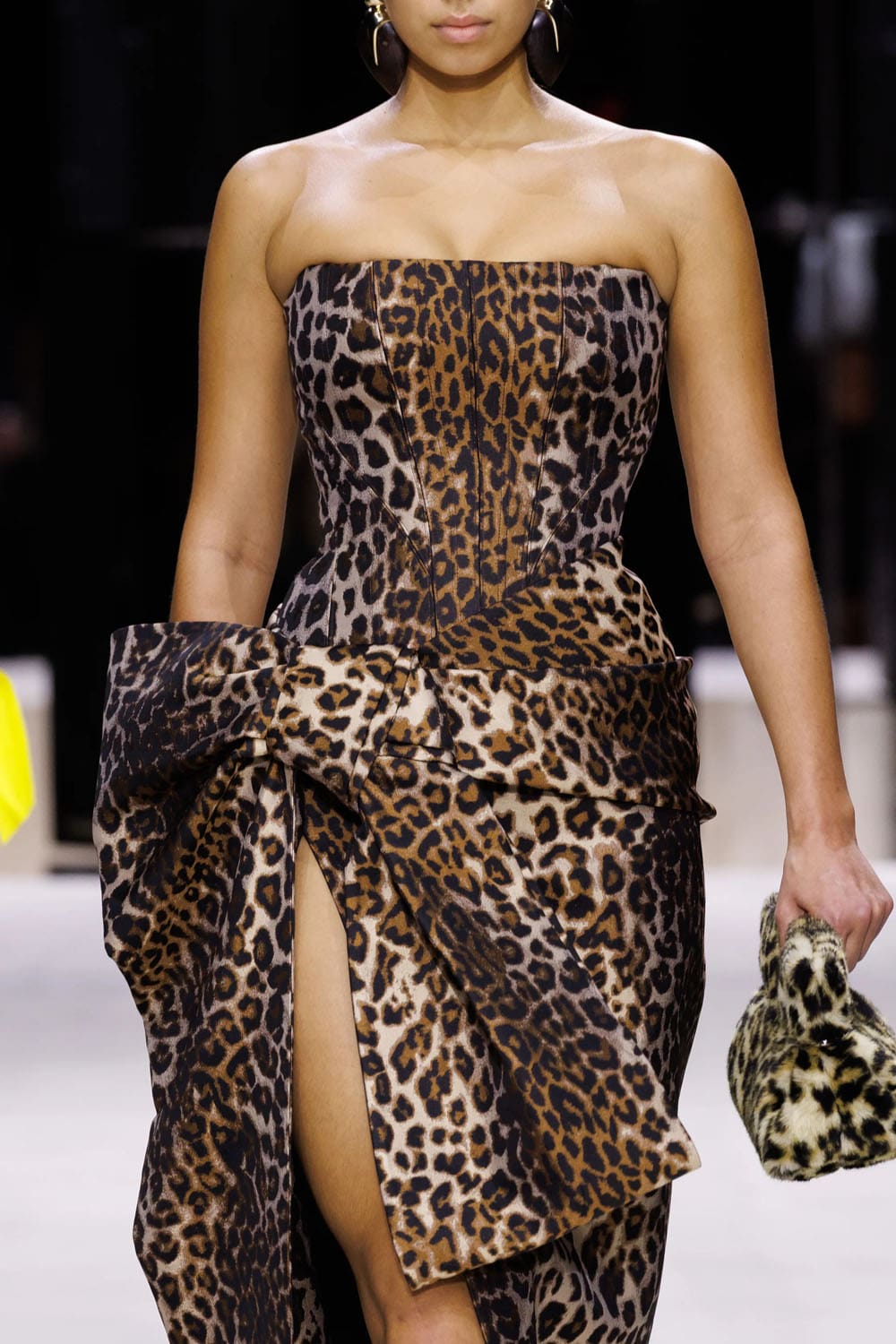
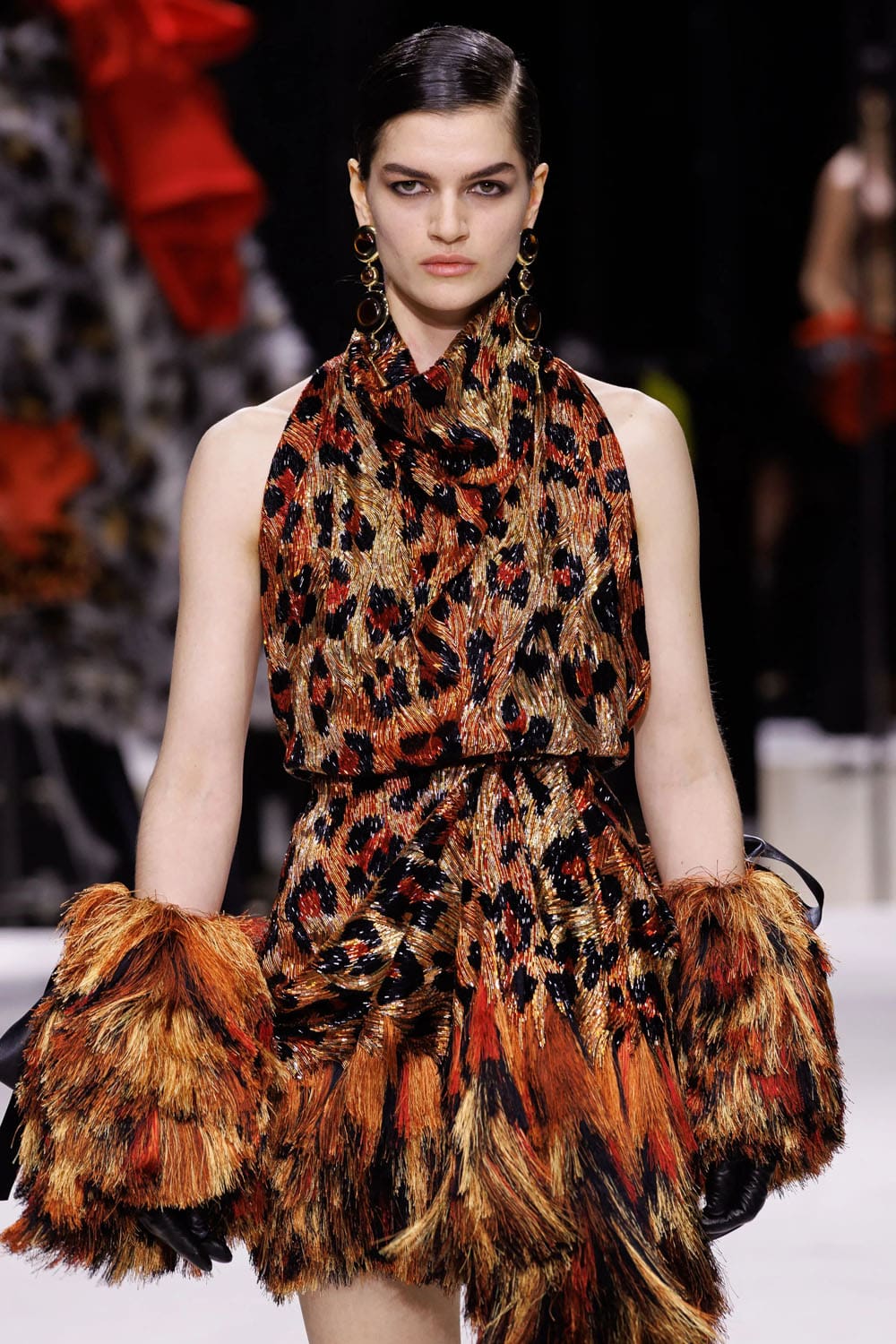
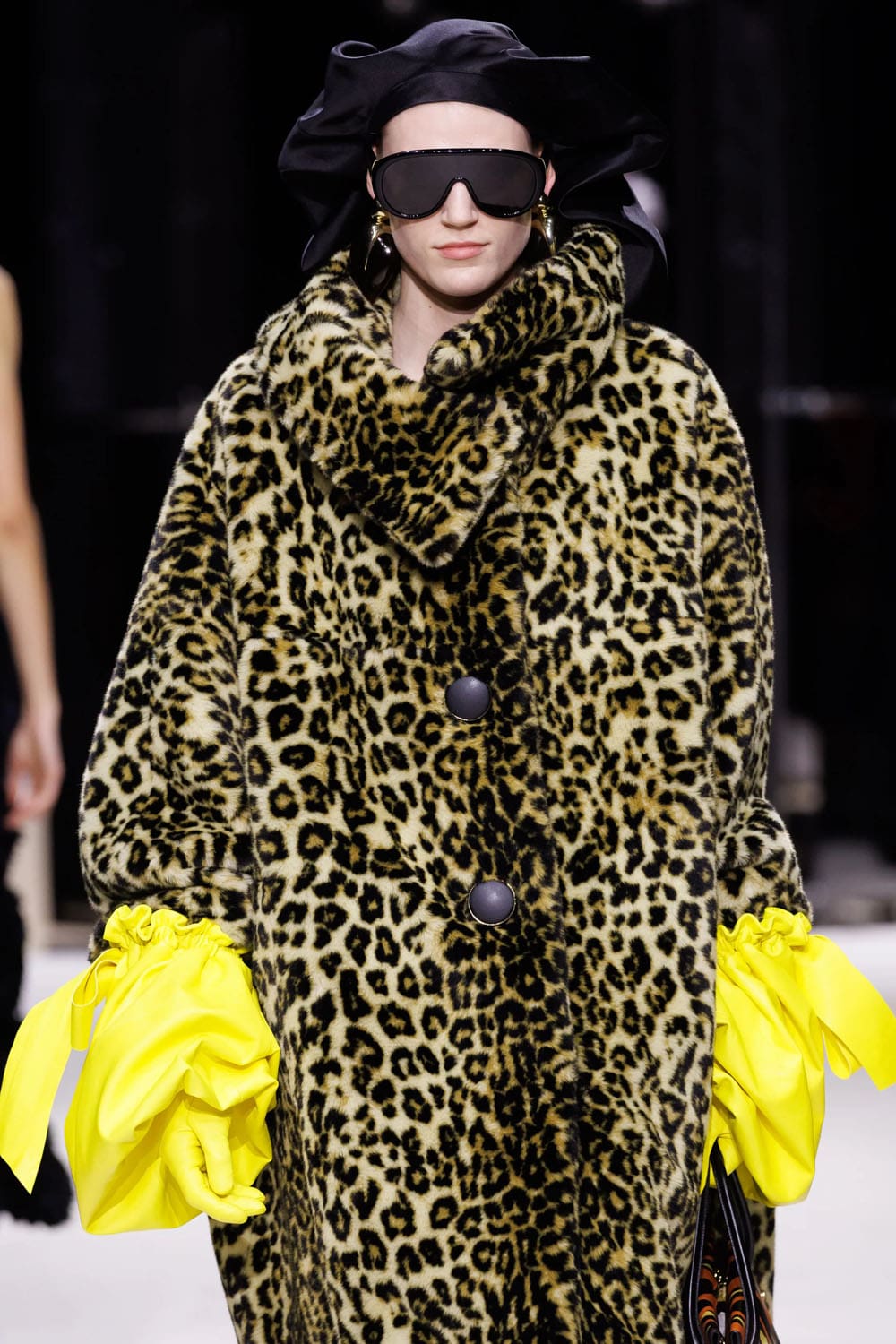
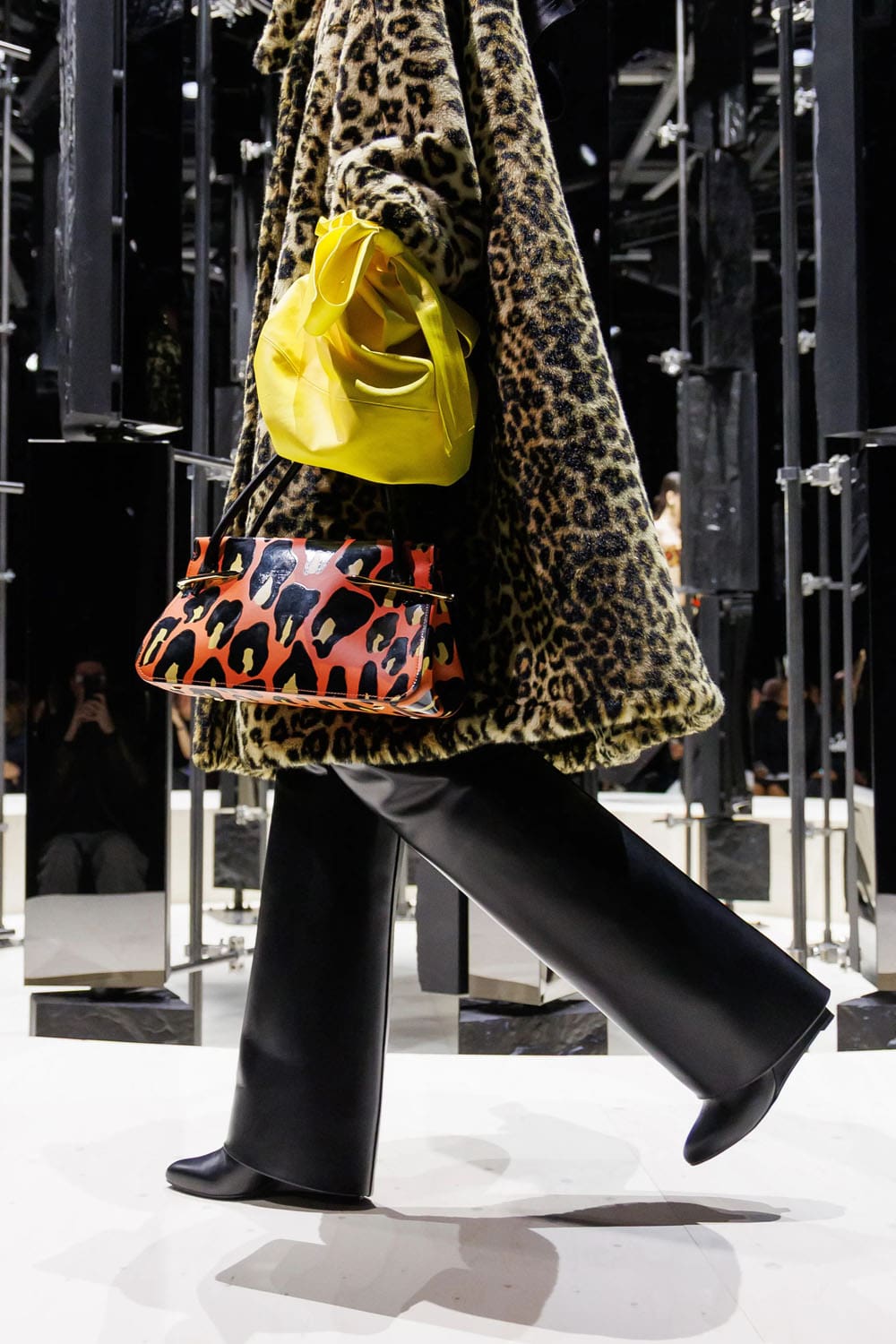
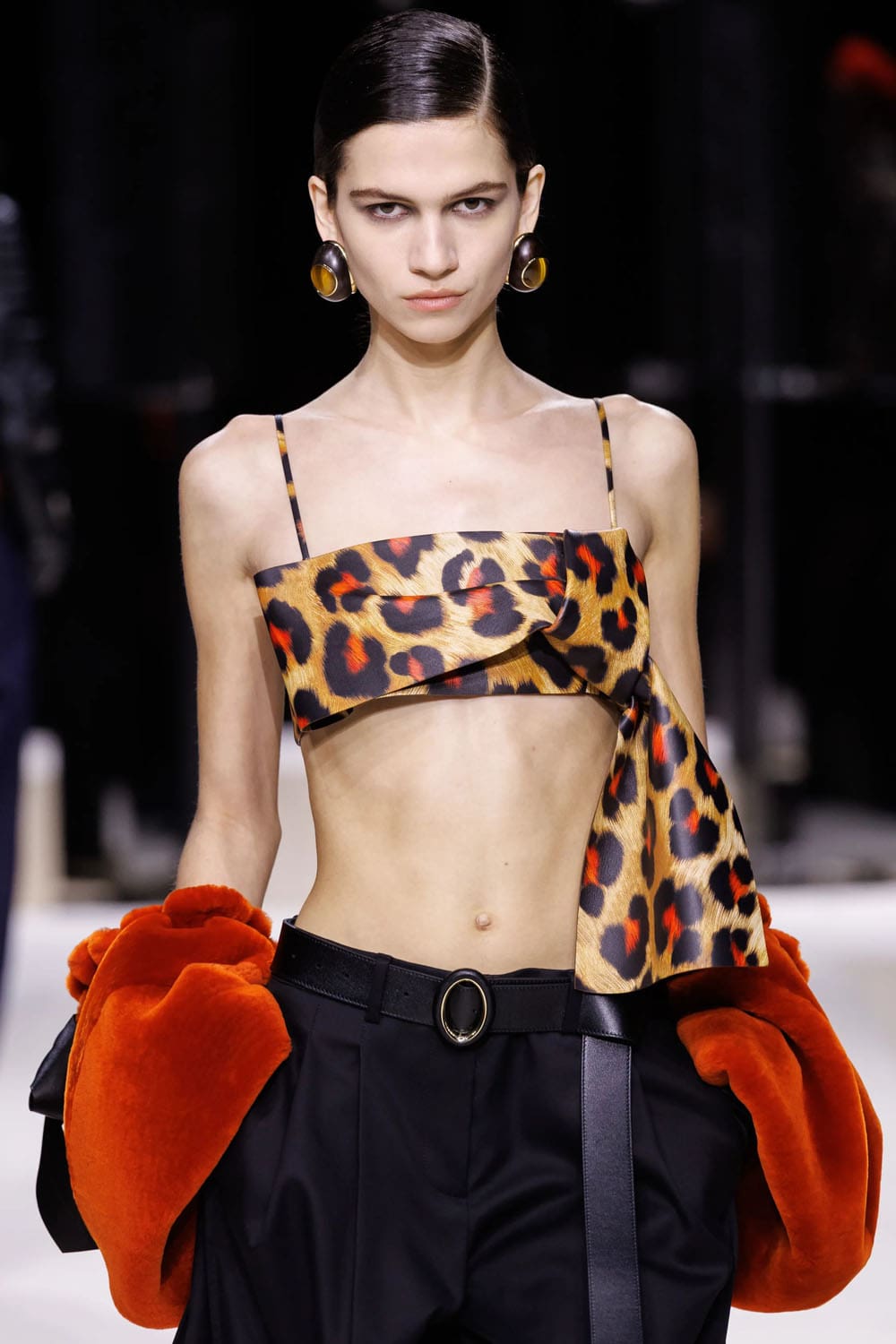
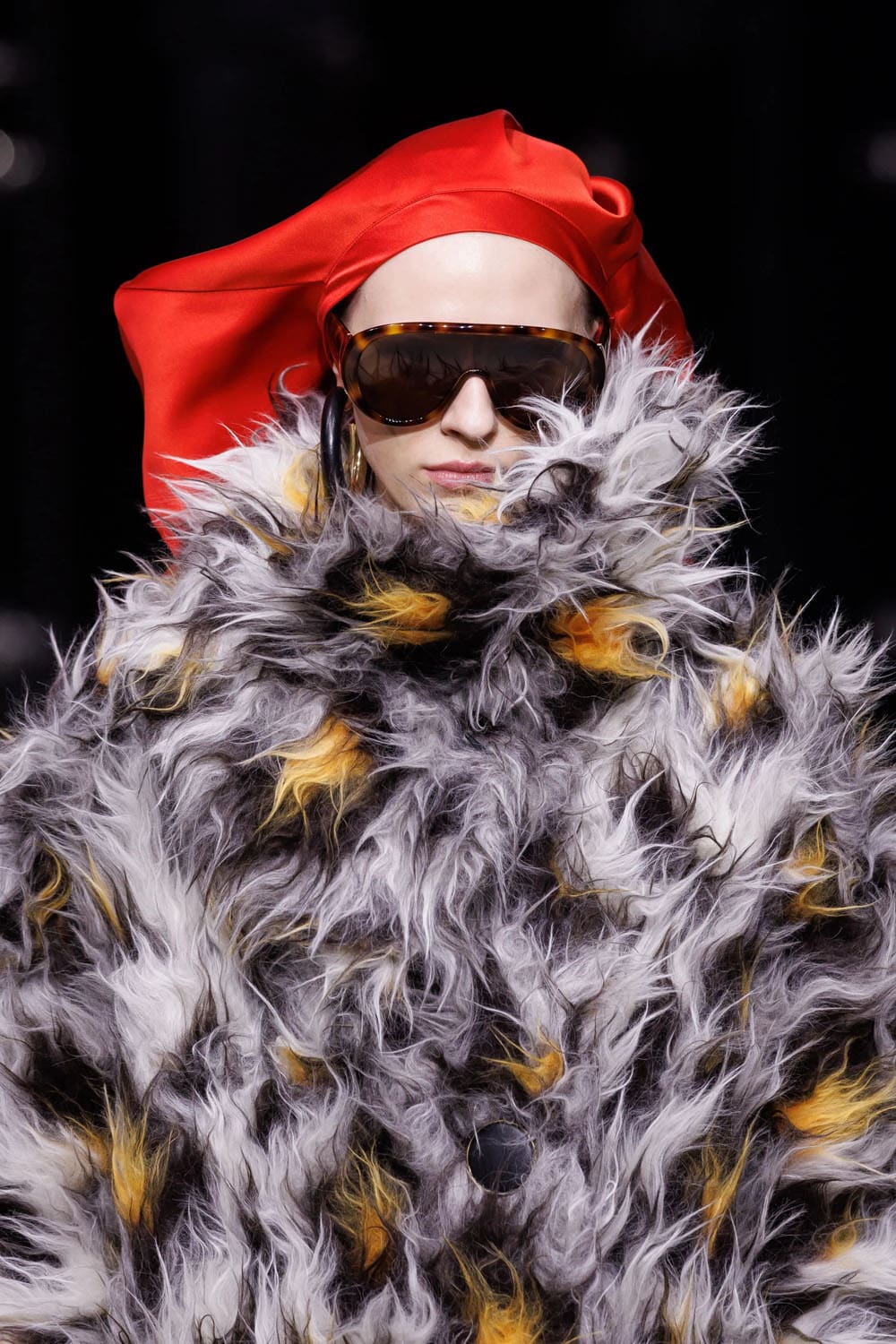
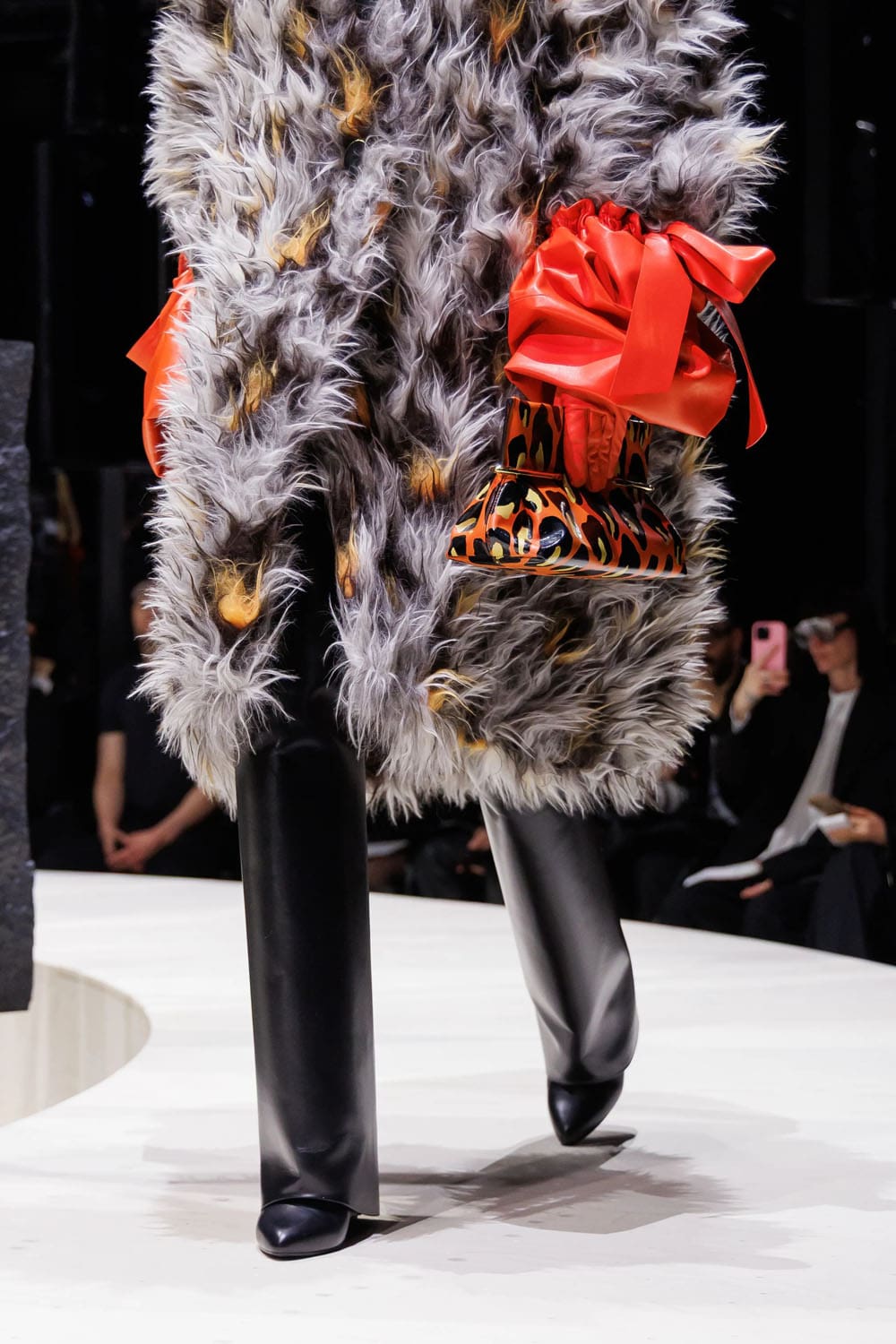
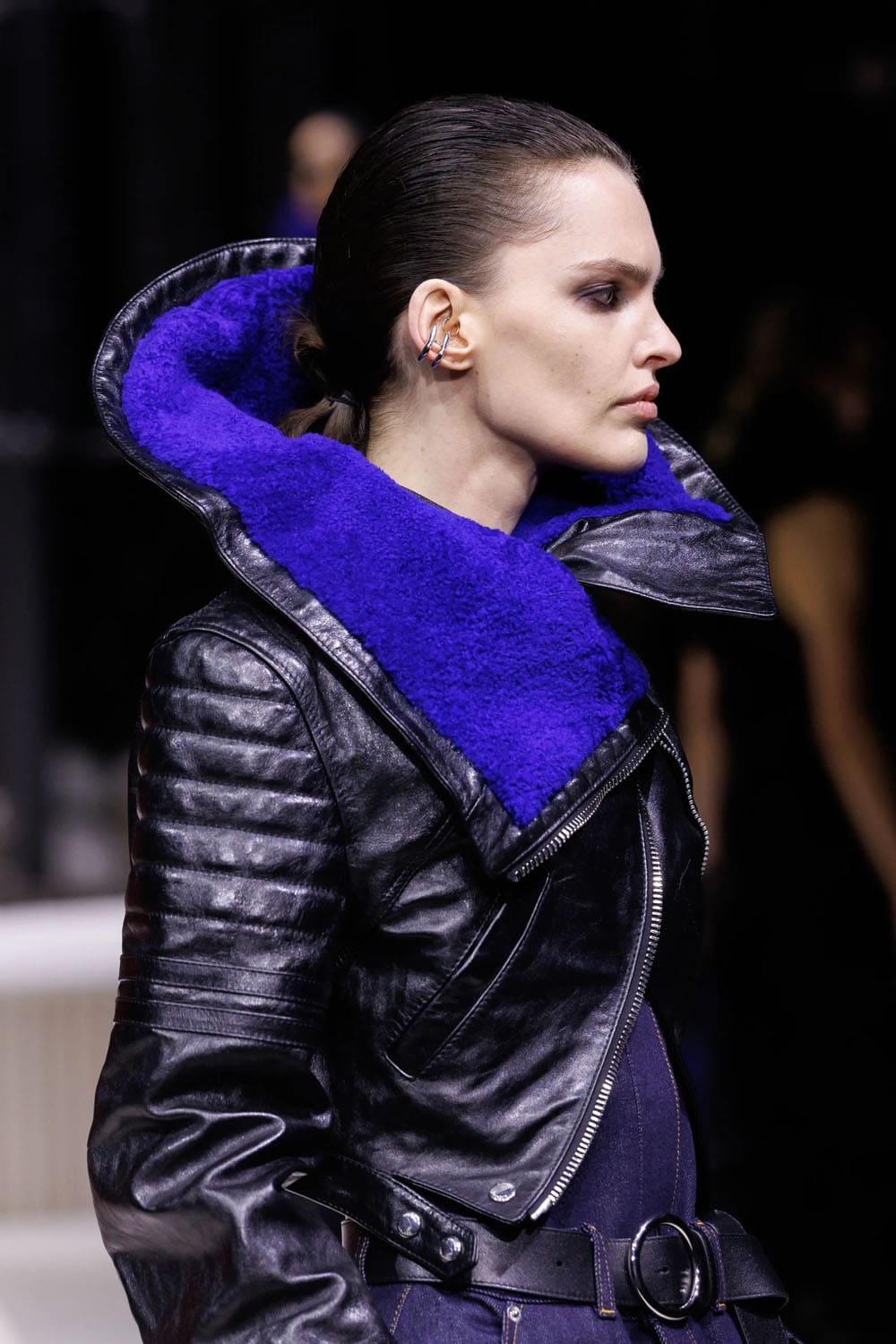
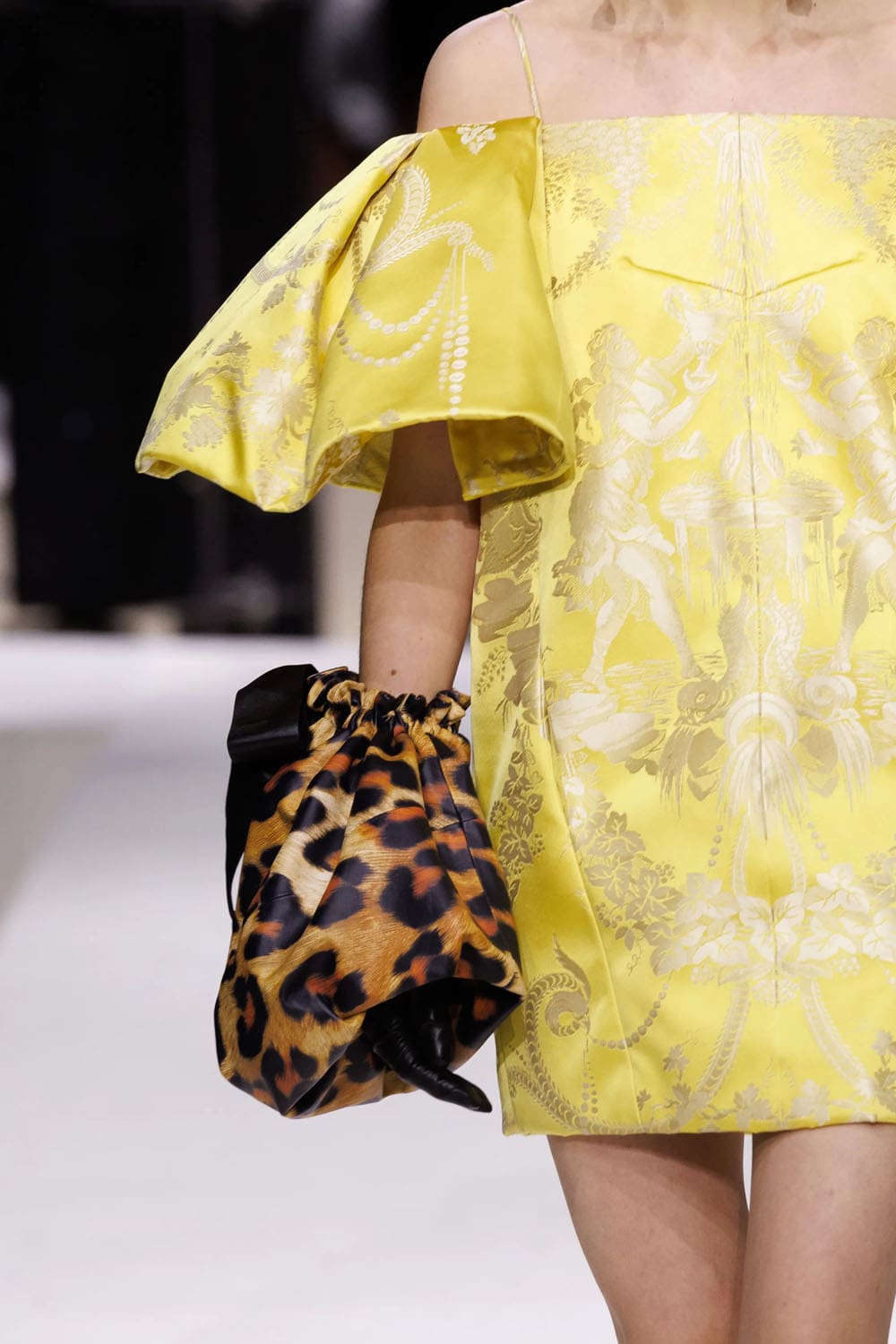
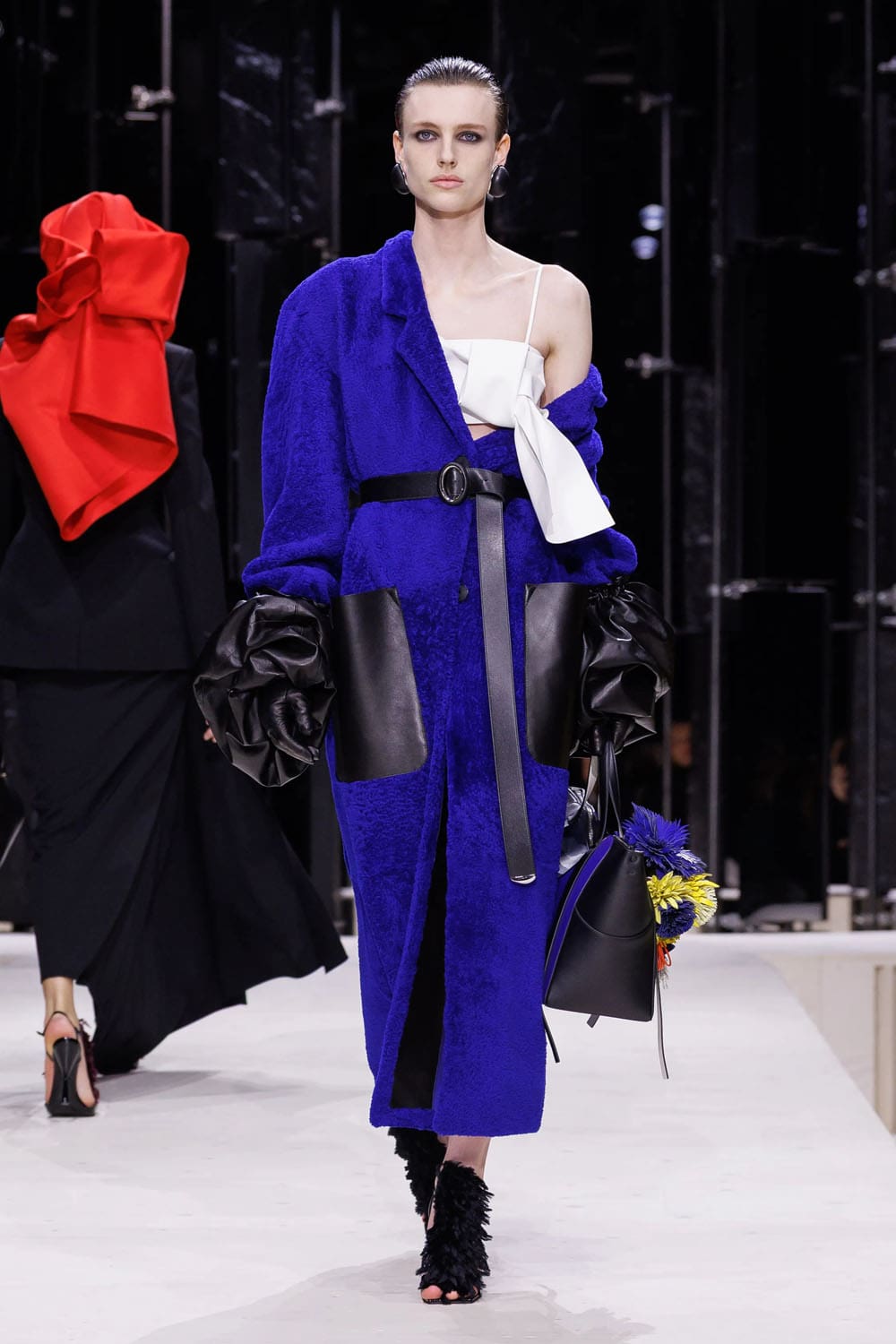
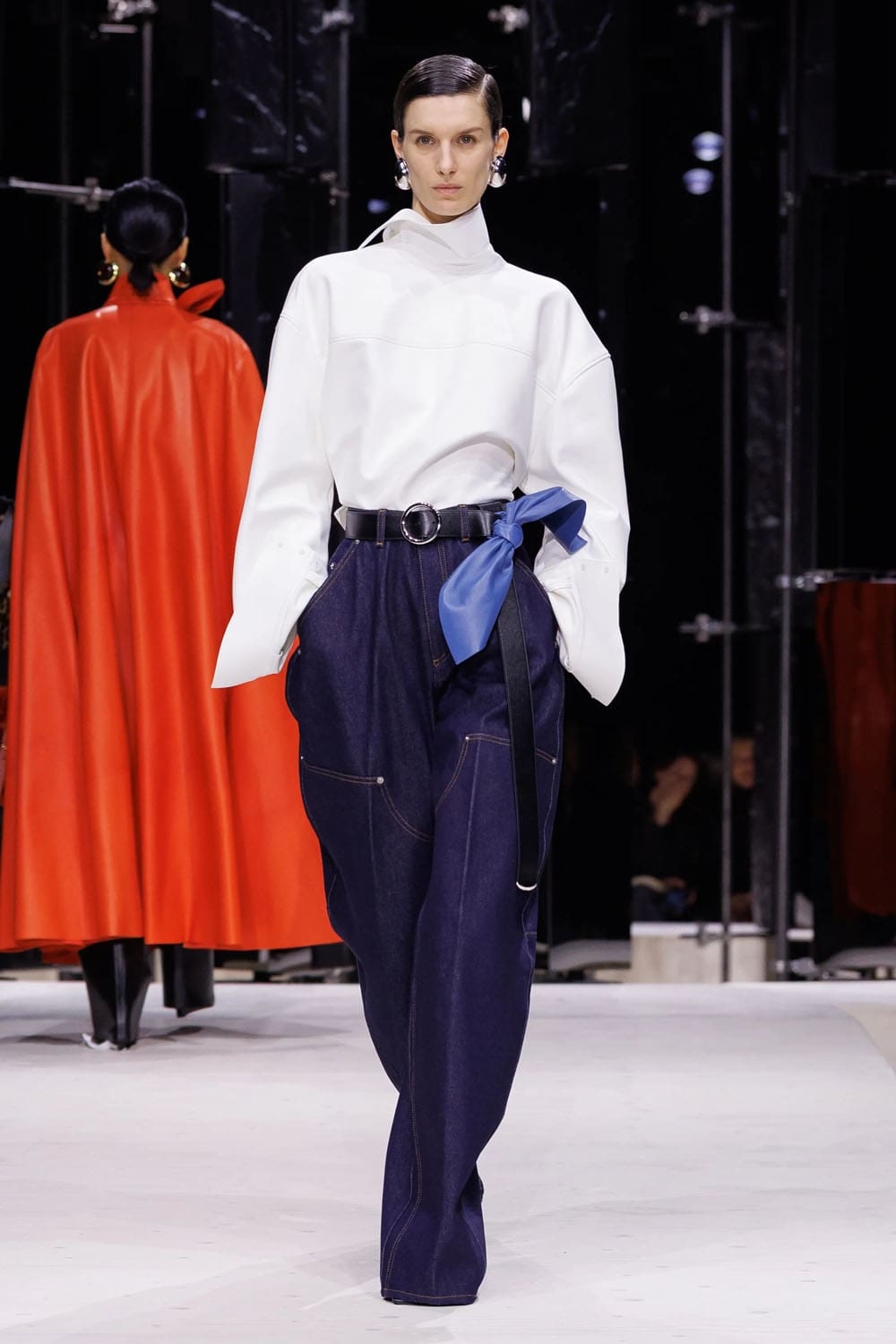
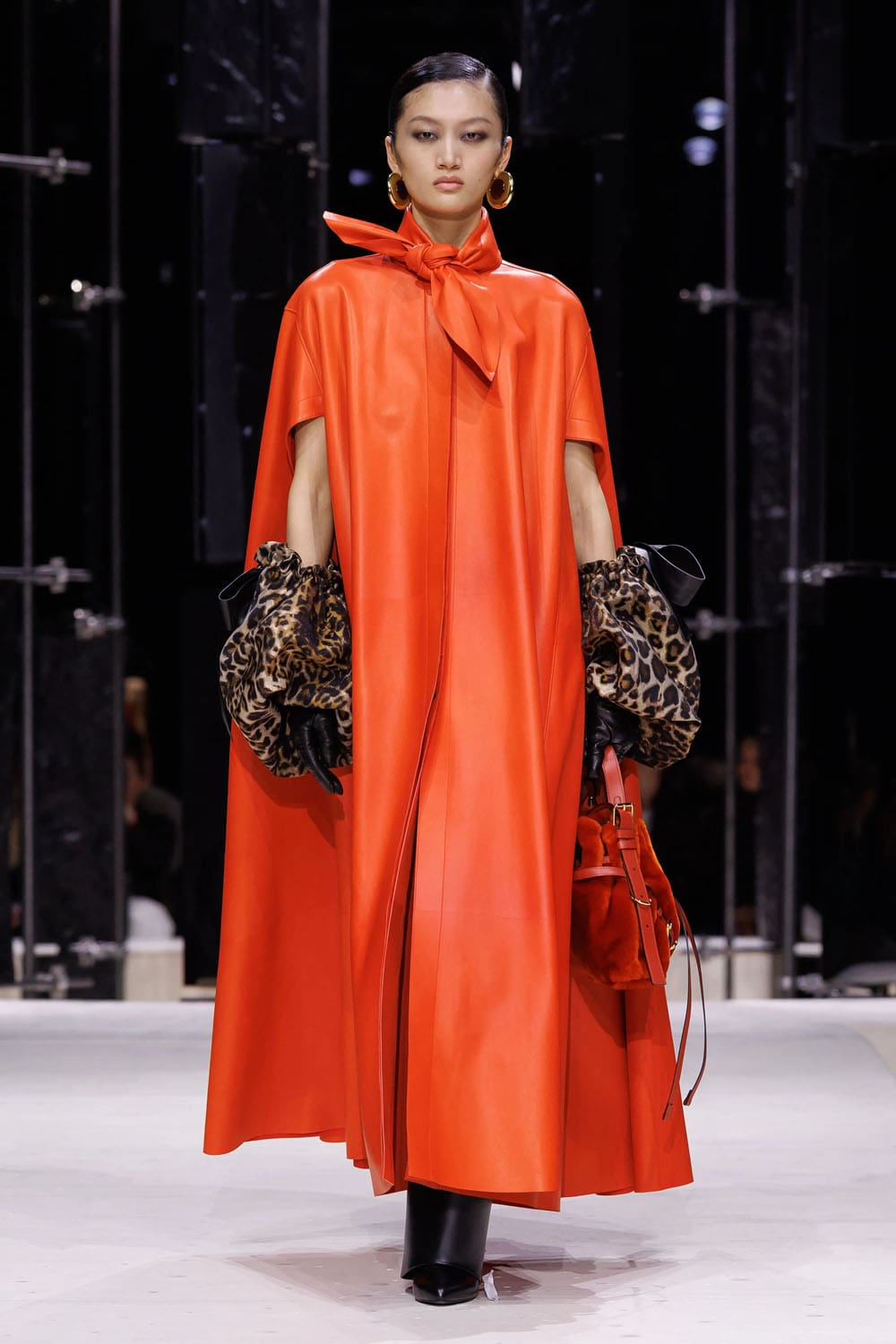
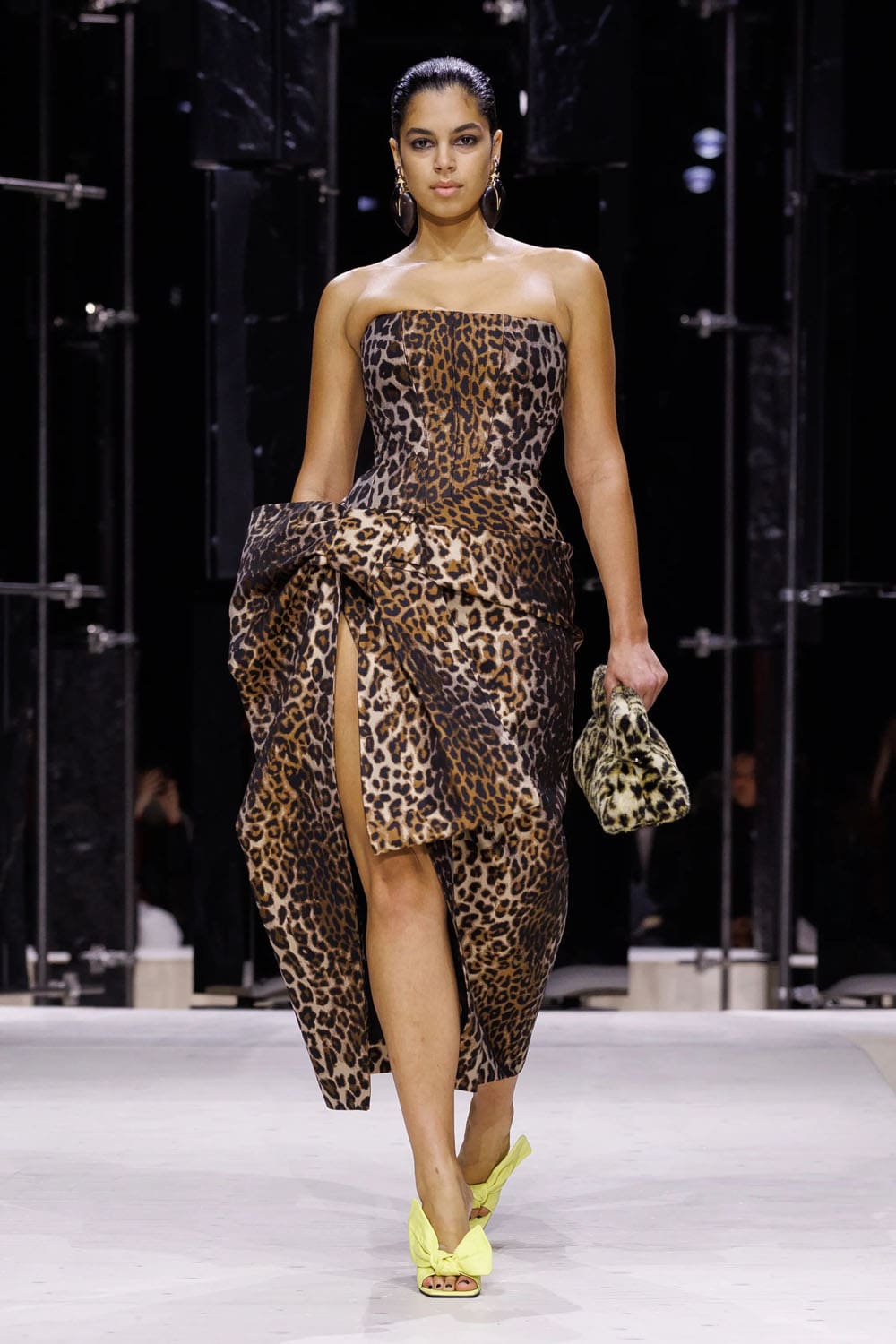
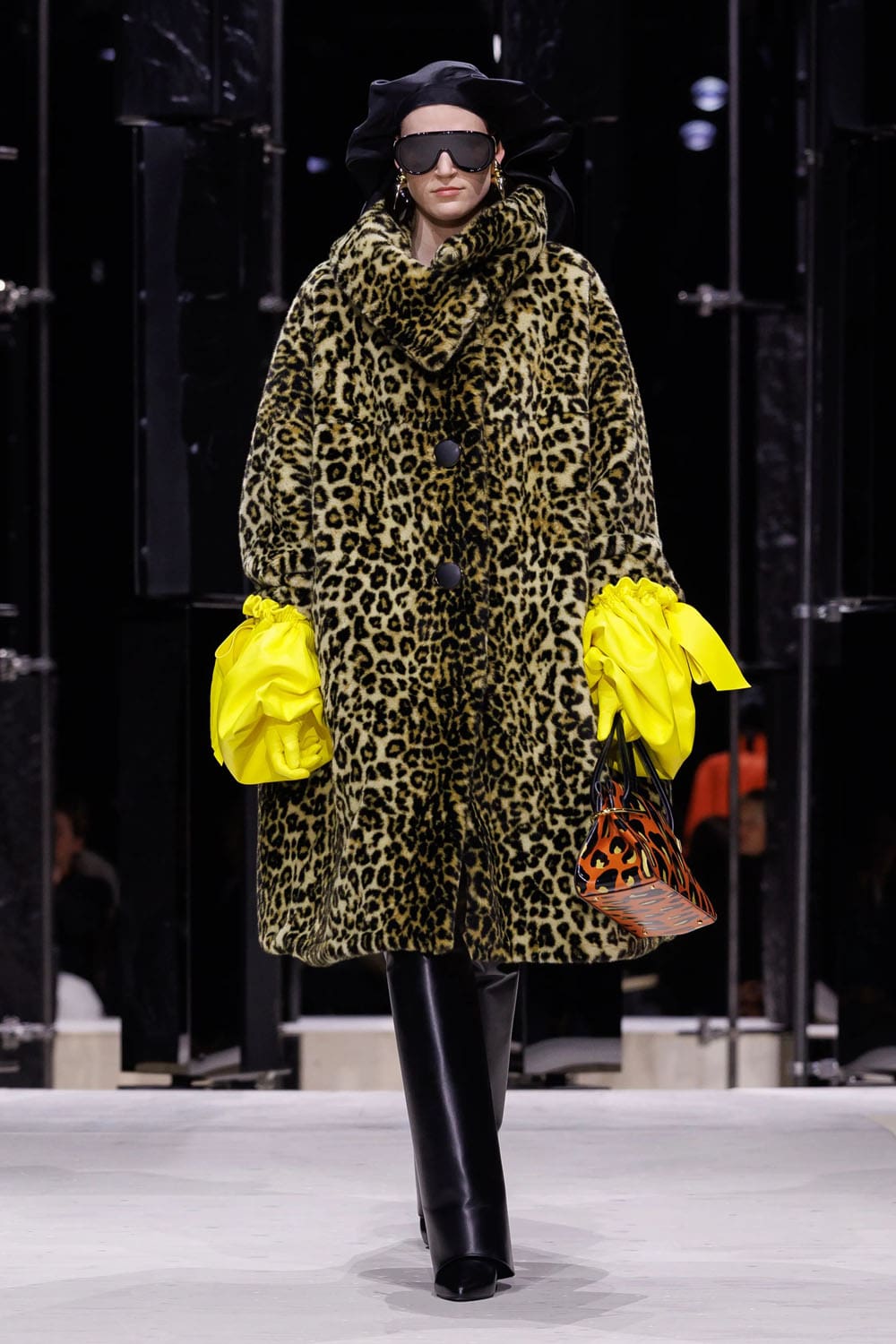
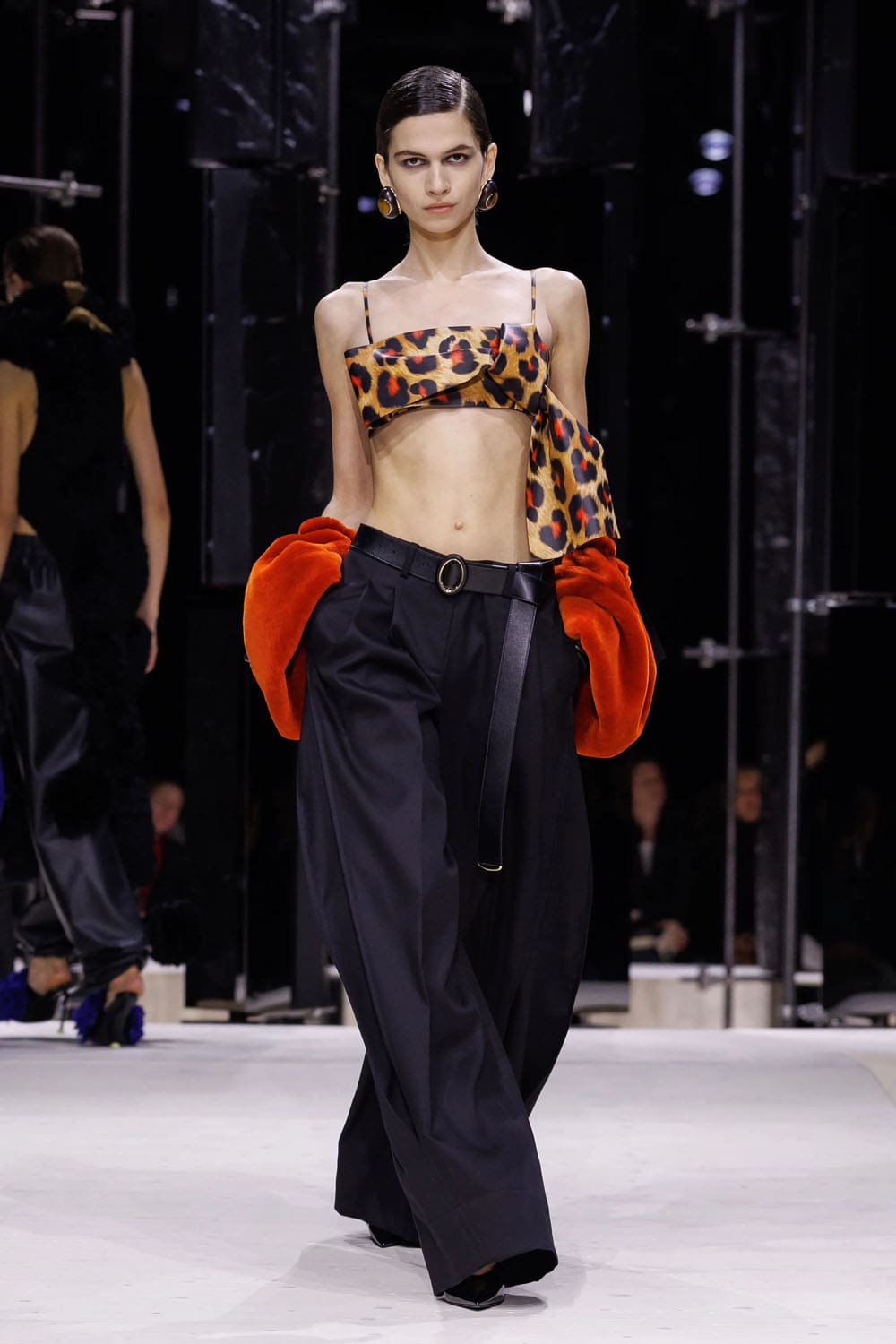
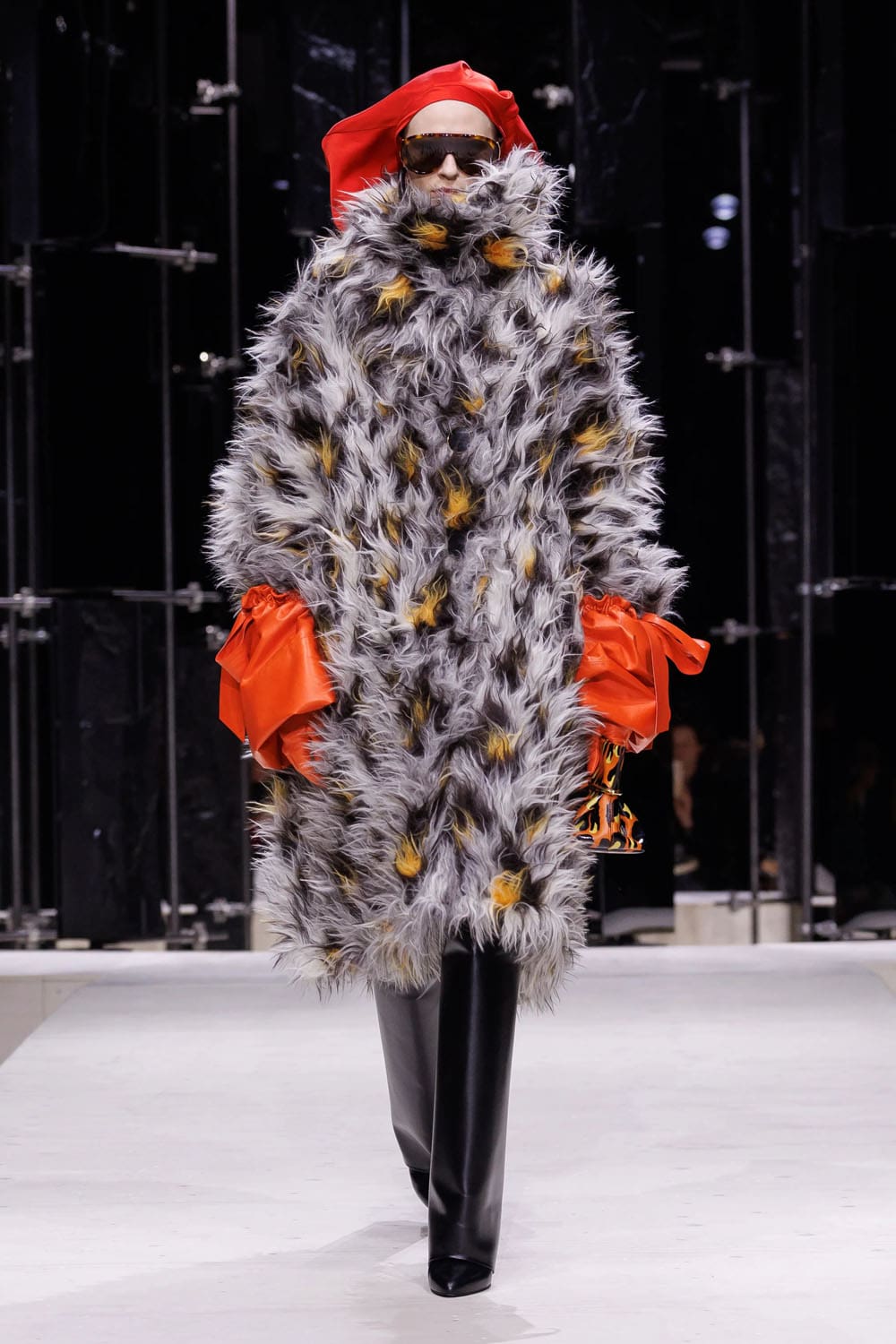
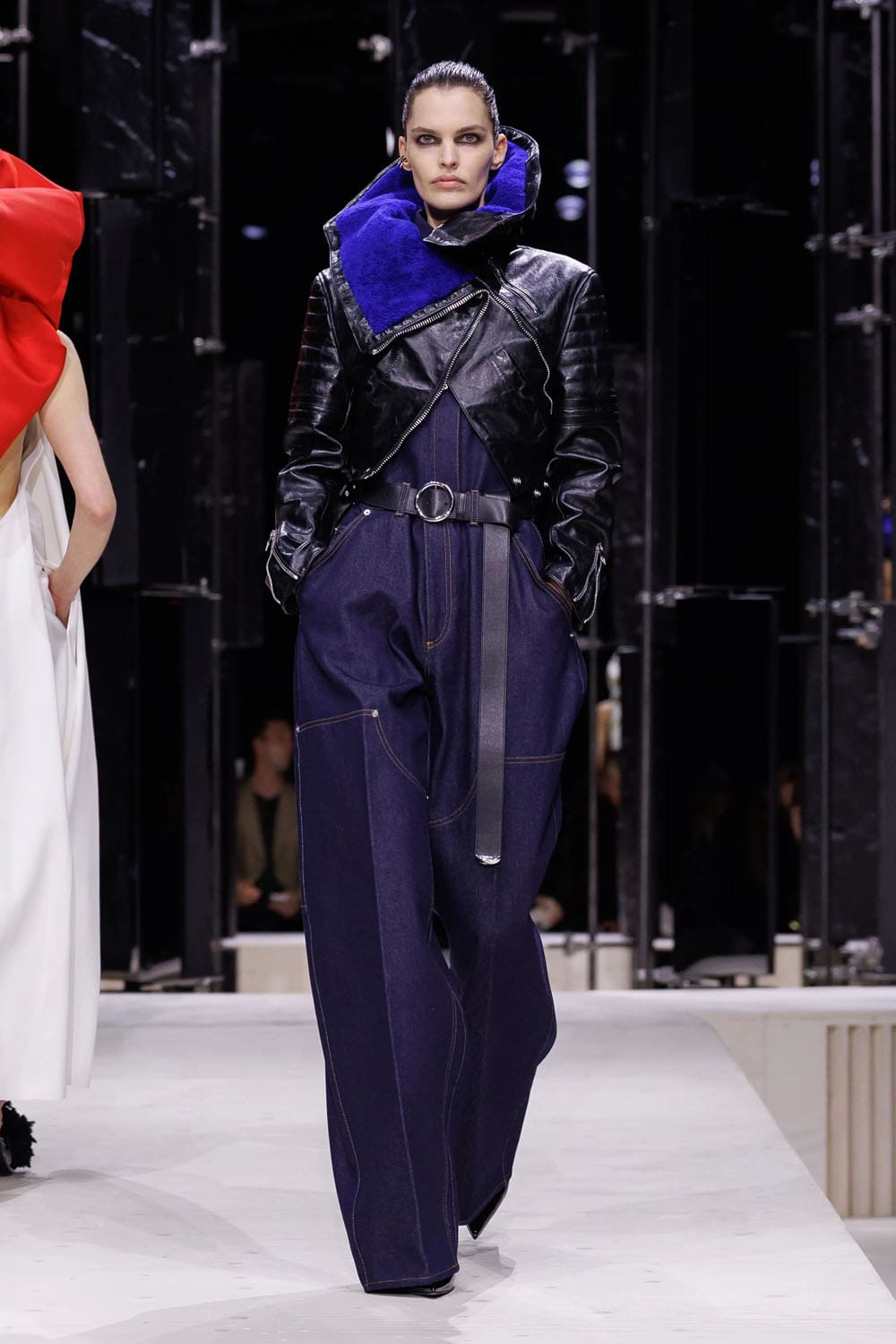
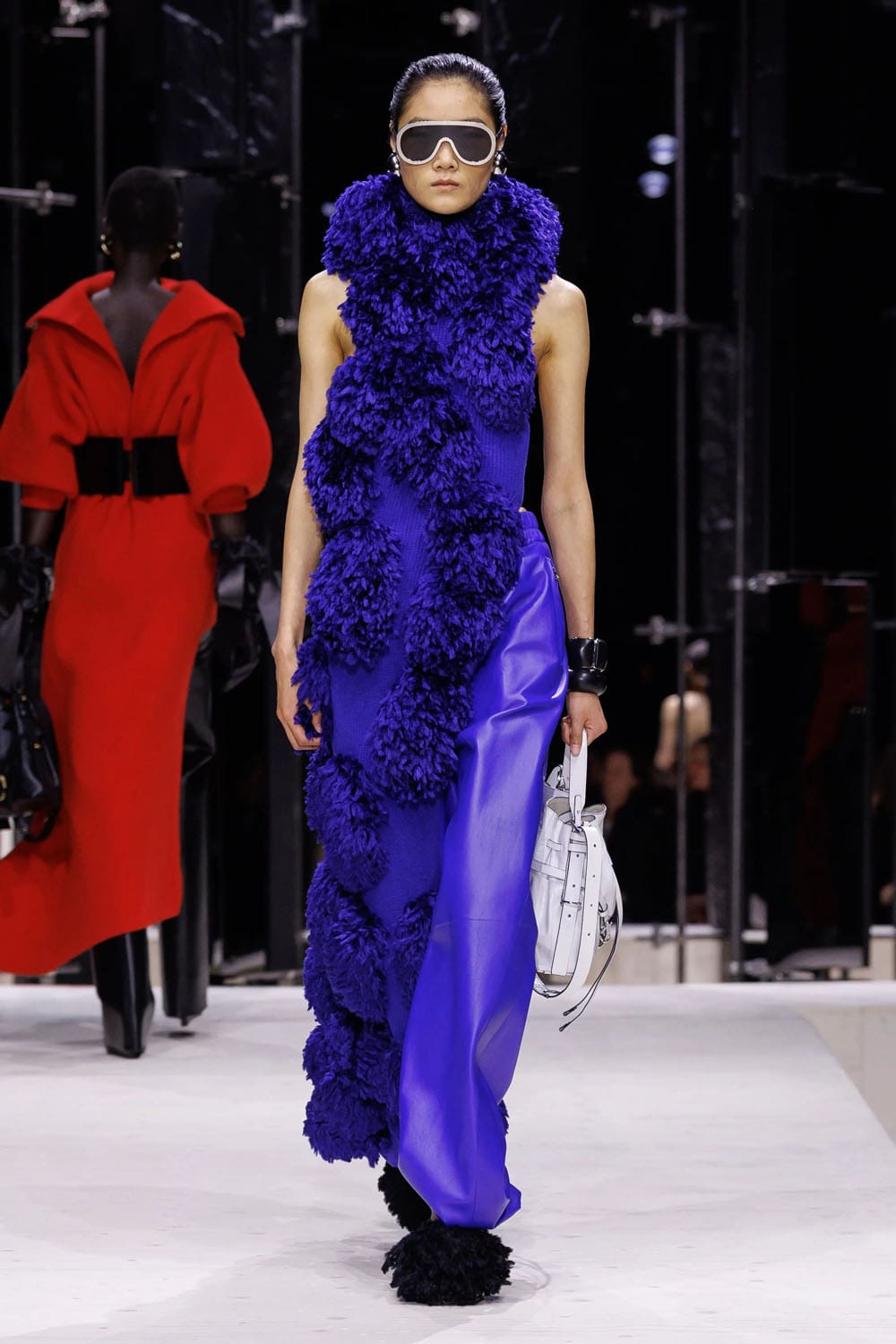
Outerwear, as expected, served as punctuation. A gigantic shaggy shearling coat, dyed in leopard tones, engulfed the wearer in a storm of texture — Burton’s nod to late-90s excess, though anchored by her precision. Another moment brought a molten orange leather cape, completely covering the body except for a flash of leopard-print gloves peeking through the slits — modern Givenchy drama with the heartbeat of old cinema.
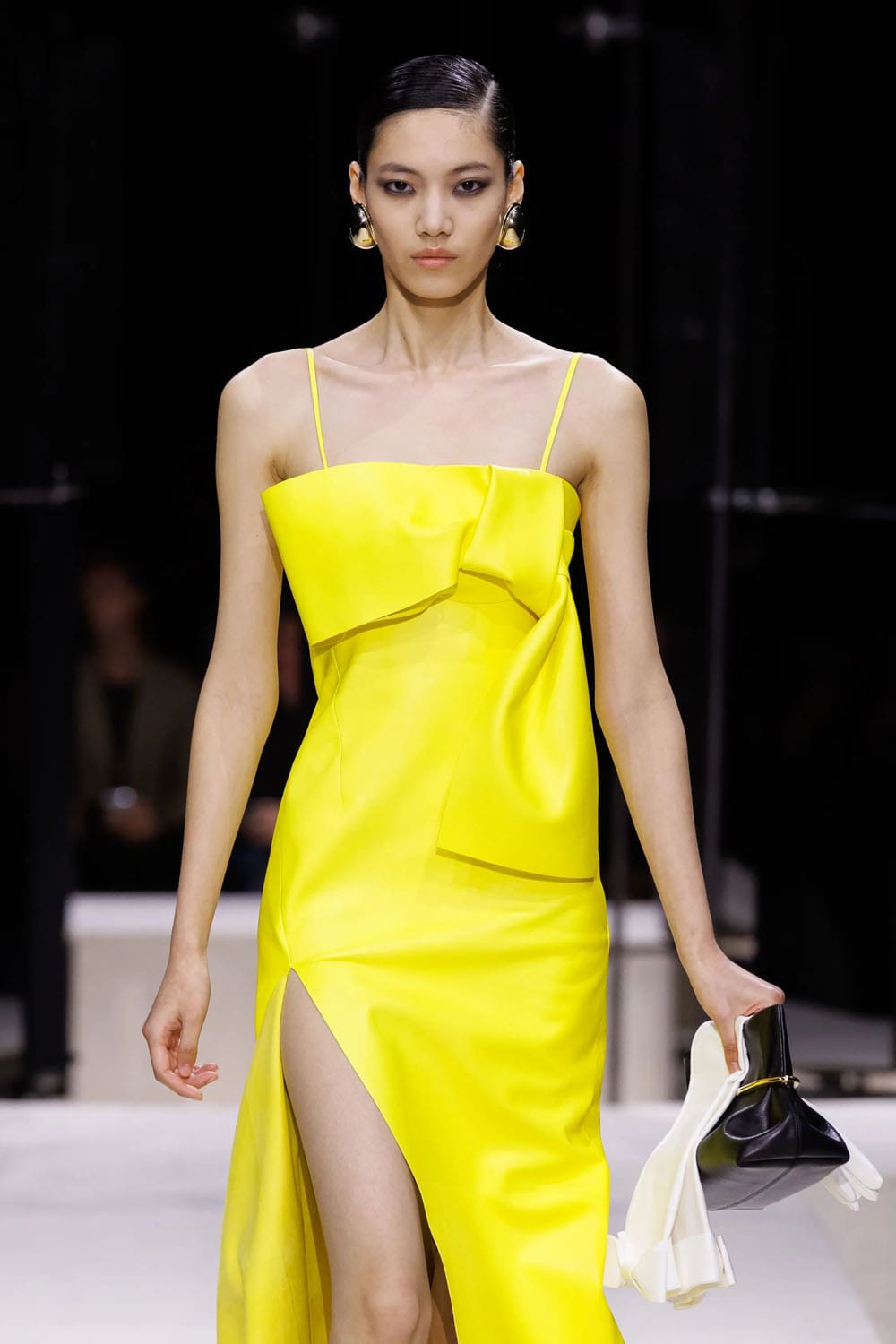
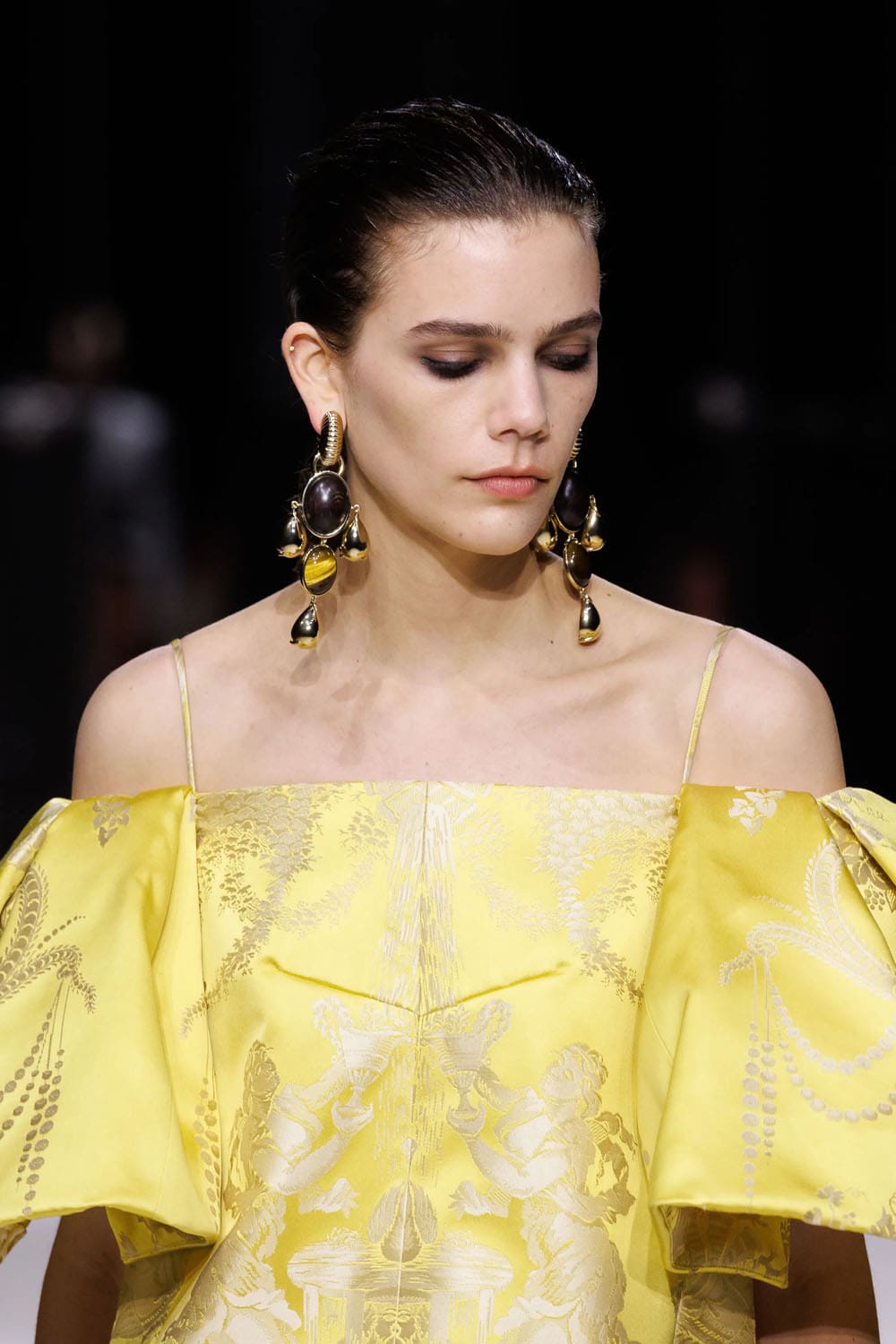
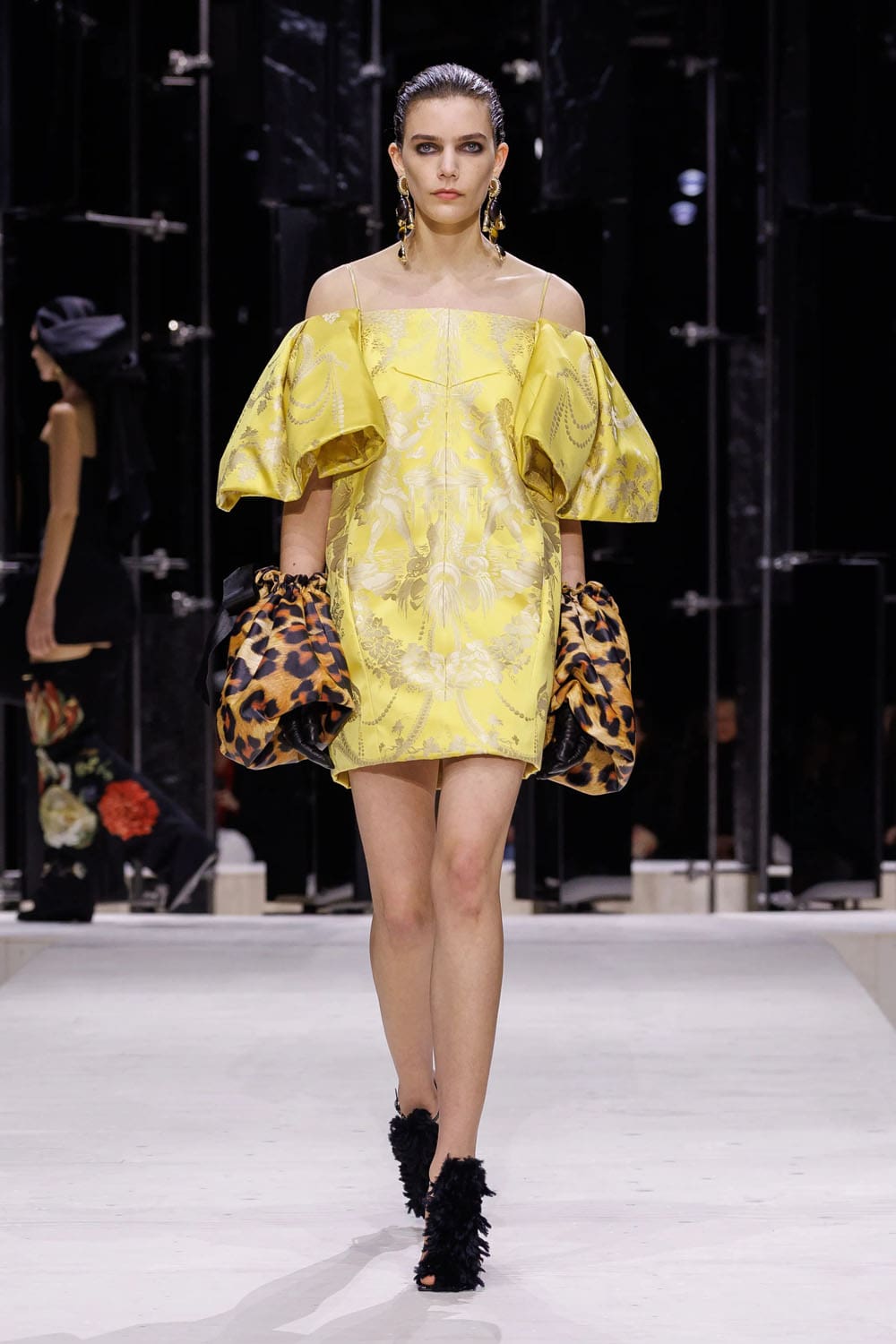
A short yellow brocade dress, with sculpted off-the-shoulder sleeves, seemed lifted from Hepburn’s fantasy wardrobe but rendered with a mischievous brightness that made it unmistakably contemporary.
The Head, the Hand, the Legacy
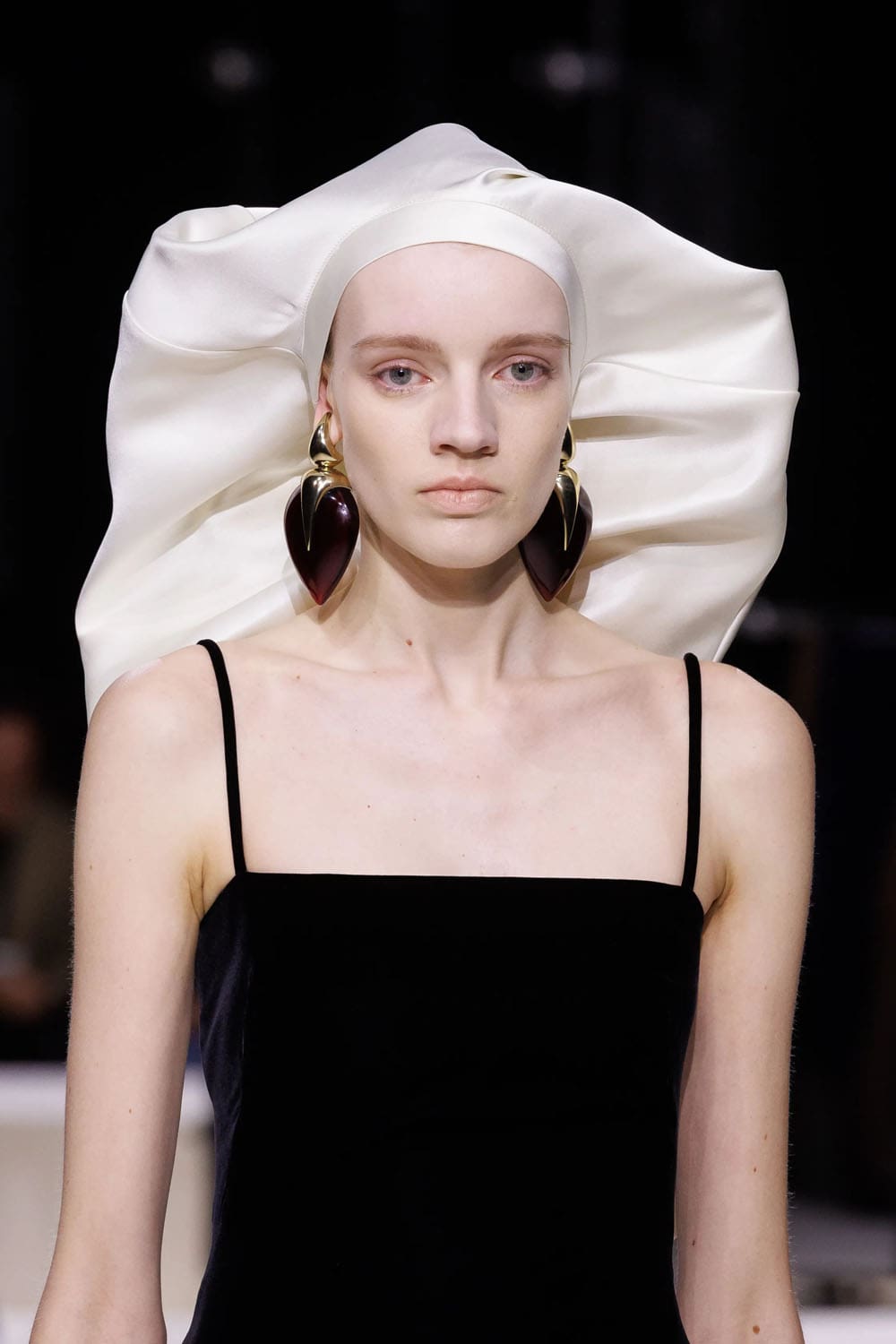
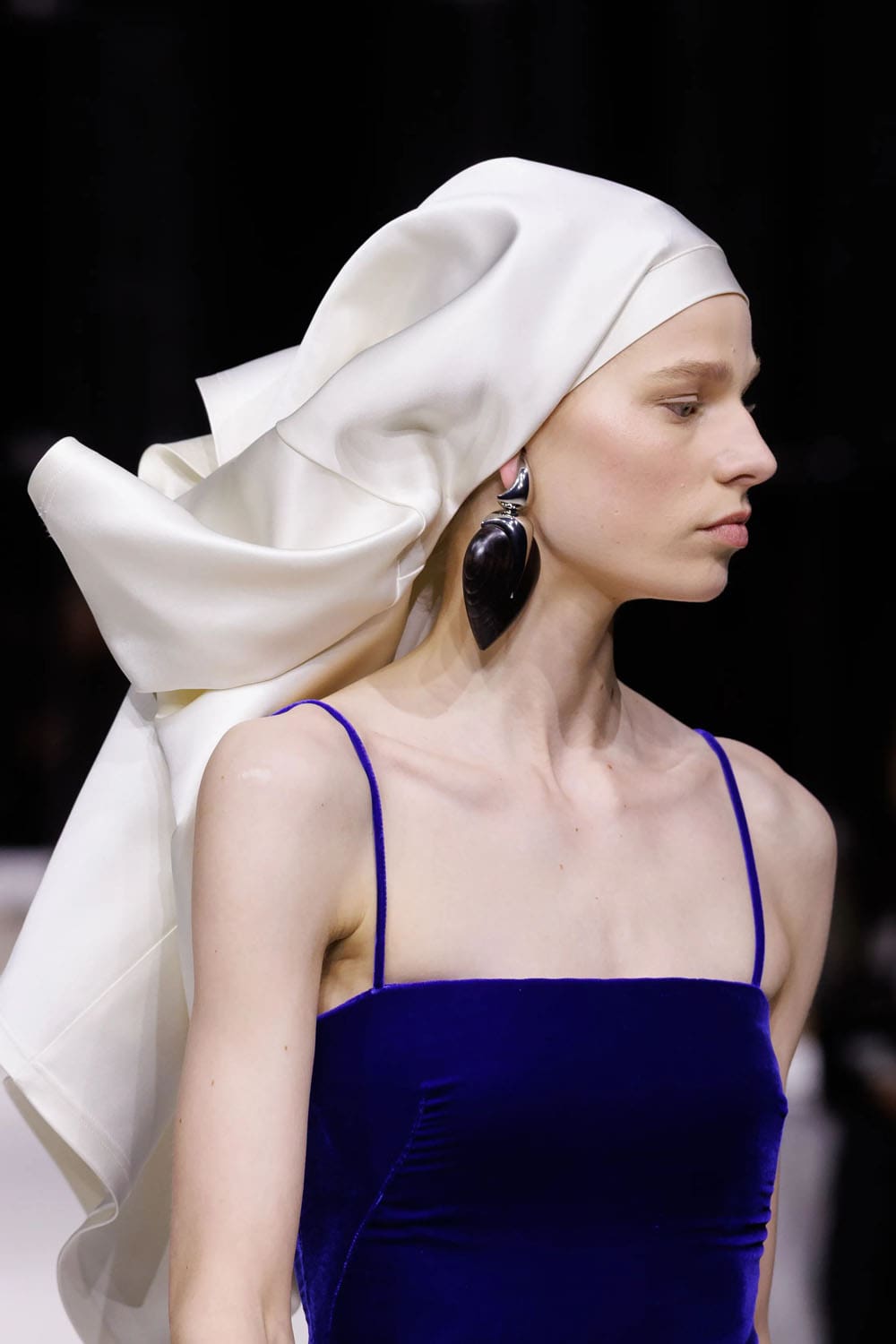
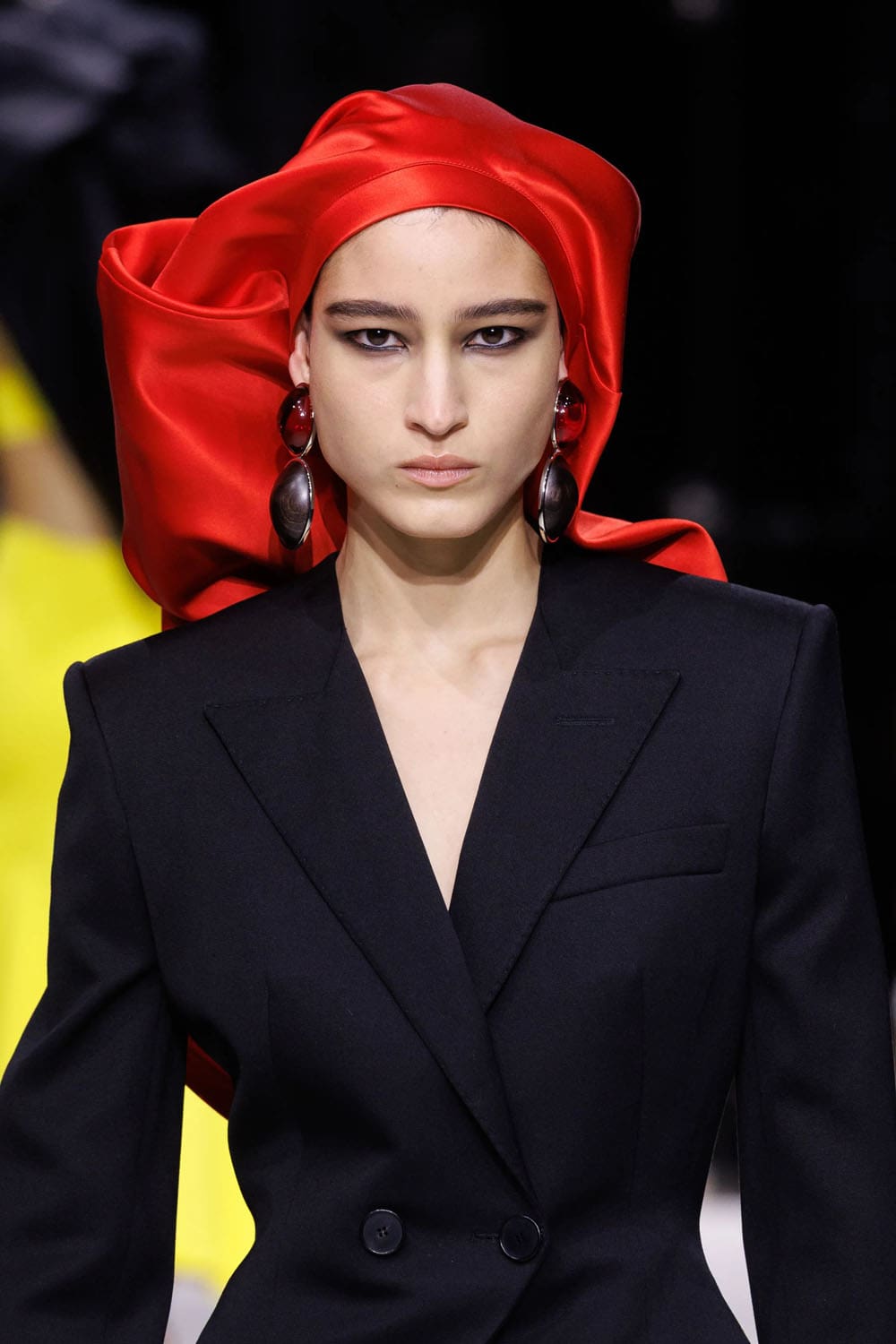
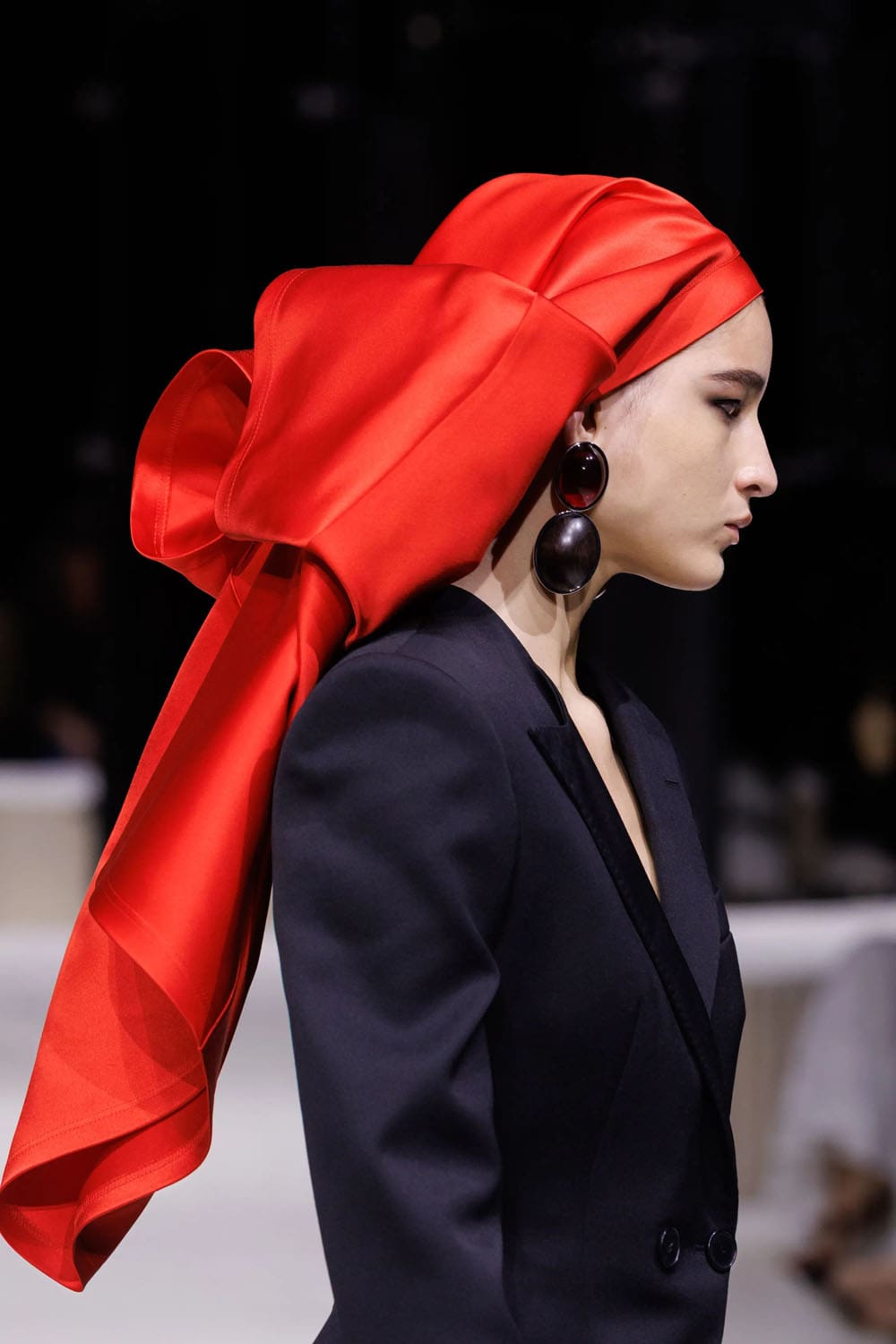
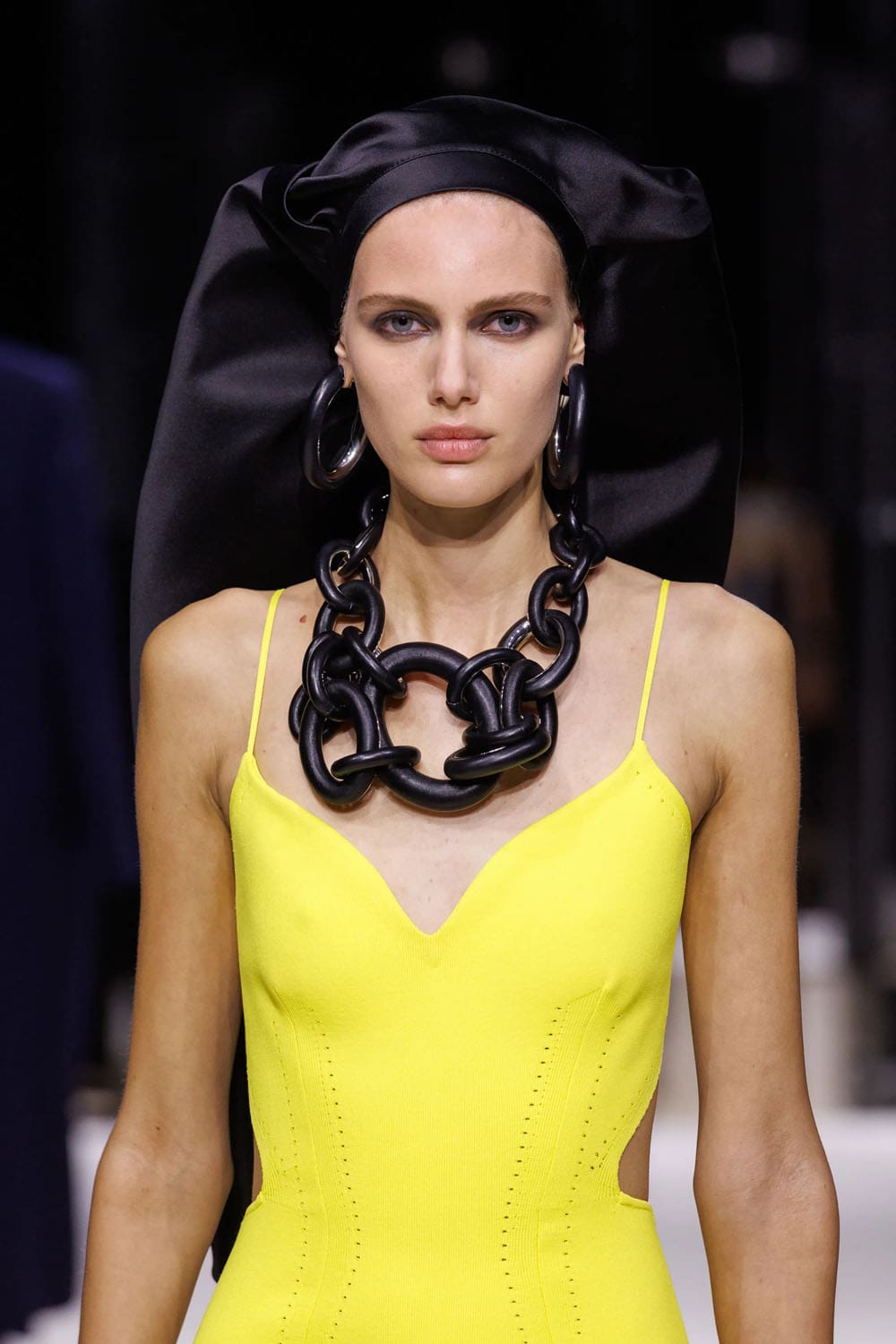
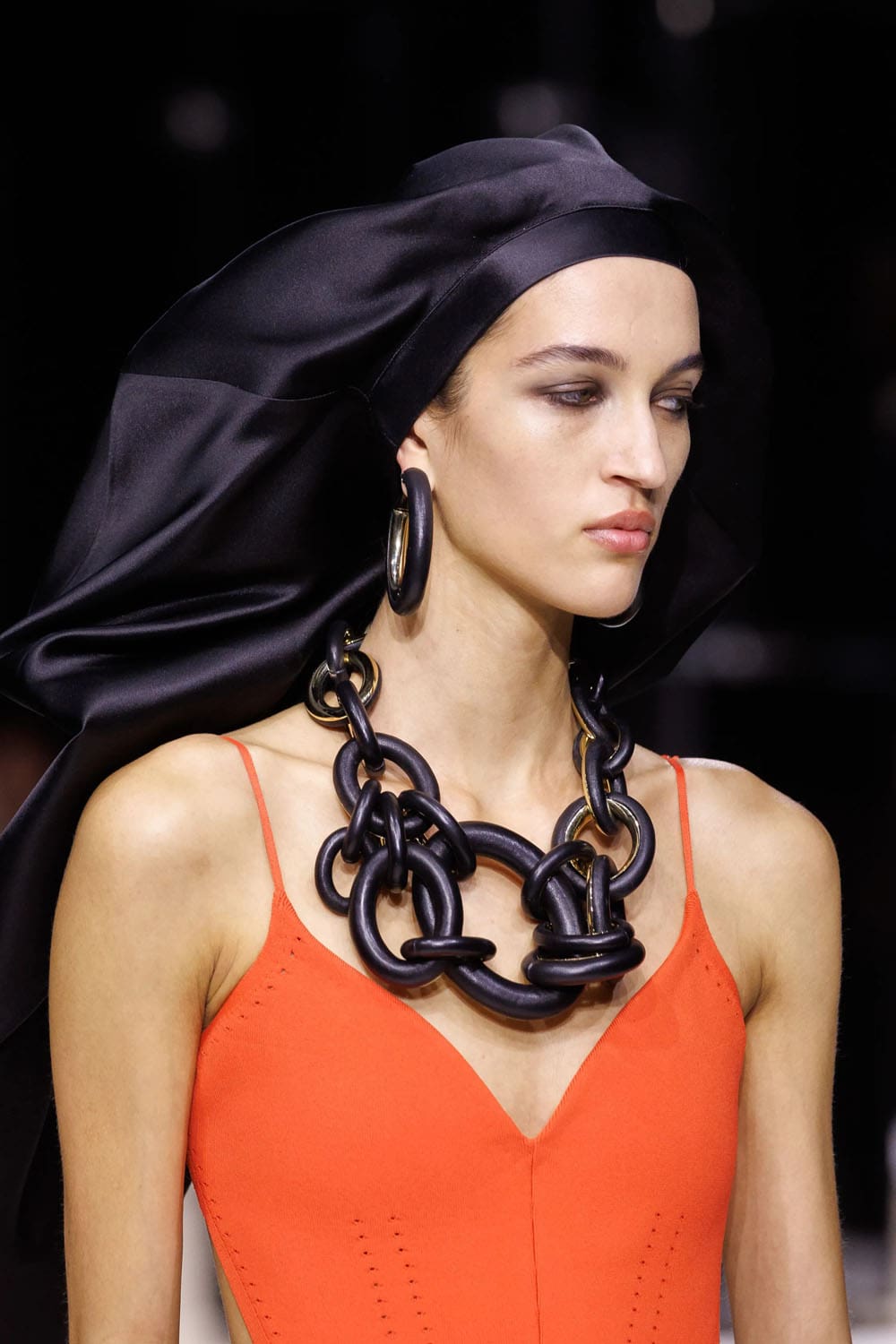
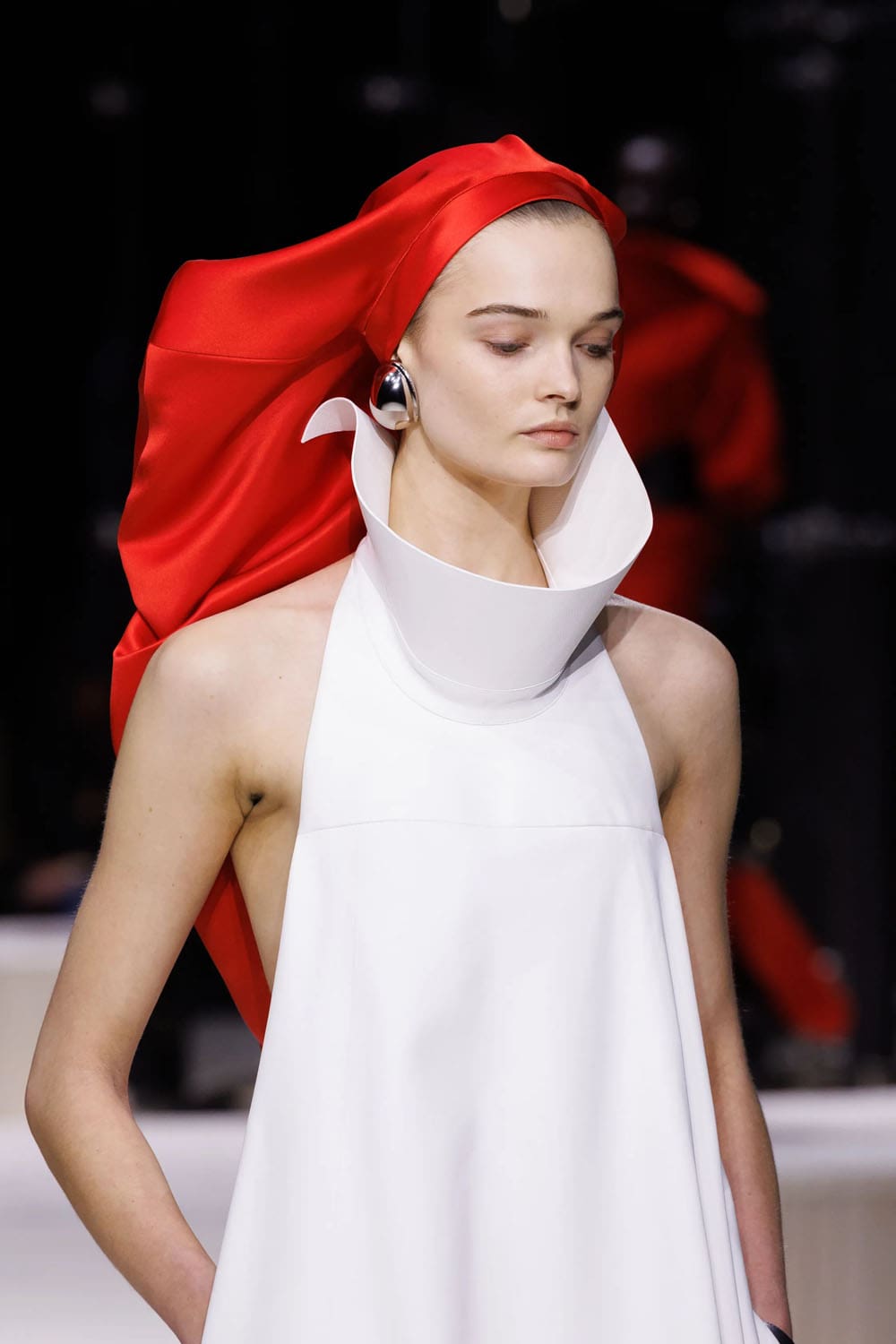
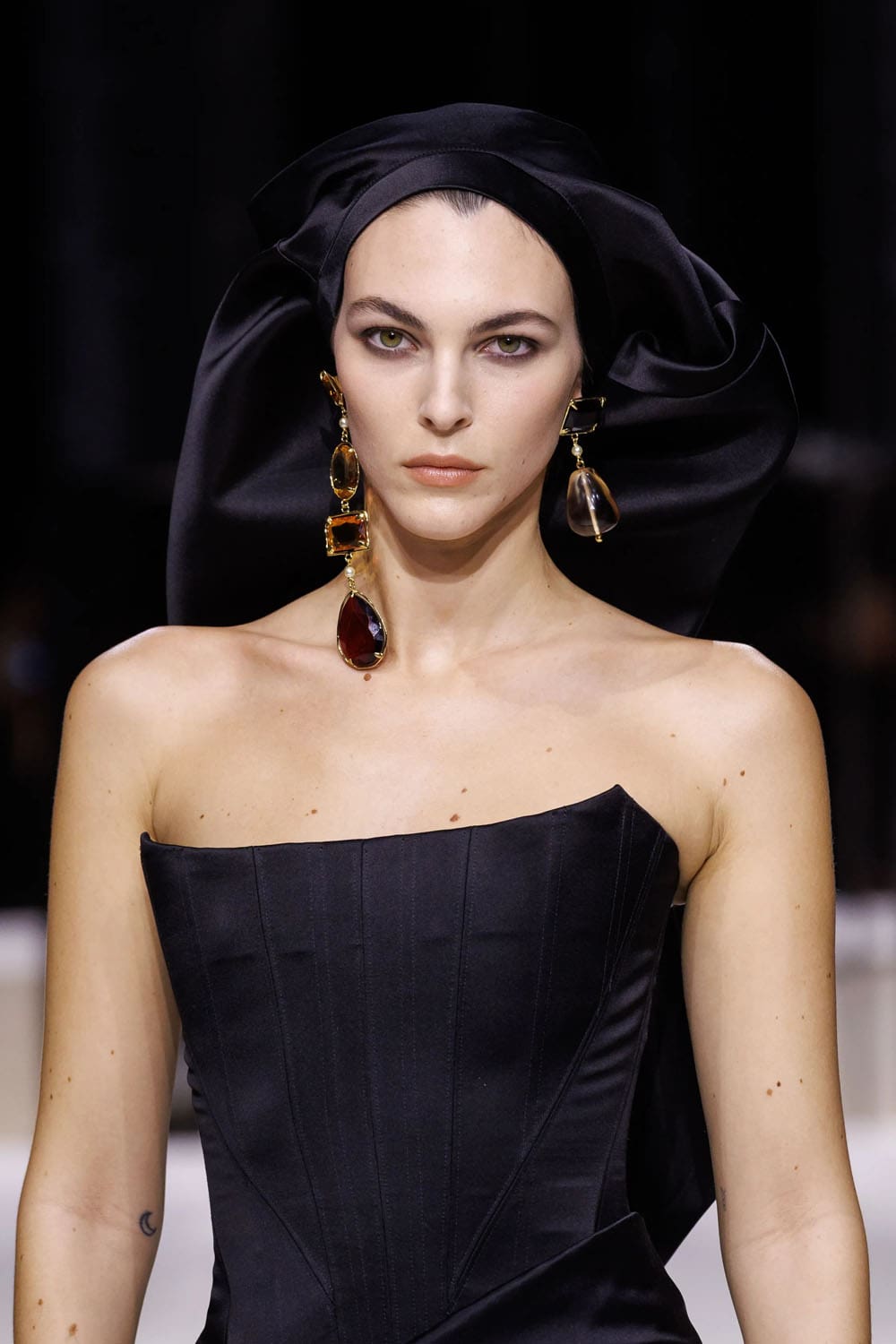
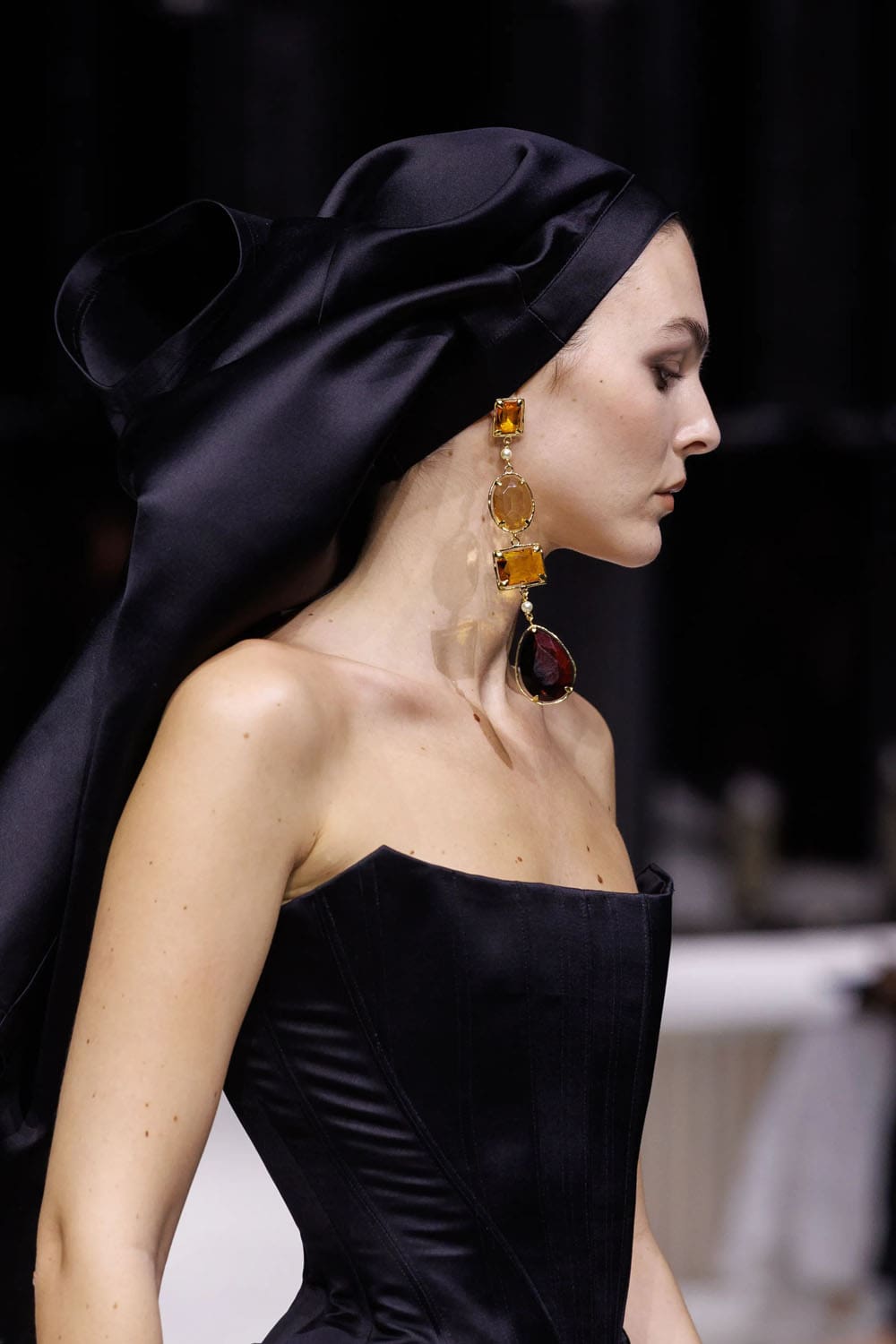
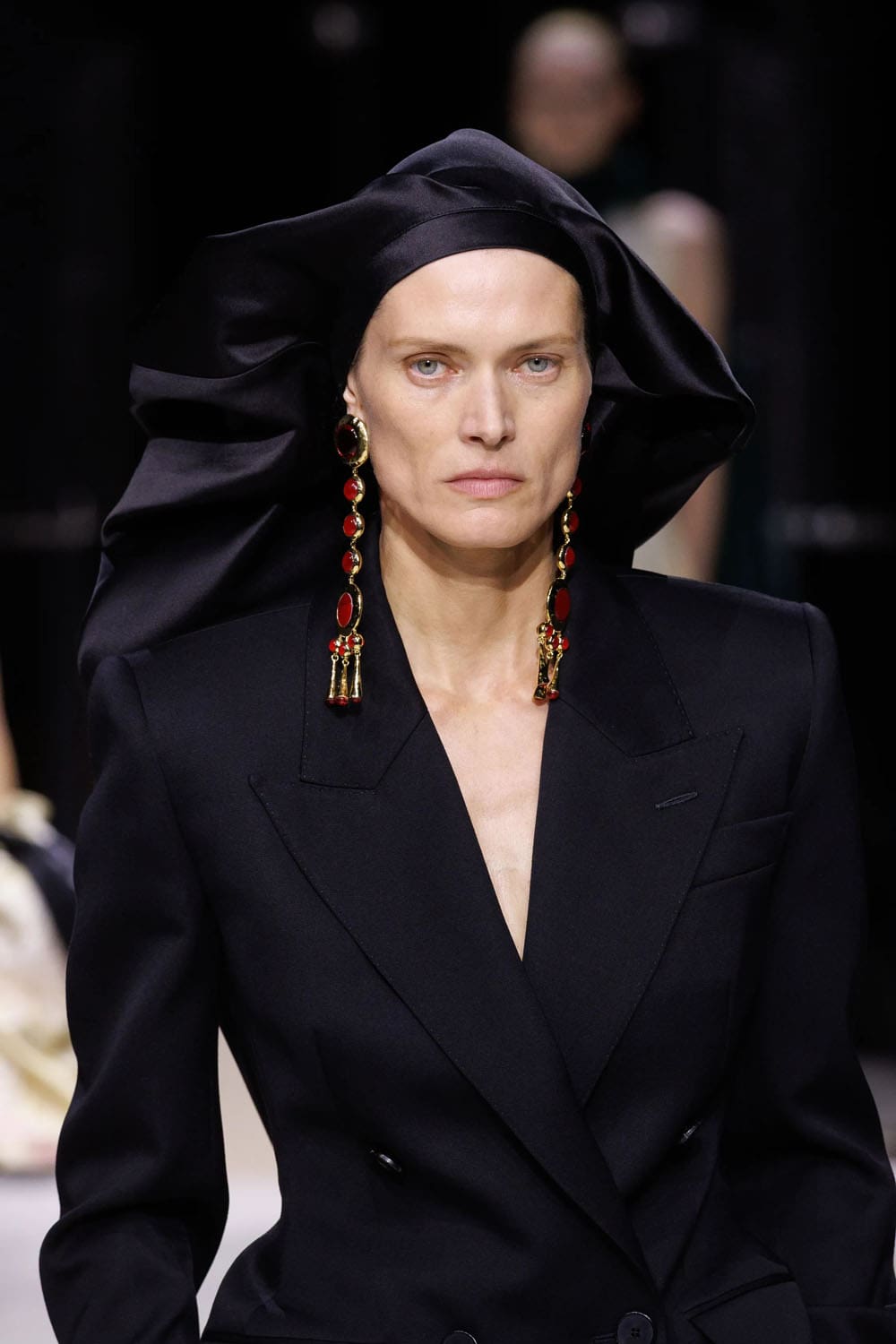
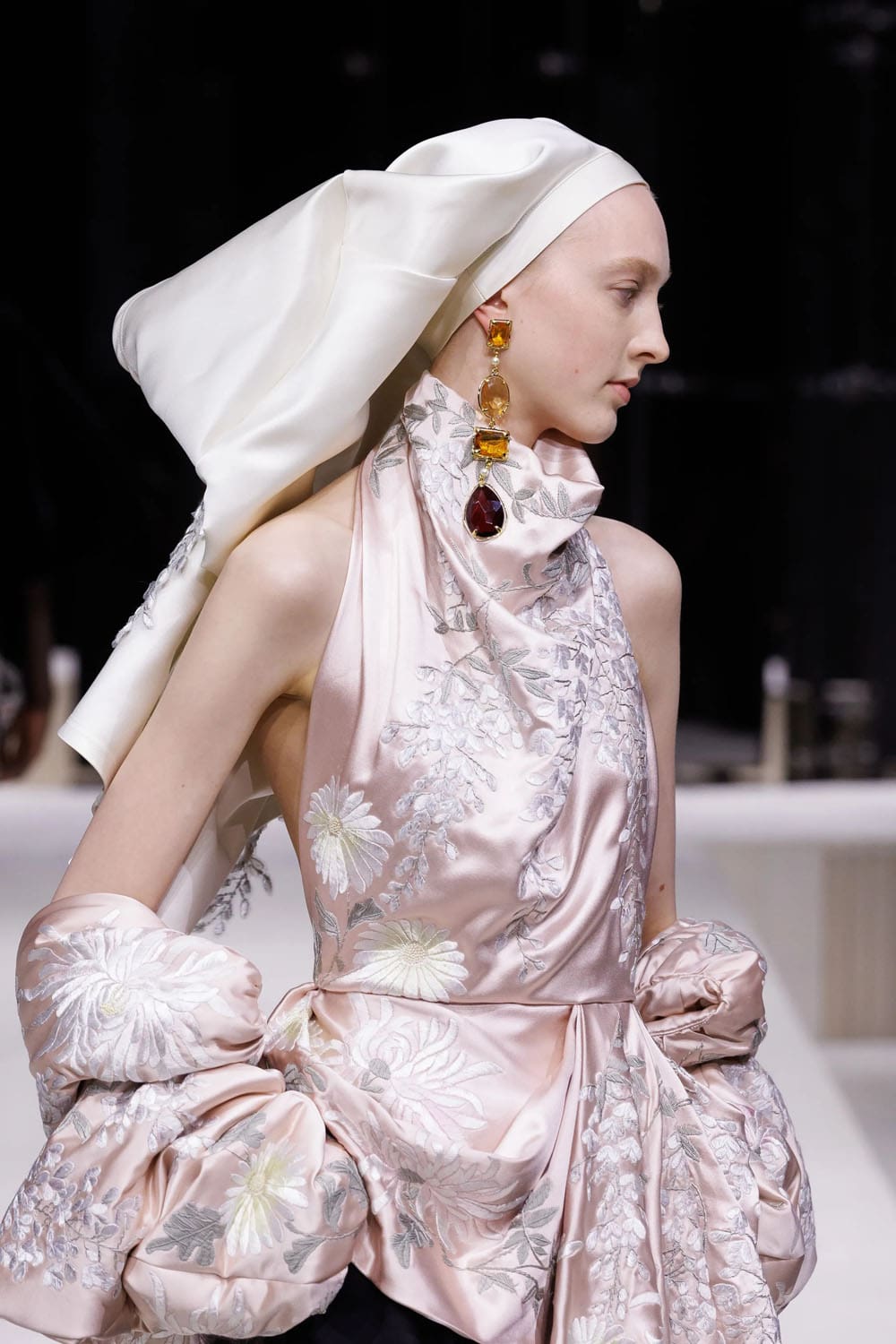
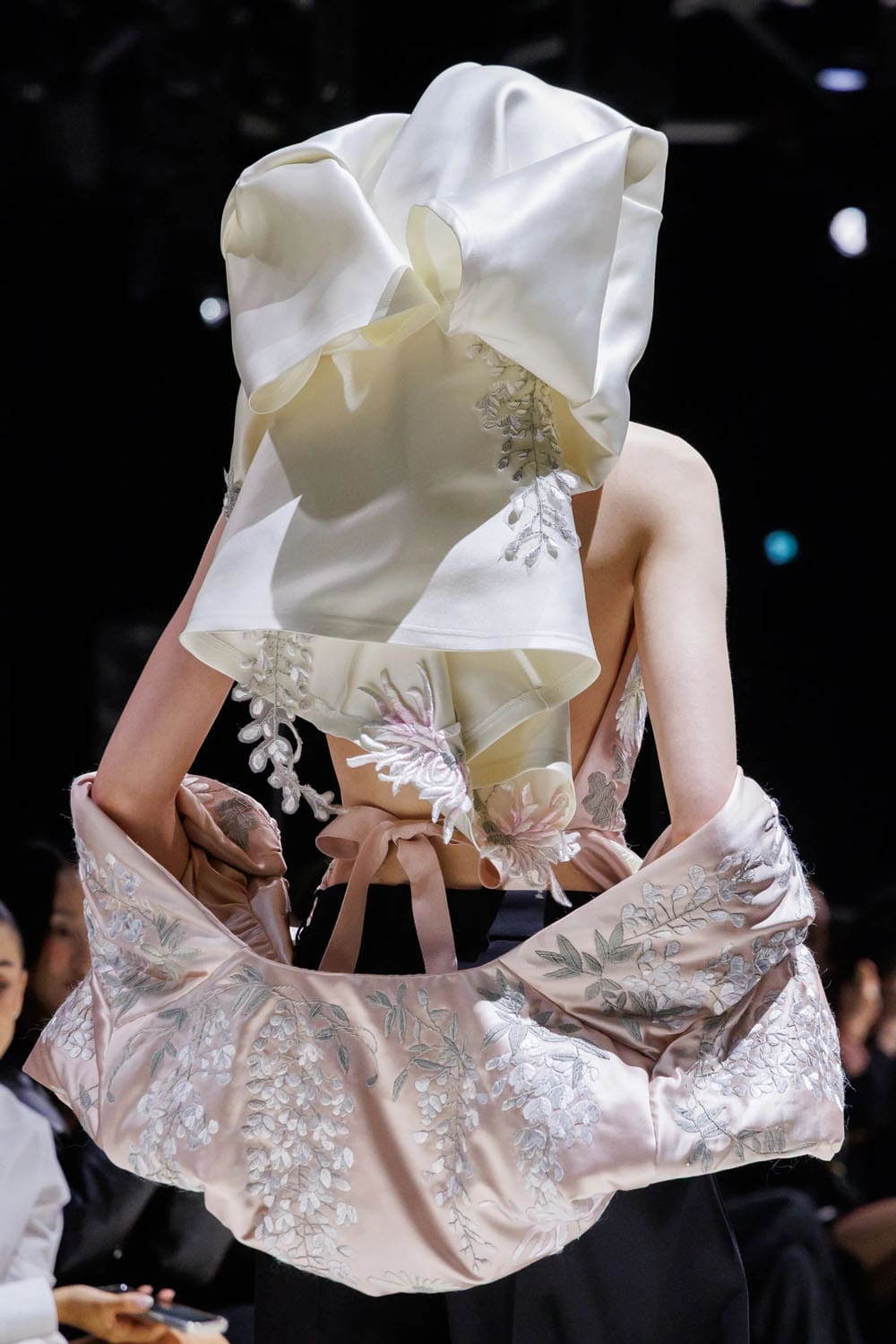
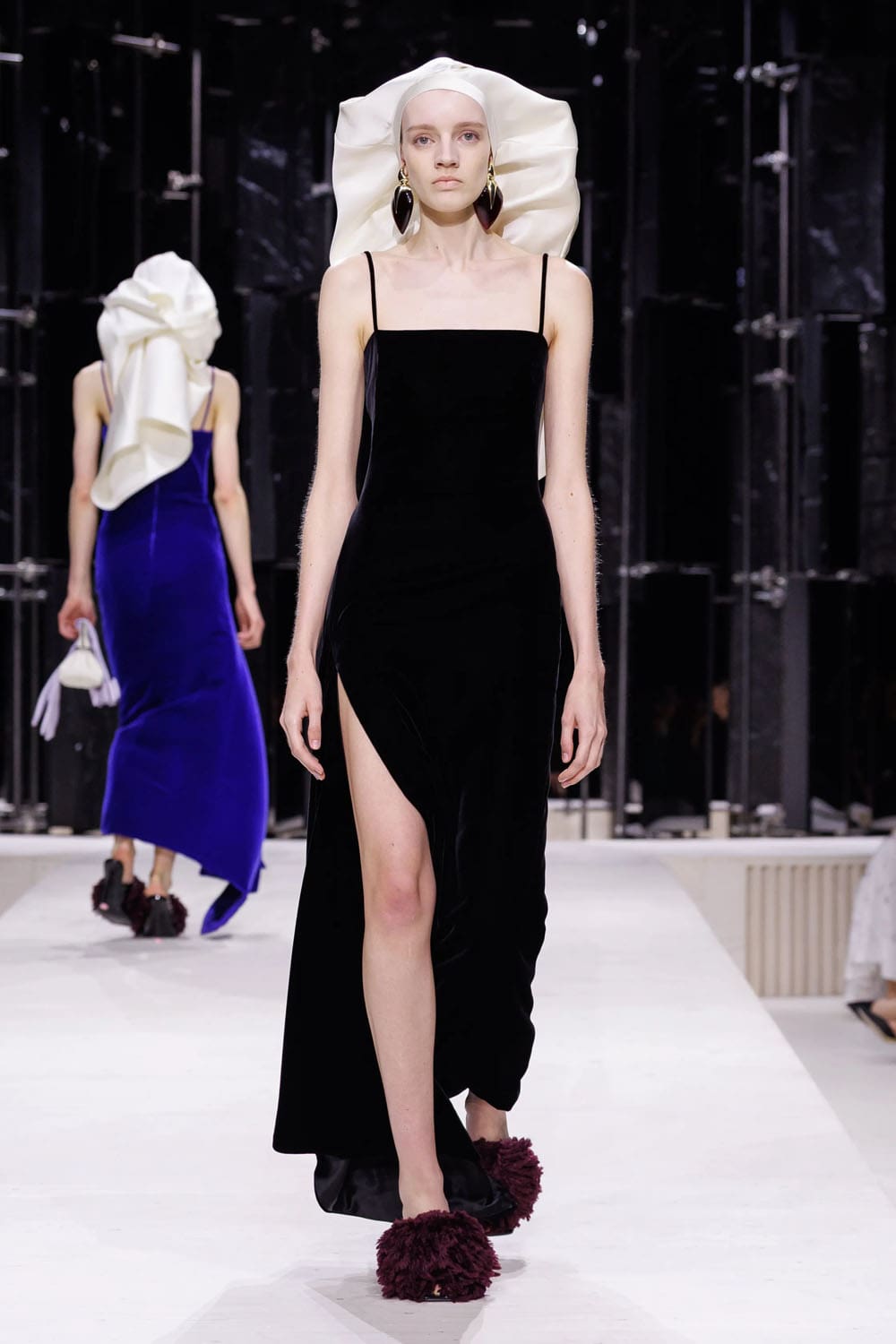
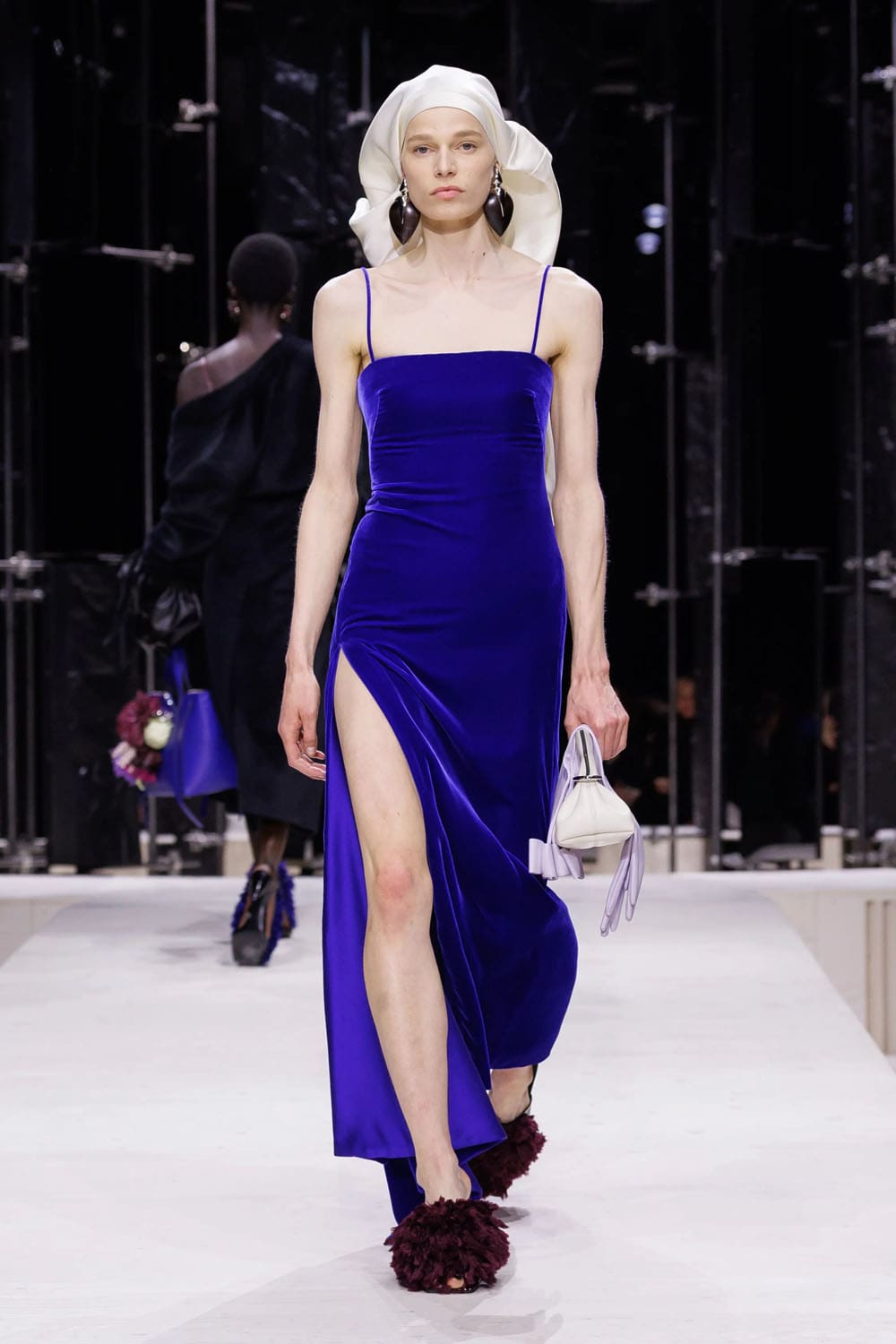
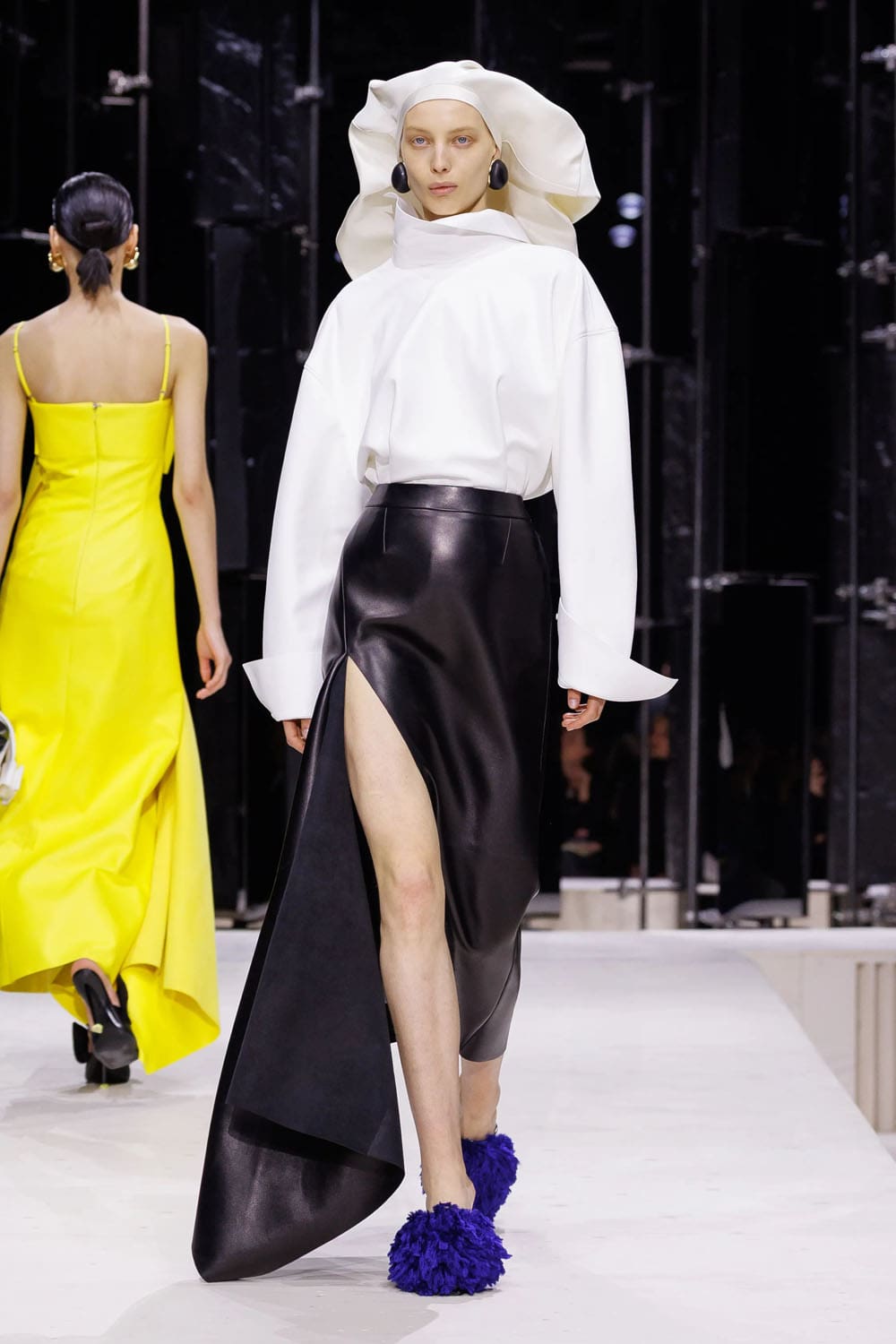
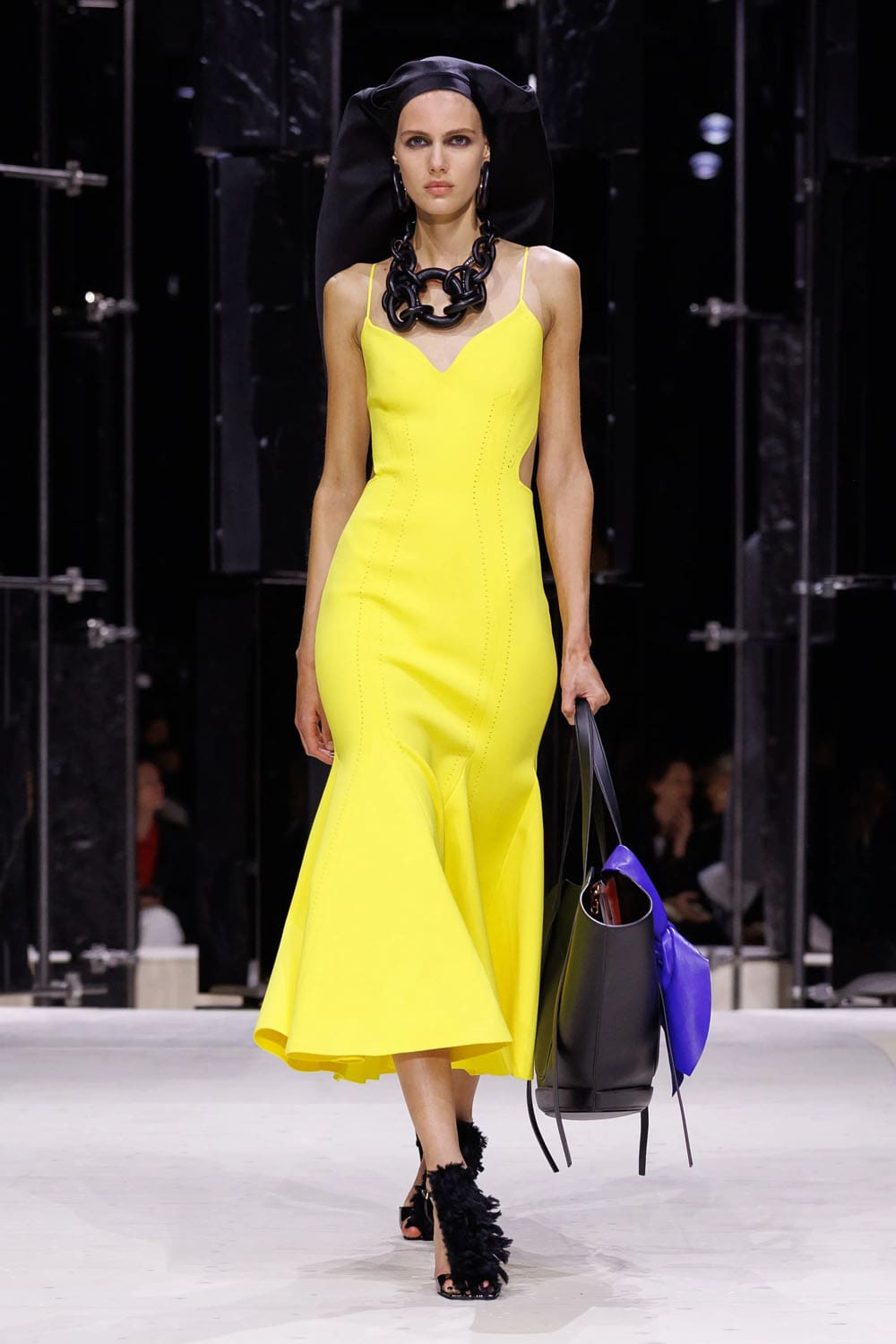
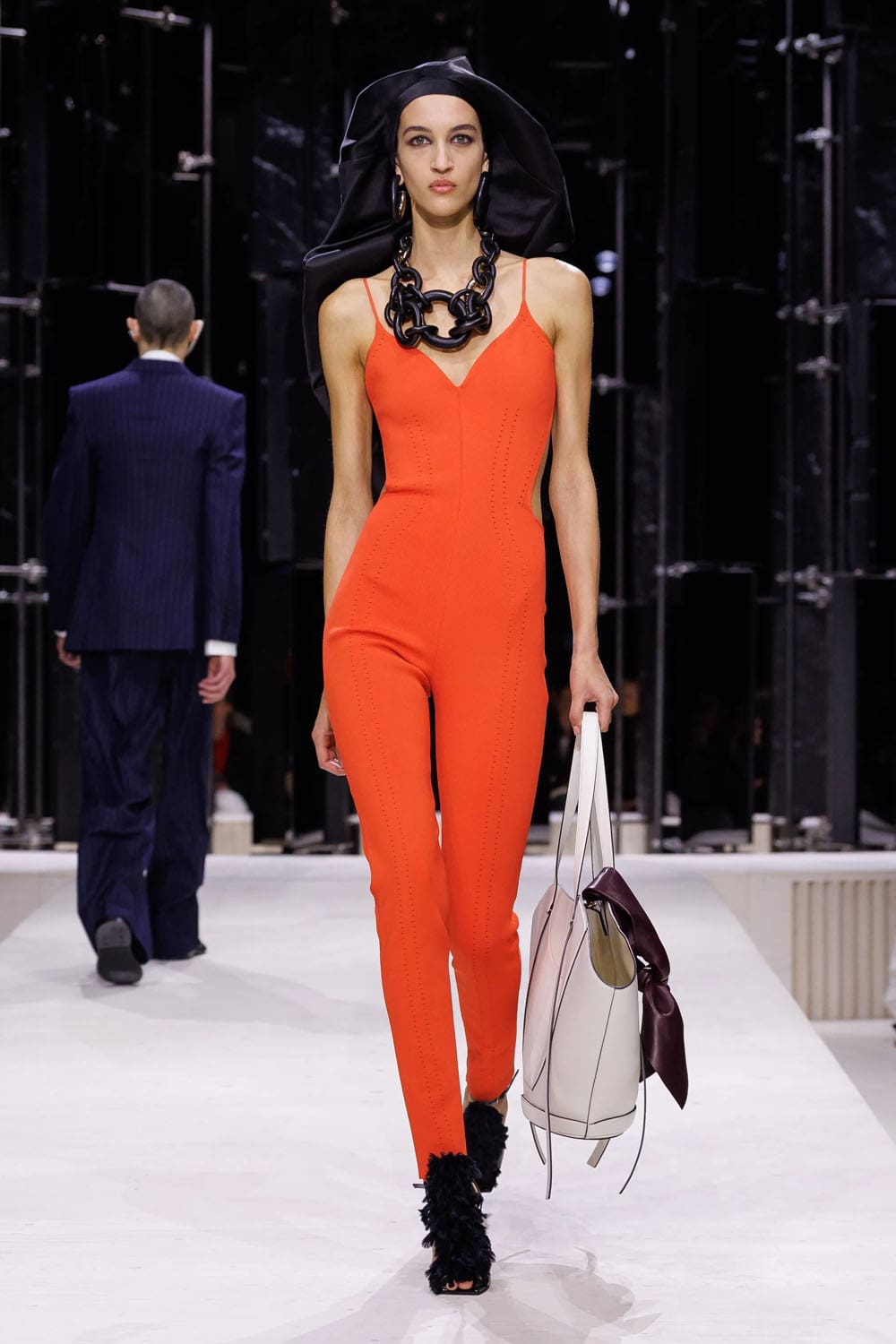
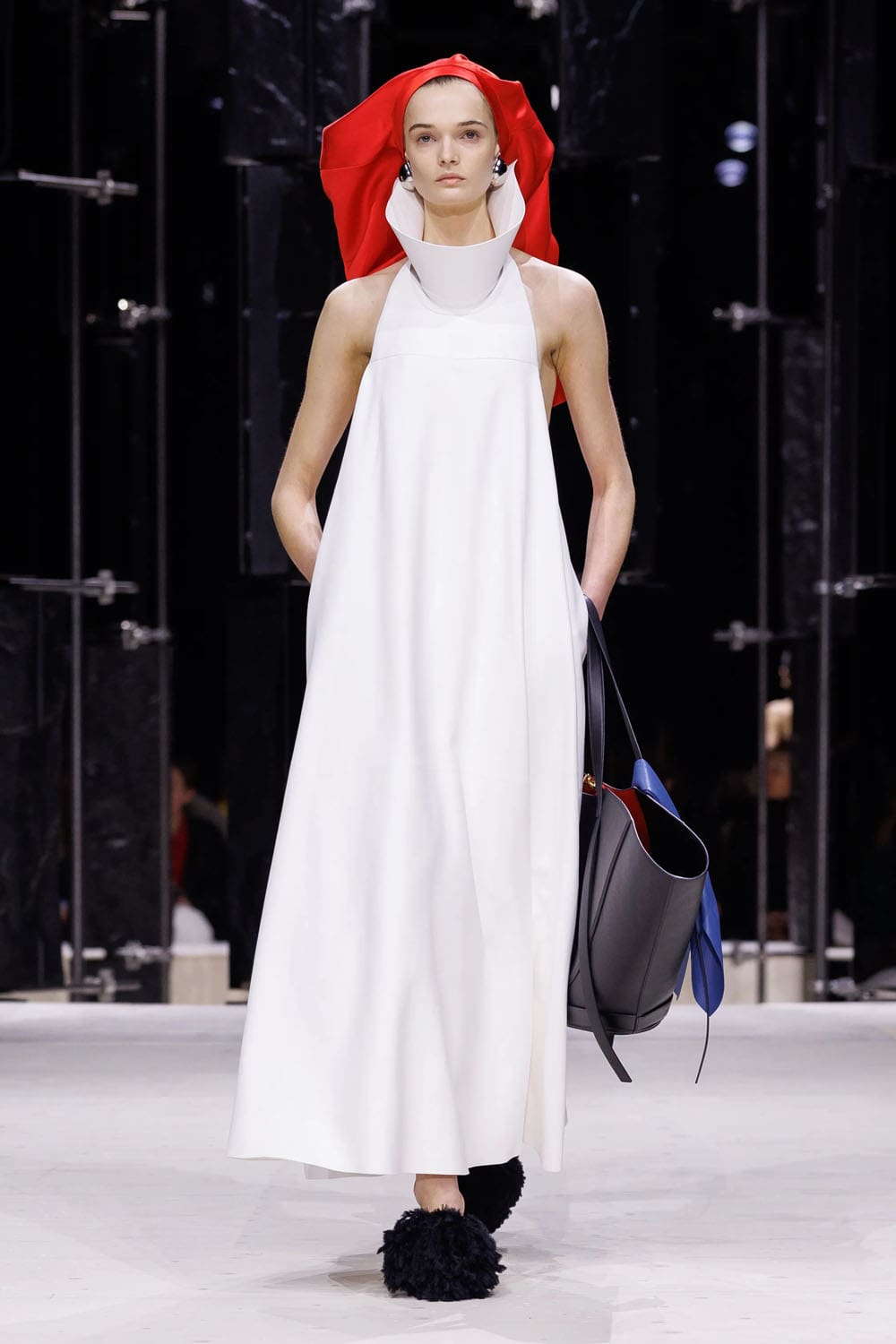
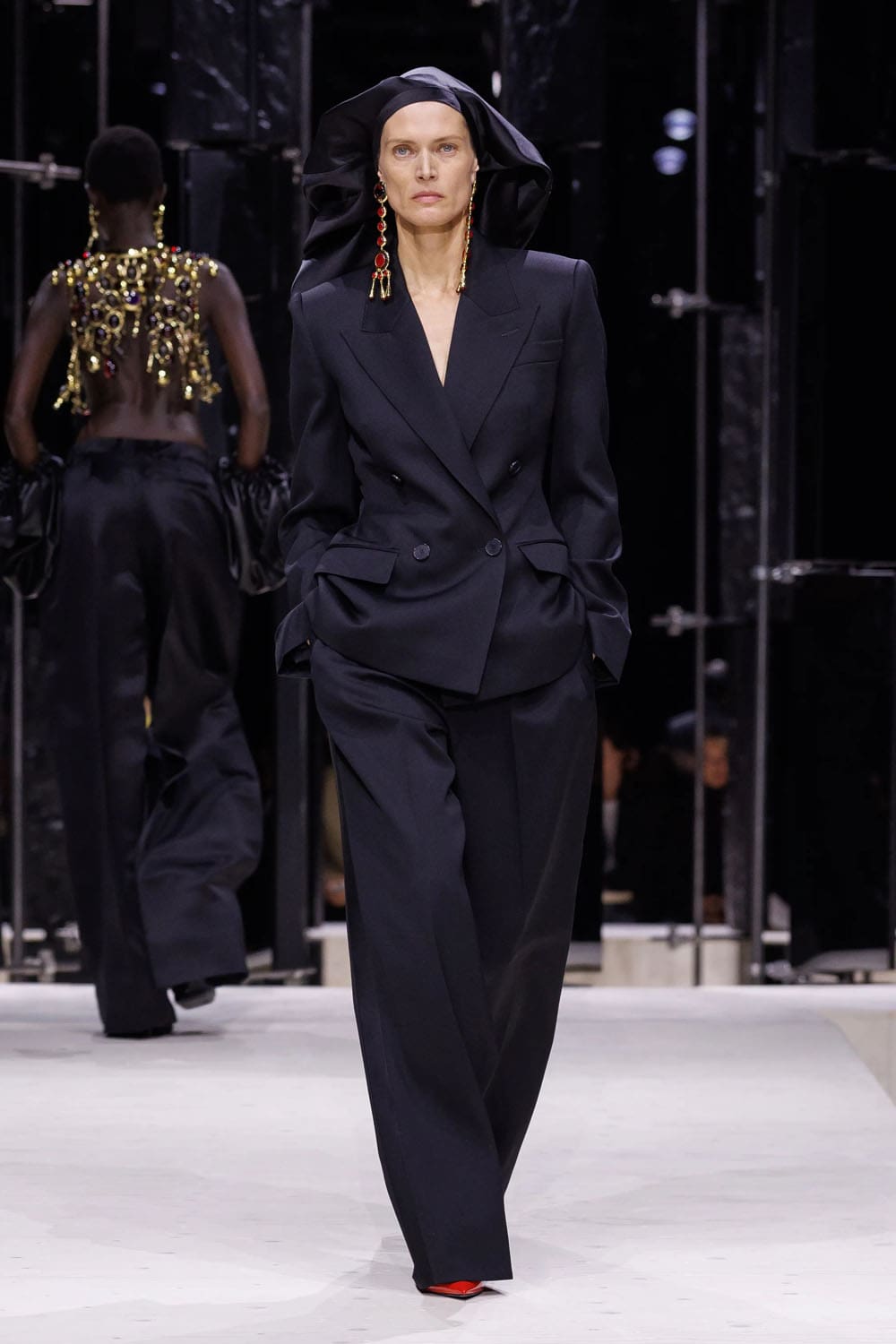
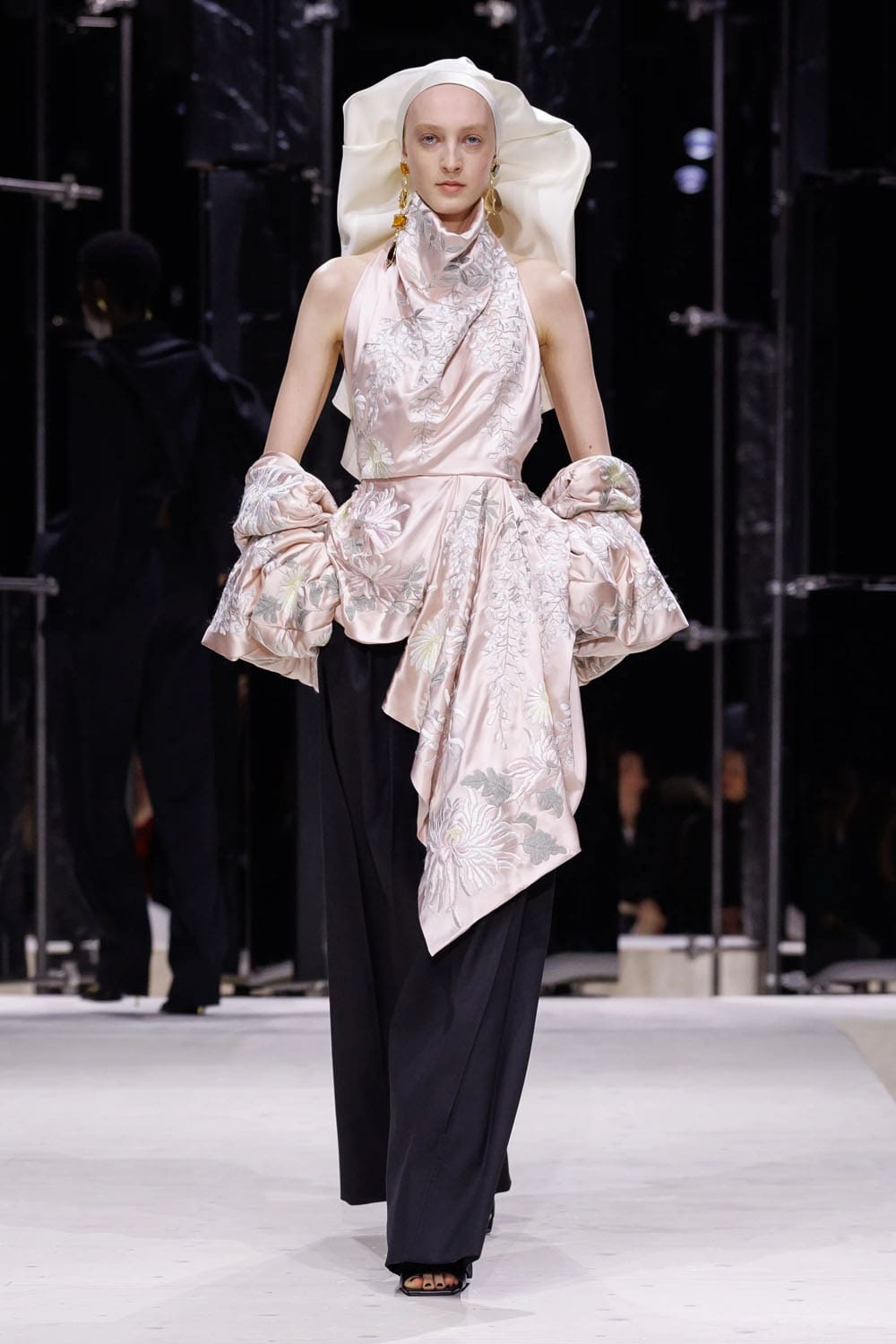
The silk turbans — or rather silk T-shirts transformed into turbans — were the work of Stephen Jones, returning to Givenchy headquarters after thirty years. The gesture was subtle but poignant: a bridge connecting McQueen’s Givenchy to Burton’s Givenchy, with Jones as the quiet witness between eras.
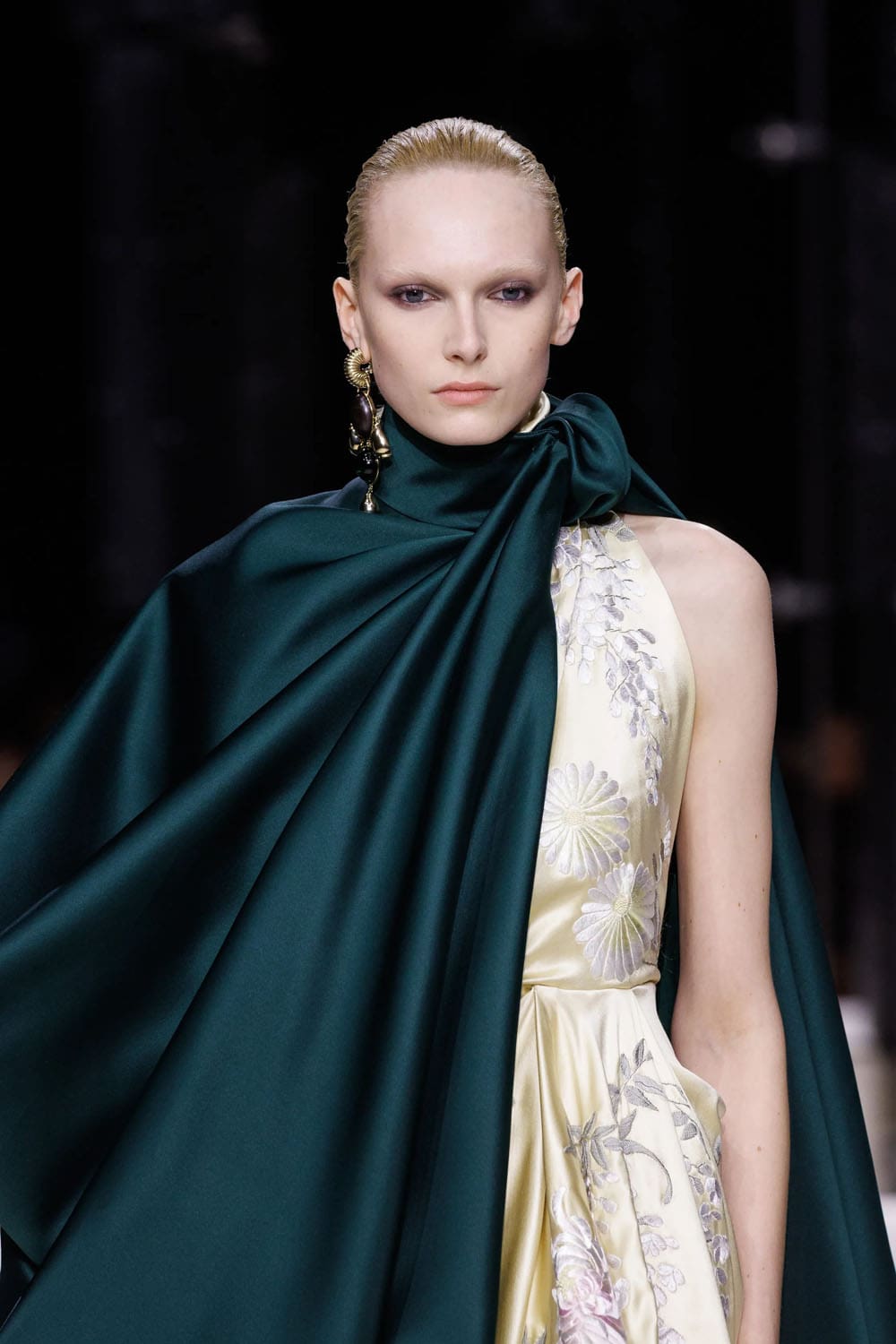
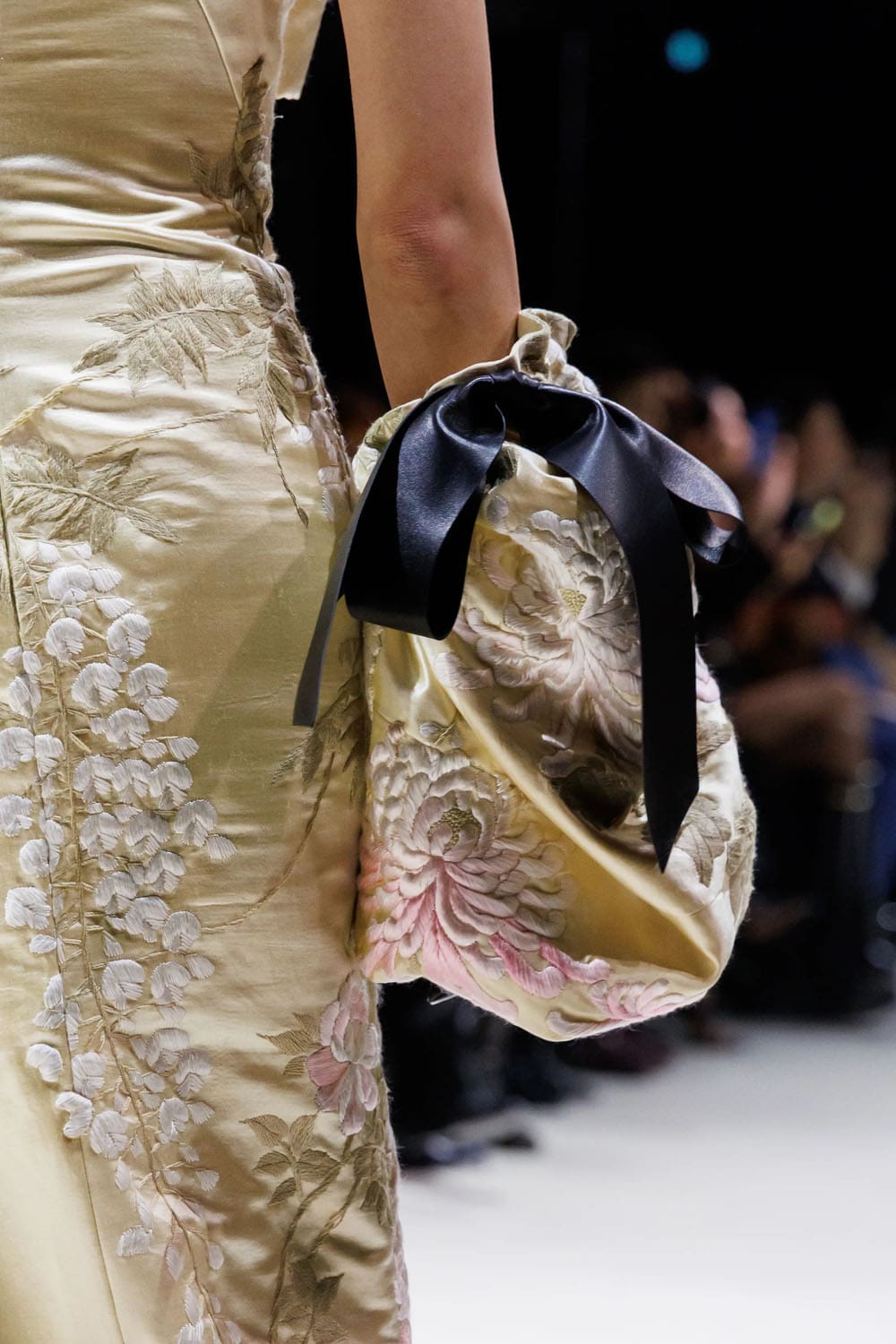
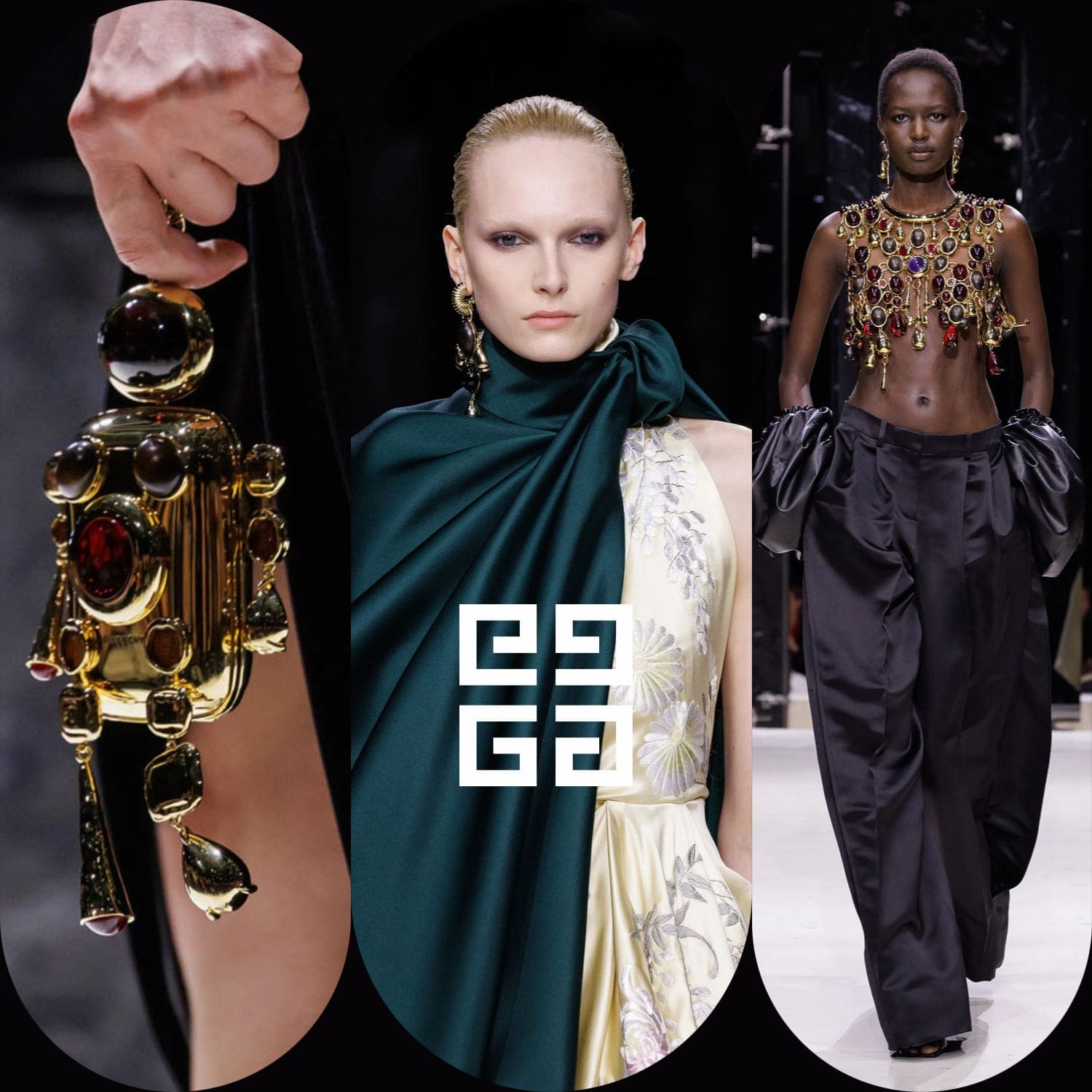
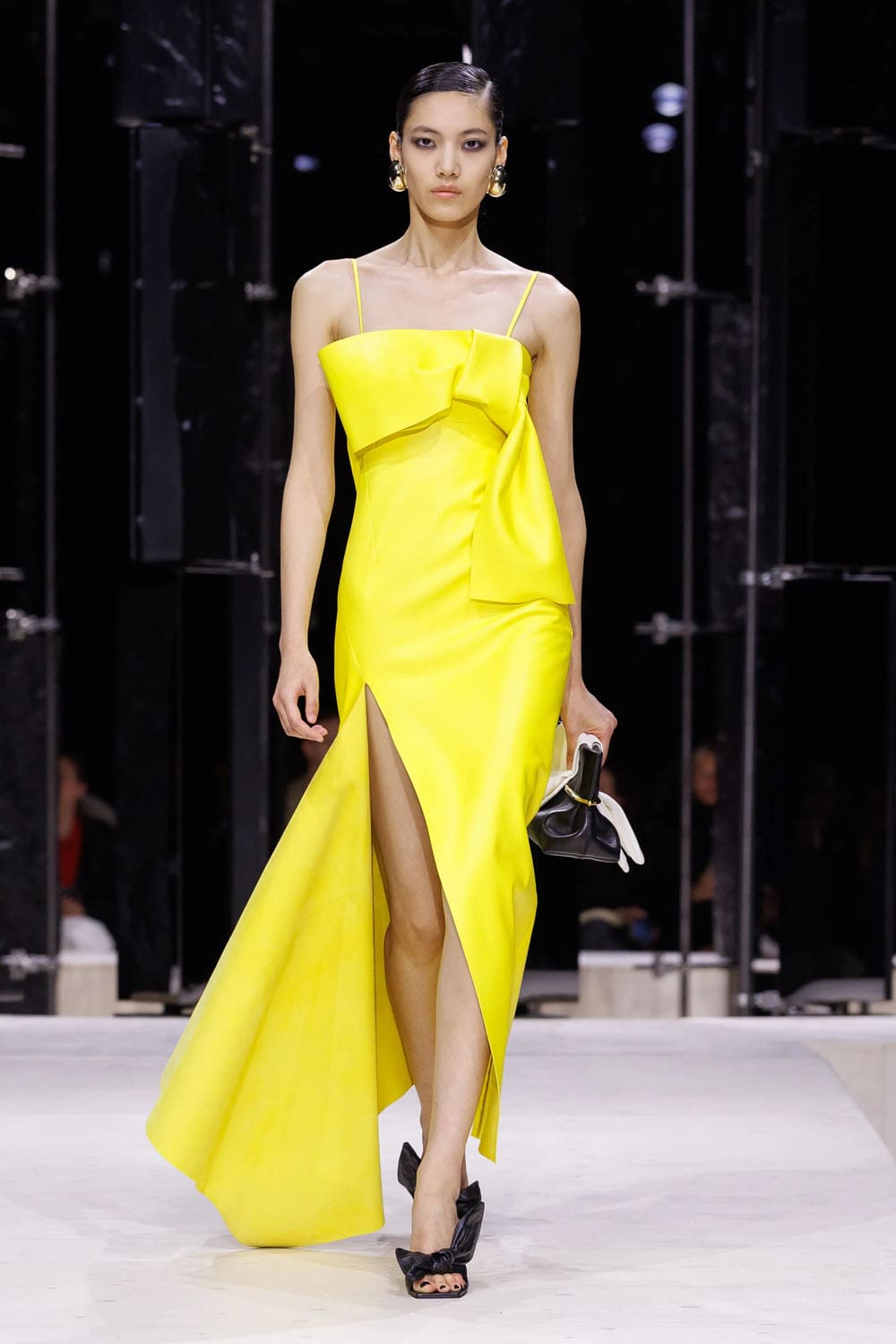
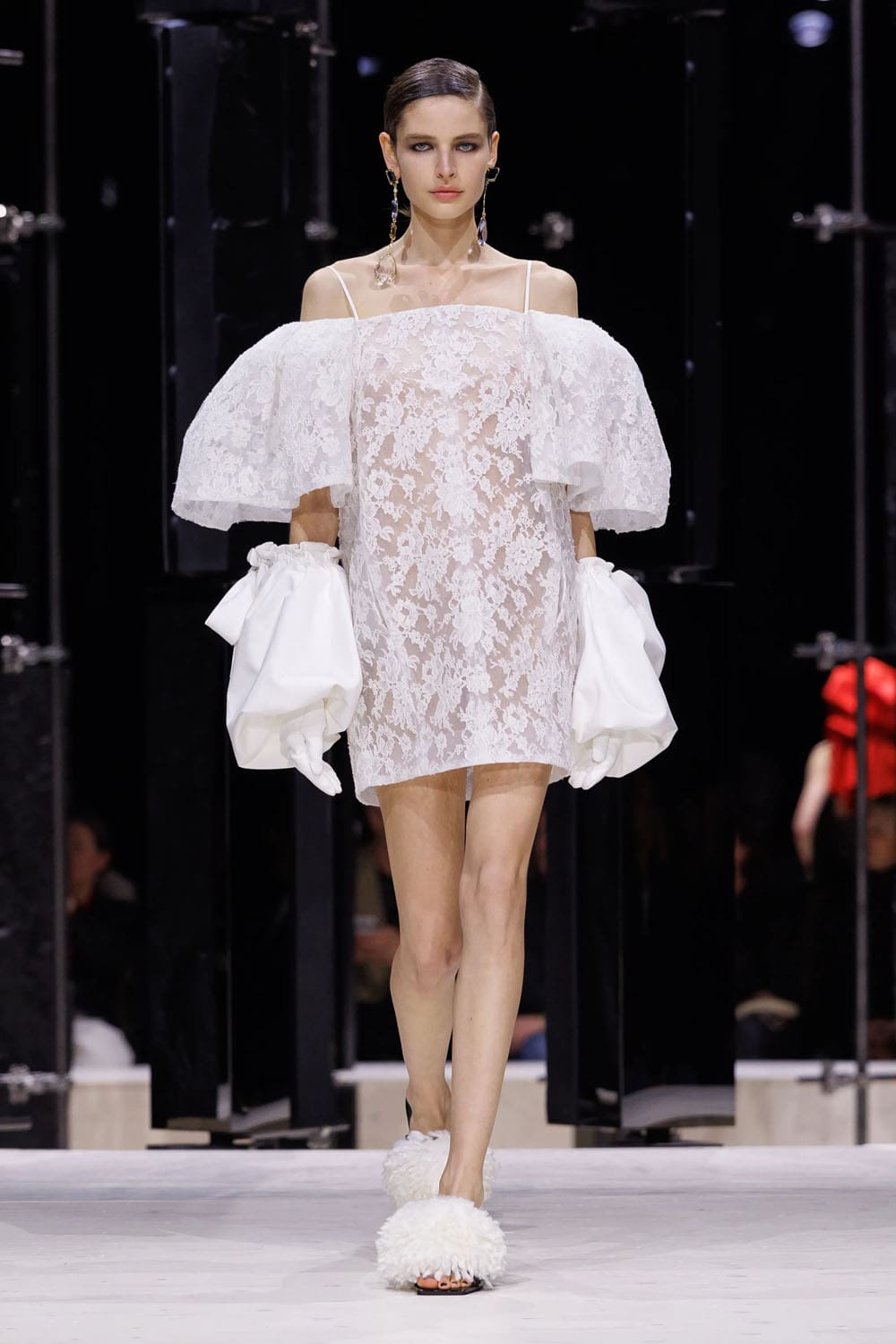
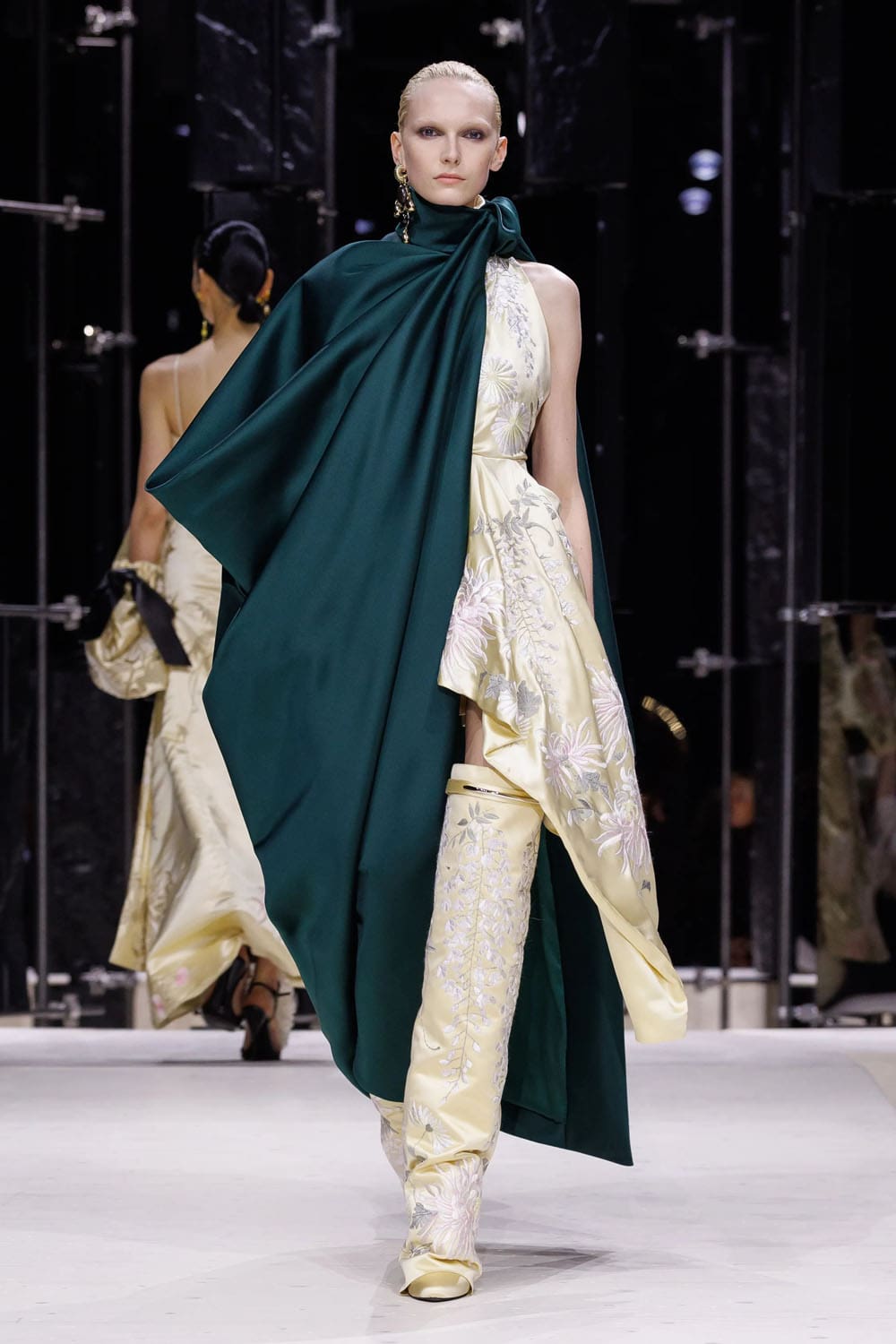
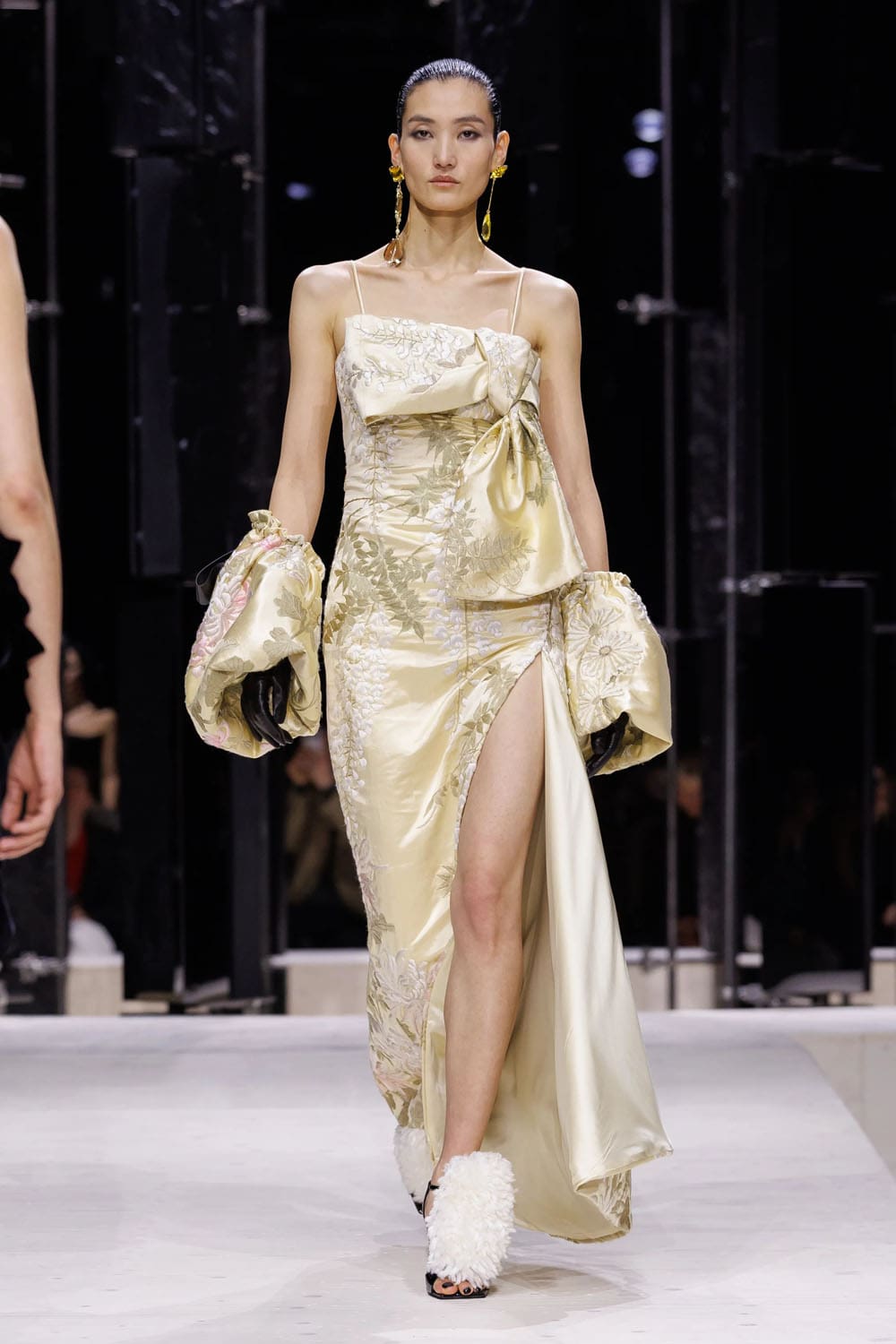
One of the evening fabrics, a yellow-white silk jacquard used in an off-shoulder dress, directly referenced a swatch from McQueen’s 1996 Givenchy archive. Burton did not wave the heritage under spotlights; she inserted it like a family secret — visible only to those who know how to read couture literacy.
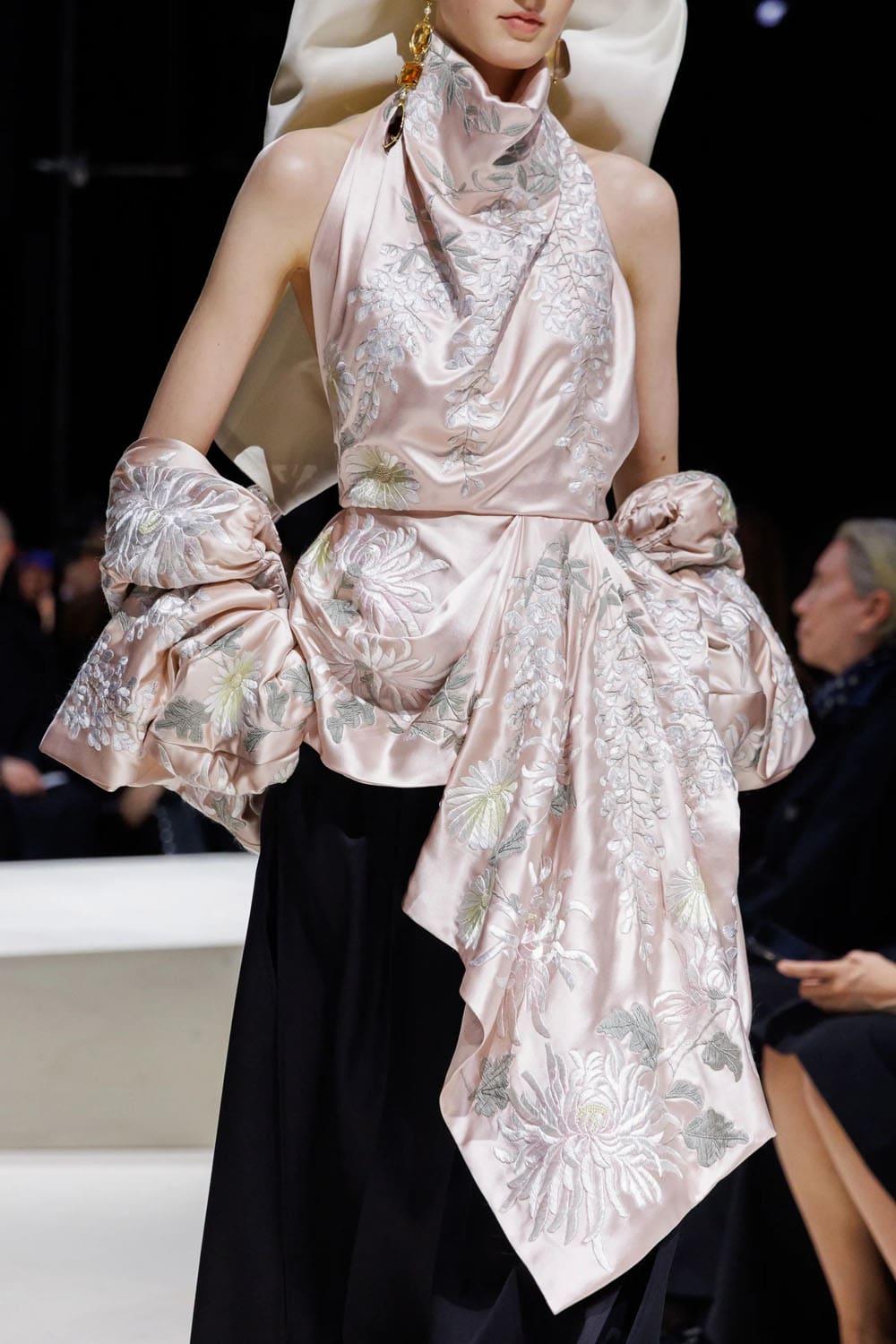
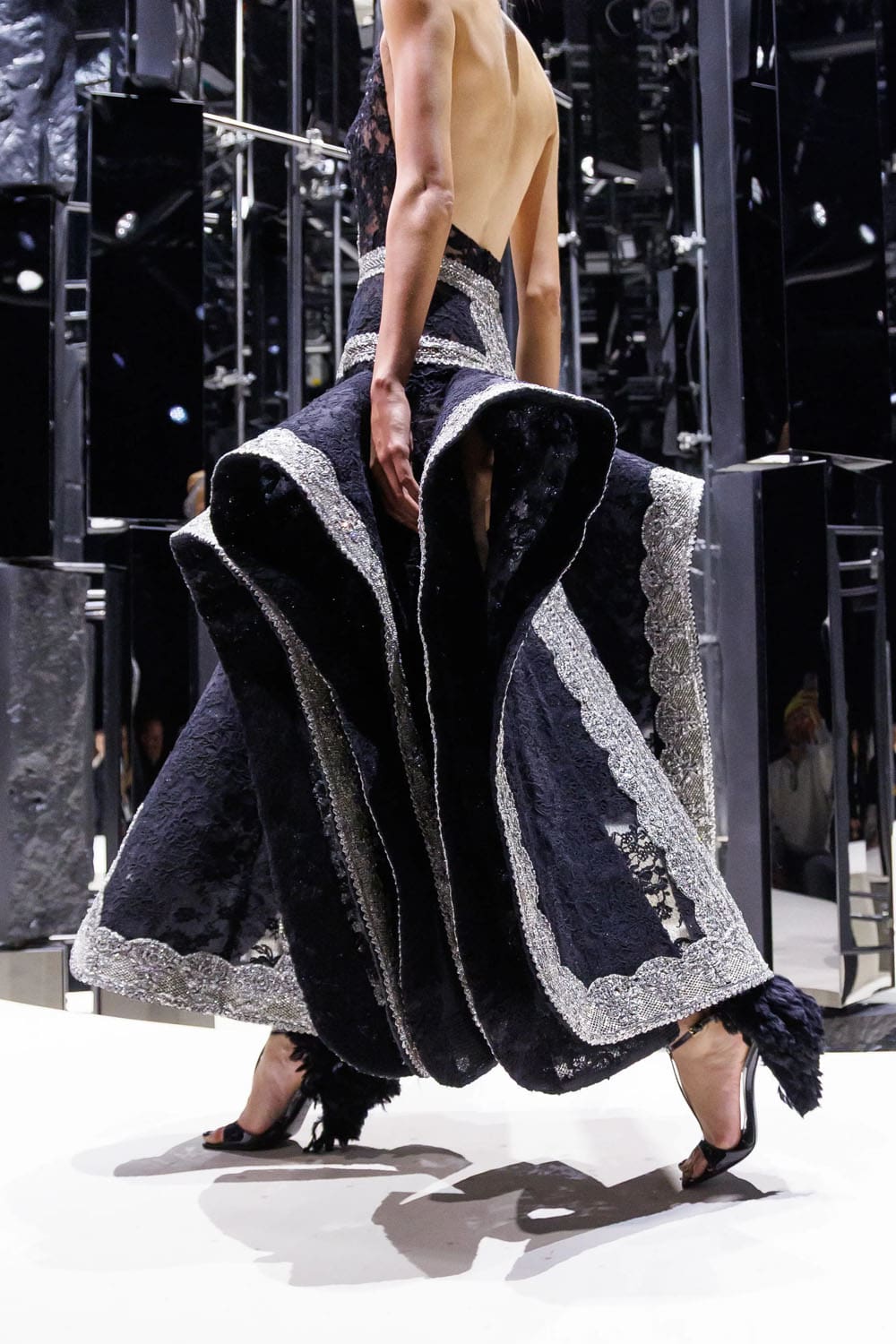
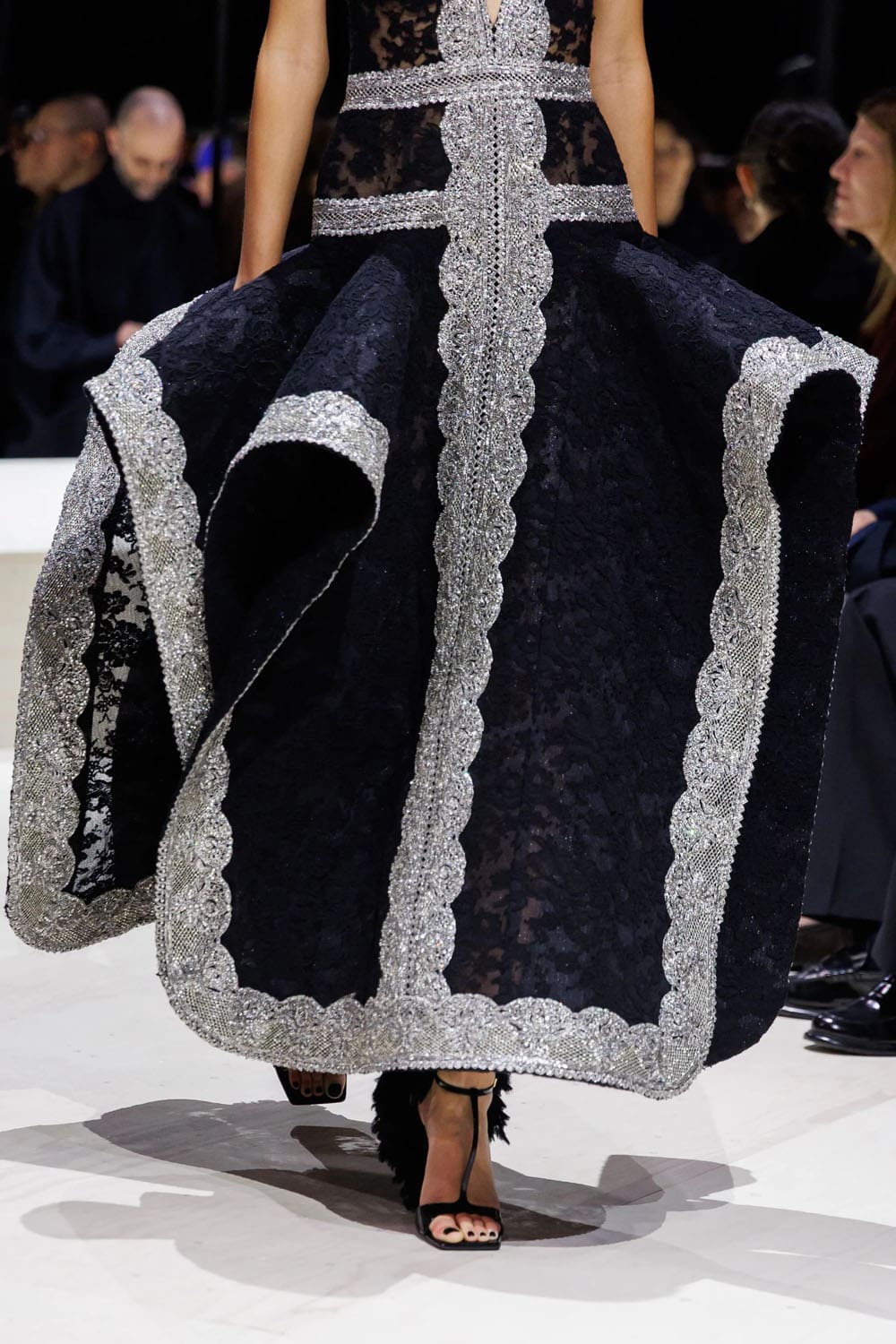
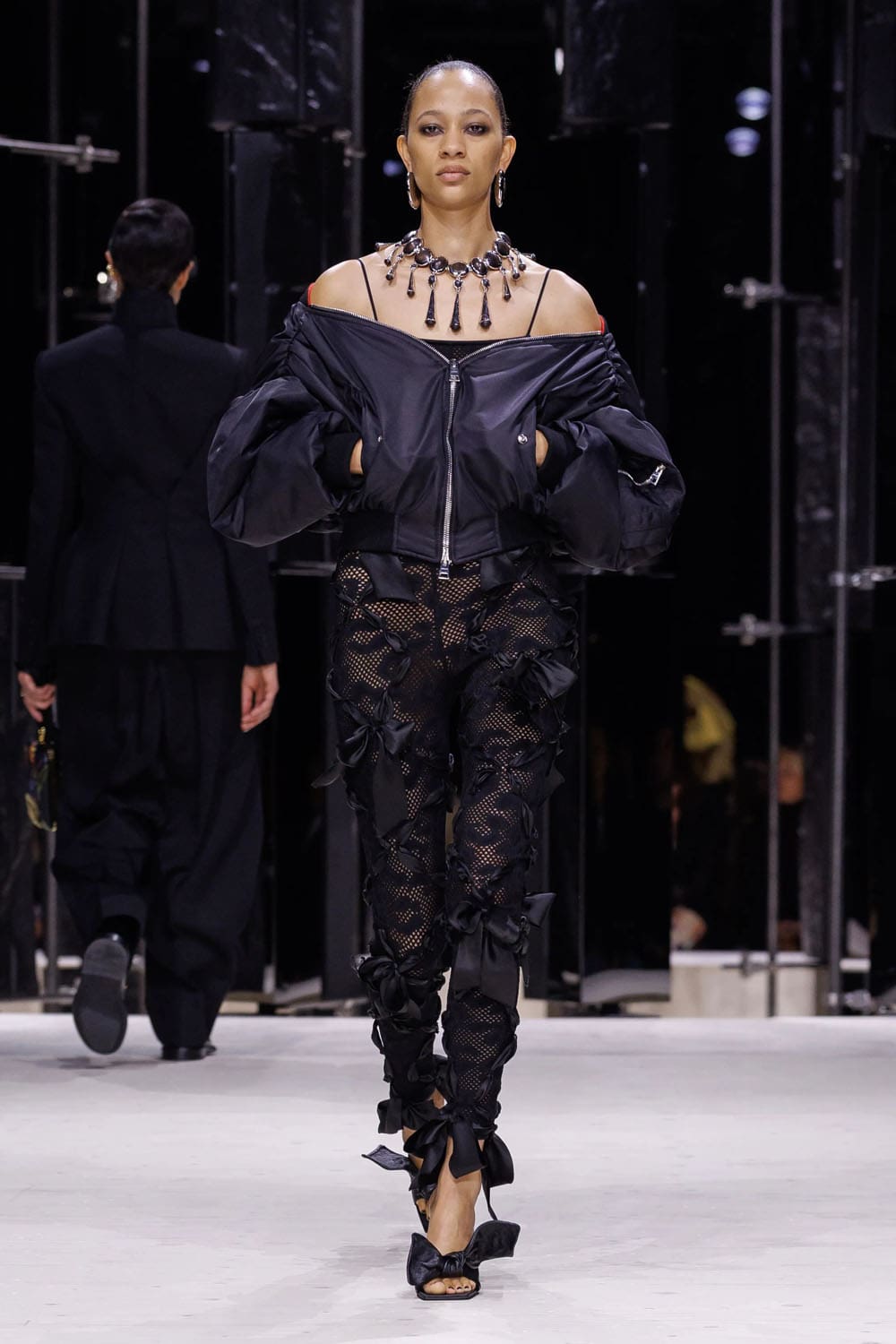
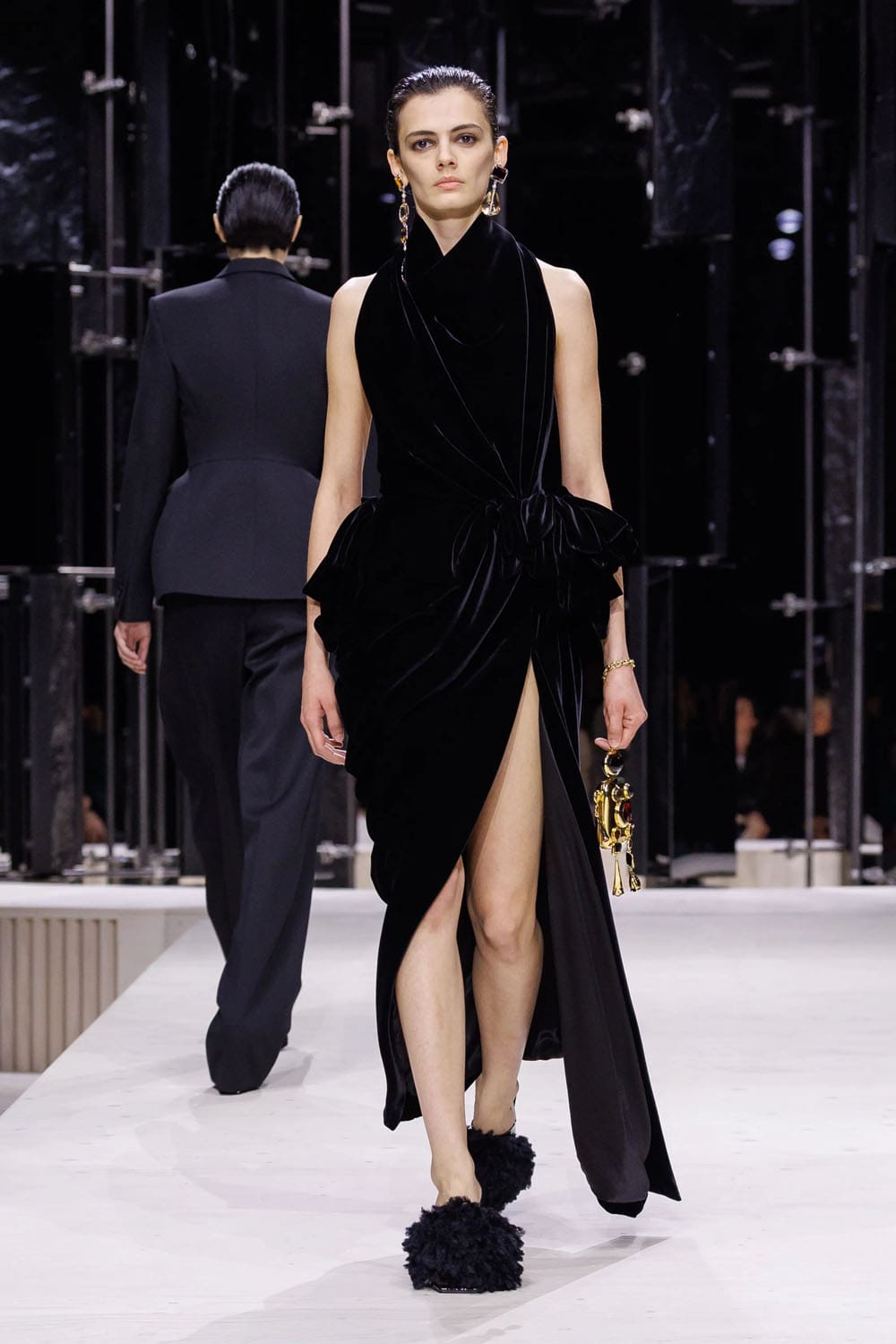
There were more such whispers: a pale pink embroidered top, gathered at the waist into inflated sculptural folds, worn with austere black trousers; a black column gown crowned with an enormous headpiece, somewhere between medieval portraiture and Parisian couture discipline; brightly colored floral boots anchored in Artemisia-level botanical detail.
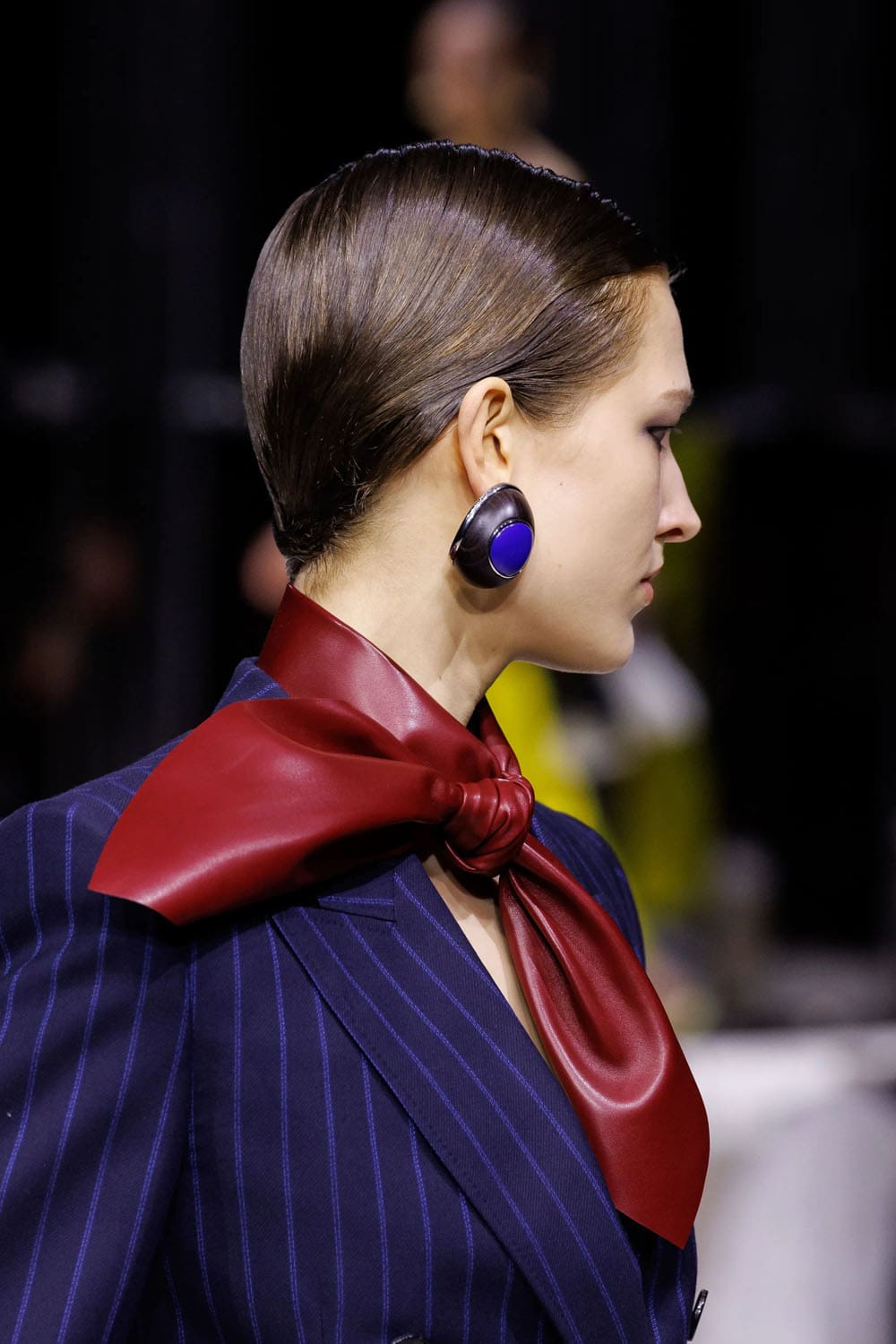
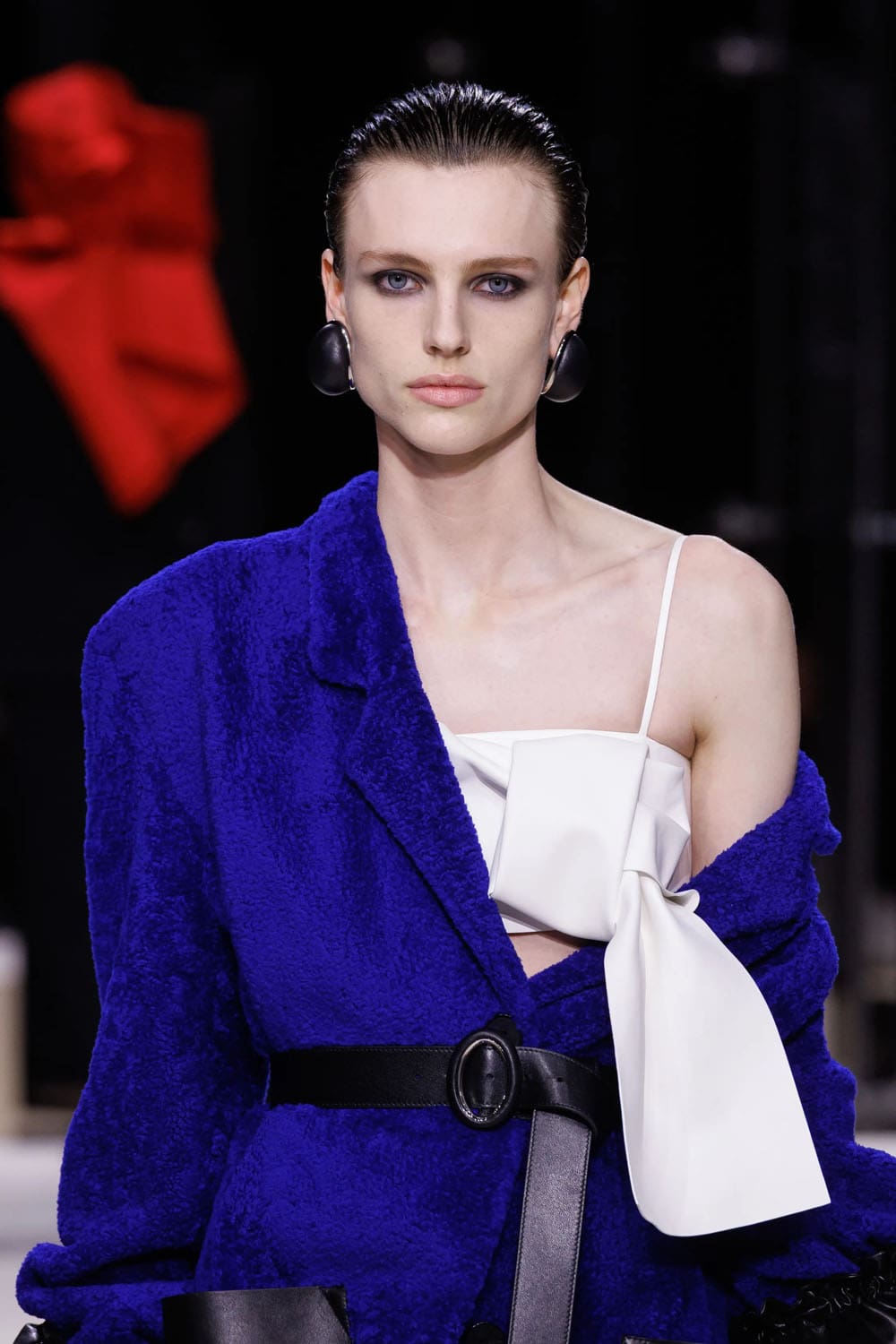
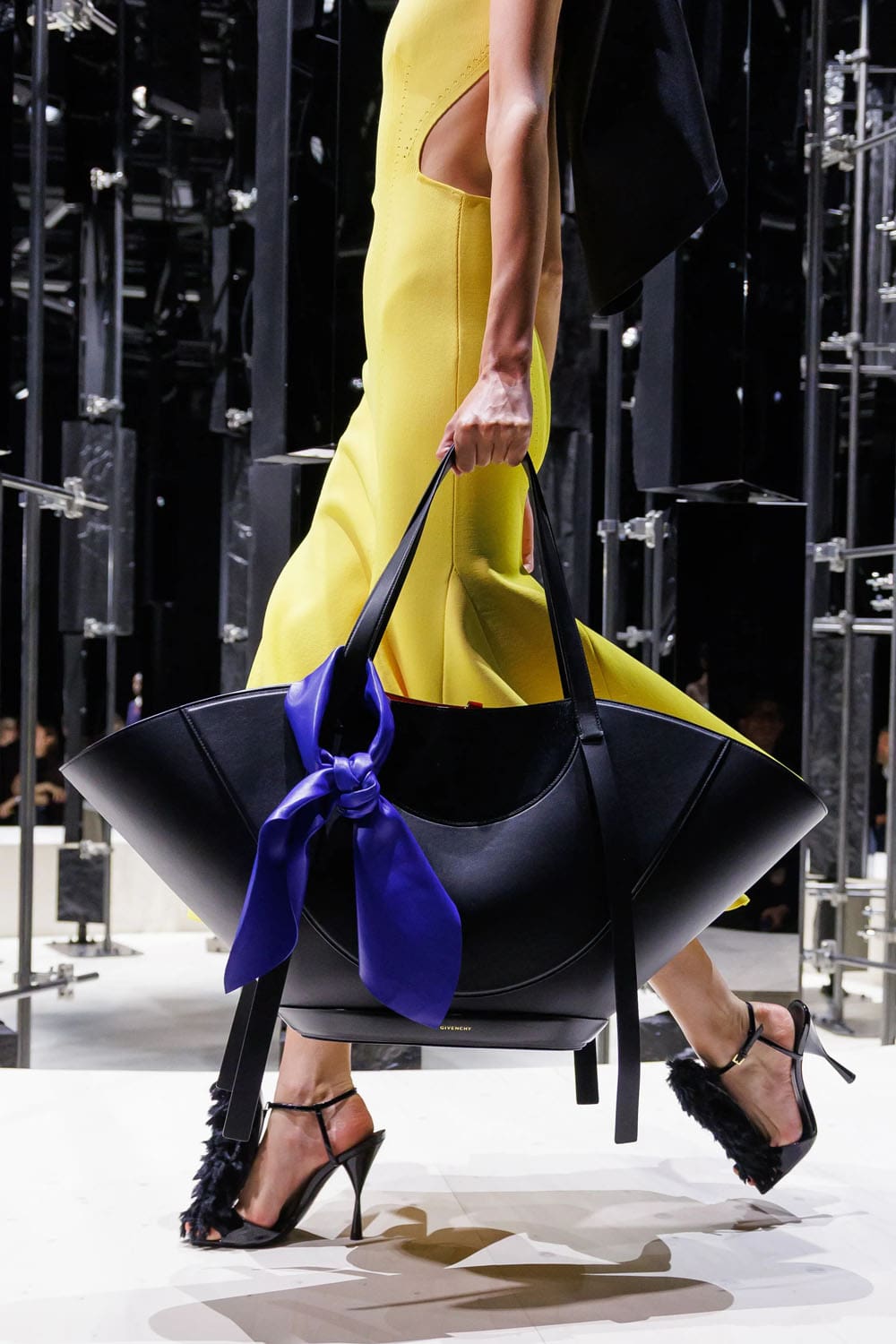
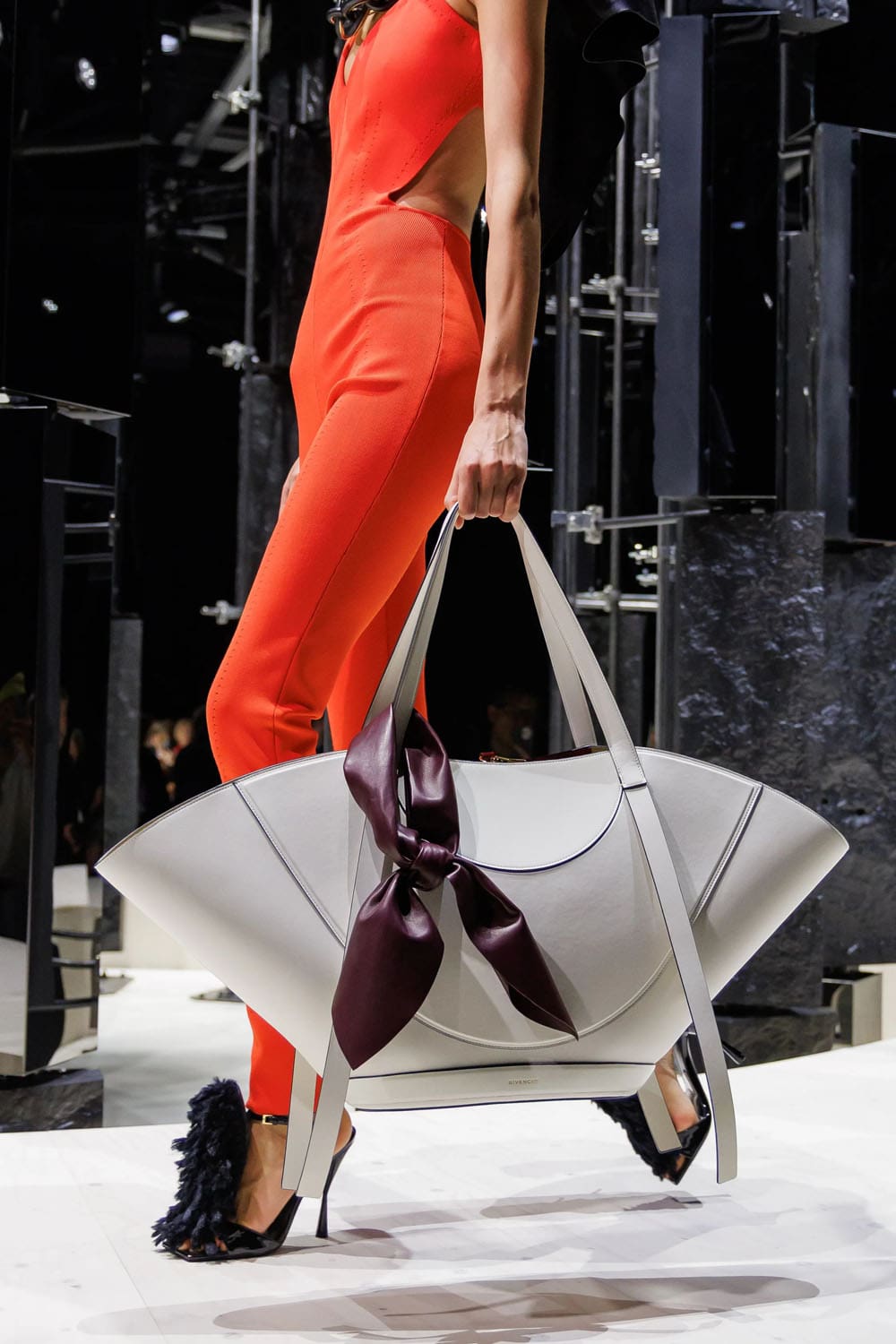
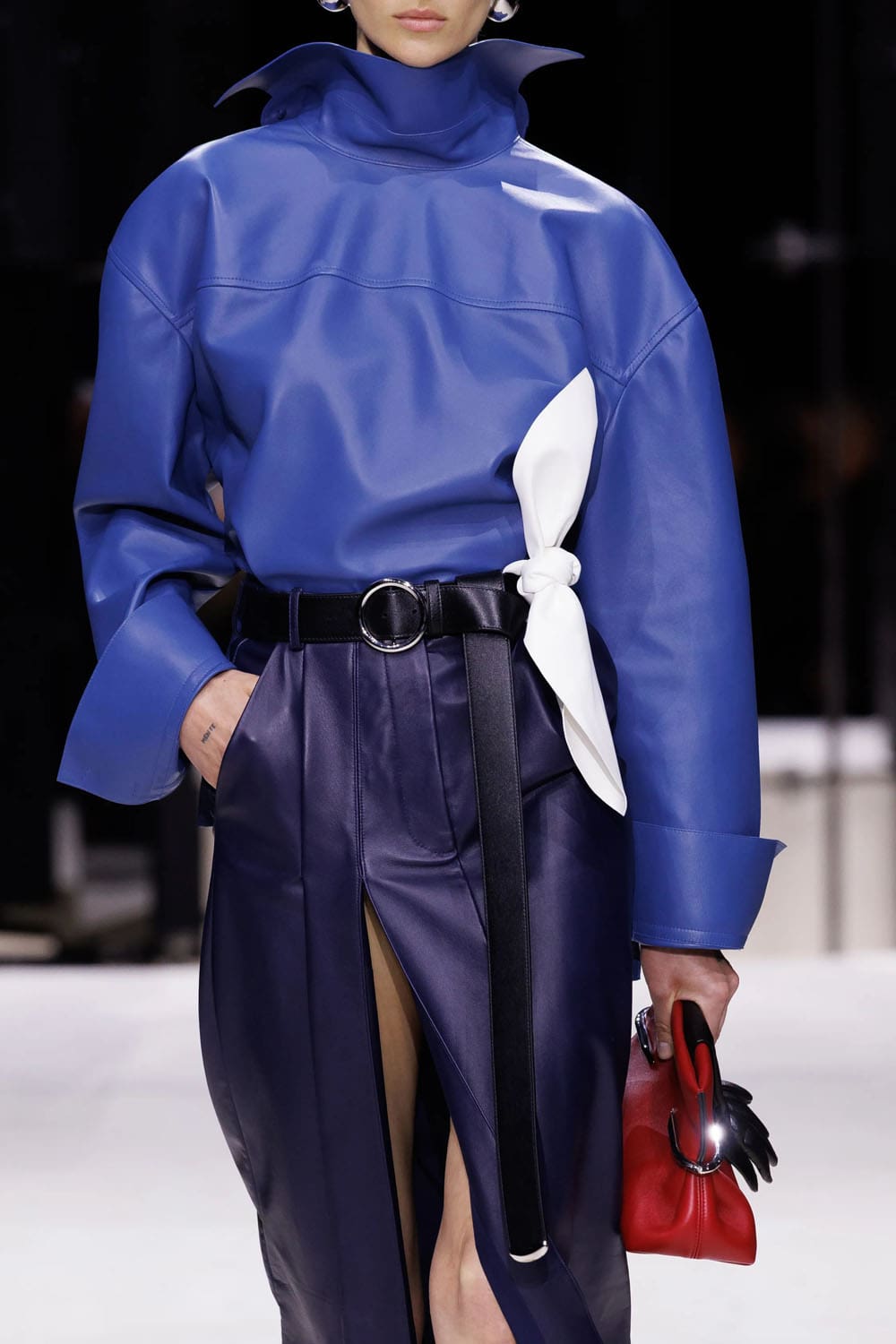
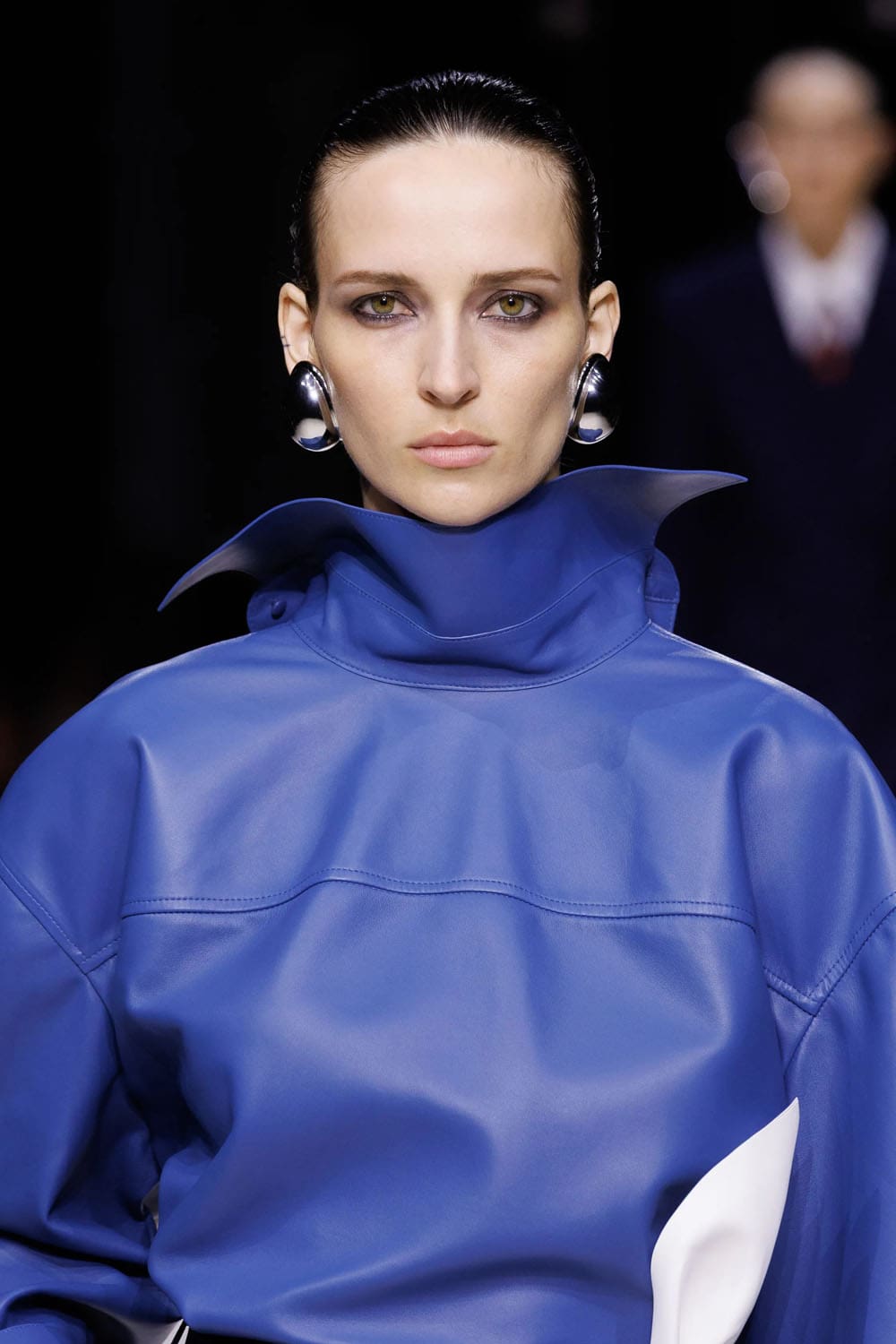
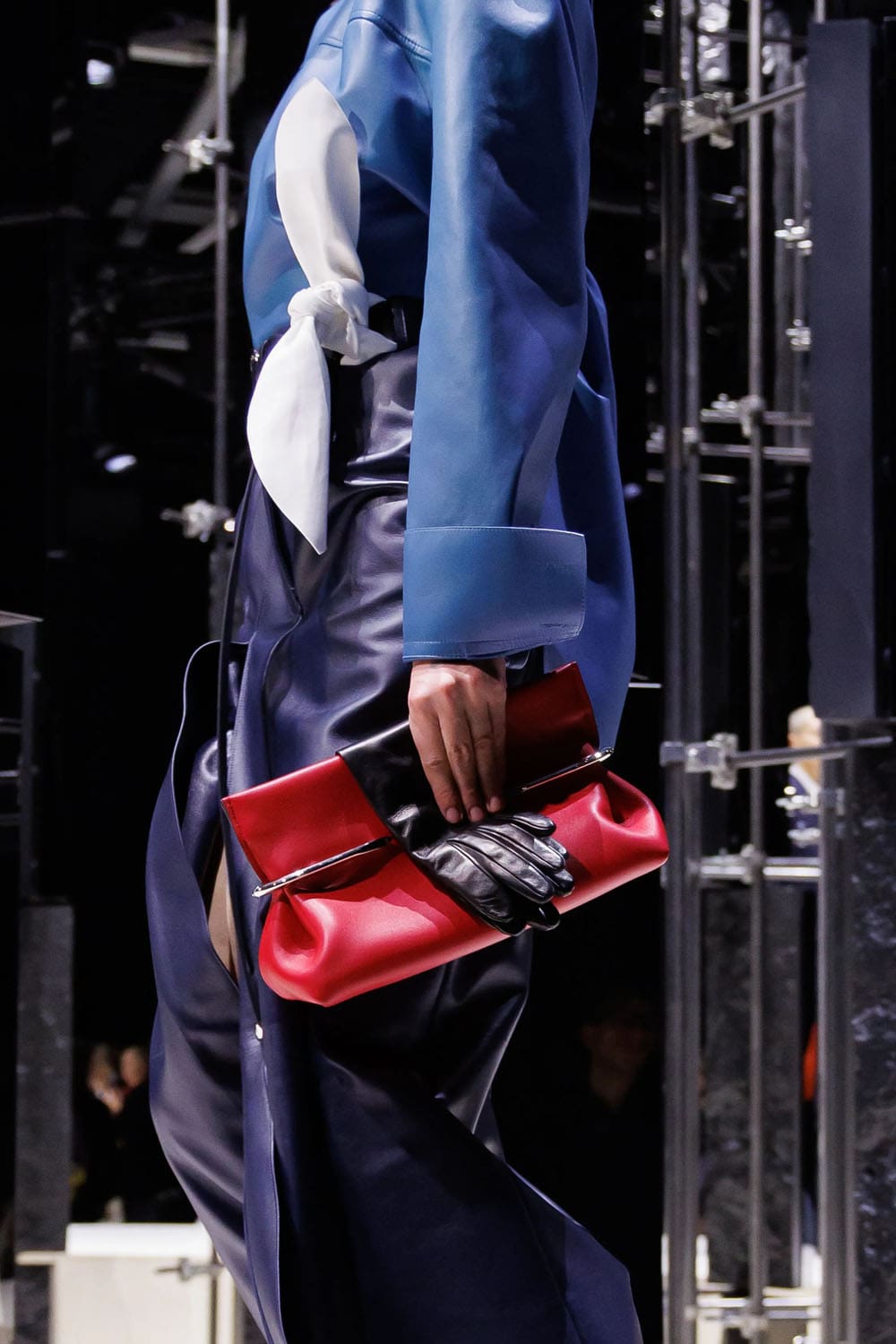
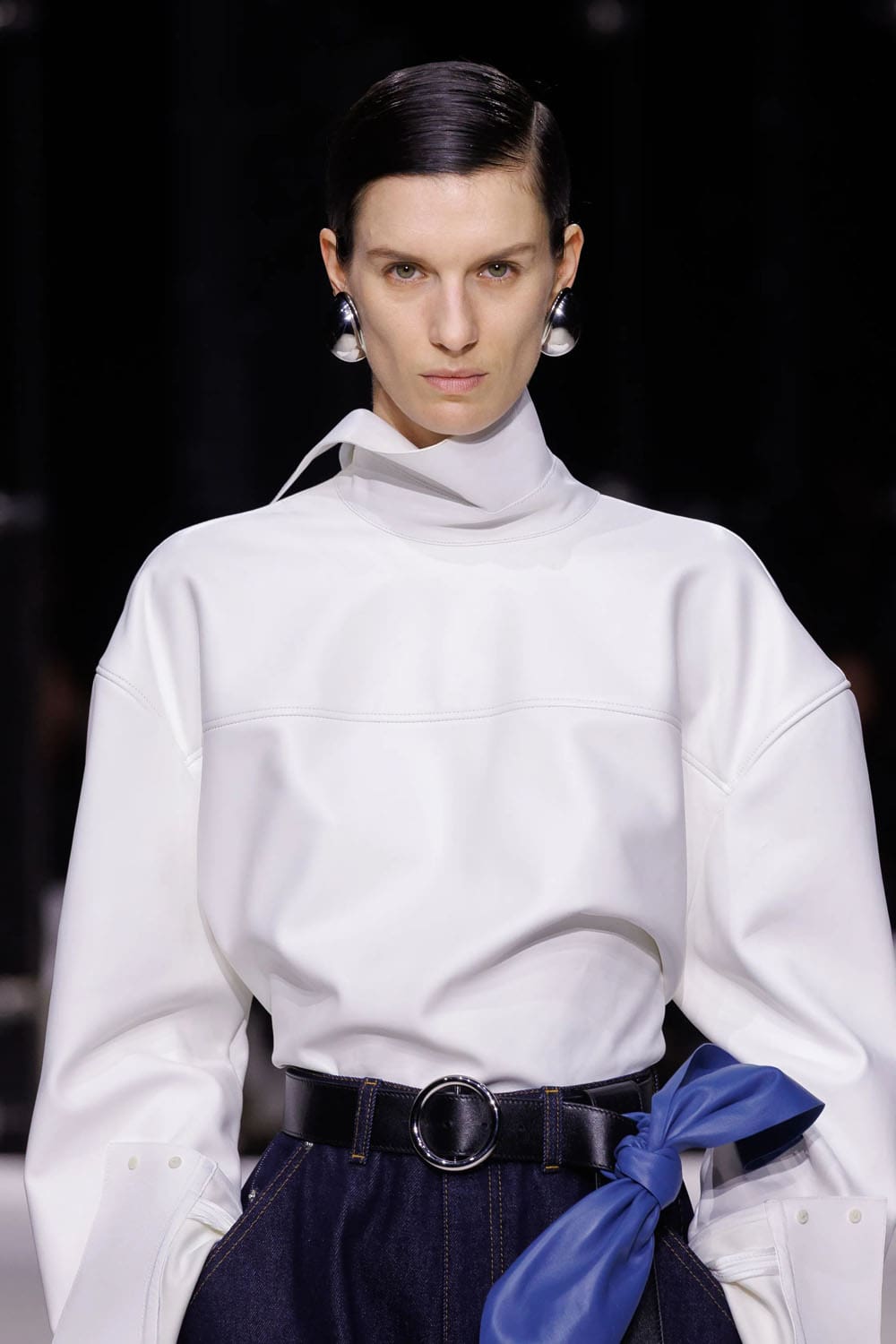
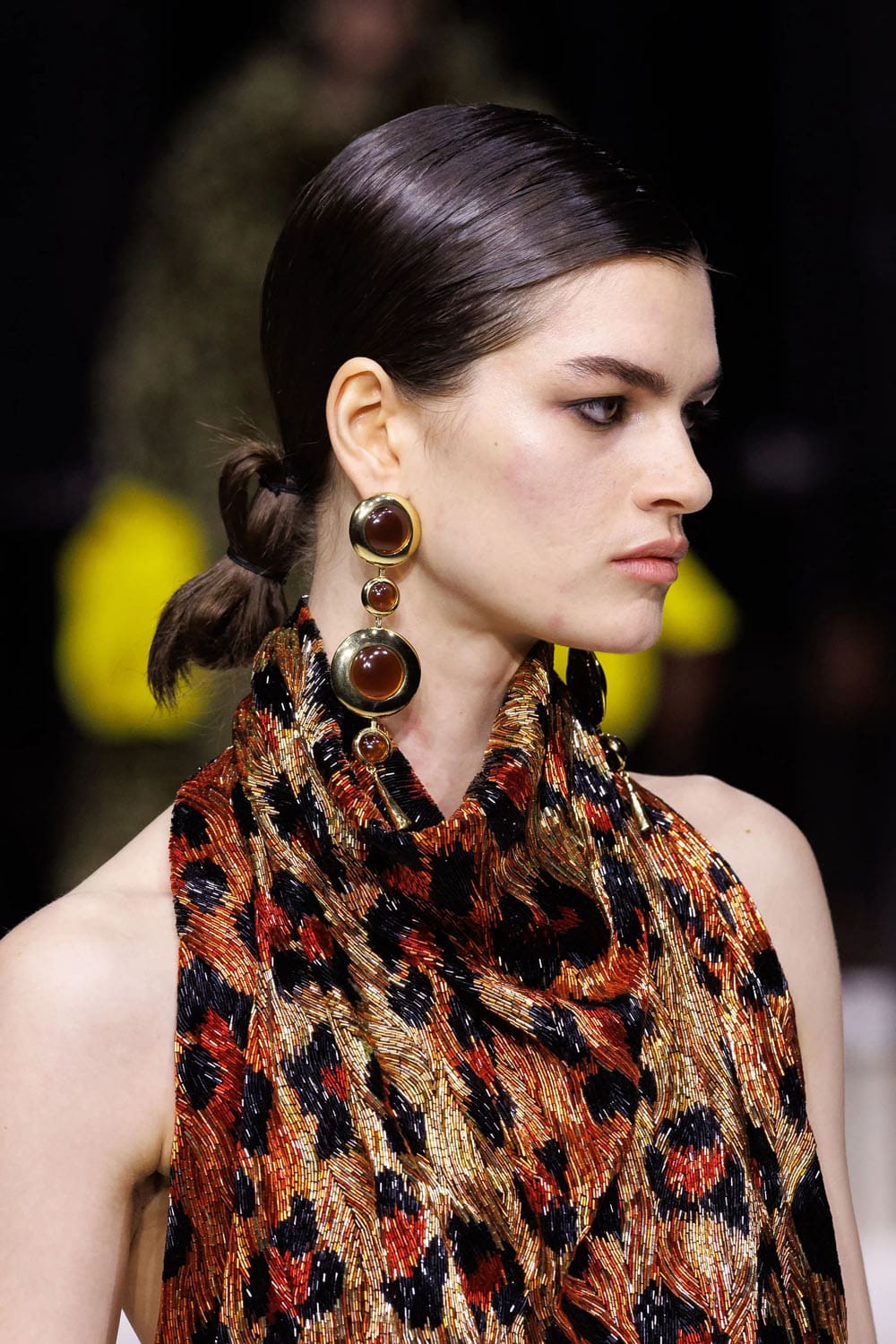
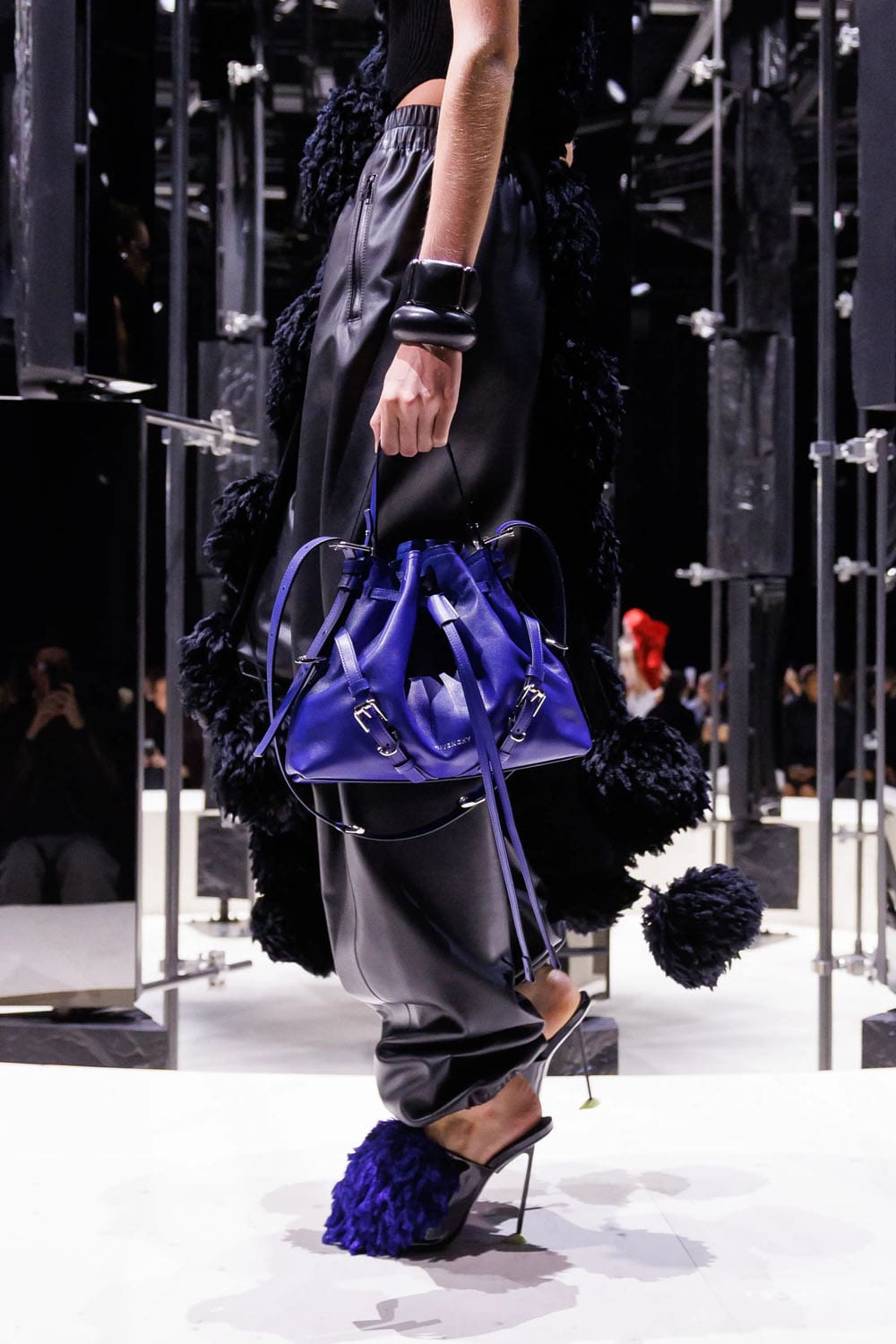
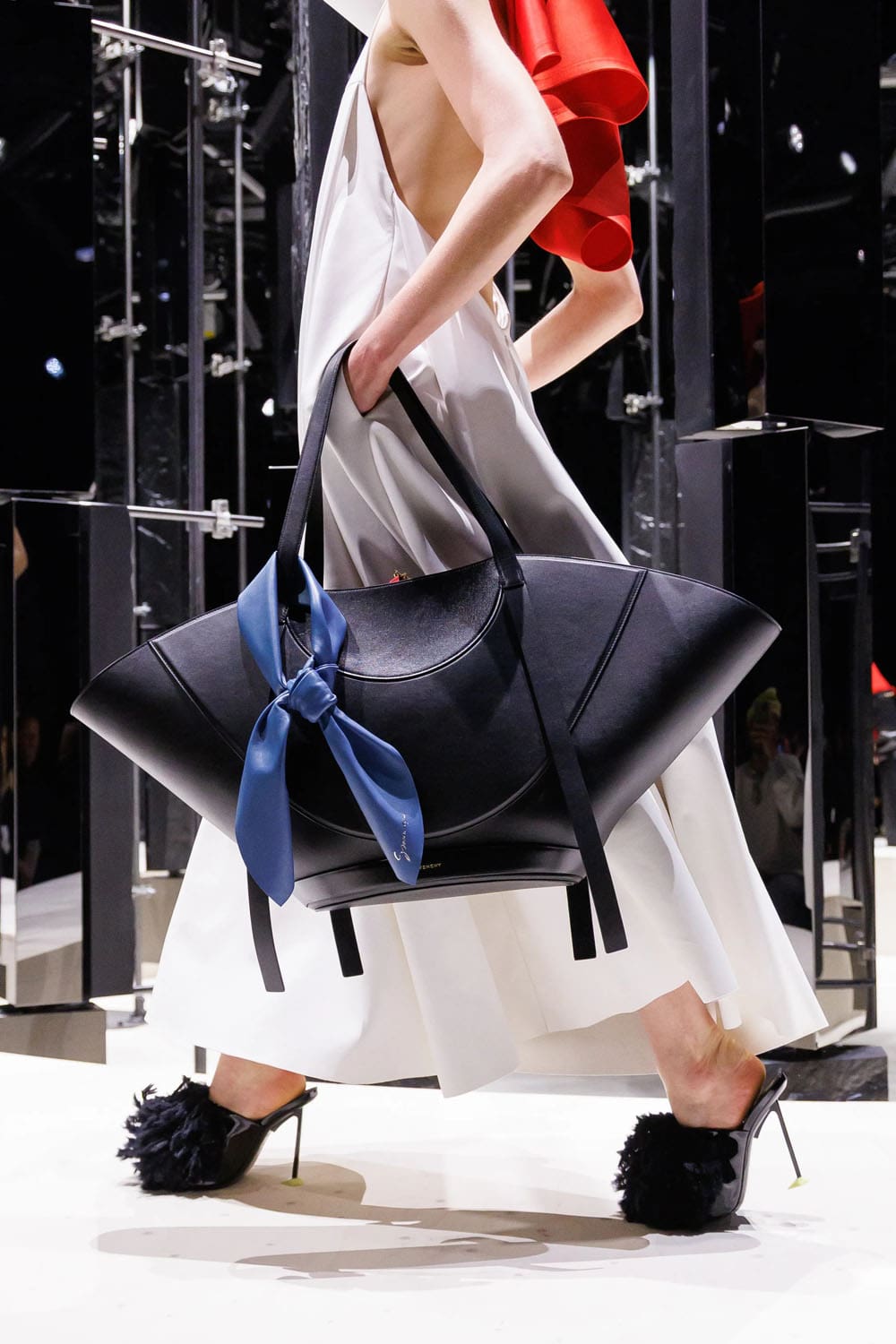
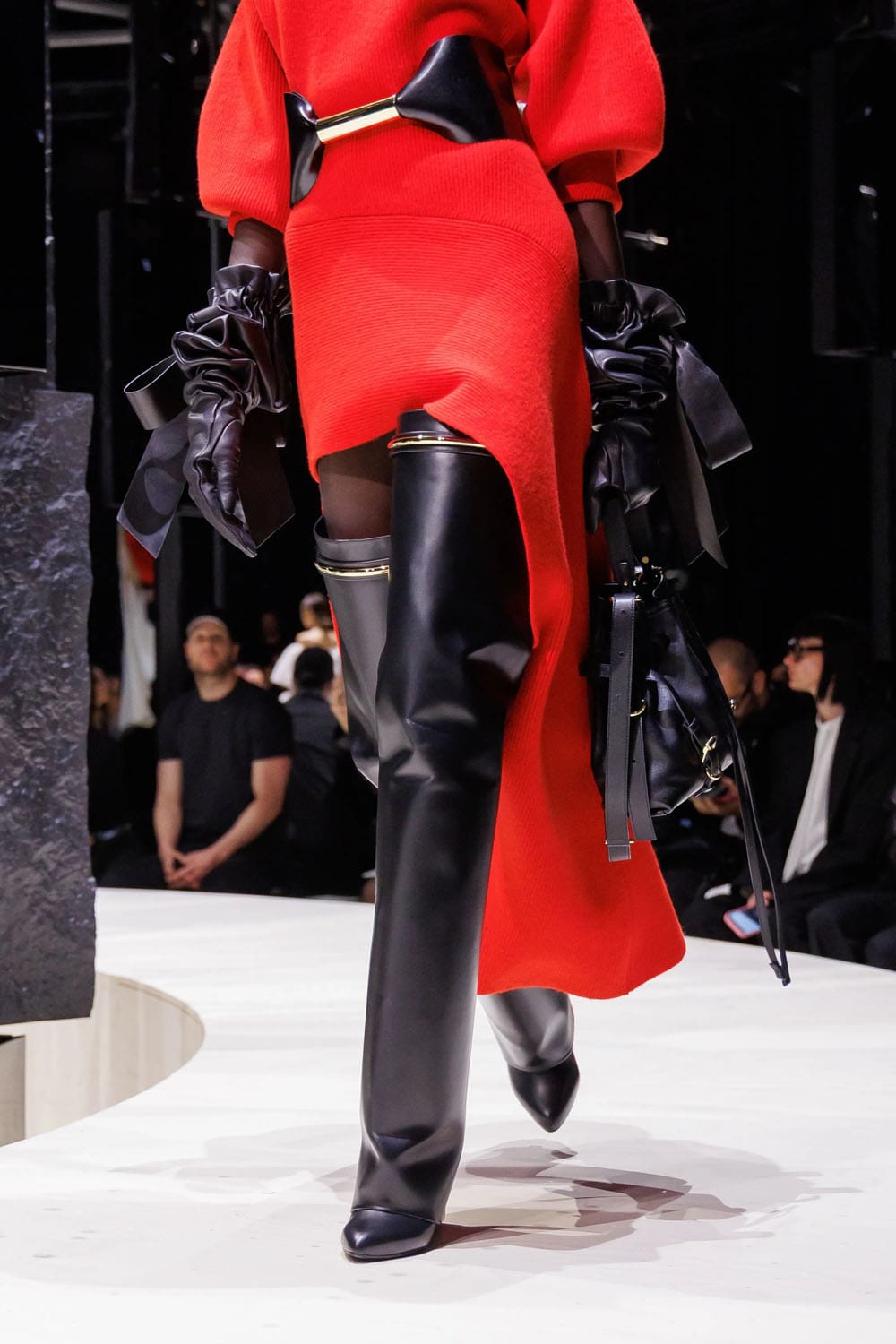
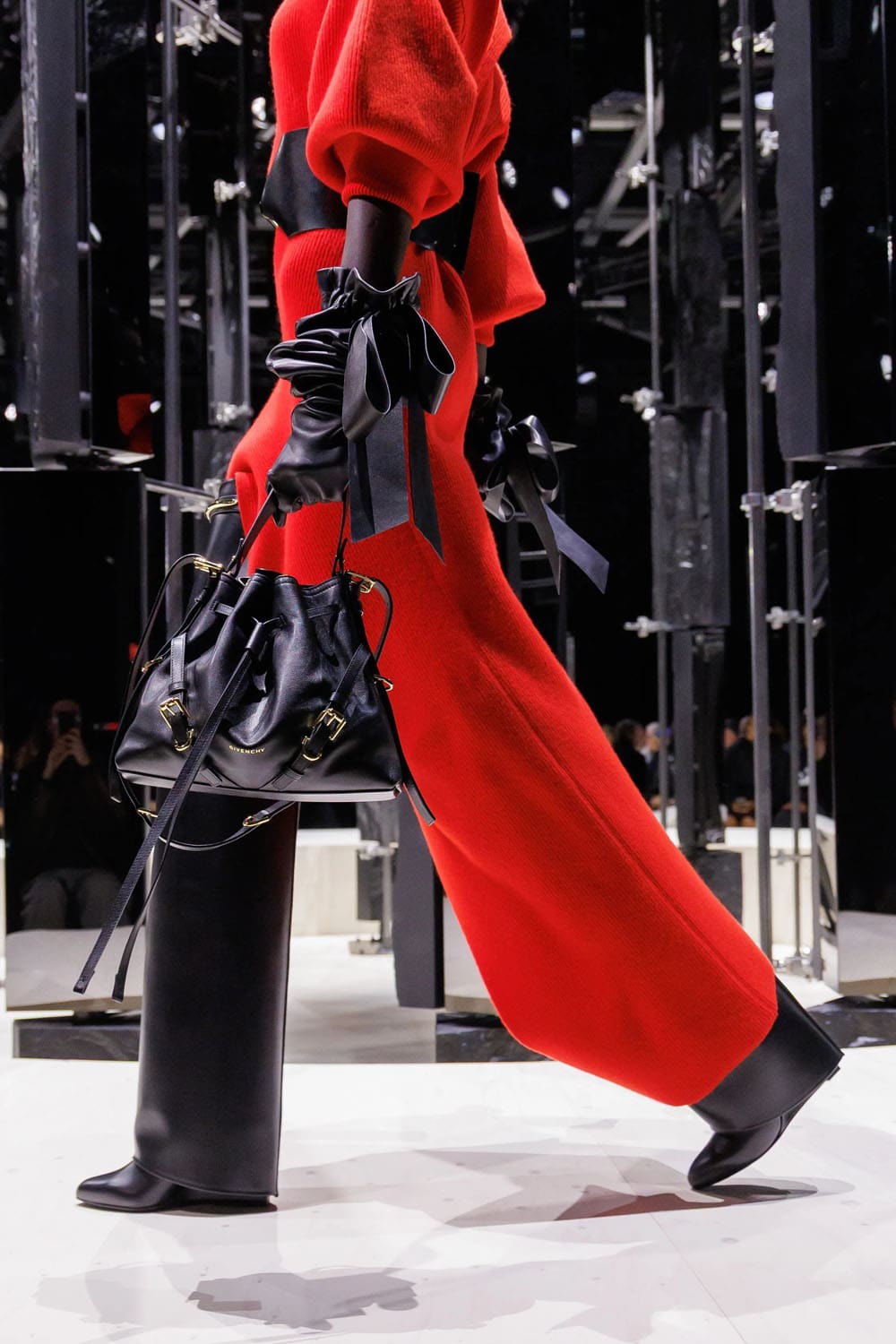
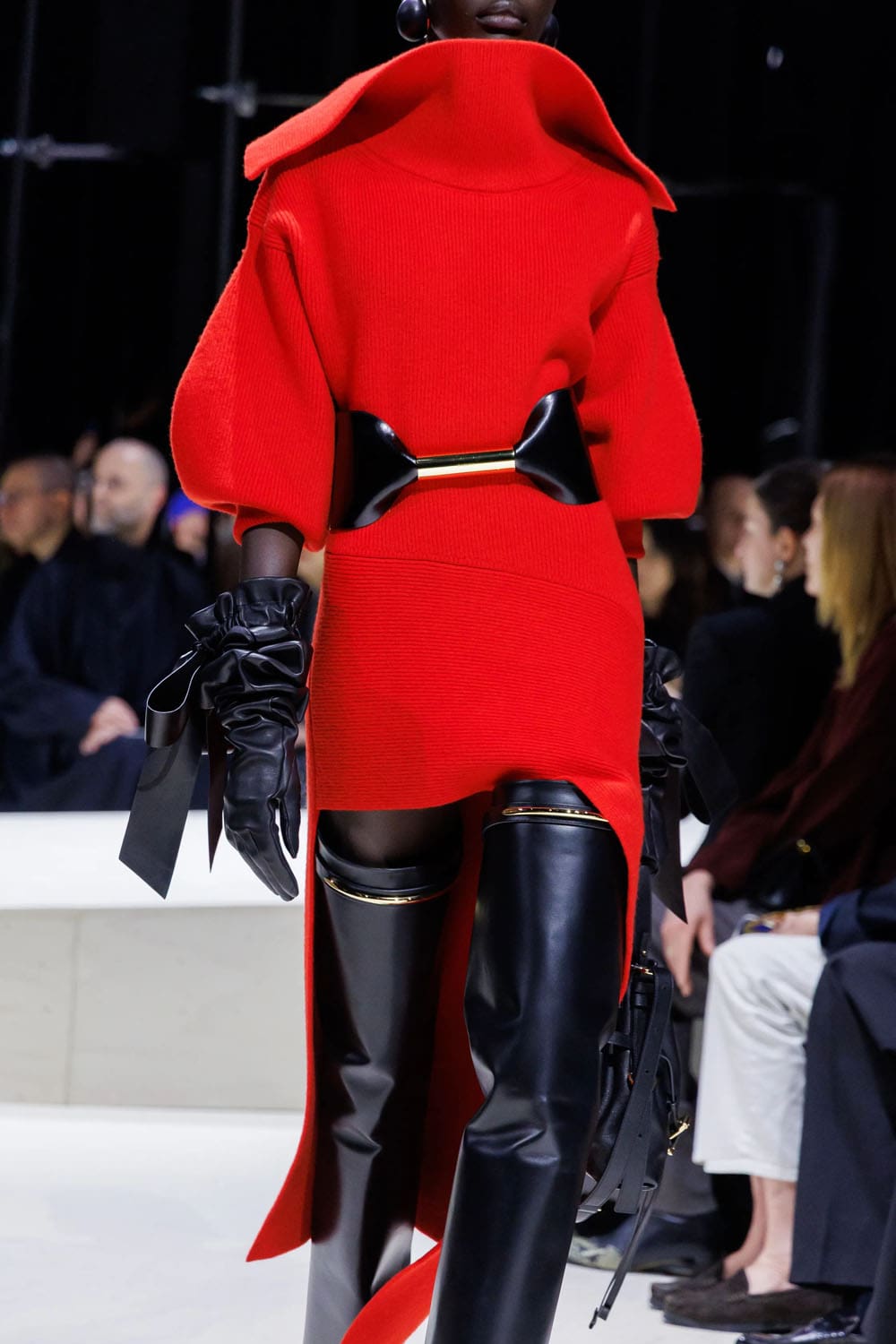
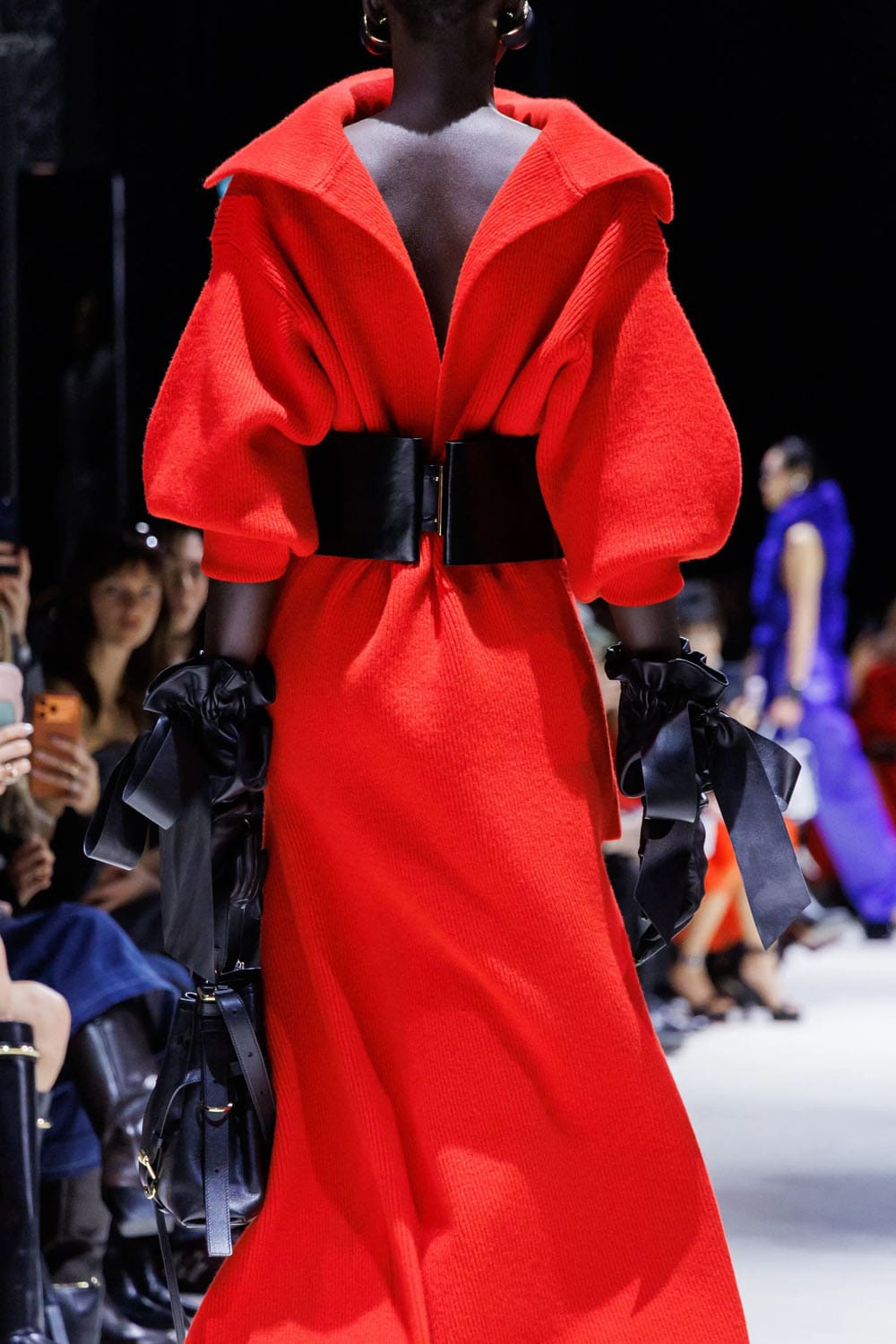
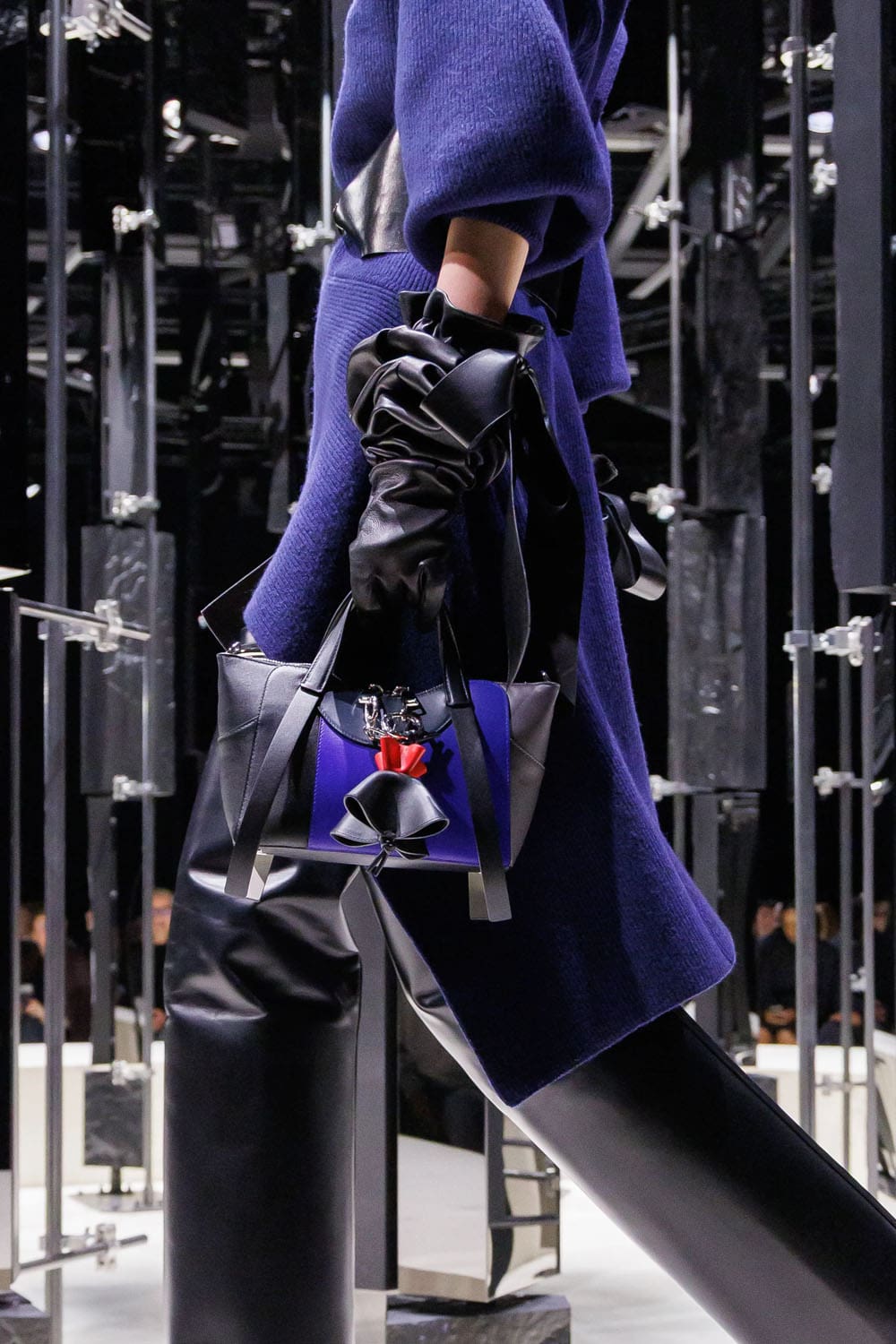
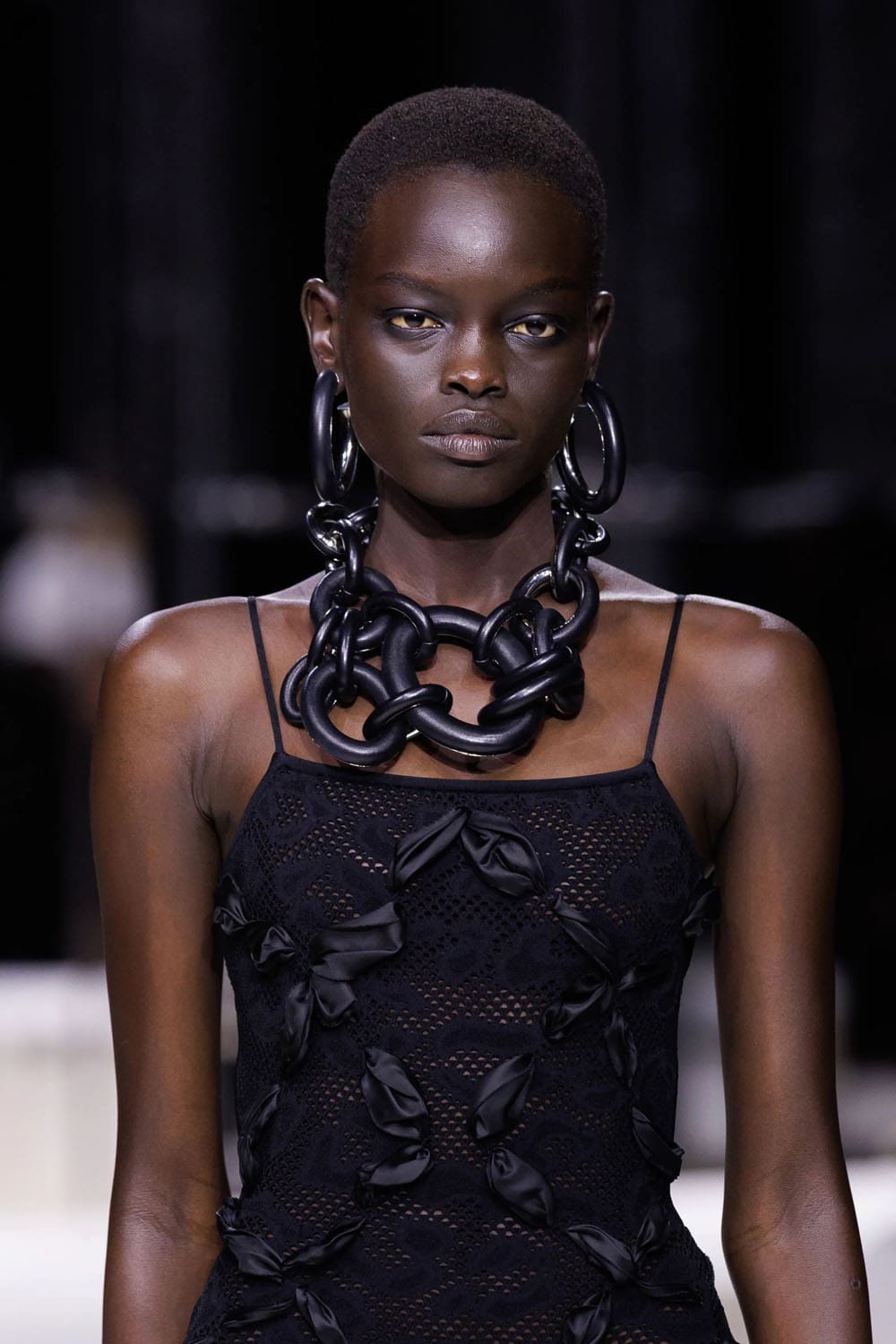
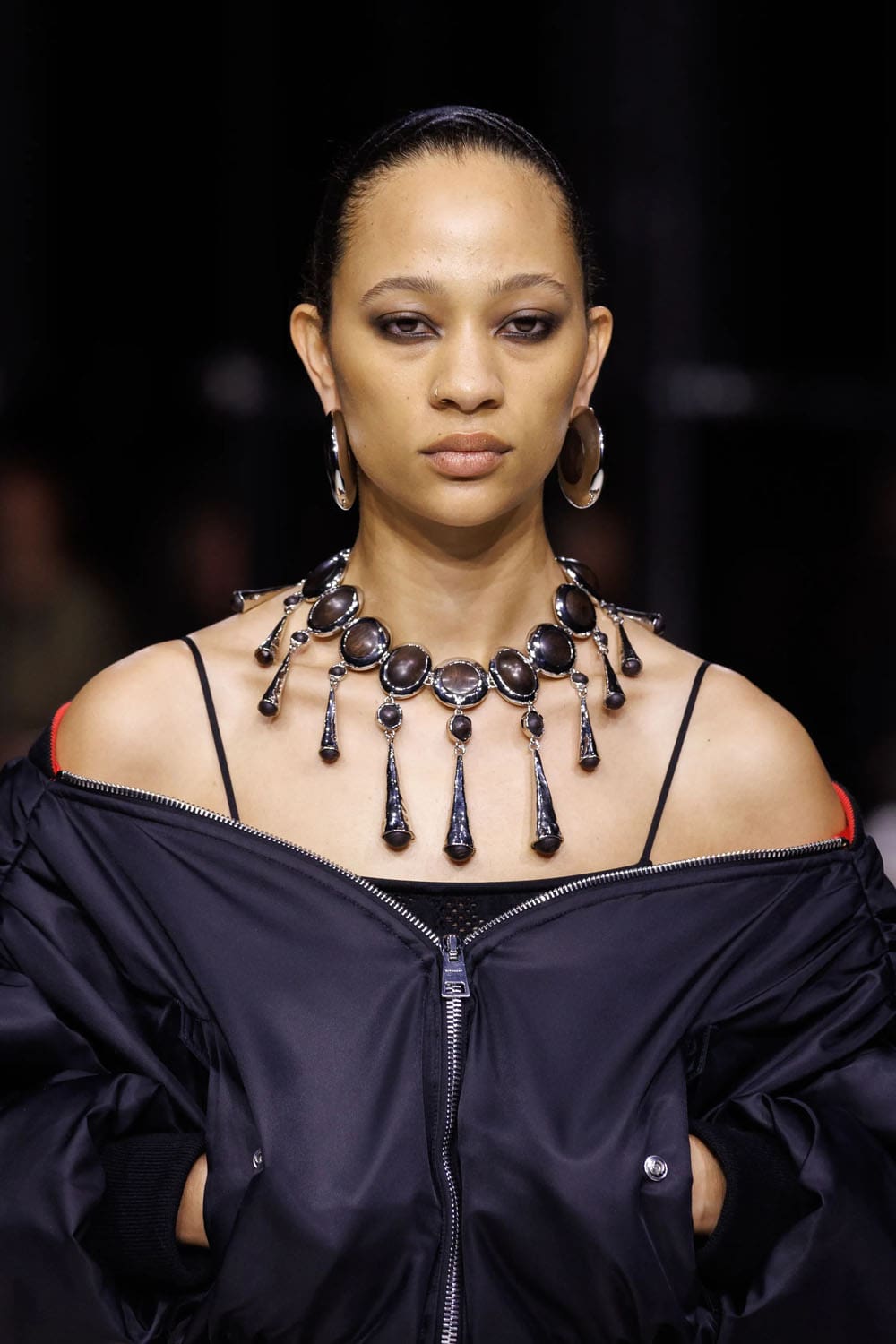
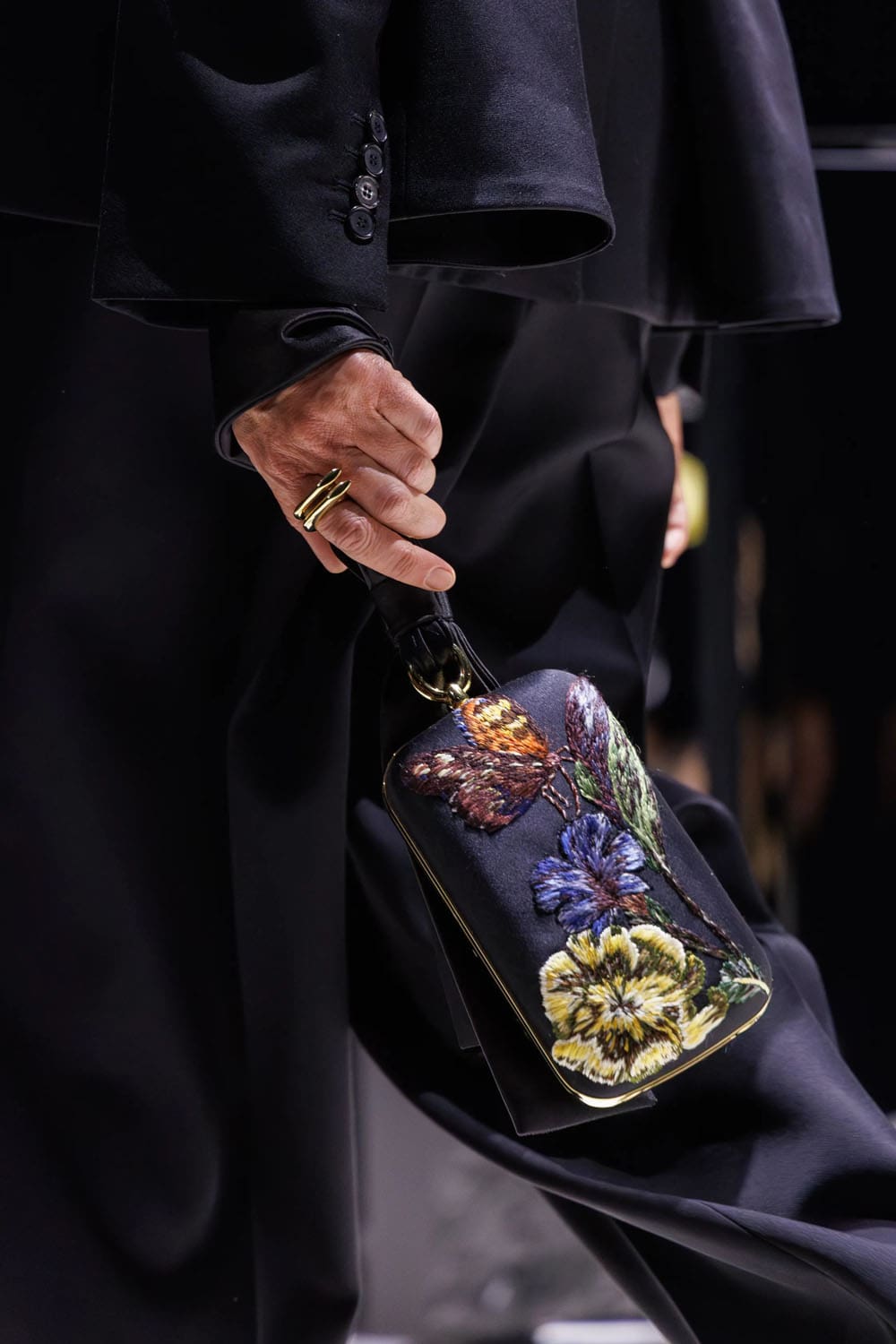
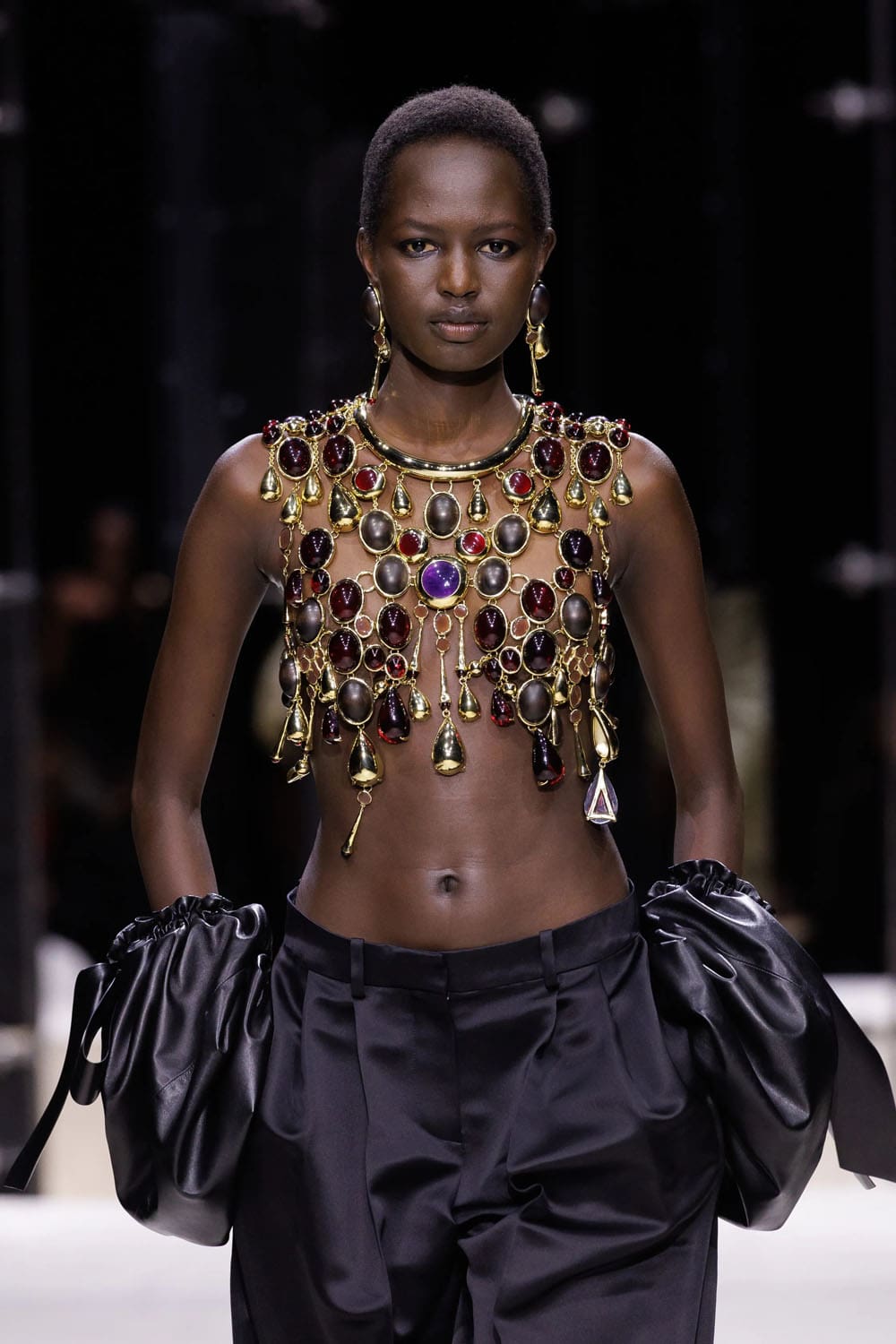
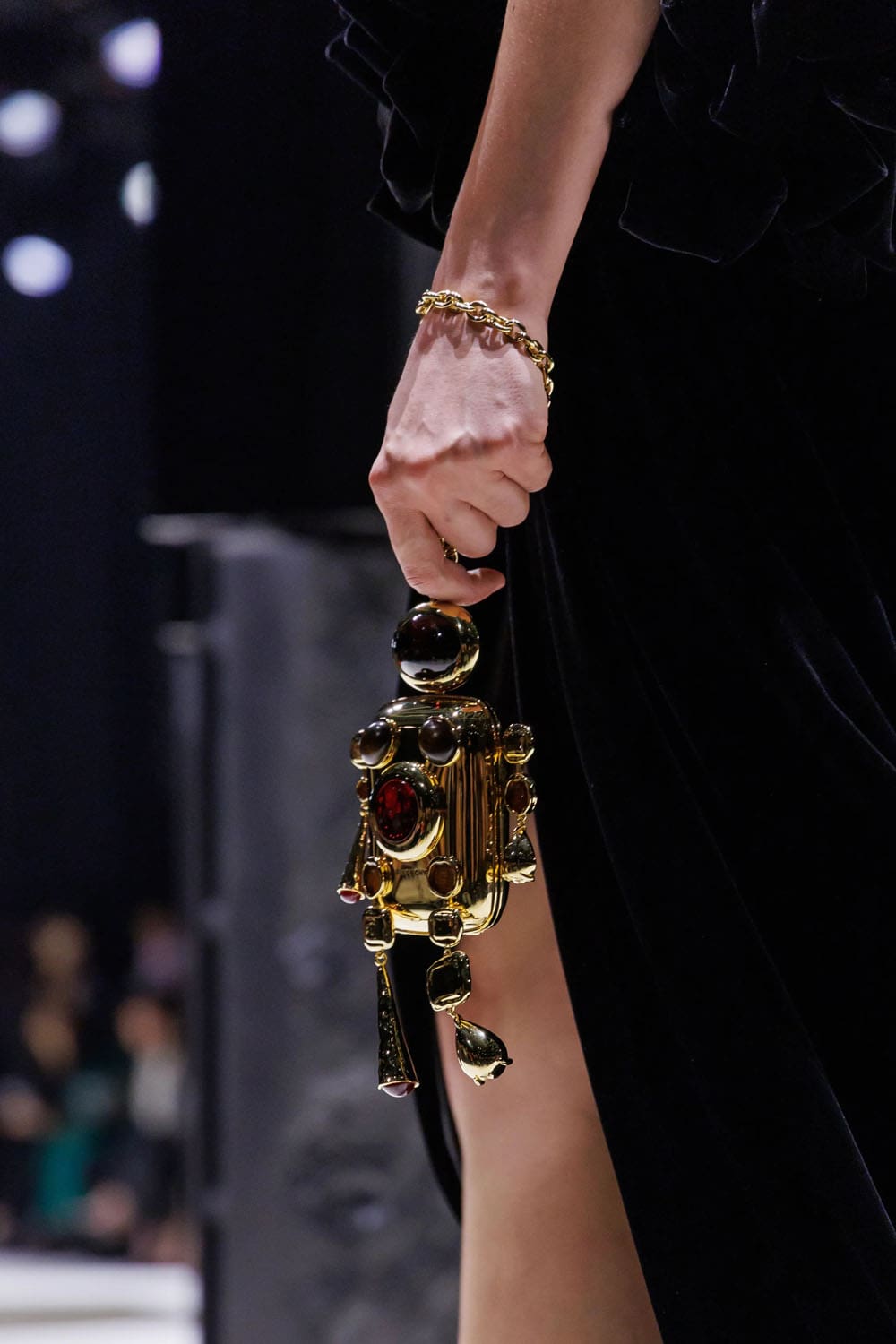
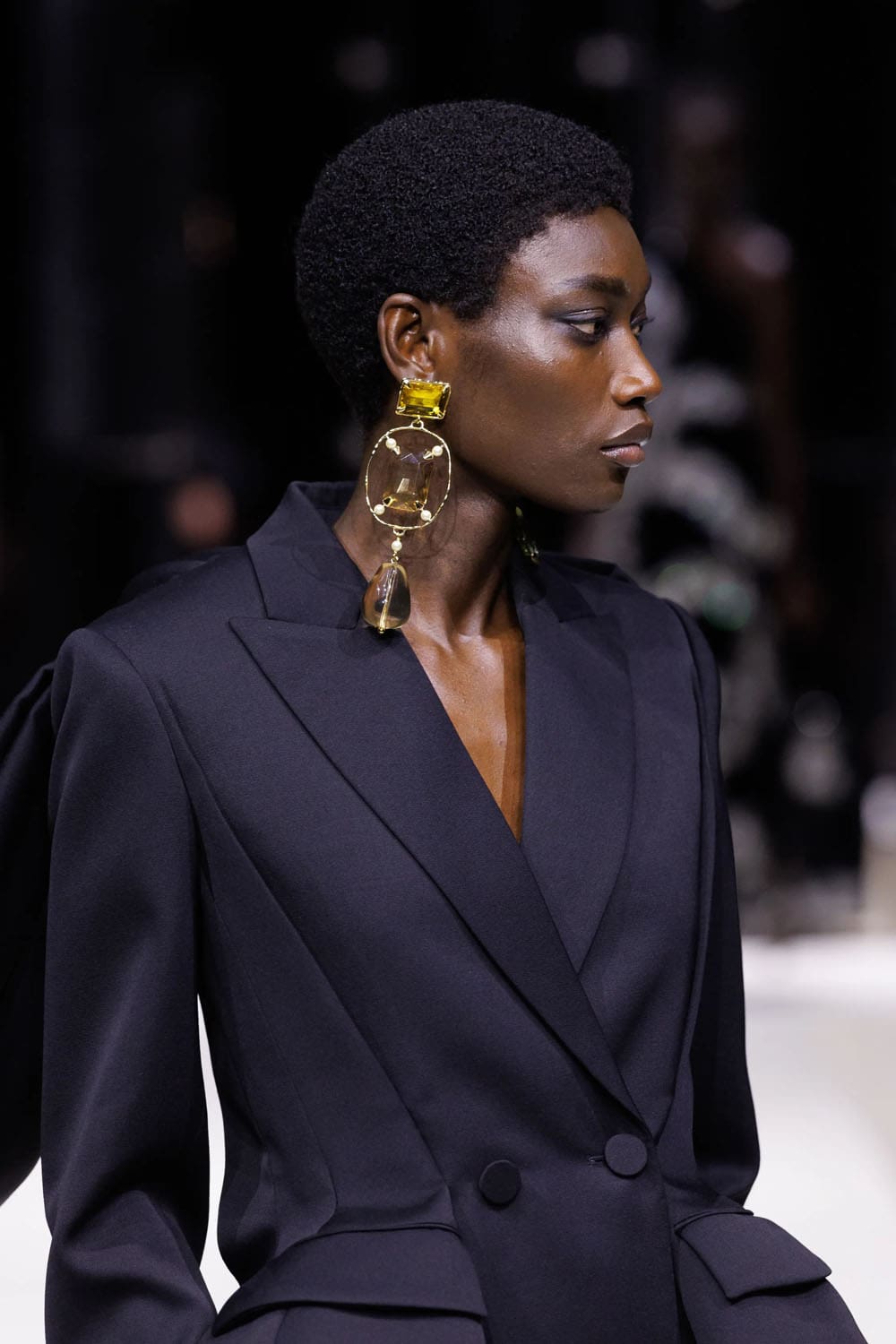
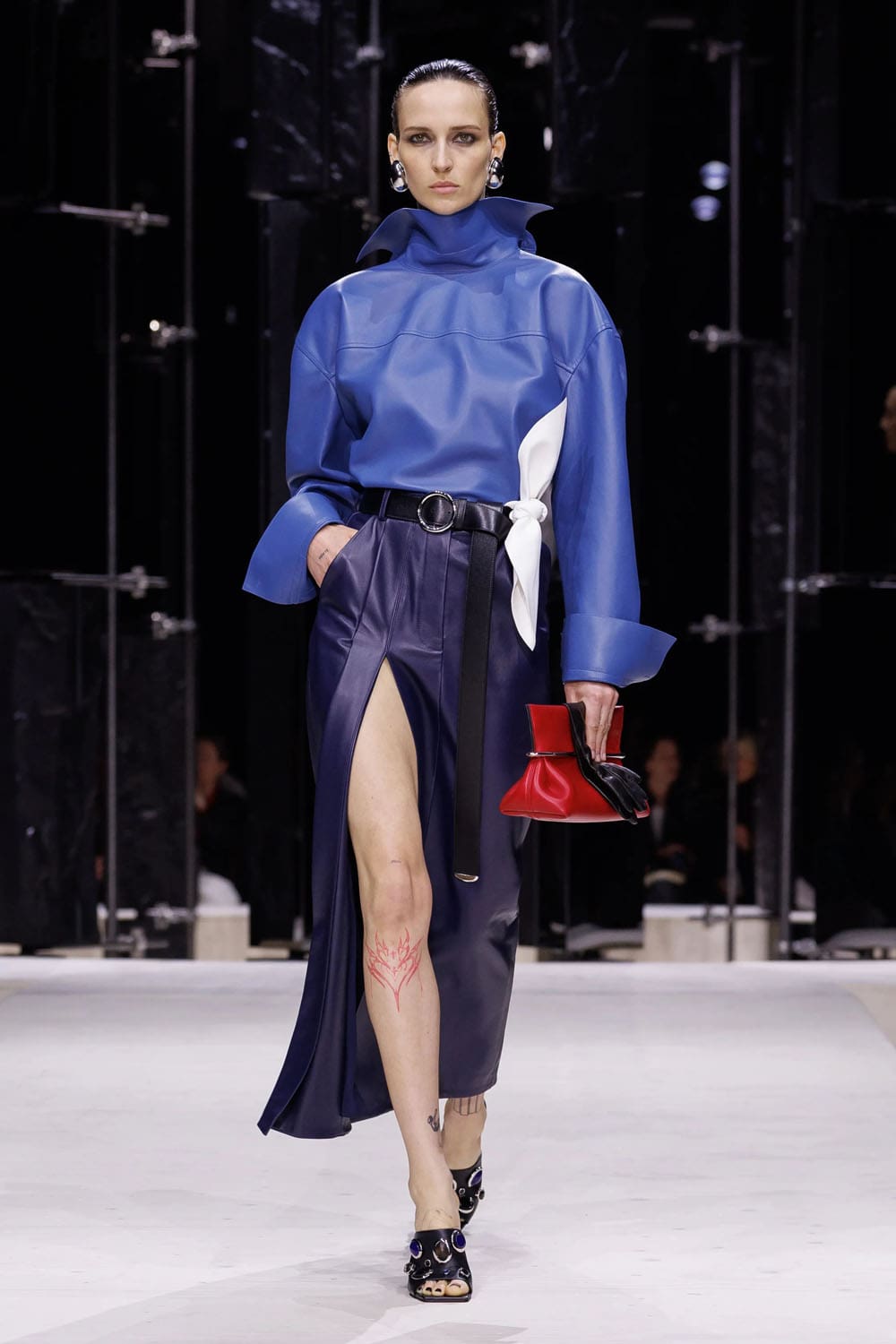
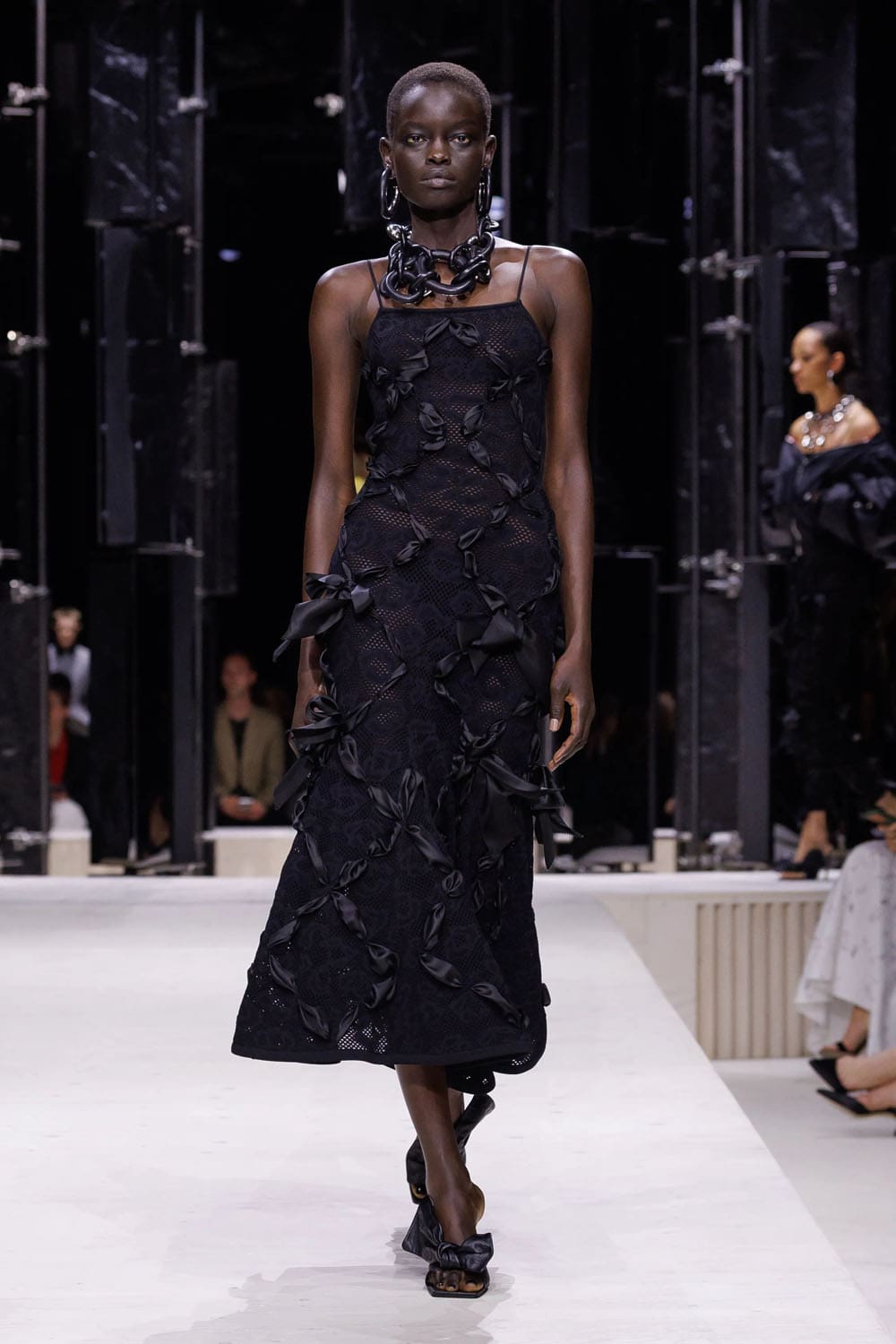
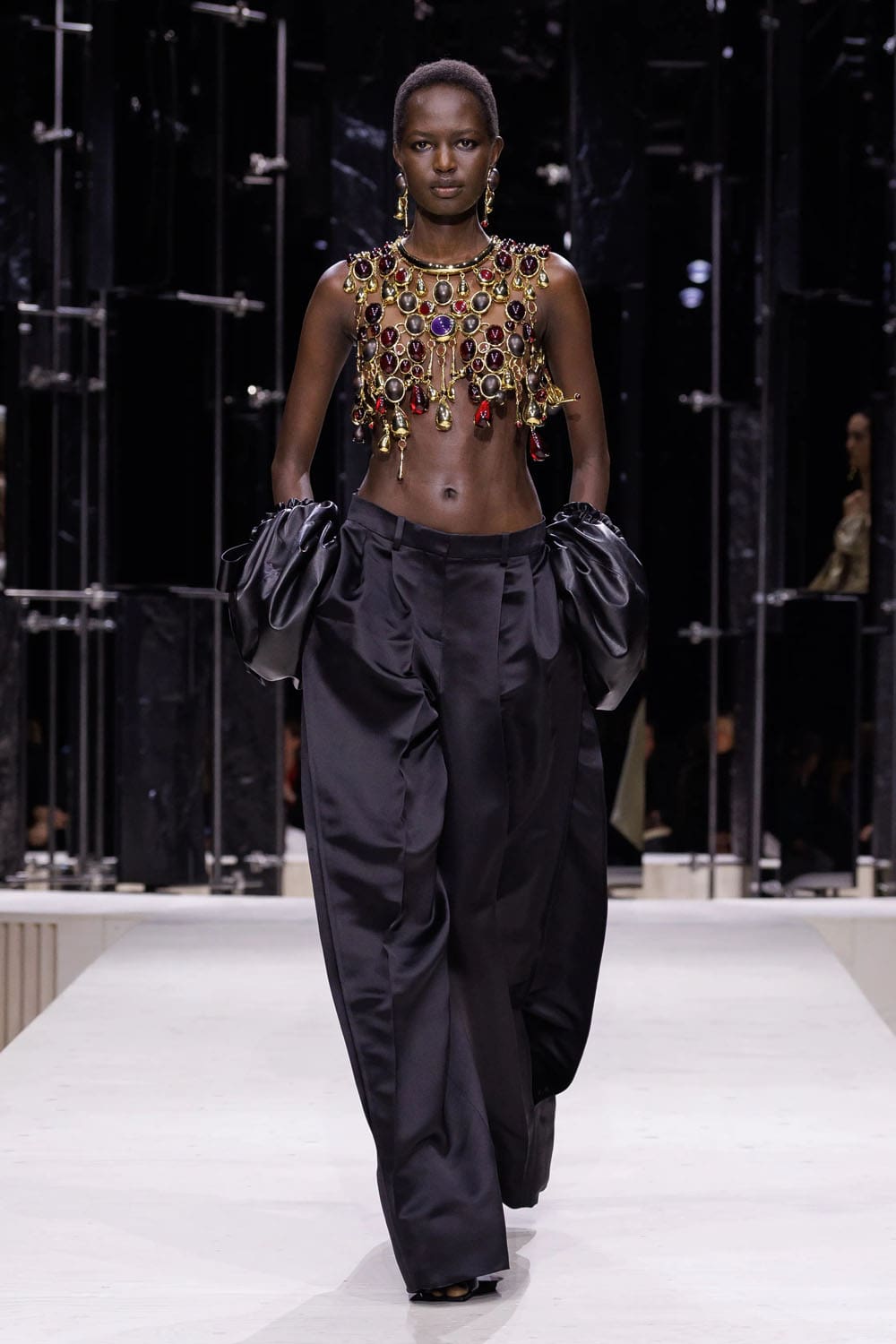
And then, of course, the accessories — the lush leather gloves, tied and cinched like miniature sculptures; the sharply structured bags sprouting surreal bouquets; the circular earrings echoing Givenchy’s golden age.
This Is Burton’s Givenchy
The show made one thing clear: Burton is no longer acclimating. She is shaping.
She has understood that the Givenchy woman is not one woman at all, but a constellation — writers, artists, models, the impeccably tailored and the beautifully undone. The casting reflected that: diverse, intellectual, multi-generational, impossible to pin down. Exactly as a modern couture-adjacent maison should behave.
Most importantly, Burton has given Givenchy its spine back. Not by reenacting its archives, but by restoring the clarity of its values: discipline without rigidity, femininity without decoration, modernity without noise.
If her first two collections were whispered propositions, this one was a statement — quiet, yes, but unmistakably authoritative.
This is Burton’s Givenchy now. And it feels not like a departure, but like a homecoming that finally knows its own address.
See All Looks Givenchy Fall 2026-2027
See All Details / Close Up Givenchy Fall 2026