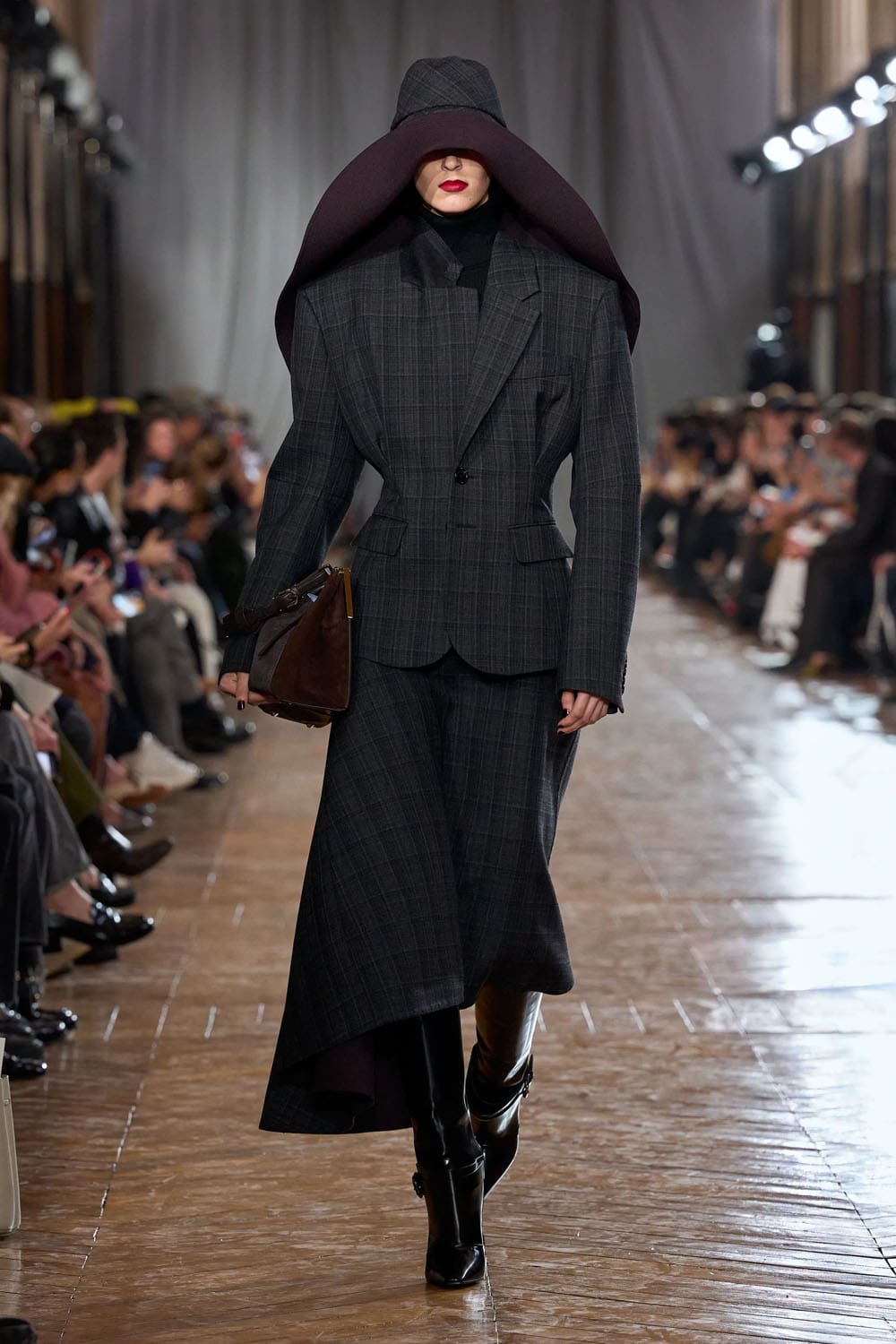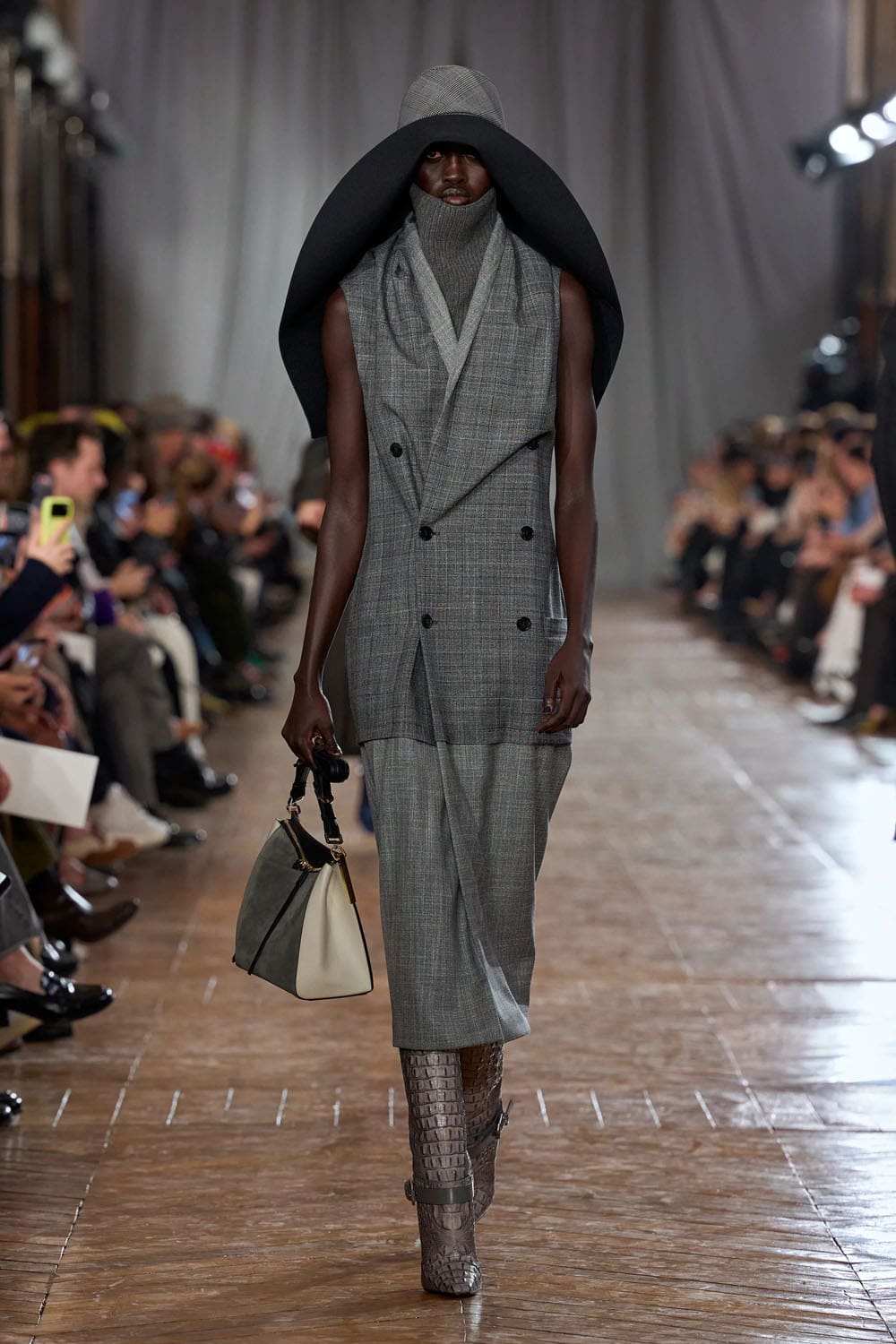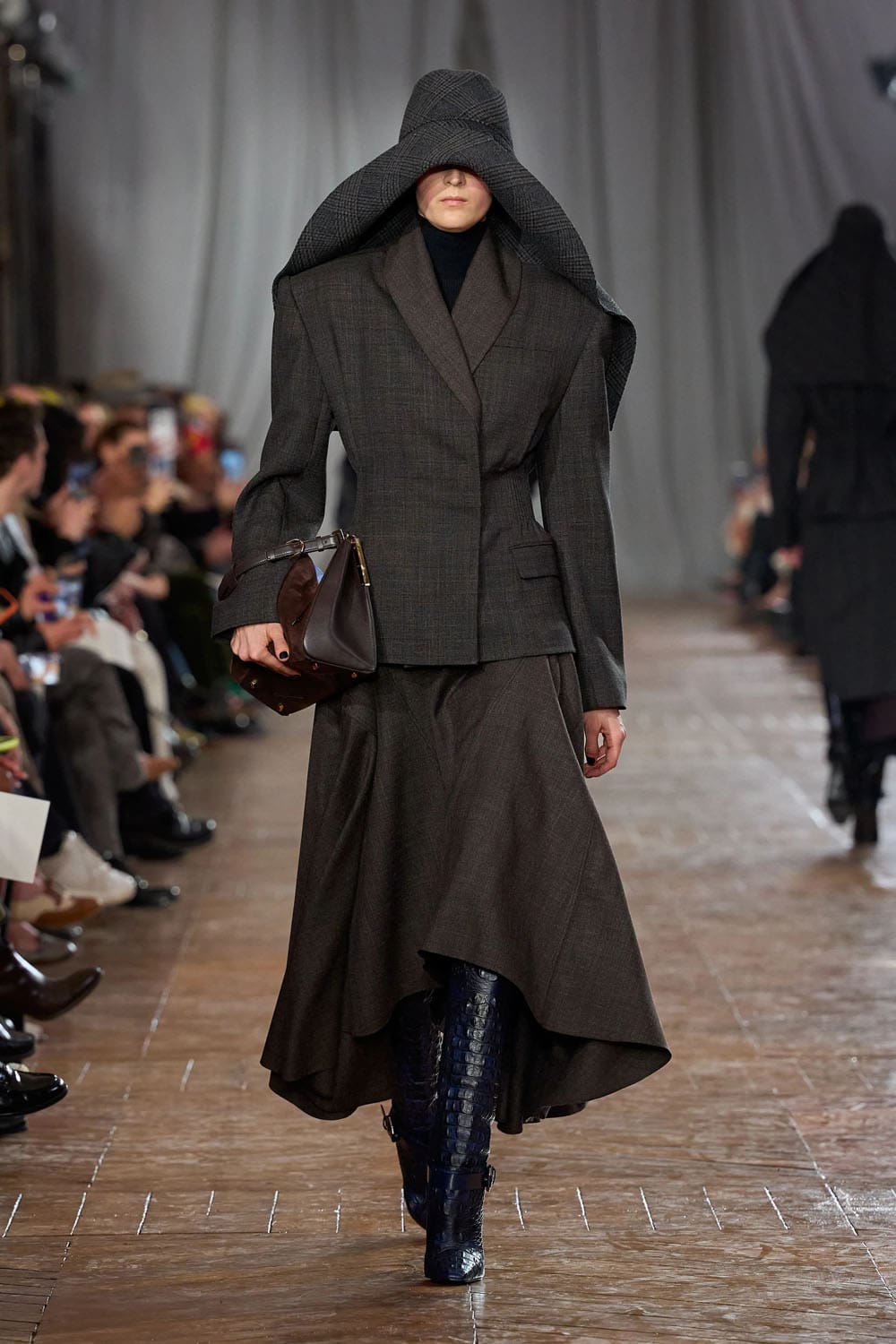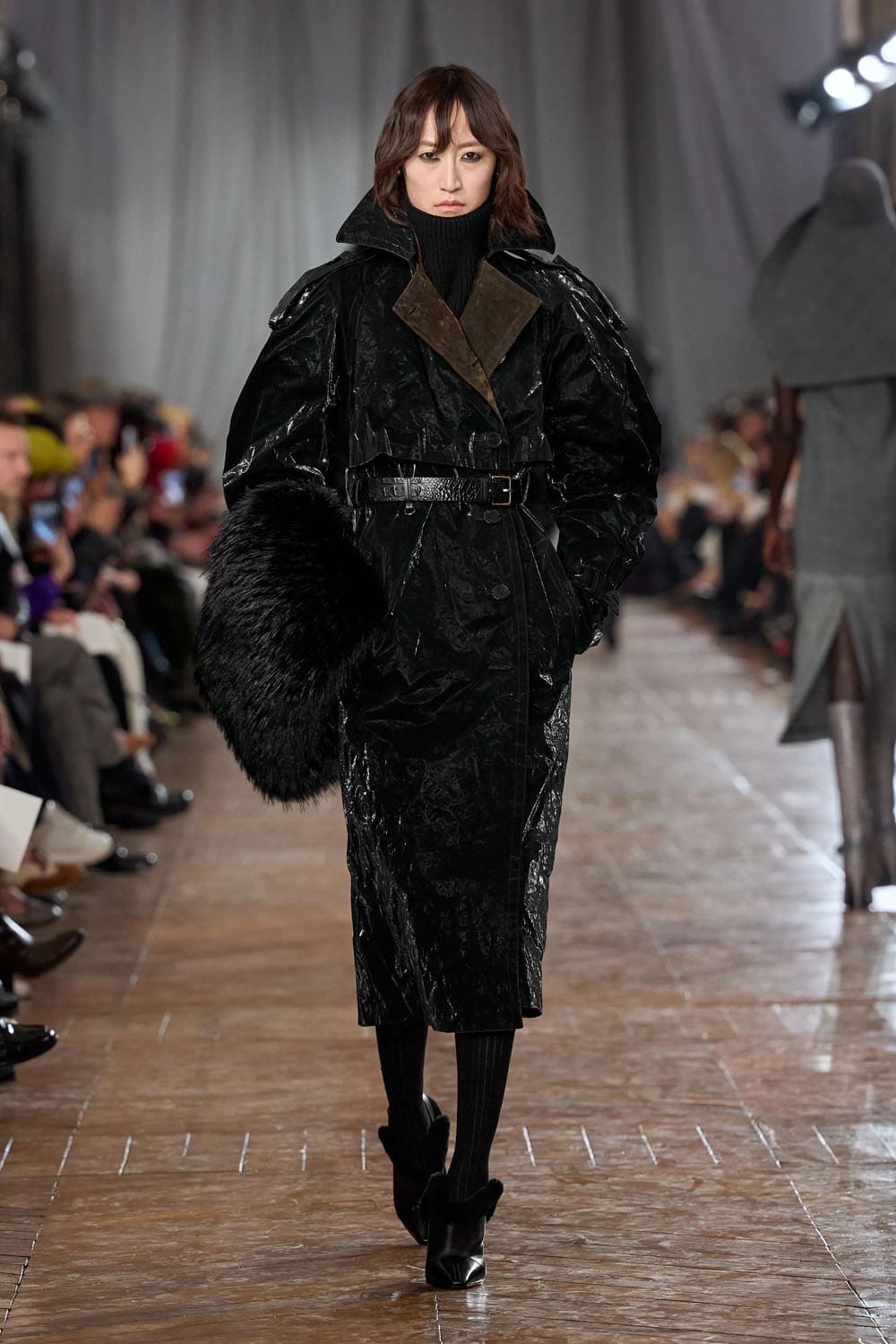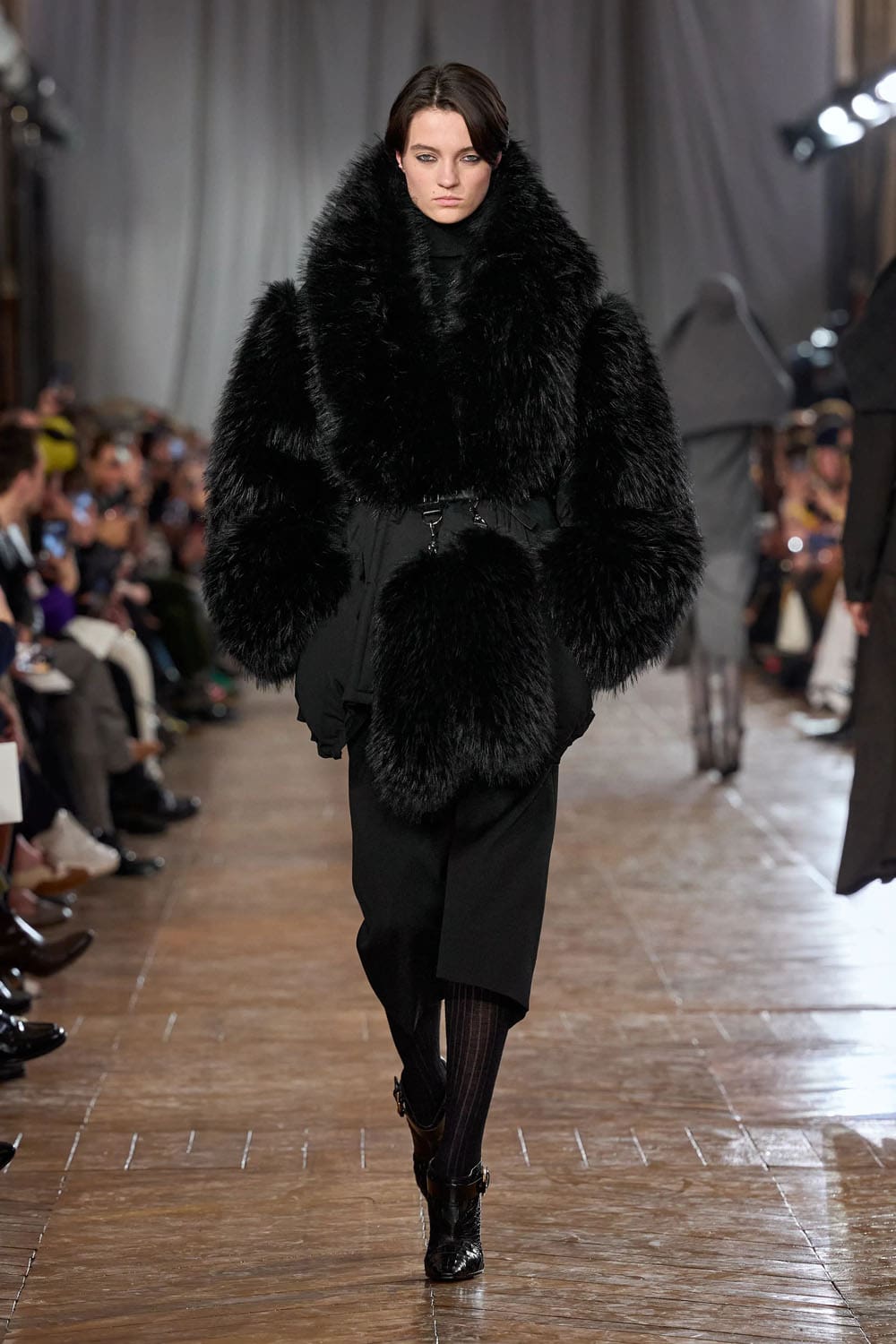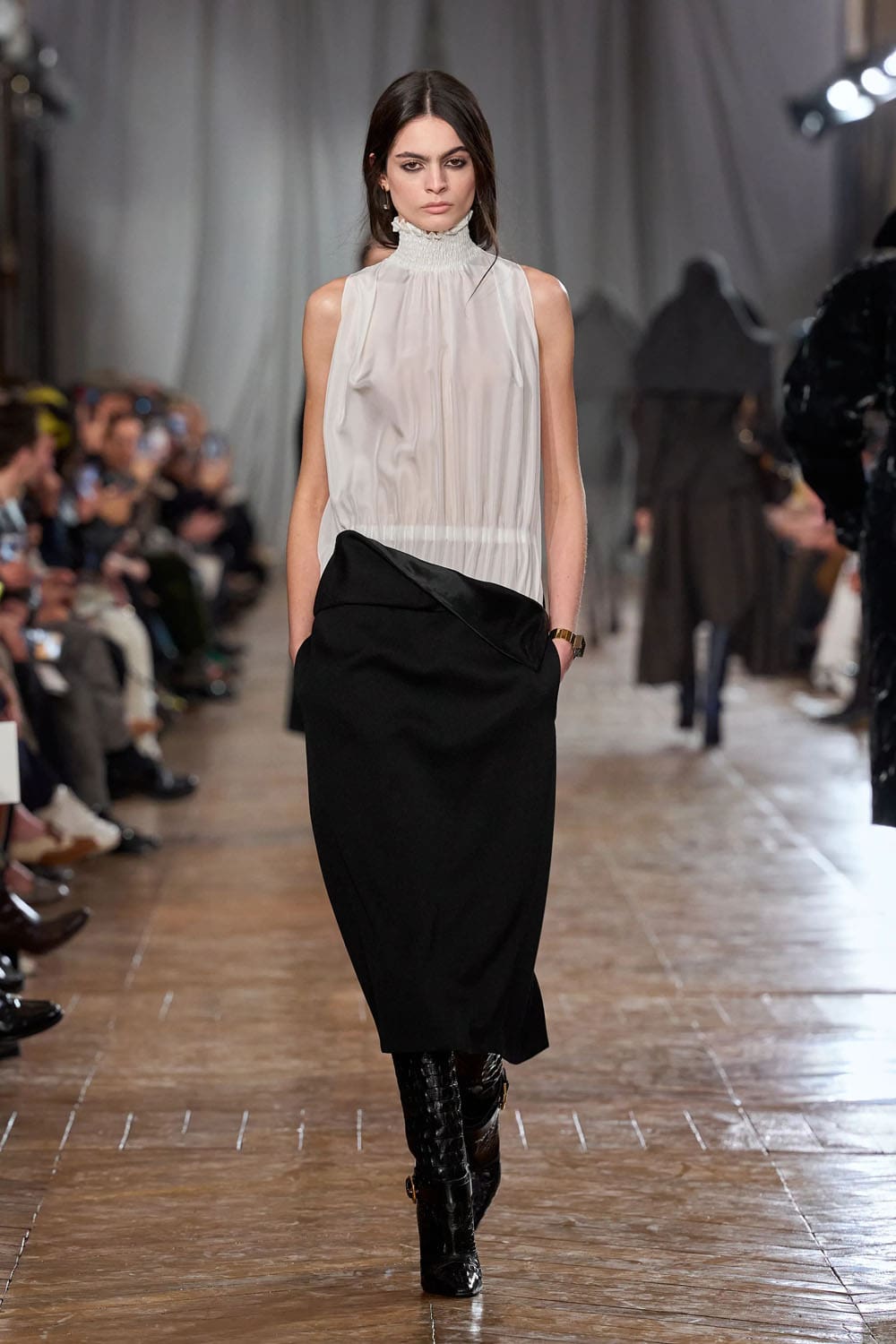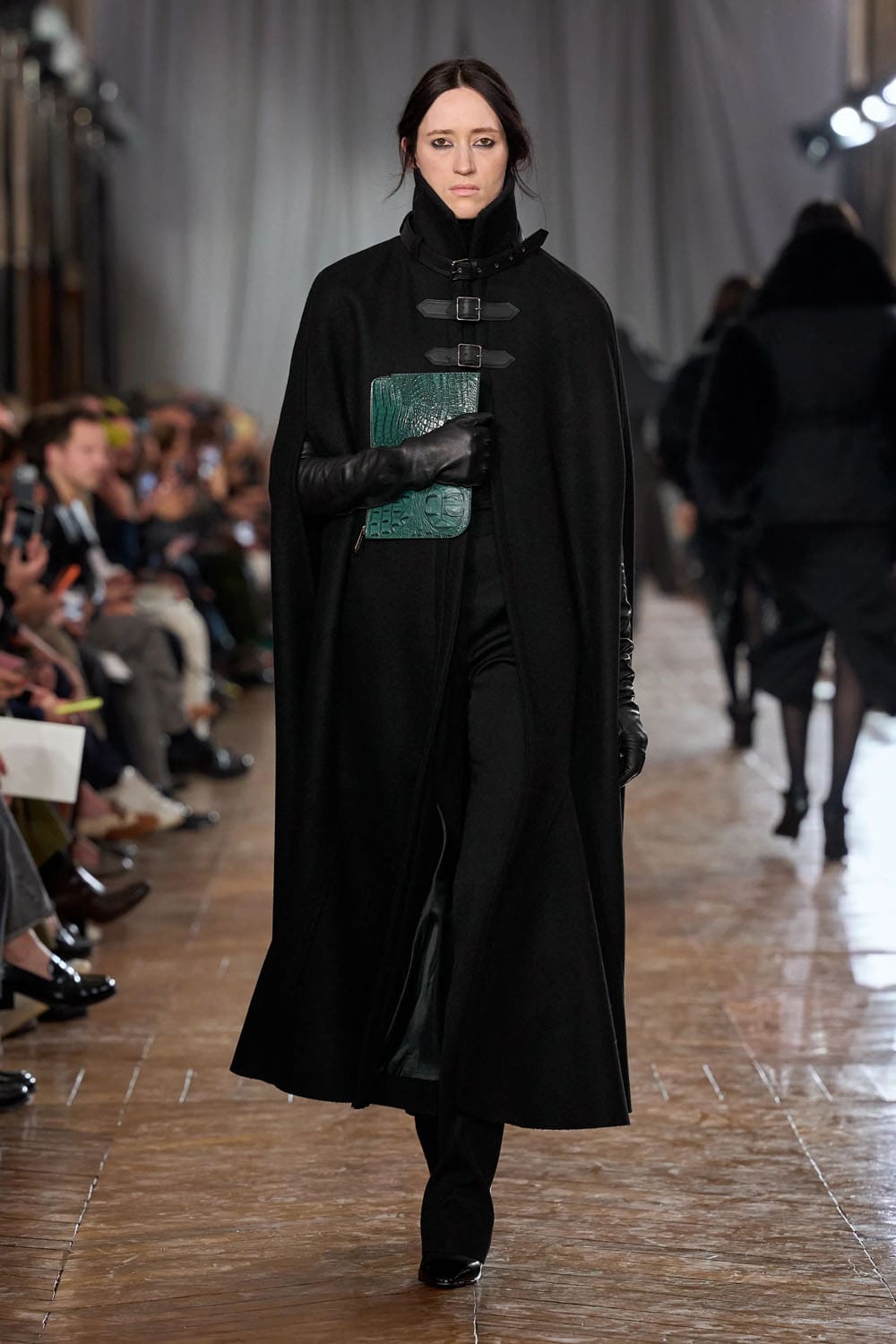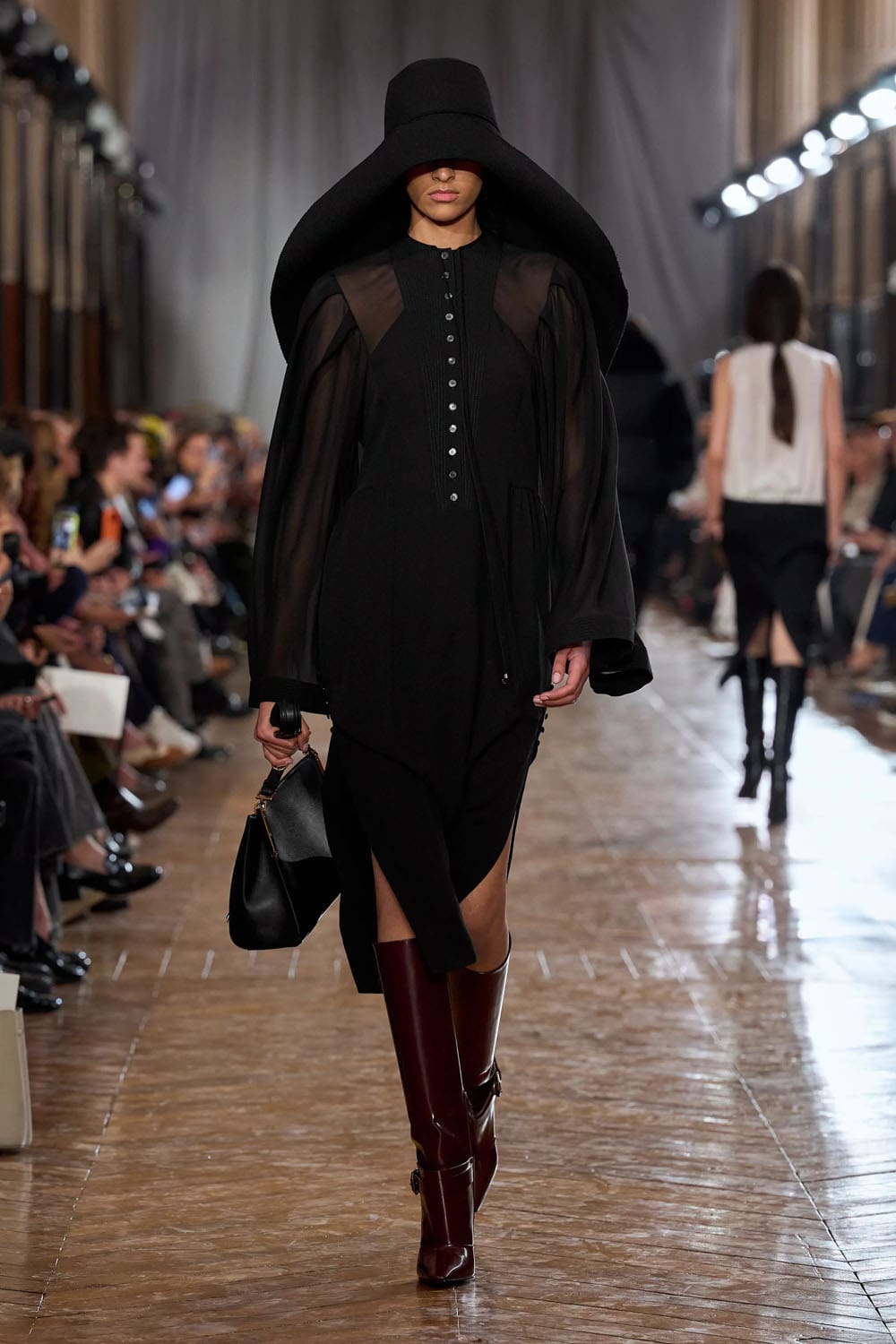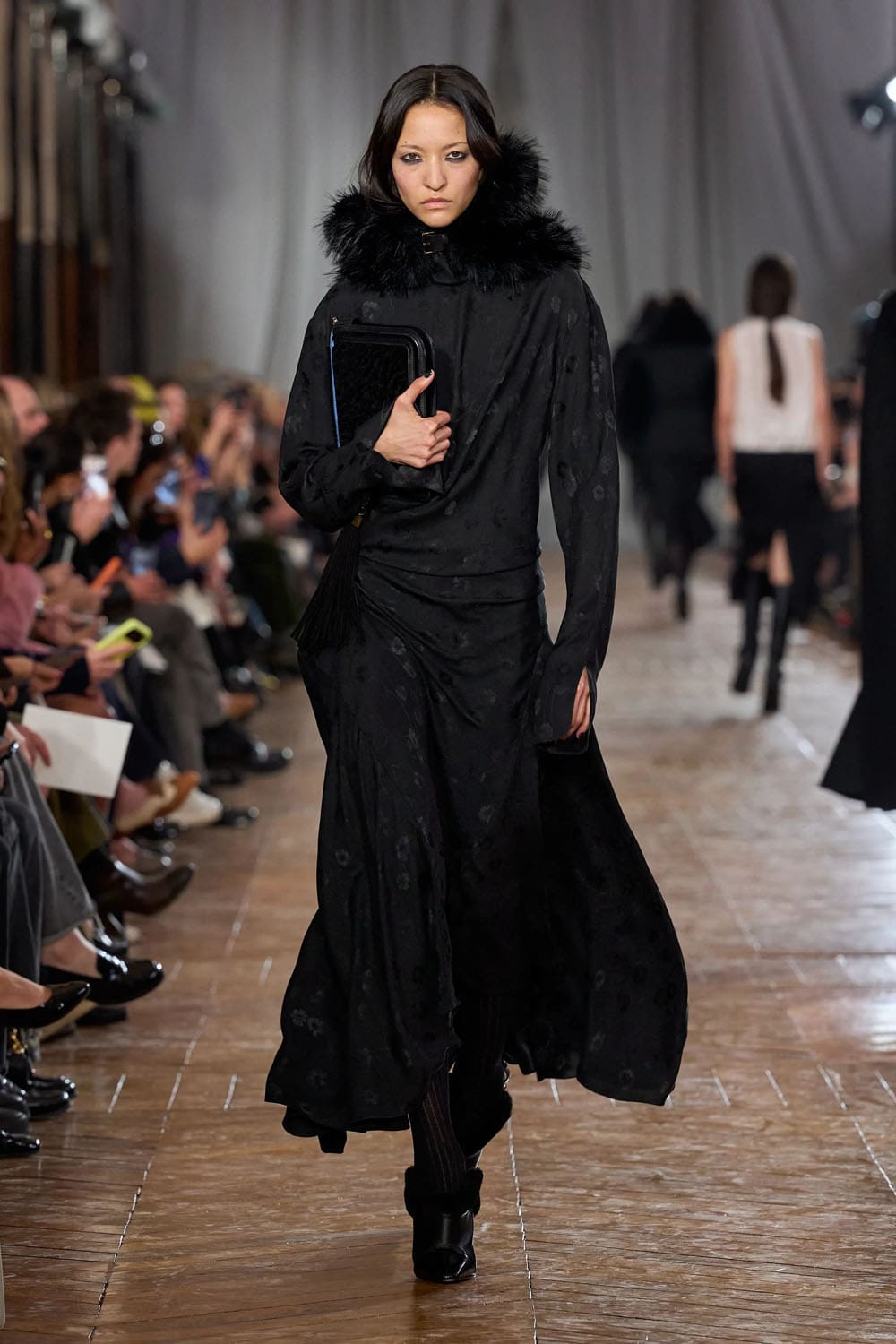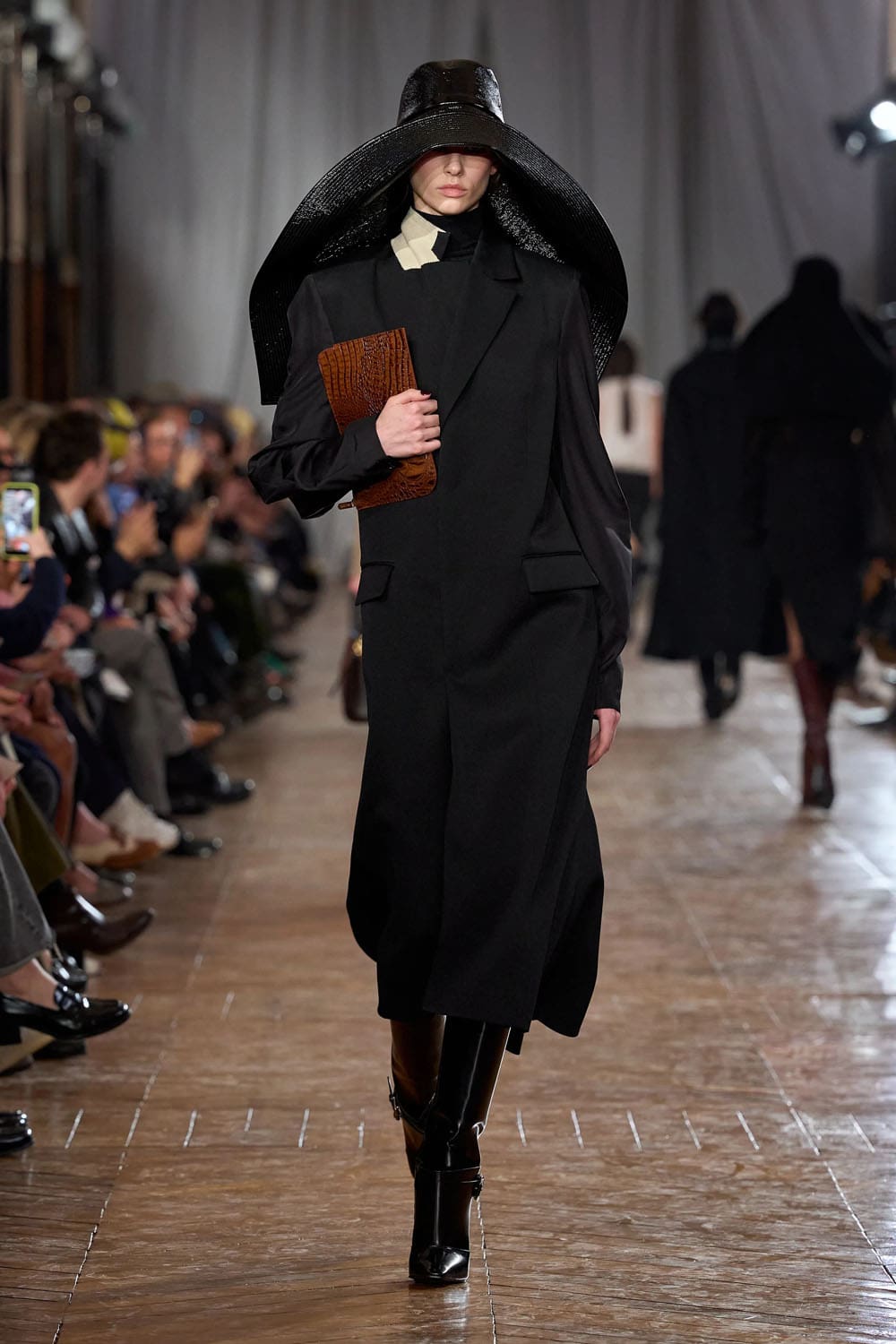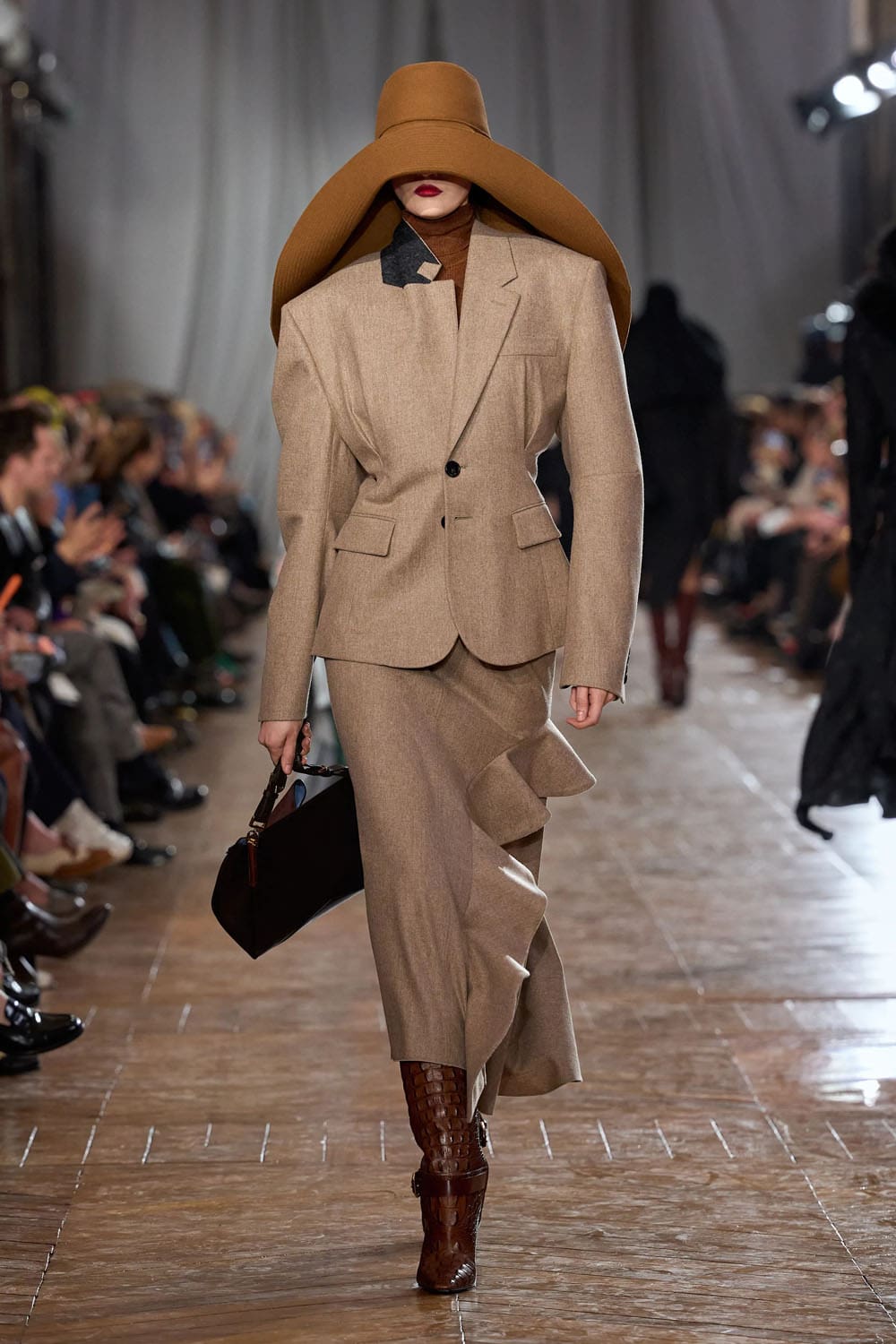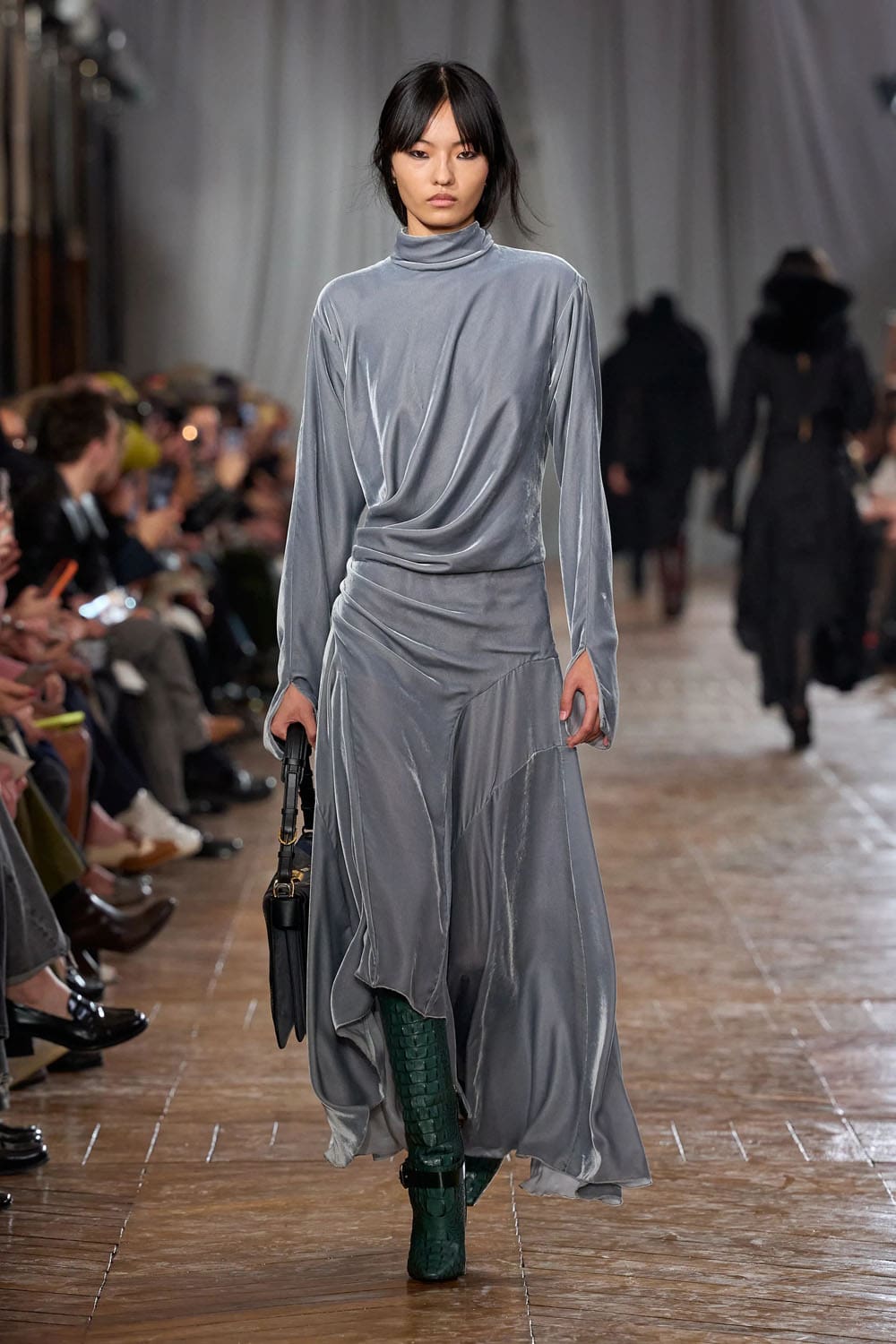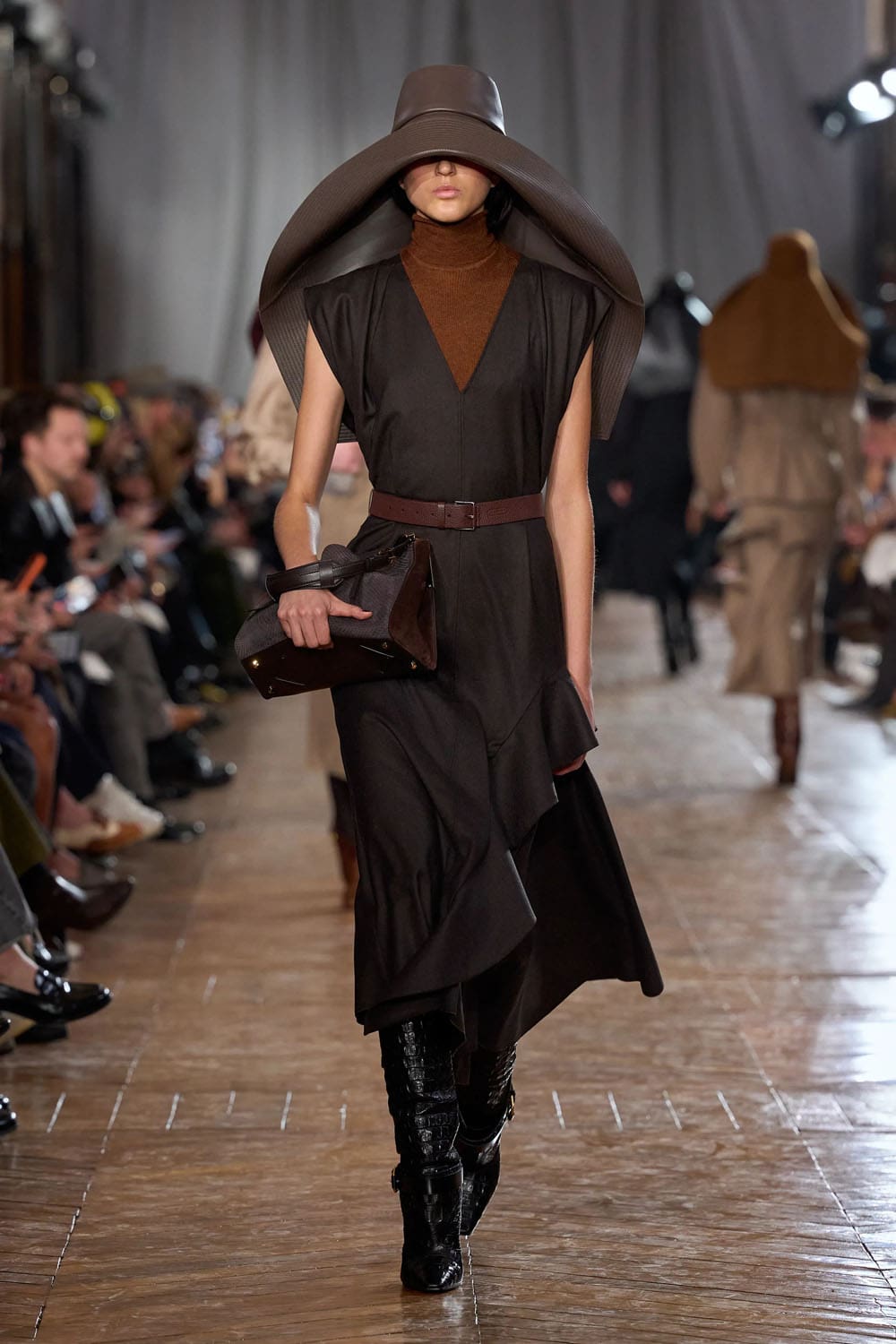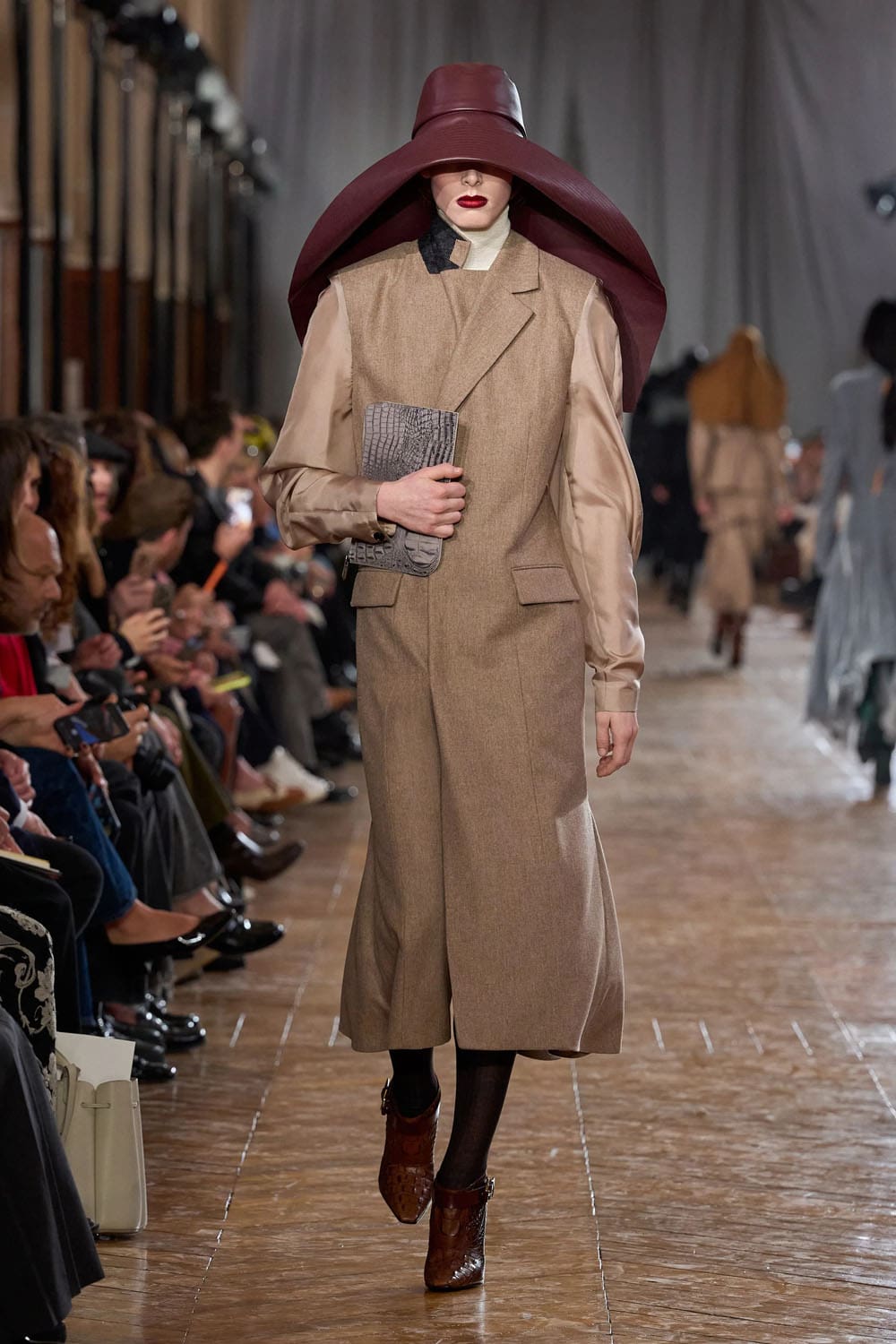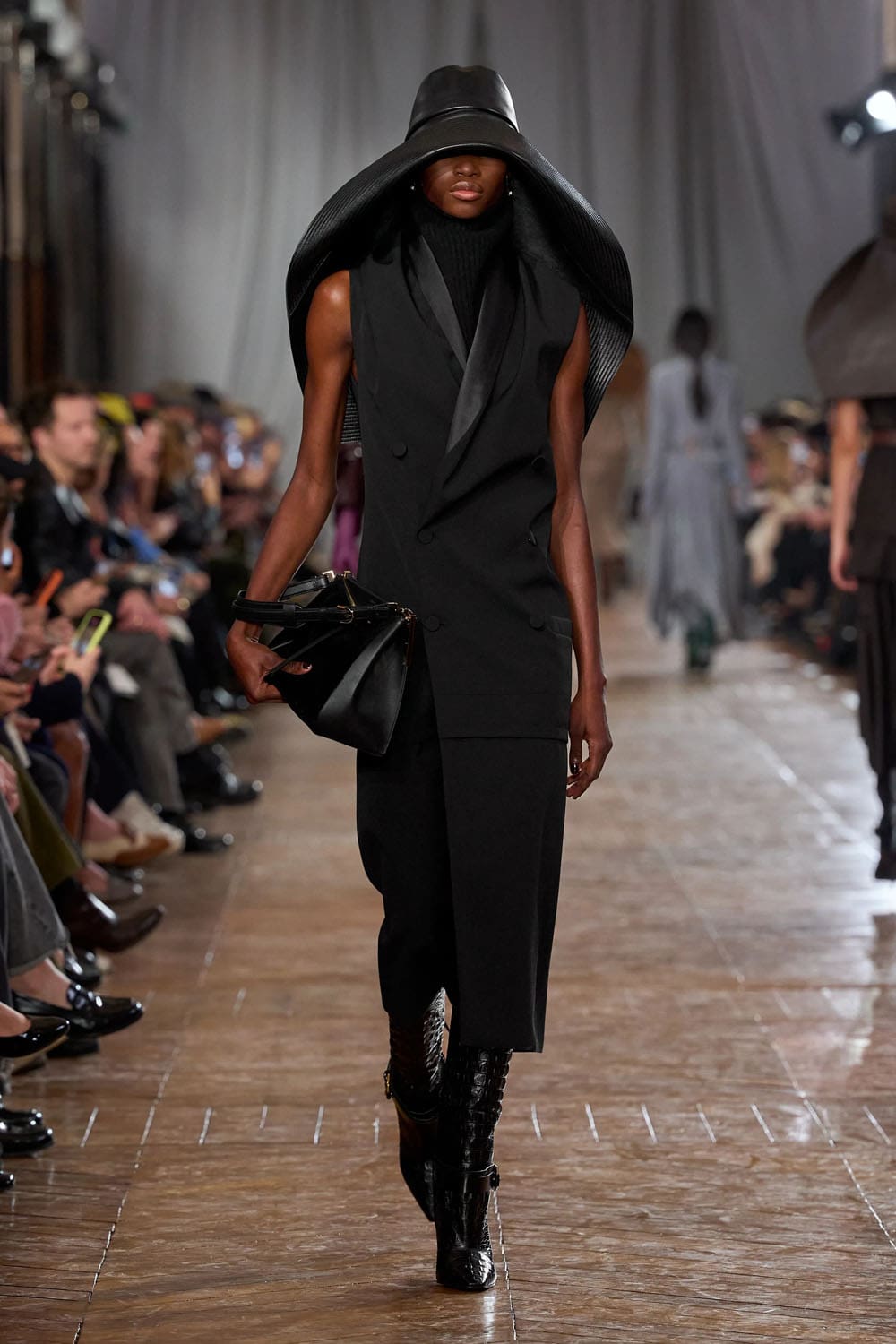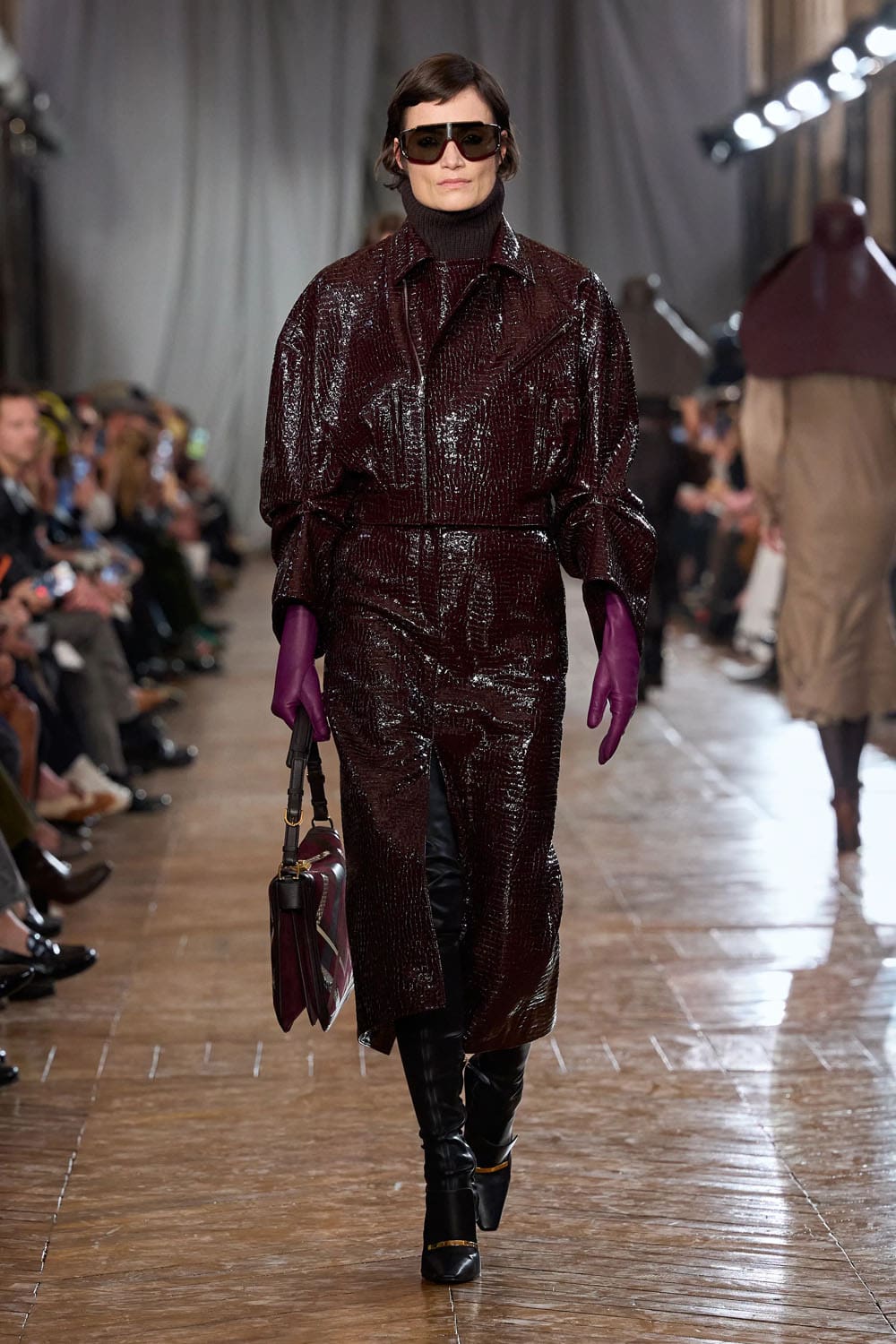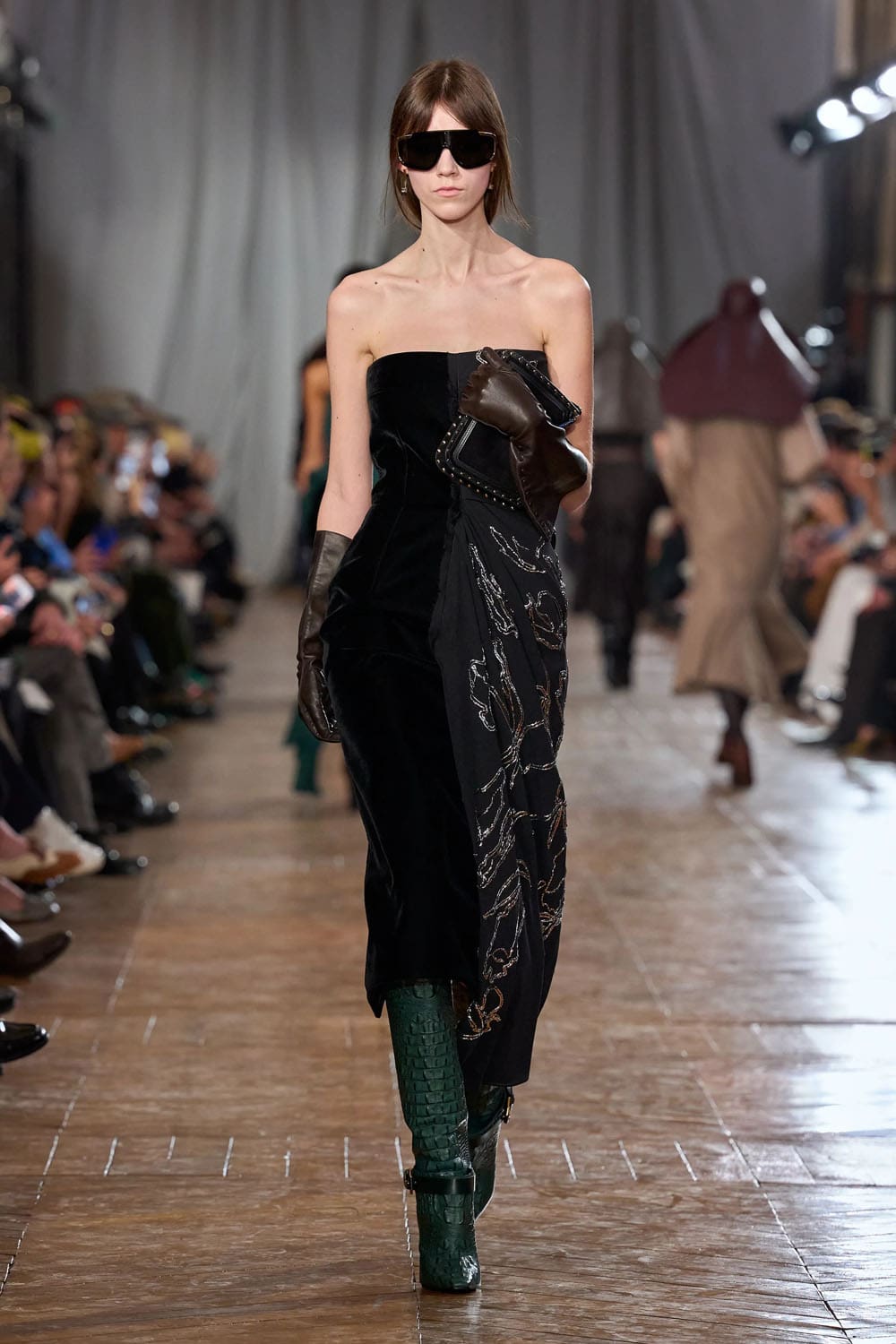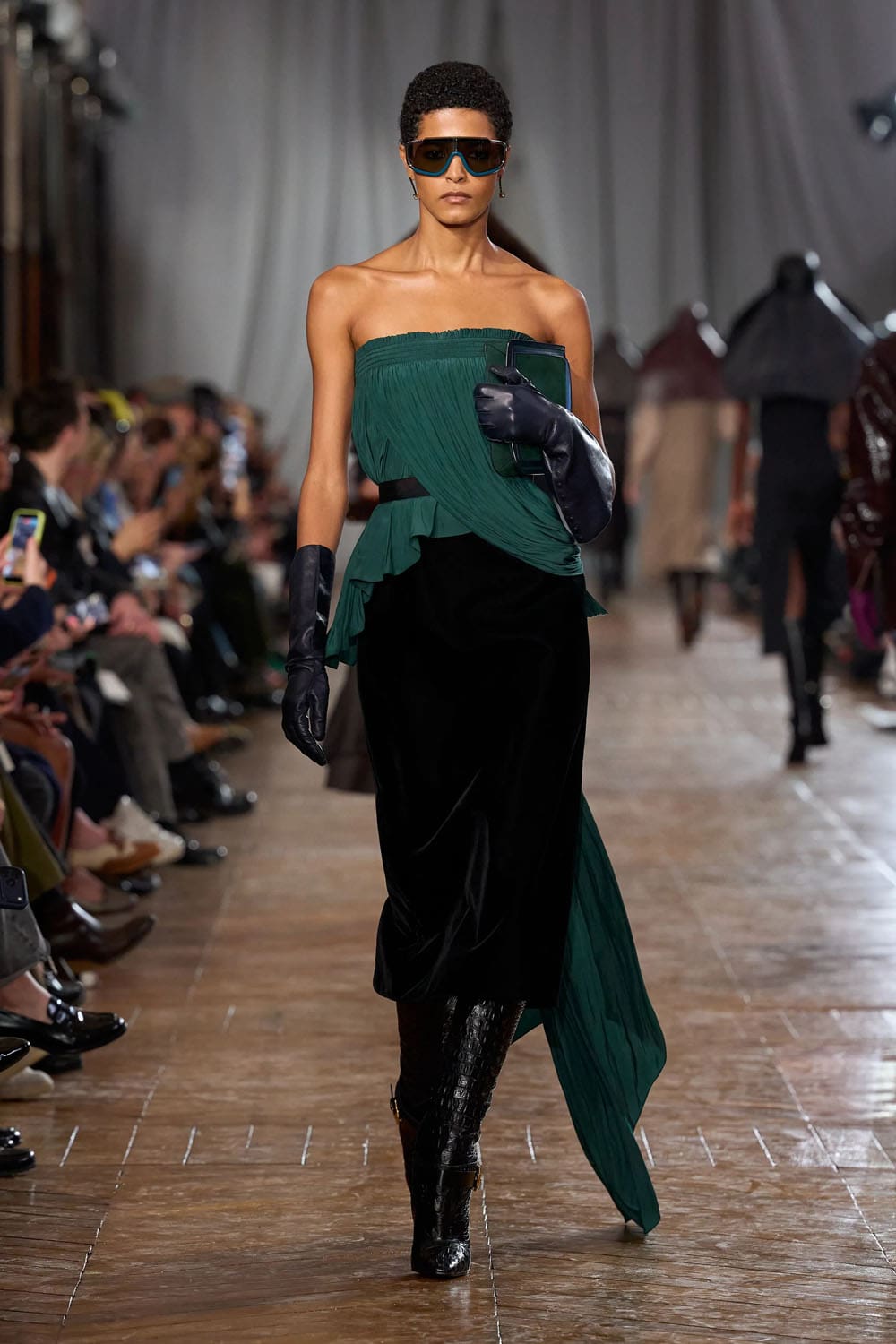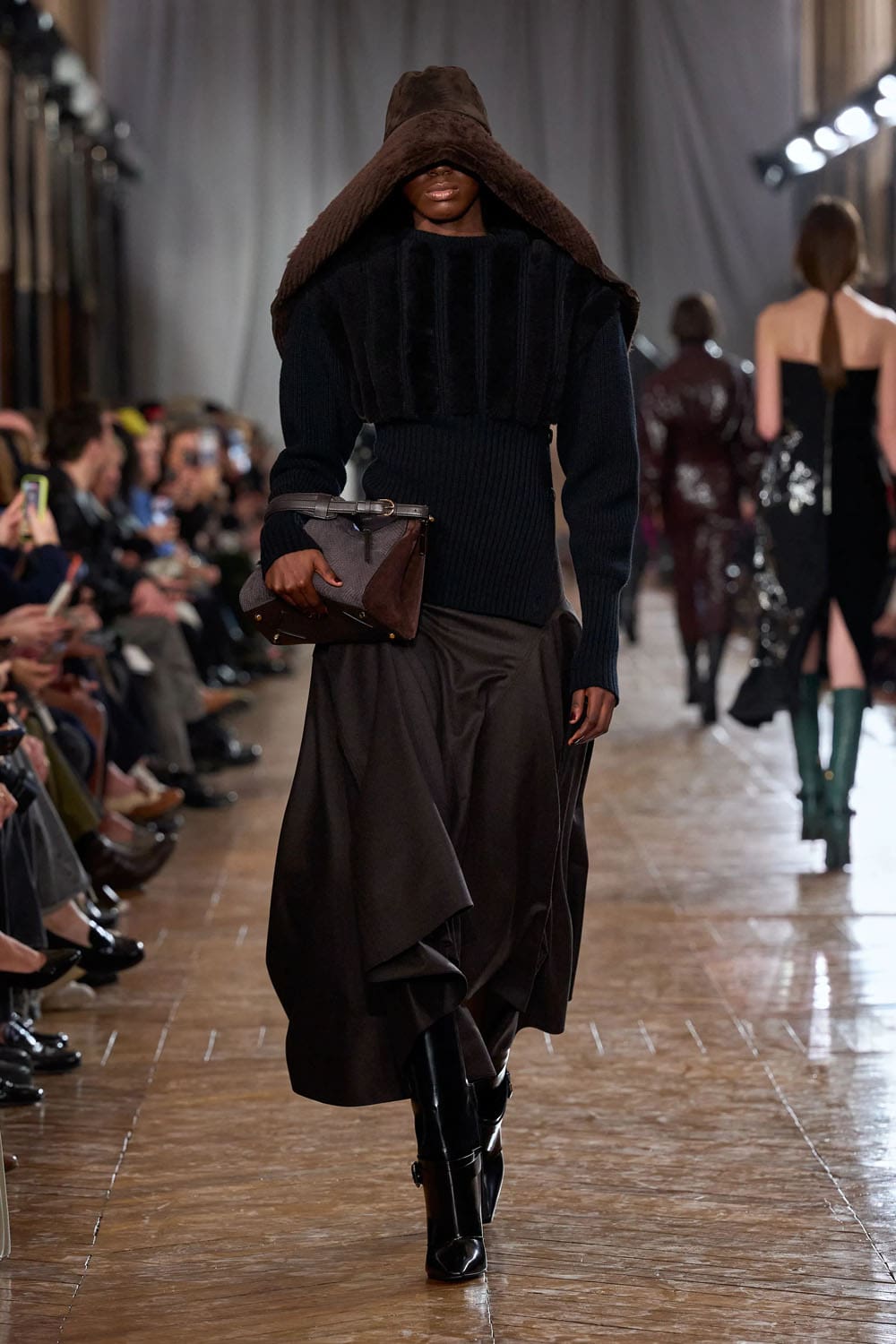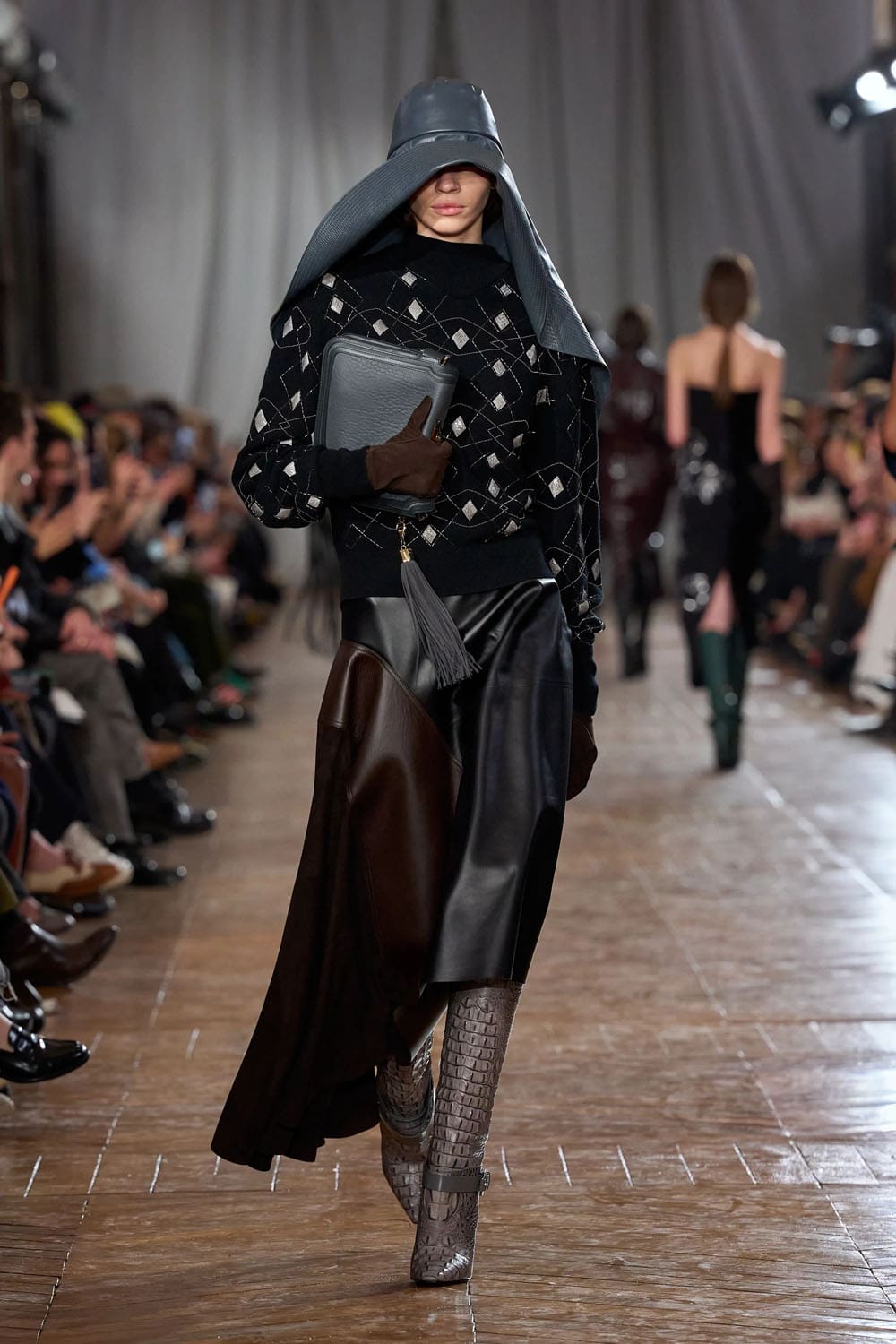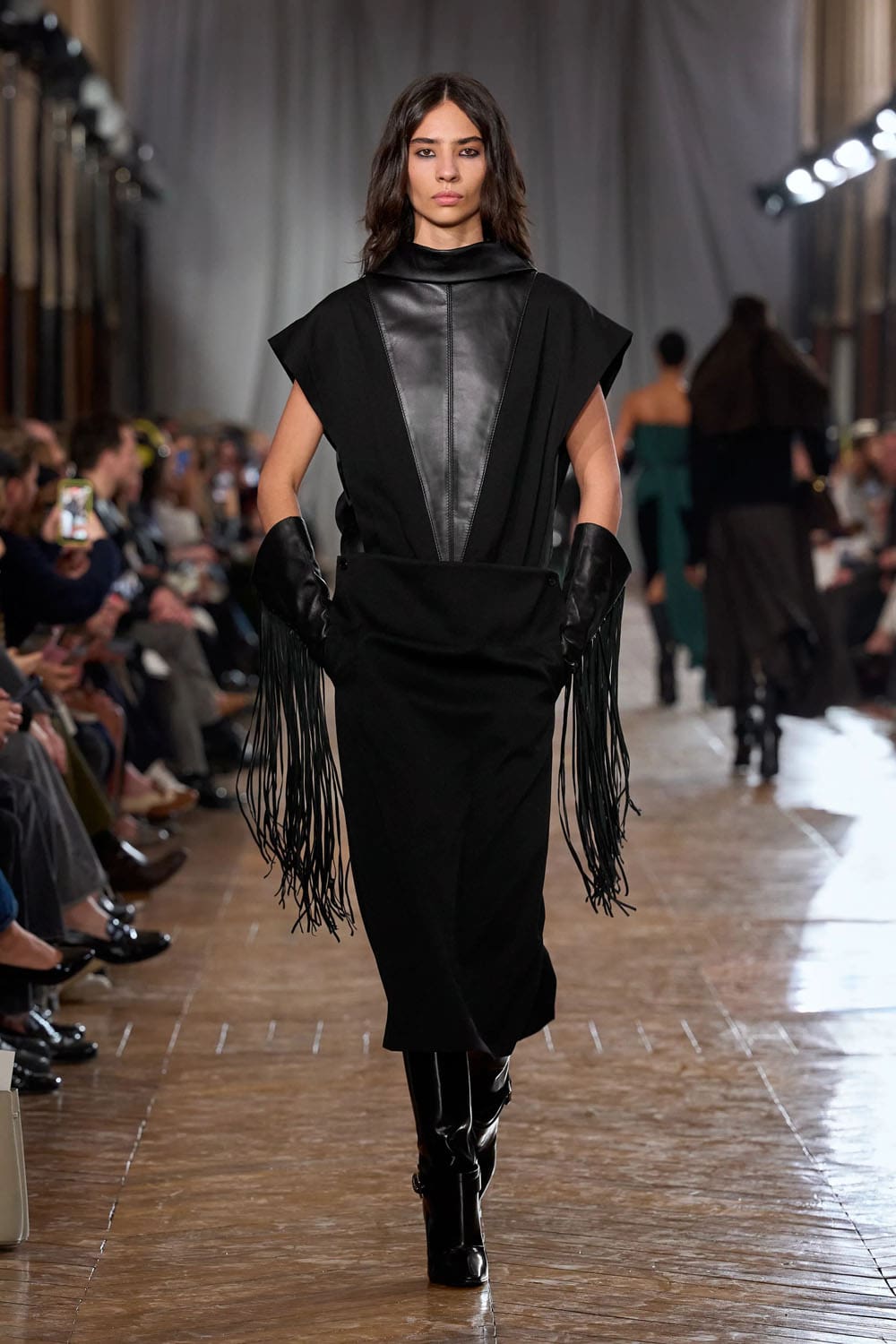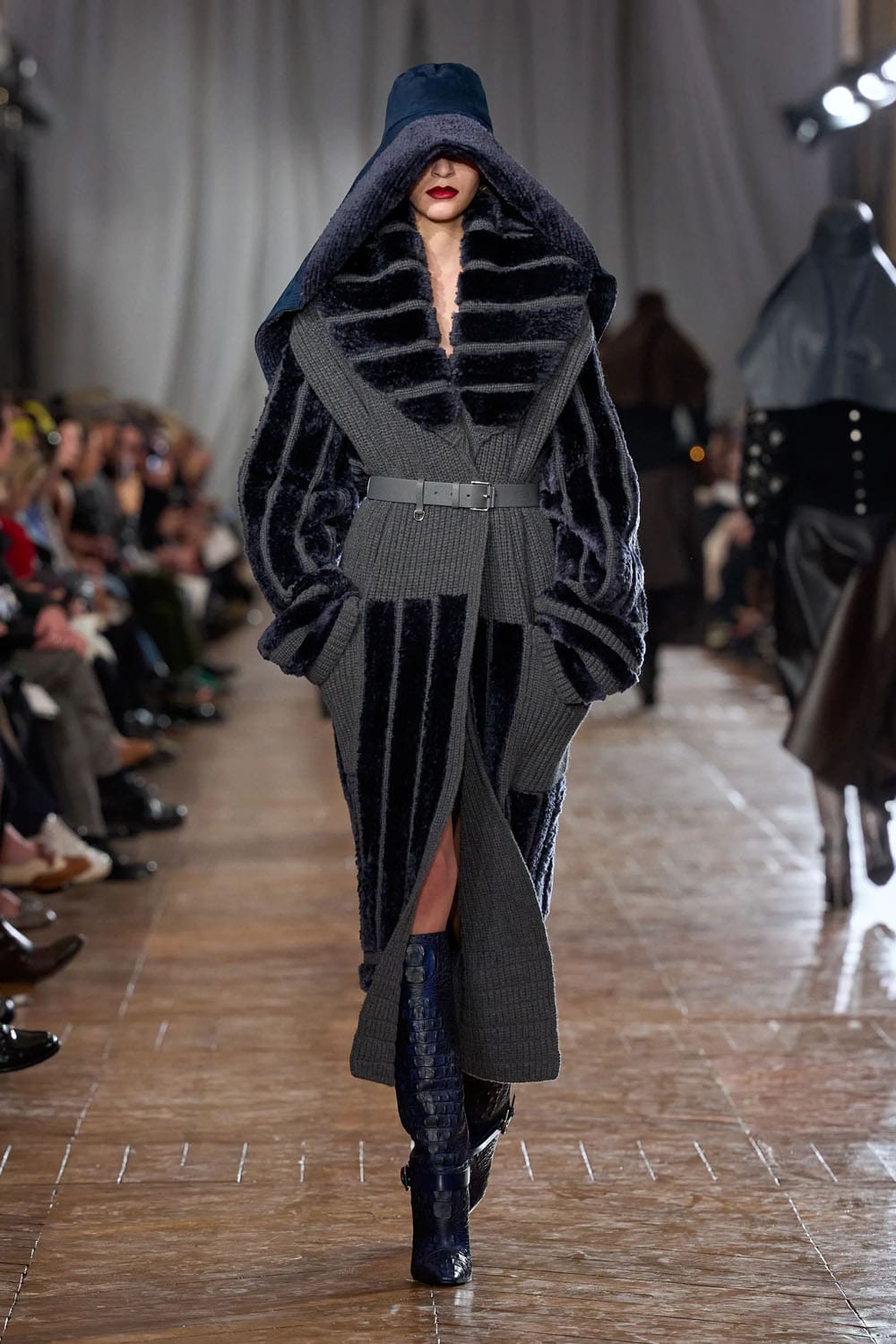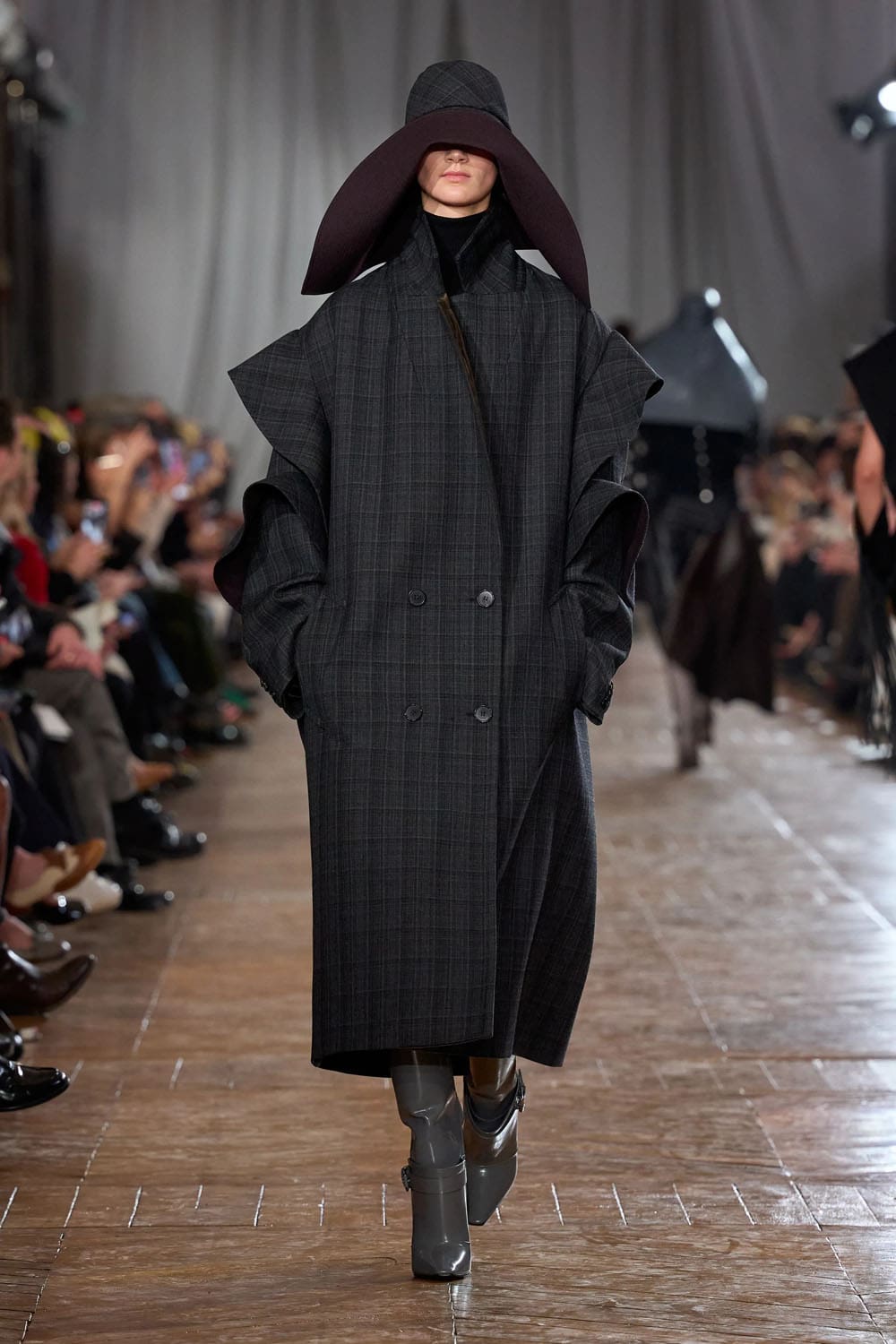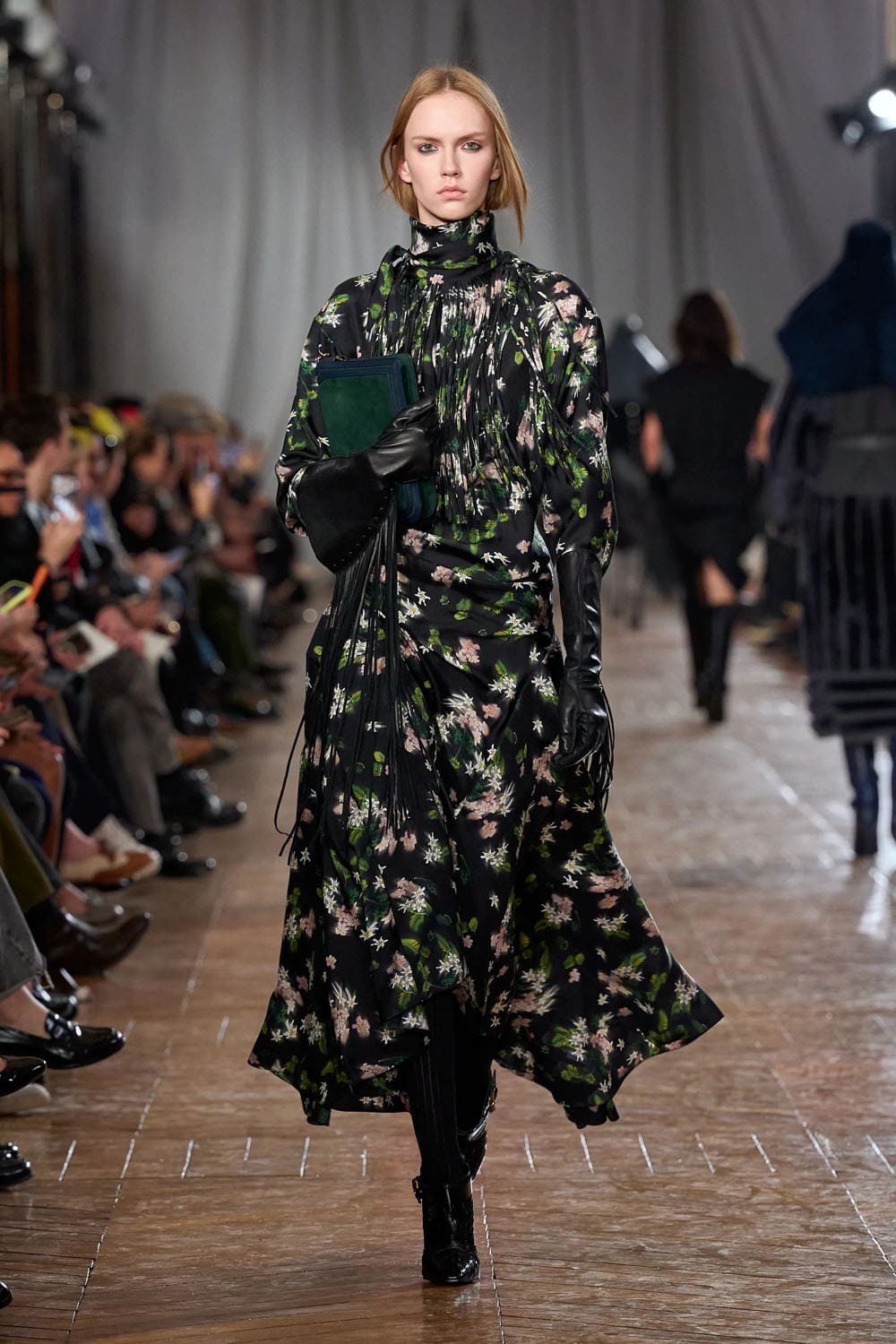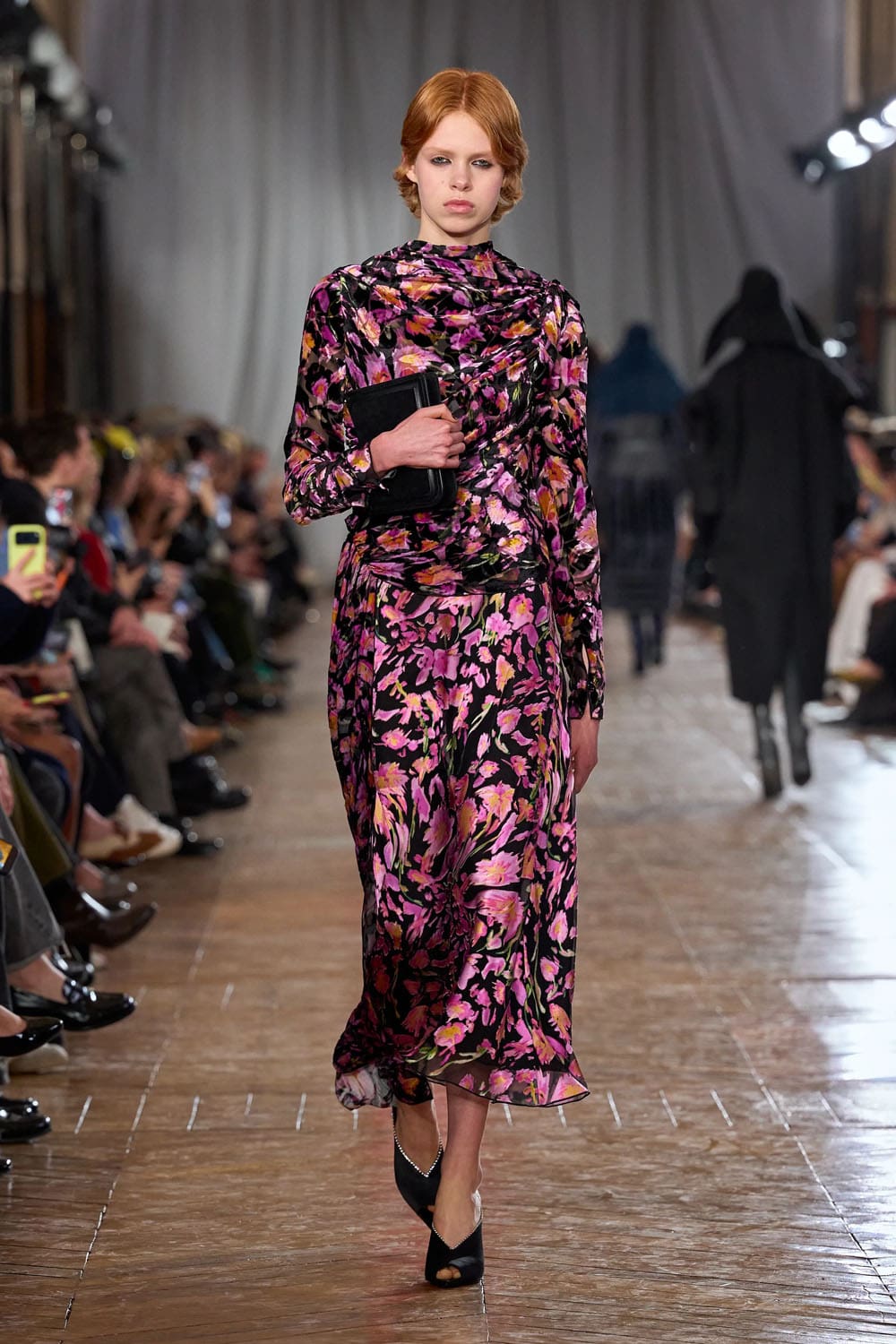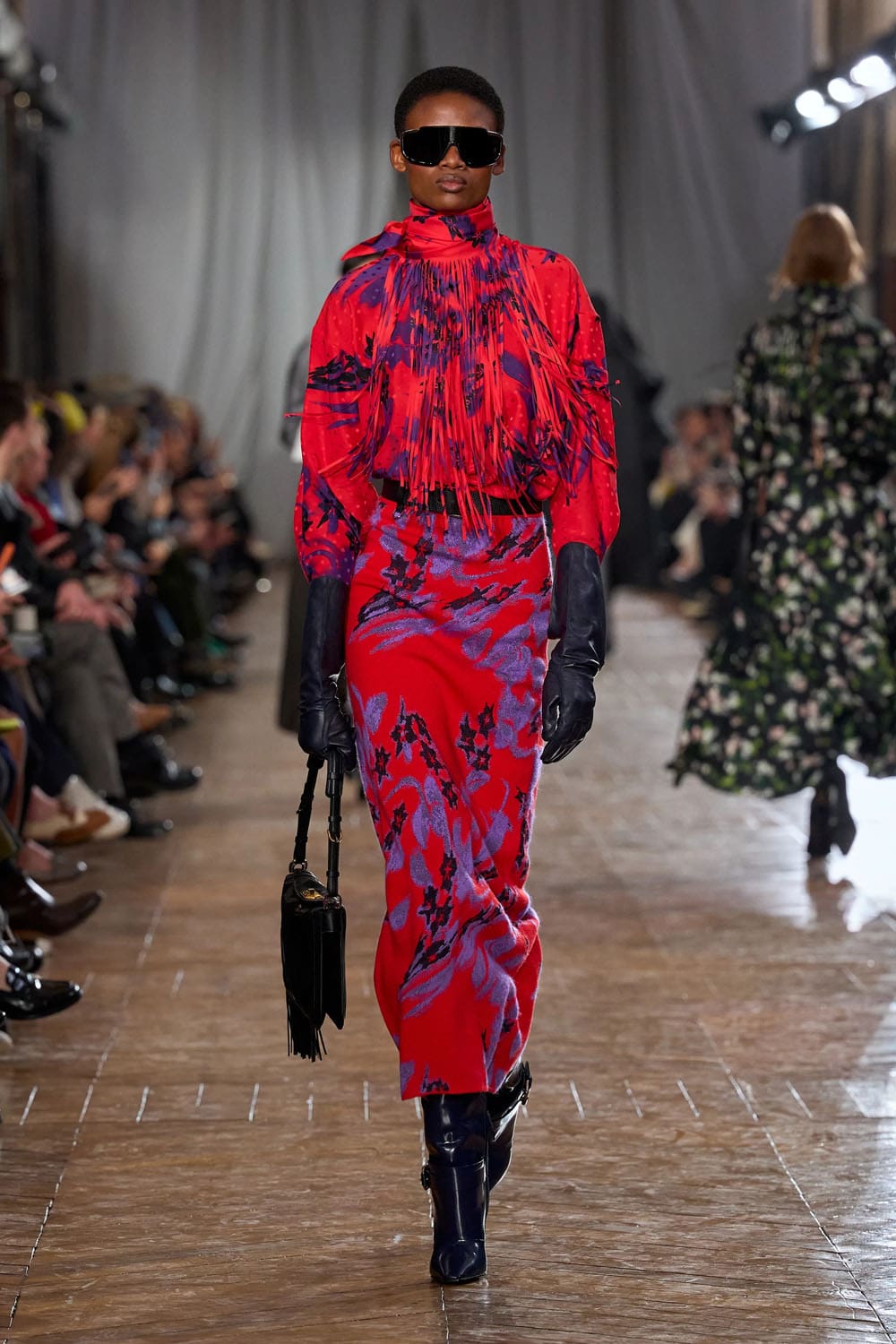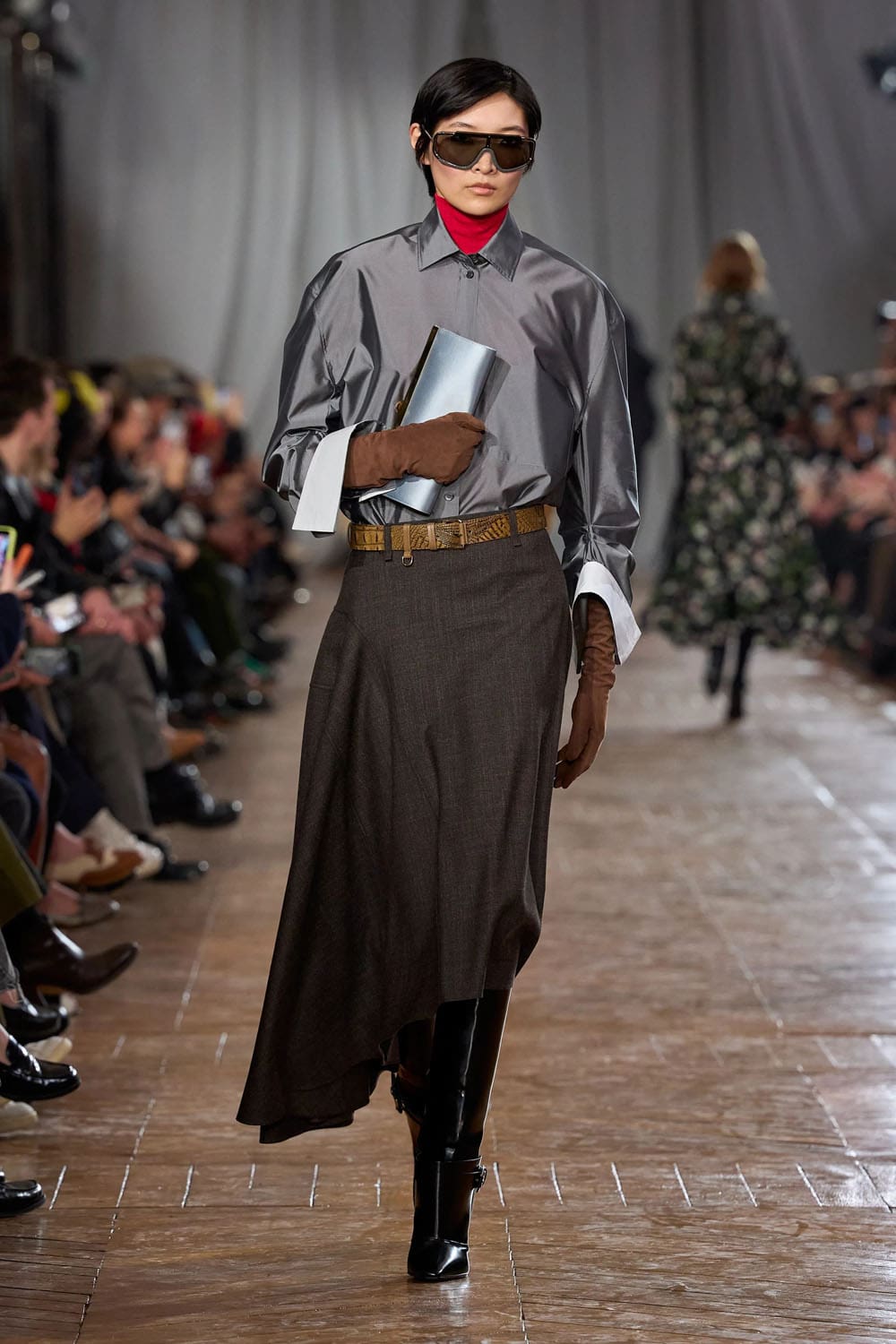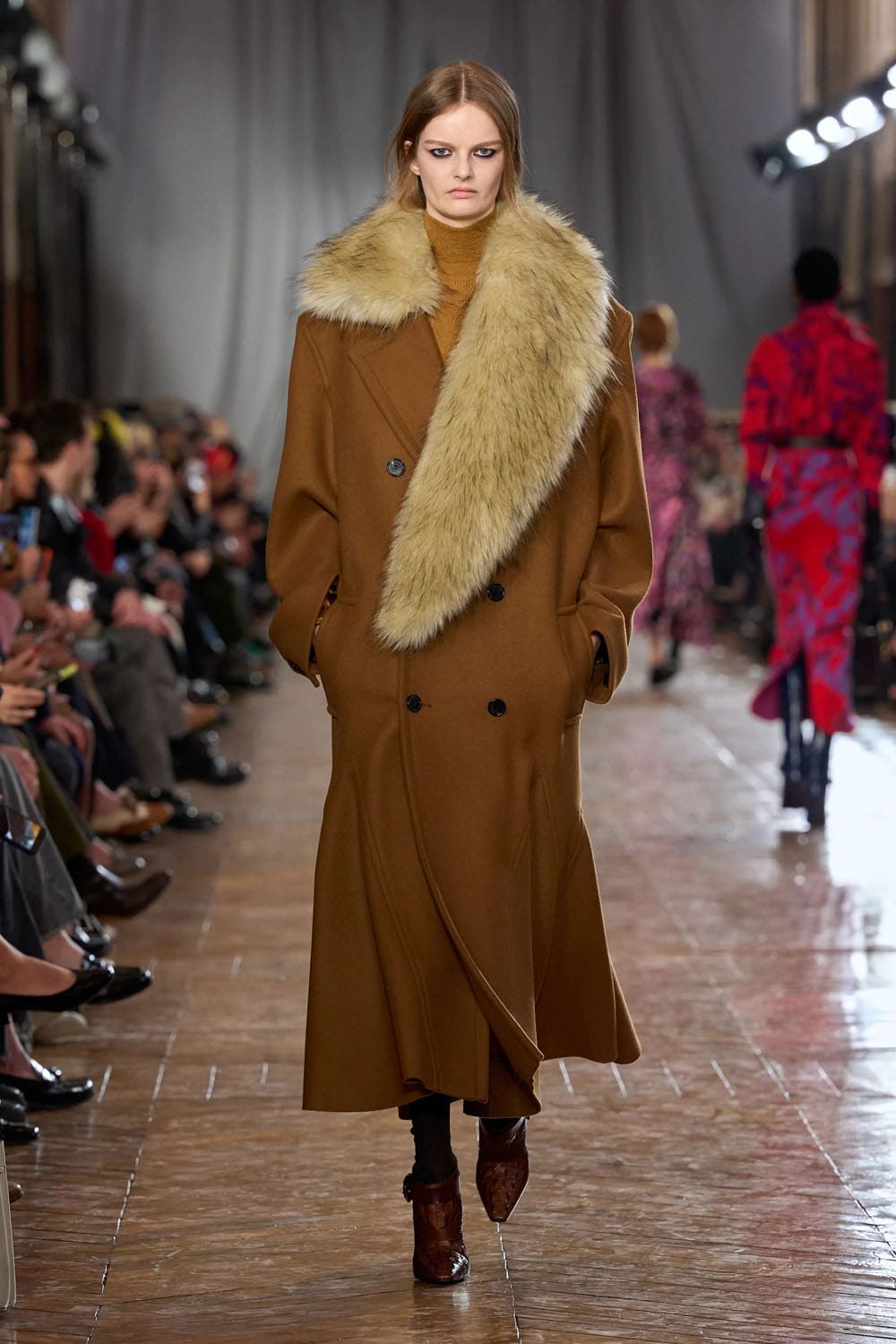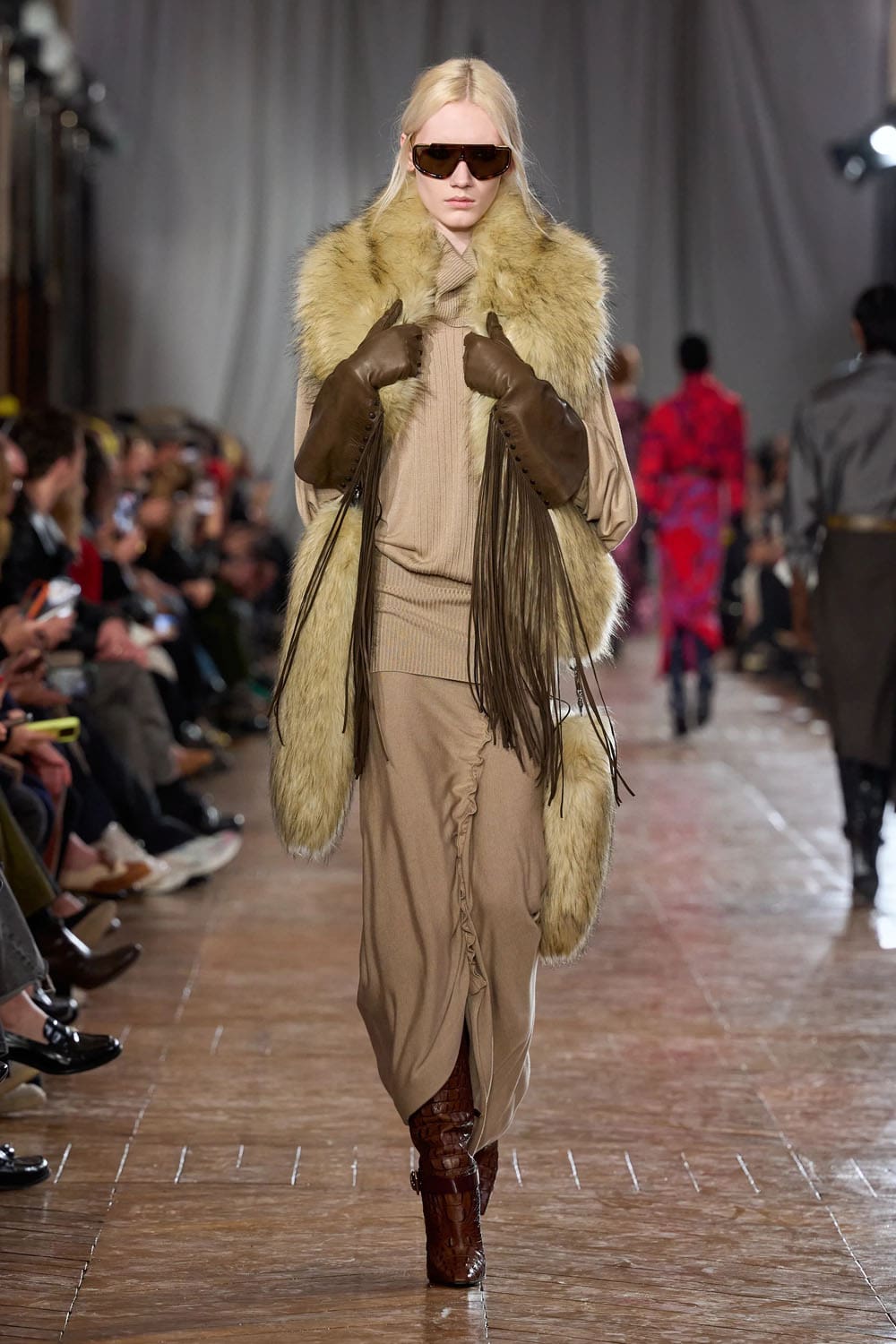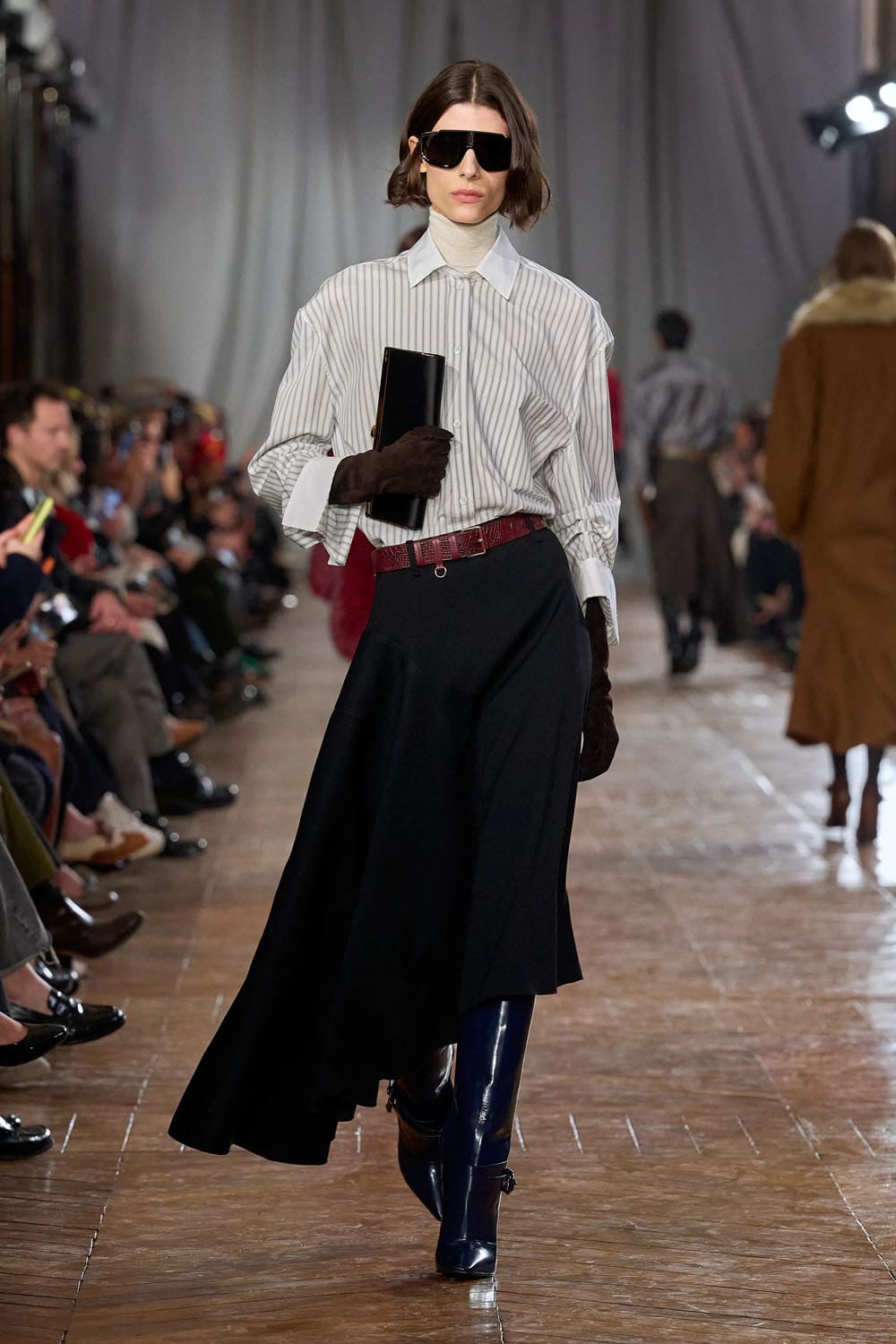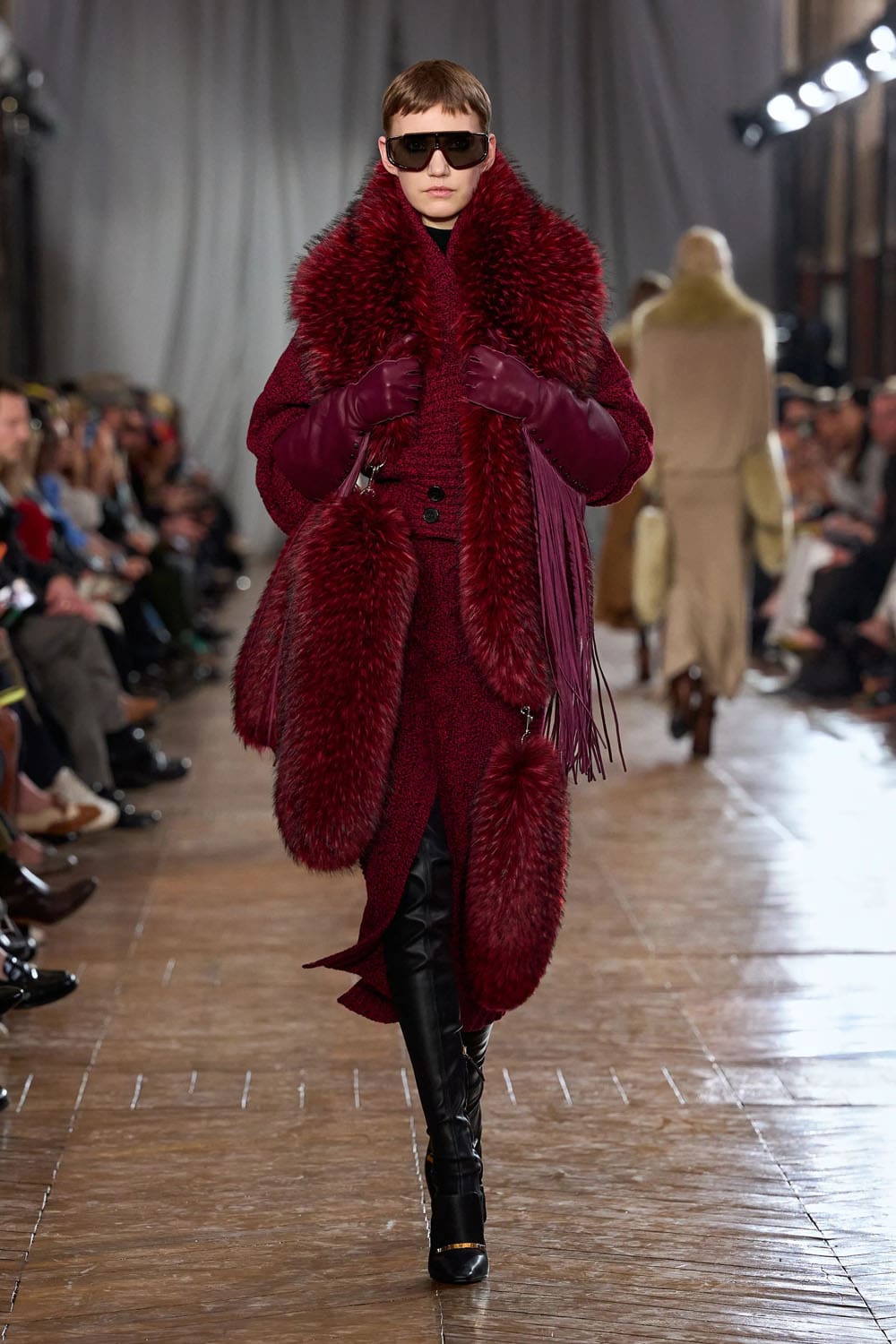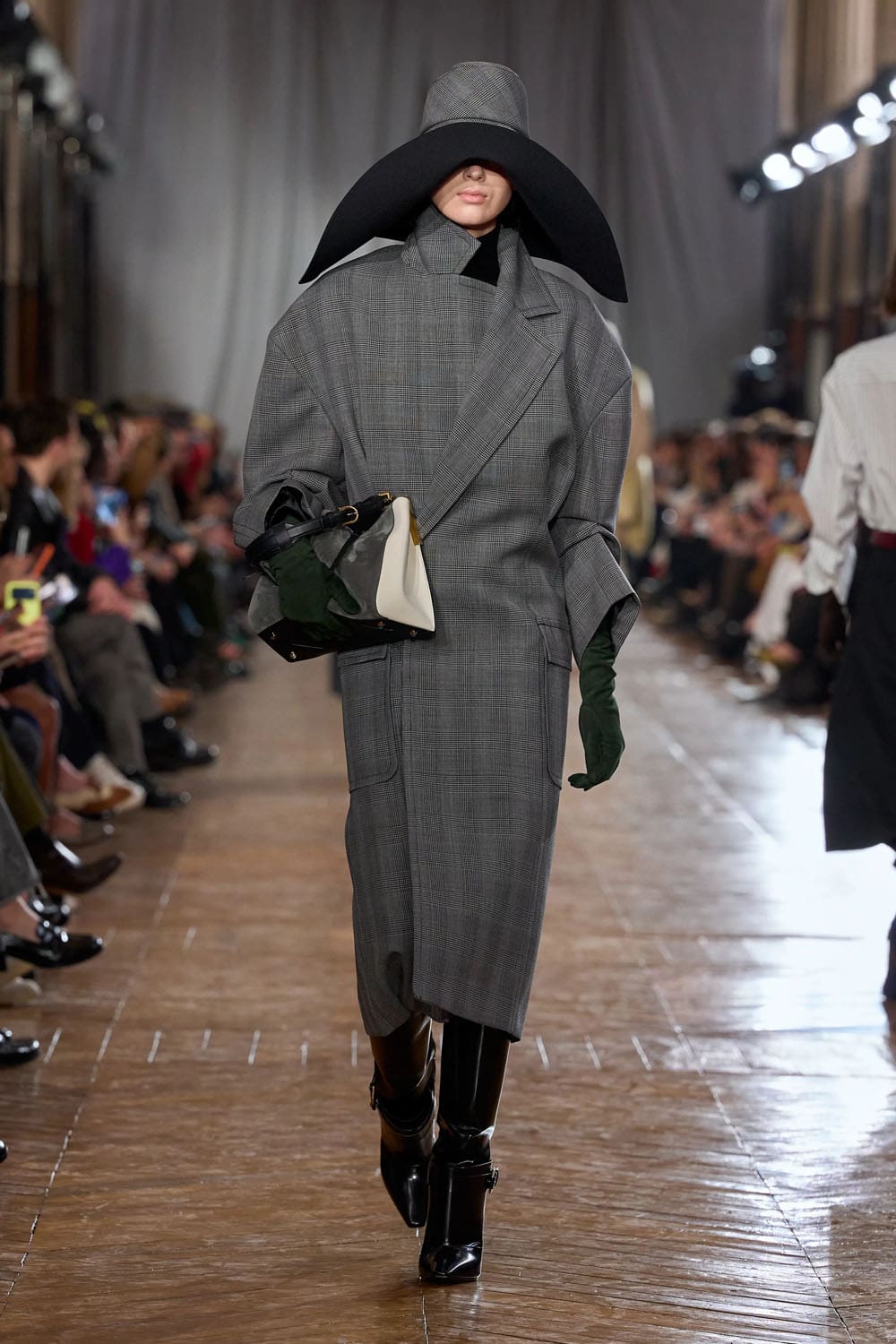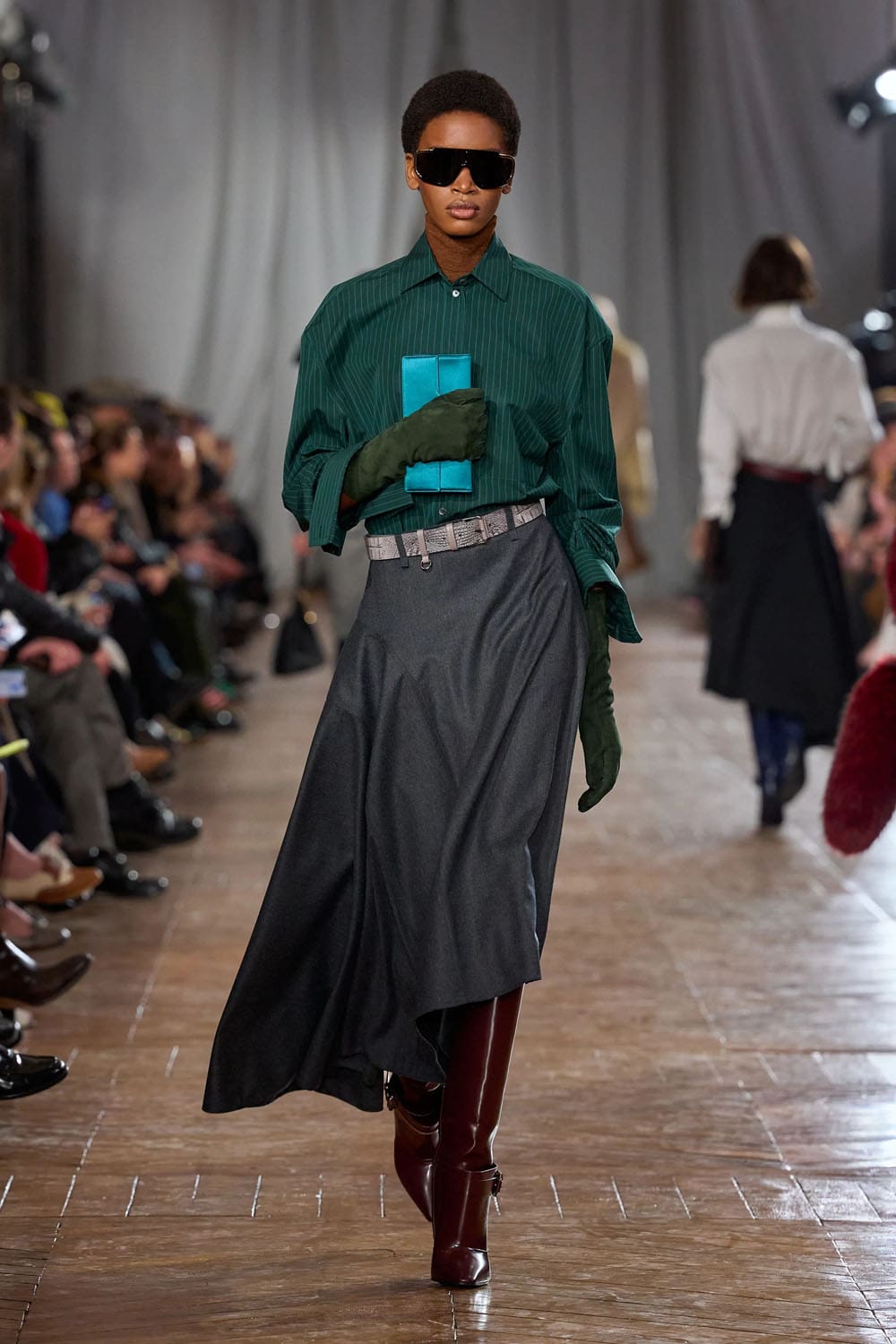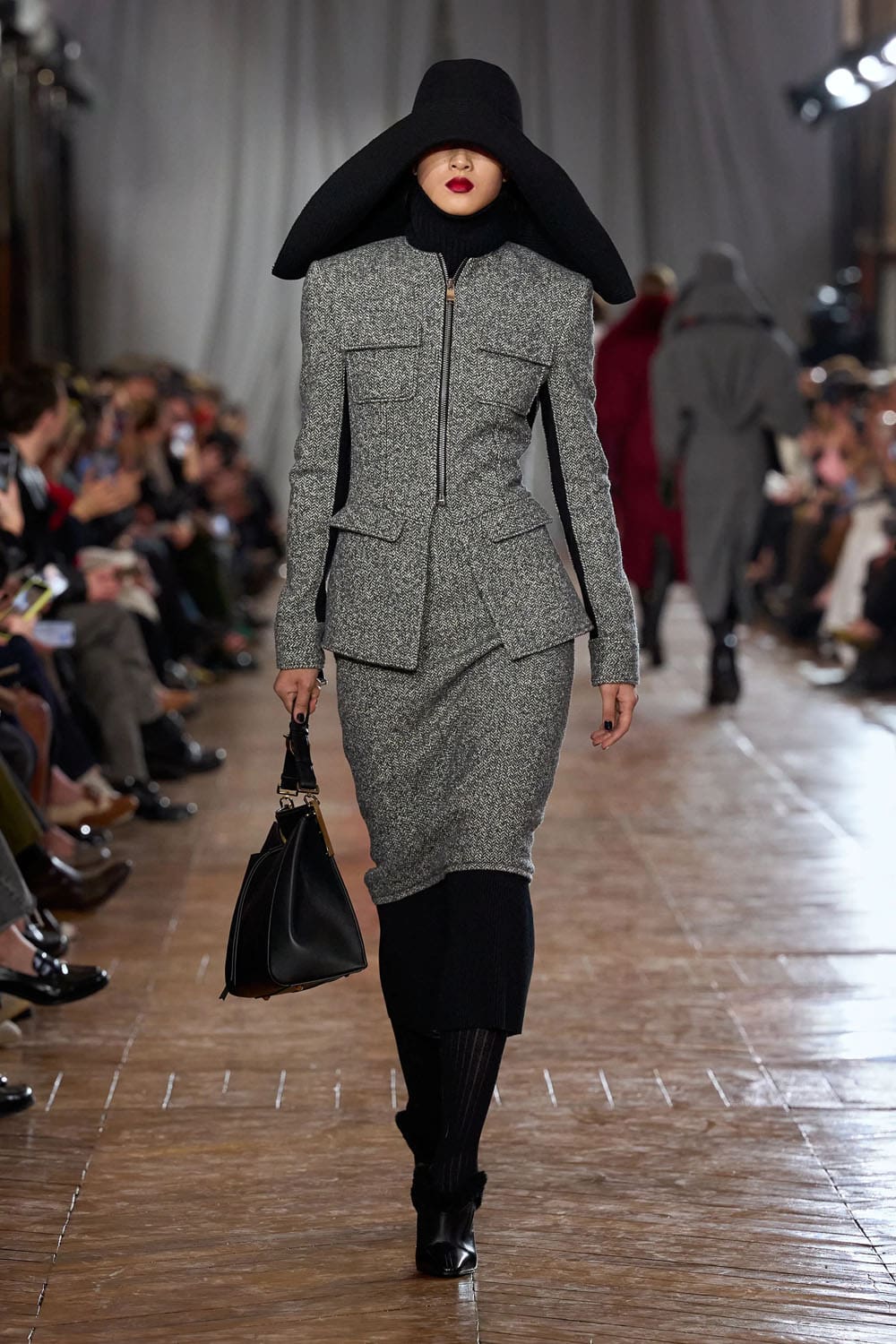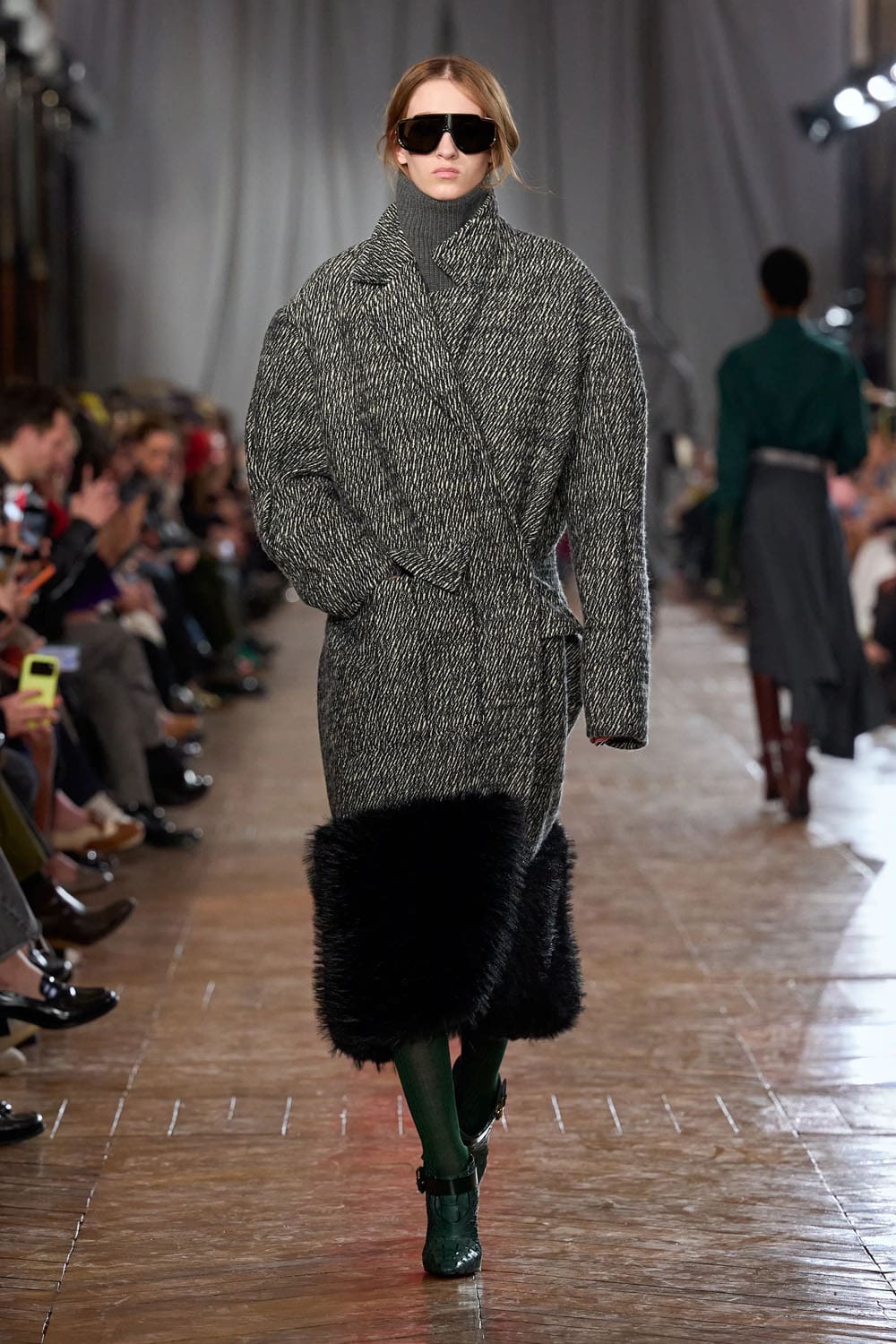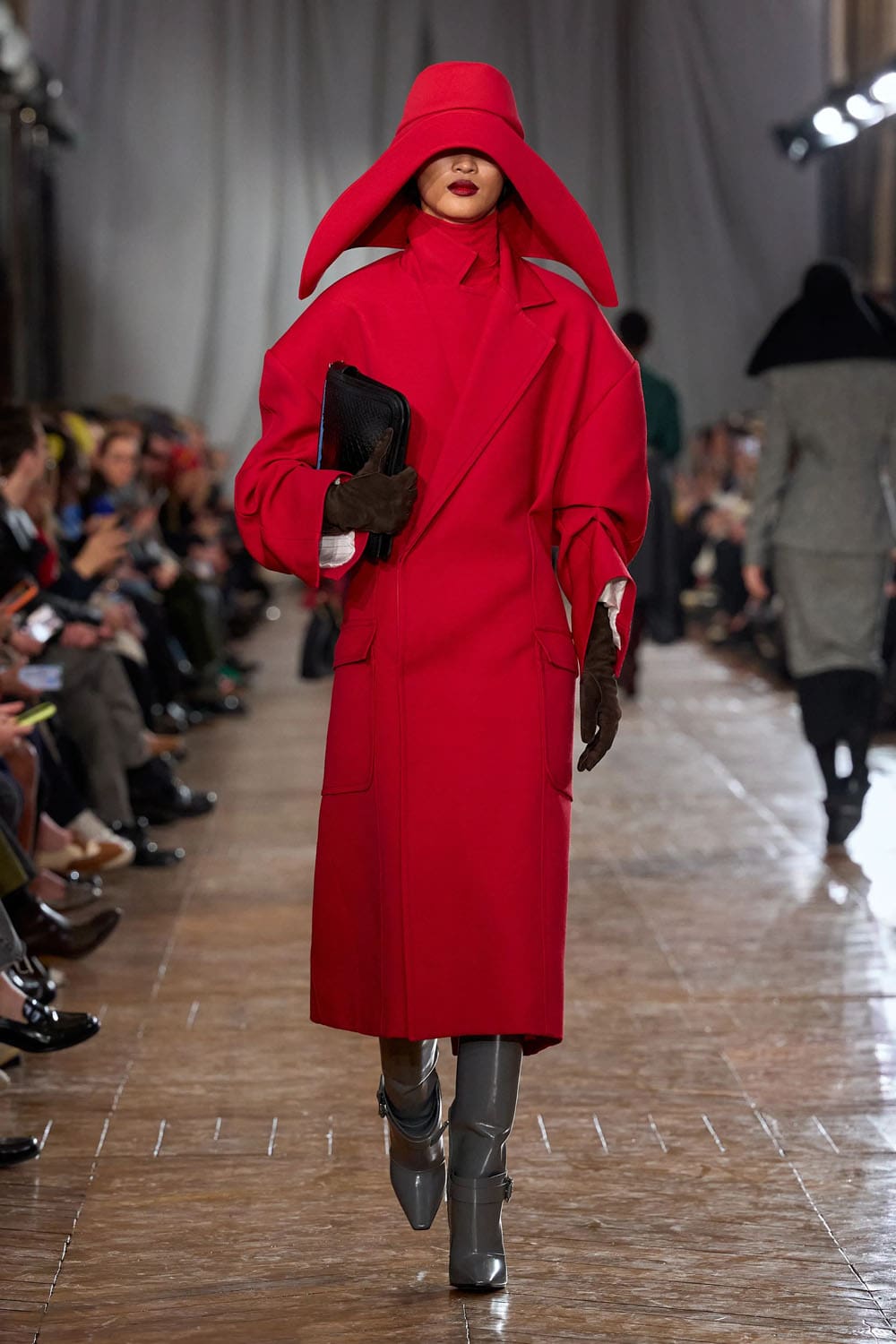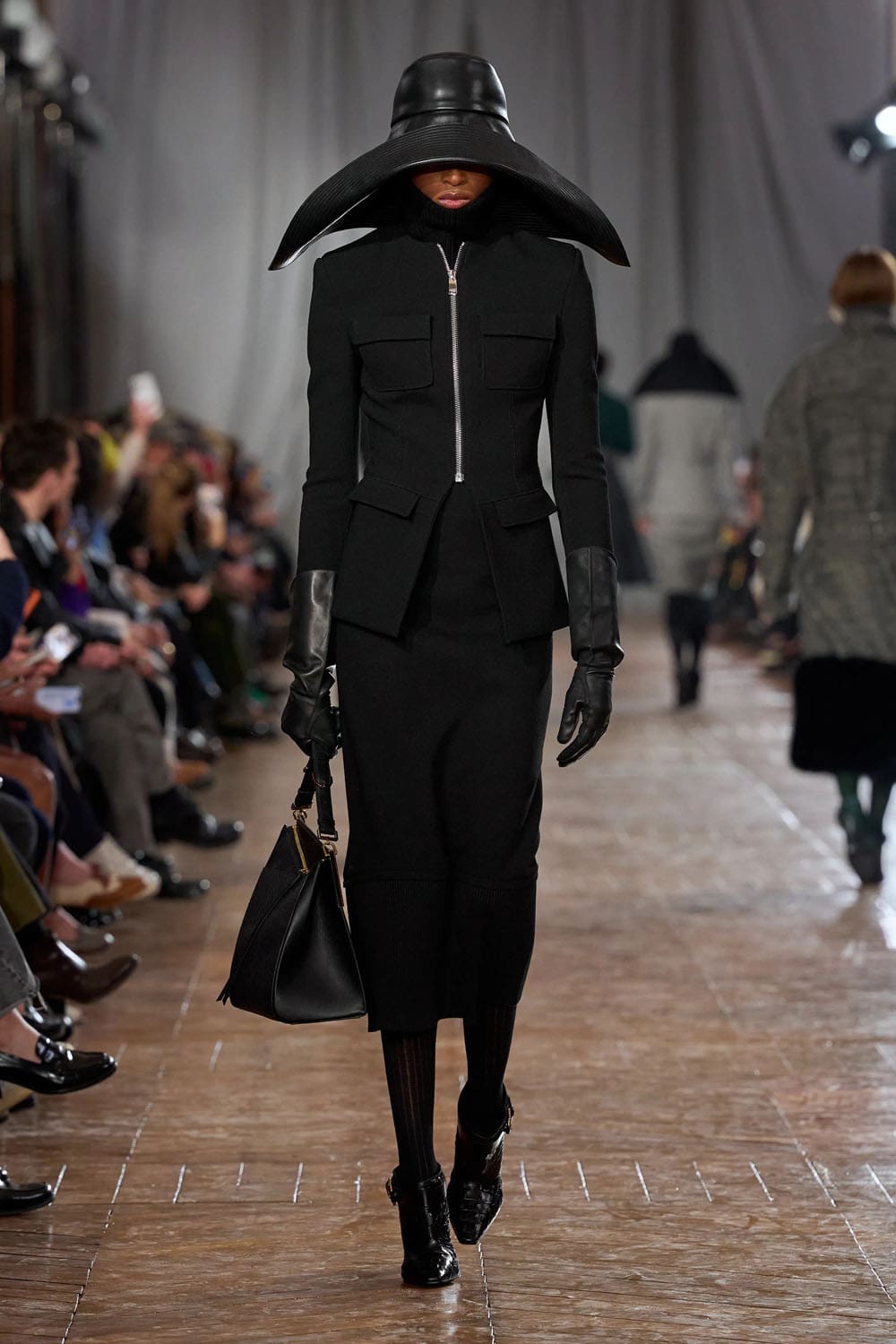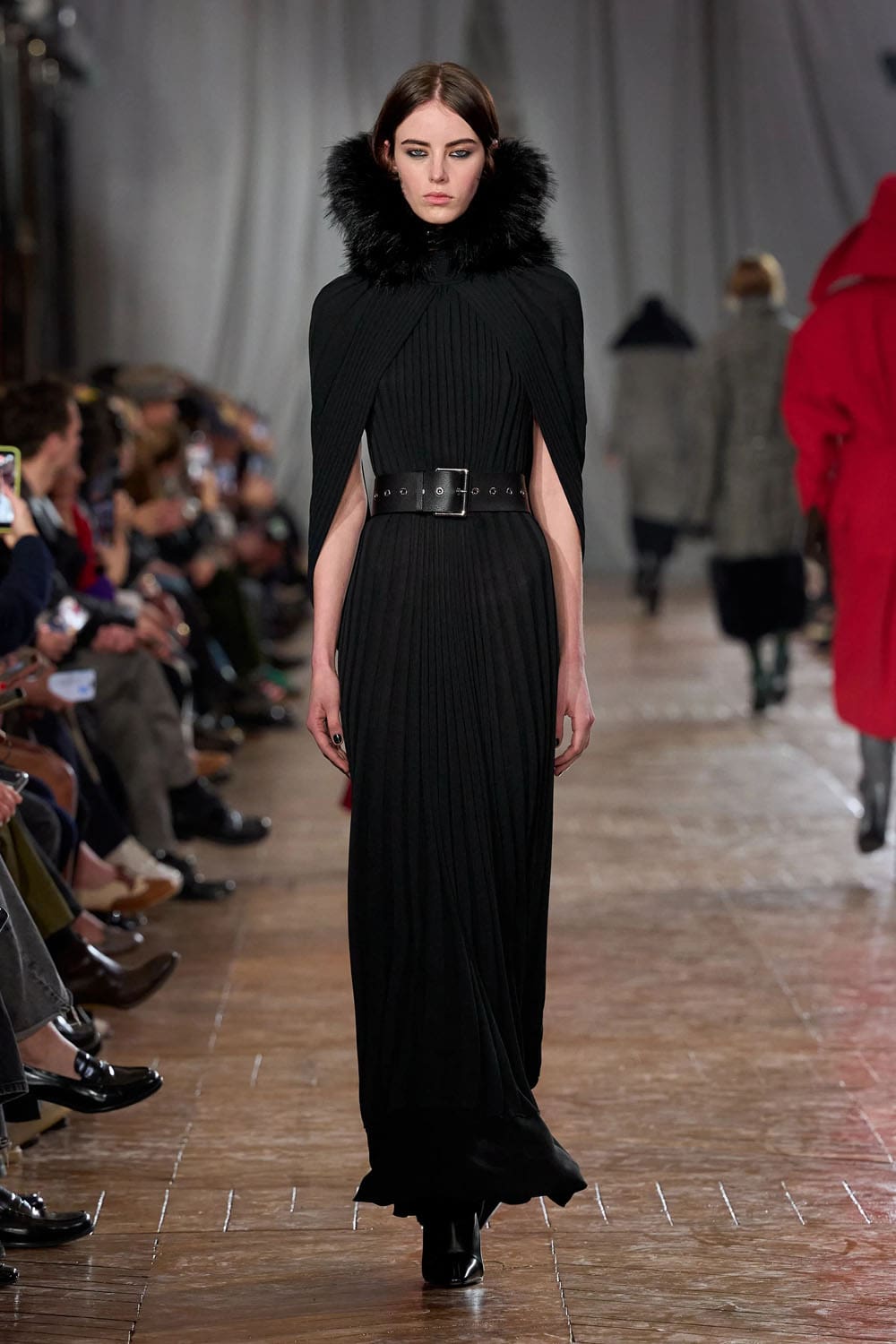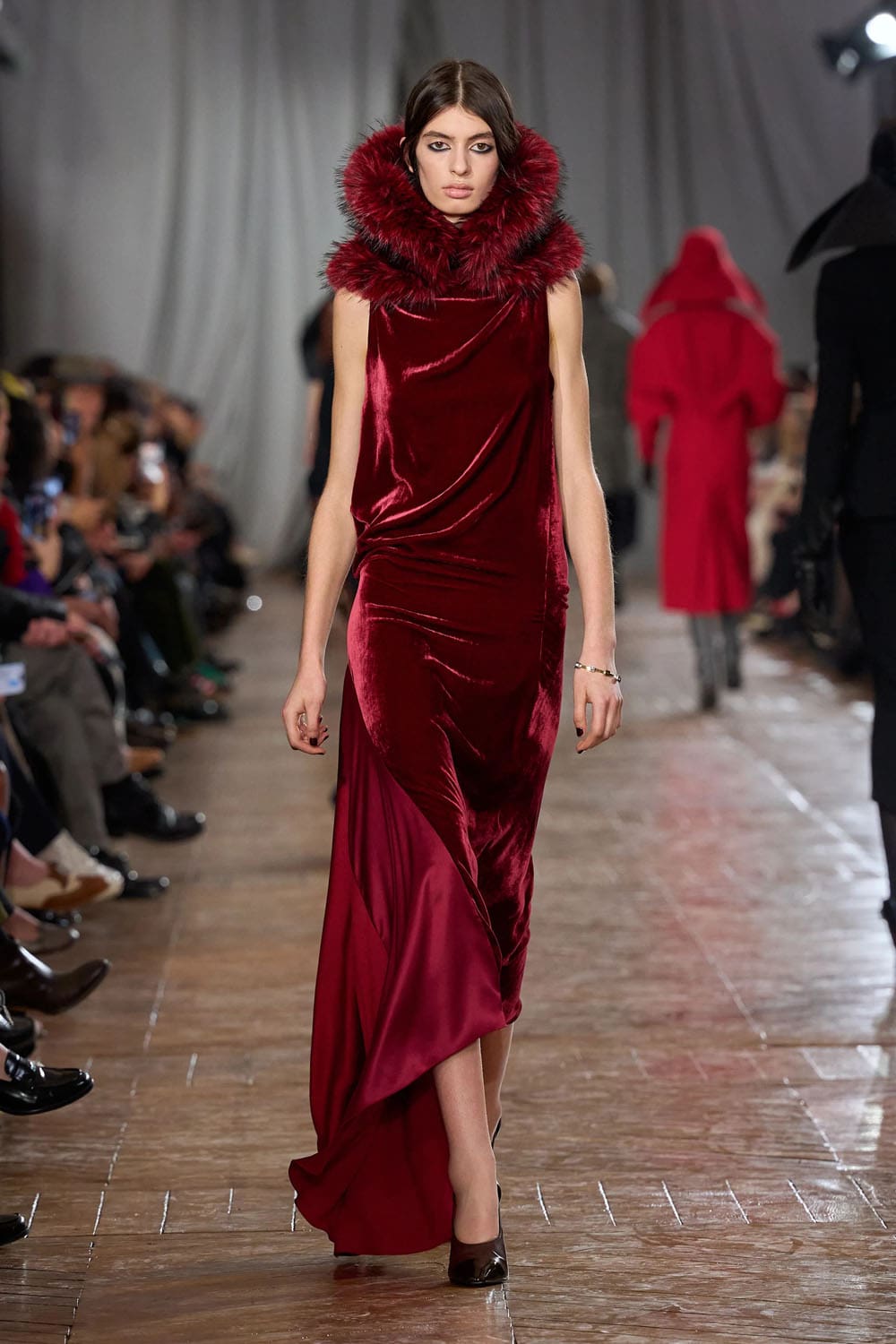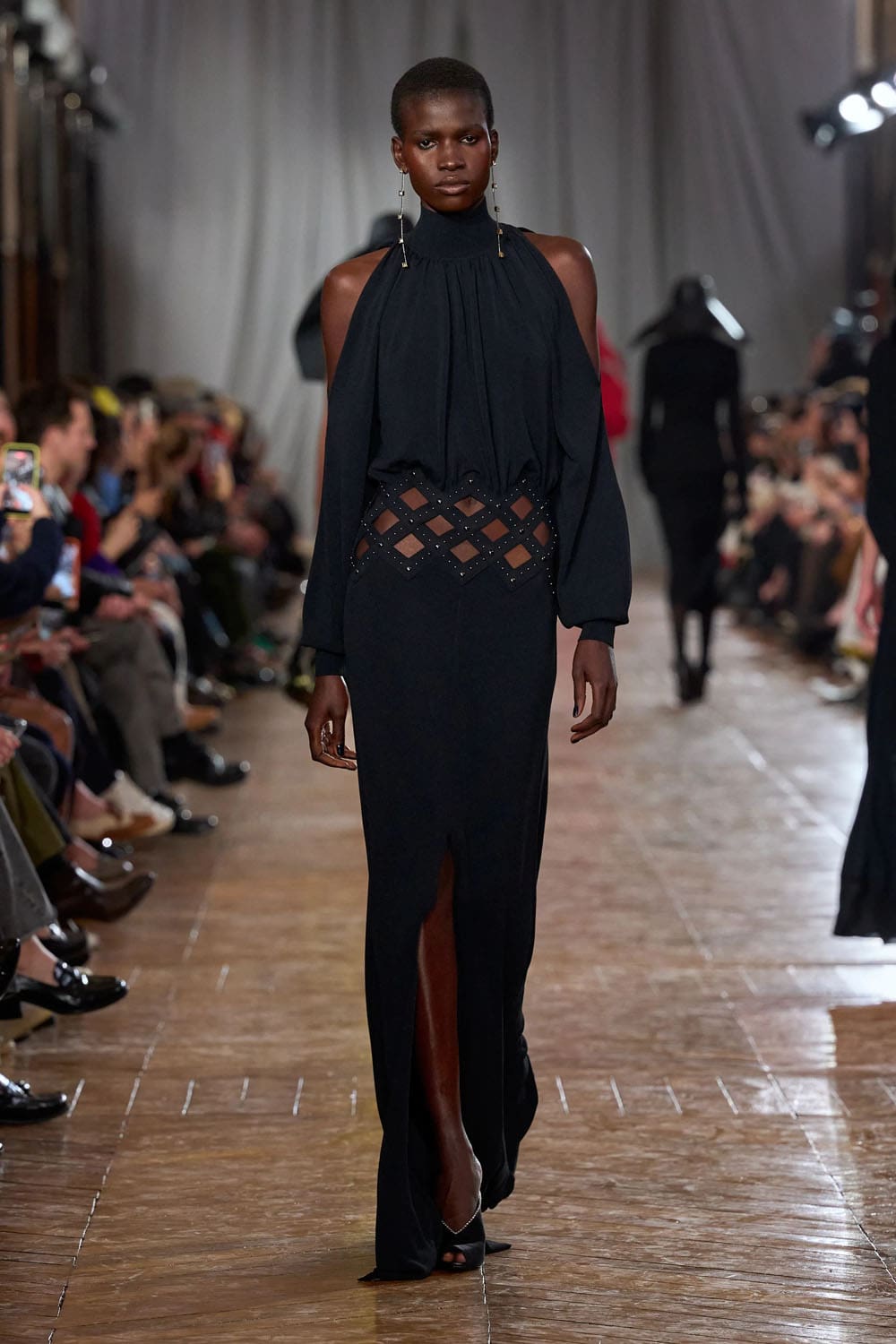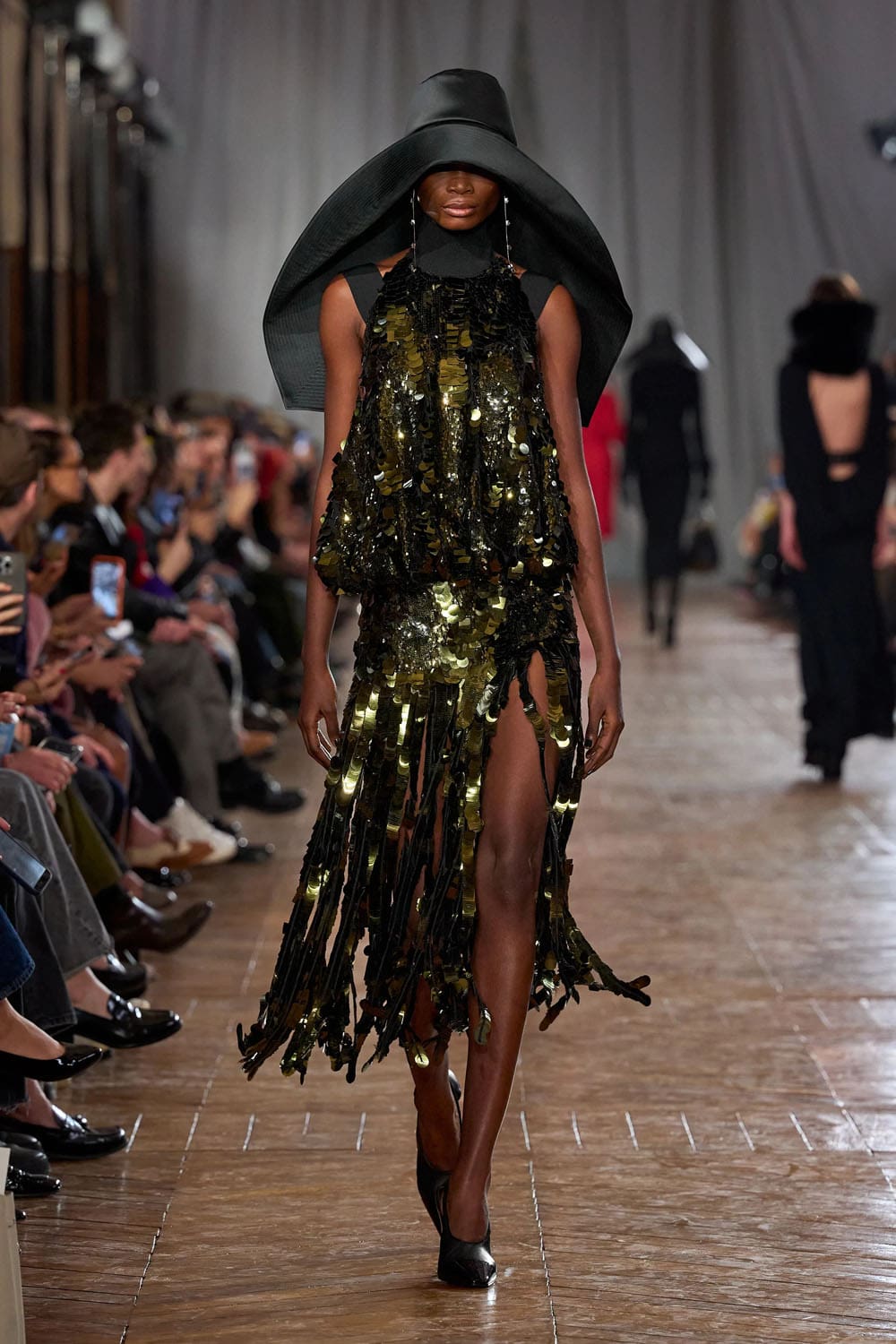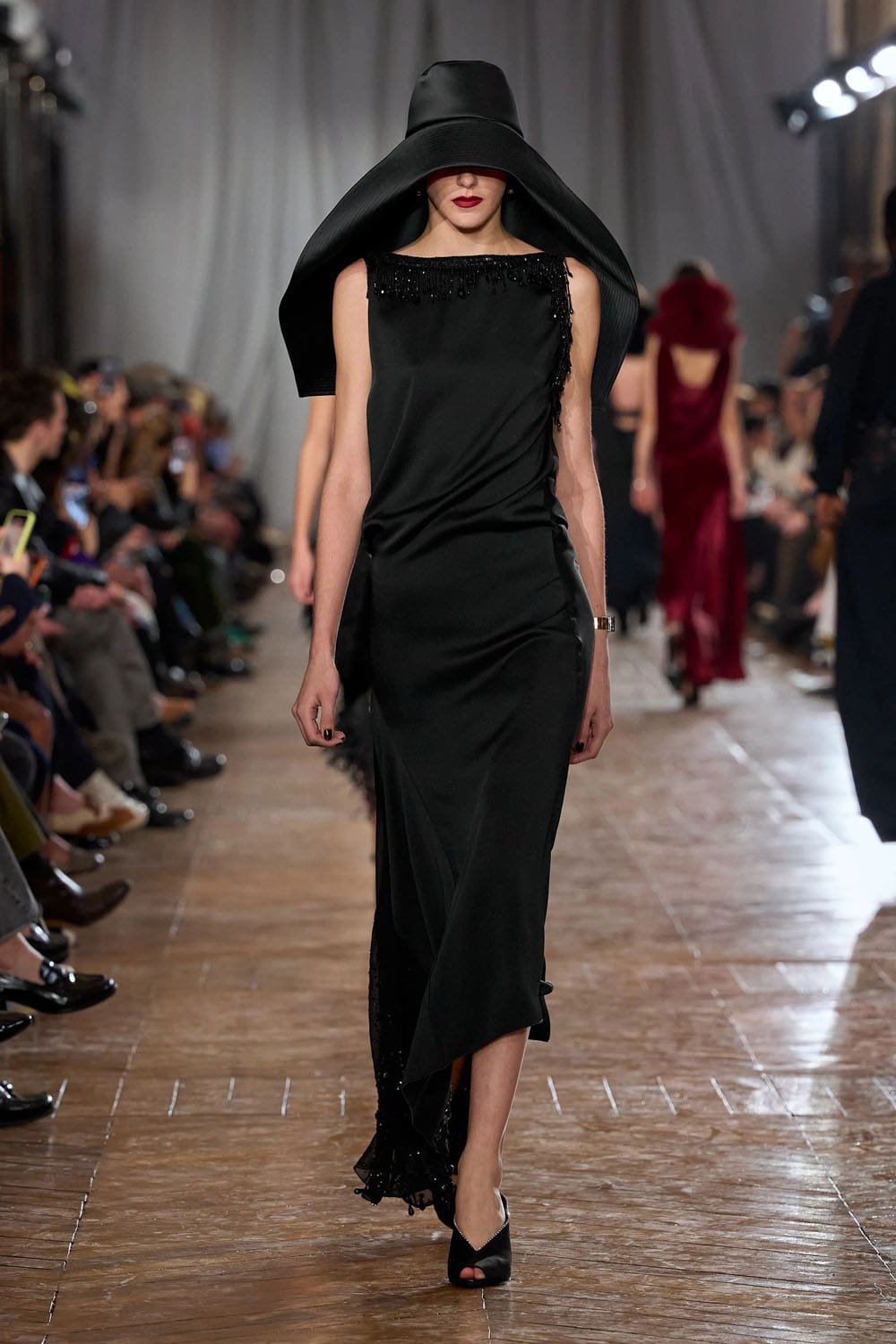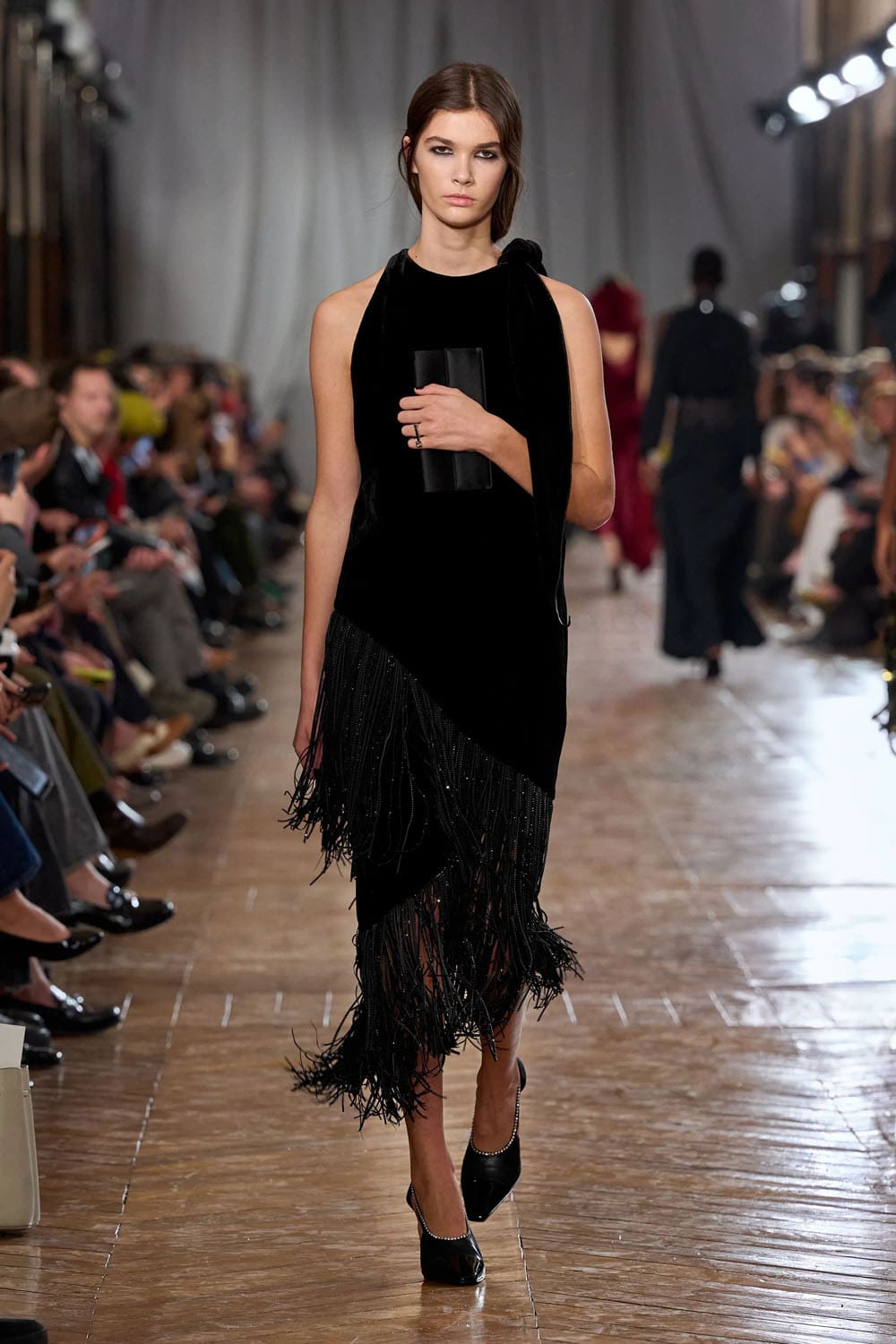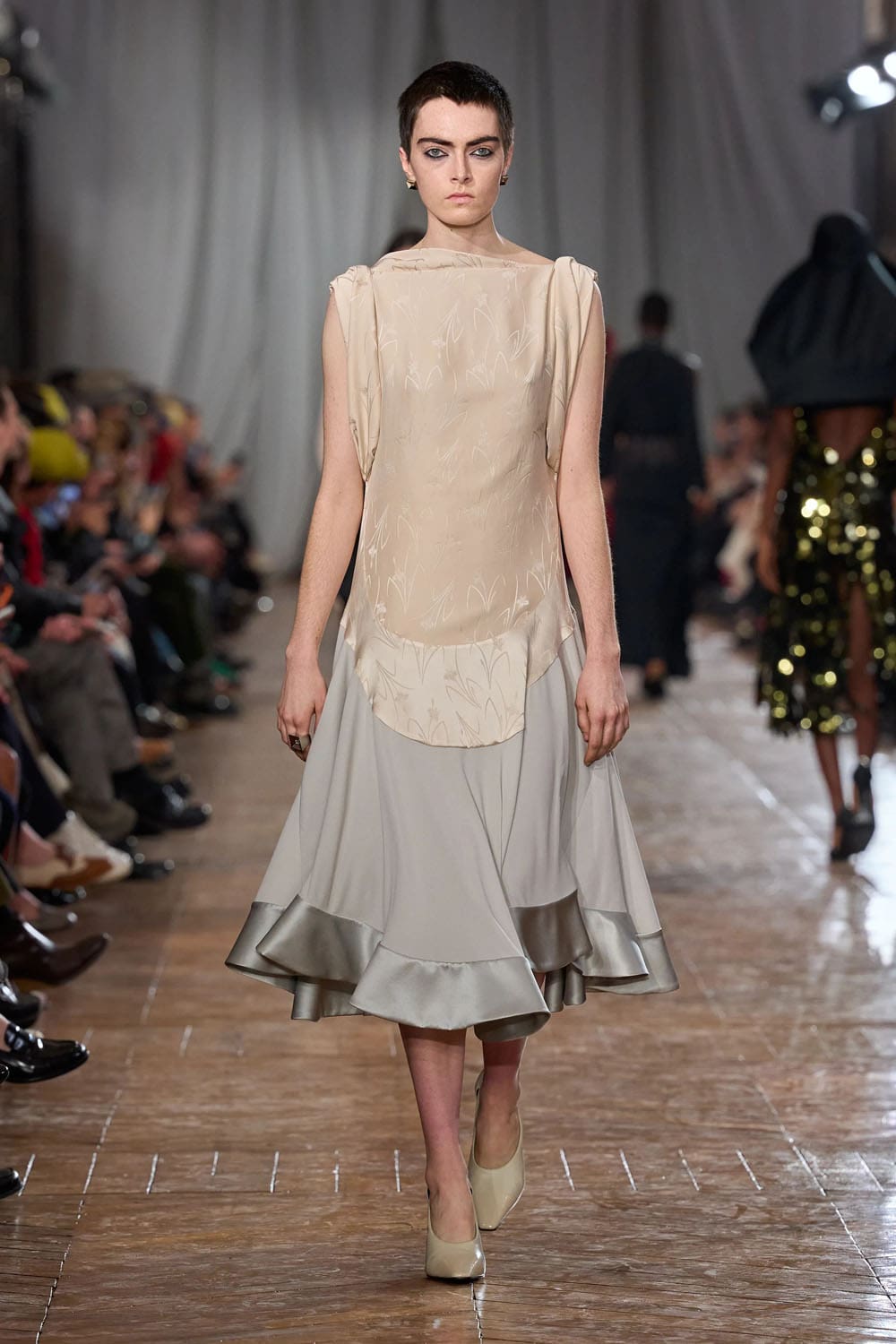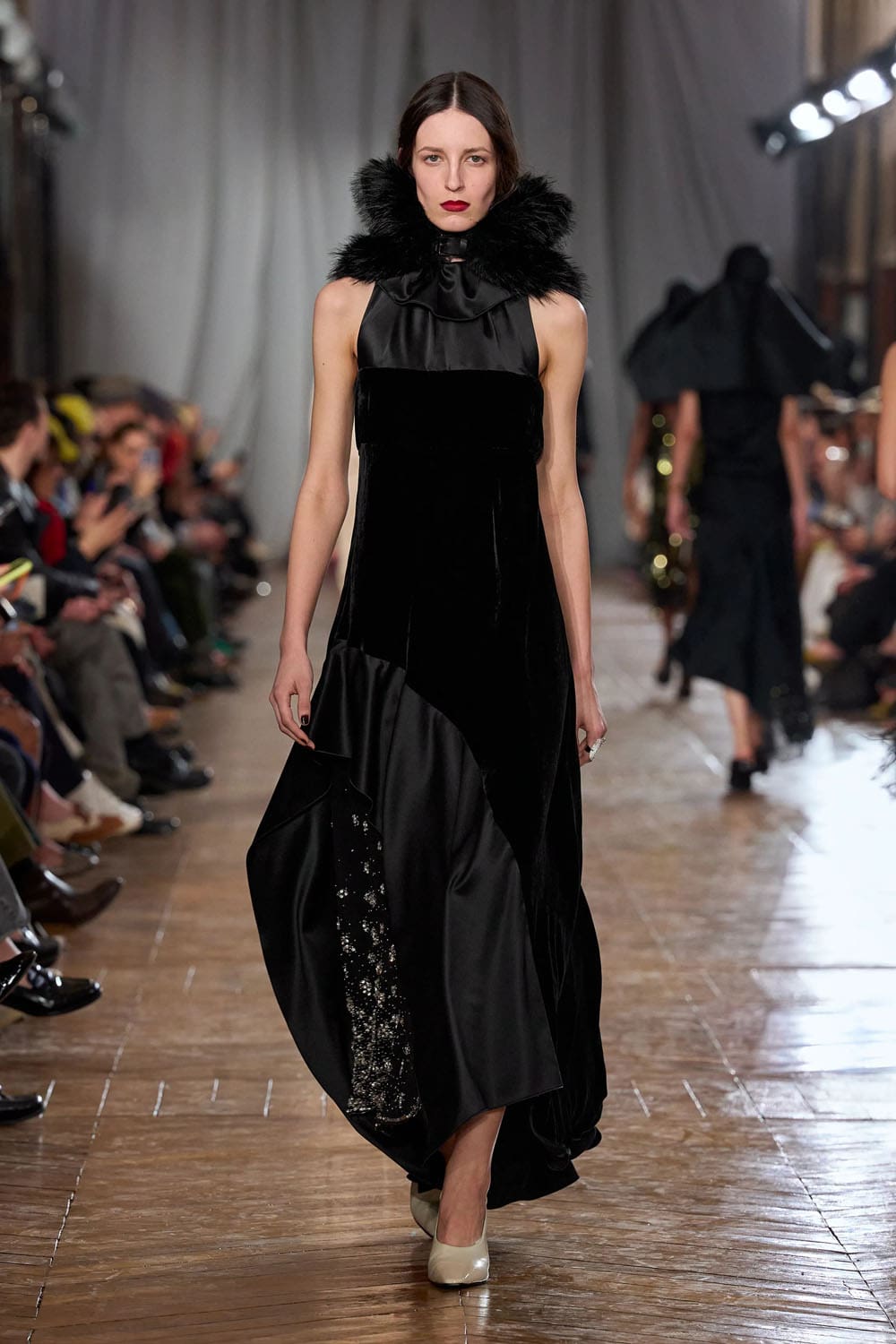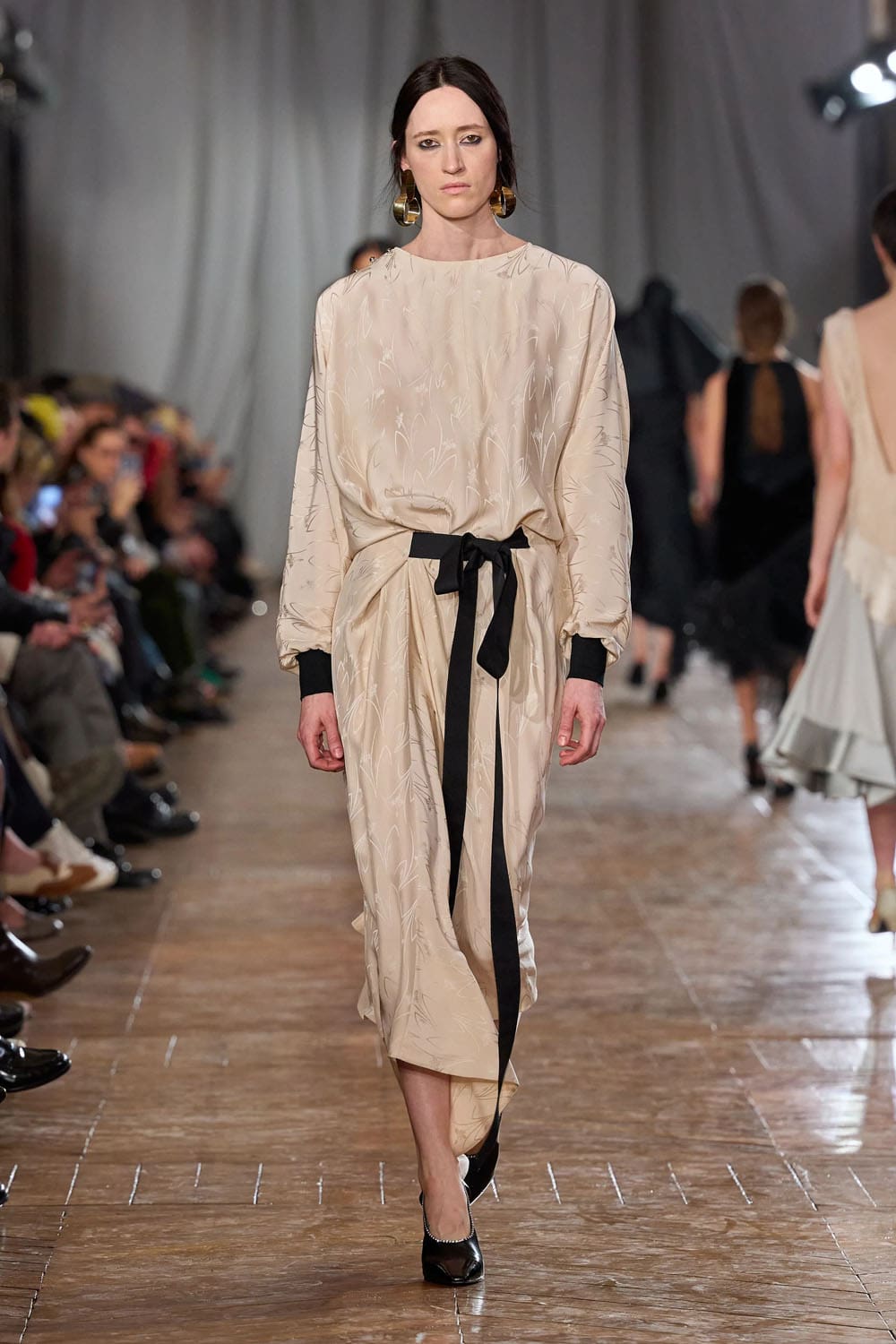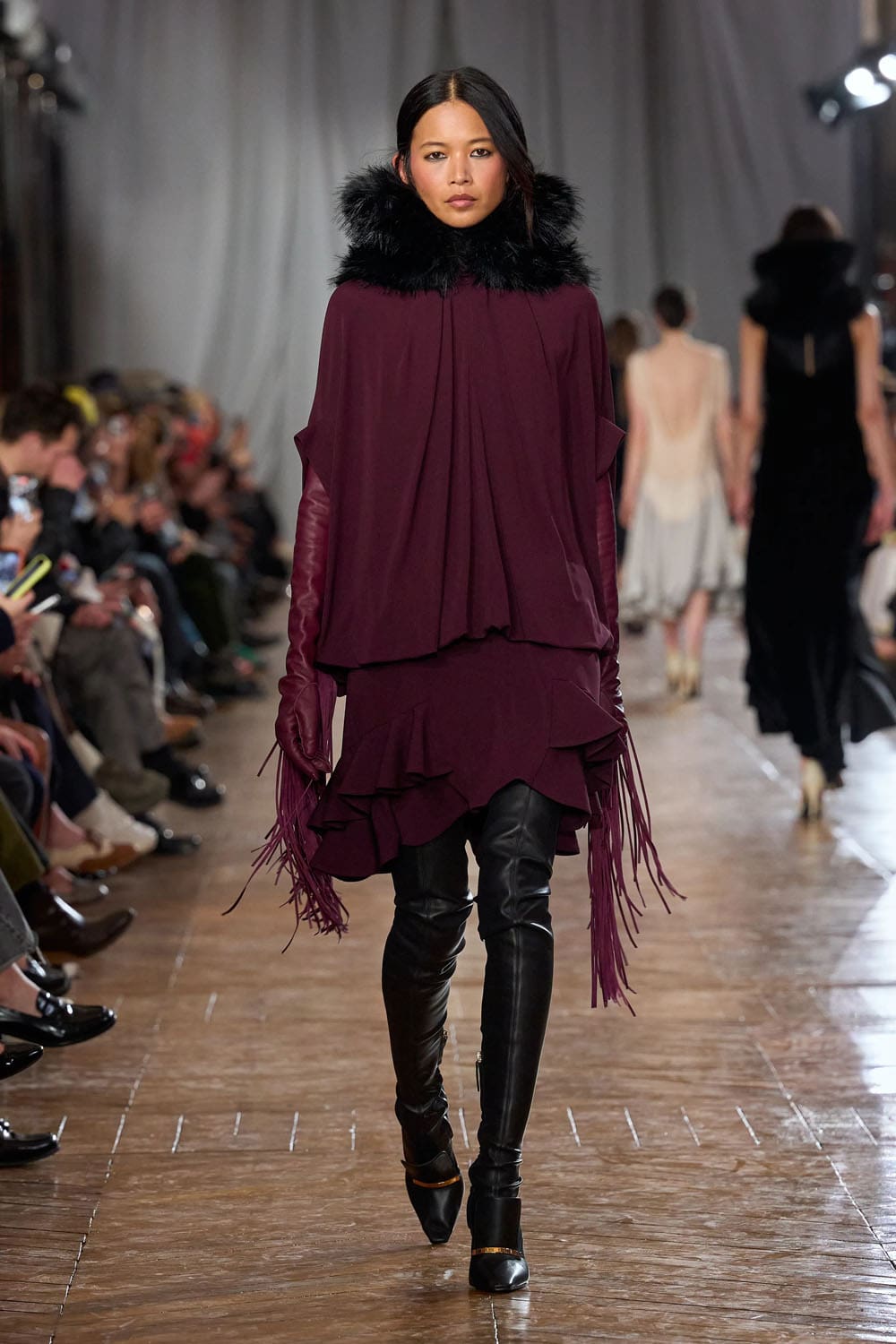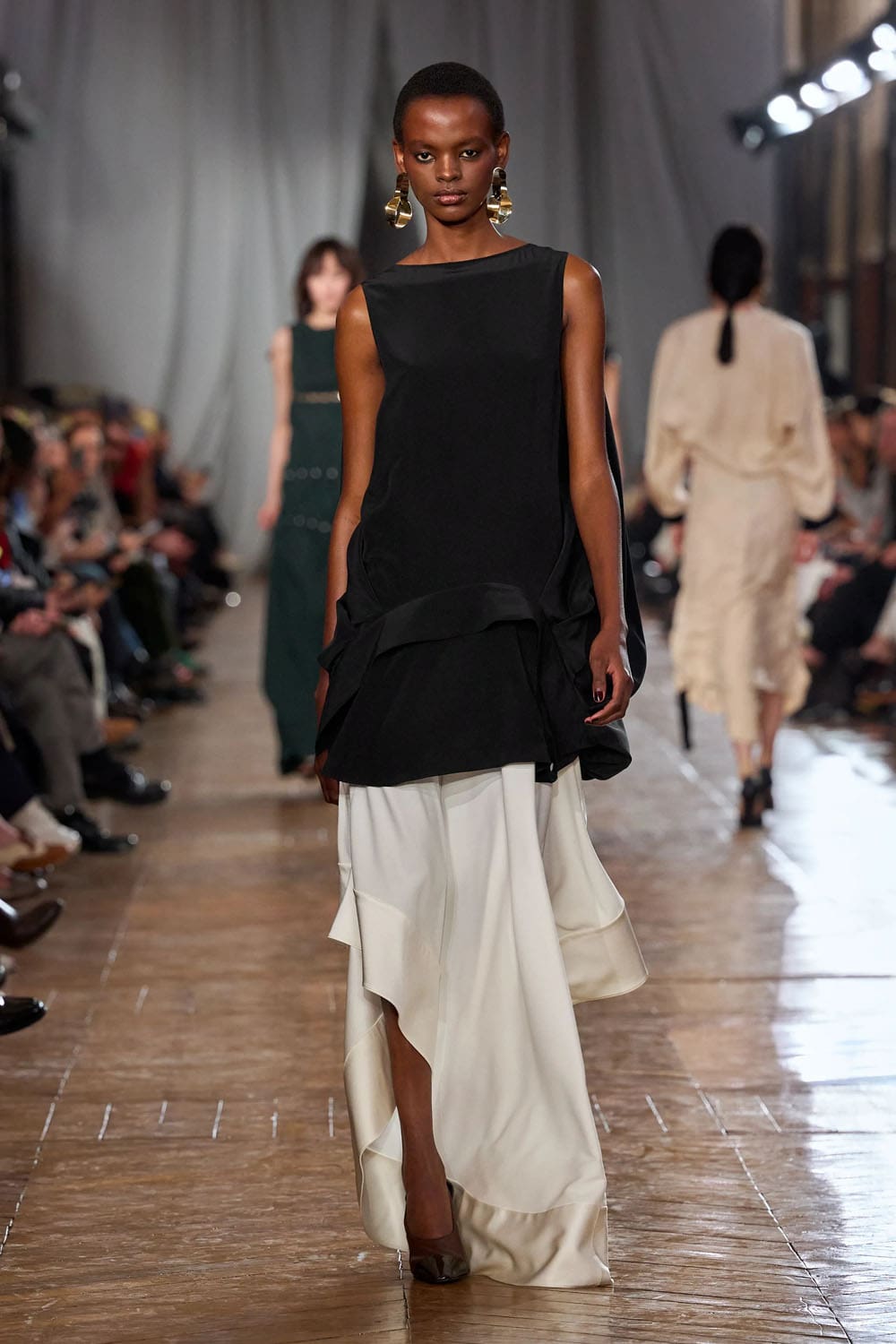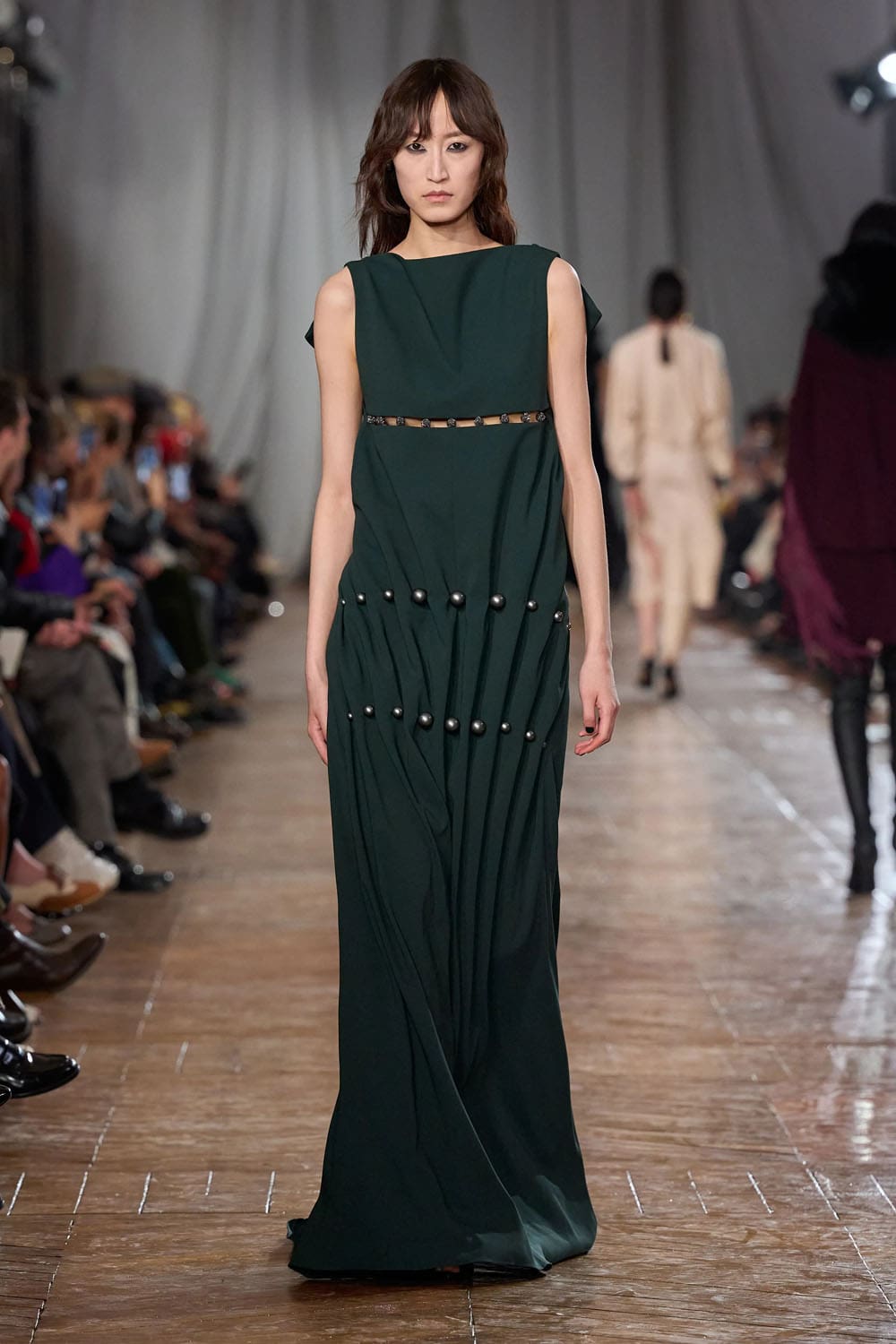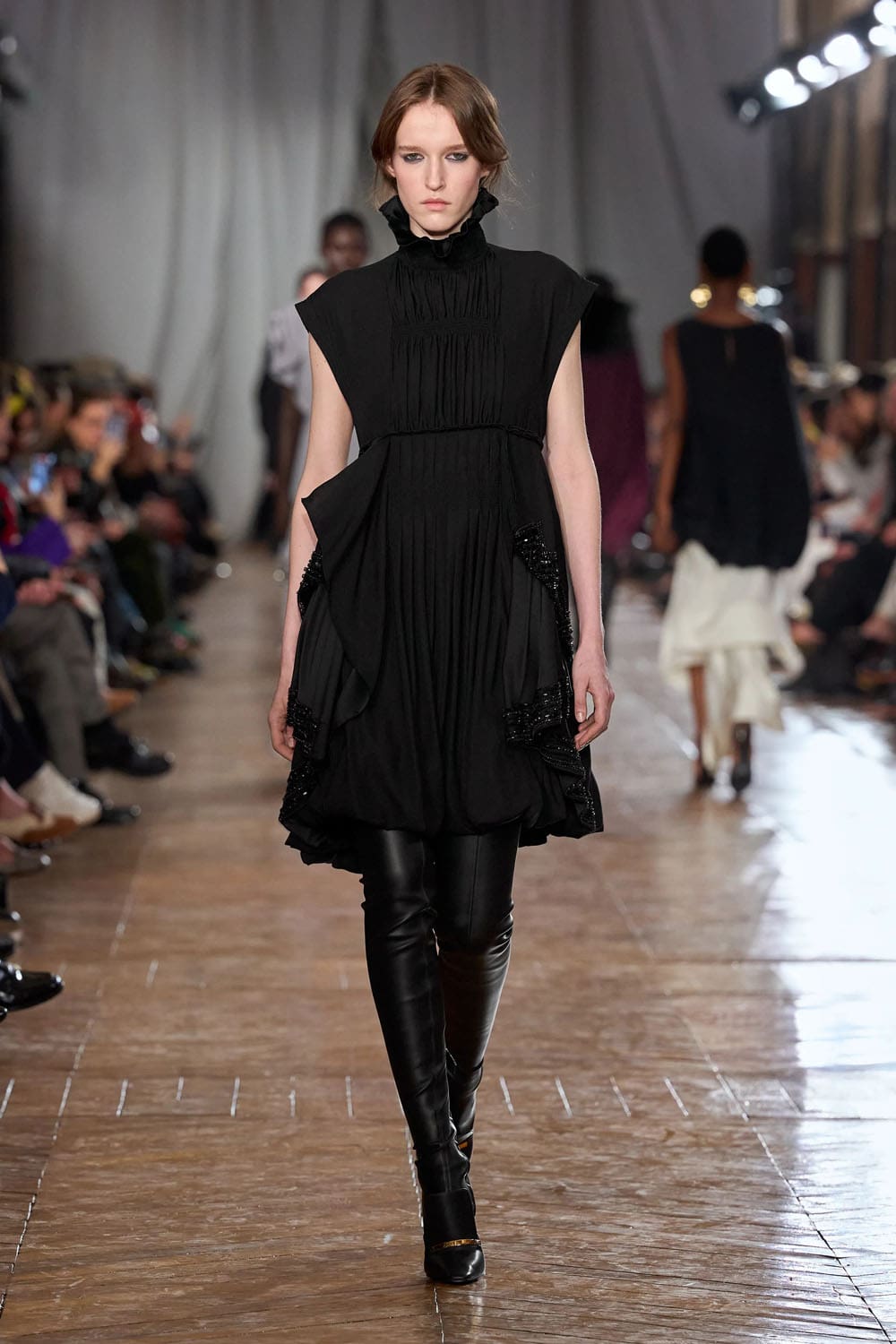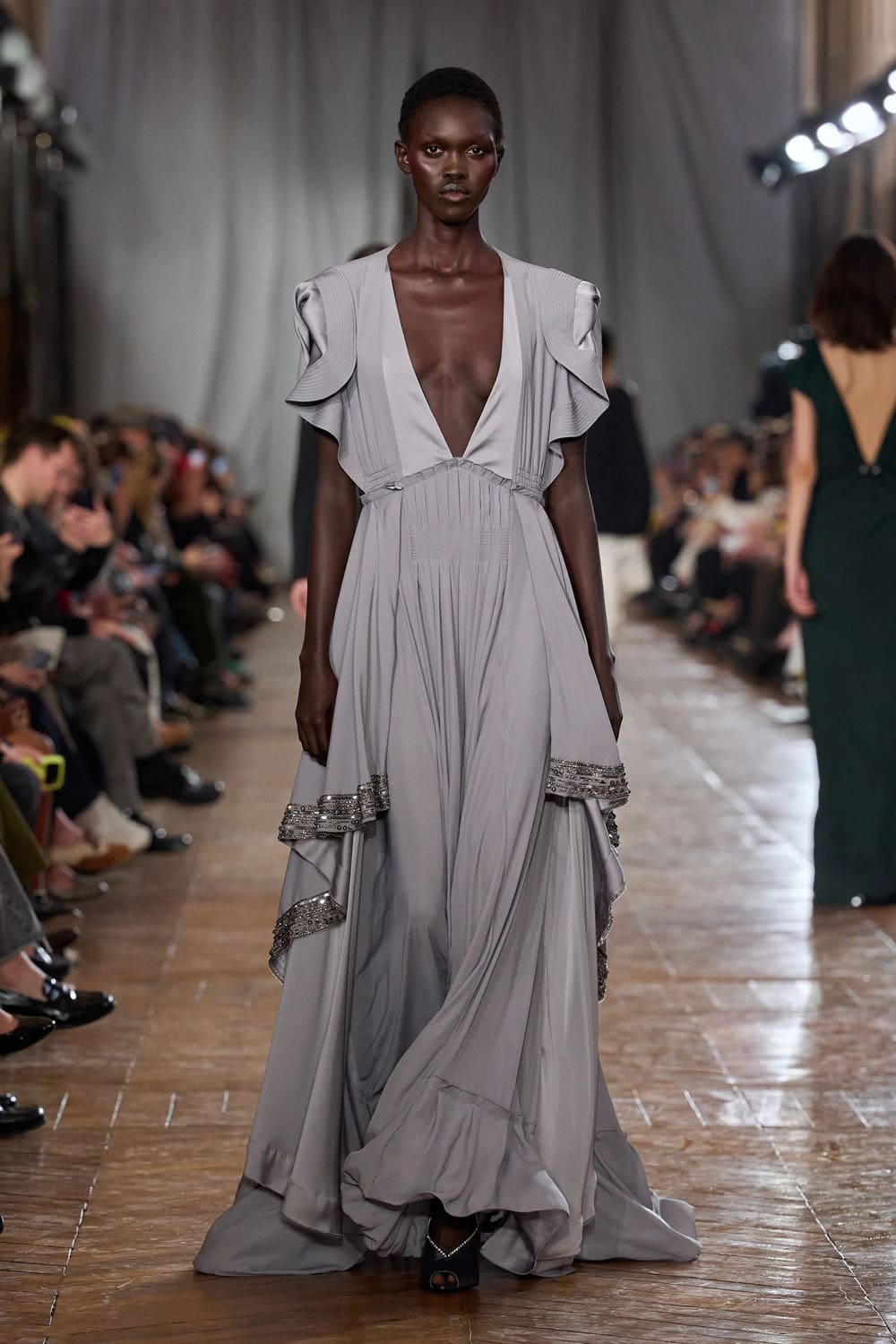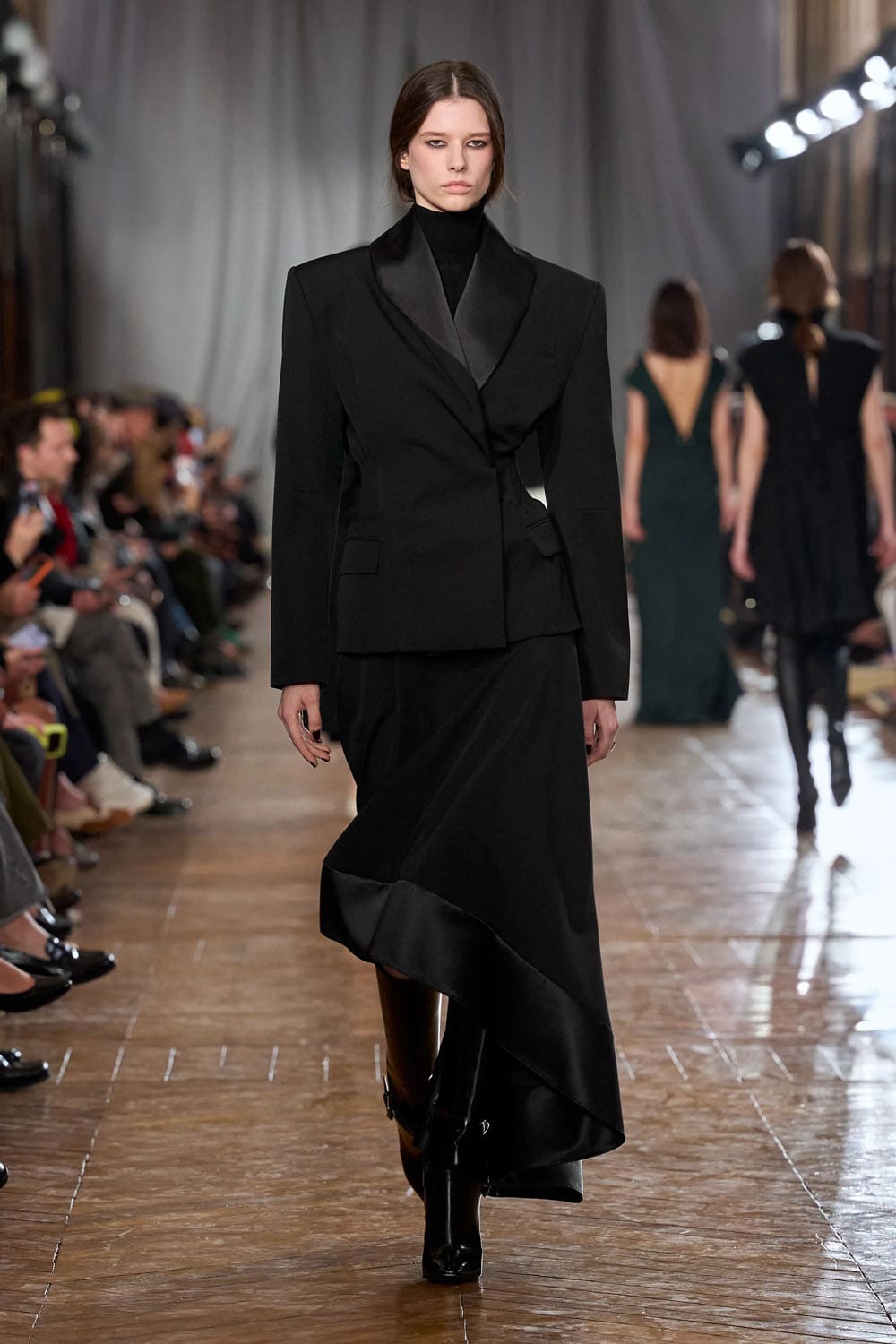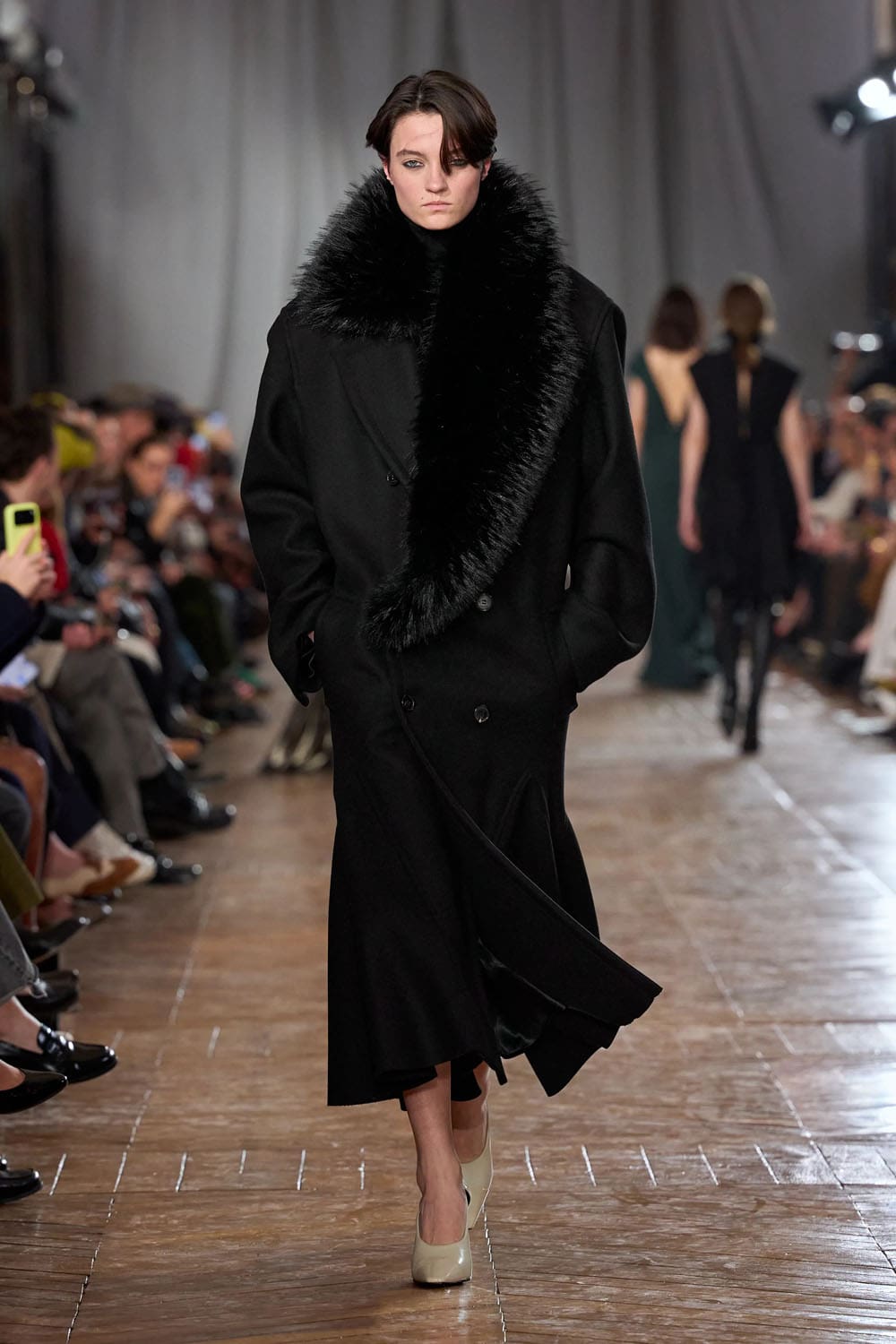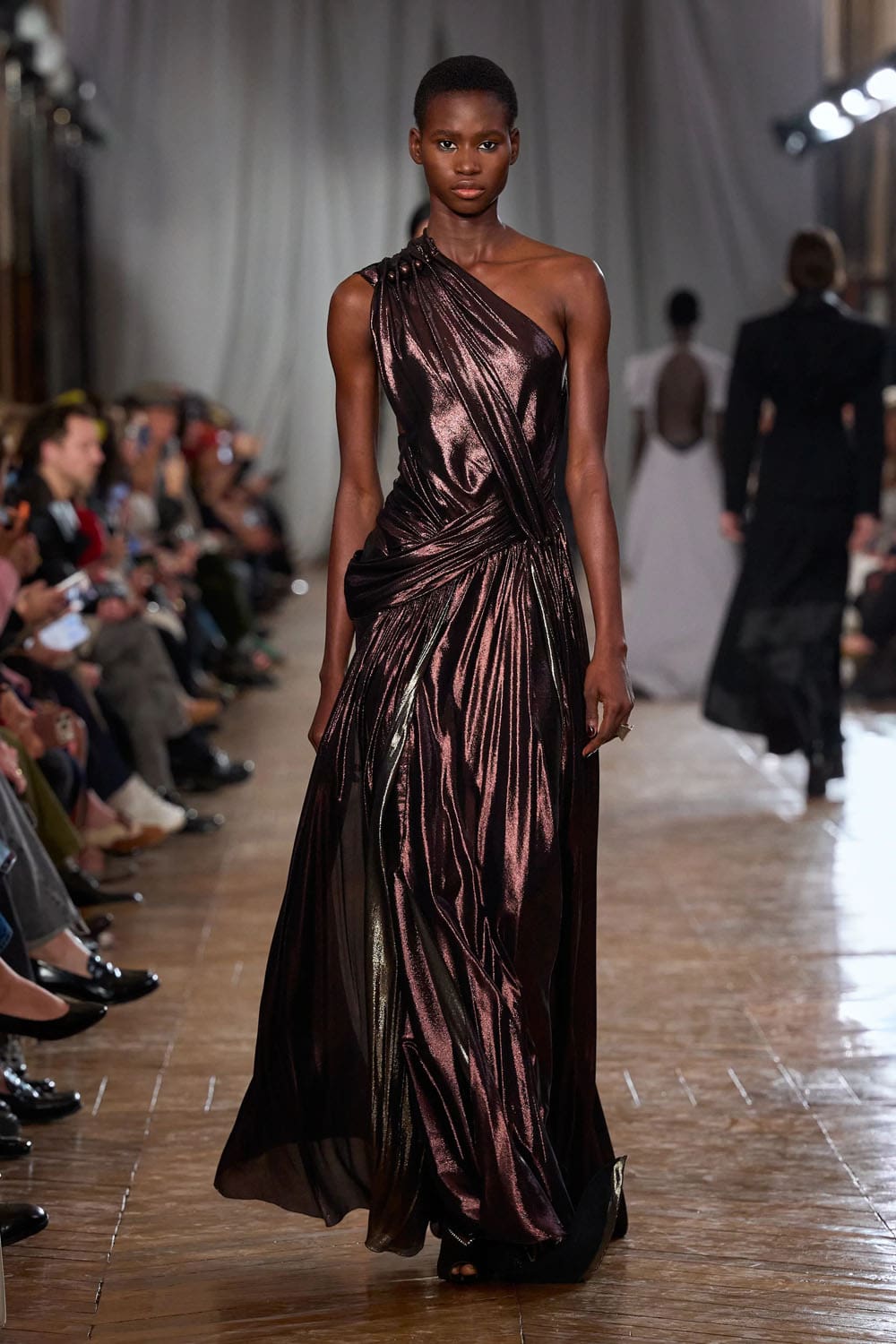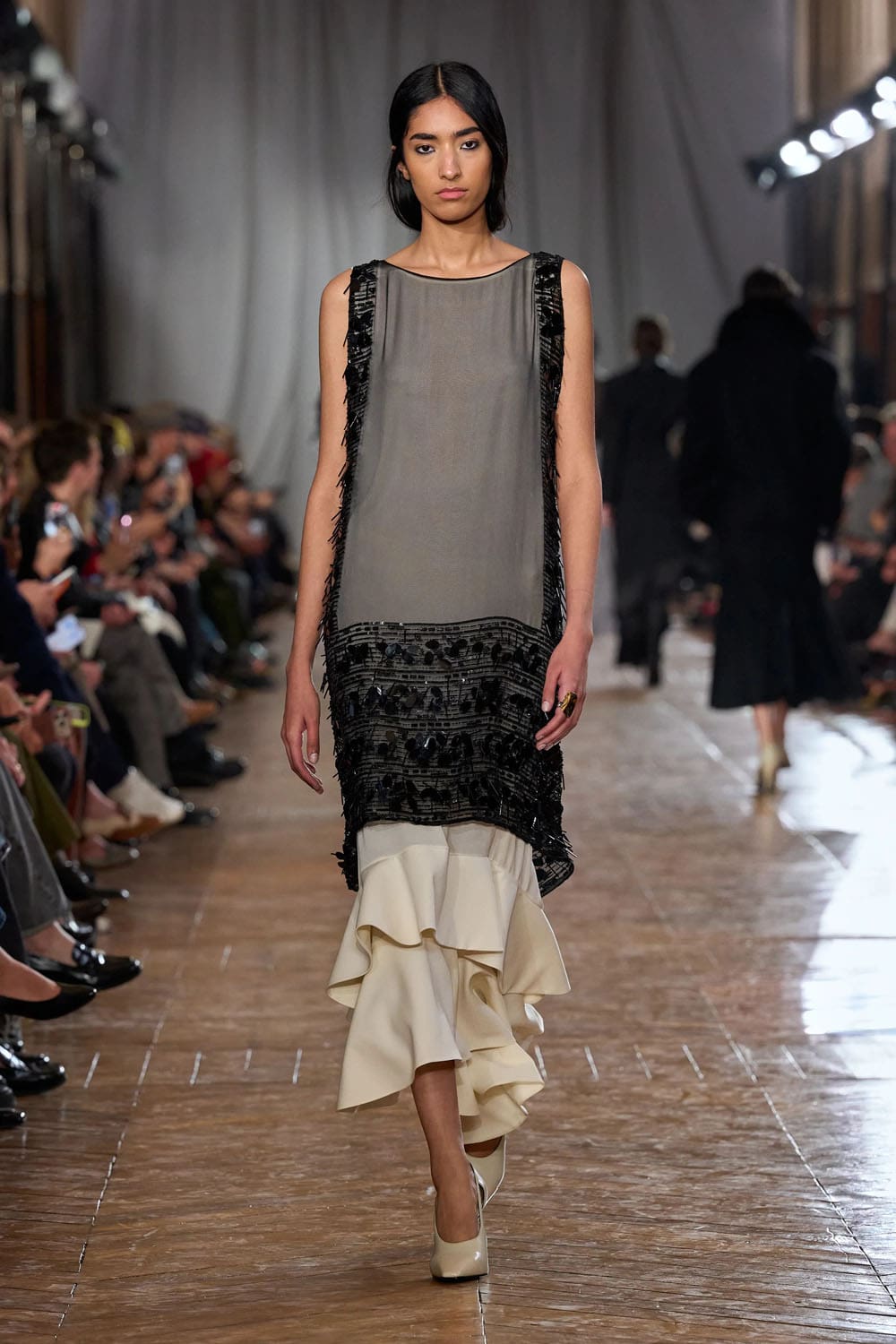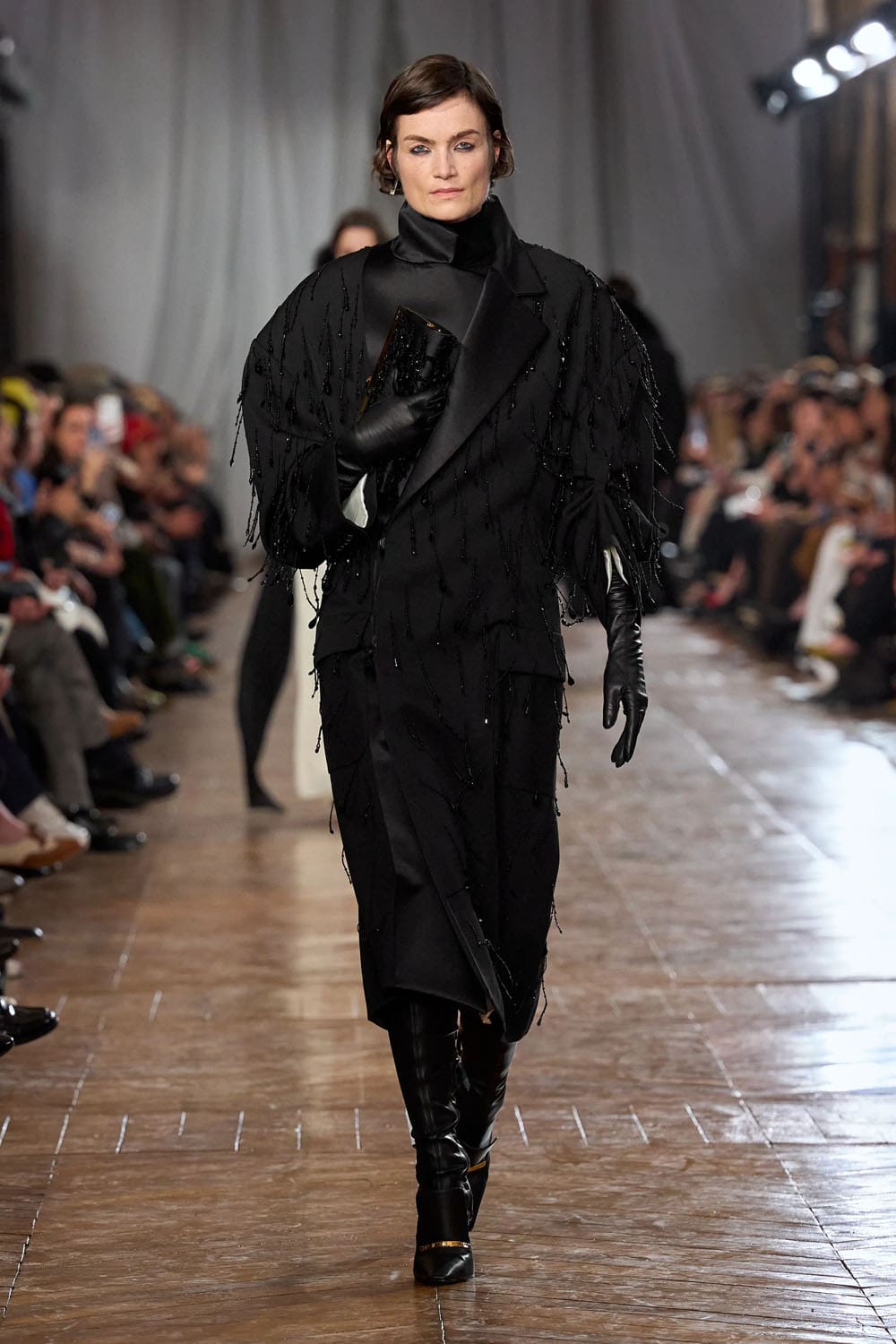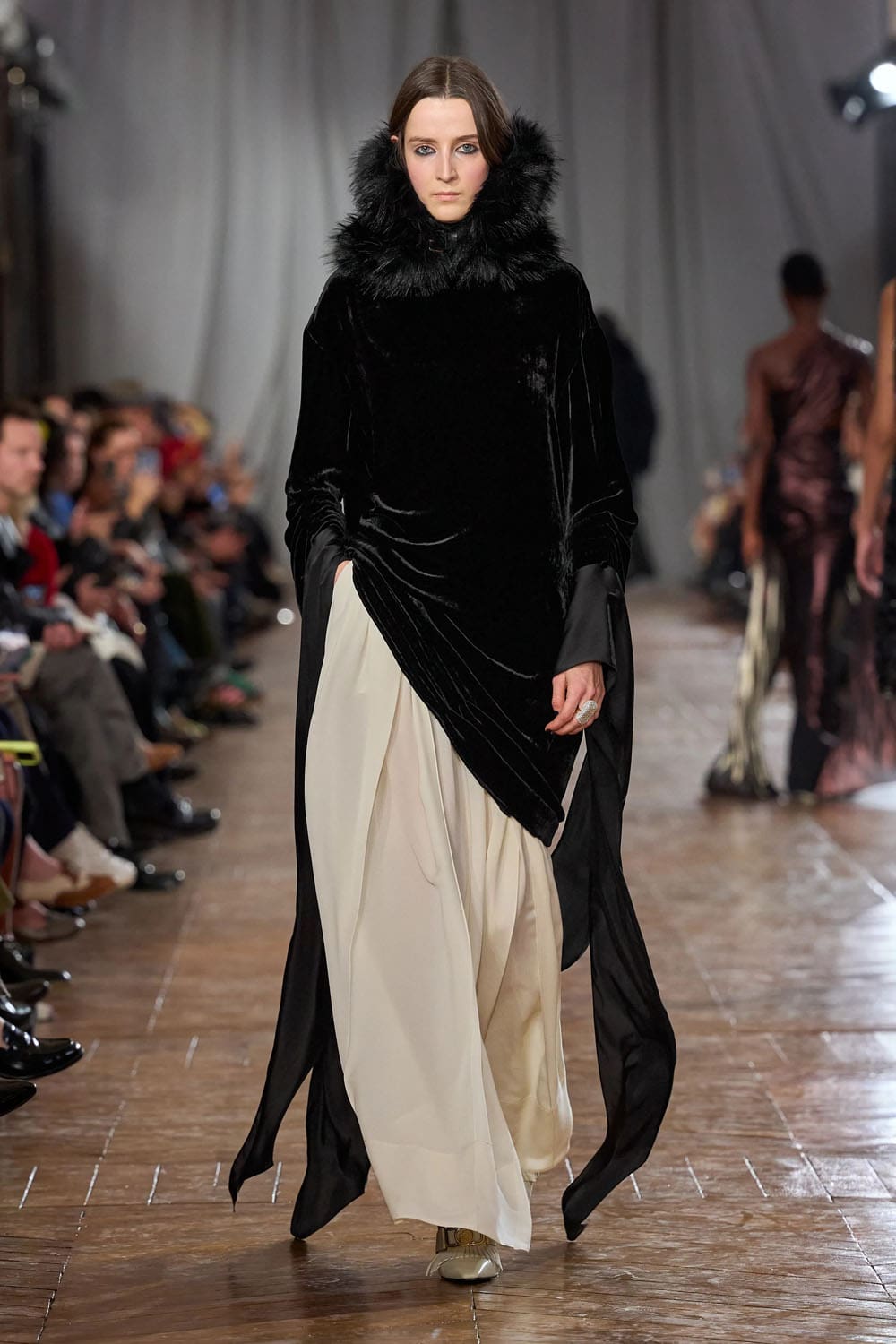
Lanvin Fall Winter 2026-2027 “BONJOUR MINUIT” by Peter Copping. Story by Eleonora de Gray, Editor-in-Chief of RUNWAY MAGAZINE. Photo Courtesy: Lanvin.
Peter Copping’s latest chapter for Lanvin, Bonjour Minuit, steps into the Paris of the 1920s — not through nostalgia, but through the distilled language of allure, independence, and the kind of nocturnal confidence that defined the women Jeanne Lanvin dressed. Copping does not recreate the decade; he translates its emotional geometry into a modern wardrobe where structure, volume, and clarity form the house’s new grammar.
Presented inside the Galerie de la Géologie et de la Minéralogie at the Jardin des Plantes, the show unfolded among vitrines of minerals and vast geological formations. The space, untouched since its creation, acted less as décor and more as architectural partner: a monumental rhythm of stone, glass, and light that sharpened each silhouette as it appeared. Long corridors of gleaming marble amplified the procession, turning the runway into a mineral axis where elegance and gravity intersected.
This was not ambiance. It was mise en scène — Paris as a house of forms.
The Tailored Nocturne
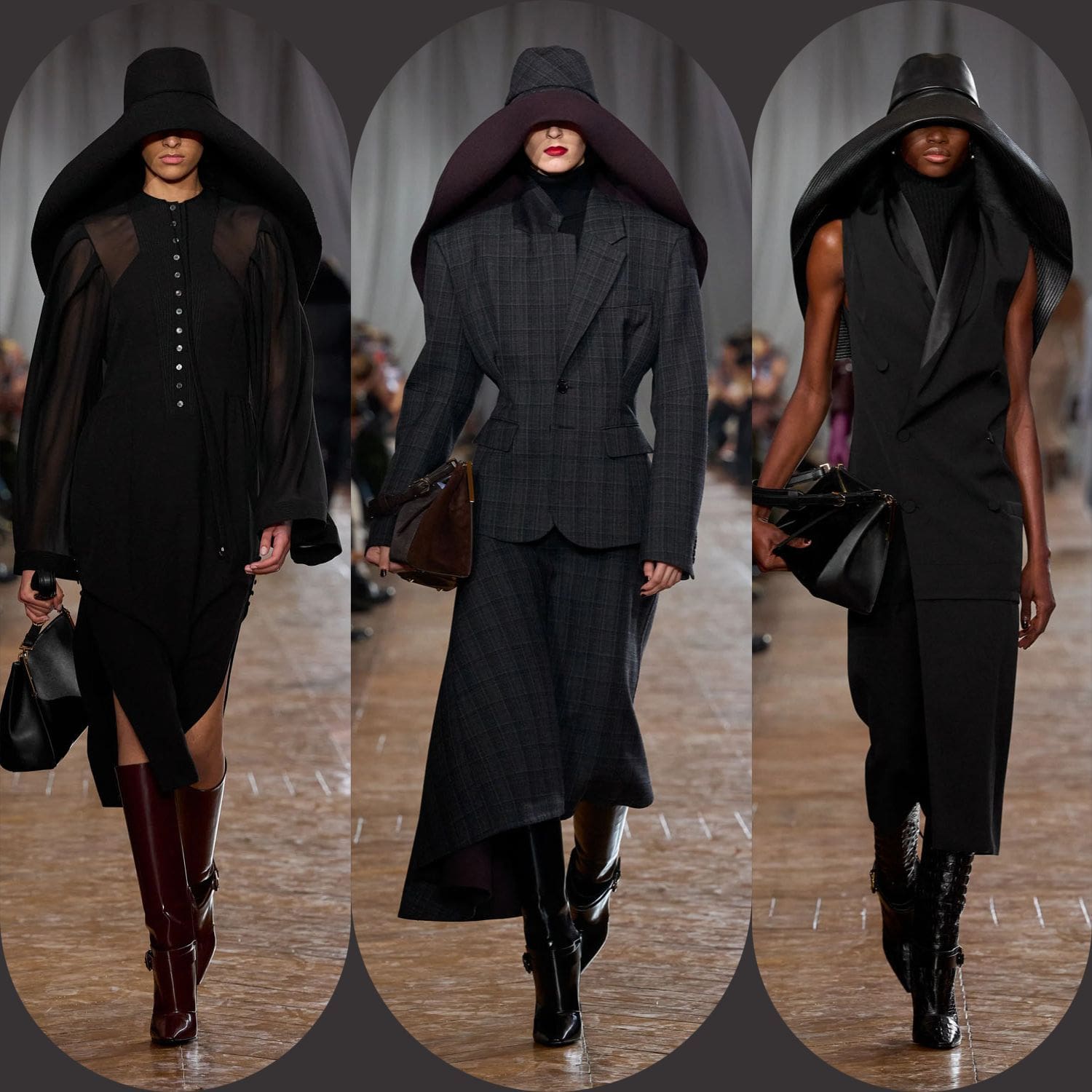
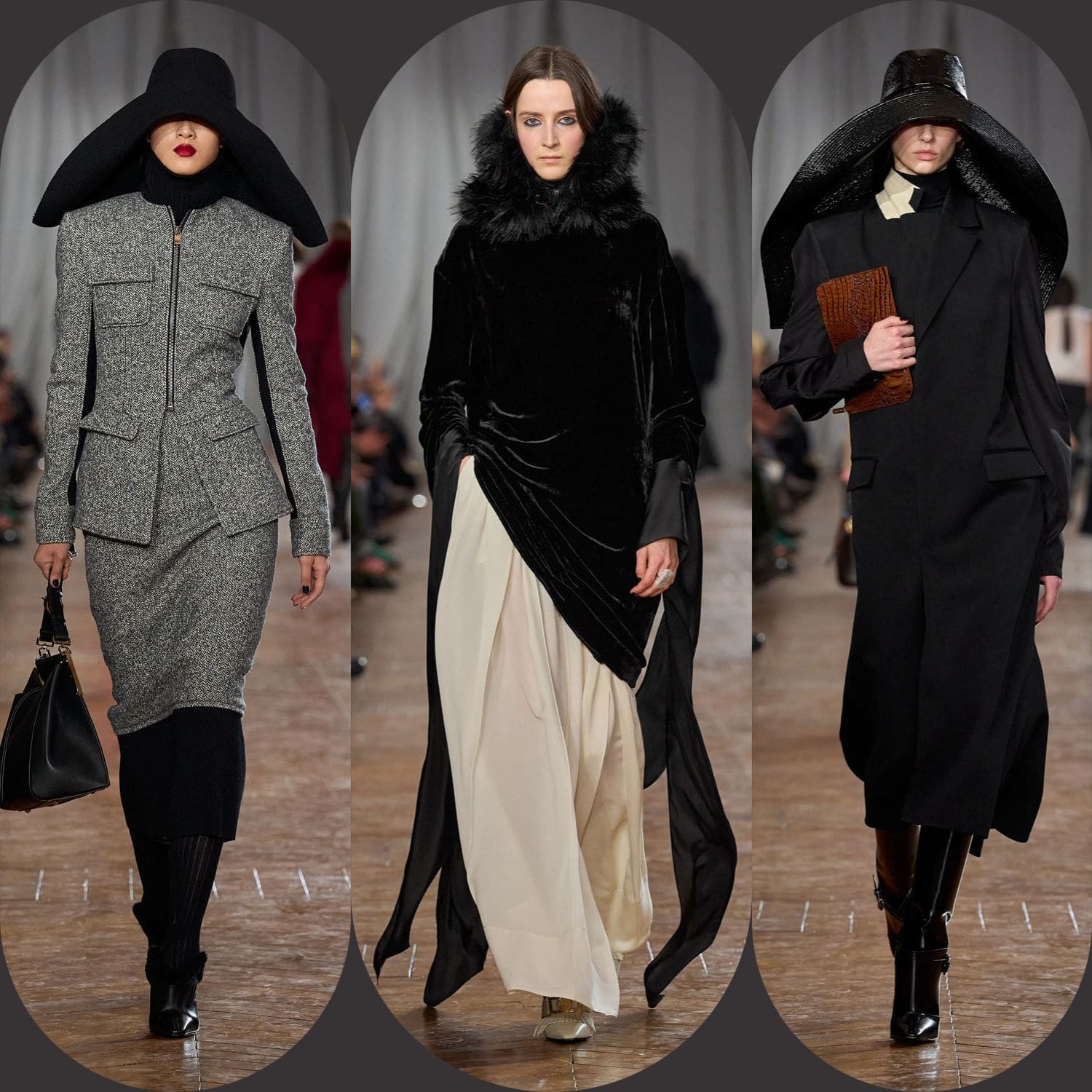
The collection opened with sculpted tailoring, Copping’s chosen instrument to express authority without aggression. One charcoal wool suit, cut close to the body and released into a fluted skirt, recalled the precision of Jeanne Lanvin’s robes de style, but stripped of ornament and re-rendered for contemporary stride. Another came in midnight blue, the shoulders slightly rounded, the waist quietly cinched, suggesting a woman who negotiates her world with both softness and control.
Copping treats tailoring as character study. These suits speak, but in measured tone — decisions rather than declarations.
Volume as Gesture
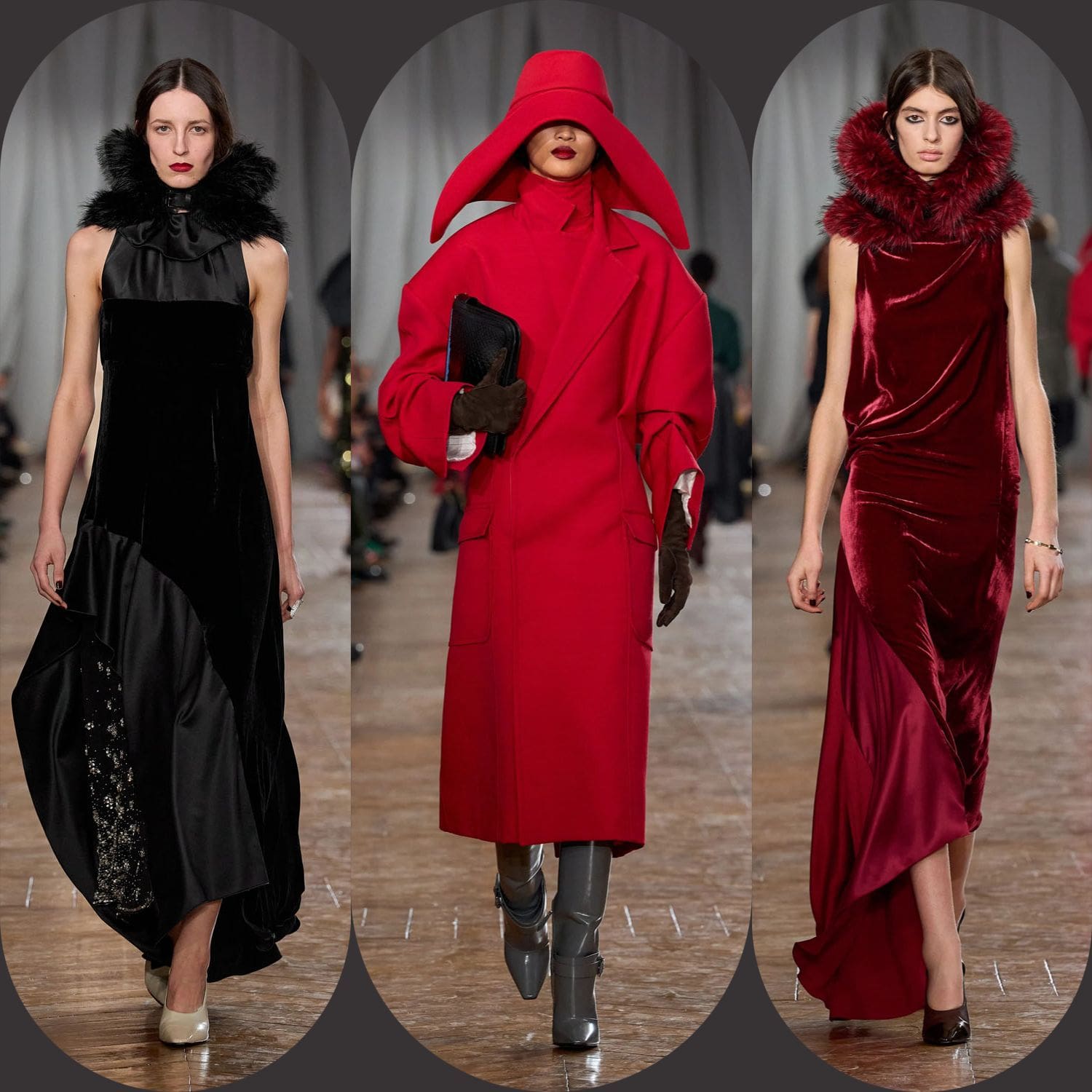
From tailoring, silhouettes swelled into fuller forms: dresses with controlled volume, coats with architectural drape, garments that expanded into space without overwhelming it. A cream-colored gown with an amplified, lantern-like skirt seemed to float, its construction as light as a breath but mathematically engineered. A black velvet dress, gathered at the hip into a spiraling drape, channeled 1920s evening glamour filtered through Copping’s clean modernism.
These volumes did not romanticize the past; they treated it as raw material to be sculpted anew. Each piece carried the freedom of the 1920s but none of its flou excess — liberation without languor.
The Architectural Coat
Outerwear grounded the collection. One coat in deep garnet wool curved forward like a protective shell, echoing the mineral surroundings of the venue. Another in ivory gabardine featured a precise, sculptural collar, standing at attention as though in dialogue with the vitrines of geological crystals behind it.
The coats responded directly to the gallery’s architecture — light hitting wool the way it strikes mineral facets, revealing structure, weight, and refinement.
A Parisian Wardrobe After Midnight
The palette stayed close to the city’s midnight tones: black, navy, storm grey, faded mauve, and the occasional mineral green. Copping used color as Paris uses light — sparingly, but to decisive effect.
Accessories echoed 1920s codes without pastiche. Gloves extended beyond the wrist with an almost seductive austerity. Bags took angular, geometric shapes, reminiscent of Art Deco interiors. Footwear alternated between sculpted pumps and slim boots that elongated the leg without compromising the clothes’ proportions.
The styling emphasized movement: dresses caught the air as they walked; coats swung open at just the right tempo. Everything behaved as if choreographed for the Paris night — poised, elegant, subtly restless.
Copping’s Lanvin: Discipline with a Pulse
With Bonjour Minuit, Copping makes clear that his Lanvin is not a historical reconstruction but a disciplined, living vocabulary. He respects Jeanne Lanvin’s legacy — the craftsmanship, the architectural embroidery, the devotion to the woman’s silhouette — but he refuses decorative sentimentality. Instead, he pursues clarity, structure, and the allure of restraint.
This season shows a designer fully in command of his brief: Parisian elegance stripped of cliché, 1920s spirit distilled to its essence, and a wardrobe that moves through the night with intelligence rather than nostalgia.
Lanvin at midnight is not a dream. It is a stance — poised, sculpted, and unmistakably modern.
See All Looks Lanvin Fall 2026