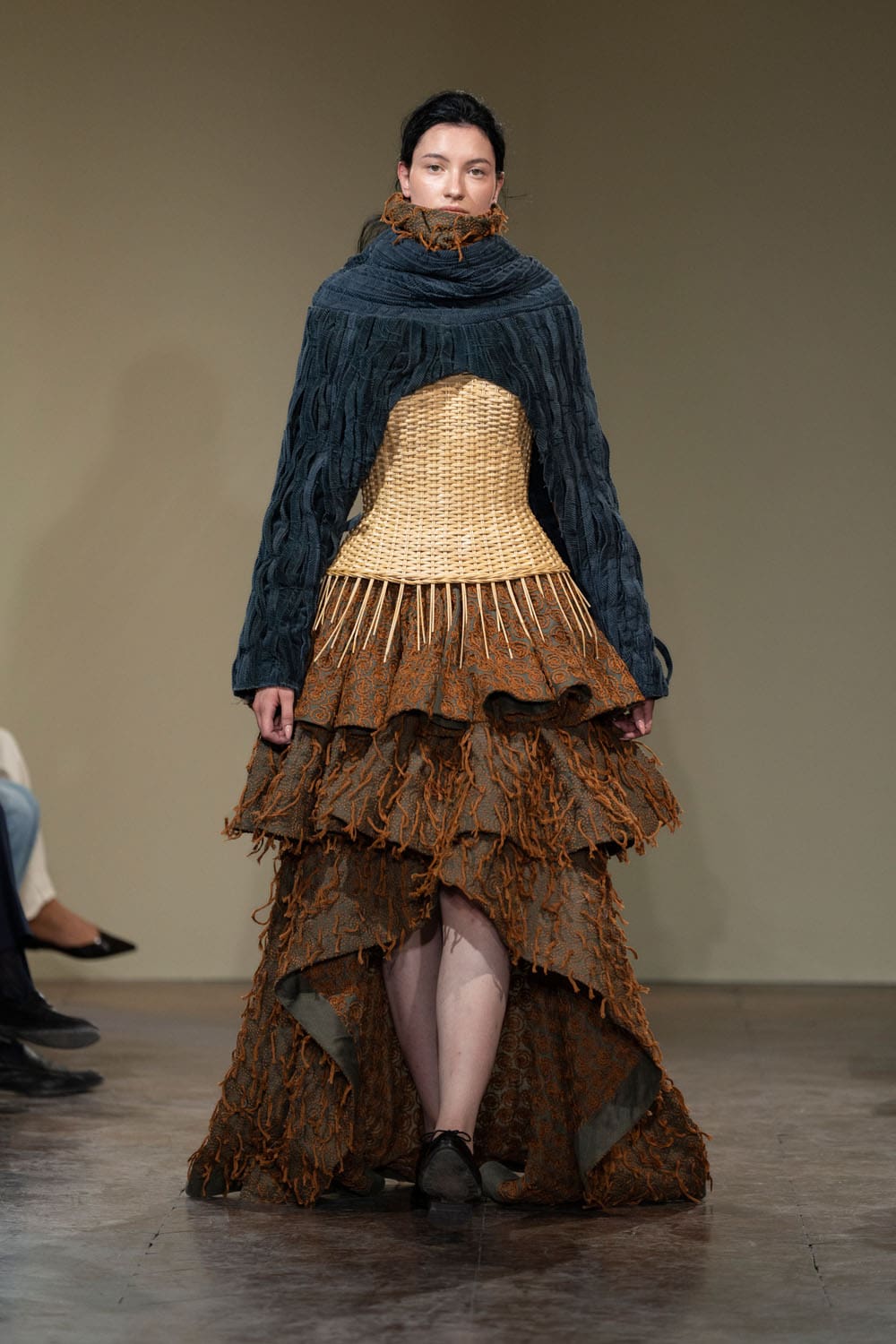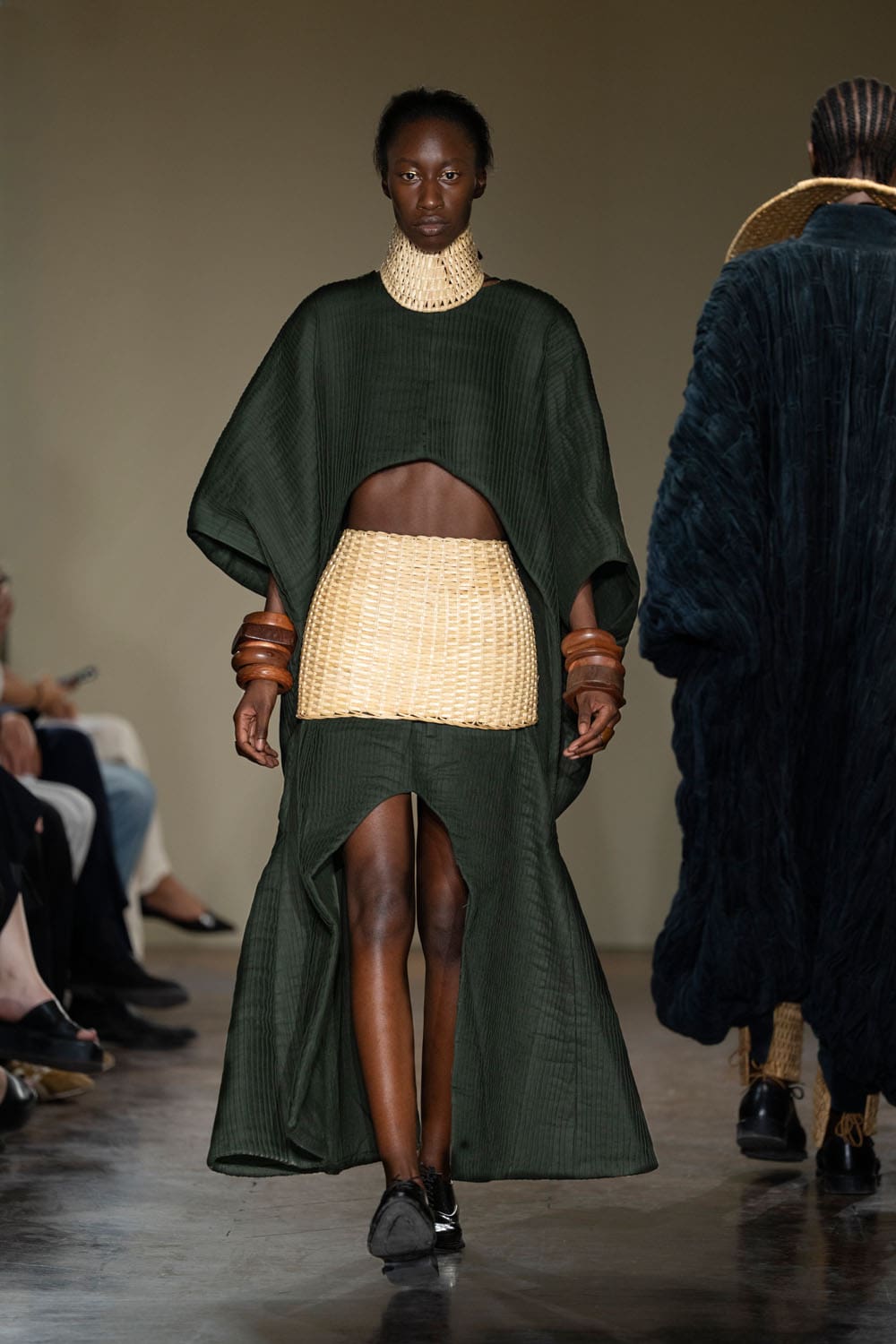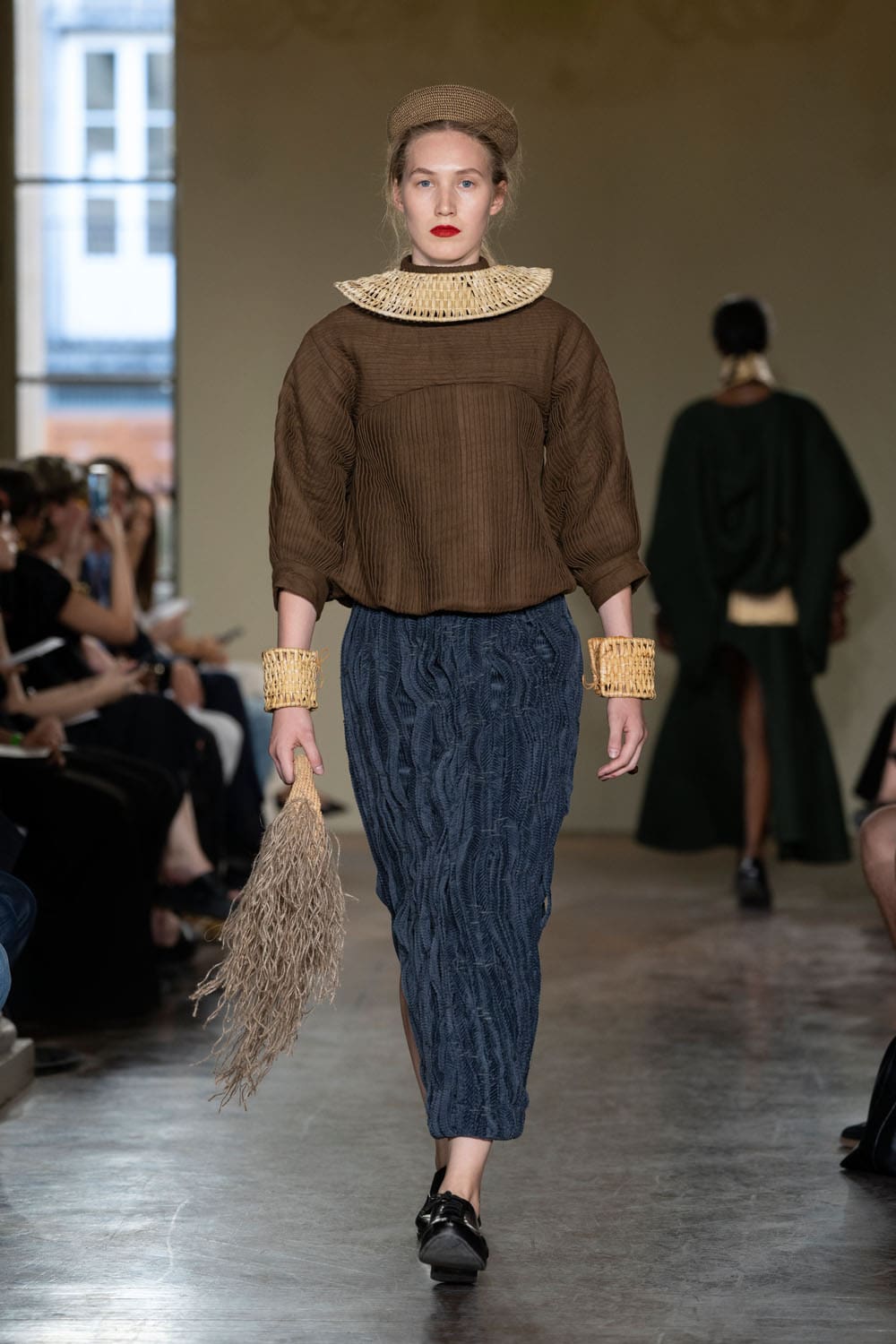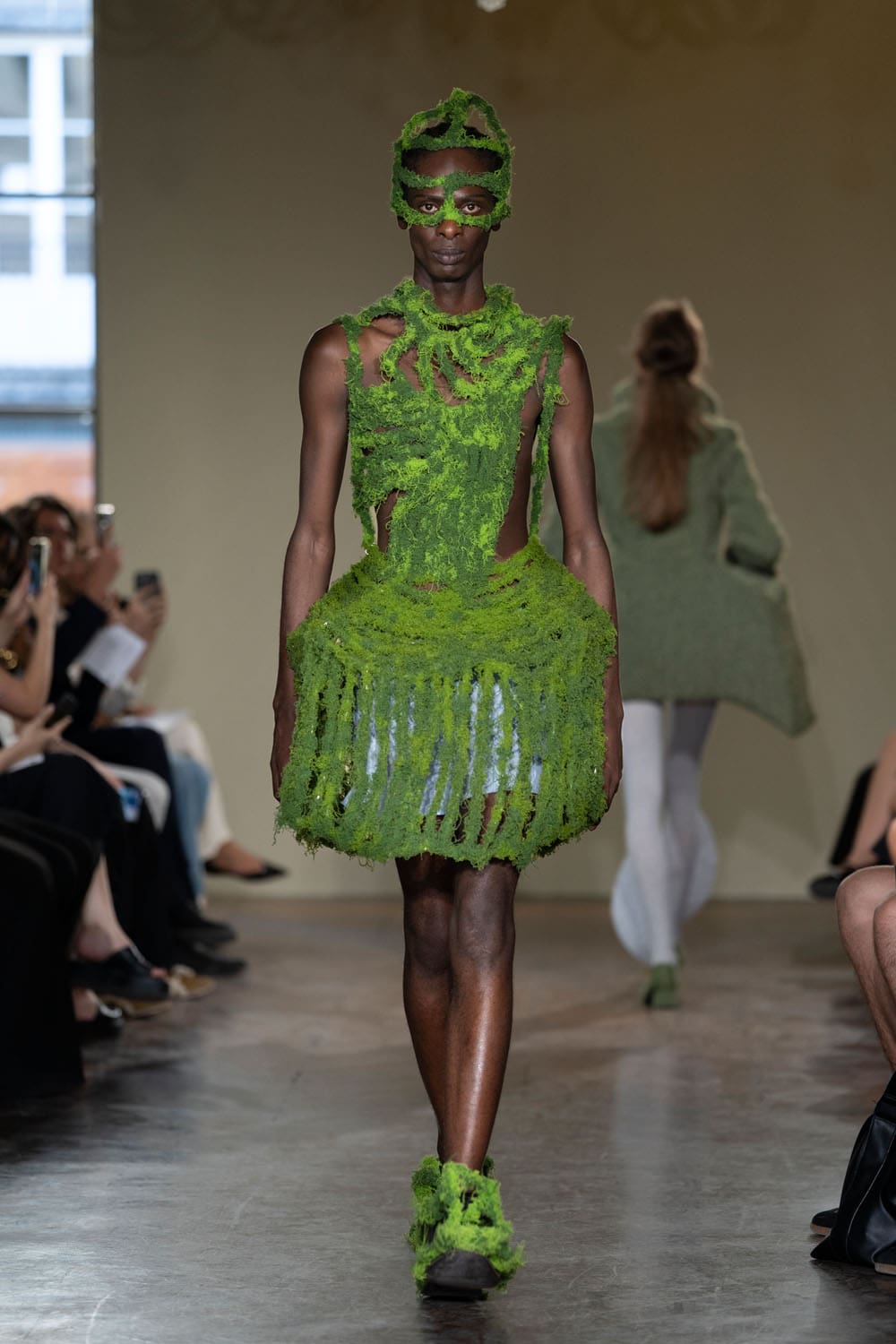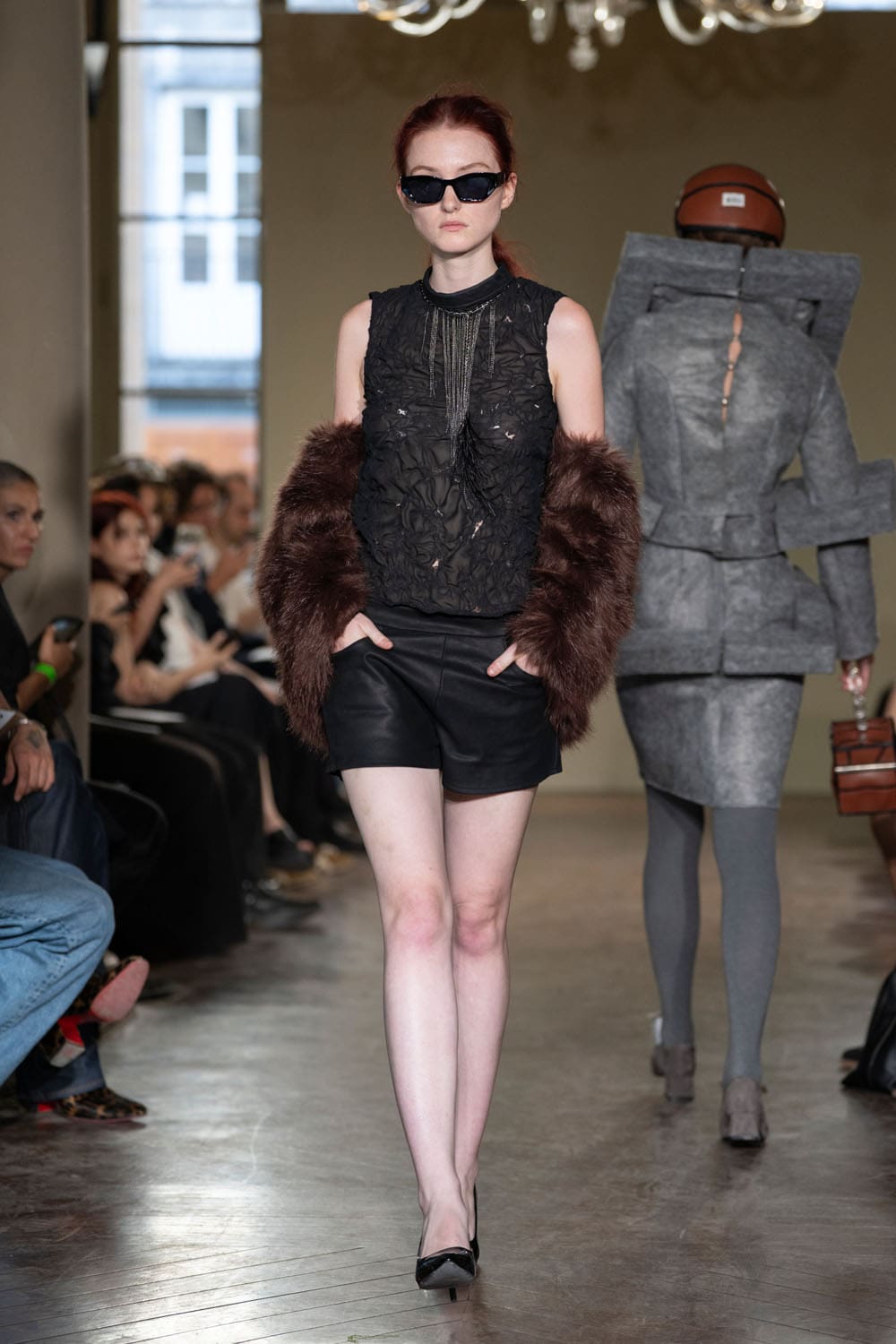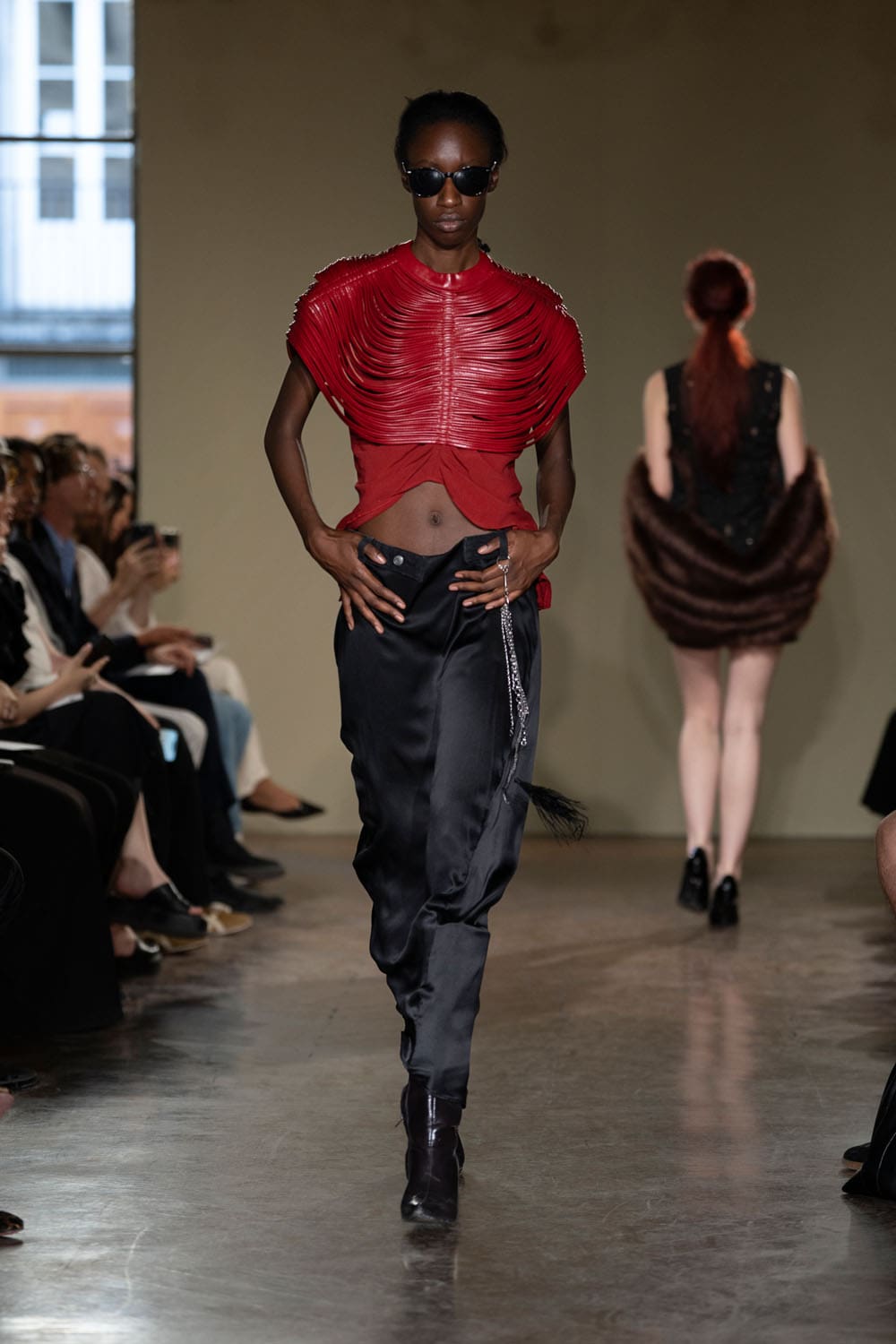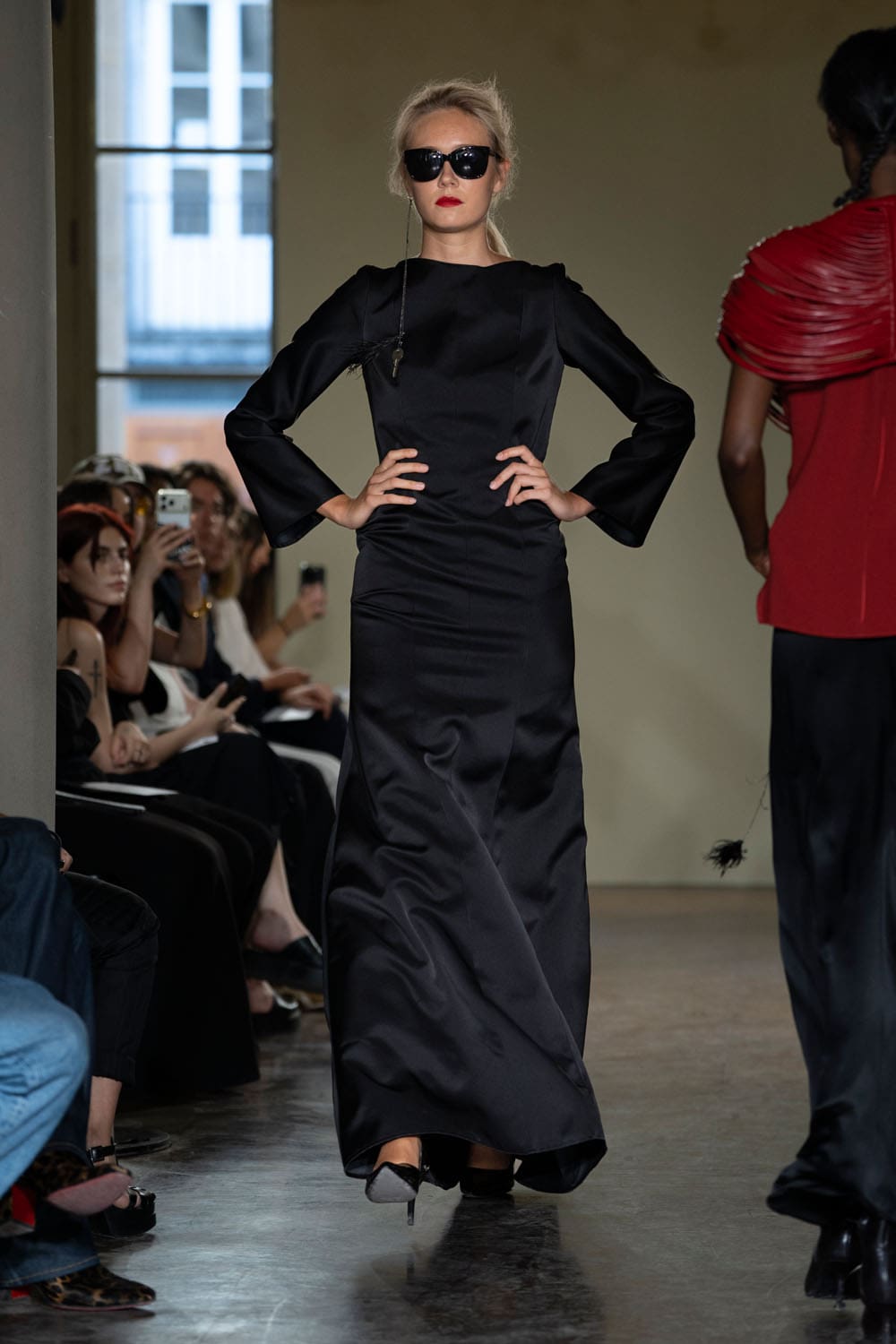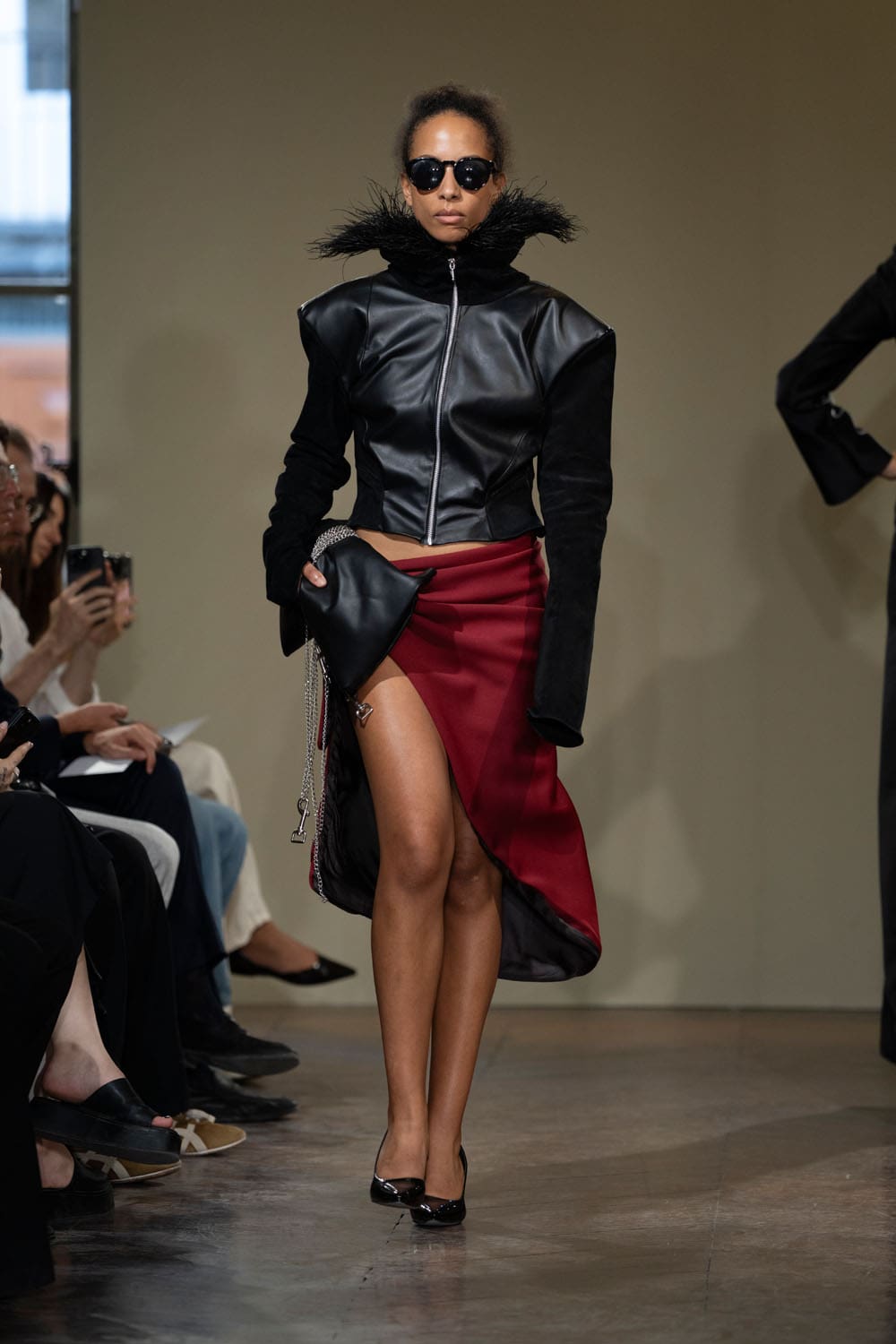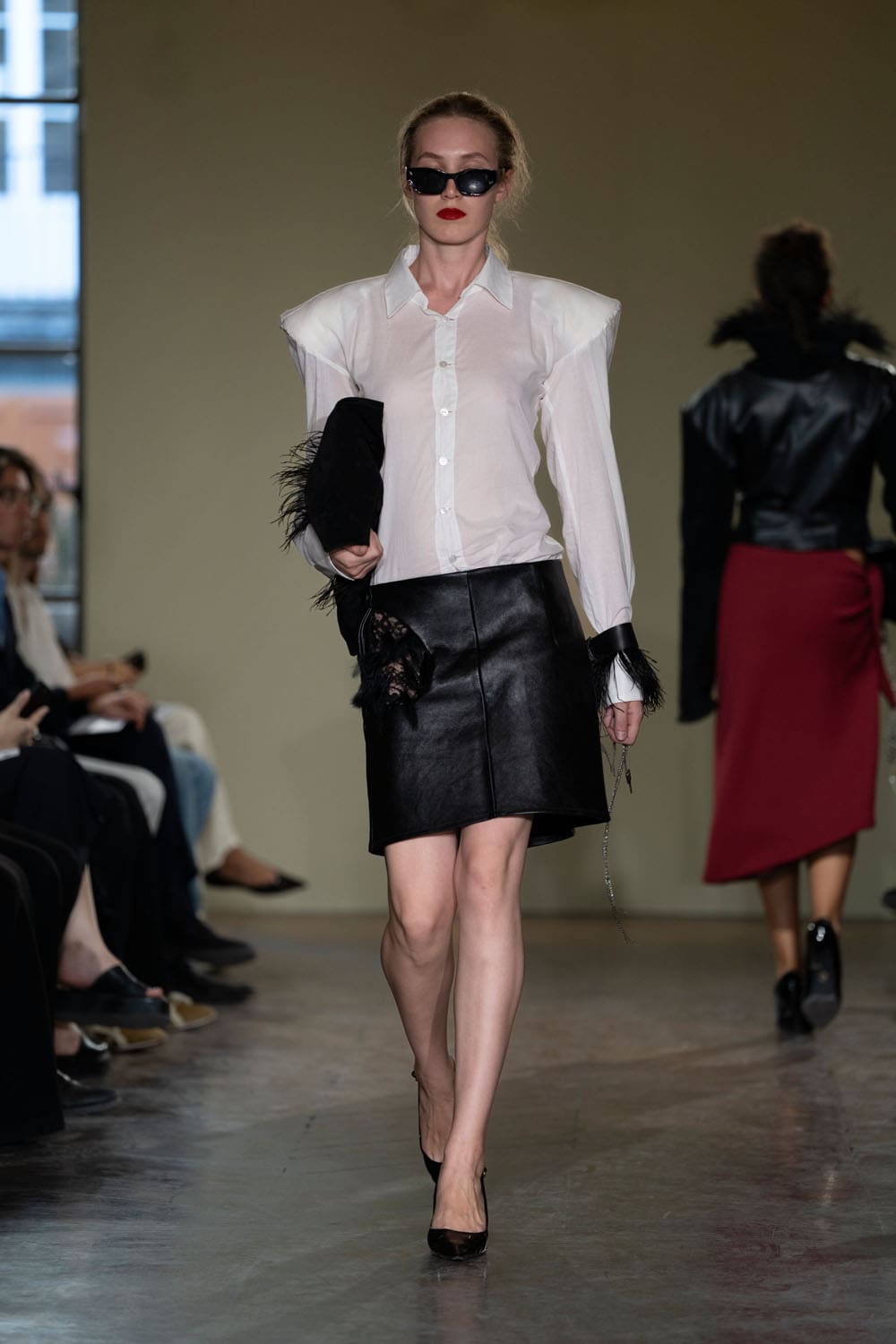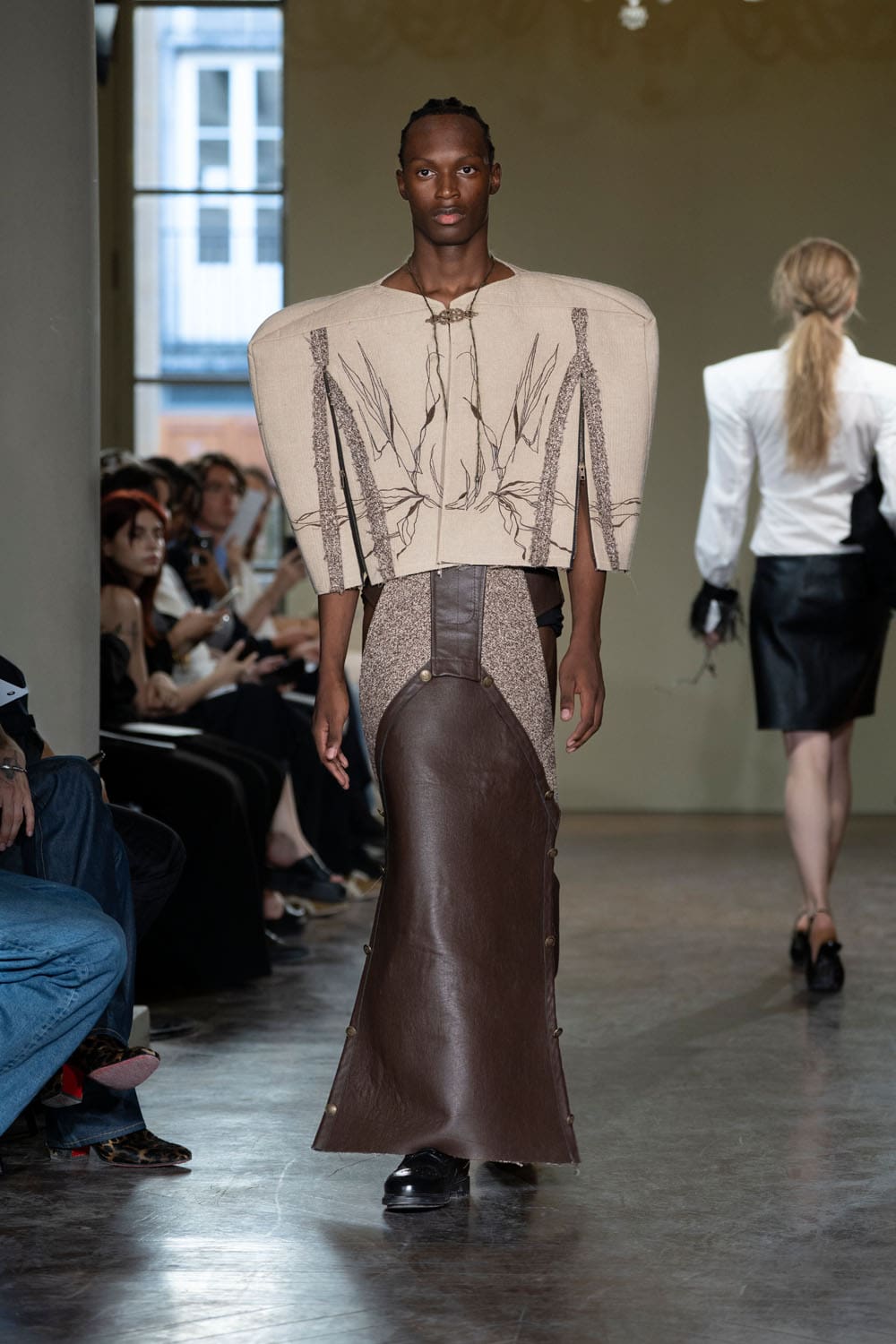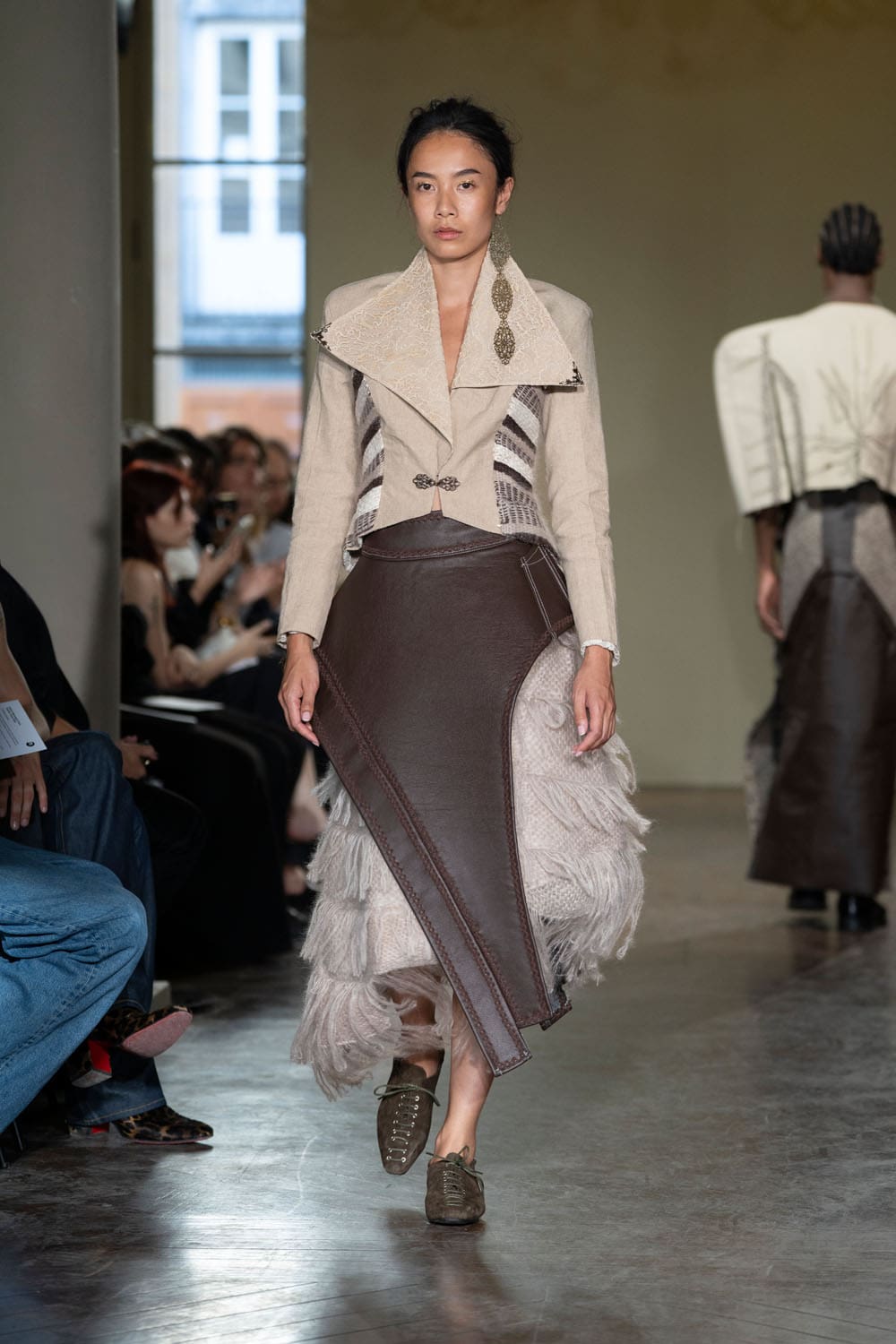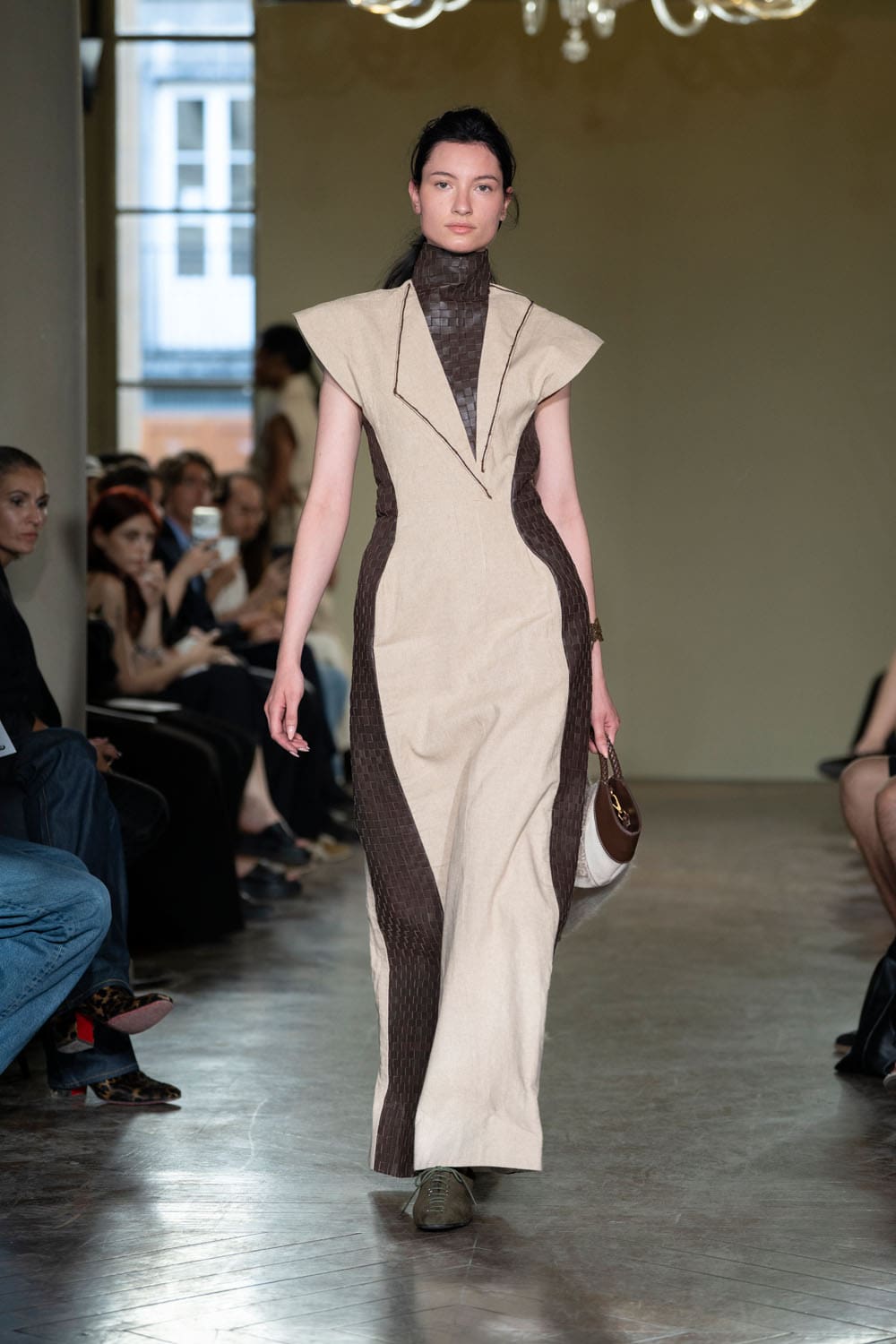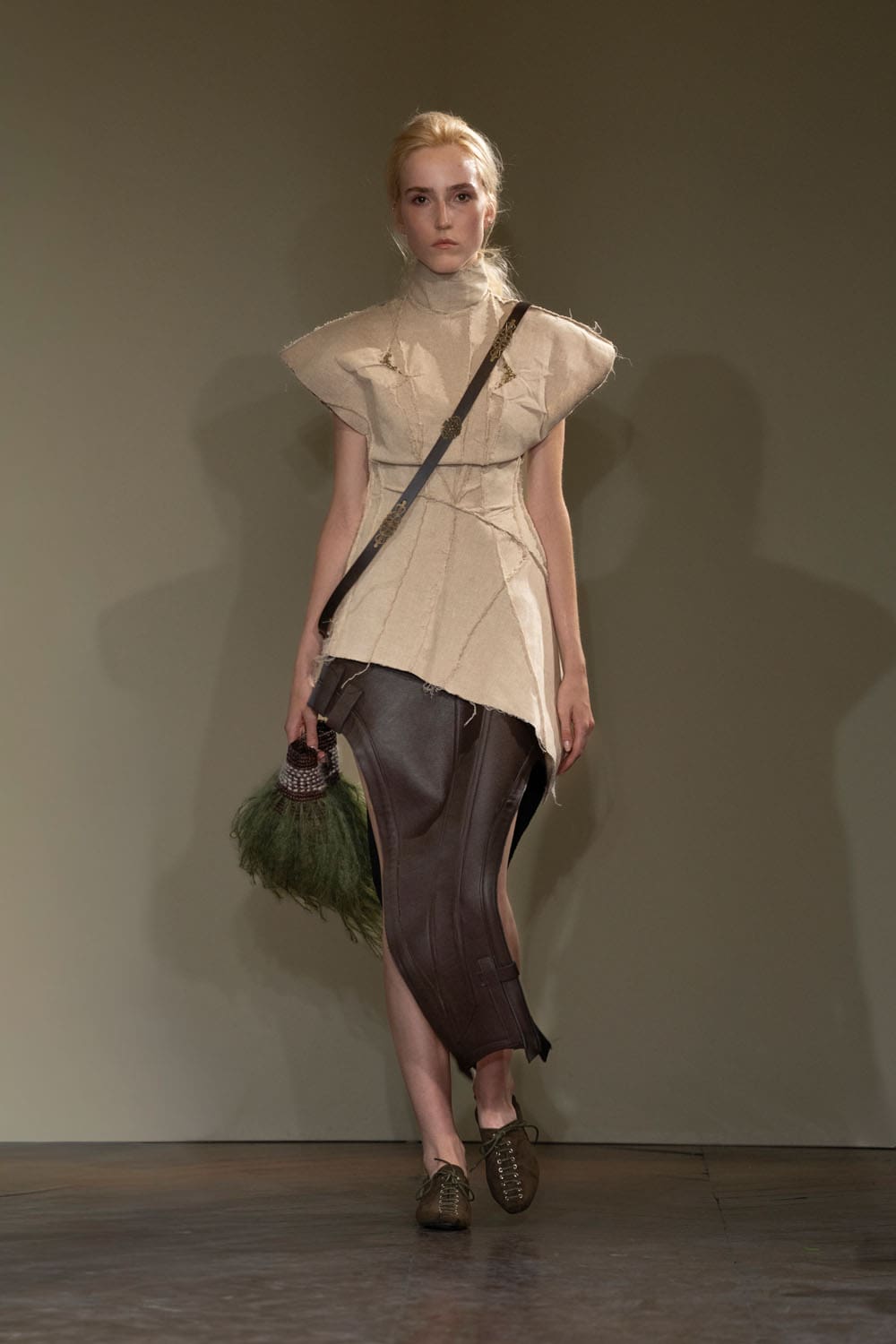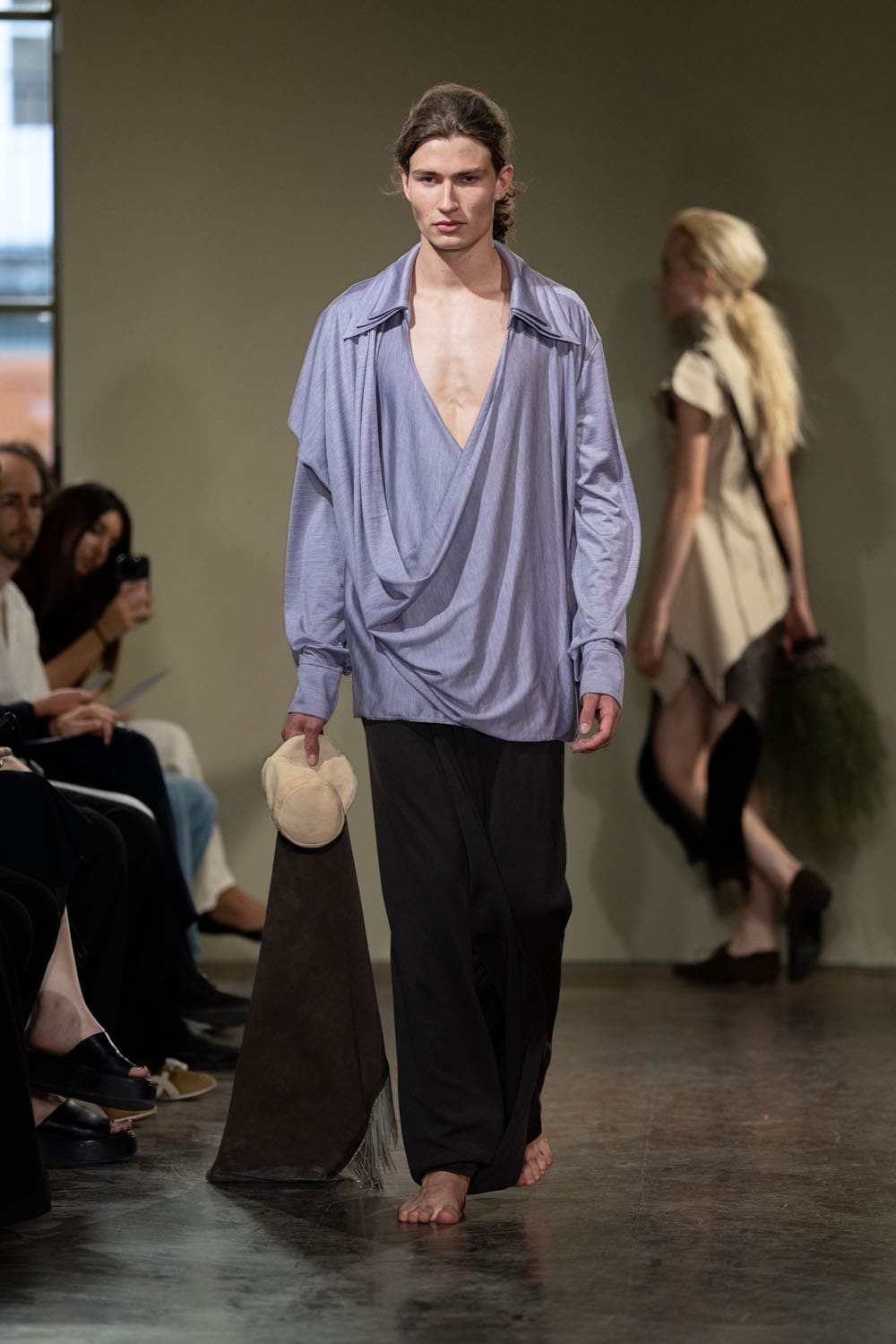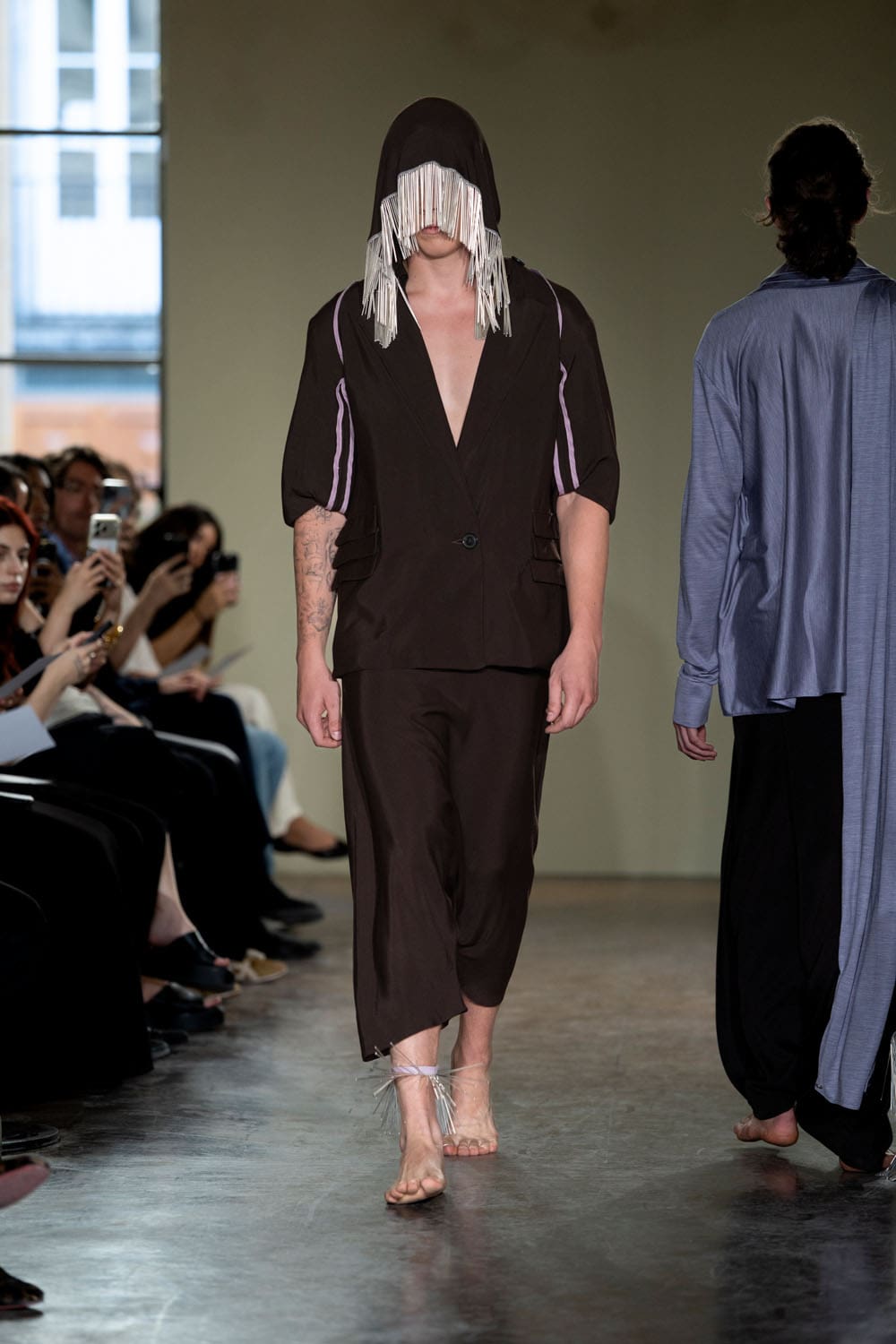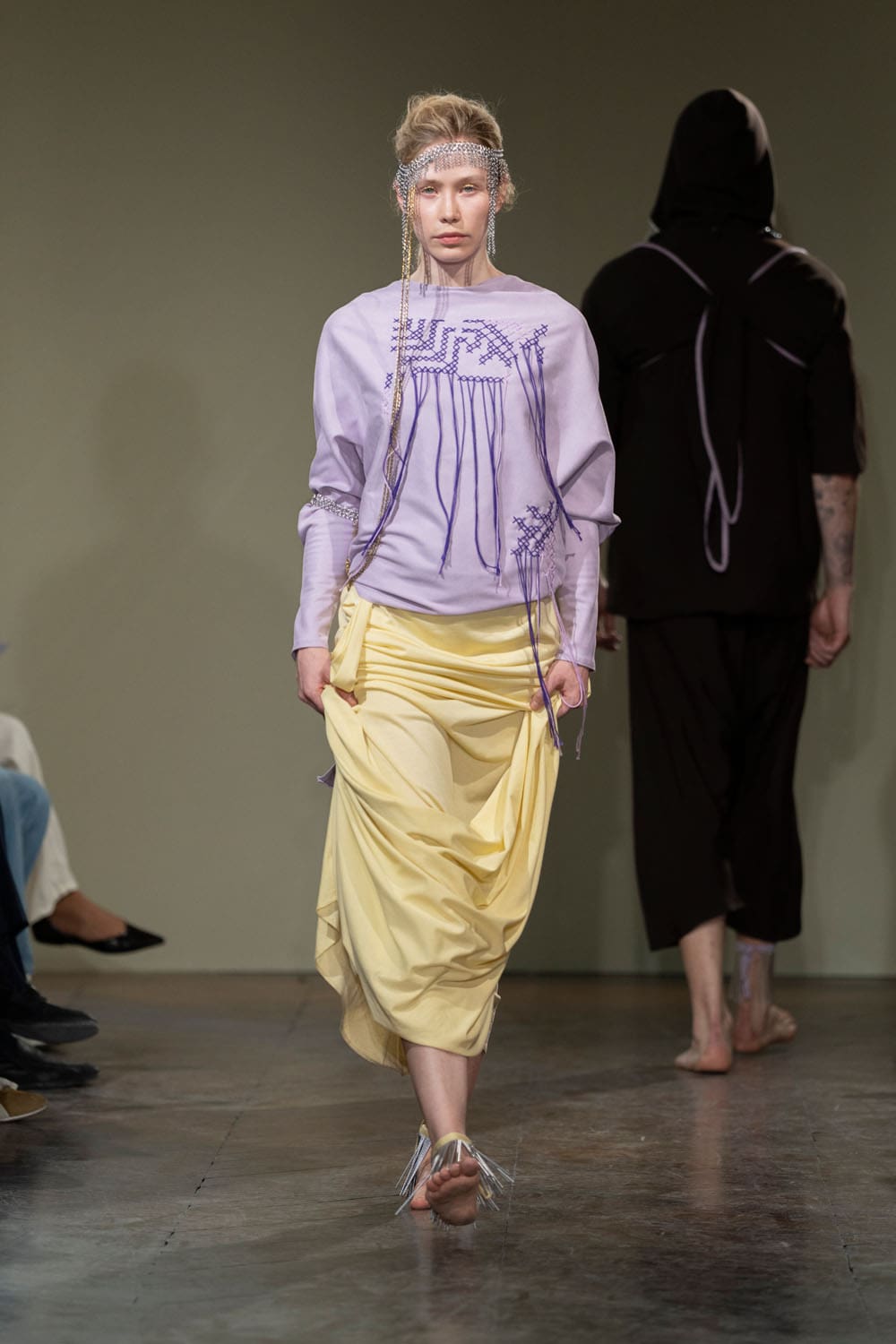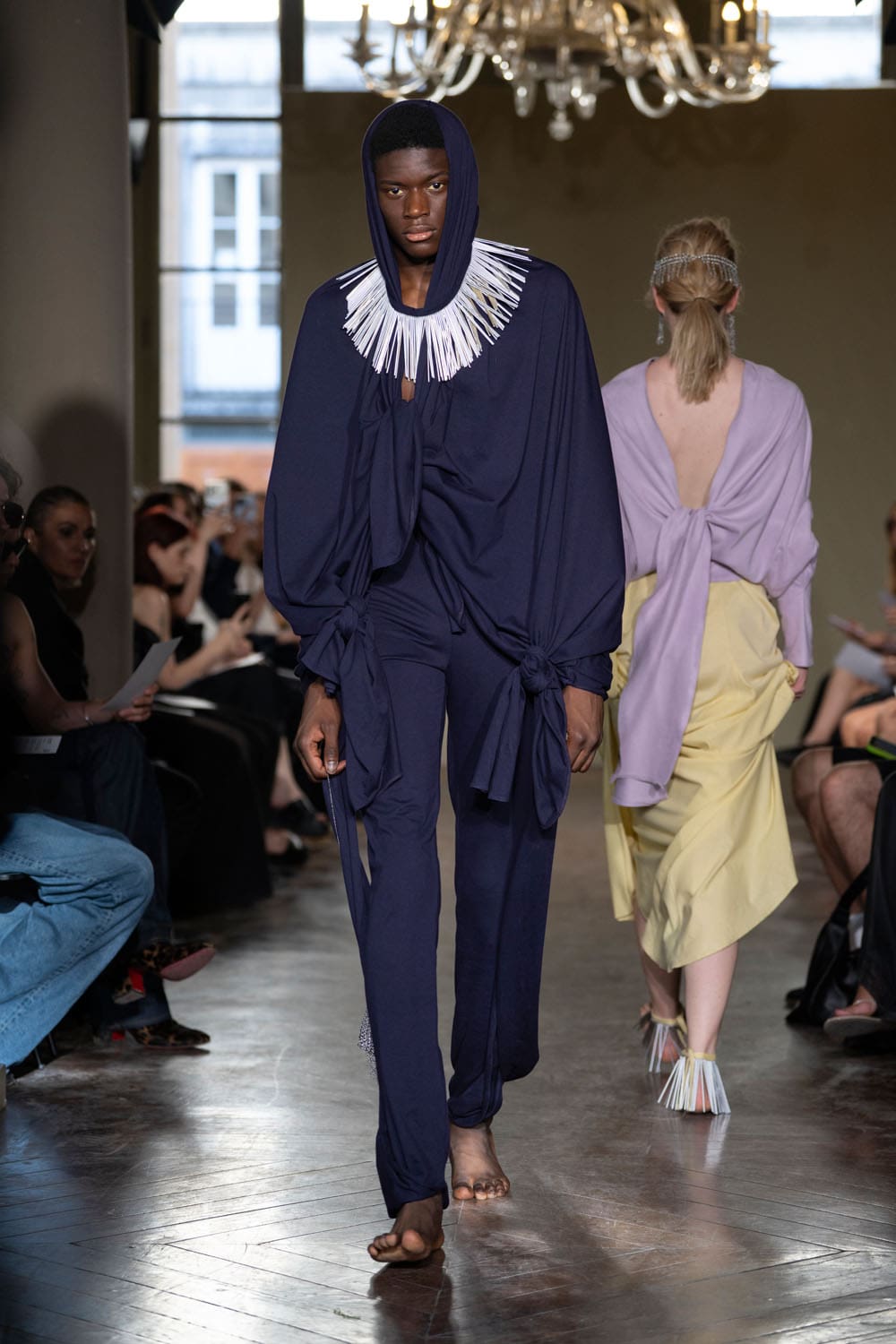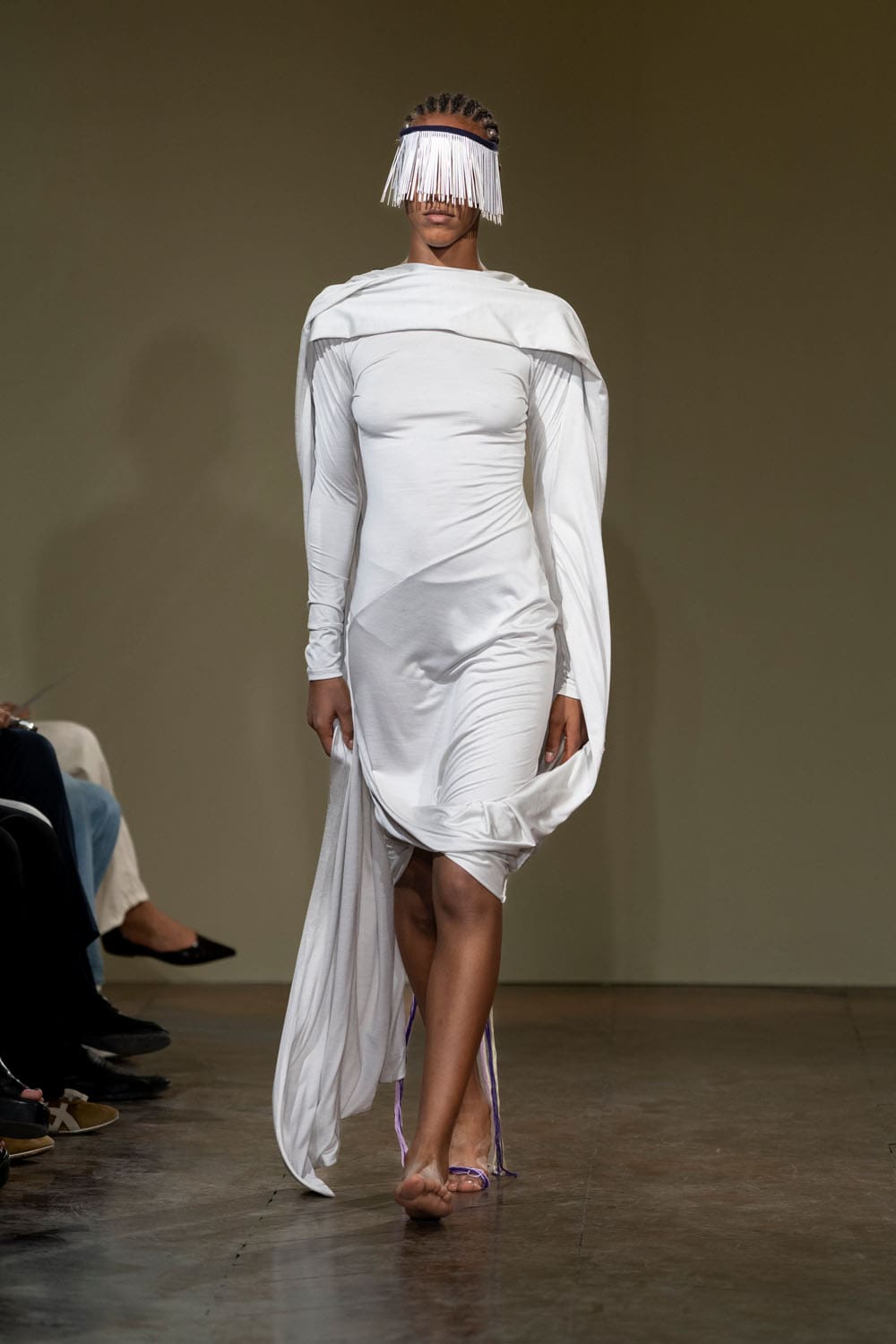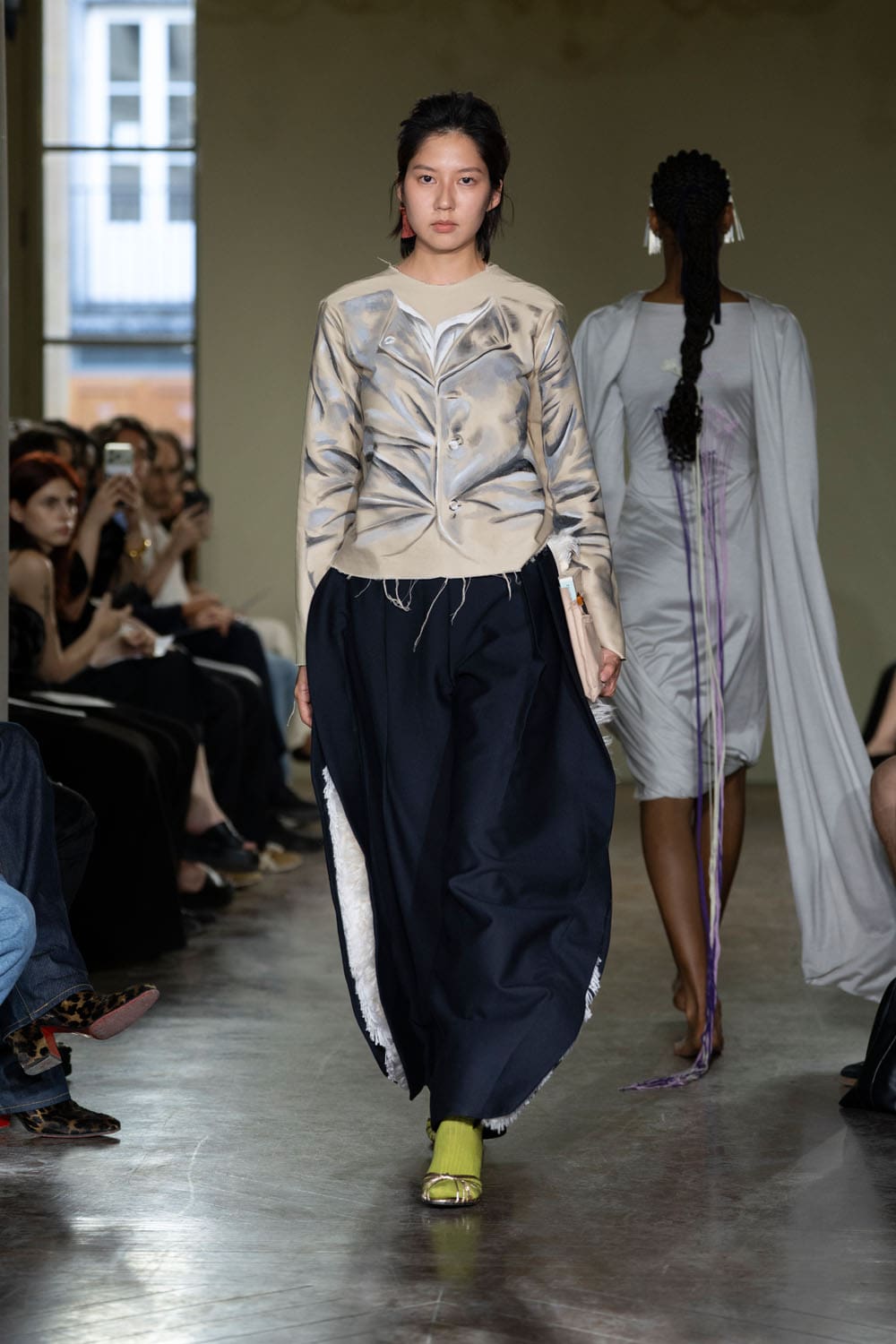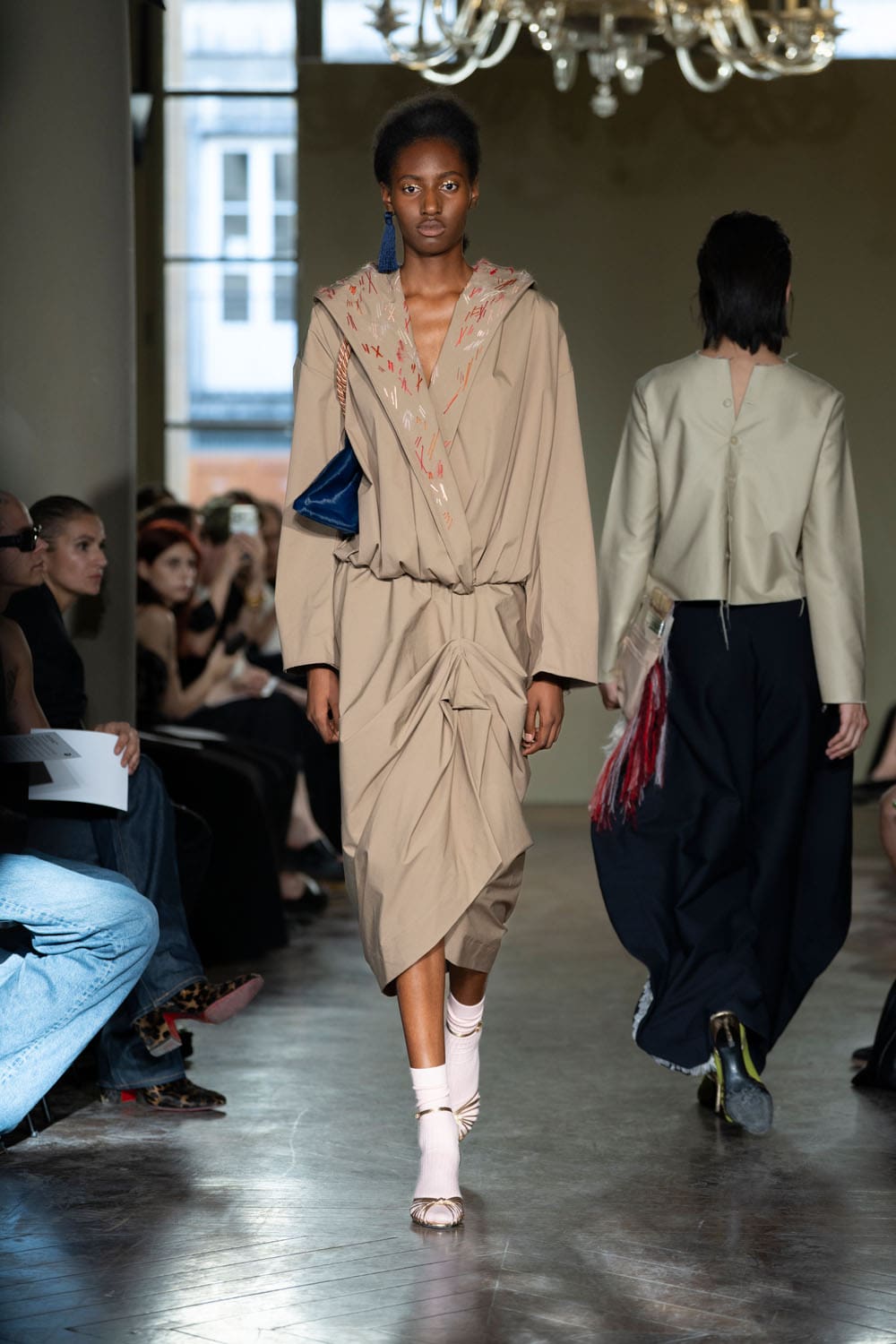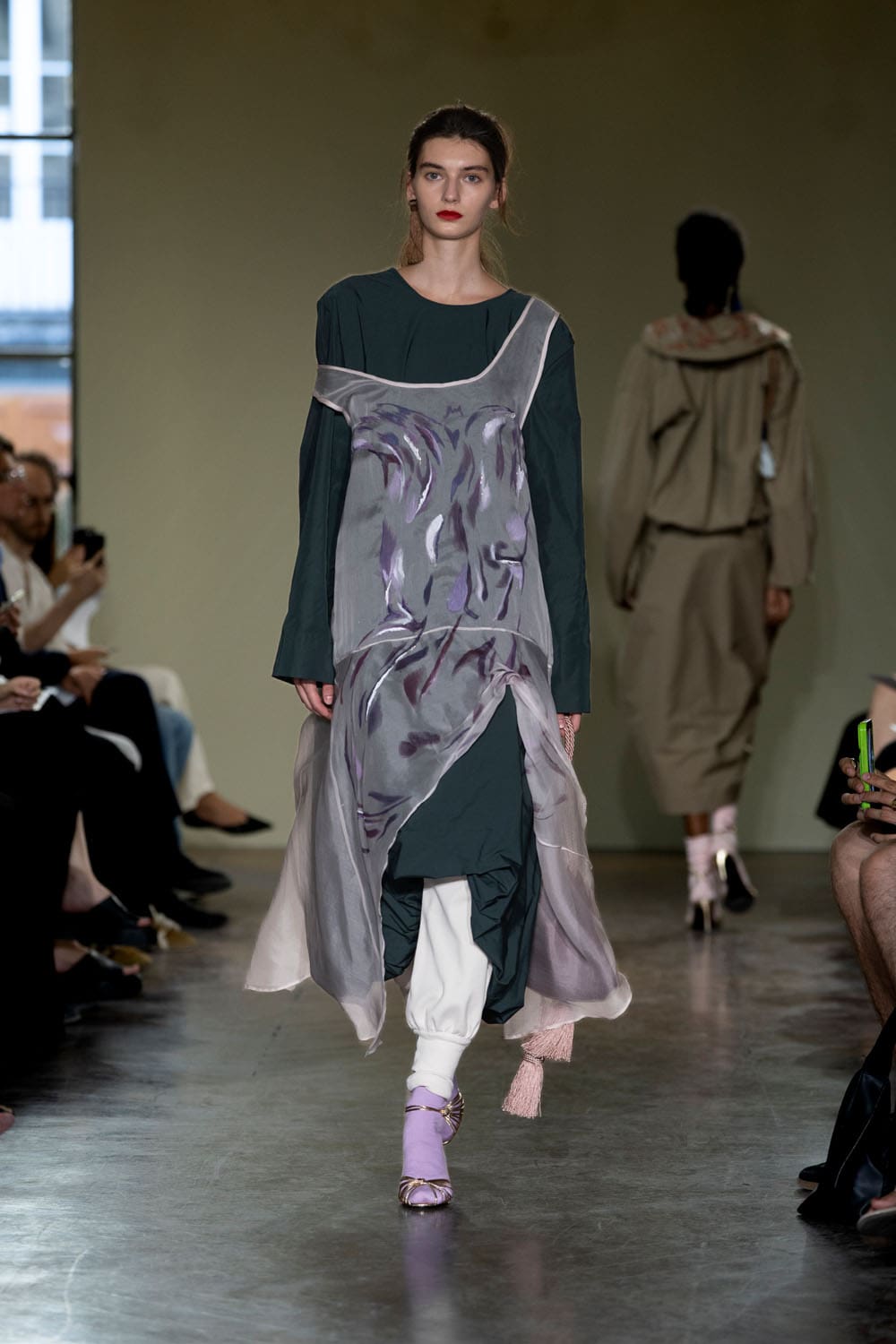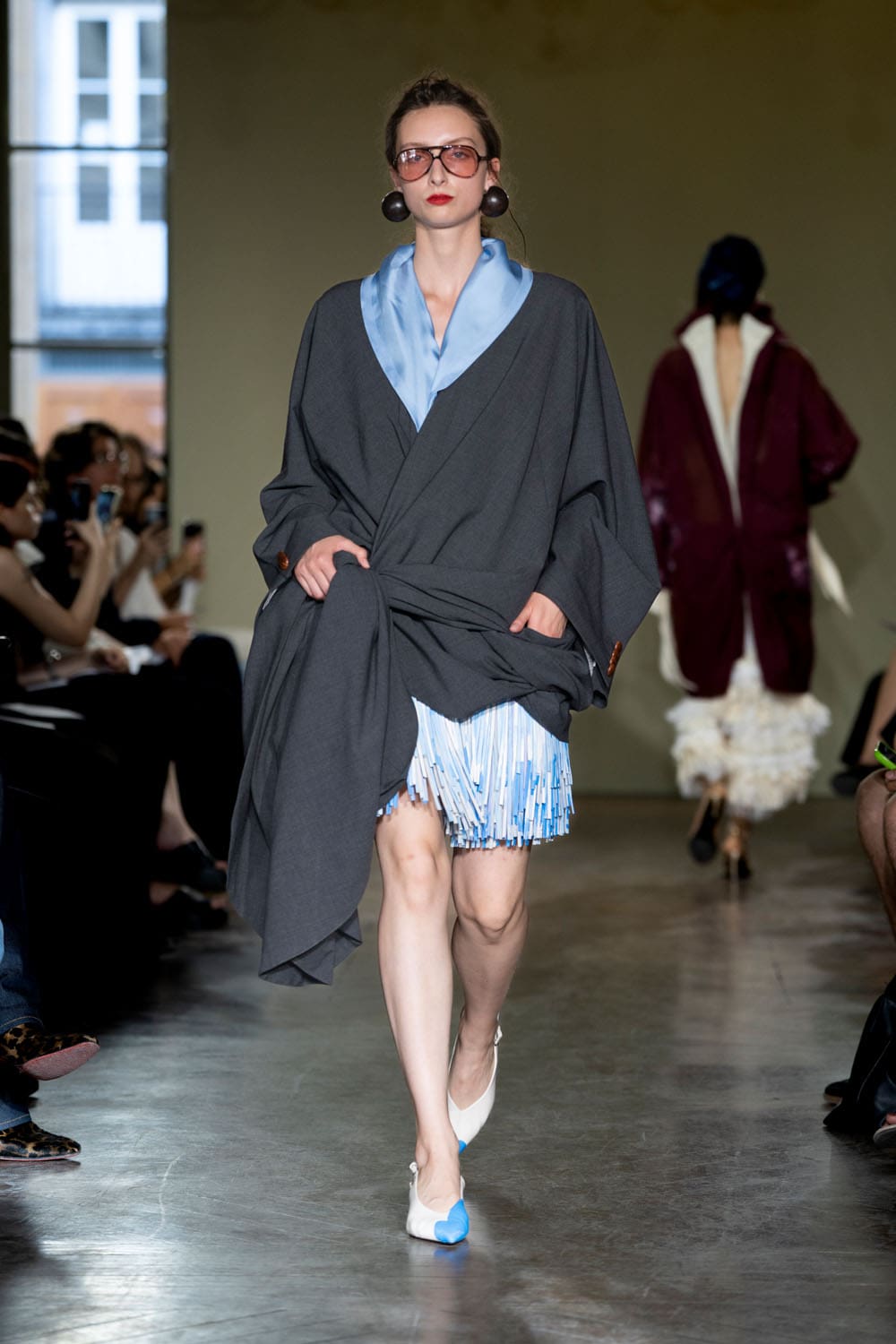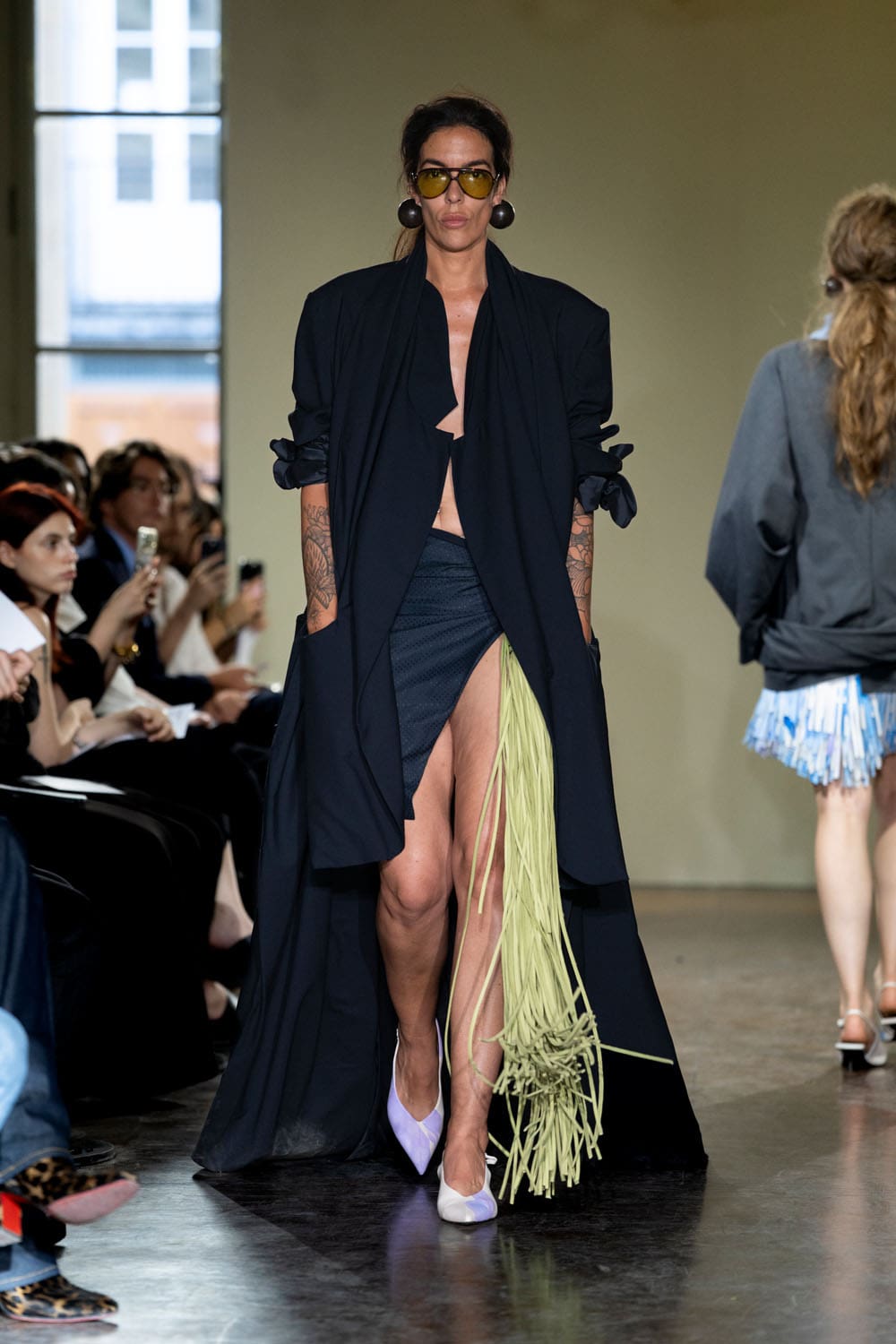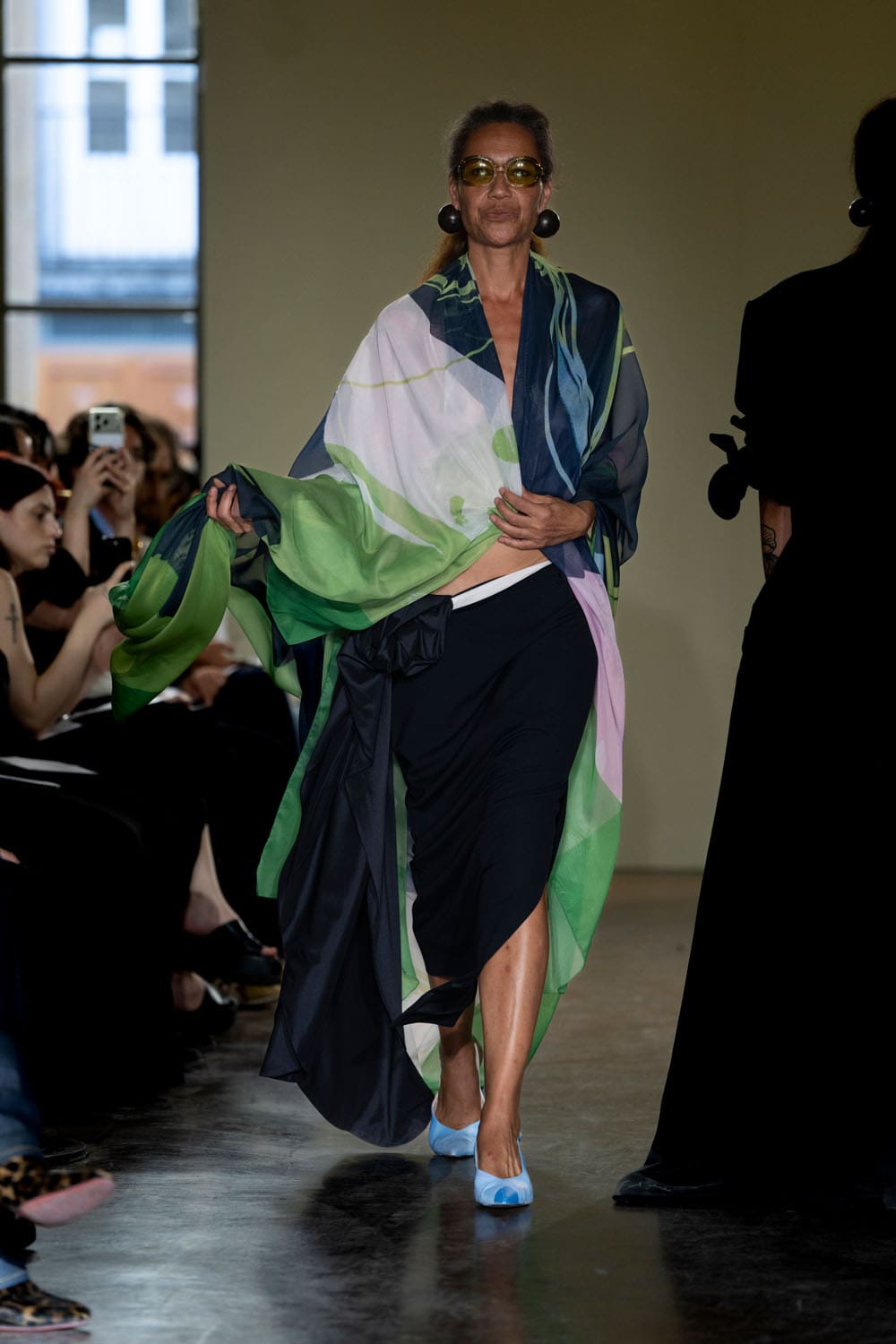
Istituto Marangoni Paris 2026 “Apostolos Kalfopoulos”. Story by Kate Granger, Editor of RUNWAY MAGAZINE. Photo Courtesy: Istituto Marangoni.
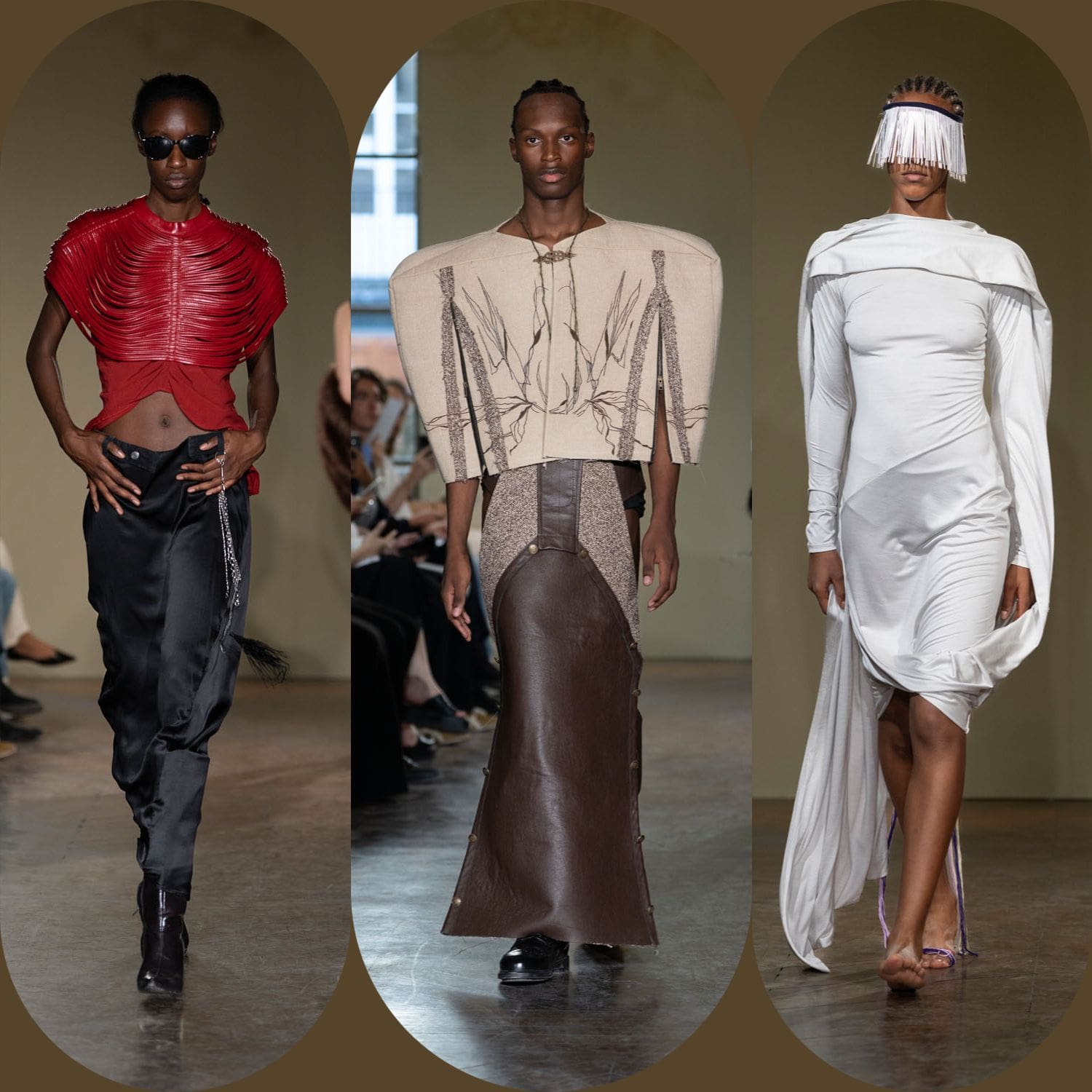
The 20th anniversary fashion design graduate show of Istituto Marangoni Paris, titled Crafting Futures, recently unfolded at the Hôtel de Galliffet. To mark two decades of training international design talent in the French capital, ten selected graduates from disparate origins—including India, Korea, France, Germany, Cambodia, Palestine, Taiwan, and Switzerland—presented collections intended to offer a forward-looking perspective on contemporary dress.
Accompanied by a live, experimental performance from pianist Toma Dimitriu, the event framed student creation as a deliberate dialogue between inherited savoir-faire and technological mediation.
The Geopolitics of the Cut
The runway presentations operated as a collective creative atlas, translating disparate regional narratives into the unified, high-concept visual dialect expected of contemporary luxury design. Rather than relying on standard cultural motifs, the collections frequently used structural subversion and historical reinterpretation to address the complexity of modern identity.
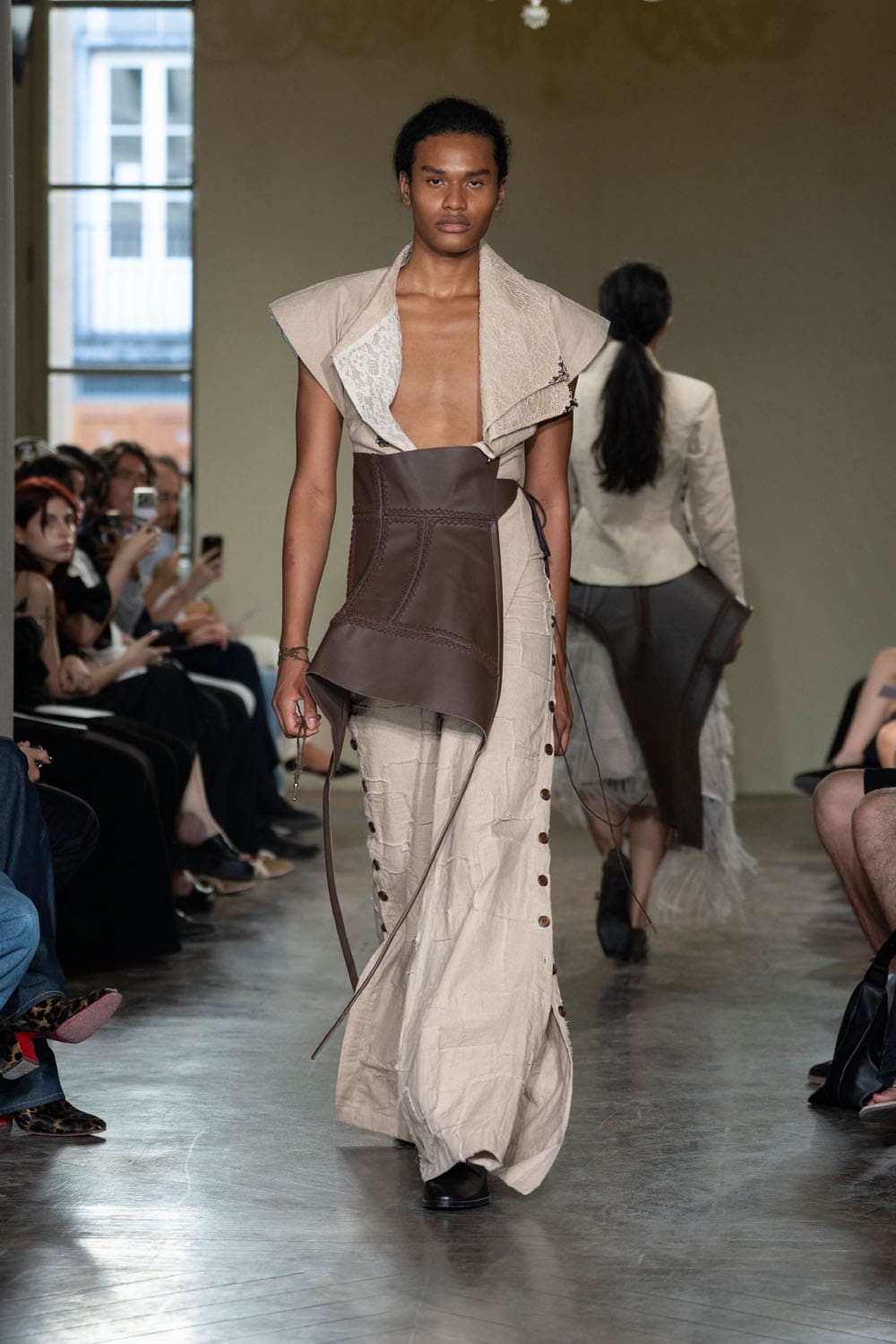
One compelling proposition appeared in a look combining raw historical utility with structured elegance. A sleeveless, deep-V neck top in coarse beige linen, featuring exposed lace lining at the lapel, was paired with wide-legged, button-sided trousers. This organic texture was punctuated by a sweeping, asymmetrical corset-belt in structured brown leather, which wrapped the torso and dropped dramatically over one hip. The juxtaposition contrasted classical, delicate femininity with the rigid, protective armor of traditional leatherwork—suggesting a delicate balance between exposure and defense.
Tailoring as Architectural Absurdity
A significant portion of the graduate work focused on deconstructing traditional European tailoring, transforming conventional tailoring patterns into exaggerated, sculptural silhouettes that examine the physical space a garment occupies.
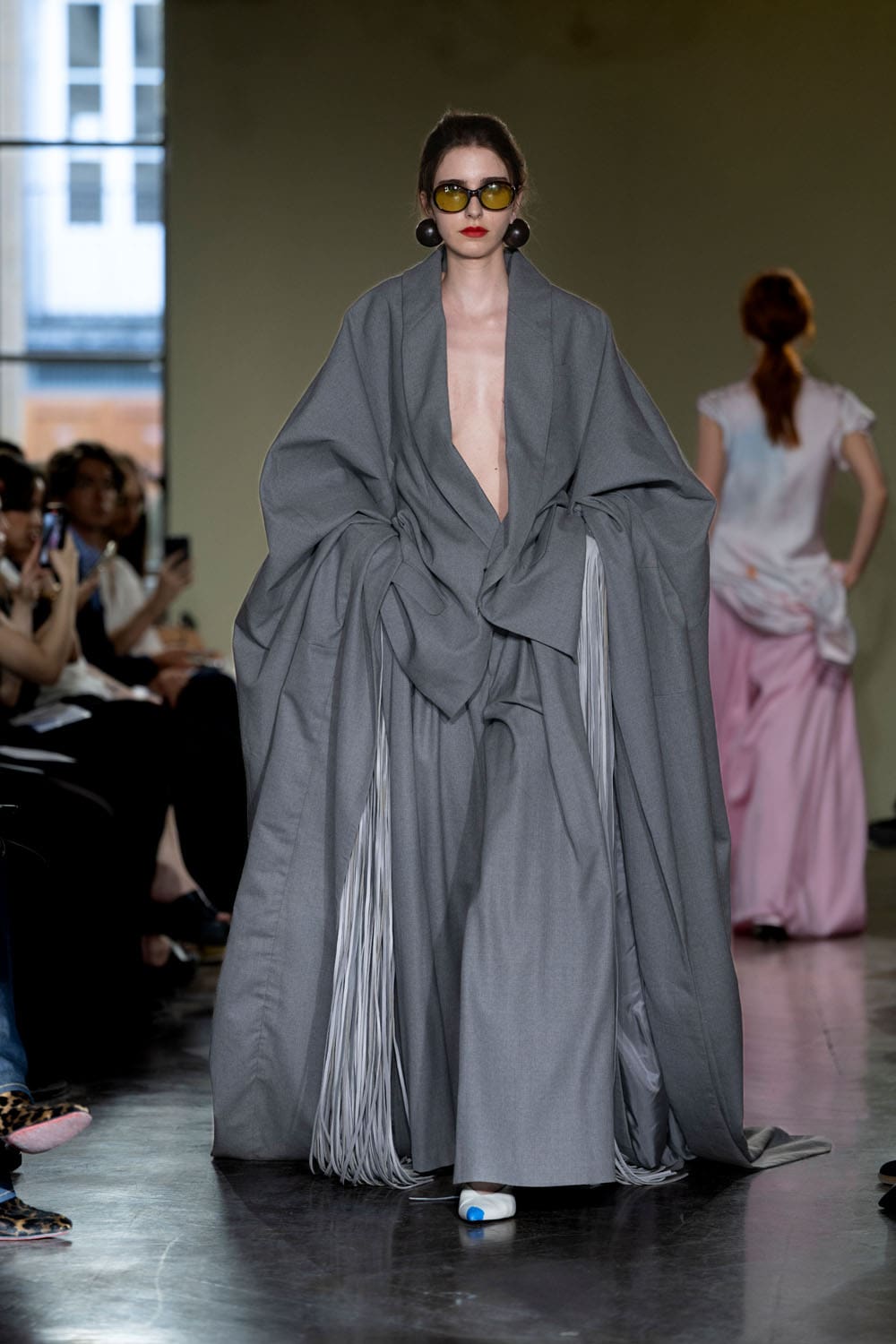
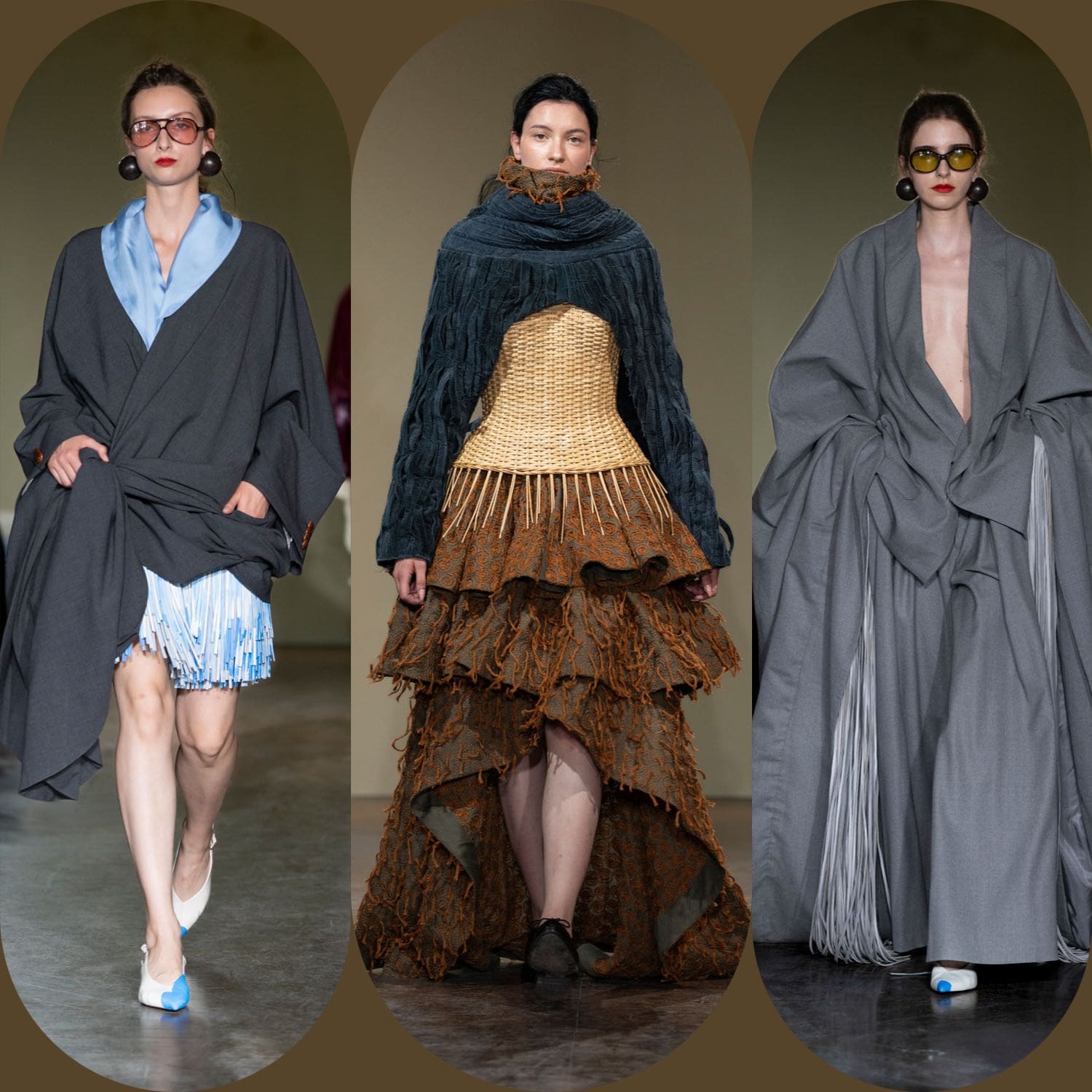
This architectural interrogation was vividly realized in an oversized, sweeping grey ensemble that completely obscured the human form. The monolithic look featured an immense, draped jacket with exaggerated drop-shoulder sleeves that flowed into voluminous floor-length trousers, creating a single, continuous block of wool tailoring. This heavy volume was broken only by a dramatic cascading fringe that escaped from the interior folds, trailing along the floor alongside painted-toe heels. It served as an intellectual commentary on the burdens and dimensions of classic corporate uniforming, rendering the wearer both entirely hidden and impossible to ignore.
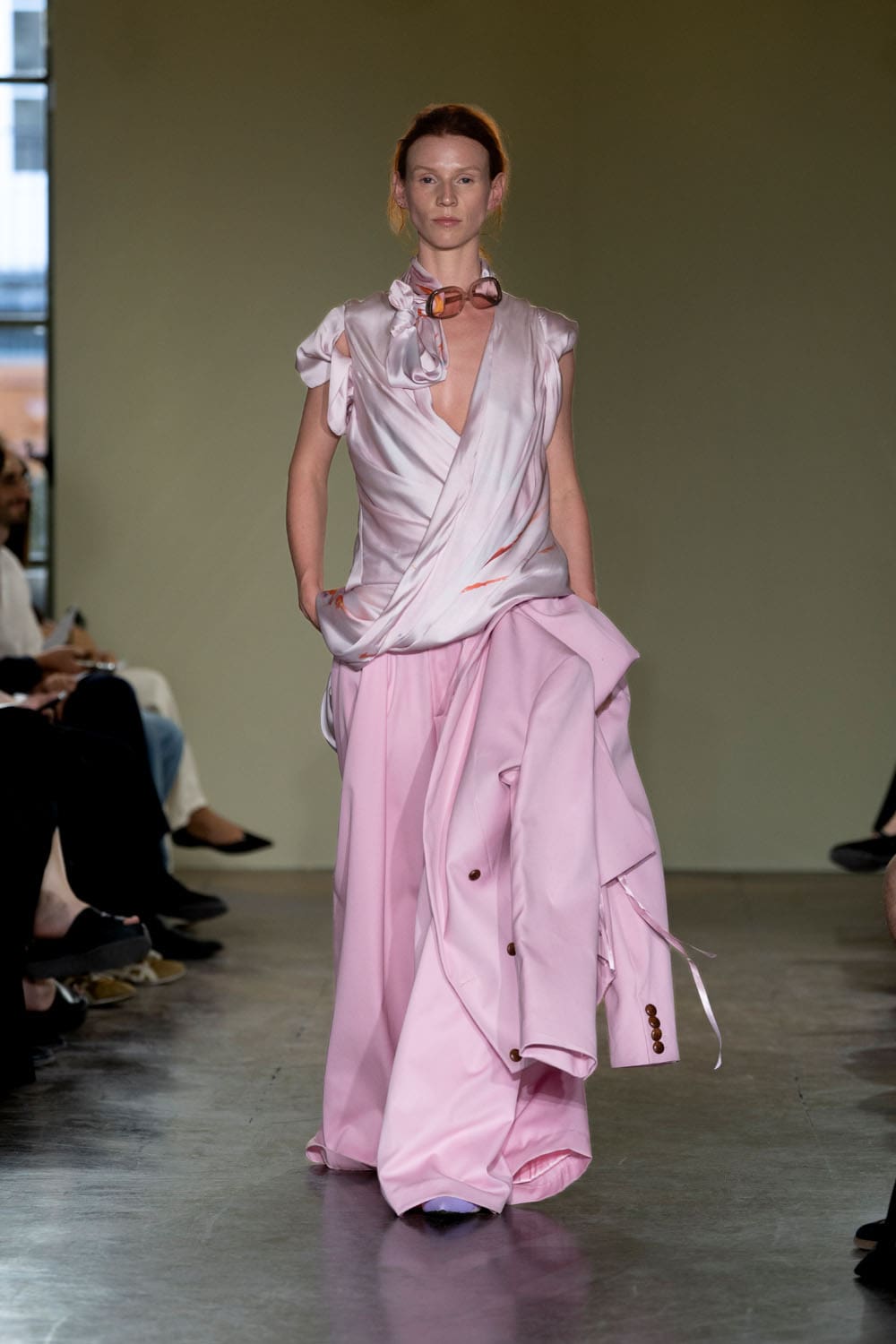
A lighter, more fluid subversion of tailoring appeared in an entirely monochrome pastel-pink look. Here, a fluid, draped satin top with an asymmetric wrapped neckline was paired with extraordinarily wide, floor-sweeping trousers. Strikingly, a matching pink tailored jacket was integrated directly into the lower half of the silhouette, hanging upside down from the waist and thighs as if frozen mid-collapse. It re-imagined traditional menswear elements as fluid, moving sculpture, challenging standard definitions of how a garment should be worn.
Craftsmanship in the Age of Technical Intermediation
Several collections directly addressed the tension between organic, hand-taught techniques and the sterile, structured realities of modern industrial or digital design, presenting silhouettes that felt both archaic and futuristic.
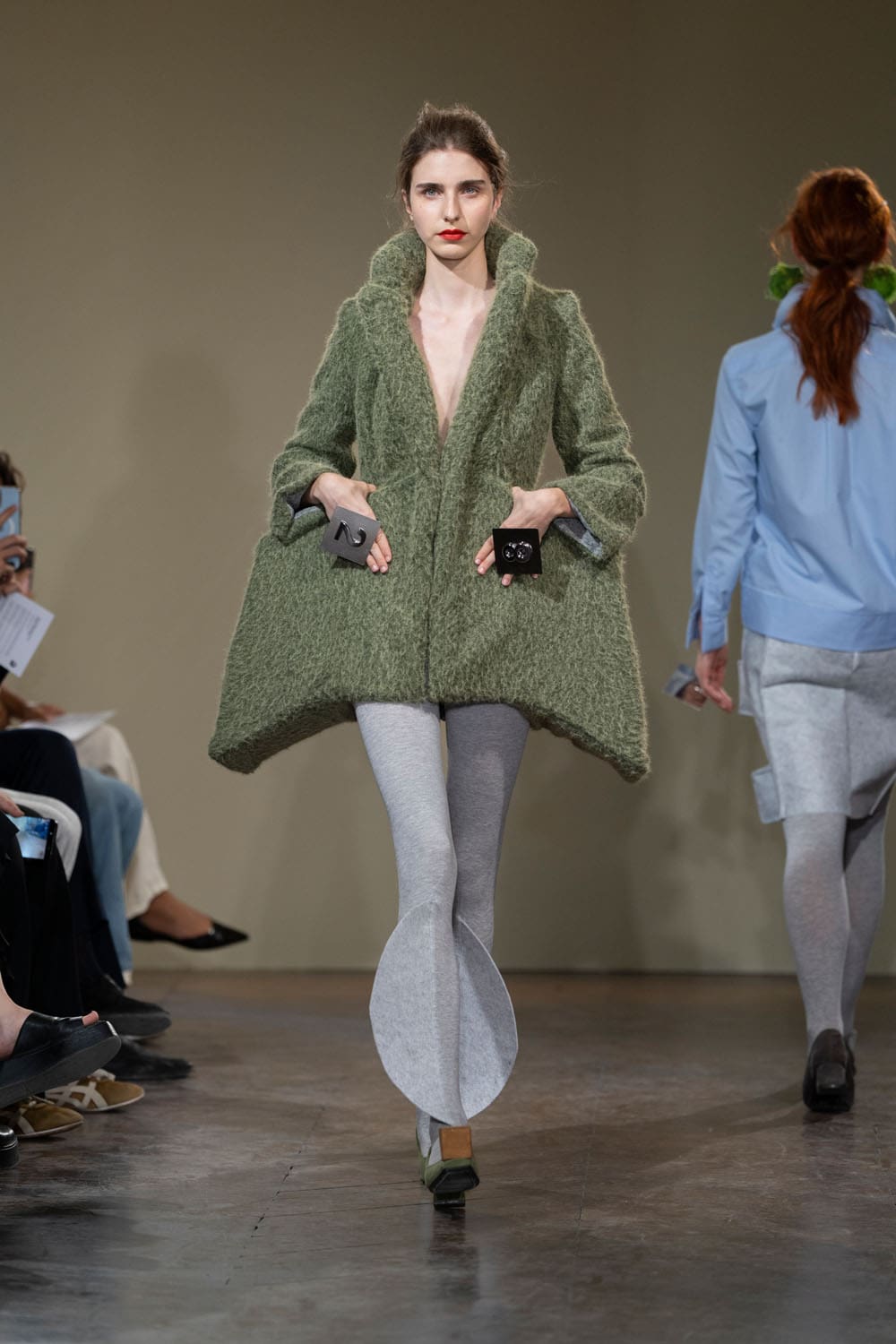
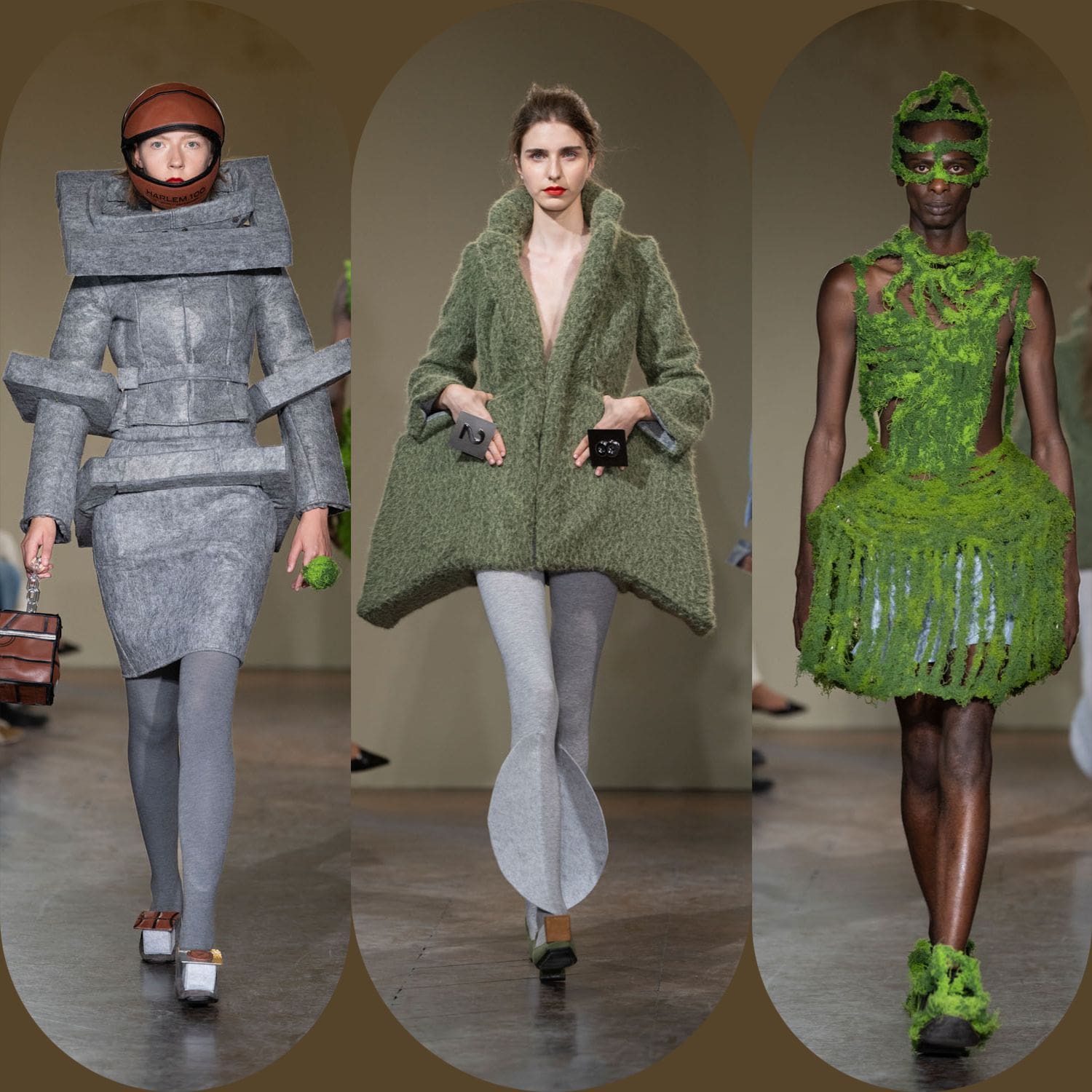
This contrast was clearly articulated in a striking moss-green textured coat. The garment featured a sharply structured, triangular A-line silhouette with exaggerated hip proportions, crafted from a heavily napped, fibrous wool that resembled organic moss or raw fleece. The model’s hands emerged from wide pockets adorned with oversized, geometric black square rings bearing numbers and symbols, while the grey leggings below terminated in structural, circular felt discs wrapped around the ankles. The look positioned organic texturing against hard, geometric logic—a visual metaphor for nature filtered through an algorithmic grid.
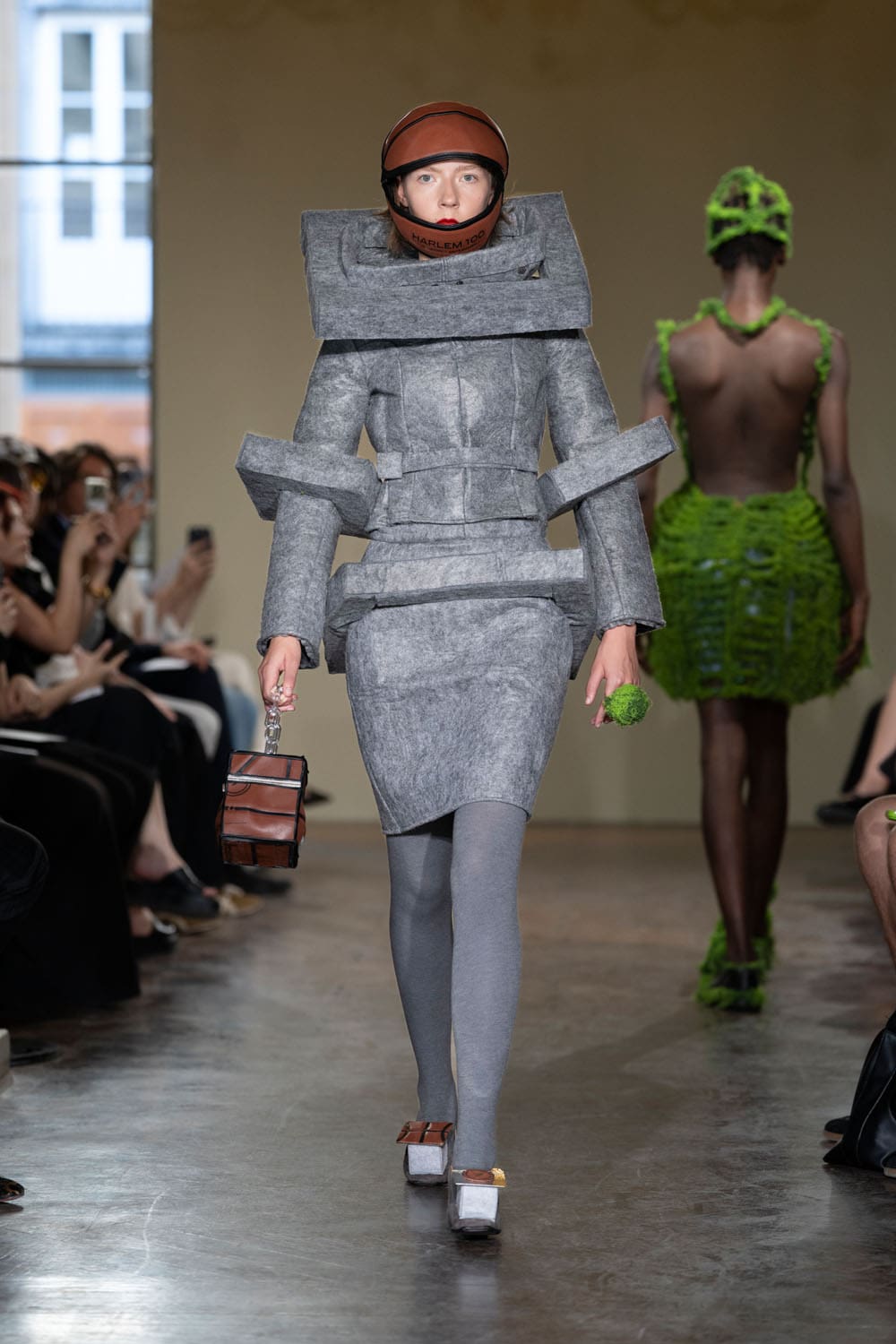
Even more literal was a grey, industrial-inspired look that transformed the body into a literal geometric construction. The model walked in a stiff, blocky jacket and skirt ensemble constructed from thick, pressed heather-grey felt. Rigid, rectangular architectural beams of felt were affixed like structural braces across the collarbones, biceps, and waist, effectively encasing the torso. Complete with a leather helmet reminiscent of sports gear and a rigid, box-shaped top-handle bag that resembled a literal brick, the silhouette functioned as a sharp, satirical take on urban shielding and the literal “building” of a modern identity.
Subverting the Clichés of Heritage
Other designers engaged in witty, historically conscious pastiche, blending domestic or traditional archetypes with contemporary styling to comment on the romanticization of the past.
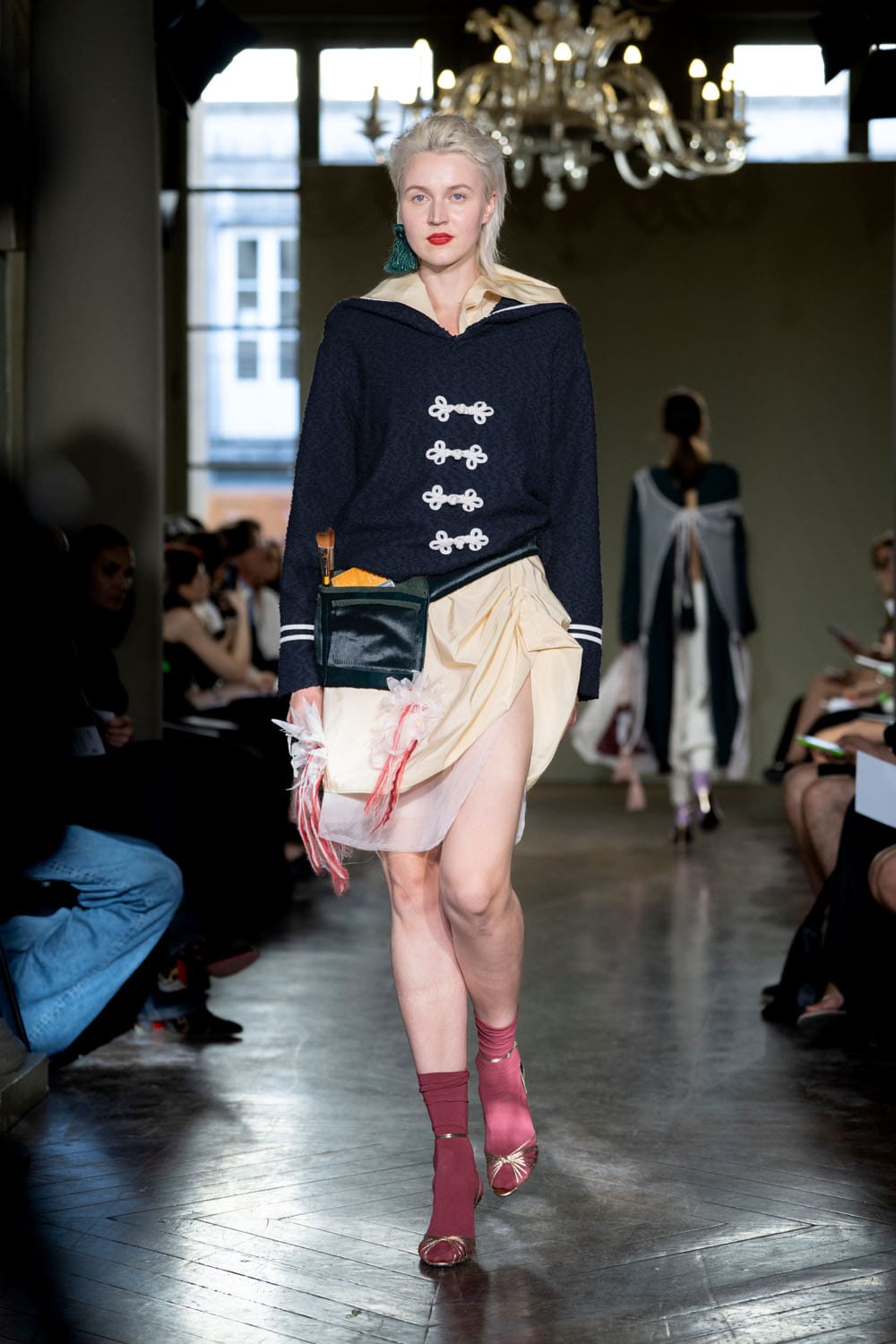
A notable example featured a heavy black knit sweater decorated down the center with prominent white frogs and military-style toggles, channeling traditional outerwear. This structured top was subverted by a cream-colored, draped asymmetric miniskirt that exposed the leg, accessorized with a utilitarian black waist-pouch containing literal paintbrushes and studio tools. Finished with burgundy ankle socks, gold strappy sandals, and a single dramatic dark green tassel earring, the look read as an ironic portrait of the artist-artisan at work—combining bourgeois heritage with the pragmatism of the studio floor.
Ultimately, the Crafting Futures graduate show demonstrated that while the tools of production continue to evolve, the core of design training remains rooted in the ability to deconstruct, critique, and reassemble visual culture into compelling physical forms.
See All Looks Istituto Marangoni Paris 2026 “Apostolos Kalfopoulos”