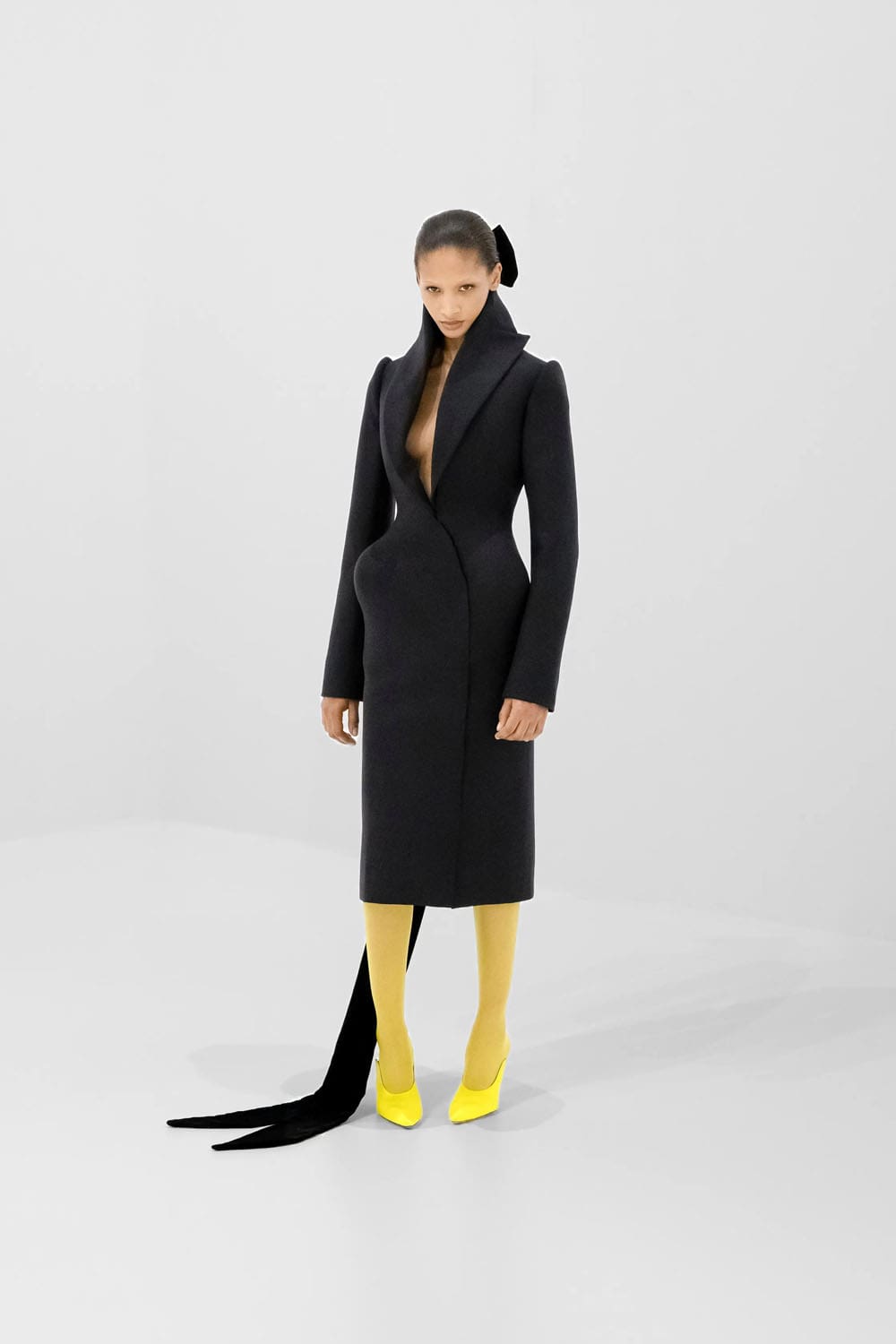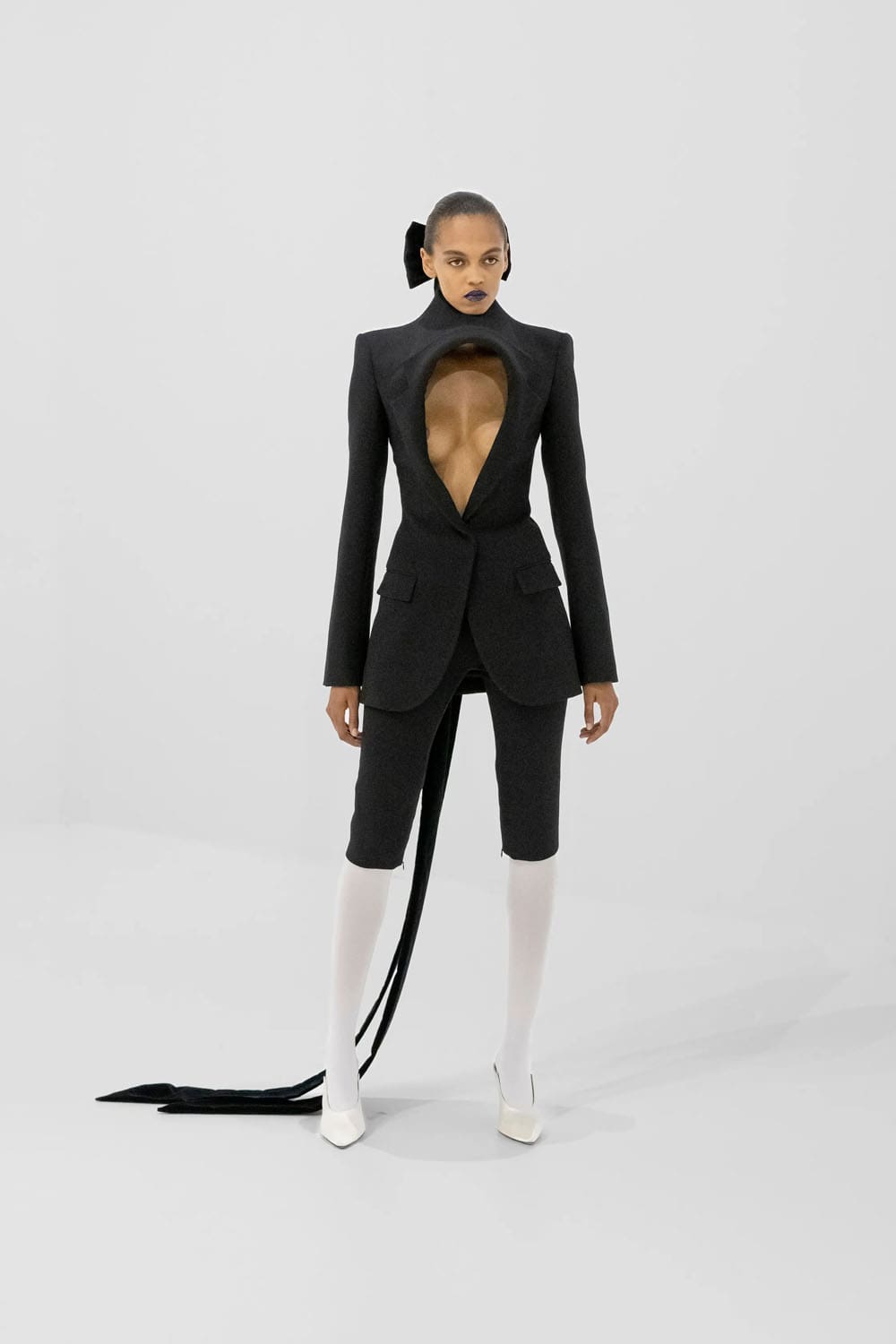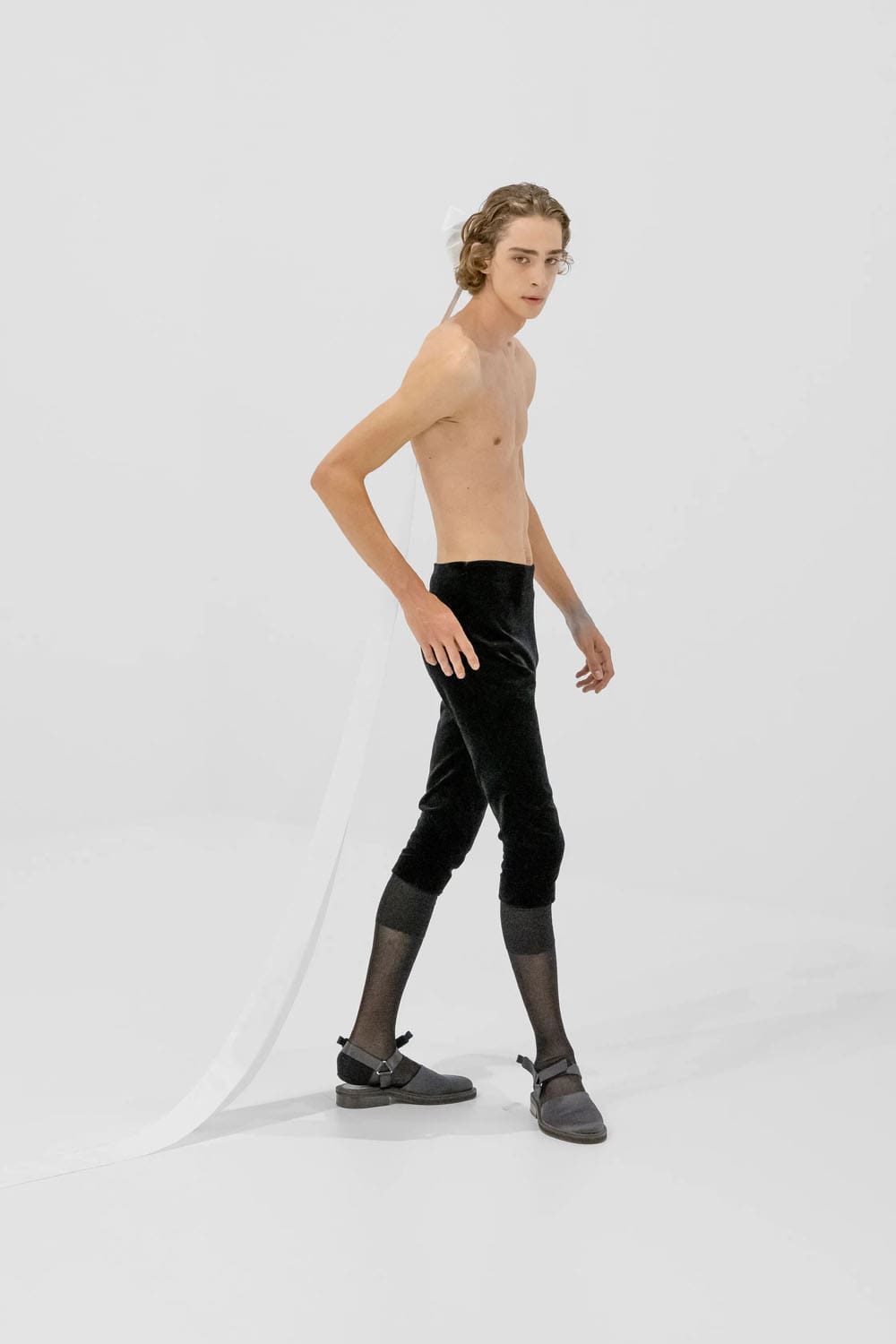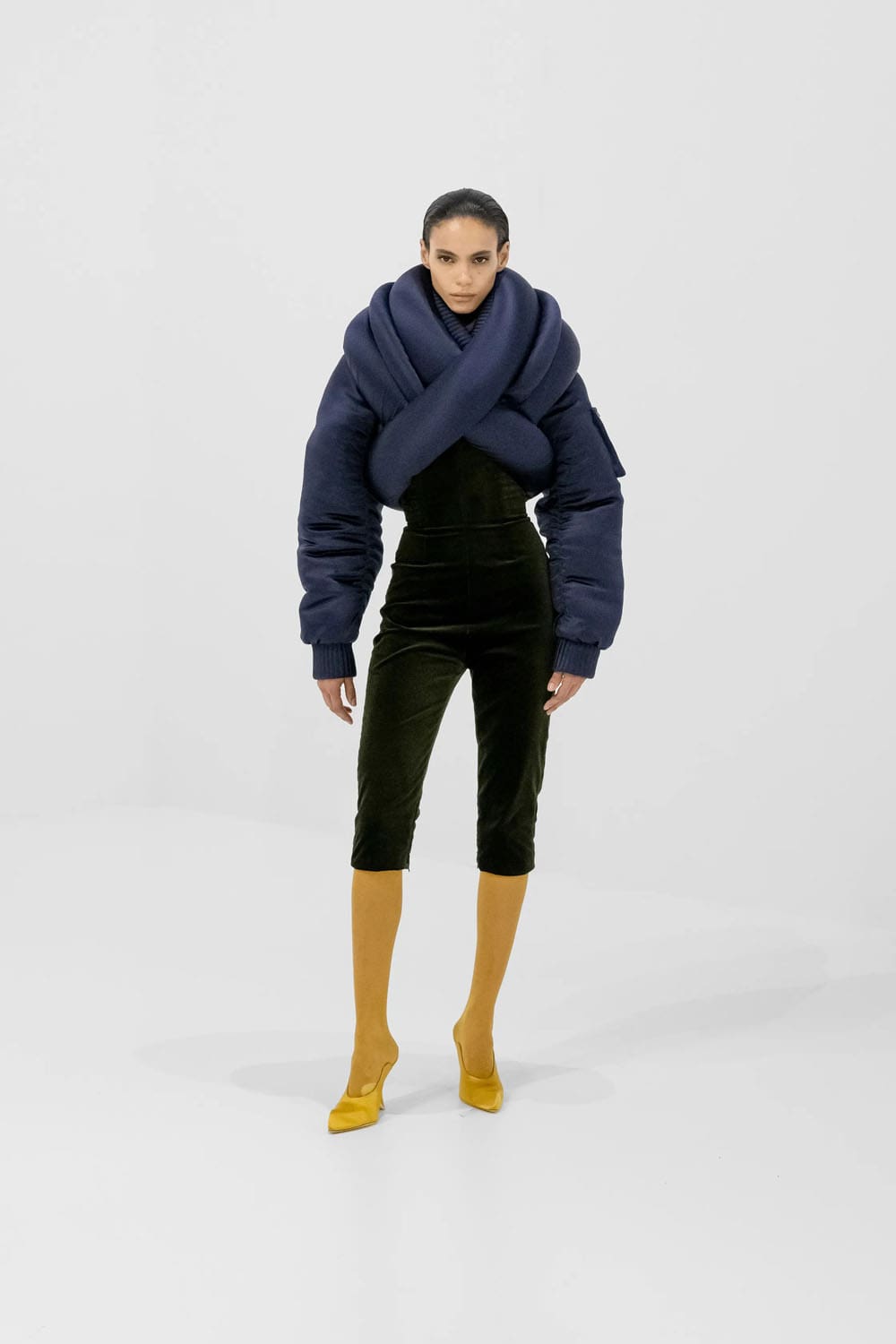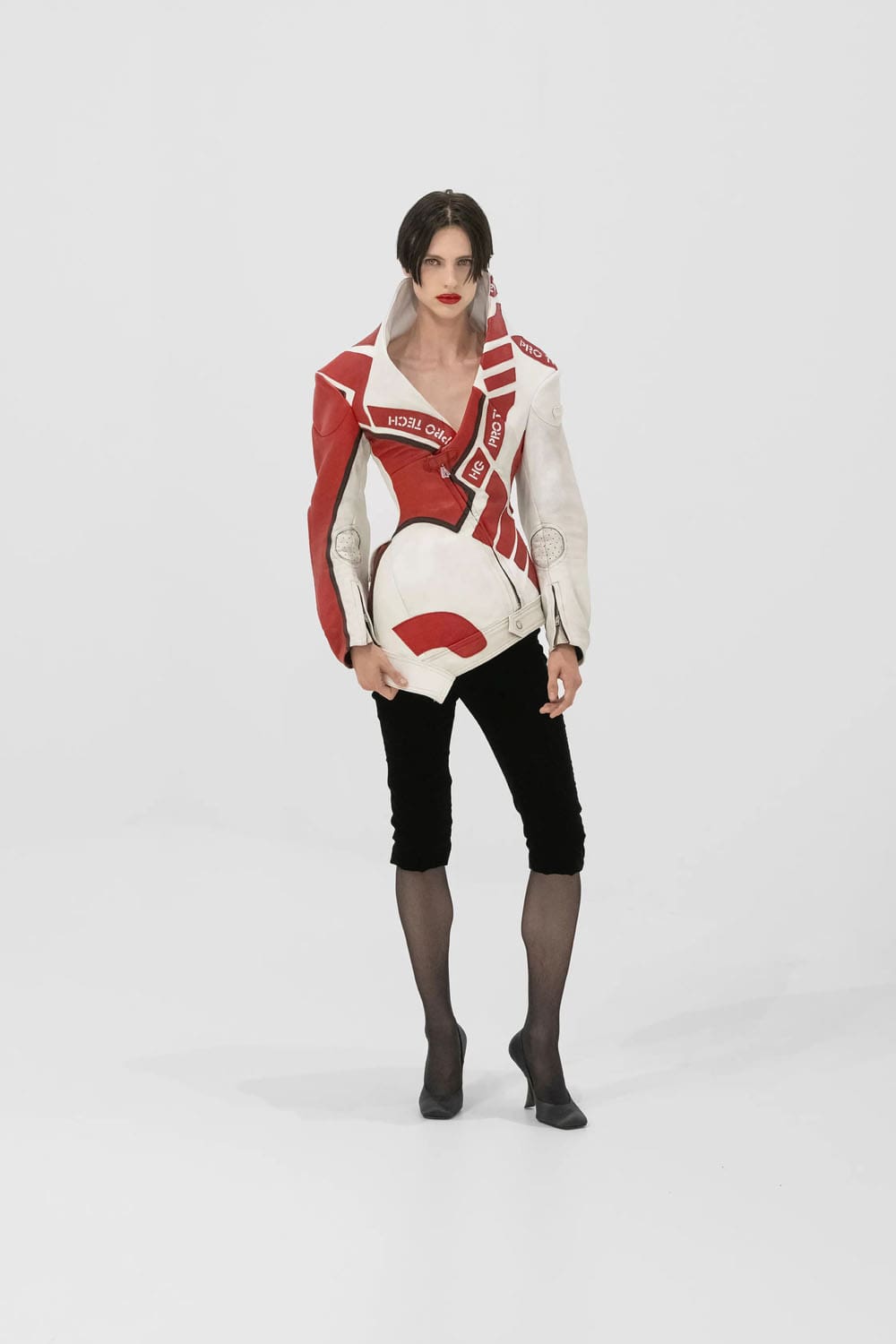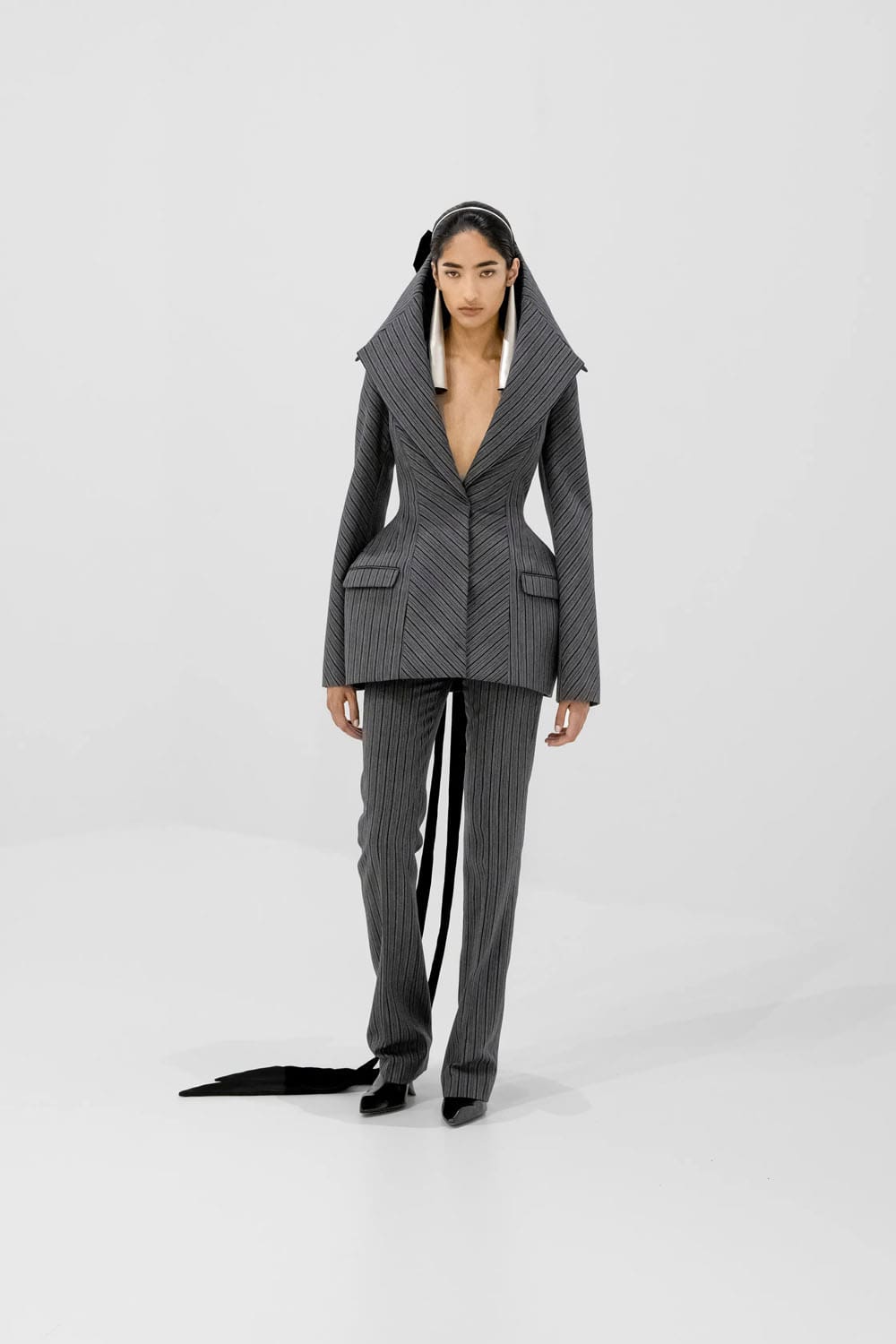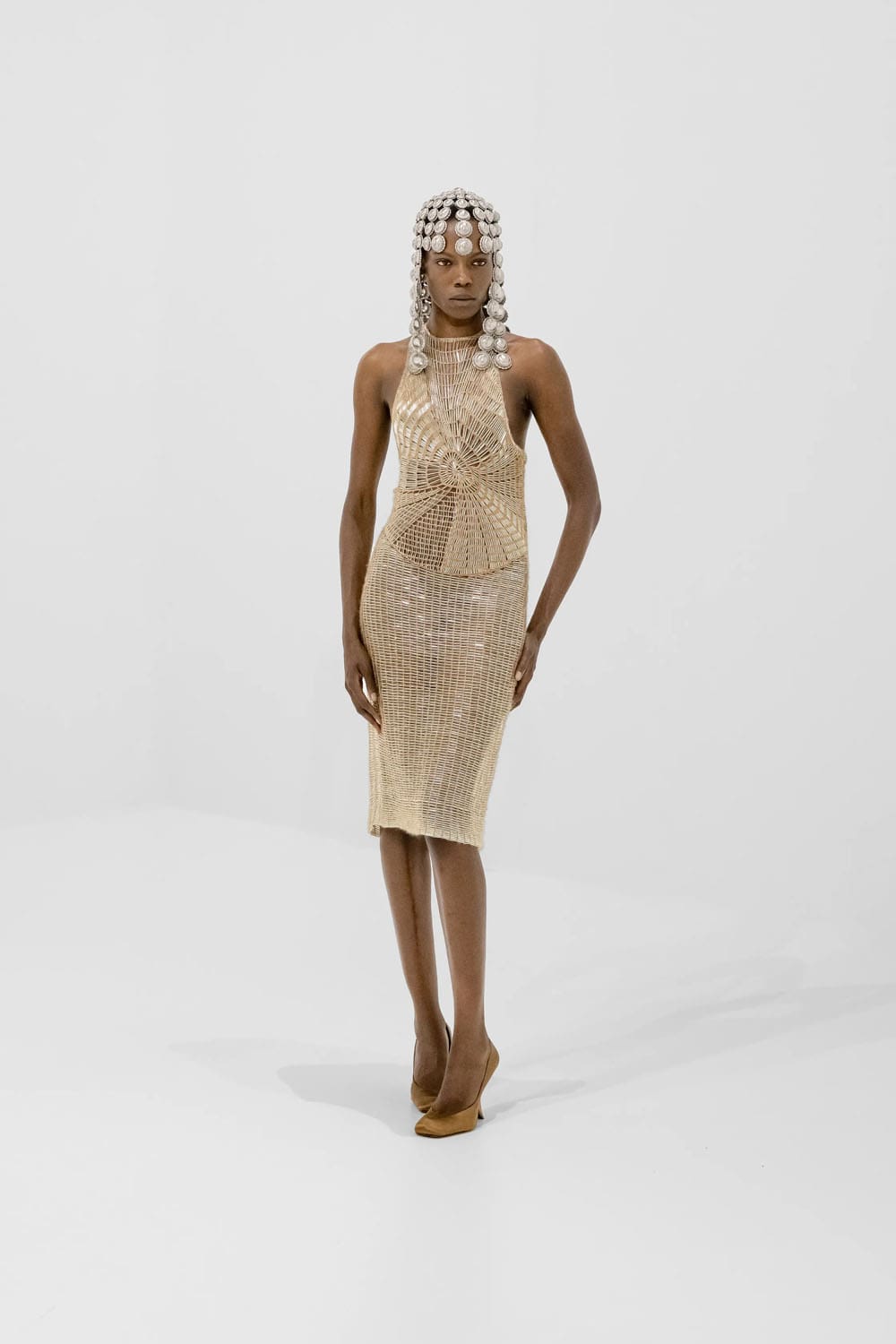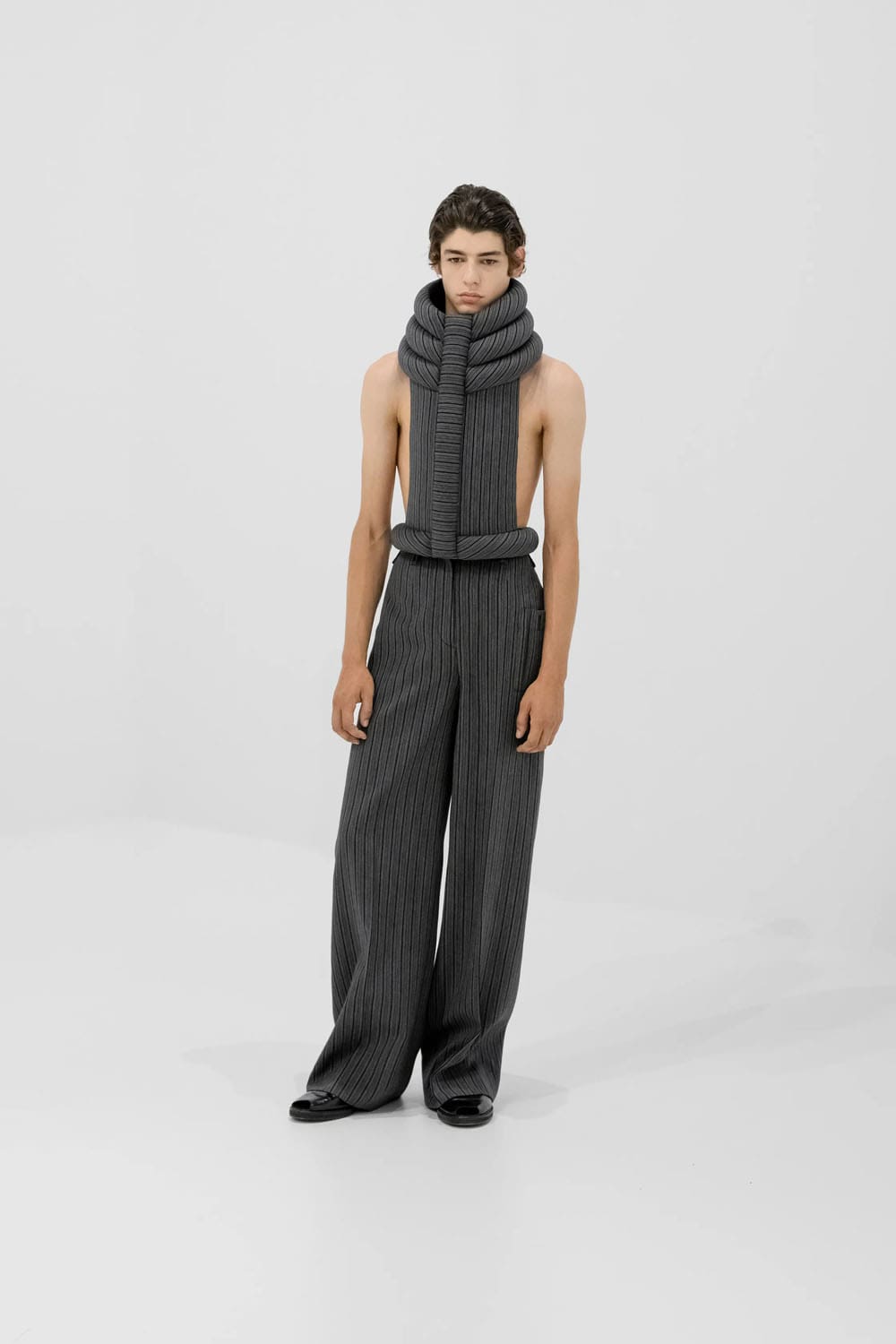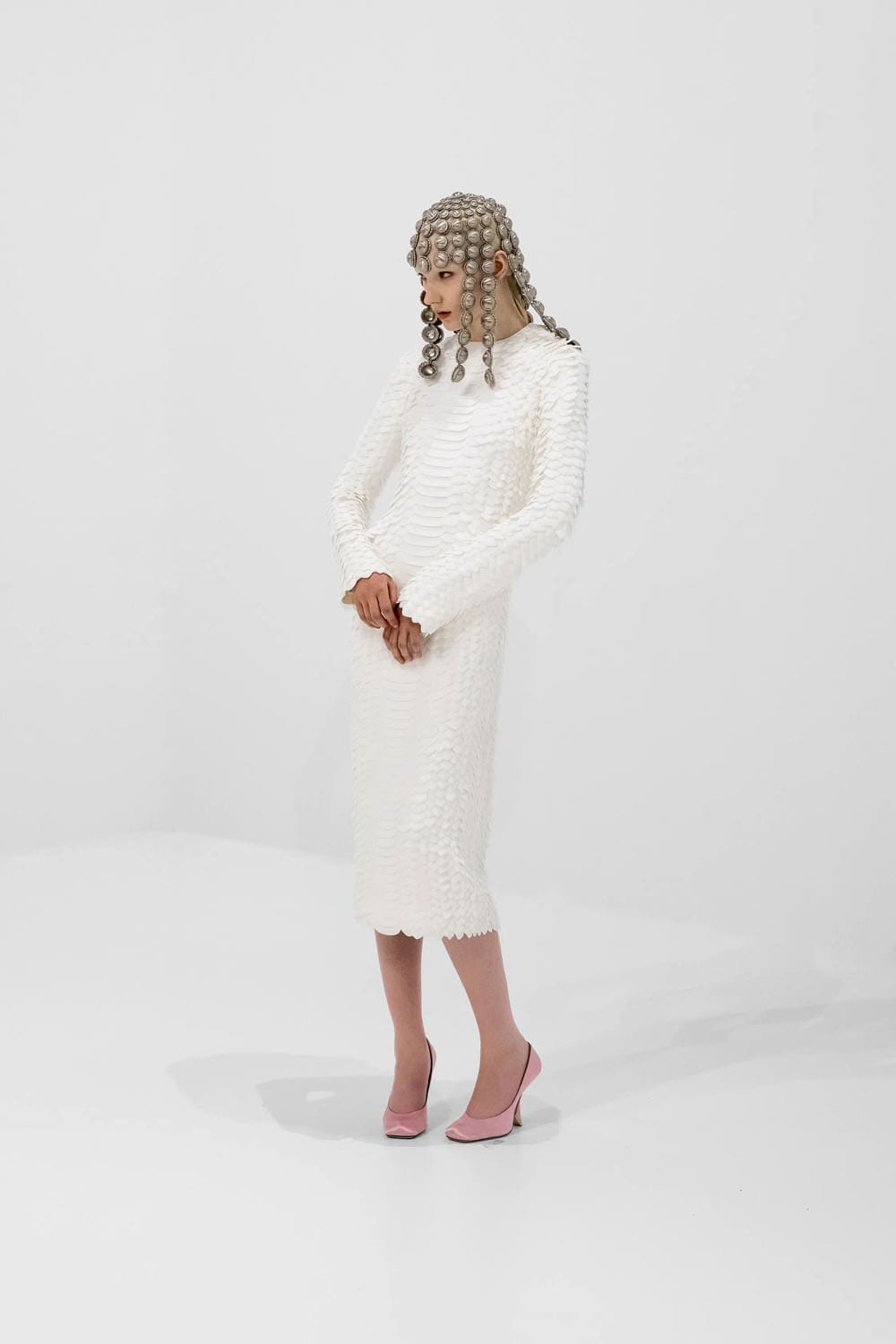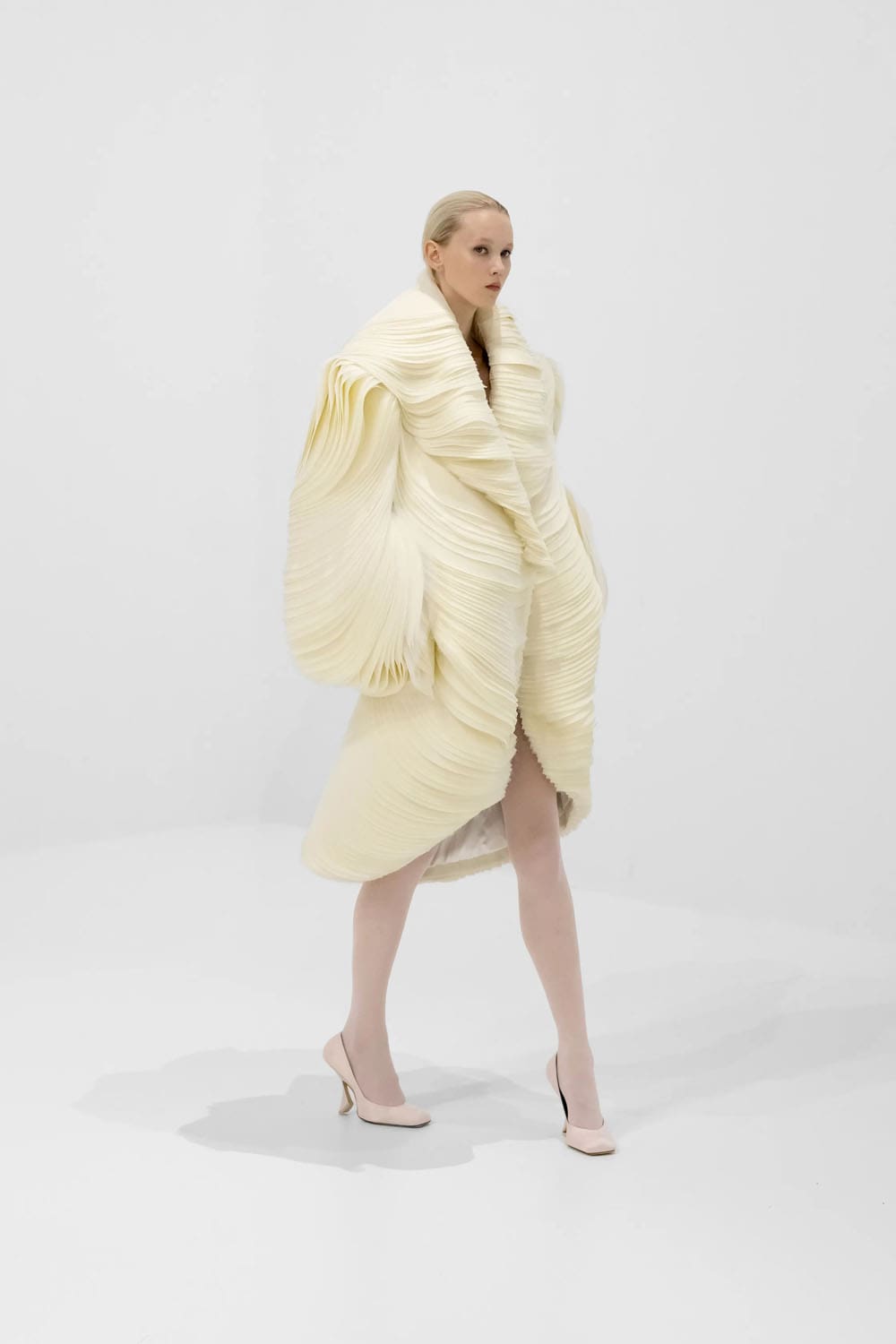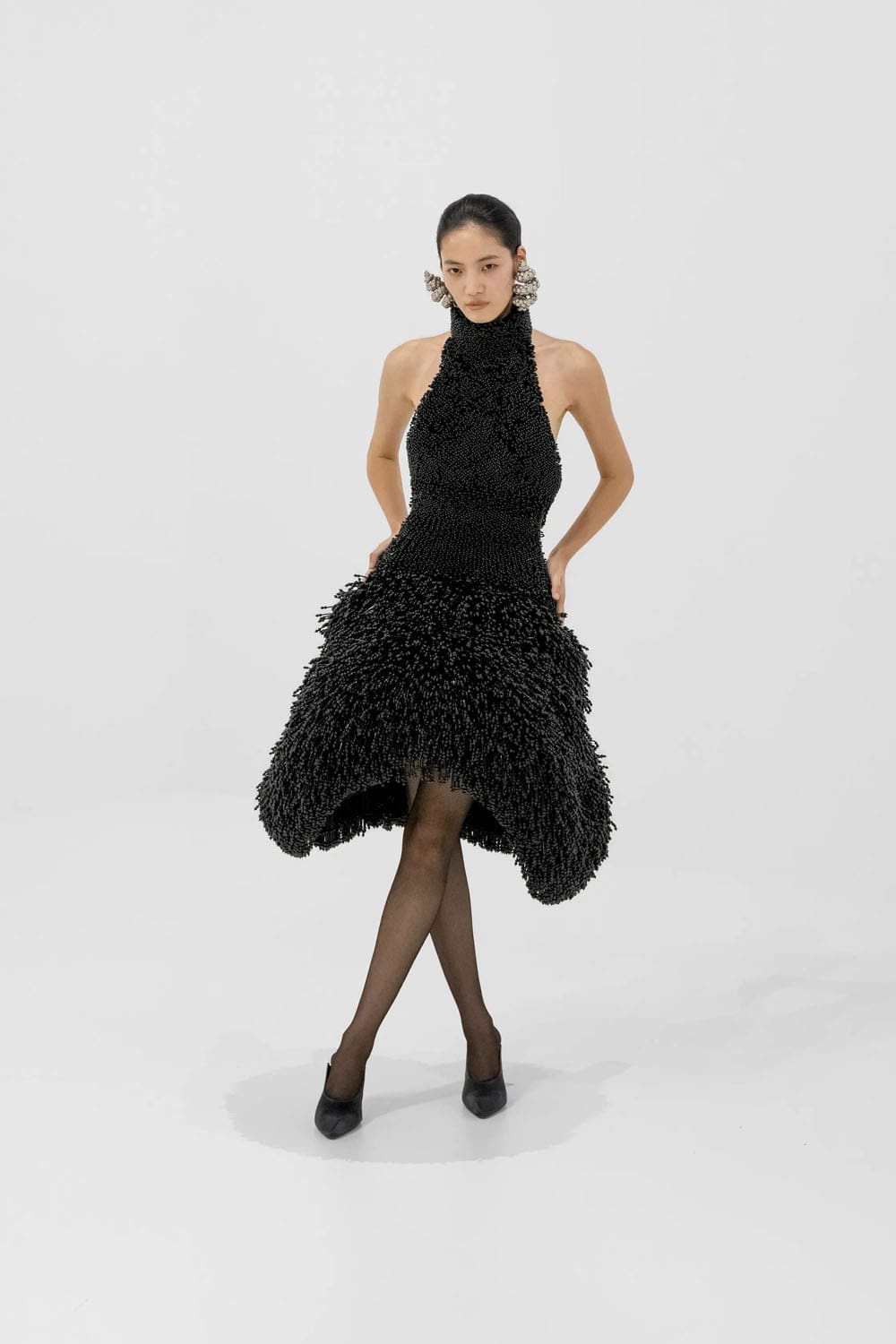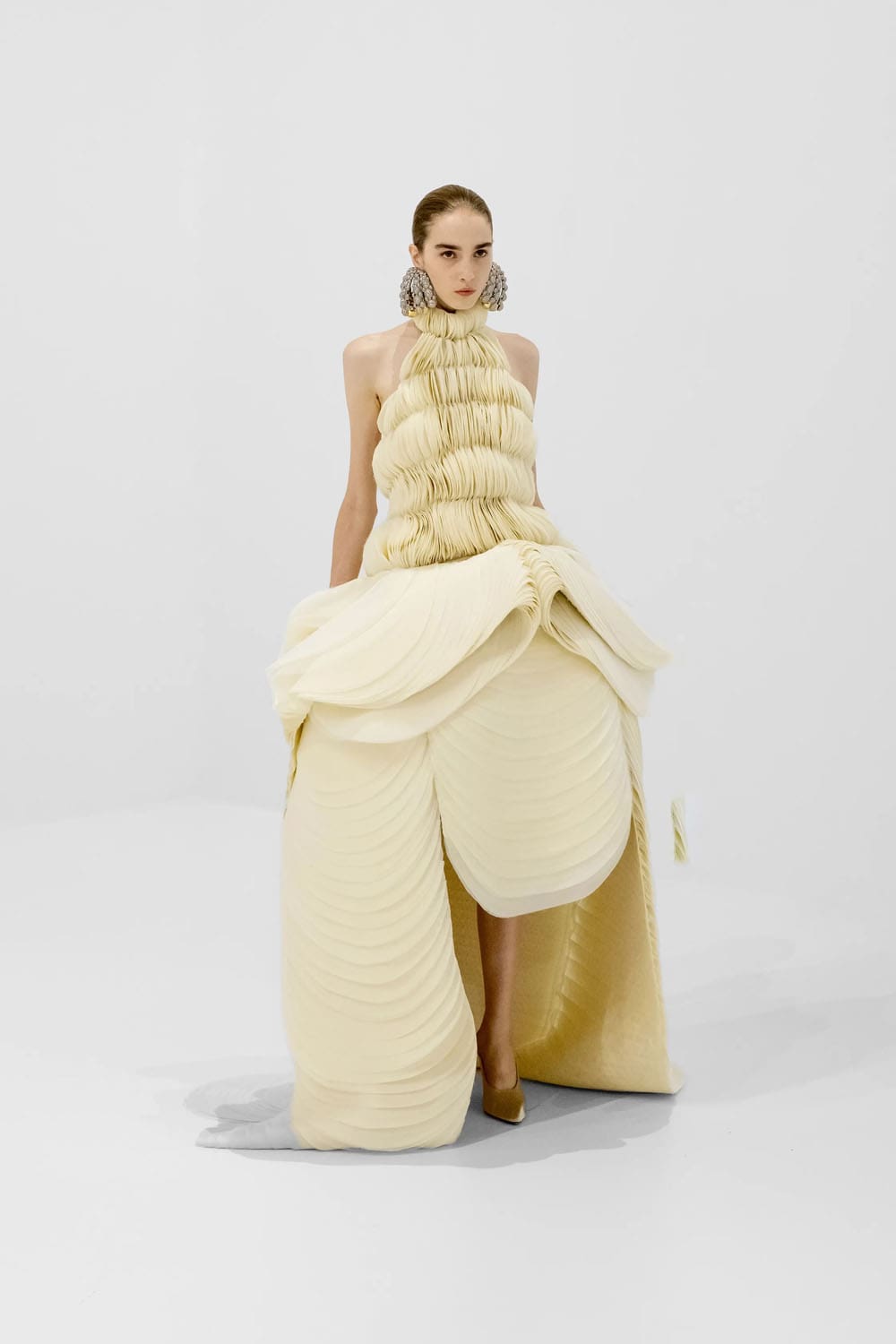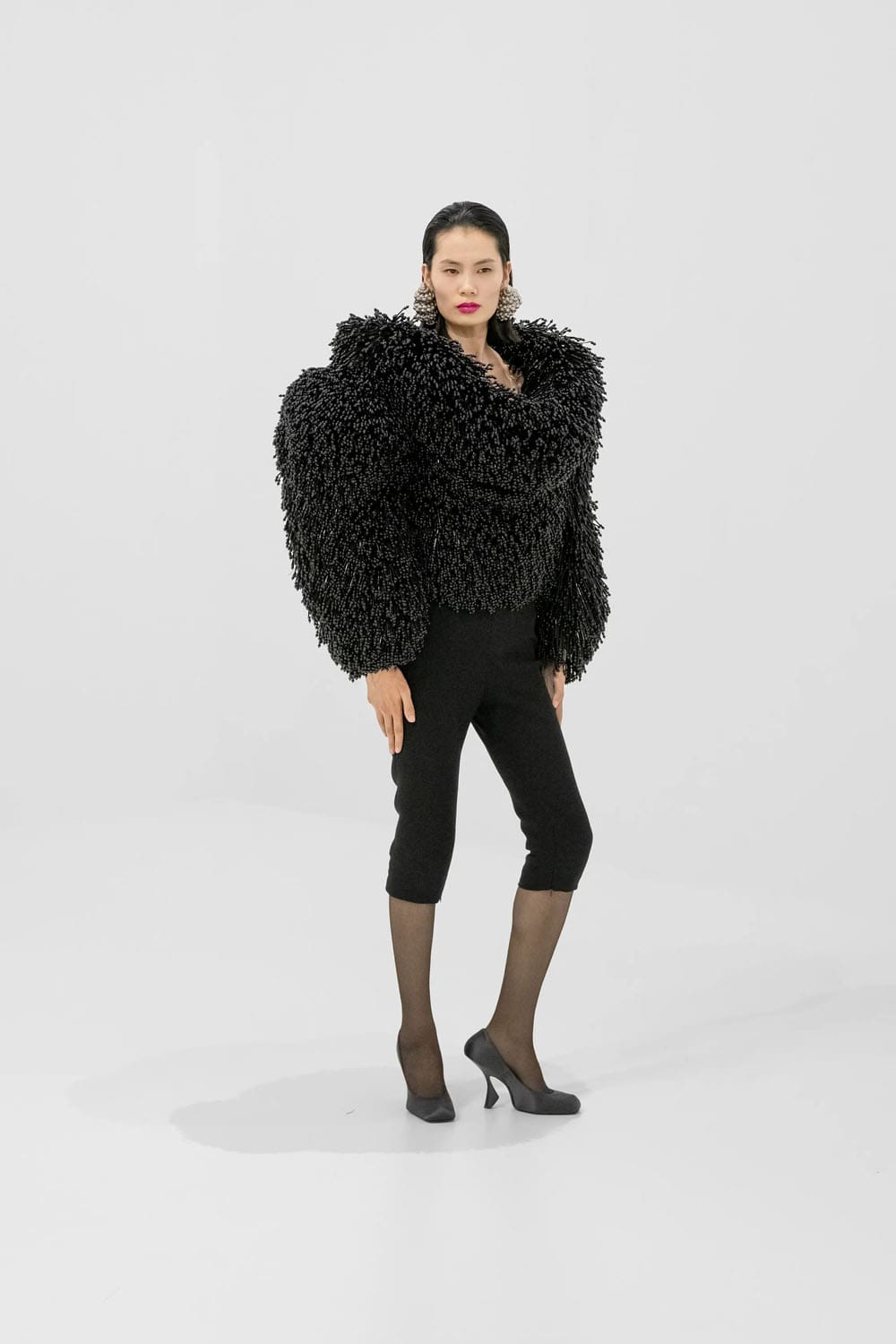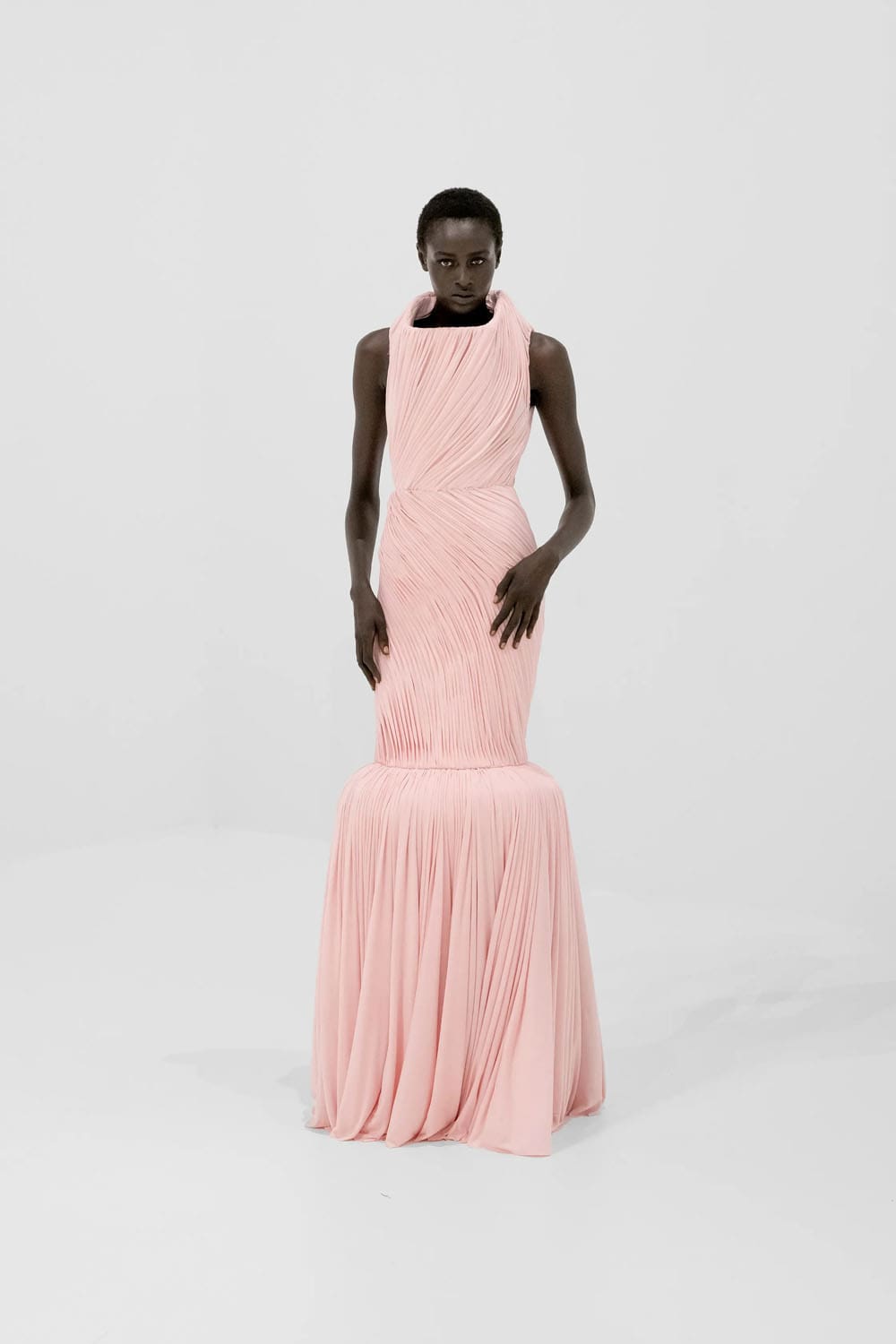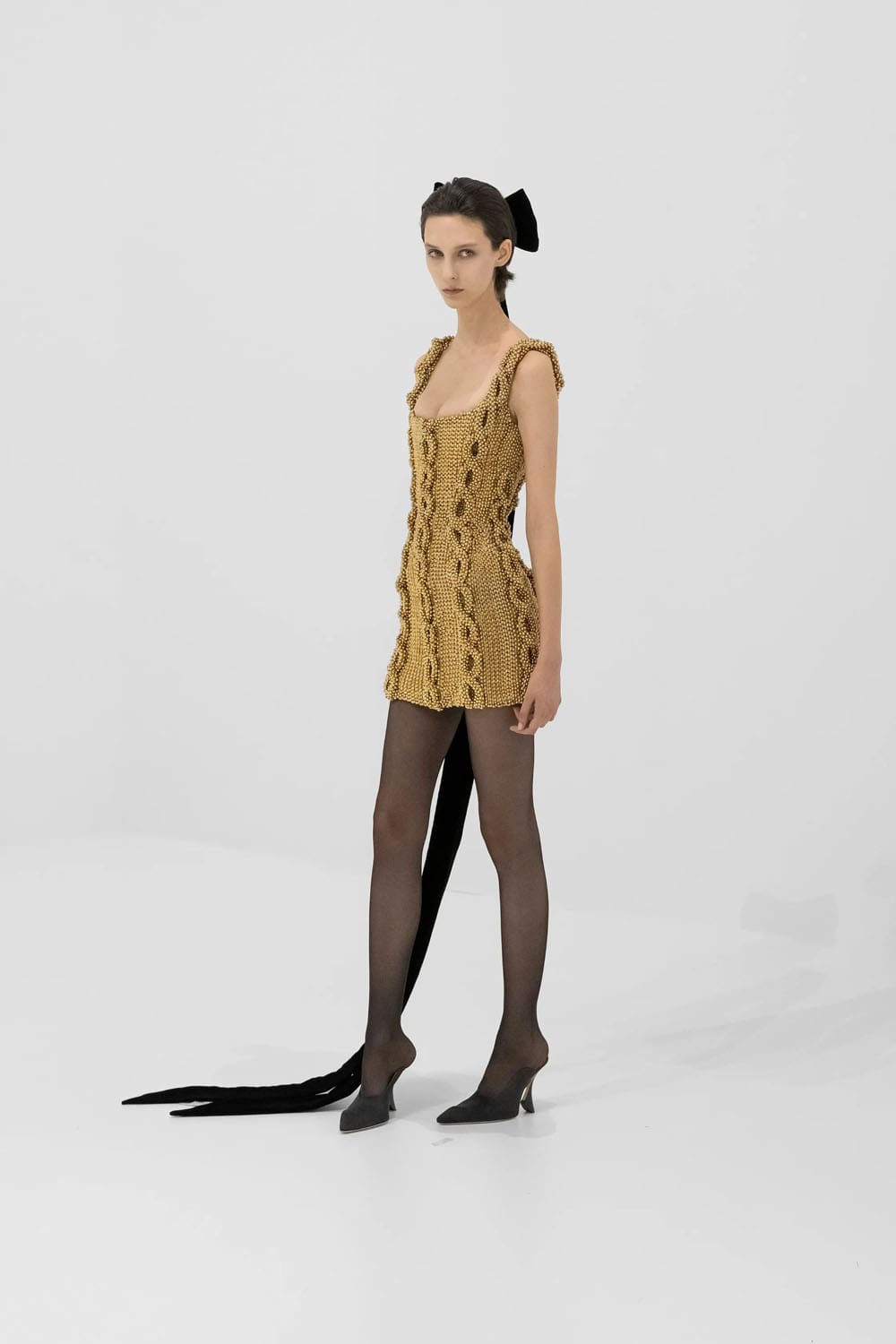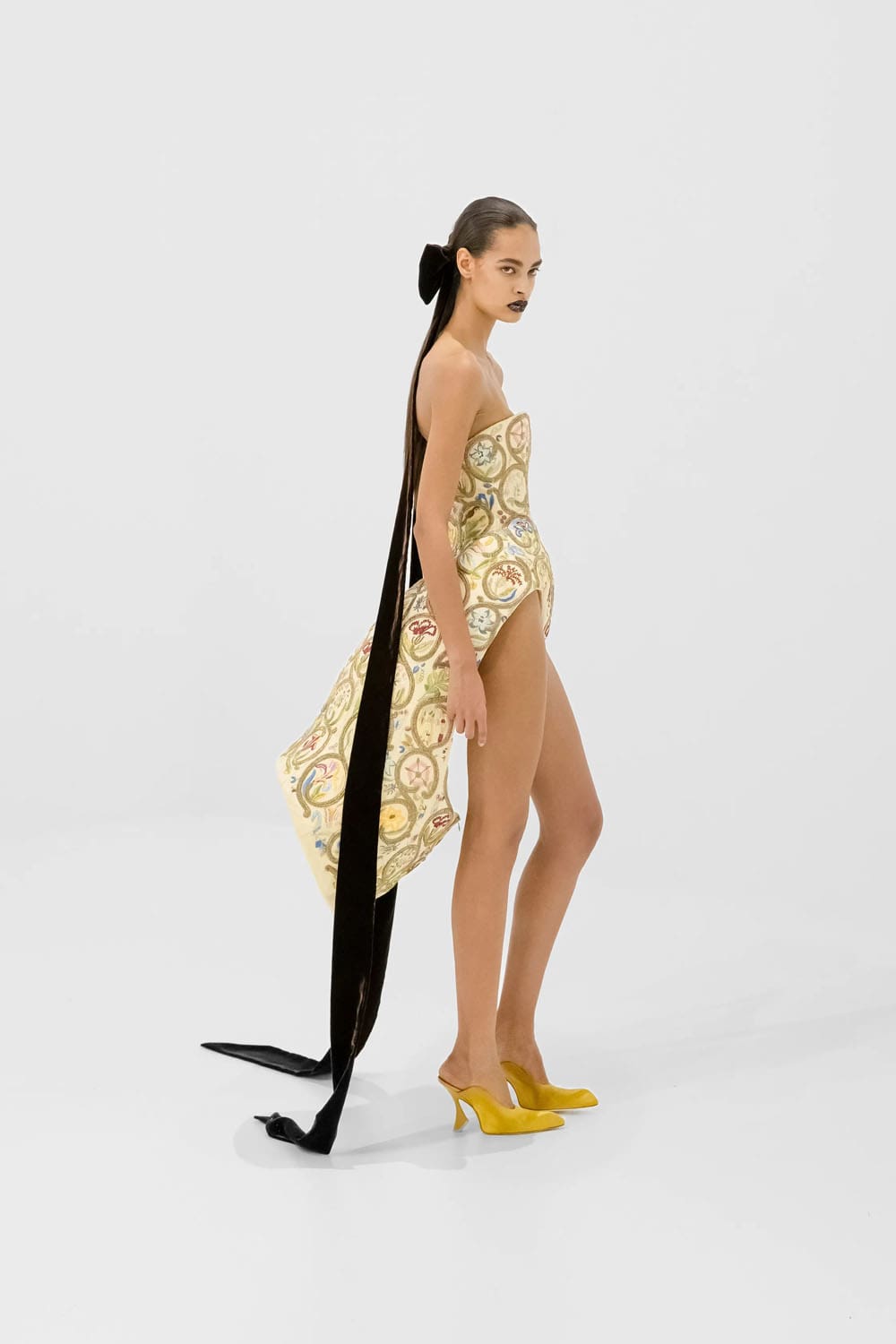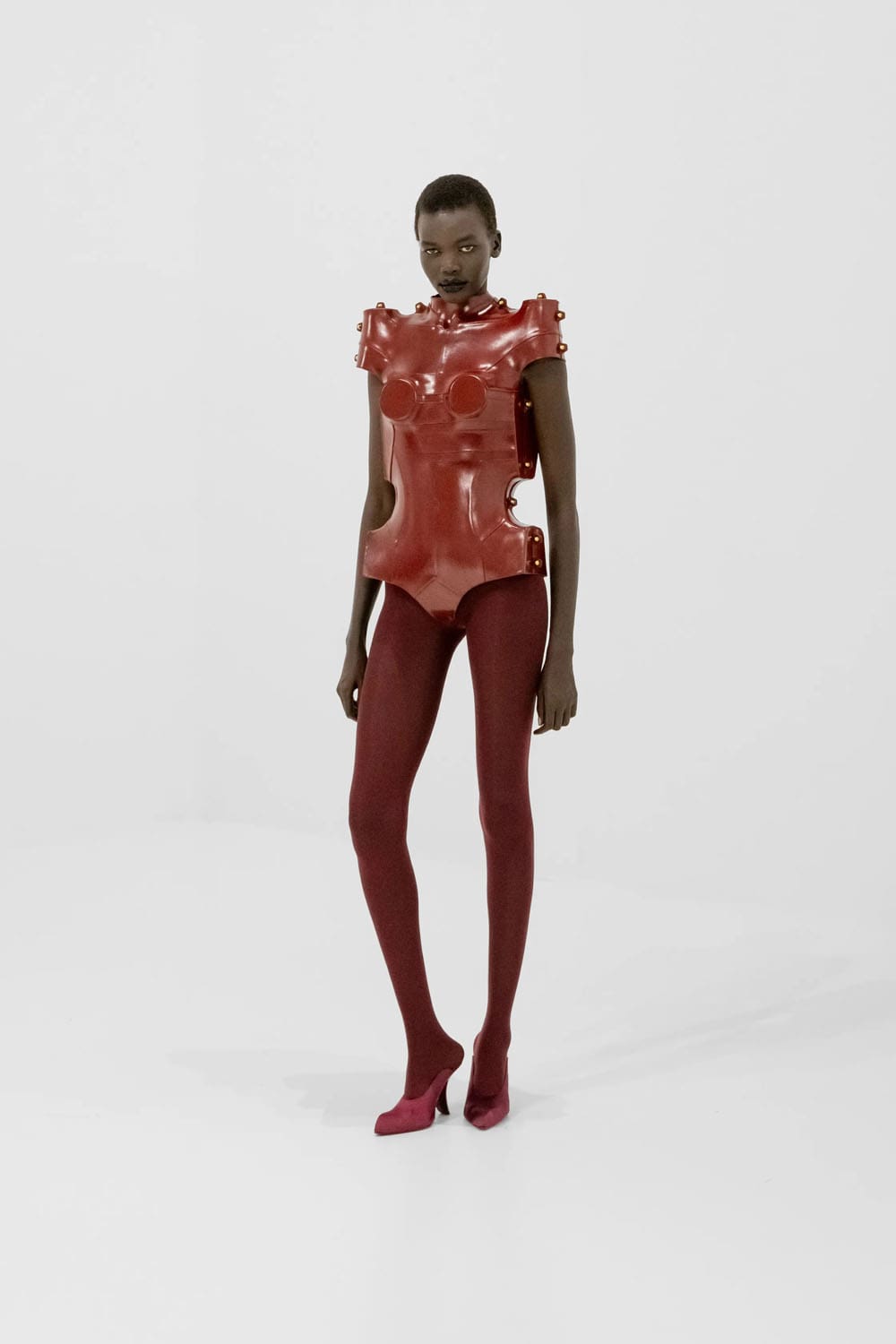
Jean Paul Gaultier Fall Winter 2026-2027 Couture by Duran Lantink. Story by Eleonora de Gray, Editor-in-Chief of RUNWAY MAGAZINE. Photo Courtesy: Jean Paul Gaultier.
An Undergraduate Exercise in Couture
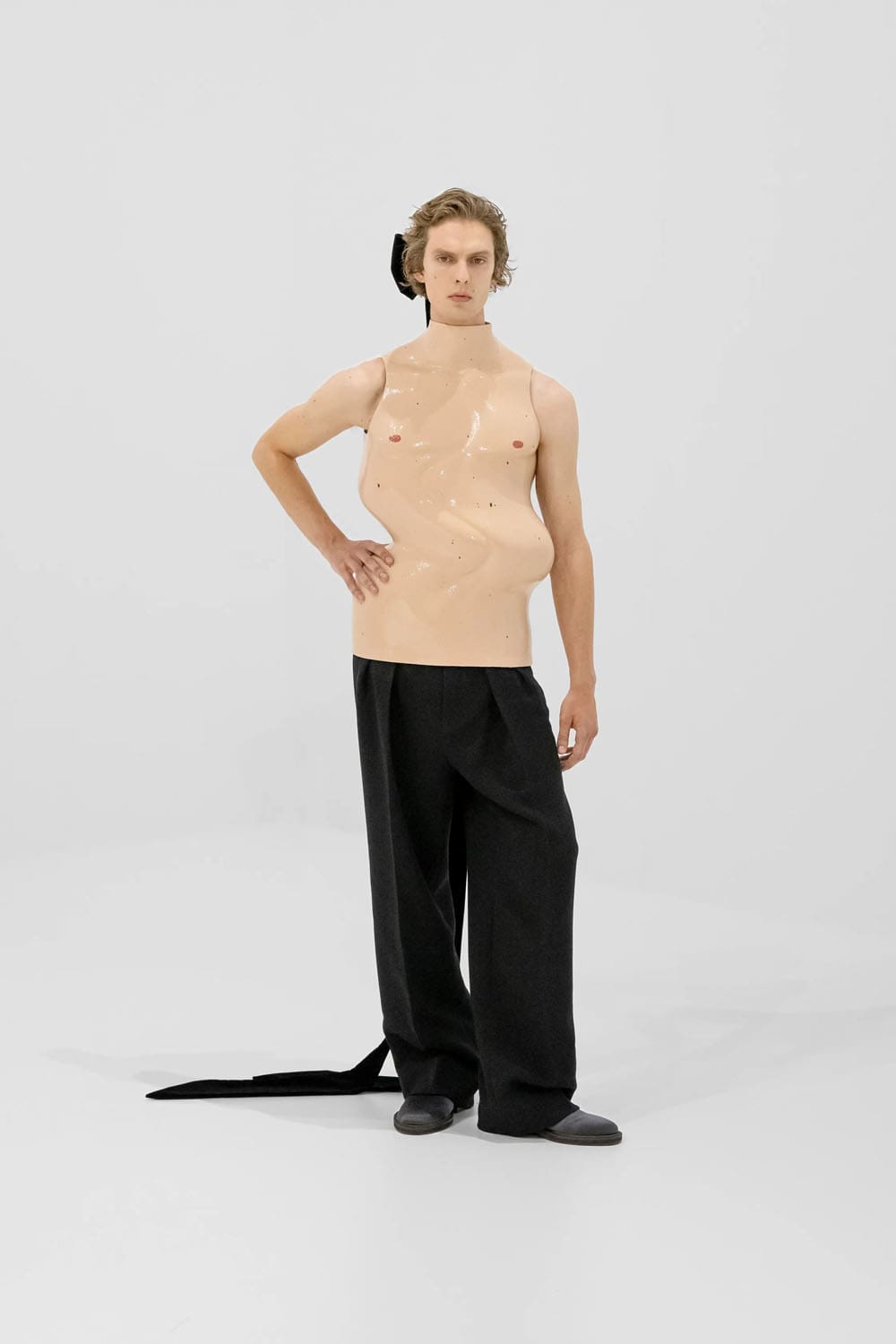
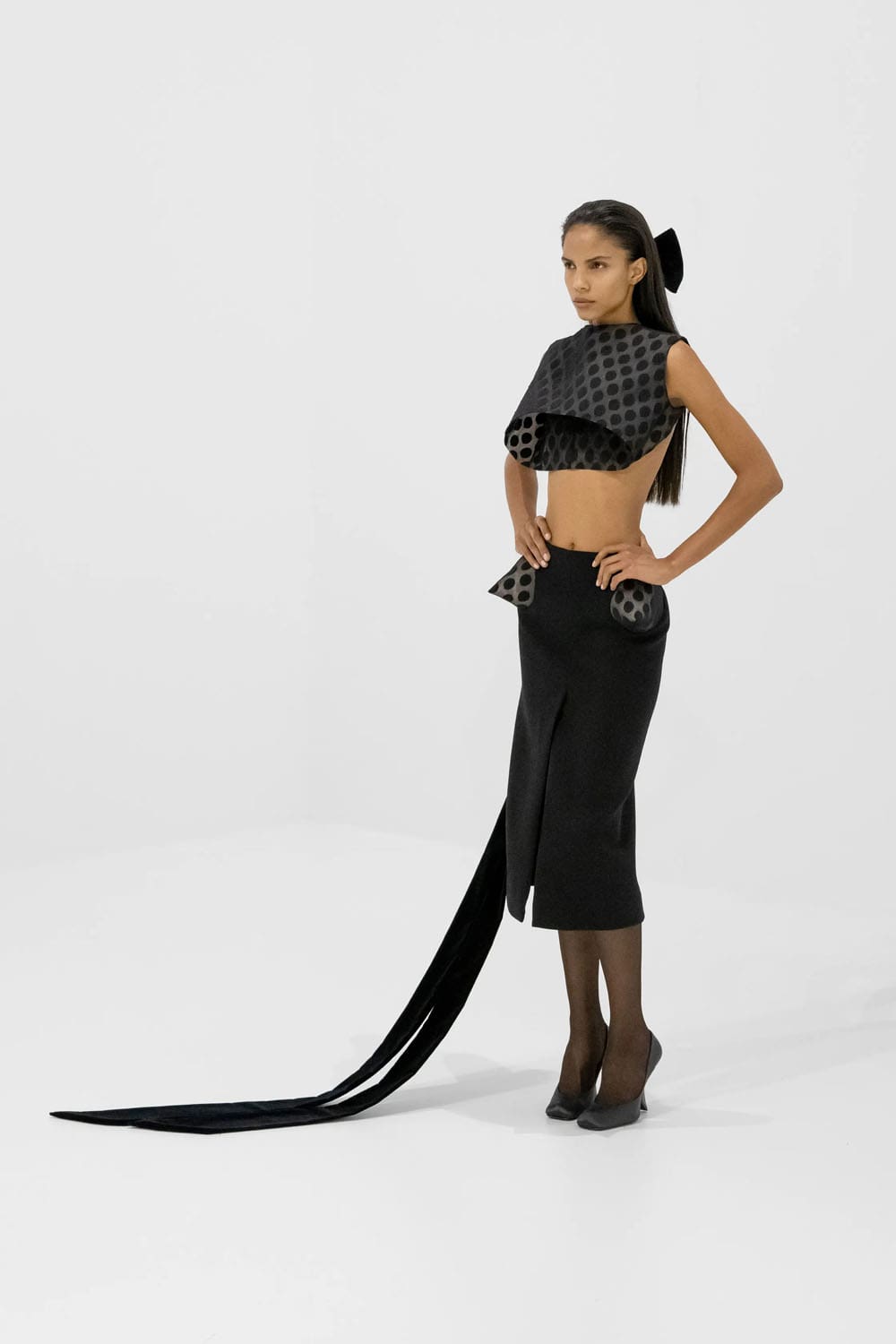
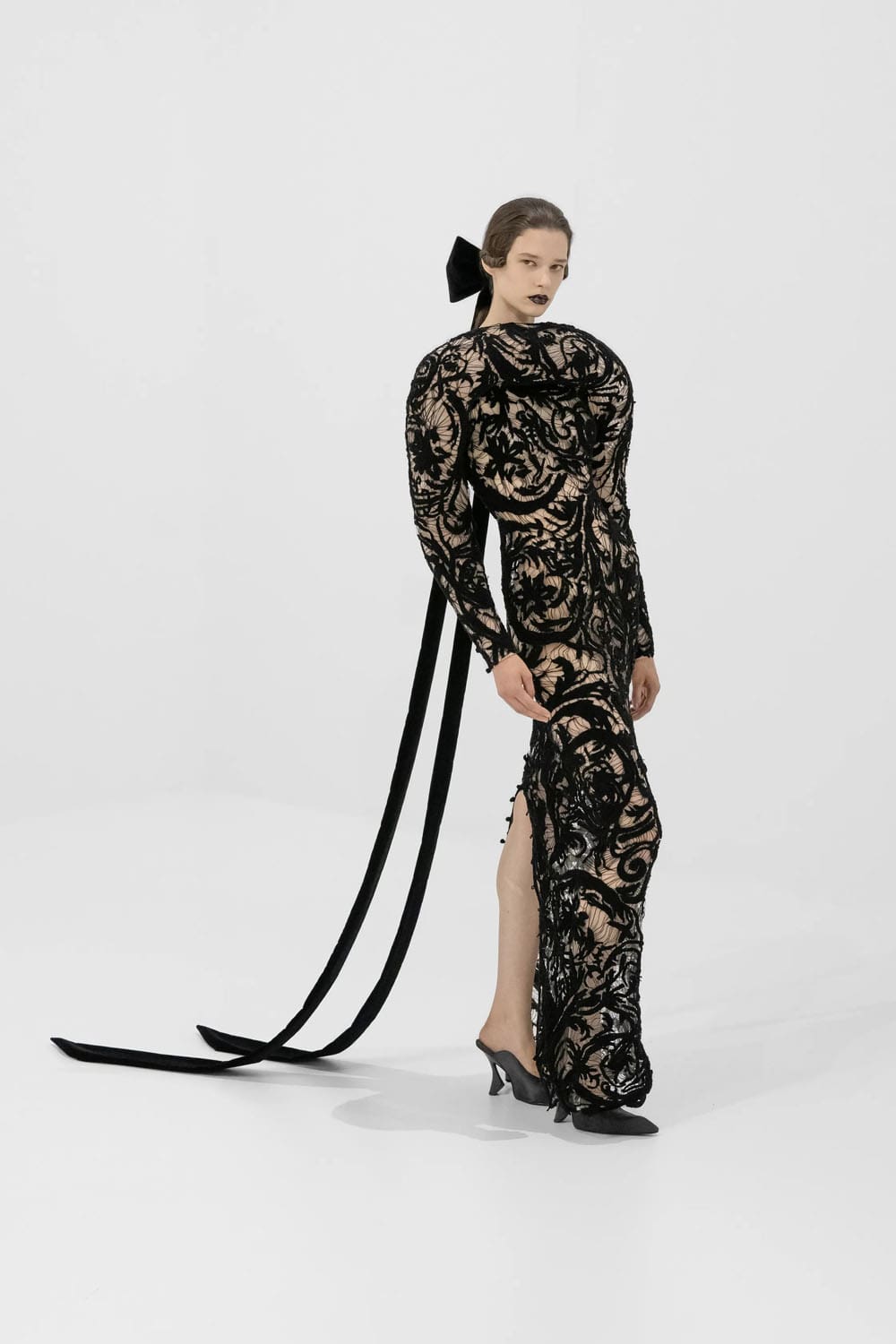
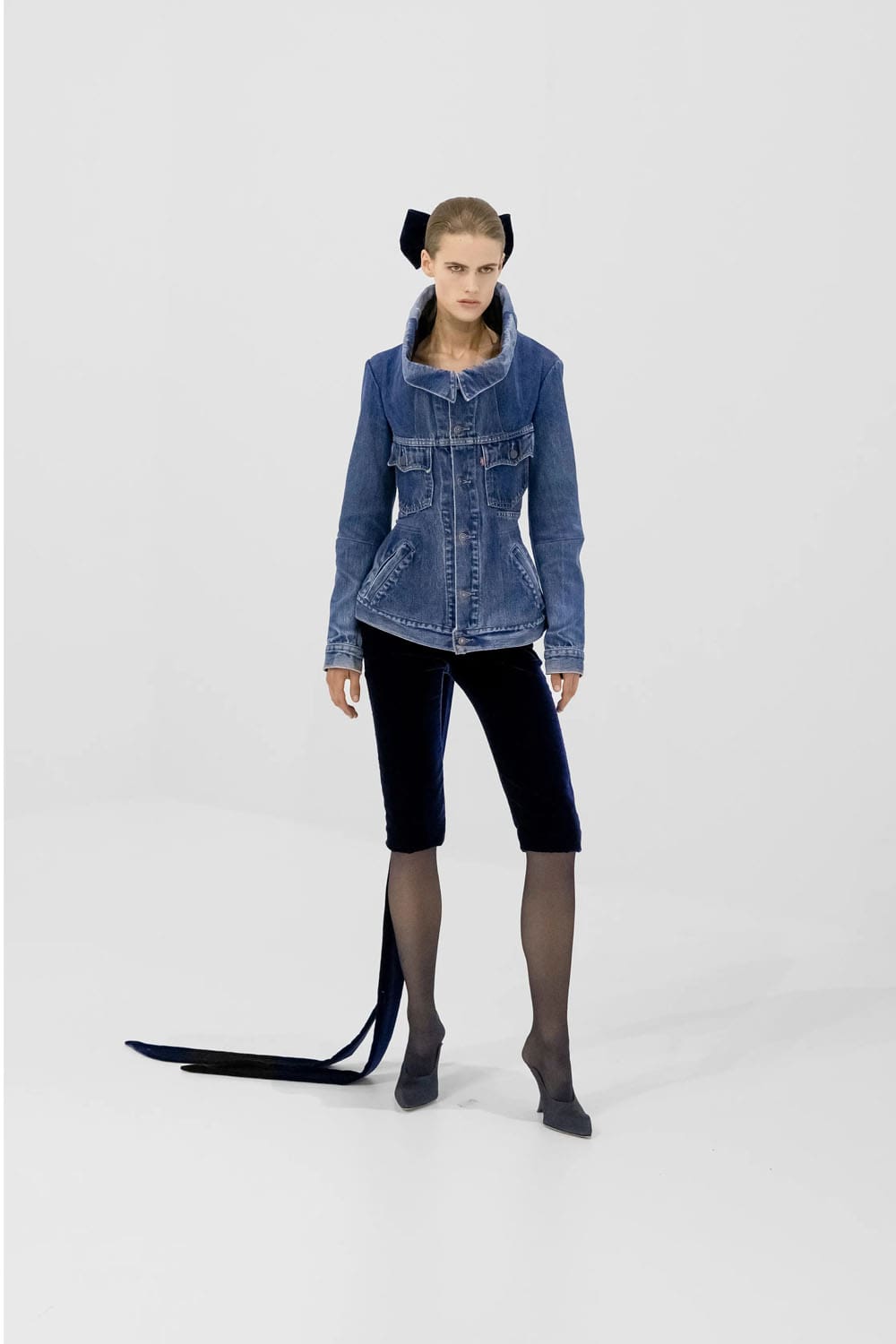
There is a distinct difference between exploring an archive and wandering through it like a confused student who accidentally stumbled into the master’s atelier during the summer recess. The Jean Paul Gaultier Haute Couture Fall/Winter 2026-2027 collection, curated by new creative designer Duran Lantink, unfortunately falls heavily into the latter category. For a fashion house built on highly precise, rebellious, yet deeply sophisticated archetypes—most notably the revolutionary cone bra and the legendary sculpted torso that has defined the brand’s very essence and commercial fragrance empire for decades—this offering felt remarkably lightweight.
The collection carries the unmistakable air of a graduation project. It features the kind of earnest, self-indulgent experimentation where a young designer prioritizes personal expression over any coherent understanding of the house’s heritage. Rather than investigating the codes of Gaultier, the runway played host to a series of disjointed, “Demna-esque” aesthetic exercises. These pieces possess neither the wearability nor the structural relevance required to sustain a legacy brand, let alone a Haute Couture presentation.
Deconstructing the Non-Revolutionary
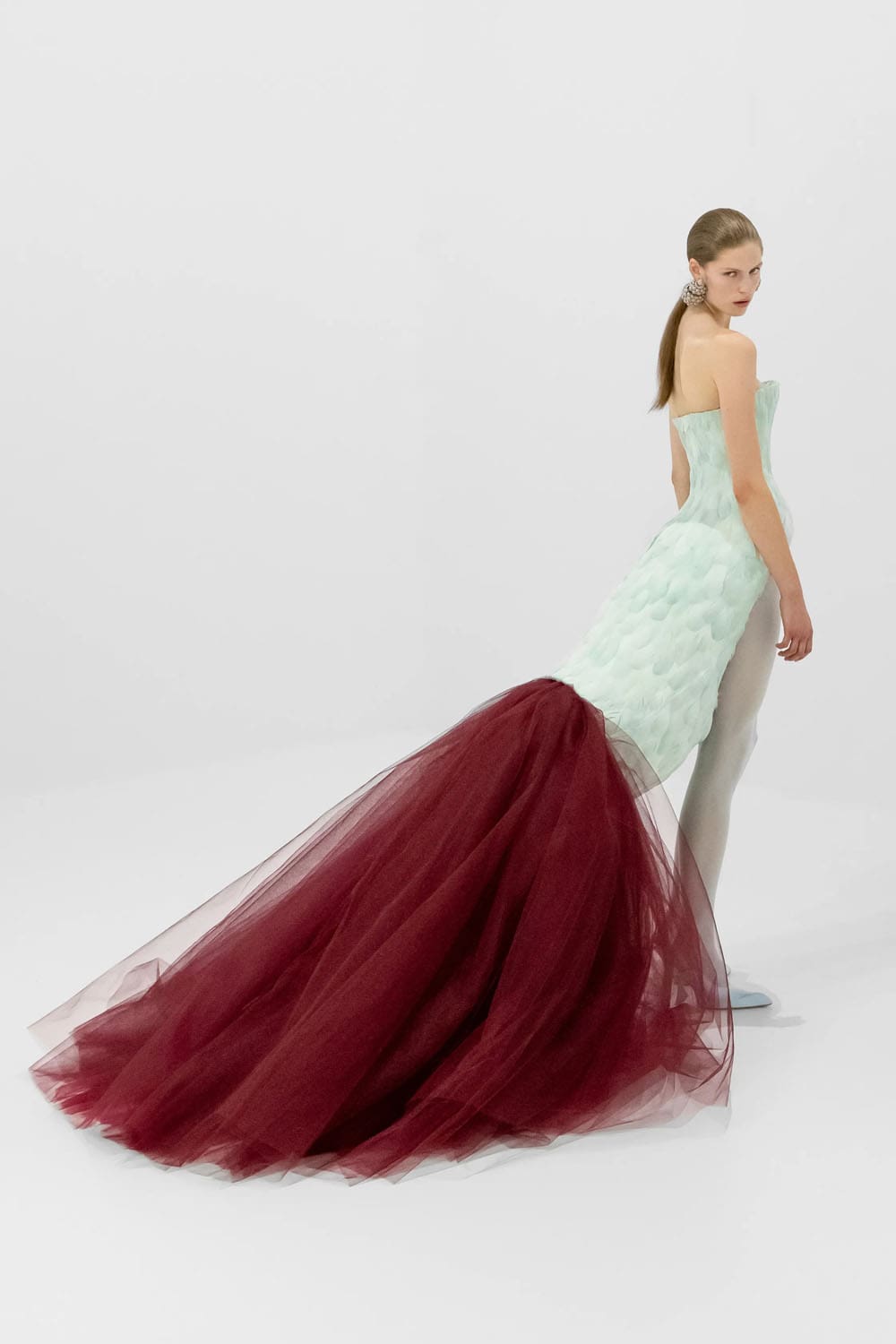
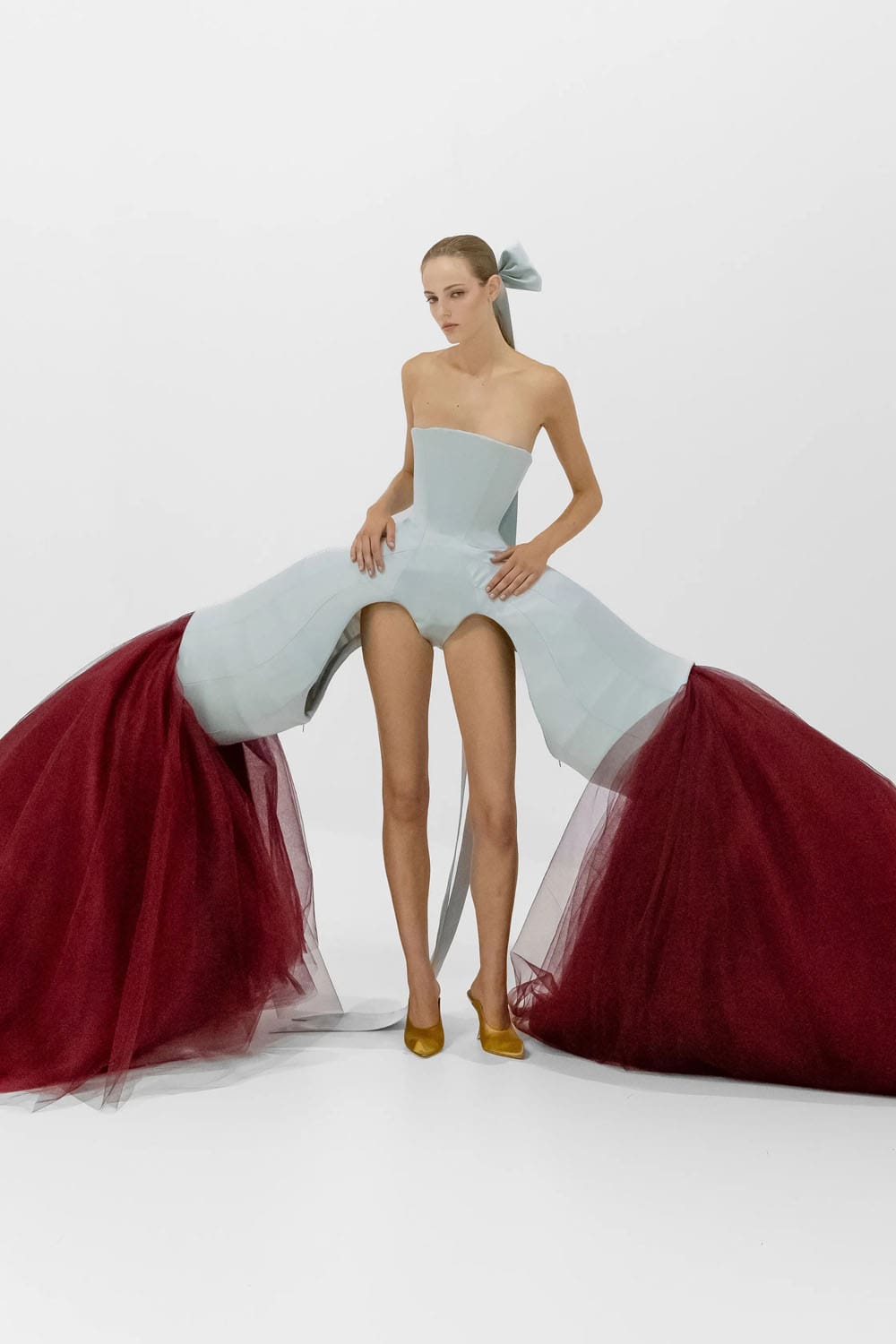
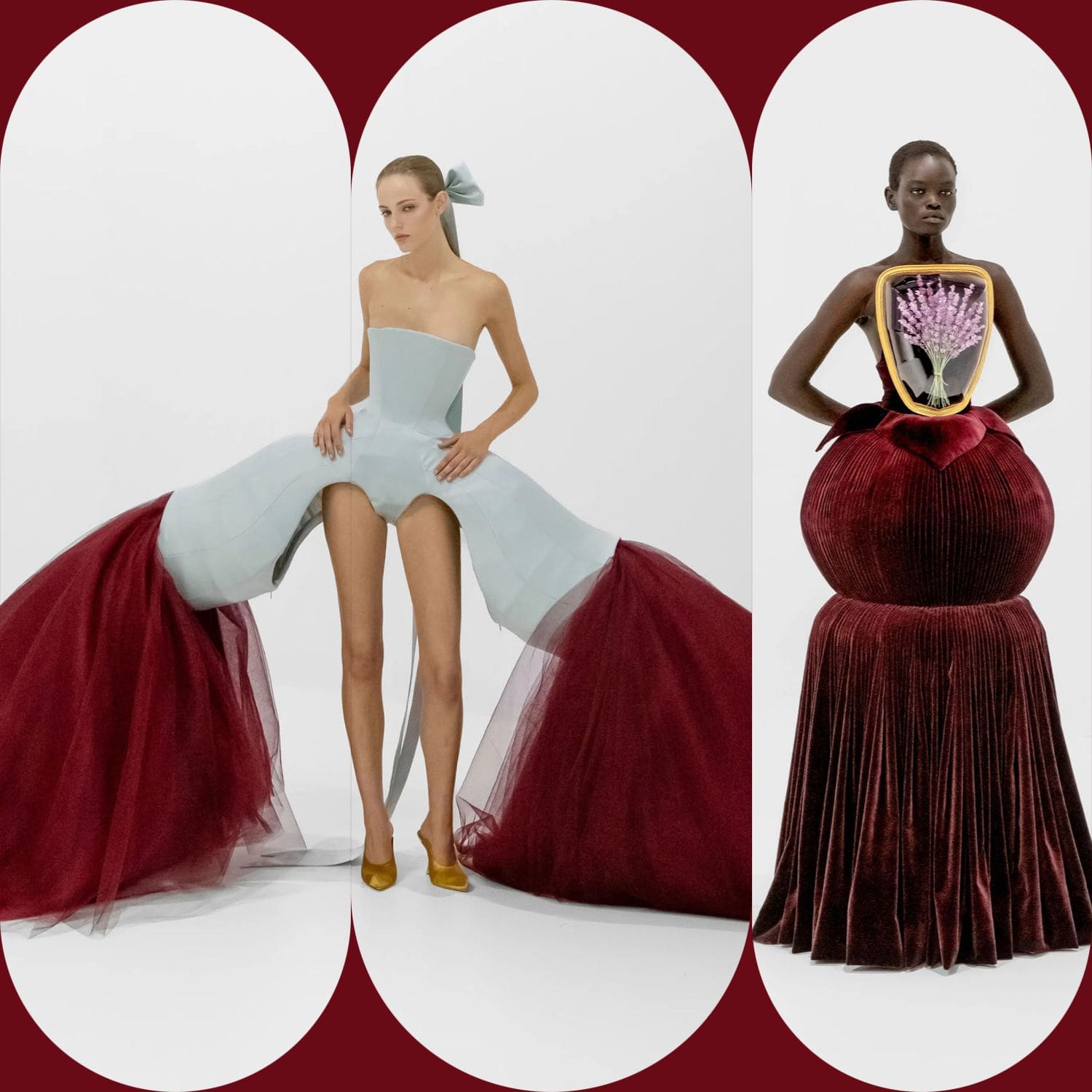
The conceptual cornerstone of the collection, according to Lantink, was an exploration of Marie Antoinette. However, instead of historical subversion or regal theatricality, the references materialized as caricature. Take, for instance, a pale blue strapless corset that extends into a rigid, open-ended pannier framework, completely exposing the legs before pooling into massive, heavy mounds of burgundy tulle on either side. It is a structure that feels entirely disconnected from the body—neither revolutionary nor particularly extraordinary, but rather a literal, heavy-handed interpretation of historical undergarments stripped of any seductive Gaultier edge.
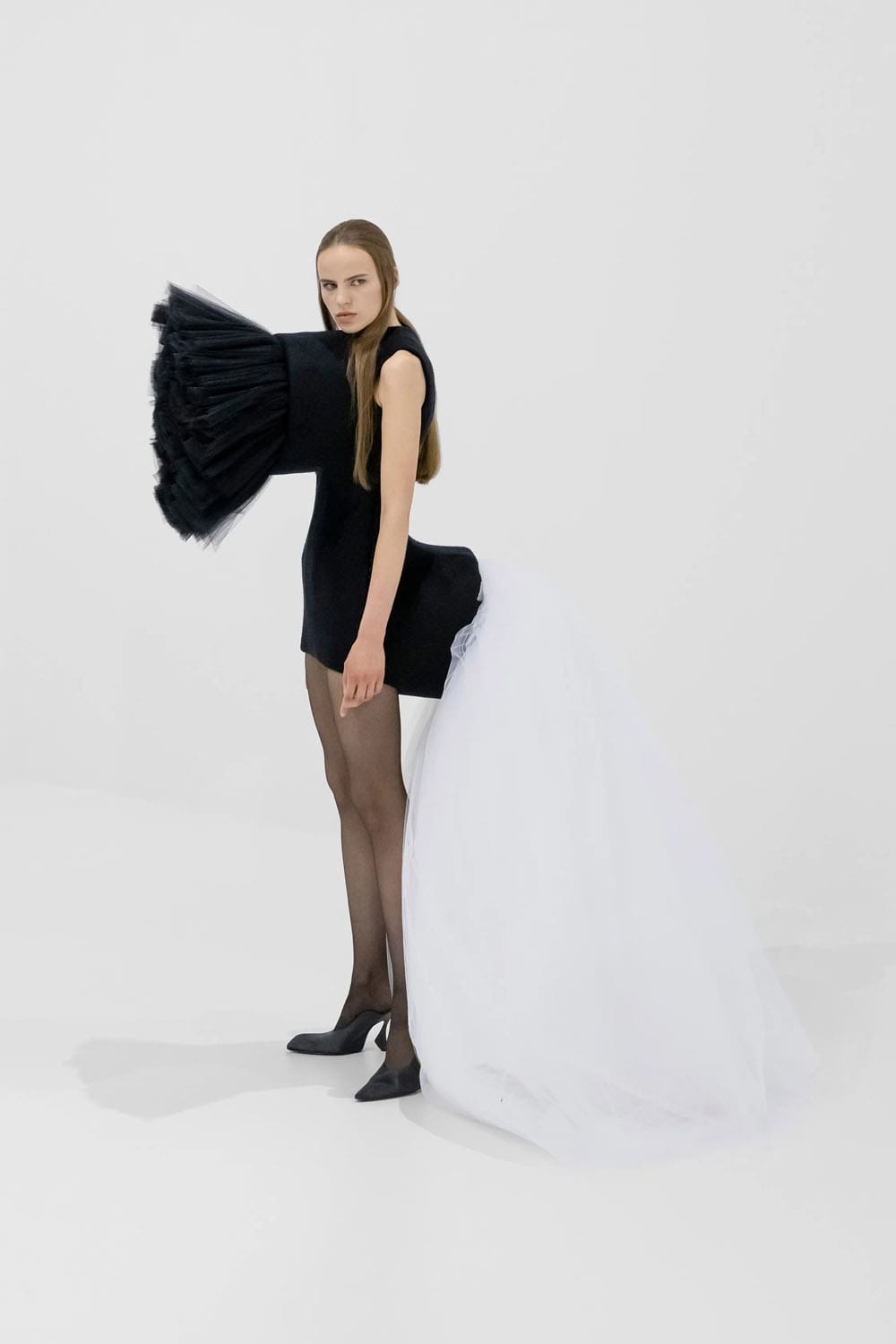
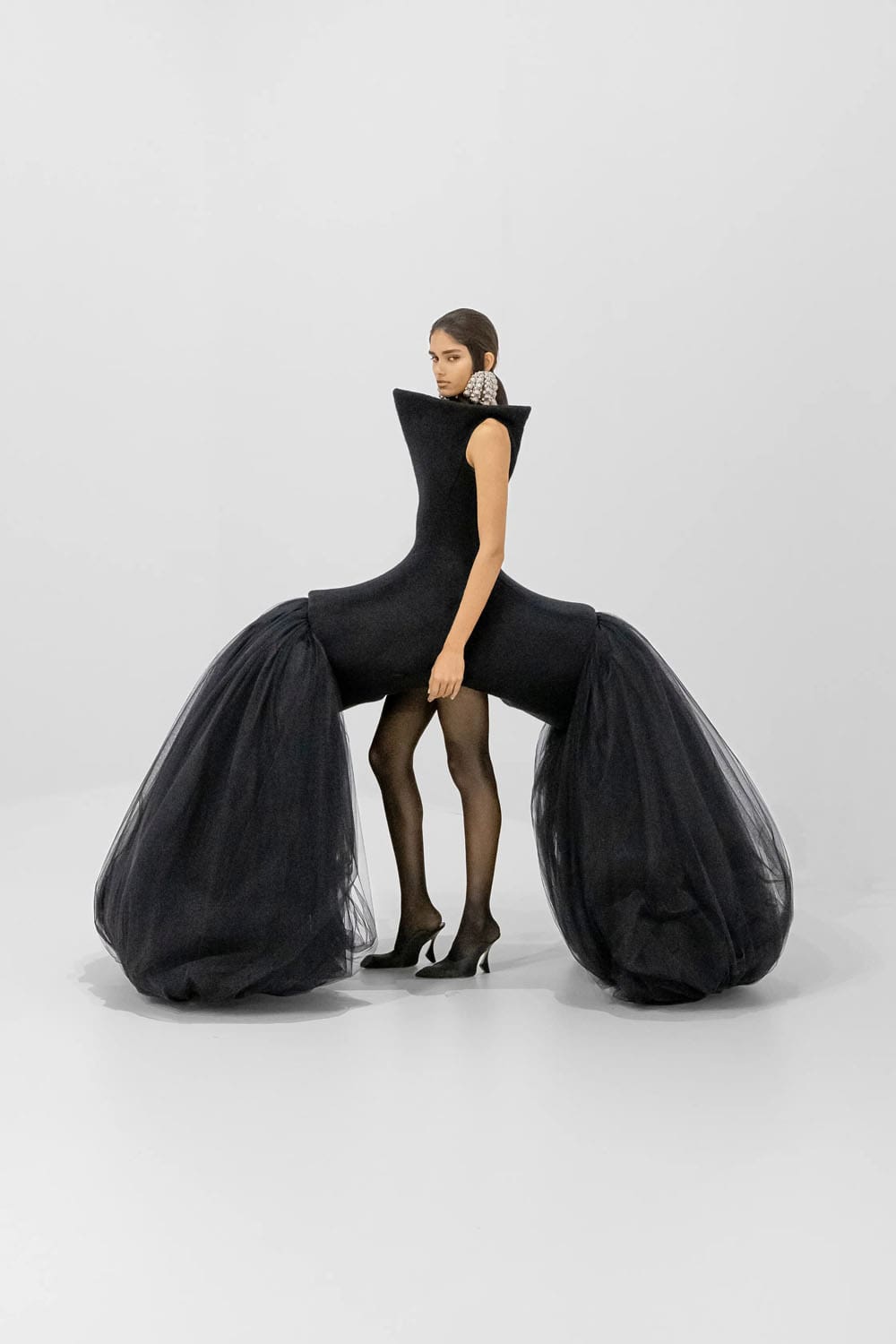
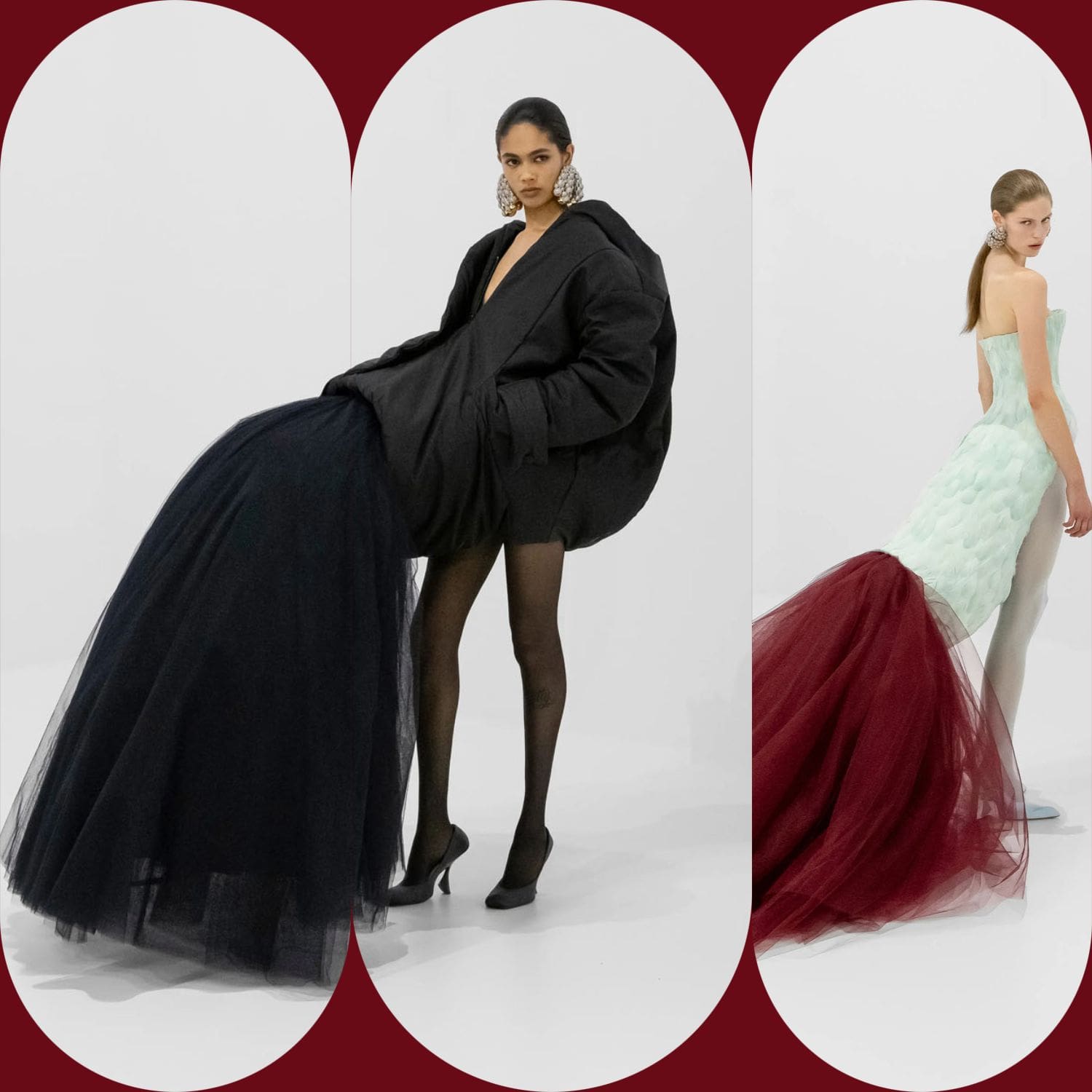
A similar struggle with volume and identity is evident in a stark black, high-collared structured garment. The piece juts outward at the hips like an oversized, padded archway, terminating in two massive explosions of black tulle that trail behind the model like a pair of displaced pom-poms. It is an exercise in scale that yields no elegance, offering a silhouette that feels awkward rather than avant-garde.
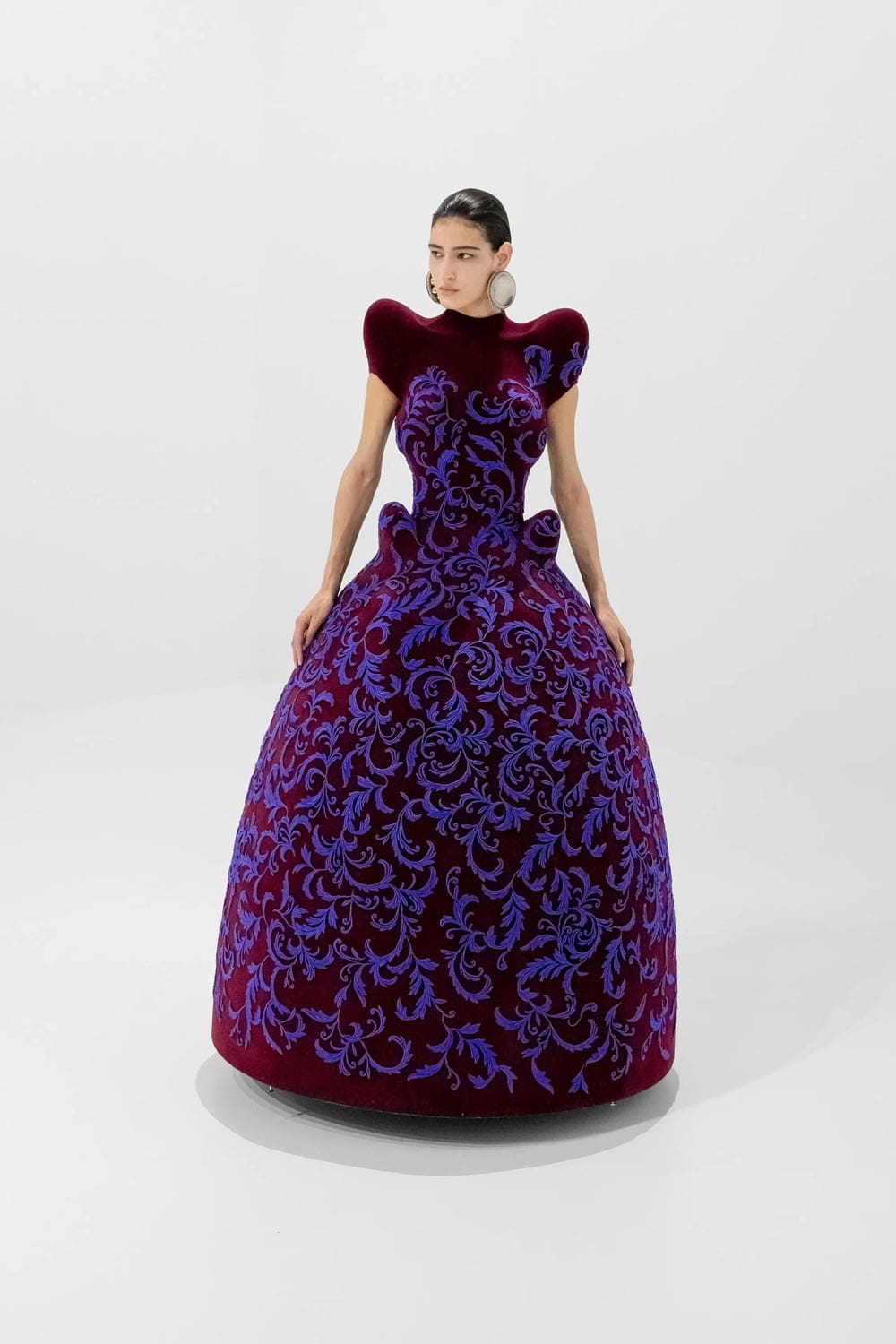
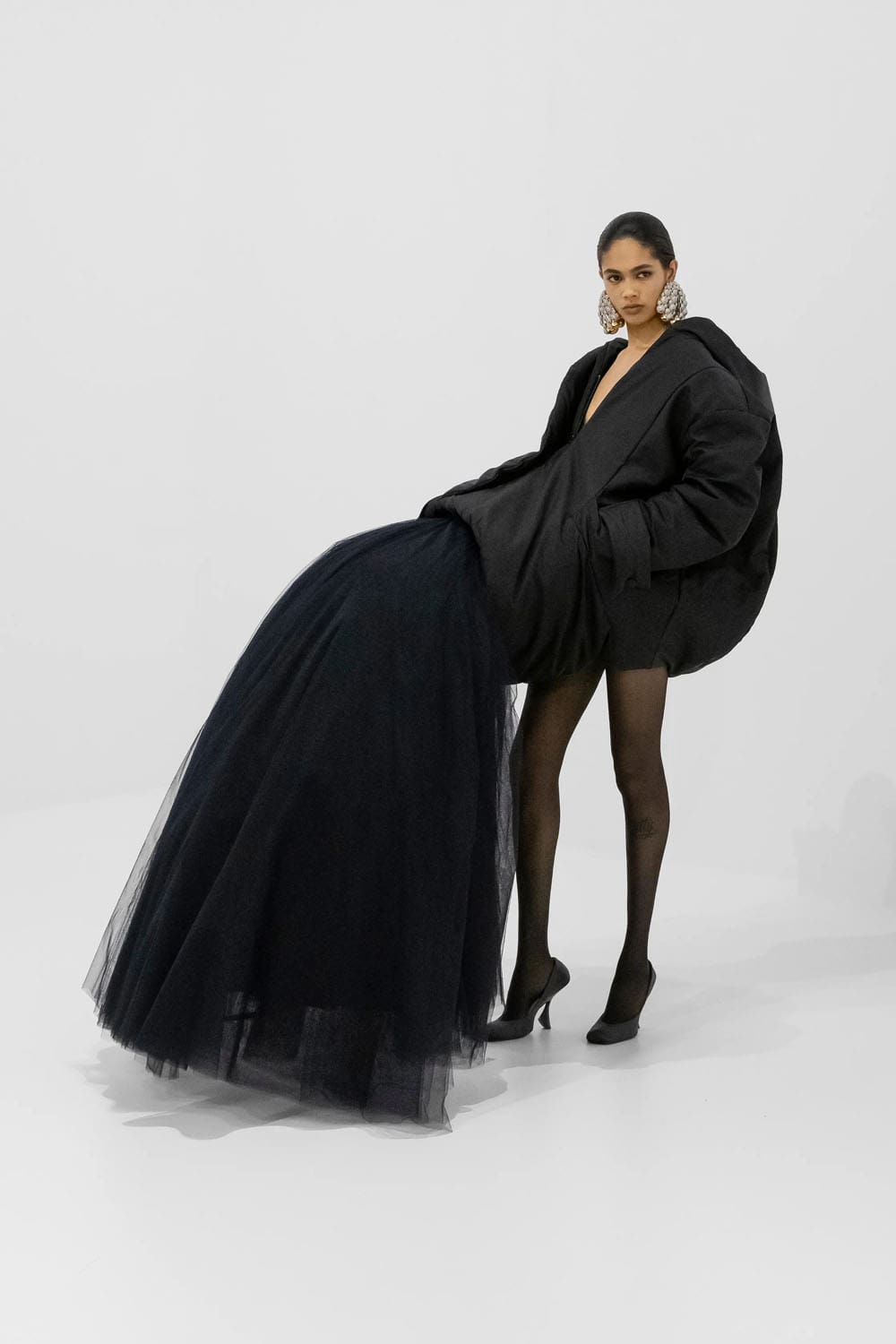
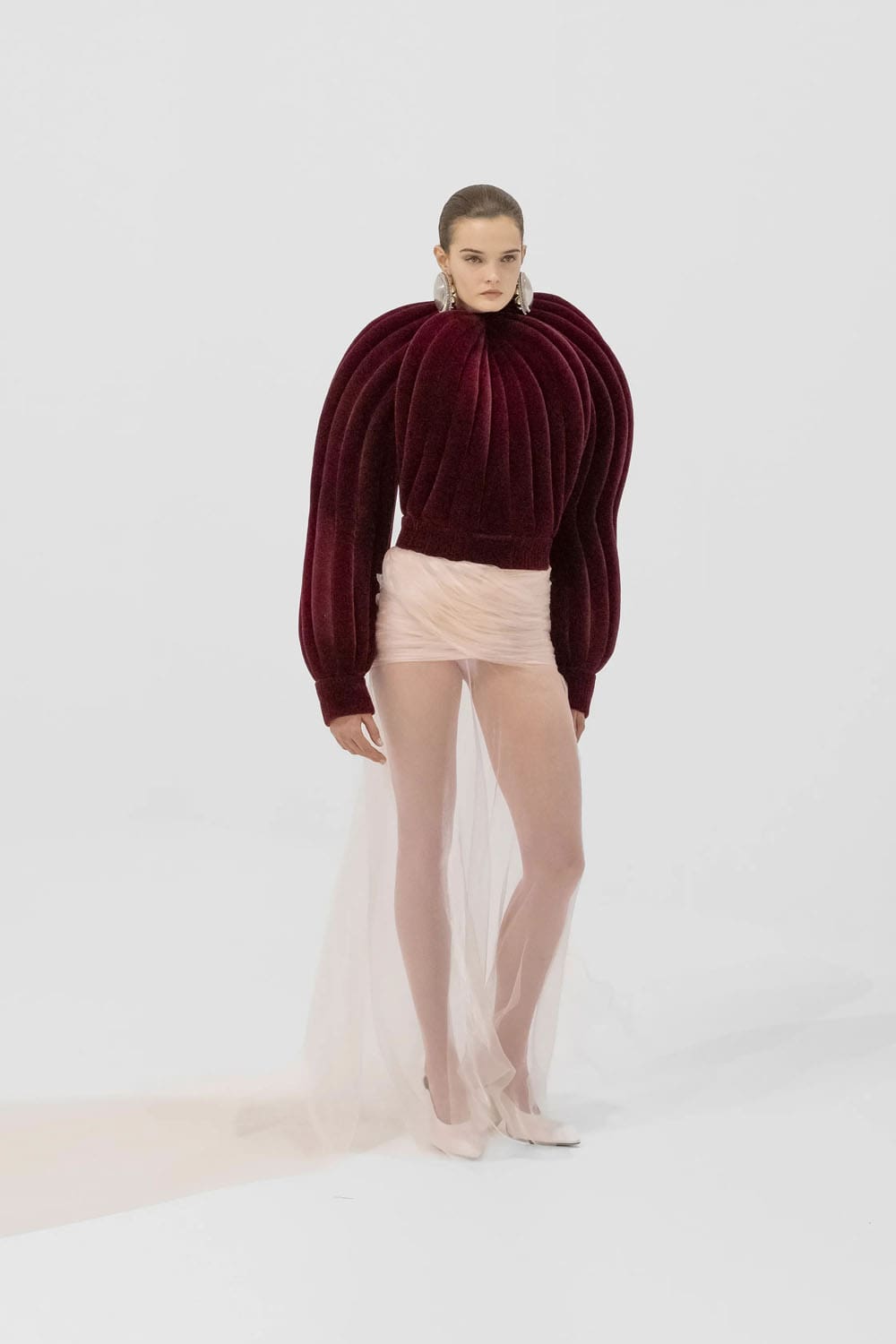
Even the more traditional fabrications lost their footing. A deep plum velvet gown featuring intricate purple baroque embroidery attempts a classic royal grandeur with its exaggerated hip structures. Yet, its proportions feel rigid, almost cartoonish, lacking the precision cutting that would make it a triumphs of modern couture. In another look, a model emerges in a voluminous, padded black hooded jacket that abruptly transitions from the midsection into a massive, forward-leaning bustle of black tulle, creating a silhouette that looks less like high fashion and more like an unintended posture problem.
Lost in Translation and Textures
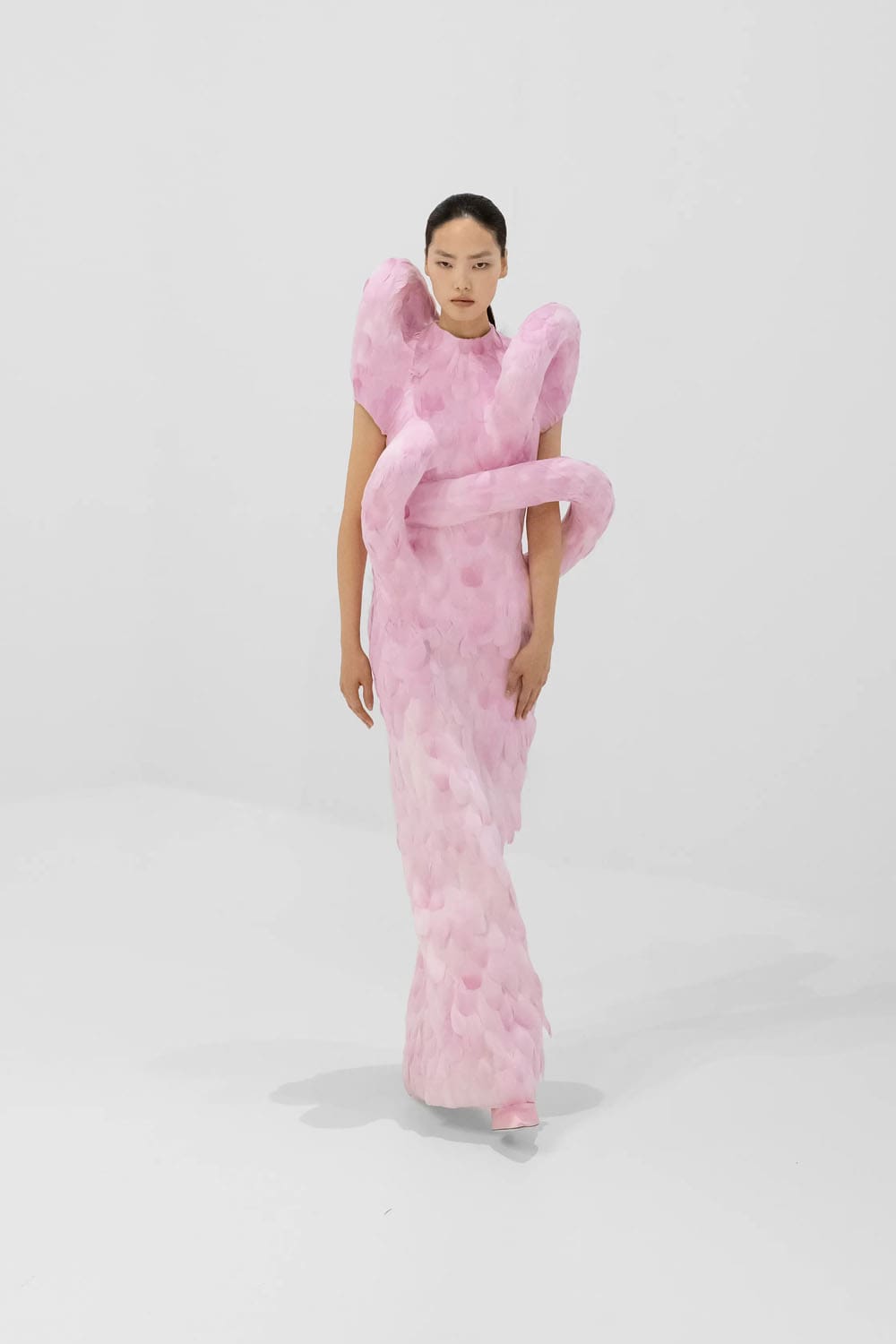
When the collection attempts to lean into the softer side of the archive, it becomes equally baffling. A sleeveless, pale pink column gown completely covered in feathers features an awkward, padded fabric tube winding around the model’s torso like a plush, oversized pool noodle. It is contemporary only in its eccentricity, offering no clear narrative or purpose.
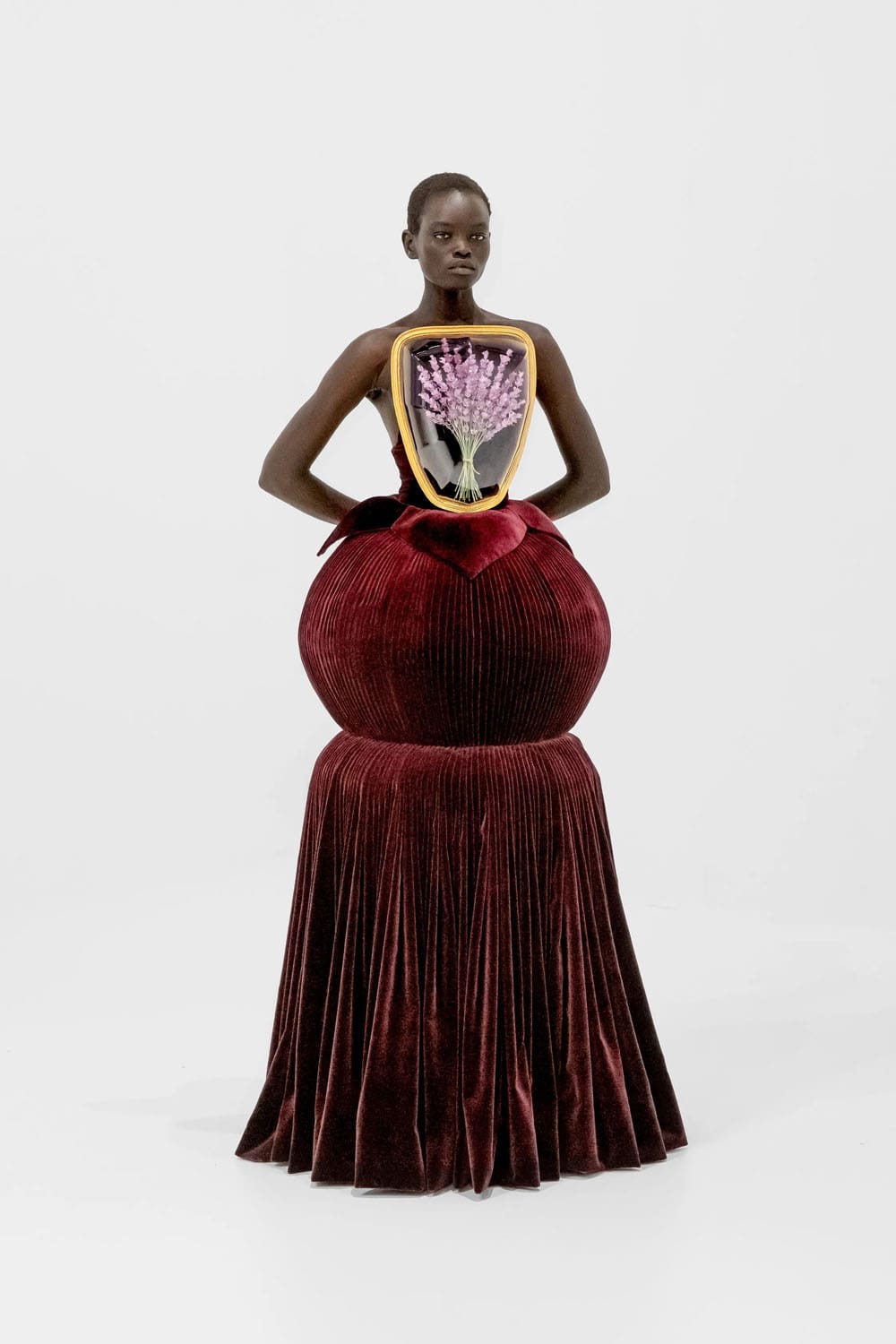
The literal interpretations continue with a deep burgundy, multi-tiered velvet gown that mimics an oversized, rounded vessel. On the bodice sits a gilded, glass-fronted display case housing a bouquet of dried lavender. It is a literalism that borders on the kitsch, lacking the sharp wit or intellectual subversion that Jean Paul himself would have brought to a theatrical piece.
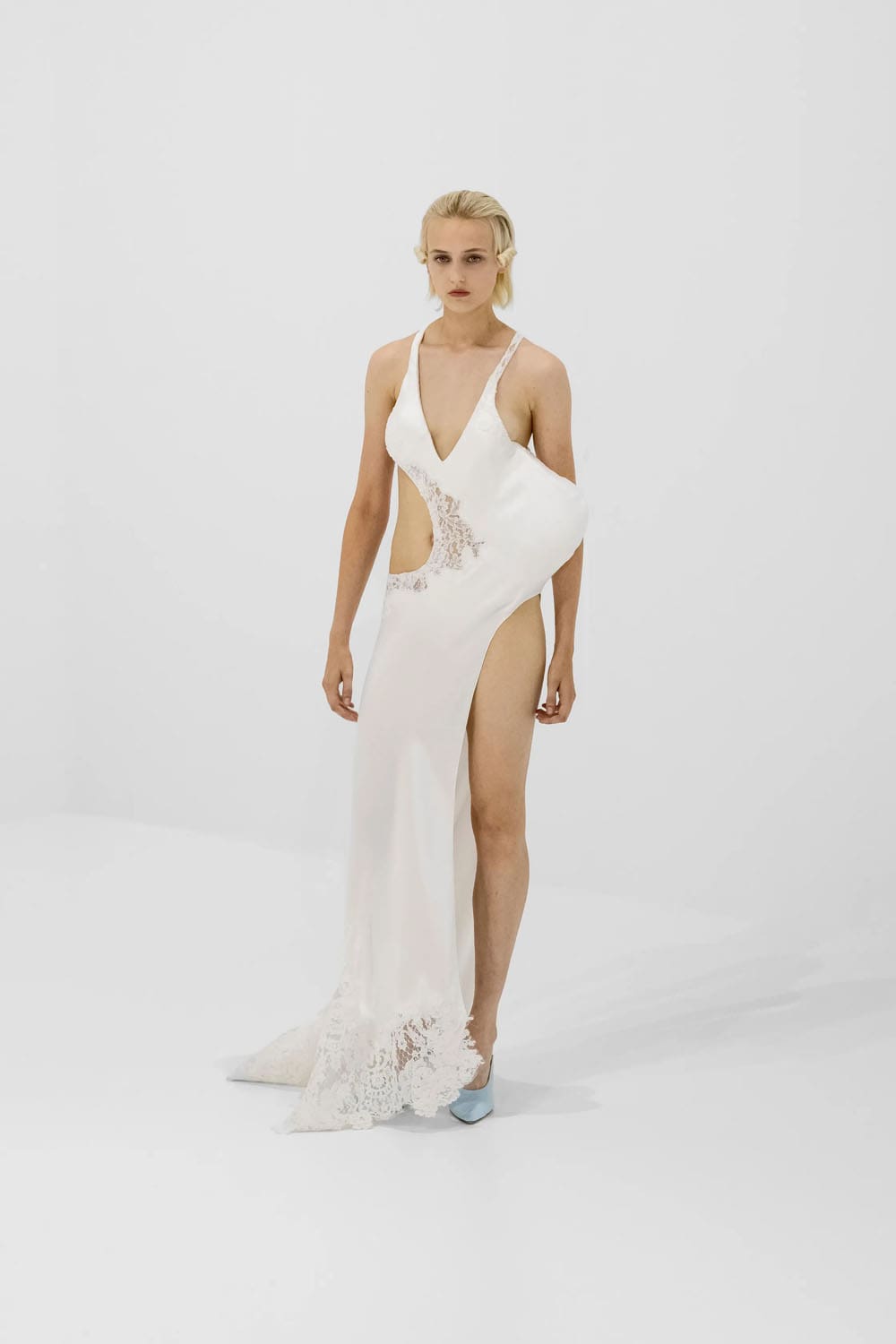
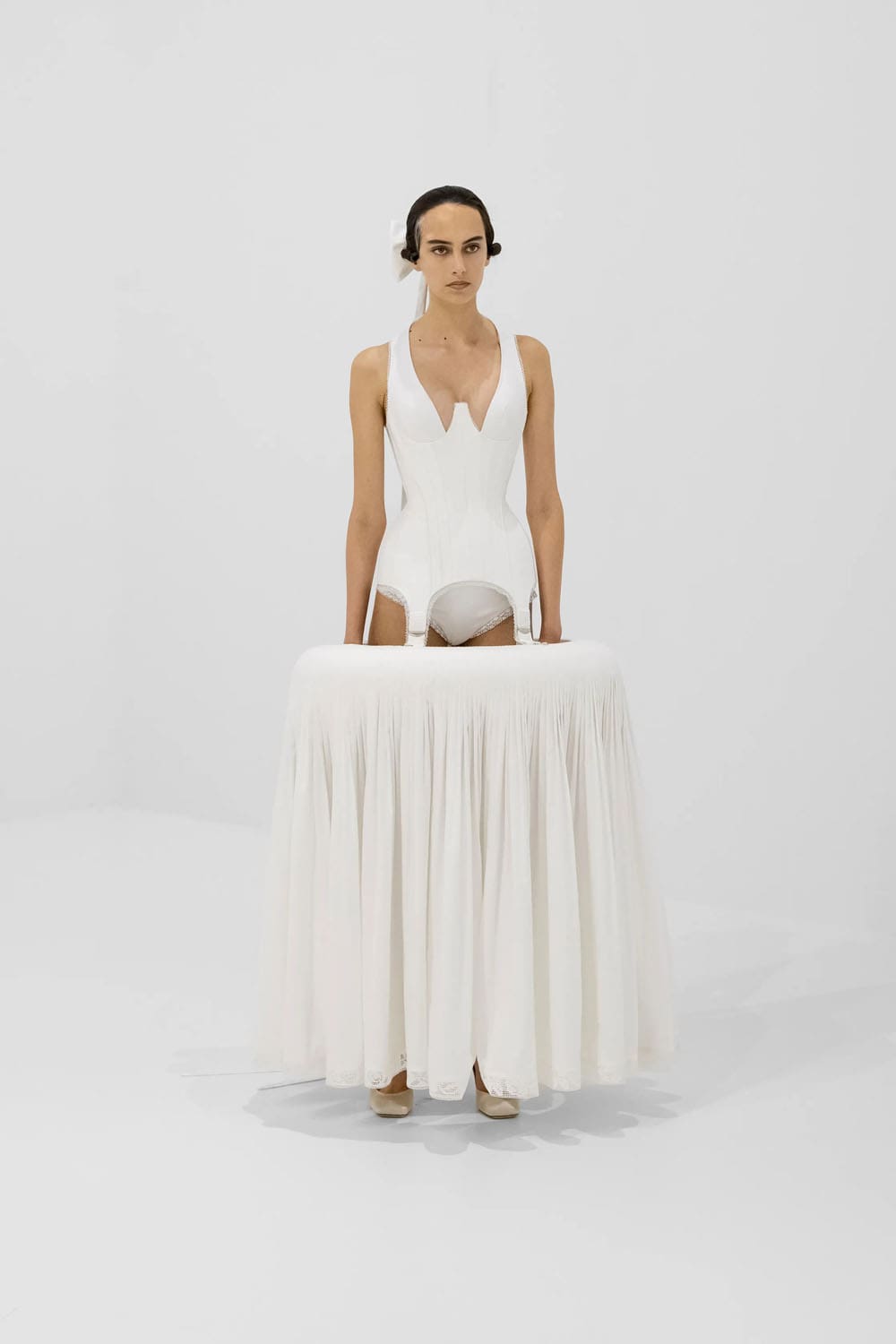
Even the more intimate, lingerie-inspired looks—historically Gaultier’s absolute playground—felt remarkably flat. A stark white corset piece with attached garter straps sits abruptly atop an entirely separate, stiffly rounded white pleated skirt hoop. The model looks trapped inside a piece of furniture rather than empowered by structured foundation wear. In another instance, a white satin dress with delicate lace detailing is heavily distorted by an asymmetric, protruding protrusion at the hip, slashed high to the thigh in a way that feels clumsily provocative rather than sensually engineered.
The Ghost of Archetypes Past
The ultimate irony of this presentation is that the house’s founder is very much alive and accessible. If a designer finds themselves lost within the expansive labyrinth of the Gaultier archives, the architect of those very codes is right there to offer guidance. Instead, we are left with a collection that fails on several critical fronts:
- Is it elegant? Decidedly no.
- Is it wearable? It is difficult to imagine any woman choosing these misshapen volumes for an evening gala or a red-carpet moment.
- Is it contemporary? It feels like a derivative echo of past anti-fashion movements rather than a forward-looking statement.
Haute Couture is intended to push boundaries, but those boundaries must be anchored by exceptional craftsmanship and a profound respect for identity. When a collection reduces the sacred archetypes of a legendary house to a series of playful but meaningless styling exercises, it ceases to be couture and becomes, quite simply, an expensive playground.
See All Looks Jean Paul Gaultier Fall 2026-2027 Couture