Winged Shadows in Stone: KASAI Spring Summer 2027 “ICARA”. Story by AnaTopi. Fashion Editor of RUNWAY MAGAZINE. Photo Courtesy: Kasai.
The Flight Beyond the Labyrinth
The myth of Icarus has long suffered from cautionary moralizing, framed as a simple warning against hubris and flying too close to the sun. In ICARA, her photographic editorial for Spring/Summer 2027, Romanian designer Ana Olingheru recasts the ancient tale through feminine self-determination. The foundational premise is clear: a woman striving for liberation often mistakes the cage for her own skin, assuming she requires artificial wax and feathers to escape. Her soul was never captive to begin with; it was simply waiting for the architecture around it to fall away.
Shaped between Bucharest and Milan, Olingheru’s label KASAI uses this visual portfolio to explore the friction between stone and air, structure and dissolution. The imagery plays out among weathered classical colonnades, where Mediterranean sunlight carves stark, geometric shadows against ancient porticos. Rather than producing another seasonal assortment designed for fleeting digital scrolls, KASAI presents a study in material tension. Italian silks, crisp wools, and sheer layers behave like architectural membranes that gradually surrender their rigidity to the breeze.
The Low-Slung Horizon and the Sculpted Rib
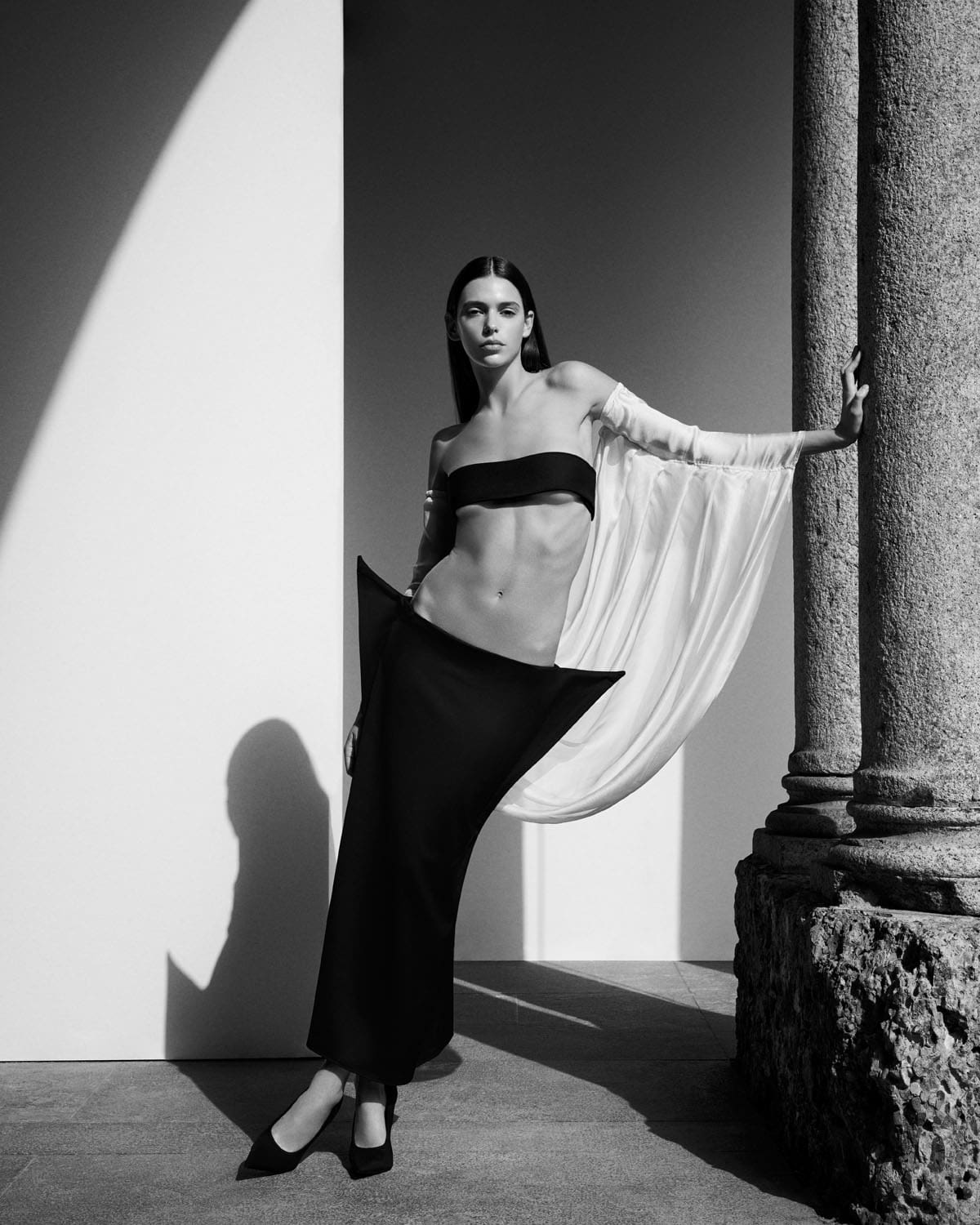
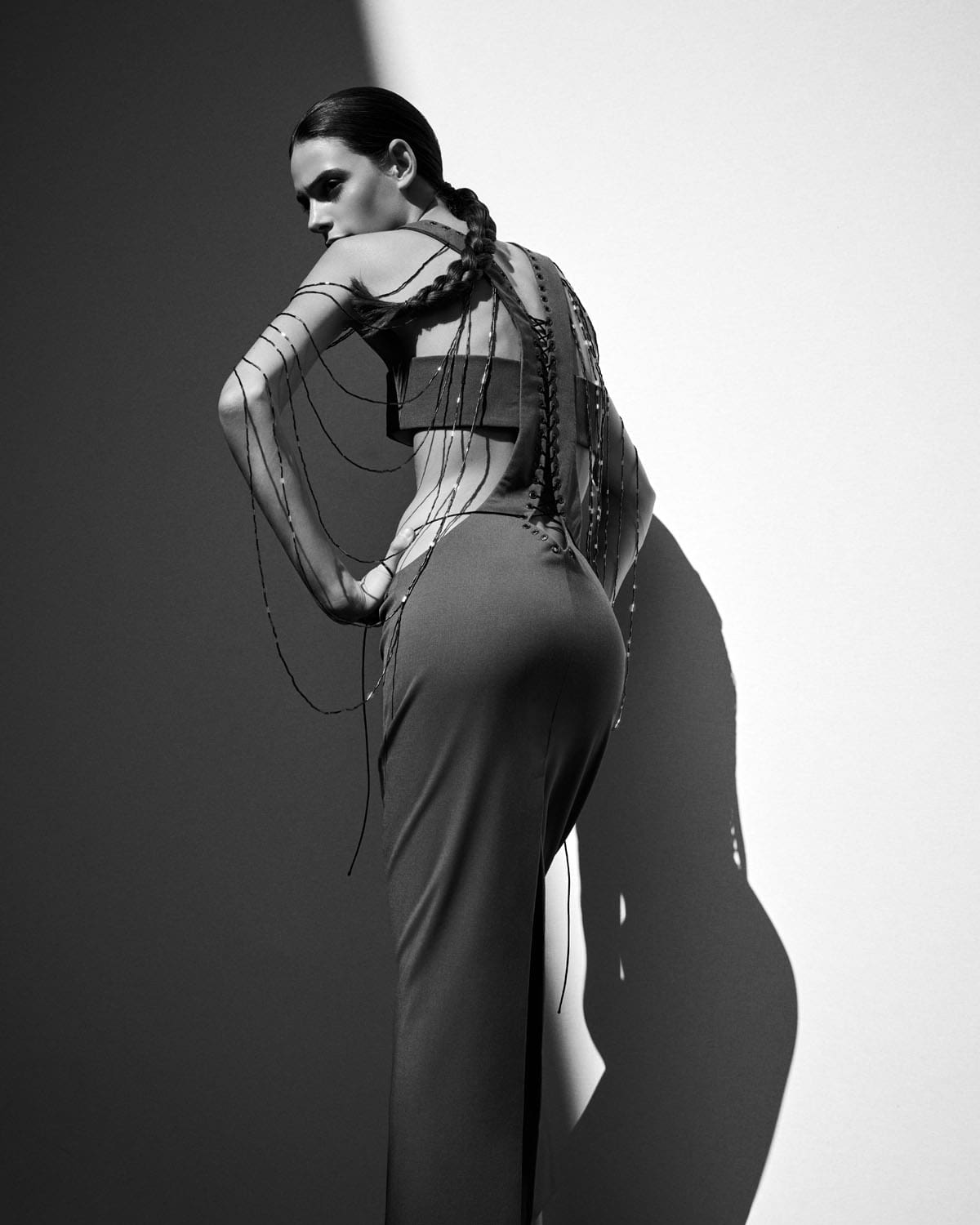
The dialogue between discipline and release announces itself through graphic silhouettes that frame the torso. Consider the black-and-white opening look leaning against ancient stone: an ultra-minimalist black bandeau crosses the chest, while a low-slung black column skirt flares into structural, peaked points at the hips like open bird wings. The bared midriff provides organic stillness, contrasted with a sheer white silk-georgette shrug that drapes from the forearms like an unfurled sail caught in a draft. It is sensual and exposed without slipping into vulgarity, treating the body as an architectural axis.
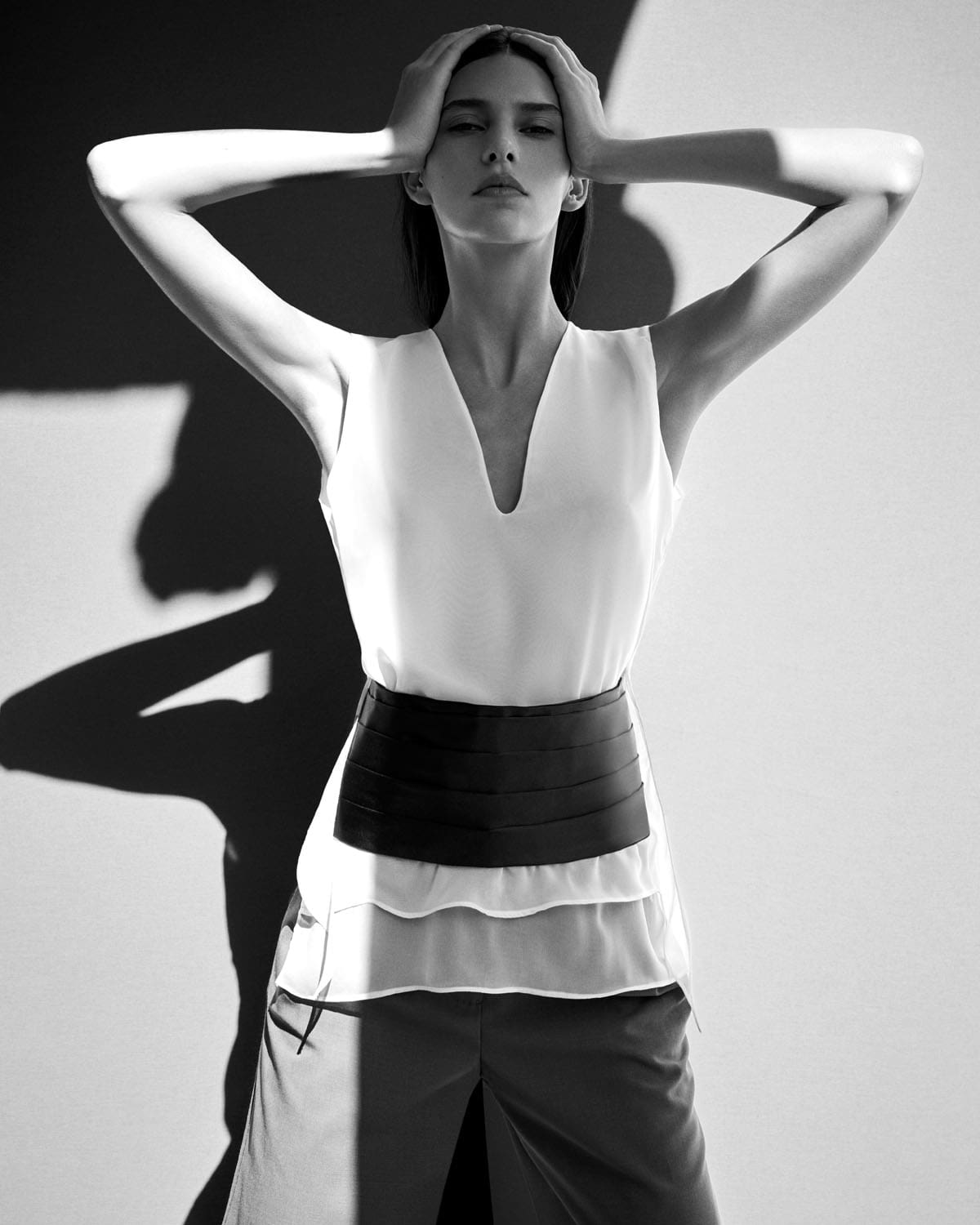
Structure takes a tailored turn in a white silk-voile tunic. Cut with a sharp, plunging keyhole neckline, the sleeveless blouse is anchored across the ribs by a wide, satin-banded cummerbund. The tier of sheer silk flutters gently over tailored trousers beneath, balancing the clean geometry of an Italian corset with the fluidity of an unbuttoned shirt.
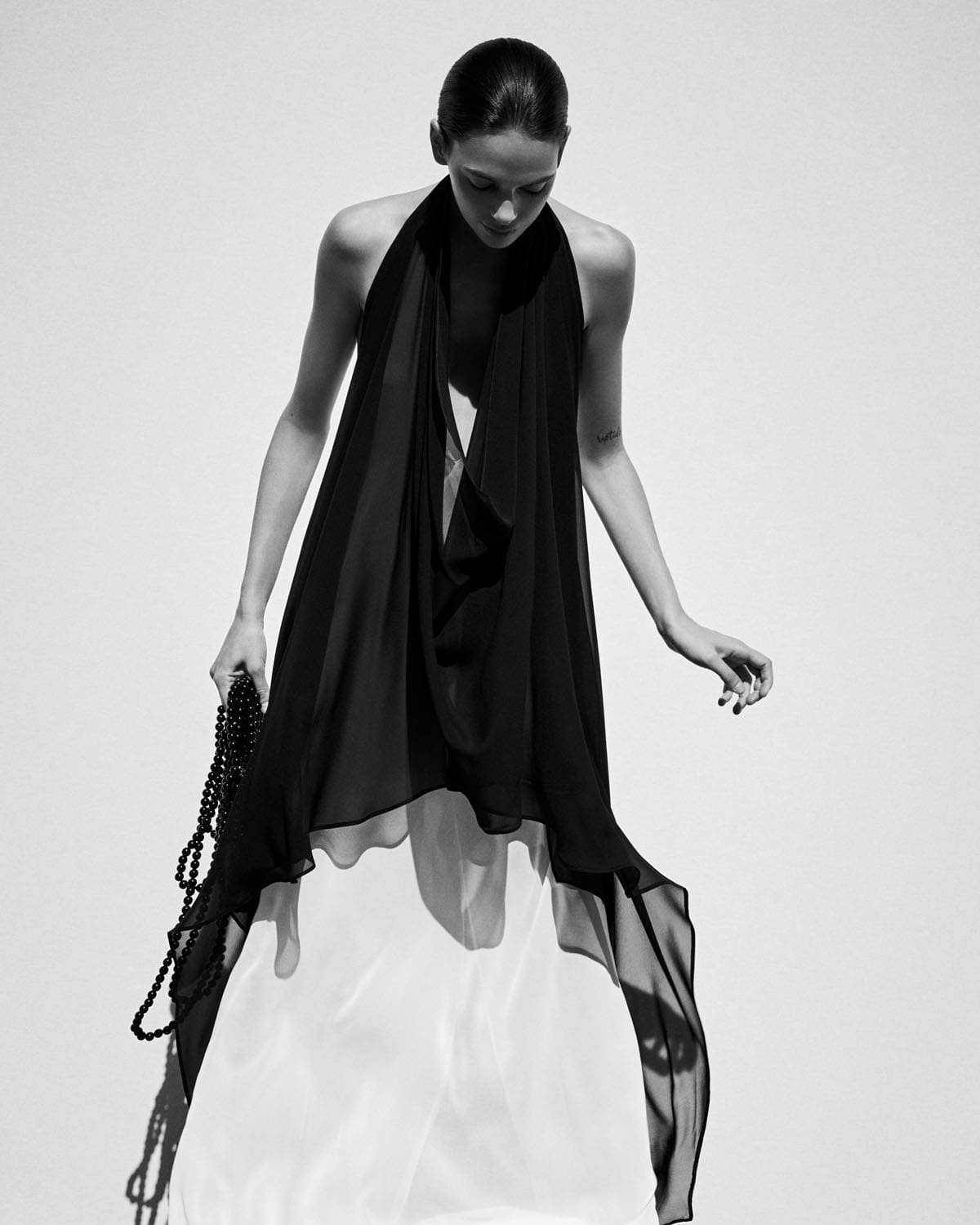
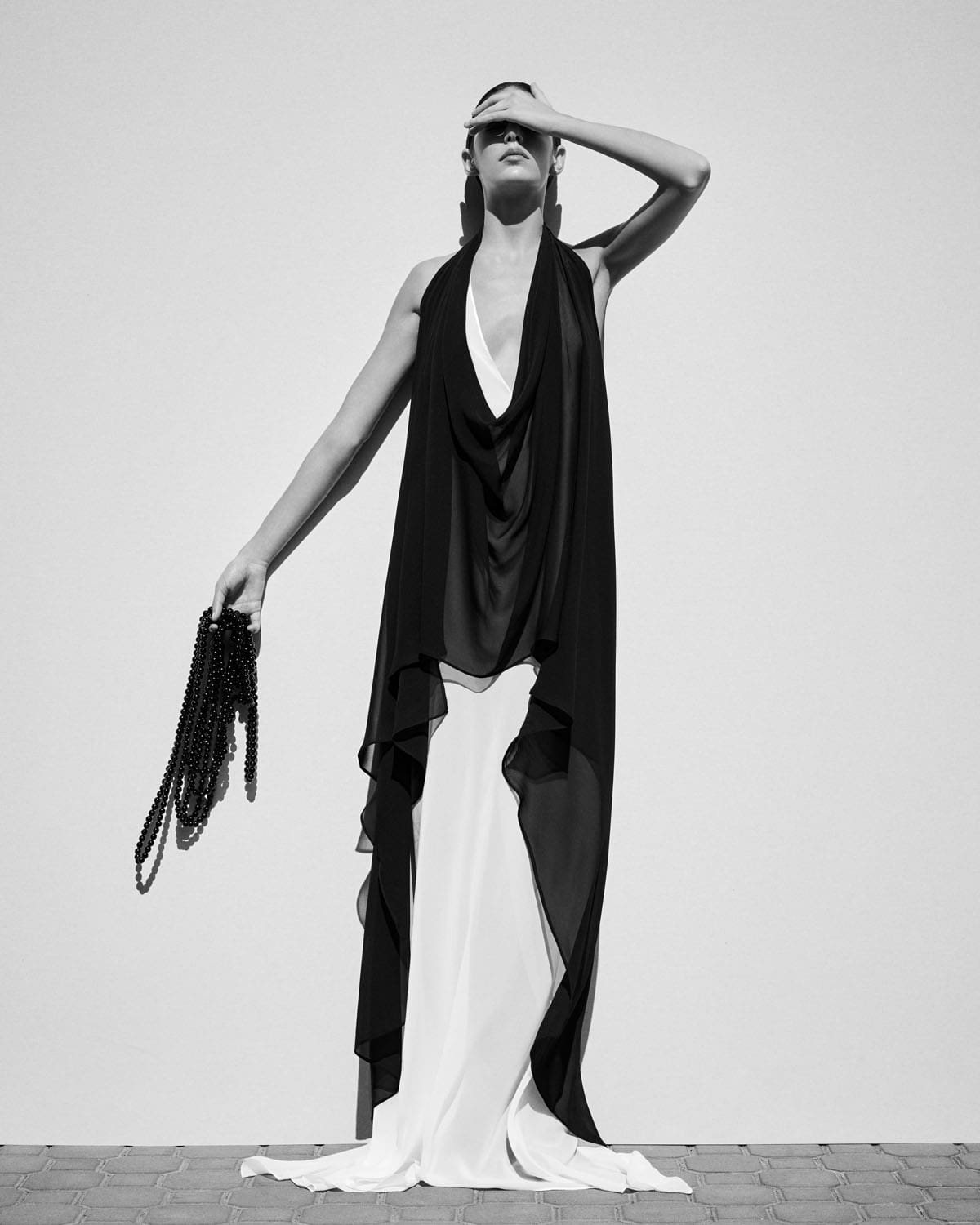
The monochrome narrative deepens in a two-tone column gown. A white silk crepe slip dress hugs the ground, shrouded by an asymmetric, draped black cowl neckline that cascades in tiered handkerchief folds down to the floorboards, while the model holds a rope of heavy black beads. The silhouette recalls ancient drapery, updated with graphic clarity.
Chartreuse Silk and the Deconstructed Vest
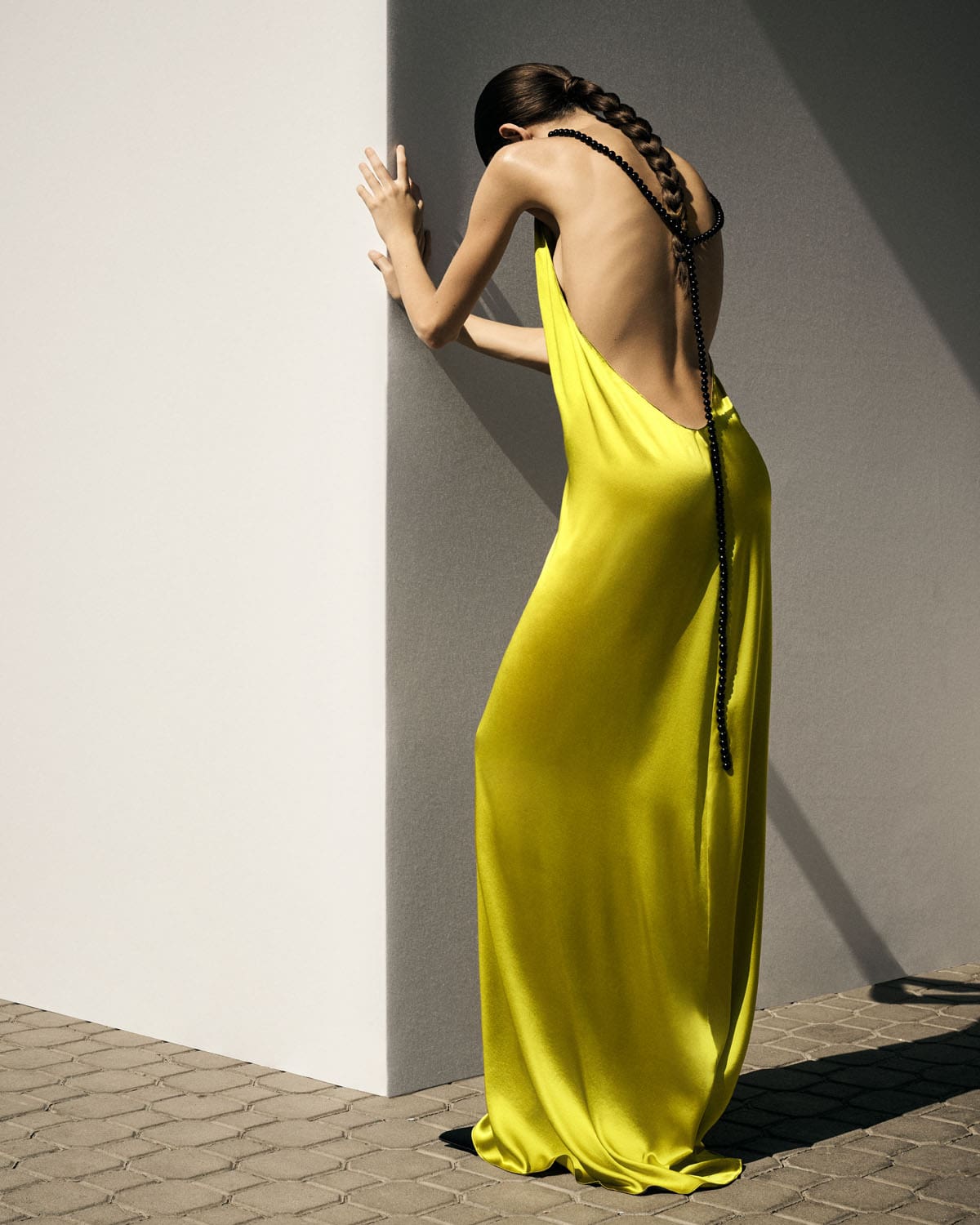
Color enters this sun-bleached temple like an unexpected flame. Against a sharp architectural corner, a floor-sweeping slip gown in liquid chartreuse-lime silk satin catches the daylight with metallic brilliance. The dress plunges low across the shoulder blades in an unbroken cowl, held by a single strand of oversized black beads that winds around the neck and trails down the spine like an anchor. The silk pools onto the pavement, proving that weightlessness can command absolute presence.
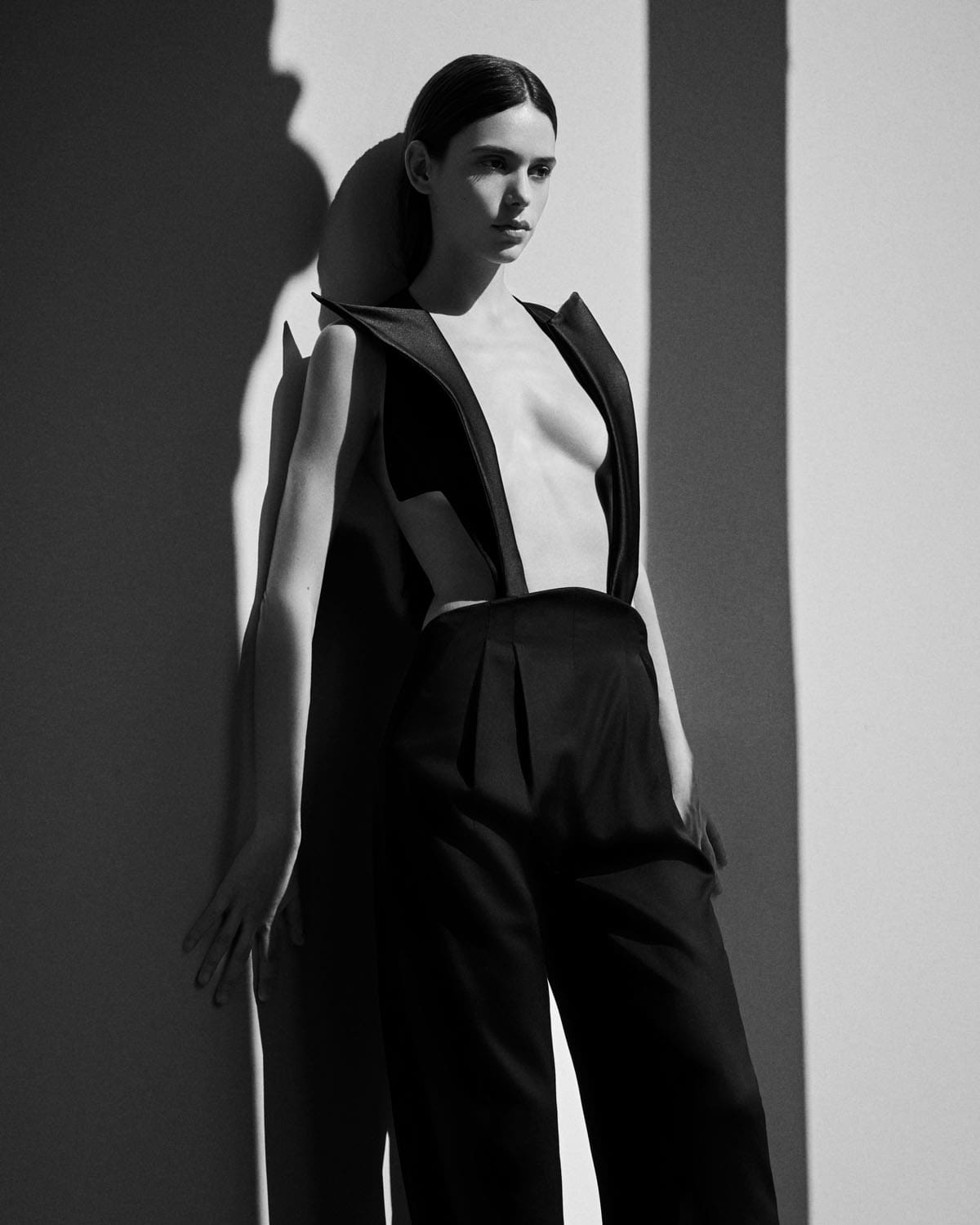
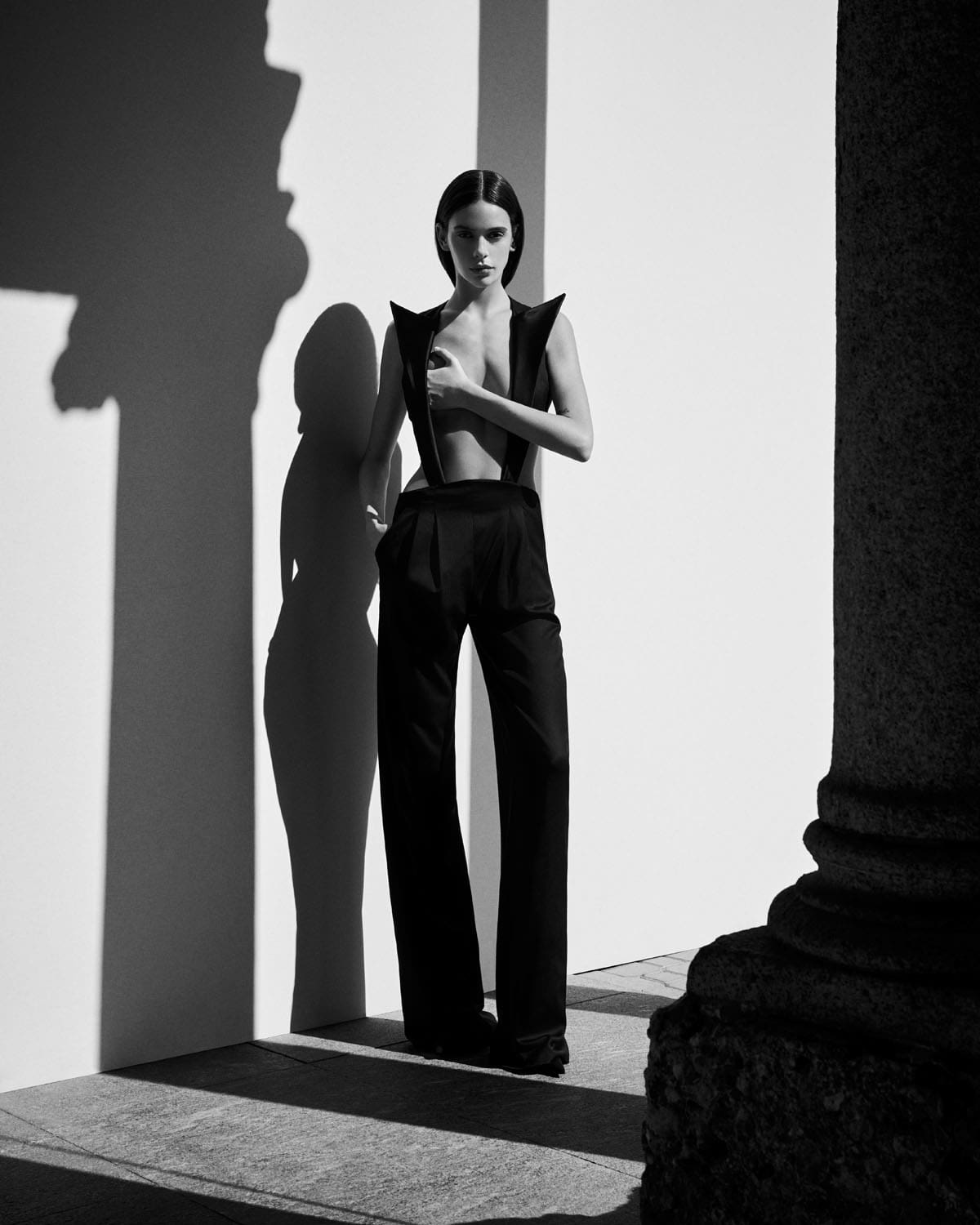
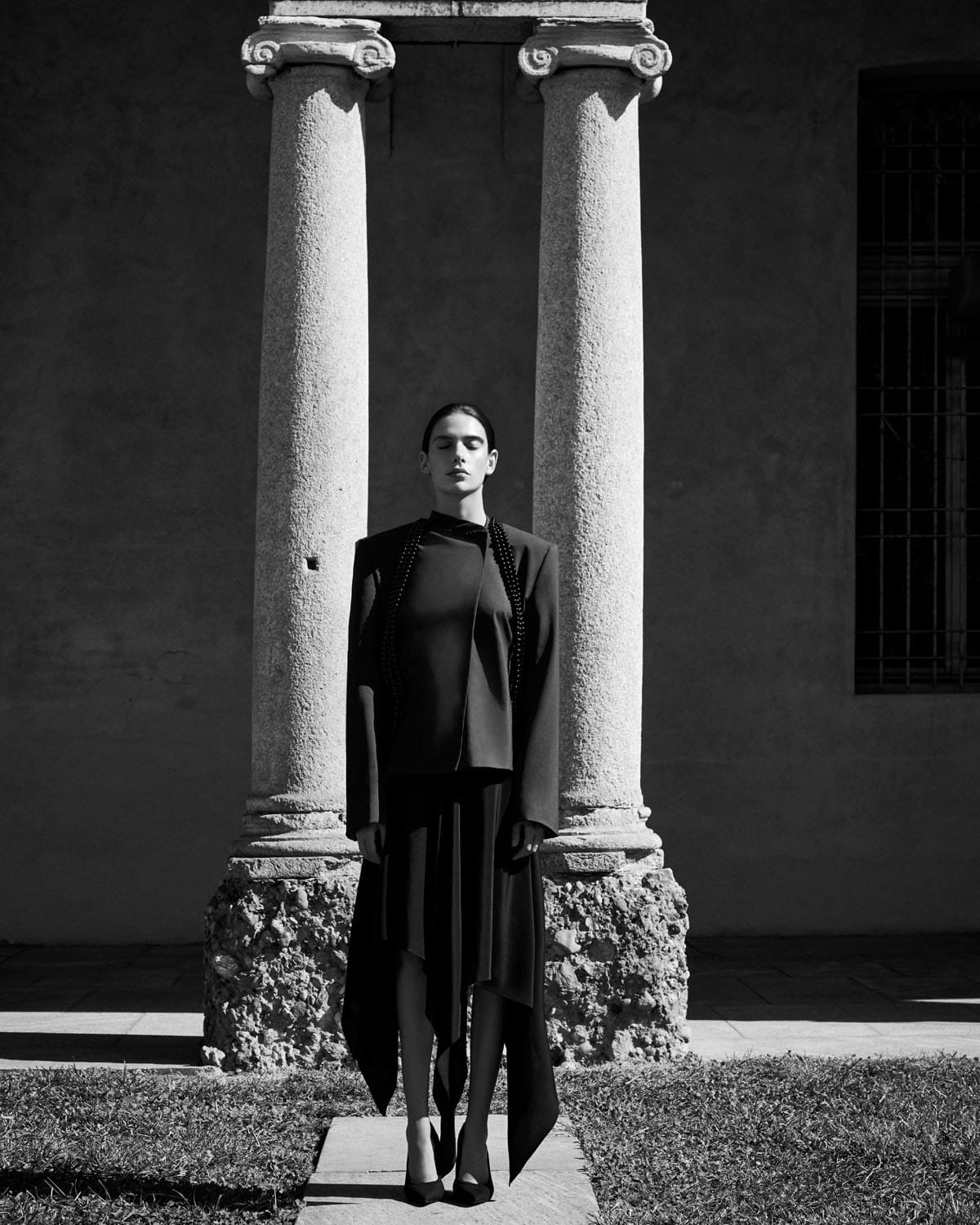
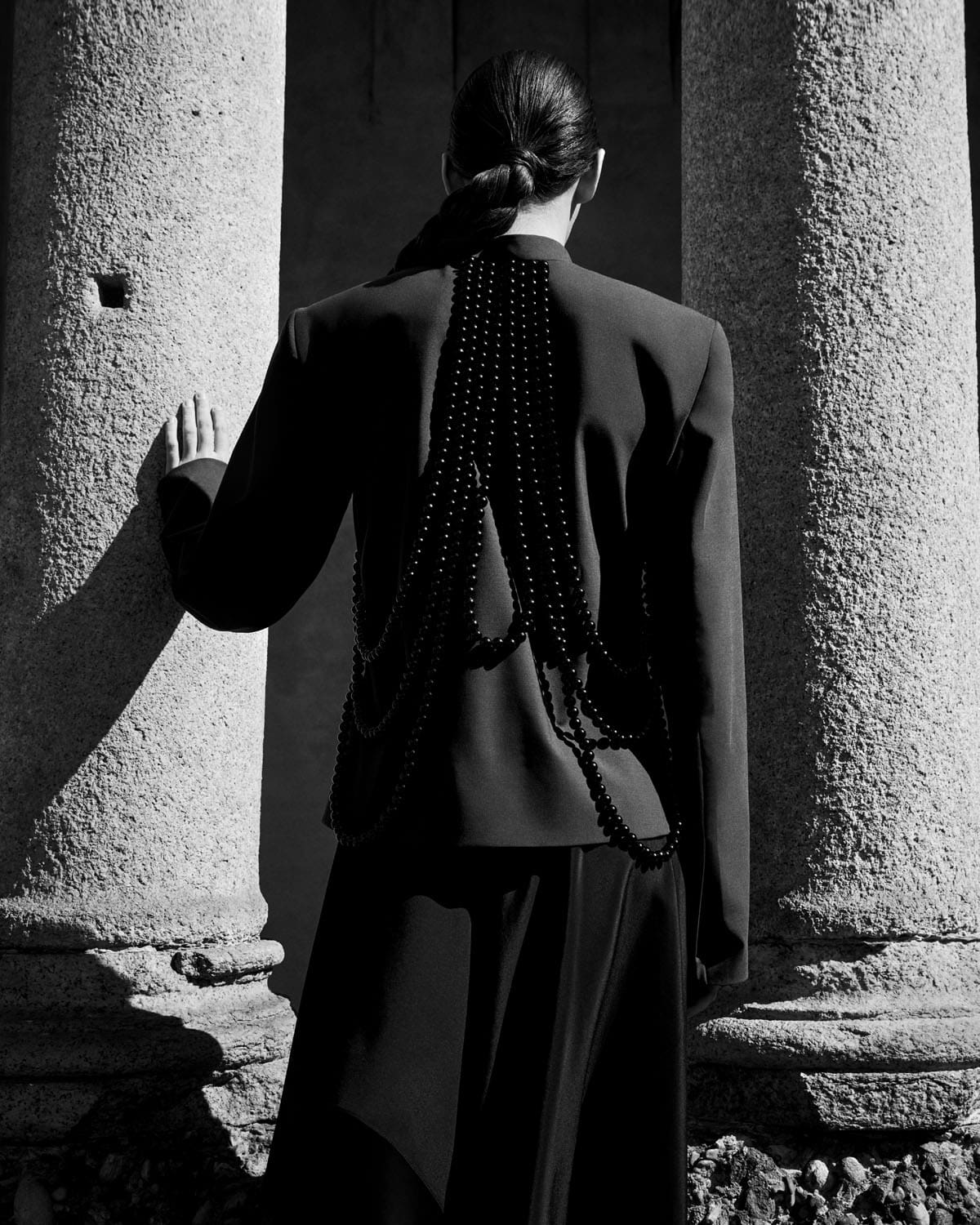
Tailoring reasserts its authority in a dark charcoal evening ensemble posed between stone pillars. A collarless, razor-cut jacket with raised pagoda shoulders is edged along the armholes with micro-bead embroidery, worn over an asymmetric pleated skirt that dips into jagged hemlines. The cut is sober and monastic, yet light enough to move with the ease of second skin.
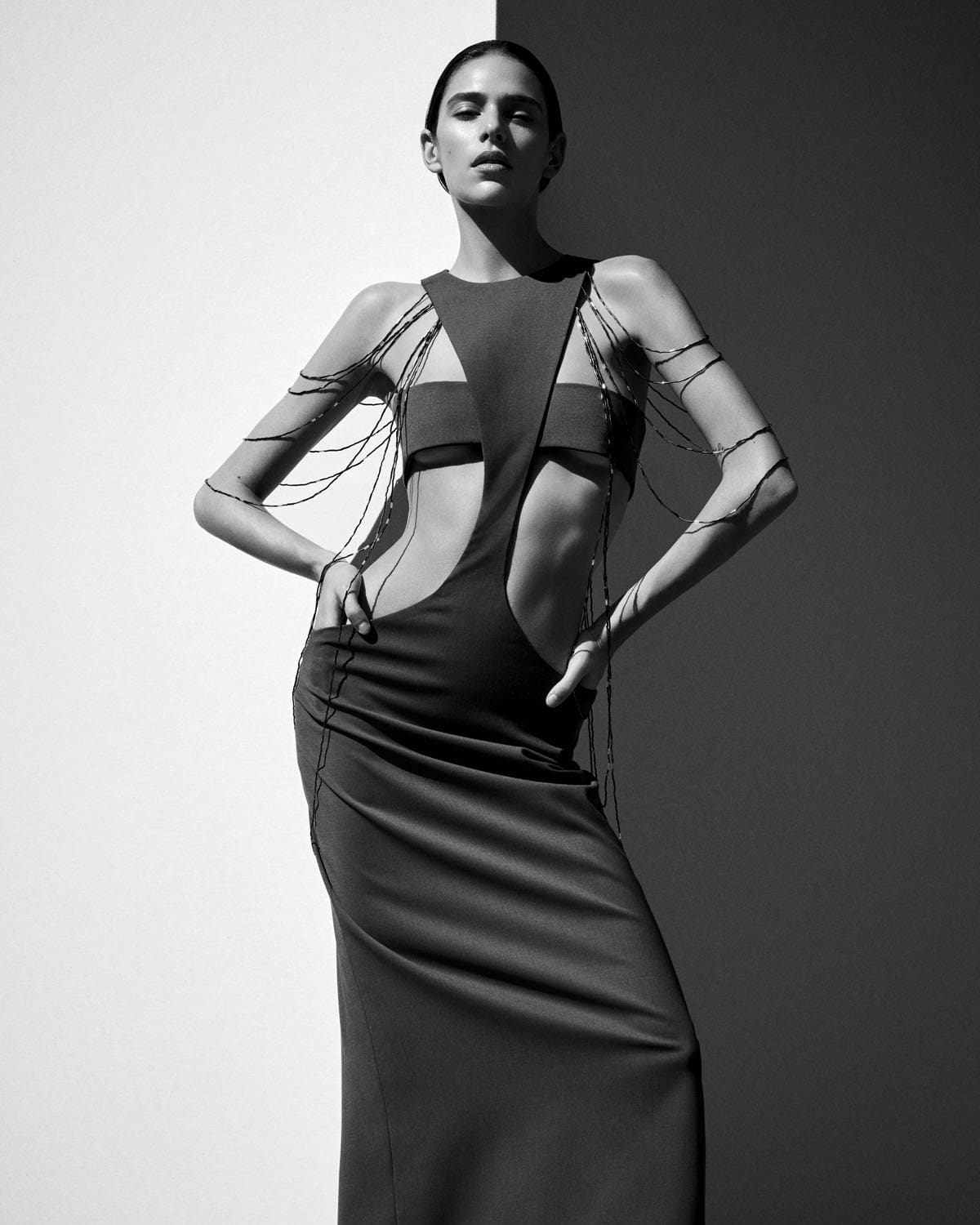
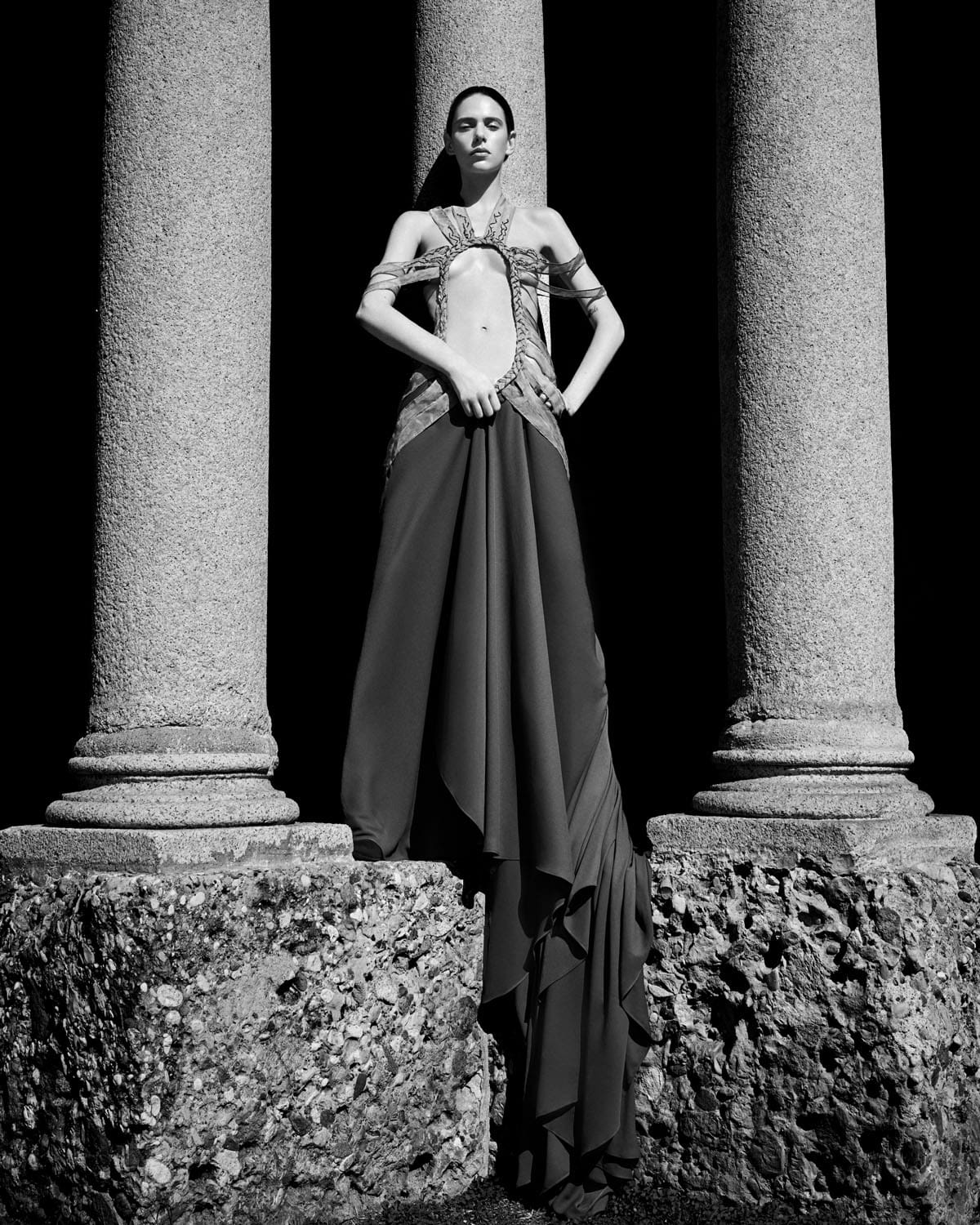
The editorial culminates on a weathered stone plinth, where an empire-line gown merges raw embroidery with classical drapery. An openwork halter bodice composed of braided cords frames the sternum, falling into an olive-toned silk skirt that puddles over the masonry in layered ripples.