Louis Vuitton
THE TRIUMPHS
- Visionary synthesis of hyper-athletic performance and Parisian couture, stripping interlinings and boning to treat technical nylons and liquid silks as aerodynamic membranes
- Masterful hybrid tailoring that reconciles eighteenth-century court ruffles with functional mountaineering parkas and drawstring parachute skirts
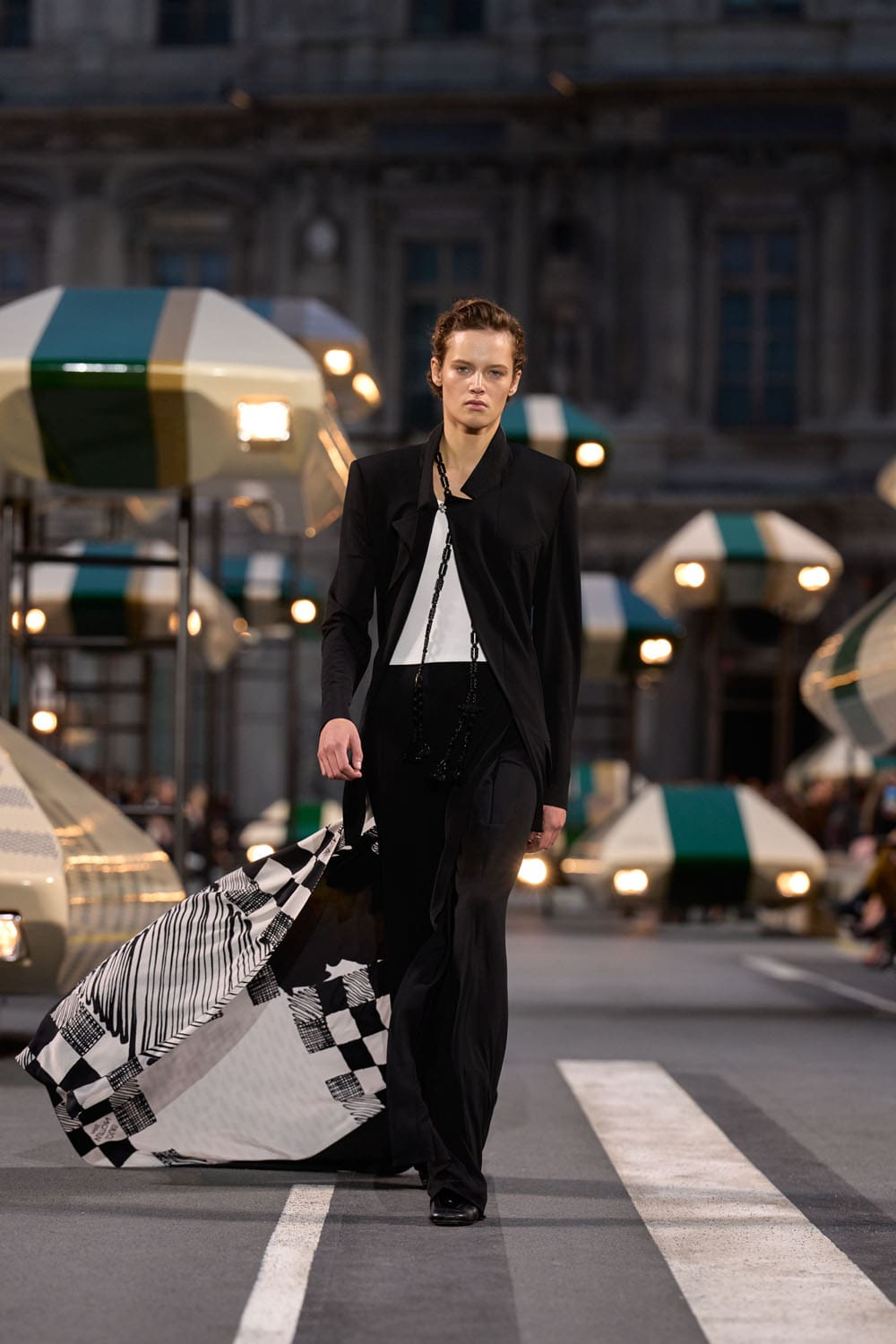
- Kinetic re-engineering of heritage silk carrés into friction-free evening flou, spinnaker cape trains, and graphic racing-checkerboard columns
- Rigorous scenographic integrity marrying surreal retro-futuristic hovercraft staging with circular reuse and circularity benchmarks under the Regeneration 2030 roadmap
RESERVATIONS
- Unrelenting sci-fi technical vocabulary—from beaded glass windshield visors to bug-eye shields—demanding uncompromising posture that resists conventional daywear styling
- Complex multi-layered hybrid silhouettes that rely heavily on kinetic runway momentum to avoid visual sensory overload
Louis Vuitton Spring Summer 2027 “ERGONOMIE”. Story by Eleonora de Gray, Editor-in-Chief of RUNWAY MAGAZINE. Photo / Video Courtesy: Louis Vuitton.
The Velocity of Aerodynamic Silk
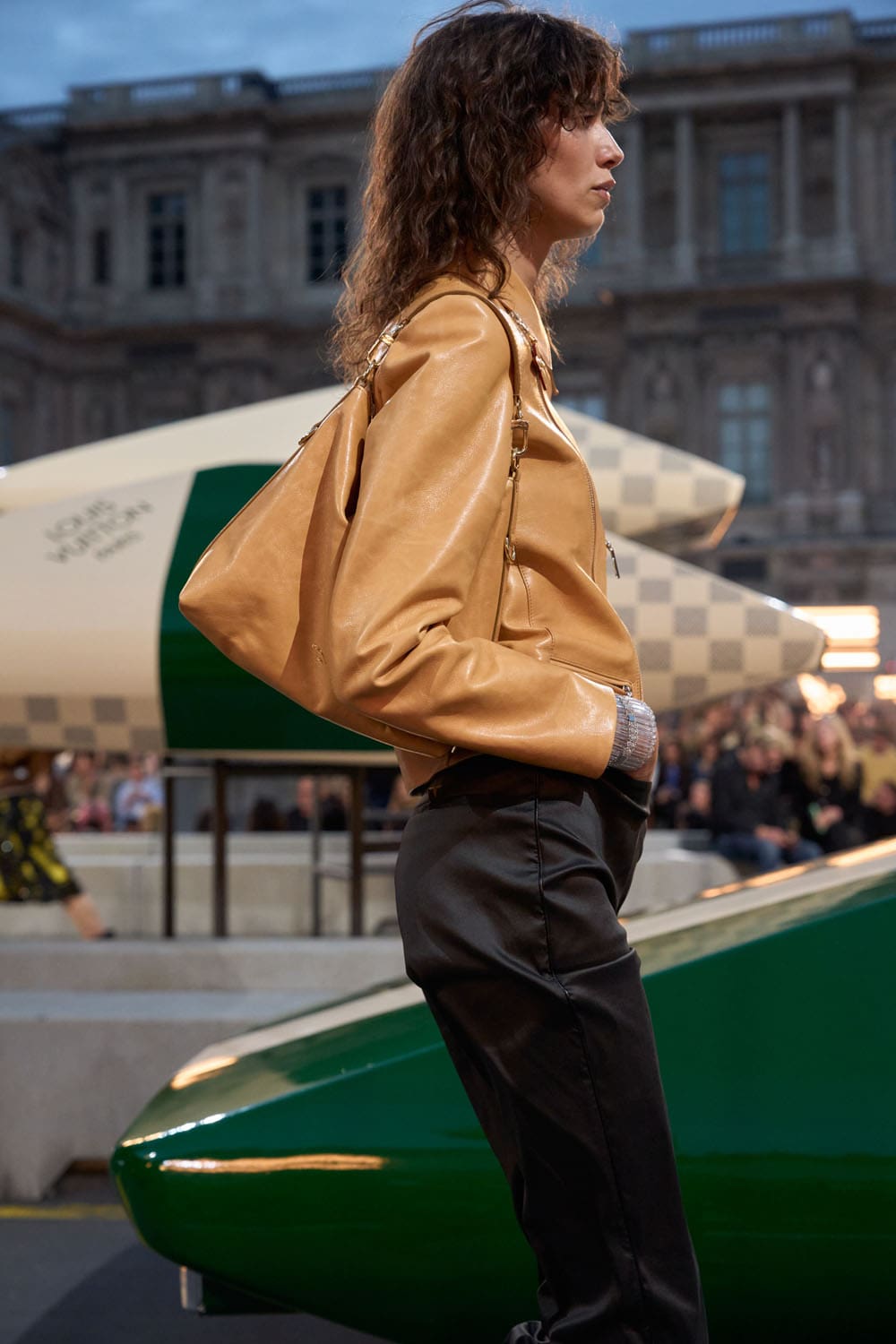
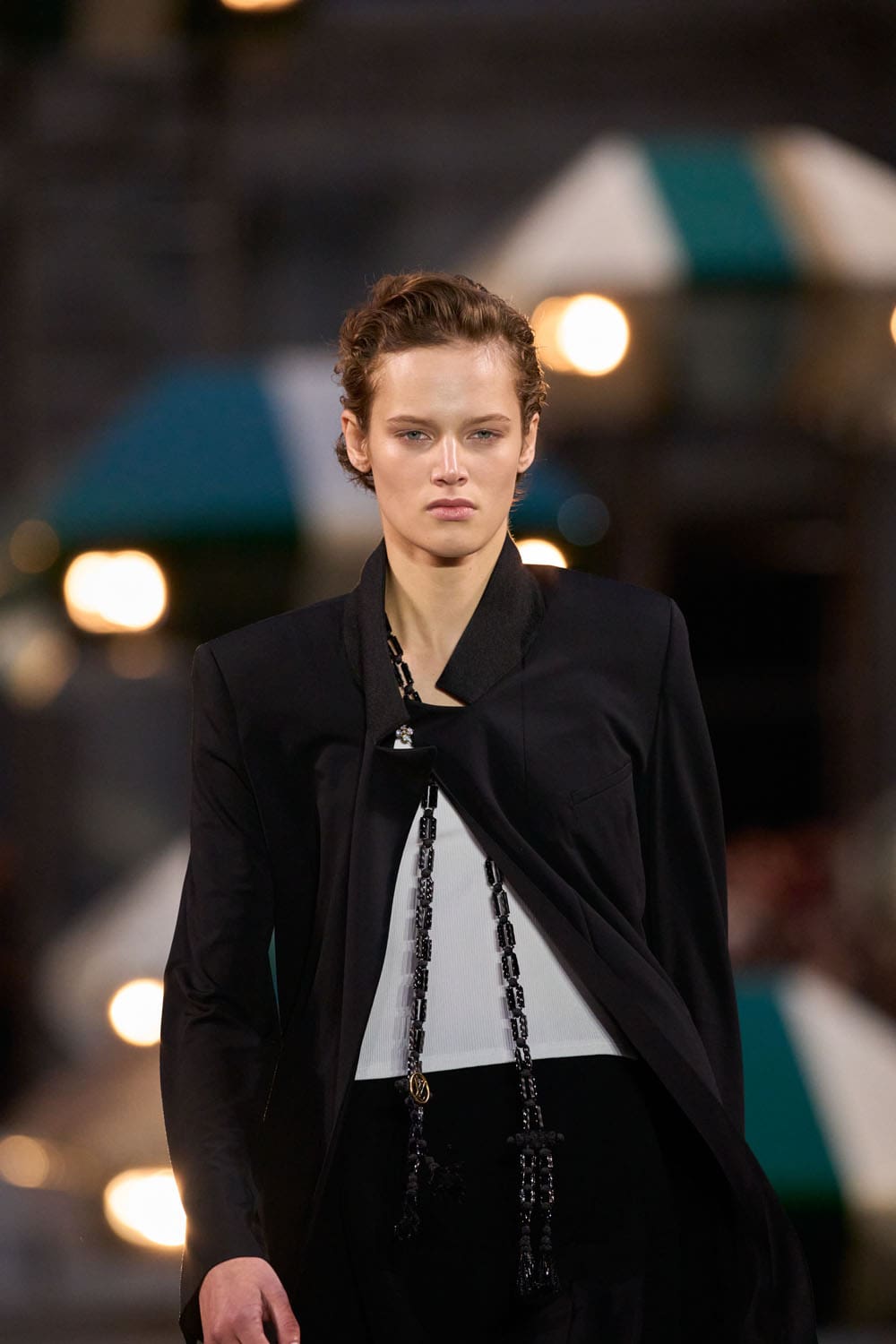
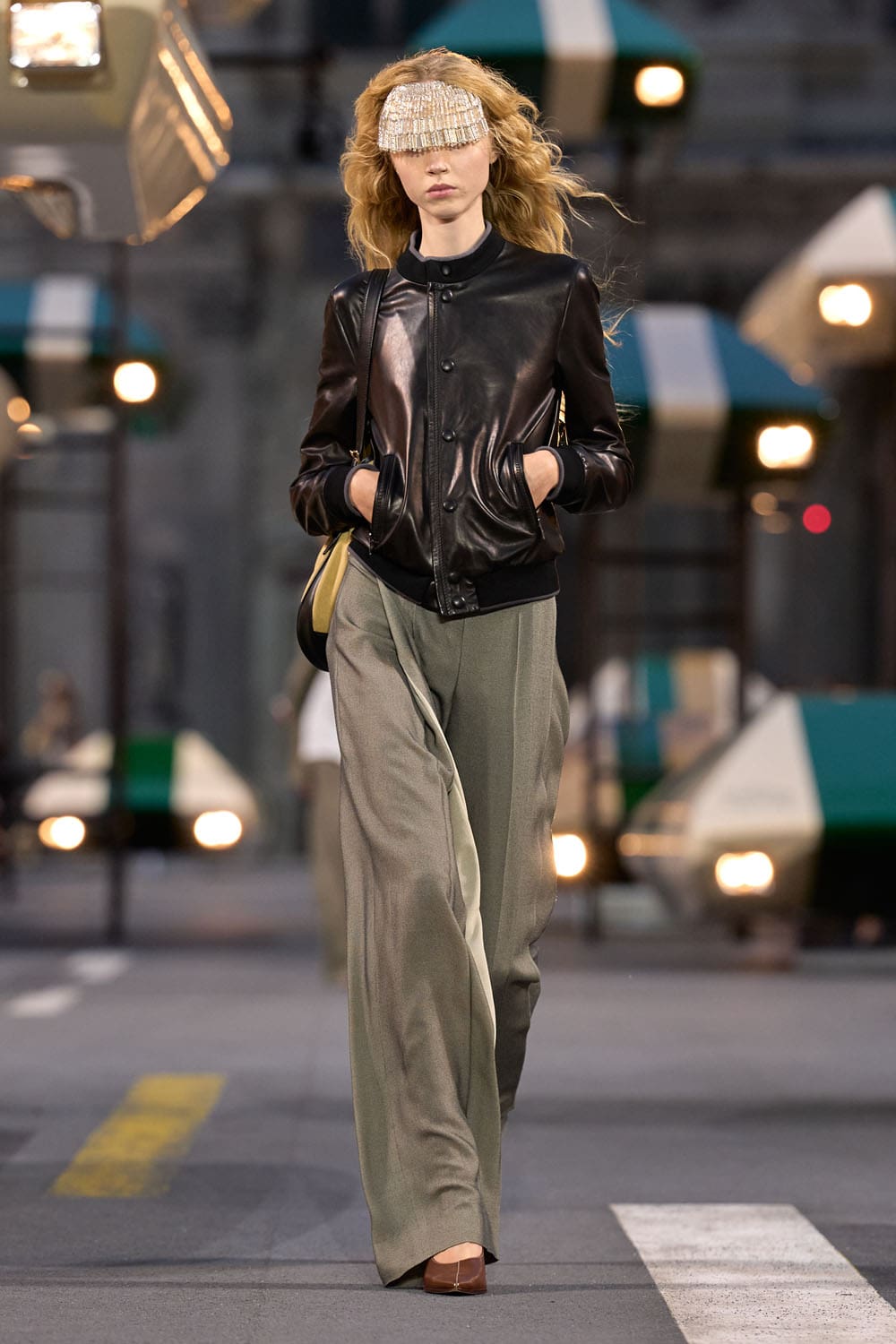
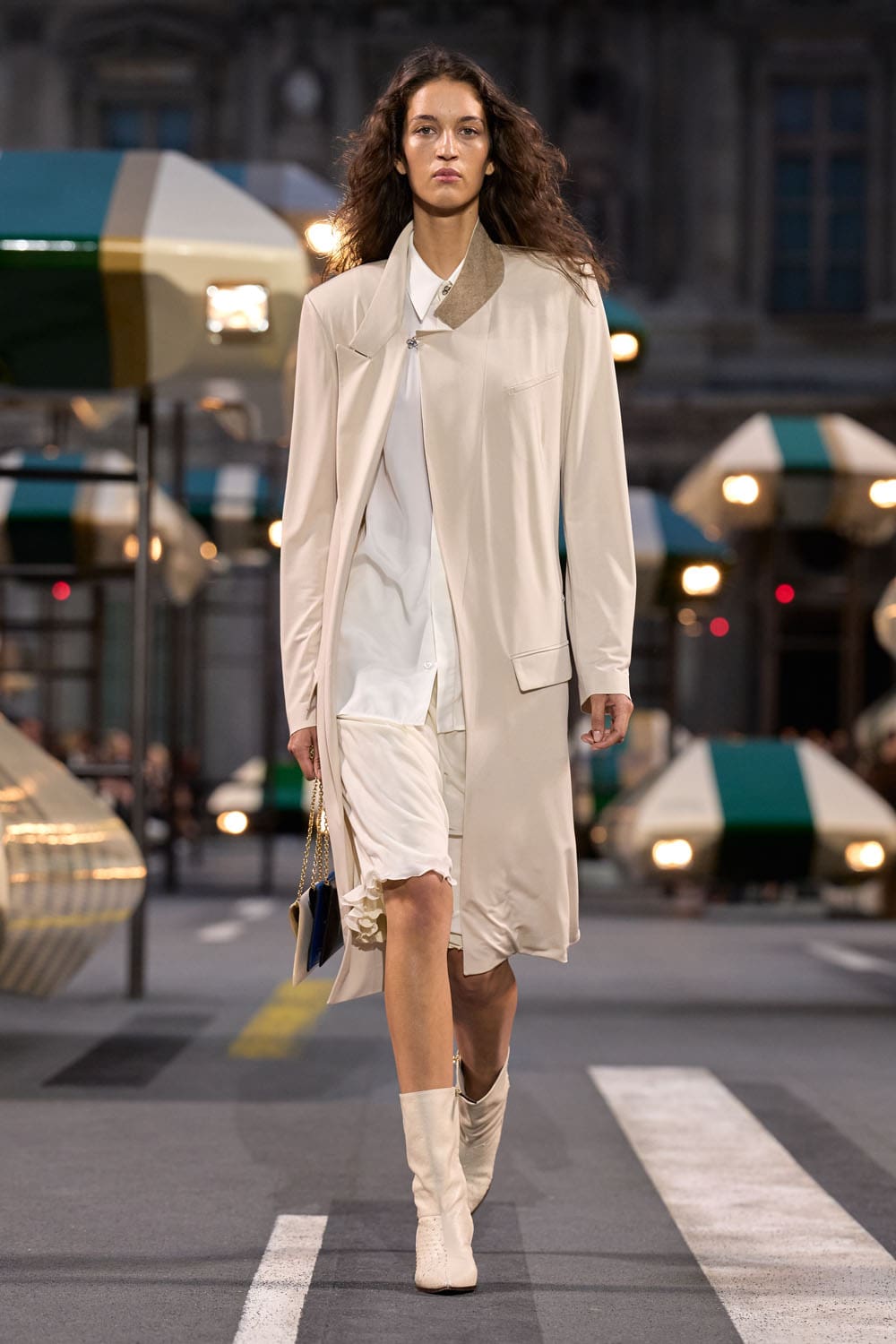
To equate the heritage of Louis Vuitton exclusively with rigid wood trunks and brass locks is to misread its foundational impulse. The malletier founded his empire in 1854 to conquer transit, inventing flat-topped canvas luggage precisely because travelers were boarding steam trains and ocean liners that demanded speed, stackability, and lightness. For Spring/Summer 2027, Nicolas Ghesquière updates that ancestral engineering through a collection titled ERGONOMIE. Set against a surreal cityscape of paused retro-futuristic hovercrafts and streetlamps, the runway operates as a kinetic laboratory.
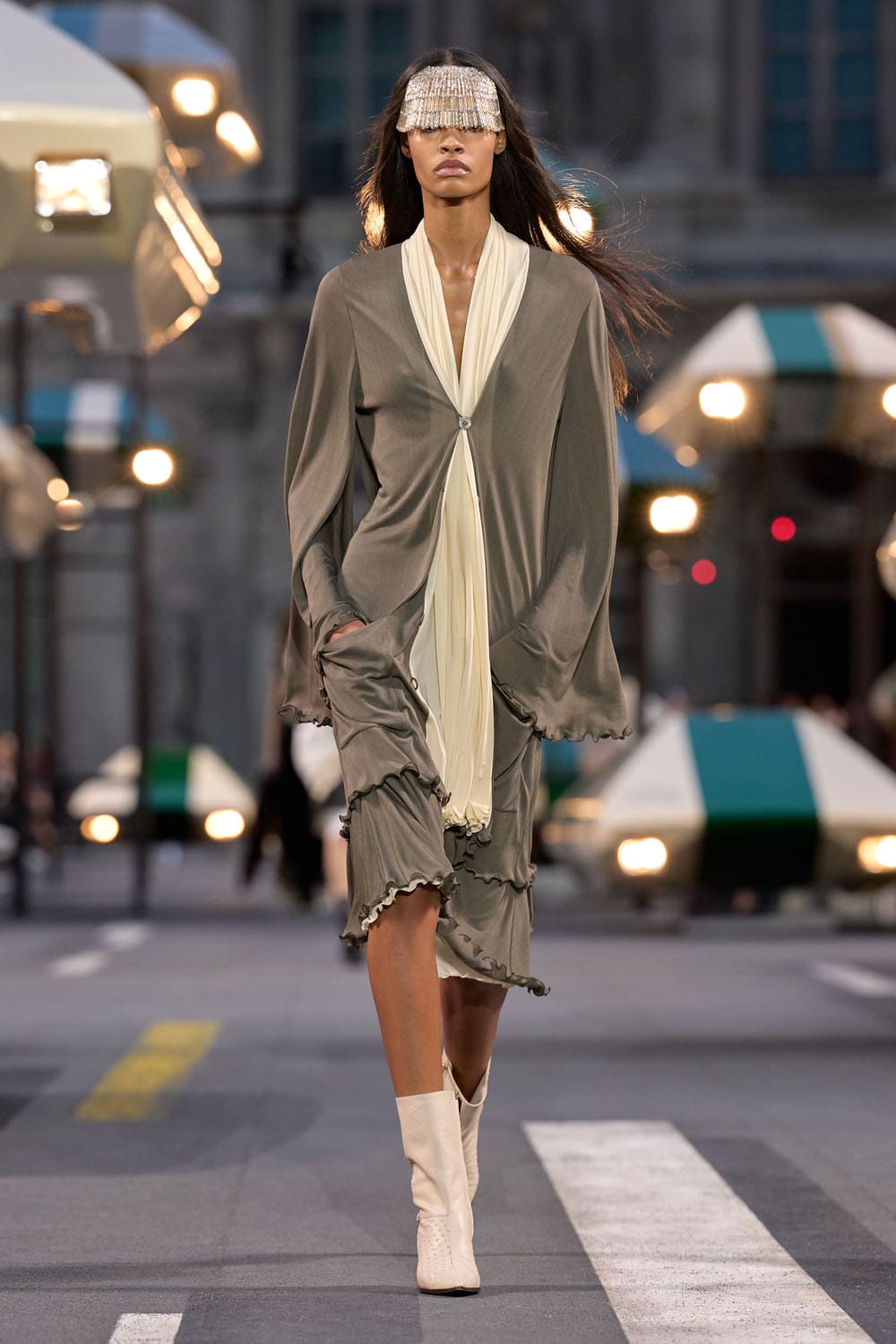
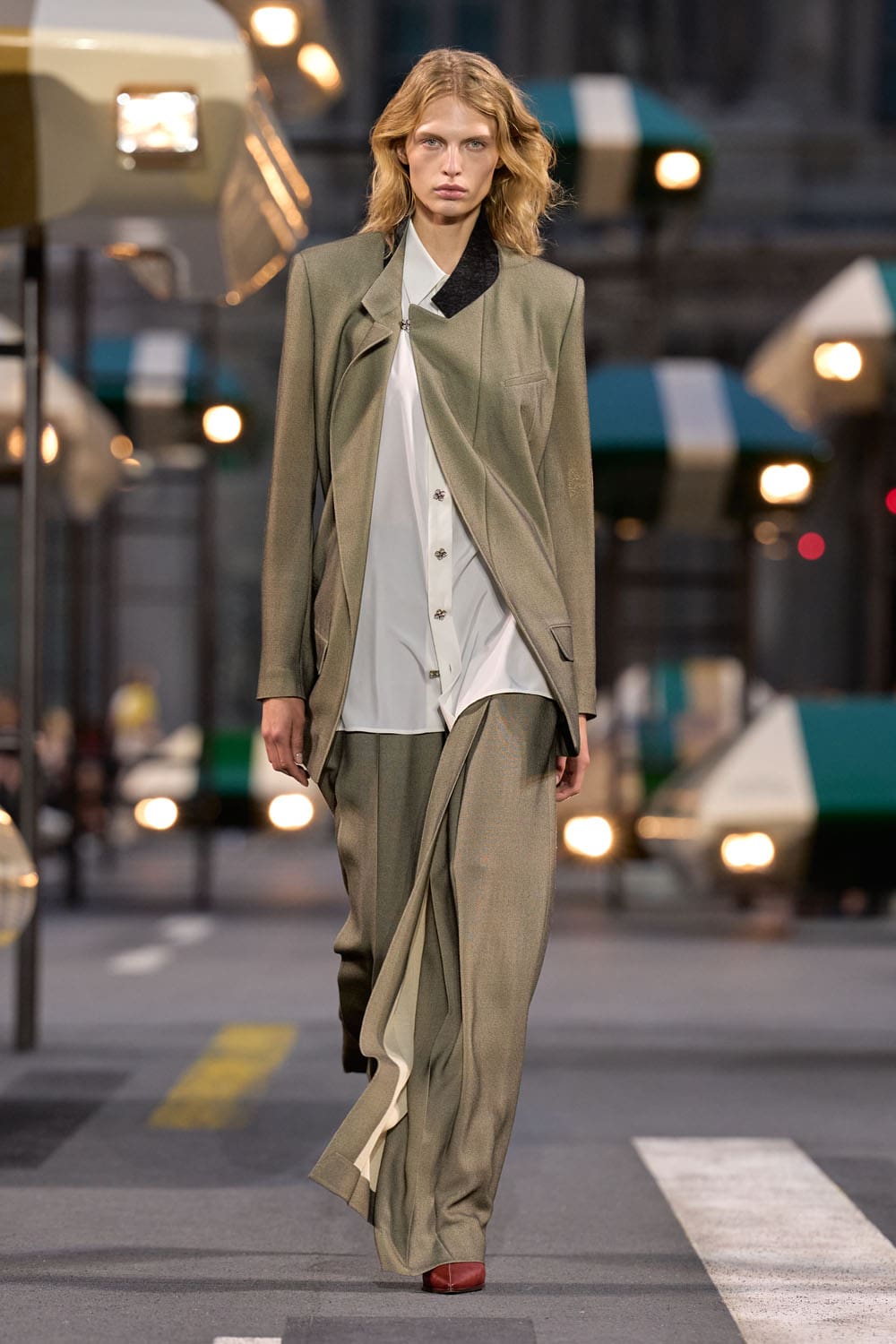
Ghesquière’s thesis challenges the traditional architecture of Parisian couture: what occurs when clothing stops imposing its own sculptural armor and surrenders entirely to the biomechanics of the moving body? While the show notes pontificate heavily on “physiques in locomotion” and “physiological ease,” what actually marched down the zebra crossings was an unapologetic, hyper-athletic tour de force. By stripping away interlinings, shoulder pads, and boning, Ghesquière converts luxury tailoring into high-performance windbreaker gear. It is an exploration of velocity where fabrics behave like aerodynamic membranes—proving that the highest form of travel style in the twenty-first century is not aristocratic luggage, but the speed at which one can sprint through a terminal.
The Cardigan Anorak and Aerostatic Nylon
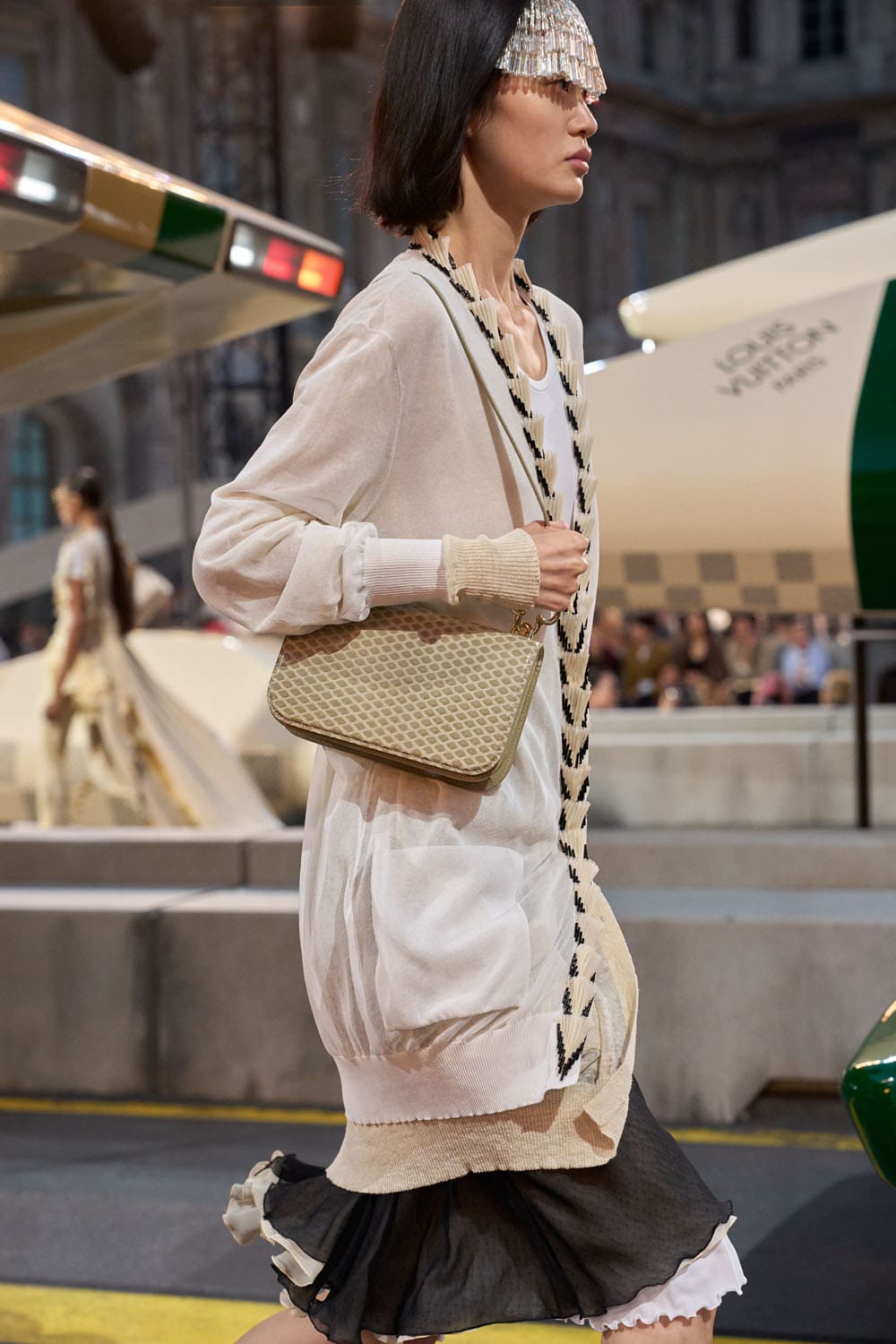
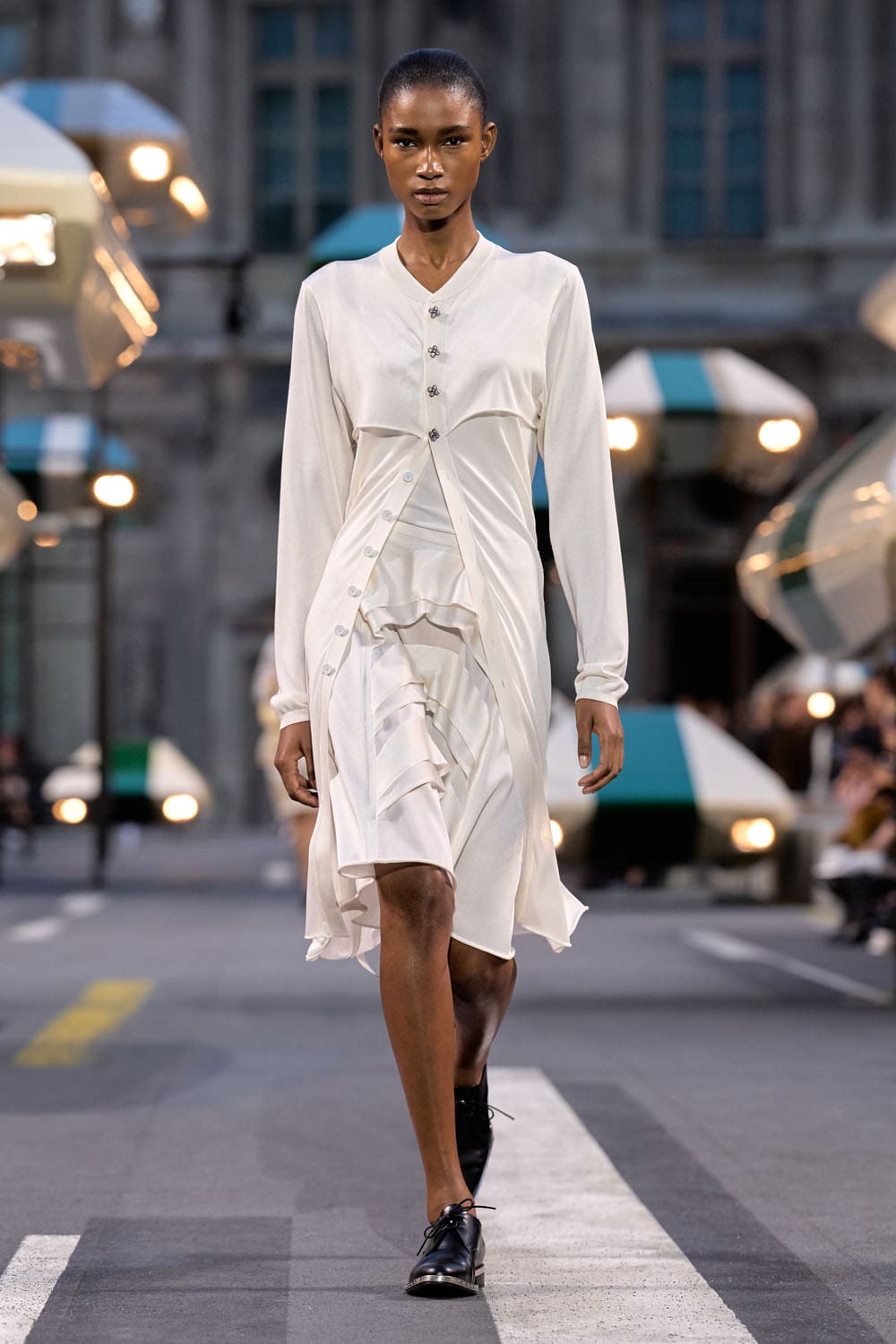
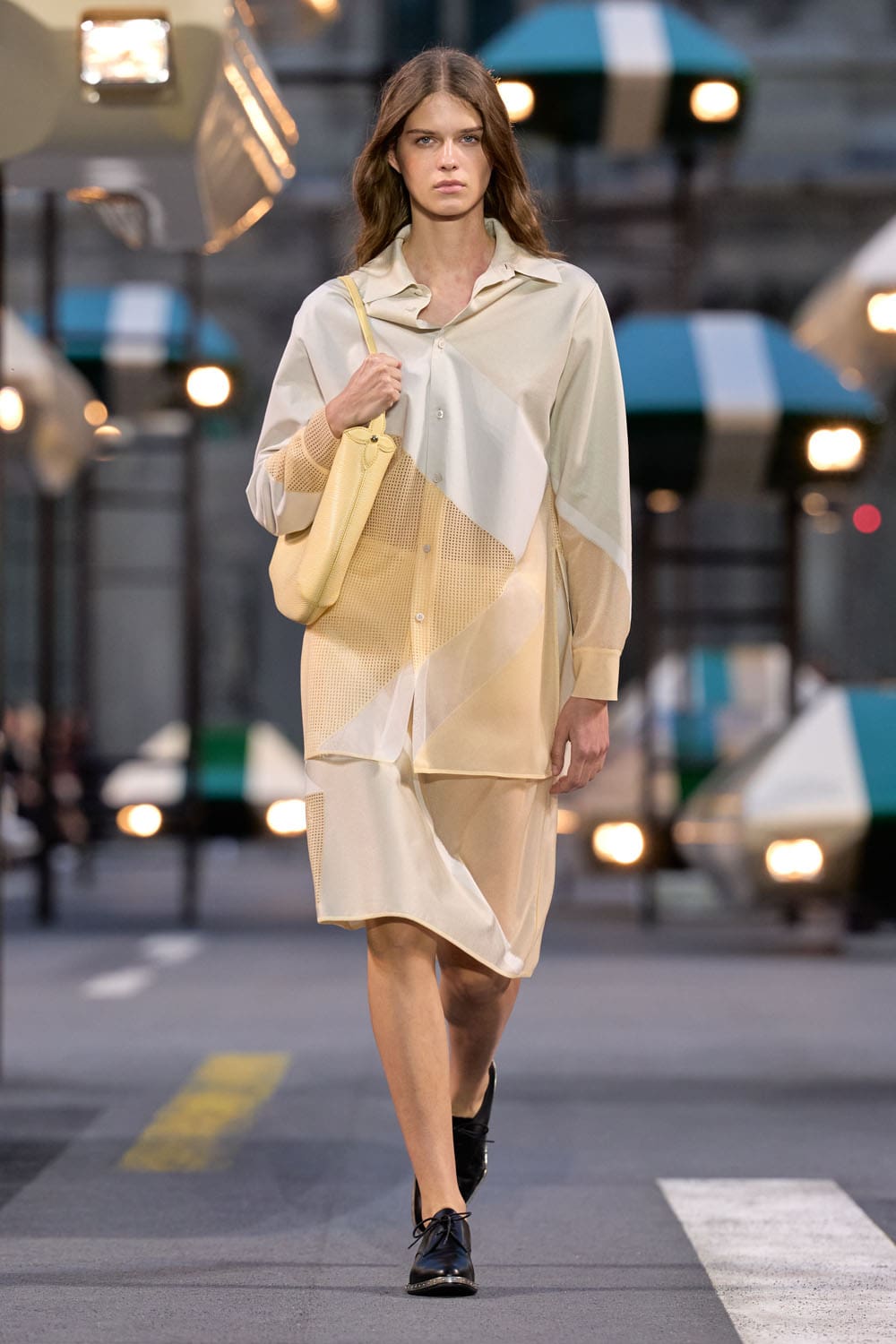
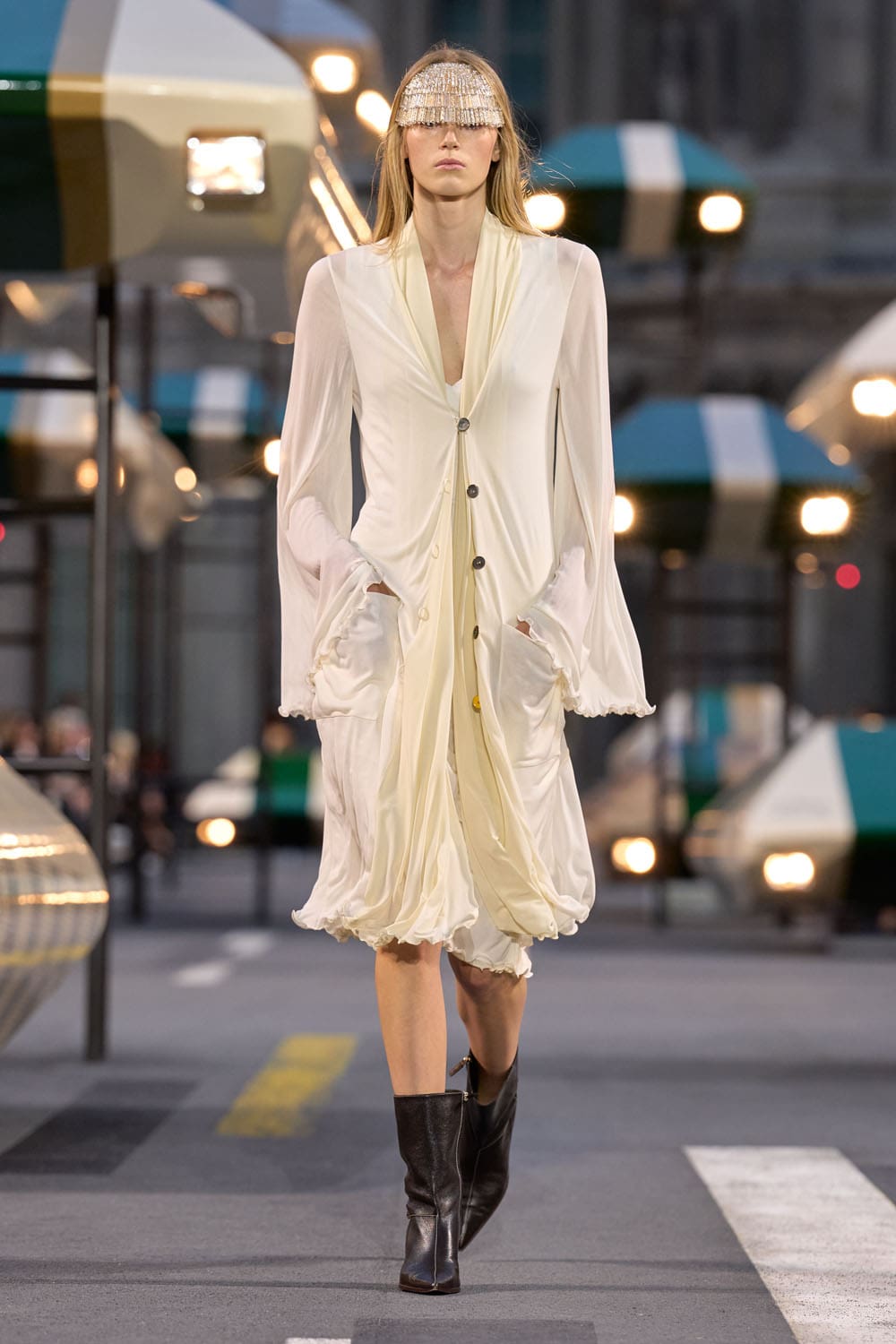
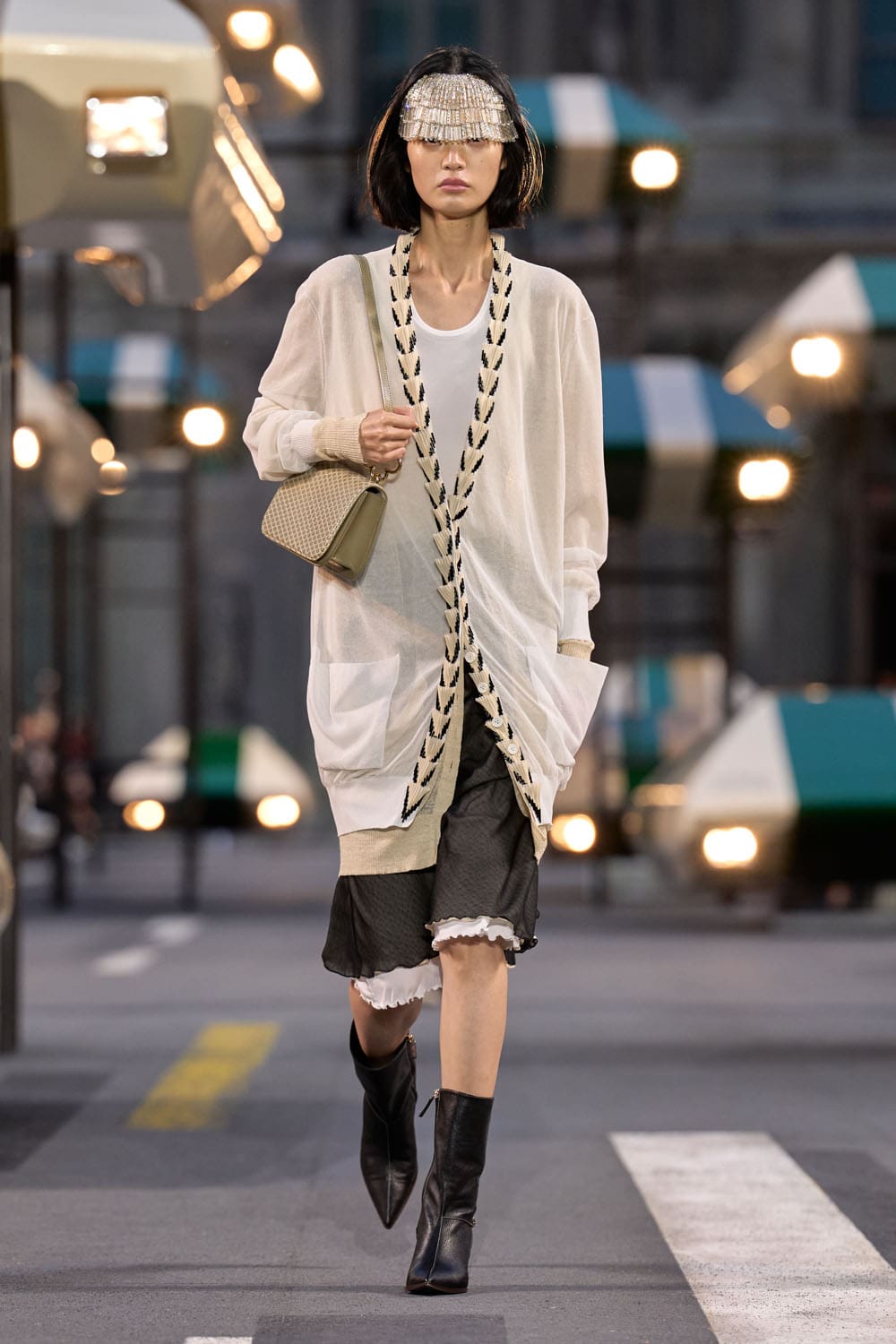
The collection’s primary silhouette announces itself through hybrid layers that fuse athletic jerseys with domestic knitwear. Ghesquière dismantles the classic button-down cardigan, turning it into a flowing aerodynamic tunic. Cut from milk-white micro-ribbed silk jersey, the elongated knit buttons high at the throat before splitting wide across the abdomen, falling over an asymmetrical ruffled skirt with diagonal mesh vents and grounded by flat leather derby shoes. The garment holds no internal stiffness; it clings and billows in direct response to the model’s stride, turning sportswear into fluid daywear.
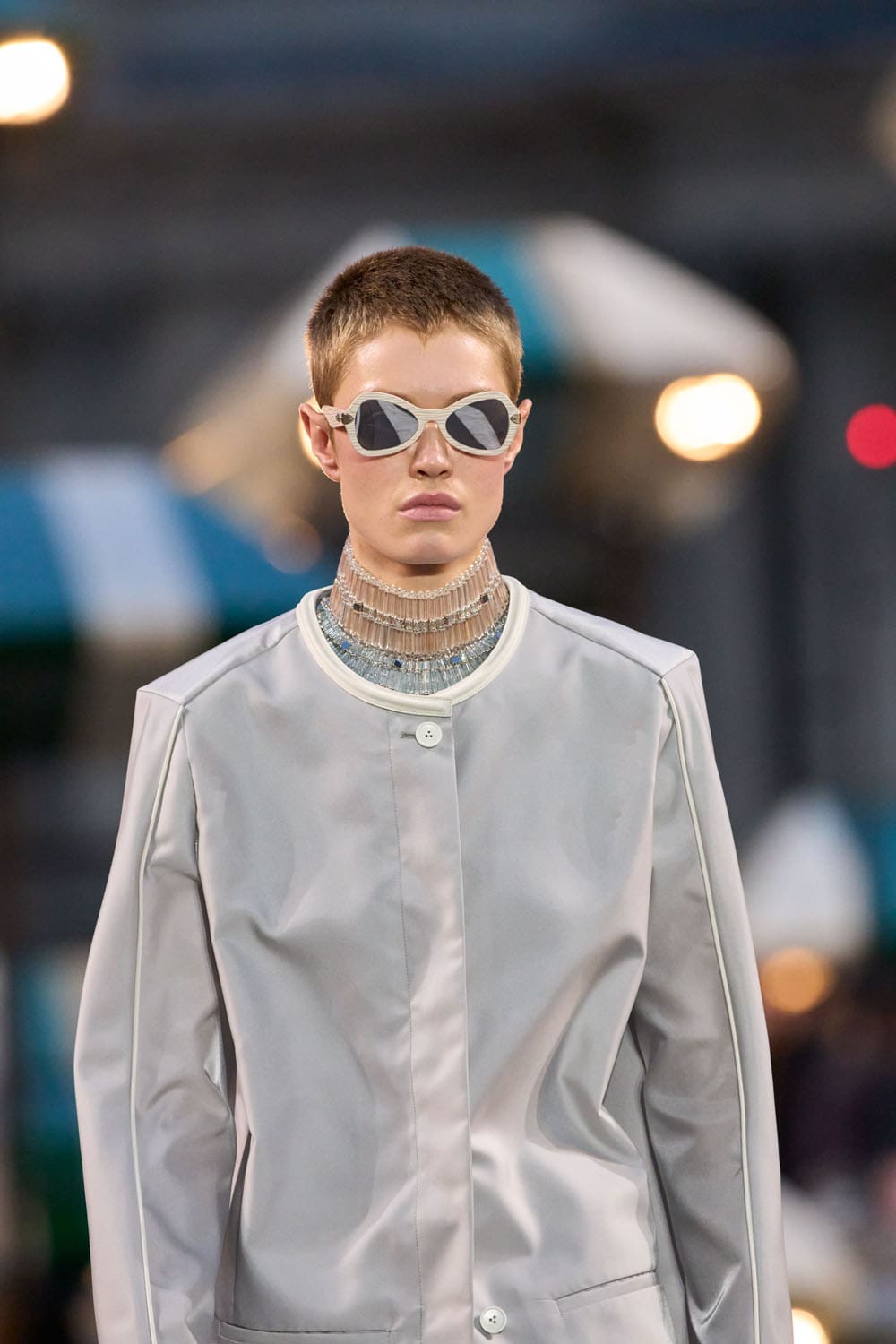
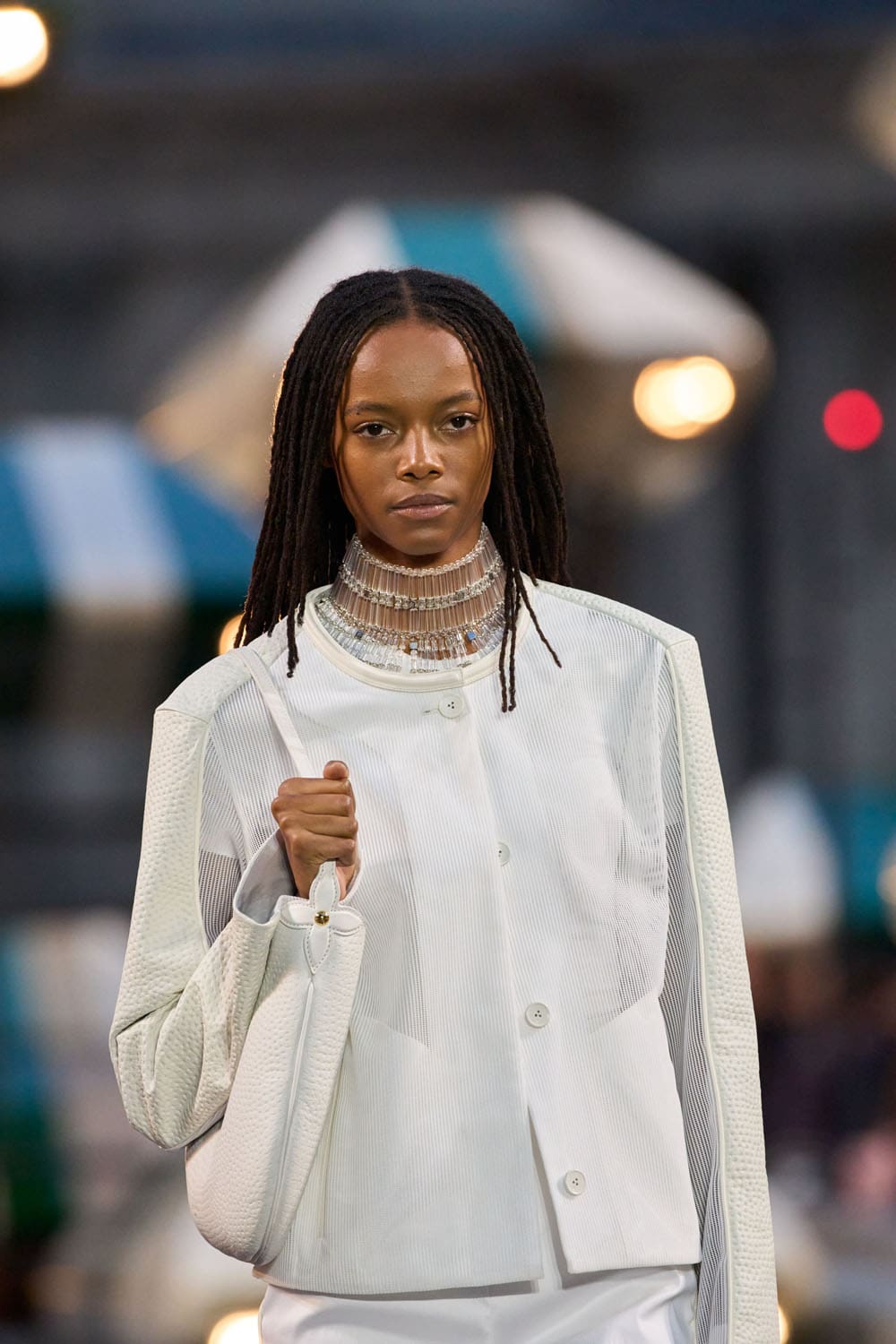
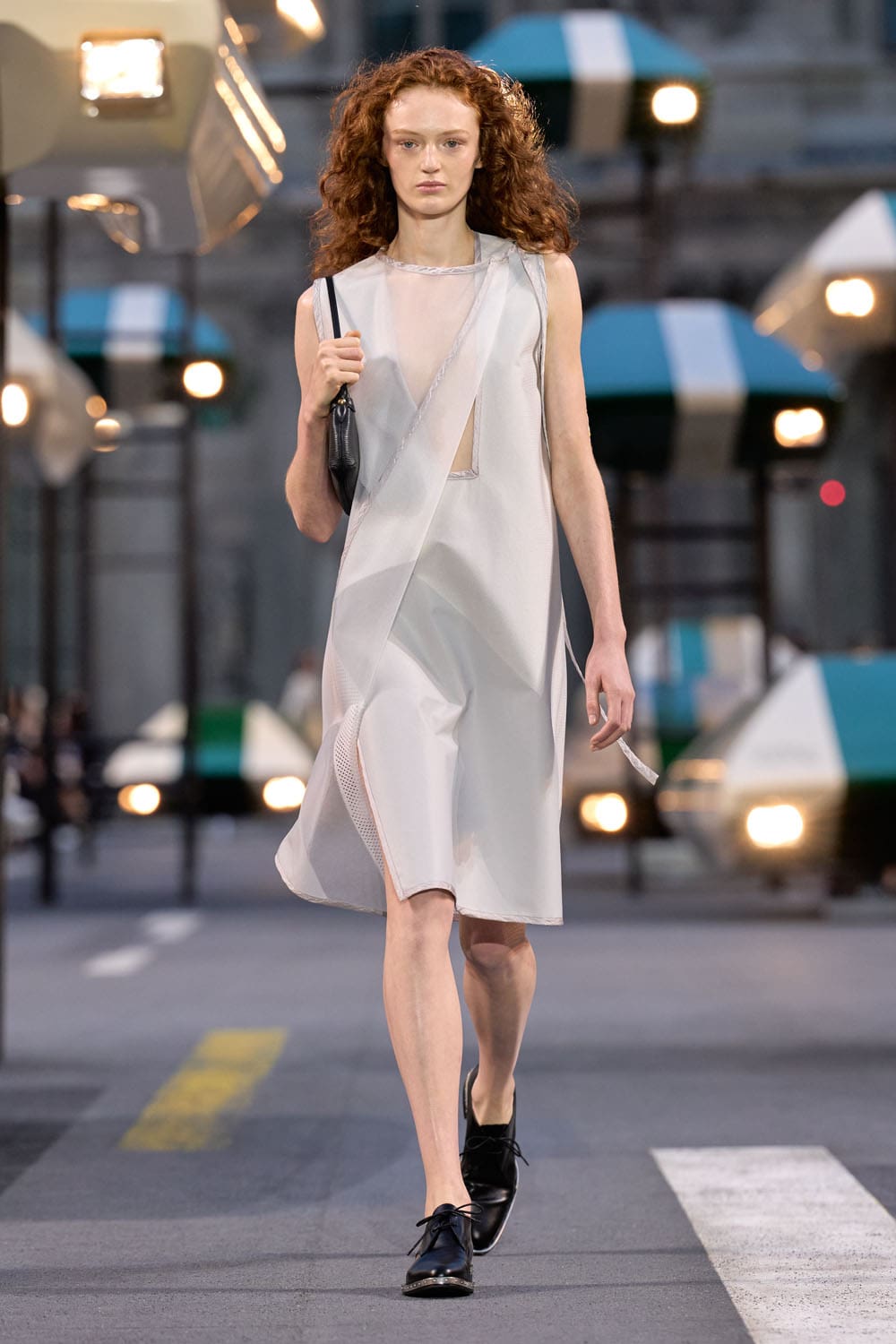
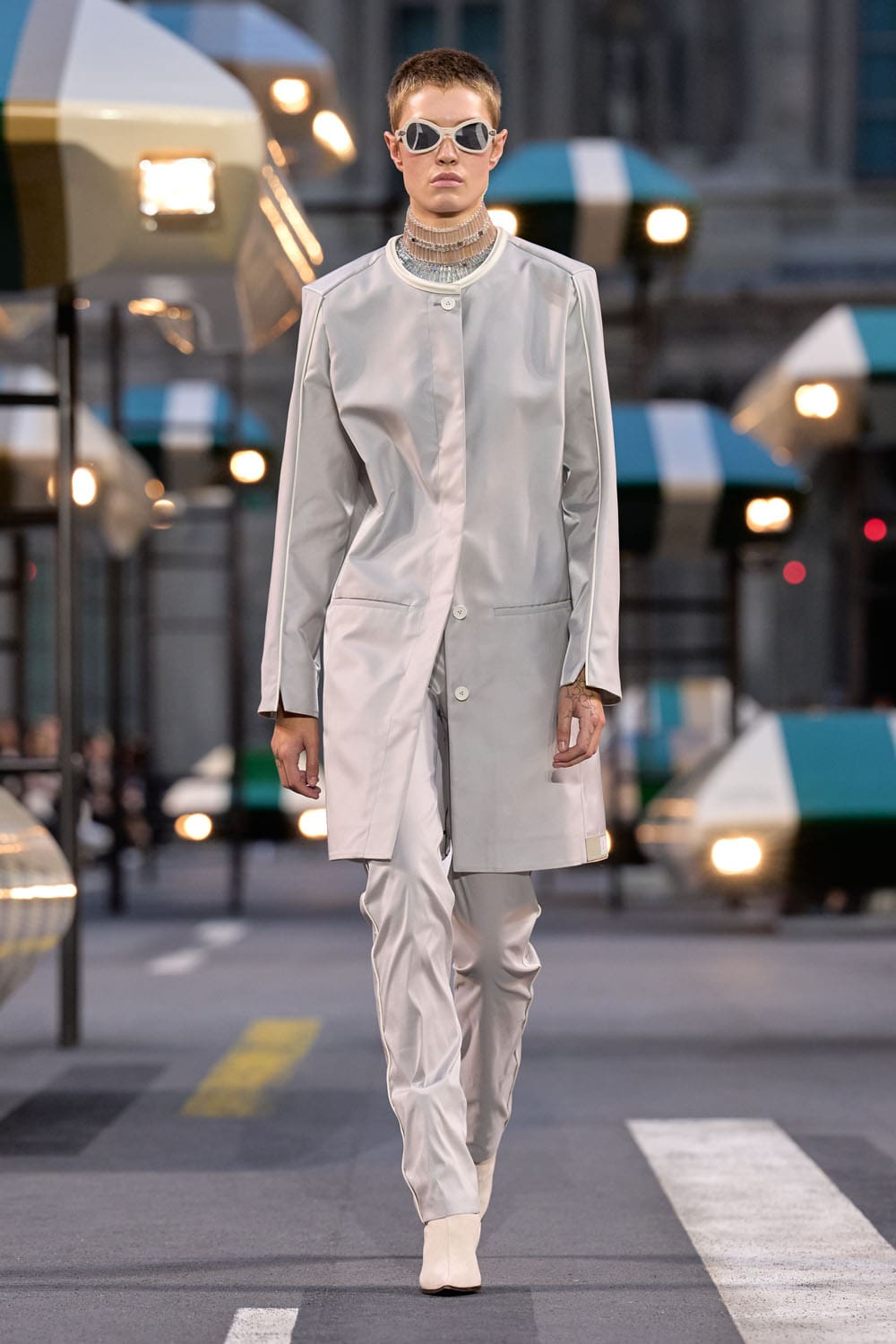
This obsession with technical synthetics accelerates into an immaculate, pearl-grey track suit that balances sci-fi uniform with monastic minimalism. Tailored from papery, water-resistant nylon with contrast white piping running down the raglan sleeves and trouser seams, the knee-length tunic coat features a clean Mandarin collar, styled over a towering choker of crystal fringe and oversized bug-eye shield sunglasses.
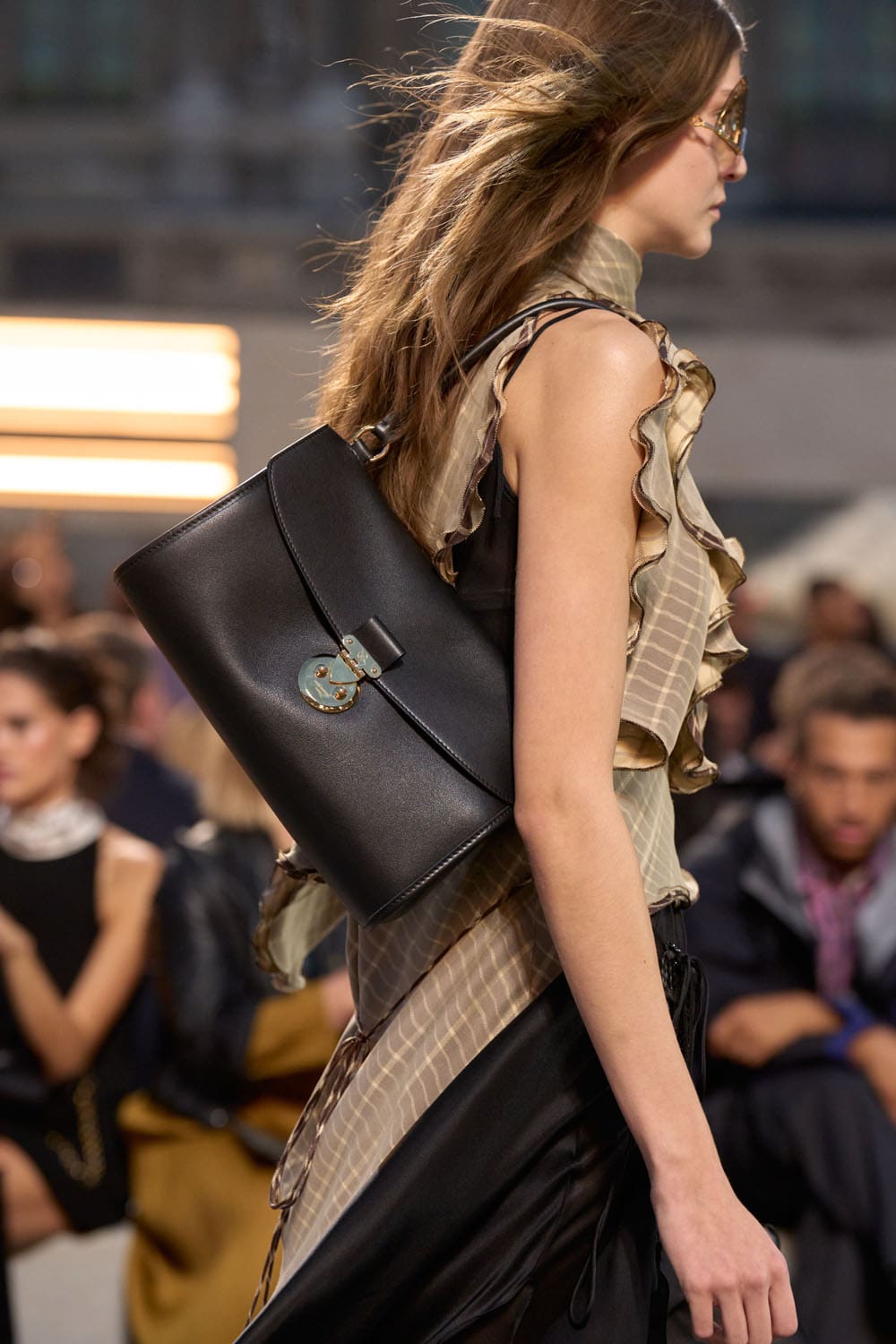
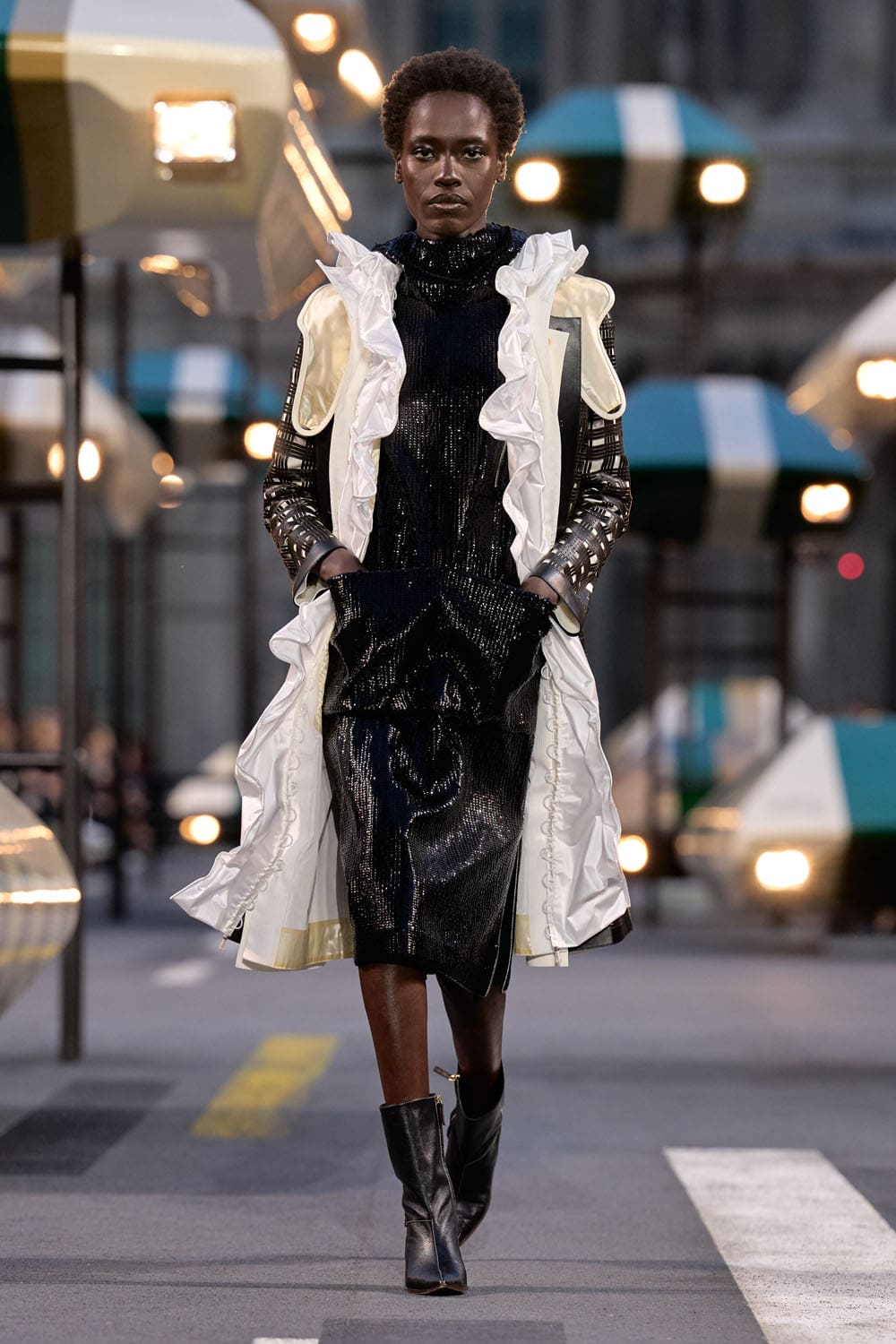
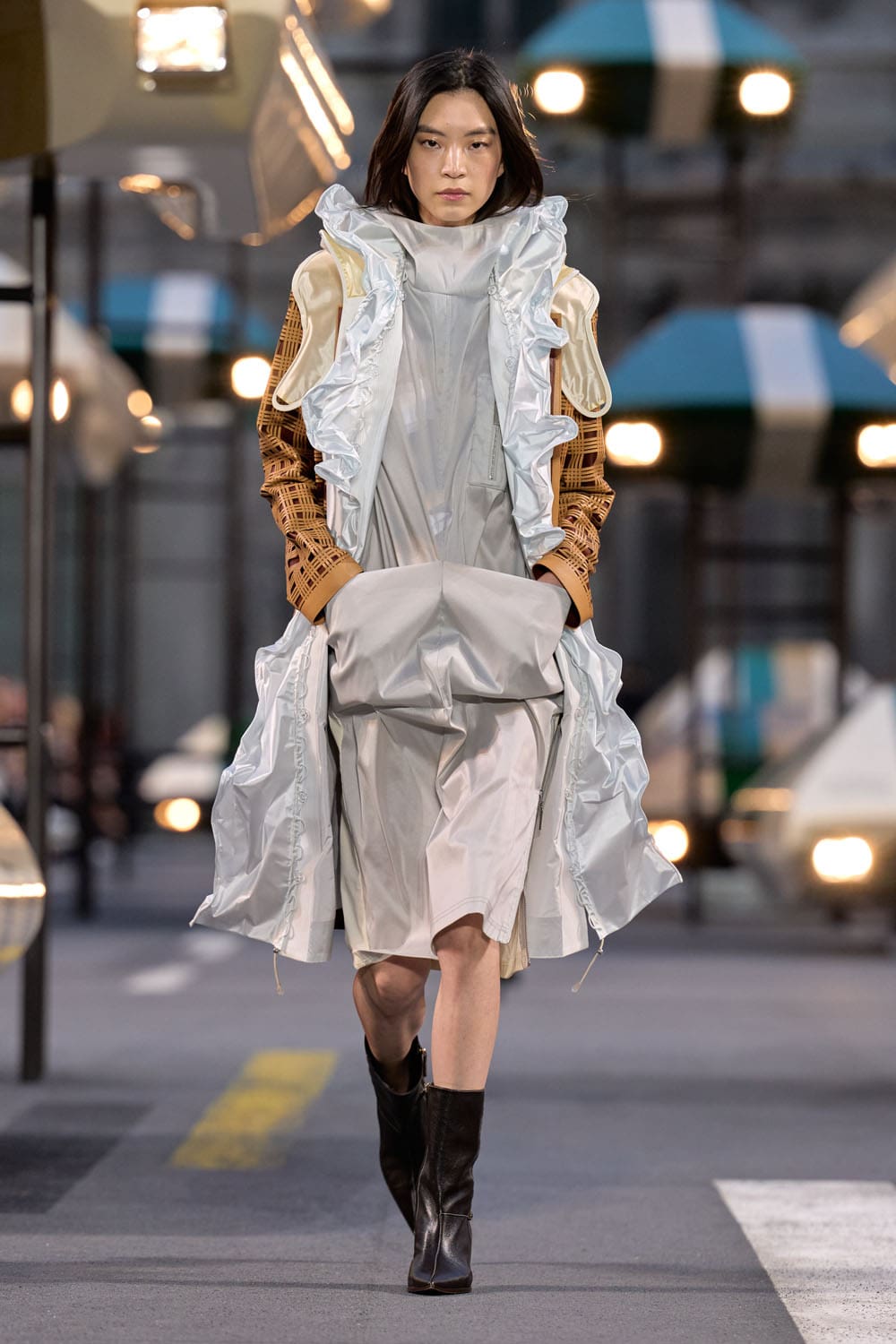
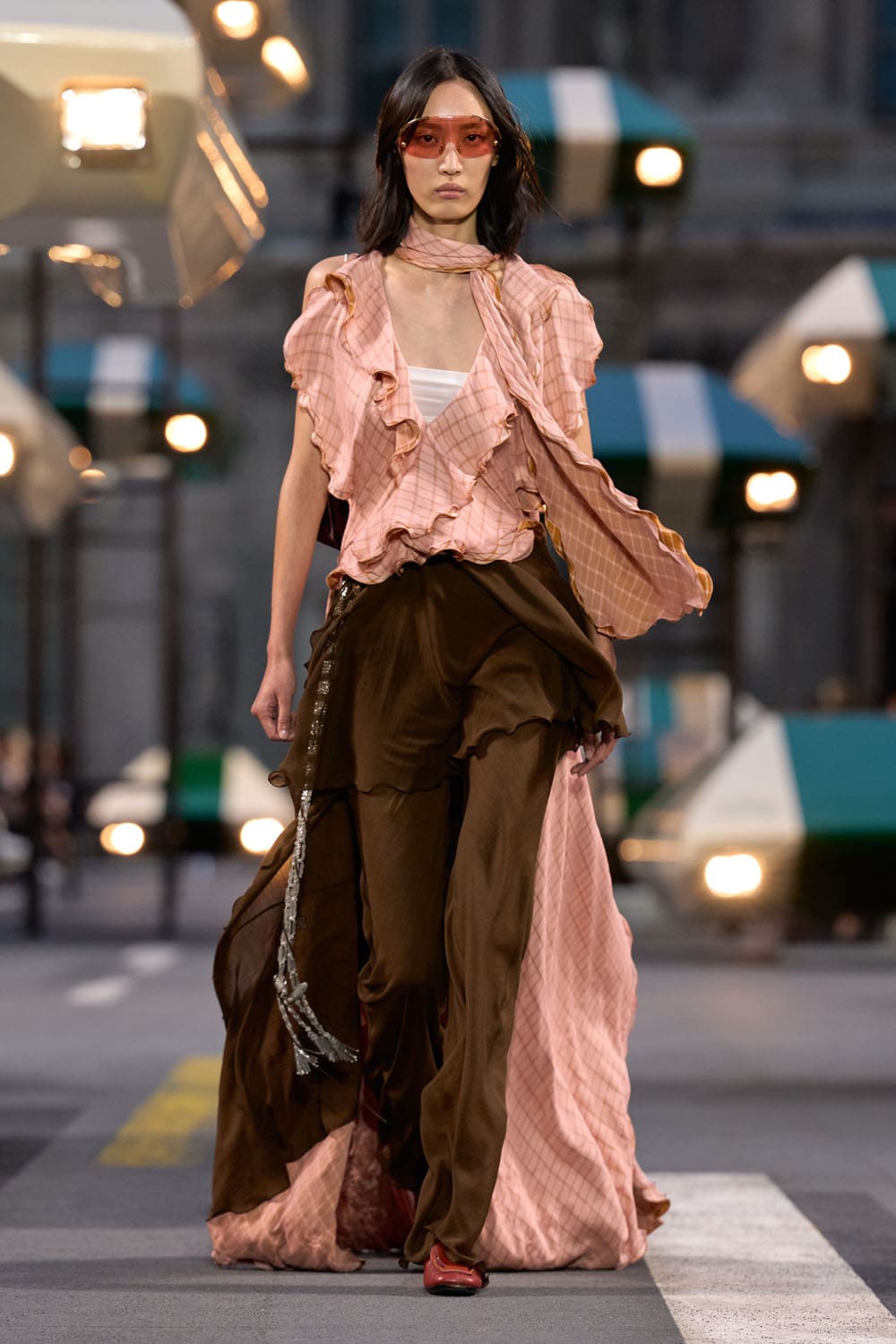
The technical pastiche reaches fever pitch in a multi-layered nylon parka. A ruffled, baby-blue windbreaker vest with an integrated funnel hood wraps over a checked houndstooth gilet, bursting below into an exaggerated, cocooning silver parachute skirt with drawstrings that bunch the hem into kinetic flounces. Worn with glove-leather ankle boots, it reconciles eighteenth-century court ruffles with modern mountaineering gear.
Streamlined Suiting and Beaded Visors
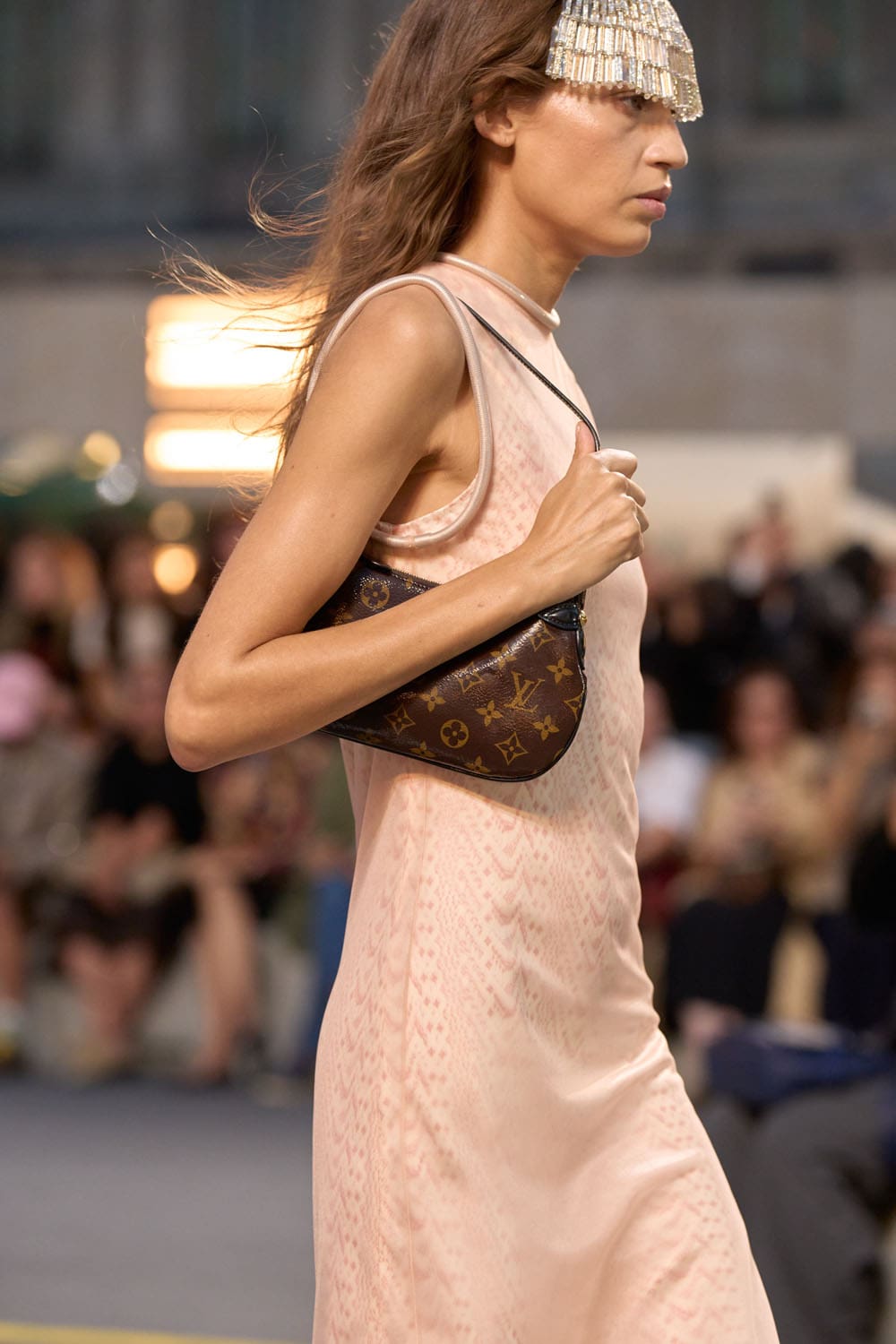
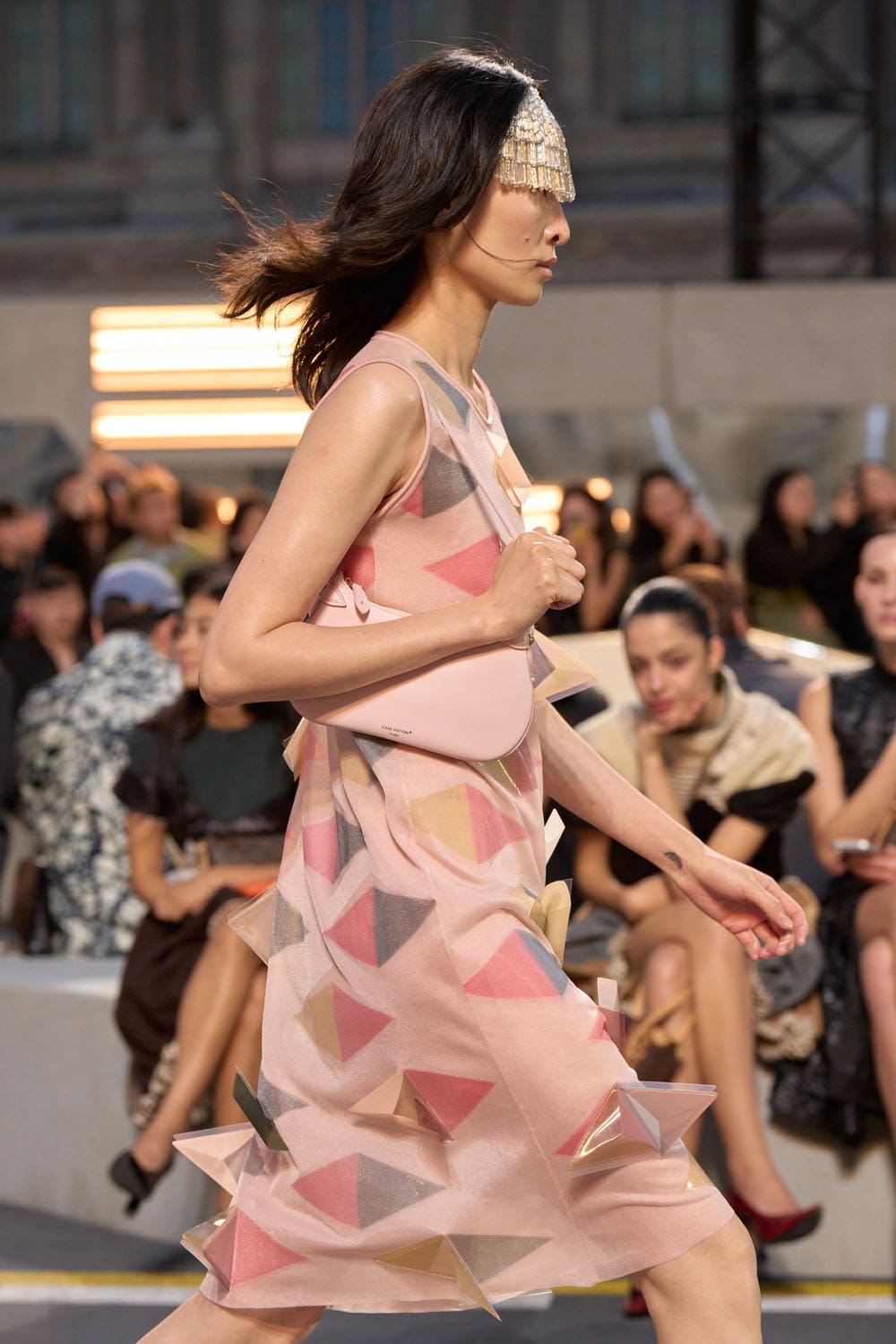
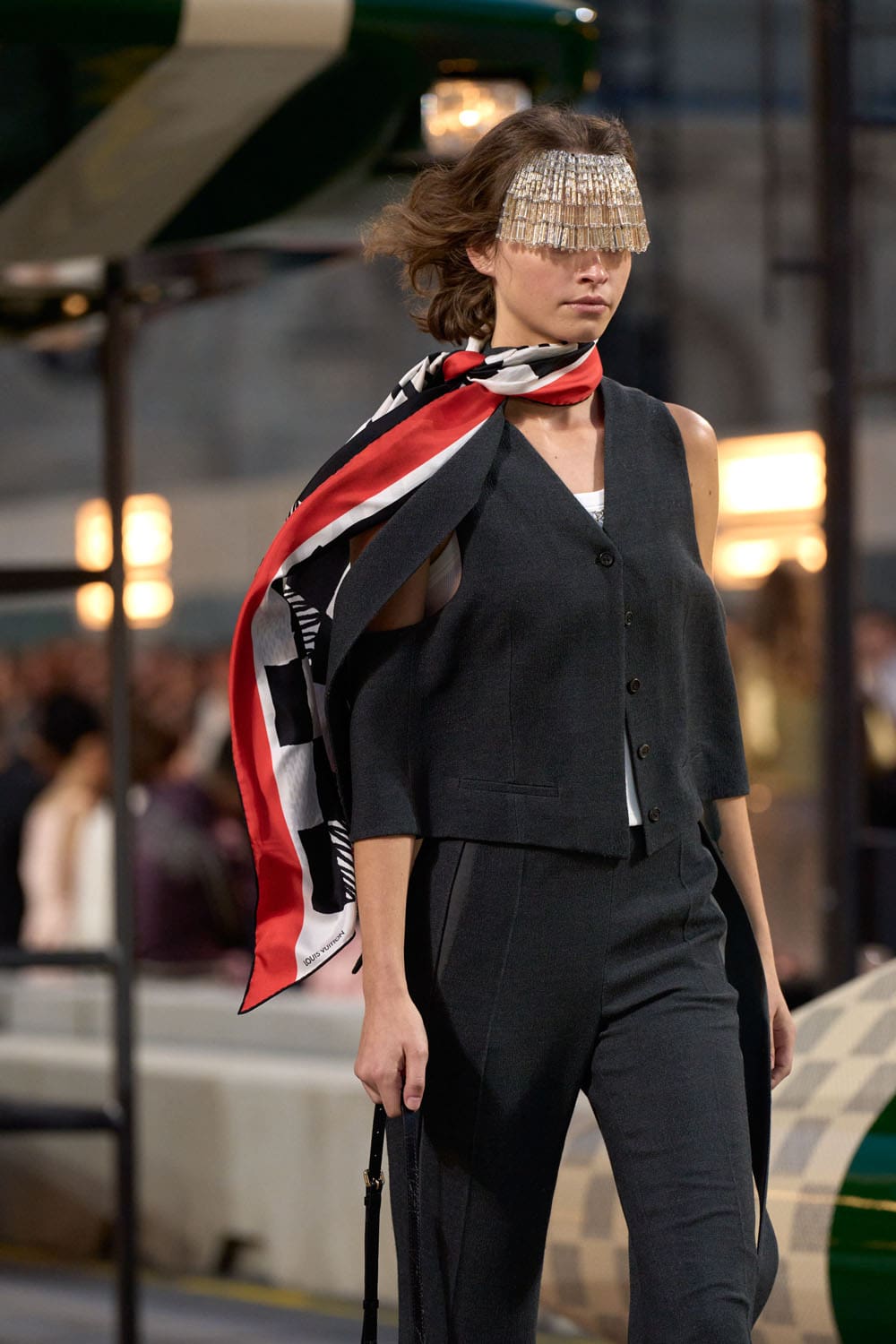
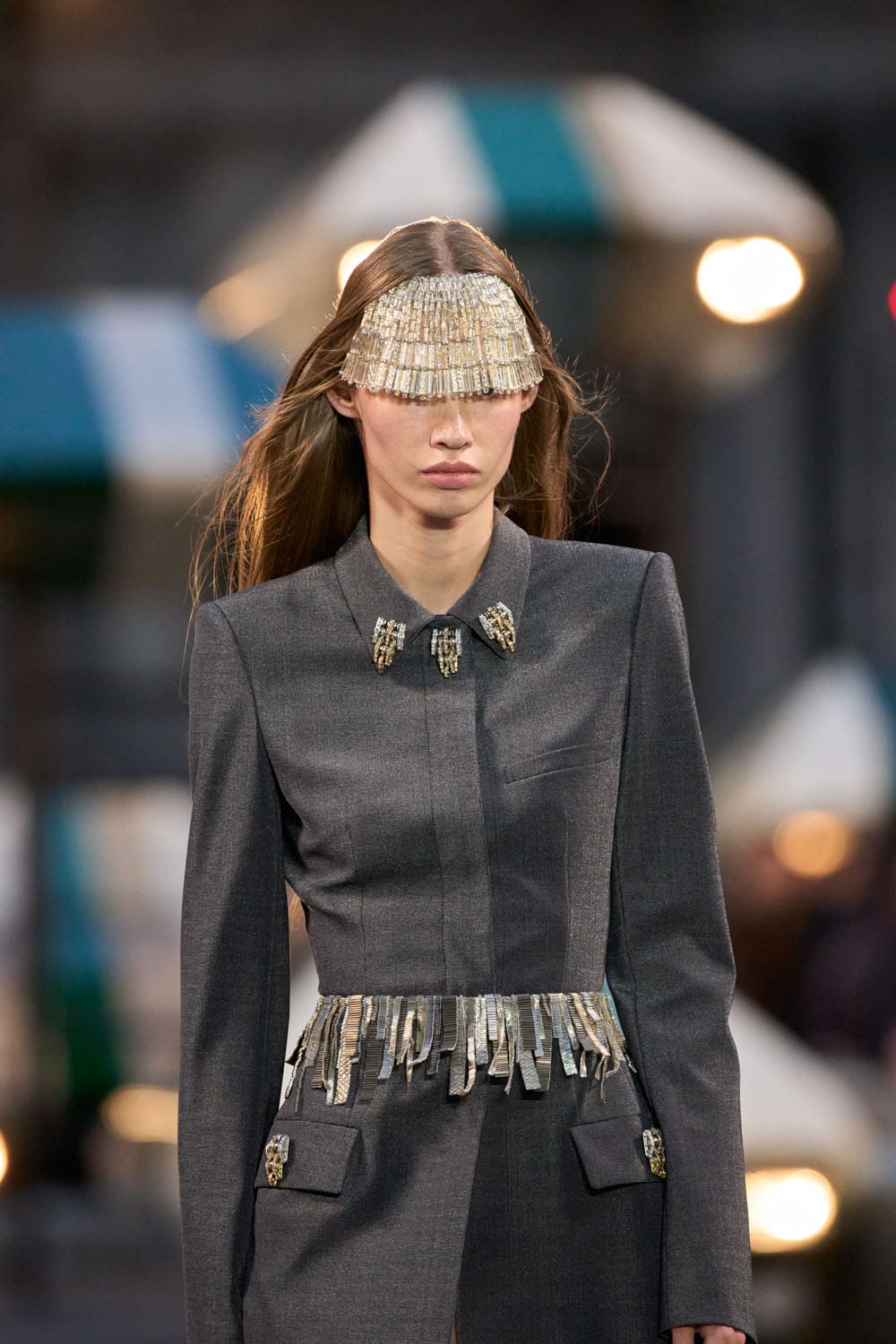
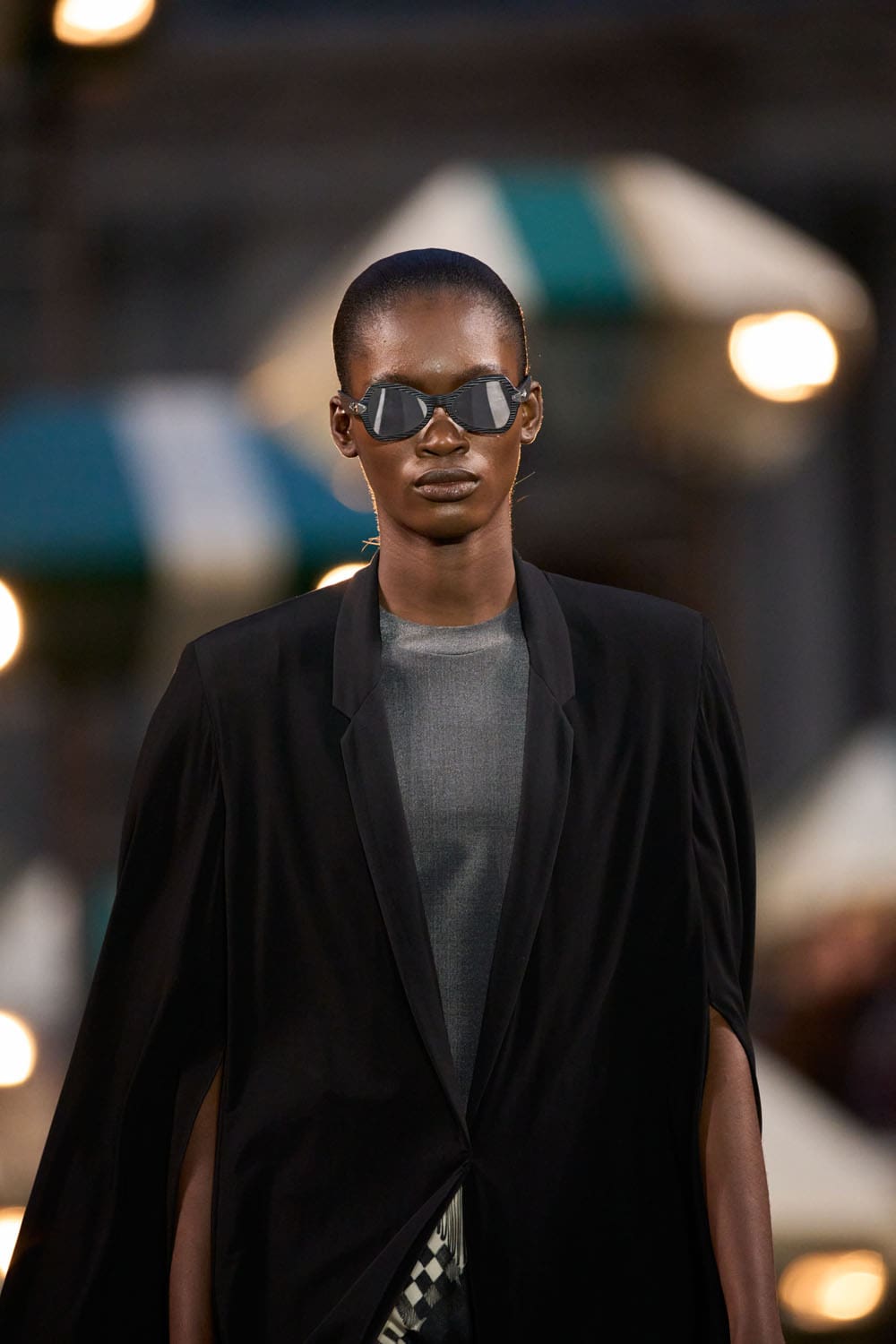
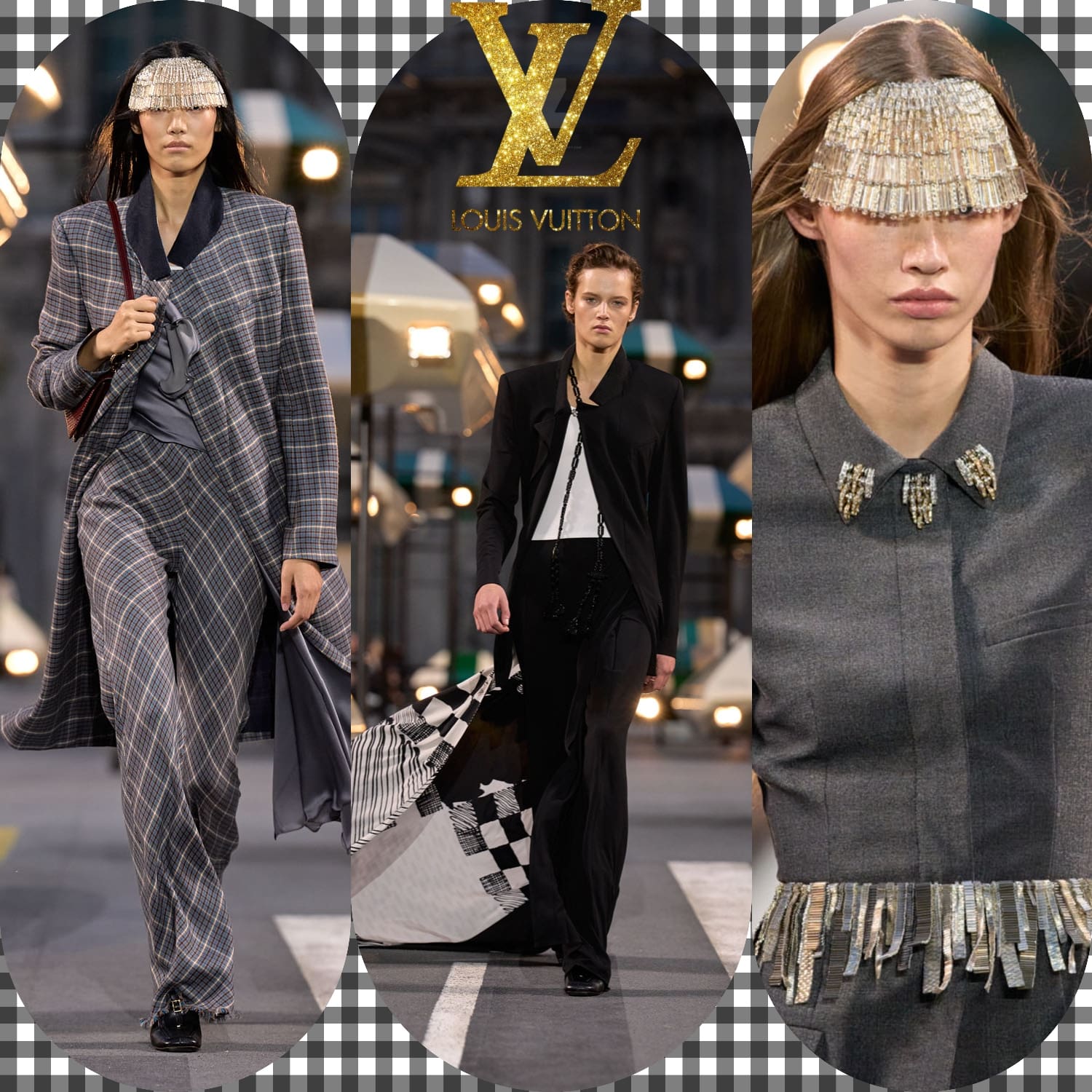
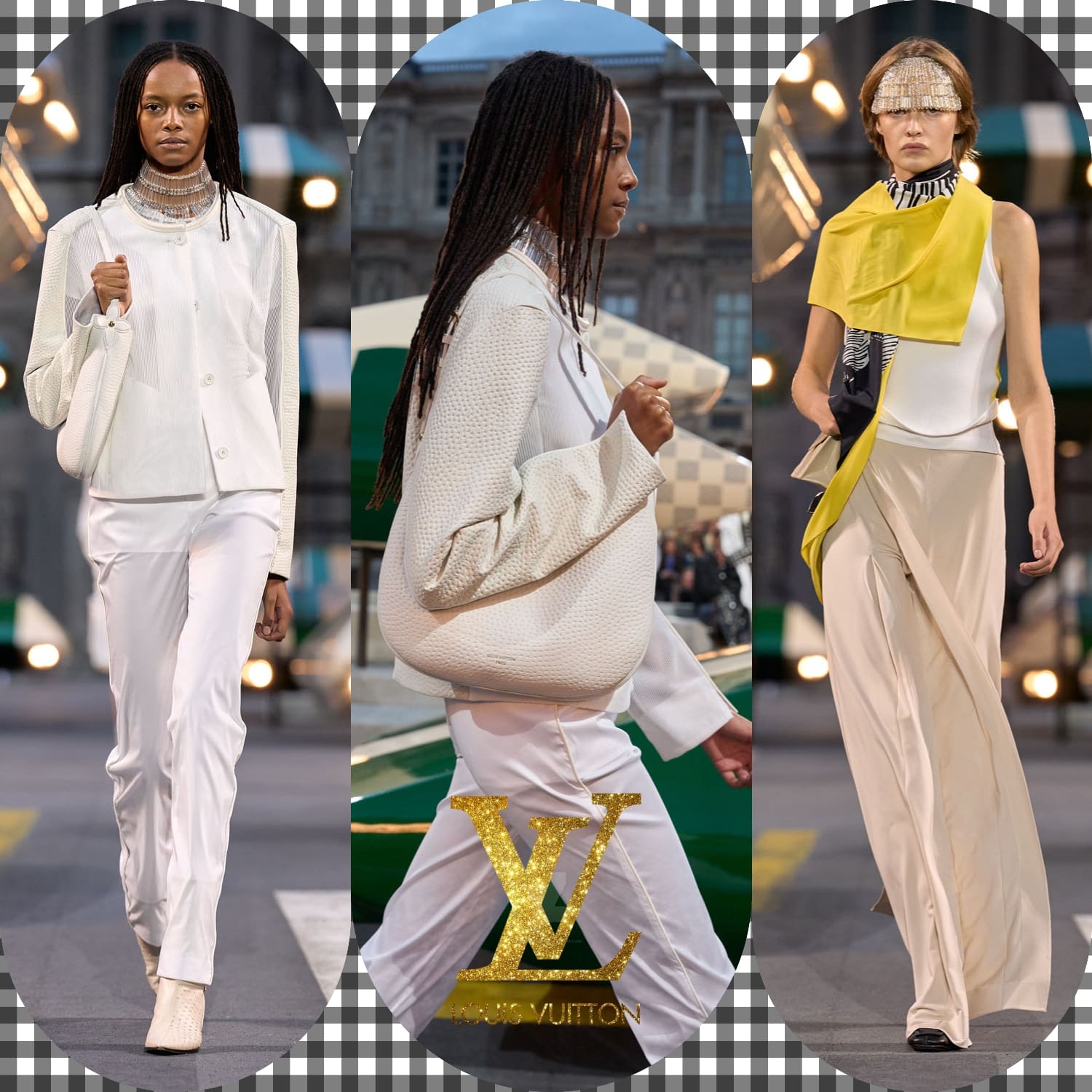
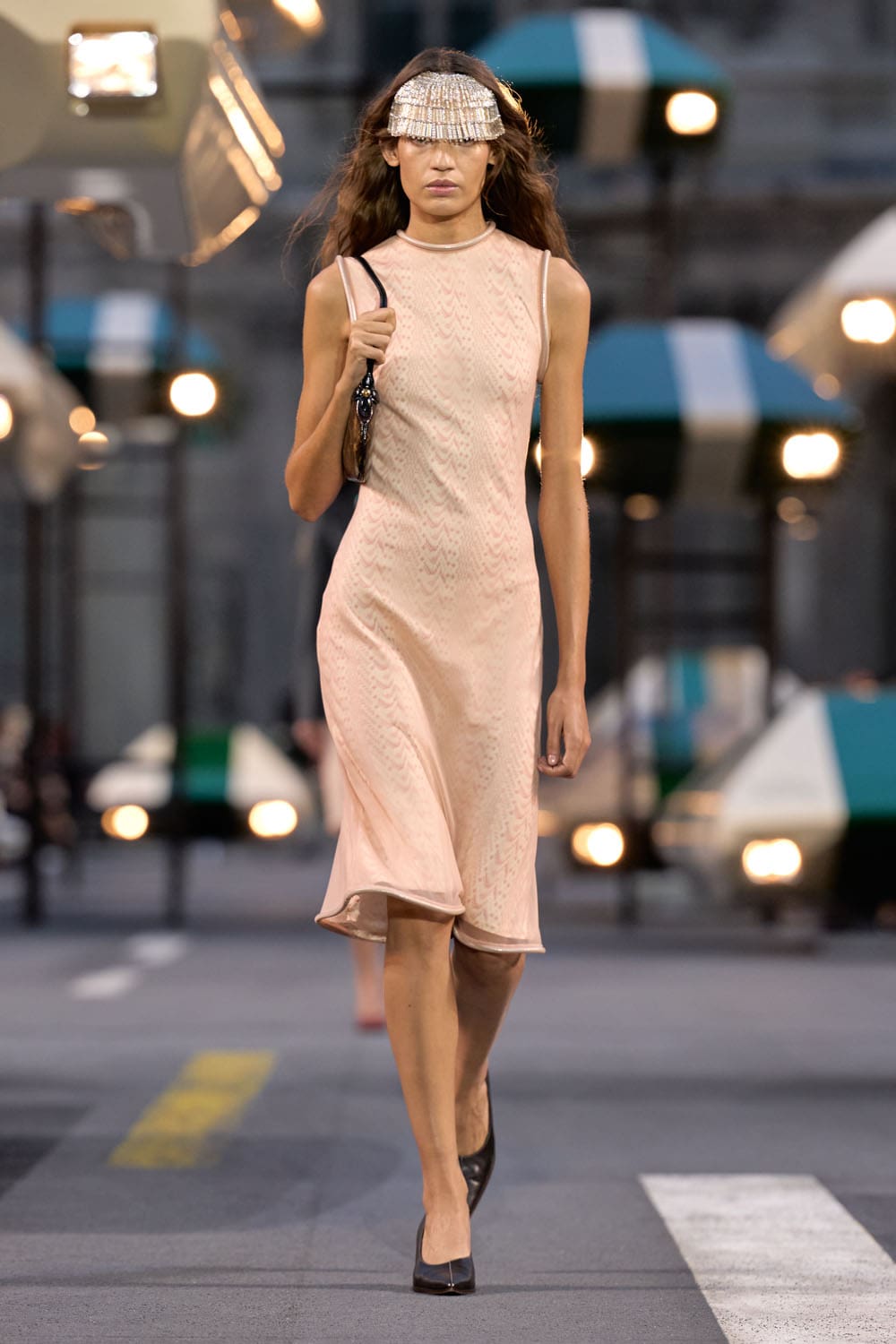
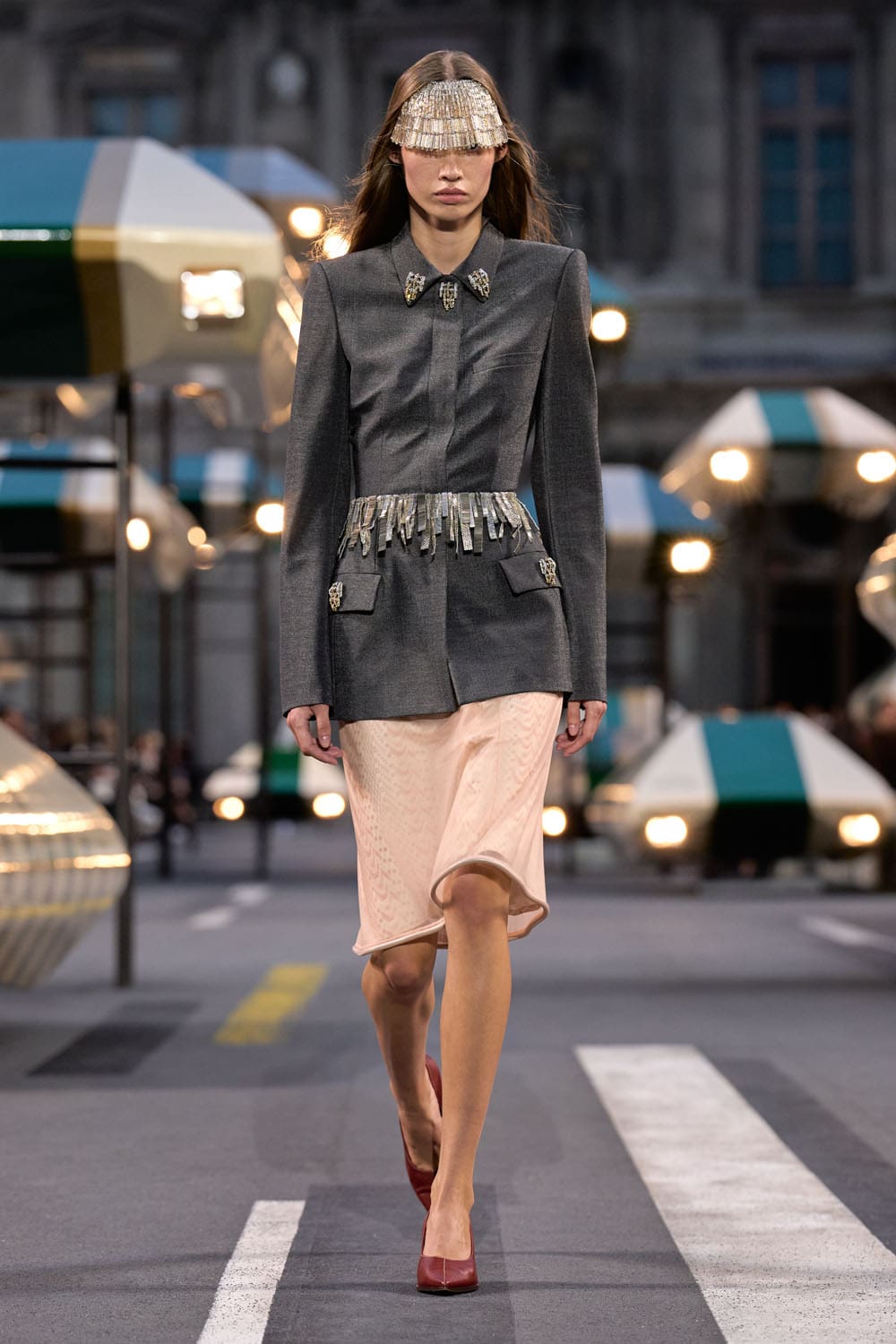
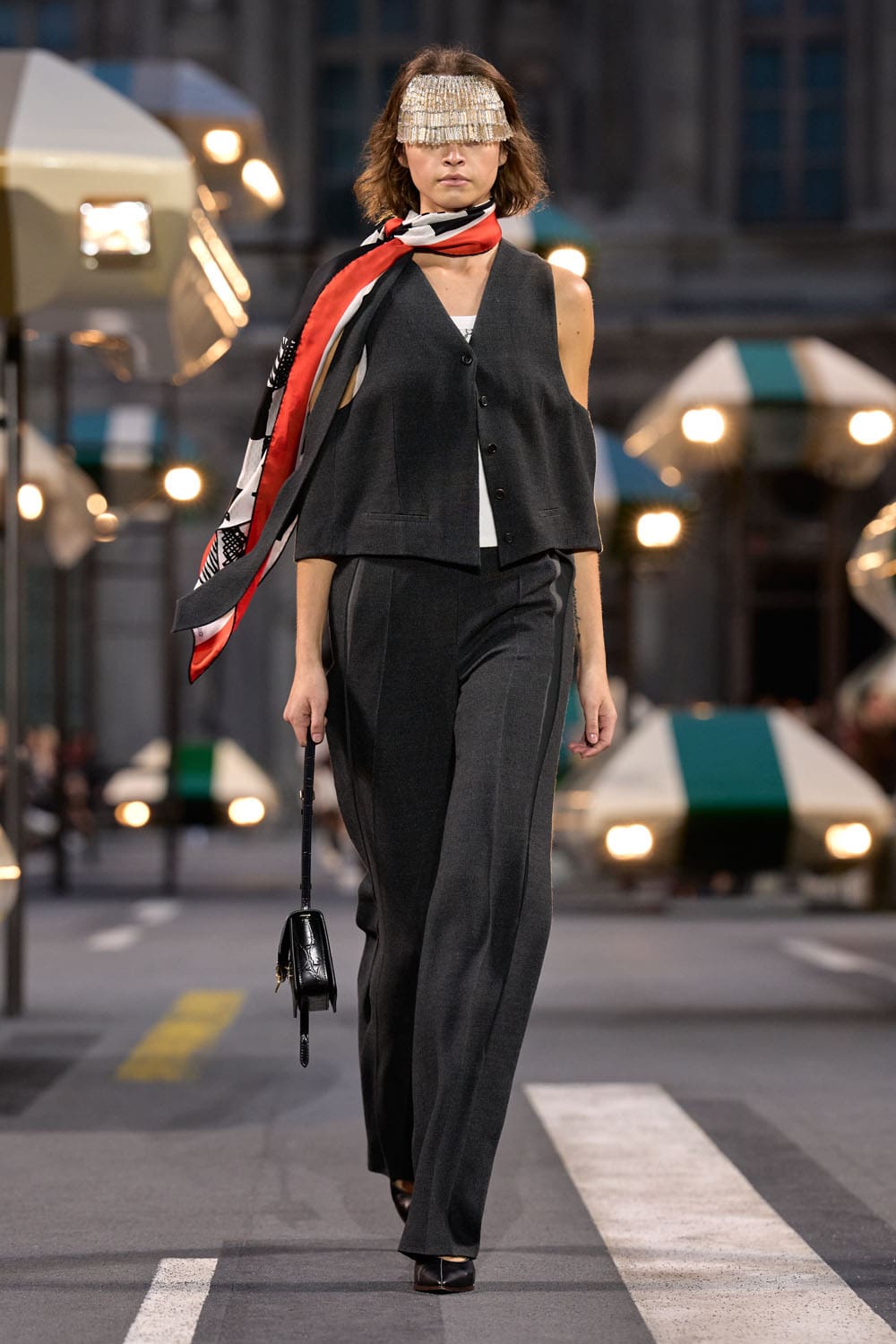
When Ghesquière turns his eye toward tailored suiting, the traditional jacket is re-engineered with razor-sharp graphic precision. Consider the charcoal-grey single-breasted blazer: sculpted with narrow pagoda shoulders and hidden snap closures, the waist is encircled by a futuristic peplum belt composed of dangling, metallic mirror fringe that sways with every step. Worn over a pale blush slip skirt and crimson pumps, the model’s face is partially veiled by an extraordinary headband of beaded crystal glass rods that hangs over the brow like a gleaming aerodynamic windshield.
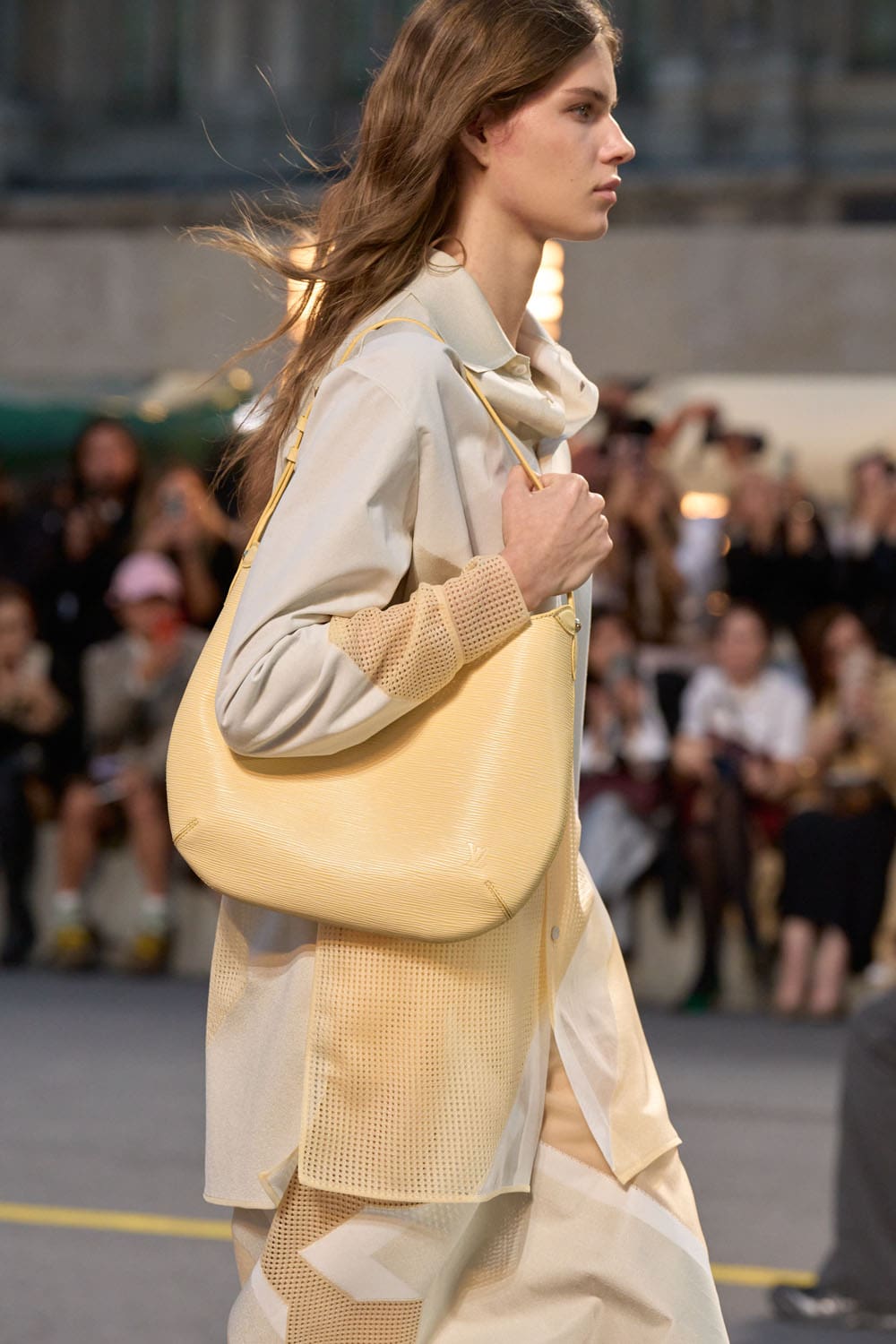
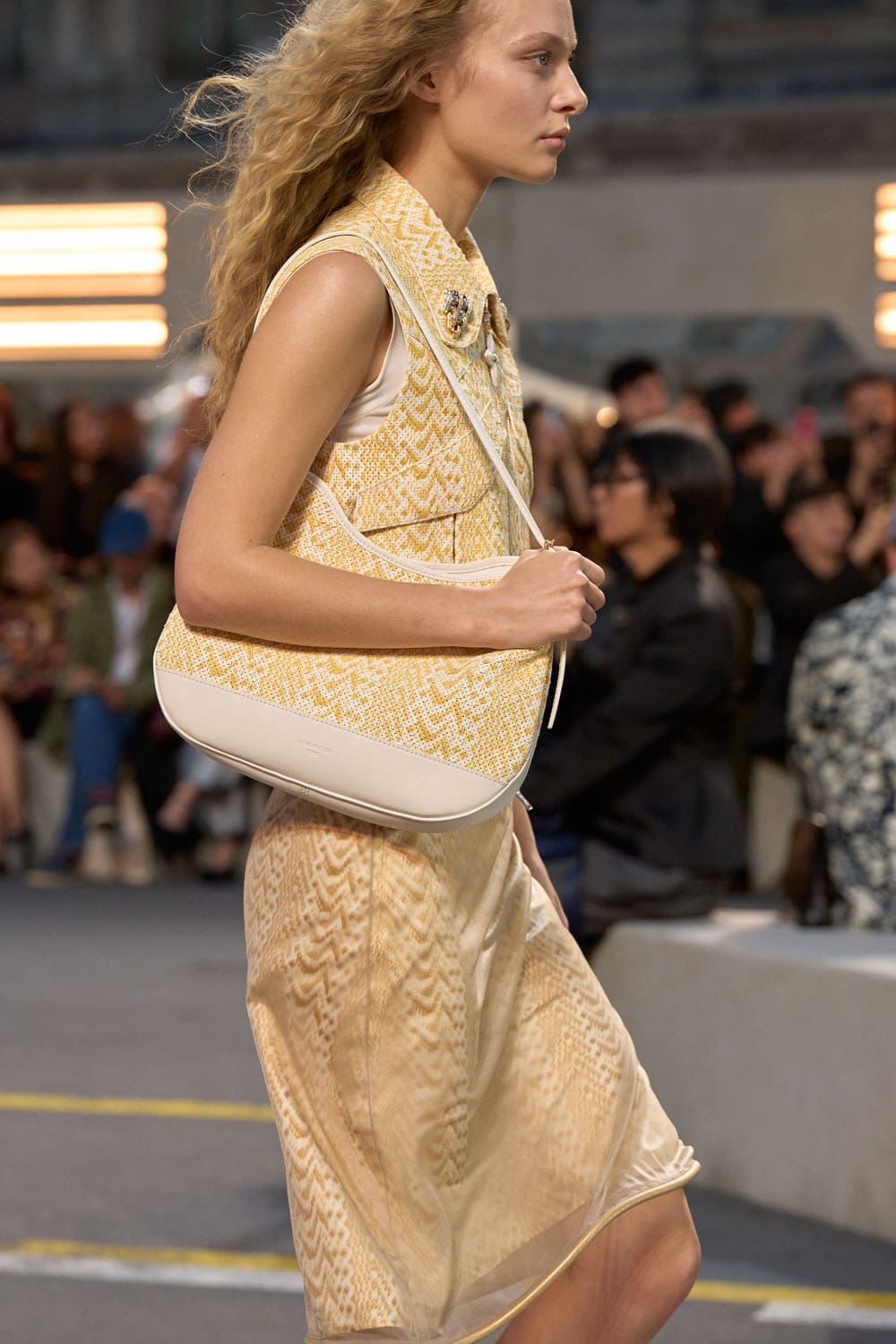
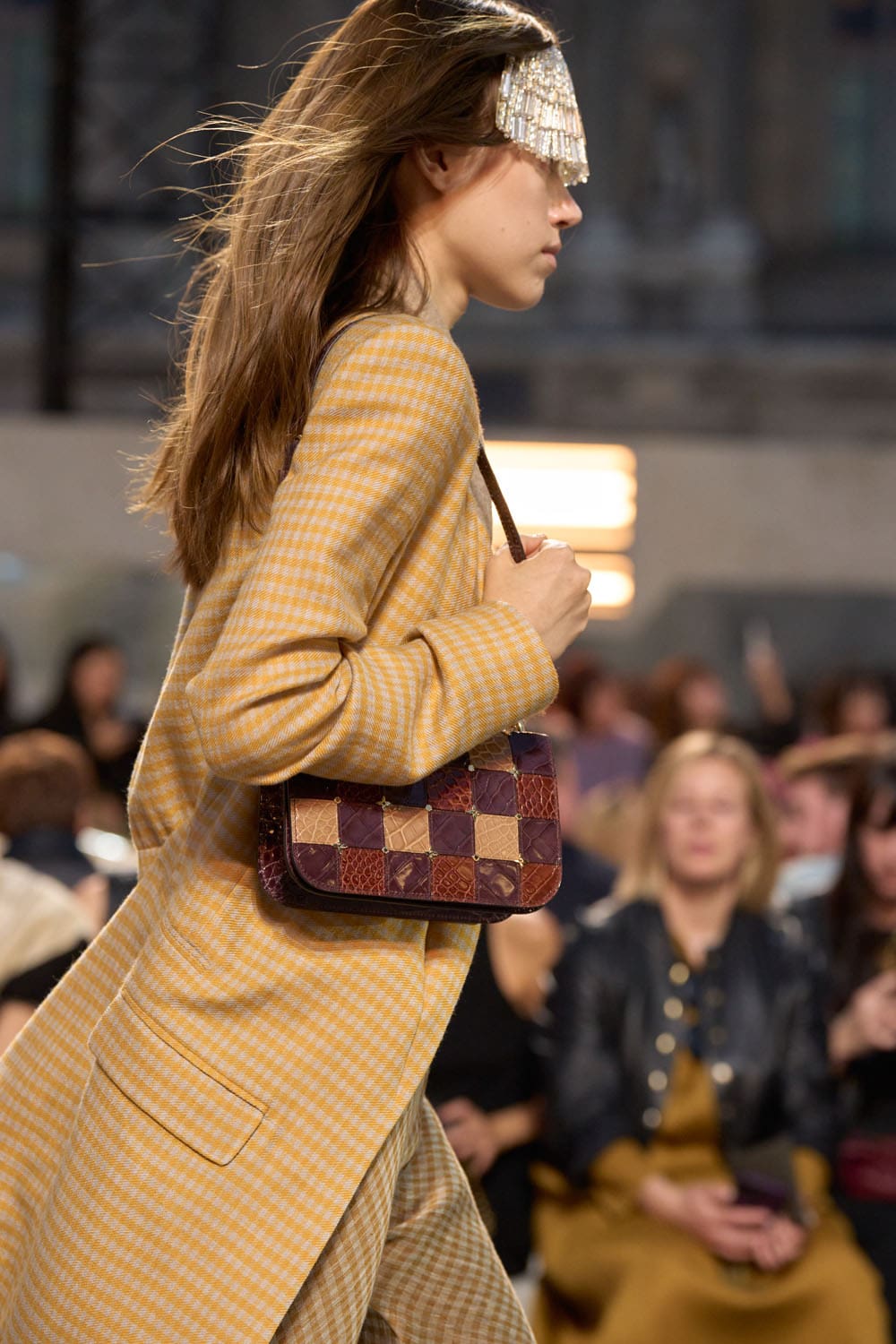
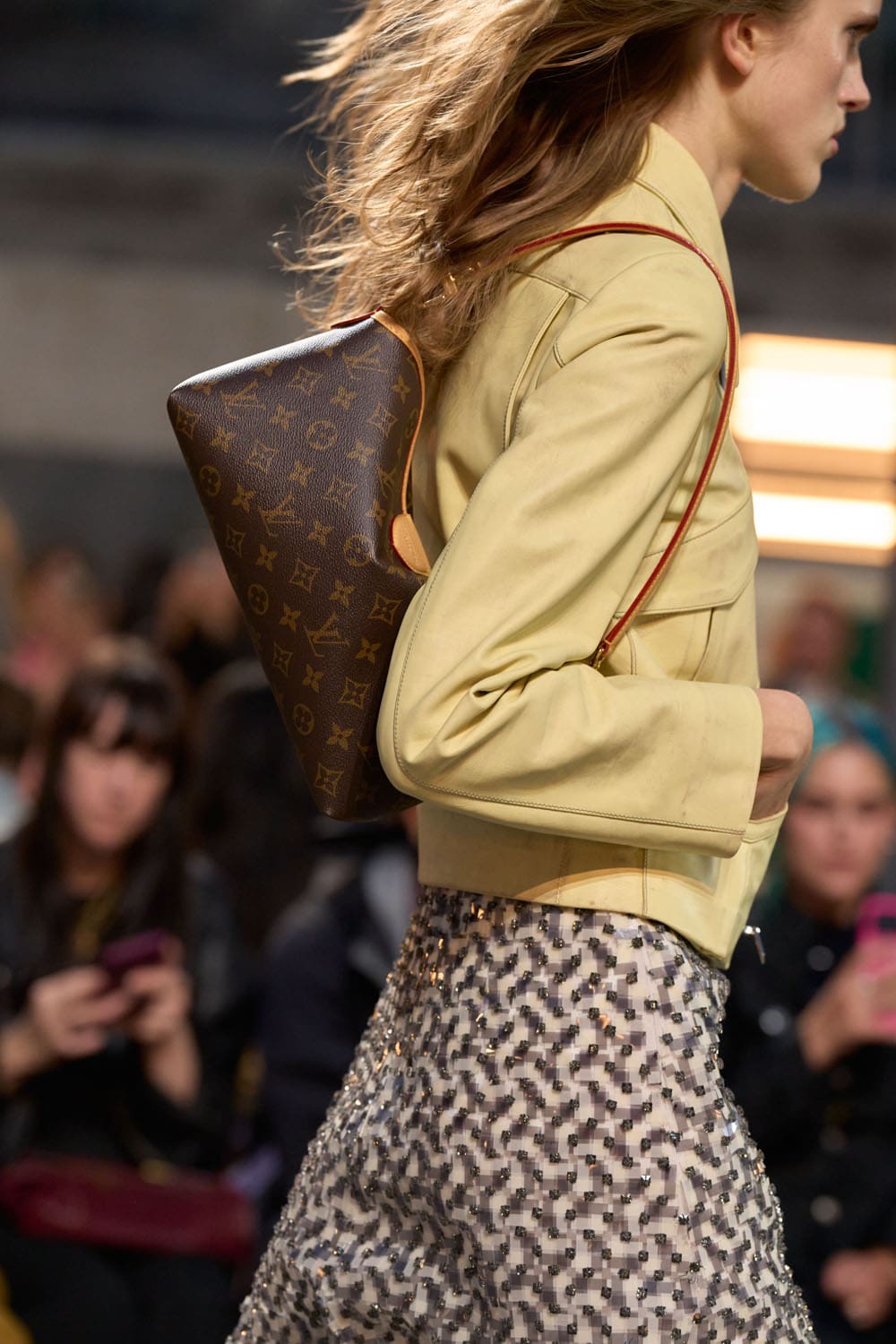
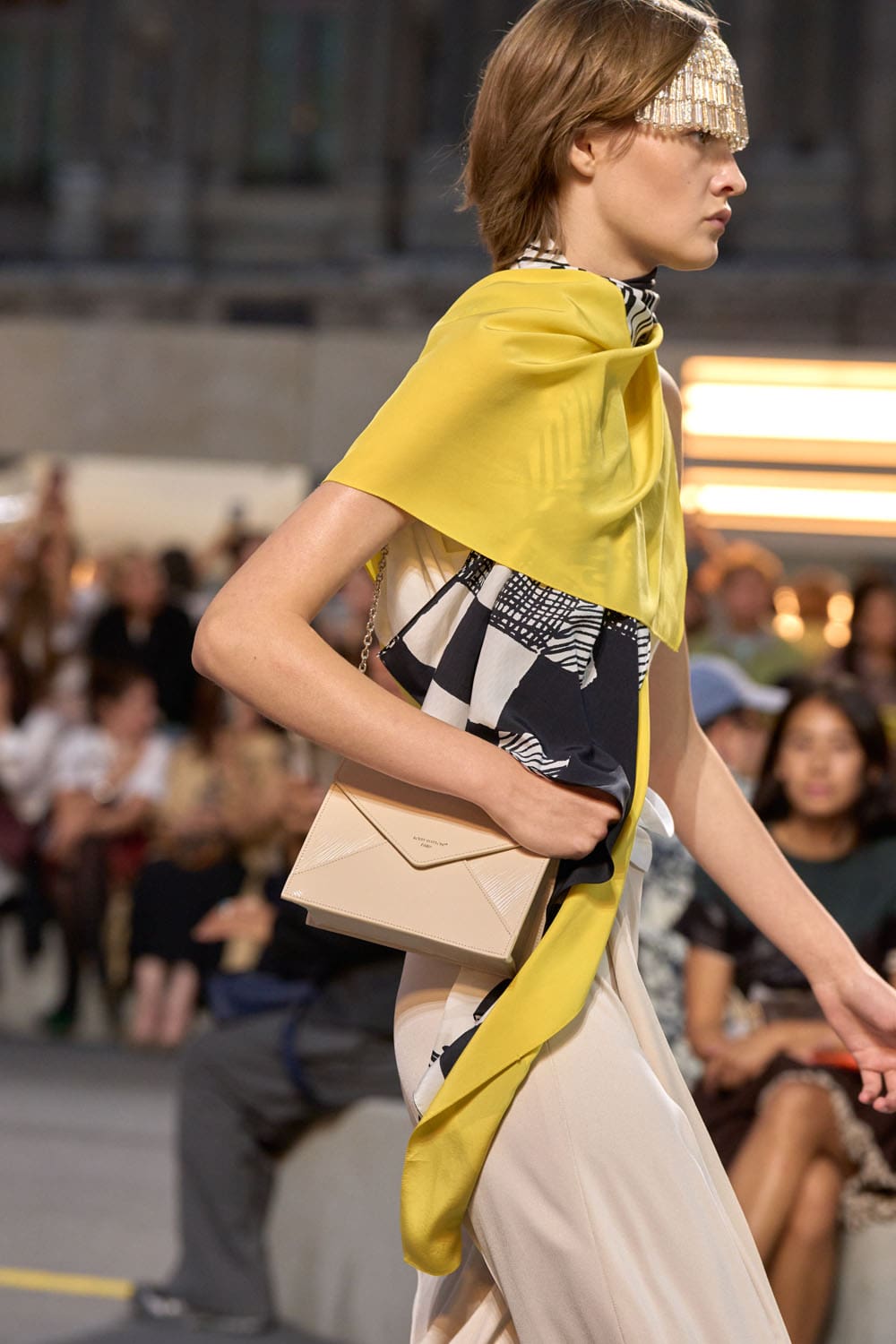
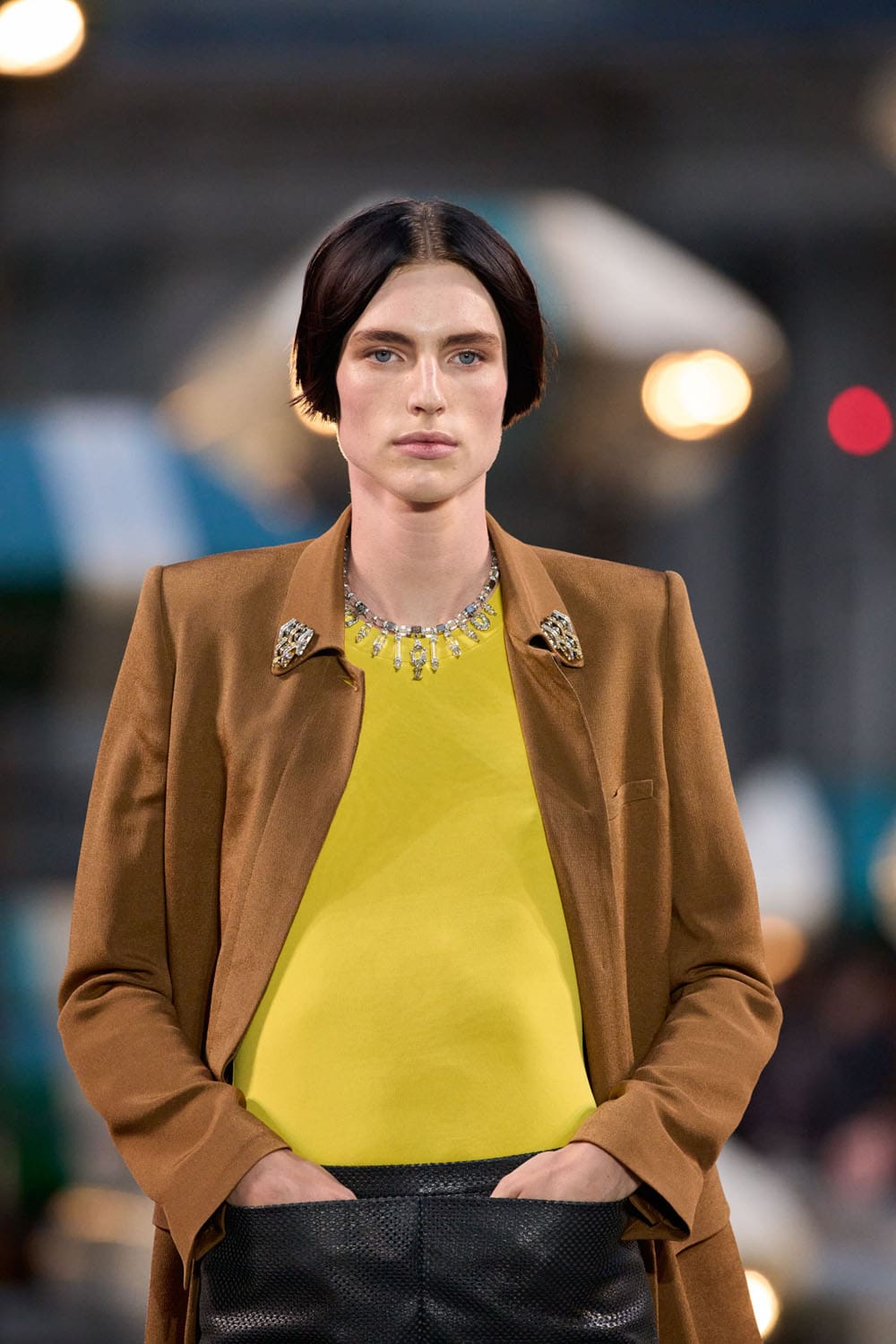
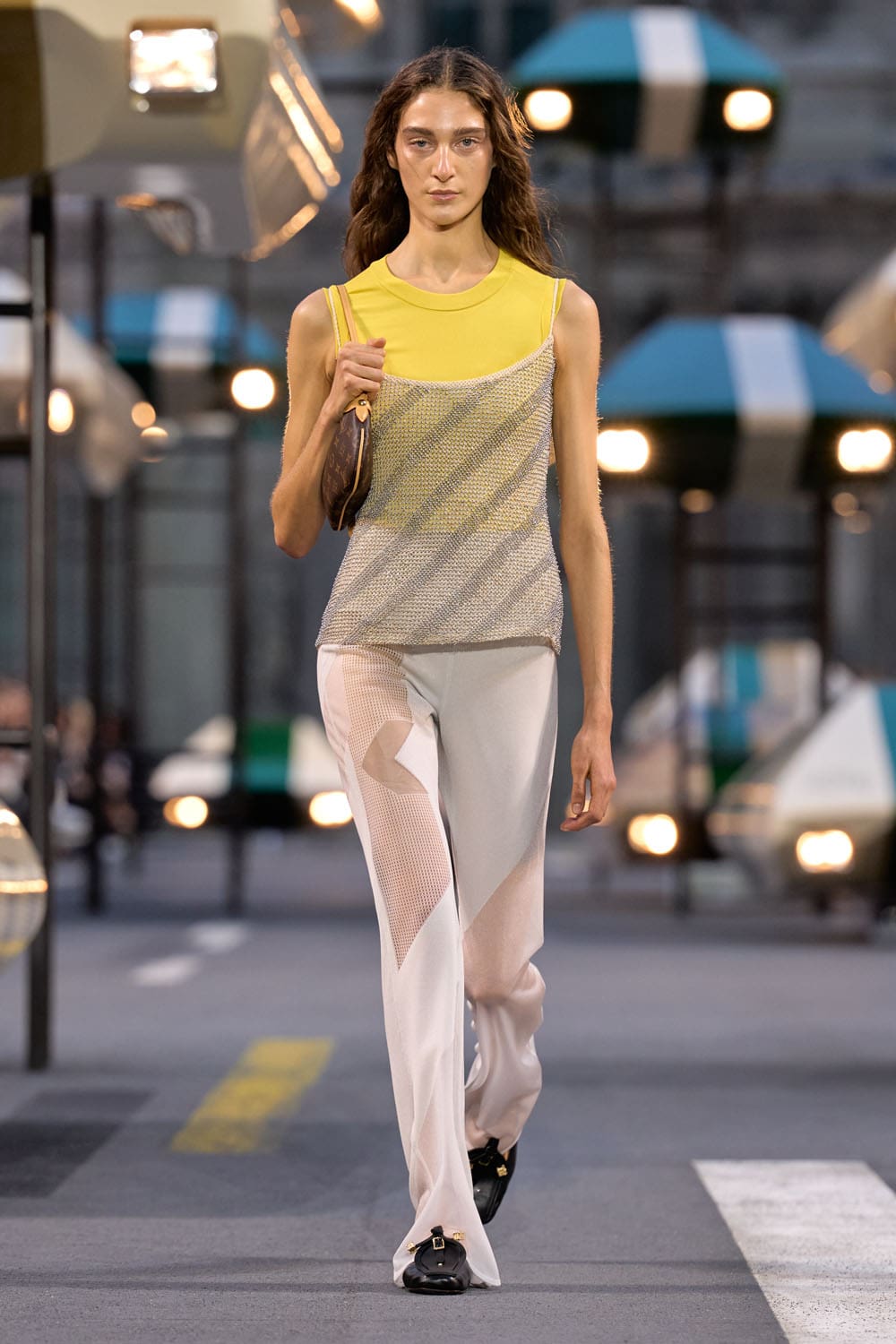
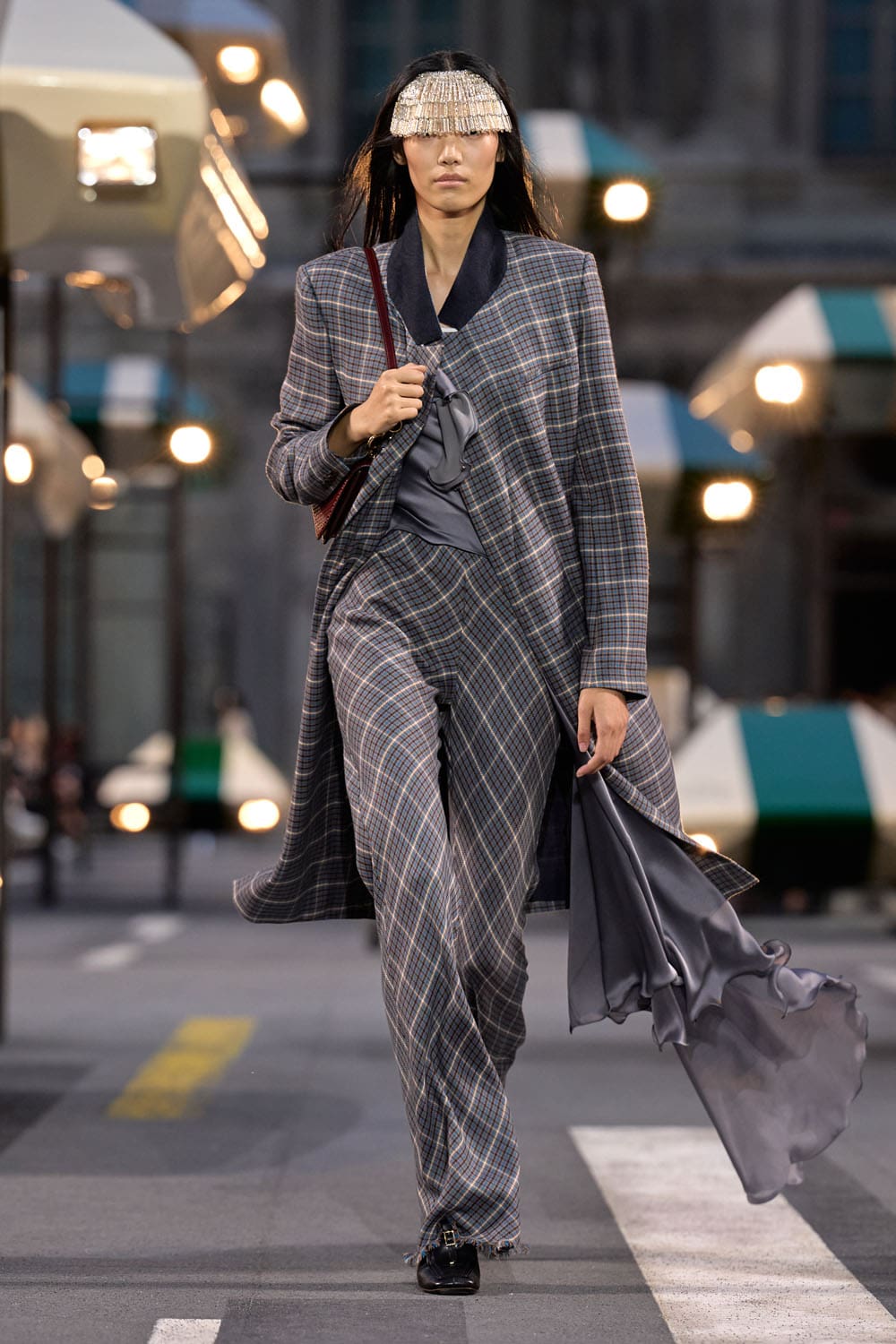
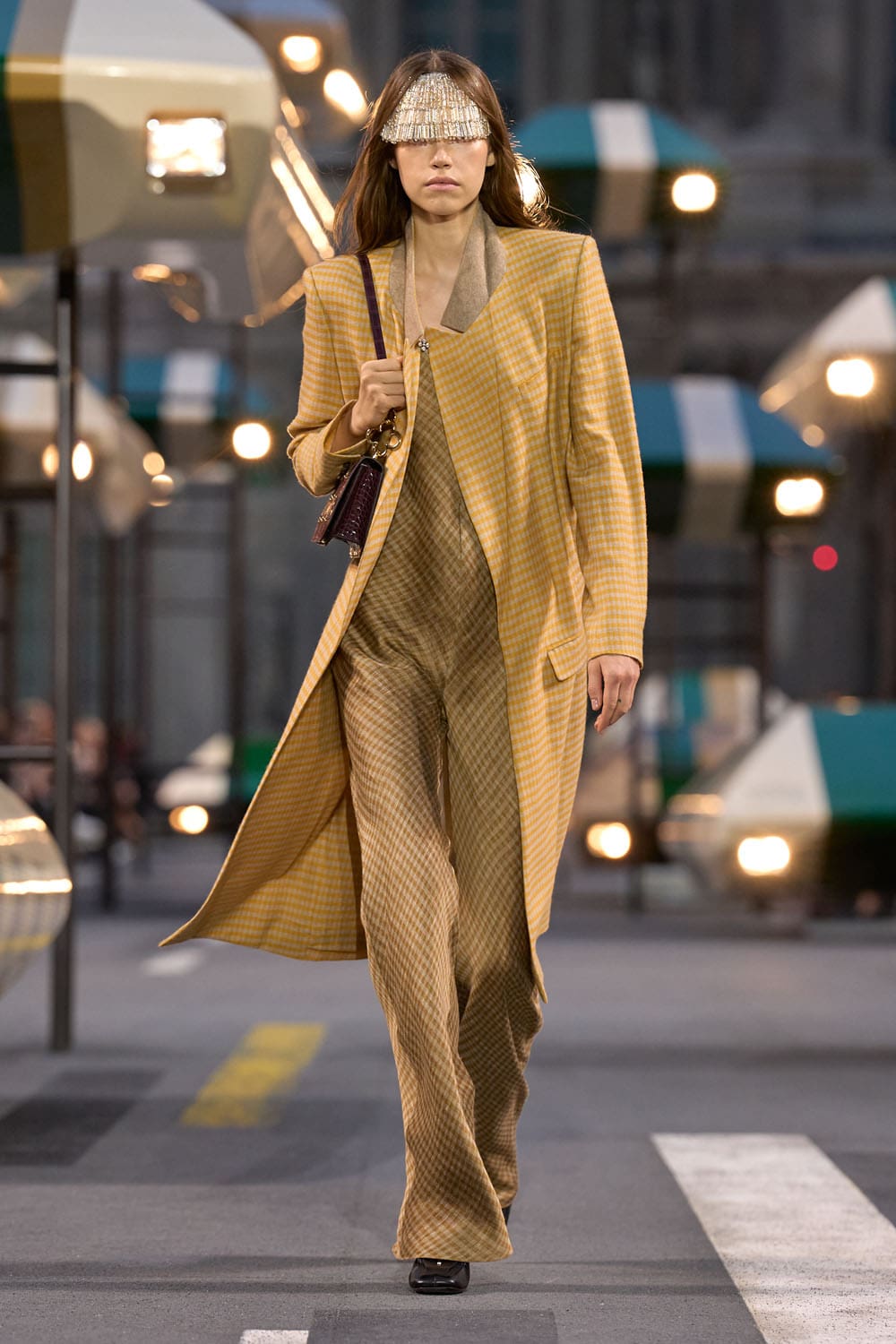
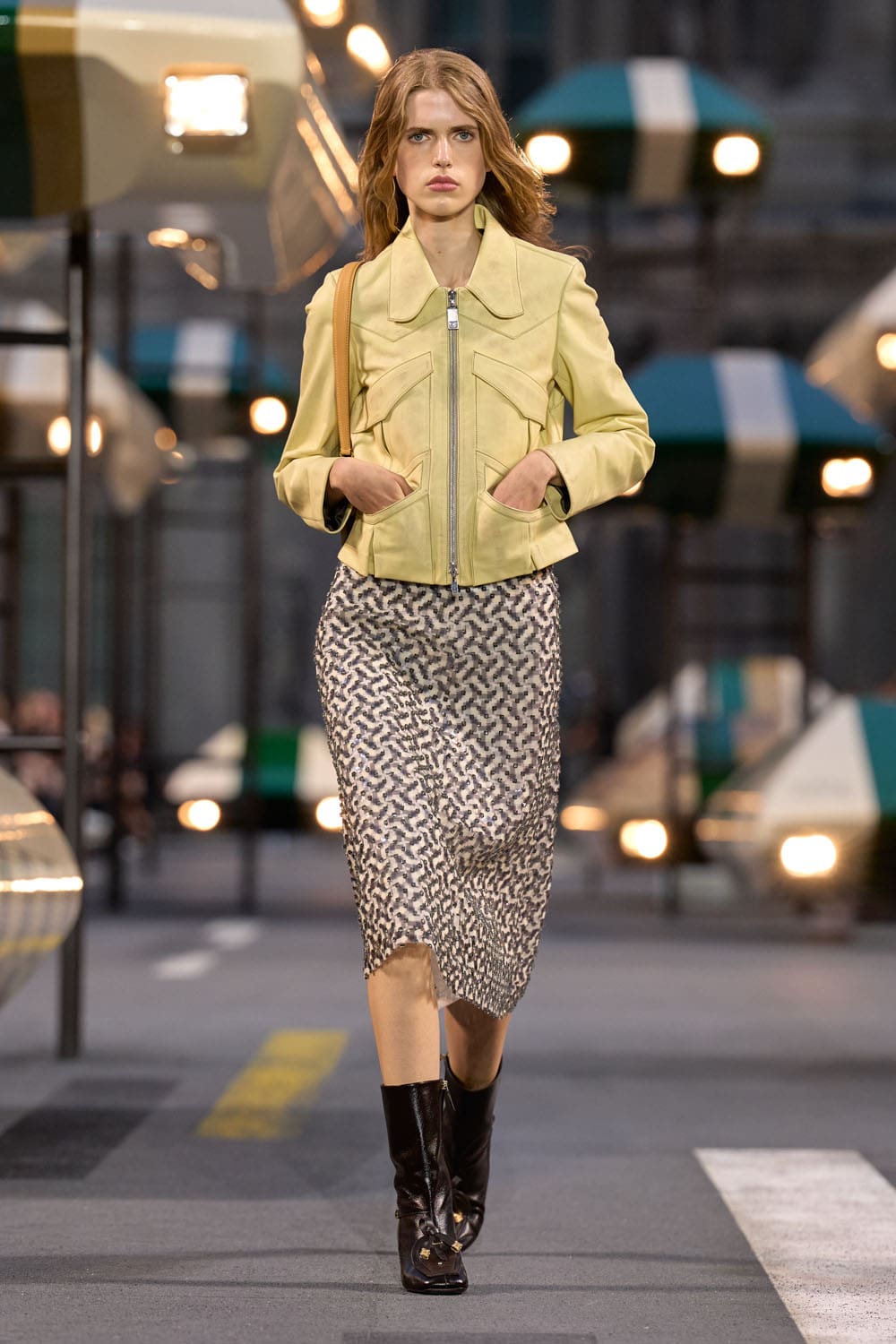
A companion look translates classic menswear patterns into liquid silk. An elongated duster coat cut in butter-yellow and grey micro-check is layered over a matching jumpsuit of fluid silk twill, the fabric skimming the calves with total lack of friction, accessorized with a petite monogrammed box bag slung casually on the shoulder.
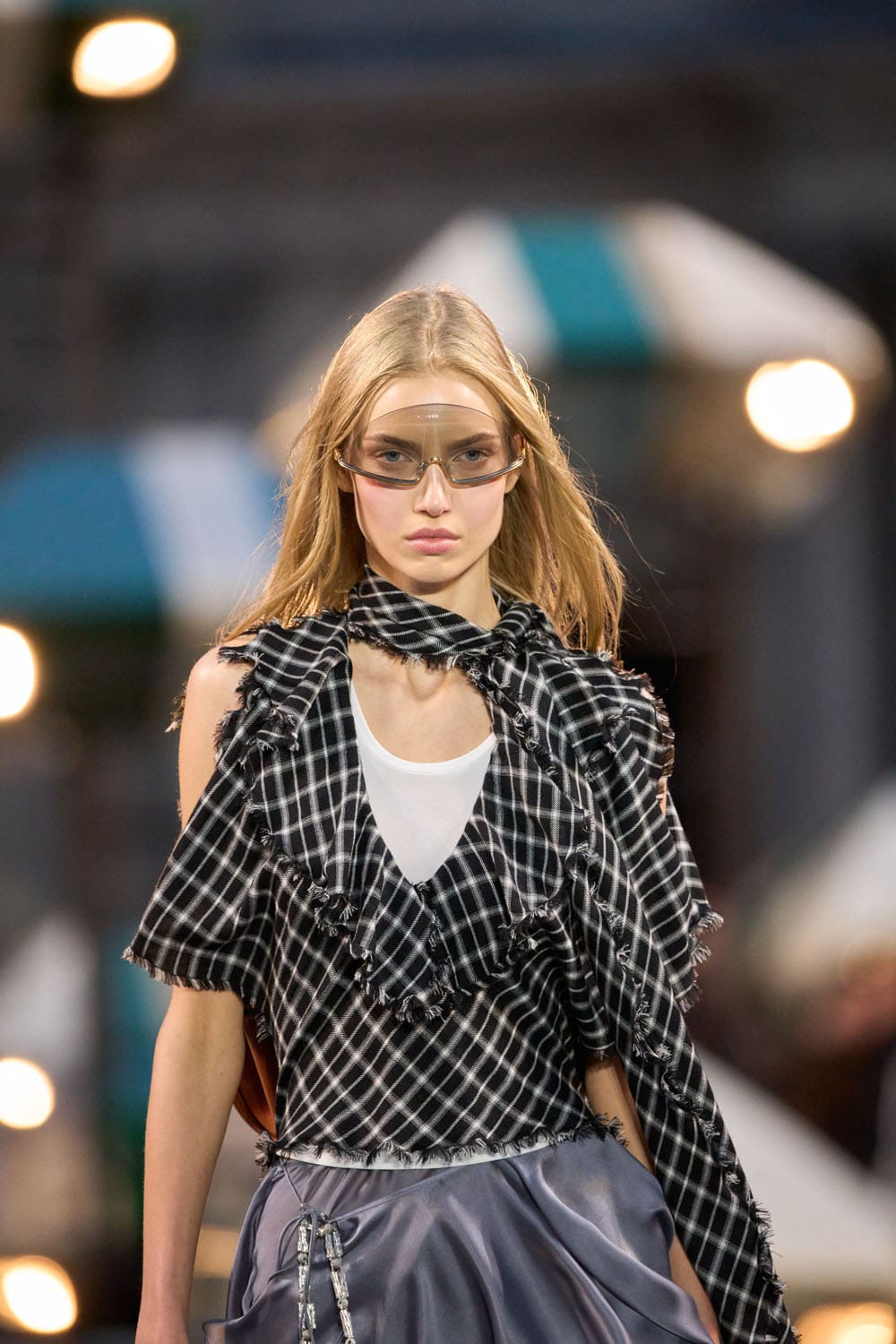
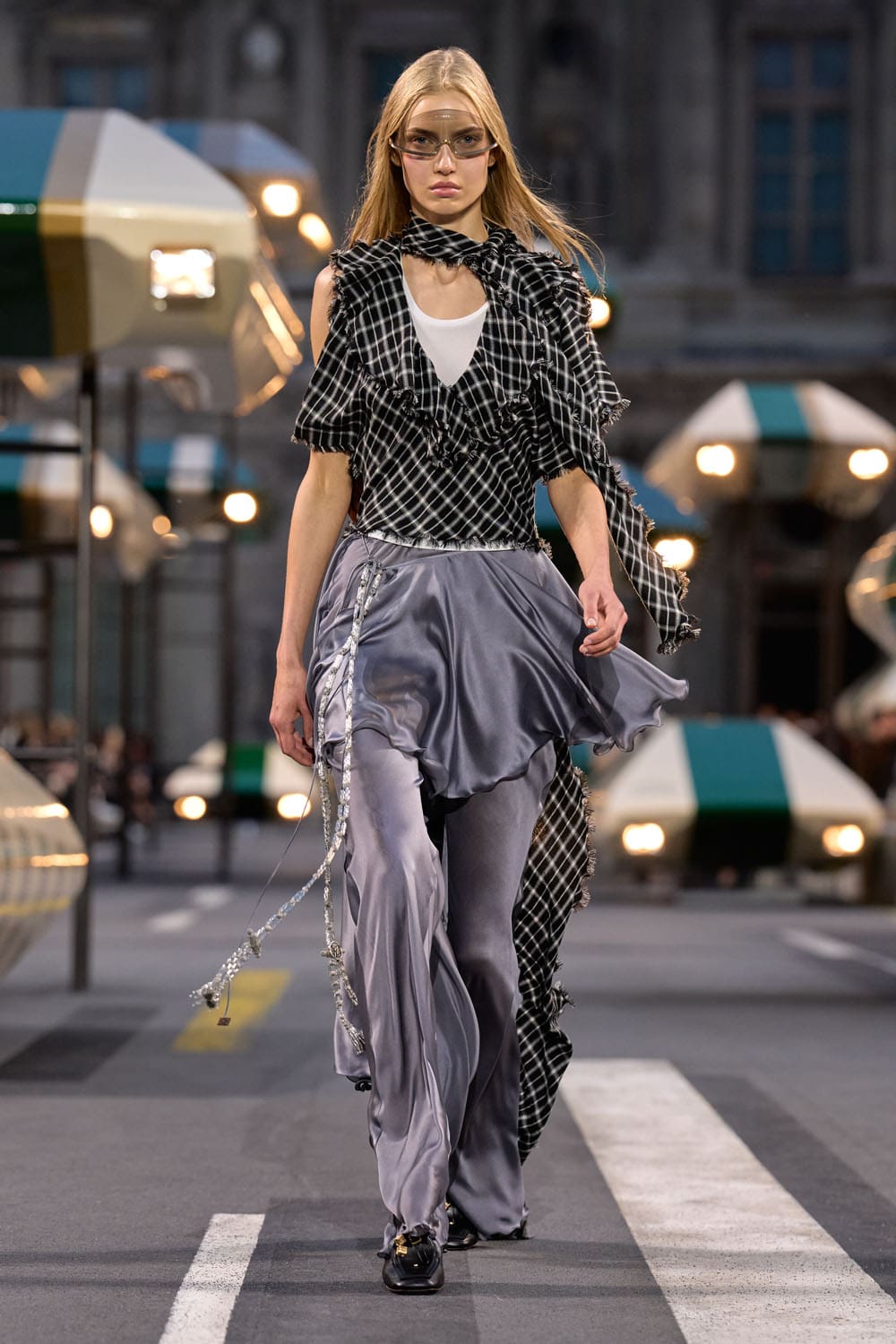
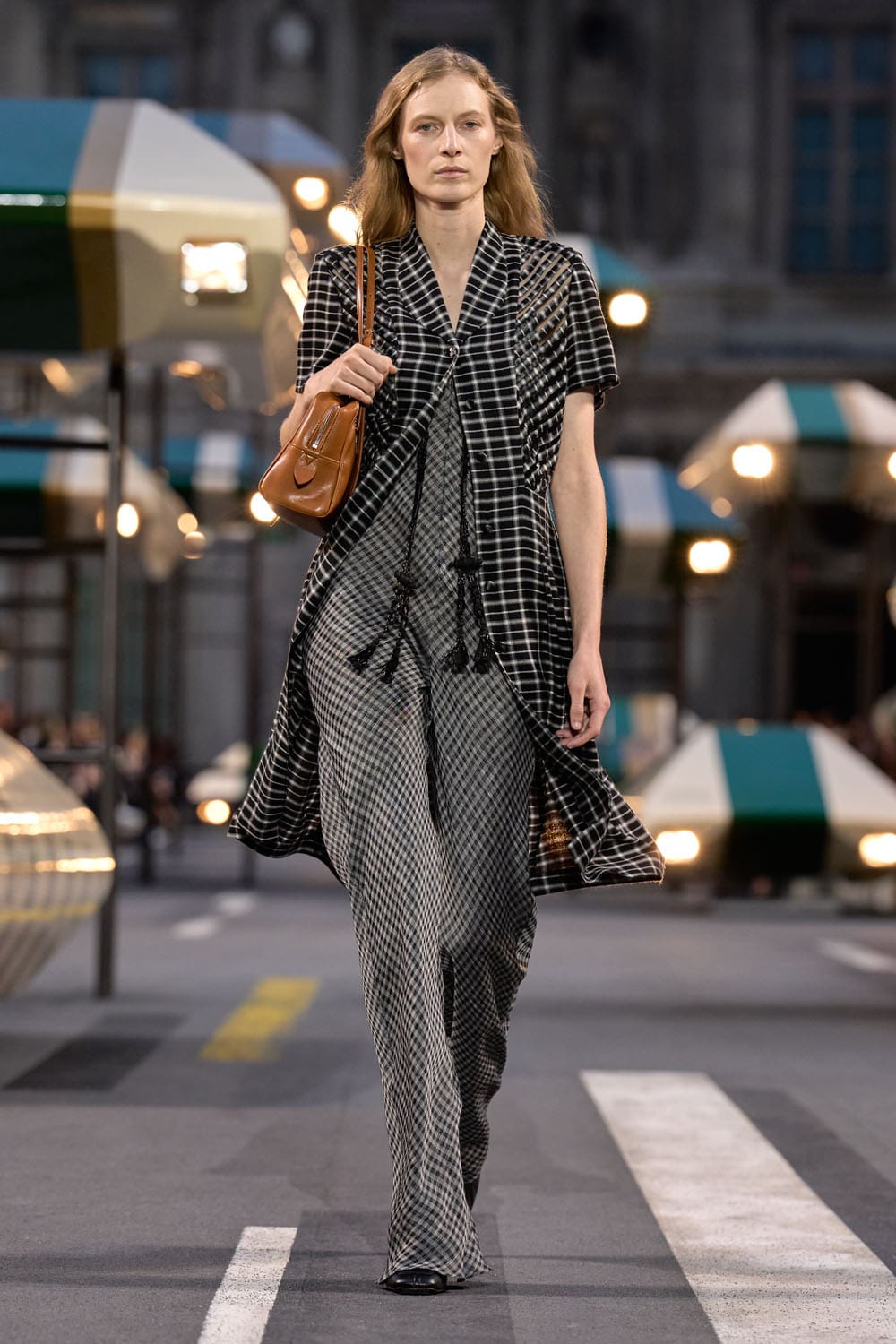
The graphic rhythm continues in a short-sleeved duster coat cut from airy black-and-white gingham silk. Cut with a sharp camp collar and cinched by thick, braided rope cords with tassel ends, it floats over fluid gingham wide-leg trousers, proving that picnic check can look like sleek athletic trackwear when stripped of its rustic heaviness.
Liquid Carré Silks and Kinetic Chiffon
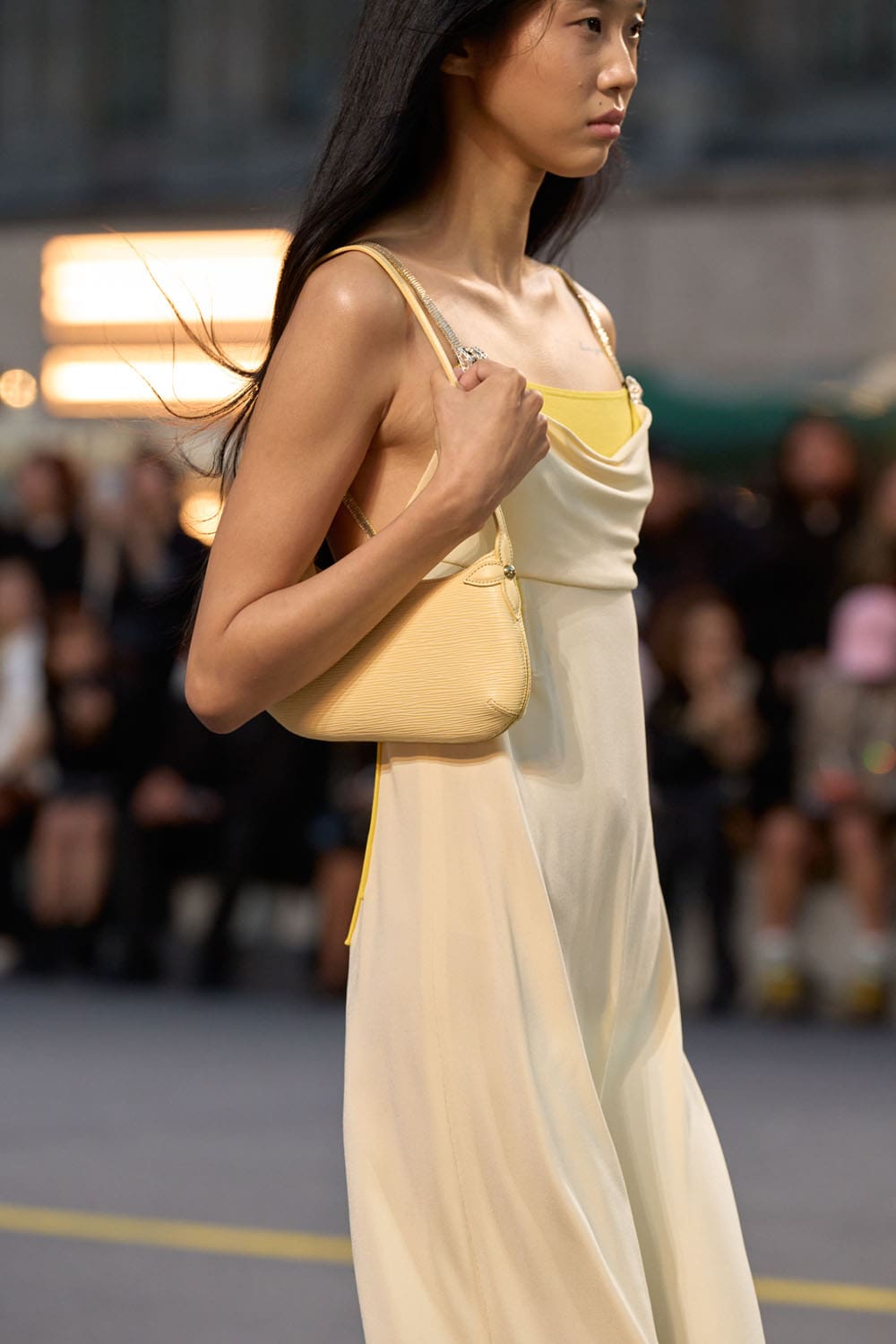
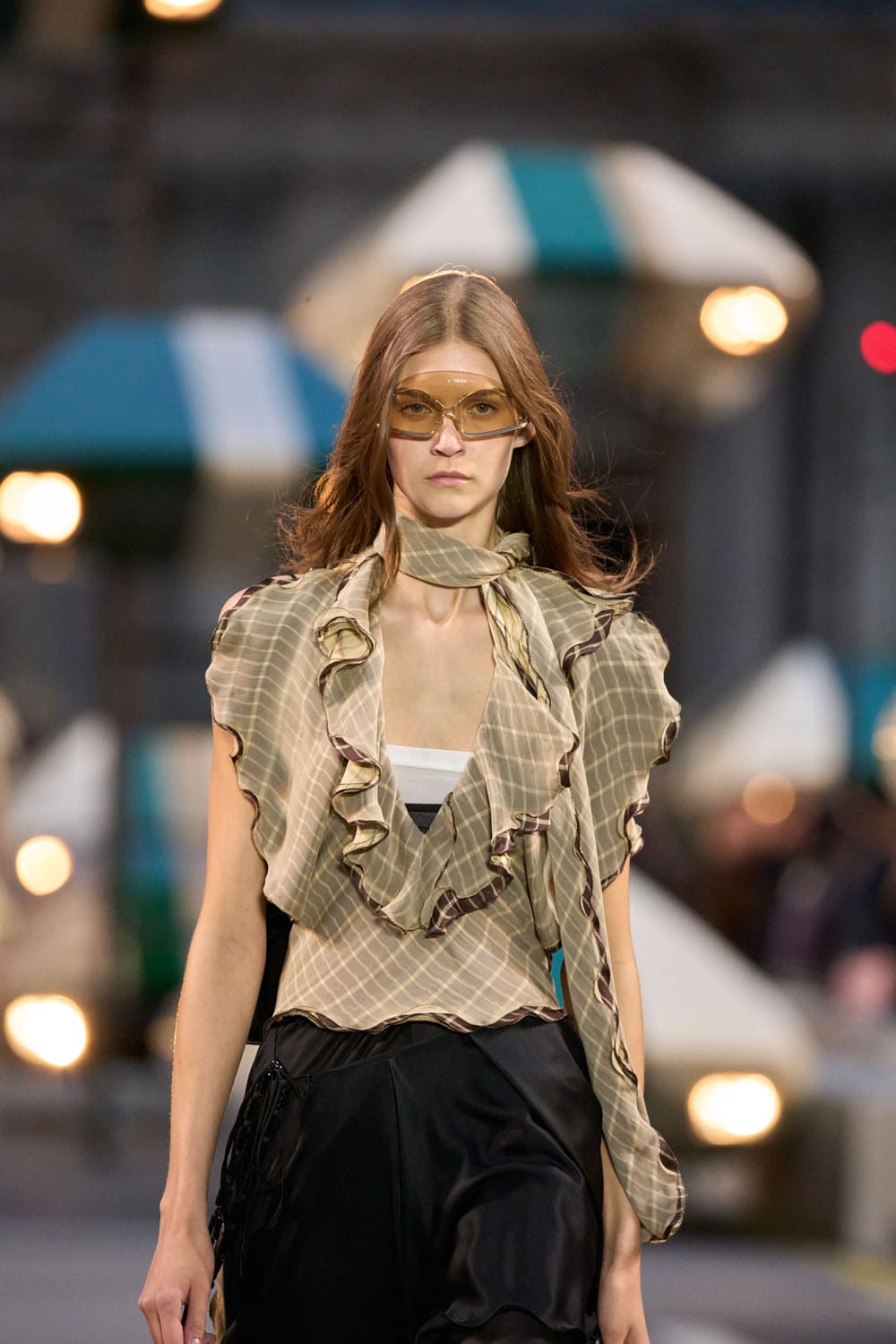
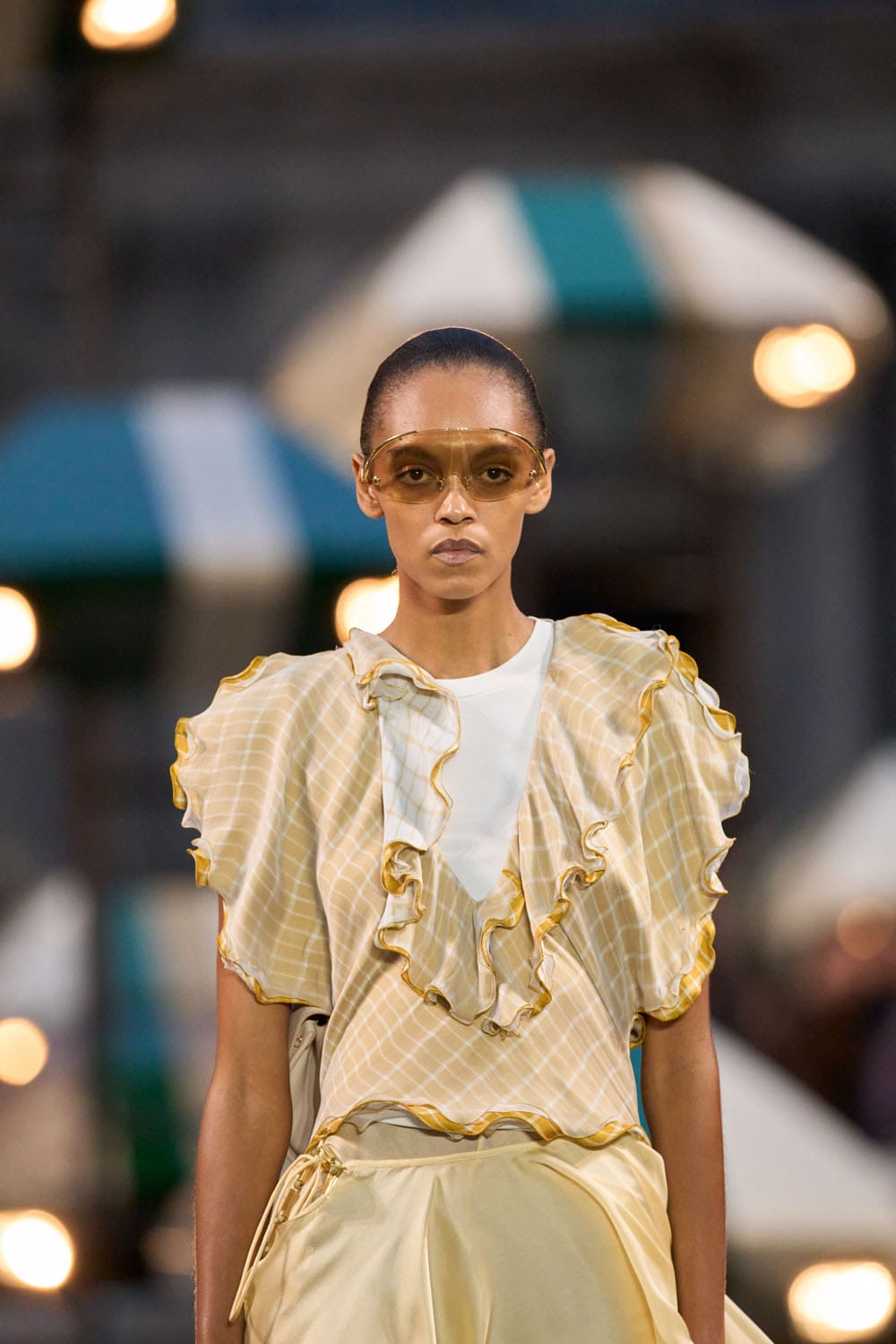
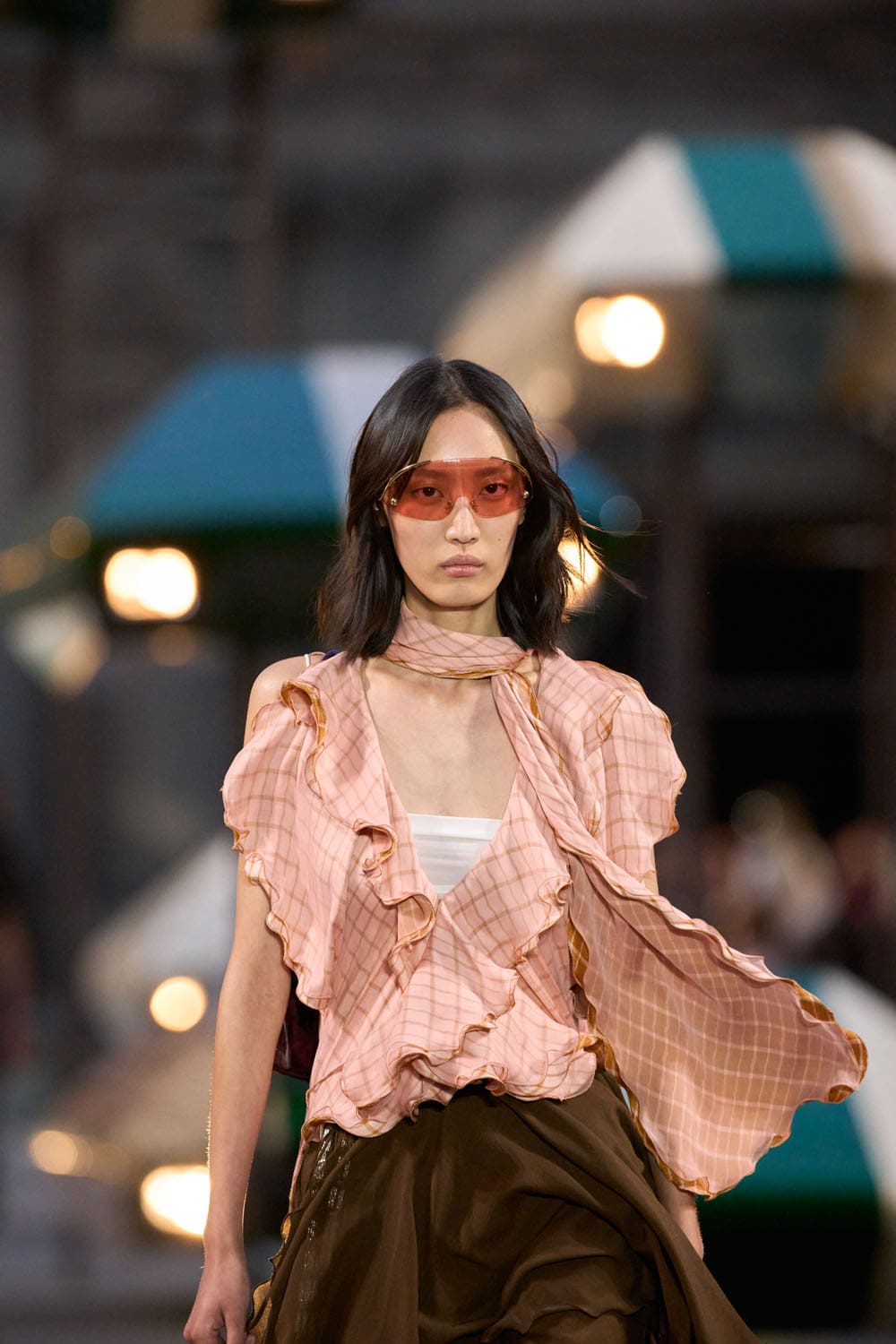
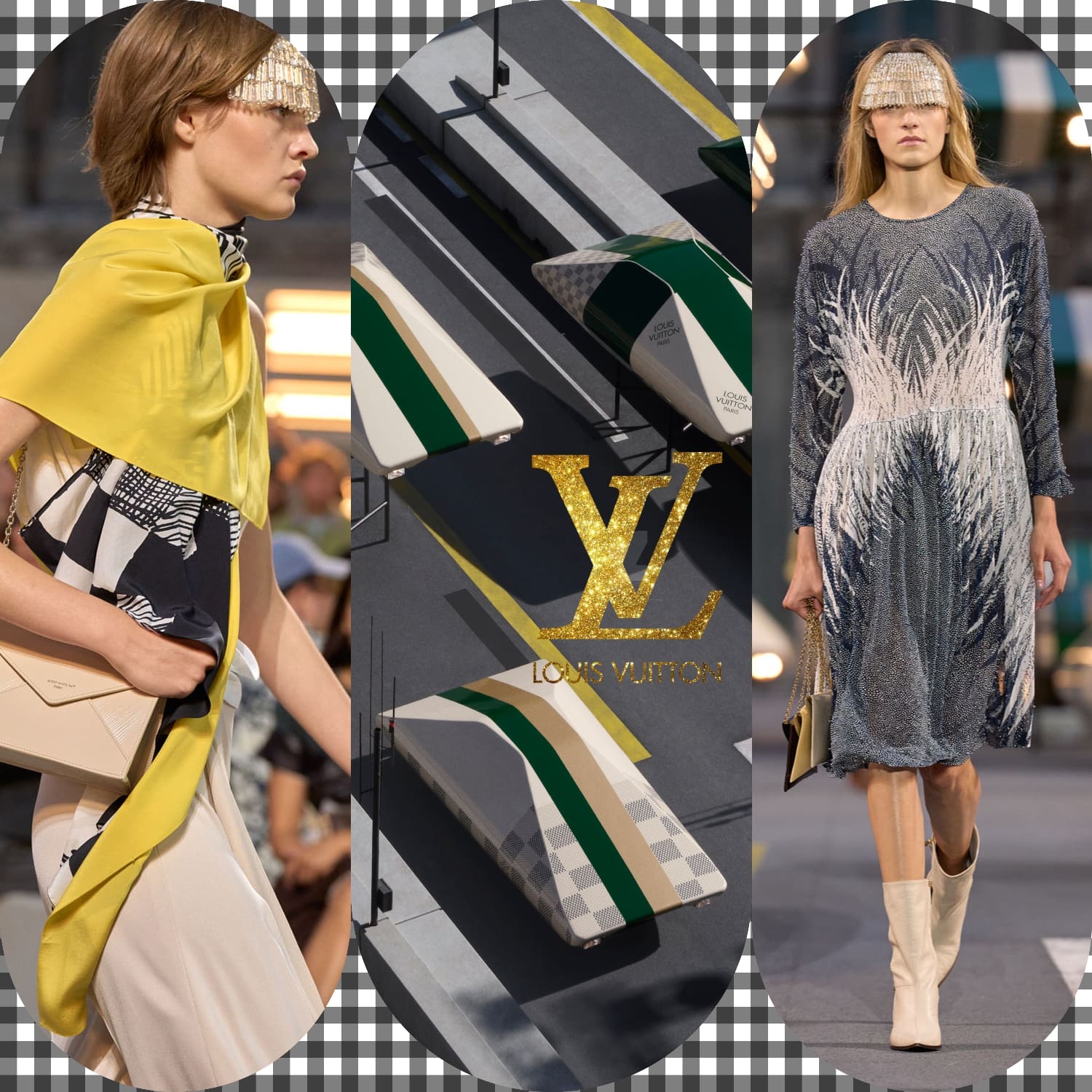
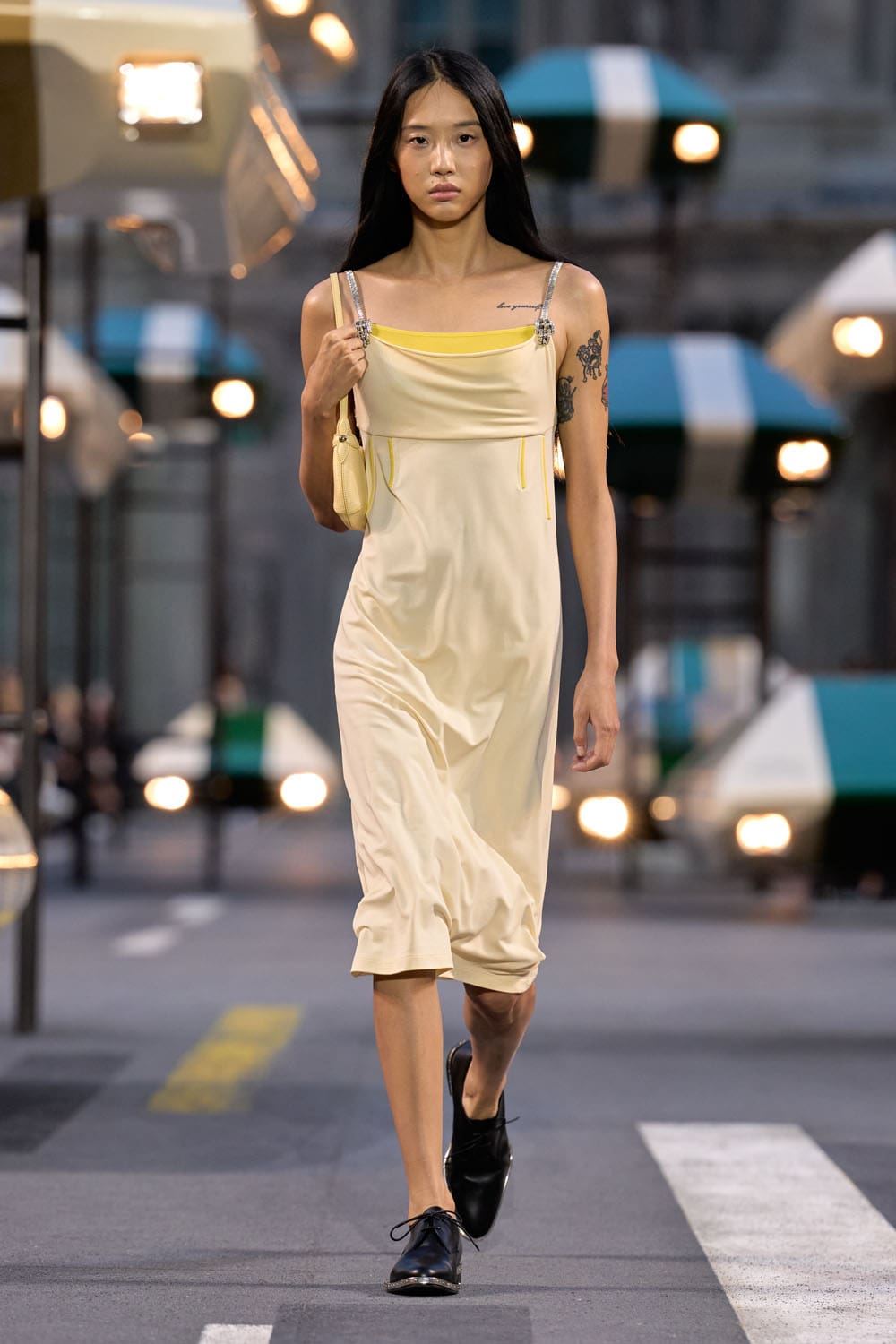
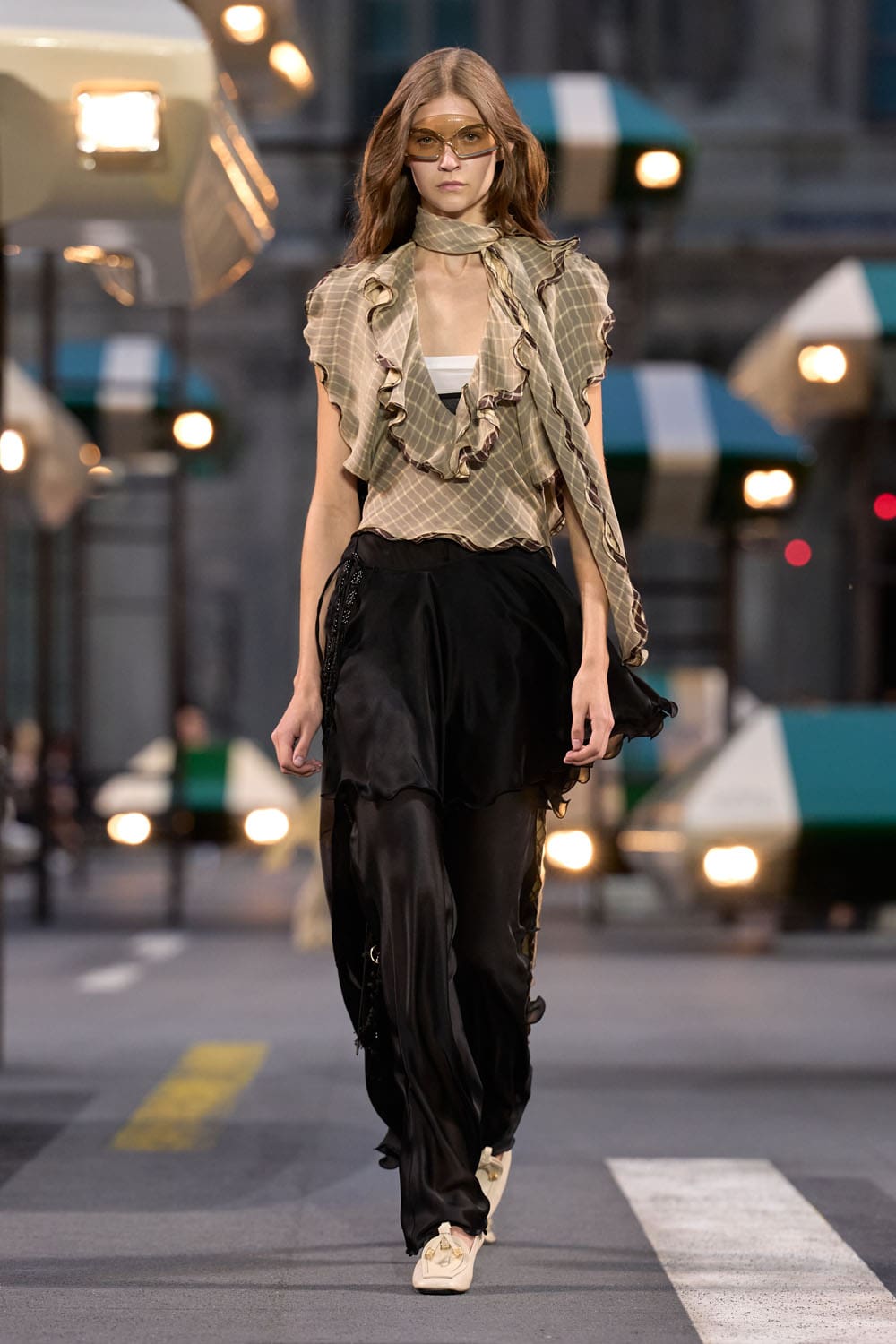
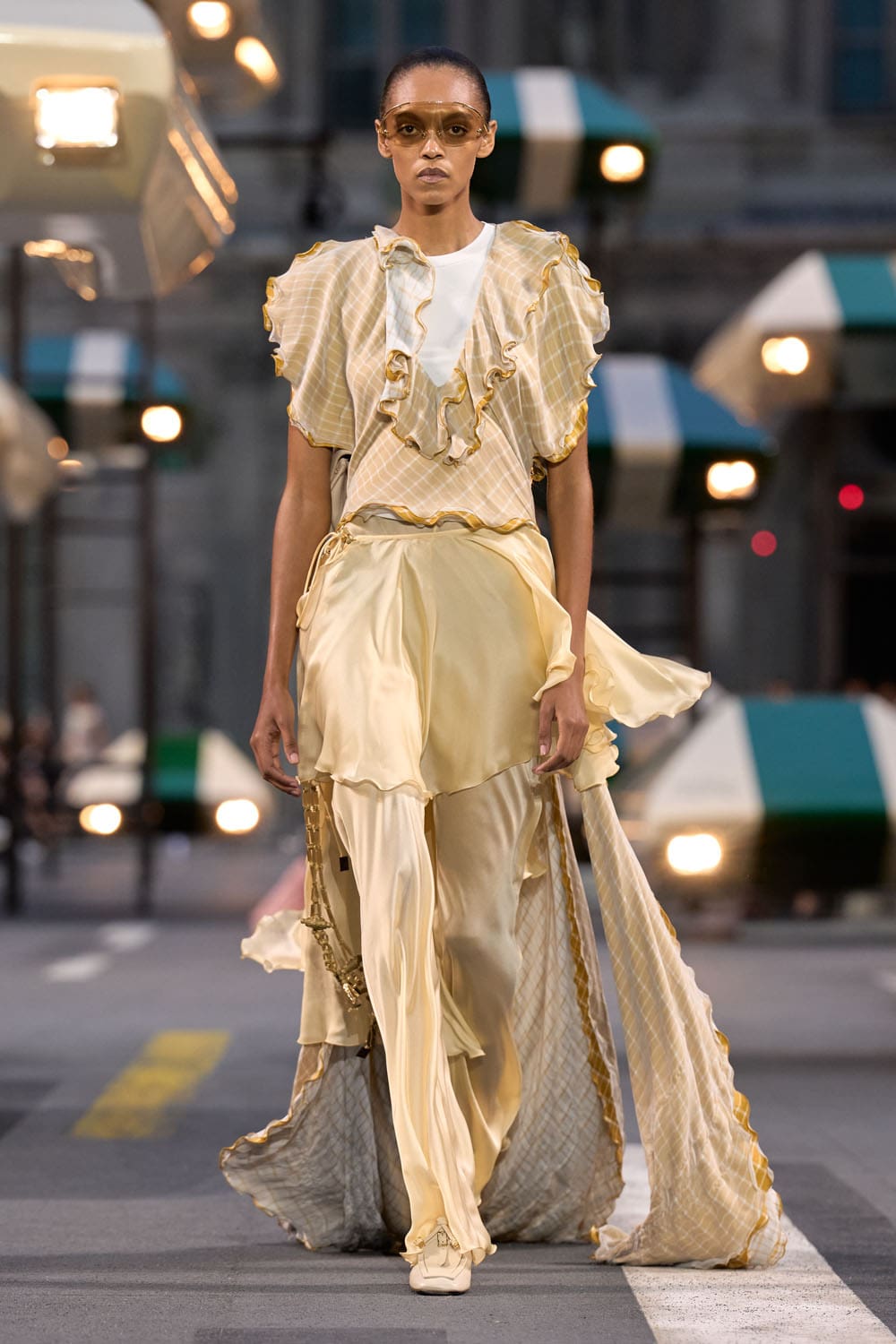
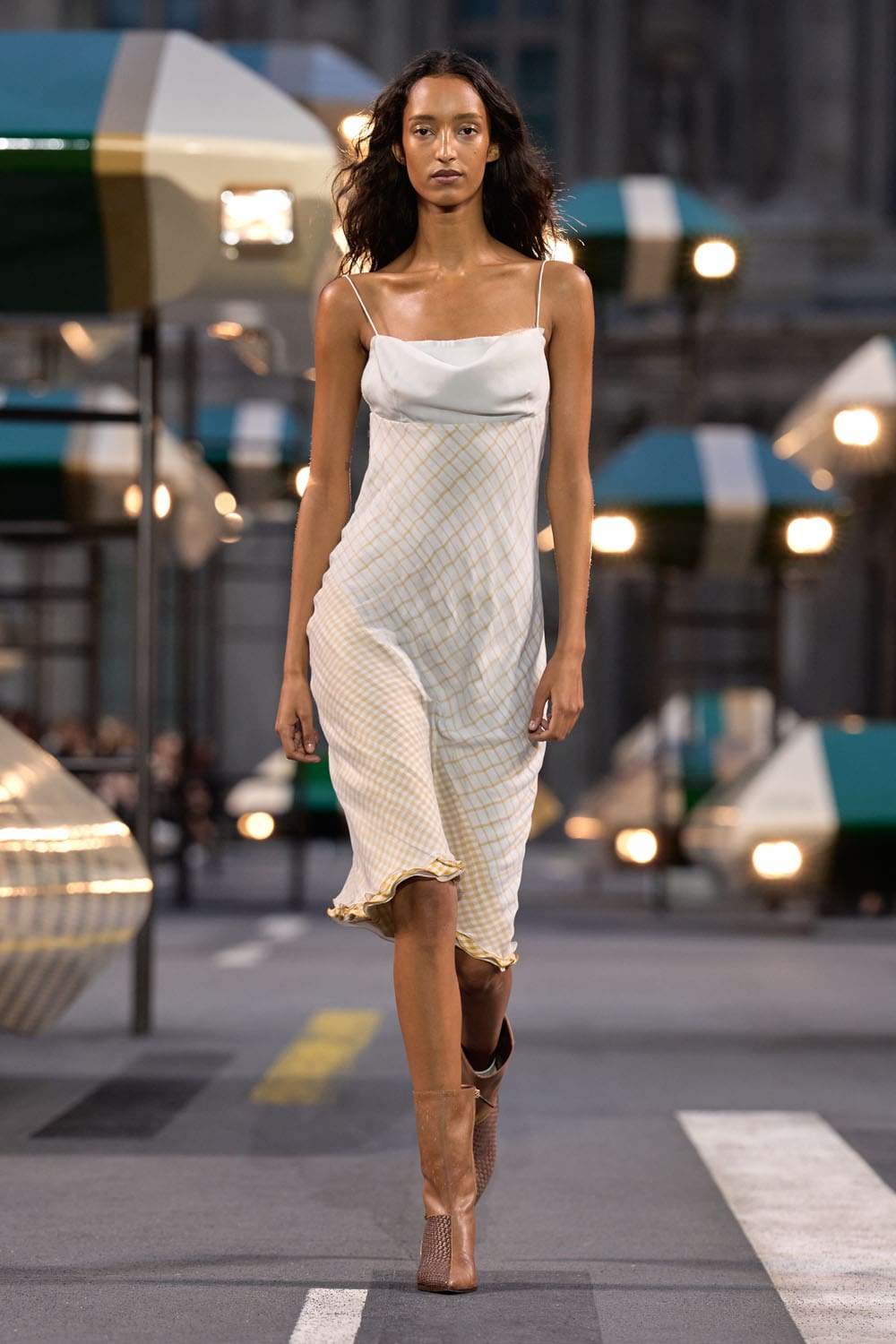
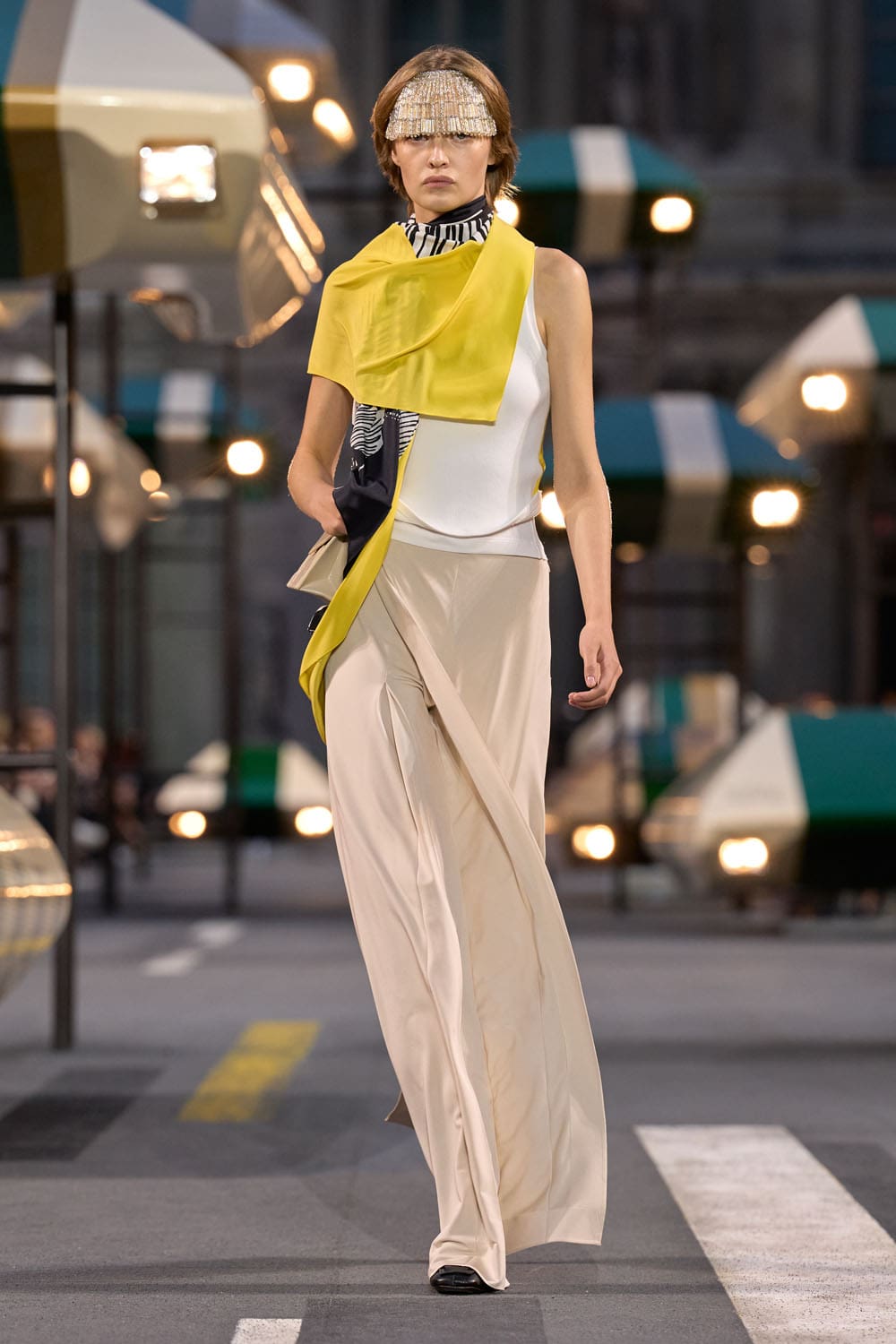
The collection reaches its most ethereal territory when traditional Louis Vuitton silk scarves are transformed into kinetic evening wear. In a radiant pastel ensemble, a pale-yellow gingham tunic with flutter-ruffle sleeves and a draped cowl collar cascades into liquid cream satin trousers. A trailing chiffon cape train floats behind the heels like a spinnaker sail caught in an offshore gust, anchored by technical sports sunglasses and white leather driving loafers.
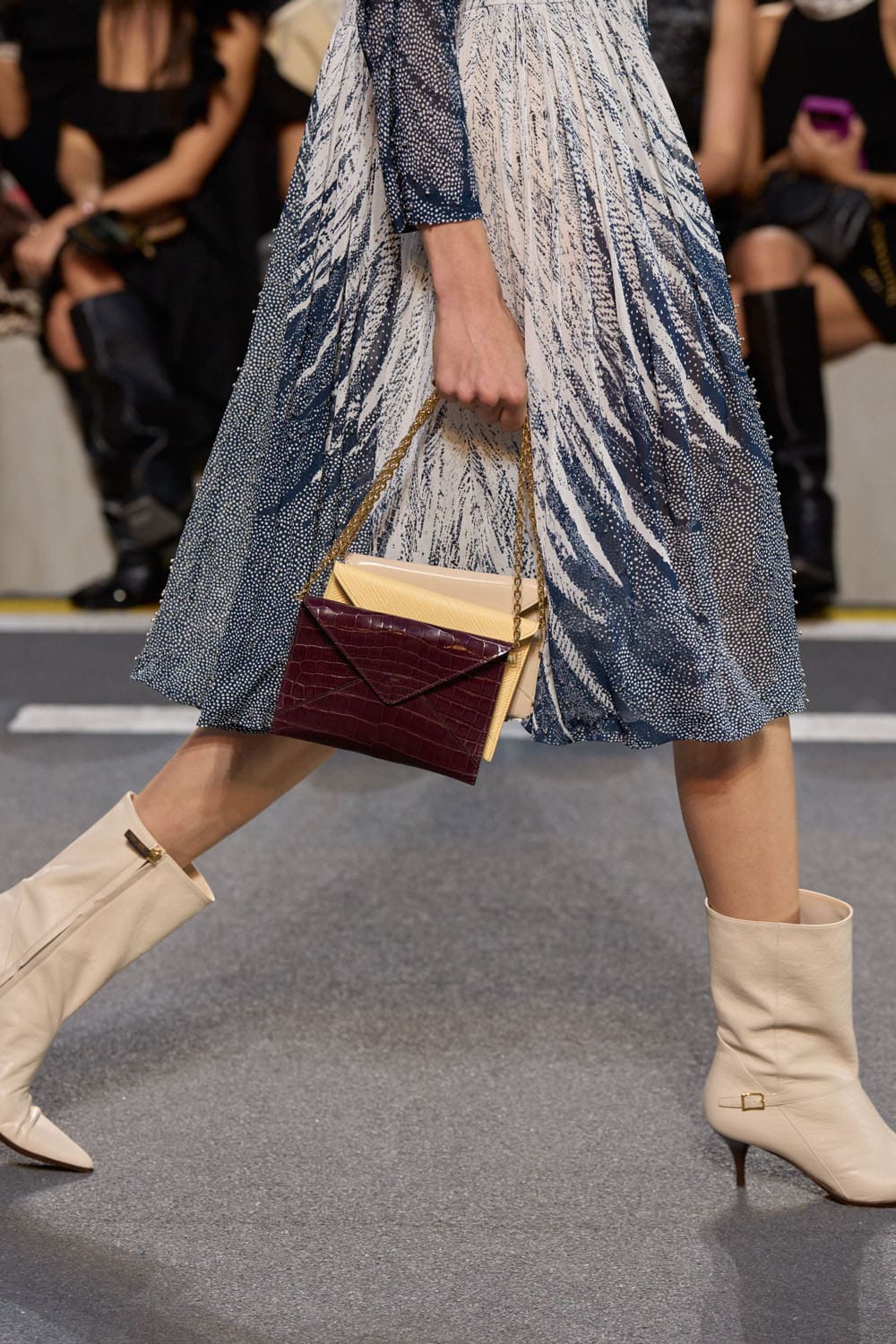
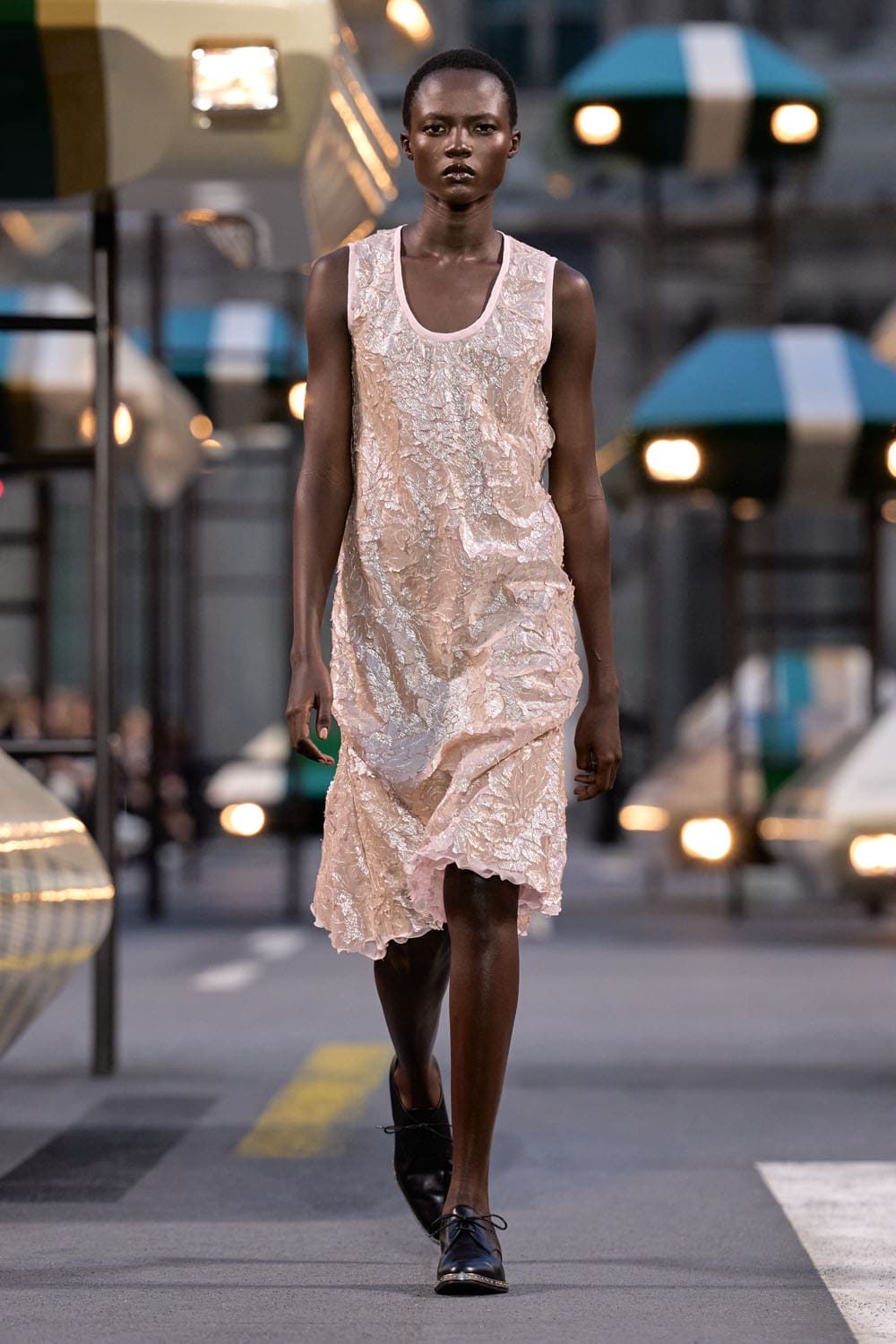
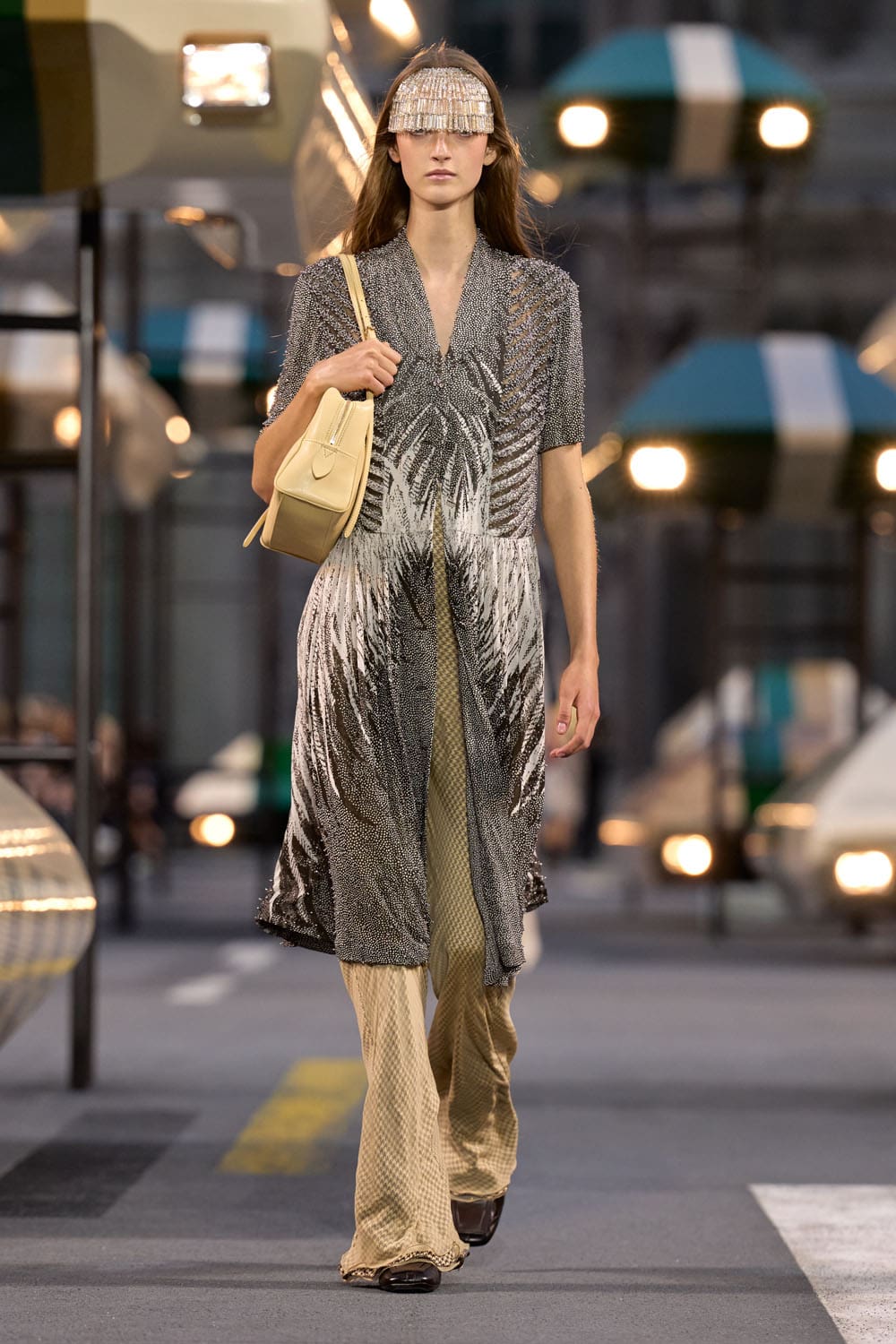
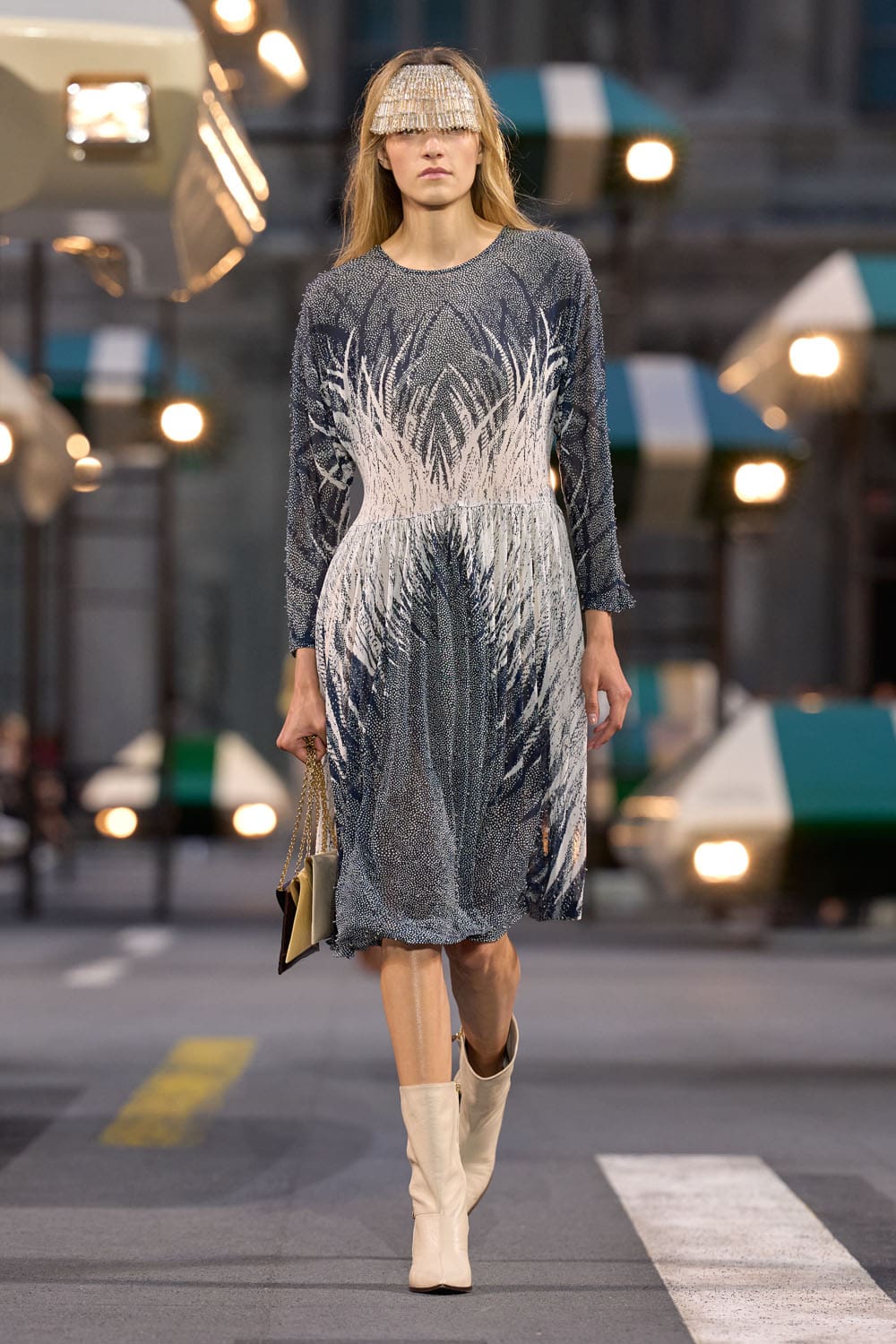
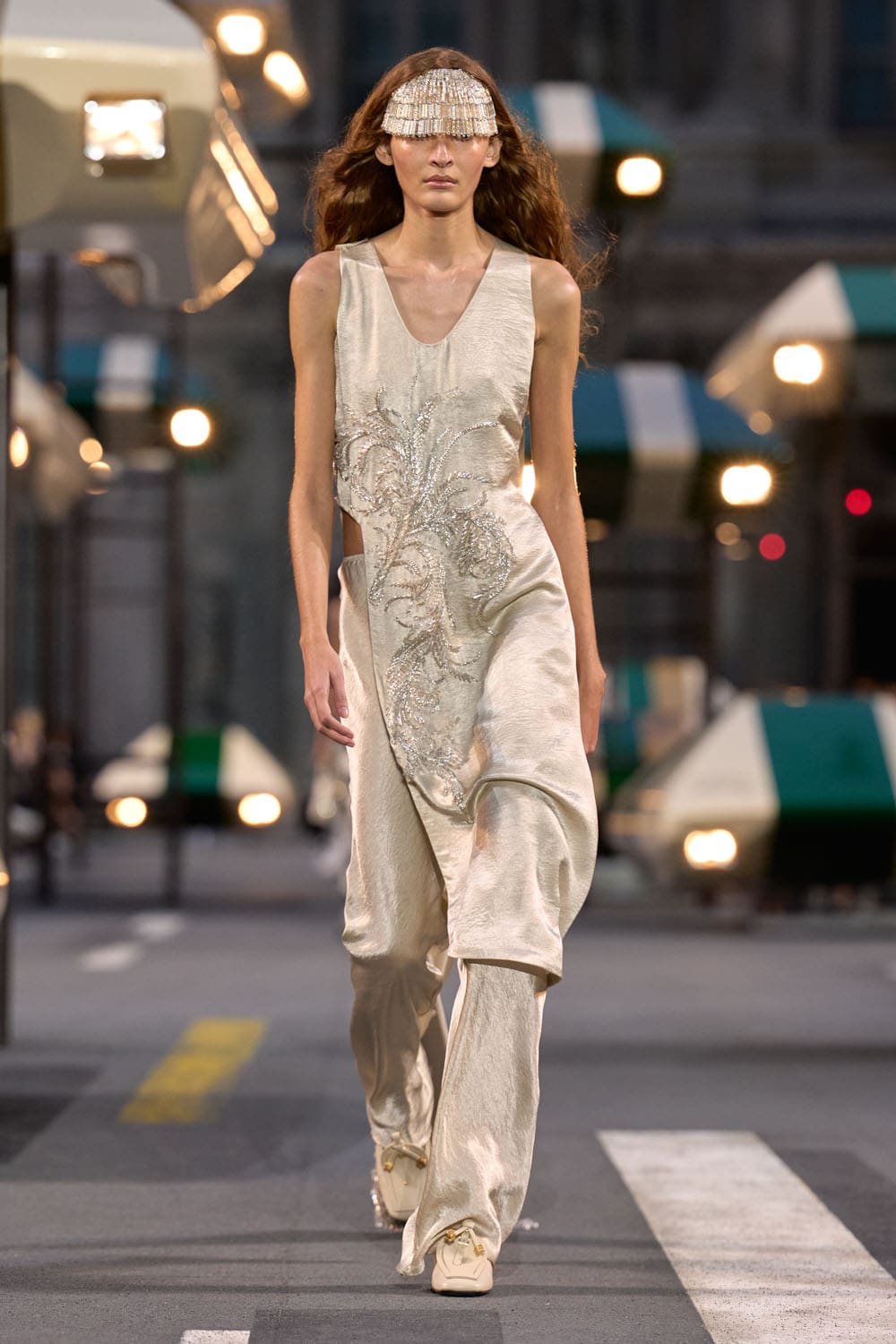
Evening wear strips away heavy embroidery in favor of weightless, digital-age surfaces. A long-sleeved midi dress is knit from fine charcoal and silver lurex threads into an abstract, feather-like herringbone motif that hugs the waist before flaring into a soft bubble hem, worn with cream leather boots and an ivory beaded visor.
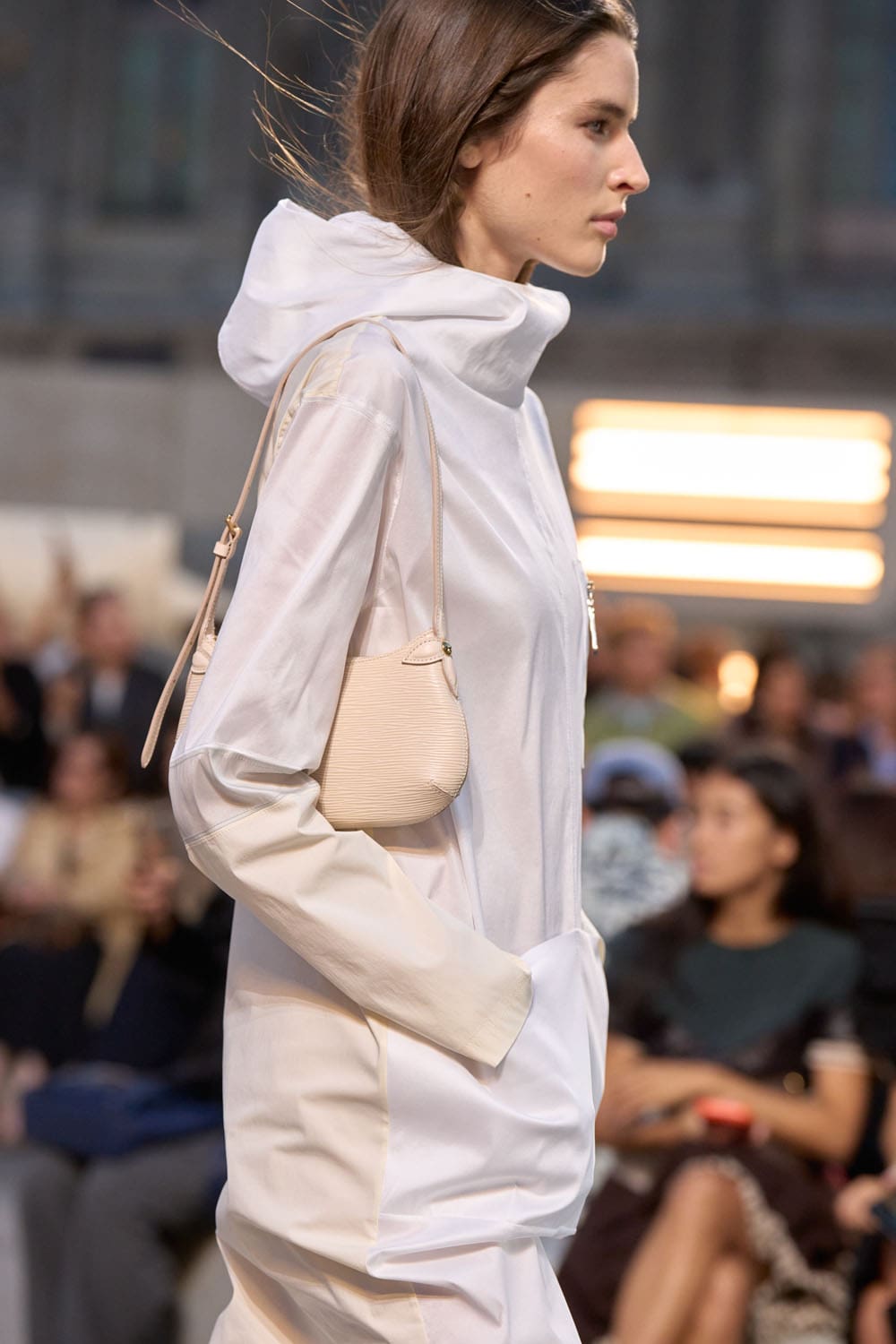
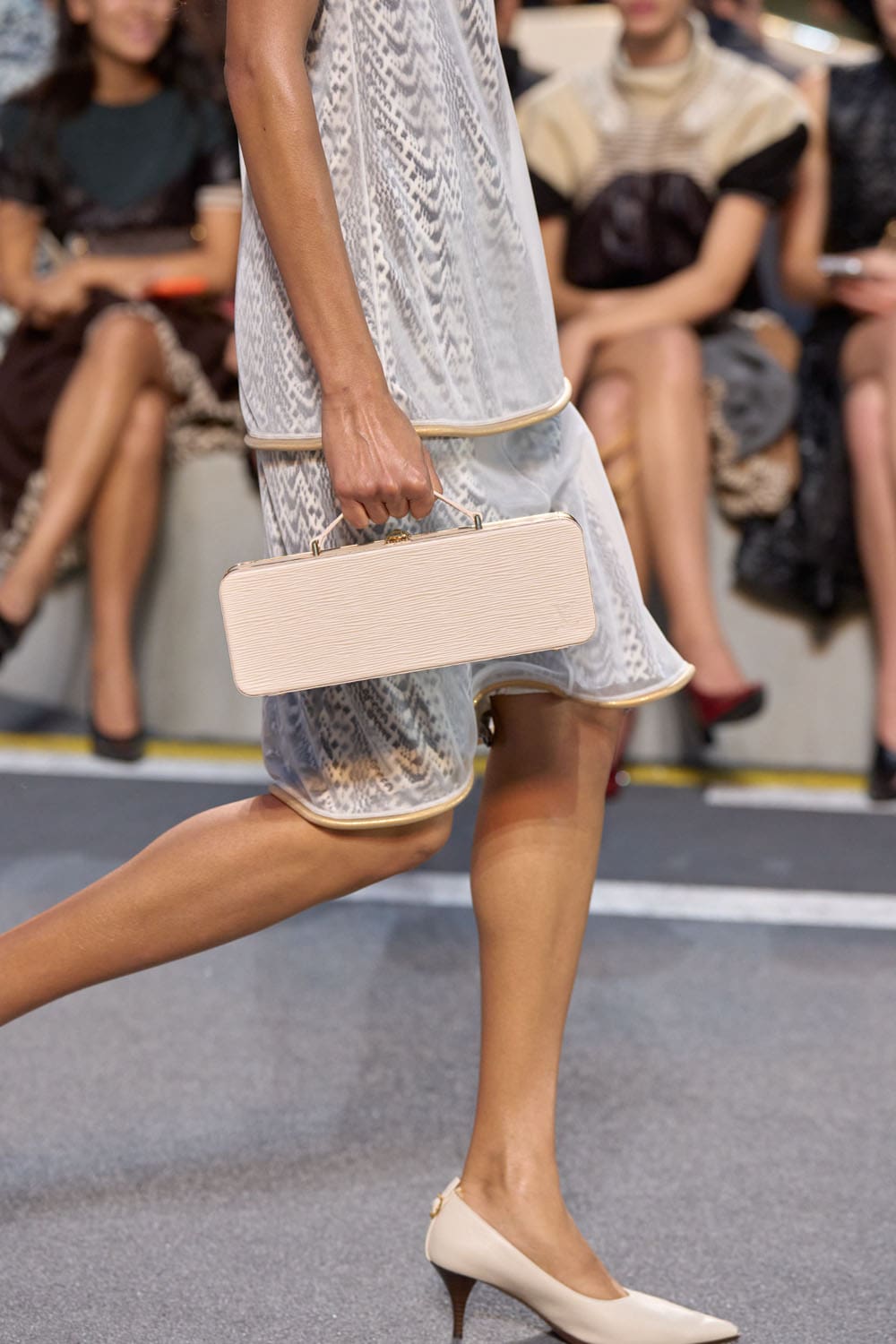
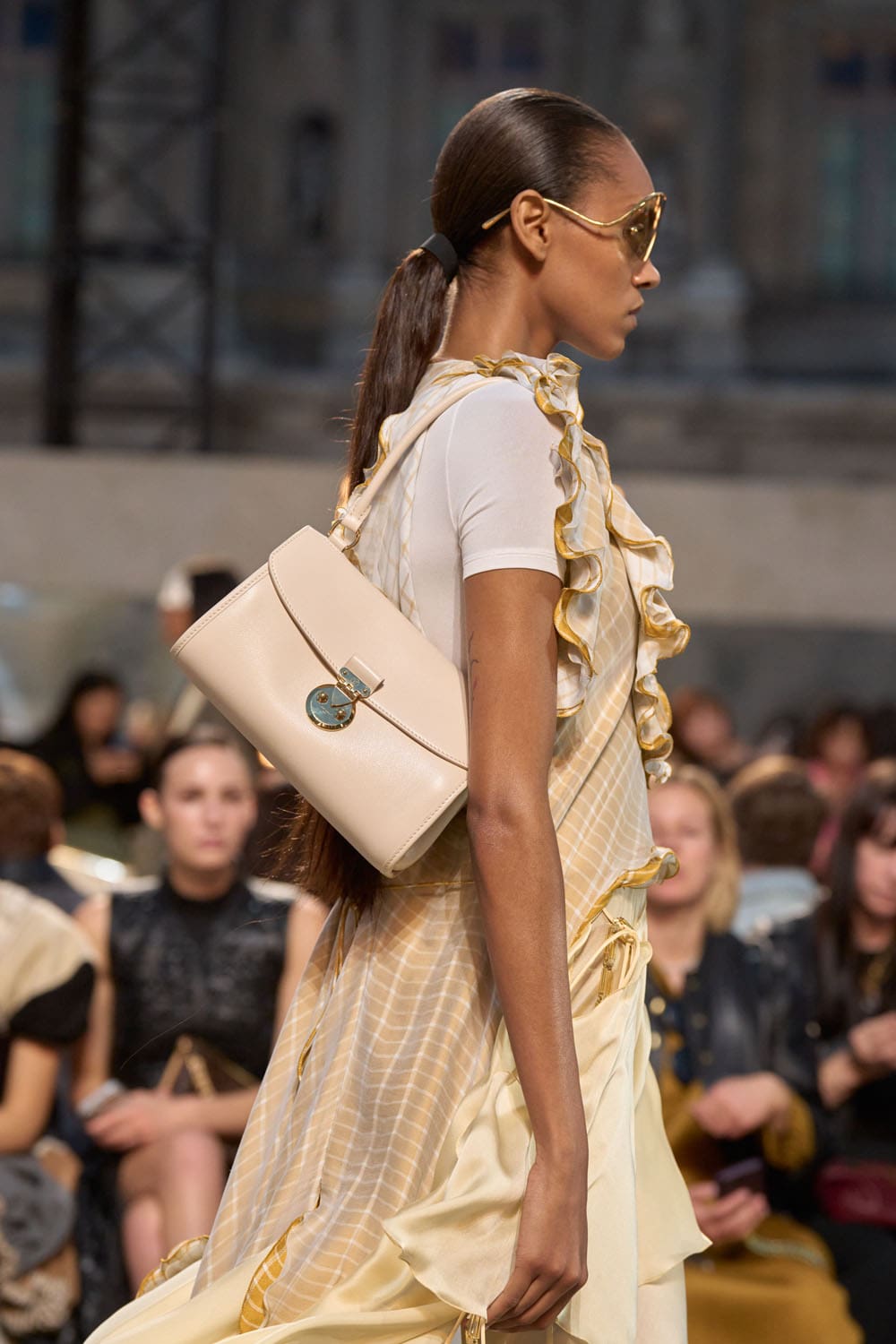
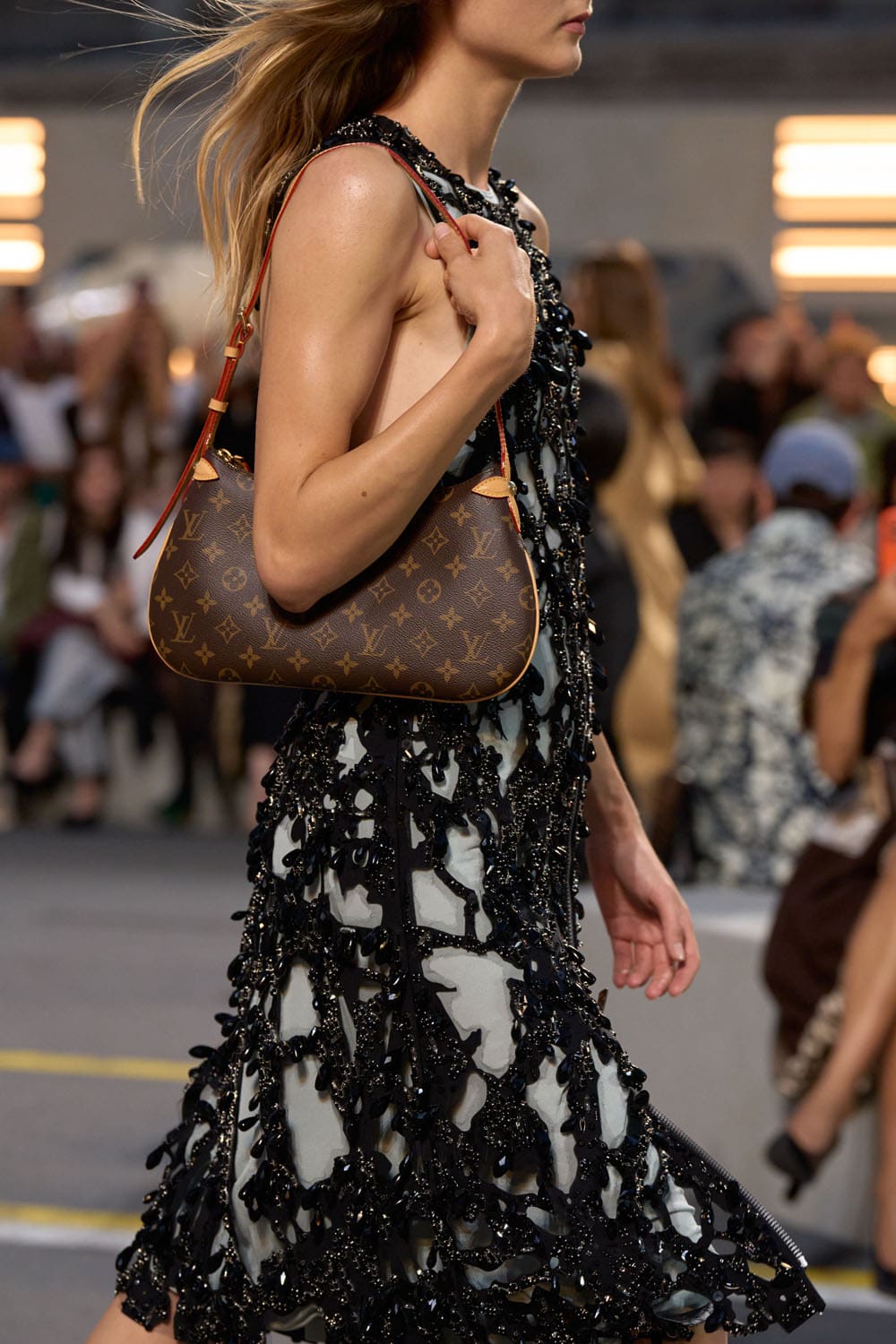
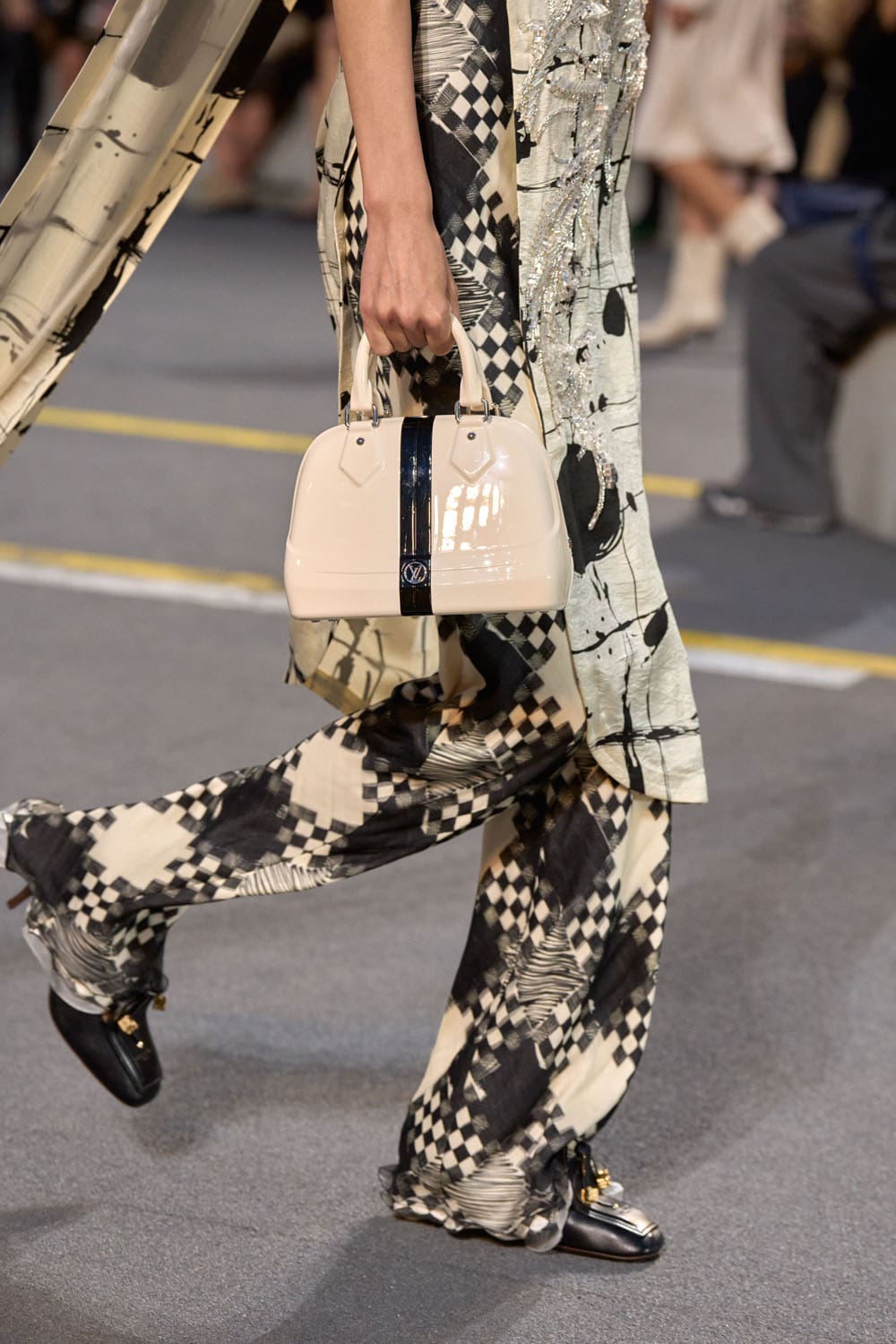
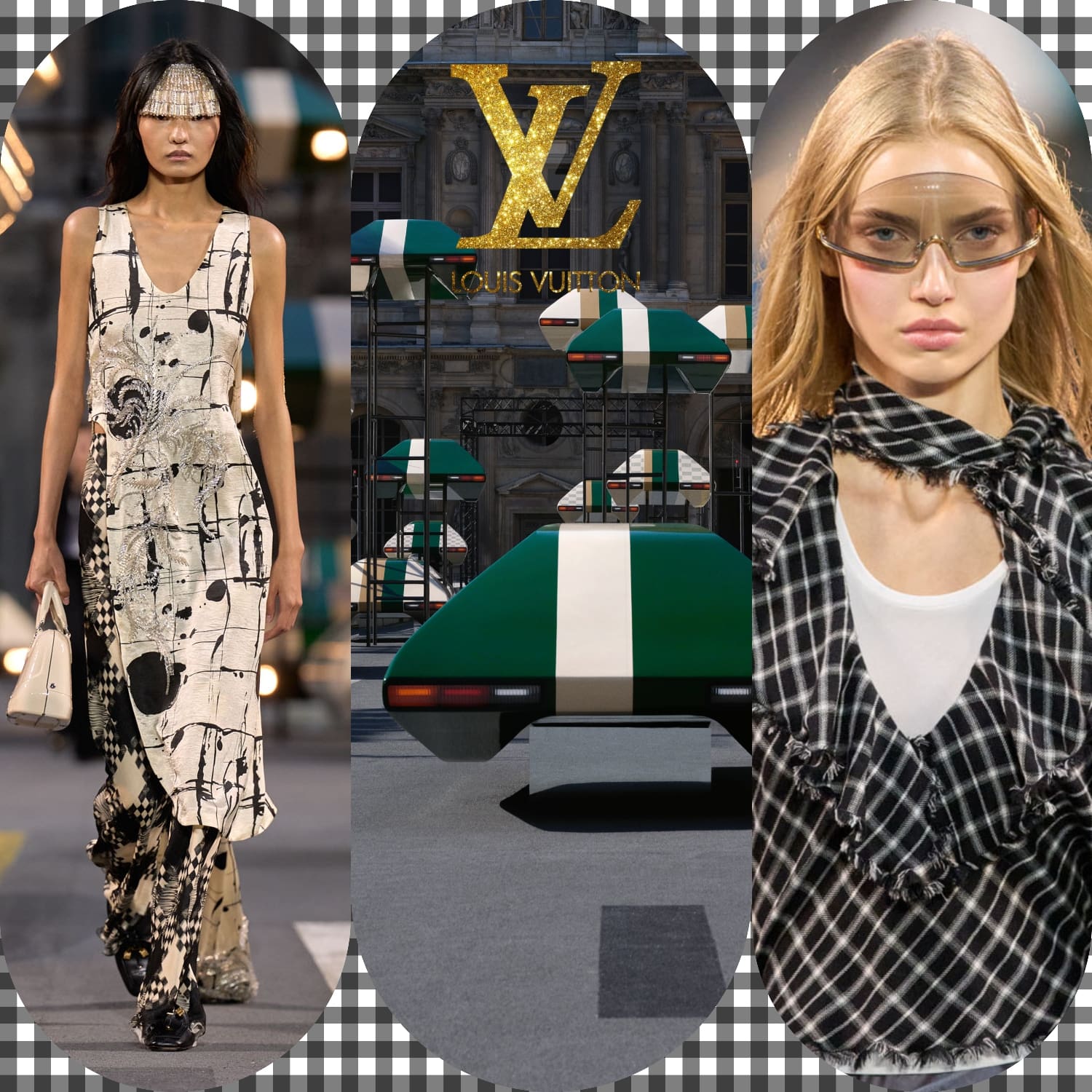
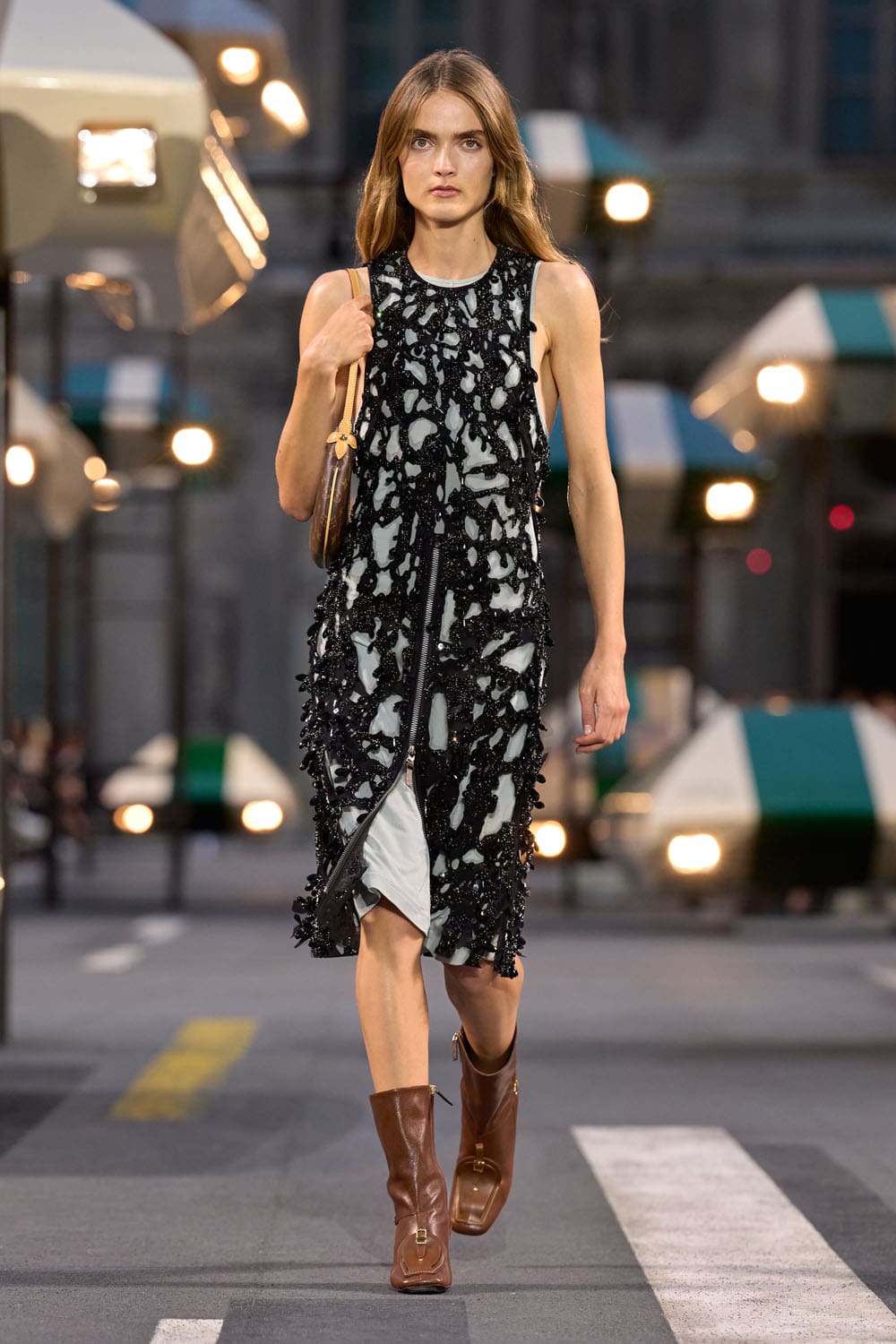
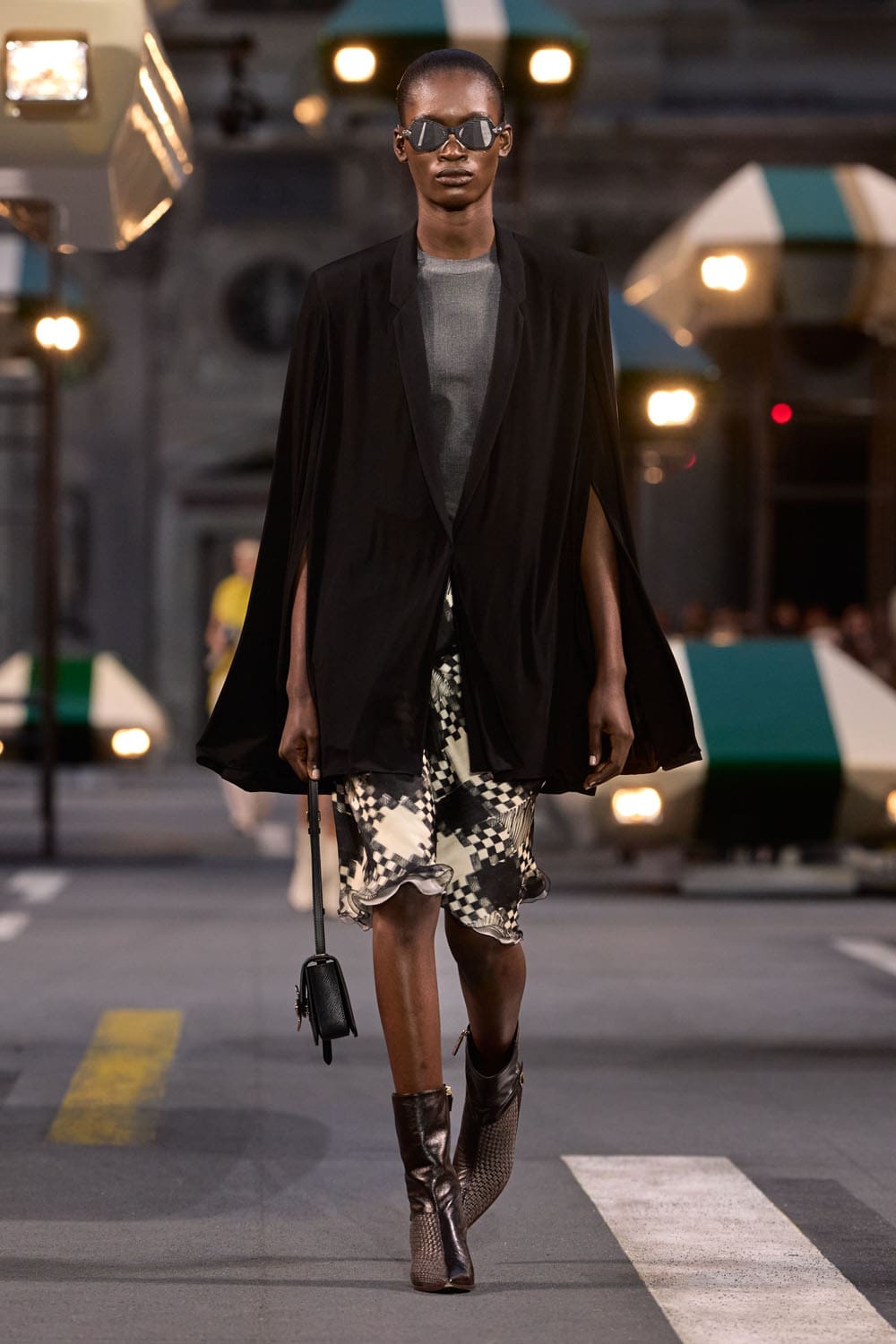
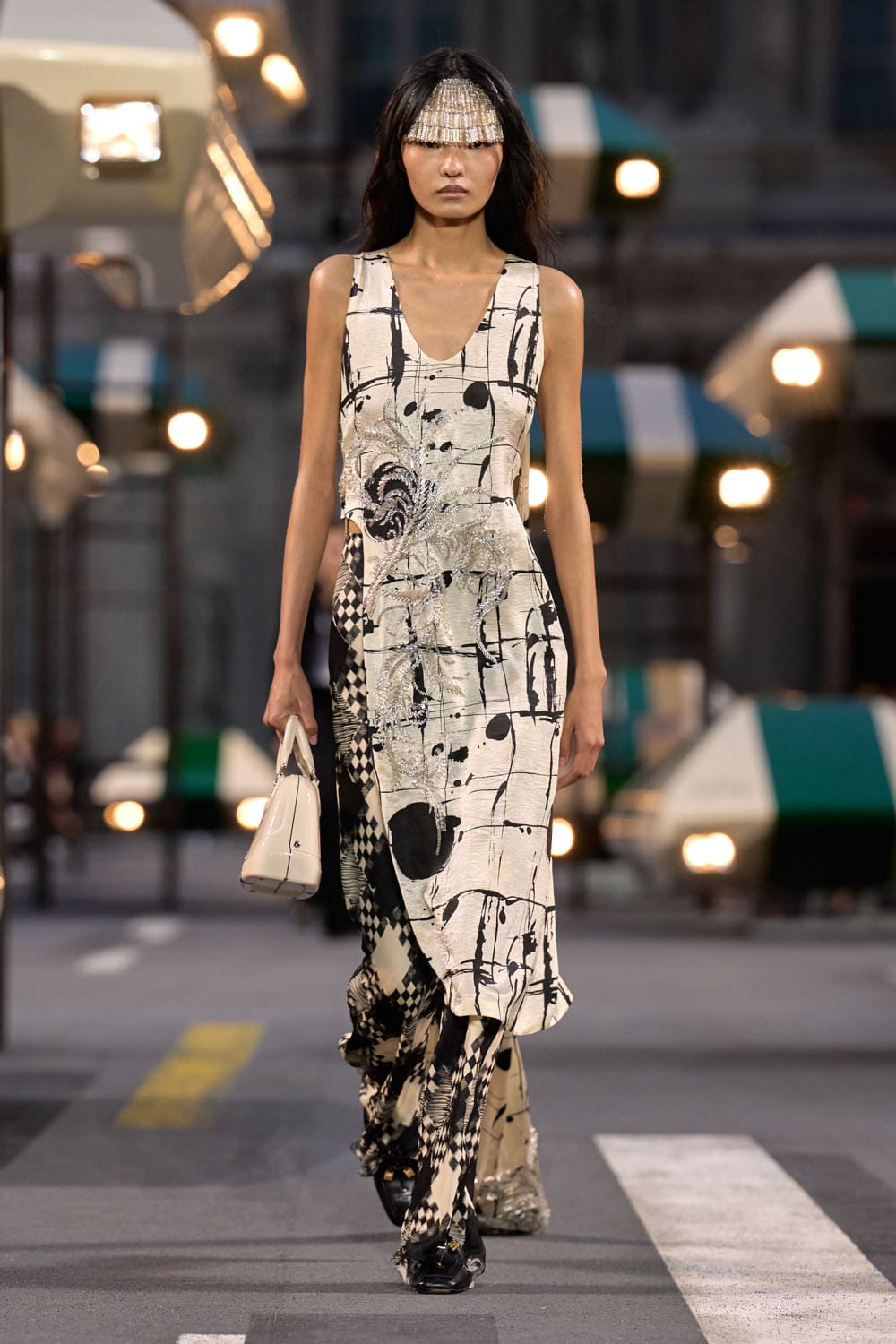
Beside it, a sleeveless column gown in slubbed ivory silk is boldly painted with graphic, calligraphic black brushstrokes and racing-flag checkerboards, overlaid with delicate silver sequin branch embroidery along the ribcage. Sliced high on the side to reveal printed trousers underneath, the dress moves with the speed of urban graffiti in motion, accompanied by an ivory structured handbag.
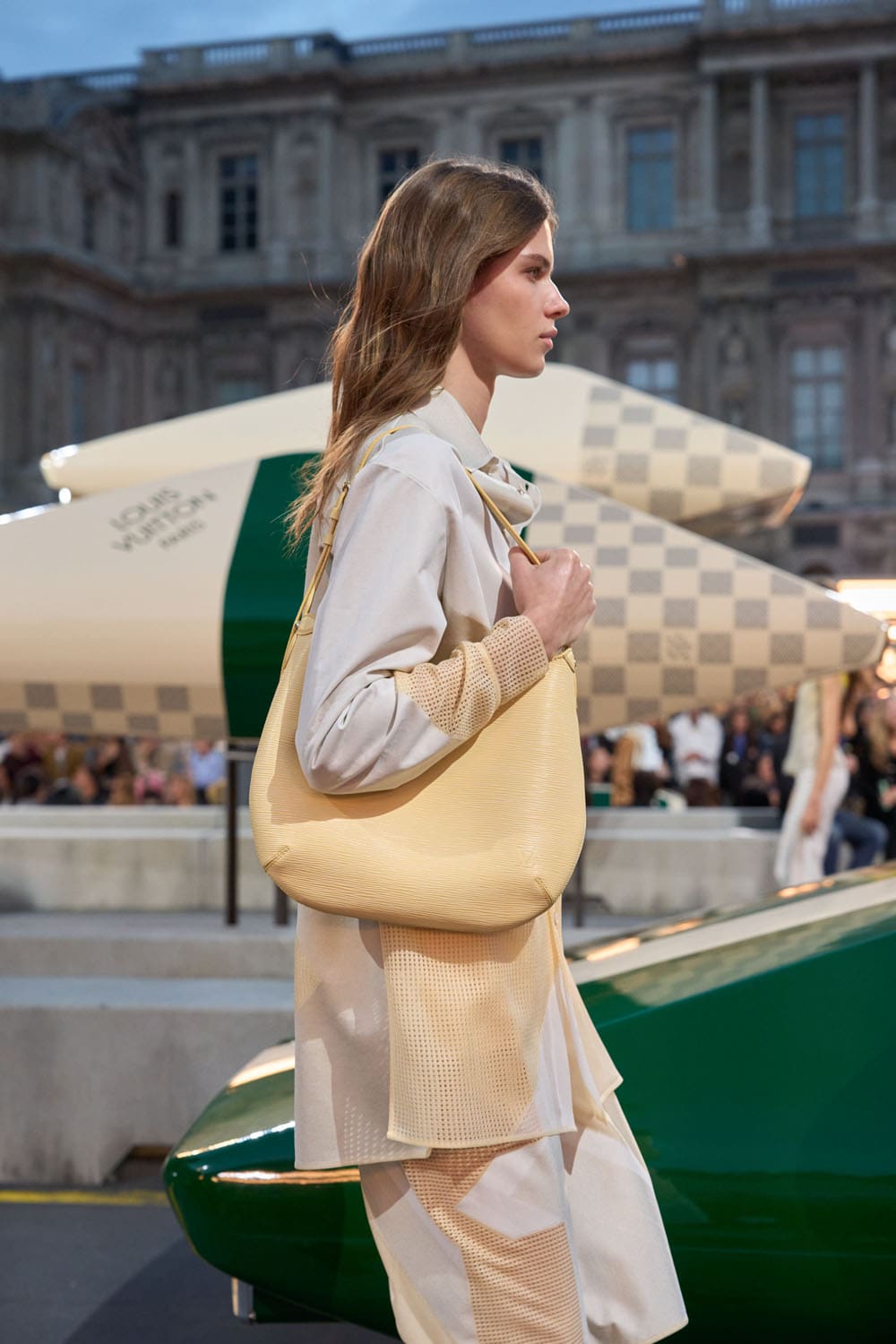
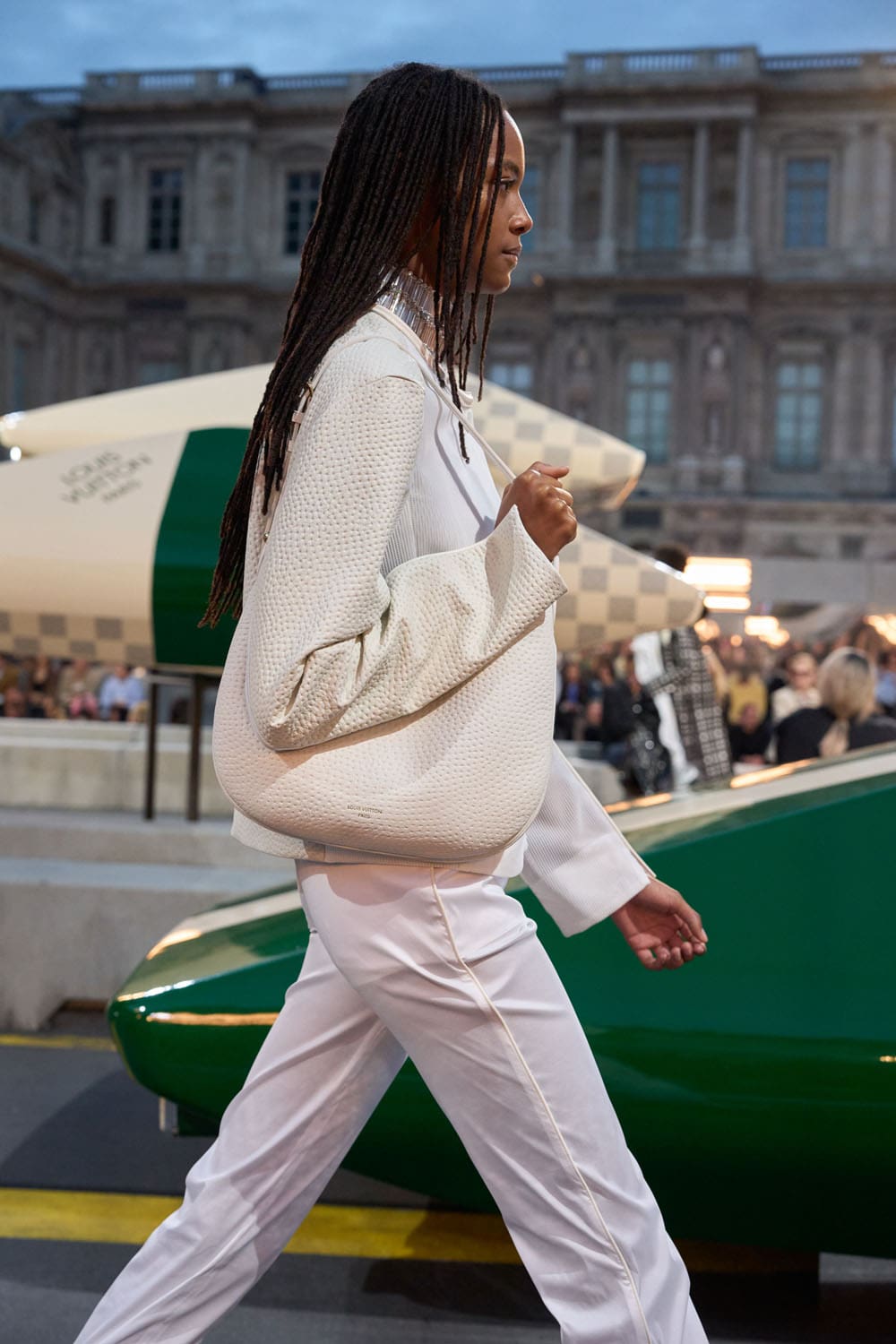
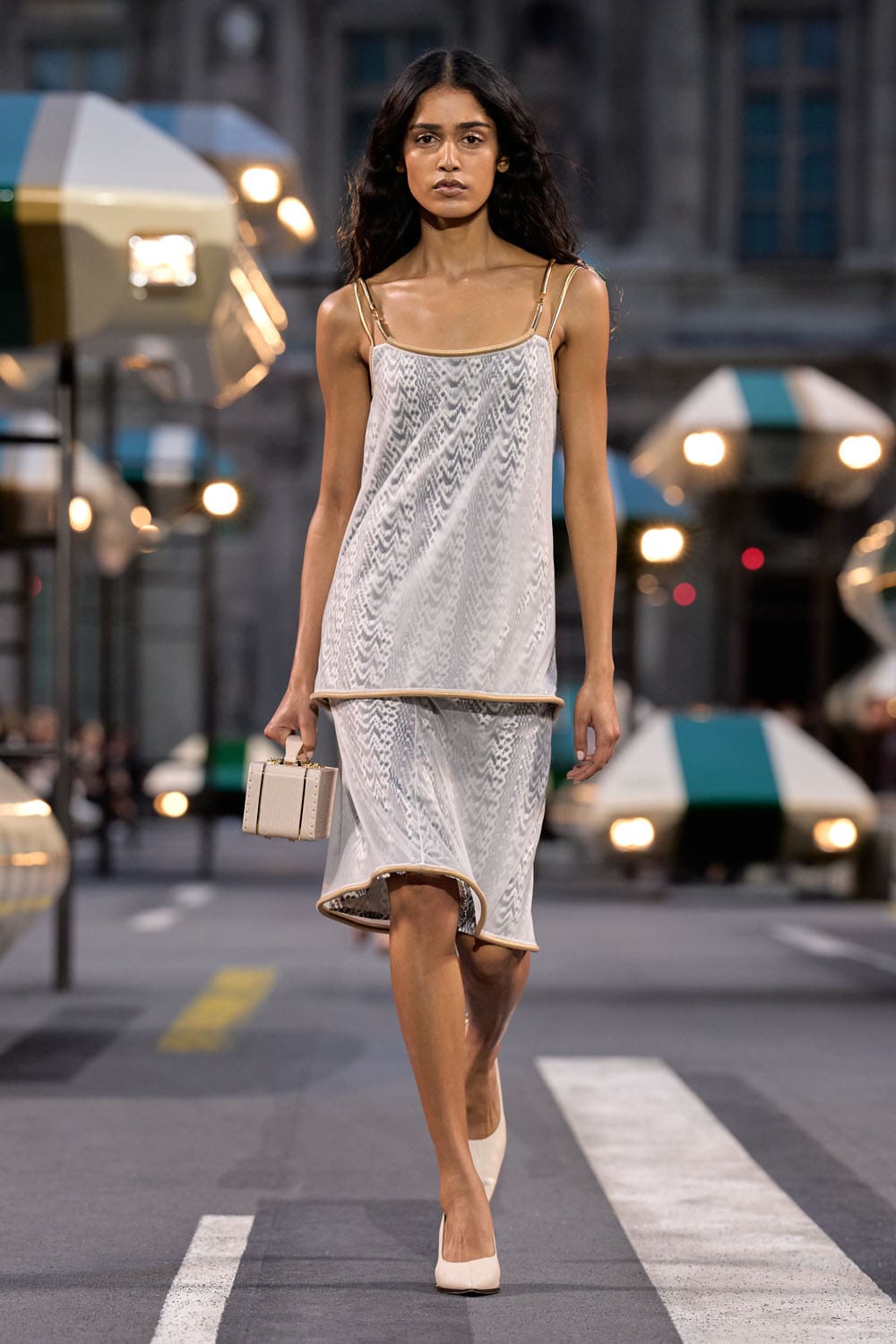
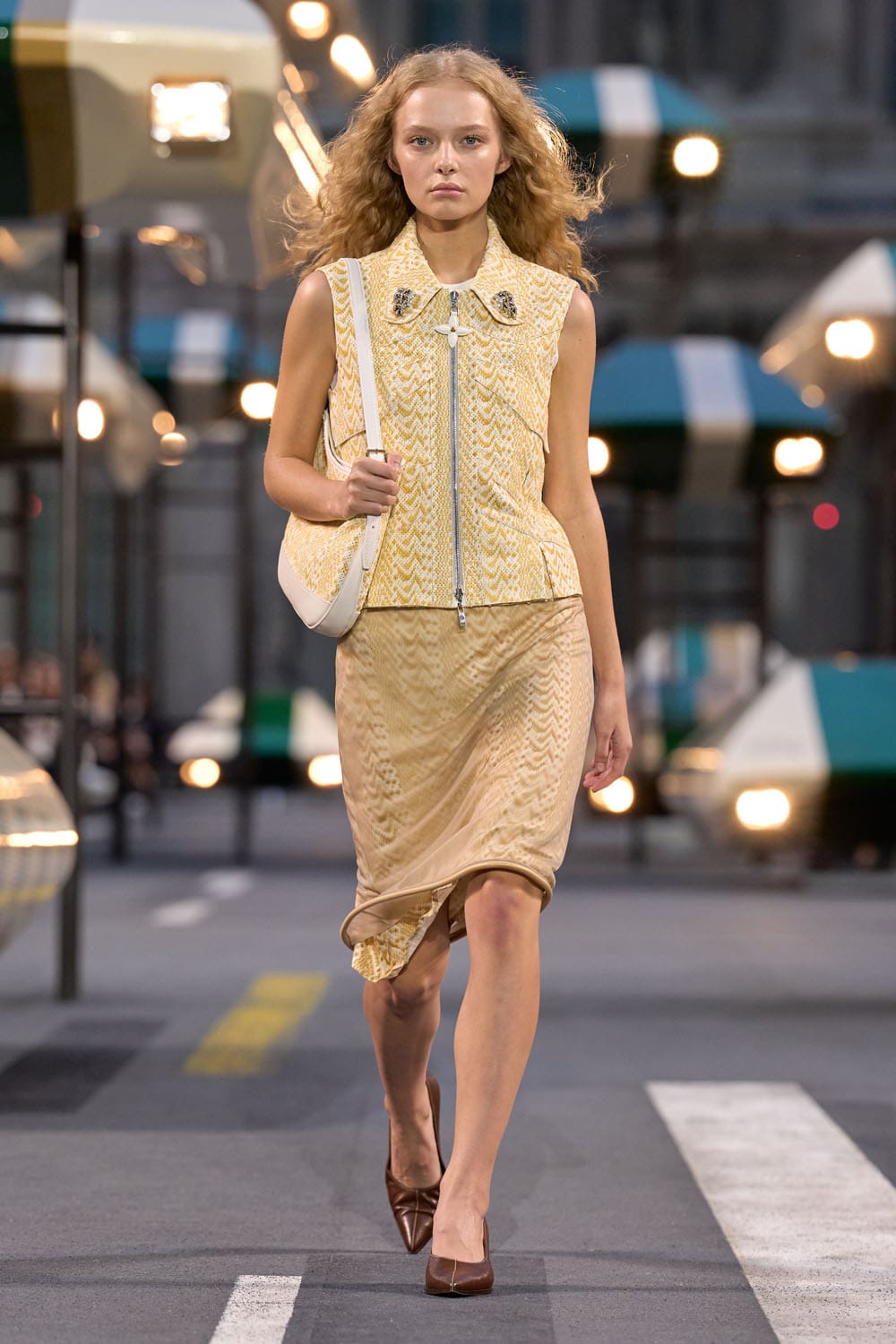
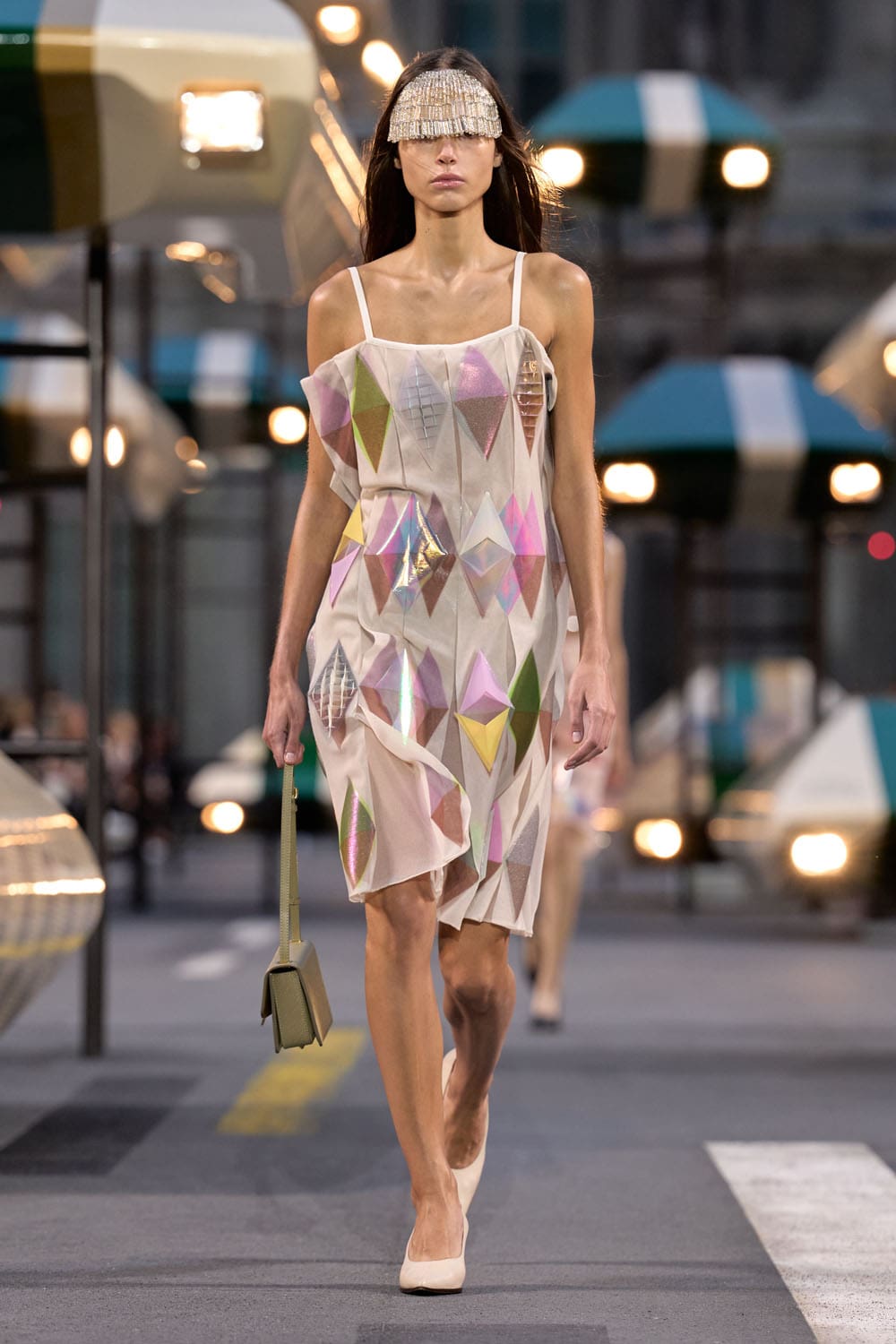
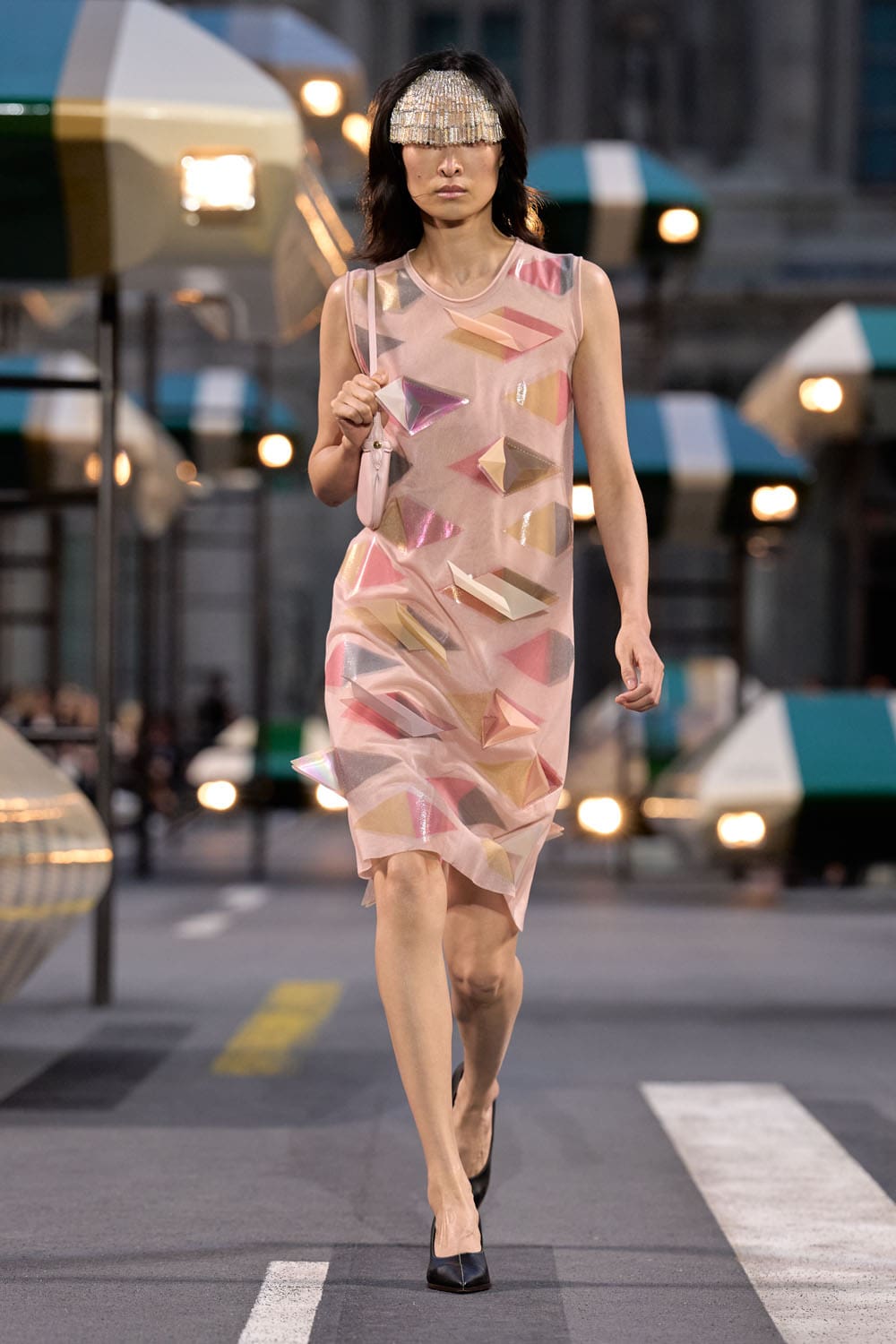
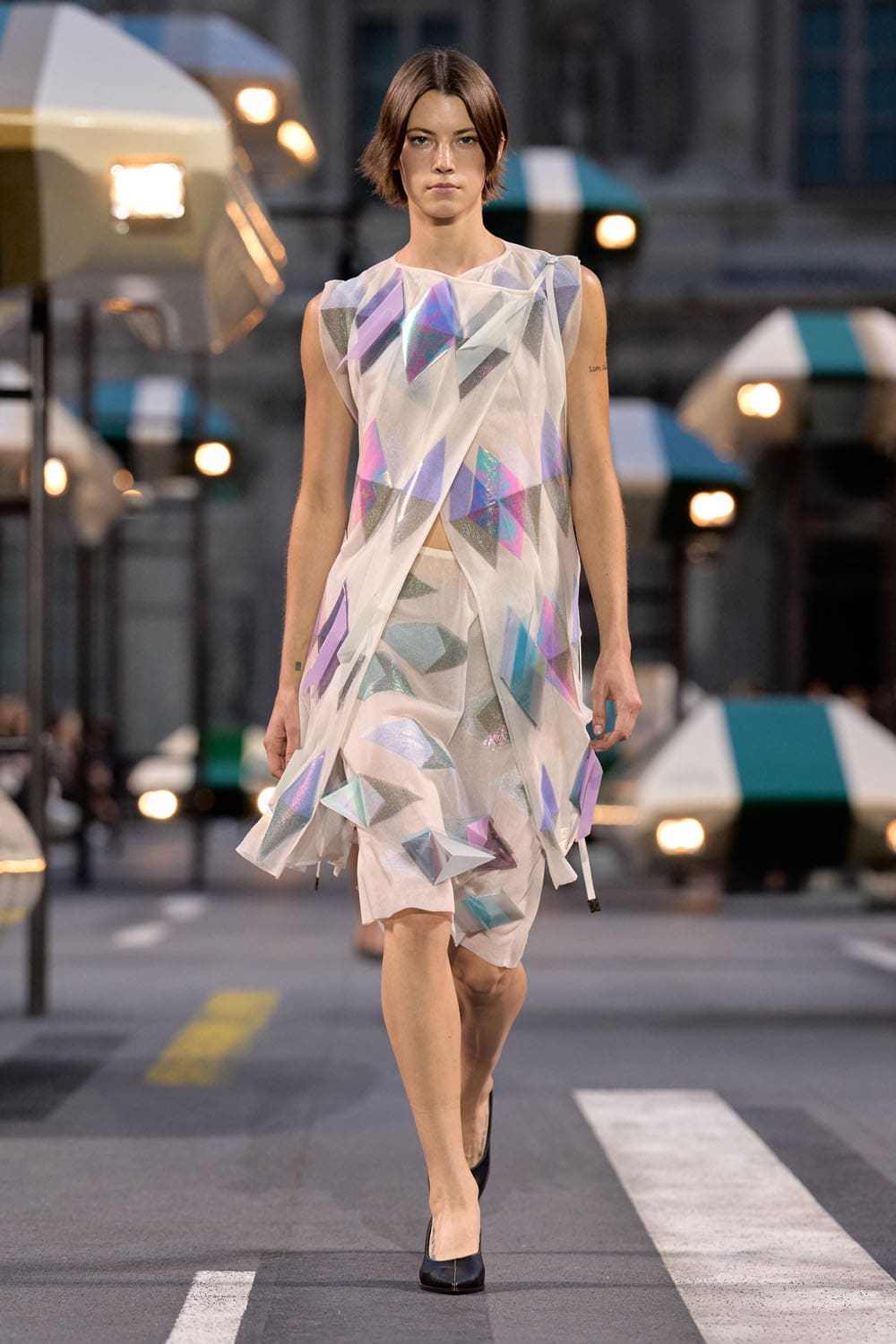
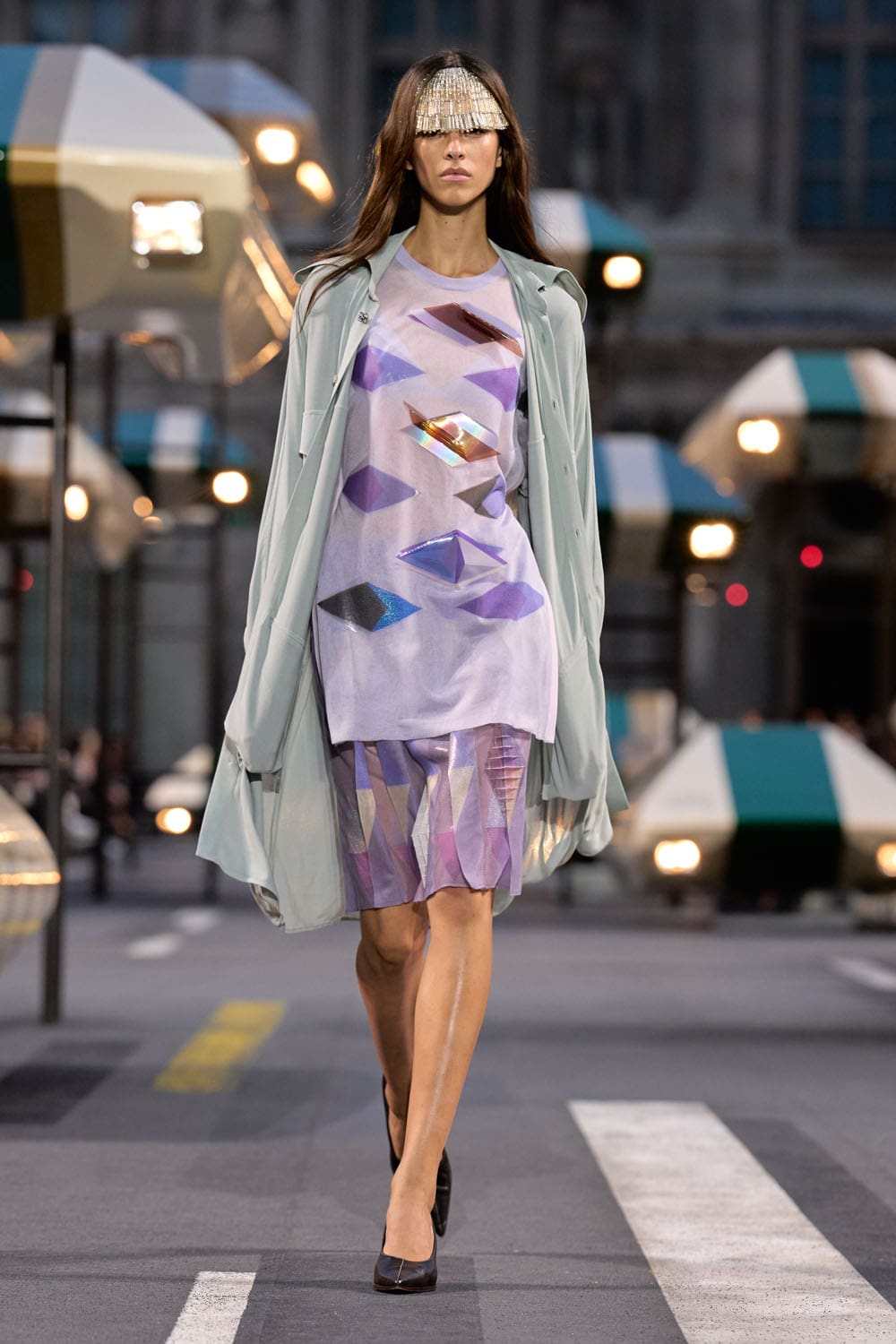
Even the futuristic set reflected this technical calculus. At the crossroads of classical architecture and an imagined future, hovering concept cars adorned with color-blocked stripes and Damier motifs offered a surreal evocation of the house’s Art of Travel within the Cour Carrée du Louvre. Yet beneath the sci-fi illusion lay a pragmatic discipline aligned with the house’s Regeneration 2030 roadmap: 83% of the scenography materials were rented, guest seating was carved from responsibly managed timber, and recycled content was engineered into the runway track. Partnering with specialized recovery networks, 95% of the installation was routed for circular reuse, destined for second lives in artistic programs and agriculture rather than industrial waste.
Nicolas Ghesquière understands that modern luxury is no longer about static grandeur or stiff ceremonial uniforms. By grounding ERGONOMIE in the physics of speed, airflow, and technical textiles, he gives the Louis Vuitton woman a wardrobe built for pure momentum. In an industry often stuck in nostalgic reverie, this collection strides ahead into the future—running shoes laced, visors lowered, and fabrics flying behind.
Key Takeaways
- Louis Vuitton Spring 2027, titled ERGONOMIE, blends speed and elegance, modernizing luxury through technical textiles.
- Nicolas Ghesquière challenges couture norms, emphasizing biomechanics and comfort over rigid tailoring.
- Key pieces include a hybrid cardigan anorak, streamlined suiting, and lightweight evening wear, all showcasing aerodynamic designs.
- The collection features innovative materials like aerostatic nylon and liquid silks, enhancing movement and style.
- Ghesquière’s vision reflects a future-focused luxury, marrying high fashion with environmental responsibility.
See All Looks Louis Vuitton Spring Summer 2027
See Details and Close Up Louis Vuitton Spring Summer 2027