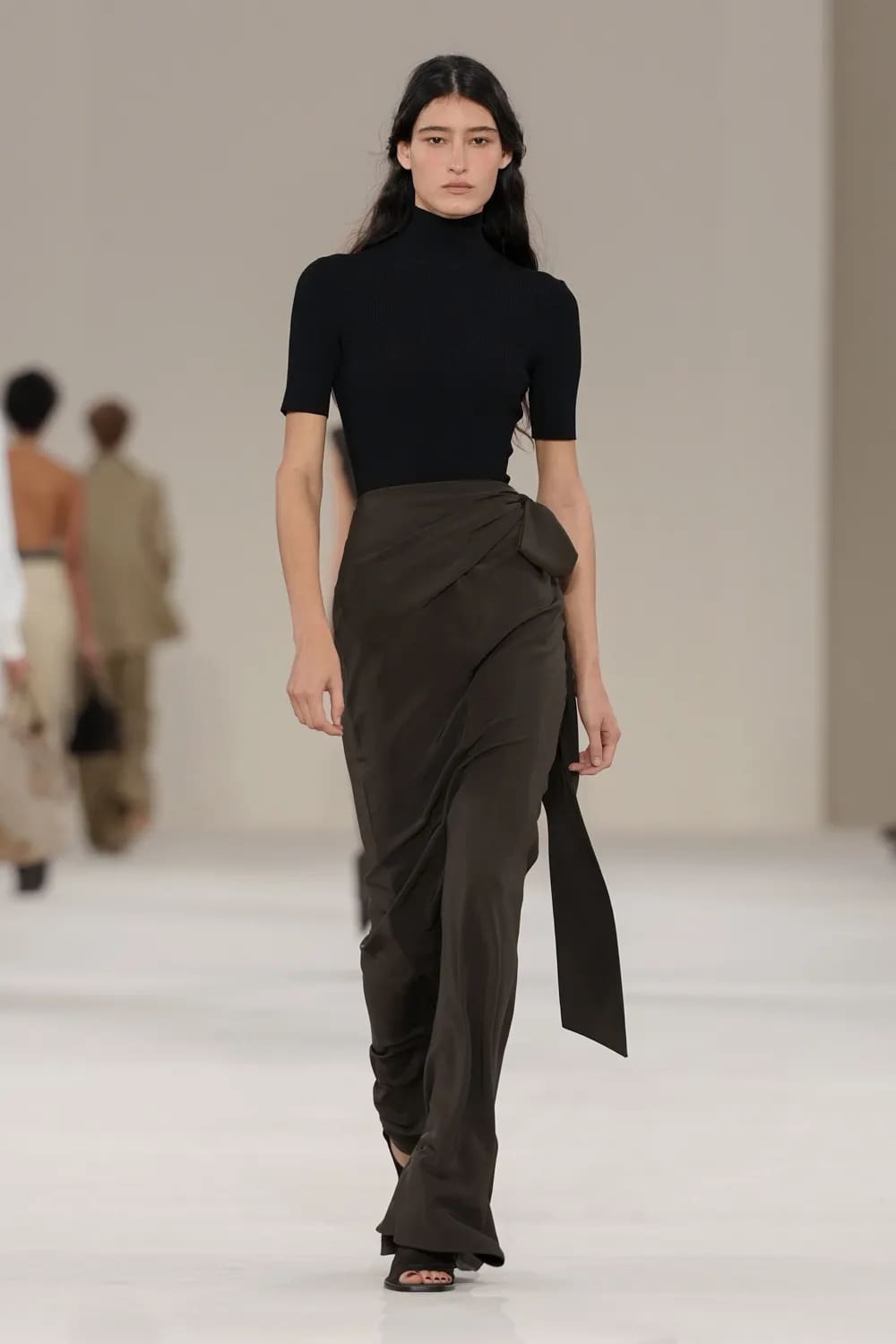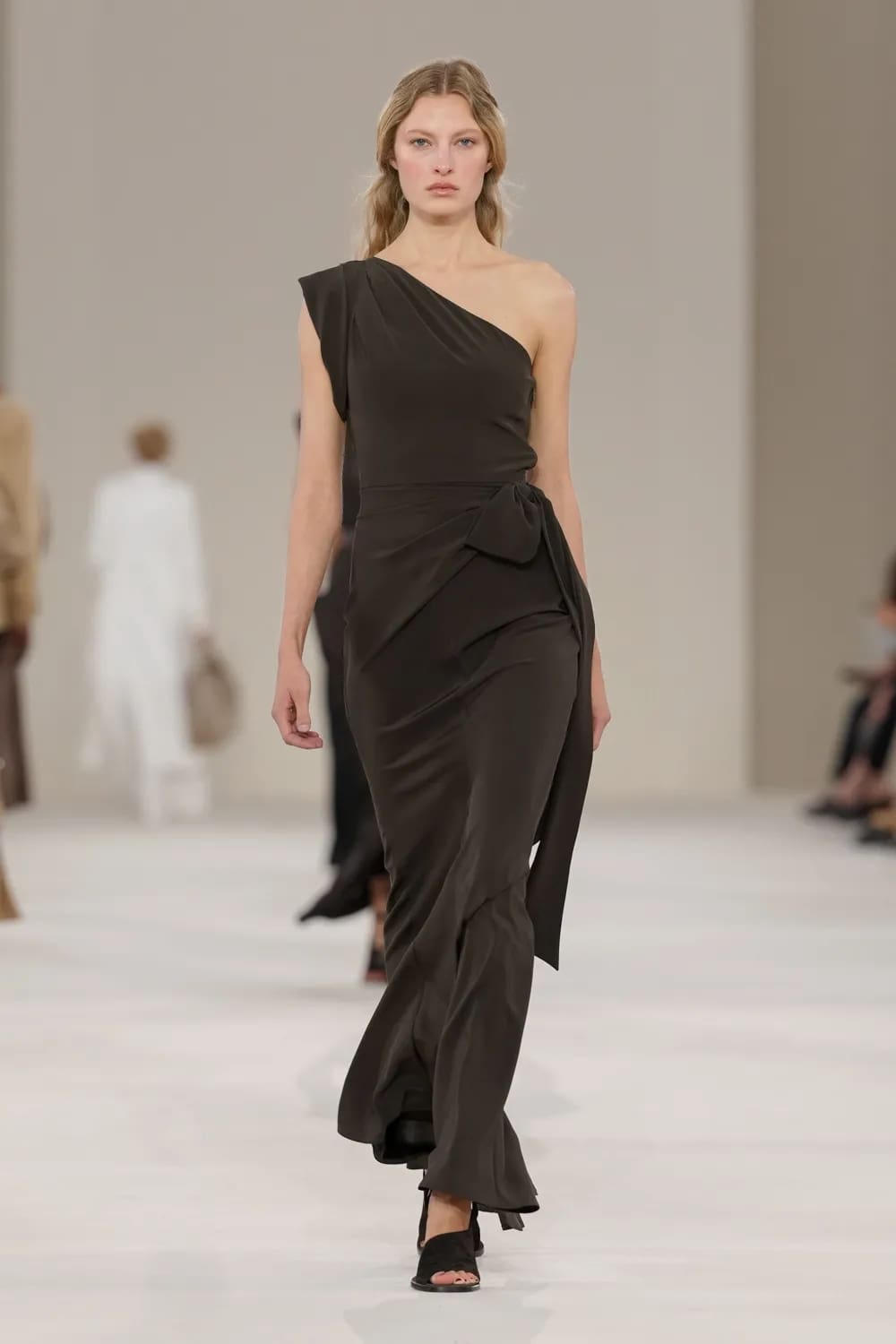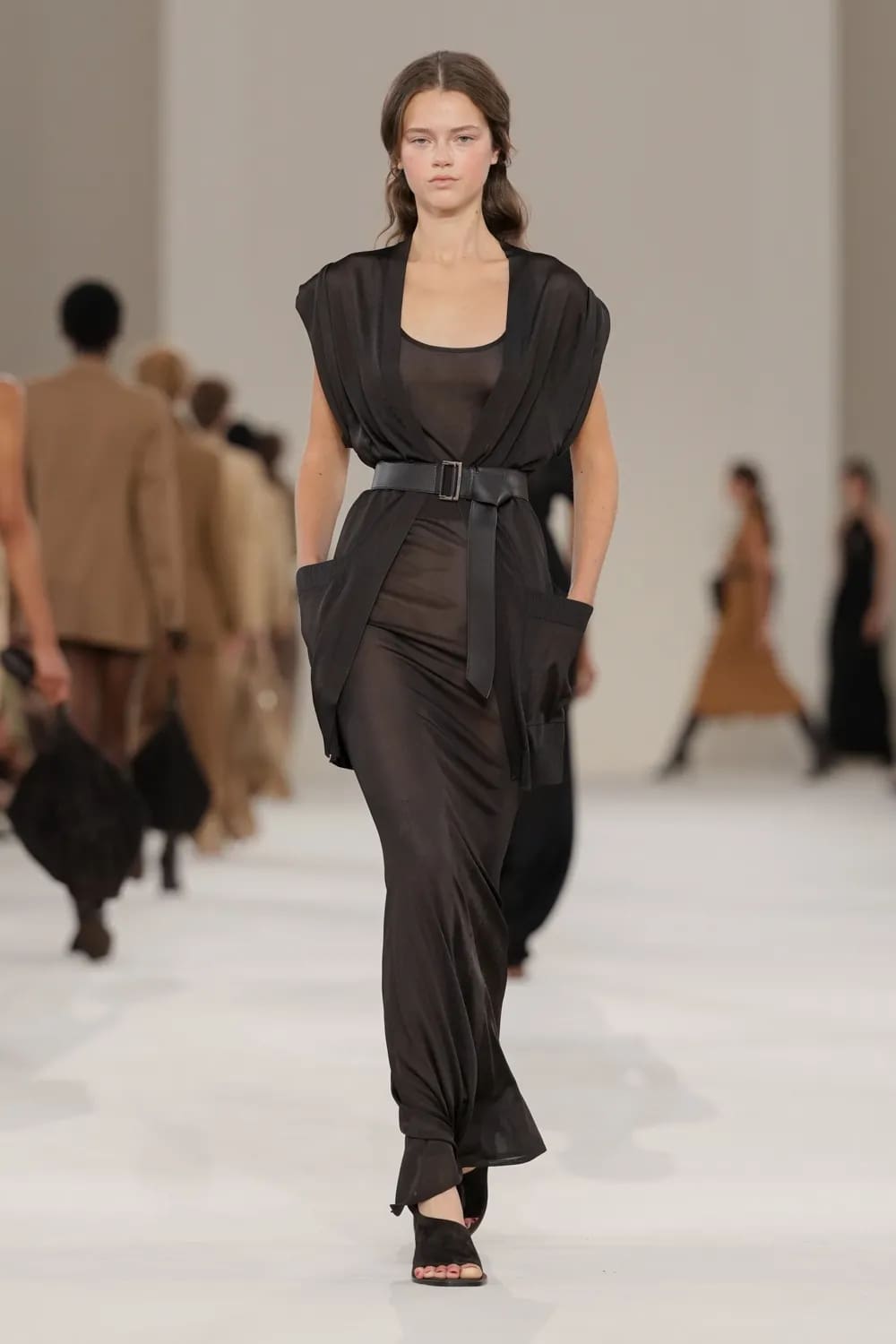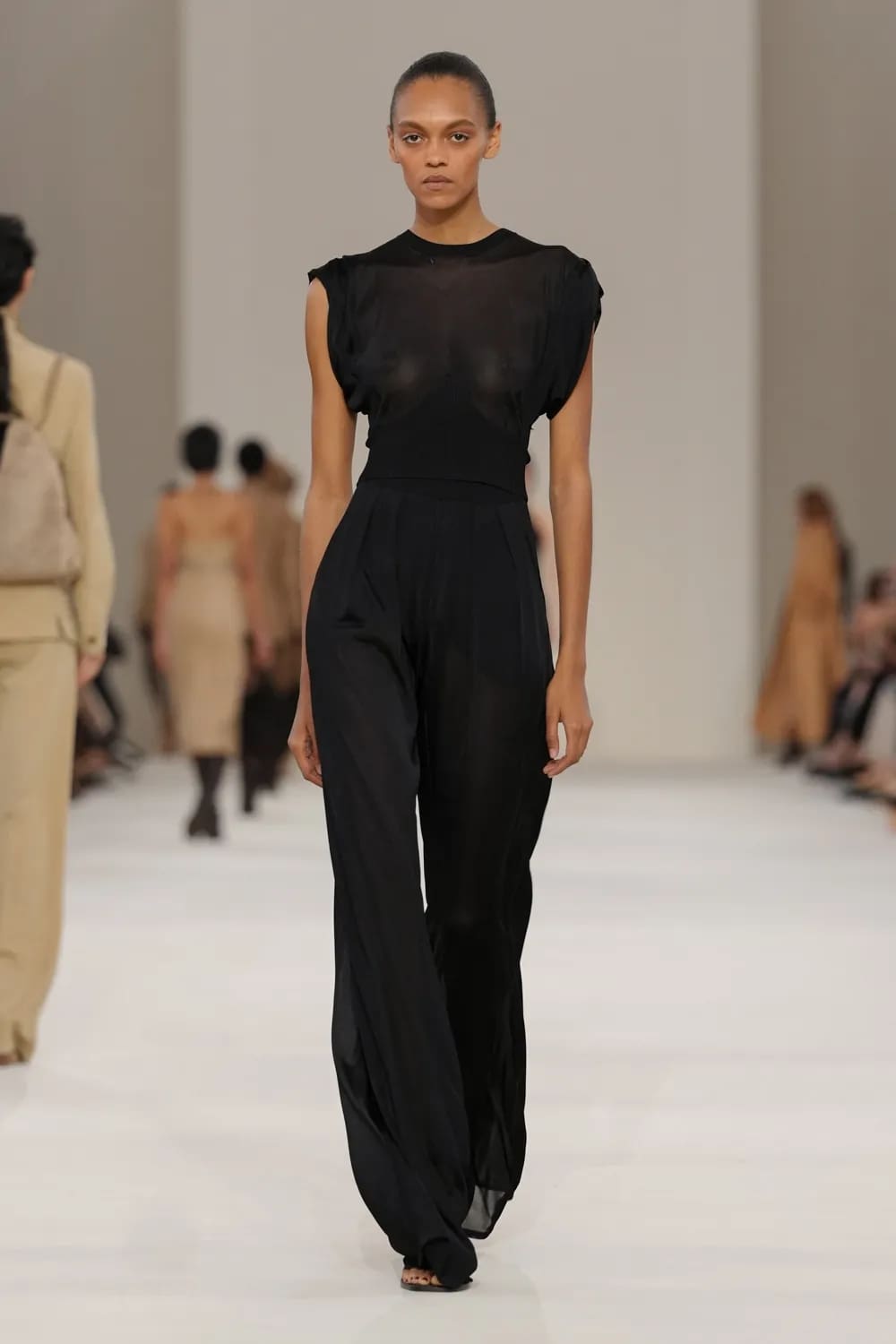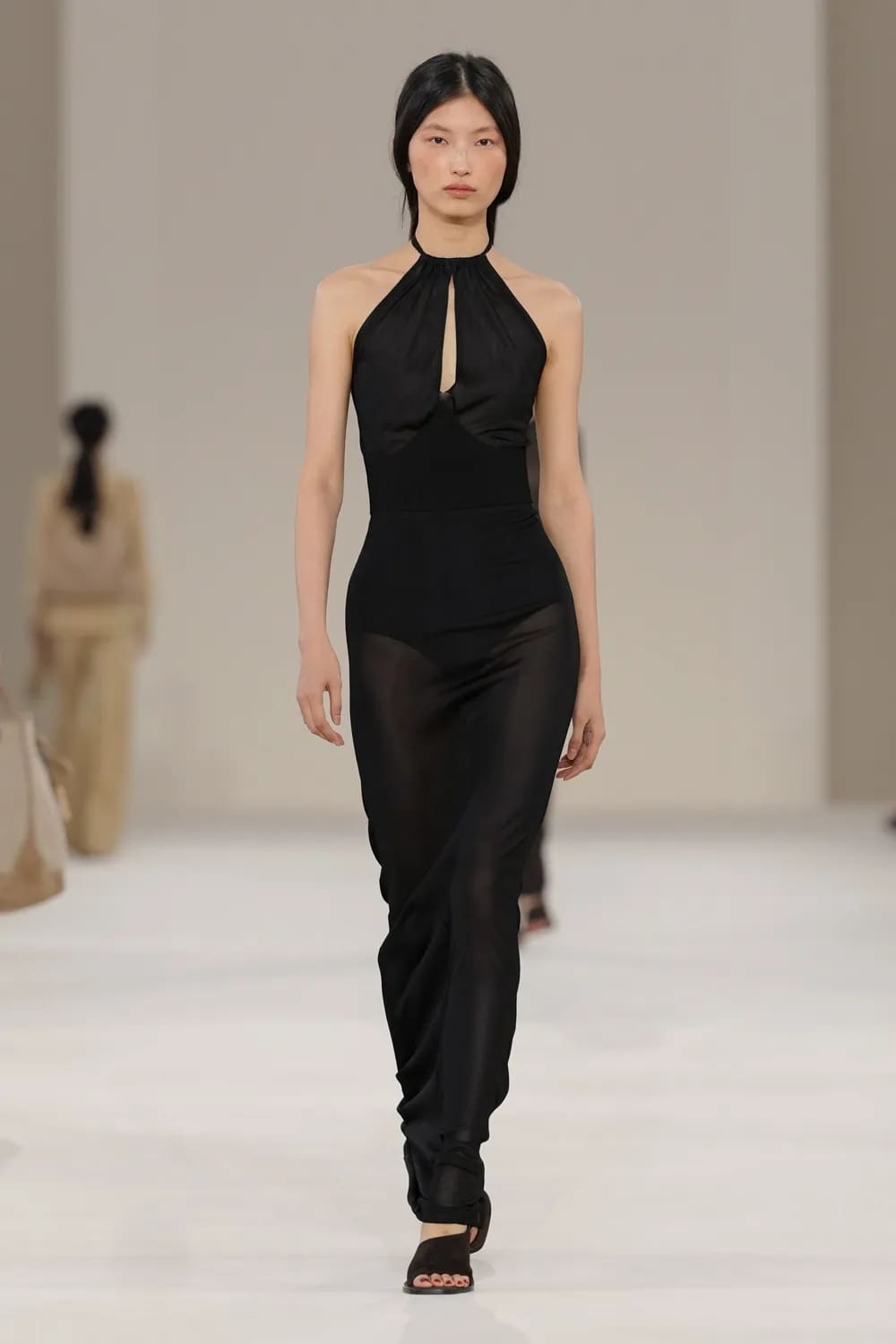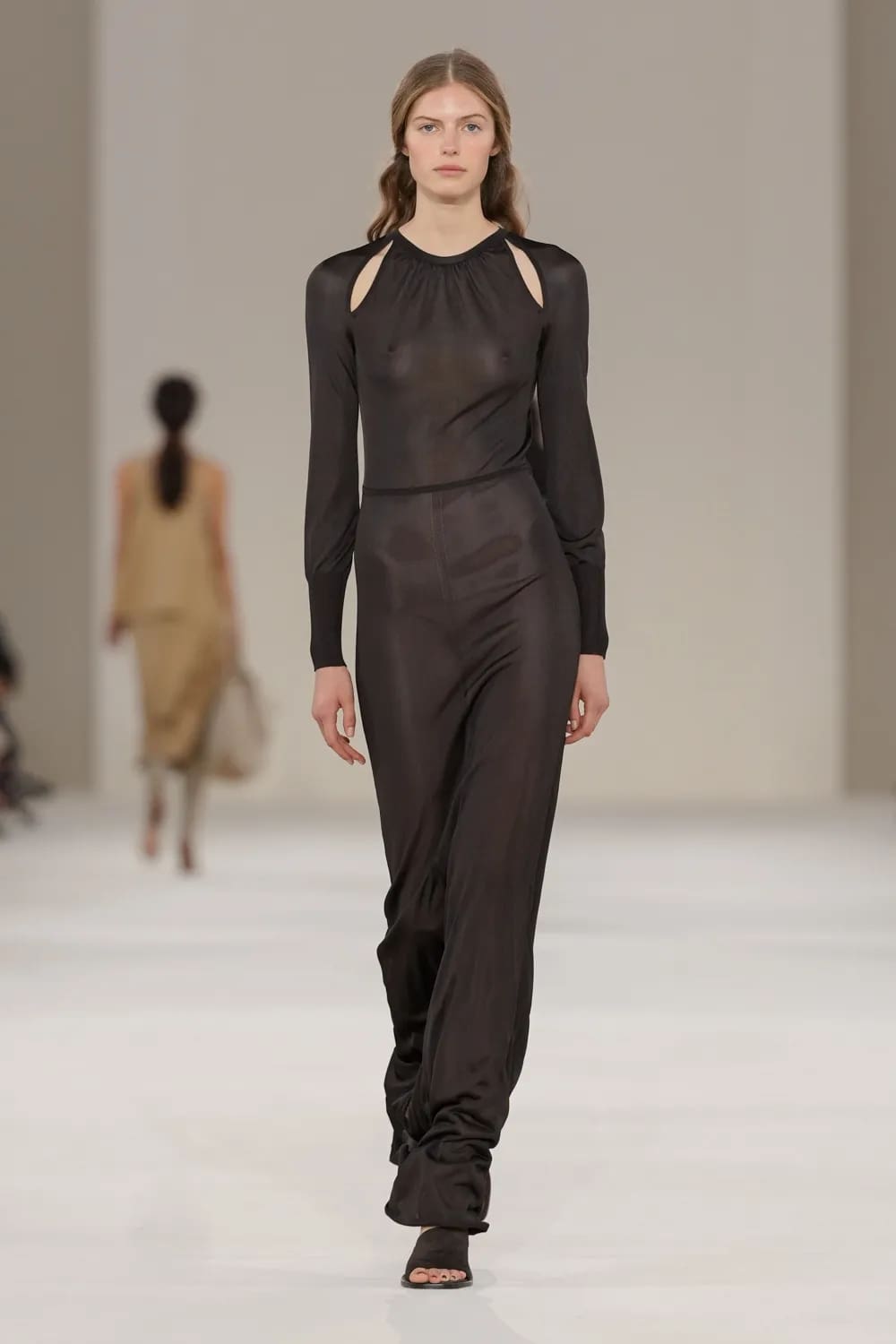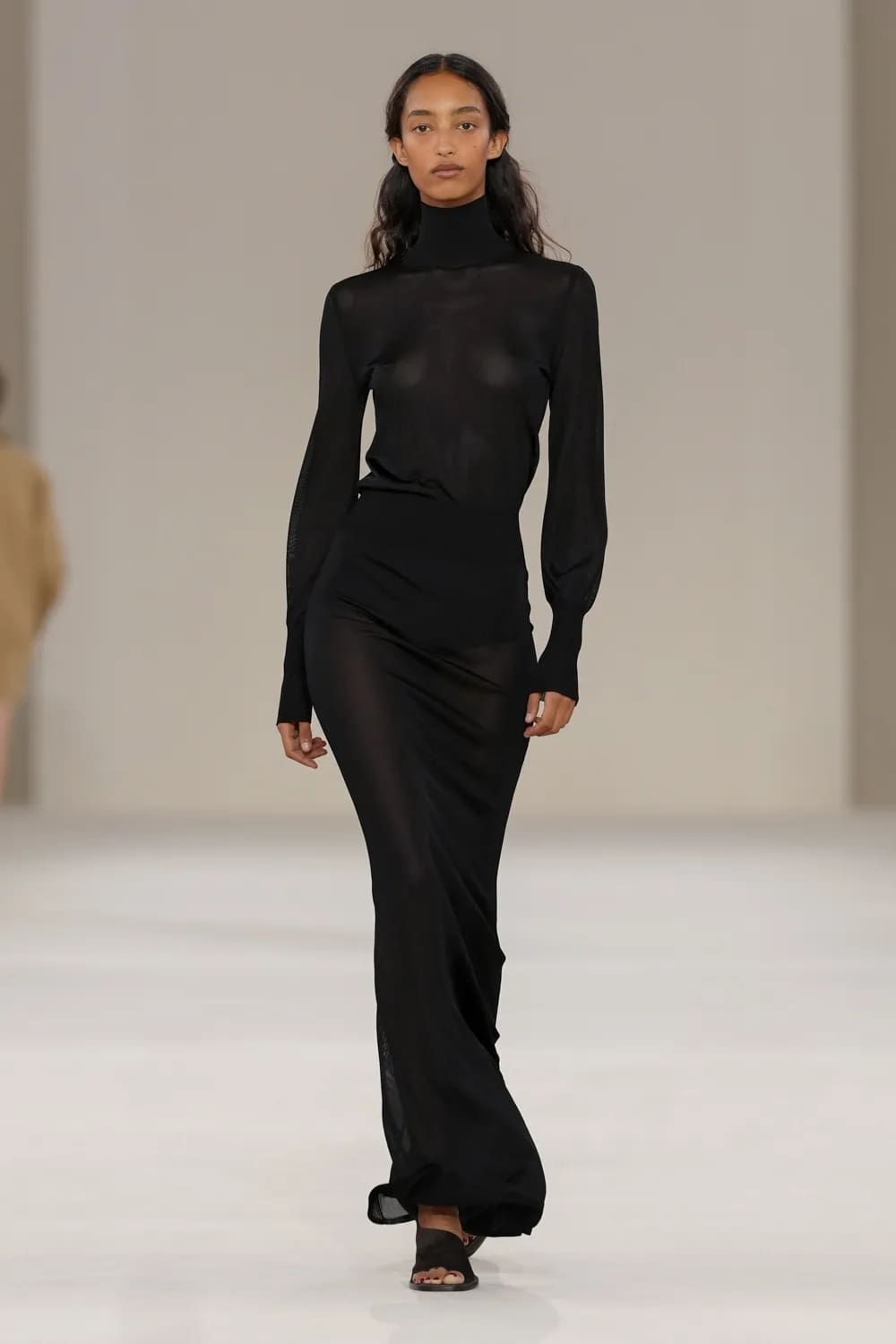
Max Mara
THE TRIUMPHS
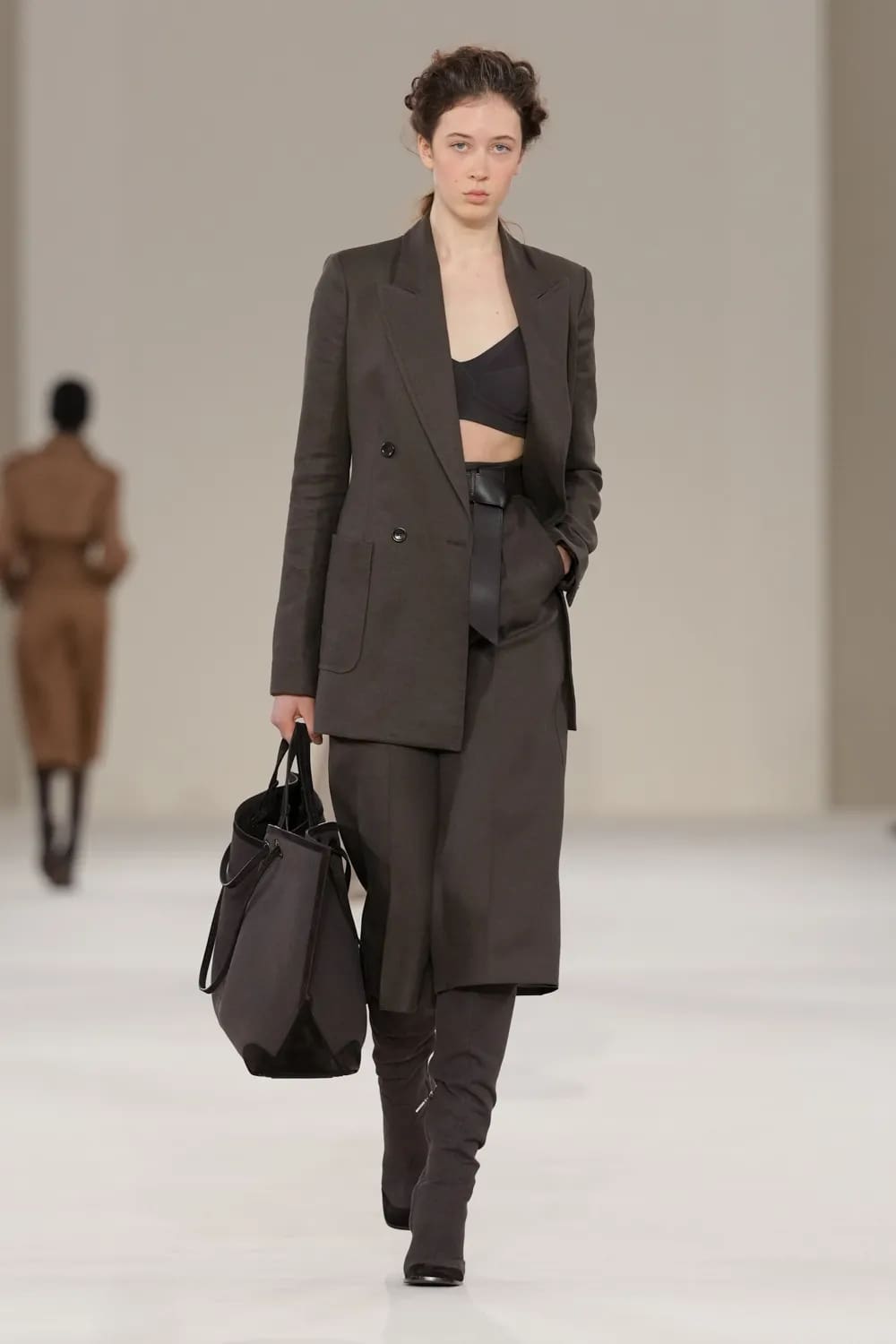
- Sovereign tailoring pedigree grounded in peerless double-faced wools and cashmeres, bypassing theatrical disruption in favor of pure executive authority
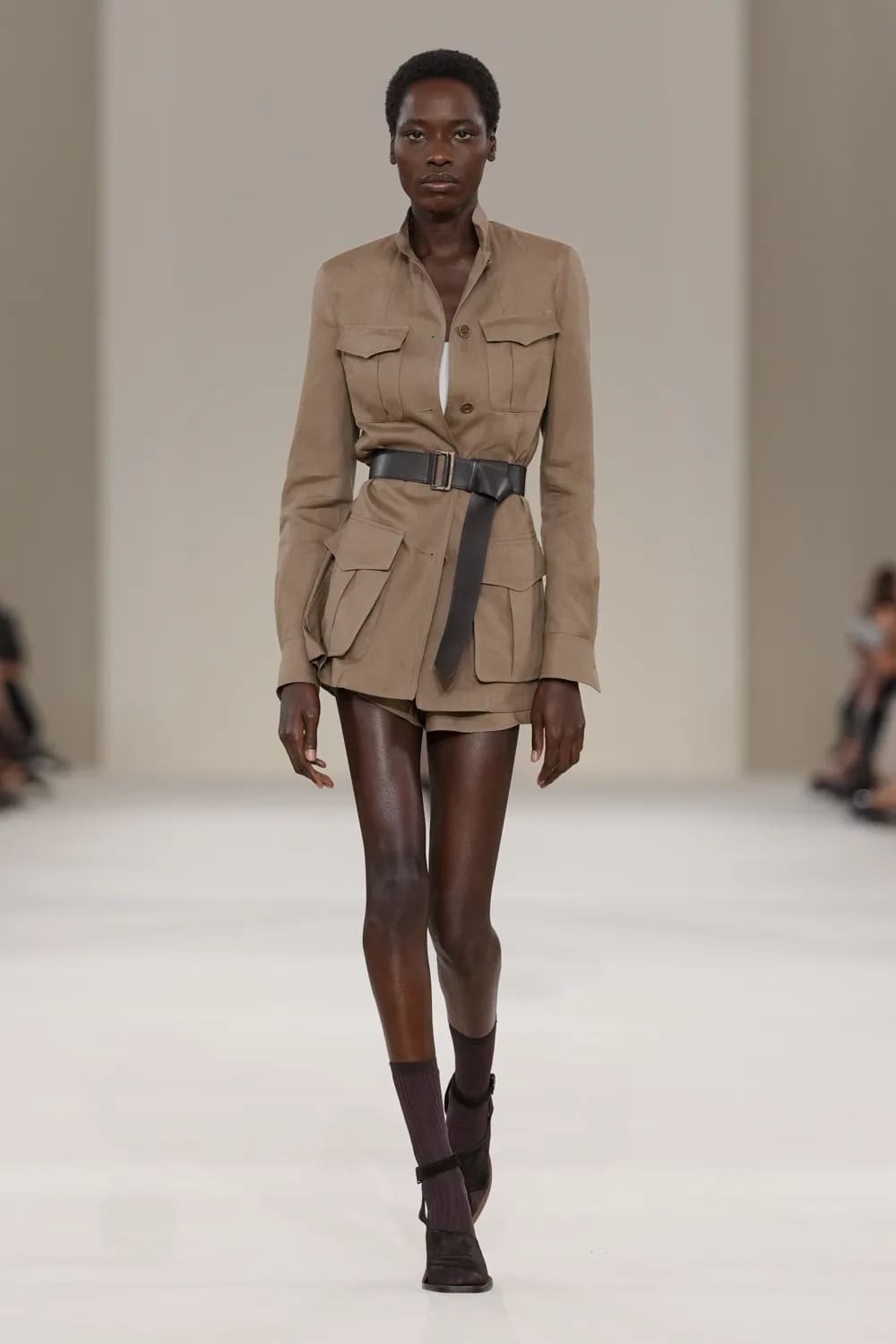
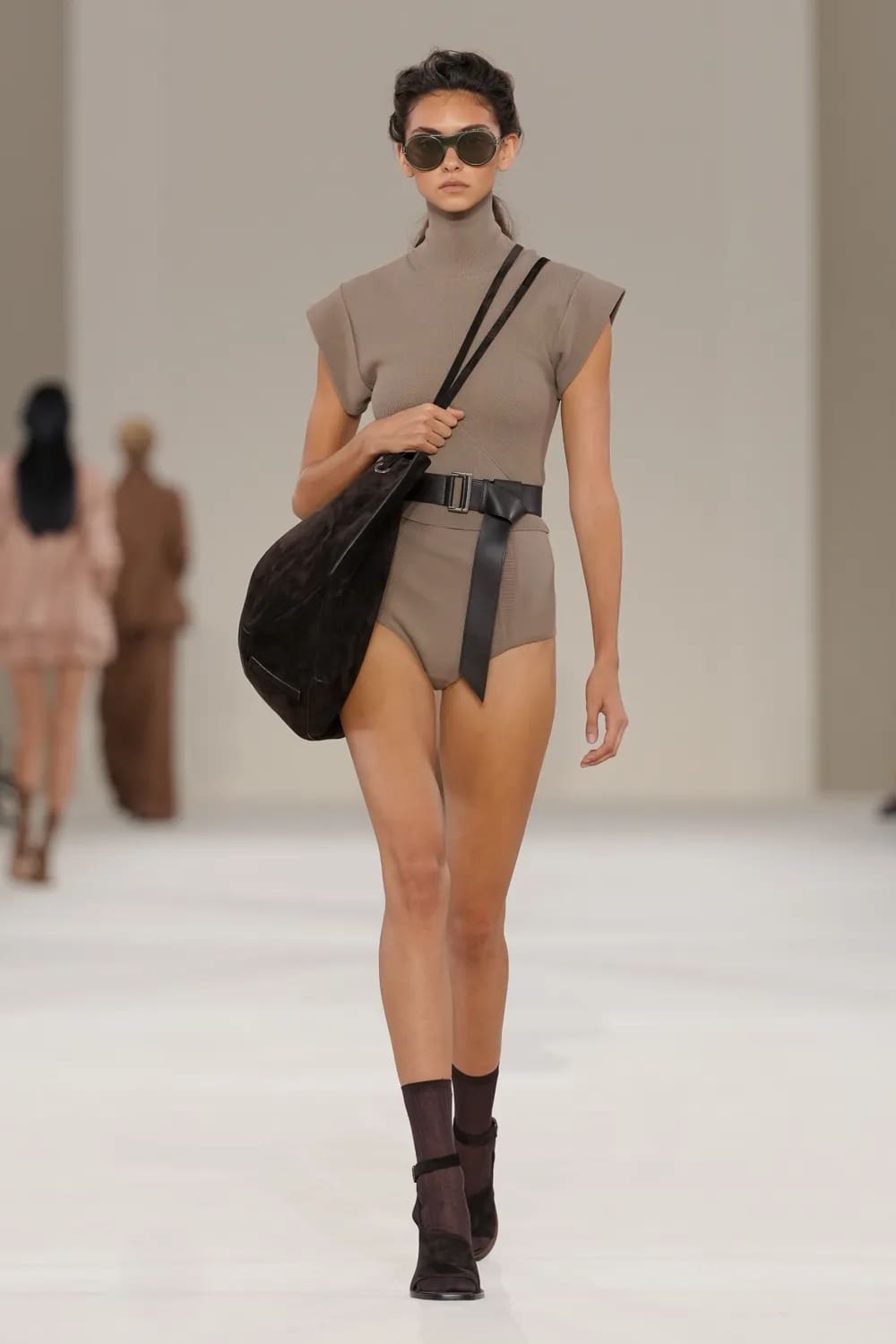
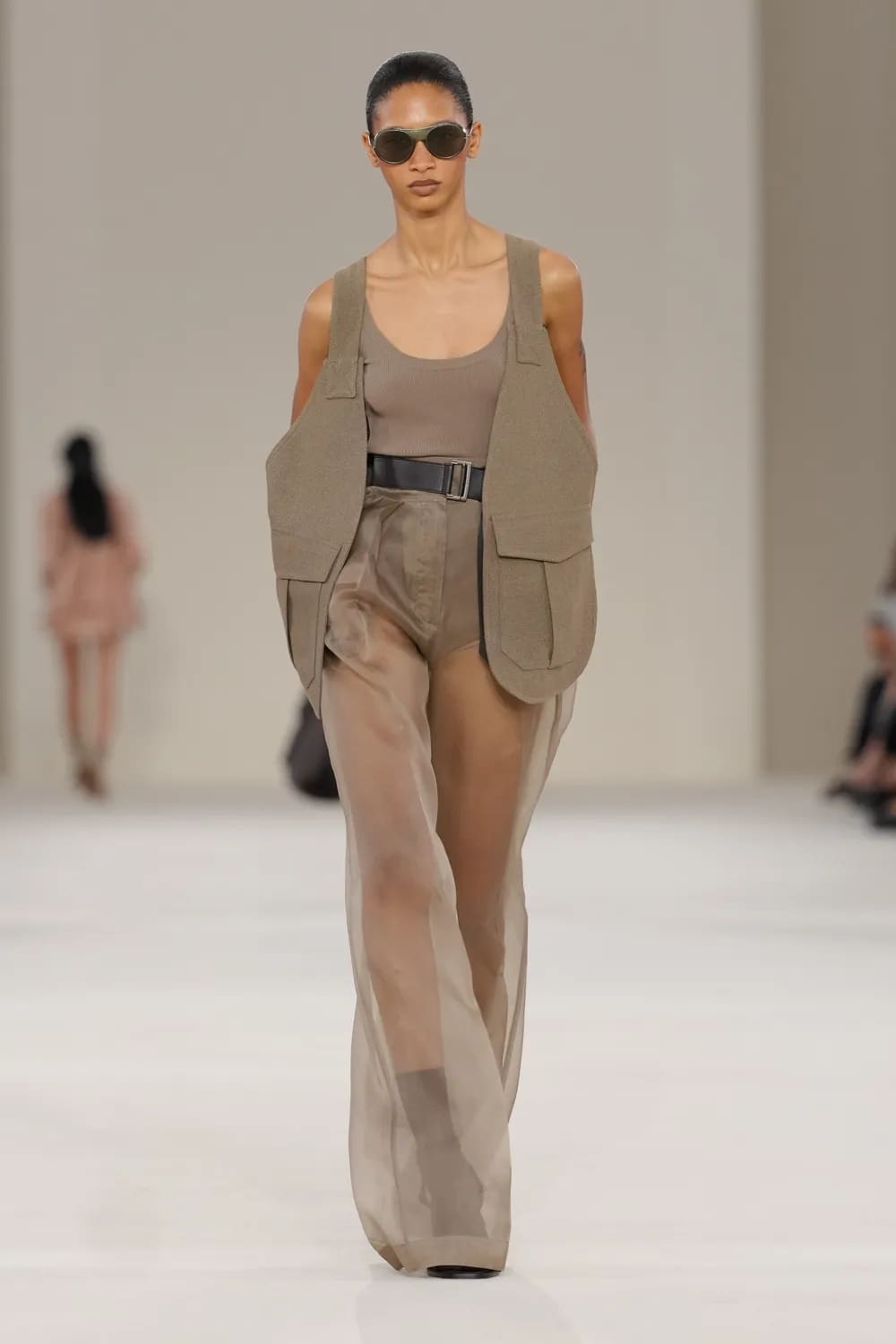
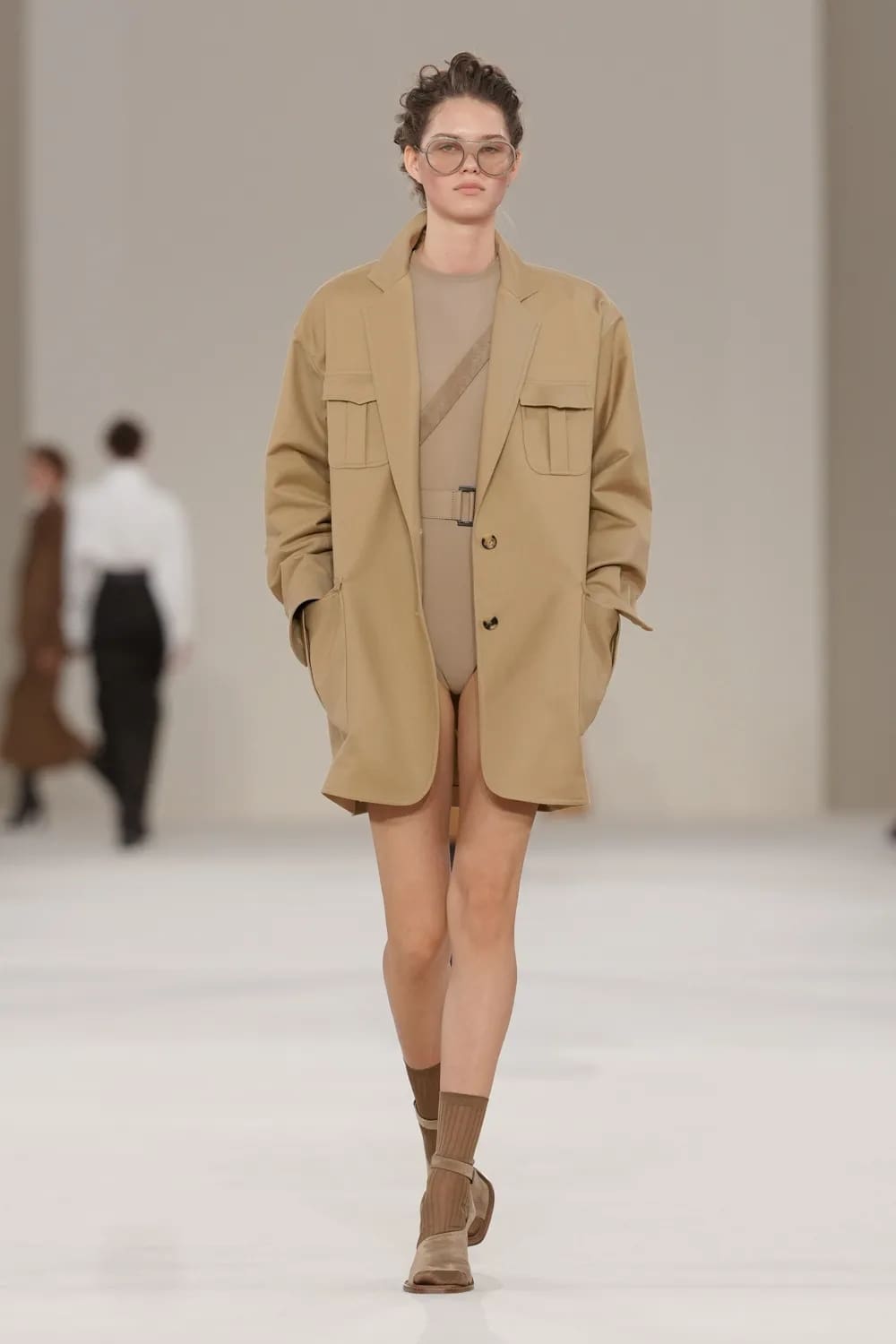
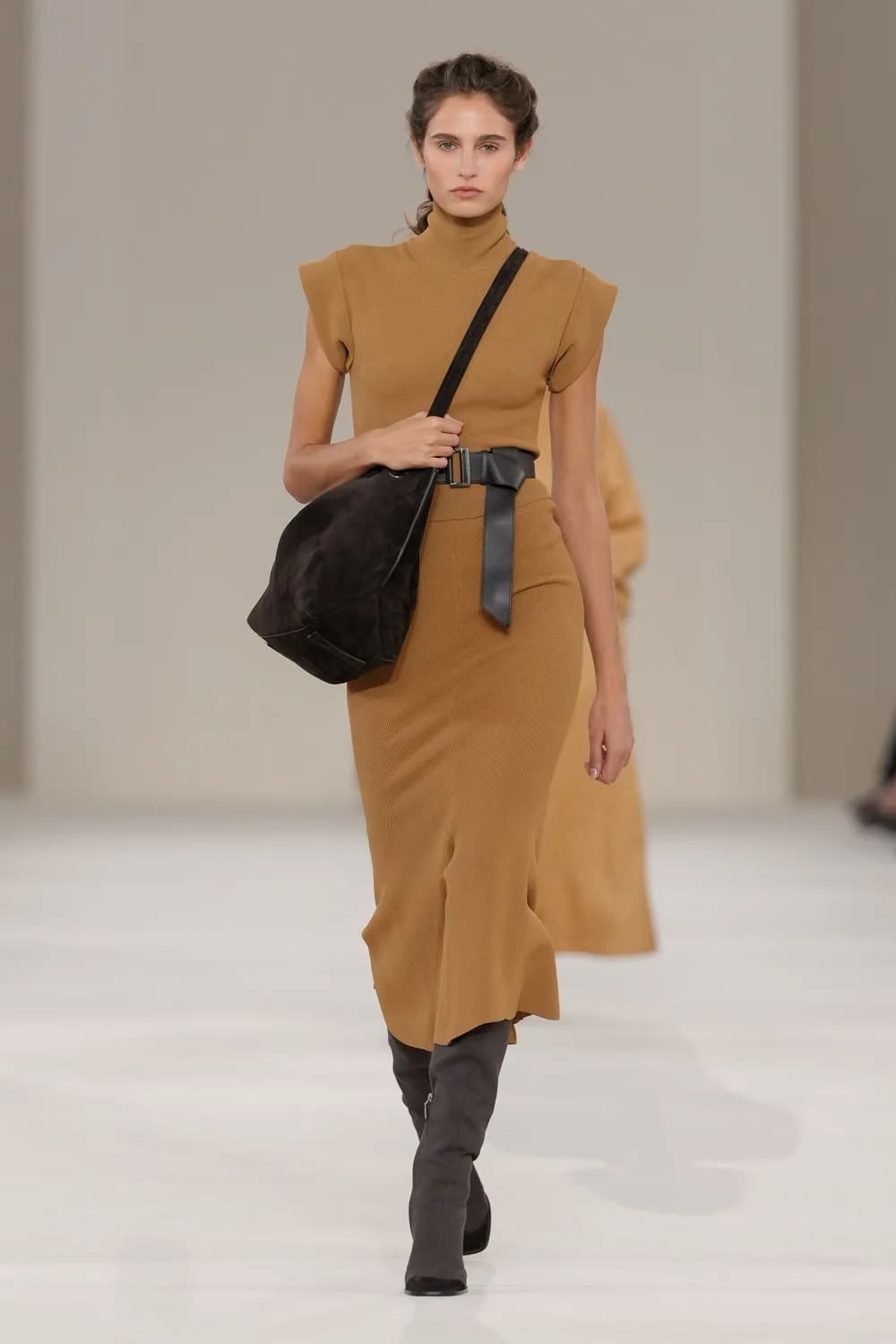
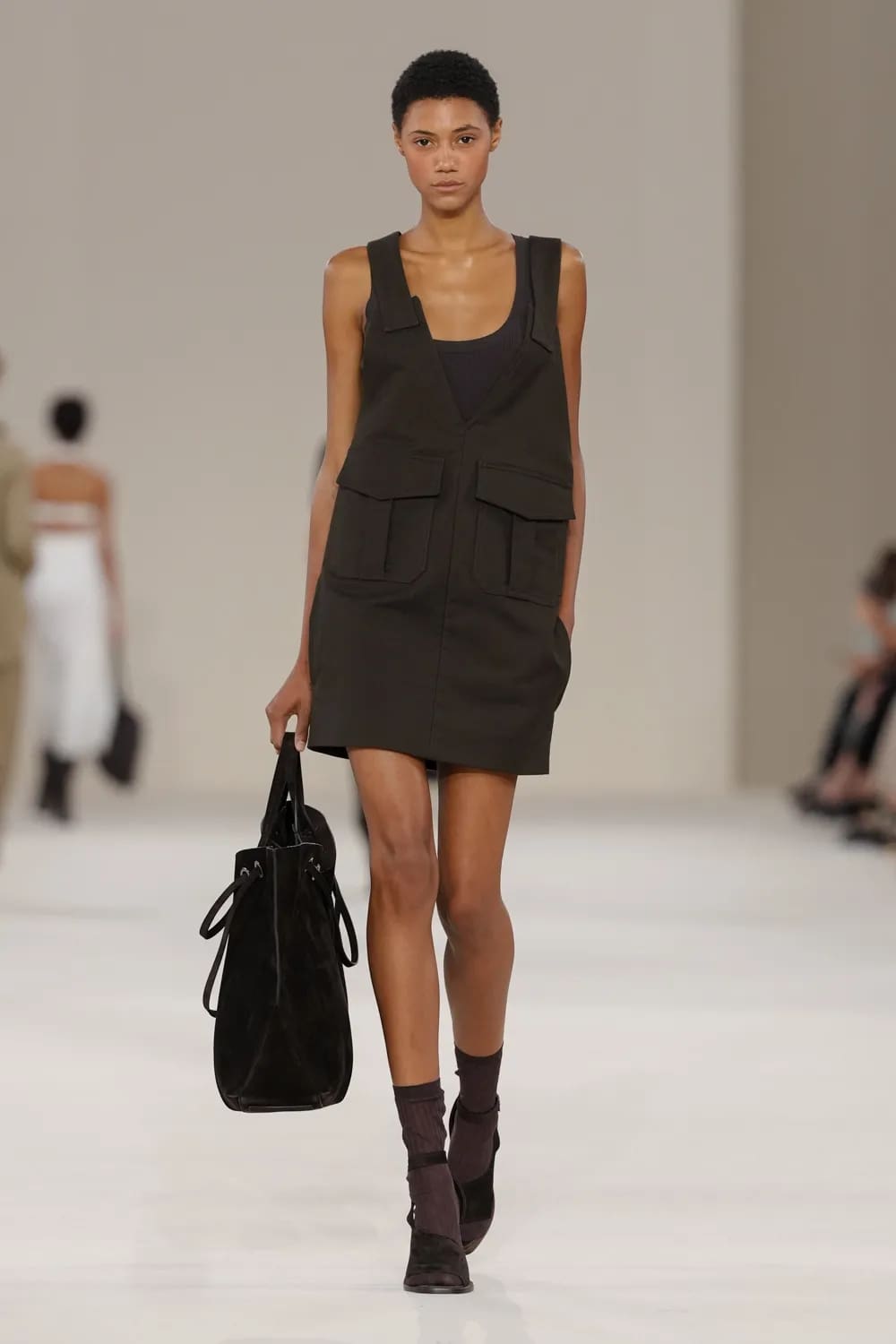
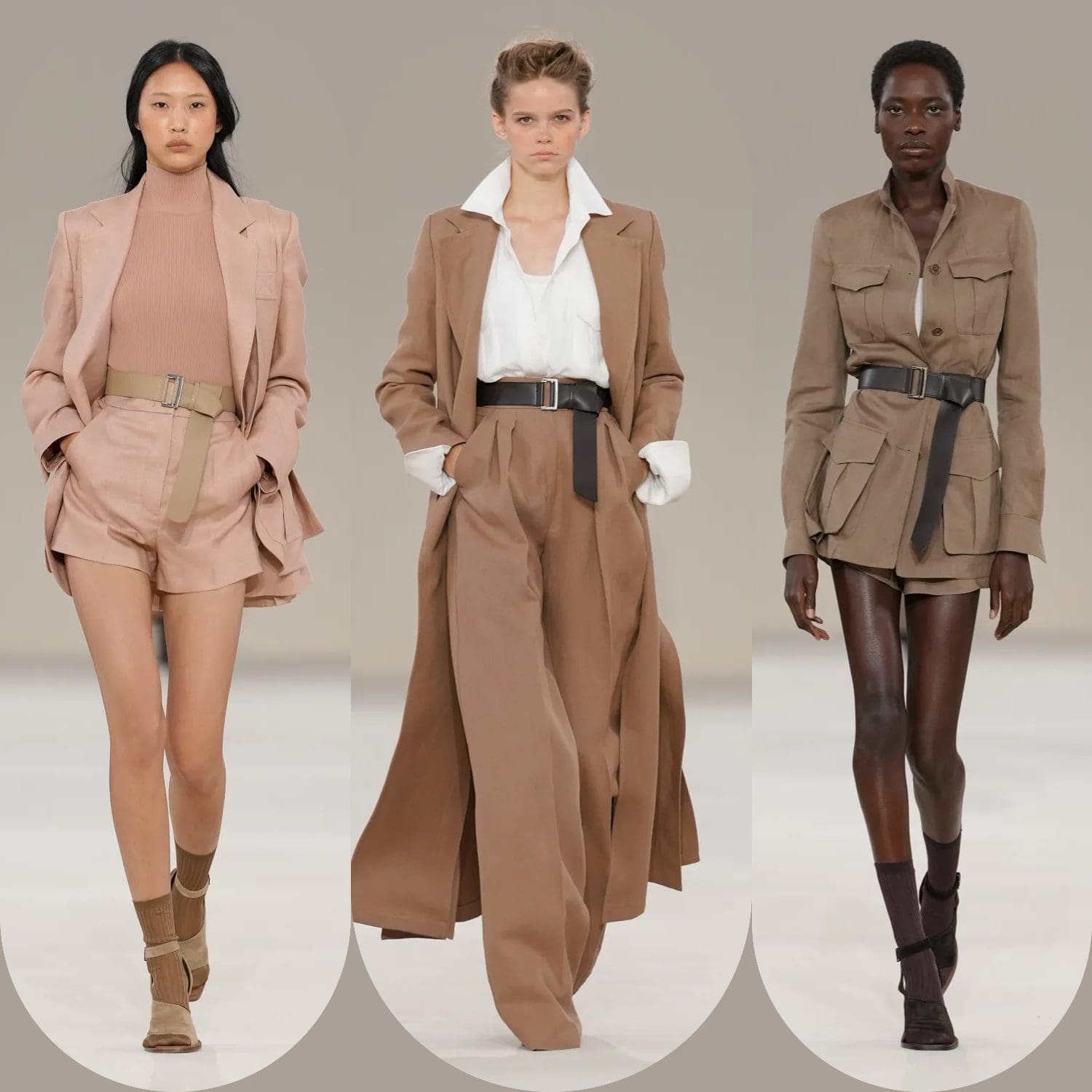
- Brilliant structural integration of utilitarian bureaucracy, elevating bellows pockets, leather belts, and map-case cross-body straps into symbols of self-reliant agency
- Cinematic reinterpretation of 1980s safari elegance, pairing sweeping tobacco dusters and Nehru officer coats with dramatic French cuffs and billowing palazzo trousers
- Total clarity of house identity, delivering an unshakeable, mature uniform that completely ignores passing youth-culture gimmicks
RESERVATIONS
- Heavy reliance on an idealized 1980s colonial expedition fantasy that walks a razor's edge near period costuming and aristocratic nostalgia
- Dense, climate-indifferent layering—from heavy duster coats to high-neck knits—that prioritizes corporate armor over warm-weather spring functionality
Max Mara Spring Summer 2027 “The Comfortable Myth of the Timeless Safari.” Story by Kate Granger, Editor of RUNWAY MAGAZINE. Photo / Video Courtesy: Max Mara.
Max Mara does not distribute press releases to explain its motives, and frankly, why should it? To issue an explanatory manifesto would imply that something has altered, that a rupture in the continuum has occurred, or that the design team spent sleepless nights wrestling with post-structuralist semiotics. None of that happened here. What Ian Griffiths and the house of Reggio Emilia understand better than almost anyone else in Milan is that their clientele does not crave revolution; they crave a pristine, double-faced cashmere guarantee that the world outside the boardroom is still manageable.
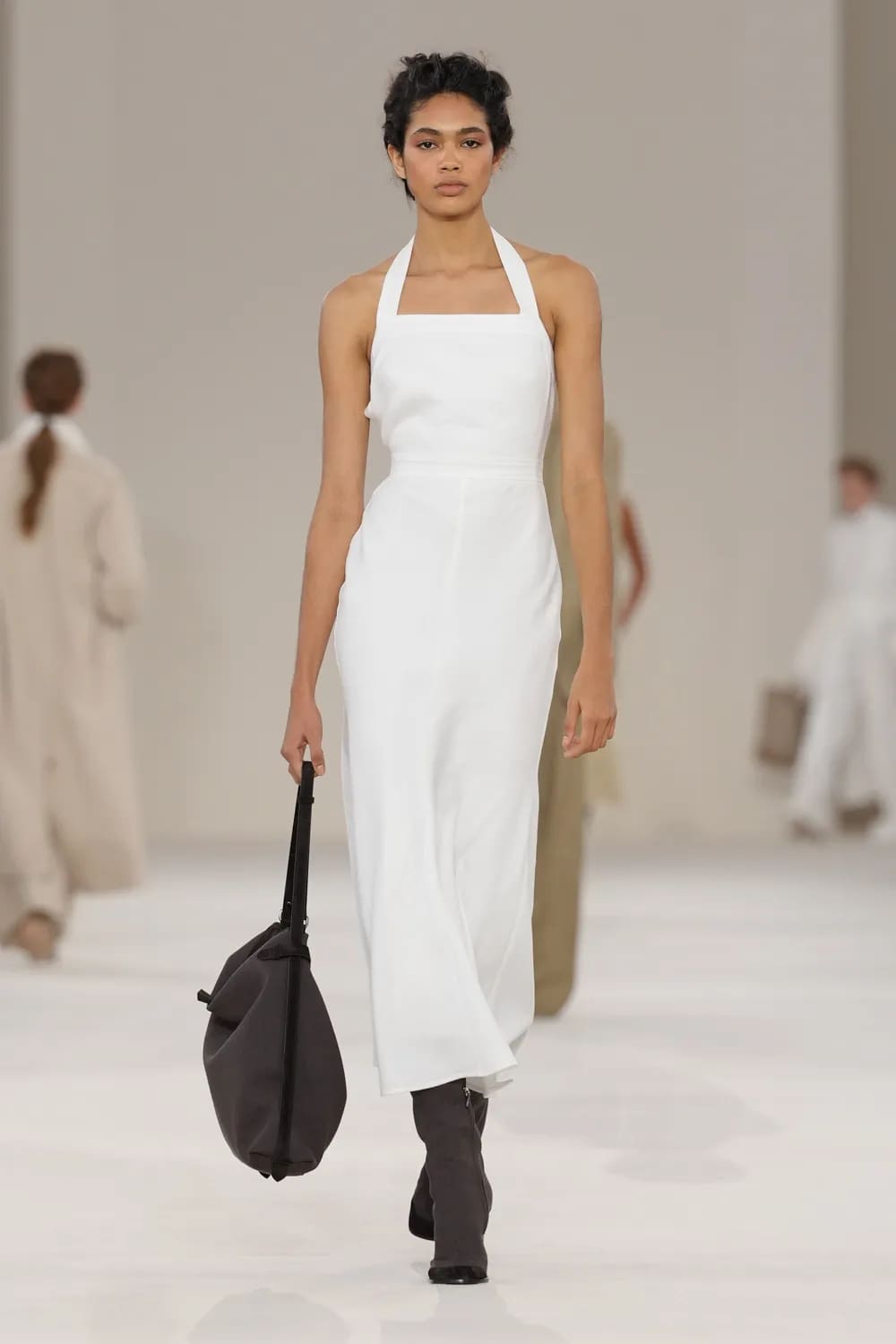
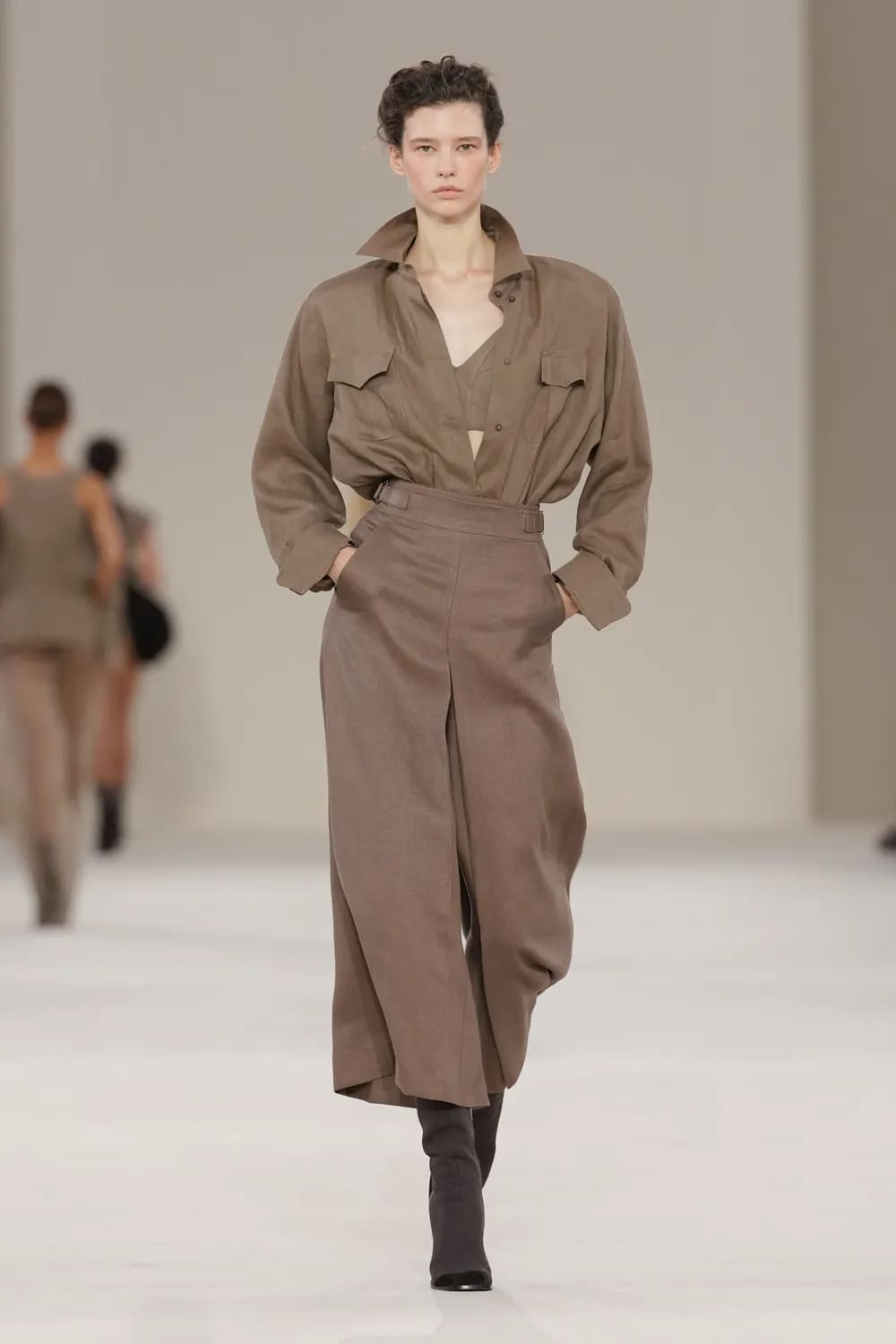
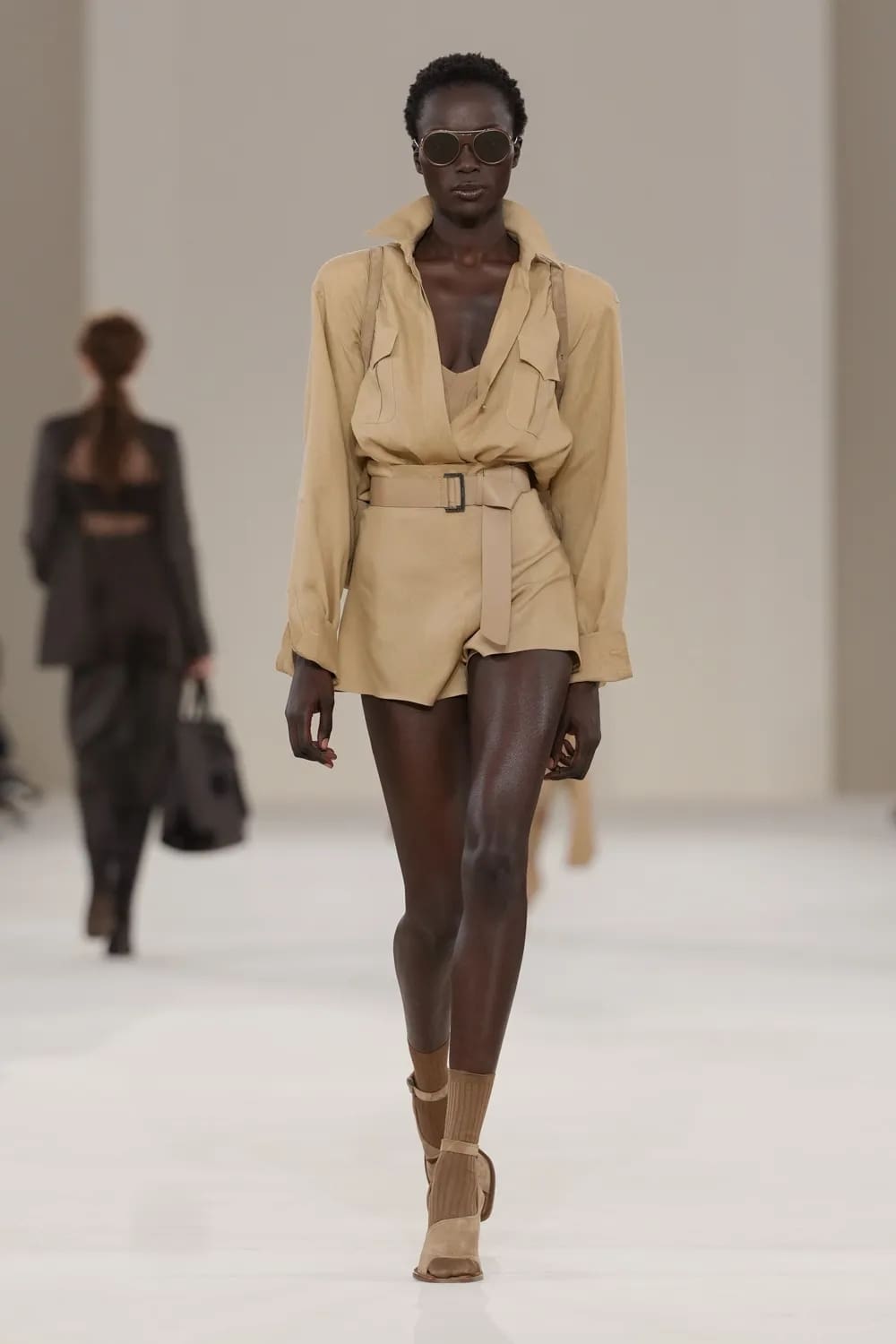
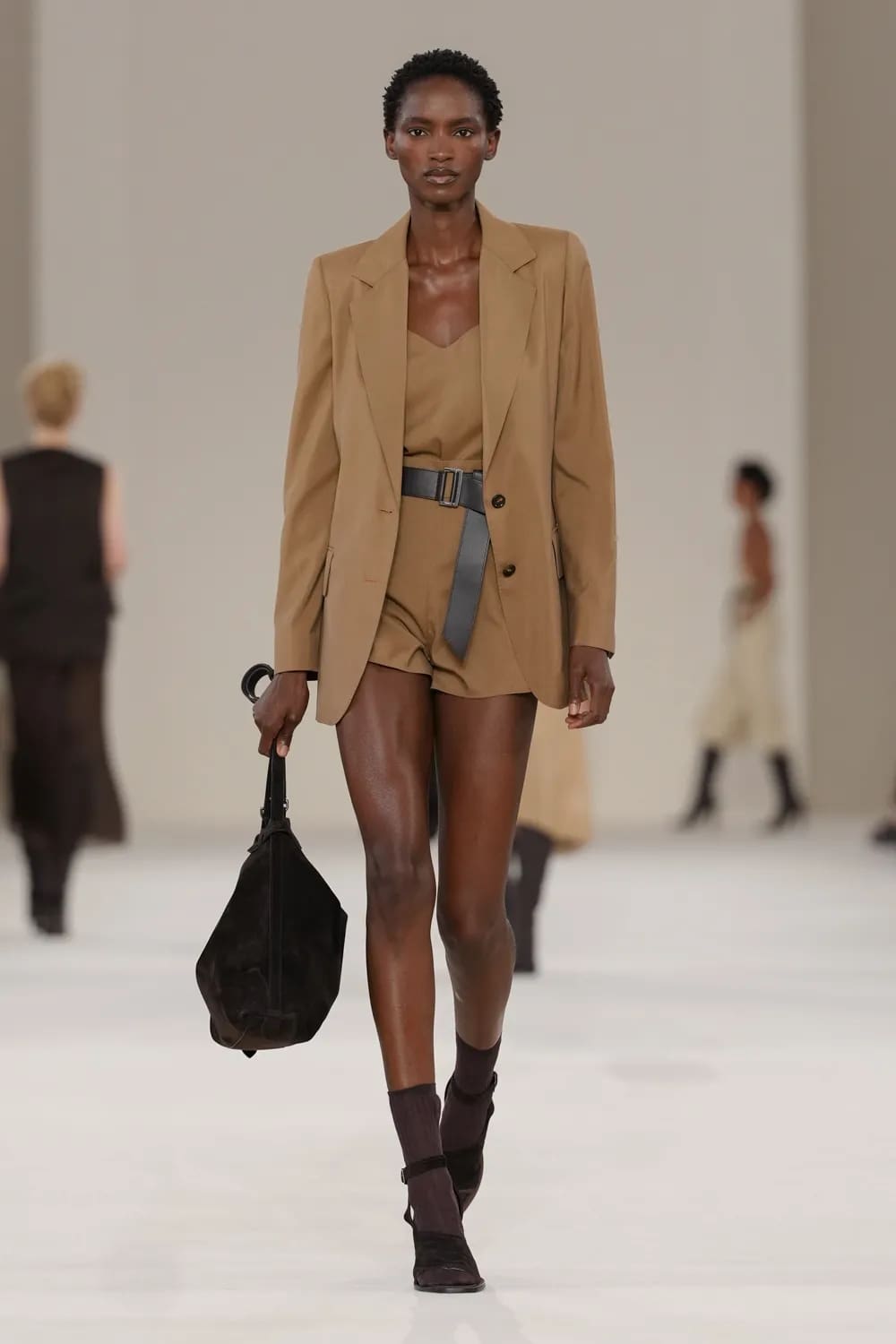
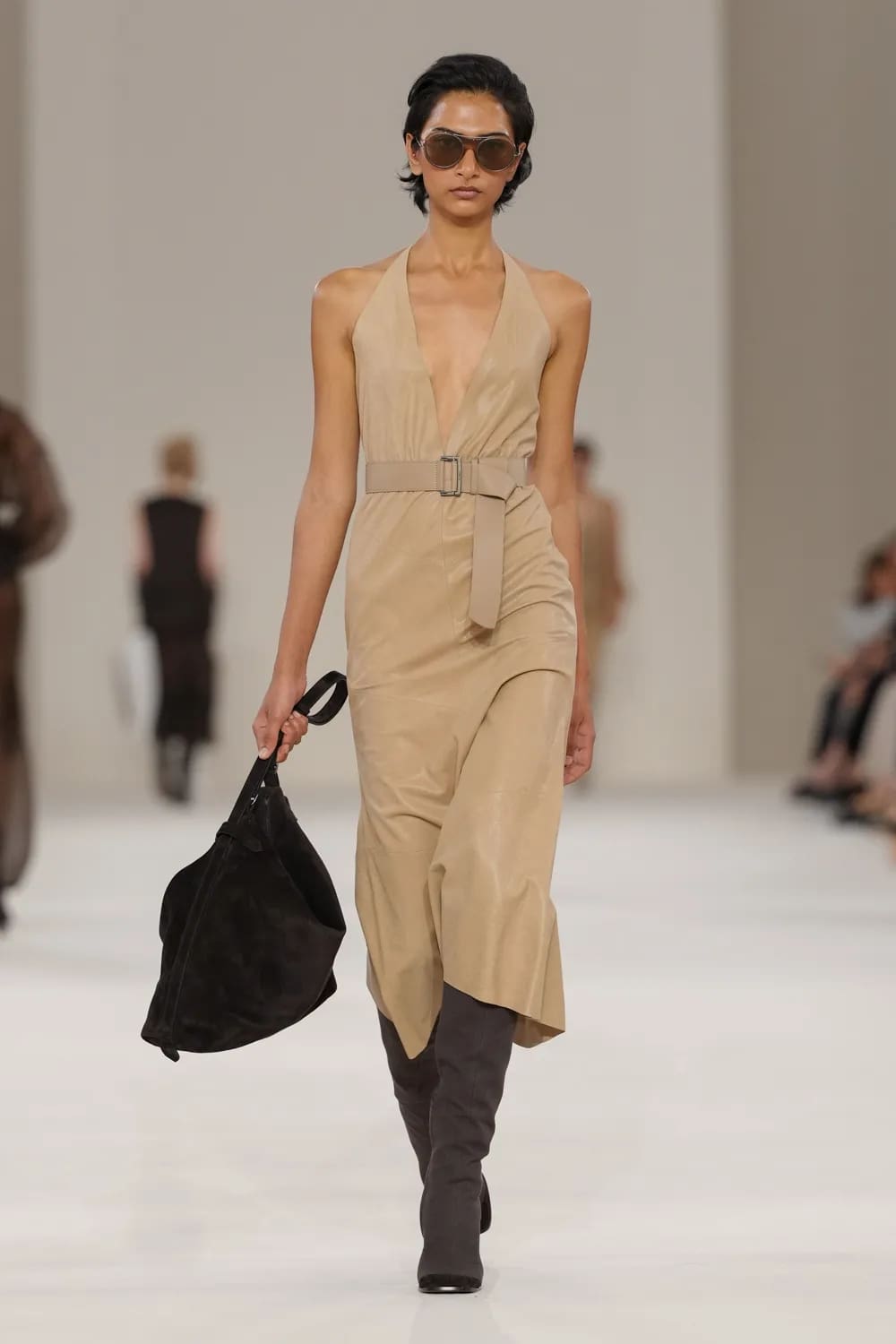
For Spring/Summer 2027, the house returns to its most sacred, seductive sanctuary: the idealized 1980s. It is an era suspended forever in amber, where Meryl Streep washes Robert Redford’s hair in colonial Kenya and corporate matriarchs command corner offices with shoulder pads wider than a doorway. We never really left that decade, of course. Max Mara simply sands down the aggressive synthetic edges, soaks the canvas in tones of desert sand, alabaster, and raw umber, and reissues the myth. The result is formidable: an unapologetically imperial, utilitarian elegance that treats everyday urban life as an extended, impeccably styled expedition.
The Bureaucracy of the Pouch
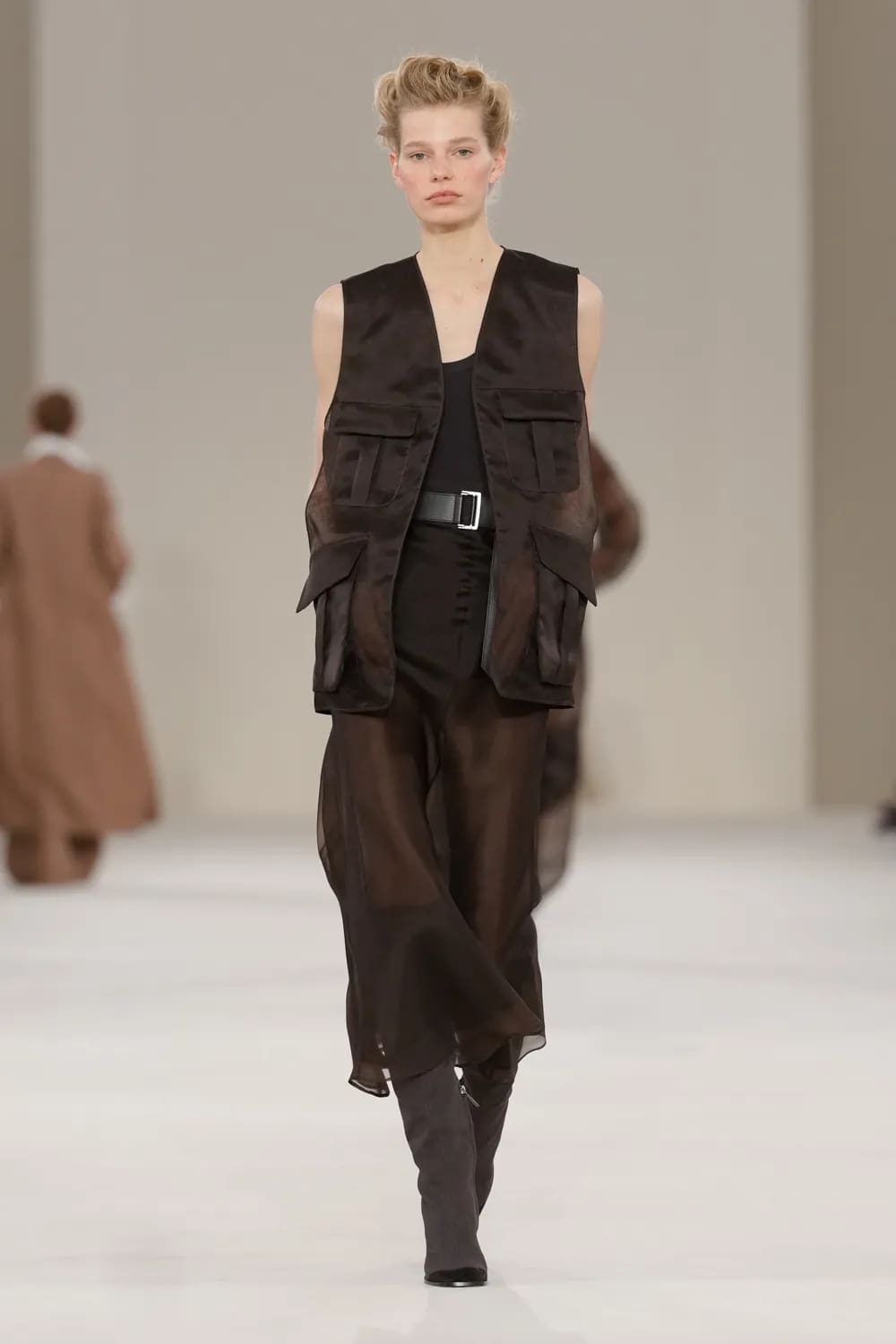
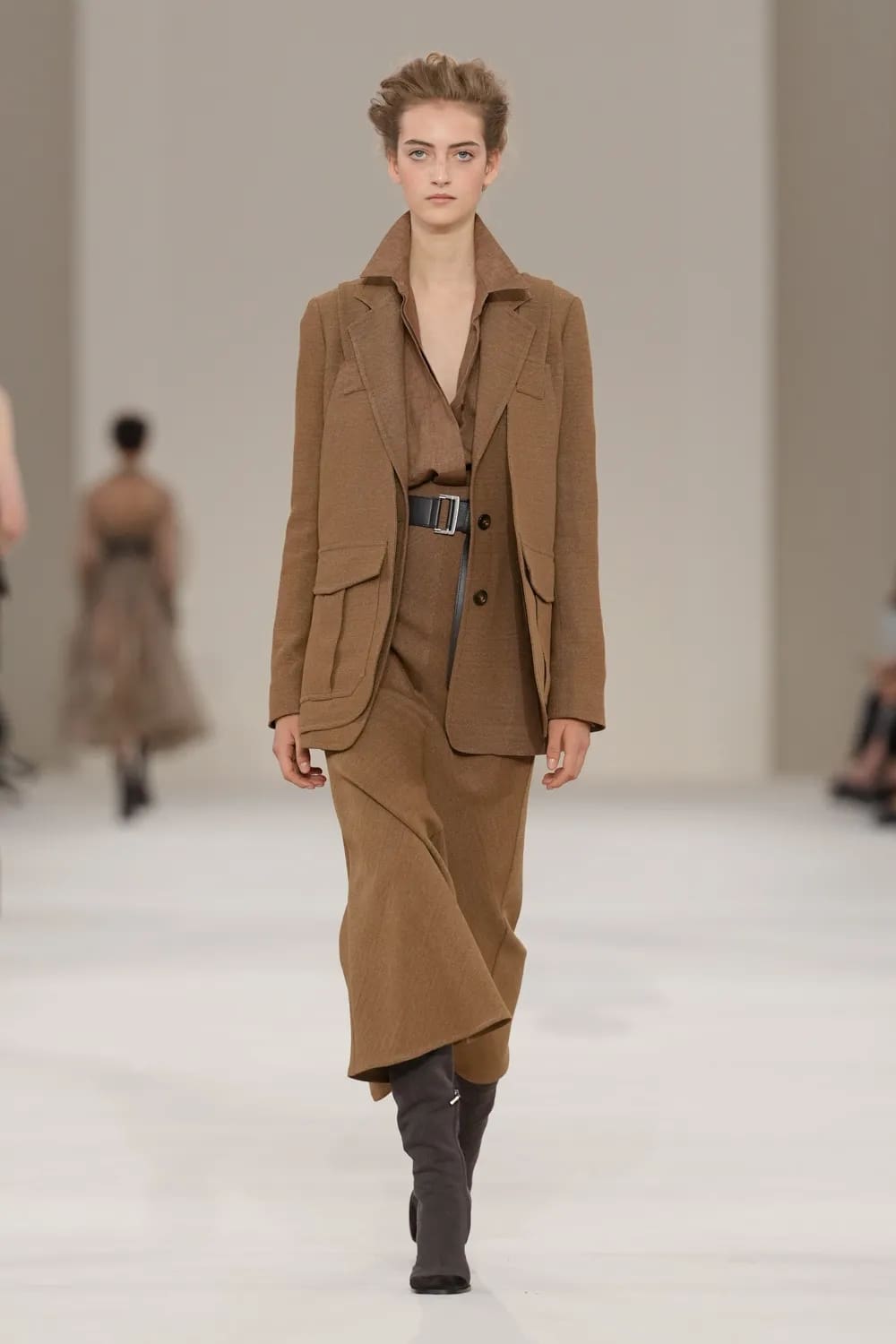
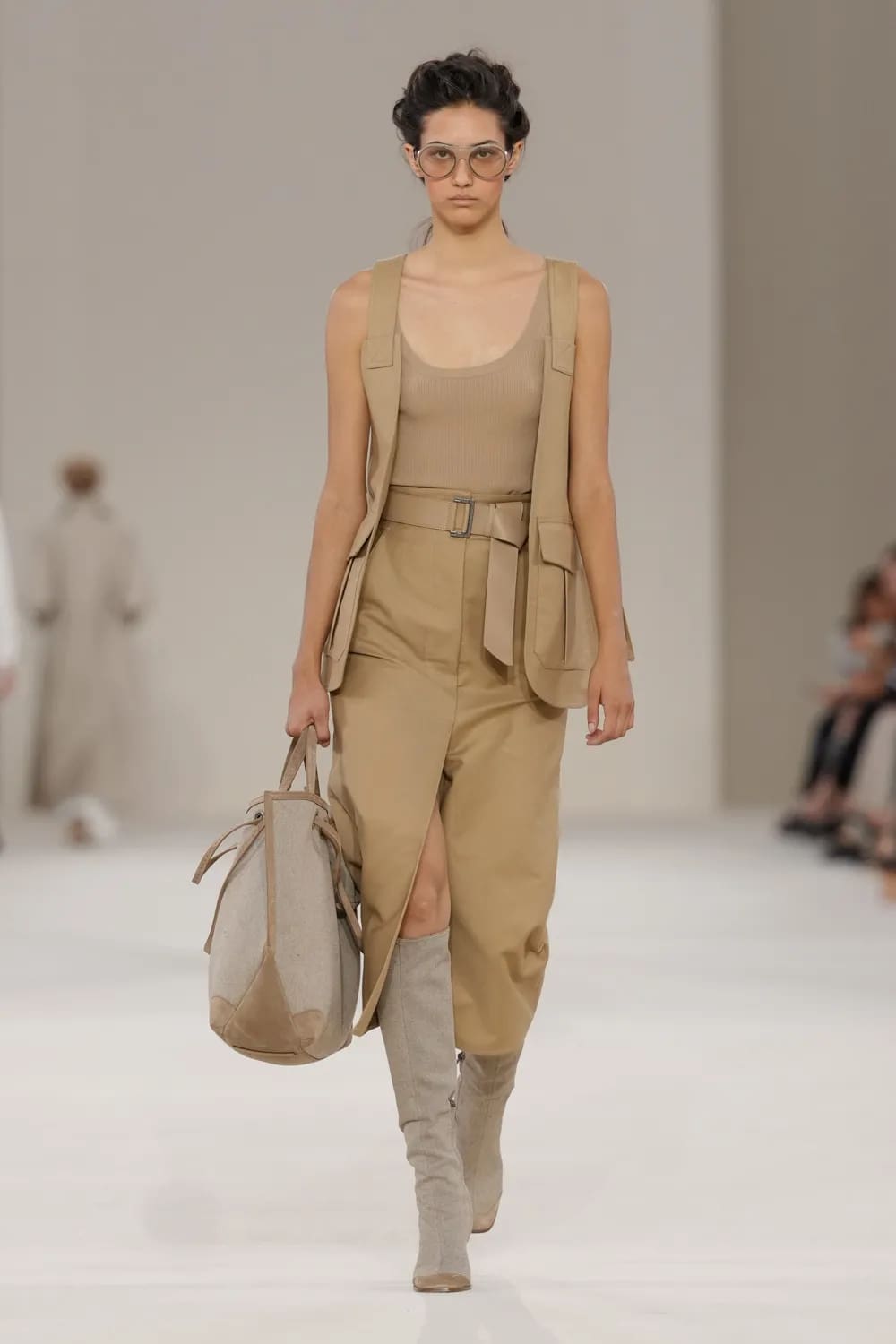
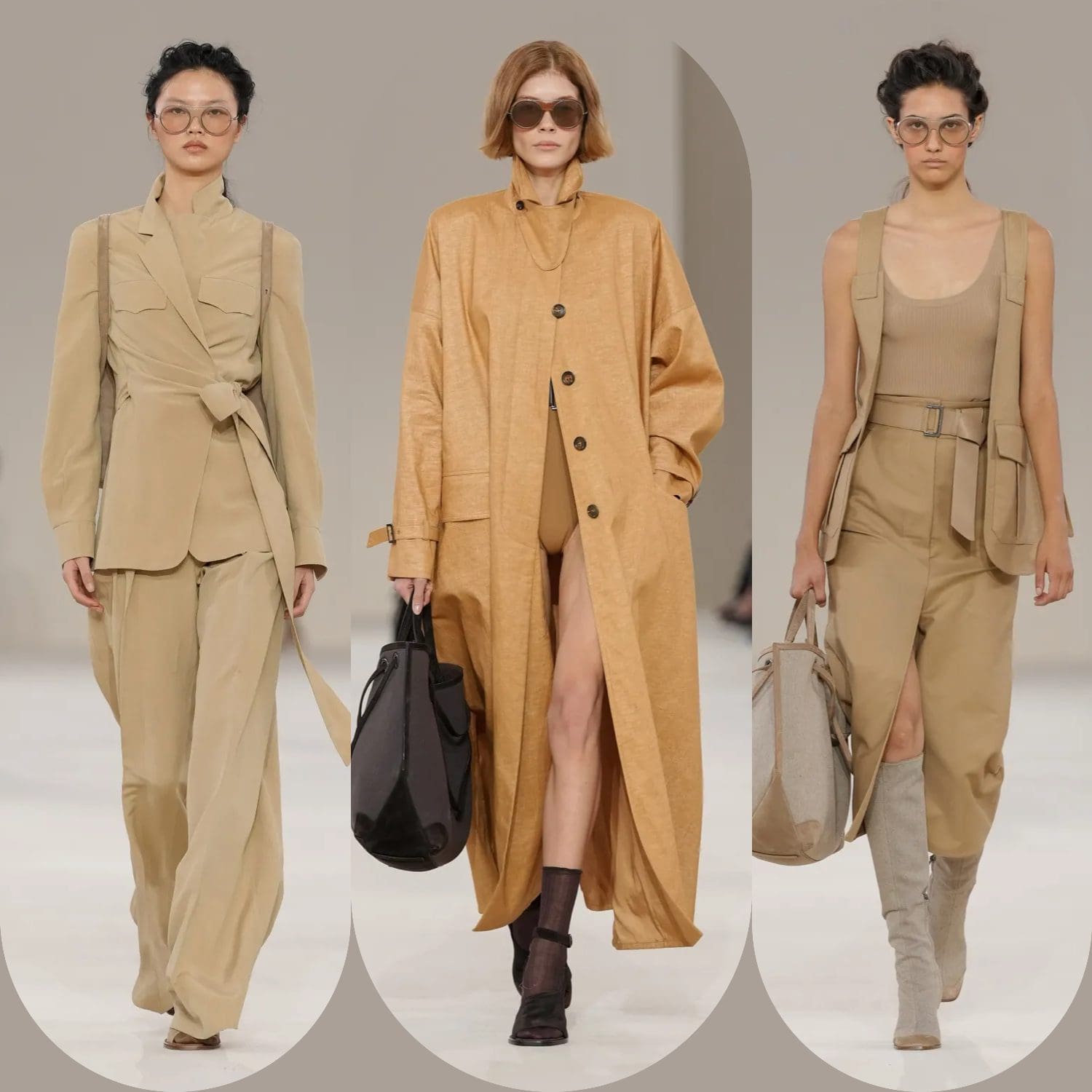
Utility in fashion is often a polite fiction, but here it functions as the structural grammar of the entire wardrobe. The standout punctuation mark arrives in the form of deep, cargo-style bellows and oversized pouched pockets grafted onto tailored jackets, tunics, and long skirts. These are not mere decorative flaps; they are substantial enough to hold a passport, a leather notebook, field glasses, or perhaps the deed to an overseas plantation.
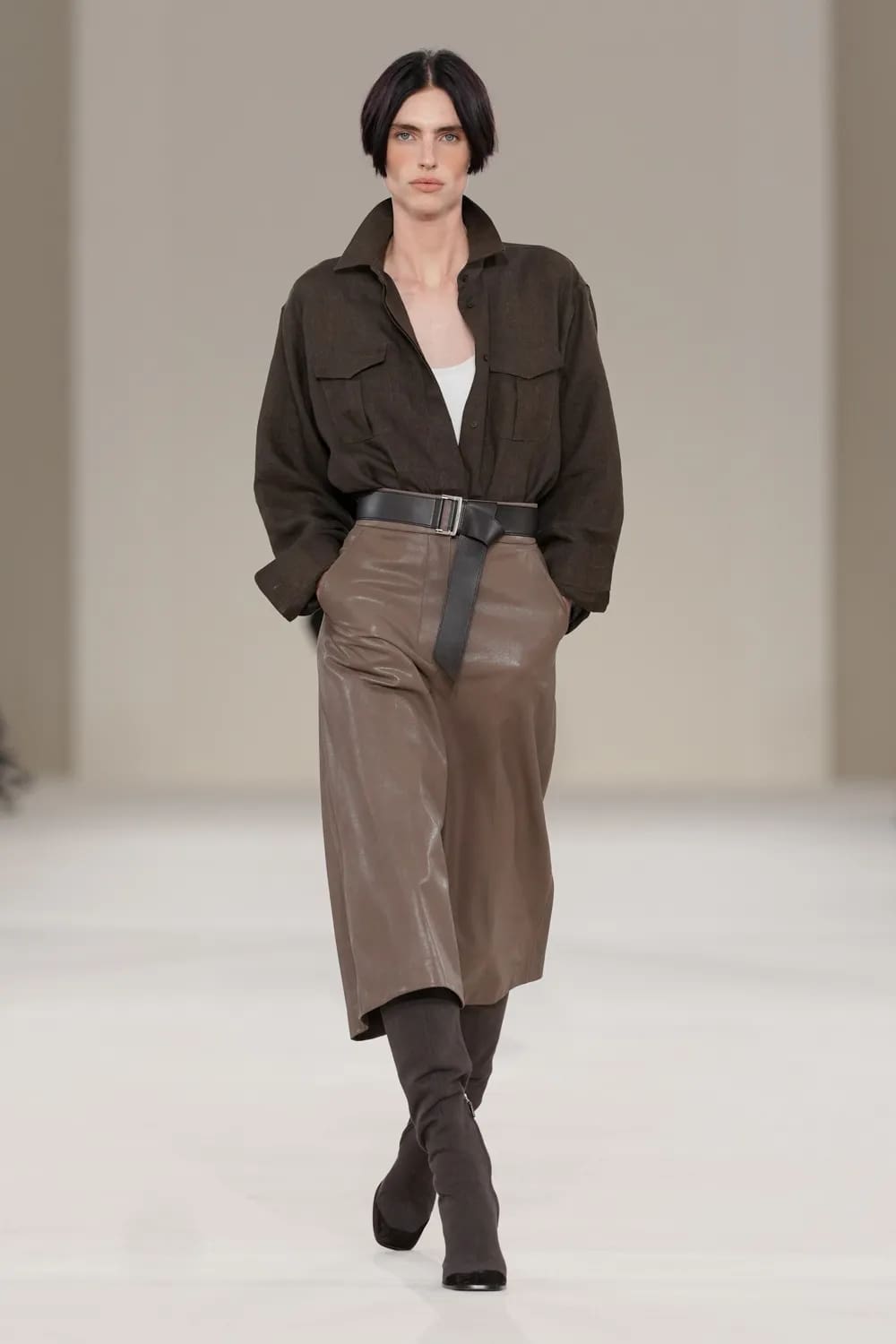
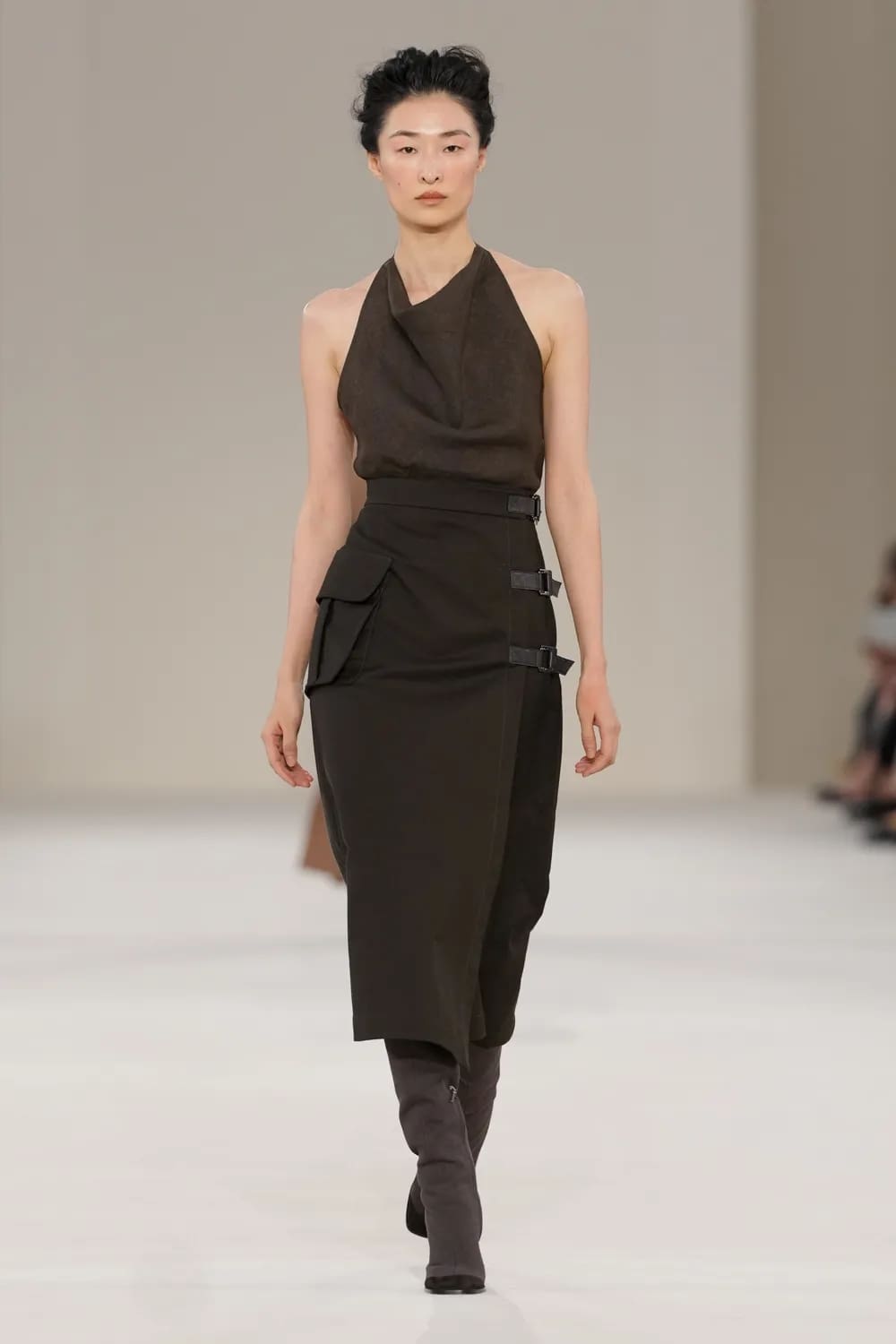
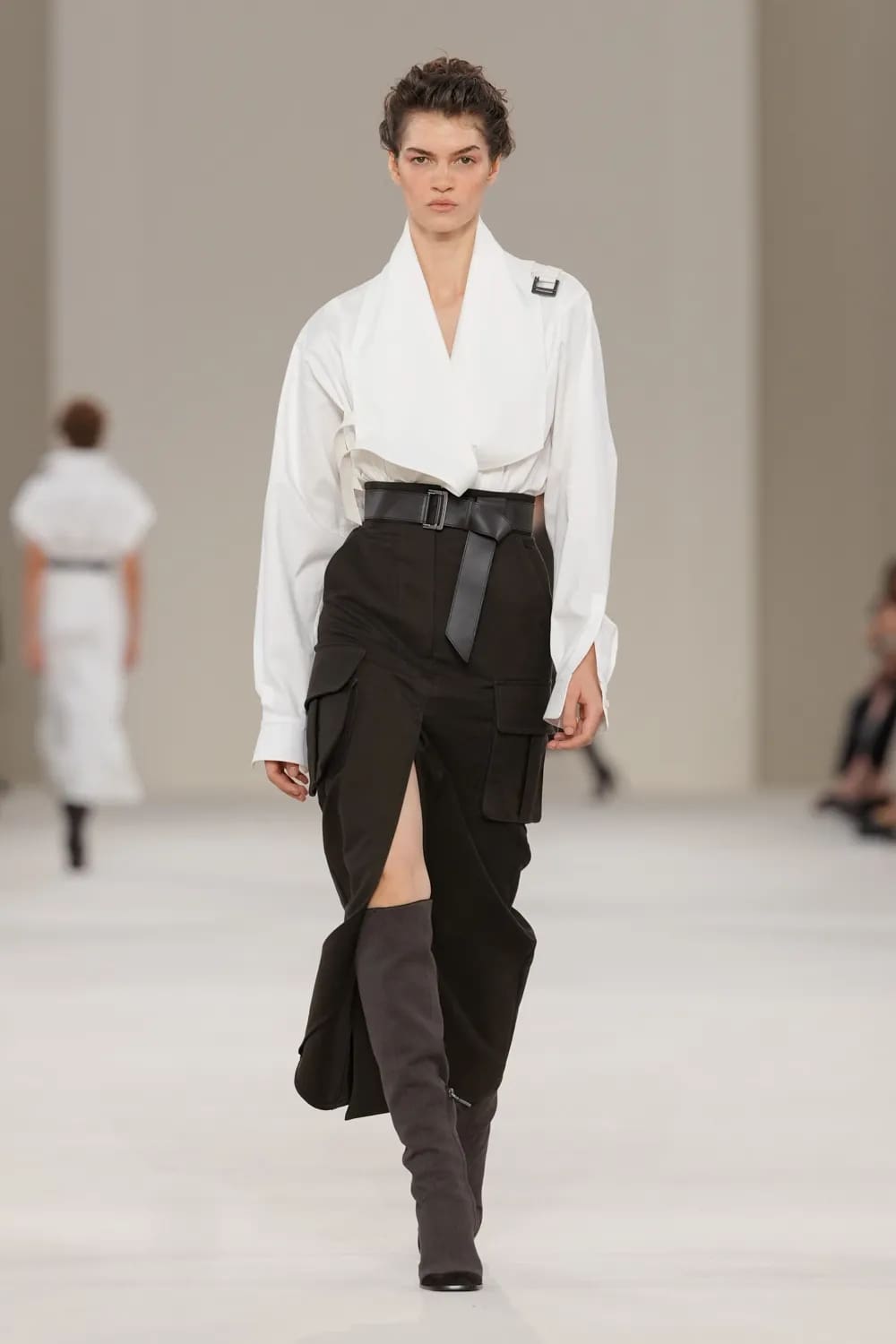
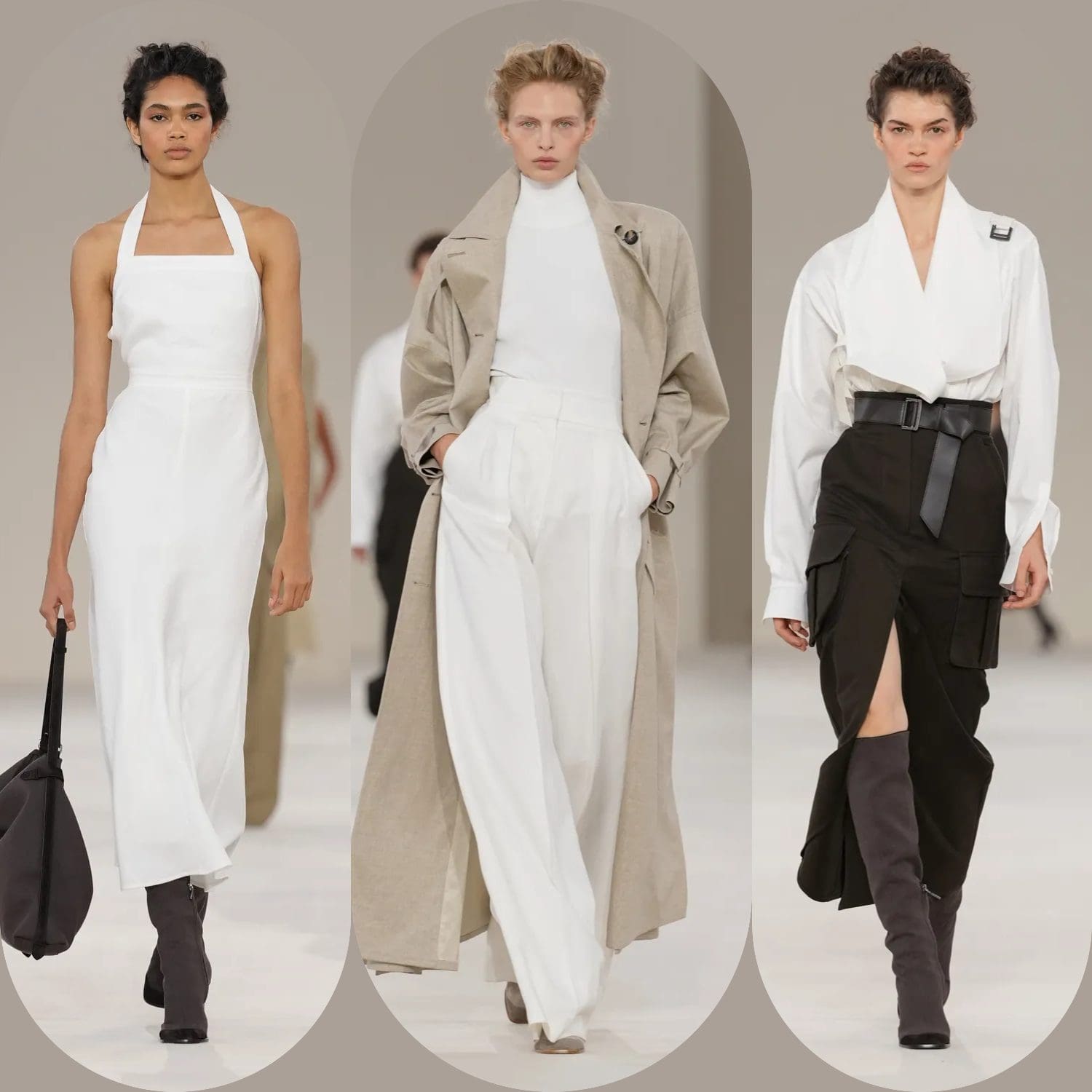
Observe the slit maxi-skirt cut in heavy midnight-olive: its front rises high above the knee to reveal charcoal suede equestrian boots, yet its flank is dominated by a pair of massive, flapped utility pockets cinched tight under a wide black leather belt with silver hardware. Worn with a crisp white shirt featuring exaggerated wing lapels that fold across the sternum like an architect’s draft, it delivers a masterclass in bureaucratic command. The pocket ceases to be a container and becomes an emblem of self-reliance. The wearer travels light because her clothes carry the machinery of her enterprise.
Tailoring as Colonial Armor
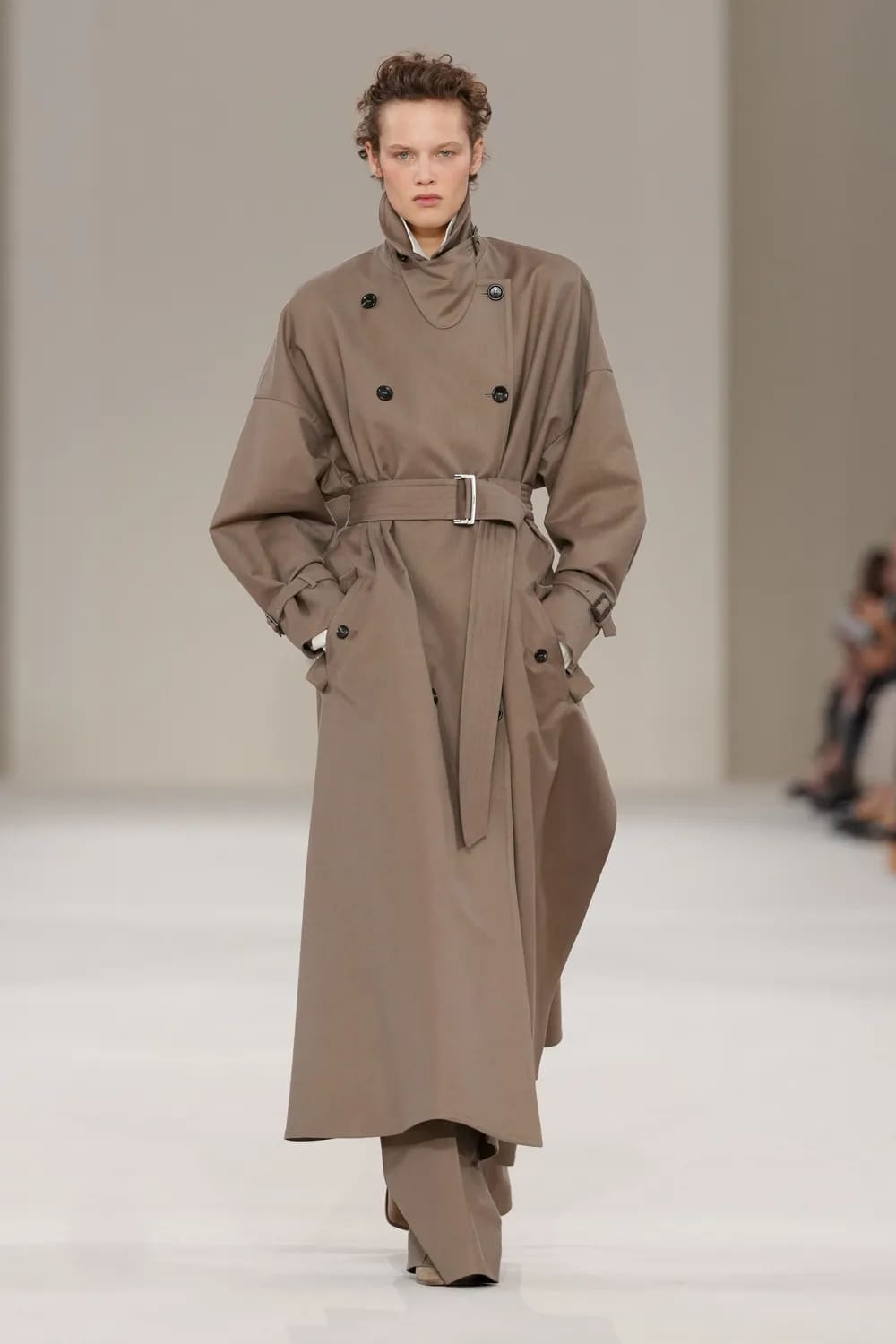
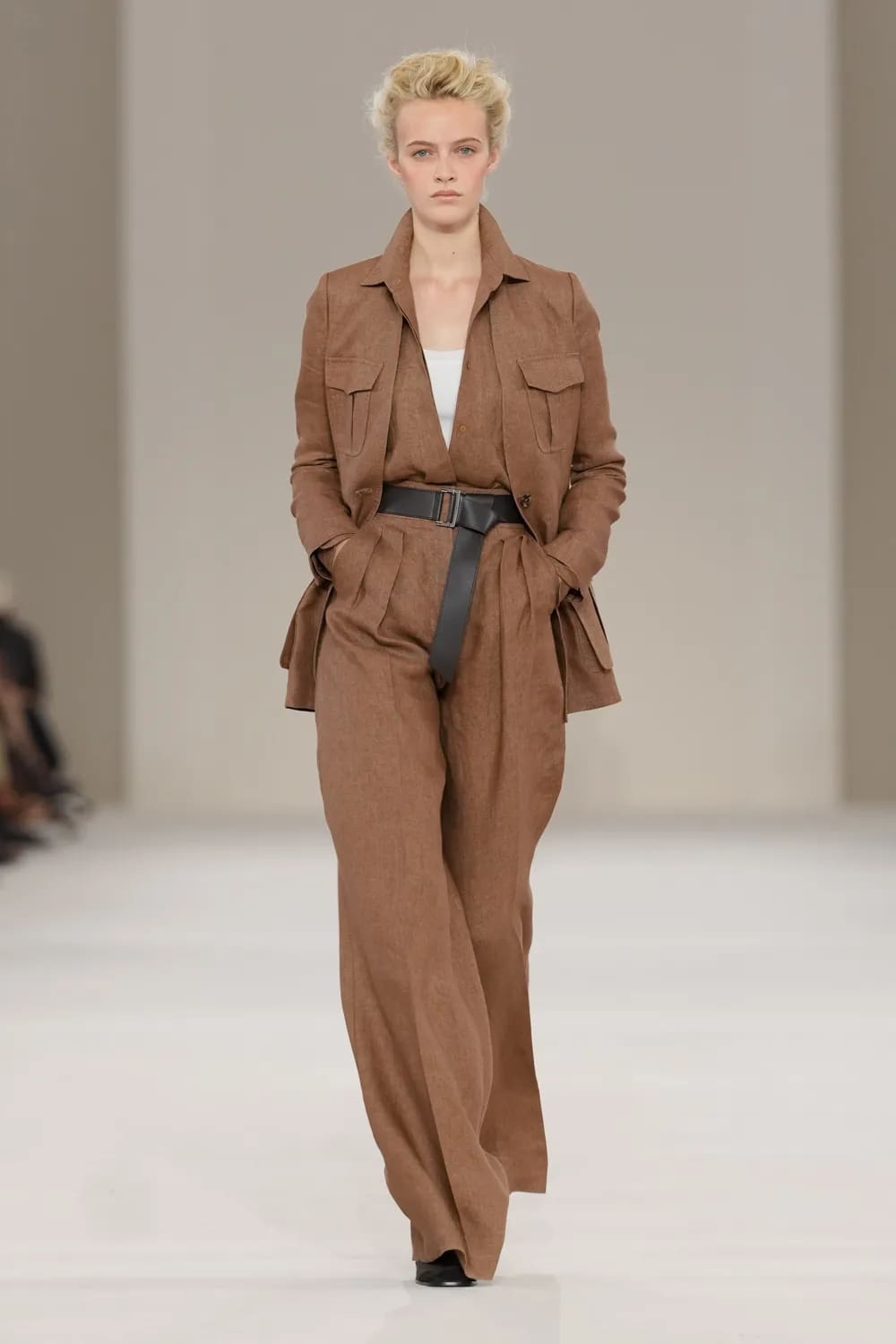
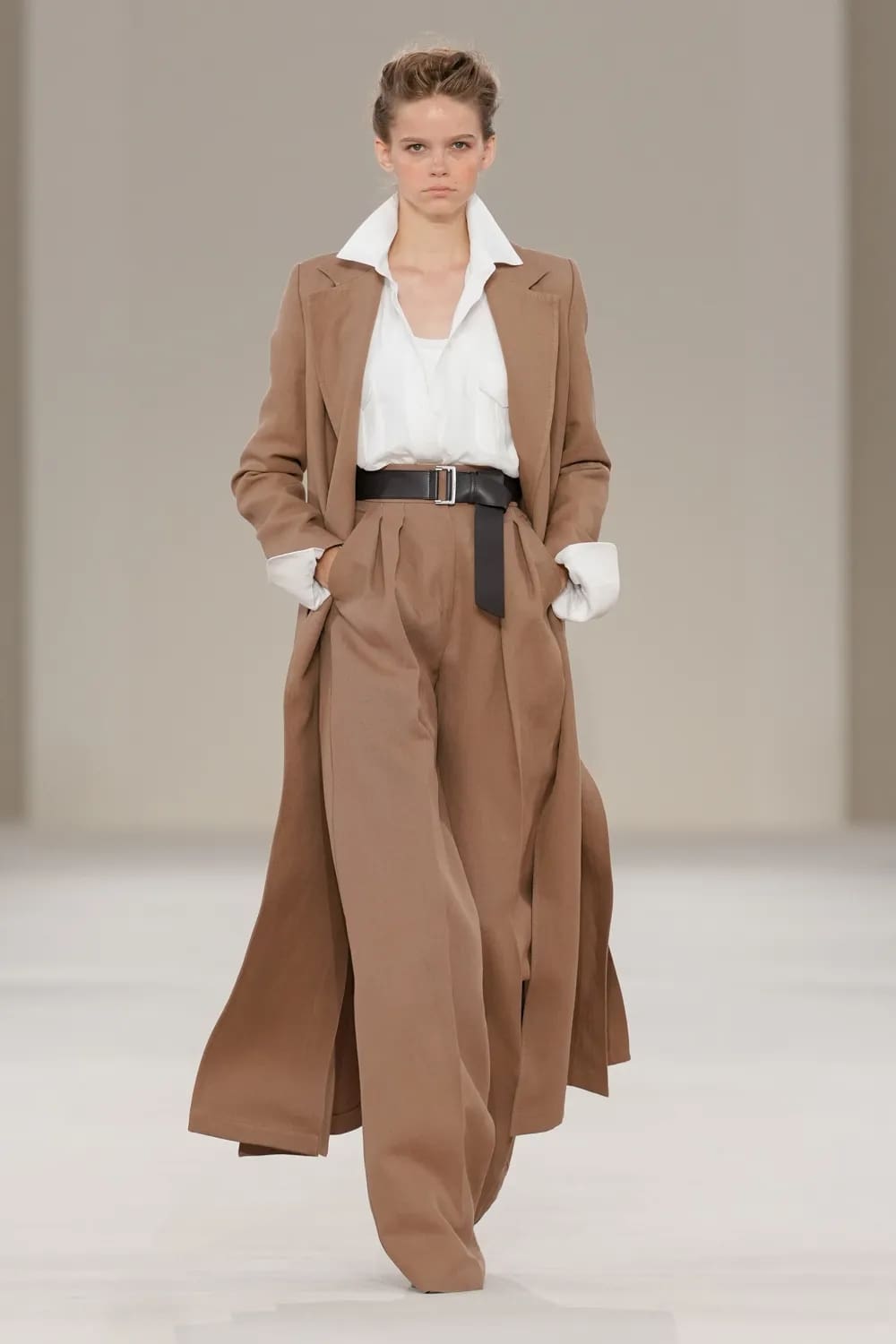
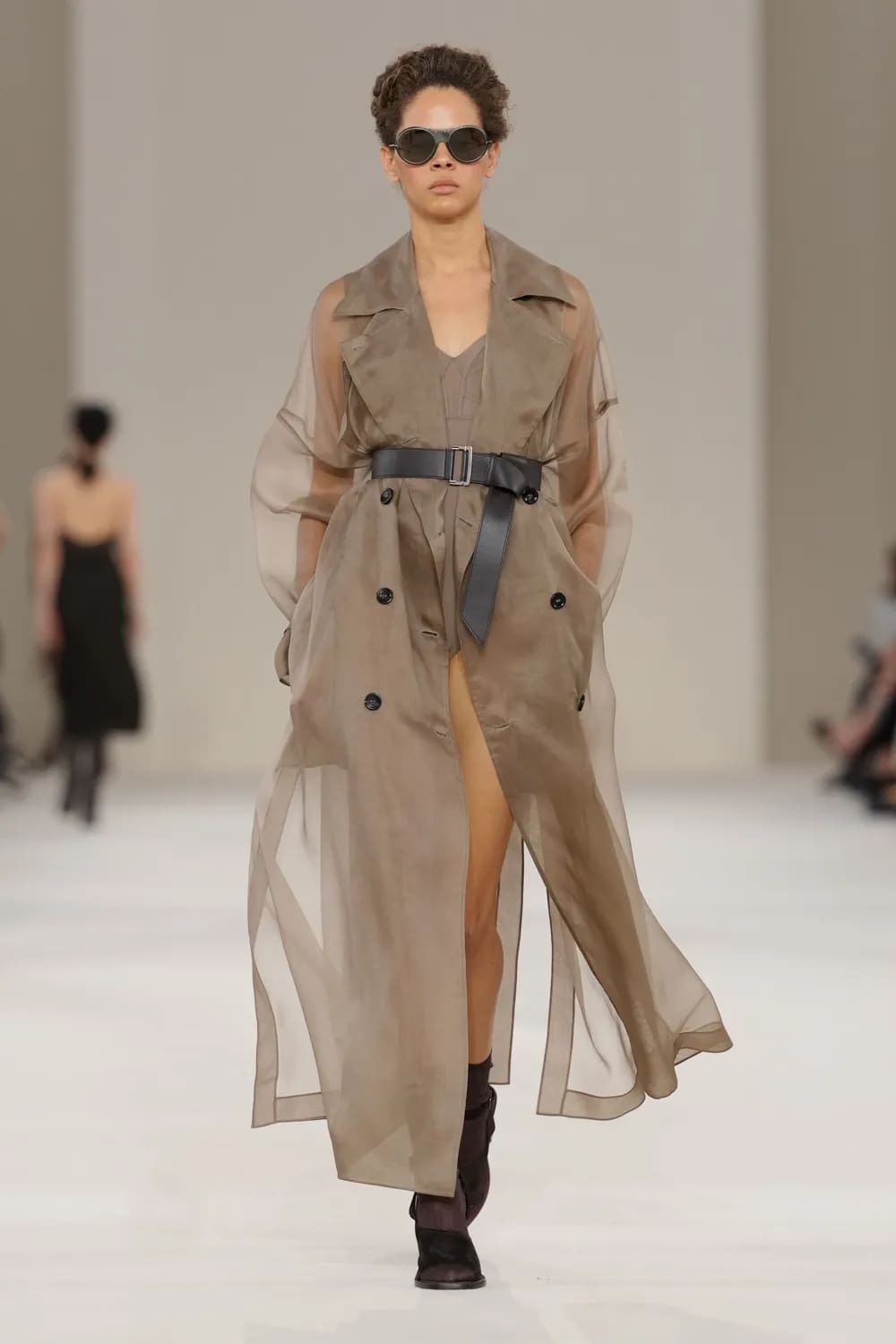
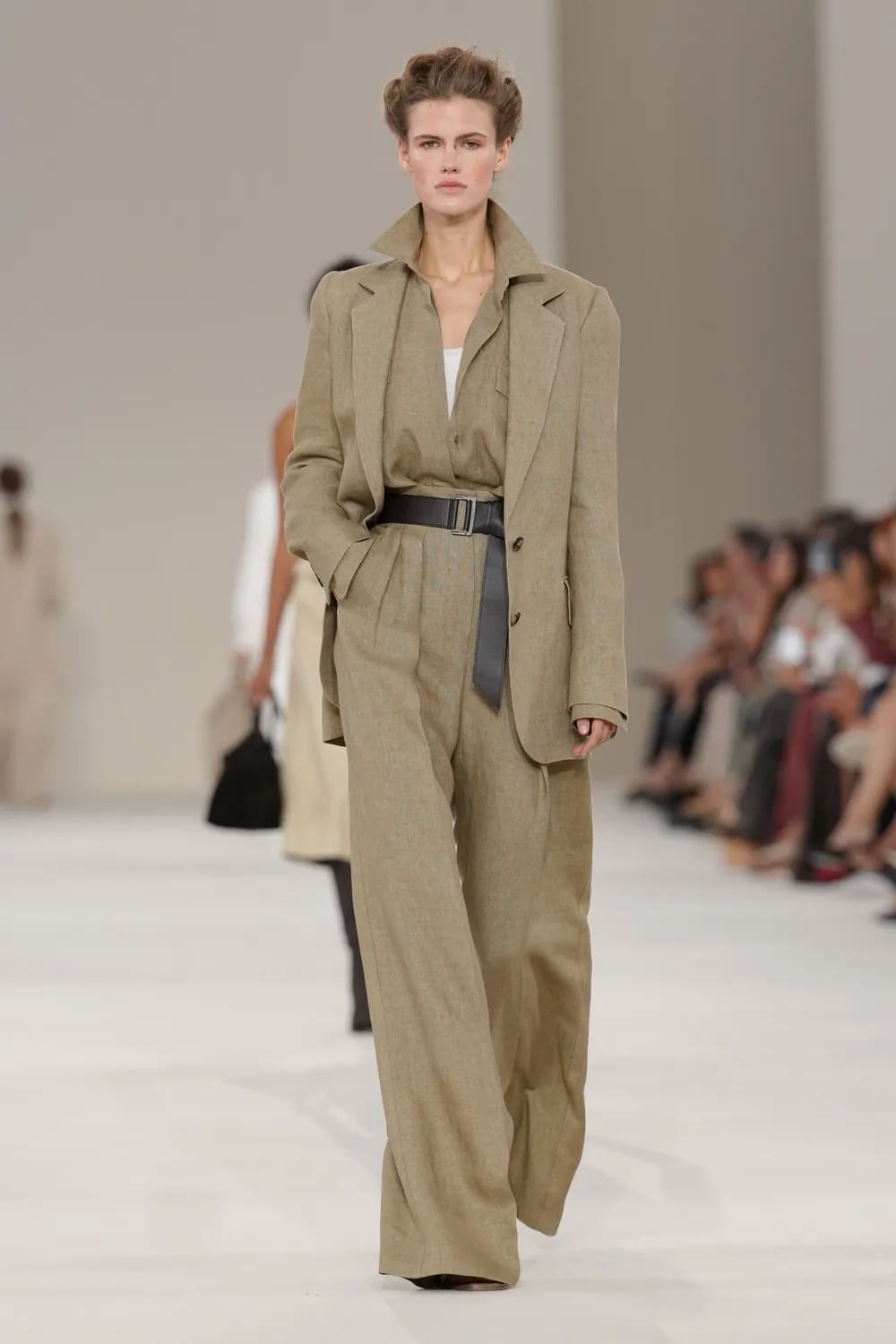
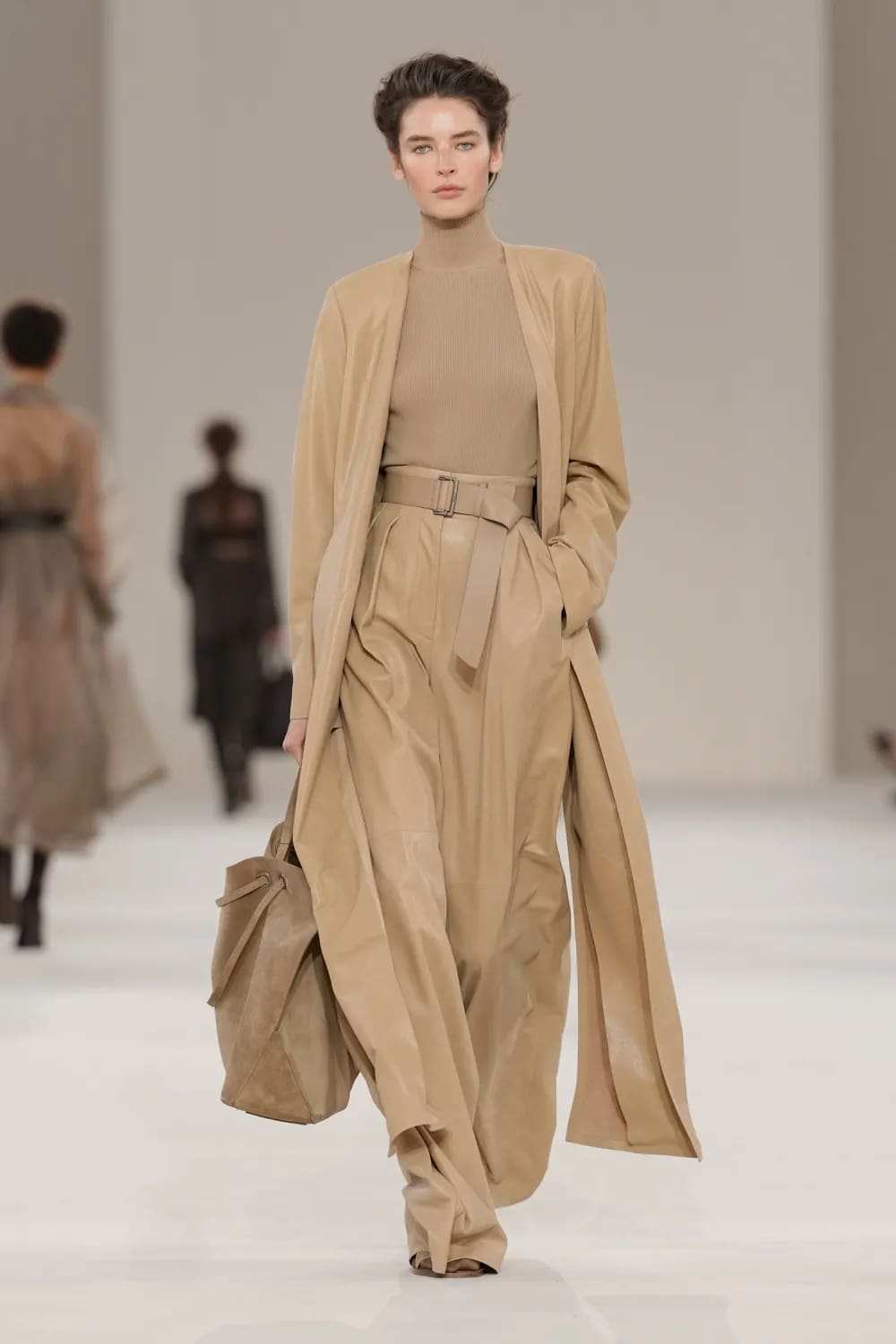
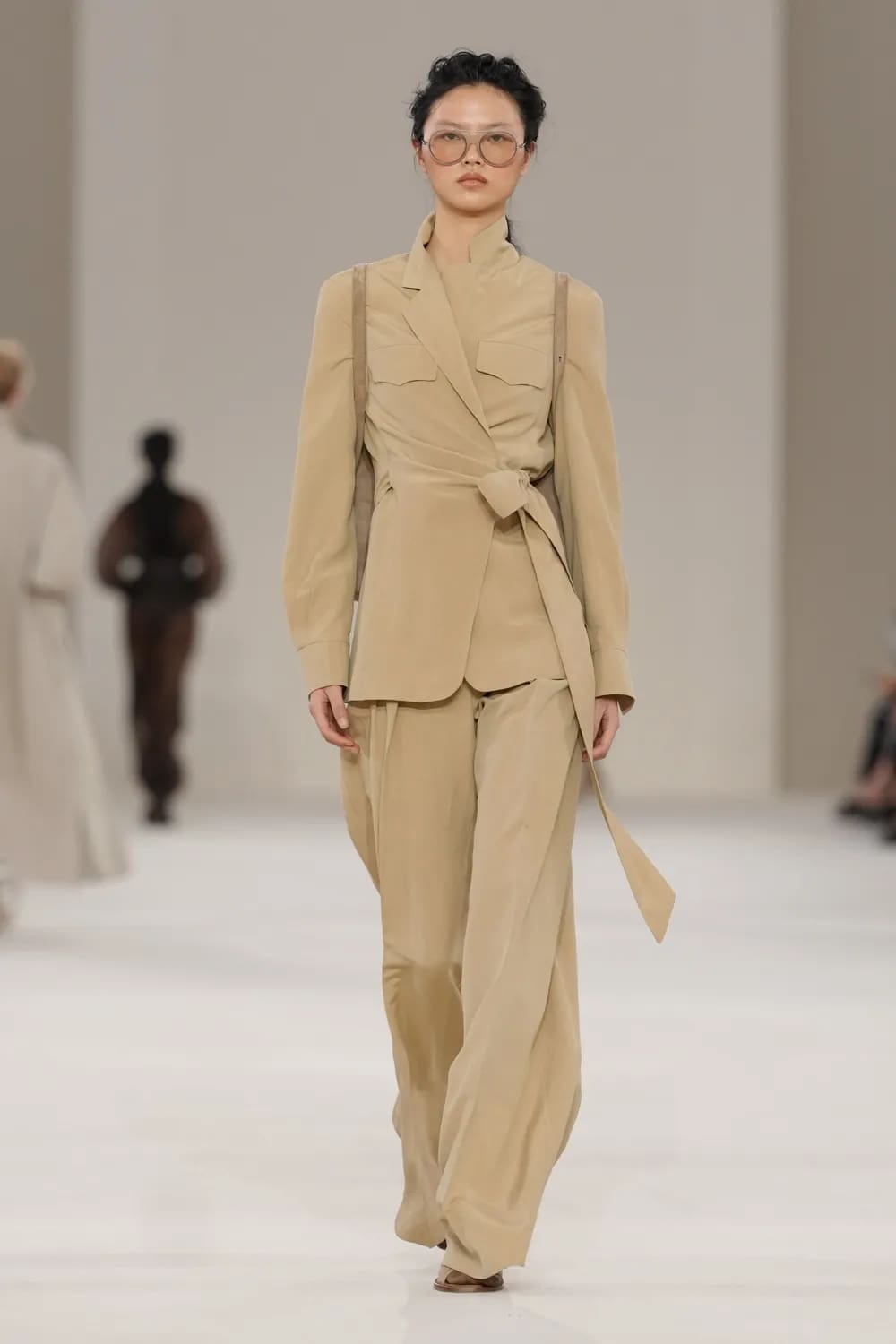
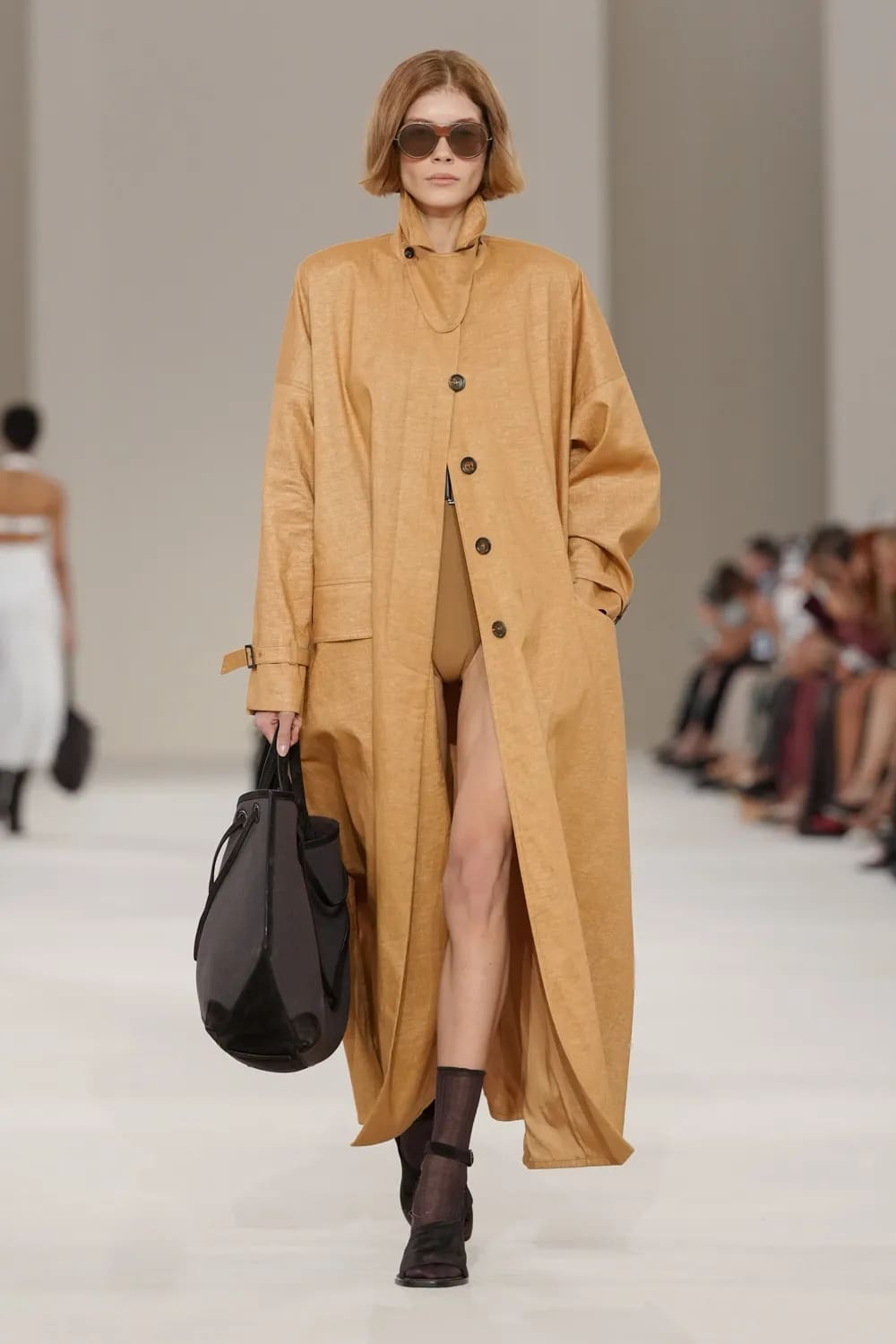
The outerwear is where the house flexes its peerless technical pedigree, translating military shirting and safari jackets into sweeping cinematic drapery. The duster coat in toasted tobacco wool falls almost to the floorboards, its sleeves rolled up past the elbow to reveal exaggerated French cuffs of chalk-white poplin. Beneath it, high-waisted pleated trousers billow with generous amplitude, anchored at the waist by a utilitarian military belt that doubles back on itself. The silhouette recalls Katharine Hepburn striding across a savannah airstrip, entirely indifferent to the local climate yet looking impeccably prepared to negotiate a treaty.
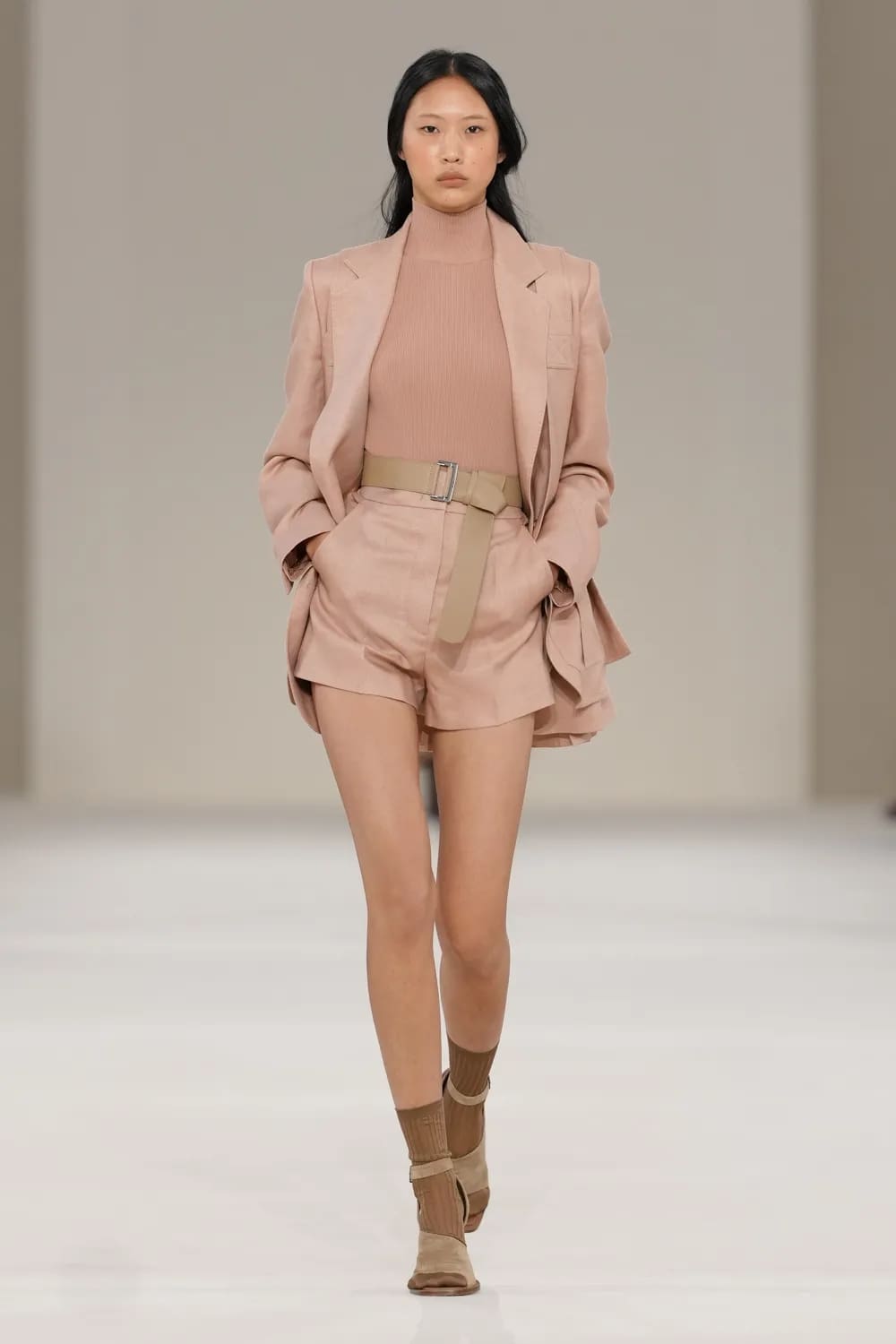
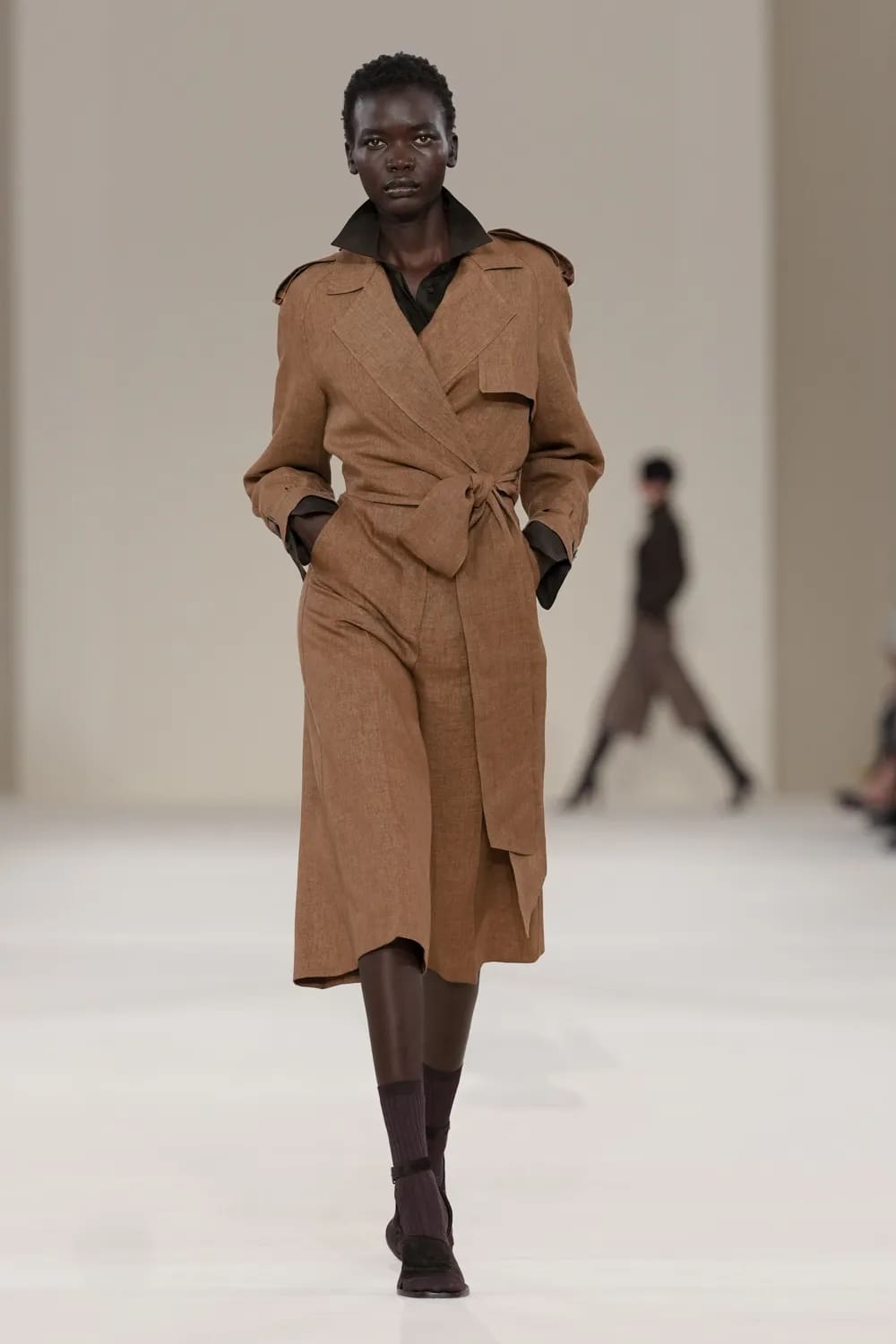
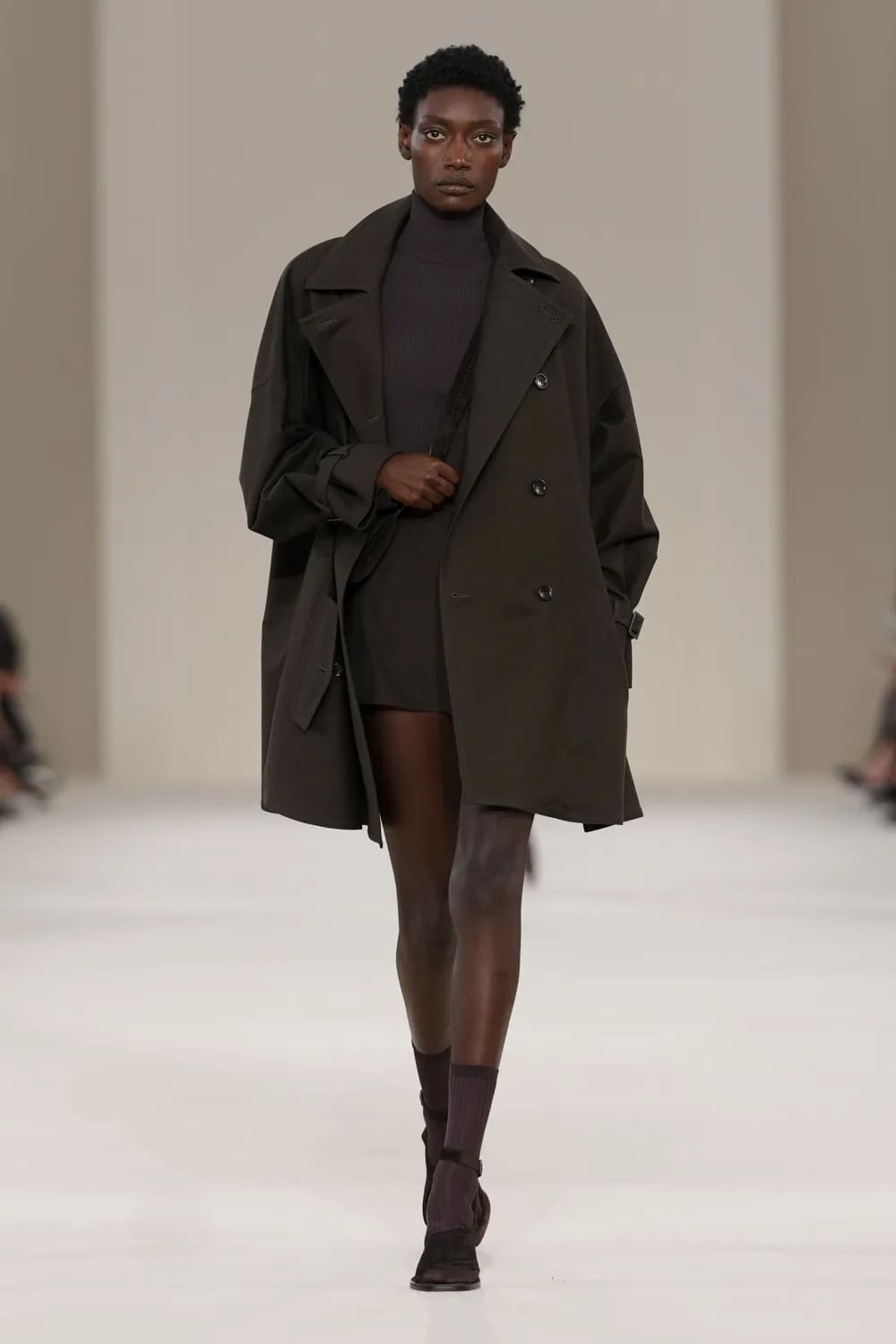
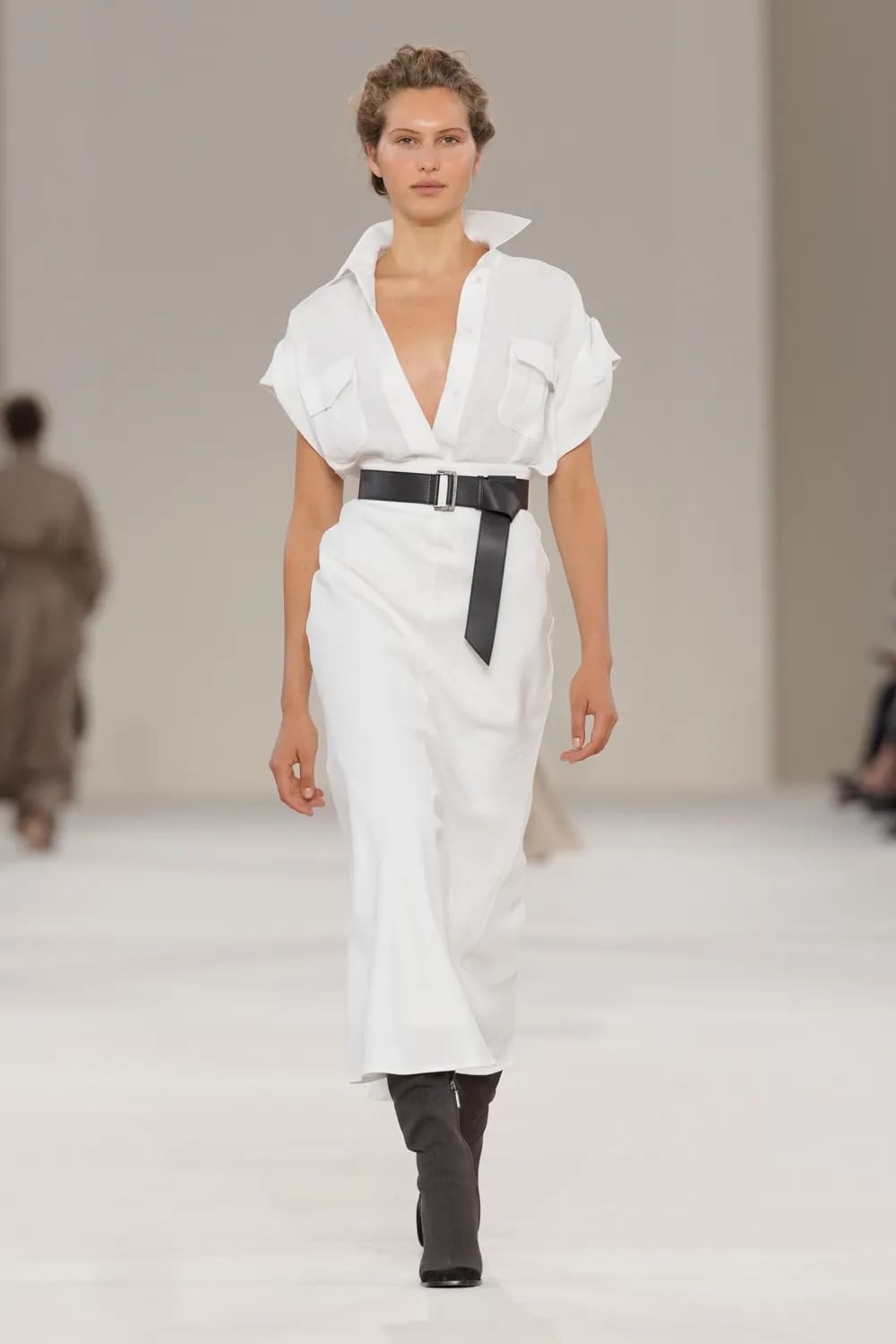
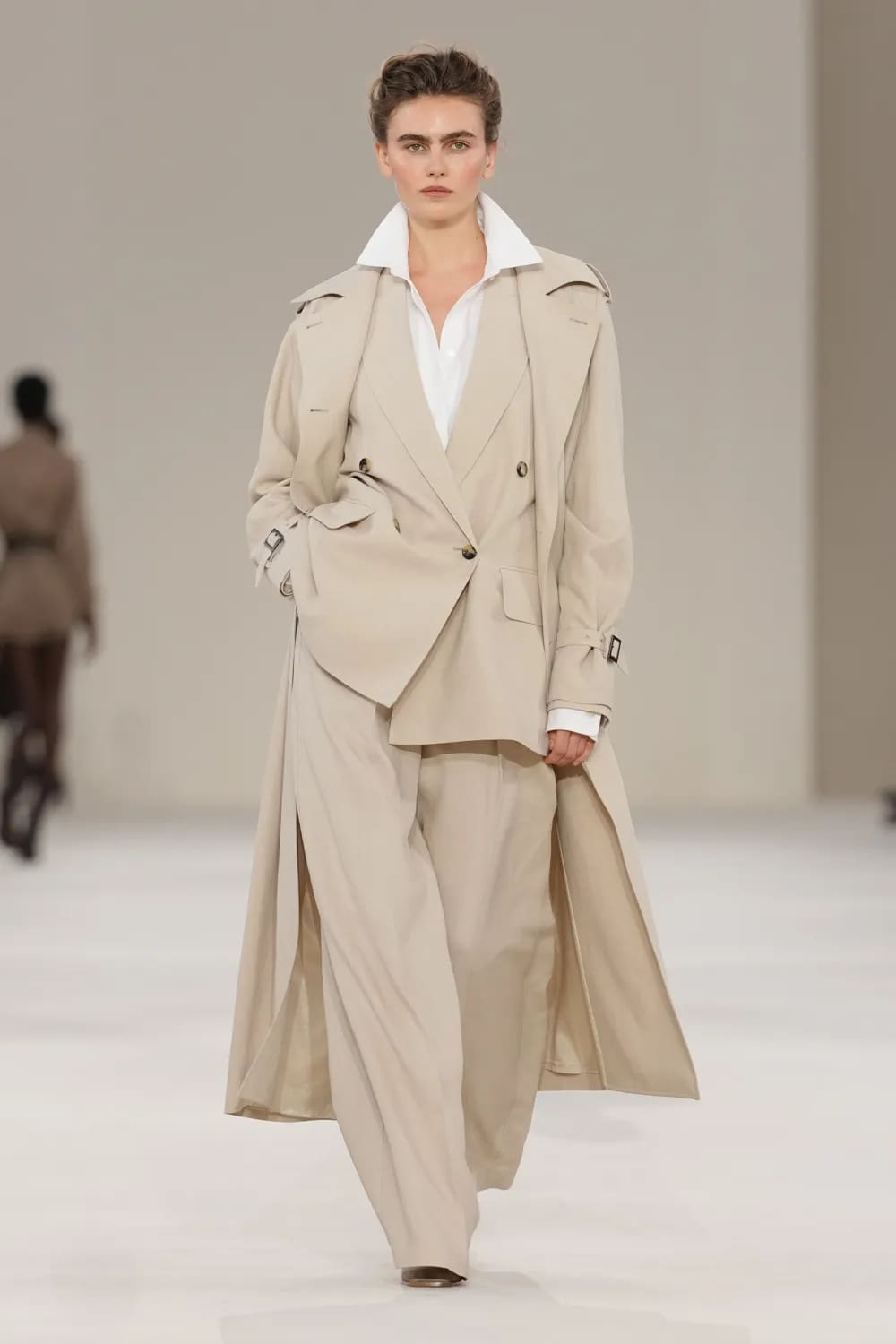
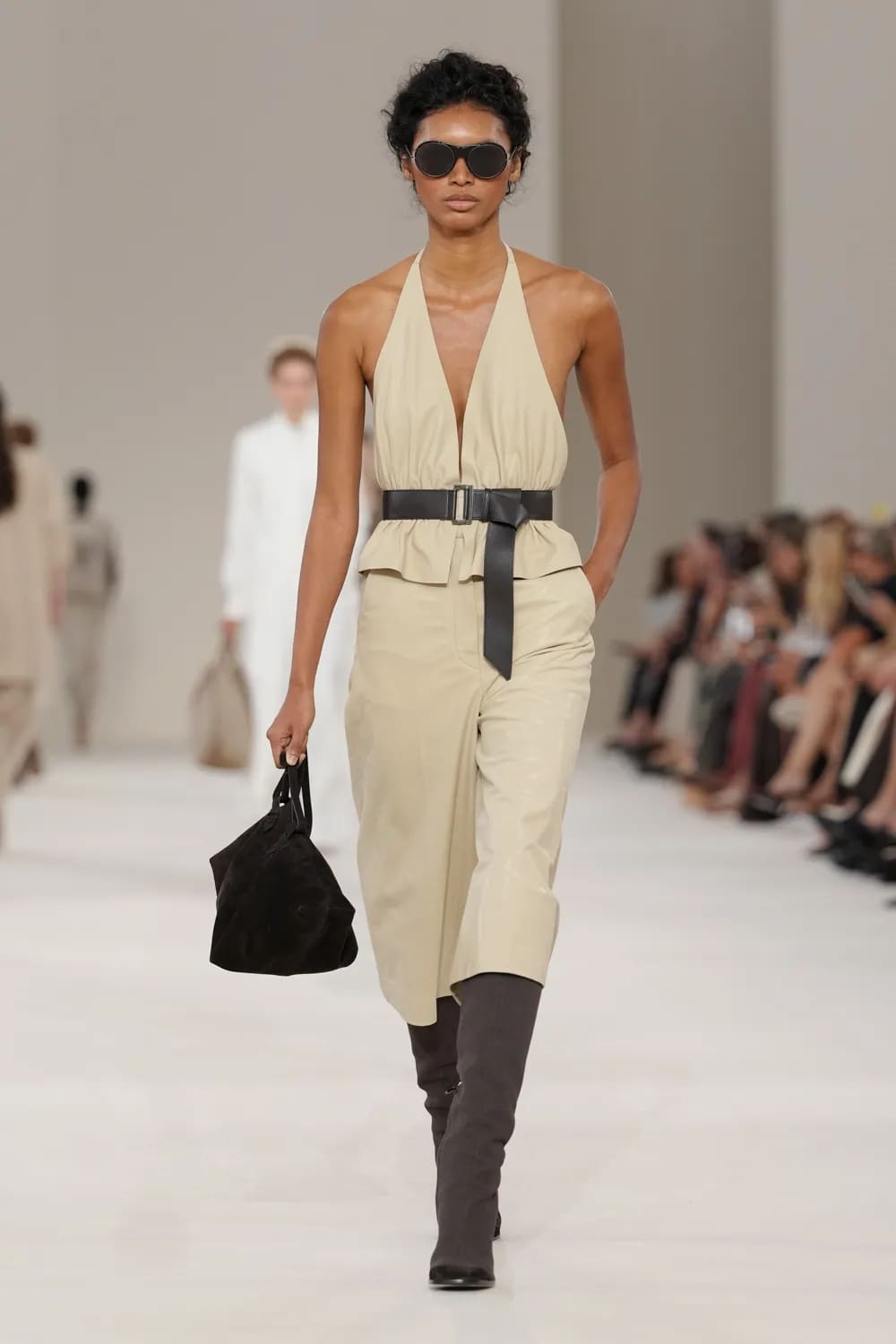
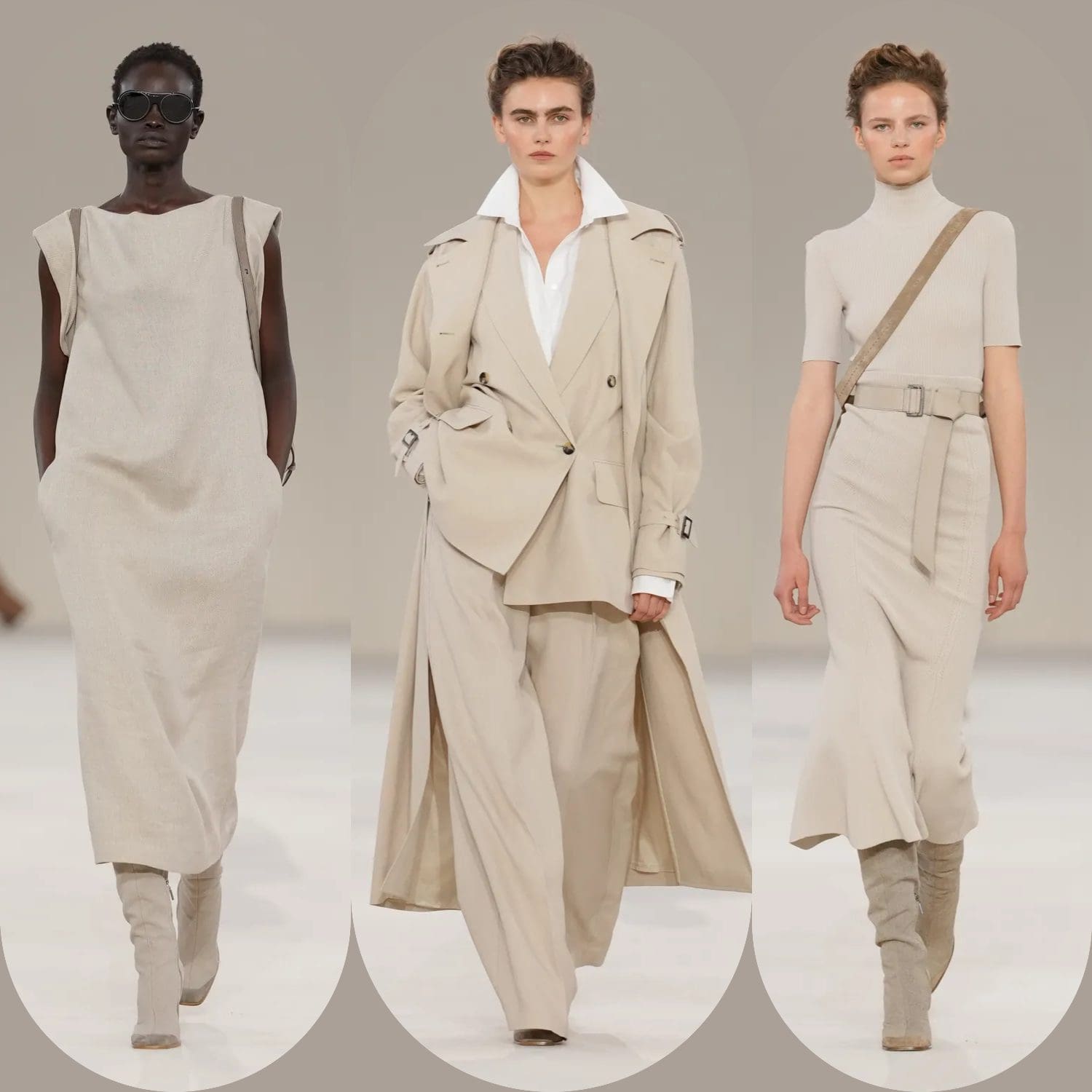
A sand-colored trench coat continues this visual monologue, worn unbuttoned over a double-breasted lightweight blazer and matching fluid trousers. The layering is dense, aristocratic, and thoroughly indifferent to seasonal temperature. The white poplin collar pops aggressively over the lapel, framing the neck with the calculated dishevelment that only immense wealth can afford. Even the casual daytime shirting receives this imperial treatment: a pristine white safari shirt-dress cut with a plunging neckline, cuffed kimono-short sleeves, and chest flap pockets, gathered firmly at the midriff by black leather strapping over tall suede boots. It is the uniform of a woman who owns the territory through which she walks.
The Purity of Monastic Utility
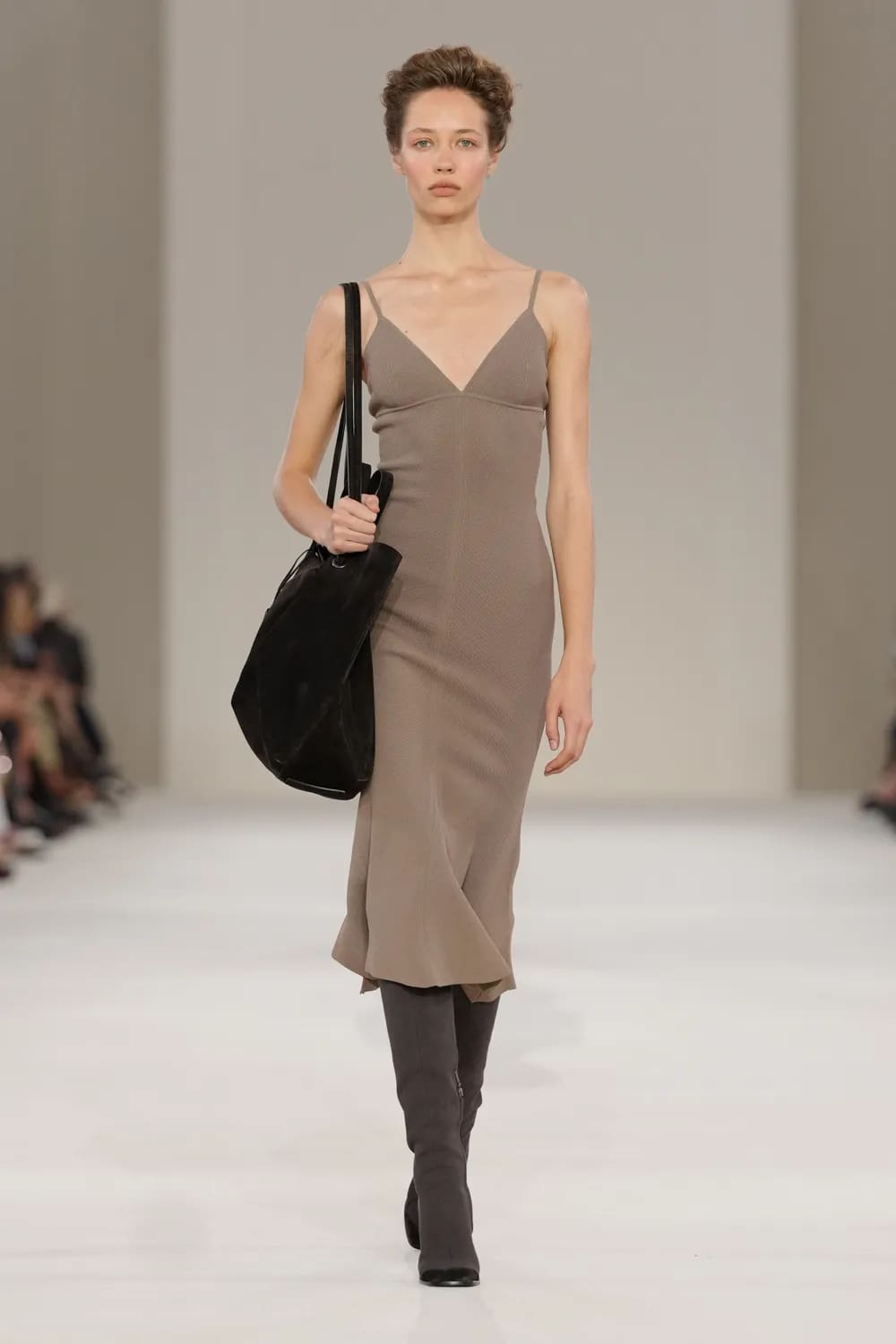
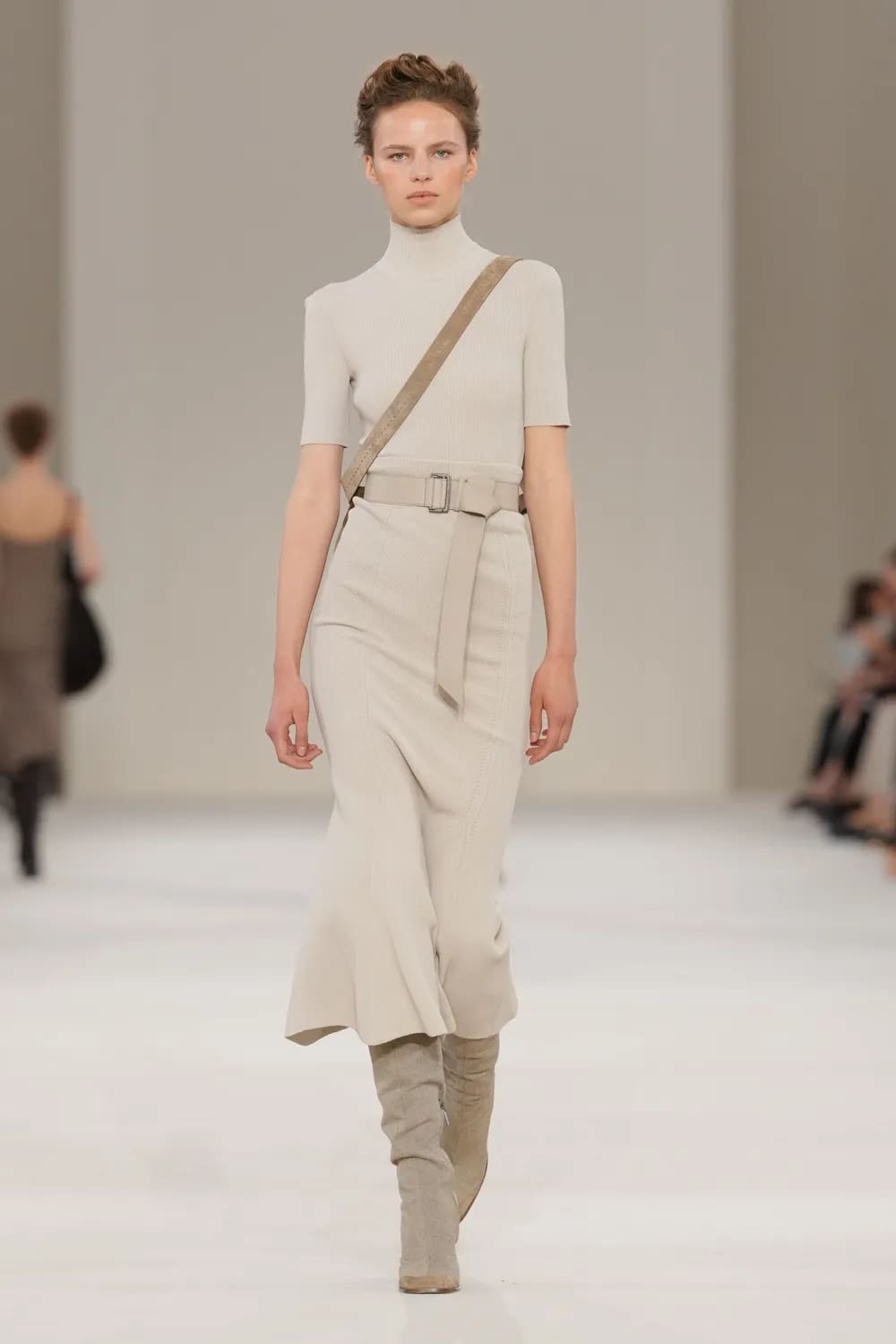
When the collection strips away the outer volume, the rigor remains absolute. Consider the ribbed, high-neck knit paired with a trumpet-hem pencil skirt in pale bone. The skirt retains its military discipline through structured vertical seams and a flapped waist pocket, fastened with the same buckled leather belt that runs like an ideological tether throughout the show. A slim canvas cross-body strap cuts across the torso, evoking vintage map-cases or field binoculars while maintaining a razor-sharp, streamlined profile.
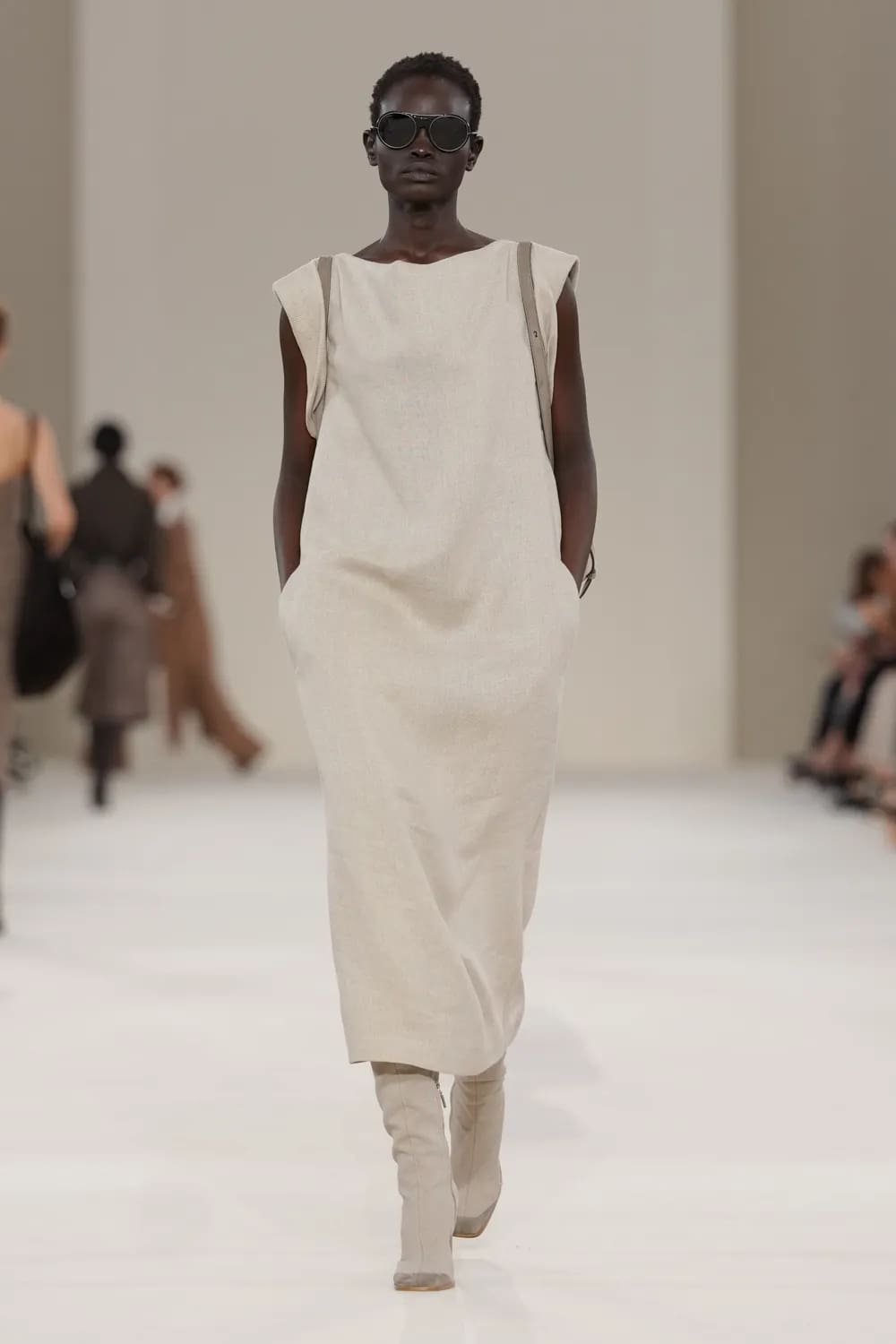
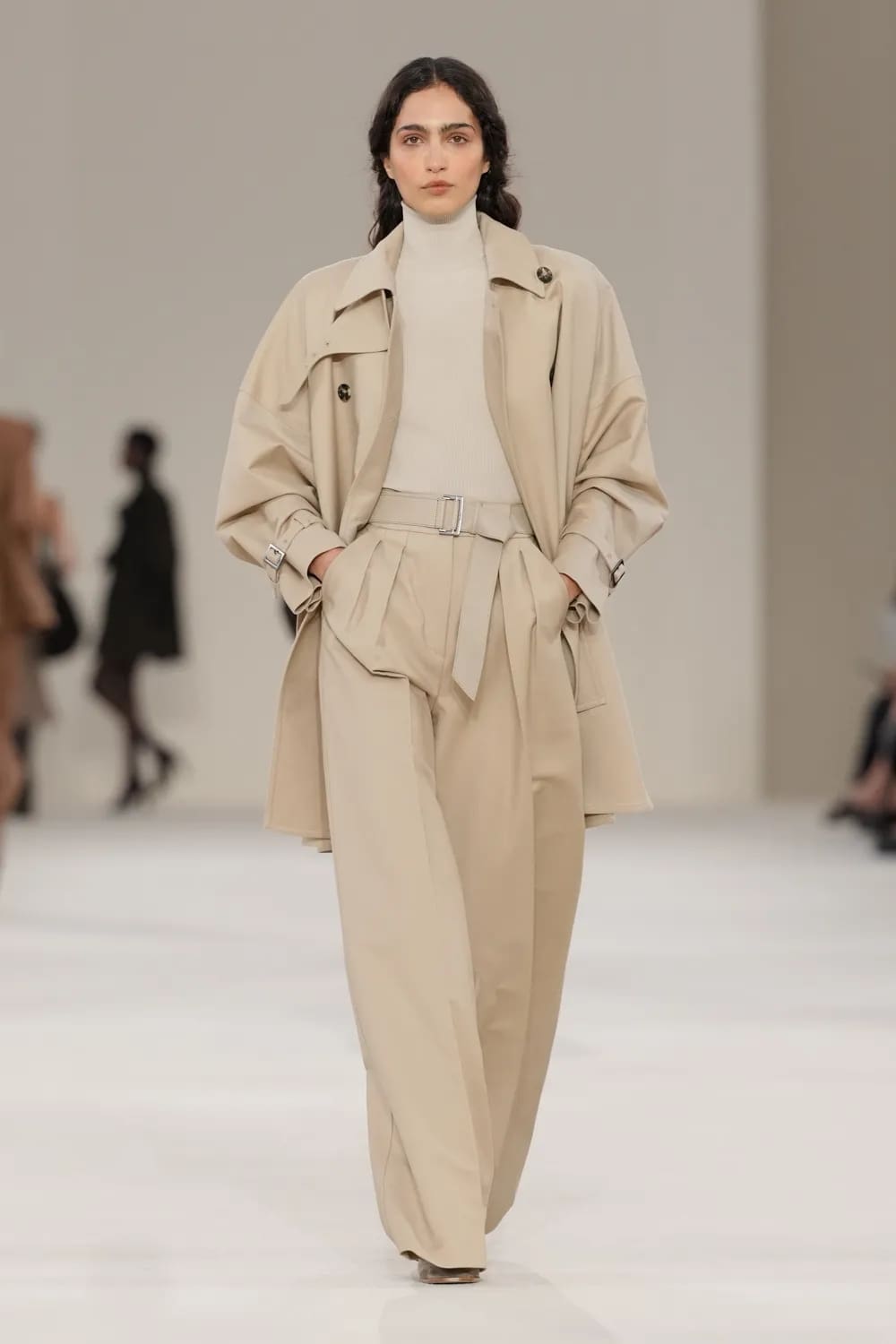
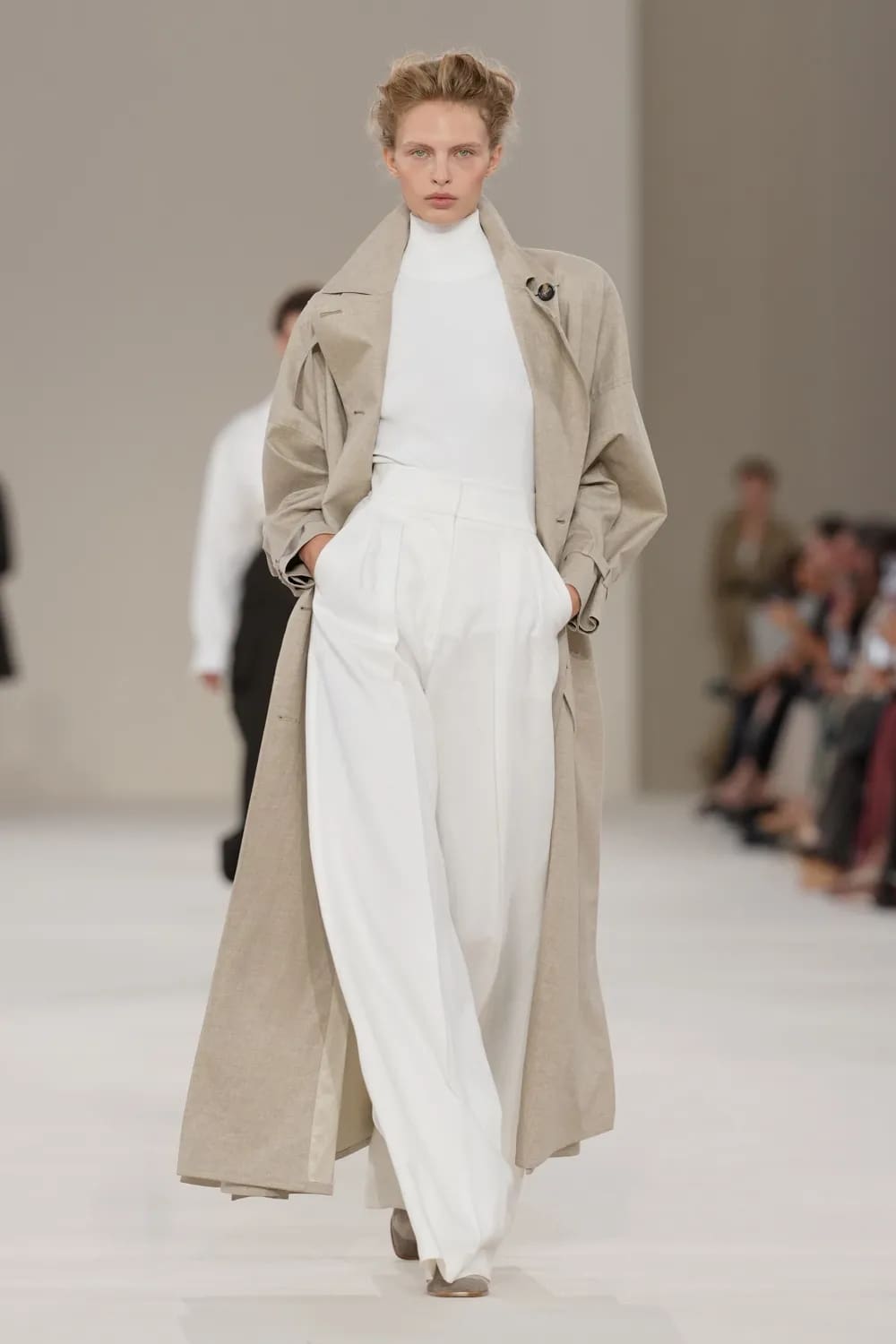
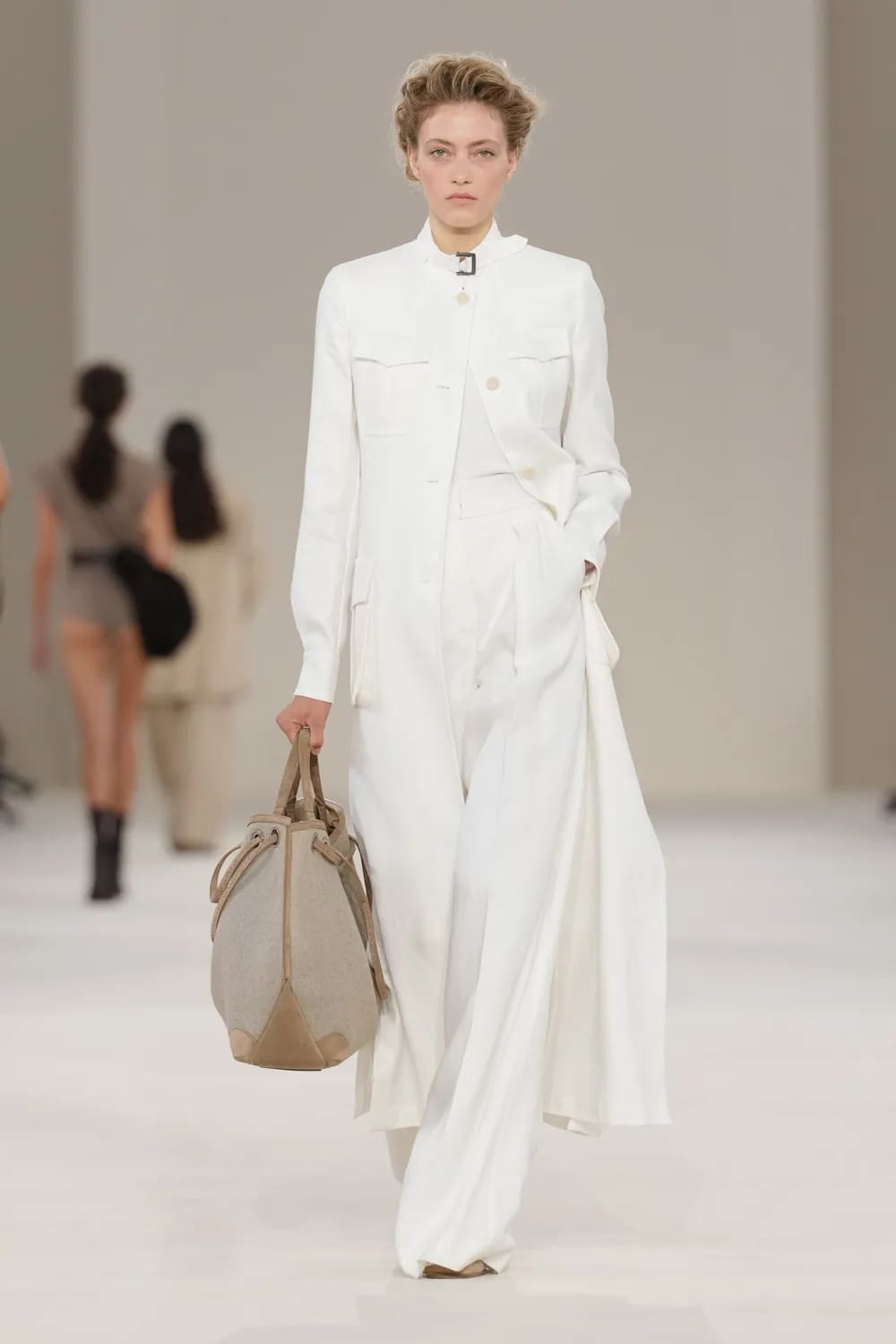
The finale manifests this balance of authority and restraint in an all-white safari ensemble: a floor-length tailored coat with a Nehru officer’s collar and buttoned chest flap pockets, worn over immaculate palazzo pants and accessorized with a slouchy linen-and-suede duffle tote. Beside it, an oversized linen duster in pale putty sweeps over an ivory turtleneck and high-rise pleated slacks, completing the fantasy of effortless executive dominion. There are no theatrical tricks here, no ironic digital prints, and certainly no awkward flirtations with youth culture. Max Mara knows exactly who its woman is: someone who conquered the 1980s, kept the tailoring, and still demands the rest of the world fall into formation.
Key Takeaways
- Max Mara Spring 2027 showcases a tribute to the idealized 1980s with luxurious, utilitarian elegance.
- The collection features deep cargo-style pockets integrated into tailored garments, enhancing functionality.
- Outerwear exhibits a blend of military and safari influences, exemplifying Max Mara’s technical prowess.
- Materials like double-faced cashmere and structured designs convey confidence and self-reliance.
- The finale includes an all-white safari ensemble, emphasizing timeless authority without trends or gimmicks.
See All Looks Max Mara Spring Summer 2027