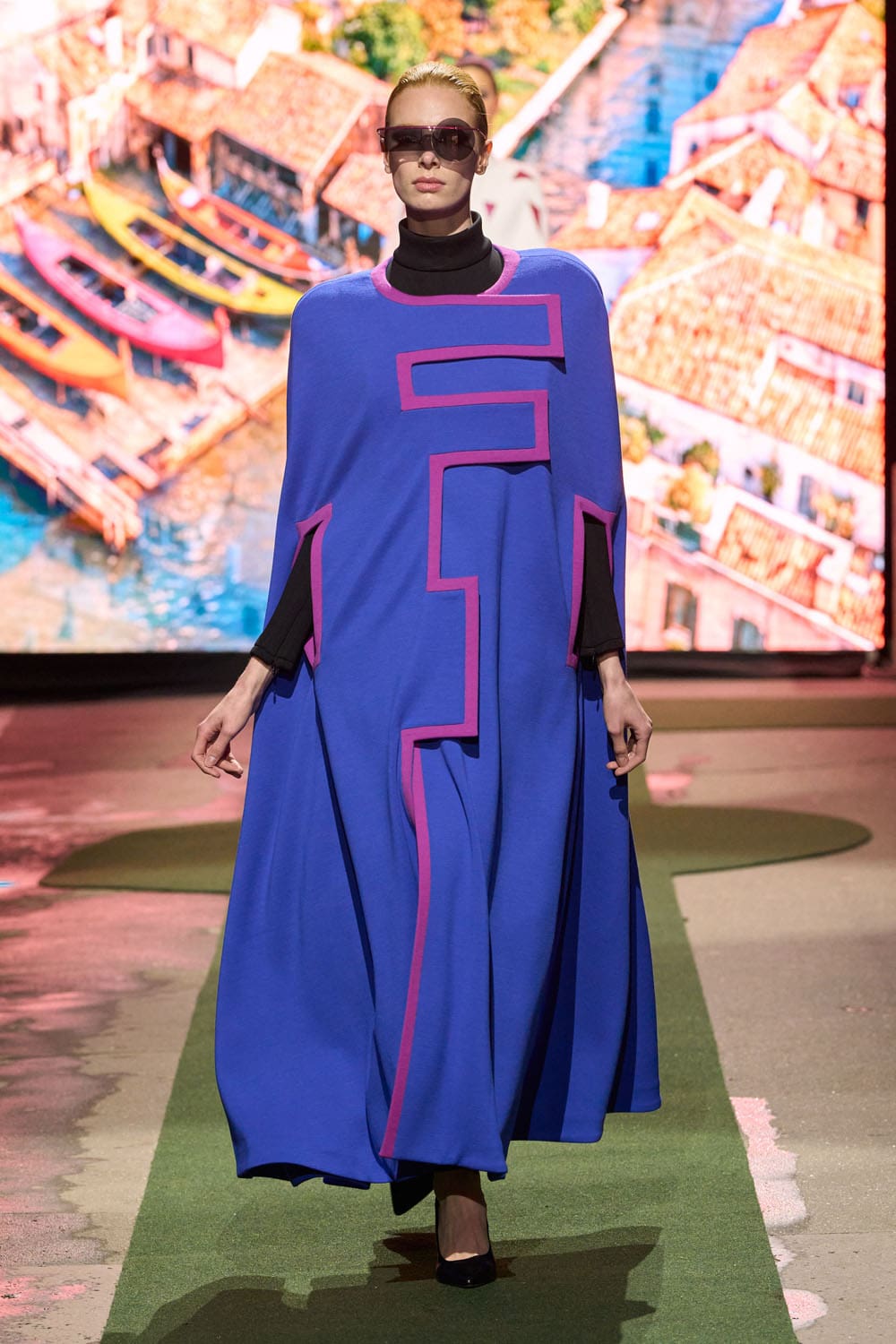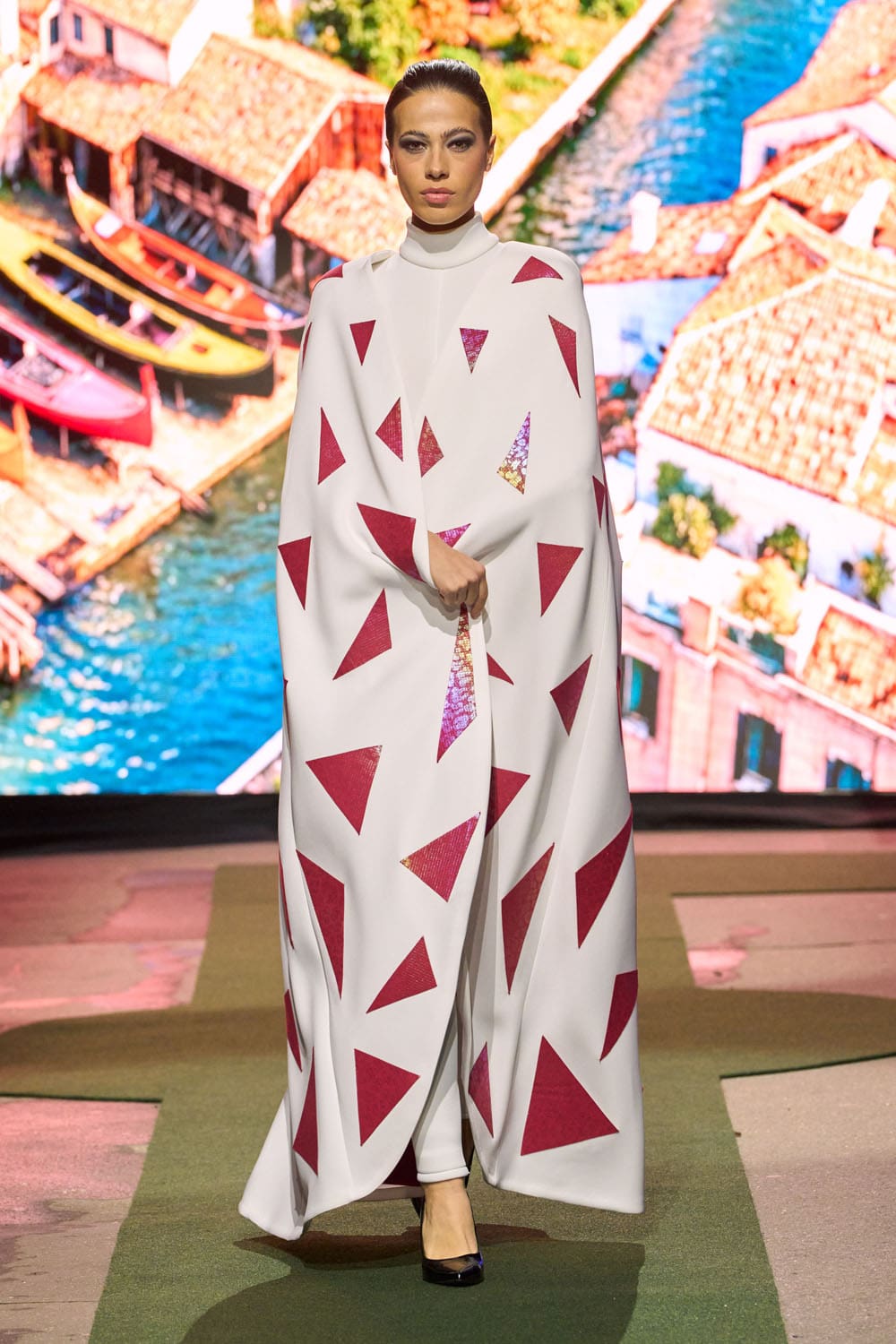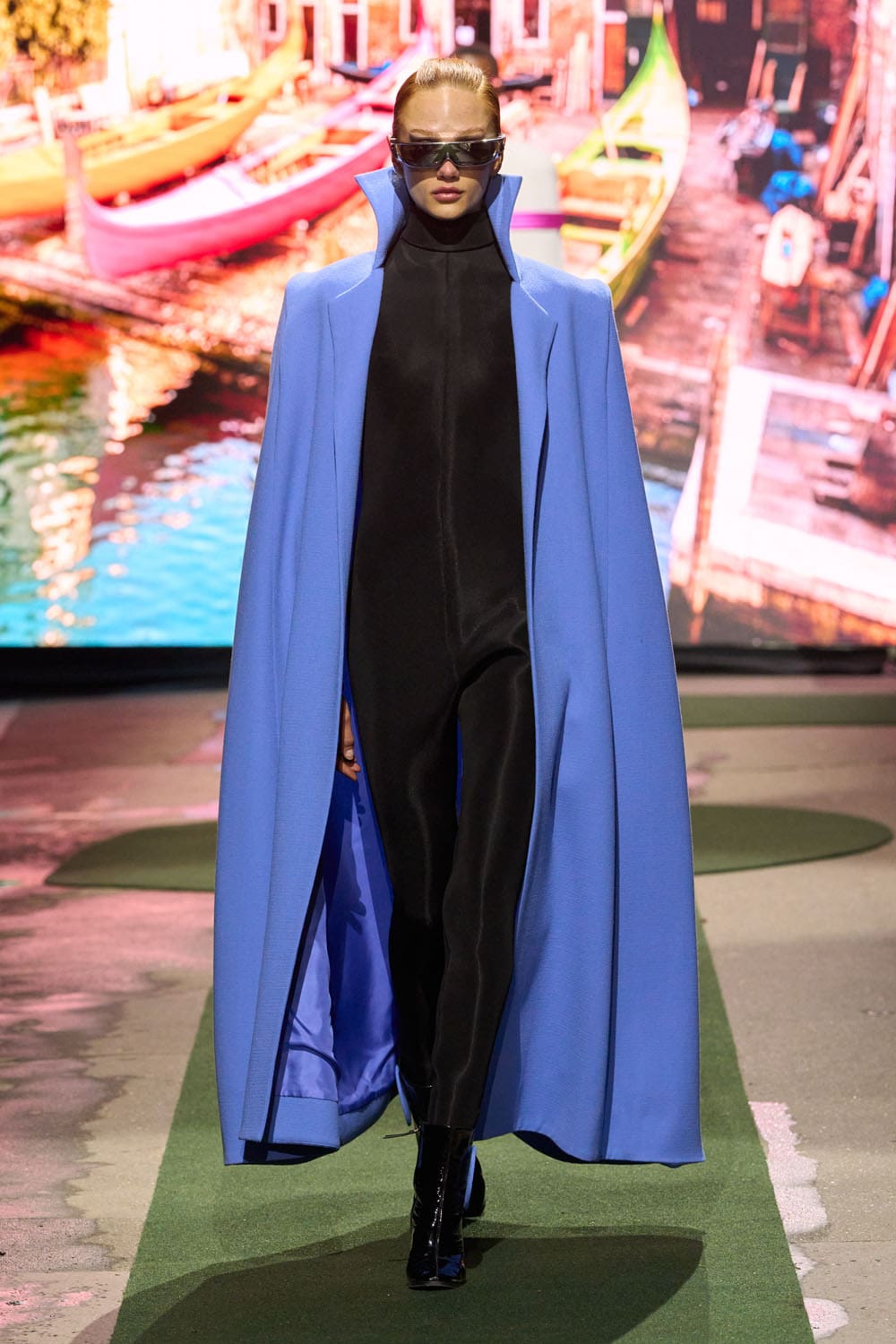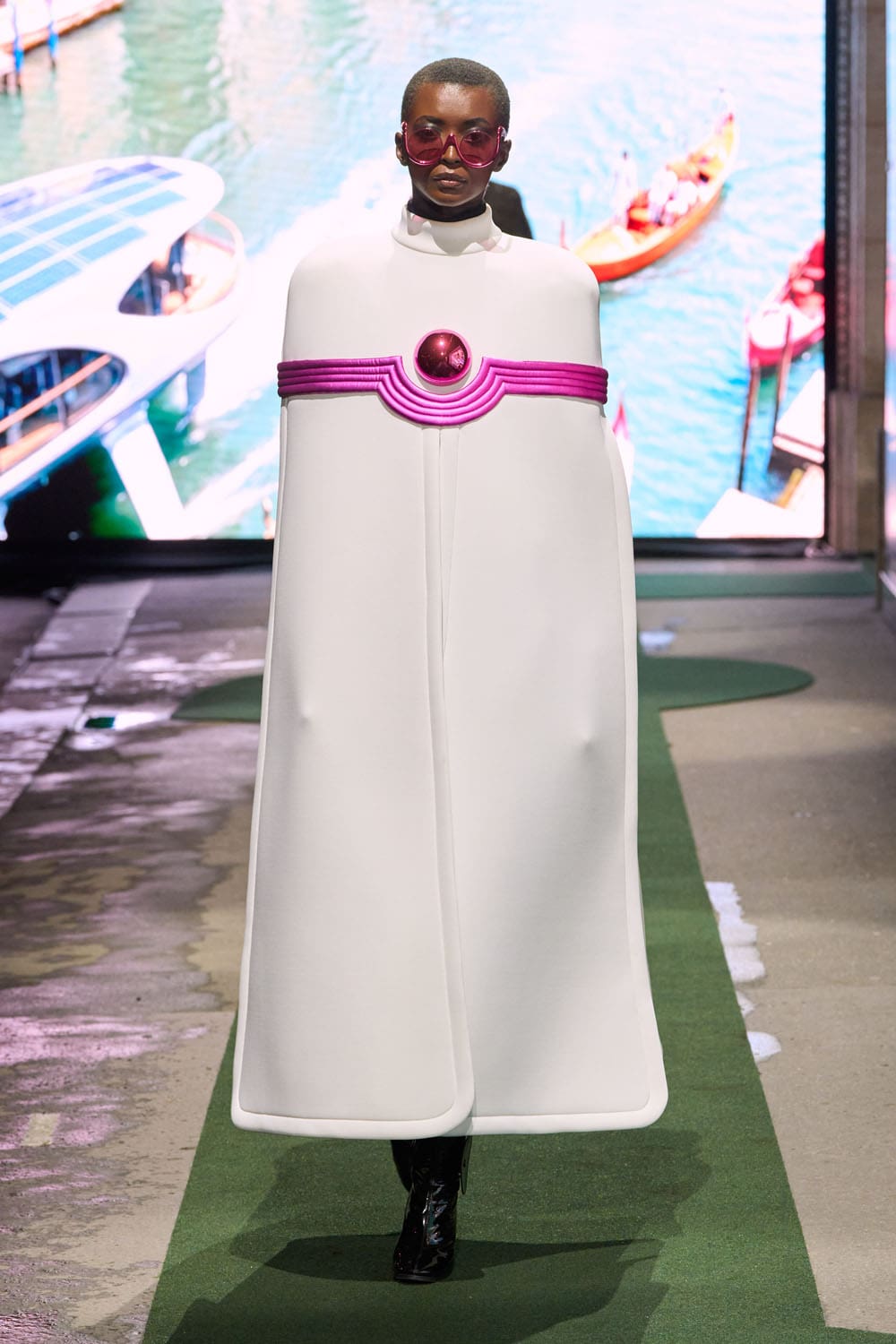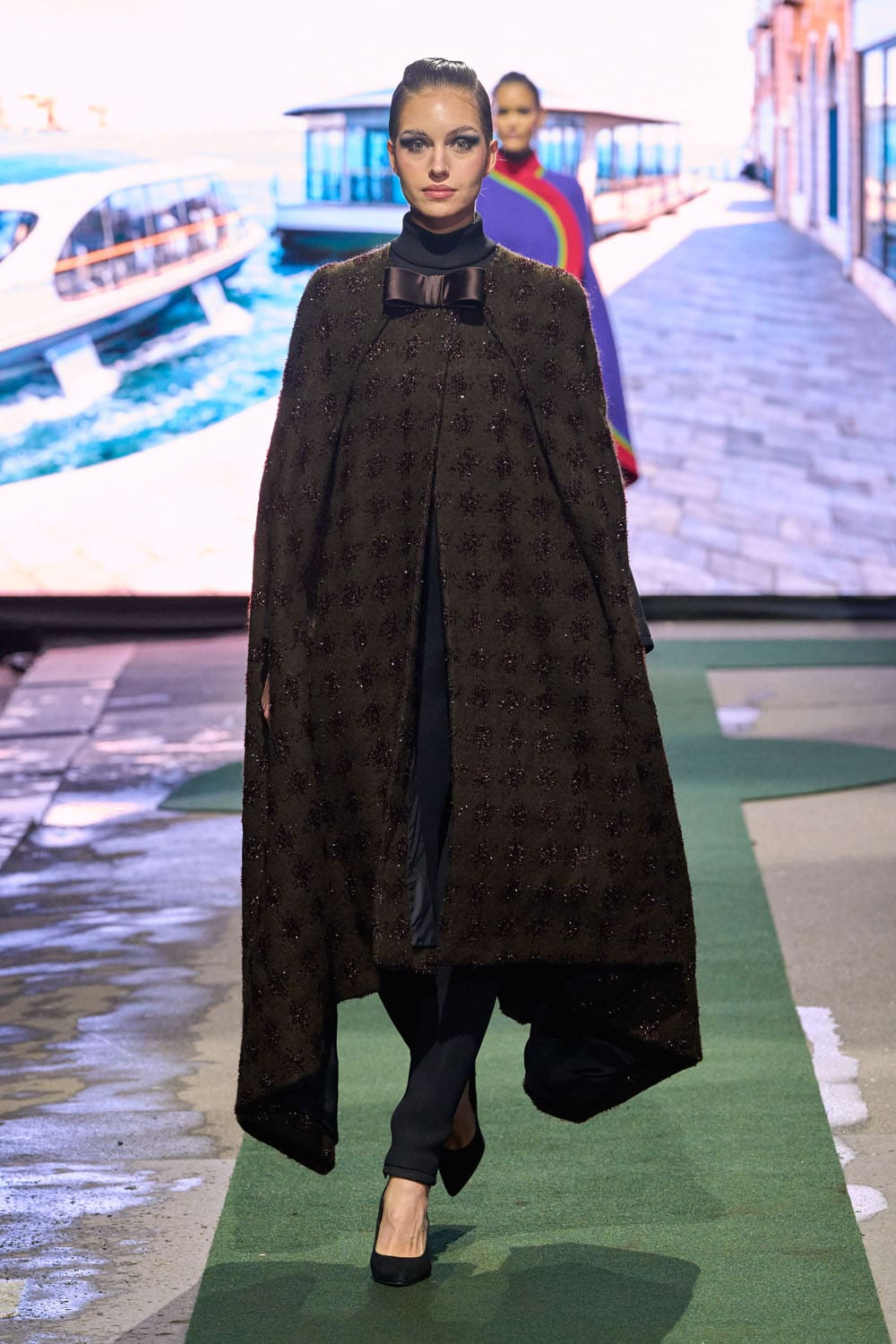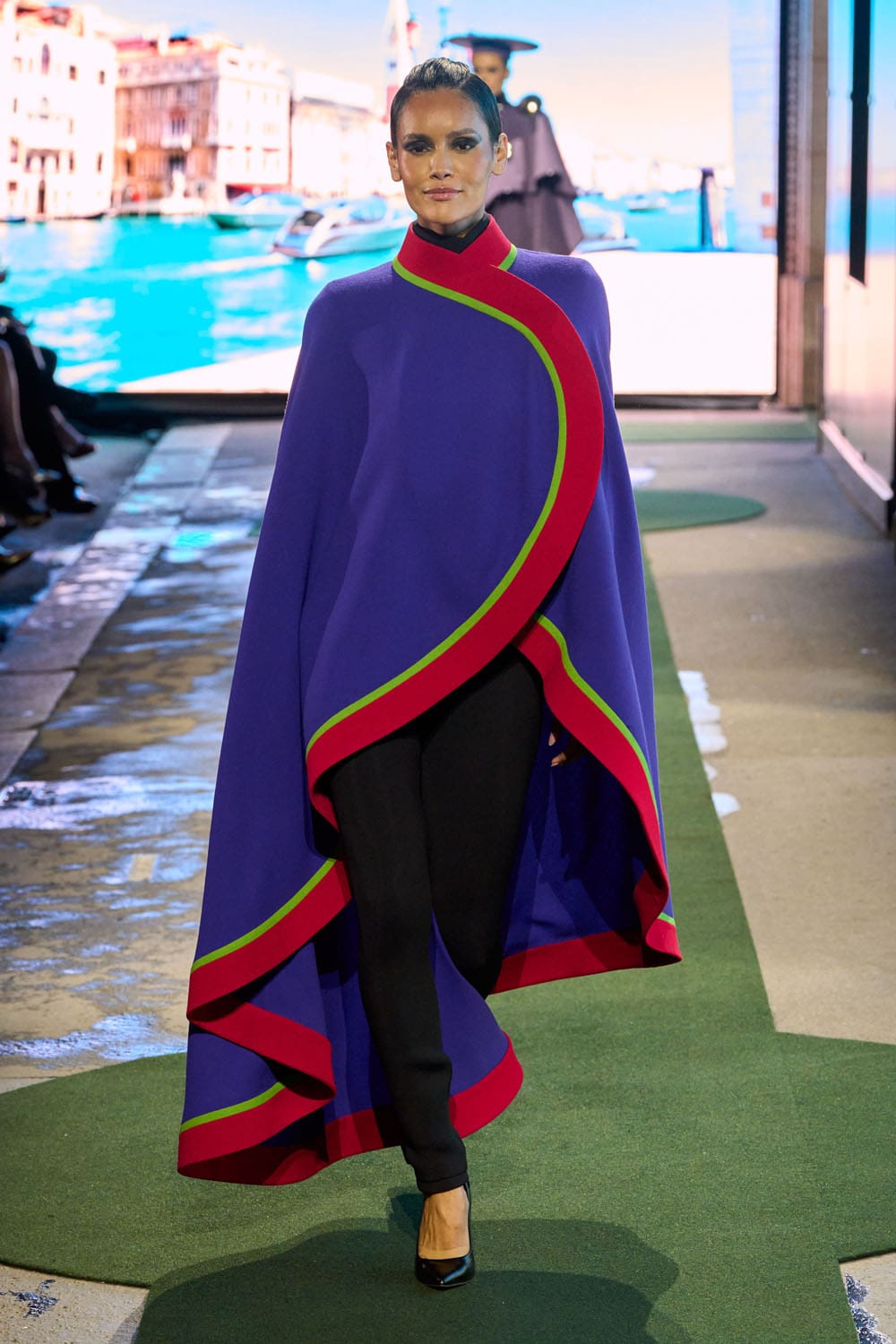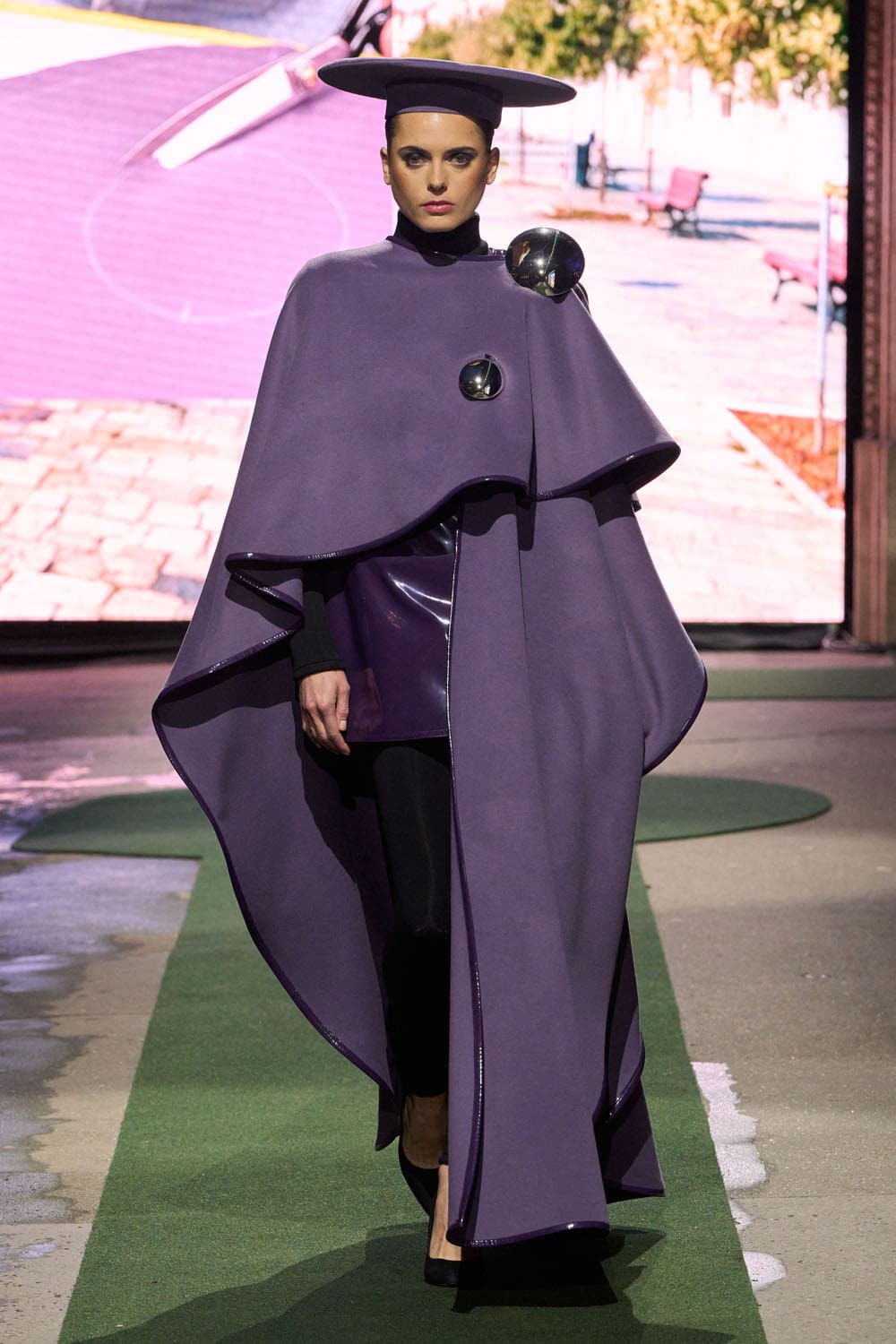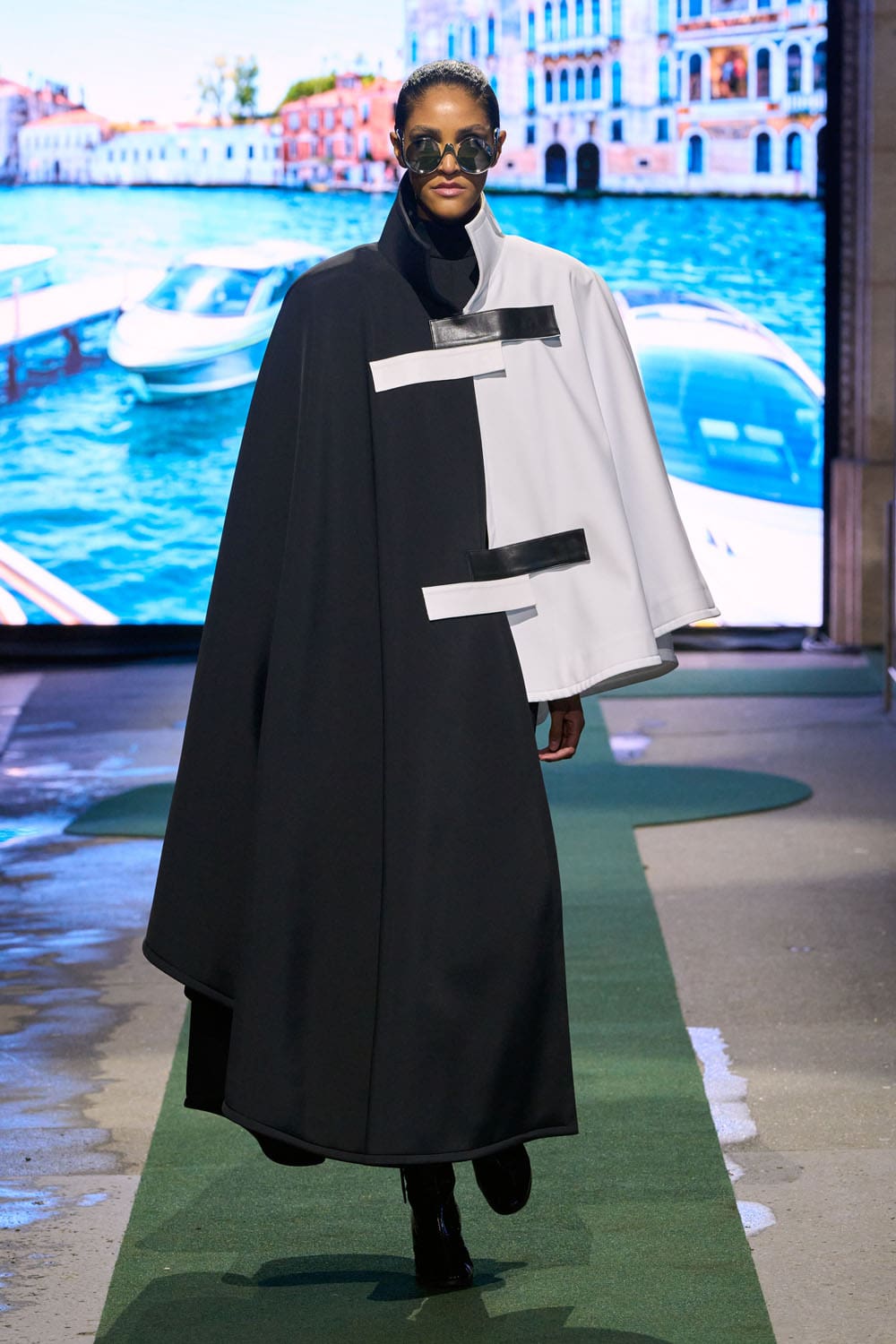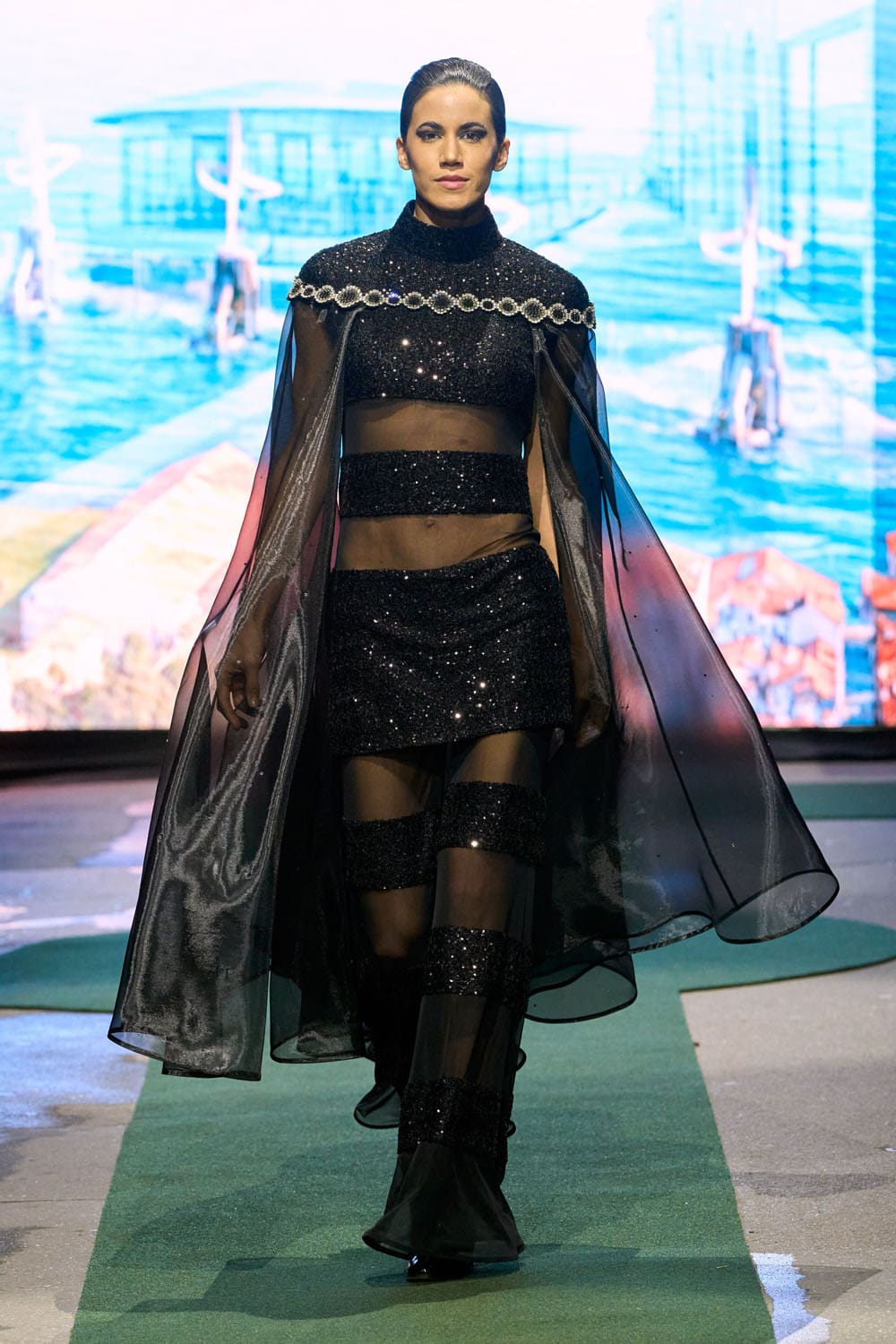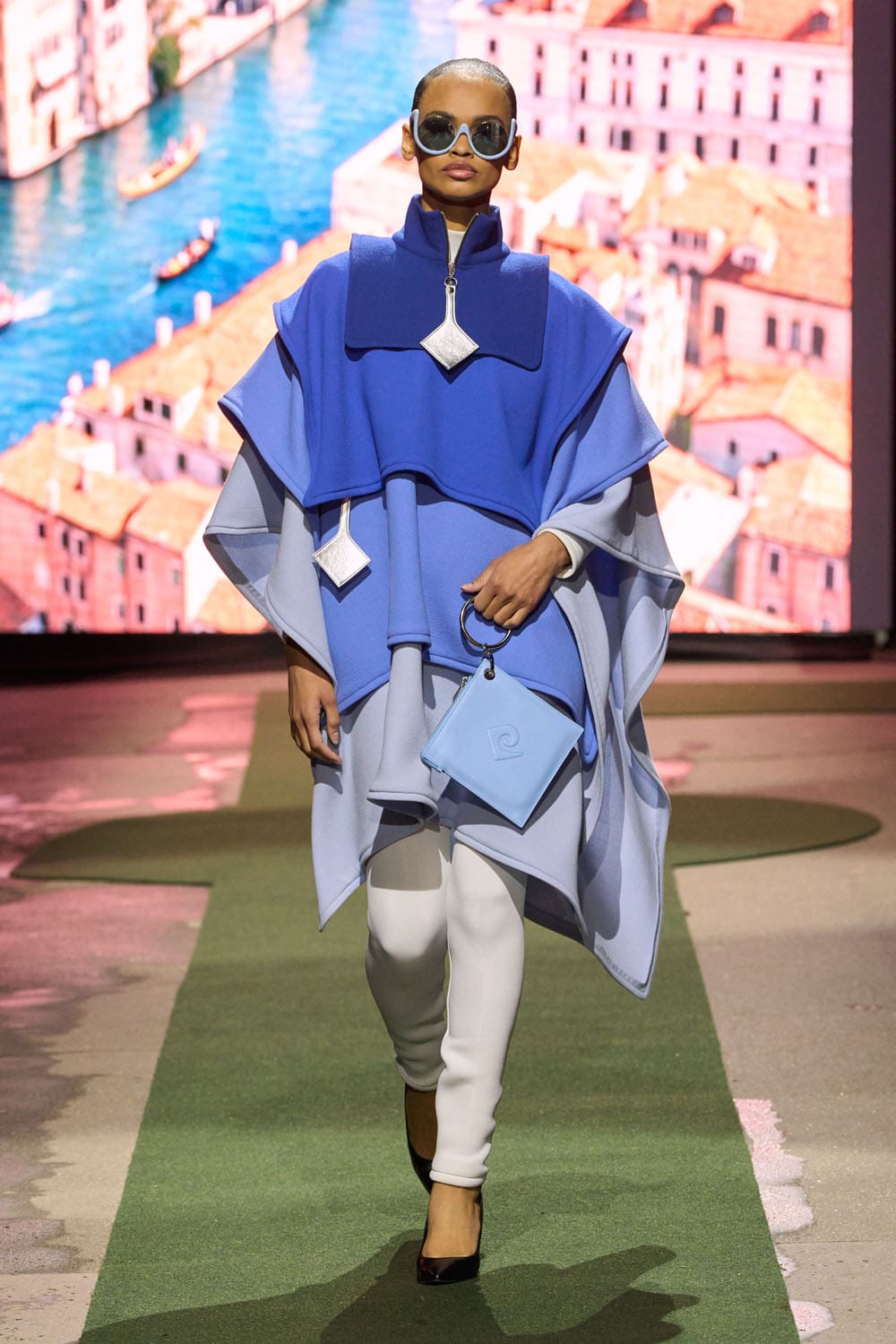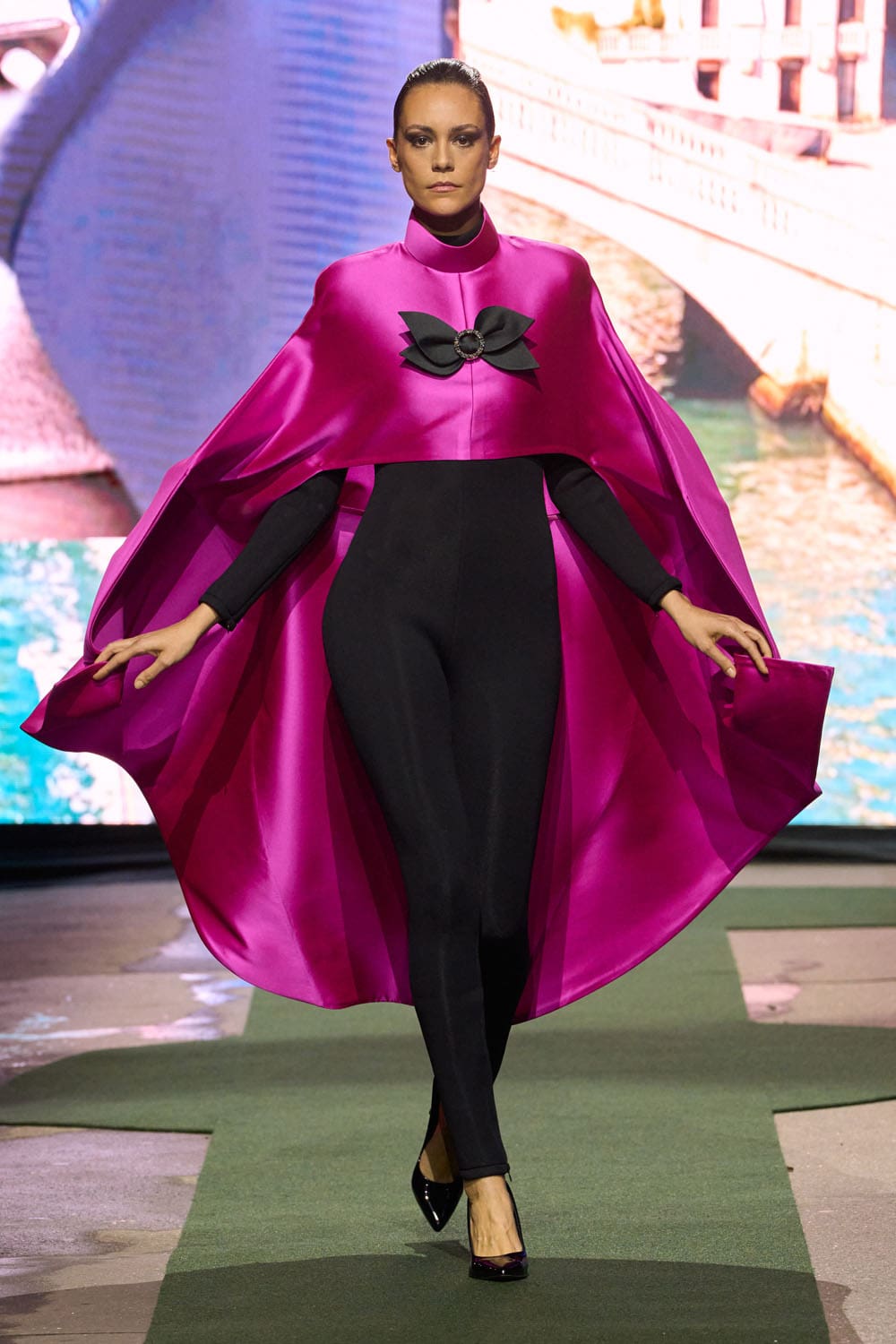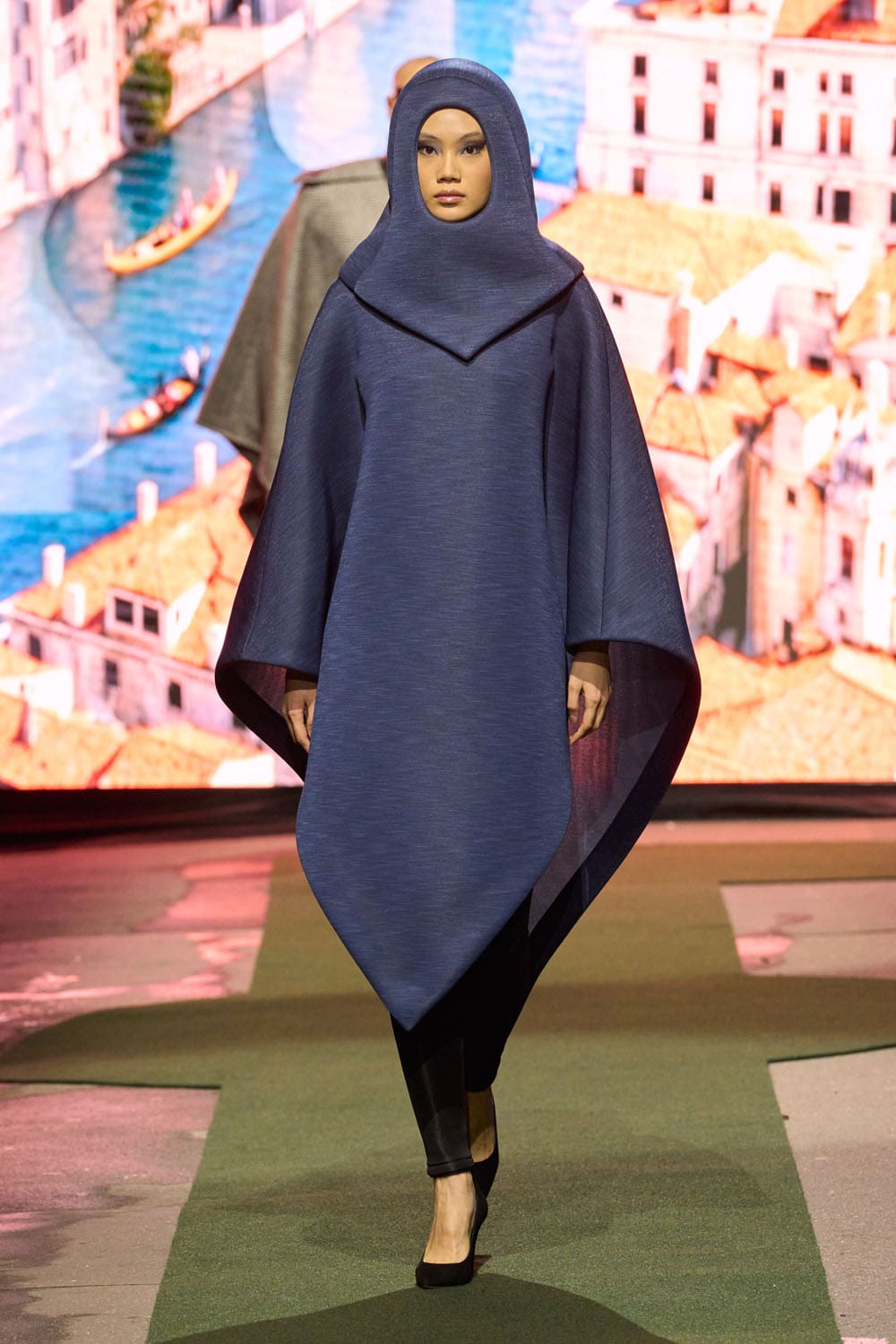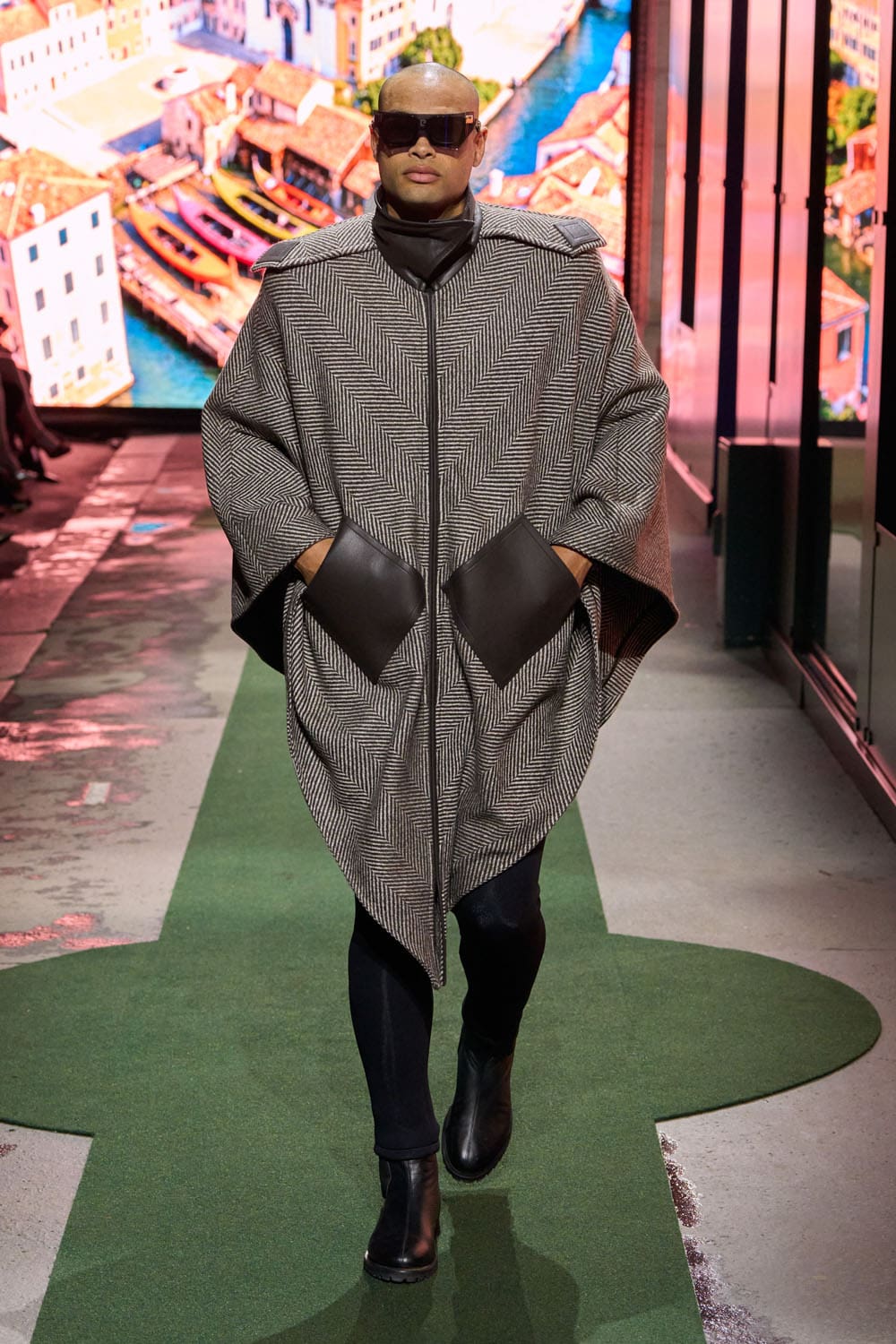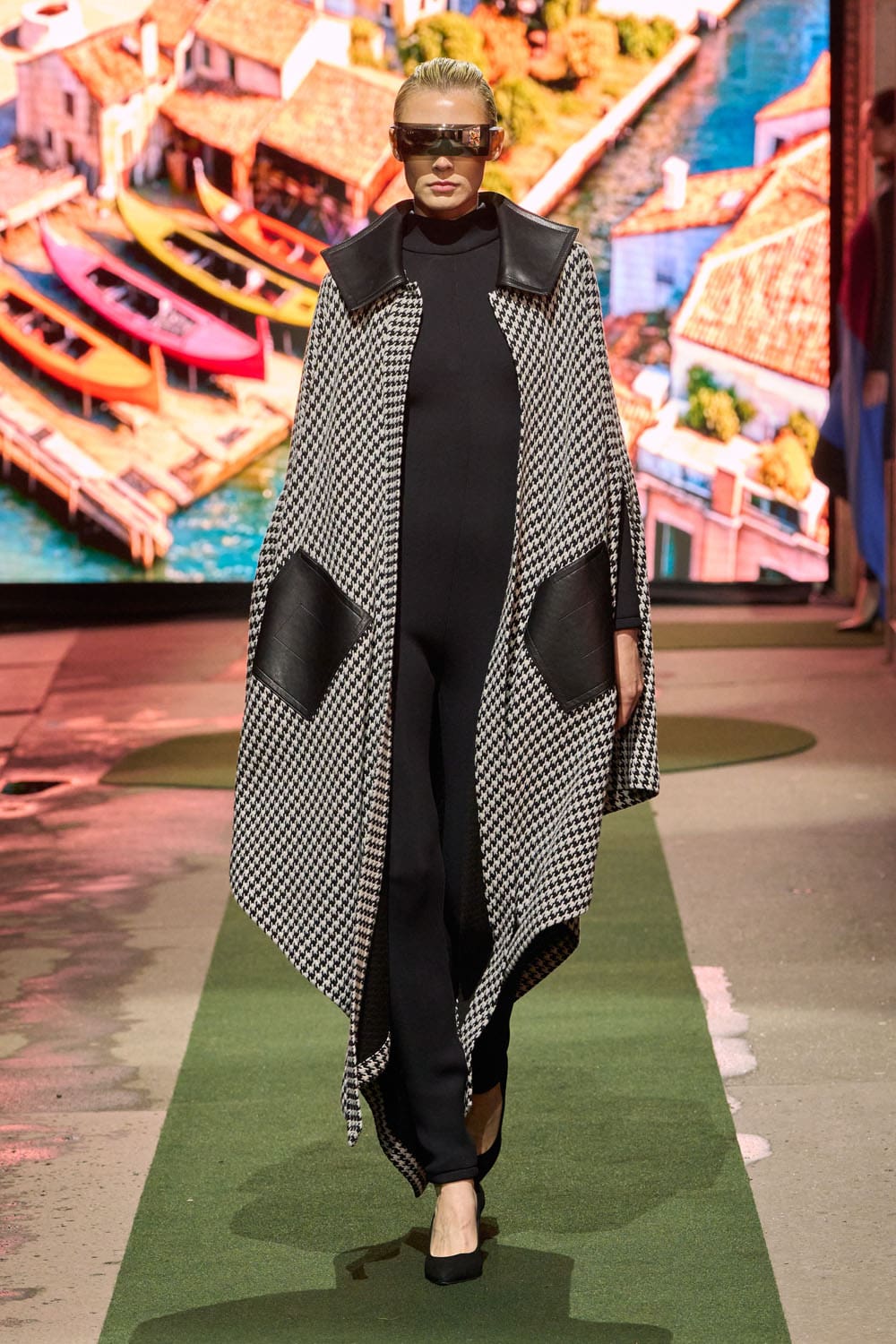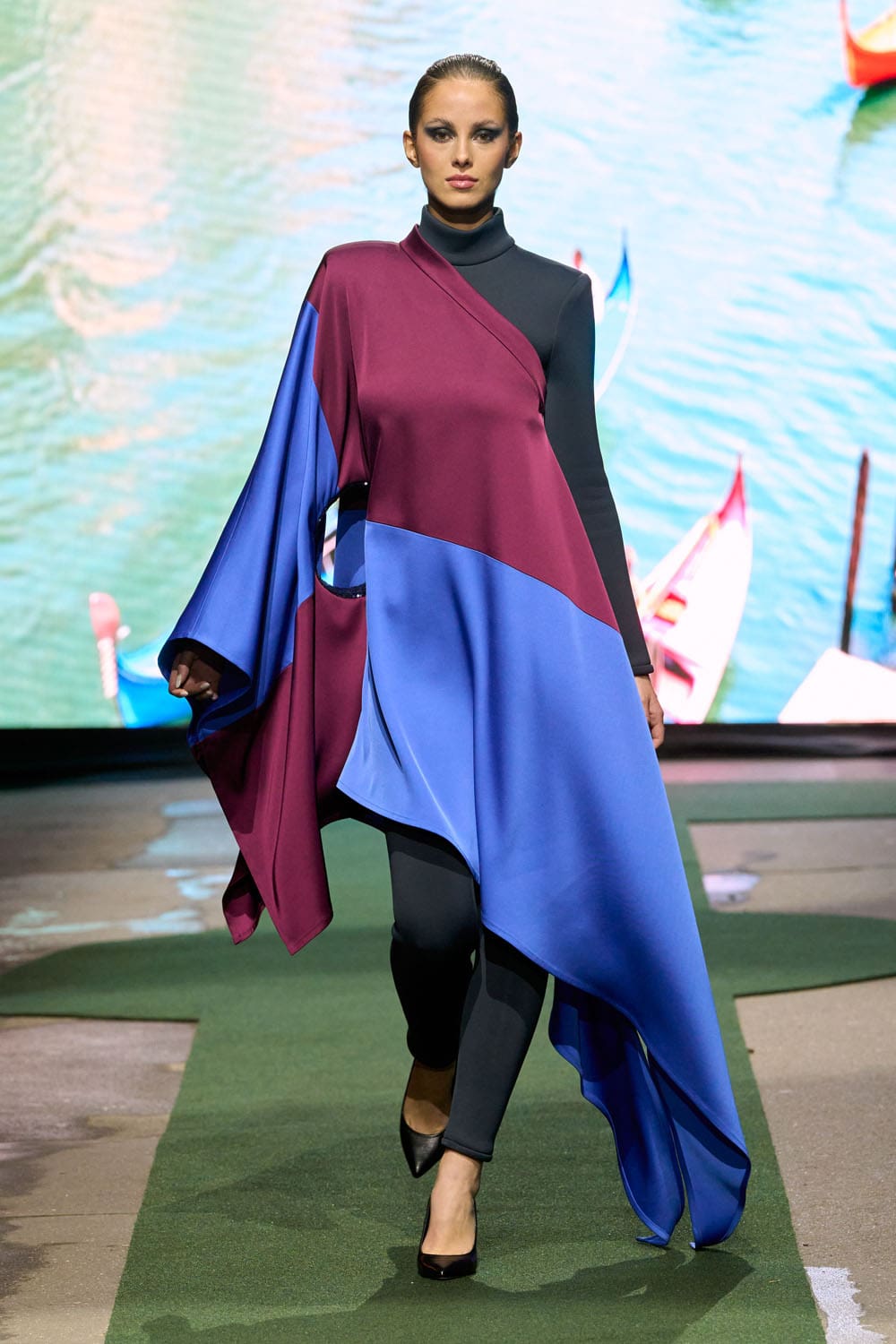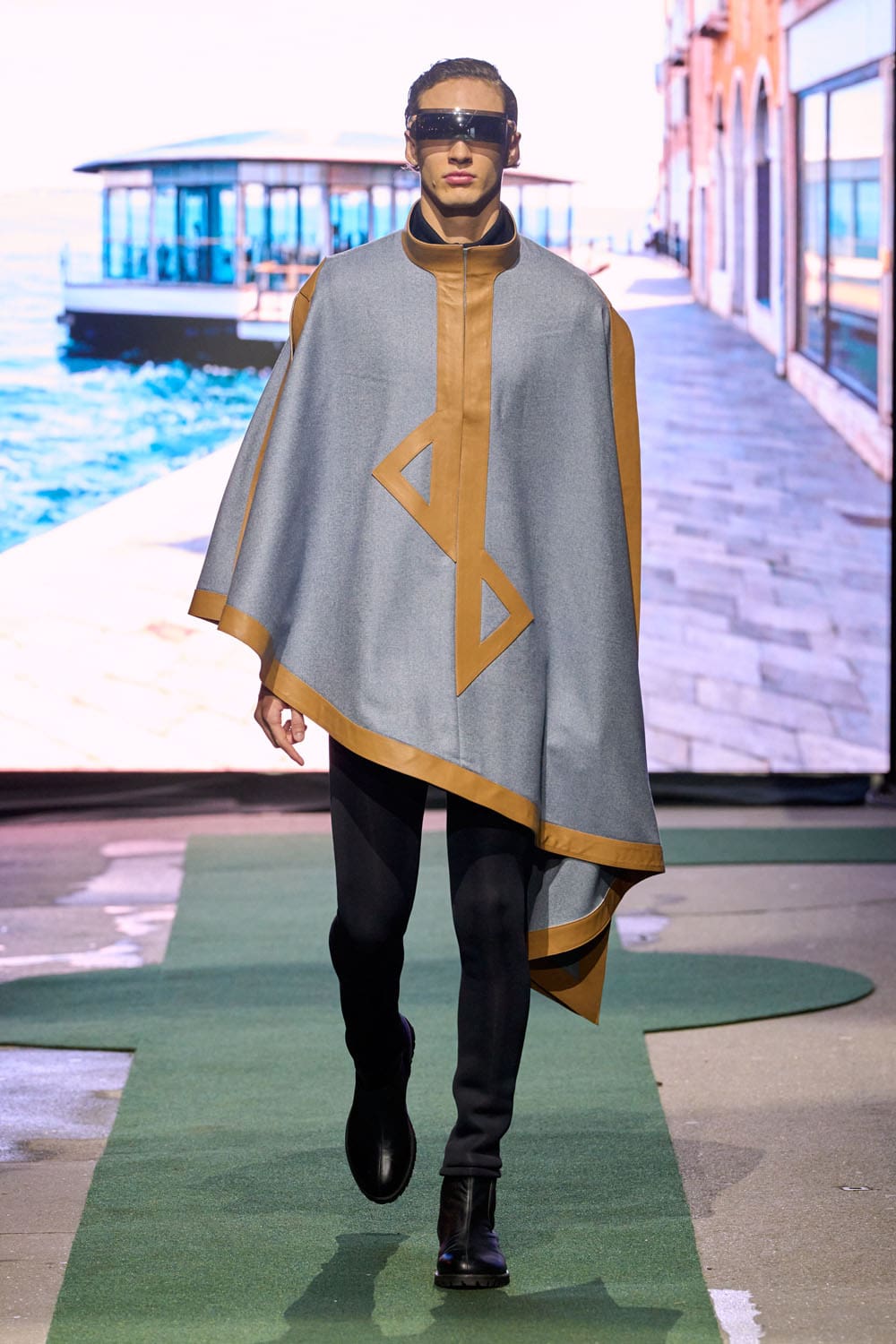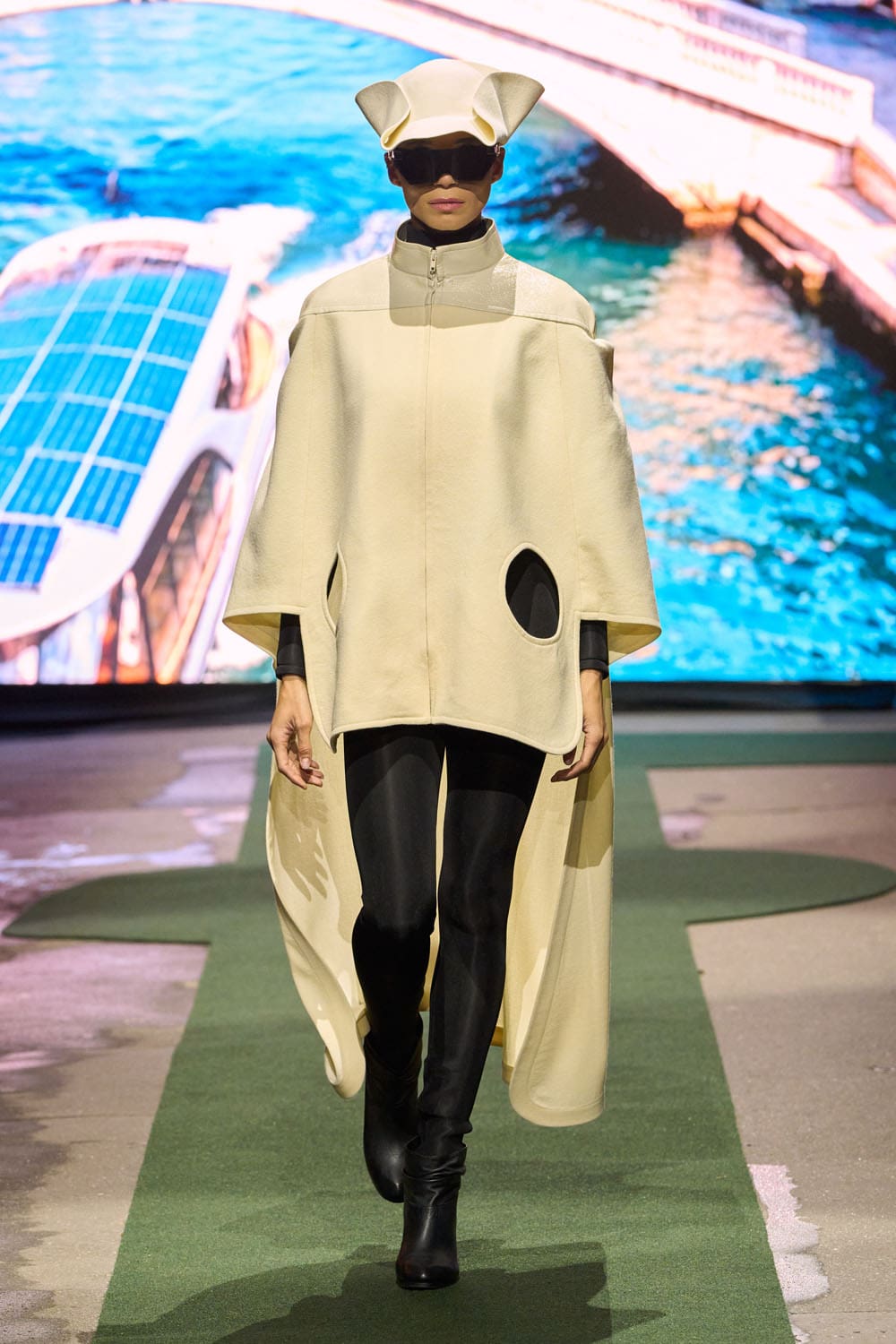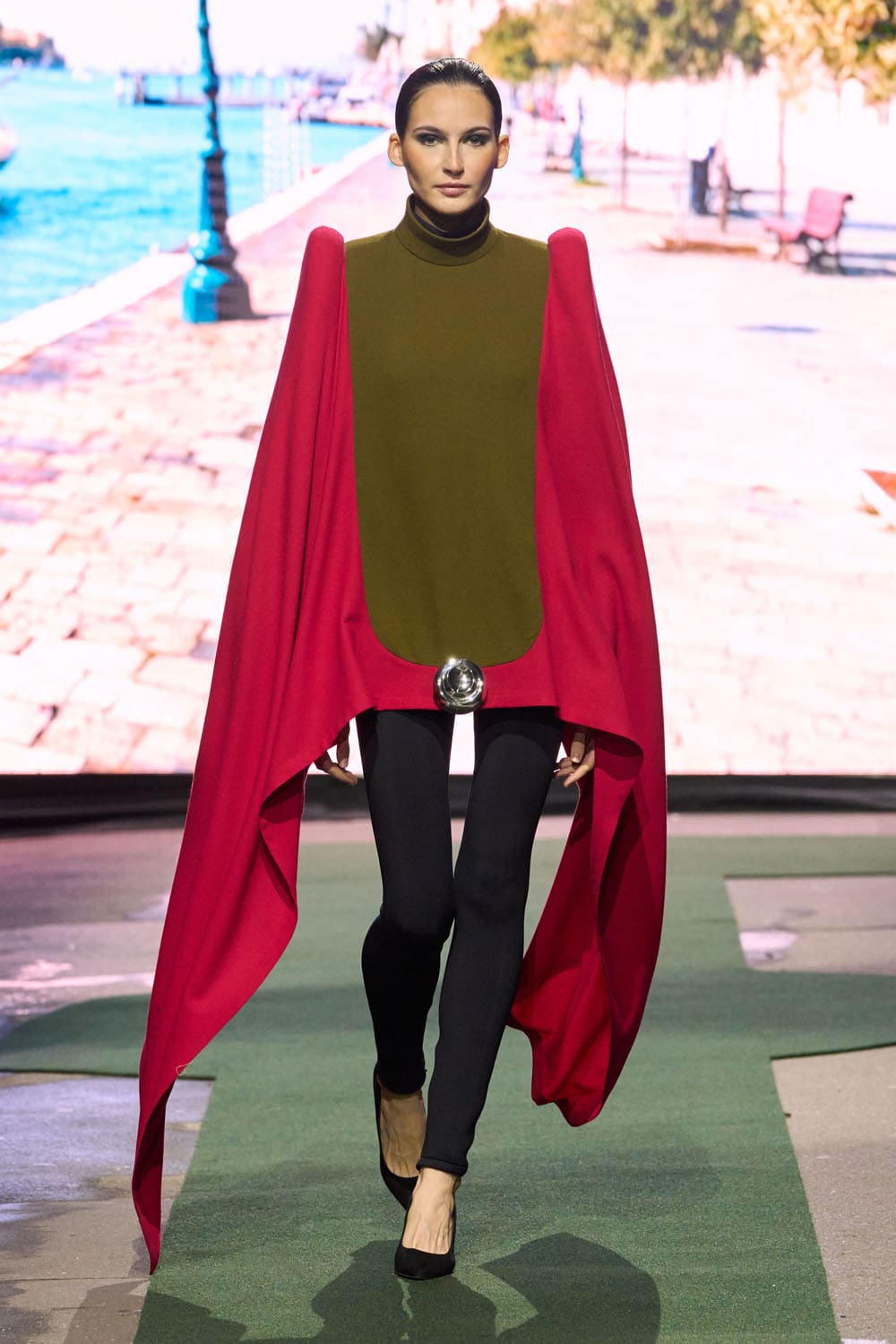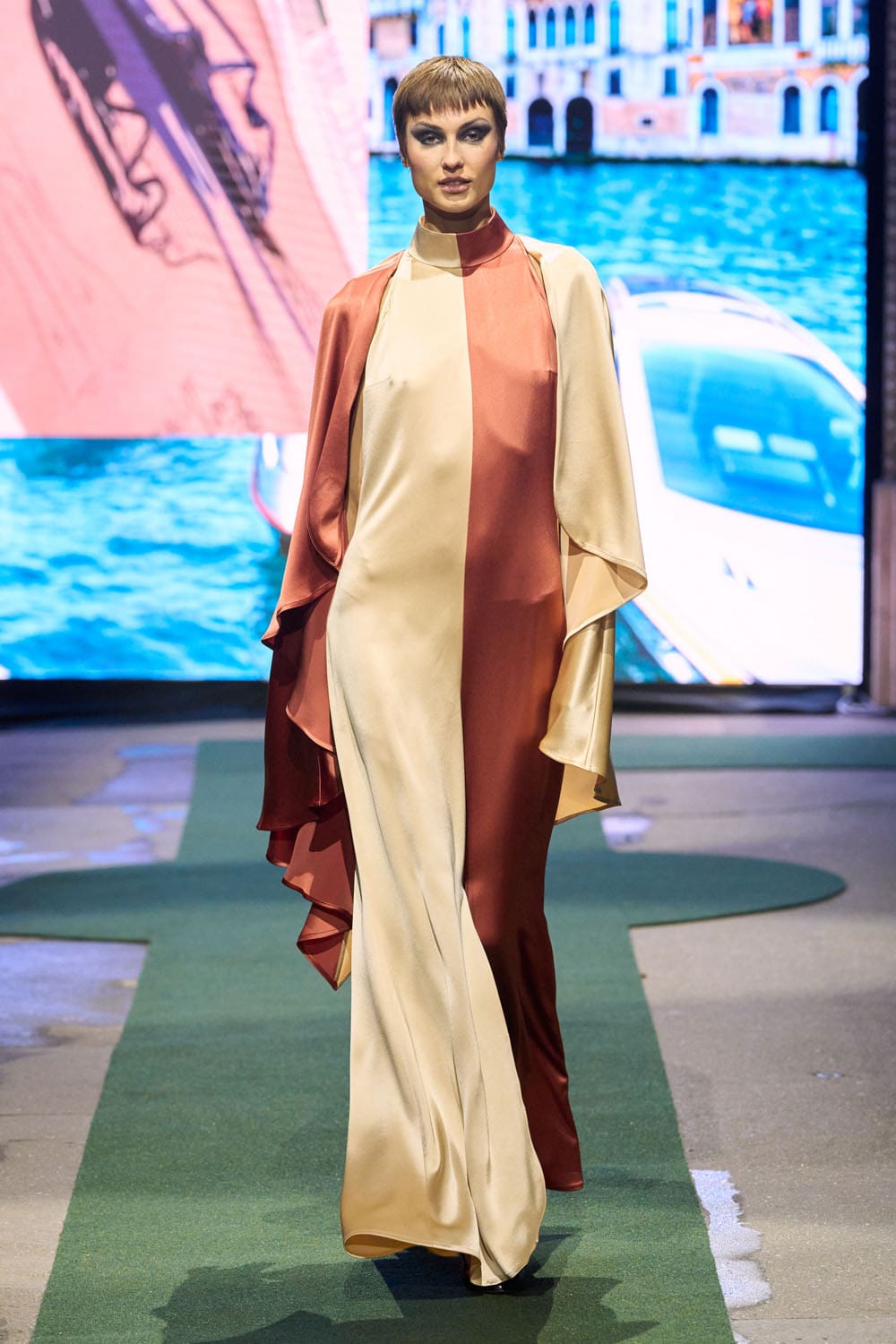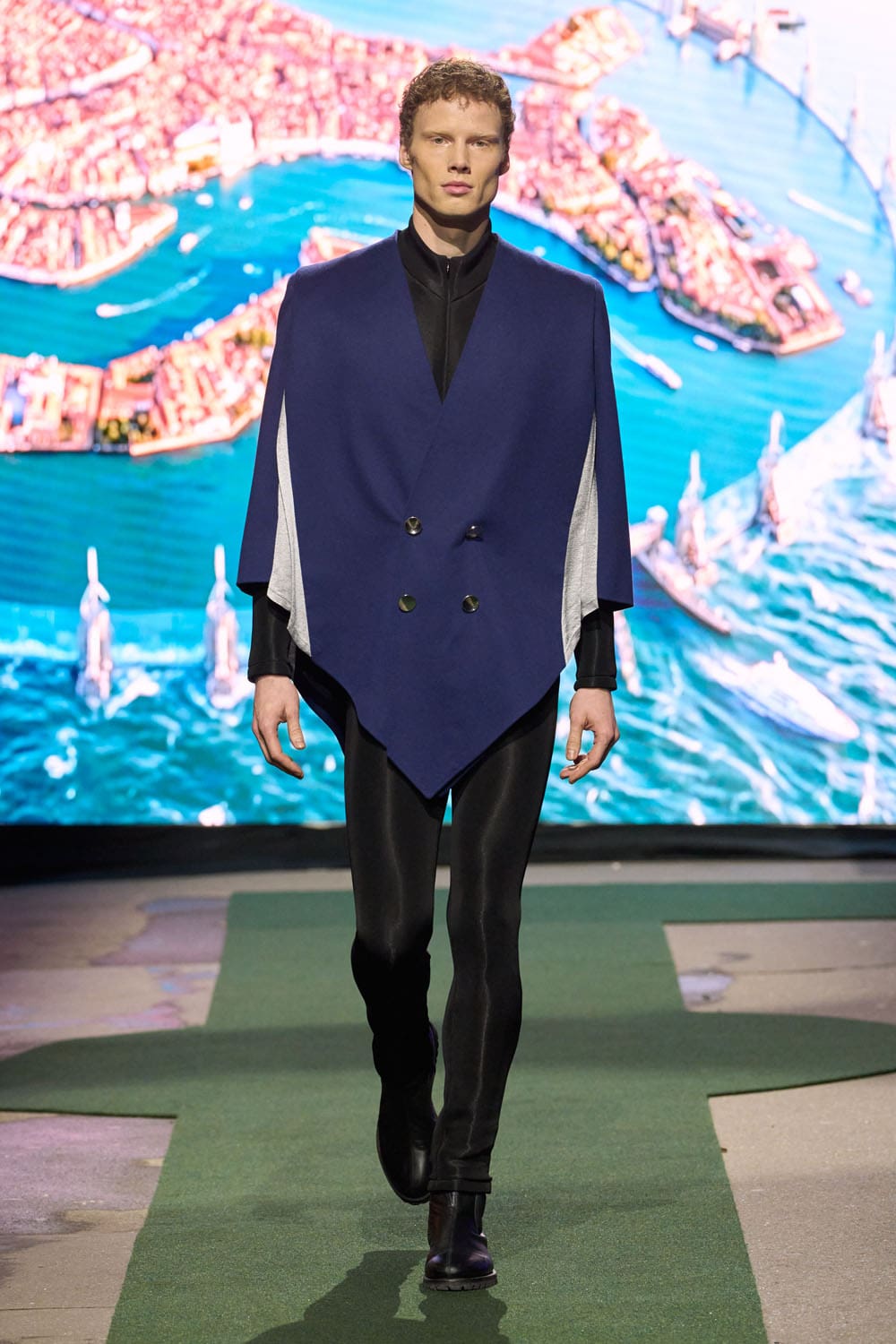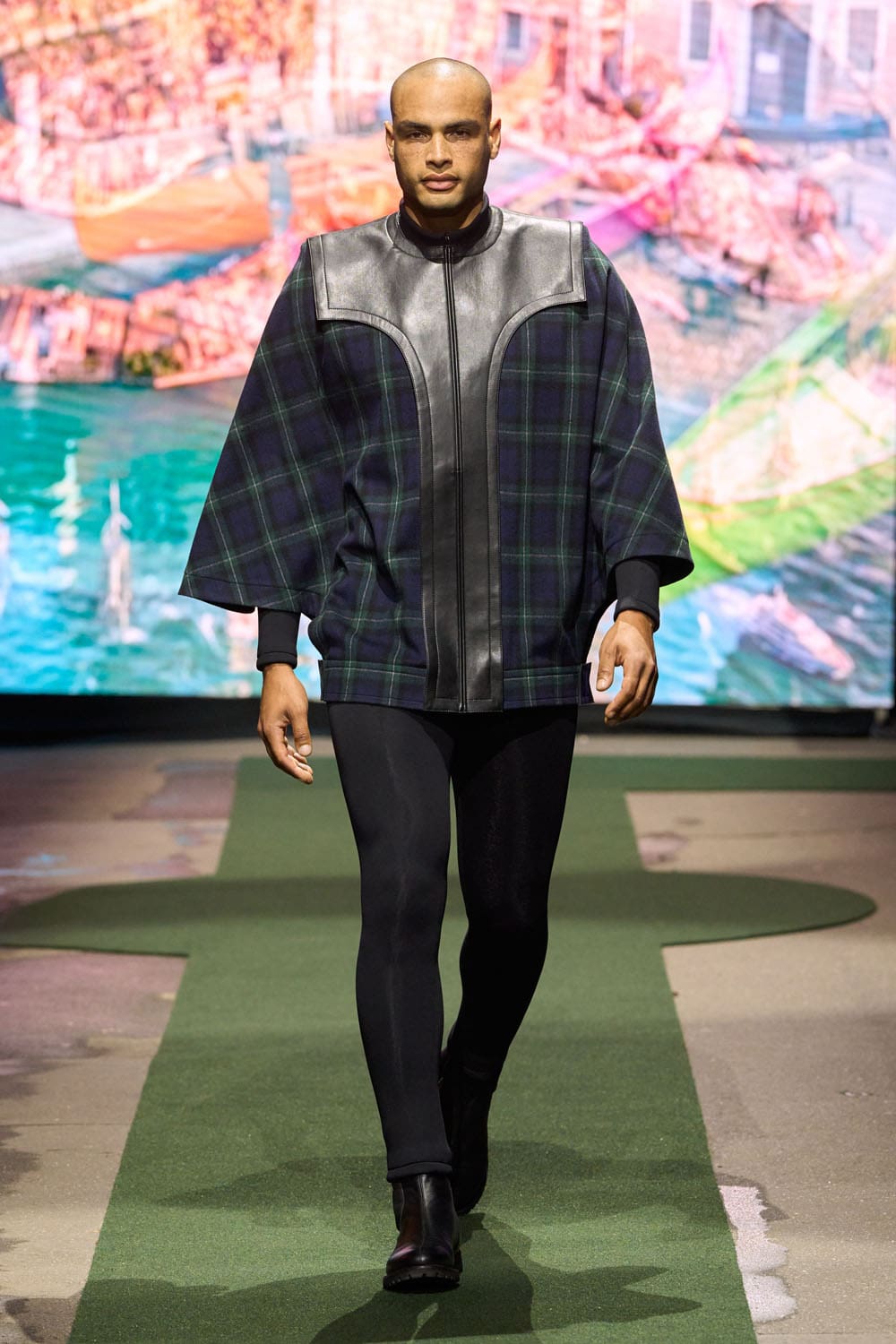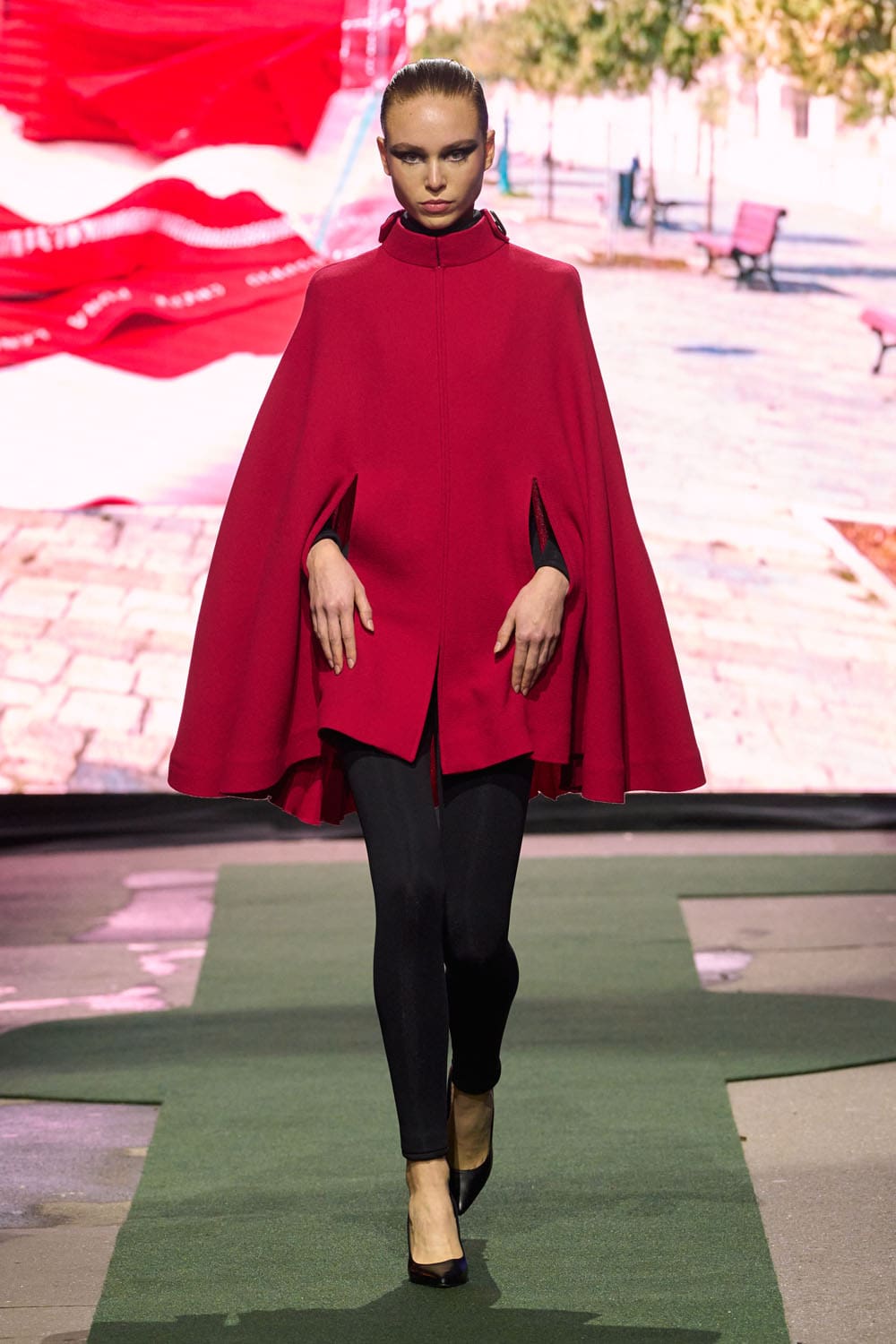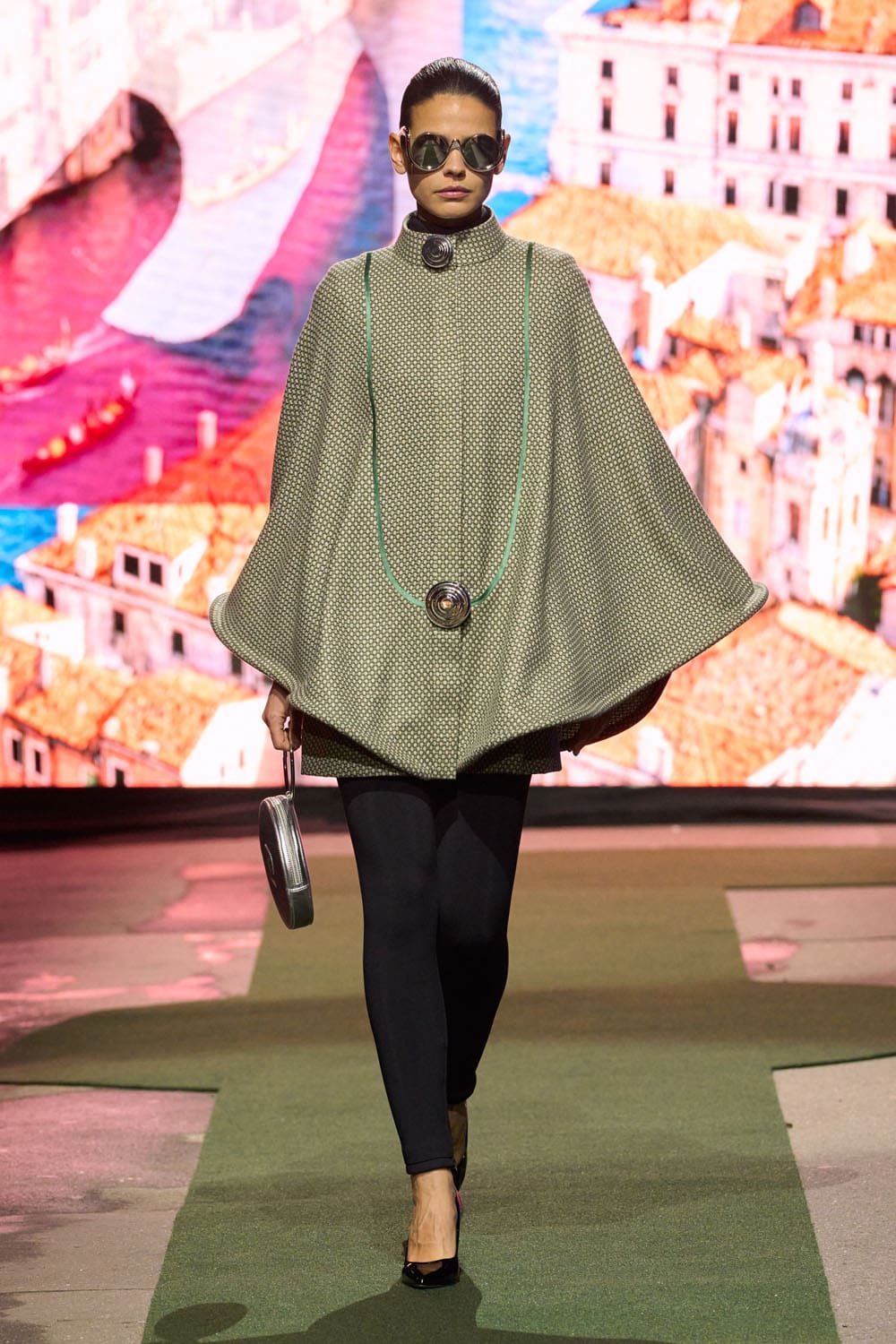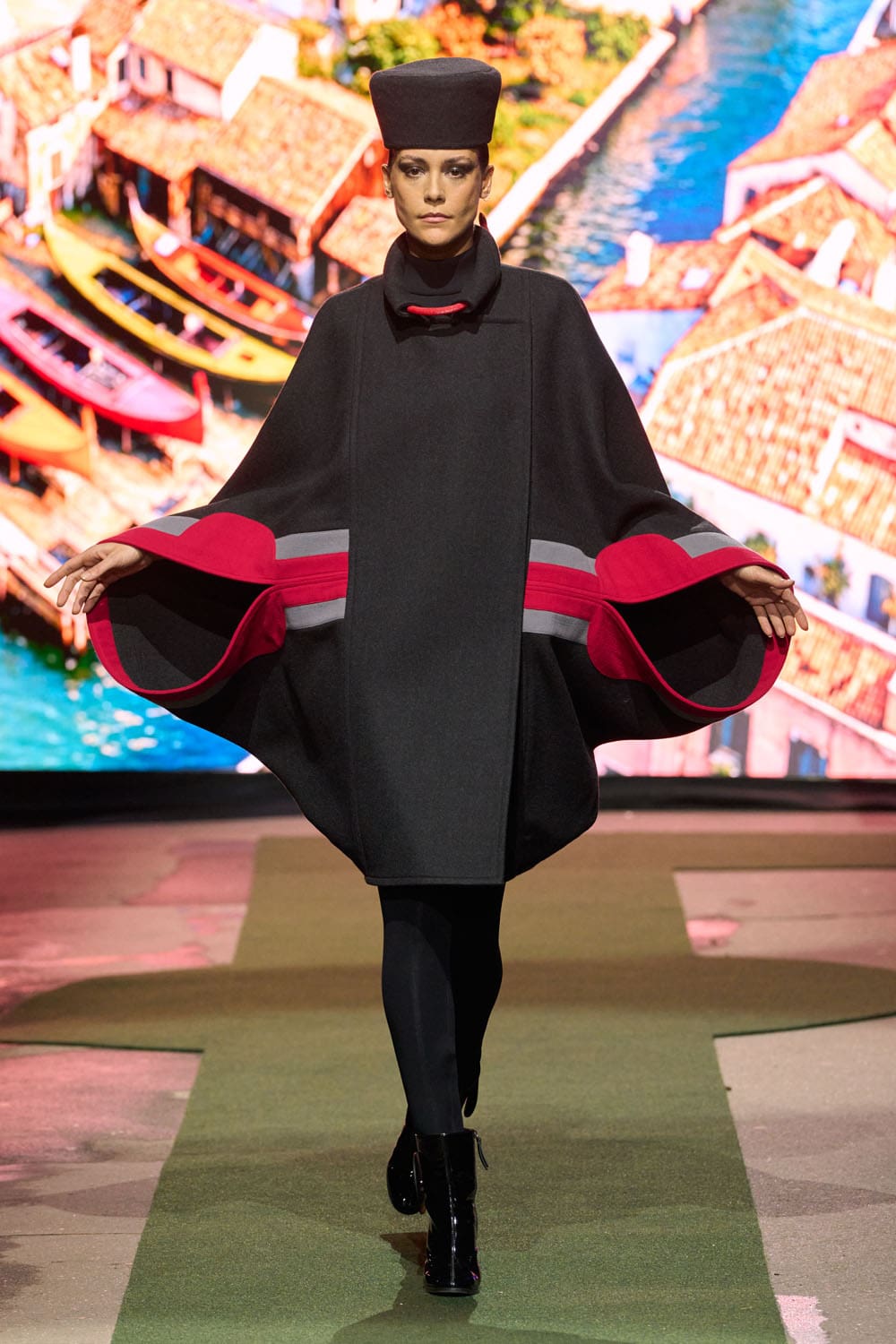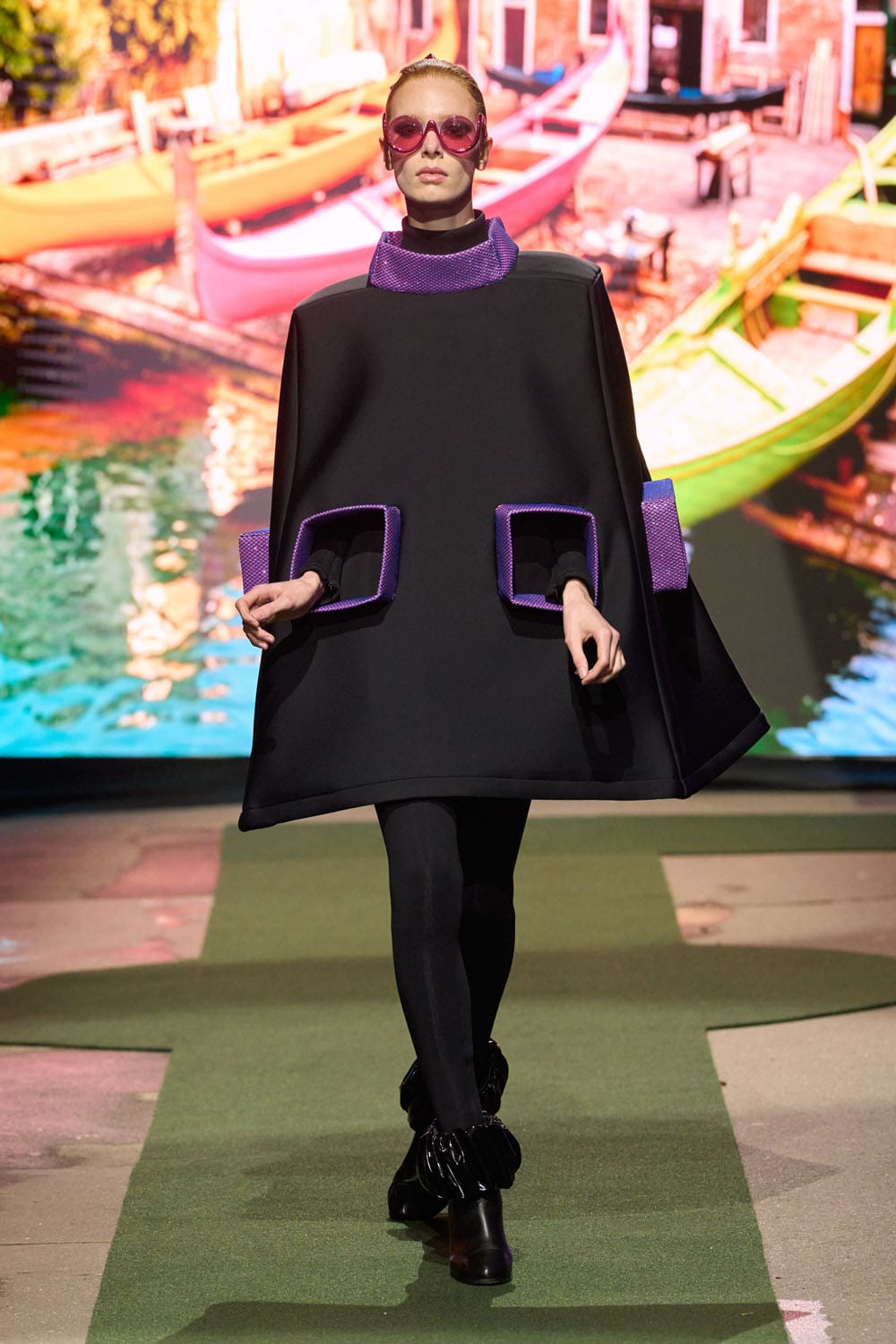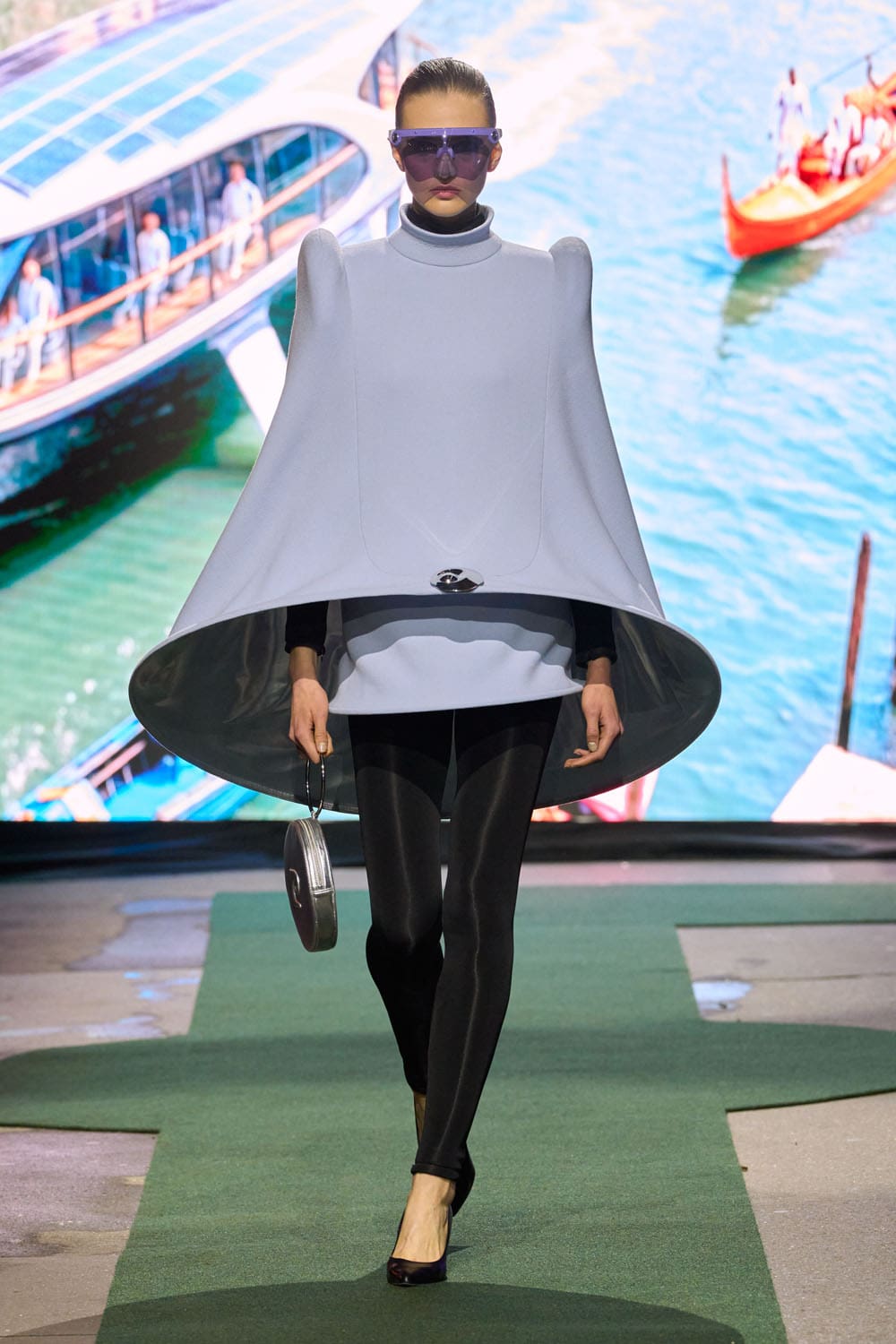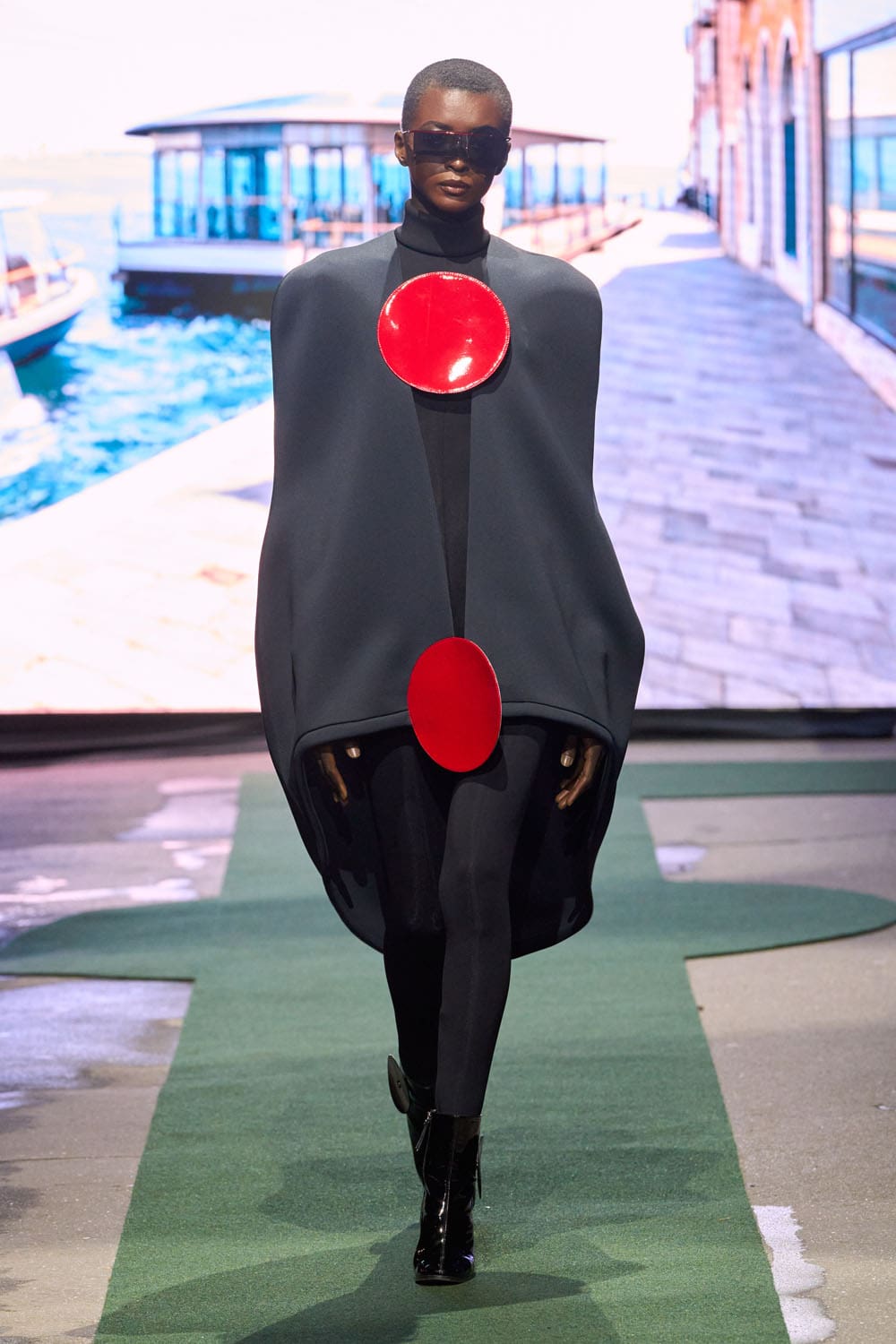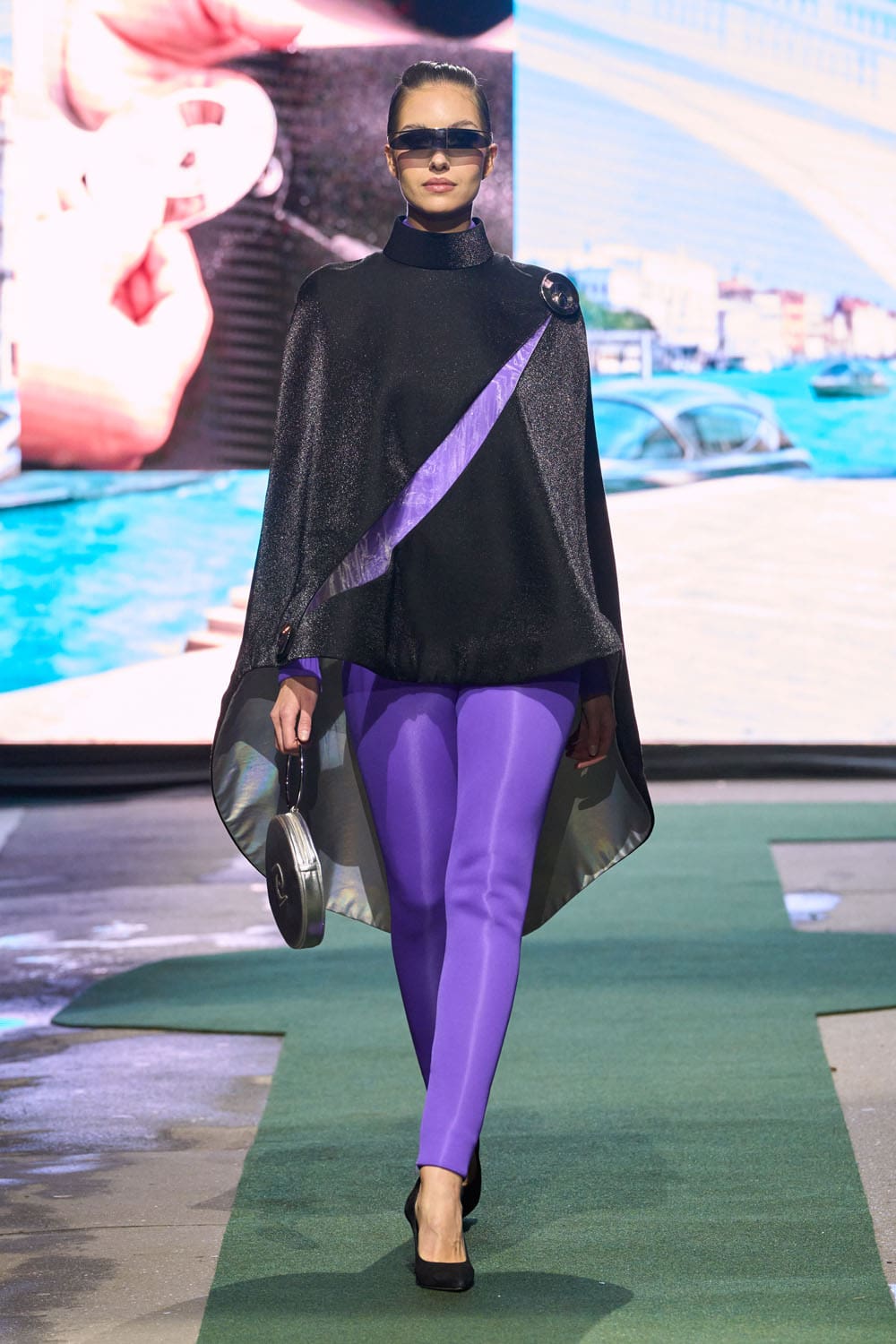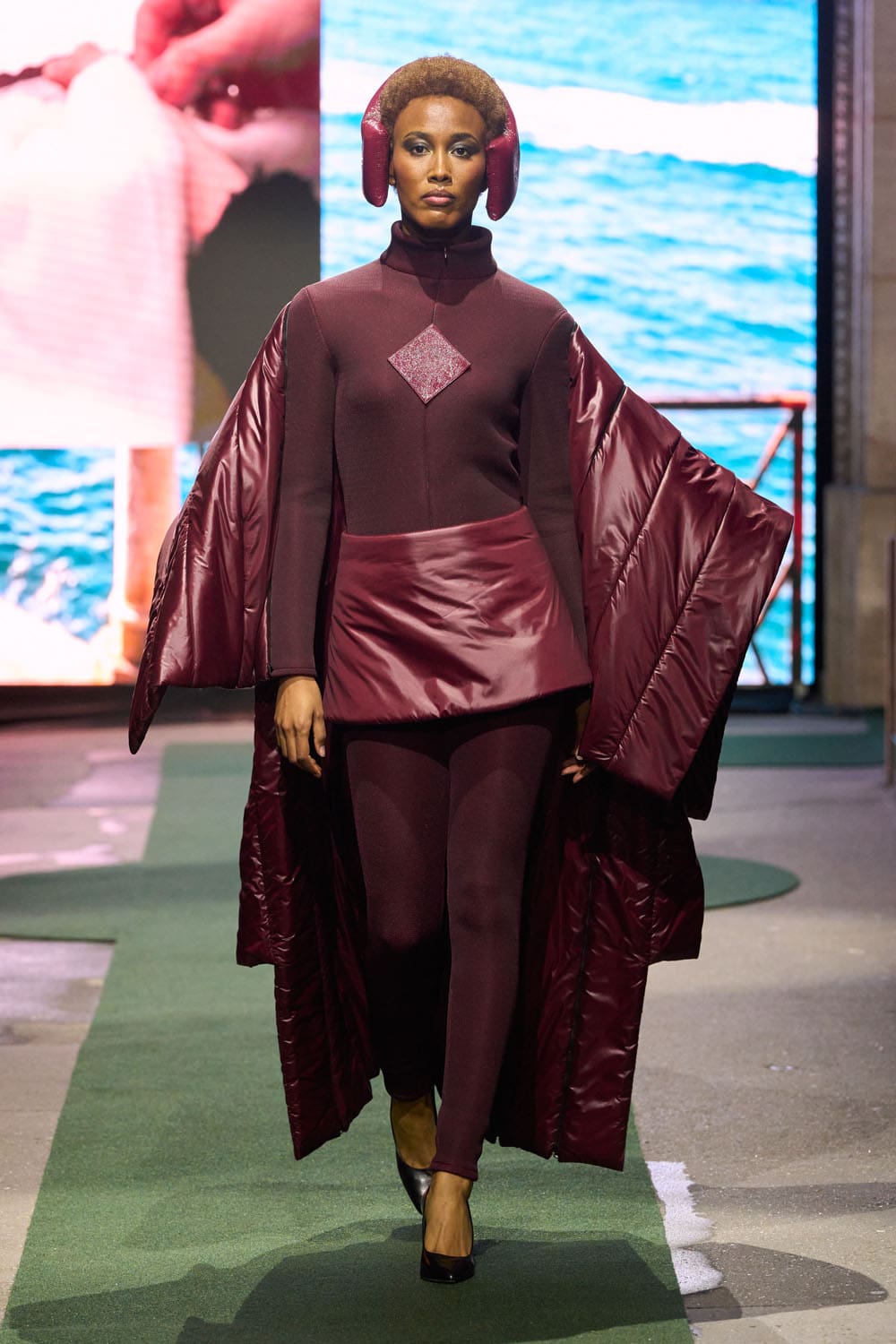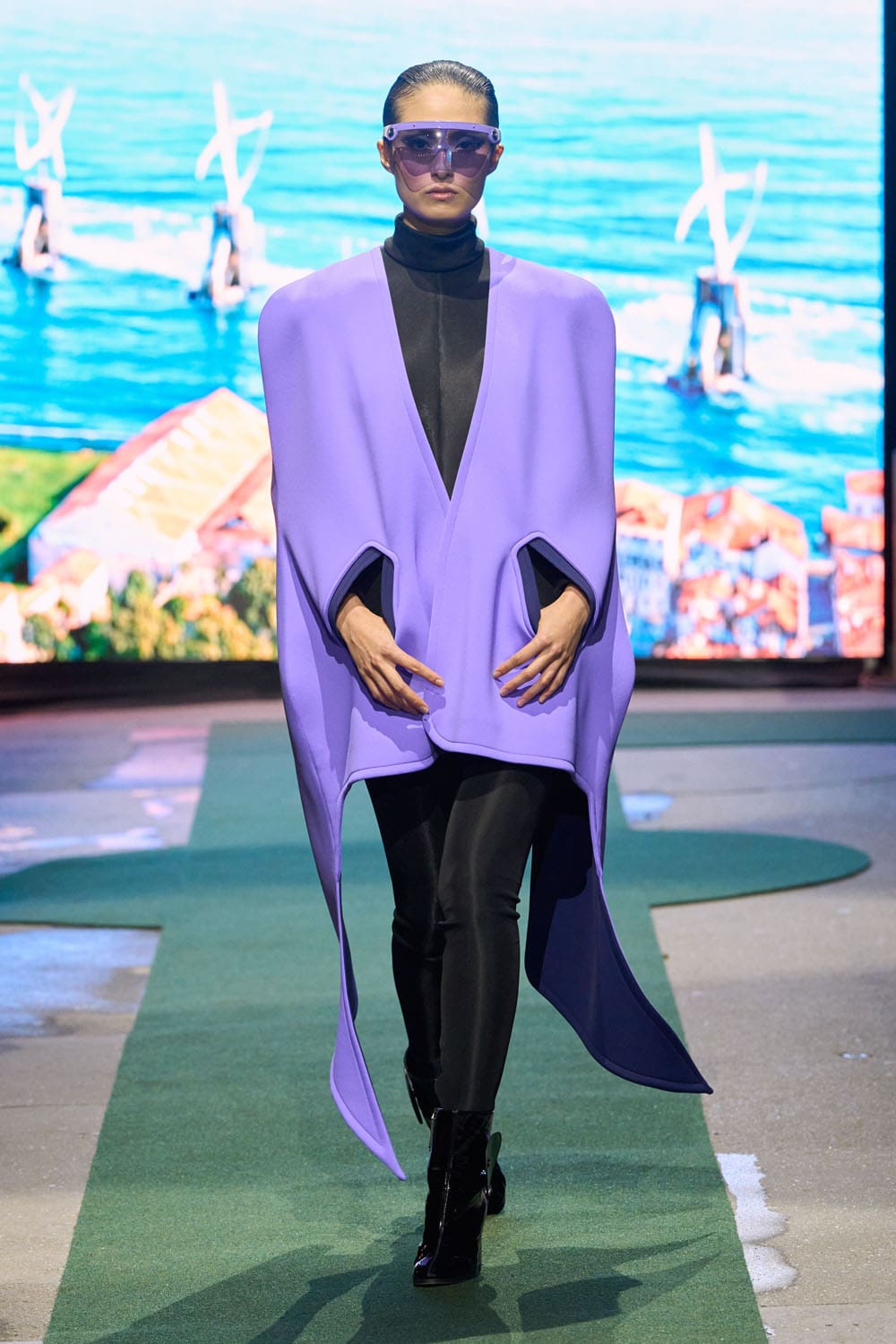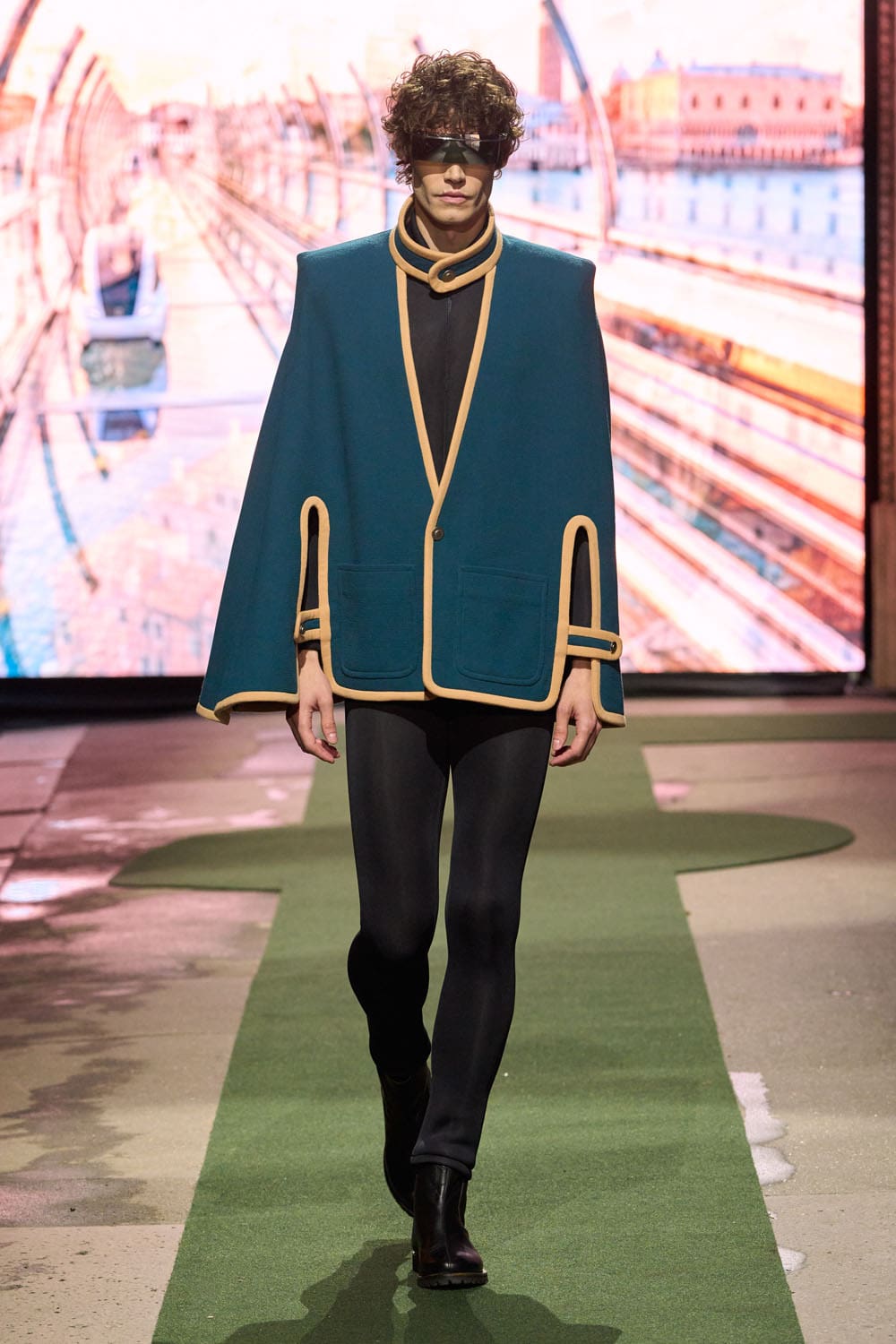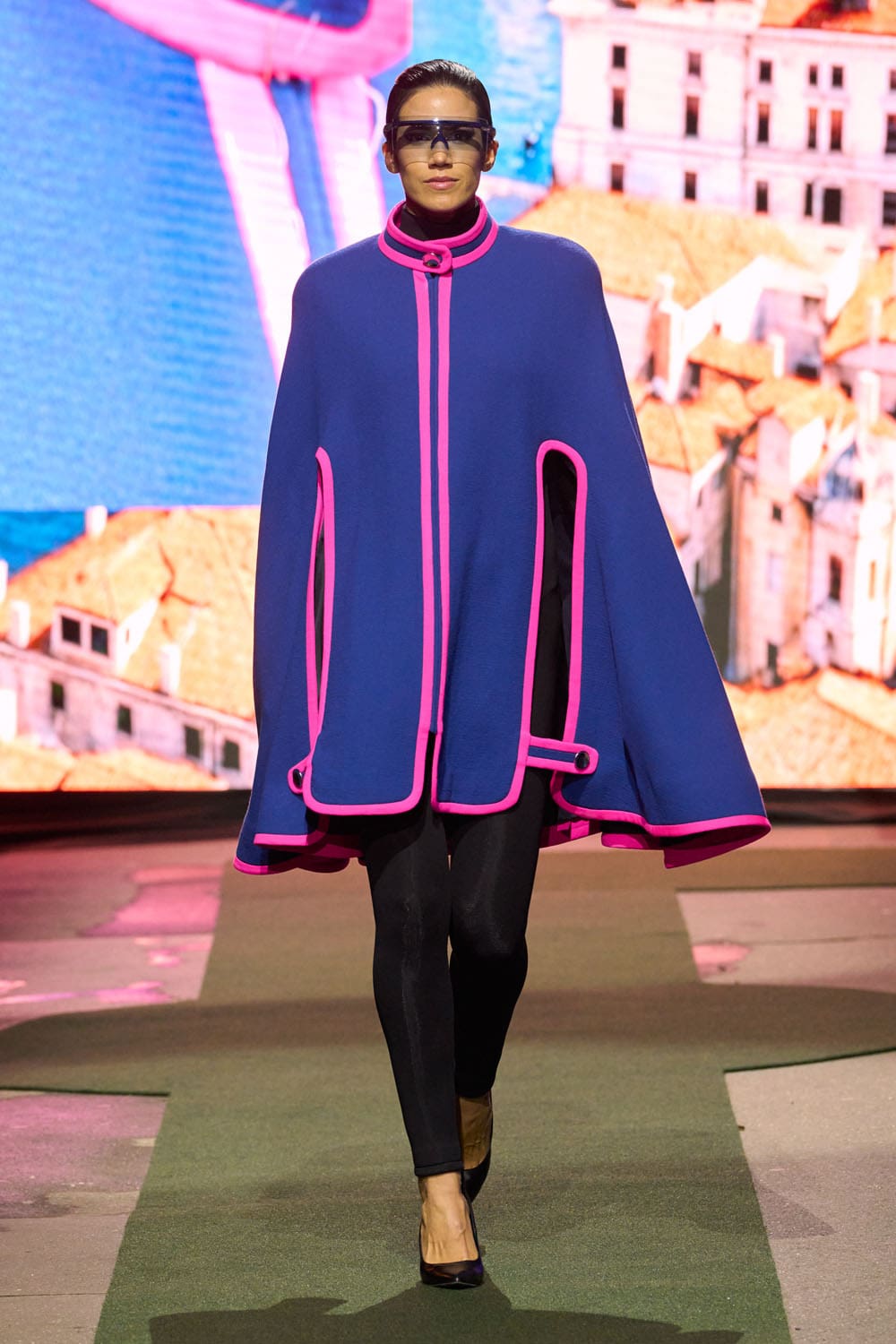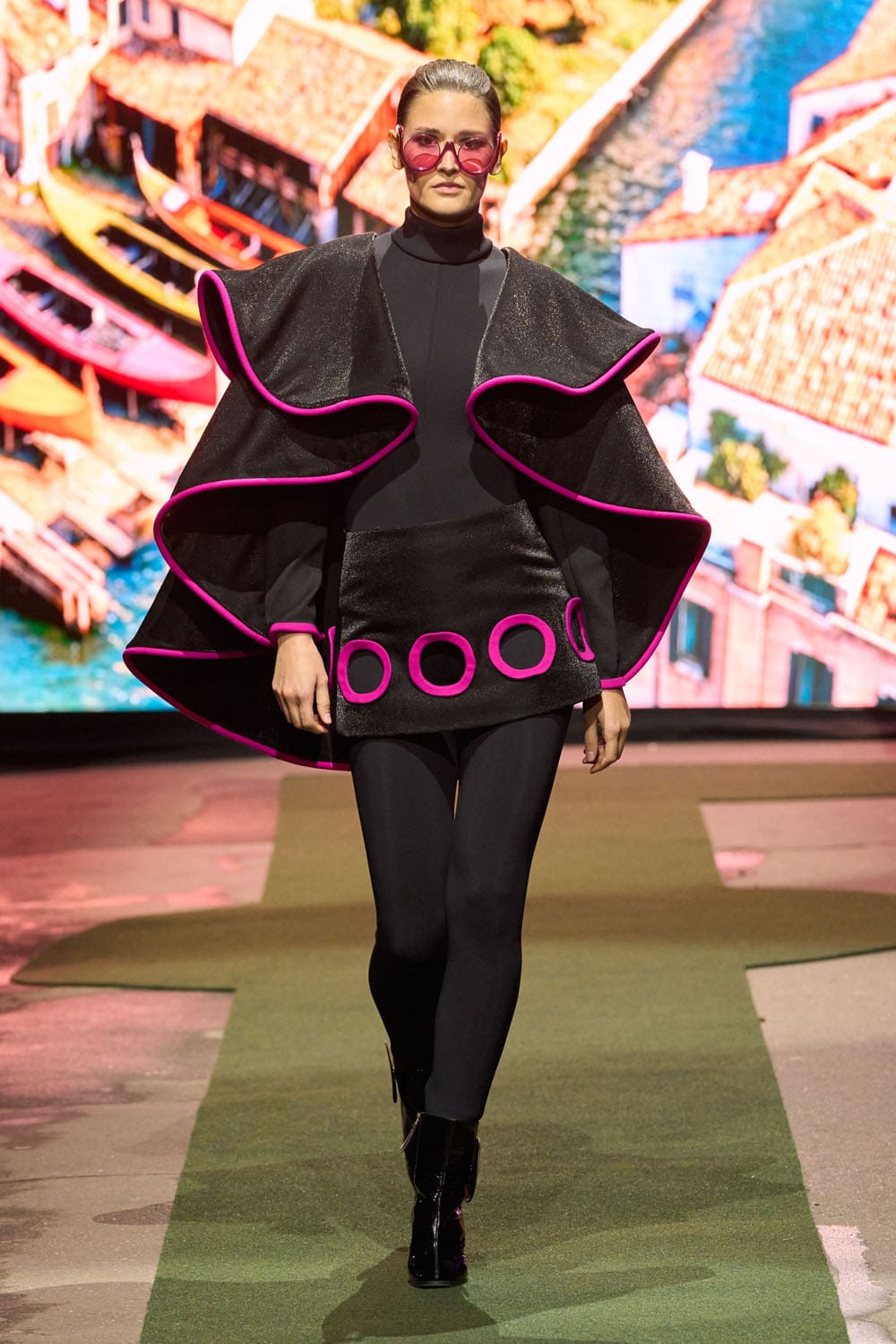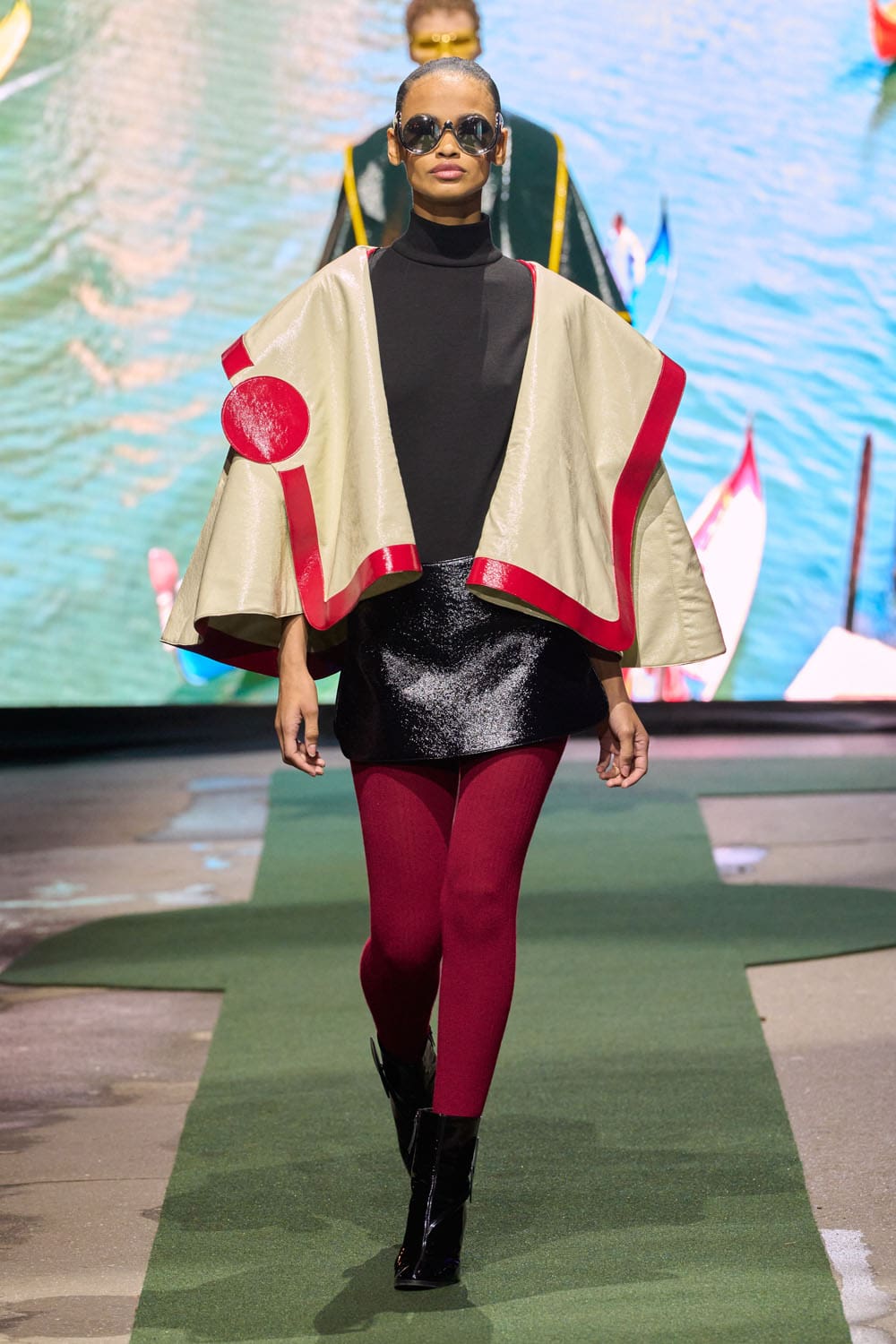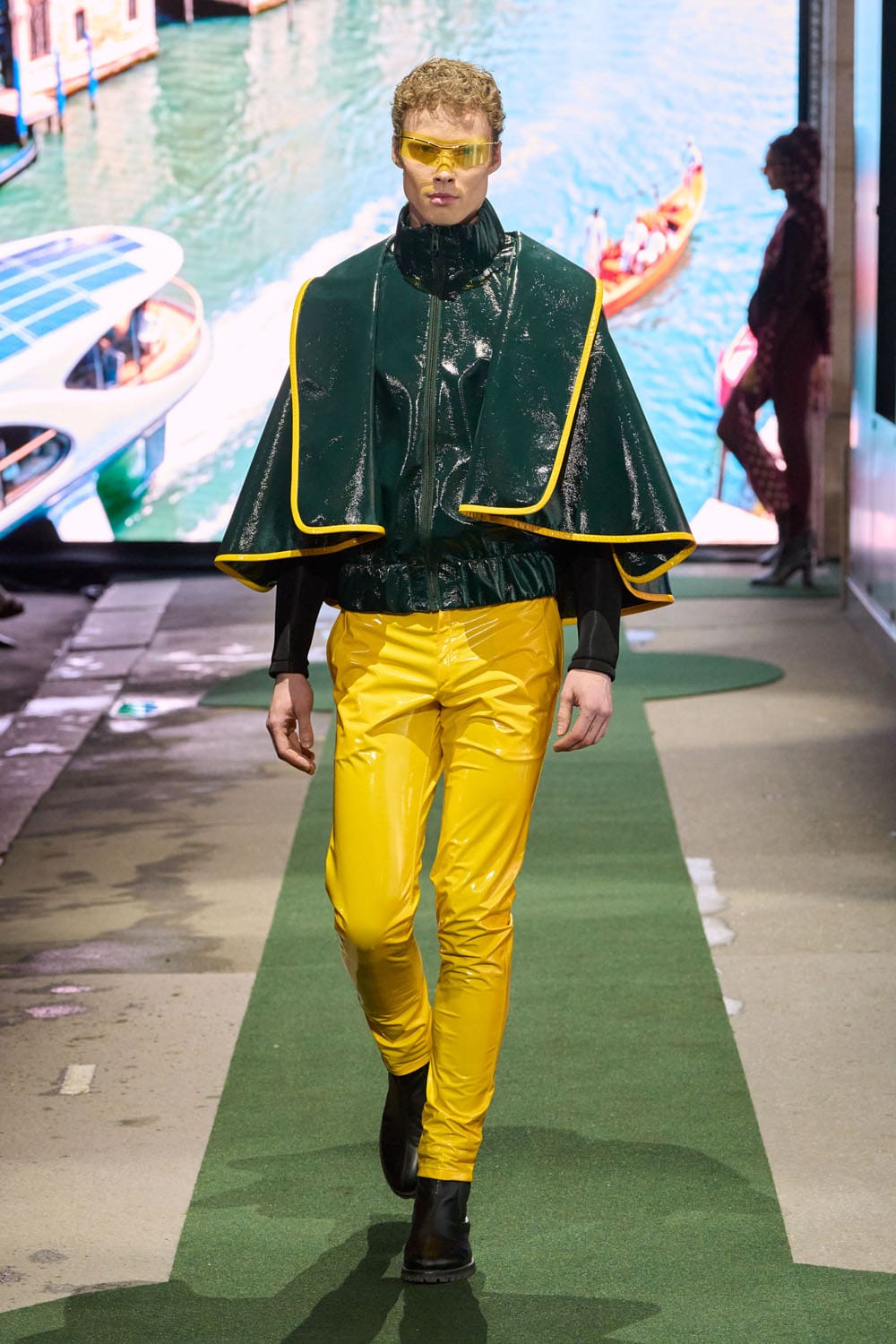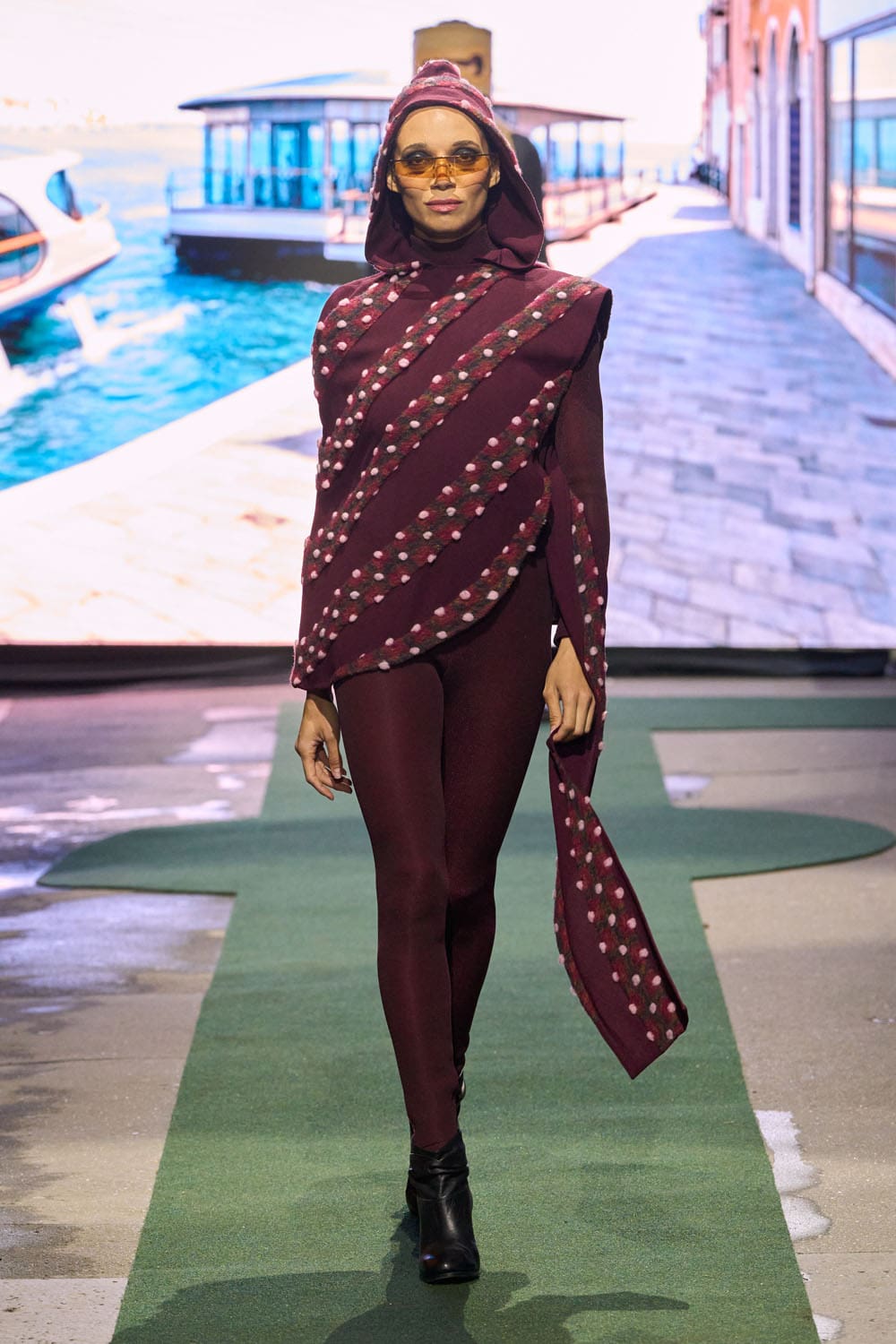
Pierre Cardin Fall Winter 2026-2027 “Venice ’59”. Story by Kate Granger, Editor of RUNWAY MAGAZINE. Photo Courtesy: Pierre Cardin.
There is a clear, uncompromising logic to this collection: Pierre Cardin does not sentimentalize Venice. It translates the city’s architecture, ritual and precariousness into a wardrobe that reads as preparedness first, costume second. Venice ’59 is less a romantic postcard than a rehearsal for a nearer, wetter future — clothes conceived as both ceremony and protection.
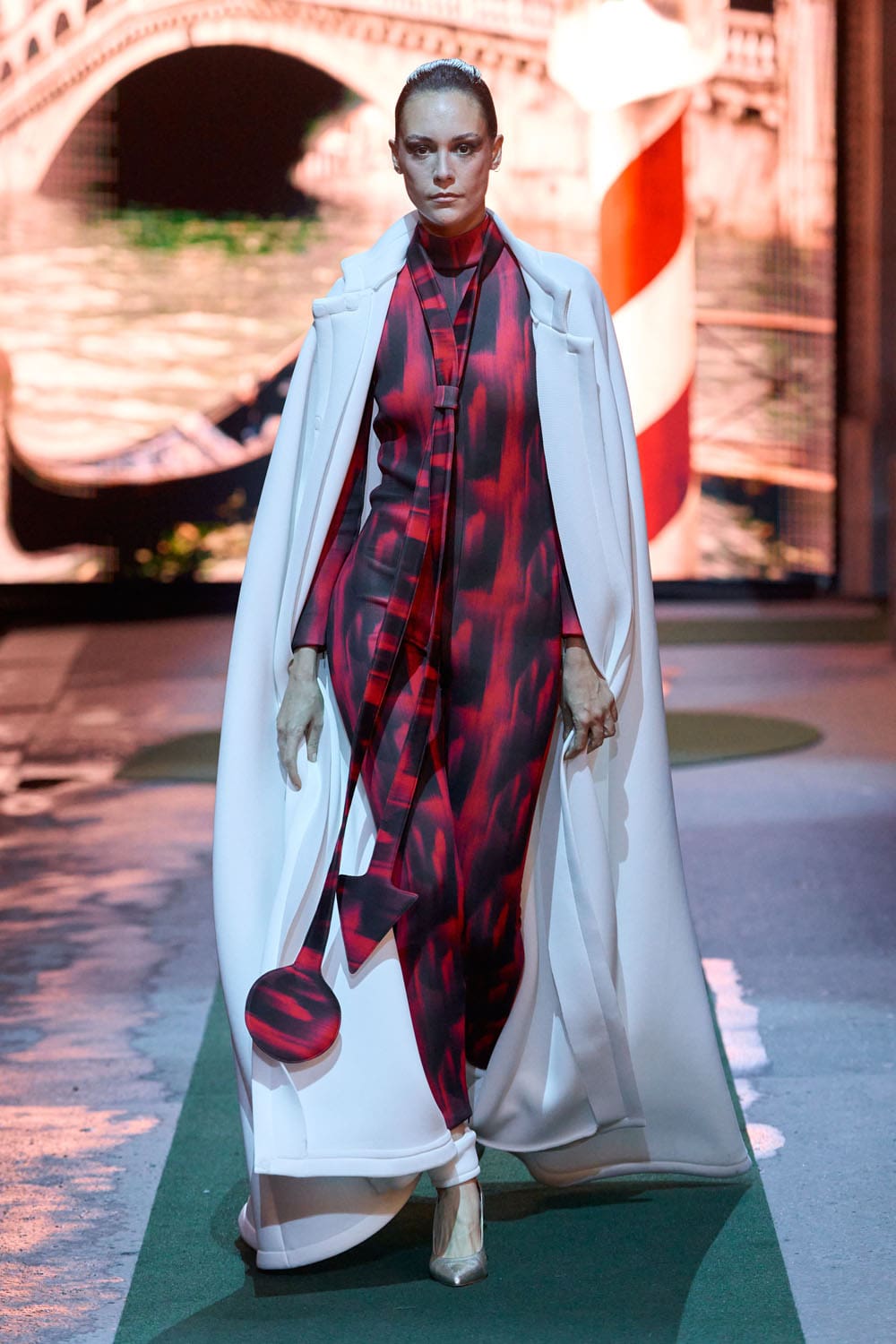
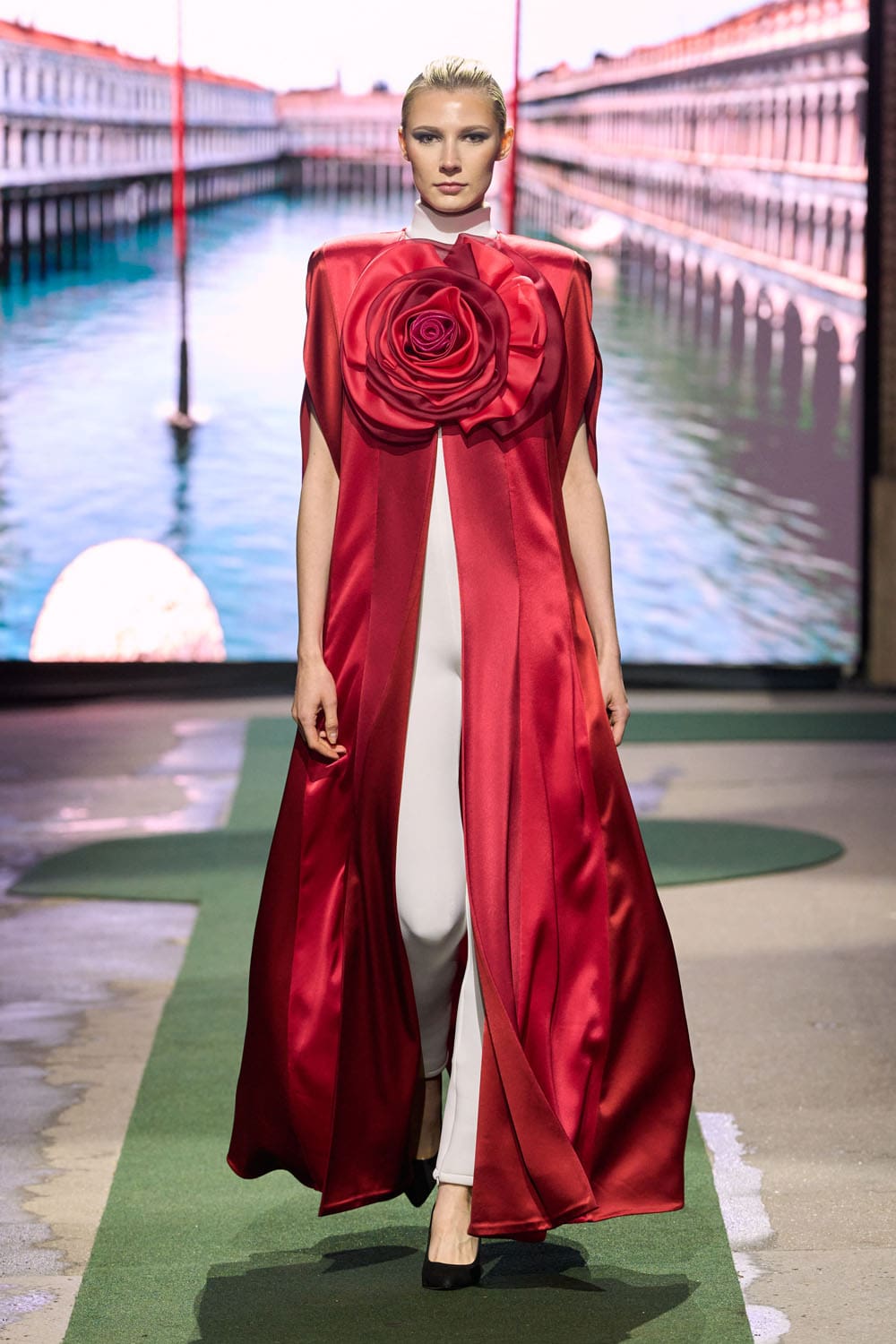
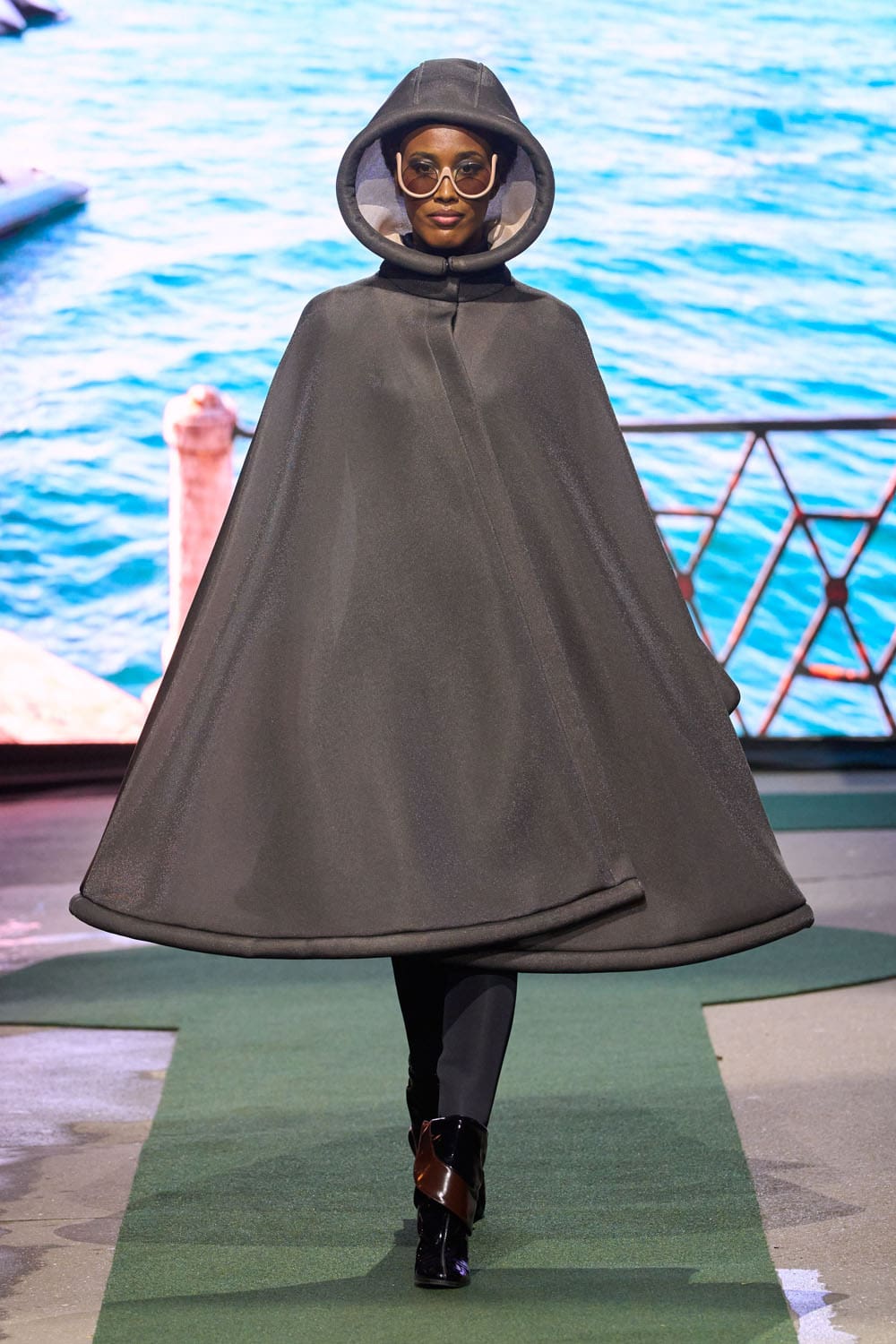
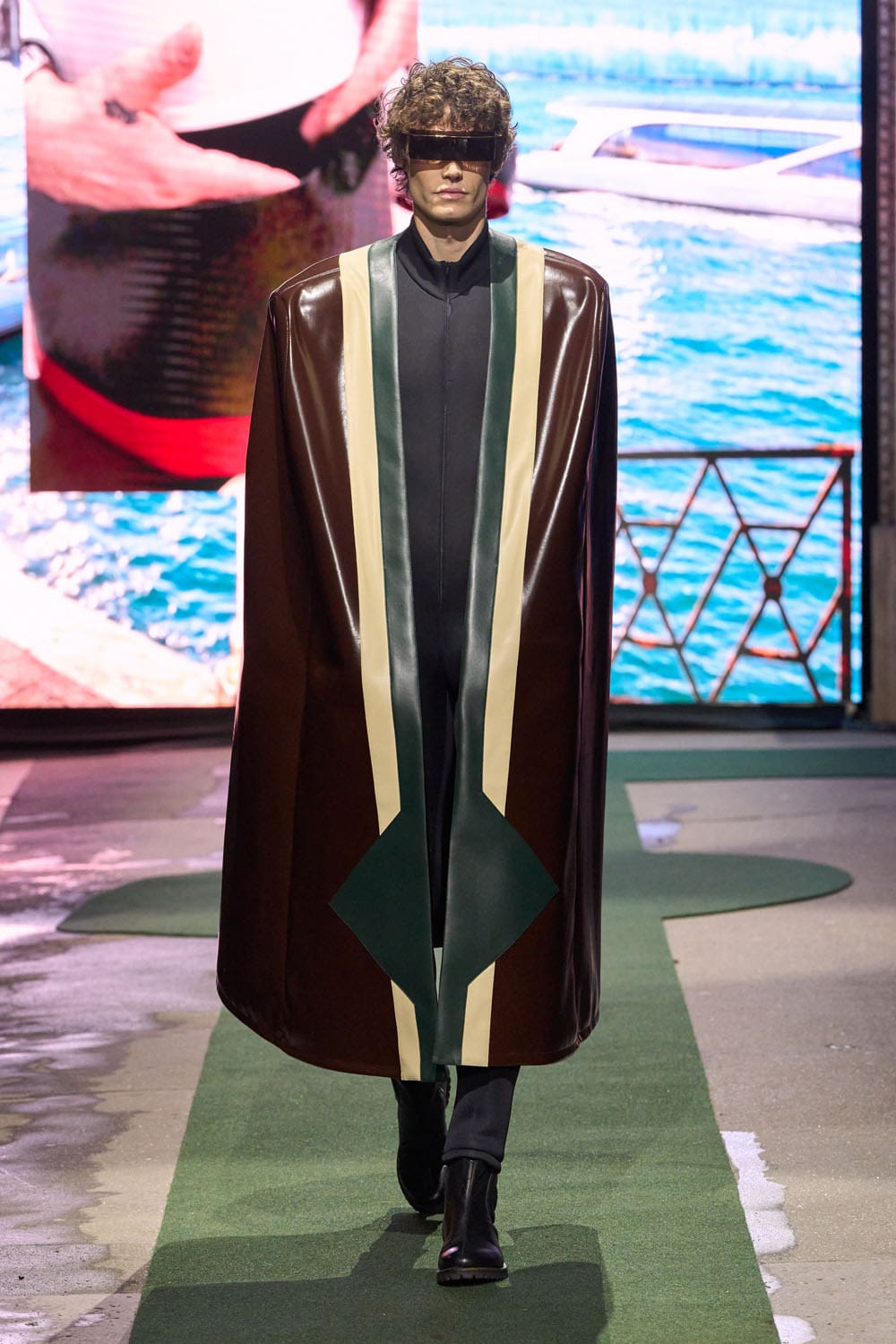
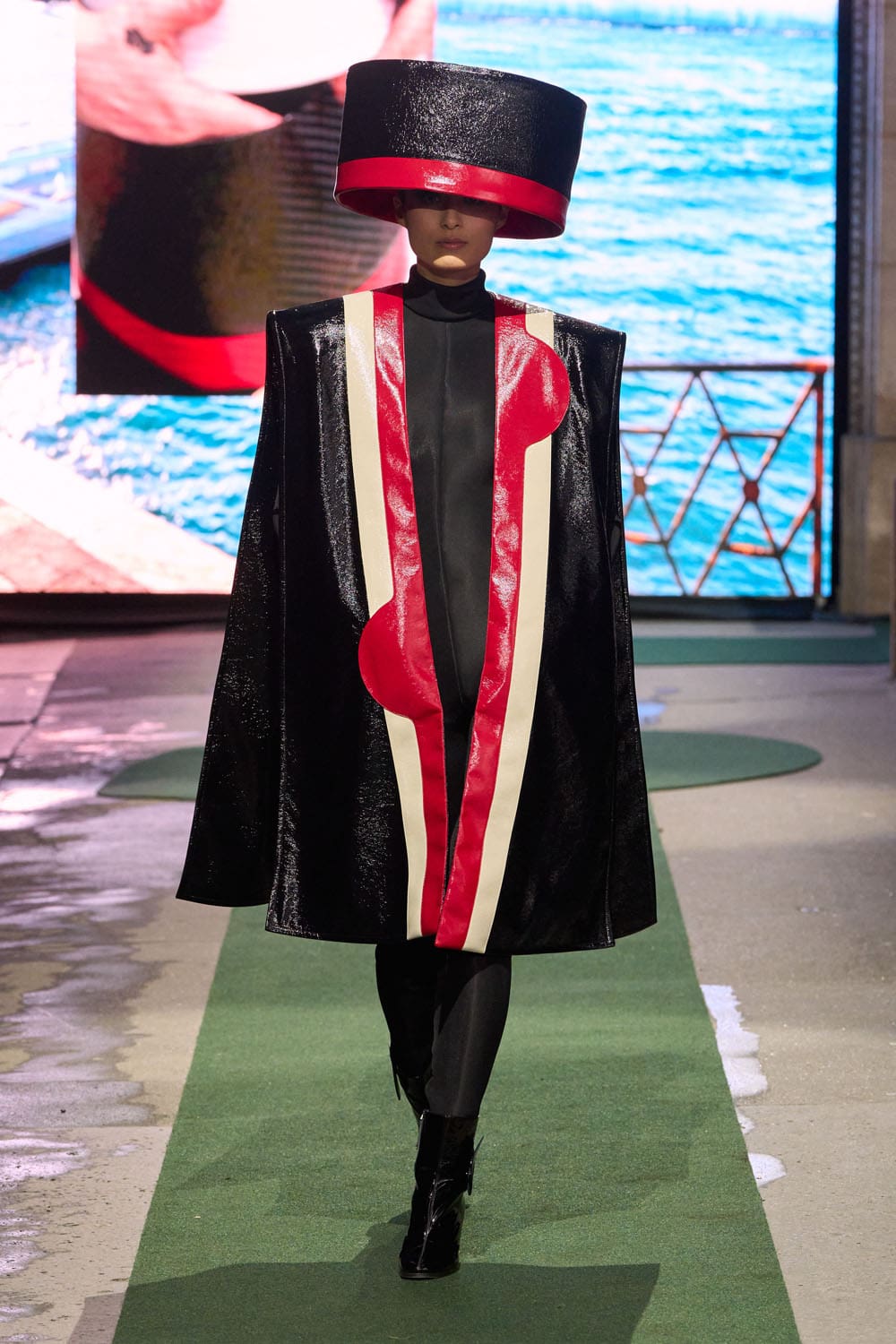
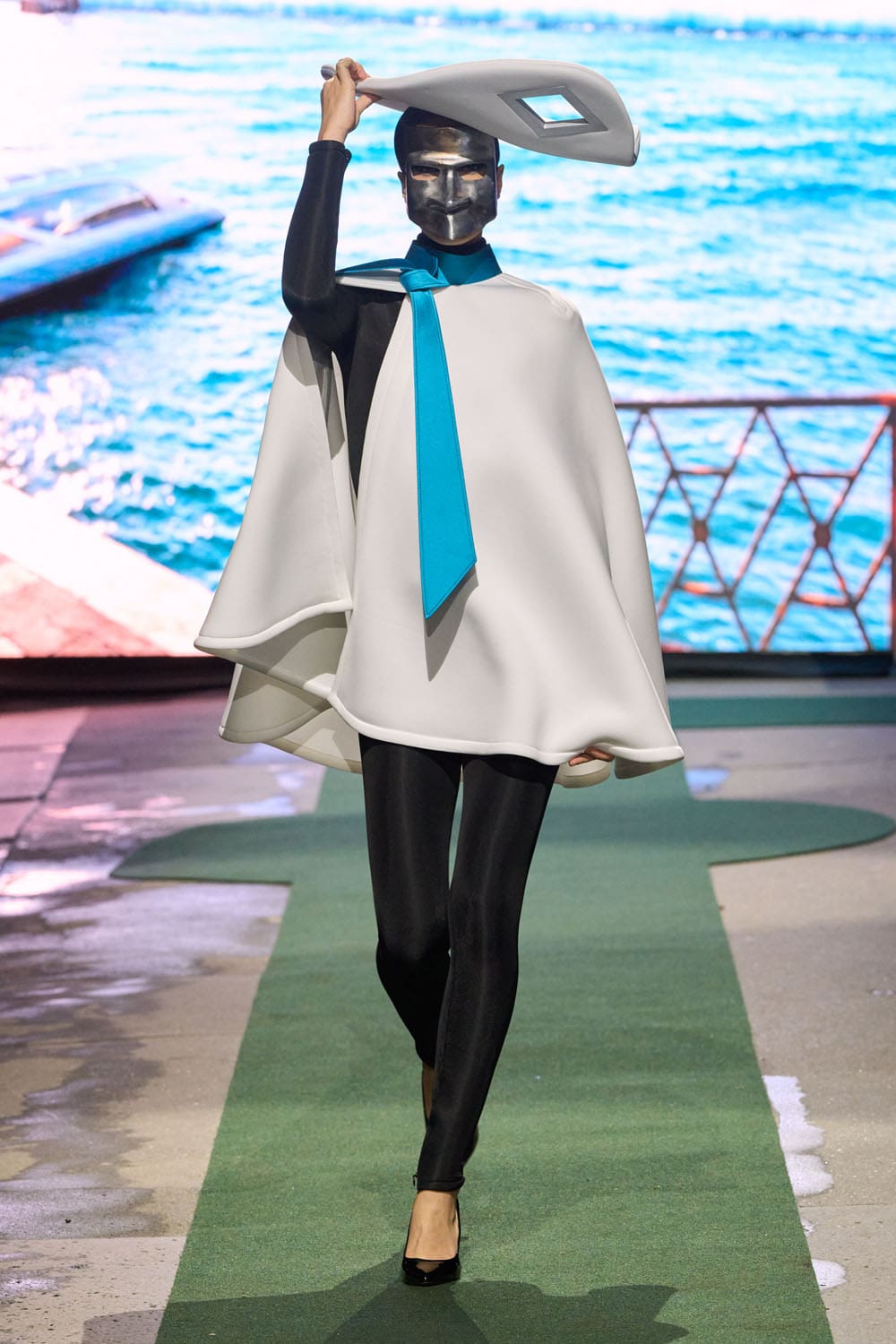
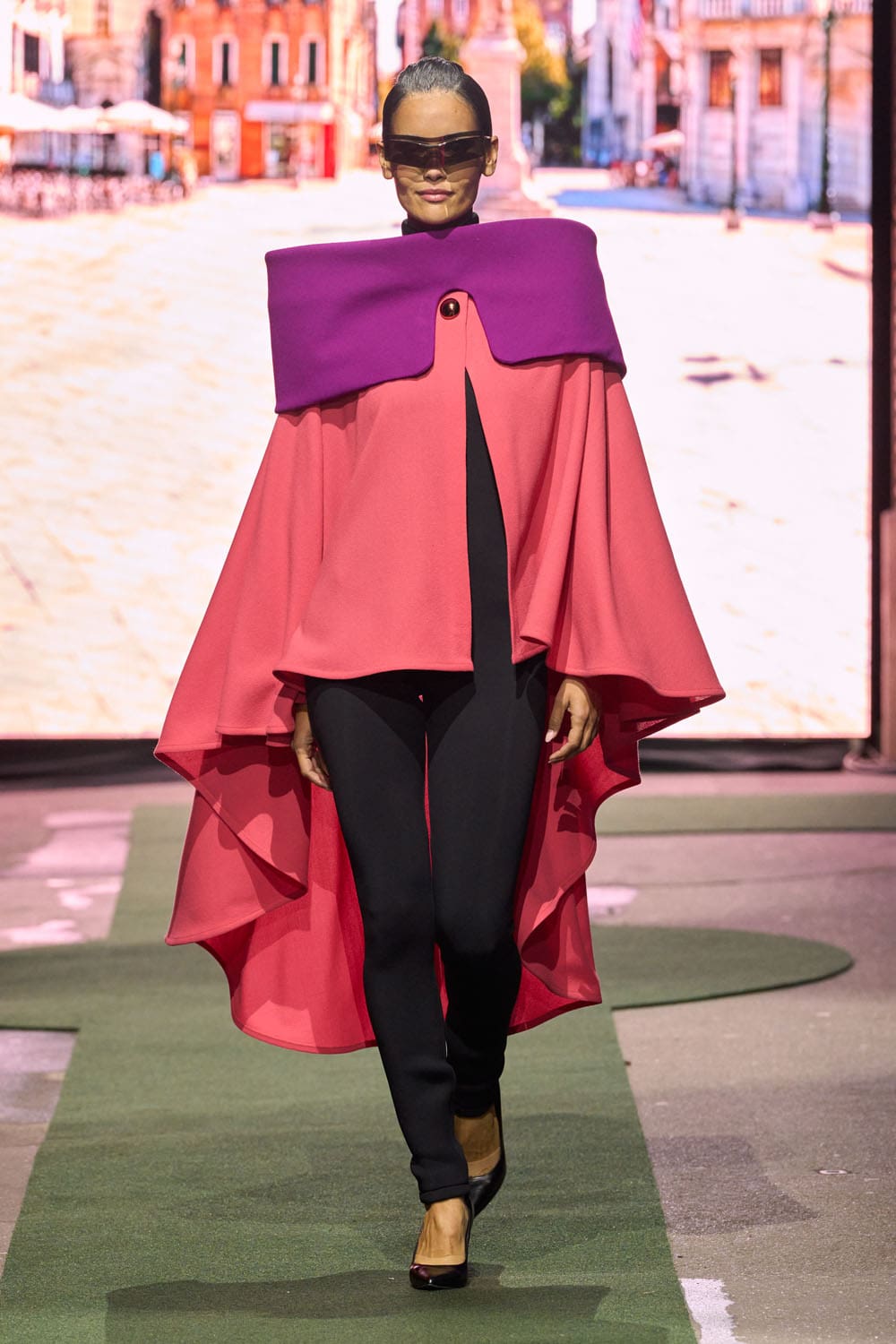
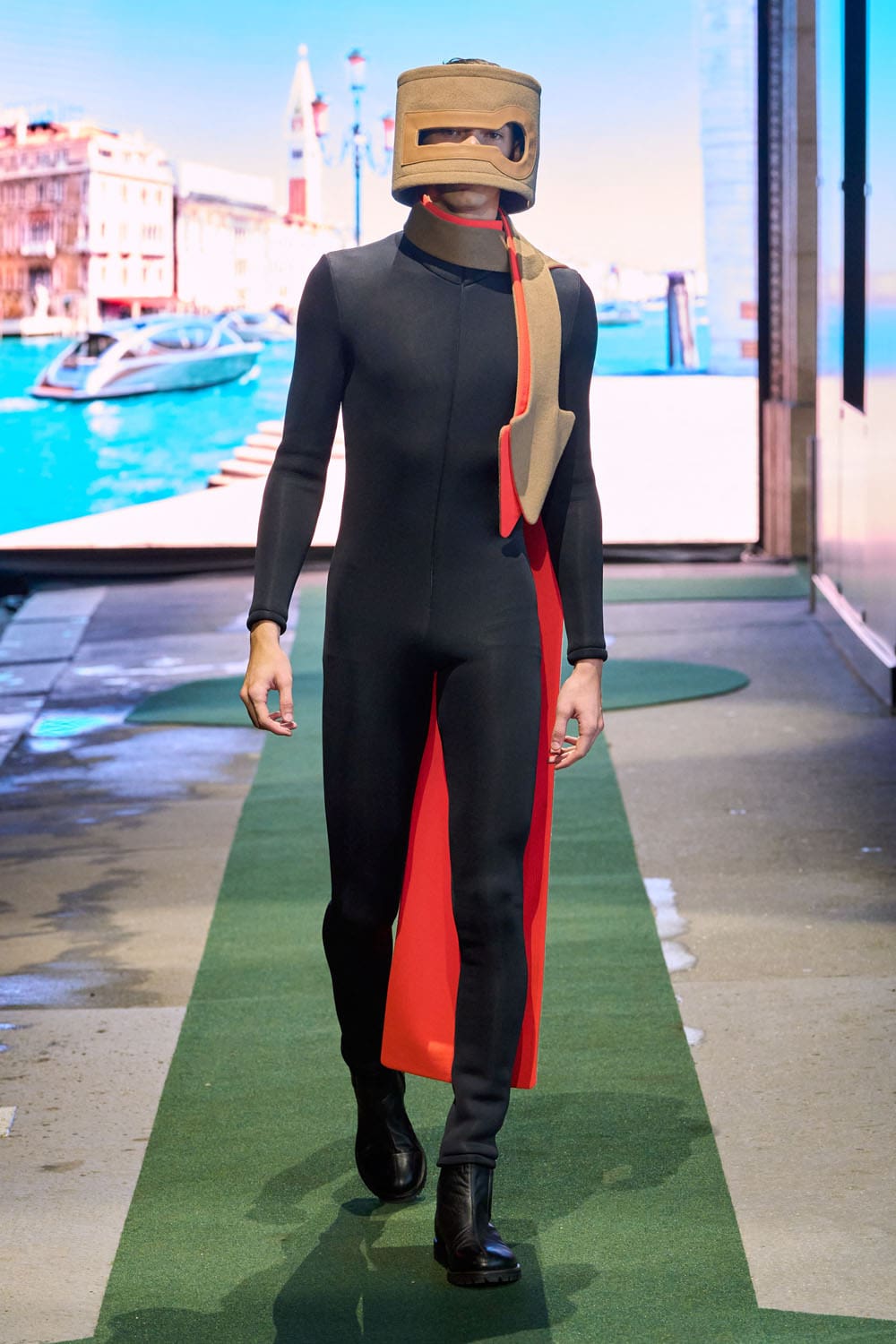
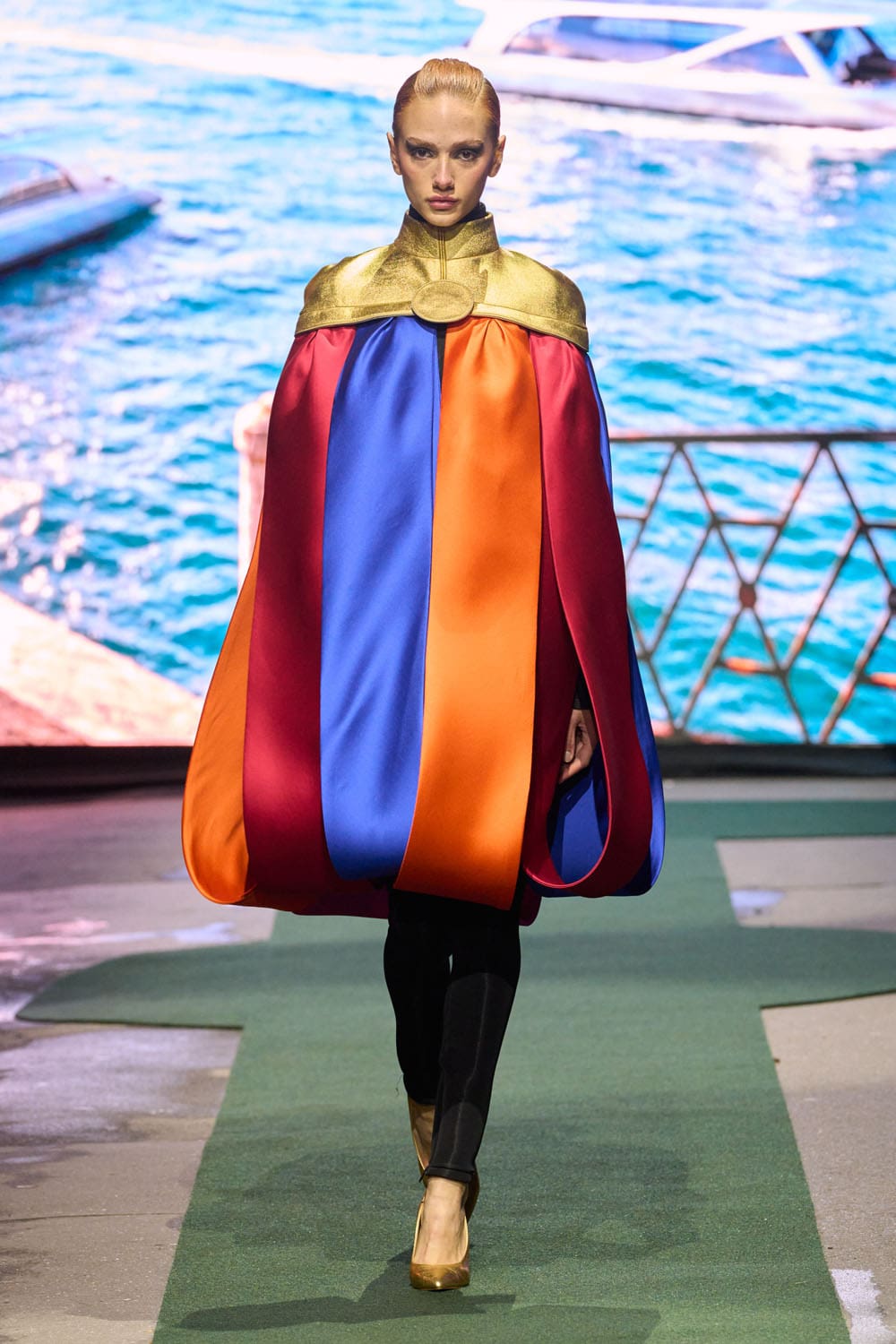
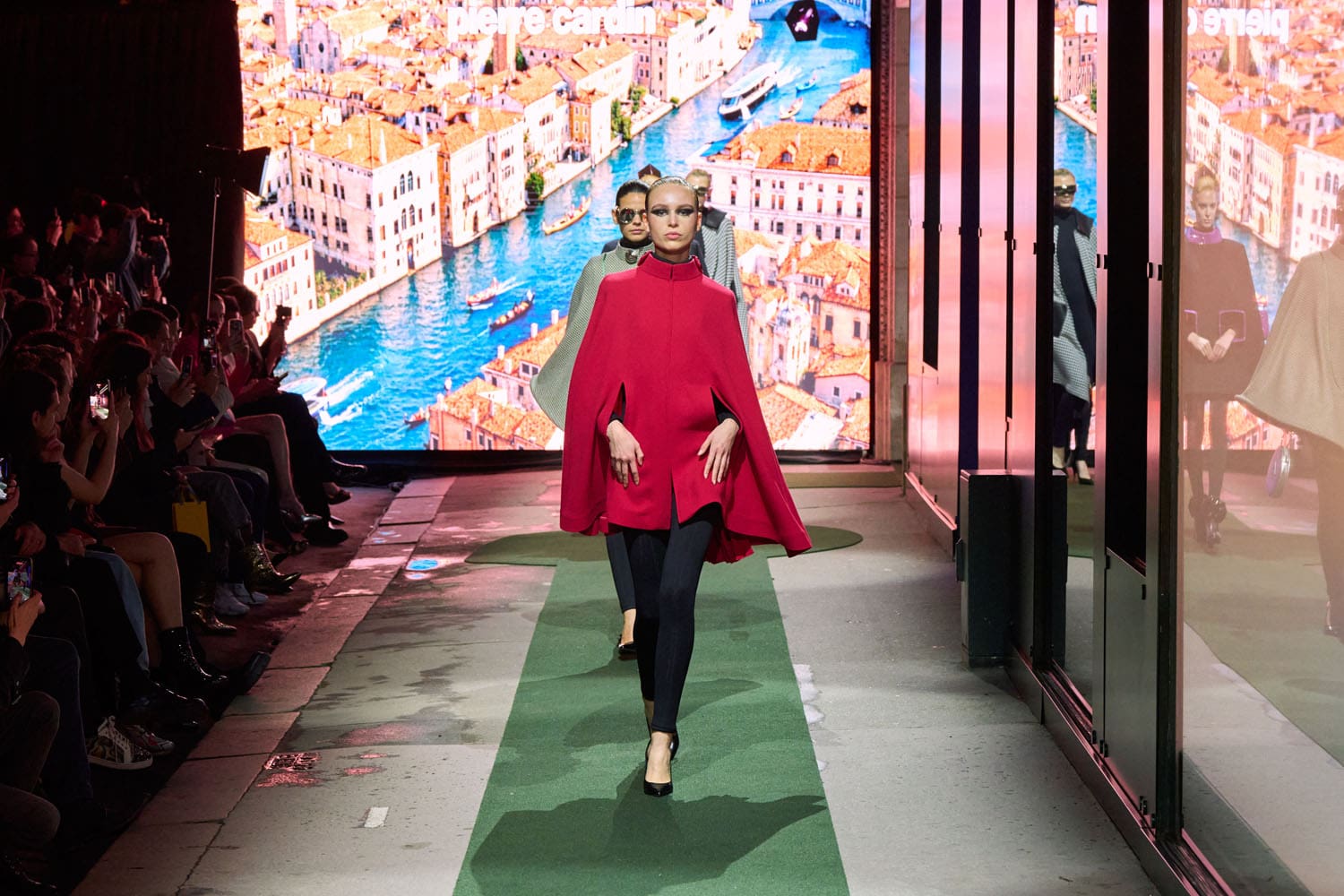
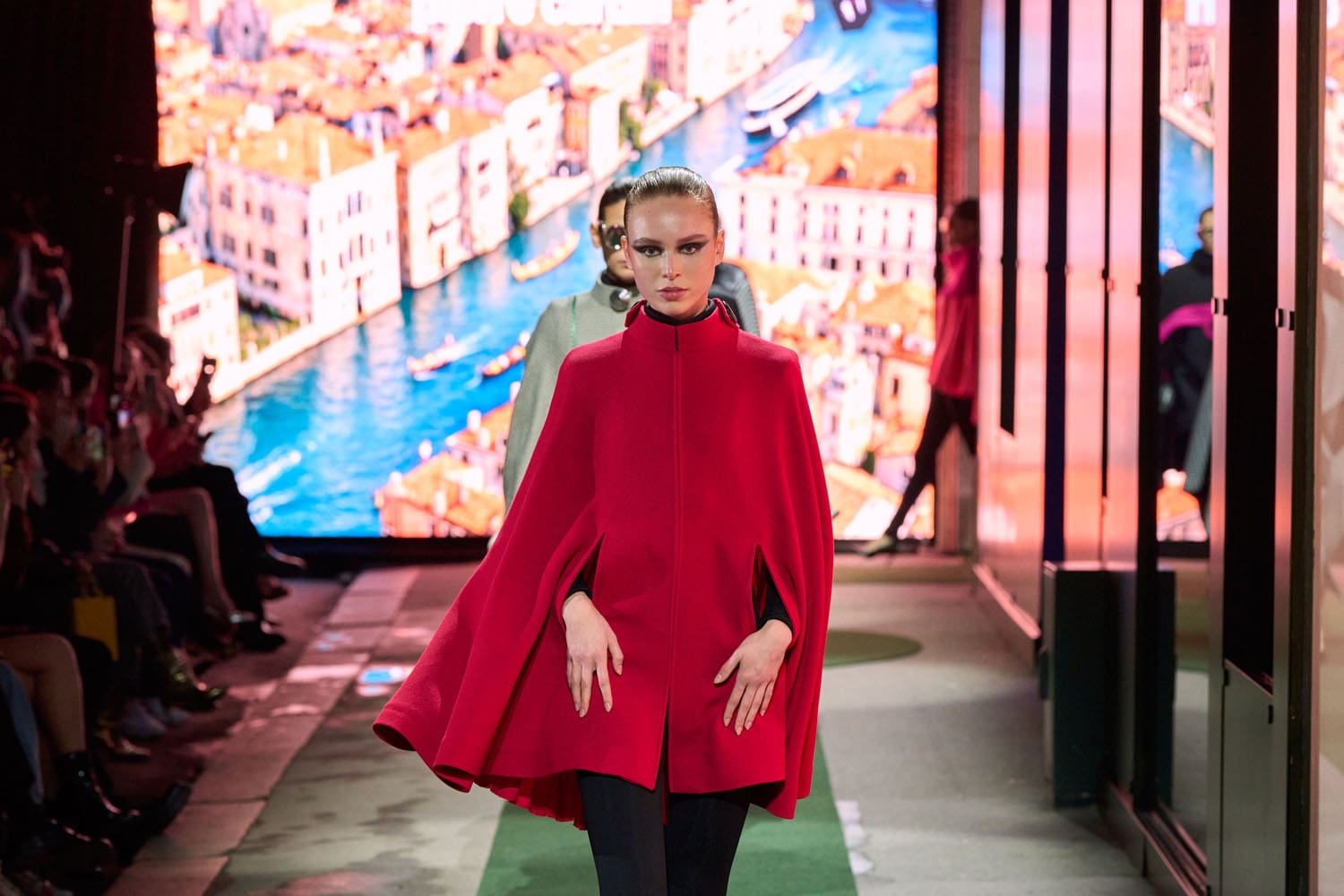
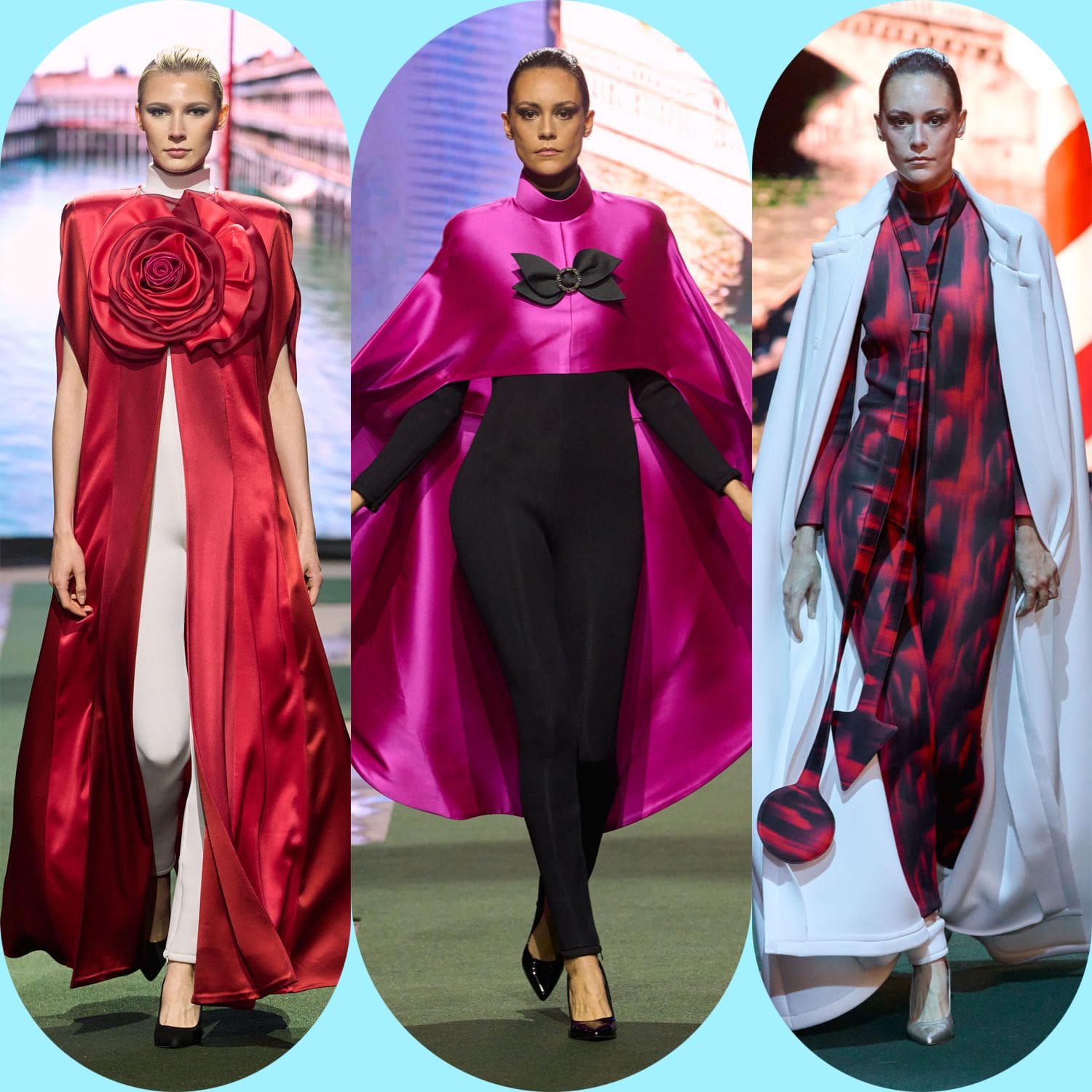
Capes dominate. Not the fluttering theatrical capes of costume drama, but heavy, architectural panels that sit off the body like engineered shields. A crimson satin cape is anchored with a monumental rose at the chest — an overture of romance — yet the silhouette beneath is clinical and tight, a black or white base layer that reduces the body to function. The effect is deliberate: decoration kept at a distance, beauty made to perform rather than to soften.
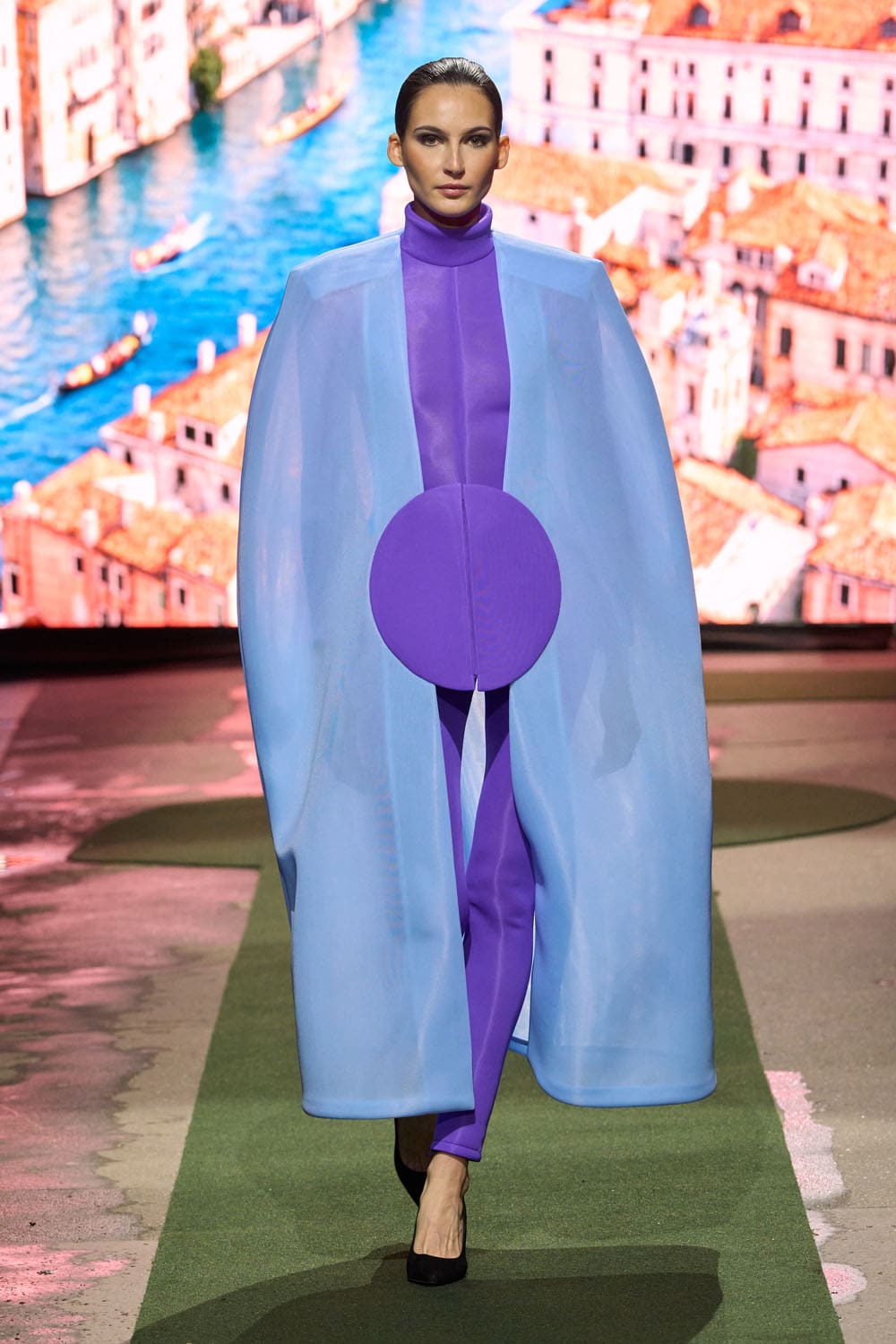
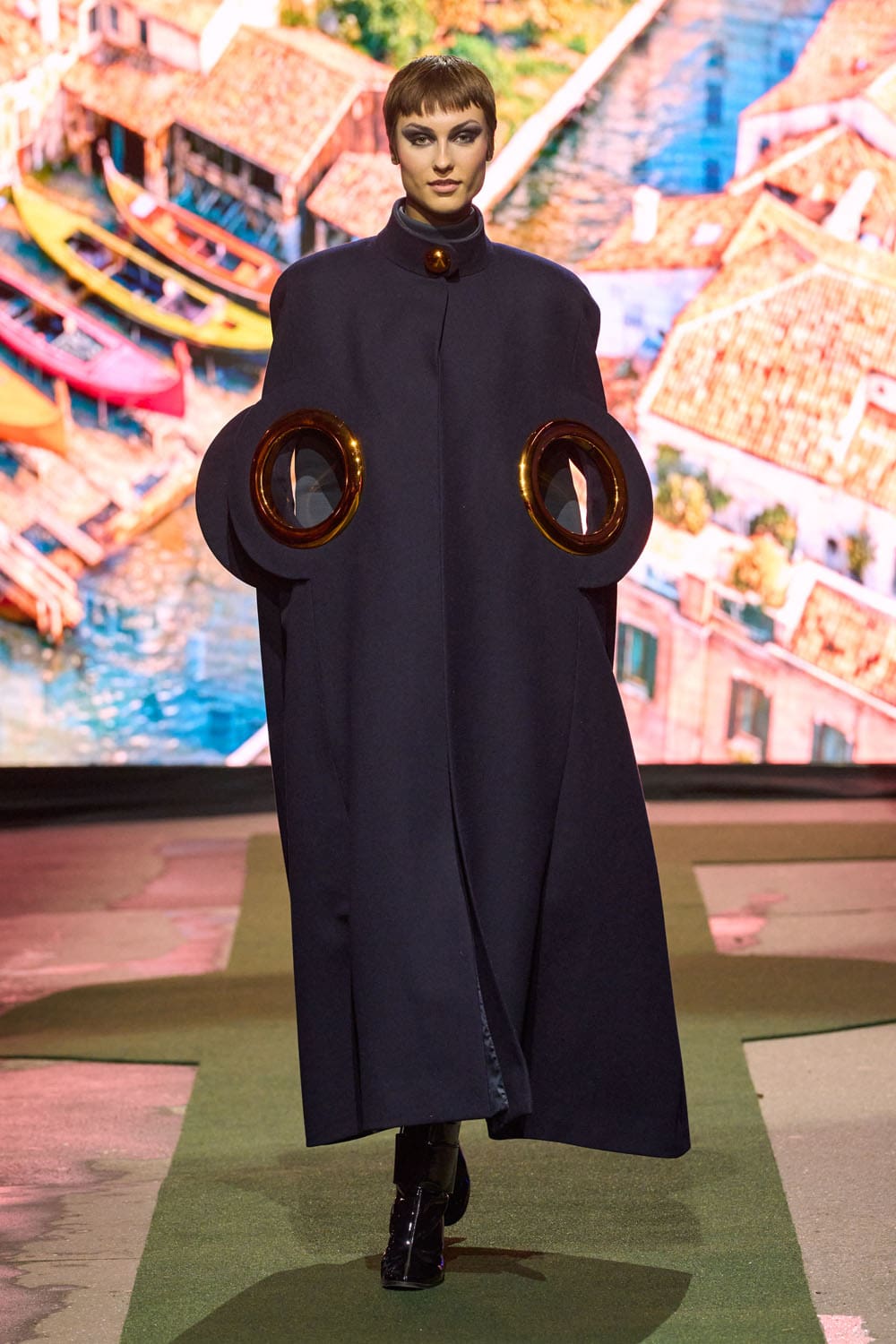
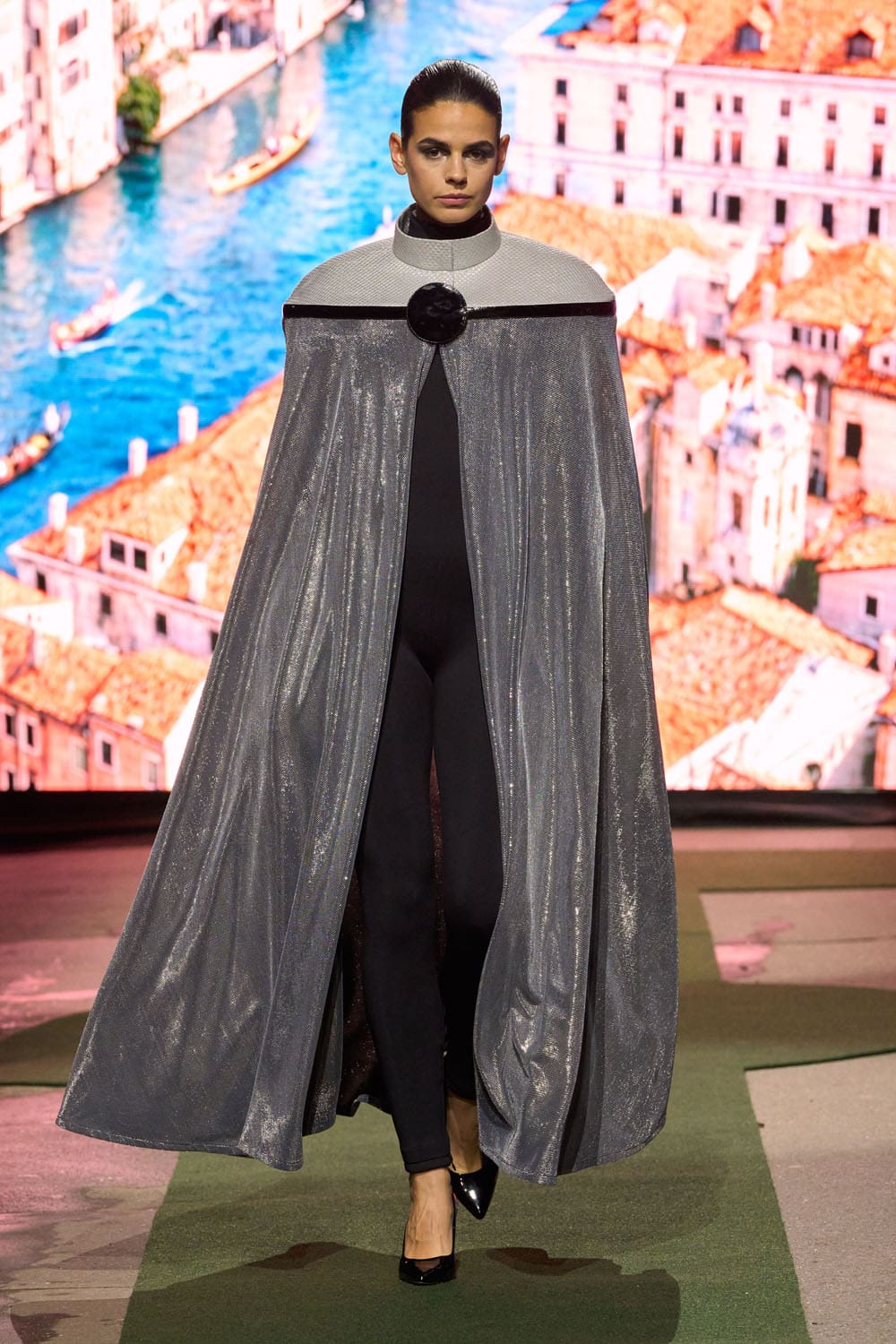
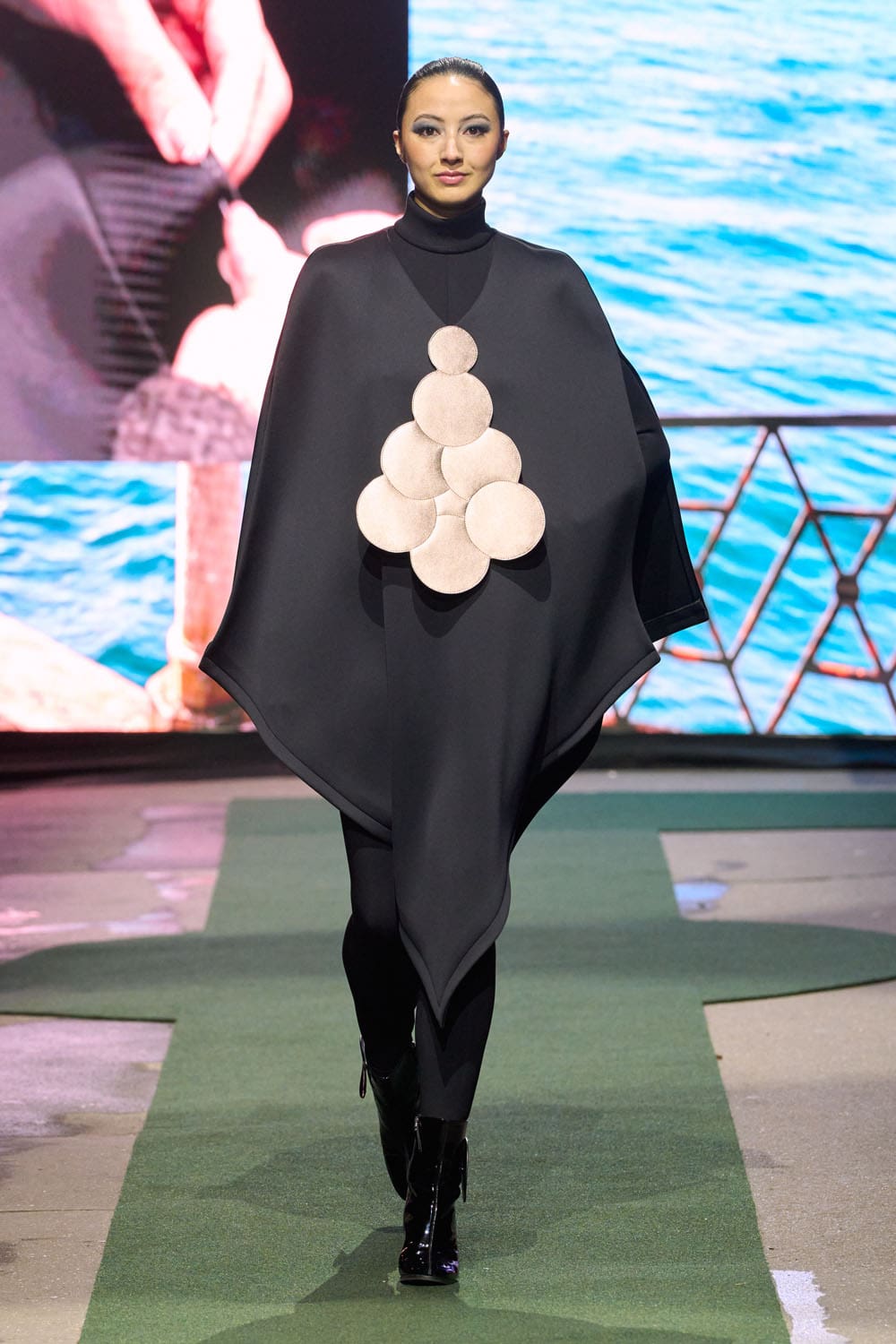
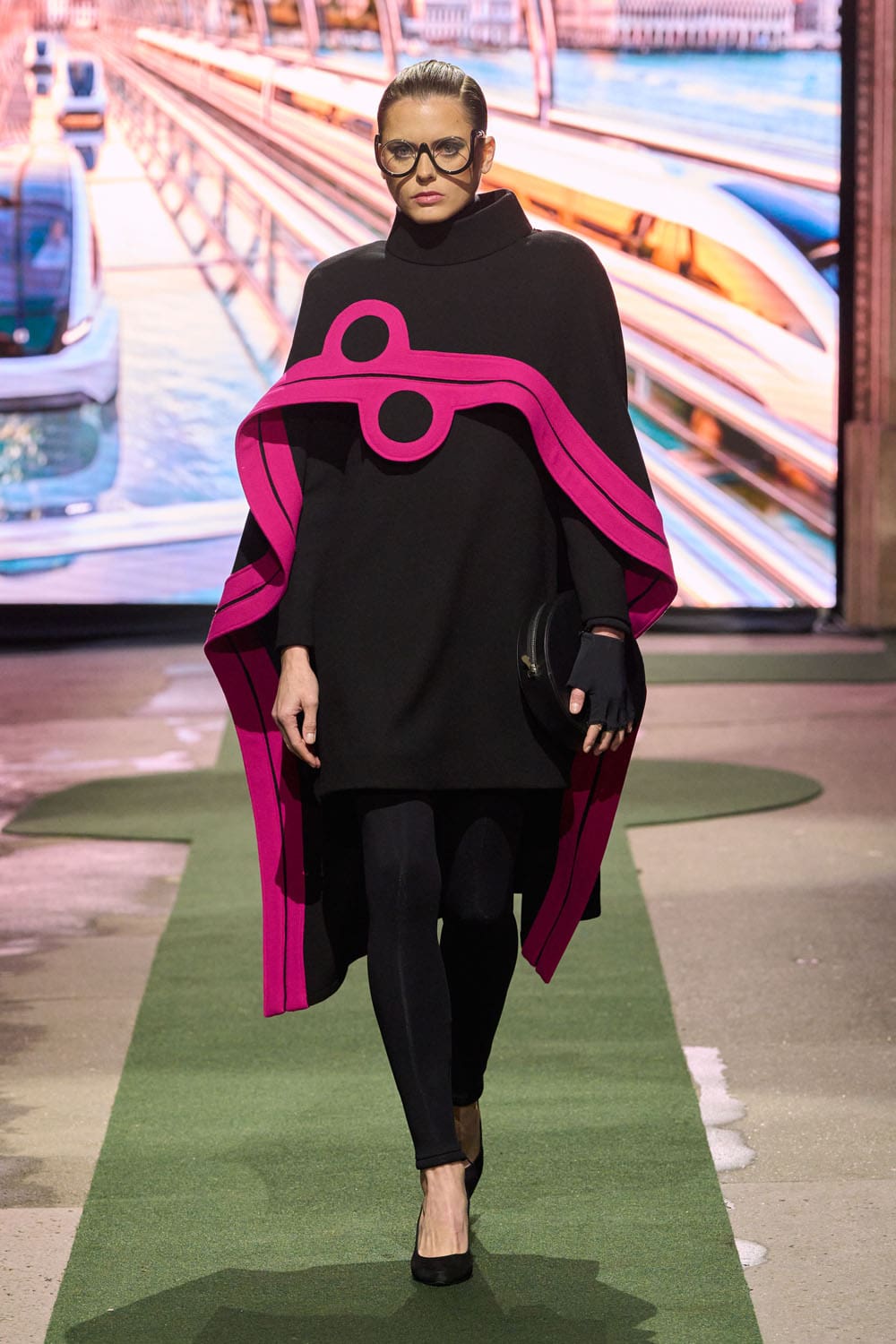
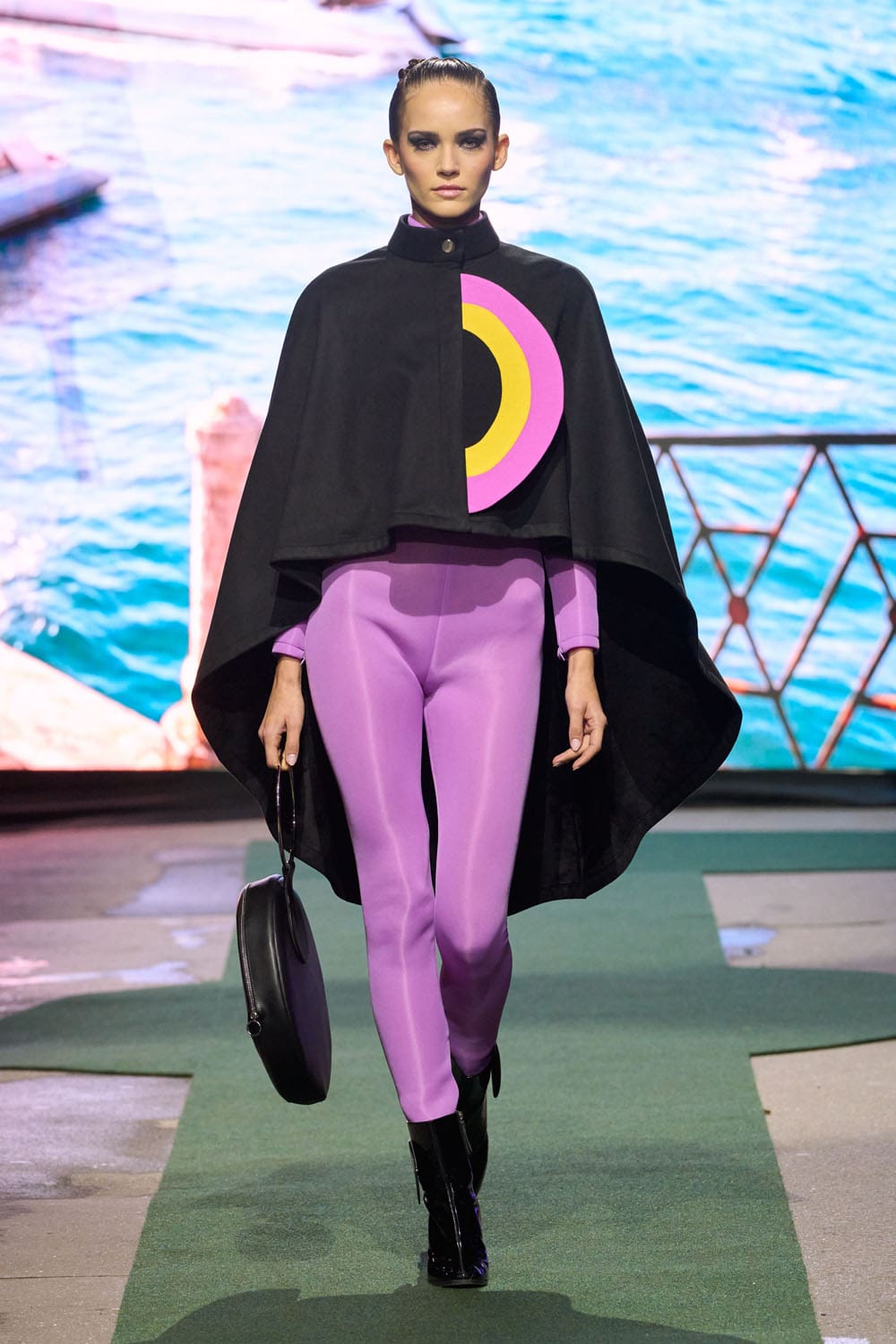
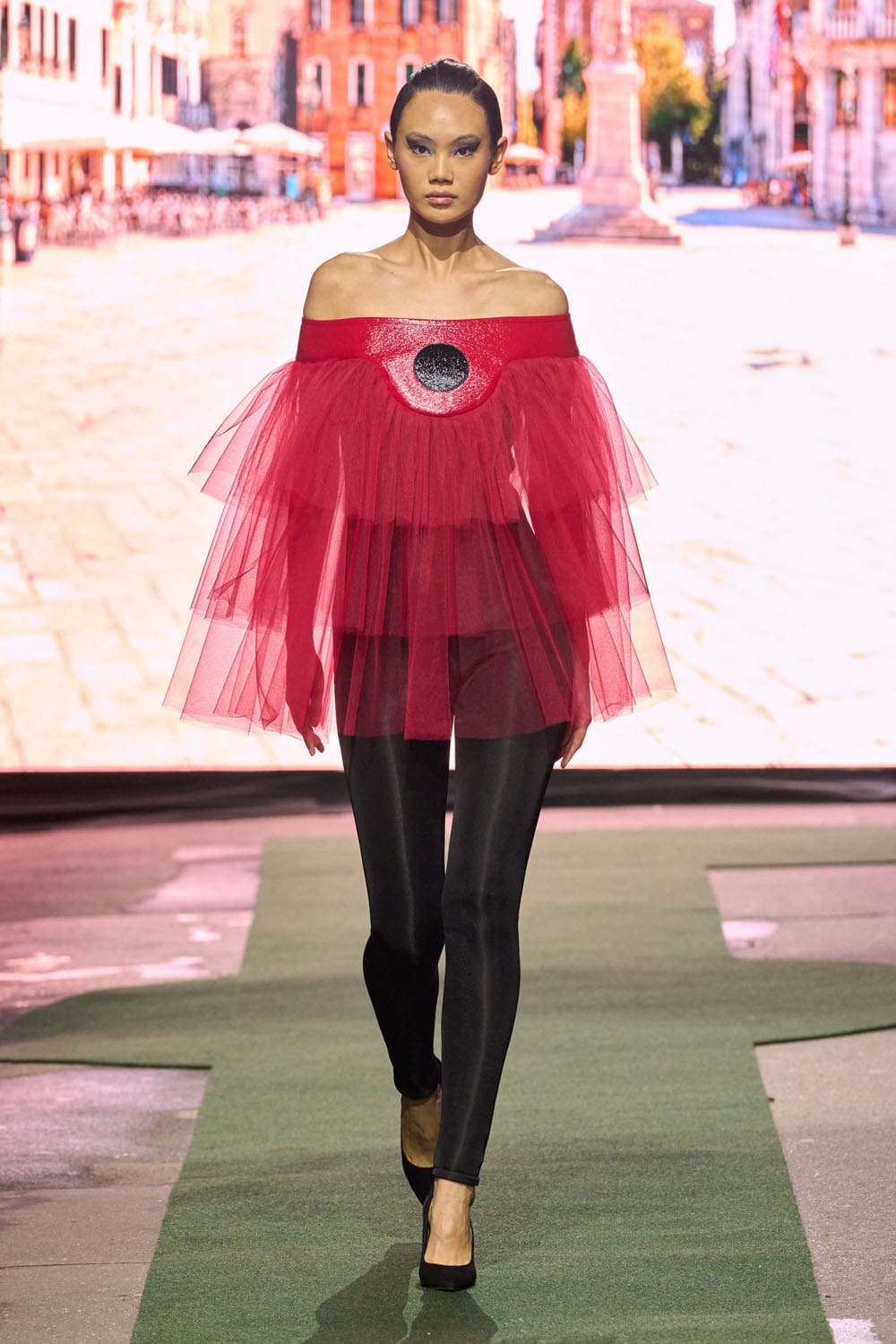
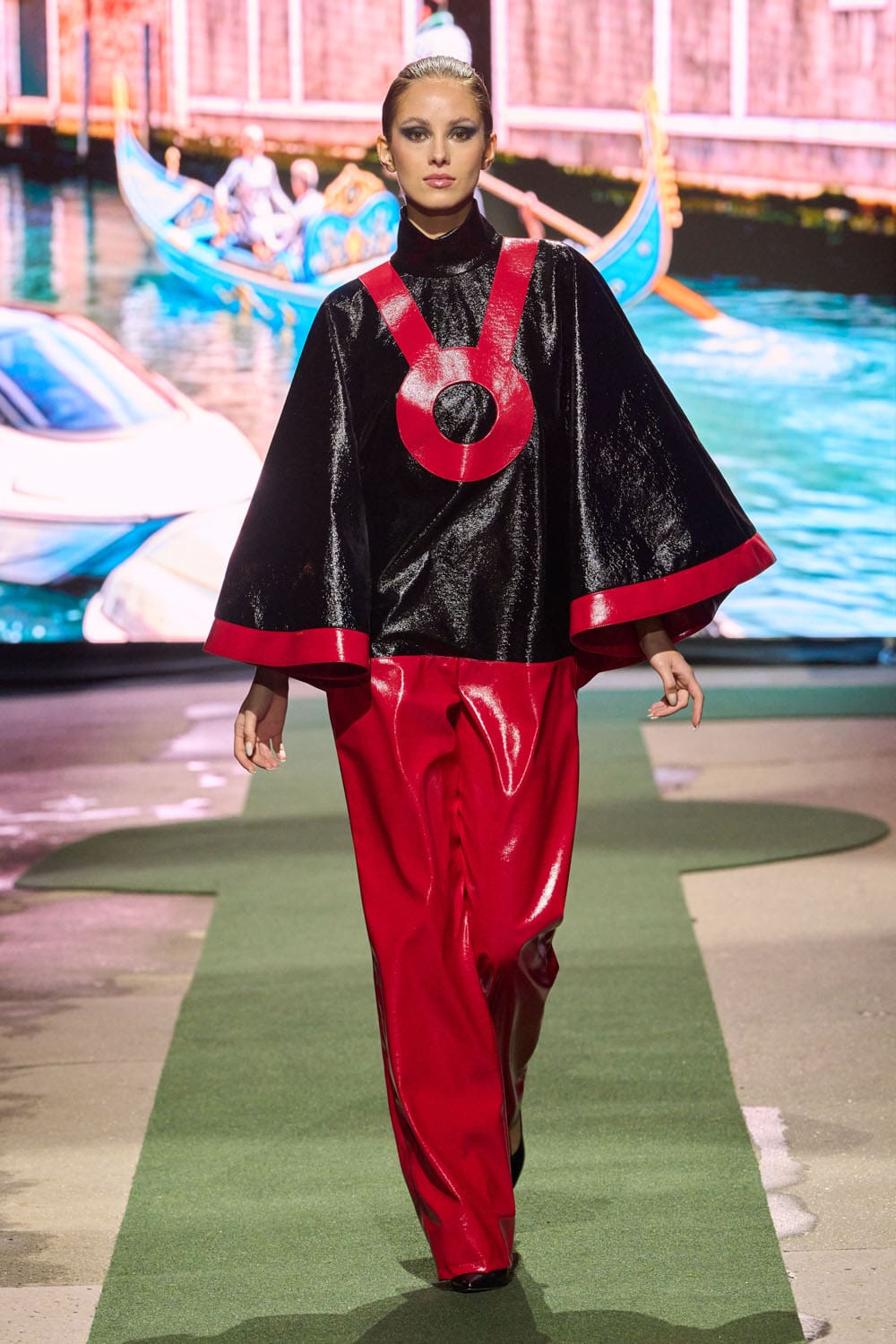
Cardin’s long-standing obsession with geometric forms returns with new urgency. Circular motifs recur — discs positioned at the torso like portholes, rounded fastenings that read as mechanical, not merely decorative. In a striking white cape a glossy pink orb sits at the center, as precise and forbidding as a sensor. It is an old Cardin trick — sphere and panel — applied now with a pragmatic severity that suggests equipment more than ornament.
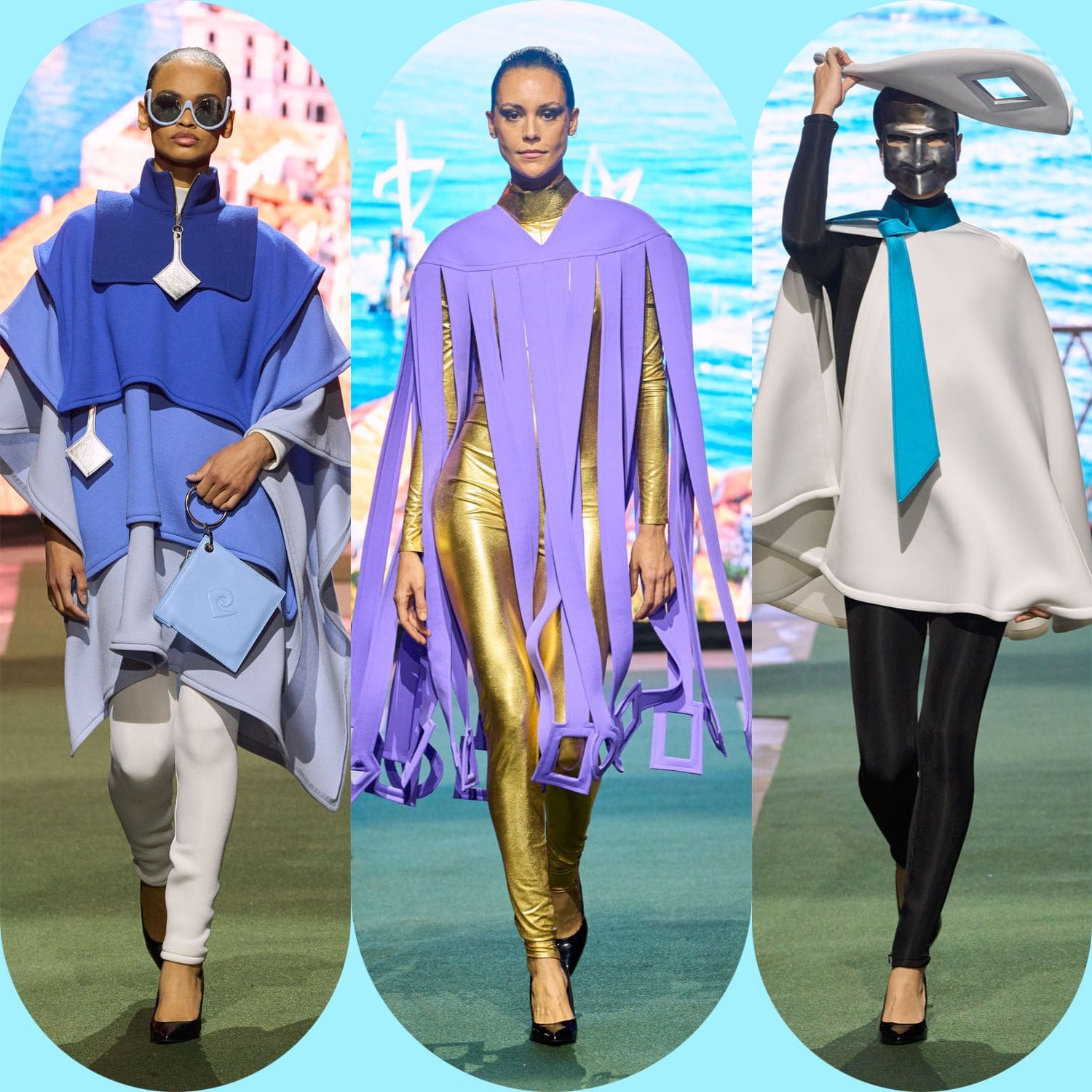
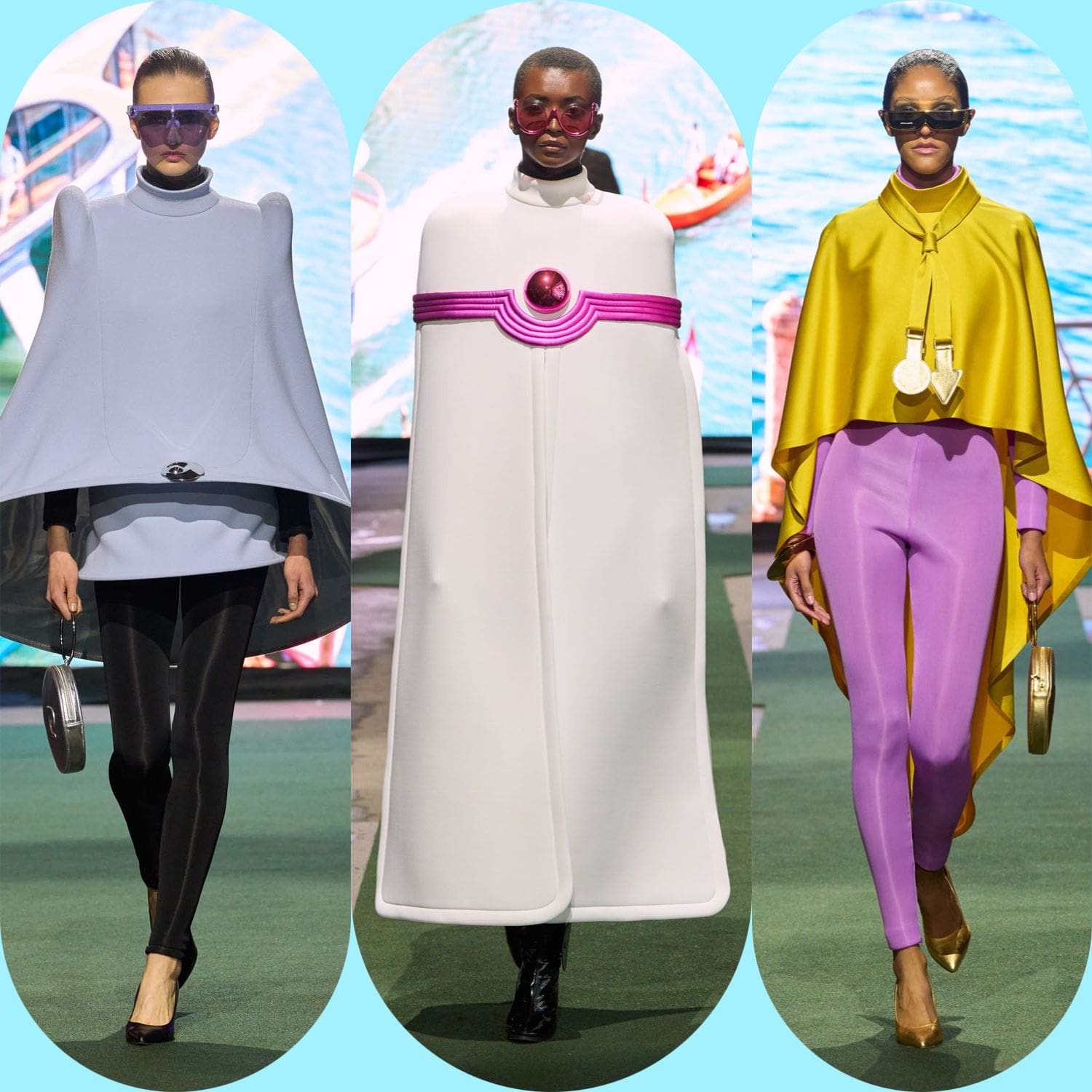
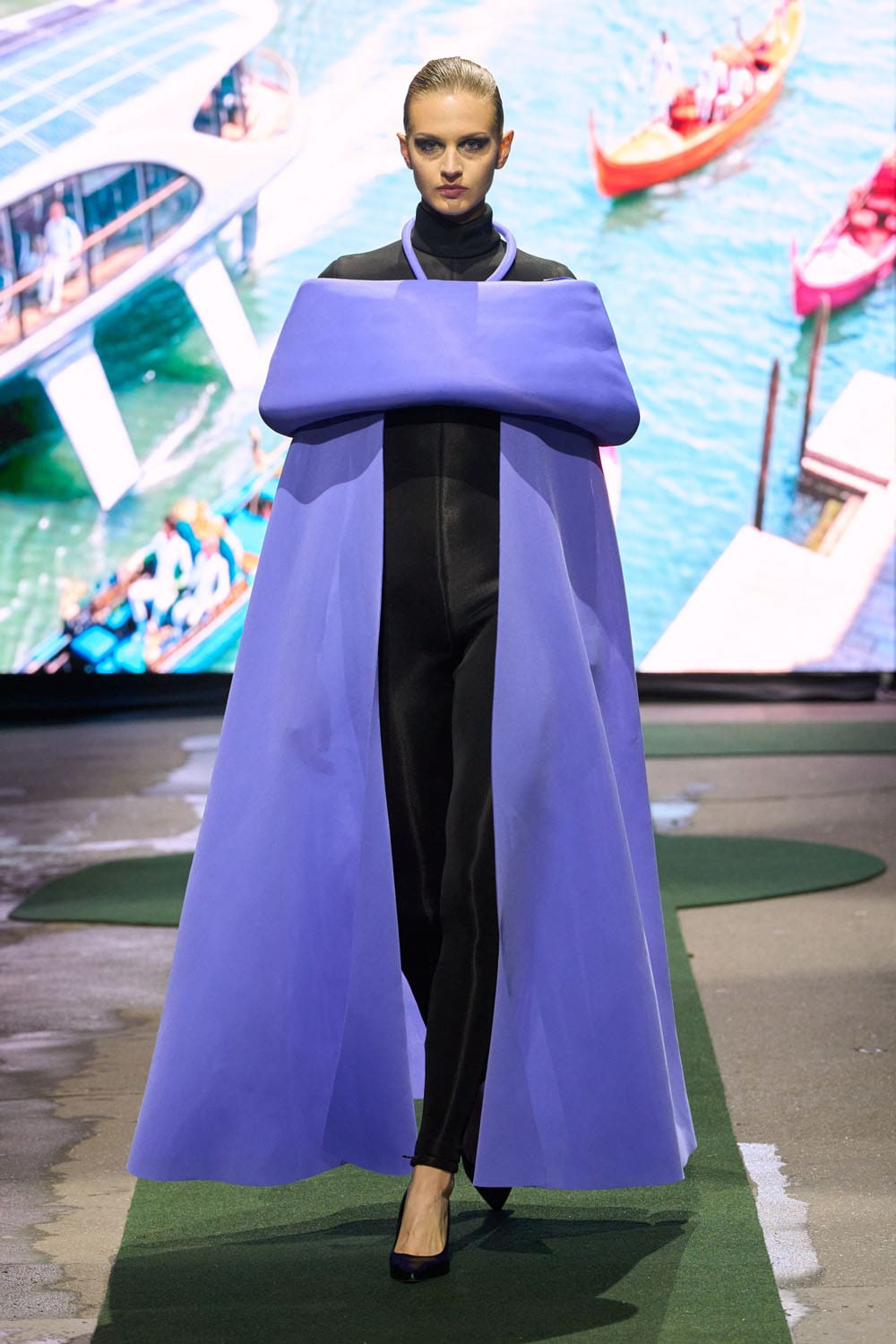
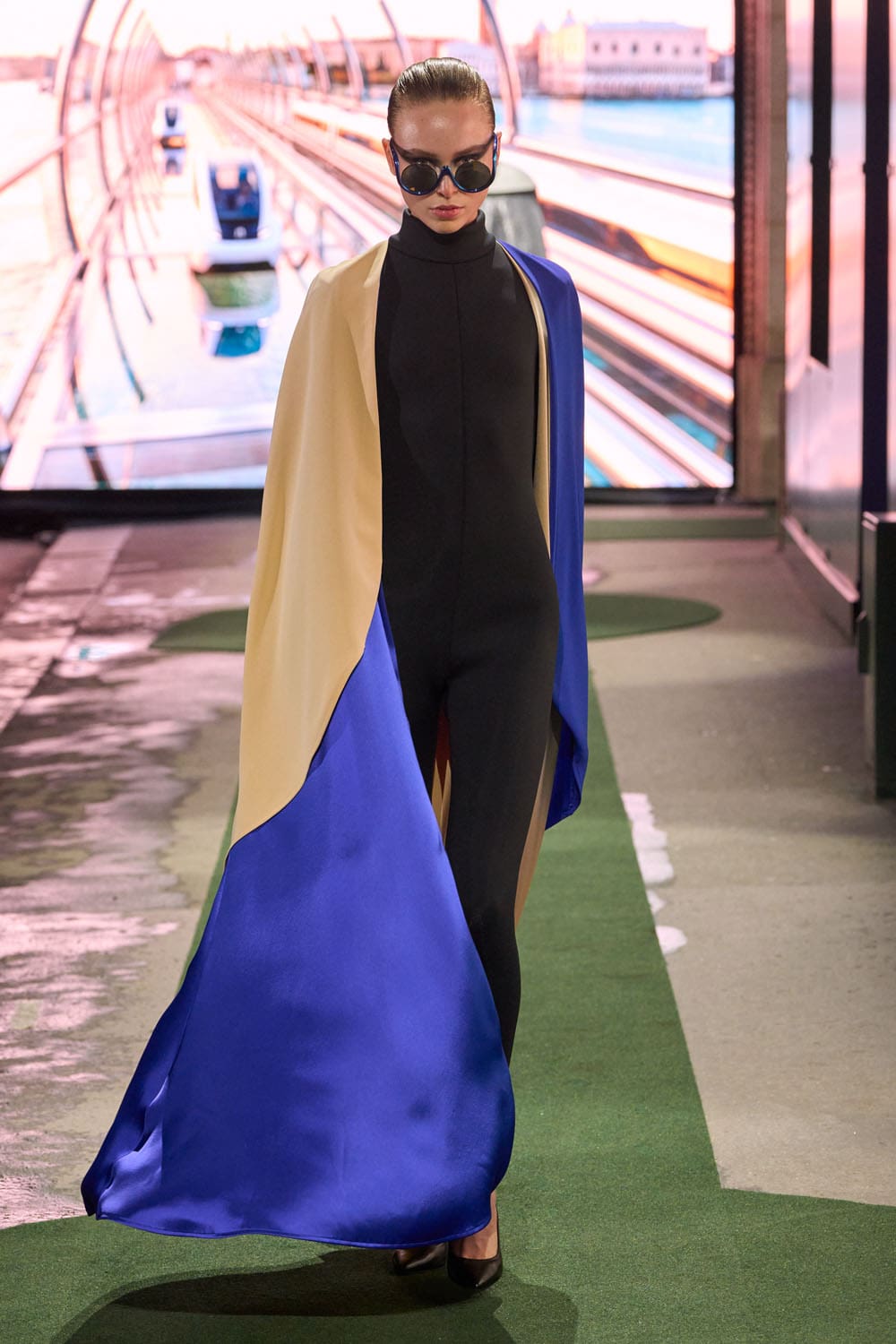
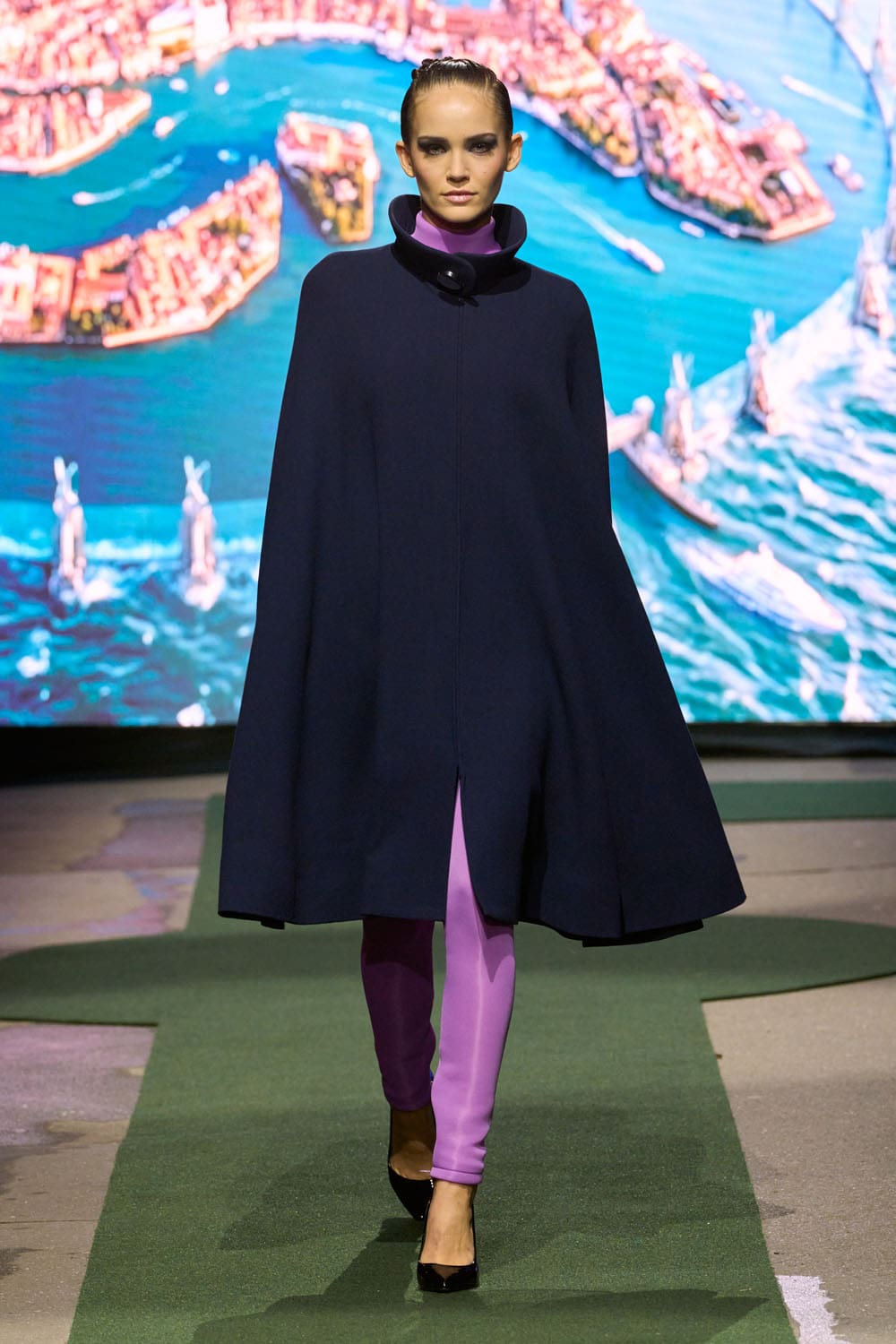
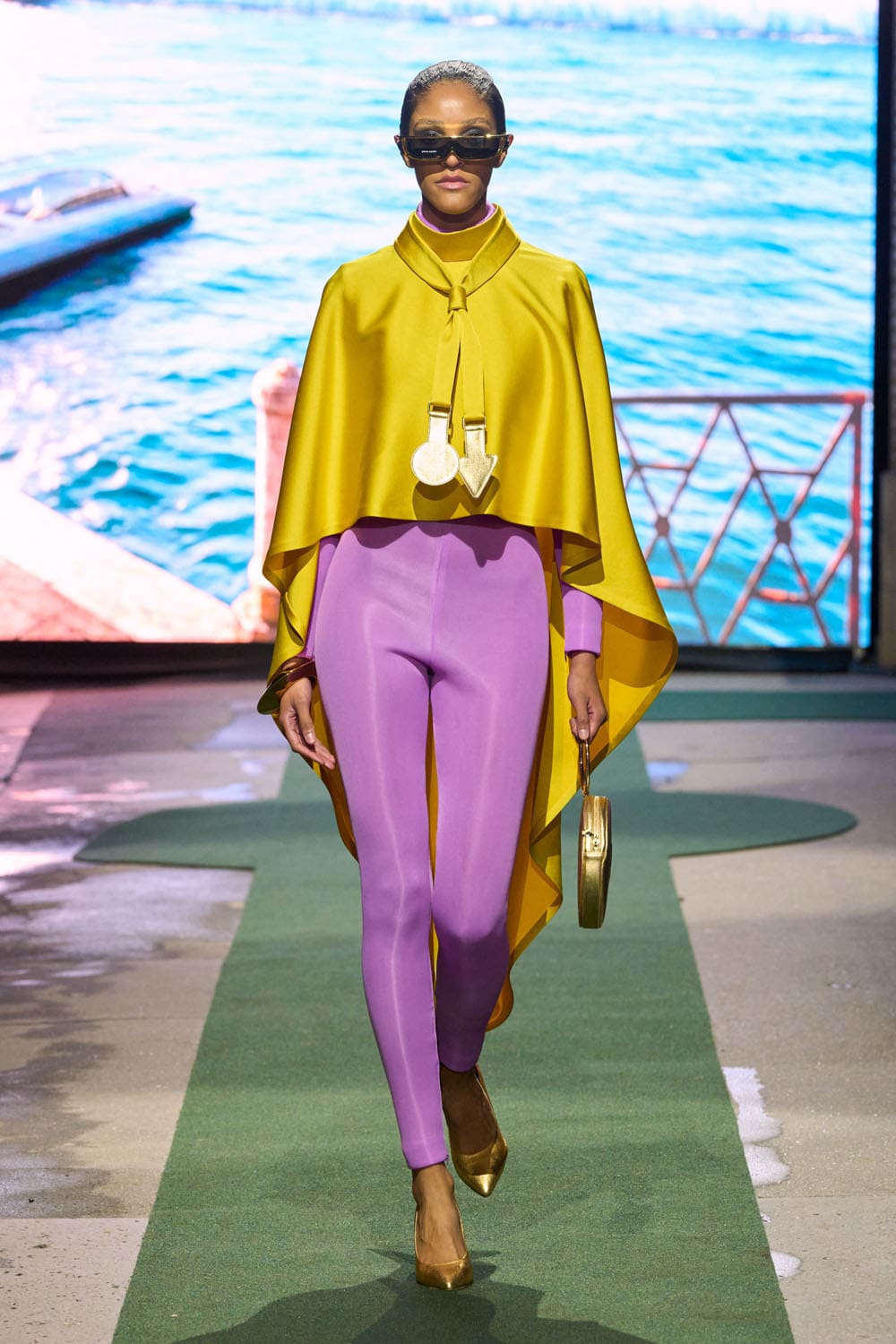
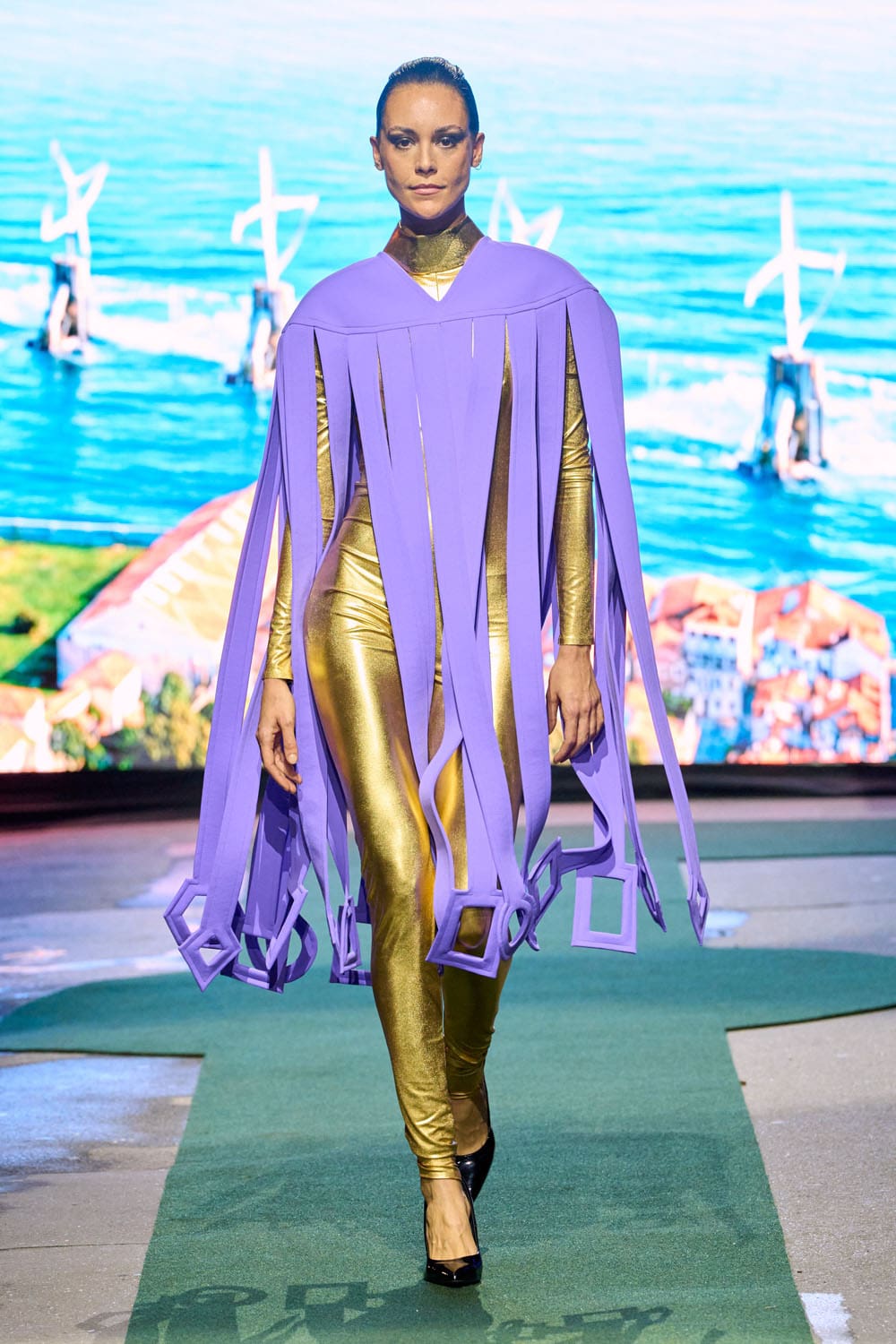
Color is purposeful. There are saturated, almost medicinal blues and a cool magenta that puncture the neutral bases. A translucent, sky-blue shell worn over a violet bodysuit looks like protective skin: light, water-shedding, and impossibly modern. Elsewhere, layered cobalt ponchos and pale cerulean accessories create tonal systems rather than single looks — ensembles intended to be mixed, zipped and snapped into different forms as conditions demand.
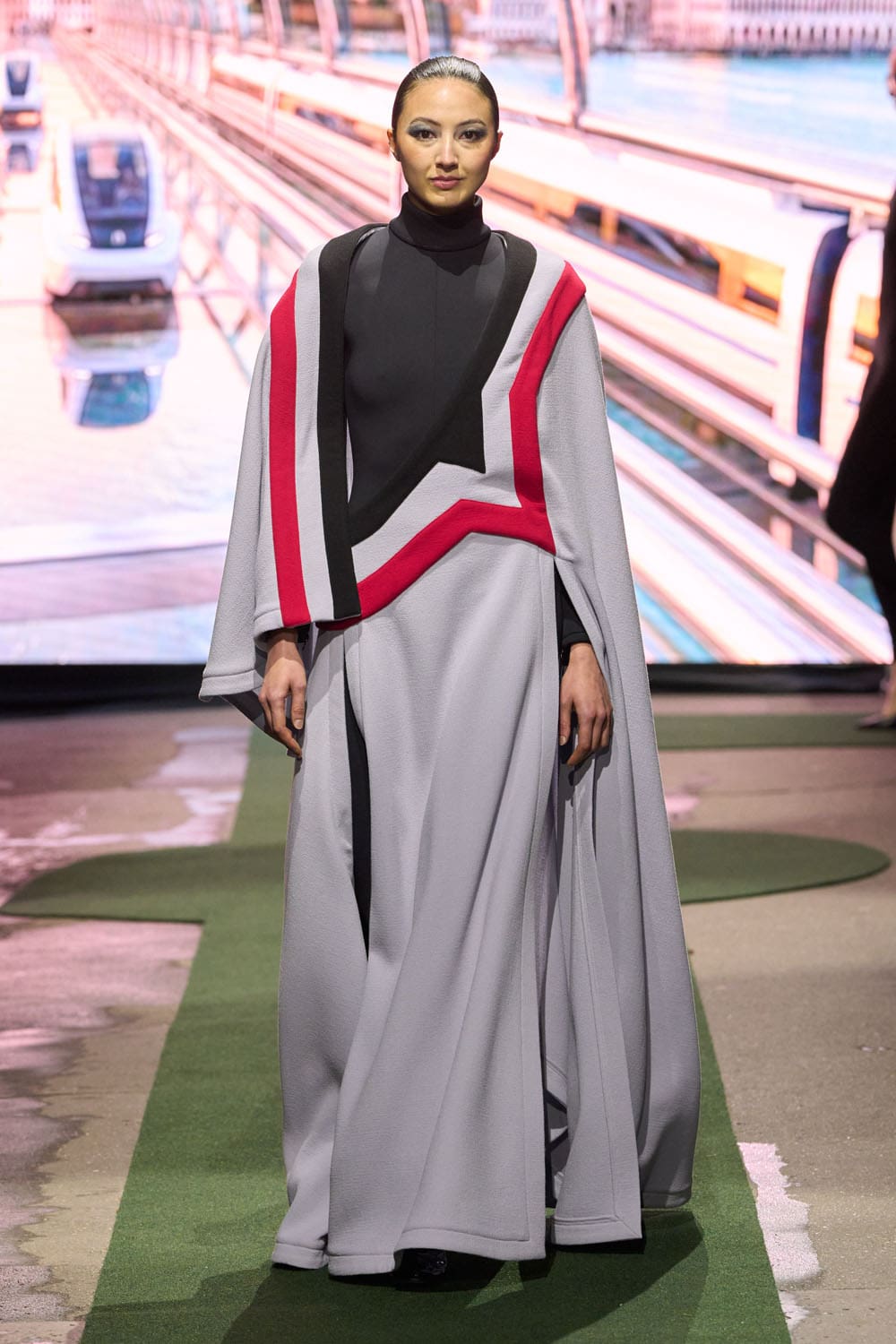
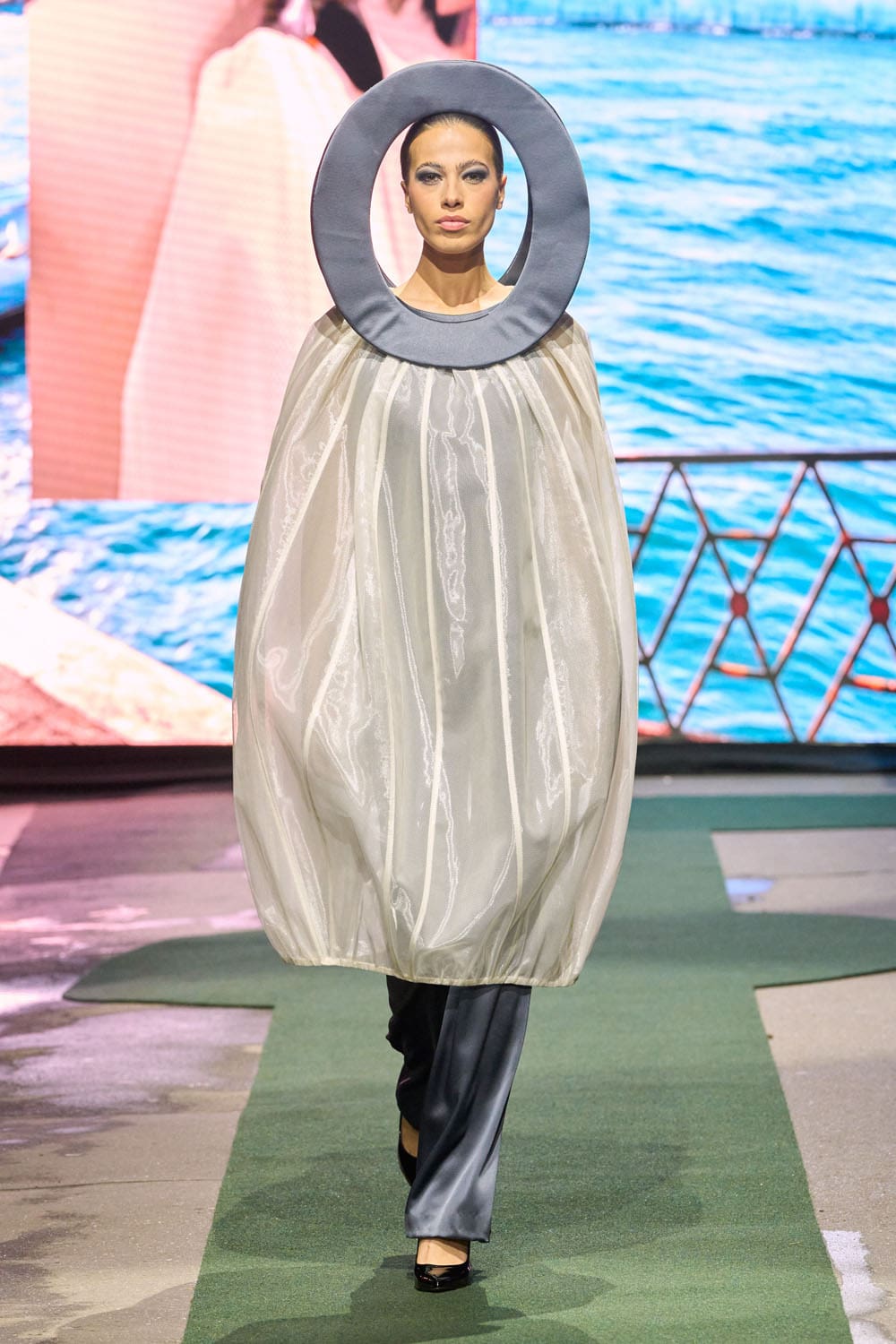
Materials follow the premise. Fabrics that read like recyclable neoprenes and coated textiles appear beside recycled wools and satin remnants, and the seams are engineered rather than hidden. The technical seams, the piping and the voluminous hems are not accidental flourishes; they are the grammar of construction. These are garments that declare how they were made, and why — an ethical, utilitarian honesty that Cardin treats as a style choice.
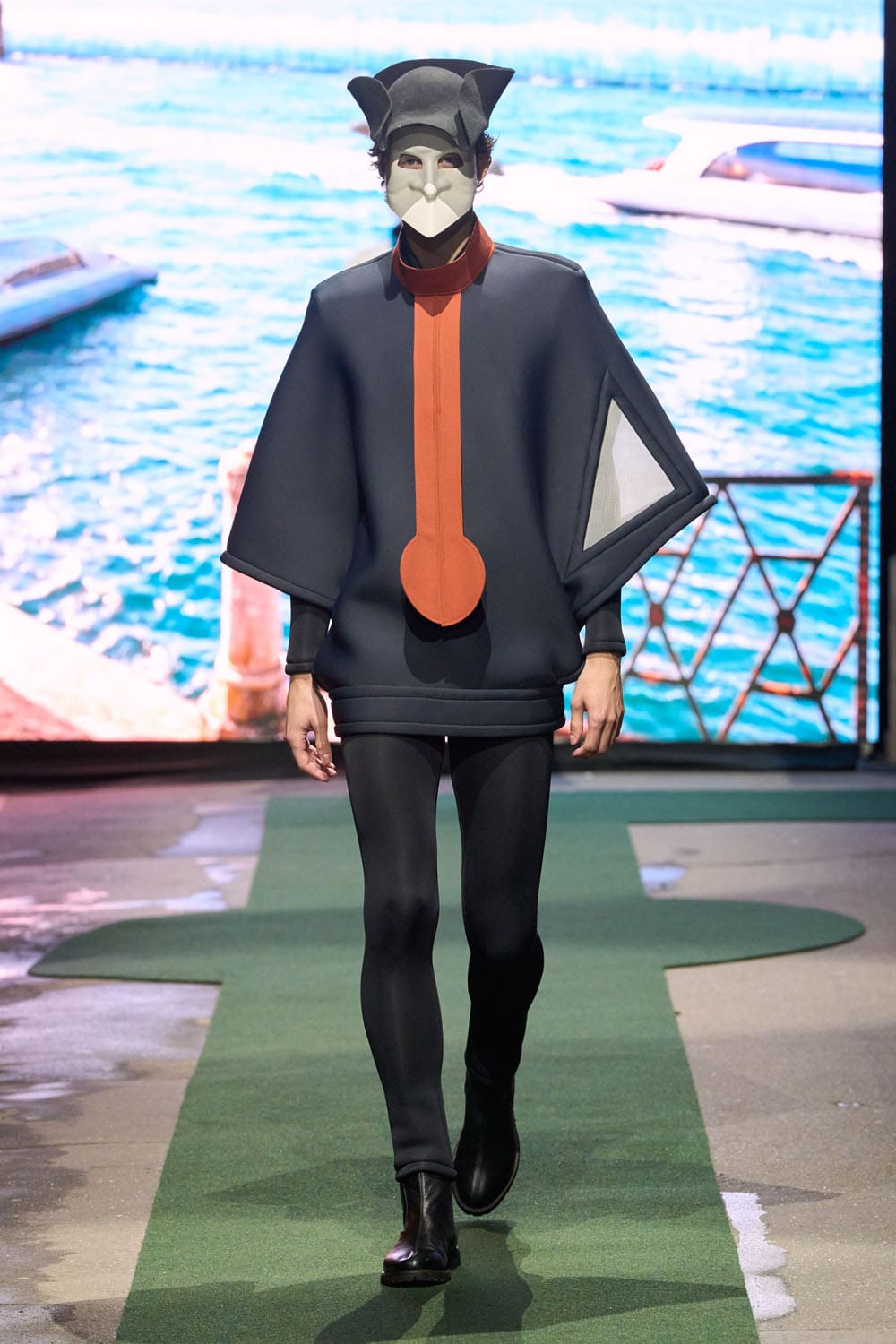
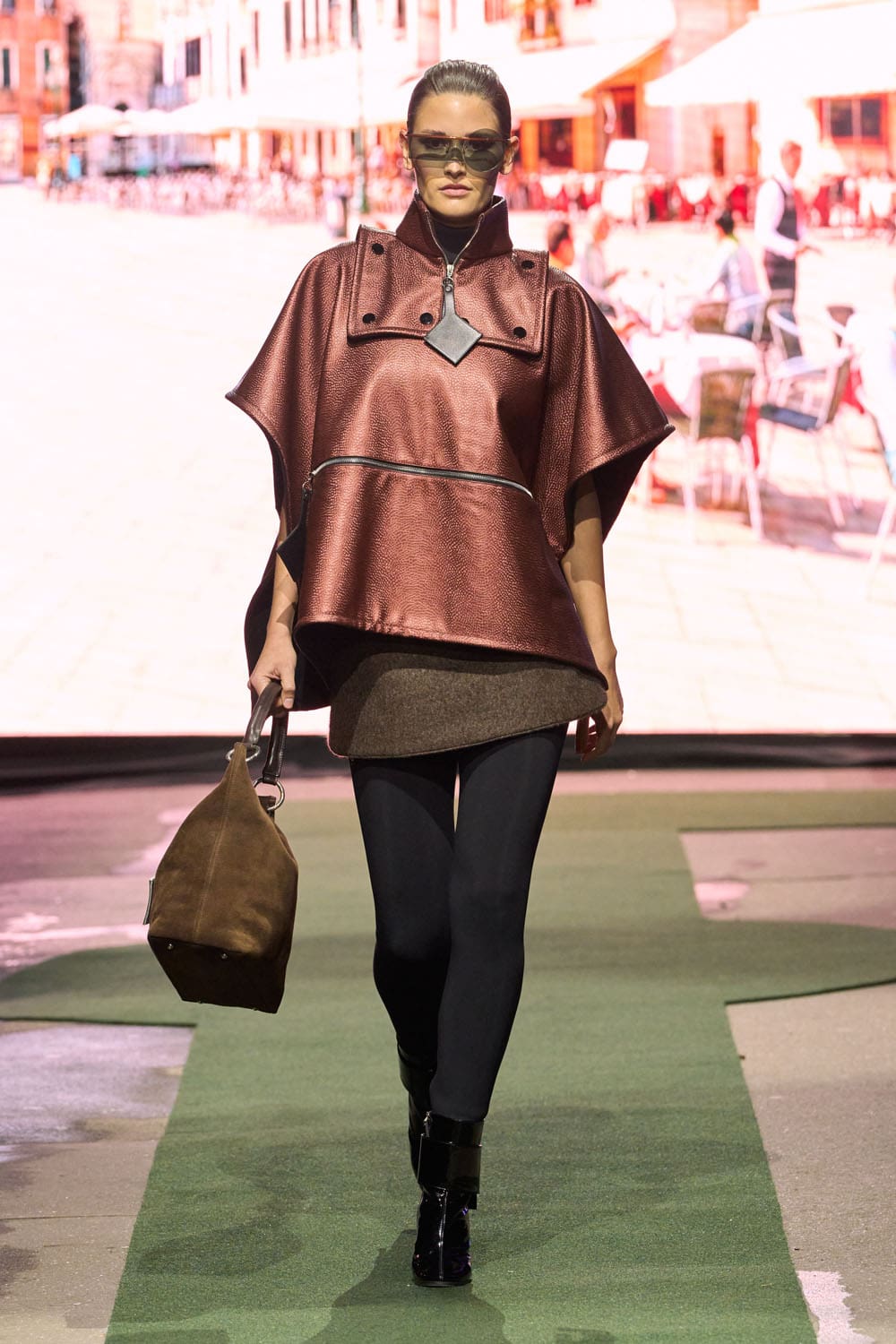
Accessories and styling underline the thesis. Minimal bags with circular handles, high collars, and eyewear that resembles protective visors make the collection feel like a uniform of civility. The masklike headpieces and a single metallic-shield look — worn briefly down the runway — convert ceremonial wardrobe into a language of survival, of concealed identity and of control.
What ties the collection together is a disciplined economy: volume concentrated in outer shells, the body simplified to monochrome underlayers, and ornaments confined to a few decisive points. The theatricality is not abandoned; it is consolidated. A dramatic magenta cape still wants to be seen — but it is constructed to read from a distance, to weather an imagined storm, and to remain resolute.
This is classic Cardin by temperament — futurist, geometric, a little austere — but updated into practicality. Where his earlier work suggested rockets, these clothes suggest rafts: solutions for a world where spectacle must coexist with contingency. Venice ’59 is not a love letter to the past; it is a brief, stylish summons to readiness.
See All Looks Pierre Cardin Fall Winter 2026-2027