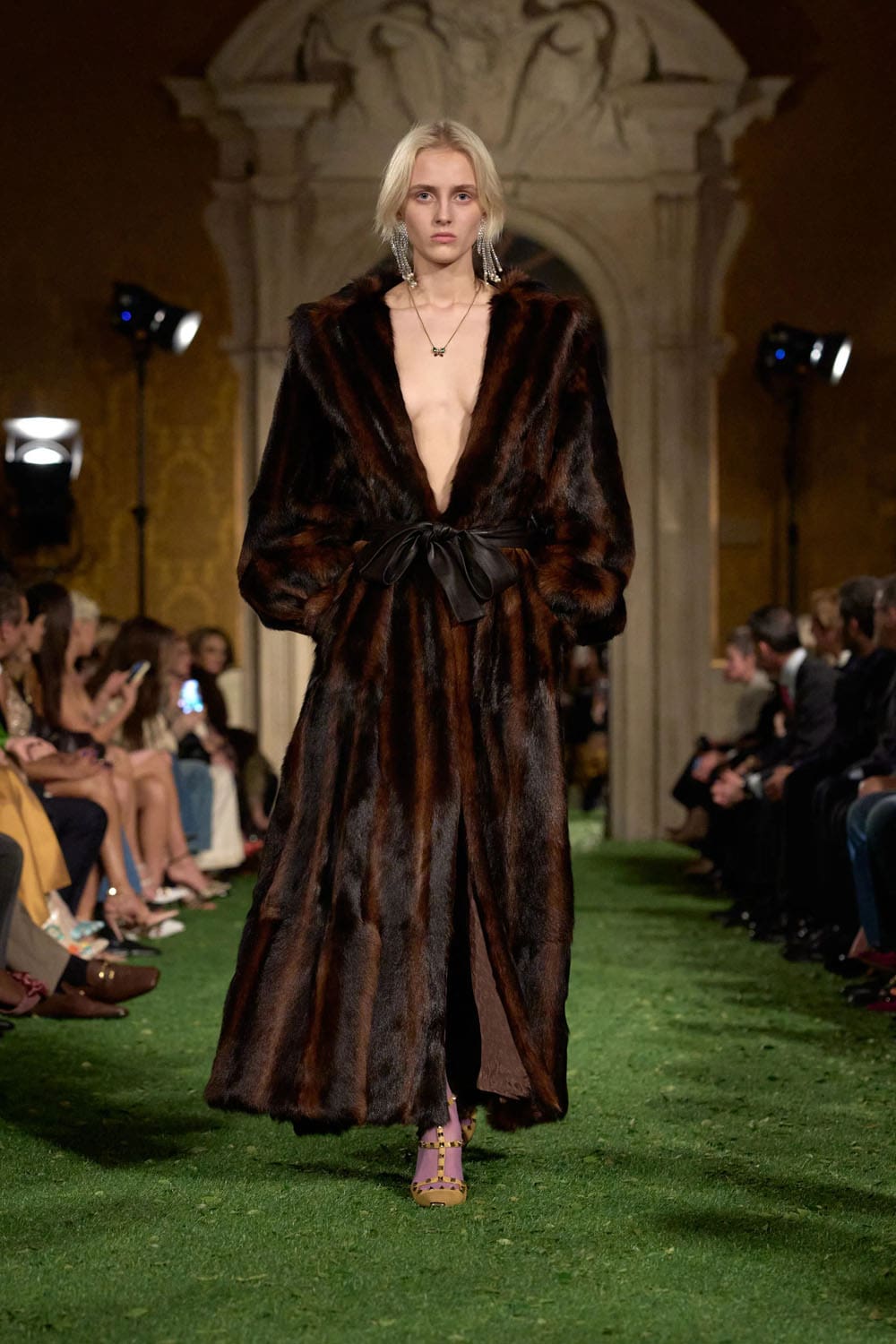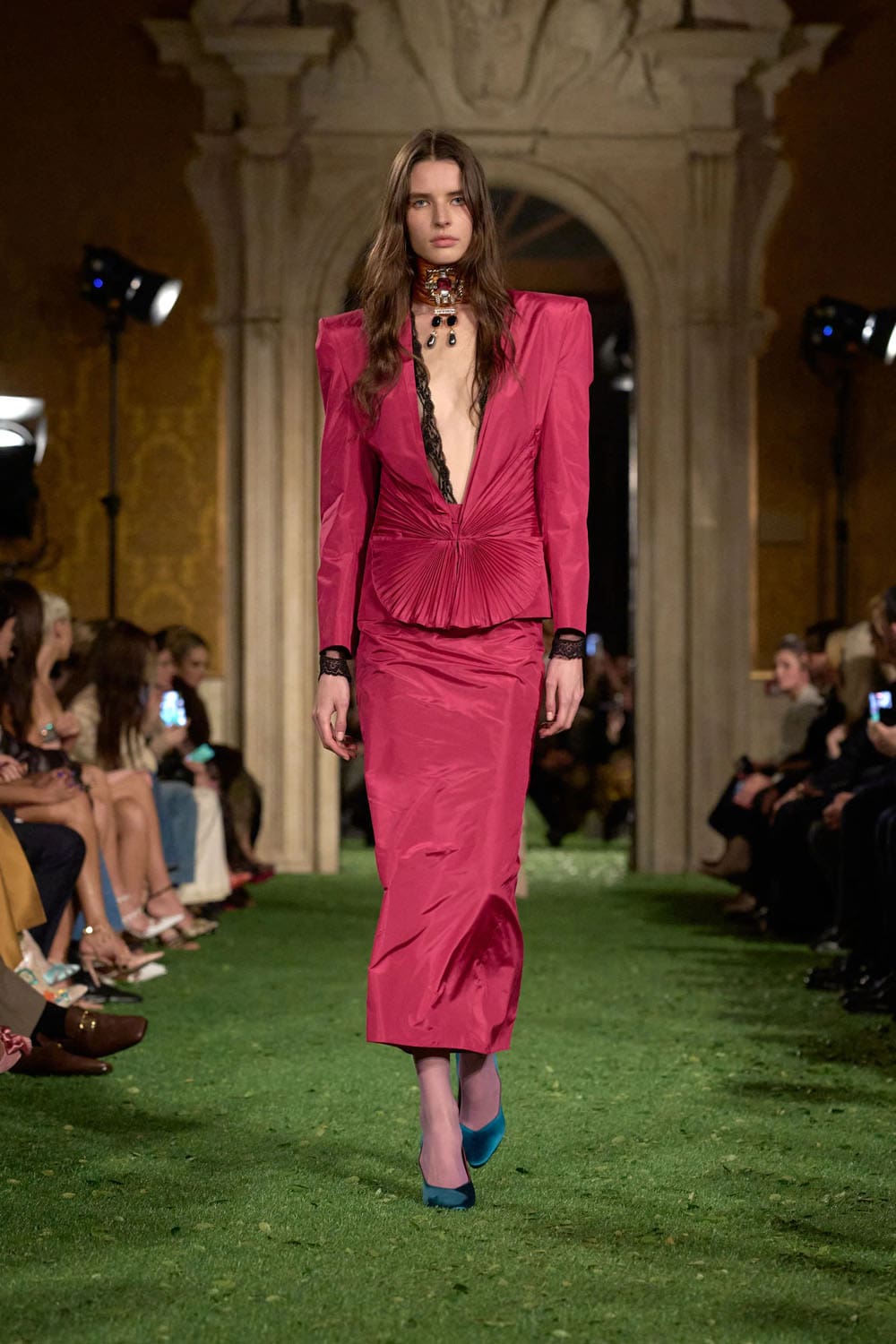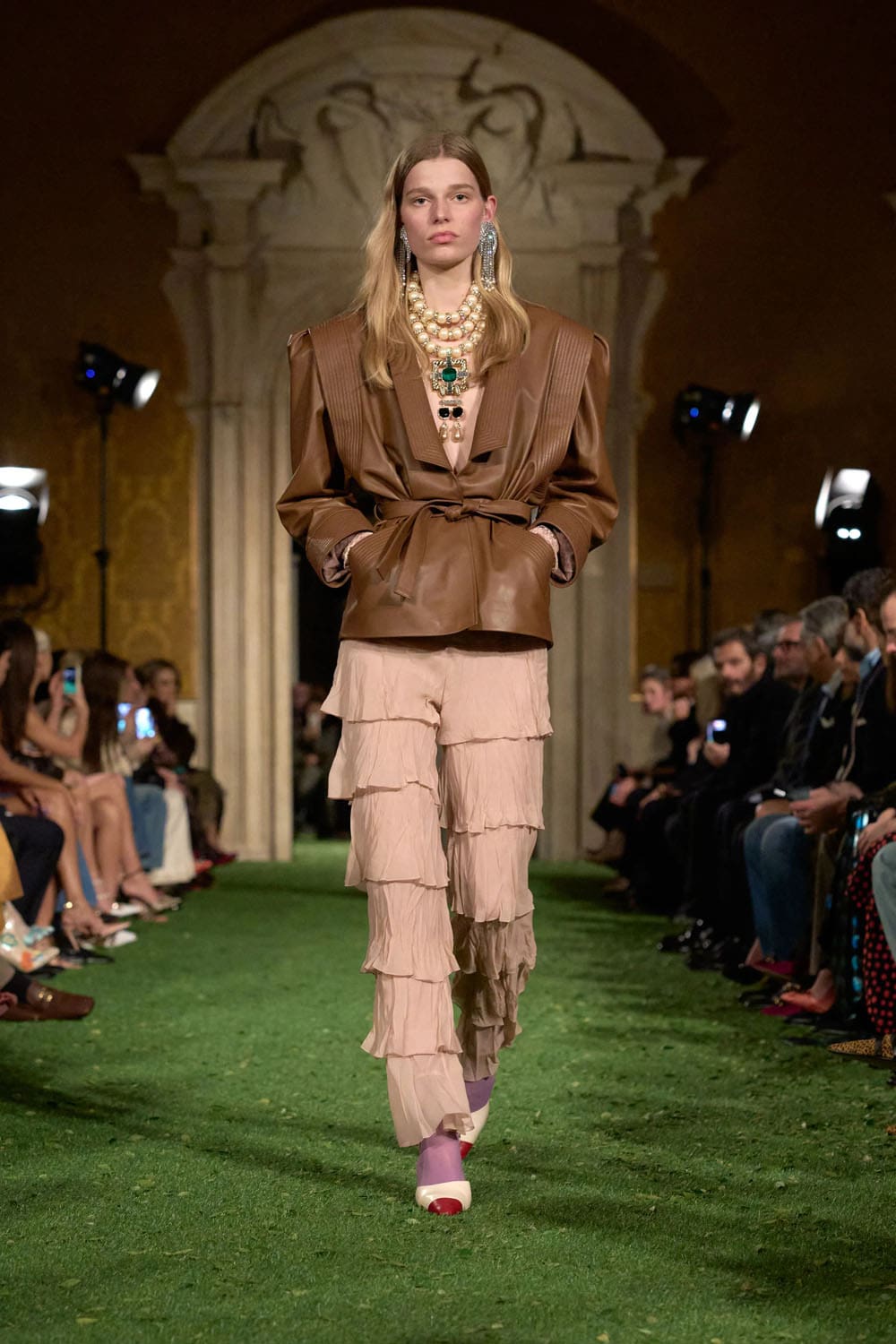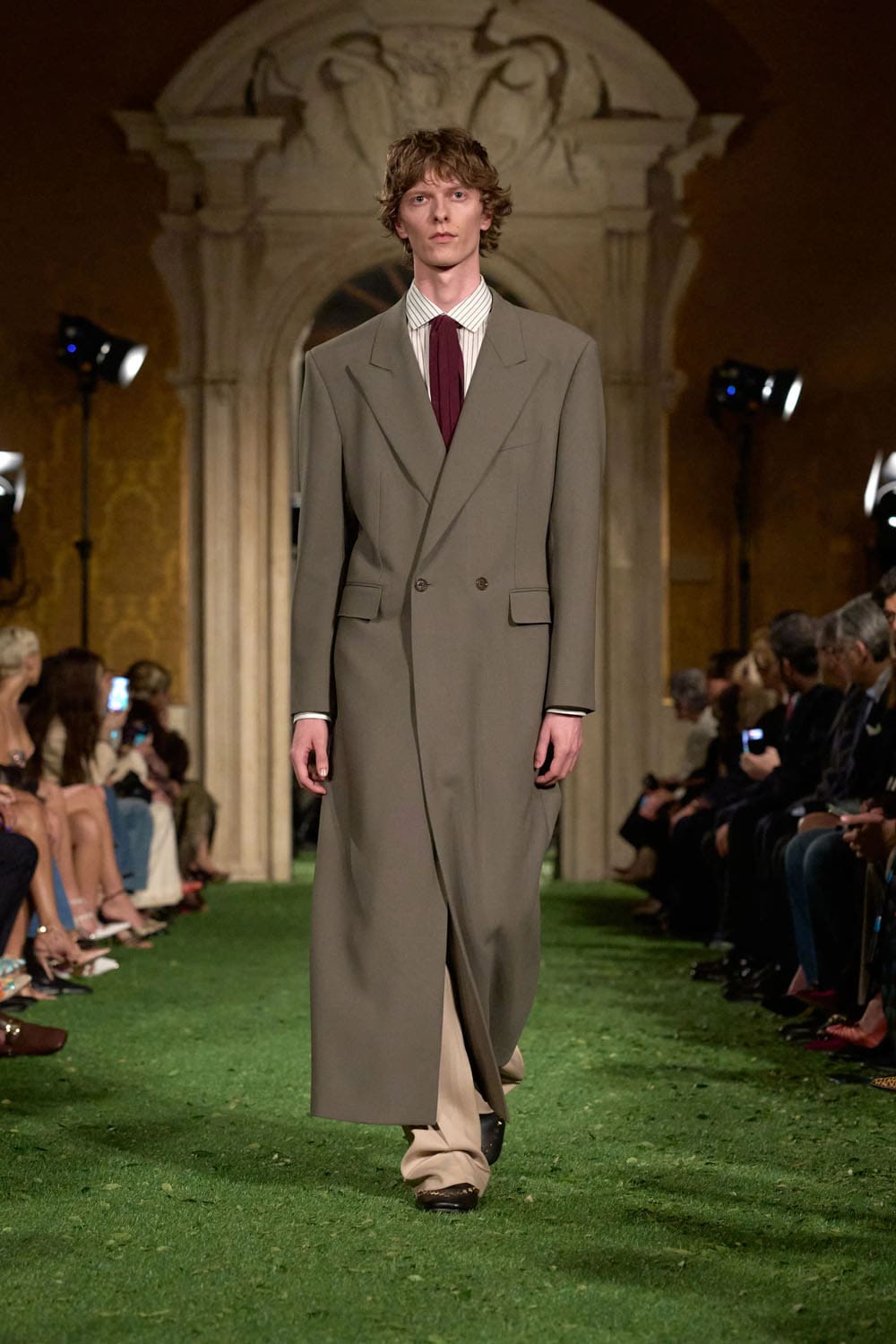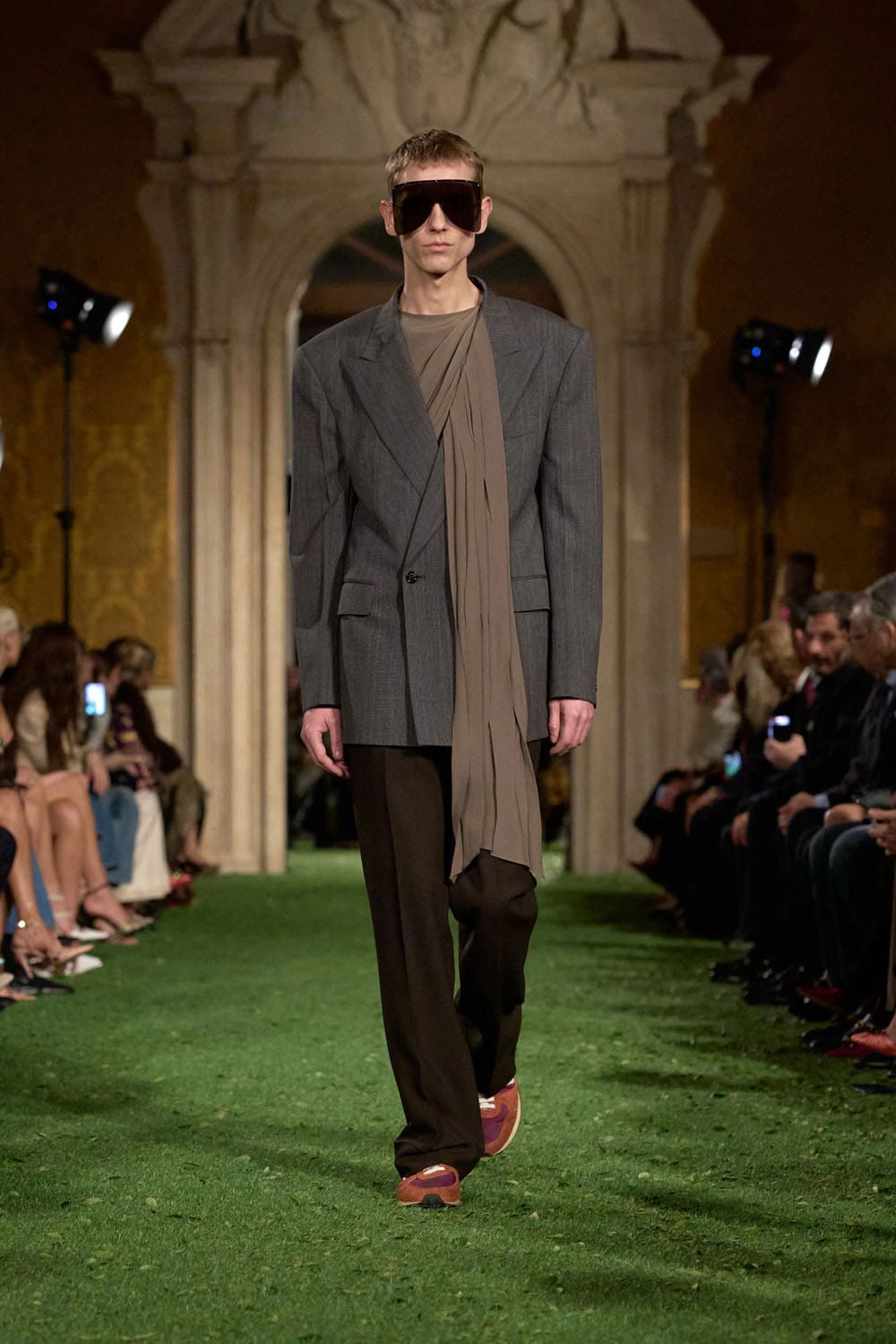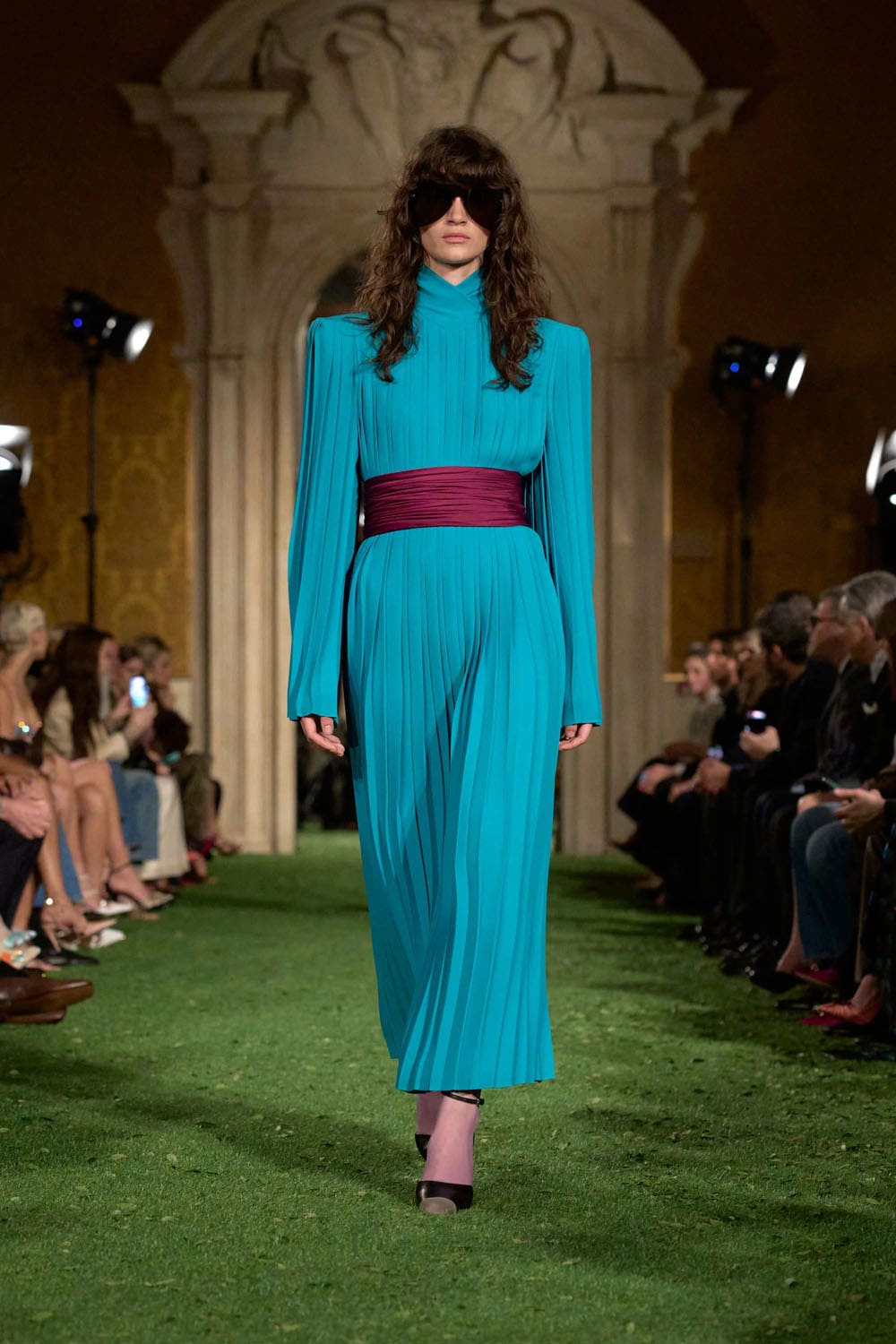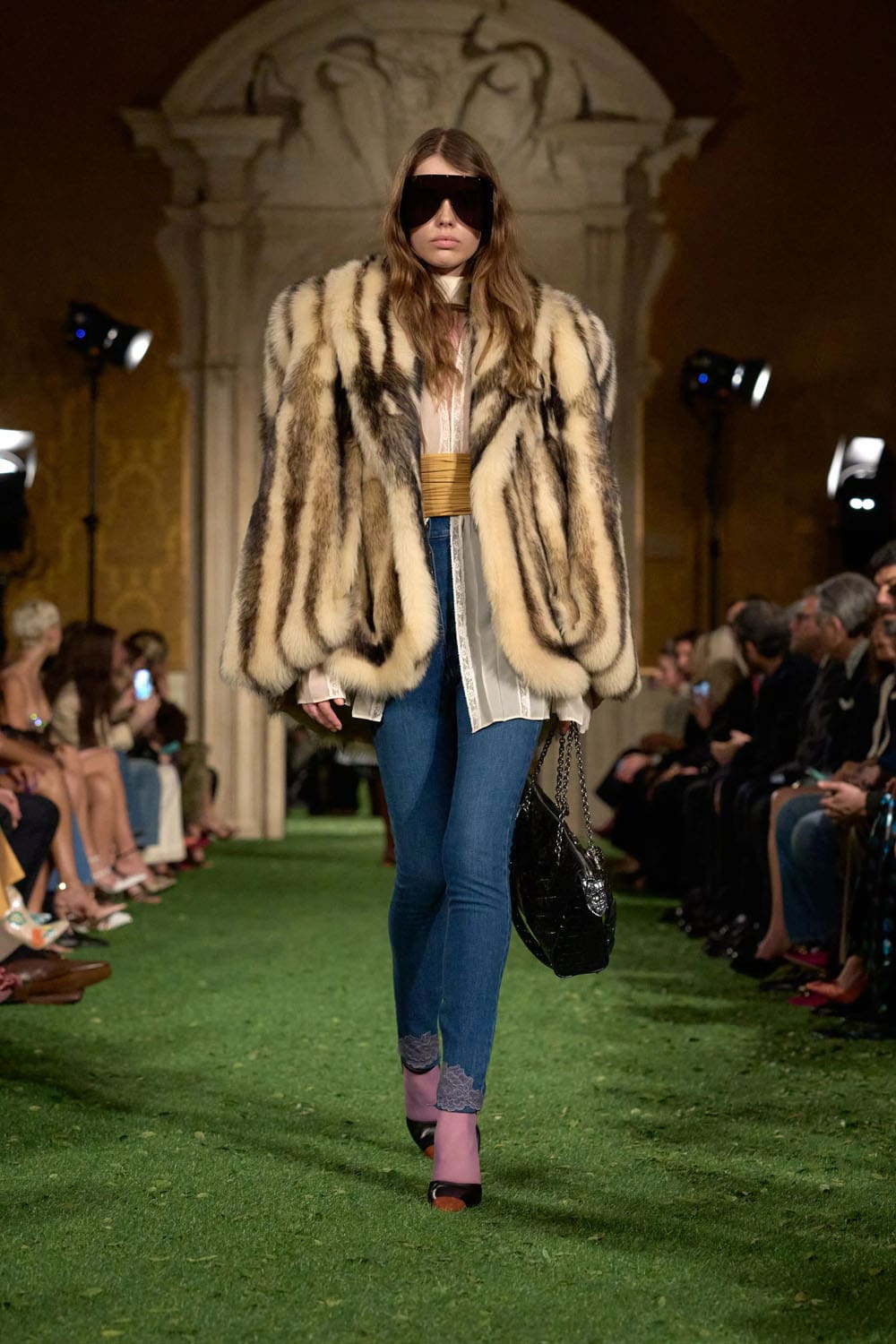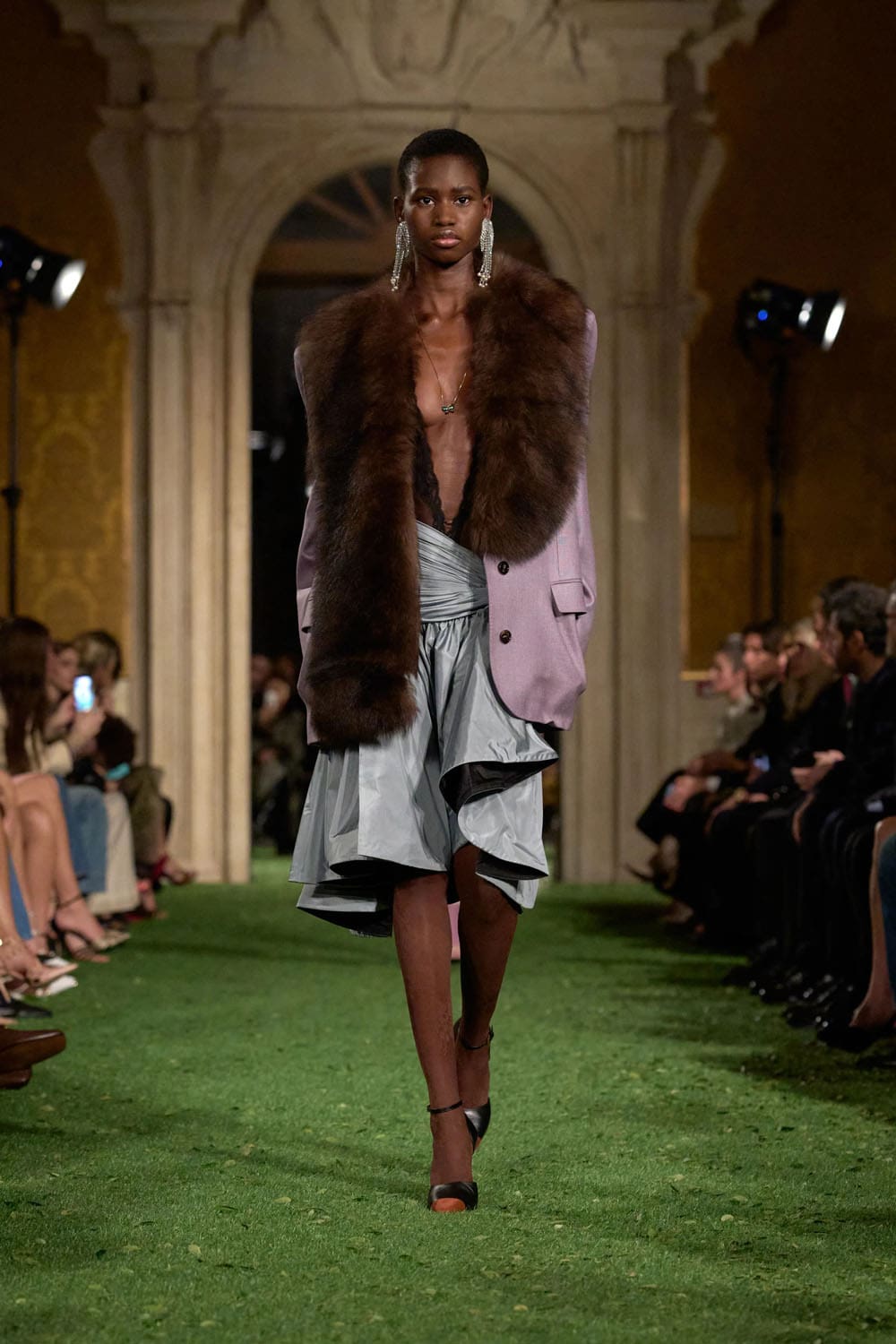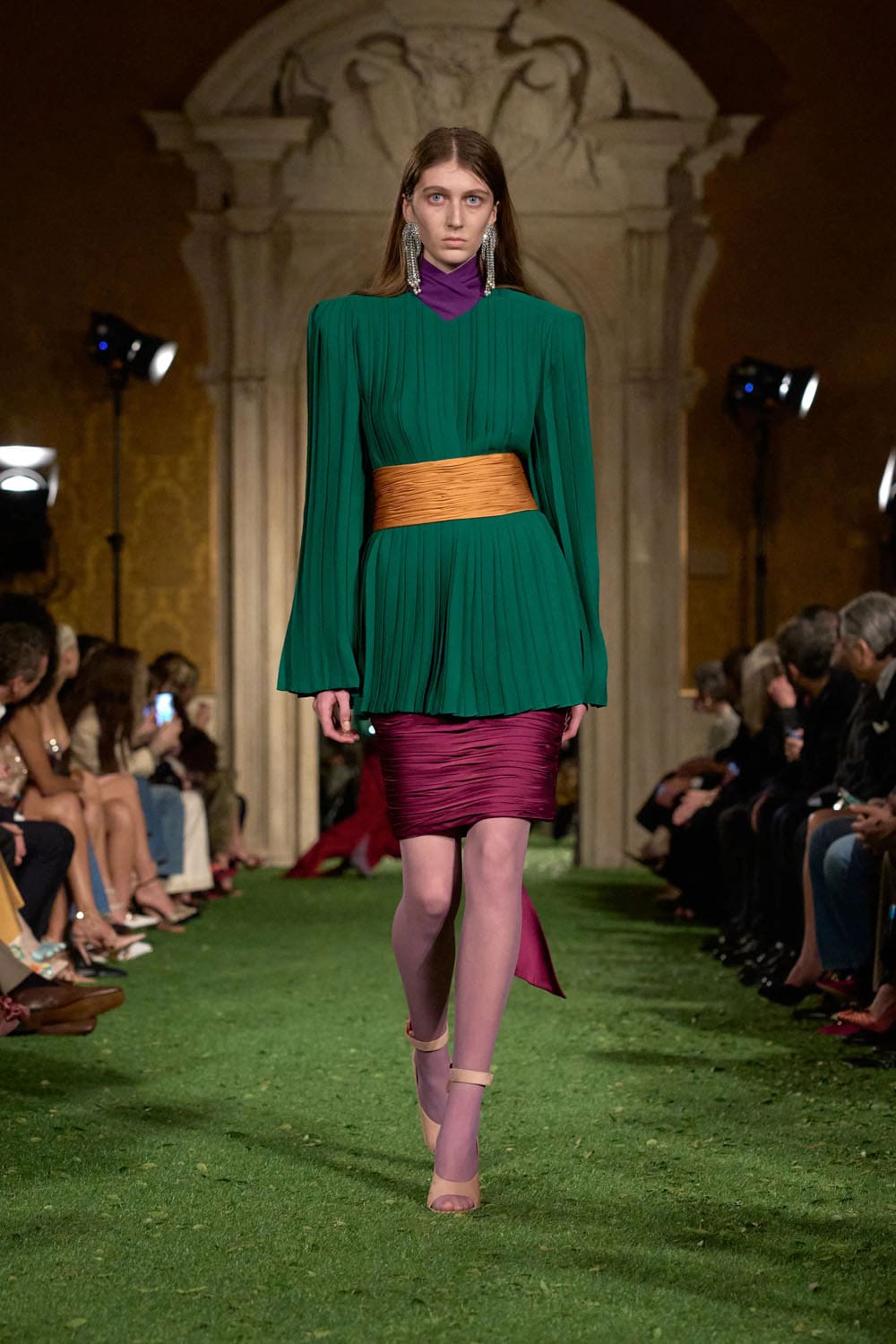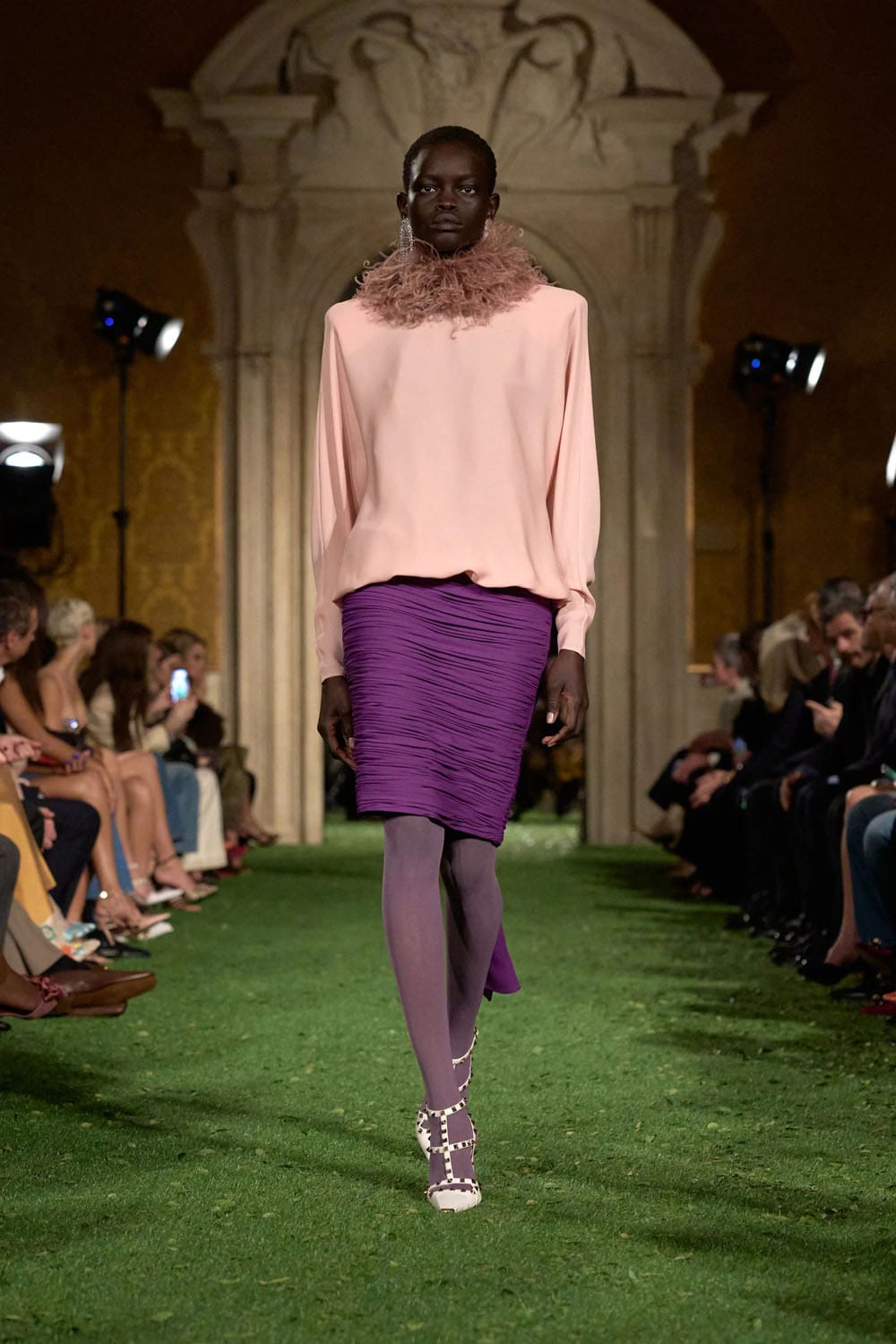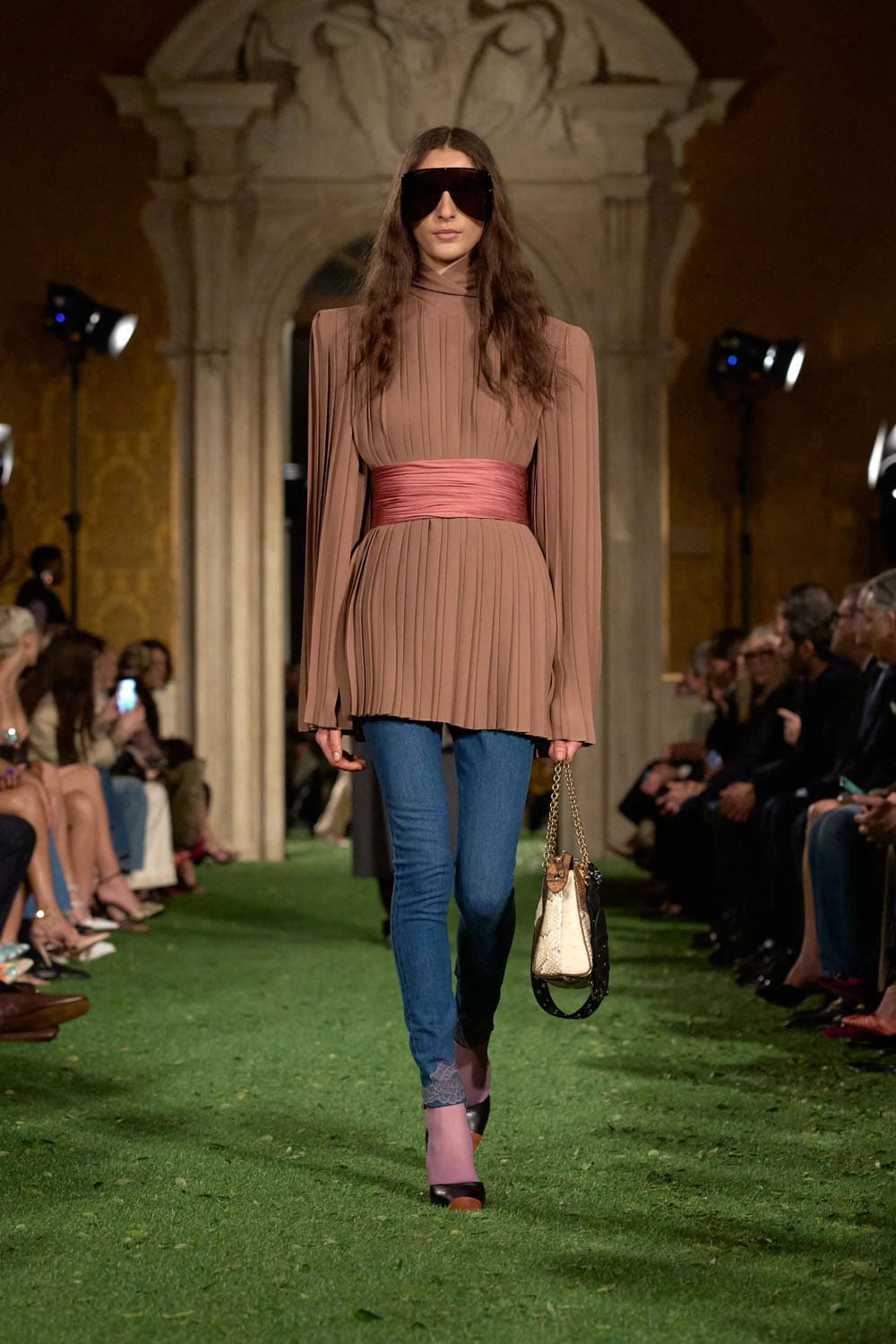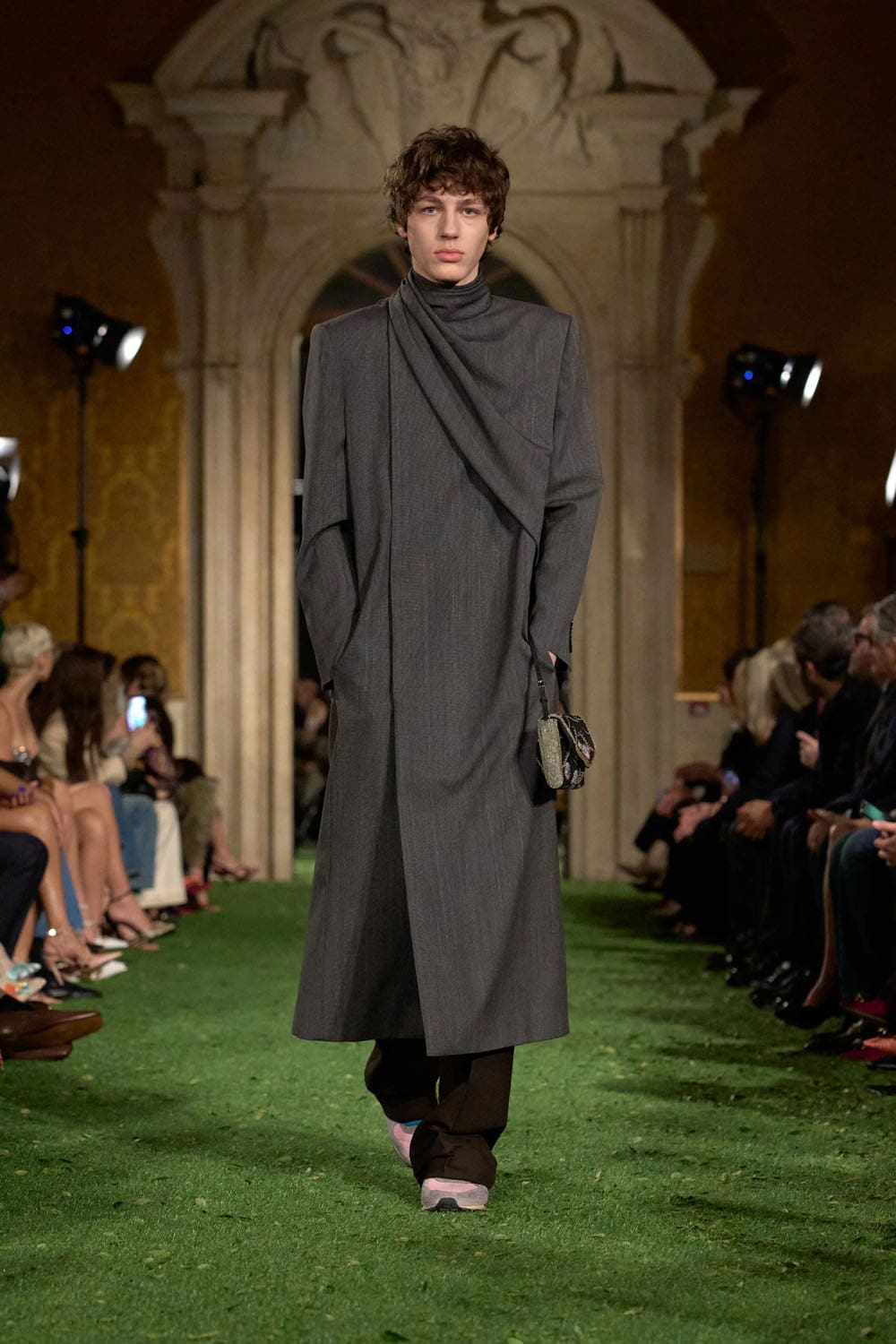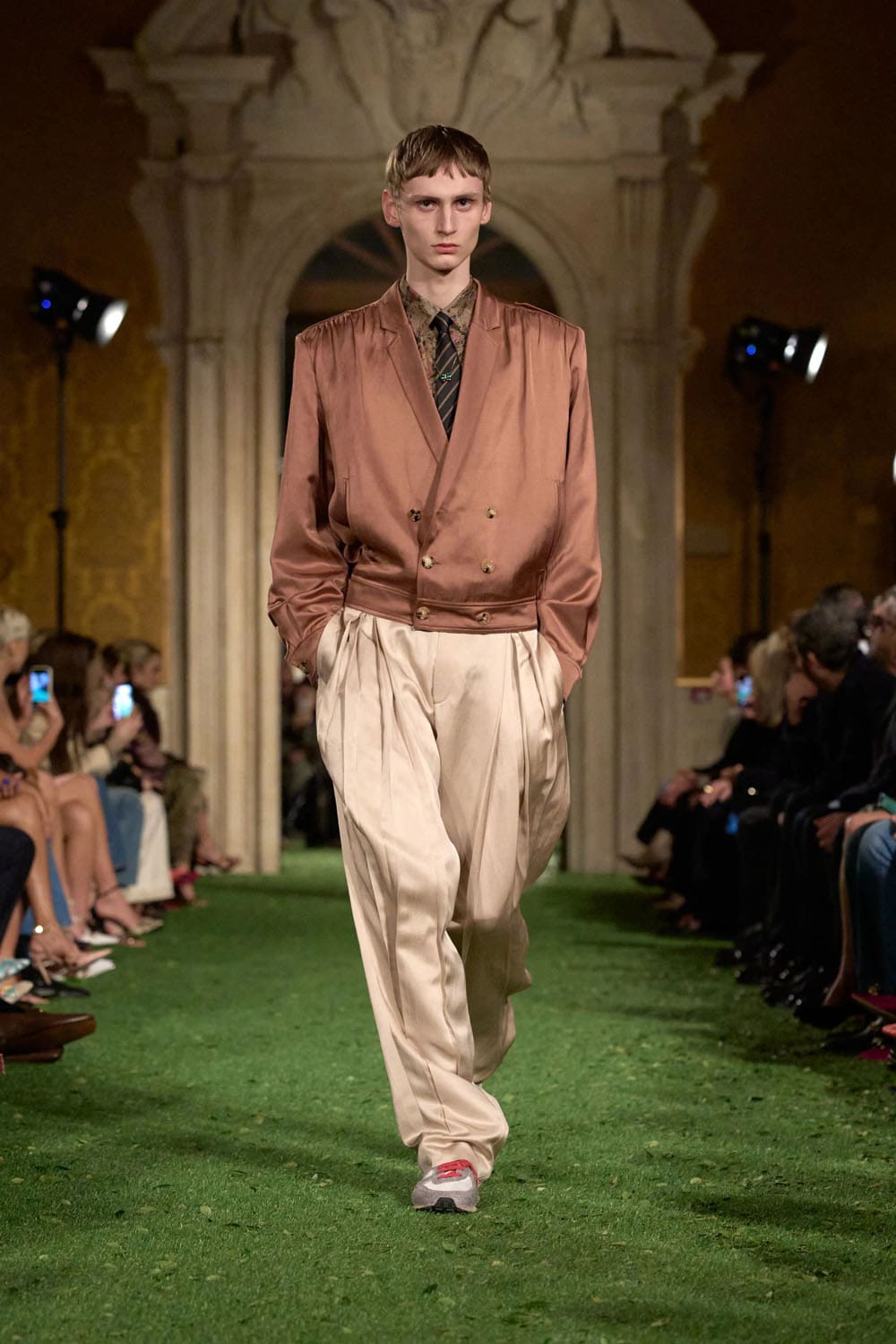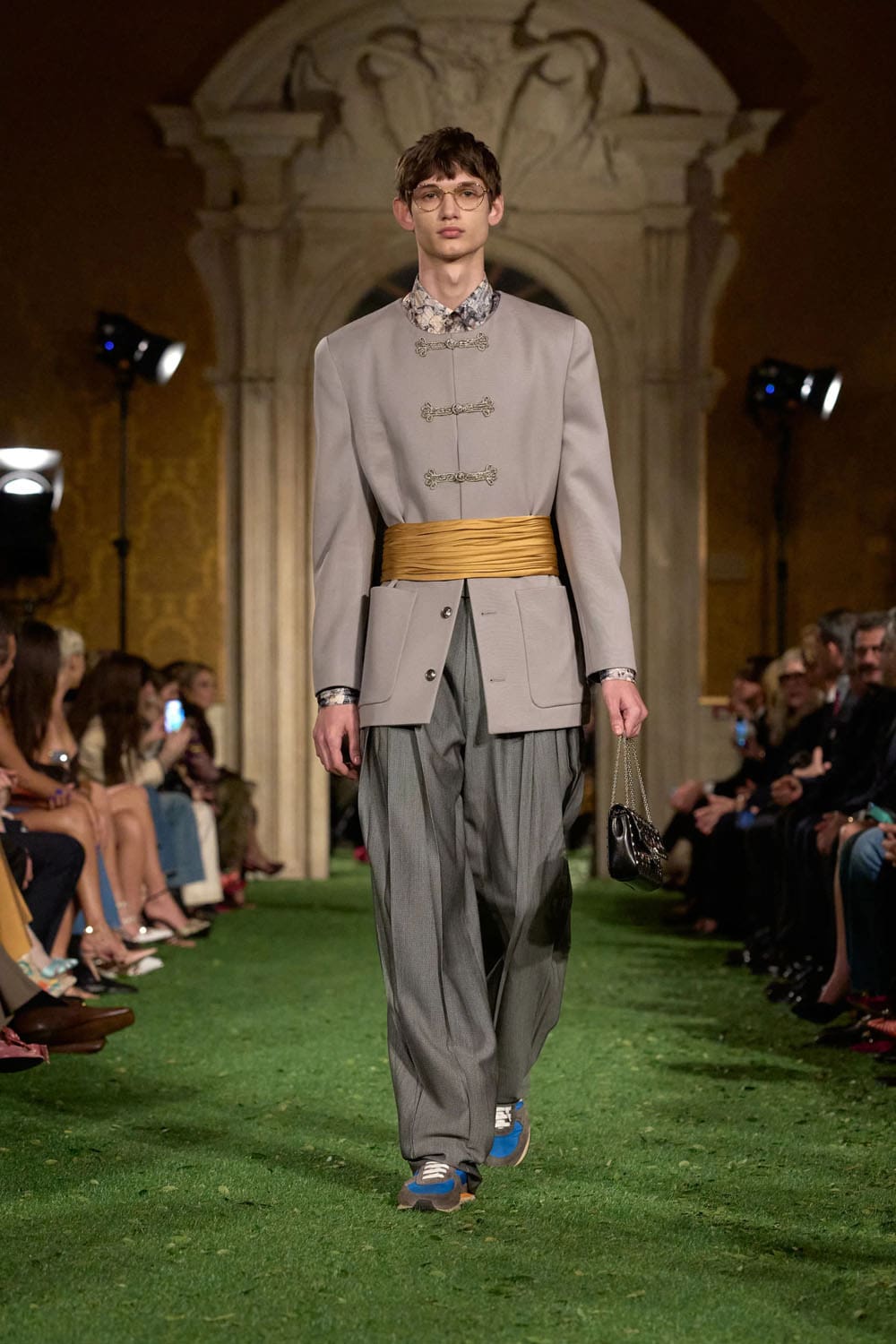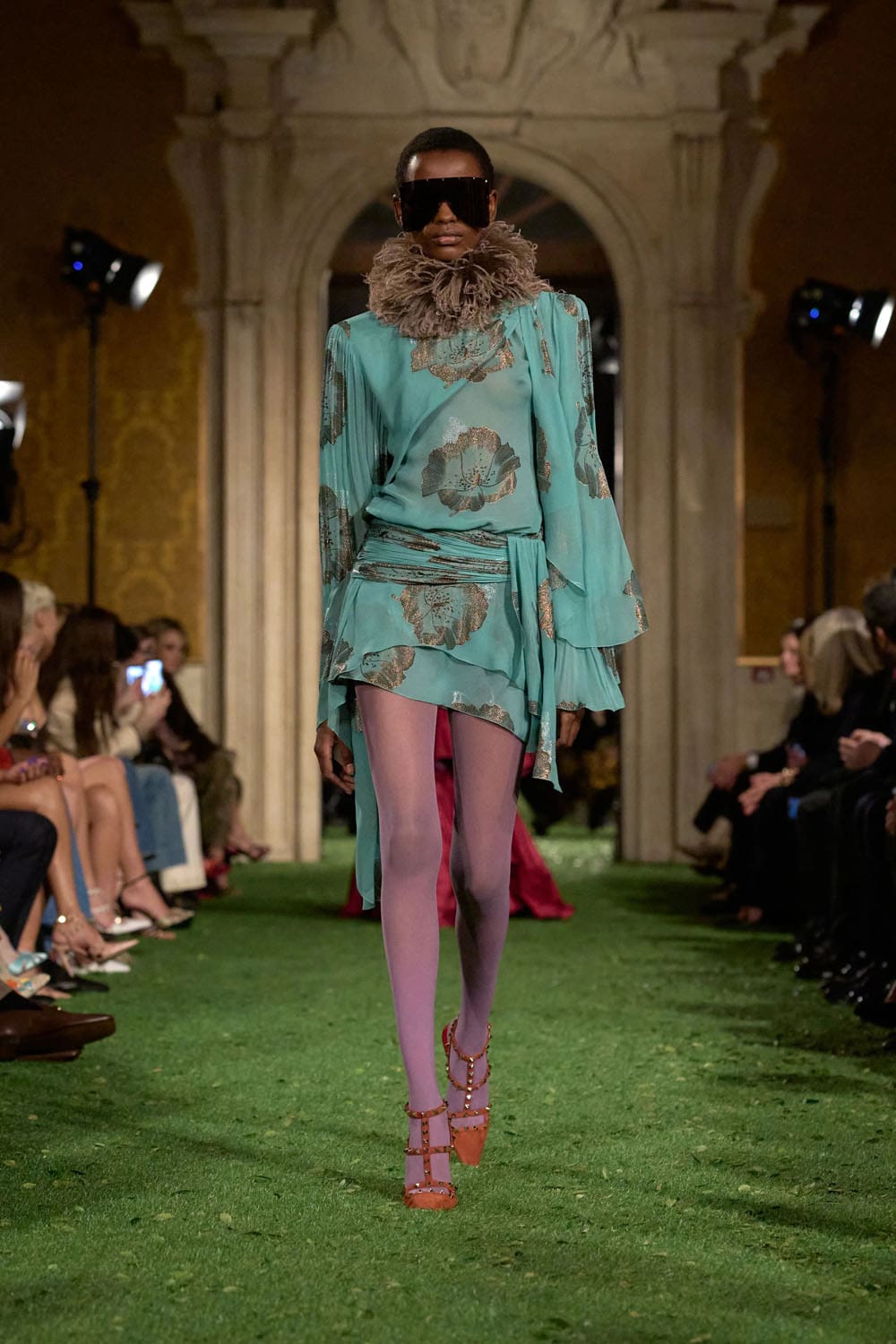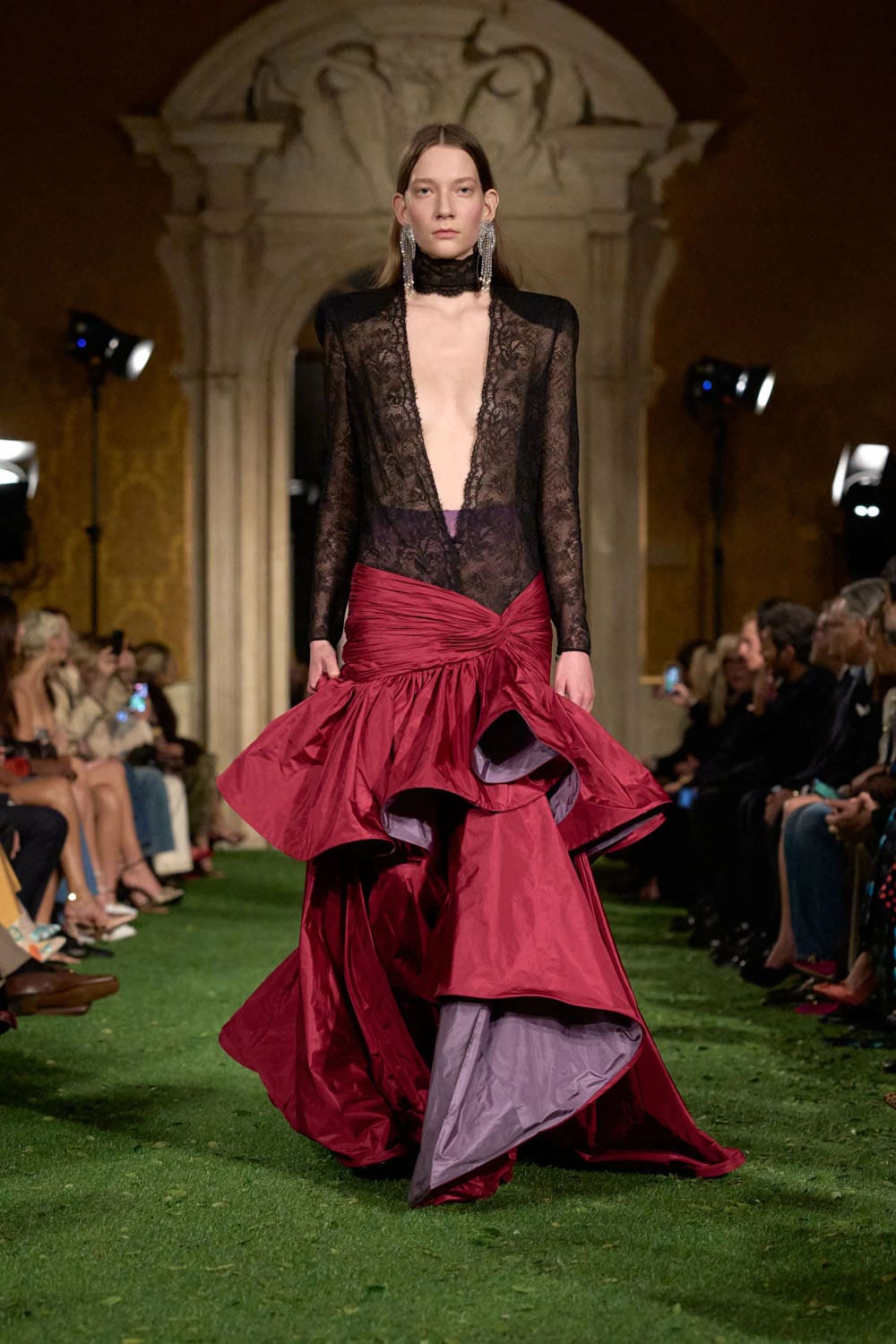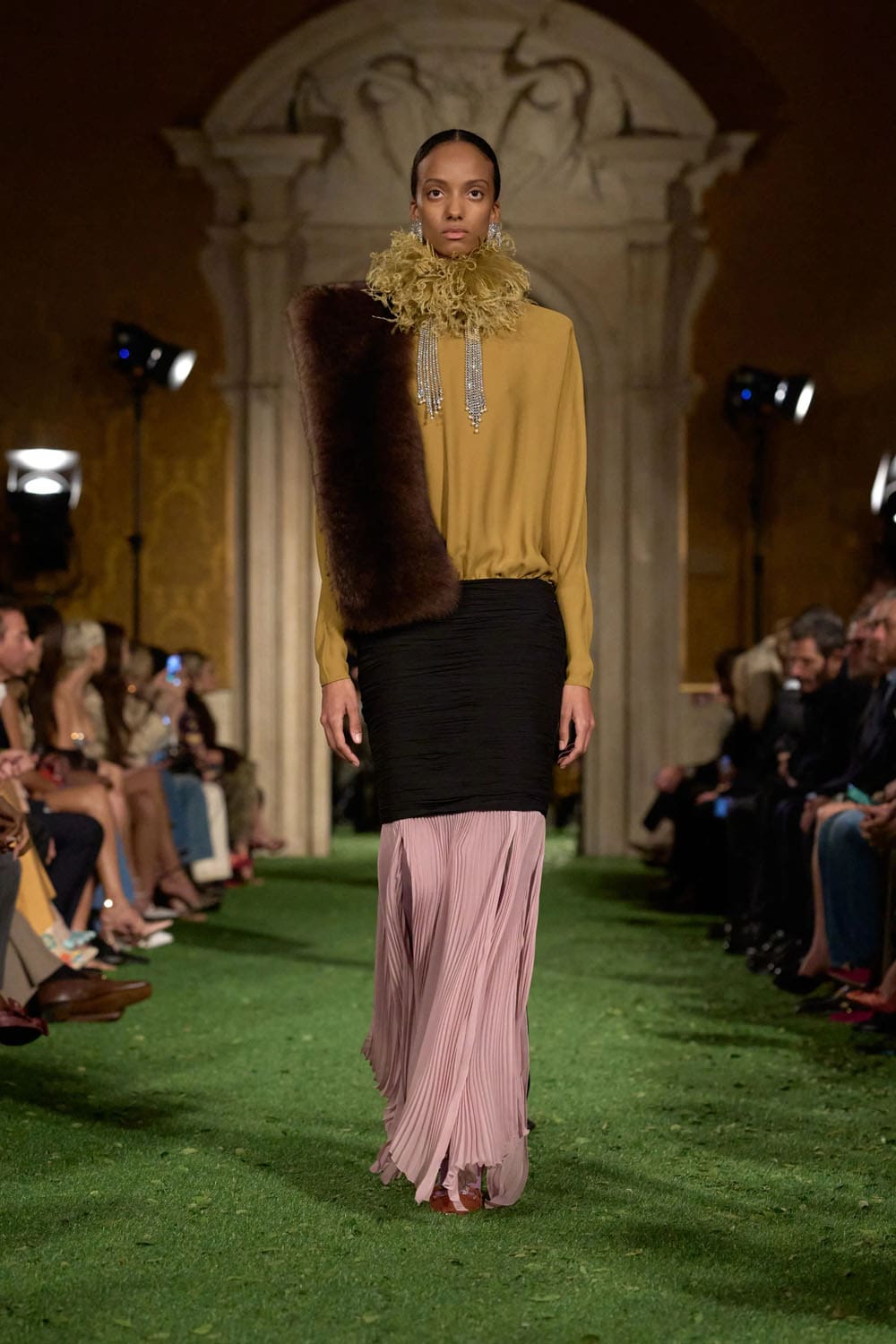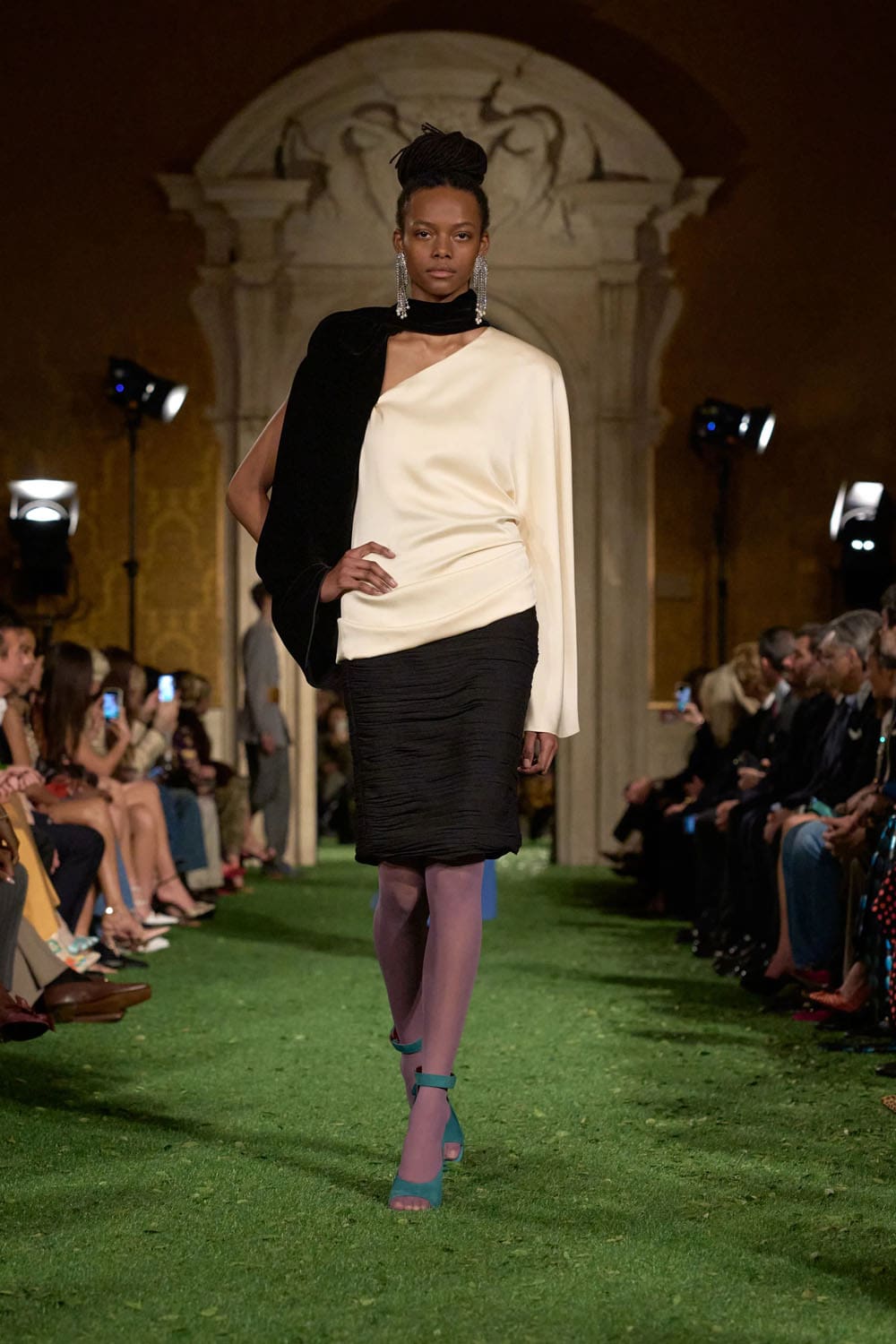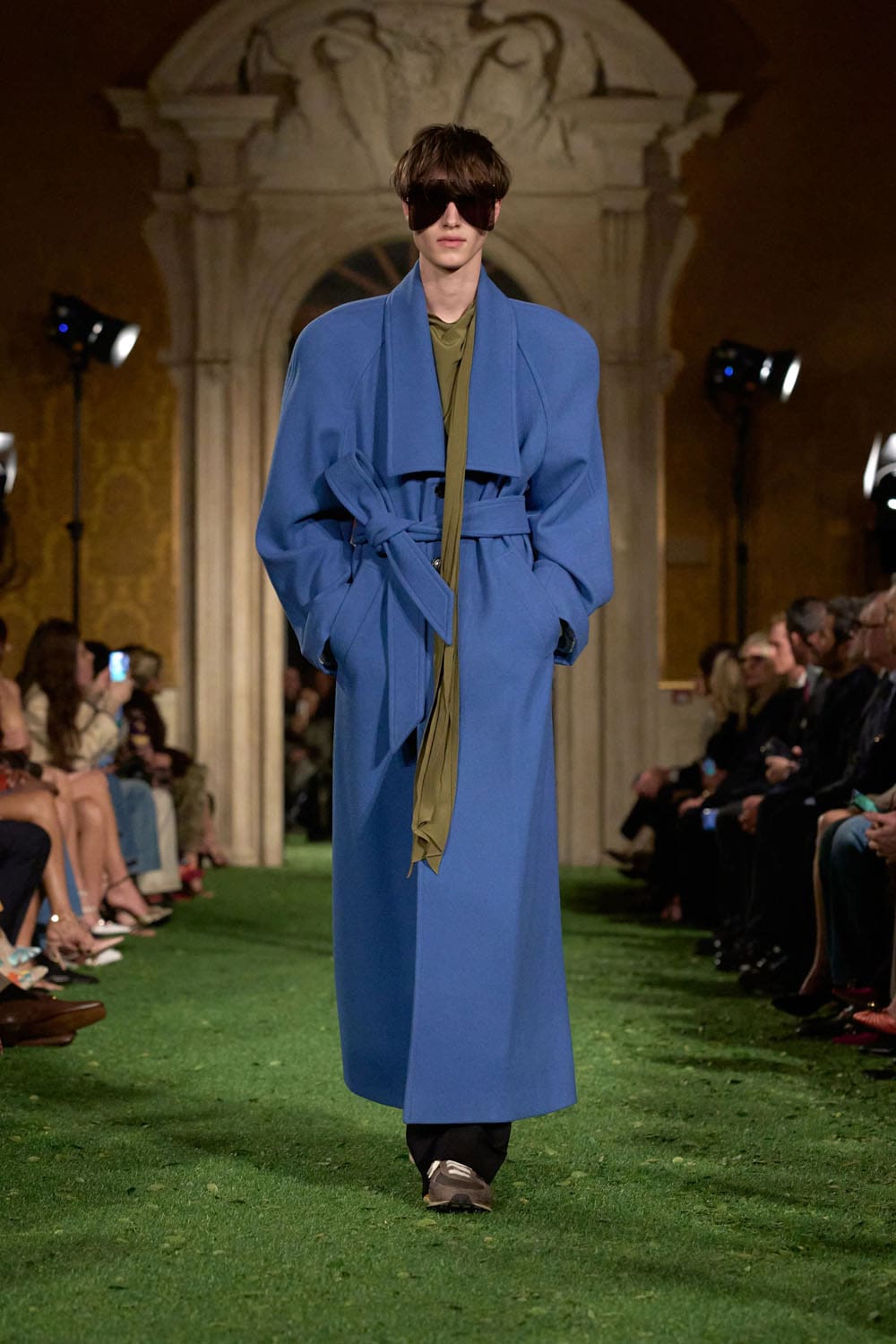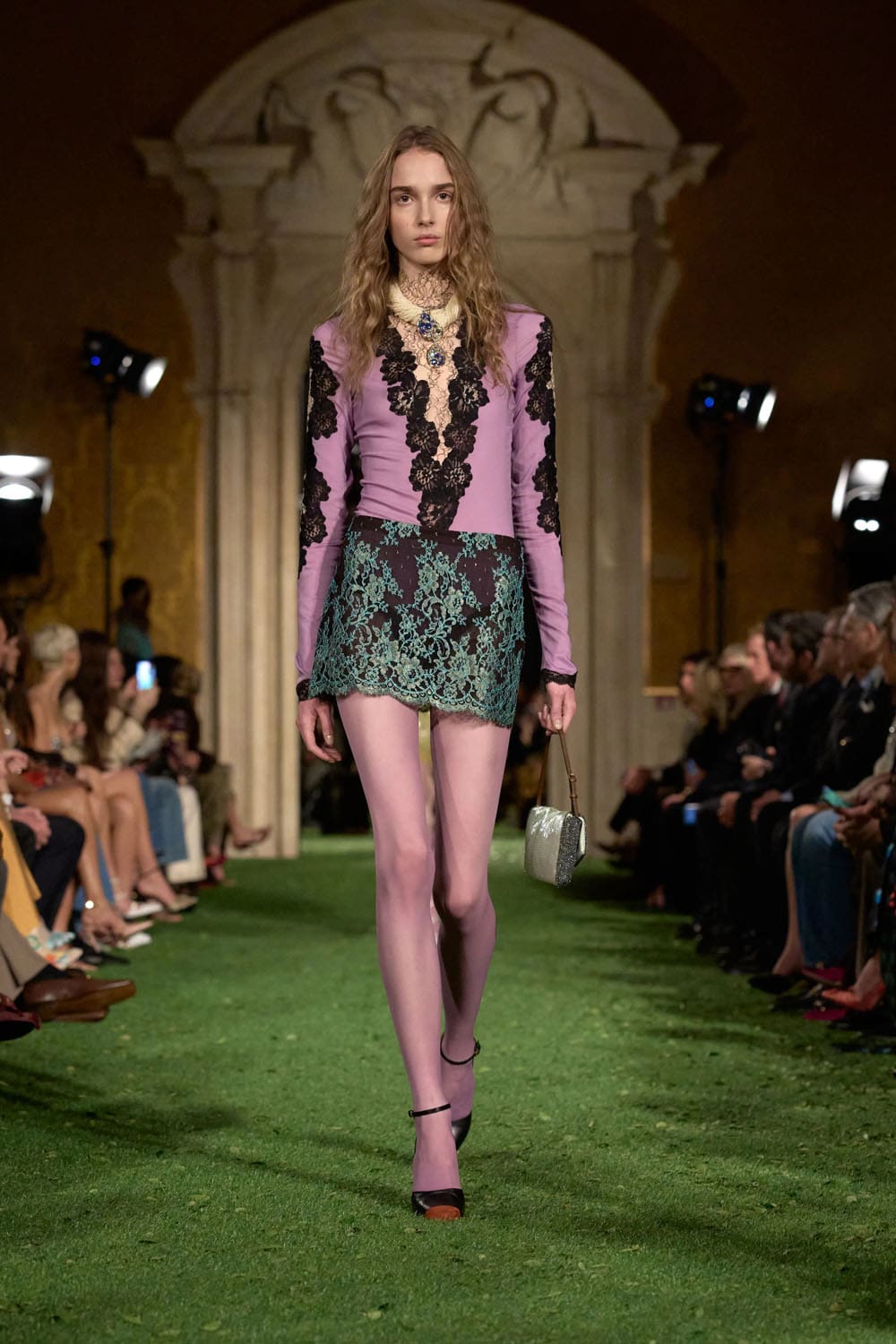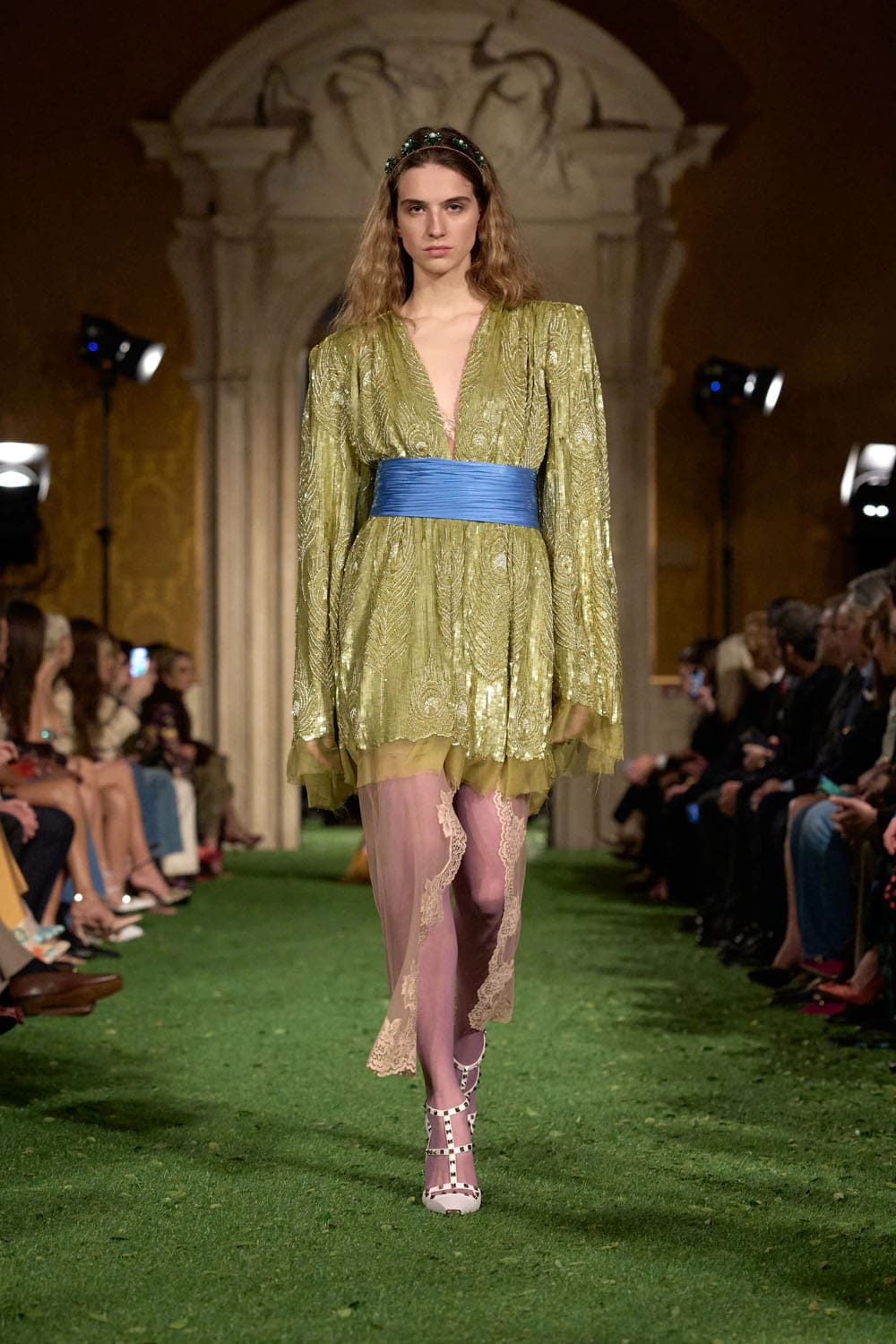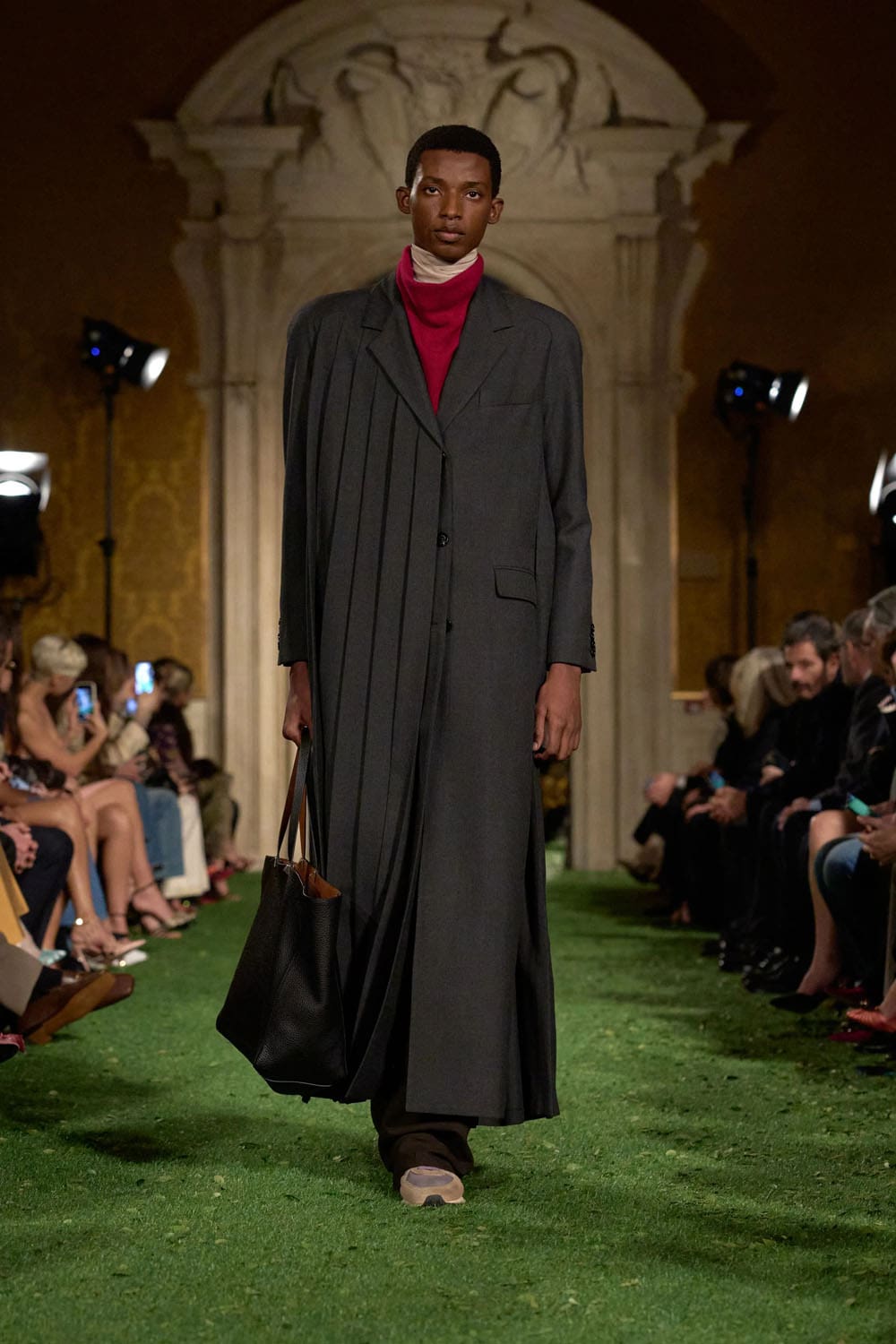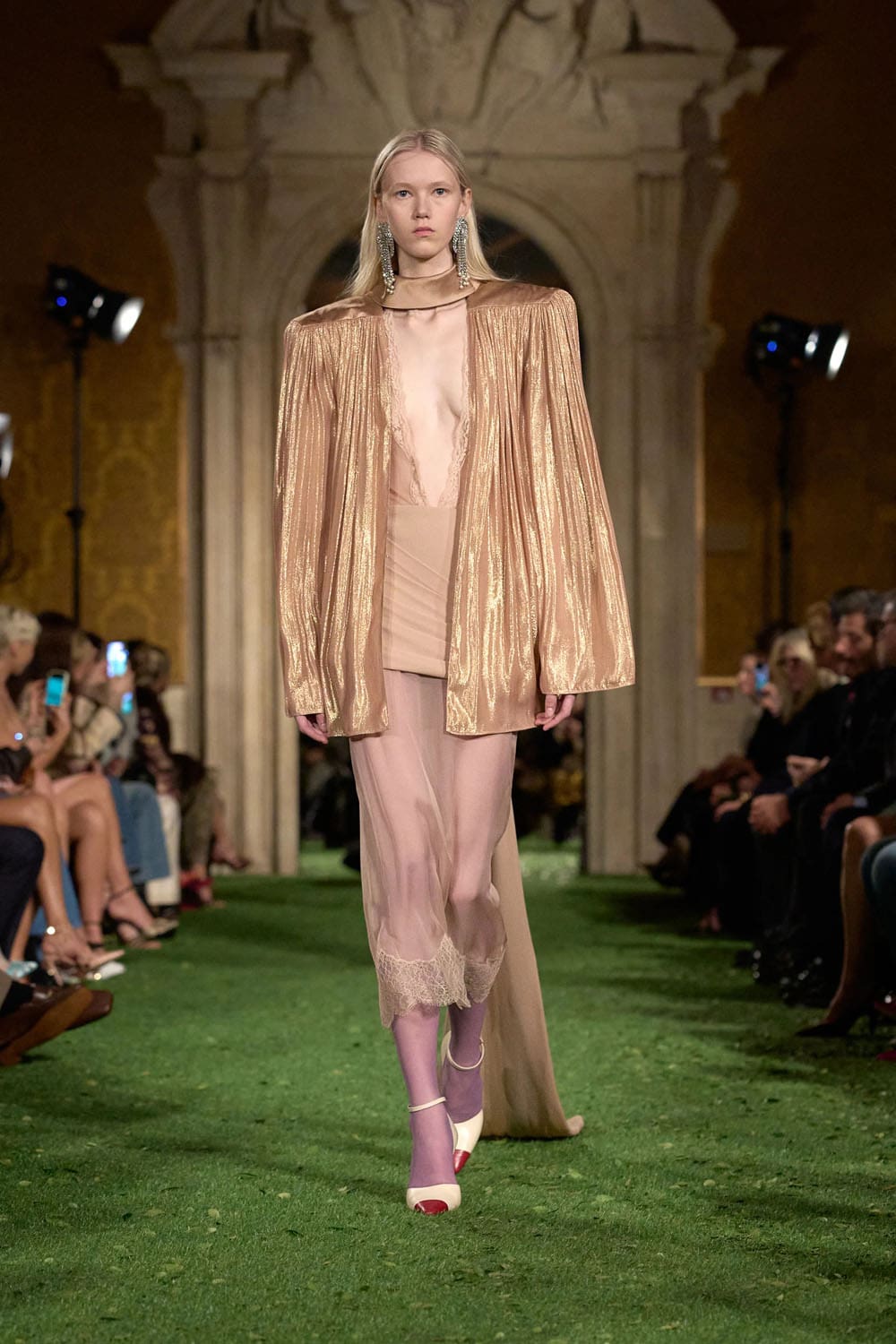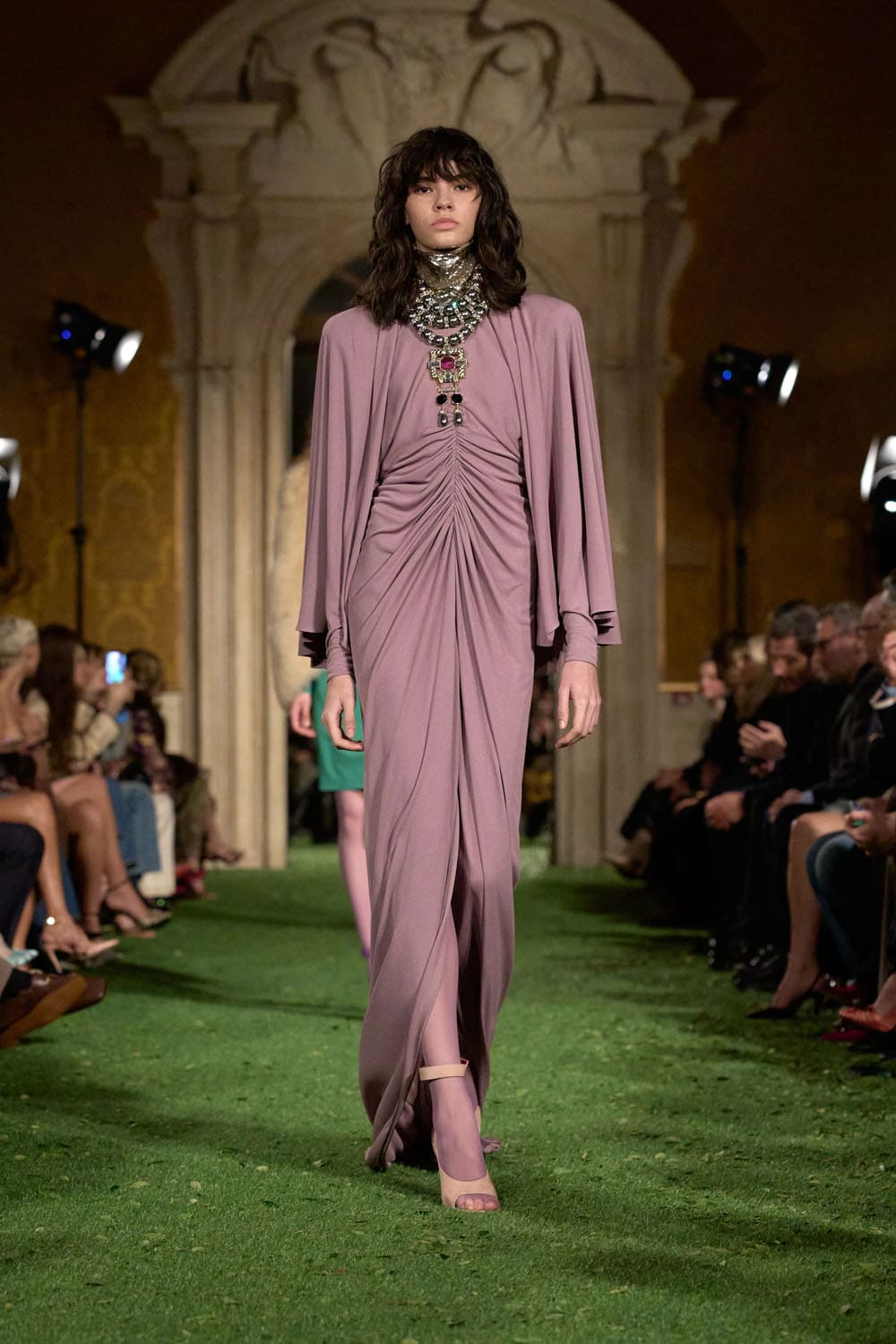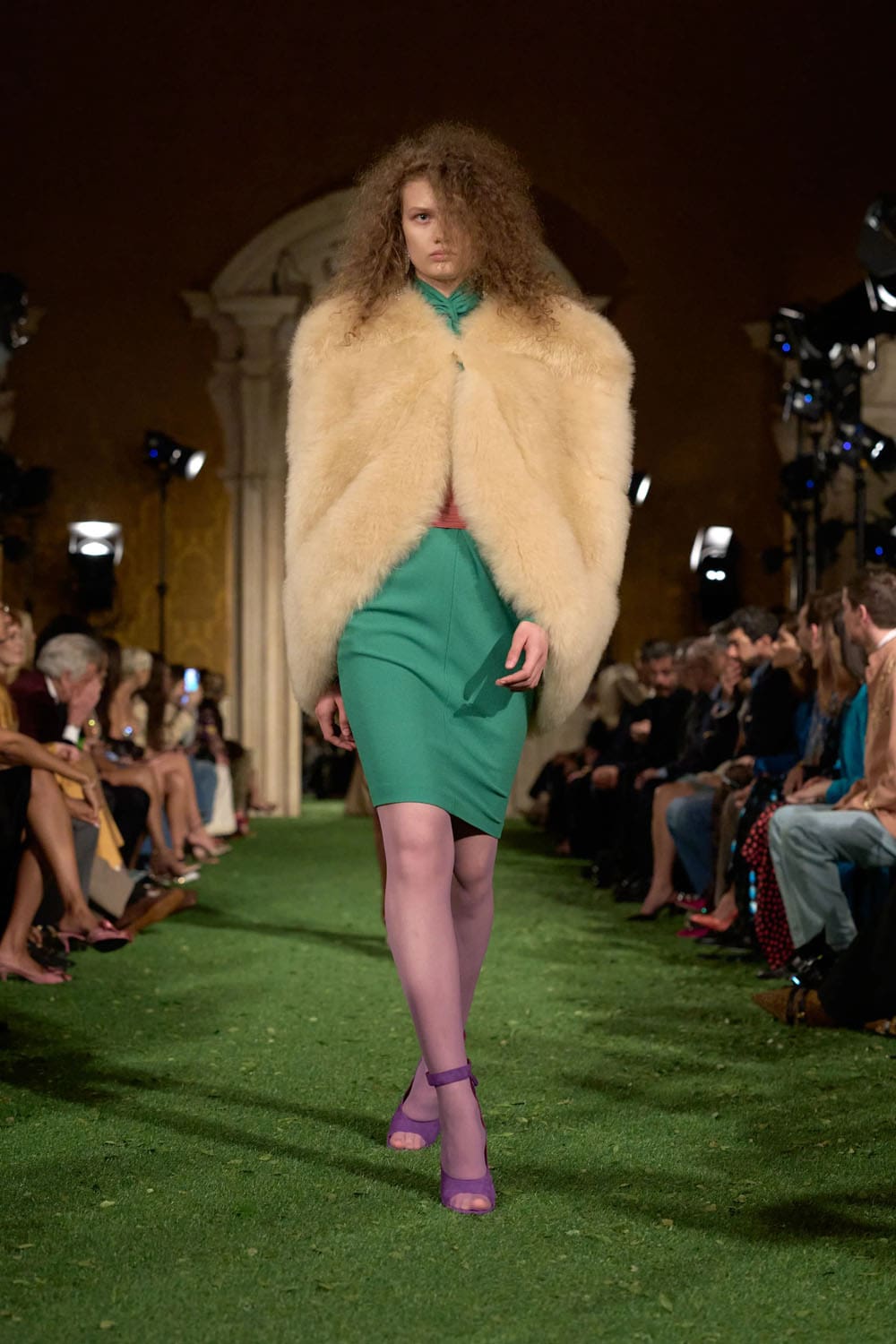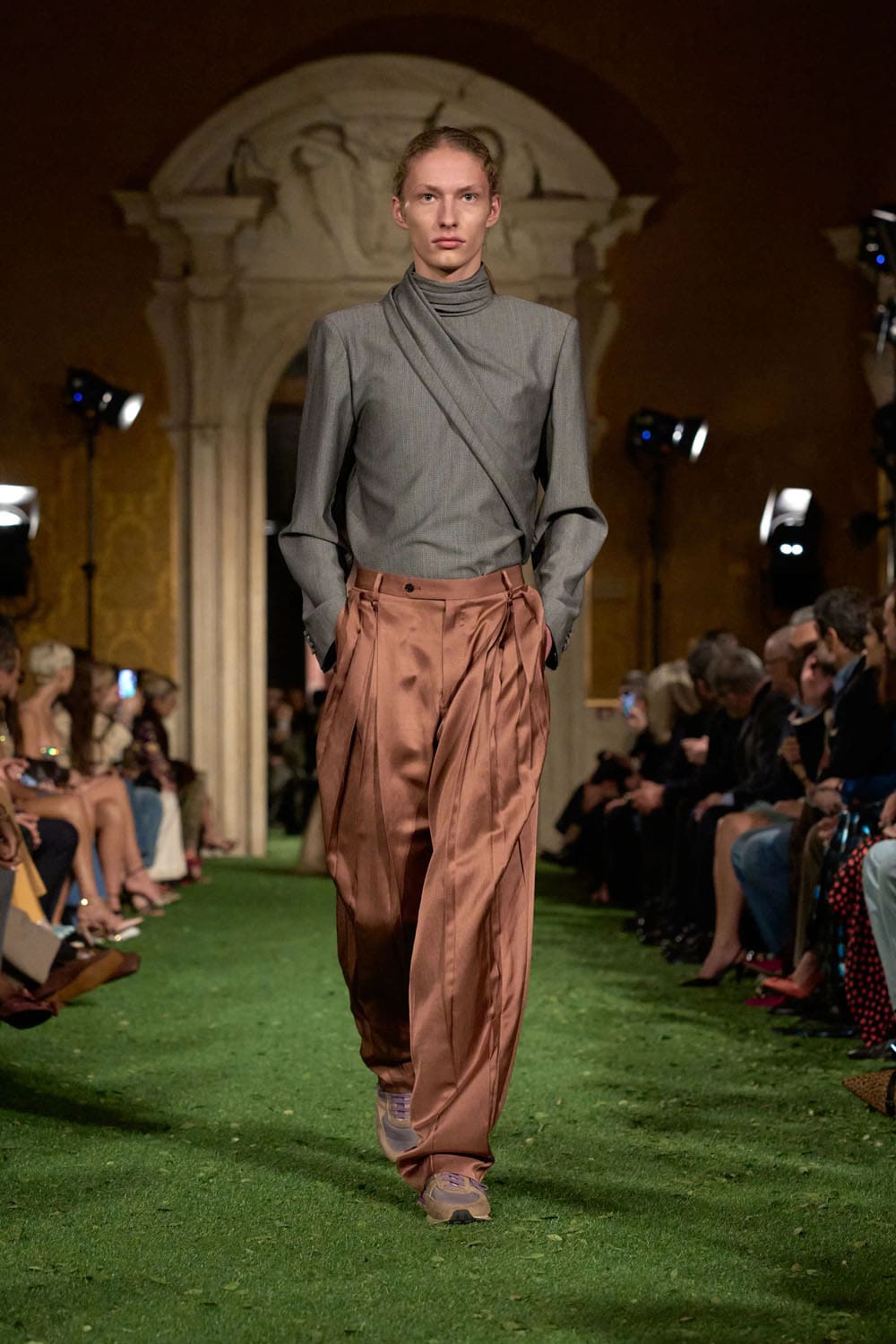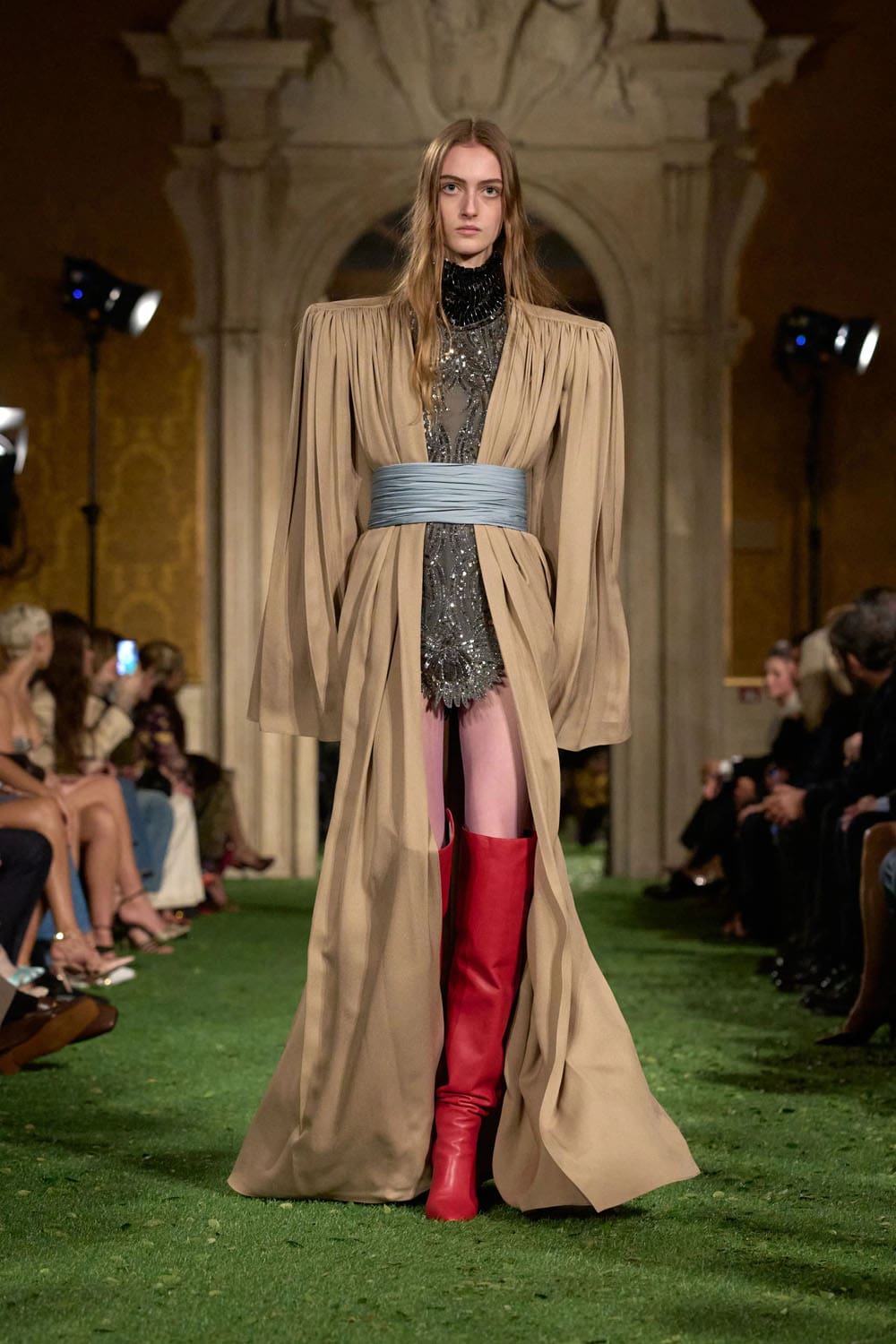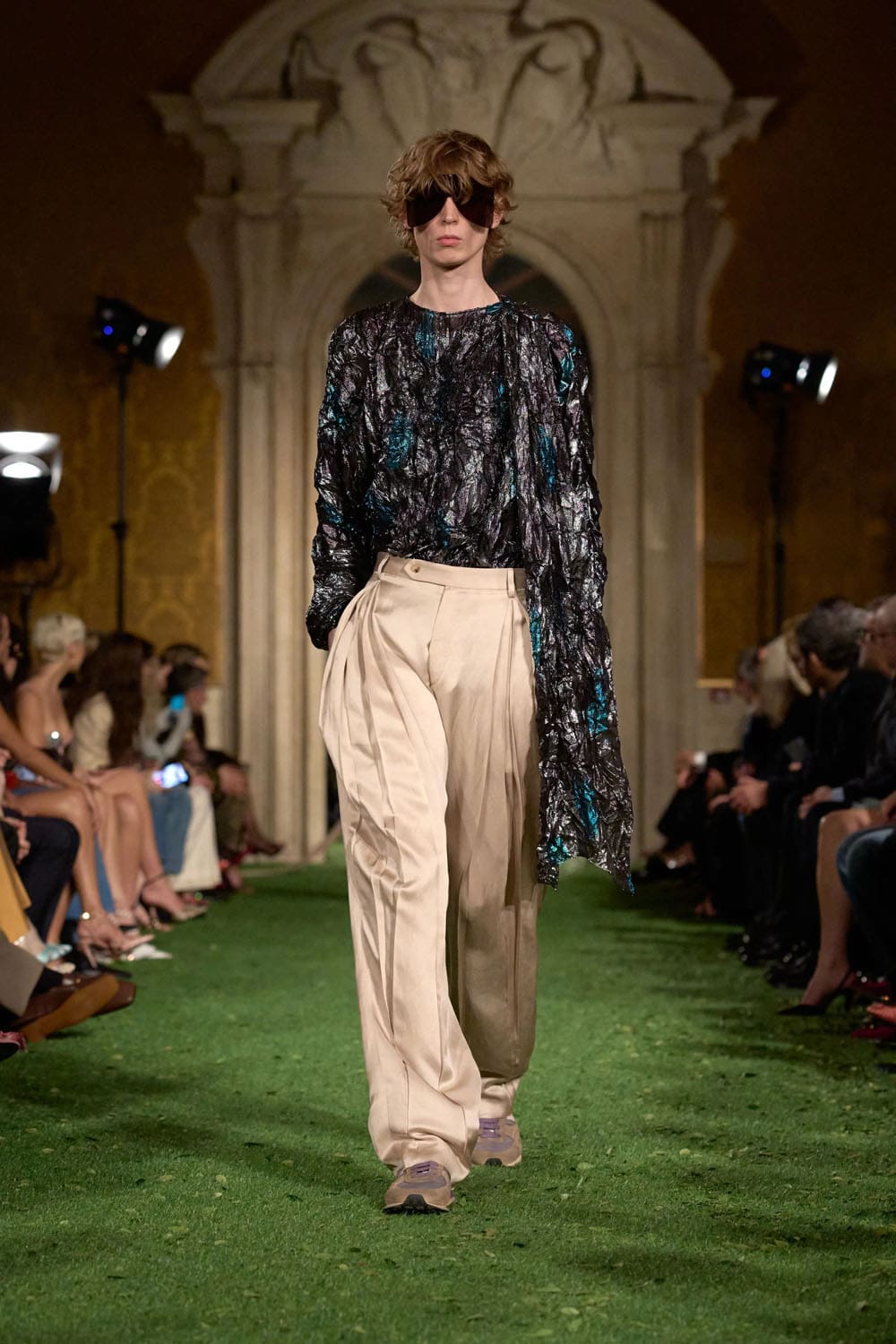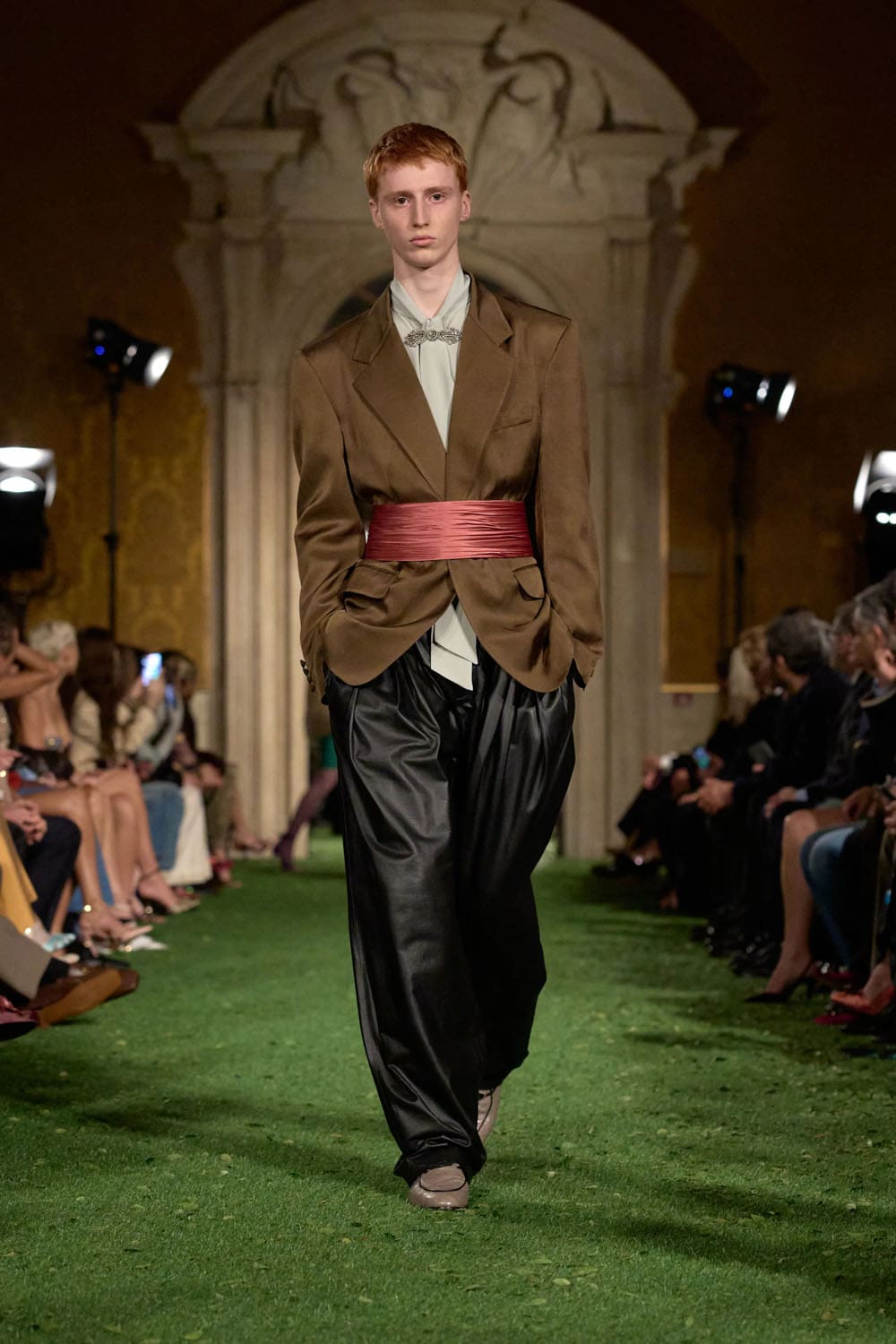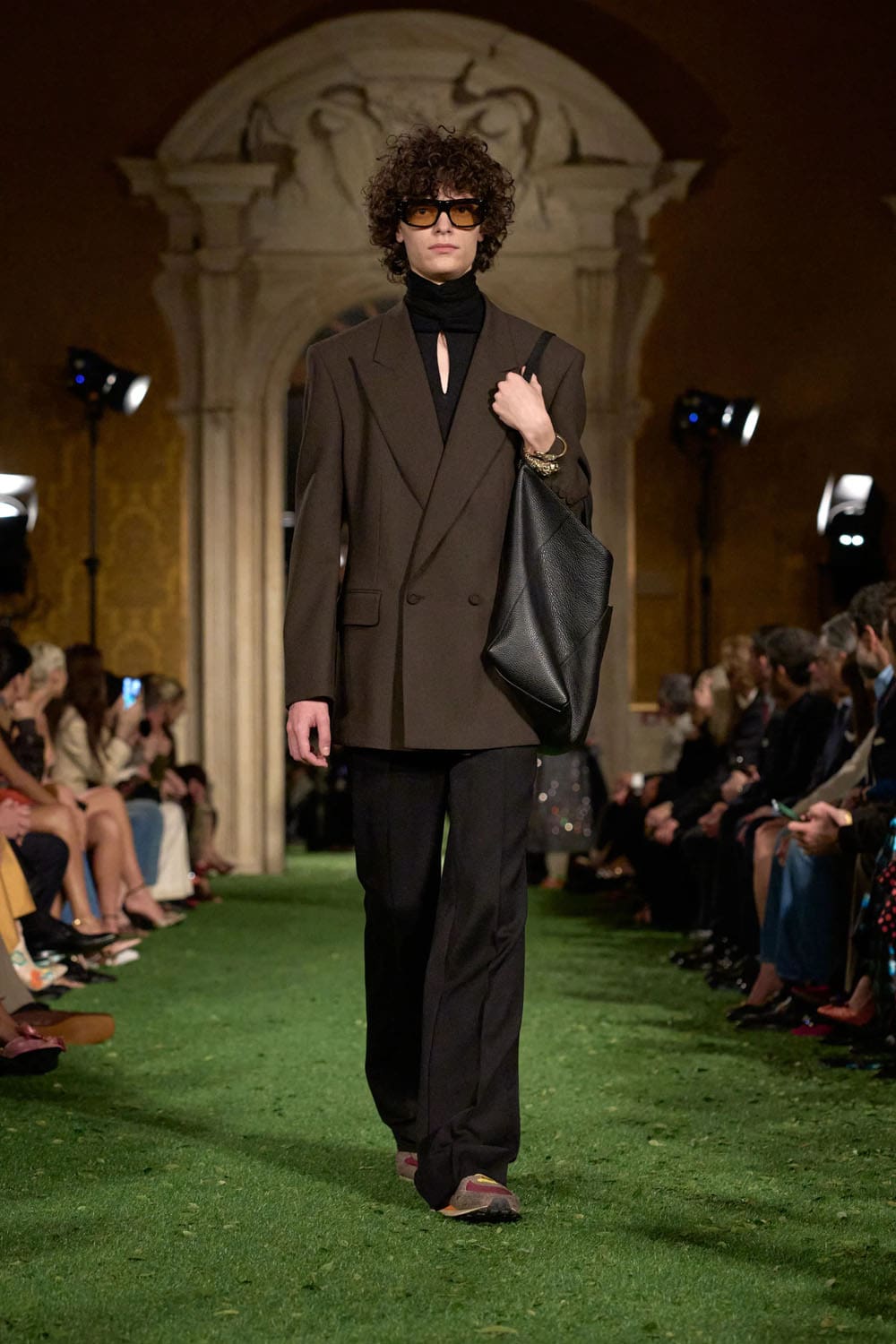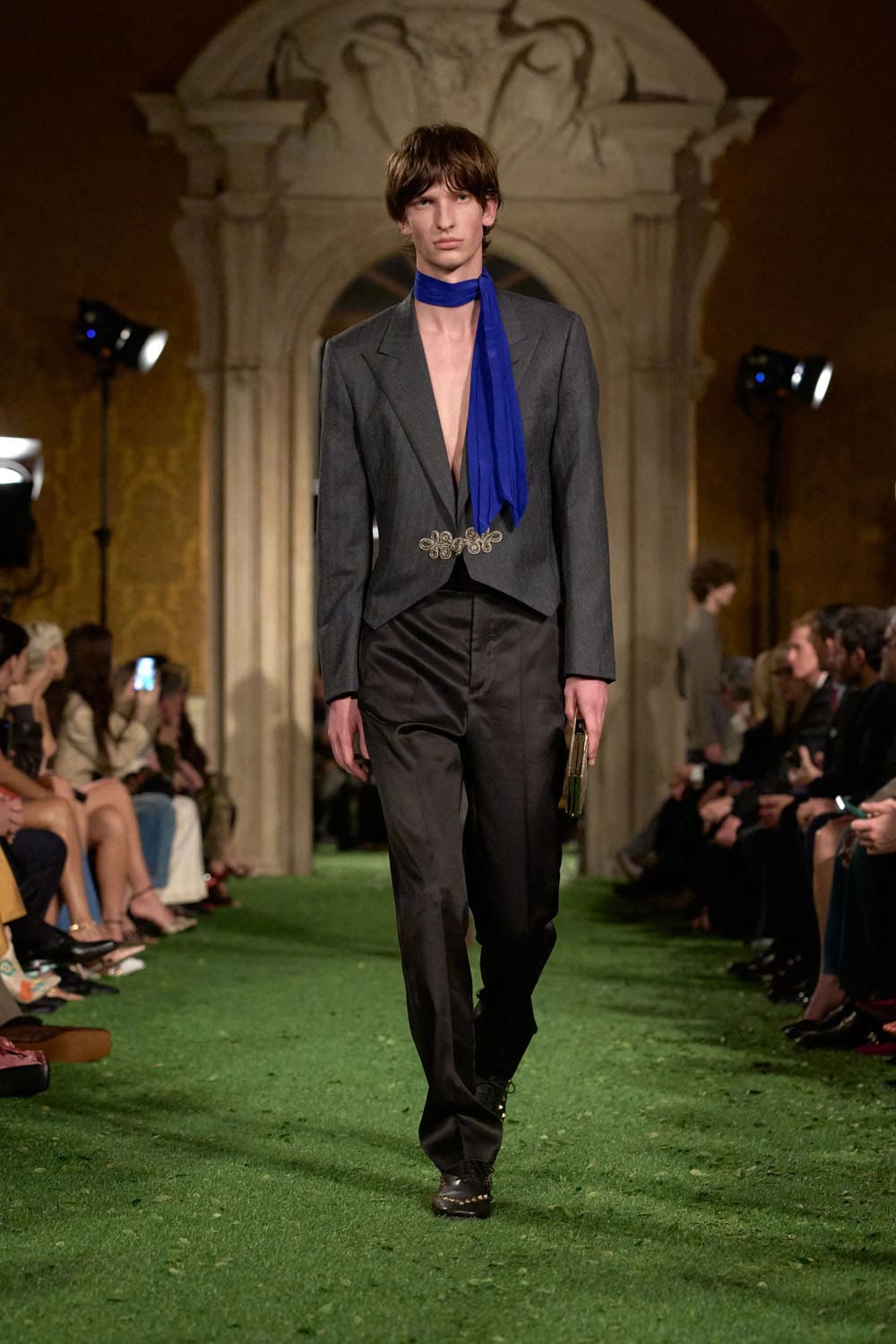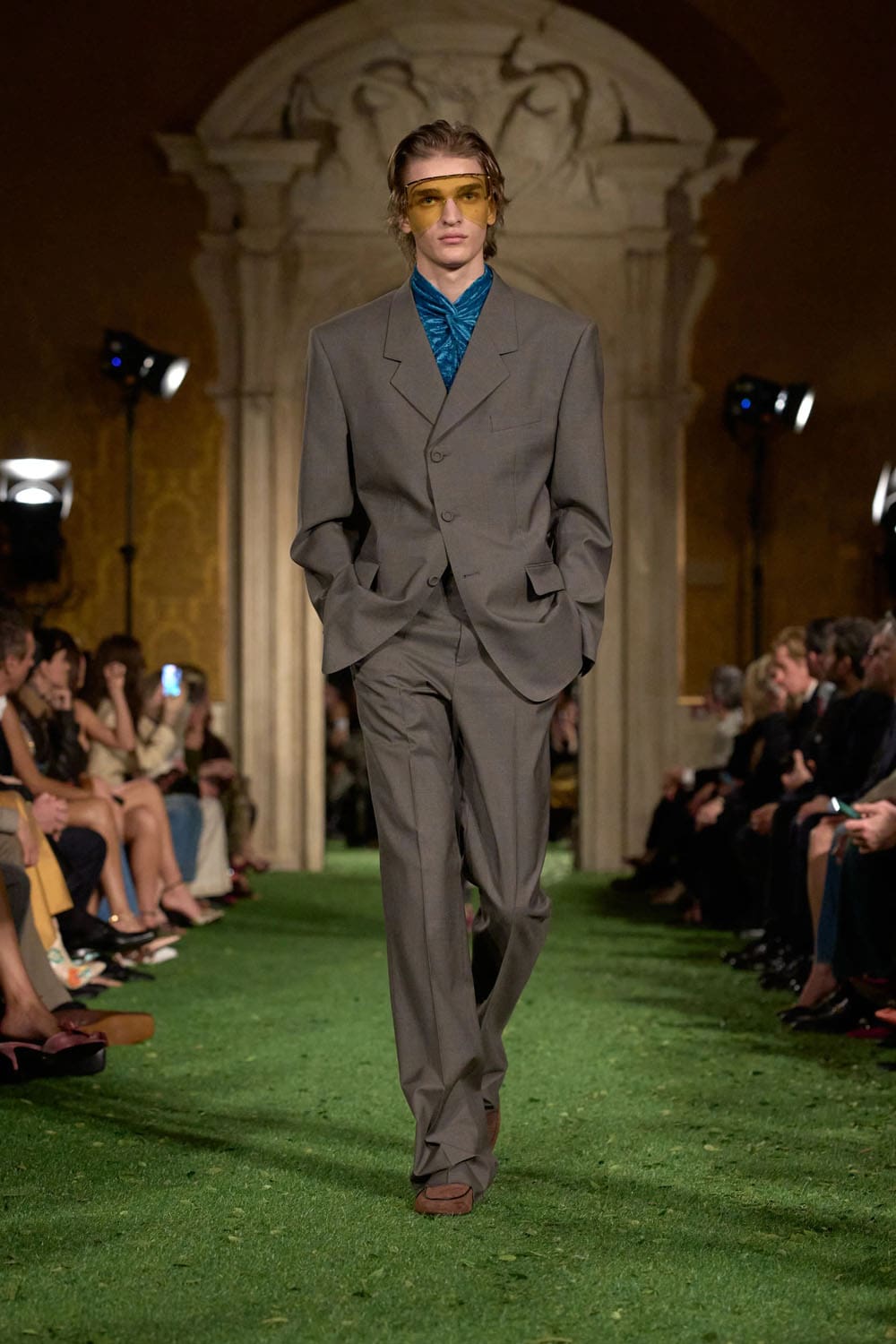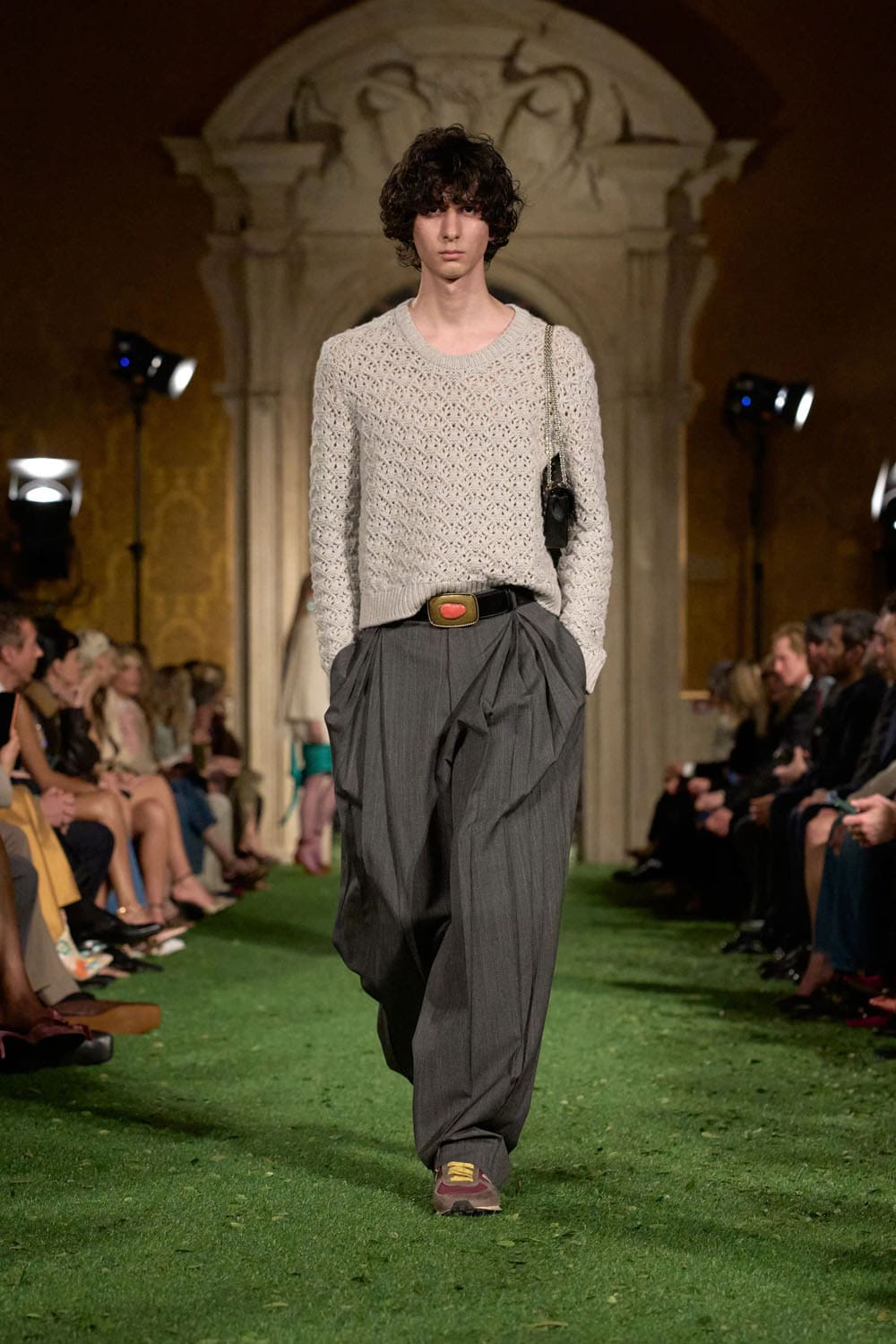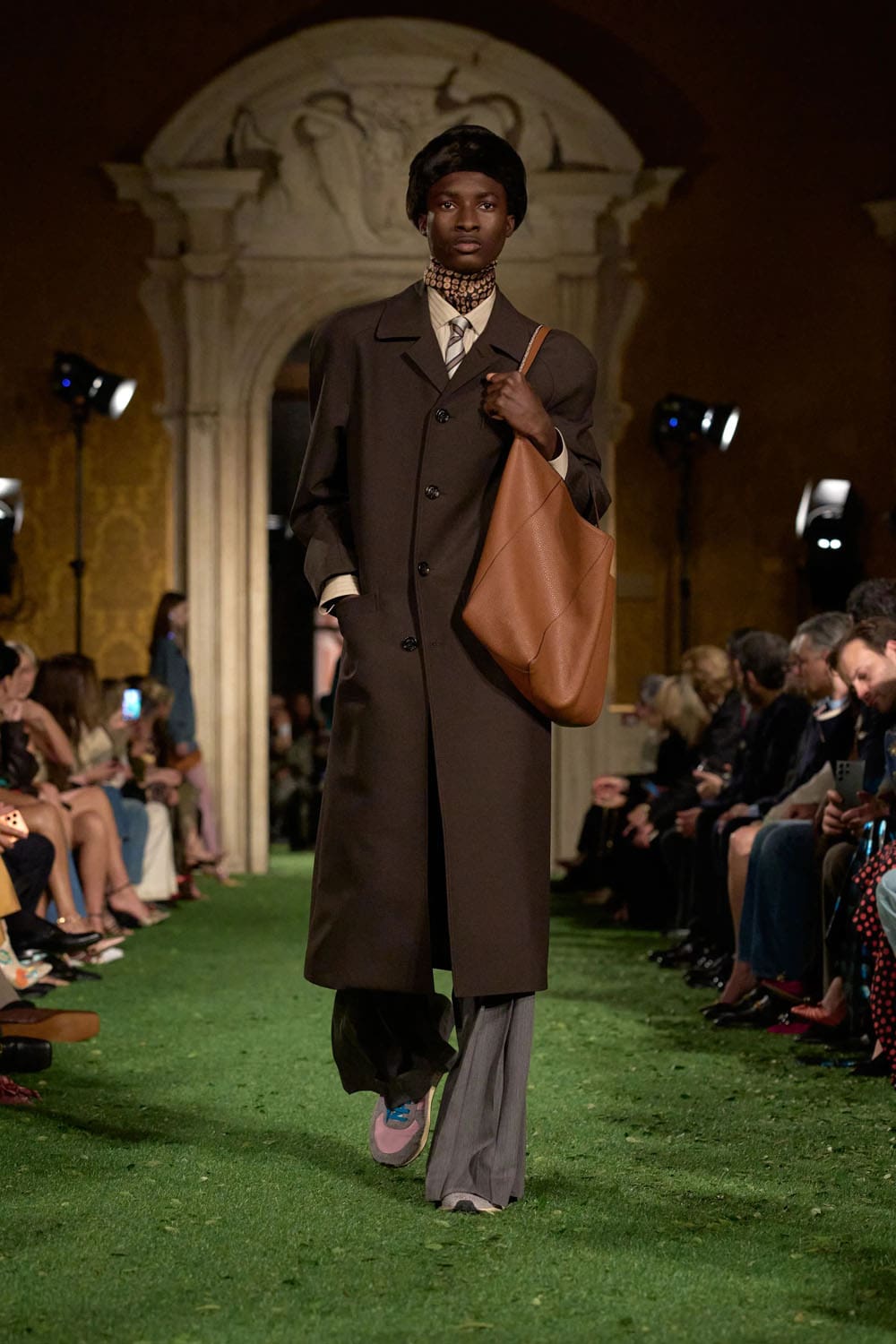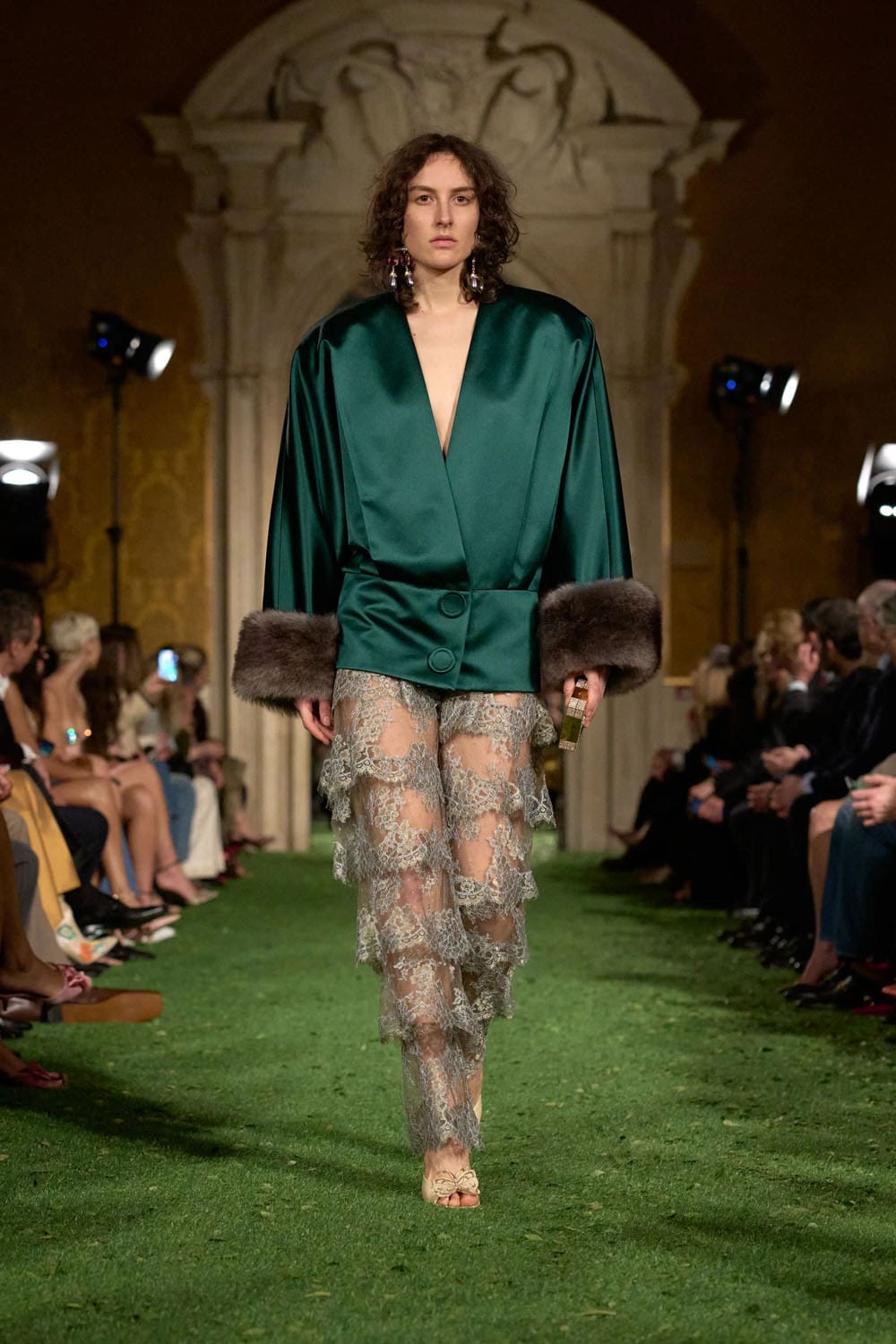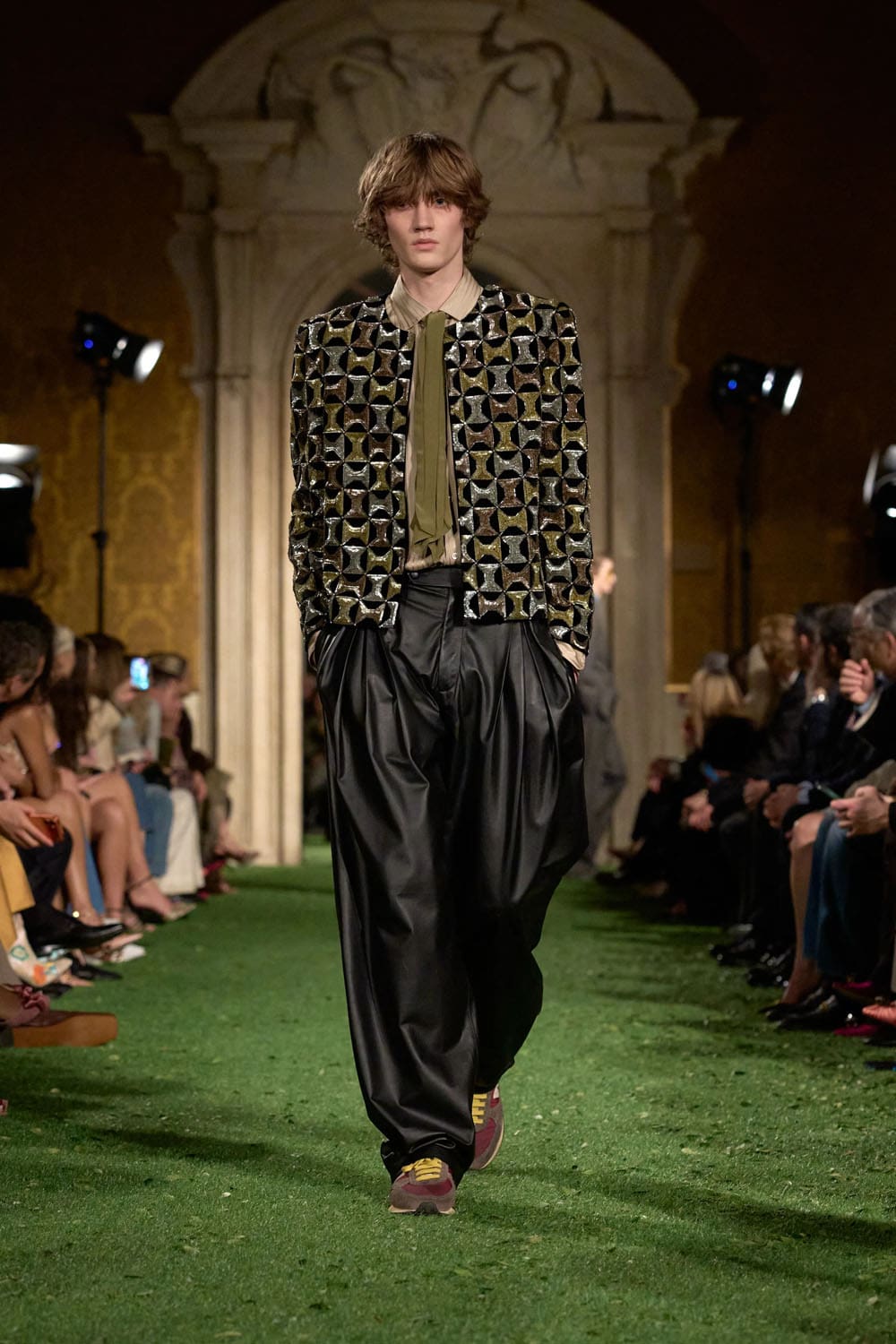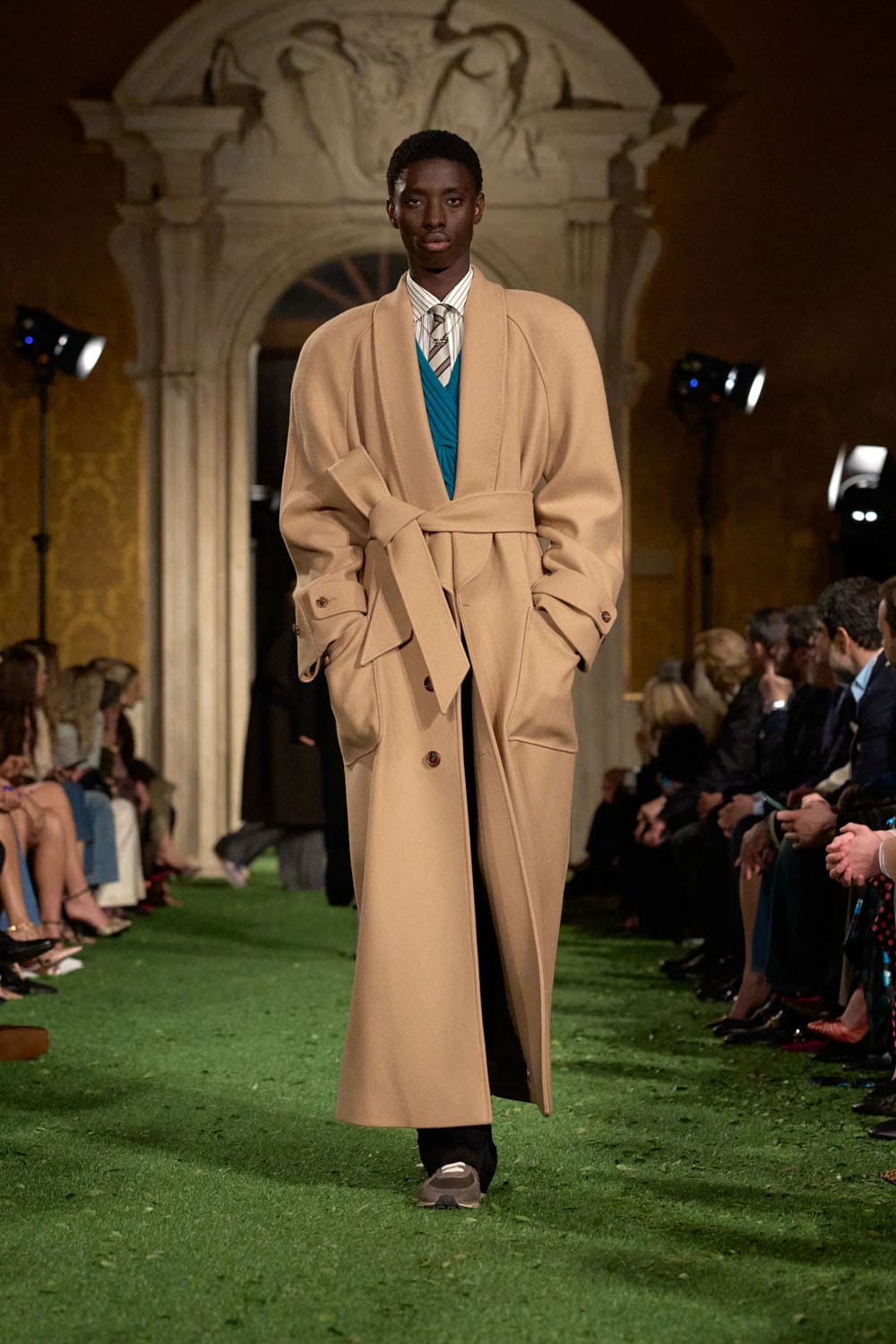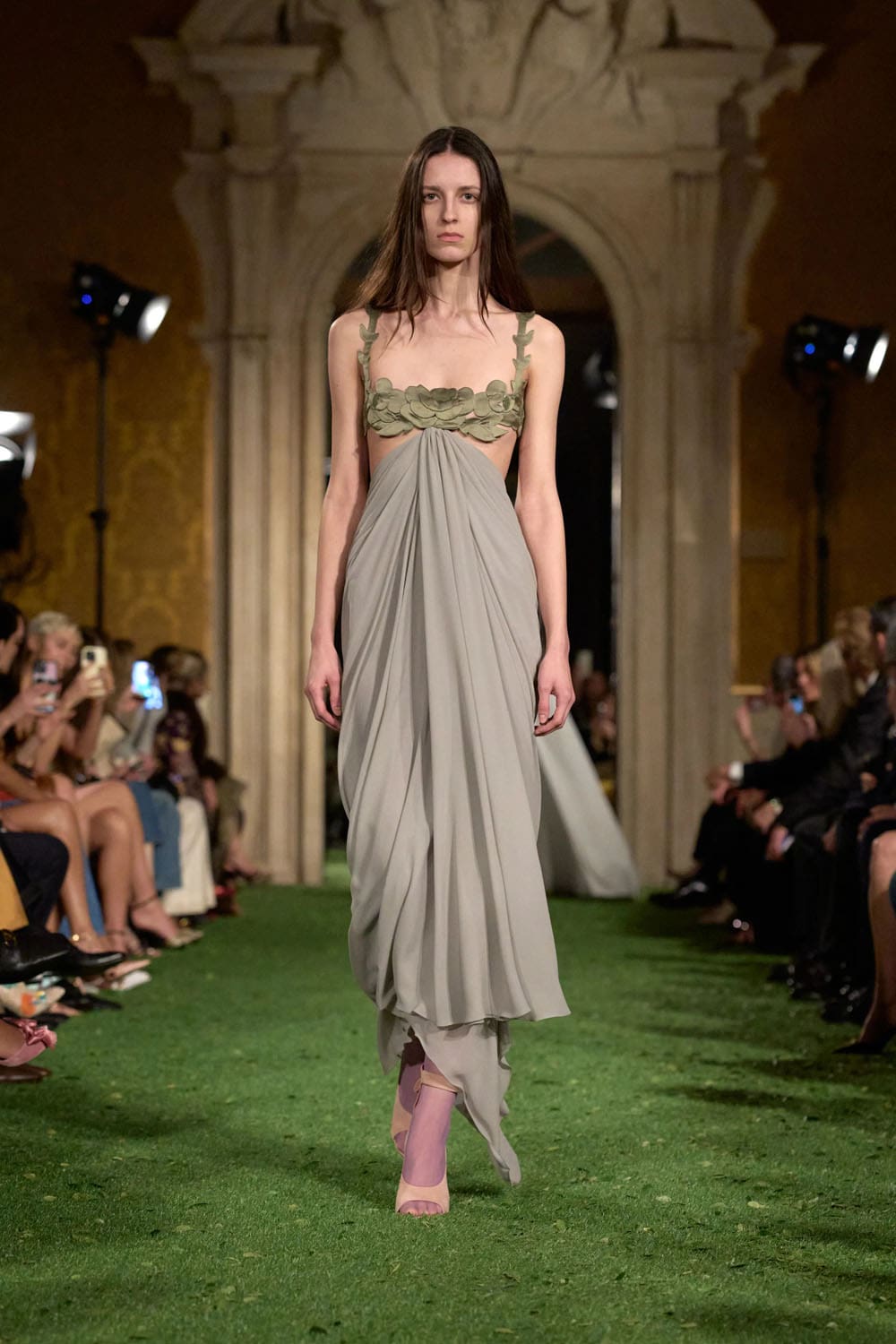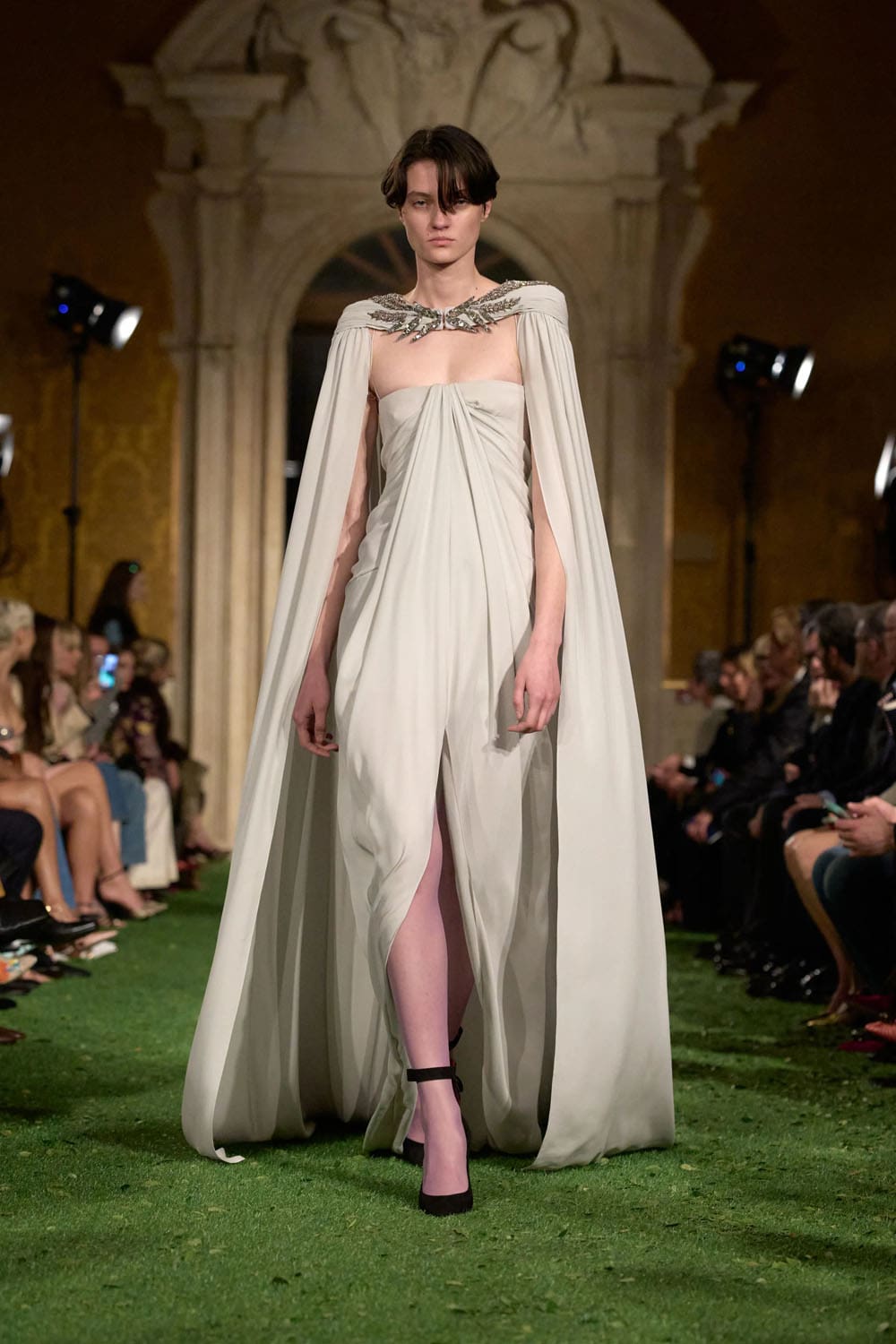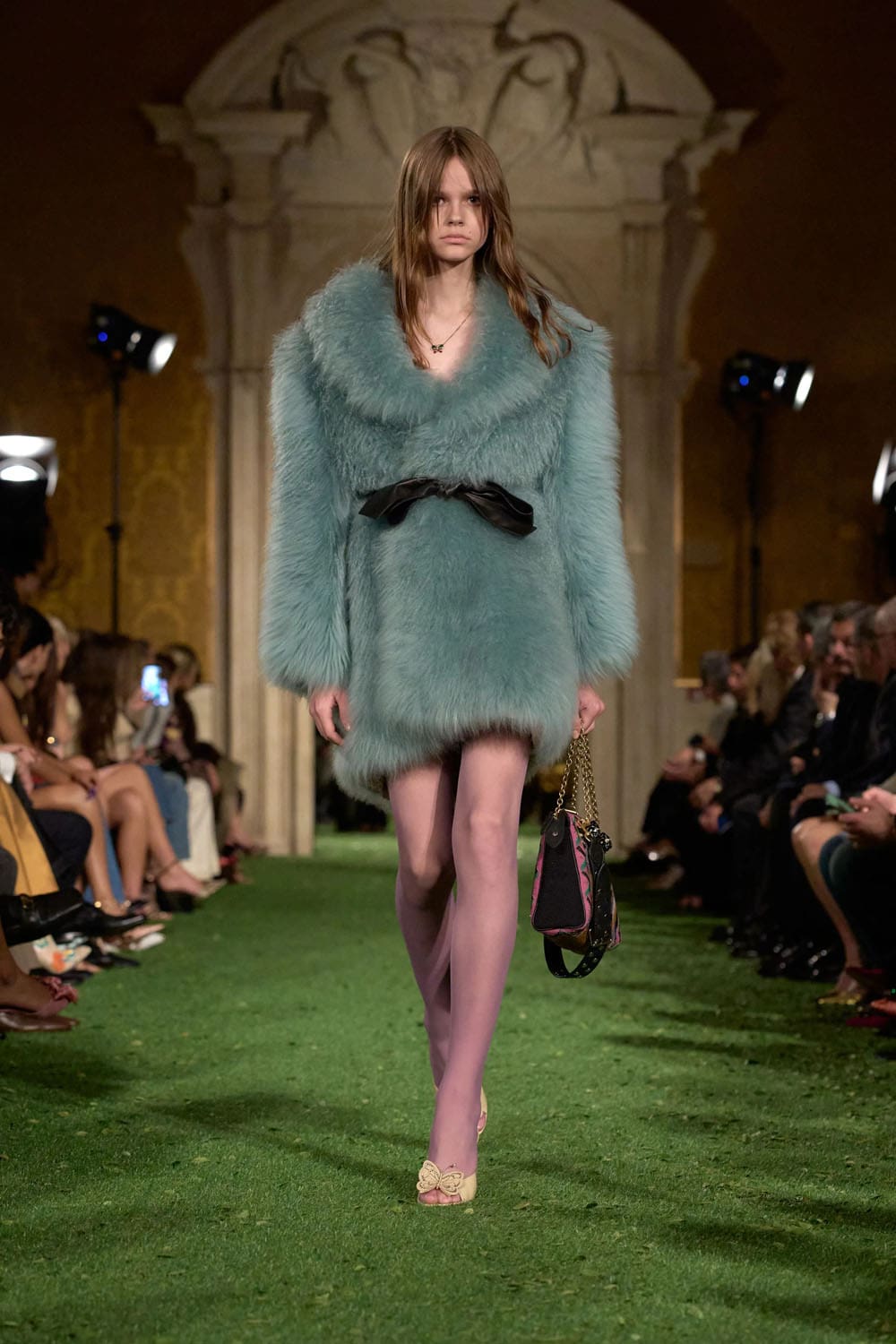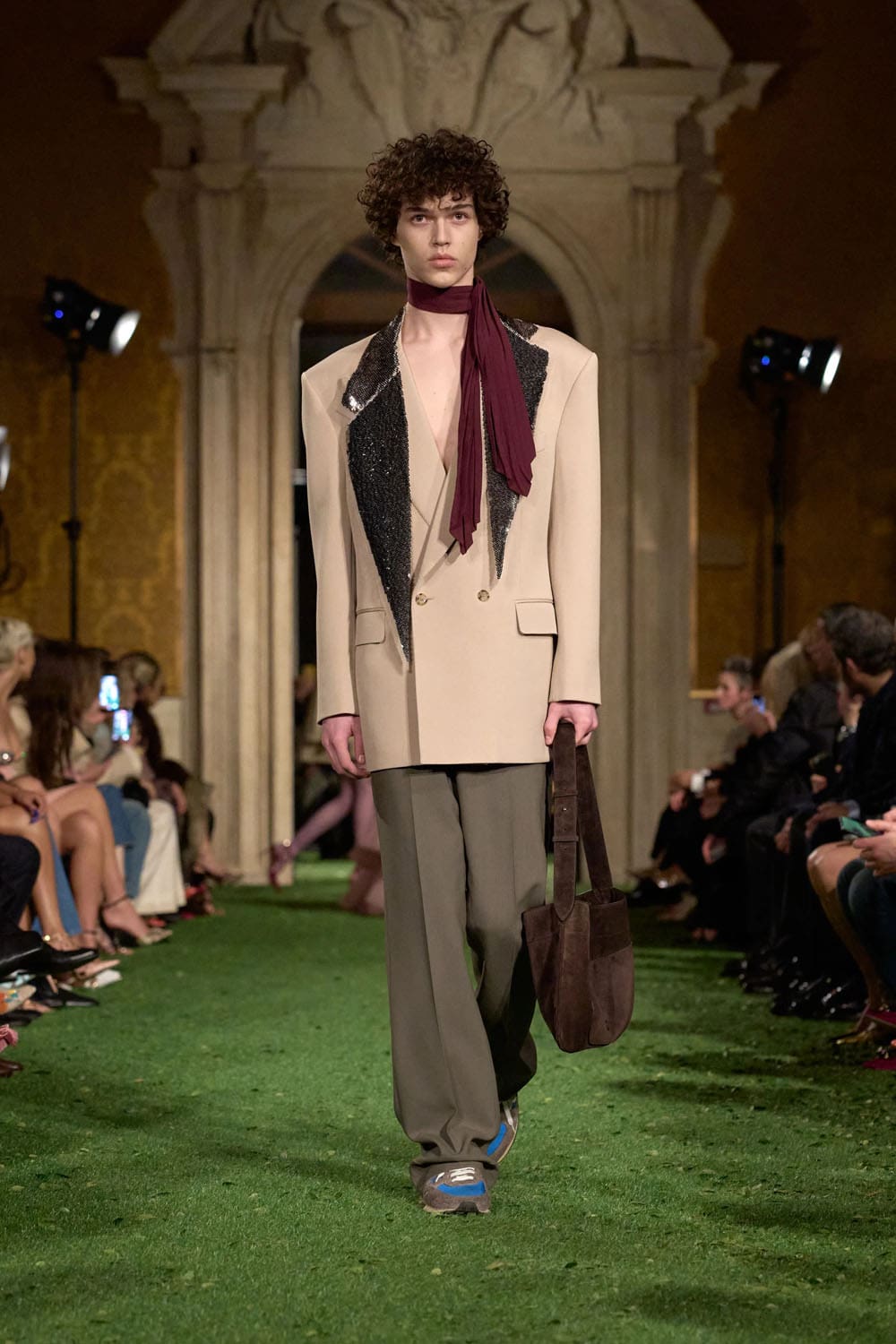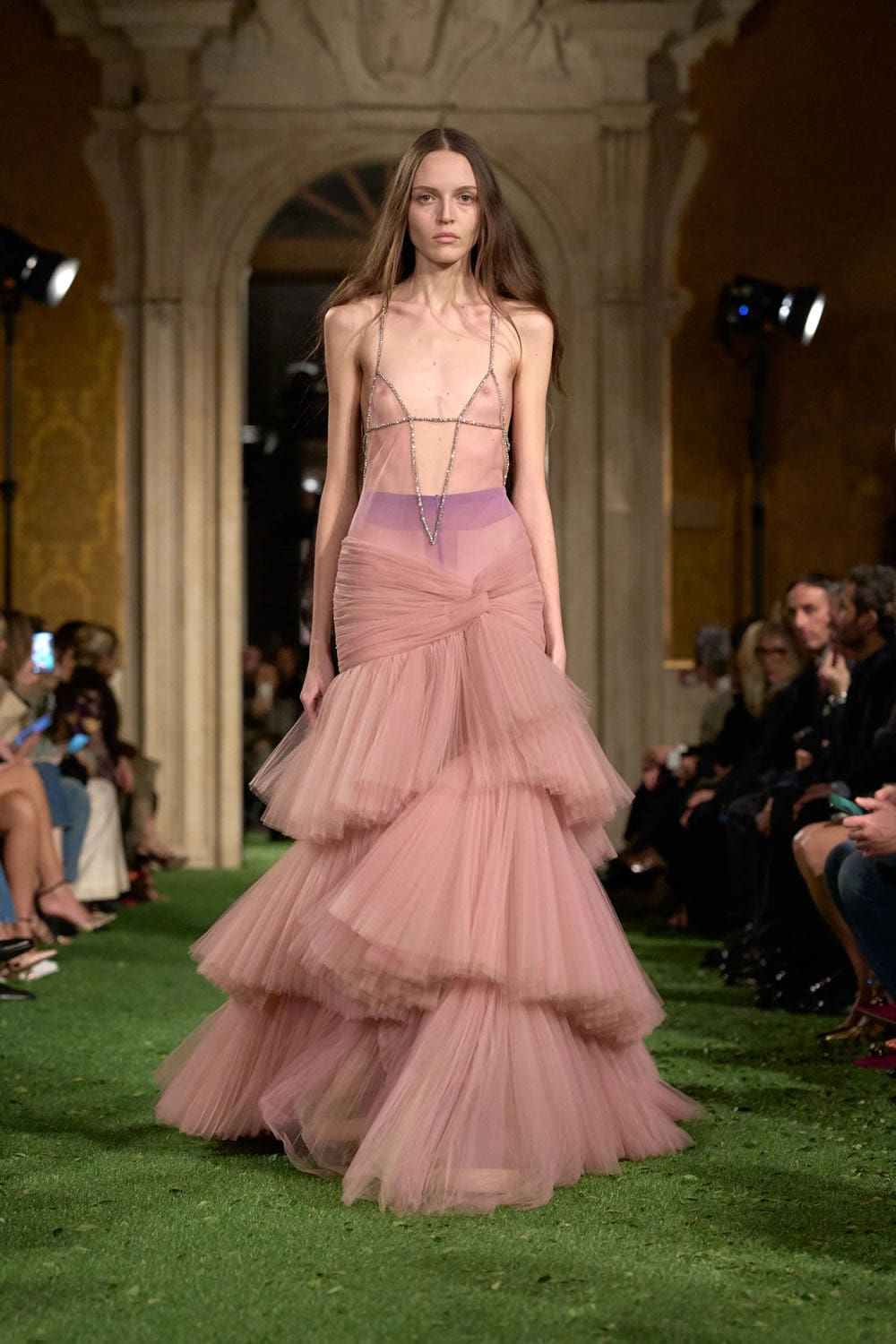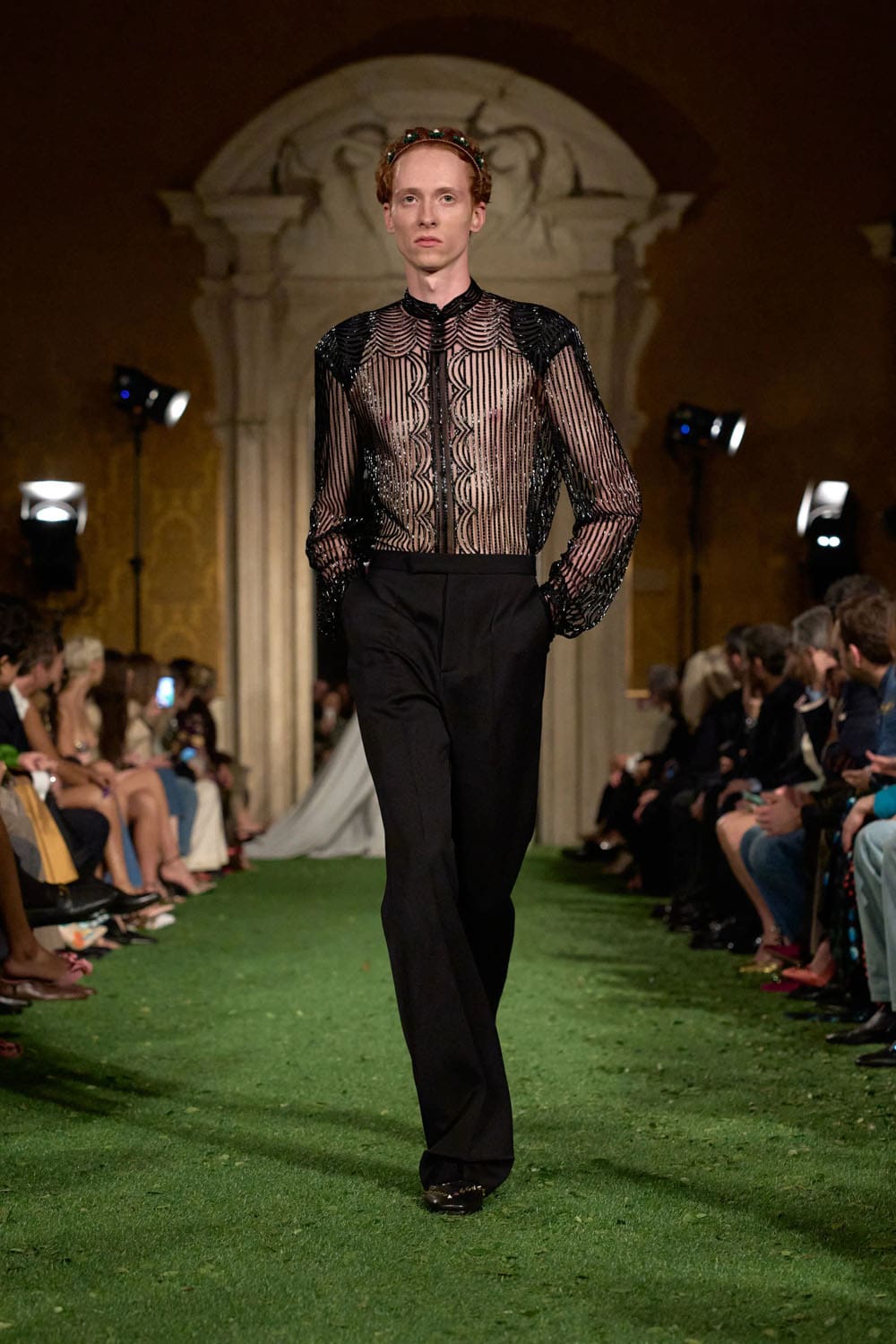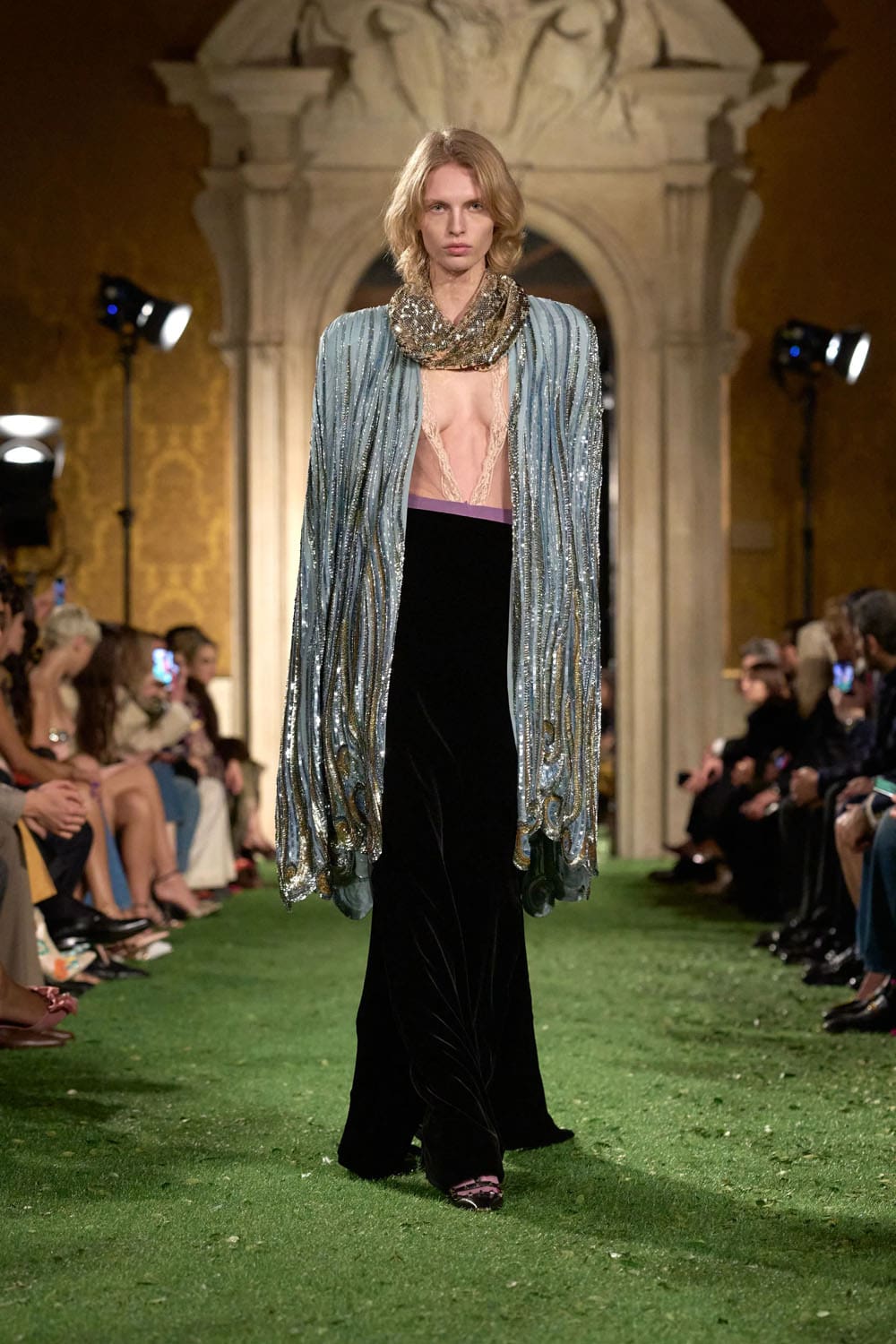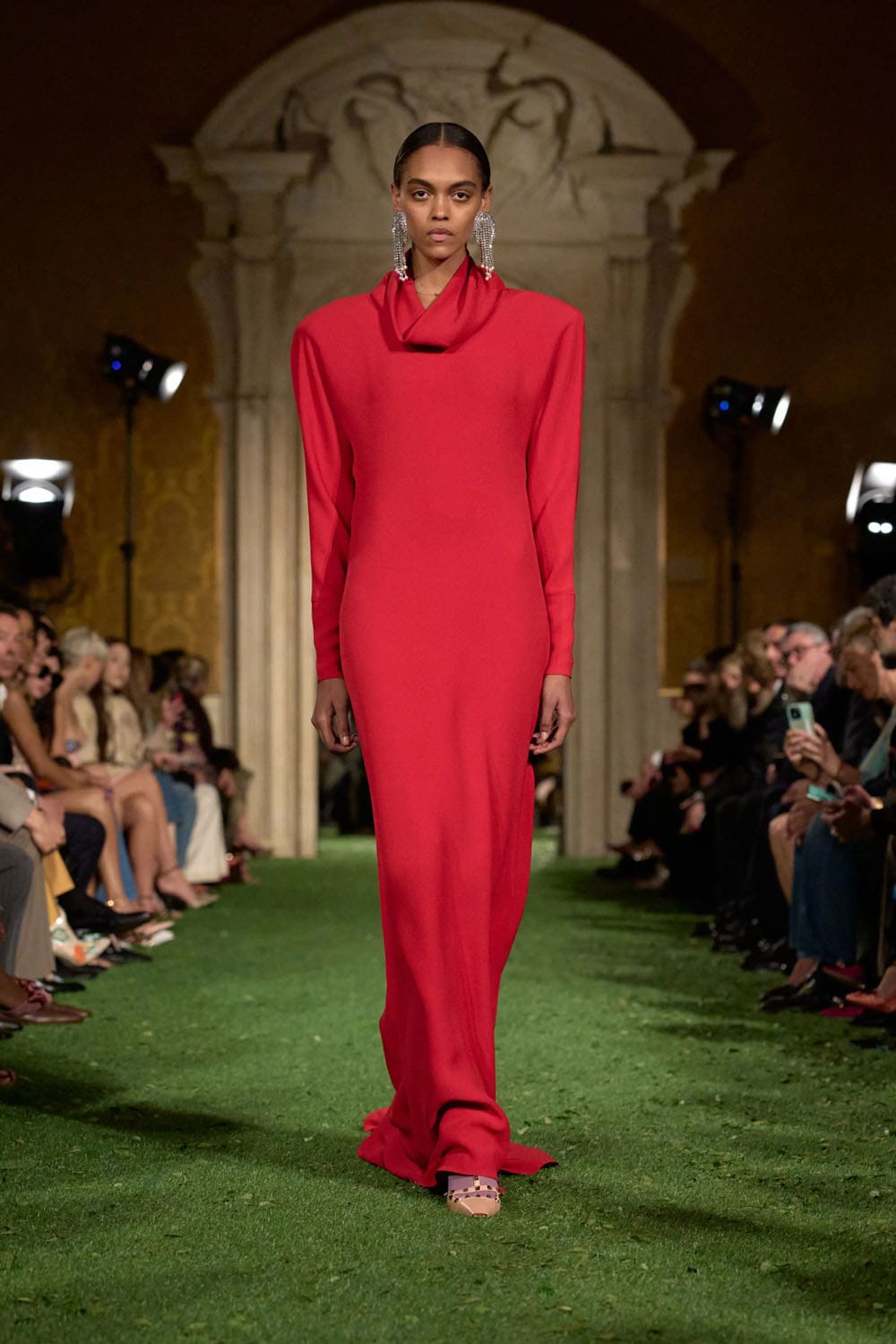
Valentino Fall Winter 2026-2027 “Interferenze” by Alessandro Michele. Story by Eleonora de Gray, Editor-in-Chief of RUNWAY MAGAZINE. Photo Courtesy: Valentino.
The House That Alessandro Built (Inside Someone Else’s Walls)
“A field of interferences where divergent forces coexist.” A poetic line, certainly. Also a convenient shield. When a designer knows he is about to bulldoze a house’s identity, he usually arrives armed with metaphors.
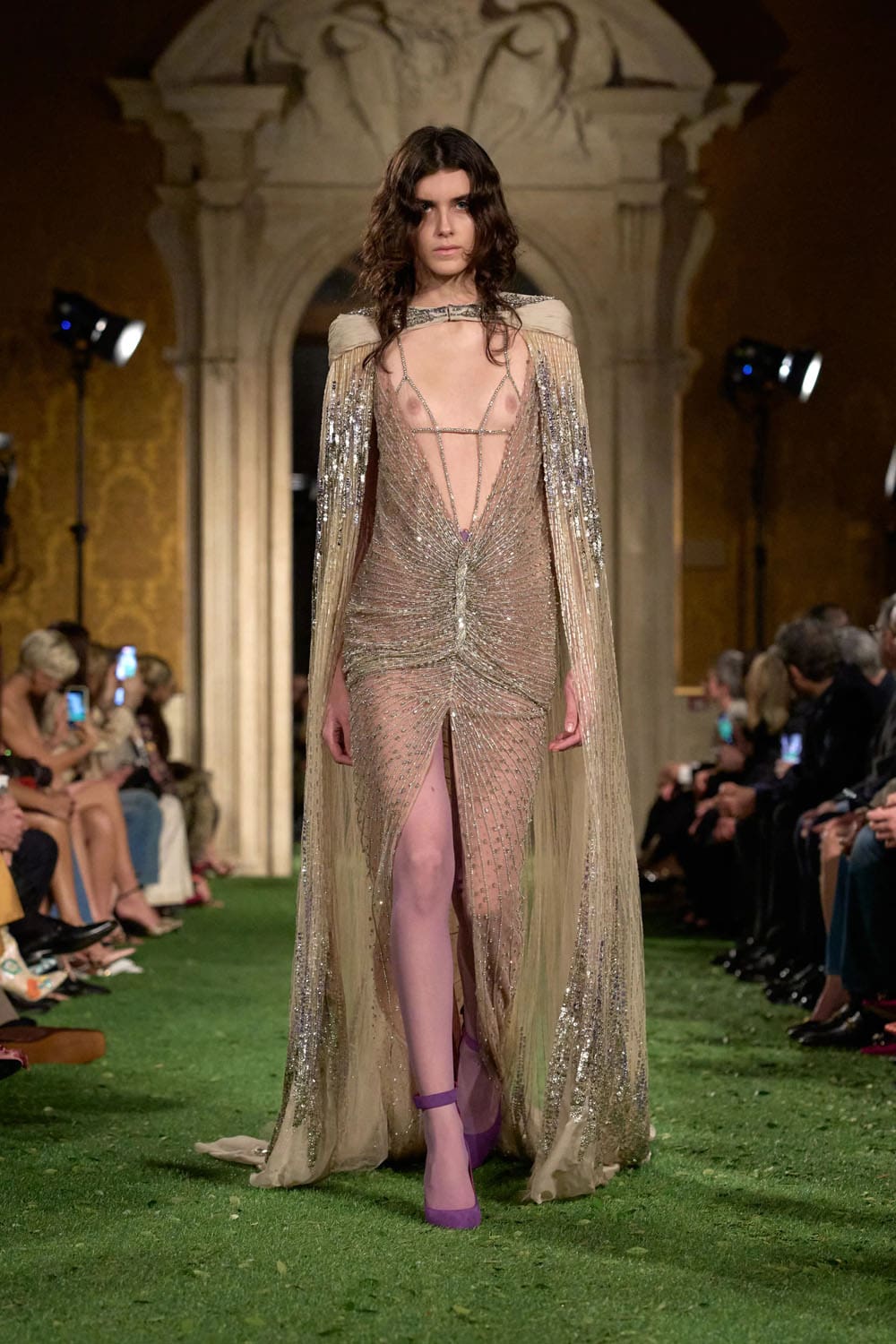
Inside Palazzo Barberini — a building that has survived popes, wars, and centuries of artistic ego — Alessandro Michele staged Interferenze, a collection supposedly about collision. Architecture versus illusion. Order versus drift. Identity versus mutation. The palace did its job beautifully. It radiated Roman authority, whispered its history, and provided the kind of gravitas that makes even a mediocre hemline look like it has a PhD.
The clothes, however, were unmistakably Michele. And that is precisely where the trouble begins.
At this point, debating whether Michele is talented is like debating whether Rome has ruins. Of course he is. Of course it does. The real question — the one fashion keeps politely avoiding — is whether what he is doing at Valentino still has anything to do with Valentino at all. Season after season, the answer becomes less ambiguous and more uncomfortable. What appeared in Rome was not a reinterpretation of Valentino’s language. It was a replacement. A full-scale occupation. The house codes were not stretched, challenged, or reimagined. They were simply overwritten.
Valentino became the host body. Michele became the parasite.
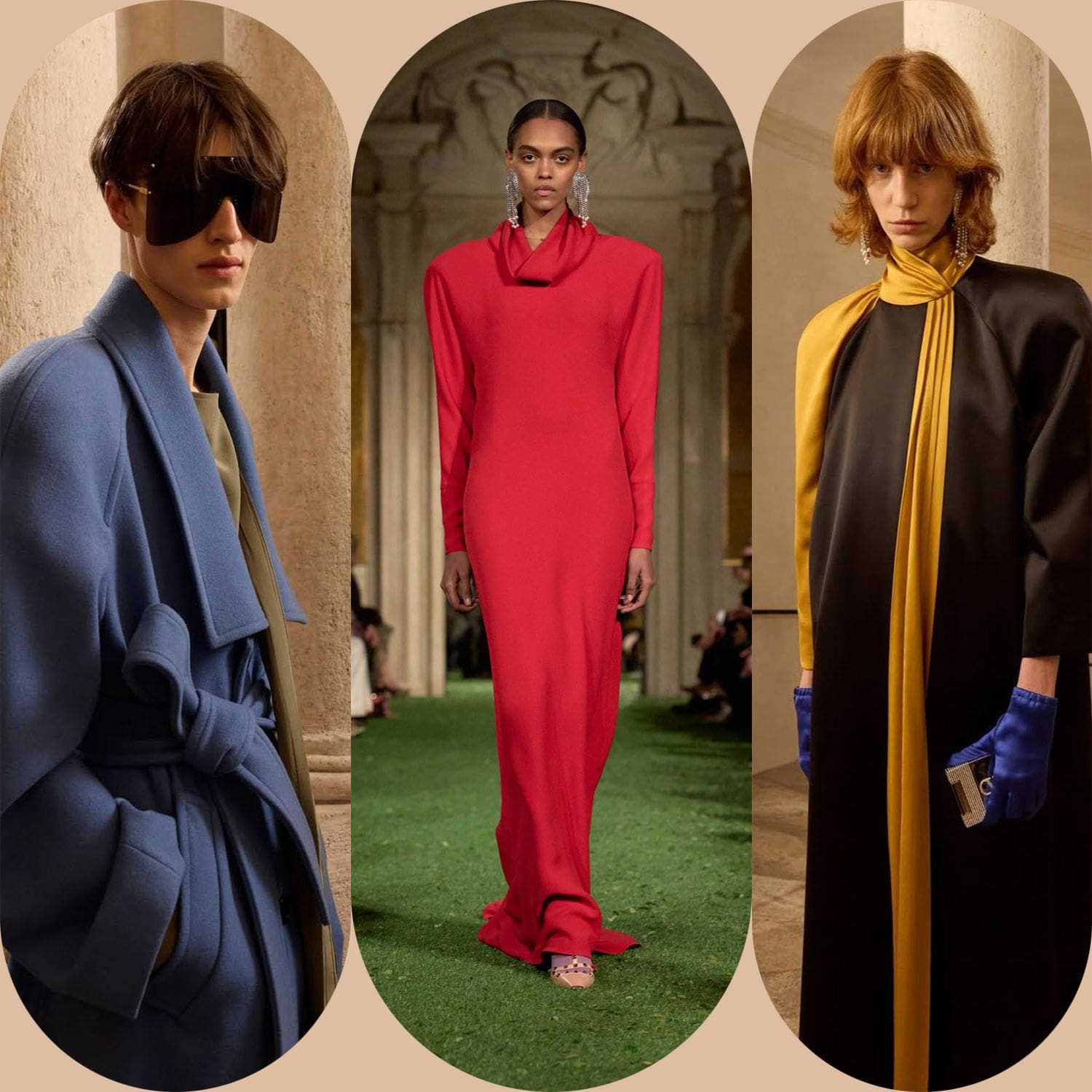
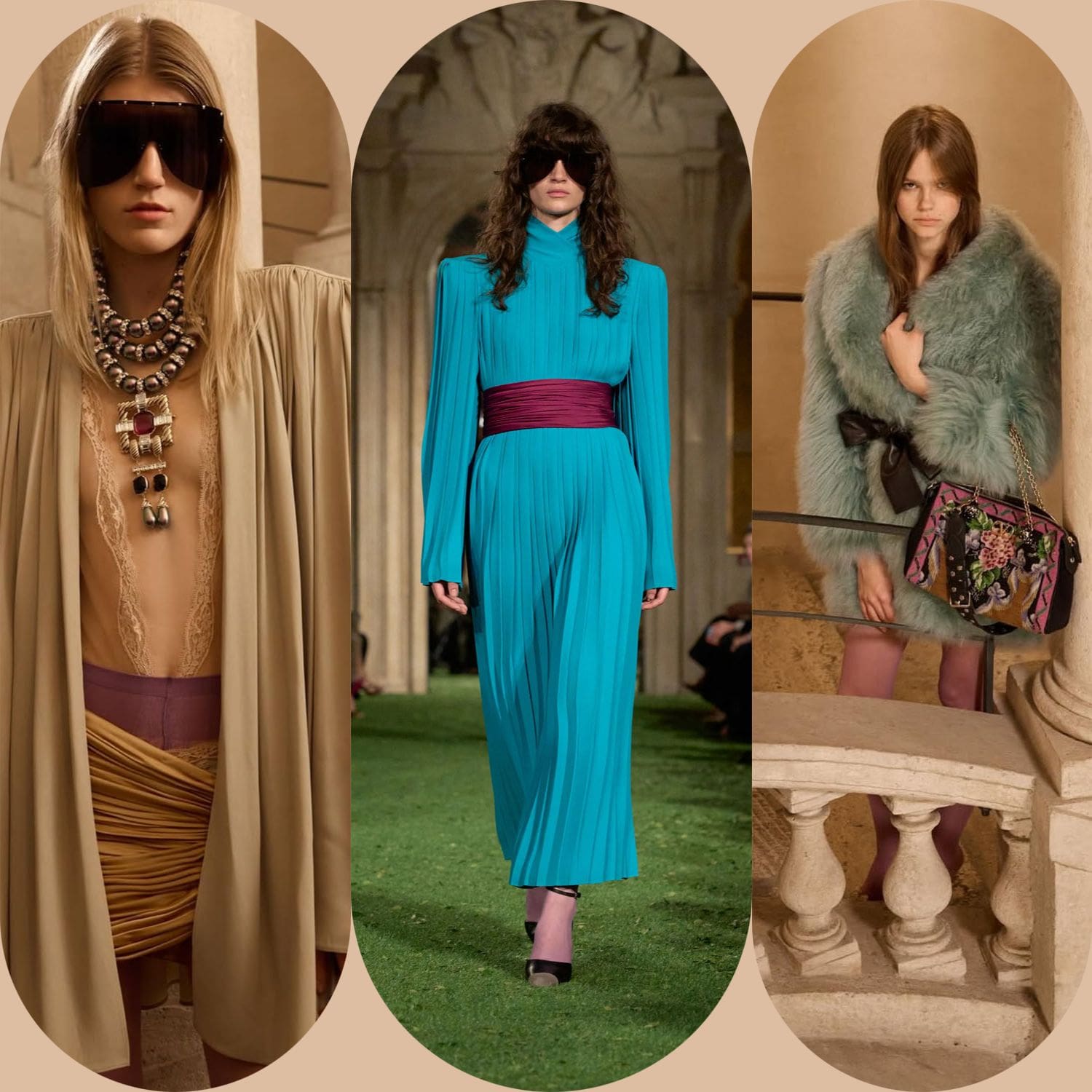
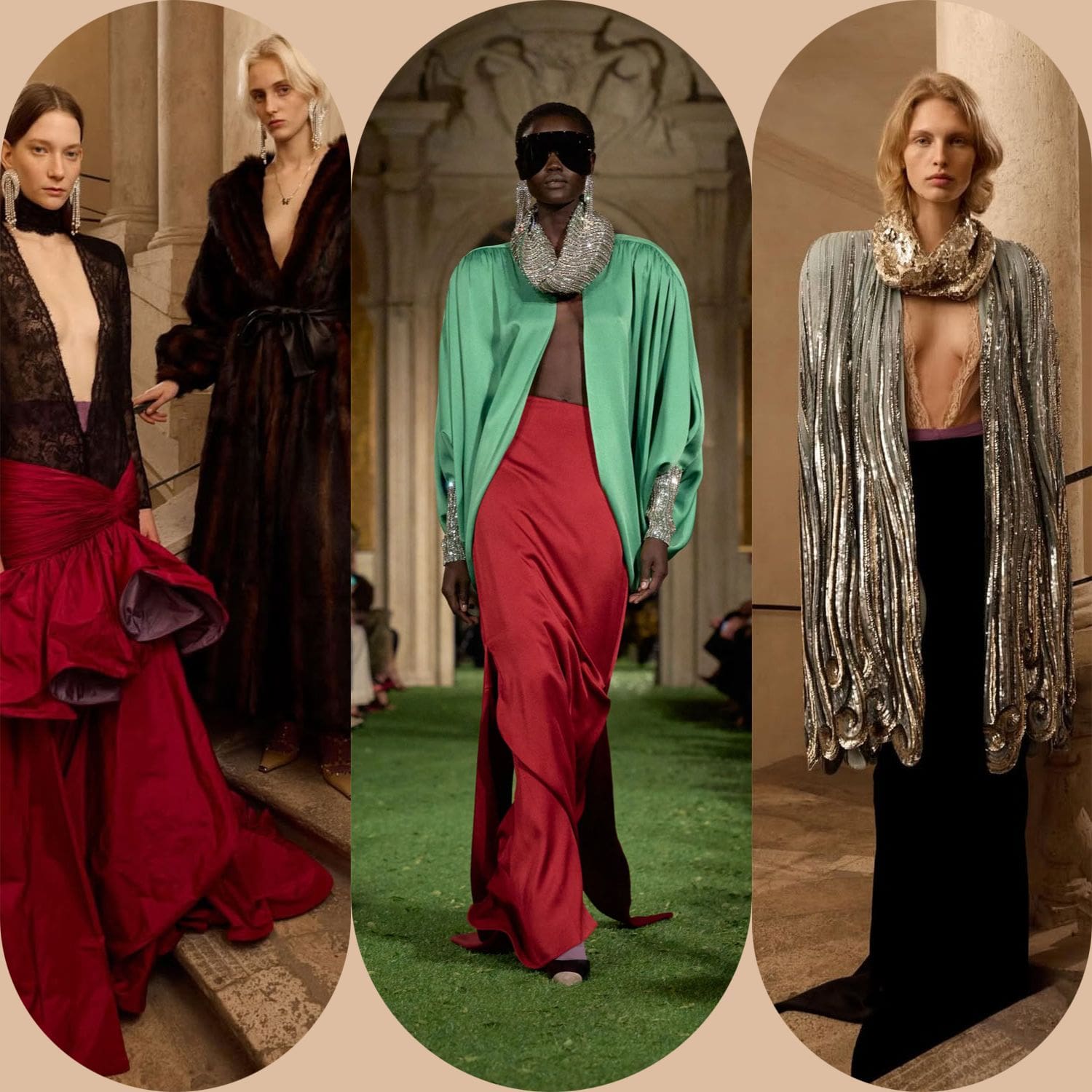
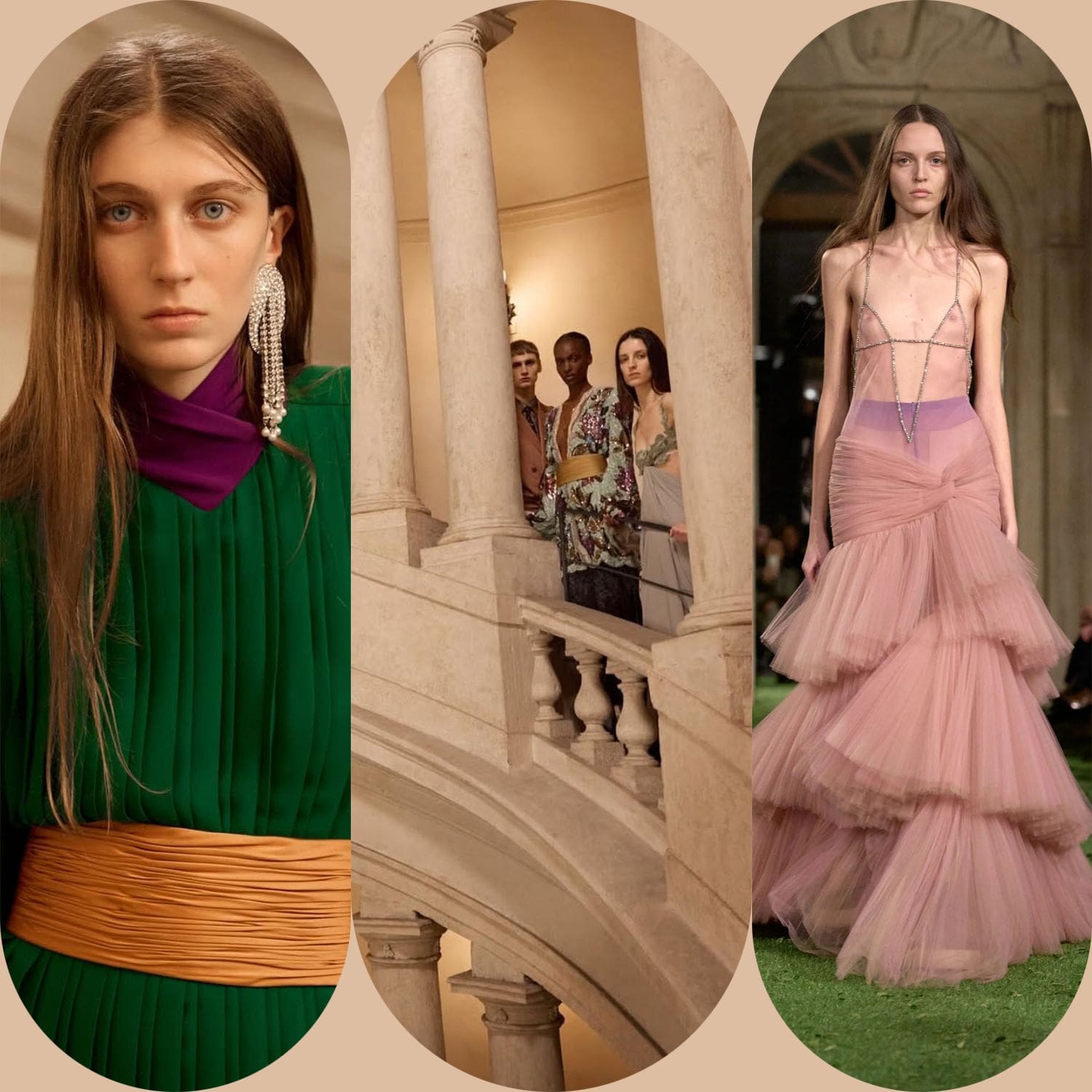
Because let us be honest: Valentino, at its strongest, was never about decorative noise. It was about precision. It was the tension of a line held perfectly. It was sensuality sharpened into aristocratic clarity. It was romance with discipline, drama with restraint. Even at its most opulent, Valentino never lost its silhouette. It never drowned the woman in ornament. It never confused nostalgia with identity.
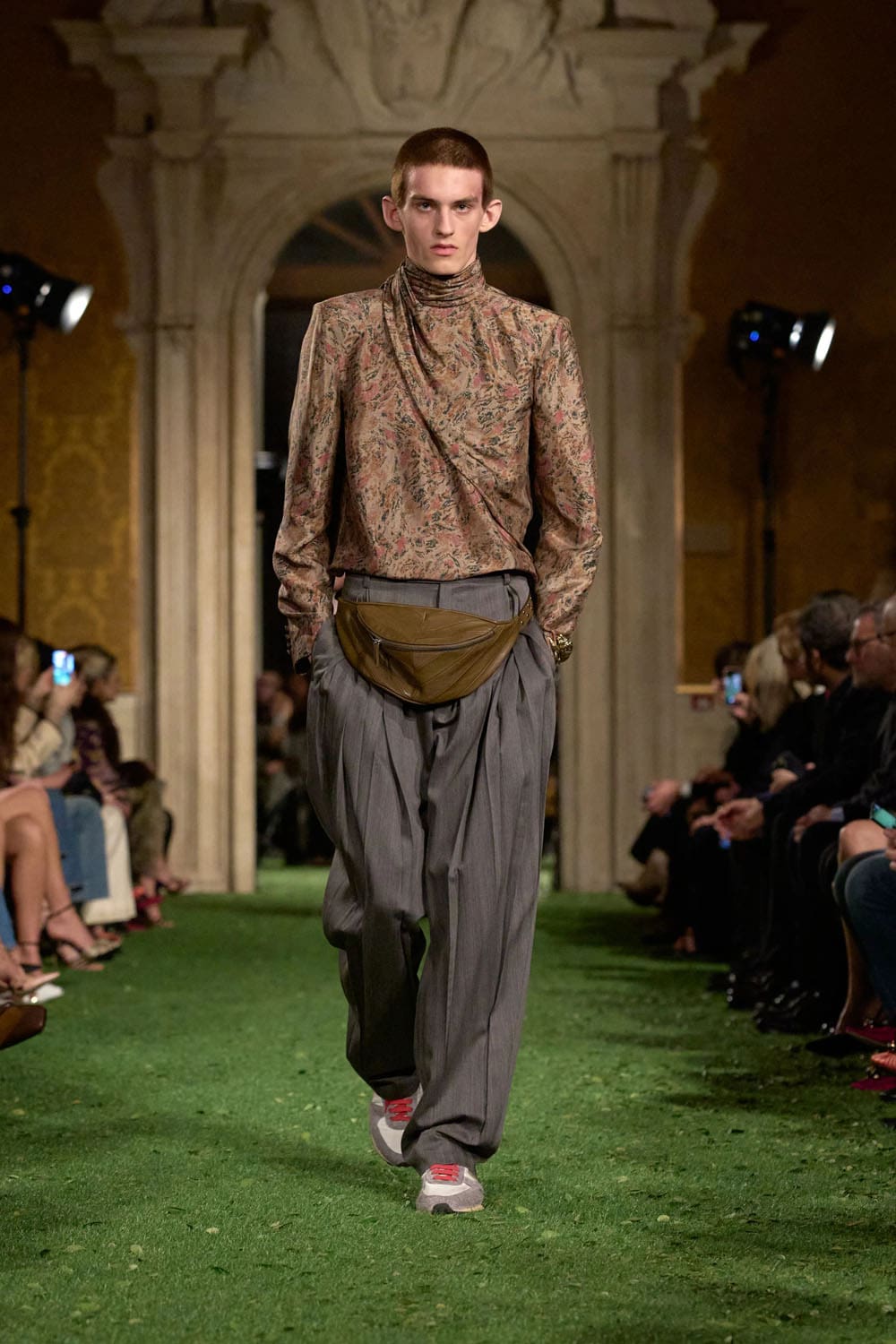
Michele, on the other hand, adores accumulation. He loves clothing that looks found, not designed. He prefers silhouettes that dissolve into mood boards. He piles, layers, quotes, sentimentalizes, and then adds one more necklace for good measure. It can be charming. It can even be brilliant. But it is his universe — and his alone. It does not belong to Valentino.
This collection made that divorce painfully clear.
See All Backstage Valentino Fall 2026
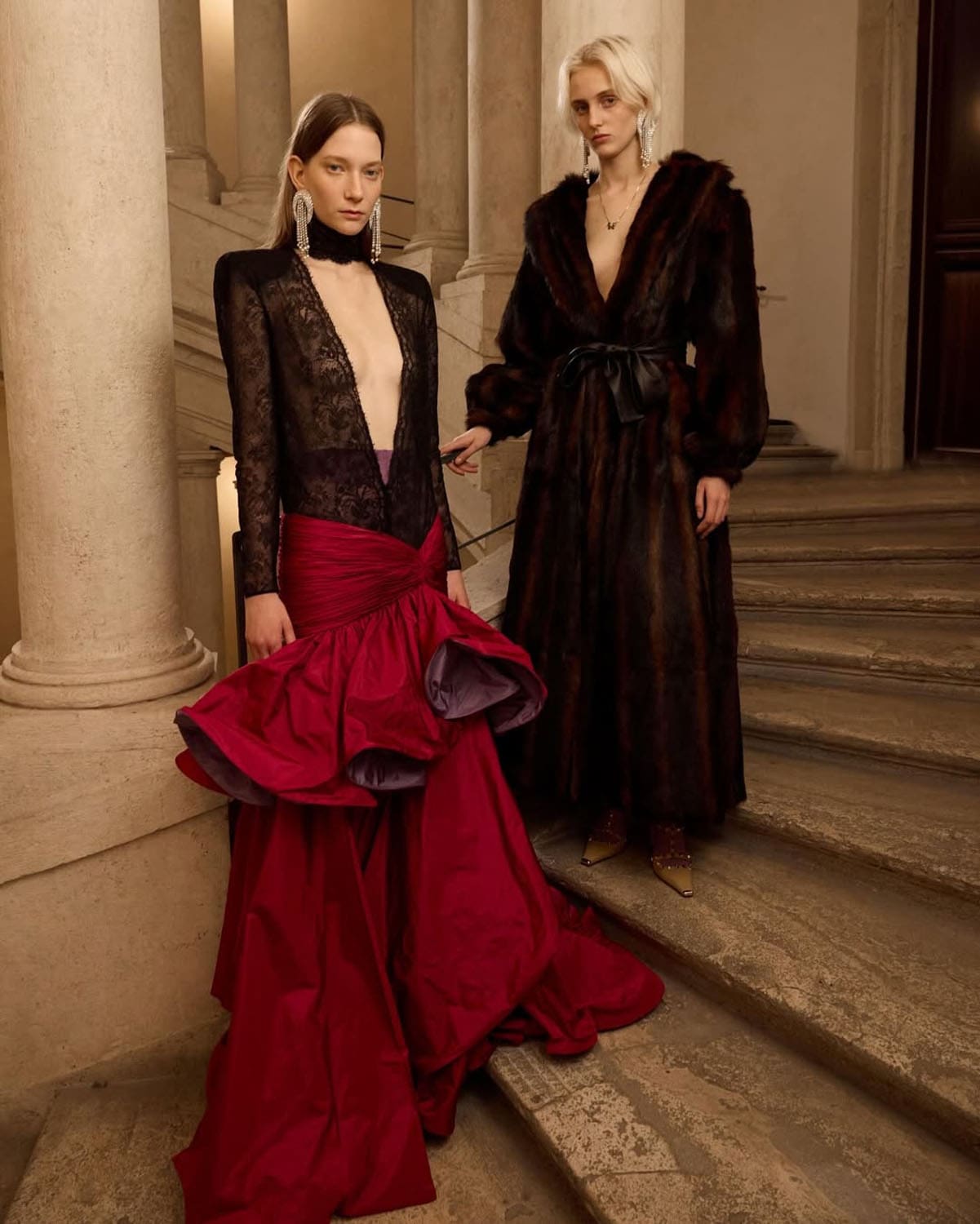
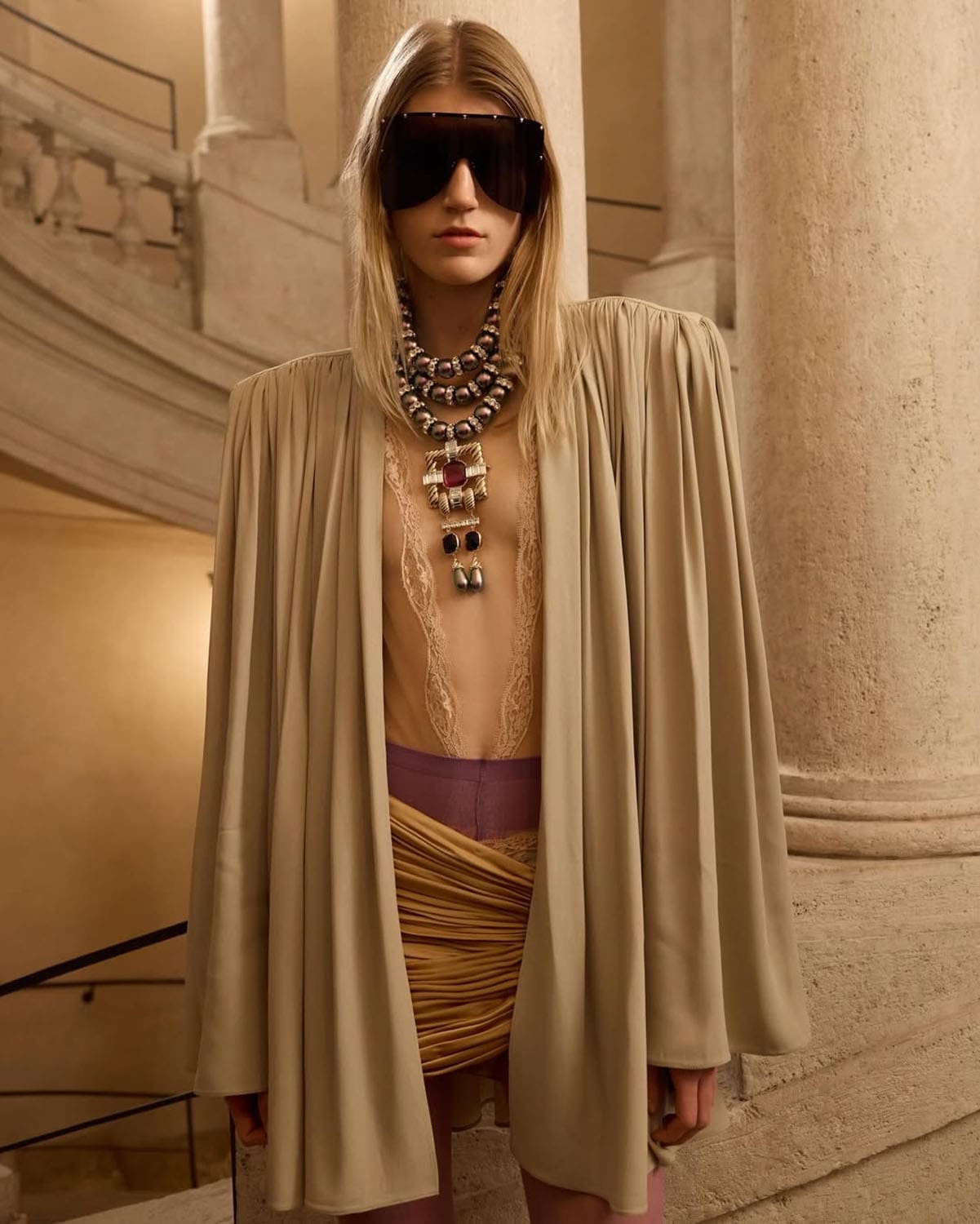
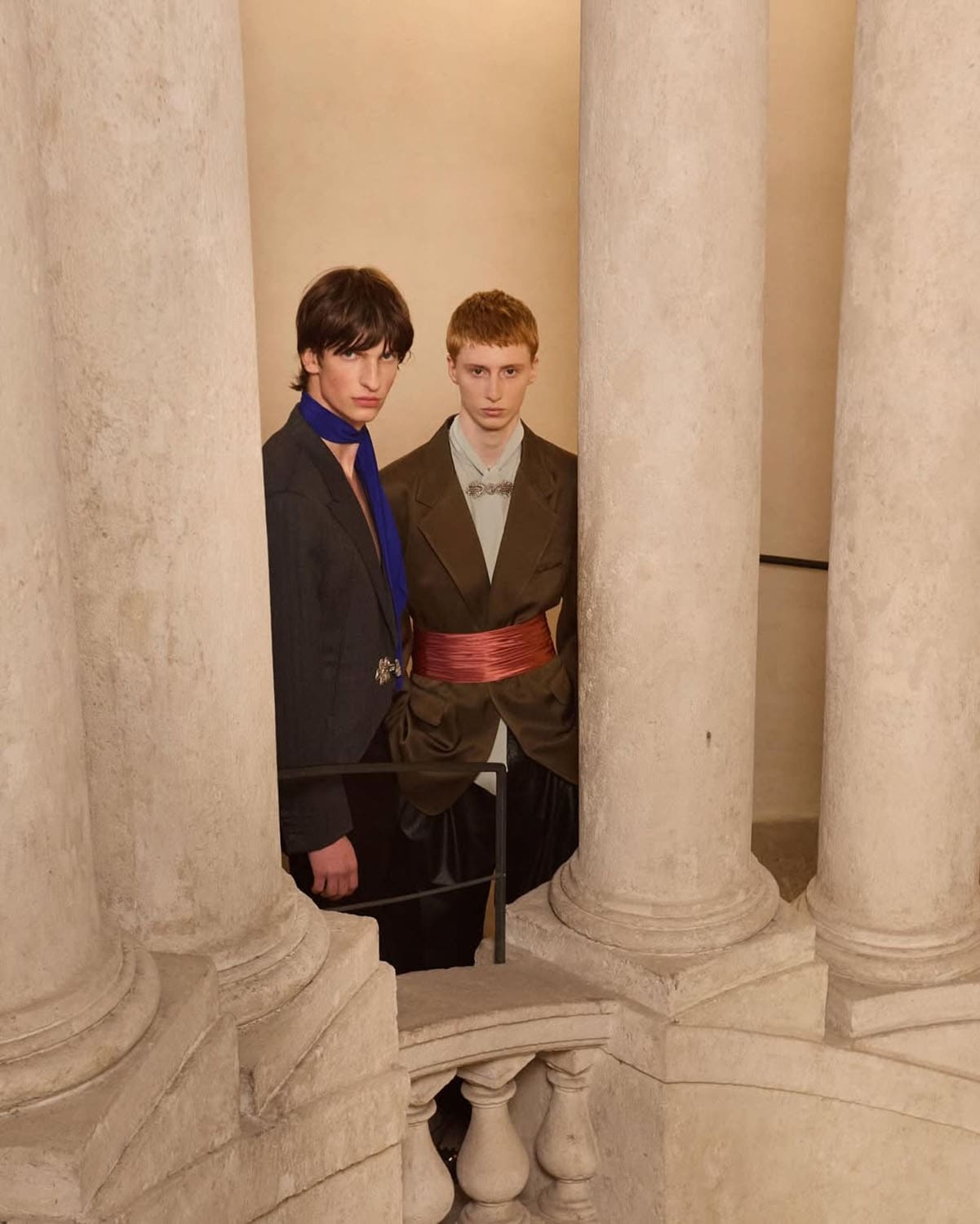
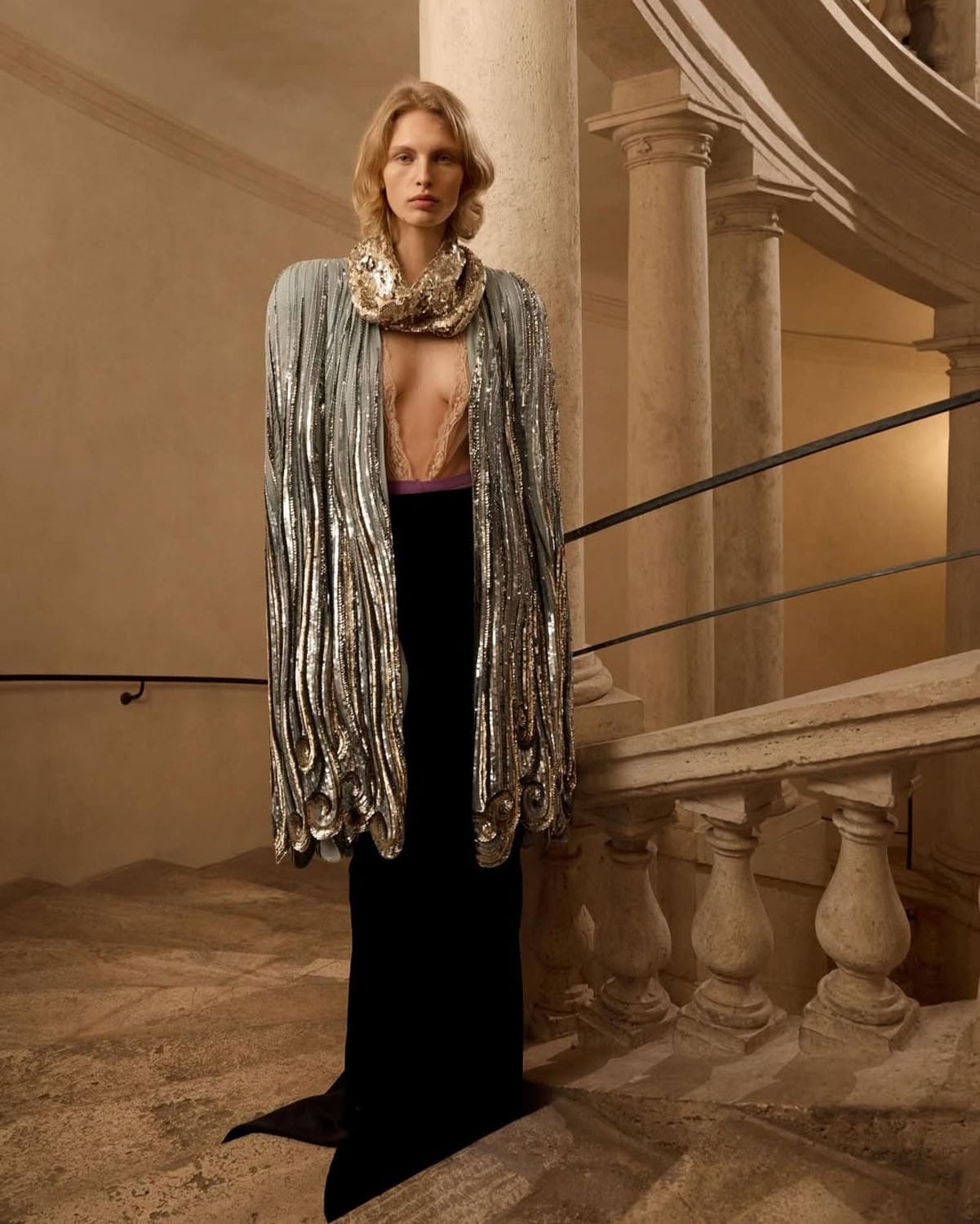
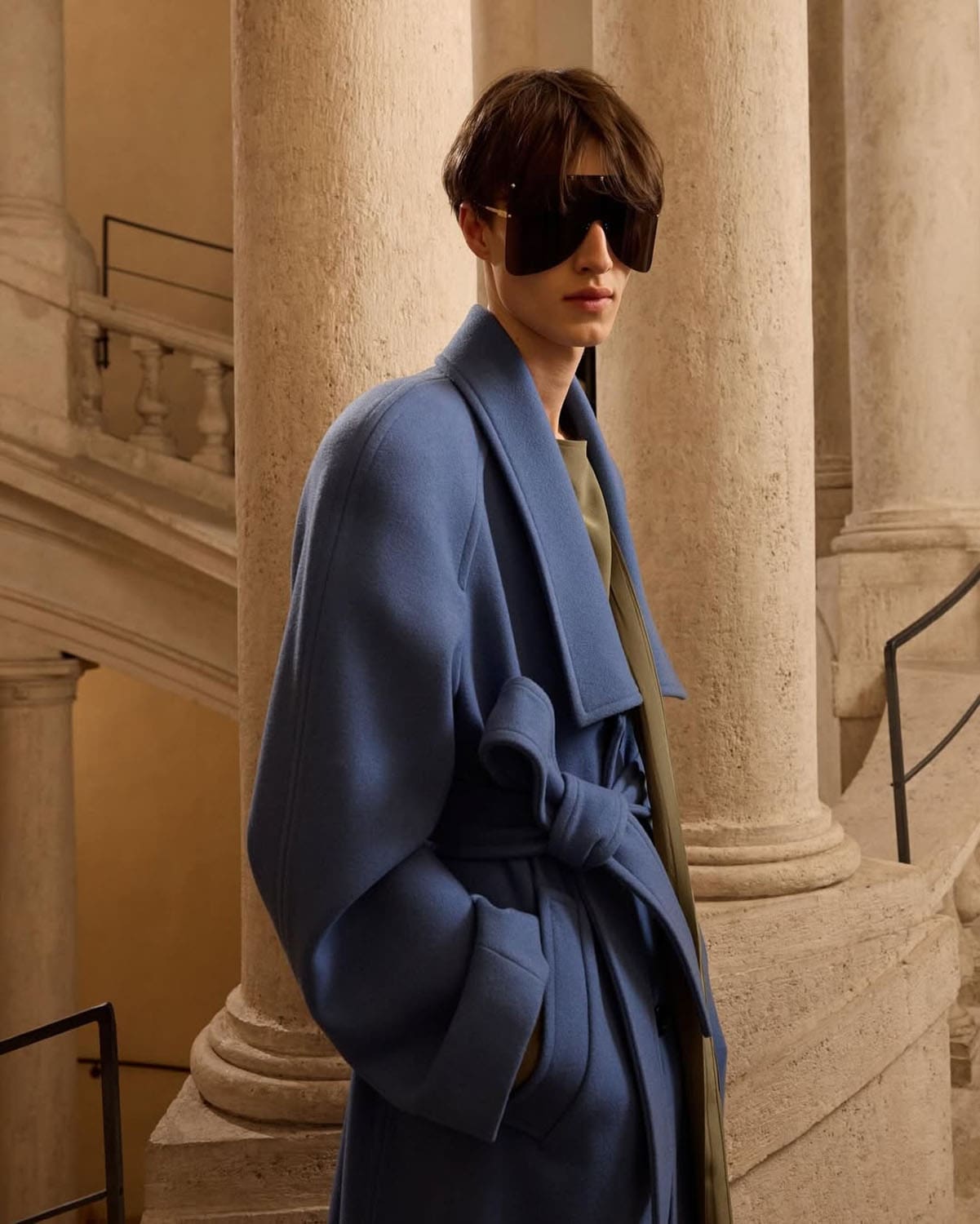
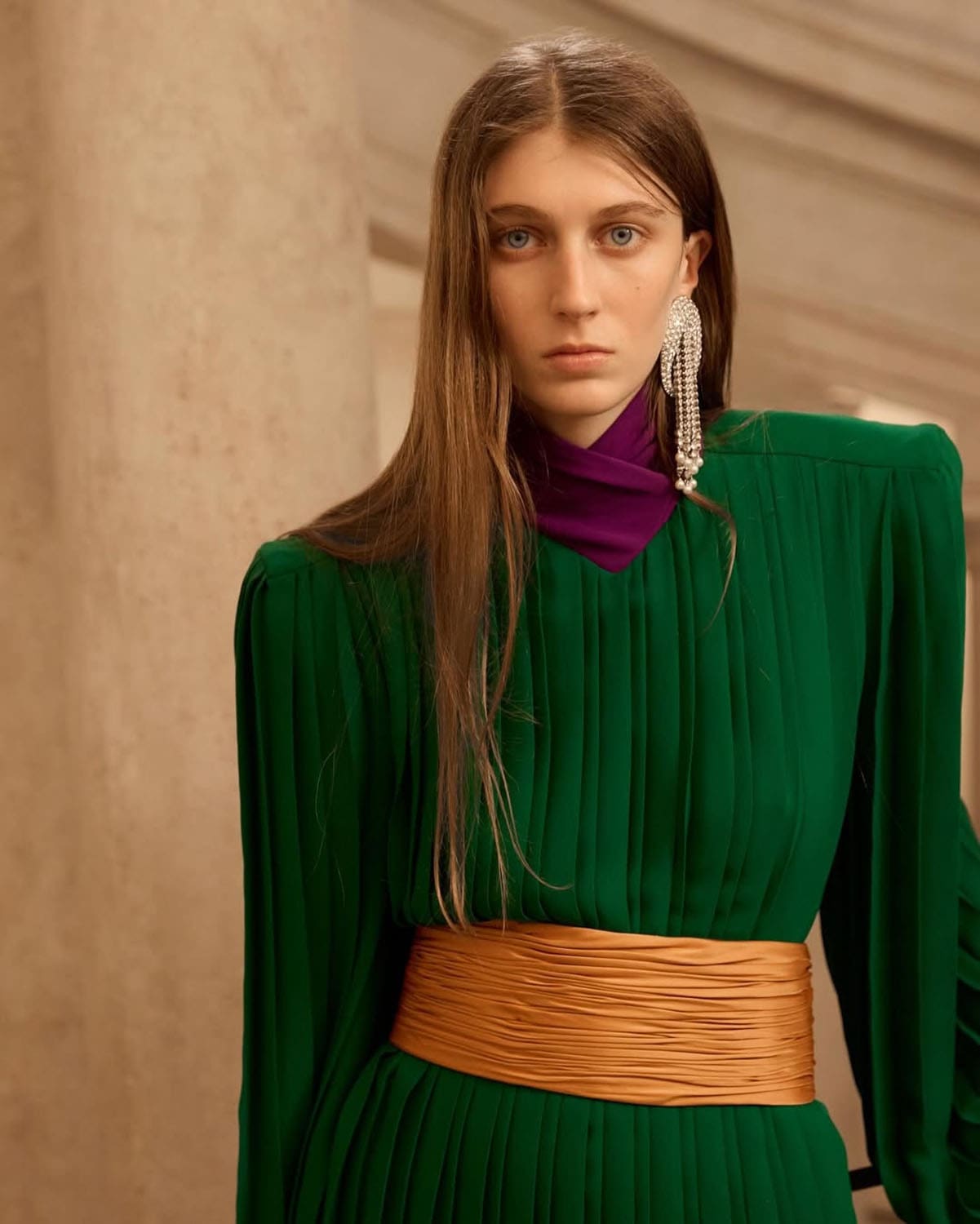
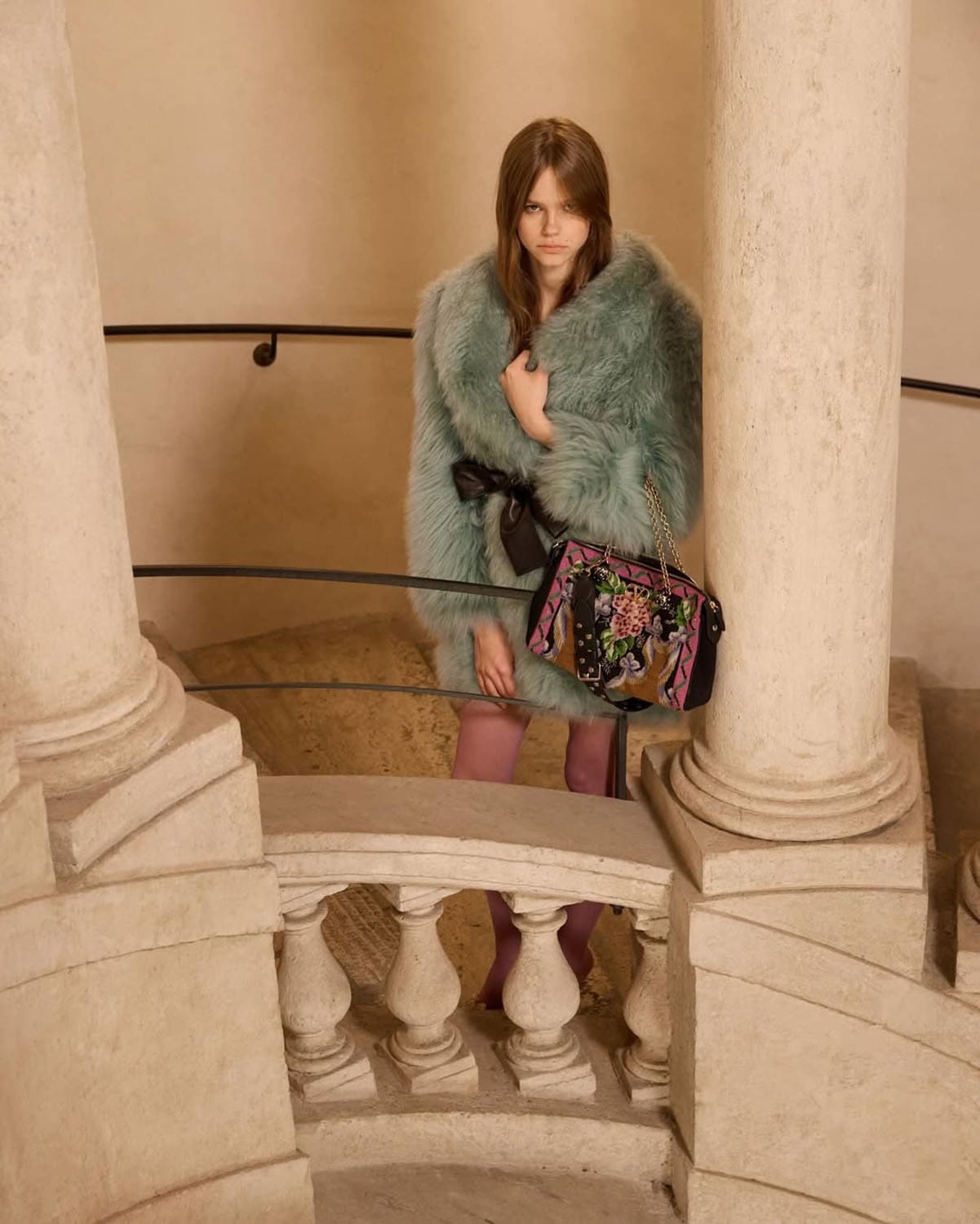
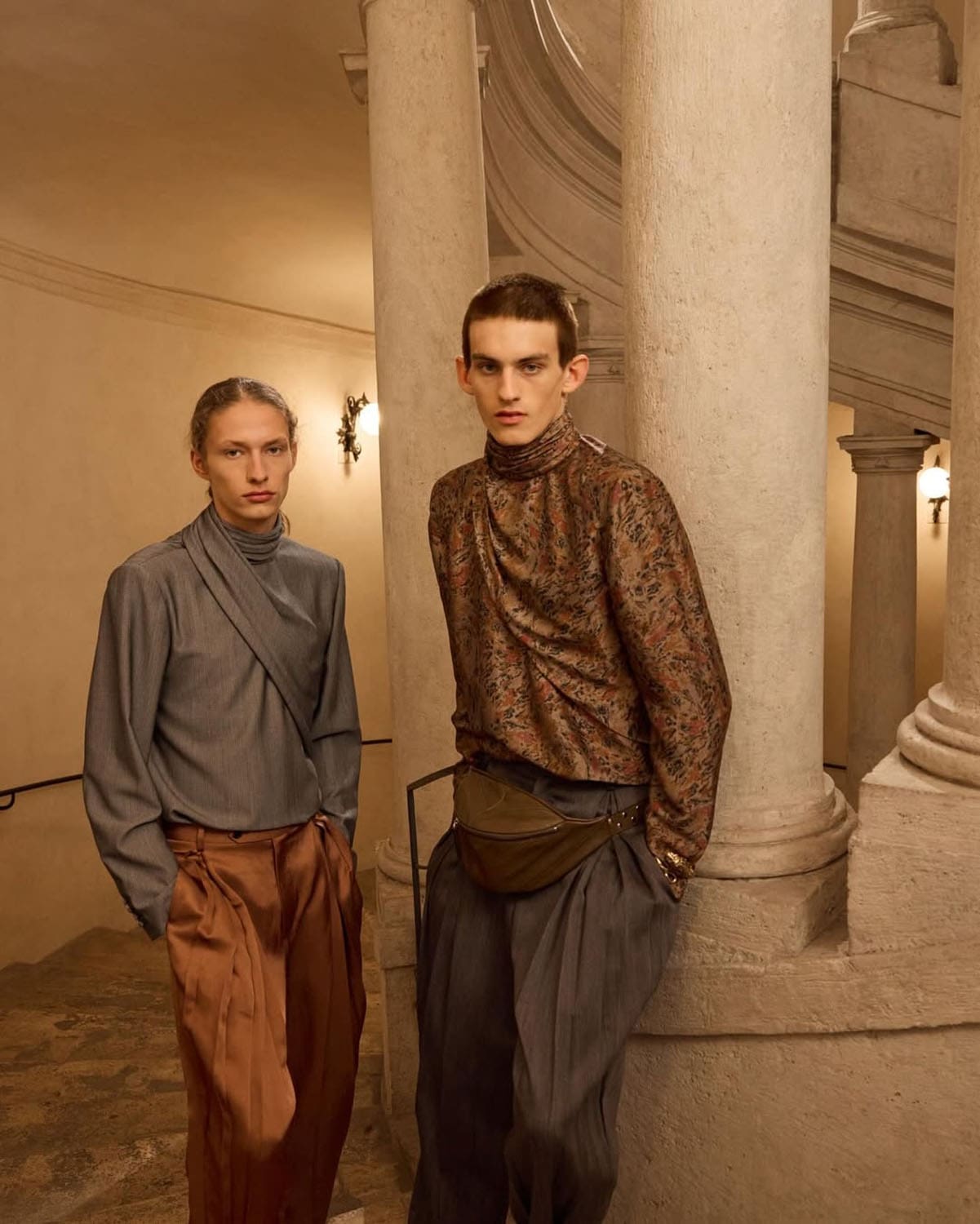
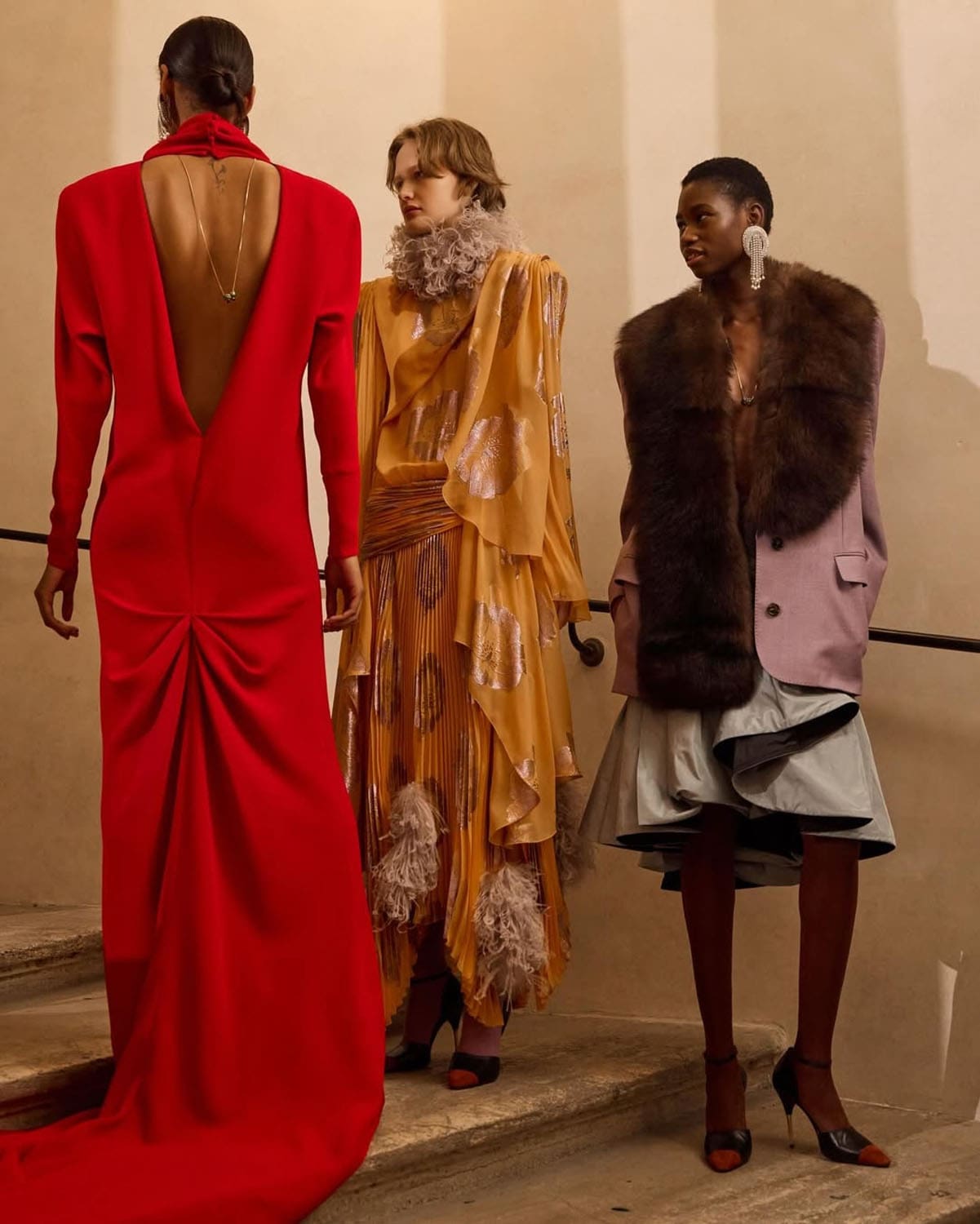
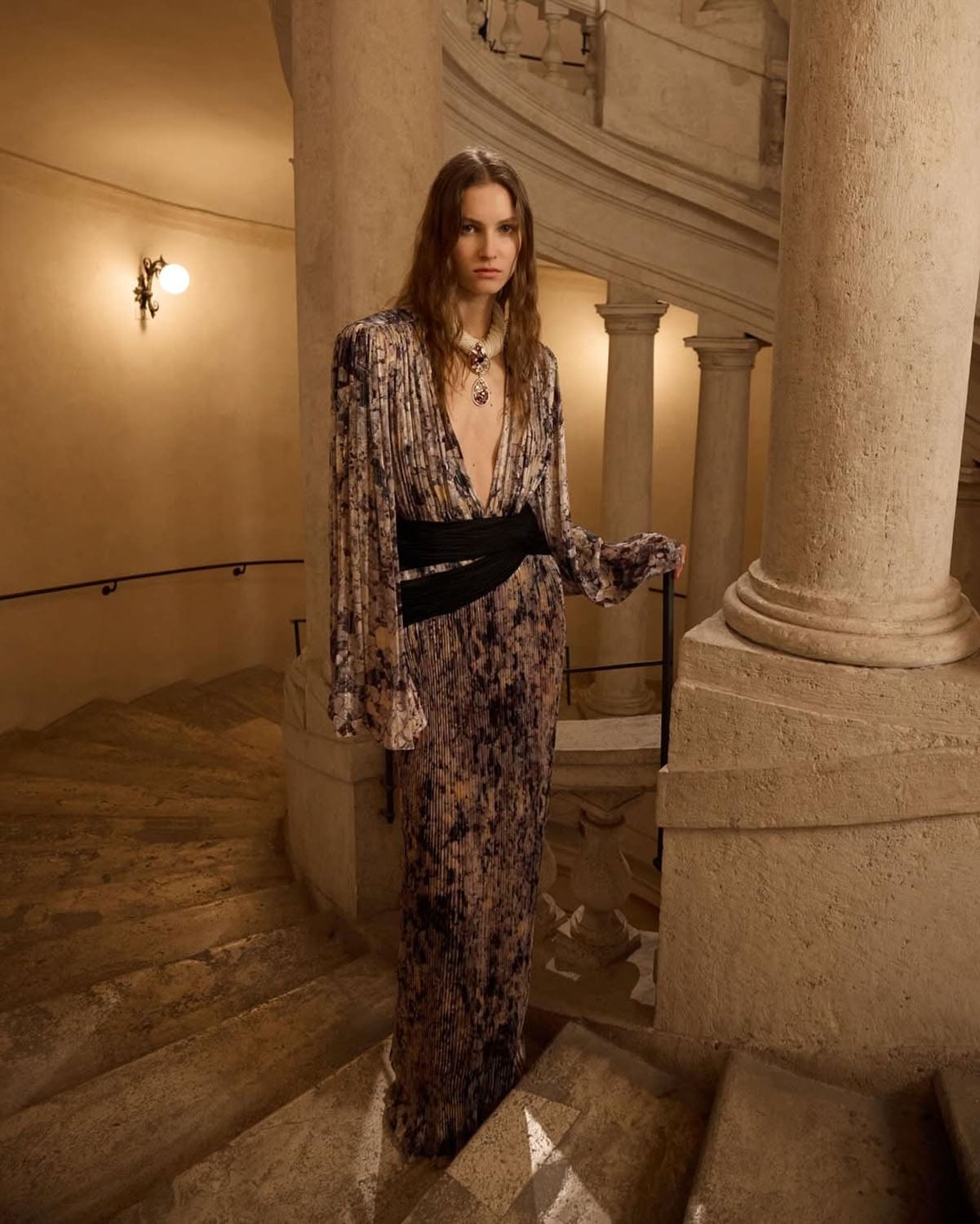
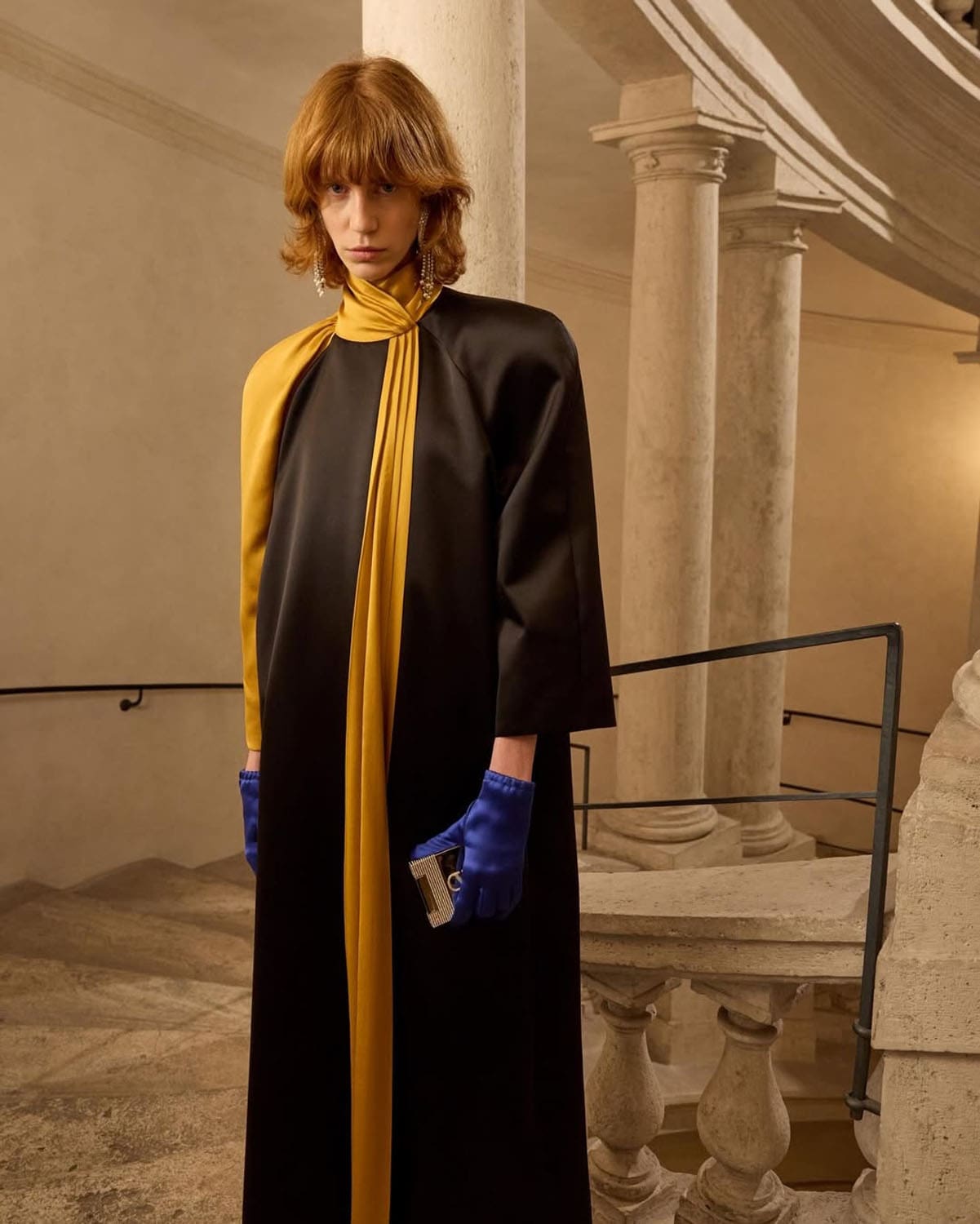
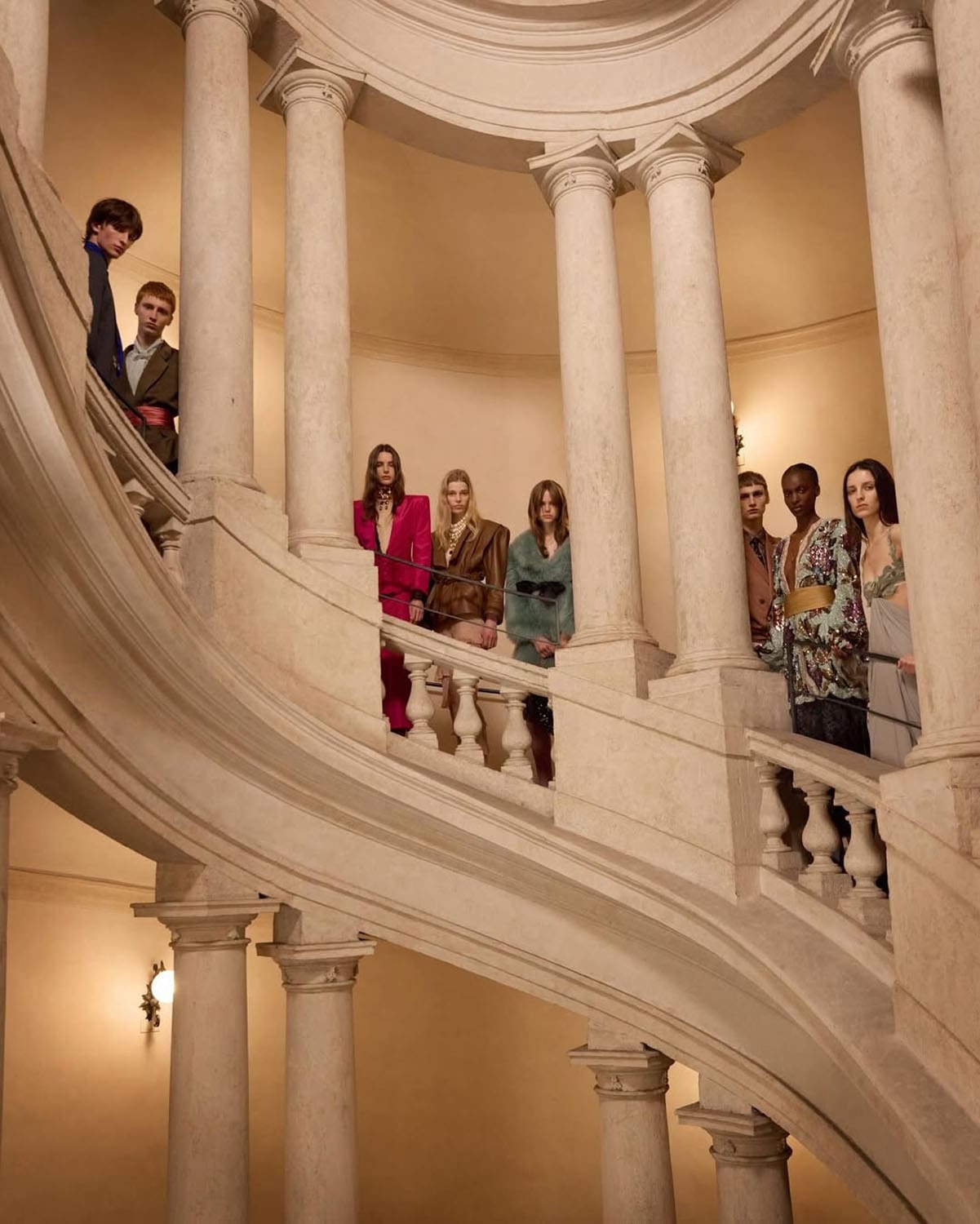
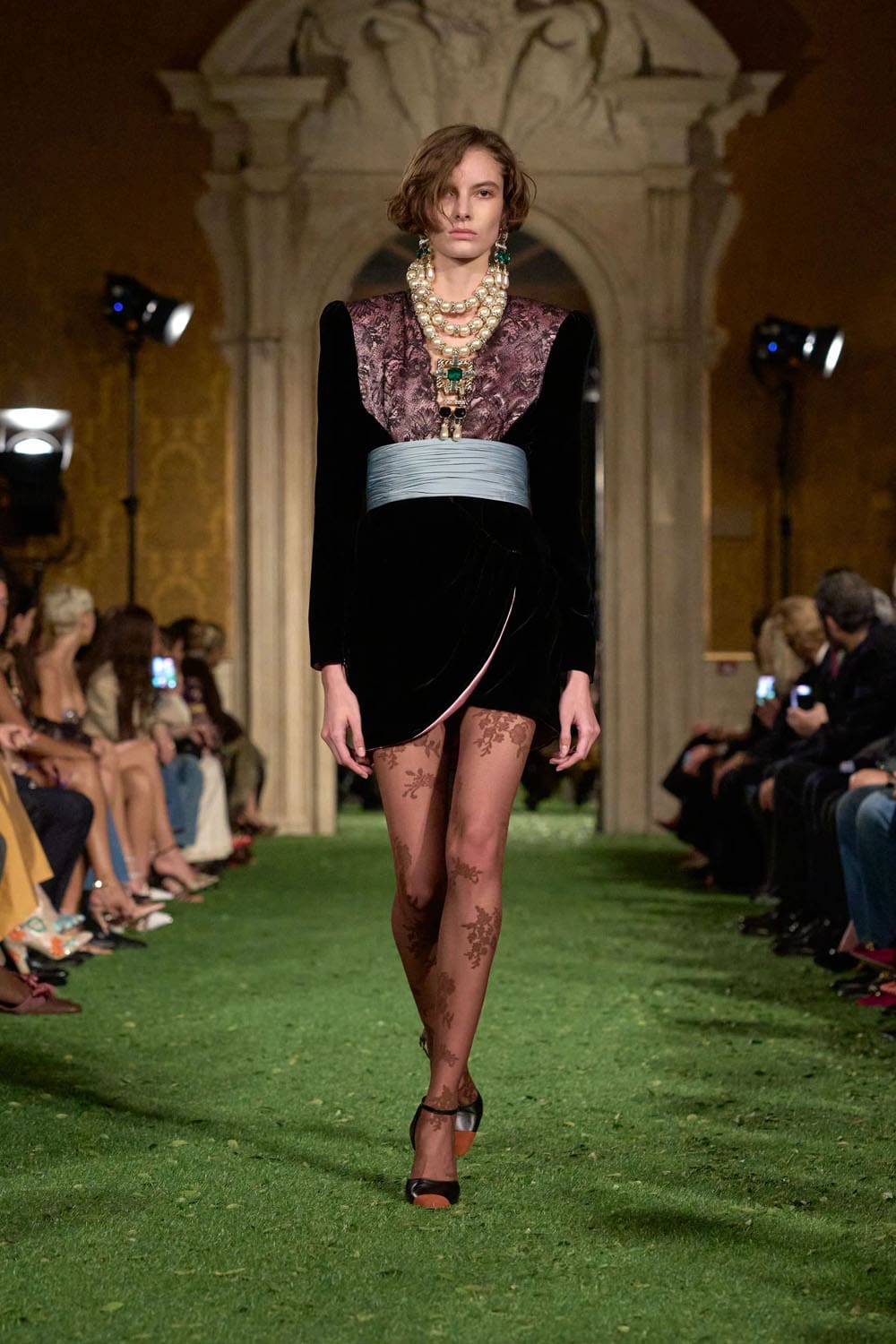
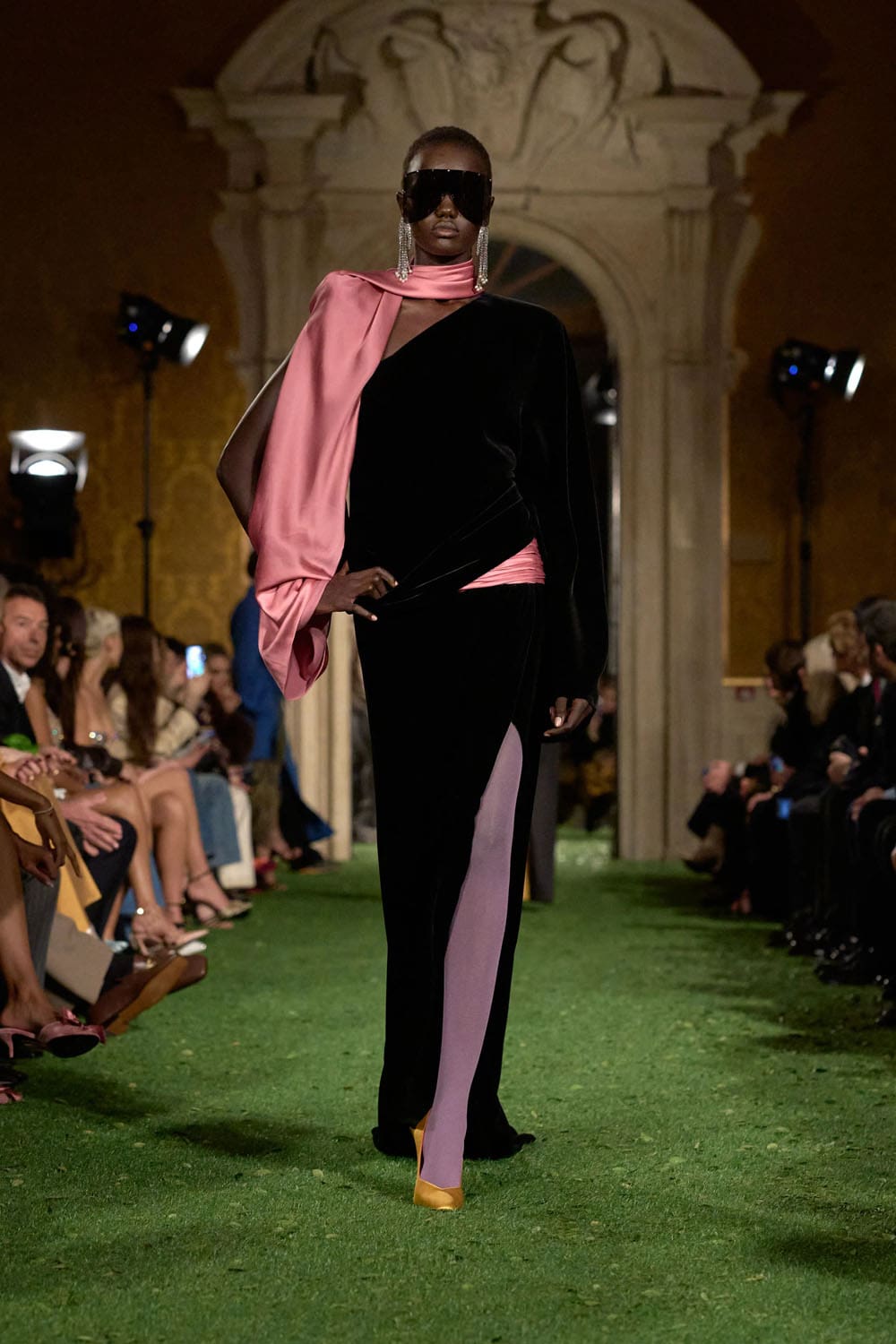
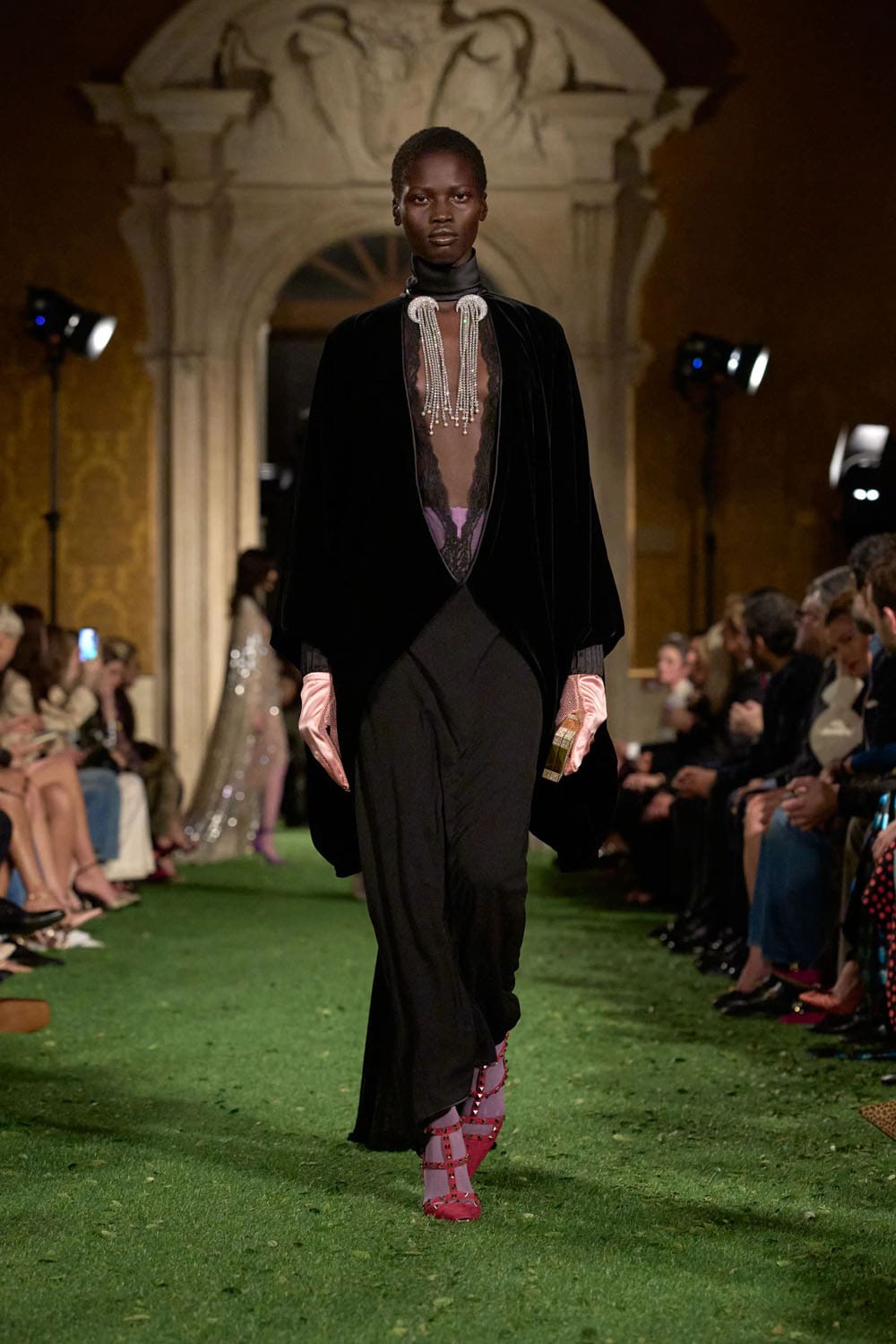
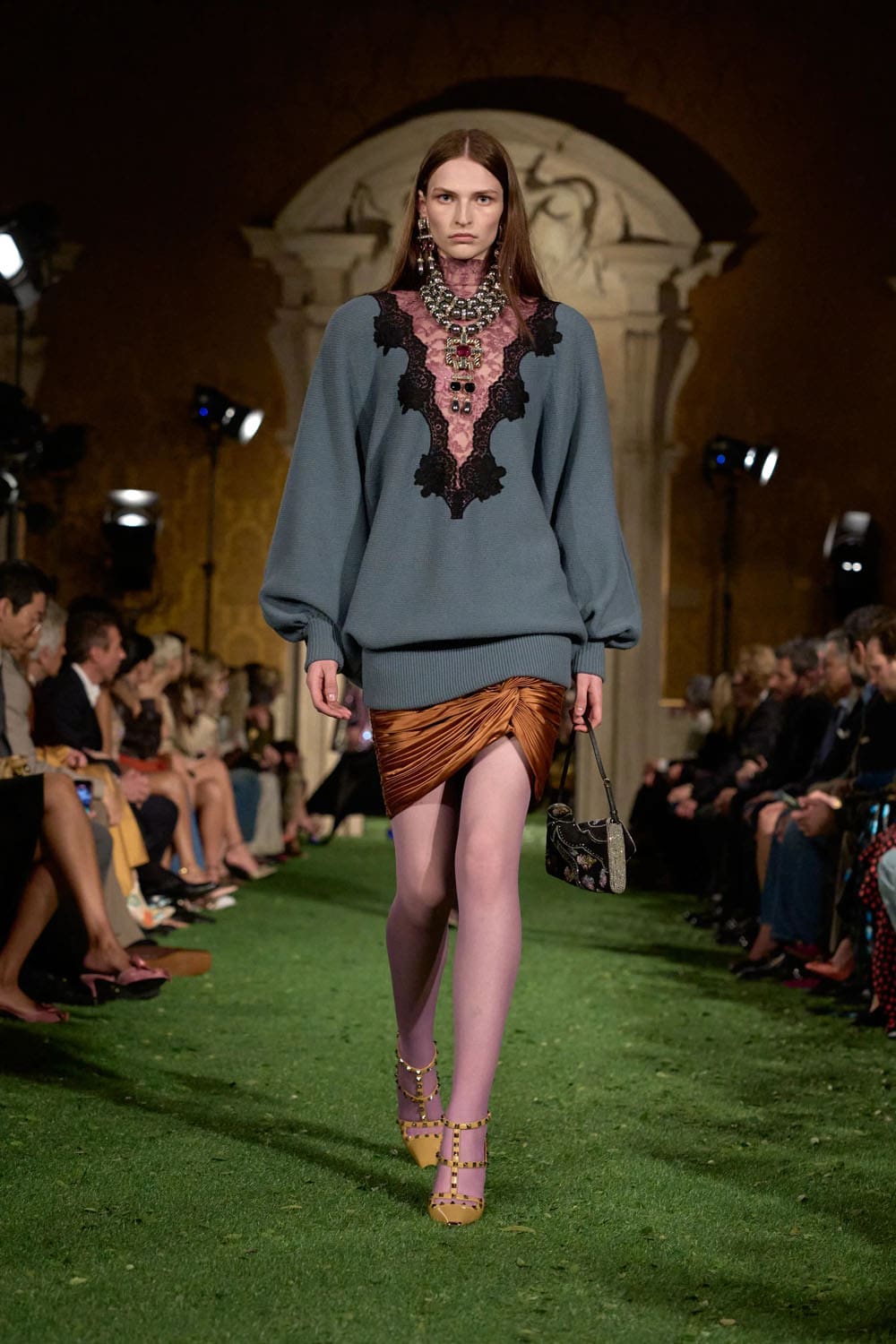
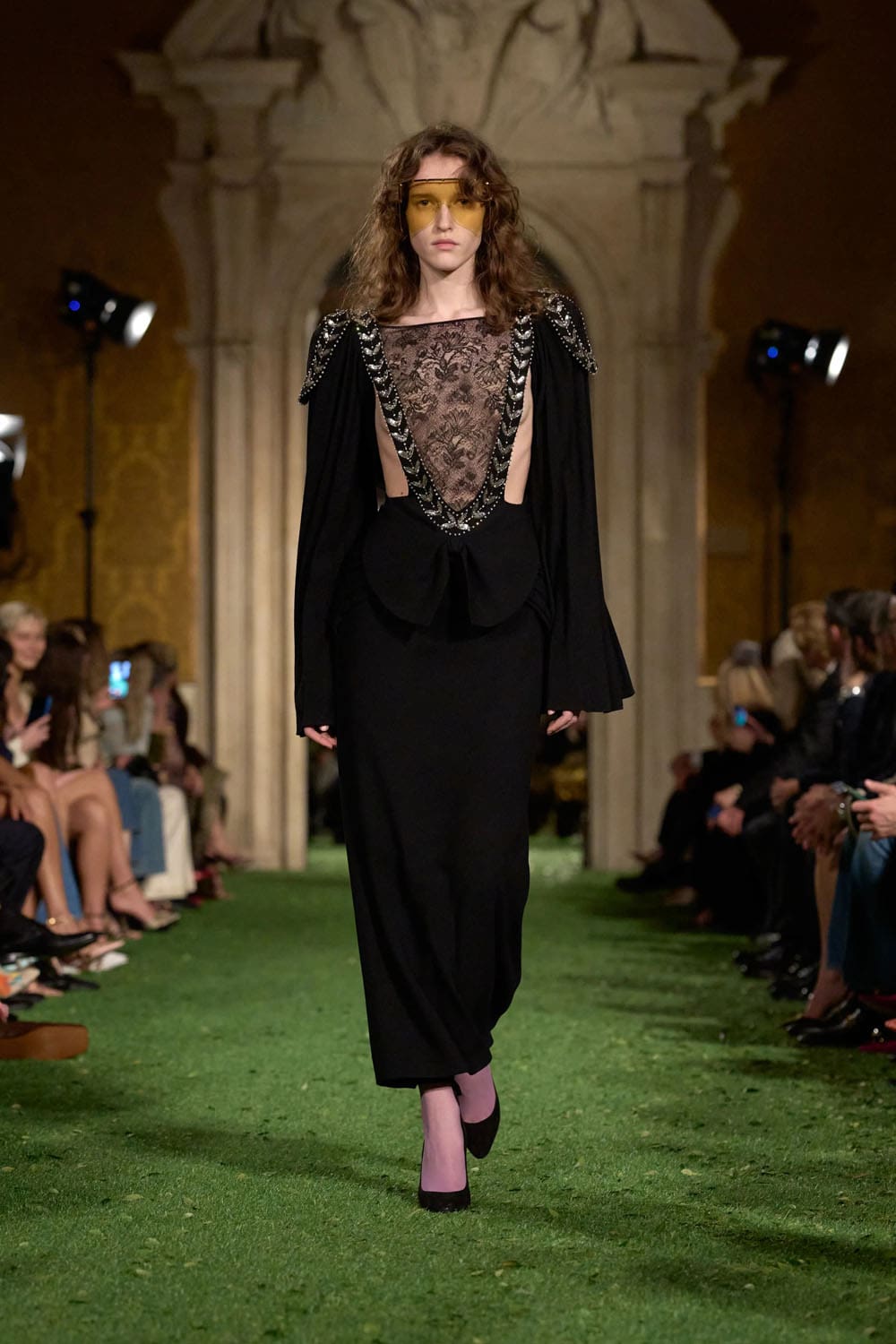
A black velvet mini-dress arrived armored with a metallic floral yoke, cinched with a pale sash, and suffocated under a museum’s worth of jewelry. It had presence, yes. But Valentino? Not even remotely. It belonged to Michele’s private archive of antique hallucinations, where history is not studied but accessorized.
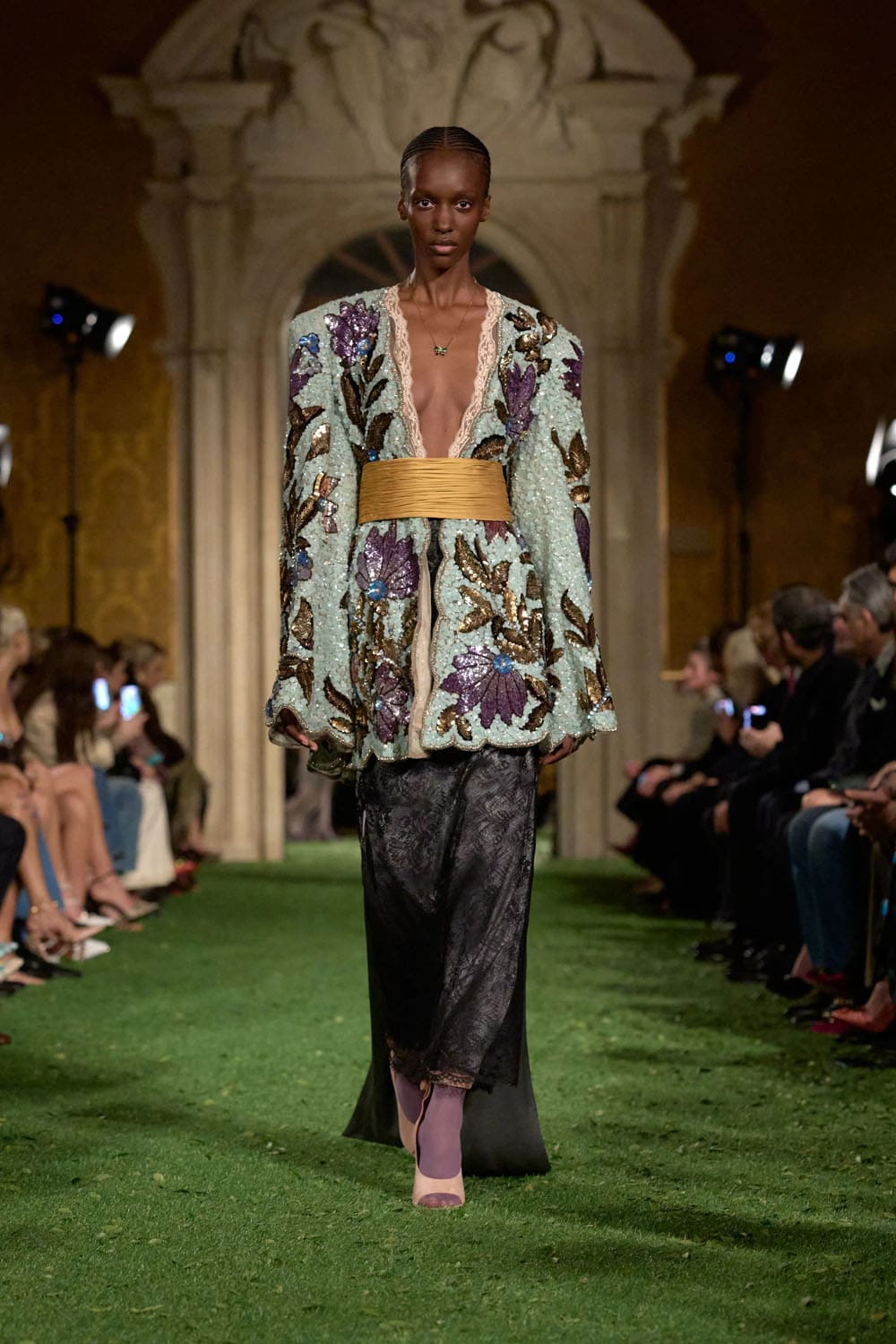
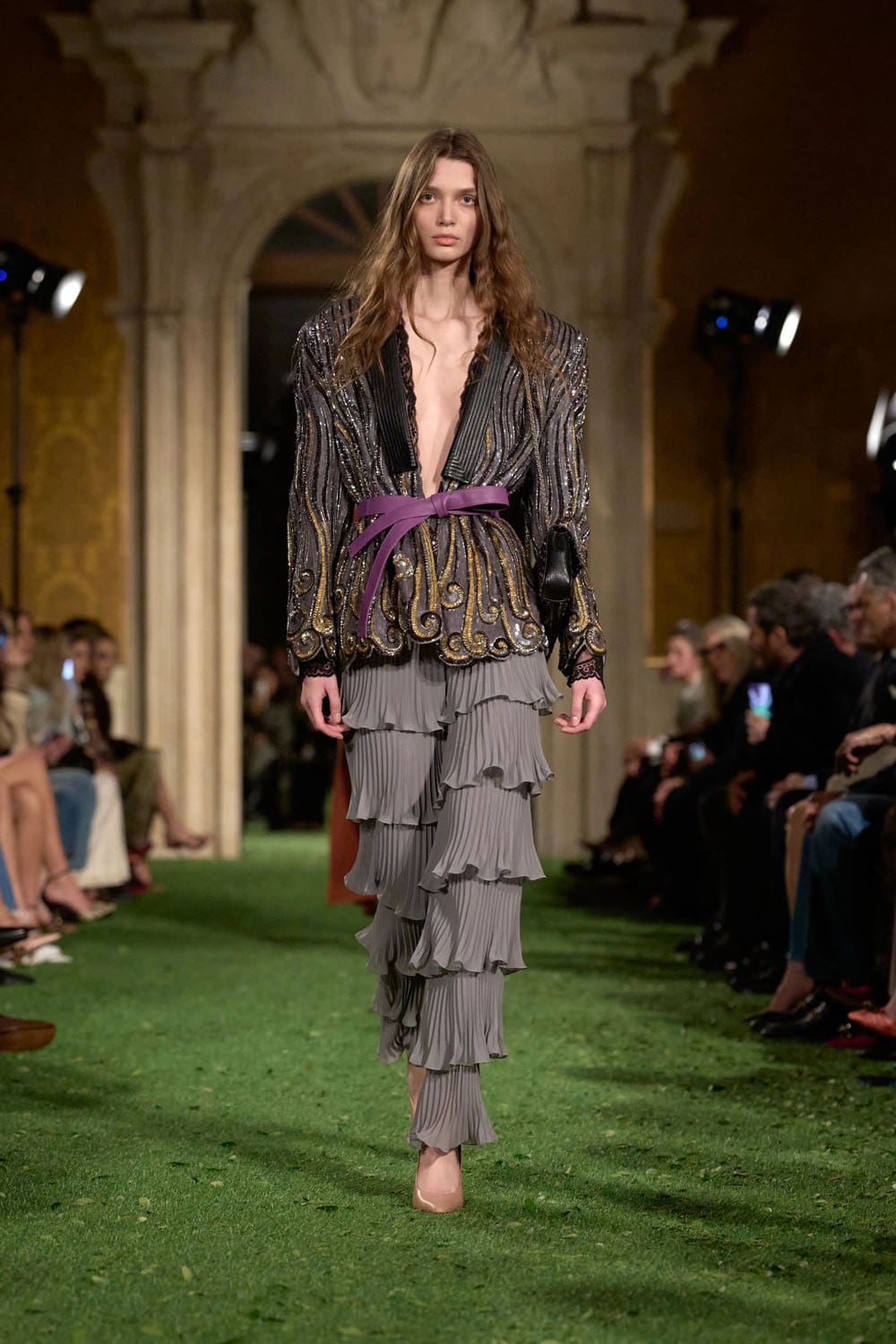
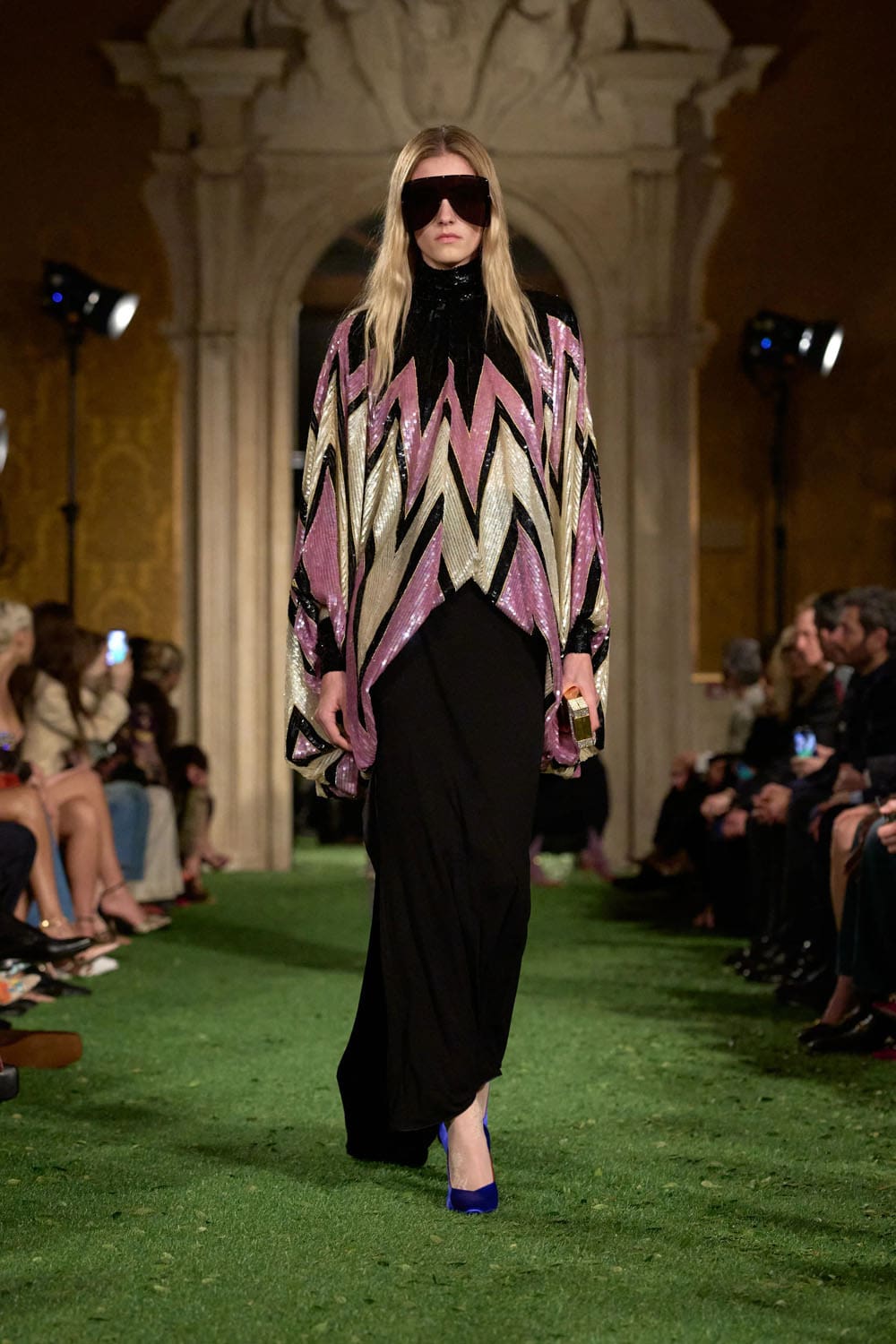
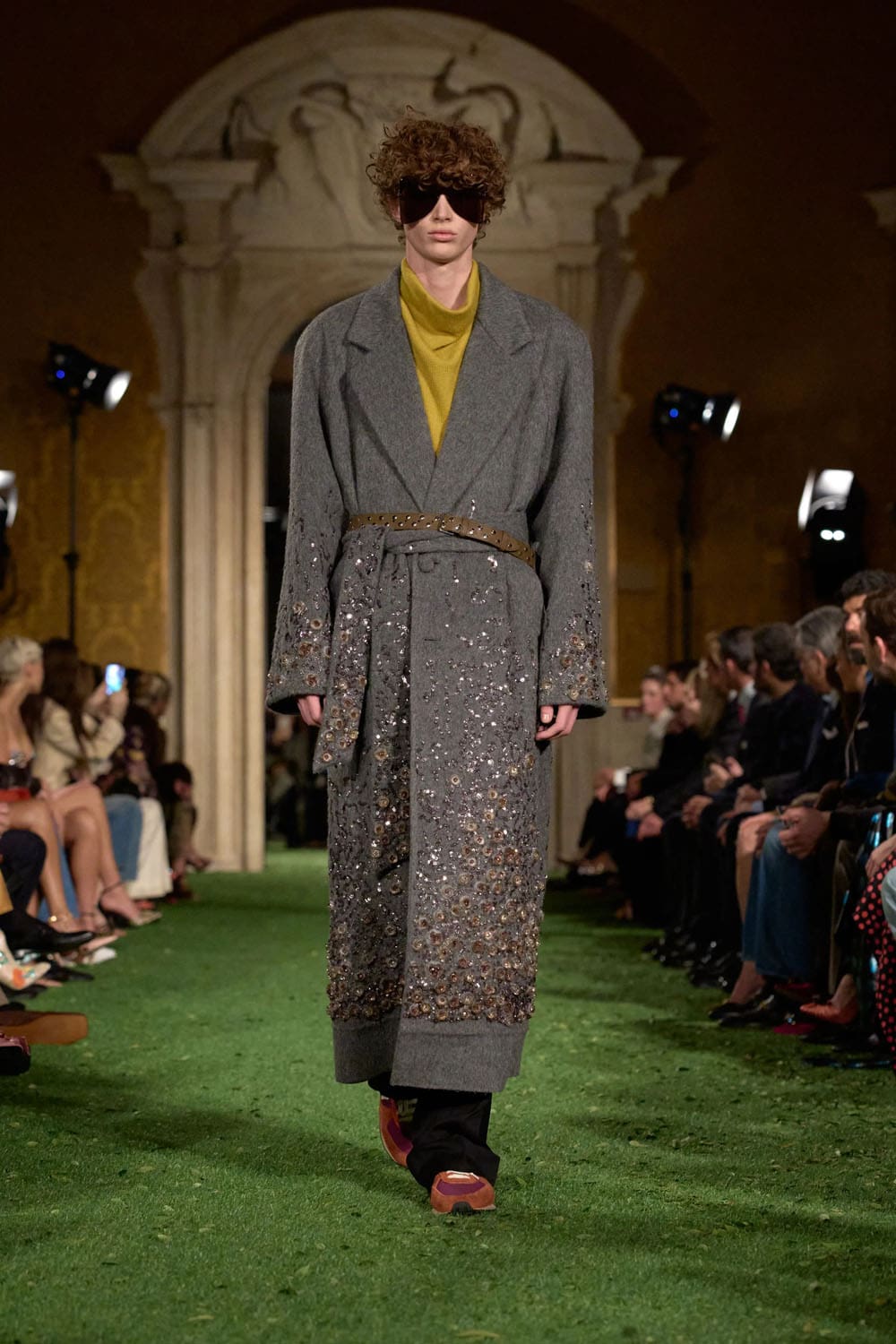
A sequined floral jacket tied loosely at the waist over a darker base pushed the point further. The proportions were unstable, the body treated as a hanger for contradiction rather than a site of elegance. One did not see a house rediscovering itself. One saw a designer reenacting his own habits under a borrowed name.
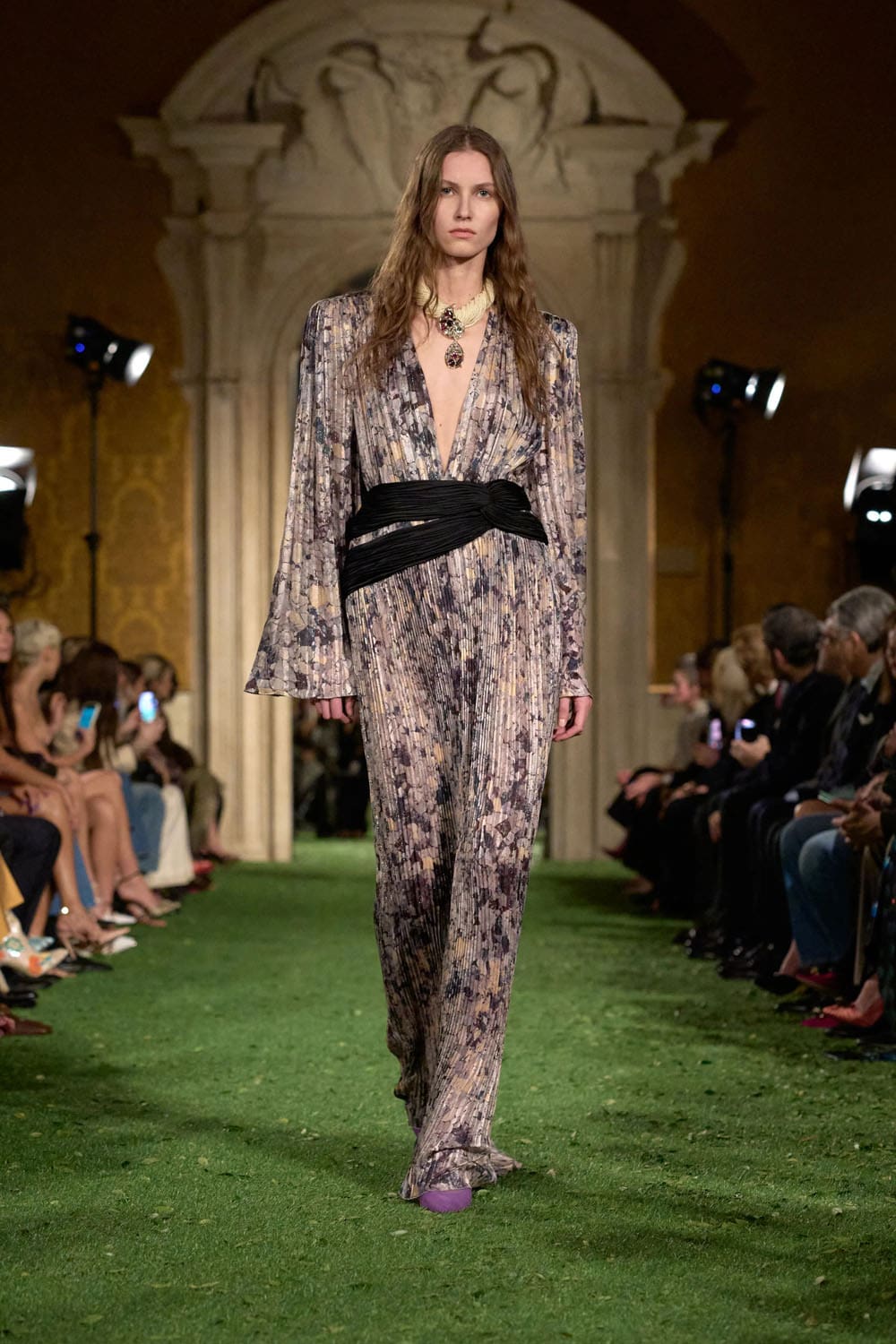
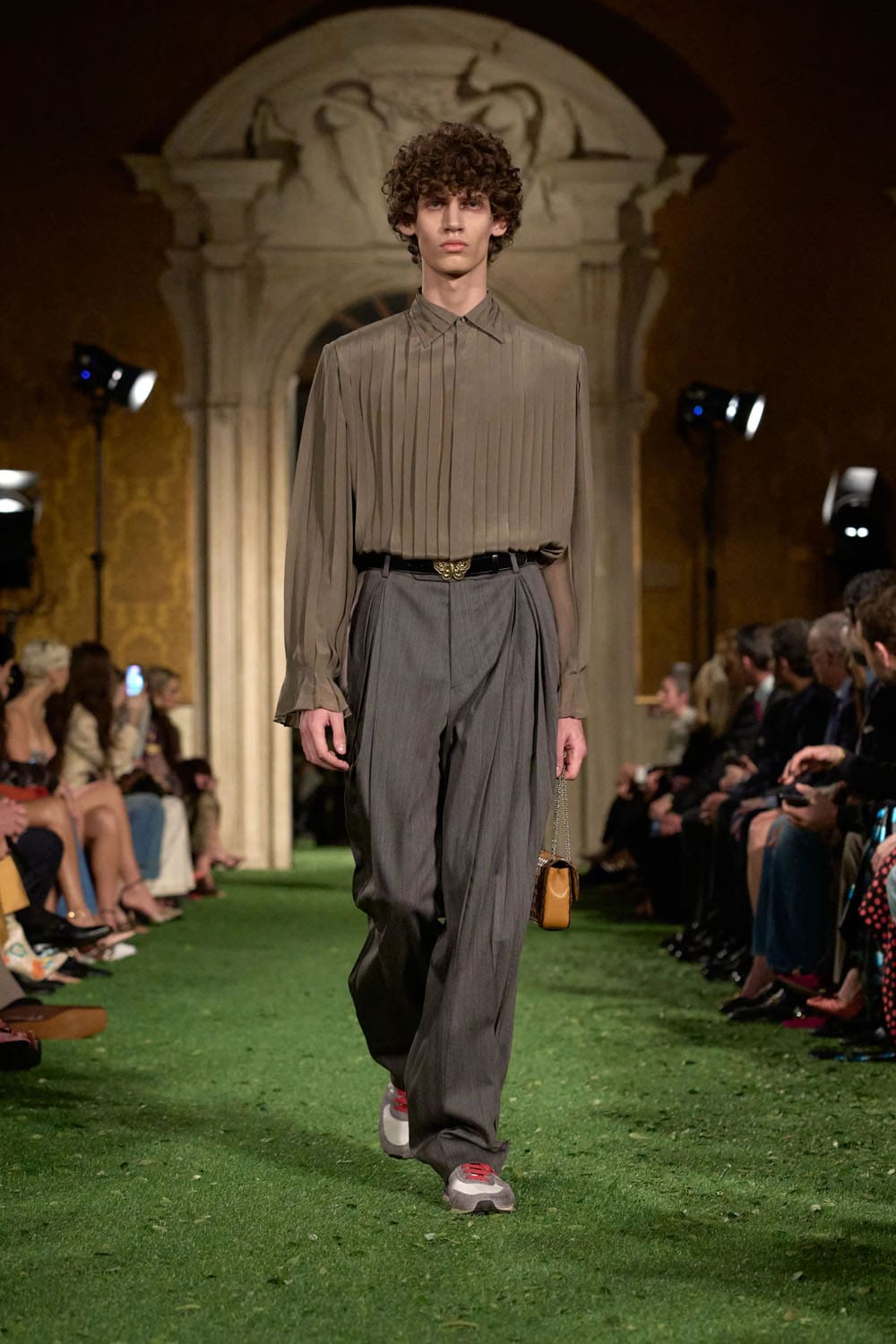
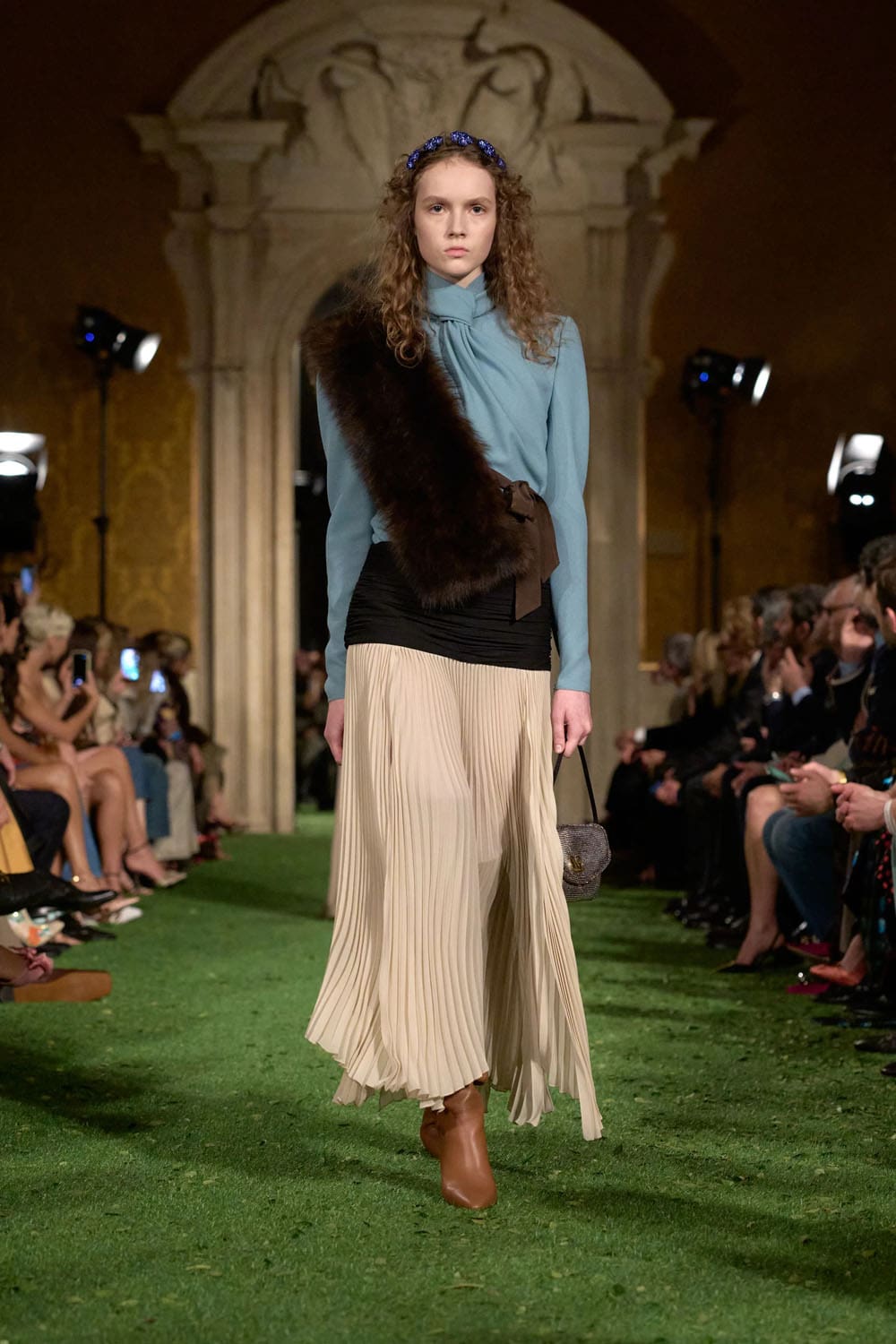
A pleated printed gown, vaguely 1930s, loosely tied with black, floated by like a ghost from Michele’s previous life. Pretty, nostalgic, emotionally styled — but again, unmistakably his. Mood masquerading as identity.
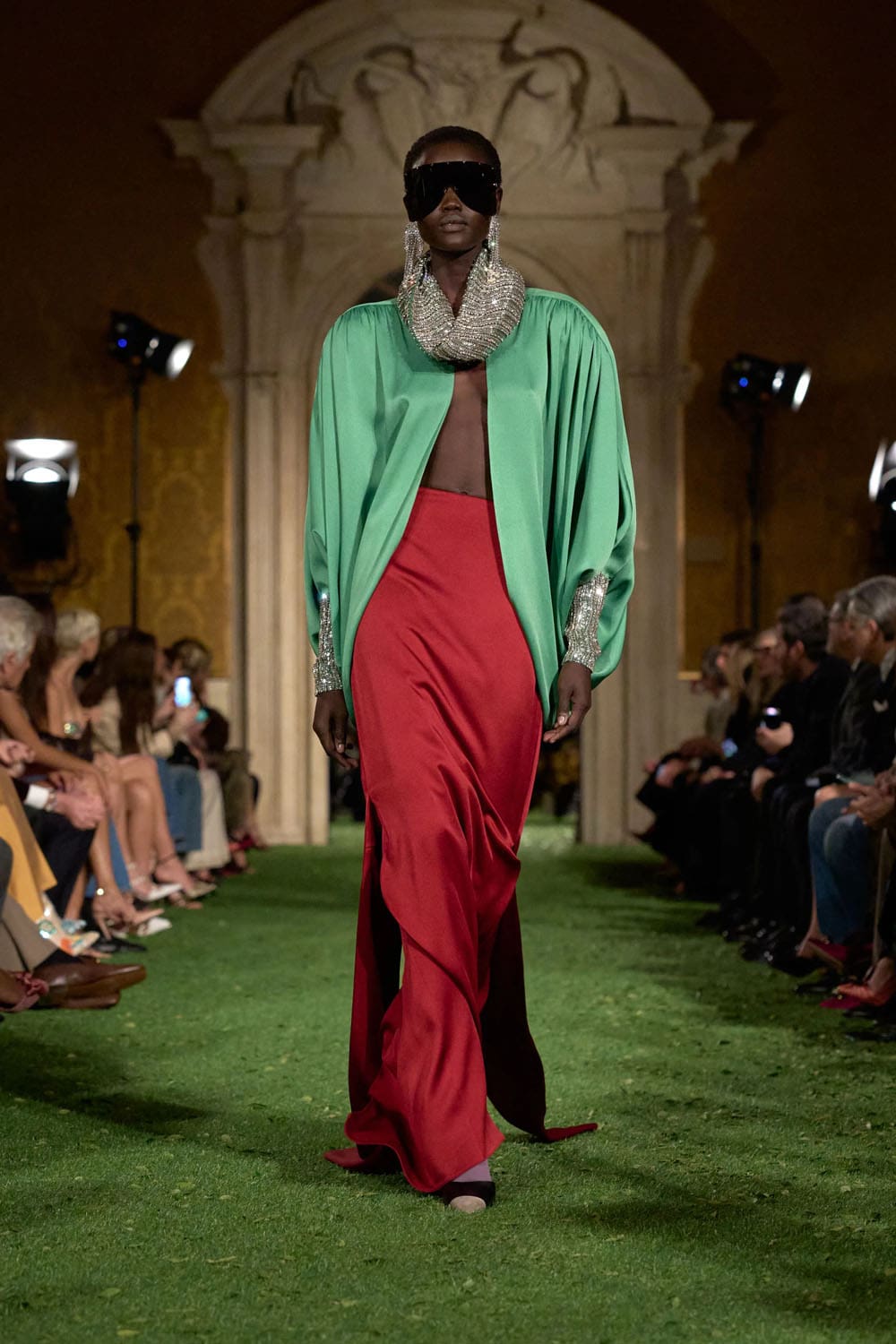
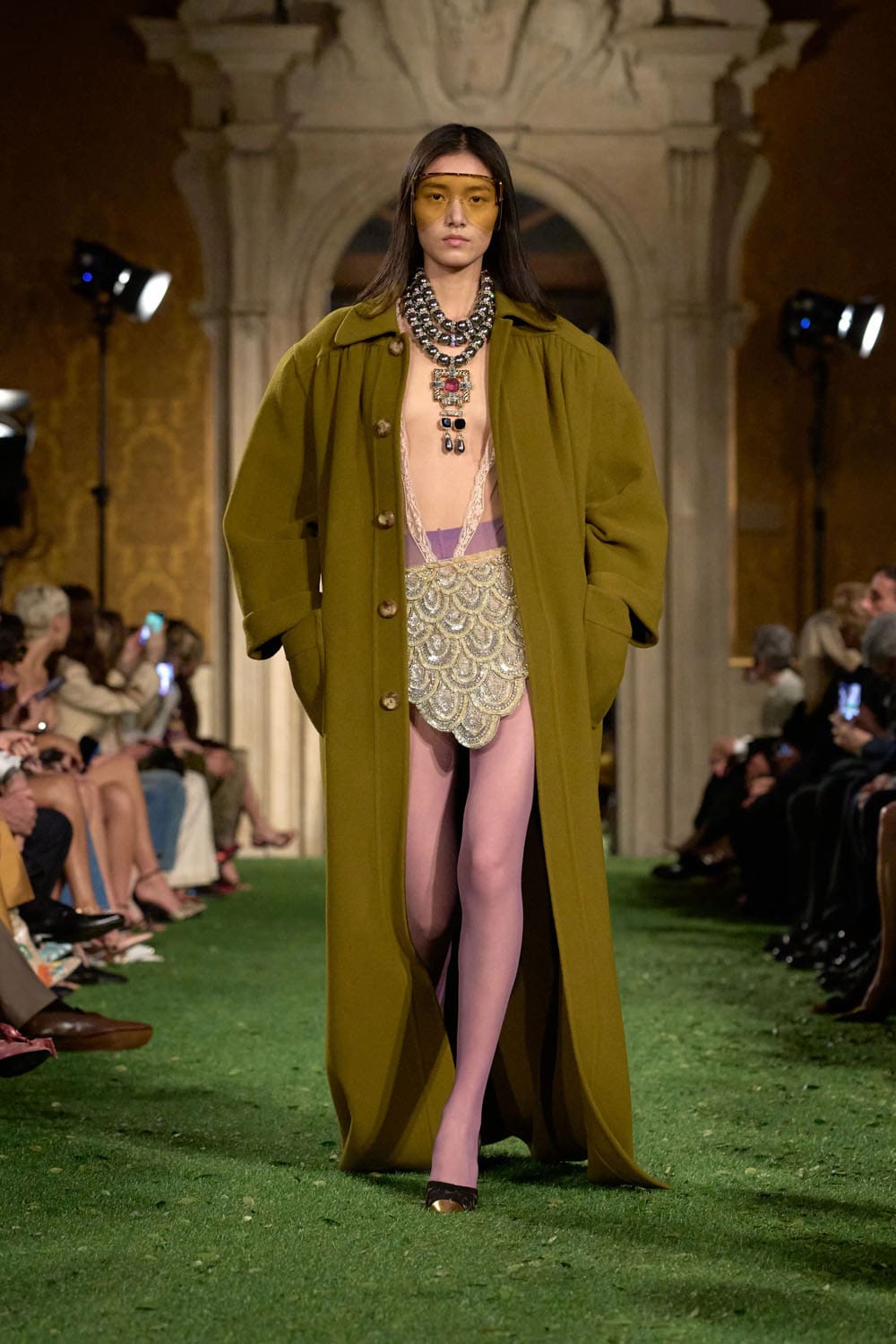
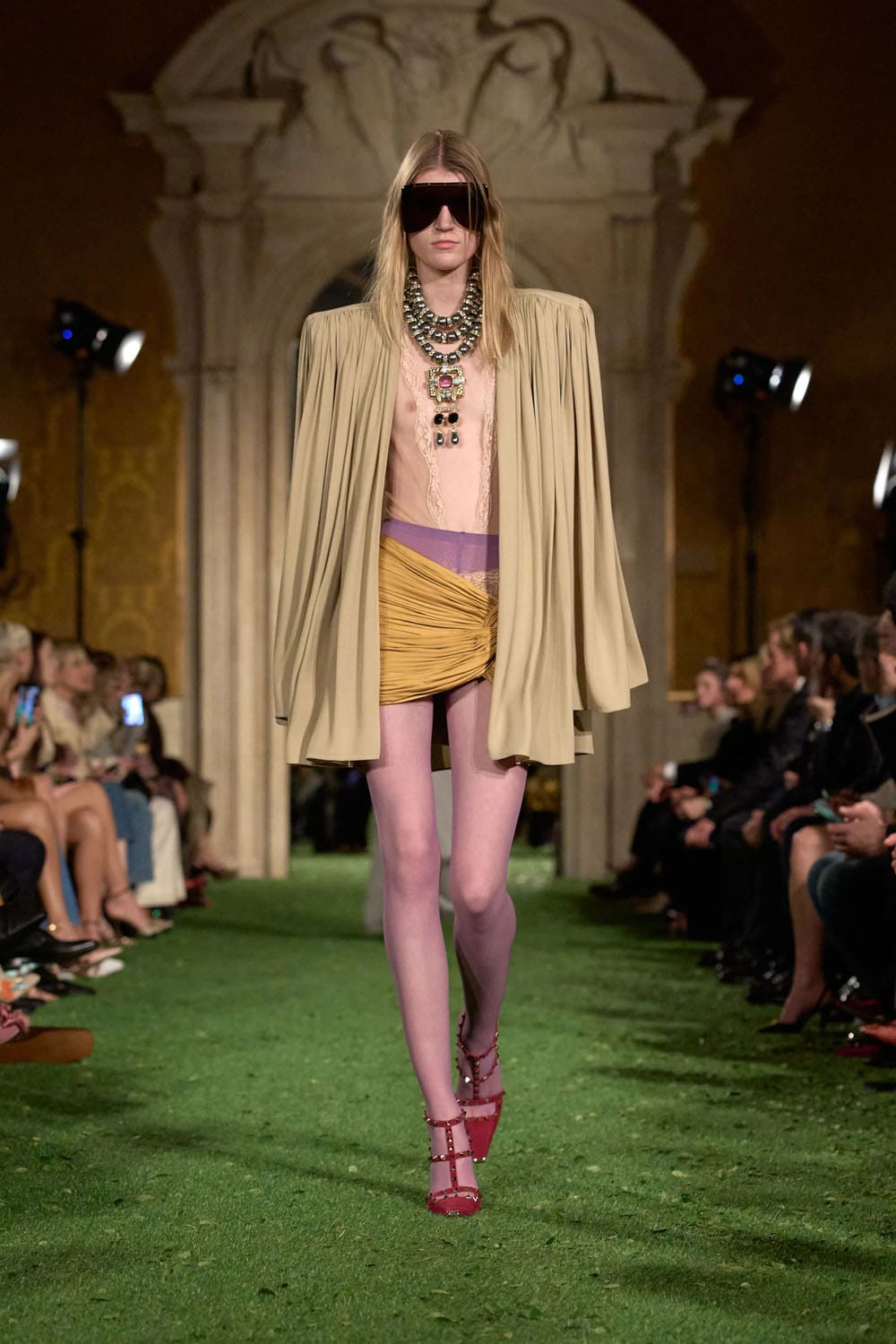
And then came the moment the collection stopped pretending. A green cape-blouse with jeweled cuffs over a long red skirt, crowned with an enormous crystal collar and an oversized visor, abandoned any pretense of Valentino’s classical authority. It marched straight into Michele’s preferred territory: costume as personality, glamour as eccentricity, femininity as curated oddity.
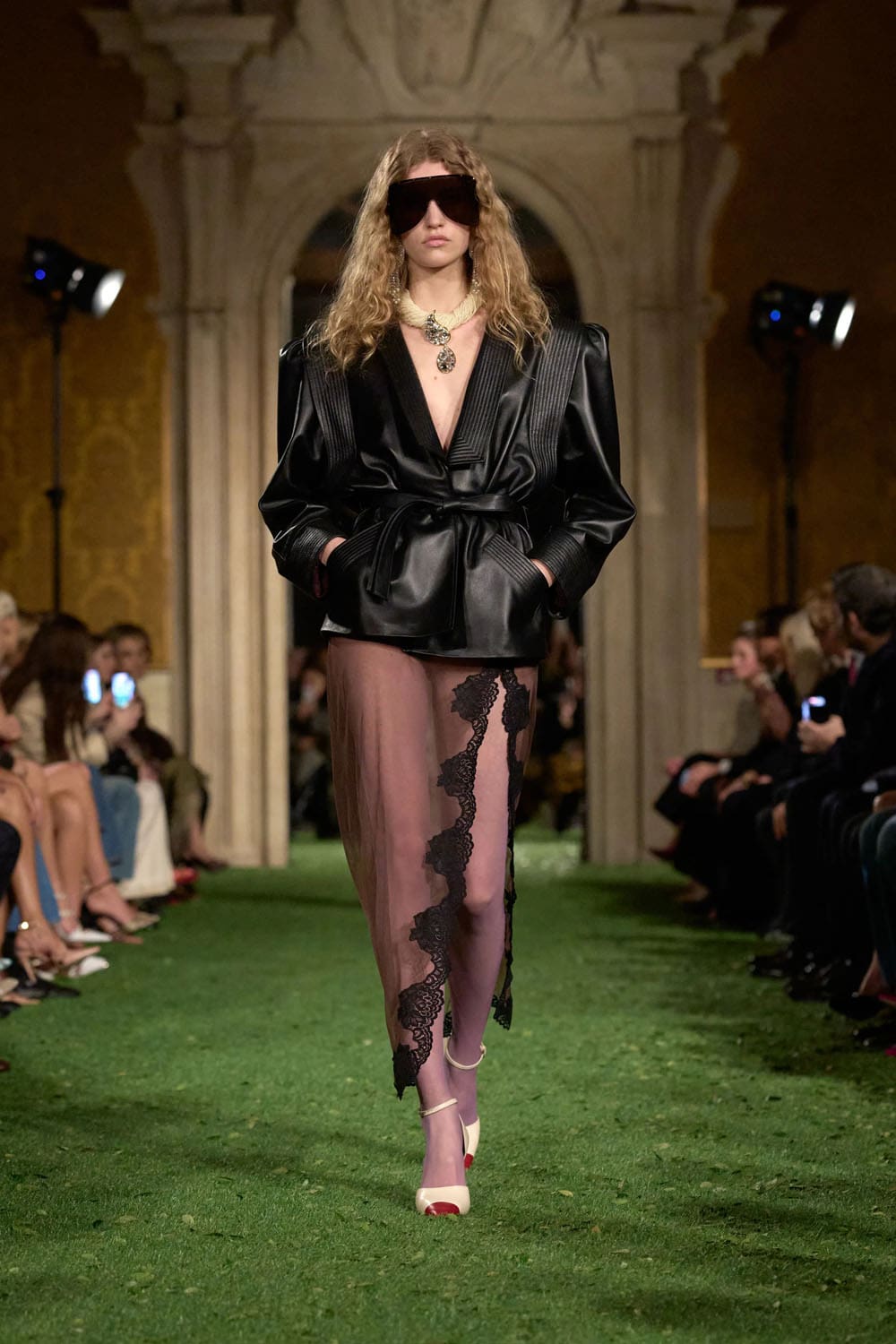
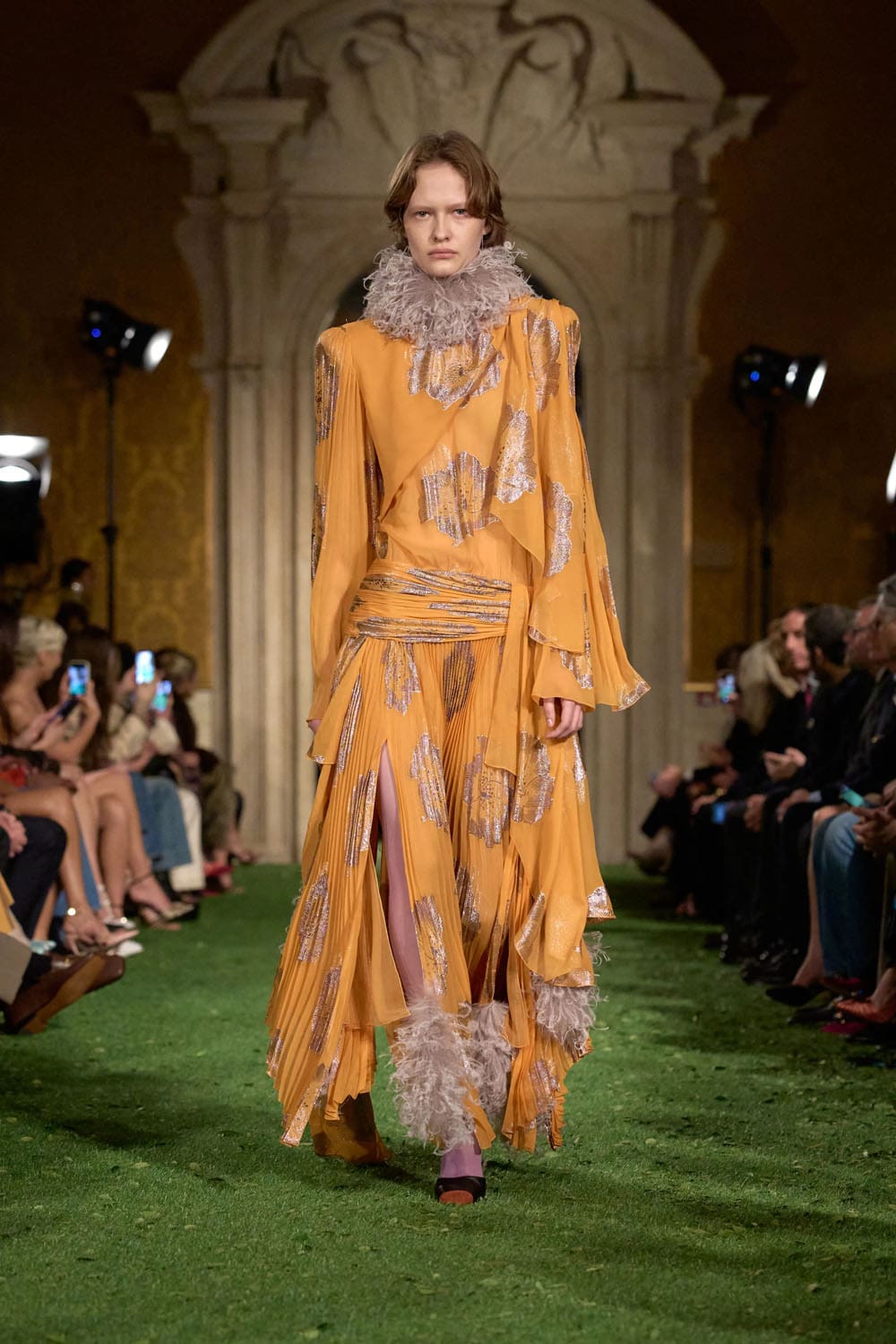
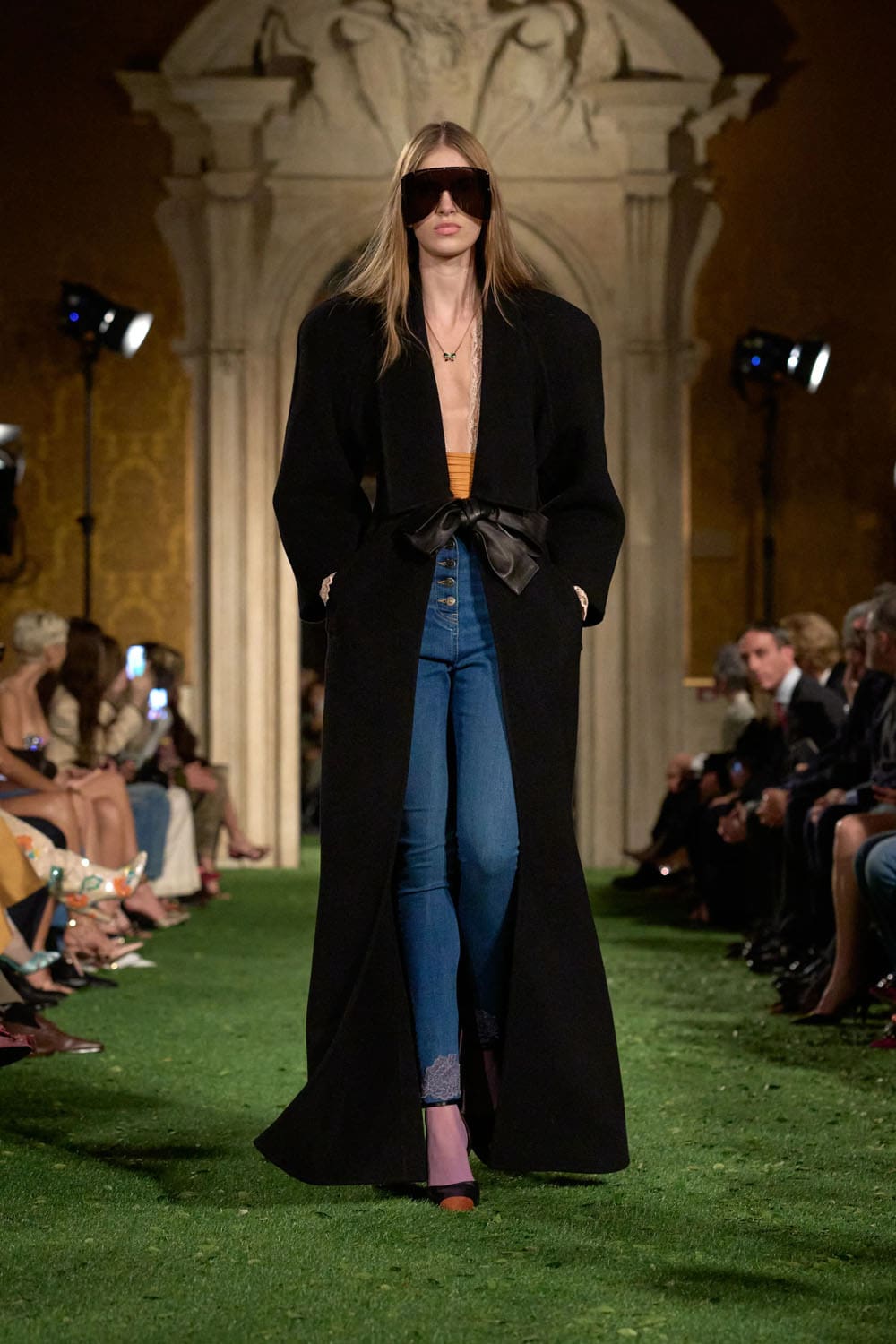
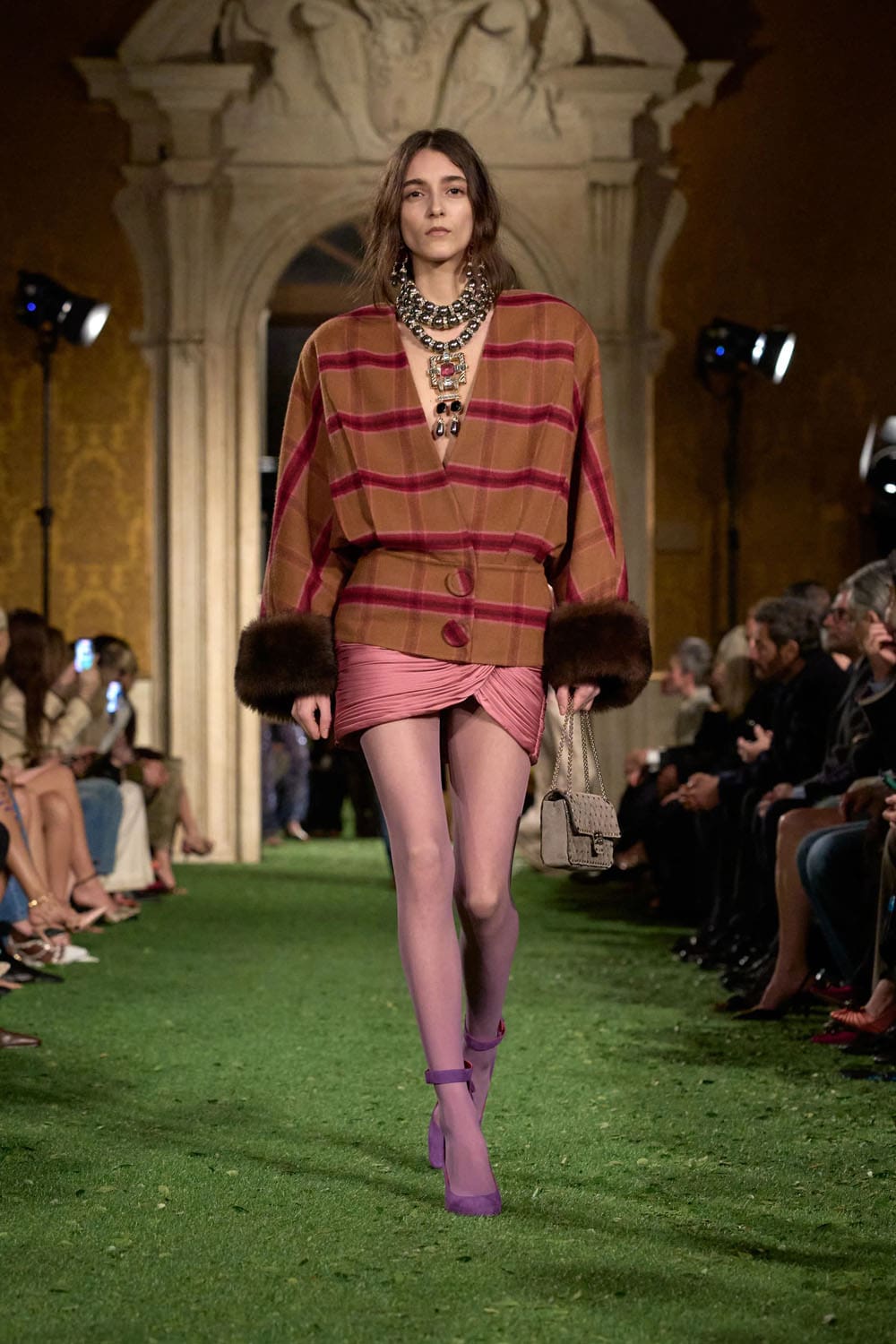
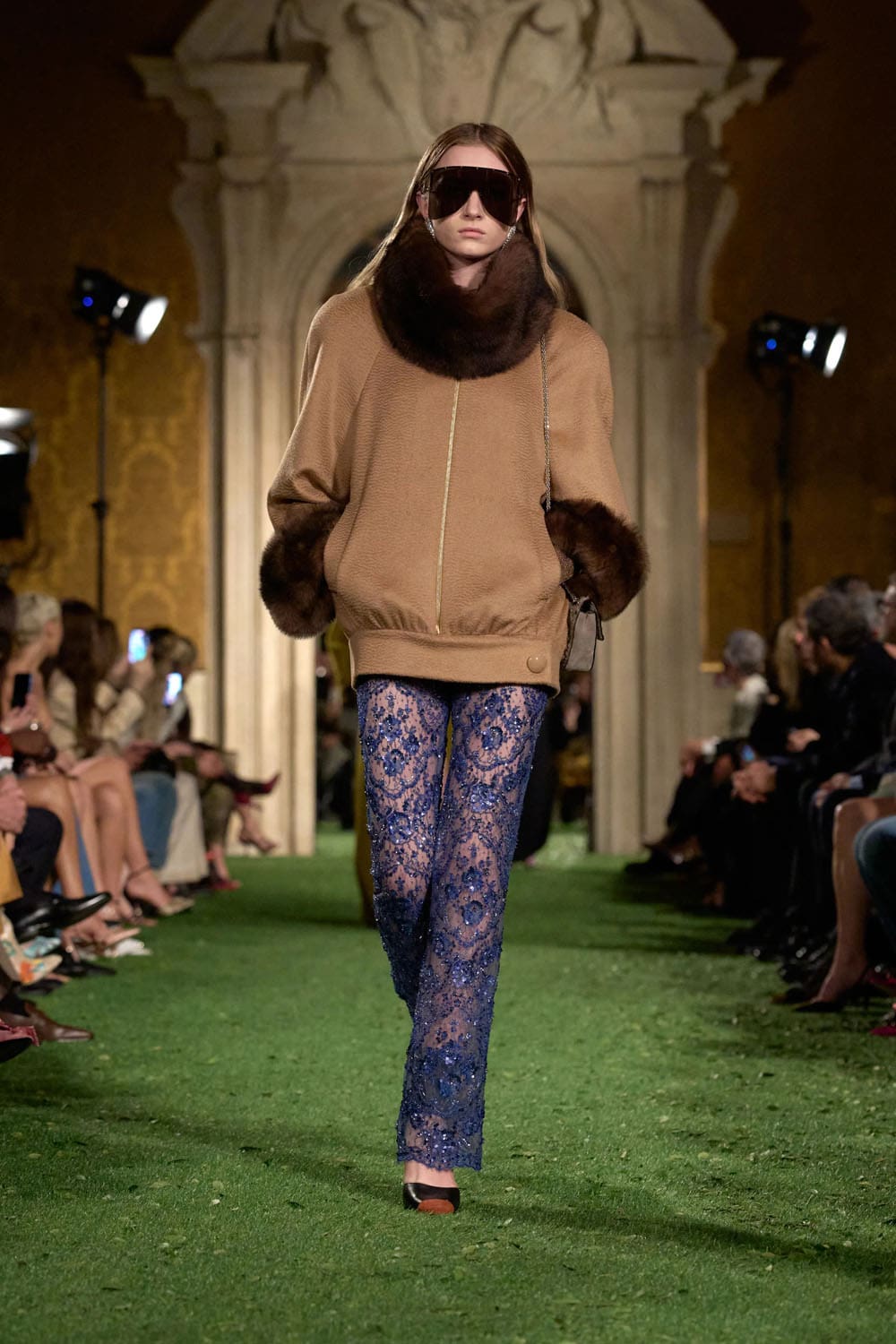
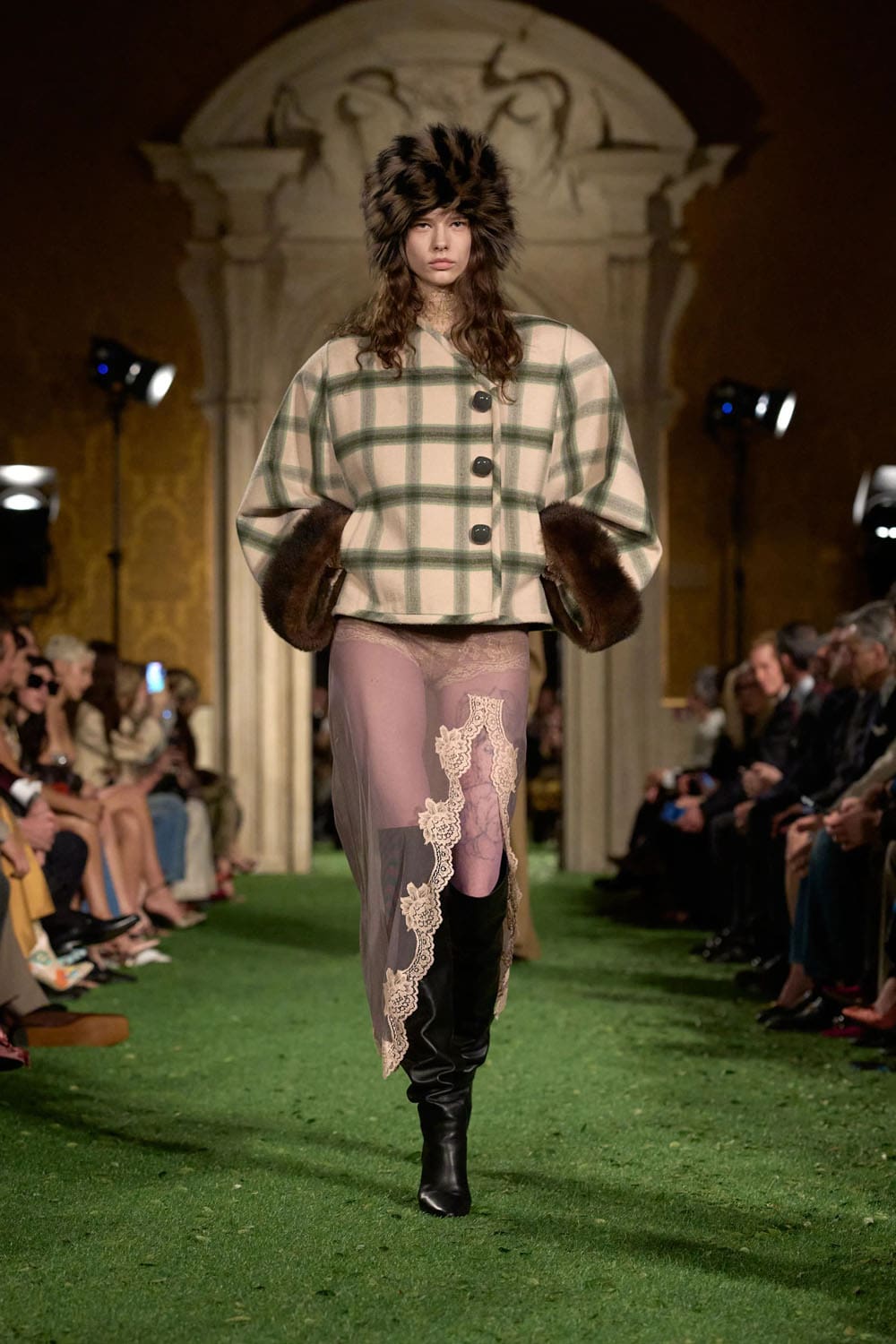
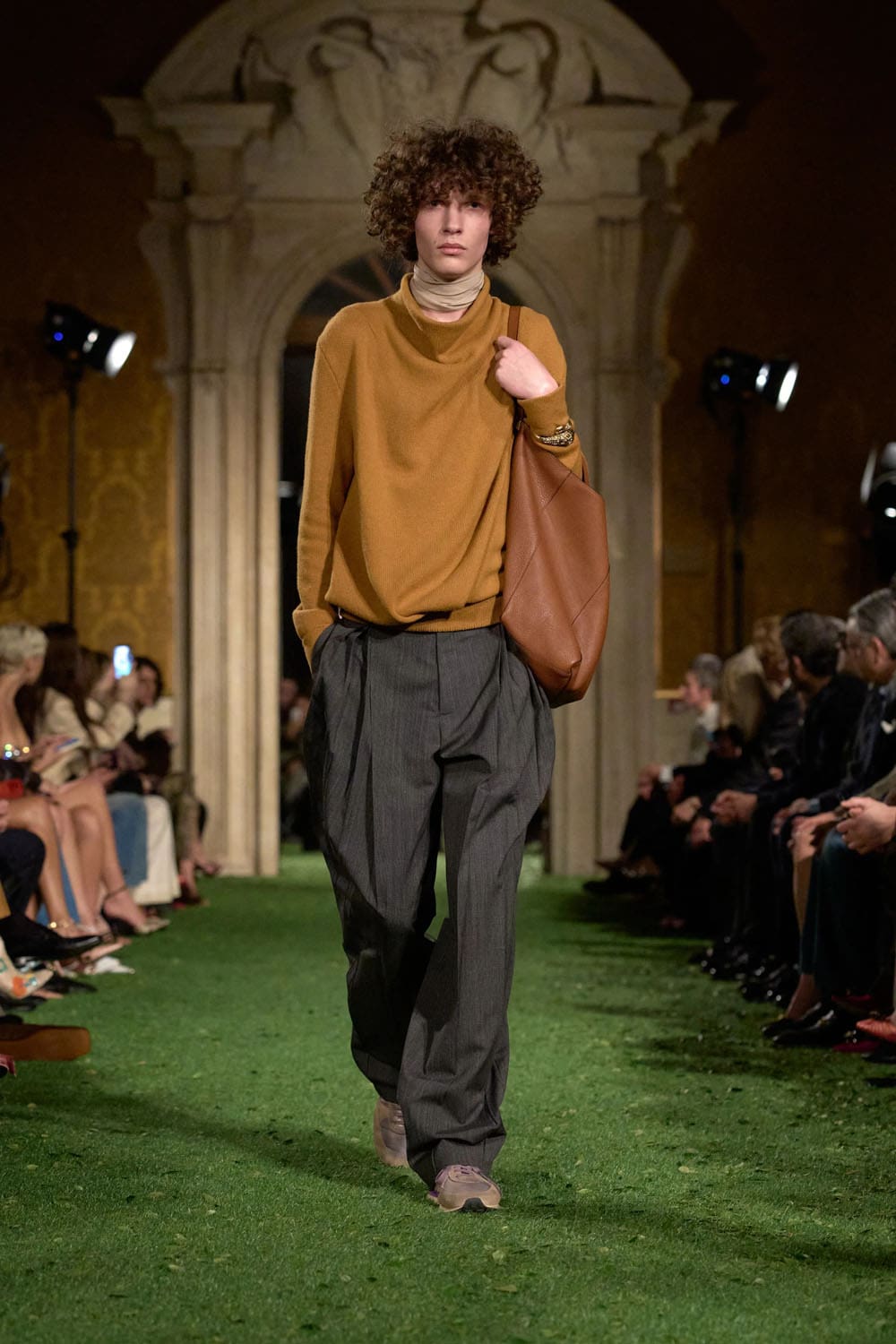
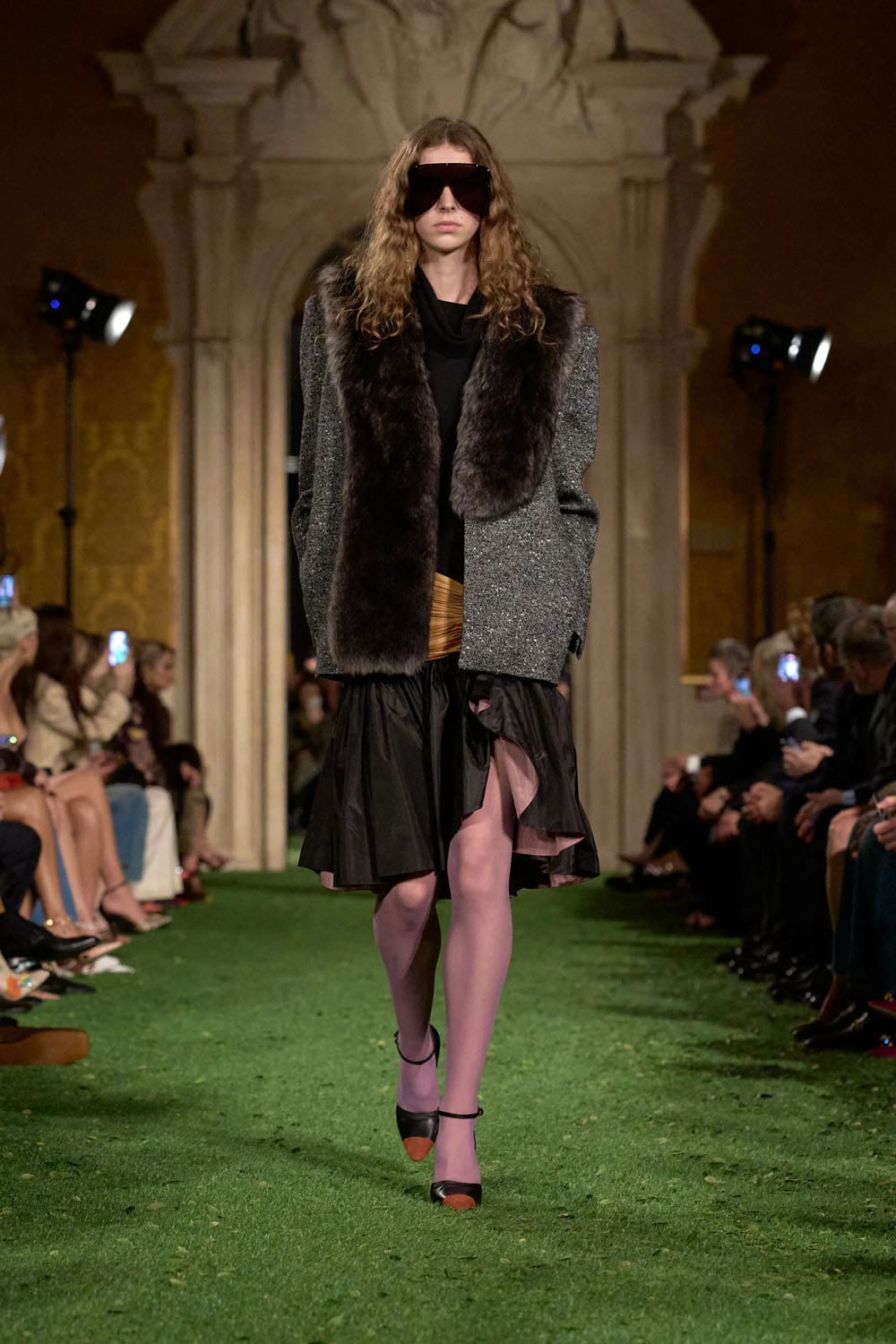
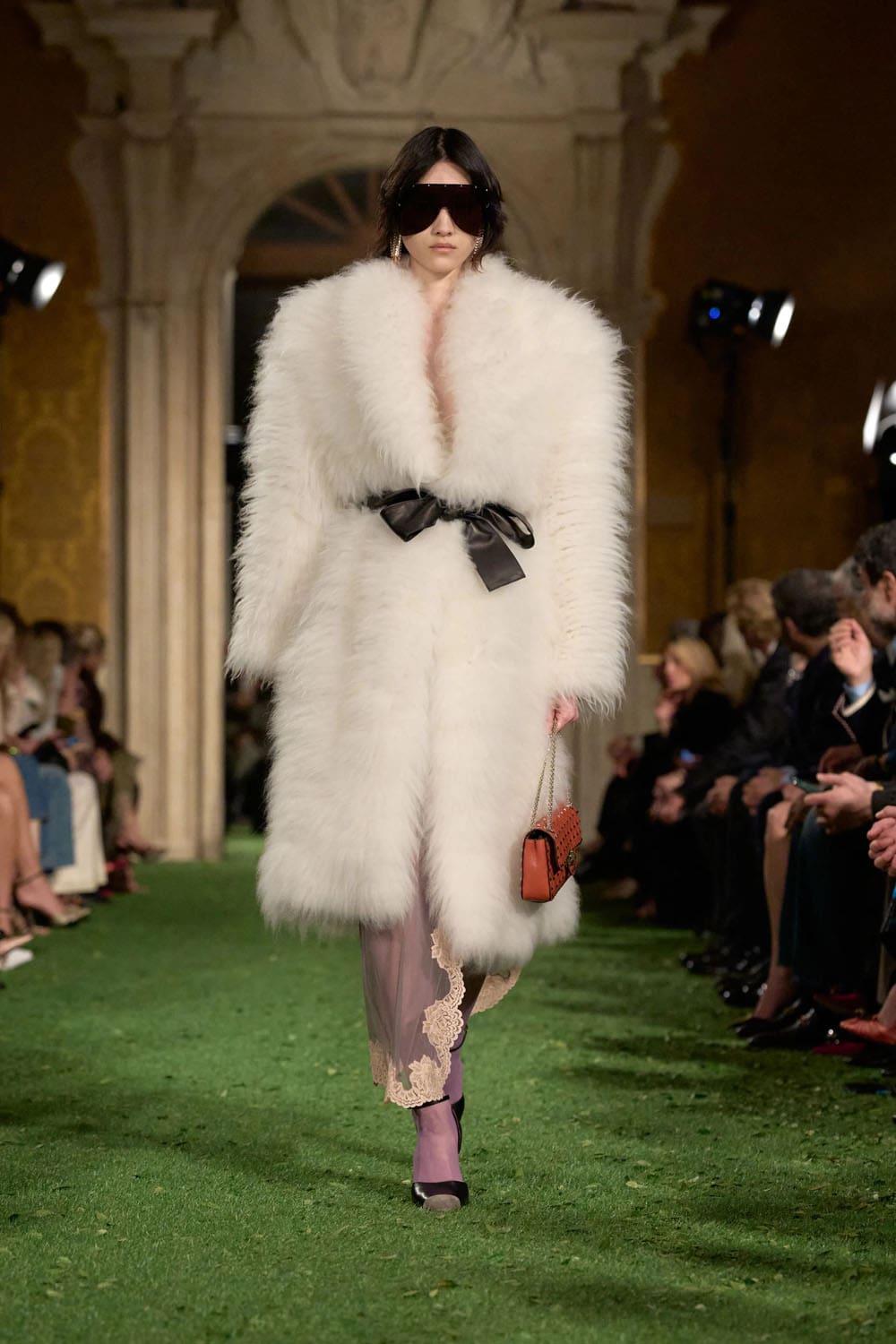
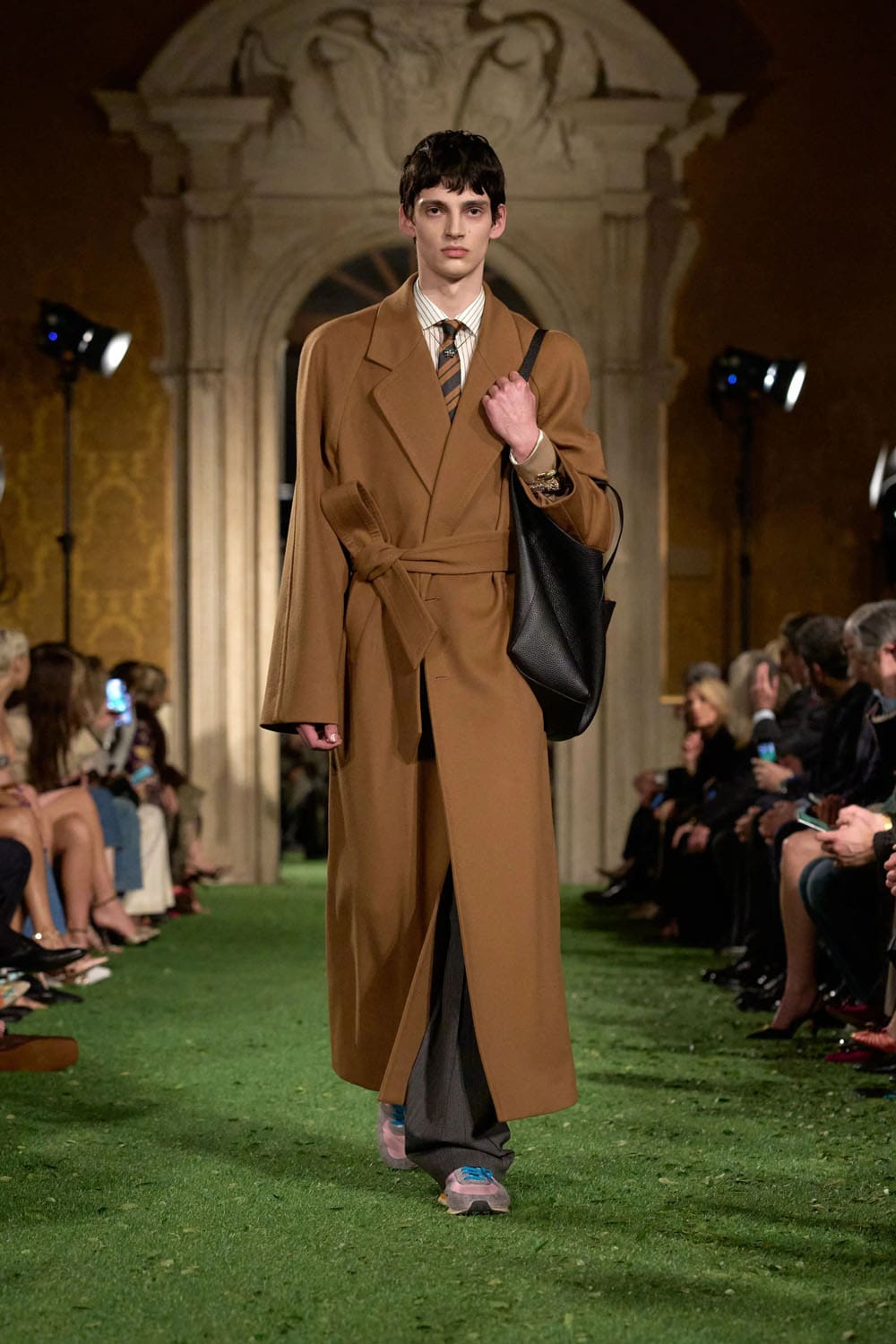
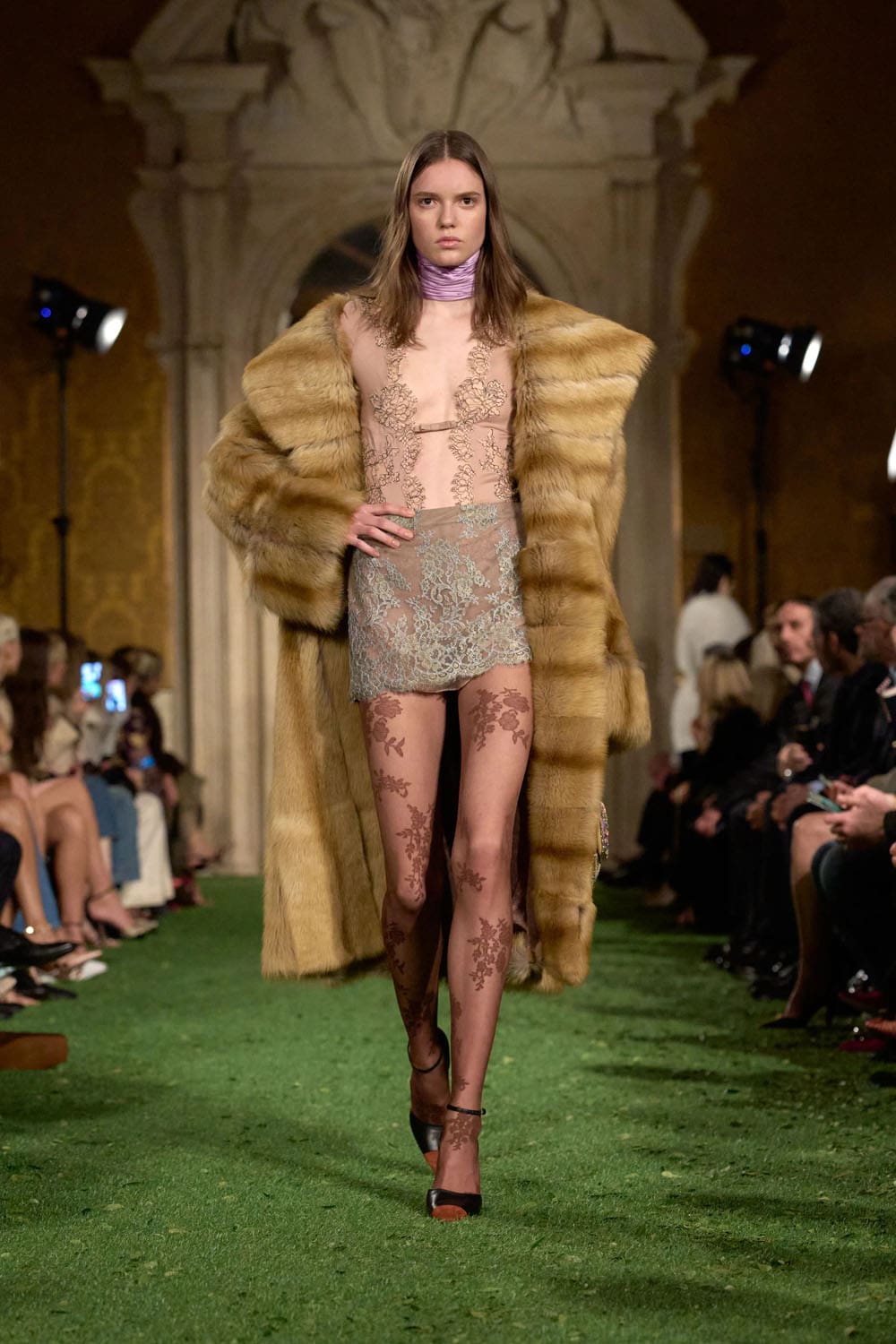
Fake fur stoles and collars appeared with religious frequency. Draped over lilac jackets, wrapped around mustard silk, framing checked outerwear, swelling around camel blousons — they became Michele’s shorthand for decayed aristocracy, for luxury made knowingly strange. Consistent, yes. But consistency is not the same as belonging.
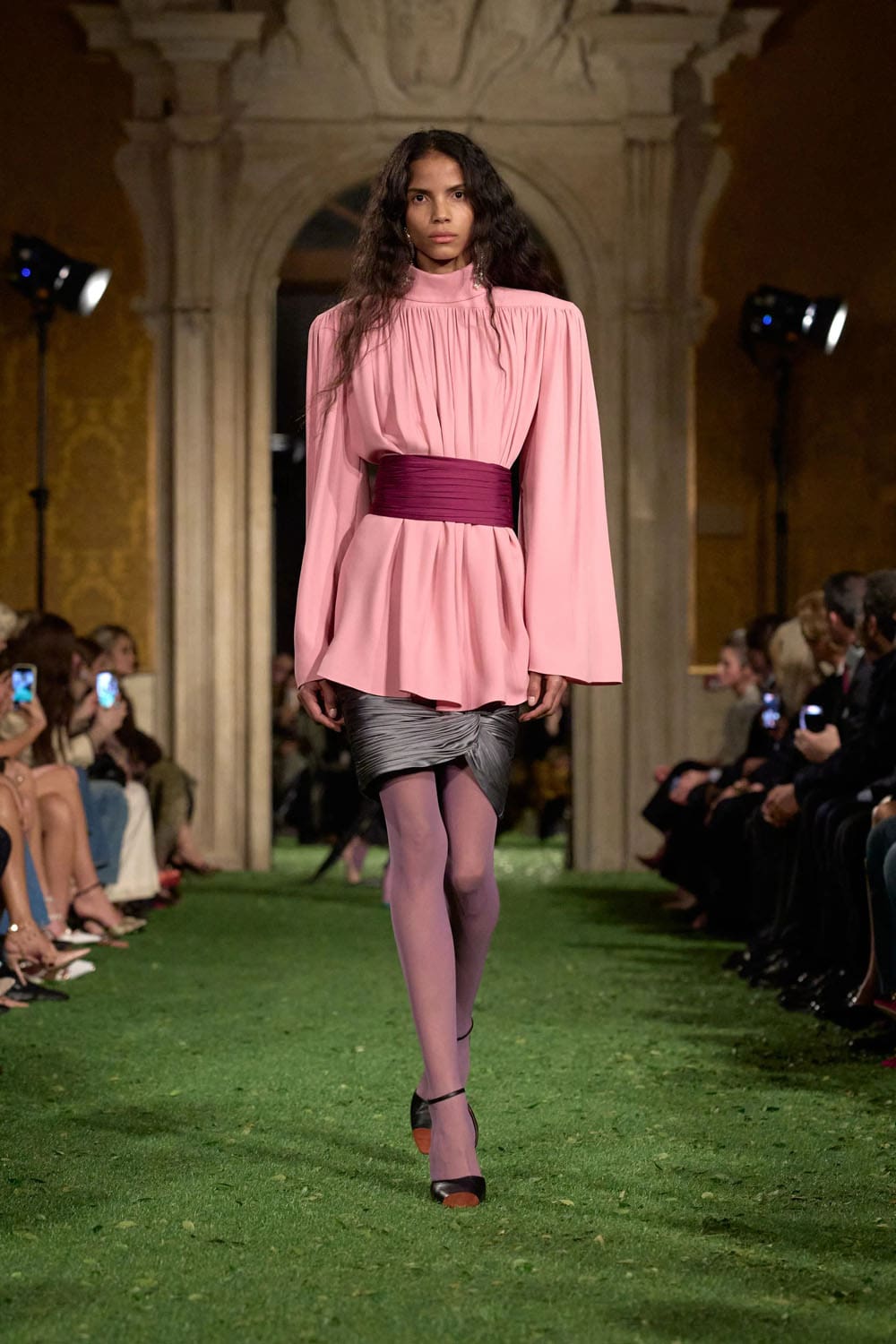
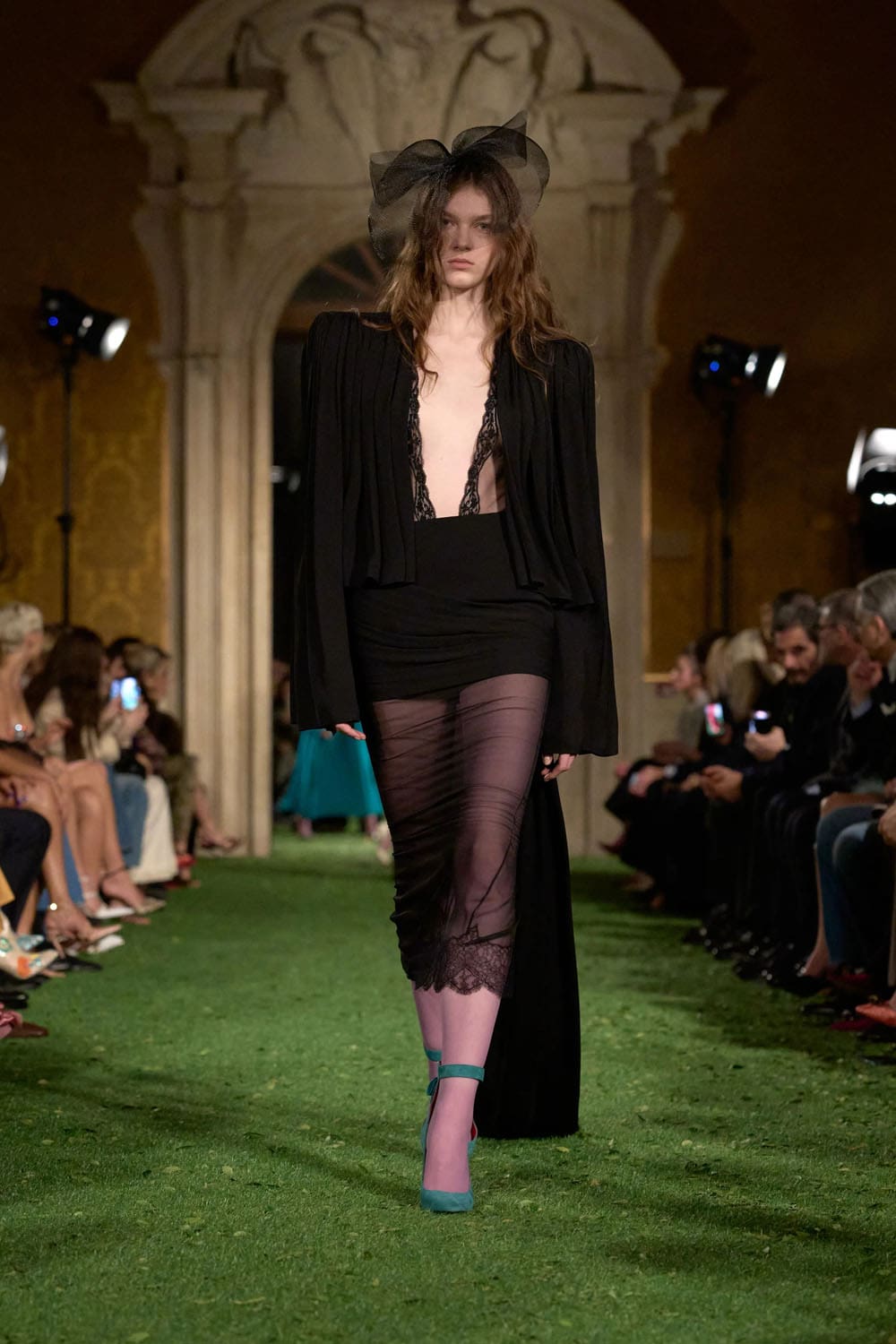
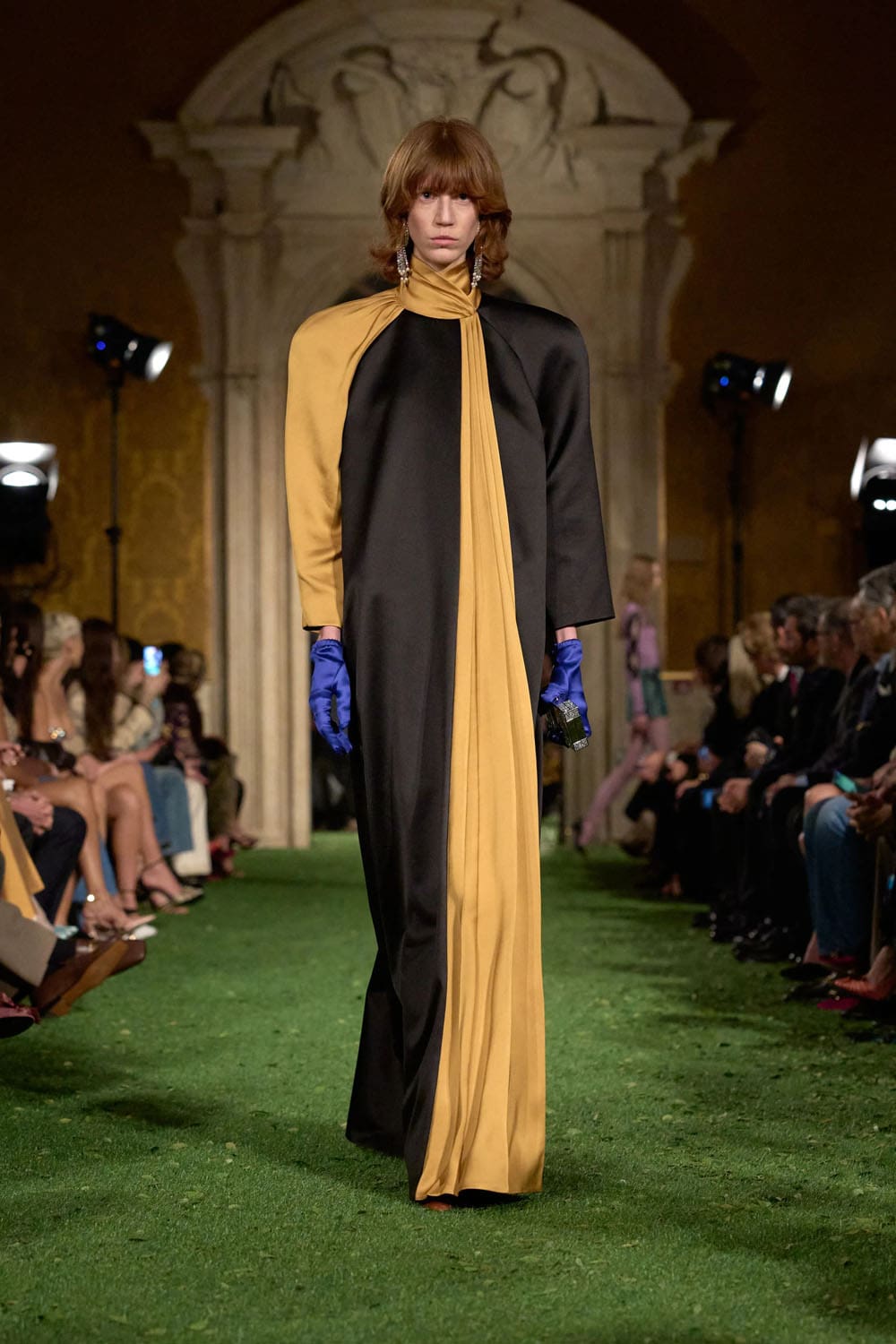
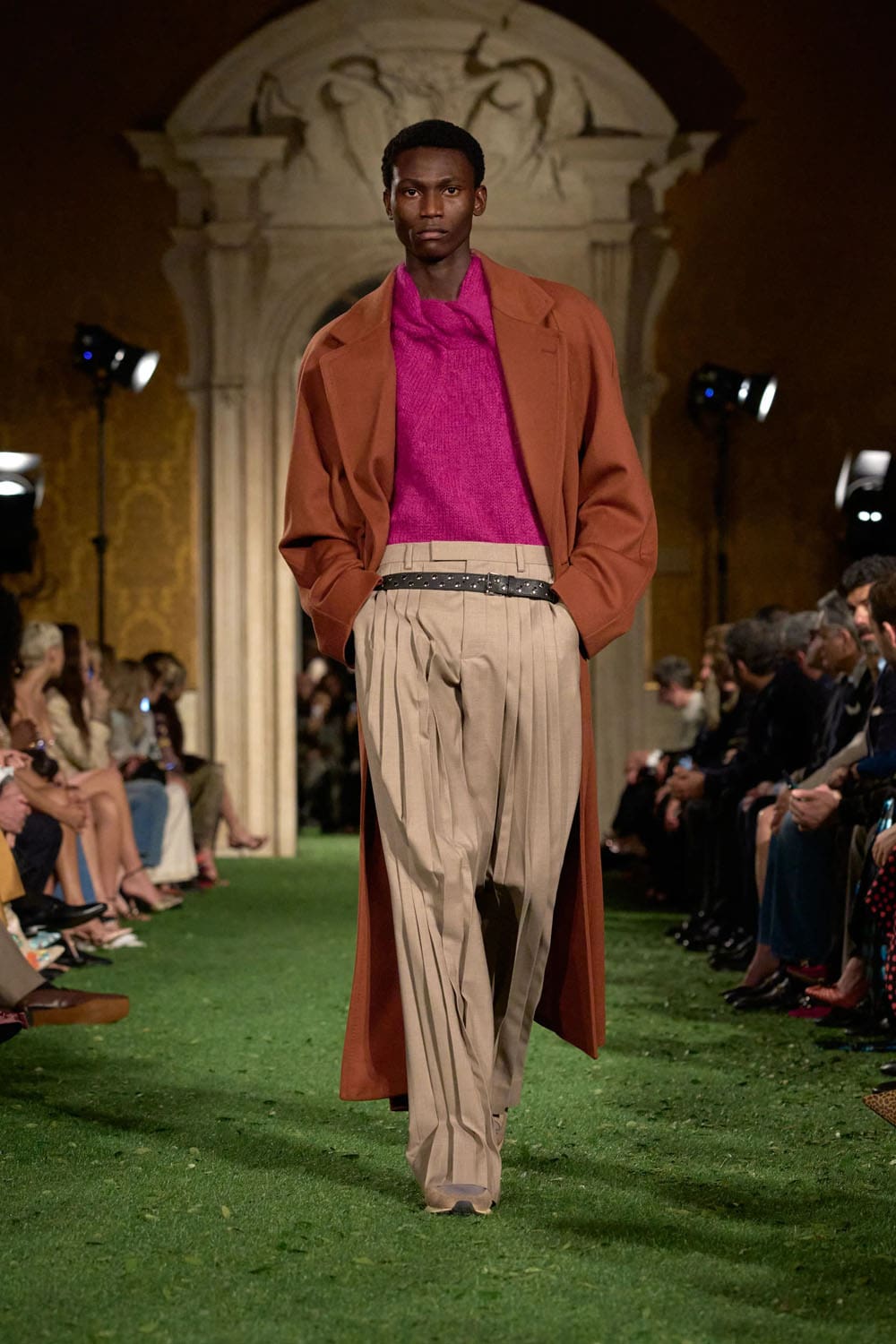
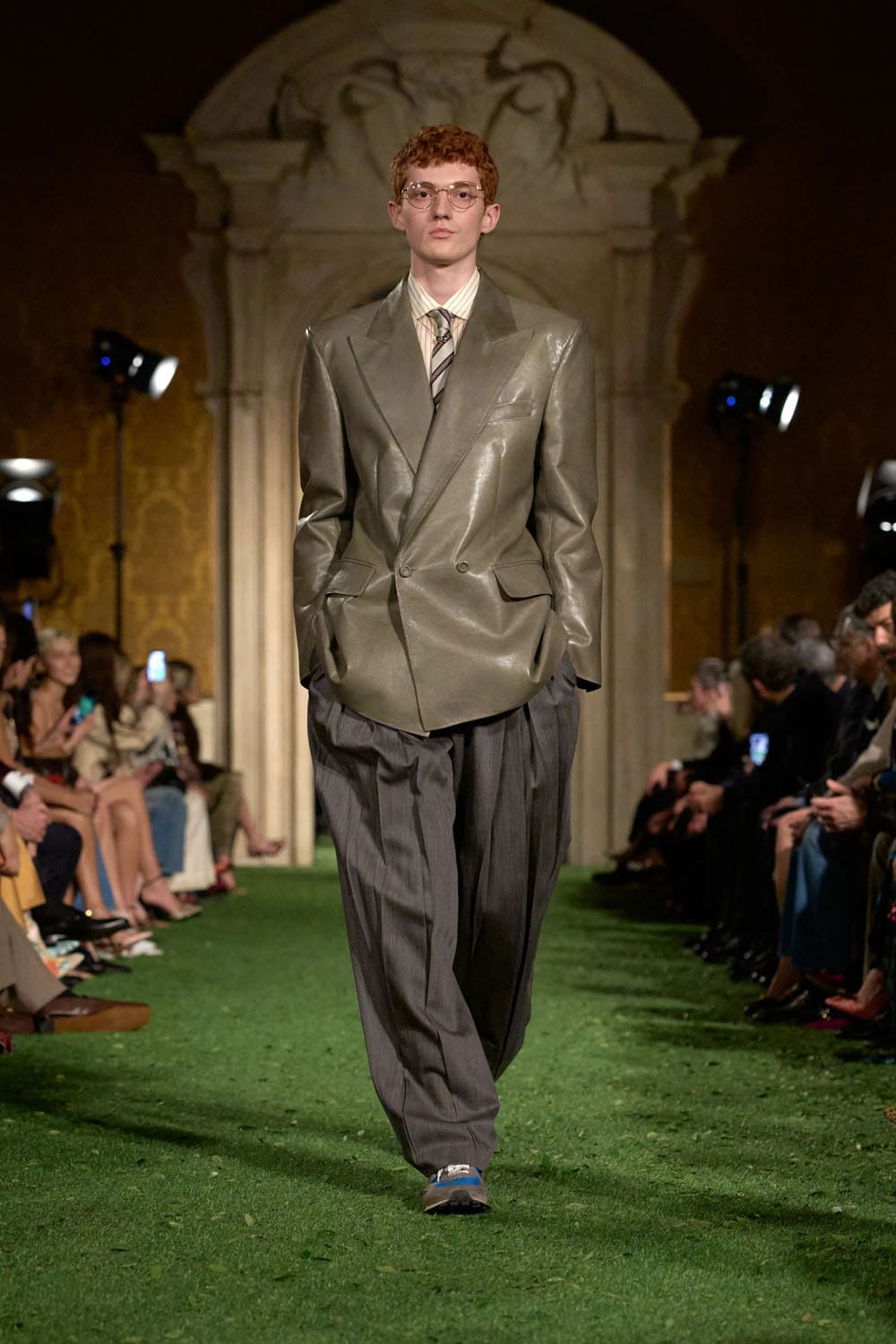
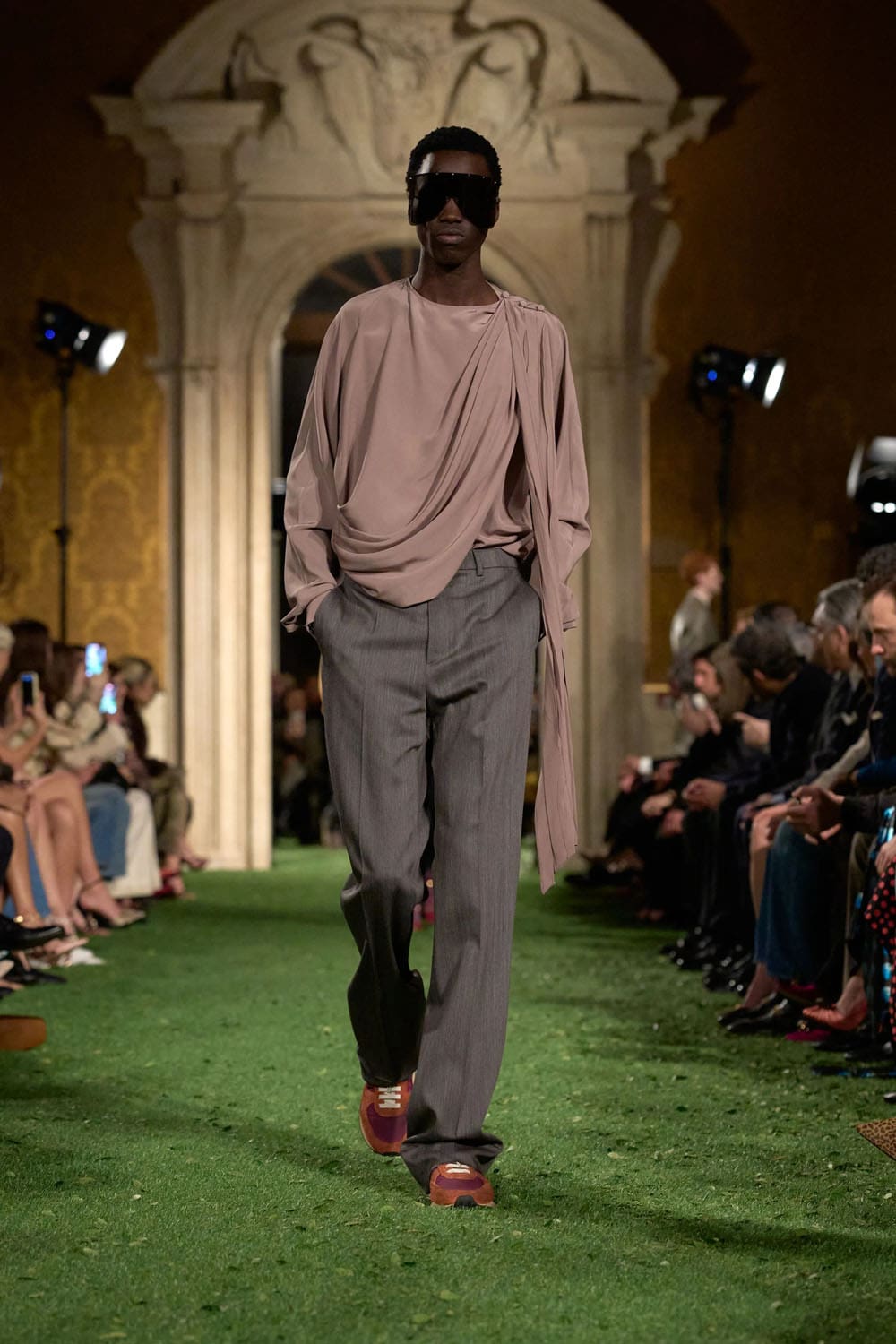
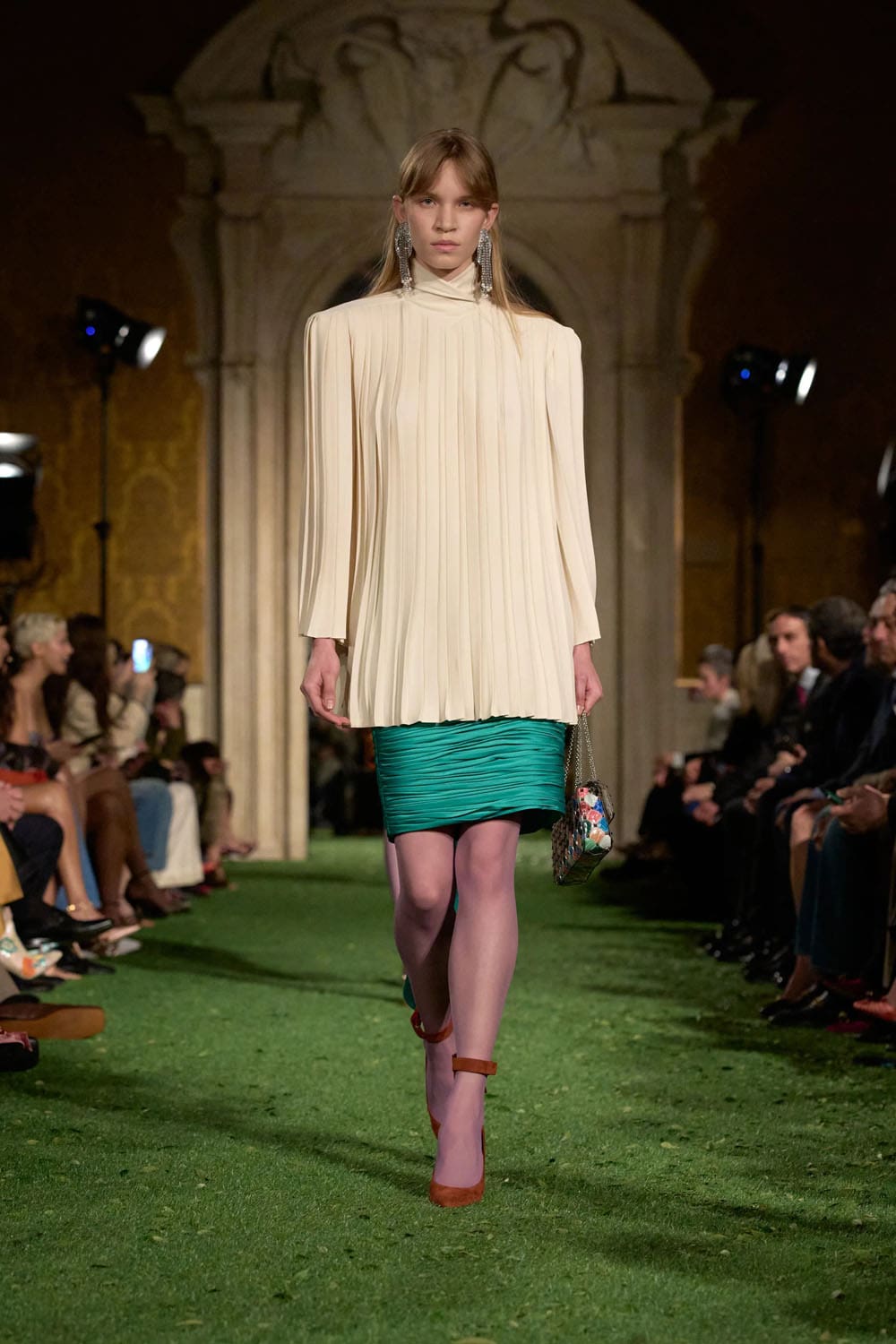
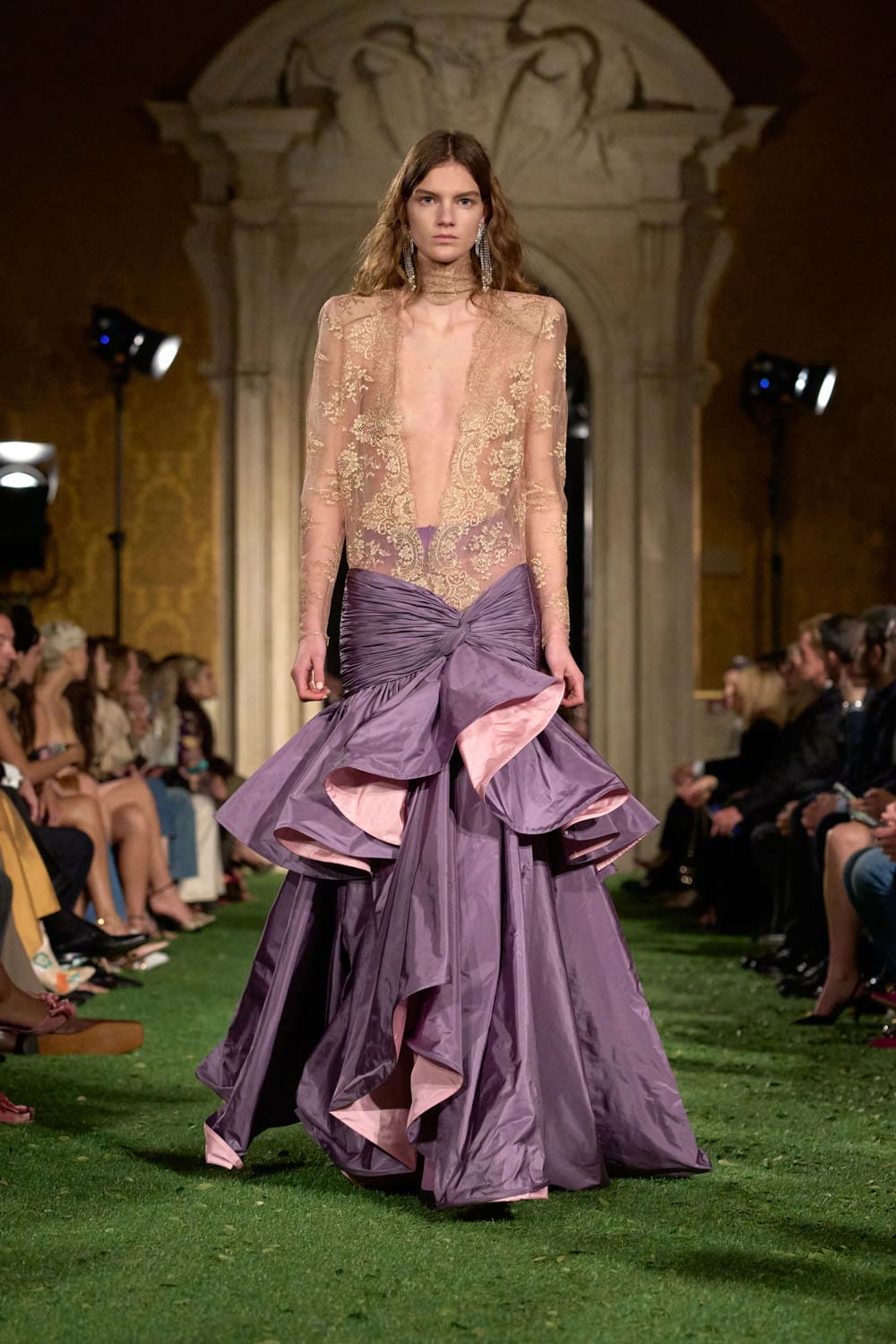
The color palette wandered through cosmetic pastels, bruised neutrals, mossy greens, dusty mauves, lacquered black, and the occasional theatrical jolt. Pink slashed through velvet. Lilac hosiery interrupted eveningwear. A tiny ruched skirt peeked out under a striped jacket with fur cuffs and monumental jewelry, as if Michele were determined to prove that coherence is a bourgeois concept.
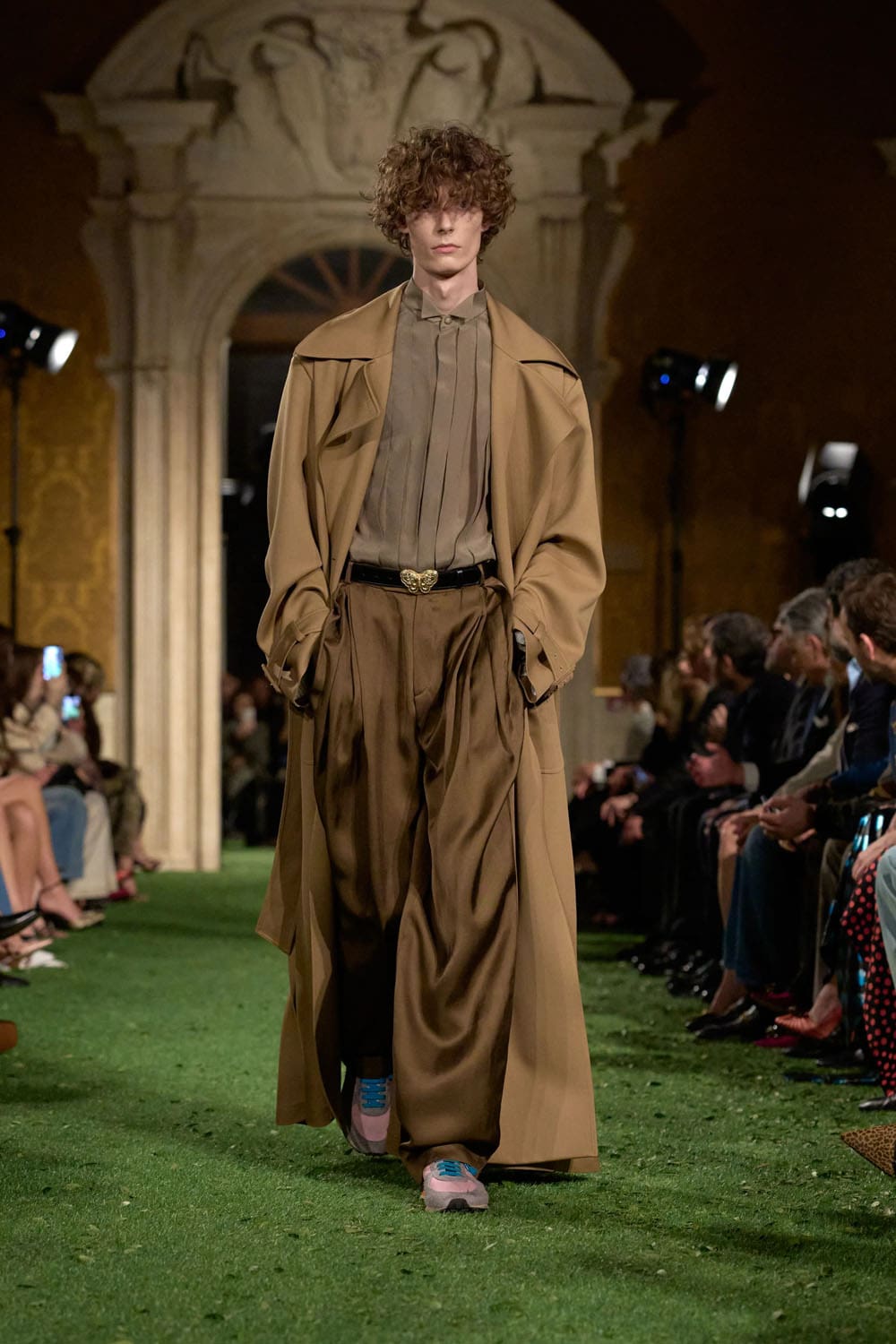
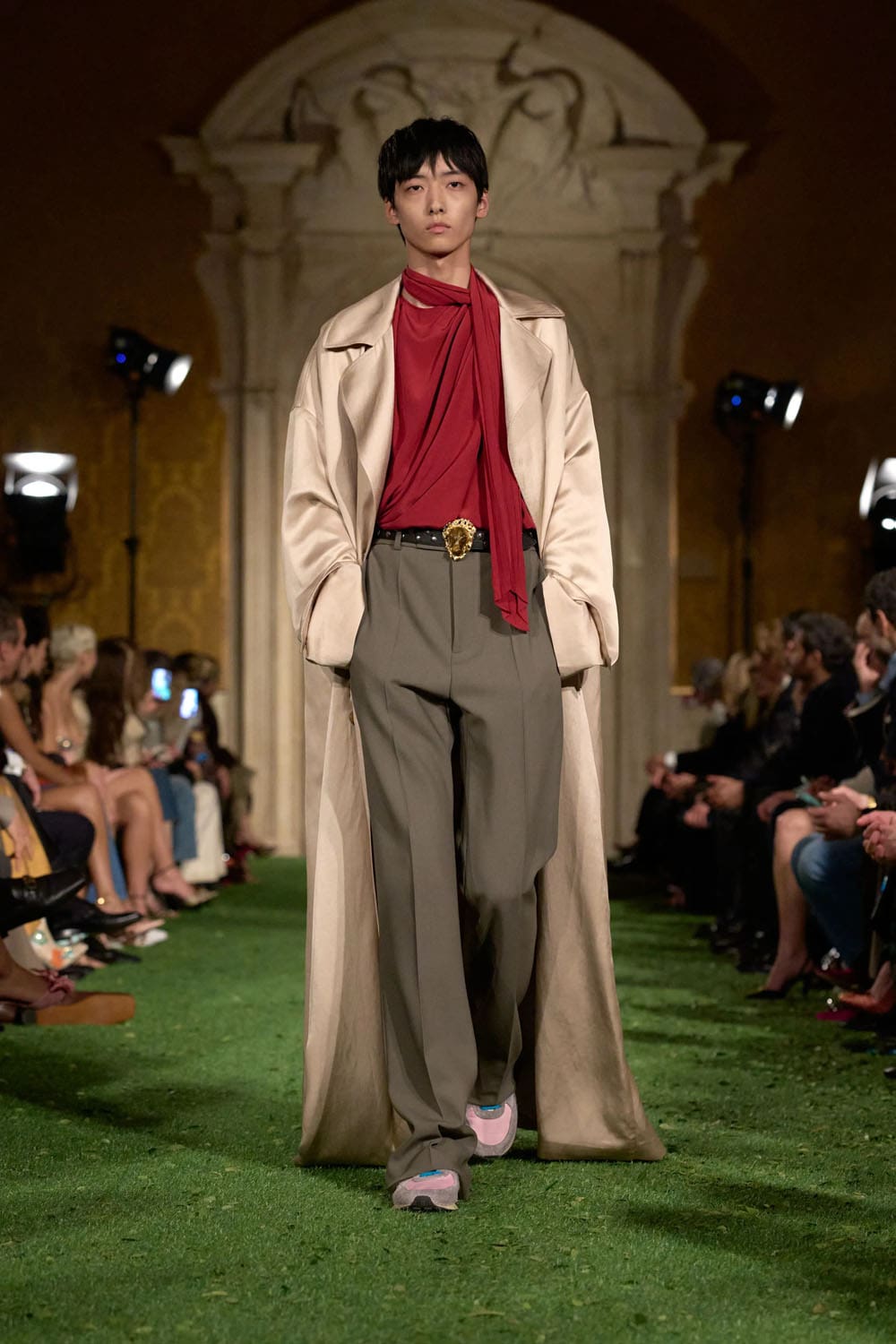
A transparent electric-blue lace trouser under caramel outerwear finished with brown fur turned the body into a thesis on contradiction. A checked jacket with visible lace and a heavy fur hat insisted on friction. But friction alone is not intelligence. Anyone can create conflict. The real challenge is creating necessity.
Necessity never arrived.
The press notes spoke of oppositions coexisting — Apollonian versus Dionysian, order versus rupture. Palazzo Barberini certainly offered that architecture. But architecture is not a life raft for a collection drowning in its own styling. Theory cannot rescue what the eye already knows.
This was not Valentino confronting its heritage. This was Michele transplanting his mythology into a Roman palace and expecting the palace to applaud.
He is not designing Valentino. He is occupying it.
And perhaps that delights those who enjoy brand erasure disguised as creative liberation. There is, after all, a modern appetite for houses becoming empty stages for star designers to perform themselves. But a fashion house is not a blank canvas. It has grammar, memory, silhouette, and moral line. To ignore that is not radical. It is lazy wrapped in intellectual vocabulary.
Which leads to the most impolite — and therefore most honest — question of the season: Why not rename the brand?
If Valentino is now merely a platform for Michele to continue being Michele — with his 1930s ghosts, his overloaded jewels, his fake fur doctrine, his embroidered nostalgia, his eccentric visors, his fetish for curated dislocation — then the disguise is unnecessary. One cannot endlessly present one man’s autobiography under another man’s name and call it evolution.
There were beautiful surfaces, of course. Michele knows how to seduce a camera. He knows how to build an image that will be instantly canonized online. He understands glamour as spectacle, femininity as performance, fashion as relic. But Valentino was never built on image alone. It was built on something far more difficult: authority without noise.
In Rome, that authority was nowhere to be found.
What remained was an eloquent exercise in self-quotation, staged in a palace, wrapped in theory, and delivered under one of the greatest names in couture. Interferenze promised collision. In reality, only one world appeared on the runway — Michele’s. Valentino did not interfere with it. Valentino disappeared inside it.
See All Looks Valentino Fall 2026