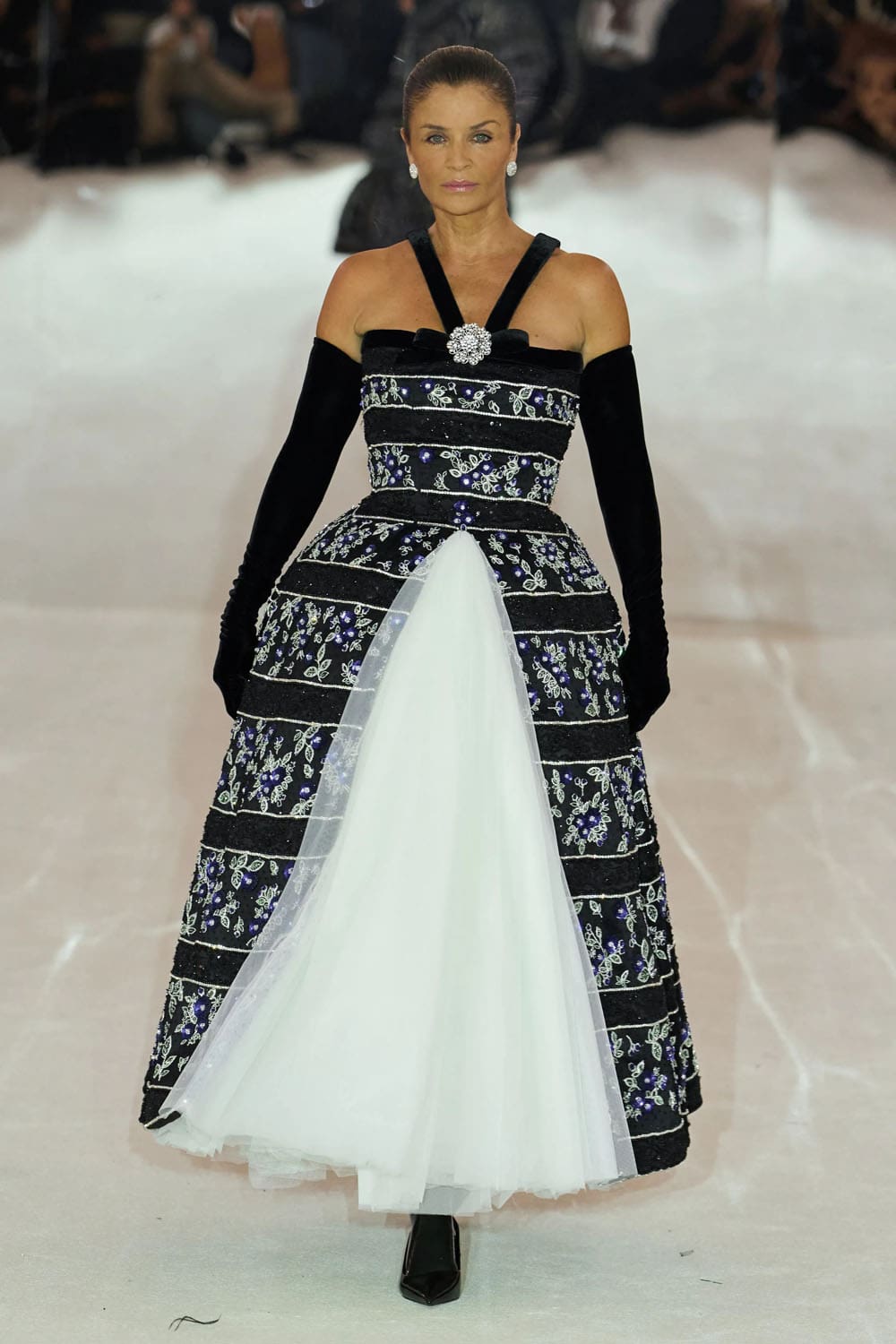
Richard Quinn
THE TRIUMPHS
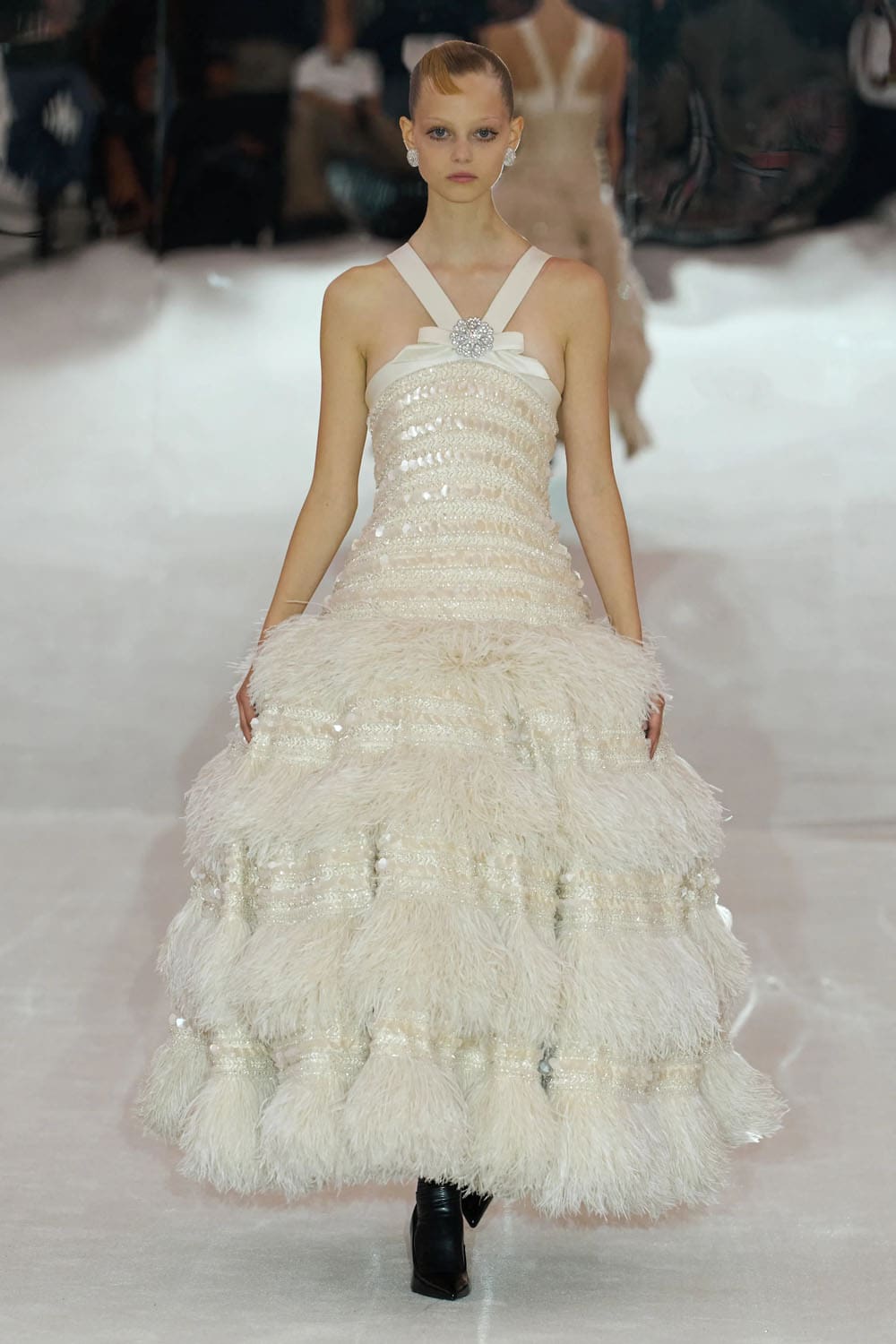
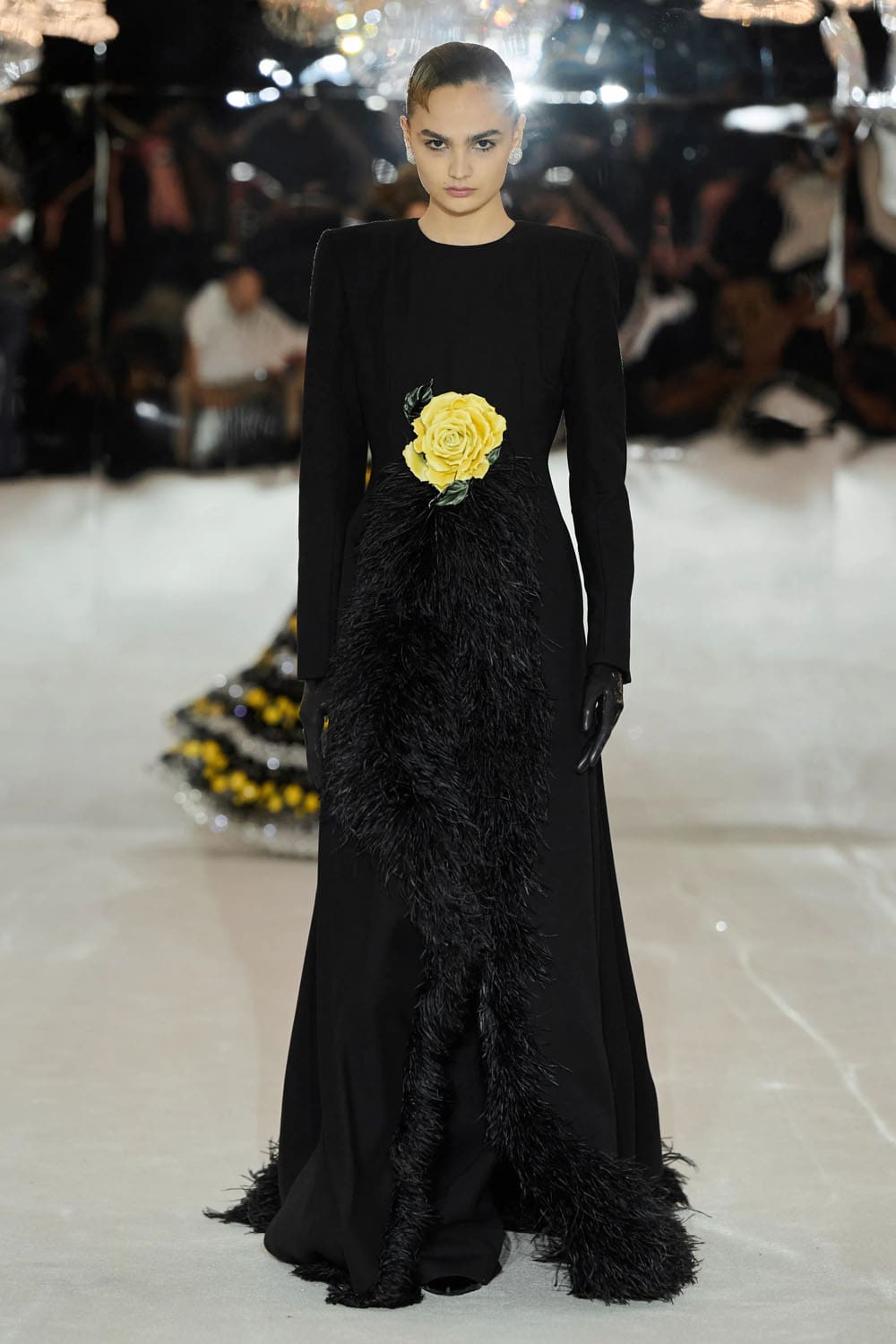
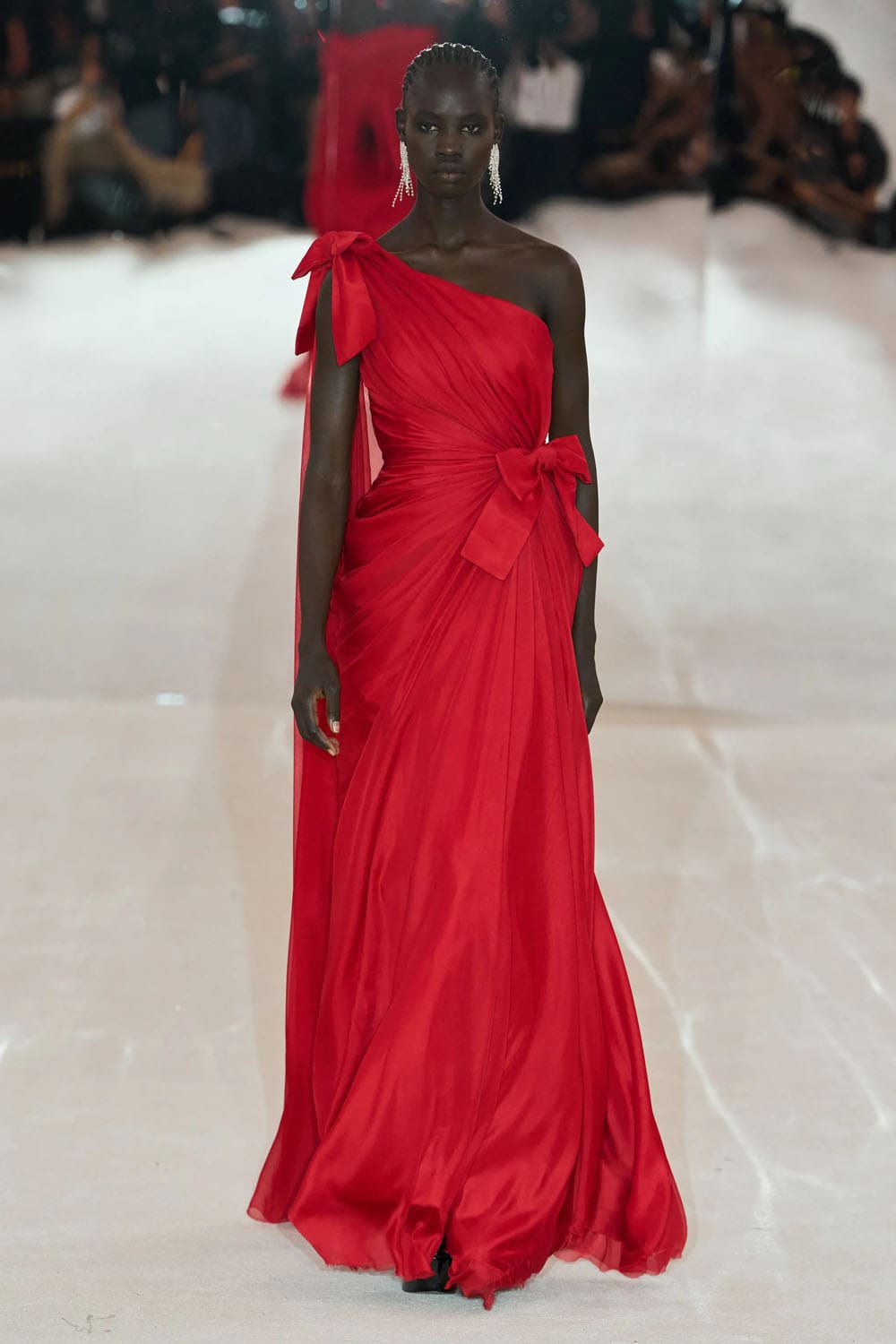
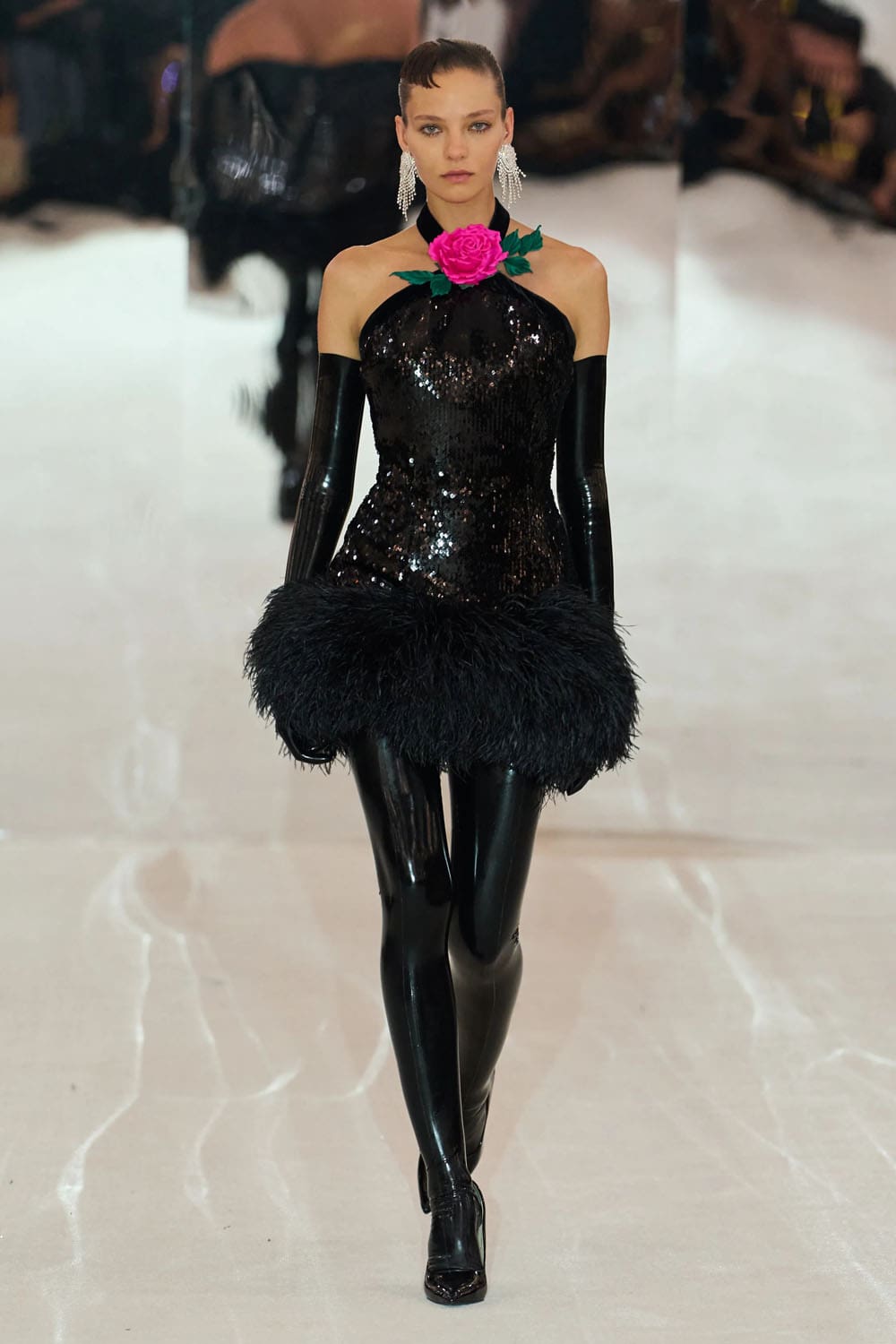
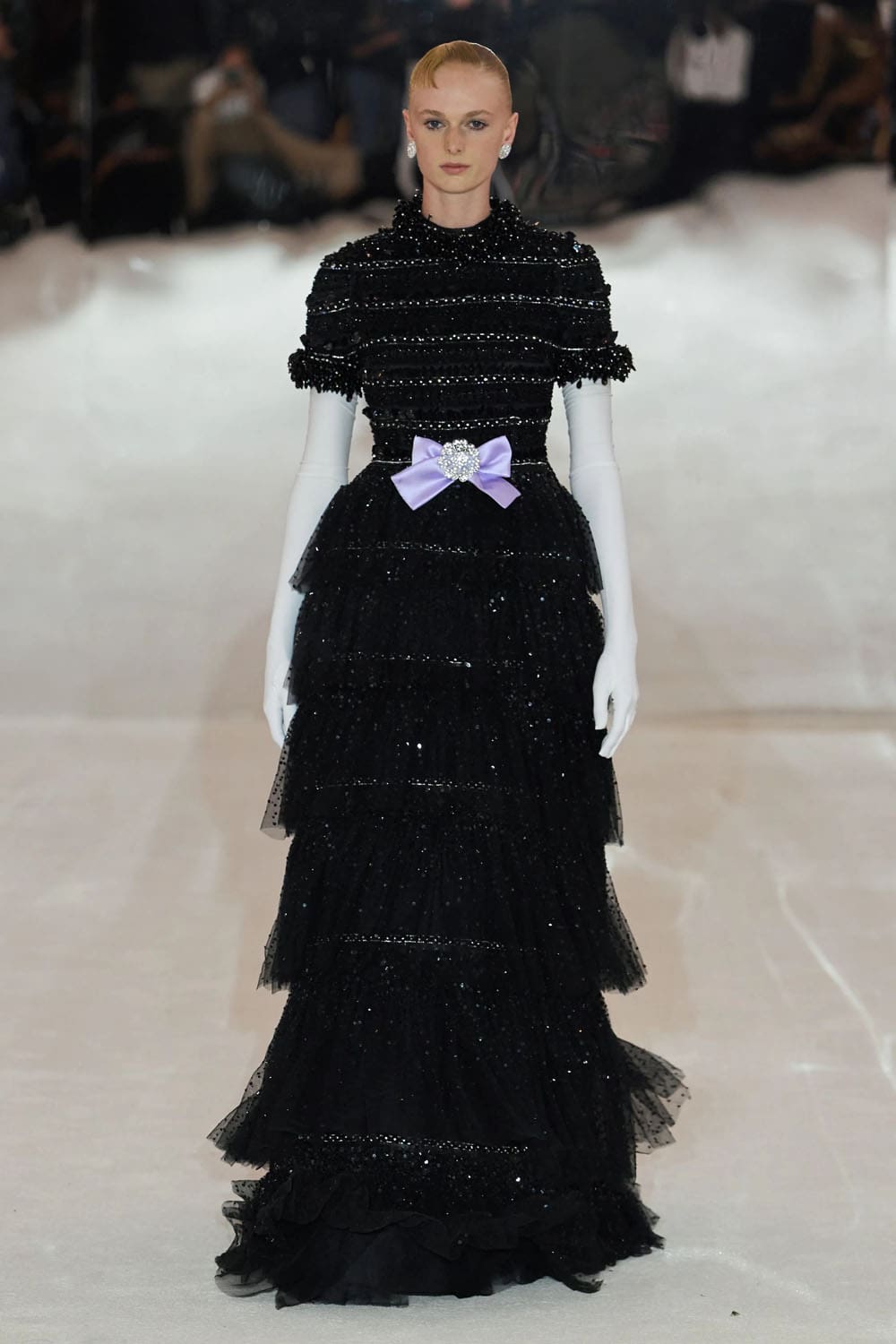
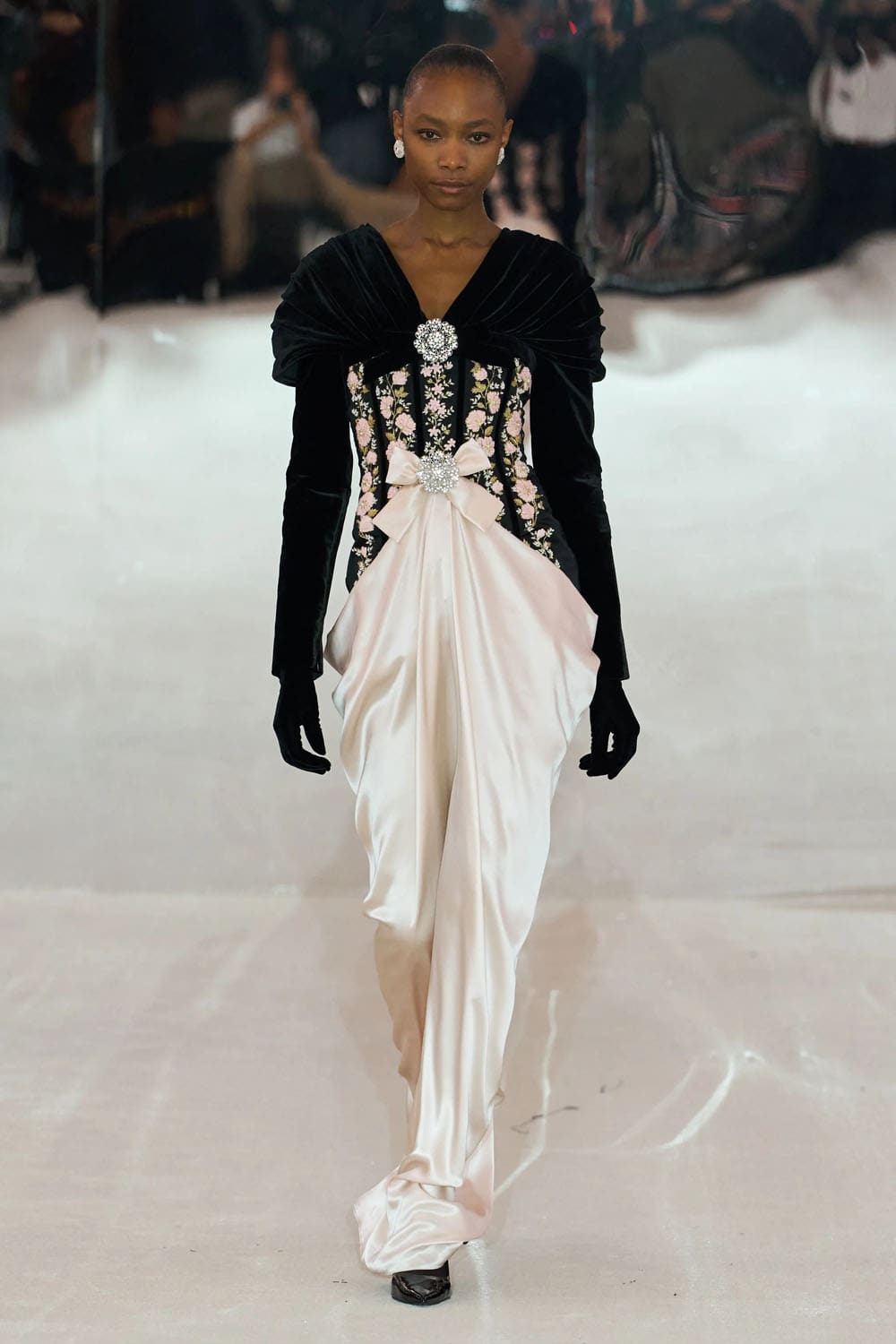
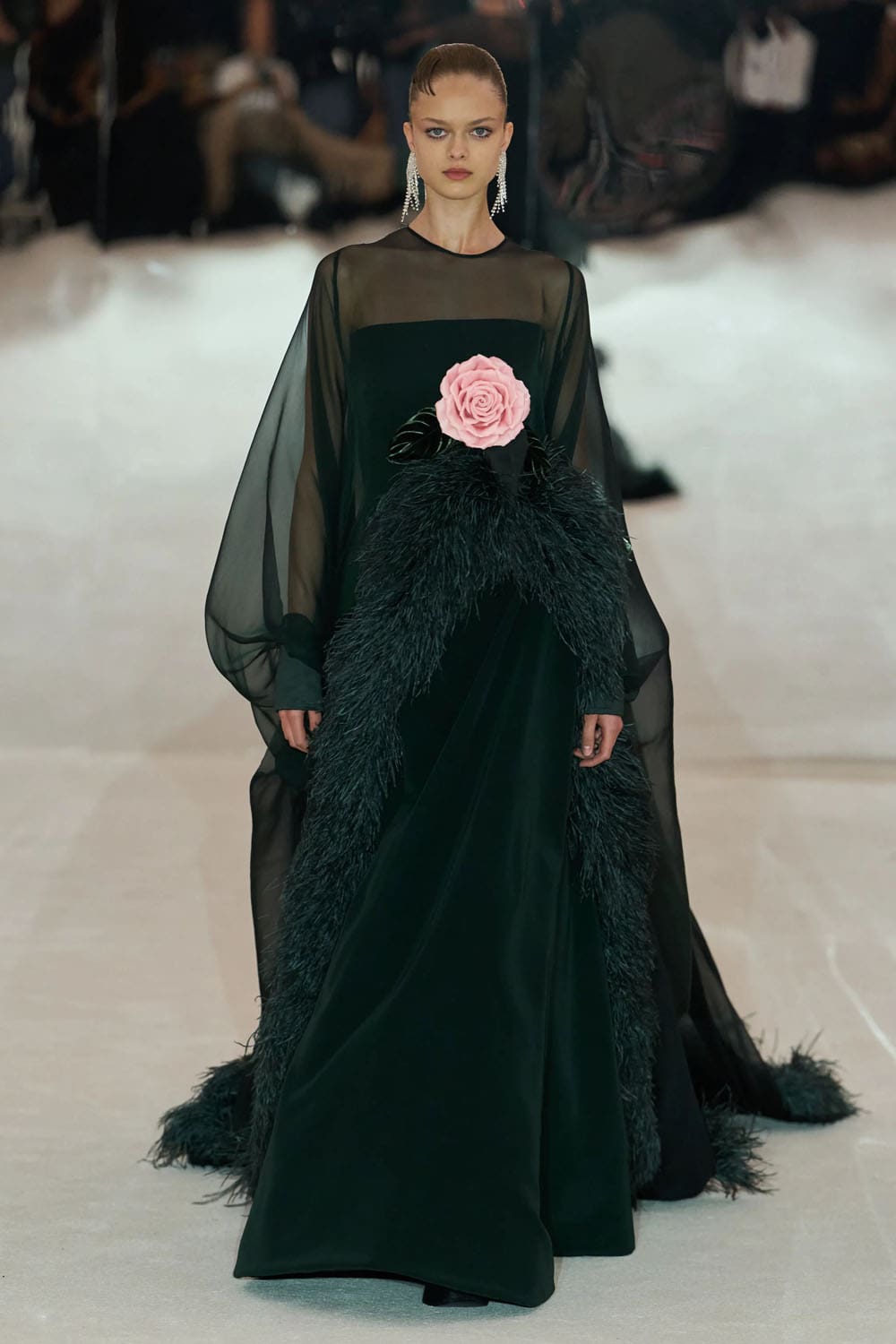
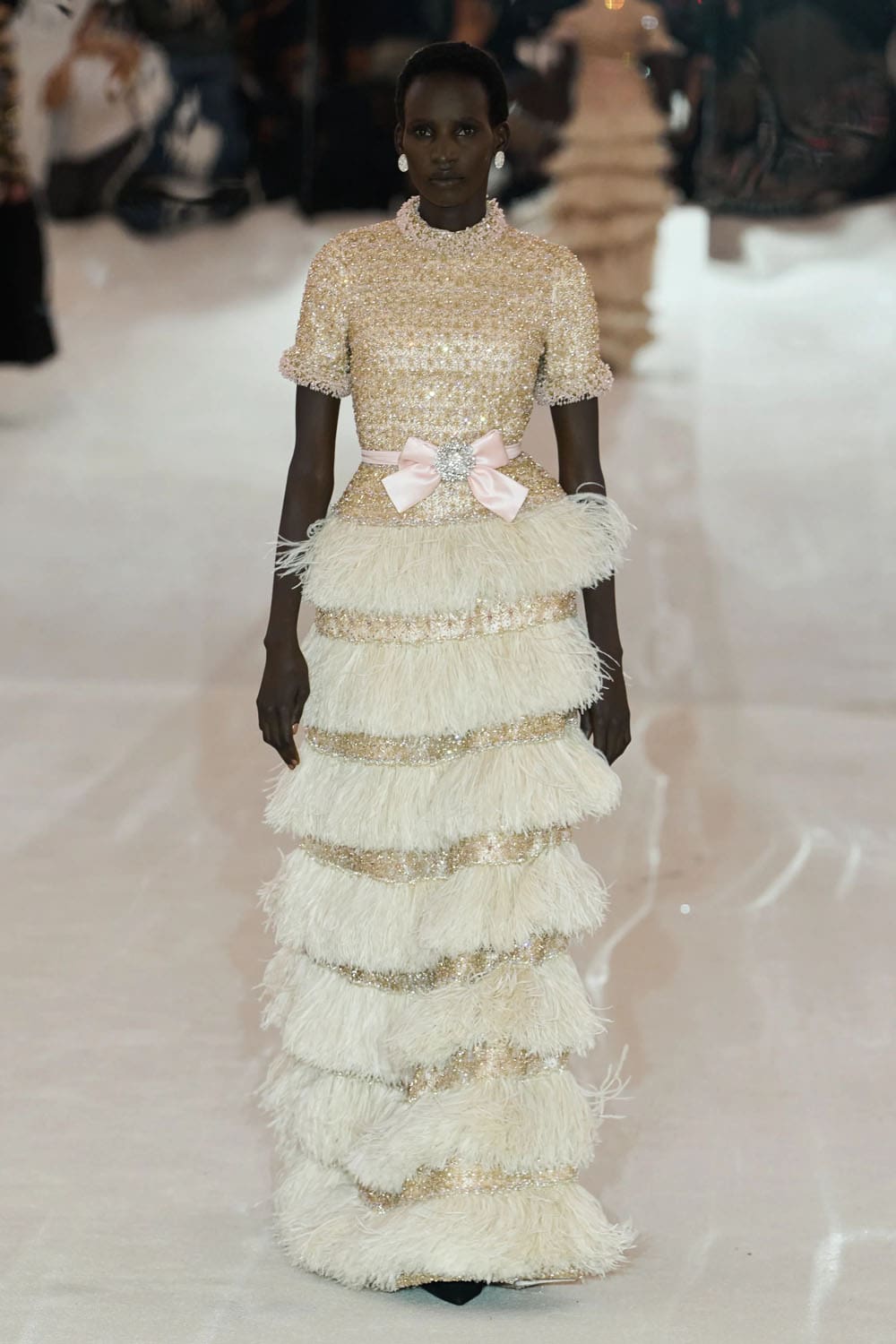
- High-octane commercial eveningwear execution delivering rich Indian embroideries, dense crystal beadwork, and lavish ostrich feather trims
- Pragmatic, business-minded design catering directly to private clients who want instant red-carpet volume without navigating Parisian atelier waitlists
RESERVATIONS
- Derivative archival pastiche functioning like a broken photocopier of Chanel and Dior codes, borrowing classic silhouettes without mastering their structural geometry
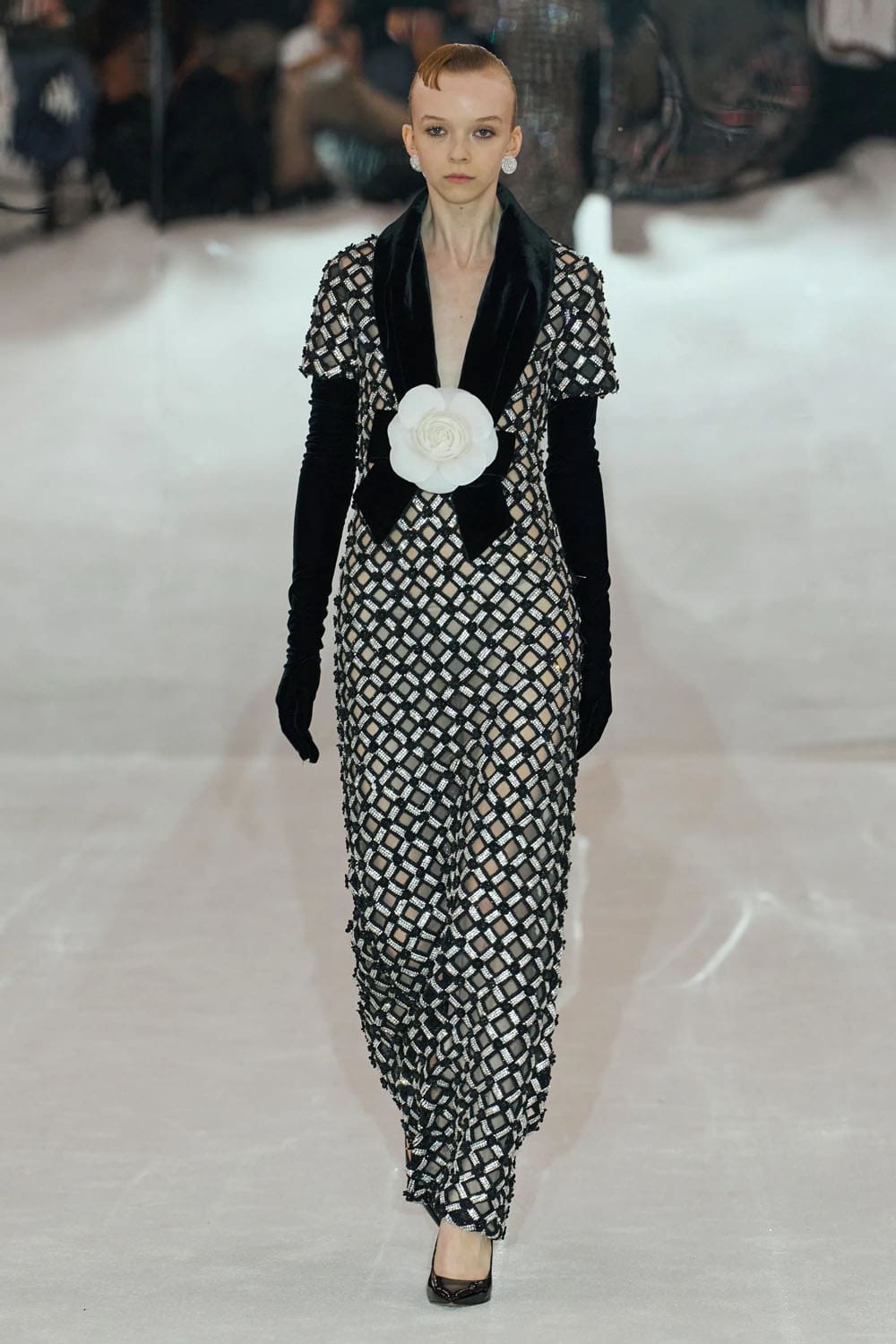
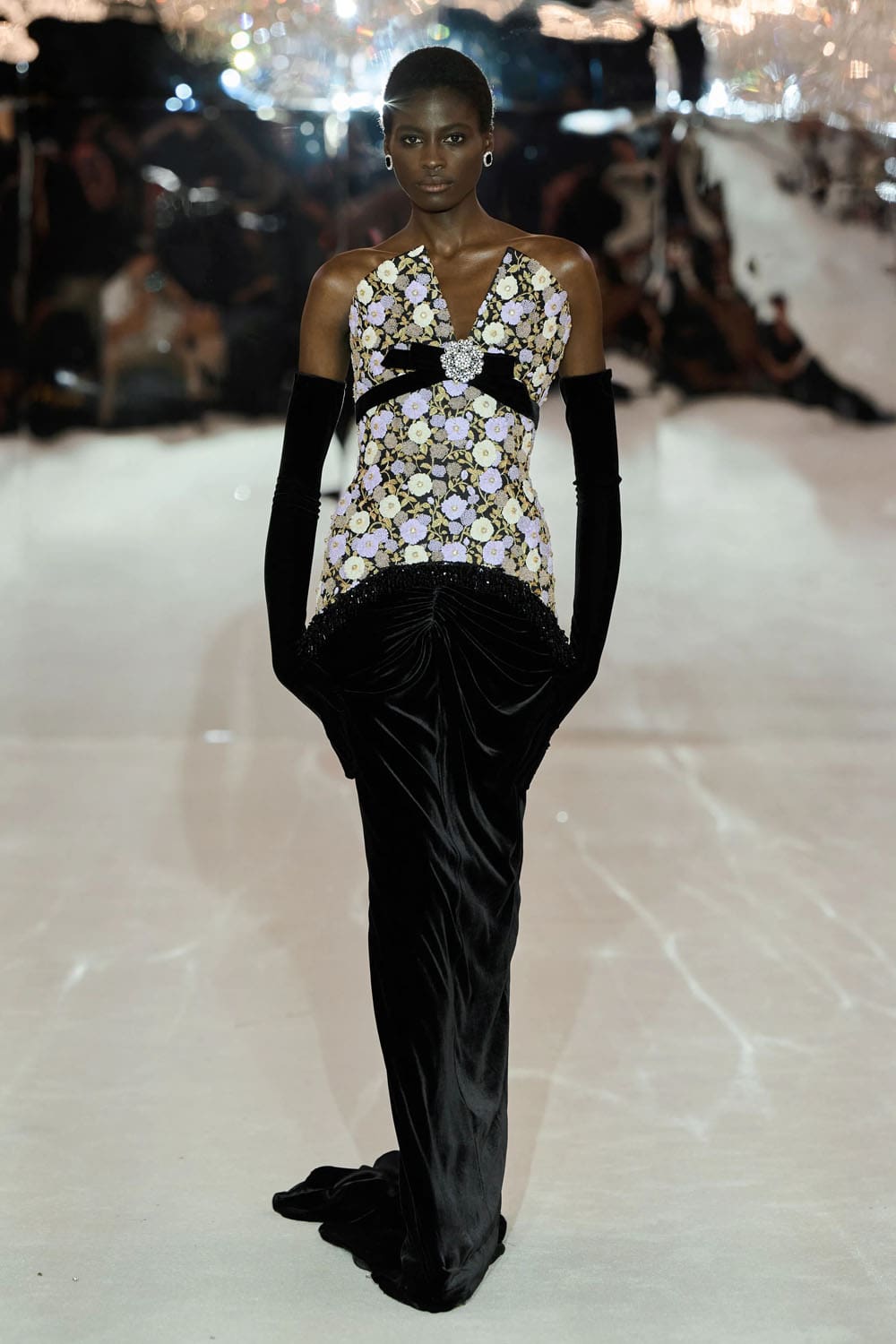
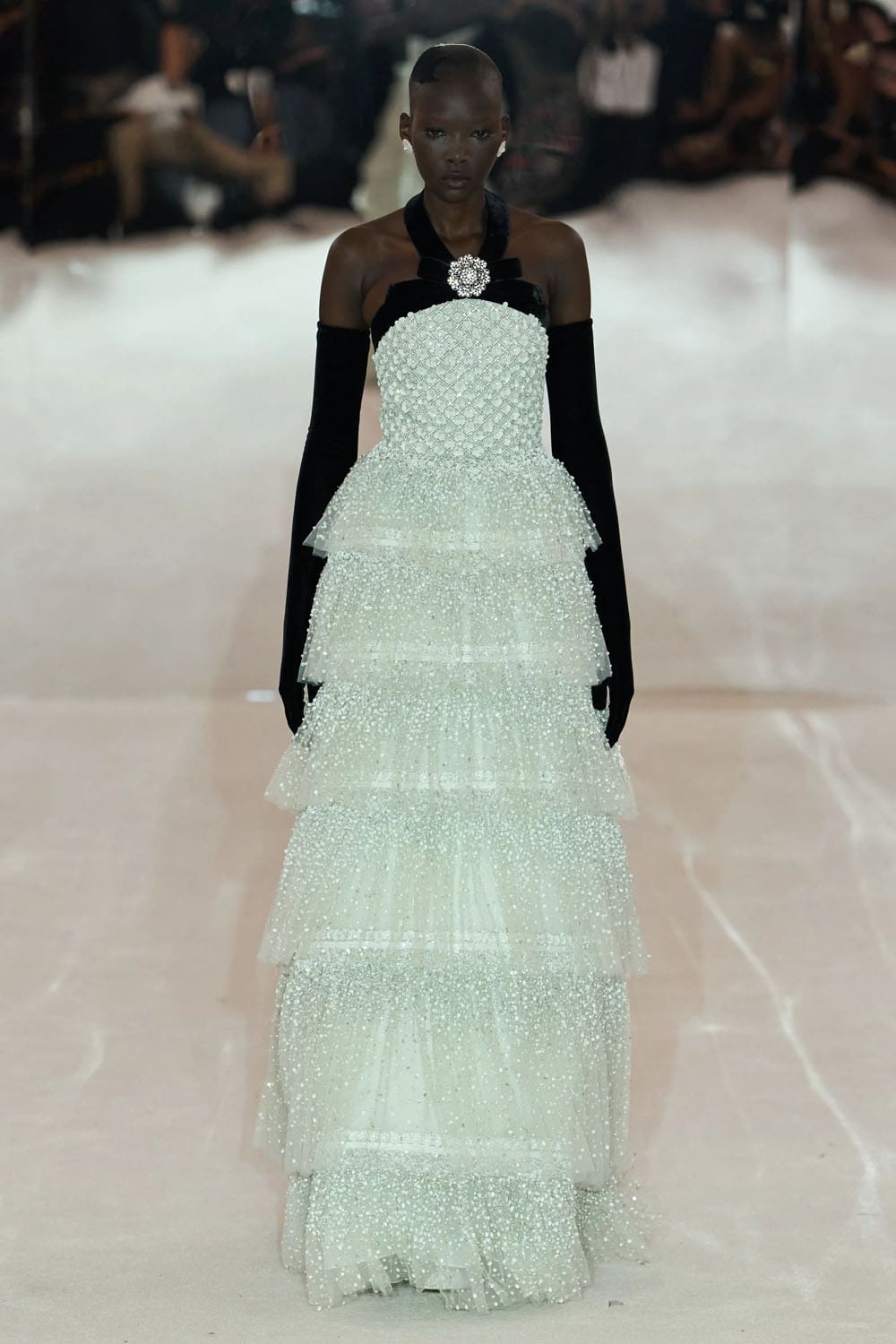
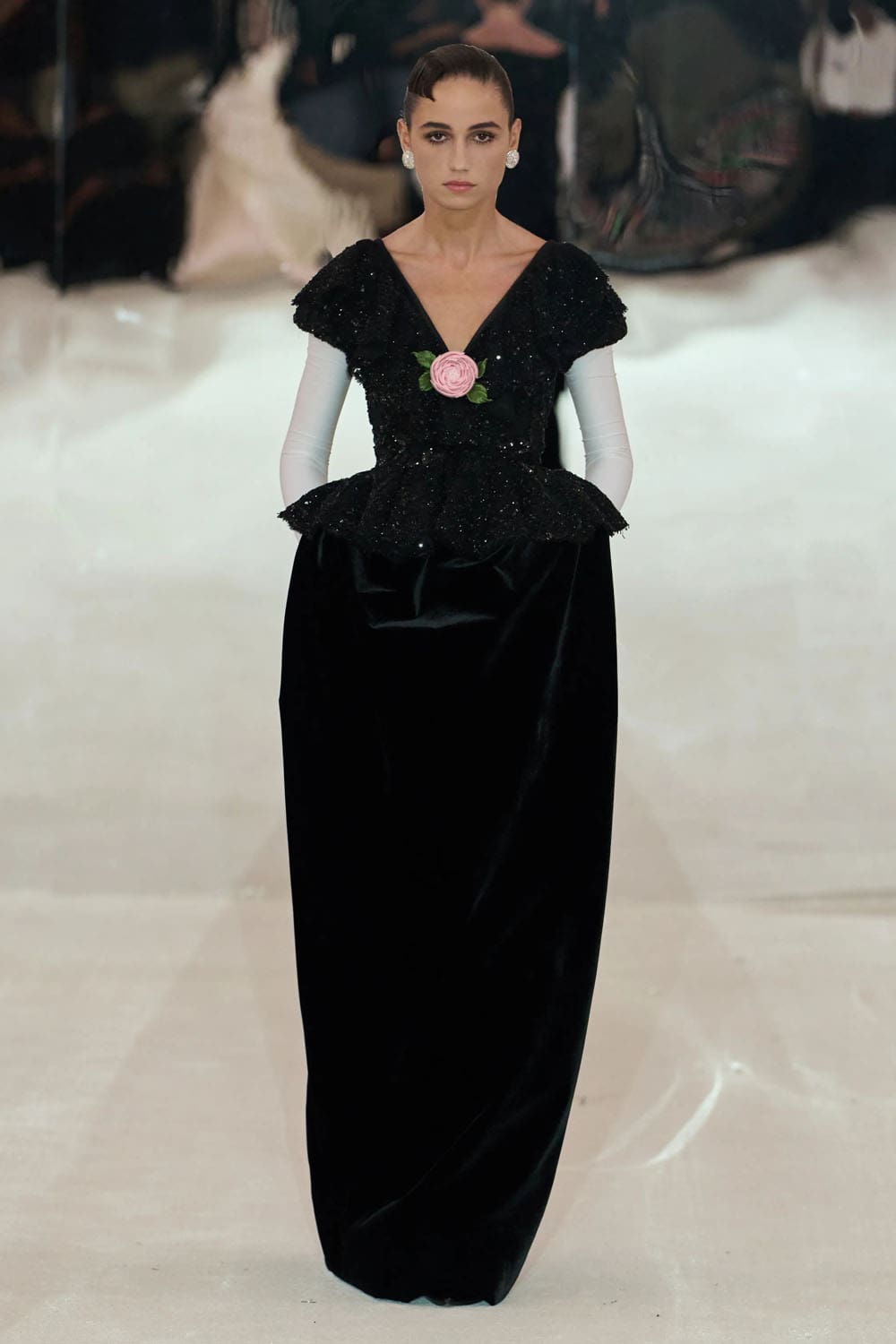
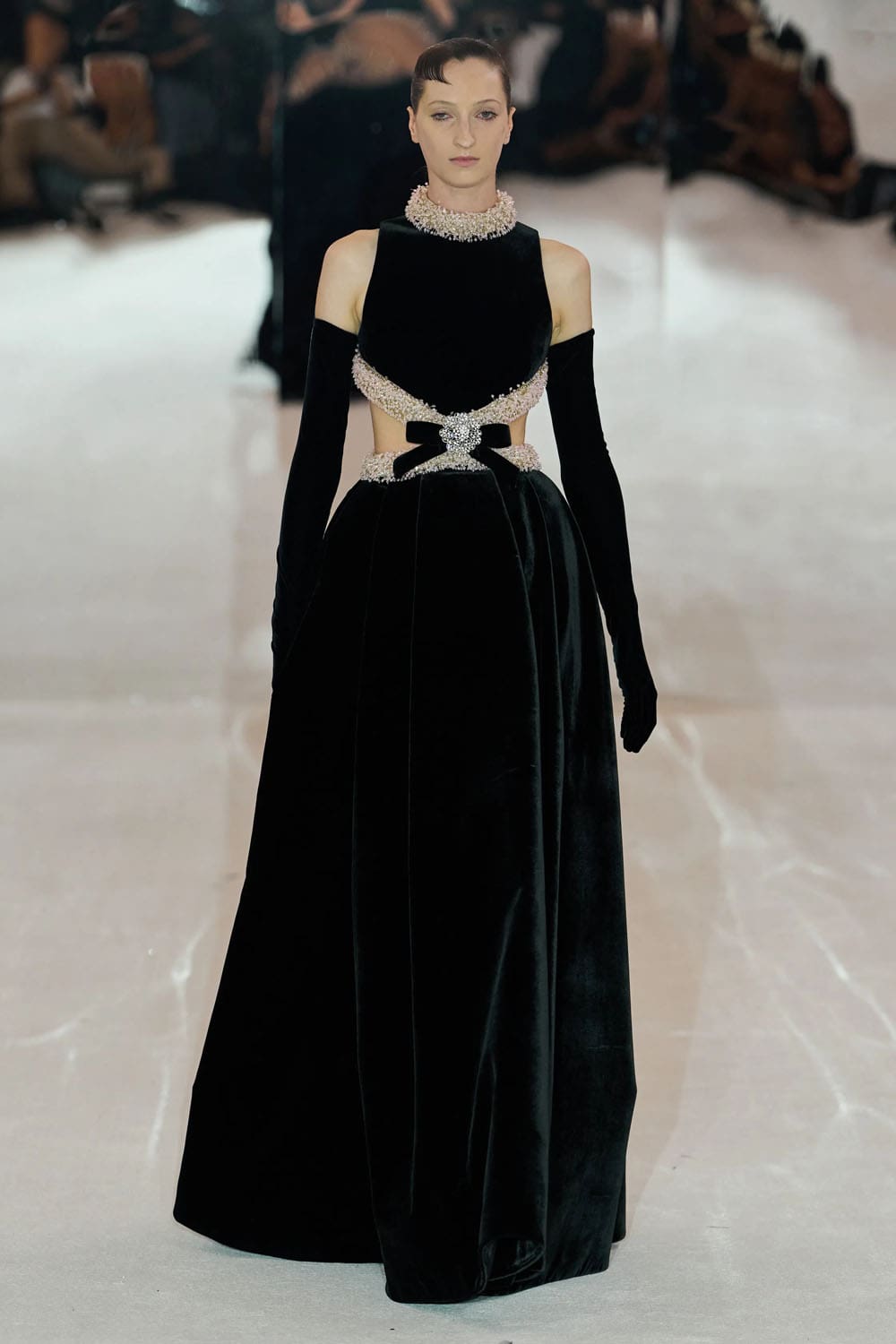
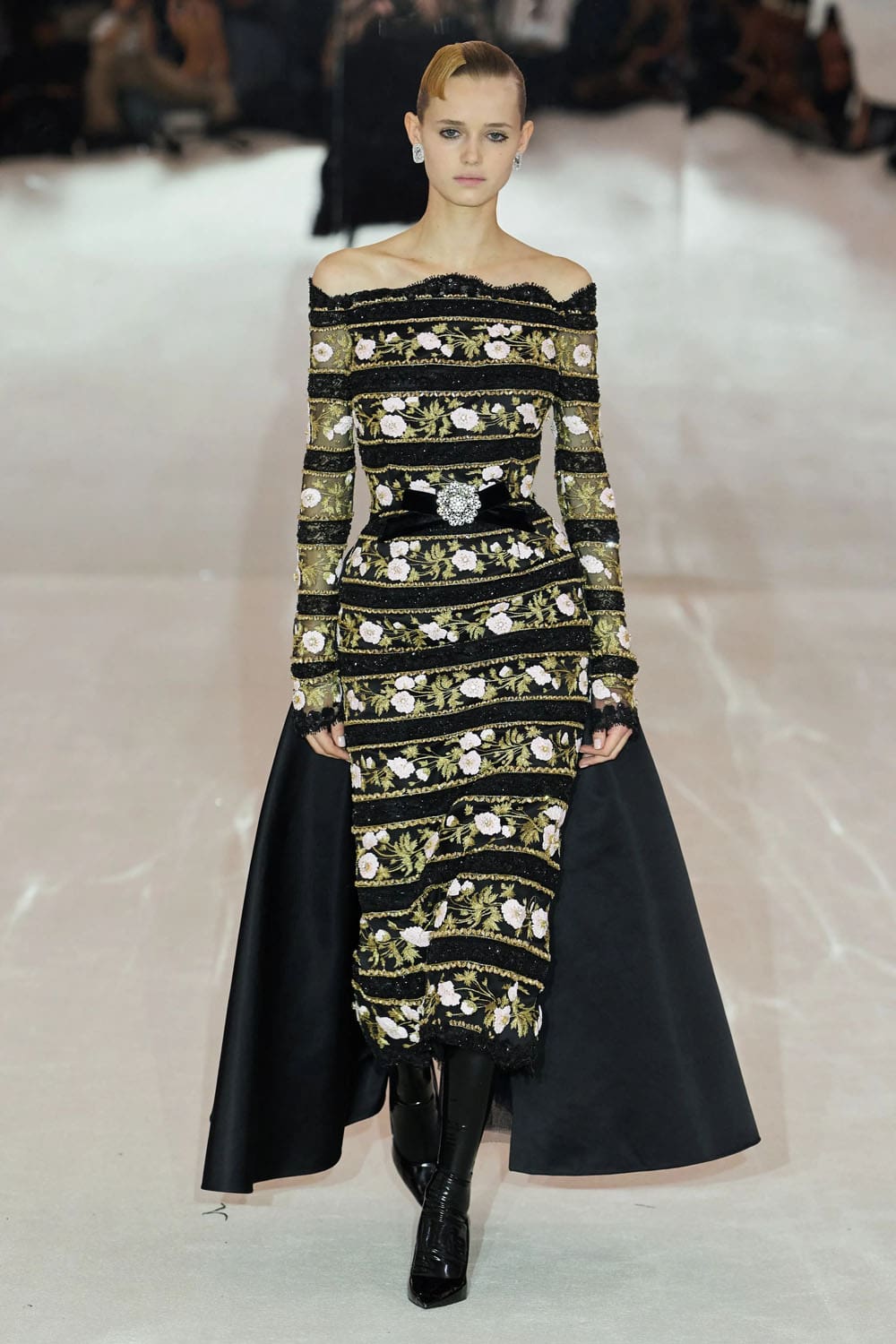
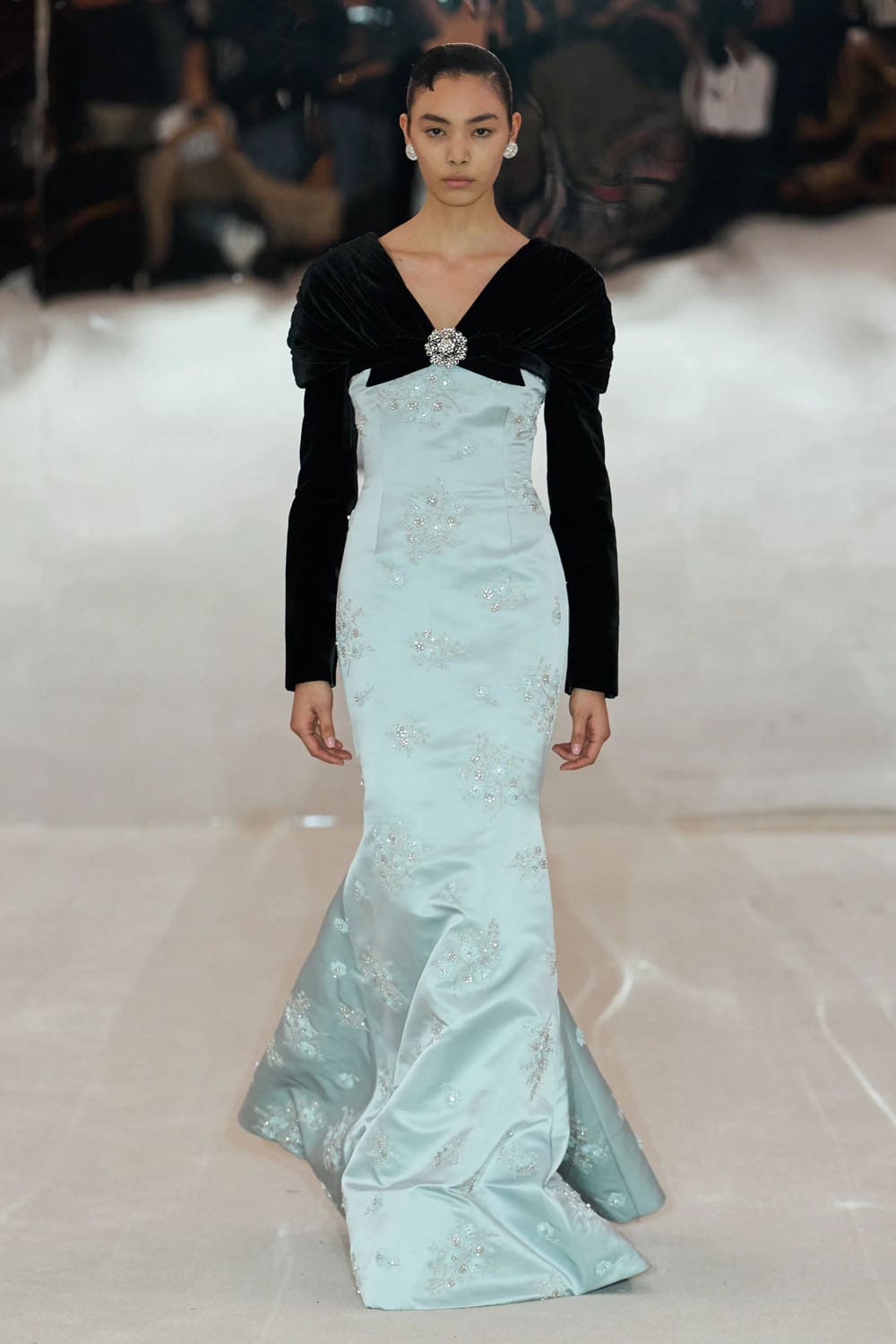
- Clumsy, heavy-handed proportions—from dinner-plate camellias strapped across plunge necklines to rigid beaded grids that cage the torso like wire fencing
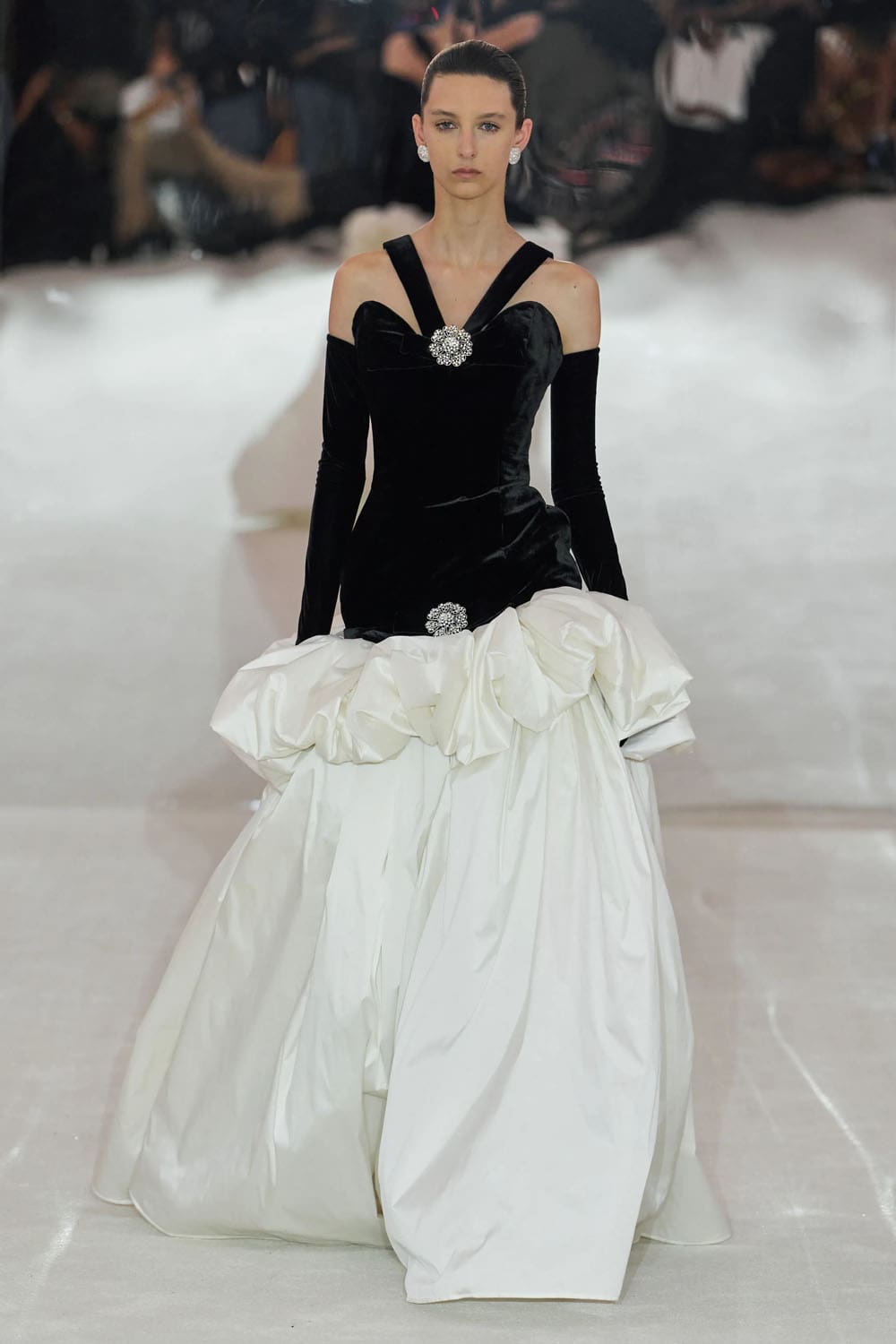
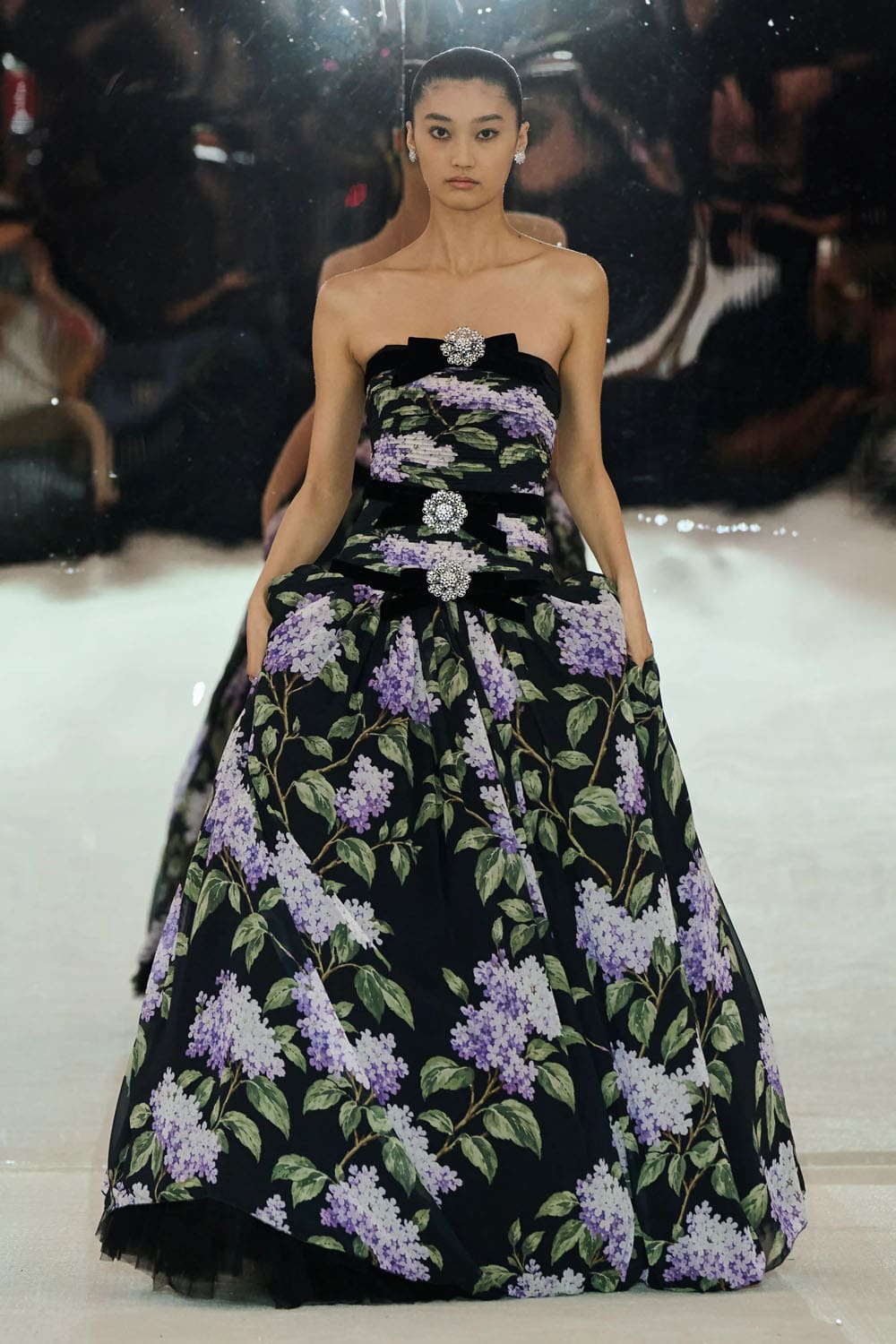
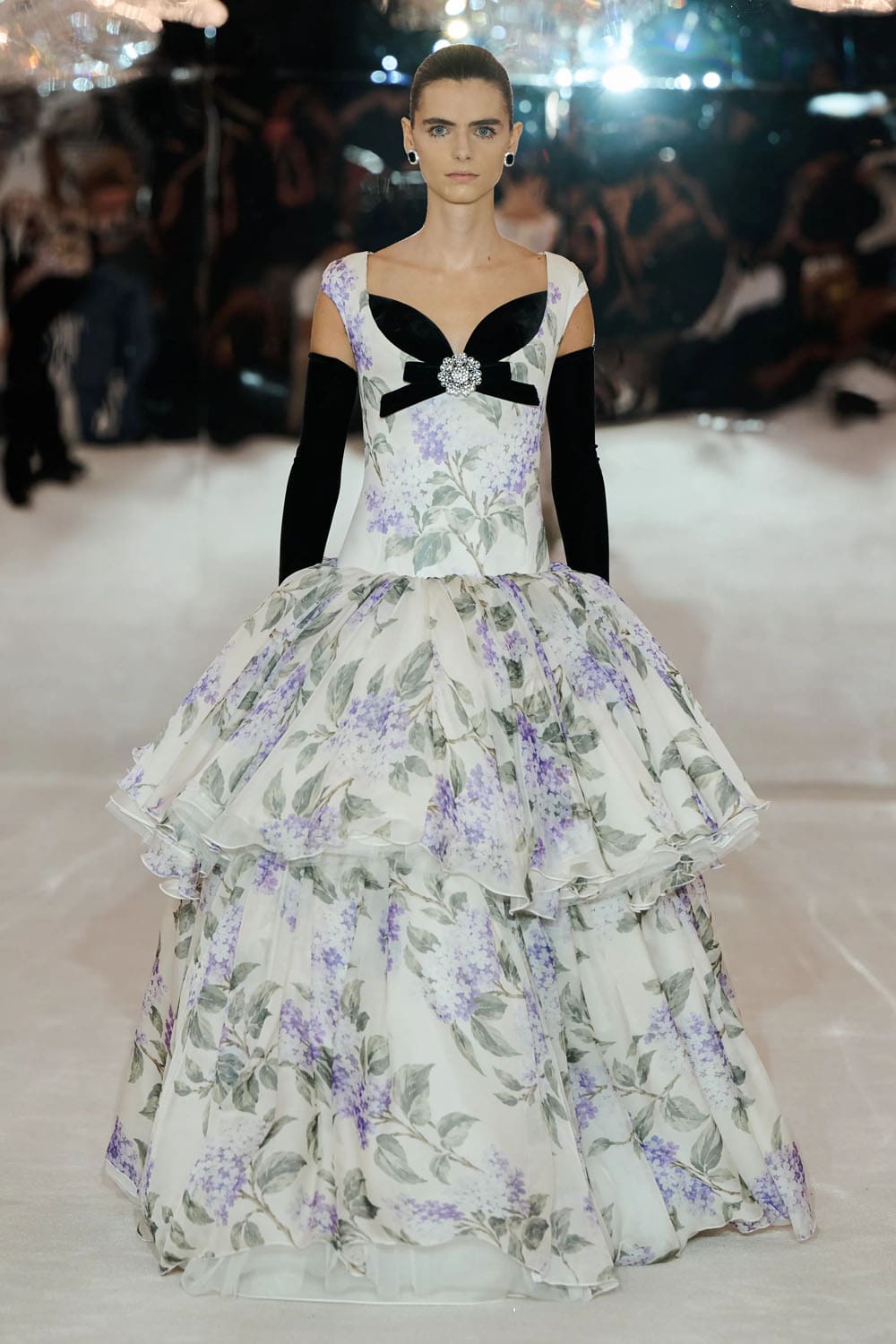
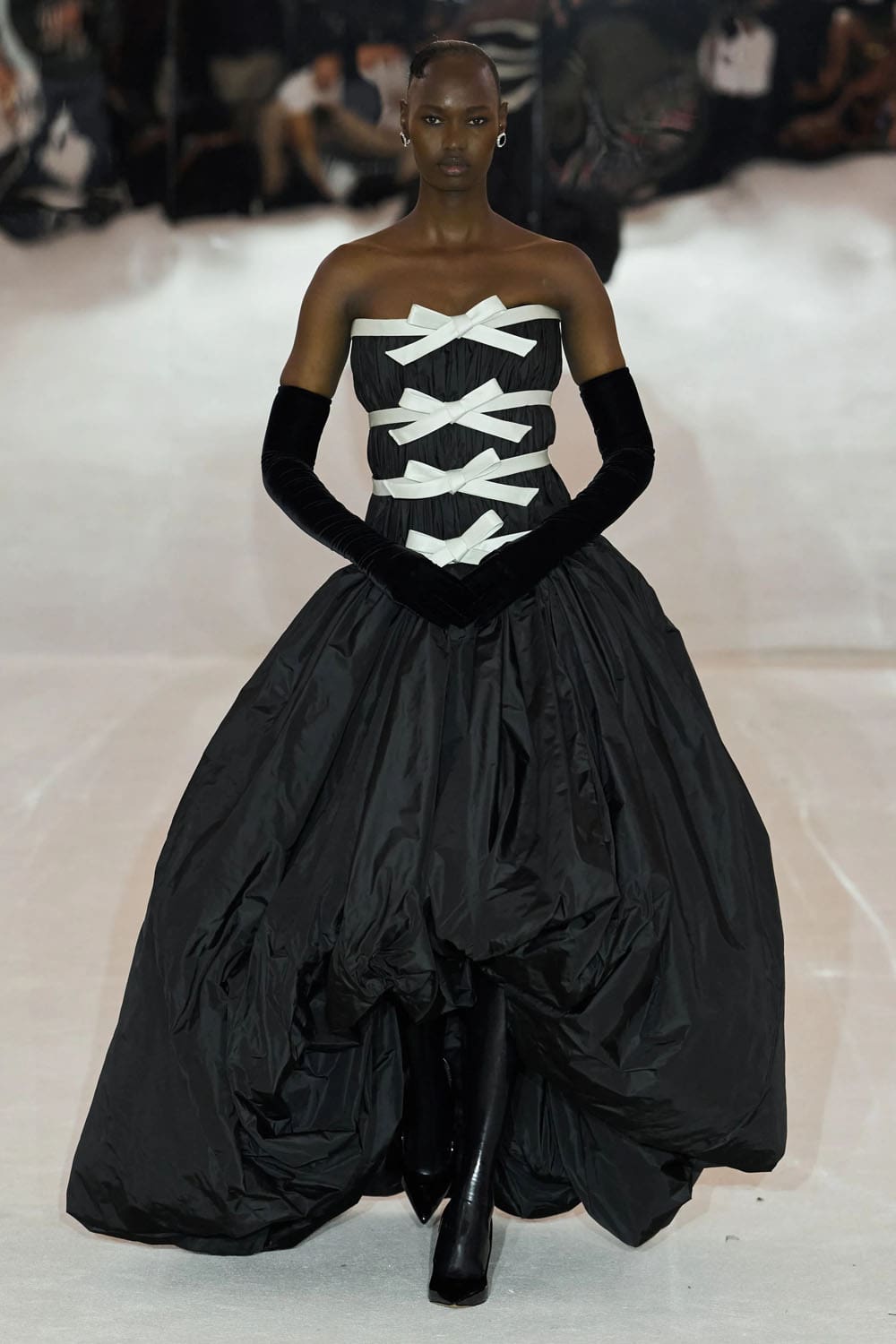
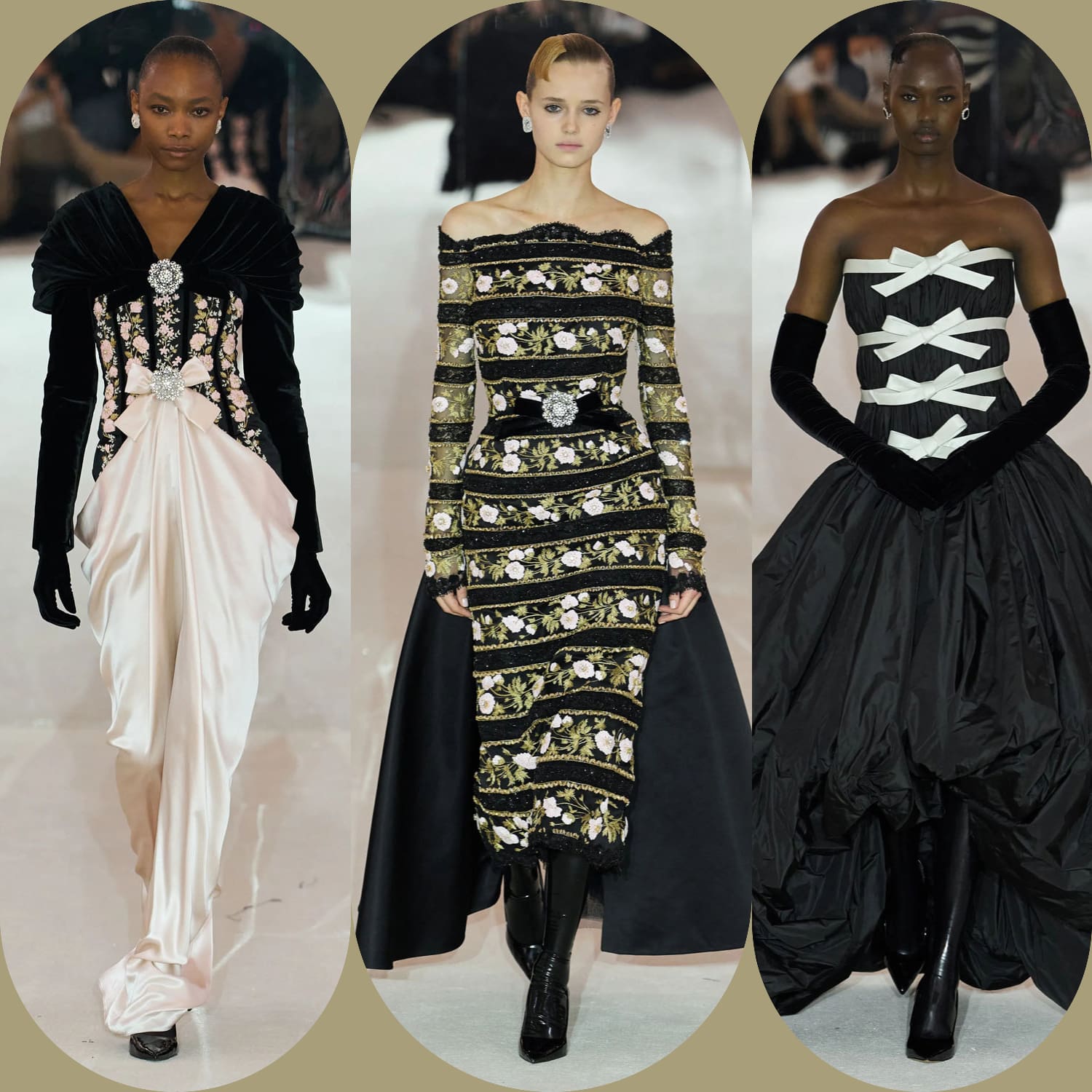
- Awkward tailoring lines that weigh down dropped-waist taffeta poufs and shorten the silhouette with misplaced peplums and discount-looking brooches
- Showroom mentality reducing the runway spectacle to a live-action commercial for high-margin e-commerce carts and quick-delivery eveningwear
Richard Quinn Spring Summer 2027 “The London Great Value Couture Catalog.” Story by Eleonora de Gray, Editor-in-Chief of RUNWAY MAGAZINE. Photo Courtesy: Richard Quinn.
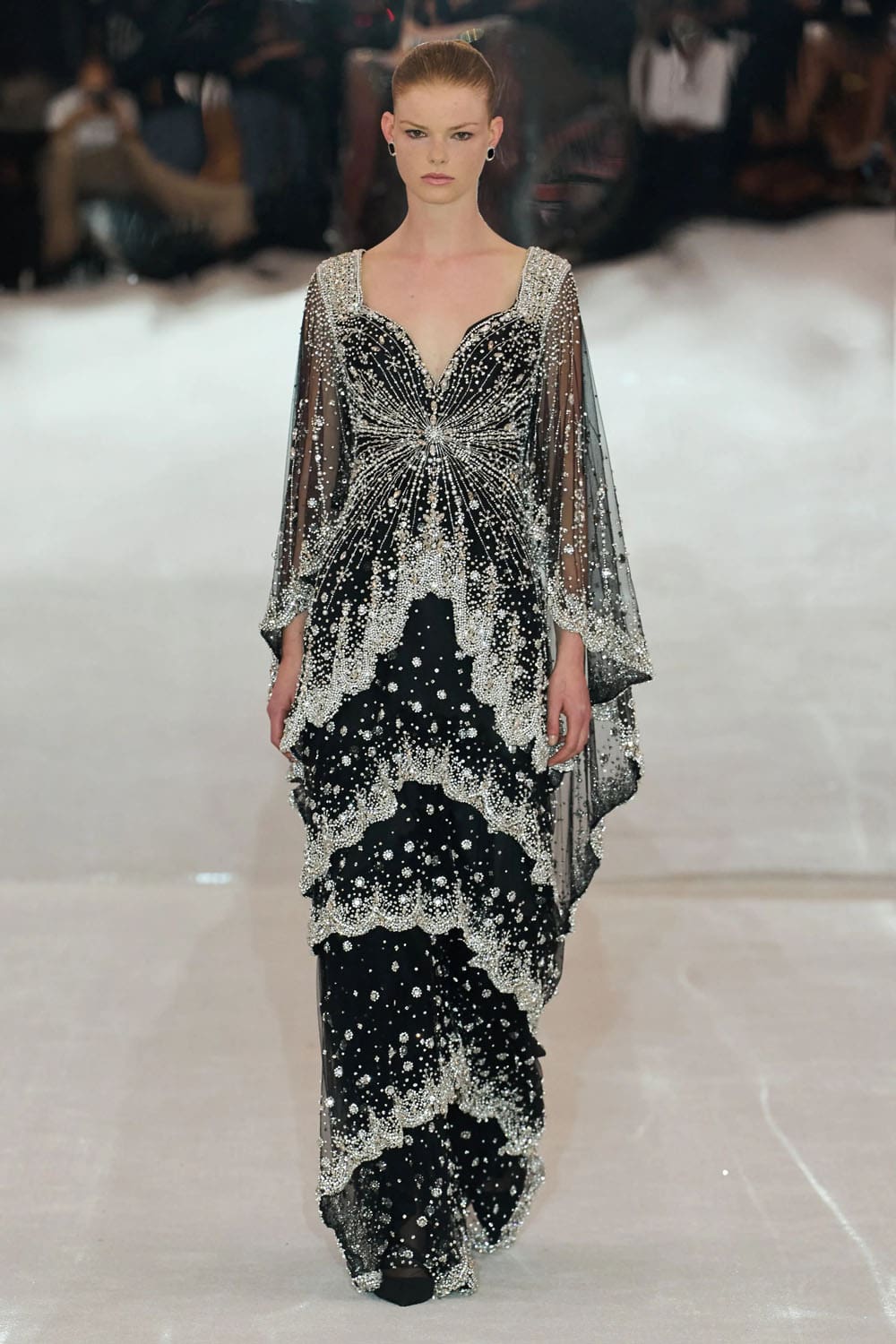
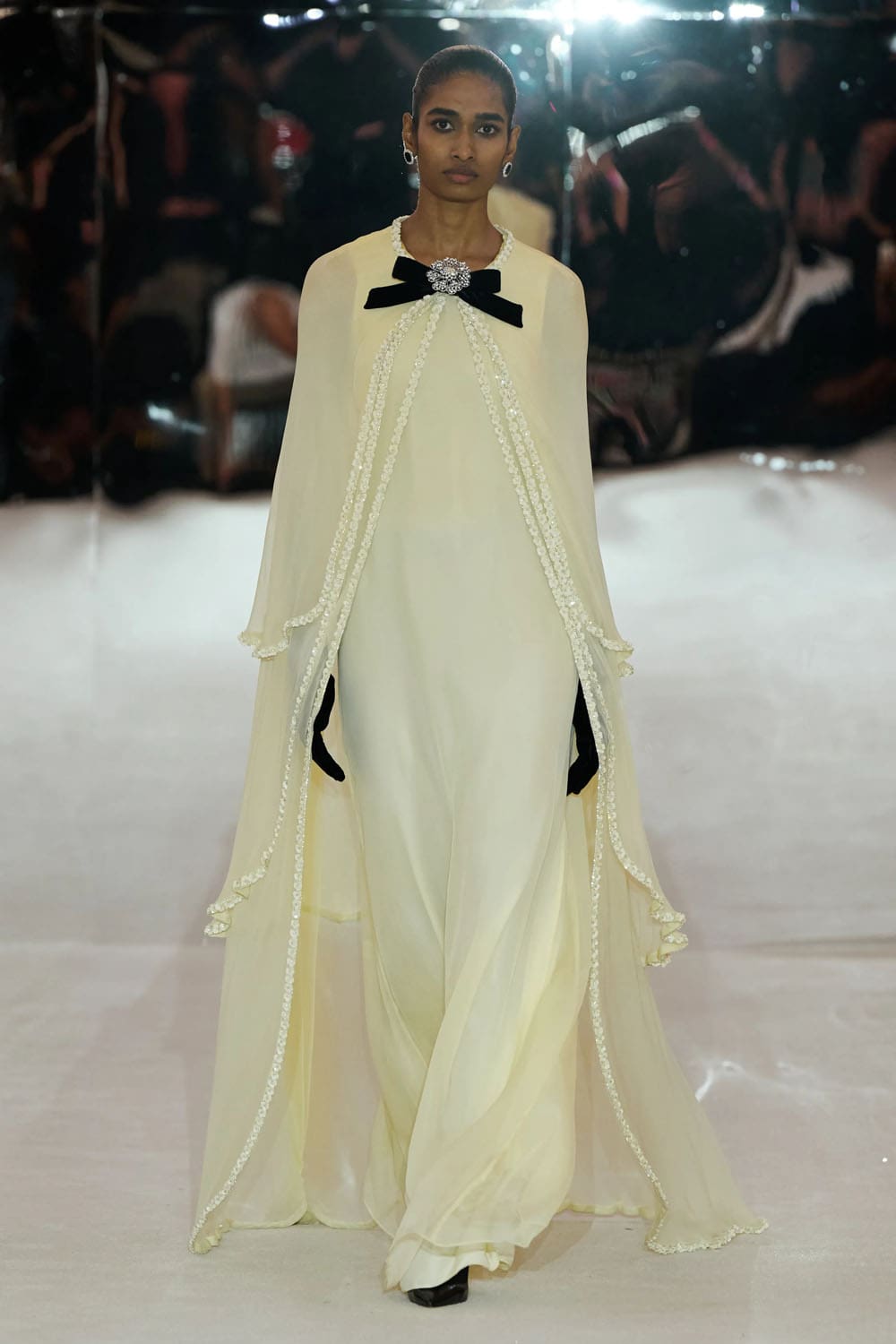
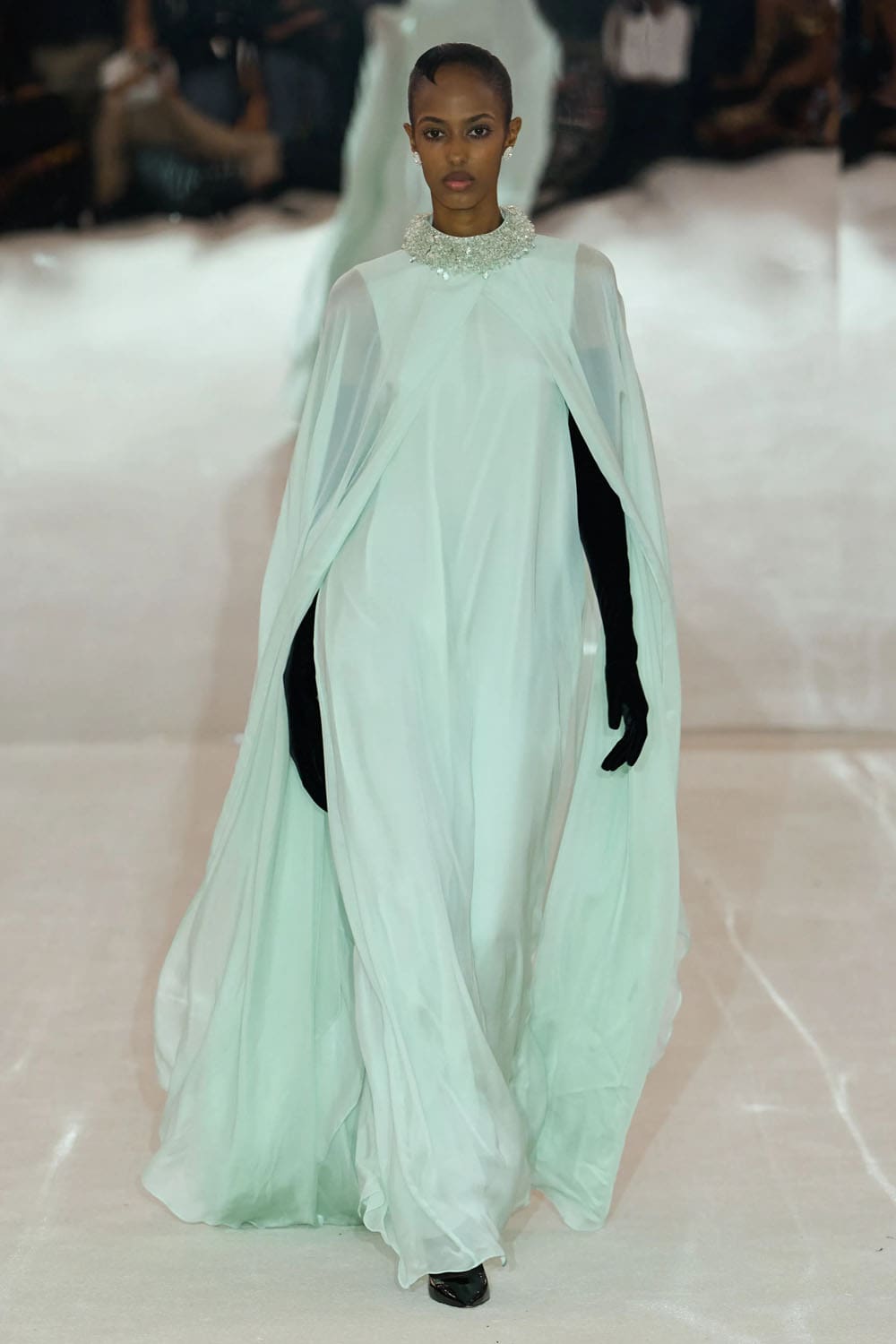
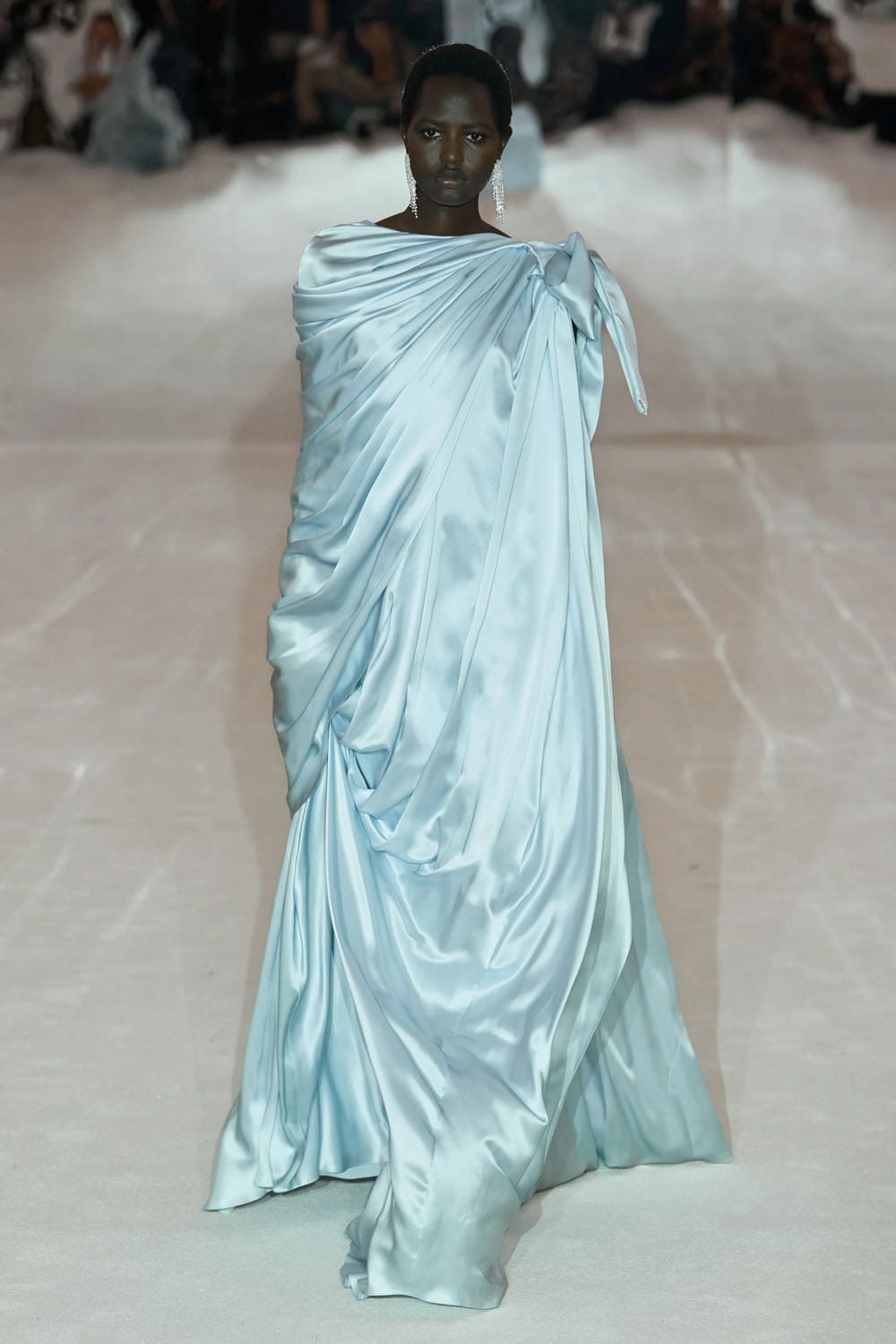
At Richard Quinn, it’s evening dresses all day long, all year long, always and forever. Stepping into his mirrored, chandelier-hung runway in London, one does not encounter an artistic epiphany; one encounters a showroom. We saw a parade of options rather than surprises. In terms of comparisons, he positions himself as Chanel and Dior put together in London—or rather, a fever dream where Parisian archives were tossed into a blender and filtered through a wholesale print studio. His signatures remain faithful to the formula: renderings of vintage couture silhouettes, embellished with heavy Indian embroideries, trimmed with ostrich feathers, and steadily refined to be commercial and wearable with each passing season.
It is hyper-glamour stuck in an eternal 1980s loop. Forty-two top-range gowns swept past, but the designer himself was candid enough to state the obvious: the show acts primarily as an advertisement for his online business. He is selling, selling, and selling. Fine. Fashion is a business, and nobody faults an entrepreneur for wanting to ring the register. What remains debatable, however, is passing off derivative retail exercises as Haute Couture while slaughtering the sacred proportions of the Paris houses he so transparently borrows from.
The Chanel Camellia, Cloned and Confused
To understand what is missing from this London pastiche, one must understand what makes Paris work. At Chanel, proportion is a religion. The camellia is an iconic, poetic punctuation mark—delicate, positioned precisely to balance the architecture of a neckline or the poise of a lapel. Karl Lagerfeld spent decades ensuring that when a flower was pinned, it dictated the harmony of the entire silhouette. Matthieu Blazy tries to follow.
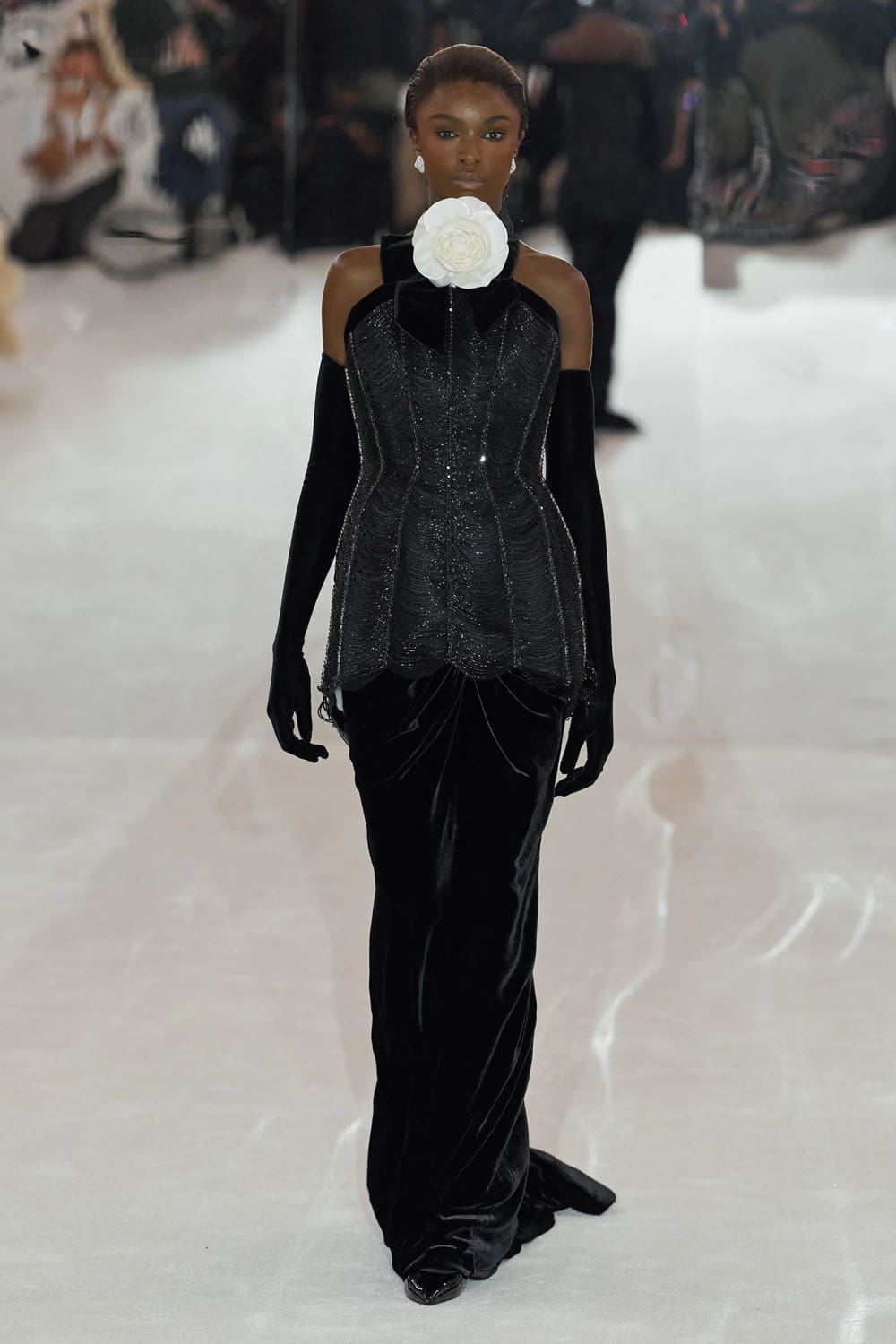
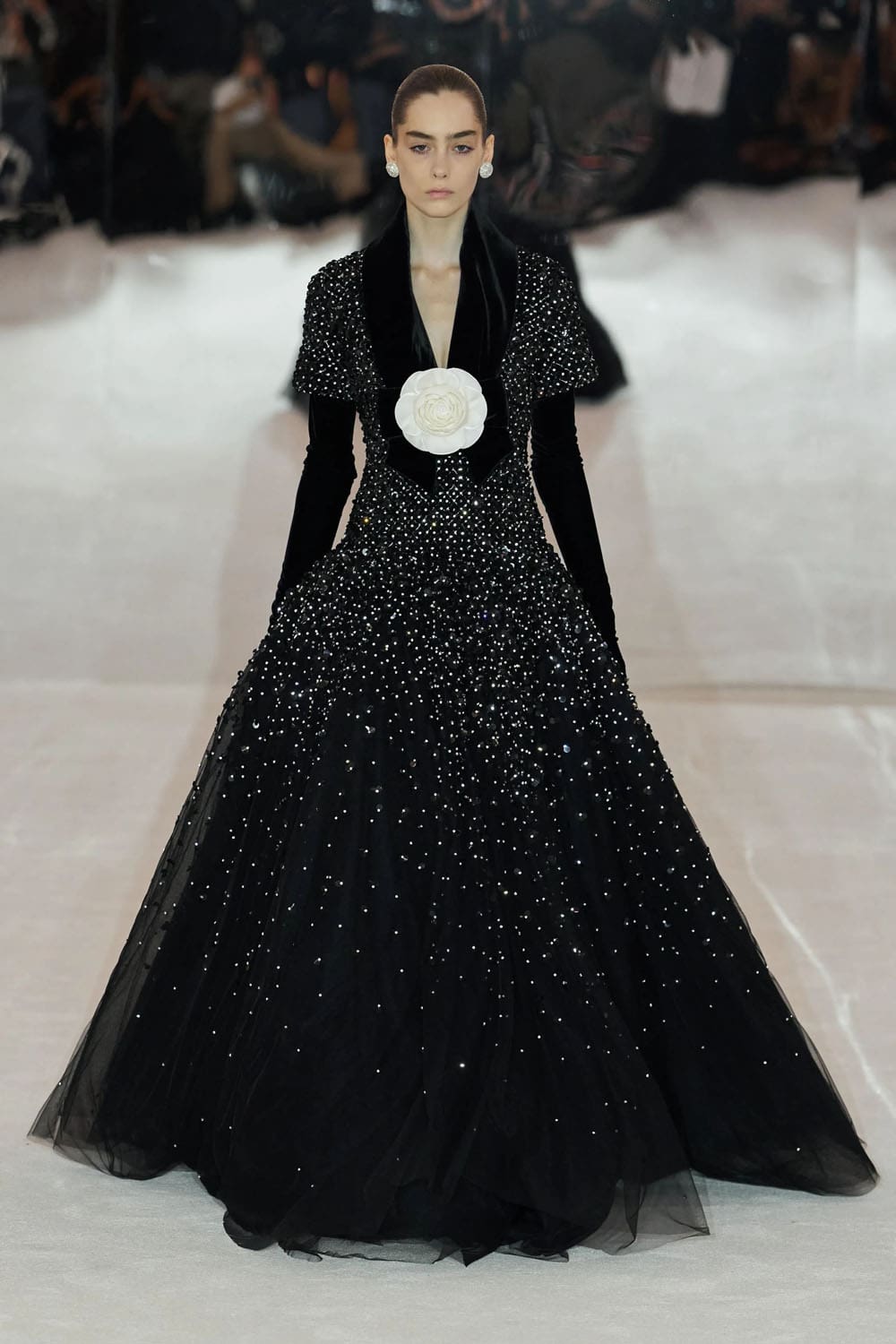
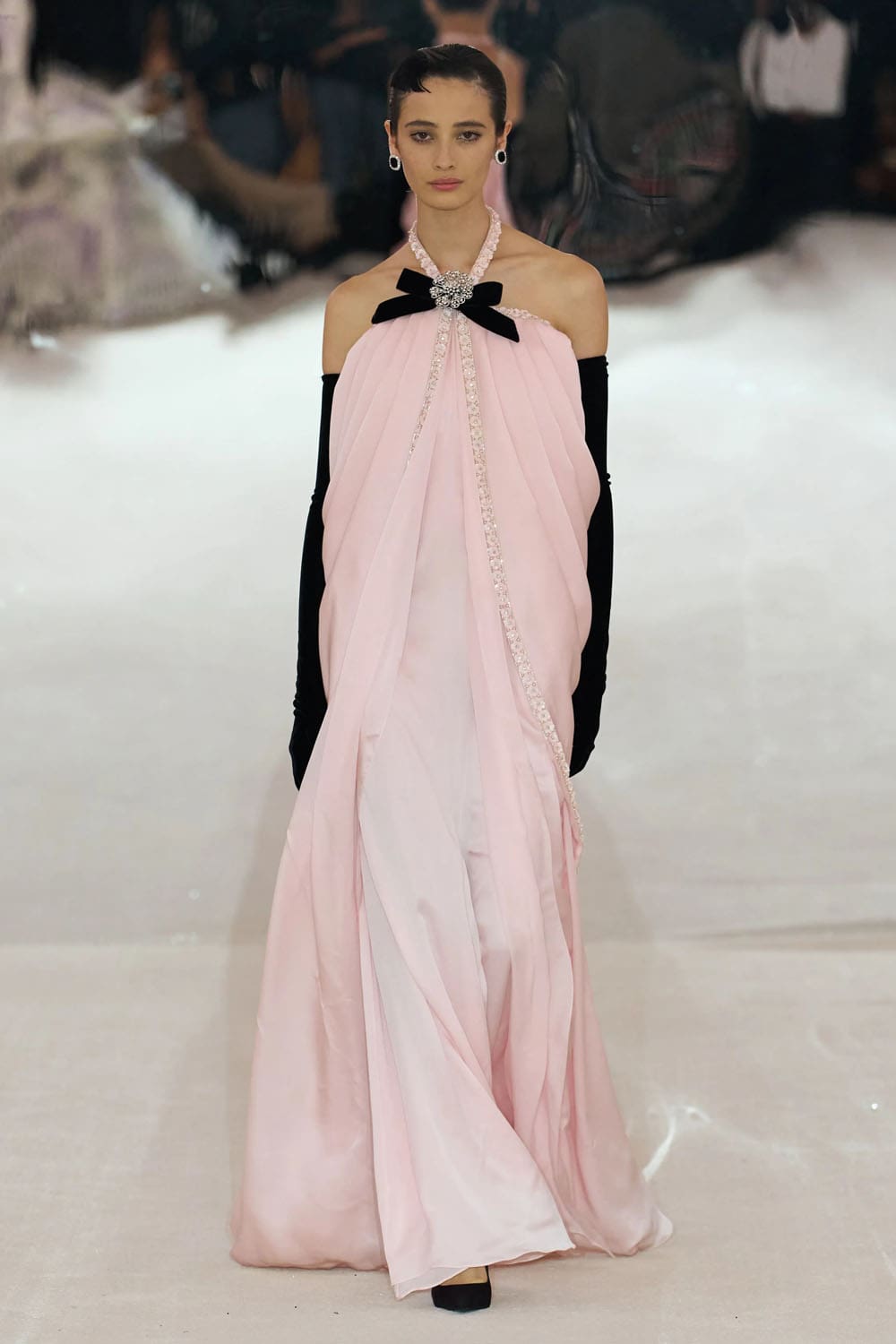
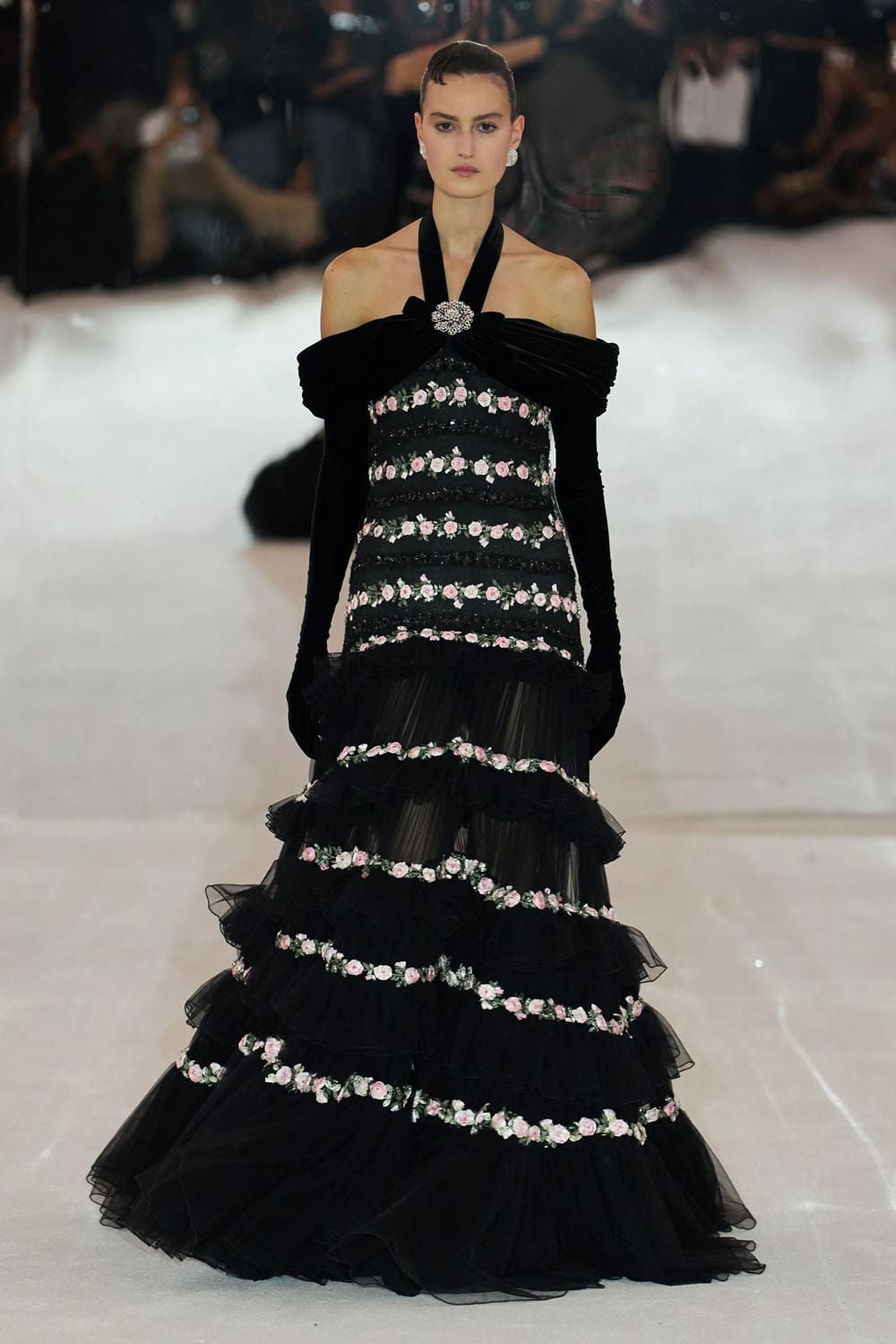
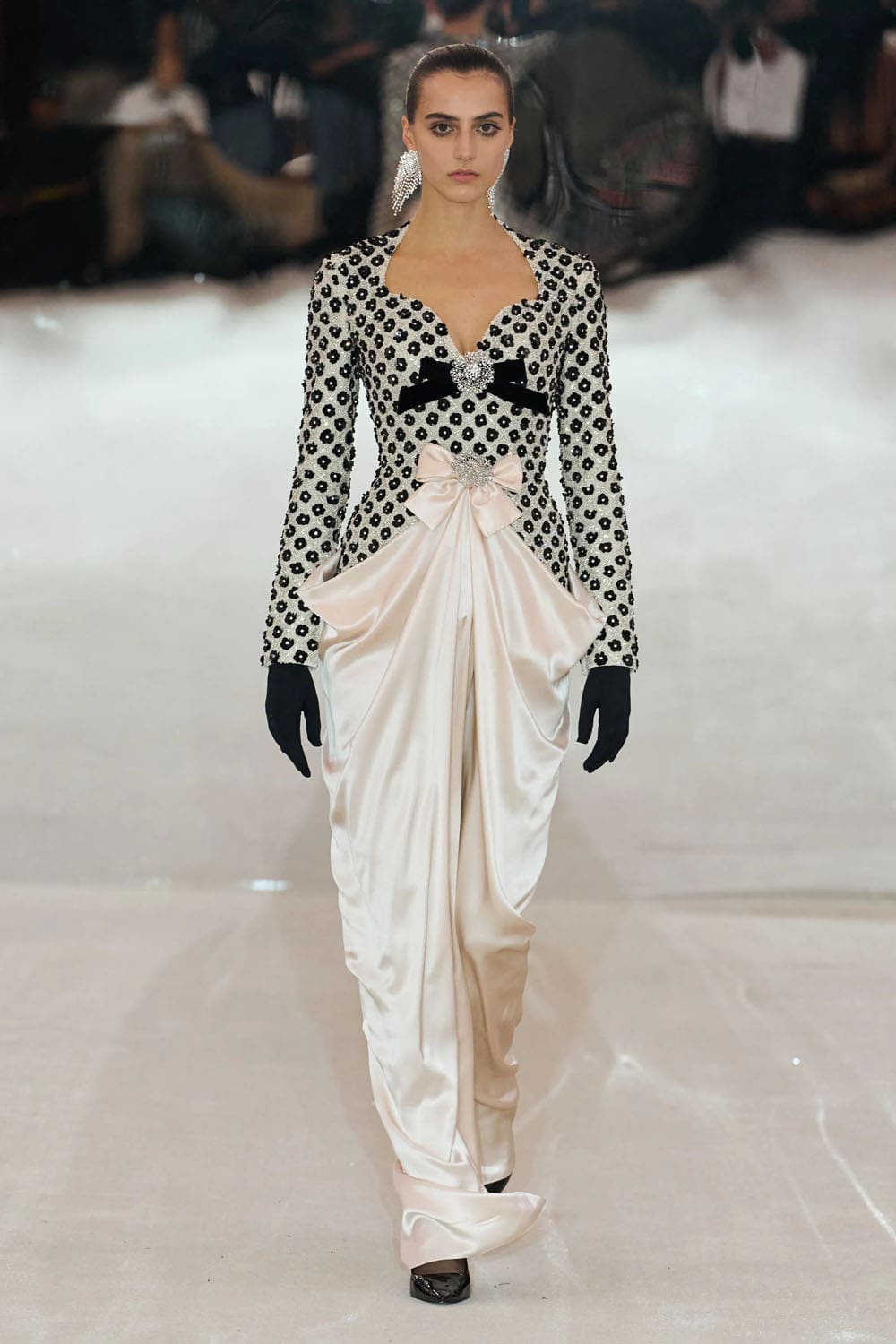
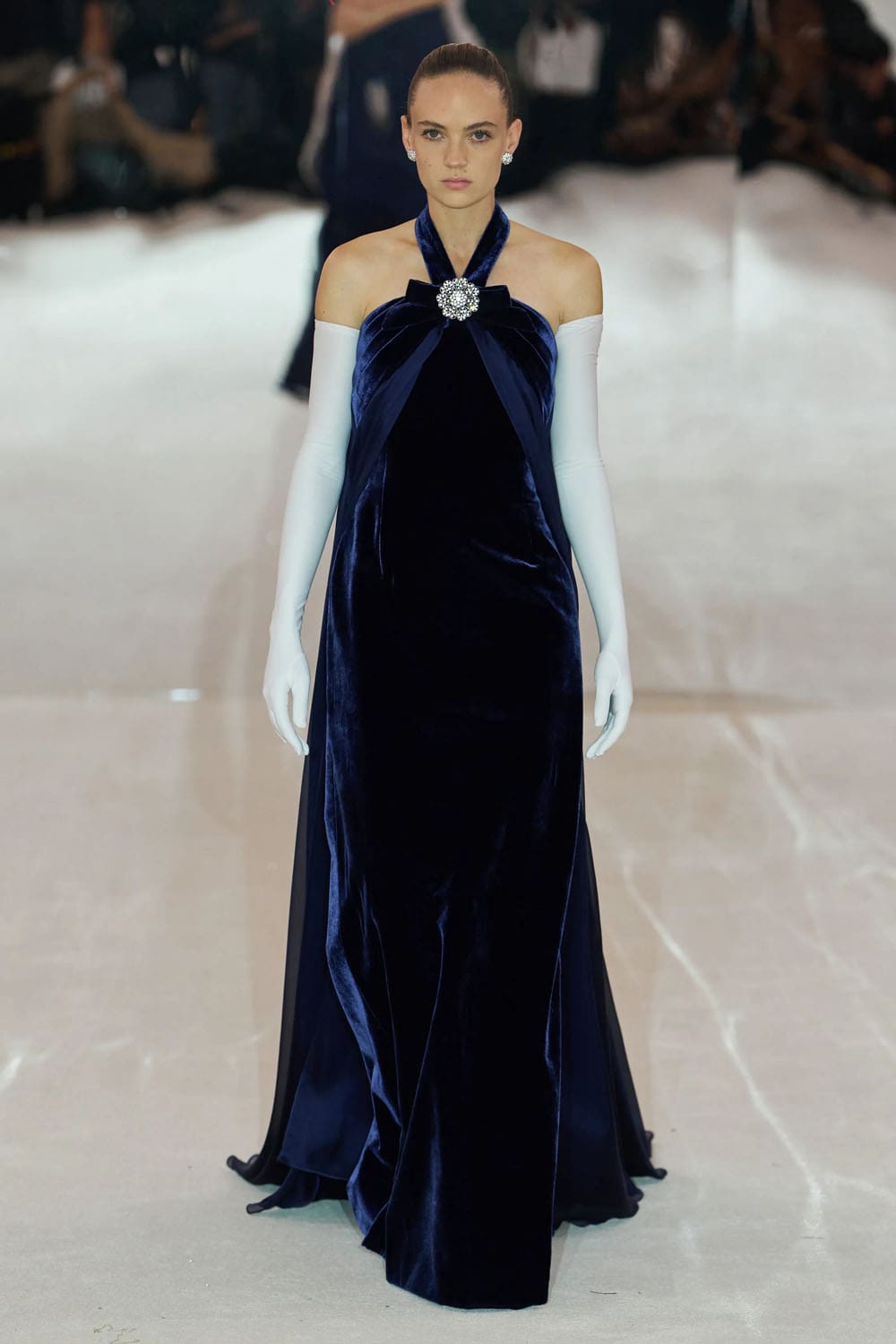
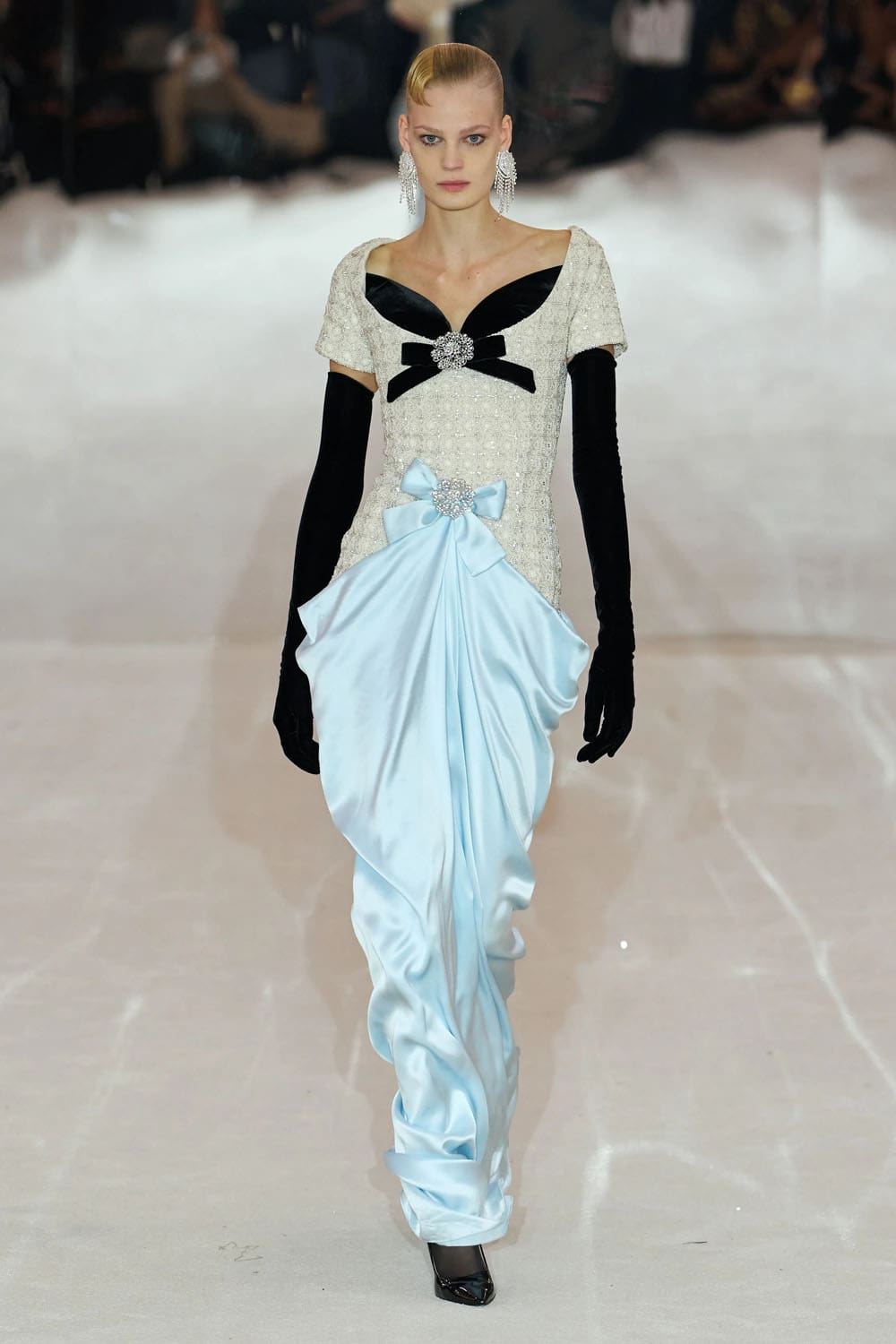
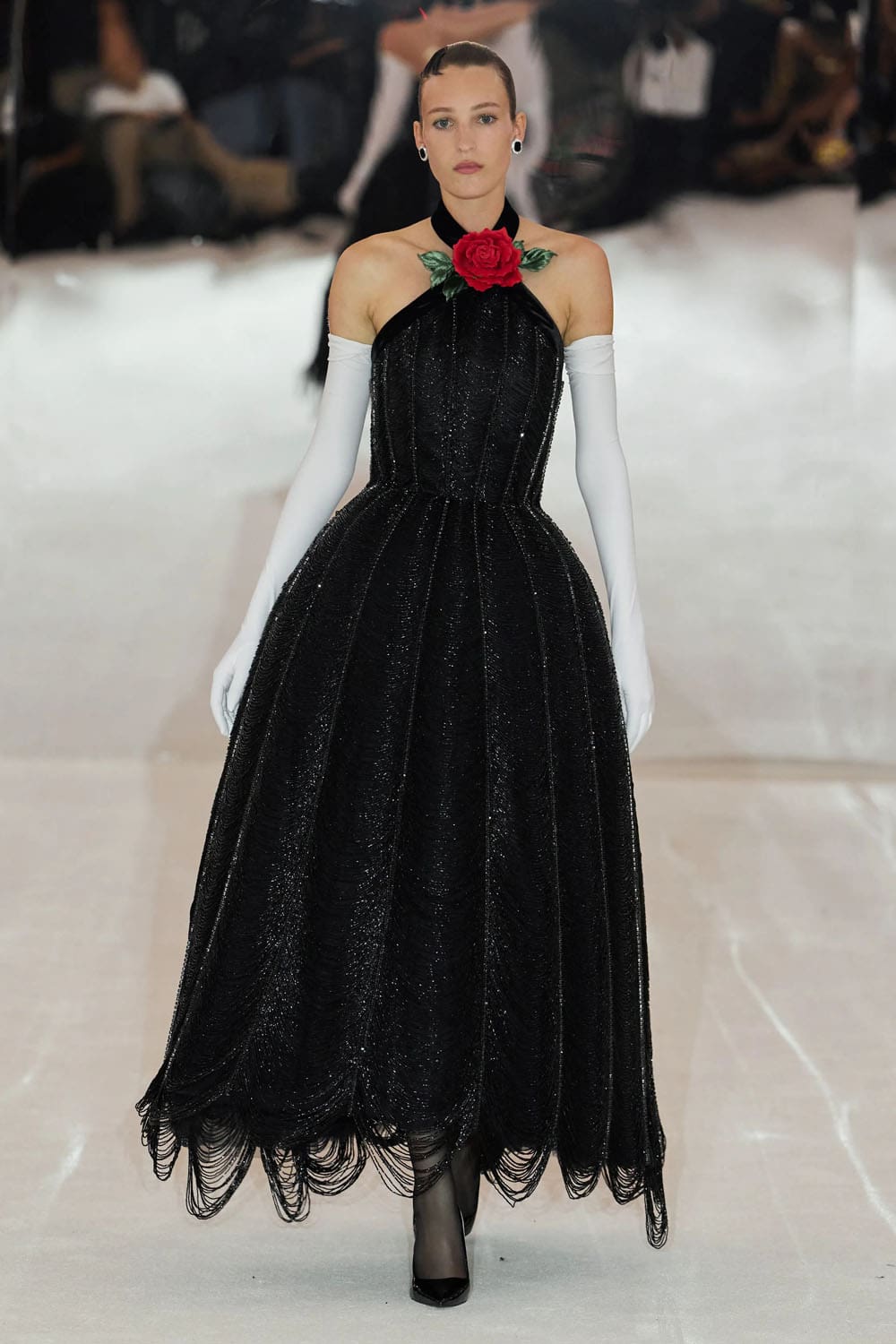
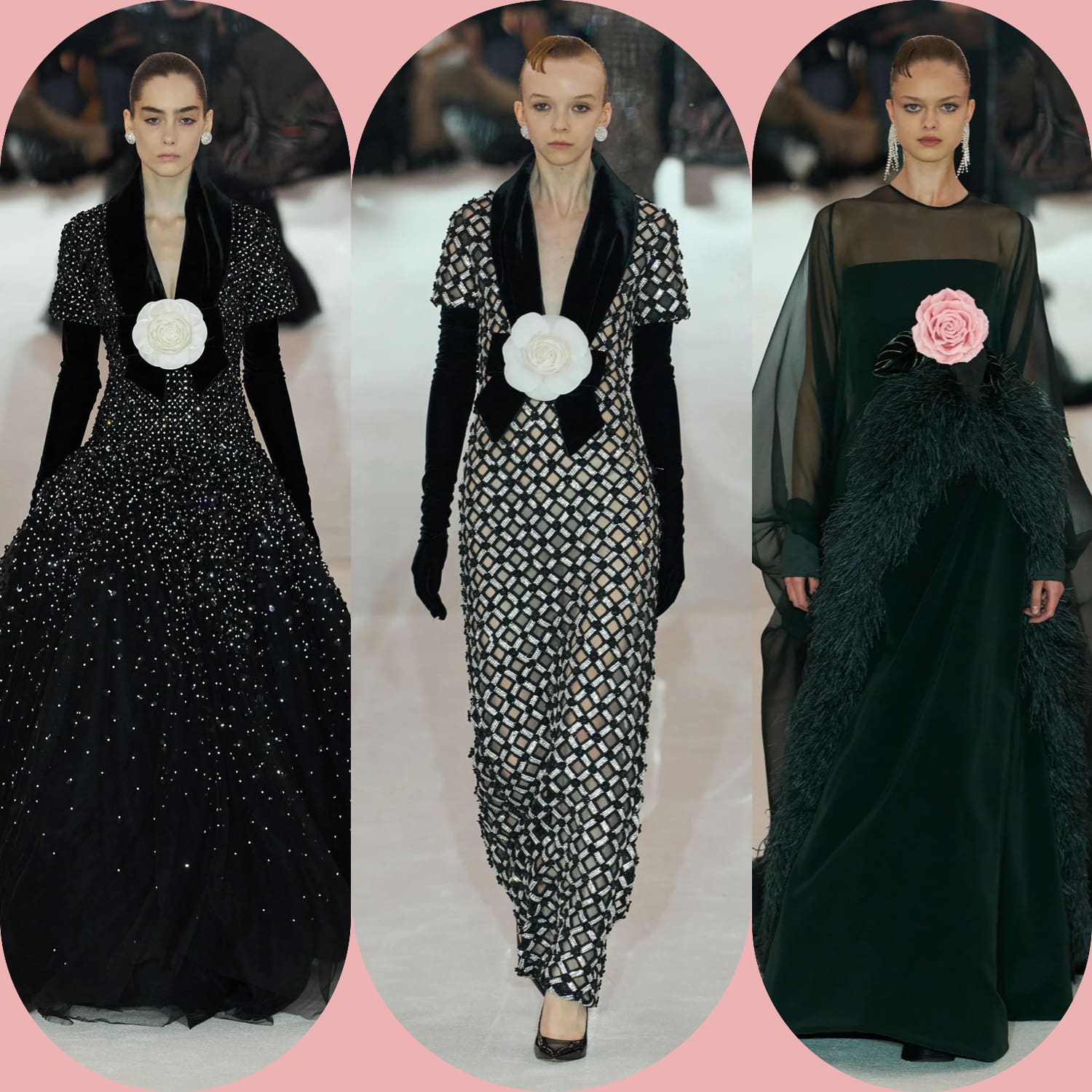
Quinn, on the other hand, approaches the camellia like a car hood ornament for “JUST MARRIED”. Plastered directly onto throat-high necklines and dropped straight into the center of plunging lapels, these oversized white silk rosettes do not evoke Coco Chanel; they evoke an anxious attempt to ensure anyone scrolling by on Instagram instantly mistakes the dress for 31 Rue Cambon.
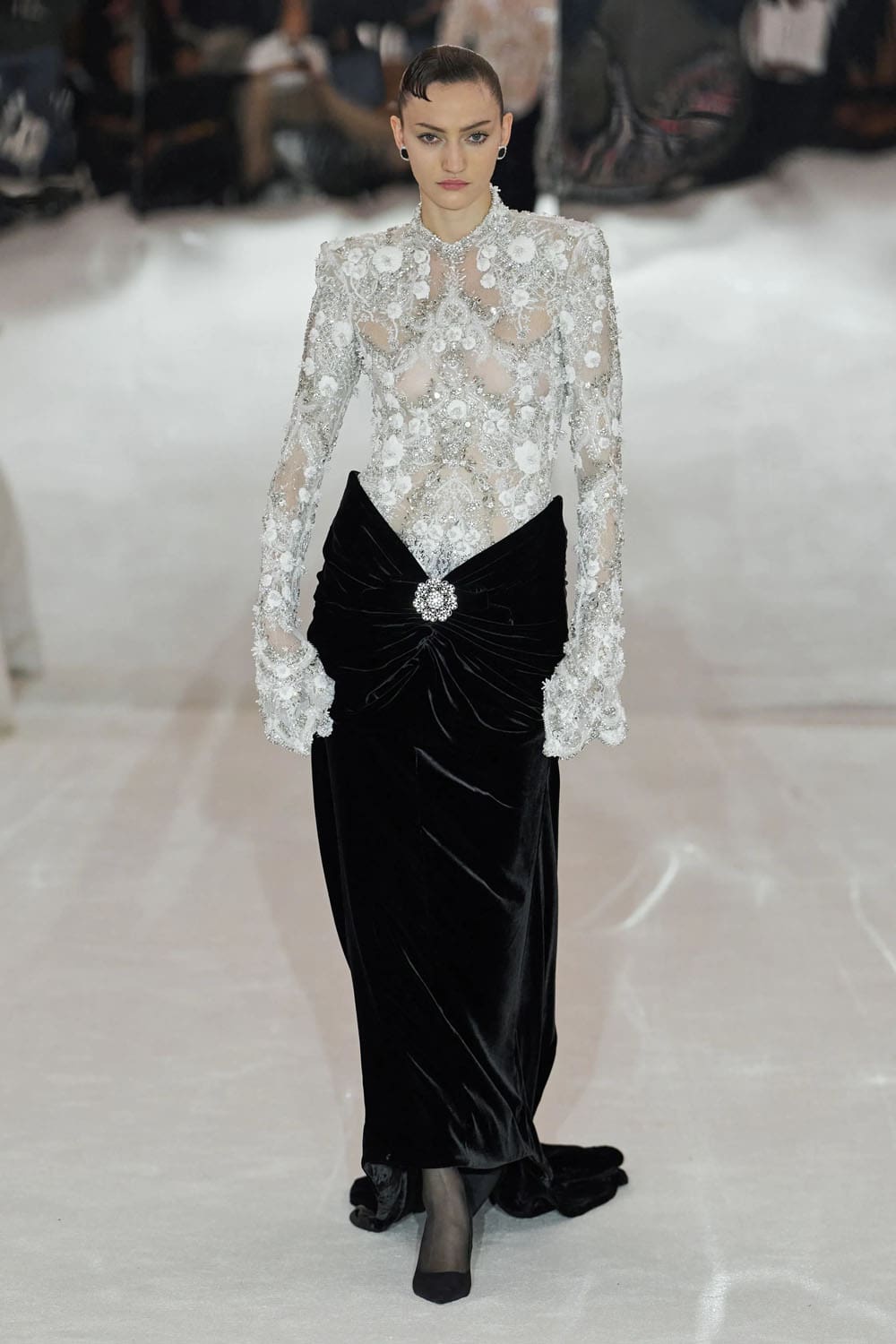
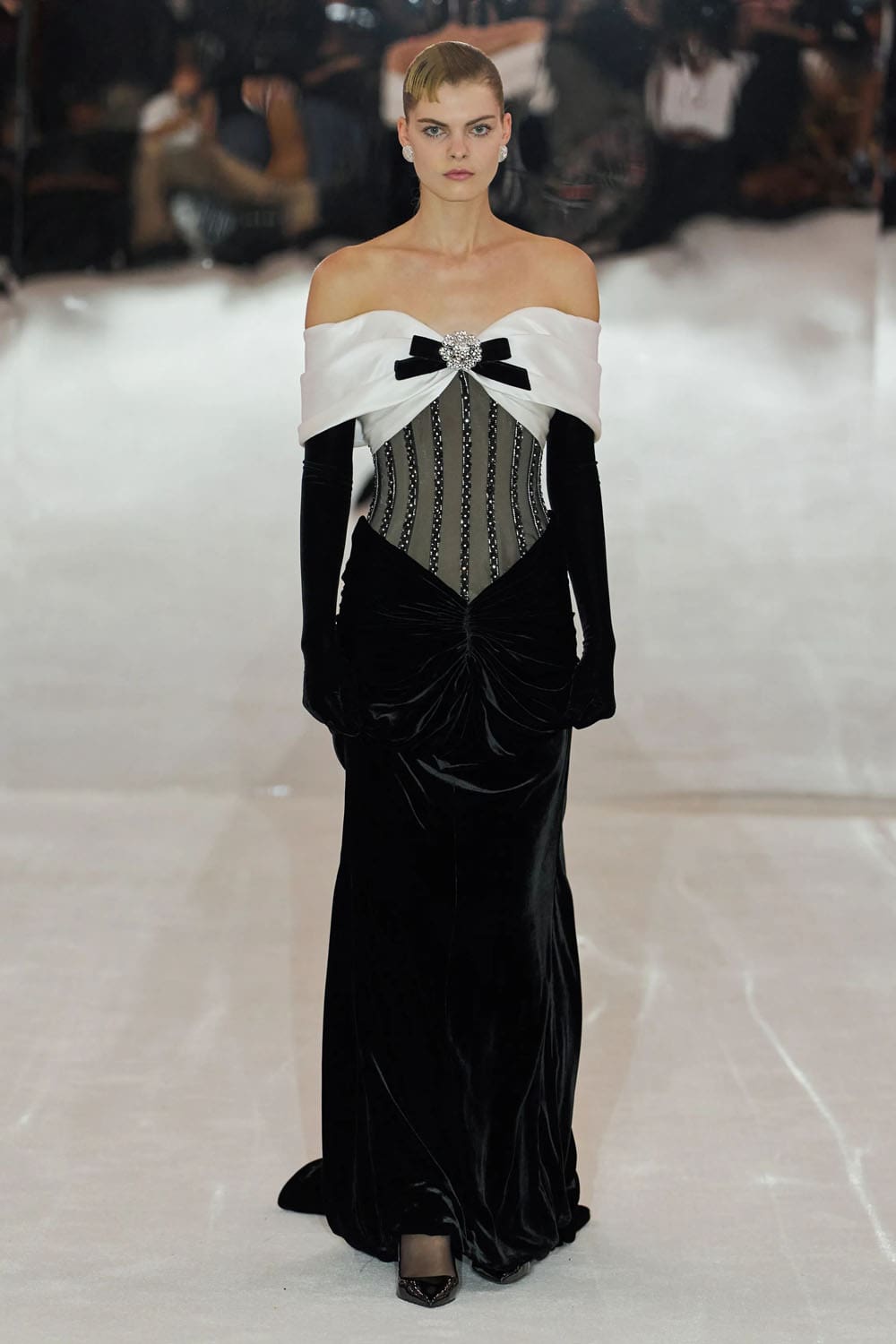
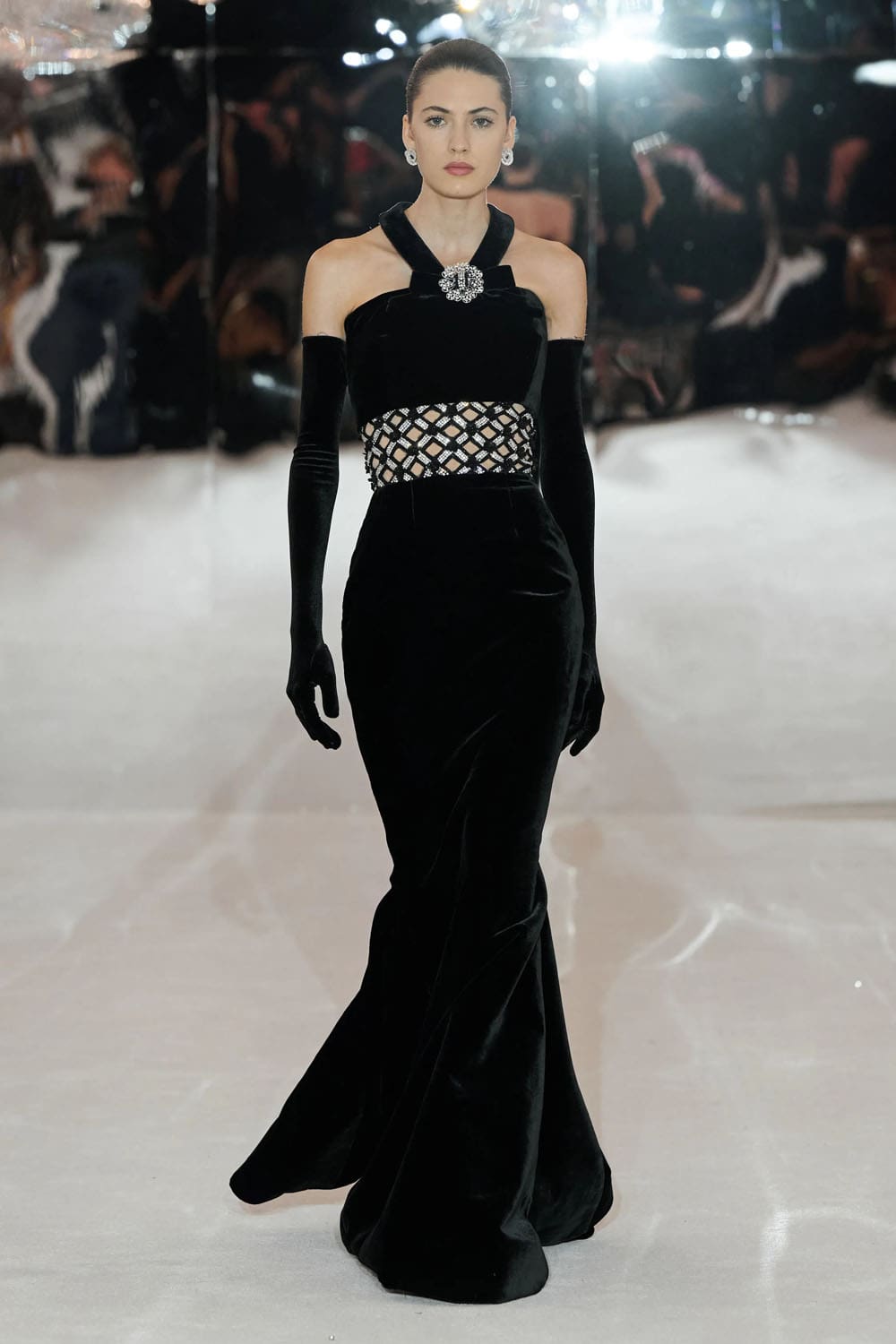
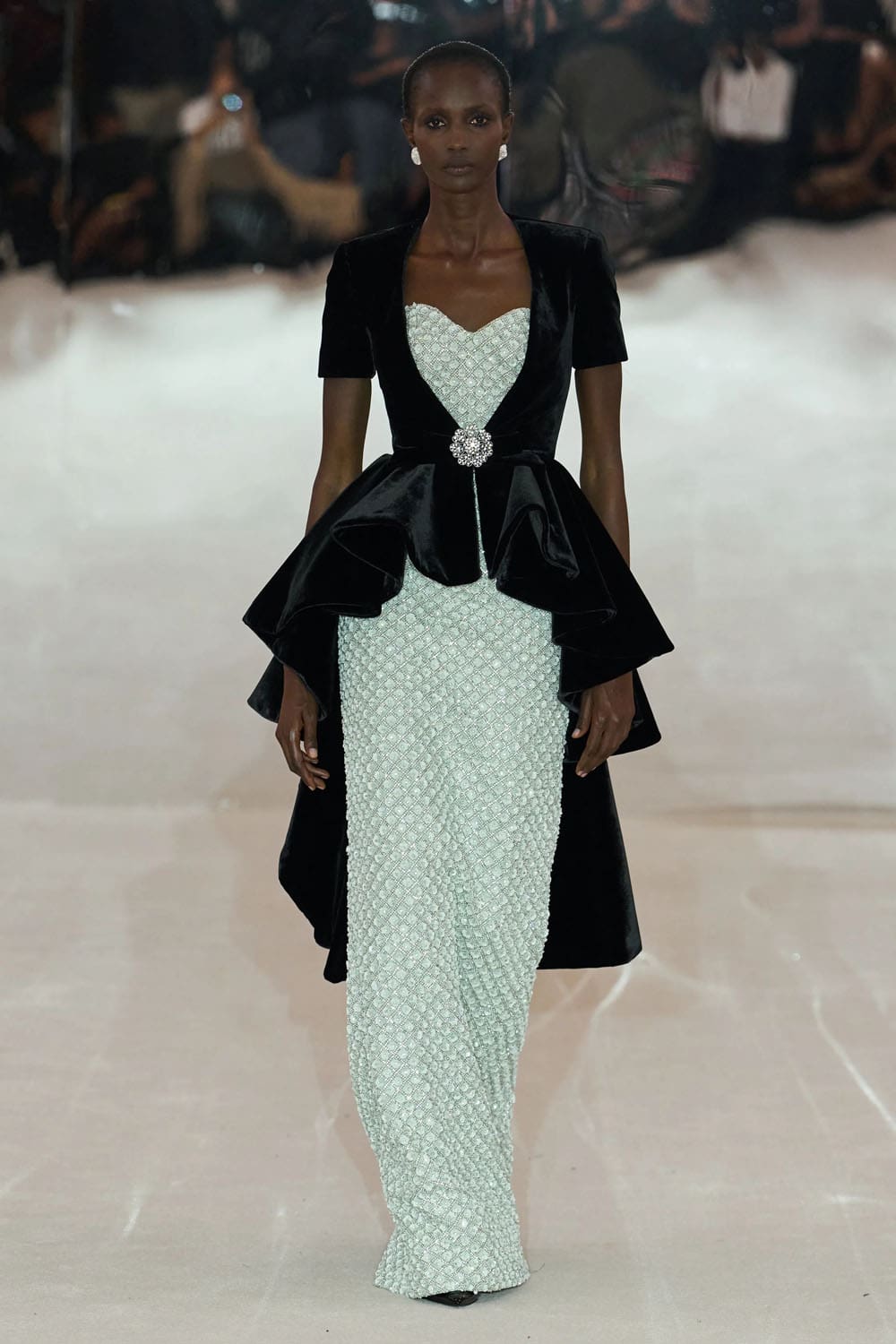
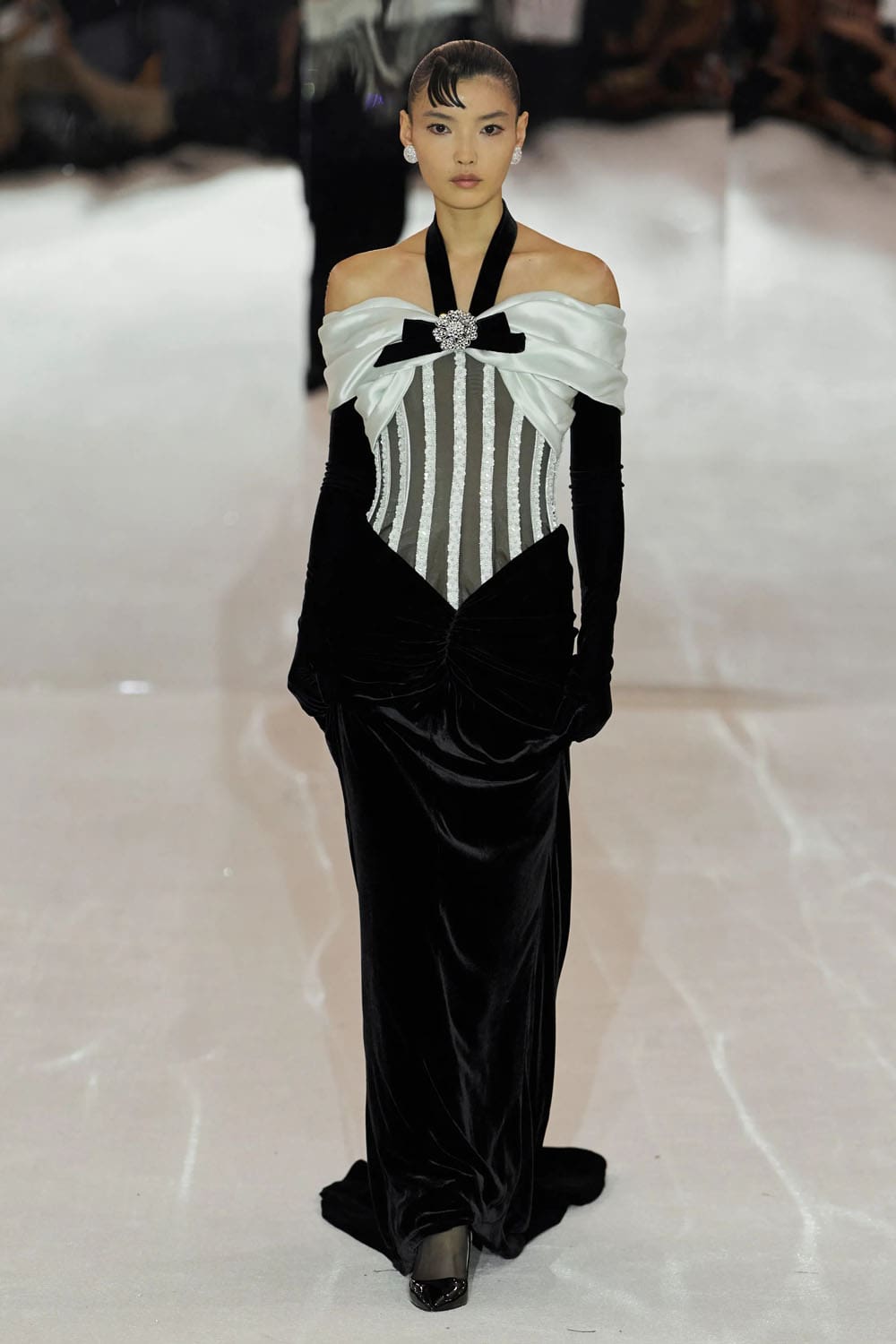
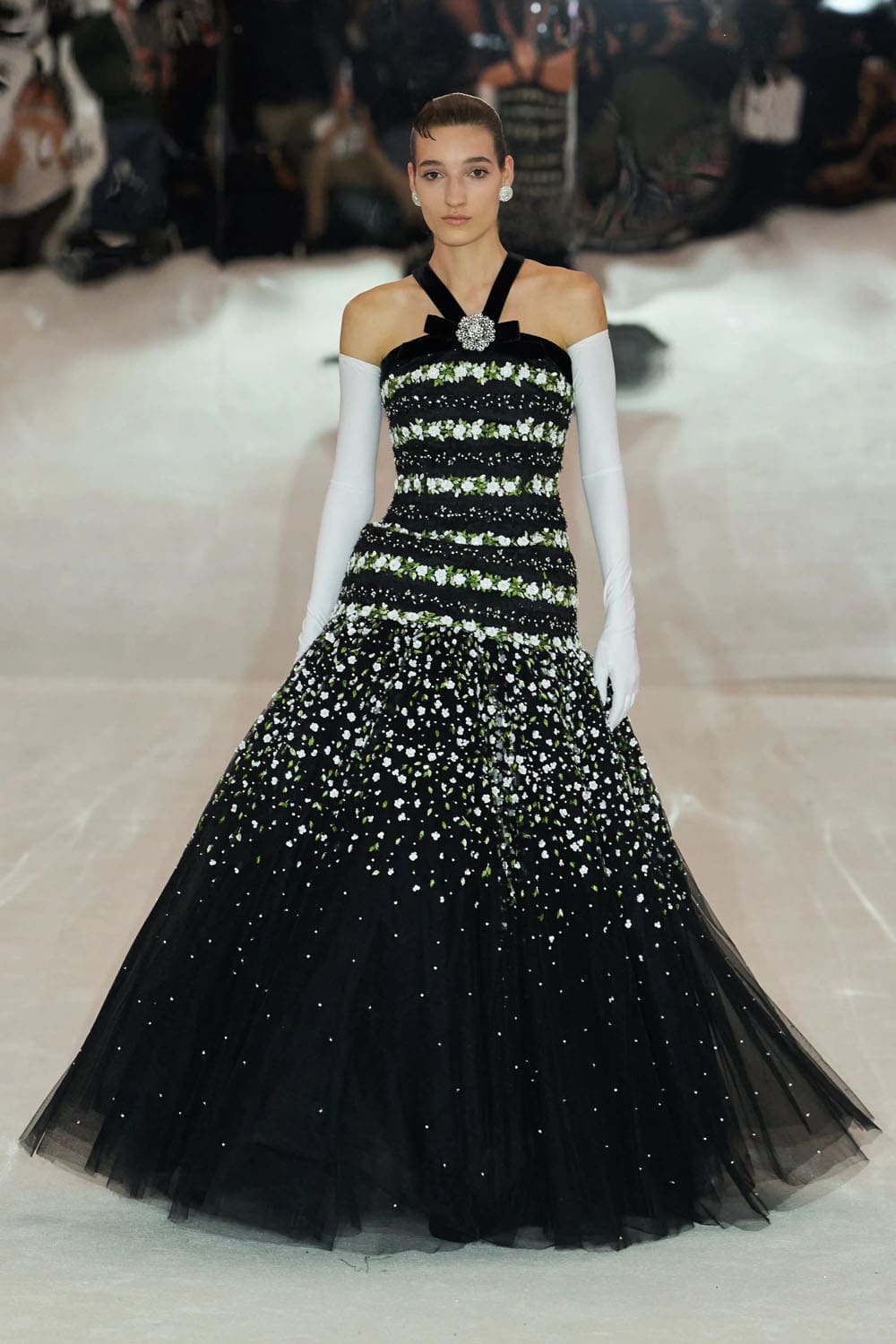
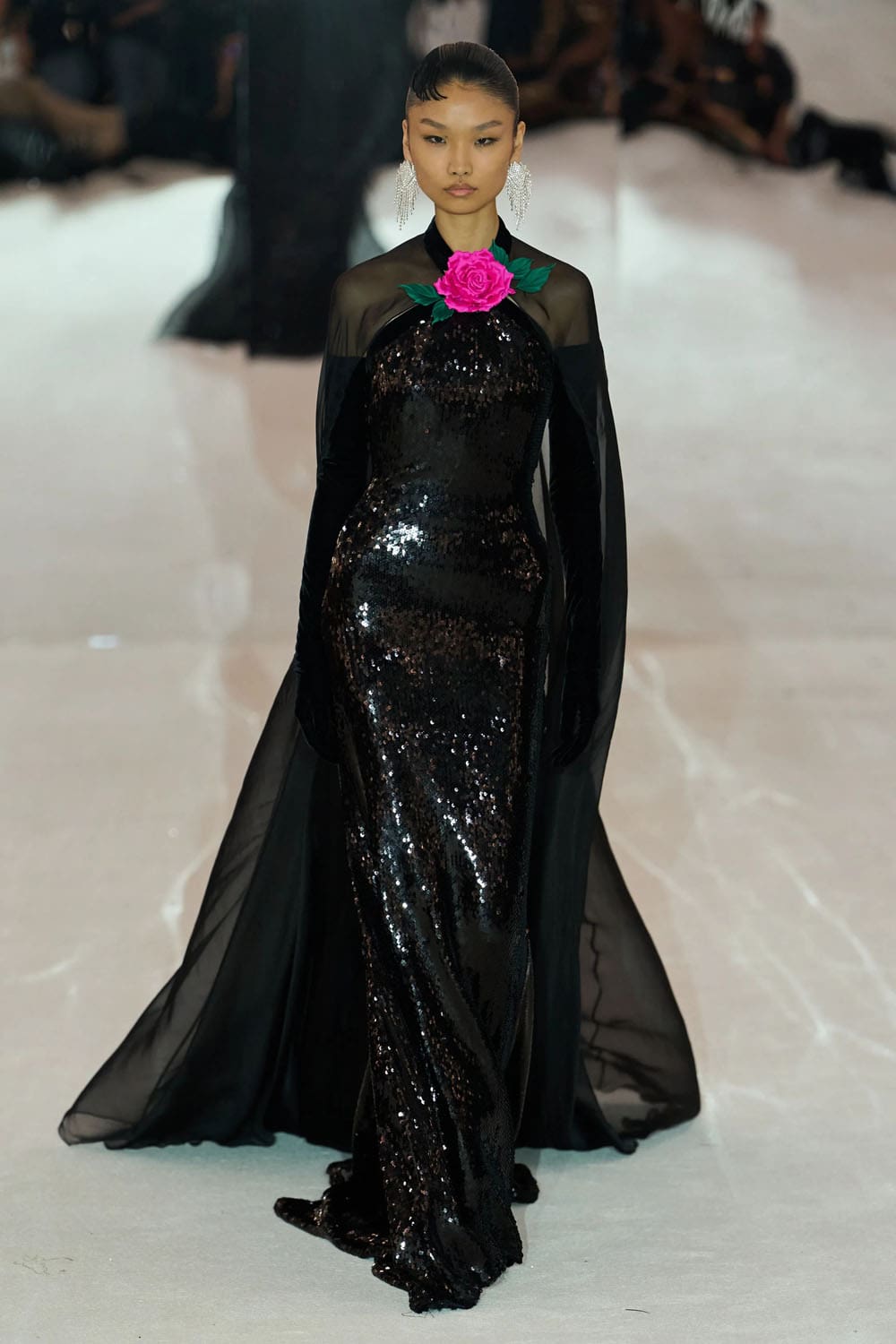
Look closely at the execution. On a black column dress, a heavily beaded, corset-like bodice attempts to channel the graphic grid and structural ribbing of Parisian demi-couture. Yet the scalloped peplum sits at an awkward, torso-shortening midpoint, fighting the velvet drape beneath it rather than creating a seamless, elongating line. On another grid-embroidered column, the lapels plunge only to be suffocated by a dinner-plate camellia strapped right across the breastbone, anchored by elbow-length black velvet opera gloves. At Chanel, a geometric open weave breaths and moves with calculated ease; here, the grid is rigid and heavy, making the model look trapped inside an embroidered wire fence. It is Chanel through a photocopier: you recognize the letters, but the machine got totally broken.
Dior’s Ghost at the Wedding Registry
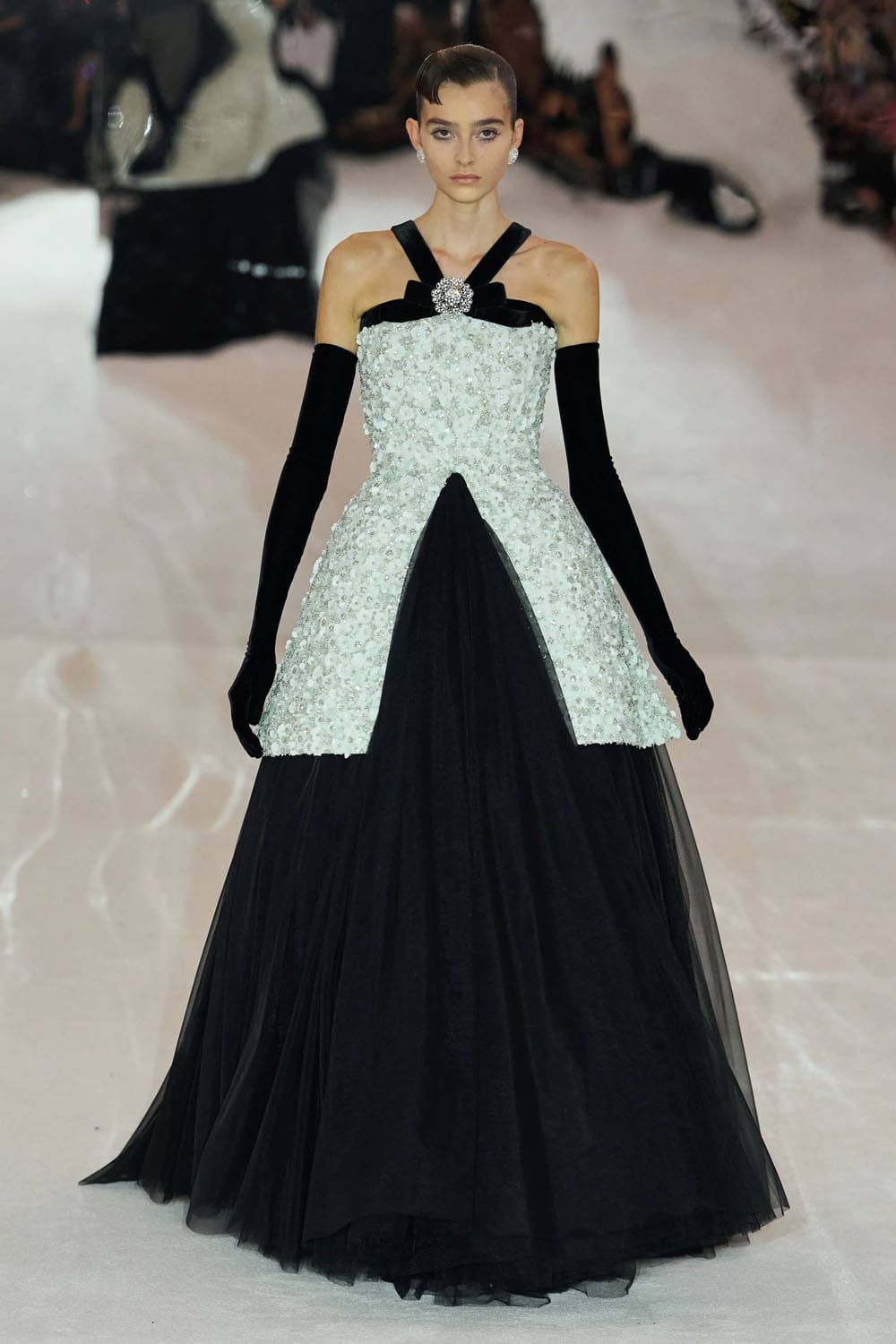
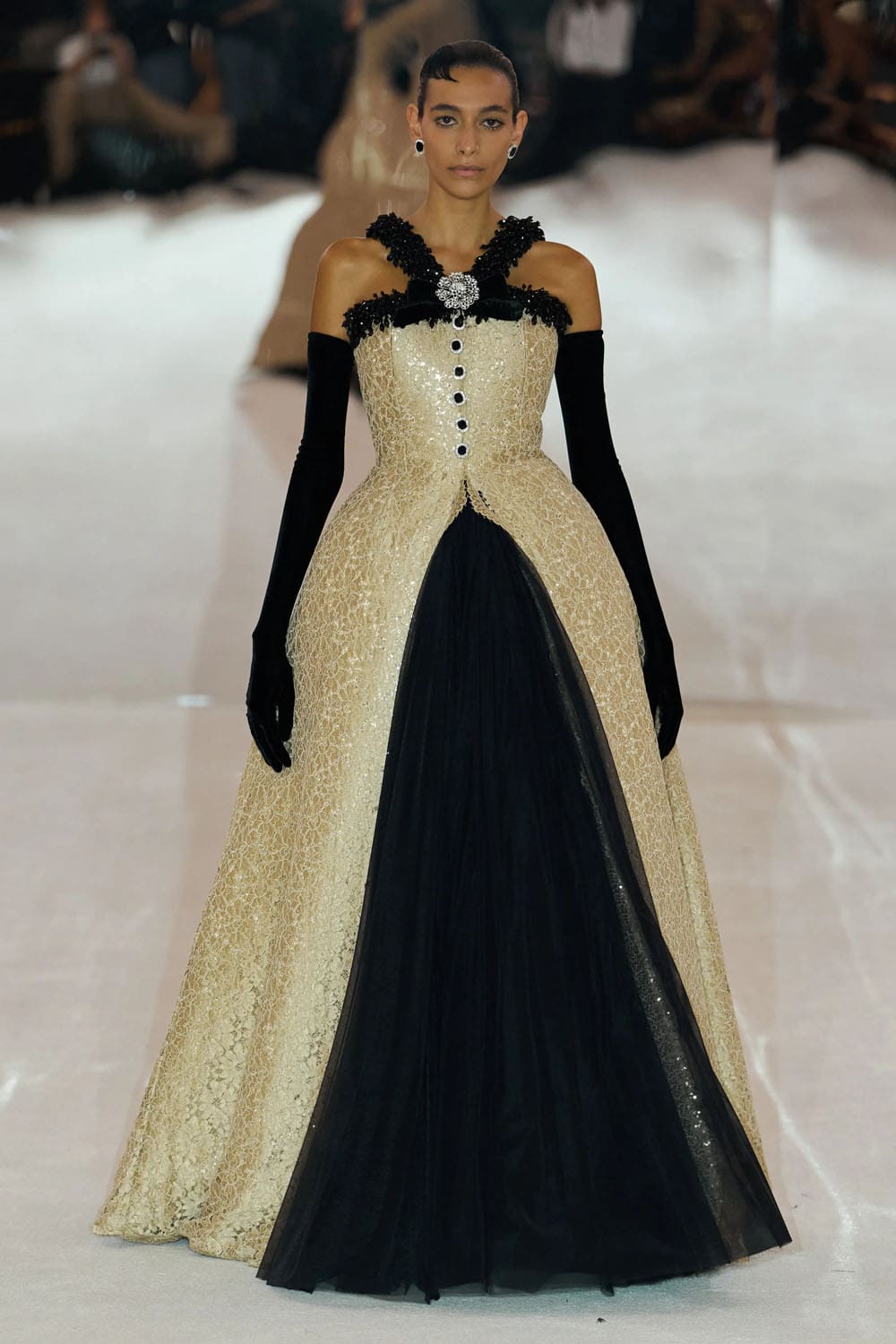
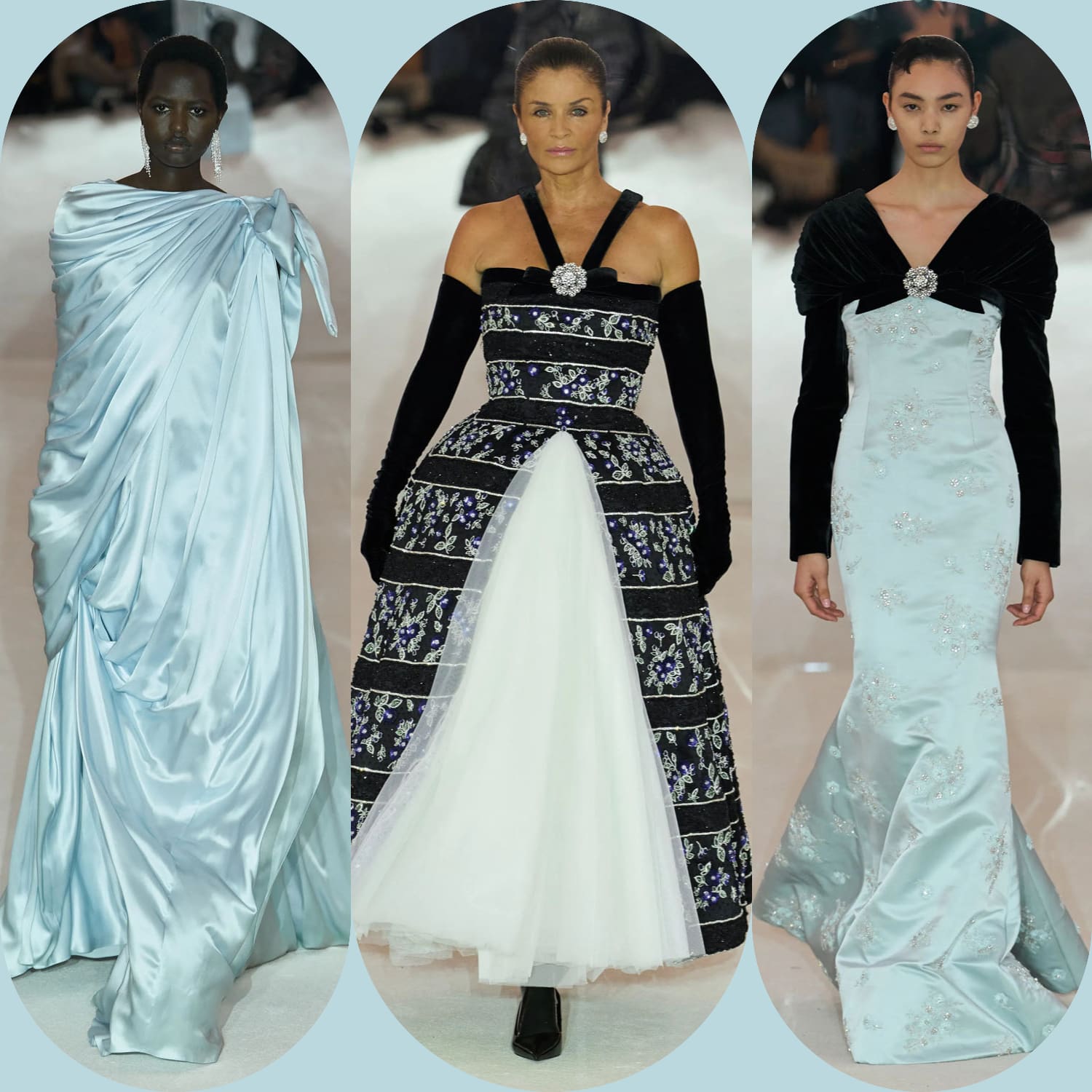
When Quinn tires of raiding Rue Cambon, he promptly wanders across the Seine into Avenue Montaigne. The classic Christian Dior Ligne Corolle and the grand ballgowns of Marc Bohan or John Galliano relied on immaculate structural mathematics. A Dior basque or corseted bodice works because the boning supports the architecture of the hip without dragging the torso into the floor. The dialogue between an ivory taffeta pouf and a black velvet bodice requires absolute balance—a millimeter too low and the entire grace evaporates.
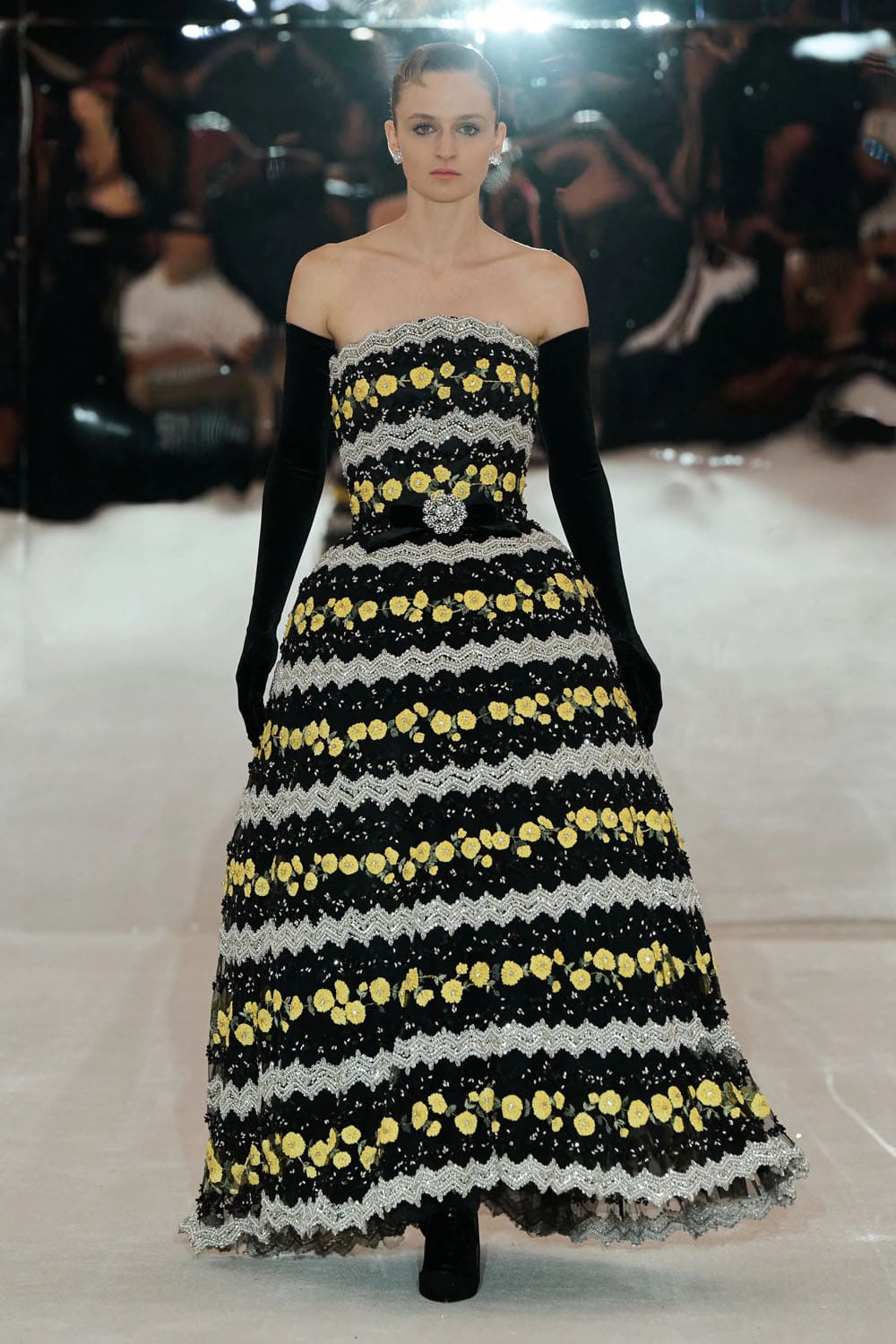
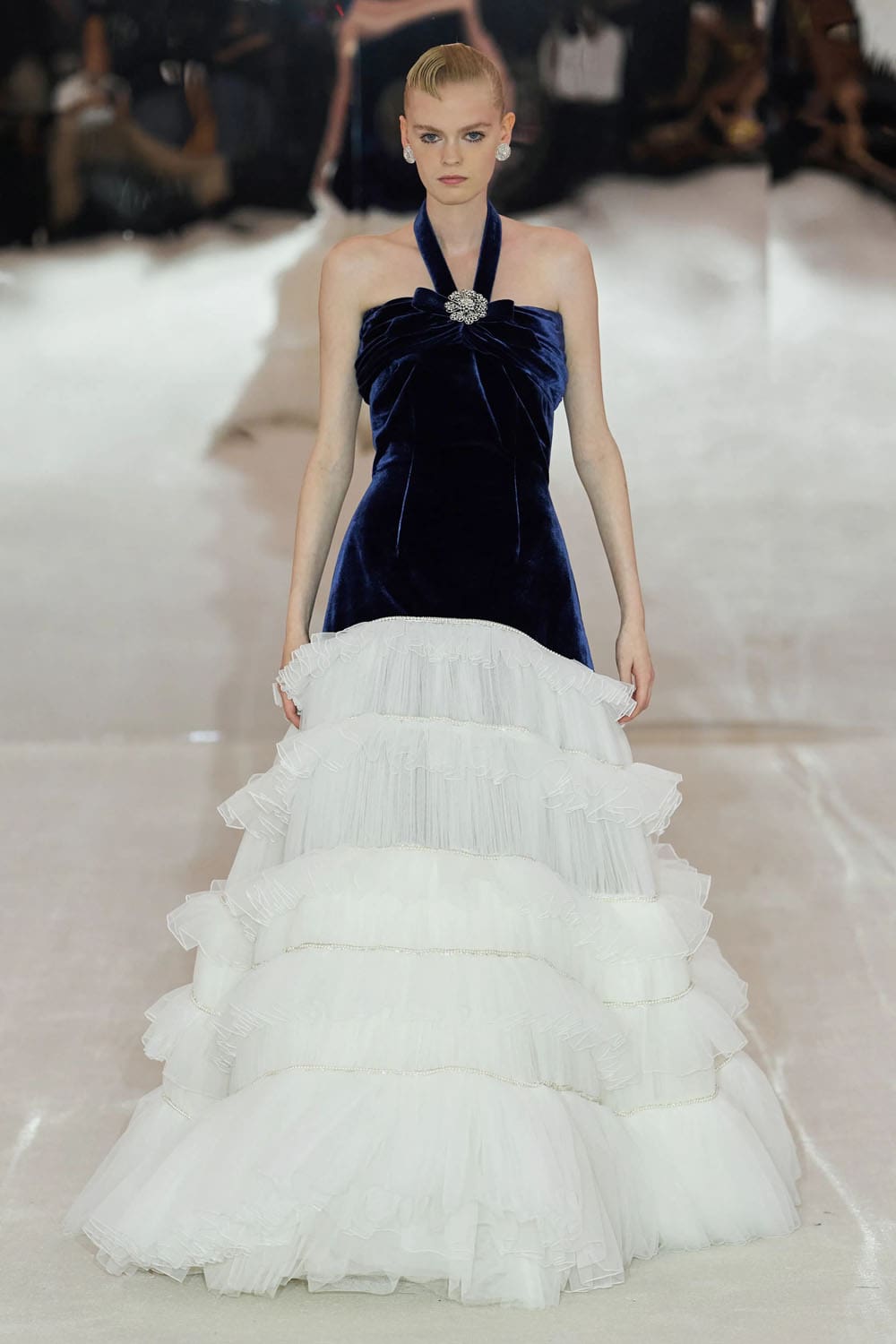
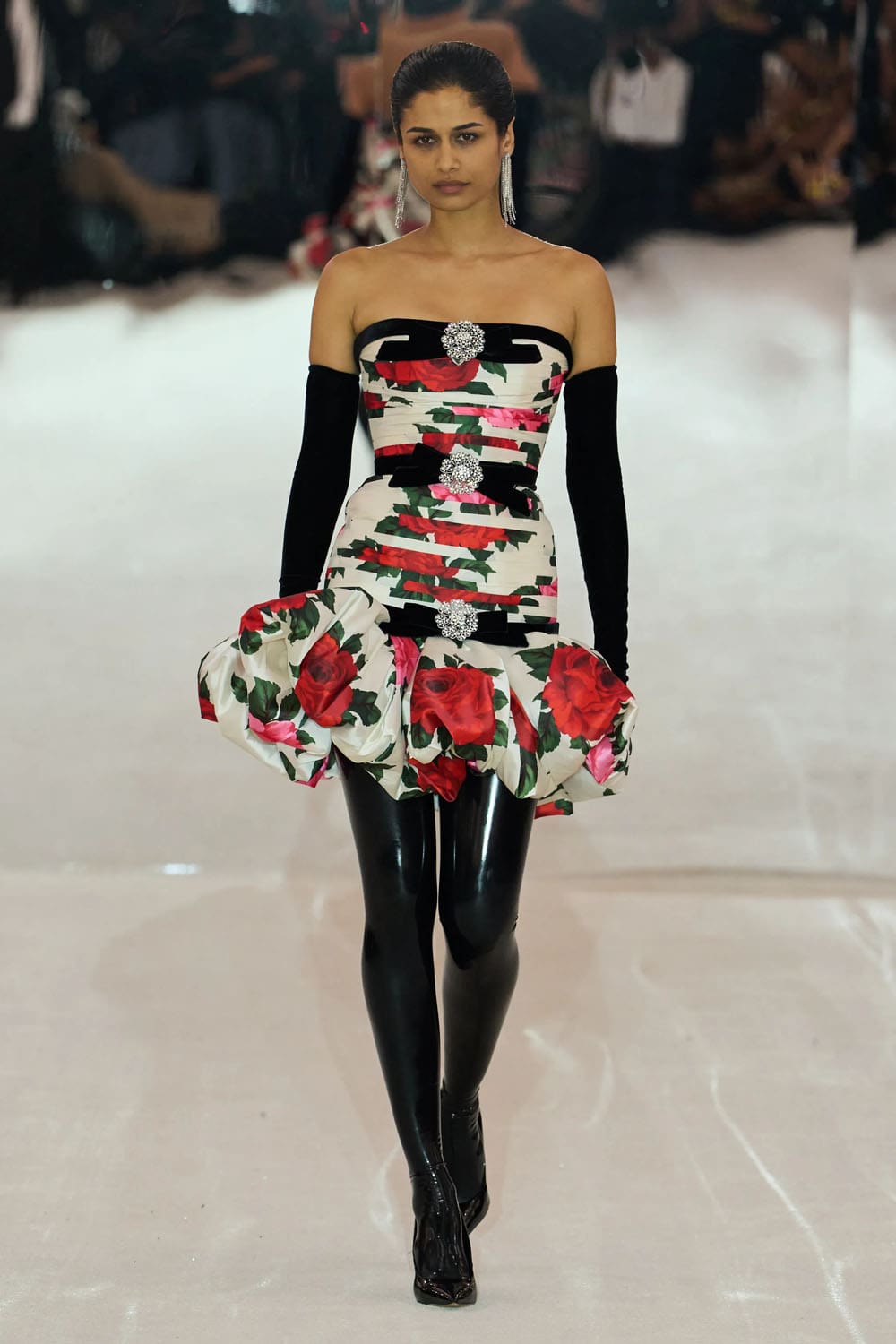
What Quinn presents is a heavy-handed remix that misses the finesse. In his grand black-and-white ballroom gown, a long, dropped-waist black velvet bodice clamps down over a puffed white skirt. But instead of the floating, regal volume of classic Dior, the gathered cloud of fabric sits heavy at the lower hips, weighed down by duplicate crystal brooches slapped on both the bust and the waistline like discount magnetic closures. The proportions pull the silhouette downward instead of lifting it into grandeur.
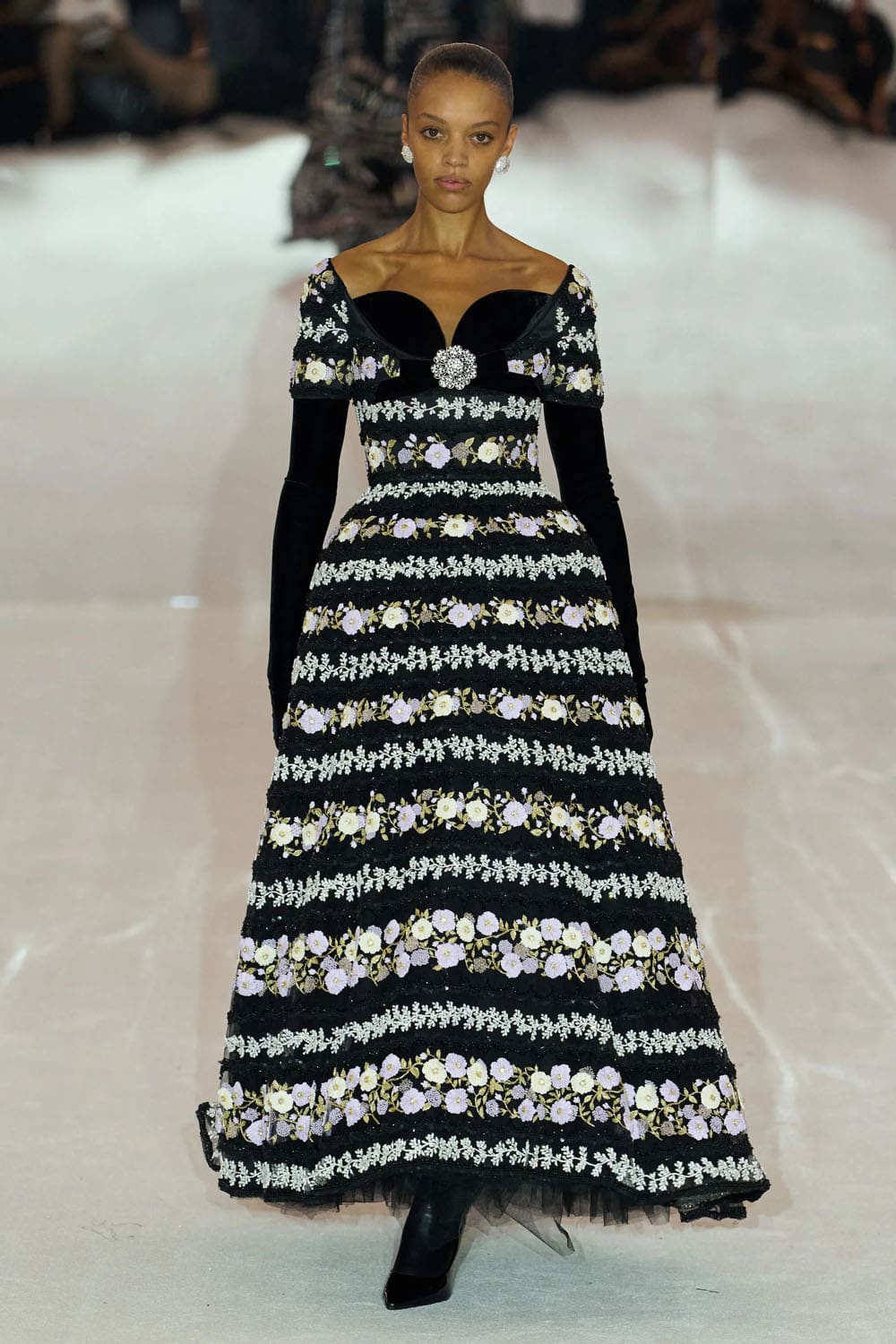
Then comes the quintessential Quinn trope: the English garden party gown. Taking a tiered, bell-shaped ballgown—another sacred silhouette of Dior’s mid-century evening repertoire—he covers it in sweet purple lilac botanical prints, then forces a black velvet bow and crystal brooch right onto the décolletage with heavy black gloves. The clash isn’t edgy or rebellious; it is simply undecided. Is it an homage to Cecil Beaton, a Dior floral ball, or a bridesmaid dress ordered for quick delivery?
Couture Silhouettes for Add-to-Cart Ambitions
The difference between genuine Haute Couture and clever eveningwear comes down to purpose and cut. Haute Couture is an exploration of form and atelier mastery that sets the standard for the entire fashion industry. Badly interpreted Dior and poorly proportioned Chanel silhouettes dressed up with sequins and gloves do not become couture simply because the runway ceiling has crystal chandeliers hanging from it.
Last chance, 50% off online — haute couture fantasy is just one click away, conveniently priced from $385 to $822.
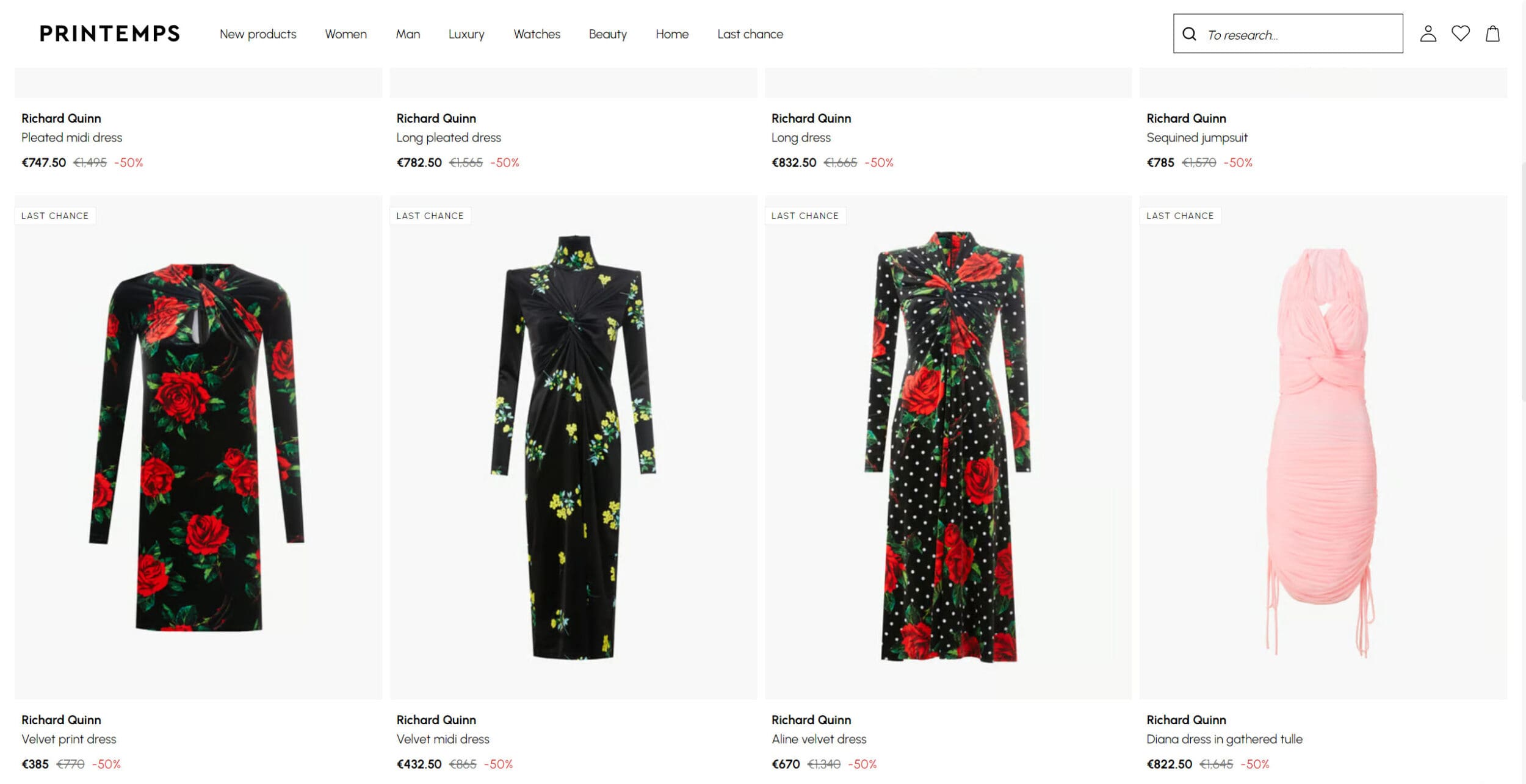
Quinn has built a functioning machine. The garments are well-made enough for private clients who want high-octane red-carpet volume without flying across the Channel, and the website checkout button is always waiting. But let us stop pretending this is groundbreaking design. It is a well-oiled catalog of secondhand ideas, repackaged for clients who love the look of Paris but are content buying the London cover version.
Key Takeaways
- The Richard Quinn Spring 2027 collection mimics haute couture but lacks originality and finesse.
- Quinn’s designs borrow heavily from Chanel and Dior yet fail to capture their essence, resulting in derivative garments.
- Despite well-crafted pieces, the collection feels like a commercial venture rather than groundbreaking fashion.
- Quinn’s attempt to blend different styles leads to confused aesthetics rather than coherent couture.
- Overall, the collection serves more as a high-end retail catalog than a true representation of haute couture.
See All Looks Richard Quinn Spring Summer 2027