Mulberry
THE TRIUMPHS
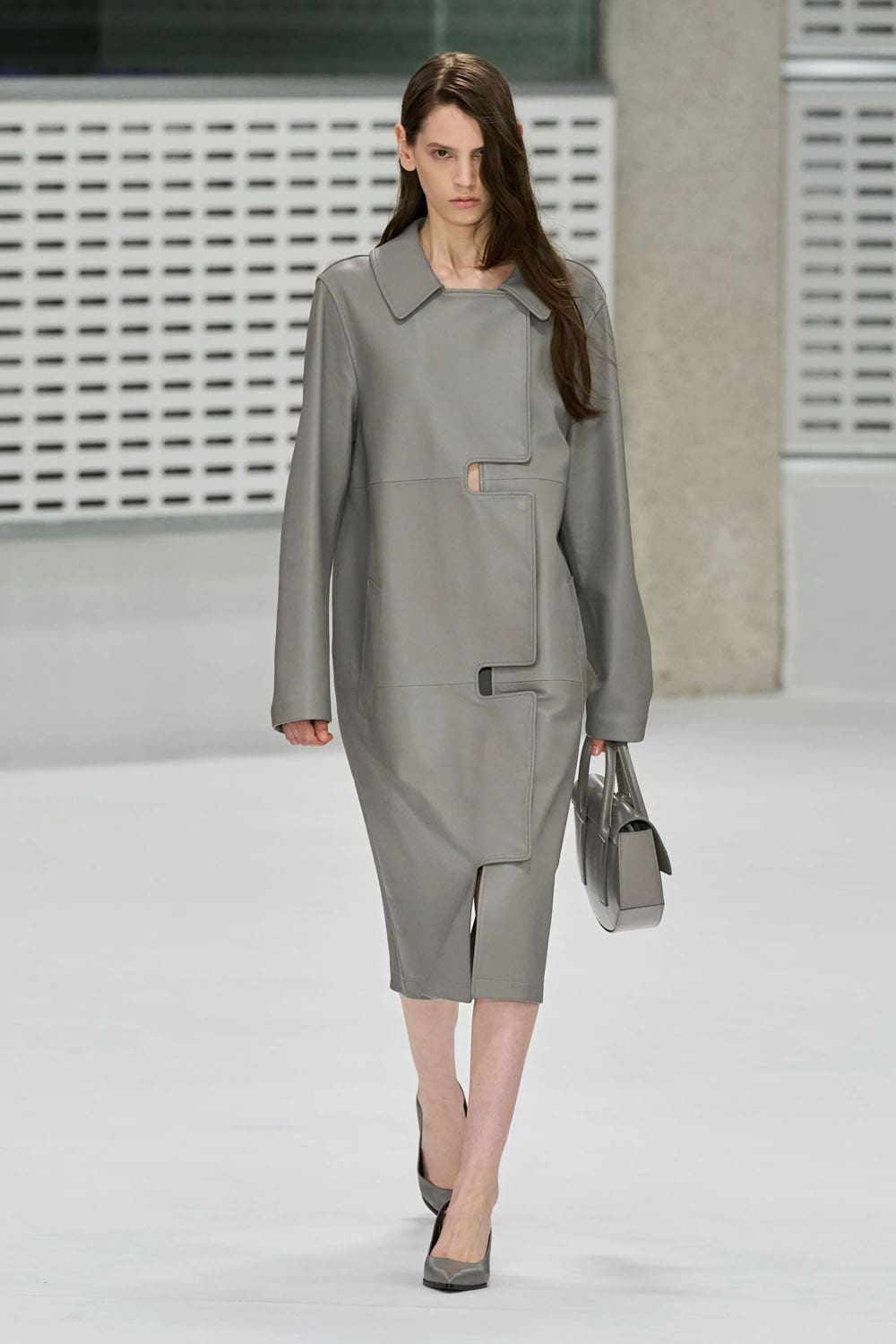
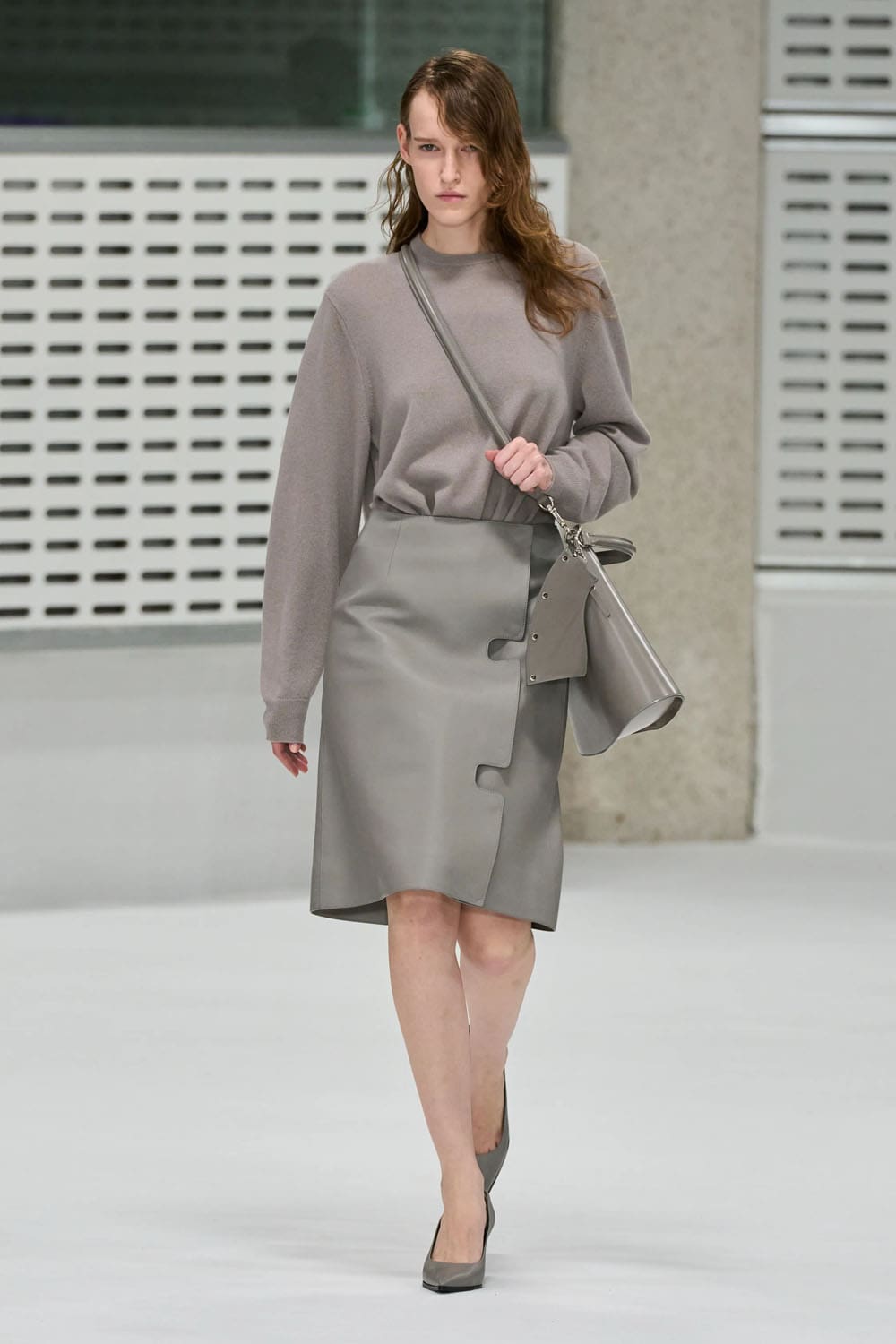
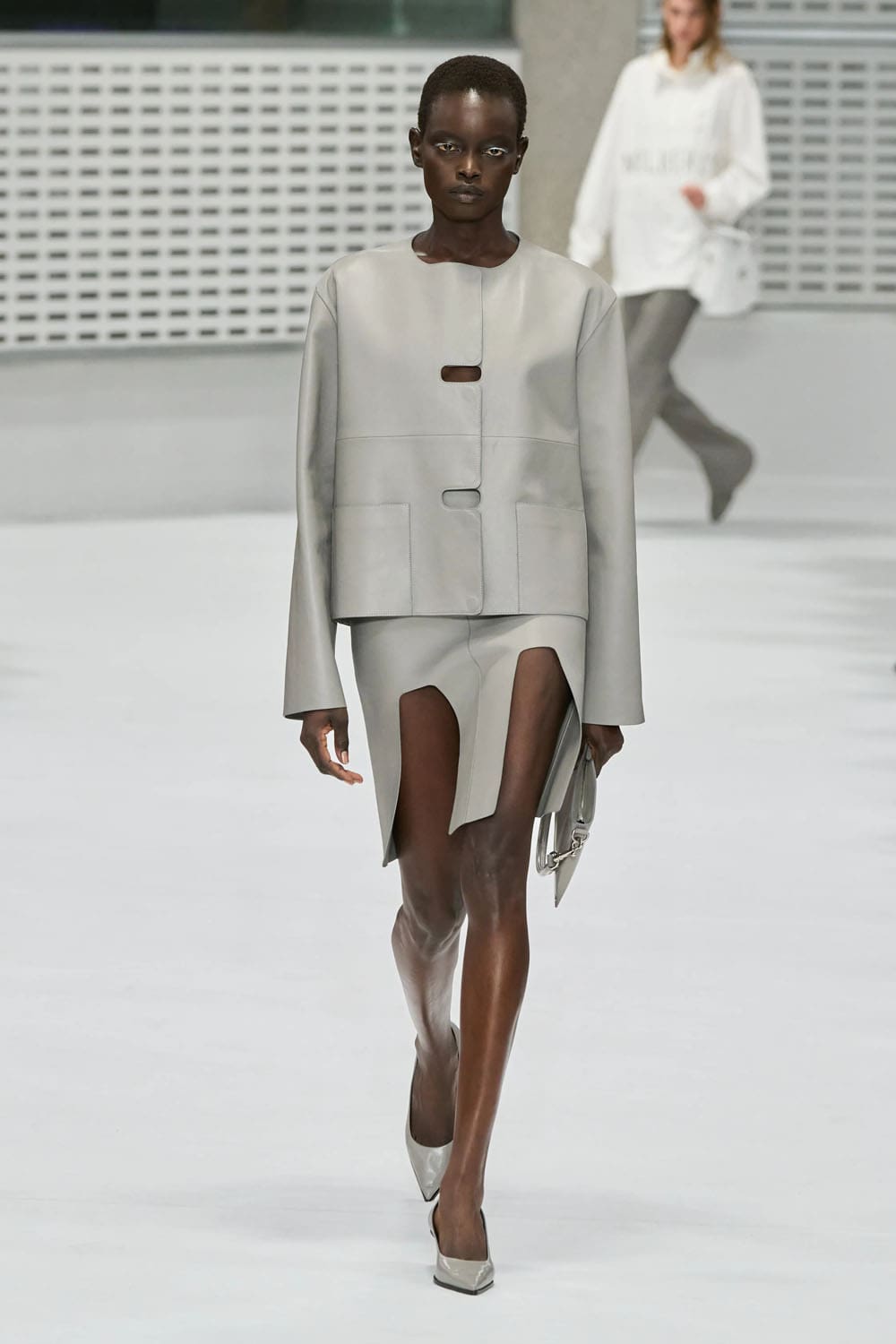
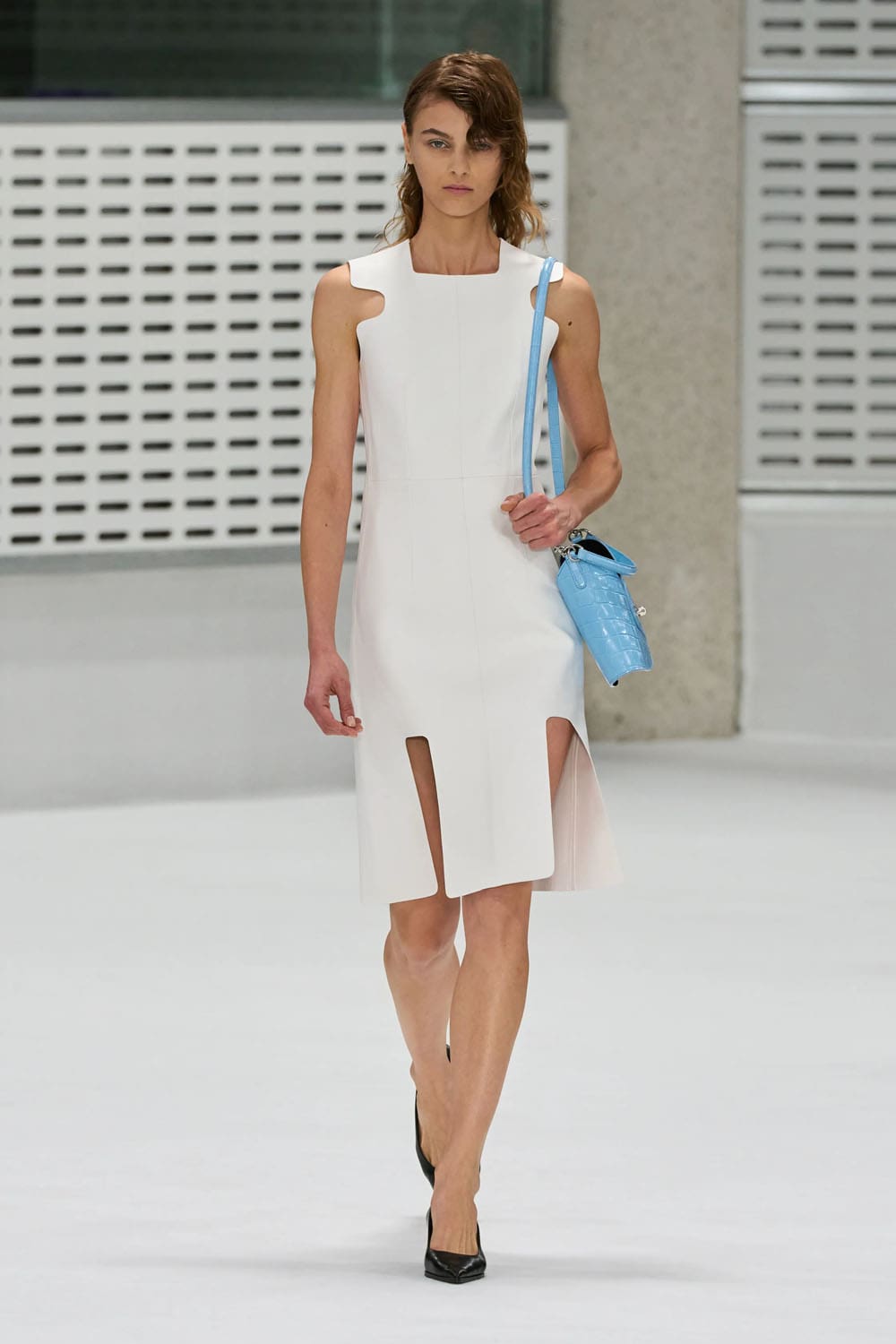
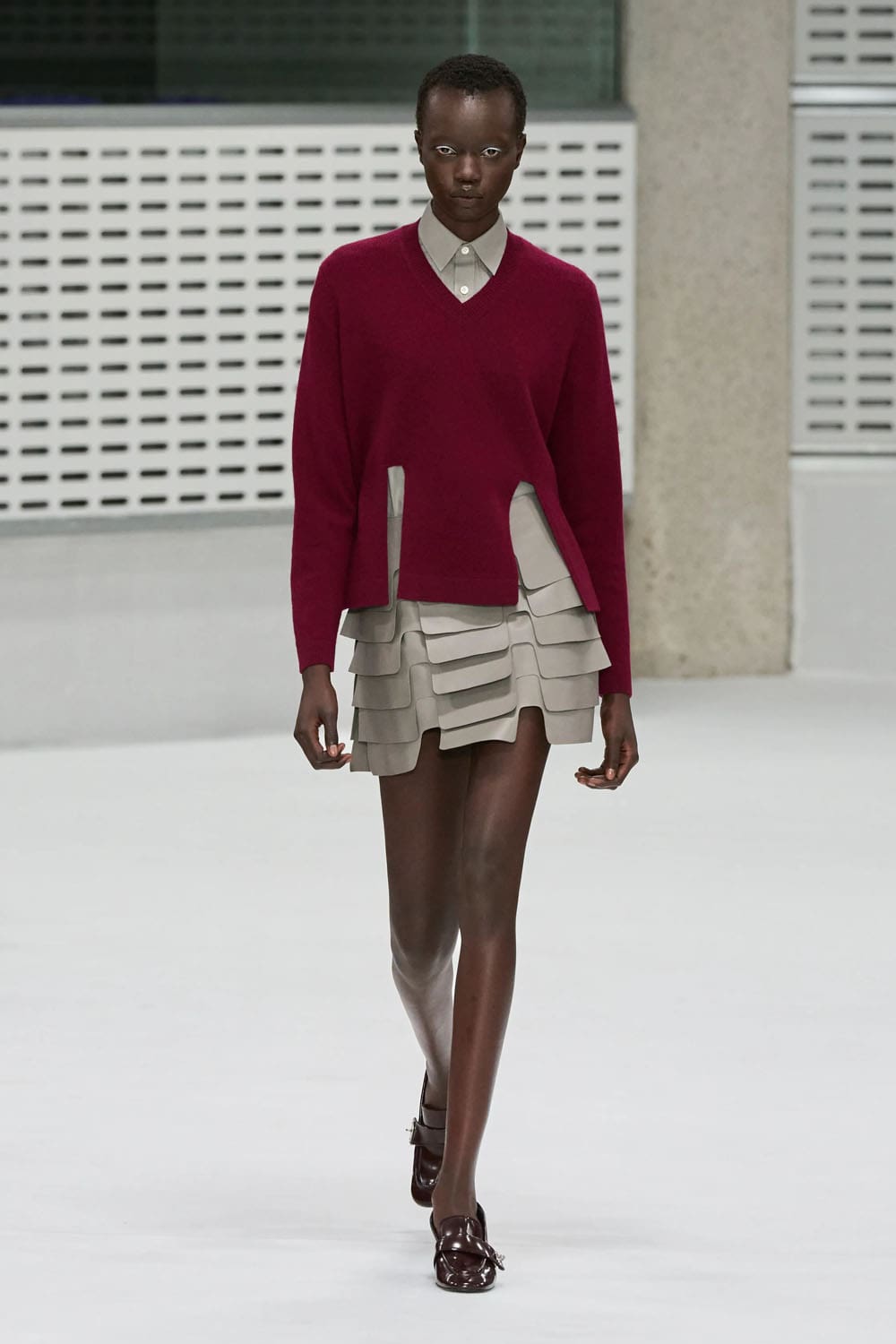
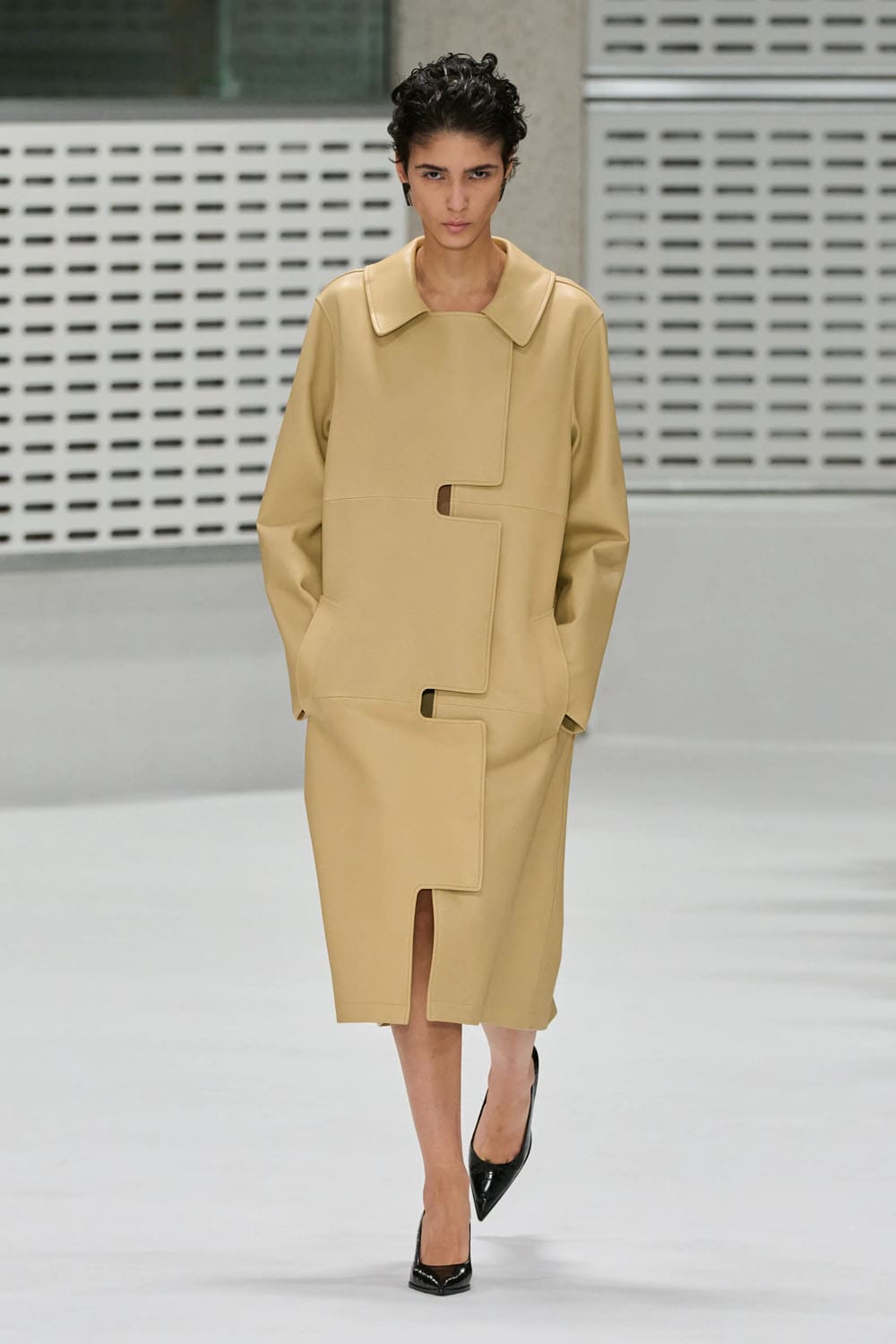
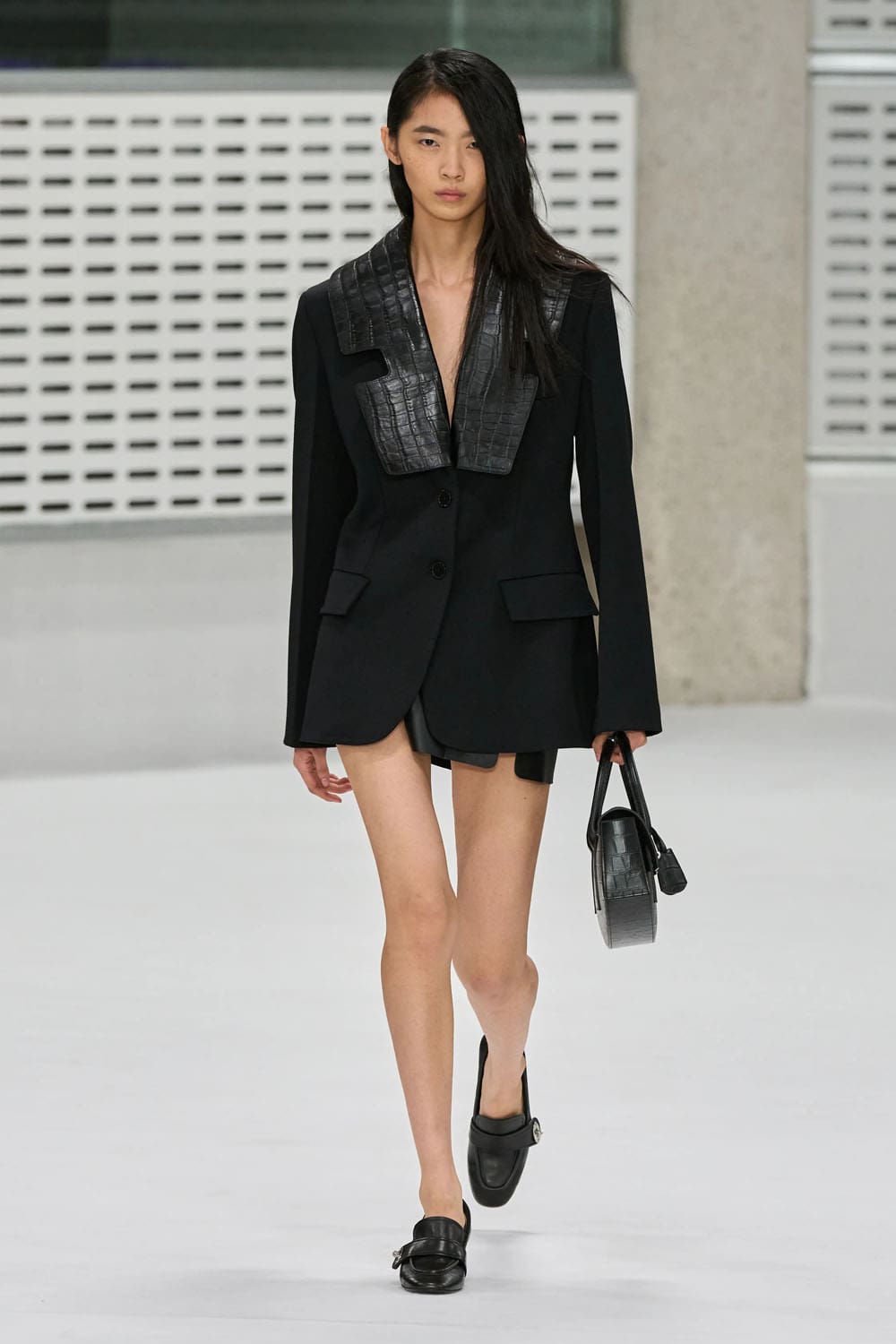
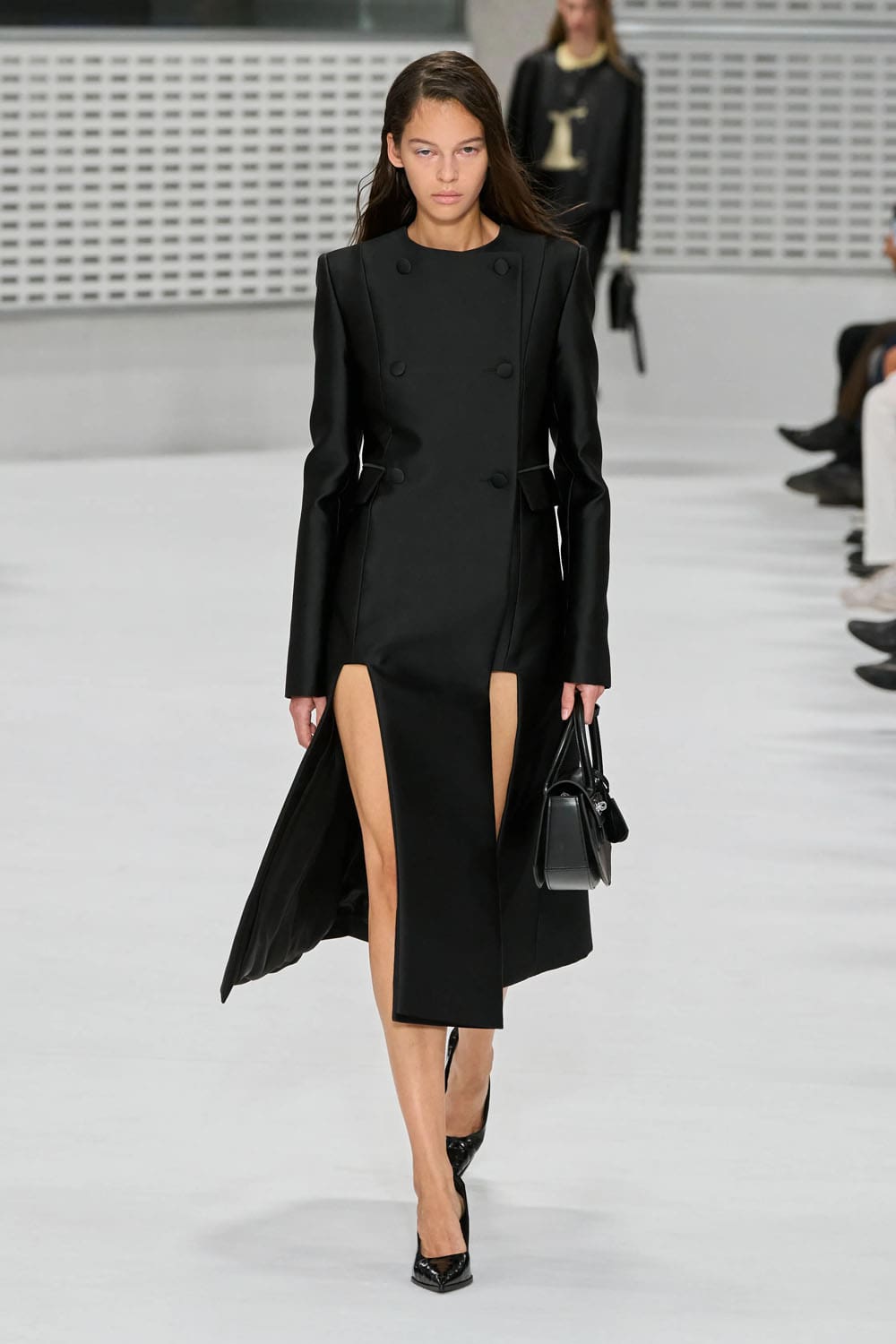
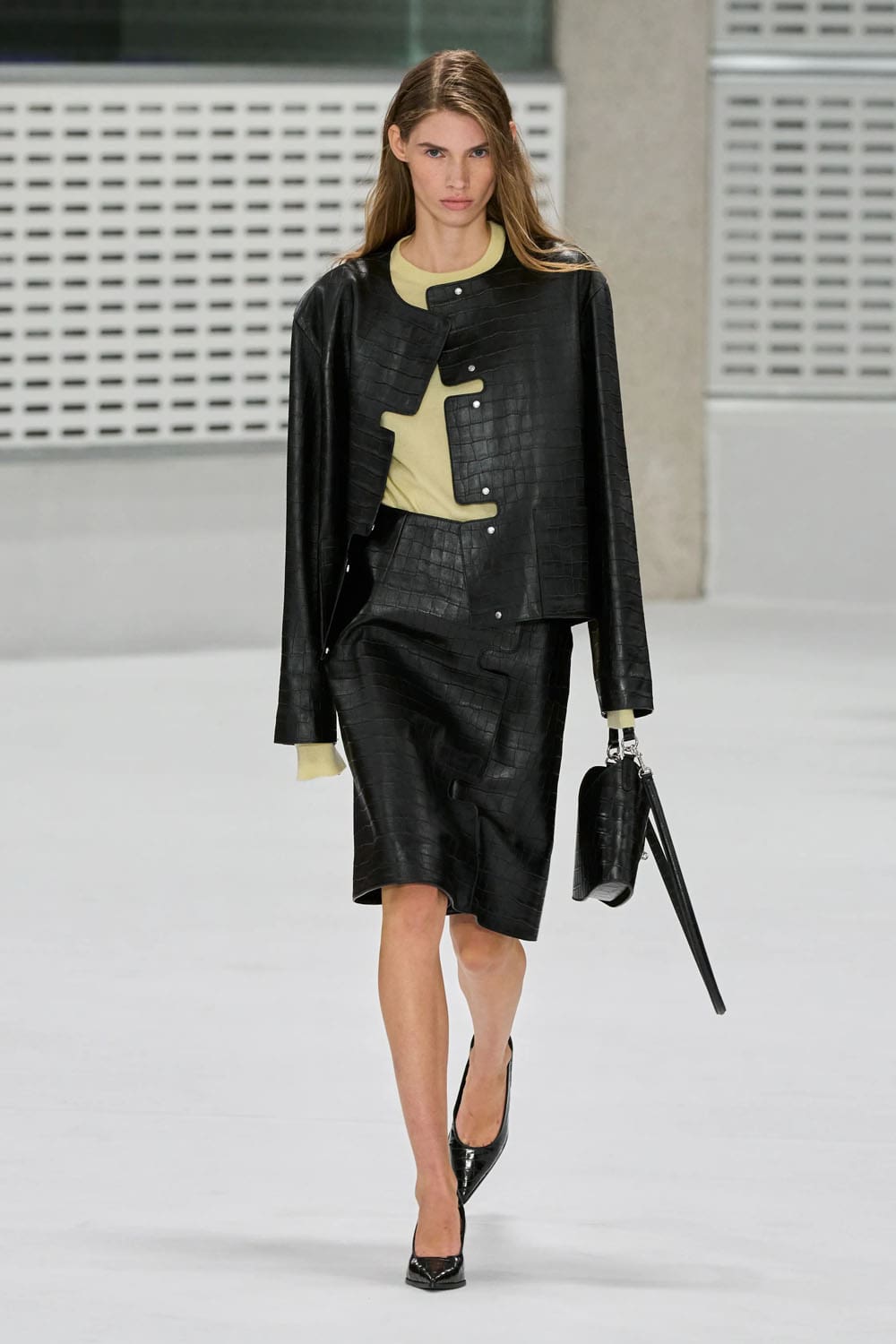
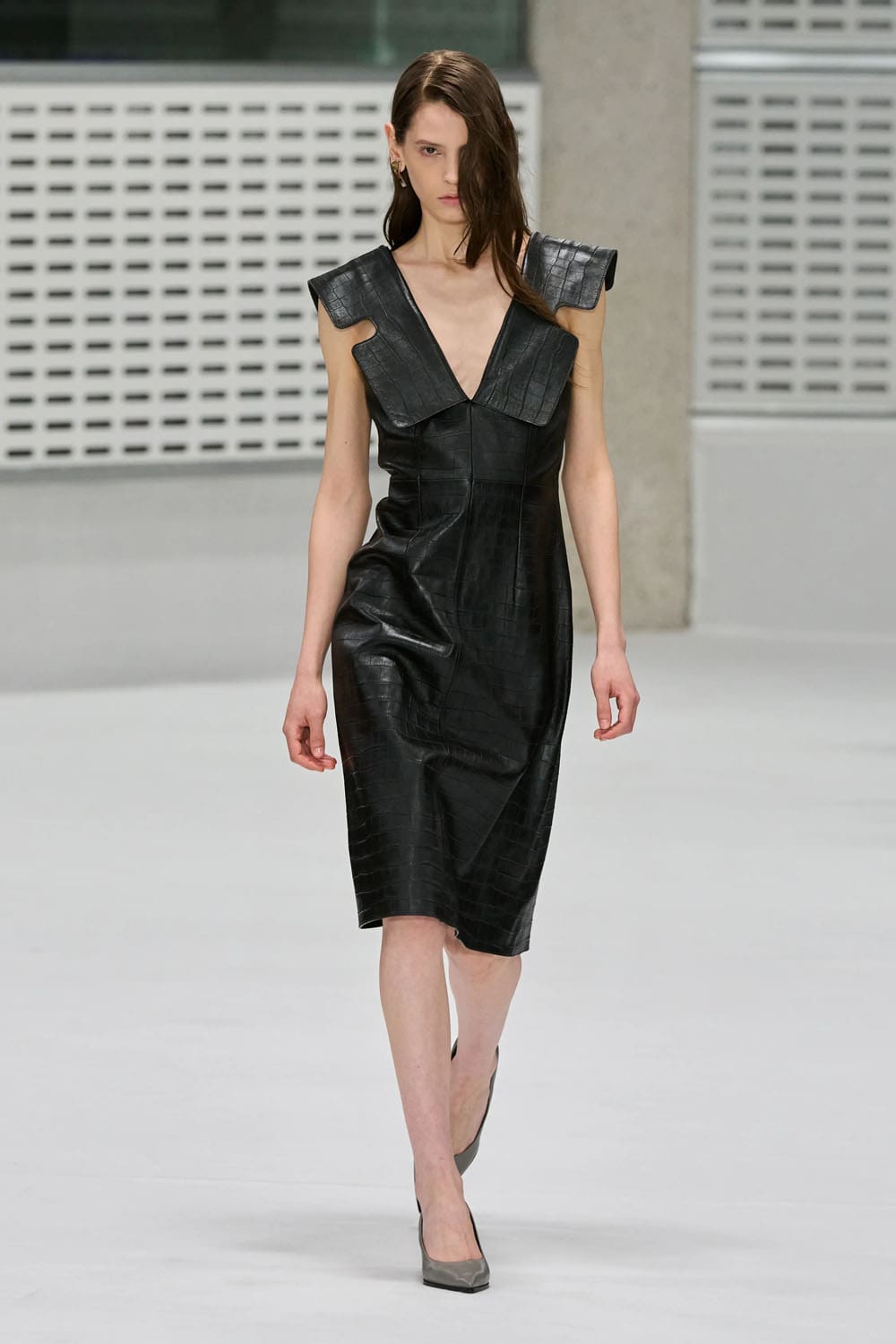
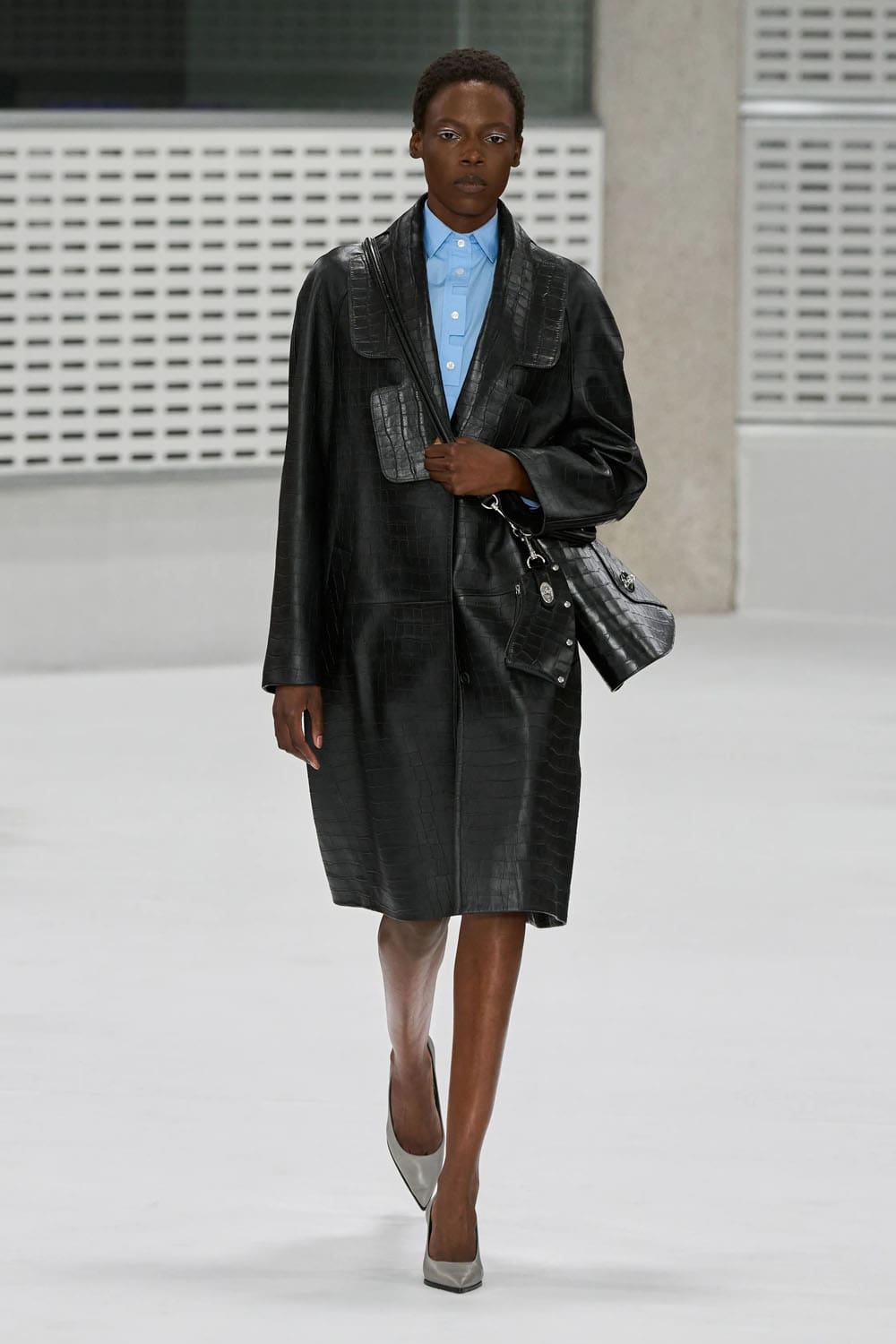
- Brilliant architectural deconstruction of the Bayswater bag flap, transforming its iconic curved contour into engineered neckline slits, coat closures, and tiered leather skirts
- Triumphant return of Christopher and Tammy Kane, bringing seasoned maturity that pivots away from shock value toward elevated British daywear and sharp modern utility
- Authentic archival alchemy harmonizing Roger Saul’s Somerset roots and vintage wallpaper floristry with the Kanes' own Scottish childhood tartans
- Forward-looking leather goods expansion introducing brutalist silhouettes like the Axe and Chop, seamlessly balancing polished loafers with functional luxury backpacks
RESERVATIONS
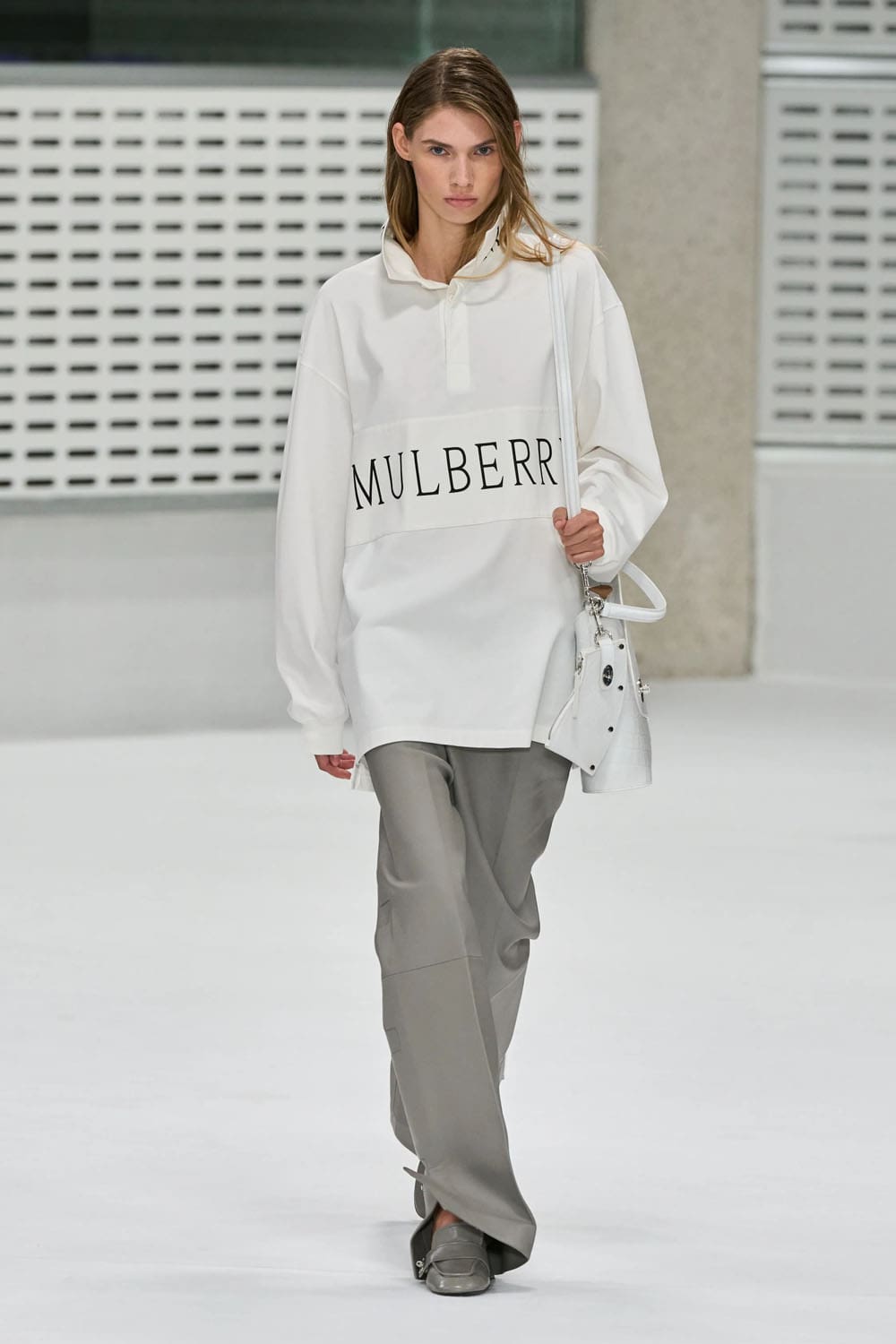
- Brief studio ramp-up time that leaves several casual streetwear pivots, such as the oversized retro logo polo, feeling somewhat safe compared to the structural leatherwork
- High conceptual barrier where subtle handbag geometry translated into tailored shifts may elude casual observers looking for overt heritage tropes
Mulberry Spring Summer 2027 “Architecture and Archaeology.” Story by Kate Granger, Editor of RUNWAY MAGAZINE. Photo Courtesy: Mulberry.
The return of Christopher Kane to the fashion calendar via his debut as creative director of Mulberry was arguably the most anticipated pulse-check of London Fashion Week. Staged within the imposing, Brutalist geometry of the Queen Elizabeth II Conference Hall in Parliament Square, the setting itself offered a profound metaphor. It signaled an intentional clean break for the heritage leather brand founded by Roger Saul in Somerset in 1971, while simultaneously anchoring it in a modern, razor-sharp British vernacular. For Kane, who spent the last three decades etching his name into the annals of contemporary design—first as a Central Saint Martins prodigy, then as an independent disruptor, and now as a steward of heritage—this collection was less of a revival and more of an archaeological excavation of form.
The weight of history hangs heavy over any house with a distinct lineage. Saul originally launched Mulberry from his kitchen table in Somerset with £500, building an empire rooted in rural English lifestyle, traditional leathercraft, and the iconic “Town and Country” dichotomy. When Christopher and his sister Tammy Kane took over the design studio at Mulberry’s Kensington Church Street headquarters in the early summer, they inherited not just a brand, but a mythos. Rather than drowning in the archives, the siblings treated them as a quarry.
The Grammar of the Flap
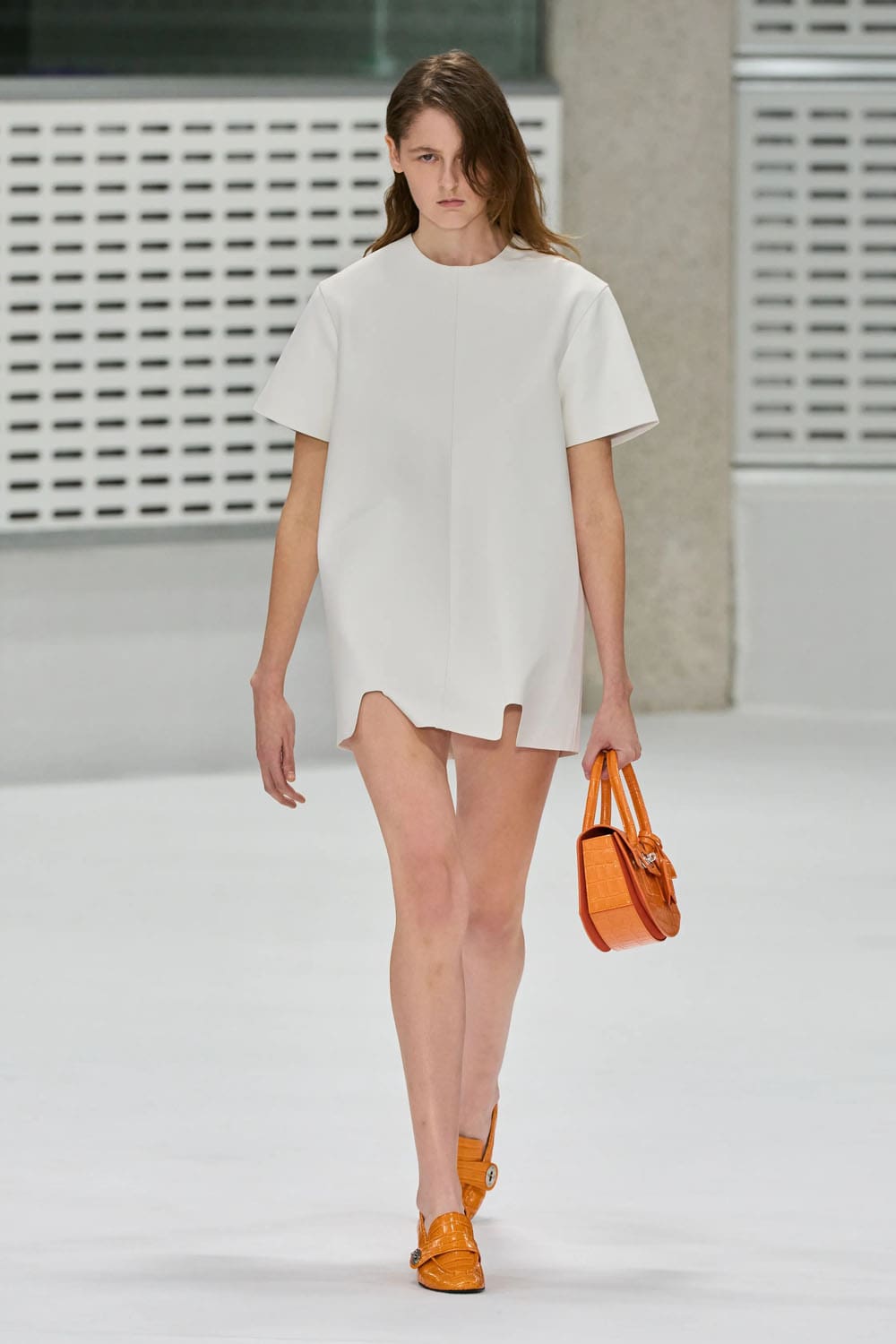
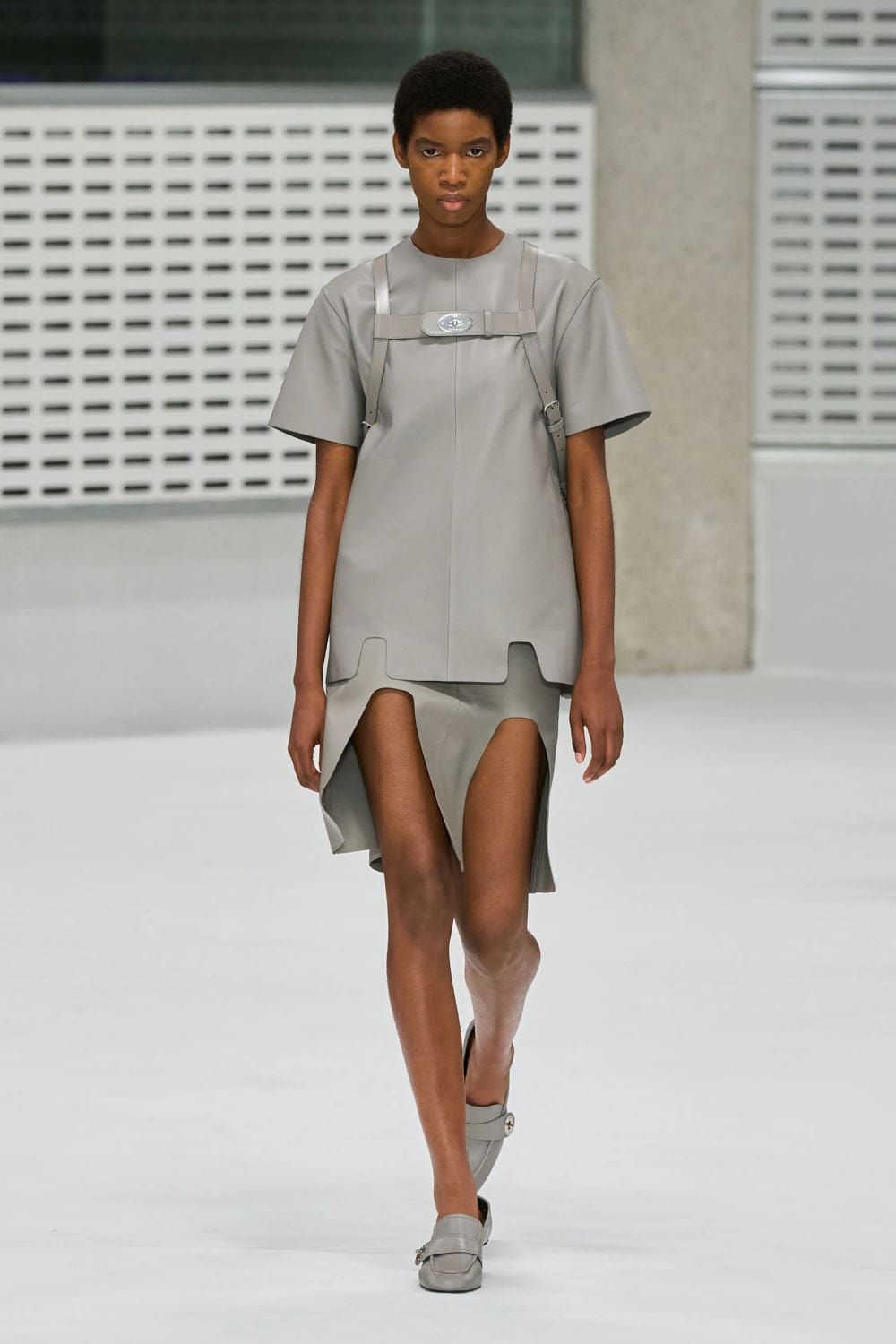
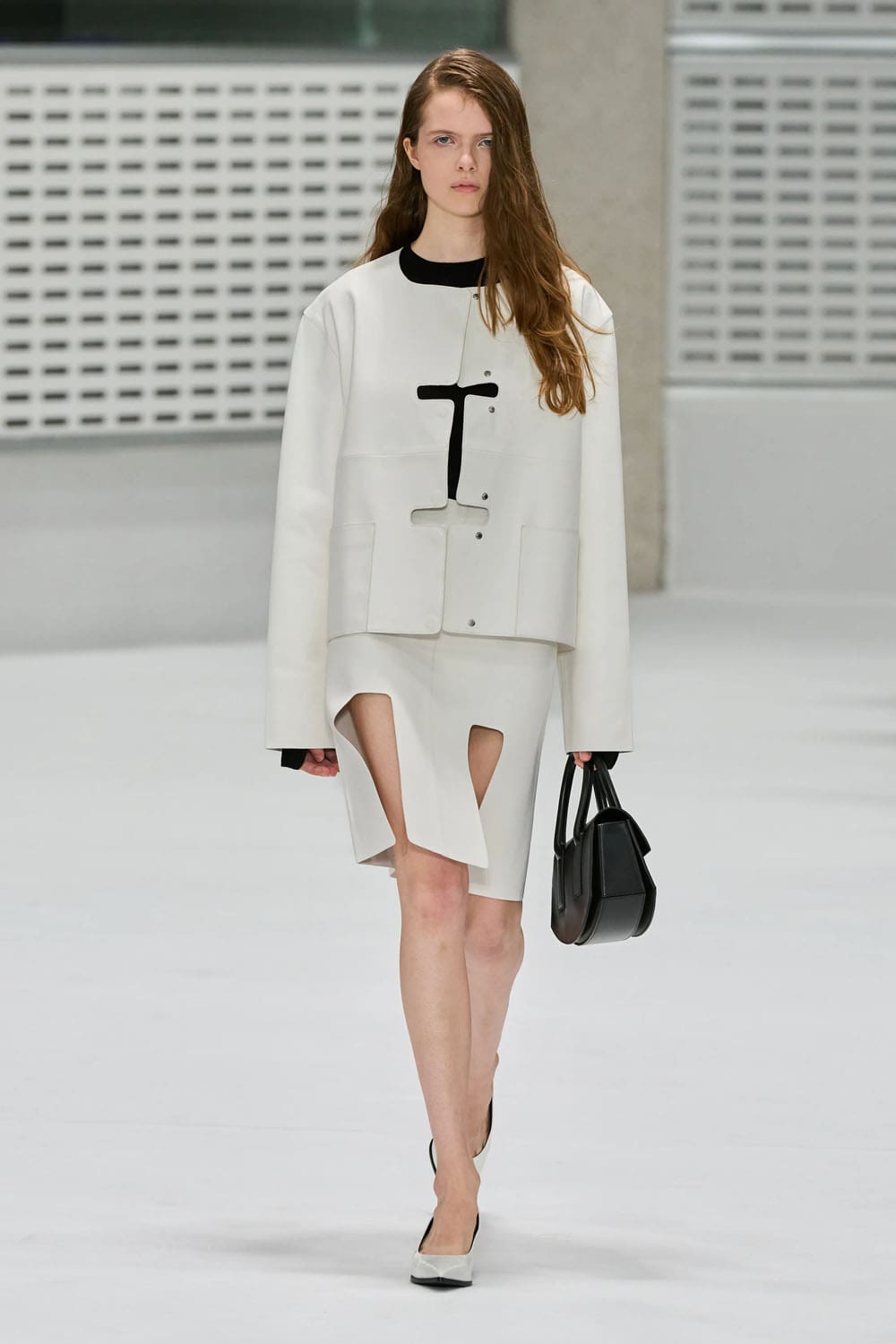
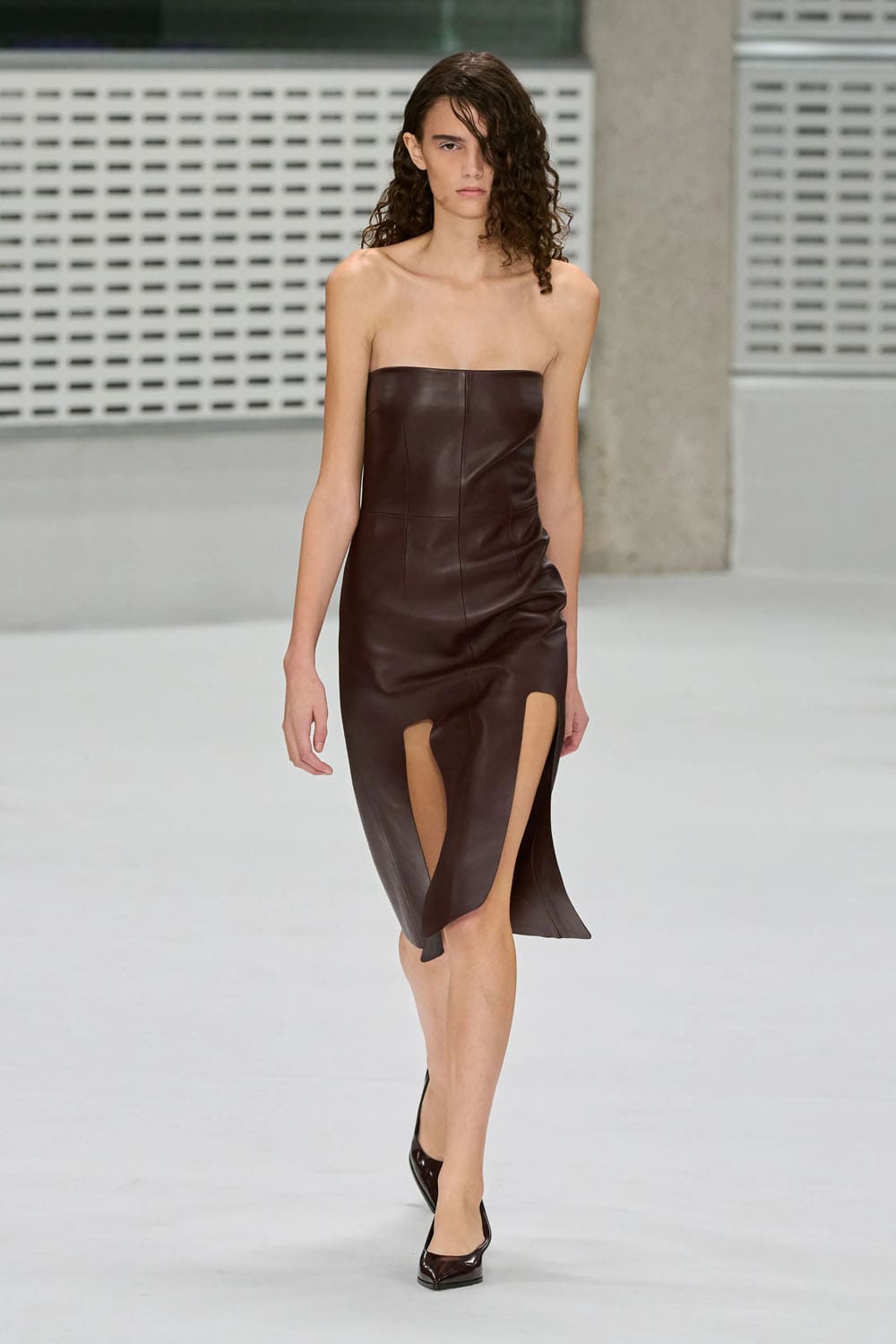
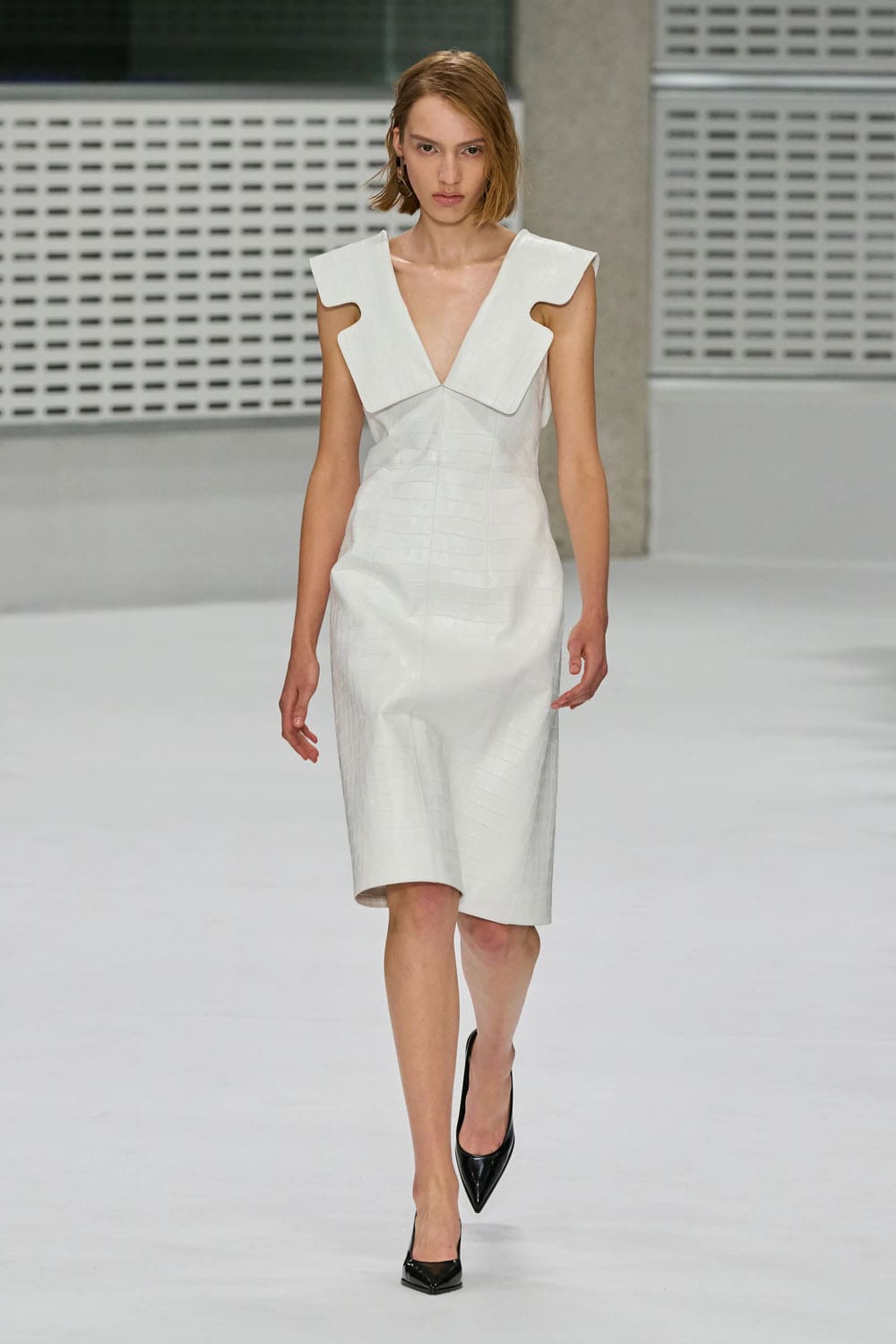
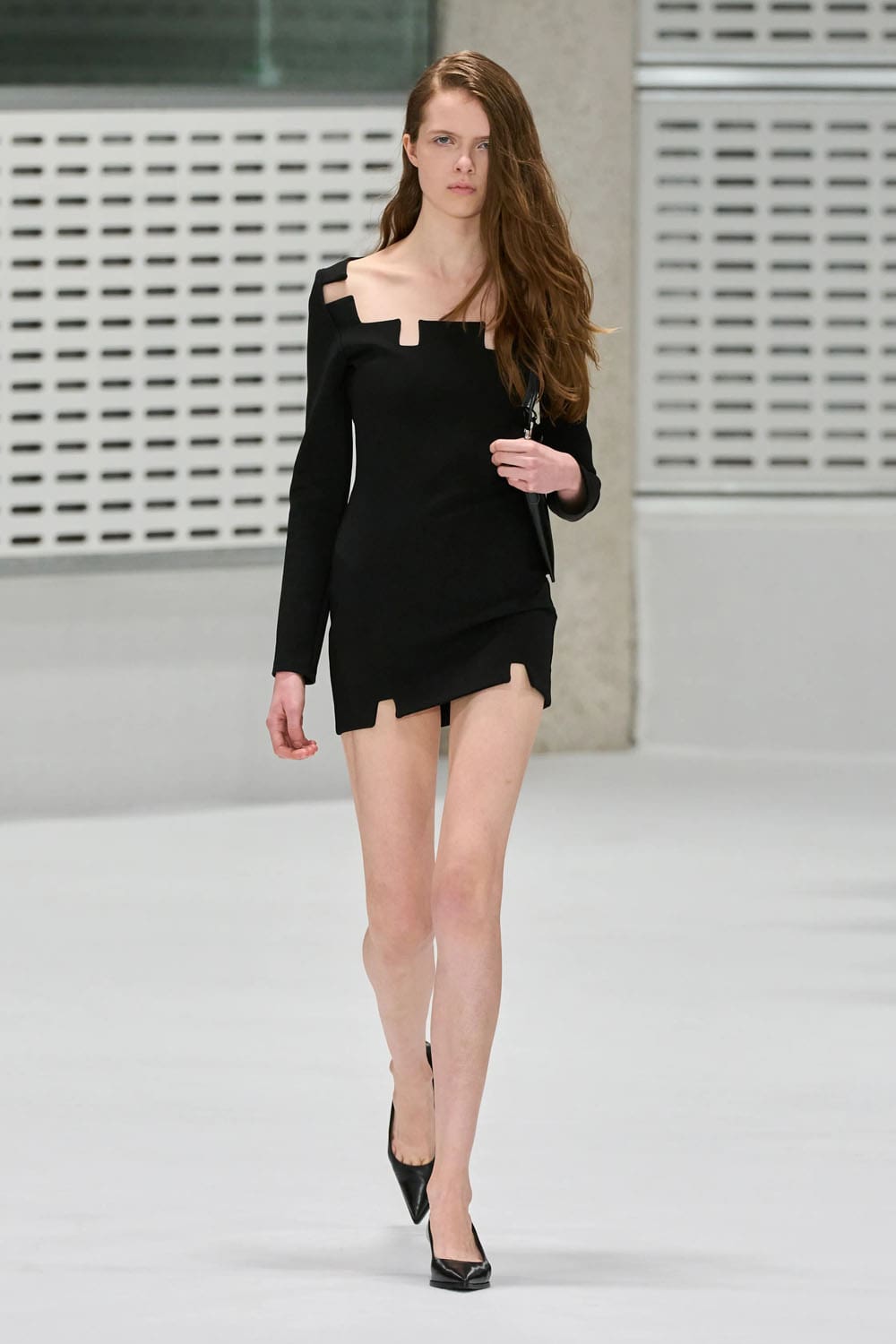
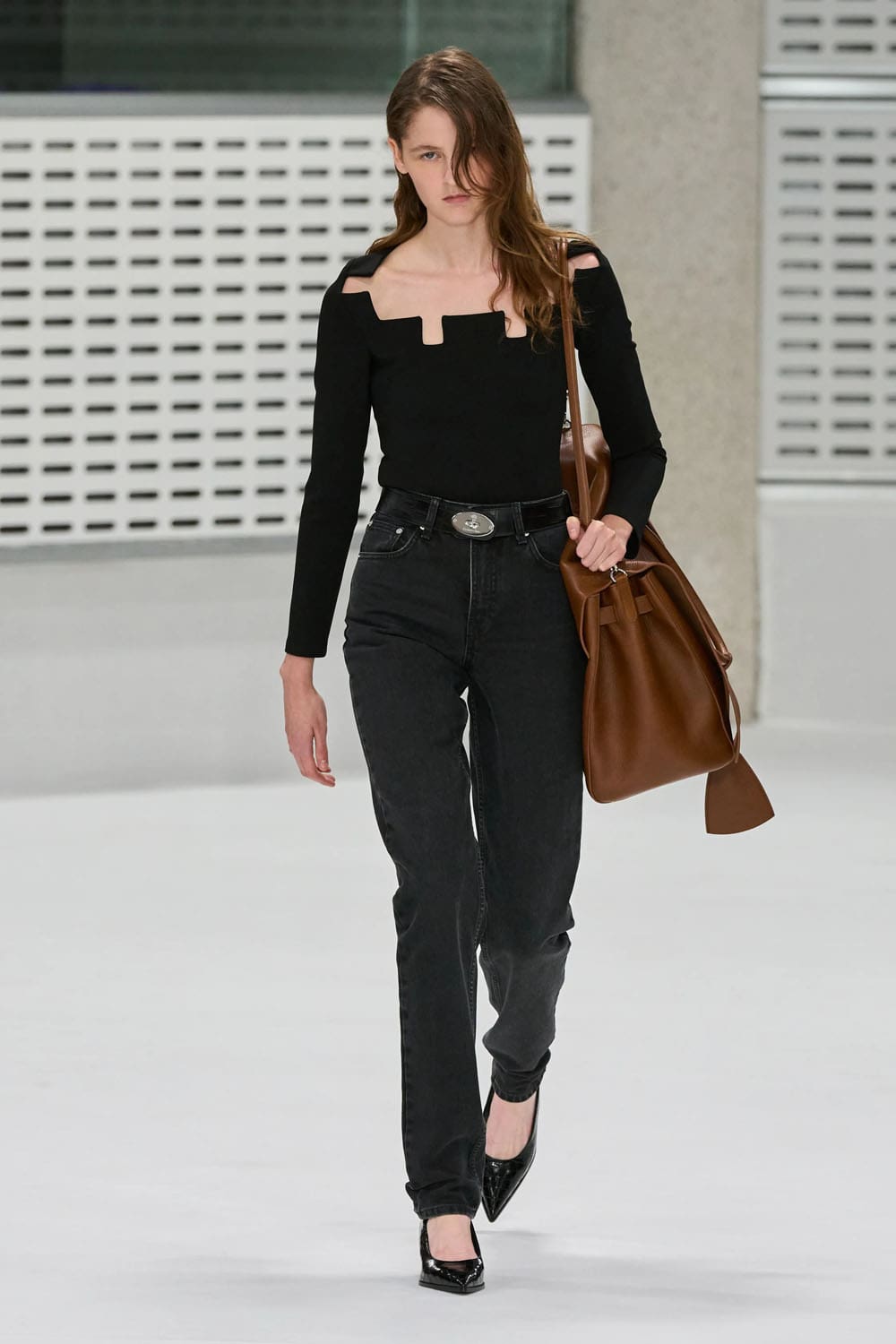
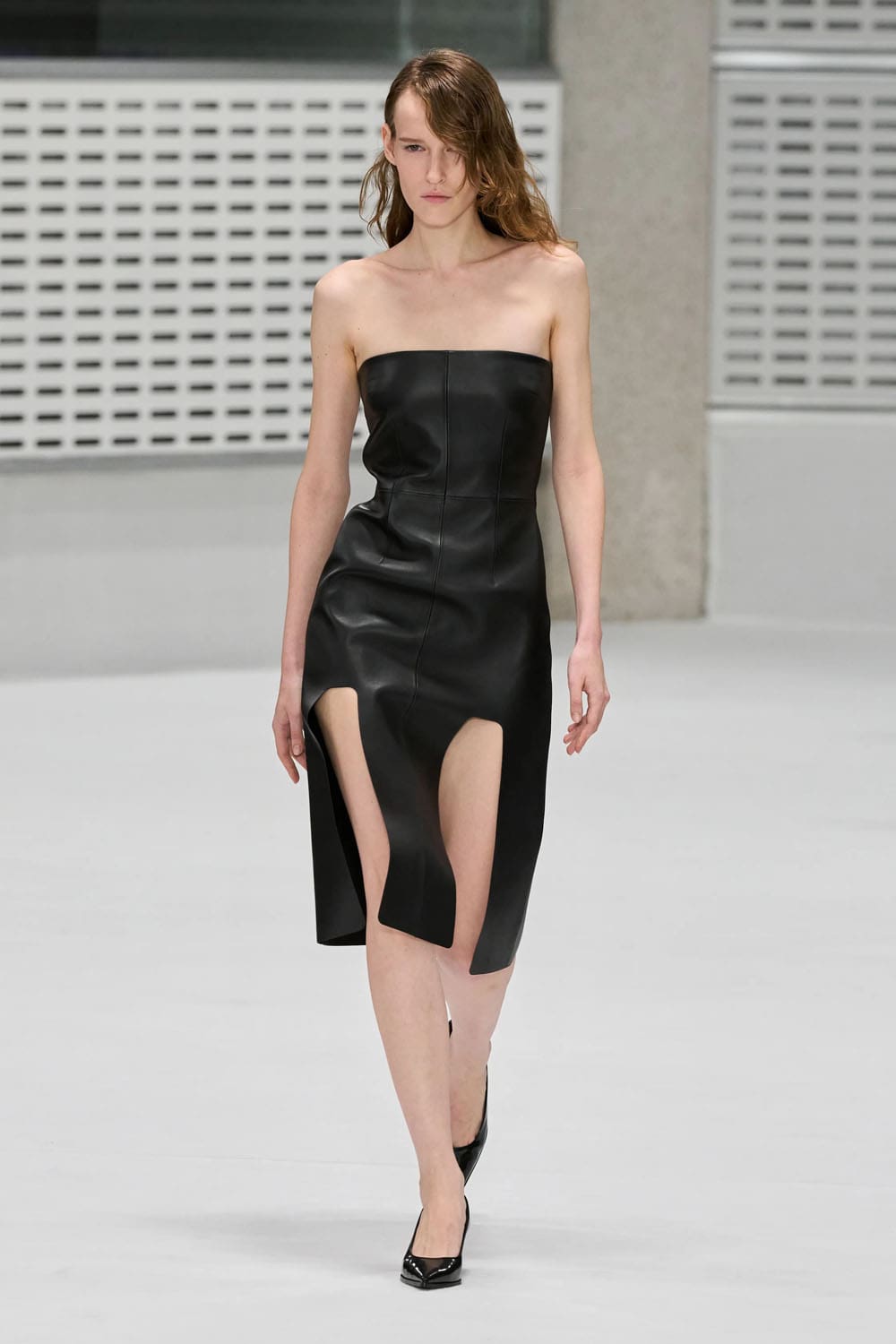
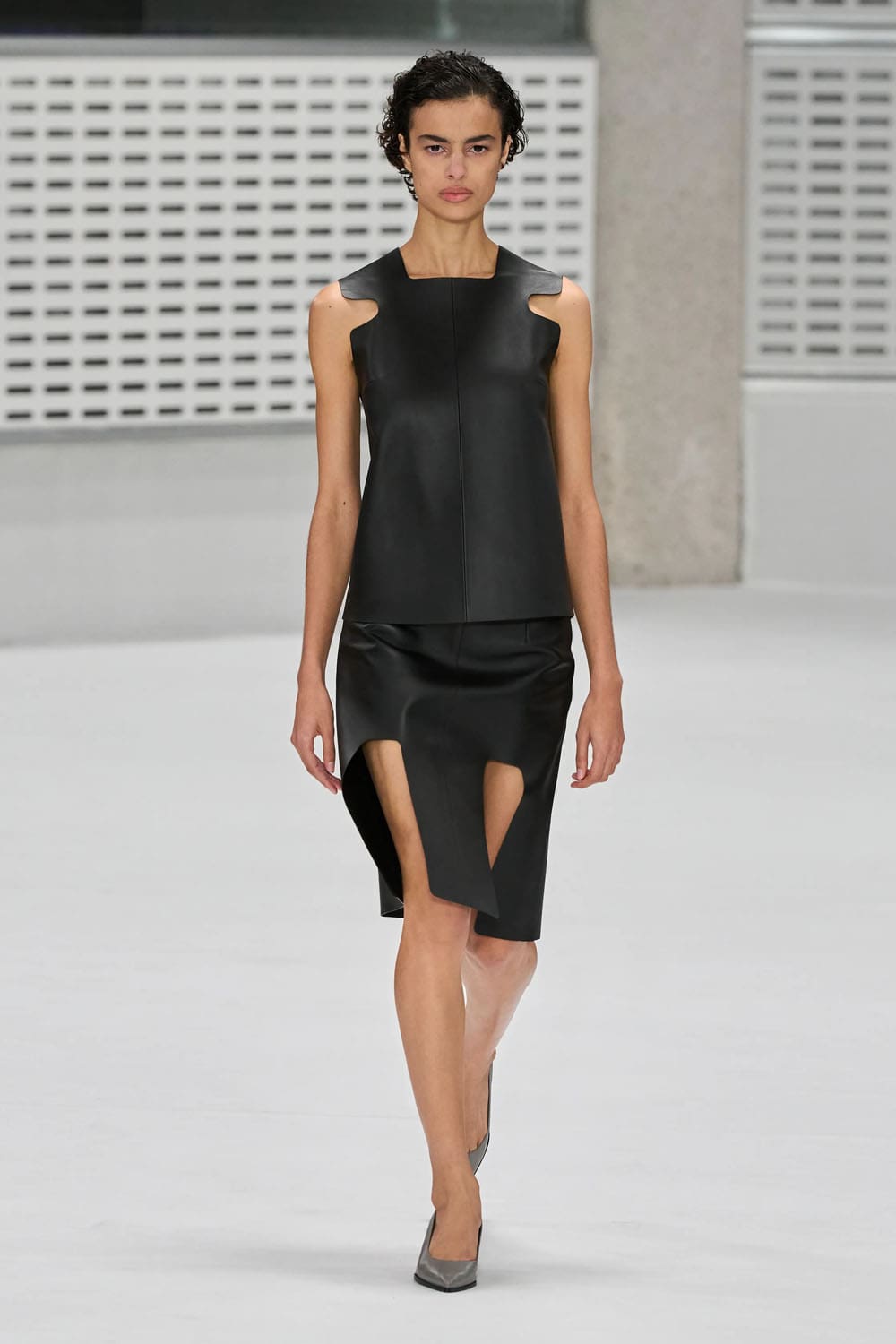
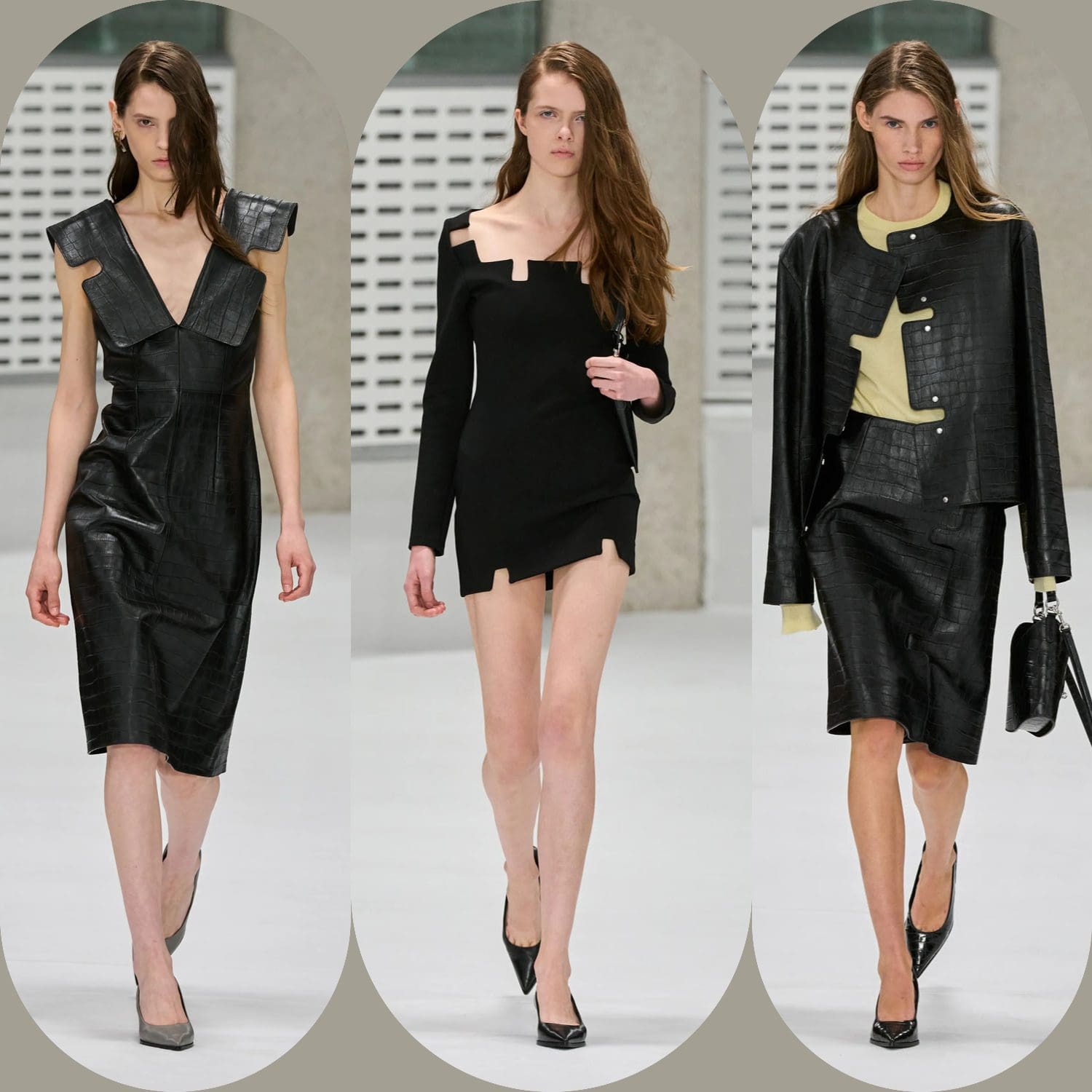
The intellectual core of the collection revealed itself through a brilliant exercise in structural deconstruction. The show opened with a striking gray leather coat featuring a rounded, double-notched closure that set the tone for a graphic motif rippling through the lineup. As subsequent looks emerged—including pristine white structural shift dresses and sharp-shouldered leather tunics punctuated by precise cut-outs at the neckline and hem—the secret clicked into place. Kane had taken the distinct silhouette of the flap from Mulberry’s iconic Bayswater bag, introduced by Nicholas Knightley in 2003, and transformed it into a recurring architectural cipher.
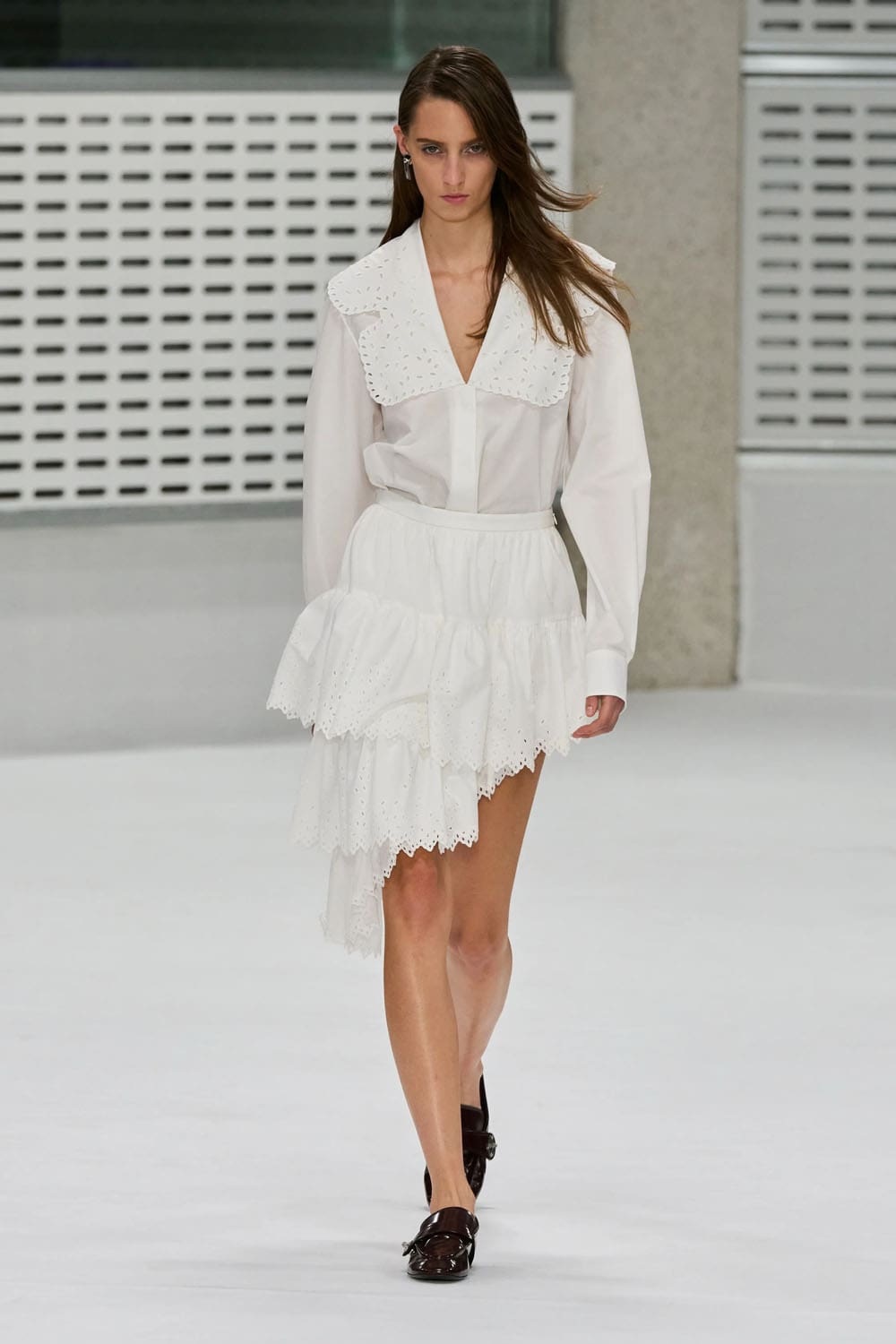
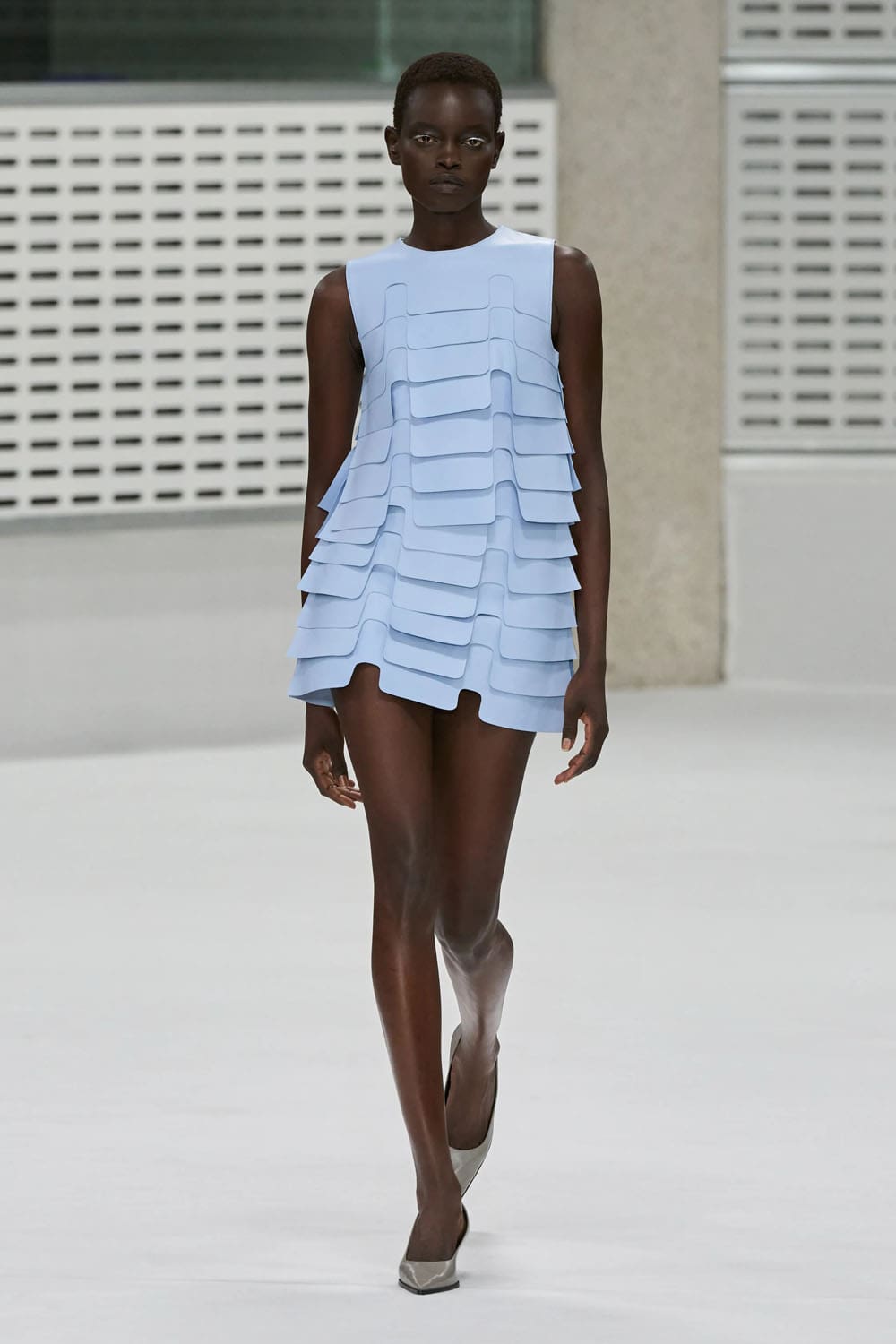
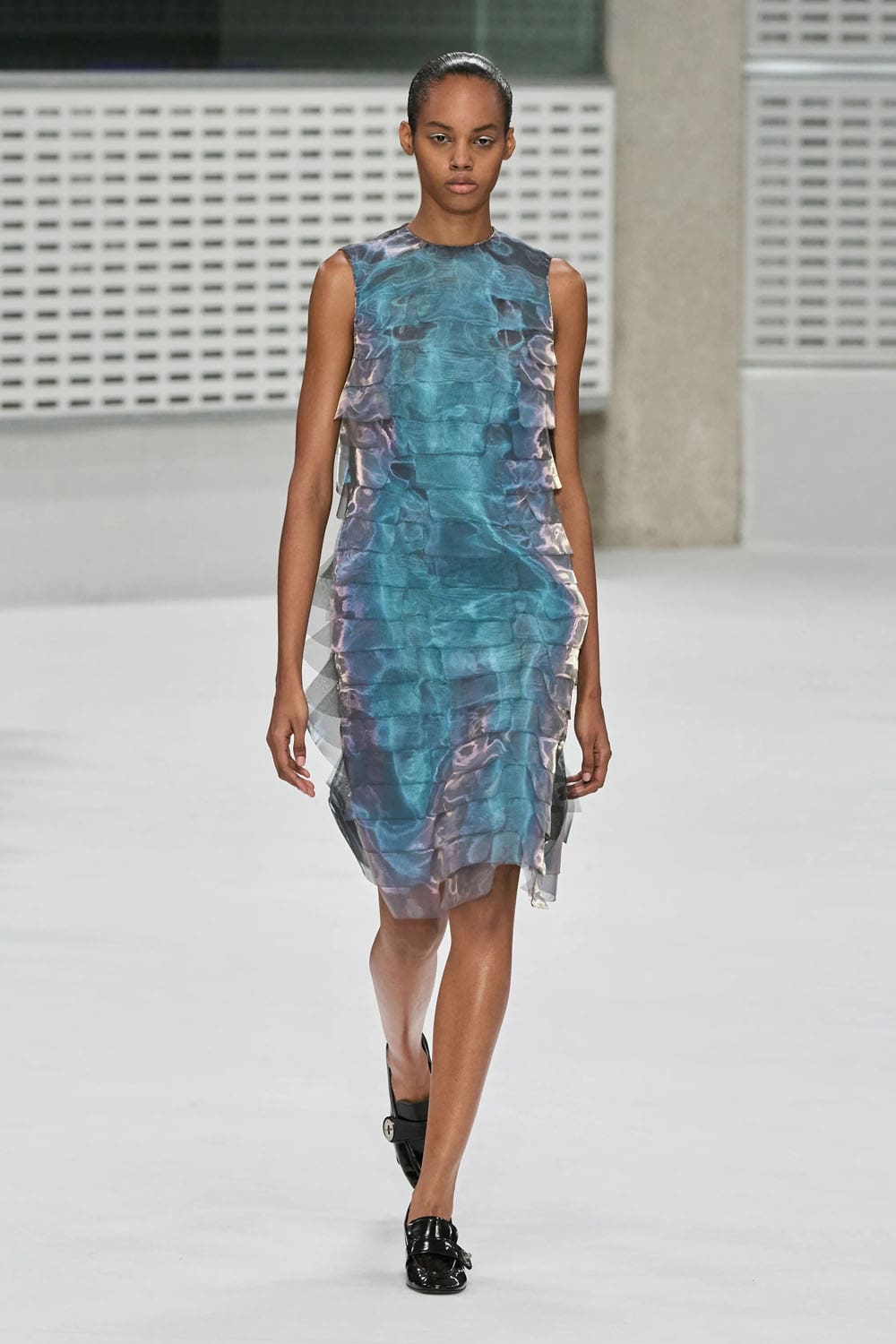
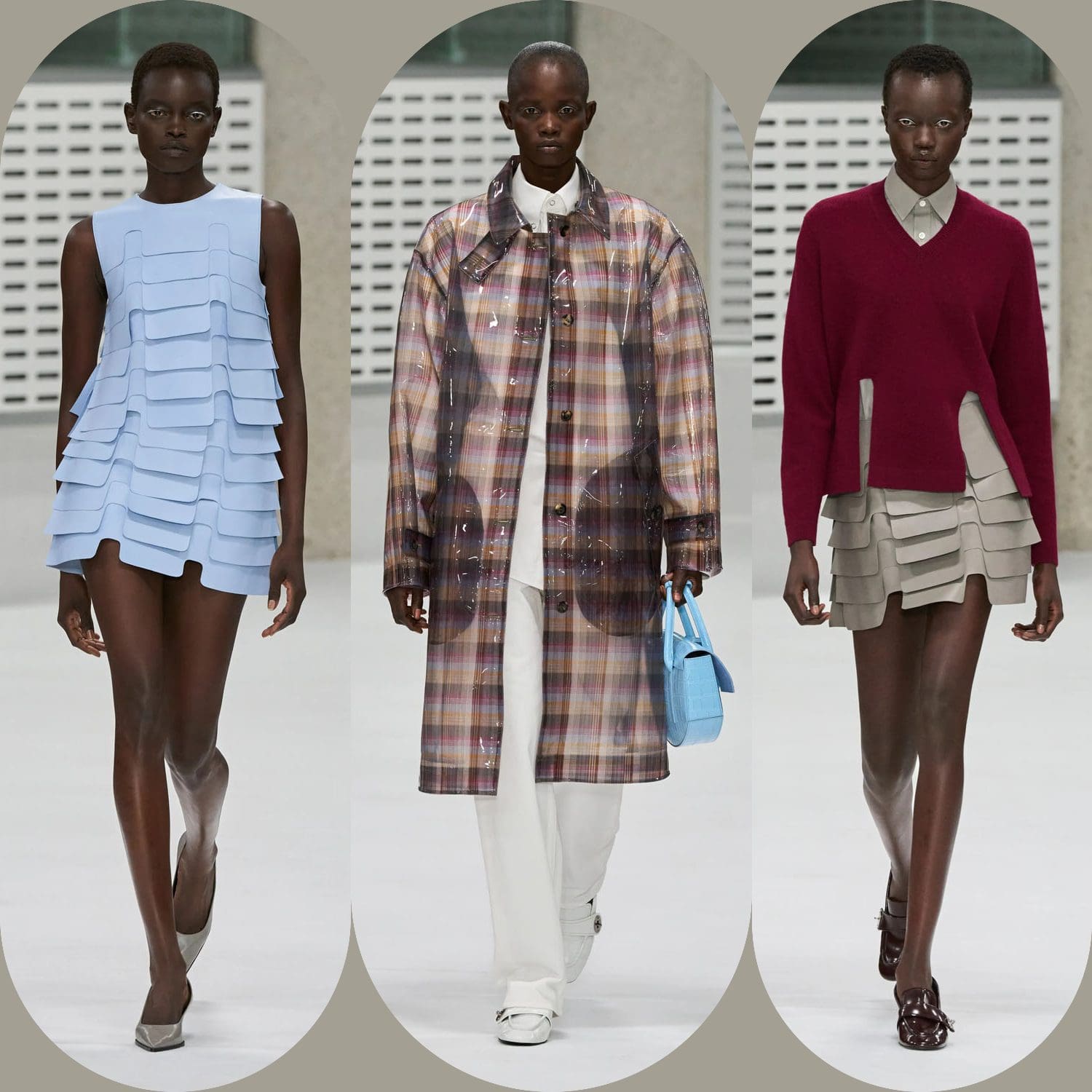
The Bayswater is to Mulberry what the Birkin is to Hermès: a sacred cow of accessories history. By abstracting its hardware and flap geometry into ready-to-wear silhouettes, Kane performed a clever semiotic inversion. The bag’s closure was no longer merely a functional mechanism for securing a carryall; it became a structural seam, an asymmetrical hemline slit, and an engineered neckline. This motif manifested across pristine white minidresses with cut-out shoulders and clean geometric hems, and later rippled down miniature leather skirts layered in horizontal tiers that mimicked overlapping scales of leather craftsmanship. The grammar of the luxury handbag bled directly into the architecture of the garment, collapsing the boundary between accessory and apparel.

Archival Alchemy and Personal Nostalgia
Beneath the clean, minimalist lines of the leather pieces lay a deeply personal narrative. Twenty years after founding his own eponymous label and three years after its closure, Kane’s comeback exhibited a newfound maturity. It spoke fluently to a more affluent lifestyle market, pivoting away from teenage subcultural shock value toward an elevated, daywear-driven elegance for women. Yet, personal history and house heritage intertwined seamlessly.
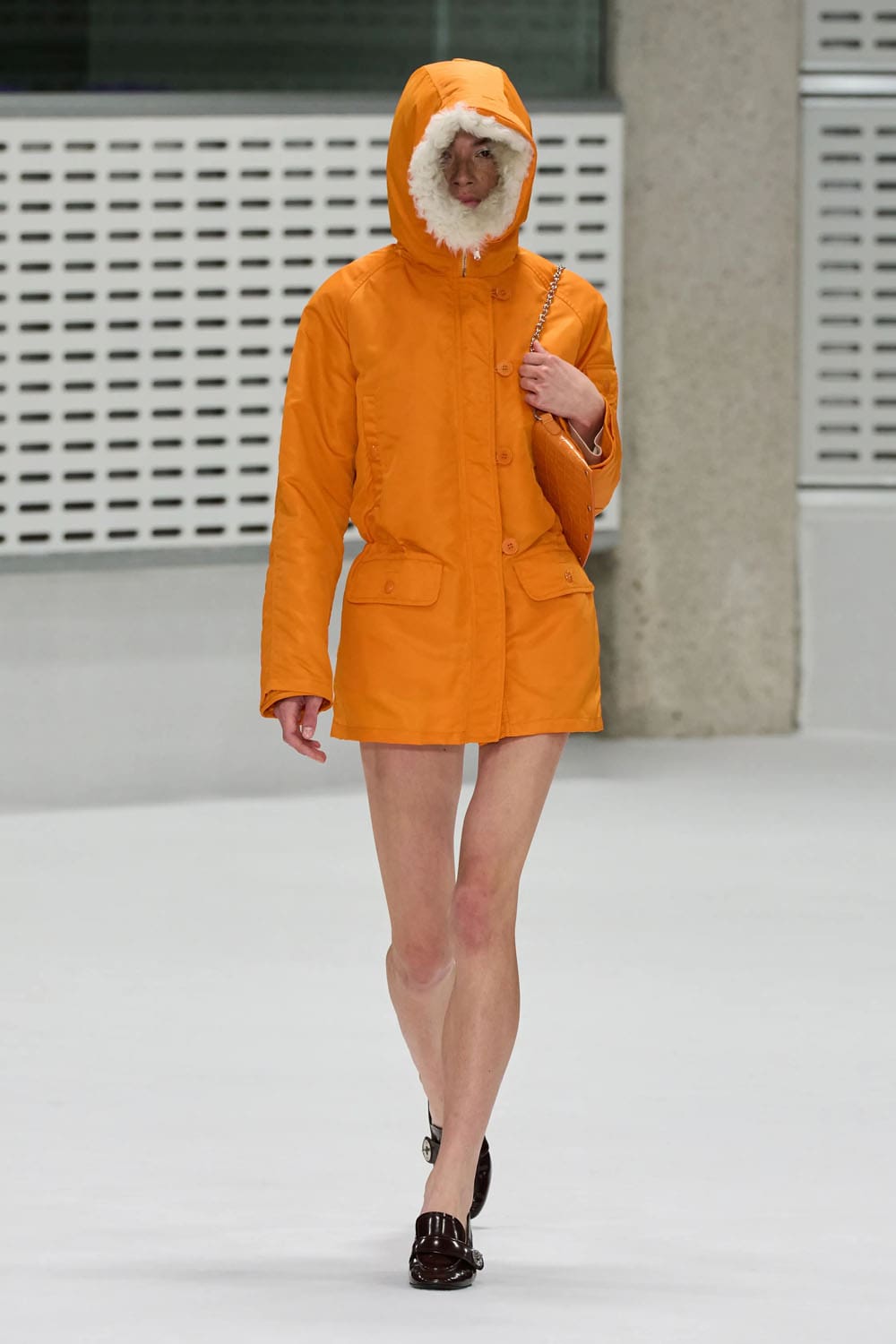
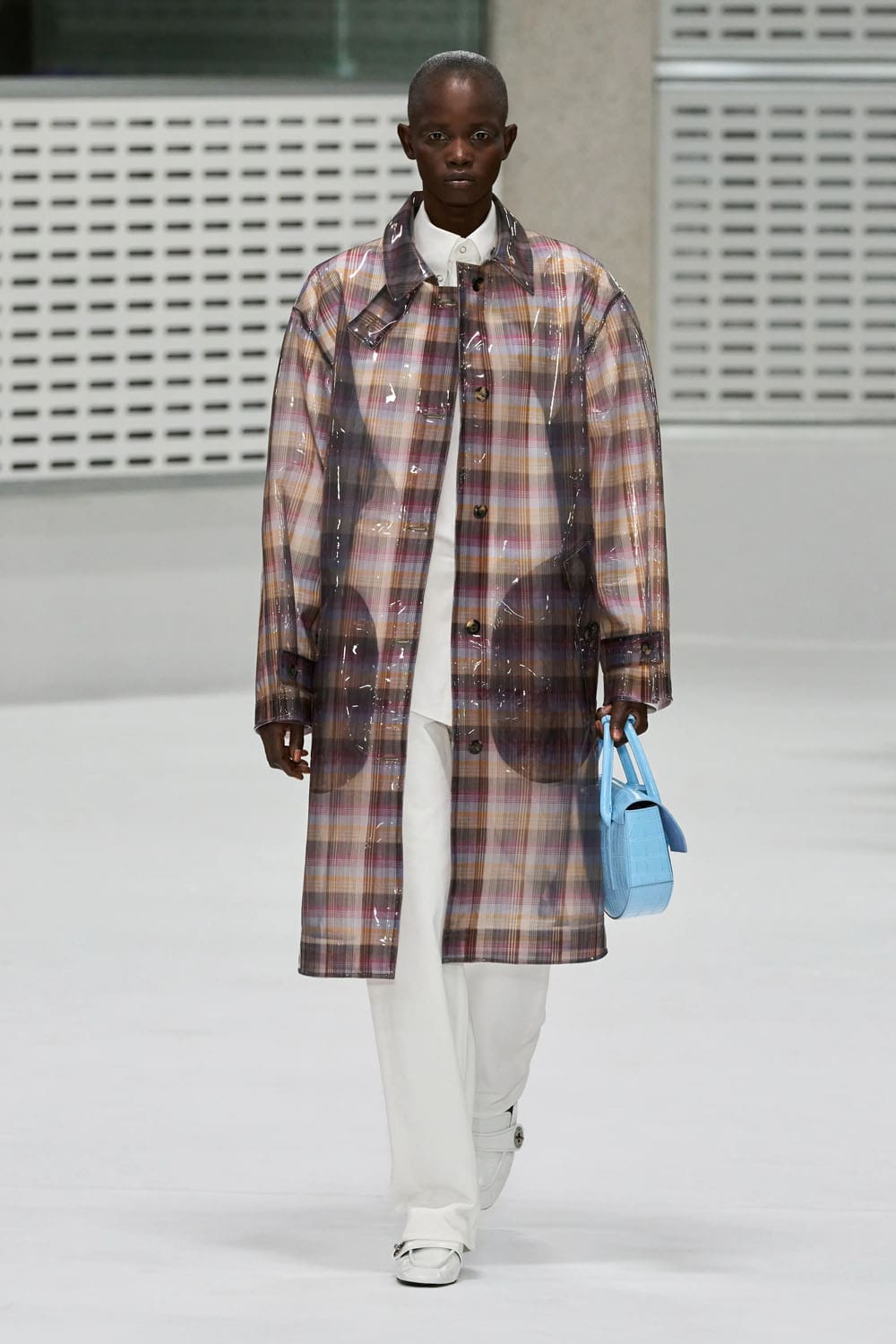
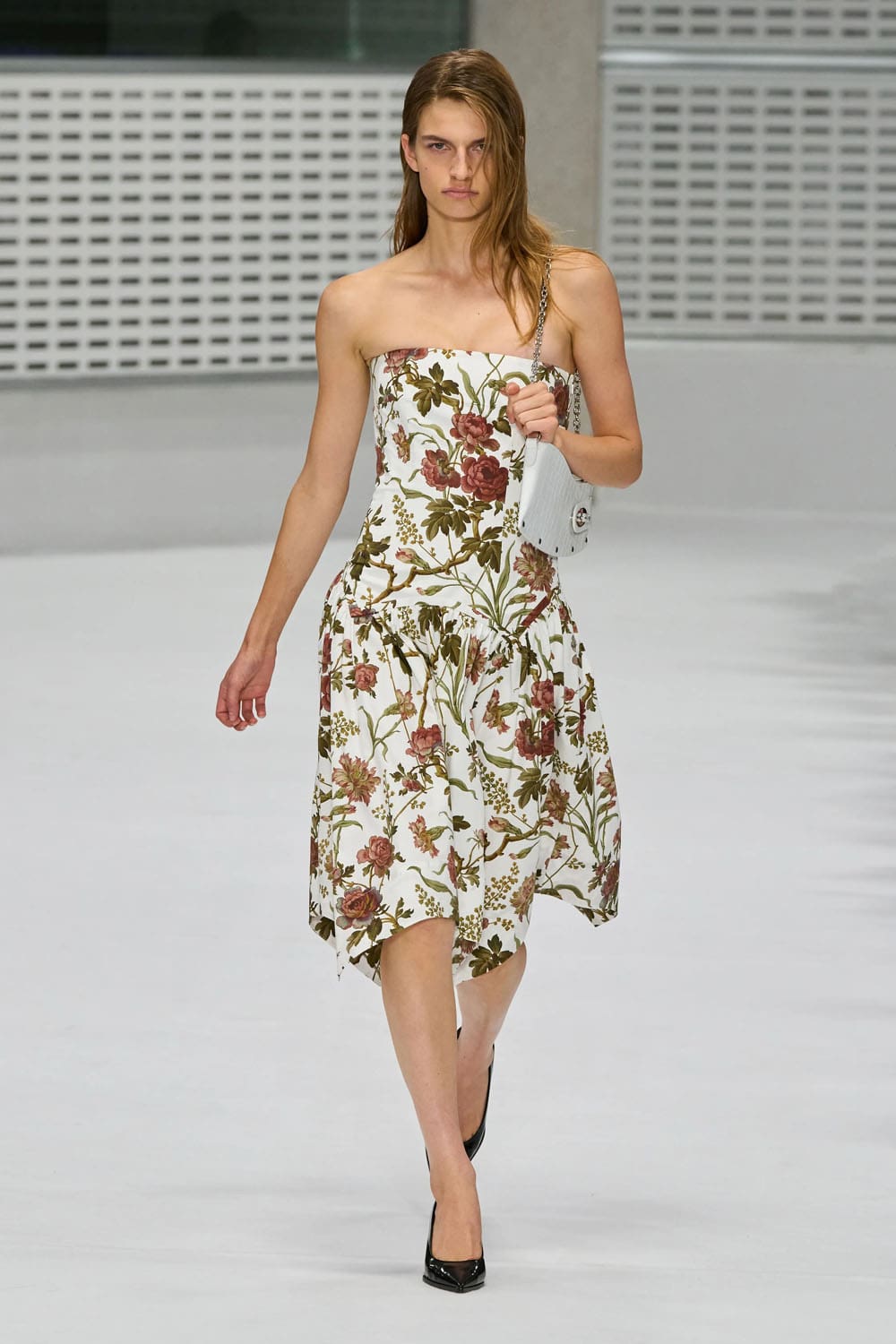
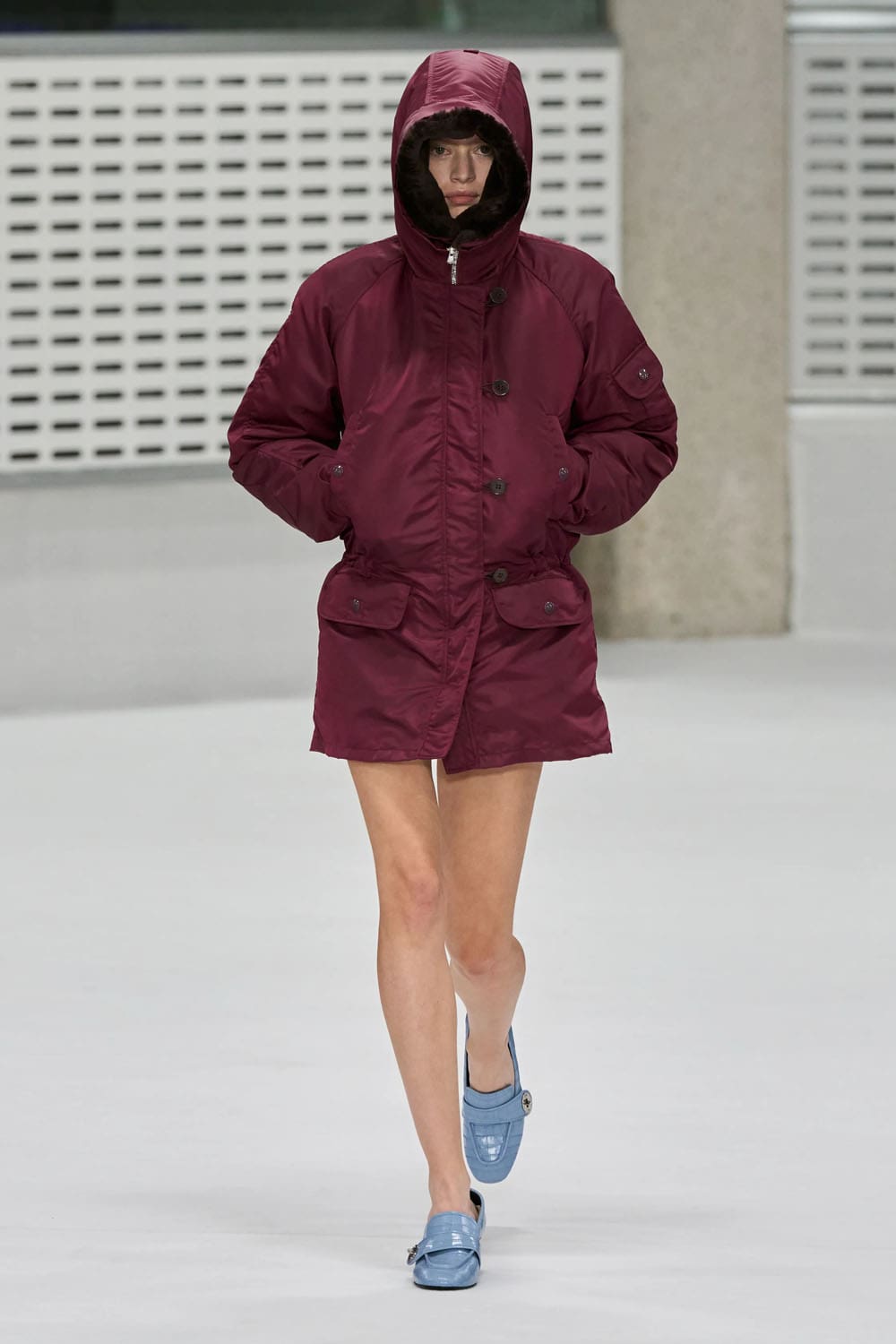
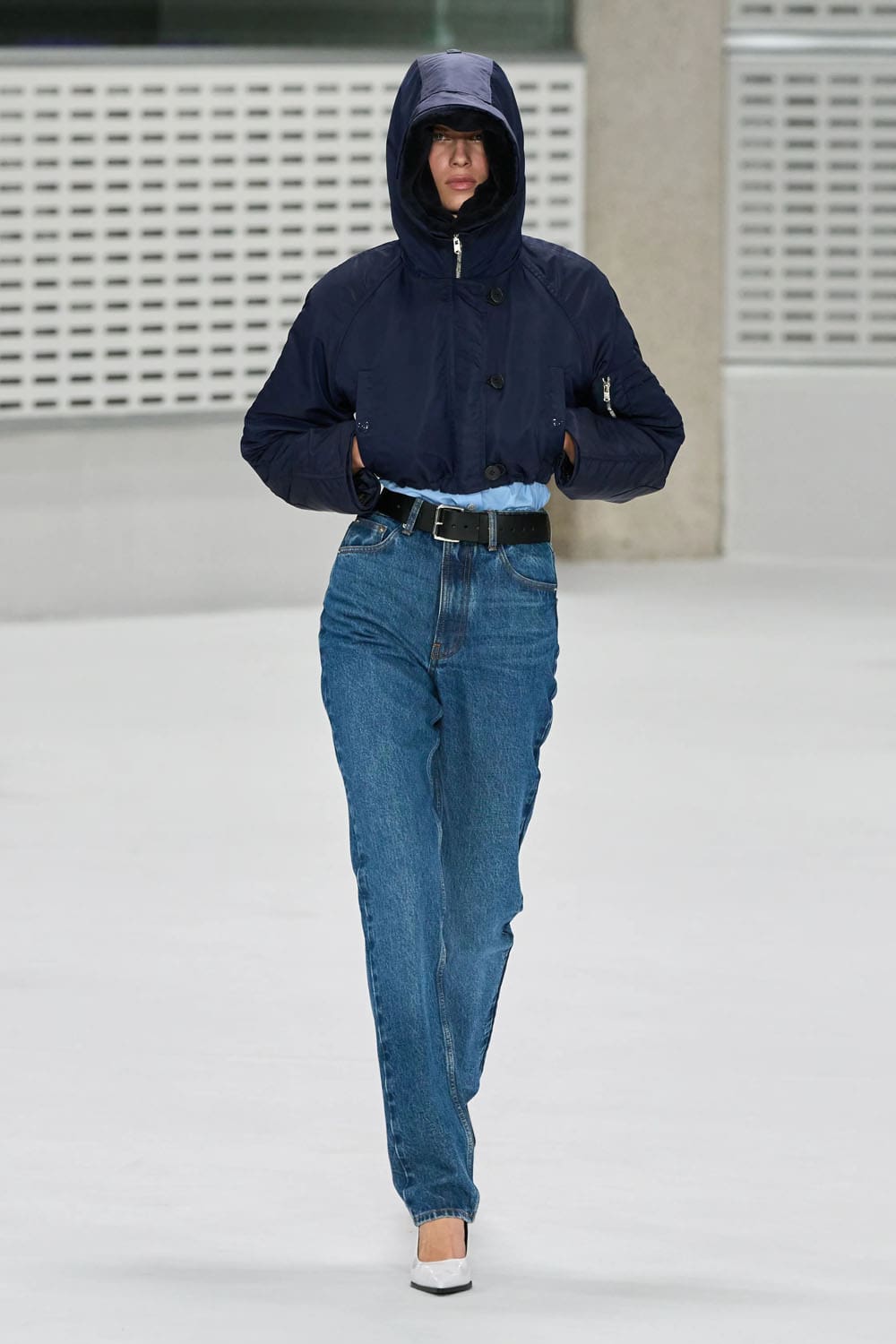
In looking back at the brand’s origins, the Kanes unearthed vintage advertisements featuring Mulberry’s historic eyelet lace skirts and traditional floral prints. They translated these archival finds into strapless cotton dresses washed in vintage-inflected floral wallpaper motifs. Elsewhere, a signature “country check” on an oversized raincoat immediately transported the siblings—and the audience—back to the tartans of their Scottish childhood, blending seamlessly with Roger Saul’s original vision of Somerset heritage.
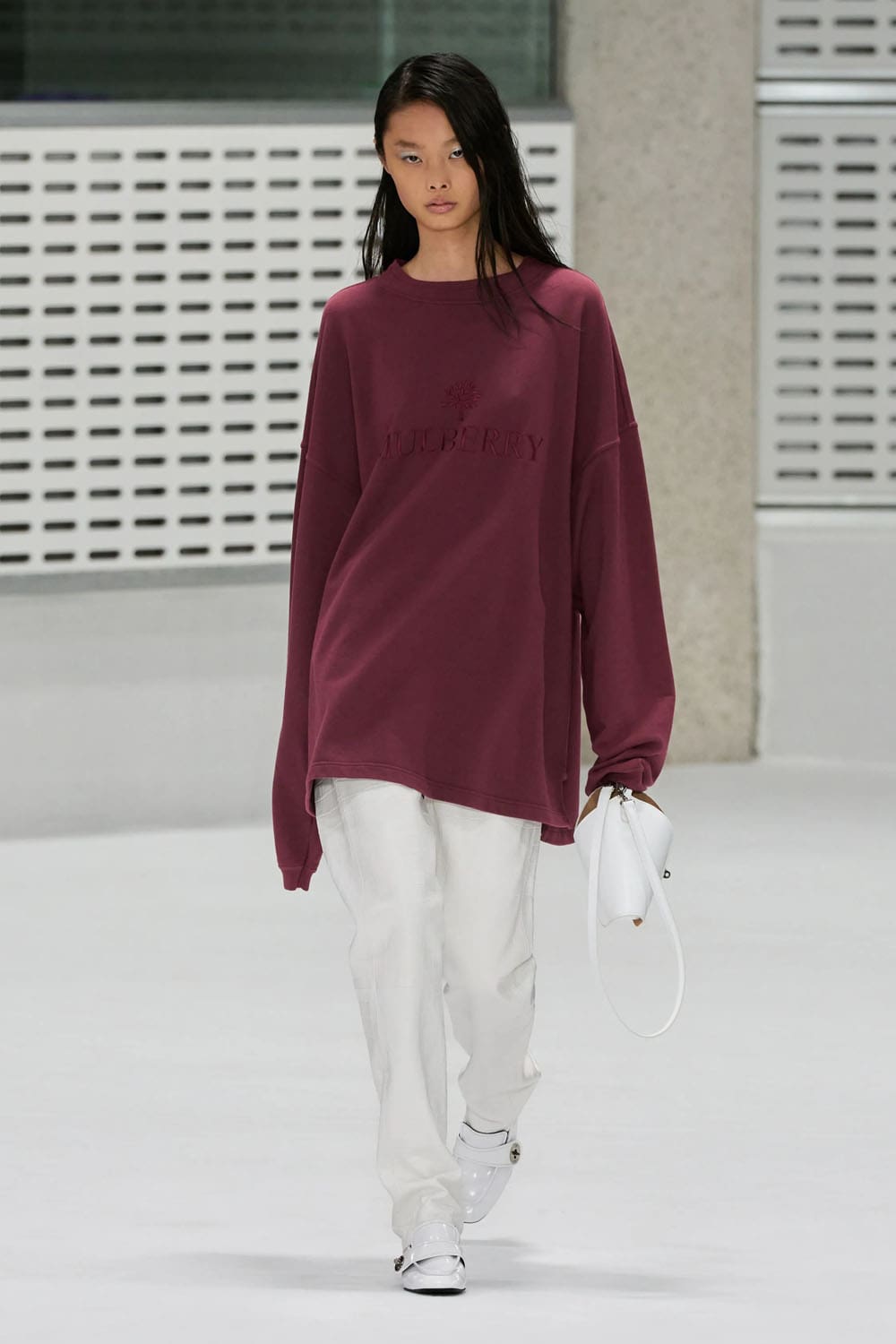
This dialogue between past and present reached a literal peak with an oversized polo shirt emblazoned with a bold, retro Mulberry logo across the chest, sourced directly from early house ephemera. Paired with modern proportions and styled with effortless nonchalance, it bridged the gap between 1970s British countryside leisure and 2020s streetwear literacy.
The New Lexicon of Utility
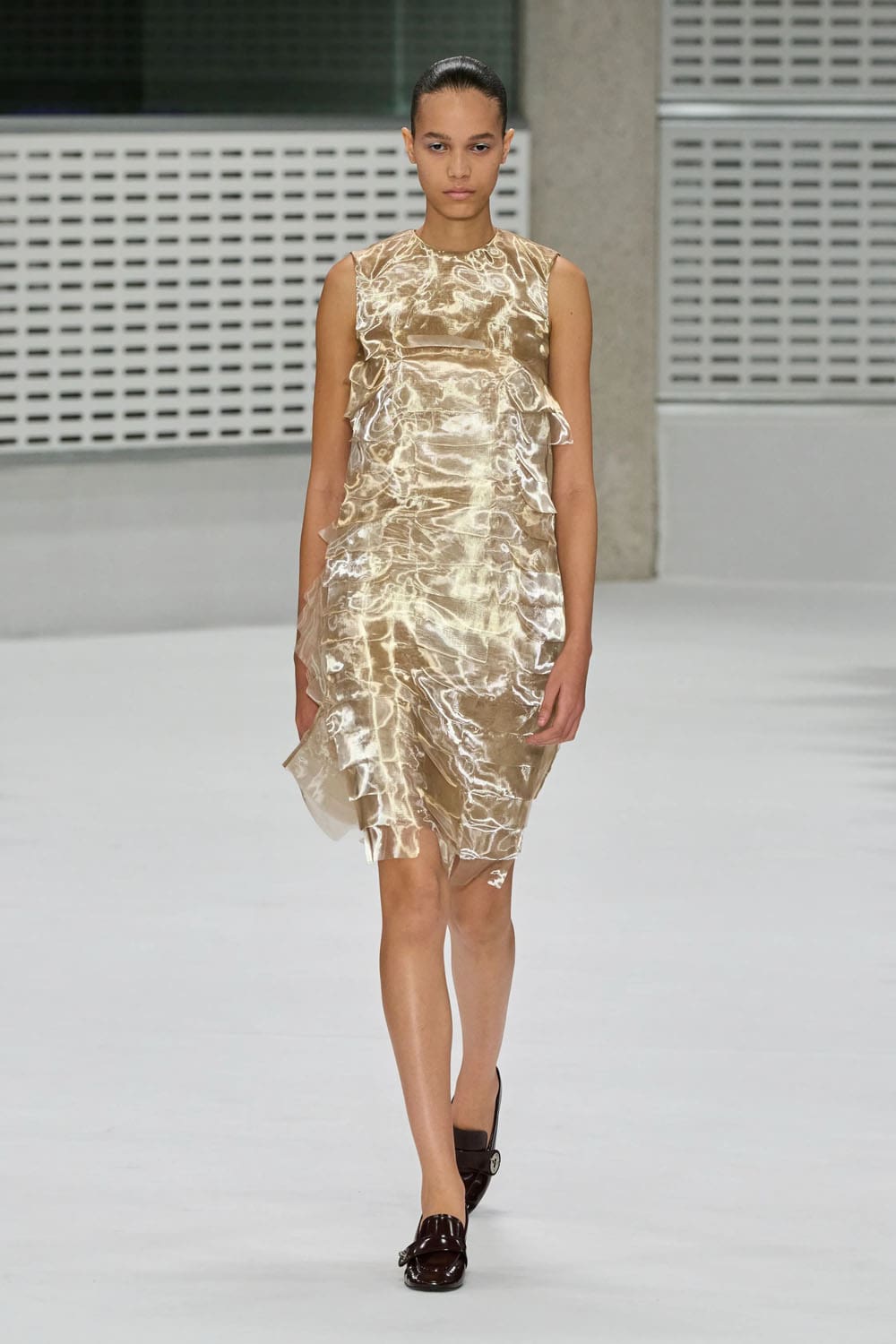
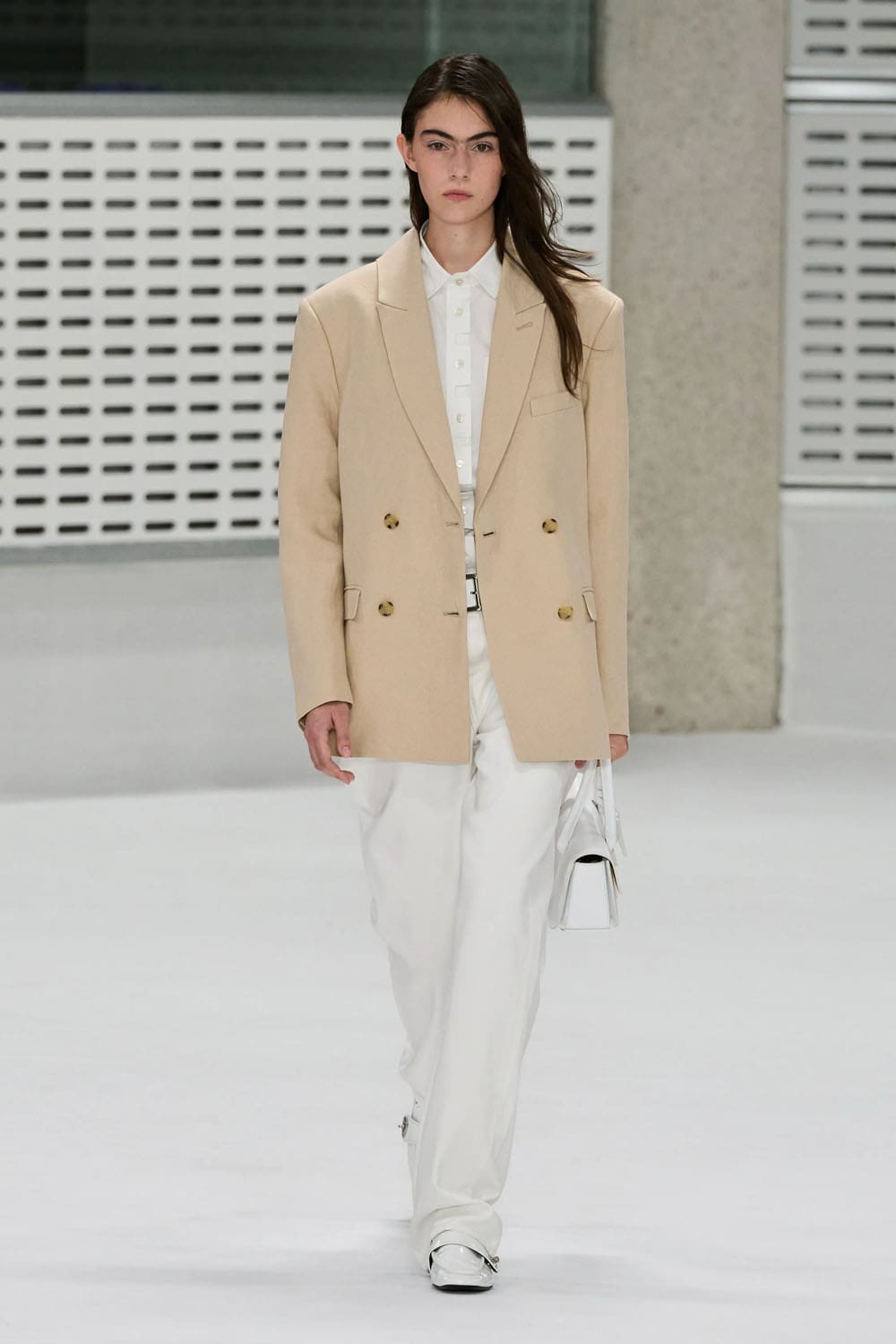
Footwear and accessories bore the brunt of this forward-looking momentum. Models strode down the Brutalist runway in sleek, polished loafers accented with subtle hardware, or anchored their silhouettes with sharp pumps. Most crucially, the Kanes began burnishing Mulberry’s future by introducing striking new bag architectures baptized as the Axe and the Chop, even harnessing one of them dynamically as a functional luxury backpack.
The inclusion of these sharp, brutalist-leaning leather goods alongside rich bordeaux V-neck sweaters layered over pristine collars and micro-tiered skirts demonstrated a masterclass in tension. It balanced the softness of daywear with the hard-edged precision of modern leathercraft.
Considering the brief window the siblings had in the studio, this debut was a remarkably confident stride into the future. It proved that Christopher Kane’s sabbatical had sharpened, rather than dulled, his directional vision. As the fashion cycle turns its eye toward the colder months, the promise of more of this intellectual, town-and-country-infused alchemy suggests that Mulberry’s next chapter has only just begun.
Key Takeaways
- Mulberry Spring 2027 marked Christopher Kane’s highly anticipated return as creative director, showcasing a collection rooted in the brand’s heritage.
- The collection featured structural deconstruction, transforming iconic elements from the Bayswater bag into ready-to-wear designs.
- Kane blended personal history with house heritage, incorporating vintage motifs and nostalgic references into modern silhouettes.
- New bag architectures like the Axe and the Chop hinted at Mulberry’s future direction, balancing daywear with modern leathercraft.
- Overall, this debut demonstrated Kane’s sharpened vision, signaling an exciting new chapter for Mulberry.
See All Looks Mulberry Spring Summer 2027