Robert Wun
THE TRIUMPHS
- Fearless creative imagination and exceptional willingness to experiment with silhouette, scale, material and unconventional methods of construction
- Strong integration of AI-assisted ideation, 3D printing, silicone and other experimental materials into a couture proposition that deliberately pushes beyond traditional atelier vocabulary
- Highly memorable visual storytelling, transforming childhood imagery, fantasy and surrealism into dramatic forms with immediate runway impact
- Remarkable instinct for spectacle and cultural visibility, producing images and silhouettes capable of extending far beyond the conventional couture audience
RESERVATIONS
- Experimental fabrication does not consistently demonstrate the depth of traditional couture savoir-faire, leaving technological ingenuity to carry some of the weight normally borne by extraordinary handcraft
- Echoes of established fashion vocabularies occasionally compete with the emergence of a fully autonomous Robert Wun design language
- The abundance of references, characters, exaggerated forms and visual effects can overwhelm the clothes themselves, suggesting an imagination still learning when restraint can make an idea more powerful
- AI-assisted ideation expands the designer’s visual possibilities but also makes the question of authorship and originality increasingly important when familiar historical fashion languages surface within the final designs
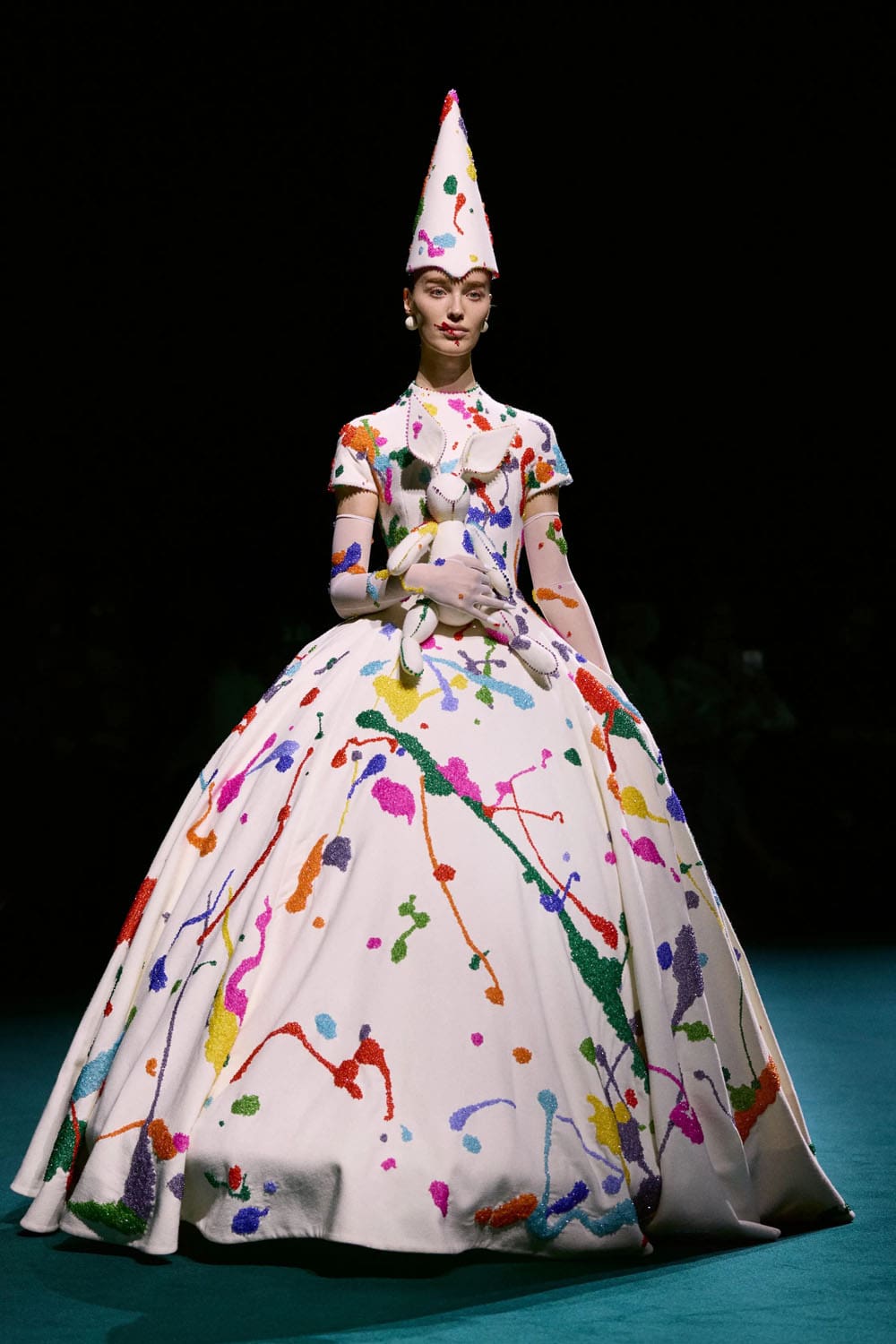
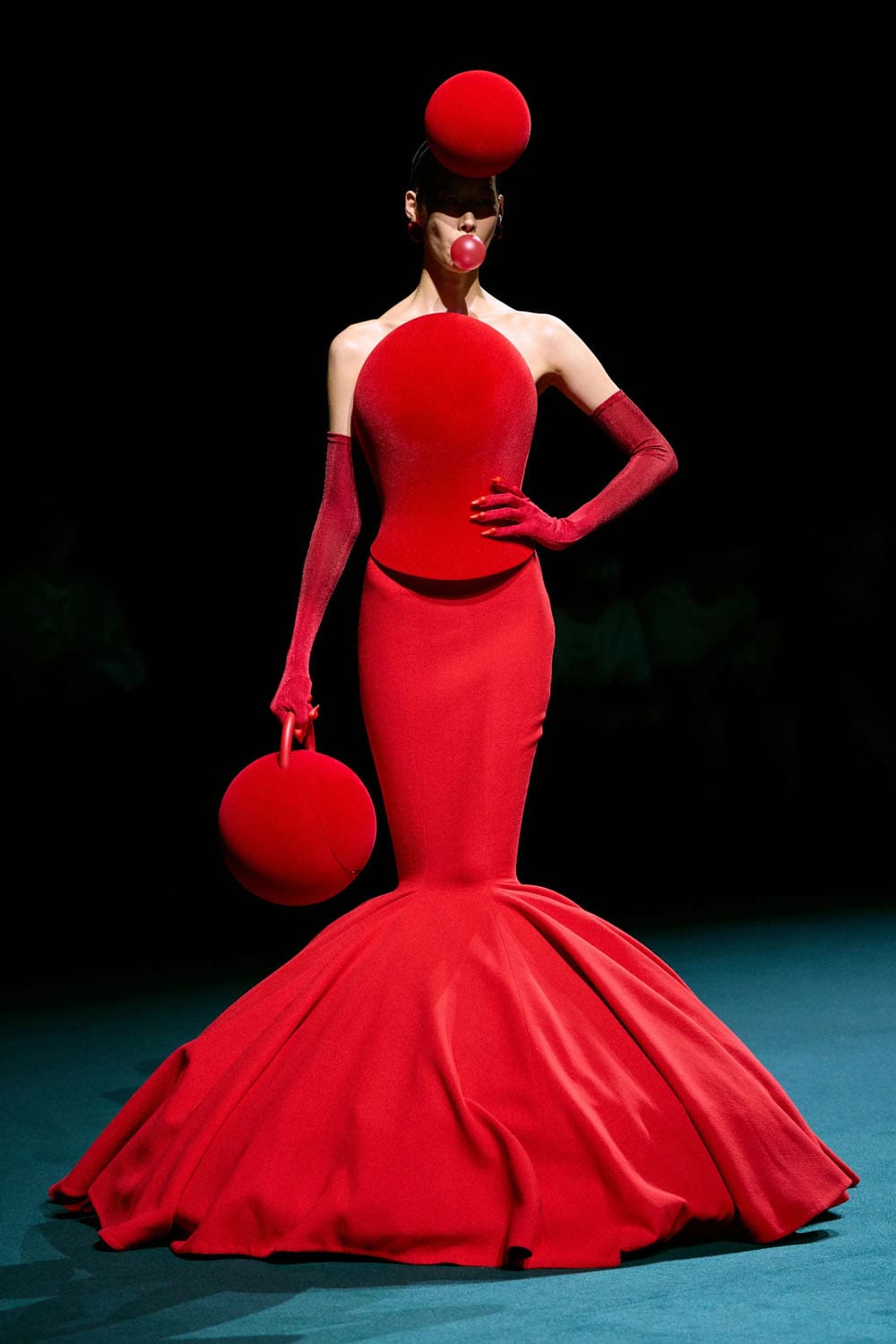
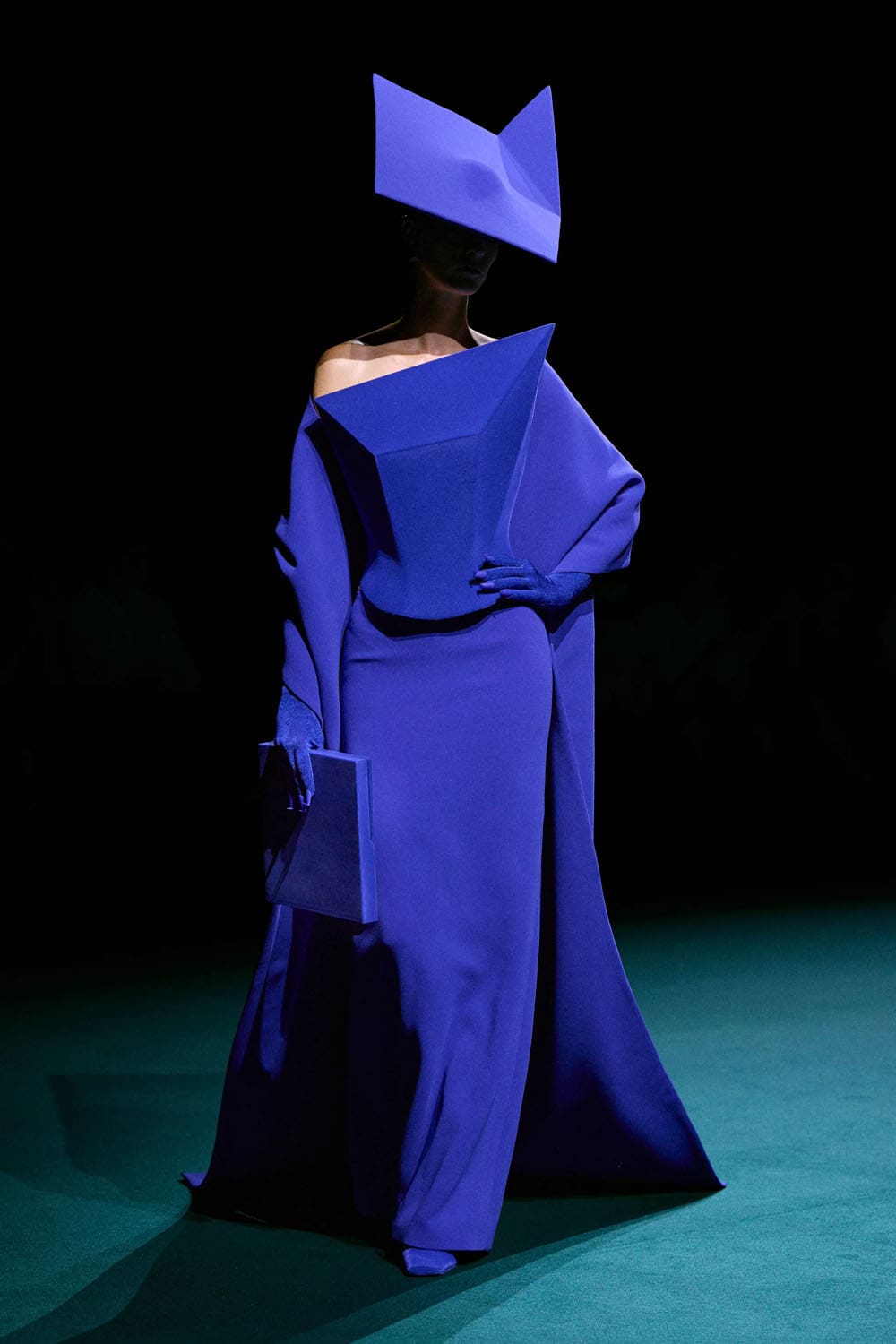
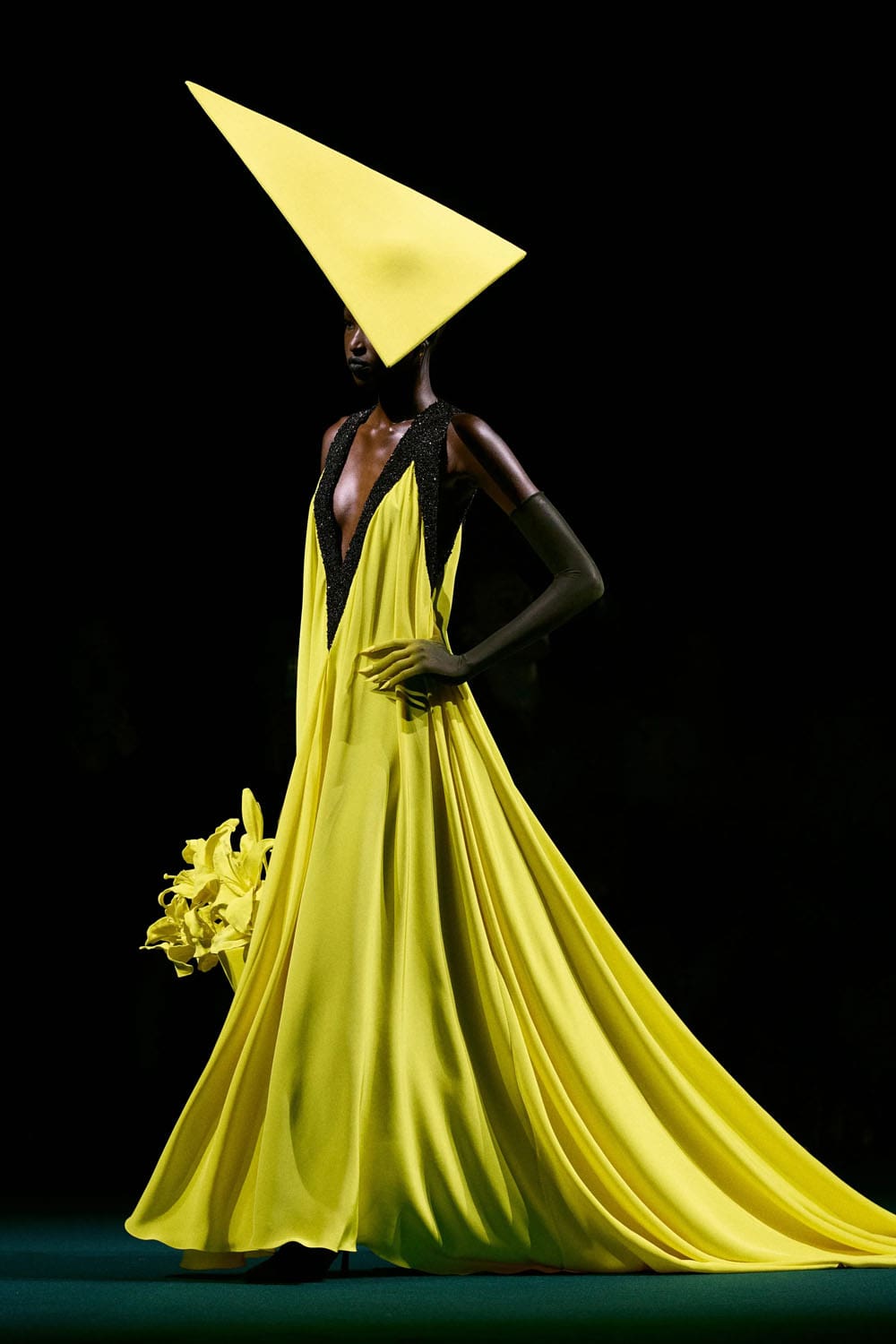
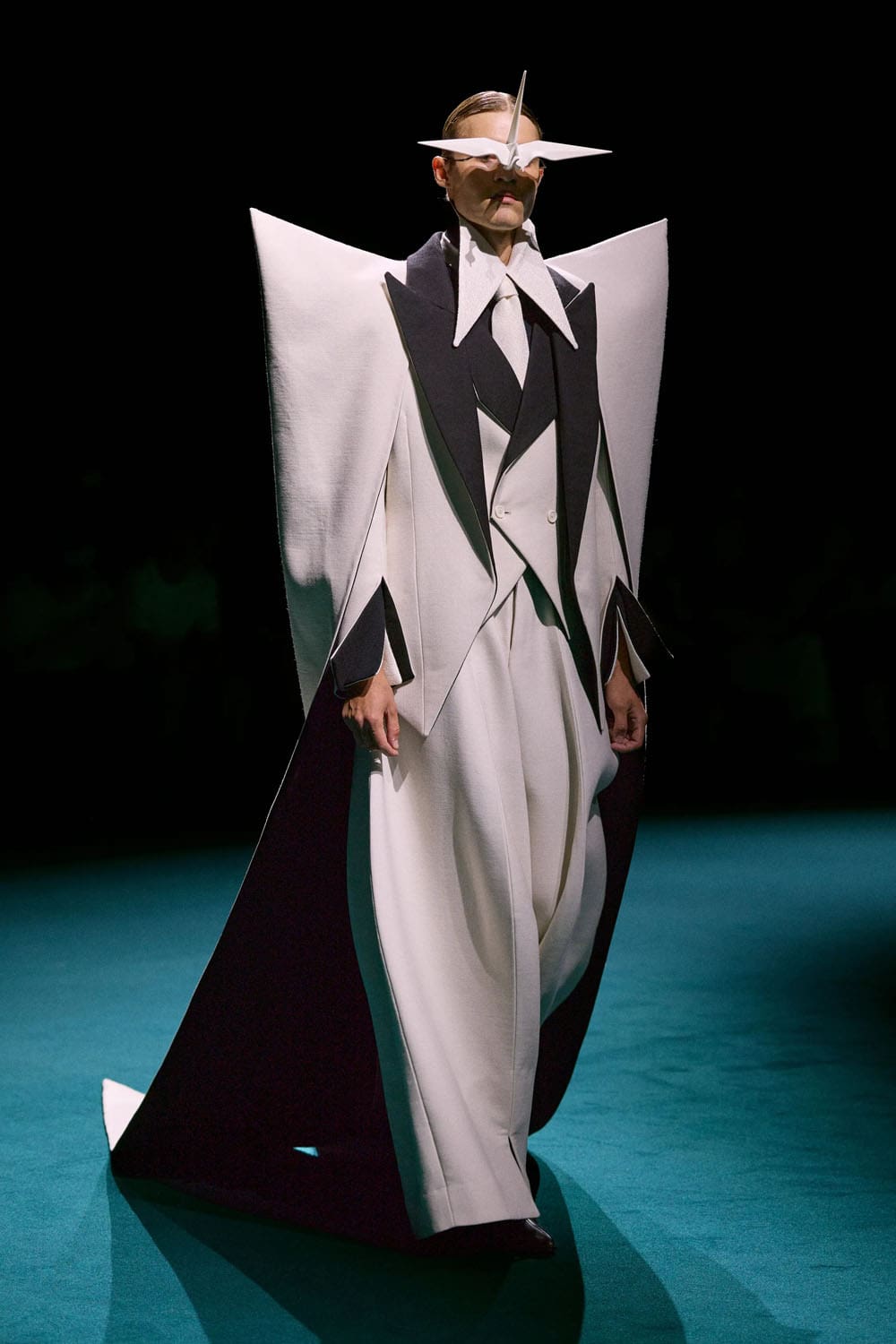
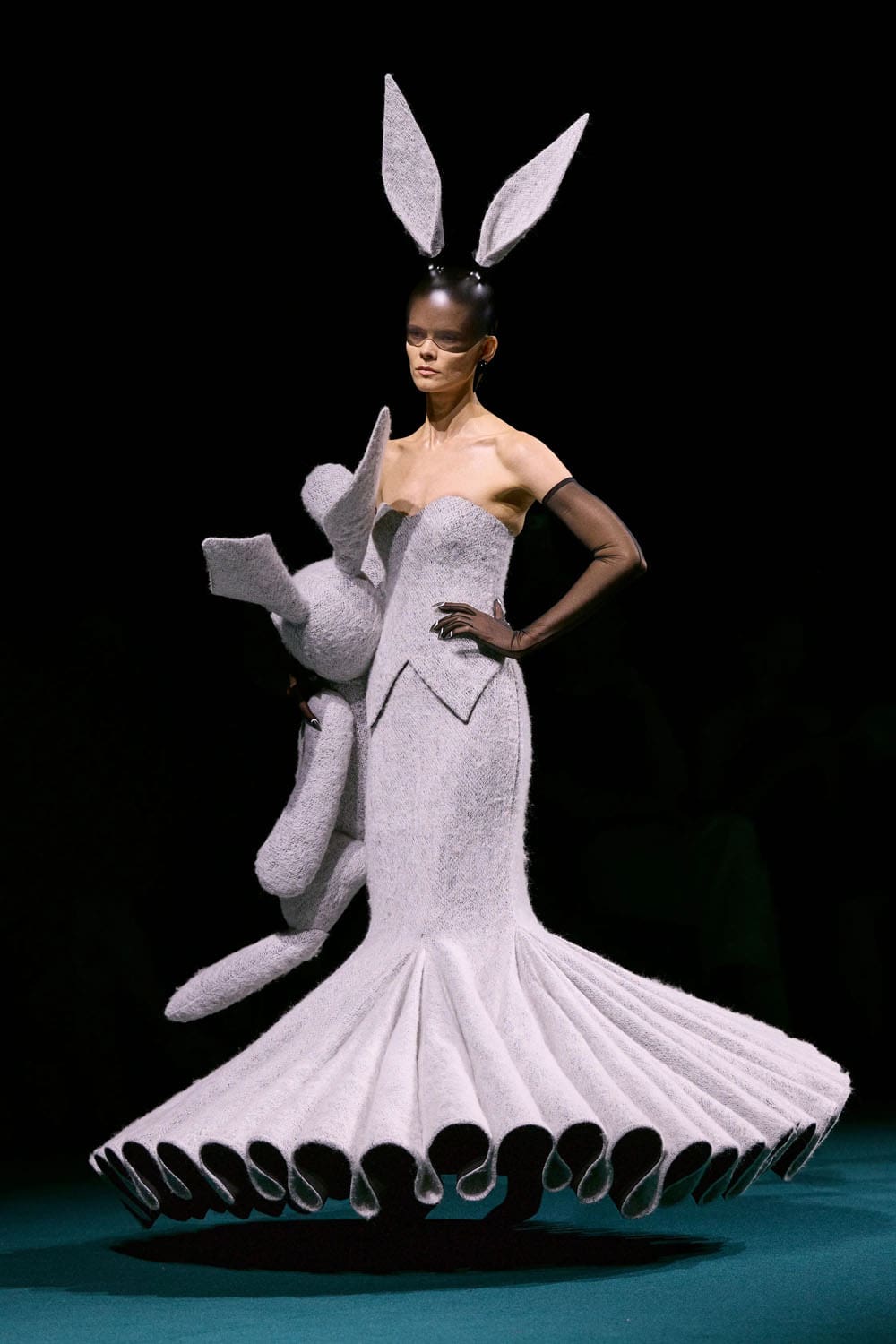
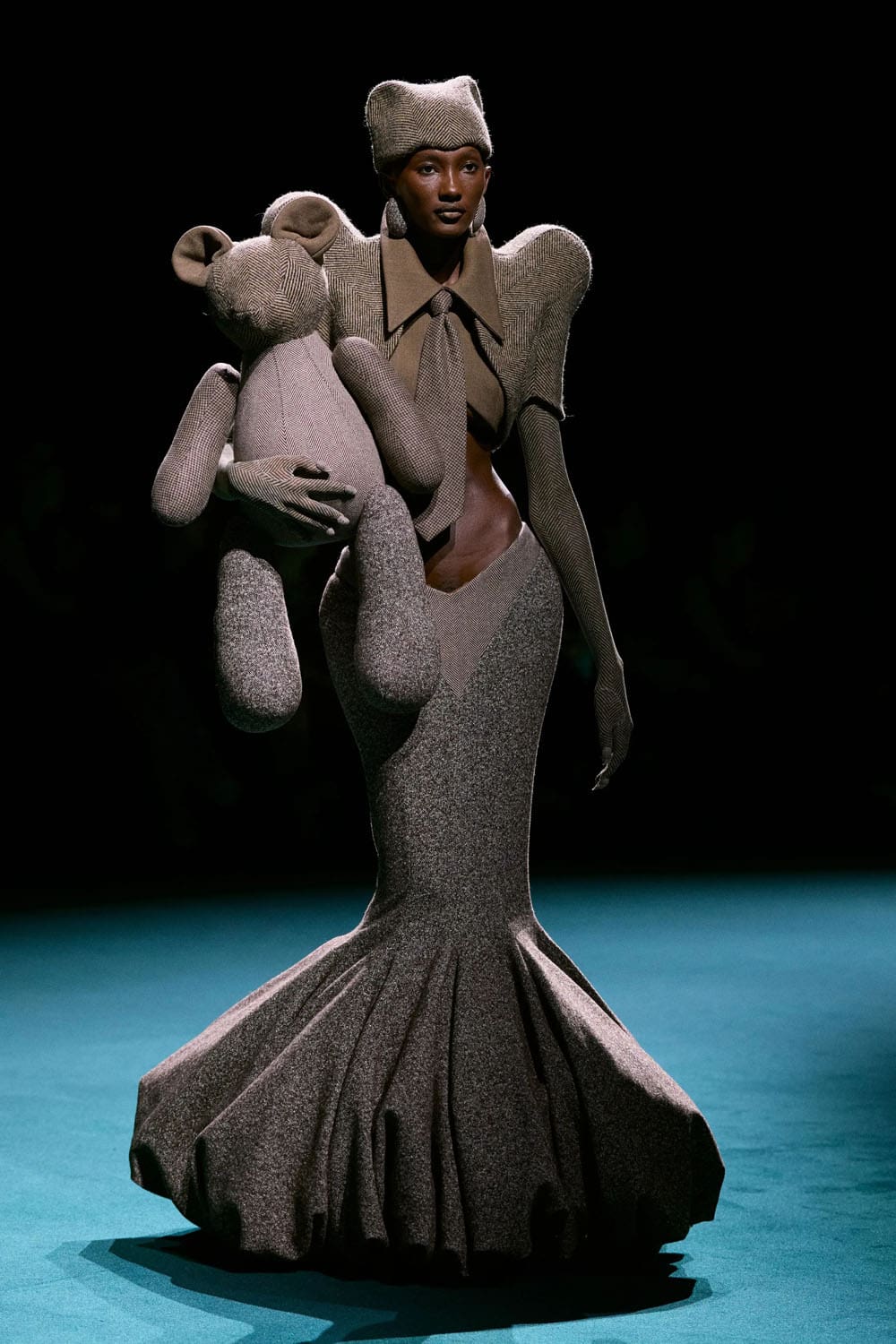
Robert Wun Fall Winter 2026-2027 Haute Couture “The Fairytale Cocoon”. Story by Eleonora de Gray, Editor-in-Chief of RUNWAY MAGAZINE. Photo Courtesy: Robert Wun.
The Architecture of Memory
If modern couture has become a desperate exercise in echoing the noise of an anxious world, Robert Wun’s Fall/Winter 2026-2027 Haute Couture collection at the Dôme de Paris was a magnificent, quiet rebellion. Wun detoured completely into the fragile sanctuary of childhood, spinning a fairytale universe entirely his own. This was a realm where the dark moral weights of Charles Perrault and the Brothers Grimm met the profound, deceptive innocence of Japanese animator Hayao Miyazaki. Wun was drawn to the precise contradiction that defines Miyazaki’s masterworks: that stories seemingly crafted for children often carry the most enduring, heavy truths about humanity, fear, and hope.
This was not a theater of nightmares, but an act of pure, distilled magic. One can immediately sense what Wun is doing here: these looks feel like his own memories, safely capsuled away from the monsters of reality. He is an incredible, one-of-a-kind designer, translating the extreme fragility of youth into heroic, unyielding proportions. It is magnificent, magical, and yet, heart-wrenchingly fragile.
The Ink of Innocence and Saturated Primary Truths
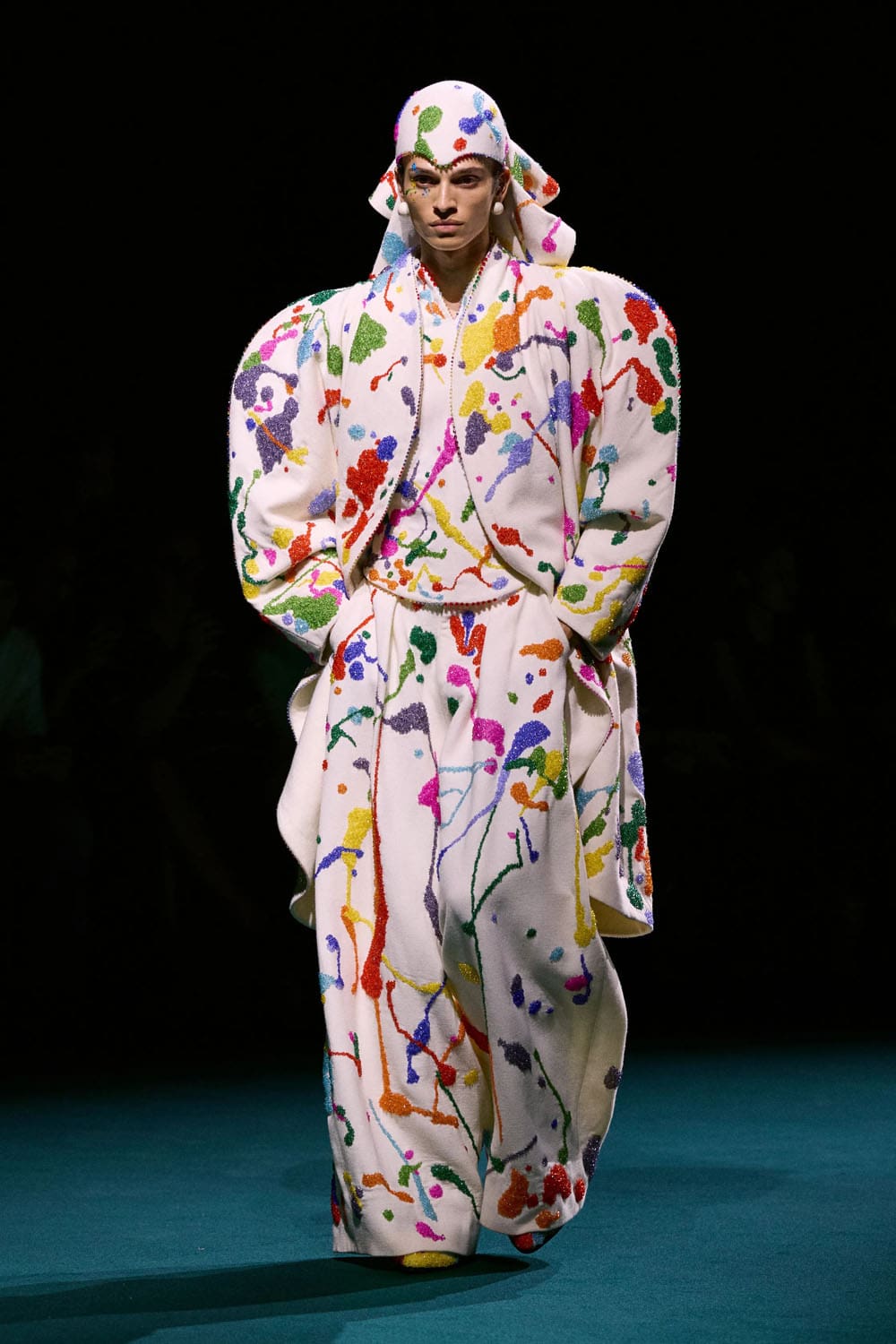
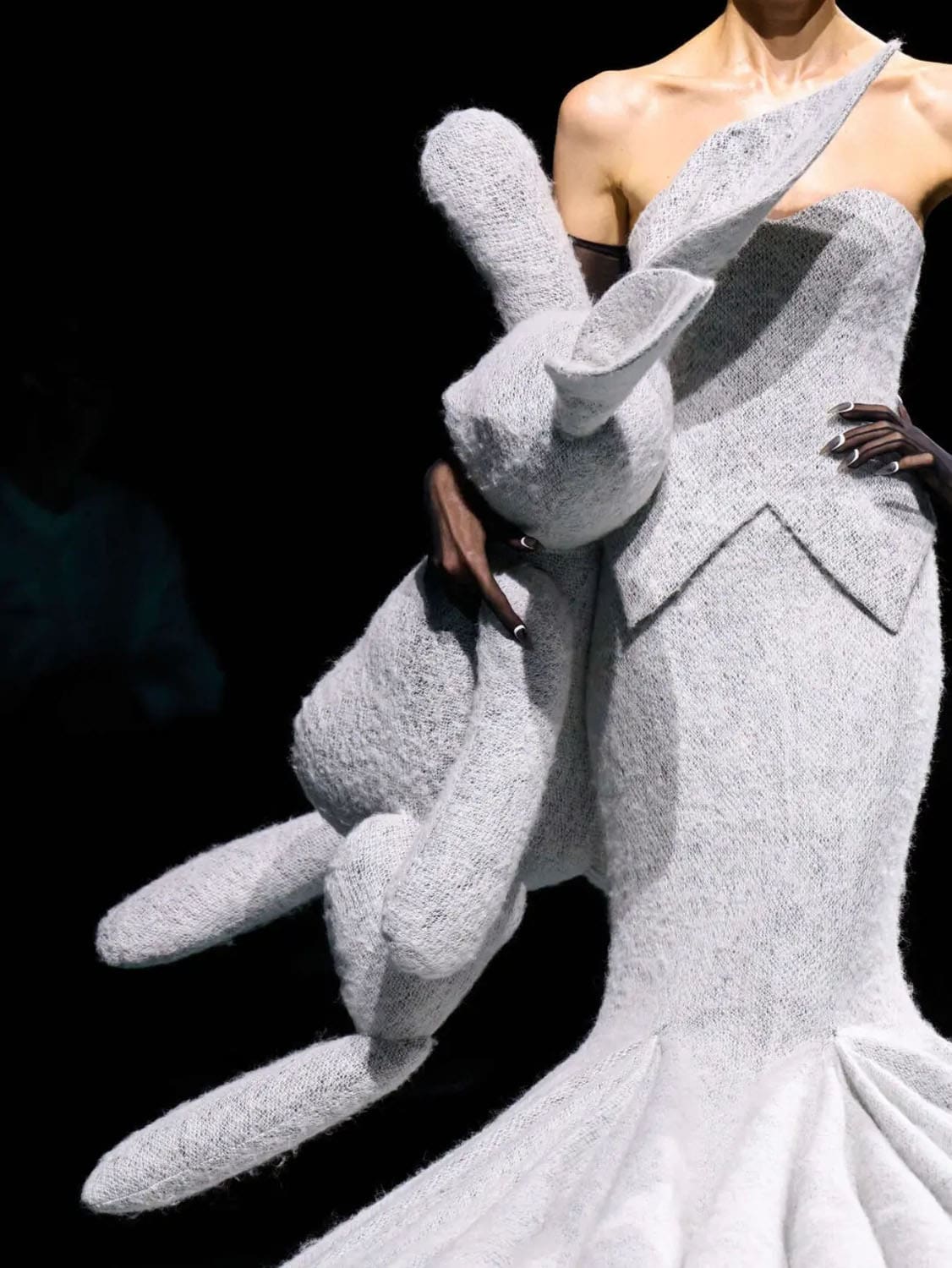
The procession began by stepping directly into an abstract, hue-less dream world. The opening movement challenged the very concept of couture’s traditional gravity, presenting a monumental gown embroidered with colorful doodles. It appeared as though it had been drawn directly by a child’s hand—a sprawling canvas of untamed imagination complete with its own matching stuffed animal. A soft, gray, oversized rabbit was cradled with protective, almost desperate tenderness against a stark, textured white bodice, held tightly by black-gloved hands.
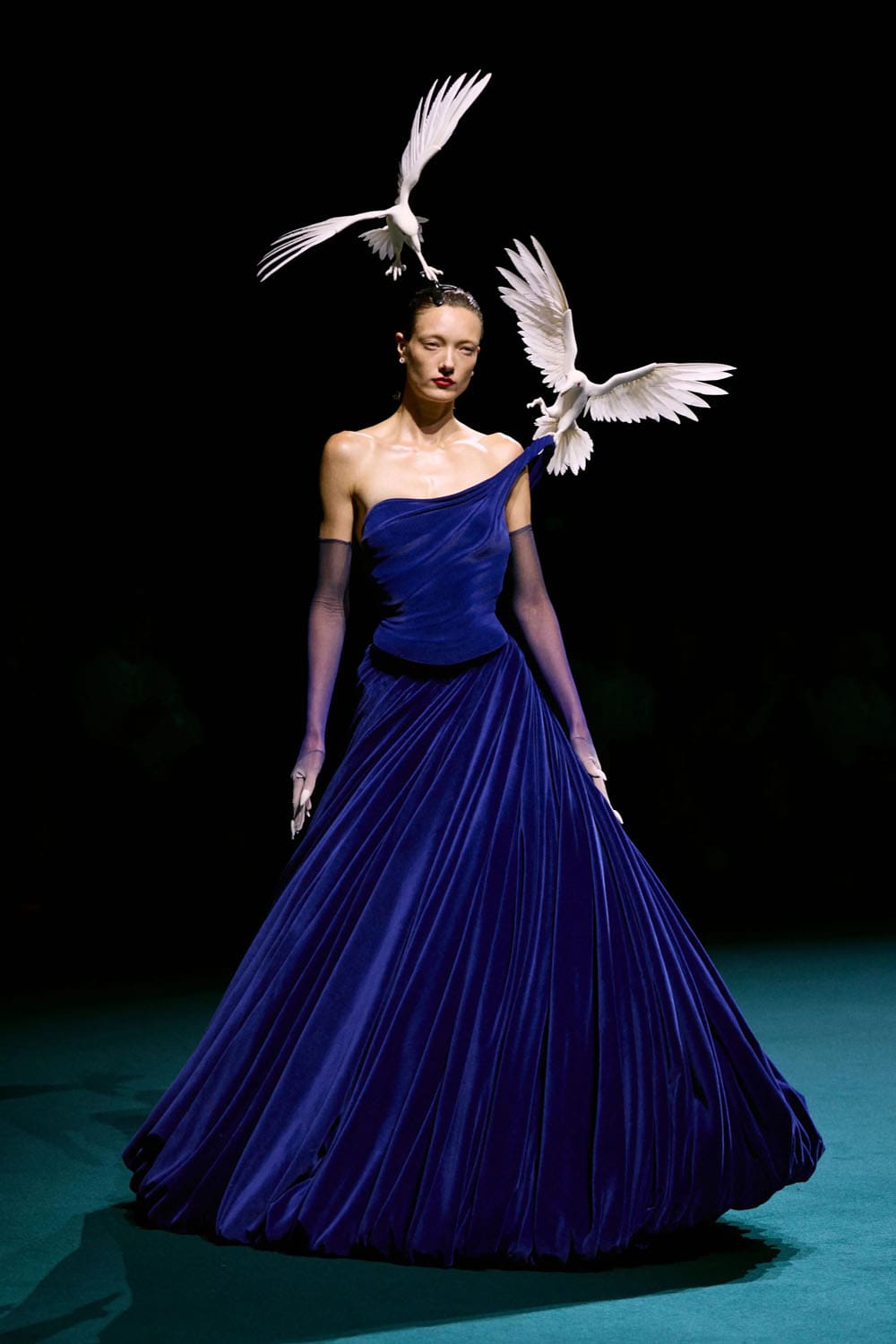
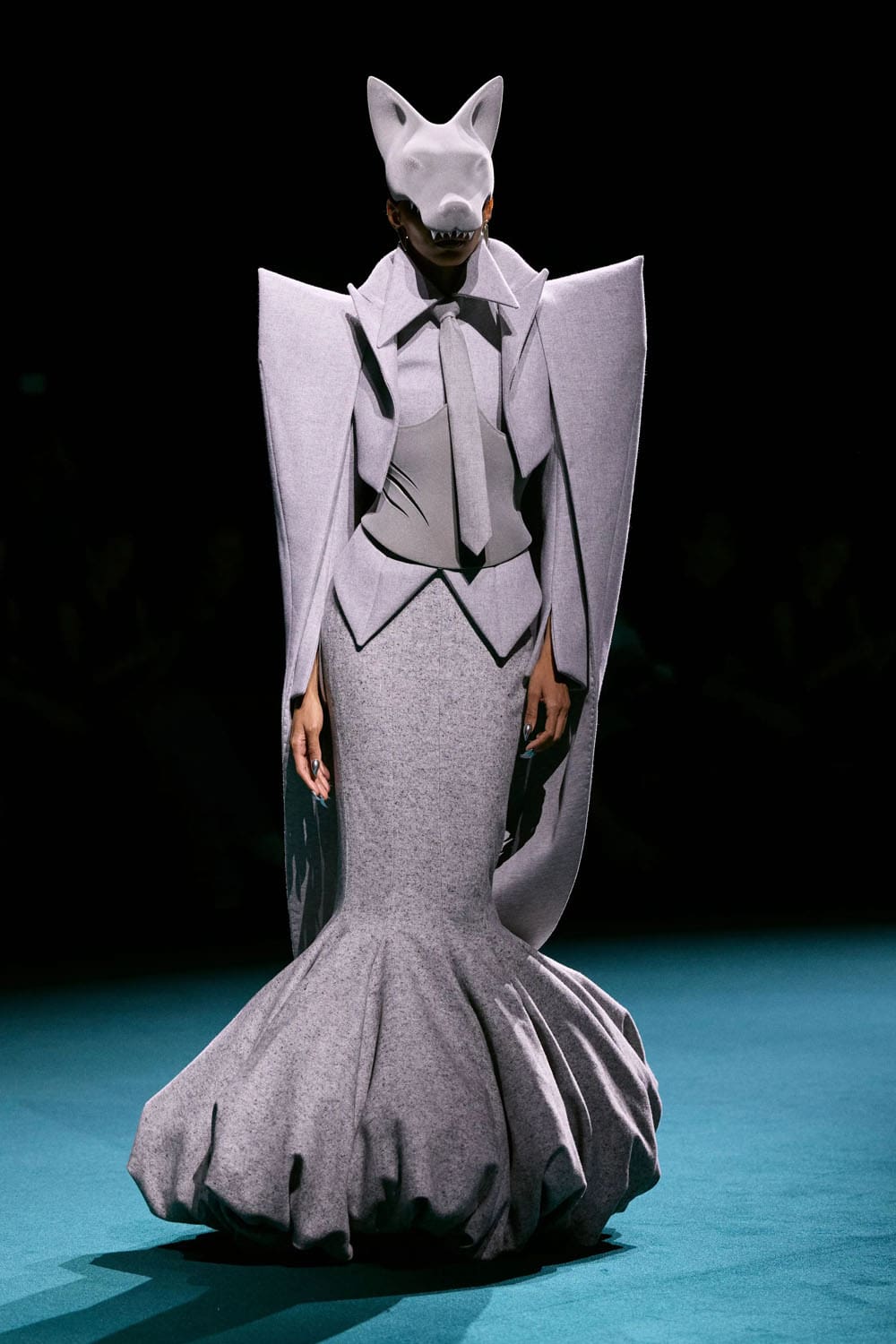
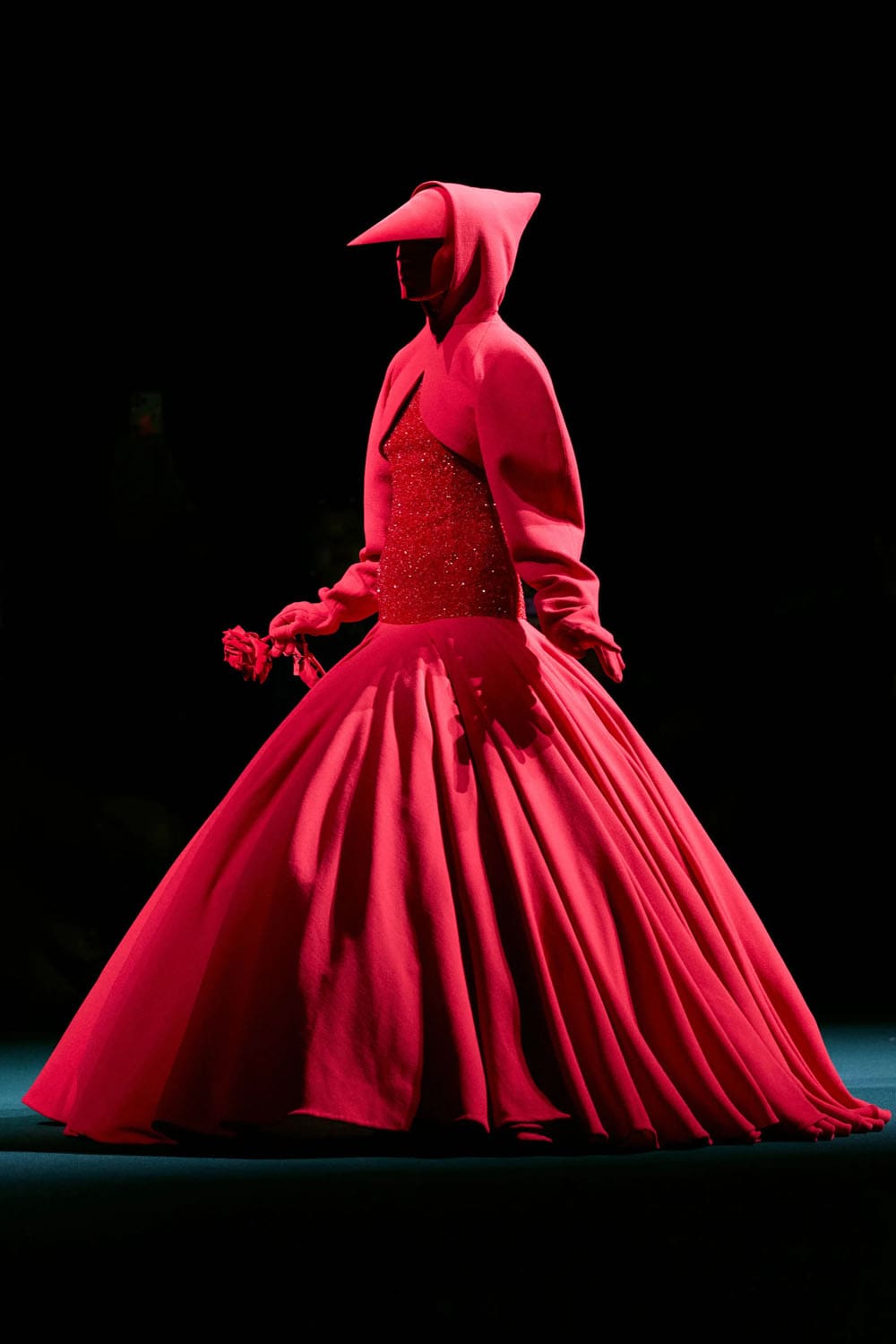
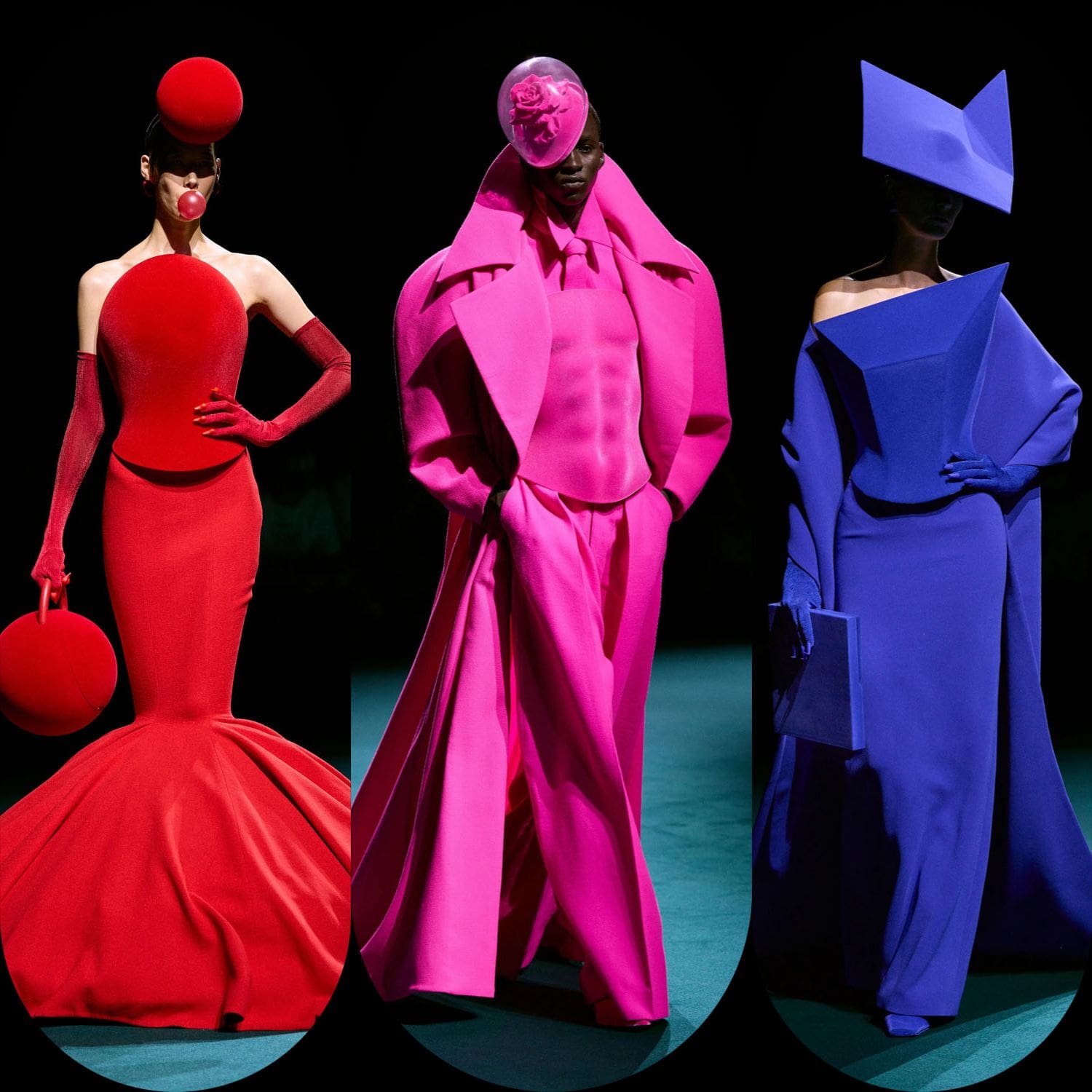
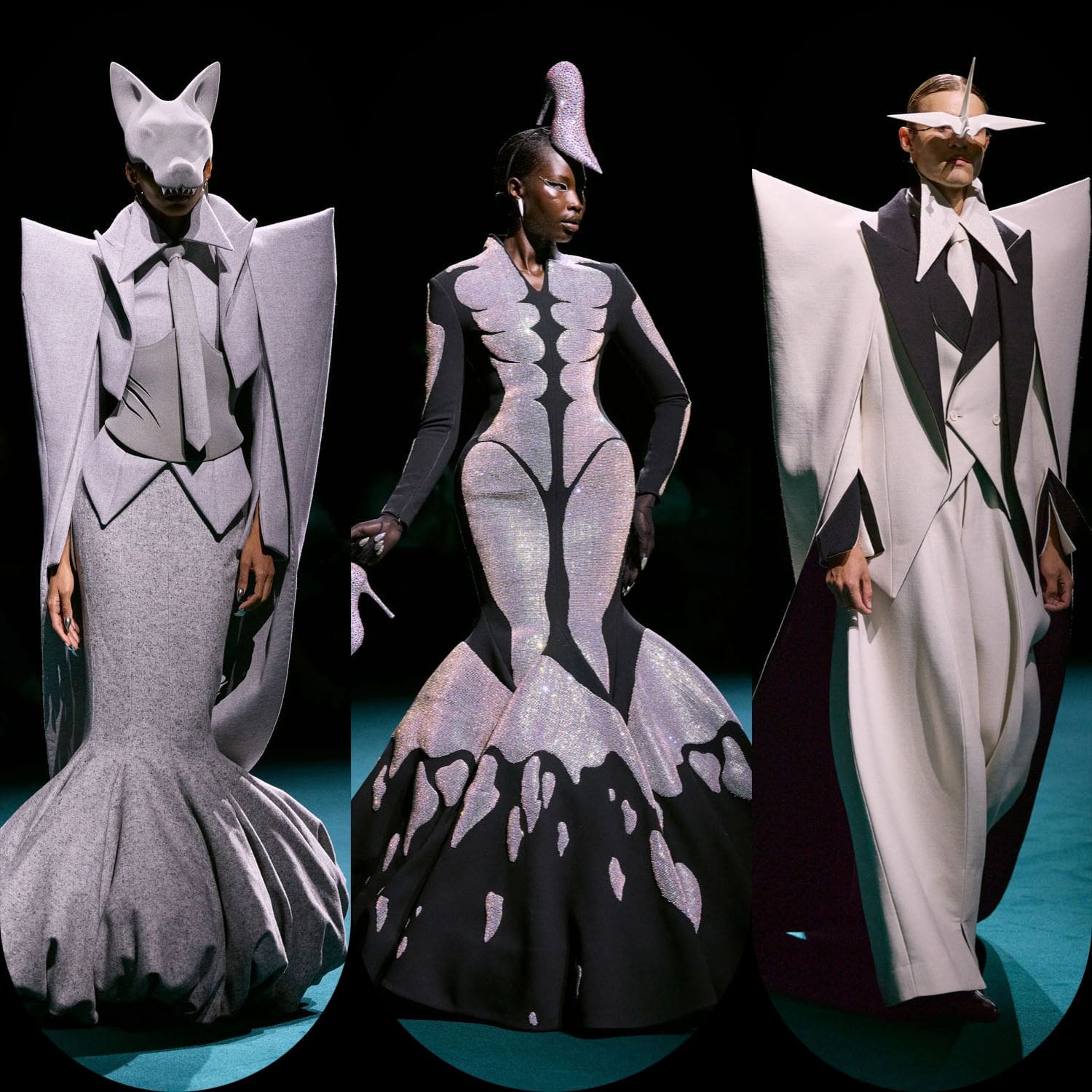
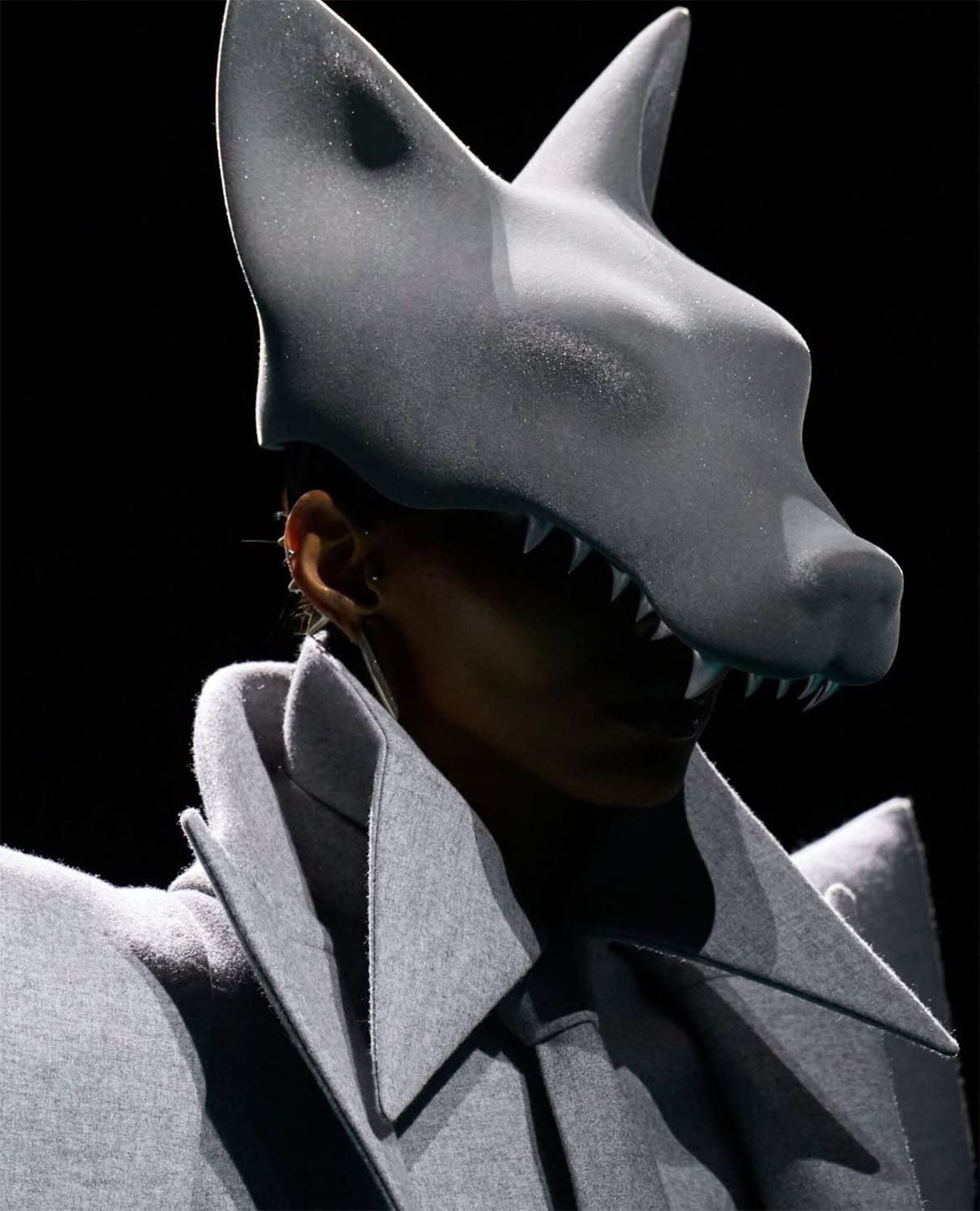
Following this came a re-imagining of storybook archetypes, stepping out from the fog of collective memory. Red Riding Hood and her wolf walked not as adversaries, but as beautifully balanced studies in form. The Big Bad Wolf prowled the runway in a sharply sculpted gray suit with cartoonishly swollen shoulders, a silhouette of immense presence, while Red Riding Hood wandered through Wun’s world of saturated primaries. Nearby, Snow White appeared swathed in a draped cobalt confection suspended from two doves frozen mid-flight—an image of breathtaking, suspended grace.
The Curdling of the Dream
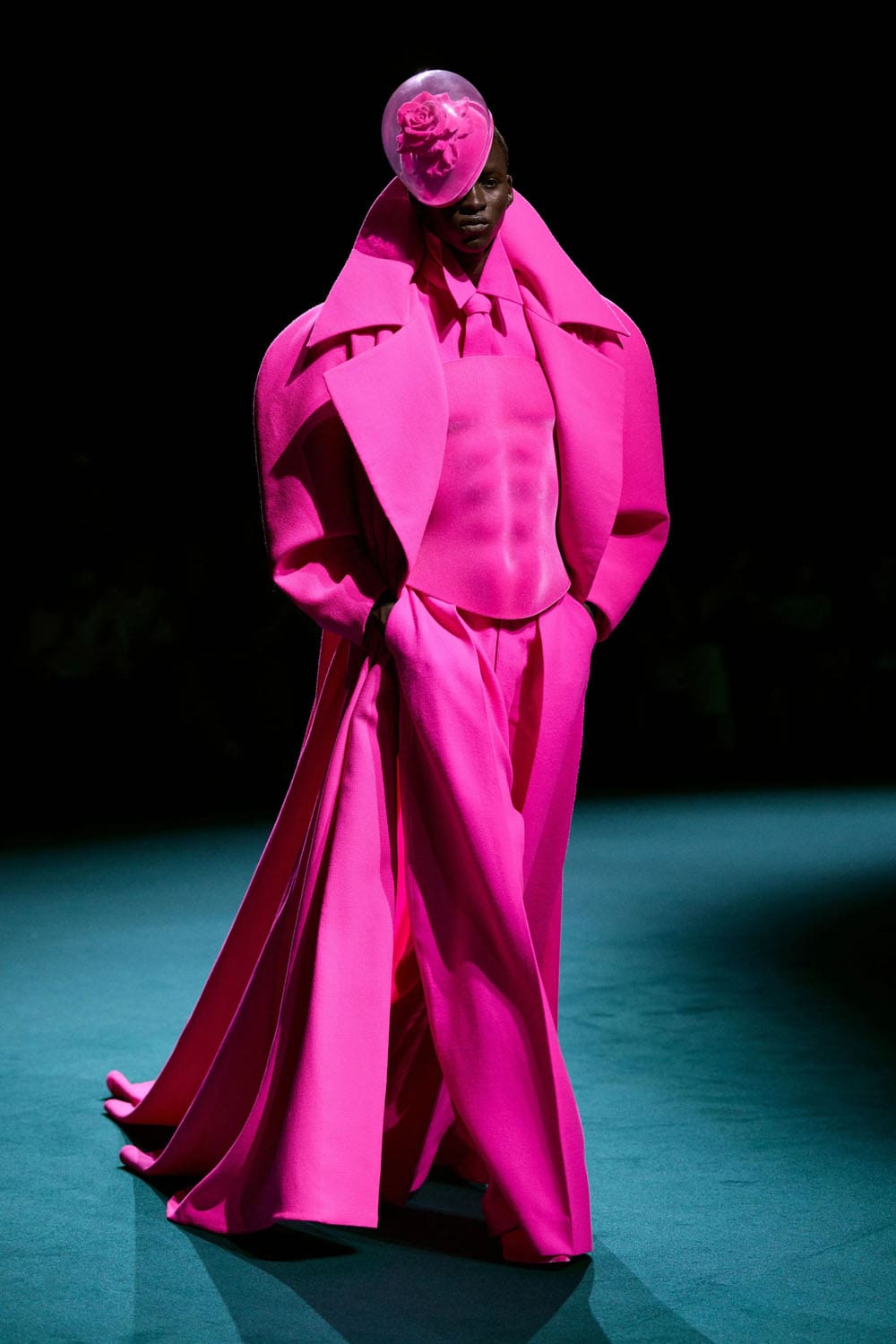
Then, as childhood invariably does, the mood shifted into something more sober and complex, capturing the exact moment the fairytale world confronts its own boundaries. Wun introduced a striking, sculptural gown in an arresting shade of bubblegum pink. The look possessed an almost athletic rigidity, featuring a meticulously molded torso displaying a stylized six-pack anatomy, topped with an oversized, structured coat and a whimsical, translucent headpiece resembling a delicate glass bubble encasing a single, perfect rose.
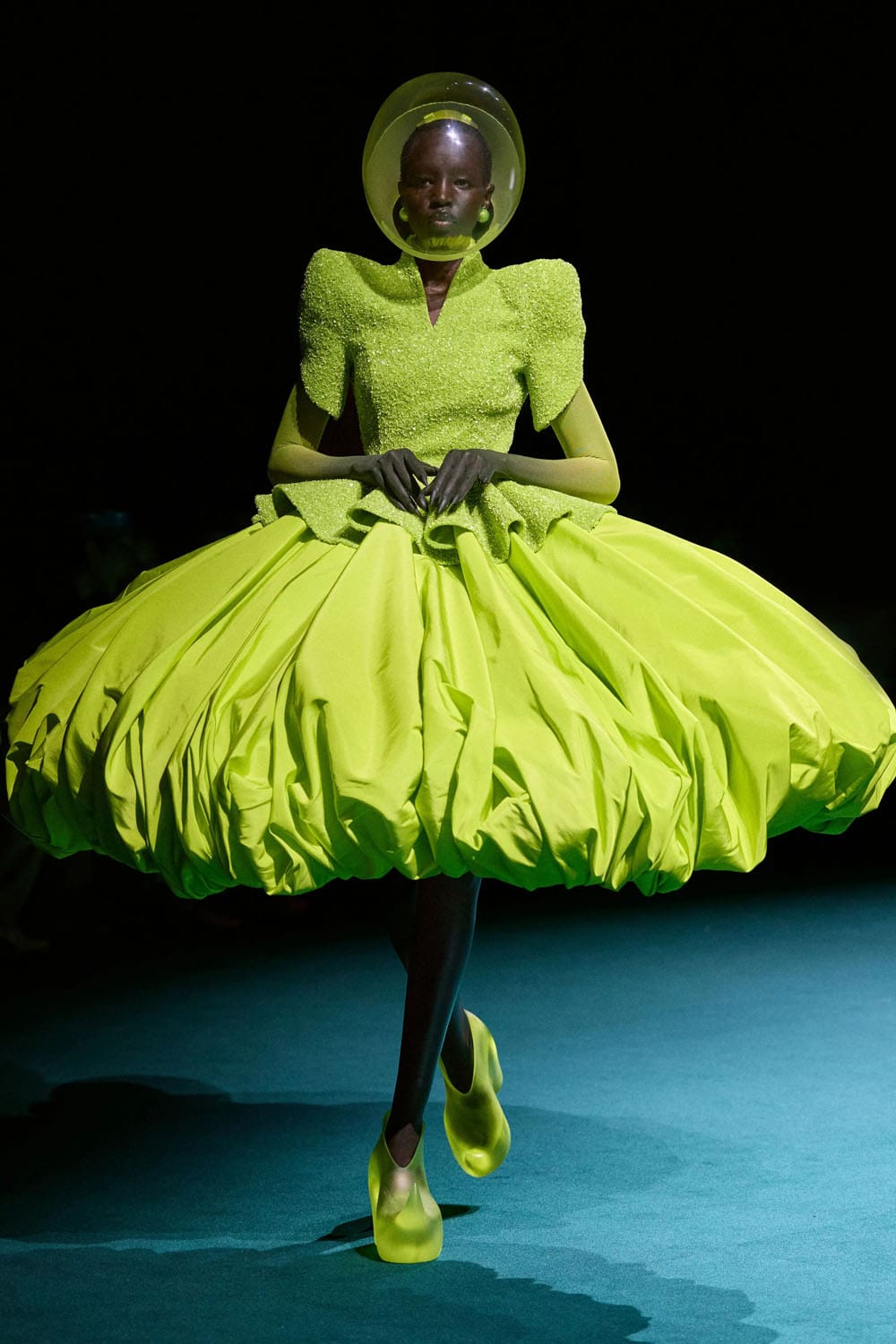
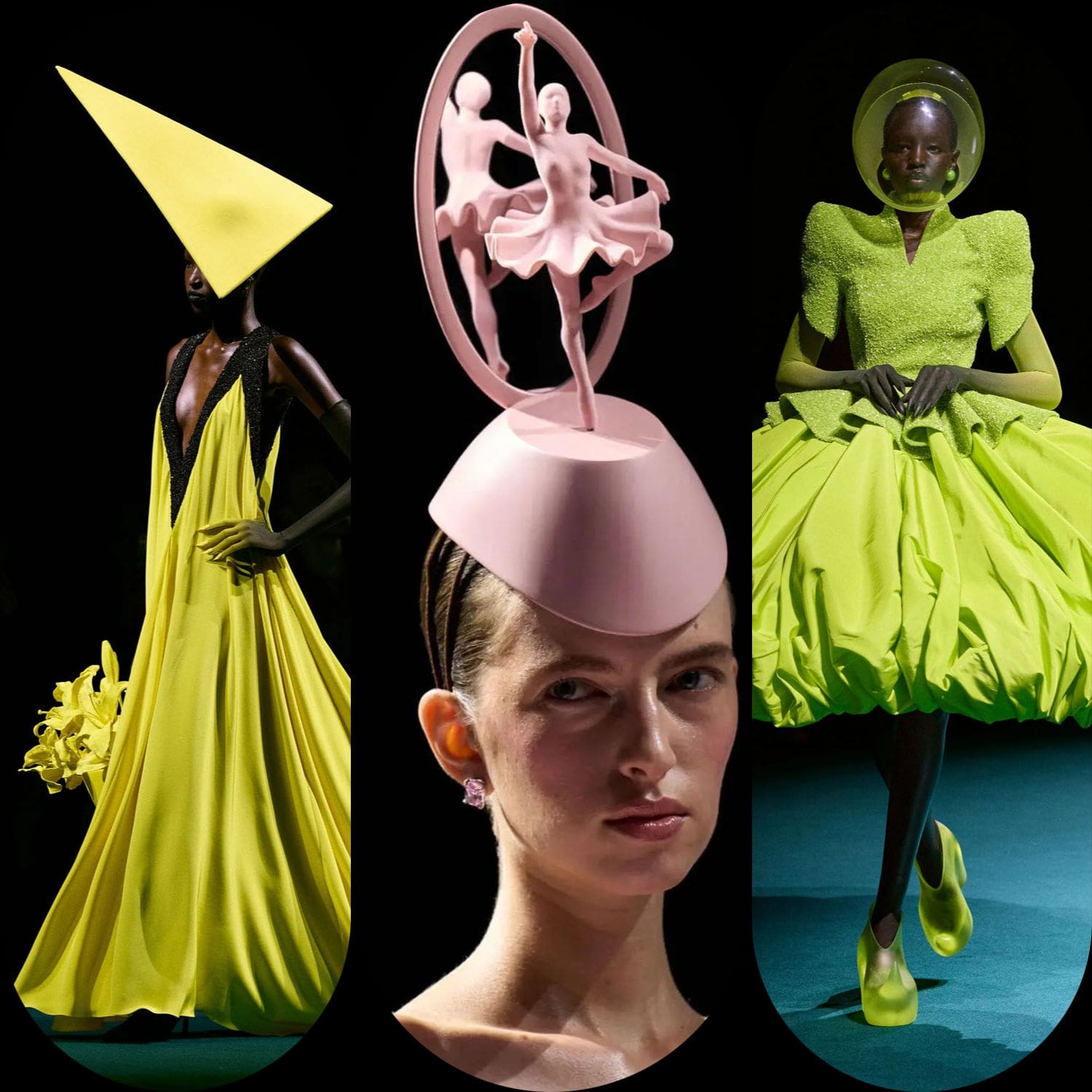
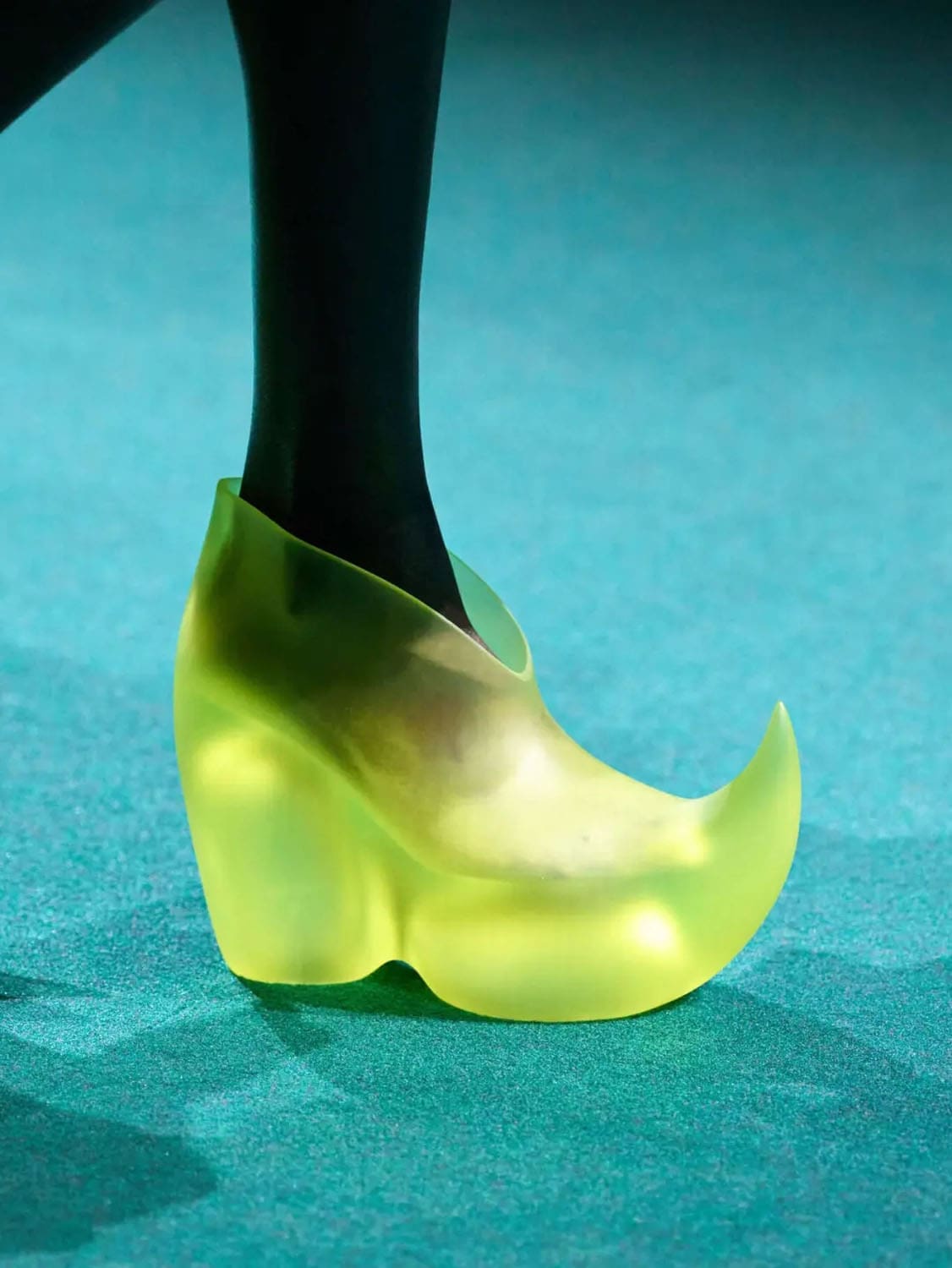
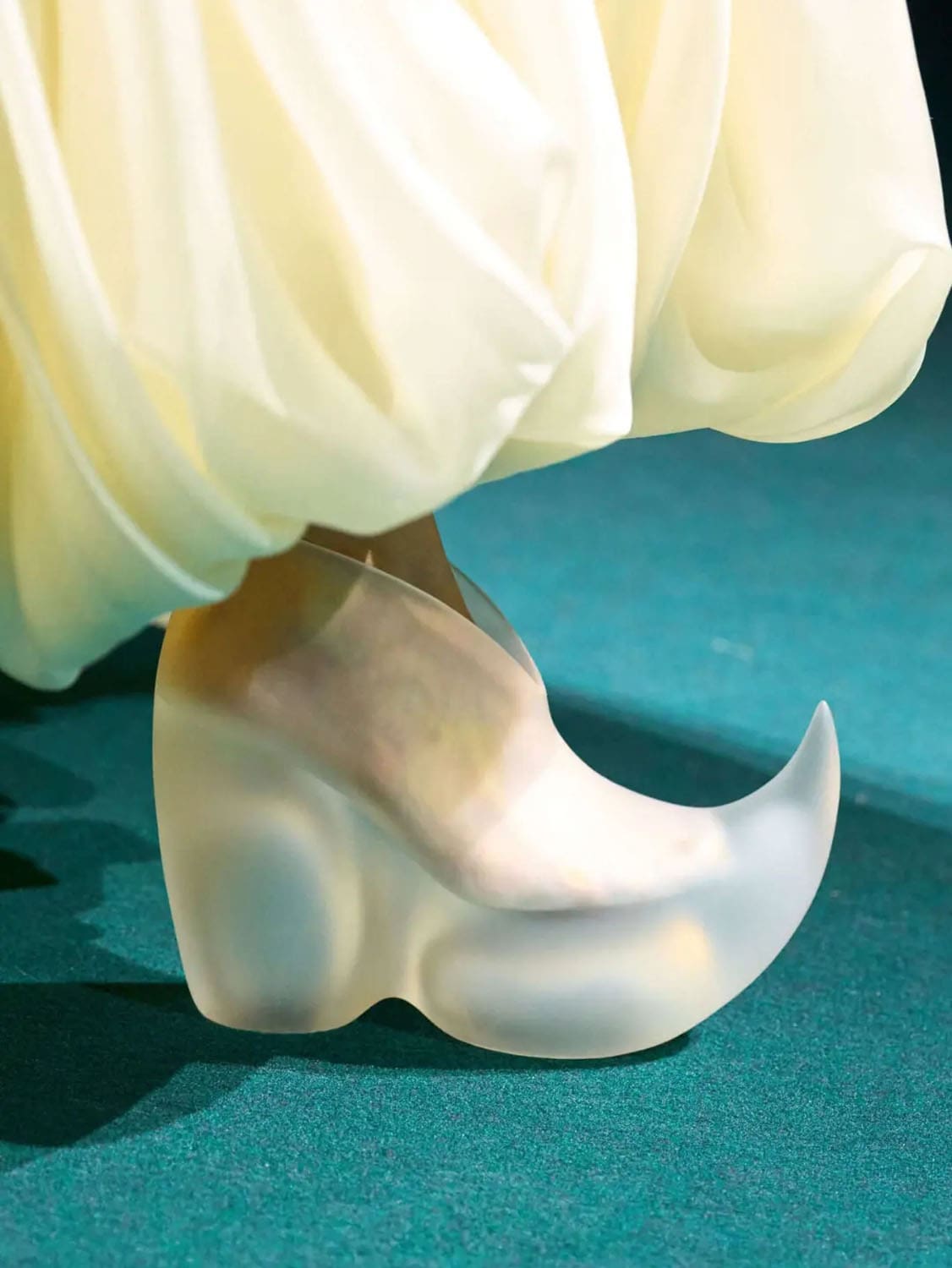
Soon after, a neon-lime vision appeared, anchoring the fantasy with an absolute mastery of textile architecture. The model moved down the emerald carpet in a voluminous, puffed balloon skirt that seemed to float like an incoming cloud, contrasted by a sparkling, heavily beaded bodice with sharp, downturned lapels. Her face was entirely enclosed within a perfectly spherical, transparent helmet—a silent, solitary voyager traversing Wun’s galaxy, with the robber clogs beneath her subtly lightened to ease her journey.
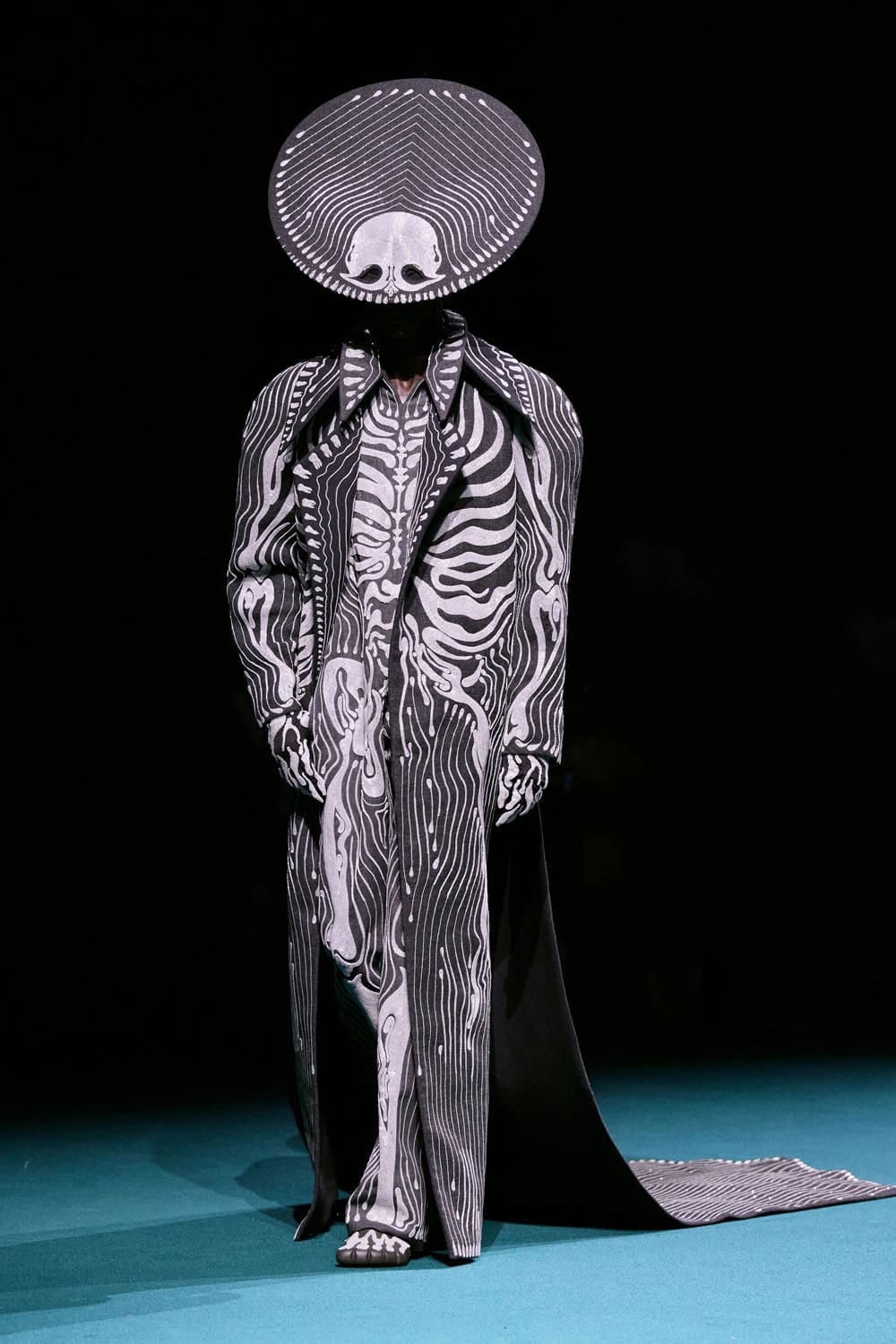
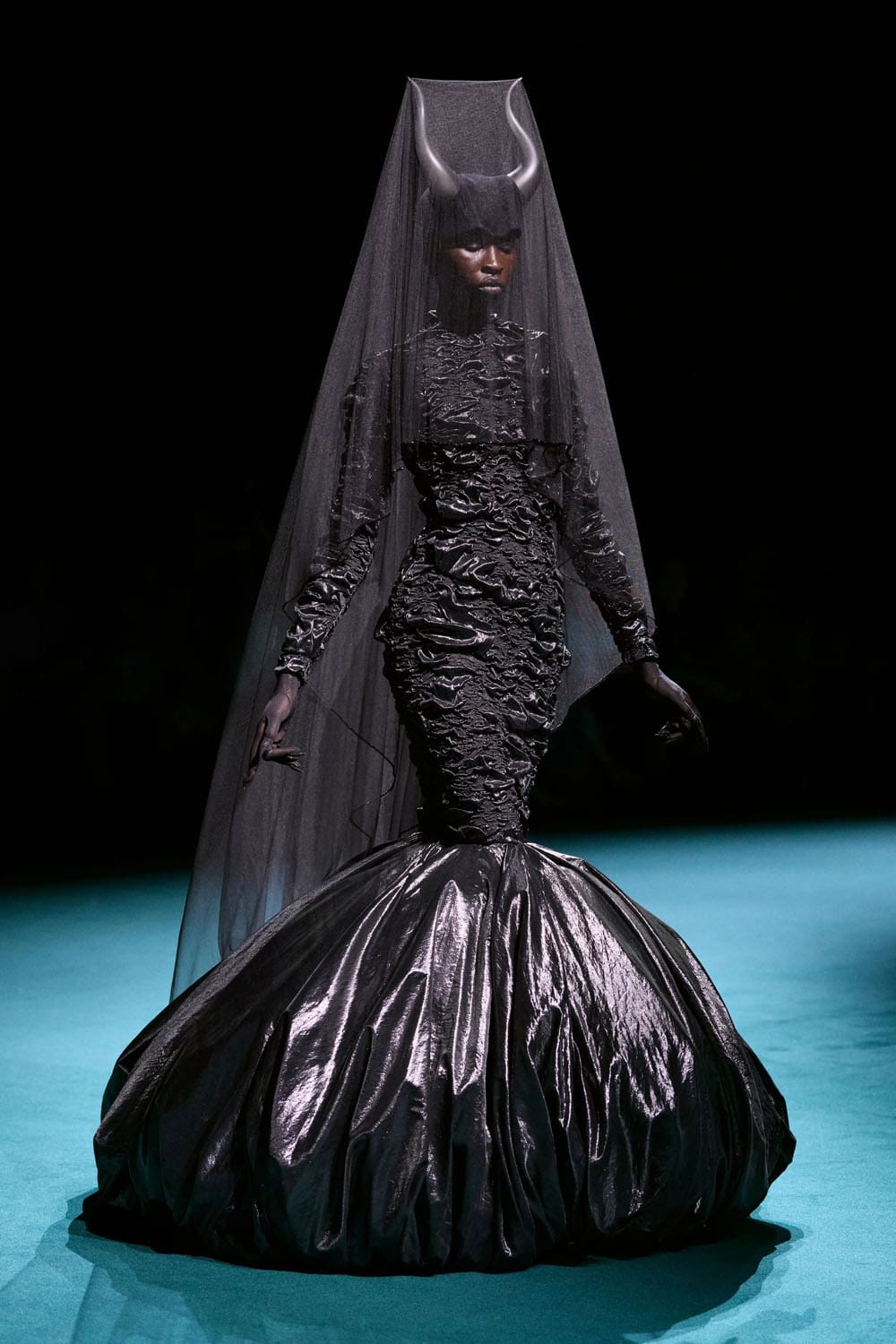
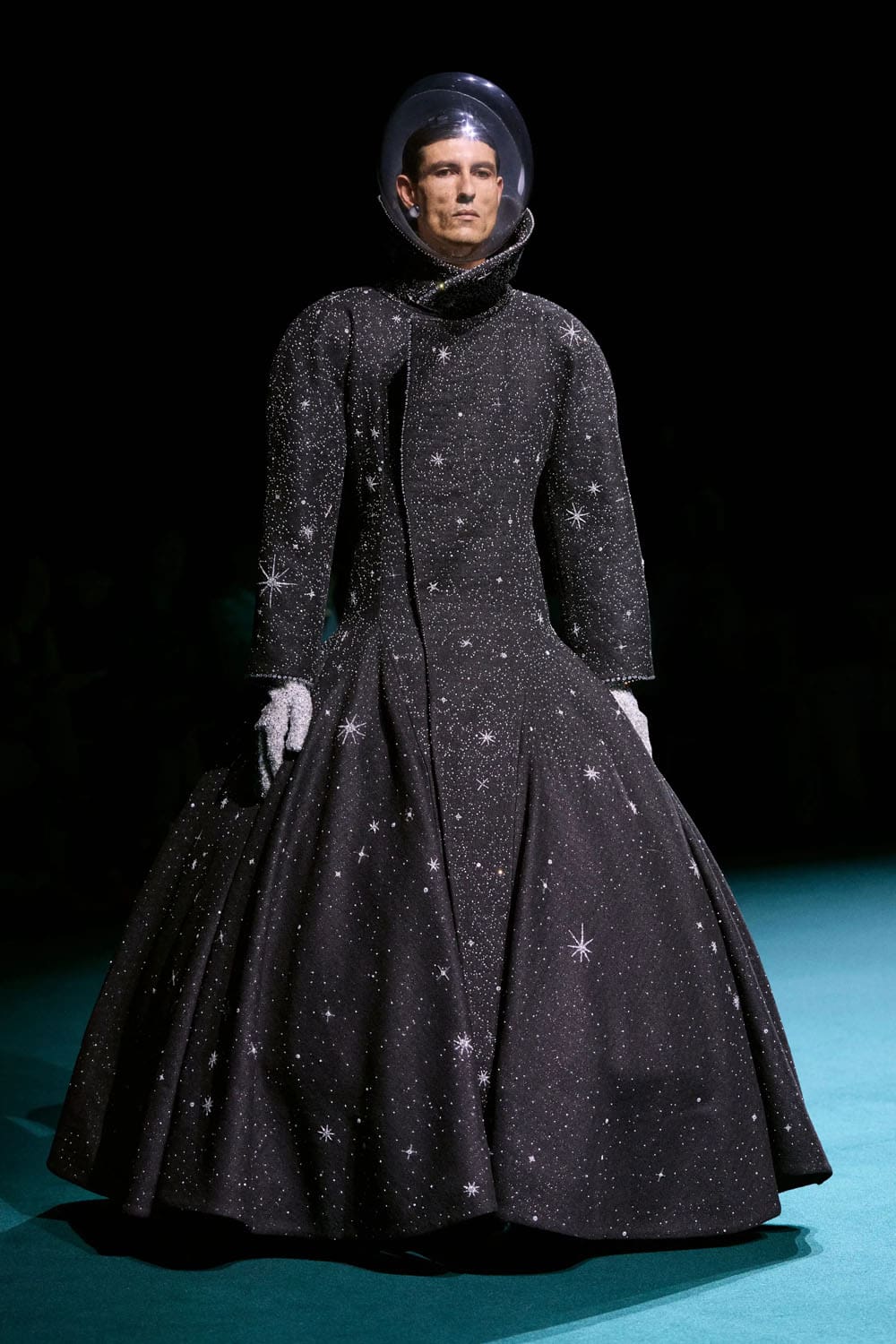
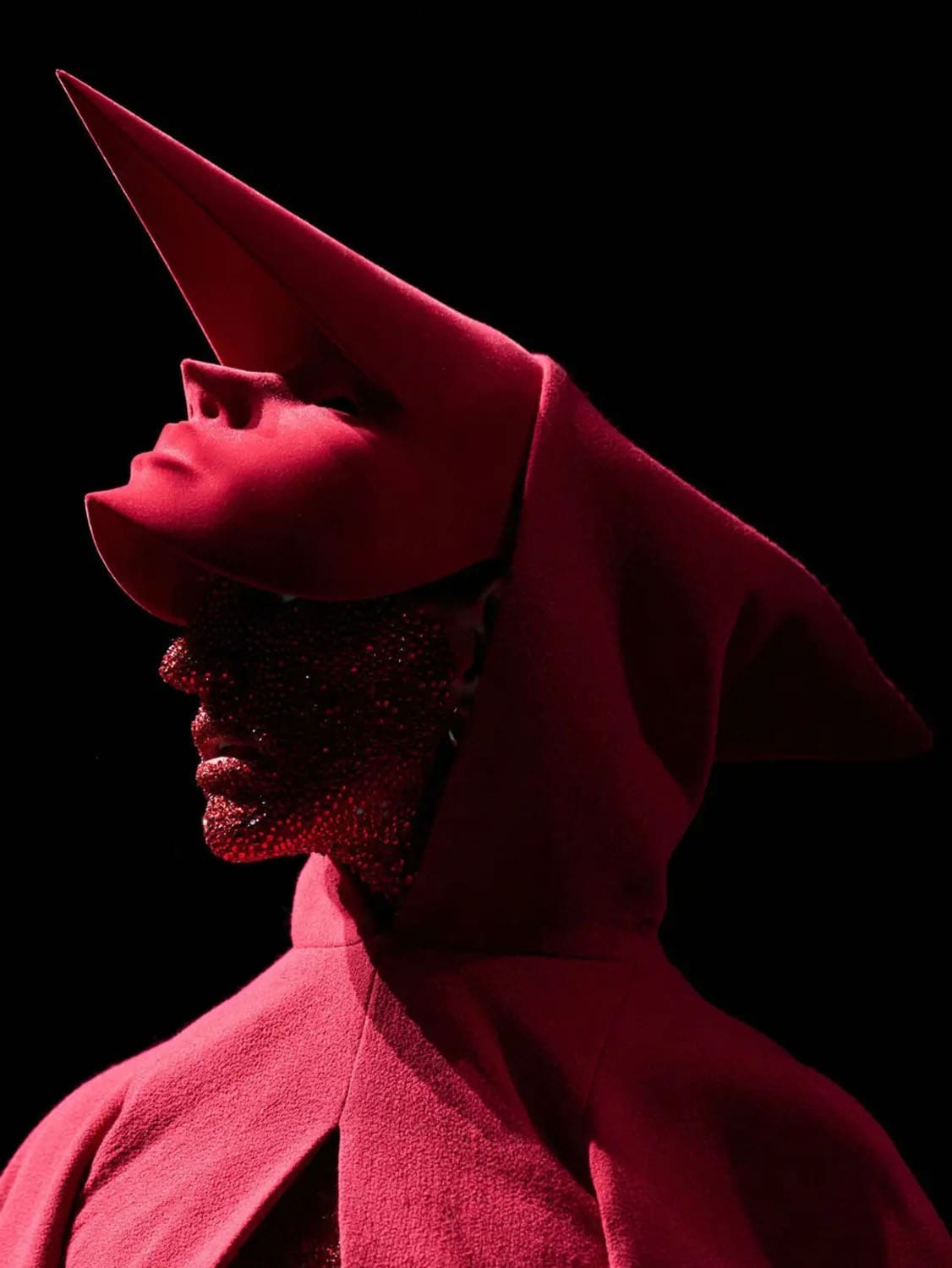
The dark counterpoint to these vibrant reveries materialized as Maleficent—rendered with profound poetic irony in a gown assembled from glossy black garbage bags. The texture crinkled and caught the light with an unexpected, dark majesty. Alongside her drifted an astronaut wearing an entire dark galaxy of crystals, while Jack Skellington’s anatomy was translated into the chalk stripes of a tailored suit, as though Savile Row had given Halloween an internship.
The Fragile and the Un-Serious
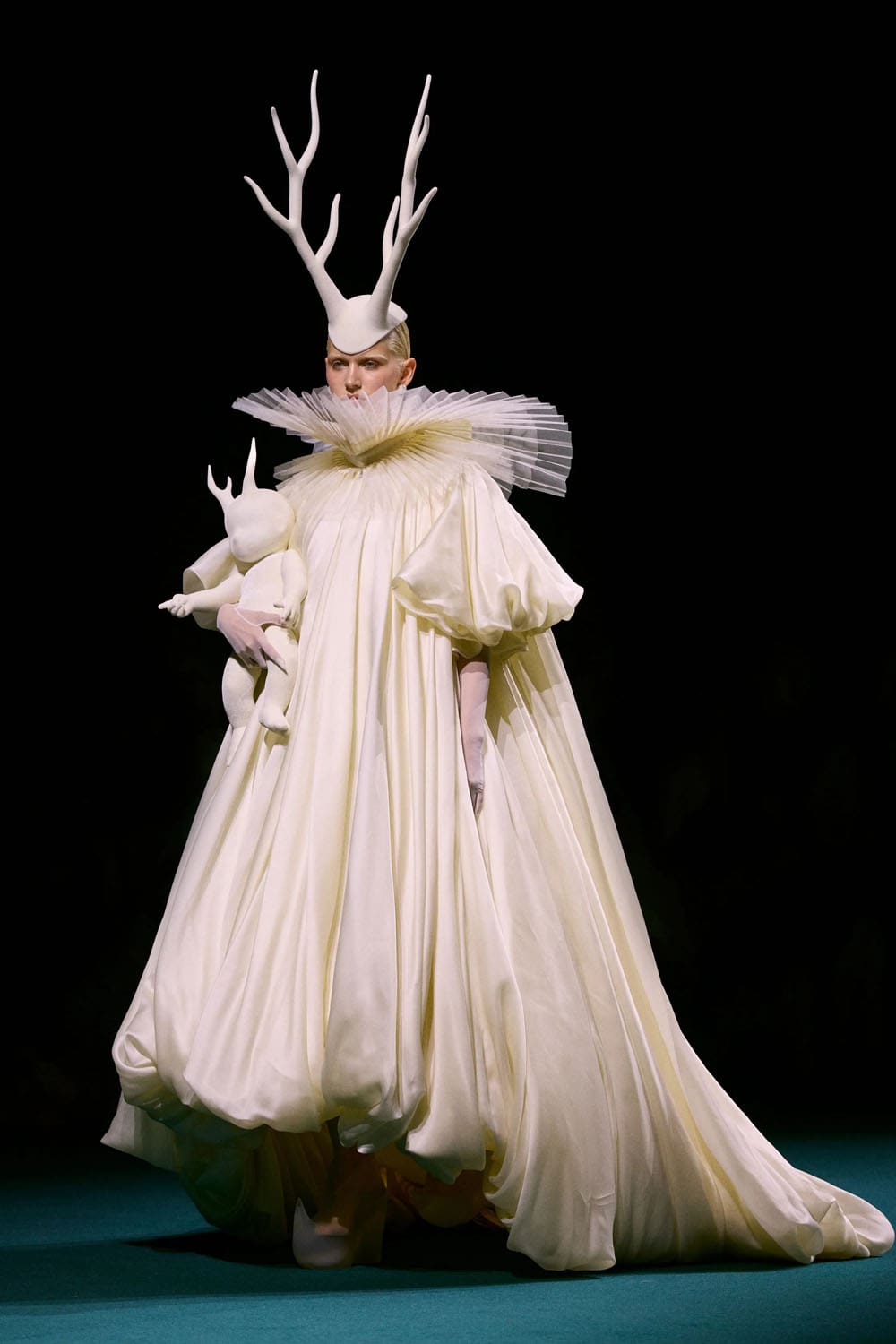
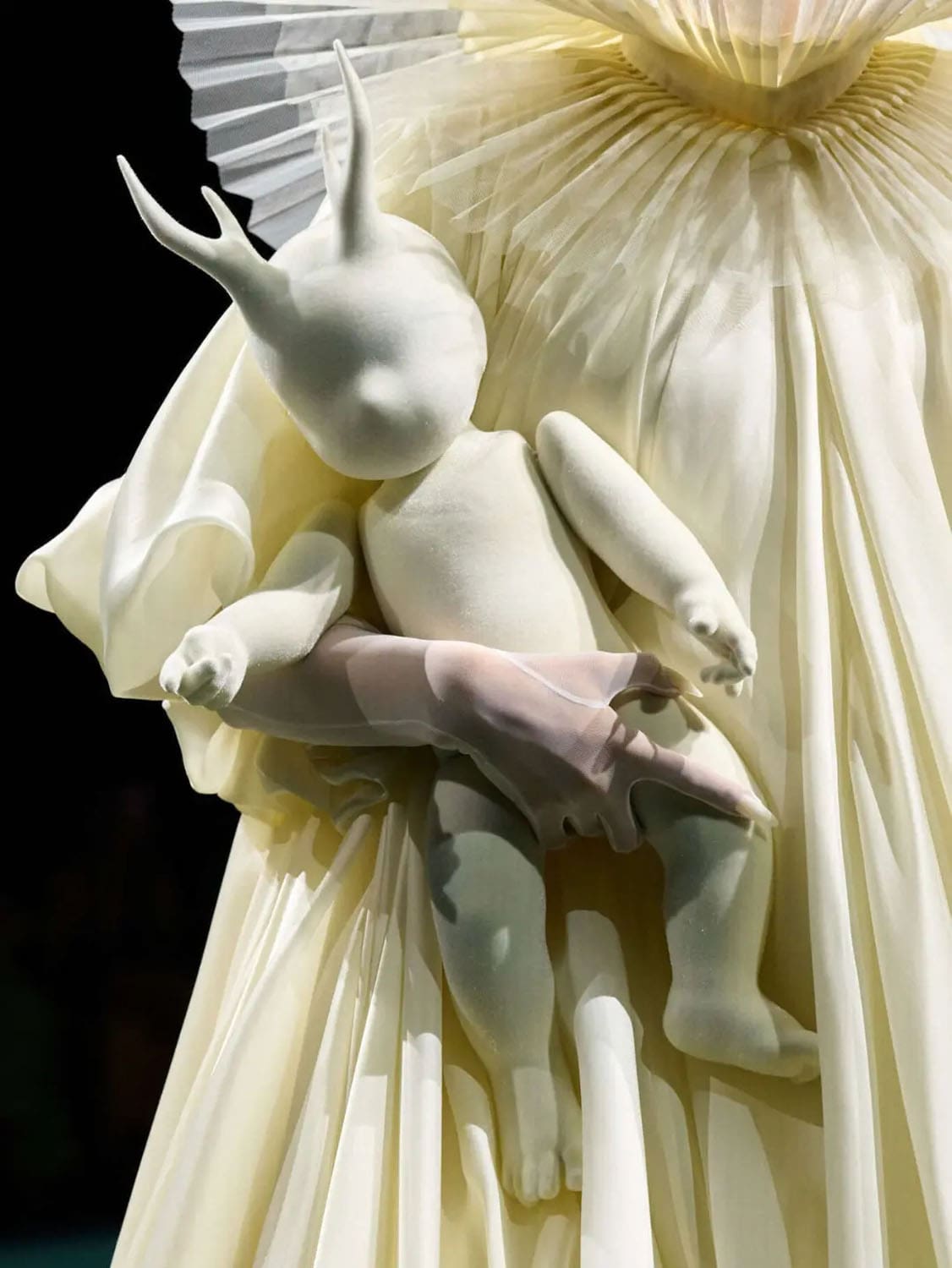
The true emotional climax belonged to an immense white horned creature clutching an equally horned teddy bear. “It’s Bambi’s mother,” explained the designer, invoking the saddest character in all fairytales. Yet in Wun’s hands, this creature was safe, majestic, and entirely capsuled from harm.
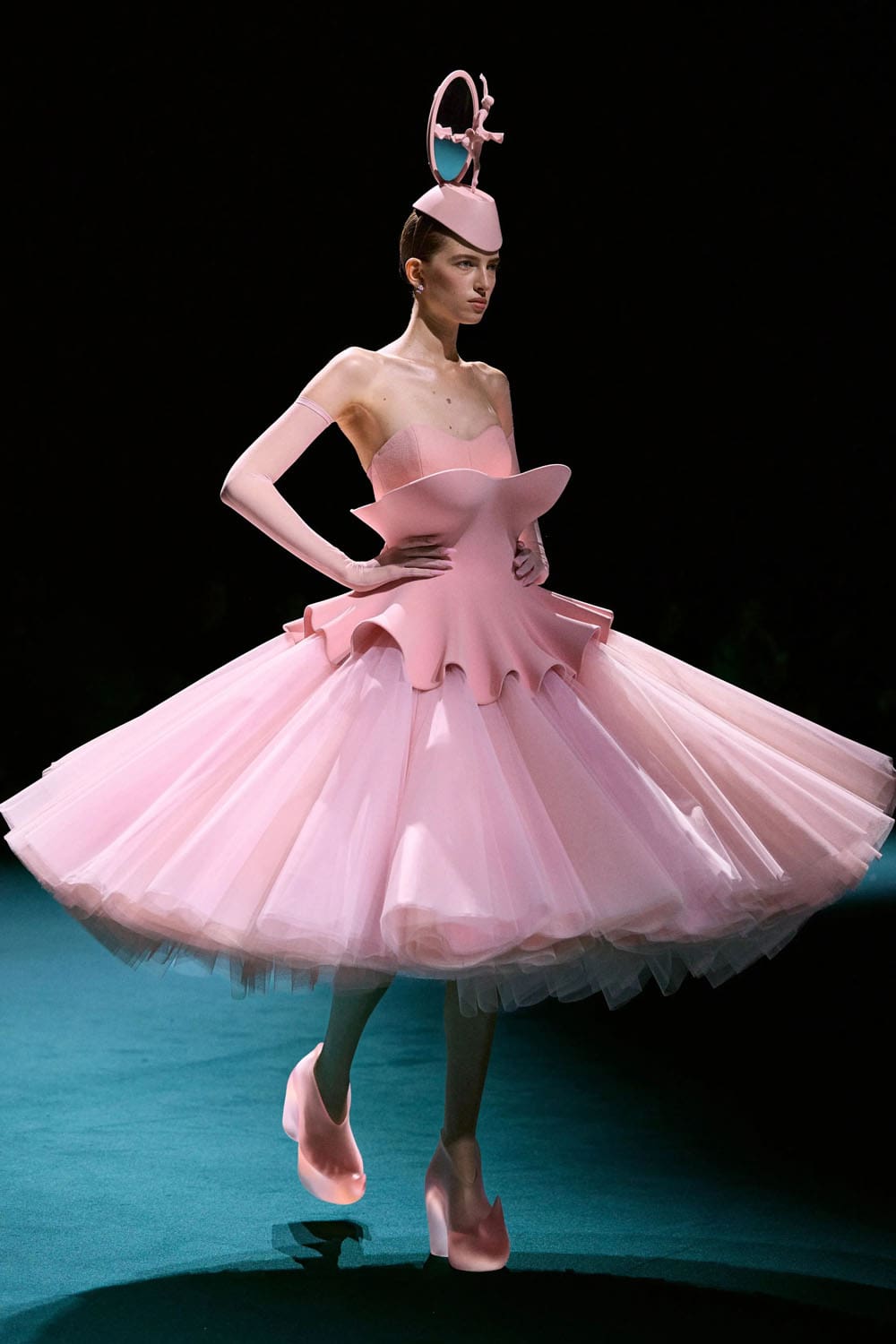
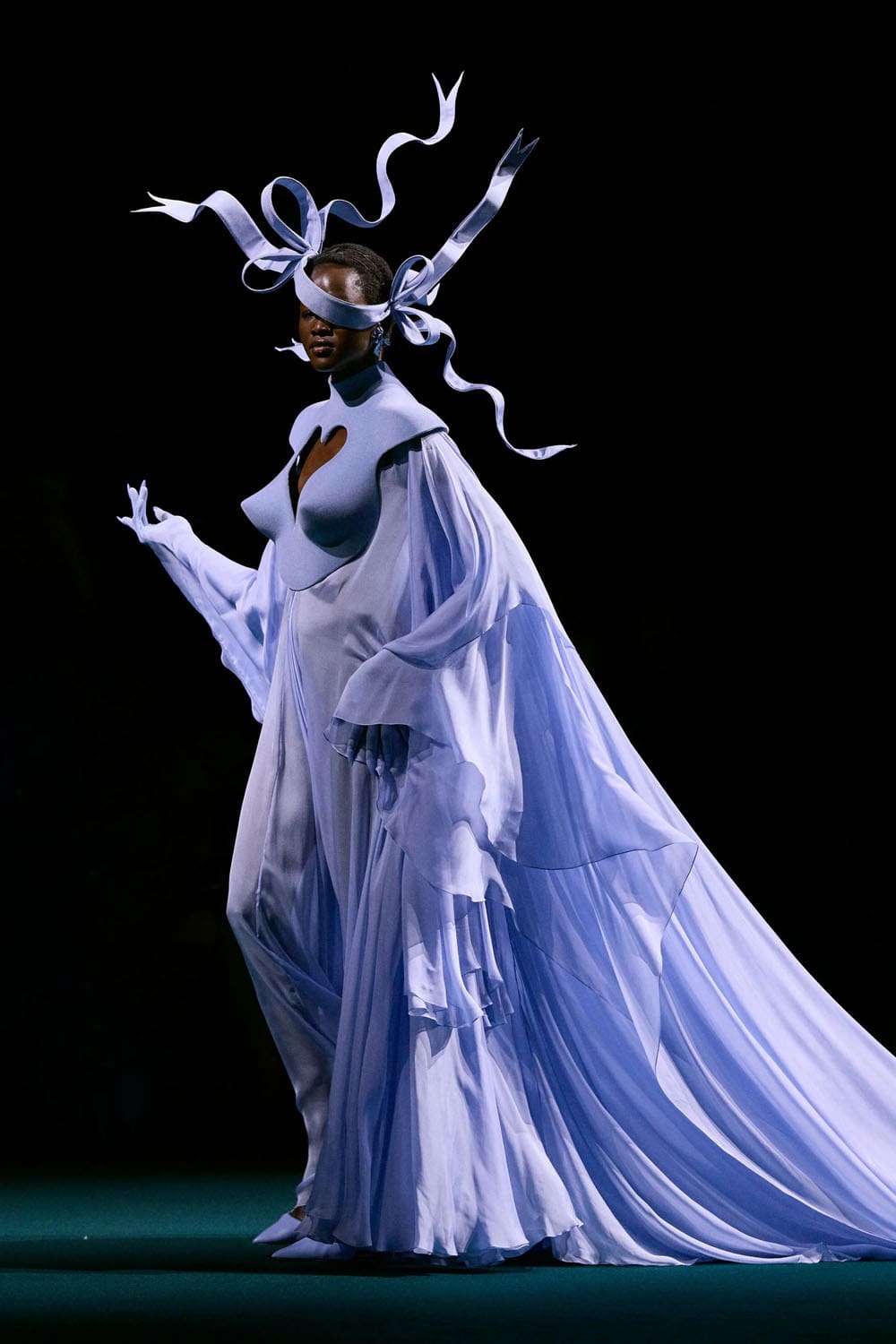
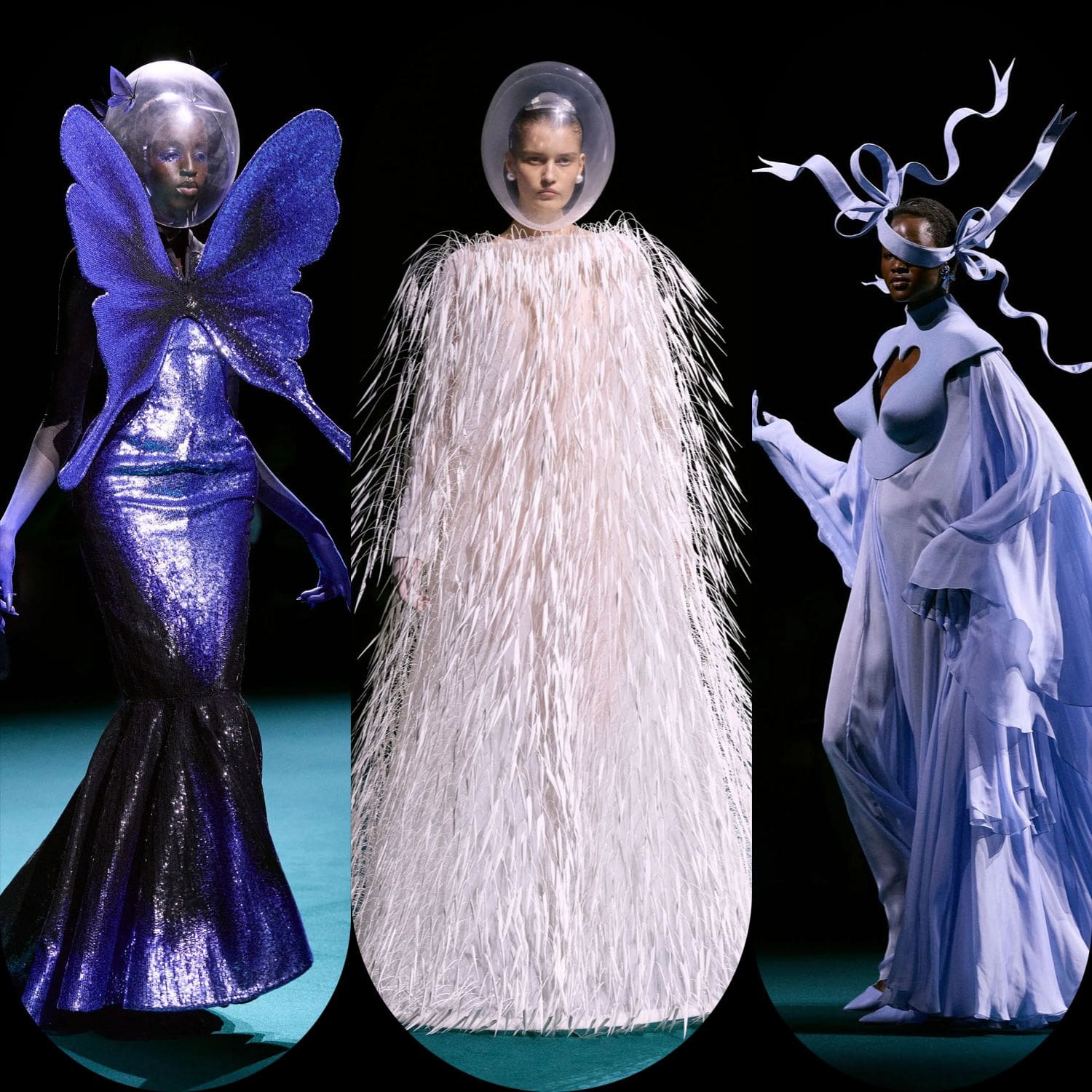
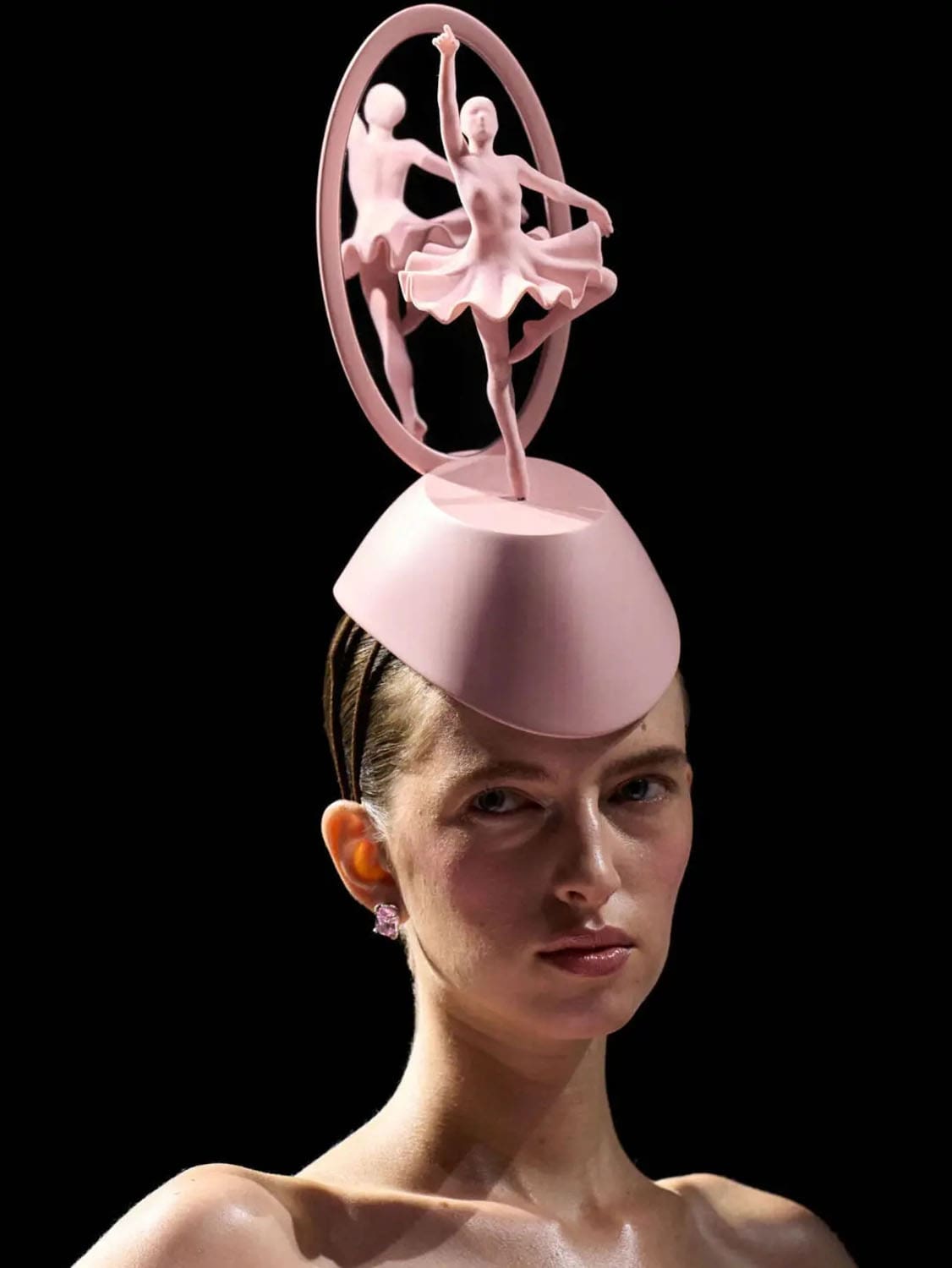
It was followed by a mesmerizing look of pure, ethereal light: a fluid, sky-blue jumpsuit that draped into a sweeping cape, its structural bodice featuring a cut-out heart at the collarbone and pointed, surrealist cups. The model’s head was adorned with a chaotic, beautiful crown of stiffened blue ribbons that twisted into the air like frozen wind. There was a delicate nod to the Nutcracker too—a ballet dancer spinning within a tiny, mirrored backdrop perched beautifully as a headpiece, a delicate fragment of a childhood music box.
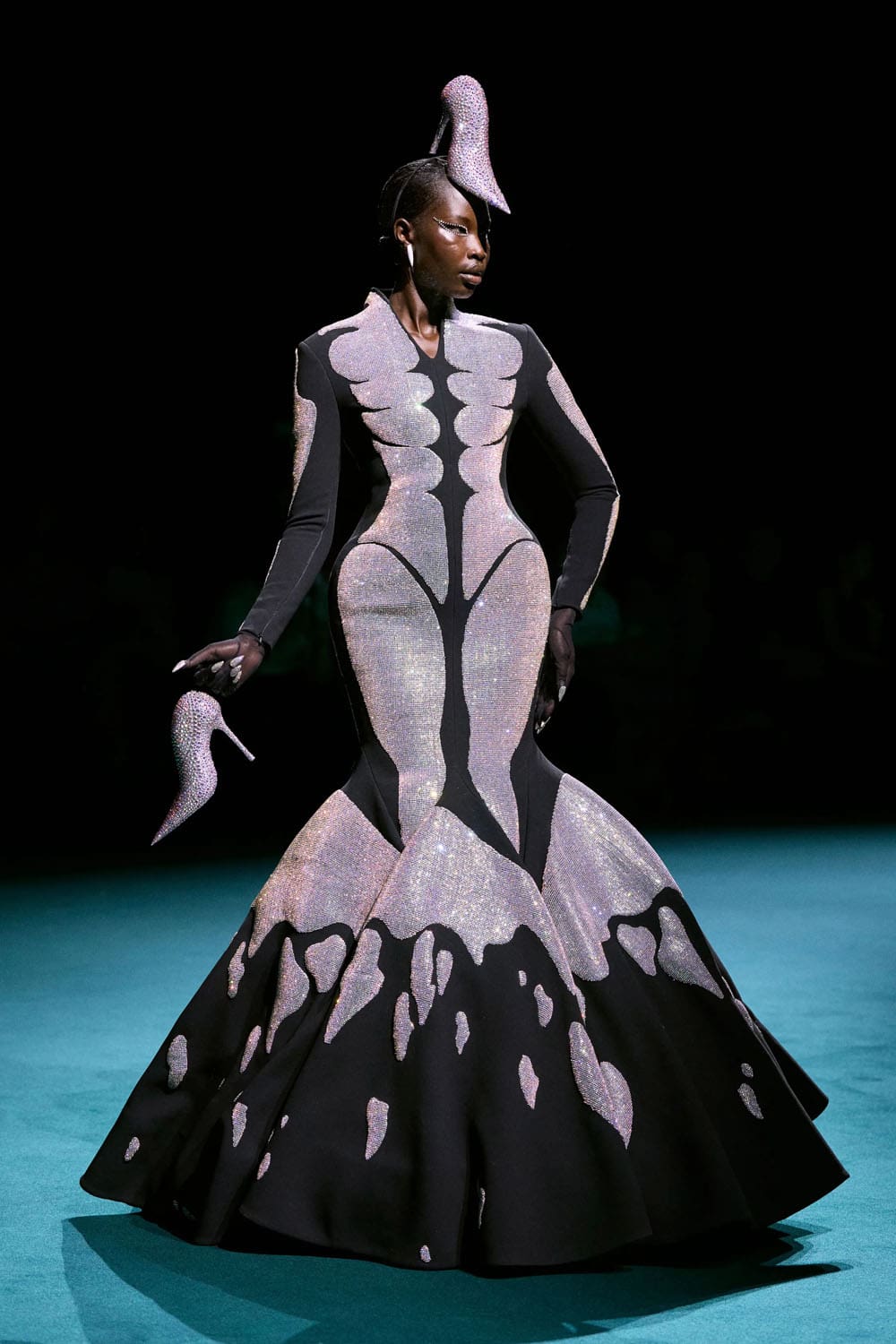
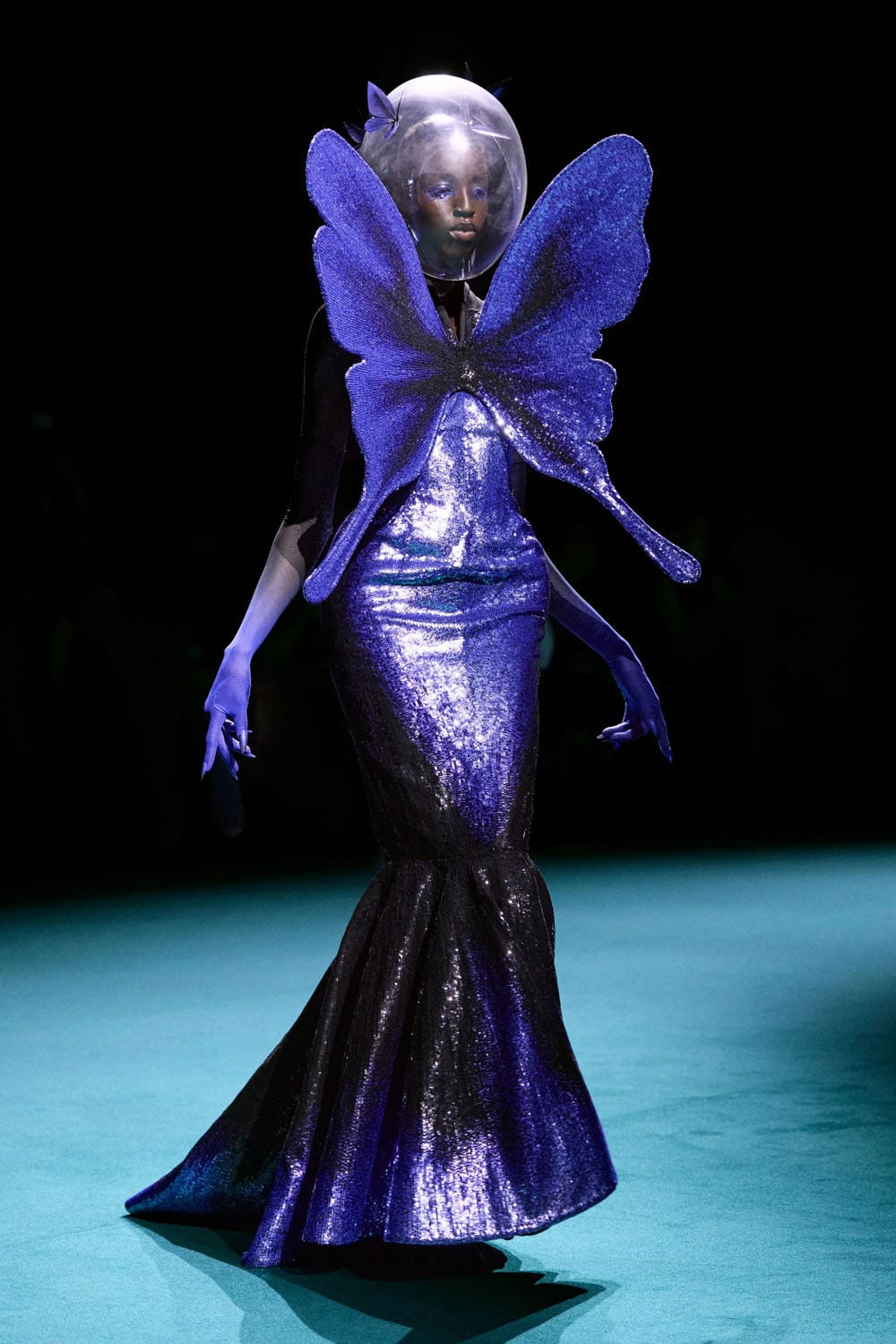
Equally breathtaking was a gown that transformed the runway into a midsummer night’s dream. Wrapped in shimmering, iridescent deep-purple sequins that shifted from indigo to midnight black, the gown flared into a dramatic mermaid hem. Emerging from the chest was a massive, velvet butterfly, its wings framing the model’s face, which was safely encapsulated within a clear glass sphere.
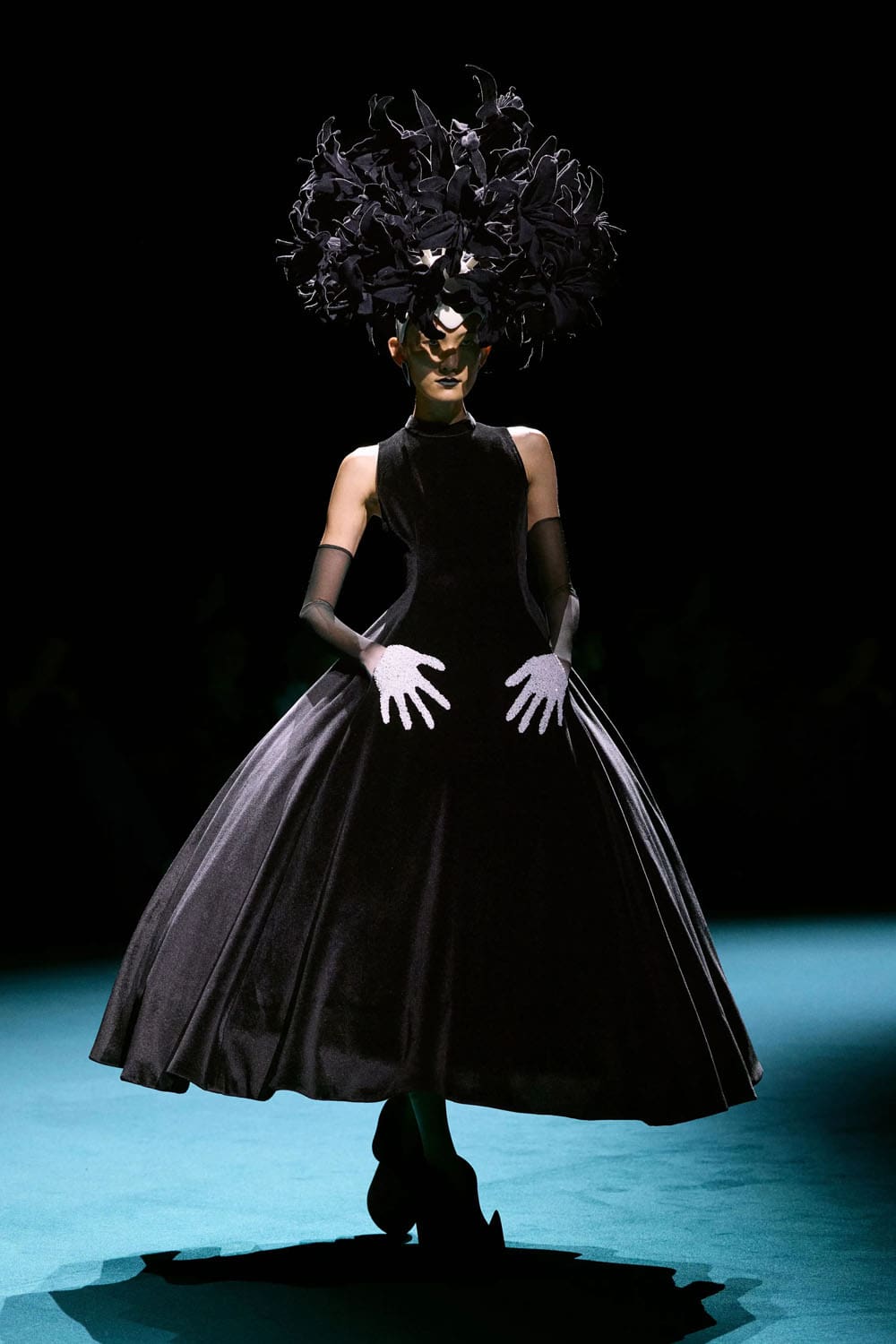
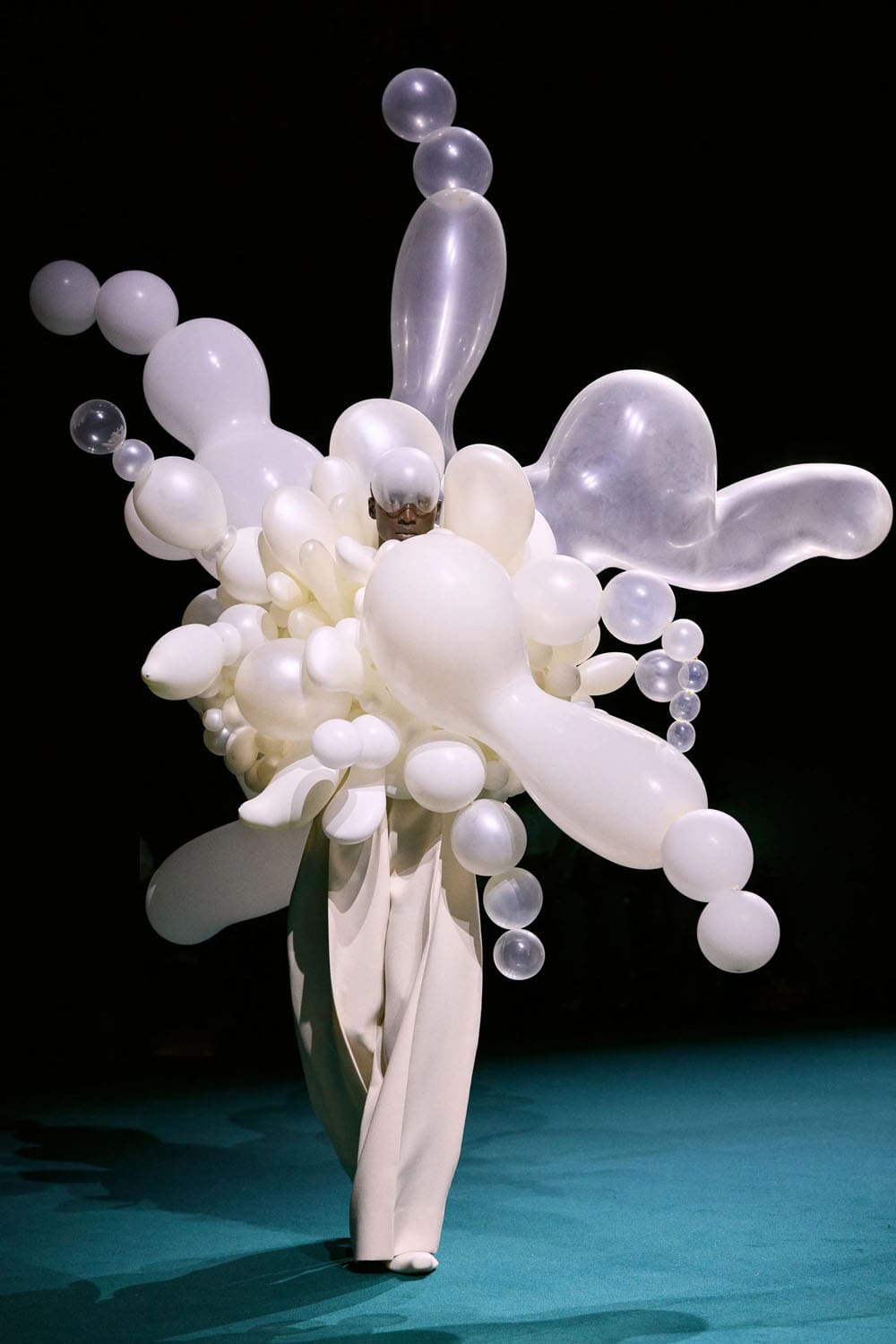
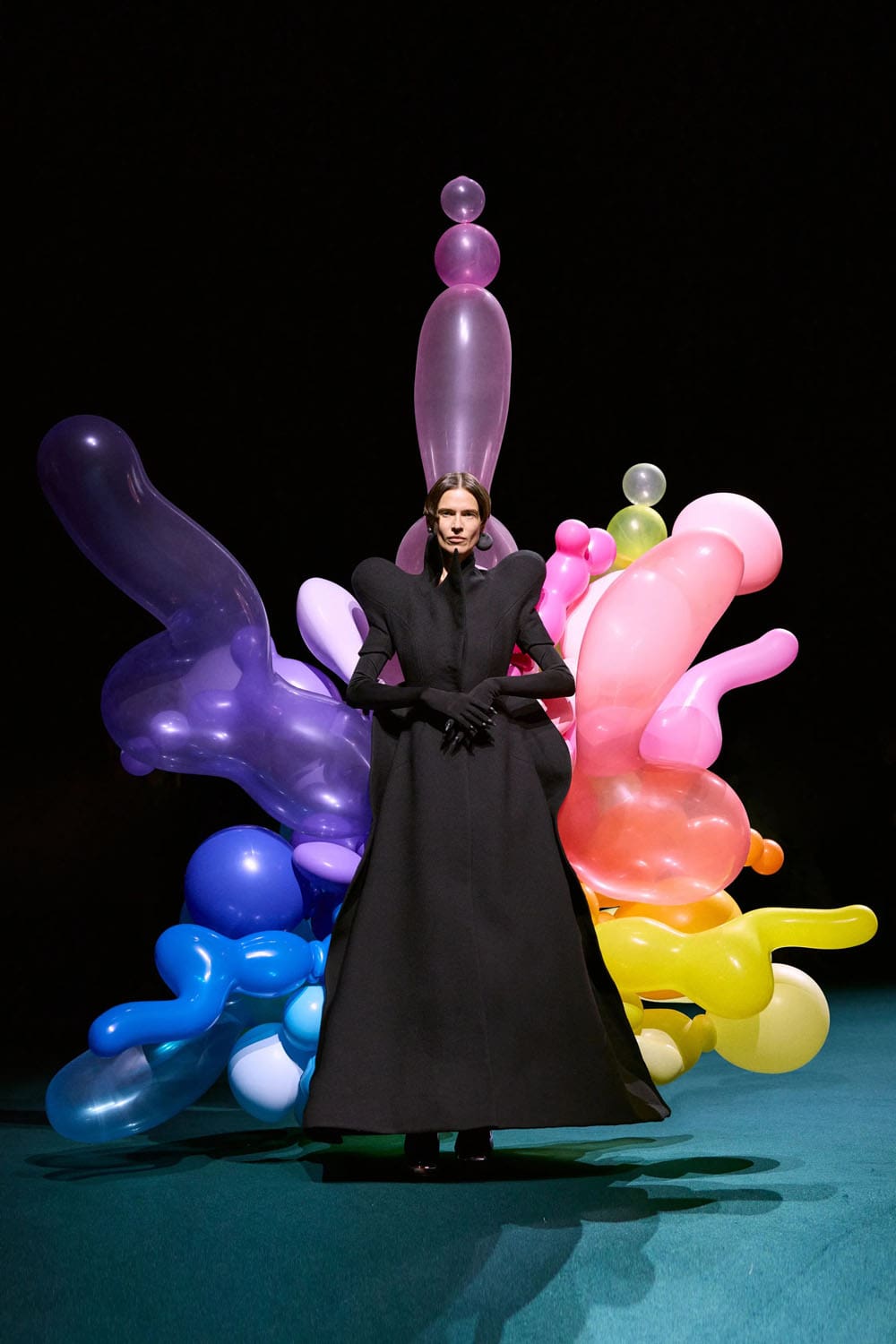
The show closed with a monumental black dress crowned by a chaotic cloud of customized balloons—a visual metaphor for the inner child that refuses to be tied down. Or, perhaps, the only balloons in Paris this week that weren’t filled with hot air. Beneath the fantasy lay Wun’s sober proposition: “The intention is to be inspired by the un-serious, but to create seriously.” Against a backdrop of a world that feels increasingly unmoored, Wun reminds us that fashion’s role extends beyond spectacle. Couture may not offer solutions to our global anxieties, but it can keep wonder alive—a precious, fragile resource when reality seems determined to extinguish it.
Key Takeaways
- Robert Wun’s Fall Winter 2026-2027 Haute Couture collection represents a magical rebellion against modern couture’s noise.
- The collection encapsulates childhood memories, blending dark fairytales with innocent truths, akin to Miyazaki’s themes.
- Key looks include a monumental gown with childlike doodles and characters like Red Riding Hood and Maleficent reimagined with sophistication.
- The show culminates in breathtaking designs that celebrate wonder while addressing the fragility of childhood amid a chaotic world.
- Wun emphasizes that fashion can inspire and keep wonder alive, even when reality feels overwhelming.
See All Looks Robert Wun Fall 2026-2027 Couture