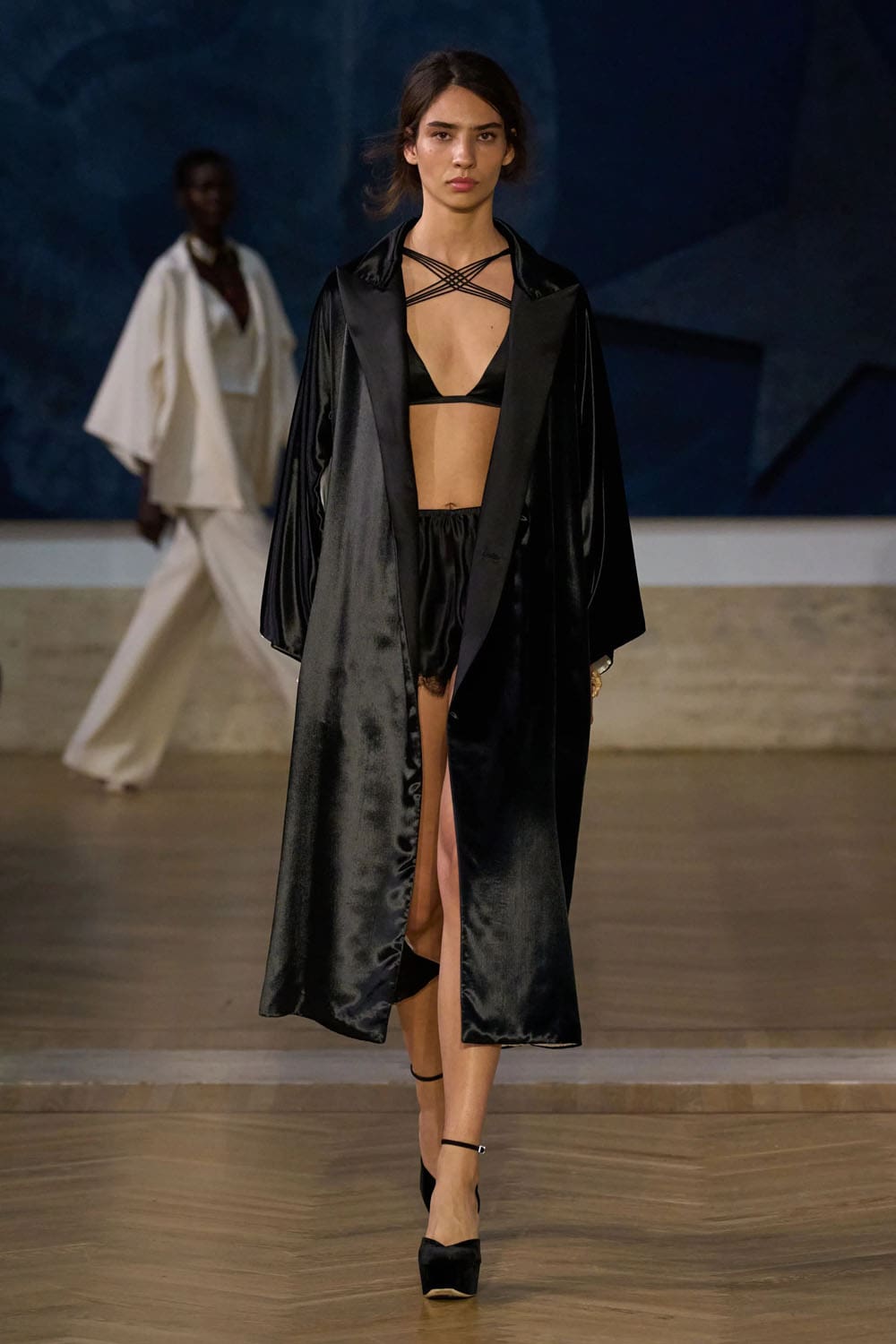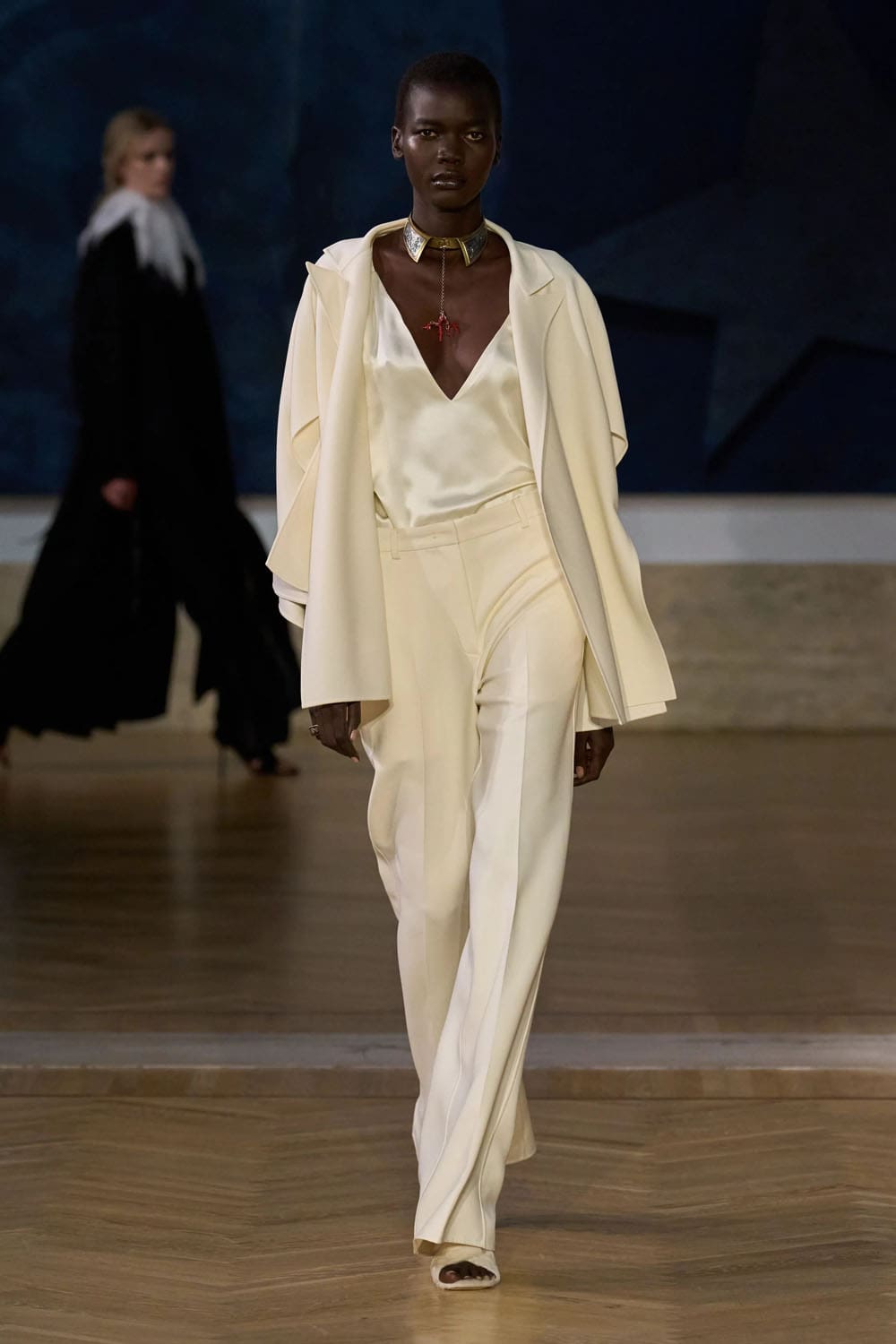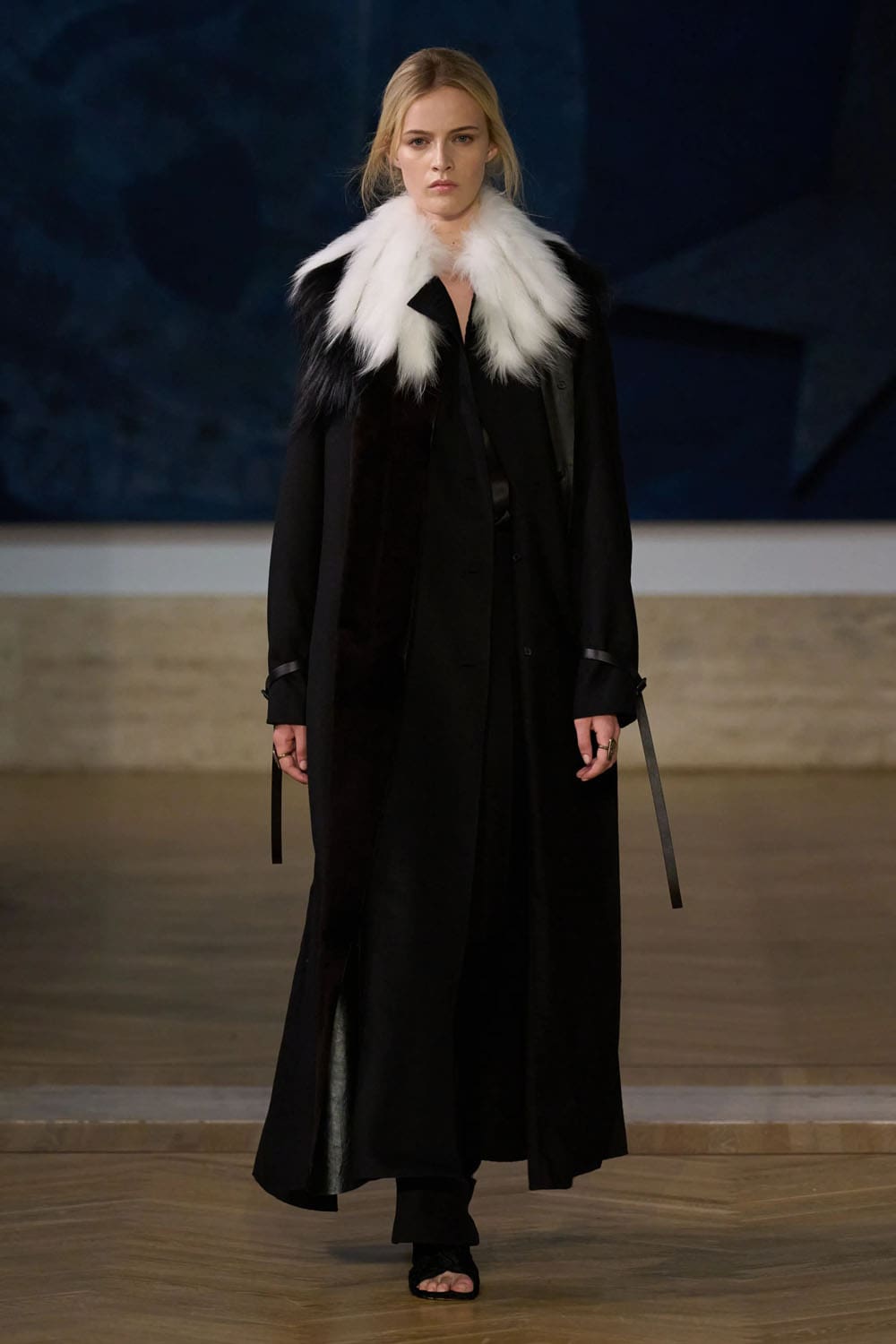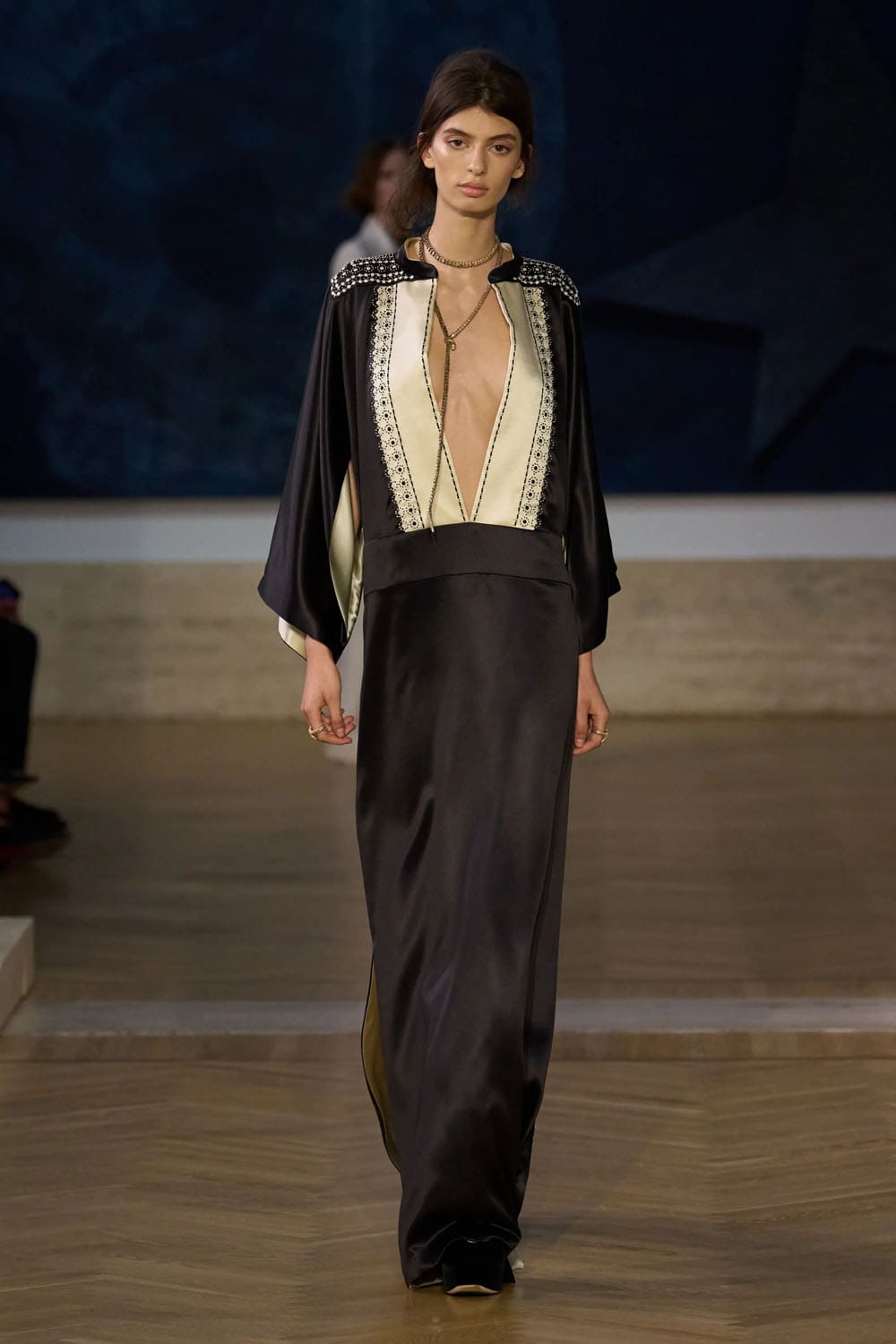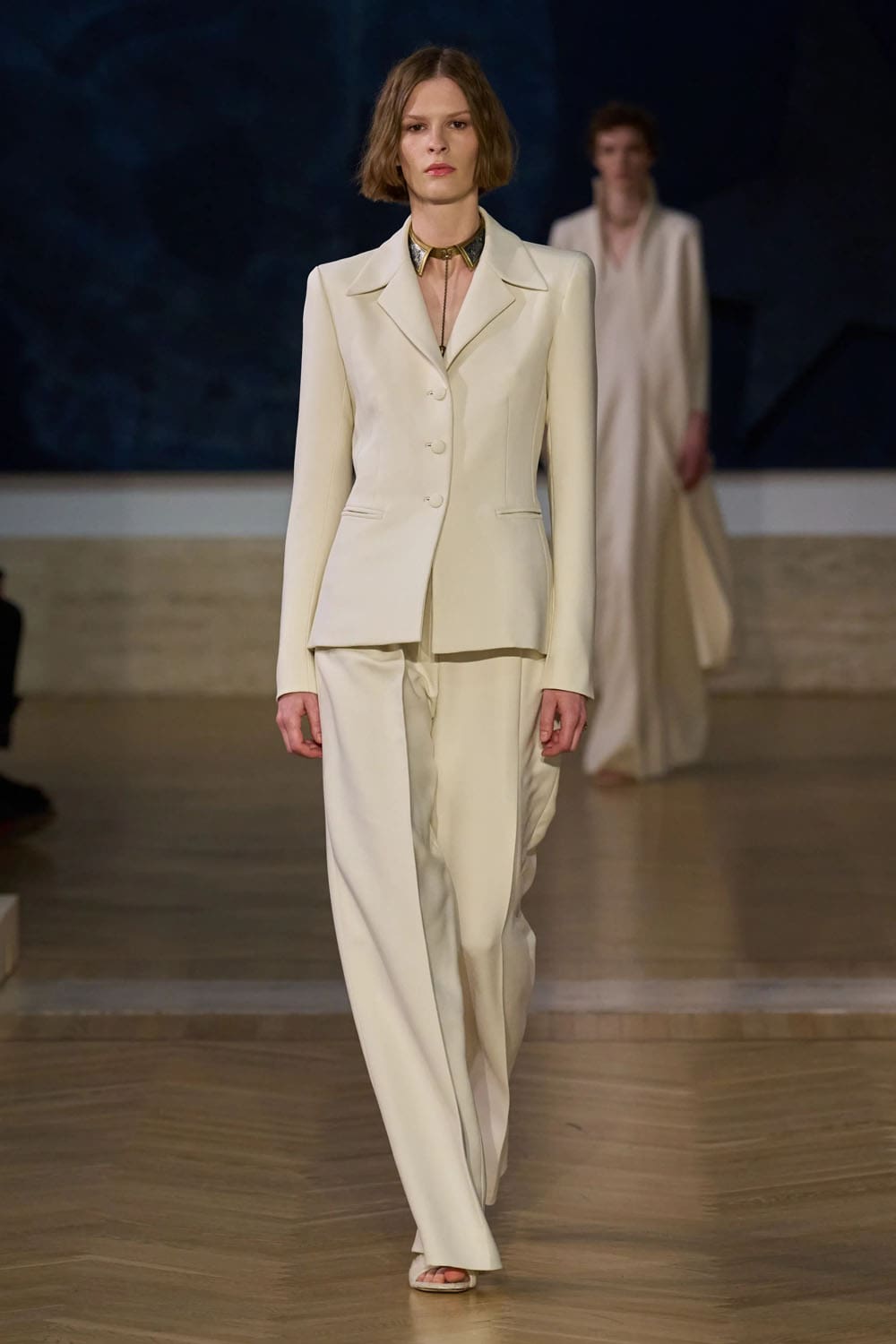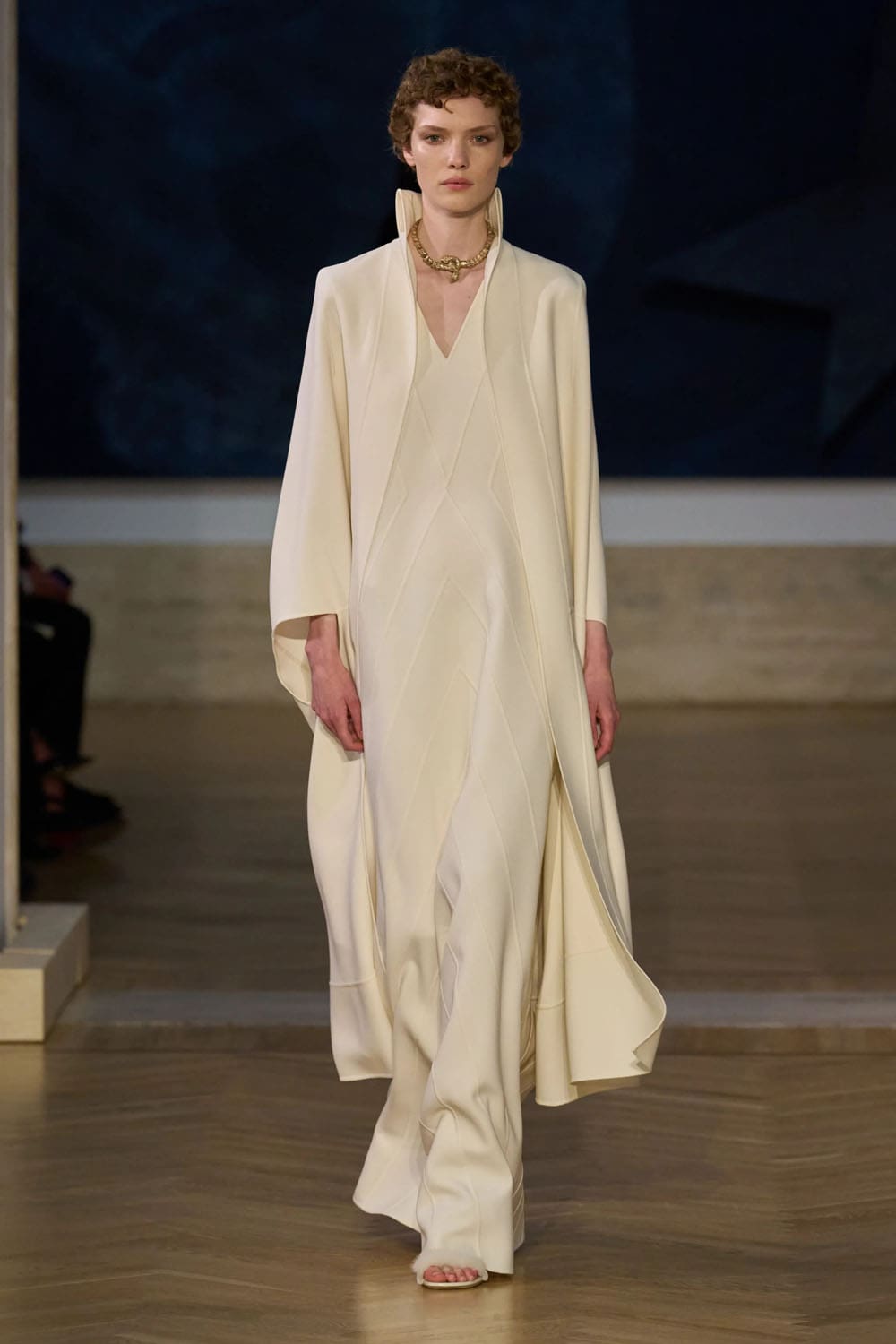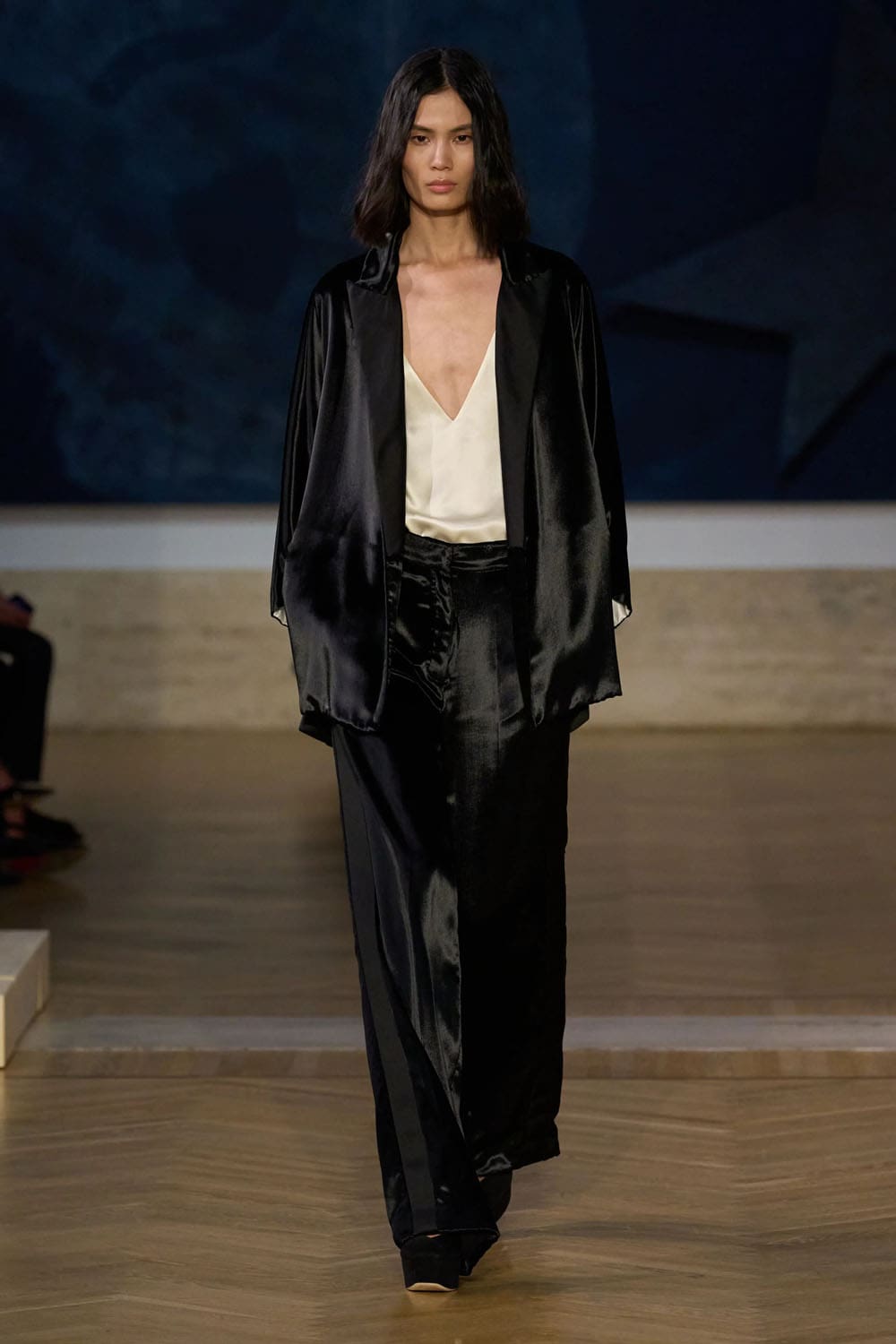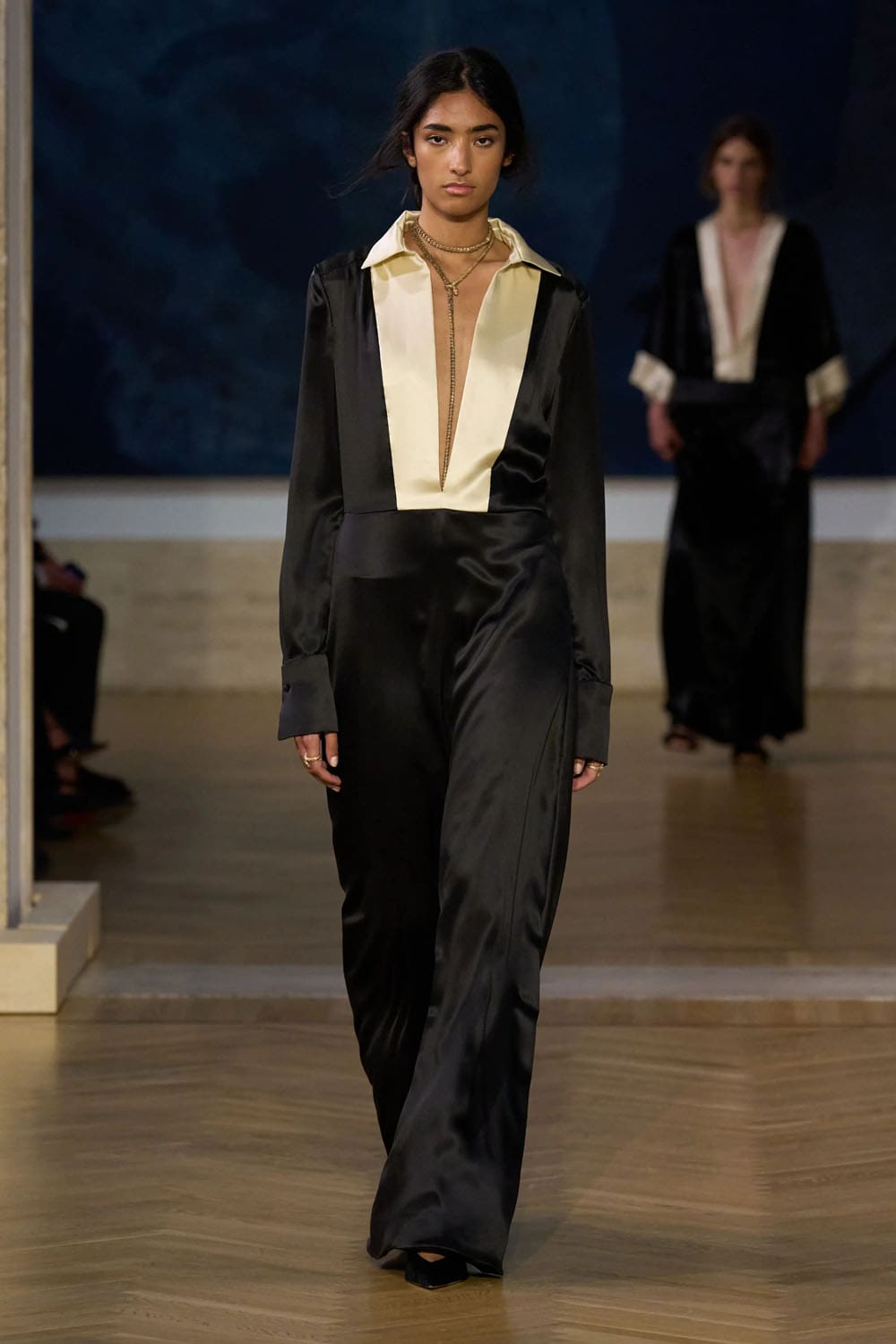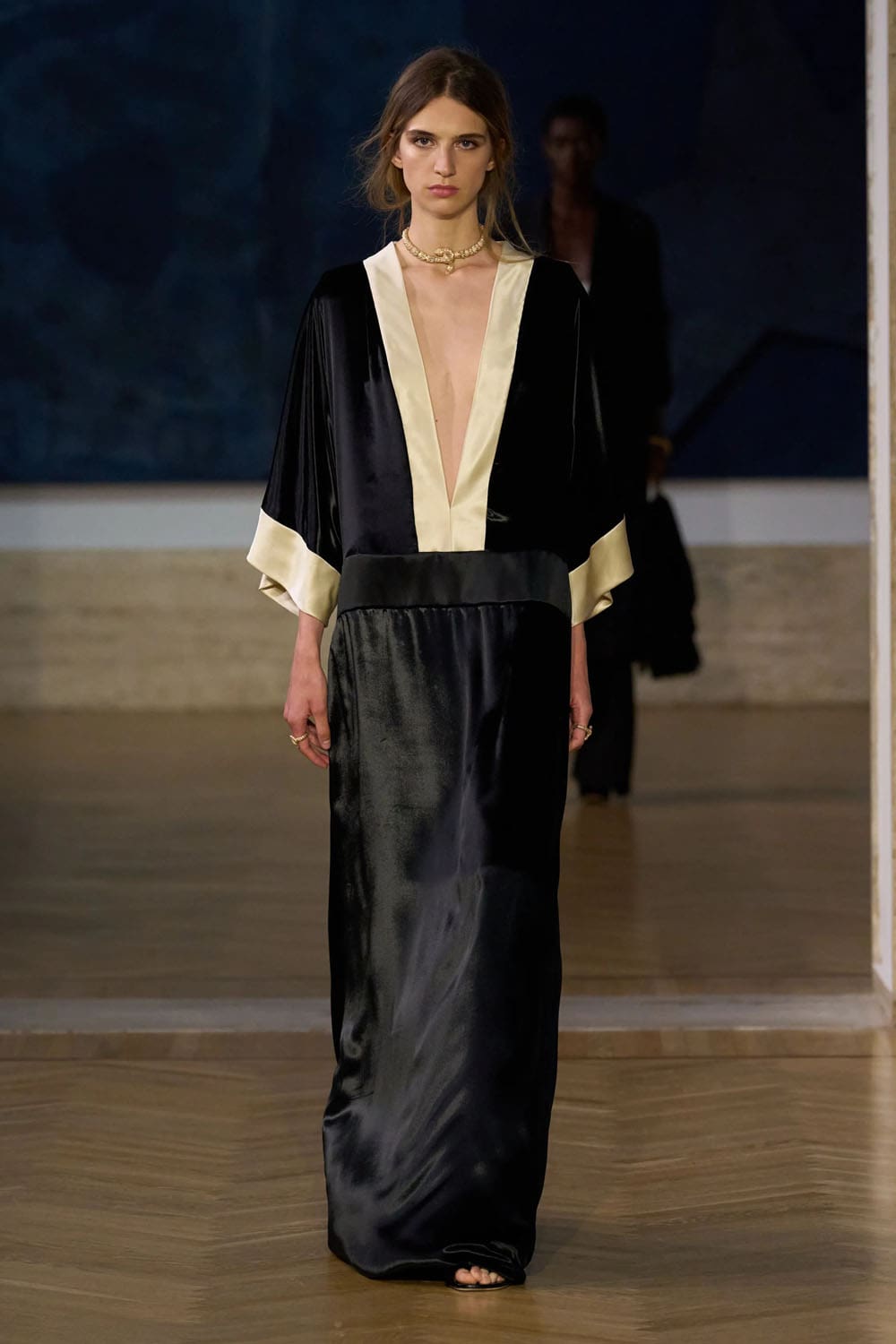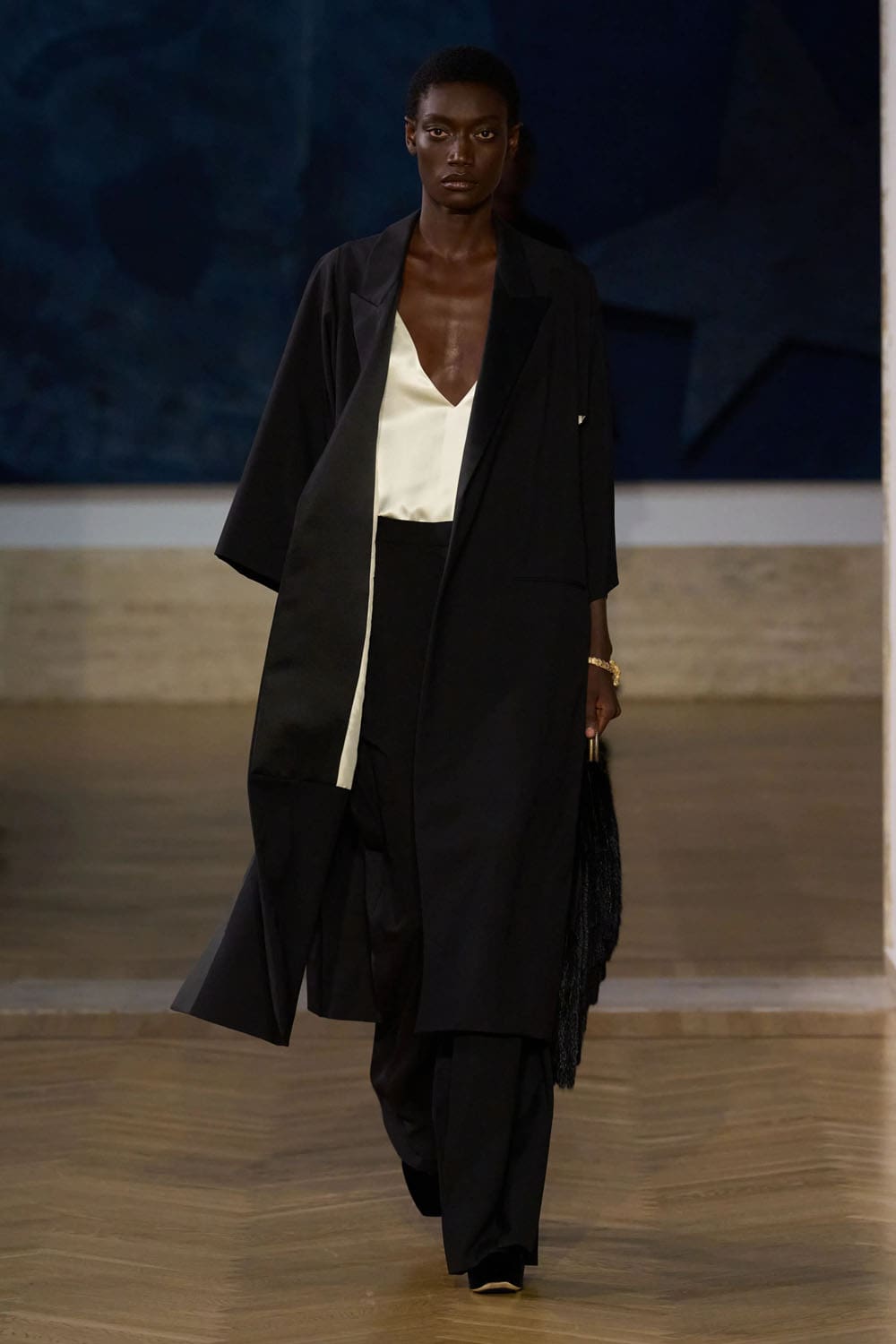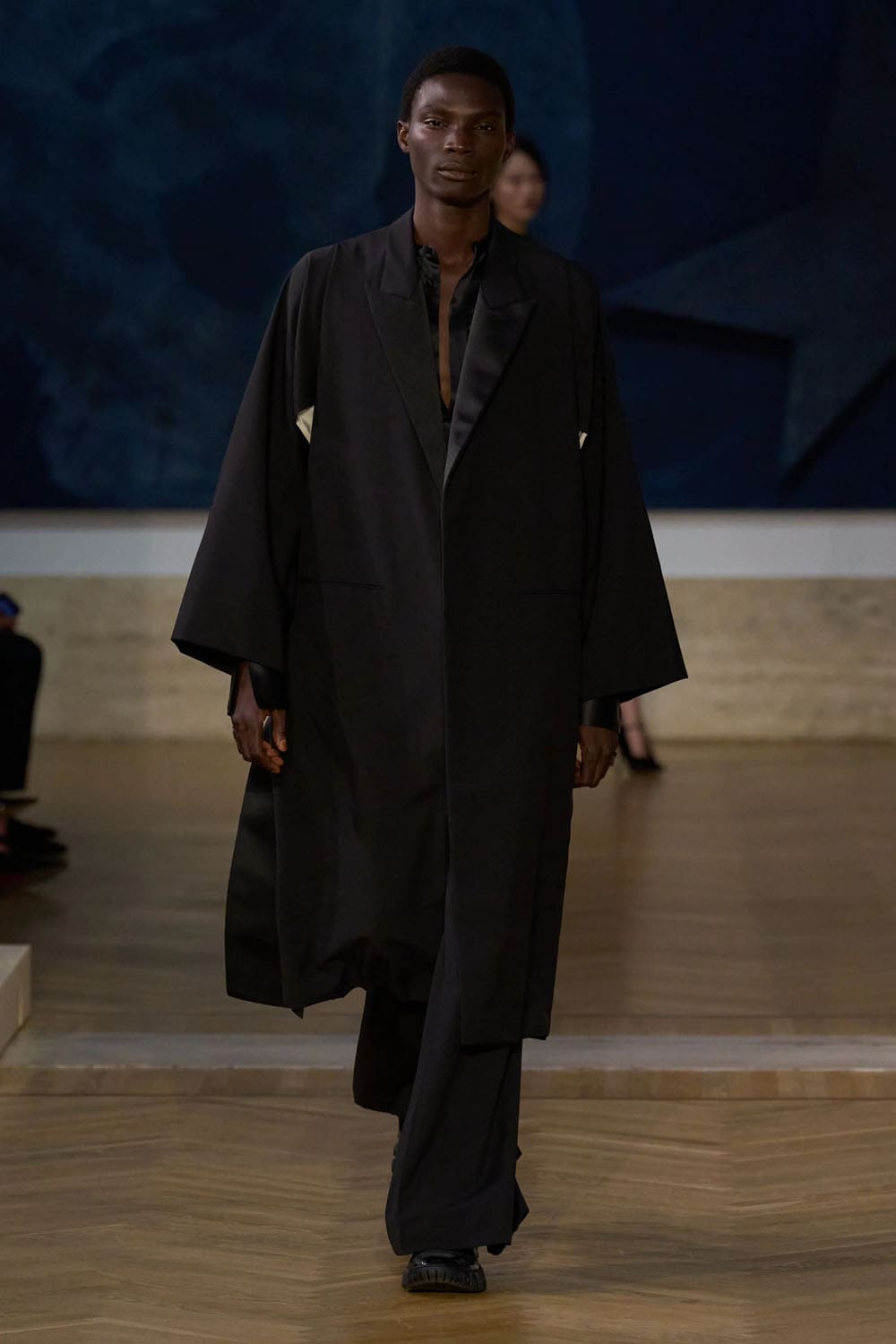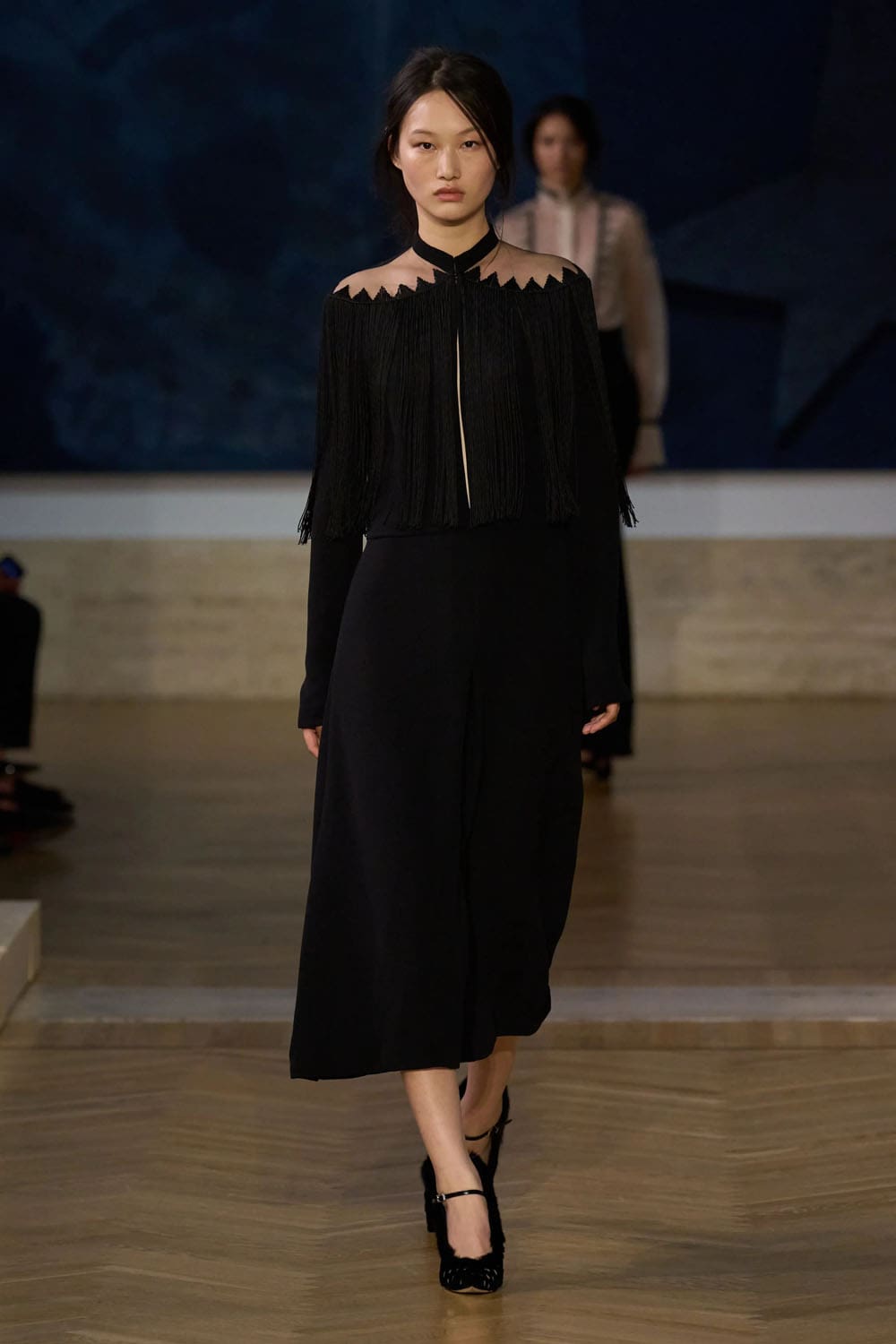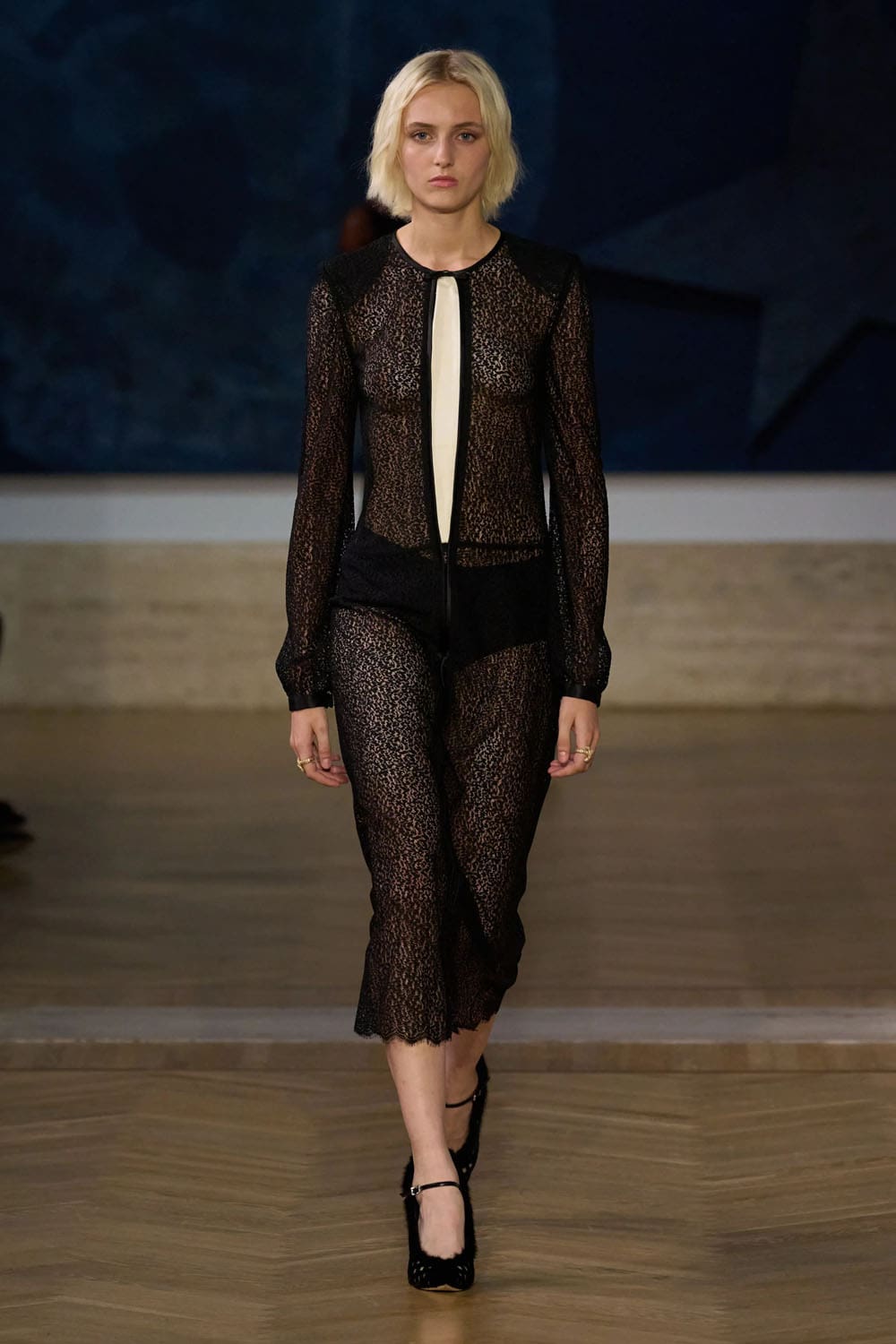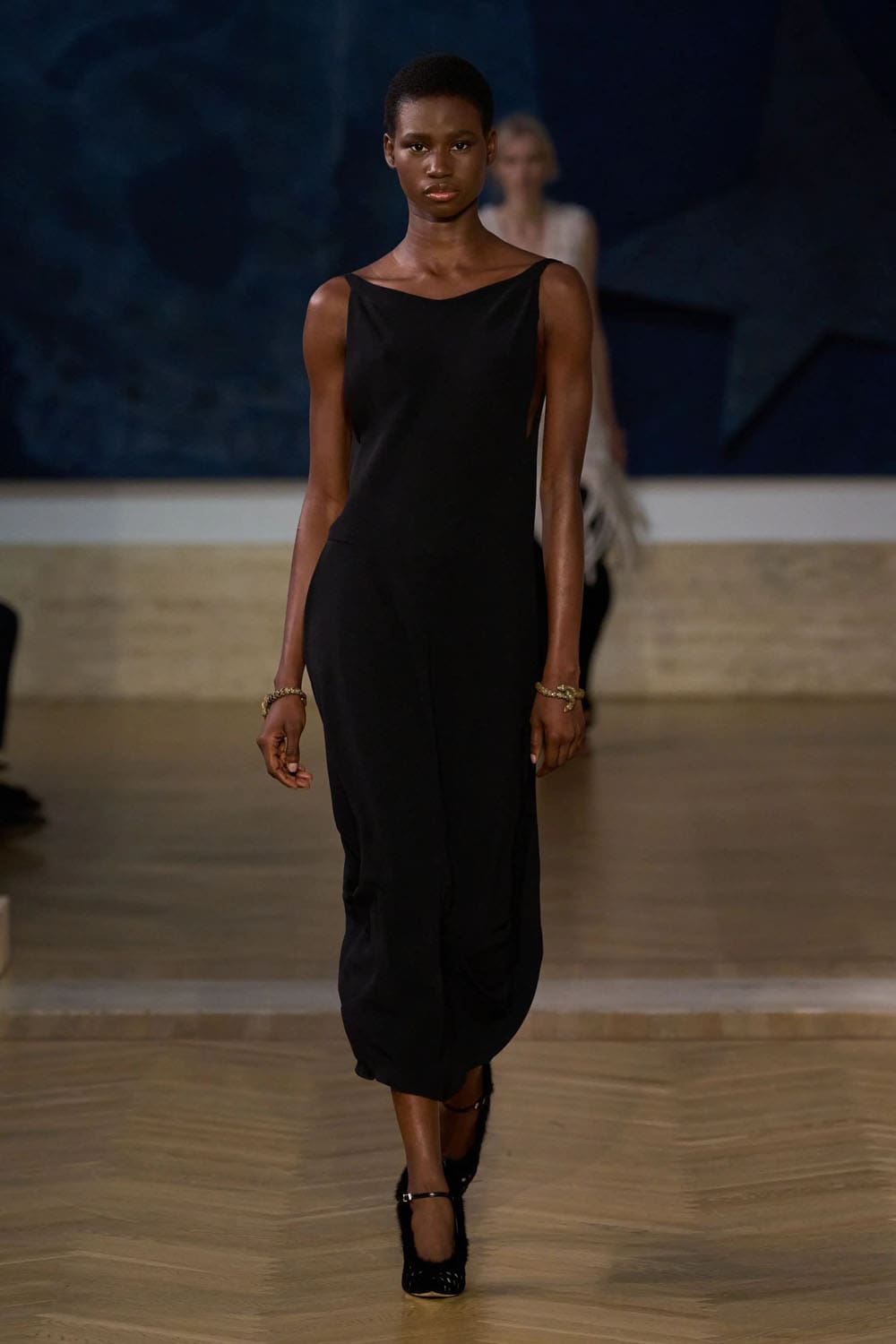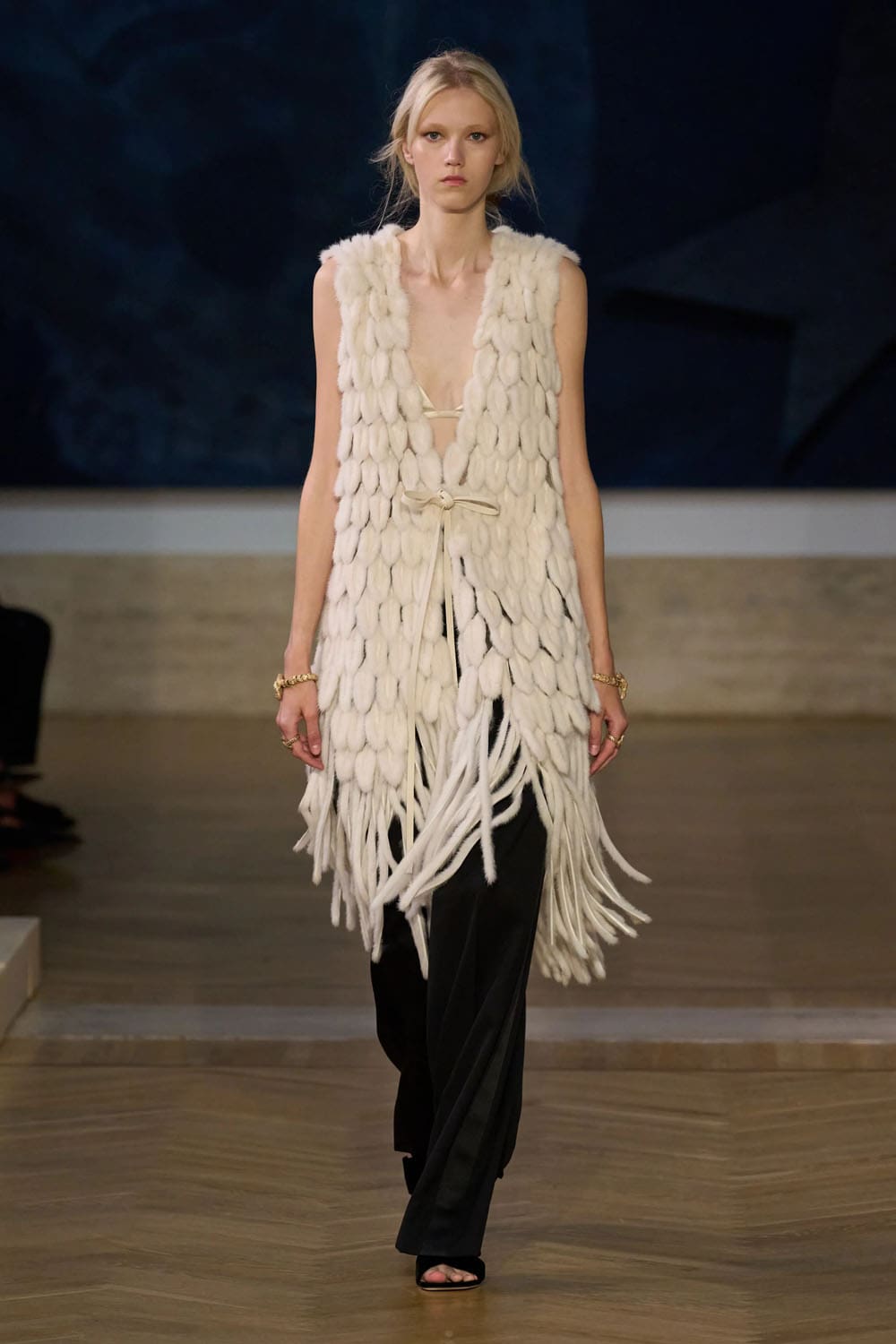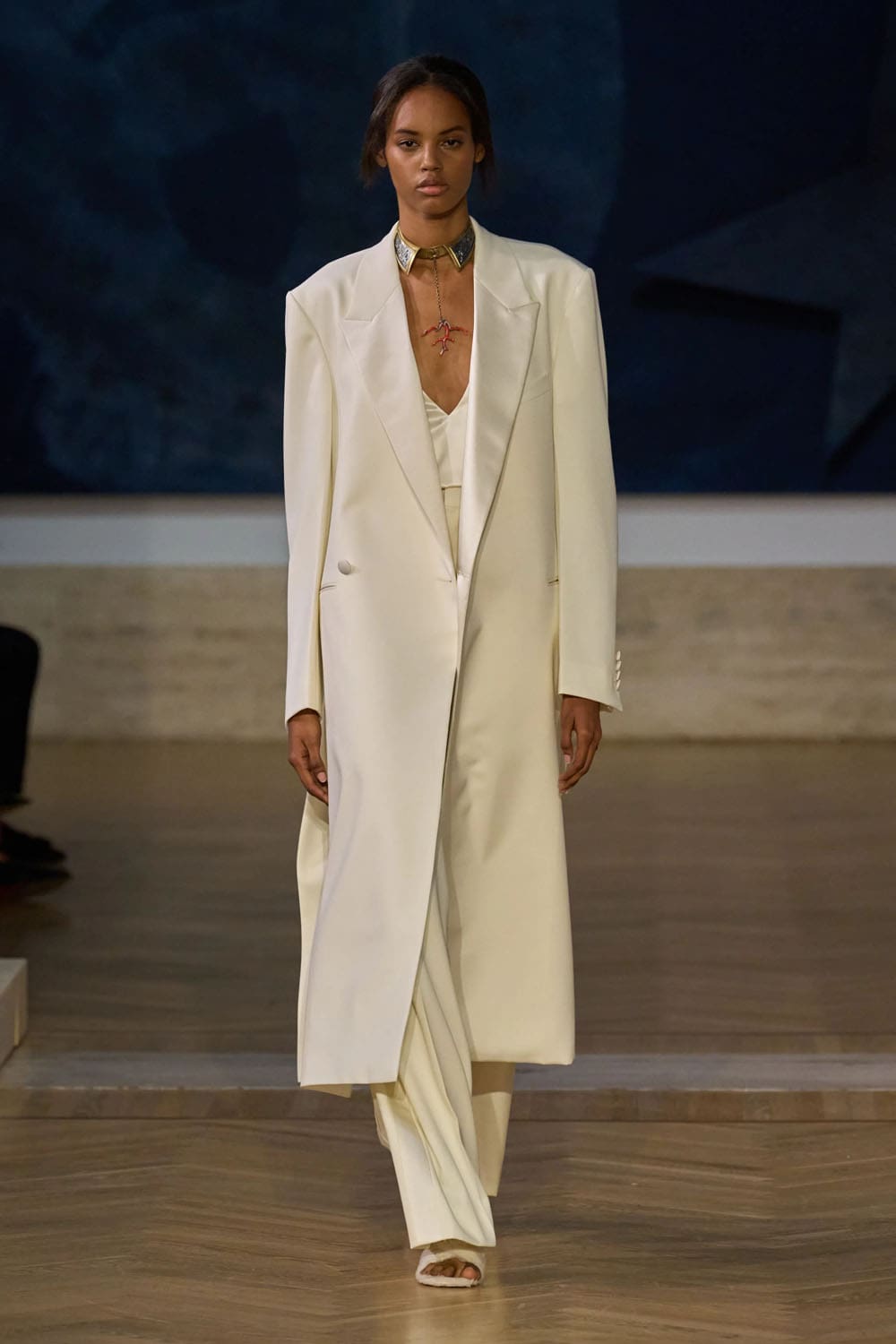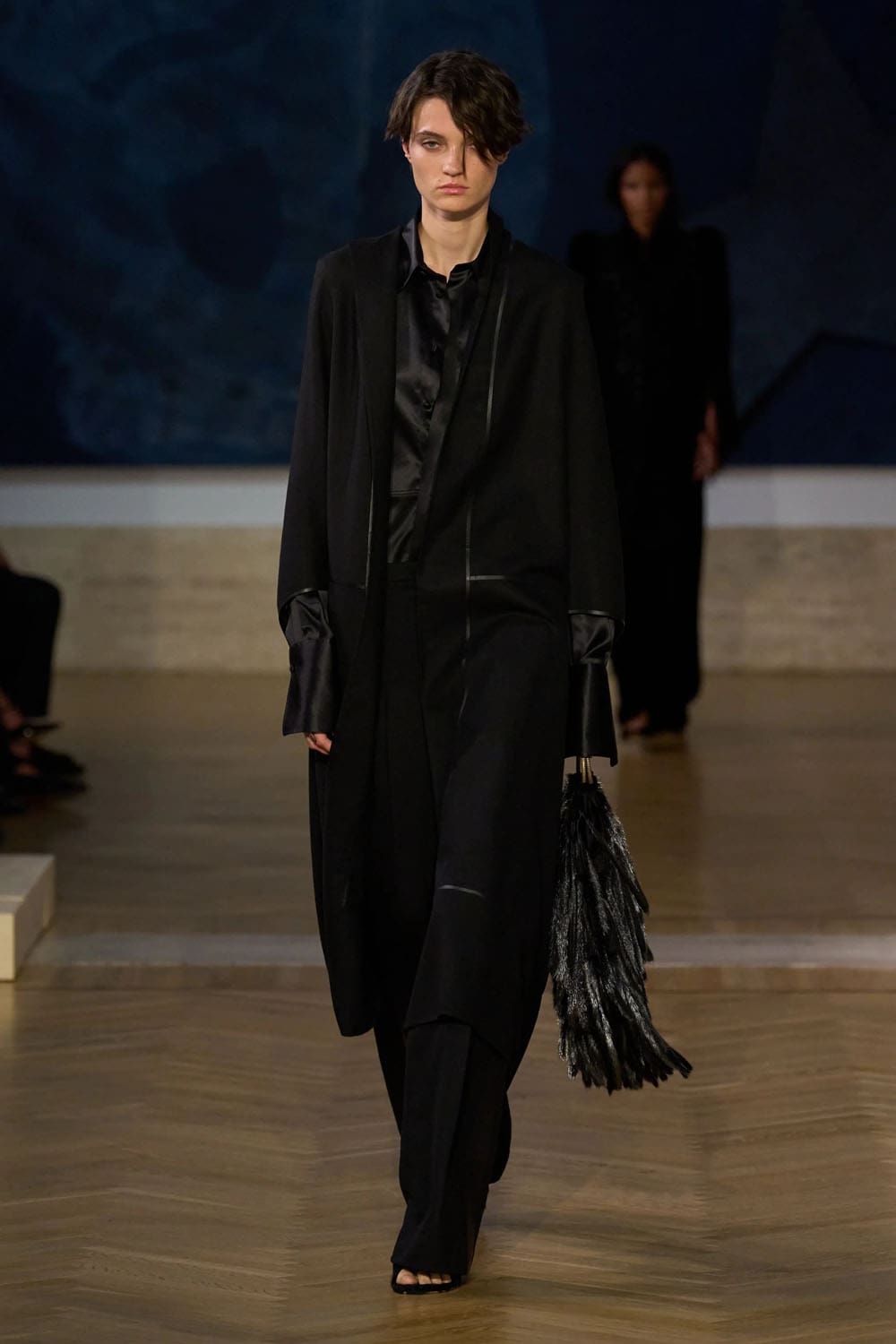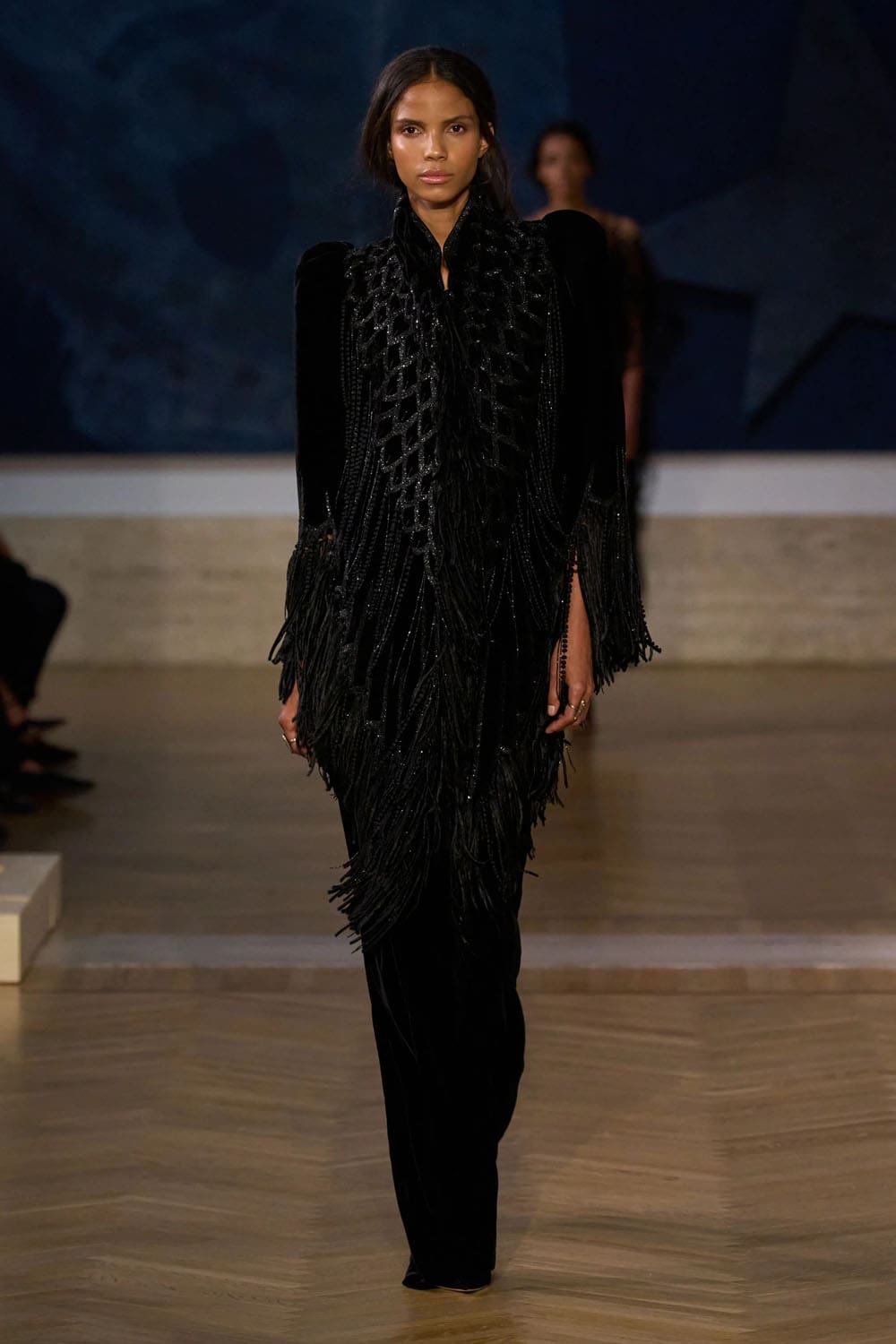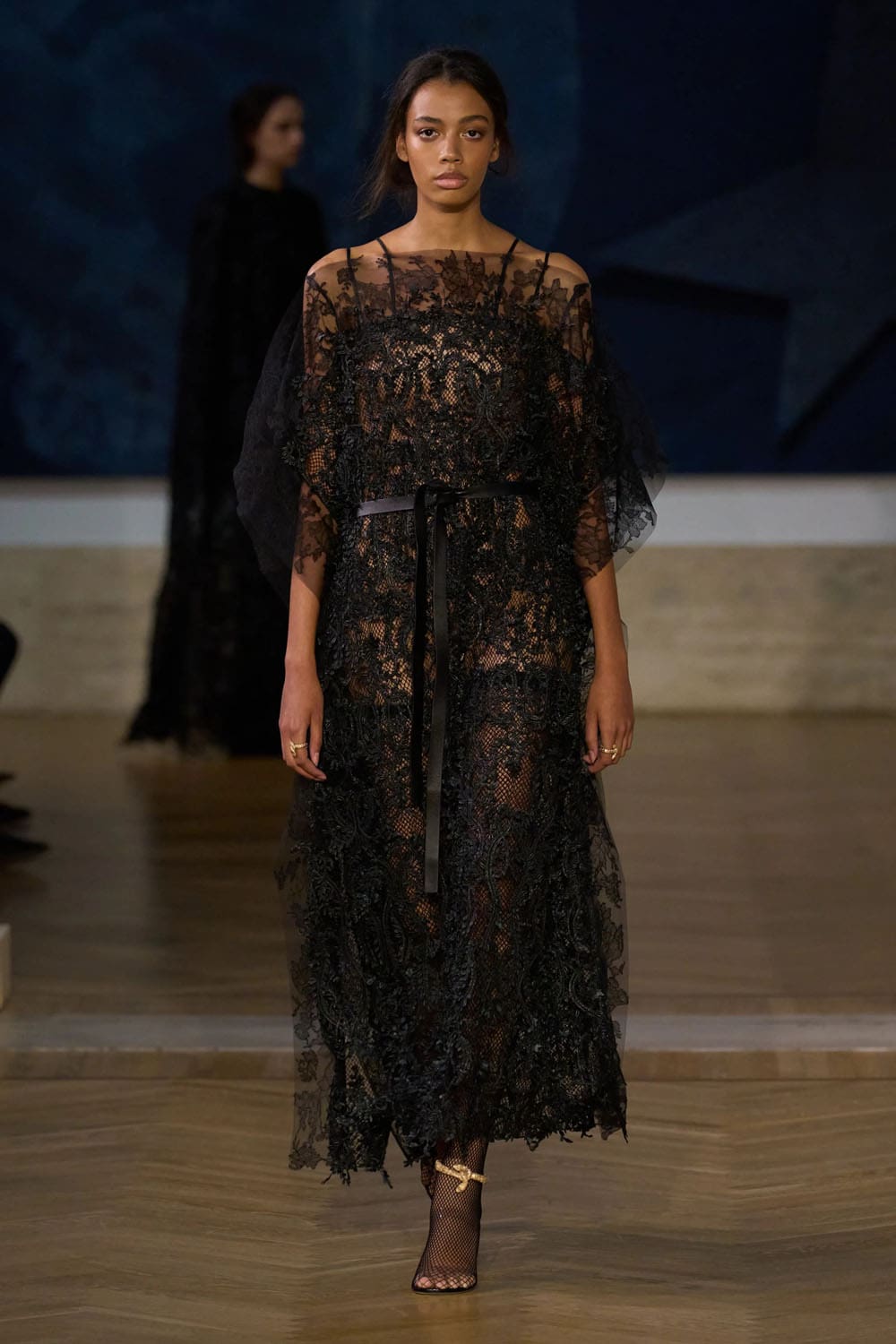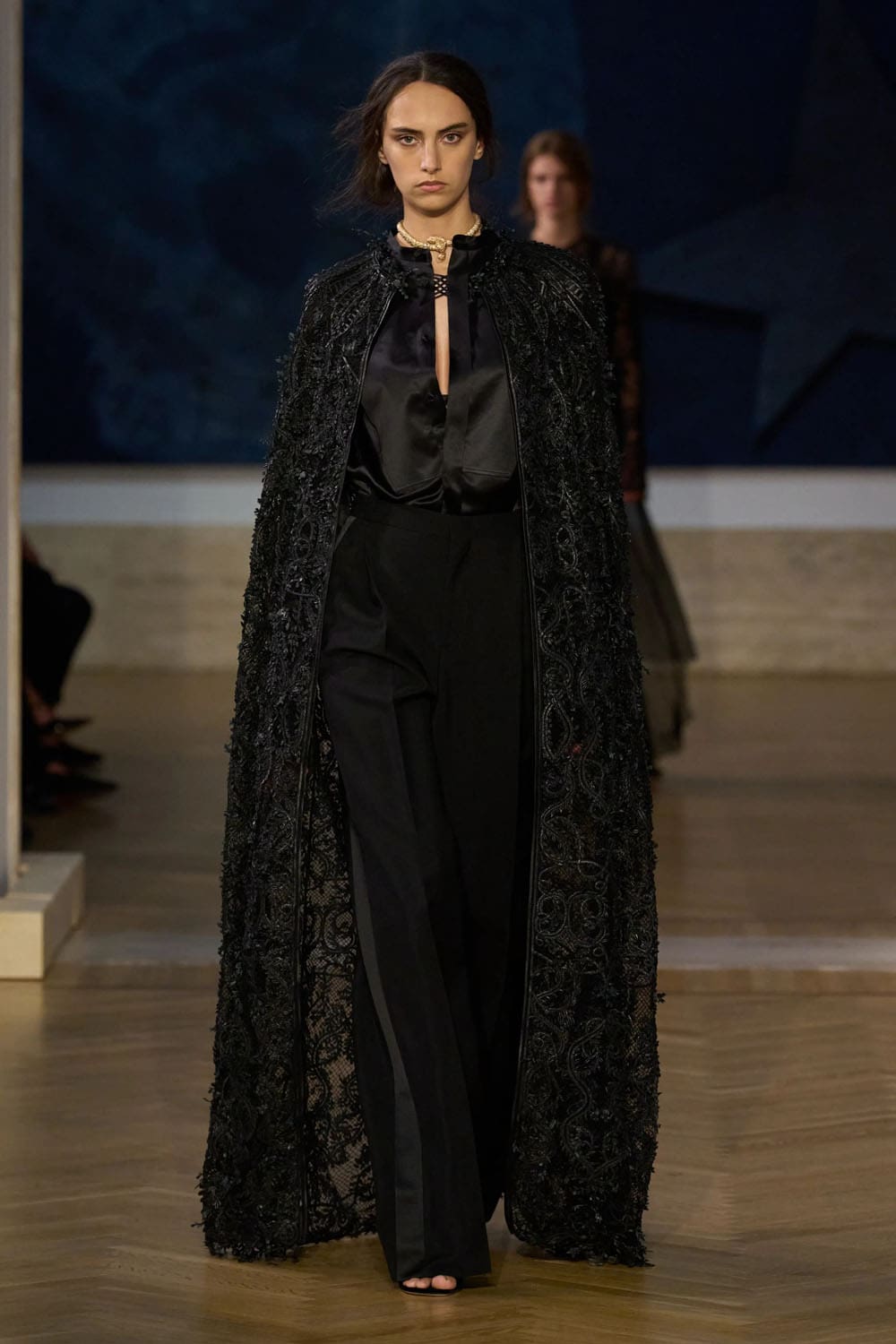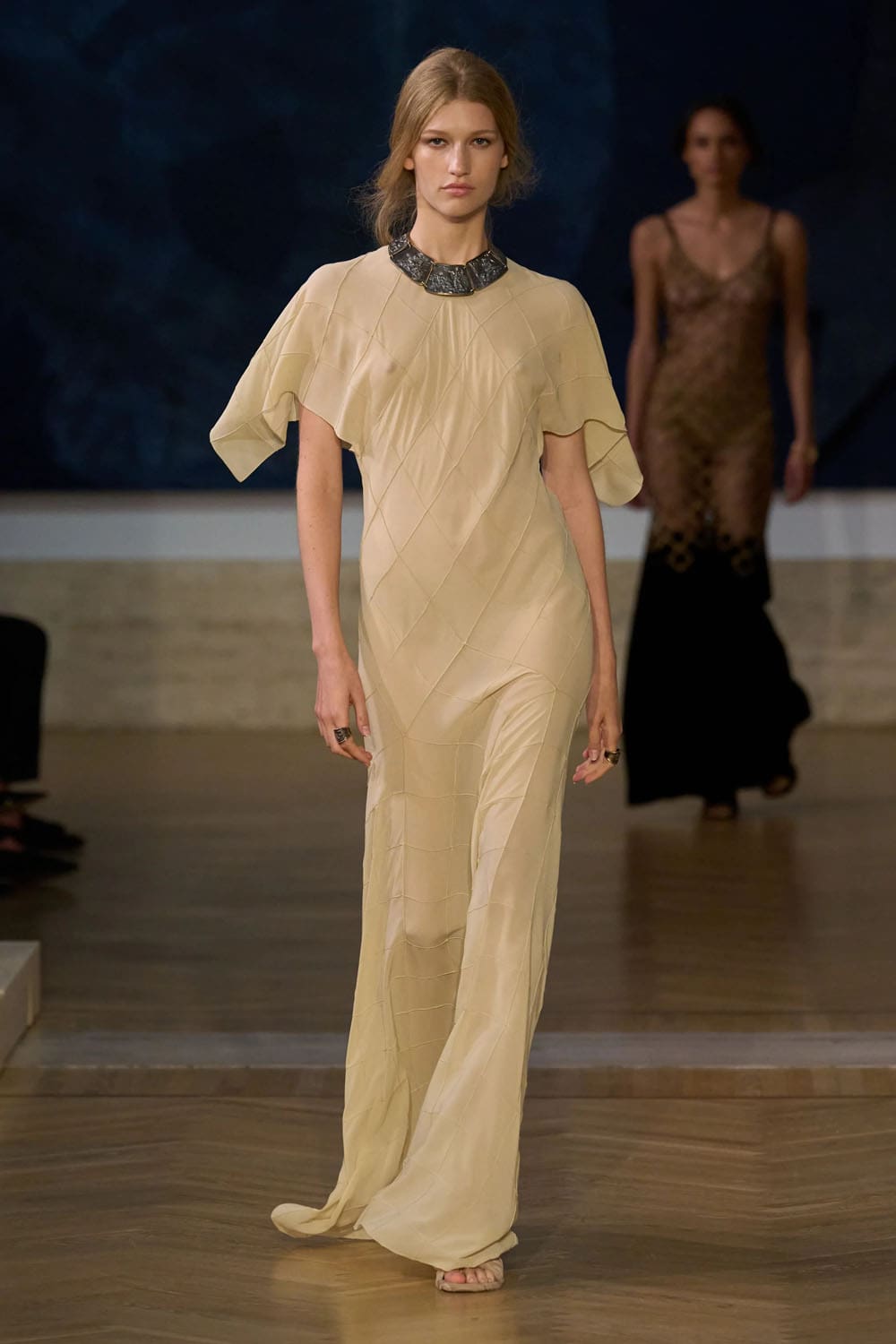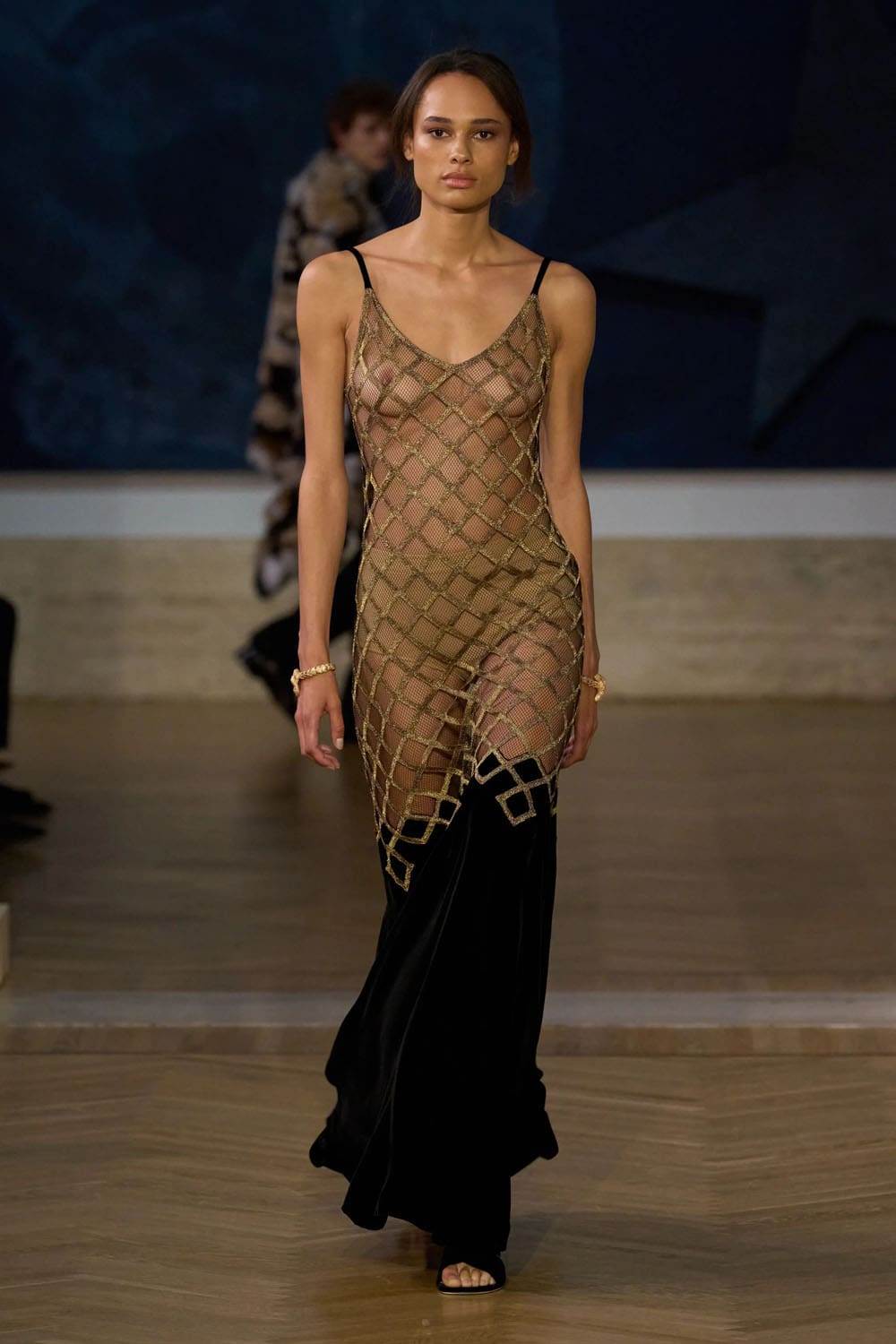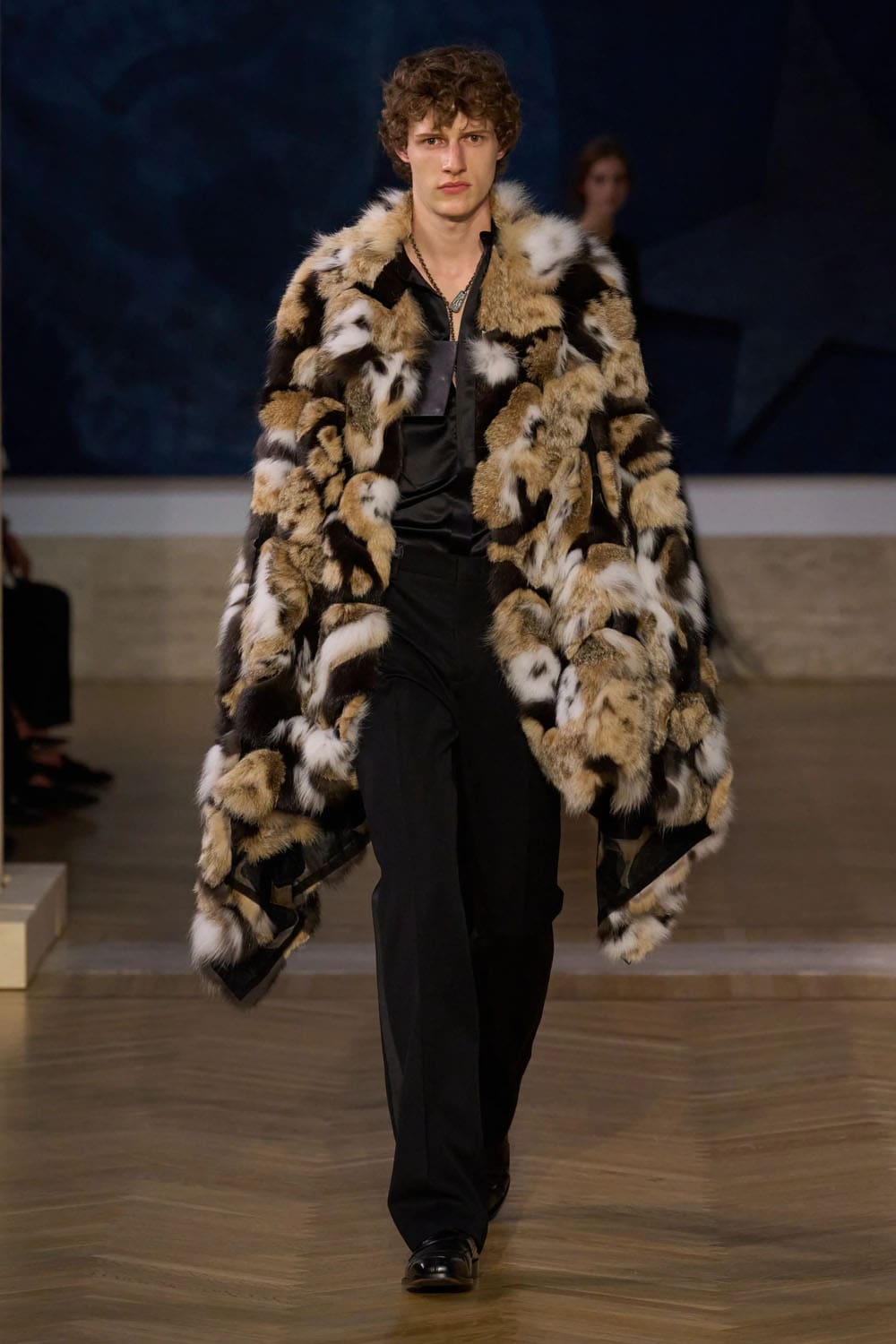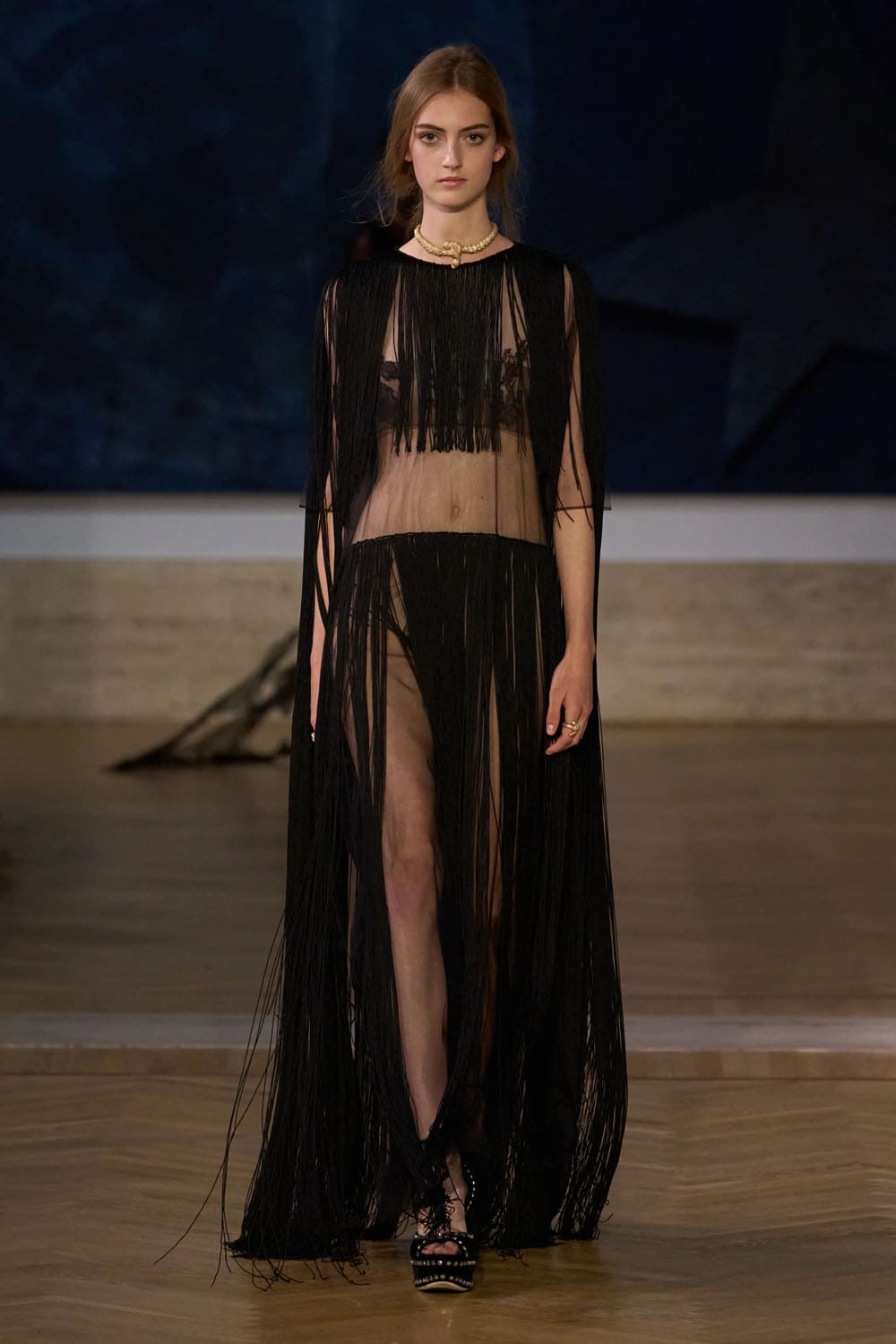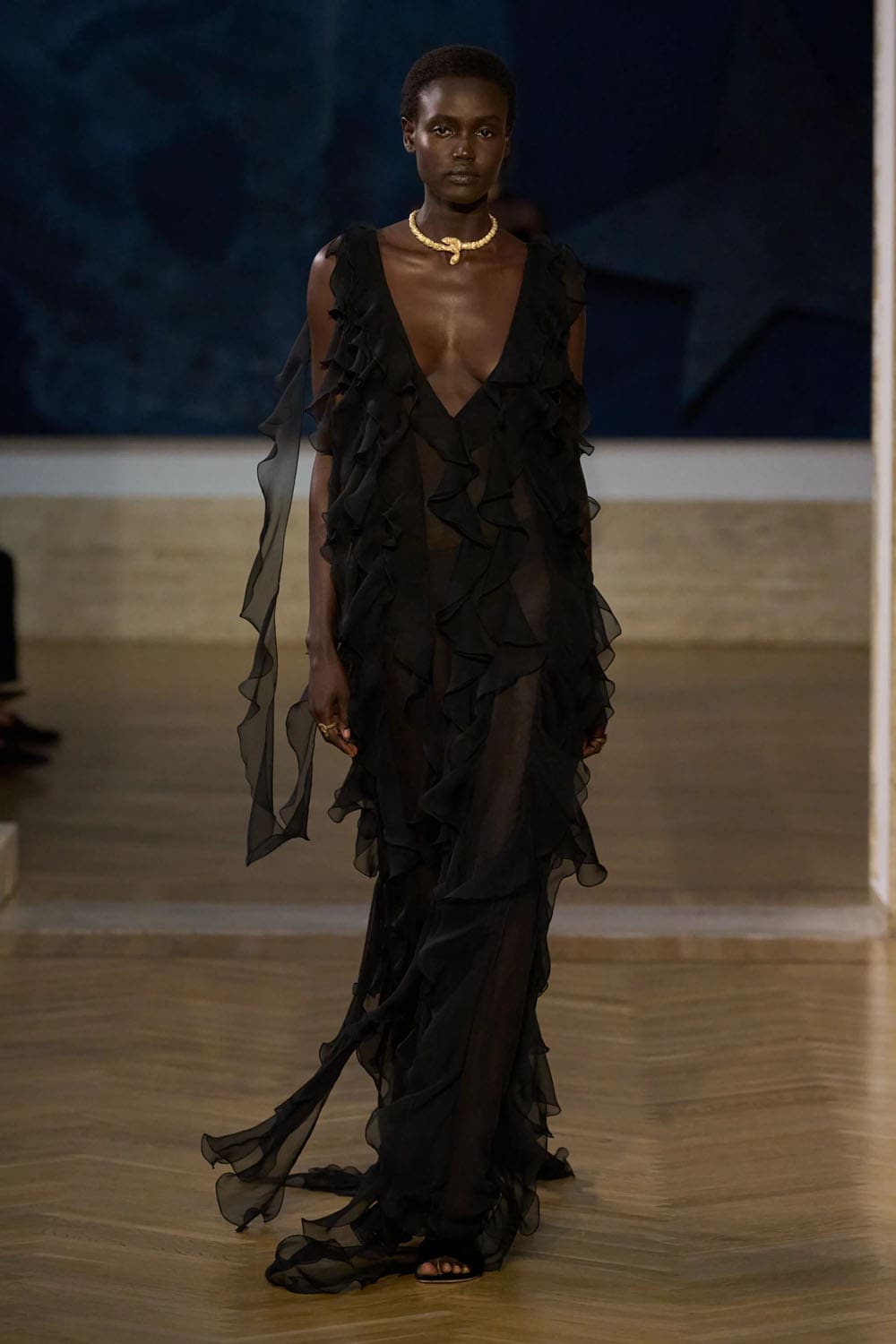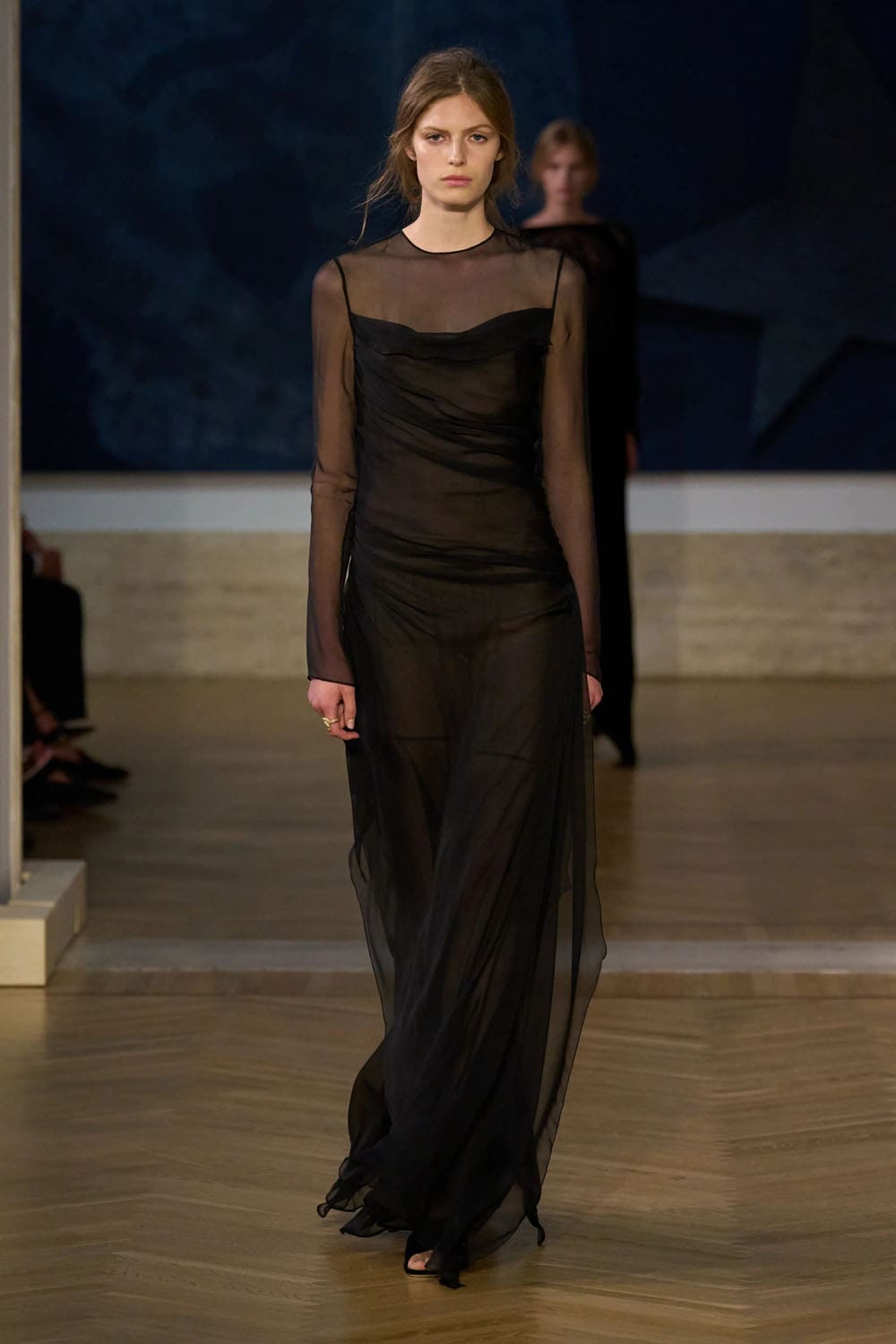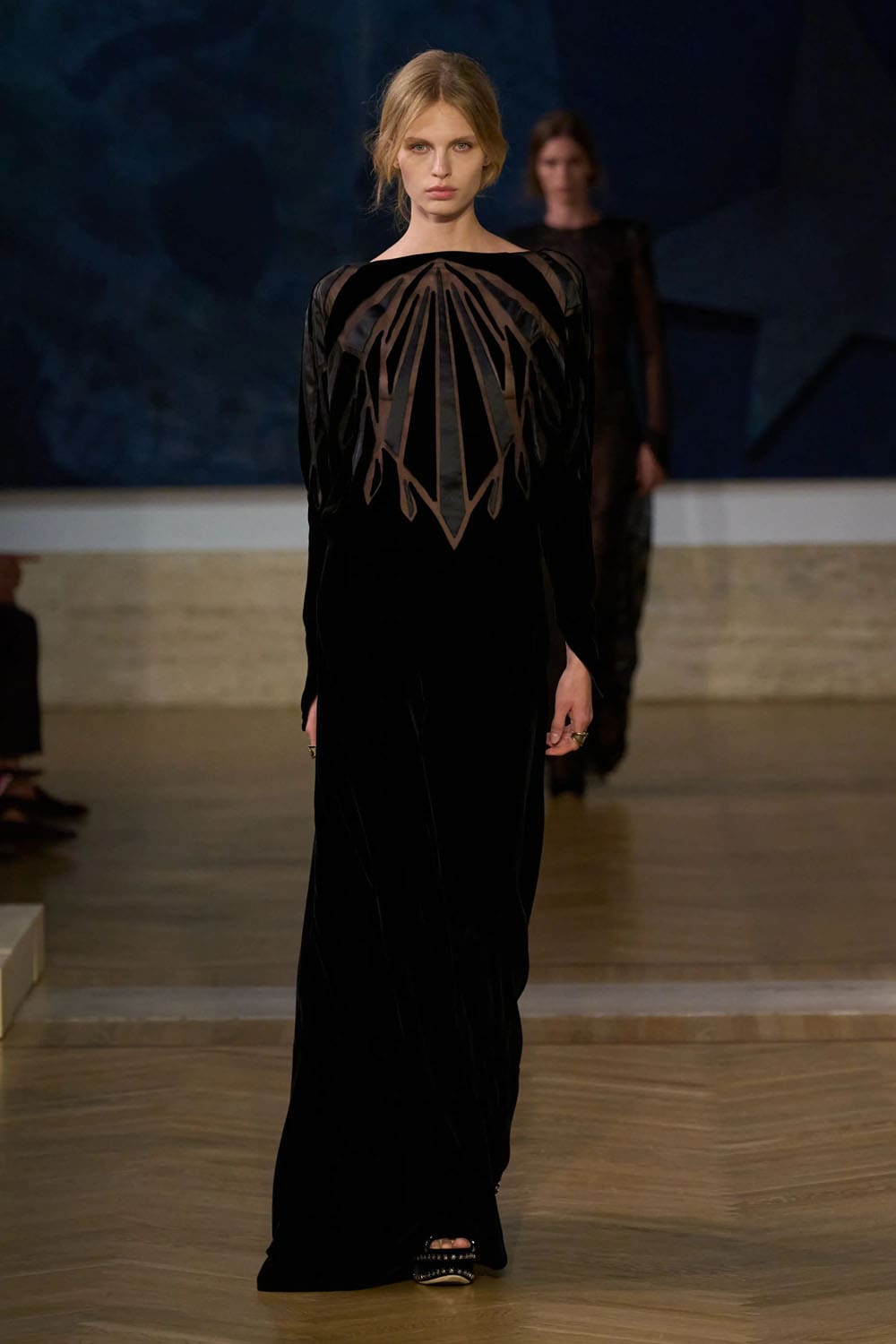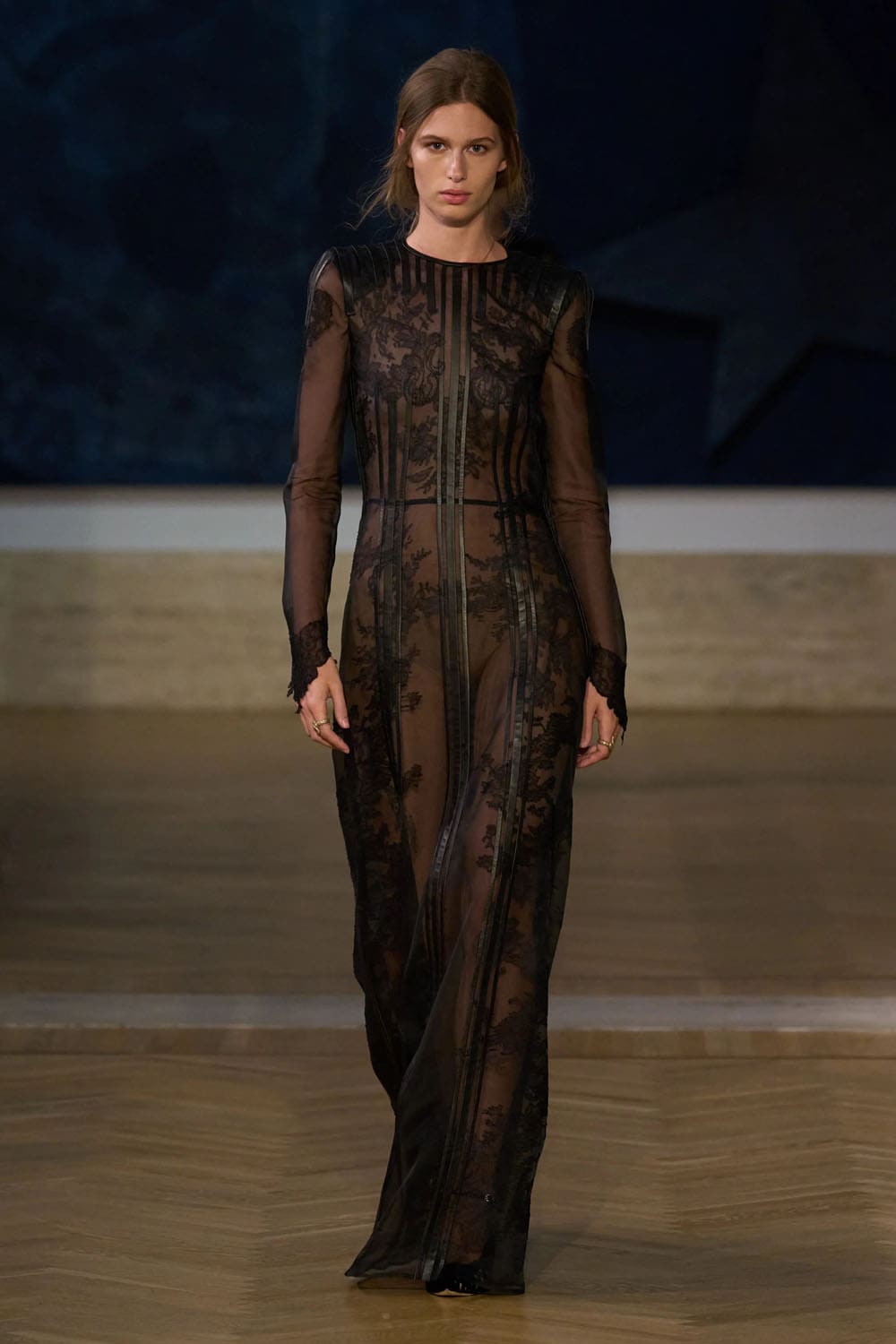
Fendi Couture Fall Winter 2026-2027 “Love Monster” – Maria Grazia Chiuri. Story by Eleonora de Gray, Editor-in-Chief of RUNWAY MAGAZINE. Photo Courtesy: Fendi.
The Myth of the Self-Amusing Minotaur
Rome’s Galleria Nazionale d’Arte Moderna e Contemporanea recently played host to Maria Grazia Chiuri’s debut haute couture collection for the house of Fendi, titled “Love Monster.” For an Italian designer returning to her Roman roots, the setting provides a beautifully clinical backdrop to what can only be described as an exercise in high-fashion psychoanalysis.
The conceptual framework of the evening focused on a labyrinth. In Chiuri’s telling, this is not merely a structural gimmick but a profound metaphor for the creative process. According to the narrative, a woman enters this labyrinth looking for herself, discovers she is actually the monster at the center, and must somehow learn to love that monstrous identity.
One cannot help but note the psychological transparency at play. Chiuri has long operated in the collective imagination as a sort of dark Tinkerbell—an industrious figure weaving intricate, often somber spells, guarding her own quiet aesthetic secrets. If the labyrinth represents the creative mind, then “Love Monster” suggests that her creative spark is drawn directly from that shadowed, internal creature. Perhaps, after years of disciplined sartorial curation, it is finally time for her to accept that inner dark side. Whether the collection represents a true reconciliation or simply a very expensive, beautifully tailored therapy session remains open to interpretation.
Cross-Pollination and Nostalgic Ghosts
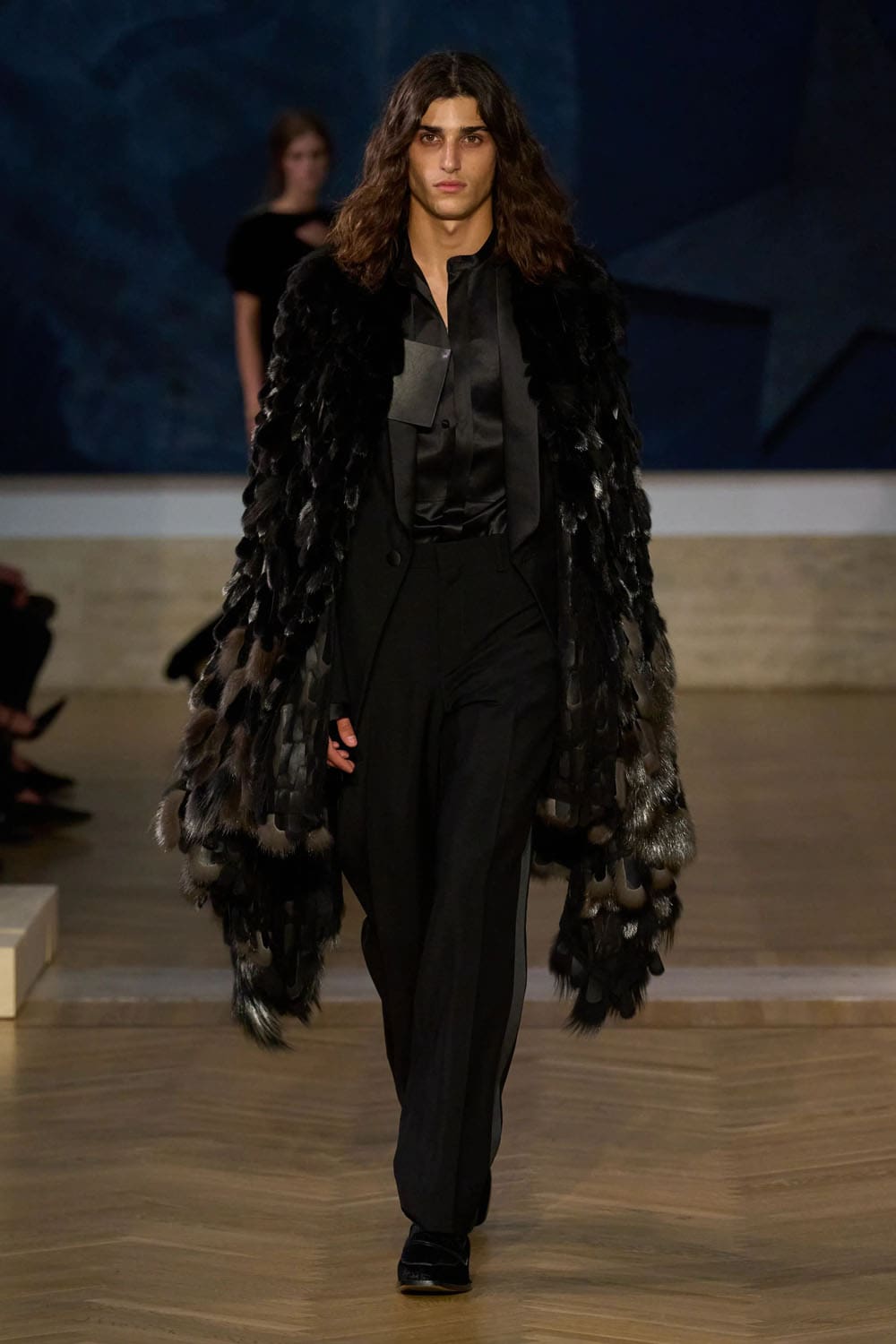
To anchor this psychological voyage, Chiuri staged a reactivation of the landmark 1985 exhibition, “After un percorso di lavoro. Fendi / Karl Lagerfeld 1985”, originally organized by Lagerfeld himself to celebrate his 20th anniversary with the house. By surrounding her debut with 180 of Karl’s original illustrations and 25 of his legendary fur designs, Chiuri set an incredibly high bar for herself, willingly stepping into a labyrinth populated by the most formidable ghost in luxury history.
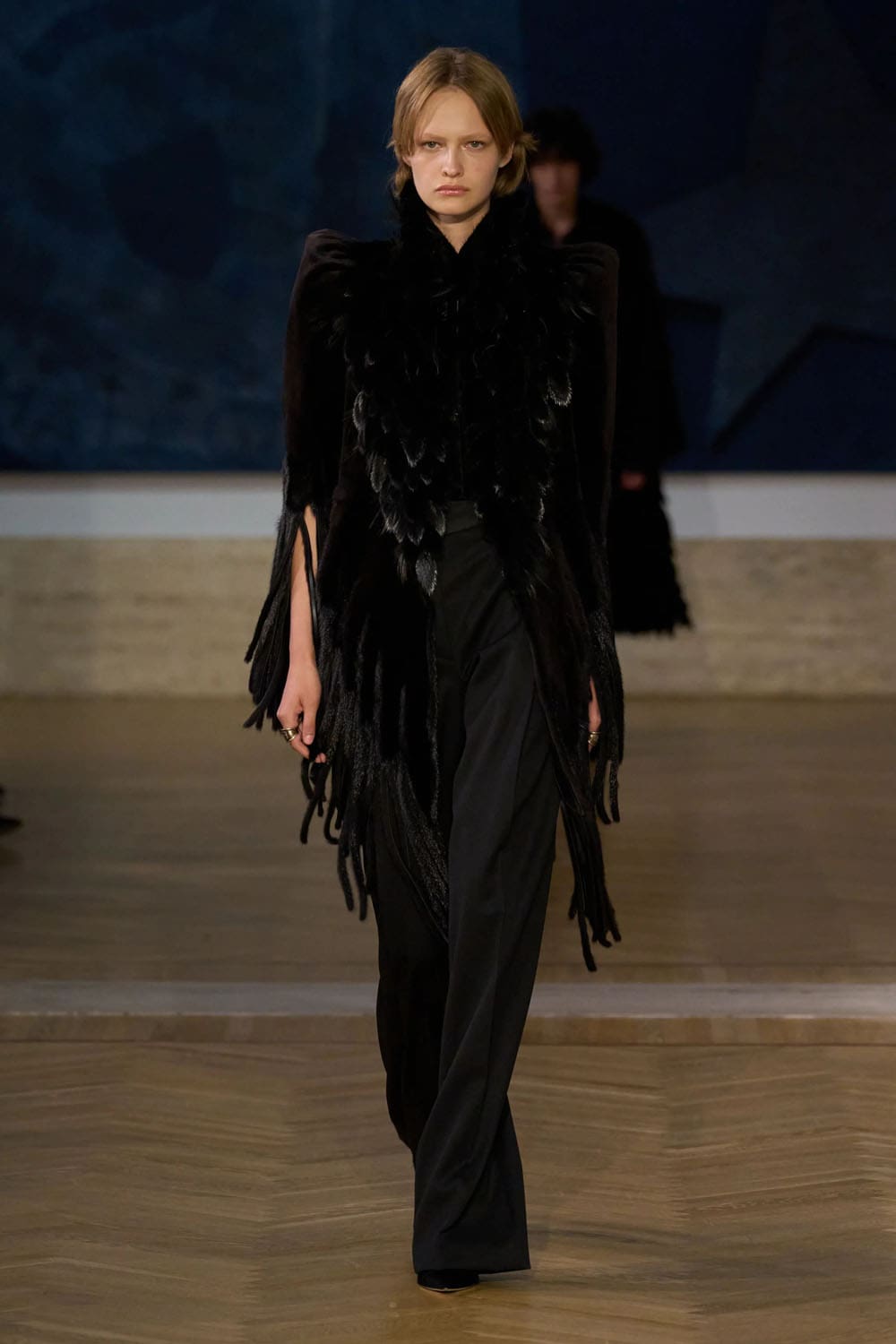
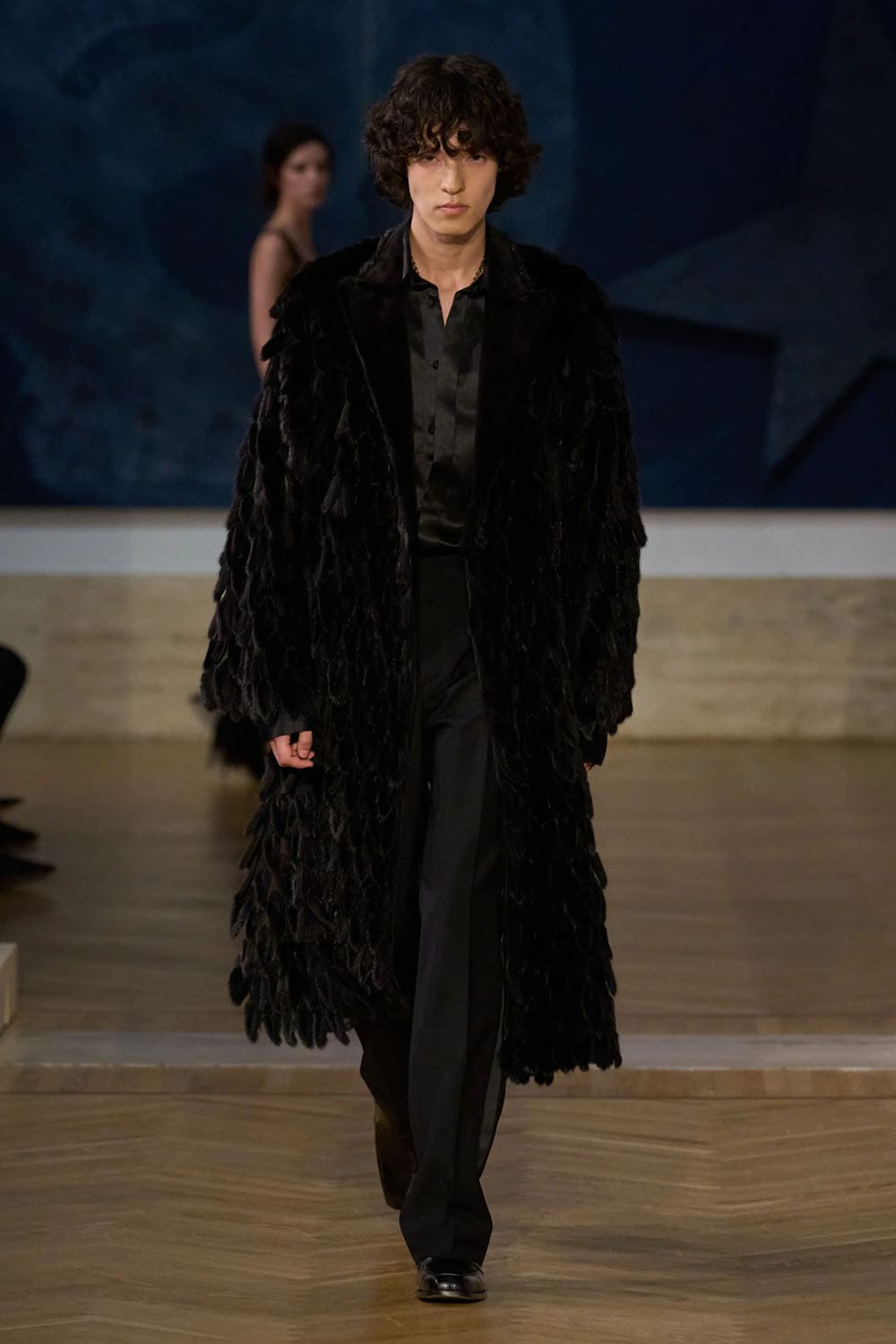
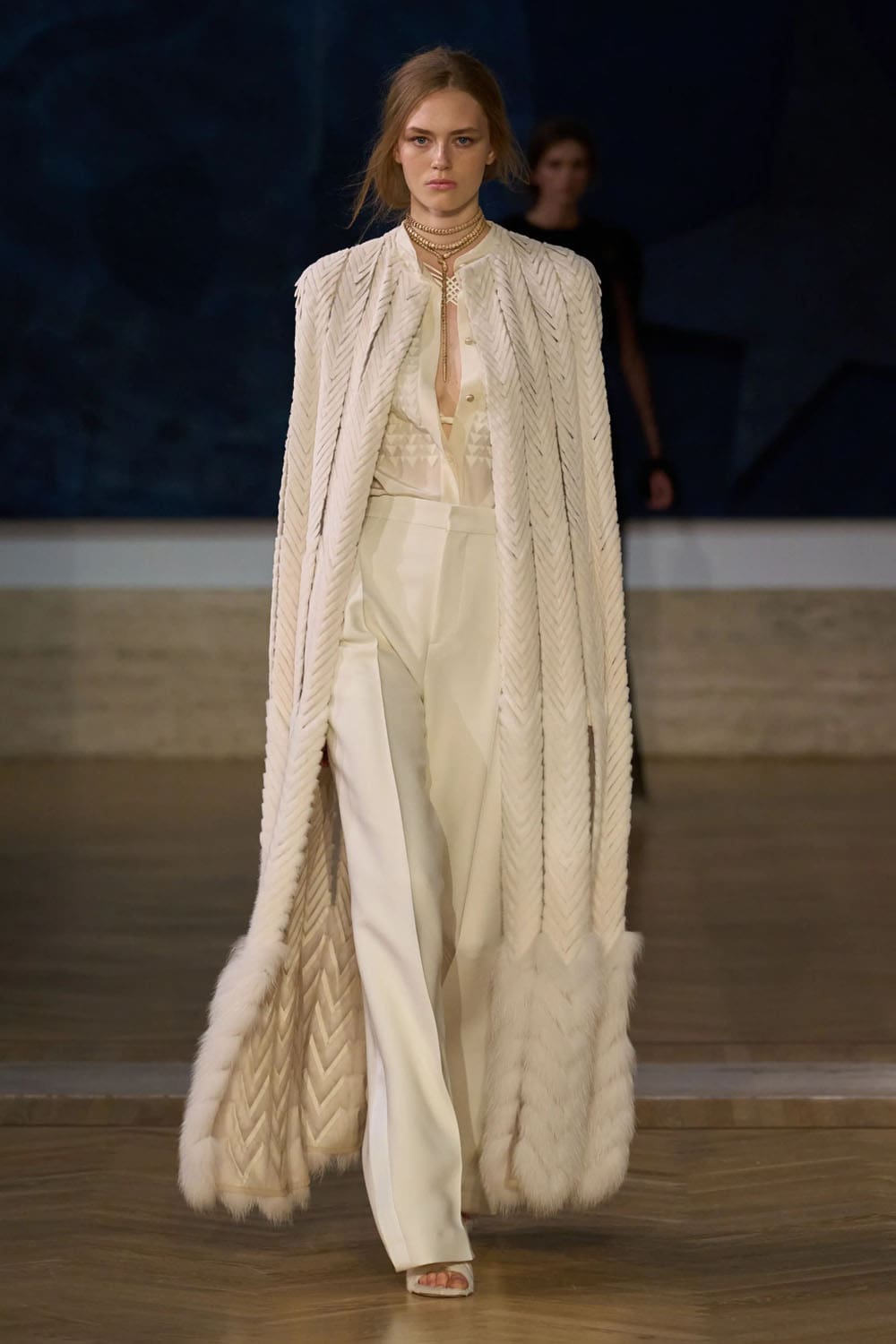
Her strategic response was an institutional cross-pollination, activating all of Fendi’s historical ateliers—couture, fur, leather, and textiles—to blend their disciplines. Crucially, the entire collection operated under the auspices of Fendi’s “Echo of Love” program, meaning every piece of fur gracing the runway was entirely upcycled from existing materials. It is a noble, thoroughly contemporary premise: confronting the ghosts of excess by reworking them into modern configurations.
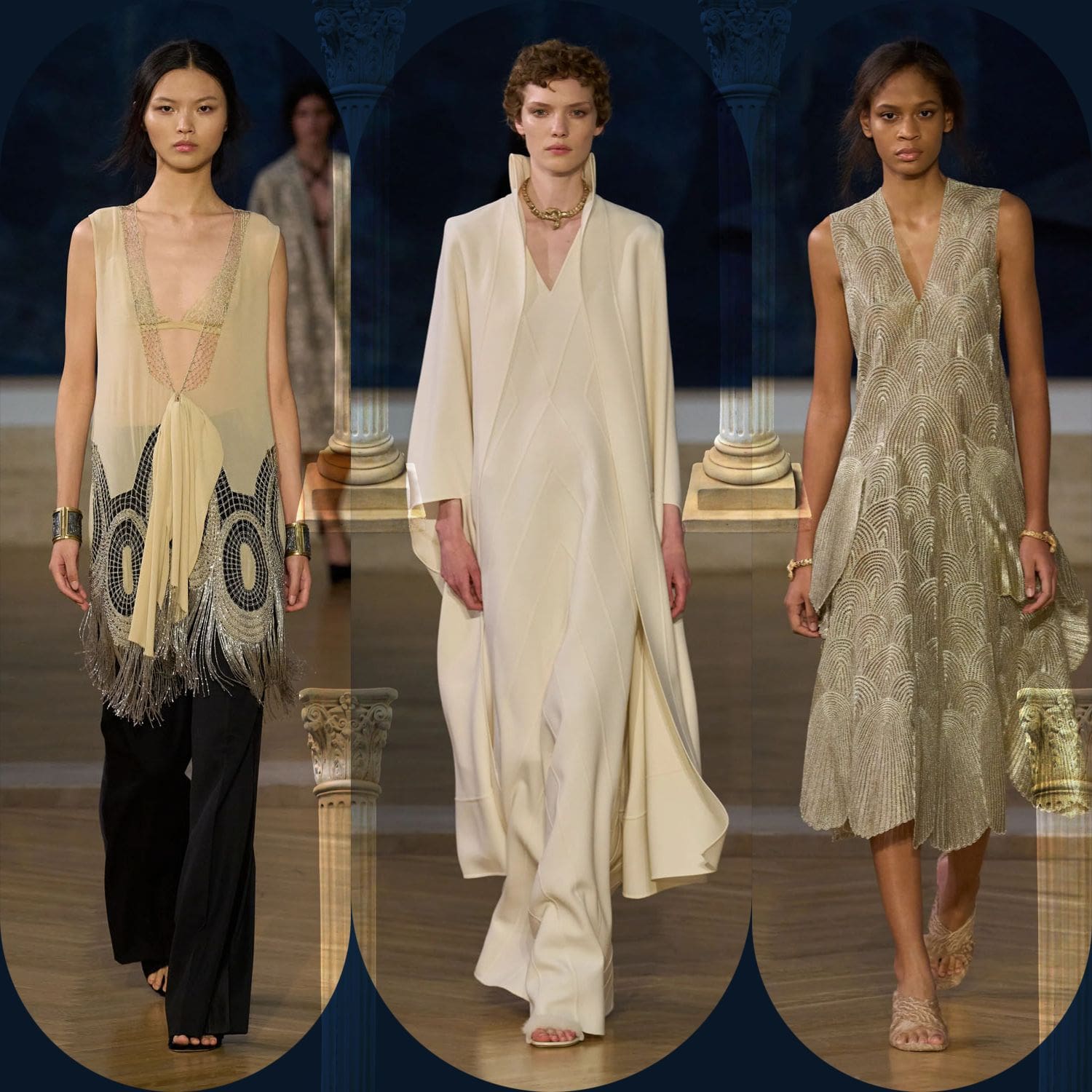
Yet, the historical references did not stop at 1985. The aesthetic coordinates frequently pivoted much further back, drifting into the early 20th century to evoke the fluid, dropped-waist ease of the Charleston era, filtered through a distinctly architectural lens.
Geometries of the Interior Labyrinth
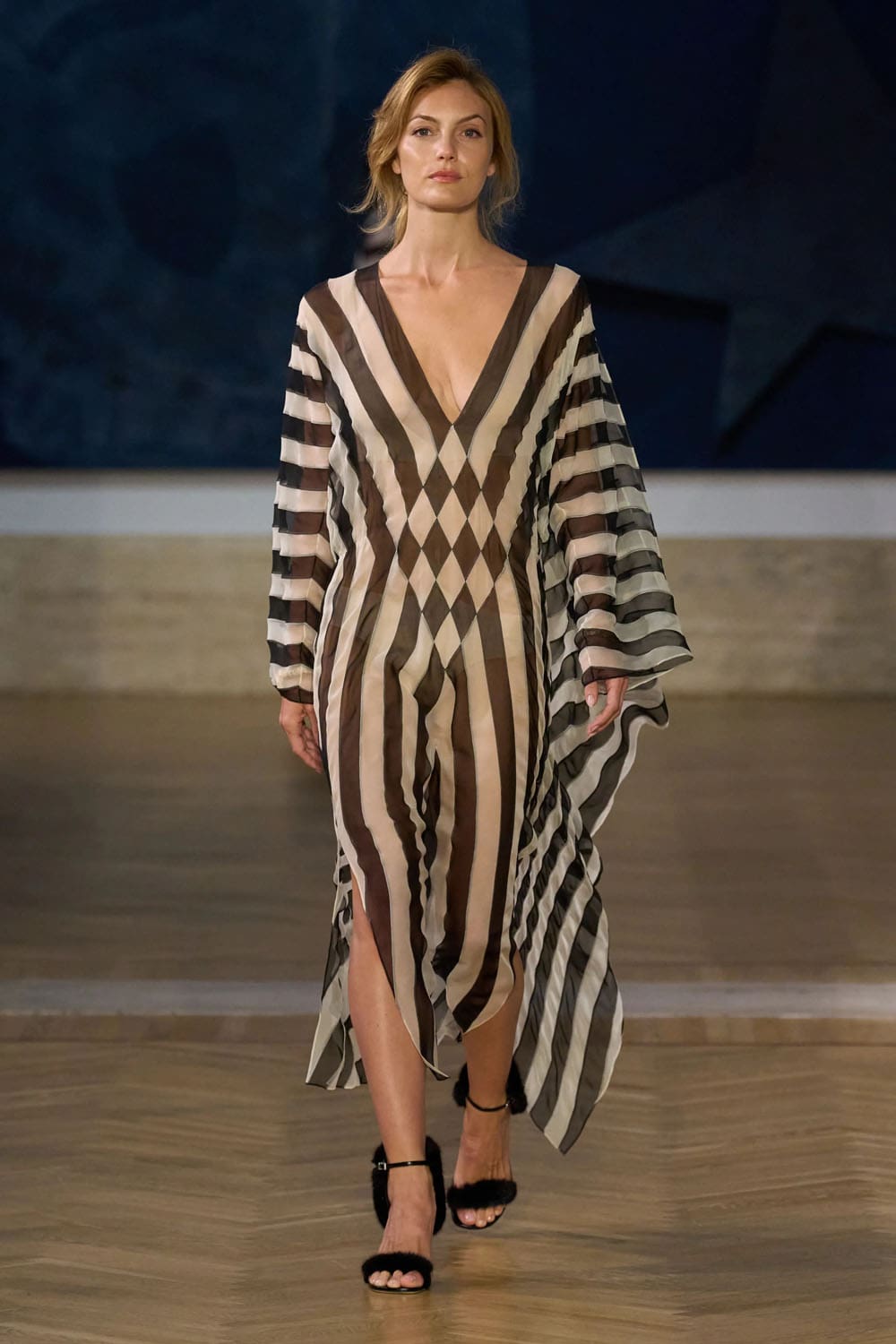
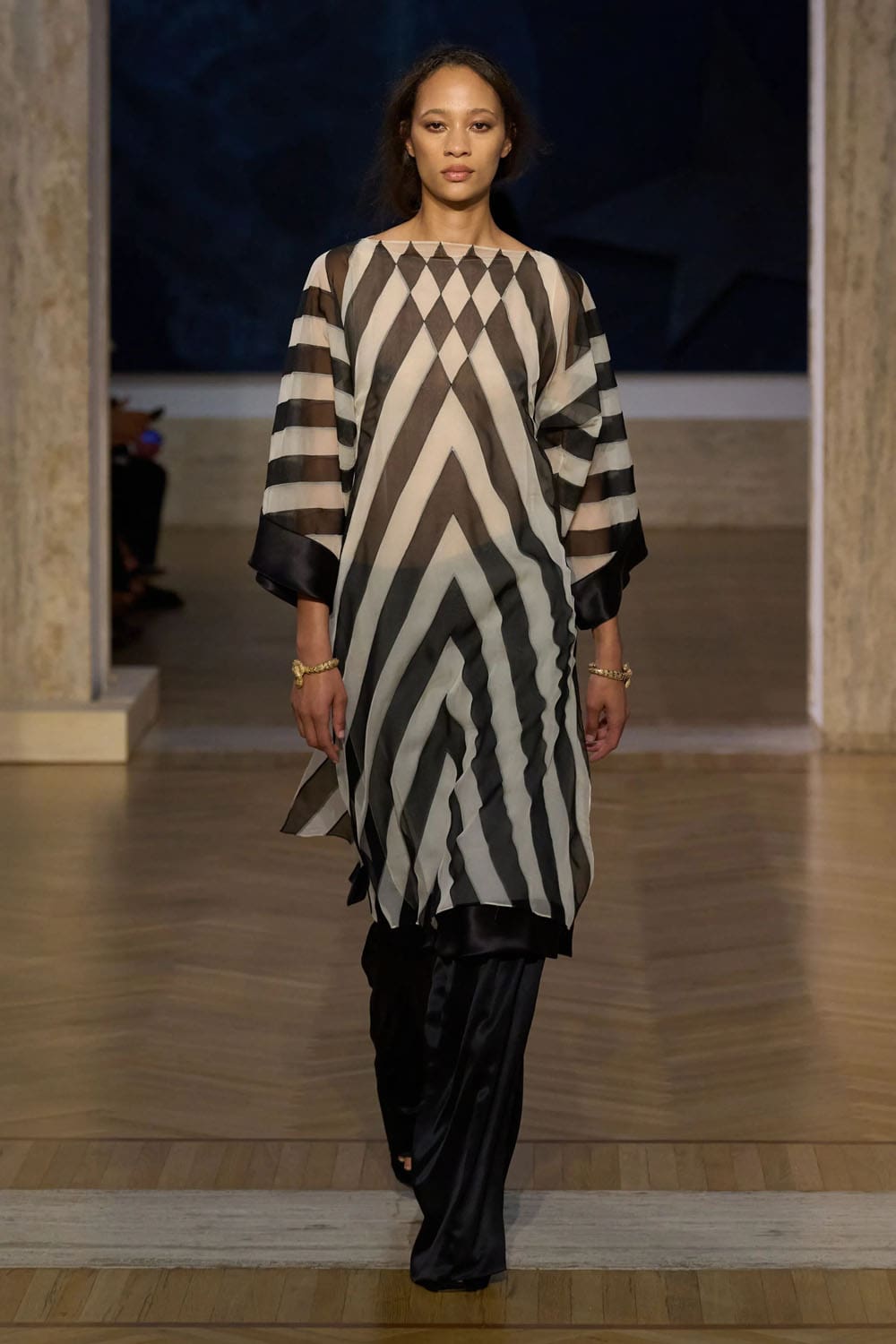
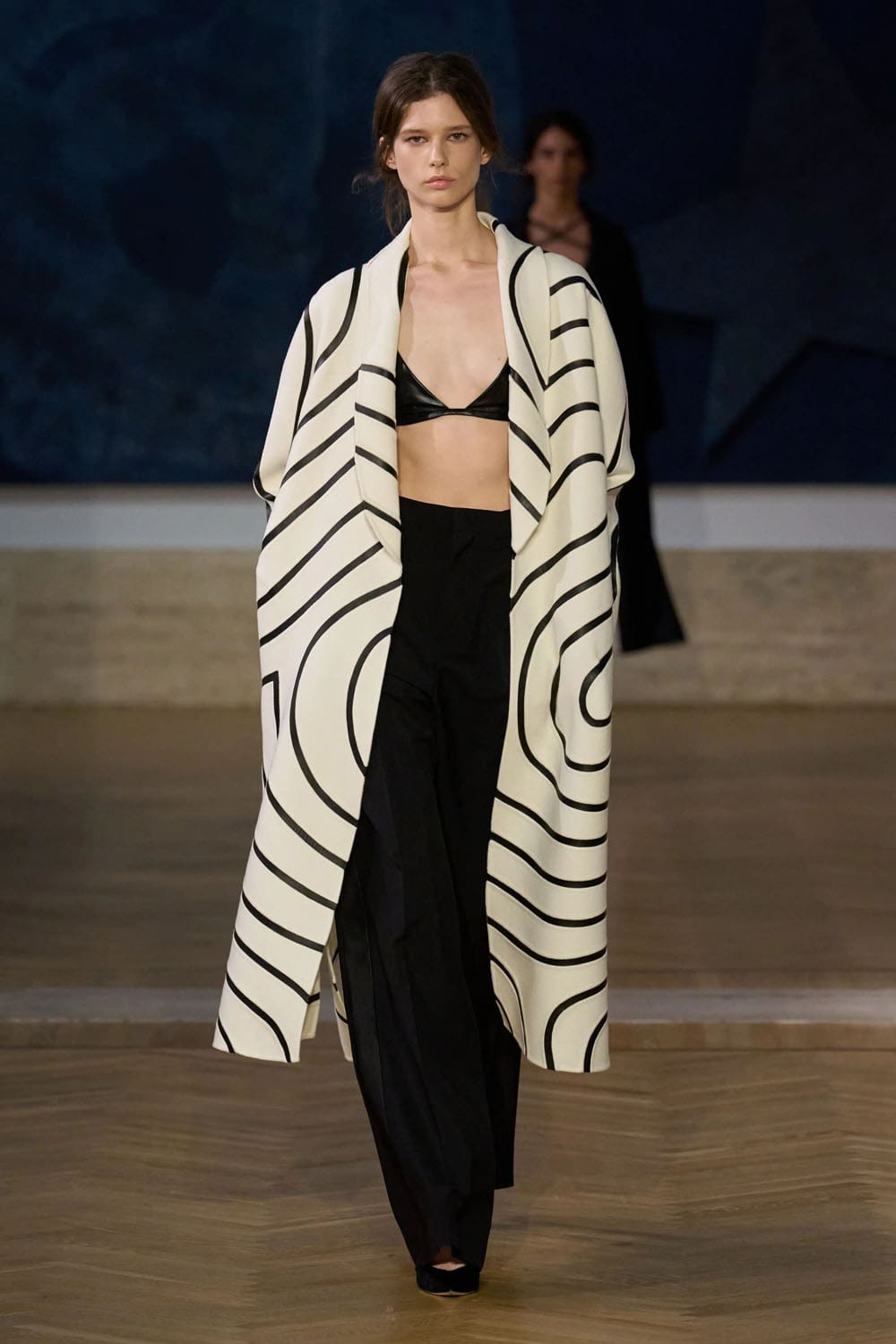
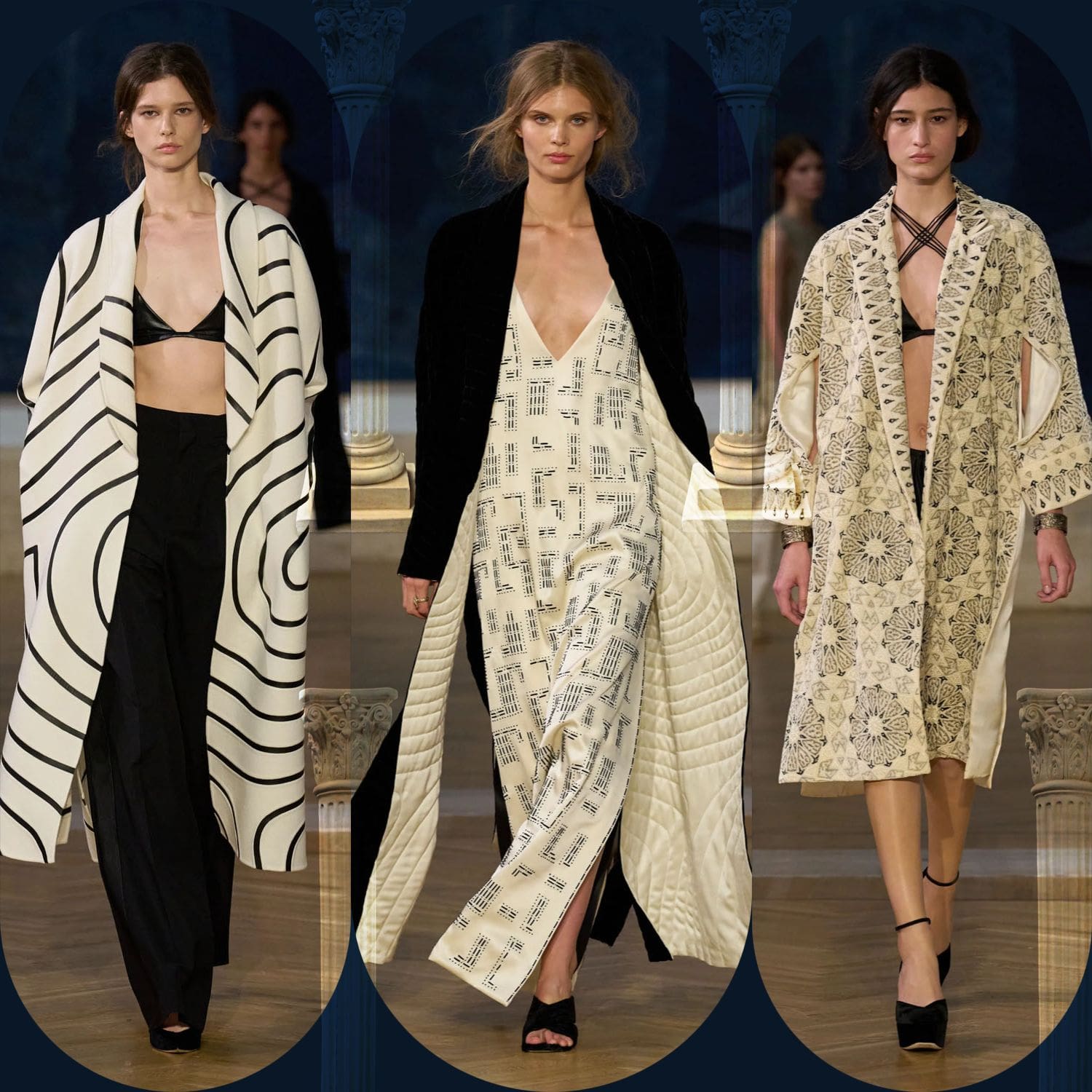
The translation of the labyrinth into physical garments manifested primarily through rigorous geometry and clever textile illusions. The opening movements of the show favored graphic clarity, as seen in a sheer, floating caftan defined by bold, alternating black and white chevron stripes that morphed into sharp diamond patterns across the collarbone. It felt like an optical puzzle, a visual representation of a maze designed to obscure the body while forcing the eye to trace its lines.
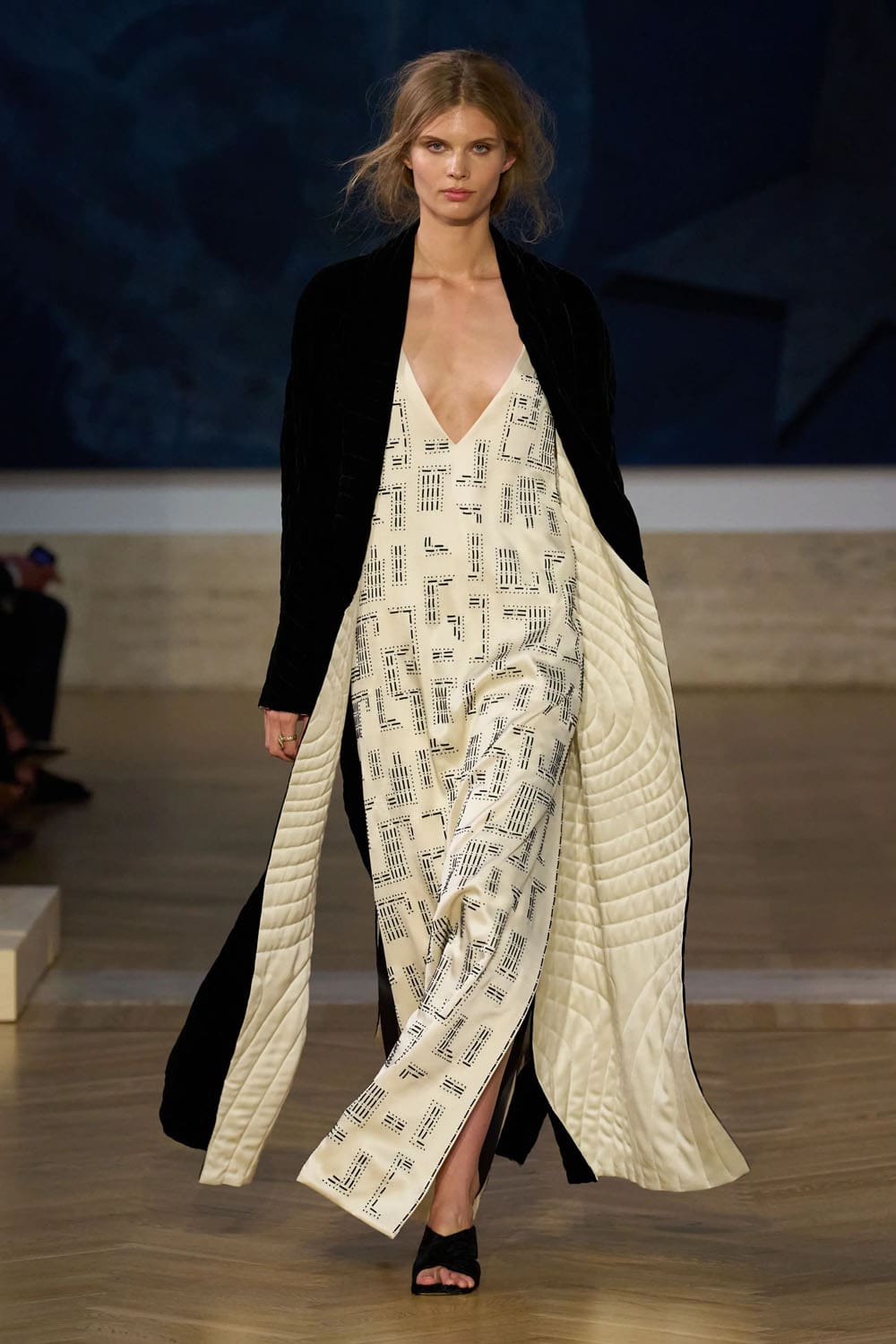
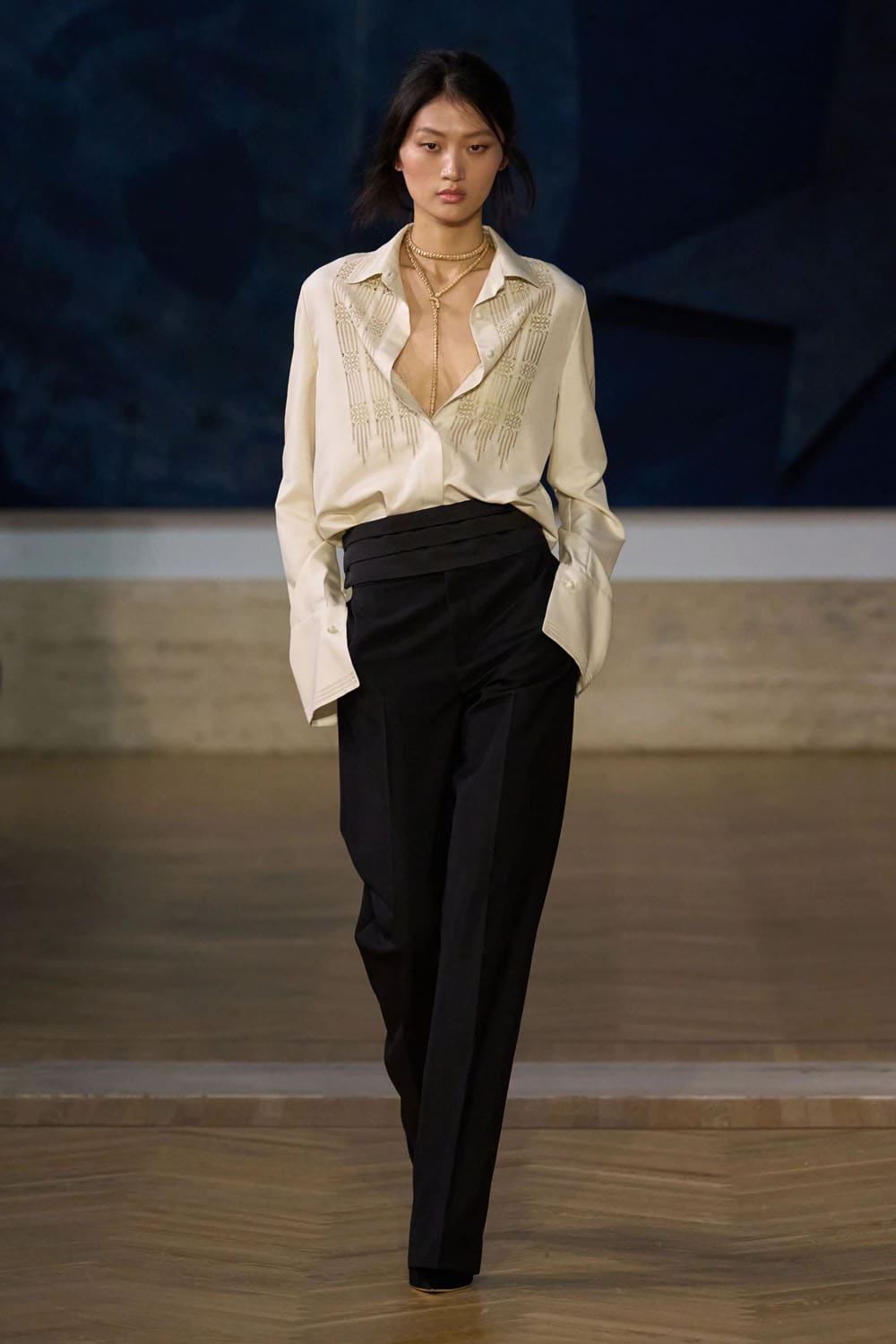
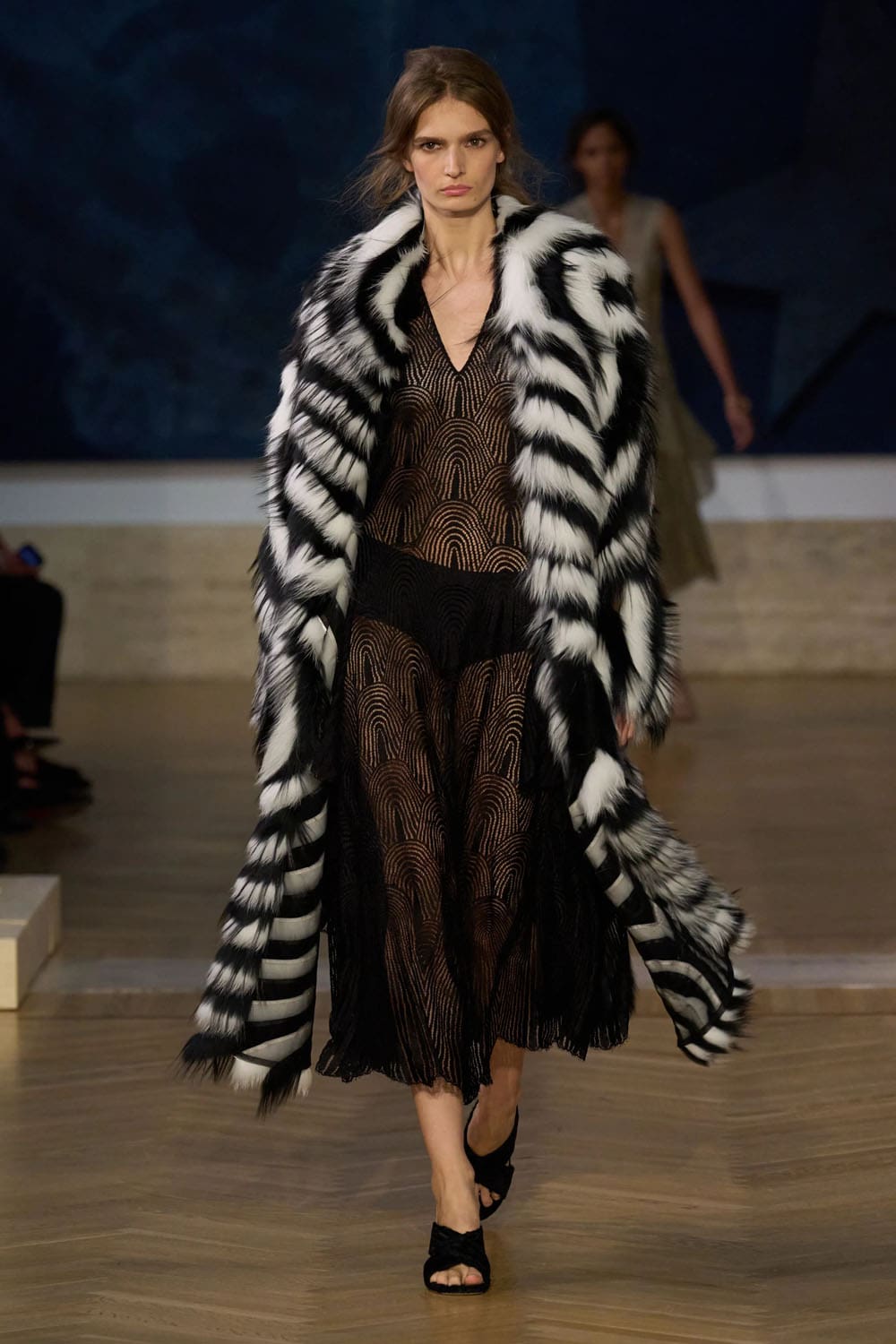
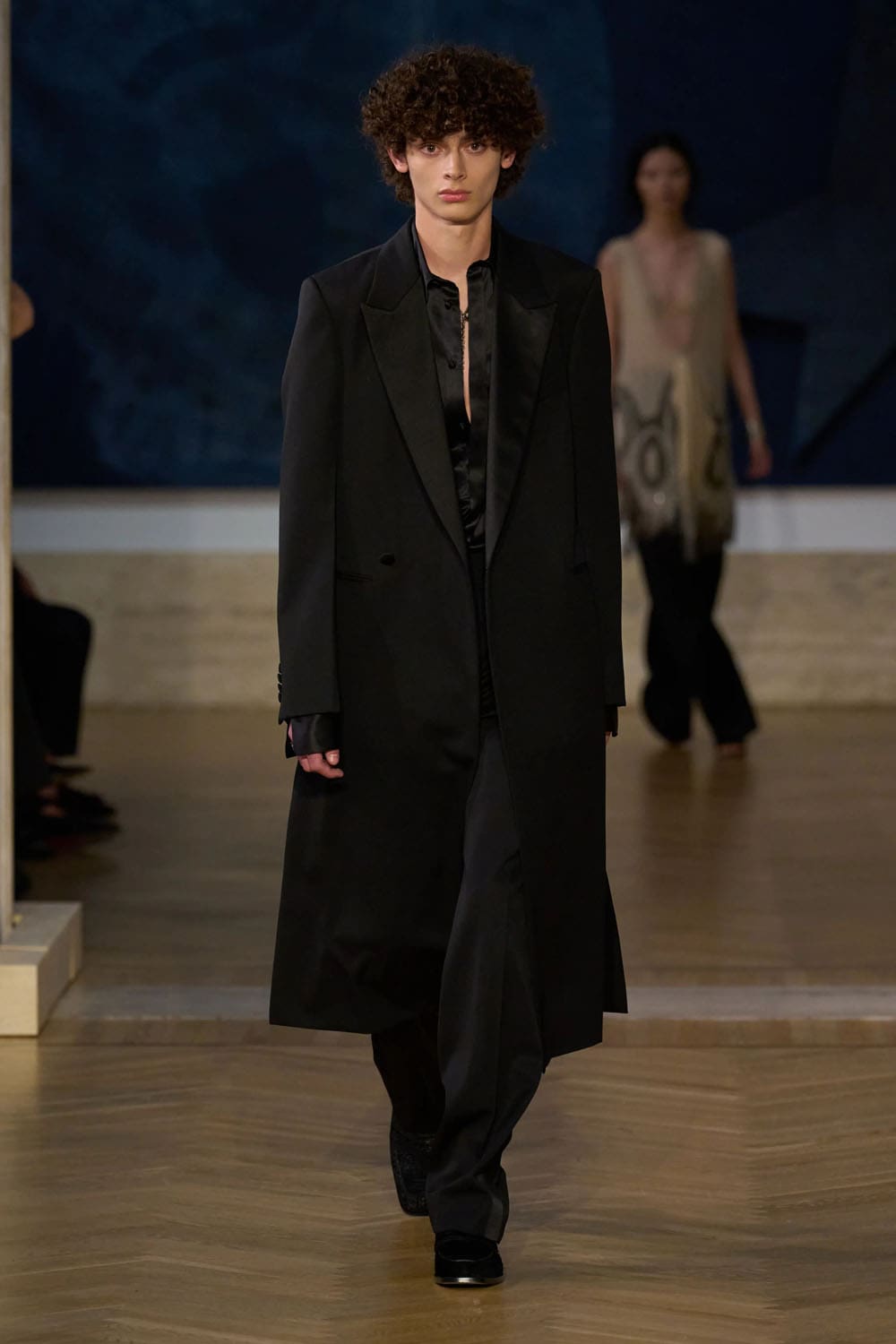
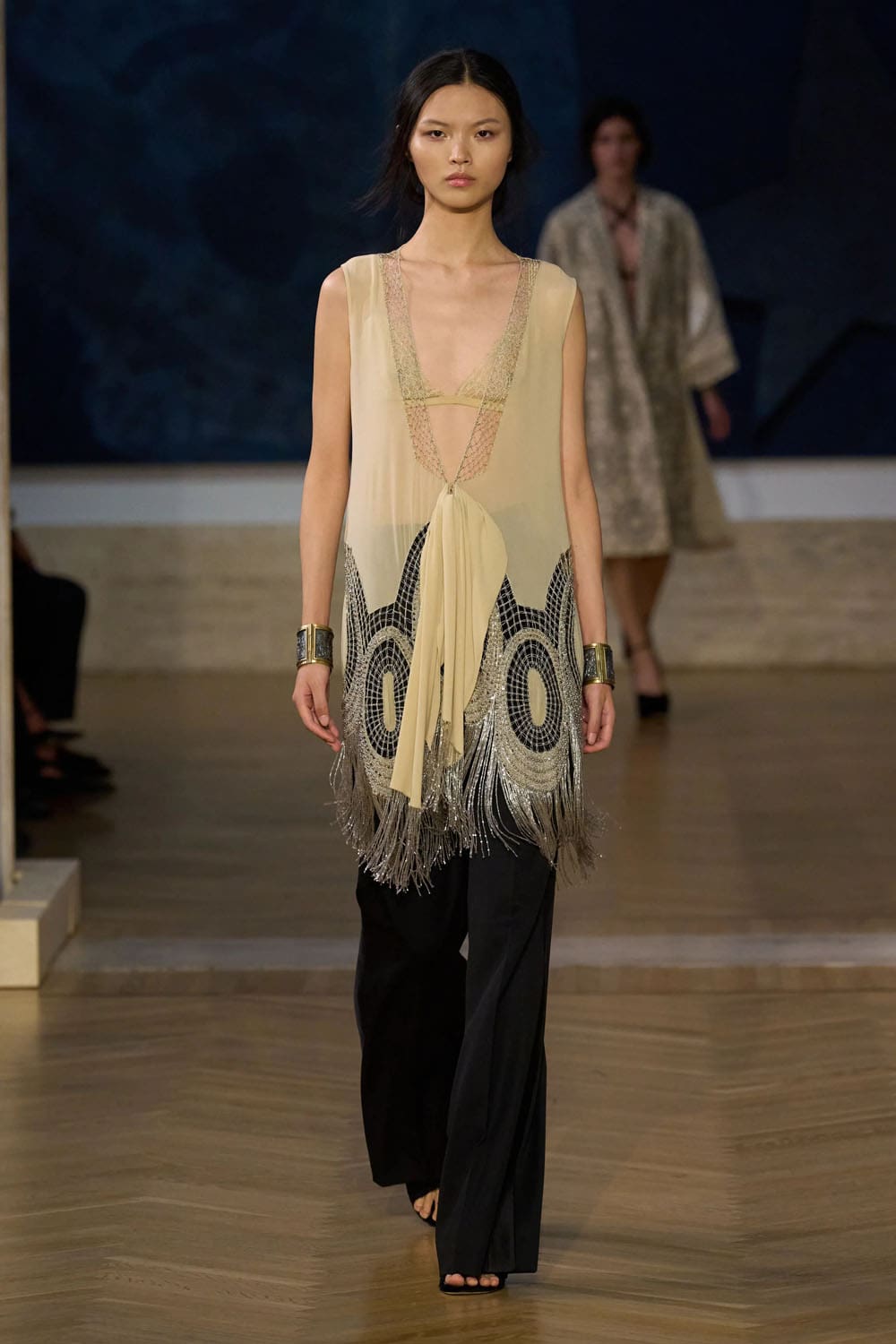
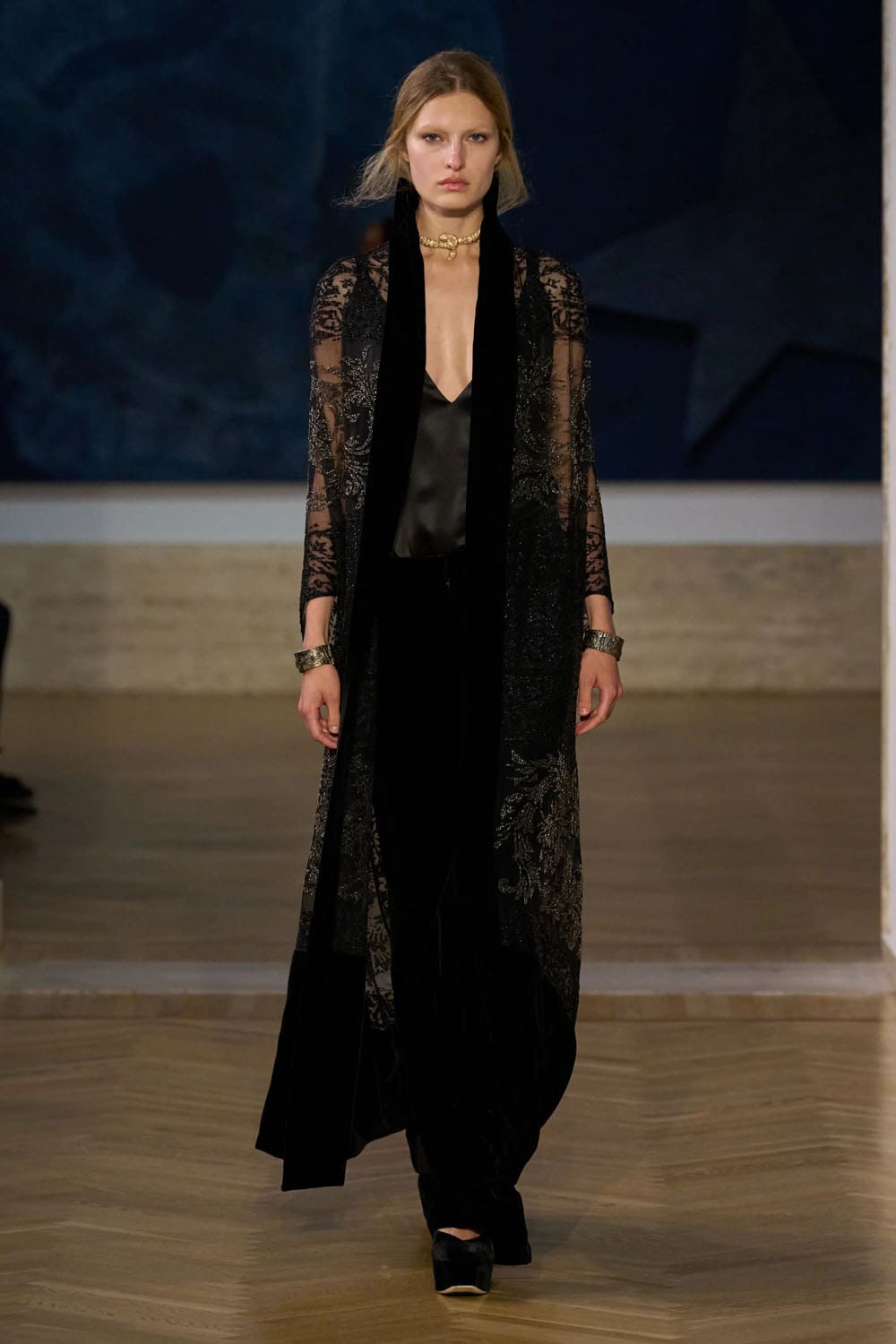
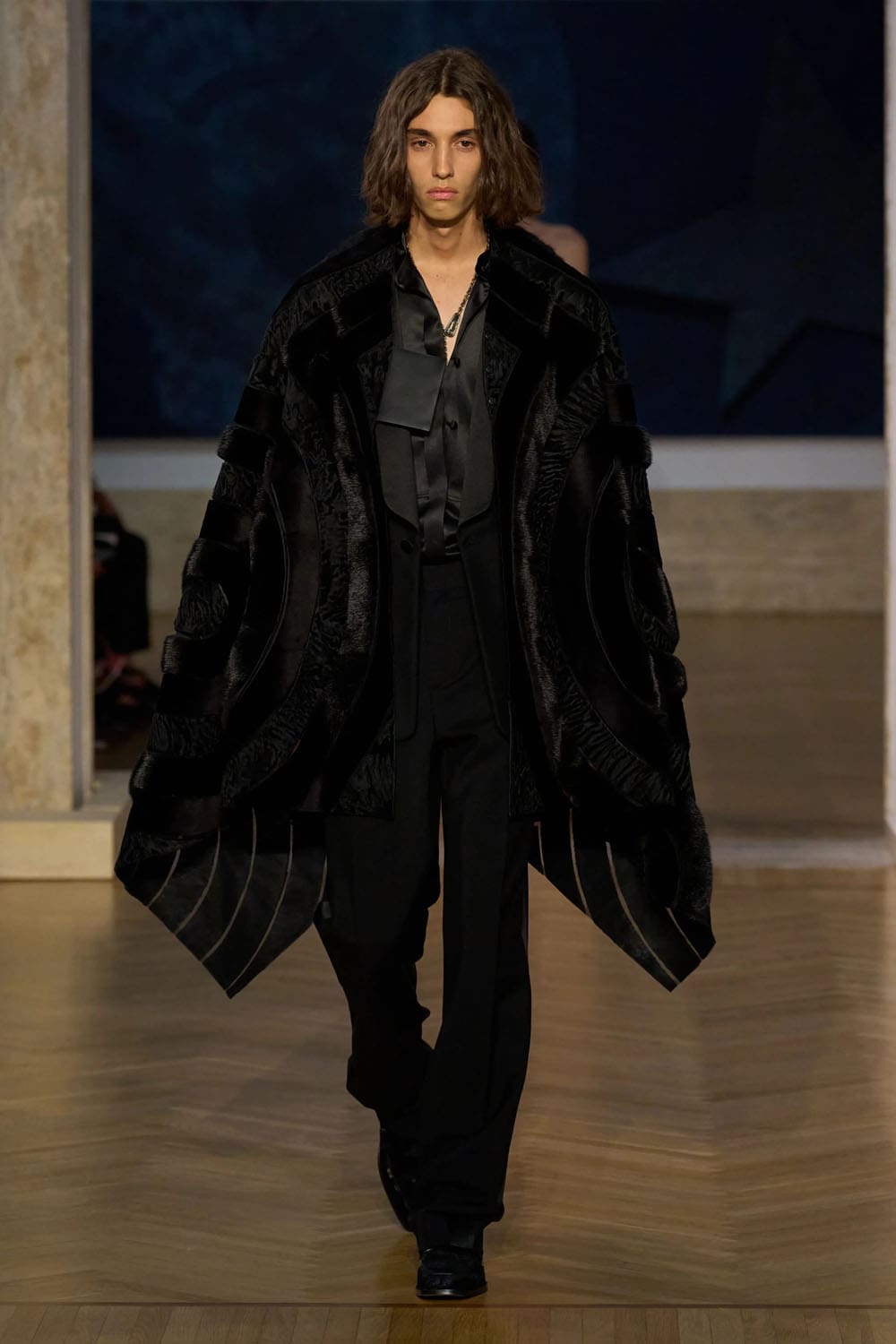
This architectural discipline quickly married the fluid elegance of the 1920s. A cream-colored silk dress, featuring a plunging V-neckline and covered in a delicate, grid-like geometric motif of broken black dashes, slinked down the runway under a magnificent, floor-sweeping black velvet coat. The coat itself was a technical marvel, lined with a meticulously quilted cream interior that mirrored the concentric, structural curves of an arena or a stylized maze.
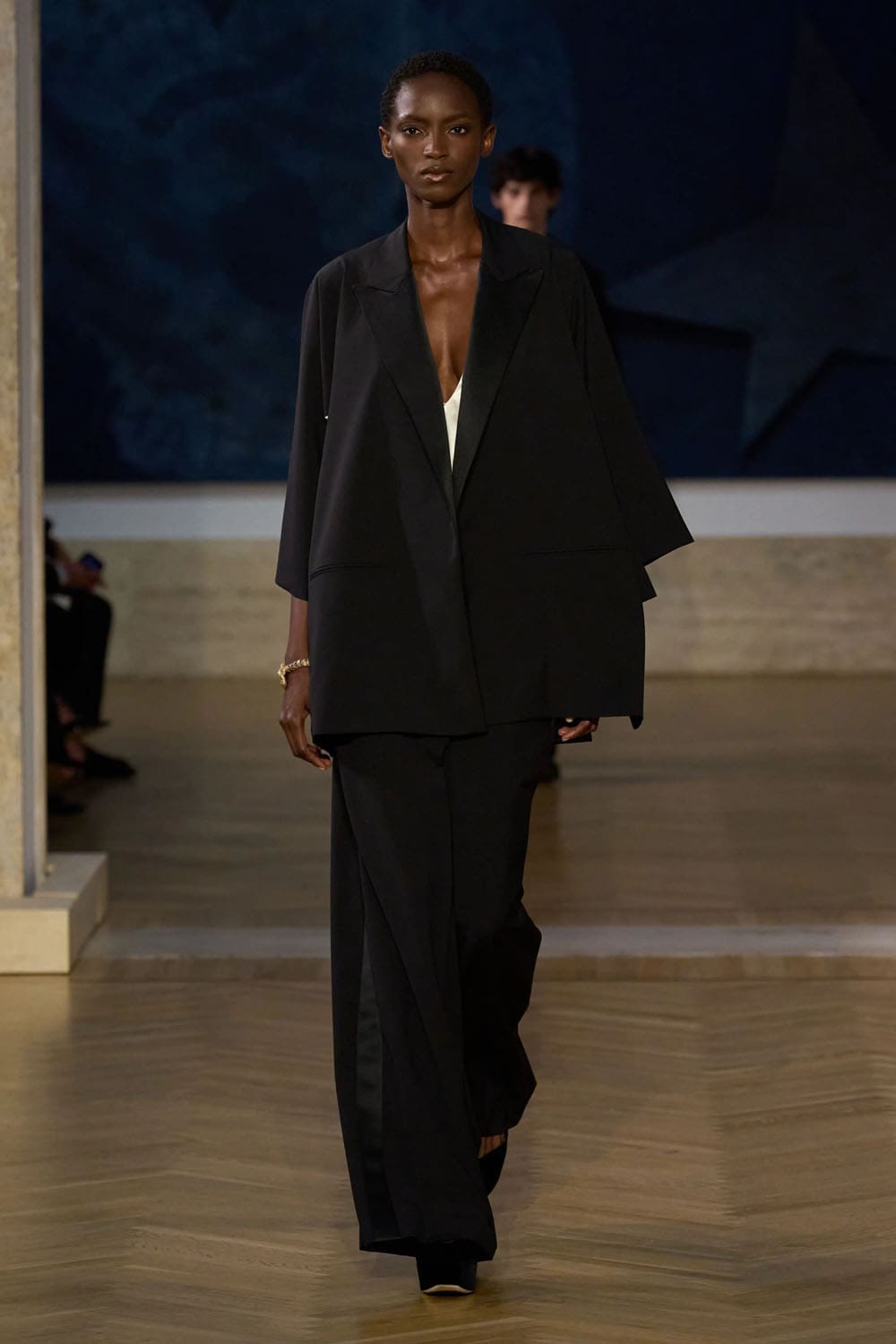
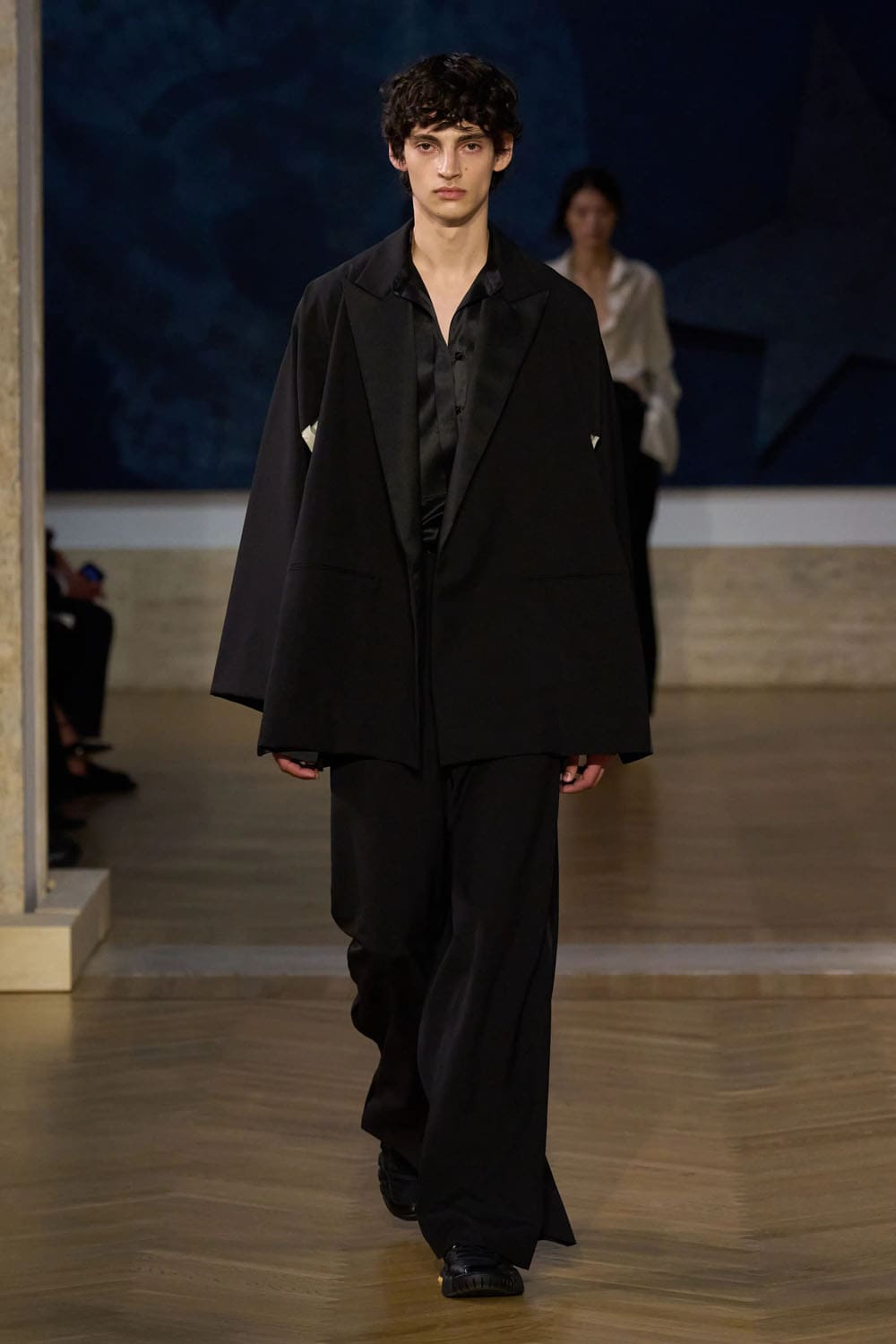
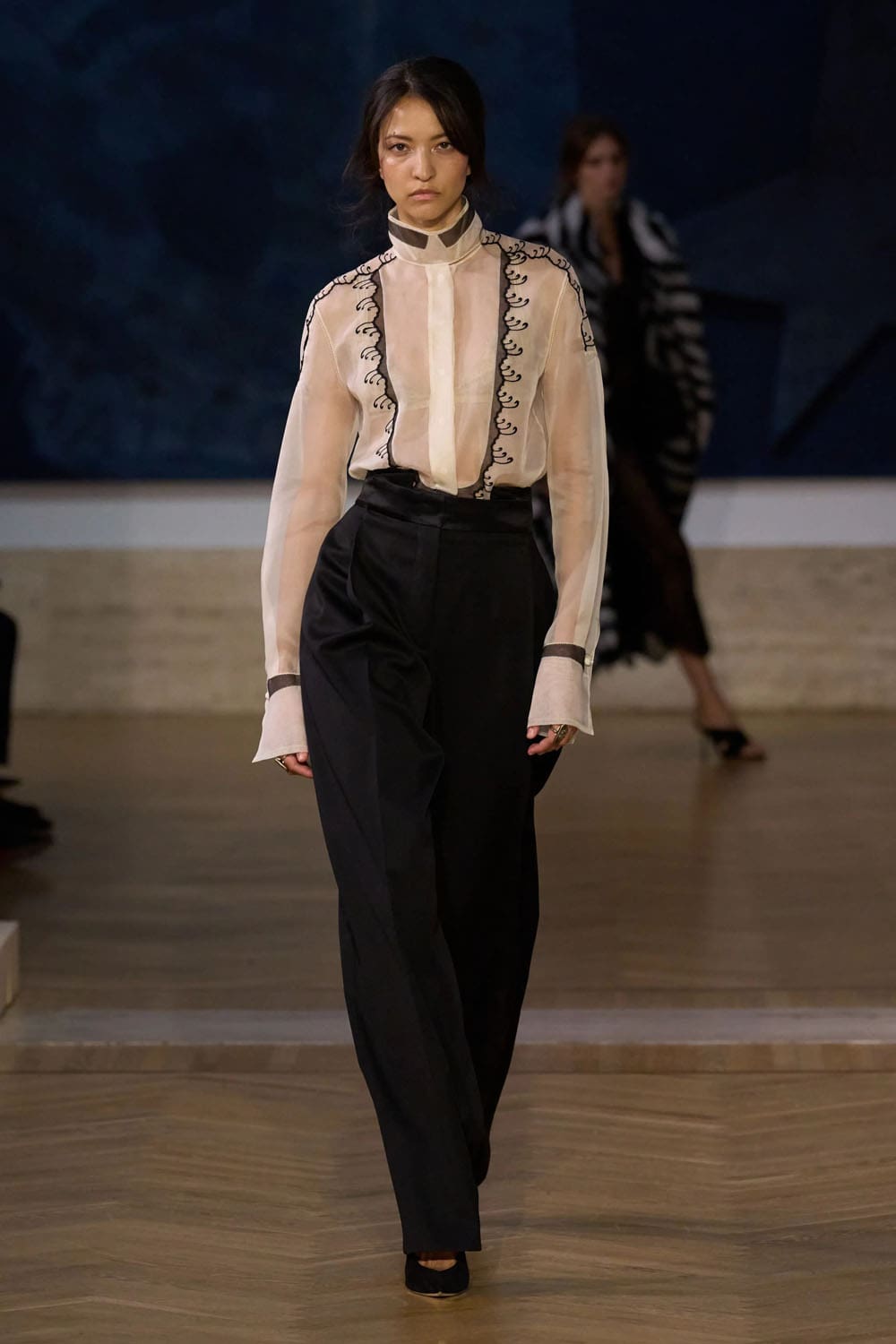
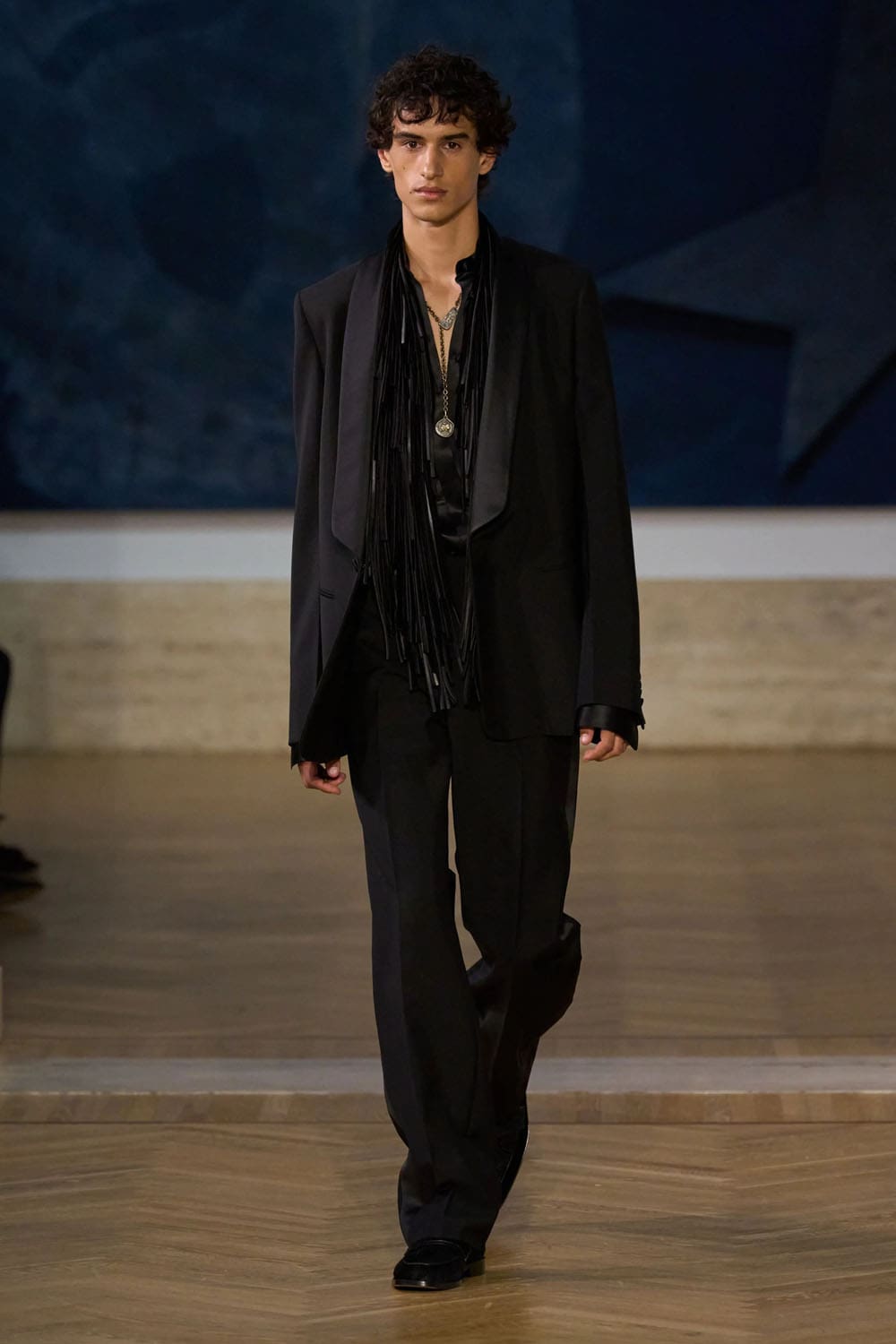
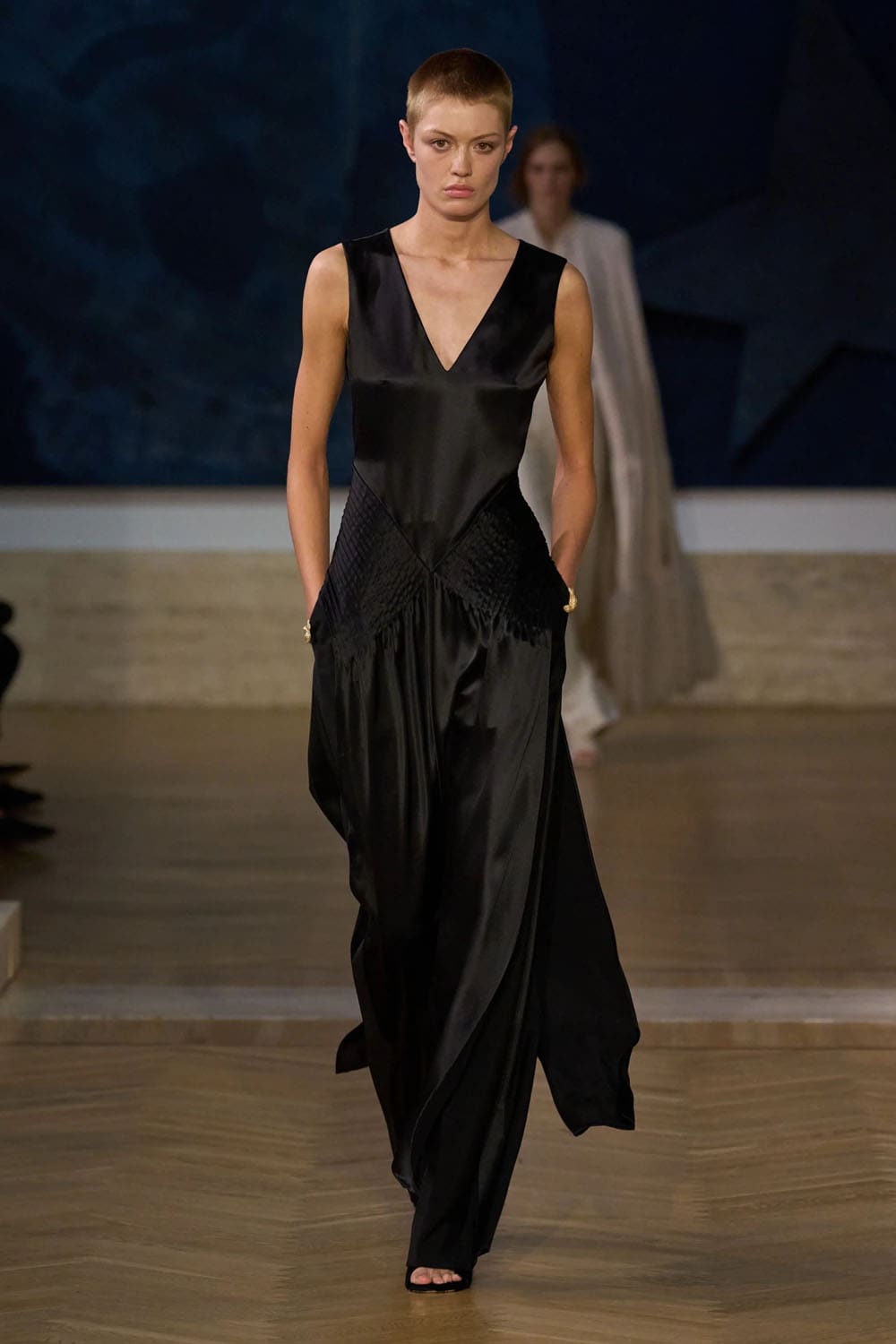
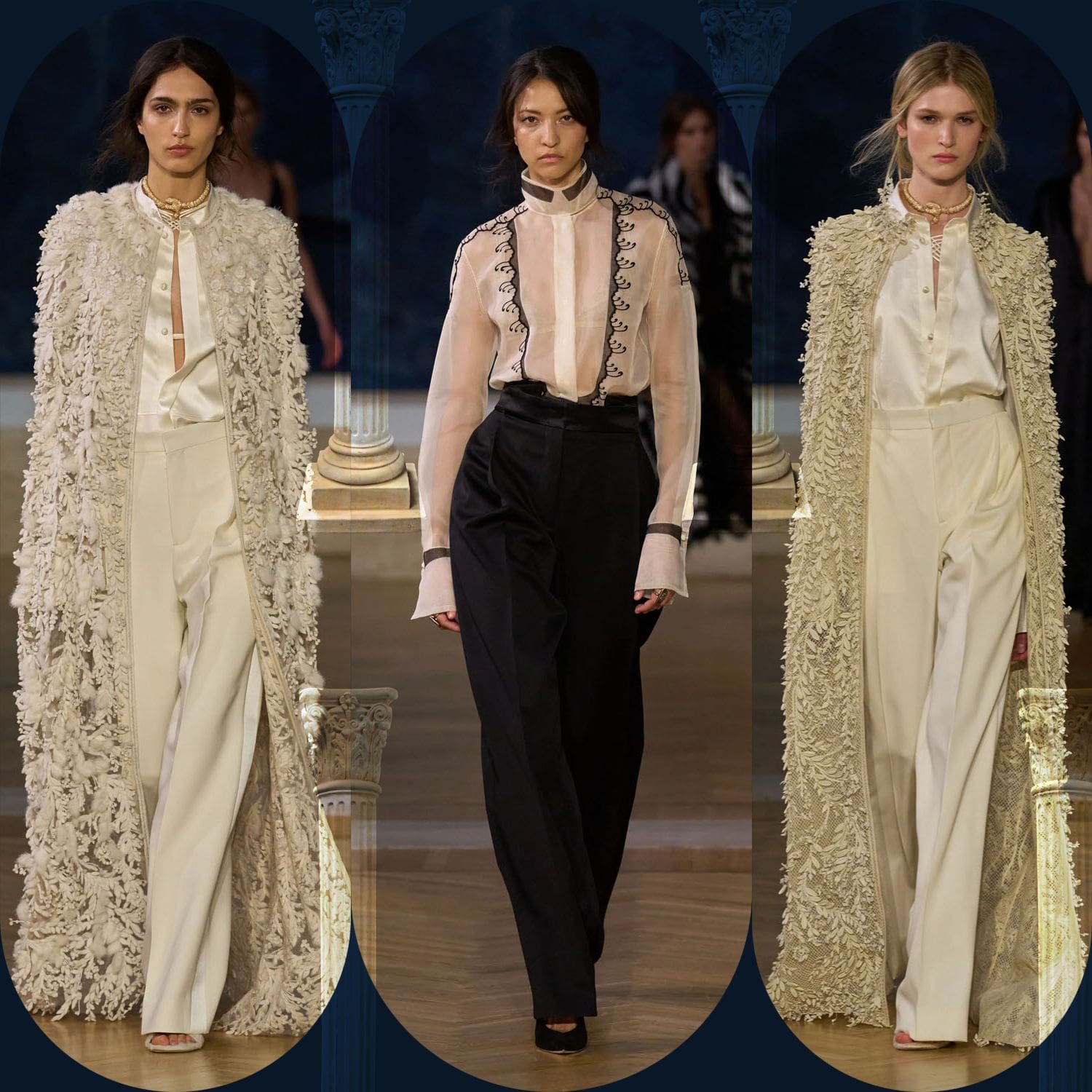
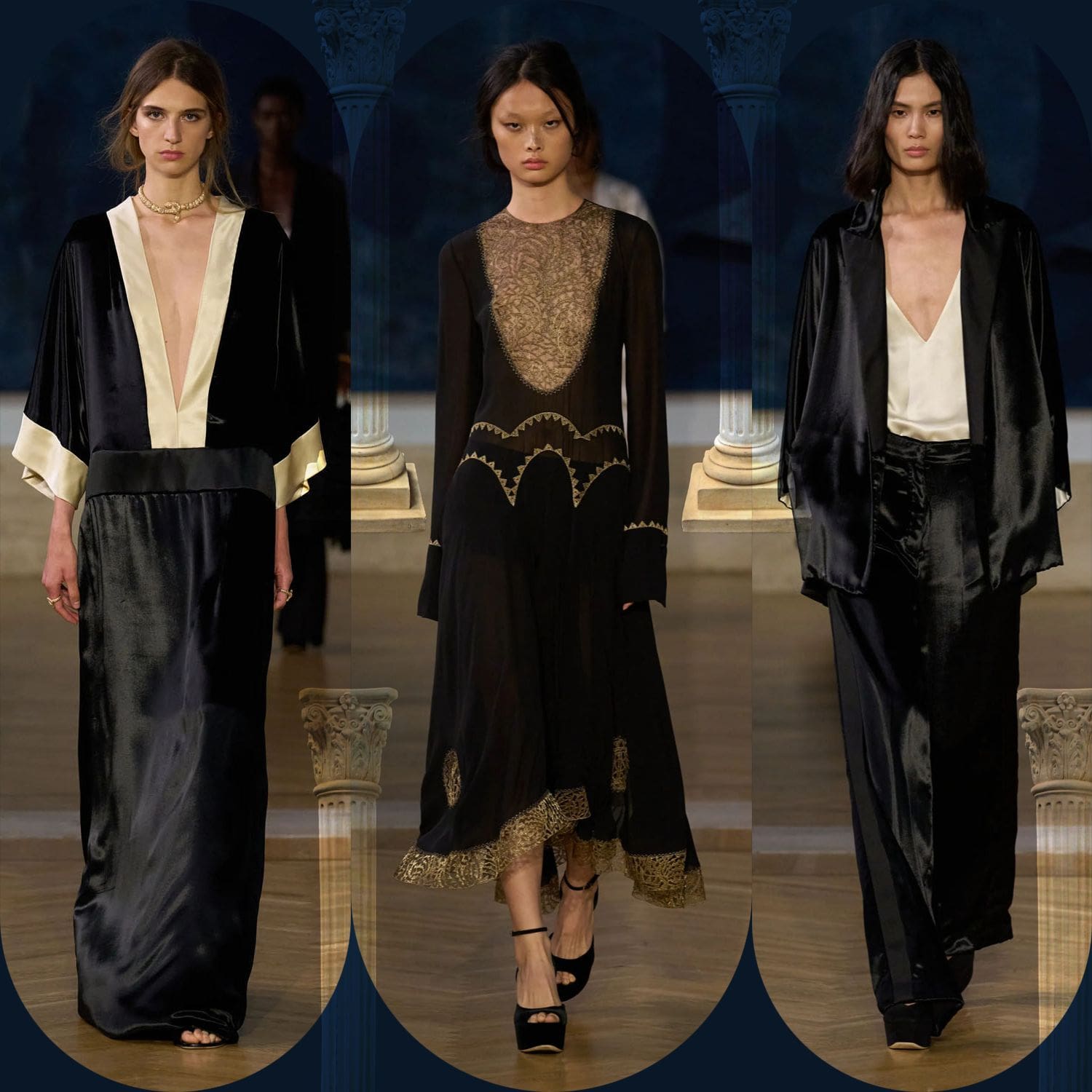
The collection balanced these grand statements with moments of strict, monochromatic tailoring. A fluid, liquid-black silk jumpsuit brought a masculine-feminine duality to the floor, its starkly contrasting, oversized cream collar and deep-V tuxedo lapels evoking a sleek, nocturnal sophistication. It was simple, sharp, and entirely devoid of theatrical fluff.
Textures of the Shadow Self
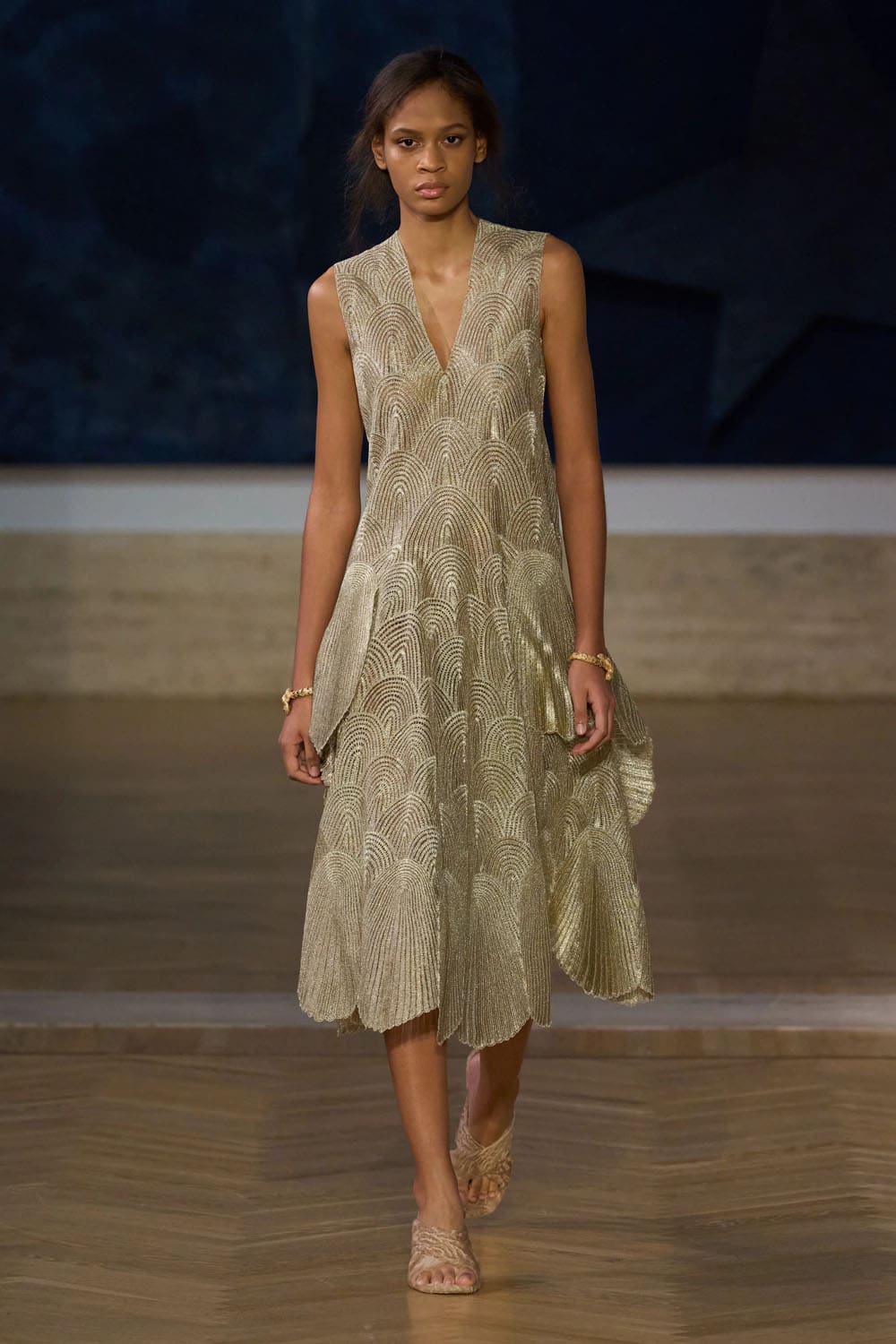
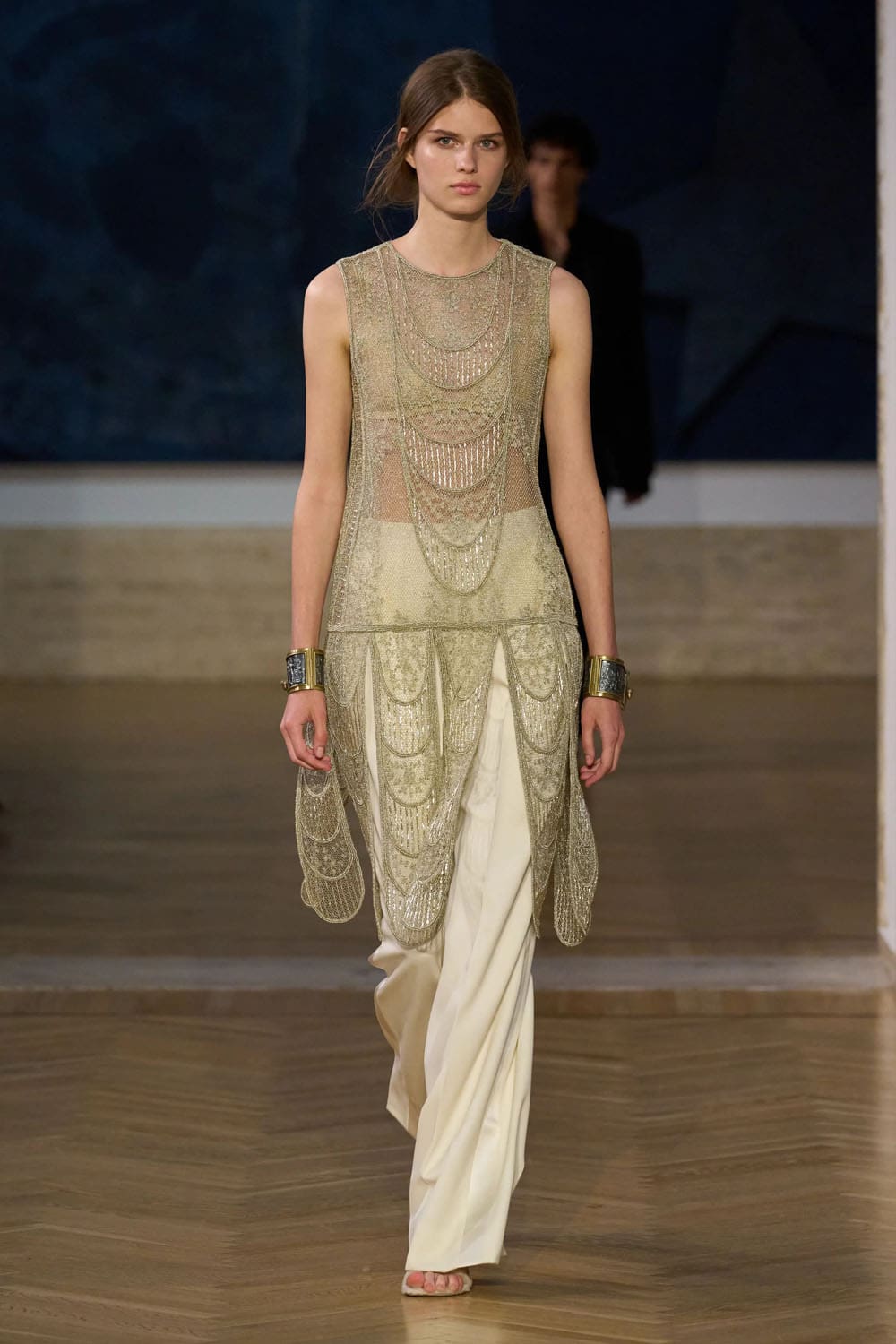
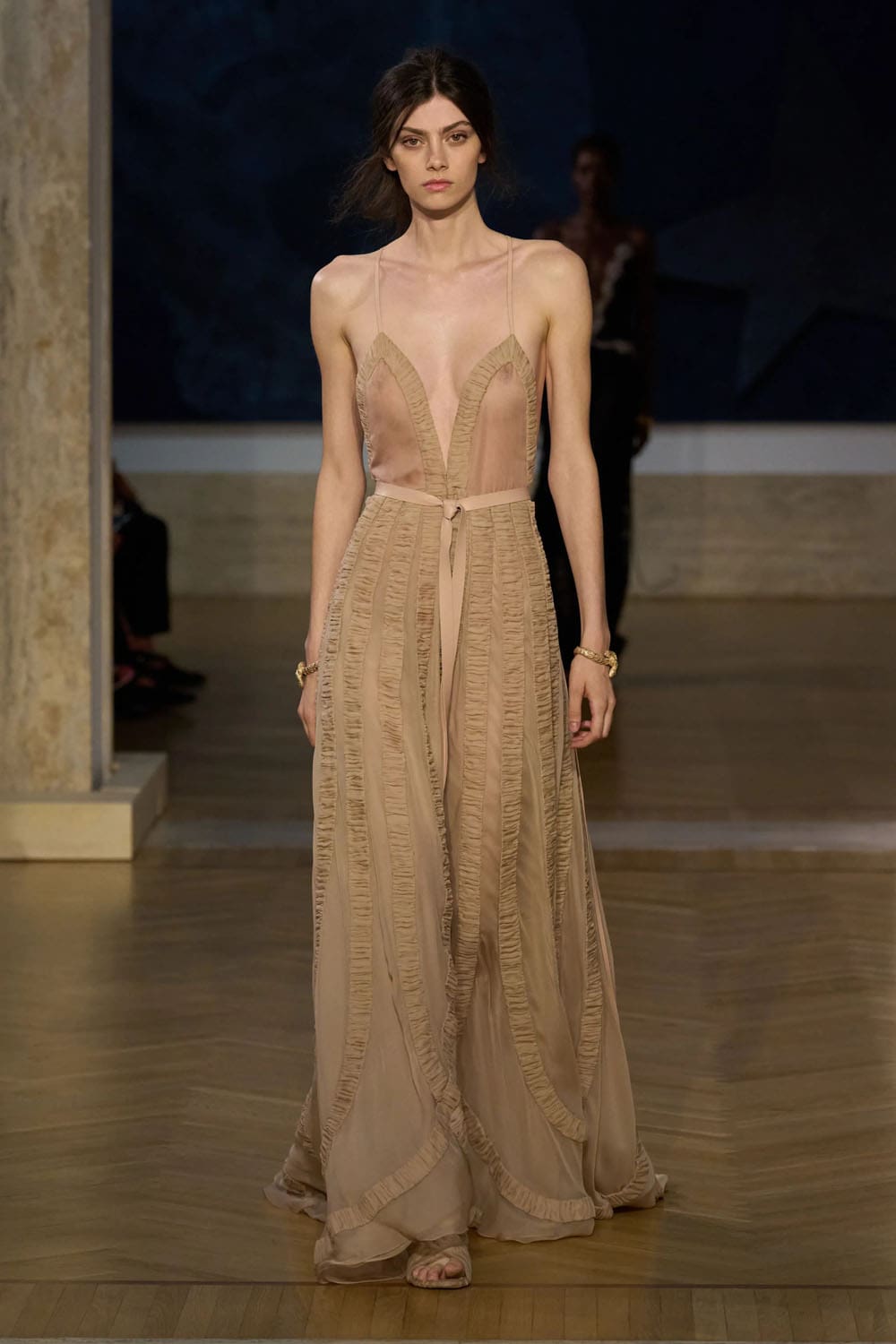
As the runway progressed deeper into the metaphorical center of the maze, the materials grew infinitely more intricate, showcasing the full capabilities of the cross-pollinated ateliers. The Charleston influence crystallized beautifully in a sleeveless, metallic gold-toned midi dress constructed from thousands of tiny, radiating plissé fans. The tiered, scalloped layers shifted like liquid armor with every step, reflecting light with an antique, tarnished brilliance that felt both archival and entirely fresh.
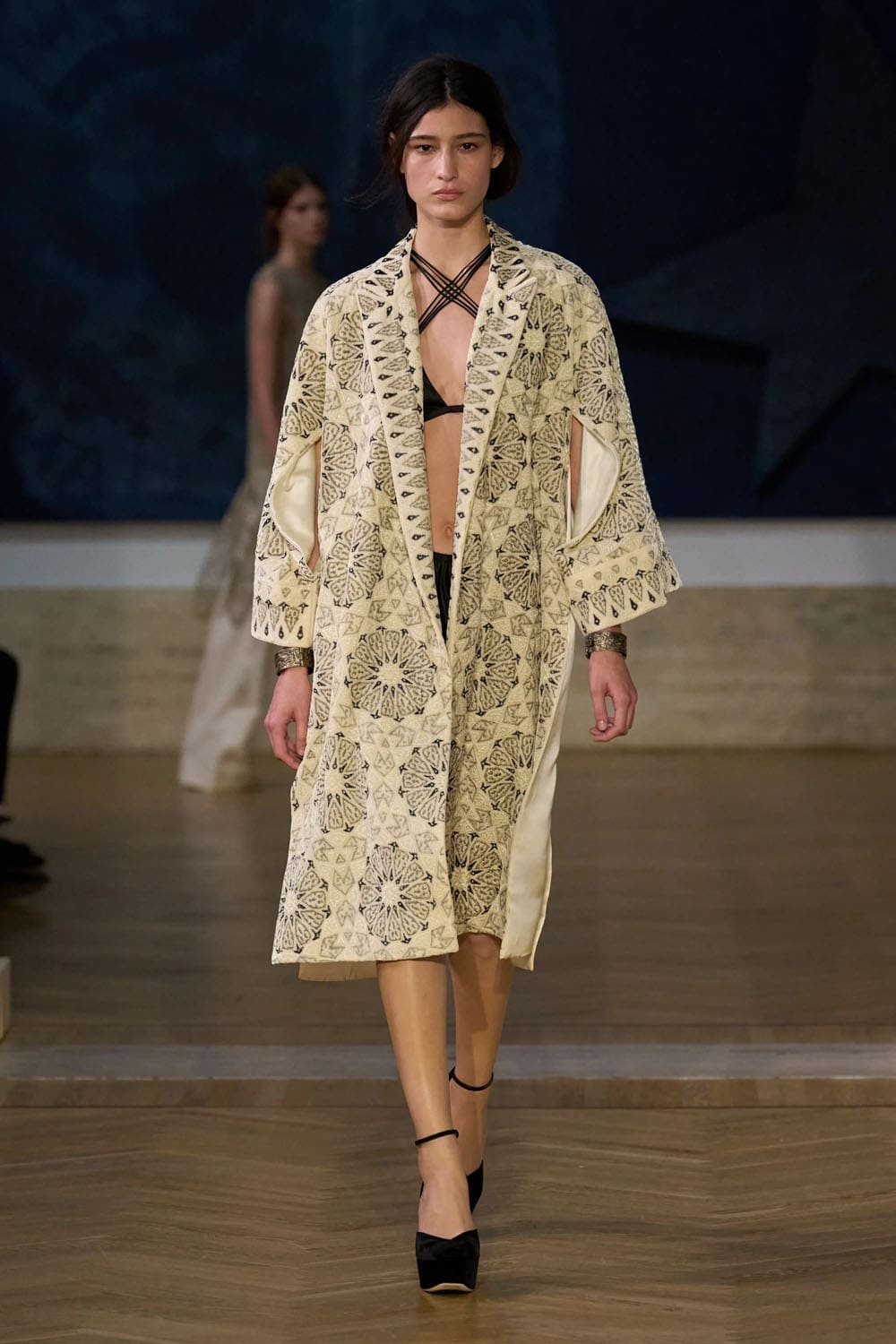
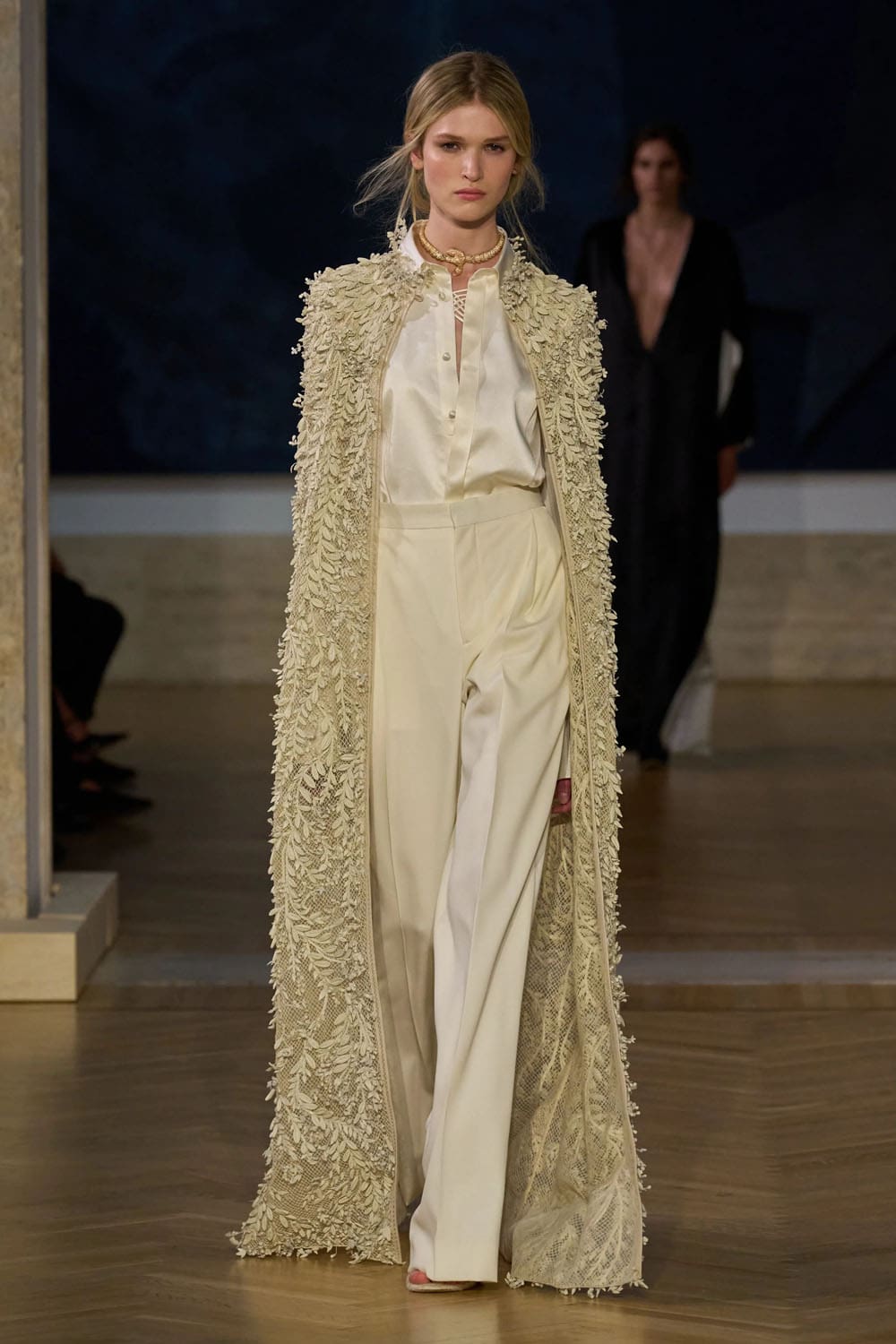
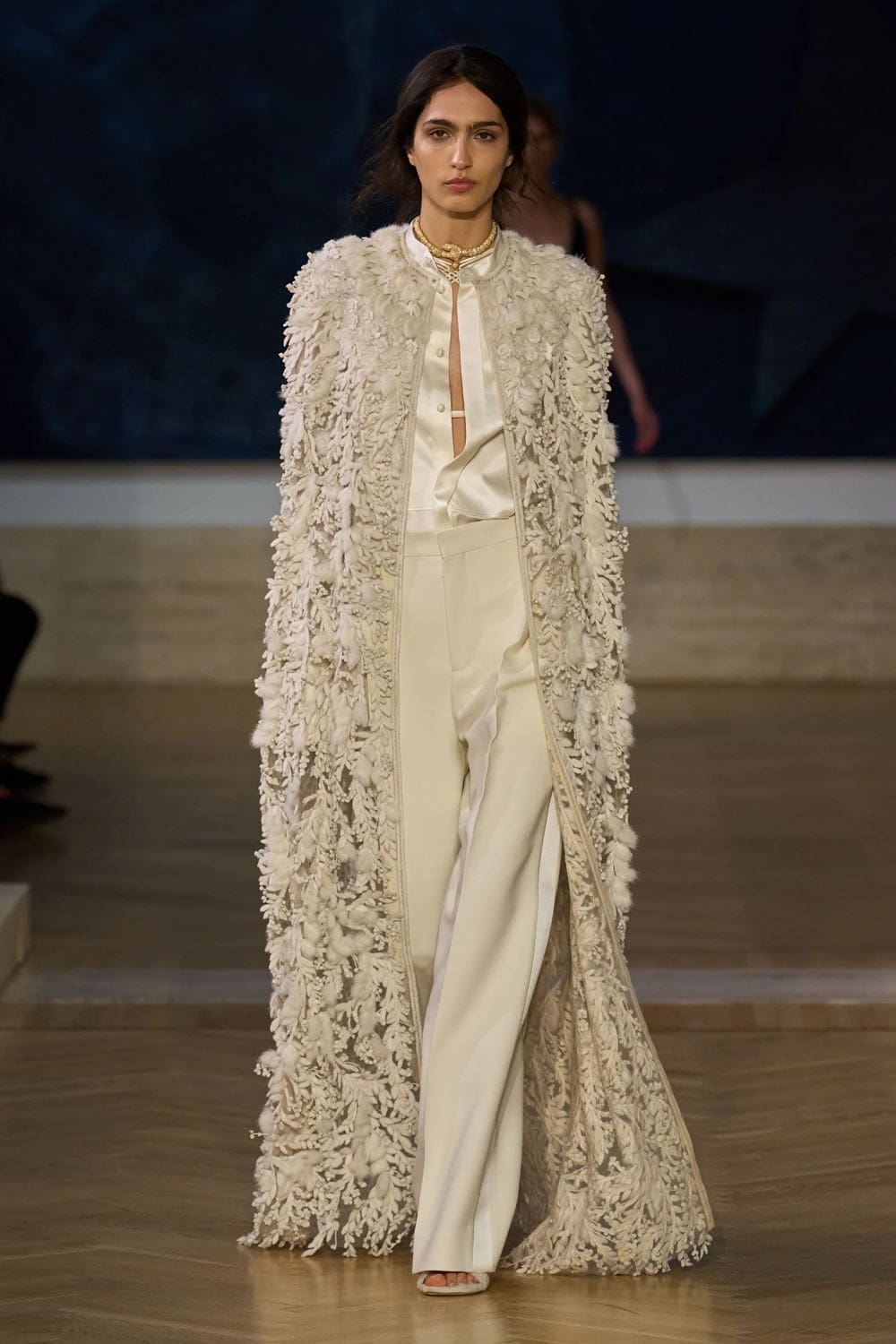
Then came the expressions of the “monster” itself—clothed in protective, complex layers. An exquisite, cream-colored structural coat featured wide, slit cape-sleeves and was completely adorned with heavy, kaleidoscopic embroidered mandalas. The dark, sprawling patterns felt ancient, almost tribal, worn over a minimalist black strap arrangement that grounded the look in modern subversion.
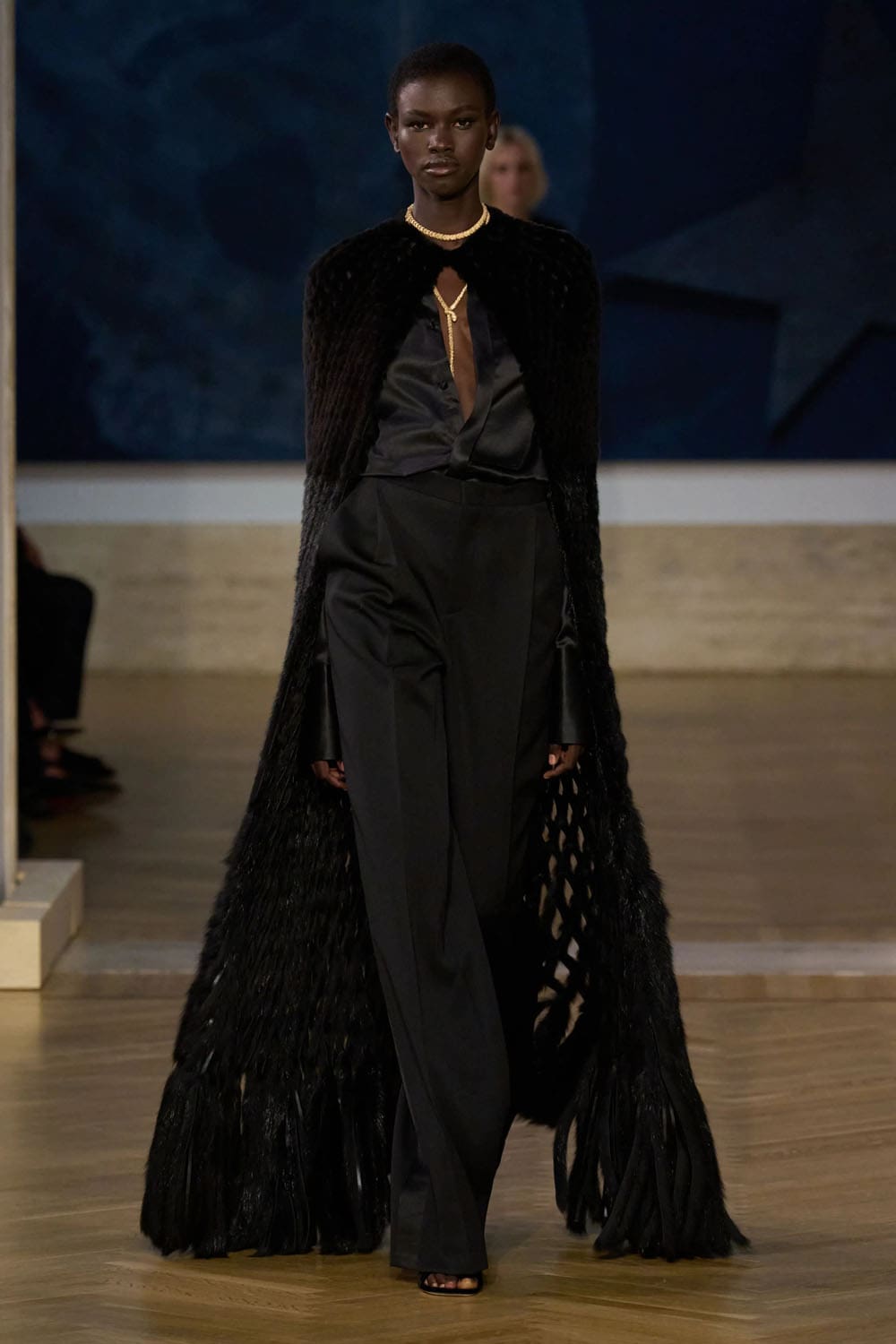
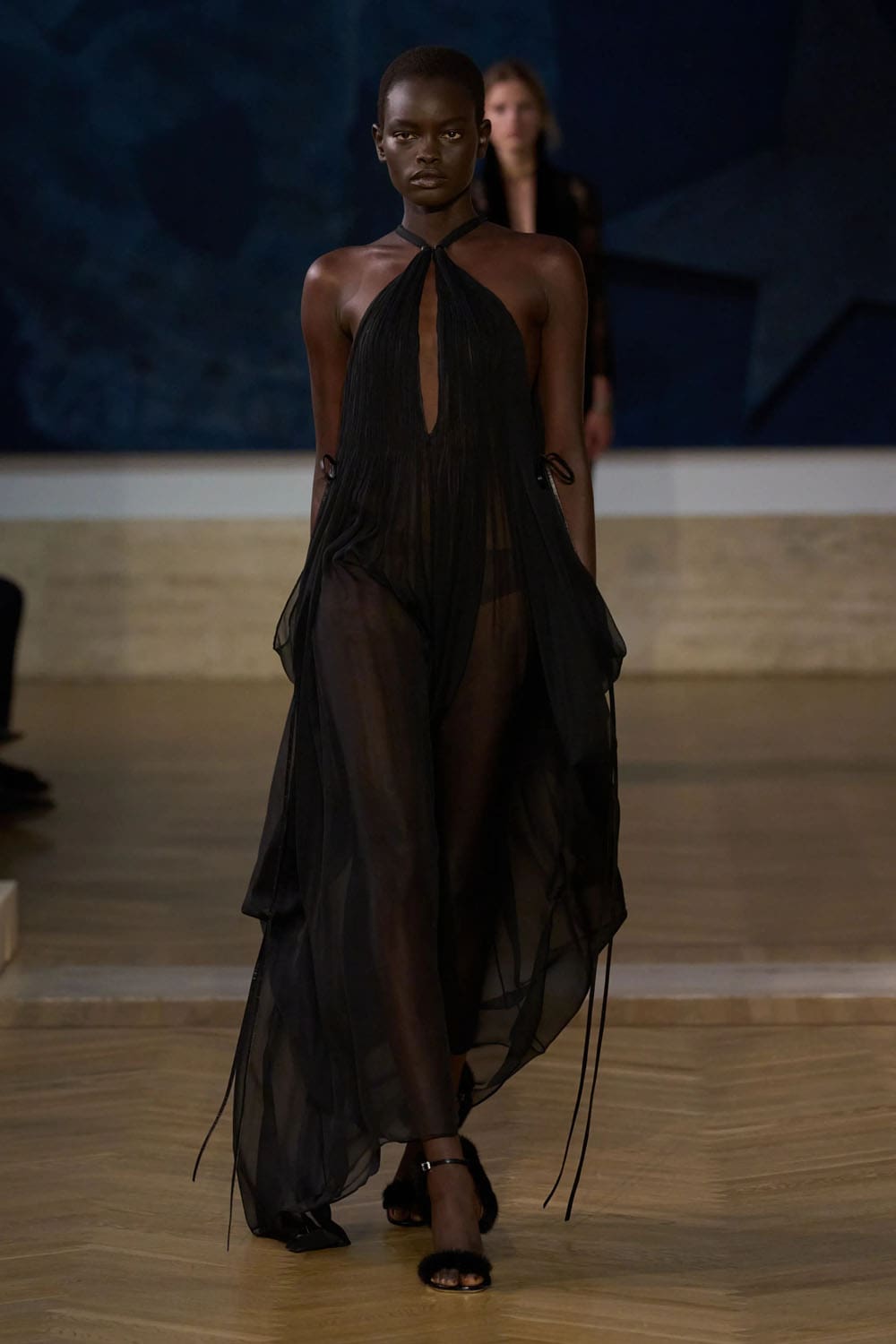
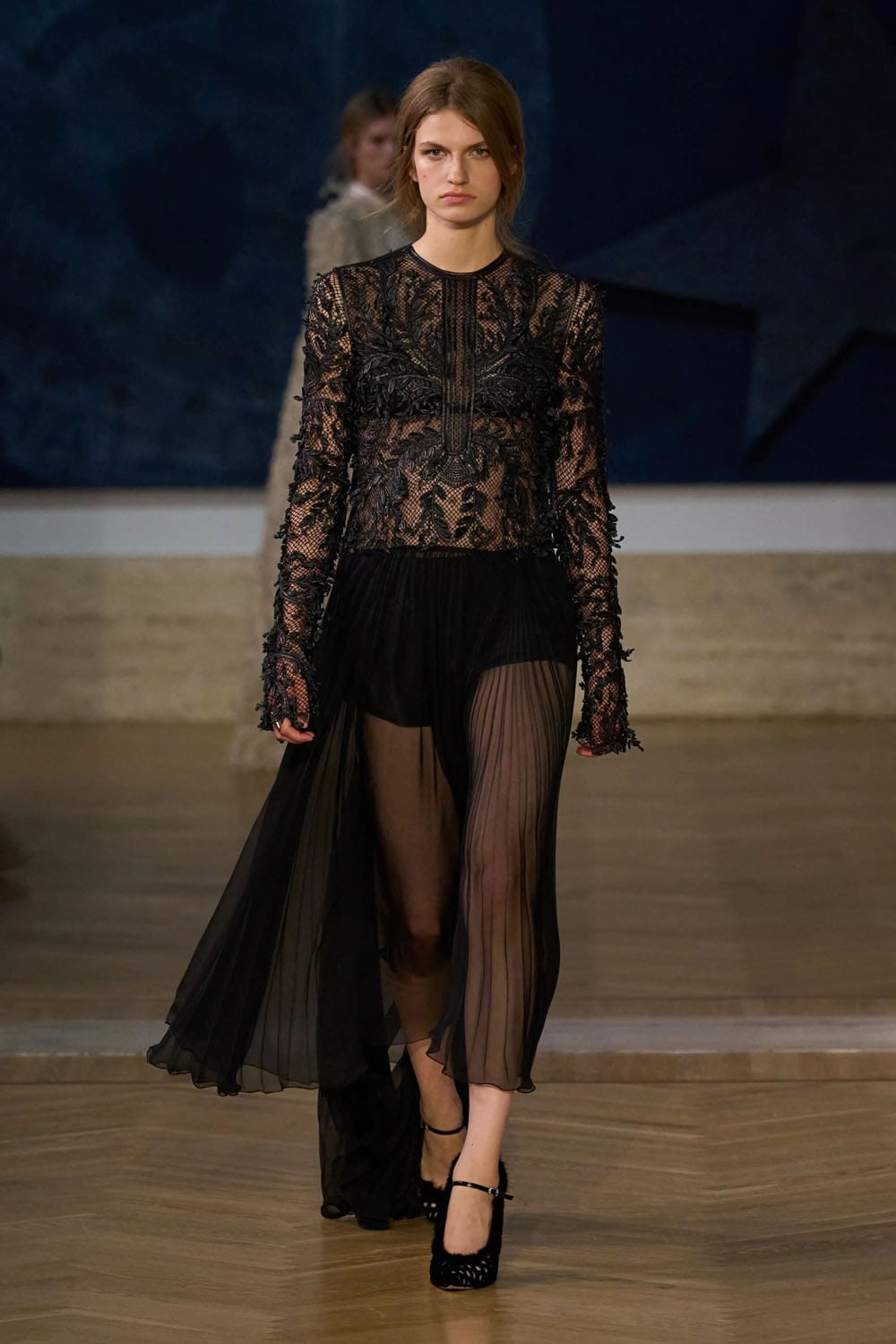
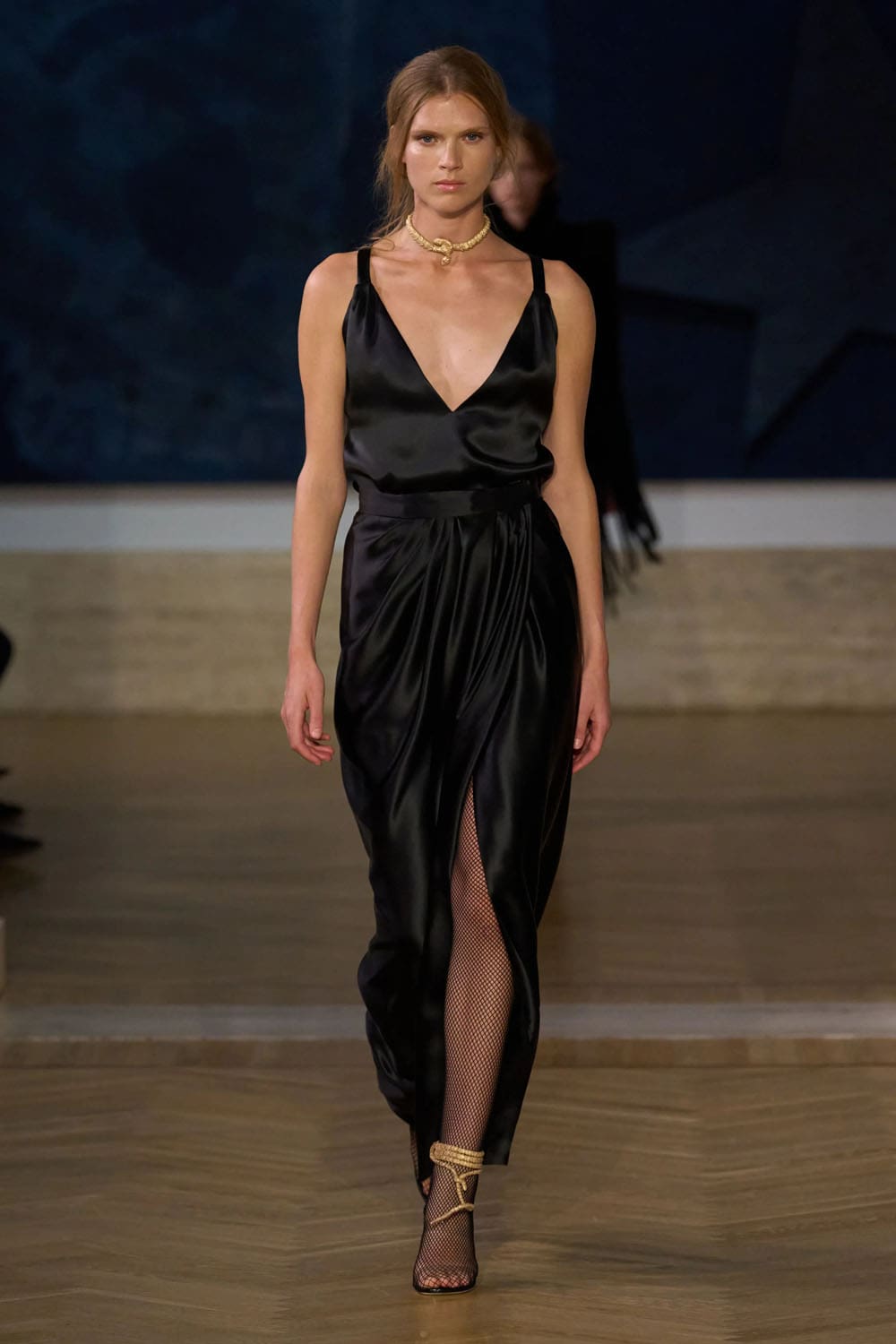
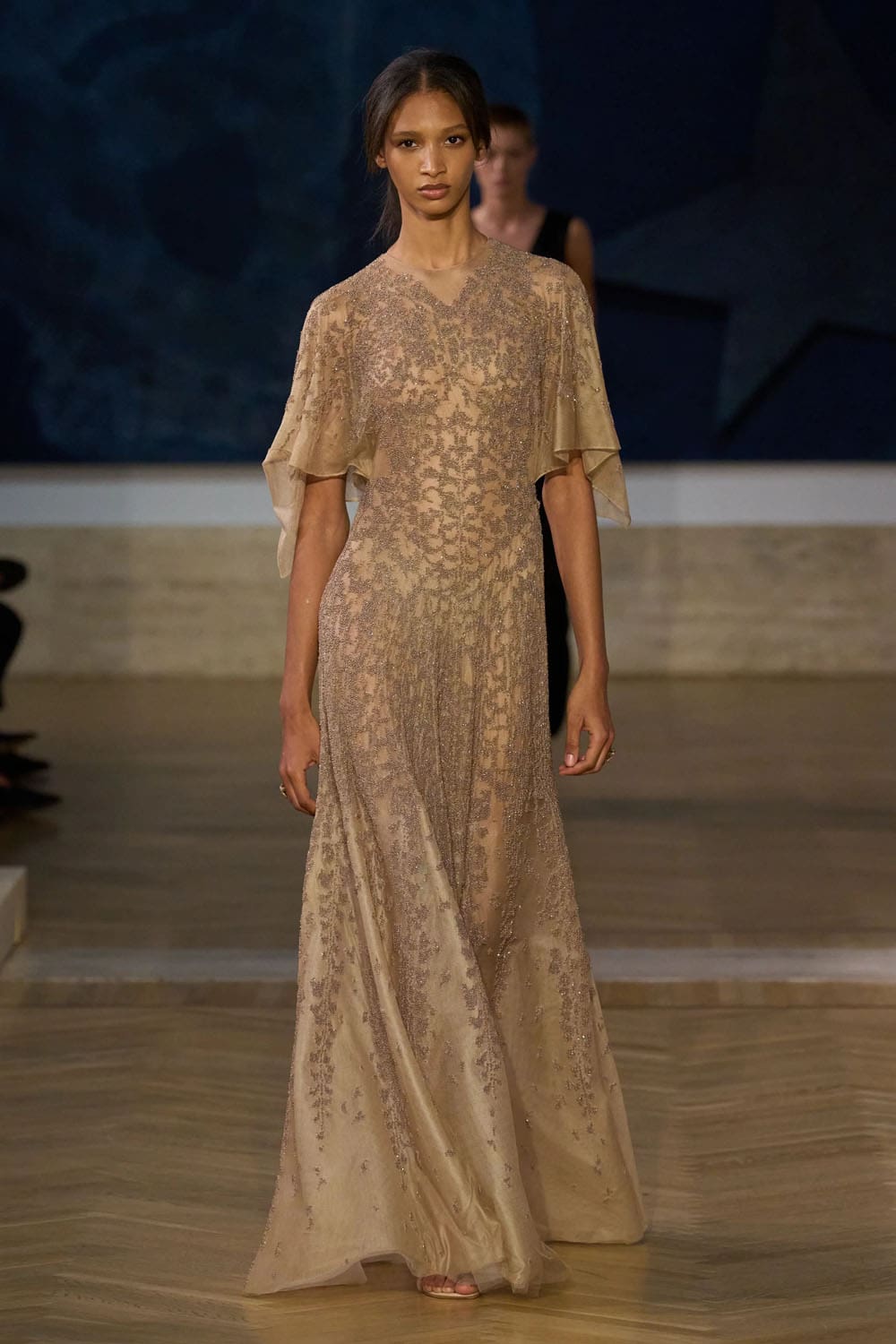
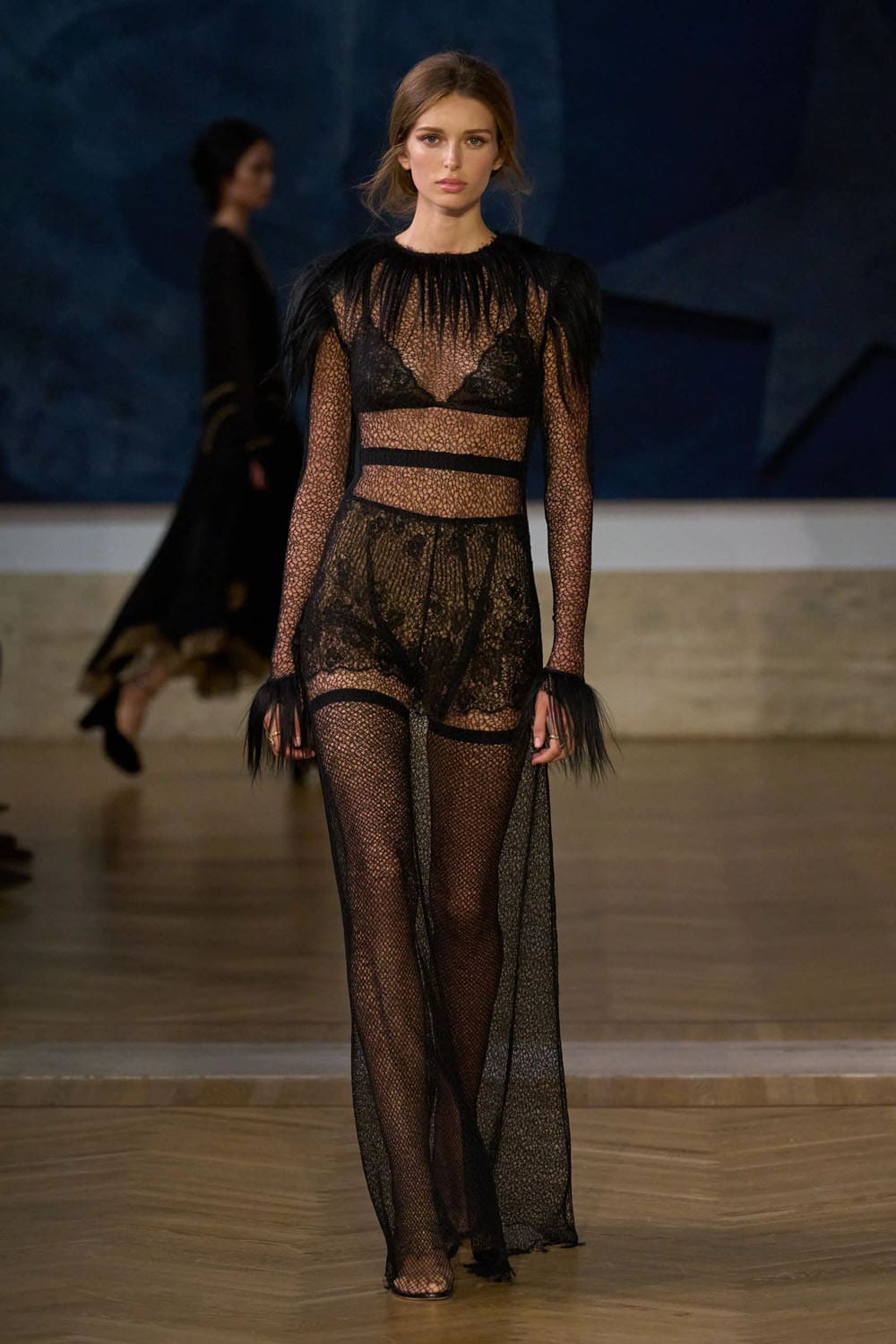
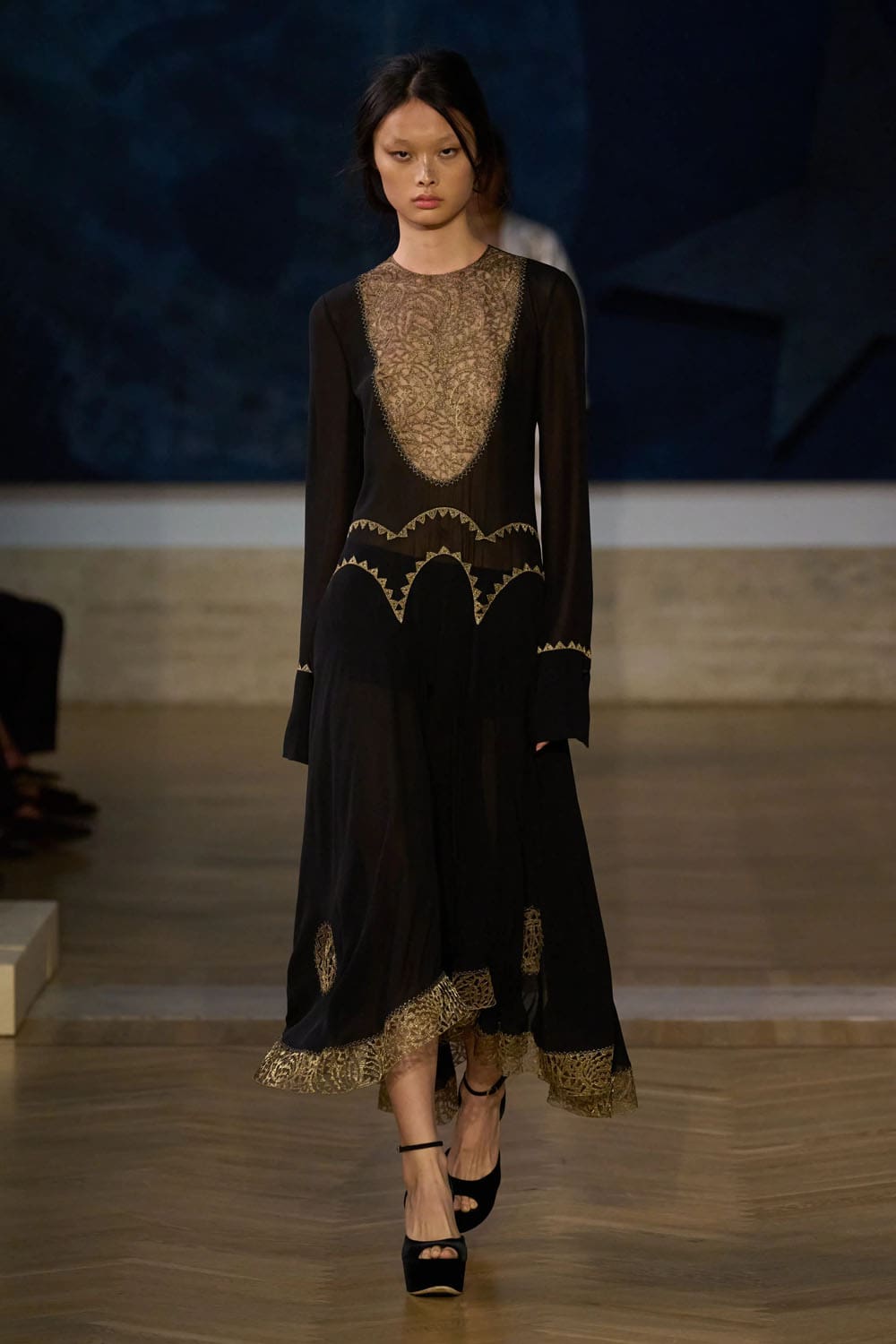
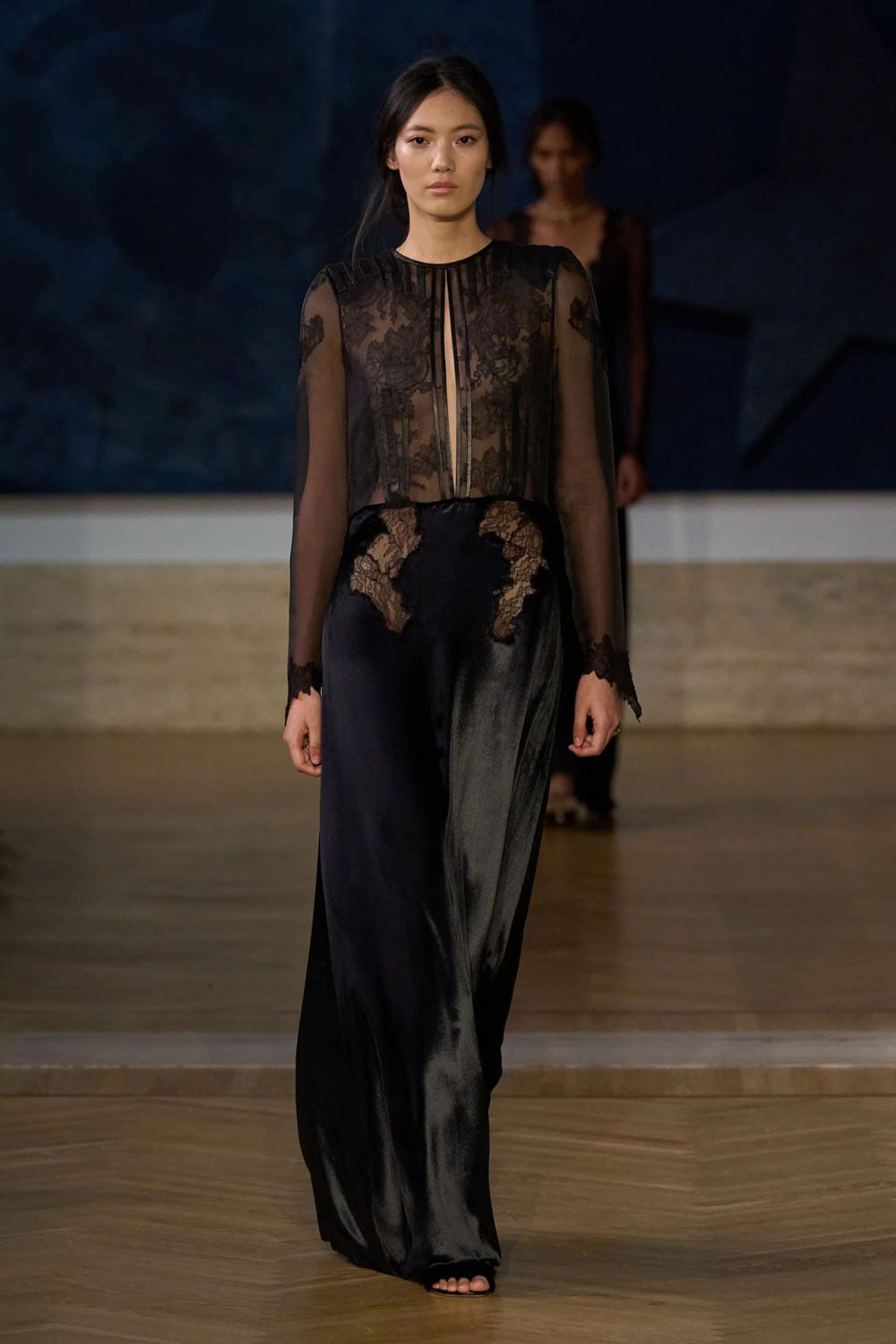
The darkness eventually consumed the palette entirely, yielding a series of breathtaking, somber evening looks. One standout black gown featured an entirely sheer, long-sleeved bodice overlaid with dense, winding macramé and leaf-like embroidery that climbed up the neck and down the arms like nocturnal ivy, trailing off into a light, pleated chiffon skirt that floated like smoke.
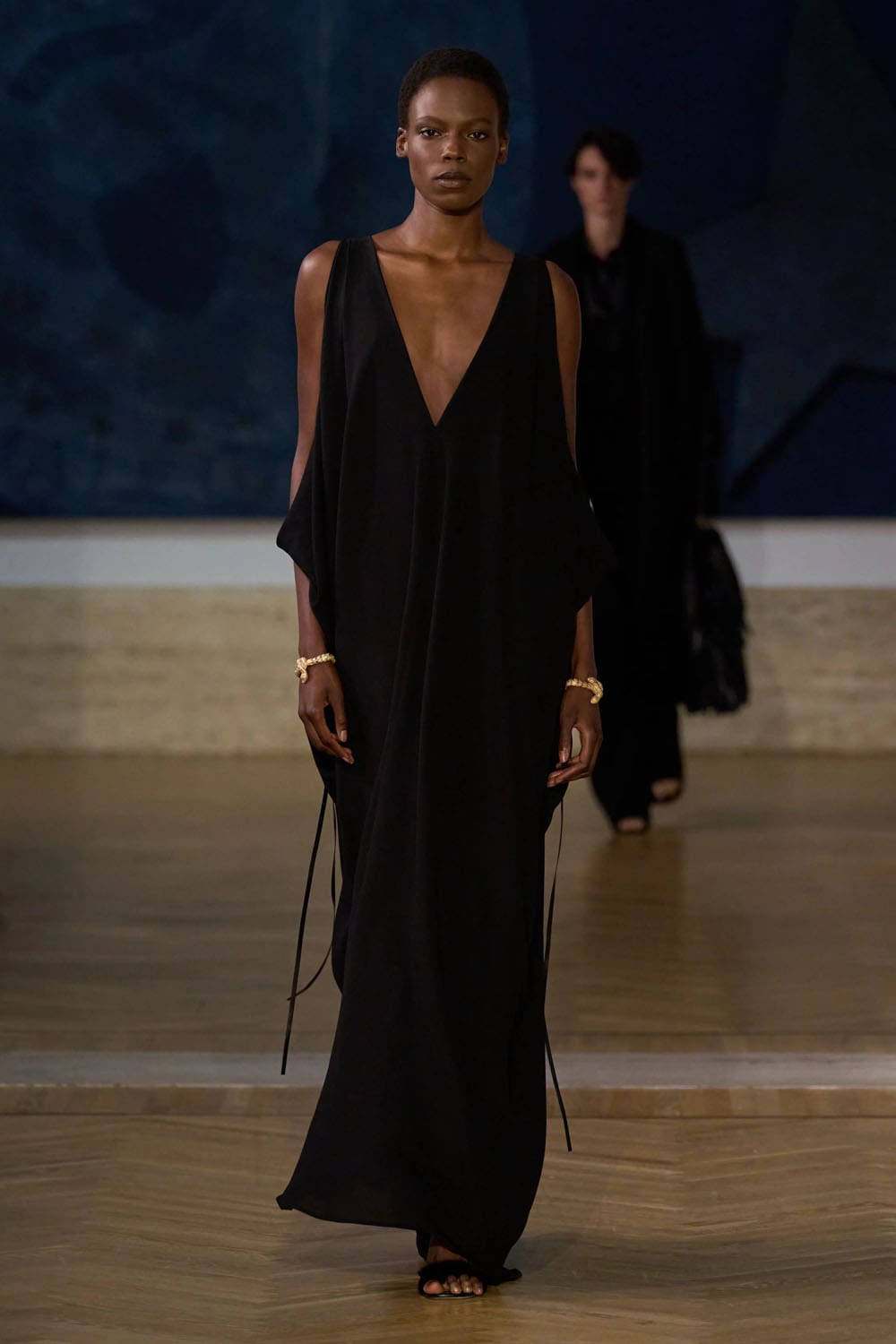
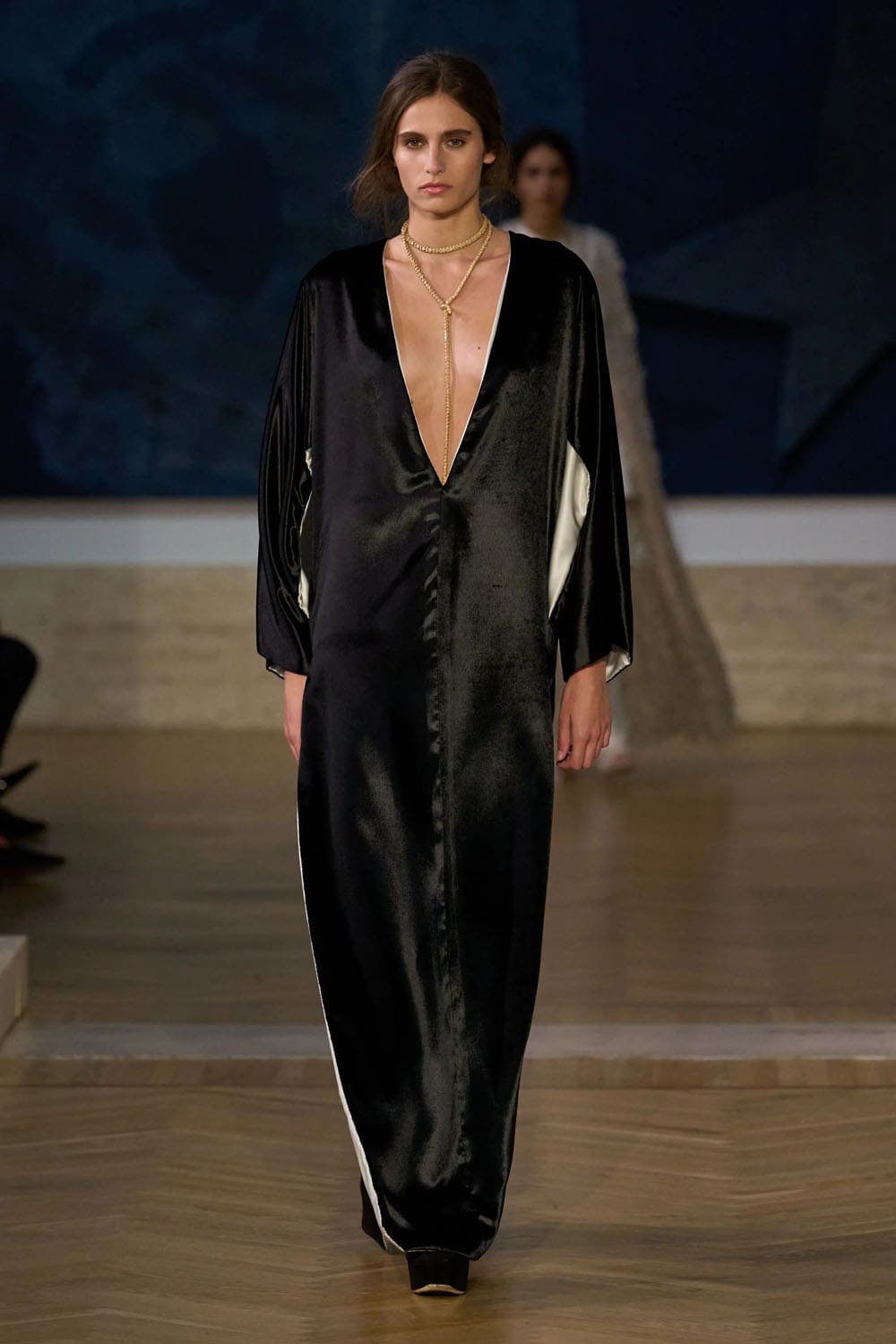
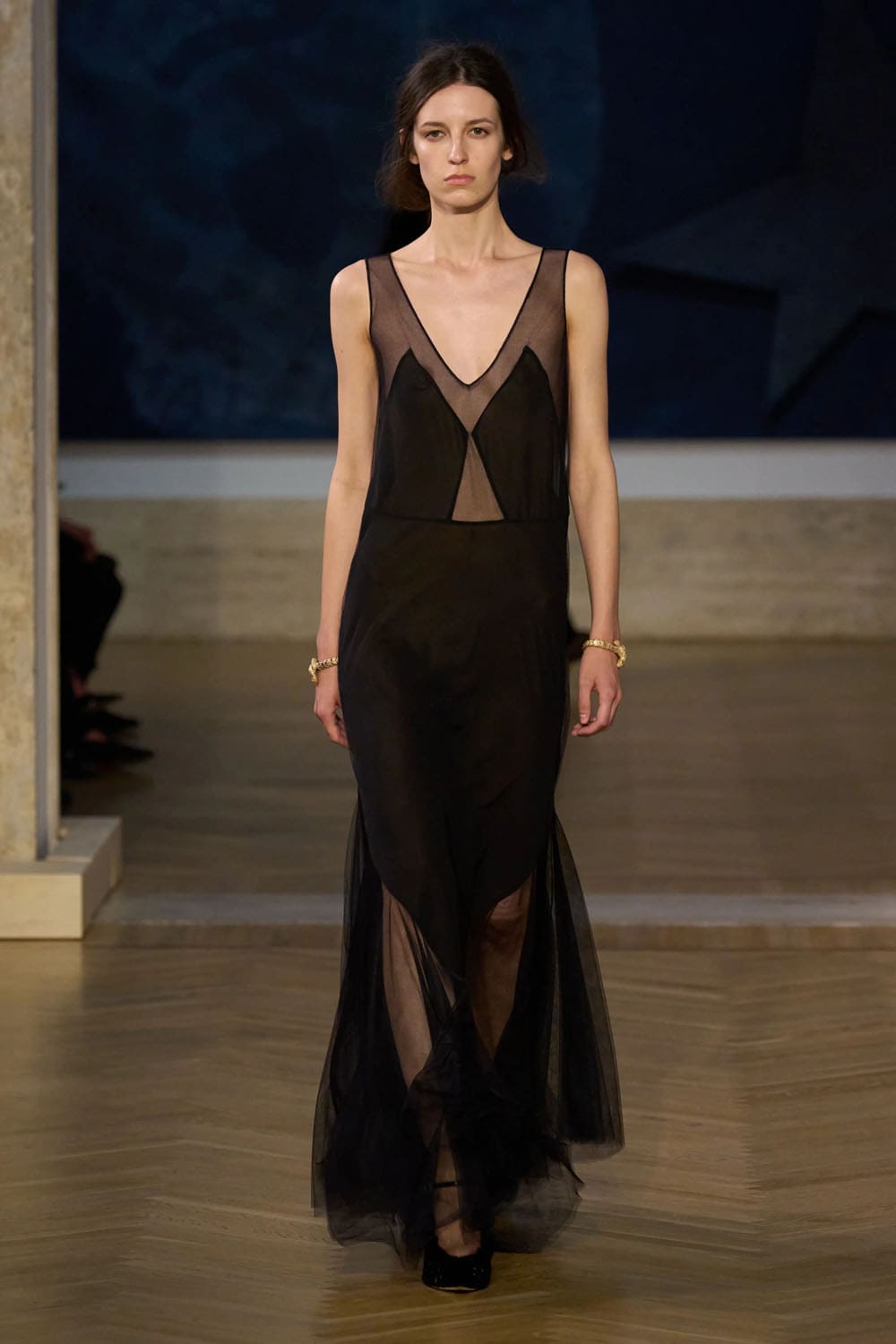
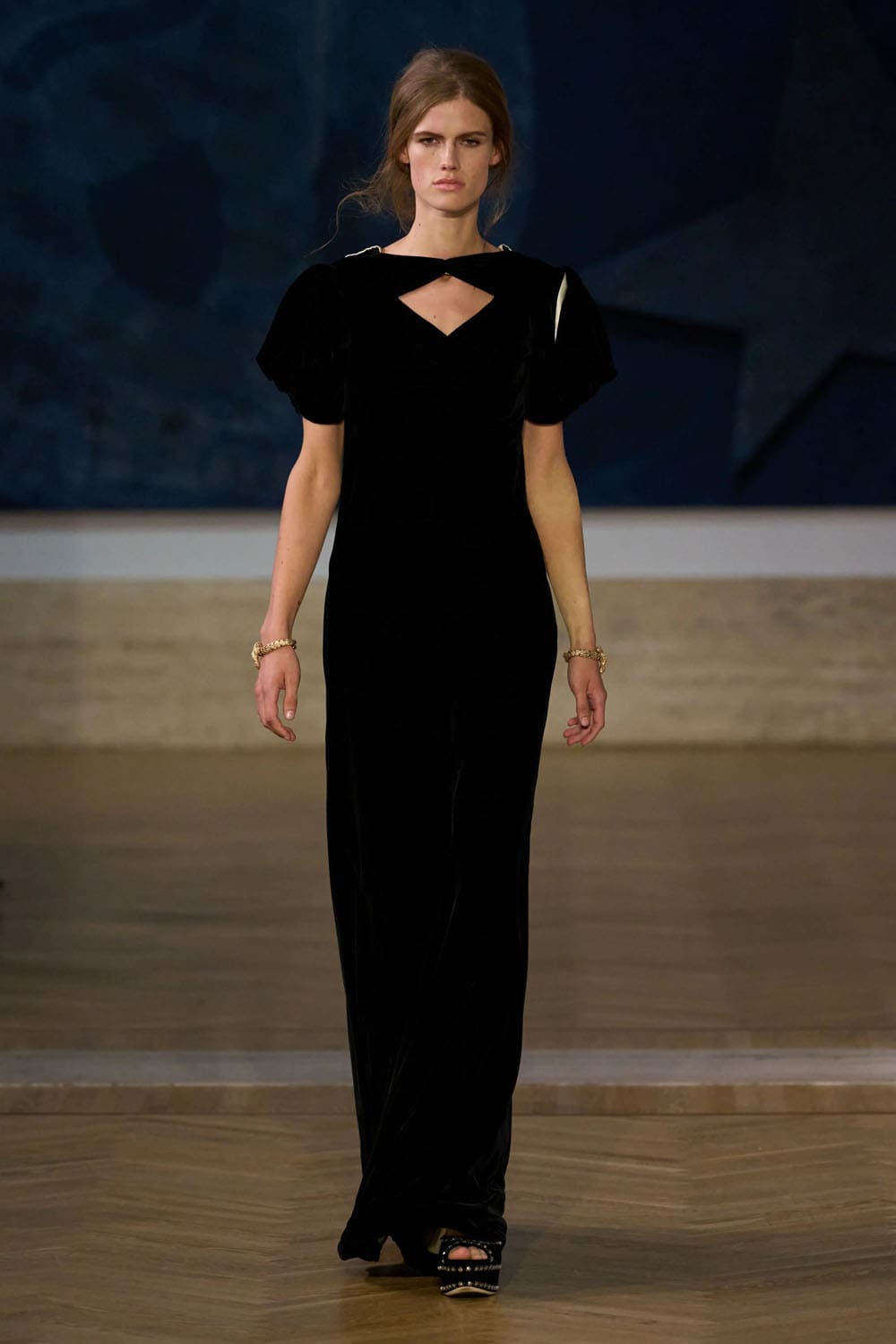
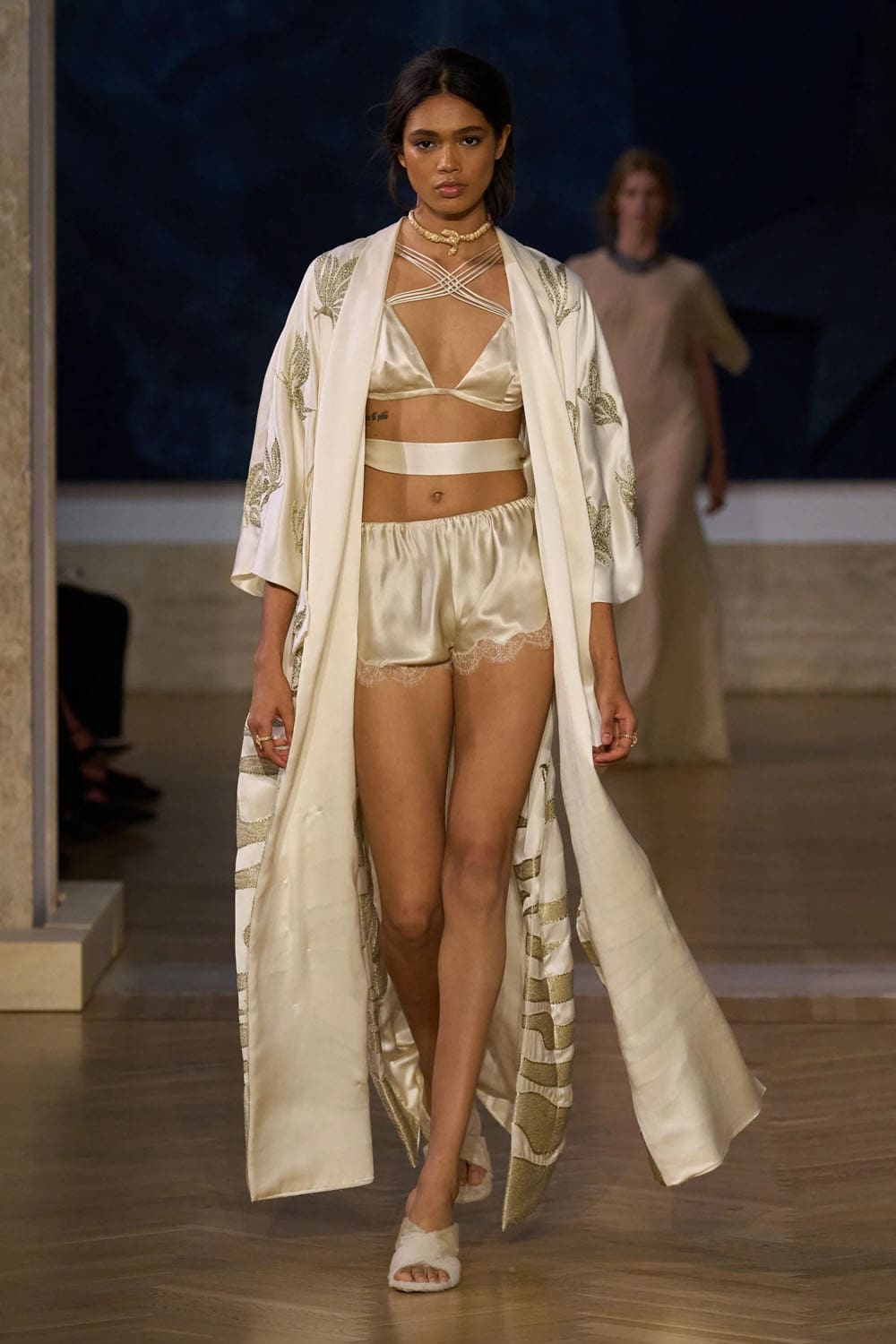
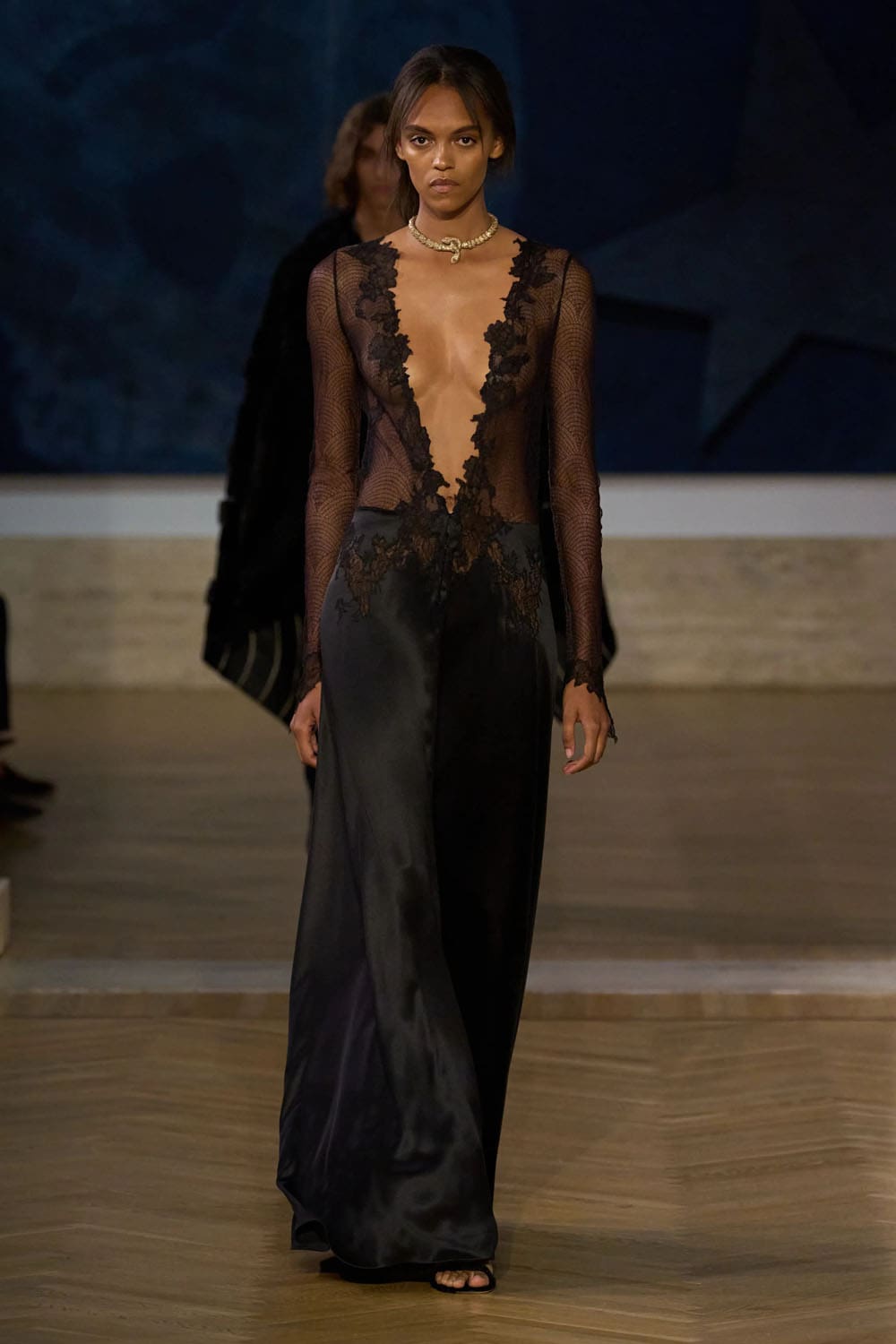
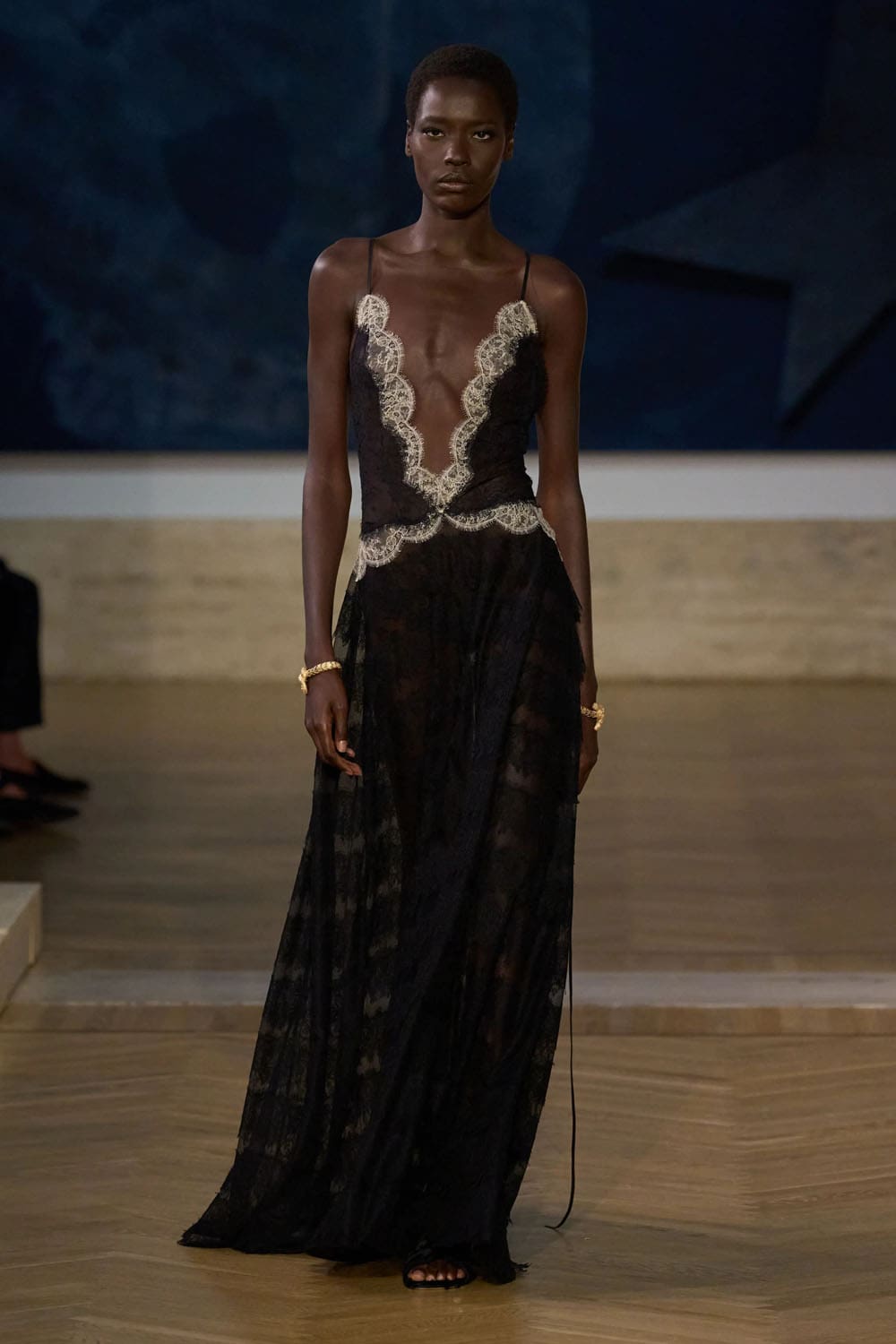
Another velvet gown, heavy and regal, used negative space to stunning effect; its bodice was slashed with an abstract, exploding fan or sunburst motif, lined with sheer mesh to reveal glimpses of skin through a highly disciplined graphic framework. Finally, the collection culminated in a delicate, gossamer-light black slip dress, its dangerously deep V-neckline framed in fragile, contrasting cream lace that ran down the length of a translucent, tiered skirt. It was a vulnerable, haunting finale—the monster stripped of its heavy outer armor, standing exposed at the exit of the labyrinth, entirely at peace with its own darkness.
Reclaiming the Shadow
Ultimately, “Love Monster” succeeds because it refuses to apologize for its own structural contradictions. By willingly walking into a maze populated by Karl Lagerfeld’s formidable legacy and exiting with a collection that fuses upcycled heritage with 1920s geometry, Maria Grazia Chiuri didn’t just stage a debut; she conducted a highly sophisticated, impeccably tailored exorcism. If the labyrinth of the creative process truly forces a creator to confront their inner demons, Chiuri has demonstrated that the secret to self-acceptance is remarkably straightforward: drape your monsters in exquisite Roman craftsmanship, give them a dropped waist, and sell them back to the luxury market. It turns out that learning to love the creature within is infinitely easier when she is wearing Fendi Couture.
See All Looks Fendi Couture Fall Winter 2026-2027