
The “Invisible” Couture – When Restraint is the Ultimate Flex. Story by Guillaumette Duplaix, Operating Editor of RUNWAY MAGAZINE. Photo Courtesy: Chanel / Dior / Schiaparelli.
In the feverish race for “likes,” the luxury industry accidentally spent the last five years becoming a circus. We’ve endured spray-on dresses, taxidermy lion-head epaulettes, and logos so large they could be seen from low-earth orbit. But as we navigate the Haute Couture seasons, the wind has changed. The elite have finally realized that if everyone is looking at you, you’ve probably done something wrong.
The new flex isn’t a scream; it’s a whisper so quiet only the initiated can hear it. We call it “Invisible Couture.”
The Death of the Viral Moment
The “viral moment” is officially the new “vulgar.” High-net-worth individuals are rejecting the “influencer-bait” that once defined the front row. Why? Because true luxury is a private conversation, not a public broadcast. When a garment is designed specifically to be “meme-able,” it loses its soul. It becomes a costume, not a craft.
The market data supports this shift: discreet luxury is currently outperforming logomania-centric brands by a staggering 12% among the ultra-wealthy. The contemporary woman isn’t dressing for an algorithm; she’s dressing for the peer who knows that a hand-rolled hem is worth more than a thousand hashtags. If a dress is recognizable from 50 yards away, it’s likely a lease or a corporate loaner. Conversely, if it takes a second glance—and perhaps an intimate understanding of textile weight—to realize it cost more than a mid-sized European villa, then you’ve truly arrived.
Technical Mastery: The Paradox of the Effortless
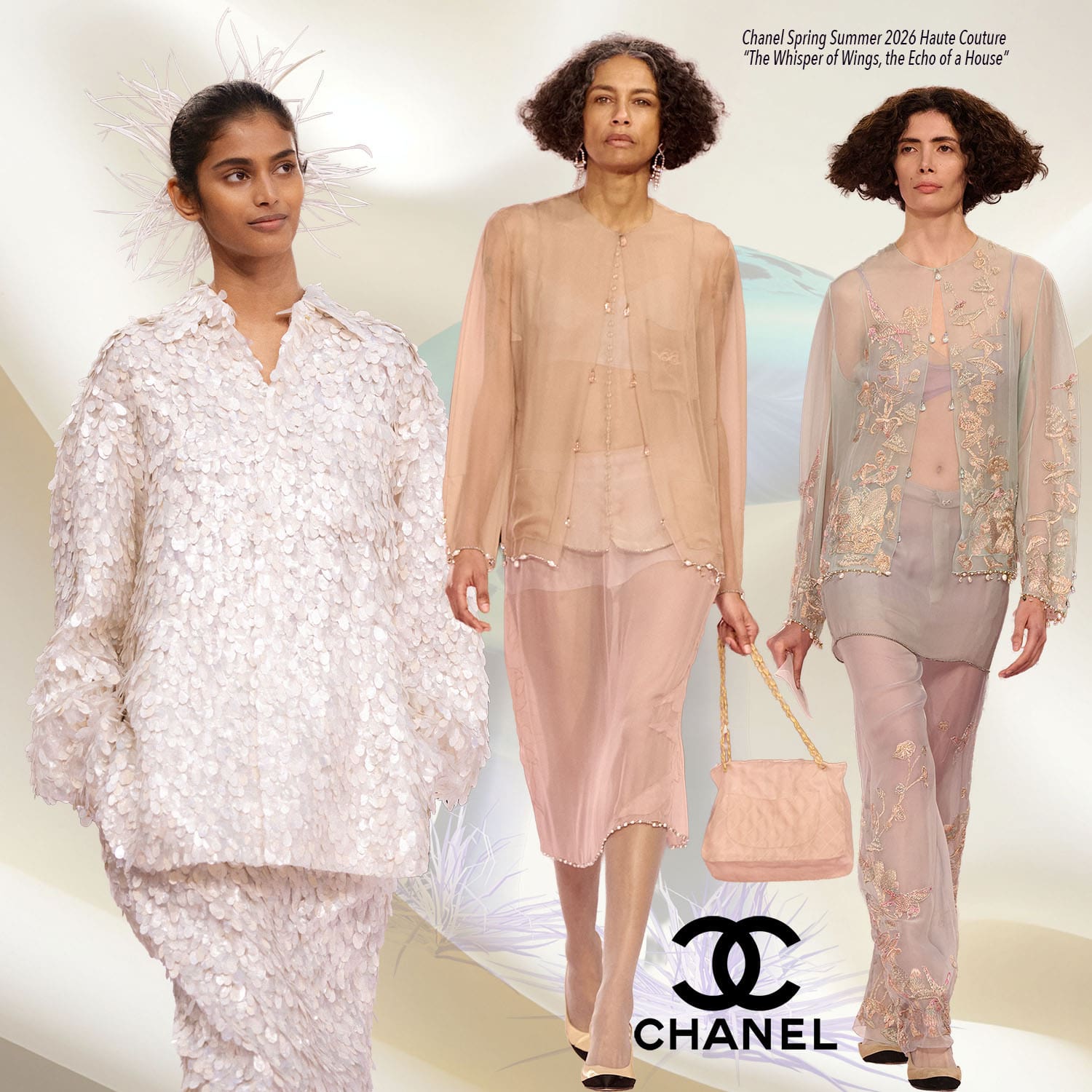
Take, for instance, Matthieu Blazy’s recent debut for Chanel Haute Couture. While the set was a surrealist mushroom forest, the clothes were a masterclass in “skeletal” construction. He stripped the iconic Chanel suit to its most essential, transparent dimensions. We saw organza “jeans” and a faux-tweed that was actually thousands of tiny, hand-stitched silk threads mimicking texture without the weight.
This introduces the ultimate sarcasm of the season: the most expensive clothes in the world are now the ones that look the most effortless.
It is a beautiful, agonizing irony. It takes 800 hours of absolute torture in the Parisian ateliers to construct a garment that makes the wearer look as though they simply threw something on to run down to the local florist. The luxury lies not in what is added, but in the immense technical labor required to take everything away.
The Sociological Shield
There is also a deeper, socio-economic undercurrent to this invisibility. In an era of hyper-visibility and economic polarization, flaunting wealth via obnoxious branding has become a liability. “Invisible Couture” acts as an intellectual shield. It allows the global elite to move through the world undetected by the masses, while signaling their status perfectly to their tax bracket. It is class solidarity disguised as minimalism.
By removing the obvious signifiers of wealth, heritage houses are changing the locks on the gate. If a fast-fashion algorithm can copy a logo overnight, it cannot replicate the drape of a double-faced cashmere jacket that took three weeks to calibrate. The gatekeeping is no longer financial; it is intellectual.
The Silent Era
As we look at the current landscape, it’s clear that “Invisible Couture” is the only strategy with true staying power. While the middle market drowns in “trend fatigue” and fast-fashion burnout, the heritage houses are thriving by becoming more exclusive and radically less accessible.
The current market analysis shows a definitive pivot: the luxury consumer is no longer buying a product; they are buying an intellectual sanctuary. They are paying for the right not to be noticed by the masses, but to be recognized exclusively by their peers. In a world of digital noise, deepfakes, and AI-generated influencers, the most rebellious thing a brand—or a client—can do is stay entirely quiet.
Haute Couture has successfully returned to its roots—operating as an anonymous, private club where the dress code dictates that “if you have to ask, you don’t belong.” After all, in an age of total, non-consensual transparency, true luxury is the only thing left that money can buy, but the untrained eye simply cannot see.
