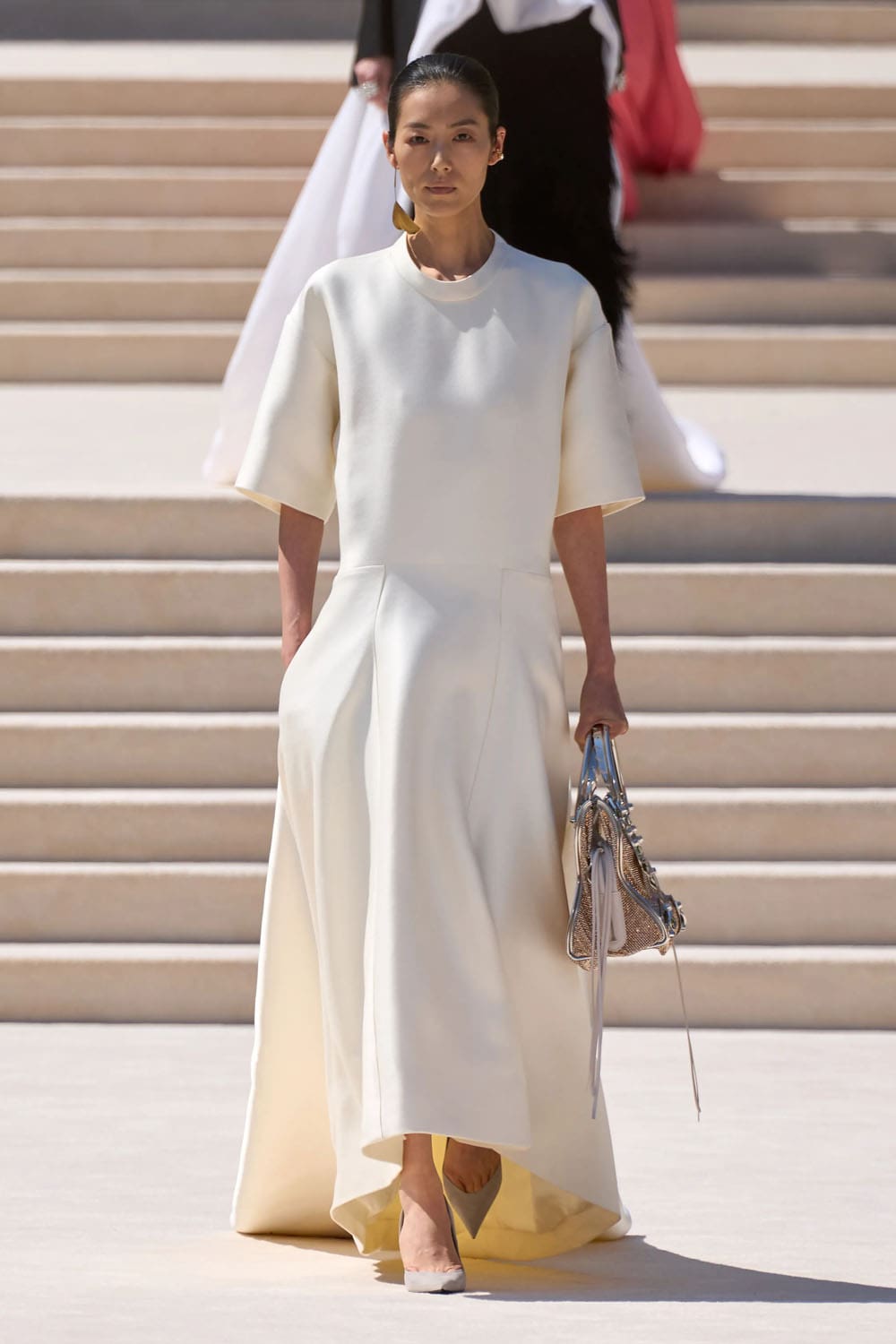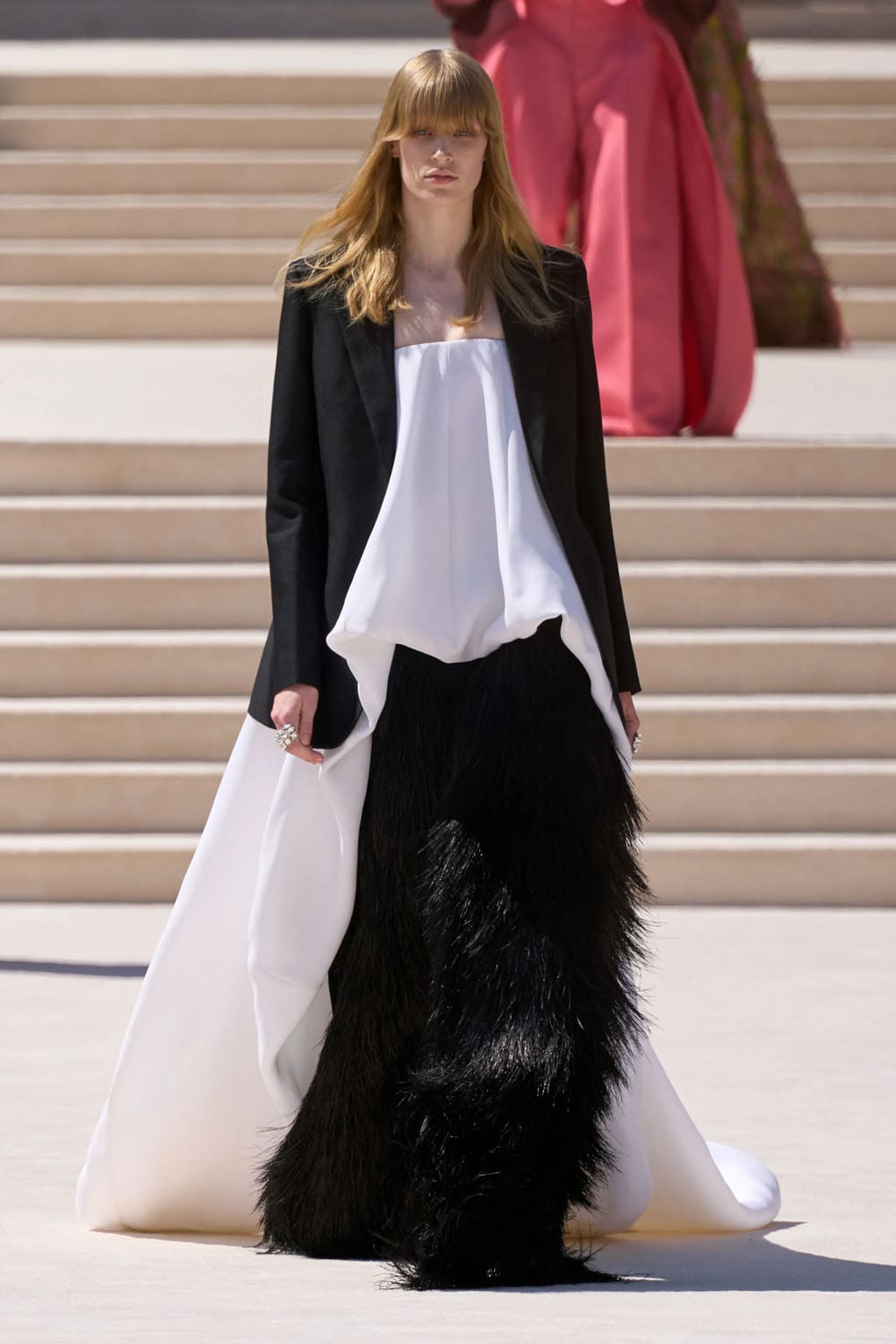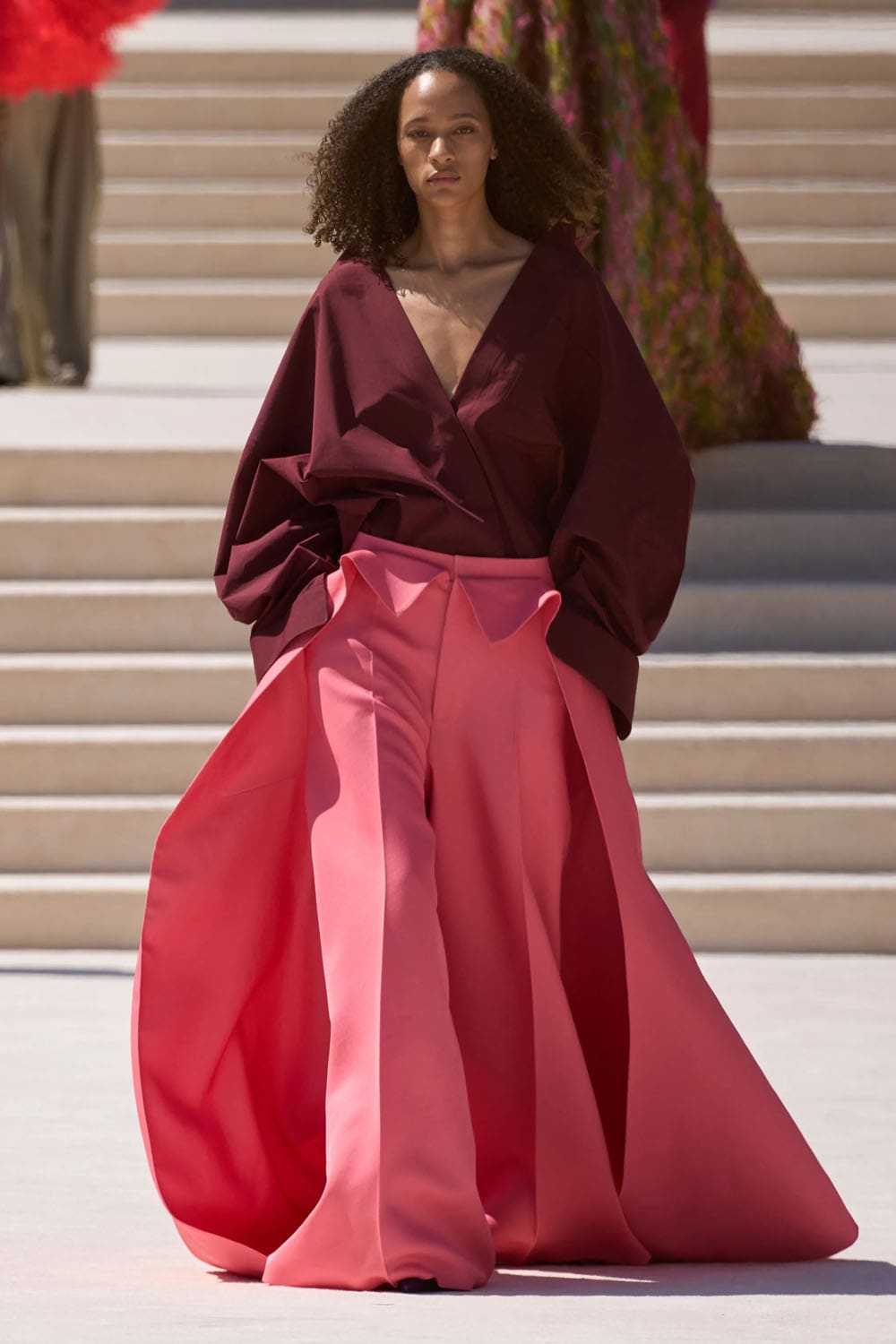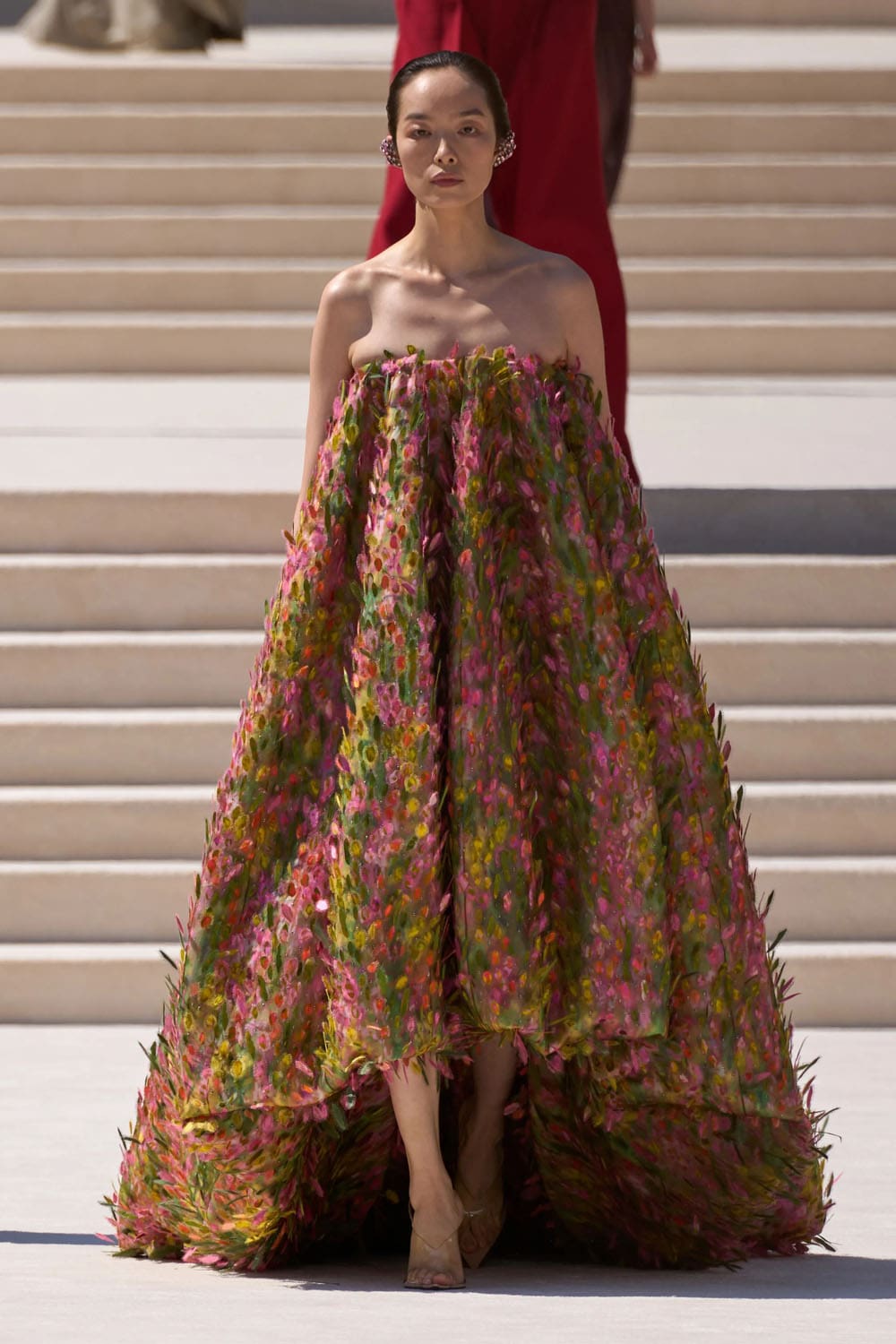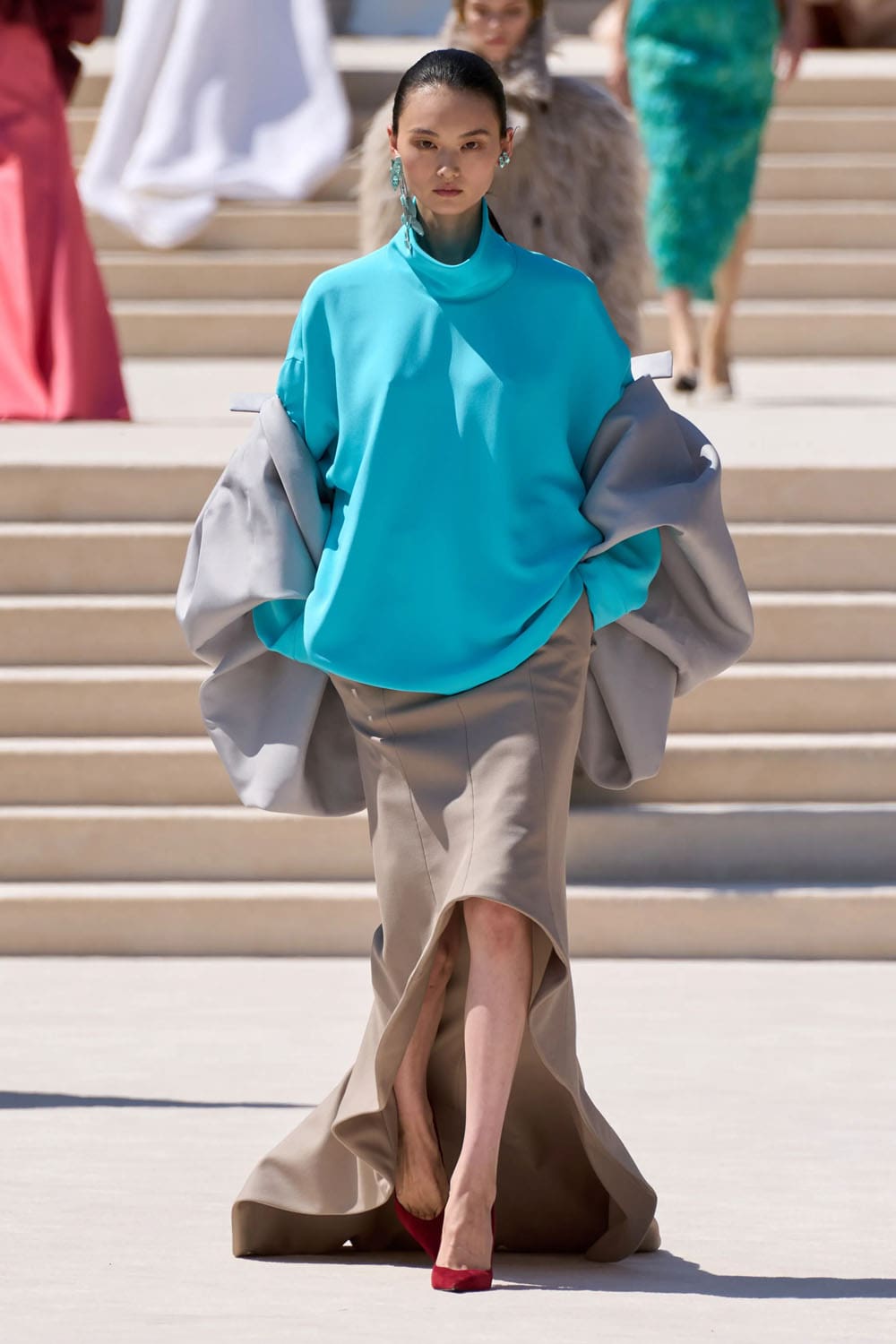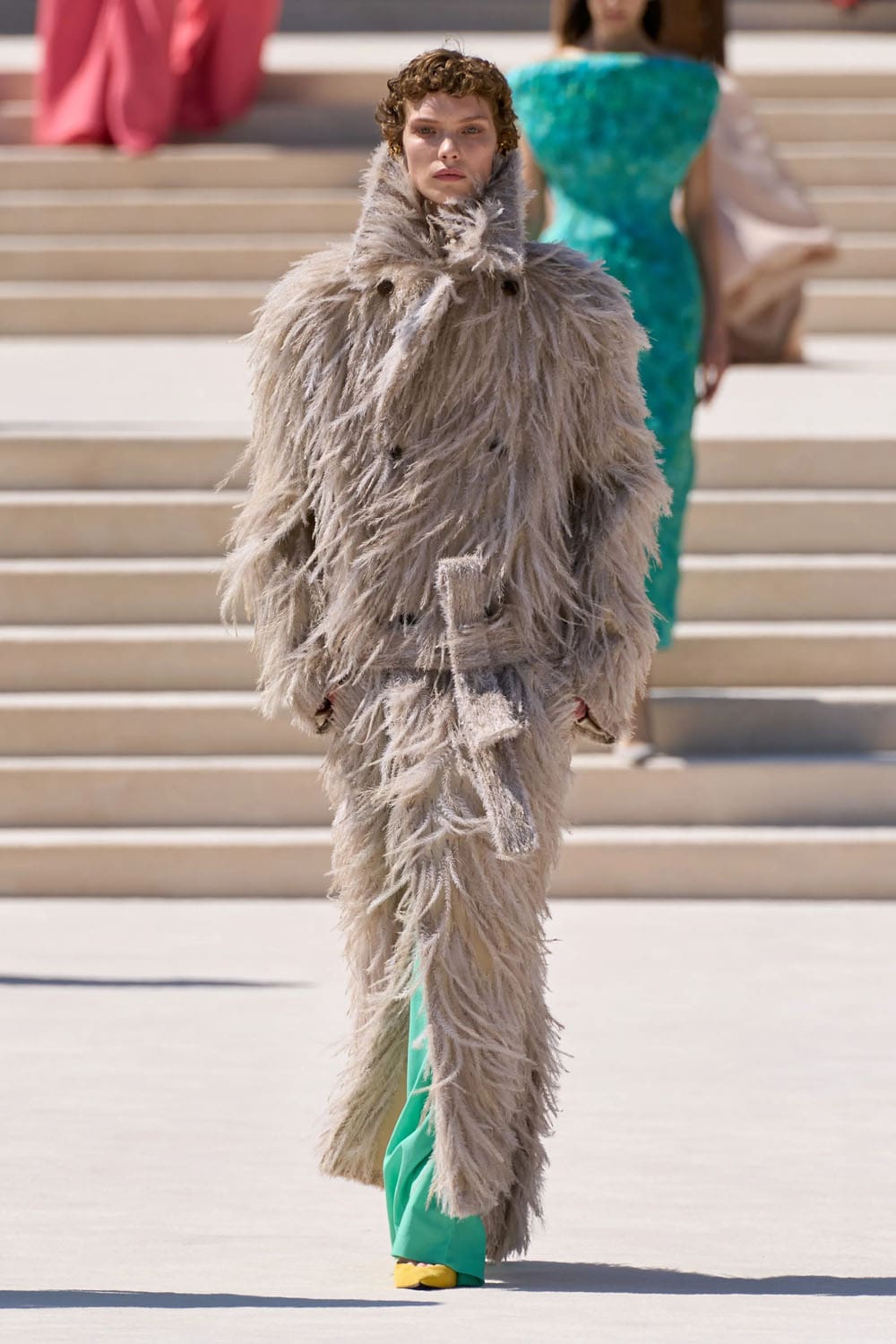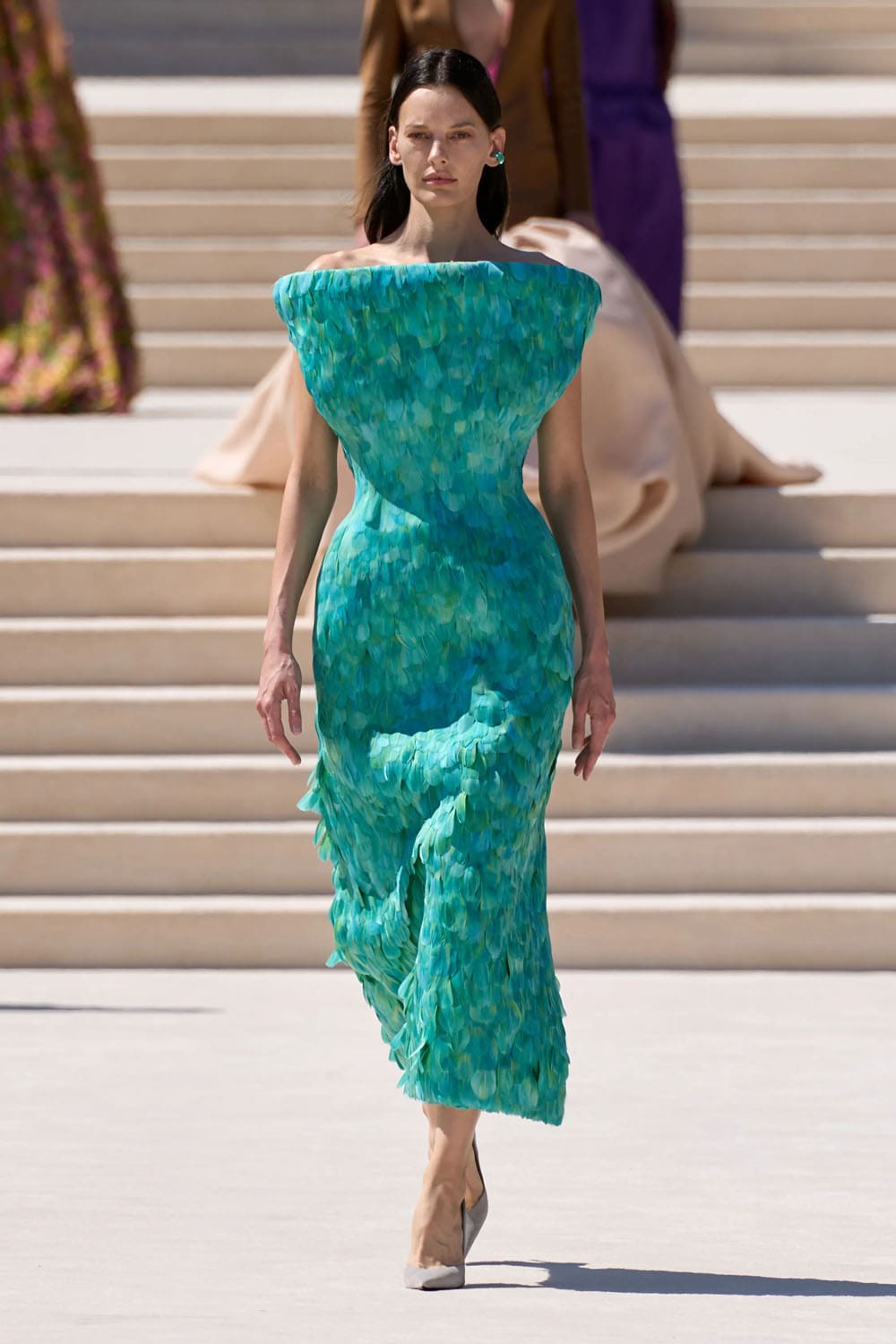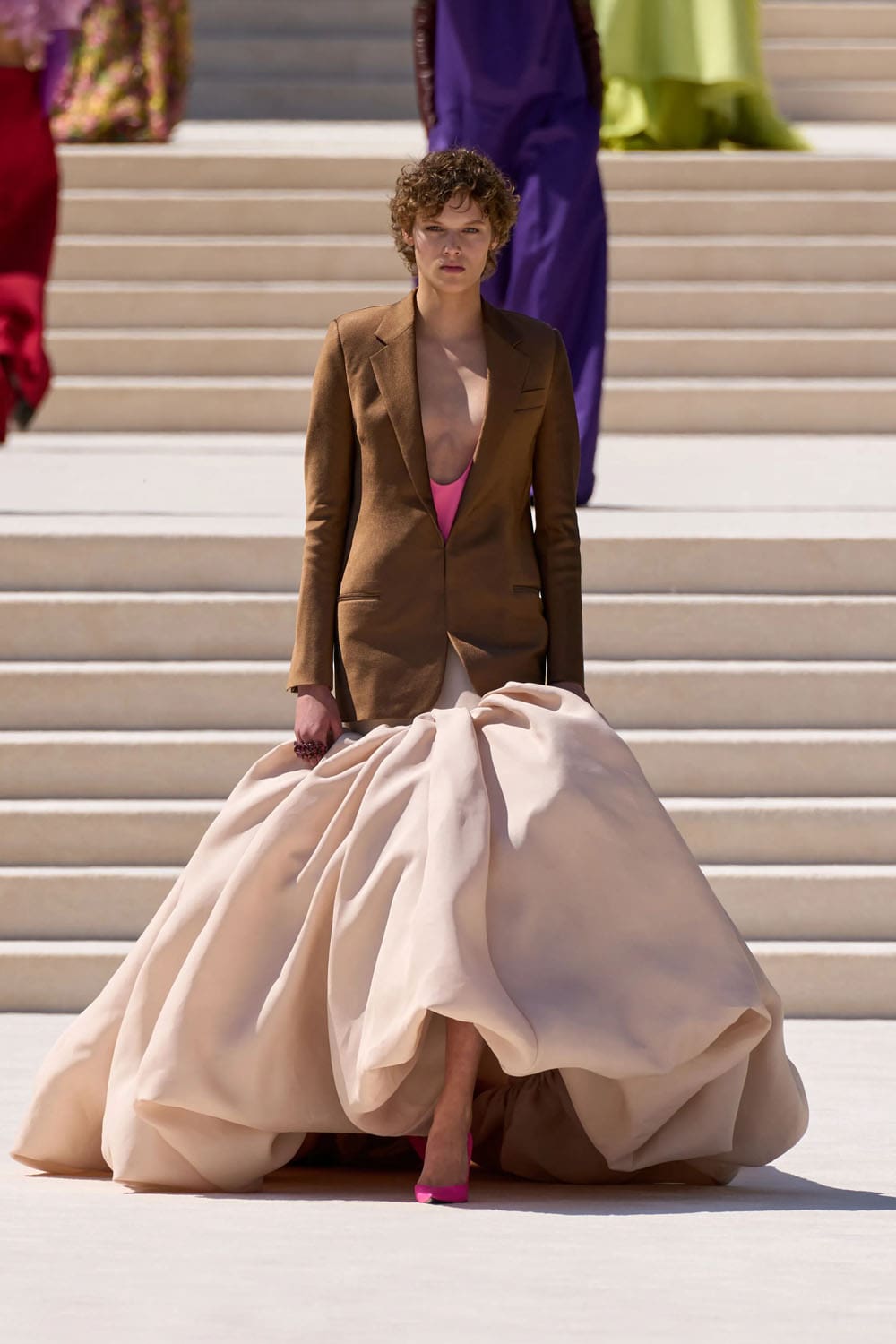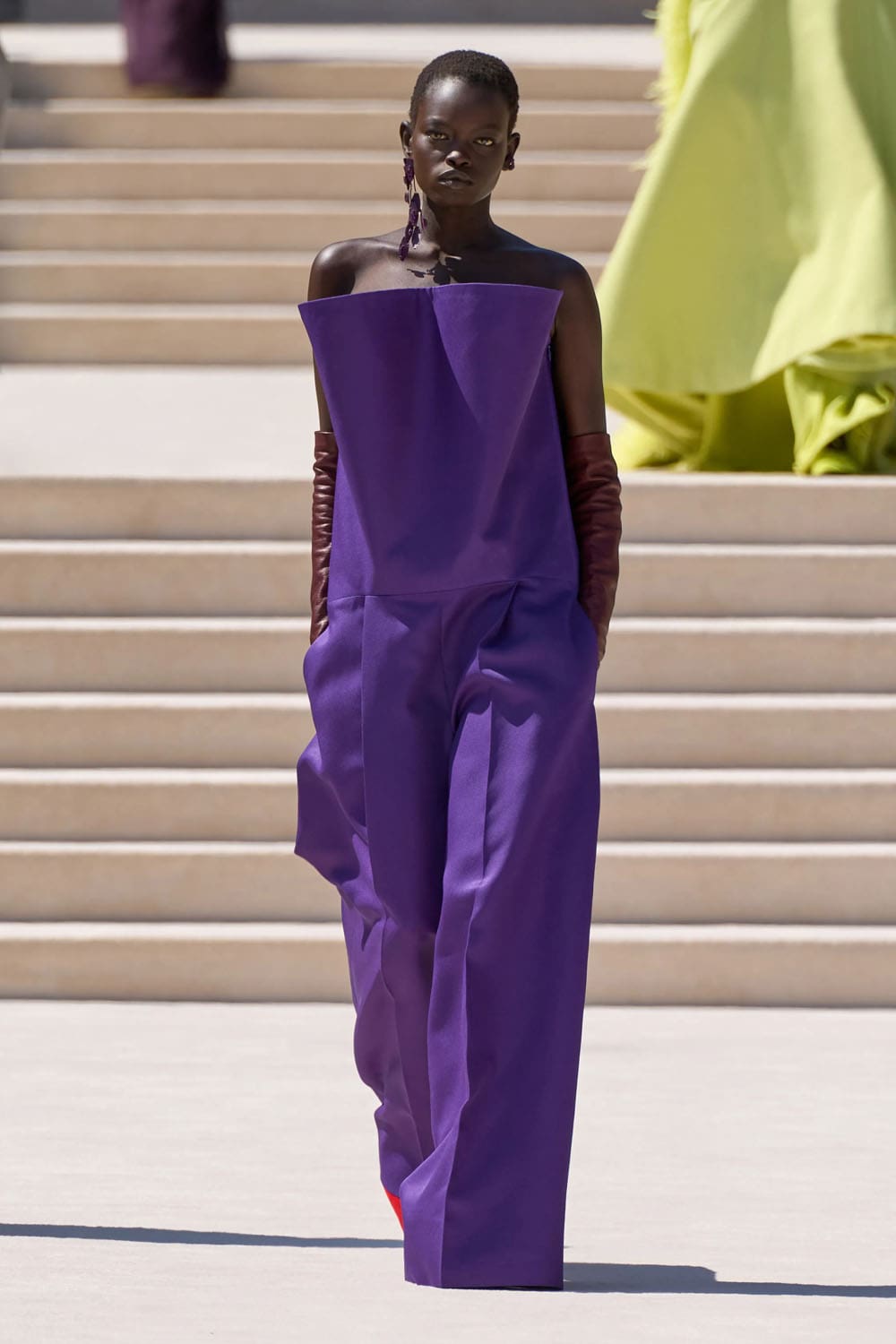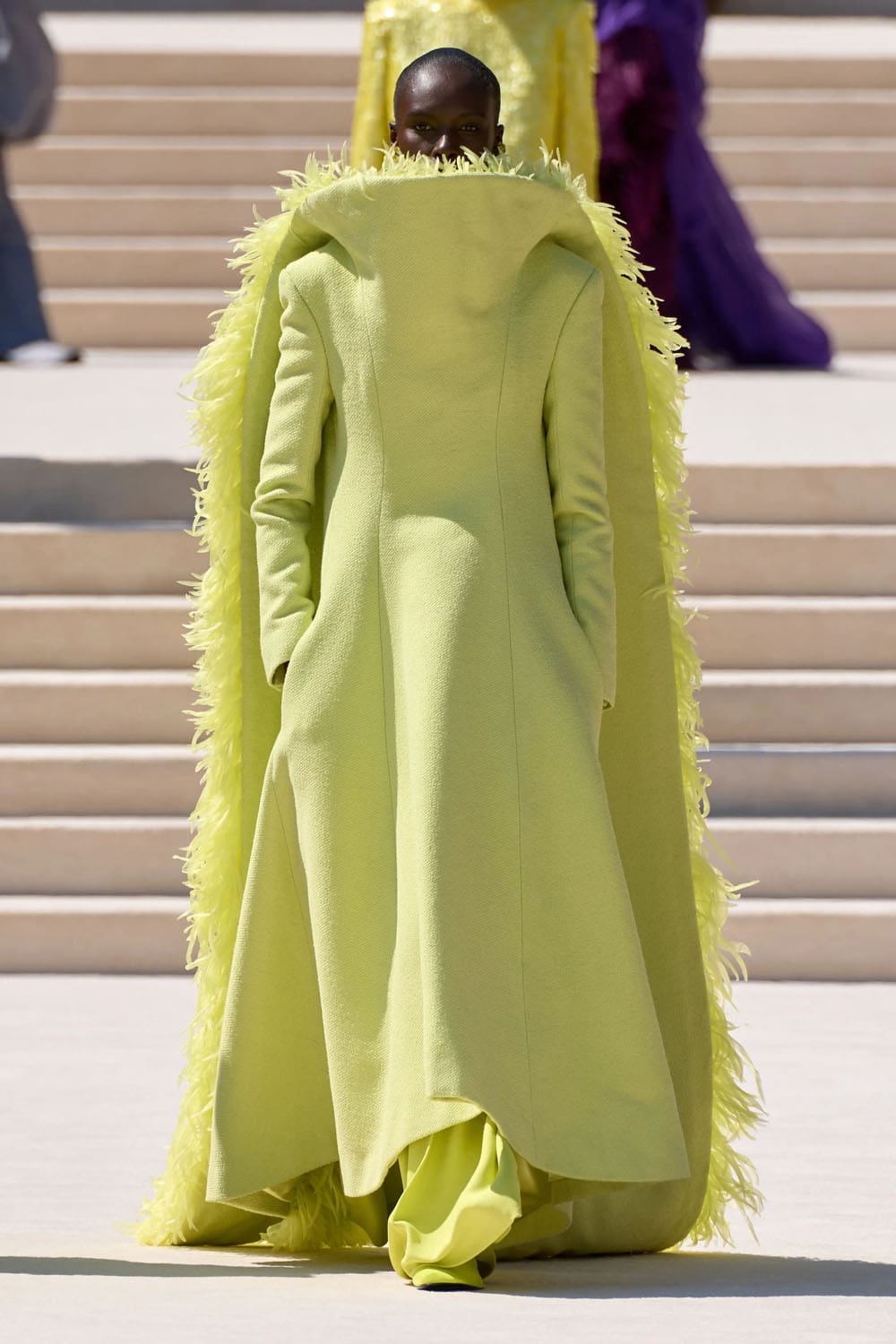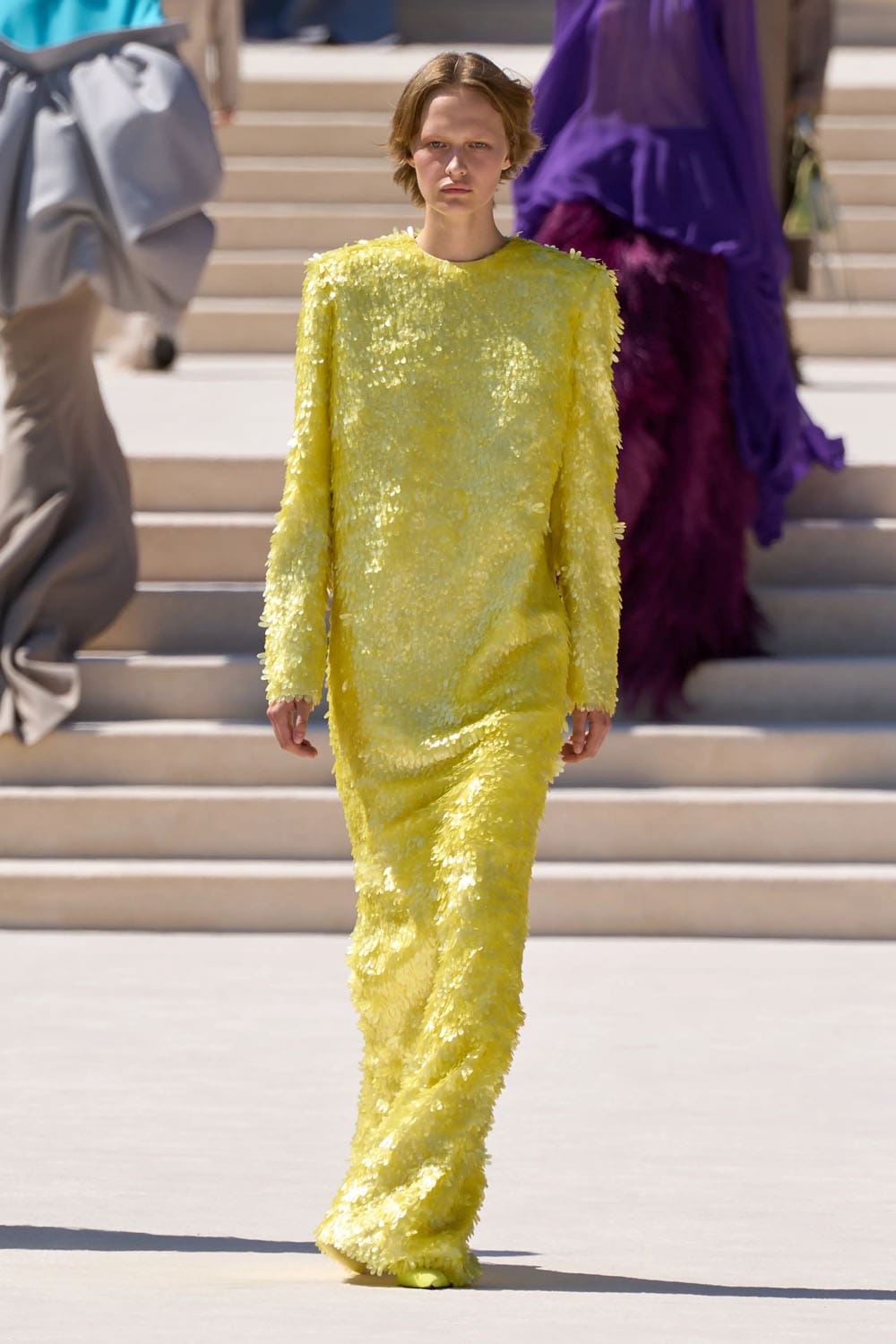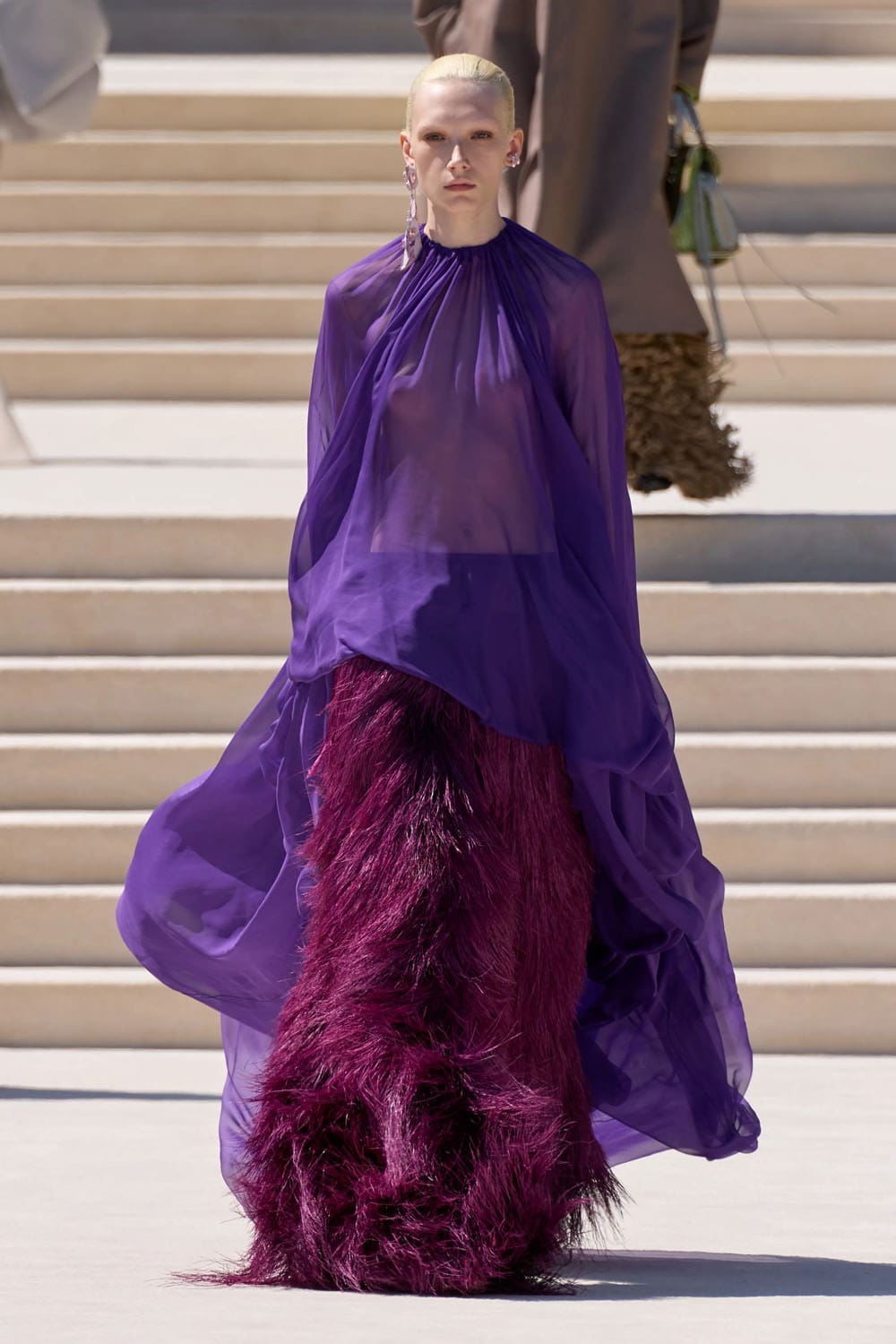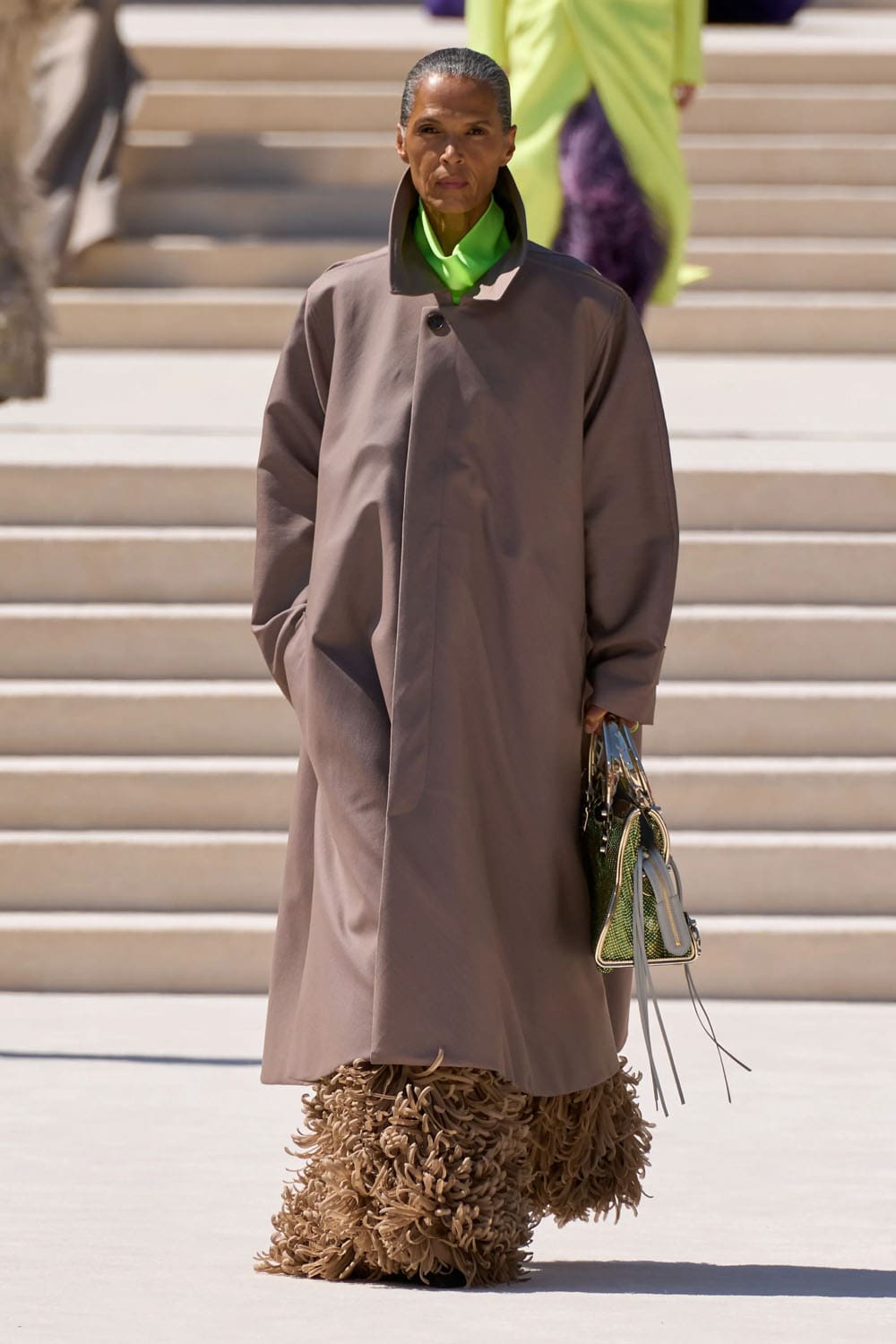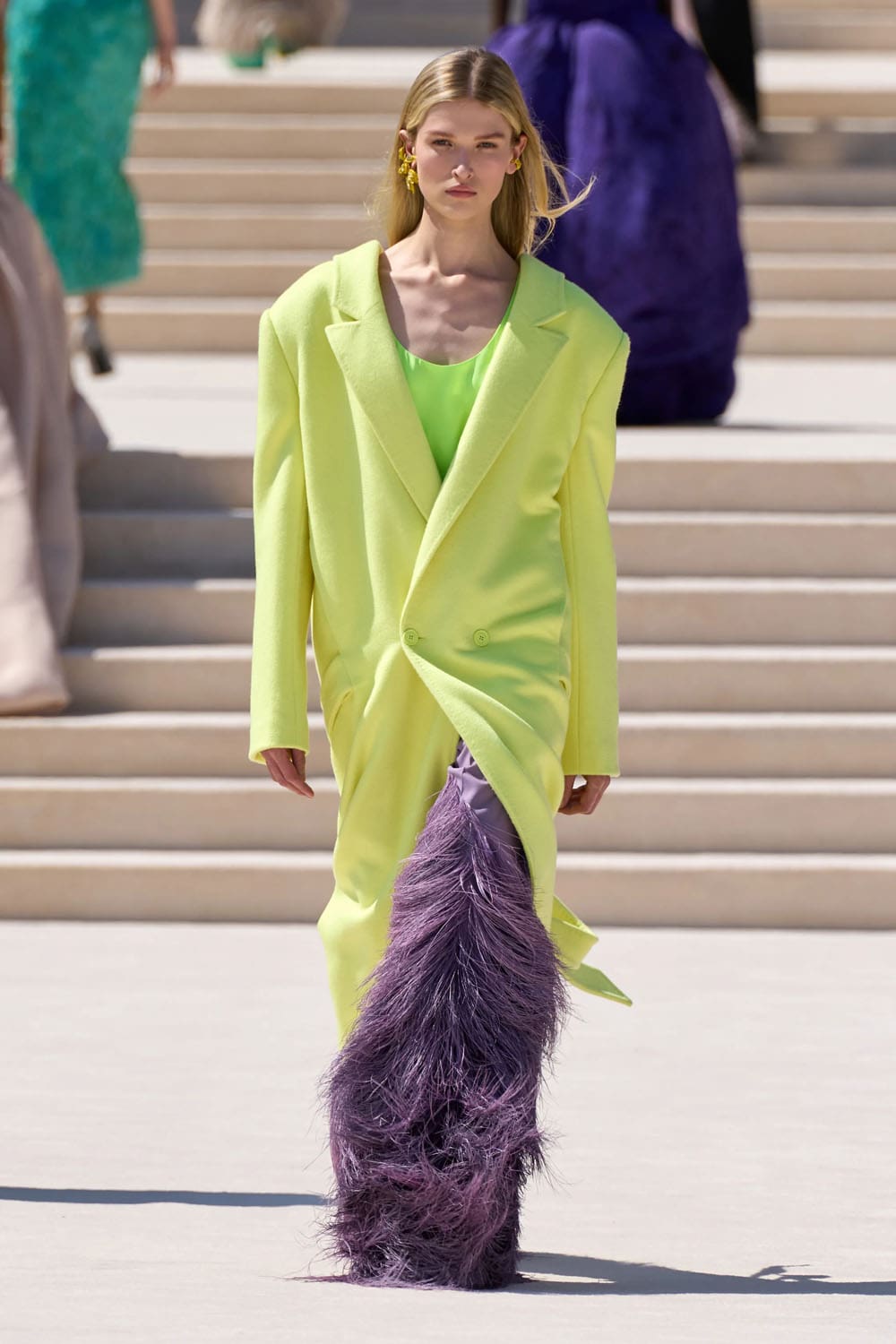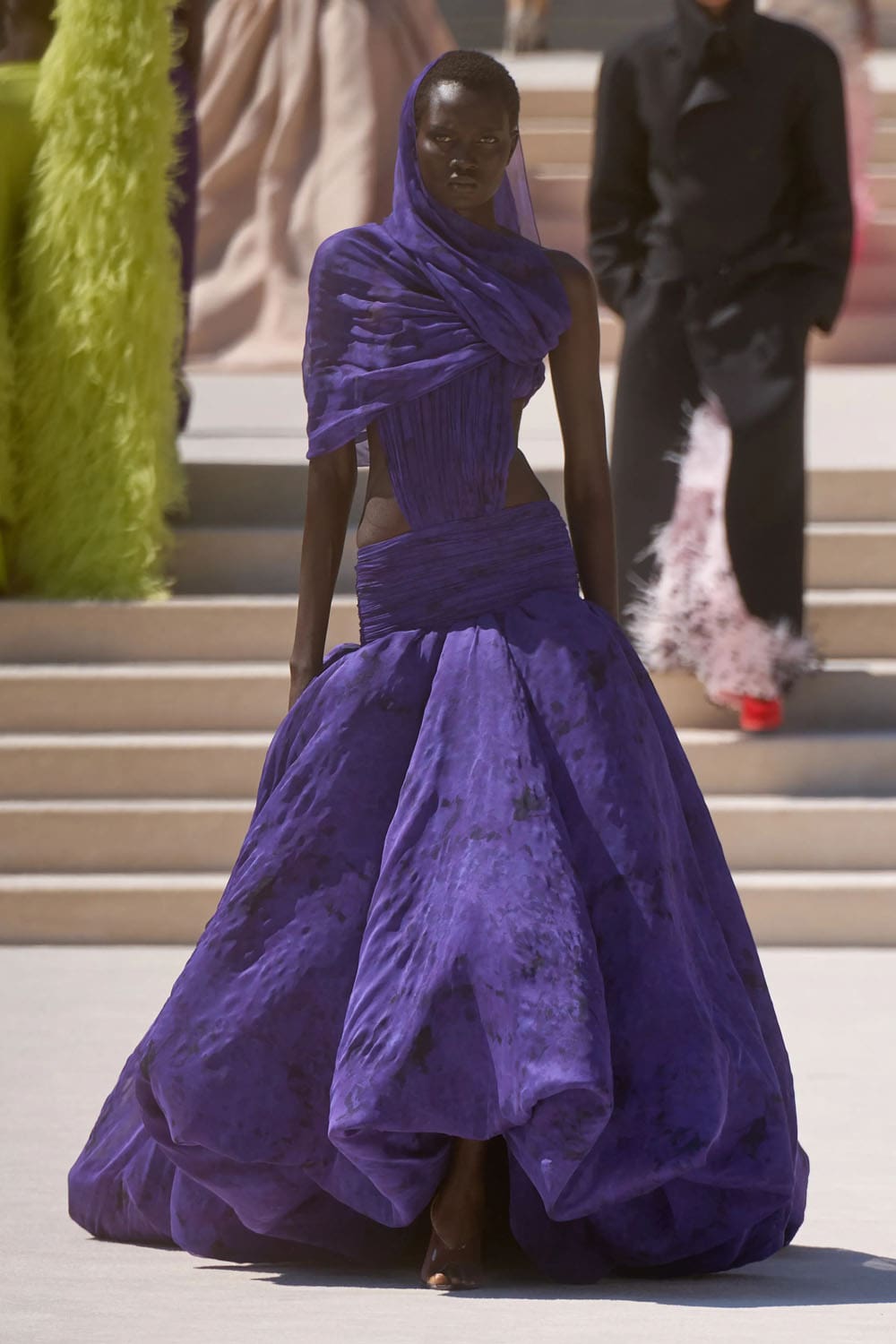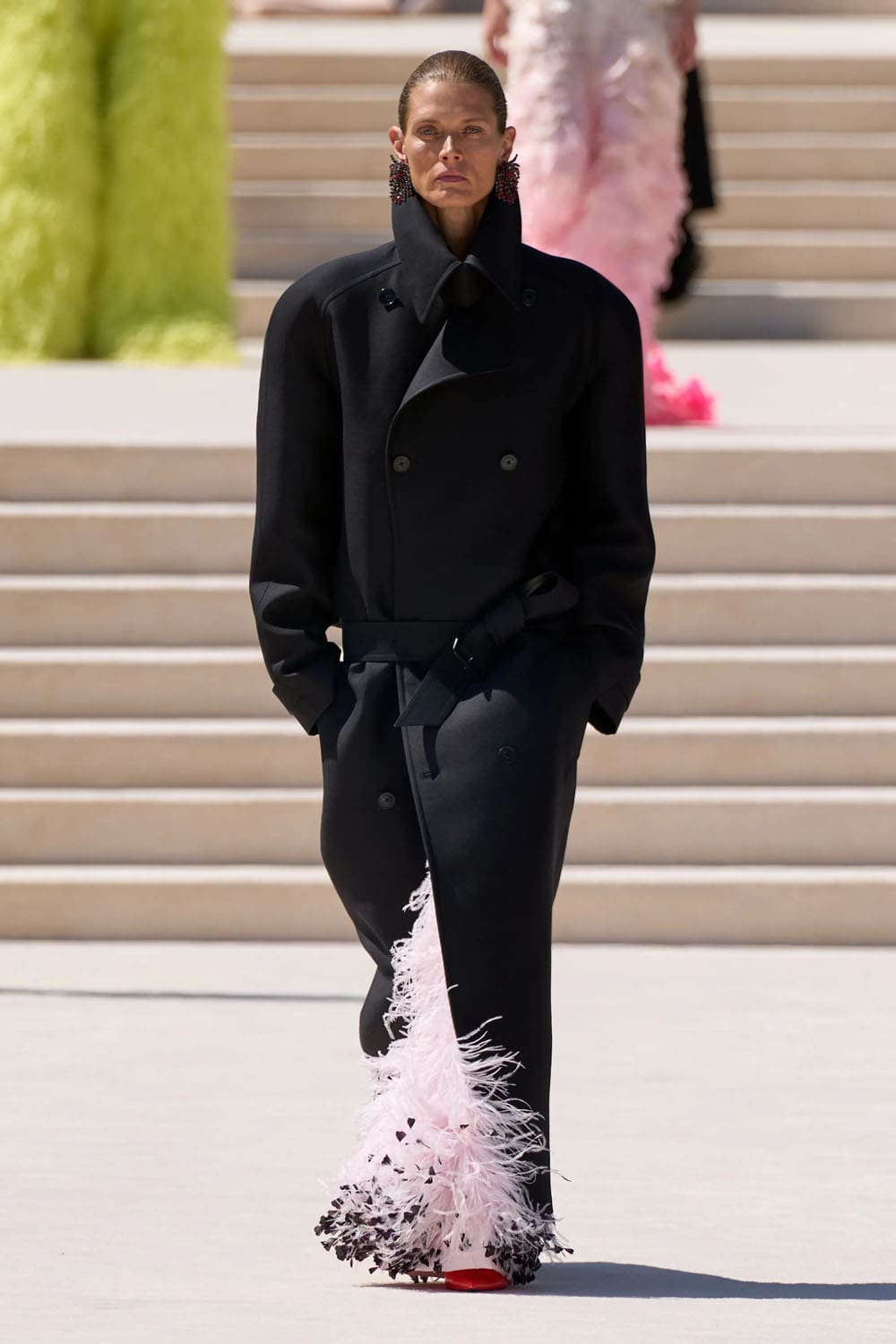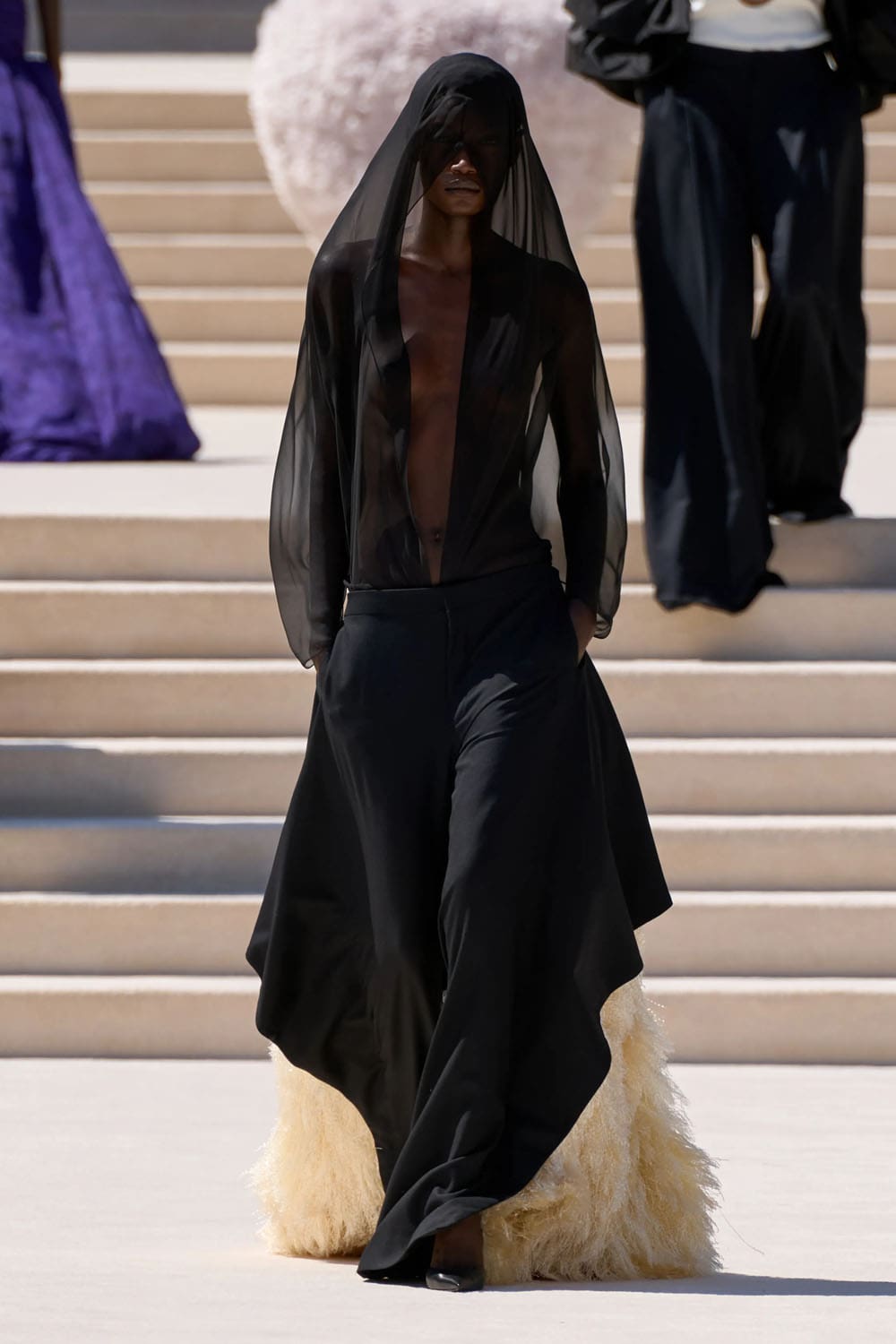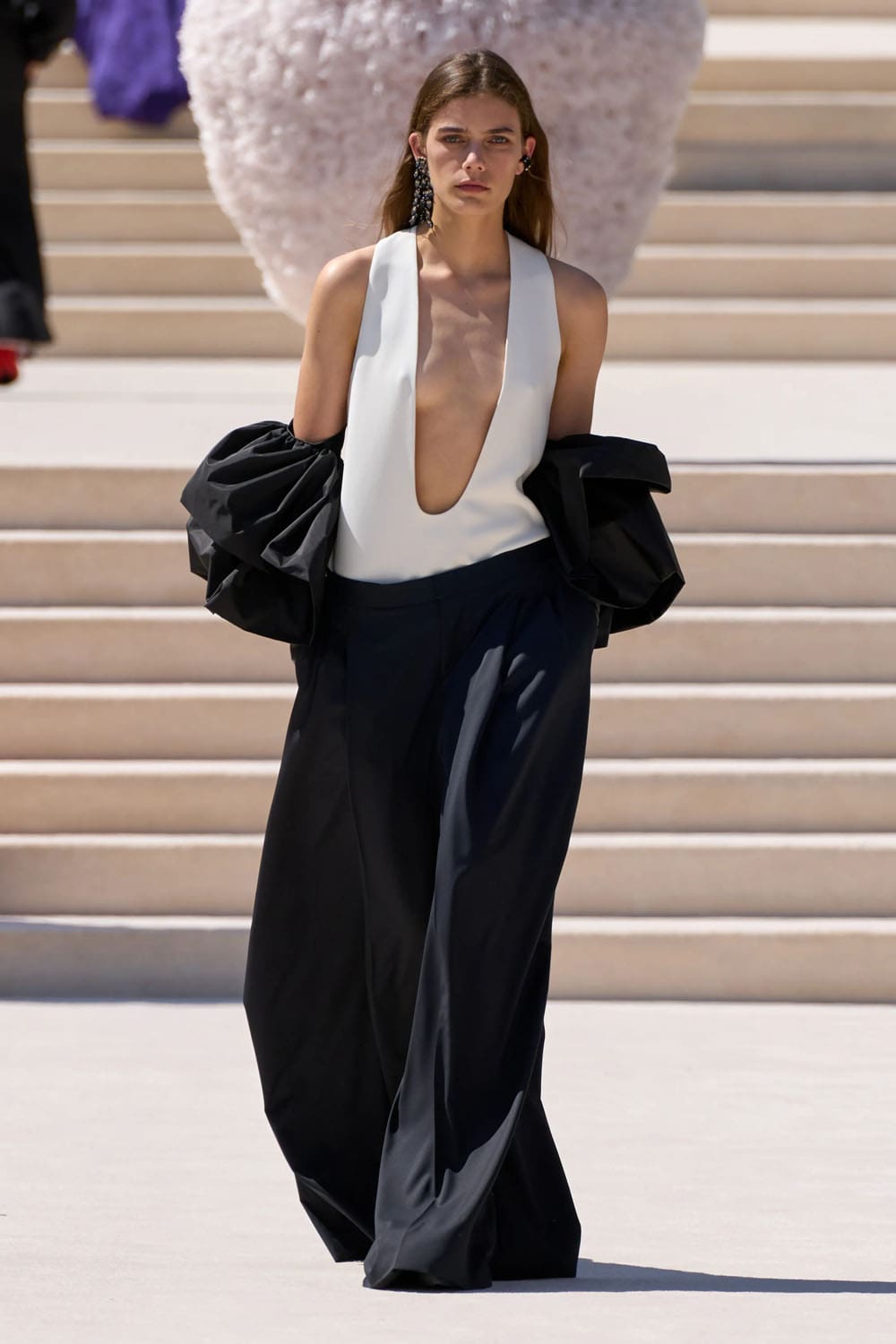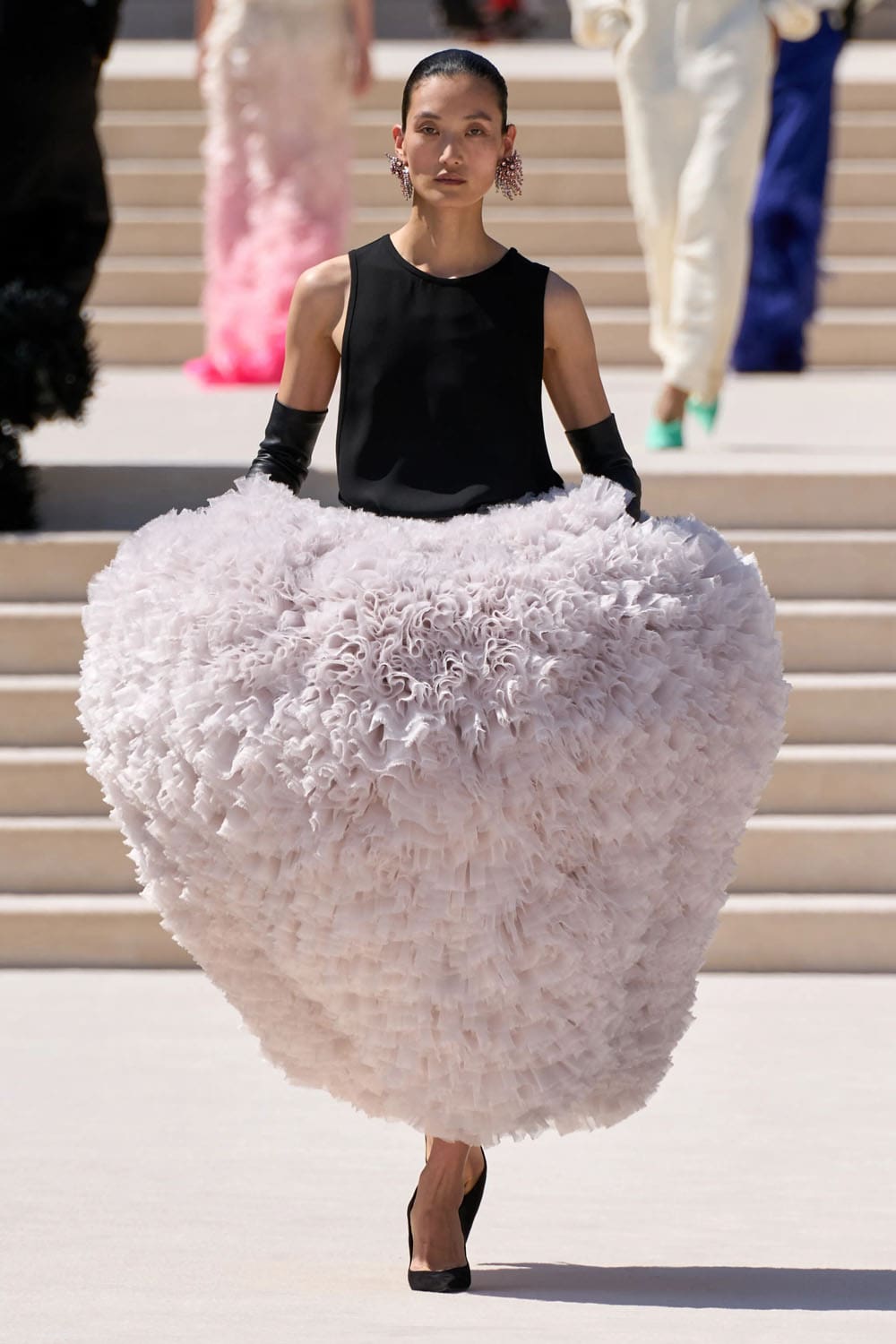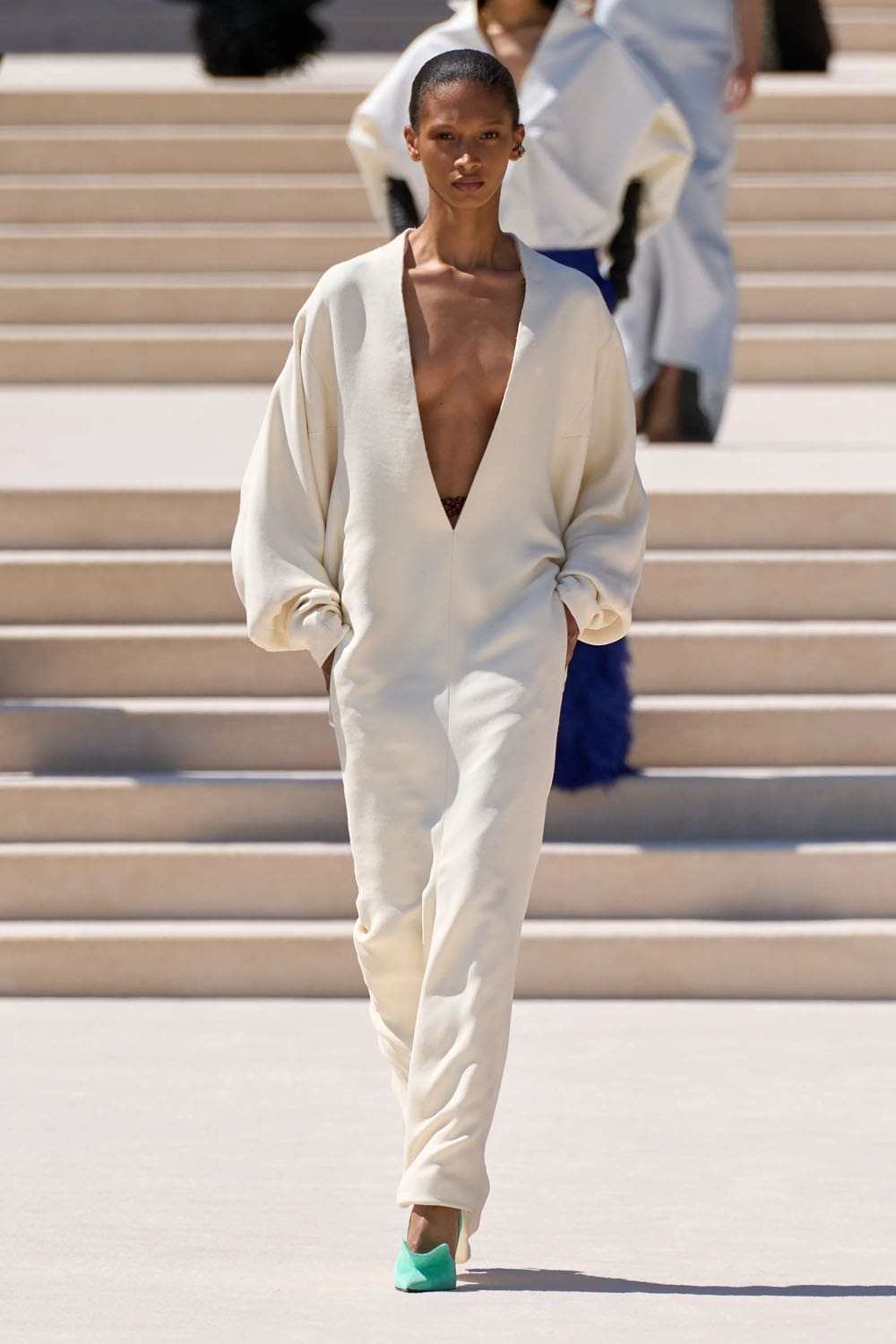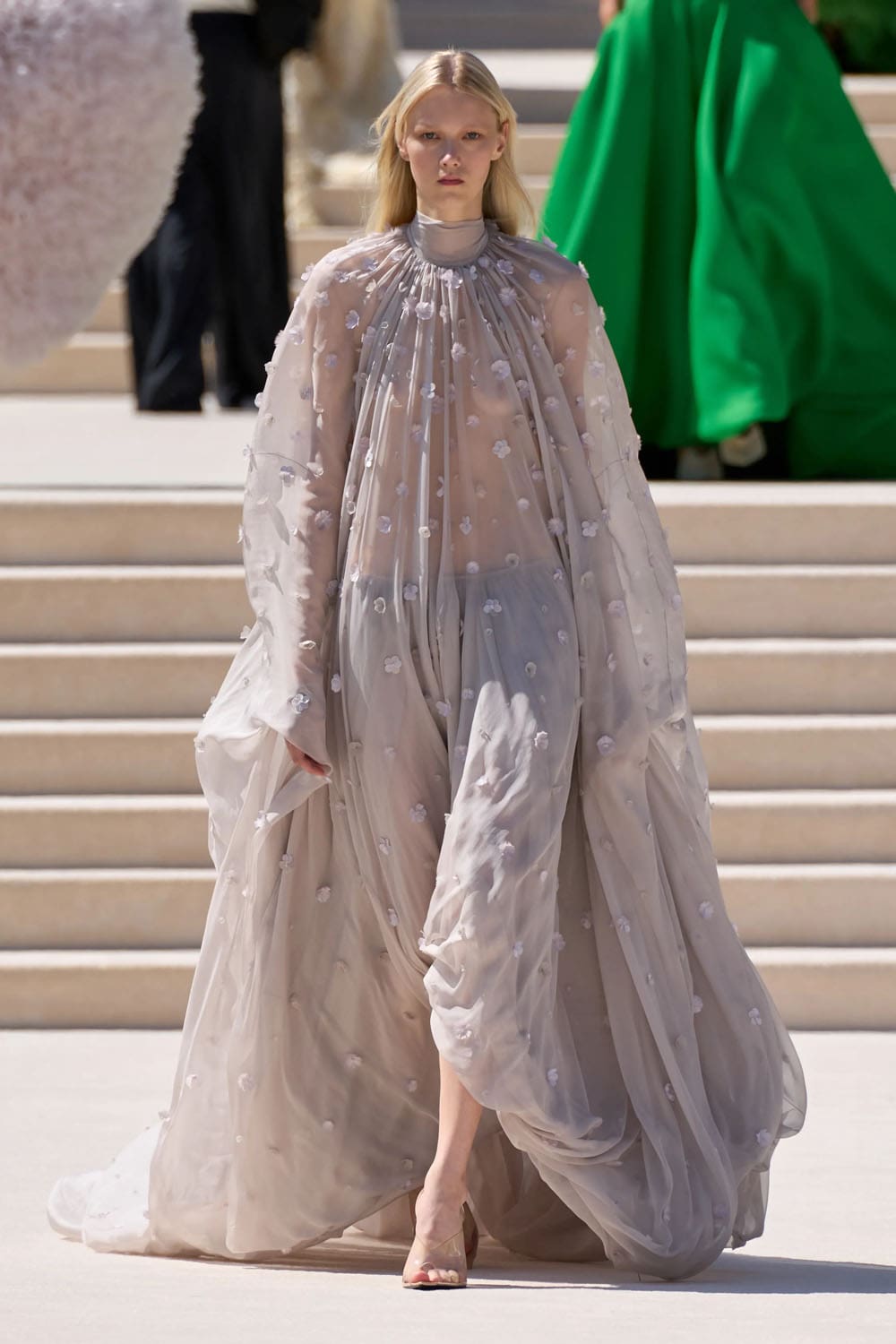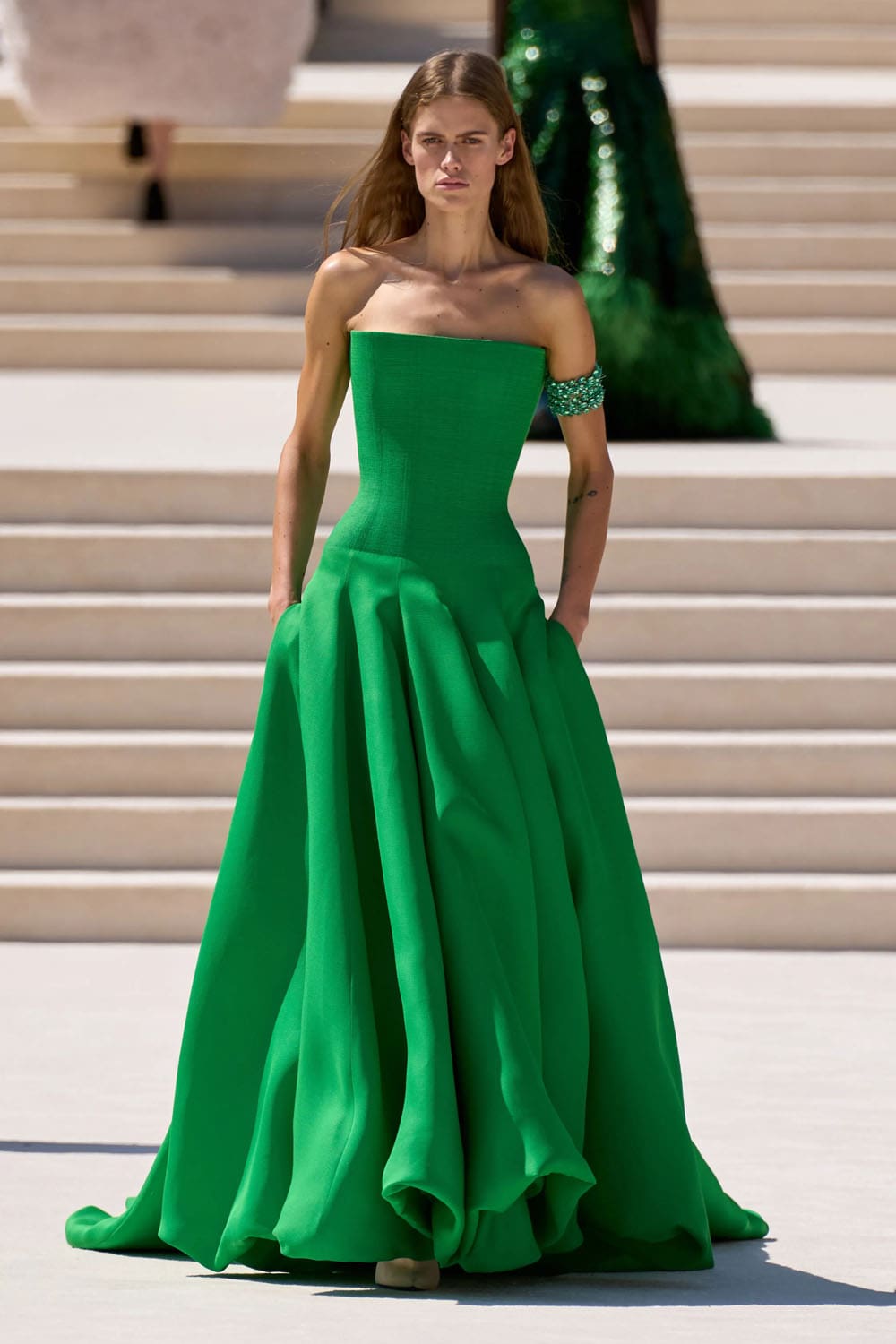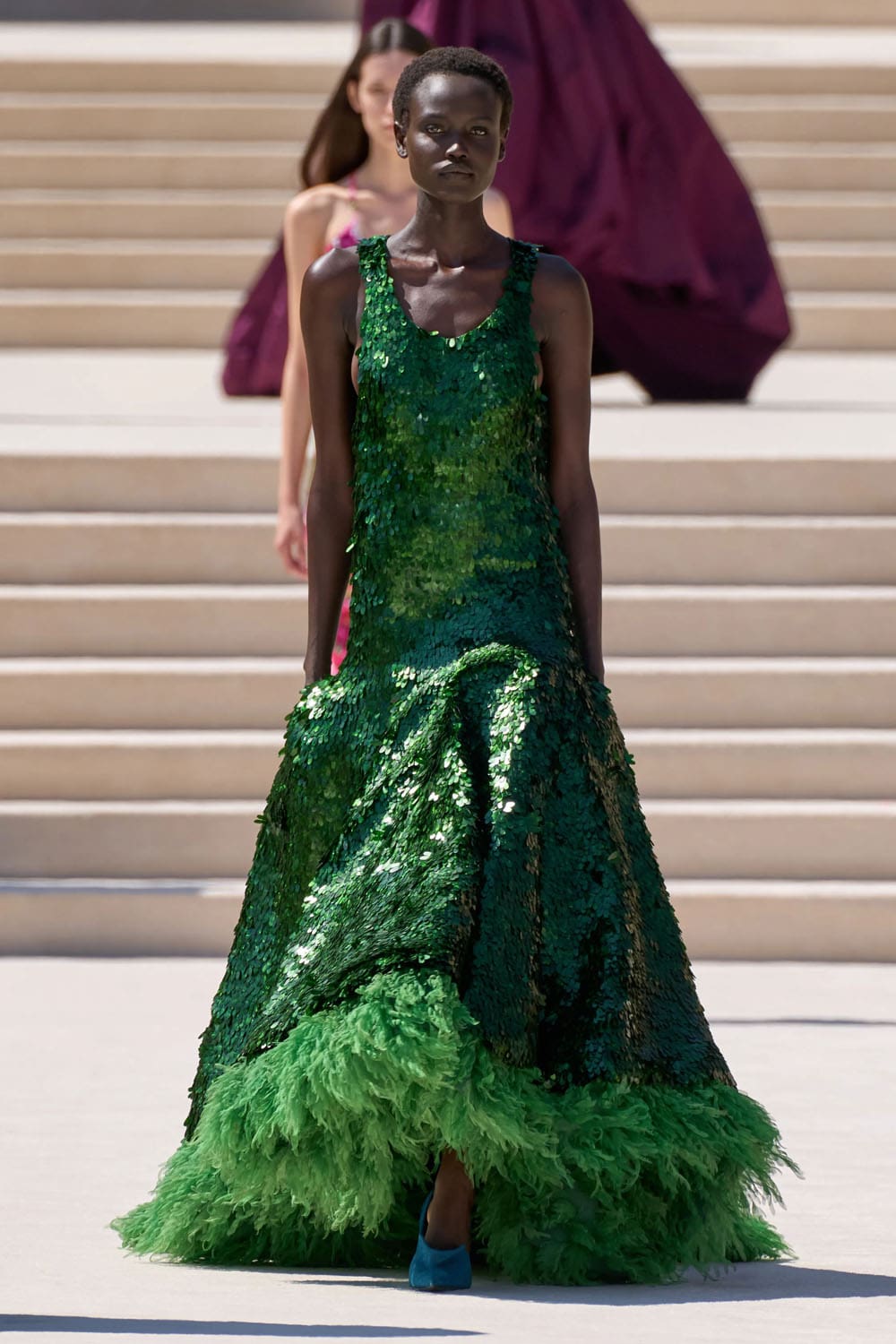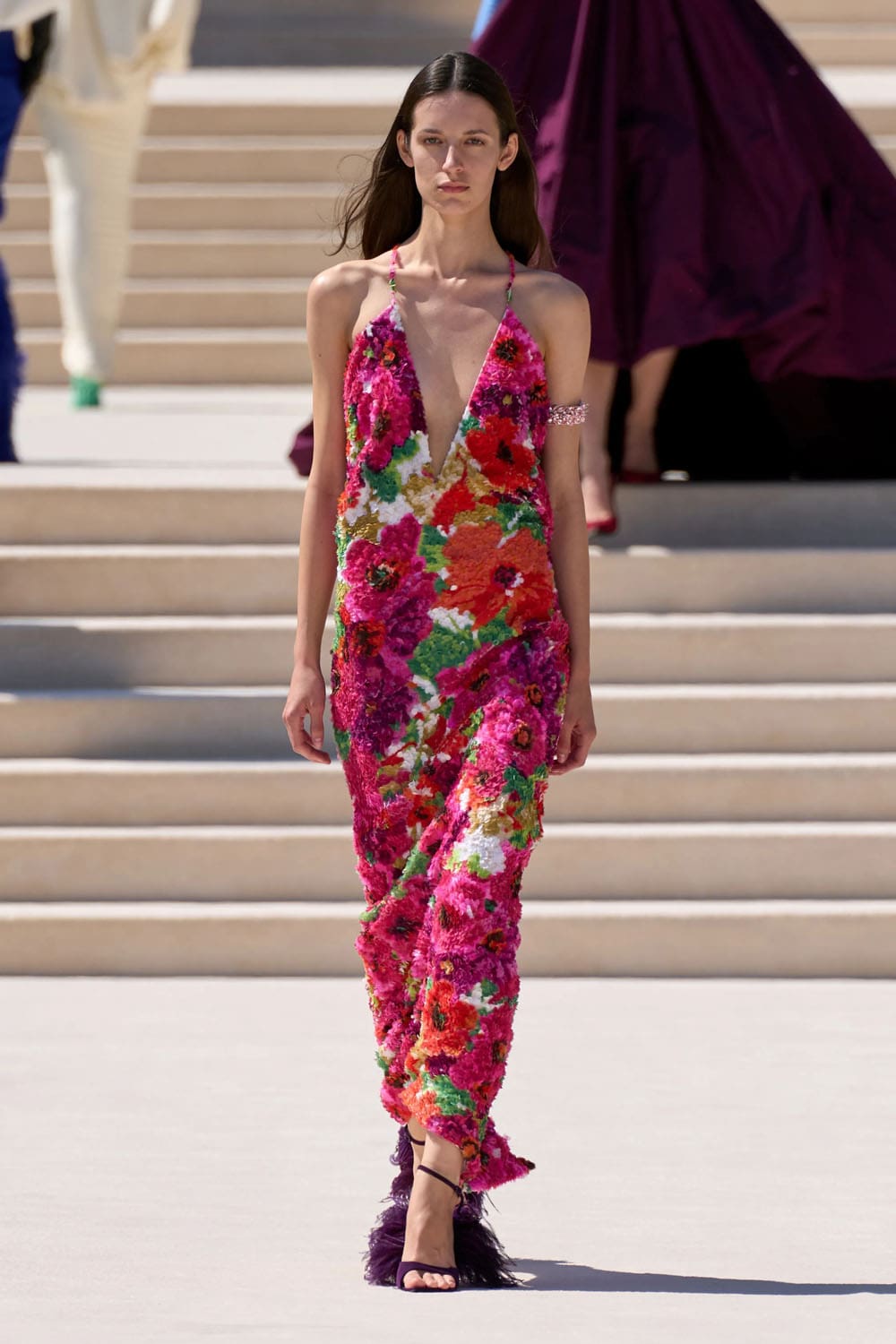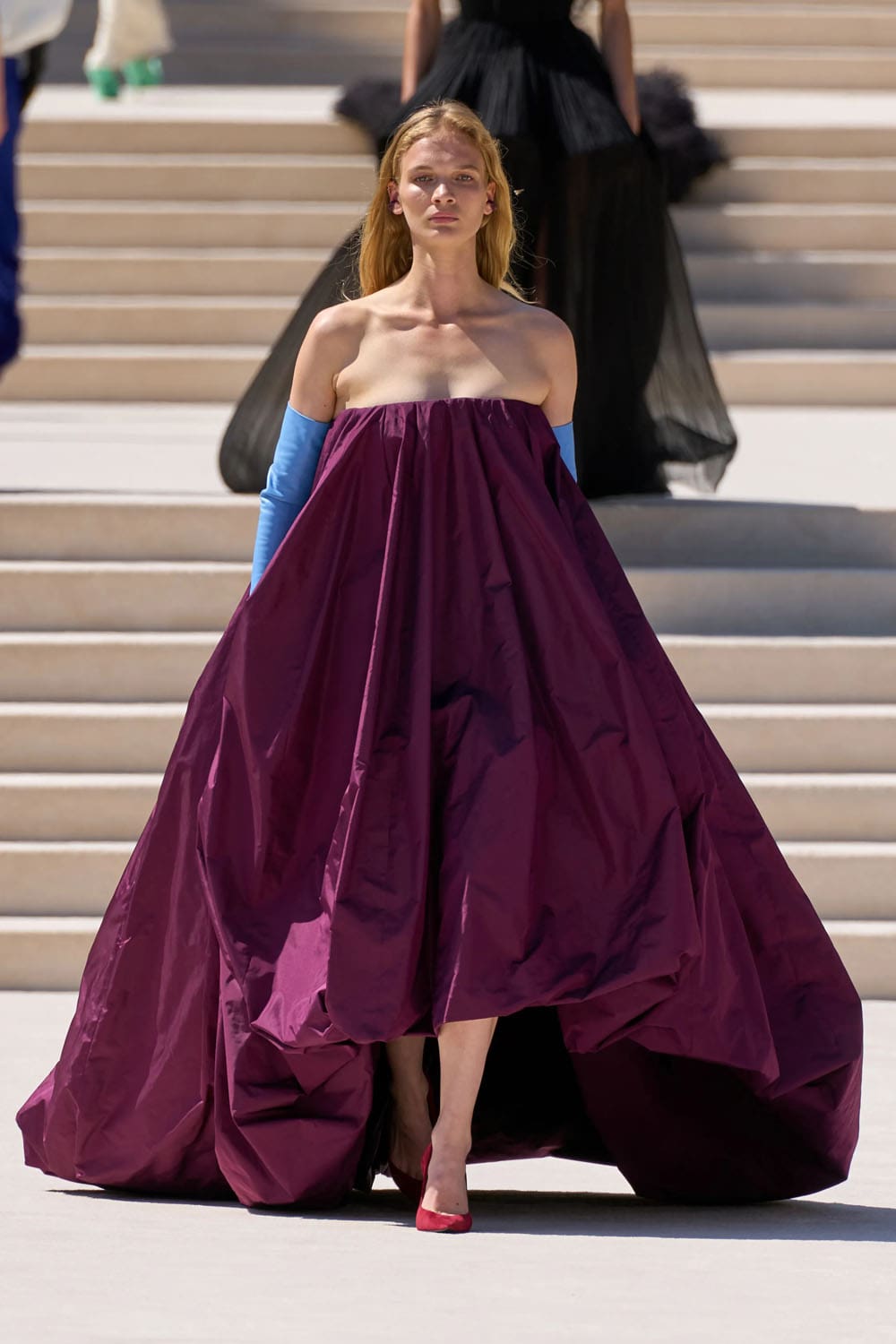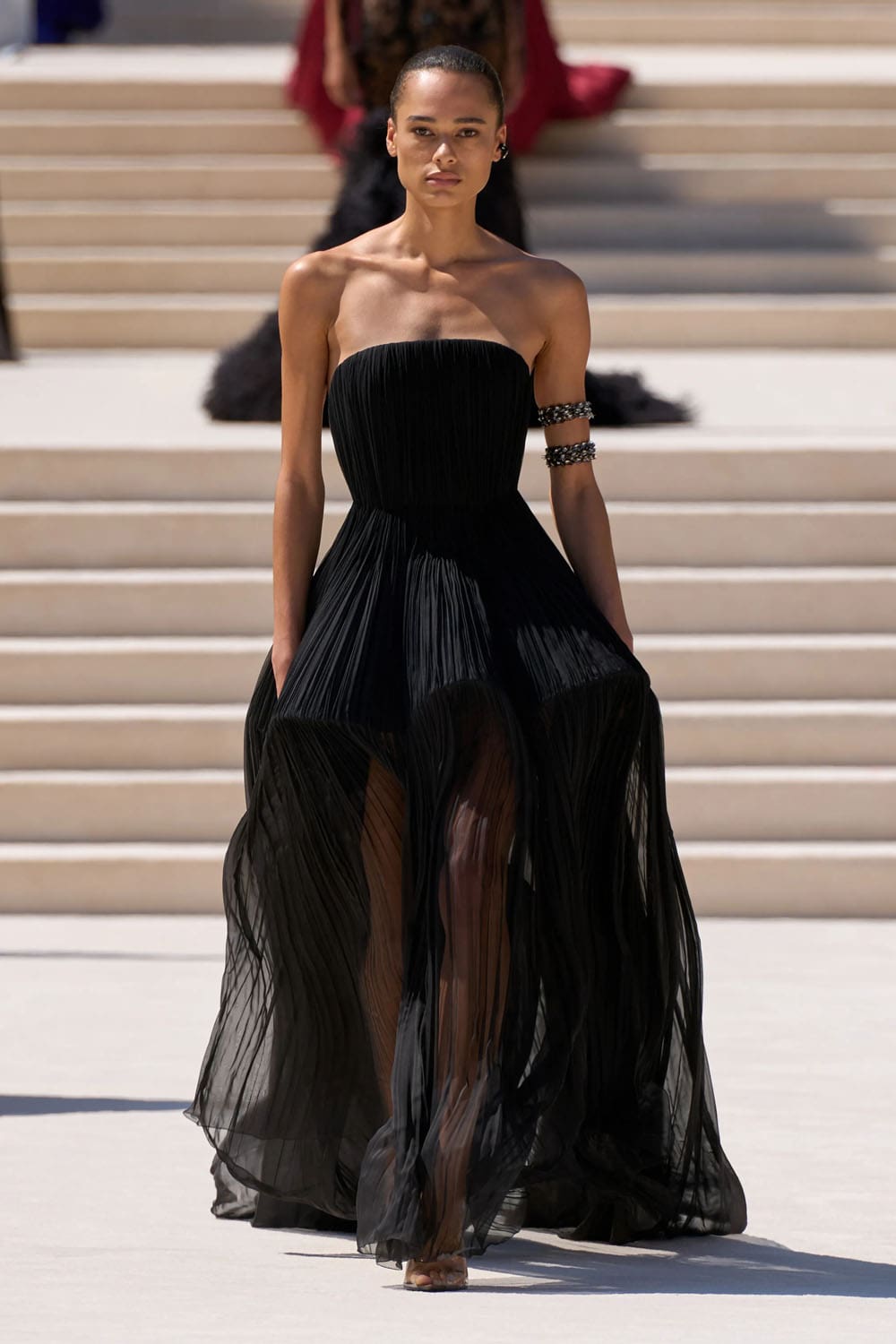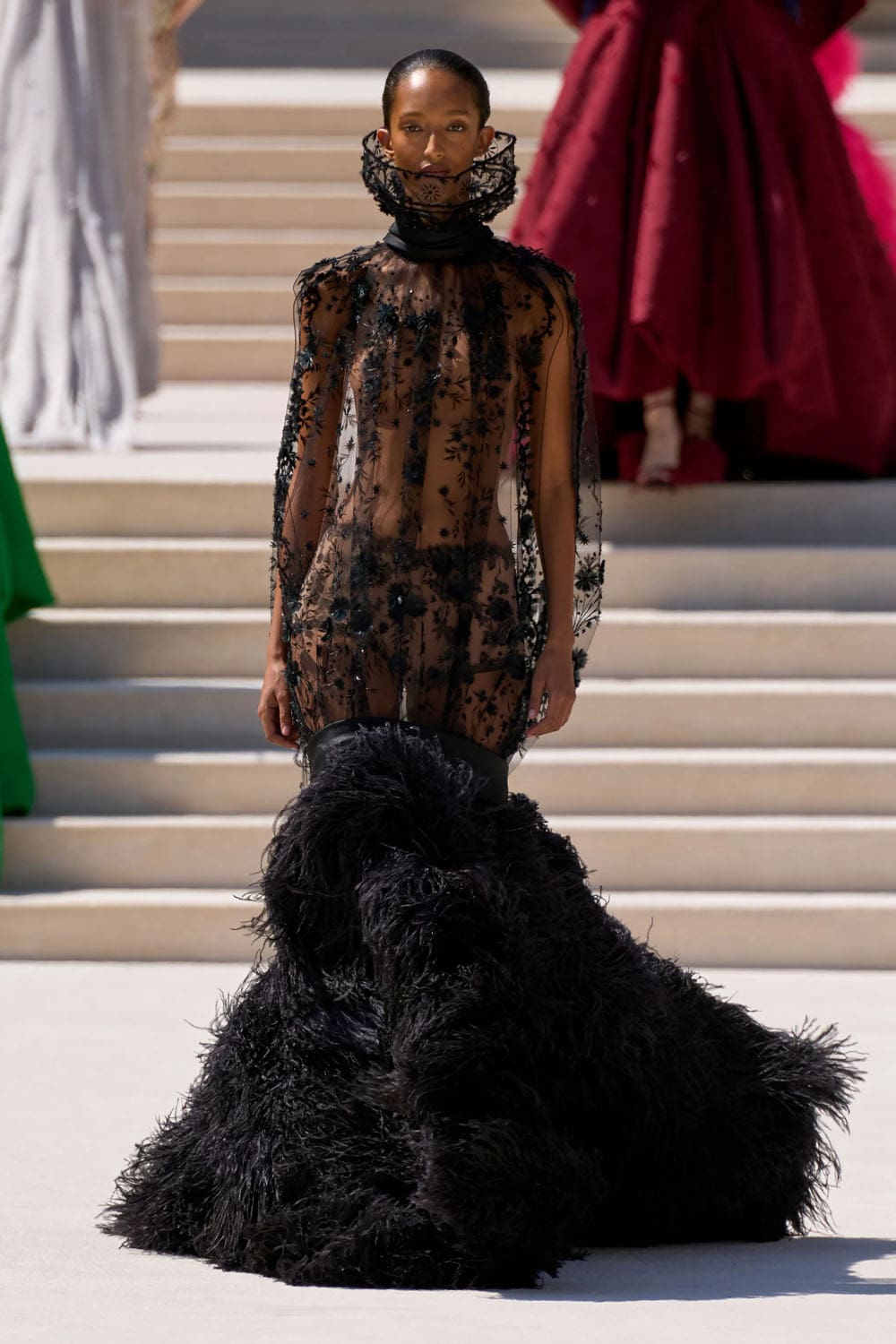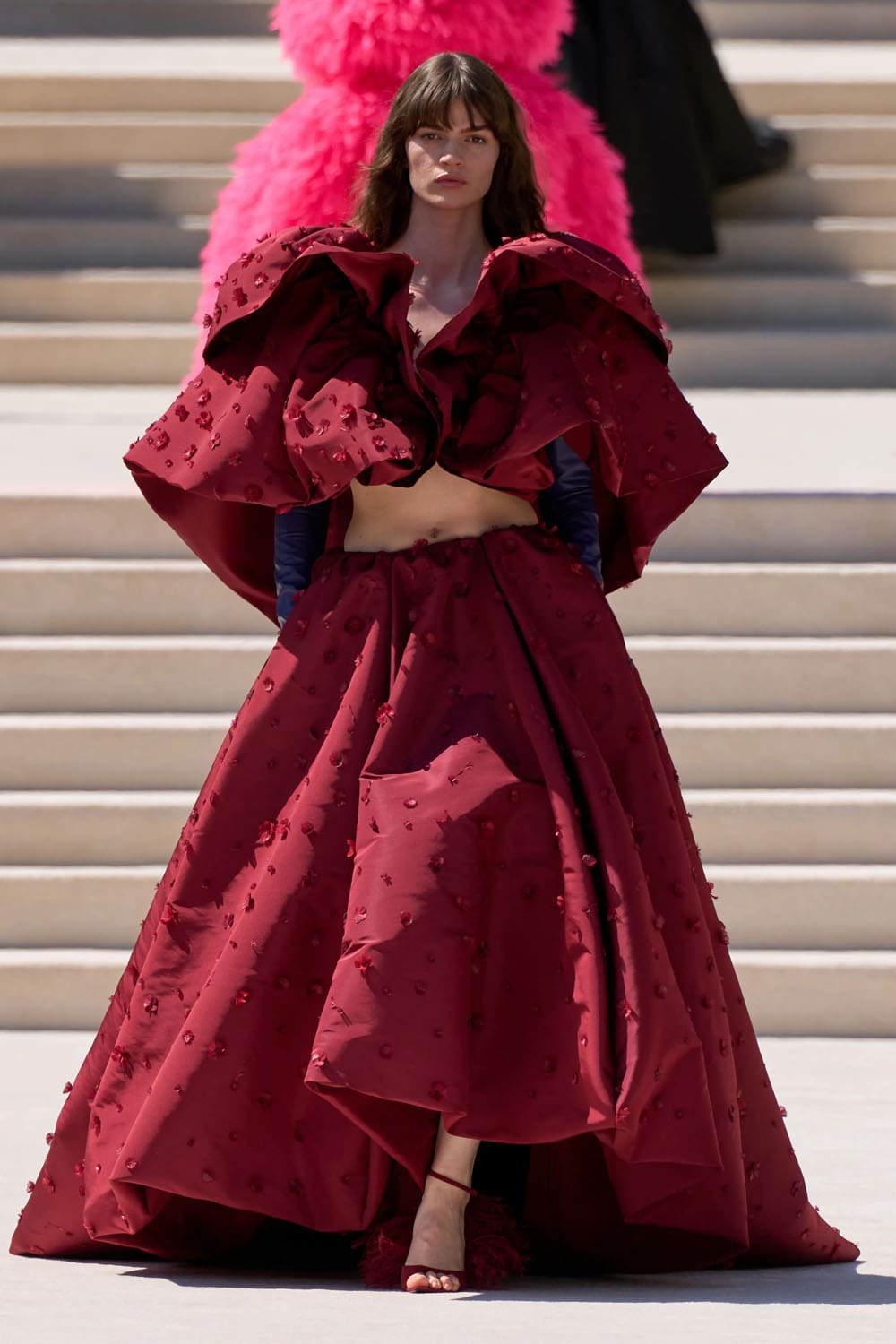
Balenciaga Haute Couture Fall Winter 2026-2027 “Humanism Restored to the Fabric of Couture”. Story by Eleonora de Gray, Editor-in-Chief of RUNWAY MAGAZINE. Photo / Video Courtesy: Balenciaga.
When words fail the traditional metrics of a fashion house—when the cold, clinical apparatus of the standard “press release” is entirely abandoned—true poetry rushes into the vacuum. For the 55th Couture Collection of Balenciaga, presented against the historic backdrop of the Cité Universitaire, Pierpaolo Piccioli did not hand the audience a list of focus groups or commercial metrics. Instead, he offered a manifesto of absolute vulnerability, a love letter to the flesh, bone, and soul that animate the atelier:
“Couture is made by people. It is made with people’s time, their attention, their spirit, and above all, with their infinite love. These are the people, the human beings who built this collection with me. These are the faces, these are the hearts. This is the identity of BALENCIAGA Couture.”
In a single gesture, Piccioli did something revolutionary: he stripped the avant-garde of its clinical detachment and wrapped it in fierce, unadulterated human emotion. This debut isn’t merely a collection; it is a profound marriage of Cristóbal Balenciaga’s radical architectural geometry with Pierpaolo’s legendary, emotional mastery of color and humanism. It is architecture with a heartbeat.
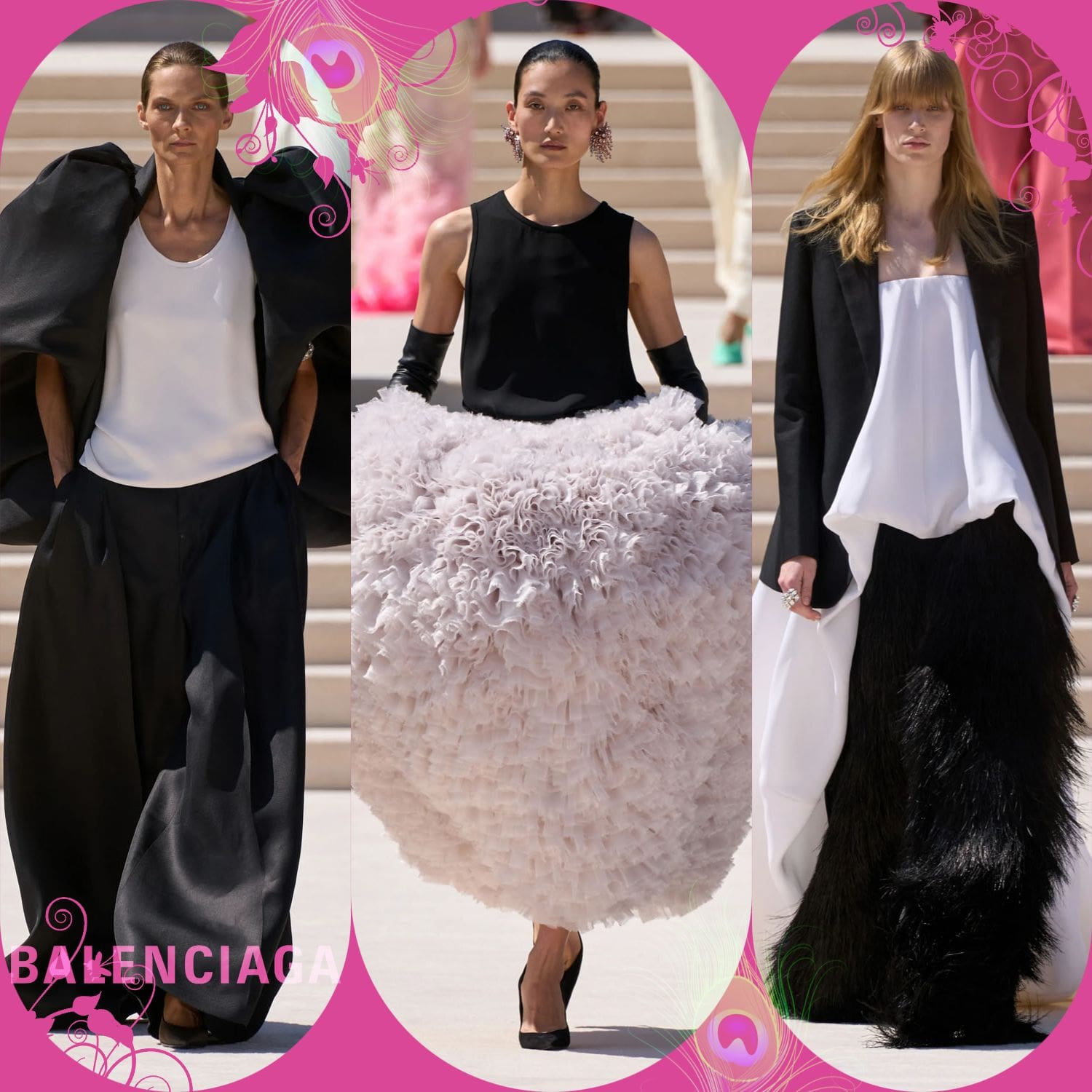
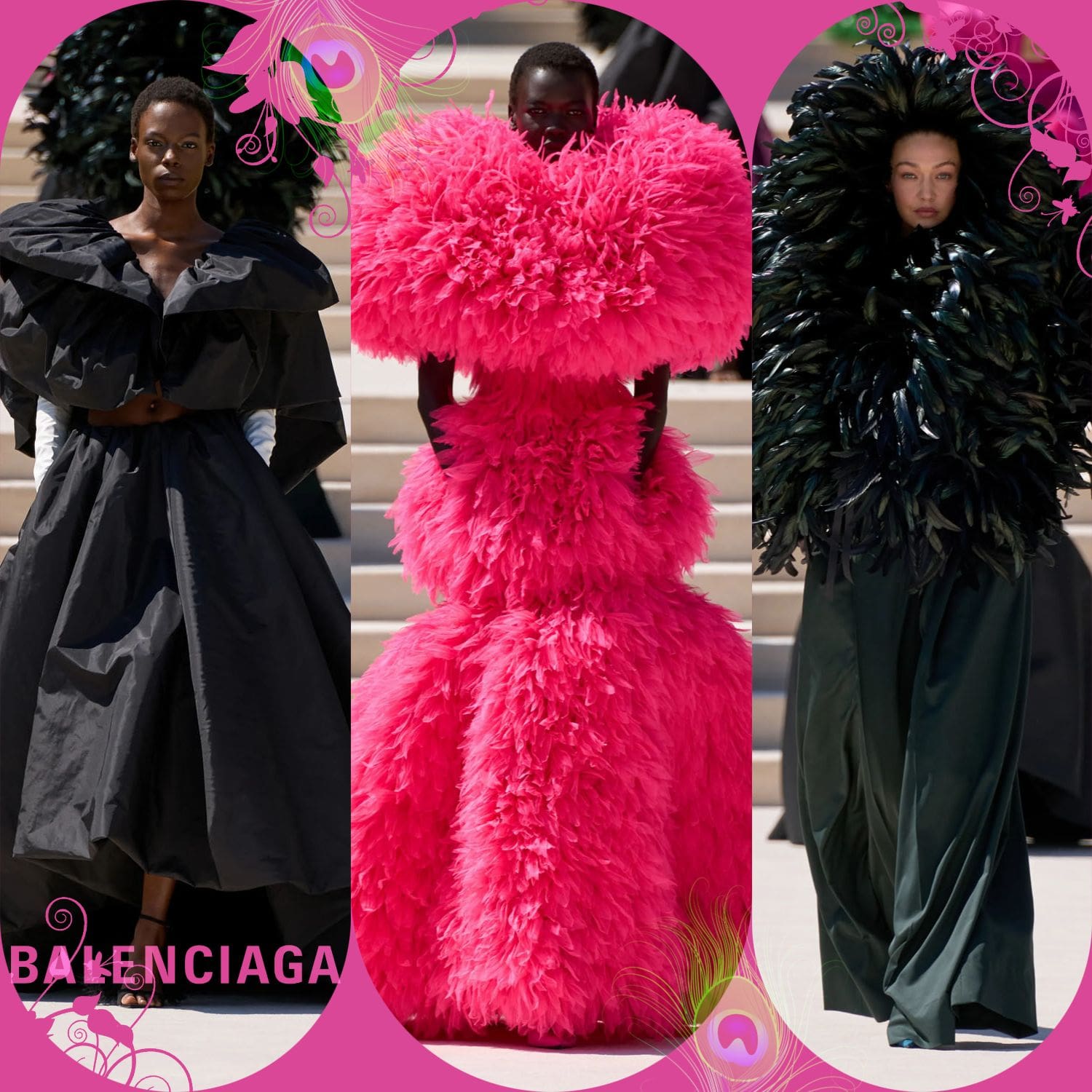
Architecture Infused with Soul: The Geometry of Warmth
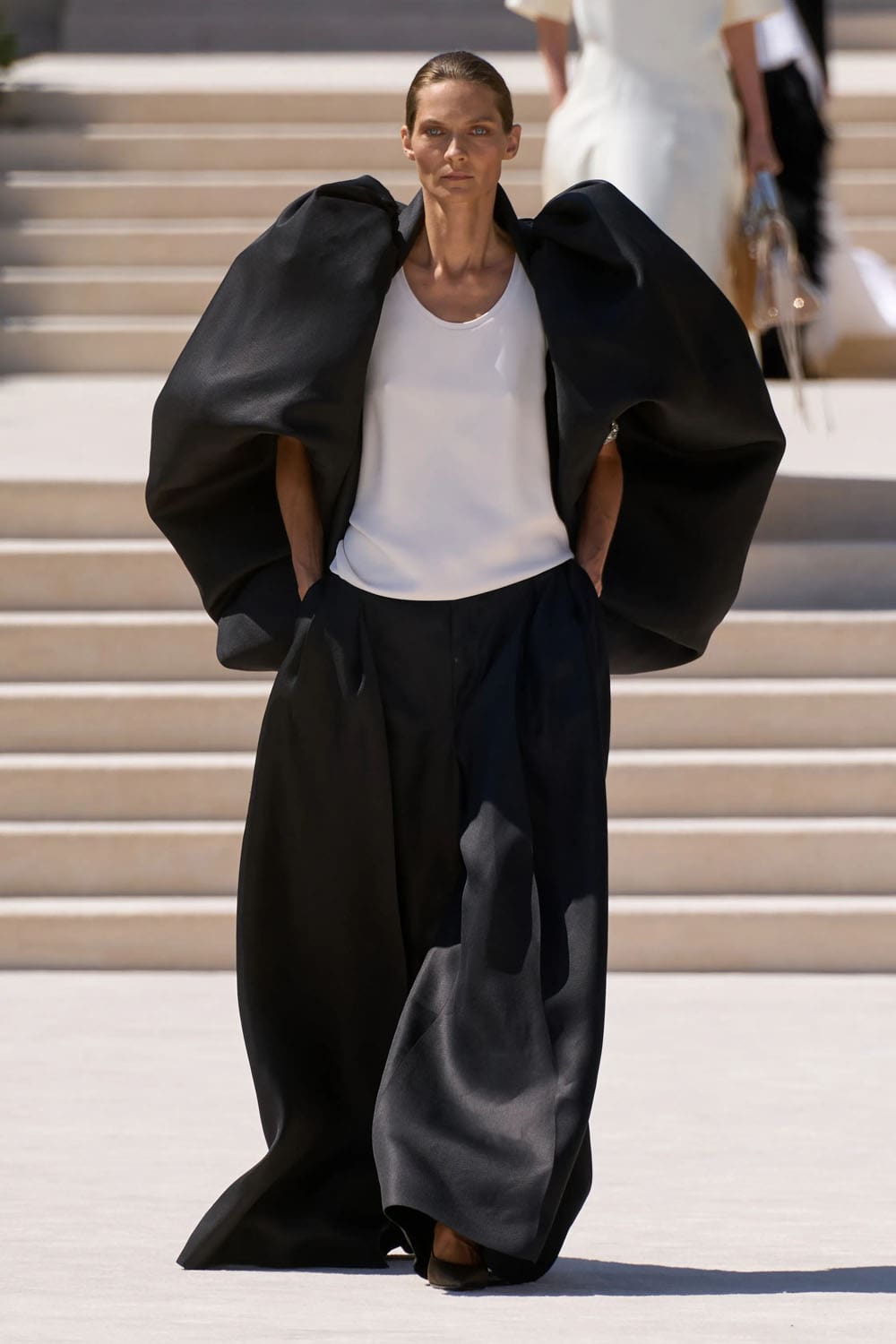
To understand this debut is to understand how two seemingly opposing forces can dissolve into one another. Cristóbal Balenciaga’s legacy is one of rigorous, almost religious form—the cocoon coat, the balloon silhouette, the stern defiance of the traditional female shape. Pierpaolo Piccioli, by contrast, is the great romantic of our era, a designer who uses color and volume to evoke an immediate, visceral emotional response.
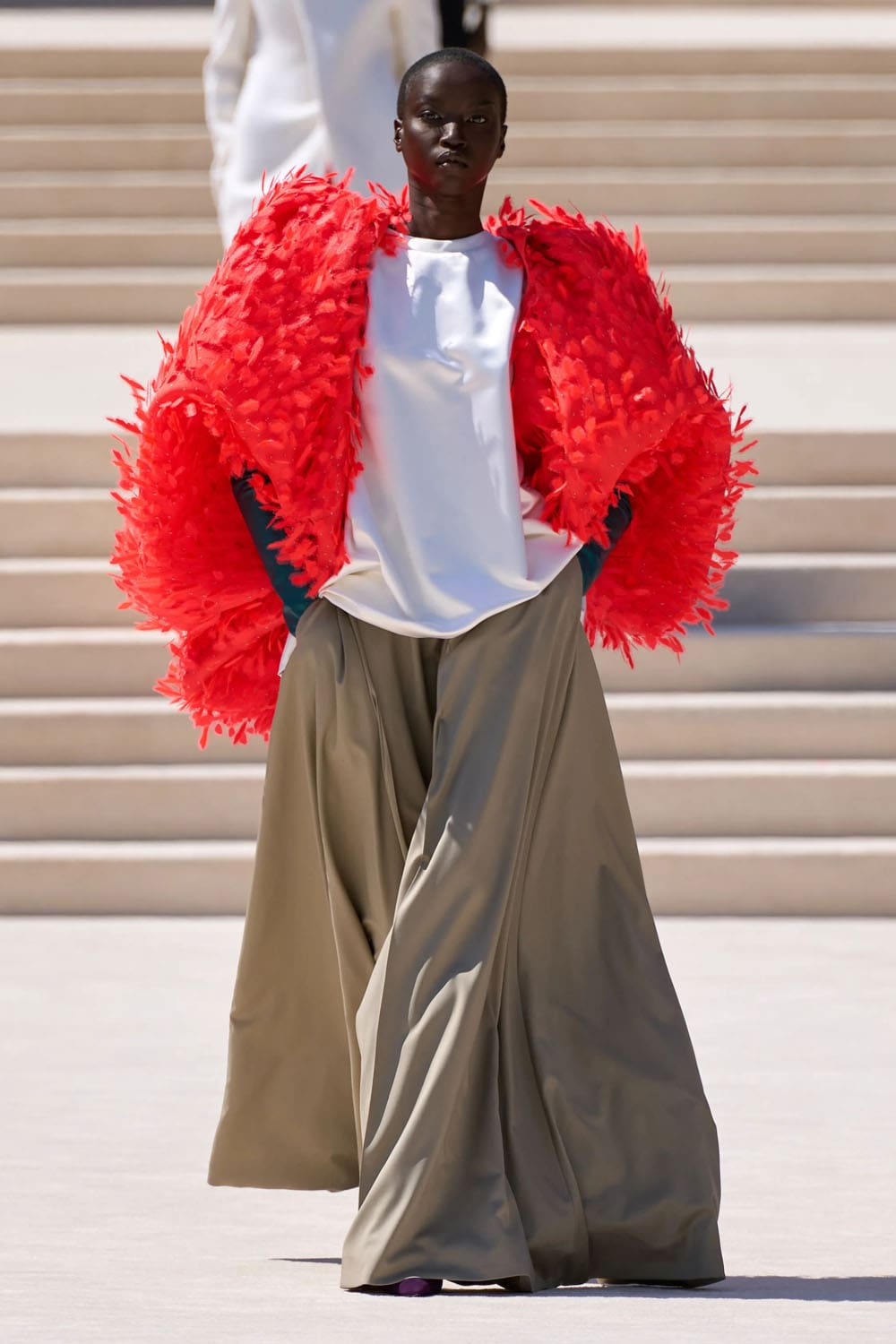
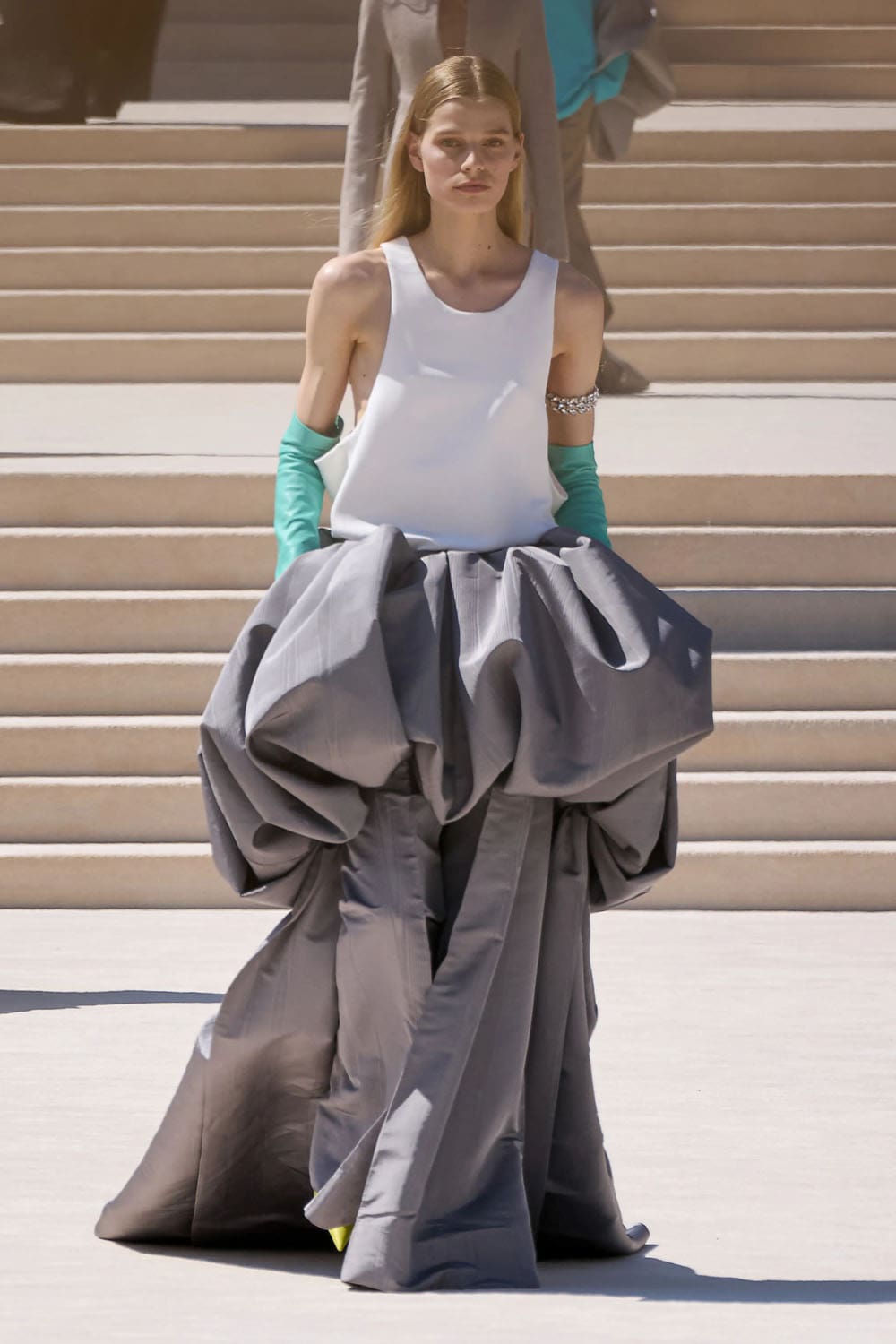
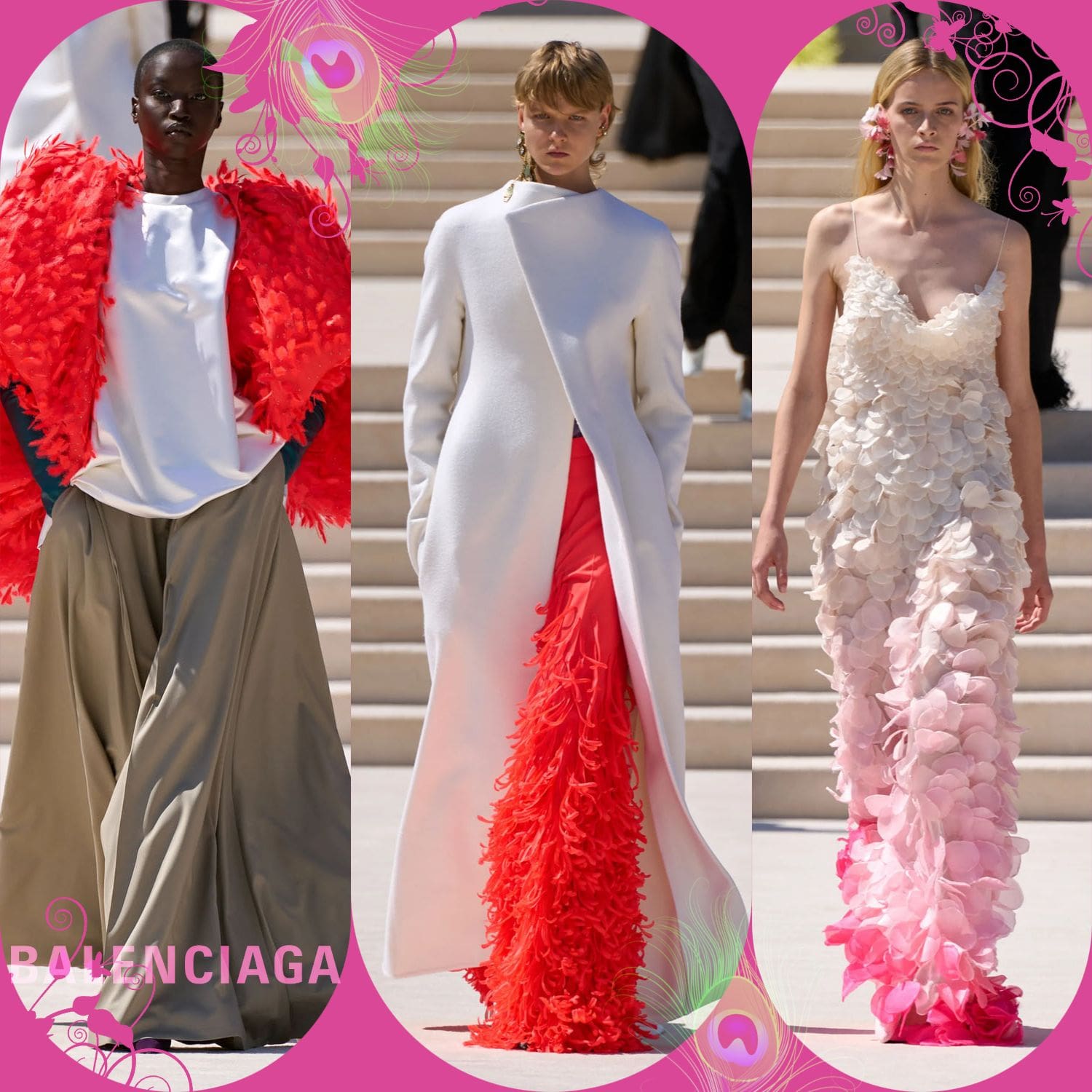
At the Cité Universitaire, these two languages found their perfect, harmonious synthesis. The severe, historic stone of the venue became a canvas for silhouettes that breathed. Take the opening movement: a spectacular balloon jacket in sunset red silk gazar, paired effortlessly with a white silk duchesse satin T-shirt and extra-large pants in Sahara beige wool. It was an immediate declaration of intent. The historic, imposing volume of the Cristóbal archive was there, but it was rendered light, conversational, and deeply alive by forest green leather opera gloves and a dark violet suede shoe.
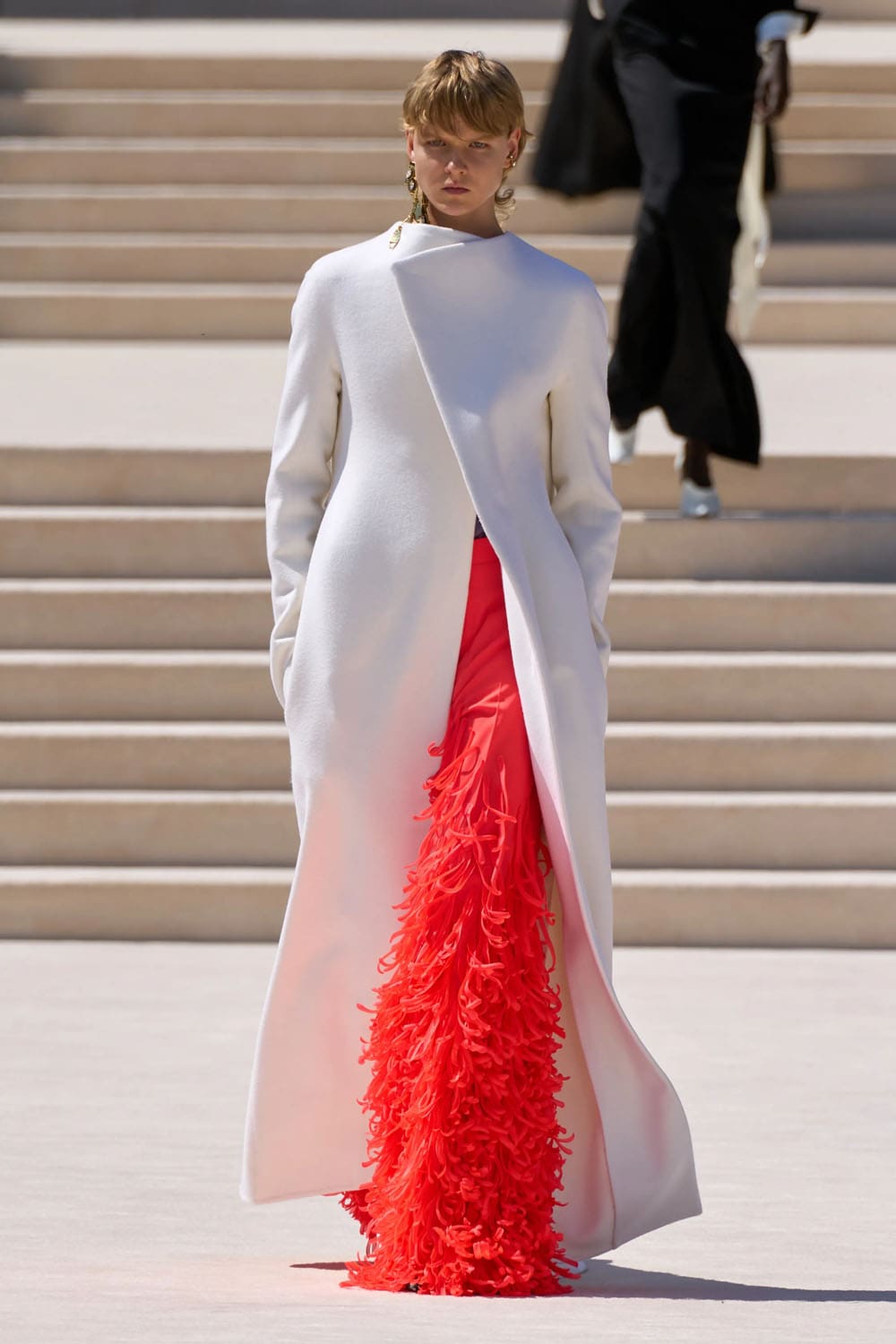
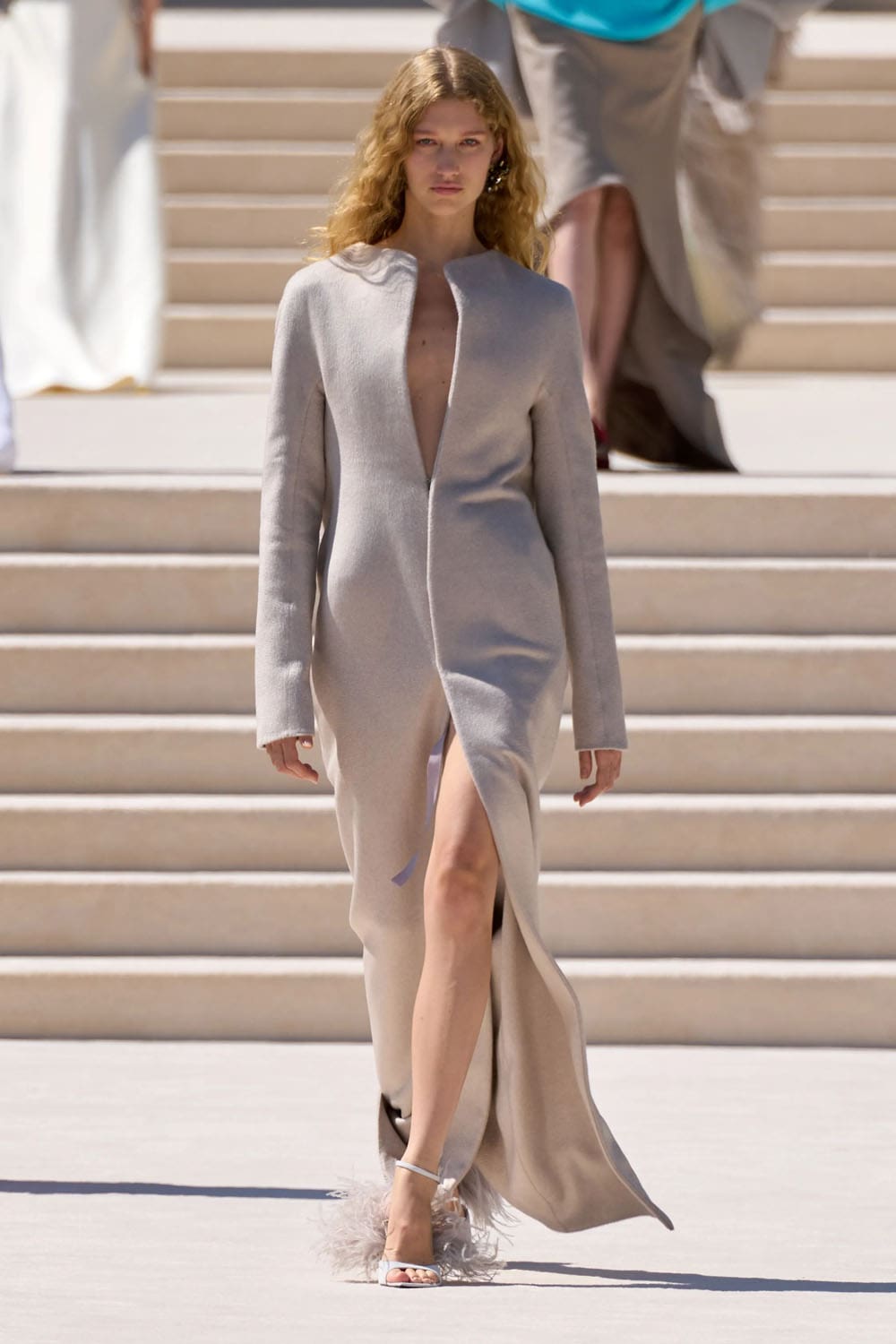
The collection moved with an inherent understanding of weight and weightlessness. A molded cocoon coat in pure white splittable cashmere opened its collar just enough to reveal a lilac silk georgette tank top, anchored by trousers in an intense, curled organza petal embroidery of sunset red tailoring wool. This is where Piccioli’s genius shines—he takes the radical shapes that once intimidated the eye and infuses them with a softness, a textural intimacy that makes you want to reach out and touch the garment, to feel the time poured into its fibers.
The Symphony of Subtitles: Feathers, Organza, and Chromatic Love
Without a formal text to guide the viewer, the garments themselves had to speak. And they spoke in a language of breathtaking material complexity. Colors did not merely sit next to each other; they conversed, sometimes passionately, sometimes in whispered secrets.
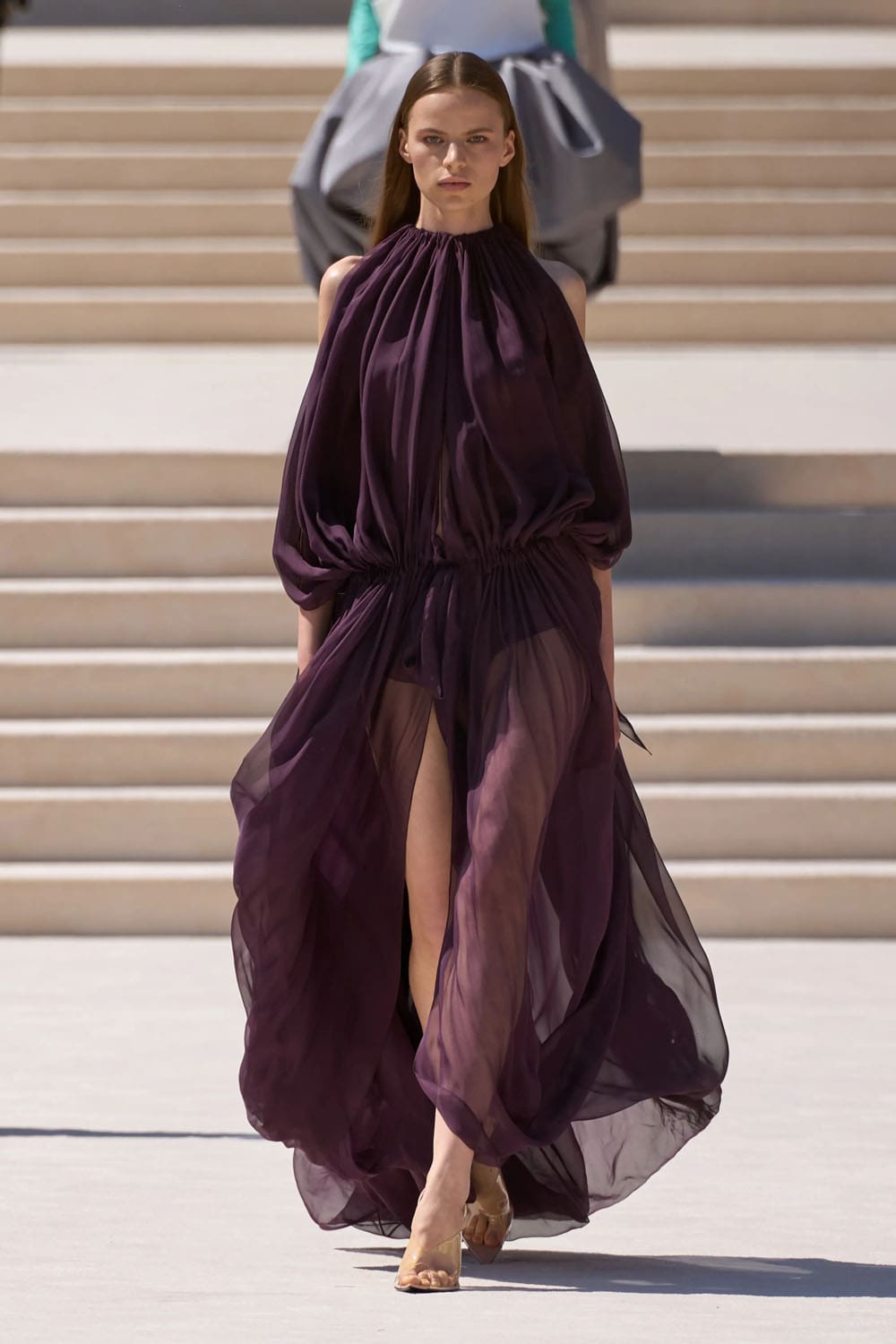
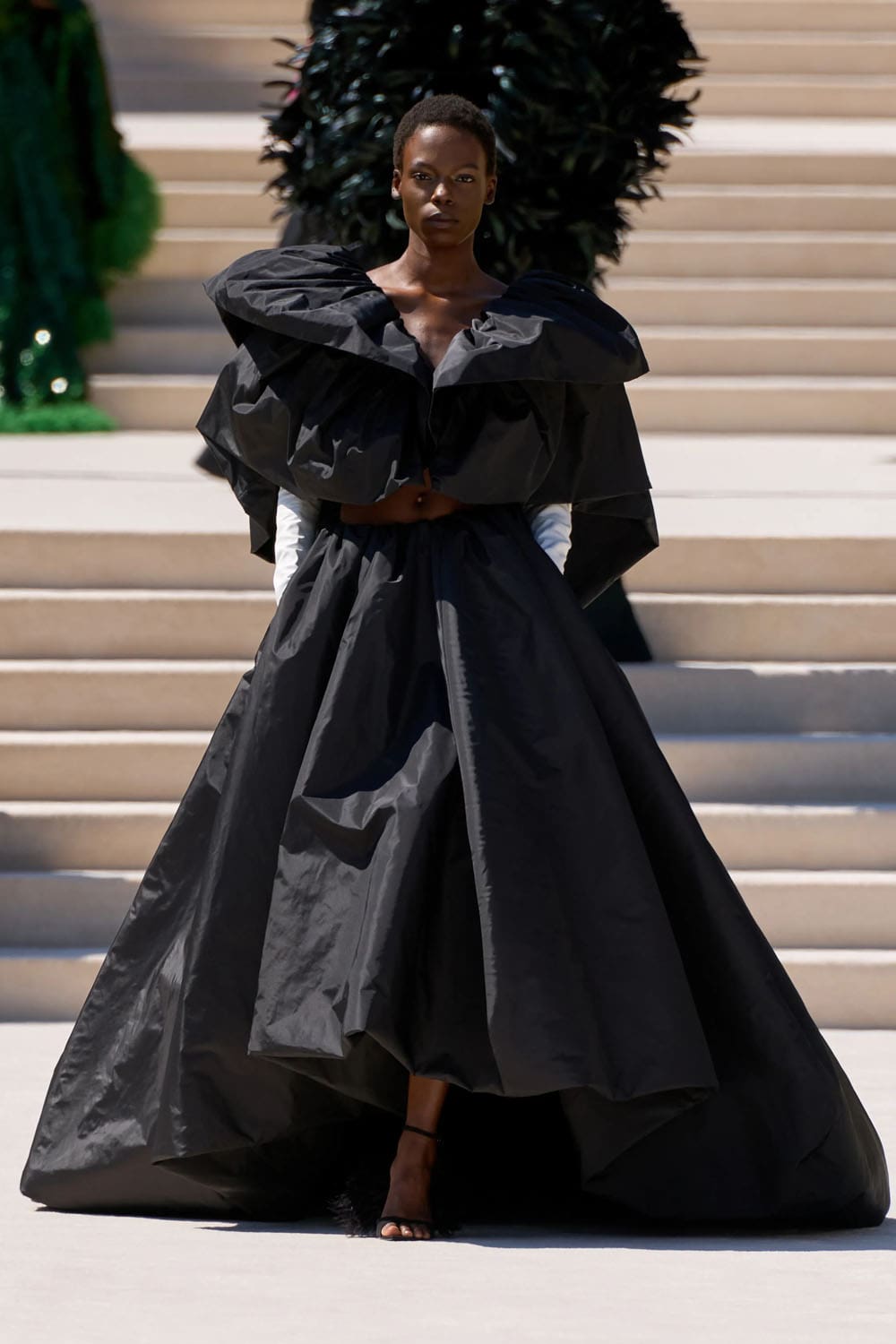
We saw it in the deliberate, exquisite tension of textures. A cropped cape and maxi skirt in rich bordeaux silk faille met its match in ultraviolet leather opera gloves, grounded by a feather-embroidered moss sandal in burgundy suede. This isn’t just styling; it is an intellectual exercise in chromatic depth. The collection repeatedly played with these unexpected dialogues:
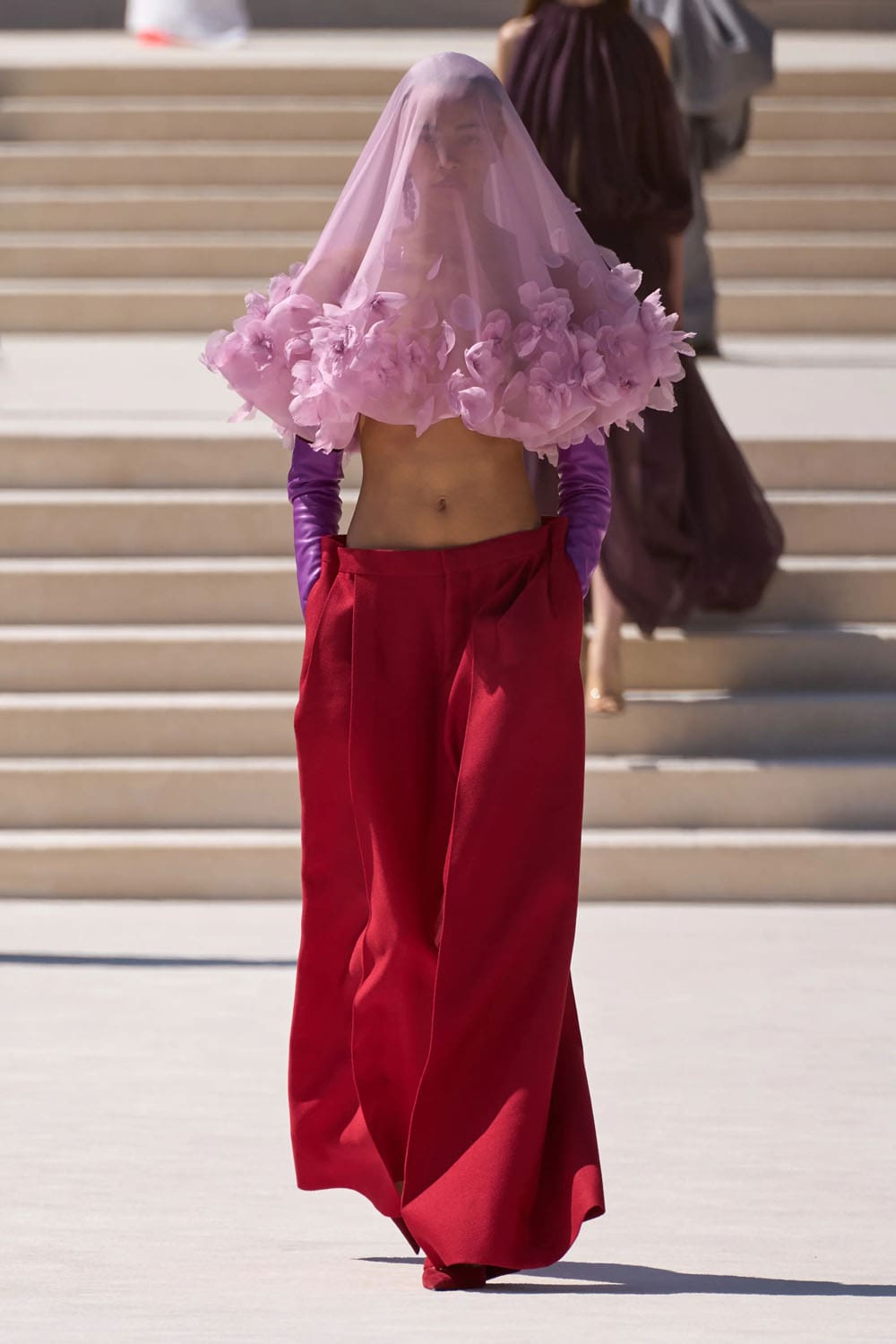
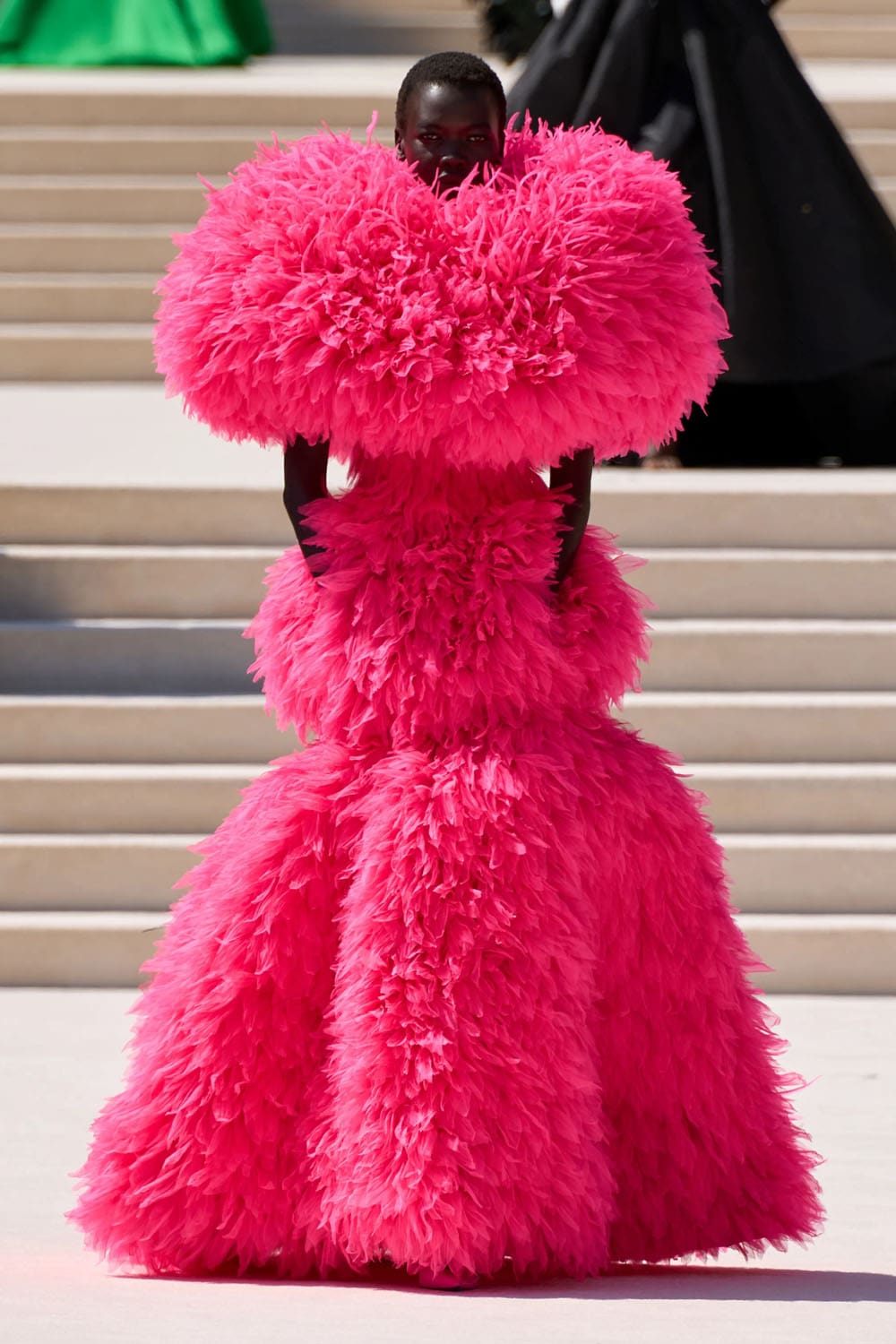
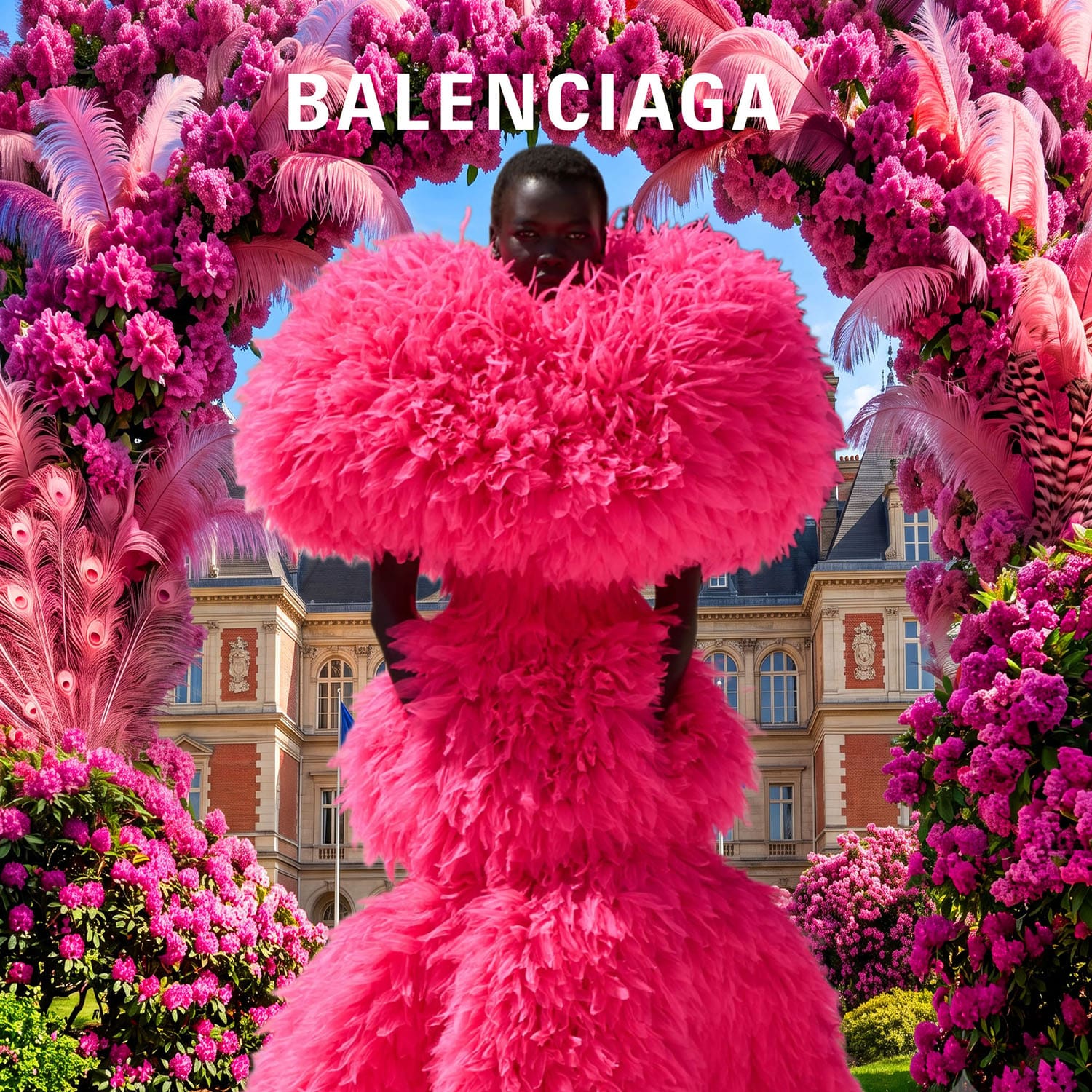
- An extraordinary, curled organza feather-embroidered balloon bolero dress in a fluorescent pink silk gazar so vibrant it seemed to cast its own light against the stone stairs.
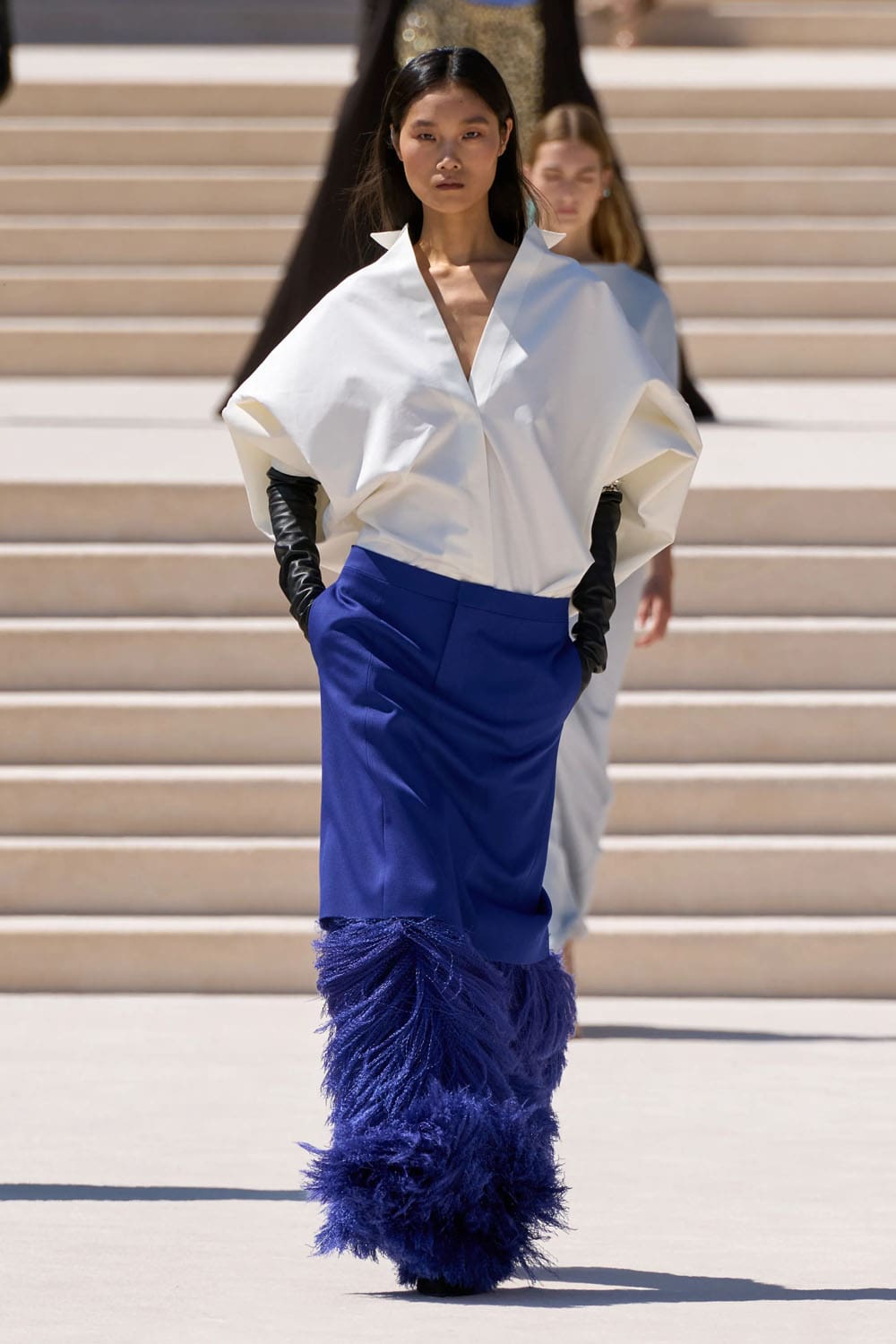
- A classic, sweeping tuxedo shirt in optical white poplin contrasted fiercely against layered pants embroidered with silk fringe in a deep, regal lapis lazuli wool gabardine.
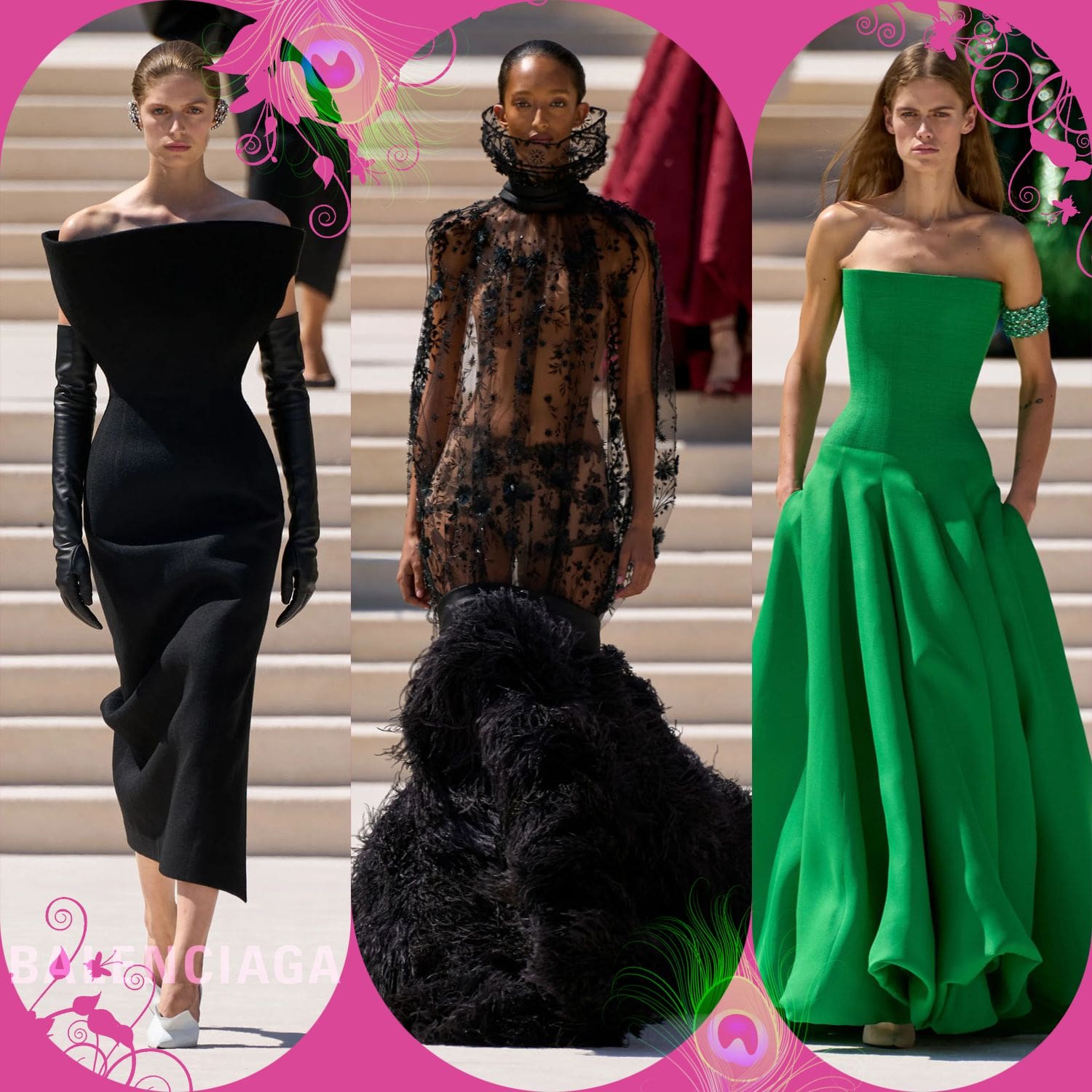
- An interlocked bustier flared gown in an unapologetic grass green silk gazar, perfectly styled with an erinite varnished brass bracelet and soft beige suede.
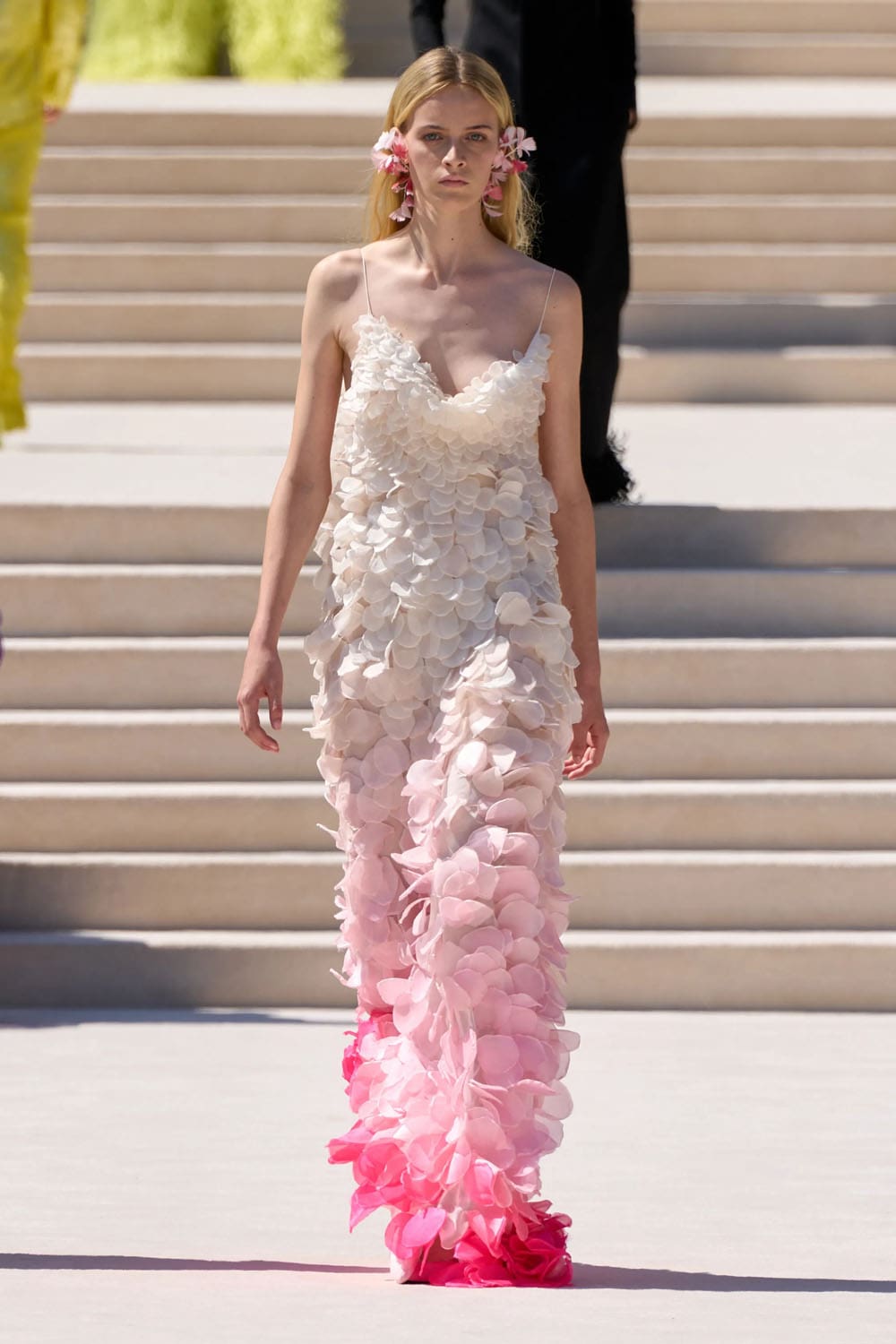
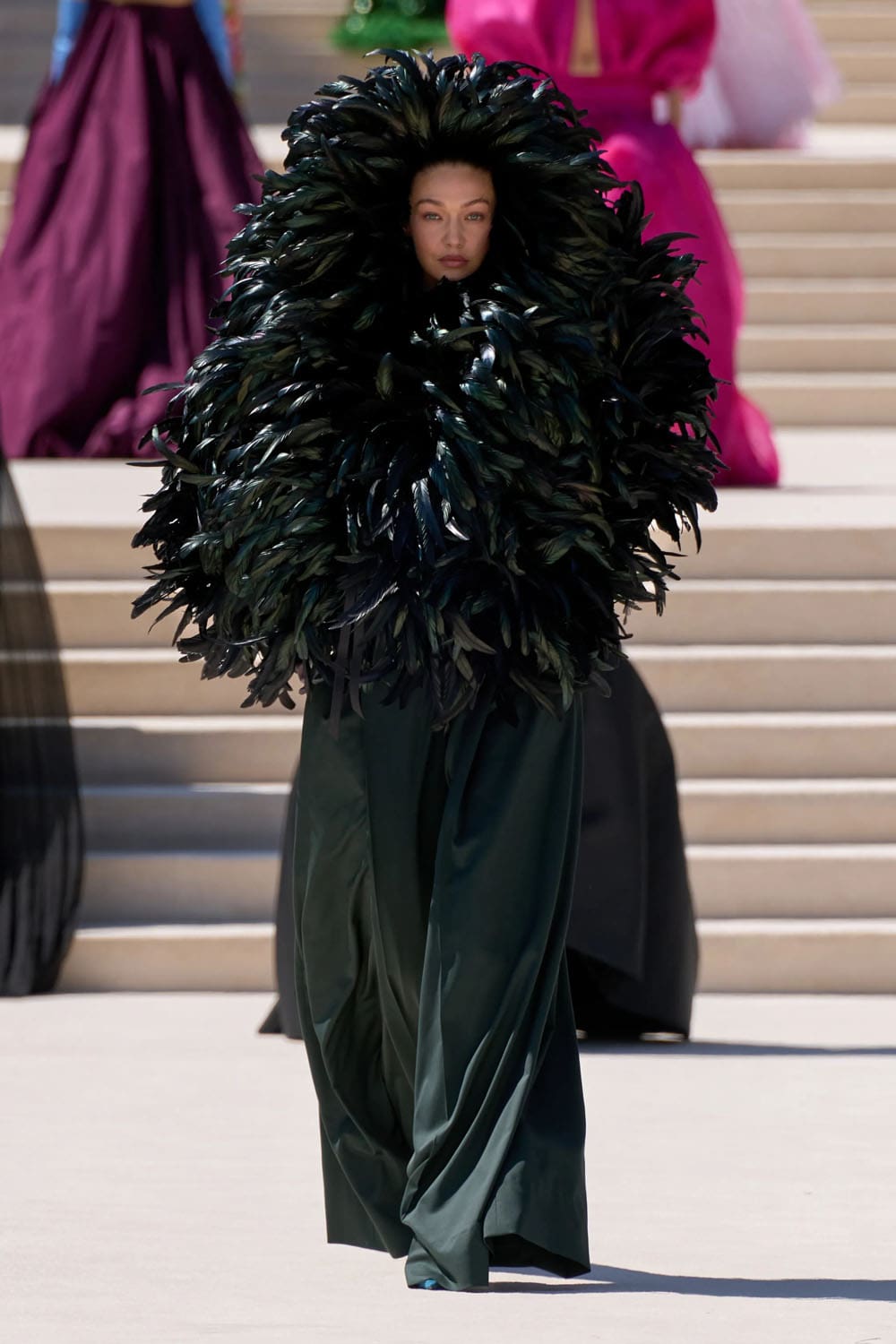
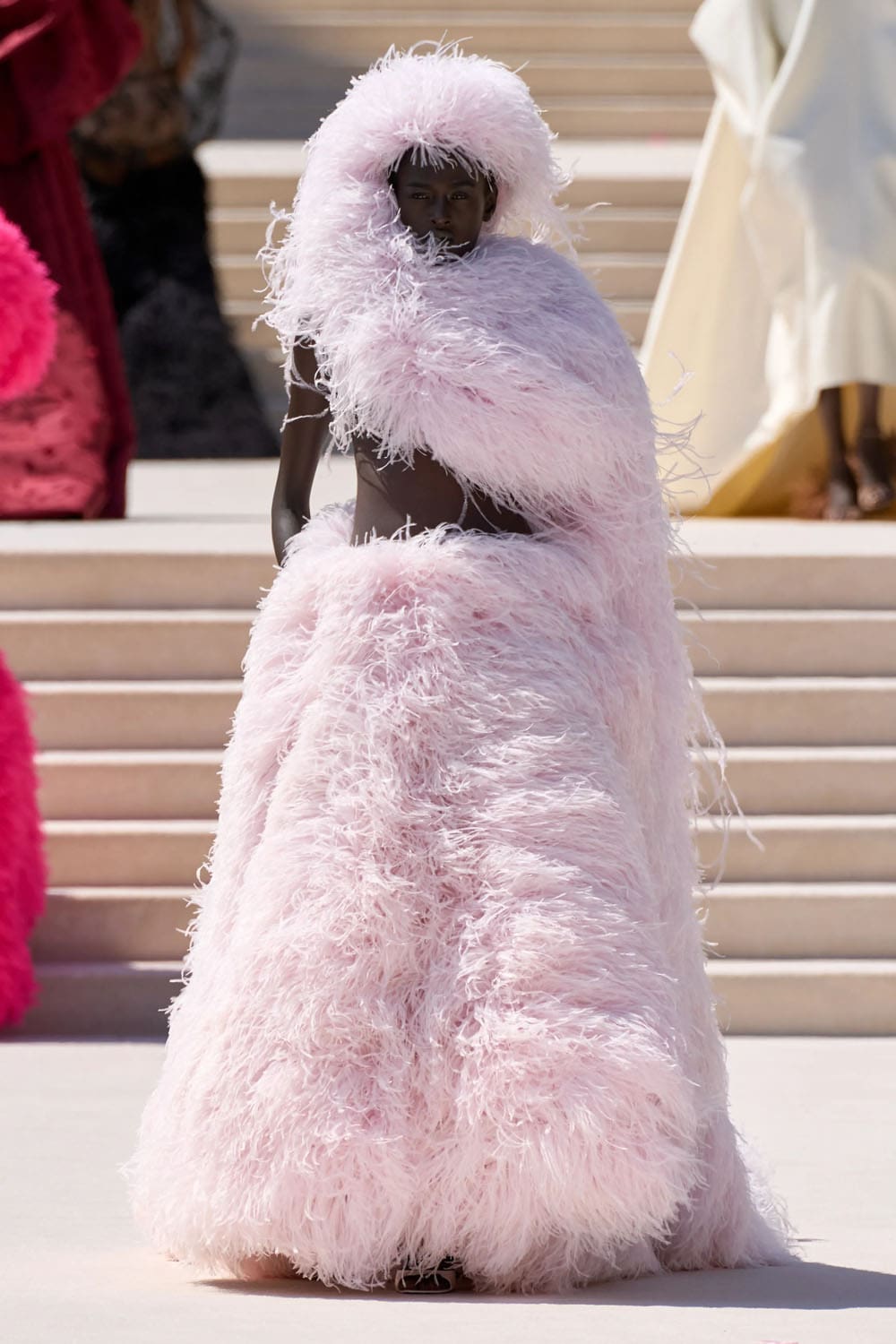
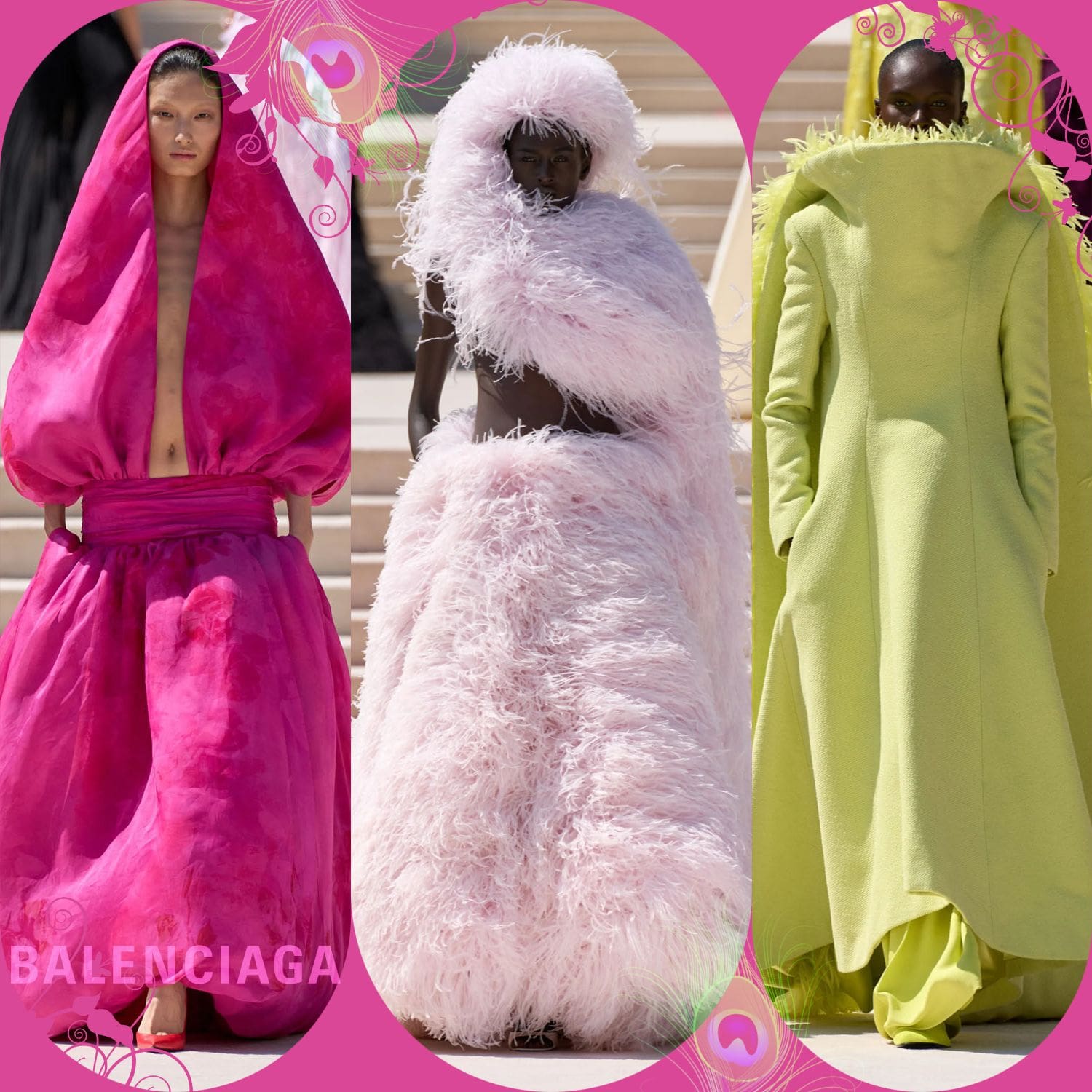
The feathers throughout the collection did not feel like mere ornamentation; they felt like plumage, an organic extension of the human form. Whether it was the iridescent black rooster feather headpiece framing the face like a dark halo above tailored cypress wool pants, or a pale pink ostrich feather headpiece crowning a matching embroidered maxi skirt, the effect was deeply emotional. It was an homage to the lightness of the human spirit, a literal manifestation of the “infinite love” Piccioli praised in his dedication.
The Atelier as Identity: The Living Monument
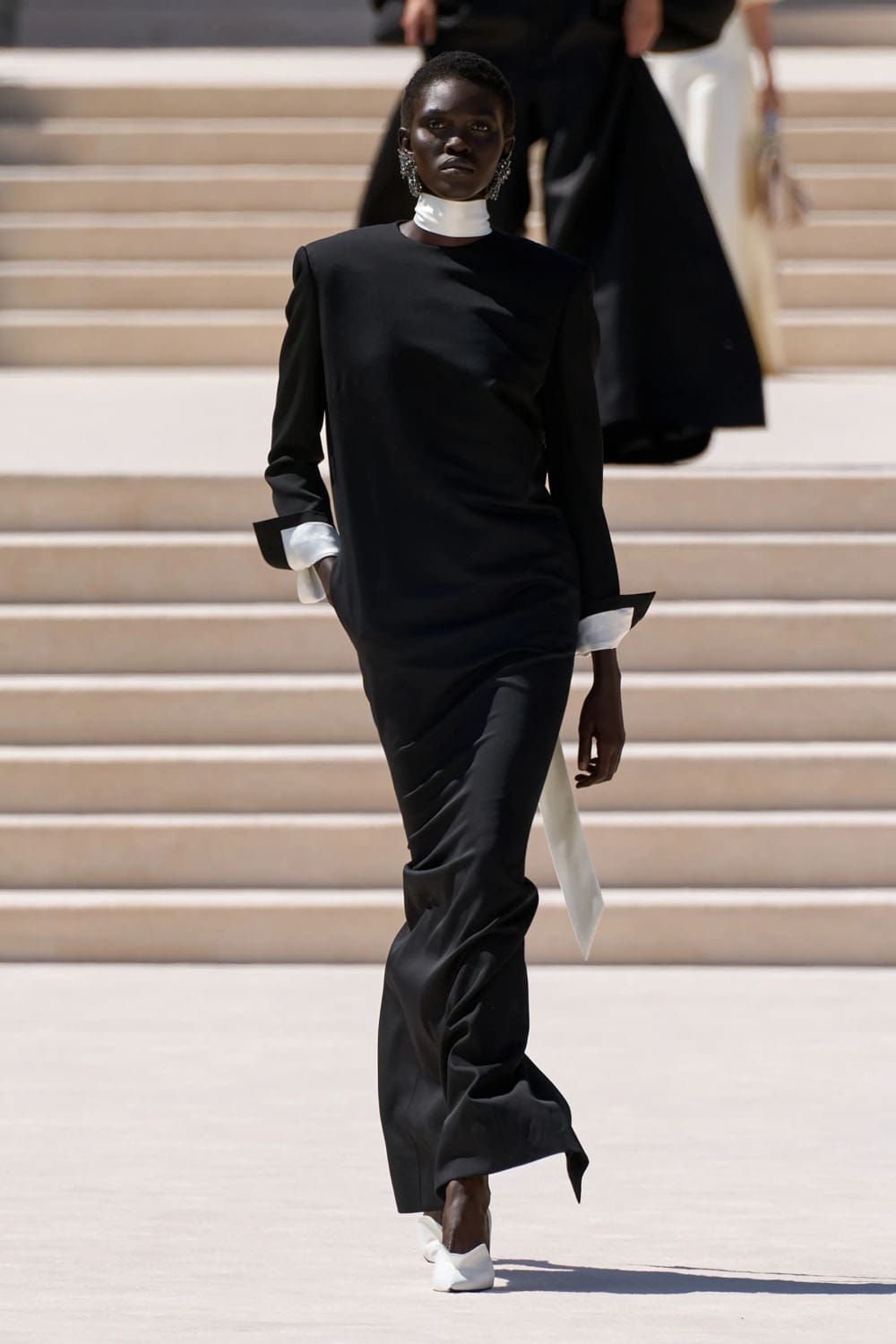
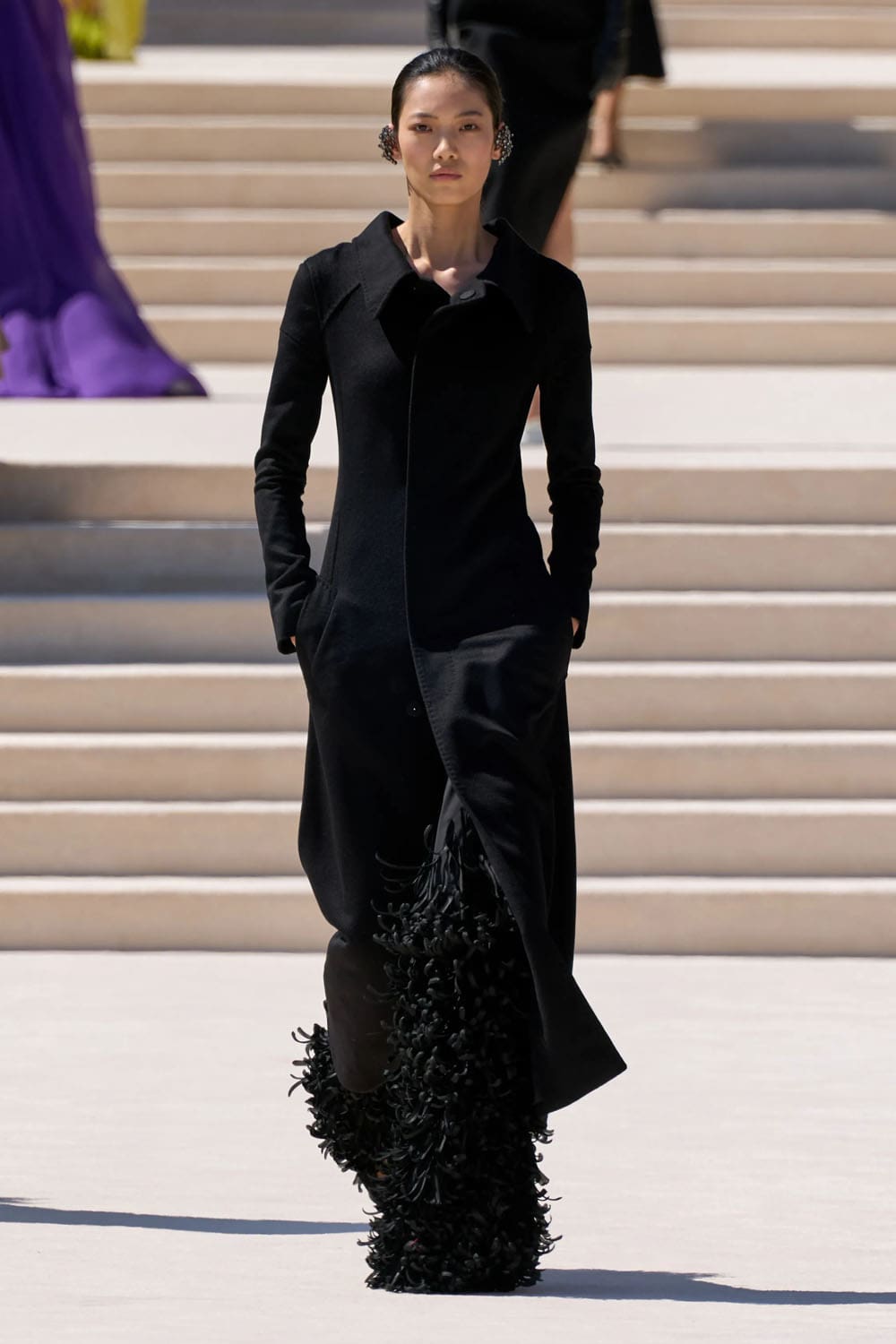
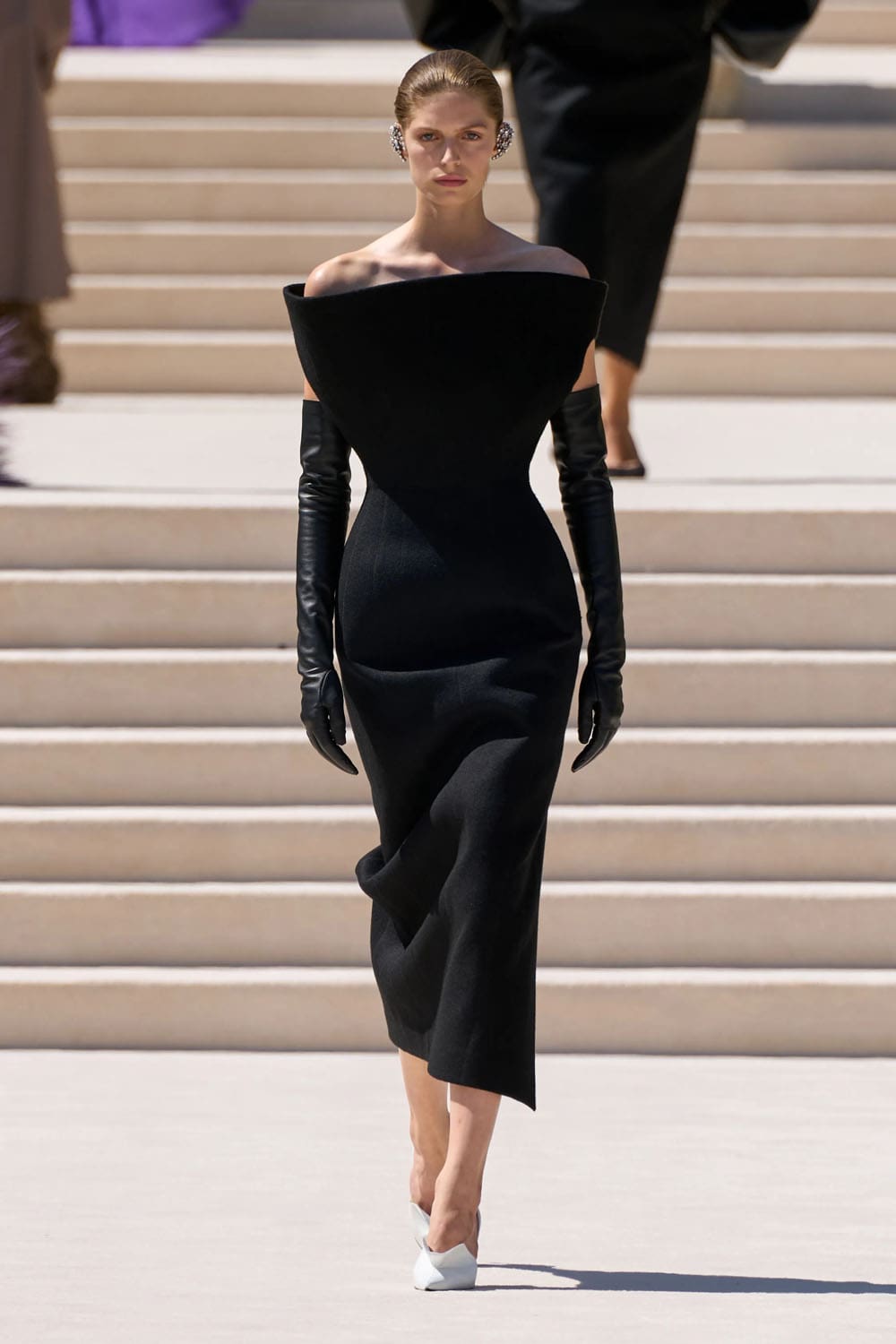
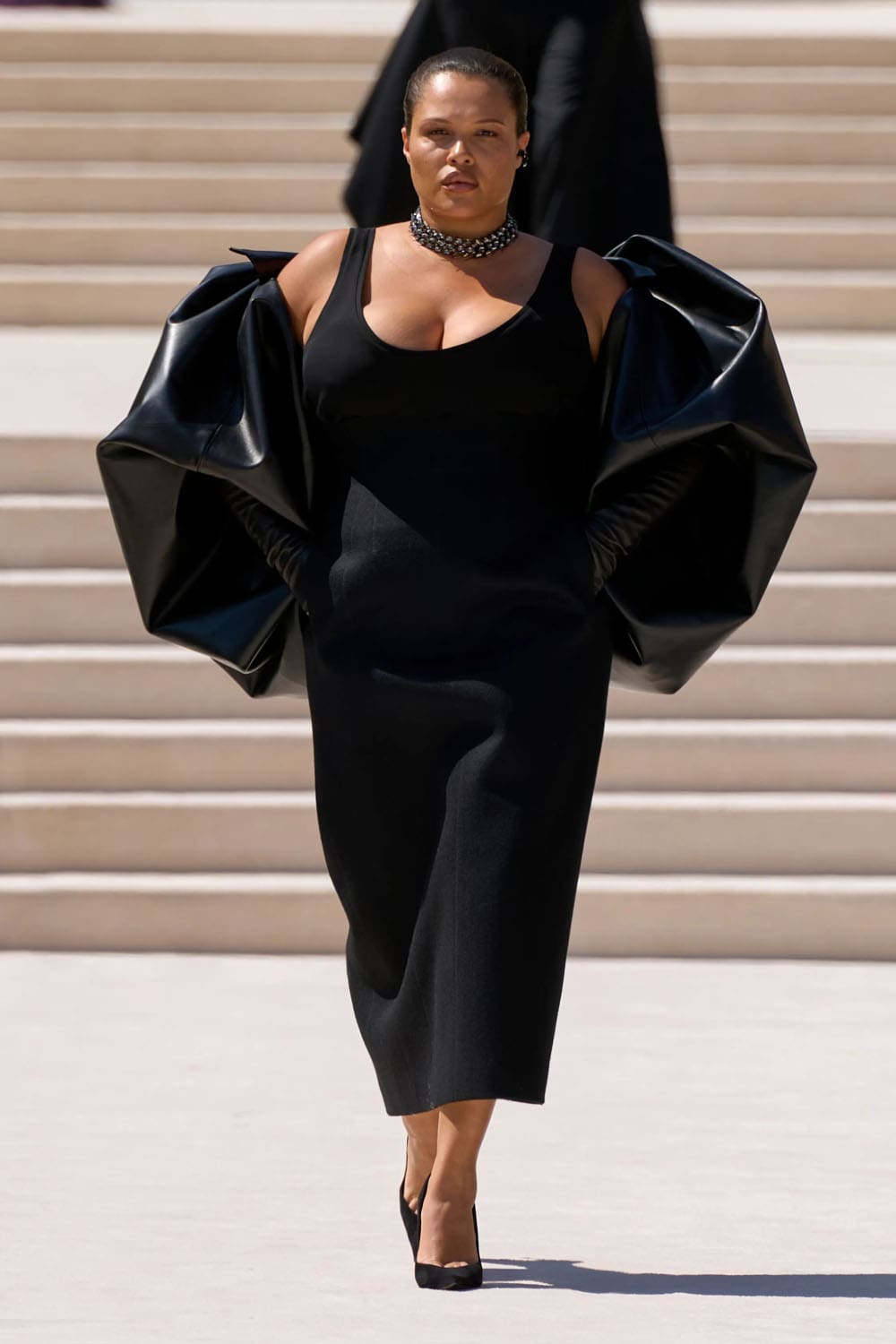
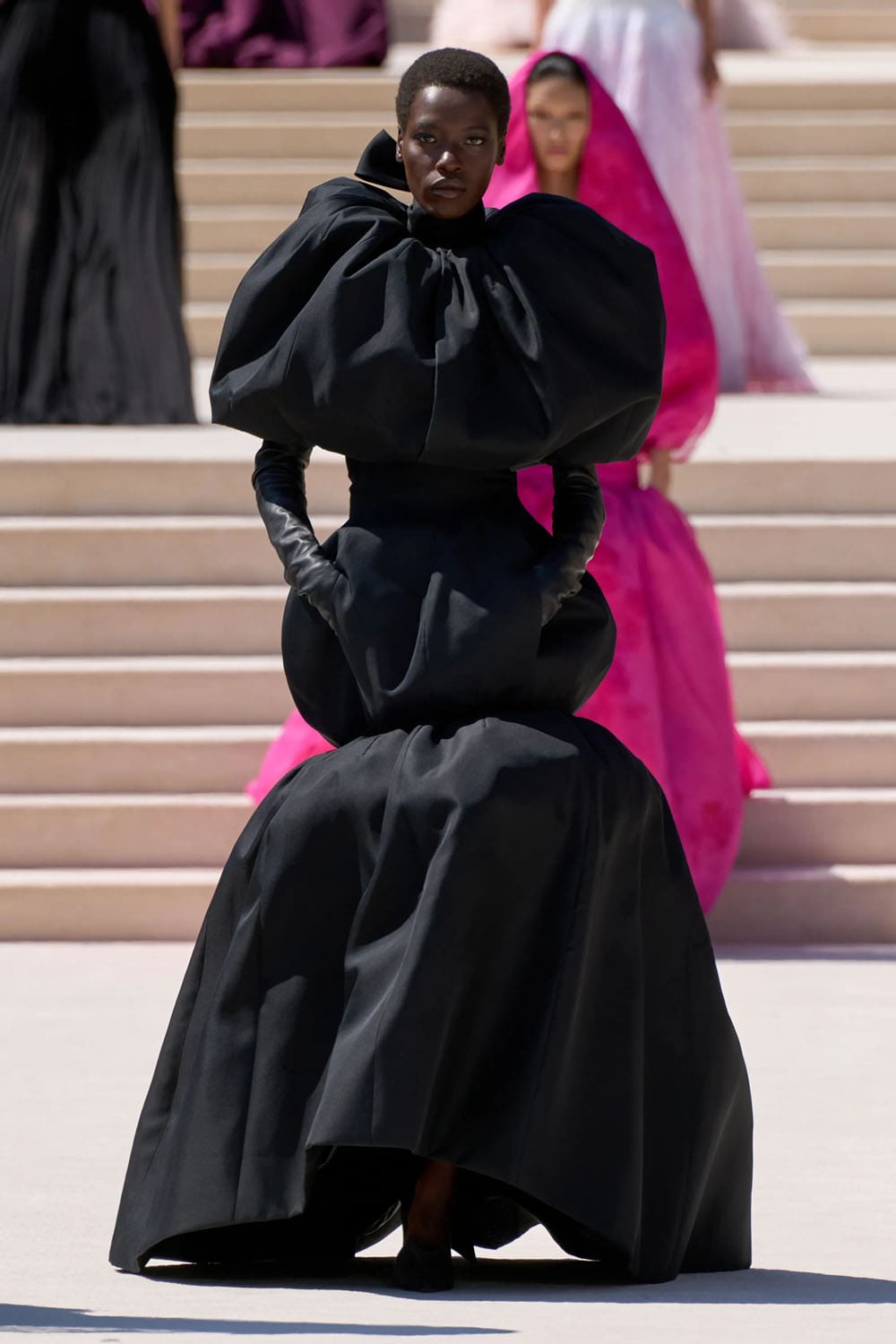
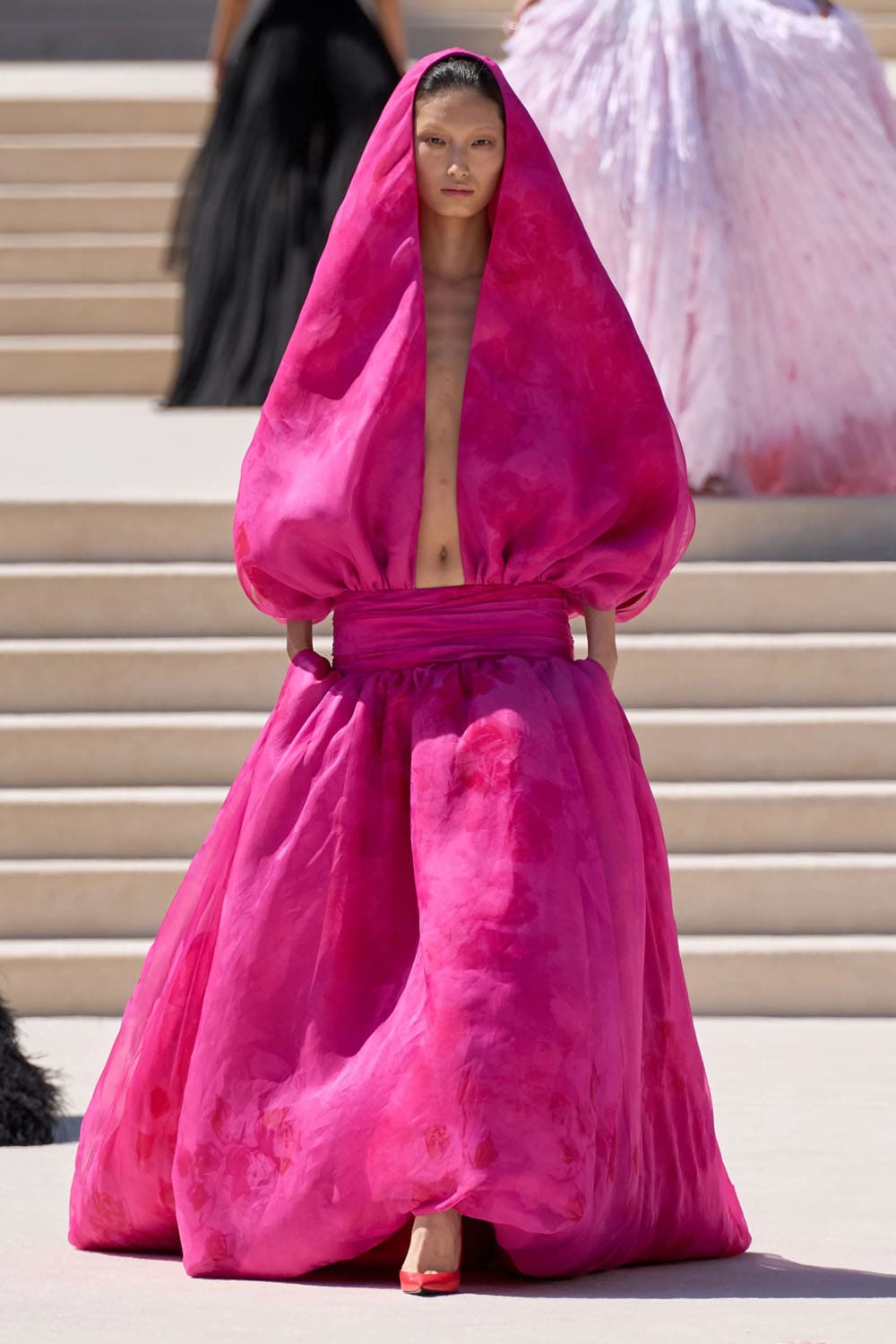
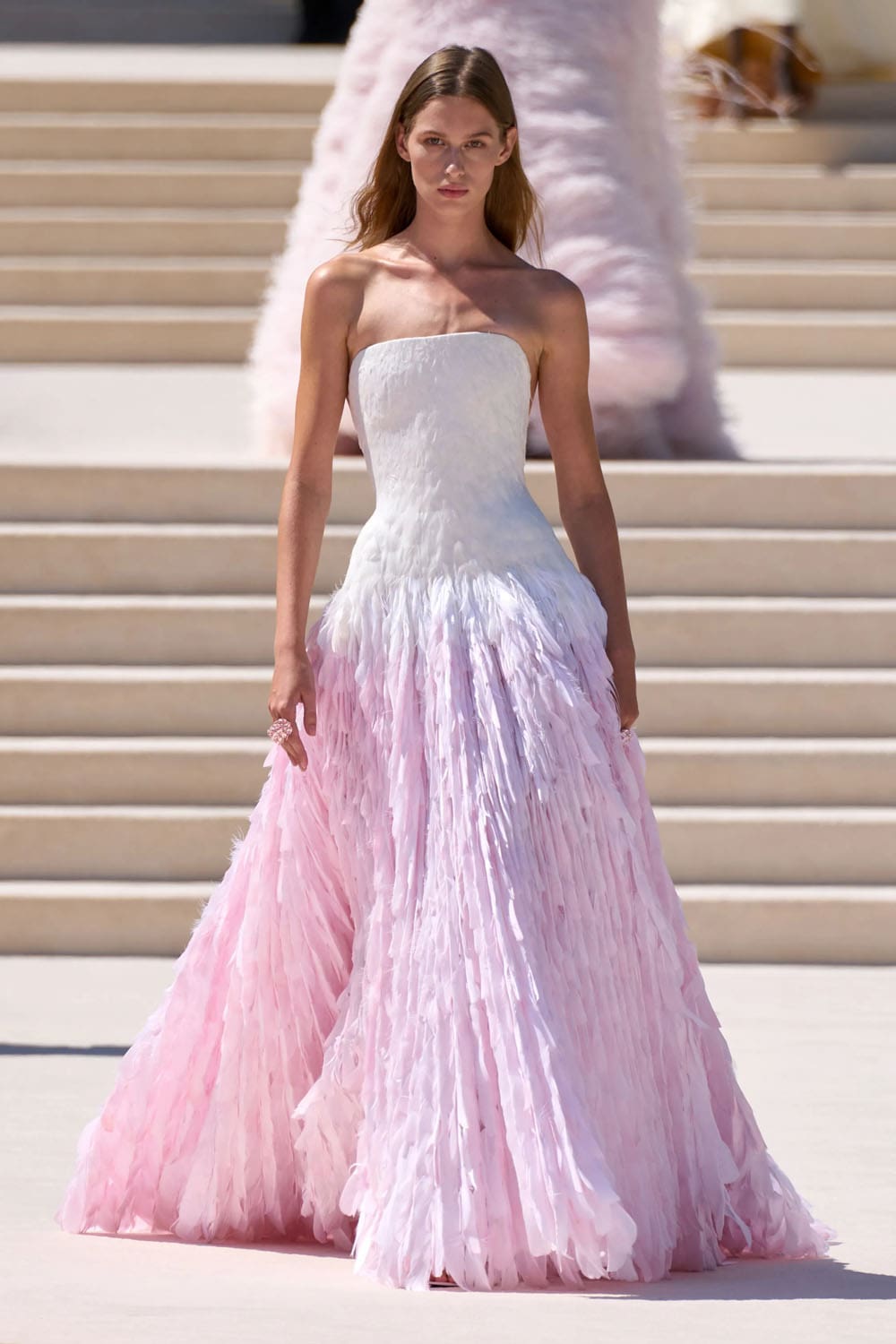
As the collection built toward its climax, the silhouettes grew bolder, yet more intimate. A striking carved dress in black melton wool, paired with black lamb leather opera gloves, showed a masterful restraint—a nod to the monastic purity Cristóbal so often favored. Yet, just moments later, the runway was inherited by an organza flower-embroidered hooded maxi dress in pink silk gazar, and a spectacular goose feather-embroidered maxi dress that shifted in an ethereal gradient from white to pink silk tulle.
This is the ultimate triumph of Pierpaolo Piccioli’s debut for Haute Couture Balenciaga Fall Winter 2026-2027. He did not seek to erase the ghost of the house’s founder, nor did he seek to replicate him. Instead, he invited Cristóbal to dinner, pulled up a chair for the tireless artisans of the atelier, and reminded the world that fashion at this level is not a product of corporate strategy.
It is an art form created by human hands, fueled by human time, and sustained by an unyielding devotion to beauty. In the sunlit courtyard of the Cité Universitaire, Haute Couture found its heart again.
See All Looks Balenciaga Couture Fall 2026