ROGERS TEST: FICTION VS. REALITY. Why the Rogers Test Collapses When a Fictional Prop Enters Real‑World Commerce.
Why the Rogers Test Collapses When a Fictional Prop Enters Real‑World Commerce
In the aftermath of the global promotional campaigns for The Devil Wears Prada 2, a certain line of reasoning has begun circulating — a theory suggesting that the use of fabricated “Runway Magazine” props in partner advertising is protected under the Rogers Test, the legal doctrine governing the use of trademarks in expressive works.
It is an elegant theory. It is also entirely wrong.
Below, we examine the three arguments someone might present to a studio board — and why each collapses the moment a fictional prop crosses the threshold into real‑world commerce.
Legal Ground
Ninth Circuit:
“Works protected under [Rogers] may be advertised and marketed by name, and we so hold.”
✔ If a studio has an expressive work (a TV show, film, book, magazine, game)
✔ And the title of that expressive work is protected under Rogers
✔ Then the studio may advertise THAT expressive work using THAT title
✔ Even if the advertising generates revenue (e.g., soundtrack sales, movie tickets)
That’s it. It does not authorize:
- merchandising
- partner promotions
- co‑branded consumer products
- retail décor
- cosmetics campaigns
- alcohol promotions
- influencer activations
- product packaging
- cross‑brand endorsements
- fake magazines used as props in real‑world commerce
The Ninth Circuit is explicit: Advertising is allowed only as an extension of the expressive work itself.
The critical limitation the studios never quote
✔ Auxiliary
= directly promoting the show
= trailers, posters, cast interviews, soundtrack releases
❌ NOT auxiliary
= L’Oréal selling cream
= Grey Goose selling vodka
= Walmart selling cosmetics
= Eudora selling palettes
= Mercedes selling cars
= Influencers selling products
= Retail décor using the brand
= Fake magazines used as commercial props
These are independent commercial activities, not auxiliary promotion of the expressive work.
This is exactly the kind of studio pretext the Ninth Circuit warned about.
Let’s break it down:
✔ If the ad is ONLY promoting the movie
→ Rogers protects it.
❌ If the ad is promoting a consumer product
→ Rogers does NOT protect it.
❌ If the ad uses the fictional brand to sell real goods
→ Rogers does NOT protect it.
❌ If the ad uses the fictional brand in retail environments
→ Rogers does NOT protect it.
❌ If the ad uses the fictional brand as a trade identifier
→ Rogers does NOT protect it.
❌ If the ad uses the fictional brand in merchandising
→ Rogers does NOT protect it.
❌ If the ad uses the fictional brand on packaging
→ Rogers does NOT protect it.
❌ If the ad uses the fictional brand in cosmetics, alcohol, fashion
→ Rogers does NOT protect it.
✔ Rogers protects expressive works
✔ Rogers protects advertising of expressive works
❌ Rogers does NOT protect commercial exploitation
❌ Rogers does NOT protect partner promotions
❌ Rogers does NOT protect merchandising
❌ Rogers does NOT protect consumer products
❌ Rogers does NOT protect retail décor
❌ Rogers does NOT protect cosmetics, alcohol, fashion campaigns
❌ Rogers does NOT protect fake magazines used as commercial props
❌ NOT the advertising of real‑world products
❌ NOT partner promotions
❌ NOT cosmetics campaigns
❌ NOT alcohol promotions
❌ NOT retail décor
❌ NOT fake magazines used to sell consumer goods
❌ NOT cross‑brand merchandising
❌ NOT co‑branded influencer content
❌ NOT product packaging
❌ NOT “brand partnerships”
❌ NOT “movie tie‑ins”
❌ NOT “IP activations”
The Ninth Circuit’s protection evaporates the moment the fictional brand is used to sell anything other than the expressive work itself.
Why the “movie promotion” excuse collapses
Studio offer to commercial partners claims:
“This L’Oréal ad is promoting the movie.”
But legally, the question is:
What is the primary commercial purpose of the ad?
If the ad:
- shows the product
- names the product
- prices the product
- links to purchase
- uses the product’s branding
- uses the fictional brand to elevate the product
- uses props (fake magazines) to create prestige
- uses the movie only as a halo effect
Then the ad is commercial speech, not expressive speech.
And Rogers does not apply.
The Ninth Circuit is explicit:
“Commercial speech is not protected by Rogers.”
The “Dual‑Purpose Expression” Argument
Claim:
The film’s fictional “Runway Magazine” is a core creative element of a famous cinematic universe. When partners like TRESemmé, Grey Goose, or L’Oréal use replicas of that prop, they are not creating a new brand — they are engaging in a classic cinematic tie‑in. The fake magazine serves an expressive purpose: signaling that the product is linked to the movie.
Why this fails
A fictional prop cannot be used as a commercial identity in the real world. The Rogers Test protects expression inside the work — not the transformation of a fictional element into a commercial platform for unrelated goods.
Once a partner uses the prop to:
- sell cosmetics,
- promote alcohol,
- decorate retail environments,
- anchor influencer campaigns,
- or build Web3 commercial experiences,
the use is no longer expressive. It is commercial exploitation of a media identity.
Rogers does not apply to:
- product advertising,
- brand partnerships,
- merchandising,
- retail décor,
- or consumer‑facing promotional assets.
A cinematic universe cannot be used as a shield for commercial appropriation.
A fictional element in a book or film:
- does not create trademark rights,
- does not create trade‑name rights,
- does not create priority,
- does not override a real business operating in commerce.
Disney’s timeline confirms this.
Disney:
- never used “Runway Magazine” in commerce before 2026,
- never sold anything under that name,
- never licensed it,
- never registered it,
- never built a brand around it,
- never used it outside the film.
Disney only entered commerce in 2026, through partner activations
Authority:
- DC Comics v. Towle, 802 F.3d 1012 (9th Cir. 2015) — fictional elements are protected as expression, not as commercial marks.
- Warner Bros. v. Global Asylum, 2012 WL 6951315 — fictional references do not create enforceable trademark rights.
- Paris Convention, Art. 8 — trade names are protected without registration and independent of trademark analysis.
- Lanham Act, §43(a) — prohibits false designation of origin in commerce, regardless of fictional origin.
The “Rogers Protects Promotional Marketing” Argument
Claim:
Rogers doesn’t just protect the movie — it protects the promotional vehicles used to market the movie. Because the fake magazines were used as promotional set pieces to build excitement, their primary purpose is artistic relevance. They do not function as trade identifiers, so Rogers shields both the studio and its partners.
Why this fails
This argument misunderstands the scope of Rogers entirely. A Partner Commercial Is NOT a Movie Trailer. A movie trailer is protected by Rogers. A partner commercial is not.
A. Rogers applies only to expressive works
Rogers protects:
- films,
- books,
- art,
- titles,
- trailers.
It does not protect:
- Grey Goose vodka campaigns,
- TRESemmé haircare promotions,
- L’Oréal cosmetics displays,
- Mercedes advertisements,
- Walmart retail décor,
- Eudora consumer products.
Partner campaigns are commercial speech, not expressive works.
B. Commercial speech is not protected by Rogers
The moment a partner uses a fictional prop to:
- sell a product,
- enhance brand prestige,
- create a retail experience,
- or imply endorsement,
the use becomes explicitly misleading — the exact scenario where Rogers fails.
C. Using a real media logo destroys the argument entirely
In multiple markets, partners used:
- the real RUNWAY MAGAZINE® logo,
- the real masthead,
- the real trade name.
This is not “artistic relevance”. This is false designation of origin.
Rogers cannot protect conduct that is explicitly misleading.
The moment a partner uses:
- a product,
- a brand,
- a logo,
- a magazine,
- a masthead,
- a prop,
- a set piece
to sell their own goods, the use becomes commercial, not expressive.
Authority:
- Rogers v. Grimaldi, 875 F.2d 994 (2d Cir. 1989) — applies only to expressive works.
- Gordon v. Drape Creative, 909 F.3d 257 (9th Cir. 2018) — Rogers does not apply when the use is explicitly misleading or used as a source identifier.
- VIP Products v. Jack Daniel’s, 599 U.S. 140 (2023) — commercial use of a mark, even humorously, is not protected by Rogers.
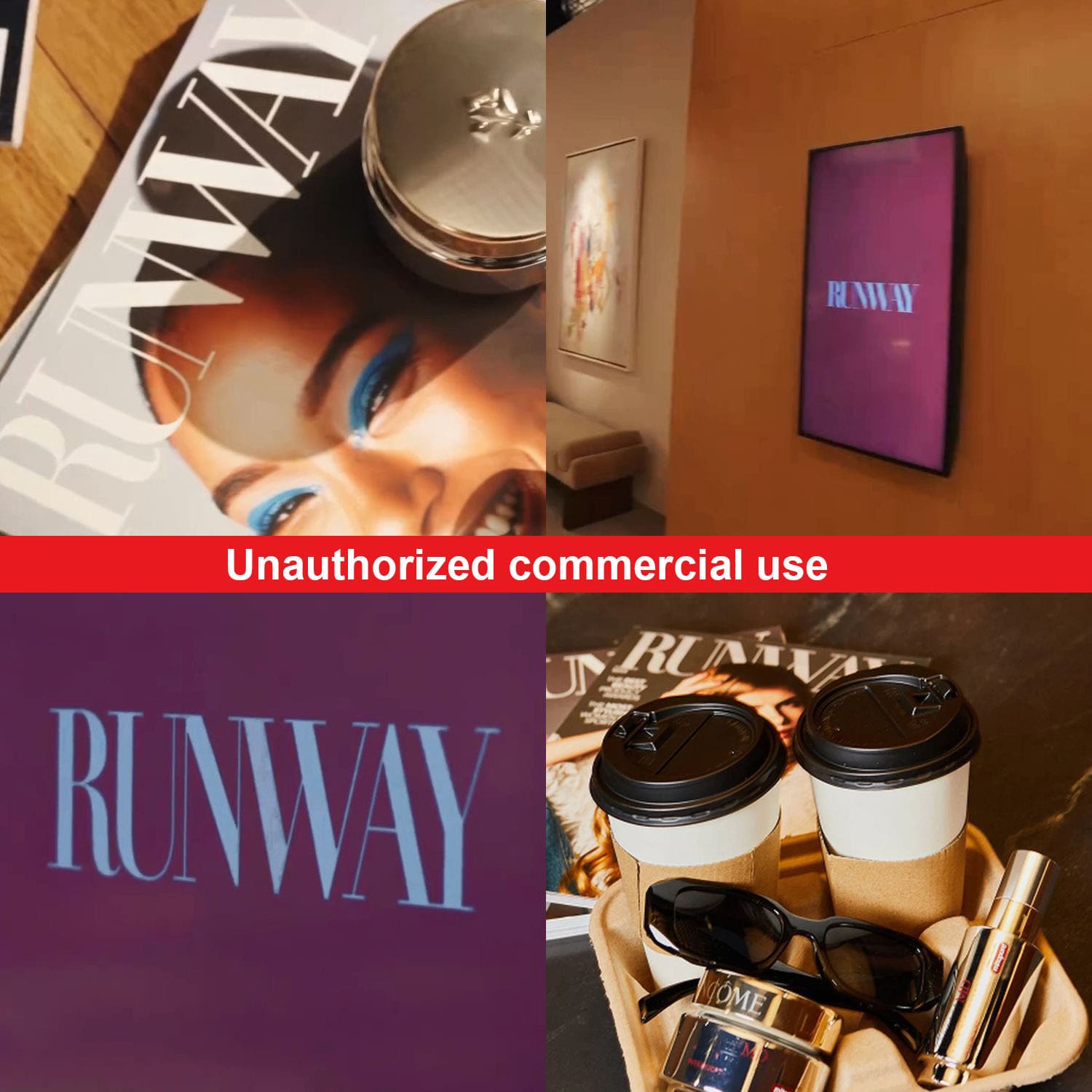
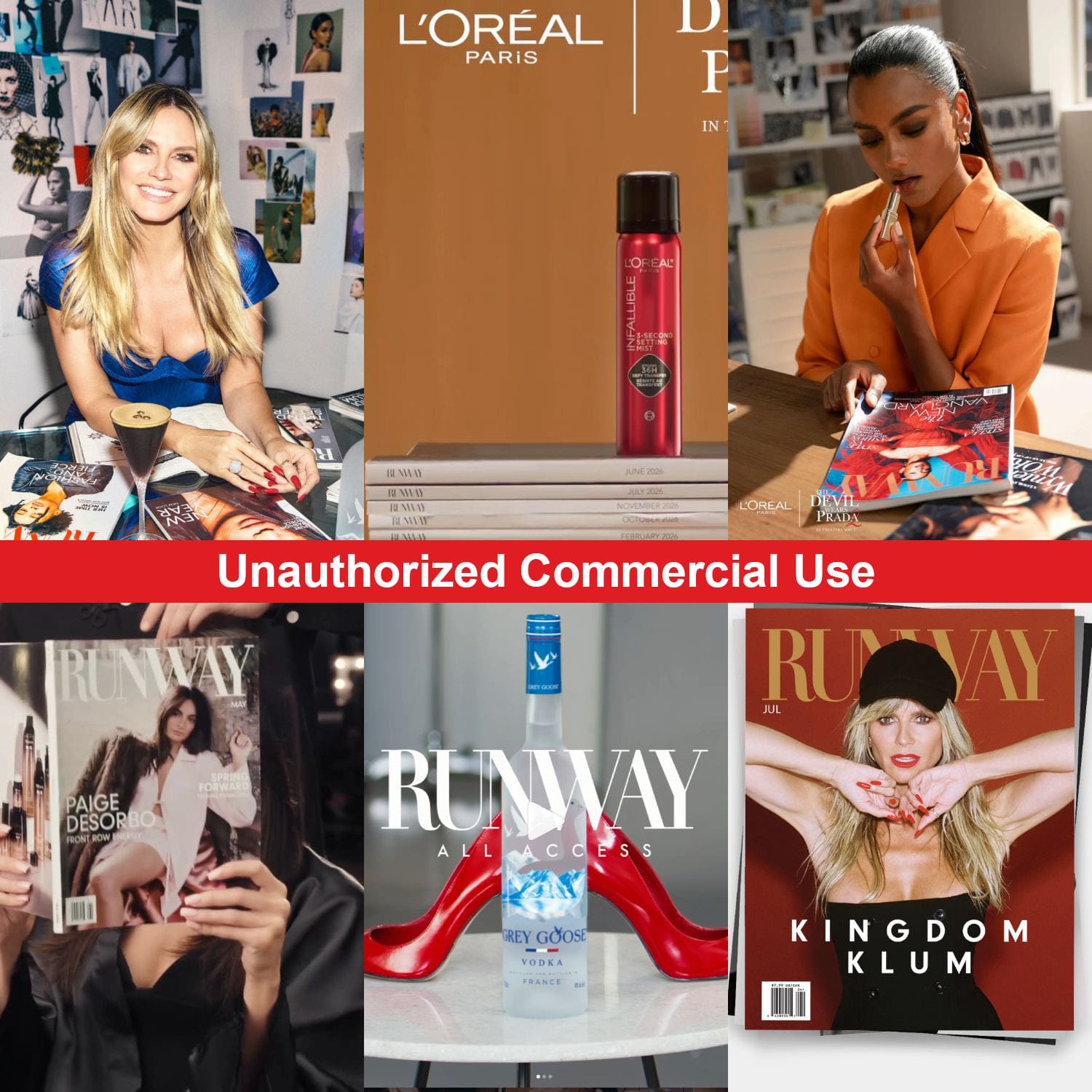
The Real RUNWAY MAGAZINE® vs. The Fictional Prop: Global Record of Unauthorized Brand Licensing
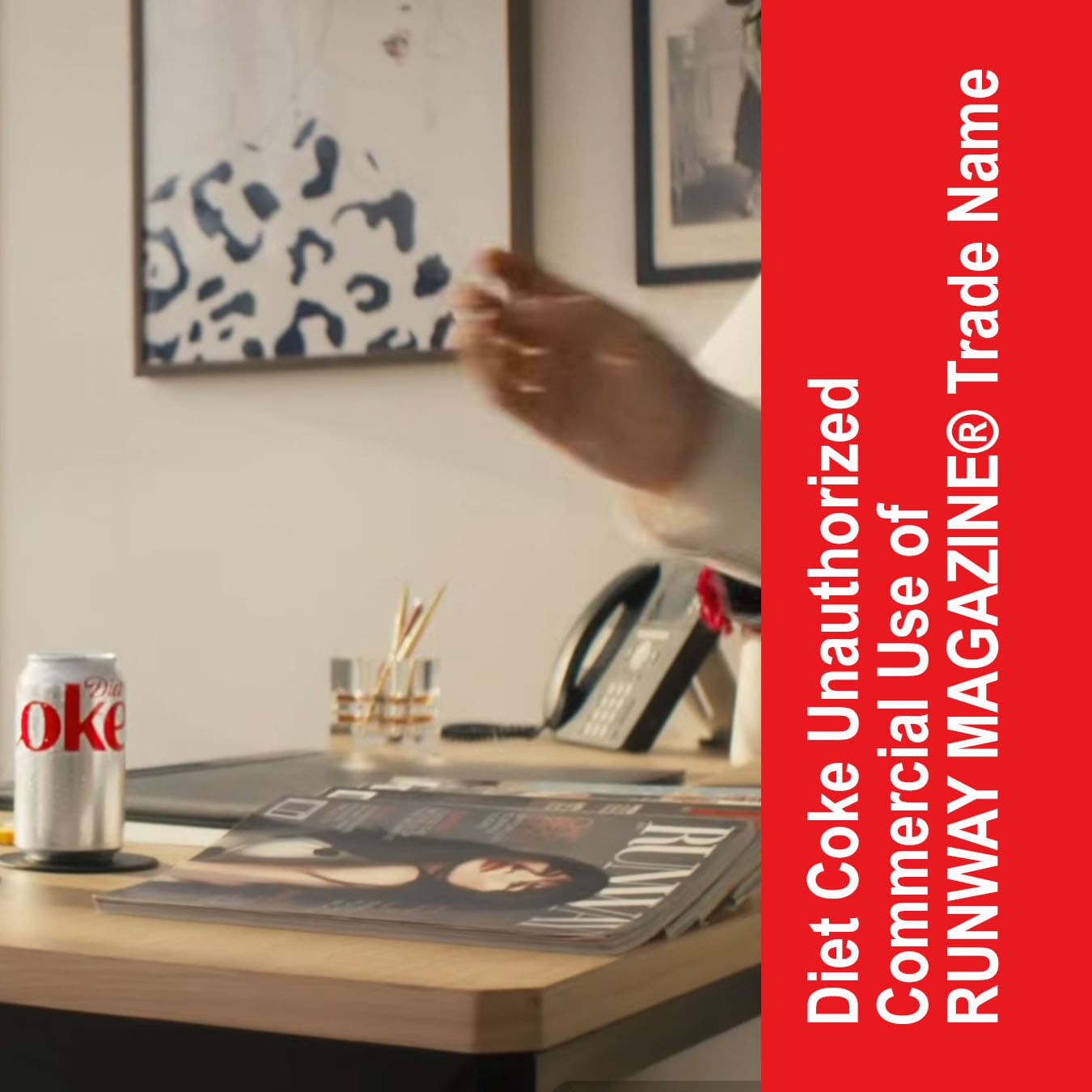
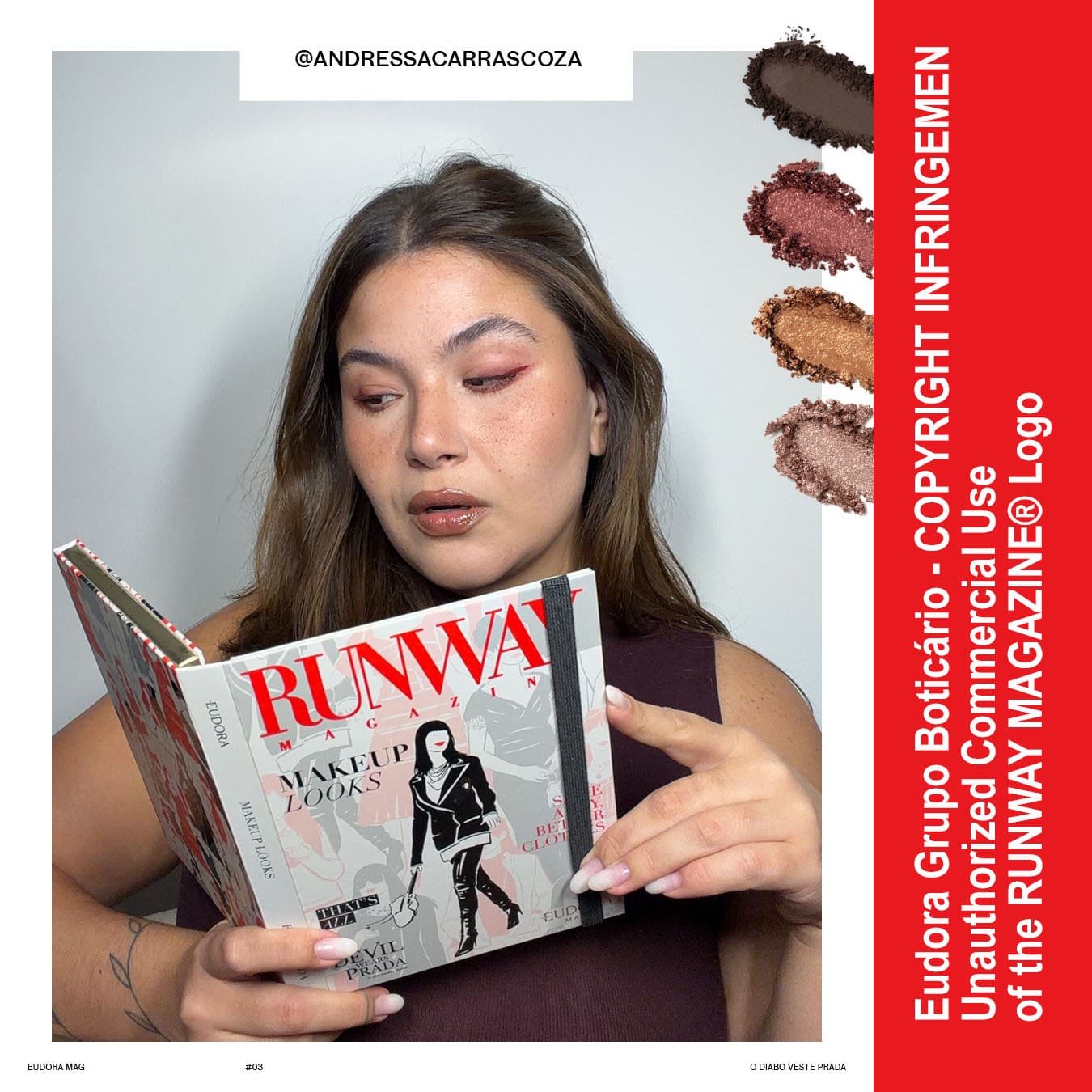
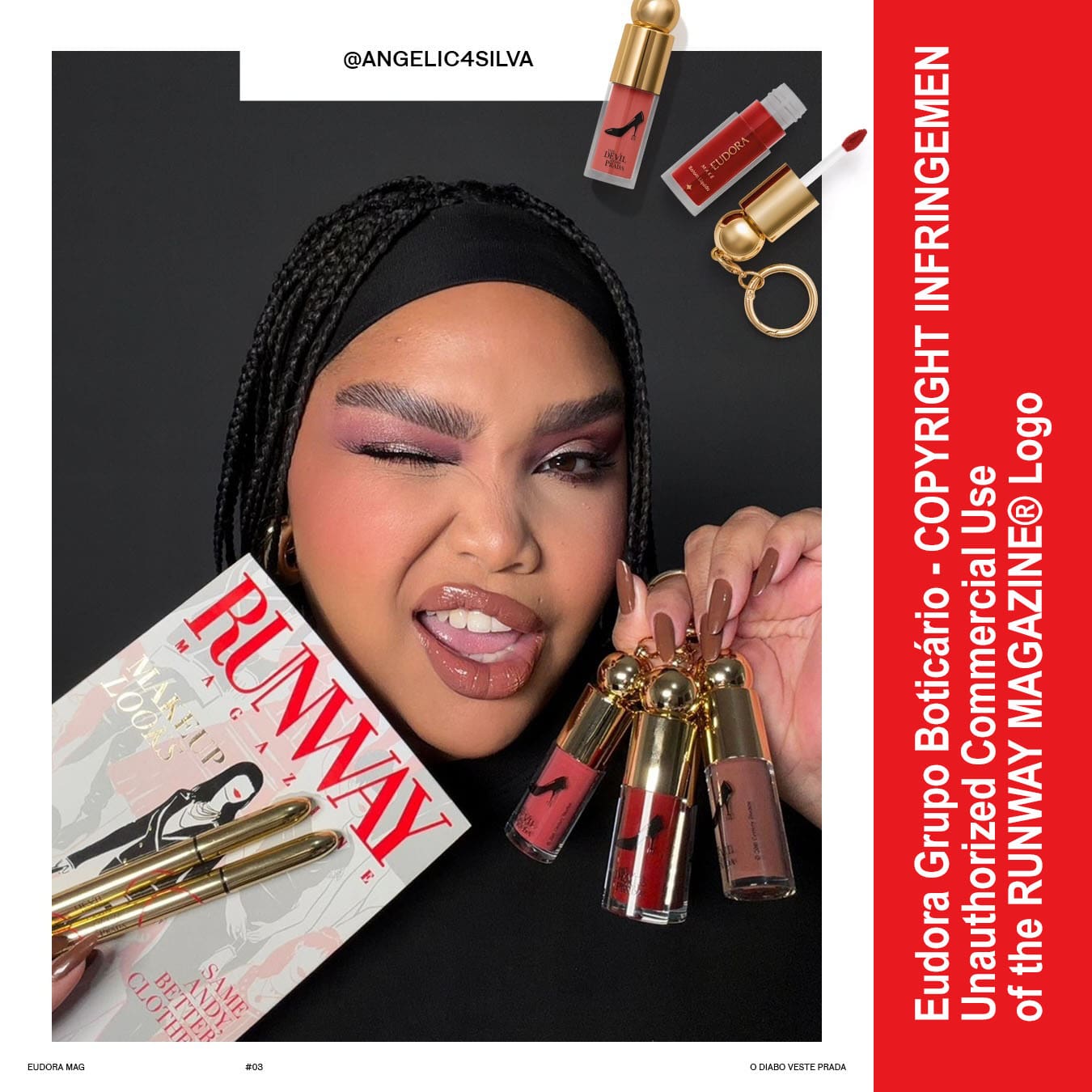
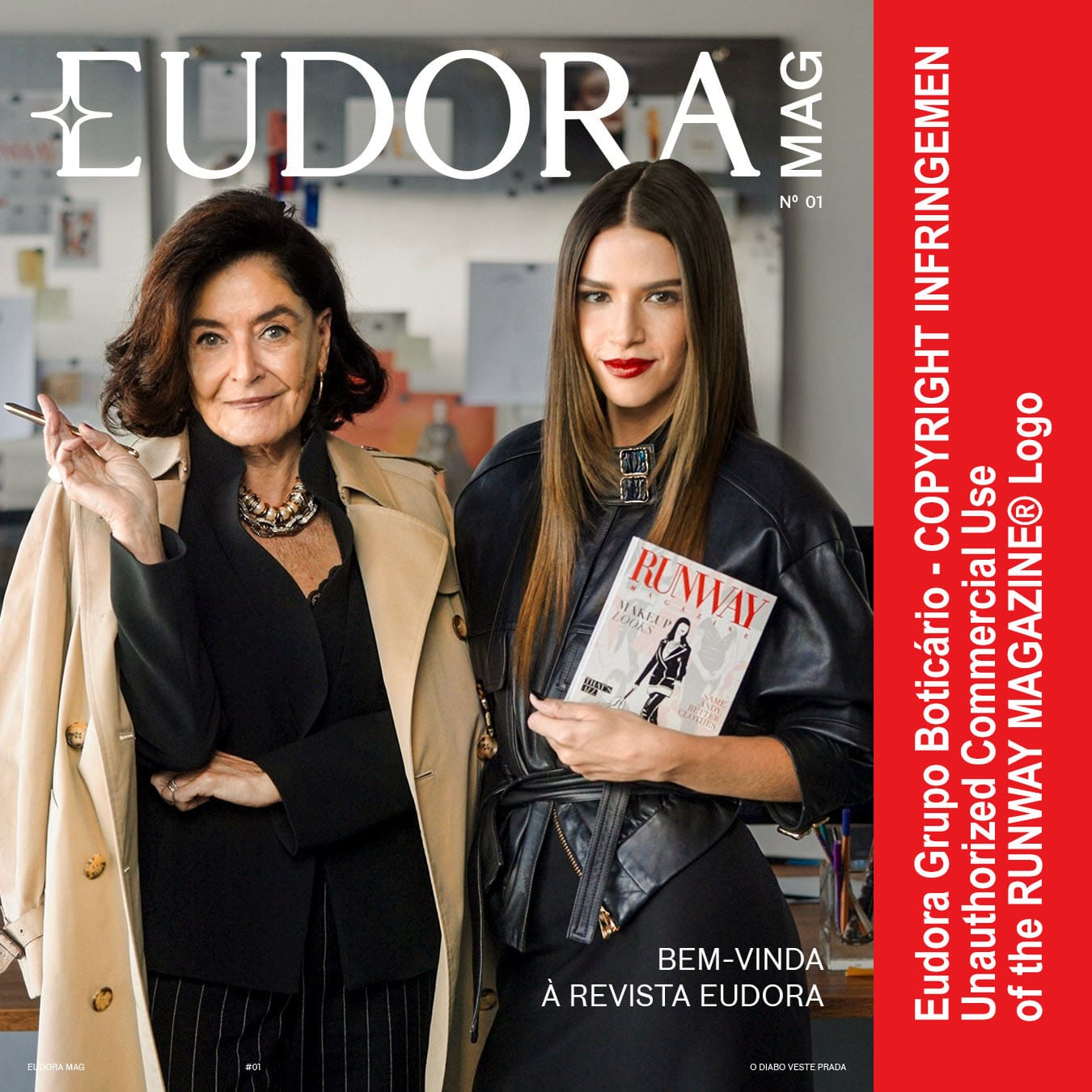
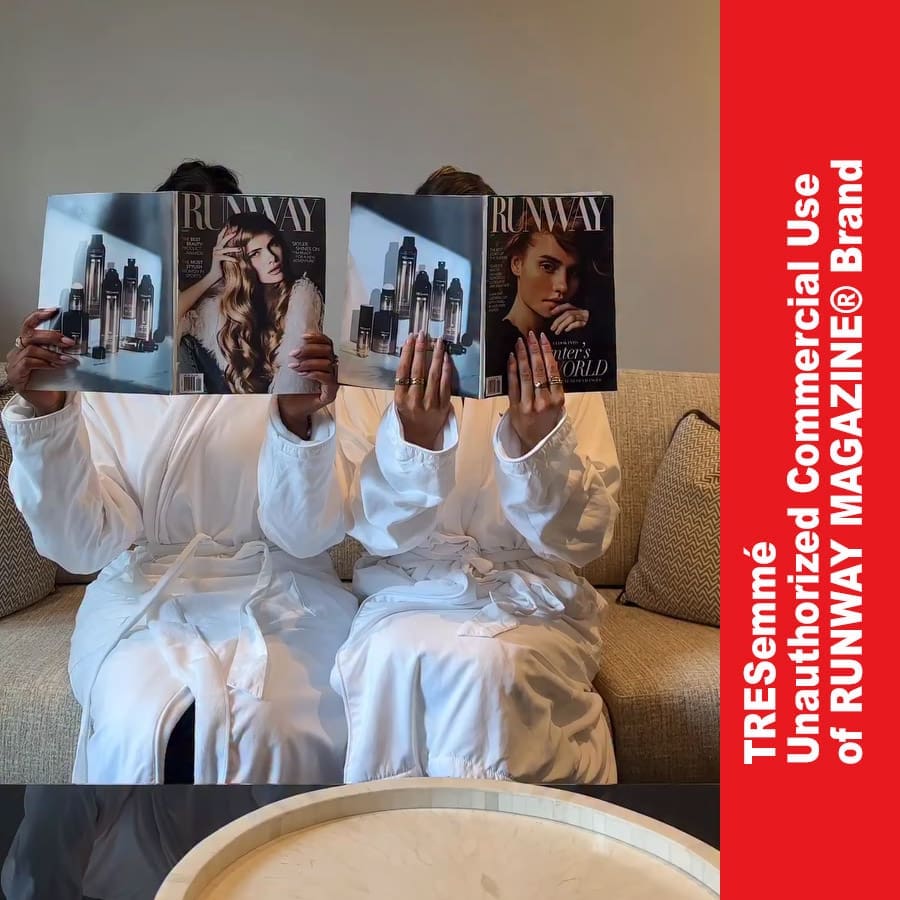
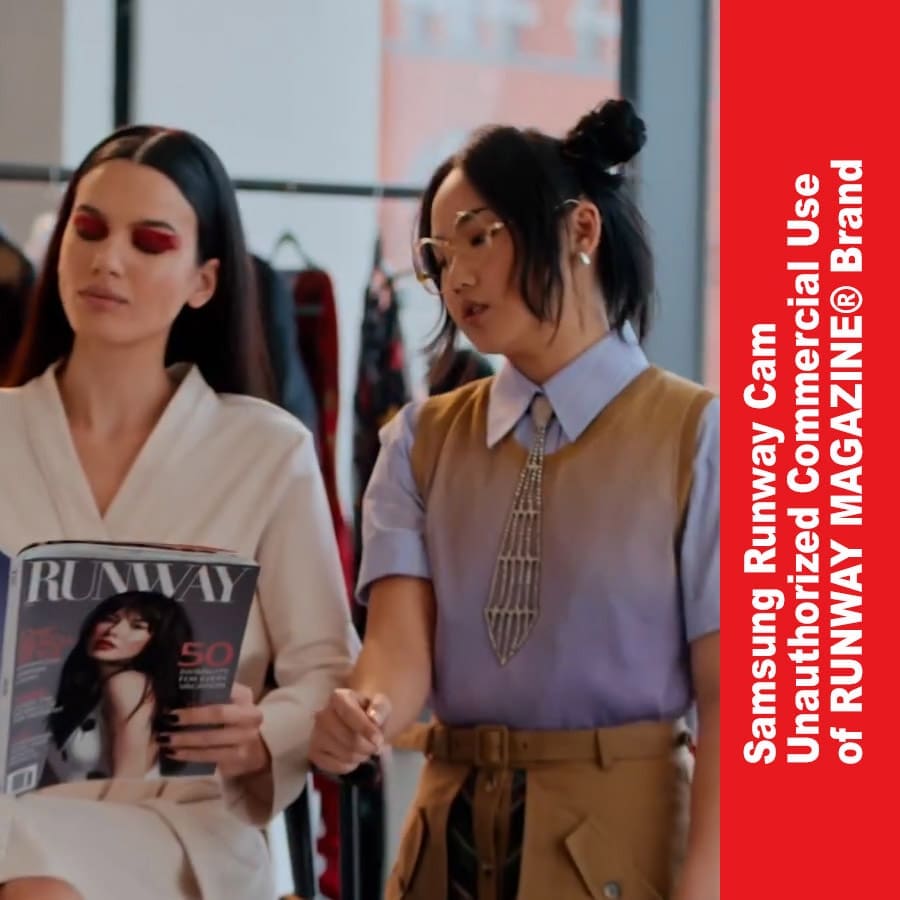
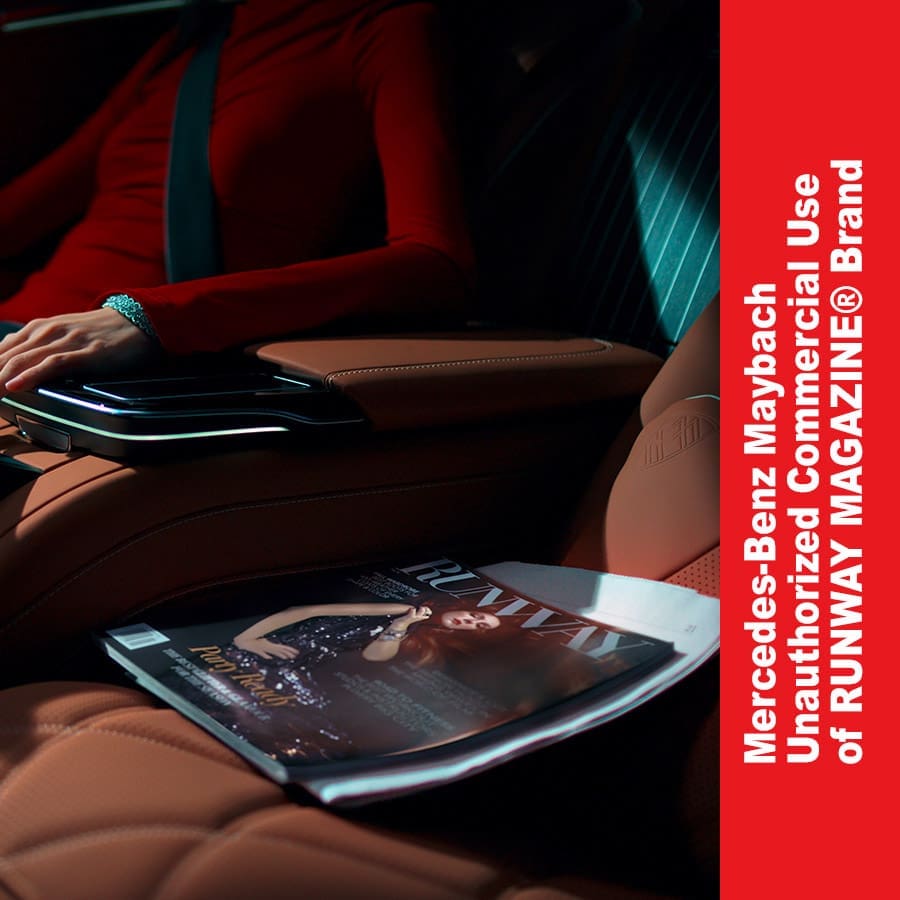
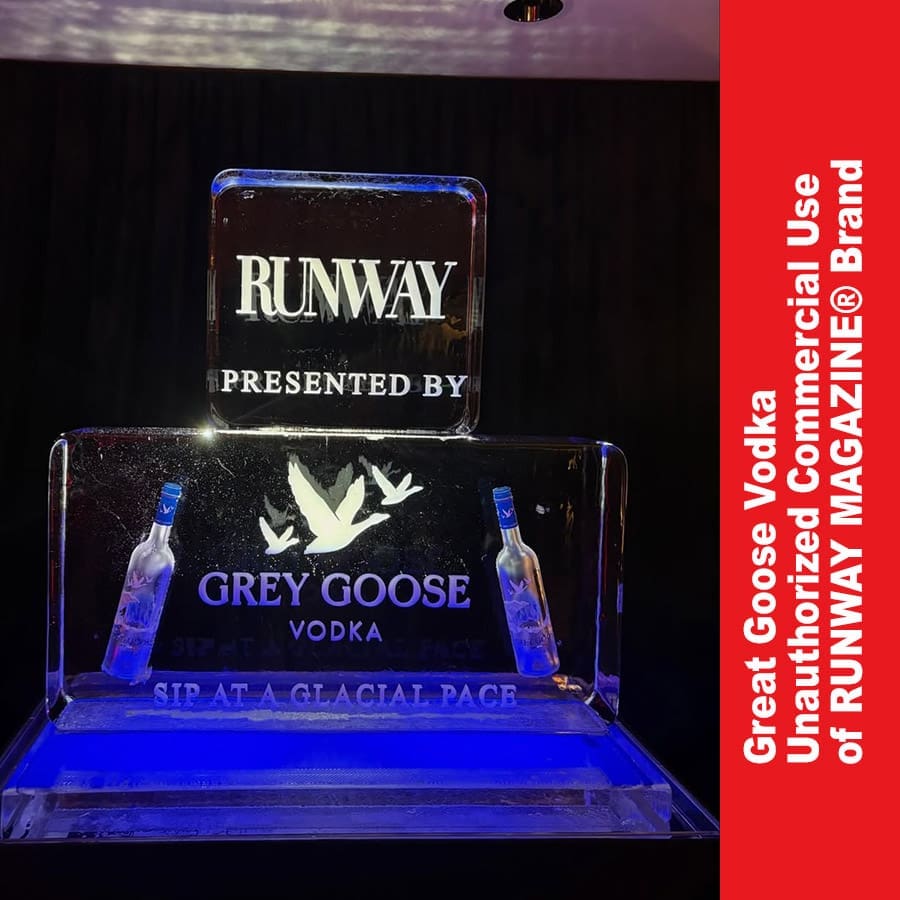
Illustrative promotional imagery released by Diet Coke featuring fabricated “Runway Magazine” issues as part of its film‑related publicity assets.
Used here for reporting and documentation purposes.
The “Freebie/Prop” Distinction
Claim:
The fabricated magazines were not sold as real publications. They were distributed as promotional freebies or used as décor. Because they were not sold, no infringement occurred.
Why this fails
A. “Not sold” is irrelevant in trade‑name law
Trade‑name infringement does not require:
- a sale,
- a price tag,
- or a transaction.
It requires use in commerce — which includes:
- retail décor,
- product displays,
- promotional environments,
- influencer content,
- digital experiences.
Every partner activation used the “Runway” identity in commerce.
B. Walmart SoHo destroys the “freebie” narrative
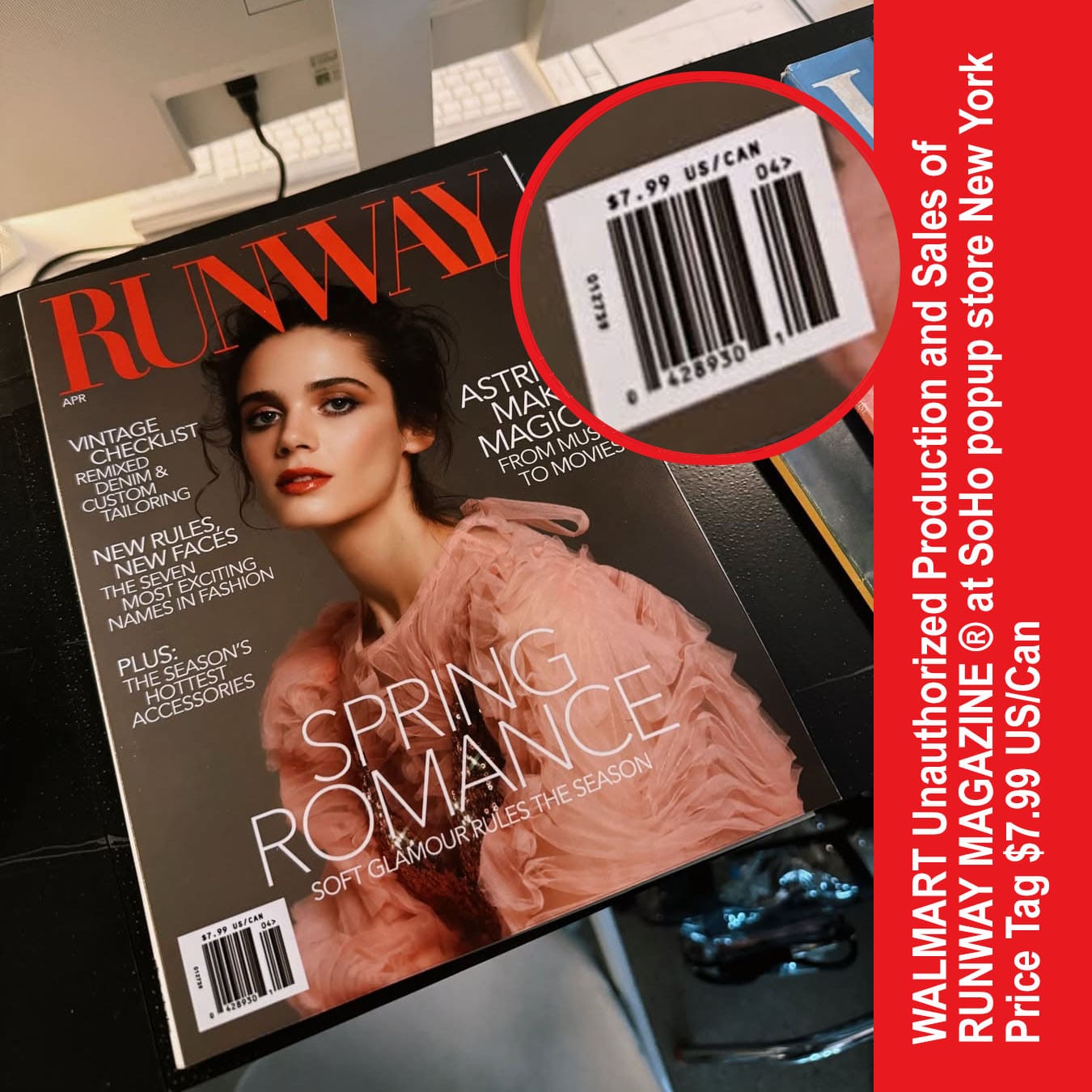
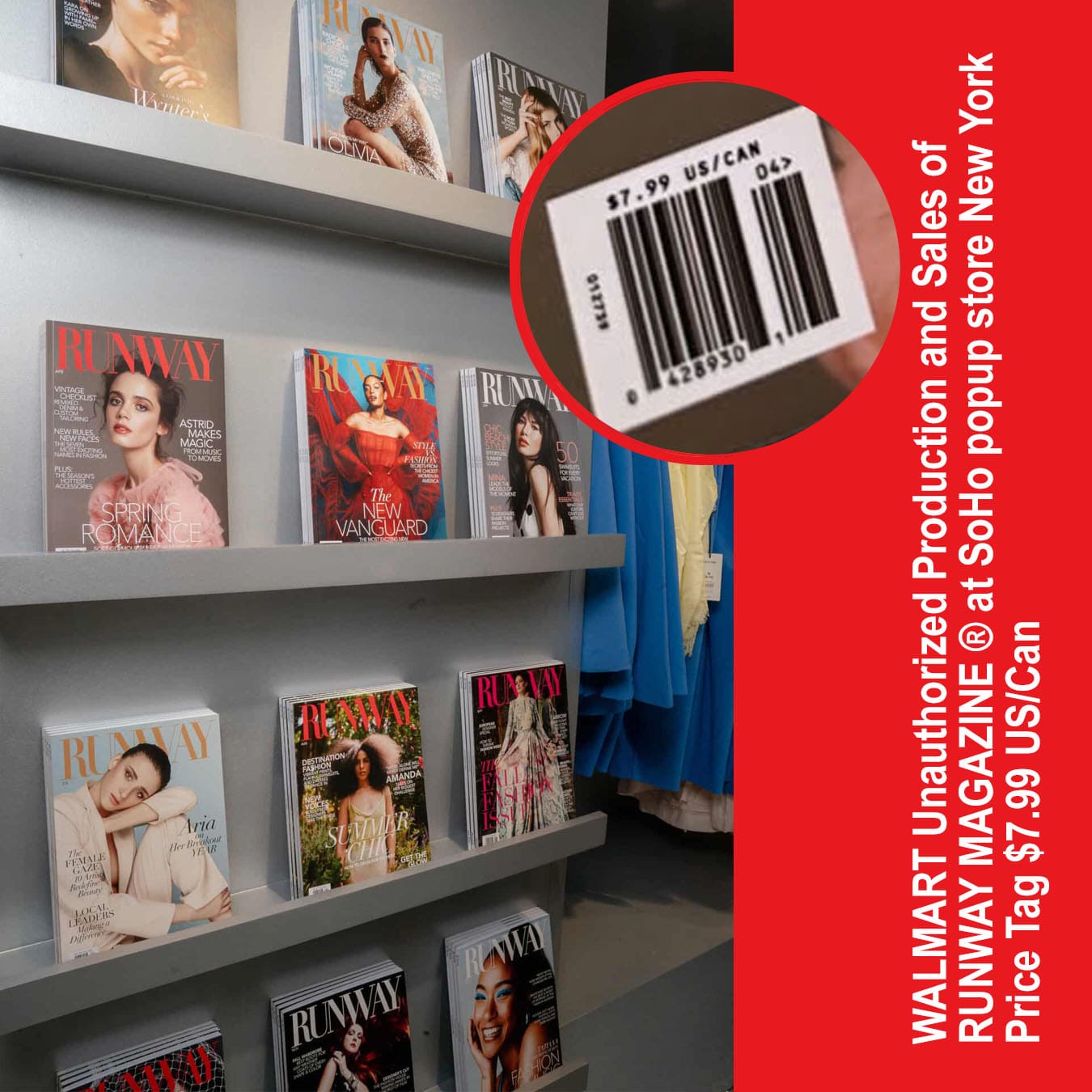
The SoHo popup displayed:
- barcoded magazines,
- priced at $7.99,
- positioned as retail items.
Even if they were not ultimately sold, the presentation constitutes:
- offering for sale,
- merchandising,
- use in trade.
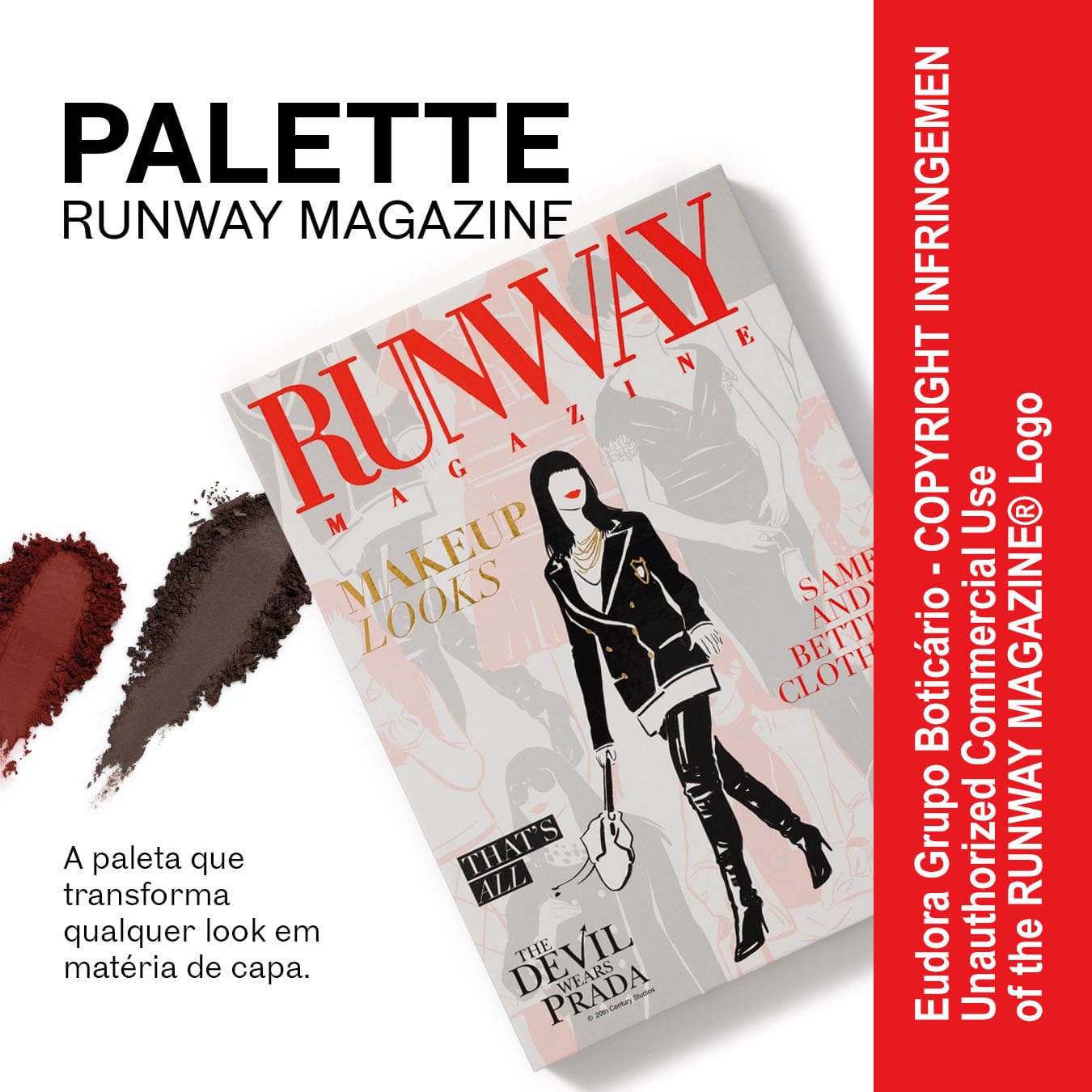
C. Eudora is the fatal blow
A licensed consumer product — a cosmetics palette — used:
- the real RUNWAY MAGAZINE® logo,
- sourced from Wikidata,
- under a Disney license,
- sold in Brazil.
This is not a prop. This is not décor. This is not a freebie.
This is commercial product branding using a real media identity without consent.
Alcohol, Cosmetics, and Influencer Campaigns Are Not “Artistic Expression”.
Example: A partner company
- printed fake Runway covers,
- used them as vodka stands,
- put a model on them,
- used “Runway Ready” slogans,
- tied it to alcohol glamour,
- declared itself “Official Partner”.
This is:
- commercial use,
- product endorsement,
- brand association,
- unfair competition,
- passing off.
Authority:
- Anheuser‑Busch v. Balducci, 28 F.3d 769 (8th Cir. 1994) — alcohol advertising using another brand’s identity is not protected expression.
- Lanham Act §43(a) — prohibits misleading commercial association.
Even if the magazines were “décor”:
- décor in a retail environment is commercial use,
- décor displaying a trade name is use in commerce,
- décor with a barcode and price tag is presumptively for sale.
But even if not sold:
- they were used to sell other goods,
- they were used to attract customers,
- they were used as brand association devices.
This is enough for:
- trade‑name infringement,
- unfair competition,
- passing off,
- dilution (in some jurisdictions).
Authority:
- Hard Rock Café v. Concession Services, 955 F.2d 1143 (7th Cir. 1992) — retail display constitutes use in commerce.
- Louis Vuitton v. Haute Diggity Dog, 507 F.3d 252 (4th Cir. 2007) — merchandising and décor are commercial uses.
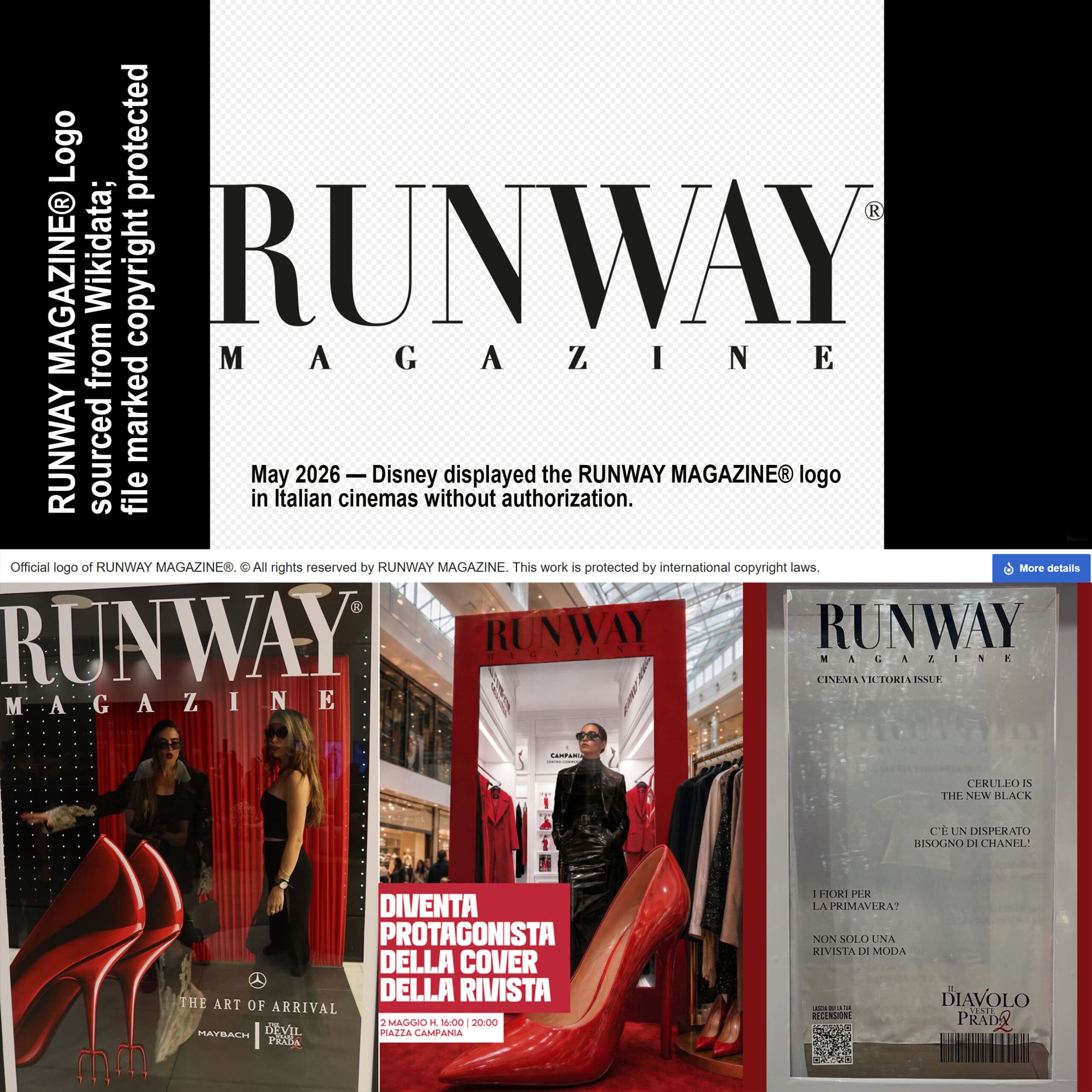
The Cinema Photo Booths
Disney used:
- the real RUNWAY MAGAZINE® logo,
- the real masthead,
- the real trade name,
- on photo booths,
- in cinemas,
- for public interaction,
- tied to Mercedes and cosmetics.
This is:
- not a prop,
- not expressive,
- not internal,
- not fictional,
- not protected by Rogers,
- not protected by “artistic relevance”.
This is commercial exploitation of a real media identity.
Authority:
- Jack Daniel’s v. VIP Products (2023) — when a mark is used as a brand, not as expression, Rogers does not apply.
- Lanham Act §43(a) — prohibits false association in commercial environments.
The Eudora Palette
A licensed consumer product used:
- the real RUNWAY MAGAZINE® logo,
- sourced from Wikidata,
- under a Disney license,
- sold in Brazil.
This is:
- copyright infringement,
- trade‑name infringement,
- unfair competition,
- passing off,
- false designation of origin,
- consumer deception,
- willful misconduct.
Rogers cannot touch this.
Authority:
- Jack Daniel’s v. VIP Products (2023) — consumer products are not expressive works.
- Lanham Act §43(a) — prohibits misleading branding on goods.
- Copyright Act §501 — prohibits unauthorized reproduction of copyrighted logos.
Commercial Parasitism: The Procedural Record of The Devil Wears Prada 2 Partner Activations
Conclusion: Rogers Ends Where Commerce Begins
The Rogers Test is a doctrine designed to protect artistic expression — not to authorize the commercial exploitation of a real media identity through:
- alcohol marketing,
- cosmetics campaigns,
- retail décor,
- Web3 environments,
- influencer content,
- or licensed consumer products.
The moment a fictional prop leaves the screen and enters the marketplace, Rogers ceases to apply.
What remains is:
- trade‑name protection,
- unfair competition law,
- passing off,
- false designation of origin,
- and the studio’s own internal guidelines, which were not followed.
Fiction is protected. Writers are protected. Expression is protected.
Commercial parasitism is not.
Open Legal Notice – Disney’s Unauthorized Use of the RUNWAY MAGAZINE® Trade Name
Editorial Note from the Editor in Chief Eleonora de Gray:
“When a corporation dismisses legal boundaries, asserts rights it does not possess, and attempts to silence the press, it reveals not an isolated misunderstanding but a posture. The events in this case reflect a pattern of conduct observed throughout the management of this project and the campaigns associated with it.”
About RUNWAY MAGAZINE®
RUNWAY MAGAZINE® is an international fashion publication founded in 1995 in New York and headquartered in Paris, founded by Eleonora de Gray. Produced in nine languages, the magazine reaches more than 20 million readers across print, digital, and immersive Web3 formats.
Disclaimer addressed to DISNEY / 20TH CENTURY STUDIO / DWP2 FRANCHISE and it’s commercial partners:
Disney DOES NOT OWN trademarks for RUNWAY / RUNWAY MAGAZINE, DOES NOT HAVE COMMERCIAL USE for Devil Wears Prada 2 characters and fictional universe props until 2026, First Amendment related to author’s rights and covers only fictional narratives.
RUNWAY MAGAZINE® printed editions exist since 1995, operates under the internationally recognized protections for Freedom of Expression, Media Freedom, and the Safety of Journalists as affirmed in Article 11 of the Déclaration des droits de l’homme et du citoyen (1789), Article 19 of the Universal Declaration of Human Rights (1948), Article 10 of the European Convention on Human Rights (1950), the Loi du 29 juillet 1881 sur la liberté de la presse, U.S. constitutional protections for editorial commentary and satire, UNESCO’s standards for the independence of the press, and the protections against abusive litigation (SLAPP) afforded by the EU Anti-SLAPP Directive (2024/1069).
Any effort to restrict, suppress, or unduly pressure a media outlet in the exercise of its journalistic functions stands in tension with these binding standards and the public‑interest role of the press.
Eleonora de Gray, Editor-in-Chief of RUNWAY MAGAZINE:
International Association of Journalists ID W73133, and the American Association of Journalists ID C553-3.
RUNWAY MAGAZINE® operates under the French activity code Édition de revues et périodiques (5814Z) and is governed by the Journalistes (1480) collective agreement.
